Minnesota Prairie Roots

Writing and photography by Audrey Kletscher Helbling

Saint Peter’s version of the Super Bowl January 29, 2013

IN THIS WEEK of Super Bowl XLVII, at least one Minnesota community has already tapped into the super sporting event hype to benefit the local arts community. And that happened in a way you likely would not expect, via Souper Bowl VII.

The hand-thrown pottery bowl I chose at the Souper Bowl for my chicken wild rice soup.

The hand-thrown pottery bowl I chose at the Souper Bowl for my chicken wild rice soup.

Saturday afternoon, my husband and I joined arts-loving diners at the St. Peter Community Center for soup served in hand-thrown pottery bowls. And the bowls were ours to keep at a cost of $12 each (or $8 per kid) for the art and the meal.

Six local potters gave of their time and talents to create 240 soup bowls for the luncheon of donated breads and soups—tomato basil, chicken wild rice and chili—cookies and beverages.

Joel Moline and Thalia Taylor kneading clay during a visit to the Clay Center in March 2012..

Joel Moline and Thalia Taylor kneading clay during a visit to the Clay Center in March 2012..

While I really do like soup, a lot, I appreciate even more the whole Souper Bowl concept. What a creative way to expose the arts to the general public while raising monies for the Arts Center of Saint Peter Clay Center programming. (Read a previous post about the Clay Center by clicking here.) The goal is to keep arts center activities “accessible, affordable and vibrant to the St. Peter community and surrounding region,” according to promotional information.

The selection of bowls remaining when we arrived at noon, an hour after doors opened.

The selection of bowls remaining when we arrived at noon, an hour after doors opened.

Choosing a bowl added a fun  element to the event. Here’s how the process worked for me: I narrowed my selection to my favorite color, green. But with only a few green bowls on the table and the hue I liked best in the hands of a debating diner, I faced a dilemma. Should I pick my second favorite green bowl or wait for this woman to decide between the two bowls she balanced in her hands?

A few green bowls sat among the mostly brown and blue ones.

A few green bowls sat among the mostly brown and blue ones.

I opted to wait, to hover, but not so close as to call attention to my interest in the green bowl. My game plan paid off when the woman finally set the green bowl down and walked away. I moved in for the fumble, snatching up the coveted prize. Touchdown.

Diners line up for soup or chili. Seconds could be had for a freewill donation.

Diners line up for soup or chili. Seconds could be had for a freewill donation.

My ever patient spouse waited nearby as I took a few photos before we entered the dining area and washed our bowls which were then filled, his with chili, mine with chicken wild rice. A volunteer behind the serving counter even heated my soup in the microwave when I told her it wasn’t hot enough. How’s that for Saint Peter nice? And Randy was invited to return for more soup since his bowl was somewhat small; he tried tasty tomato basil in the second quarter.

A soup server heated my soup in the microwave and then placed the hot bowl on a plate.

A soup server heated my soup in the microwave and then placed the hot bowl on a plate.

A few more photos later and we were dining, in the fine company of arts center board member Harry Hunt and his wife, Bonnie. Harry, who works in financial services, shared that he isn’t an artist, seeming even a bit apologetic about his lack of artistic talent. But I was quick to tell him he could certainly contribute to the arts board with his financial expertise.

The Arts Center of Saint Peter, 315 South Minnesota Avenue, St. Peter, Minnesota.

The arts center in downtown St. Peter, photographed on a visit there in March 2012.

Eventually, I turned our table talk to the March 1998 tornado in St. Peter which caused an estimated $300 million in property damage and claimed one life. I wanted to know if the Hunts had been affected by the tornado.

Bonnie recalled how they had been visiting family in the metro when they learned of the bad weather in southern Minnesota. “Well, let’s see if we have a home left,” she joked as the couple drove back toward St. Peter, unaware that a tornado had ravaged their community. They arrived to find their home on the edge of town destroyed. The Hunts rebuilt.

Today they laugh at an incident shortly after the disaster. Harry was working in the basement of their destroyed home when someone called down to announce the arrival of then Minnesota Governor Arne Carlson. Harry emerged from the basement and greeted the Governor: “Welcome to our open house.”

You can bet Randy and I appreciated the winning company and humor of the Hunts as much as the soup and the hand-thrown pottery bowls we took home from Saint Peter’s Souper Bowl.

Potter Missy Wood created this teapot for the Souper Bowl silent auction.

Potter Missy Wood created this teapot for the Souper Bowl silent auction.

HAVE YOU ATTENDED a fundraiser like this? Please share your experiences, thoughts and ideas. We can all learn from one another.

© Copyright 2013 Audrey Kletscher Helbling


The art of healing at a Minnesota hospital January 28, 2013

TWO YEARS AGO this month, my then 92-year-old artist friend, Rhody Yule, opened his first-ever gallery exhibit at the Paradise Center for the Arts in Faribault.

Six months later, he died.

But Rhody, and his art, live on, this time in a Paradise Center Healing Arts Program Exhibit at District One Hospital in Faribault. The arts center and hospital are partnering on the program.

Thursday evening I attended a reception for that show which features 70 pieces of art created by eight outstanding artists, each of them definitively different: Faribault artists Jody Hanscom, Jorge Ponticas, Pearl Tait and Rhody Yule; Marcus Moller of Morristown; Faribault native Tom Fakler, now living in Basel, Switzerland; Jane Strauss of Minneapolis; and Cynthia Ali of St. Paul.

As Healing Arts Coordinator Elizabeth Jacobs led my husband and me through the maze of hallways and centers that comprise the hospital complex, I thought how Rhody would have felt honored to be part of an exhibit designed to comfort patients and make their hospital experiences more pleasant.

The art selected by a committee of hospital staff fits the program’s criteria as “healing art,” meaning it must be calming, happy and a positive piece of work, Jacobs says.

Three of Jody Hanscom's horse portraits.

Three of Jody Hanscom’s horse portraits.

And you’ll see that, almost experience that positivity, from the minute you walk in the front doors of the hospital to view Jody Hanscom’s sizable horse portraits in the lobby waiting areas. Jody’s oil paintings capture both the gentleness and free spirit of horses, a combination that simultaneously calms and uplifts.

Tucked into a corner by the elevators, the fourth of Hanscom's horse oil paintings.

Tucked into a corner by the elevators, the fourth of Hanscom’s horses.

Just down the hallway, five oil paintings by Jorge Ponticas brighten the walls with vivid scenes from his native Chile and elsewhere. His art evokes happy thoughts. What can I say? I can’t resist the sweet face of a llama.

Pearl Tait's "Aubergine Drift I."

Pearl Tait’s “Aubergine Drift I.”

Moving along to the emergency room lobby, I find Pearl Tait’s moody mixed medium art the ideal choice for a setting often filled with emotion and uncertainty. Her work, which features textures like sand and tape incorporated into a painting, reflects, in my opinion, the intense layers of feelings that come with any visit to the ER.

A photo in a cozy private waiting room fronts Tom Fakler's Swiss Alps photos.

A sofa in a cozy private waiting room fronts Tom Fakler’s trio of Swiss Alps photos.

Around the corner inside a cozy ER room where families are taken to hear bad news (so says Jacobs), the mood totally changes with the soothing photography of Tom Fakler. His black-and-white canvas prints of the Swiss Alps offer a natural world escape during a particularly difficult time for patients’ families.

Likewise, the photography of Jane Strauss in the surgery center reflects that same sort of escapism, especially in panoramic landscape scenes. Jacobs notes that Strauss is autistic, meaning her approach to photography focuses on qualities like texture and detail, aspects others might not consider in photographing a scene.

Faribault native Cynthia Ali's floral pastels are not for sale. Ali, of St. Paul, is primarily a jewelry artist.

Faribault native Cynthia Ali’s floral pastels are not for sale. Ali, of St. Paul, is primarily a jewelry artist.

Also in the surgery center, Cynthia Ali infuses a soft natural beauty with her floral pastels. You can almost smell the heady perfume of her beautiful roses.

Marcus Moller's "Madison Lake Bait Shop" in watercolor.

Marcus Moller’s “Madison Lake Bait Shop” in watercolor. Moller’s art (mostly pastels) hangs in the surgery center waiting area, a place frequented by children. Thus his art is hung quite high, which made photographing it difficult.

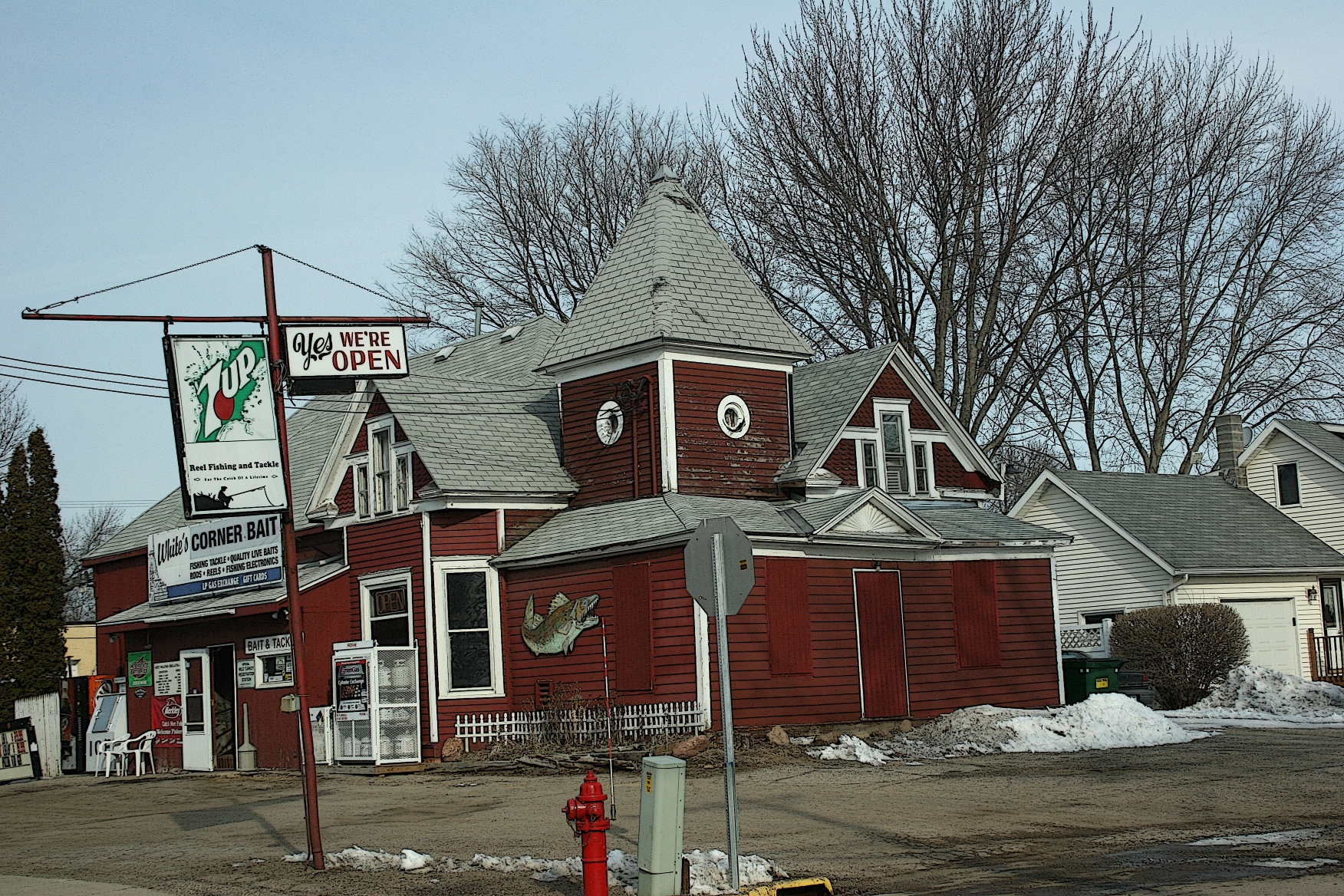
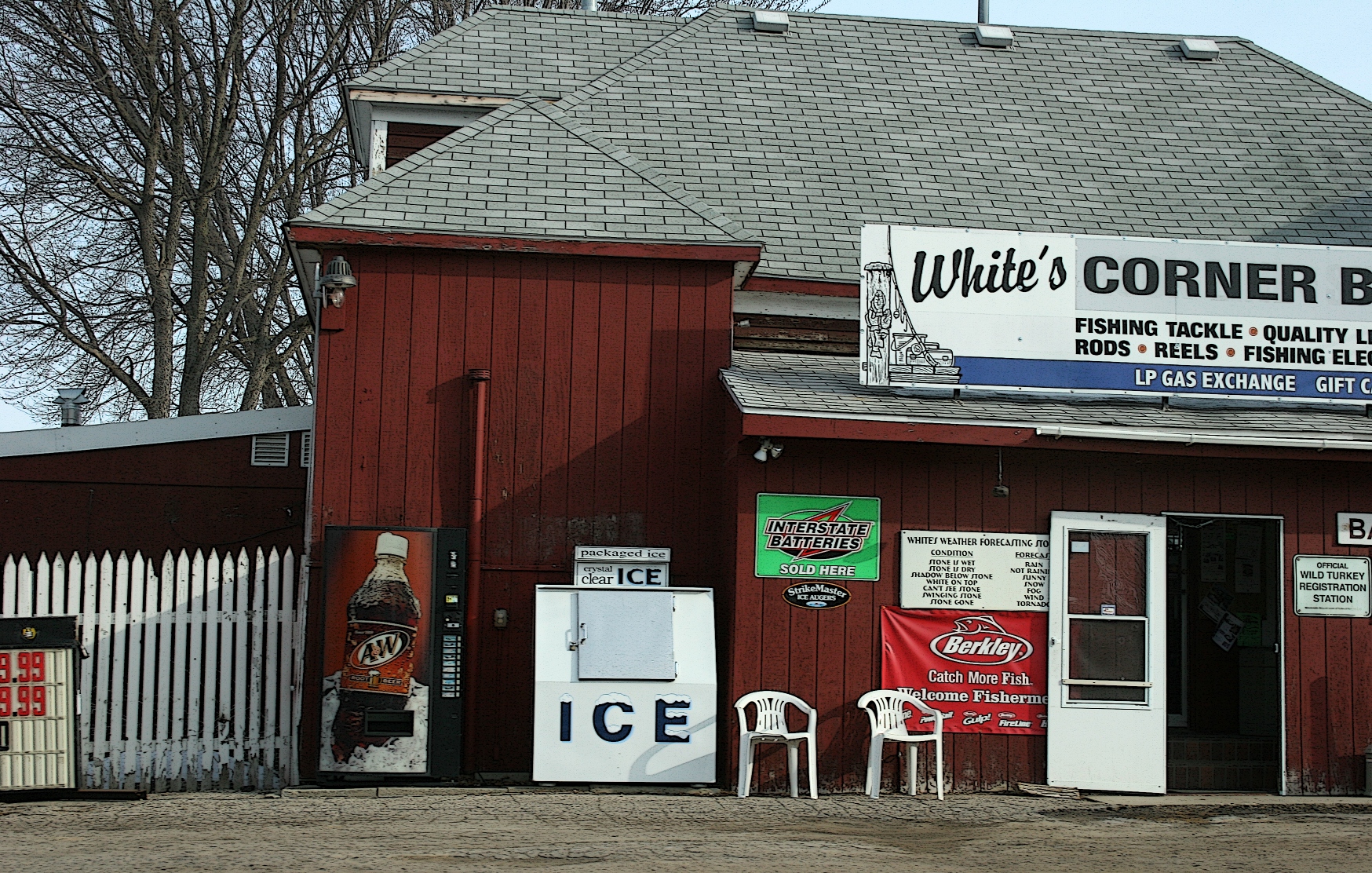
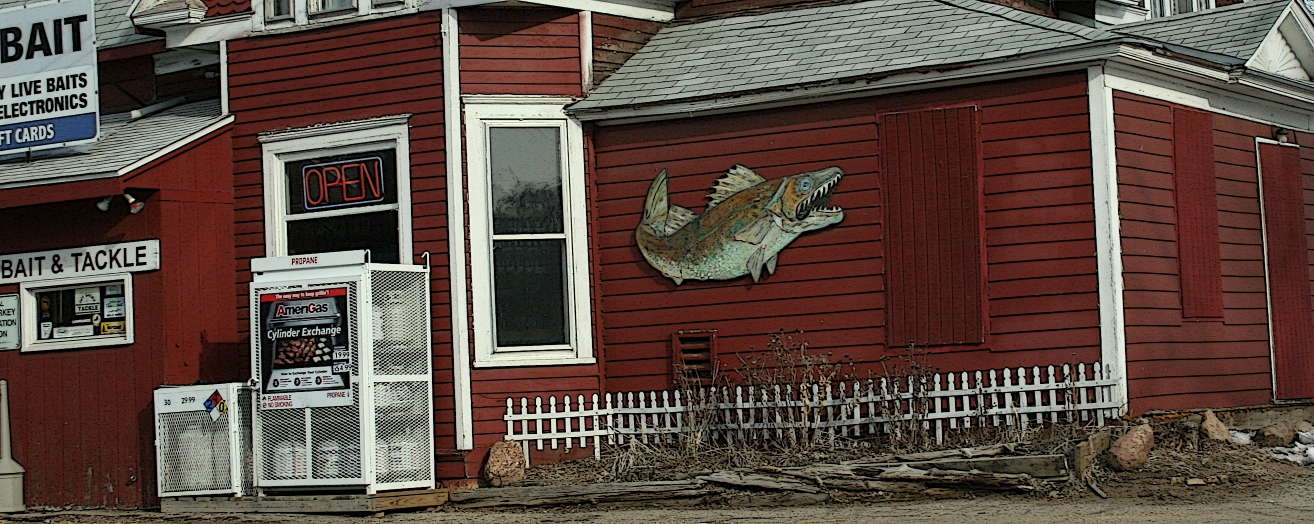
Marcus Moller works in pastels, too, and watercolors, covering a variety of subjects from autumn landscapes to a bold rooster to my favorite, “Madison Lake Bait Shop.” Those of you who’ve traveled Minnesota Highway 60 will recognize the kitschy red building backed by the Madison Lake water tower. I cannot even begin to count how many times I’ve considered photographing that building. Moller’s bait shop painting is nudging me to actually stop and take that photo.

Twenty-five of Rhody Yule's oils grace the hall and patient rooms in the cancer center.

Twenty-five of Rhody Yule’s oils grace the hall and patient rooms in the cancer center.

Finally, my open house tour ended in a hallway outside the District One Cancer Center with the oil paintings of my friend, Rhody Yule. I’d seen nearly every one of Rhody’s hundreds of paintings when I worked with his family and friends on the 2011 Paradise exhibit. But, still, it was as if I was viewing his pieces for the first time, appreciating the landscapes, many of them winter scenes in this show, and the other art he created through decades of painting. Rhody was a kind, gentle man with a heart full of goodness, and I remembered that, too.

Examples of Rhody Yules art close-up.

Examples of Rhody Yule’s art close-up.

Most of the artwork in the Healing Arts Exhibit, but not all, is available for sale. (Artwork not featured in photos here is because I did not have permission to photograph it.)  A portion of any proceeds from the sale of Yule’s work will go to the local hospice, per the family’s request.

If you wish to tour the winter installment of the Healing Arts Exhibit, check in at the main desk, 200 State Avenue, during hospital business hours. All areas of the exhibit may not be accessible for viewing at all times. The current show runs through February 28.

If you are an artist interested in being featured in a Healing Arts Exhibit, contact Jacobs at the Paradise Center for the Arts. You will find details and contact information by clicking here.

The Healing Arts program is sponsored by the District One Hospital Auxiliary, which initially proposed the concept.

To view information on the artists with an online presence, click on their highlighted names.

WHAT ARE YOUR THOUGHTS on art as a “healing” tool? Have you seen similar exhibits? Please share.

© Copyright 2013 Audrey Kletscher Helbling
 

The challenges of winter photography & a new perspective on art January 24, 2013

Filed under: Uncategorized — Audrey Kletscher Helbling @ 8:15 AM
Tags: , , , , , , , , ,

FOR A BLOGGER like me who incorporates so many photos into her posts, blogging in winter in Minnesota presents special challenges, the primary obstacle being the weather.

Simply put, I don’t like freezing my fingers, navigating icy surfaces, dodging snowflakes or battling frigid winds to get a photo. And when you live in Minnesota, you just can’t escape the cold, ice, snow and wind, especially not this week.

Yesterday I glanced outside to see a fresh dusting of snow sparkling like fairy dust in an enchanting scene. For a moment, as I slipped half my body outside to retrieve the morning paper, I considered bundling up to photograph the magic. But thoughts did not transform into action.

Later, though, after lunch, that fairy dust still danced in my brain so I zipped my fleece and stepped onto the patio to photograph the snow. I didn’t expect fantastic results; heck, the results rated as immediately deletable:

The original sparkling snow image, unedited except for down-sizing.

The original sparkling snow image, unedited except for down-sizing.

But then I worked my magic, trying several editing tools—sparkle effect, colorizing, cartoonifying and changing the contrast—to transform a blah image into an abstract work of art:

Sparkling snow in my backyard transformed into abstract art with photo editing tools.

Sparkling snow in my backyard transformed into abstract art with photo editing tools.

What’s really interesting about this entire process is that I’ve never been a fan of abstract art. I’ve always been inclined to view an abstract work and then blurt, “I could do that” or “That looks like the work of a kindergartner.”

I doubt I’ll ever quite stop thinking that.

But, through this digital editing process, I’ve discovered a part of me appreciates abstract photo art and the process of creating it. Temporary brain freeze perhaps?

WHAT ARE YOUR THOUGHTS on cold climate photography (as in Minnesota cold), abstract art, digital photo editing or anything along that line? (And don’t feel you have to like my abstract photo art.)

I prefer to shoot winter photos from the comfort of a building or a vehicle, as evidenced in these images I shot in March 2012:

I converted this image to black-and-white and upped the brightness. This was shot on the Minnesota Highway 19 curve just north of Vesta, my southwestern Minnesota hometown.

I converted this image to black-and-white and upped the brightness. This was shot on the Minnesota Highway 19 curve just north of Vesta, my southwestern Minnesota hometown.

I used the same photo editing techniques on this scene captured on the same date just south of Echo, which would be north of Vesta. We were on our way to church.

I used the same photo editing techniques on this scene captured on the same date just south of Echo, which would be north of Vesta. We were on our way to church.

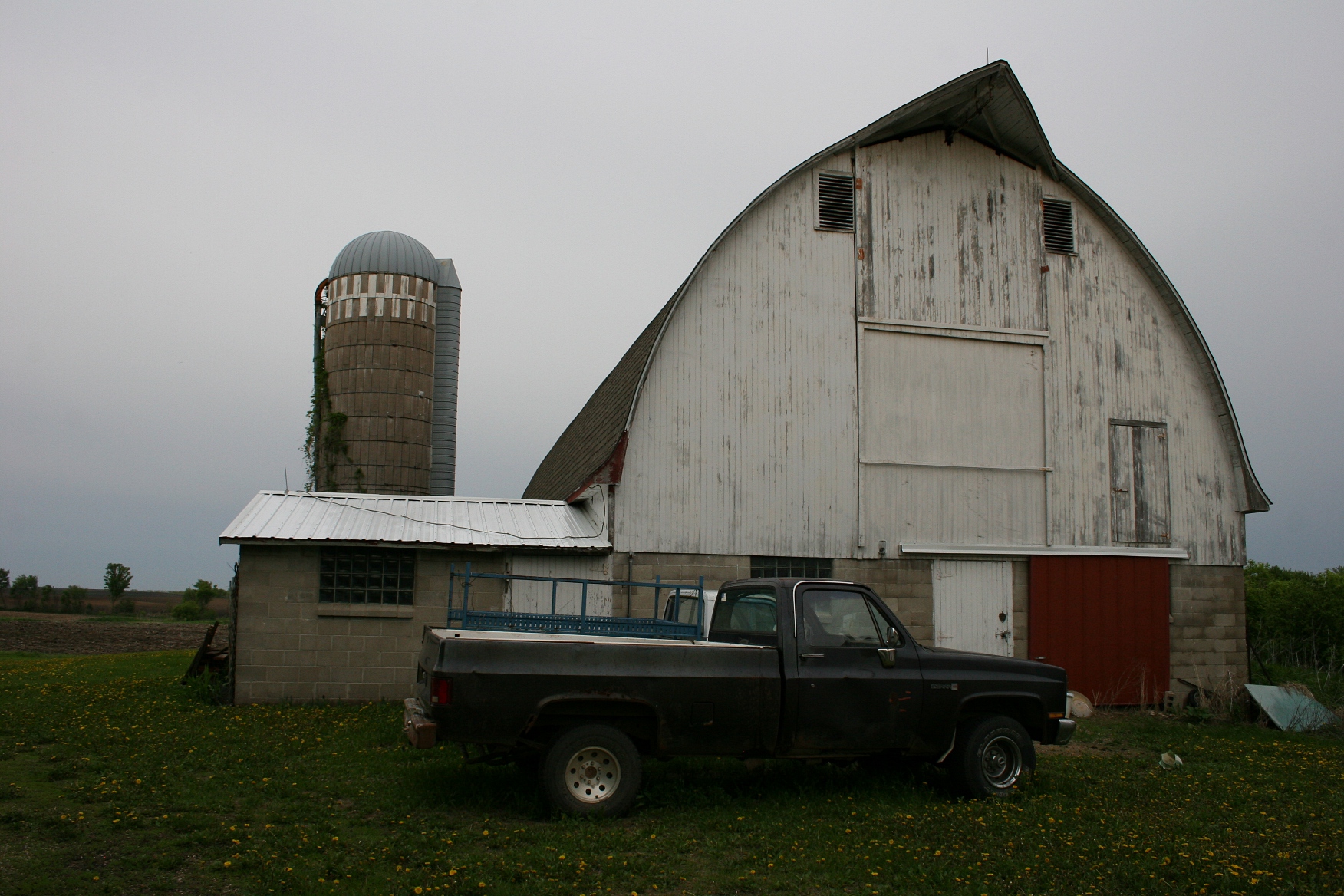
The day prior, en route to Vesta, I photographed this barn between New Ulm and Morgan.

The day prior, en route to Vesta, I photographed this farmyard between New Ulm and Morgan.

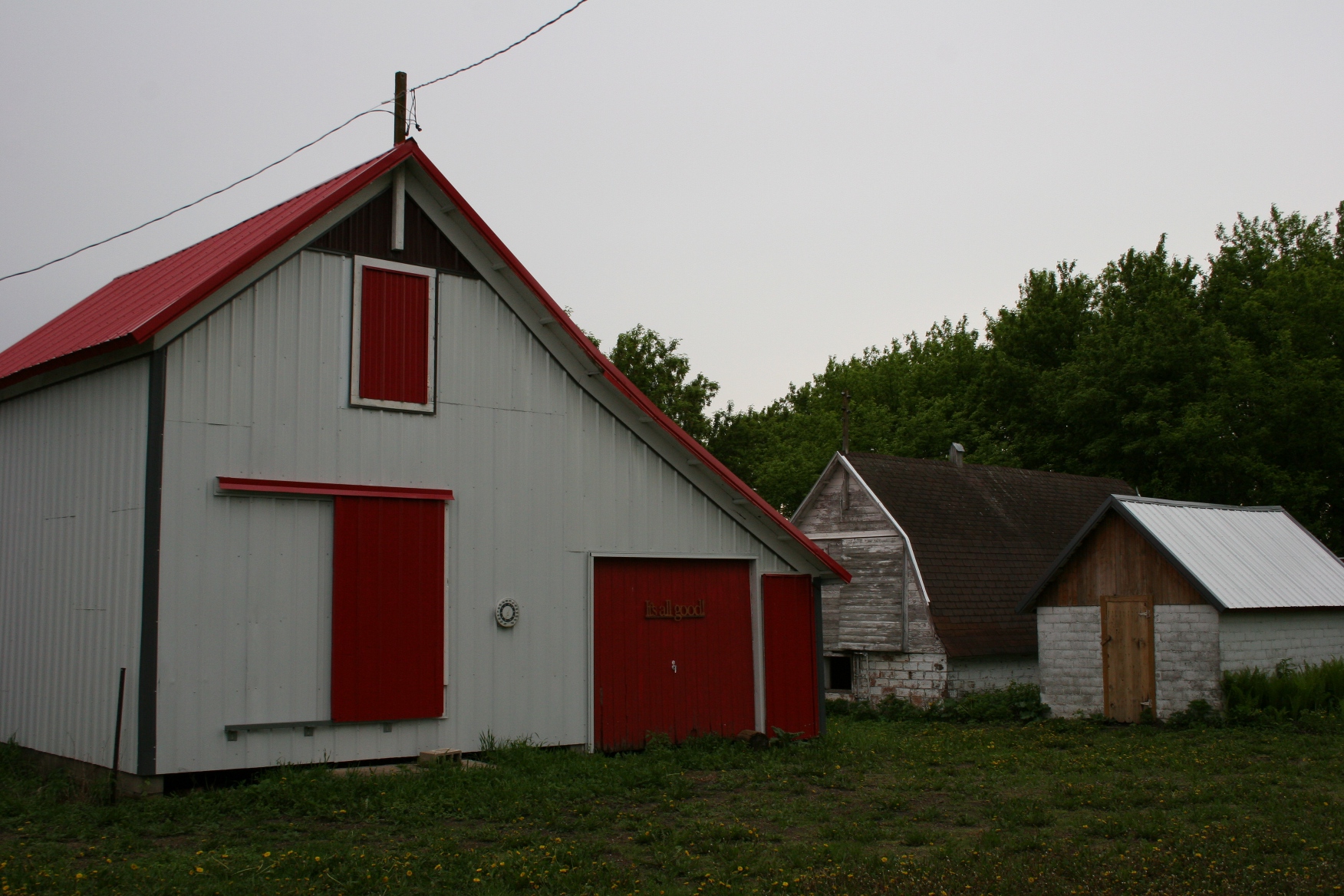
To the east, also en route to my hometown, I photographed this rural scene just west of Waterville along Minnesota Highway 60.

To the east, also en route to my hometown, I photographed this rural scene just west of Waterville along Minnesota Highway 60.

© Copyright 2013 Audrey Kletscher Helbling
 

Friday night at the car wash January 19, 2013

Filed under: Uncategorized — Audrey Kletscher Helbling @ 11:47 AM
Tags: , , , , , , , , ,

HE LEANED ACROSS the front seat of the car, not to kiss me, but to spray Windex onto the passenger side windshield and then wipe the glass dry with a paper towel.

After 30 ½ years of marriage, this is Friday night—a date at a local car wash.

Not that my husband invited me along or even remotely suggested that this might be a date. But at the last minute I decided the car wash would make for an interesting photo shoot. Randy knows me well. He didn’t even question me or roll his eyes.

My first side view shot of the car wash, taken from the adjoining Kwik Trip gas station.

My first side view shot of the car wash, taken from the adjacent Kwik Trip gas station.

While he tended to gassing up the car, I strolled over to the car wash to shoot some exterior scenes before we joined the line of five waiting vehicles. Not bad for a 37-degree January evening topping off an exceptionally warm winter day with temps soaring into the 40s.

When you live in Minnesota, you have to jump on warm weather like this to wash away the destructive road salt that clings to vehicles. A sign at the car wash even states the business will close when temps dip to 10 degrees.

And we all know, because we’ve been hearing for days now from weather forecasters, that Minnesota is headed into the deep freeze. Wind chill advisories have already been issued for parts of the state. Strong winds, combined with air temperatures, will make the outdoor temp feel like 25 to 30 degrees below zero.

We’ve heard repeated warnings about frostbite and hypothermia and the need to protect our skin.

I tell you this to emphasize to those of you who live in much warmer locales and cannot fathom such extreme cold, why Minnesotans would wait in line at a car wash on a 37-degree evening.

While Randy and I waited, he fiddled with his cell phone, inputting the number to an area radio station. He’s good at music trivia or being the whatever number caller, having recently won tickets to a Trans-Siberian Orchestra concert and years ago a trip to the Bahamas and the chance to win $1 million (which he did not win).

Waiting in line at the car wash, our car is on the left.

Waiting in line at the car wash, our car is on the left.

At this point, I stepped briefly from the car to scope out photo ops and shoot a few frames, hoping the other motorists wouldn’t roll down their windows and question me.

Back inside the car, we chatted a bit—about what I can’t remember—and Randy cleaned the interior windshield and eventually the garage door rose, the car ahead began exiting and my spouse directed our car inside.

Now you might think that in the privacy of the enclosed car wash, this could have been a date-date. But, nope, I was too busy photographing the art.

You perhaps see simply a car. I see art in this photo-edited image.

You perhaps see simply a car. I see art in this photo-edited image.

Yes, more car wash art.

More car wash art.

Not just water spraying on the windshield, but abstract art.

Not just water spraying onto the windshield, but abstract art.

Nearing the end of the car wash art exhibit.

Nearing the end of the car wash art exhibit.

Exiting the car wash (exhibit).

Exiting the car wash (exhibit).

© Copyright 2013 Audrey Kletscher Helbling
 

Creativity unleashed at Bethany, my alma mater January 14, 2013

TYPICALLY, COLLEGE ALUMNI magazines hold my interest only long enough to thumb to the section where class updates are printed. I read those and then toss the publication into the recycling bin.

But recently, the bold, artsy cover of the November issue of the Bethany Report, the alumni magazine of Bethany Lutheran College, caused me to take a closer look at an article detailing the school’s new media arts program. I’m a Bethany grad, which in 1976 offered only a two-year associate arts degree to undergraduates.

Today this scenic hilltop campus in Mankato offers an array of four-year degrees, including one in communications, my eventual major at Minnesota State University, Mankato. Oh, how I wish majors and minors had been available back in my Bethany years, because I loved that small Christian college.

All of that aside, today’s Bethany students with an interest in communications, the fine arts and technology can enroll in the media arts major. I don’t pretend to know how Bethany’s program compares to that of other colleges.

I did my own editing on this recent photo of a Bethany billboard along U.S. Highway 14.

I did my own editing on this recent photo of a Bethany billboard along U.S. Highway 14.

But when I saw that magazine cover design emphasizing the media arts program and then an equally vivid, eye-catching billboard along U.S. Highway 14 near Janesville recently, I was impressed enough to visit the BLC website.

There I clicked onto a portfolio showcasing the creations of current and former students.

I’m no expert on the fusing of art, technology and communication. But I liked what I saw. And perhaps that uninformed spontaneous reaction counts for more than the dissected opinion of anyone in academia.

© Copyright 2012 Audrey Kletscher Helbling
 

CHRISTmas blessings December 25, 2012

Filed under: Uncategorized — Audrey Kletscher Helbling @ 10:05 AM
Tags: , , , , , , , , ,
This Nativity scene has graced the lawn of Buckham Memorial Library and the Faribault Community Center for all the years I have lived in my southeastern Minnesota community, which would be 30.

This Nativity scene has graced the lawn of Buckham Memorial Library and the Faribault Community Center for all the years I have lived in my southeastern Minnesota community, which would be 30.

FROM MY FAMILY to yours, I wish you a most blessed CHRISTmas. And, yes, I capitalize that first syllable because the Saviour centers my Christmas celebration and I hope it does yours also.

This Nativity set, donated, I believe, by the Knights of Columbus, is a rich part of my community's history and a work of art. If anyone knows the history of this Nativity set, please submit a comment with details.

This Nativity set, donated, I believe, by the local Knights of Columbus, is a rich part of my community’s history and a work of art. If anyone knows the history of this Nativity, please submit a comment with details.

While they were there, the time came for the baby to be born, and she gave birth to her firstborn, a son. She wrapped him in cloths and placed him in a manger, because there was no room for them in the inn.

One side of the scene shows the shepherds in the stable.

One side of the scene shows the shepherds in the stable.

And there were shepherds living out in the fields nearby, keeping watch over their flocks at night. An angel of the Lord appeared to them, and the glory of the Lord shone around them, and they were terrified. But the angel said to them, “Do not be afraid. I bring you good news of great joy that will be for all the people. Today in the town of David a Savior has been born to you: he is Christ The Lord.”

Although the wise men did not arrive at the birth of Christ, they are typically depicted in nativities. I added the "star" with an editing tool to enhance the image.

Although the wise men did not arrive at the birth of Christ,  but much later, they are typically depicted in nativity scenes. I added the “star” with an editing tool to enhance the image.

After they had heard the king, they went on their way, and the star they had seen in the east went ahead of them until it stopped over the place where the child was. When they saw the star, they were overjoyed.

Can you imagine the reverent joy the wise men felt in seeing their Saviour?

Can you imagine the reverent joy the wise men felt in worshiping their Saviour?

On coming to the house, they saw the child with his mother Mary, and they bowed down and worshiped him. Then they opened their treasures and presented him with gifts of gold and of incense and of myrrh. And having been warned in a dream not to go back to Herod, they returned to their country by another route. (Click here to learn more about the wise men and when they visited the Christ Child.)

© Photos copyright 2012 Audrey Kletscher Helbling
Text credit goes to gospel writers Matthew and Luke.


A chicken even I can love December 14, 2012

Filed under: Uncategorized — Audrey Kletscher Helbling @ 8:13 AM
Tags: , , , , , ,

SOMETIMES I TAKE photos and then have nowhere to weave them into the fabric of a blog post. So you never see them.

Take two images I shot last Saturday afternoon at the Faribo West Mall in a store selling a hodge podge of collectibles, clothing and other, well, stuff. I can’t tell you the name of the place because I don’t recall seeing a business sign. And when I purchased two items (not these), the shopkeeper simply stuffed my five $1 bills into his pants pocket.

All of that aside, I spotted so many objects that I wanted to photograph simply for the color, the art, the shape, the uniqueness, the nostalgia. But, I also did not feel comfortable clicking away unfettered while other shoppers browsed.

Thus, I focused my camera on only two pieces of colorful merchandise—a rainbow-hued glass elephant and a vibrant wind-up chicken.

When I show you those two unedited images, you might be impressed. But probably not. Here are the original untouched photos:

Except for resizing, I've done nothing with this photo of a glass elephant.

Except for resizing, I’ve done nothing with this photo of a glass elephant.

The original chicken photo, only resized.

The original chicken photo, only resized.

Then I opted to play with my photo editing tools, of which I understand little. I once edited and posted some winter photos here and then a reader asked “How did you do that?” Seems she wanted to duplicate what I had done. I could not tell her.

But this time, oh, this time, I am going to exercise my smartness by telling you I simply clicked on the “posterize” editing tool and these were the results:

I clicked on "posterize" and this was the result.

A bolder and more modern looking posterized chicken.

Isn’t this fun?

Ta-da, the posterized elephant.

Ta-da, the posterized elephant.

I took plain ordinary images and, with the click of my mouse, transformed them into works of art that really don’t resemble photos at all.

I’m especially smitten with that chicken. And for me to admit any fowl love…

WHAT ARE YOUR THOUGHTS on these two transformed photos or photo editing in general? Do you use photo editing tools to enhance your photos and/or create art?

© Copyright 2012 Audrey Kletscher Helbling


Support regional writing this Christmas via the gift of words December 6, 2012

WITH ALL THE “SHOP LOCAL” buzz this time of year, have you ever considered how that applies to the printed word?

Are you supporting local and regional authors, writers from within your state?

Allow me to show you two Minnesota publications that would make ideal Christmas gifts for anyone who appreciates regional based writing. Both feature collections of fiction, creative nonfiction and poetry.

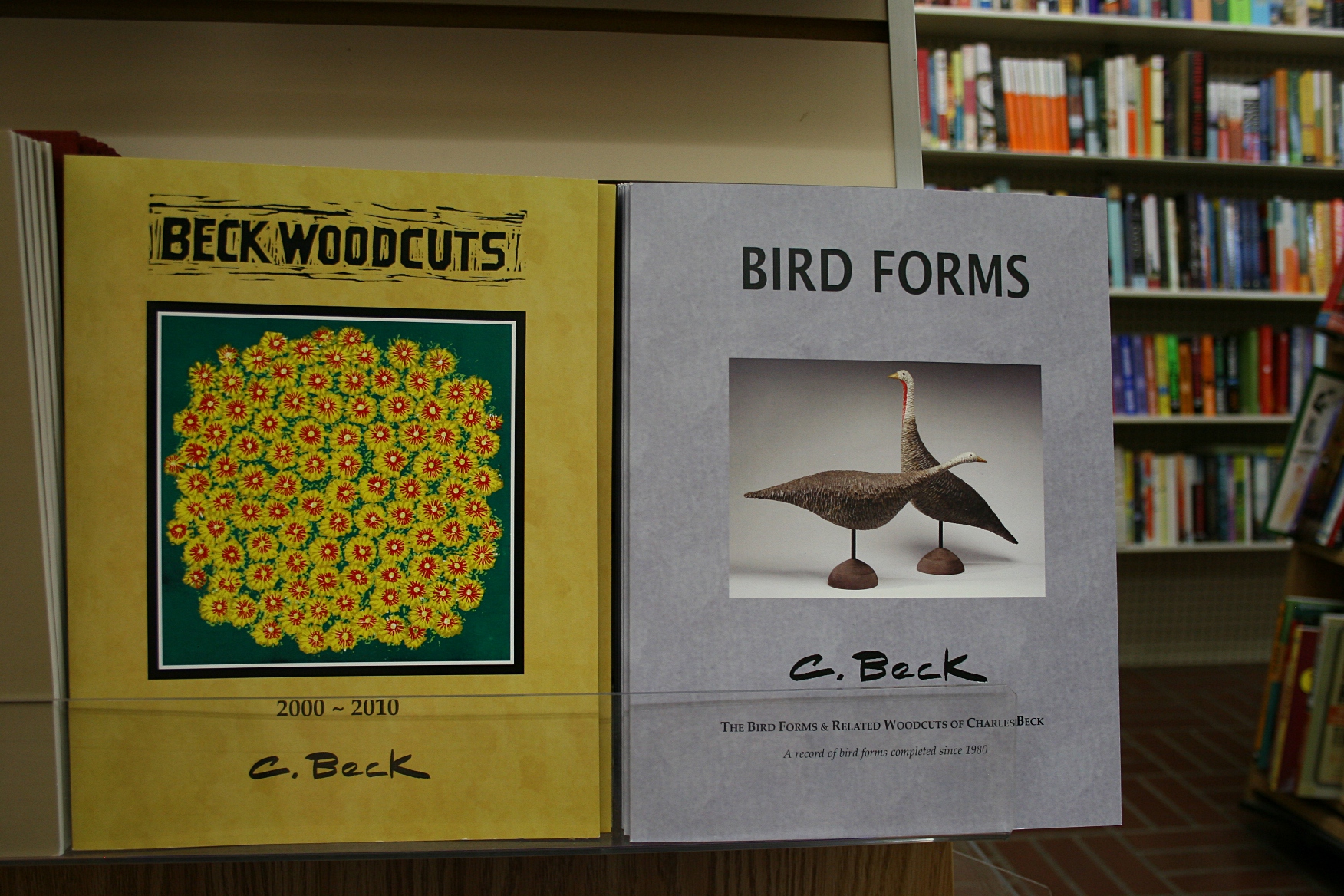
Lake Region Review, volume two, with cover art by  Charles Beck

Lake Region Review, volume two, with cover art by Charles Beck

Lake Region Review, a literary magazine centered in Battle Lake in the northwestern part of our state, showcases work by writers from Minnesota and the eastern Dakotas selected in a competitive process. This year 34 pieces were culled from some 430 submissions for publication in volume two.

In their introduction to this 160-page soft-cover book-style collection produced by the Lake Region Writers Network, co-editors Athena Kildegaard and Mark Vinz write in part:

Our aim in selecting writing for this issue is simply to look for the best writing that engages and enlightens through attention to language. In these pages you’ll find characters challenged by circumstances (and weather), poems charged with vitality (and weather), and essays that will provoke and move you.

How true. With topics like polio and Alzheimer’s, installing a satellite dish on a snowy rooftop and falling through the ice, unemployment and death, and even some stories—“Norwegian Love” and “Julebukking”—of Scandinavian influence, you are certain to find writing that entertains and evokes emotional reactions.

The writers themselves range from beginners to seasoned.

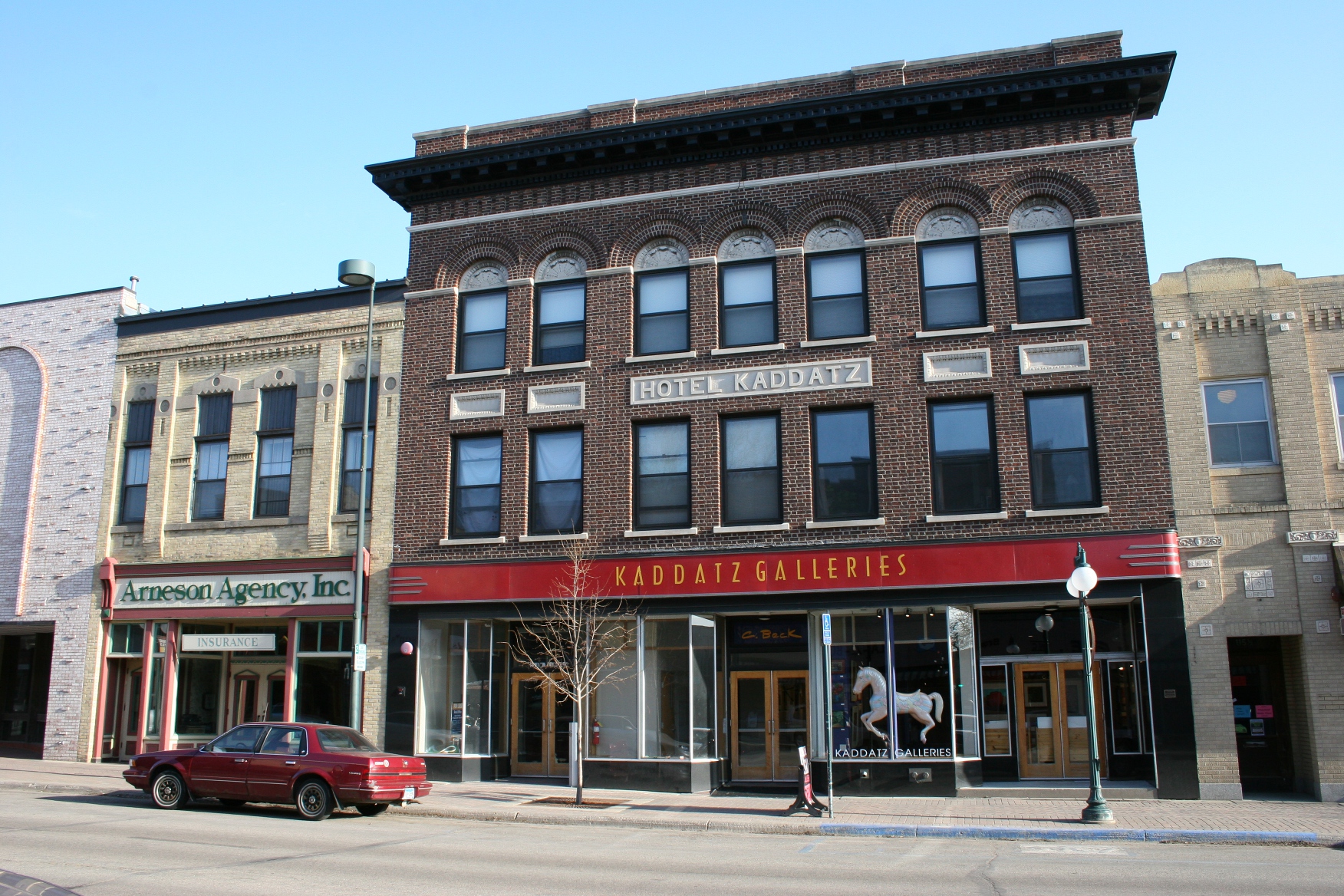
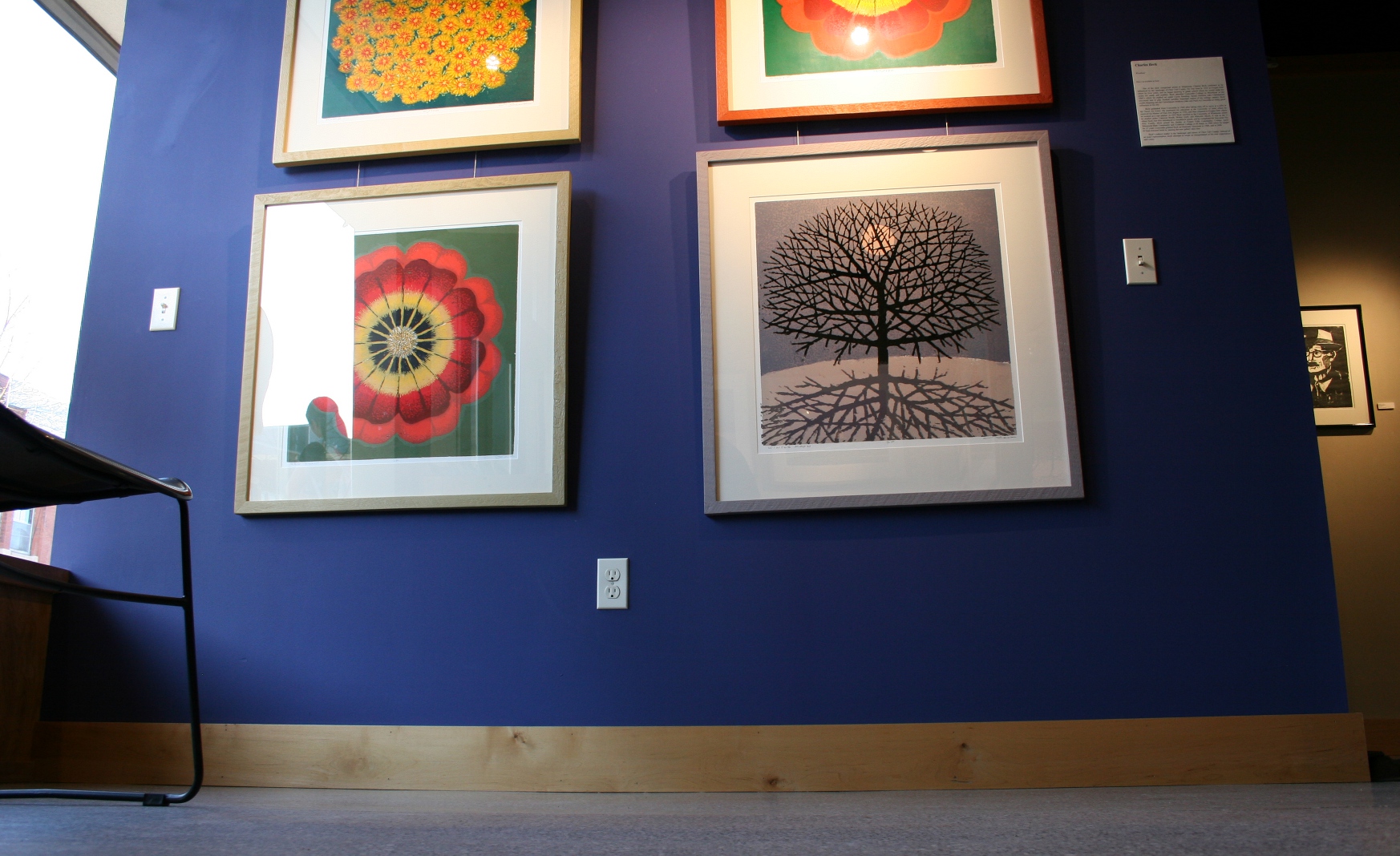
Visitors to the Kaddatz Galleries in downtown Fergus Falls peruse the art of Charles Beck.

Visitors to the Kaddatz Galleries in downtown Fergus Falls peruse the art of Charles Beck. Minnesota Prairie Roots file photo.

A bonus to both volumes of Lake Region Review is the original regional-based cover art. This year’s cover features “Cardinals,” a wood print by well-known Minnesota artist Charles Beck of Fergus Falls.

Stephen Hennings painting on the cover of Lake Region Review, volume one.

Stephen Henning’s painting on the cover of Lake Region Review, volume one.

Last year a detail of an original landscape painting, “Christina Lake: View from Seven Sisters,” by nationally-renowned artist Stephen Henning of Evansville graced the cover of volume one.

Like Lake Region Review, The Talking Stick produced by the Jackpine Writer’s Bloc based in Menahga (near Park Rapids) offers a quality selection of works in a book-style collection.

The cover of The Talking Stick, Volume 21, Nightfall, also has a Minnesota bend with a stock photo of loons on a lake from iStockphoto.com.

The cover of The Talking Stick, Volume 21, Nightfall, also has a Minnesota bend with a stock photo of loons on a lake from iStockphoto.com.

According to the Jackpine website, “…we publish to encourage solid writing that shows promise, creativity and brilliance.”

Especially heavy in poetry (94 poems), volume 21 of this literary journal features 130 pieces (chosen from 278 submissions) by writers from Minnesota or with a Minnesota connection.

With titled works like “Bologna Sandwich,” “Memories of Duluth,” “And a Bier for Dad,” “January Snow,” “Iceout,” “Blueberry Woods Symphony,” and more, the Minnesota influence presses deep into the 192 pages of this volume, subtitled Nightfall.

Therein lies the beauty of buying local in the printed word: a strong regional imprint.

That local connection also ties into the financial support provided to these two literary collections. Otter Tail Power Company, an energy company servicing western Minnesota and the eastern Dakotas, provided “generous support” to Lake Region Review. And a grant from the Region 2 Arts Council with funding from the Minnesota Legislature financed, in part, volume 21 of The Talking Stick.

HAVE YOU PURCHASED/or will you buy local books or literary collections as Christmas gifts this year? If so, please share your recommendations.

FYI: To learn more about the two literary collections highlighted here and how to purchase them, click here for the Lake Region Review. Then click here for The Talking Stick.

Some of the writers published in Lake Region Review, volume two, will read from their works beginning at 2 p.m. this coming Sunday, December 9, at Zandbroz Variety, 420 Broadway Avenue, in downtown Fargo, N.D. (If only I was going to be in Fargo this weekend. But I will read some of my poetry beginning at 6:00 p.m. Thursday, December 6, in the Great Hall at Buckham Memorial Library, Faribault.)

Disclaimer: My work has been published in both volumes of Lake Region Review and in several volumes of The Talking Stick. However, I received no monetary compensation for that or for this review, nor was I asked to pen this post.

© Copyright 2012 Audrey Kletscher Helbling
 

A heartwarming Christmas story & an interview with Northfield author Patrick Mader December 4, 2012

NORTHFIELD AUTHOR PATRICK MADER possesses a gift—a gift to create, along with illustrator Andrew Holmquist, award-winning children’s picture books.

His latest, a Christmas story, continues that winning tradition of excellence. Visiting the Visitors recently received a silver award in the holiday book category in the 2012 Moonbeam Children’s Book Awards competition.

The cover of Patrick Mader's latest book, illustrated by Andrew Holmquist. The artist incorporated the wise men's heads into the tree branches.

The cover of Patrick Mader’s latest book, illustrated by Andrew Holmquist. See how Holmquist incorporated the wise men’s heads into the tree branches.

In his holiday tale, Mader takes the reader again into a rural setting, as he does in his first two books, Opa & Oma Together and Oma Finds a Miracle.

He’s reworked the story of the wise men visiting the Christ child into a contemporary story line of three siblings and their grandparents trekking across snow-covered fields to deliver gifts, but in this version to the wise men and the animals, not the Holy Family.

This heartwarming spin on the timeless and enduring biblical record of the wise men journeying to Bethlehem is especially memorable when told from the perspective of children. That coupled with animals as an integral part of the plot—we all know how much most kids love animals—makes this an especially appealing book.

Illustrator Andrew Holmquist, a Northfield native now living and working as an artist in Chicago.

Illustrator Andrew Holmquist, a Northfield native now living and working as an artist in Chicago.

Illustrator Holmquist’s artwork, created via pencil, charcoal, graphite washes, colored pencil and markers combined with digital coloring in the computer, sets a peaceful and inviting mood that reminds me so much of my childhood winter nights on the star-studded Minnesota prairie, warm light spilling from barn and house windows onto the snow.

Yes, this book evokes nostalgia, at least for me.

But it also evokes a sense of wonderment and thankfulness, of understanding and simplicity, of treasuring the real gift of Christmas, of reclaiming that special magic we adults felt as children.

I promise, Visiting the Visitors will hold your heart and those of the children you love.

THAT SAID, HOW DID PATRICK MADER, an elementary school teacher in Morristown (about 10 miles west of my Faribault home in southeastern Minnesota), create this story?

How does he continue to reap awards (Writer’s Digest honorable mention for Opa & Oma Together and the bronze medal for Big Brother Has Wheels from the Independent Publisher Books Awards in 2010) and the accolades of well-known Minnesota writers?

I posed those questions, and more, to Mader and here’s what he had to say:

Q: What inspires you in your writing?

A: My objective is to write books with positive messages—I refer to them as “Heartwarming Stories of the Heartland.” They are based on what I have seen, what I have heard, what I remember, and what I have felt as I witness life. Family members and friends have had some fascinating events in their lifetime and I simply try to make the stories come to life with a bit of creativity and Andrew Holmquist’s stunning artwork.

Patrick Mader with his wife, Karen, and children, Karl and Ellen, by the family's nativity set. the wood stable was crafted of wood from the barn on the childhood farm (home of his parents, George and Mary Margaret Mader) near St. Bonifacius where Mader grew up.

Patrick Mader with his wife, Karen, and children, Karl and Ellen, by the family’s nativity set. The stable was crafted of wood from the barn on Mader’s childhood farm (home of his parents, George and Mary Margaret Mader) near St. Bonifacius.

Q: What specifically inspired Visiting the Visitors?

A: When our children were very young, they would ask whether we could go to a neighbor’s very large outdoor nativity set. We would sing songs, they would hug the statues of the nativity characters, and then we would return home for hot chocolate and cookies. They were very tender and memorable moments that you don’t forget as a parent. It was stored in my memory until I felt confident that I could write and market a Christmas book.

Q: Is there a message you’re attempting to convey via this story?

A: Yes, it is that the origin of the Christmas holiday is still of interest and can have a quiet majesty to children.

Q: Two of the names you chose for the three children in this story are unusual. Can you explain the significance of the names Malik and Balta?

A: Actually, the names of all three children took a few hours to finalize. The names are Malik, Cassie, and Balta. They are multicultural children and in my research I learned the name Malik has been a popular African-American name. Cassie is the girl in the story and that is not an uncommon name. The name Balta was chosen because some ethnic groups have an a or o as a last letter. When you put the three names together, they are derivations from the supposed names of the three wise men who are characters in the book: Melchior, Casper, and Balthazar. While most children will not grasp the significance, adults who question the names will often figure it out and it can become a teachable moment.

Q: You’ve garnered three awards and also accolades from well-known Minnesota authors. How do you explain such success?

A: I am thrilled that our books have won awards. The success is due to many professional and talented people at Beaver’s Pond Press, the editors, the layout design artist, and, most significantly, the illustrator, Andrew Holmquist.

The success in obtaining endorsements from Tom Hegg, Catherine Friend, Doug Wood, and Jim Gilbert probably are more due to them being gracious and thoughtful people than it is of my writing. Combined they have probably sold over five million books, yet they are very approachable and quietly candid.

Q: Are you working on, or do you have plans for, a fourth book?

A: Yes, it worries my wife! I have begun to co-author a non-fiction book about Minnesota athletes with a former StarTribune sportswriter. I like sports and thought that some of the lesser known athletes had intriguing stories to tell. They do. It may take us two to four years to get it published because it requires lots of travel since we decided to have personal interviews with each of the athletes that will be profiled.

Meanwhile, I have drafts for two more children’s picture books: one is a story that revolves around Halloween, the other is about a young girl who mixes up sounds of words—it will be my first attempt at a book that will have lots of humor yet have a tender ending.

Q: Why do you write?

A: I have found writing enjoyable, but I really thrive on sharing our books through presentations. I like engaging an audience, providing teachable moments, and encouraging attendees to follow their own aspirations. So writing is the vehicle that allows me not only to do programs, but it also leaves its own small legacy. It has been very rewarding to read letters or listen to people say that our books have touched them. Those conversations and messages touch me and bring great joy.

FYI: To learn more about Patrick Mader and Andrew Holmquist and their books, and how to purchase them, click here to reach Mader’s website.

Disclaimer: I received a free copy of Visiting the Visitors for purposes of reviewing this book. Patrick also donated copies of his first three books to the Little Free Library in my hometown of Vesta.

© Copyright 2012 Audrey Kletscher Helbling
Artwork and photos courtesy of Patrick Mader and Andrew Holmquist.


Wisconsin exhibit highlights Leonardo da Vinci’s inventive side November 27, 2012

Another facet of Leonardo da Vinci, on exhibit in Appleton, Wisconsin.

QUICK. When I say “Leonardo da Vinci,” what pops into your mind?

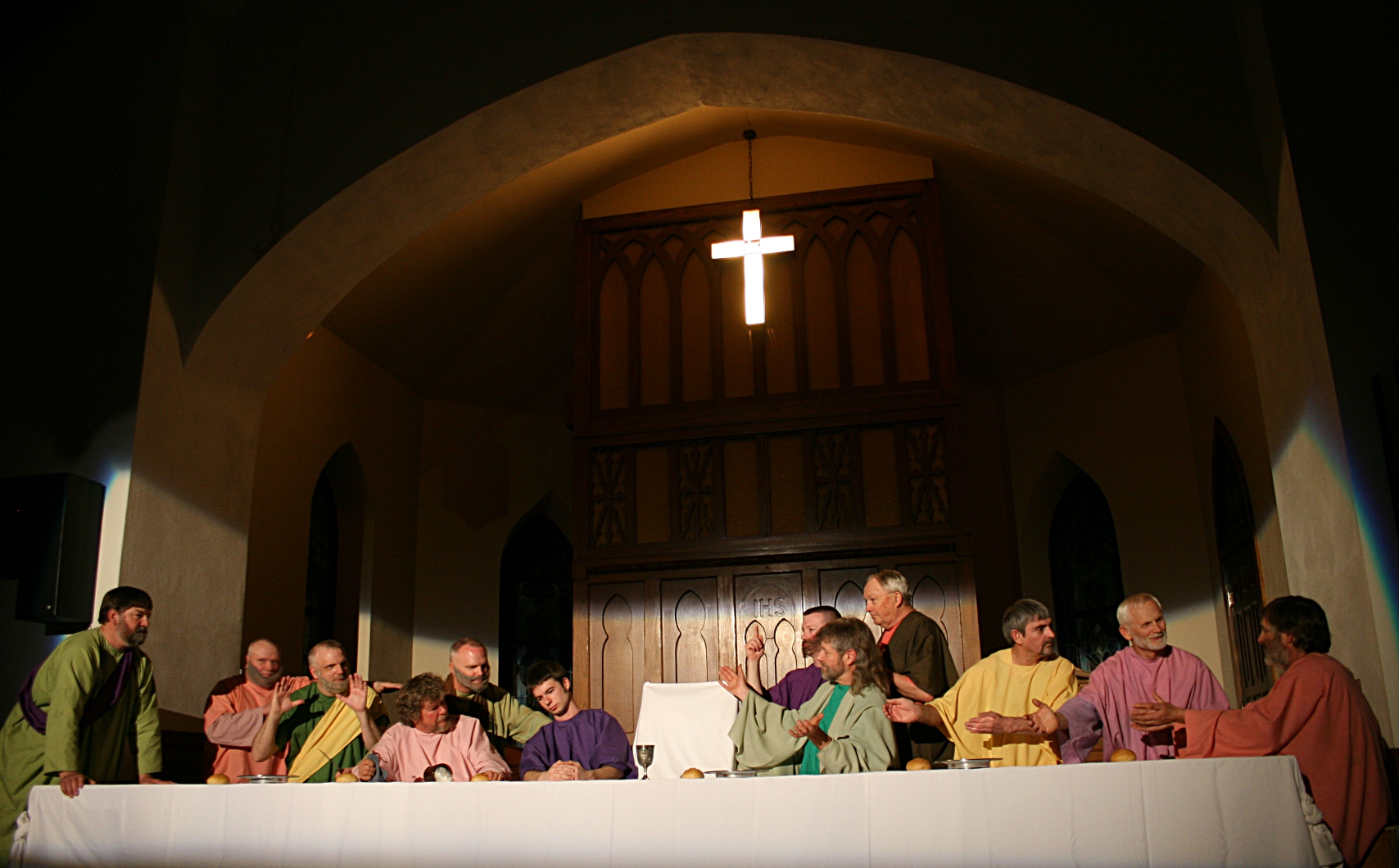
For me, it’s his “The Last Supper” painting.

Inside The History Museum, a sign welcomes visitors to the da Vinci exhibit.

I do not even think of him as a scientist or inventor.

But this Renaissance man surely was, a fact emphasized in a current exhibit originating in Florence, Italy, and currently showing at a northeastern Wisconsin museum through January 6, 2013.

The History Museum at the Castle, 330 W. College Avenue, Appleton, Wisconsin.

Two months ago I toured “Leonardo da Vinci: Machines in Motion” at The History Museum at the Castle in downtown Appleton, a hip and historic city some 300 miles from my southeastern Minnesota home and today home to my daughter Miranda.

An overview of one exhibit room, a working crane in the front and a tank in the back, right.

Typically I would not get particularly excited about a show which features mechanical-oriented displays. But given da Vinci’s notoriety and my interest in art and in sharing discoveries with you, I embraced this working models exhibit of 40 da Vinci machines. Modern day scientists and artisans built the machines based on da Vinci’s codices.

This is an interactive exhibit.

Kids will thrill in “Machines in Motion” as much as adults.

An informational sign summarizes well the multiple talents da Vinci possessed:

Perhaps more than anyone before him—and perhaps anyone since—Leonardo was a great scientist, engineer, and artist all in one. He combined a scientist’s passion for exploring how things work and an artist’s ability to vividly illustrate his revelations. His machine designs were ingenious and visionary—often ahead of his time. They illustrate principles at the heart of machines today.

One of da Vinci’s more impressive flight designs, suspended from the ceiling of an auditorium at the History Museum.
In his study of air, water, earth and fire, this genius—and I don’t hesitate to term someone of da Vinci’s intellectual and artistic talent as thus—created ideas which evolved into workable solutions aiding mankind.
See for yourself via these selected photos from the exhibit or by traveling to Appleton to tour this vast, interactive display. Click here for more information about “Leonardo da Vinci: Machines in Motion.”
An illustration by the scientist/inventor, Leonardo da Vinci.

Machines created from da Vinci’s codices.

More inventions showcased.

Da Vinci’s version of a horse-drawn armored military tank.

The bird’s wings flap as it moves across the stage during theatrical performances.
A machine in motion.

Da Vinci the artist and da Vinci the scientist.

Da Vinci’s idea to traverse water.

One final exhibit overview.

Disclaimer: I received a $25 gift certificate from Downtown Appleton, Inc., prior to my visit and used that money toward museum admission for myself, daughter and husband. That did not influence my decision to post about the da Vinci exhibit.

© Copyright 2012 Audrey Kletscher Helbling