Minnesota Prairie Roots

Writing and photography by Audrey Kletscher Helbling

The Last Supper Drama begins Holy Week at a rural Minnesota church April 3, 2012

St. John's 50th presentation of The Last Supper Drama in the sanctuary with the actors positioned just as the disciples are in Leonardo da Vinci's painting. However, in the drama, an empty chair represents Christ.

THOUSANDS OF MILES from Milan, Italy, in the flat farm fields of Rice County in southeastern Minnesota, Leonardo da Vinci has left his mark on a small congregation.

For 50 consecutive years, St. John’s United Church of Christ, Wheeling Township, has presented The Last Supper Drama, a theatrical interpretation of the master artist’s most famous painting created in 1495 as a mural in an Italian monastery.

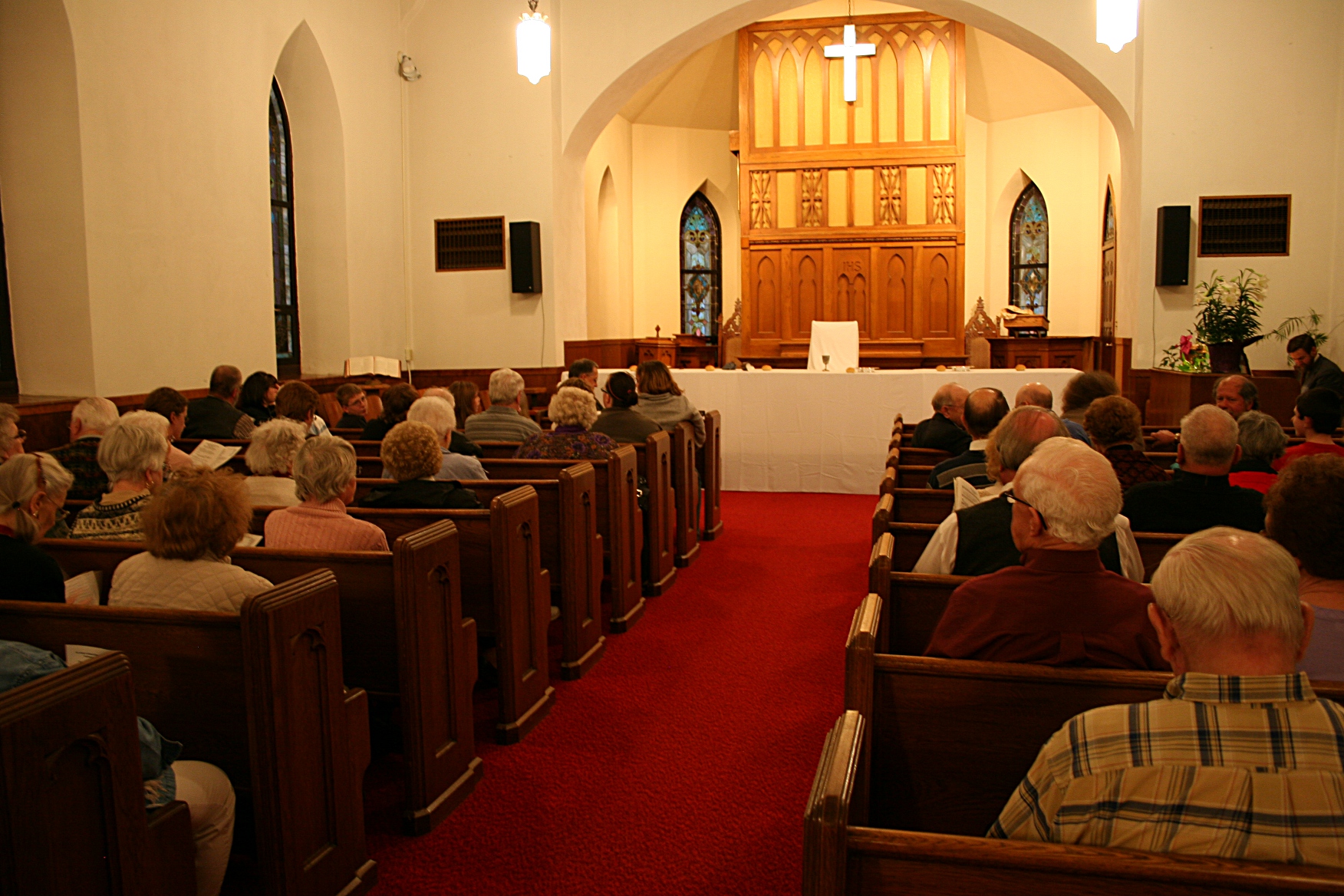
The rural Faribault church was nearly full for the golden anniversary of The Last Supper Drama.

Palm Sunday evening I joined a sanctuary full of worshipers to view the drama which inspires and moves for its touching, personal account of Christ’s last meal with his 12 disciples. In the script written so many years ago by a former St. John’s pastor, each of Jesus’ followers speaks of his personal relationship to the Lord.

In the reverent near-darkness of this late 1800s limestone church, the cast, in loud, clear, animated voices and with gestures fine-tuned by years of practice and presenting, truly bring to life da Vinci’s painting. They speak of their failures and deaths, of their love for Christ.

“Be not faithless, but believing,” advises doubting Thomas, played this evening by Thad Monroe.

Claims Don Katra as Matthew: “My life really began when I met and followed Him.”

Most of the actors are shown here as they pose for photos after the performance.

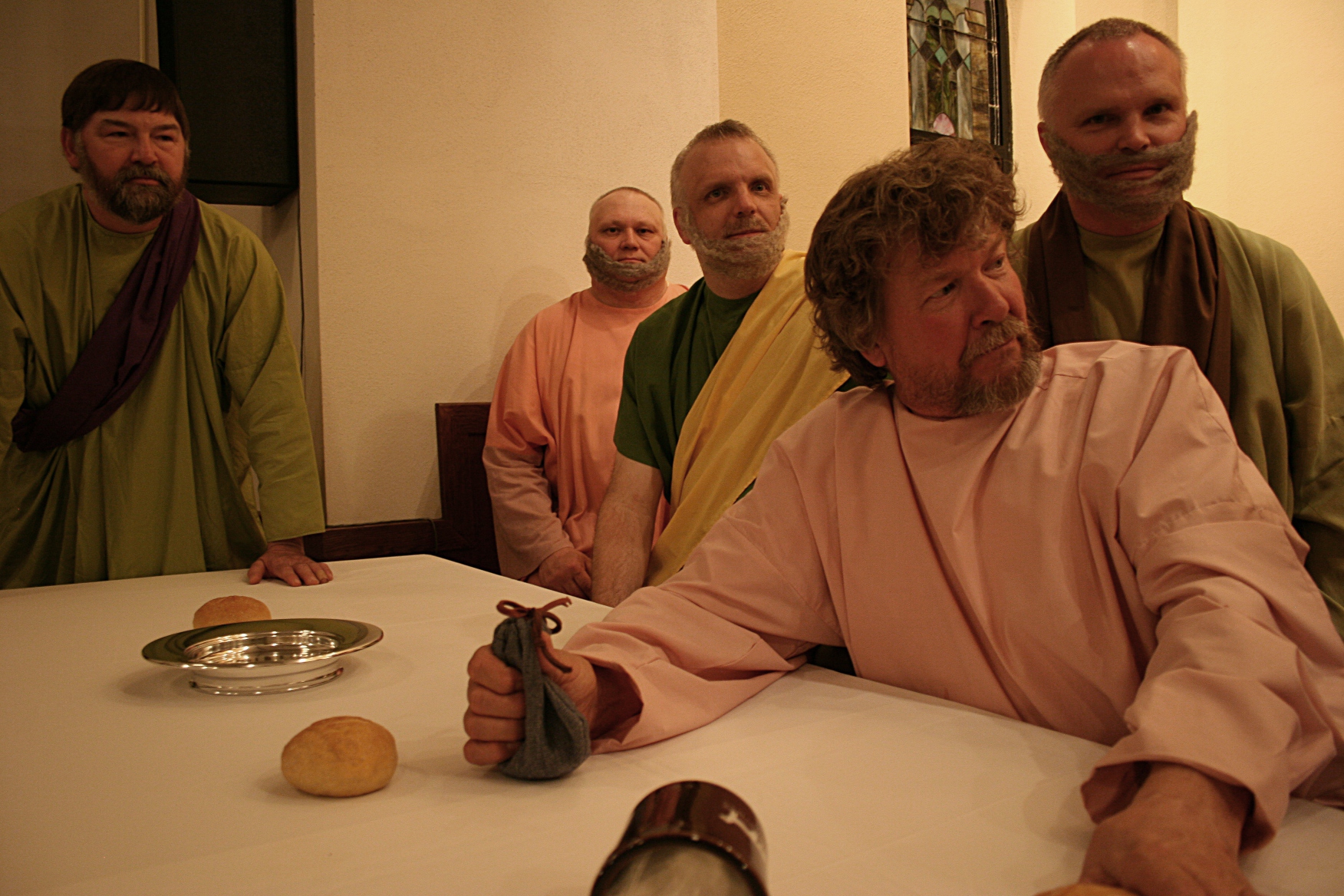
Judas grips the bag of silver, his reward for betraying Christ.

Even Gordie Wiegrefe as Judas the betrayer, admits, “It was too late. They wouldn’t take the silver back. I failed my Lord.”

The moment when Christ announces that one of his disciples will betray him is the precise moment da Vinci captures in his painting. In St. John’s performance, the defining moment of betrayal comes when Judas slams a jingling bag of 30 pieces of silver onto the table.

Later, after the drama concludes, St. John’s Pastor Lora Sturm tells worshipers, “Let us feel the light of His love as we enter the darkness of this Holy Week.”

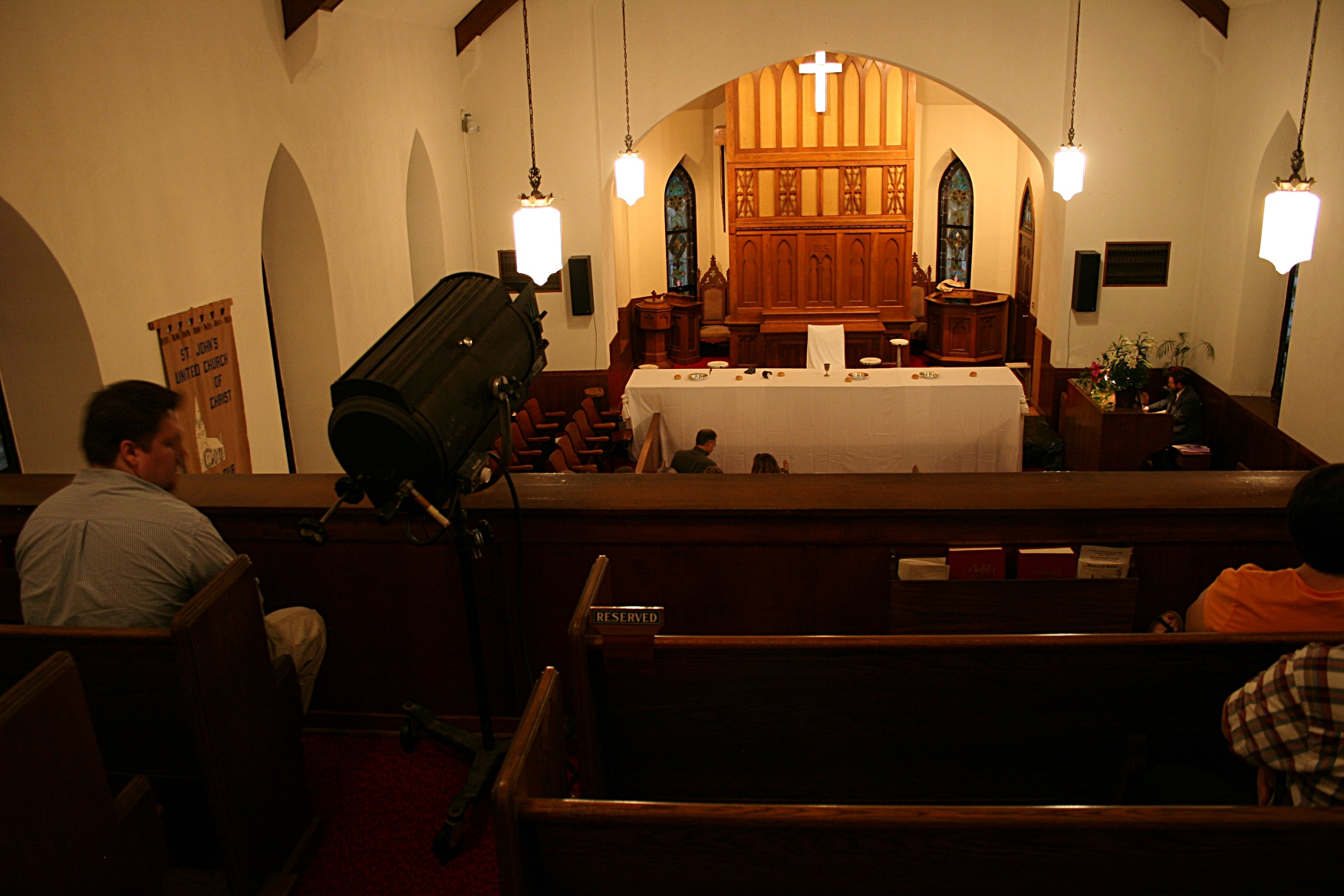
A view from the balcony before the drama begins shows the spotlight to the left and The Last Supper table below. The actors enter, spotlighted in the dark church, to take their seats at the table. There they "freeze" in place to mimic Leonardo da Vinci's painting.

That message resonates as a spotlight first illuminates a cross suspended above the altar in the dark sanctuary, then moves down to an empty chair representing Christ and finally pans out to shine upon all 12 disciples. It is how the drama opens and ends, impressing upon attendees the darkness of Holy Week which concludes on Sunday in the glorious light of the resurrected Lord.

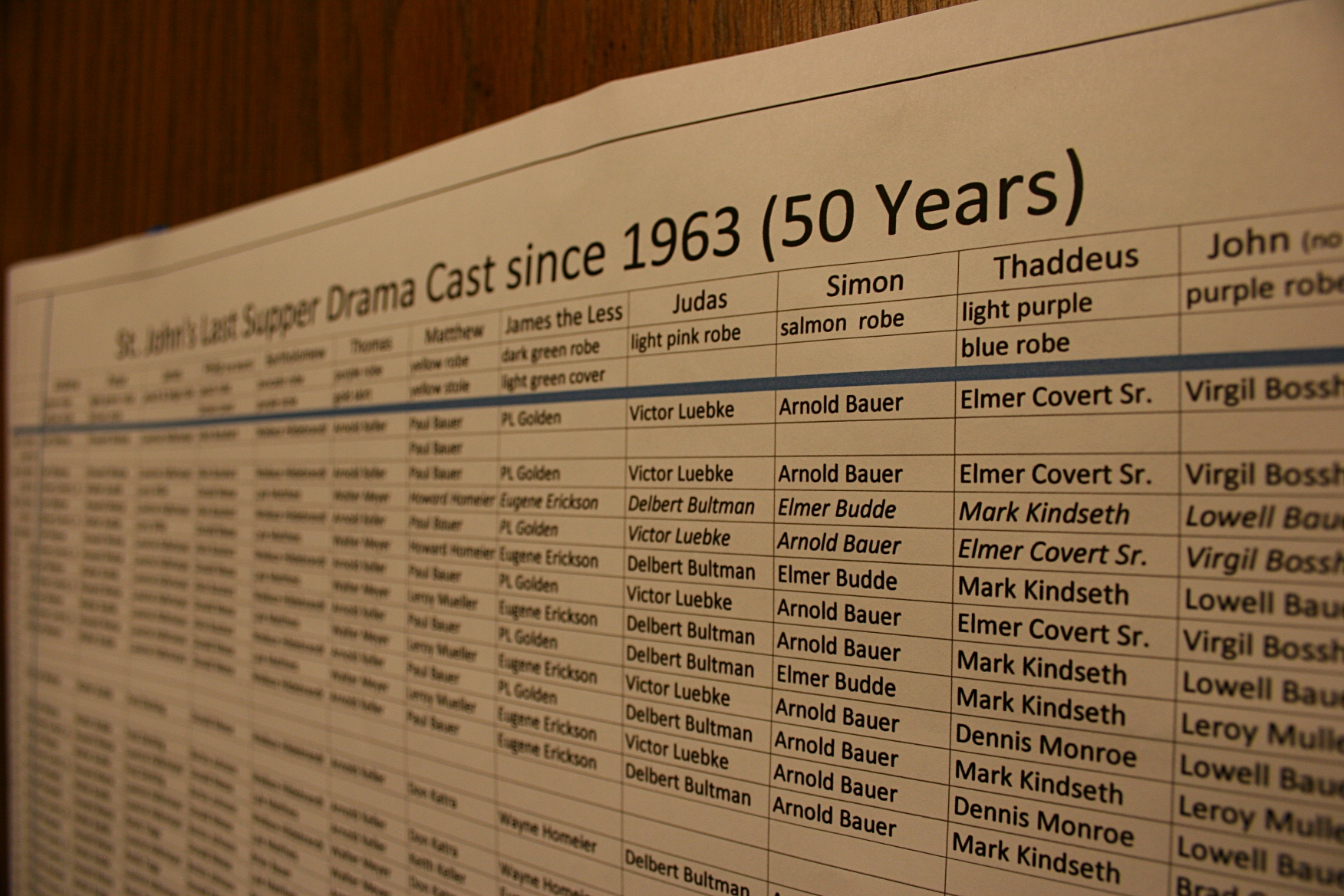
Spreadsheets on display Sunday evening listed those involved in the St. John's drama through-out its 50-year run.

FOLLOWING SUNDAY’S 50th anniversary performance, special recognition was given to those who have been part of St. John’s The Last Supper Drama. Original 1963 cast members Wallace Hildebrandt and Luverne Hafemeyer stood up to applause.

Other 50-year history trivia includes:

  • Seventy individuals have participated in the drama since 1963.
  • The role of John has been played by 10 actors.
  • The youngest actor was Kyle Keller who in 2011 assumed the role of Philip.
  • The oldest cast member was Kyle’s grandpa, Arnold Keller, who was 76 years old when he last acted in 1997.
  • Nine individuals have performed 20 or more times in the St. John’s drama.

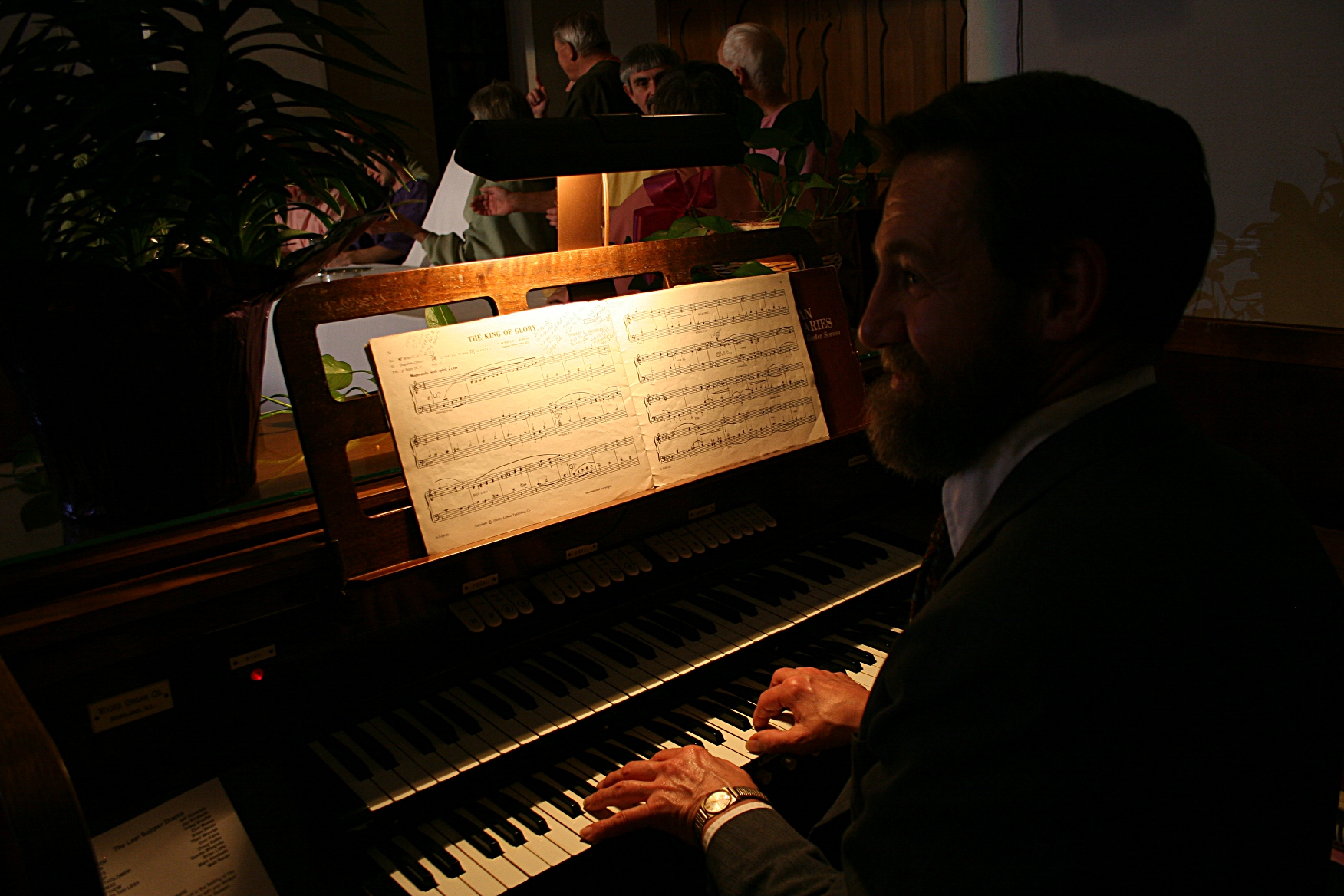
Craig Keller has been the long-time drama organist, playing the same music every year. The script and music remain unchanged in 50 years. Craig's father, Arnold, was an original cast member.

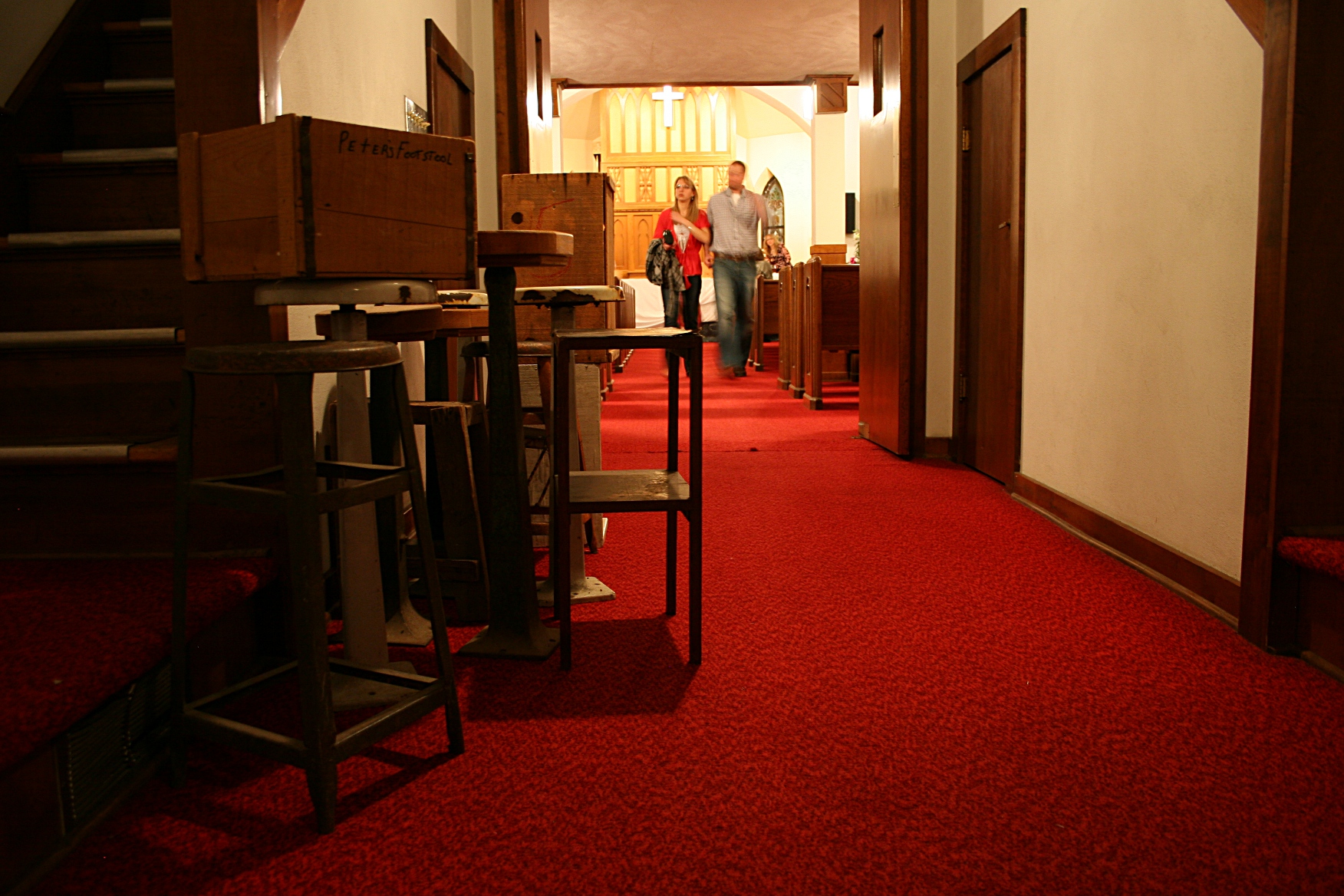
After the performance the cast took their stools and footrests out of the church, grouping them together (left) in the sanctuary entry. Later they carried the seats into a balcony storage area. Each stool is labeled with a disciple's name. They are the original stools, first used 50 years ago.

This artistic rendition of The Last Supper hangs in the St. John's Fellowship Hall.

After the performance, folks gathered in the social hall for cookies and beverages.

A tray of cookies awaits audience members and performers.

TO READ A PREVIOUS POST I wrote about the 2011 drama, click here.

© Copyright 2012 Audrey Kletscher Helbling


How I became an artist March 30, 2012

Filed under: Uncategorized — Audrey Kletscher Helbling @ 7:44 AM
Tags: , , , , , , ,

MY SKILLS AS A PAINTER are limited. I can paint a wall. I can dip a brush into a kid’s watercolor paint set and swirl colors onto a piece of paper. But I won’t promise a masterpiece.

Oh, no, if you want to see my best paintings, you will need to step back in time to more than 40 years ago. Imagine me hunched over an oilcloth-draped kitchen table in a southwestern Minnesota farmhouse dipping a thin brush into miniscule pots of paint. With great care, I brush shades of blue and brown onto cardboard as a ballerina emerges.

I have never seen a real ballerina. Her dainty features and fancy dress and perfect posture seem so foreign to me as I slump at the table in my rag-tag clothing that smells of the barn.

I imagine this ballerina smells only of flowers, like the ones I paint into the bouquet she clutches and into the wreath encircling her hair. Her bangs sweep in a fashionable style across her forehead, unlike my slanted, too-short bangs.

The paint-by-number ballerinas I painted as a young girl during the 1960s.

This ballerina’s life in New York City is so much different than mine on the farm. For the hours I am painting the flower-bearing ballerina and her sister, the twirling ballerina, I escape into their world. I dance on my tiptoes and spin and bow with grace on the stage of an opulent theater.

If not for Dan Robbins, though, I never would have experienced ballet. The Michigan artist created the first paint-by-number patterns in 1951. That led to a nation-wide obsession that allowed non-artists like me to become painters. The magazine American Profile featured Robbins in its March 25 issue. You can read the feature story by clicking here.

That story prompted me to remember the paint-by-number ballerinas I created as a child. Because my mother saves everything, I have those paintings today and they are among my most treasured childhood possessions.

TELL ME, HAVE YOU created paint-by-number paintings? Or do you collect these paintings? I would like to hear about your experiences and/or interest in paint-by-number kits.

You can learn more about the paint-by-number craze that swept the country during the 1950s by clicking here onto the Smithsonian National Museum of American History.

© Copyright 2012 Audrey Kletscher Helbling

 

Animal art March 20, 2012

Some of Julie Fakler's pet portraits displayed at the Paradise Center for the Arts in Faribault.

COLORS, VIBRANT AND BOLD, first draw you toward Julie Fakler’s art in a current exhibit. But move closer and it is the expressive eyes that connect you to the subjects of her portraits, adoptive animals from Prairie’s Edge Humane Society in Faribault.

“I paint domestic animals and I was trying to think of a way to help out local domestic animals,” says this Faribault artist. “That’s when I came up with the idea to paint portraits of the animals at the Prairie’s Edge Humane Society.” The local animal shelter will receive a portion of the sales from portraits sold during Julie’s current exhibit.

A snippet of a cat portrait by Julie.

Julie merges her skills as an artist and her passion for animals into acrylic hardboard portraits that practically pull the viewer in for a closer look.

Her work is showing locally in two galleries with “Prairie’s Edge Humane Society Portraits” at the Paradise Center for the Arts, 321 Central Avenue, Faribault, through April 17 and “New Work” at the Northfield Arts Guild, 304 Division Street, Northfield, through March 31.

Recently, I perused Julie’s PCA exhibit for the second time, this visit with camera in tow and with the artist’s permission to photograph her work.

Adoptable cats and dogs are the subject of her Paradise exhibit. A grant from the Southeastern Minnesota Arts Council and McKnight Foundation funded the body of her work and the gallery show.

I’m not a pet owner. But Julie’s engaging portraits will cause anyone to fall for these adoptable animals whose spirits shine in her creations. In her artist statement, this Minnesota College of Arts and Design graduate says: “The images of the animals represent their energy, personality and physical attributes.”

I agree. I remember the first time I saw Julie’s art, during a studio art tour in the autumn of 2010. Her use of bold, mostly primary, colors give her work a memorable, signature flair. I thought then, and still think, that her vibrant art would suit a children’s picture book. Or maybe t-shirts or handbags or…

The possibilities seem endless for Julie’s art.

The vibrant colors and sweet faces in Julie's art are irresistible.

FYI: Click here for more information about artist Julie Fakler.

Click here to learn about Prairie’s Edge Humane Society.

© Copyright 2012 Audrey Kletscher Helbling

 

Poets & artists collaborate in Zumbrota and I’m in March 13, 2012

Filed under: Uncategorized — Audrey Kletscher Helbling @ 7:52 AM
Tags: , , , , , , ,

I SET A GOAL for 2012 to write more poetry. I’ve posted a contest list on my office desk and filed information in a three-ring binder. But all the best-laid plans and organizing are meaningless unless I follow through with my intentions.

Thus far, I’m doing OK, although not penning poetry probably as frequently as I should be.

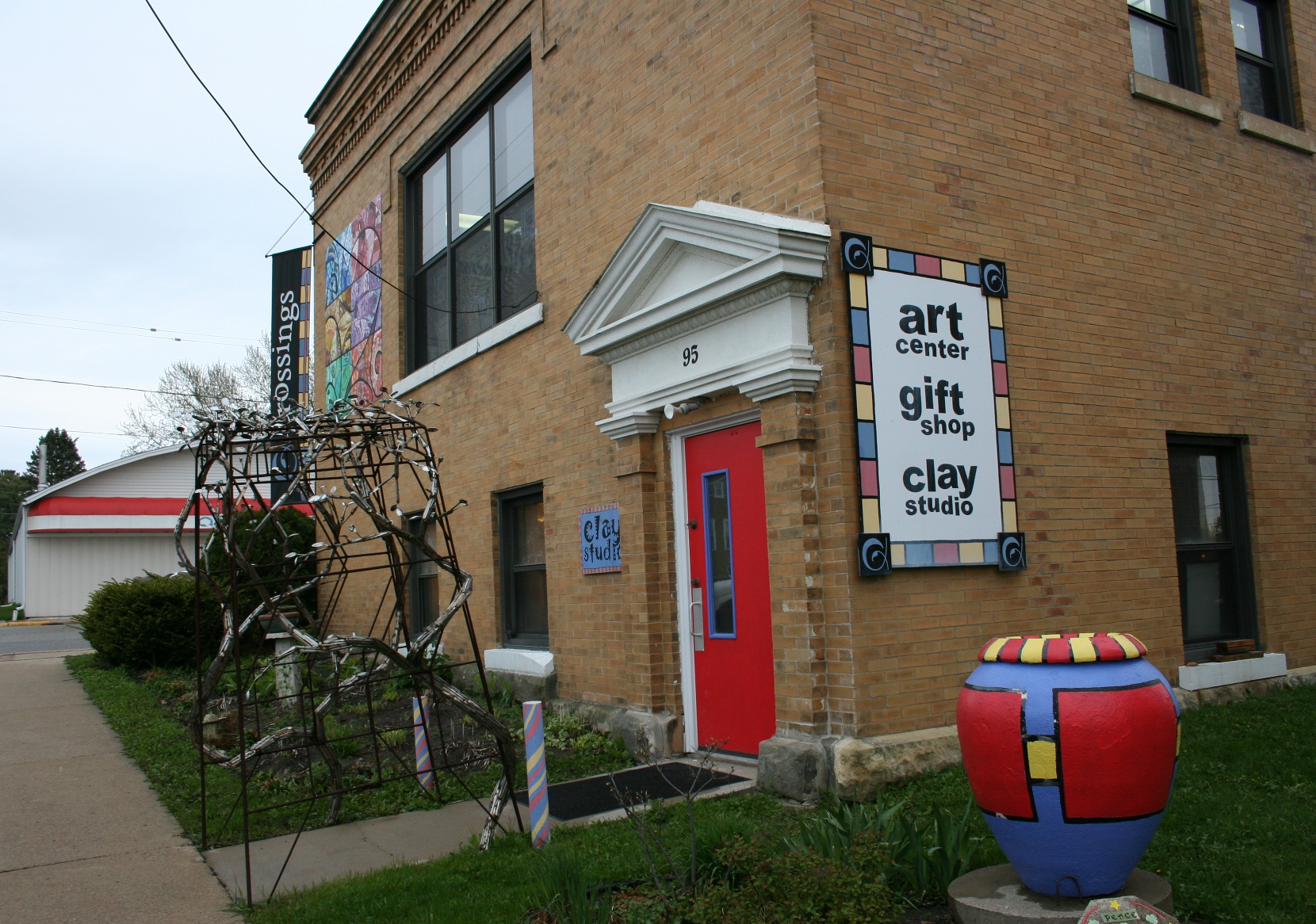
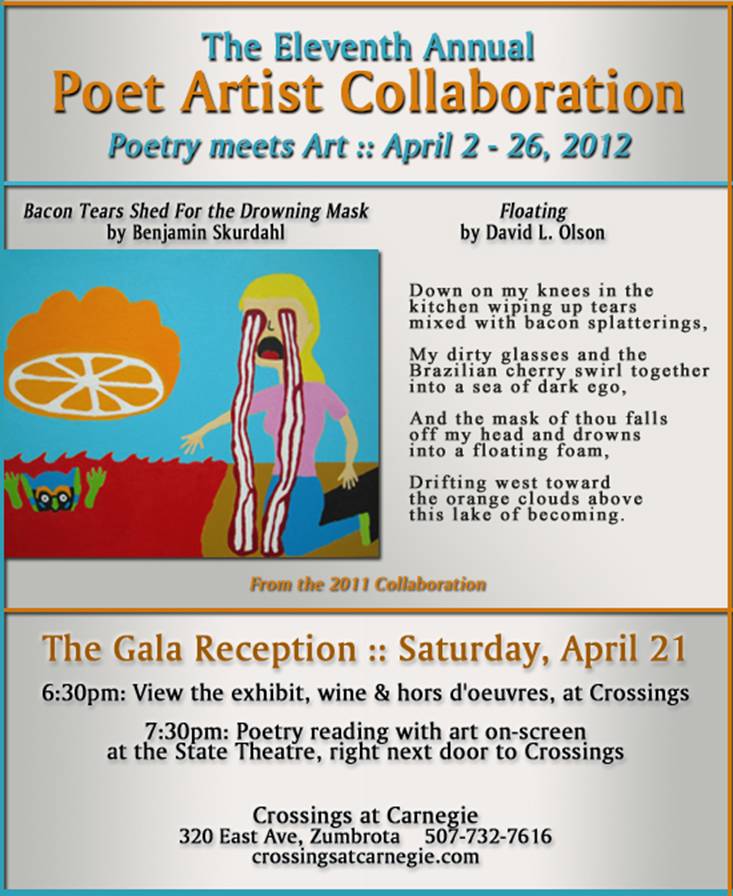
Yet, I’ve already seen my initial efforts, including poetry revision, rewarded with the acceptance of a poem into Crossings Poet-Artist Collaboration XI in Zumbrota.

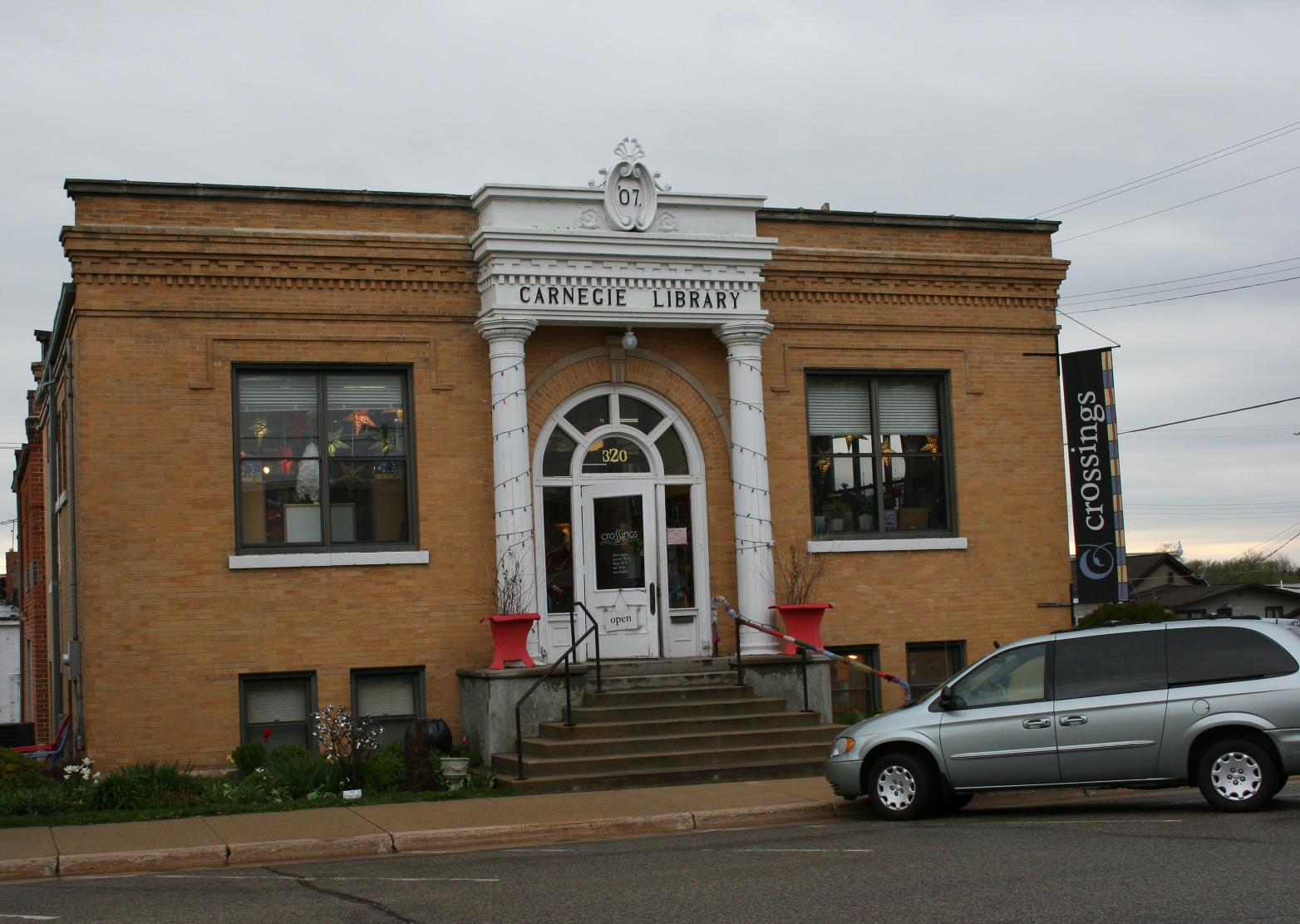
The exhibit, which will be installed on April 2 at Crossings at Carnegie, pairs poetry with art.

Poets were invited to submit up to three poems for consideration. Then four professional writers/poets juried the poetry—this year more than 180 poems—and selected 26 for inclusion.

I’m honored and thrilled to have my writing in this exhibit.

Marie Marvin writes in an e-mail to the selected poets: “It was exciting to receive such a fine outpouring of exceptional work from so many talented poets for this collaboration. Jurists told us they were a pleasure to read, and selecting those to be included was a difficult task.”

Additionally, Laura McDonough of Crossings tells me jurists were given complete license and no specific guidance during the selection process and did not know the identity of the poets.

But, she surmises, “They look for excellence and magic.”

Now artists, who also were juried for the collaboration, are working their magic creating  pieces of art inspired by the poetry.

Paired poets and artists will not know each others’ identities until the show is installed. Nor will the names of participating poets and artists be revealed to the public until April 2. I asked.

I’m not disclosing the content of my poem which I unsuccessfully submitted to previous contests and then reworked for this competition to make it a stronger, better poem. Yes, time allowed me to view my writing with fresh eyes and see areas where I could improve.

Naturally, I’m wondering how “my artist” will interpret my quite visual poem.

I’ll find out on Saturday, April 21, when I attend a reception beginning at 7 p.m. at Crossings at Carnegie, 320 East Avenue, in Zumbrota. Poets and artists will discuss their works. Please join me and the 25 other poets and 26 artists at this celebration during April, National Poetry Month.

FYI: MARIE MARVIN, who opened Crossings in 2001 to create an oasis for artists, writers and musicians, is the driving force behind the Crossings Poet-Artist Collaboration. She discussed her love for “mixing up the arts” with poet Beverly Voldseth and, between the two of them, the first collaboration took shape in April 2002.

The collaboration also includes publication of an exhibit book offered at a nominal cost to participating poets and artists and their families.

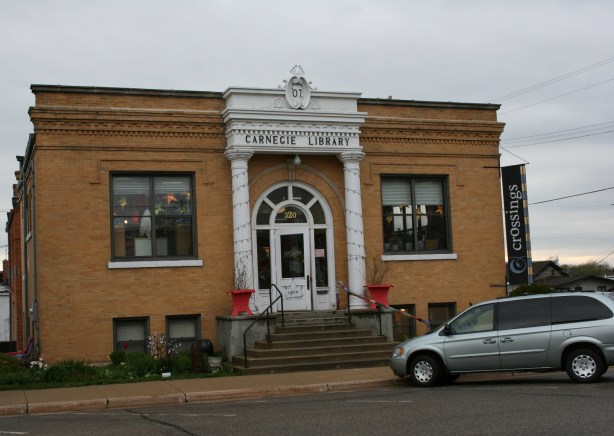
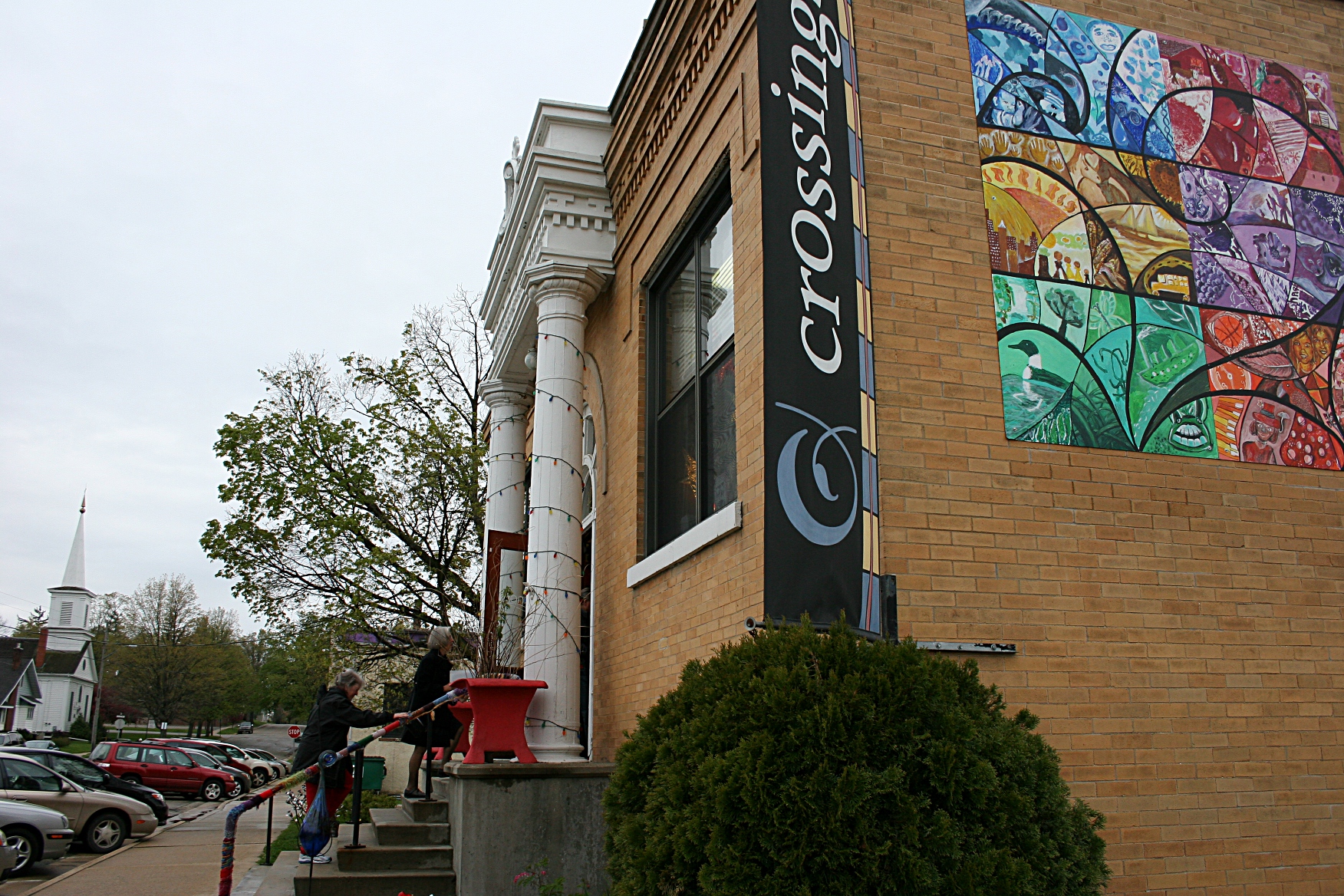
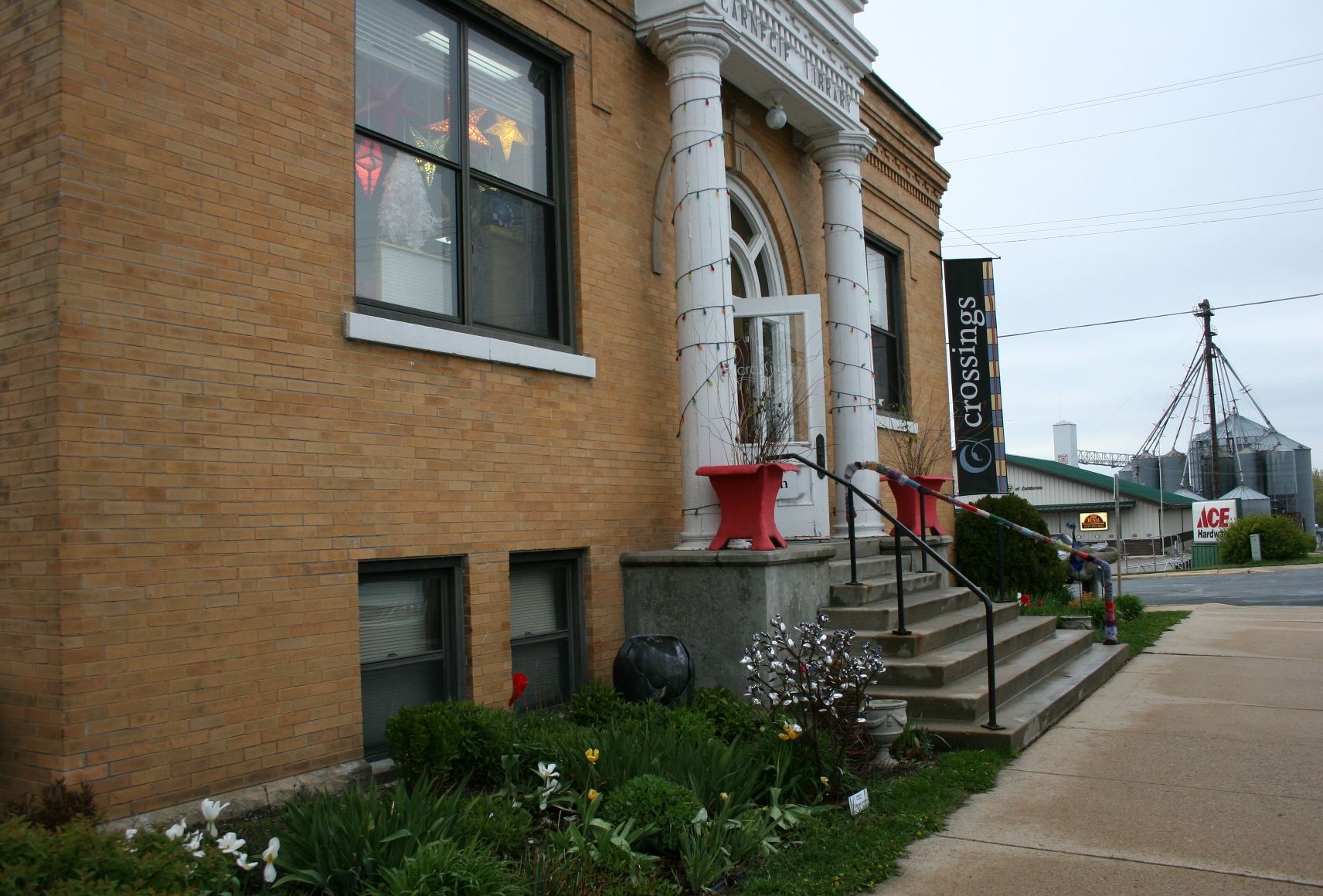
Crossings is housed in a former Andrew Carnegie Library built in 1908 in the Classical Revival style. I can’t wait to see the building as I appreciate libraries, history and architecture.

Zumbrota, a community of around 3,000, is located along U.S. Highway 52 about 25 miles north of Rochester.

Click here for more information about the art center.

IF YOU’D LIKE to share information about a similar poet-artist collaboration in Minnesota, please submit a comment with details.

© Copyright 2012 Audrey Kletscher Helbling

Graphic courtesy of Crossings at Carnegie


Encouraging our youth in the arts March 11, 2012

Filed under: Uncategorized — Audrey Kletscher Helbling @ 12:12 PM
Tags: , , , , , ,

Third grader Henry Johnson of Nerstrand Elementary School created this vivid art for the Student Art Exhibit which opened Friday at the Paradise Center for the Arts in downtown Faribault.

SEVERAL WEEKS AGO while attending a church meeting about demographics, I noticed a young girl two pews ahead of me sketching. After the drawn-out session ended, I approached her and asked to see her art. I can’t recall the subject of her drawing. But I do remember our conversation. We talked about her interest in art.

And then I asked if she also writes. Her grandpa, who’d been listening, piped up, “She’s always writing stories.”

That’s all I needed. “I’m a writer, too,” I said.

“What books did you write?” the elementary-aged girl asked, her eyes widening.

I could hear the awe in her voice before sharing that I hadn’t actually published a book, but have had my essays and poetry published in collections. I also mentioned that I write for a magazine and that I blog.

But I didn’t want this to be about me. I wanted this to be about her, the budding writer.

My writing summarized, I shifted the conversation back to her, suggesting she continue writing and drawing and doing what she loves.

Whenever I can encourage a young person in the arts, I will. Sometimes that’s all it takes—the attention of an adult—to set a child on a path to a future career or engagement in a past-time that fulfills a creative need.

Just a snippet of the art created by artists from five Faribault area schools and currently displayed at the Paradise Center for the Arts through April 7.

Last week I had a similar opportunity to encourage a home-schooled tenth grader, Claire Ellendson, whose art is currently exhibited in the Corey Lyn Creger Memorial Gallery at the Paradise Center for the Arts in Faribault. I could hear Claire’s excitement as we talked about her Washington, D.C., street-scape that sold days before her gallery show opening. Any artist would be elated to have a piece of art sell before opening day. Imagine how that uplifts a young person still evolving into her identity as an artist.

That brings us to today, to March, Youth Art Month, an effort “to emphasize the value of art education for all children and to encourage support for quality school art programs,” according to the National Art Education Association.

In celebration of that, an annual Student Art Exhibit featuring the art of school-age children from Faribault area schools opened Friday on the second floor of the Paradise. Five of the invited schools opted to participate.

While I got there too late to interact with the artists and with only enough time to shoot photos before closing, I still wanted to encourage these youth. Thus I’m writing this blog post.

Jeremiah Kuball, a student at Waterville-Elysian-Morristown Schools, used colored pencils to draw this John Deere 4450. Among his shading techniques is crosshatching.

Artists from Jefferson, Lincoln, Nerstrand, Roosevelt and Waterville-Elysian-Morristown Schools, I’m impressed with your art. I’m impressed by the level of talent at such a young age. This is not the crayon art of my youth. This collection of some 200 pieces (guessing on that number, but each school could submit up to 40 works) includes art I’d love to hang in my home.

First grader Kyle Ernste of Nerstrand Elementary School painted this vivid butterfly which reminds me of children's picture book artist Eric Carle's art.

And, yes, I photographed more than I can showcase here, on this page. So I’d urge you to see for yourself what these young artists have created by touring the Student Art Exhibit, which runs through April 7.

For those of you who don’t live anywhere near Faribault, or even in Minnesota or the U.S.A., I ask you to find one young person who loves the arts. Foster that child’s love for the arts via praise or perhaps the gift of art supplies or an art class. Such words and actions, offered in sincerity, can be powerful.

Additionally, I invite you to share your comments here on youth art and/or how someone encouraged you in the arts.

Families peruse the student art hung in the hallways of the Paradise's second floor.

A snippet of Lincoln Elementary School fifth grader Evelyn Nigon's Statue of Liberty painting.

Fifth graders from Jefferson Elementary School infused humor into their interpretations of the Mona Lisa.

CLICK HERE for more information about the Paradise Center for the Arts in Faribault.

© Copyright 2012 Audrey Kletscher Helbling

 

Musings in the Clay Center March 9, 2012

This sculpture sits in front of the Arts Center of Saint Peter along South Minnesota Avenue/U.S. Highway 169 in St. Peter. The downtown is graced by historic buildings like these across the street from the Arts Center.

MY HUSBAND AND I are nearly through the Arts Center of Saint Peter front doors when she waves us in—she being Thalia. Not a Greek goddess, mind you, rather the Greek “muse of comedy.”

She’s not Greek either, but Mexican, this Thalia will tell you and smile as she slaps a hunk of clay, working out the air, mixing the clay just like Joel Moline across the table.

At only four feet seven inches tall, she should be manipulating clay on a table half the height, living in a world where everything is lower, shorter, Thalia Taylor surmises in a voice laced with humor.

“You should see her husband,” Joel says.

“He’s seven-two,” Thalia says and my jaw drops picturing this petite woman next to a towering man.

Then this muse of comedy laughs and corrects her mistake. “He’s six-two.”

Joel Moline and Thalia Taylor knead hunks of clay.

That is my introduction to the two artists, who on this Sunday afternoon are in the Clay Center working mud-hued clay like two bakers kneading dough. When I verbalize the comparison, Joel says he’s a baker.

He also enjoys writing letters, taking on a recent challenge to write a letter daily for 30 days. He collects fountain pens. You would rightly guess that he’s penning his letters the old-fashioned way.

An example of Joel's graceful writing on the Clay Center blackboard. He could teach penmanship. Remember that forgotten art which some of us were taught in grade school?

I tell him I seldom hand-write a letter any more, instead typing correspondence on my computer.

Then we—my husband, the baker/potter/letter writer and the potter/muse—bemoan the inability of today’s young people to write by hand. Joel laments how youth are losing that physical connection to writing, to individual letters and words. We are in agreement on this topic, that the youth of today should be able to write and read cursive.

After we’ve discussed that topic, I slip two business cards onto the table where Thalia and Joel continue to pound clay.

As I walk away, Joel hints at sending me a letter scribed with a fountain pen. I tell him I would welcome such a gift. Then I shoot a few more photos before exiting the Clay Center, leaving the baker/potter/letter writer and the potter/muse to their musings.

Stacked pottery in the Clay Center.

CLICK HERE for information about the Clay Center at the Arts Center of Saint Peter, 315 South Minnesota Avenue, St. Peter.

As any inquisitive writer would do, I googled Joel Moline’s name just to learn more about this man who once lived in Faribault (where I live) and taught art at the Minnesota State Academy for the Deaf. Turns out Joel, a retired St. Peter art teacher, is also a print maker. If only I’d known that when we met, but we didn’t have enough time to discuss everything… Click here to read a story about Joel  published six years ago in The Faribault Daily News.

© Copyright 2012 Audrey Kletscher Helbling

 

Tom at the organ March 7, 2012

Filed under: Uncategorized — Audrey Kletscher Helbling @ 7:41 AM
Tags: , , , , , , ,

My father-in-law, Tom, at the used Lowrey organ he purchased a few years ago.

THE CONSOLE LIGHTS UP like a Christmas tree or the Vegas strip or a carnival midway as my father-in-law settles onto the bench of his Lowrey organ and flips switches.

I’ve asked Tom to play a tune or two during a brief visit at his St. Cloud apartment.

He’s taking organ lessons. I find that particularly admirable given he’s 81. Not that he’s a musical novice. Tom isn’t. He once played an accordion and piano and even an organ and tuned and repaired pianos. He typically plays music by ear, including on this occasion.

Playing the organ, with his artificial hand, left, and his real hand.

Hank Williams’ “Your Cheatin’ Heart” and “Somewhere My Love,” from the movie “Doctor Zhivago” flow from the keys like music at a supper club all sugary and sweet and smooth. We should be dining in the dark corner of a long ago Saturday night destination, backs pressed against walls pasted with flocked red wallpaper, slicing our serrated knives through pink steaks and sipping our whiskey sours.

But instead, we are cramped into a tiny apartment among a hodgepodge of doll and angel collectibles, beer steins and toy tractors, and a clutter of miscellaneous knickknacks. We’re sipping water in a room flooded with light.

The organ takes up considerable space in the tiny apartment.

In the corner, my step mother-in-law pauses from circling words in a word search book to listen to the organ music, until, finally, she requests that the music stop.

We leave her there, with her words, as we descend several floors to my father-in-law’s art studio, a corner in the basement community room. Just over from a cluster of outdated exercise bicycles, Tom has stashed frames he’s recycling for his own art. Finished and in-progress works lean against each other and we file through them—elk in the mountains, loons, raccoons…

Threshing on the home place, a painting by my father-in-law. While growing up here, Tom already played organ.

He unrolls a scroll onto a table, revealing a sketch of the home place near St. Anthony, North Dakota. His second oldest daughter wants a painting of the farm where Tom grew up with his parents, Alfred and Rosa, and siblings, then later lived with his bride.

My husband studies the drawing, points out the summer kitchen and the creek, the details he remembers of Sunnybrook Farm, the place he called home until moving with his parents to central Minnesota in the early 1960s.

In moments like this, I begin to glimpse the history and the roots of this family I married into 30 years ago.

And in moments like photographing my father-in-law at the organ and in sifting through his paintings, I see the artistic side of this man. The man who once attended Catholic boarding school and worked the land and lost his left hand to a corn chopper in 1967, but never lost his desire, or ability, to pursue his passion to create music and art.

© Copyright 2012 Audrey Kletscher Helbling


Perspectives on life presented in Saint Peter galleries March 6, 2012

Filed under: Uncategorized — Audrey Kletscher Helbling @ 7:53 AM
Tags: , , , , , , ,
The Arts Center of Saint Peter, 315 South Minnesota Avenue, St. Peter, Minnesota.

The Arts Center of Saint Peter, 315 South Minnesota Avenue, St. Peter, Minnesota.

LIKE BLACK AND WHITE, night and day, the artwork of Pamela Bidelman and Kay Herbst Helms, at first glance, holds no comparison.

Pam, of St. Peter, is a painter, working in the more abstract in her current exhibit, “lamina,” installed at the Arts Center of Saint Peter Moline Gallery.

Kay, of Mankato, is a photographer, grounded in the earth with her black-and-white, rural-themed images in “What Sustains Us: considering the hands and the land of rural south central Minnesota.” Her art is showcased in the Lower Level Gallery of the Arts Center.

Both artists distinguish themselves in their individual approaches to art. Therein lies the essence of art—the ability to create and express one’s self in a truly personal style that emerges from the heart and soul of the artist.

I am more of a down-to-earth appreciator of art, meaning abstracts puzzle and challenge my mind to consider what the artist is attempting to convey.  I don’t have to think so hard to understand real-life art.

Yet, it’s good for me to view more abstract art like that created by Pam and to talk with her and learn that she is trying to show, in her exhibit, “the quality of skin as a container…deconstructing the body parts…the fragility of life.”

Three almost ghost-like faces, with undefined, haunting eyes, created by Pam Bidelman.

I expect that her artistic expression connects to her former profession as a clinical social worker. One can only imagine the experiences she drew on while creating her current exhibit.

There’s a certain translucency to Pam’s pieces that I interpret as a sense of vulnerability.

A series of suspended faces, again with that vulnerable quality.

In Kay’s work, vulnerability also exists, in the primarily close-up black-and-white images she’s shot, mostly of hands, and in the accompanying short stories she writes about her subjects. I know rural people. It is not always easy for them to open up, to allow introspective photos and insights into their lives.

Kay gained their trust and shares her discoveries in art that is as honest as a hard day’s work on the farm.

For example, she writes in her interview with Sharon Osborne:

Sharon tells the story of her uncle, a retired farmer. Her aunt has answered the phone and the caller asked, “What’s your husband doing on this cold, blustery, snowy day?”

Her aunt replied, “What else do farmers do on a cold winter’s day other than crack walnuts down the basement?”

Viewing Kay Herbst Helms' photos in "What Sustains Us." She focuses primarily on hands in her images.

With other photos, Kay pairs poetry by Paul Gruchow and the poetic words of additional writers.

She is, says Kay, connecting the elements of hands, land, photographs and words in her exhibit.

Kay accomplishes that with the spirit of an artist rooted deep in her appreciation of rural life and the rural landscape.

Both exhibits are distinctly different. Yet each can be appreciated for the unique perspectives they offer on life.

Several of Kay's images include cattle, following the exhibit's rural theme.

FYI: Both artists’ projects were supported by grants from the Prairie Lakes Regional Arts Council with funding provided by the McKnight Foundation. Their exhibits run through March 18.

Kay created a previous, similar project, “Blessed Are the Hands That Have Served,” focusing on photos of 13 retired School Sisters of Notre Dame.

Click here for more information about the Arts Center of Saint Peter.

Check back for another post from the art center wherein you will meet two more artists.

© Copyright 2012 Audrey Kletscher Helbling
 

Photographing the magic in a dance performance February 29, 2012

Filed under: Uncategorized — Audrey Kletscher Helbling @ 8:09 AM
Tags: , , , , , ,

SATURDAY AFTERNOON I found myself kneeling on the floor of the Faribo West Mall to shoot photos of young dancers performing.

If my orthopedic surgeon had observed the way I crouched and bent my hip, he would have scolded me, even warned me that I could pop my 3 ½-year-old artificial right hip right out of place. Such an admonition would be well-deserved.

But in those photographic moments, I forget about the health consequences and pursue shots from a perspective that best tells the story. With kids, that typically means I get down on their level, on the floor. Now getting back up, well, that can be more of a challenge.

Let me show you three photos from that dance performance. They’re not your typical “proud parent” type shots and I’m certain more than one parent questioned why I was scooting around on the floor of the mall.

You won’t see the dancers’ faces. Rather, you’ll notice the stance, the clasp of hands and other details that tell a story from a broader perspective. See for yourself and read how, with my minor photo editing skills, I tweaked each photo.

It is the pose of this little girl, holding her hands close, eyes fixed on the older dancer, that show her admiration, her "I want to dance just like her someday," wonderment. In photo editing, I cropped the image just a wee on the left to cut out a distracting red EXIT sign. I sharpened the photo slightly and lowered the saturation of the yellow. While an entire crowd of onlookers ringed the two dancers, in this frame I opted to focus solely on the two dancers to emphasize the magic I saw between them. It was as if they were all alone in the mall, at a private dance lesson.

Here I crouched as low as I could without lying on the floor to capture this moment. This scene takes in all aspects of the performance from performer to the audience to those two little girls who look forward to someday dancing solo. The only editing change was a minor sharpening of the photo.

When the older girls took to the mall dance floor, I wanted to showcase the movement to tell their story and to truly engage you, the reader. So I set a slower shutter speed and focused on their legs. I cropped the frame on the right and then edited the distracting colors from the image. The sepia tone adds to the dreamy, artsy quality of the photo.

AFTER THE PHOTO shoot of the dancers, I stopped by my local public library where I found a photography guidebook that I’d highly recommend, Expressive Photography: The Shutter Sisters’ Guide to Shooting from the Heart.

Check out the Shutter Sisters’ photography blog by clicking here.

Their book is packed with tips about lighting, perspective, photo editing, composition and more. It’s one of the best photography books I’ve read.

And don’t you just love the cover?

© Copyright 2012 Audrey Kletscher Helbling

 

Ice art in rural Minnesota February 16, 2012

Filed under: Uncategorized — Audrey Kletscher Helbling @ 8:52 AM
Tags: , , , ,

CAN YOU IMAGINE how impressed I would be if ever I viewed the Saint Paul Winter Carnival snow and ice sculptures?

Up until Sunday, the only ice sculptures familiar to me clung to milkhouse and house rooflines or clumped like frozen waterfalls along bluffs in the Mississippi RiverValley.

In the winters of my youth, when winter truly was winter with mountains of snow from which to build forts and an abundance of icicles from which to grab swords, I welcomed the season.

The clash of icicle against icicle in a swordfight with my brothers and sisters entertained me between rounds of shoving manure into gutters and feeding cows and bedding straw and carrying pails of steaming milk replacer to calves huddled in the calf barn.

That and memories of boot-skating across patches of frozen water in the farmyard and along the edges of the cornfield encompassed my general experiences with ice.

Until Sunday.

For the first time, I viewed ice as anything but Nature’s art or a source of youthful entertainment or a peril to be avoided.

Horse and sleigh ice sculpture in Waseca, a rural southern Minnesota community.

Just south of the Waseca County Courthouse, partially in the shadow of a downtown building and along busy State Street/Minnesota Highway 13, artists Adam Scholljegerdes and Joe Christenson, with assistance from their families, crafted a horse and sleigh from ice blocks in celebration of Waseca’s 62nd annual Sleigh and Cutter Festival.

She’s a beauty.

For the first time ever in 62 years, ice sculpting was added to Sleigh and Cutter festivities. The event typically involves ice harvesting from Clear Lake, something which did not happen this year due to warm weather and open water. The ice sculpture is just south of the Waseca County Courthouse, a snippet seen here to the right.

Of course, I have nothing with which to compare this work of art. But suffice to say that the pair’s rendition of a horse pulling a sleigh impressed me, my husband and plenty of others who stopped to photograph the ice sculpture, even sit on the sleigh and pet the horse.
Even an ice horse needs petting.

This ice sculpture is a new addition to the annual winter festival which spans several weeks and weekends in February. This year’s fest, which included events like snowmobile races, card tournaments, ice fishing and a parade, runs through February 19. One final event, a Children’s Dream Catcher fundraiser for terminally-ill children in the Waseca area, is set for March 24.
For now, the ice sculpture serves as a visual focal point for the Sleigh and Cutter Festival.

Make haste, I say, if you want to view this temporary work of art in rural southern Minnesota.

This close-up image shows the blocks of ice that comprise the horse. Artists labored nearly 3 1/2 days transforming 50 blocks of ice into this work of art. Sculptor Adam Scholljegerdes worked on a team that recently won first place in the amateur division ice sculpting competition at the Saint Paul Winter Carnival. He is an artist at Brushwork Signs in Faribault, where I live. Joe Christenson has competed at the Saint Paul Winter Carnival since 1986.
An ice-sculpting sponsor points to the Waseca community's rural roots.

A back view of the sculpture, looking toward historic buildings in Waseca's downtown business district.

CLICK HERE for more information about Waseca’s Sleigh and Cutter Festival.

© Copyright 2012 Audrey Kletscher Helbling