Minnesota Prairie Roots

Writing and photography by Audrey Kletscher Helbling

Count me in on Roadside Poetry April 26, 2011

“We’ve selected YOUR poem for our spring Roadside Poetry installment!”

For nearly a month now, I’ve kept that exciting, boldfaced news mostly to myself, sharing it with only my immediate family, my mom and a few select friends and extended family members.

But now that the billboards are up—yes, I said billboards—I no longer feel obligated to keep this a secret.

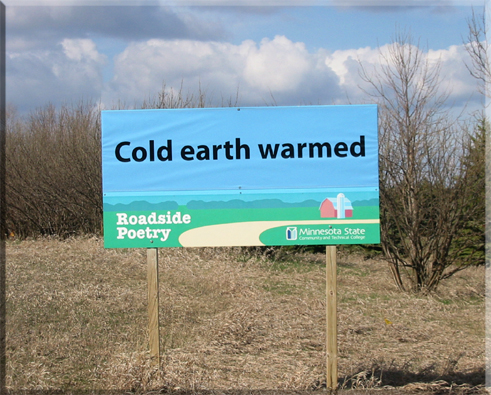
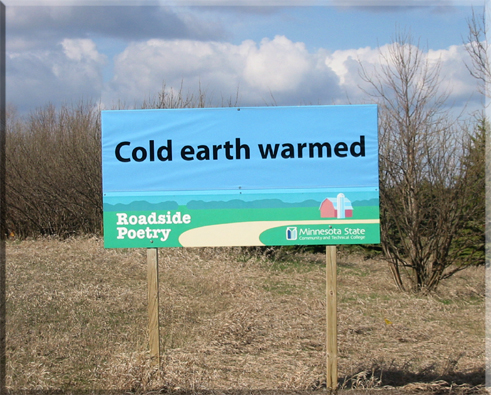
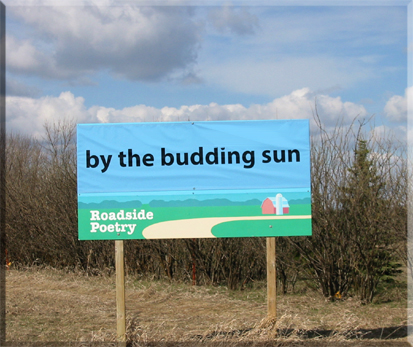
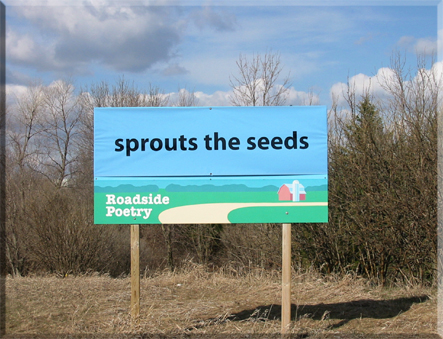
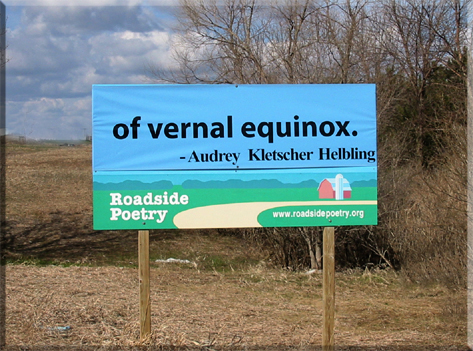
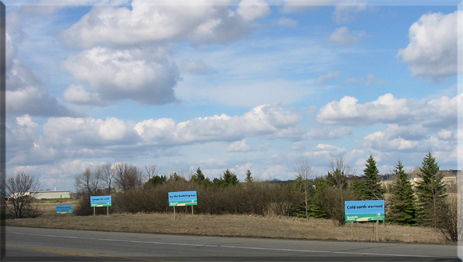
I won the spring Roadside Poetry competition and my poem now sprawls across four billboards, Burma Shave style, 50 yards apart in Fergus Falls.

That’s it, my poem, the winning poem, which is posted along North Tower Road west of Minnesota State Community and Technical College in Fergus Falls, just down the road from Fleet Farm. Take exit 54 off I-94 on the west edge of Fergus.

Paul Carney, the project coordinator who delivered the good news to me via e-mail in early March, tells me that 100,000 vehicles drive by the billboards each month. “How’s that for readership?” he asks.

Well, mighty fine, Paul. Mighty fine.

Getting my poetry out there in this unusual, highly-public venue really is an honor for me, adding to my poems already published in two magazines and four, soon-to-be five, anthologies.

The mission of The Roadside Poetry Project “is to celebrate the personal pulse of poetry in the rural landscape,” according to roadsidepoetry.org. The first poem went up in September 2008 and was, interestingly enough, written by another Faribault resident, Larry Gavin, a writer and Faribault High School English teacher.

The poems, all seasonally-themed, change four times a year. Mine will be up through the third week of June when a summer poem replaces it. Yes, entries are currently being accepted for the summer competition.

About now you’re likely, maybe, wondering how I heard about this contest. I honestly cannot remember. But I do remember thinking, “I can do this.” So one night I sat down with a notebook and pencil and started jotting down phrases.

Like most writers, I strive to find the exact/precise/perfect/right words.

I scribbled and scratched and thought and wrote and crossed out and jotted and erased and counted and filled several notebook pages.

These poems do not simply pop, like that, into my head, onto paper.

To add to the complexity of this process, poets are tasked with creating poetic imagery that describes the wonderment of the season, all in four lines. But there’s more. Each line can include no more than 20 characters.

Now that character limitation, my friends, presents a challenge. Just when I thought I had nailed a phrase, I counted too many characters. Again and again, I had to restart until, finally, I had shaped and molded the poem I would submit.

“I love the language and the imagery,” project leader Paul said of my winning spring poem.

Honestly, when I wrote this poem, I could feel the sun warming my back as I stooped to drop slips of zinnia seeds into the cold, damp earth. Visualizing has always been a part of my creative process. Choosing the words “vernal equinox” simply seemed so much more poetic than the single, plain word, “spring.”

Even though Paul loved my poem and it fit the contest guidelines, there was a problem: Audrey Kletscher Helbling. Count and you get 23 characters and two spaces in my name, putting me five over the 20-character limit.

I understood the space limitations, but explained to Paul that I really wanted Audrey Kletscher Helbling, not Audrey Helbling, on the billboard because that’s my professional name. He agreed to see if the sign-maker could fit my full name and keep it readable. From my experience years ago writing newspaper headlines, I knew that the letters “l” and “i” took less space than other letters. The sign-maker was able to honor my request.

I haven’t been up to Fergus Falls yet to see my poem and Audrey Kletscher Helbling splashed across four billboards. But a trip will be forthcoming.

FYI: Paul Carney hopes to expand Roadside Poetry, supported in Fergus Falls by the Fergus Area College Foundation, to other locations in Minnesota. However, additional funding is needed to finance start-up, printing and other costs. If you would like to support this public art venue, have questions, need more information or wish to enter the seasonal contest, visit roadsidepoetry.org.

© Text copyright 2011 Audrey Kletscher Helbling

Photos courtesy of Paul Carney


The Passion of Christ in scripture and art April 22, 2011

When evening came, Jesus arrived with the Twelve. While they were reclining at the table eating, he said, “I tell you the truth, one of you will betray me—one who is eating with me.”  Mark 14:17-18

Going a little farther, he fell to the ground and prayed that if possible the hour might pass from him. “Abba, Father,” he said, “everything is possible for you. Take this cup from me. Yet not what I will, but what you will.”  Mark 14:35-36

Now the betrayer had arranged a signal with them: “The one I kiss is the man; arrest him and lead him away under guard.” Going at once to Jesus, Judas said, “Rabbi!” and kissed him. The men seized Jesus and arrested him.  Mark 14:44-46

They put a purple robe on him, then twisted together a crown of thorns and set it on him…With a loud cry Jesus breathed his last.  Mark 15:17 and Mark 15:37

When Jesus rose early on the first day of the week, he appeared first to Mary Magdalene…  Mark 16:9

“He has risen! He is not here.”  Mark 16:6

(Scripture from The New International Version of the Holy Bible.)

© Photos copyright 2010 Audrey Kletscher Helbling of paintings by Faribault, Minnesota, artist Rhody Yule, copyrights reserved


Presenting Leonardo da Vinci’s The Last Supper at a Minnesota church April 19, 2011

The parking lot at St. John's United Church of Christ, Wheeling Township, is nearly full 20 minutes before the congregation's annual performance of The Last Supper Drama.

AS THE FINAL wisps of daylight dissipate into darkness, the church windows glow with the subtle warmth of welcome on this Palm Sunday evening.

Inside, worshippers are already gathering in the tightly-knit pews, eyes focused on the long table before them.

As I wait, seated in a pew tucked under the rim of the balcony, I study the stained glass windows, the suspended ceiling lights where lady bugs cling, the golden cross high above the altar.

Then, shortly after 8 p.m., after the hymn and the invitation and recitation of The Lord’s Prayer, the drama begins unfolding—for the 49th consecutive year.

St. John’s United Church of Christ, Wheeling Township, is presenting its annual The Last Supper Drama.

The Rev. Lora Sturm provides brief historical background on Leonardo da Vinci’s The Last Supper painting, the visual basis for the evening’s drama.

Leonardo da Vinci's painting of The Last Supper inspired the dramatic presentation at St. John's. This print was donated to the church in memory of Arnold Keller.

And then the lights fade, slowly, until a spotlight shines only on the cross. Soon that light and the organ light are extinguished, plunging the sanctuary into near darkness save for the remnants of daylight filtering through the stained glass windows.

A quiet reverence, a sense of anticipation, falls upon the congregation in the moments of silence and darkness before the actors begin filing into the church. Small clusters of men, seemingly engaged in conversation, without words to be heard, walk toward the table set with bread and a chalice and a bag of silver, although I am not sure whether the betrayal money was there initially or was carried in by Judas, the betrayer.

In darkness, these actors, these 12 disciples, pose themselves, replicating the positions da Vinci painted into his famous The Last Supper painting. But no one plays the role of Jesus, represented instead by an empty chair draped in white cloth.

The actors position themselves to replicate da Vinci's The Last Supper, except for Jesus, who is represented by the empty white chair in the middle of the table setting.

When the lights flick on, the frozen scene catches me off guard, even though I’ve previously seen the performance. The stillness fills me with a certain sense of peace, yet uneasiness.

I know what is coming. Words from Scripture that will tell of Jesus’ forthcoming death. The accusation that one of the 12 will betray Christ. It is the moment da Vinci depicts in his art—that moment when the disciples learn that one of them will give up their Lord to death.

Yet, in this script penned by a St. John’s pastor, Walter Rasche, 49 years ago, it is the depth of faithfulness that causes me to pause and look inside. Would I be so faithful as to become a martyr, to die, like the disciples, by stoning or crucifixion or beheading?

In their monologues, each disciple speaks honestly of his struggles, his lack of faithfulness, his travels to preach the gospel, and, then, the blessed words of a better and more abundant life found in following Christ.

The actors freeze as they role-play the disciples.

Five of the six disciples sitting to Jesus right with Christ represented by the empty white chair.

The disciple/actors to Christ's left, including first-time actor, 13-year-old Kyle Keller, the youngest cast member.

Judas’ words—that he regrets betraying Christ with a kiss, turning him over to the authorities for 30 pieces of silver—sting.

Judas, front, betrays Jesus with a kiss and 30 pieces of silver.

But the pastor’s prayer afterward encourages and uplifts me: “…hear your voice calling us to follow you…you call us to simply follow…”

And then her benediction blesses me with peace: “The Lord bless thee and keep thee…”

As the actors exit, as the worshipers file out of the sanctuary, I linger, waiting for the opportunity to shoot photos, which weren’t allowed during the performance. The men return, pose at the table, some of them telling me how they watched this drama as boys and now role-play as men.

This year a boy-becoming-a-man, 13-year-old Kyle Keller, plays the part of Philip, standing behind his father, Keith, who has assumed the role of Matthew. The seventh grader is the youngest participant ever in the St. John’s re-enactment. He was talked into playing the part, but says now that he’ll be back.

With two casts, the actors (most of them) return every other year to assume the same character roles. Some travel from the Twin Cities back to this, their home church near Nerstrand Big Woods State Park. They speak and gesture like seasoned actors, some growing beards for the occasion, others sporting fake, glued-on facial hair. Sharon Meyer jokes that she has the shaver charging at home, ready to shave off her dairy farmer husband’s beard. Alan Meyer has played the part of Andrew in the evening’s performance.

Occasionally, a new cast member like Kyle is recruited. He’s the grandson of Elsie Keller, who stands after the service next to a print of The Last Supper angled onto an easel in the church narthex. The Keller family gave the print to the church in memory of Elsie’s husband, Arnold, who died in 1999. On Palm Sunday the print is moved from its usual spot in the fellowship hall to this place of honor.

Elsie Keller, 85, stands next to The Last Supper painting given to St. John's in honor of her husband, Arnold.

The evening takes on special significance for this 85-year-old as she watches Thomas and thinks of her husband. Arnold played Thomas in the debut performance at St. John’s and continued with that role for many decades thereafter. Elsie, who was baptized, confirmed and married at St. John’s, as was her husband, hasn’t missed a single performance of The Last Supper Drama.

Her son, Craig Keller, the church organist, tells me that the drama originally was staged on a Wednesday during Lent. At one time there were two evening performances and even an afternoon presentation with the windows covered in black plastic to block out the light.

On this evening, some half-dozen church pews remain empty and I wonder why this place is not packed with a standing-room only crowd.

I’ve been deeply impressed with so many facets of the drama—by the level of commitment within this country congregation to continue a nearly 50-year tradition, by the professionalism of the actors, by the words they’ve shared that make the painting and Scripture and apostles come to life and, certainly, by the actors’ ability to freeze without barely an eye blink or a twitch. How do they do it?

The congregation's original chalice is used each year in the drama.

"Take eat, this is my body..." bread on the table during The Last Supper Drama.

FYI: Next year plan to attend the 50th presentation of The Last Supper at 8 p.m. on Palm Sunday. St. John’s United Church of Christ, Wheeling Township, is located about a 15-minute drive east of Faribault on Minnesota Highway 60 and then north on Rice County Road 24. At this point, I expect organizers may add activities to commemorate the 2012 anniversary production.

Credit goes to the following for their parts in presenting this year’ production: directors Shirley Little and Kelly Dahl; co-director Pauline Wiegrefe; organist Craig Keller; narrator Don Katra; prompter Steve Wille; lighting, Ben Heil; greeters Steve and Deb Wille; the youth fellowship ushers; the church council coffee hour servers; pastor Lora Sturm; and actors Alan Meyer, Grant Meese, Craig Mueller, Kyle Keller, Todd Lien, Thad Monroe, Keith Keller, Doug Spike, Marty Budde, Brian Little, Randy Tatge and Paul Meyer.

Thank you all for this exceptional gift during Holy Week.

© Copyright 2011 Audrey Kletscher Helbling
 

The Last Supper at St. John’s April 14, 2011

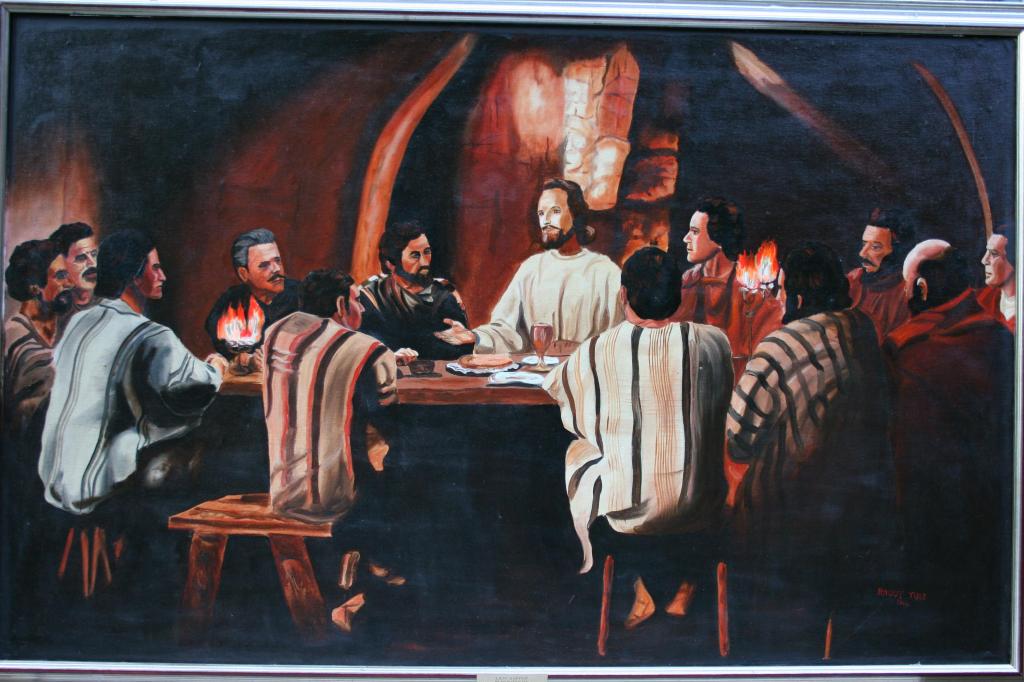
Rhody Yule, a 92-year-old Faribault artist, painted this version of The Last Supper.

LIVING ART. A tribute to Christ. A contemplative event to mark the beginning of Holy Week.

However you view it, a dramatic presentation of Leonardo da Vinci’s The Last Supper by a rural church should be on your must-see list for the weekend if you live in my area of southeastern Minnesota.

For 49 years now, St. John’s United Church of Christ, Wheeling Township, has presented Drama of the Last Supper in the old limestone church set among flat farm fields and scattered farm places near Nerstrand Big Woods State Park in Rice County.

At 8 p.m. on Palm Sunday, April 17, as darkness falls upon the land, the sanctuary too will darken and the spotlight will shift to 12 men seated at the front of the church. Alan, Grant, Craig, Kyle, Todd, Thad, Keith, Doug, Marty, Brian, Randy and Paul will assume the roles of the 12 disciples.

Christ, if I remember correctly from attending a previous performance, is not portrayed by an actor.

When evening came, Jesus was reclining at the table with the Twelve. And while they were eating, he said, “I tell you the truth, one of you will betray me.” Matthew 26:20 – 21

The Betrayal, a painting by Faribault artist Rhody Yule.

So the scene unfolds with a monologue featuring each of the 12 disciples and their relationships with Christ.

“I tell you, I will not drink of this fruit of the vine from now on until that day when I drink it anew with you in my Father’s kingdom.” Matthew 26:29

Enveloped in darkness, listening to the somber words of forthcoming betrayal, worshippers experience the tense emotions that marked The Last Supper, setting the mood for a week that leads to the crucifixion of Christ and then, on Easter morning, to his glorious resurrection.

It is a thoughtful, serious drama presented by the local men, many of whom are repeat performers.

It is worth seeing, worth hearing and worth contemplating as Holy Week begins.

And he took bread, gave thanks and broke it, and gave it to them, saying, “This is my body given for you; do this in remembrance of me.” Luke 22:19

St. Johns United Church of Christ, Wheeling Township

FYI: St. John’s is about a 15-minute drive from Faribault. Take Minnesota Highway 60 east and then turn north onto Rice County Road 24. The church is located at 19086 Jacobs Avenue.  A fellowship hour, with food, follows the presentation.

© Copyright 2011 Audrey Kletscher Helbling
 

Stitches of love April 6, 2011

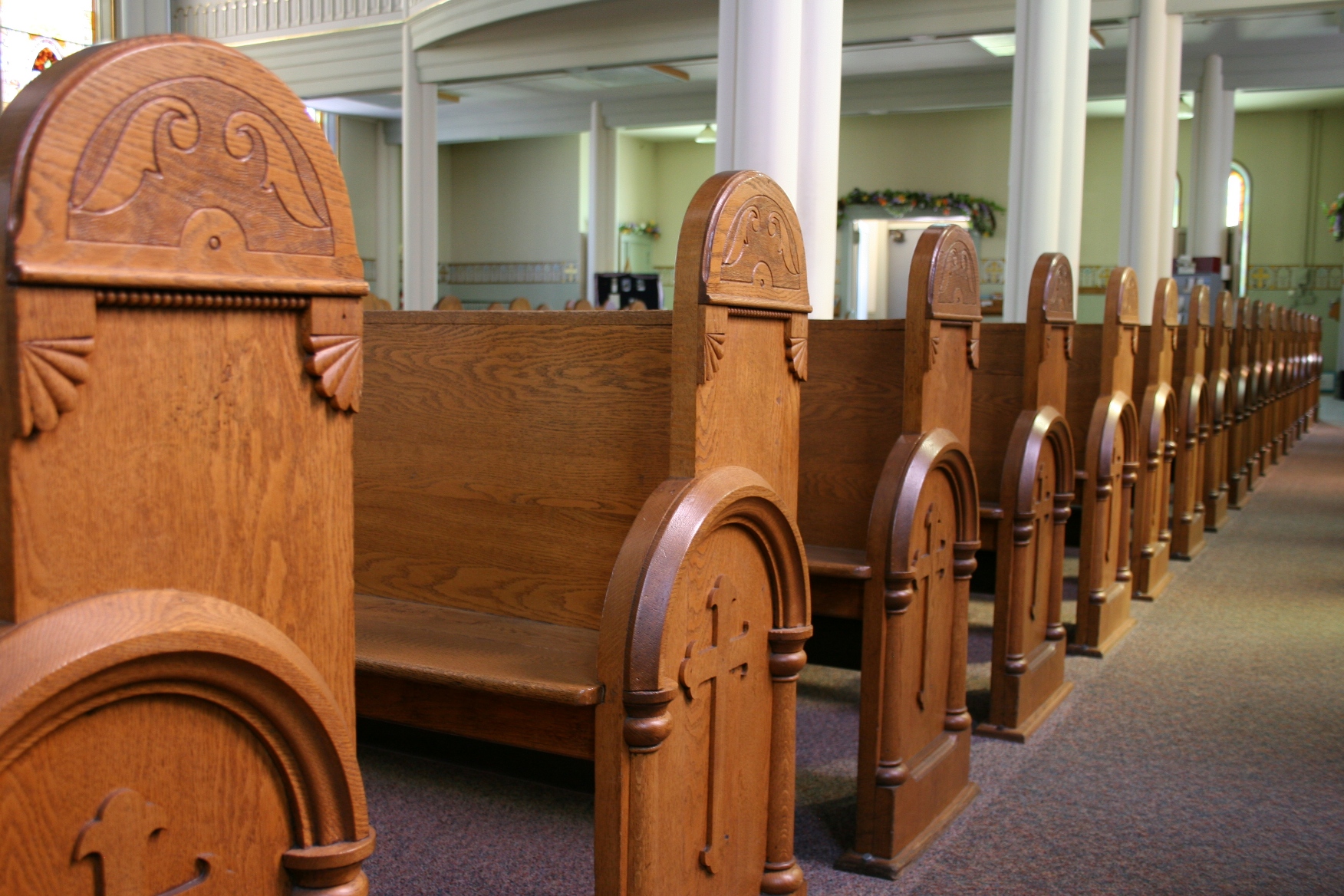
Handmade quilts drape across pews at St. John's United Church of Christ.

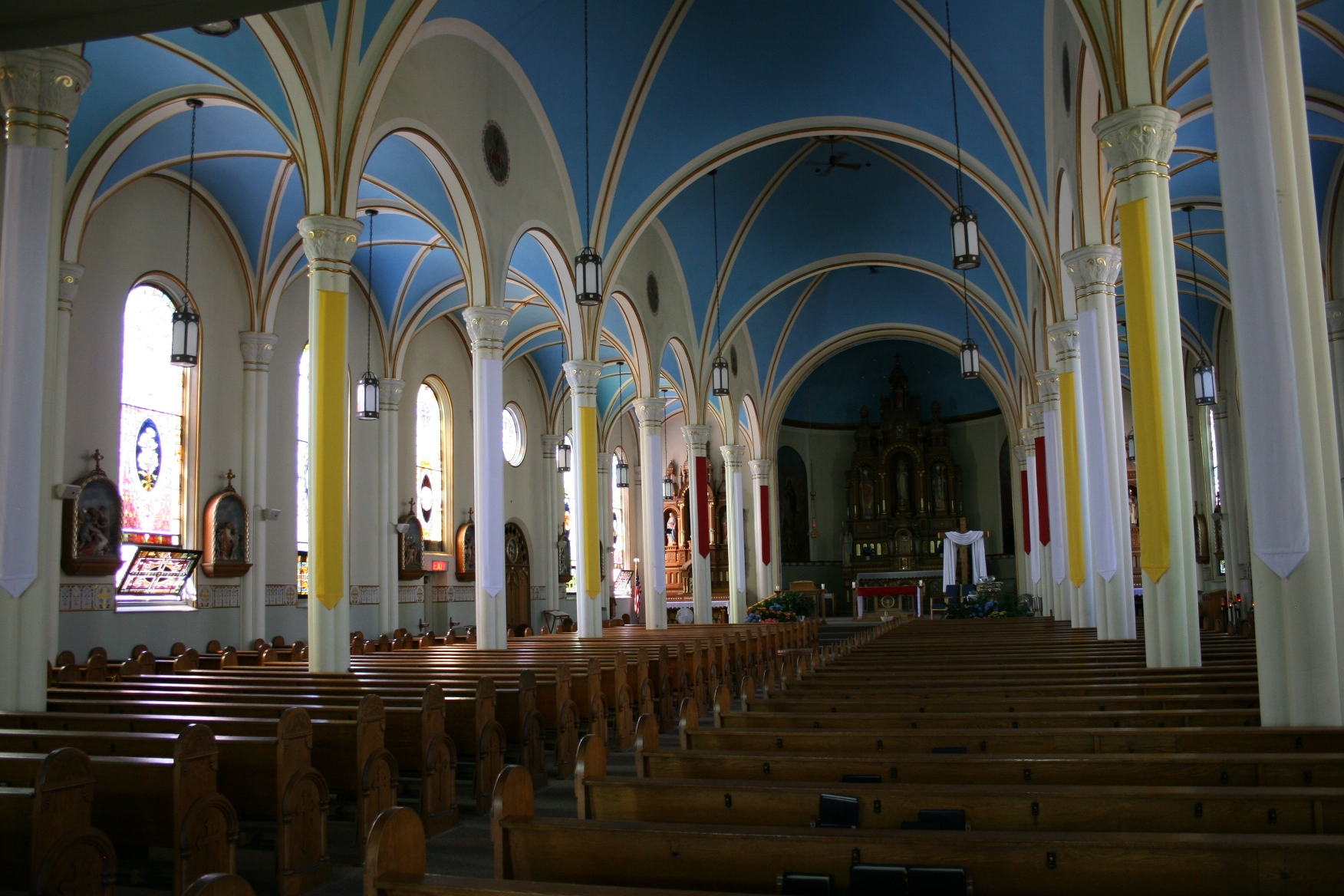
INSIDE THE LIMESTONE CHURCH, patchwork quilts drape across the backs of pews, spilling onto cushy red seat cushions.

Only hours earlier during the Sunday morning church service, worshippers settled onto the quilts handmade by St. John’s United Church of Christ members.

On a Saturday in February, members of the Women’s Guild, and a few husbands, gathered at this country church in Wheeling Township in southeastern Rice County to stuff the quilts with batting, add backings and tie together the layers with snippets of yarn.


St. John's old stone church has been in continuous use for more than 150 years. German settlers founded the congregation in 1856.

This year, according to church member and quilter Kim Keller, the quilters made 13 baby quilts and 13 big quilts.

The handmade blankets will go to graduating high school seniors—two at St. John’s this spring—and to missions, mostly local.


One of the many handmade quilts that will be given away.

As I perused the quilts, I considered the devotion of those who piece together the swatches of fabric, tie together the layers and knot the strands of yarn. These quilts represent gifts that touch the recipients physically, but, more importantly, emotionally and perhaps spiritually.

Stroke the fabric and you can almost feel the love stitched into each quilt.

That these blankets are then displayed for worshippers to see, and sit upon, adds another dimension to the project. As I photographed the quilts, as the sun streamed through the church’s restored stained glass windows, I thought of the blessings received by both the givers and the receivers. Joy that comes in selfless giving. Joy that comes in knowing someone cares enough about you and your needs to stitch a quilt.

“It is more blessed to give than to receive.” Acts 20:35

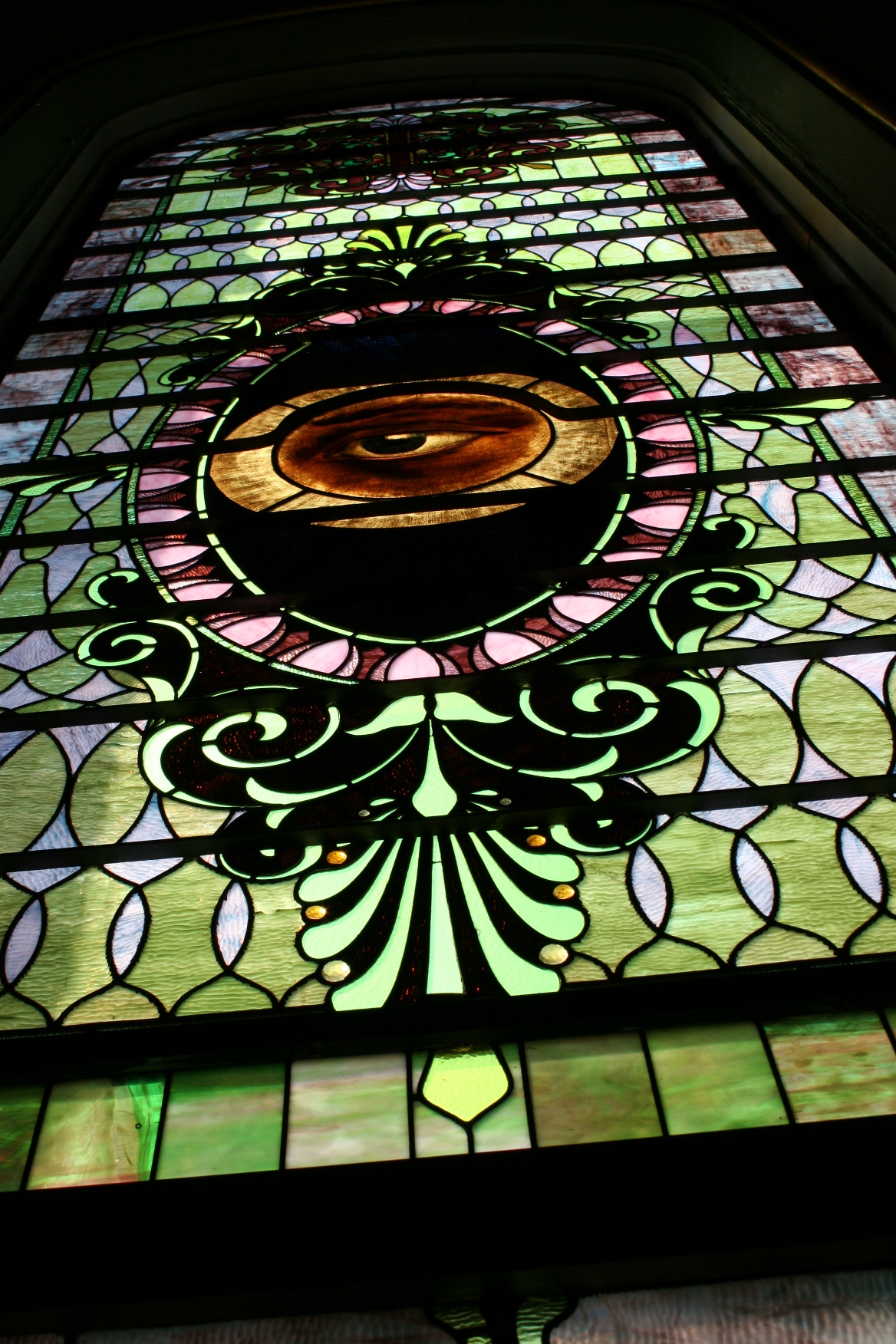
The stained glass windows at St. John's were restored between 2004 - 2006 at a cost of more than $30,000.


A view from the St. John's balcony of the church interior and the quilts.

TEN MILES AWAY in Faribault, about a dozen women at my church, Trinity Lutheran, meet every Wednesday morning from September through May to finish quilts that are donated to those in need. Seamstresses sew the quilt tops at home and then bring them, along with the backings, to church where the Trinity Quilters add the batting and then tie together the layers with yarn.

For 60-plus years now, the women of Trinity have been stitching quilts. “It’s a mission project,”  says long-time quilter Betty Gudknecht. “I want to help other people. You want to do things for the Lord because you want to do it (not because you’re paid).”

With that spirit of giving and serving, the Trinity quilters make about 200 quilts annually. They donate them to places like Minnesota Teen Challenge, the Orphan Grain Train, the Red Cross, Burdens to Blessings, Lutheran World Relief, Lutheran Association of Missionaries and Pilots, and to others in need. Trinity’s graduating high school seniors also receive quilts.

This week the Trinity Quilters are auctioning off three quilts in a silent auction that ends mid-morning on Sunday, April 10. They need the auction money to purchase batting for their 60 x 80-inch quilts. A single roll of recently-purchased cotton batting, which will make 16 quilts, cost $90, and that was at 50 percent off.

In the past, the quilters have gotten creative, using old blankets, mattress pads and even the outsides of electric blankets, as “batting.” They still plan to use those resources, but would also like to use the softer, purchased cotton batting.

While the quilt-makers sometimes buy fabric, most often it is donated.

If you’re interested in bidding on one of the quilts at Trinity Lutheran Church—and I’m sorry, I don’t have photos of the quilts—get your bids in this week.

Cash donations are also being accepted to help the quilters purchase batting.

“It is more blessed to give than to receive.”


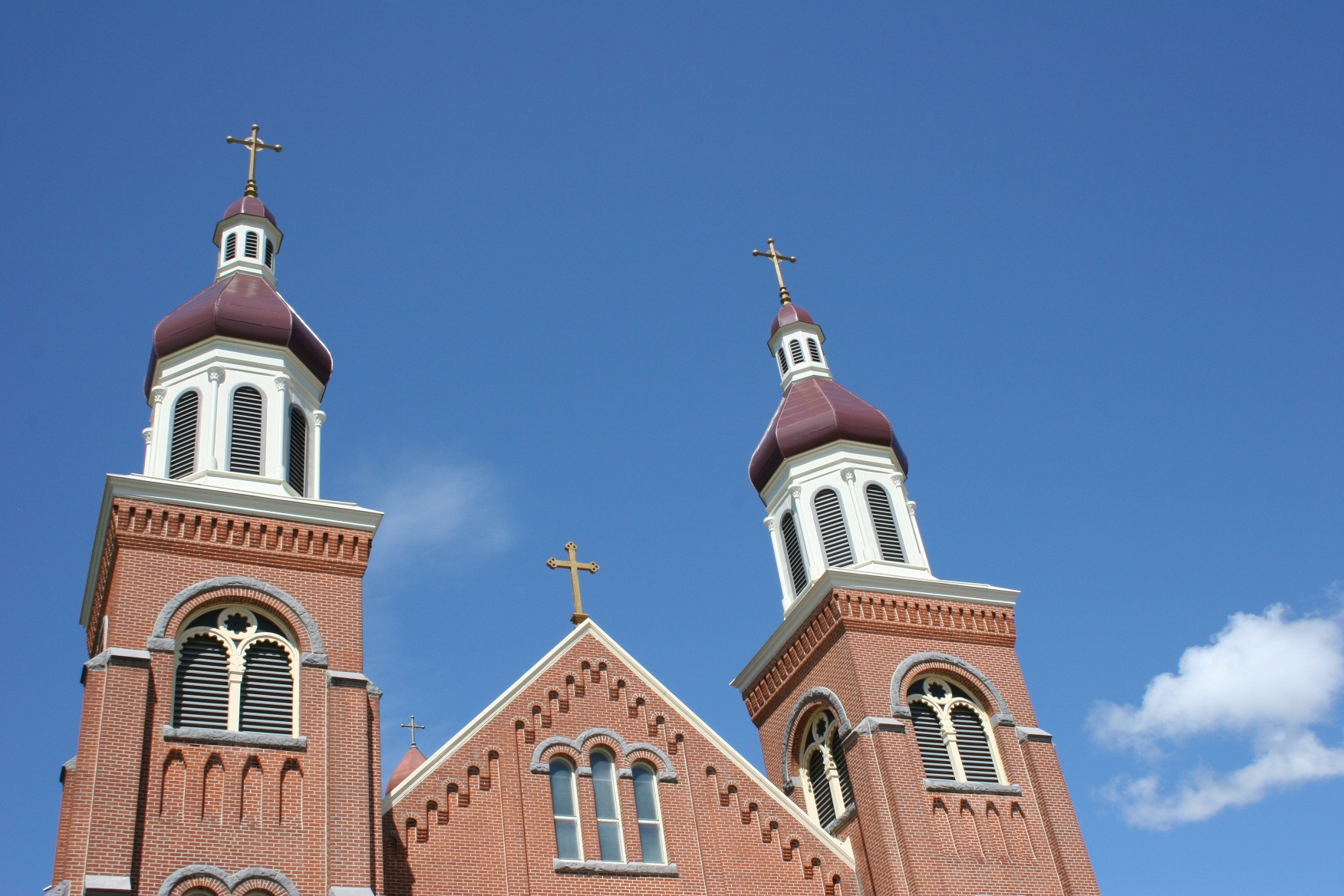
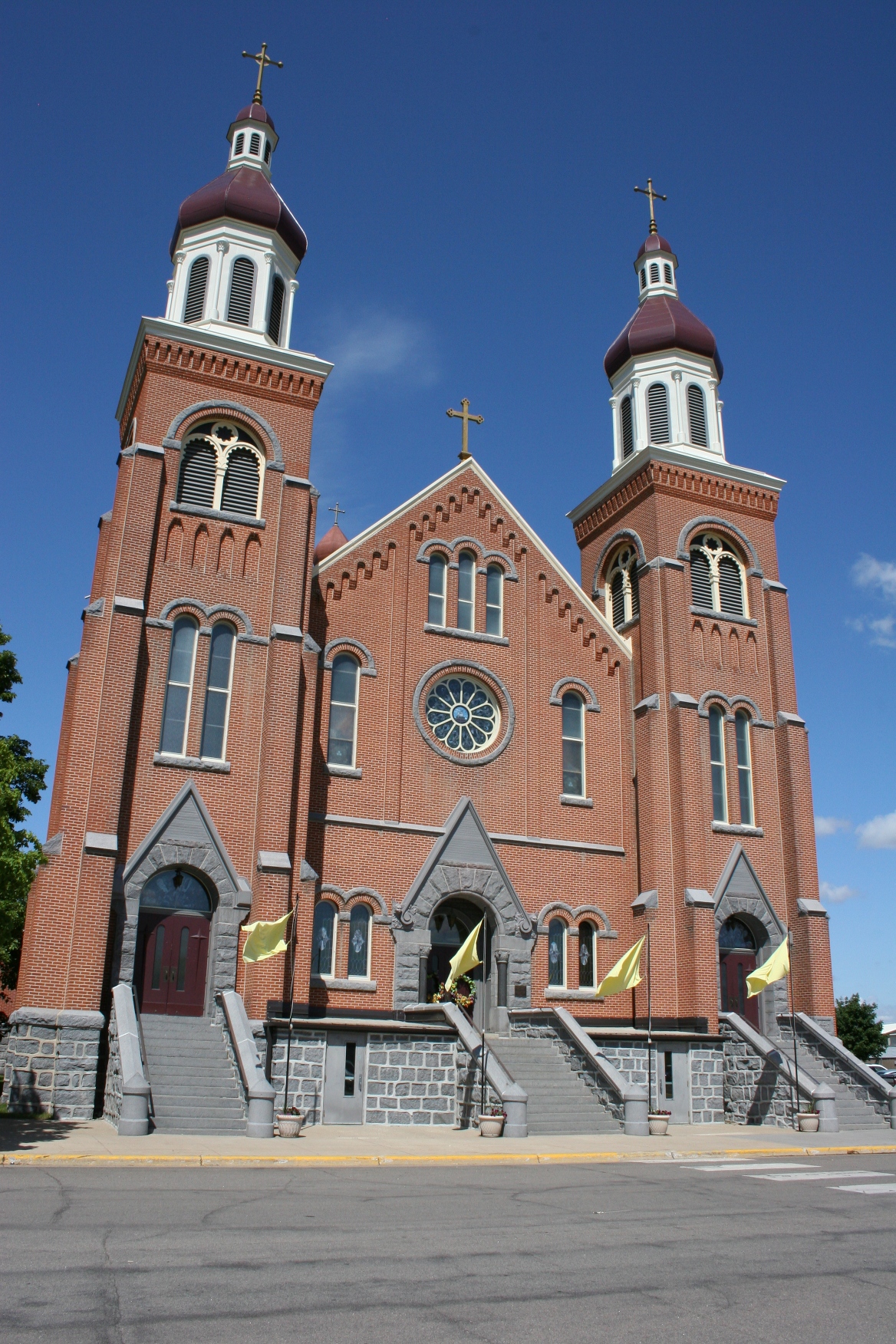
The steeple of St. John's United Church of Christ, Wheeling Township, Rice County, Minnesota.

© Copyright 2011 Audrey Kletscher Helbling
 

Tips for on-the-road photography April 2, 2011

HOW OFTEN HAVE YOU been traveling along a roadway, saw a subject worth photographing but were in too much of a hurry to stop?

That’s happened to me more often than I wish. However, I’ve found a solution that’s worked well with some incredible photo results.

I’m issuing a disclaimer here, though. I’m not advocating photographing and driving. This photographic option should be used only when you are a passenger because you’ll be operating your camera while your vehicle is moving.

First, set your camera at a sports action shutter speed, place it on your lap, grip the camera body and be prepared to snap away at a moment’s notice.

Click. Click. Click. With a fast shutter speed, you can quickly fire off three frames before you’ve bypassed the intended subject.

OK, it’s not quite that easy. You must anticipate just the right moment to take your photos. That means paying attention to what lies ahead of you along the roadway. Click too soon and you miss the shot. Click too late and you miss the shot.

It’s partially luck, partially skill that will nail a great photo.

I’m always watching too for telephone and electric poles and roadside signs that can obstruct an otherwise good image.

I’m also always trying to balance my photos so they are well-composed.

All of this moving of the camera and adjusting the lens and framing the image must happen in a split-second. I can’t even begin to tell you how many shots I’ve missed because I’ve moved too slowly or failed to notice a photo op until it passed me by.

That’s the other part of successful on-the-road photography. You need a watchful eye for subjects that will make interesting and great photos. Too many people look, but don’t really see, what’s around them. Perhaps because I’ve grown so accustomed to viewing my world through a camera lens and because I’m a writer, I notice more than the average person.

Yet all of this effort will be wasted if you’re shooting through dirty vehicle windows. Clean your windows. If you live in a state like Minnesota, where road spray from sand and salt and melting snow is a problem, you may just have to abandon this traveling photo option in the winter.

Unless you’re traveling through a town, at low speeds, I don’t recommend opening your window. You risk getting dust or dirt into your camera sensor.

That said, here’s a trio of photos I shot in early March along U.S. Highway 14 between Essig and Sleepy Eye in southwestern Minnesota while traveling at 55 mph.

Other than downsizing these images, I’ve not edited them.

Here’s why these images are so good. The exposure is perfect. The photos are well-composed. The horizontal line of the railroad track in the first two frames sits at an eye-pleasing one-third position. The color contrasts of red against gray and blue make these photos pop. The subject is beautiful in its simplicity.

If you’re never tried traveling photography, give it a shot. You may be as pleasantly surprised as me with the results.

FYI: I shoot with a EOS 20D DSLR Canon camera. Yes, it’s a “fancy” digital camera, not a point-and-shoot. If you ever see a photo on Minnesota Prairie Roots that you are interested in purchasing, please contact me via a comment (won’t be published) or an e-mail.

© Copyright 2011 Audrey Kletscher Helbling
 

Traveling photo shoots March 26, 2011

BOY, WAS I HAPPY to meet photographer Loretta M. Verbout of Rochester during an opening night gallery reception recently at the Paradise Center for the Arts in downtown Faribault. She is among three photographers and a painter currently exhibiting at the center.

Although I enjoyed all of the art, I was particularly drawn to Loretta’s photos because she photographs the same types of subjects I like photographing. Flowers. Rural scenes. Everyday objects. Her images have a certain down-home quality that appeals to me.

I was especially drawn to her photo of a country church barely visible behind a field of ripened corn. I wanted to know more about the church and where it was located. I enjoy discovering rural churches, then photographing them.

“It’s somewhere between Dubuque and the Minnesota border,” Loretta said.

Then Loretta explained that she shot the image through the passenger window of a moving vehicle.

I didn’t expect that answer.


Loretta shot this rural church scene while driving roads along the Mississippi River somewhere between Dubuque, Iowa, and the Minnesota border. It's in her gallery exhibit at The Paradise.

Instantly, I bonded with this photographer. I do the exact same thing—set my EOS 20D SLR digital Canon camera on a fast shutter speed and click, click, click while traveling. Loretta also uses mainly Canons.

I called my husband over. He needed to hear this, to confirm that I’m not the only crazy photographer who shoots while riding shotgun.

But apparently I’m not to Loretta’s level of commitment yet. She’s worn out the motor on her vehicle’s automatic window. Typically, I shoot through the window given I don’t want to risk dust filtering into my camera and landing on my sensor, plus sometimes the weather is just too cold for an open car window.

Here are two more drive-by images from Loretta’s Mississippi River road drive:

FYI: Loretta’s gallery show, “The beauty in everyday things,” and exhibits by photographers Laura Schenck of Northfield and Catherine Michele Adams of St. Paul will run through April 23 at the Paradise’s Carlander Family Gallery, 321 Central Avenue, in downtown Faribault. Minneapolis artisit Lauren S. Strom’s paintings are also on display in the Lois Vranesh Boardroom Gallery. Paradise hours are 10 a.m. – 5 p.m. Tuesday – Friday and from noon to 5 p.m. on Saturday.

CHECK BACK for a trio of on-the-road farm place photos I shot recently while traveling through southwestern Minnesota.

© Copyright 2011 Audrey Kletscher Helbling
 

Sunday morning message January 23, 2011

Filed under: Uncategorized — Audrey Kletscher Helbling @ 7:35 PM
Tags: , , , , ,

WITH

How would you finish this sentence?

This morning, during the children’s message at my church, the pastor emphasized the point of turning to God for help and strength. He showed the kids a hand-embroidered work of art, exactly like the one hanging on my living room wall.

I bought the piece this past summer at a rummage sale at the local Catholic school gym. I paid only 50 cents for this message that inspires and that was carefully, lovingly, stitched by someone who, like me, values these words.

Here’s how the sentence ends:

Copyright 2011 Audrey Kletscher Helbling
 

The mystery of the brewery and bank paintings January 17, 2011

I DIDN’T GROW UP in Faribault. But I’ve lived here longer than any place in my life—28 ½ years—so I suppose that makes me somewhat of a local.

As such, I’ve developed an appreciation for the history that surrounds me, especially in the downtown. Faribault boasts a historic commercial district graced by many beautiful brick buildings.

So when two paintings of old Faribault buildings mysteriously showed up at my friend Rhody Yule’s art exhibit, I was intrigued. I knew the pieces in the exhibit inside and out, backward and forward, upside down and right side up because I submitted the application for Rhody’s show and then helped select the art.

Then, suddenly, these two additional paintings—of the Fleckenstein Brewery and the Security Bank—appear. How did they get there?


Faribault artist Rhody Yule created this oil painting of the Fleckenstein Brewery in 1976. The building, and the brewery, no longer exist. The 20-foot Fleck's beer bottle on the right side of the painting sat near the brewery entrance. Children often had their pictures taken here when their parents toured the brewery.

In 1964, Rhody Yule painted this picture of the Security Bank in downtown Faribault. The original 1870 stone structure was covered with a brick facade. The building is no longer a bank.

I asked around, but no one could solve the mystery.

Thanks to my sleuthing husband, who thought to look at the backs of the paintings, the mystery was quickly solved and I had a name and number.

Local history buff Brian Schmidt owns the oil paintings. When he learned of Rhody’s art show, he hustled the two pieces down to the Paradise Center for the Arts because he figured others would be interested.

Brian was right and I had lots of questions for him, starting with, “Where did you get these paintings?”

Turns out he purchased them at Woody Schrader auctions, which are held on Sundays and Wednesdays at Schrader’s Faribault auction house.

As long as we were talking, I didn’t shy from asking Brian how much he paid for the paintings. He purchased the 1964 bank painting for $30 seven years ago. He got the 1976 painting of the Fleckenstein Brewery about 10 years ago for $90.

I told Brian he got a deal. He knew it.

But here’s the best part about this whole story. Brian grew up on the north side of Faribault and often dug for bottles in the “bottle pit” at the Fleckenstein Brewery. He’s also considered the local expert on the brewery, he says, and has some 300 collectible brewery items.

Who better to own these paintings than Brian?

“I love Faribault history,” says this Rice County Historical Society member who is always seeking treasures from the city’s past.

He can tell you that the Fleckenstein Brewery had a 108-year history in Faribault, opening in 1856 and closing in 1964. The Fleckensteins made Fleck’s beer and pop. He’s eager to share more and has invited me and my husband to see his collection.

For now, though, we focused primarily on those paintings.

“I was so glad to put to rest the mystery of the paintings that I own from Rhody Yule,” Brian wrote in an e-mail follow-up to our phone conversation. “I have often wondered where his studio was and who was the man behind the wonderful art work that I found. It was a pleasure to finally see the man who actually painted these wonderful paintings. I will cherish these paintings FOREVER now!”


The former Security Bank, today, along Central Avenue in downtown Faribault.

The clock that graces the corner of the Security Bank building has fallen apart. A number of years ago there was discussion about refurbishing the clock, but that didn't happen, I believe, because of the high costs to undertake such a project.

The lovely stone entrance to the Security Bank.

FYI: Rhody Yule, who was a Faribault sign painter for 33 years, never had a studio. He painted quietly at home for enjoyment.

IF ANYONE OWNS paintings by Rhody, please submit a comment here and tell me about the art pieces you have.

If you would like to see the Security Bank and Fleckenstein Brewery paintings, which Brian Schmidt terms “so spectacular and detailed,” check out “A Lifetime of Art: The Rhody Yule Collection” at the Paradise Center for the Arts. Hours are 10 a.m. – 5 p.m. Tuesday – Friday and noon – 5 p.m. Saturday. This first-ever gallery show for 92-year-old Rhody runs through February 26.

Other exhibit paintings of Faribault buildings include one of the old Trinity Lutheran Church and School and the Faribault Woolen Mill.

© Copyright 2011 Audrey Kletscher Helbling


Red carpet treatment for Faribault artists January 15, 2011

A replica marquee on the historic Paradise Center for the Arts in downtown Faribault welcomes guests to the opening night gallery reception for Rhody Yule and Adam Kuehnel.
Rhody Yule & Adam Kuehnel

FARIBAULT FIGURATIVELY rolled out the red carpet last night for two local artists.

I’m thrilled with the receptions given to watercolor artist Adam Kuehnel and my friend, oil painter Rhody Yule, at the Paradise Center for the Arts on opening night of their exhibits. I’m not good at numbers, but I’m certain more than 100 guests, maybe closer to 150, attended Friday evening’s event. That’s an exceptional turn-out.

Adam opened his “Founded Upon the Waters: A Collection of Works.”

Rhody opened his “A Lifetime of Art: The Rhody Yule Collection.”

I met Adam for the first time last night and was impressed by this friendly young man who teaches English in nearby Kenyon, has an architecture degree and paints for enjoyment.
I’ve known Rhody for about 1 ½ years, after discovering him via art hung on the side of his rural Faribault garage. Rhody, like Adam, possesses a passion for painting.

To see the two artists together last night warmed my heart. Rhody is 92 and has been painting for 76 years. Adam is exactly 60 years his junior and just beginning his artistic pursuit.

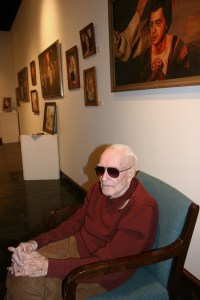
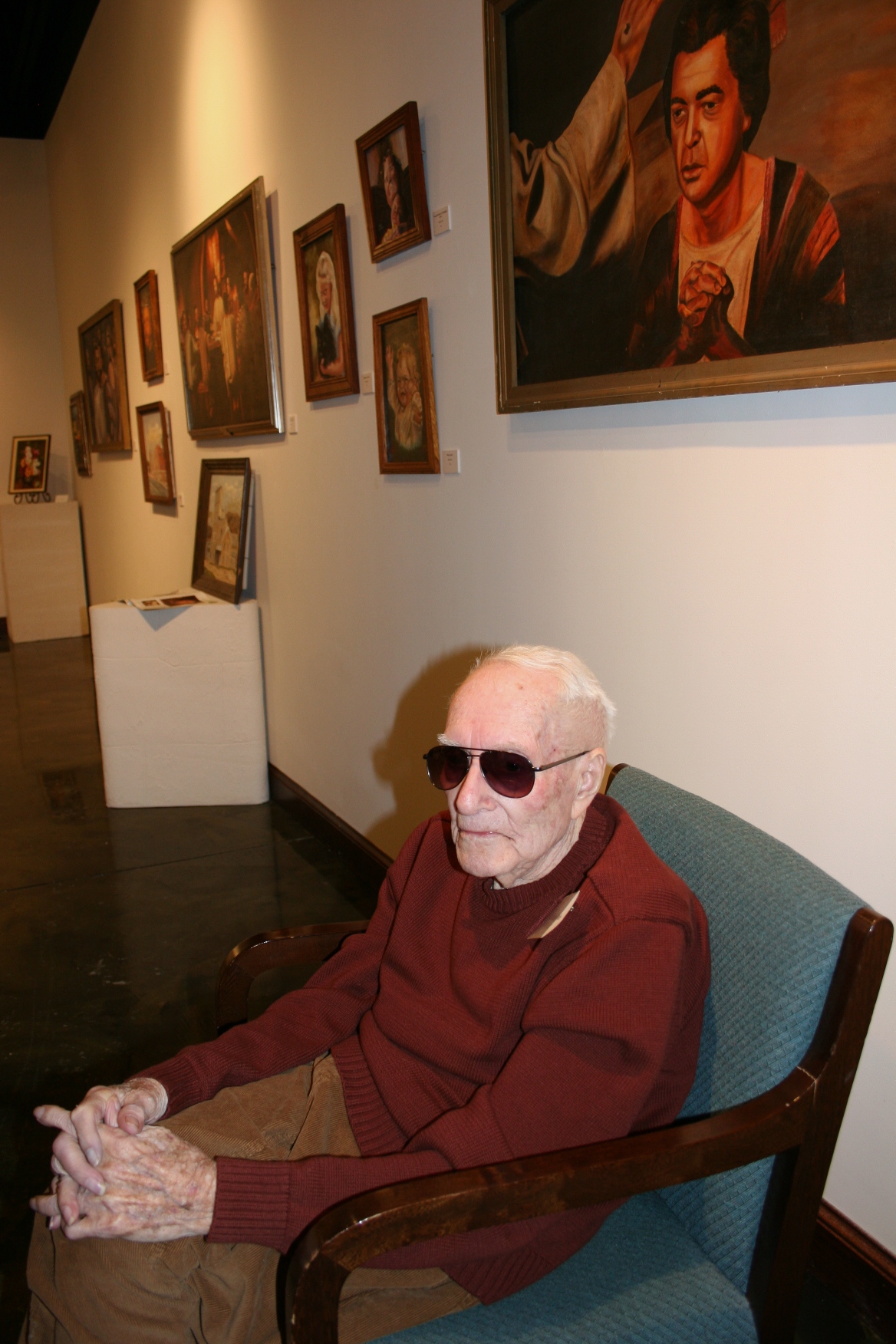
This first-ever gallery show is a long overdue honor for Rhody. It was clear to me from the way guests embraced him and his art last night that they loved what they saw. Every time I glanced over at Rhody, seated just inside the gallery in a comfy chair, someone was bending down to talk to him, to shake his hand, to praise his art.

Rhody, minutes before his gallery show opened.

This photo shows only a portion of the 50-plus paintings in Rhody's exhibit.

I heard the artwork praises, too—from the woman who was surprised at the excellent quality of the art created by this self-taught artist, for Rhody’s ability to paint a variety of subjects from portraits to landscapes to religious works and even a few abstracts, for the way in which he painted well-known religious scenes with a unique perspective, for the…

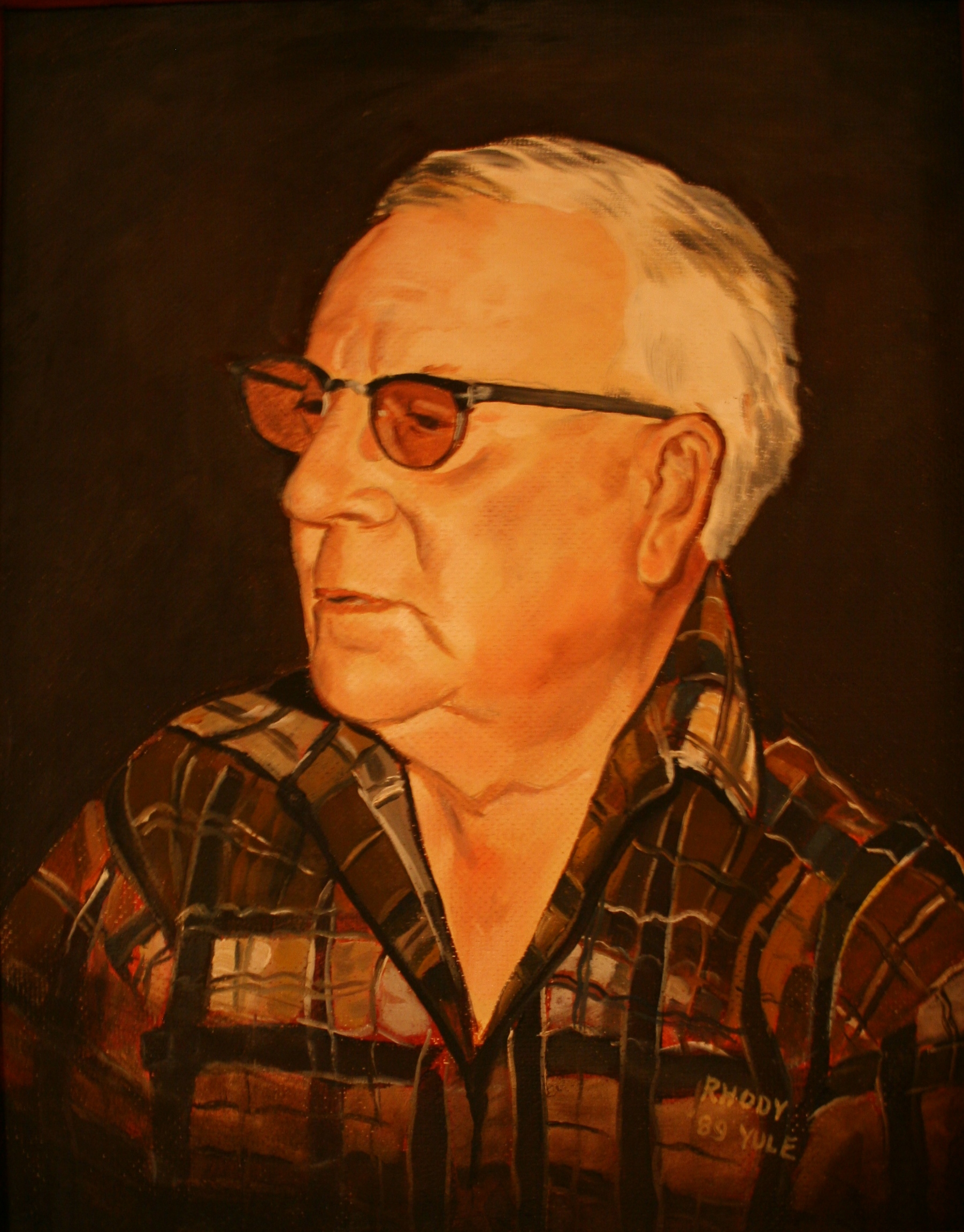
Among my favorites paintings are Rhody's 1989 self-portrait and the portrait of his wife, Shirley, who died in the spring of 2010.

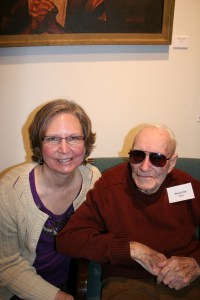
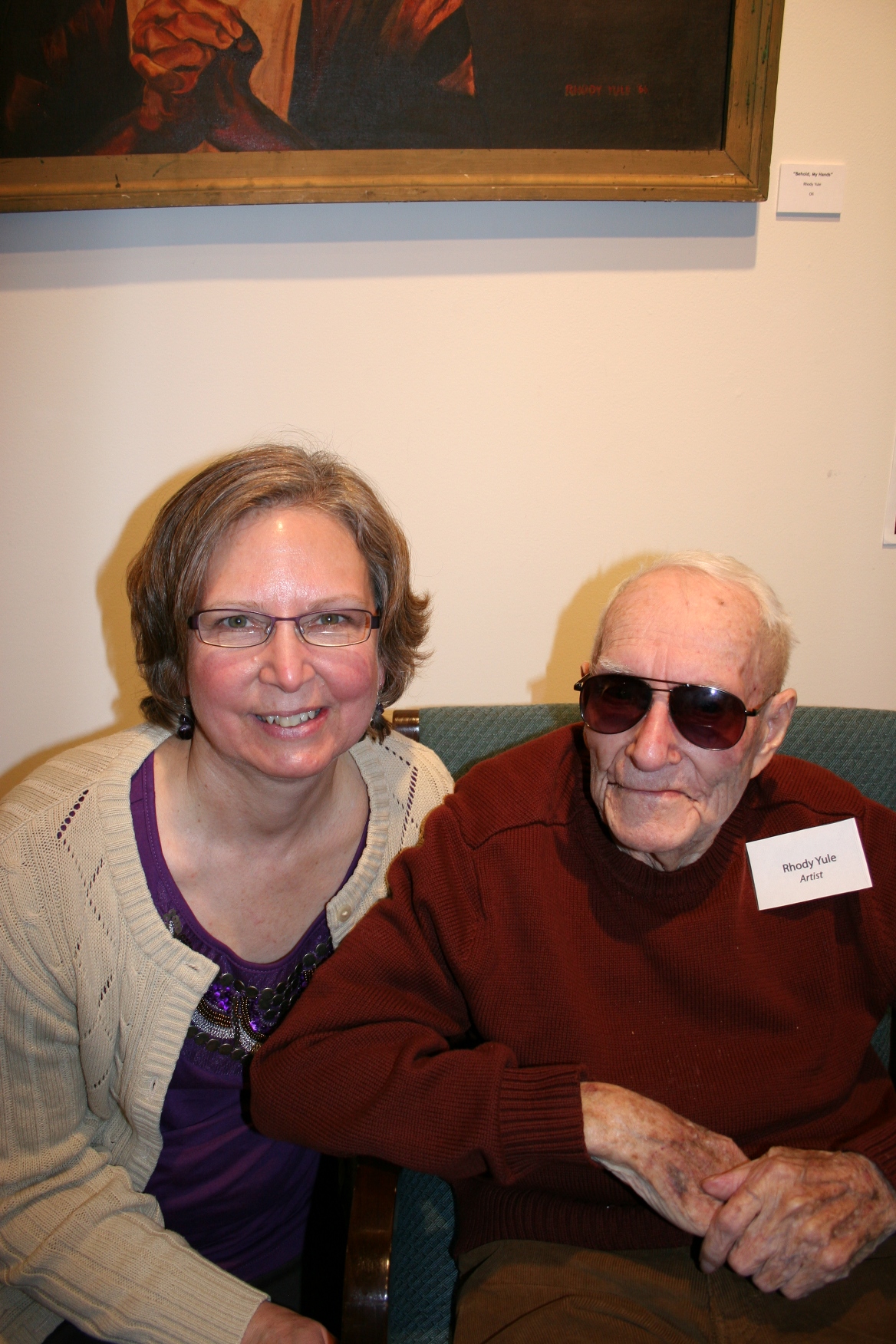
Rhody and me

I heard praises, too, from those who thanked me for “finding” Rhody. Really, anyone could have “found” him. I just took the time to stop and meet the man who had hung celebrity portraits on his garage.

Because I’m snoopy/nosy/curious—I used all three words last night in explaining how I “found” Rhody—I learned that Rhody’s art had never been publicly exhibited. I decided to change that.

But this show did not happen solely because of me. I made that abundantly clear to all who approached me at last night’s opening reception. This became a team effort. “Team Rhody,” as we begin to call ourselves, worked together to bring “A Lifetime of Art: The Rhody Yule Collection” to The Carlander Family Gallery.

So, thank you, first of all, to my husband, Randy, for his enthusiastic support and help. Thank you, also, to these Team Rhody members: Bob and Kathi, Dennis and Kathy, Jean, Marian, Mary Ellen, Amy, and the Paradise Center for the Arts Gallery Committee, especially Julie and Deb.

Finally, thank you to all who attended the opening night reception and gave Rhody the red carpet treatment. I can’t think of anyone more deserving.

FYI: Rhody and Adam’s shows continue through February 26 at the PCA, 321 Central Avenue North in downtown Faribault. You can view the exhibits Tuesday – Friday from 10 a.m. – 5 p.m. or on Saturday from noon until 5 p.m.

Food artists Kathy and Mary Ellen led efforts to pull together a beautiful buffet table for the reception.

Rhody painted this military runway in Nome, Alaska, when he was stationed there during WW II. The scene is painted on an old piece of military tent canvas. To the left is one of two abstracts in the exhibit.

Visitors peruse Rhody's religious paintings.

© Copyright 2011 Audrey Kletscher Helbling