Minnesota Prairie Roots

Writing and photography by Audrey Kletscher Helbling

Five things to do this weekend in the Faribault area July 19, 2012

FROM TEA TO TRACTORS and plenty of in-between interesting attractions, you’ll find lots to do this weekend in my region of southeastern Minnesota.

I shot this image at the Rice County Free Fair several years ago.

Already underway and running through Sunday is the Rice County Free Fair in Faribault. Evening grandstand shows include Enduro Auto Races on Thursday, an All-Star Pro Rodeo on Friday, a National Truck & Tractor Pull on Saturday and a Demolition Derby on Sunday. Besides the entertainment, you’ll want to stroll through the barns, the midway and the exhibit buildings, plus sample some fair food.

John Deere tractors galore lined up at the 2009 Rice County Steam & Gas Engine Show. I have never attended the Credit River Antique Tractor Club Show near New Prague.

In nearby Scott County, tractors take center stage (or rather space) at the annual Credit River Antique Tractor Club Show which runs from 8:30 a.m. – 7 p.m. Friday, July 20, through Sunday, July 22. To get there, take Exit 76 on Interstate 35 and go west on Scott County Road 2 for about 11 miles.

From a tractor parade to flea market, entertainment and more, this promises to be a family-friendly event in a beautiful rural setting. My friend Nancy Fredrickson of Lakeville tipped me off to the tractor show. Says Nancy: “It’s set up at Cedar Lake Farm Regional Park outside of New Prague where the tractors and vendors are scattered under big beautiful trees on hillsides that lead past the old barn and down to Cedar Lake shore.”

Nancy and her husband, Gordon W. Fredrickson, will be there, near the entrance, selling their collector series Farm Country Tales and If I Were a Farmer books. Readers, Nancy and Gordon are two of the finest, down-to-earth people you will meet. Plus, their rural-themed picture books are about as real and honest and authentic as they come. I highly-recommend these books to anyone interested in farming from years past.

Hanging out along Central Avenue during Faribault Car Cruise Night in May.

If classic cars are your thing, then take in, or participate in, the Faribault Car Cruise Night from 6 p.m. – 9 p.m. Friday in the 400 and 500 blocks of Central Avenue in the heart of historic downtown Faribault. According to the group’s Facebook page, “…if you have a cool car or truck or motorcycle, bring it down.”

The Paradise Center for the Arts theater, this photo from several years ago and the set for “South Pacific.”

Also on Friday, but in the 300 block of Central Avenue, the fractured fairy tale, “Into the Woods,” opens at 7:30 p.m. at the Paradise Center for the Arts. The Faribault theater and the Northfield Arts Guild are collaborating on the musical which continues on selected weekdays and weekends through August 5.

Betsy cuts Tacy’s hair in this snippet from a mural by artist Marian Anderson in the Maud Hart Lovelace Children’s Wing at the Blue Earth County Library in Mankato.

Finally, 40 miles away in Minneapolis and Mankato, the Betsy-Tacy Society is holding its annual convention. The organization focuses on celebrating the Betsy-Tacy children’s book series written by Mankato author Maud Hart Lovelace. I love, love, love these books about three friends growing up in Deep Valley (Mankato) in the late 1800s and early 1900s. I read the series to my young daughters two decades ago and we, even to this day, occasionally call my second daughter Tib, after Tib from the books.

It’s probably too late to get into the convention, but you can still join in on some of the fun by attending the free Betsy-Tacy Storytime Tea from 10:30 a.m. – noon Saturday at the Barnes & Noble Bookstore, River Hills Mall, Mankato. A Maud Hart Lovelace interpreter will read from Betsy-Tacy and photos can be taken with Betsy and Tacy. Visitors can also shop at the Betsy-Tacy Bookfair at Barnes & Noble.

The childhood home of Maud Hart Lovelace (aka Betsy), author of the Betsy-Tacy series first published in 1940.

The houses where Lovelace (Betsy in the books) and her friend Frances “Bick” Kenney (Tacy) grew up are owned by the Betsy-Tacy Society and are open to the public. They are a must-see for any fan of Lovelace’s books, although this weekend may not be the best time to tour the homes if you prefer elbow room to crowds.

There you go. Five things you can do within 40 miles of Faribault this weekend.

What are your plans?

FYI: You probably already know this, but just in case you don’t…  By clicking on the highlighted phrases/sentences within the post, you will be directed to more detailed information about the featured events.

© Copyright 2012 Audrey Kletscher Helbling


Stone & Sky October 27, 2011

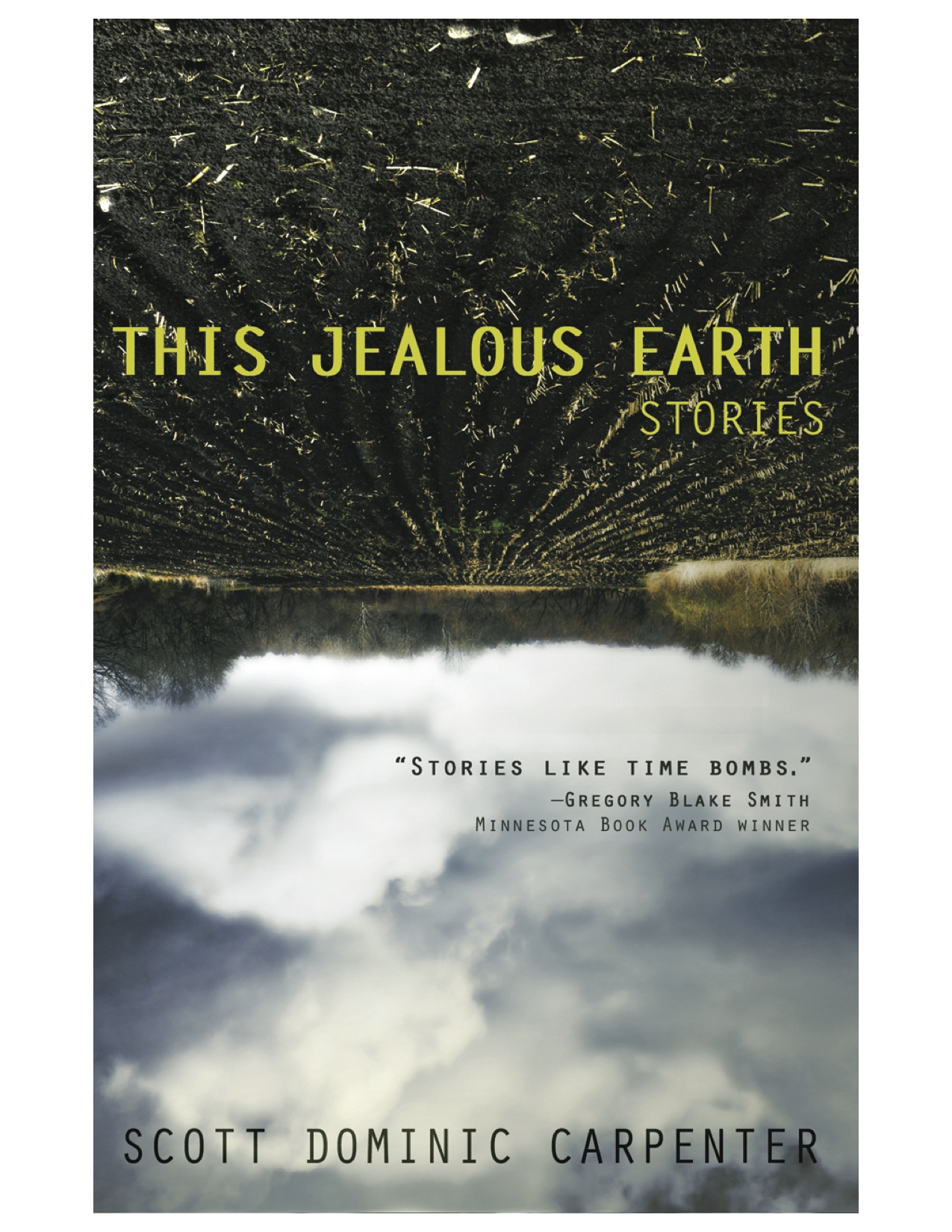
LARRY GAVIN once lived in Belview.

So, you’re likely thinking, “What does that matter and who is Larry Gavin and where the heck is Belview?”

Well, dear readers, especially readers of poetry, Larry Gavin is a poet. He moved to Belview, a southwestern Minnesota prairie town of 375, to study writing with great writers like Howard Mohr, Leo Dangel, Fred Manfred, Joe and Nancy Paddock, Phil Dacey, Robert Bly, Bill Holm, Don Olsen and many others. Do you recognize some of those names? You should.

I’m not trying to be uppity here. But Bly, who was born in Madison (Minnesota, not Wisconsin) and still lives in the western part of our state, is one of Minnesota’s most distinguished poets. Holm, a well-known essayist, author and poet, wrote numerous books, including Boxelder Bug Variations. Up until his death, he lived in his prairie hometown of Minneota (Minnesota without the “s”), where residents celebrate Boxelder Bug Days. Howard Mohr penned How to Talk Minnesotan, a must-read for every transplant to our state.

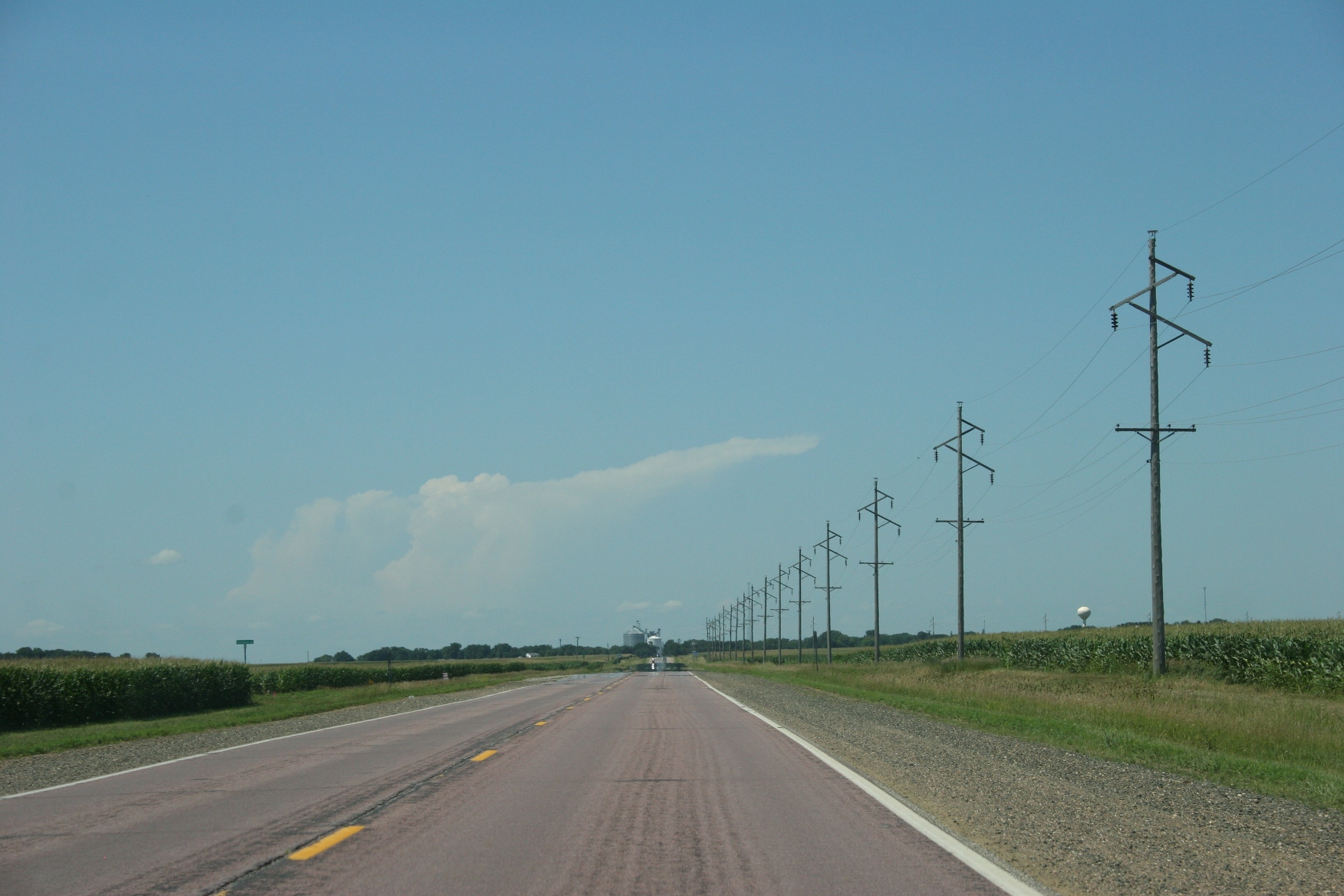
Driving through the southwestern Minnesota prairie near Morgan, about 25 miles from Belview.

Larry Gavin learned from these great writers of the prairie, where he lived for 15 years many years ago. Gavin made his home in Belview, just off State Highway 19 and some 10 miles or so from my hometown of Vesta. He served as the town’s mayor for two terms and taught English at Redwood Valley High School, back then Redwood Falls High School.

It is that connection to my home area and our shared love of language and writing and of the prairie that has connected me to Gavin, who today lives in Faribault and teaches English at Faribault High School. At least one of my daughters, if not both, has been taught by him.

We both won Roadside Poetry competitions–Gavin the first in 2008 and me, this past spring–and had our four-line poems showcased on billboards in Fergus Falls.

I once asked Gavin to read one of my poems at a local author event. Gavin is meant to read poetry. He has the kind of rich, deep voice from which words flow with the rhythm and inflection of someone who clearly loves language.

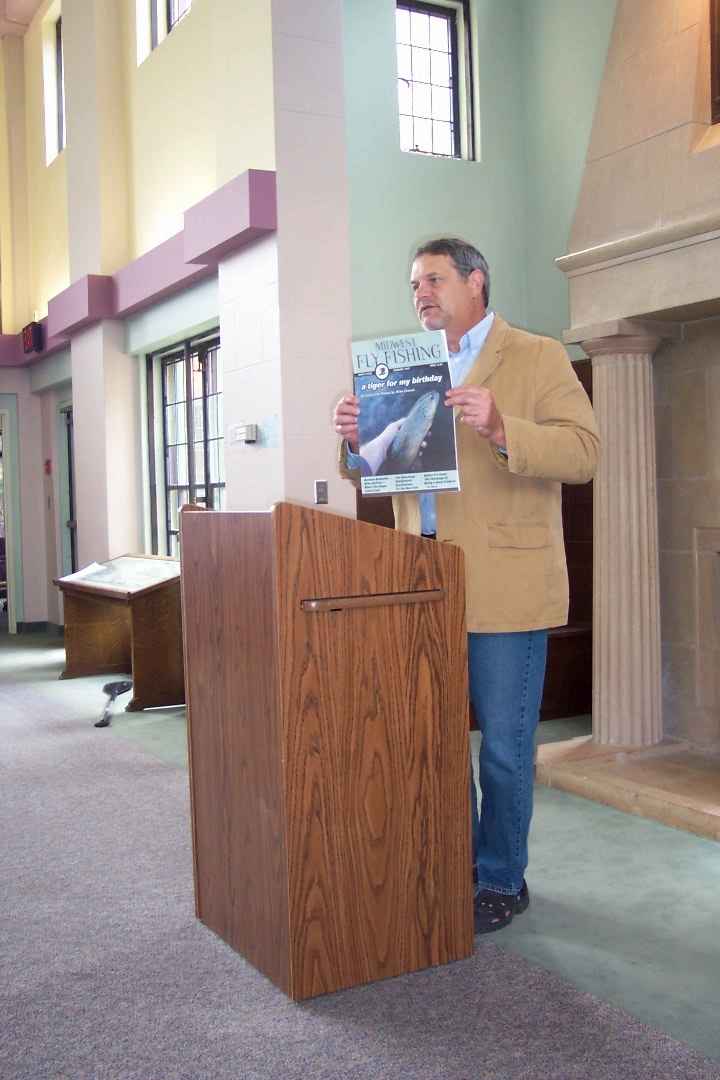
Larry Gavin during an author event at Buckham Memorial Library in Faribault.

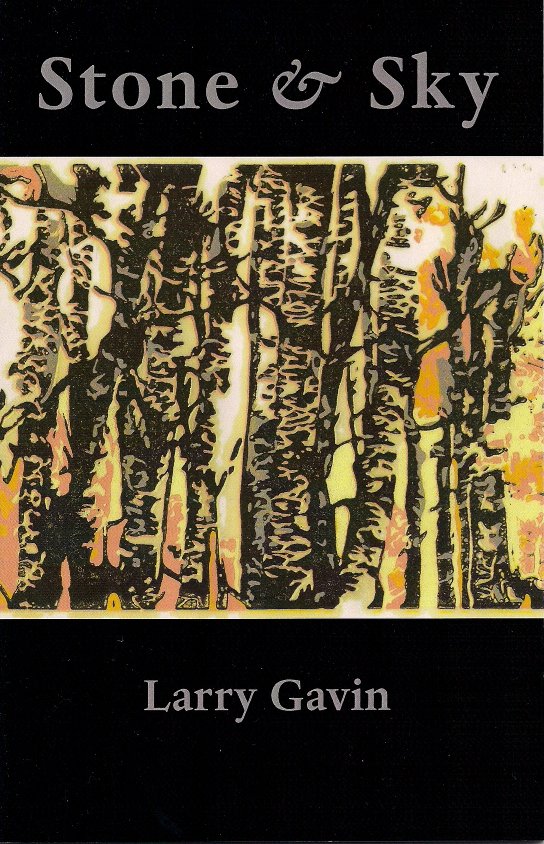
Gavin is also meant to write poetry. And he’s written enough to fill three slim books—Necessities, Least Resistance and his just-released Stone & Sky. All have been published by Red Dragonfly Press, a noted not-for-profit literary press based in Red Wing.

When I read Gavin’s poetry, I can sense his deep connection to the land and to nature, shaped, I would like to think, partially by his years on the prairie. When you live on the stark prairie, where the land stretches flat and far and where the sky dwarfs all else and where the wind blows nearly unceasing, you can’t help but write with a strong sense of place and with detail. I see that in Gavin’s poetry.

In his newest book, Stone & Sky, I read of woods and firewood, of raccoon tracks and a walk along a deserted street. Of stone and sky and snakes. I recognize places from here, in Faribault. I recognize, too, prairie-influenced writing.

I don’t pretend to understand every poem in Gavin’s latest collection. But poetry is always open to interpretation and that which I may not find meaningful today I may come to understand at a later time.

All that said, I posed a series of questions to Gavin, who has written more than poetry. For fifteen years he worked as a field editor for Midwest Fly Fishing magazine, taught at the magazine’s school in Montana in the summer and helped with the Chicago and Minneapolis fly fishing expos each spring. He currently writes for Outdoor News.

My questions to him, however, specifically address his poetry writing. I found his answers insightful and, at times, surprising.

Q:  How long have you been writing poetry, why, and when did you consider yourself a poet?

A:  I started writing poetry in sixth grade and that’s when I started considering myself a poet. I’ve written ever since.

Q: What inspires you and/or influences your poetry?

A:  Work inspires me. Everyday I get up and write something. I don’t miss a day. Inspiration has very little to do with it for me. I like working out ideas and problems in writing each day.

Q:  How would you define your poetry style and content?

A:  I consider myself an inheritor of the great romantic tradition of poetry. That, in my mind, goes from Wordsworth to Yeats and Hopkins to Robert Frost and Wallace Stevens, to Gary Snyder and others. The natural world as reflected and defined by human thought and feelings. The great gift we give to the world is our thoughts and feelings about big issues: transcendence, hope, justice, peace, and love.

Q:  This is your third collection of poetry issued by Red Dragonfly Press. What was the process to getting published by this well-respected Minnesota press?

A:  Scott King is the publisher and I submit a manuscript to him. He responds either yes or no and if he accepts it the manuscript gets in line to be published. The most recent book took about four years to appear. Publication is based on press funding and a variety of other factors. I’m patient and not particularly ambitious.

Q:  Tell me about the content and theme in your first two collections, Necessities and Least Resistance.

A:  They are very different from one another. The poems deal with the natural world as seen through simple objects and ideas. They attempt to make sense of complex subjects like love and our interaction with nature in a pure form of language, and the tools poetry gives us like meter and rhyme. The poems are an explication of the world in the context of the universal individual.

Q:  Stone & Sky just released. It’s an interesting title. How does the title tie in with the content? What is the common thread running through the poems in this collection?

A:  Stone & Sky stretches the boundaries of what is real. It looks at the world in a more magical way. Not magical as fabricated but more magical as mystical – as another way of being real. The language, the images, and the poems stretch the boundaries of what is real and hopefully get at reality in a new way. They are still anchored in the natural world, still anchored in the local, but the themes, like the title, are basic, elemental.

Q:  If you were to select your favorite poem in Stone & Sky, which would it be and why? How about a favorite line?

A:  Actually they are all favorites right now. And you have to remember, I’m on to new things after four years.

Q:  Your love of nature shines in your writing. So does your love of language. How do you combine the two into poetry that sings with descriptive lines? How do you know when you’ve “nailed it,” when you have a poem exactly where you want it?

A:  The old elements of poetry combined in new ways. Rhyme, meter, repetition – give poems life. Everything is a work in progress; they’re never really finished.

Q:  Are you working on another collection? Or are you simply just always writing poetry?

A:  My next collection is called The Initiation of Praise and I’ll start sending it out soon. I also have a selected works which focuses just on outdoor poems. I’m also working on some short stories, and I write an article each week as well.

READERS, Stone & Sky is available from Red Dragonfly Press at  www.reddragonflypress.org and also at Monkey See Monkey Read (in person or through internet sales), an independent bookstore at 425 Division Street, Northfield. Eventually, Stone & Sky will also be available through Amazon. Cover cost is $10.

© Copyright 2011 Audrey Kletscher Helbling

Photo and book cover courtesy of Larry Gavin


Serving up history and pie in Faribault April 12, 2011


I EXPECT YOU have no clue what you are viewing above. Perhaps you think this is a piece of art in a gallery exhibit.

You would be wrong. Way wrong.

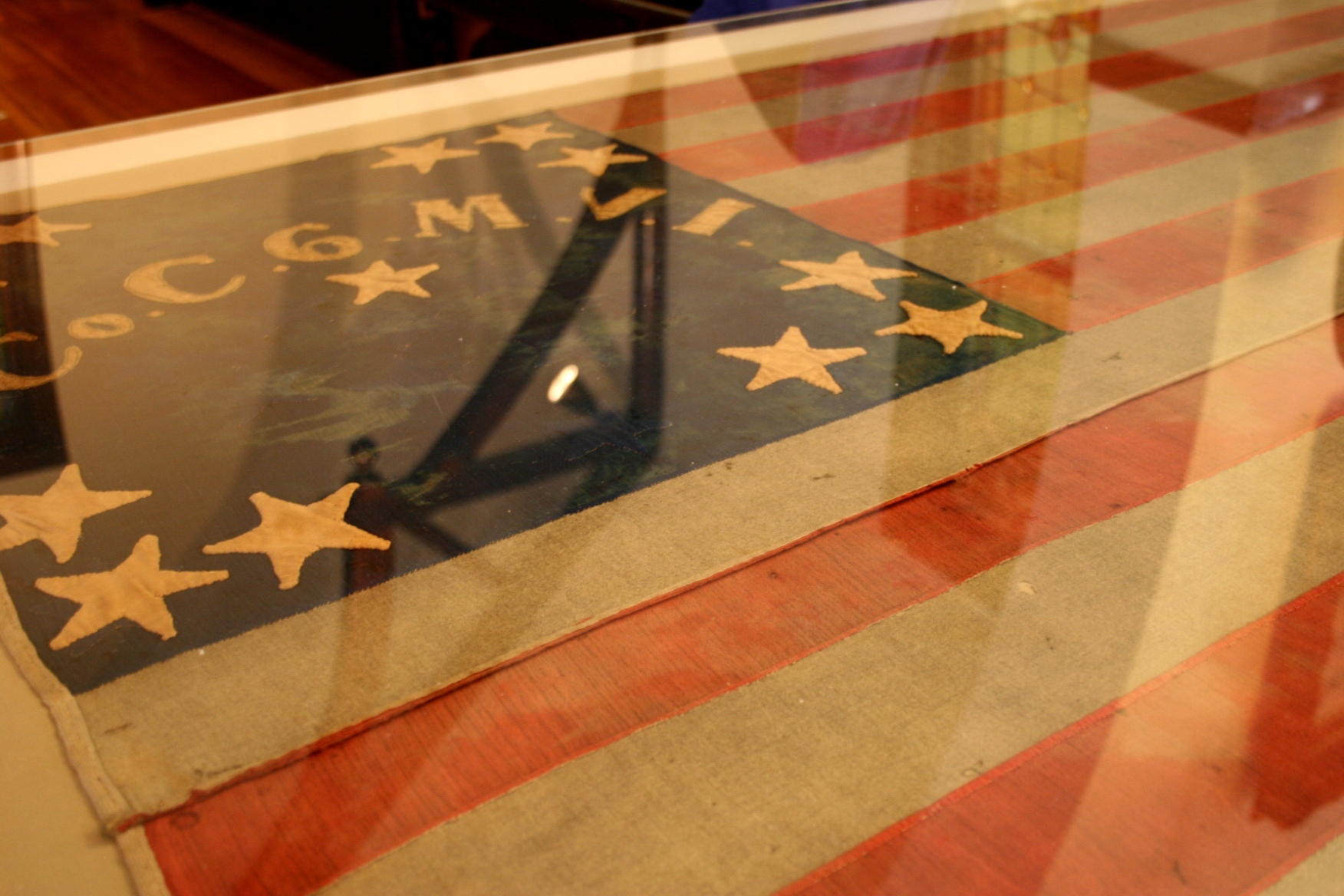
Rather, this shows a portion of a Civil War battle flag that I’ve switched up with some photo editing tools to emphasize the stars and letters and numbers in the upper left corner.

Lighting conditions weren’t ideal for photographing this flag Saturday afternoon in the Guild House at the Cathedral of Our Merciful Saviour in Faribault.

Honestly, I hadn’t even expected to photograph this flag sewn by a group of women in Fairmont and carried by Company C, 6th Minnesota Volunteer Infantry. The last time I asked to photograph the flag at the Rice County Museum of History, my request was denied by director Susan Garwood.

She didn’t know me from Adam, or Eve, although I gave her my business card and explained that I was a writer and blogger. That didn’t matter.

Thankfully, Garwood changed her mind and I got the go-ahead-and-shoot-but-without-flash OK.

Garwood has reason to be cautious. This battle flag is rare, among about a half dozen in Minnesota. Recent restoration cost nearly $7,300.

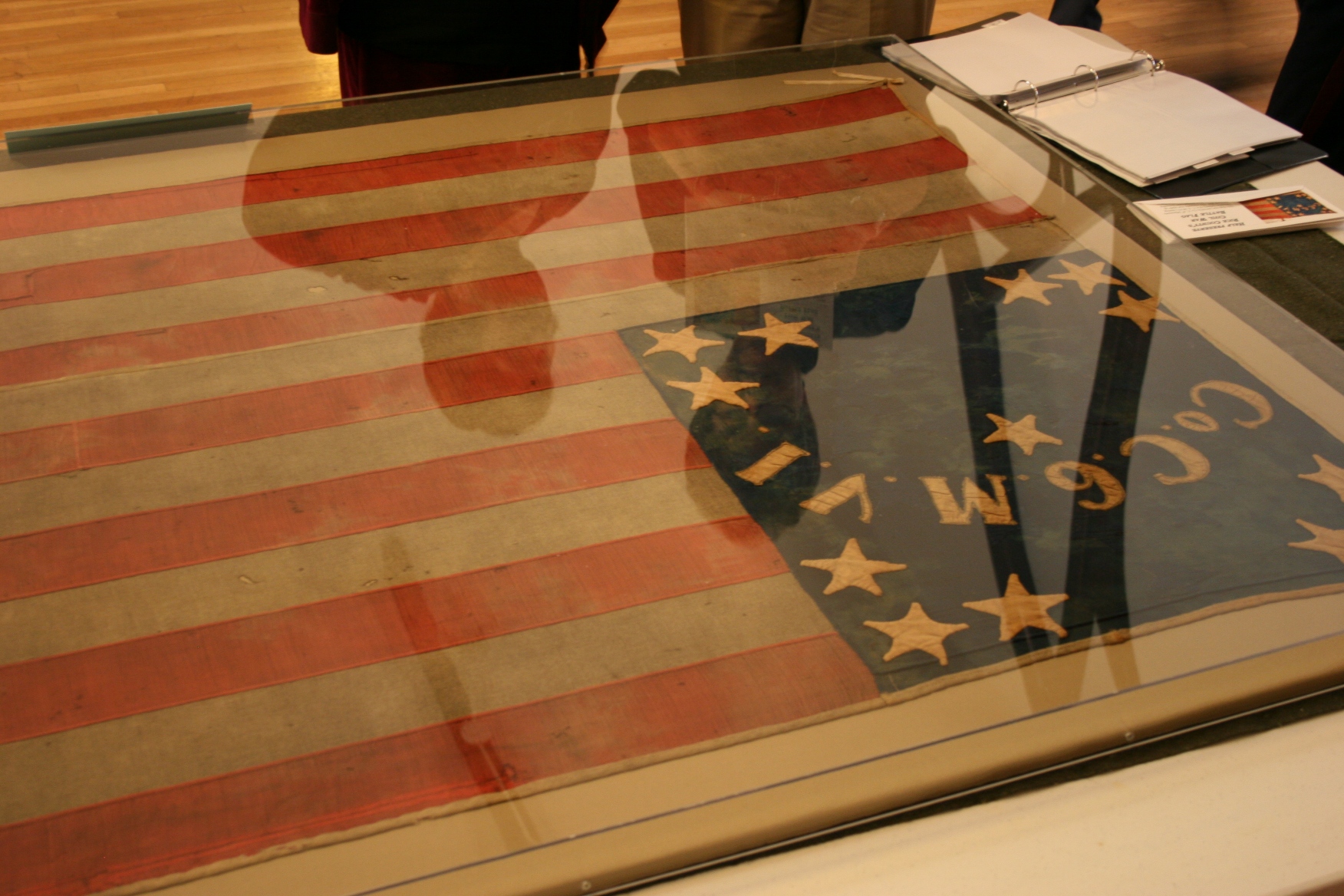
Here's how the flag really looks. Faded. The company which carried this flag was comprised of men primarily from Bridgewater Township in Rice County, Minnesota. On the back side of the flag 34 stars are sewn representing the number of states in 1862. You are seeing reflections here on the glass encasing the flag.


Just another, upside down, view of the flag and the reflections of visitors viewing it.

I don’t know the value of the restored flag. But it is valuable enough that a Faribault police officer was guarding the flag Saturday afternoon during “Recognition of the Fall of Fort Sumter–The Beginning of the Civil War” sponsored by the Rice County Historical Society and the Cannon Valley Civil War Roundtable.

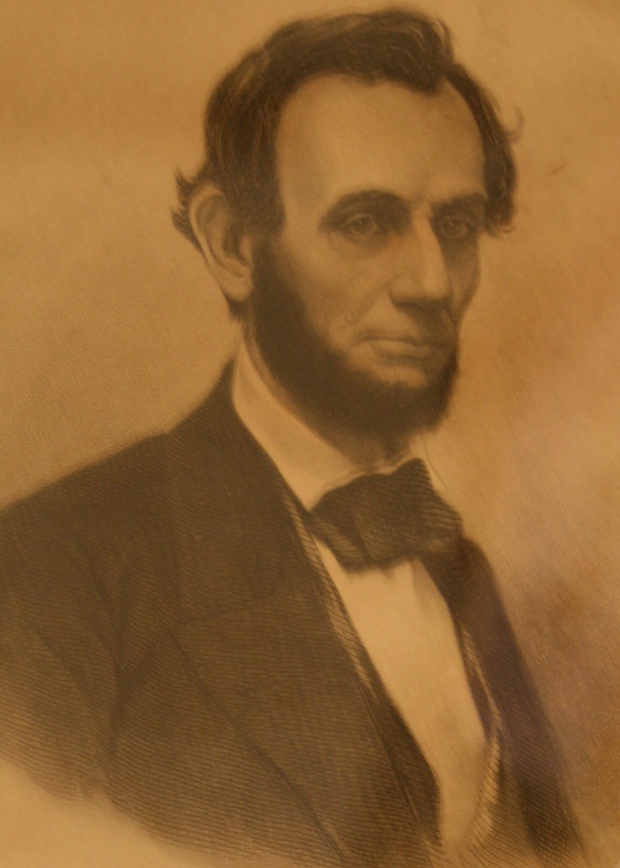
Likewise a collector of Civil War era artifacts was standing guard over his tables full of treasures. He had, among Civil War uniform buttons and other items, an original Lincoln photo engraving (used on the $50 bill) and signature. I didn’t ask the values. Sometimes it’s better not to know these things.


A slightly out of focus photo that I took of an original Lincoln photo engraving for a $50 bill on display Saturday.

The last time I photographed parts of his collection at a 2009 Cannon Valley Civil War Roundtable meeting, he made me promise not to reveal his name. I agreed. I didn’t want to go missing and have my family looking for me under a stadium. That’s an exaggeration, but this collector was serious. My lips are sealed.

I did ask him, though, why he didn’t bring his slave bills, which were advertised as being at the event and one of the key reasons I attended. He simply said he didn’t know he was supposed to bring them. He gave the same answer 1 1/2 years ago at the Roundtable meeting. I had gone to the session then specifically to see the slave documents.

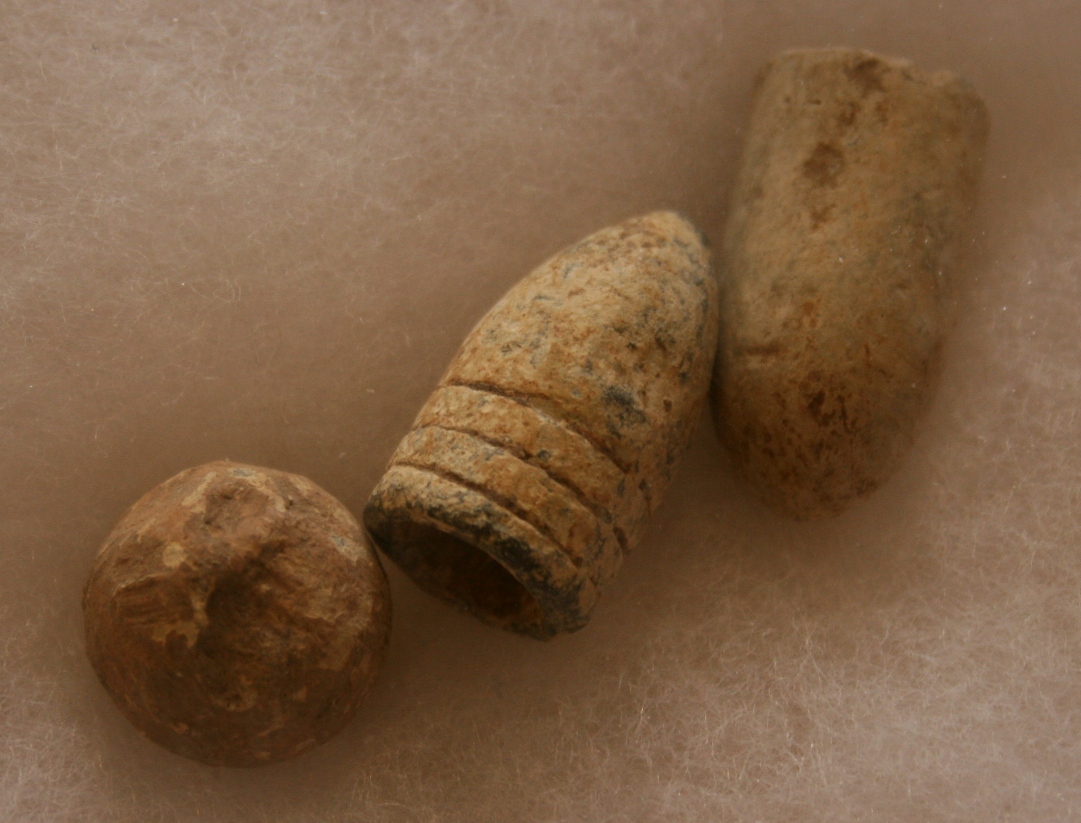
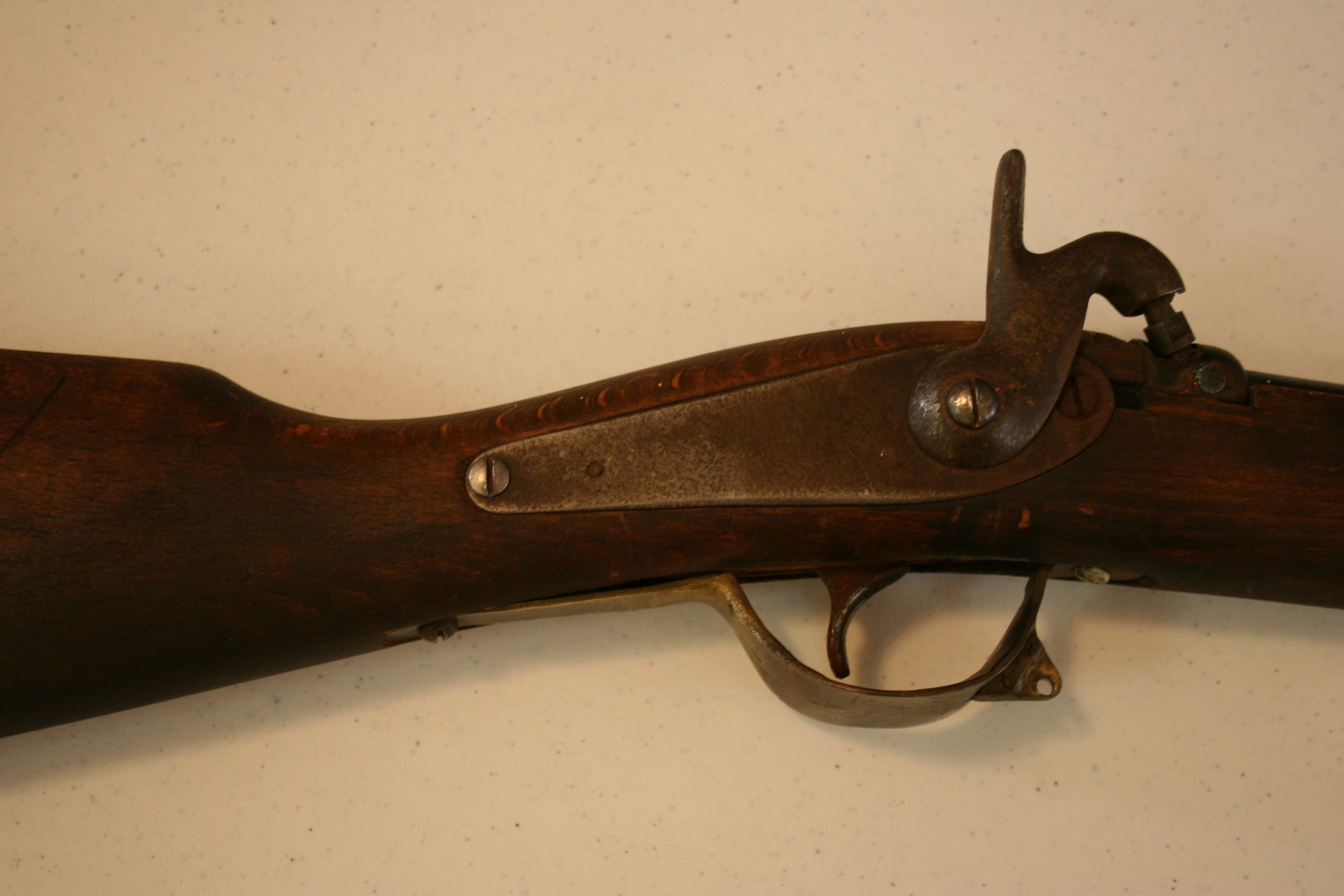
But on Saturday I perused a few other artifacts I hadn’t seen before like…

these old bullets


and two Civil War era muzzleloaders which I was allowed to pick up and which were heavy at 18 and 21 pounds.

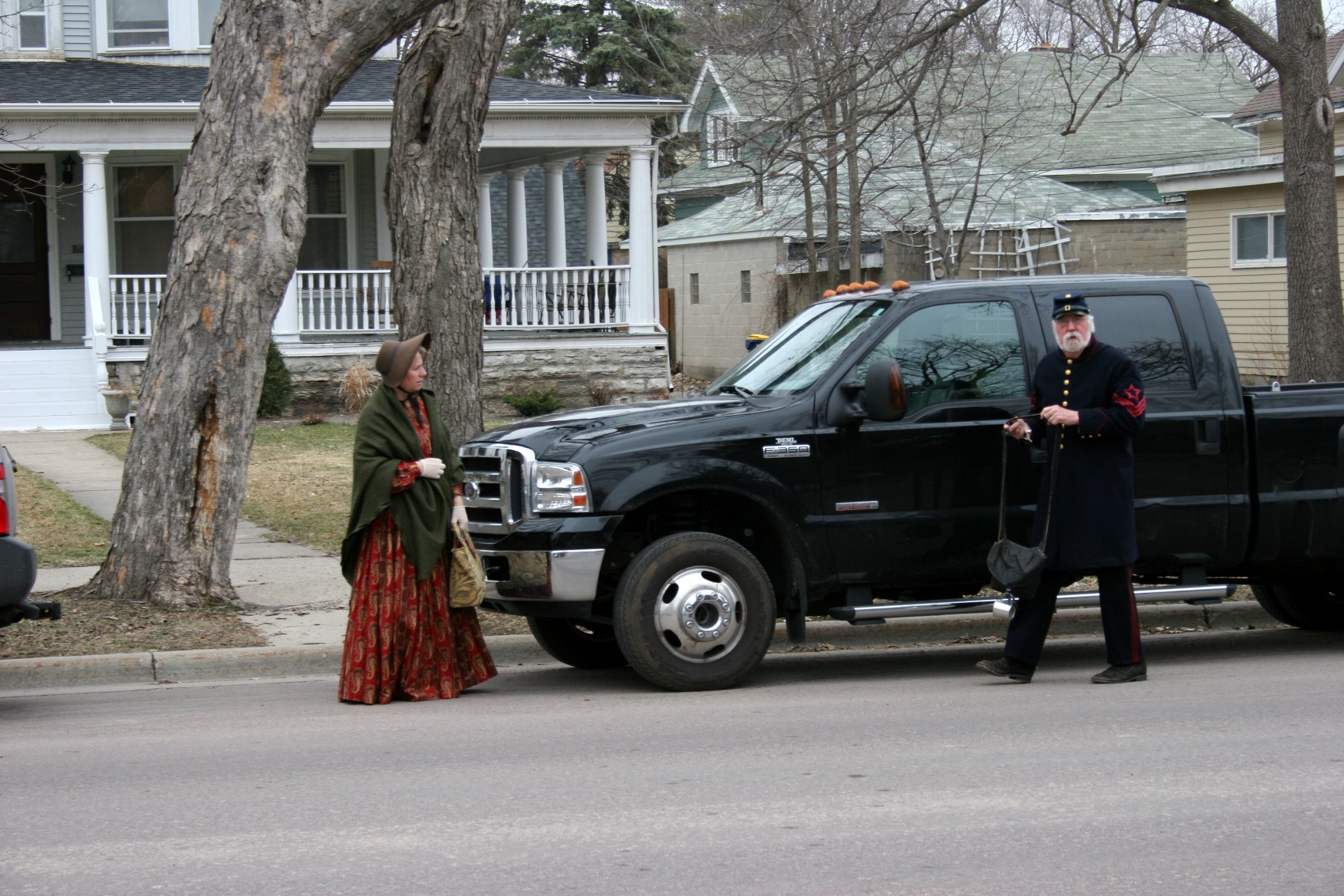
I also saw…

these costumed reenactors pull up in a pick-up truck

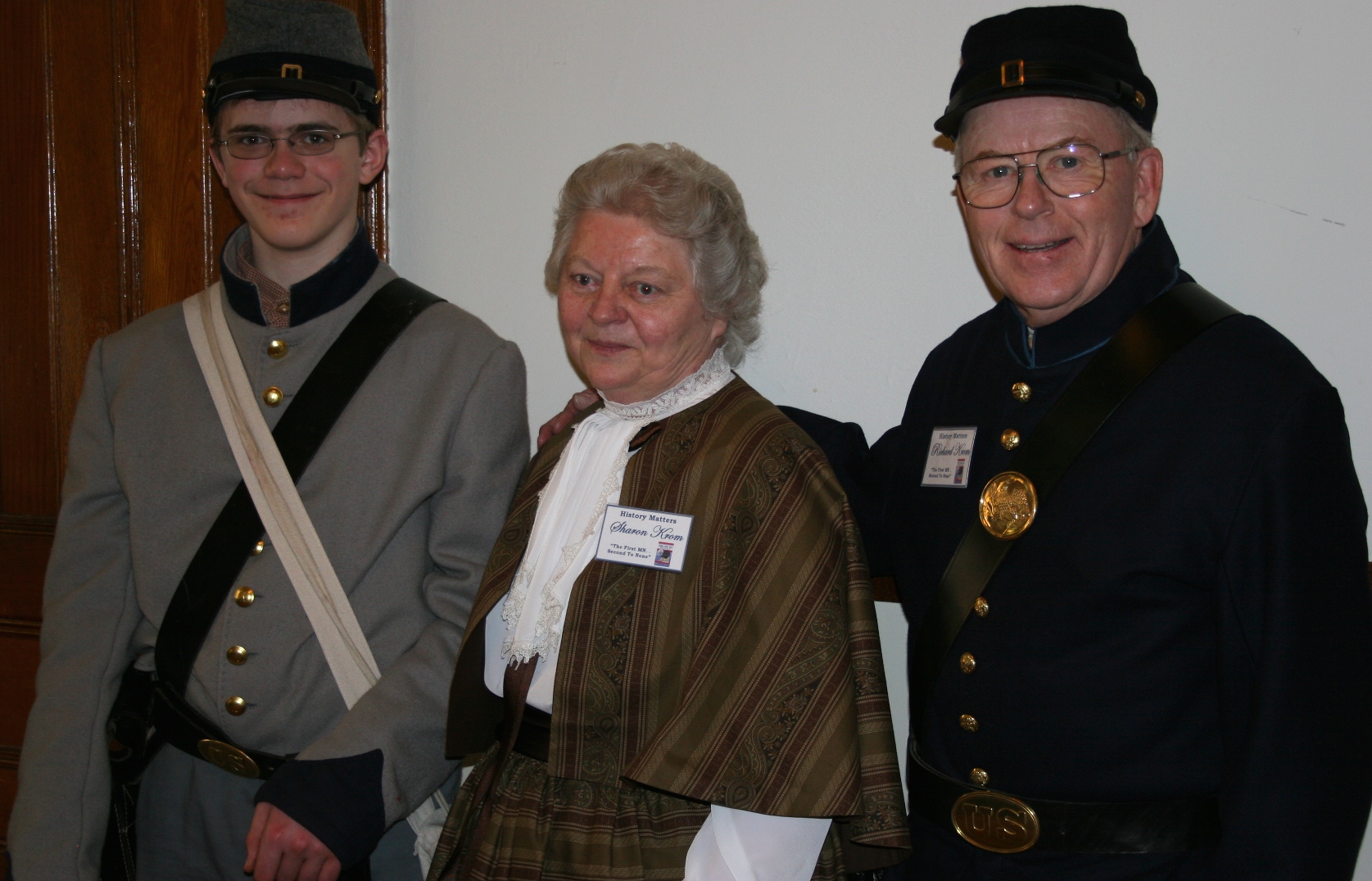
and this unidentified reenactor, left, posing for photos with Sharon and Richard G. Krom of Rochester. Richard is the great grandson of a Civil War soldier and has written a book, The 1st MN Second to None.

Finally, I sat down with friends and family to enjoy…

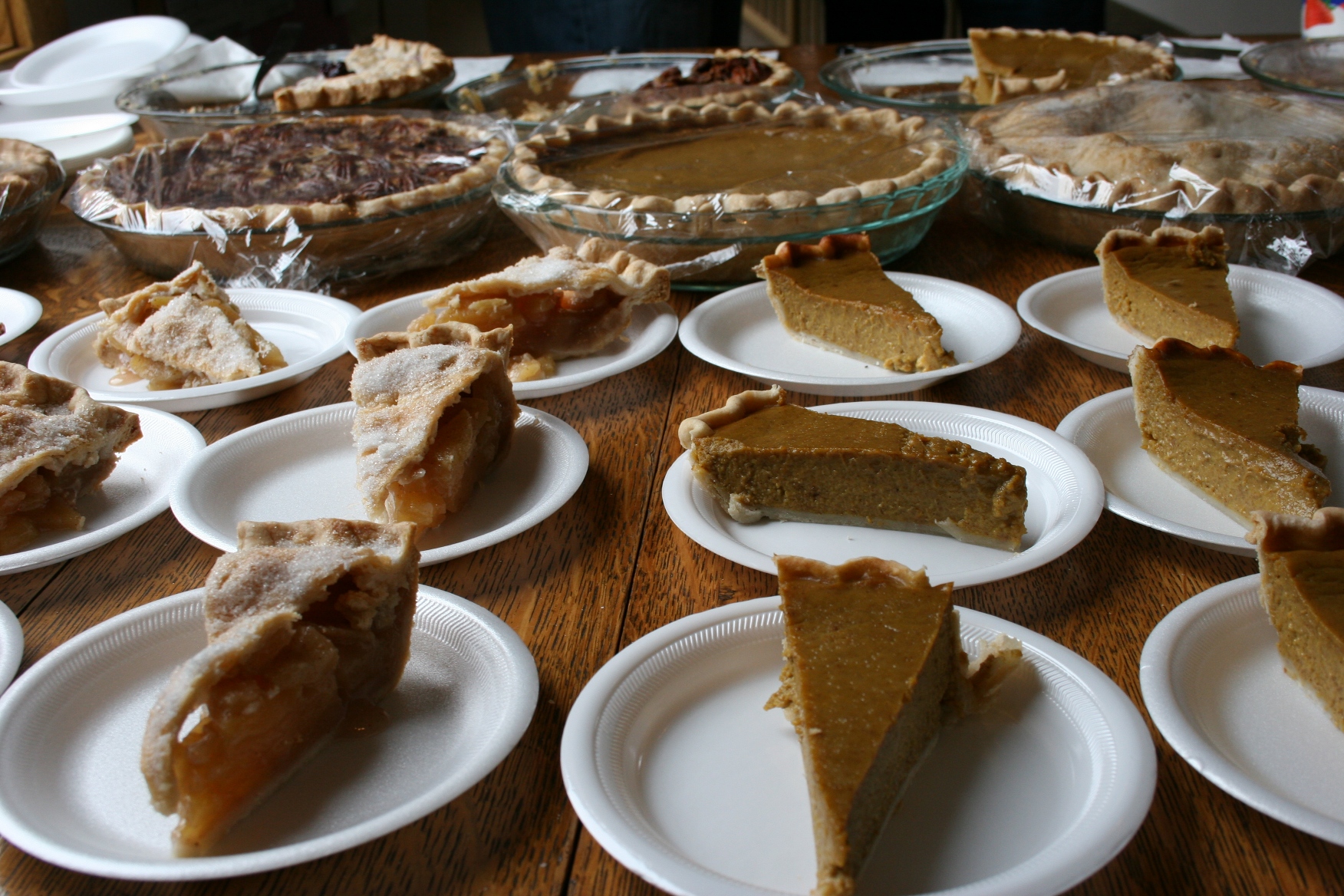
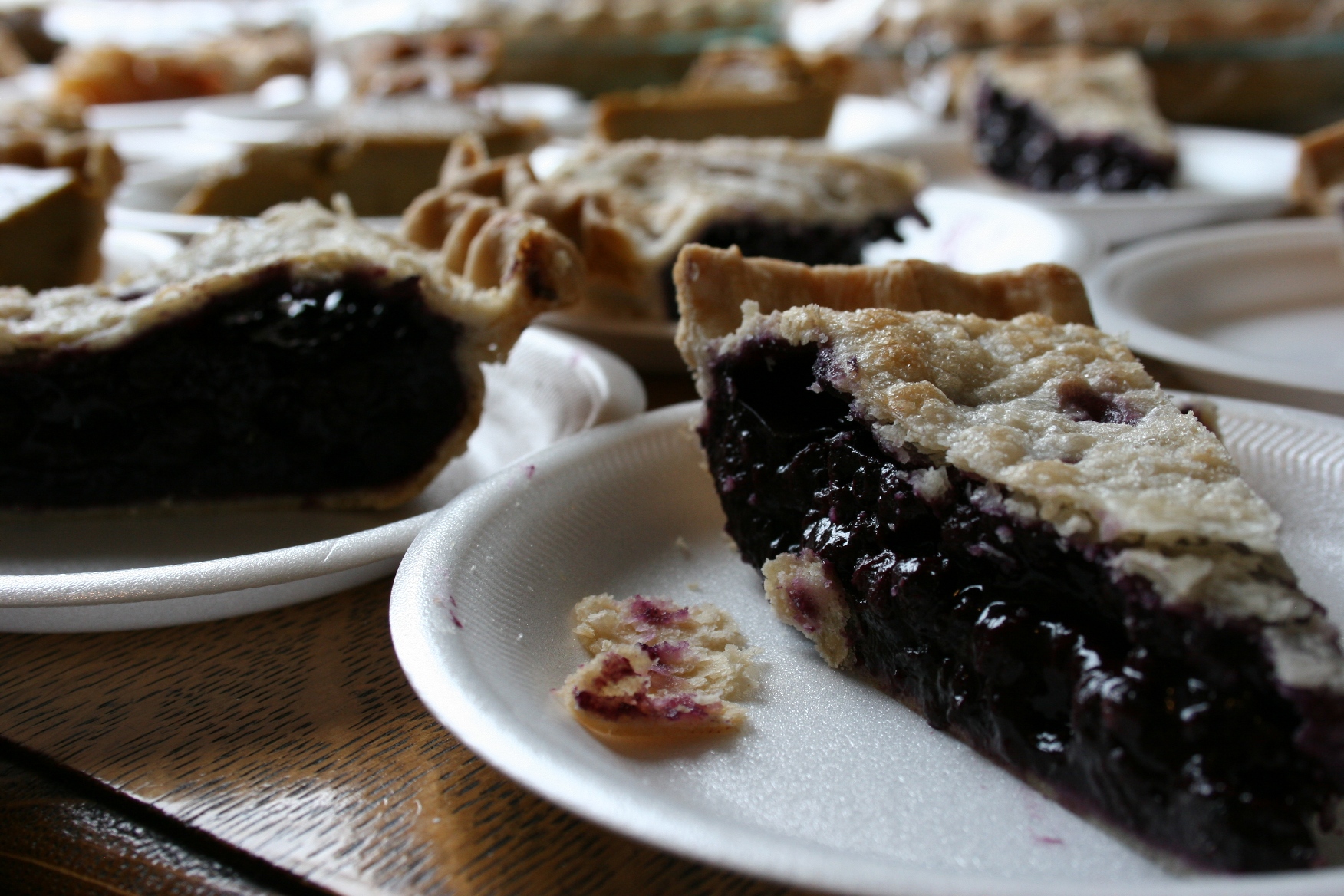
a piece of delicious homemade pie made by Rice County Historical Society President Jason Reher. He baked 16 pies for the event. (Jason could be a professional baker; his pie is that good.)

Fortunately for me, Jason had baked my favorite pie and apparently a favorite of many as everyone sitting at my table chose blueberry pie over apple, pumpkin or pecan. Most of us wondered if the blueberries were wild, yet never bothered to walk over and ask the pie-maker.

Jason wondered why I was photographing his pie. I just handed him a business card and figured he’d figure it out.

Copyright 2011 Audrey Kletscher Helbling


A Farm Country Thanksgiving November 24, 2010

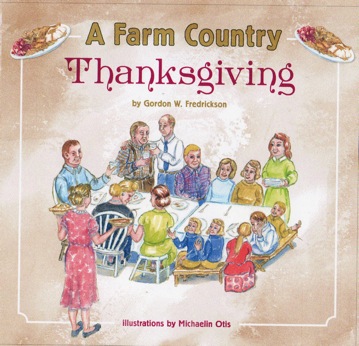
The third book in the Farm Country series.

WHENEVER I OPEN one of Lakeville author Gordon Fredrickson’s books, I feel like I’m stepping back in time to my childhood on a southwestern Minnesota dairy farm.

I’m thankful for Fredrickson, who understands the value in preserving the history of small family farms. Because he was raised on a Scott County dairy farm and farmed for awhile as an adult with his wife, Nancy, Fredrickson gets his 1950s era farm stories right.

Last night I snuggled up in the recliner with his latest children’s picture book, A Farm Country Thanksgiving. I thought it would be a fairly quick read, but I was wrong.

I didn’t whiz through this story told from the viewpoint of 10-year-old farm boy Jimmy. Rather, I savored every rhyming word by Fredrickson and every detailed illustration by Michaelin Otis.

I was the one sledding down the hill. I was the one with snow stuffed down my neck by my older brother. I was pitching silage down the silo chute, eating banana-filled Jell-O, sitting at the kids’ table on Thanksgiving…

If you grew up on a farm in the 1950s and 1960s, you absolutely must read this book and Fredrickson’s other Farm Country series stories about Halloween and Christmas. He’s also published three If I Were a Farmer books.

I guarantee that you will feel all warm and fuzzy and nostalgic and want to dig out the old photo albums or reminisce with your siblings.

I noticed the ear flapper caps, the buckle overshoes, the checkerboard ringed silo (just like the one on my childhood farm), the old runner sled—book illustrations that are as accurate as photographs. The only difference: My albums hold black-and-white snapshots.

Fredrickson captures the essence of family, of hard work, of rural life. He understands that these are worth preserving. But his efforts to save our rural heritage extend beyond his books. This writer travels across Minnesota, and sometimes out of state, presenting his message to school children, senior citizens and others. He dresses the part of a 1950s farmer in bib overalls, brings farm props, talks and reads from his books.

I will tell you too that Fredrickson and his wife, Nancy, are as genuine and kind-hearted and as down-to-earth good as they come. My husband and I lunched with the couple this past summer. Although we had never met before then, having corresponded only via e-mail, I felt as comfortable with the Fredricksons as if I had known them for years. They are truly my kind of without pretenses folks.


I snapped this image of the Fredricksons after lunching with them in August.

I must also point out to you that Fredrickson gives me a plug on the back cover of his Thanksgiving book. He has pulled a quote from a book review I wrote. But that has absolutely nothing to do with the praise I am directing toward him here. He has earned his praise by writing these books, complete with glossaries (after I suggested a glossary), that forever preserve life on the family farm.

I thank him for taking on this project with a passion rooted deep in the land.

© Copyright 2010 Audrey Kletscher Helbling

Book cover image courtesy of Gordon Fredrickson


I plead guilty to eating key lime pie for breakfast July 23, 2010

Filed under: Uncategorized — Audrey Kletscher Helbling @ 9:34 AM
Tags: , , , , ,

IF EVER YOU FEEL GUILTY about eating dessert for breakfast, do as I do. Adapt.

I have, on occasion, crumbled a cookie into vanilla yogurt, thereby justifying that this qualifies as a nutritious breakfast (by my definition).

And just the other day, when I opened the refrigerator early in the morning and eyed the key lime pie, I decided, what the heck.

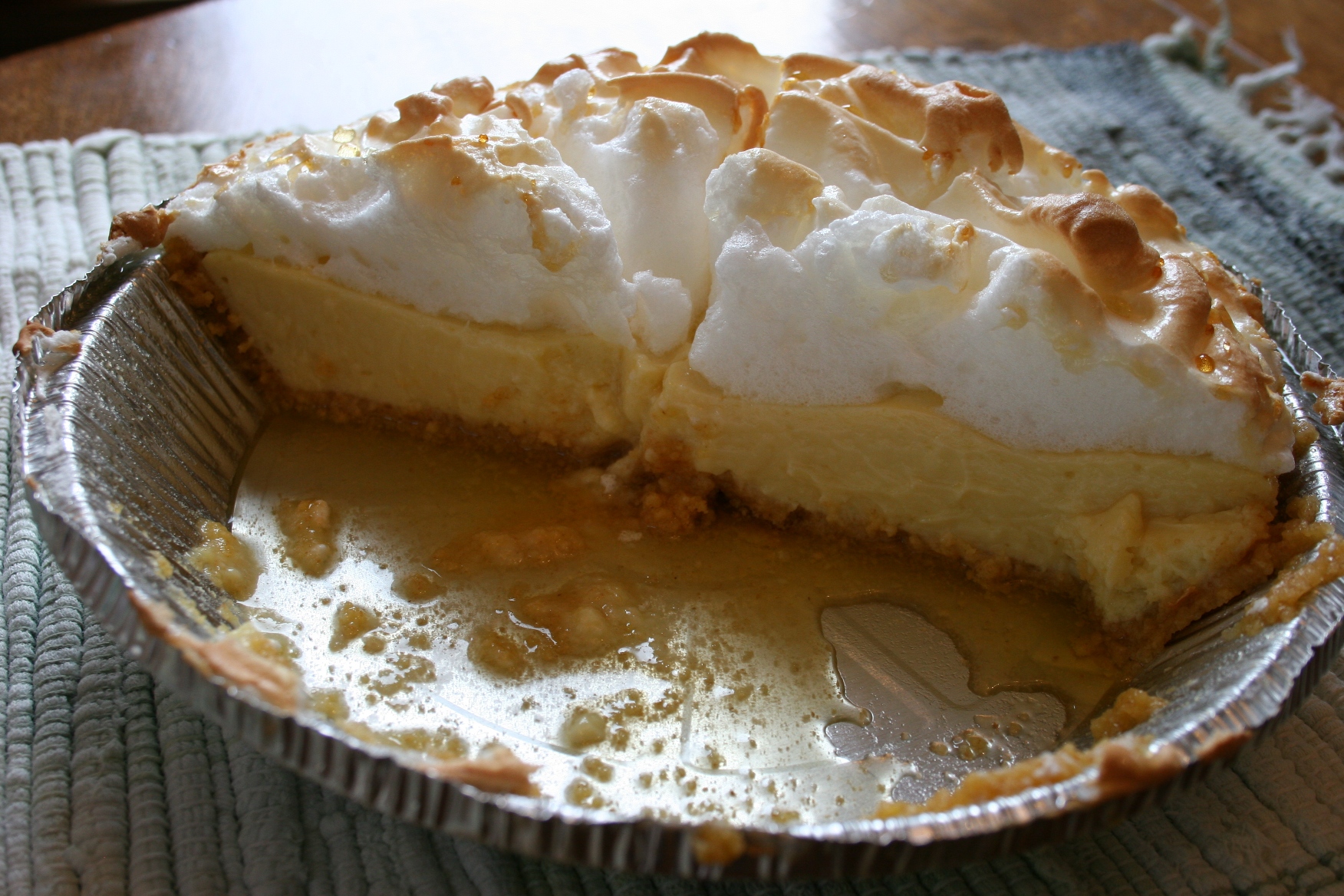
I pulled this key lime pie from the refrigerator. Had my husband and I really eaten this much pie already?

With a handful of blueberries tossed on the side, this could qualify as a breakfast food. Blueberries, after all, are high in antioxidants, which protect cells from damage that leads to aging and various diseases. That’s good enough for me.

So I plated a piece of the key lime pie I had made just a day earlier, added the blueberries and indulged without a twinge of regret.

With a side of blueberries, key lime pie makes a balanced breakfast. You've got your protein (eggs), your dairy products (sweetened condensed milk and sour cream) and your fruit (blueberries and lime juice).

Later I e-mailed Joanne Fluke, creator of this pie, and asked if I could publish her recipe on Minnesota Prairie Roots. She obliged.

But first, you should know that Joanne is a Swanville, Minnesota native and the New York Times bestselling author of the Hannah Swensen culinary cozy mysteries. She defected to California, where she’s lived for years, but I don’t hold that against her. Joanne writes some good Minnesota-based mysteries that include some equally great recipes. And she returns to her home state at least once a year to visit and to promote her books.

The recipe for key lime pie published in 2007 in Key Lime Pie Murder. In that mystery, main character Hannah Swensen, who owns a bakery, is judging baked entries at the Tri-County Fair. As she leaves the fairgrounds one evening while carrying a key lime pie, she discovers a dead body. So that, dear readers, is the story behind the decadent, to-die-for dessert that I devoured for breakfast.

Key Lime Pie

Filling:

5 eggs

14-ounce can sweetened condensed milk

½ tsp. lemon zest (optional, no substitutes)

½ cup sour cream

½ cup key lime juice (may substitute frozen key lime juice or juice from regular limes)

¼ cup white sugar

Crack one whole egg into a medium-sized bowl. Separate the 4 remaining eggs, placing the 4 yolks into the bowl with the whole egg. Place the 4 whites in another mixing bowl and set aside for later use in the meringue.

Whisk the whole egg and yolks until uniform in color. Stir in sweetened condensed milk. Add the lemon zest, if you decided to use it, and the sour cream. Stir together and set the bowl aside.

Juice the limes and measure out ½ cup of the juice into a small bowl. If you are using the ready-made lime juice, measure out ½ cup of that. Add ¼ cup sugar to the lime juice and stir until the sugar has dissolved. Next, whisk the sugared lime juice into the egg mixture.

Pour the filling into a pre-made graham cracker or cookie crust. Bake 20 minutes at 325 degrees F. Remove from oven and place on cooling rack.

Increase the oven temperature to 350 degrees F. to bake the meringue.

Meringue:

4 egg whites

½ tsp. cream of tartar

pinch of salt

1/3 cup white sugar

Add the cream of tartar and salt to the bowl with the egg whites and mix in. Using an electric mixer, beat the egg whites on high until soft peaks form. Continue to beat at high speed as you sprinkle in the sugar. When the egg whites form firm peaks, stop mixing. Spread the meringue over the filling with a spatula, sealing to the edge of the crust.

Bake at 350 degrees F. for an additional 12 minutes. Remove and cool to room temperature on a wire rack. Refrigerate if you wish. Serve chilled or at room temperature.

Text & images © Copyright 2010 Audrey Kletscher Helbling

Recipe courtesy of Joanne Fluke