Minnesota Prairie Roots

Writing and photography by Audrey Kletscher Helbling

A wannabe dairy princess June 20, 2013

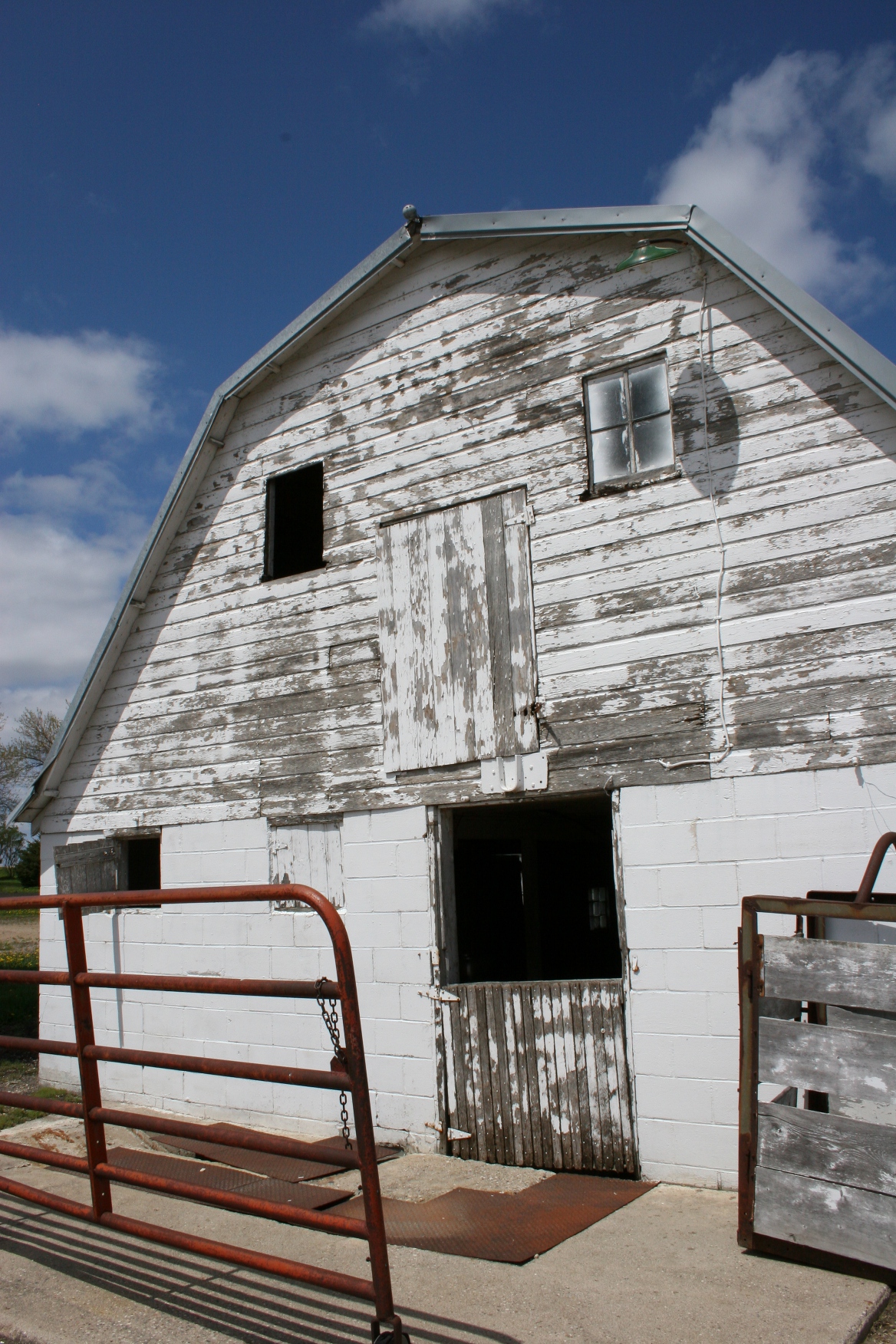
The barn where I labored alongside my father while growing up on the southwestern Minnesota prairie. File photo.

The barn where I labored alongside my father and siblings while growing up on the southwestern Minnesota prairie. File photo.

GROWING UP ON A MINNESOTA DAIRY FARM, I’ve always loved dairy products.

Fresh milk from our herd of Holsteins.

Butter and cheese from the bulk truck driver who picked up milk from our farm.

Singing Hills Coffee Shop's delicious maple bacon sundae.

One of my new favorite ice cream treats, a maple bacon sundae from Singing Hills Coffee Shop in Waterville. File photo.

Ice cream from the Schwans man. (My older brother often sneaked the tin can of vanilla ice cream from the freezer and climbed atop the haystack to eat his fill. He failed to remove his spoon, leaving damning evidence connecting him to the ice cream caper. I was too obedient to attempt such thievery.)
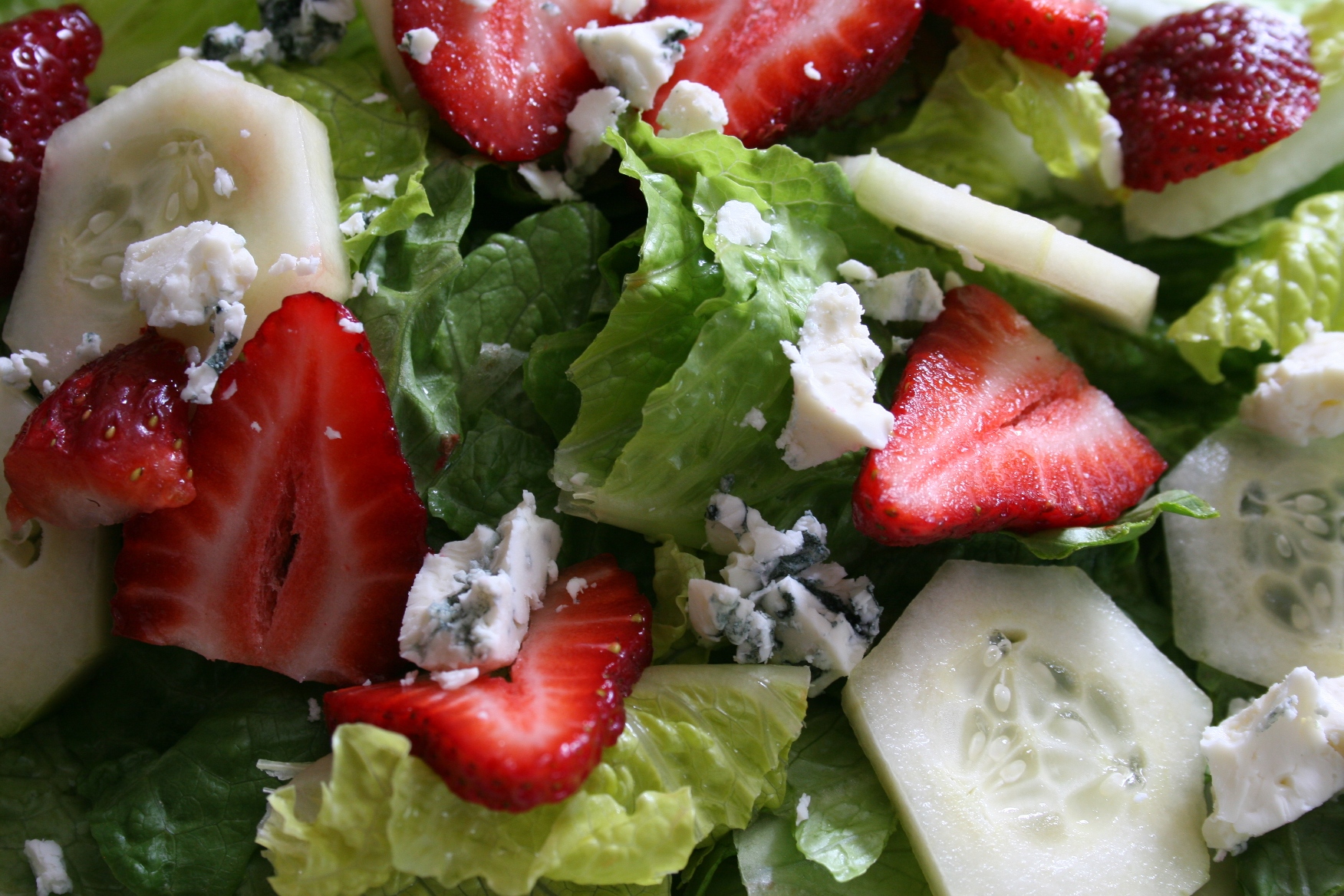
Sliced strawberries, cucumbers and Amablu Gorgonzola cheese added to Romaine lettuce made a perfect salad. I topped the salad with lemon poppyseed dressing.

Sliced strawberries, cucumbers and Amablu Gorgonzola cheese added to Romaine lettuce make a perfect salad. I topped the salad with lemon poppyseed dressing. File photo.

My cheese tastes have, thankfully, expanded beyond American and Velveeta, staples of my childhood. I especially favor the blue cheeses made and aged in sandstone caves right here in Faribault and sold under the names Amablu and St. Pete’s Select. If you like blue cheese, this is your cheese.
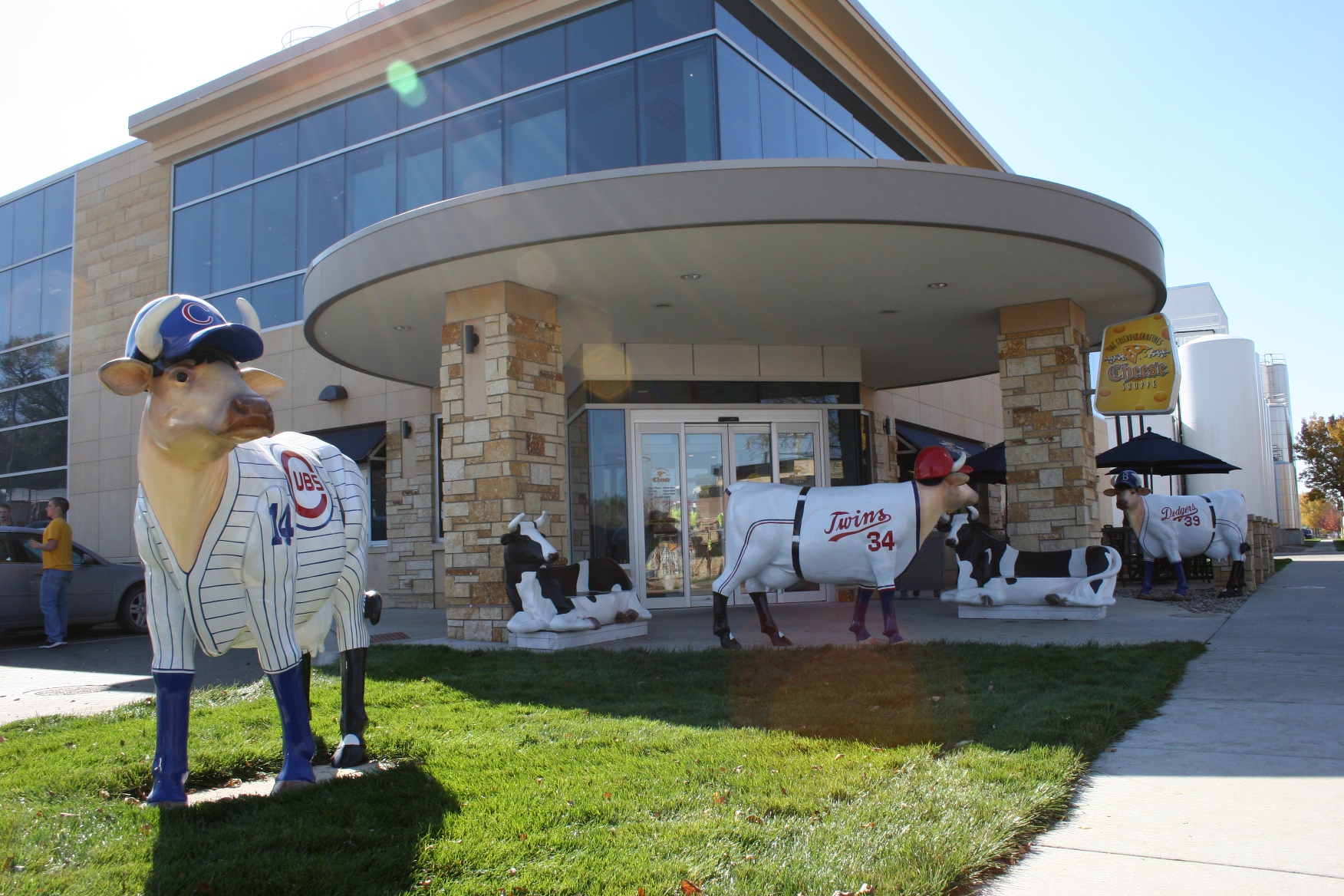
Cow sculptures outside The Friendly Confines Cheese Shoppe in LeSueur. File photo.

Cow sculptures outside The Friendly Confines Cheese Shoppe in LeSueur. File photo.

I bring up this topic of dairy products because June marks an annual celebration of all things dairy during “June Dairy Month.” This moniker is imprinted upon my brain. I once ran, albeit unsuccessfully, for Redwood County dairy princess.
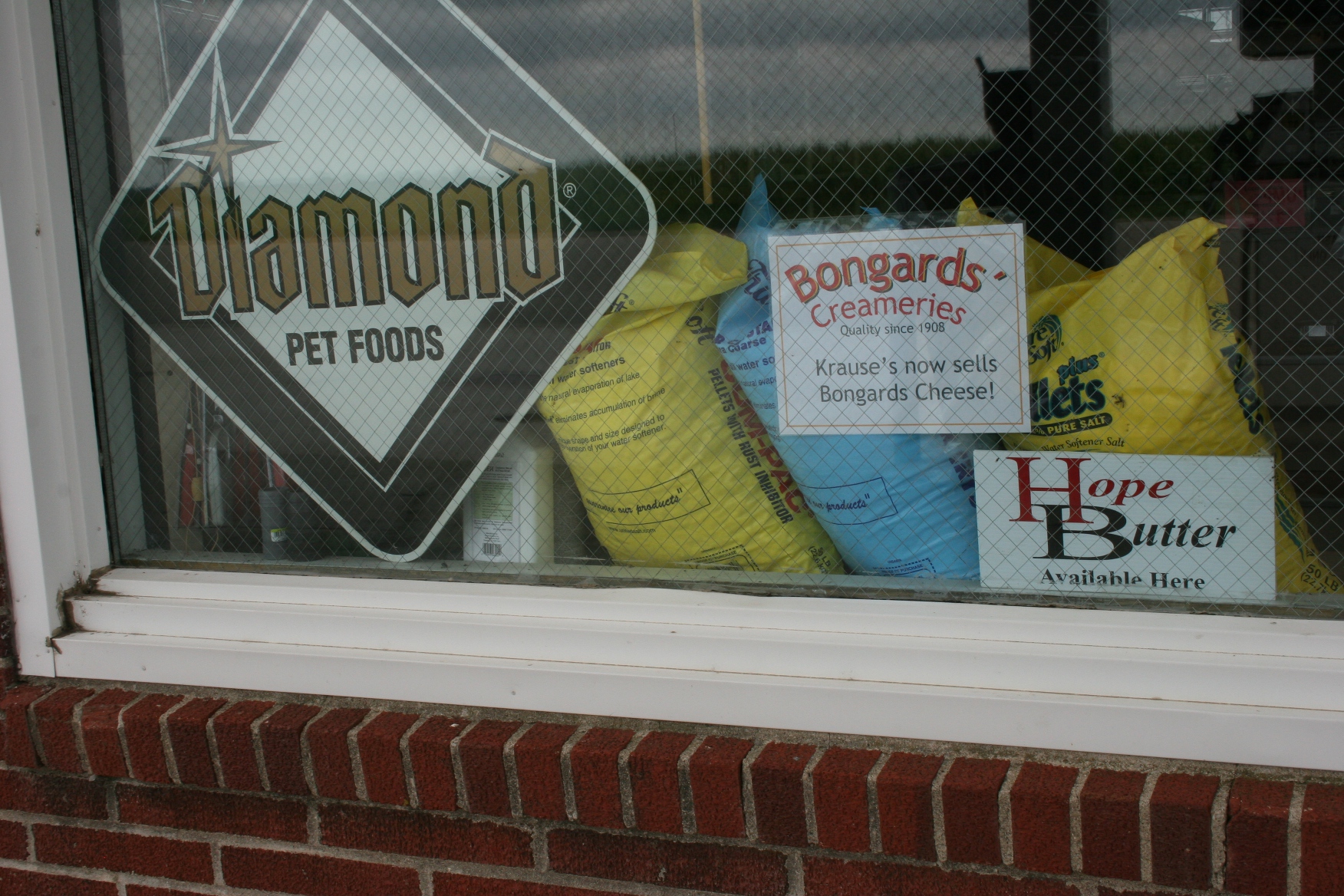
Krause Feeds & Supplies in Hope advertised the availability of Hope butter and Bongards cheese. File photo.

Krause Feeds & Supplies in Hope advertises the availability of Hope butter and Bongards cheese. File photo.

Steele County, to the south of my Rice County home, is apparently a big dairy county having at one time served as home to more than 20 creameries. One remains, in the unincorporated village of Hope, producing Hope Creamery butter in small batches. The creamy’s organic butter is especially popular in certain Twin Cities metro eateries.

Owatonna, the county seat, once claimed itself to be “The Butter Capital of the World.” That butter capital title will be the subject of an exhibit opening August 1 and running through November 10 at the Steele County History Center in Owatonna. The exhibit will feature the area’s rich dairy history to current day dairy farming in the county. Events will include a roundtable discussion on the dairy industry and, for the kids, butter making and a visit from a real calf.
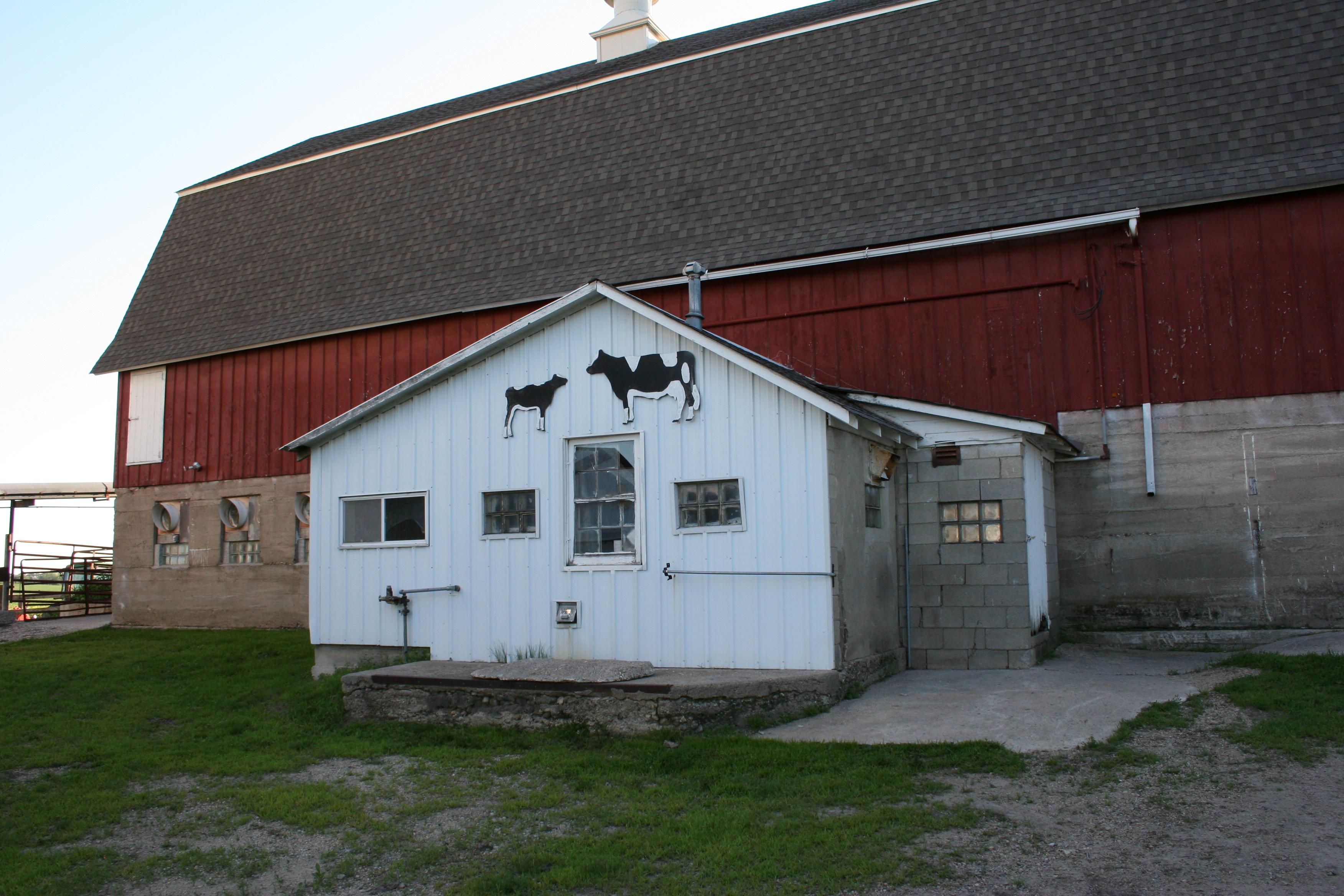
Notice the cow art on the milkhouse in this image taken this past summer.

Cow art on the milkhouse of my friends Deb and John, who once milked cows in rural Dundas. File photo.

Calves. I love calves. More than any aspect of farming, I loved feeding calves buckets of warm milk replacer or handfuls of pellets. I once named a calf Princess and she became my “pet,” as much as a farm animal can be a pet. Then my older brother—the one who ate ice cream when he wasn’t supposed to—told me one day that my calf had died. I raced upstairs to my bedroom and sobbed and sobbed. Turns out he made up the whole story of Princess’ early demise. She was very much alive.
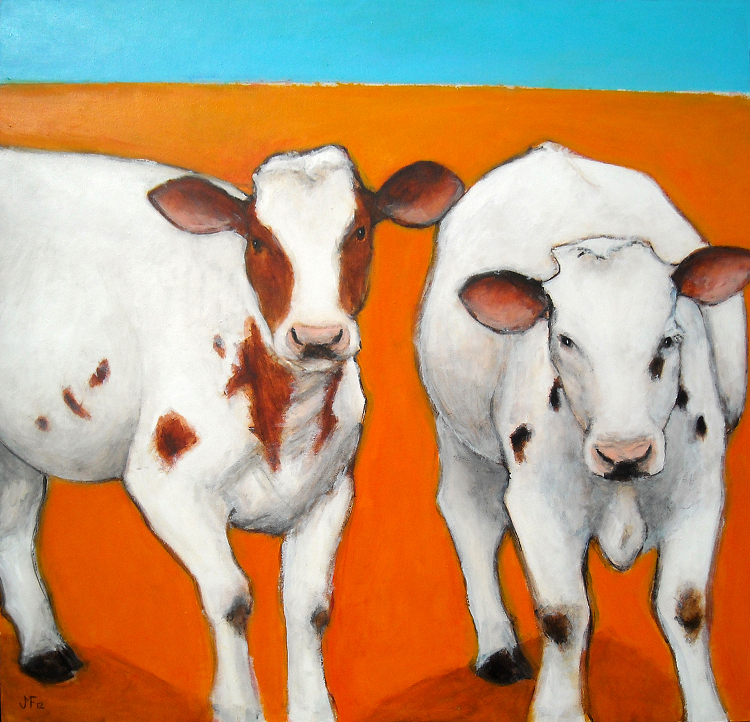
The vibrant art of Faribault artist Julie Falker of JMF Studio.

The vibrant art of Faribault artist Julie Faklker of JMF Studio. File image.

And so, on this day when I consider June Dairy Month, my mind churns with thoughts of butter and ice cream, of calves and of the dairy princess crown I never wore.

FYI: Faribault area dairy farmers Ron and Diane Wegner are hosting “A Day on the Farm” from 11 a.m. – 2 p.m. this Saturday, June 22. Their farm is located just south of Faribault at 25156 Appleton Avenue. The event includes children’s activities, photos with a baby calf and free cheeseburgers, malts and milk. Event sponsors are the Rice County American Dairy Association and the Minnesota Beef Council. The Wegners’ daughter, Kaylee, is the current Rice County dairy princess.

The Redwood County American Dairy Association in my home county of Redwood in southwestern Minnesota is sponsoring a coloring contest for kids and a trivia contest for adults. Click here for details. 

© Copyright 2013 Audrey Kletscher Helbling


For my mother May 12, 2013

Filed under: Uncategorized — Audrey Kletscher Helbling @ 10:35 AM
Tags: , , , , ,
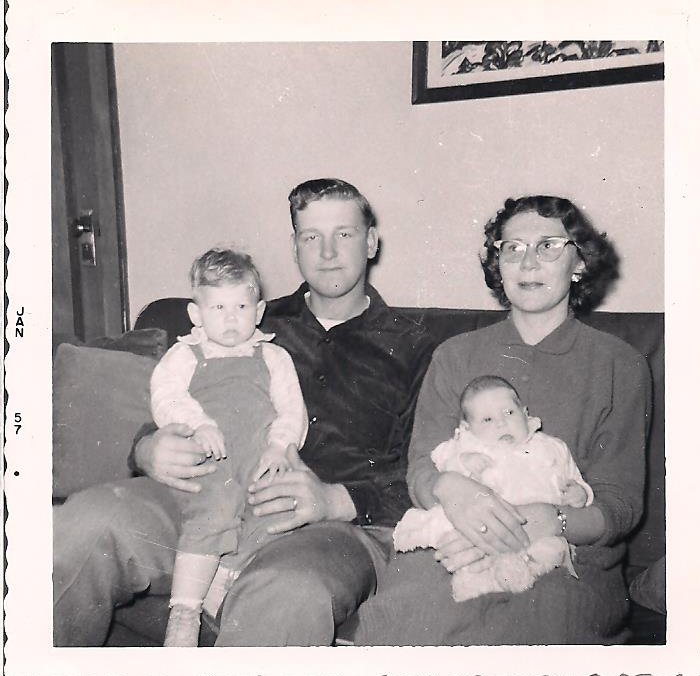
My parents with my brother and me in a photo dated January 1957, but likely taken a few months earlier.

My parents with my brother and me in a photo dated January 1957, but likely taken a few months earlier at my maternal grandpa’s house.

I WONDER SOMETIMES what my mother’s life would have been like had she not chosen motherhood over career.

Not that long-term employment was truly an option for a young woman of the 1950s, unless you chose teaching or nursing, neither of which fit my mother’s professional talents or interests.

After graduating from Wabasso High School in 1951, as valedictorian no less, she attended Mankato Business College then landed a job with the state employment office in Marshall.

By September of 1954, she had quit her job and married. In July 1955 she gave birth to her first son. Within a dozen years, my mother and father would have six children.

Raising a family in rural southwestern Minnesota, in a cramped and drafty three bedroom house with no bathroom, could not have been easy.

I retain memories of my mother striking farmer matches to light the oil burning stove centered in the living room, heating a house wrapped in brown paper, straw bales snugged to the foundation.

I see her dumping buckets of hot water into the galvanized bathtub positioned before the kitchen stove on Saturday nights.

I feel her hands lacing through my stick-straight hair as I lie face-up on the kitchen counter, head draped over the sink, as she works shampoo onto my scalp.

I watch her dump cups of flour and sugar into the white bowl of her Hamilton Beach mixer, stirring up batches of bars too quickly consumed by six hungry kids. I remember, too, the treat of a few chocolate chips dropped into hands.

I smell the yeasty scent of her homemade bread pulled from the oven, remember the snippets of dough she parceled out for me and my sisters to shape miniature buns.

I hear the hiss of hot iron against cotton cloth she’s sprinkled with water.

I watch her grasp the iron ring on the kitchen floor trap door as she sends me down the creaky stairs to the dirt-floored cellar for a jar of golden peaches. Memories of summer days, of wooden crates lugged home from the local grocer, of peaches wrapped in pink tissue, of fruit slipped into boiling water, linger.

I can feel her strength as she stirs the clothes in her Maytag wringer washer with a grey stick propped always against a wall in the porch where smelly chore clothes hung.

She traded a career for all of this.

Was she happy? Did she regret giving up a well-paying and stable job for six kids and poverty?

I’ve never asked.

But I’d like to think she was happy raising a family, instilling in each of her children a strong faith in God and an appreciation and love of family, and of life.

The old farmhouse to the left, where I grew up with the "new house," built in the late 1960s.

The old farmhouse to the left, where I lived until about age 12, with the “new house” in the background. That’s my sister, Lanae, standing on the front steps leading into the porch. Was the house really that small? Apparently so.

© Copyright 2013 Audrey Kletscher Helbling
 

How I’ve composed poetry that dances (in the barn) April 4, 2013

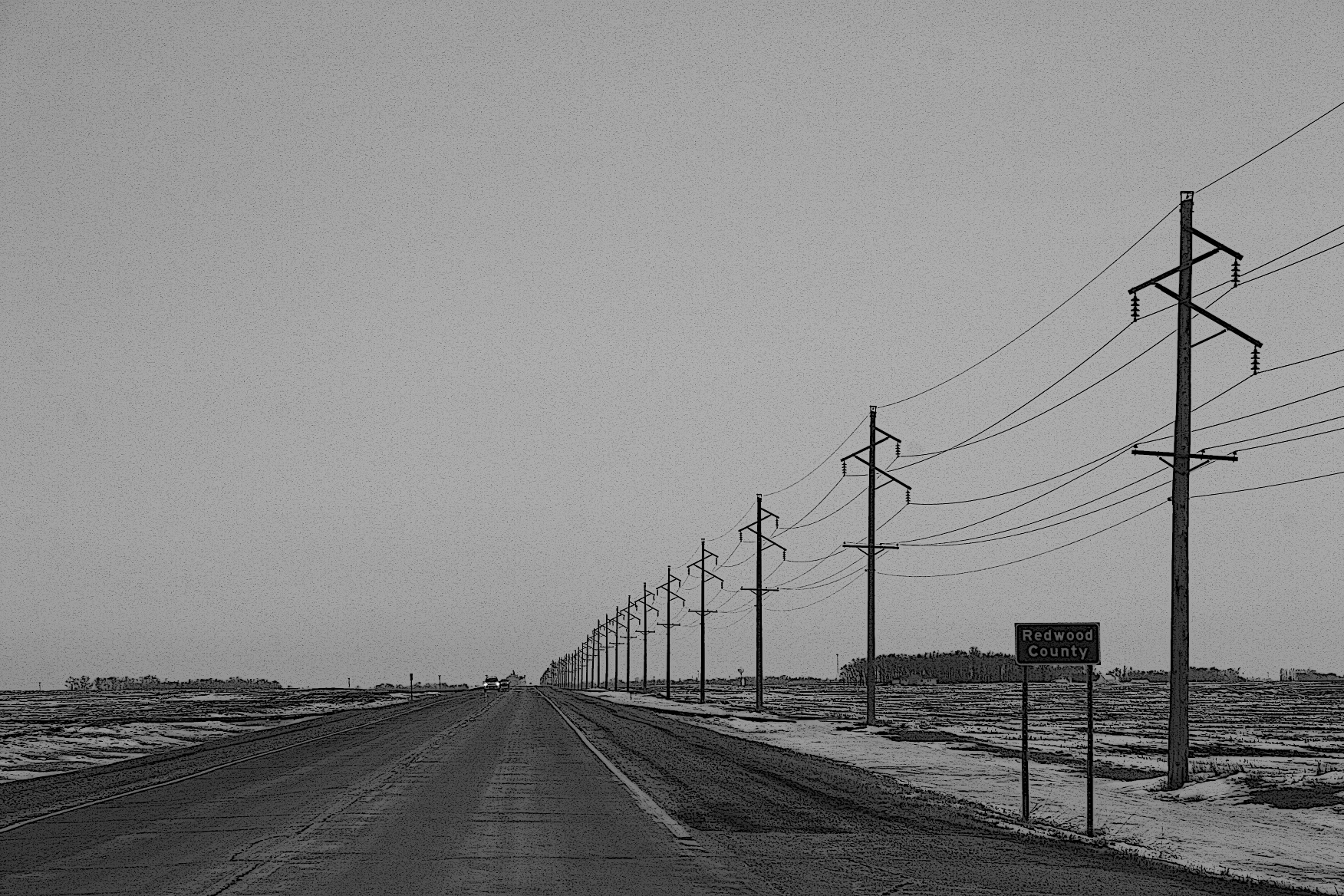
Entering my home county of Redwood along Minnesota State Highway 68 southeast of Morgan.

Entering my home county of Redwood along Minnesota State Highway 68 southeast of Morgan. Rural Redwood County is the setting for most of my poetry.

POETRY. That single word encompasses language, music, art, emotion and more. It’s a word to be celebrated in April, designated as National Poetry Month by the Academy of American Poets.

I’ve written poetry for about four decades, but not with particular passion or regularity until recent years. Something has evolved within me as a writer, directing me from the narrow path of journalistic style writing to the creativity of penning poetry.

Perhaps a parcel of my new-found enthusiasm can be traced to my publishing success. Seventeen, soon to be 18, of my poems have been published in places ranging from literary journals to anthologies to billboards to a devotional and more. I figure if editors have accepted my poetry for publication, I must be doing something right. And when they reject my poetry, as has happened often enough, they were correct in those decisions.

An abandoned farmhouse along Minnesota State Highway 19 east of Vesta on the southwestern Minnesota prairie.

An abandoned farmhouse, like this one along Minnesota State Highway 19 east of Vesta on the southwestern Minnesota prairie, inspired my poem, “Abandoned Farmhouse,” published in Poetic Strokes, A Regional Anthology of Poetry from Southeastern Minnesota, Volume 3.

Most of my poems are rooted in childhood memories from the southwestern Minnesota prairie. I write about topics like barns, walking beans, an abandoned farmhouse, canned garden produce, taking lunch to the men in the field and such.

My poetry rates as visually strong and down-to-earth. There’s no guessing what I am writing about in any of my poems.

Barns, like this one along Minnesota Highway 60 west of Waterville, have woven into my poetry.

Barns, like this one along Minnesota Highway 60 west of Waterville, have woven into my poetry.

Here, for example, is my poem which published in Volume One of Lake Region Review, a high-quality west central Minnesota-based literary magazine of regional writing. To get accepted into this journal in 2011 and then again in 2012 significantly boosted my confidence as a poet given the level of competition and the credentials of other writers selected for publication.

This Barn Remembers

The old barn leans, weather-weary,
shoved by sweeping prairie winds,
her doors sagging with the weight of age,
windows clouded by the dust of time.

Once she throbbed with life
in the heartbeats of 30 Holsteins,
in the footsteps of my farmer father,
in the clench of his strong hands
upon scoop shovel and pitchfork.

This barn spoke to us,
the farmer and the farmer’s children,
in the soothing whir of milking machines
pulsating life-blood, rhythmic, constant, sure.

Inside her bowels we pitched putrid piles of manure
while listening to the silken voices of Charlie Boone
booming his Point of Law on ‘CCO
and Paul Harvey wishing us a “good day,”
distant radio signals transmitting from the Cities and faraway Chicago.

This barn remembers
the grating trudge of our buckle overshoes upon manure-slicked cement,
yellow chore-gloved hands gripping pails of frothy milk,
taut back muscles straining to hoist a wheelbarrow
brimming with ground corn and pungent silage.

This barn remembers, too,
streams of hot cow pee splattering into her gutters,
rough-and-tumble farm cats clumped in a corner
their tongues flicking at warm milk poured into an old hubcap,
and hefty Holsteins settling onto beds of prickly straw.

A rural scene along U.S. Highway 14 near Nicollet.

A rural scene along U.S. Highway 14 near Nicollet.

Let’s examine “This Barn Remembers” to see how I created this poem. Always, always, when penning a poem like this, I shut out the present world and close myself into the past.

I rely on all five senses, not just the obvious sight and sound, to engage the reader:

  • sight—sagging doors, clouded windows, manure-slicked cement
  • sound—soothing whir of milking machines, grating trudge of buckle overshoes, silken voices of Charlie Boone
  • taste—tongues flicking warm milk
  • touch—in the clench of his strong hands, gripping pails of frothy milk, settling onto beds of prickly straw
  • smell—putrid piles of manure, pungent silage

Strong and precise verbs define action: shoved, throbbed, booming, gripping, brimming, splattering, flicking

Literary tools like alliteration—pitched putrid piles of manure—and personification—the barn taking on the qualities of a woman—strengthen my poem.

The words and verses possess a certain musical rhythm. This concept isn’t easy to explain. But, as a poet, I know when my composition dances.

I also realize when I’ve failed, when a poem needs work and/or deserves rejection.

That all said, the best advice I can offer any poet is this:

  • Write what you know.
  • Write from the heart.
  • Write in your voice.
  • Write with fearlessness and honesty. (Note especially this line: “…streams of hot cow pee splattering into her gutters…”)
I grew up on a dairy and crop farm, so I know cows well enough to write about them in my poetry.

I grew up on a dairy and crop farm, so I know cows well enough to write about them in my poetry.

You can bet I smelled that hot cow pee, watched the urine gushing from Holsteins into the gutter, pictured a younger version of myself dodging the deluges, when I penned “This Barn Remembers.” Writing doesn’t get much more honest than cow pee.

IF YOU’RE A POET, a lover of poetry and/or an editor, tell me what works for you in composing/reading/considering poetry.

© Copyright 2013 Audrey Kletscher Helbling


Strange but true: Abolish the privy-pit & use the dry earth closet March 13, 2013

DURING THE FIRST 11 years of my life, I lived in a cramped three-bedroom farmhouse in southwestern Minnesota with my parents and four siblings, my third brother not yet born.

The house, albeit aged and plain, provided necessary shelter for our family. But, unlike most rural homes in the area, ours did not have a bathroom. Instead, we used a two-hole outhouse during the warm months and a pot on the porch during the winter.

It was not the outhouse, but rather the red-rimmed white enamel porch pot which I remember with particular disdain. Cold nipped at my butt in the frosty uninsulated and unheated porch. And the pot, naturally, reeked of feces and urine. I couldn’t remove the lid and slap it back on fast enough.

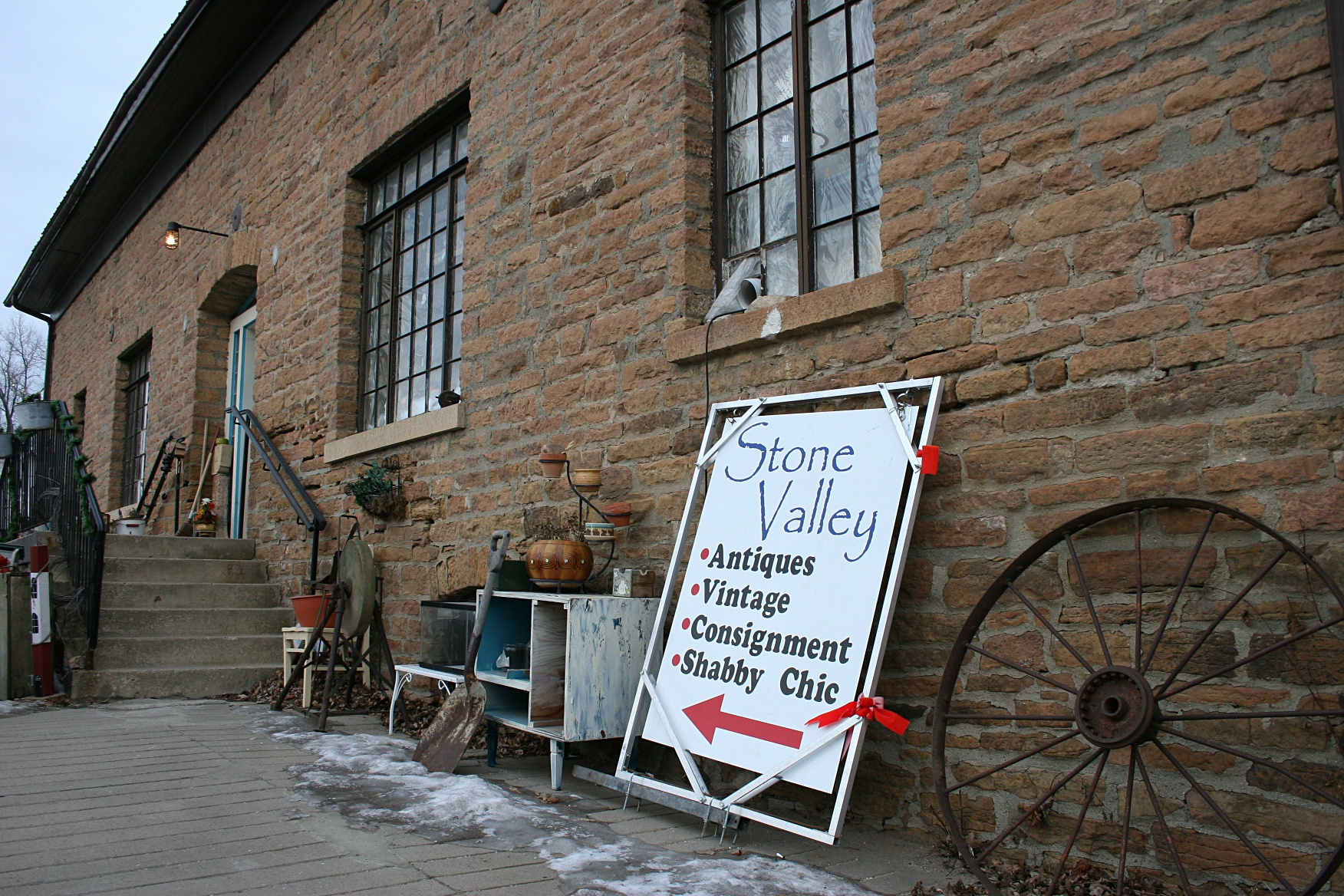
Stone Valley General Store, 110 Pine Street, located in the old Engesser Brewery on the south side of St. Peter.

Stone Valley General Store, 110 Pine Street, located in the old Engesser Brewery on the south side of St. Peter.

With that memory, you will understand why I was especially fascinated by the Heap’s Patent Dry Earth Closet I found recently at the Stone Valley General Store, an antiques/collectibles/consignment shop in St. Peter.

And we’re not talking clothes closet here.

We’re talking water closet, minus the water.

Not just a fine piece of furniture, but a toilet. The door opens to reveal a urine receptacle on the inside of a door and a pail tucked underneath.

Not just a fine piece of furniture, but a toilet. The door opens to reveal a urine receptacle on the inside of the door and a pail tucked underneath.

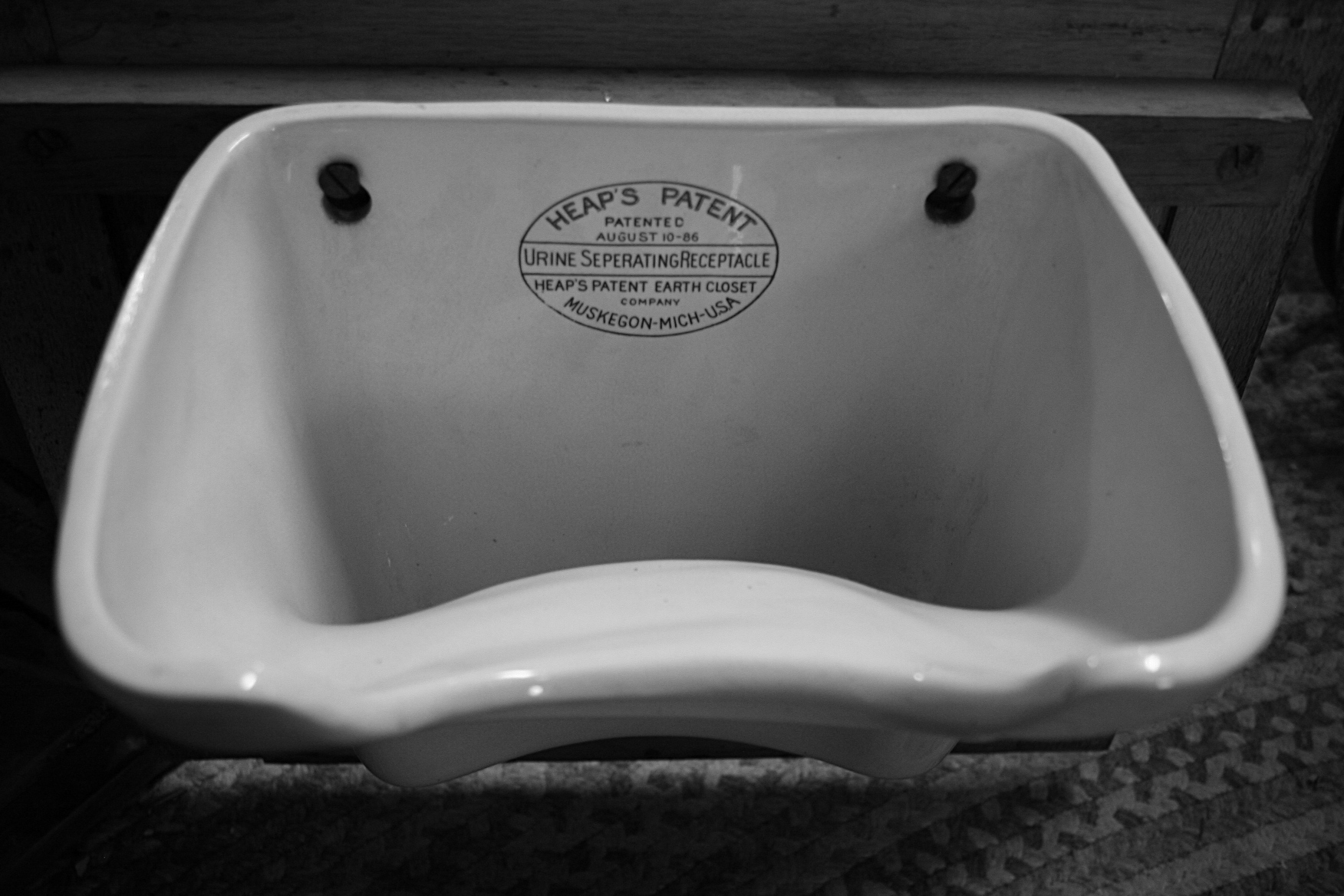
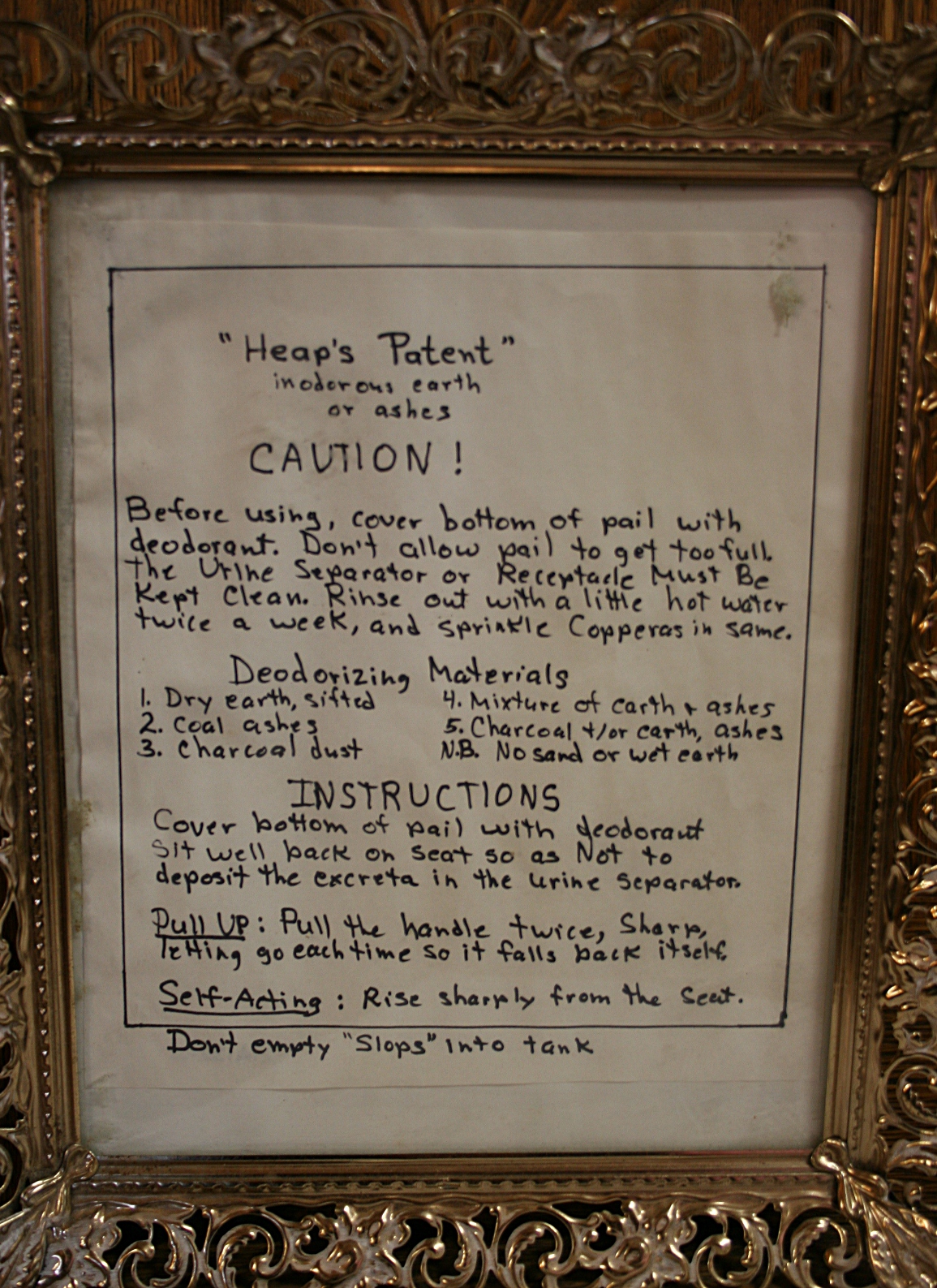
William Heap & Sons of Muskegon, Michigan, so my research reveals, patented this stylish bedroom commode in 1886 and promoted it as “perfectly inodorous.” The idea was to sprinkle odor absorbing ash or earth into the galvanized bucket which came with the unit before doing your duty. A separate porcelain receptacle on the closet door collected urine.

The urine collector which hangs on the door.

The urine collector which hangs on the door.

In theory it all sounds so wonderful:

No water! No drain! They are simply invaluable… ABOLISH THE PRIVY-PIT!…Secure health, comfort and cleanliness…

You can almost hear the infomercial, can’t you, with these units priced from $8 – $13 and “25,000 already in use.” That’s the pitch in an ad placed in the “Household Necessaries” section of The Cosmopolitan.

Jackie posted these instructions with the dry earth closet.

Jackie posted these instructions with the dry earth closet.

According to Jackie Hoehn, owner of the Stone Valley General Store, the Heap’s Dry Earth Closet she is selling for $1,500 was used at the Mayo Clinic and the State Hospital in St. Peter.

No trying out the dry earth closet in Jackie's shop.

No trying out the dry earth closet in Jackie’s shop.

Now, I didn’t ask Jackie how she acquired this toilet or when. But I expect she may be sitting on it for awhile. Not literally, of course.

© Copyright 2013 Audrey Kletscher Helbling
 

Stitches of the past February 10, 2013

Filed under: Uncategorized — Audrey Kletscher Helbling @ 11:40 AM
Tags: , , , , , , ,

DECADES LATER I can still feel the slight resistance as I draw yarn through holes punched into light-weight cardboard.

I can hear, too, the grating of thread against pulp, as deplorable to me as chalk squeaking across a blackboard.

Yet, my remembrances of stitching yarn into sewing cards rate mostly as a favorite childhood activity I had long forgotten until recently rediscovering those cards tucked away in a chest of drawers.

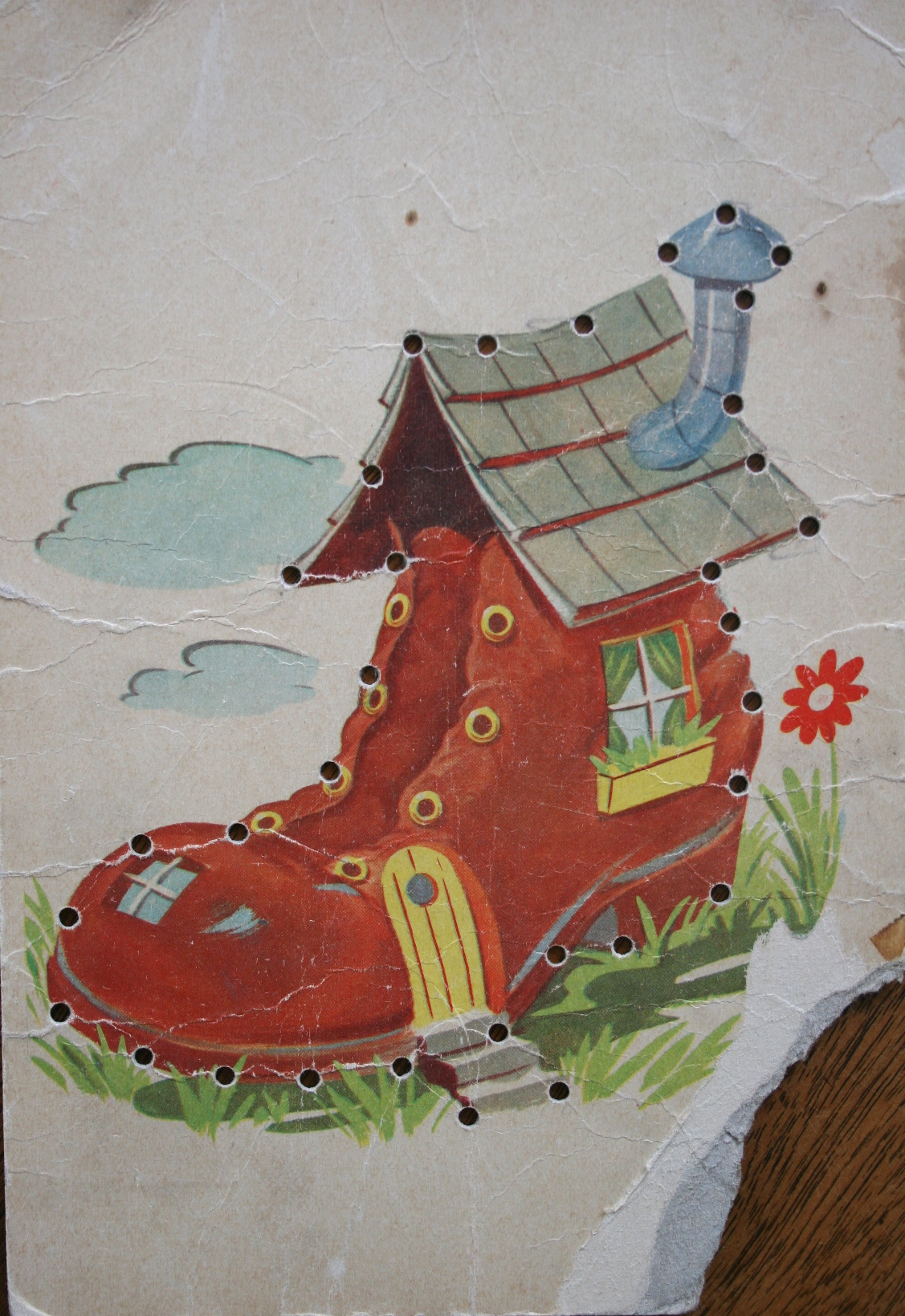
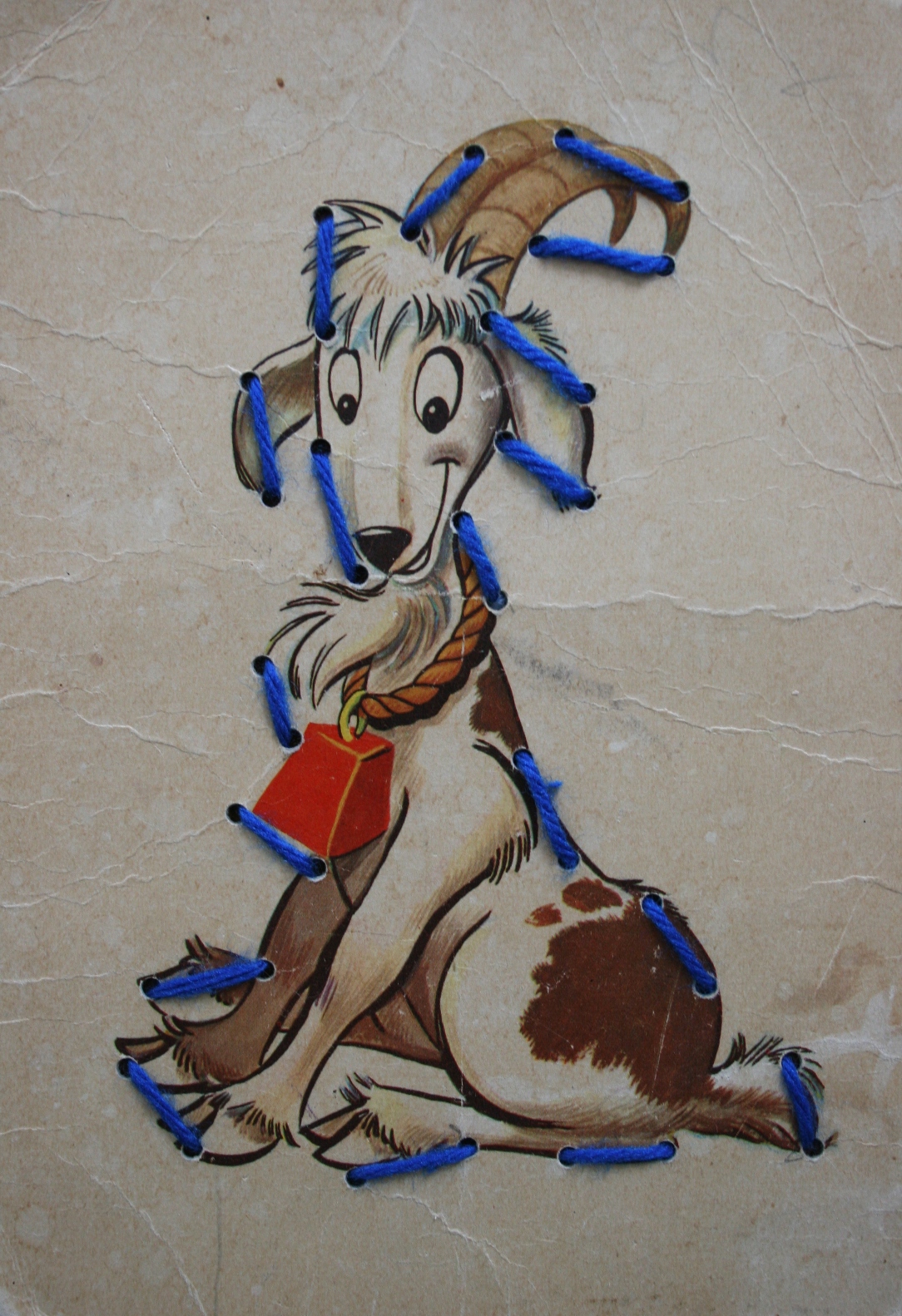
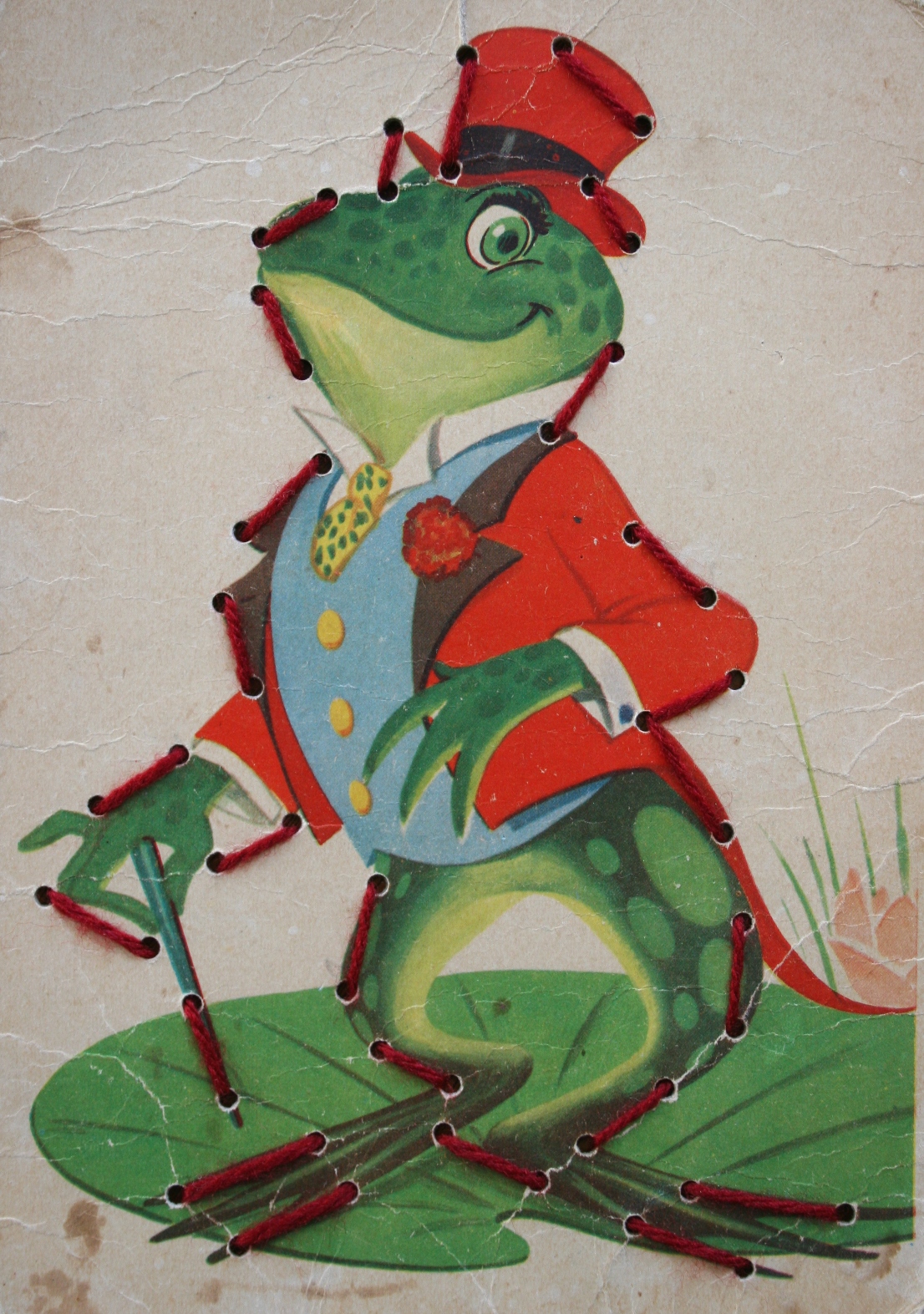
I pulled out the cards and studied them, for the first time, as vintage works of art.

The cards are smudged and grimy and creased, corners bent, one even torn. But that adds to their character, to their nostalgic  folk art appeal.

It is during these years of aging, of realizing less of your life lies ahead of you than behind, that the past rushes back.

These sewing cards opened the doors to memories of nursery rhymes…

"There was an old woman who lives in a shoe..."

“There was an old woman who lived in a shoe…”

…and frightening stories of goats crossing bridges where trolls lurk…

"Three Billy Goats Gruff"

“Three Billy Goats Gruff”

…and Cinderella fairy tales with happily-ever-after endings…

...where frogs turn into princes

…where frogs turn into princes

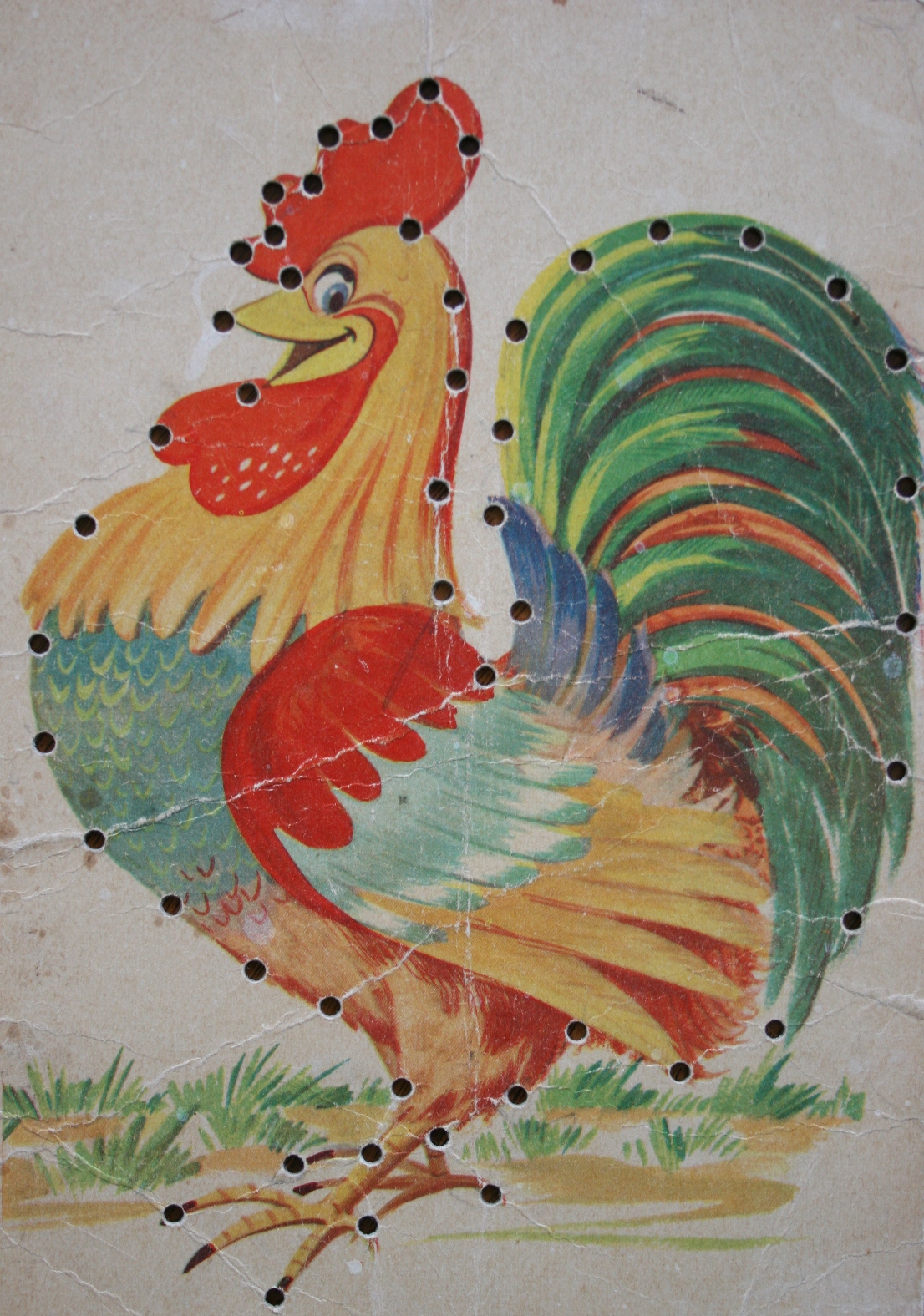
…and vivid recollections of evil roosters that pursued and pecked (for real, not in any fairy tale)…

The real, pecking, children-chasing roosters were not at all this pretty.

The real, pecking, children-chasing roosters were not at all this pretty.

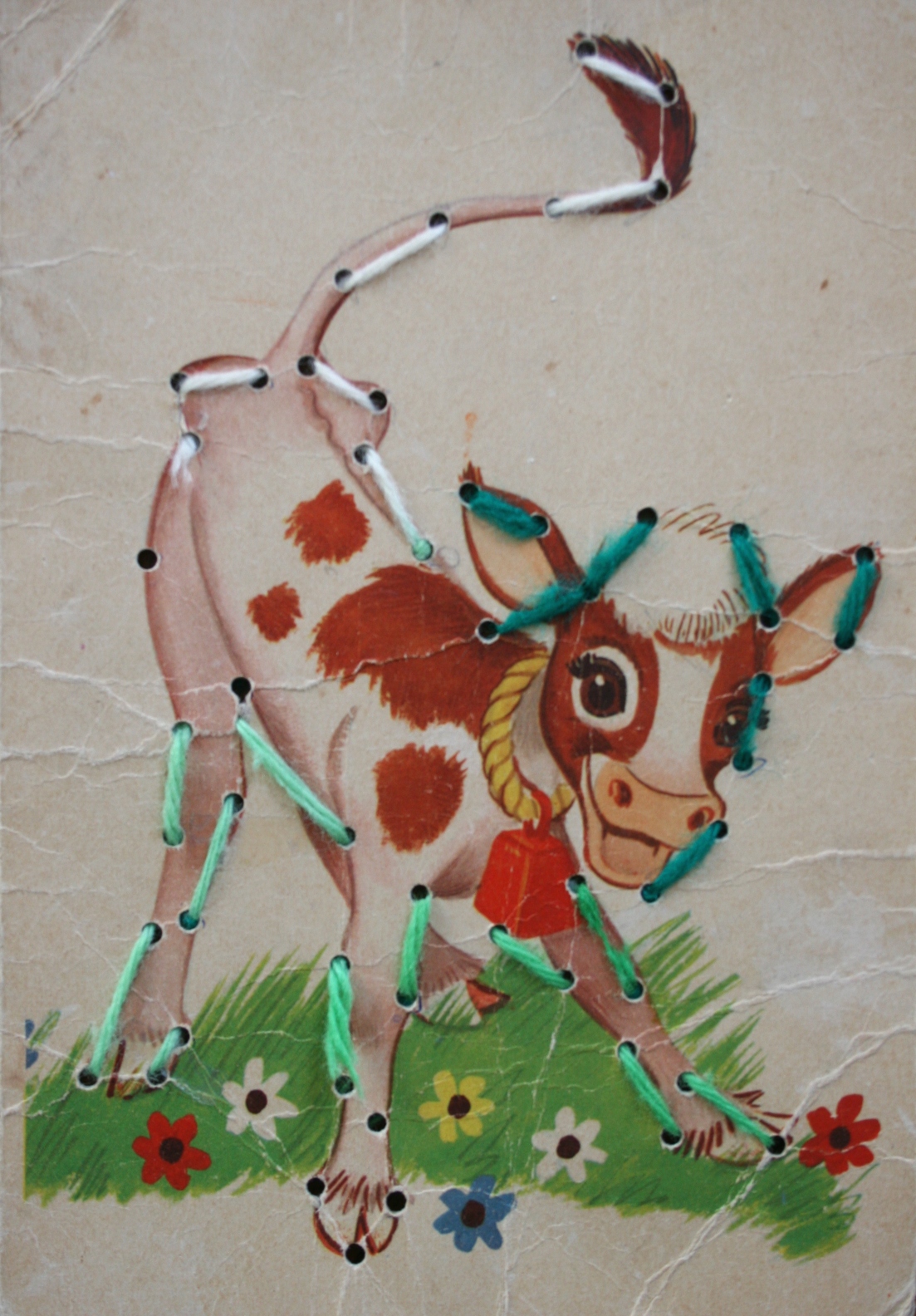
…and calves that needed to be fed and certainly didn’t smell of daisies.

The calves I fed were black-and-white Holsteins smelling of barn.

The calves I fed were black-and-white Holsteins smelling of barn.

Powerful memories are stitched into these time-worn cards that I now prop as rotating art on the chest of drawers once shared by my dad and his oldest brother.

It seems some days that my thoughts dwell more on memories than the future.

HOW ABOUT YOU? Do you have a particular possession that evokes strong childhood memories?

© Copyright 2012 Audrey Kletscher Helbling
 

Rejoicing in the Sunday School Christmas Program December 16, 2012

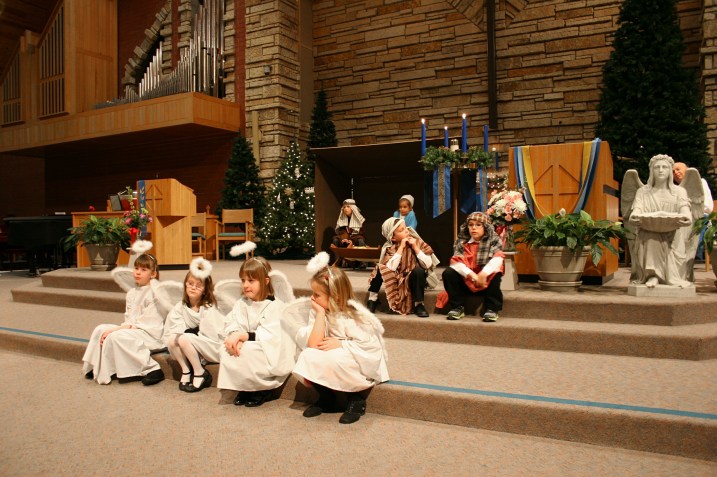
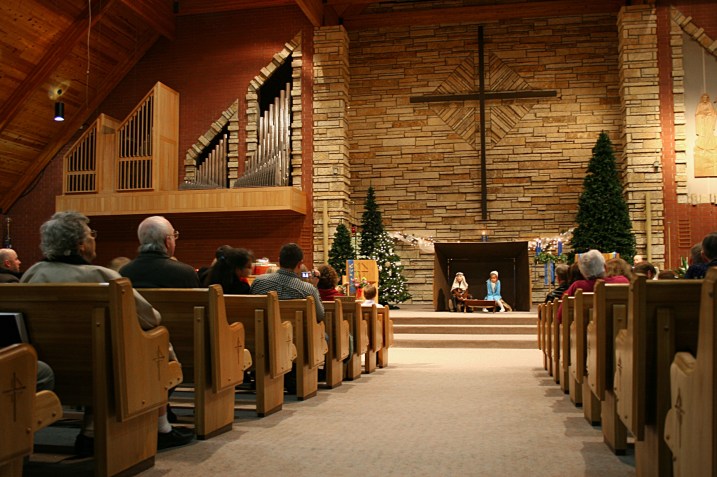
Sunday School students at Trinity Lutheran Church, Faribault, present the Christmas story Saturday evening.

Sunday School students at Trinity Lutheran Church, Faribault, present the Christmas story Saturday evening.

EMBEDDED DEEP in the memories of, I expect, many Midwestern Baby Boomers like me is the rich tradition of the Sunday School Christmas program.

There is simply nothing sweeter, nothing more meaningful to me, than viewing the Christmas story from the perspective of a child. Such telling, such re-enacting of the biblical account of Christ’s birth exorcises the frills, the stress, the hustle and bustle, the worldliness from my holiday experience. And that is a good thing.

Every little girl wants to portray an angel...

Every little girl wants to portray an angel…

For one evening, for one hour, I take it all in—this most basic sharing of the gospel by darling angels in glittery halos and restless wings, by usually rambunctious boys cinched in bath robes, by the honored two portraying Mary and Joseph, by the other children who sing and tell of Jesus’ birth.

Dressed in holiday finery, the little ones wait in the fellowship hall before the start of the worship service.

Dressed in holiday finery, the little ones wait in the fellowship hall before the start of the worship service.

It is a magical time, a butterflies-in-your-stomach worship service for the children, giddy with joy yet nervous about stepping before the congregation,.

I grew up with the Sunday School Christmas Program, lined up on the basement steps of the old wood-frame church in Vesta packed shoulder to shoulder with my classmates, awaiting that moment when the organist would begin playing “O Come, All Ye Faithful” and we would enter, pair-by-pair, into the sanctuary.

An angel proclaims the news of Christ's birth.

An angel proclaims the news of Christ’s birth.

Although costumed pageantry was not allowed in the conservative Lutheran church of my youth, I remember with fondness those traditional Christmas hymns—“Away in a Manger,” “Joy to the World,” “Behold, A Branch is Growing,” “O Little Town of Bethlehem”—which told of Christ’s birth as did the memorized sharing of the gospel when we each “spoke our piece.”

I always prayed I would never be assigned to recite the confusing verse: So Joseph went up from the town of Nazareth in Galilee to Judea, to Bethlehem the town of David…

And so the years passed until I outgrew the Sunday School Christmas program.

The cast from the biblical account of the Savior's birth.

The cast from the biblical account of the Savior’s birth.

Decades later I would pass the tradition along to my own three children, this time in a Lutheran church which allowed the costumed pageantry of sharing the biblical account of the Savior’s birth. The halos and bathrobes, the reading of the gospel, the singing of Christmas hymns all wove into their memories.

Now I am at that place in my life when I sit side-by-side with my husband in a pew, our children grown and gone, not yet married, awaiting those Christmases when the tradition of the Sunday School Christmas Program will pass along to the next generation.

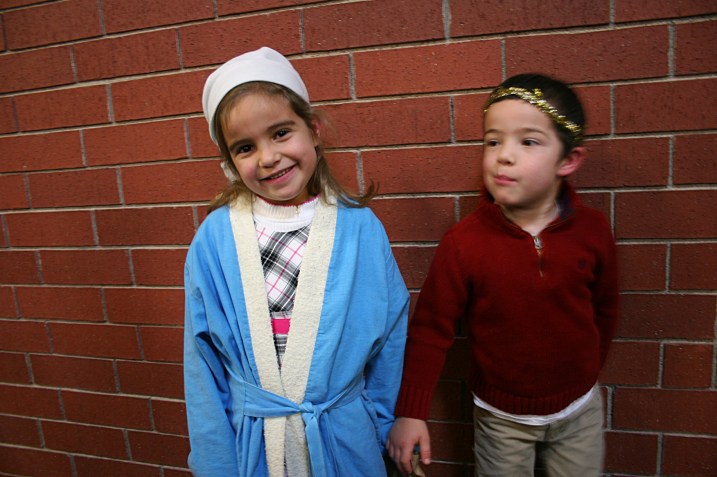
After the service, my friends' children, Nevaeh (Mary) and Braxton, pose for photos in the fellowship hall.

After the service, my friends’ children, Nevaeh (Mary) and Braxton, pose for photos in the fellowship hall.

TELL ME, is a Sunday School Christmas Program (or something similar) part of your Christmas experience? Do you have such fond memories from your youth?

© Copyright 2012 Audrey Kletscher Helbling
 

The tale of two princesses and the disappearing jewels December 13, 2012

Filed under: Uncategorized — Audrey Kletscher Helbling @ 8:30 AM
Tags: , , , , , ,

ONCE UPON A TIME, in a land far from the kingdom of the Twin Cities, a young princess (in name only) received a royal treasure from her fairy godmother.

The treasure chest of jewels arrived via a rural chariot, a horseless carriage dispatched to deliver correspondence of great importance to those dwelling in the land of Prairieville.

The gift—an elegant card upon which a treasure chest and jewels were imprinted—arrived on the 8th birthday of the Little Princess, or some such birthday of her youth. The aging princess can no longer precisely remember the year.

The Little Princess, whose name was given to her by her fairy godmother’s sister, found within the treasure chest an emerald ring. She was overcome with happiness as she slipped the ring onto her finger. Such beauty she had never known.

She vowed then and there never to remove the ring.

Each morning, the princess would awaken and cast her eyes upon the emerald that graced her finger. The gem sparkled upon her hand and, for the first time, the Little Princess truly felt like a real princess.

Then one afternoon, after the princess had been romping about the farmyard of her peasant family (perhaps in a raucous game of tag with her siblings; she can no longer recall details), she discovered the ring was missing. The king issued a royal decree ordering his rural subjects to hunt for the lost treasure.

The Little Princess joined the futile search. Despite their best efforts, the good people of Prairieville—who scoured the woods and grasses and even the gravel pathways of the land—never found the lost emerald.

Great crocodile tears slipped down the Little Princess’s cheeks and she was overcome with inconsolable sadness.

THE END

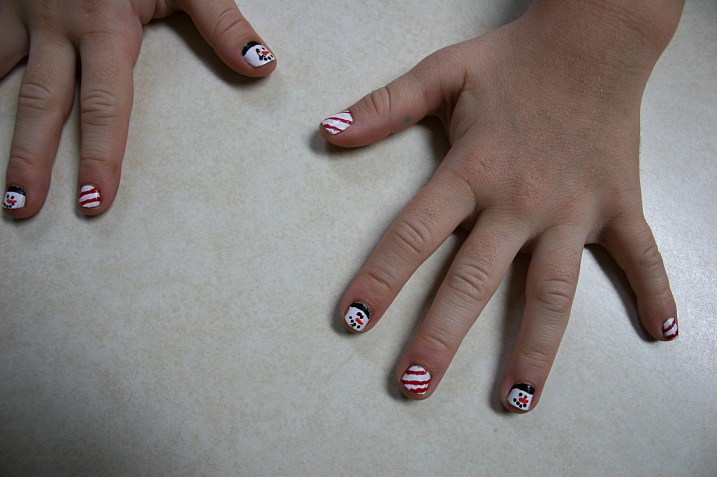
Nevaeh's cute, cute holiday painted fingernails.

Nevaeh’s ringless fingers. But look at those adorable nails.

DEAR READERS,

The above tale, which clearly is not a fairy tales because it does not end with “happily ever after,”  is a slightly embellished story from my childhood. I’m not a real princess, you know. Nor was I ever gifted with a genuine emerald.

Recently I was reminded of my cheap, adjustable, but treasured, childhood birthday ring by two incidents.

I was shopping in the jewelry department of a Big Box retailer when I spotted a ginormous emerald, in reality a fake stone on a piece of costume jewelry. I was giddy, I tell you, just giddy. I slipped the jewel onto my finger and remembered that lost ring from long ago before placing the band back on its display hook.

Later that day, while attending Family Game Night at my church, 6-year-old Nevaeh raced up to her mother in tears. She had, she lamented, lost her ring while drying her hands in the bathroom. Billie Jo soothed her daughter and assured her the ring could be replaced.

Then I told this sweet princess about the ring I’d seen earlier that day and about the lost ring of my childhood.

At that point, I noticed Nevaeh’s adorable fingernails painted with holiday designs. I decided to distract this sweet princess and asked to photograph her hands.

And so Princess Nevaeh splayed her hands across the kitchen counter in the church fellowship hall, the tears gone, a smile stretching across her face.

THE END

WILL SANTA BRING Nevaeh a new ring for Christmas? Will Santa bring me an emerald (uh, imitation stone) for Christmas? How will these two stories really end? Happily ever after or with two princesses still missing their treasured rings?

© Copyright 2012 Audrey Kletscher Helbling
 

The Peach Project August 29, 2012

I GREW UP WITH DIRT under my fingernails, banishing weeds from the garden and then, later, harvesting and preparing veggies to eat fresh or preserve.

My mom canned some, froze some, storing away freezer boxes plump with green beans and beets, corn and other vegetables.

She also preserved fruit in quart jars, with the assistance of us kids, for the long Minnesota winter ahead. Applesauce and cherries. Peaches and pears.

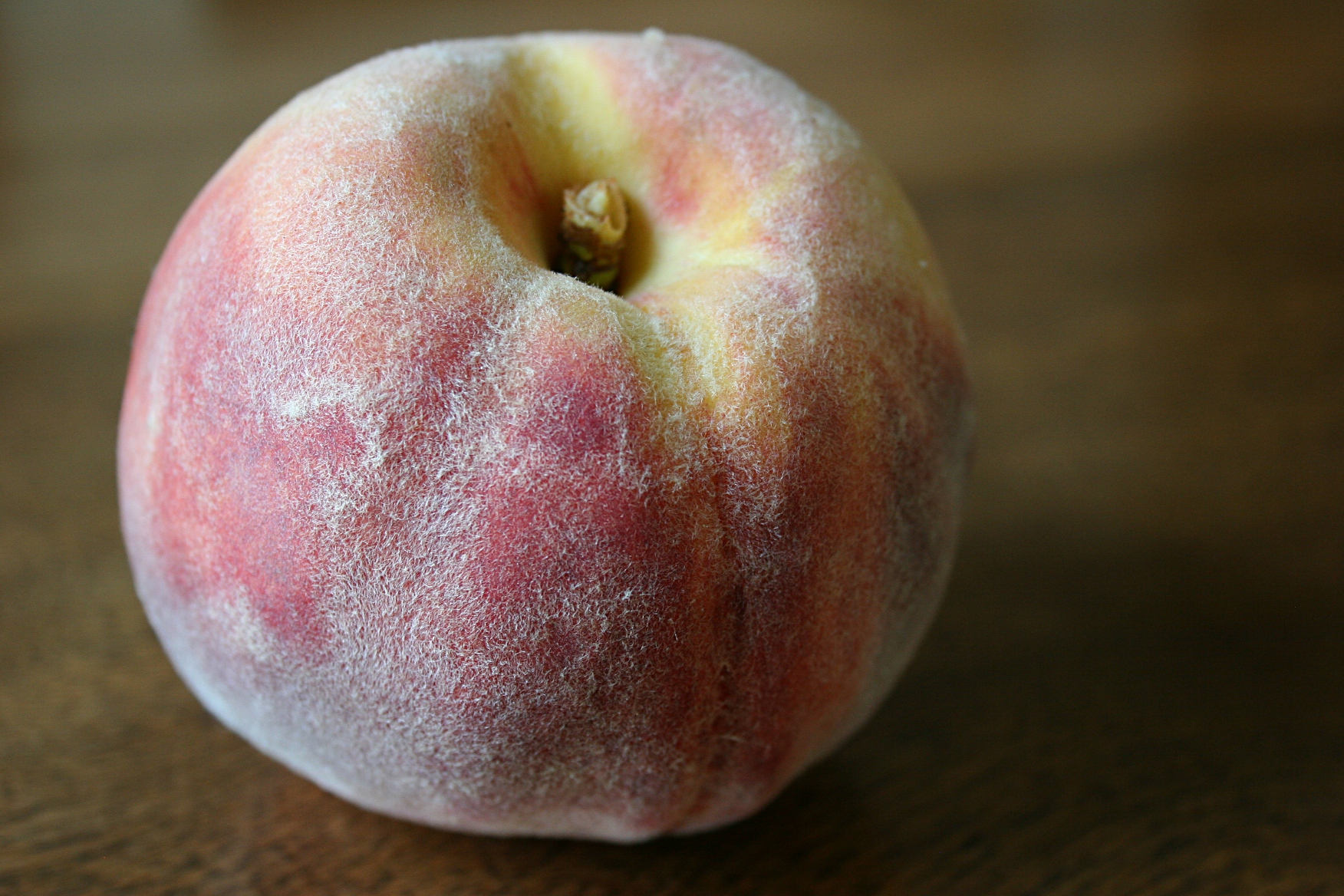
A juicy Colorado peach, from which I must remove the skin because I can’t tolerate the fuzz (feels like a cotton ball) in my mouth.

And then, on a brisk winter evening, when Dad was about to come in for supper after finishing barn chores, she would lift the trap door in the kitchen and send one of us clomping down the creaky, rugged wooden steps to the dirt-floored cellar for a jar of sauce. Dessert. I would tug on the frayed cotton string to switch on the single bare light bulb. Then I would tiptoe reach for a jar of my favorite cherries or peaches.

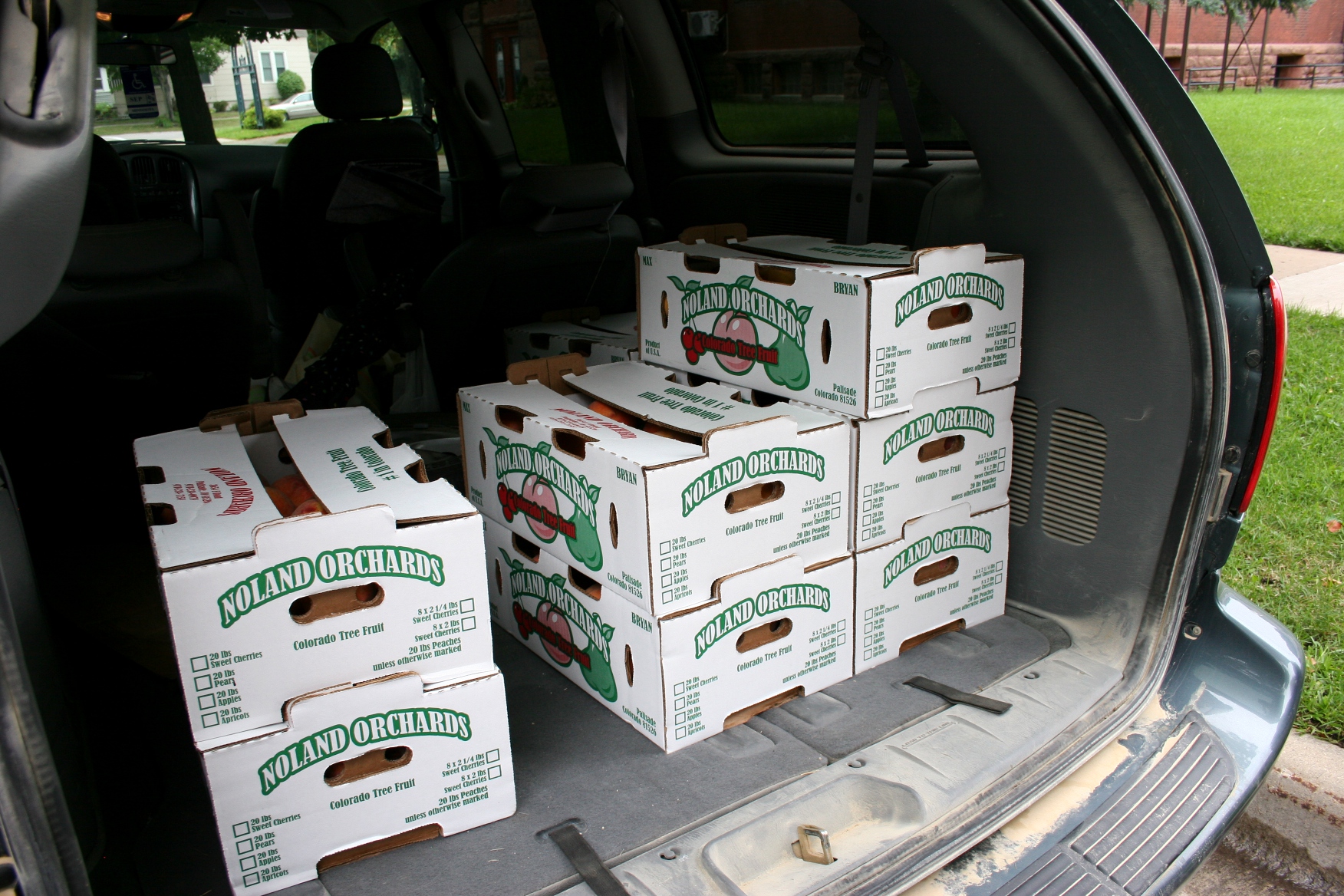
We got a single box of freshly-picked Colorado peaches. When I was growing up, the peaches came in a wood-slat box that was nailed shut. Each peach was wrapped in tissue paper, which we recycled for use in the outhouse.

Those were my thoughts on Saturday when my husband and I picked up a 20-pound crate of peaches I’d ordered several weeks ago through the Cathedral Community Cafe, a Faribault soup kitchen which every Tuesday offers a free meal to those in need and/or seeking fellowship.

It is a worthy cause with some 9,000 dinners served in 2011 and averaging 150 a week this year. The effort involves about 140 volunteers, 12 churches and four teams of workers.

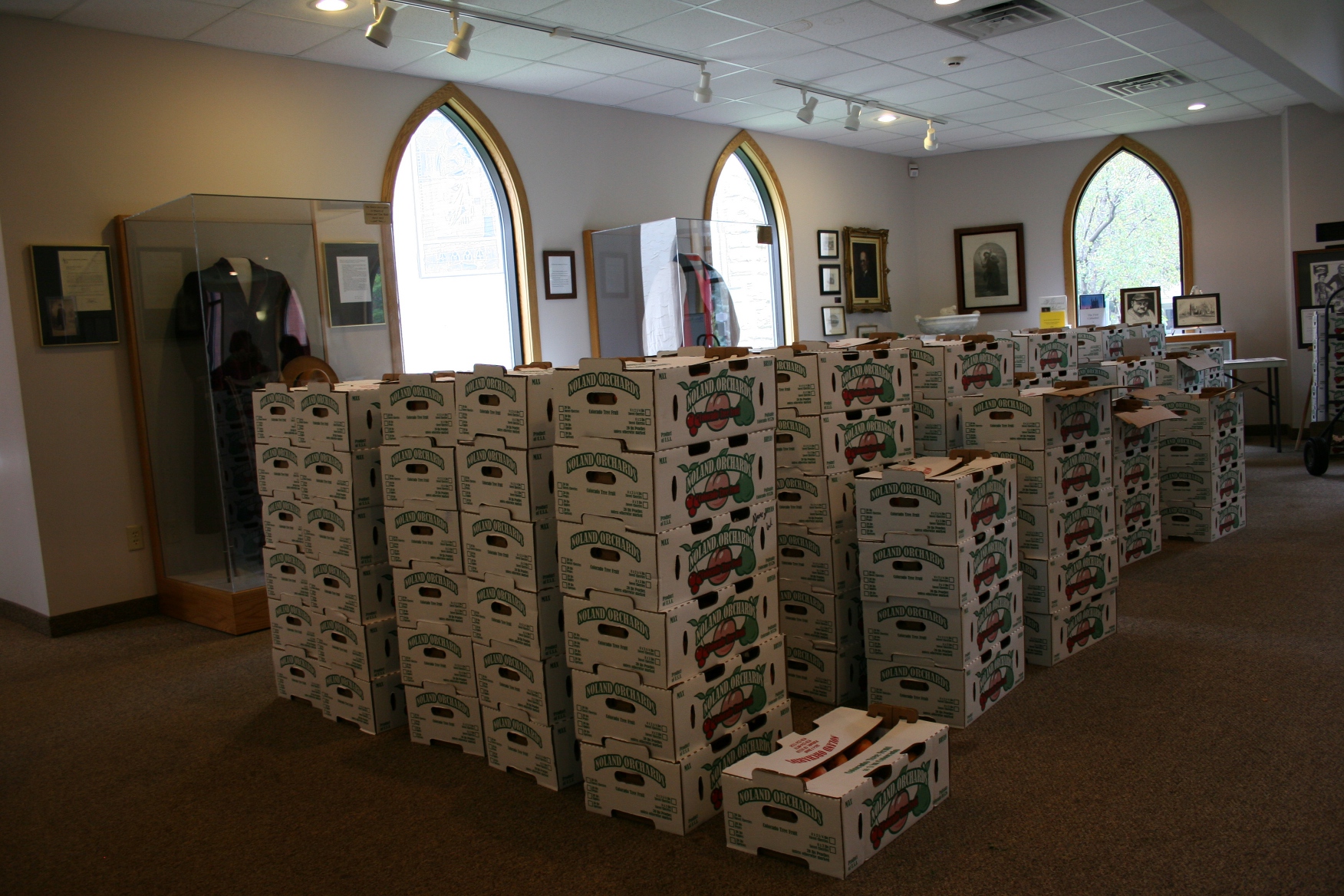
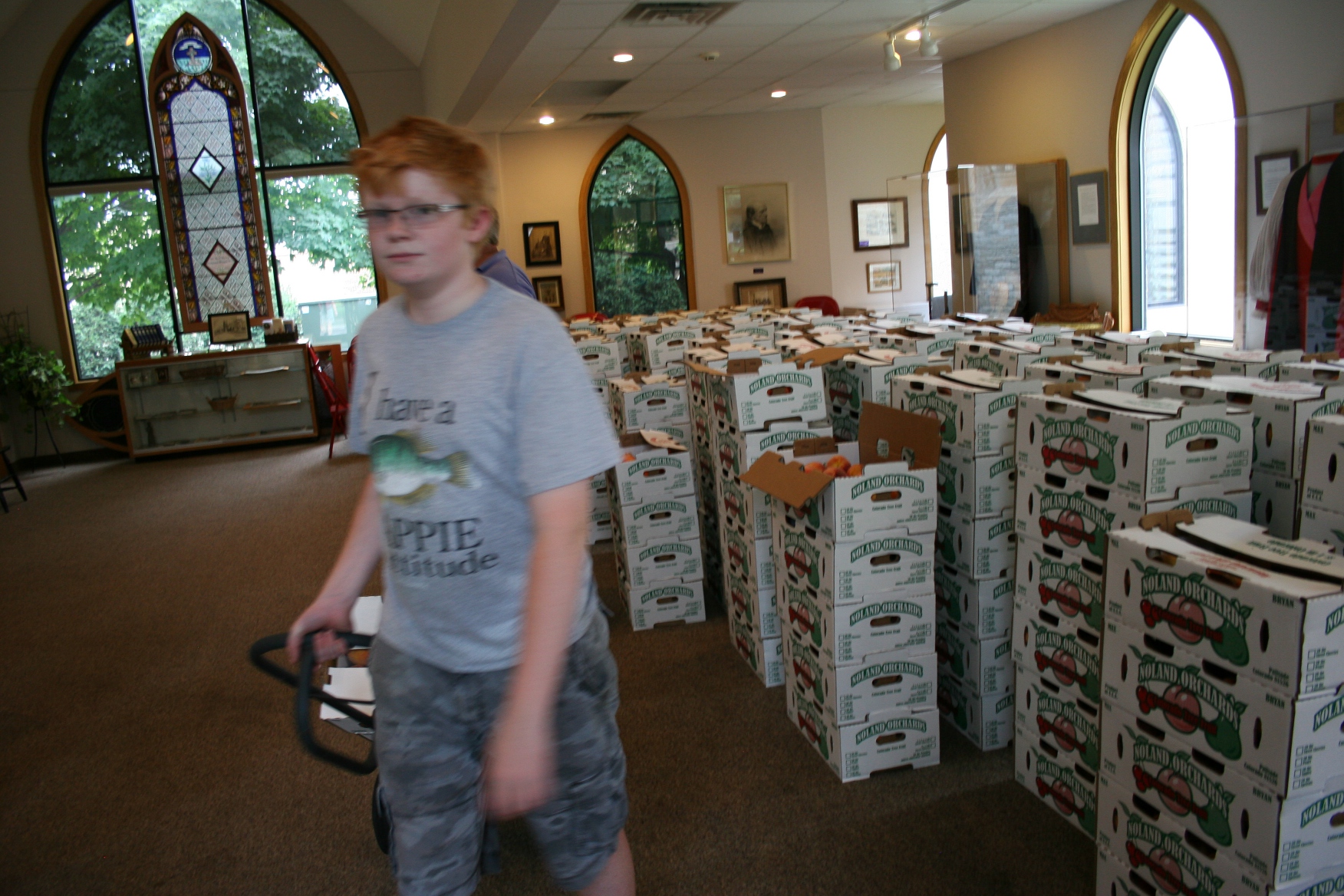
The Community Cathedral Cafe and First English Lutheran youth pre-sold 260 boxes of peaches and ordered an additional 60 to sell to walk-in customers. The peach project has been an ongoing fundraiser for around five years for the cafe and First English youth. About 50 boxes already had been picked up when I photographed this scene.

But like any such organization, the cafe needs money to keep going. The peach project will channel funds into the cafe’s coffers and I’m happy to support the fundraiser by purchasing a $30 crate of fresh Colorado peaches.

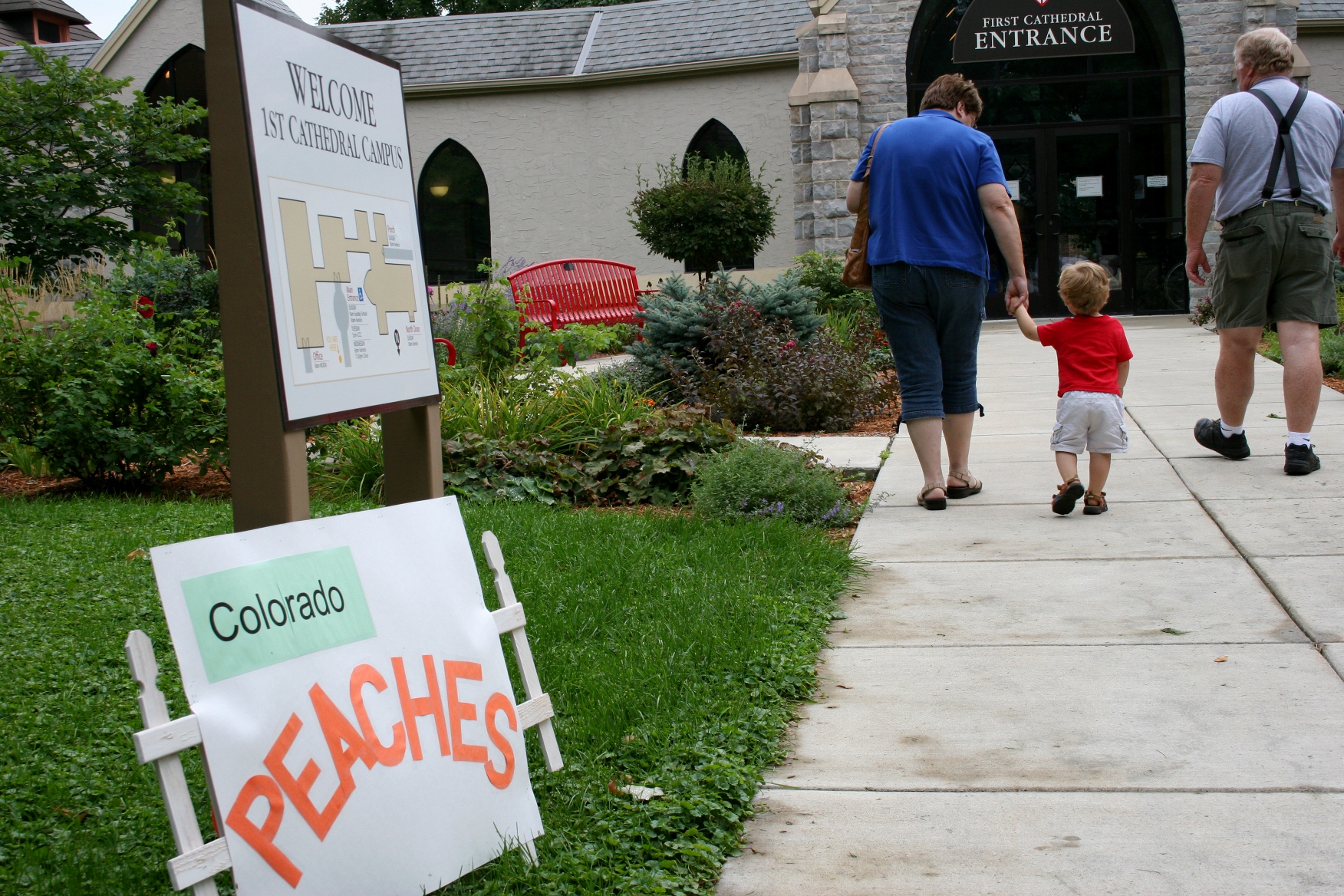
A sign outside the Cathedral Guild House directs customers to the peach pick-up point.

Now, what to do with all those fresh peaches. Thus far I’ve eaten many straight from the box. One evening I blended a peach and vanilla ice cream into a smooth shake. This morning I sliced one into my oatmeal. And I’ve also used thinly-sliced peaches to make a ham and peach panini.

I found the adapted sandwich recipe on Sue Ready’s blog and then tweaked it a bit.

Ham and Peach Panini

2 bread slices

deli ham

1 slice provolone cheese

1 thinly-sliced peach

1/2 teaspoon honey

Djon or spicy brown mustard

chopped fresh basil

Spread mustard and 1/2 teaspoon honey on one bread slice. Top with ham, cheese and thin peach slices. Top with chopped basil. Place other piece of bread on top and brush lightly with olive oil. Also brush other bread slice with oil. Grill in frying pan until golden brown, flip and grill other side.

Love, love, love this sandwich. My husband not so much. But he’s more an ordinary sandwich guy and I really had to persuade him to even take a bite.

Now, I expect when I bake a peach crisp or a peach cheesecake later this week, he won’t hesitate to scoop up a sizable helping.

Tyler Welander, 14, who’s raising monies for youth activities at First English, delivers boxes of peaches to vehicles. I suggested to the peach sellers that perhaps they could bake the pies, too, for me to pick up. But one man said, “Oh, that would be down the street at Trinity.” And he would be right. The Trinity Piemakers are currently selling fresh peach, among other, pies.  And since I attend Trinity, I can vouch for the delicious goodness of Trinity pies.

An elderly couple from Farmington ordered nine crates of peaches, seven of which they will deliver to friends.

WHAT’S YOUR FAVORITE peach recipe and what’s the best way to freeze peaches? I’d like to hear.

Click here to reach the website of the Cathedral of Our Merciful Saviour in Faribault, home to the community cafe.

Also, please click here to read a post which features a poem I wrote about canning and the watercolor Zumbrota artist Connie Ludwig created based on my poem. Oh, how I wish “Pantry Jewels” was hanging on my dining room wall.

Copyright 2012 Audrey Kletscher Helbling
 

Unlocking the poetry within an abandoned farmhouse April 30, 2012

An abandoned farmhouse along Minnesota State Highway 19 east of Vesta on the southwestern Minnesota prairie.

Abandoned Farmhouse

My old bones rattle in the winter wind,
grown weary from years of standing,
bitter cold encompassing my body.

Despair surrounds me
like rot in the weathered heap of the barn,
like rust consuming the junk pile.

Alone, all alone now, abandoned
except for the dying circle of trees
that embrace me, holding me close.

The years have broken my spirit—
too much silence within my walls,
too many tears shed upon my floors.

Left here, without laughter, without hope.
Dreams shattered in my broken windows.
My door closed, locked with a skeleton key.

Abandoned. Desolate. Alone.
Leaning only on the prairie sky,
in a circle of dying trees.

#

IN 2001, THIS POEM published in Poetic Strokes, A Regional Anthology of Poetry from Southeastern Minnesota, Volume 3. To this day, it remains one of my favorite poems among all those I’ve penned.

“Abandoned Farmhouse” retains that status because the poem connects to my past, to rural southwestern Minnesota where I grew up in a cramped 1 1/2-story wood-frame farmhouse. When I was 11 years old, my parents built a rambler with a walk-in basement a stone’s throw across the circular gravel driveway from the old house. They needed the space for their growing family as the sixth, and final, child arrived in August of 1967.

The summer after we moved into the new house, we tore down the old house, board by board. Memories of dismembering that house lath by lath, nail by nail, imprinted upon my memory. Decades later I would recall the bones of the old house, the skeleton key that unlocked the porch door, the grove of trees that sheltered it from the strong winds that swept across the prairie.

I would write this poem, personifying an abandoned farmhouse.

My poetic words reach beyond my childhood home, though, to embrace the many abandoned farmhouses that dot the prairie landscape. I often wonder about the families that lived in these houses and about the stories they would tell.

Returning to an even earlier time period, my poem also reflects a pervasive loneliness that often troubled early pioneer women in a land that could feel desolate, harsh and inhospitable.

This past March, I captured that desolation in an abandoned farmhouse photo (above) taken within five miles of my childhood home. It aptly illustrates my poem.

To this day, I see both beauty, and despair, in abandoned farmhouses.

©  Copyright 2012 Audrey Kletscher Helbling

Shared with you in celebration of National Poetry Month, which ends today, April 30.


How I became an artist March 30, 2012

Filed under: Uncategorized — Audrey Kletscher Helbling @ 7:44 AM
Tags: , , , , , , ,

MY SKILLS AS A PAINTER are limited. I can paint a wall. I can dip a brush into a kid’s watercolor paint set and swirl colors onto a piece of paper. But I won’t promise a masterpiece.

Oh, no, if you want to see my best paintings, you will need to step back in time to more than 40 years ago. Imagine me hunched over an oilcloth-draped kitchen table in a southwestern Minnesota farmhouse dipping a thin brush into miniscule pots of paint. With great care, I brush shades of blue and brown onto cardboard as a ballerina emerges.

I have never seen a real ballerina. Her dainty features and fancy dress and perfect posture seem so foreign to me as I slump at the table in my rag-tag clothing that smells of the barn.

I imagine this ballerina smells only of flowers, like the ones I paint into the bouquet she clutches and into the wreath encircling her hair. Her bangs sweep in a fashionable style across her forehead, unlike my slanted, too-short bangs.

The paint-by-number ballerinas I painted as a young girl during the 1960s.

This ballerina’s life in New York City is so much different than mine on the farm. For the hours I am painting the flower-bearing ballerina and her sister, the twirling ballerina, I escape into their world. I dance on my tiptoes and spin and bow with grace on the stage of an opulent theater.

If not for Dan Robbins, though, I never would have experienced ballet. The Michigan artist created the first paint-by-number patterns in 1951. That led to a nation-wide obsession that allowed non-artists like me to become painters. The magazine American Profile featured Robbins in its March 25 issue. You can read the feature story by clicking here.

That story prompted me to remember the paint-by-number ballerinas I created as a child. Because my mother saves everything, I have those paintings today and they are among my most treasured childhood possessions.

TELL ME, HAVE YOU created paint-by-number paintings? Or do you collect these paintings? I would like to hear about your experiences and/or interest in paint-by-number kits.

You can learn more about the paint-by-number craze that swept the country during the 1950s by clicking here onto the Smithsonian National Museum of American History.

© Copyright 2012 Audrey Kletscher Helbling