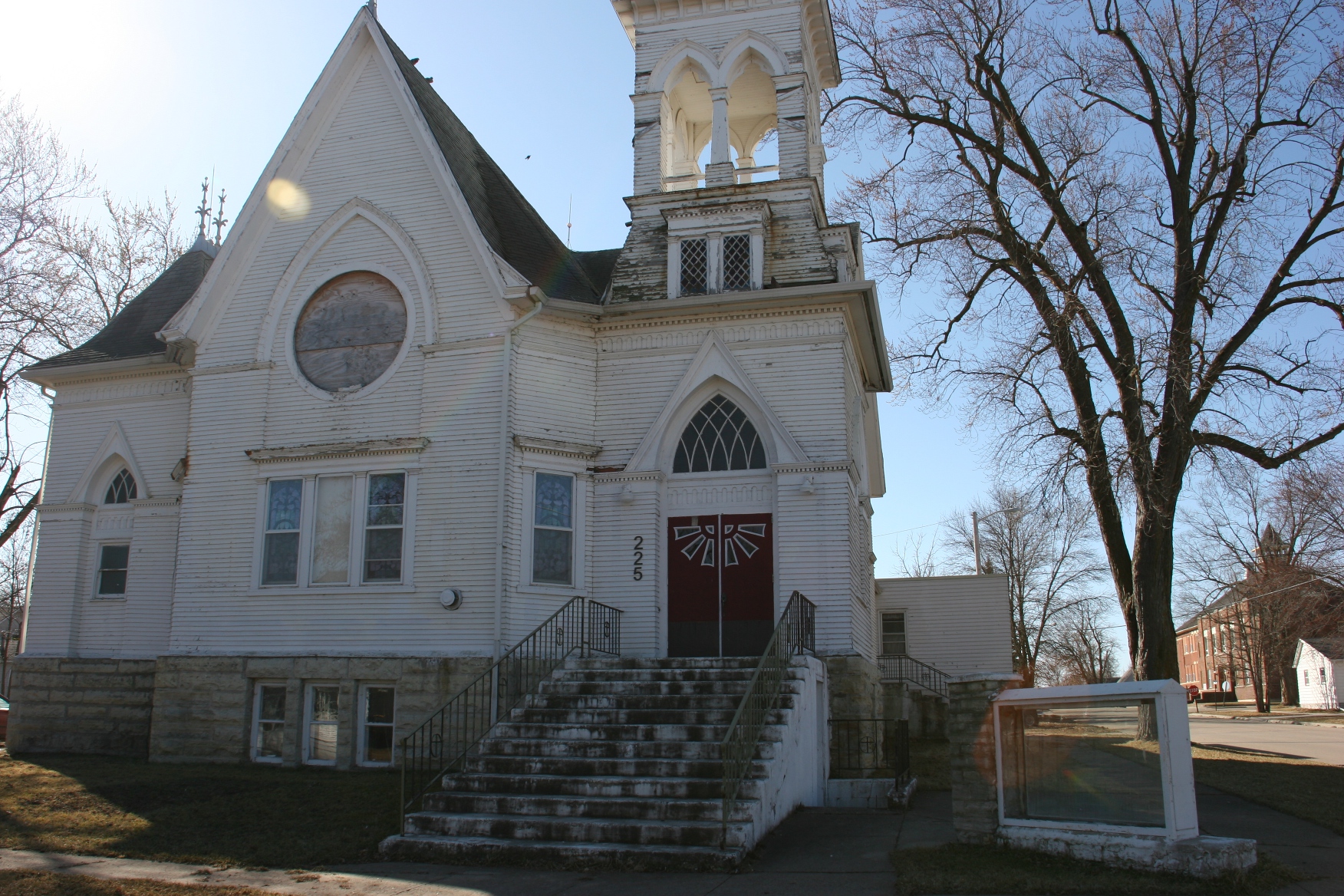
Minnesota Prairie Roots

Writing and photography by Audrey Kletscher Helbling

Oh, the lovely historic buildings of Weaver, Minnesota February 19, 2016

Another view of Carl and Marie Noble's studio and galleries.

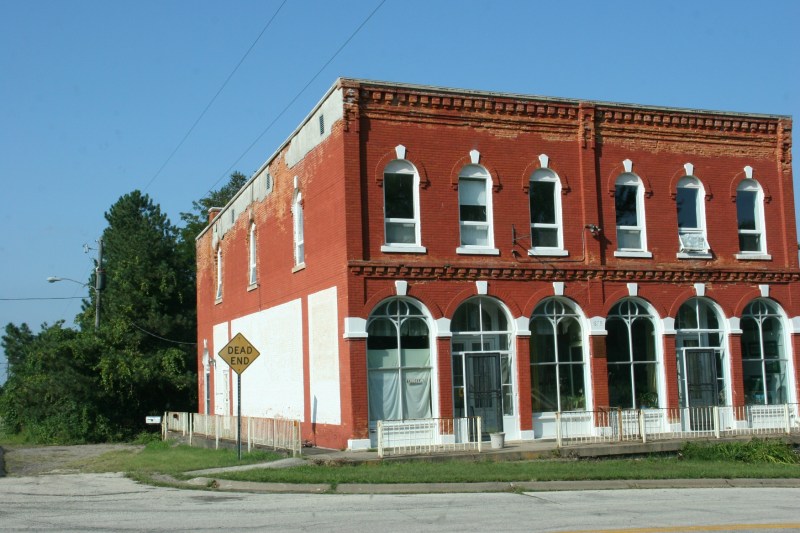
The former Weaver Mercantile anchors Weaver.

MY KNOWLEDGE OF WEAVER is limited mostly to visual impressions. Digital images taken during a brief stop last September document an unincorporated Mississippi River settlement rich in history. That history reveals itself in aged buildings, like Weaver Mercantile.

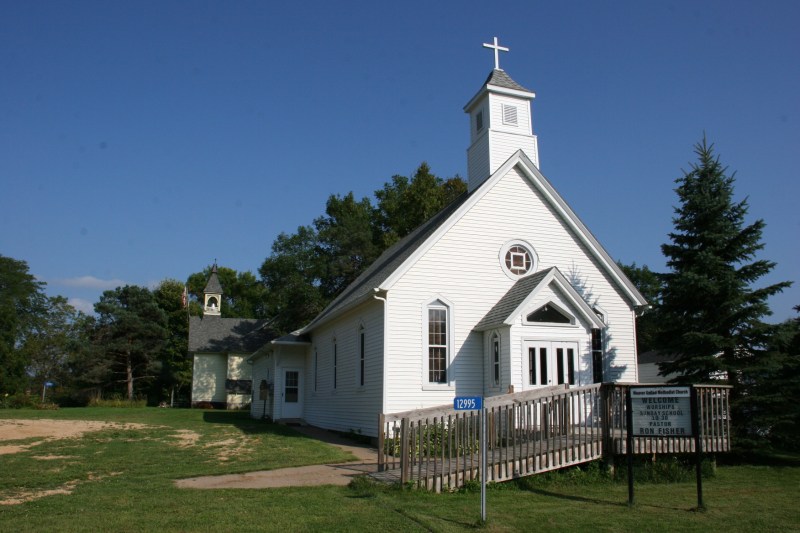
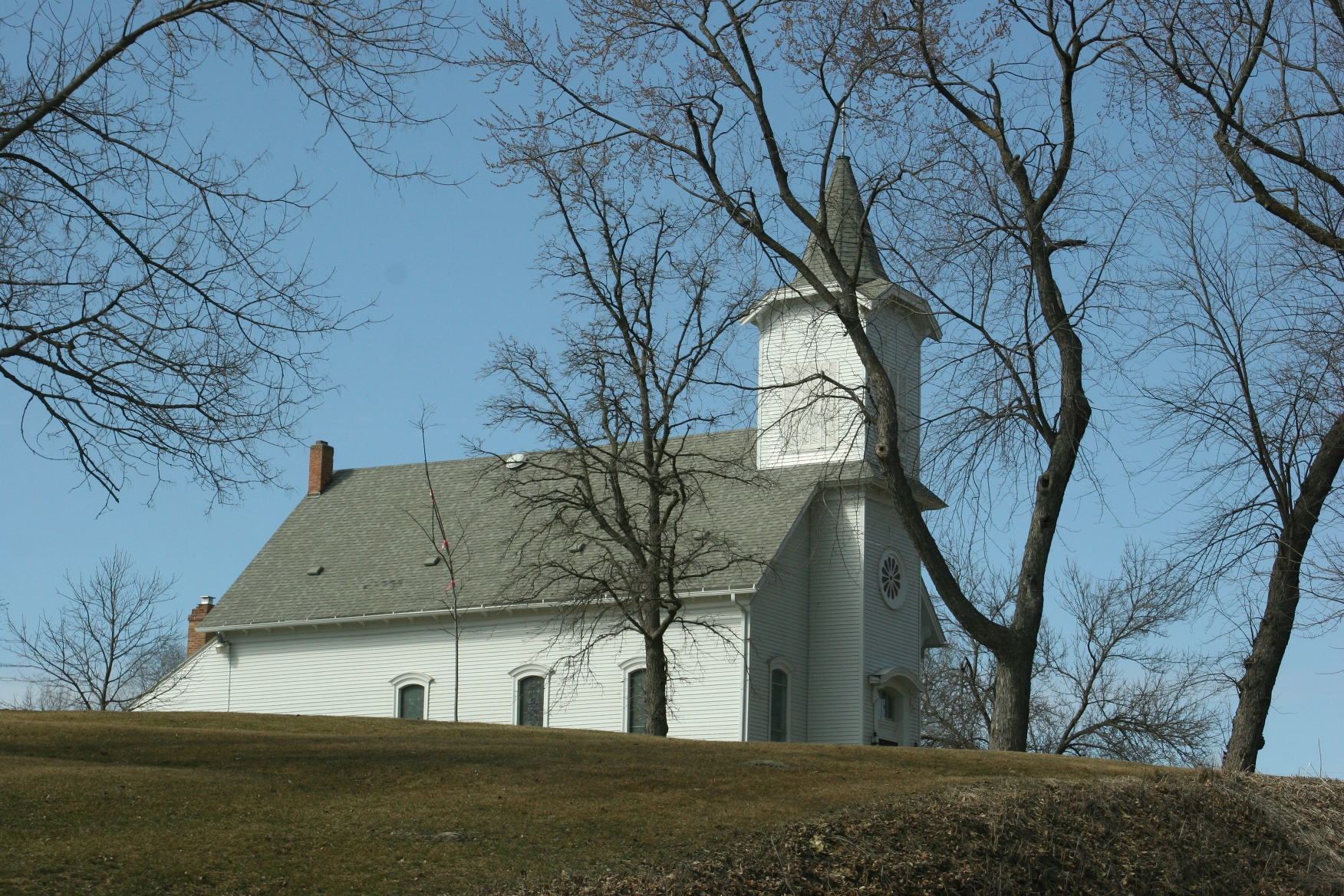
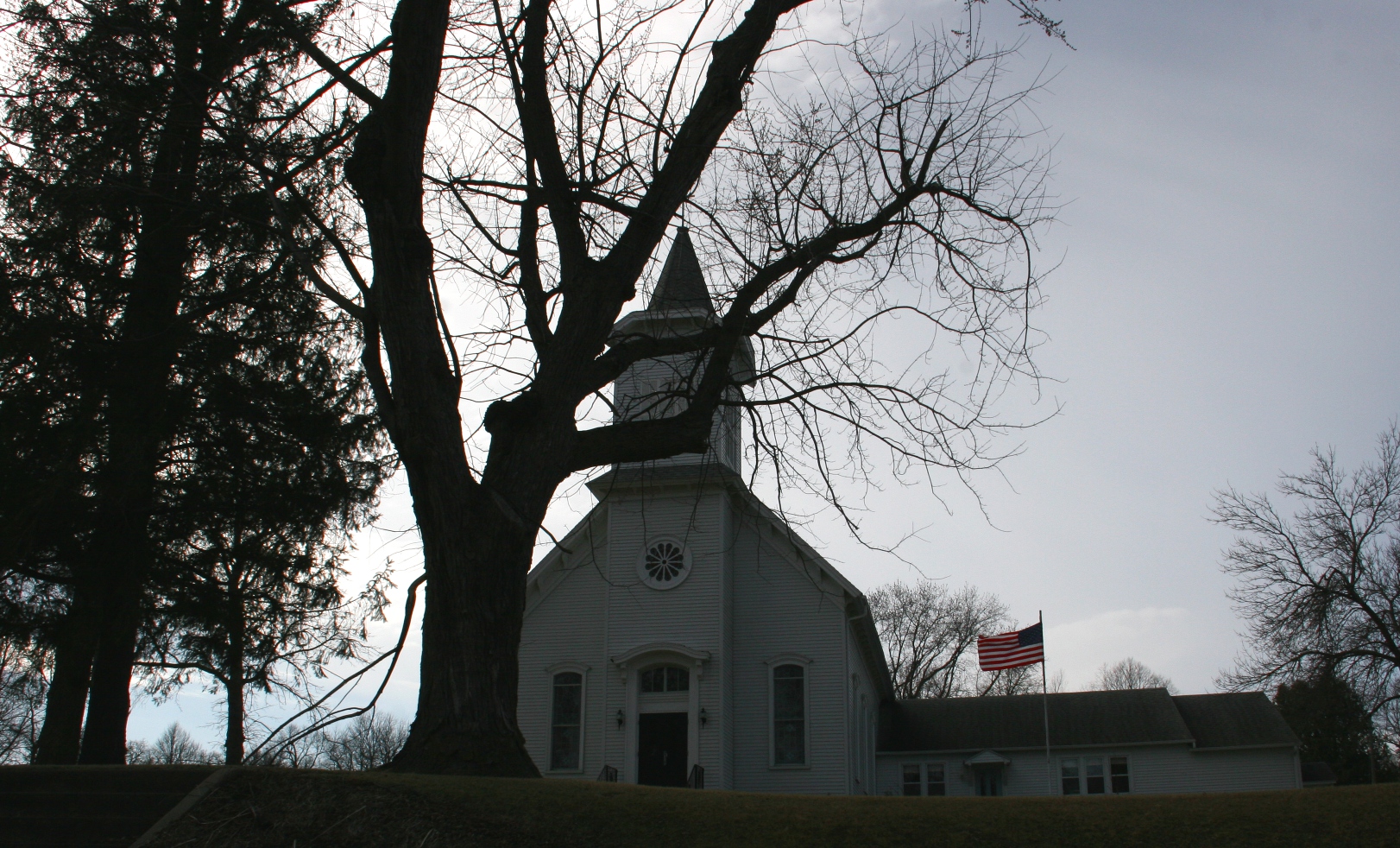
Weaver United Methodist Church with the historic former schoolhouse next door.

Weaver United Methodist Church with an historic former schoolhouse next door.

A block or so away, Weaver United Methodist Church still welcomes the faithful into the congregation’s original house of worship. Except on Sundays when the temperature plummets to 10 degrees below zero or colder. The church building maintains its historic charm with modern touches, according to the church website. Indoor plumbing was only just installed in 2008.

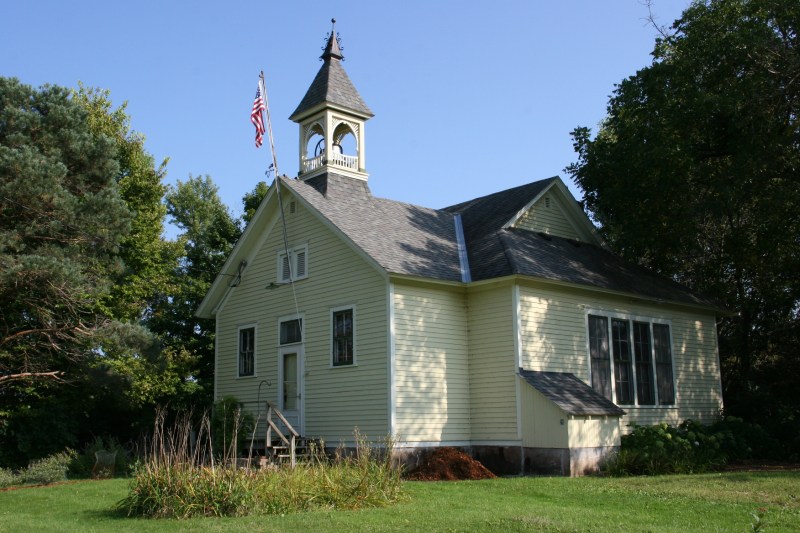
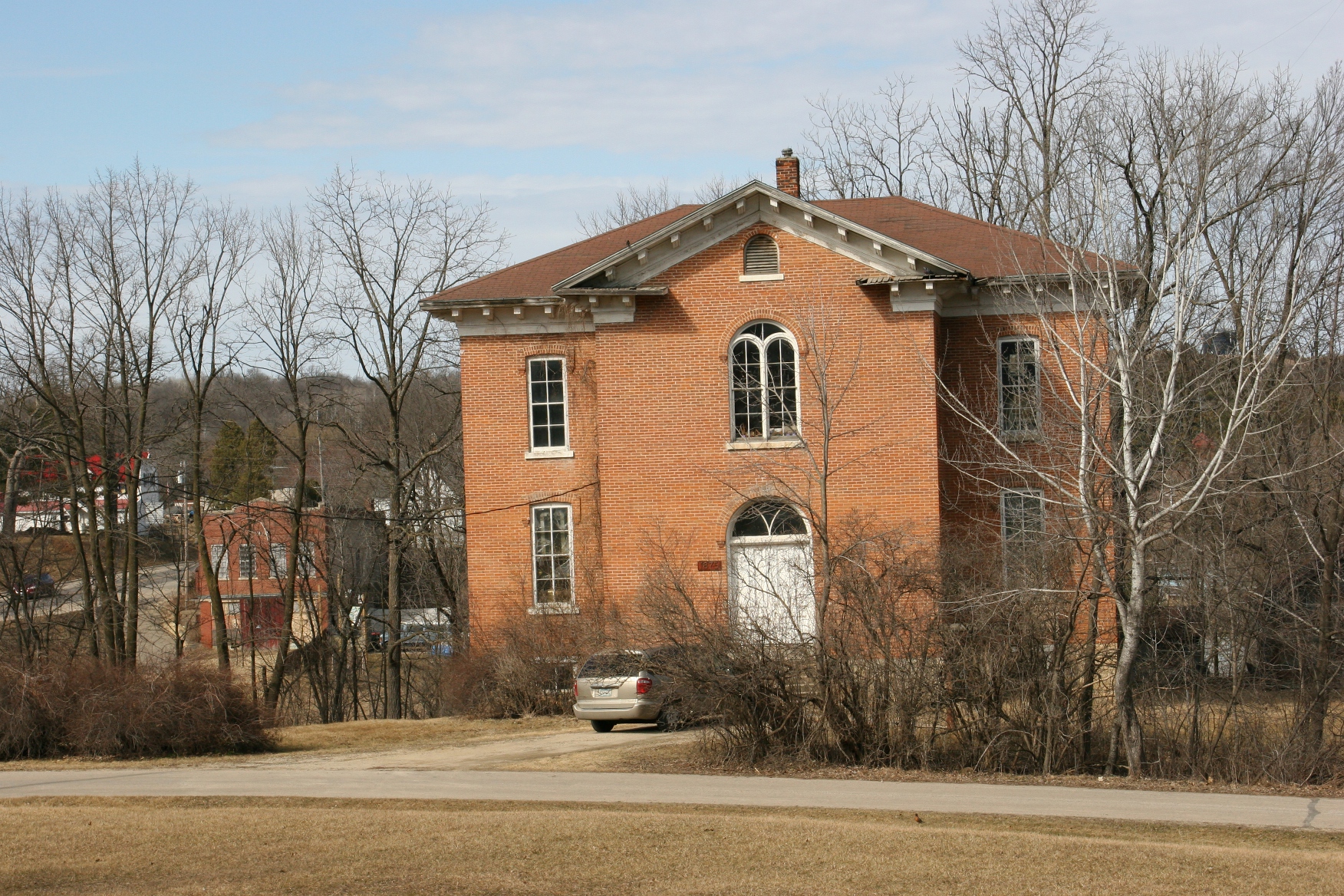
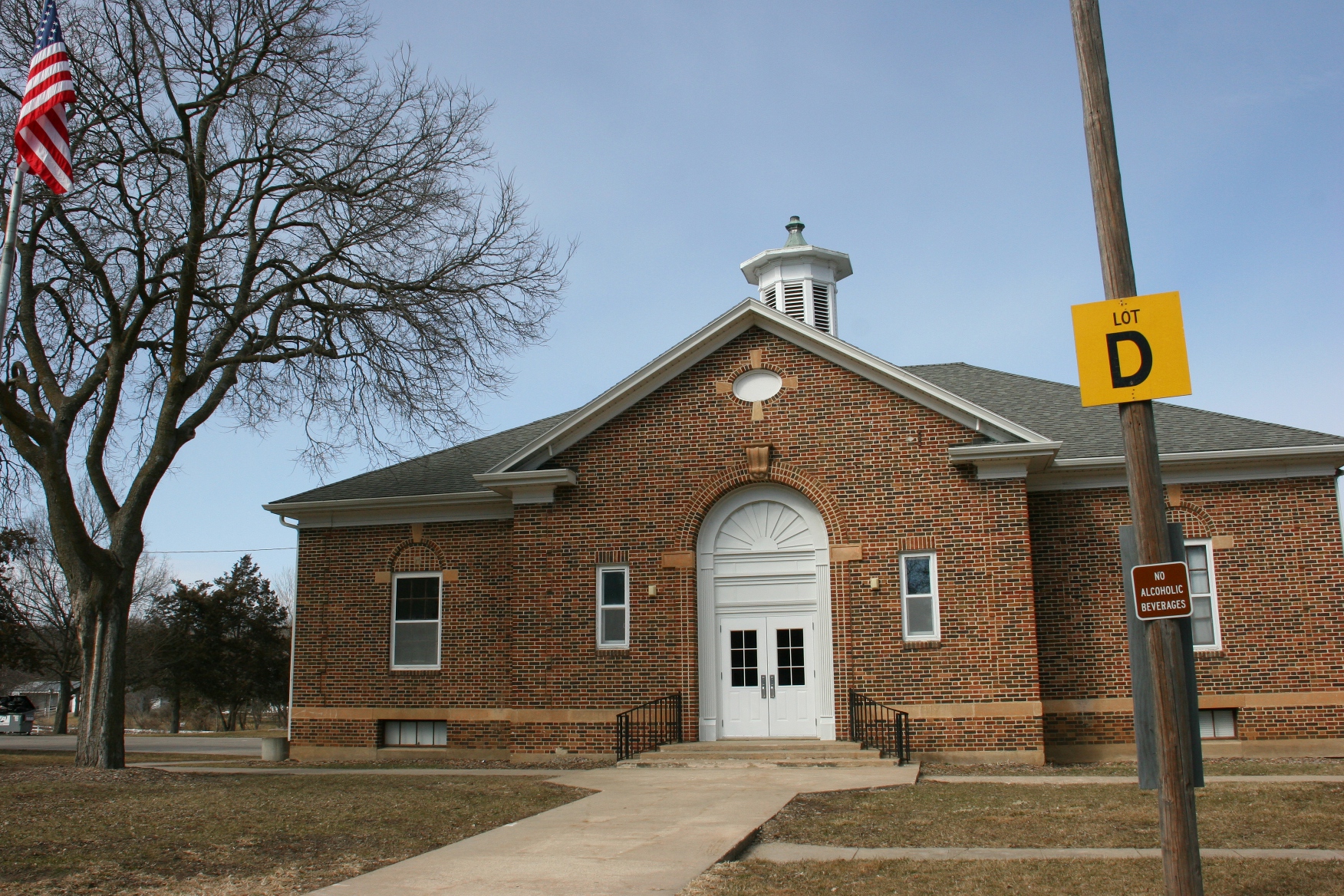
The old schoolhouse is painted a lovely buttery yellow.

The old schoolhouse is painted a lovely buttery yellow.

Next to the church rests a lovely 1910 one-room schoolhouse, restored in 2008 by a couple for use as a get-away cottage and a weaving studio.

An unidentified building near the schoolhouse.

An unidentified building near the schoolhouse.

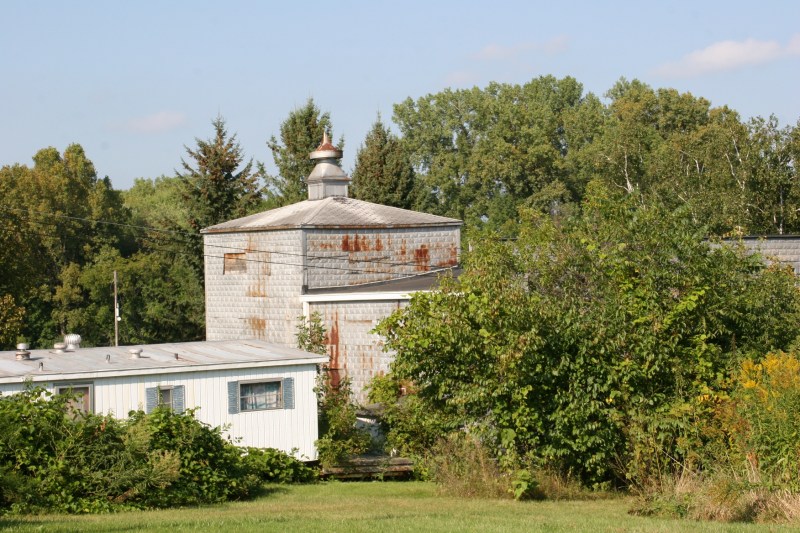
And then there’s an aged boxy building topped by a cupola. Perhaps a former creamery?

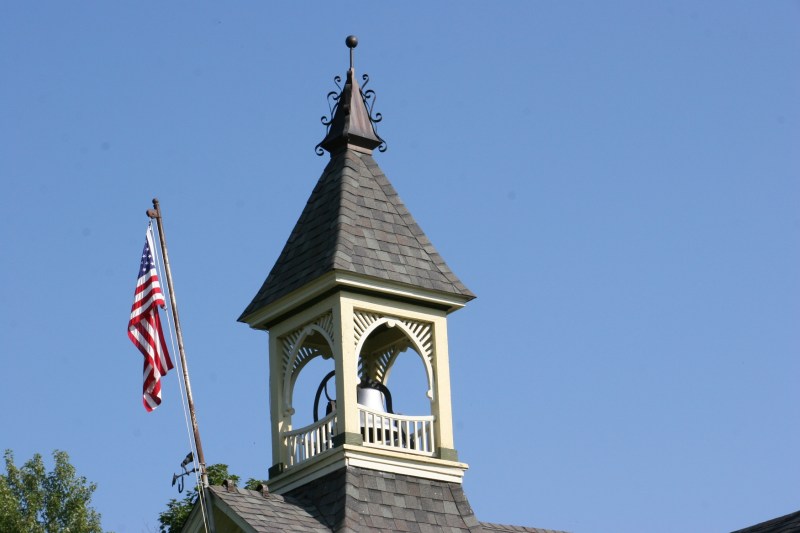
Even the schoolhouse bell tower was restored.

Even the schoolhouse bell tower was restored.

Places like Weaver—home to about 50 residents along U.S. Highway 61 north of Winona—intrigue me. I am always pleased to discover such settlements where remnants of history remain in aged buildings. I long to step inside these buildings, to open front doors like I am opening a book of stories.

© Copyright 2016 Audrey Kletscher Helbling


A destination for the faithful in the woods of southwestern Wisconsin November 16, 2015

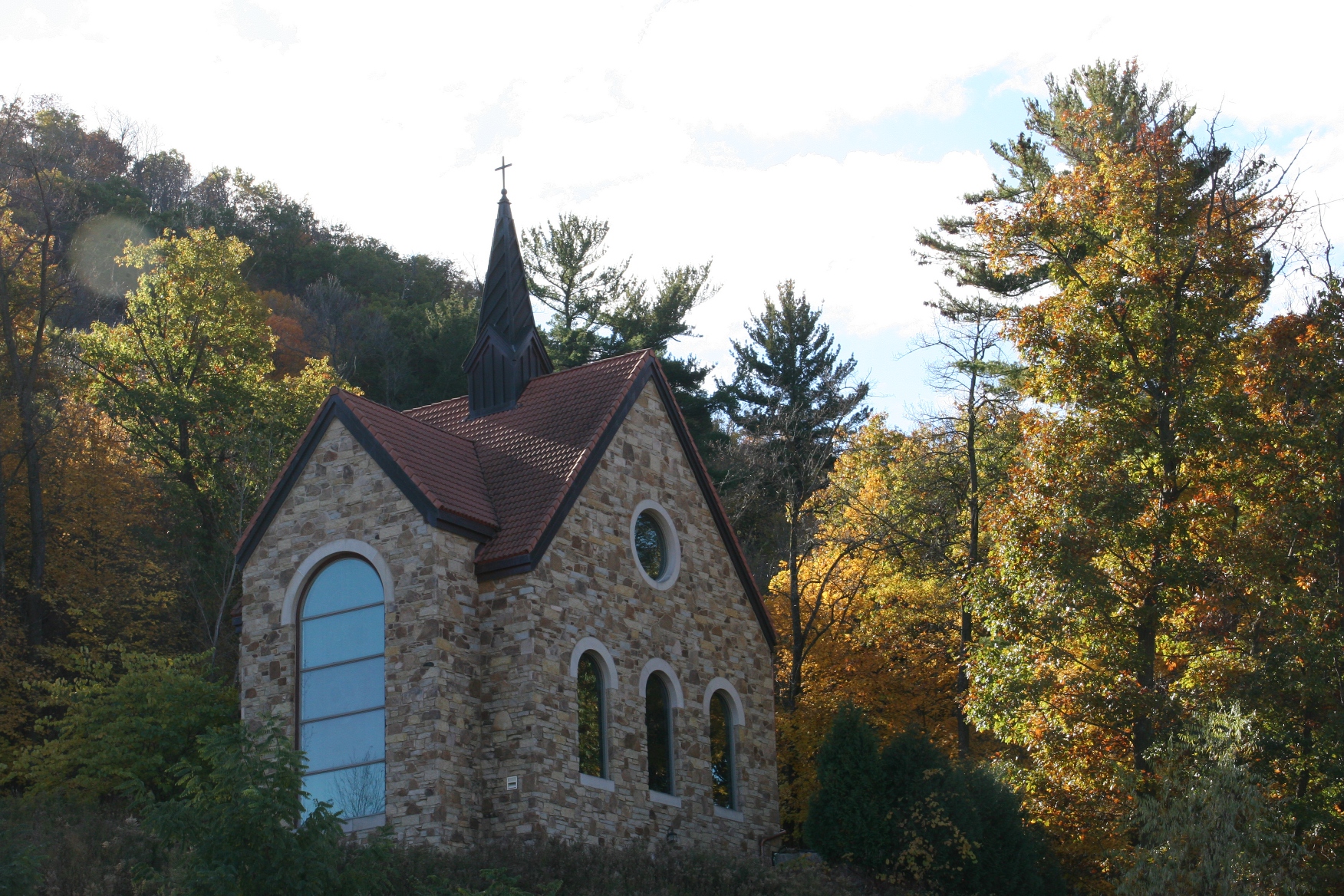
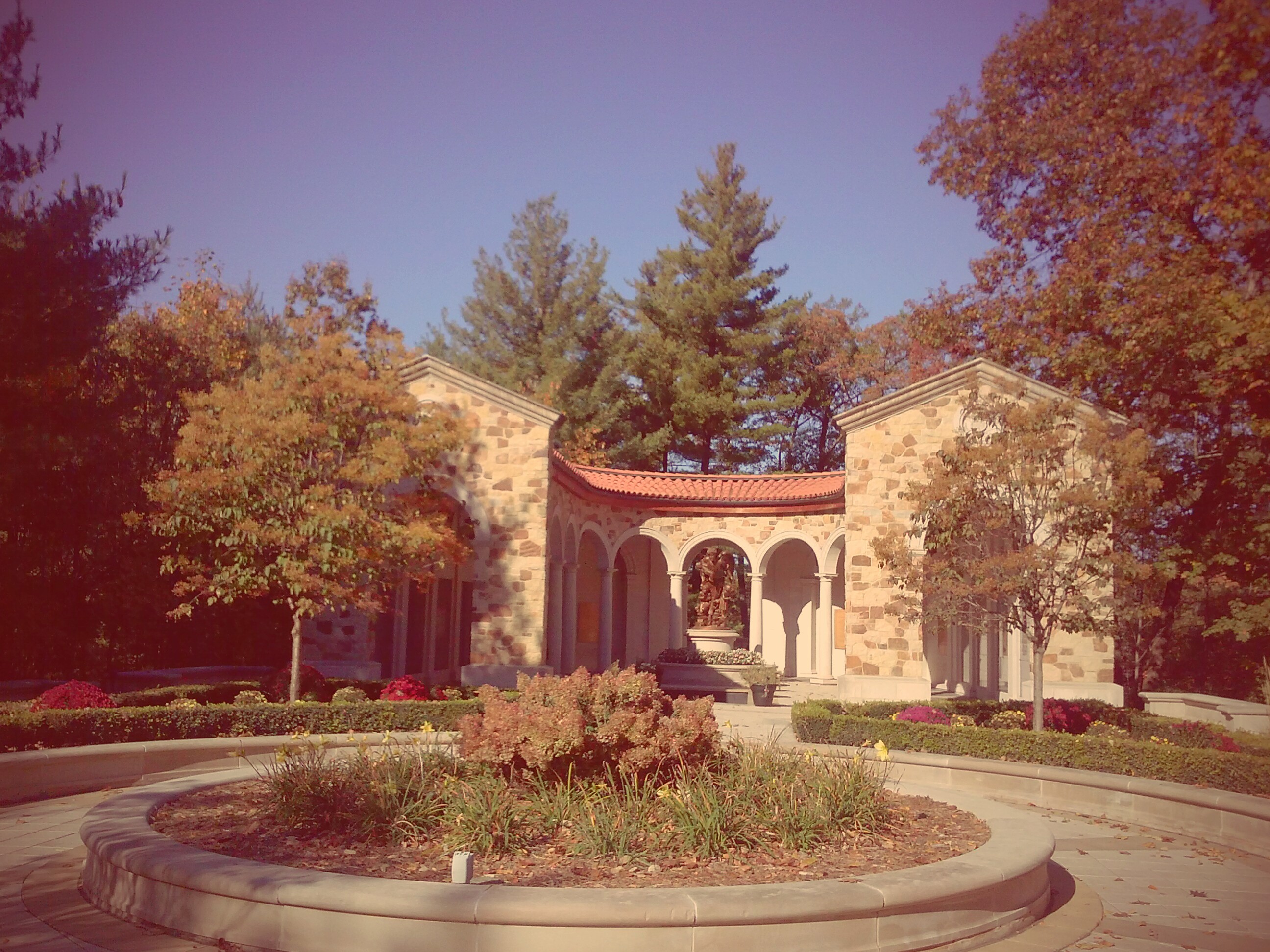
The Mother of Good Counsel Votive Chapel, visible upon arrival at the Shrine site.

The Mother of Good Counsel Votive Chapel, visible upon arrival at the Shrine site.

TUCKED INTO A HILLSIDE just south of La Crosse, the Shrine of Our Lady of Guadalupe draws modern day pilgrims seeking solace, peace and hope.

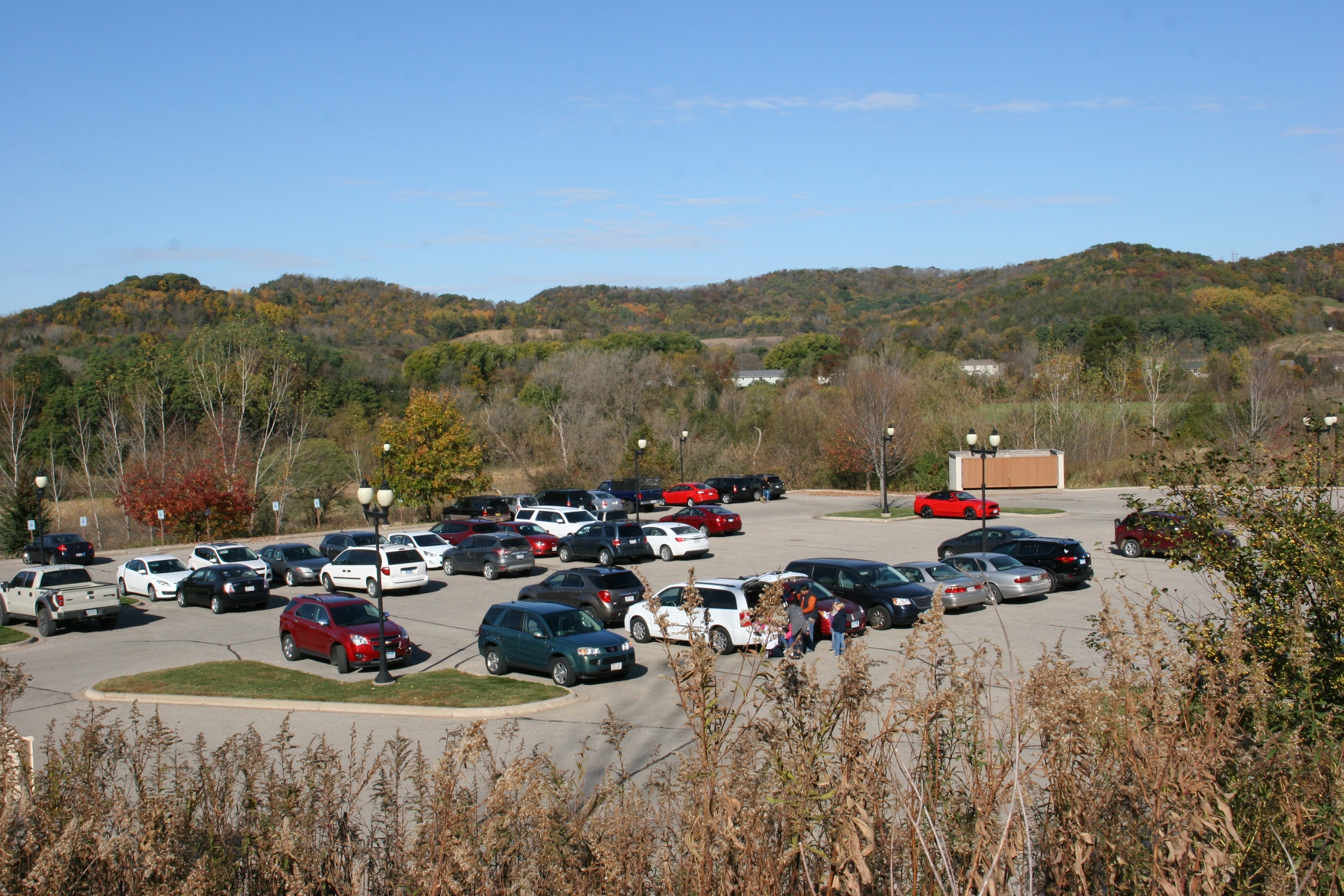
This view of the parking lot shows the scenic rural setting.

This view of the parking lot shows the scenic rural setting.

How this shrine came to be in rural Wisconsin traces to the desires of a Bishop and of a family to create a place that would bring people closer to God.

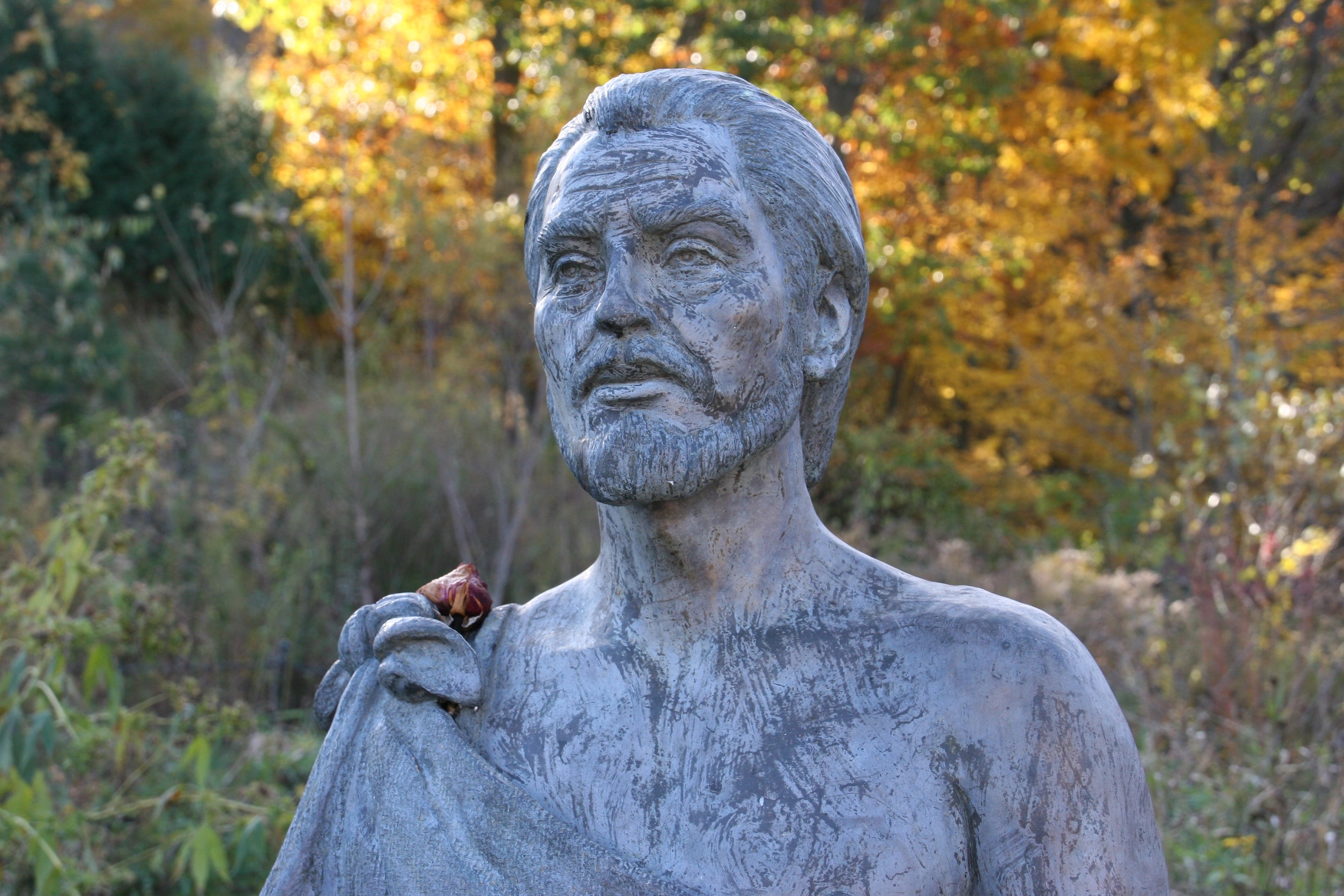
This sculpture of Juan Diego stands near the grounds entry.

This sculpture of Juan Diego stands near the Pilgrim Center.

To summarize, in 1531 Aztec convert Juan Diego five times witnessed apparitions of the Blessed Virgin Mary. His uncle, Juan Bernardino, reported that she had cured him and was thereafter to be known as Santa Maria de Guadalupe.

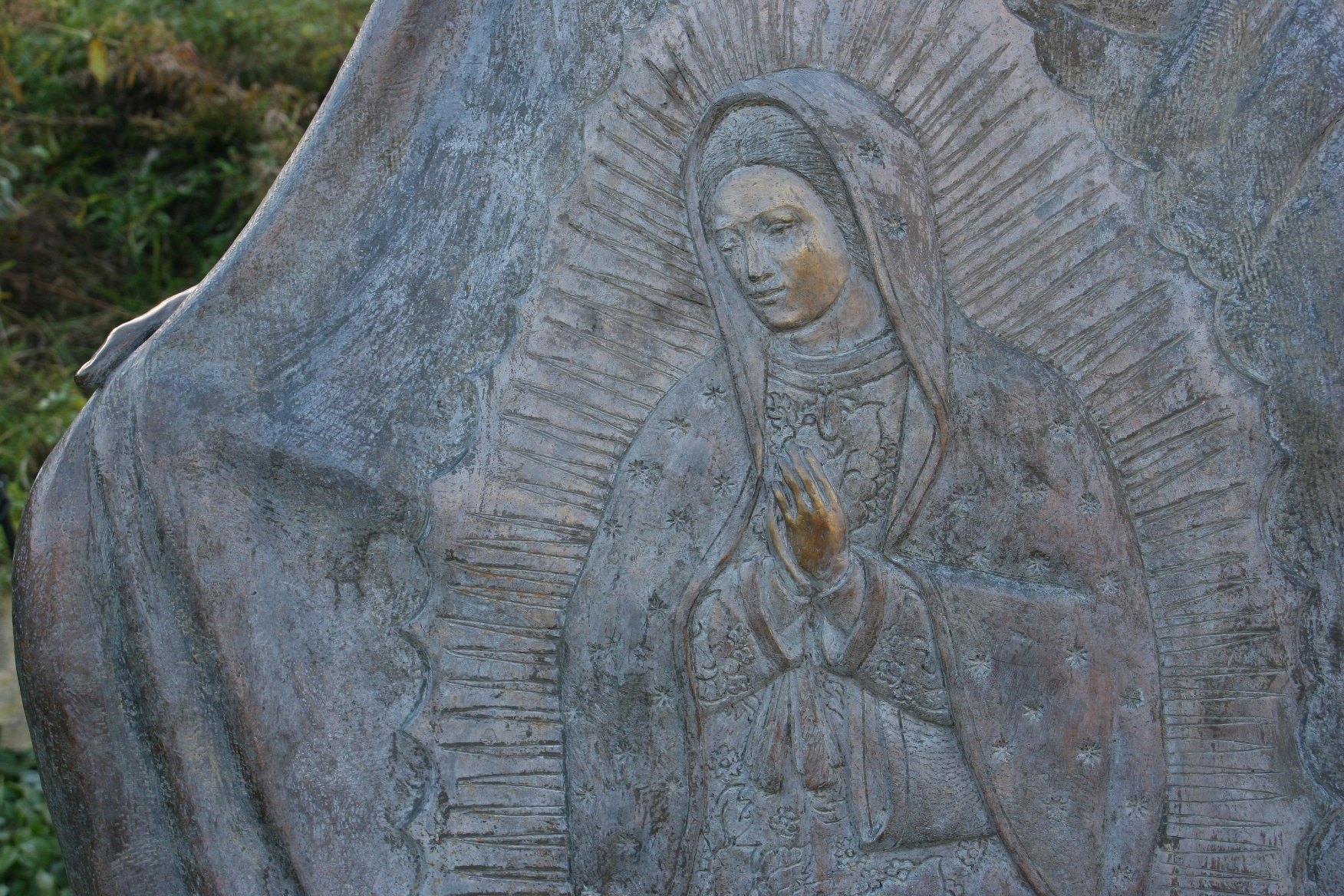
This image of the Lady of Guadalupe is woven into the Juan Diego statue.

This image of Our Lady of Guadalupe is woven into the Juan Diego statue.

I am not of the Catholic faith. Therefore I do not understand the intricacies of Juan Diego’s story. But I glimpse his significance to those, especially, of Hispanic heritage. Juan, a native of Mexico, is the first Roman Catholic Indigenous saint from the Americas.

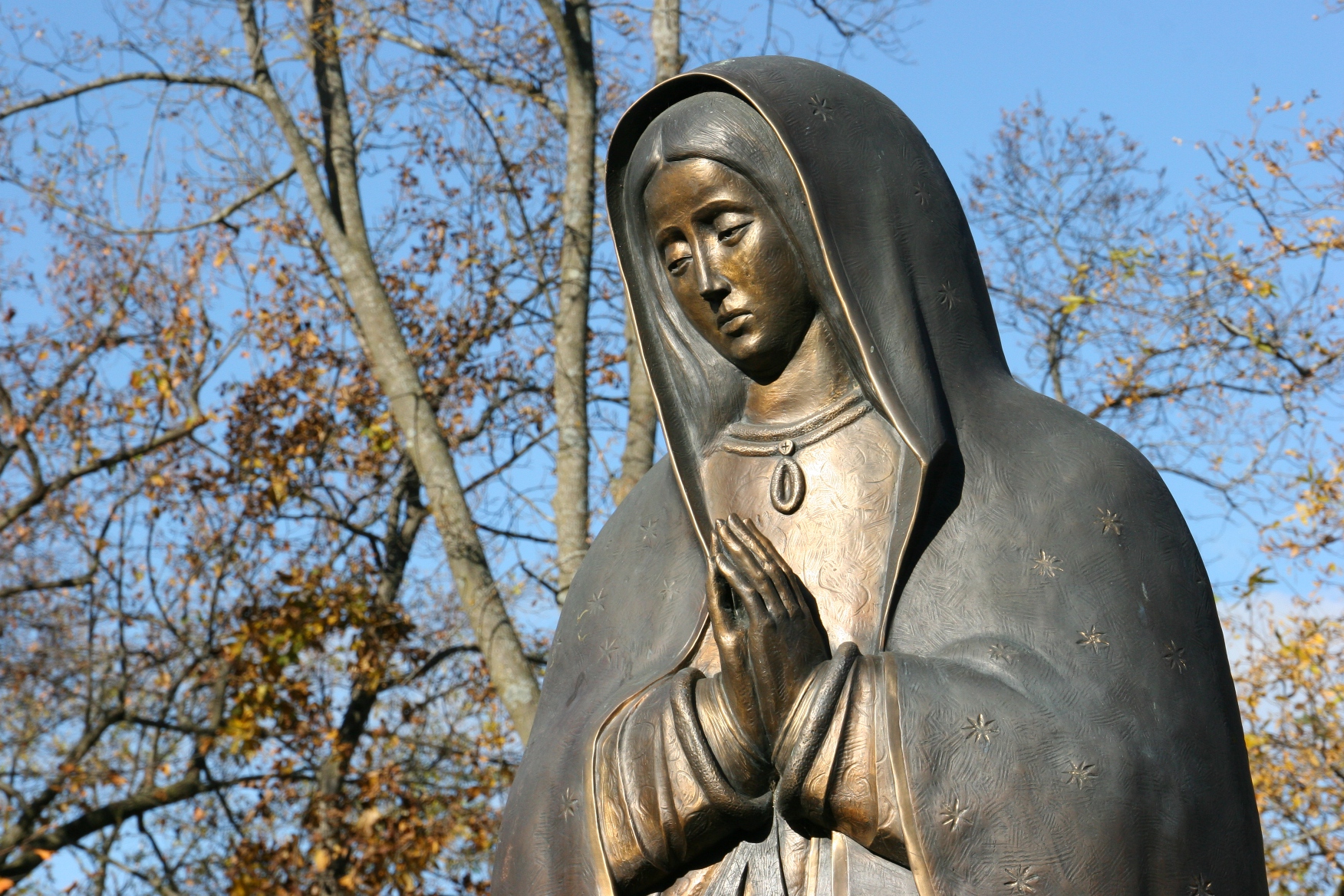
Outside the Pilgrim Center rests this sculpture of the Lady of Guadalupe.

Outside the Pilgrim Center rests this sculpture of Our Lady of Guadalupe.

When I recently visited the Shrine of Our Lady of Guadalupe in Wisconsin, visitors of Hispanic origin outnumbered all others.

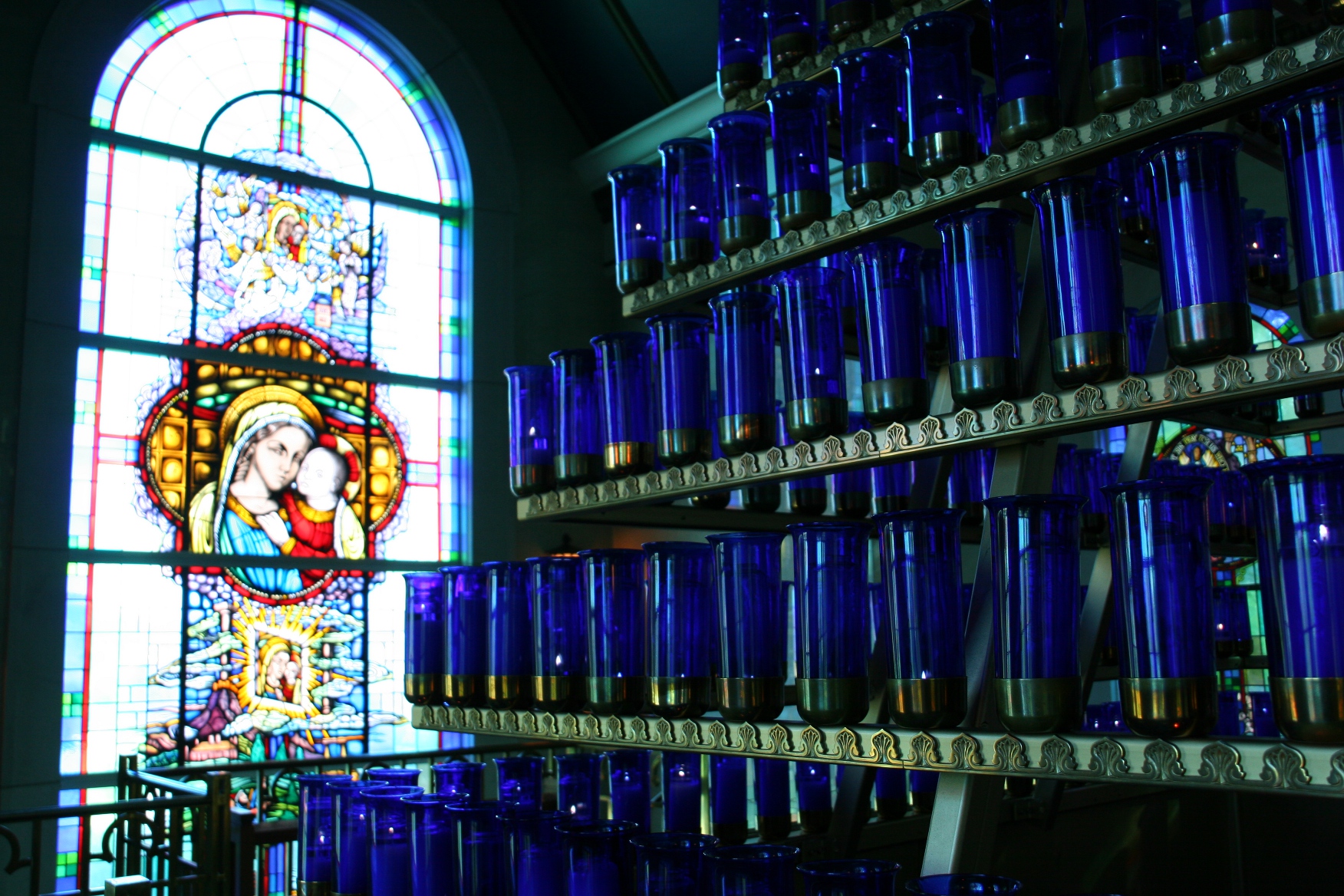
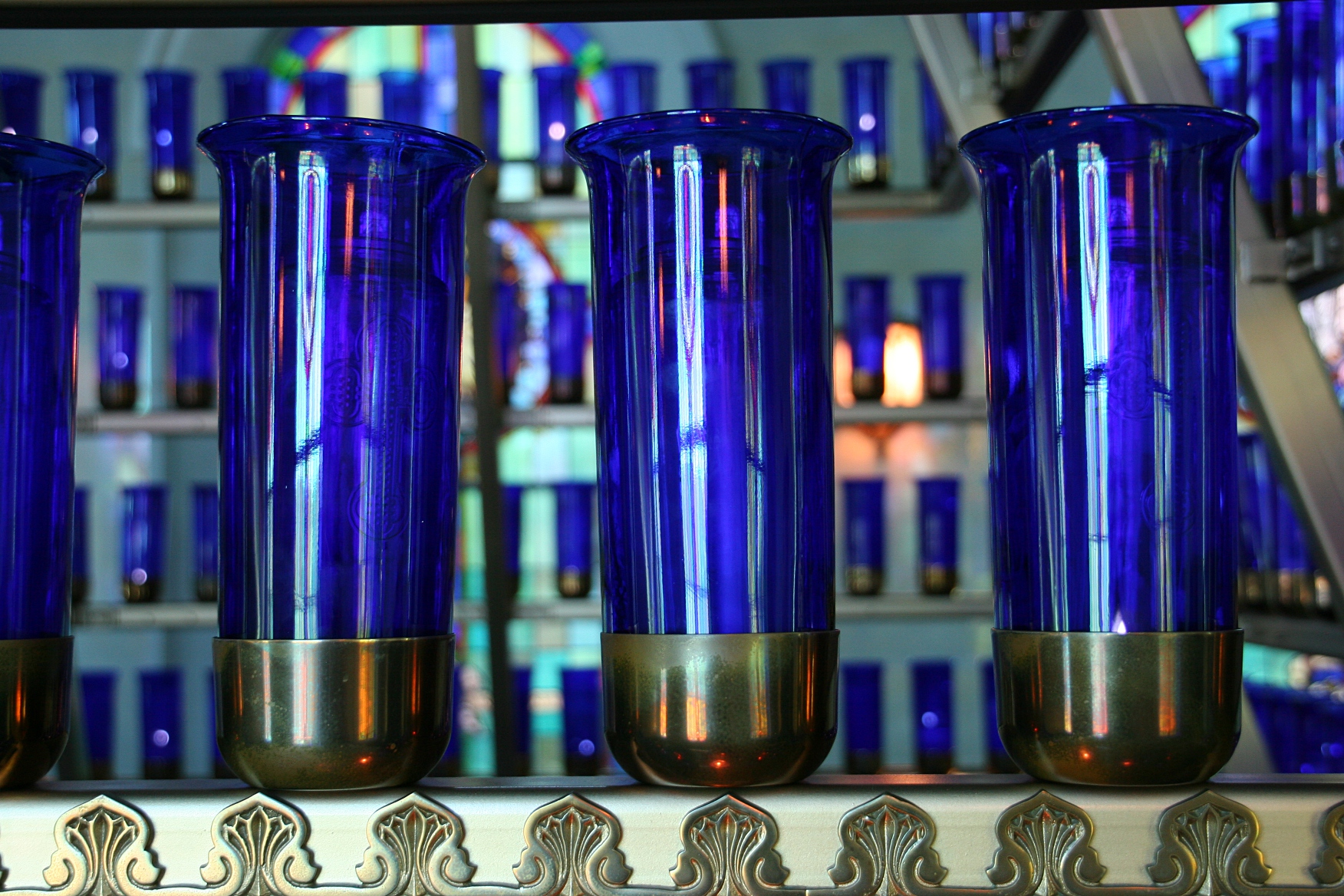
A rack holds 576 candles inside the Mother of Good Counsel Votive Chapel. Pilgrims, for a price, may have a candle lit. A lift allows lighting of the tiered candles stretching high into the chapel.

A rack holds 576 candles inside the Mother of Good Counsel Votive Chapel. Visitors, for a price, may have a candle lit. A lift allows lighting of the tiered candles stretching high into the chapel.

But, no matter your ethnicity or religion, this worshipful setting distances the distractions of life, replacing them with hope and serenity.

BONUS PHOTOS:

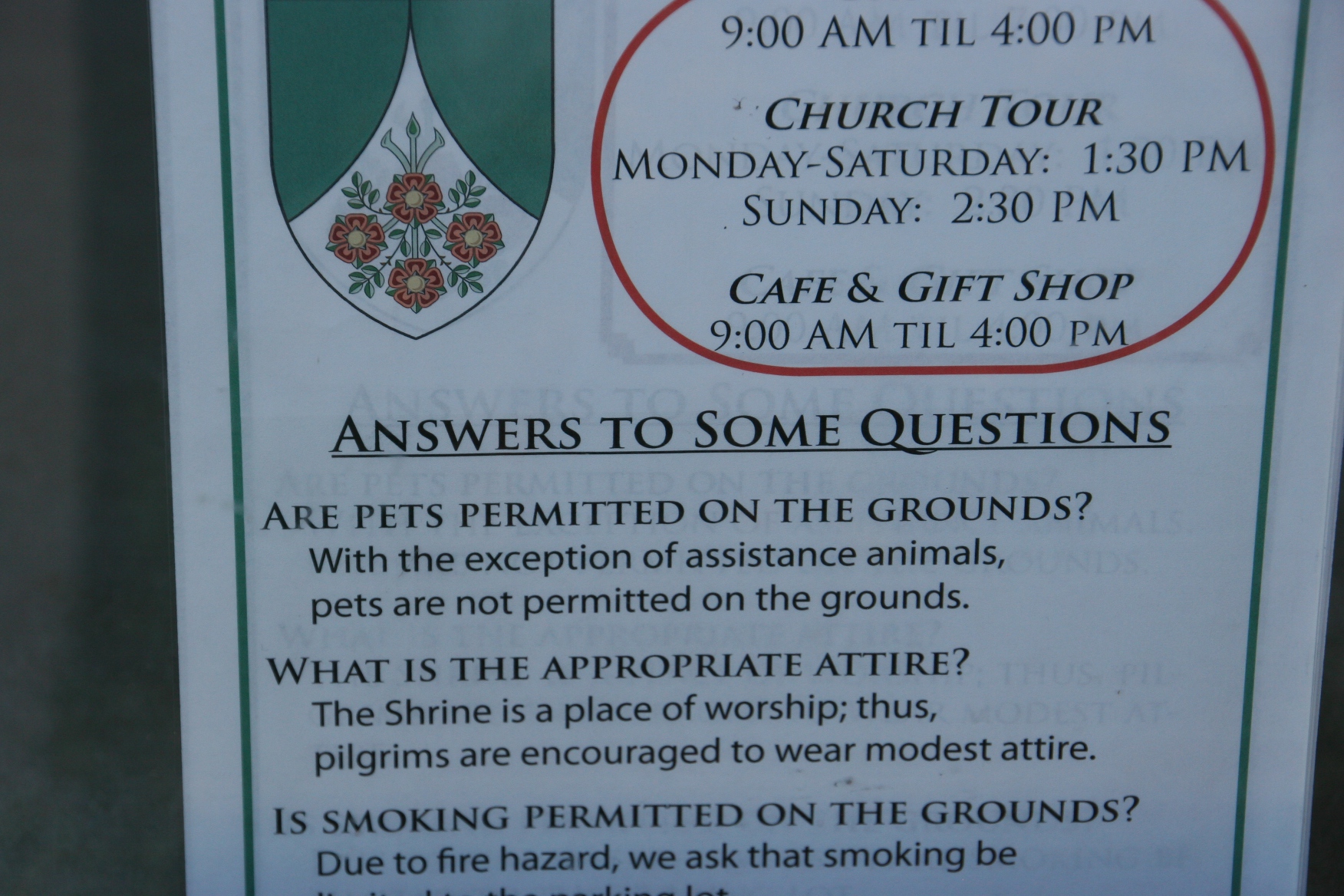
Some of the "rules," posted on a window outside the Pilgrim Center entry.

Some of the “rules,” posted on a window outside the Pilgrim Center entry.

Our Lady of Guadalupe

Our Lady of Guadalupe

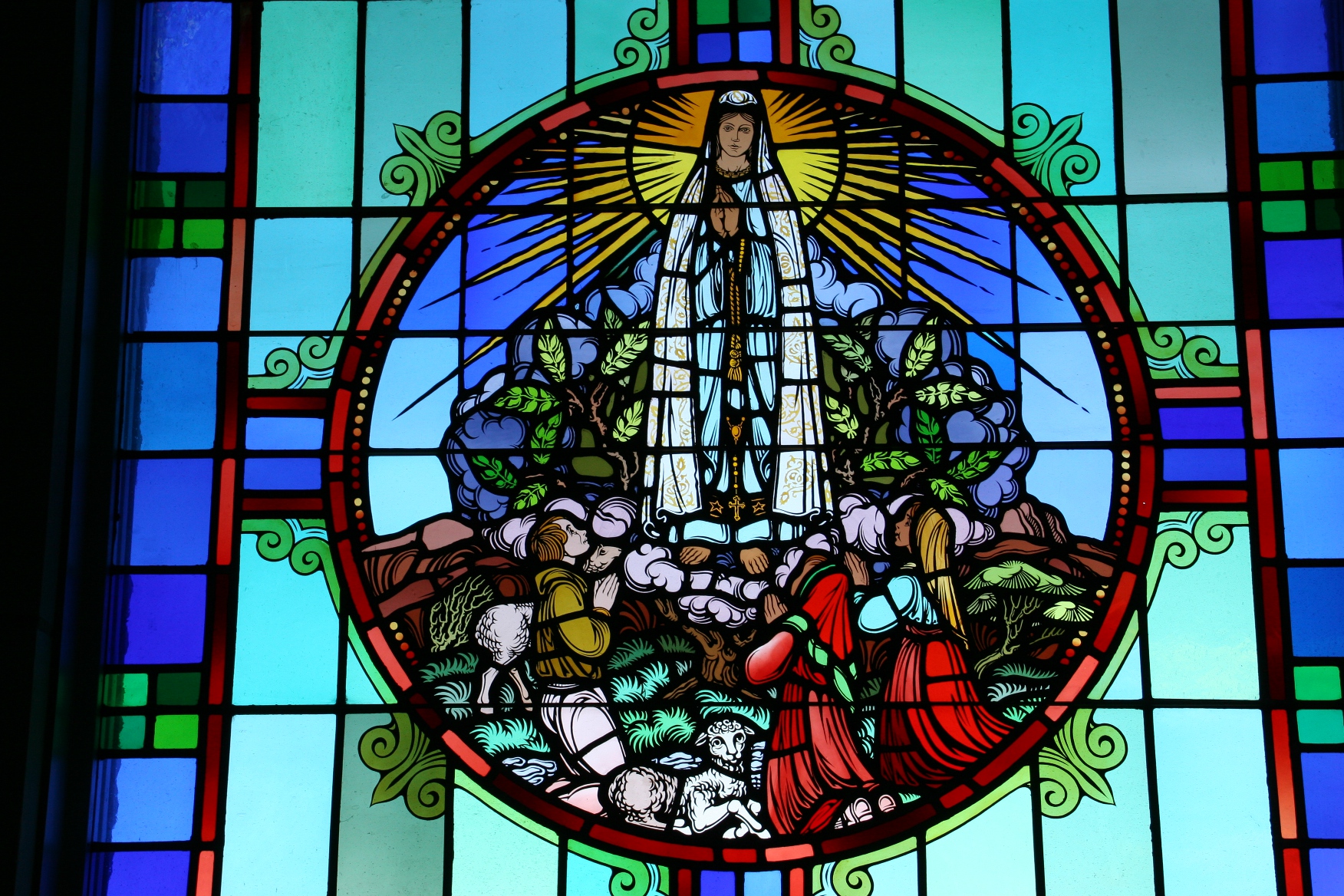
The stained glass windows inside the Mother of Good Cunsel Votive Chapel depict apparitions and titles of Our Blessed Mother.

The stained glass windows inside the Mother of Good Counsel Votive Chapel depict “Our Blessed Mother.”

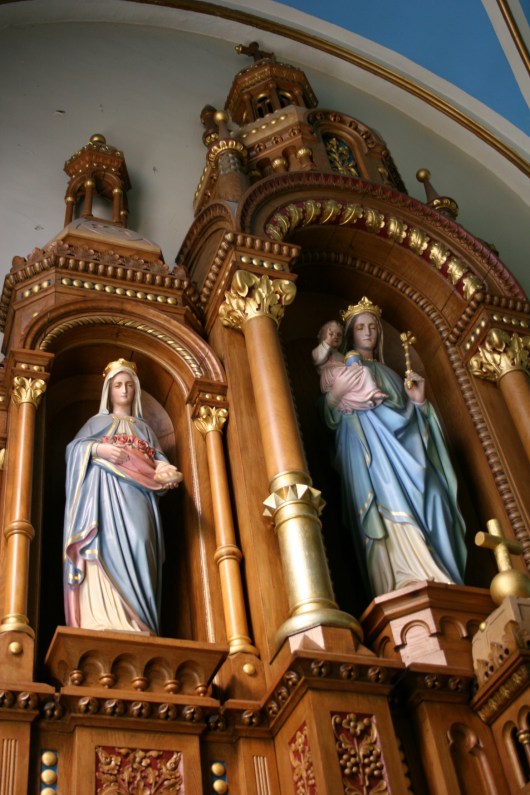
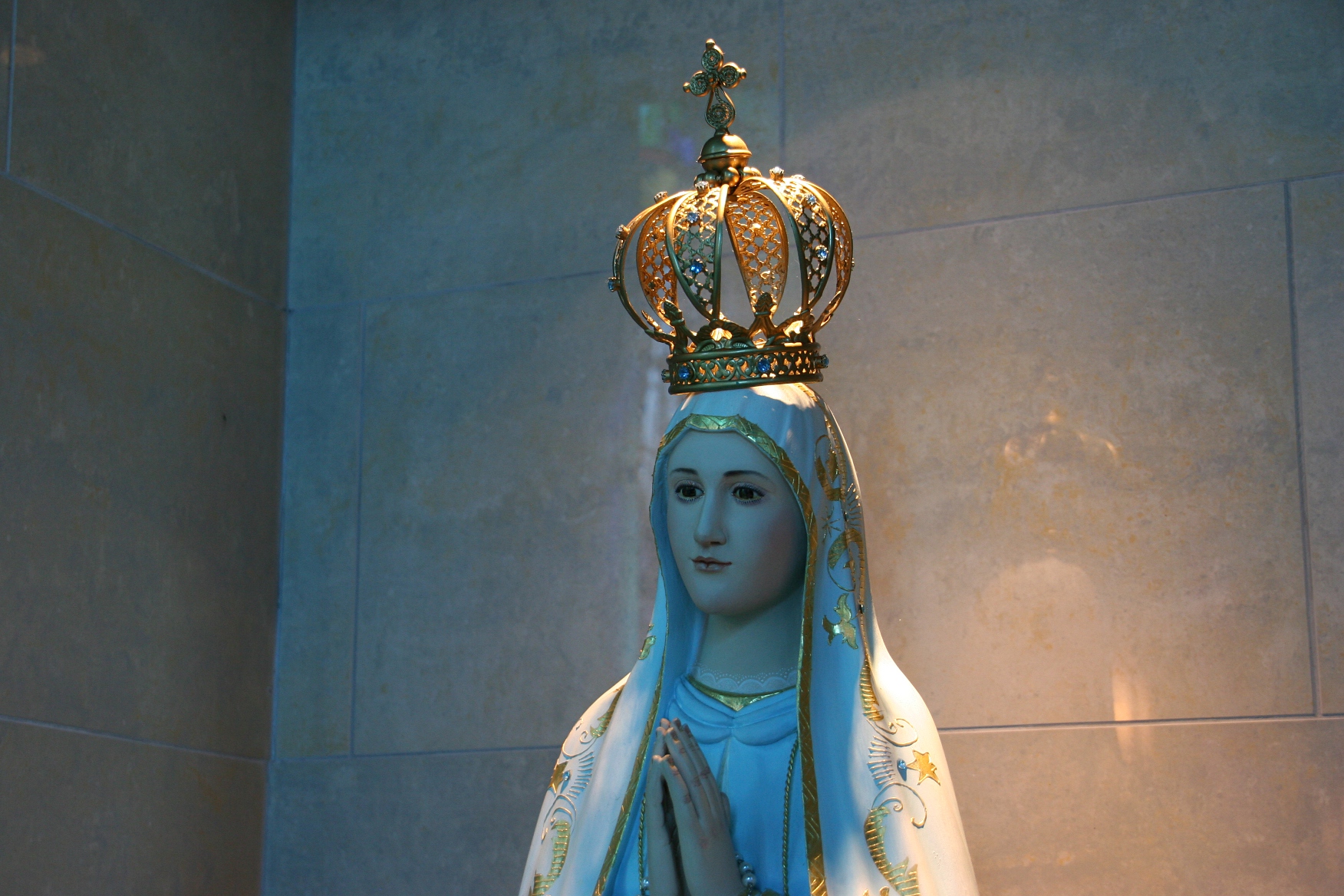
Another chapel statue, of, I assume, the Virgin Mary.

Another chapel statue, of, I assume, the Virgin Mary.

The scent and heat of burning candles prevail in the chapel.

The scent and heat of burning candles prevail in the chapel.

Rosary beads on a chapel window sill.

Rosary beads on a chapel window sill.

the stained glass windows in the chapel are exquisite.

The stained glass windows in the chapel are exquisite.

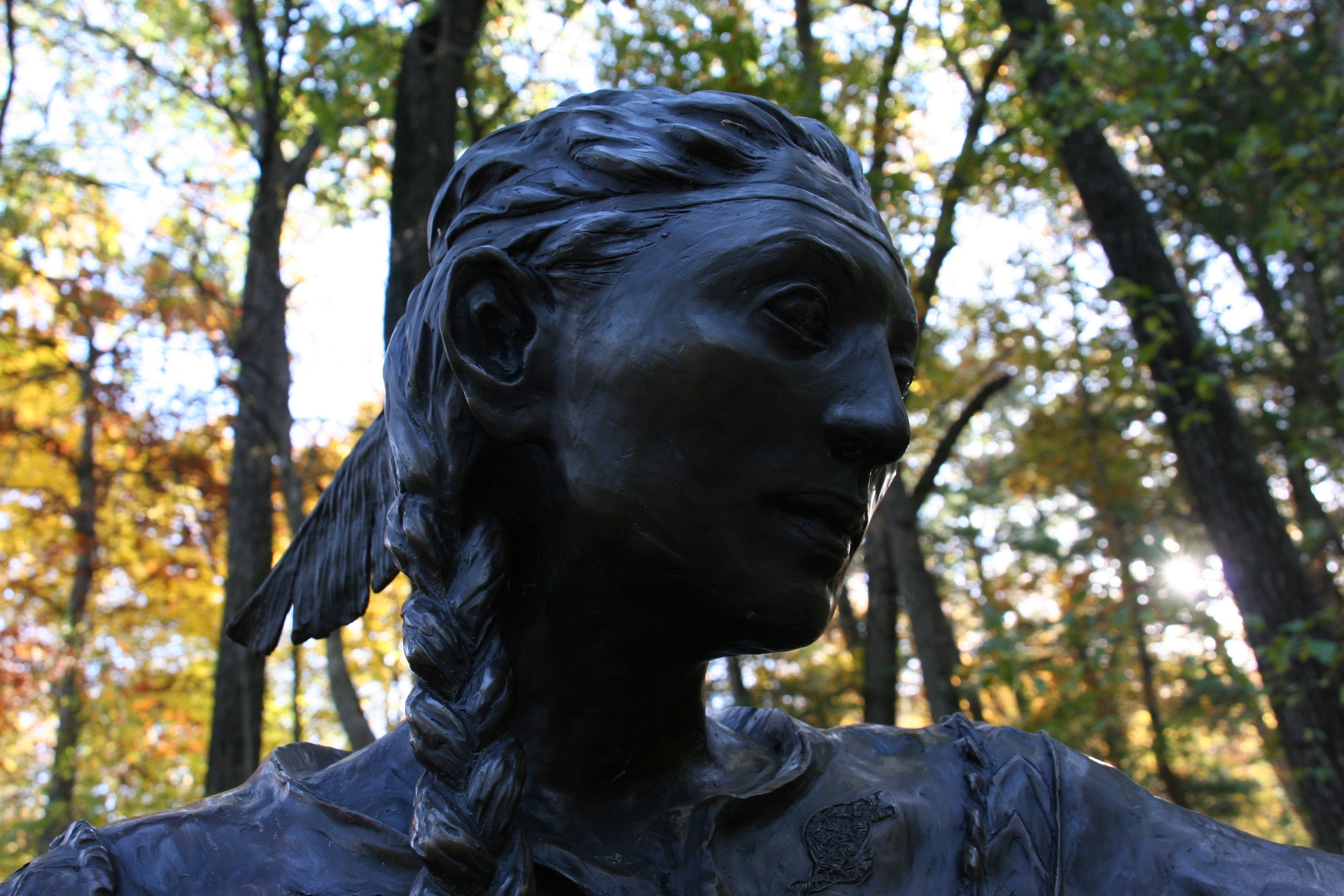
Up the path from the chapel, a statue of the first canonized Native American, Saint Kateri Tekakwitha.

Up the path from the chapel, a statue of the first canonized Native American, Saint Kateri Tekakwitha.

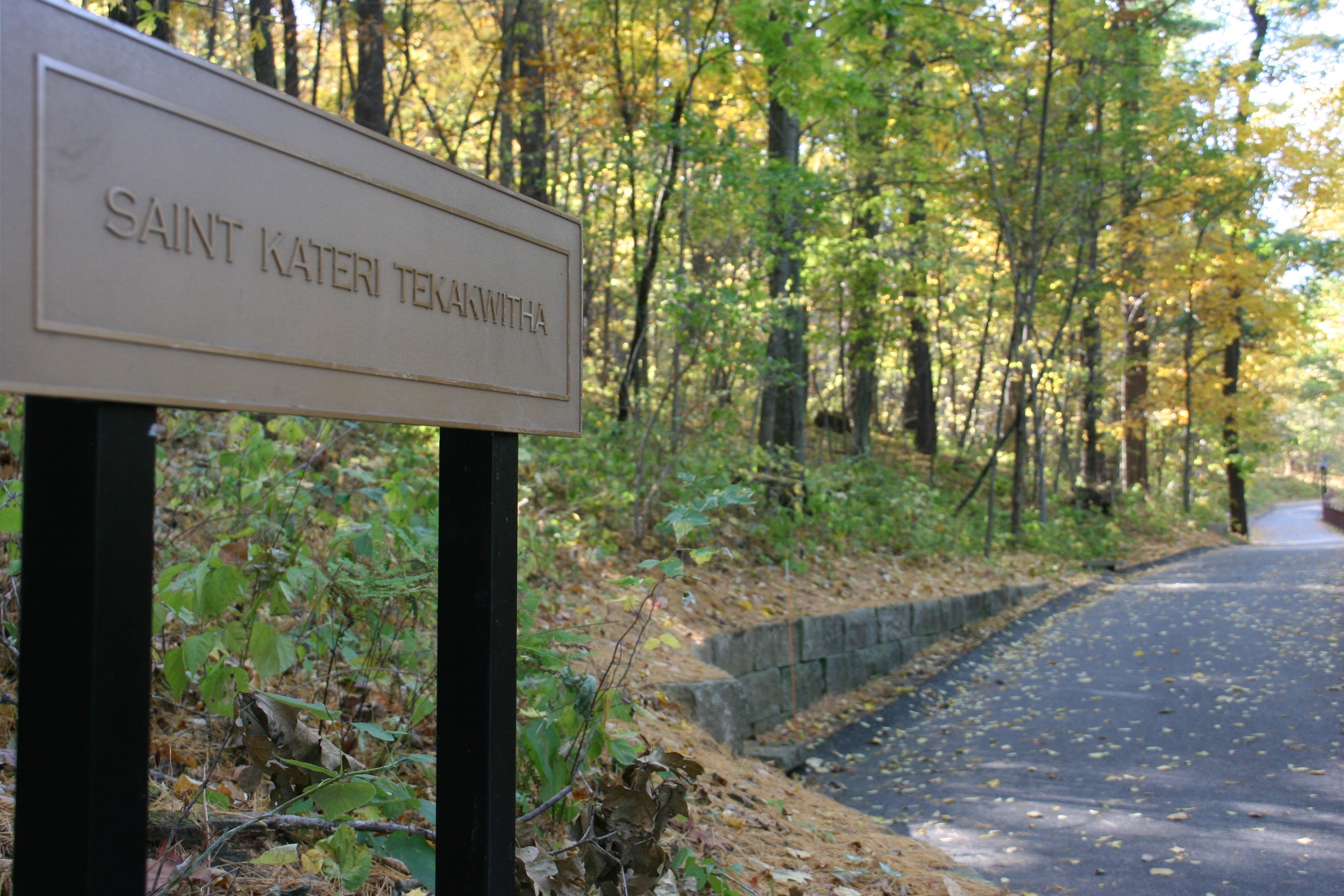
The path winds up the hill toward The Shrine Church and other attractions.

The path winds up the hill toward The Shrine Church and other attractions. Golf cart rides to the Shrine are available.

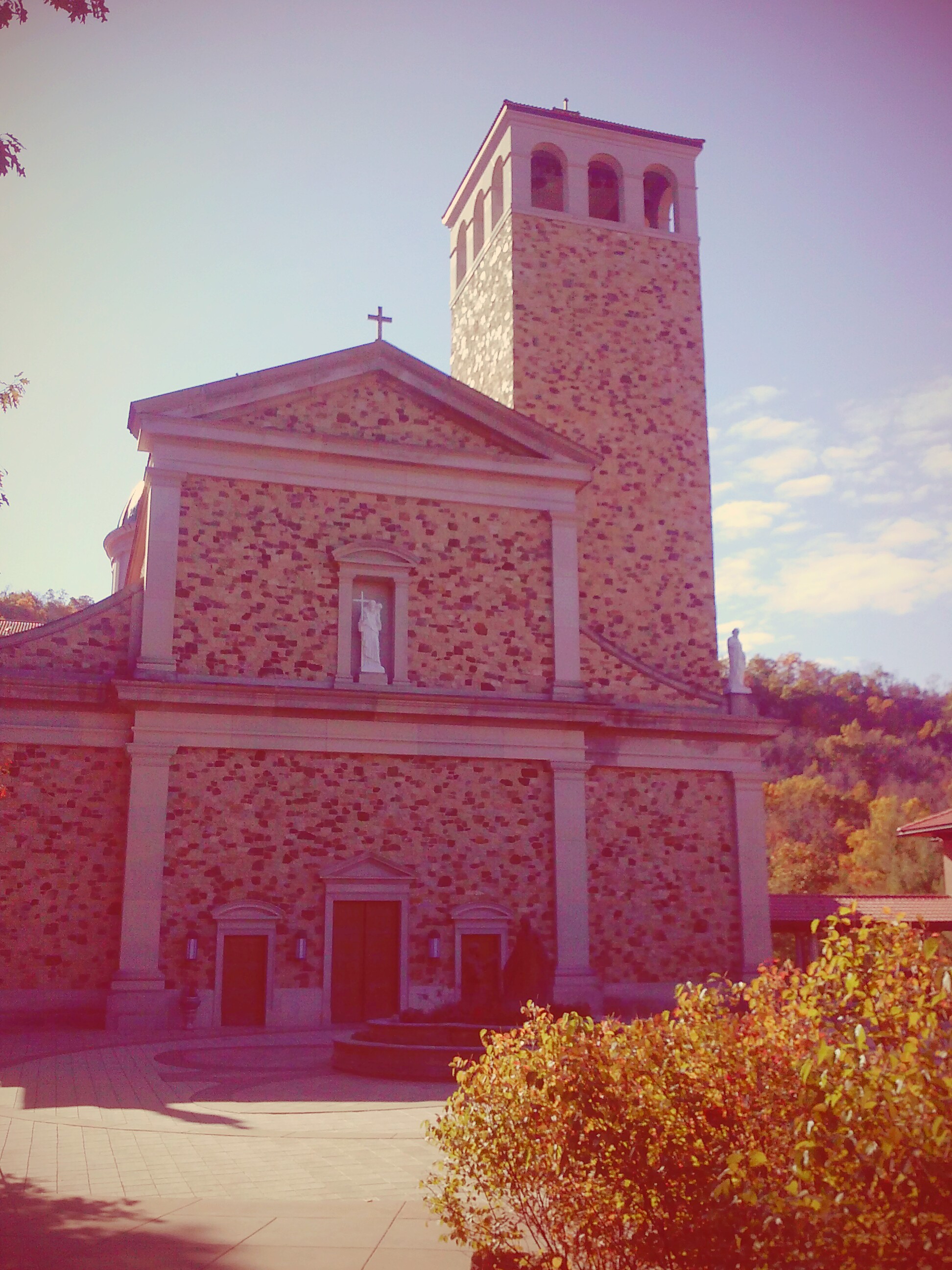
The Shrine Church. Photo courtesy of Miranda Helbling.

The Shrine Church. Photo courtesy of Miranda Helbling.

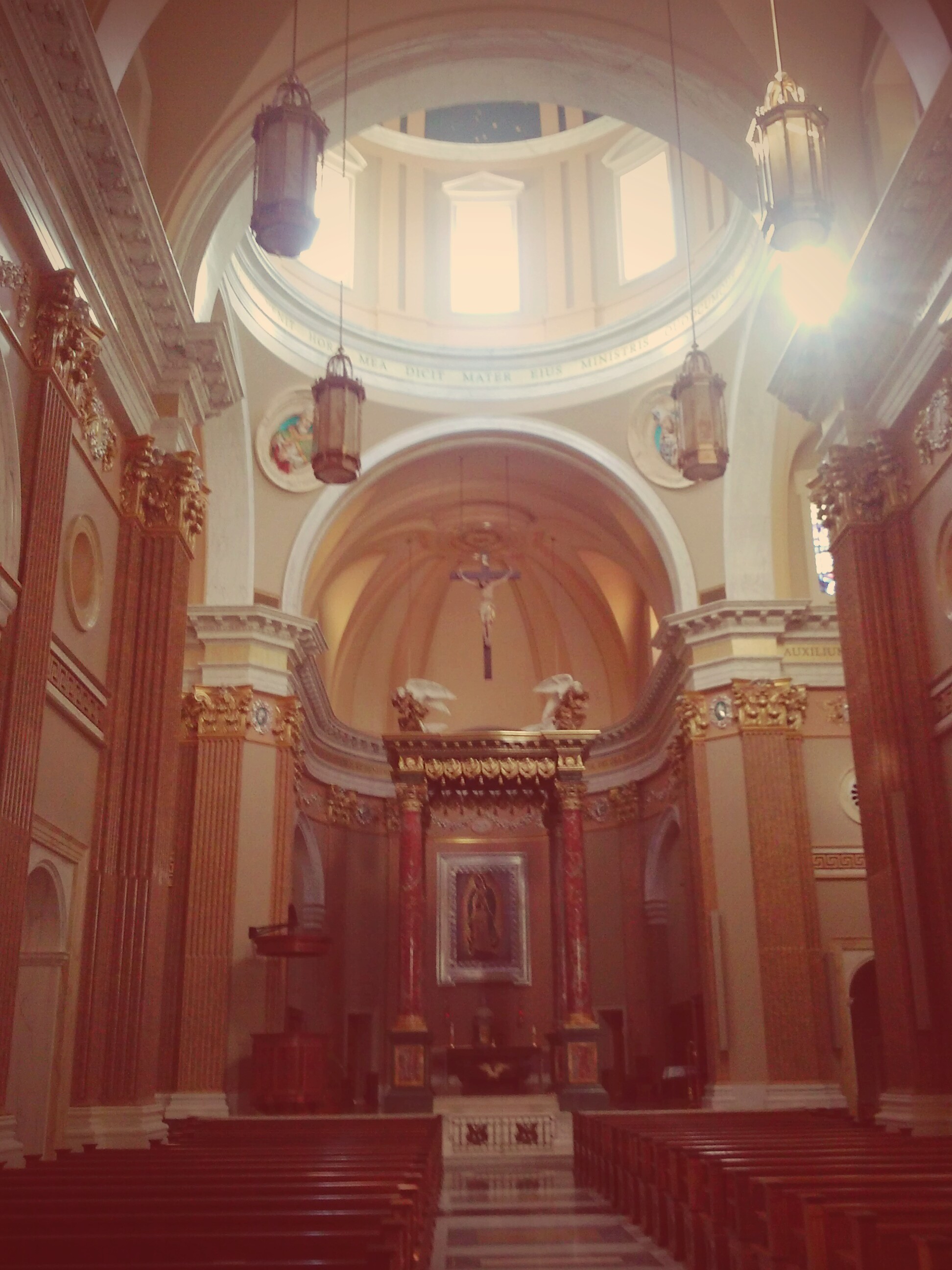
Inside the Shrine Church.

Inside the Shrine Church, constructed between 2004-2008. Photo courtesy of Miranda Helbling.

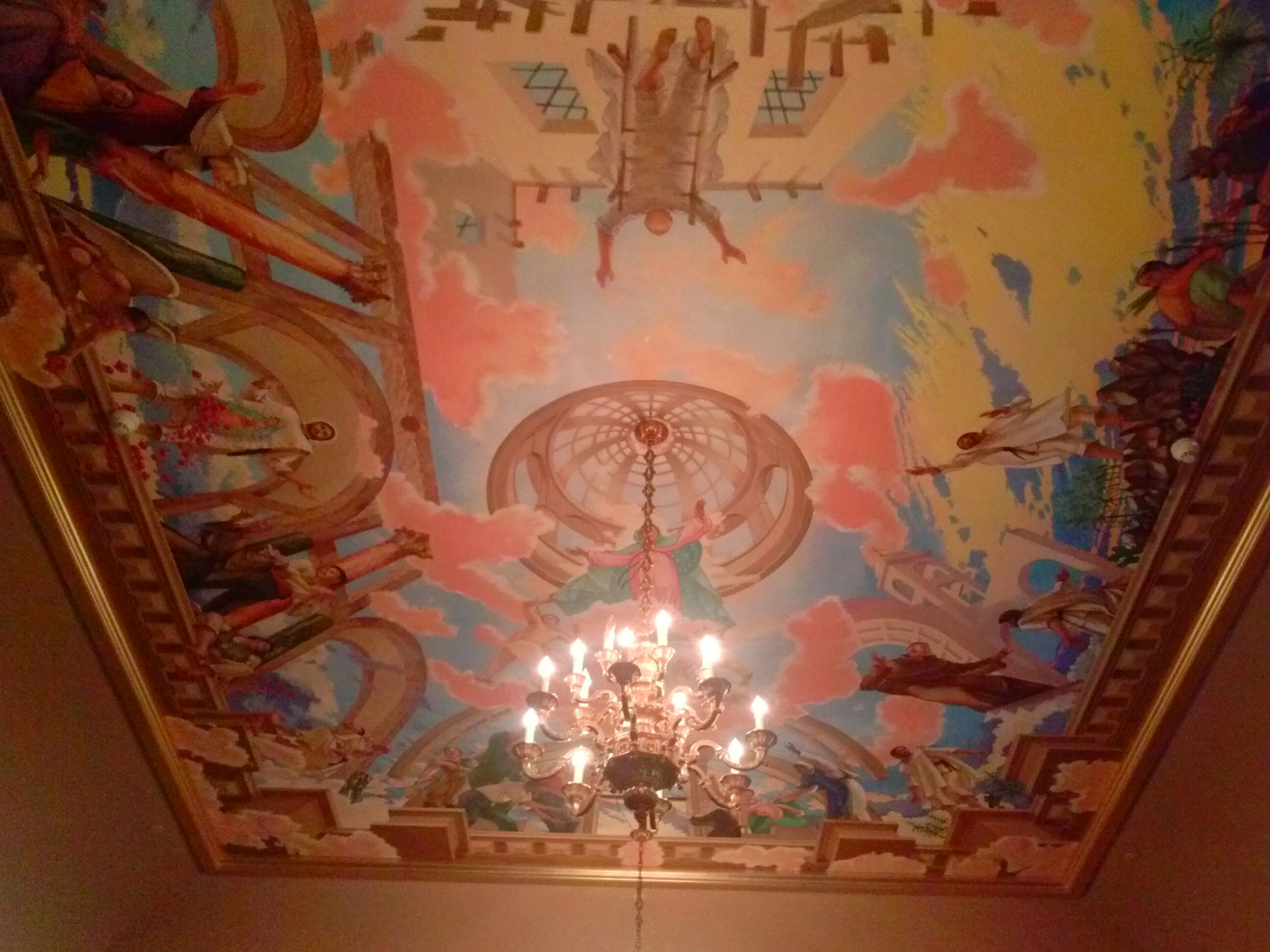
Art abounds inside the Shrine. Photo courtesy of Miranda Helbling.

Art abounds inside the Shrine. Photo courtesy of Miranda Helbling.

The Memorial to the Unborn celebrates and honors the lives of the unborn.

The Memorial to the Unborn celebrates and honors the lives of the unborn. Photo courtesy of Miranda Helbling.

FYI: This religious site just outside of La Crosse includes many attractions such as the Pilgrim Center (with cafe and gift shop), Mother of Good Counsel Votive Chapel, The Shrine Church, Stations of the Cross, Rosary Walk, Devotional Areas and the Memorial to the Unborn. Click here for more information.

© Copyright 2015 Audrey Kletscher Helbling & Miranda Helbling


Church Food: Harvest dinner at Trinity North Morristown October 9, 2015

My meal at last year's Trinity dinner, minus the bread and cranberries. I had cake for dessert, too.

My meal at a previous Trinity North Morristown dinner, minus the bread and cranberries. I had cake for dessert, too. Minnesota Prairie Roots file photo.

IT IS THE SEASON of church dinners in Minnesota, which is why I’ve deviated today from the usual Minnesota Faces series to Minnesota Food.

This Sunday, October 11, Trinity Lutheran Church North Morristown, a rural parish in western Rice County, hosts its annual fall harvest dinner. I’ve been to many church dinners and this one ranks as my favorite.

Everything served here is homemade from the garden-grown potatoes and squash prepared in the church basement to the dressing, bread and more, all served with turkey and ham.

It’s a feast. And one served in good company by rural folks who welcome and engage you in friendly conversation. Go for the people, experience and setting as much as the food.

Serving begins at 11 a.m., shortly after the 9:30 a.m. worship service, which I’d also encourage you to attend. There’s something about worshiping in a small country church surrounded by farm fields that focuses thoughts on thankfulness for the harvest and all the blessings of life.

Besides the dinner, which runs until 1 p.m., Trinity also hosts a bake goods, produce and craft sale in the back room of the church basement. More goodies from gardens and kitchens plus handcrafted items.

Cost for the dinner is a reasonable $10 for ages 13 and older; $5 for ages 6 – 12; and free for ages 5 and younger.

You will leave feeling stuffed and blessed.

FYI: Dinner planners are looking for people to peel potatoes beginning at 8 a.m. Saturday.

TELL ME, DO YOU FREQUENT church dinners and do you have a favorite?

© Copyright 2015 Audrey Kletscher Helbling


Touring Minnesota’s “other” basilica, St. Stan’s in Winona September 24, 2015

The Basilica of Saint

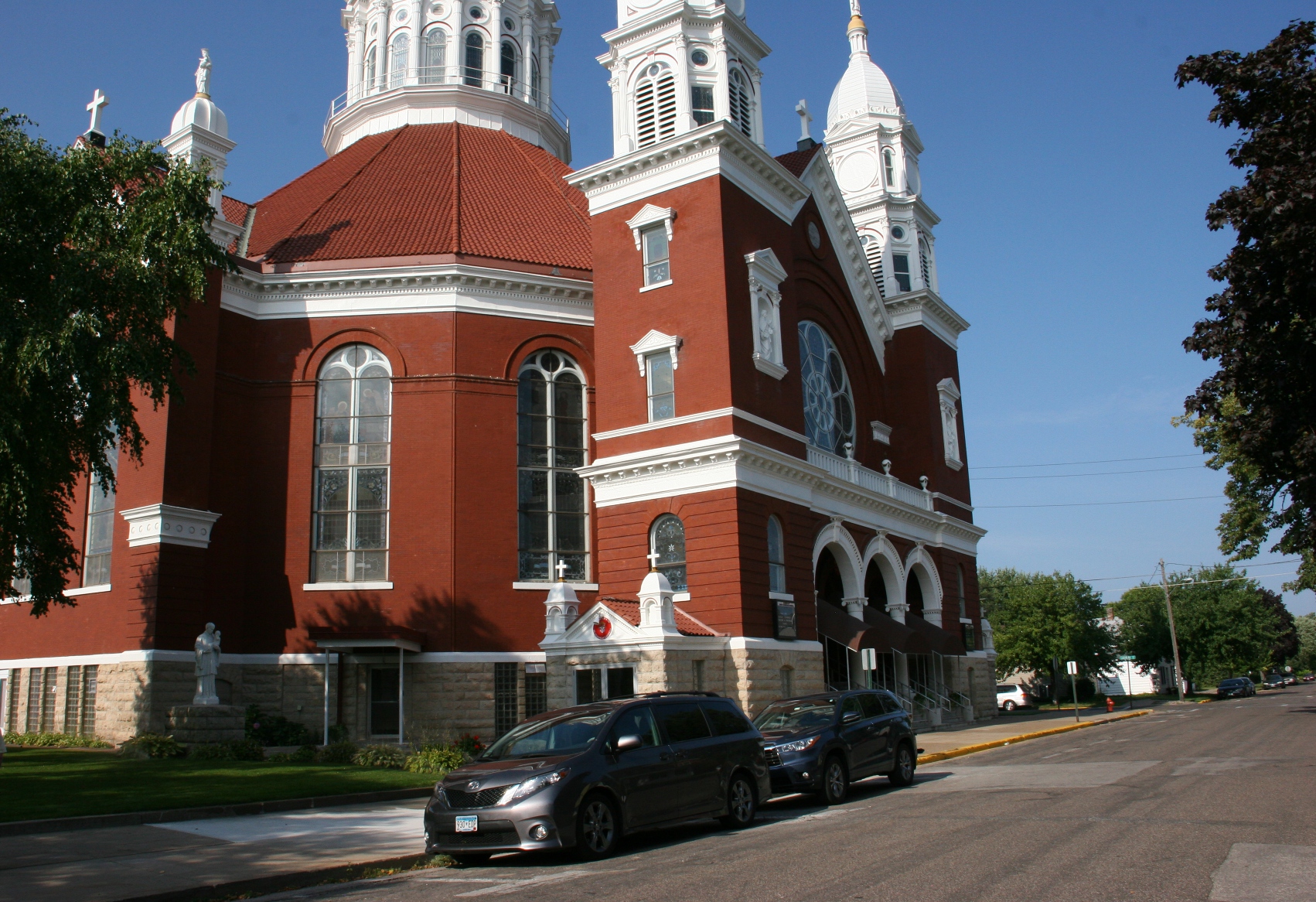
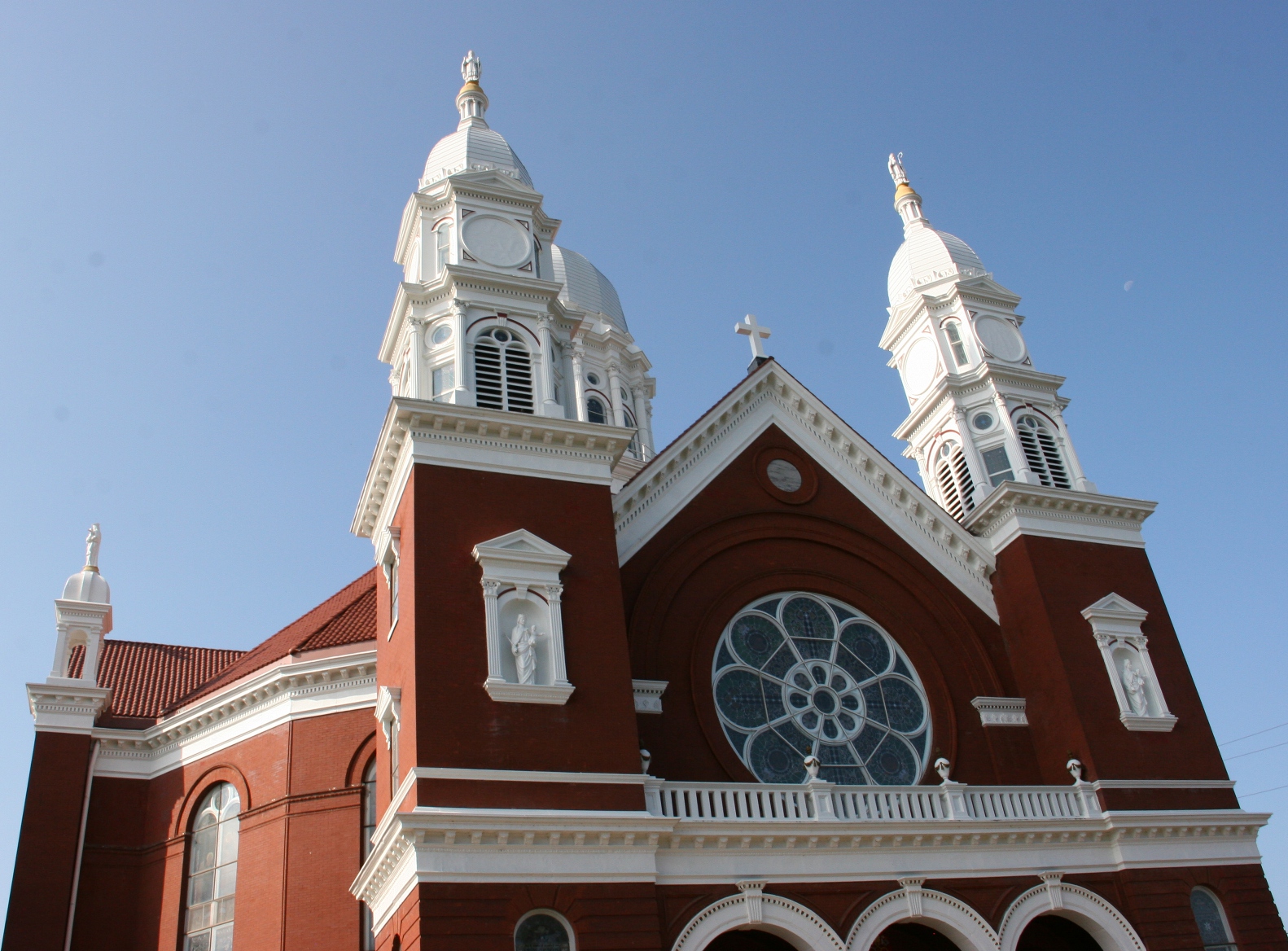
The Basilica of Saint Stanislaus Kostka, named after a popular saint from Poland, is so massive I could not get the entire basilica in a photo. It’s located at 625 East Fourth Street in Winona, Minnesota.

UNOFFICIALLY, PARISHIONERS CALL the basilica St. Stan’s. I like that. It seems fitting in an age when the current pope, Pope Francis, has connected in an everyday sort of way with the faithful, Catholic or not.

I am Lutheran. But denominational affiliation matters not when touring a beautiful house of worship. Or appreciating a man who oversees with a blessed sense of ordinariness. Several weeks ago my husband, a Catholic turned Lutheran, and I visited the Basilica of Saint Stanislaus Kostka, aka St. Stan’s, in Winona. Touring churches interests us from multiple perspectives.

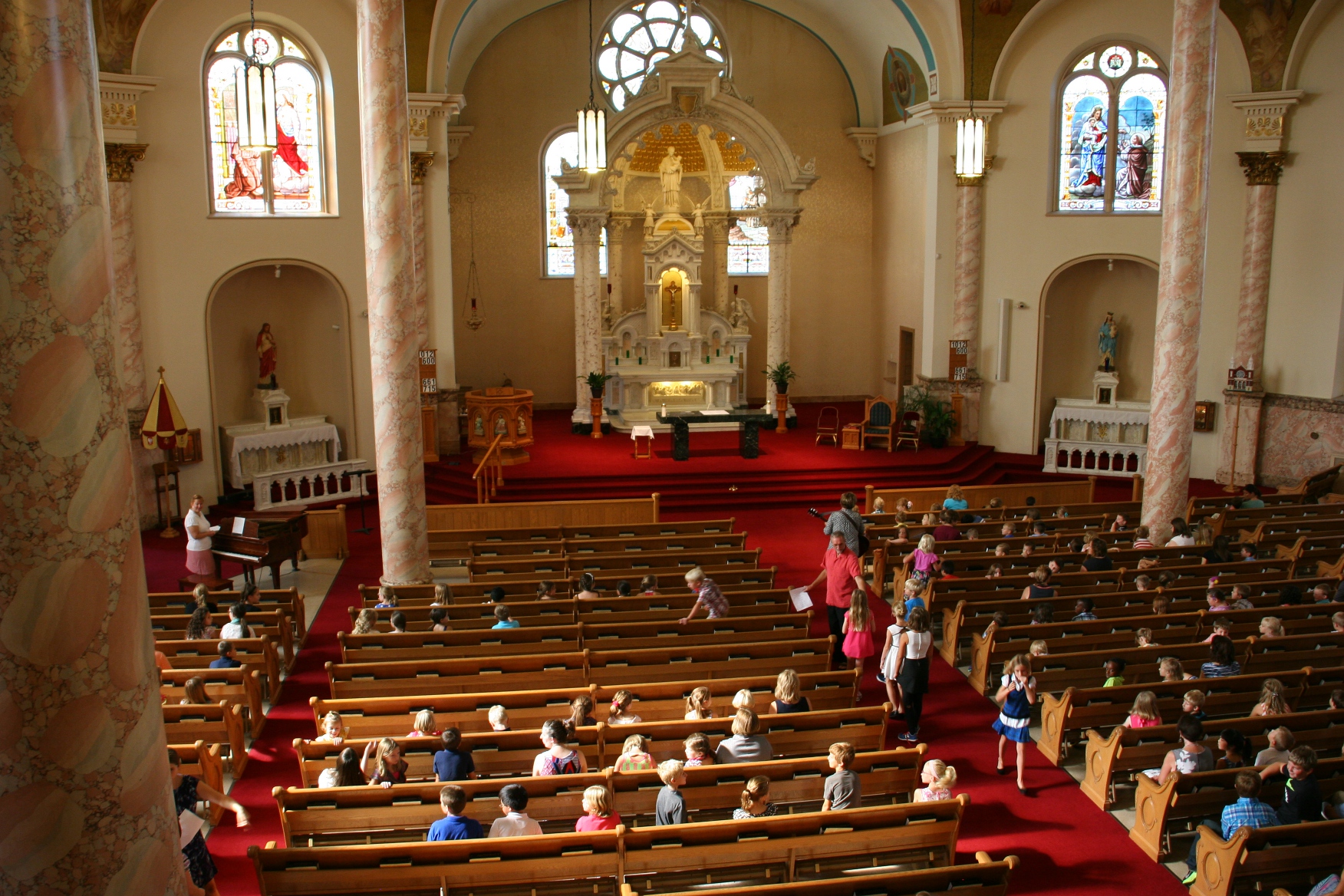
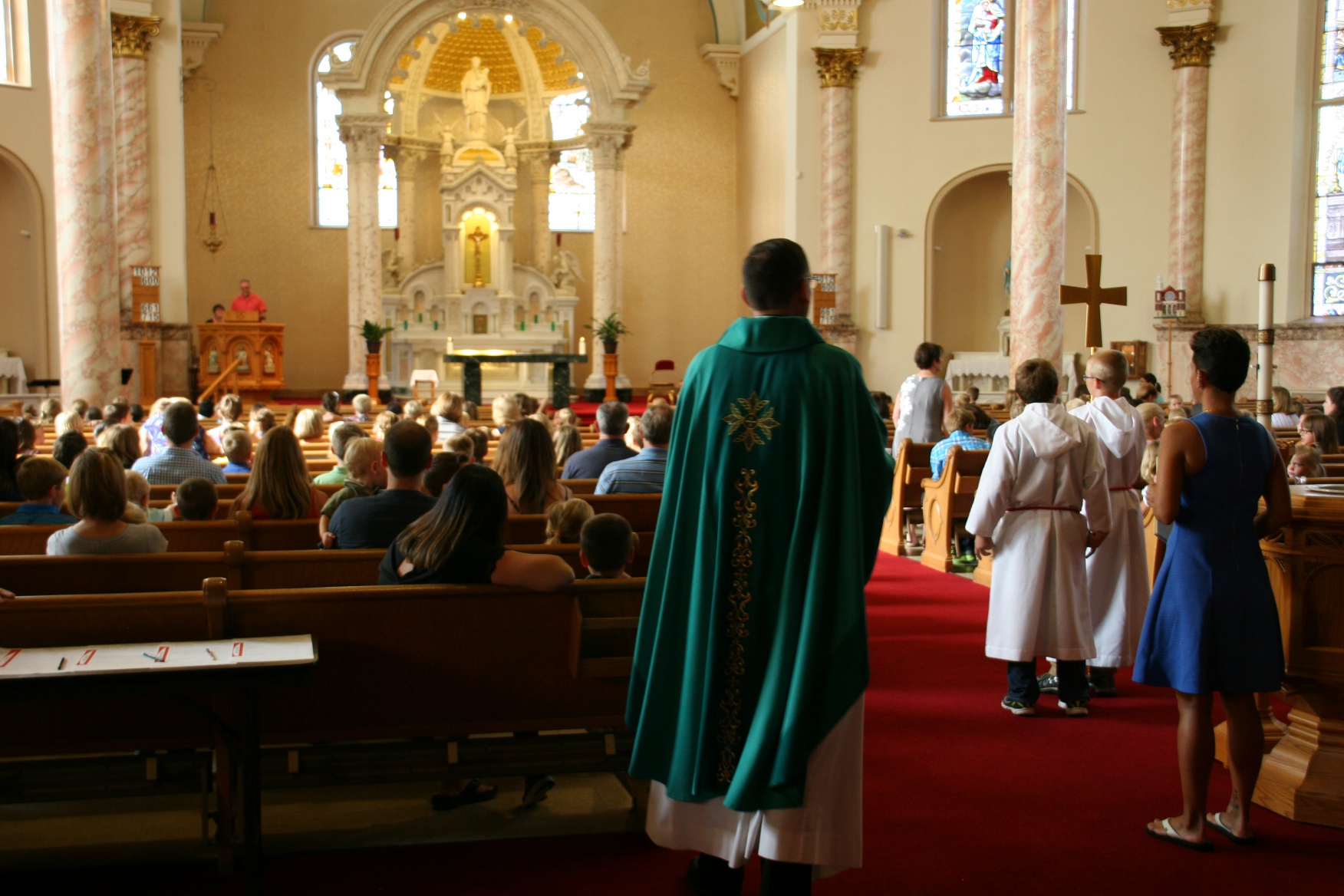
Students from the basilica's school file in for morning Mass.

Students file in for morning Mass.

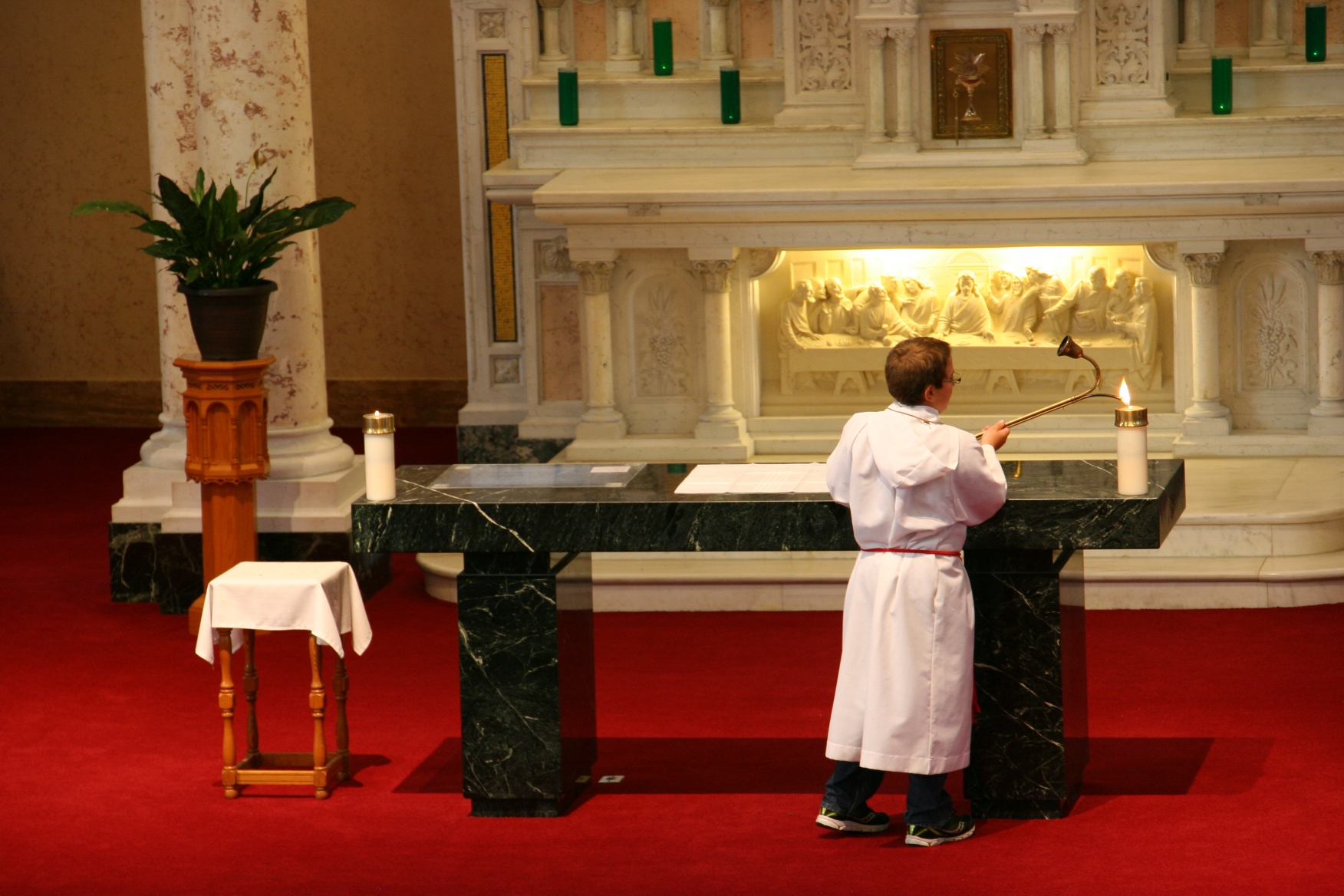
An altar boy prepares for Mass.

An altar boy prepares for Mass.

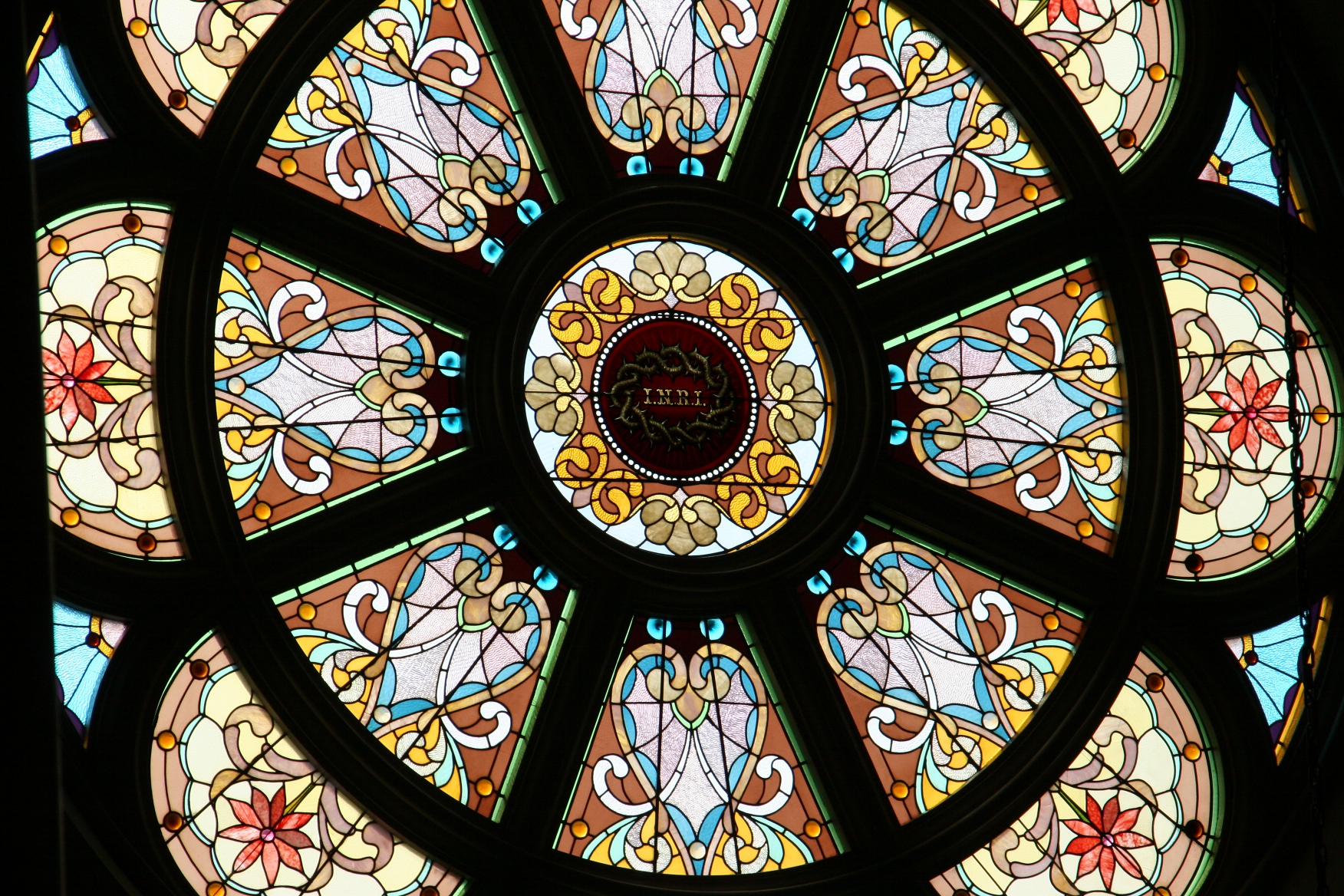
The stained glass windows are incredible in their sacred symbolism and beauty.

The stained glass windows are incredible in their sacred symbolism and beauty.

We arrived at St. Stan’s shortly before a children’s Mass, leaving us to observe from the balcony the reverent holiness of an altar boy lighting a candle, the filing of elementary students into pews, the light of a sultry summer morning filtering through stained glass windows.

Beautiful morning light filters through stained glass onto the curving balcony railing.

Lovely morning light filters through stained glass onto the curved balcony railing.

A statue is tucked into a corner below stations of the cross.

A statue is tucked into a corner below stations of the cross.

The paintings inside the dome are exquisite in their detailed beauty.

The paintings inside the dome are exquisite in their detail.

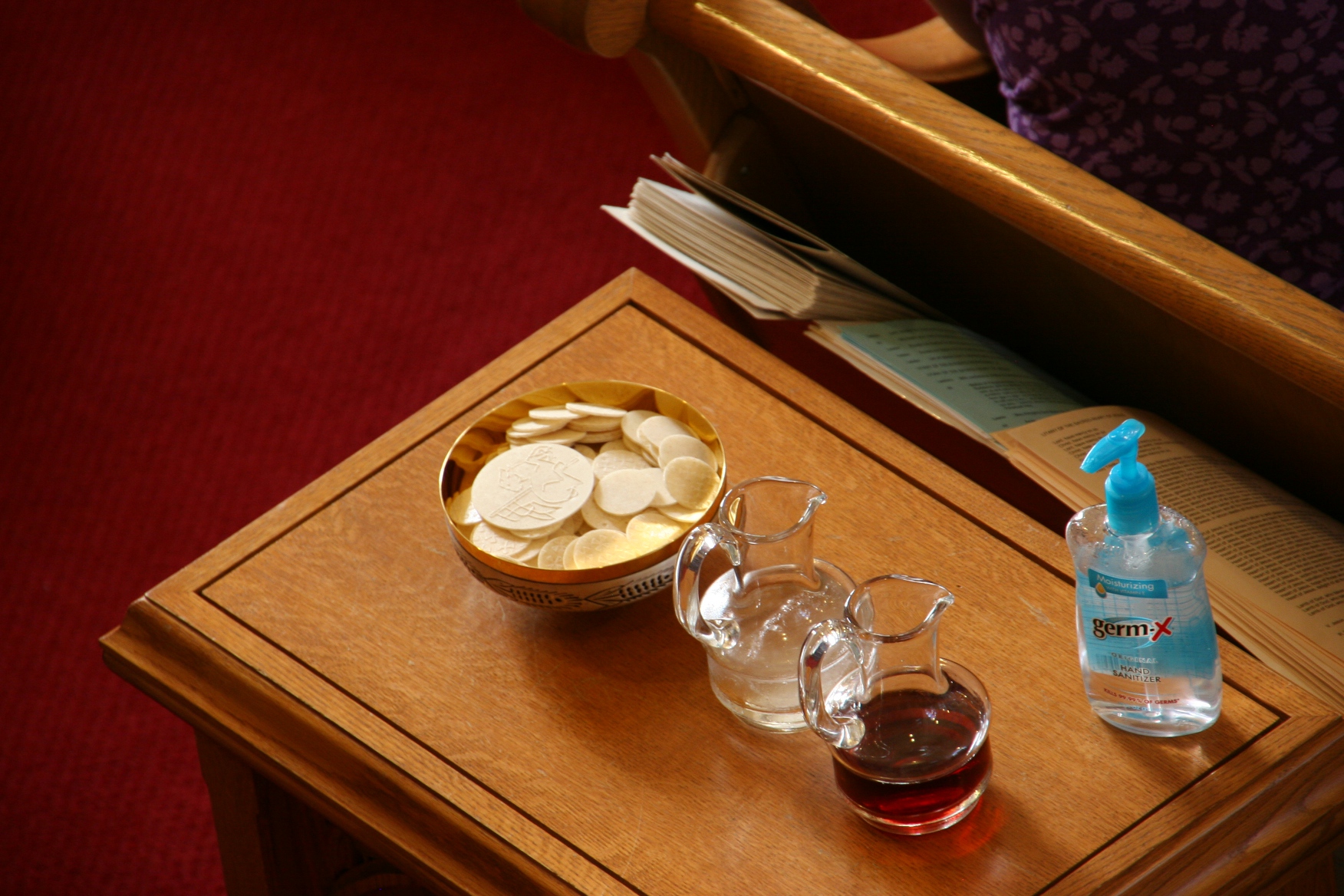
The bread and the wine before it is carried to the front of the sanctuary.

The bread and the wine before they are carried to the front of the sanctuary.

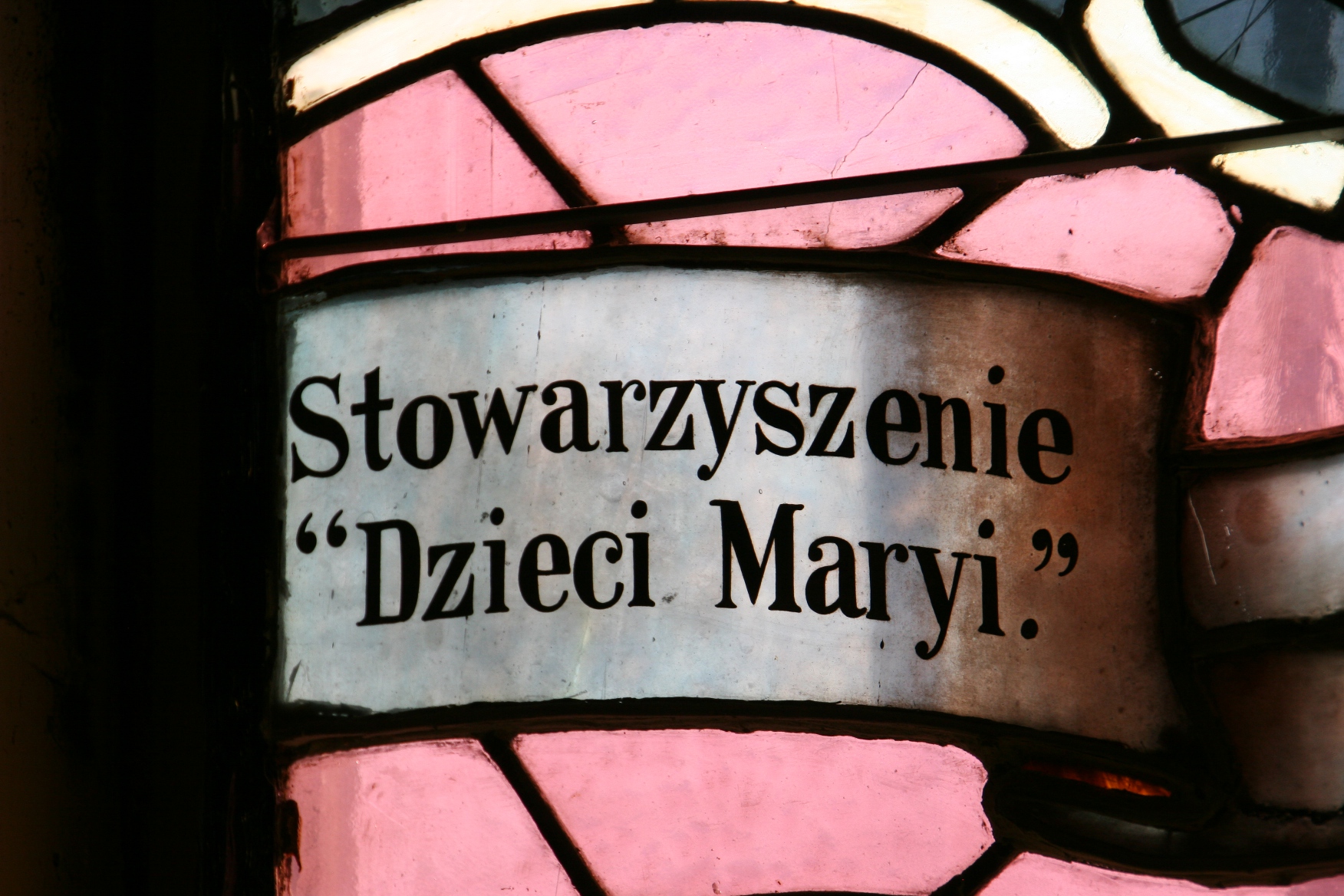
Polish words on a stained glass window translate to

Polish words on a stained glass window translate, according to Google translate, to “”Association of the Children of Mary.”

I stood there in awe, swinging my camera lens toward marble pillars and stained glass, statues and crucifixes, curving wood and paintings, Communion wafers and words in Polish.

The upper portion of the basilica at its main entry.

The upper portion of the basilica at its main entry.

This is a church of Polish immigrants. Built in 1894 – 1895 of brick and stone in Romansque style (in the form of a Greek cross) by the Winona architectural firm of Charles G. Maybury & Son, the basilica is on the National Register of Historic Places.

With its designation as a basilica, St. Stan's also received a crest symbolic of important events in its history. Click here to learn about the crest.

With its designation as a basilica, St. Stan’s also received a crest symbolic of important events in its history. Click here to learn about the crest.

Not knowing the difference between a regular Catholic church and a basilica, I learned from online research that a basilica has received special privileges from the pope. St. Stan’s rates as a minor basilica , the 70th in the U.S. and only one of two in Minnesota. (The other is the Basilica of Saint Mary in downtown Minneapolis.) The title ties to the extraordinary architectural quality of the building and to the congregation’s significant Polish heritage, according to a 2011 press release from the Roman Catholic Diocese of Winona announcing the designation by the Vatican.

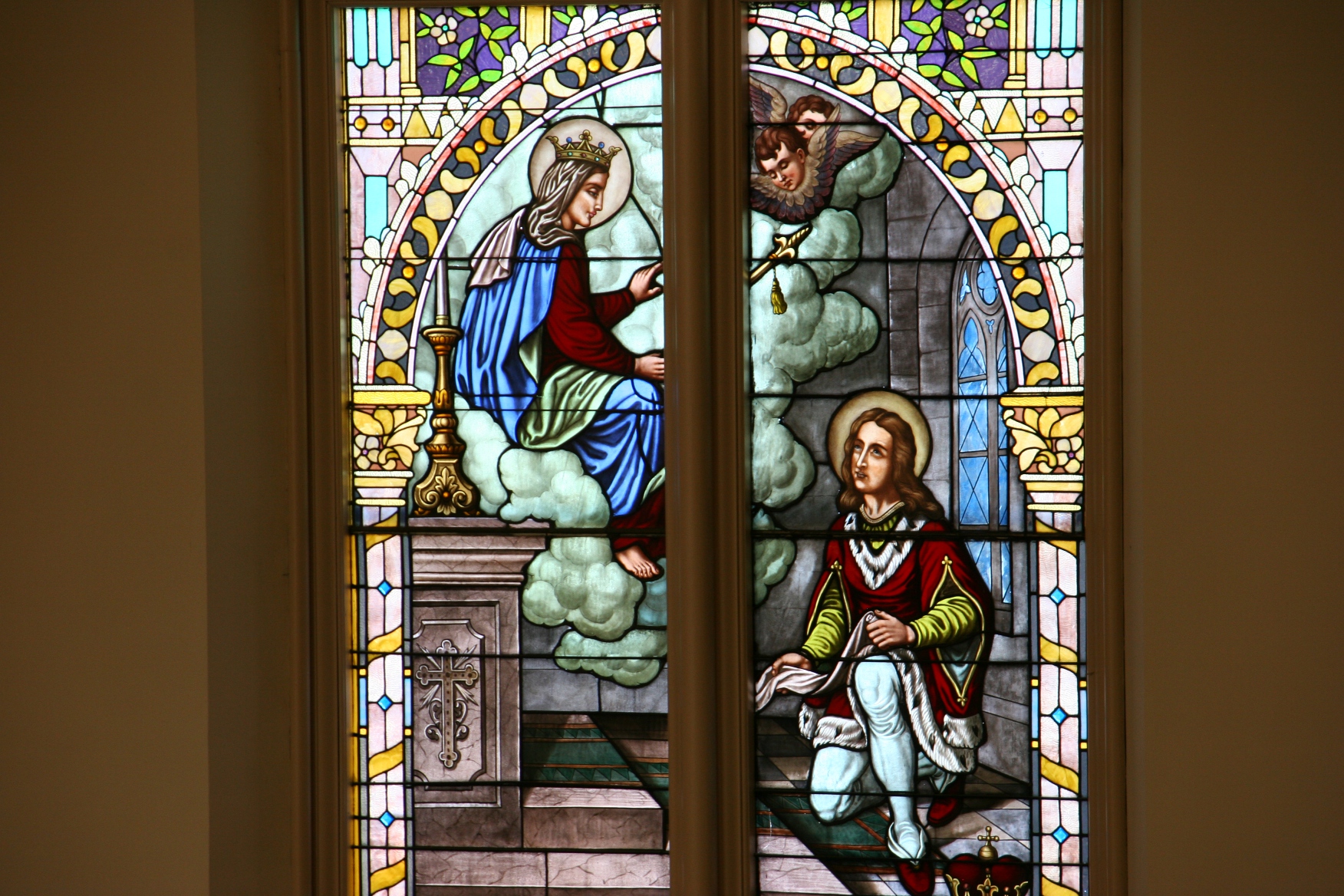
I'm certain the scenes in each stained glass window hold religious significance.

The stained glass windows truly are religious works of art.

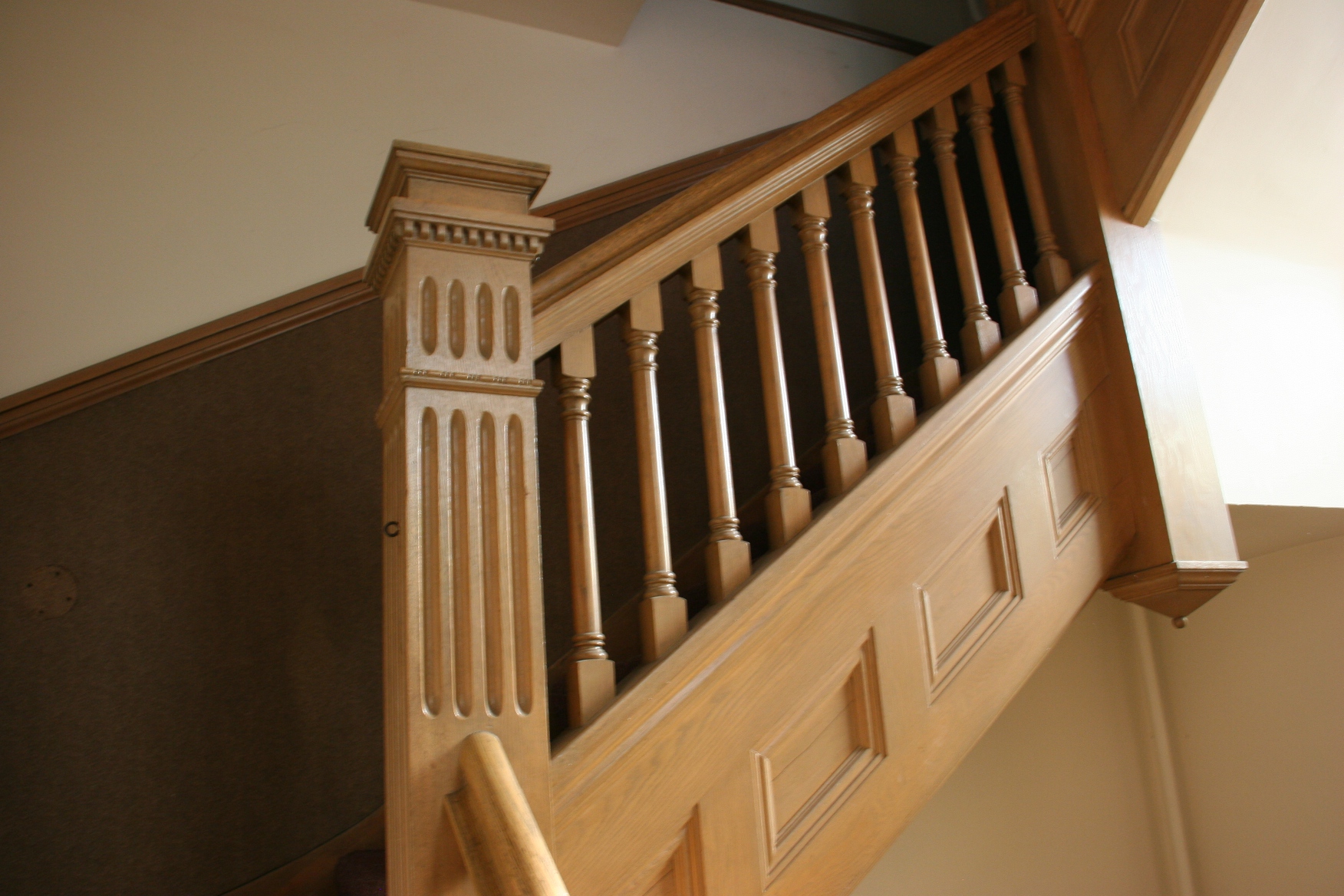
The stairway to the balcony features incredible craftsmanship.

The stairway to the balcony features incredible craftsmanship.

Massive marble pillars impress.

Massive marble pillars impress.

Terminology and privileges aside, this is one impressive house of worship. It’s artful and splendid. Reverent and meaningful. Personal, yet powerful in its sheer size.

I expect many a worshiper has found comfort in these stained glass windows.

I expect many a worshiper has found comfort in these stained glass windows.

This massive place holds generations of family history. Imagine the sins confessed and forgiven here, the blessings bestowed, the holy water sprinkled, the families who’ve grieved and celebrated within the walls of St. Stan’s.

The priest is about to proceed up the aisle to begin Mass.

The priest is about to proceed up the aisle to begin Mass.

To witness the next generation in worship on a Friday morning in God’s house reaffirms for me that the faith of our fathers remains strong. Just like this aged basilica in the Mississippi River town of Winona.

BONUS PHOTOS of the exterior:

A back view of St. Stan's.

A back view of St. Stan’s.

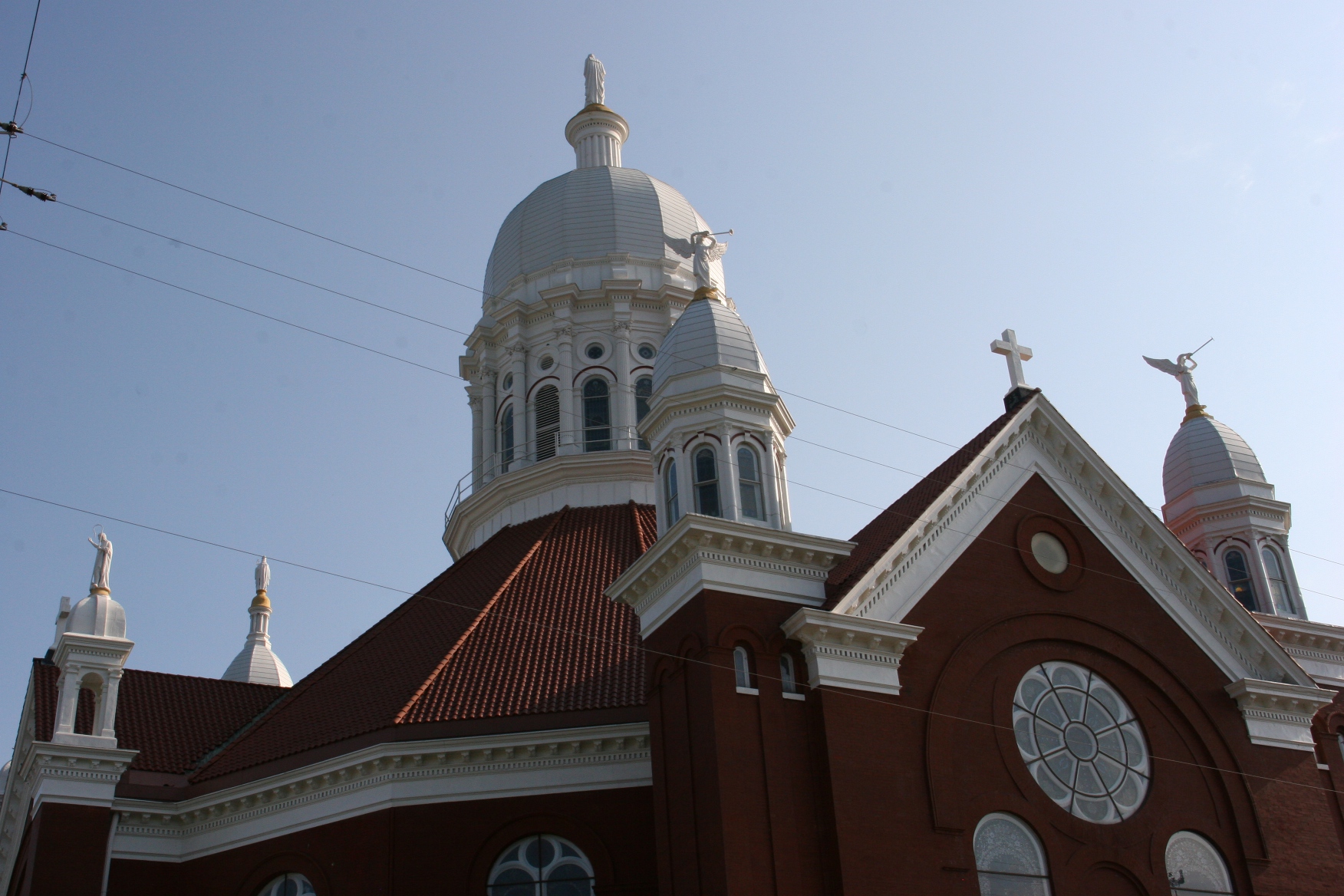
Angel art atop a tower.

Angel art atop a tower.

Roof details.

Roof details.

The main entrance.

The main entrance.

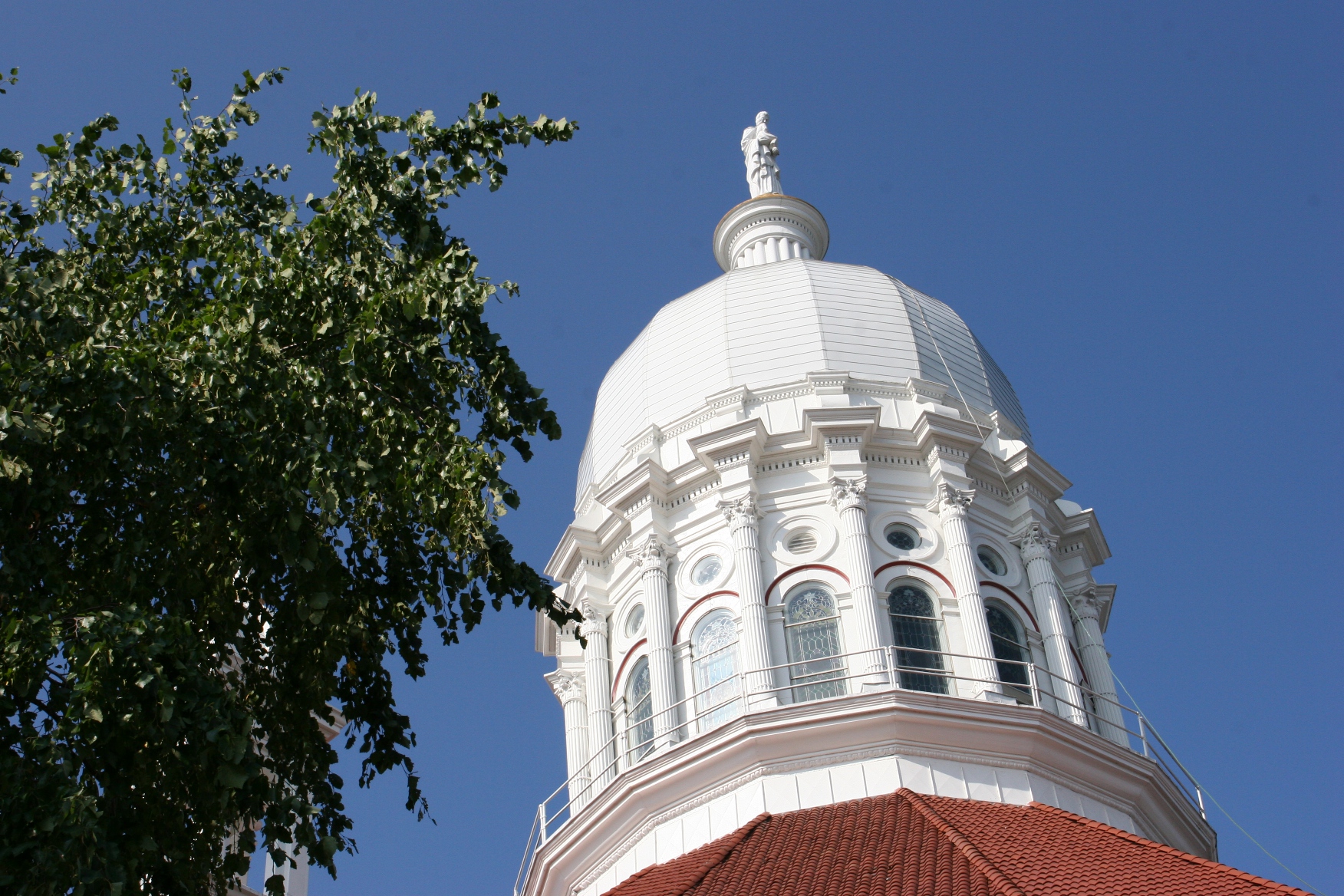
And the landmark dome.

And the landmark dome.

© Copyright 2015 Audrey Kletscher Helbling


Discovering Minnesota’s oldest Czech church, St. Wenceslaus July 2, 2015

AS A LIFE-LONG LUTHERAN, I’m mostly unfamiliar with patron saints of the Catholic church, even though my husband, now Lutheran, grew up Catholic.

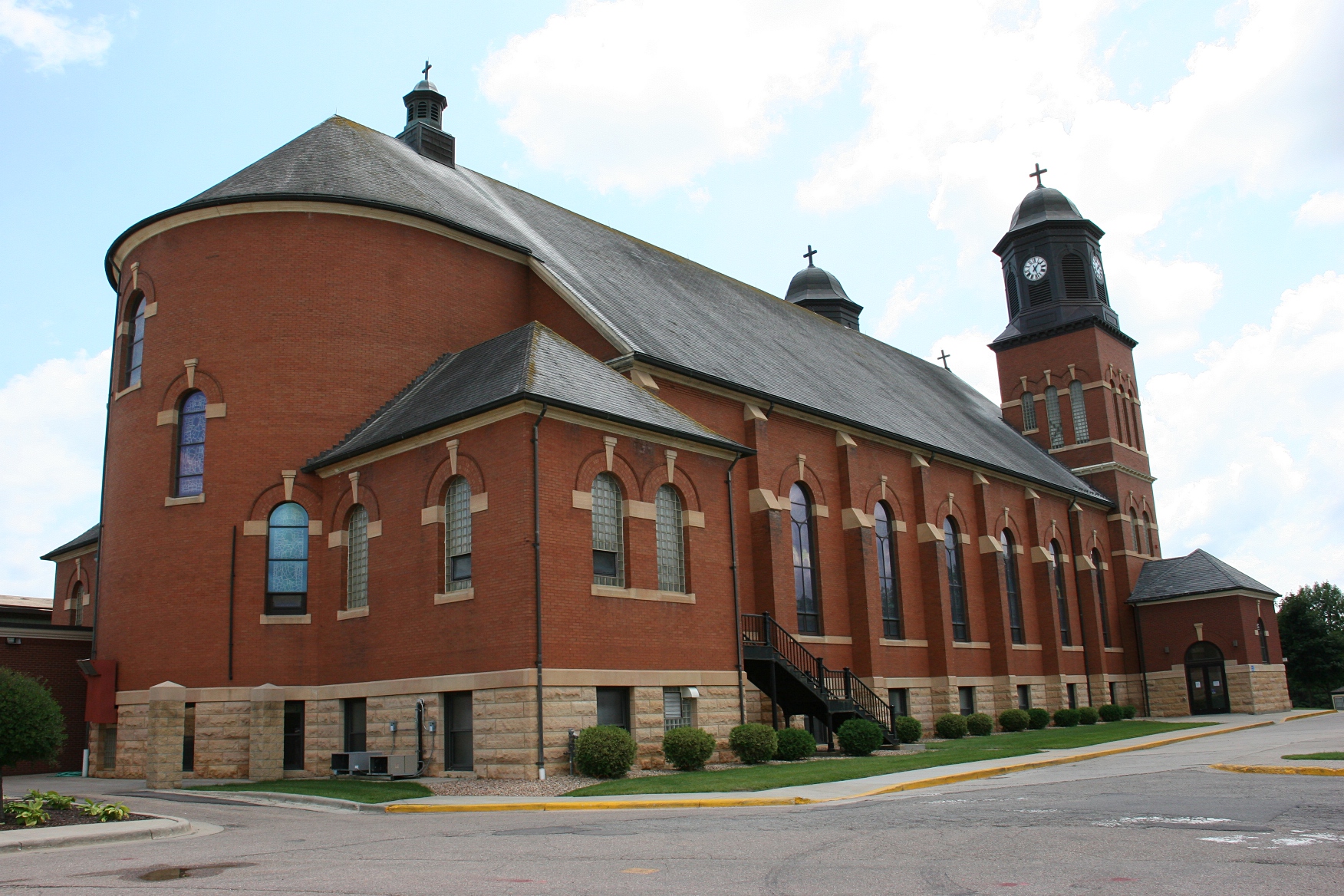
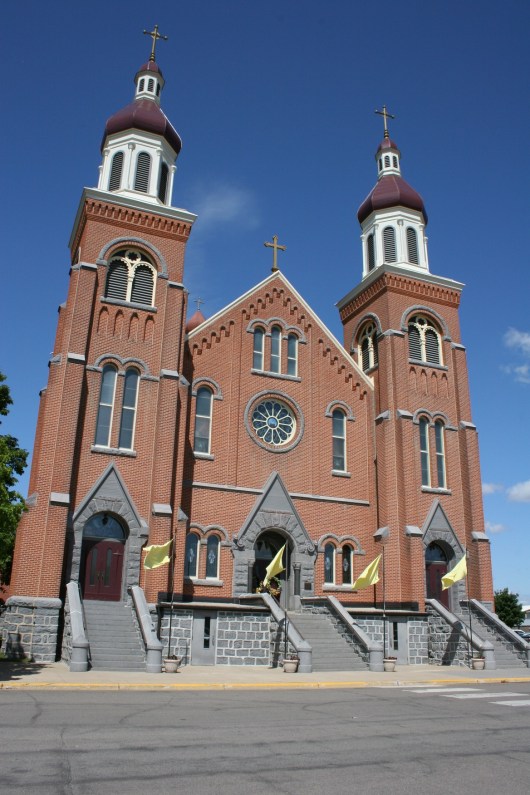
The Church of St. Wenceslaus, New Prague, Minnesota.

The Church of St. Wenceslaus, New Prague, Minnesota.

So when I happened upon the majestic Church of St. Wenceslaus rising above the east end of New Prague’s Main Street, I had to research the saint whose carved image guards the impressive columned front entry.

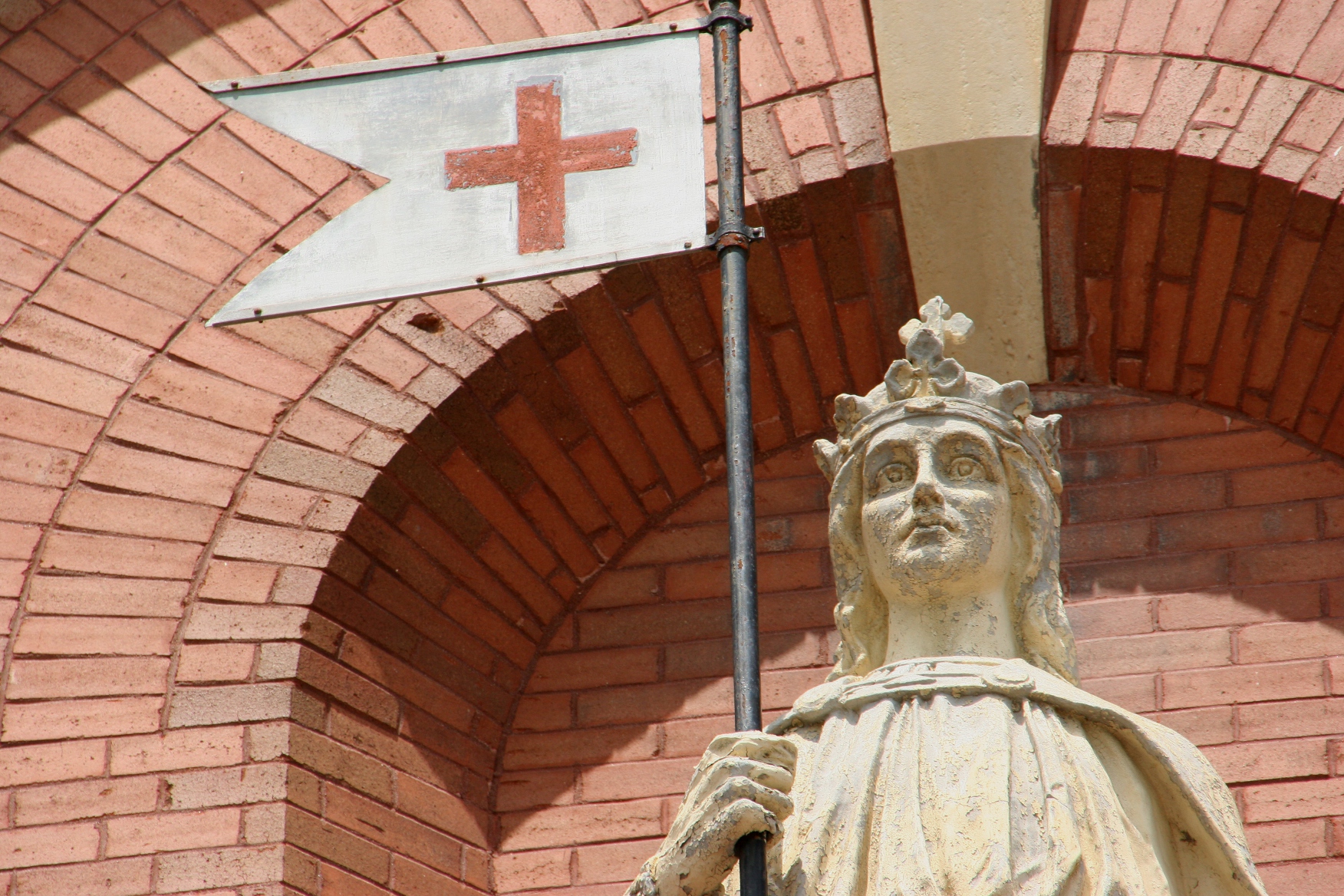
A close-up of the St. Wenceslaus statue above the main church entry.

A close-up of the St. Wenceslaus statue above the main church entry.

St. Wenceslaus, duke of Bohemia from 921 until his murder in 935, is considered a martyr for the faith and is hailed as the patron of the Bohemian people and the former Czechoslavakia.

A side and rear view of this stunning church.

A side and rear view of this stunning church.

The selection of this saint for the New Prague congregation is fitting for a community with strong Czech roots. Founded in 1856, the Church of St. Wenceslaus is the oldest Czech church in Minnesota. It is now part of the New Prague Area Catholic Community.

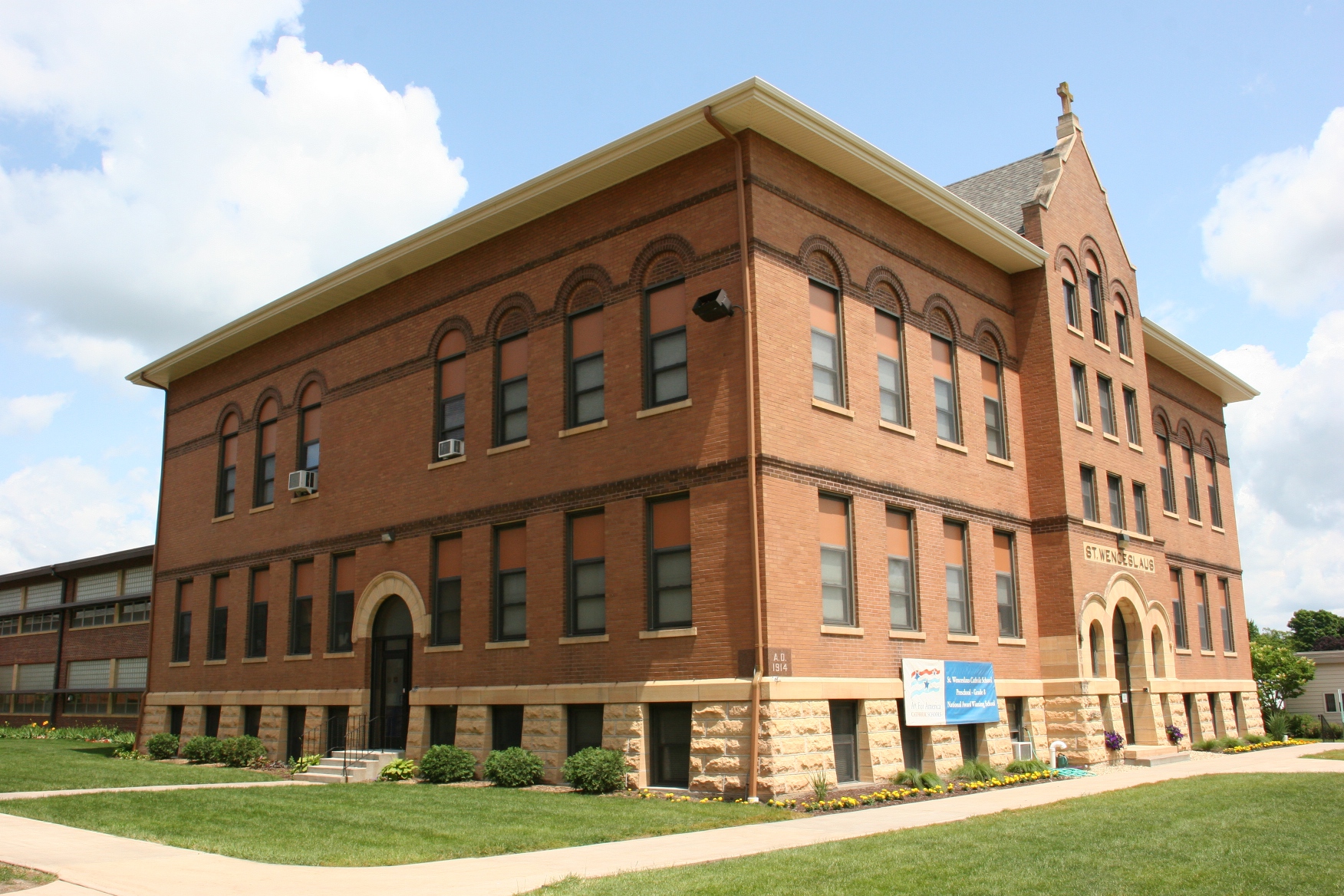
This is the old section of St. Wenceslaus Catholic School, located next to the church. An addition was built in 2003. Students from kindergarten through eighth grades attend.

This is the old section of St. Wenceslaus Catholic School, built in 1914 and located next to the church. An addition was built in 2003. Students from kindergarten through eighth grades attend.

The parish also includes a school opened in 1878.

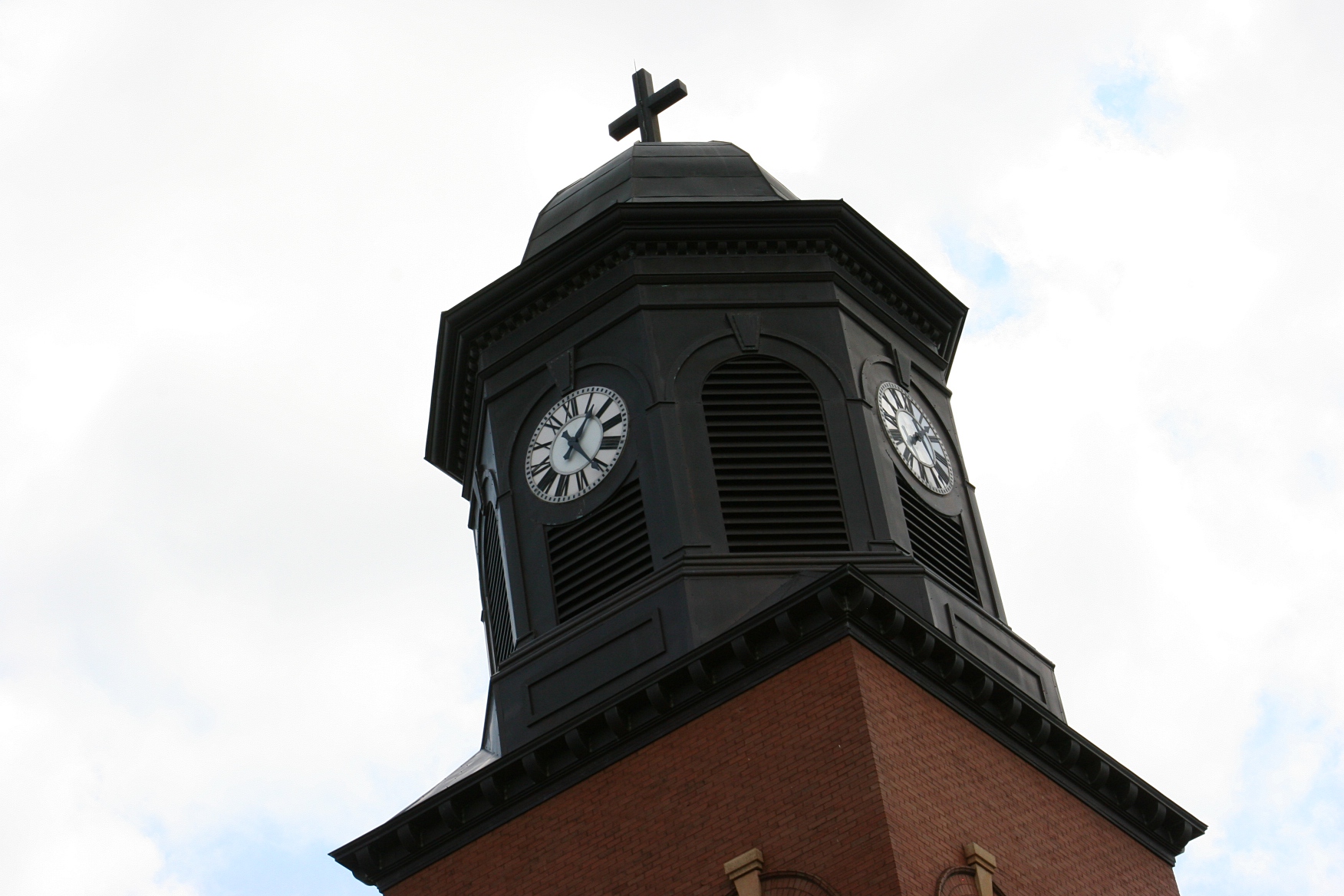
The church features two towers.

The church features two towers.

This duo towered brick church is stunningly beautiful. I paused numerous times while photographing the exterior simply to admire its artful construction. Churches aren’t built like this any more.

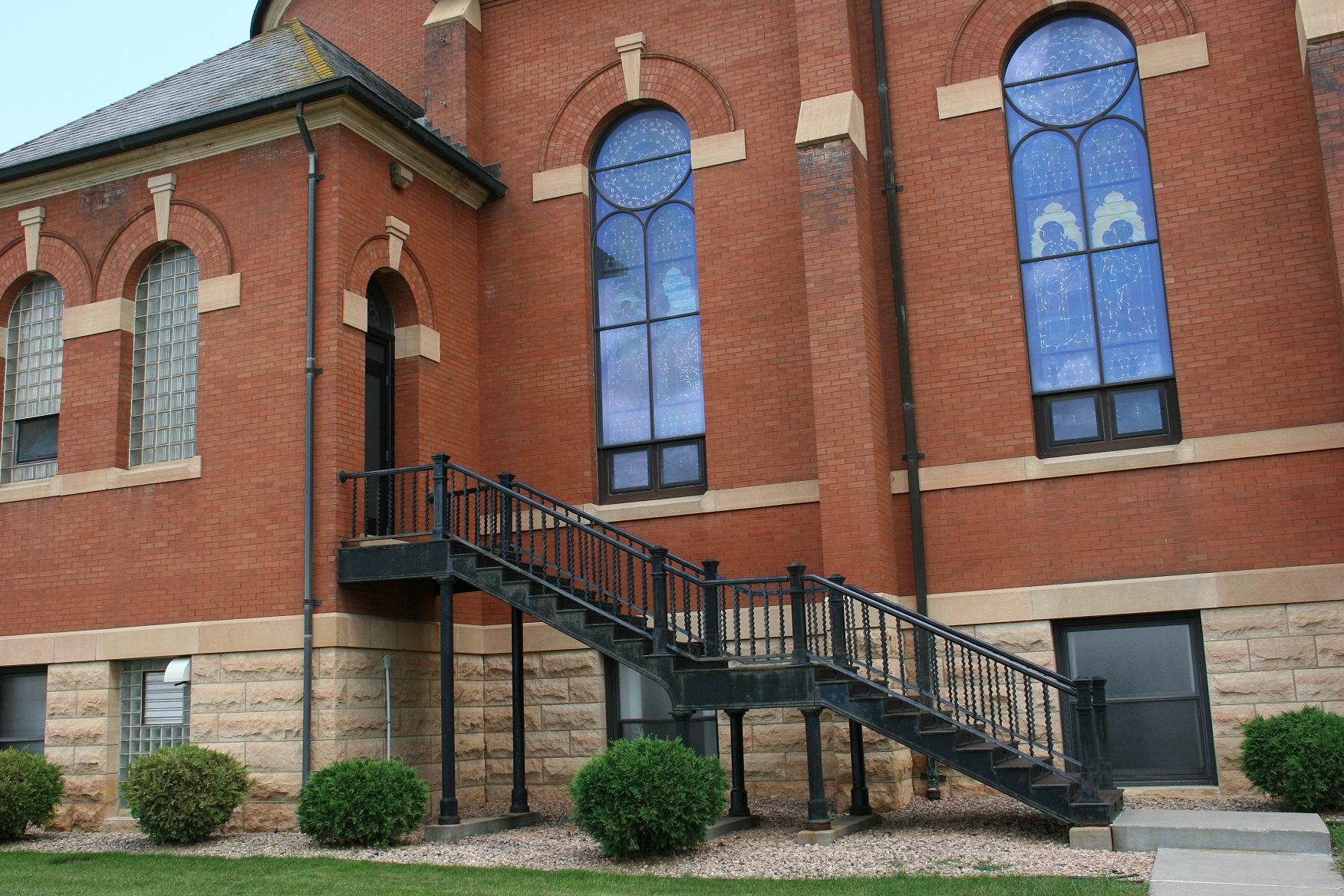
Even the side stairs are artful and the entire church well-maintained.

Even the side stairs are artful and the entire church exterior well-maintained.

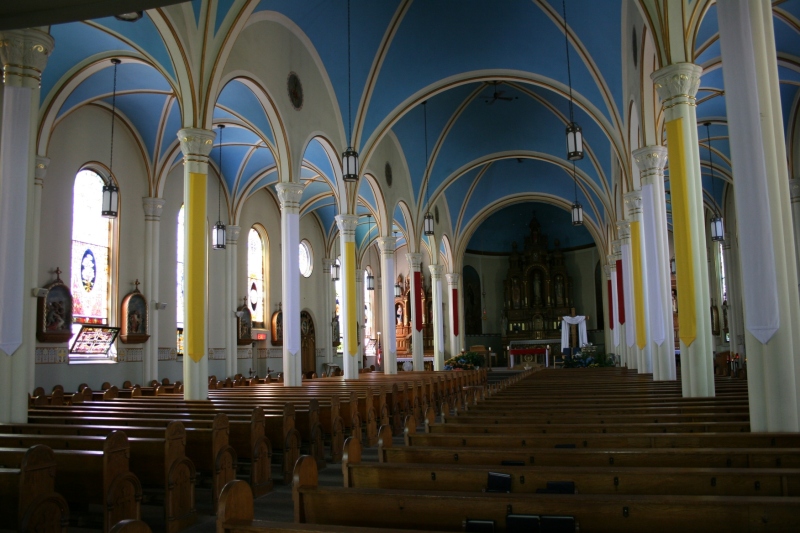
My single regret was finding the doors locked on a Sunday afternoon. This was not unexpected; most sanctuaries are locked now days. I could only imagine the lovely stained glass windows I would find inside, along with more statues of patron saints and worn pews.

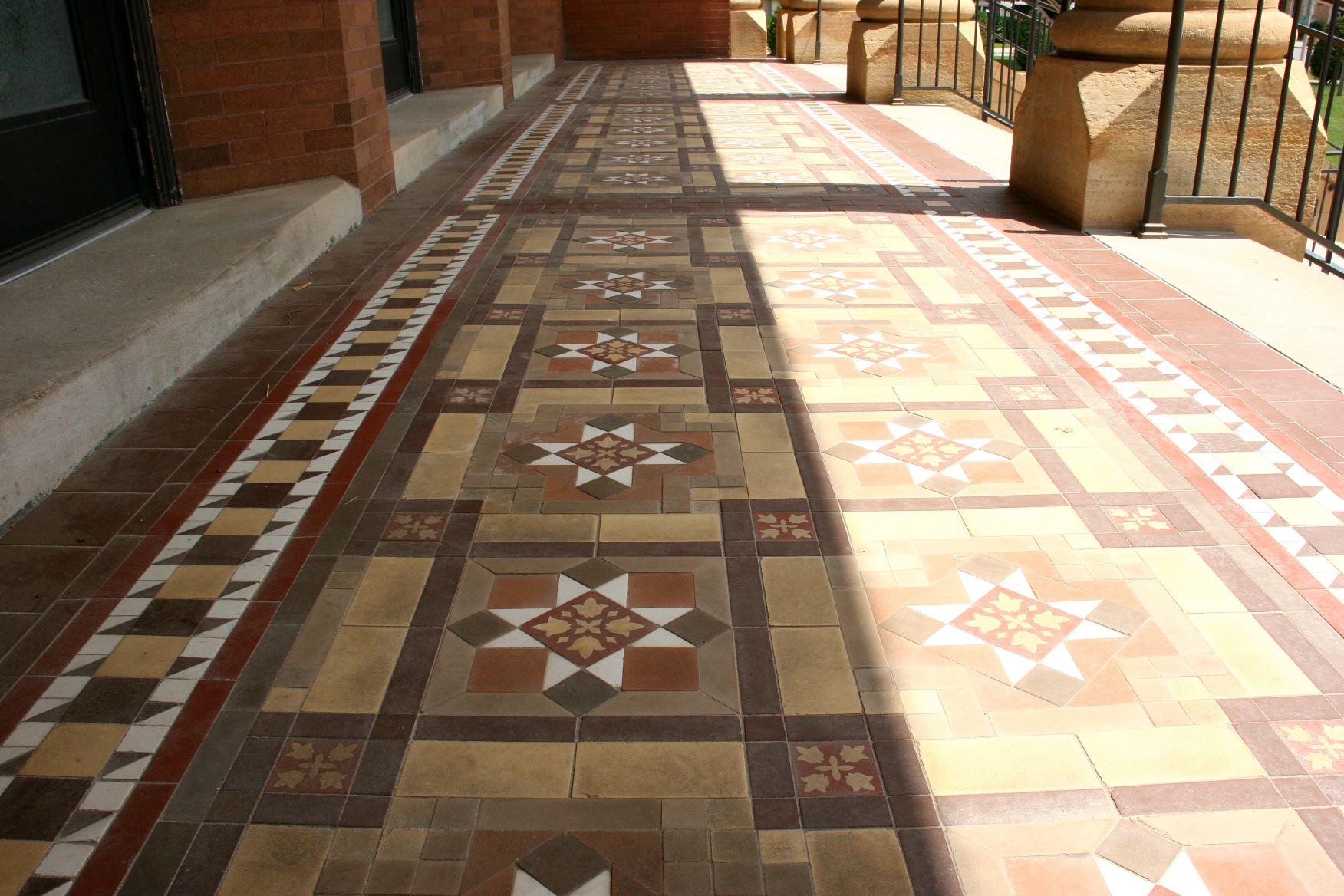
In sunlight (right) and in shade, the exterior tile floor under the columned entry is lovely.

In sunlight (right) and in shade, the exterior tile floor under the columned entry impresses.

Being Lutheran, I am intrigued by aged Catholic churches which are often significantly embellished with ornate details and religious art. This is so unlike most Lutheran churches. I appreciate both, wherein I find solace and peace. And perhaps that is the reason I seek out churches to photograph. Photographing them connects me, in a visual way, to God.

BONUS PHOTOS:

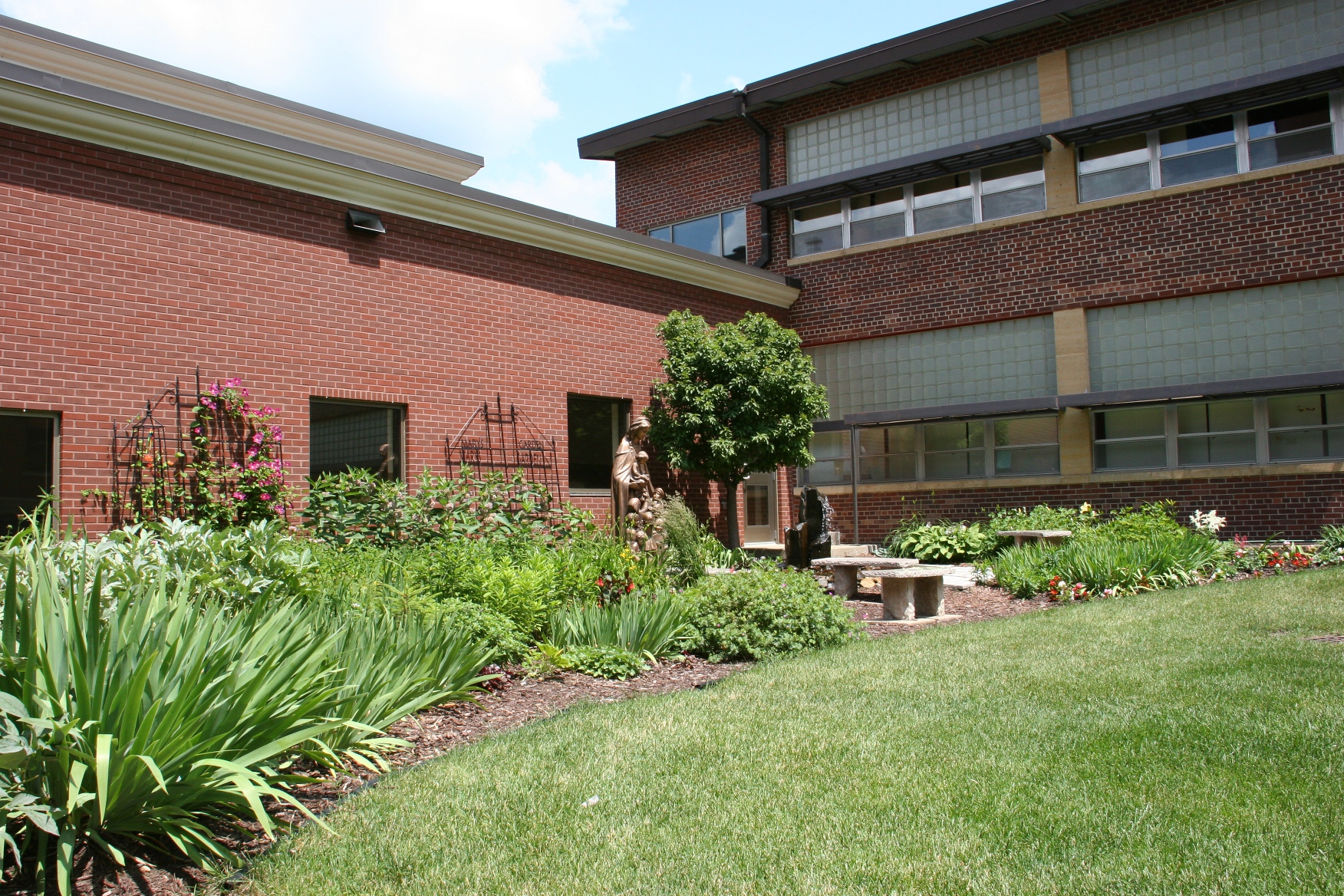
An overview of Mary's Garden, located between church and school.

An overview of Mary’s Garden, located between church and school.

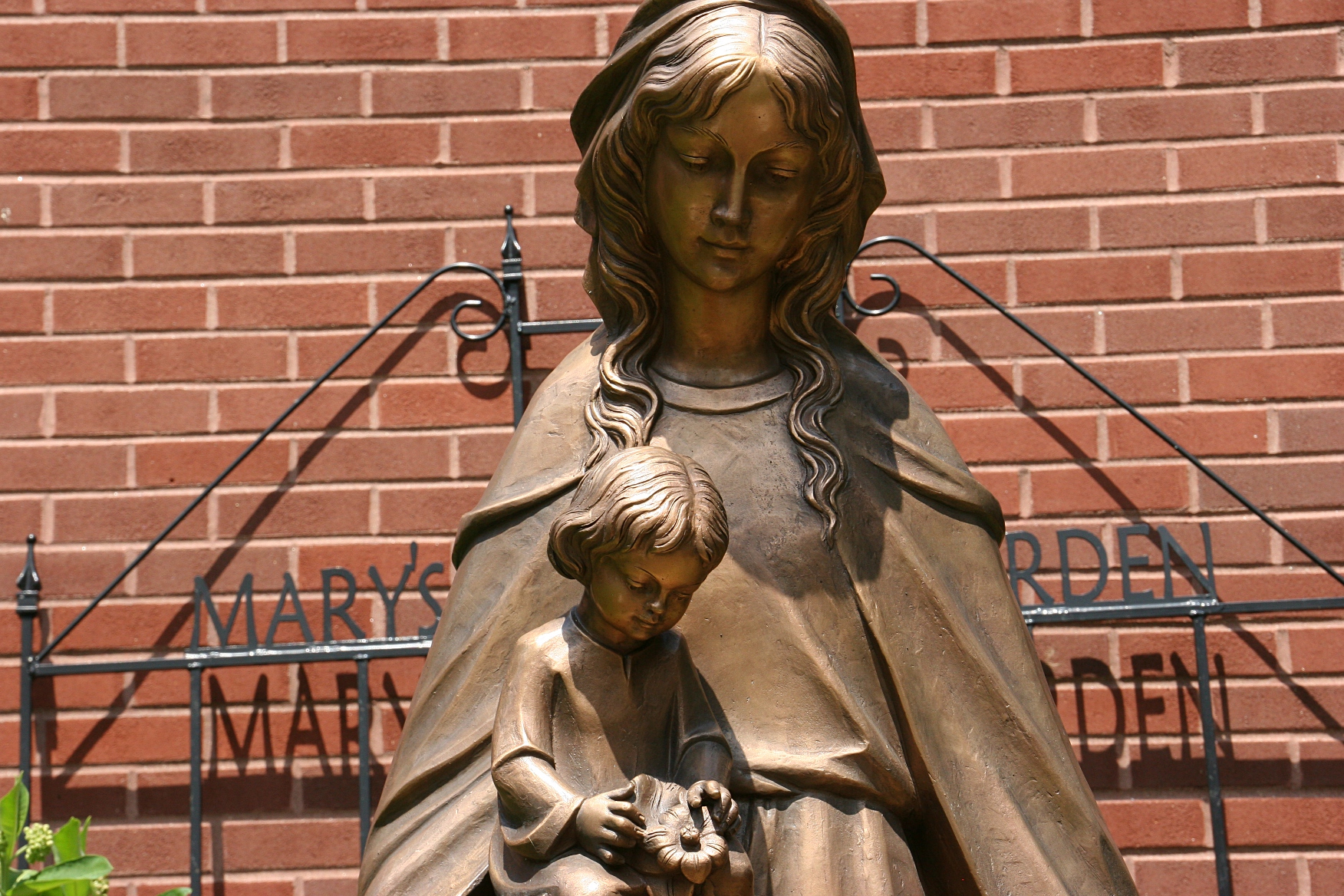
Children surround the statue of Mary in the garden.

Children surround the statue of Mary in the garden.

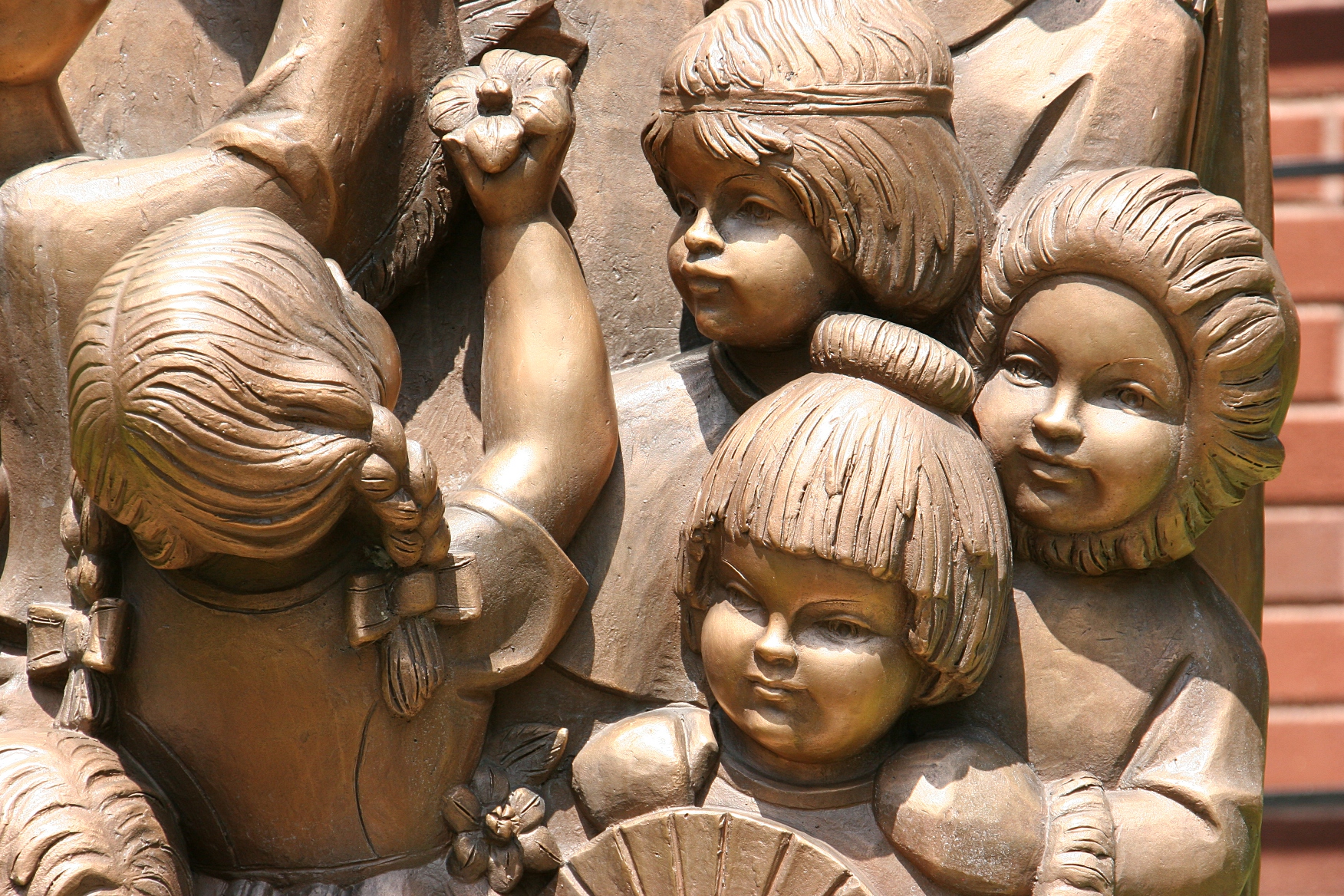
Children of many ethnicities are part of the Mary statue.

Children of many ethnicities are part of the Mary statue.

More details in the garden statue art.

More details in the garden statue art.

At the foot of the Mary statue, a message, in Czech, says "welcome."

At the foot of the Mary statue, a message in Czech says “welcome.”

Petunias spill from a windowbox at the front of the school.

Petunias spill from a windowbox at the front of the school.

© Copyright 2015 Audrey Kletscher Helbling


Part VI: The Little Chapel off the Interstate in Clear Lake June 9, 2015

Filed under: Uncategorized — Audrey Kletscher Helbling @ 5:00 AM
Tags: , , , , , , , ,
My husband, Randy, leaves the Guardian Angel Roadside Chapel as Scott Kennedy and his nephew finish cleaning.

My husband, Randy, leaves the Guardian Angel Roadside Chapel as Scott Kennedy and his nephew finish cleaning.

WHEN WE FINALLY FOUND the Guardian Angel Roadside Chapel tucked into the woods along South 24th Street in Clear Lake, Iowa, after we’d asked for directions and still drove by the unmarked landmark, we met Scott Kennedy.

Scott Kennedy outside the chapel built in honor of his aunt.

Scott Kennedy outside the chapel built in honor of his aunt.

He was there with his nephew, an Iowa State University student from the western U.S., cleaning the chapel and grounds for a funeral the next day.

I forgot to count the pews.

I forgot to count the pews. But I believe there are eight or ten, each seating only a few people.

It’s difficult to envision a funeral inside this miniscule place of only a few short pews. But one was planned and the mess from an invading squirrel needed to be swept and gathered into garbage bags. Although I did not see it, my husband spotted the succumbed squirrel.

The day was overcast, the chapel dark, making photographing it a challenge.

The chapel is beautiful in its craftsmanship. This place is truly a labor of divine love.

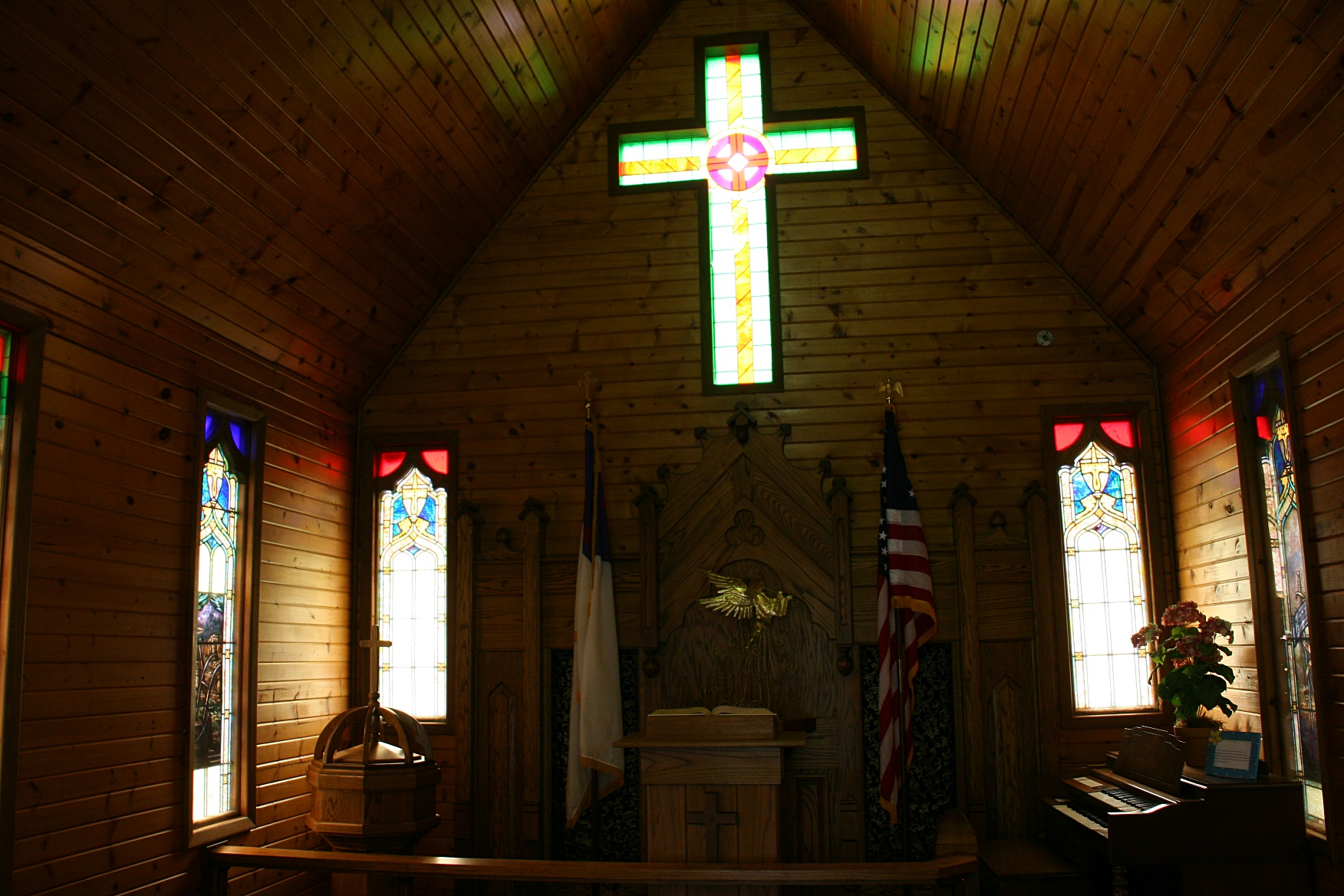
I was more focused on the chapel interior with its beautiful center stained glass cross crafted by a local artist and side stained glass windows salvaged from Zion Lutheran Church. The cross was designed to attract the attention of travelers along nearby Interstate 35.

This truly is a functional church with altar, organ and baptismal font.

Exiting the chapel grounds.

Exiting the chapel grounds.

I was especially delighted to find my favorite bible verse—the scripture that has guided me through some rough patches in life—inscribed on a dedication plaque inside the entry: We know that in all things God works for good with those who love him.—Romans 8:28. Serendipitous? Perhaps. But more likely divine.

It is the divine intervention of God which led Scott and others to construct the Guardian Angel Roadside Chapel in 1991 in honor of Scott’s aunt, Marguerite Williams. She was convinced that God protected her from kidnapping by a band of gypsies while growing up in Clear Lake. And later, while working at a Chicago medical clinic, Marguerite again experienced God’s protection when she encountered a gang of hoodlums.

It was hoodlums, or more accurately criminals, who set fire to the first Guardian Angel Chapel a year after it was built, Scott shared. The blaze was to distract responders from a break-in across town. Undeterred, Scott and others determined to rebuild this chapel which was rededicated on April 4, 1993.

An informational paper I found inside the chapel states its purpose:

This chapel was built as a witness to Christ. It is the hope and prayers of the builders that people worshipping here will be closer to Christ and will have their own guardian angel look after them.

This is looking toward the highway off which the chapel sits atop a hill in a wooded area.

This is looking toward the highway off which the chapel sits atop a hill in a wooded area.

FYI: The chapel is open daily from dawn until dusk, although I am uncertain whether it’s open during the winter months.

Check back tomorrow for my final installment in this seven-part series on Clear Lake, Iowa.

© Copyright 2015 Audrey Kletscher Helbling


We didn’t find gold in Oronoco, but… April 8, 2015

ORONOCO. I delight in the way those “o”s roll off the tongue. Smooth. Repetitious. Like a steady drum beat.

But I’d never been to Oronoco, only seen the exit signs to this community off U.S. Highway 52 five miles north of Rochester. Time to change that, to visit this place named after the Orinoco River in South America. (And, yes, the spelling of Orinoco is correct.)

The old schoolhouse.

The old schoolhouse.

On a recent Saturday, my husband and I wound our way into this small town, home of Oronoco Gold Rush Days, an antique show and market held on the third weekend in August since 1972. That’s a long-standing event, its name tracing to the apparent discovery of gold here in the late 1850s and the establishment of the Oronoco Mining Company. That mining venture didn’t last long as the raging Zumbro River washed away the gold mining operation. Apparently little gold was found.

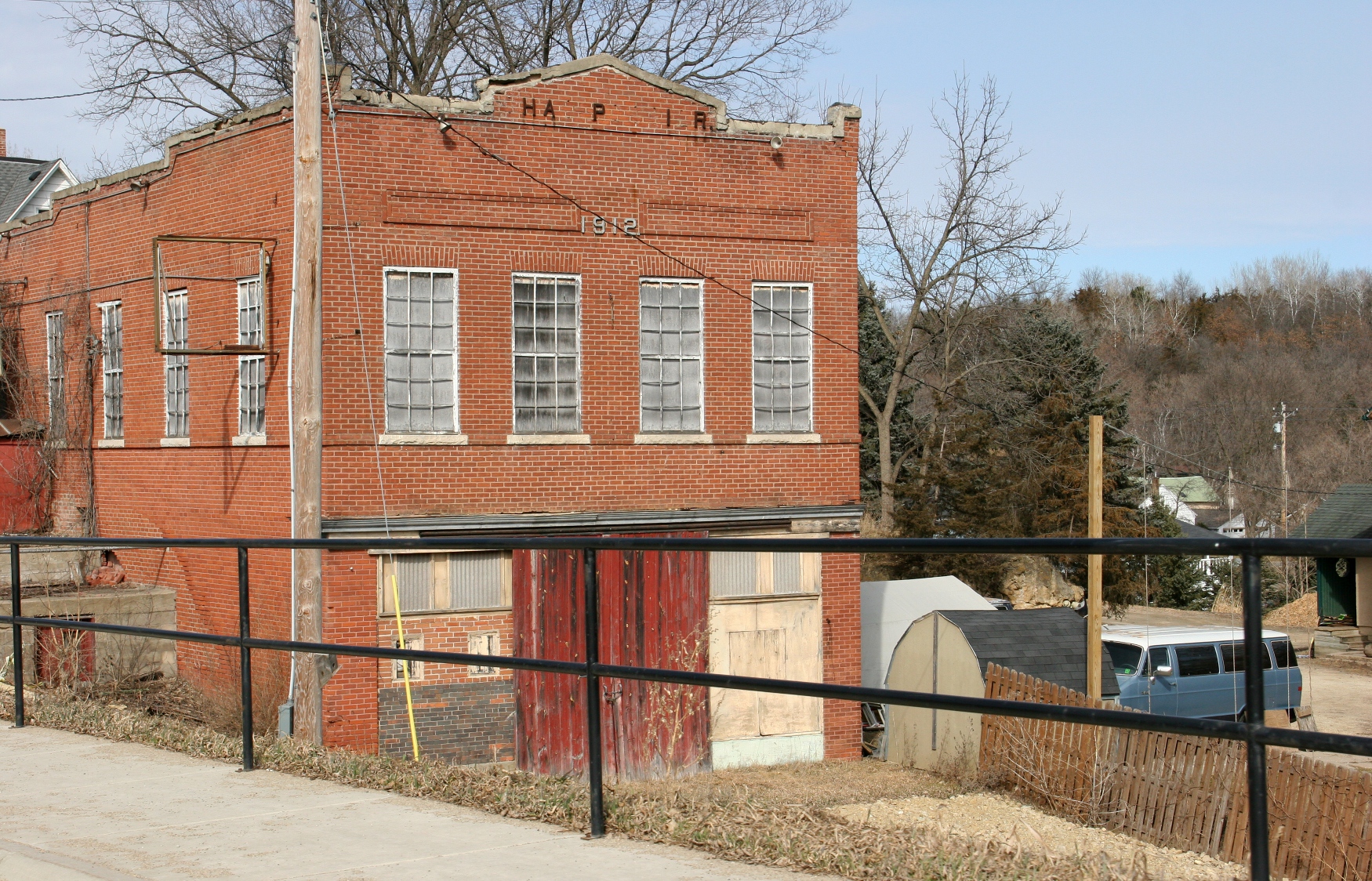
A boarded up building dated 1912.

A boarded up building dated 1912.

Historic buildings define the heart of this quaint river community. We did a quick drive through downtown and stopped only to browse two highway side antique shops as the day shifted toward evening.

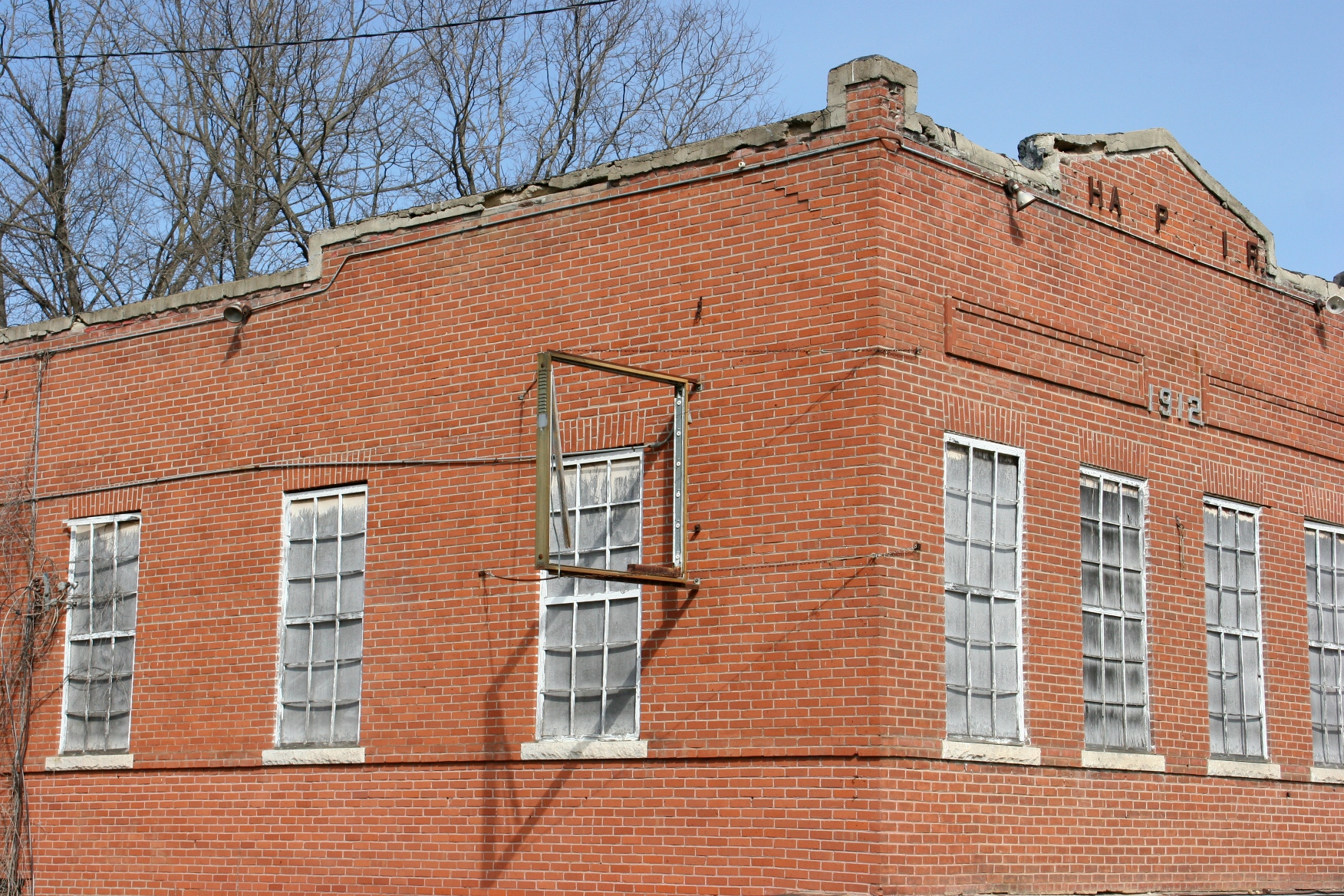
The 1912 building up close.

The 1912 building up close.

Oronoco seems worth a return trip to poke around more, to see what we missed.

First Presbyterian Church, constructed in 1871, sits atop a hill.

First Presbyterian Church (today Presbyterian Church of Oronoco), constructed in 1871, sits atop a hill.

A front view of that beautiful old church.

A front view of that beautiful old church.

The community center.

The community center.

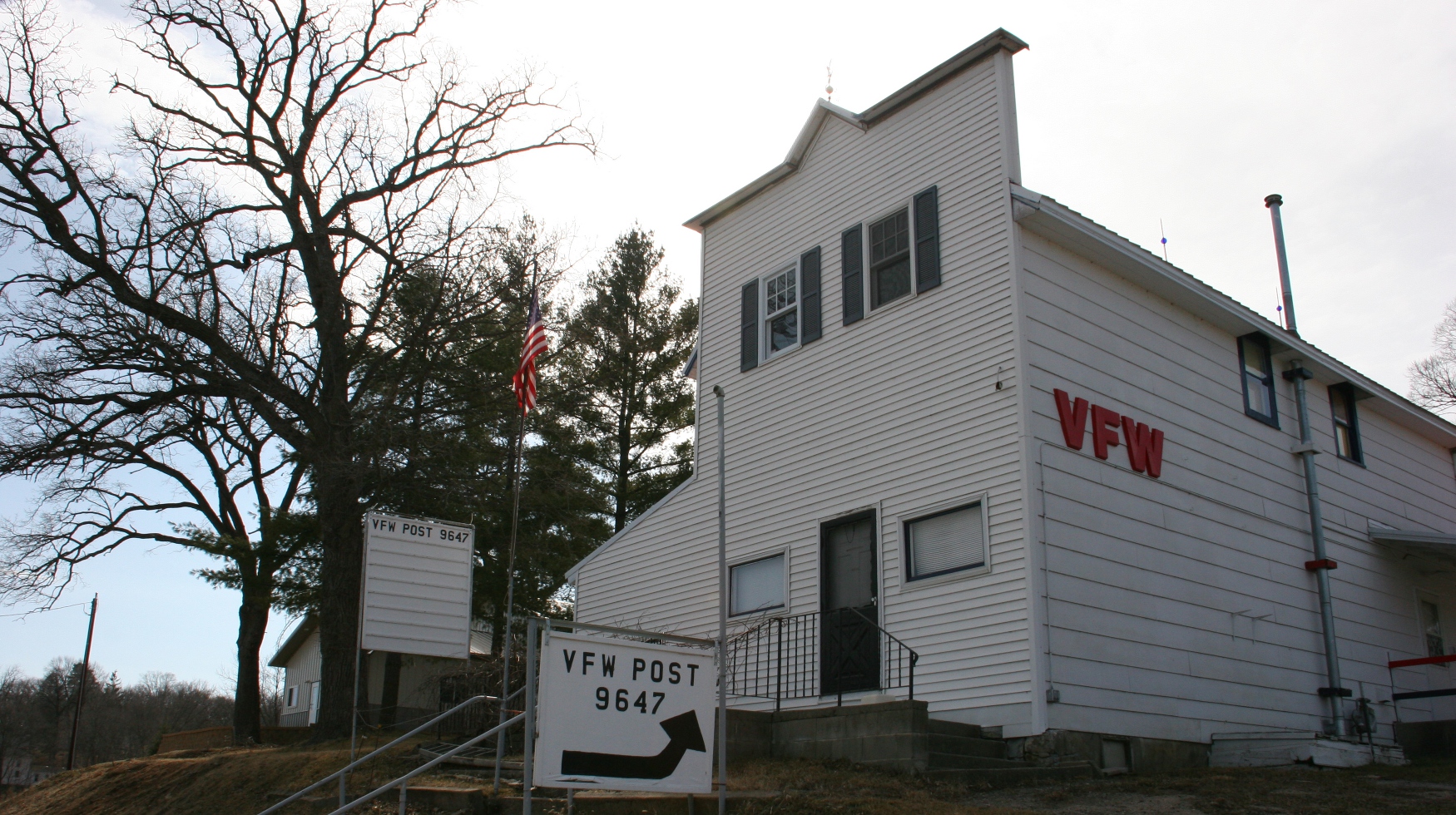
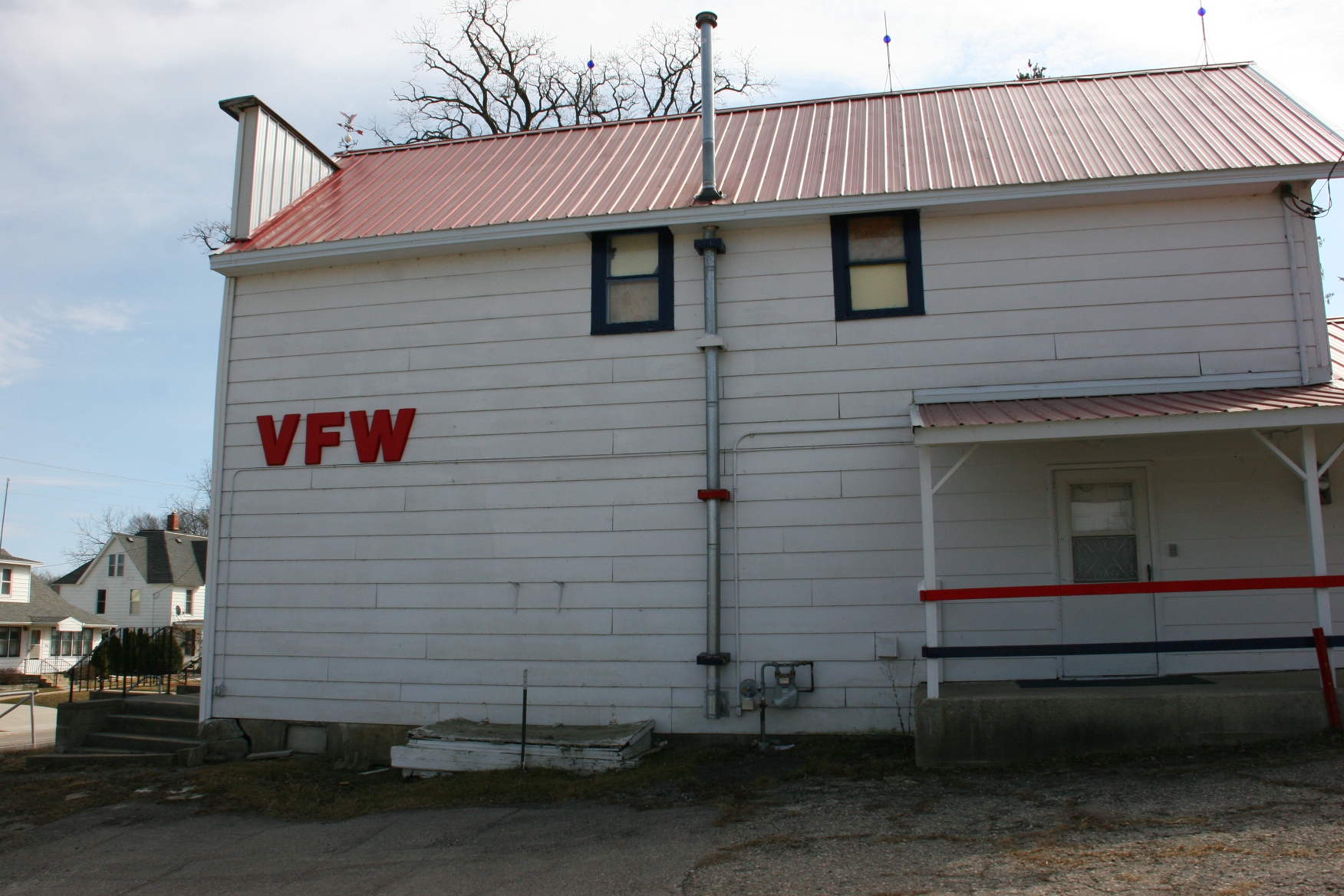
The downtown VFW sits atop a hill, too.

The downtown VFW sits atop a hill, too.

Sometimes a building's side view is as interesting as its front view.

Sometimes a building’s side view is as interesting as its front view.

FYI: To learn more about Oronoco area history, click here. For more info on Presbyterian Church of Oronoco, click here. To read my previous post about Antiques Oronoco, click here.

© Copyright 2015 Audrey Kletscher Helbling


A close-up Journey to the Cross March 29, 2015

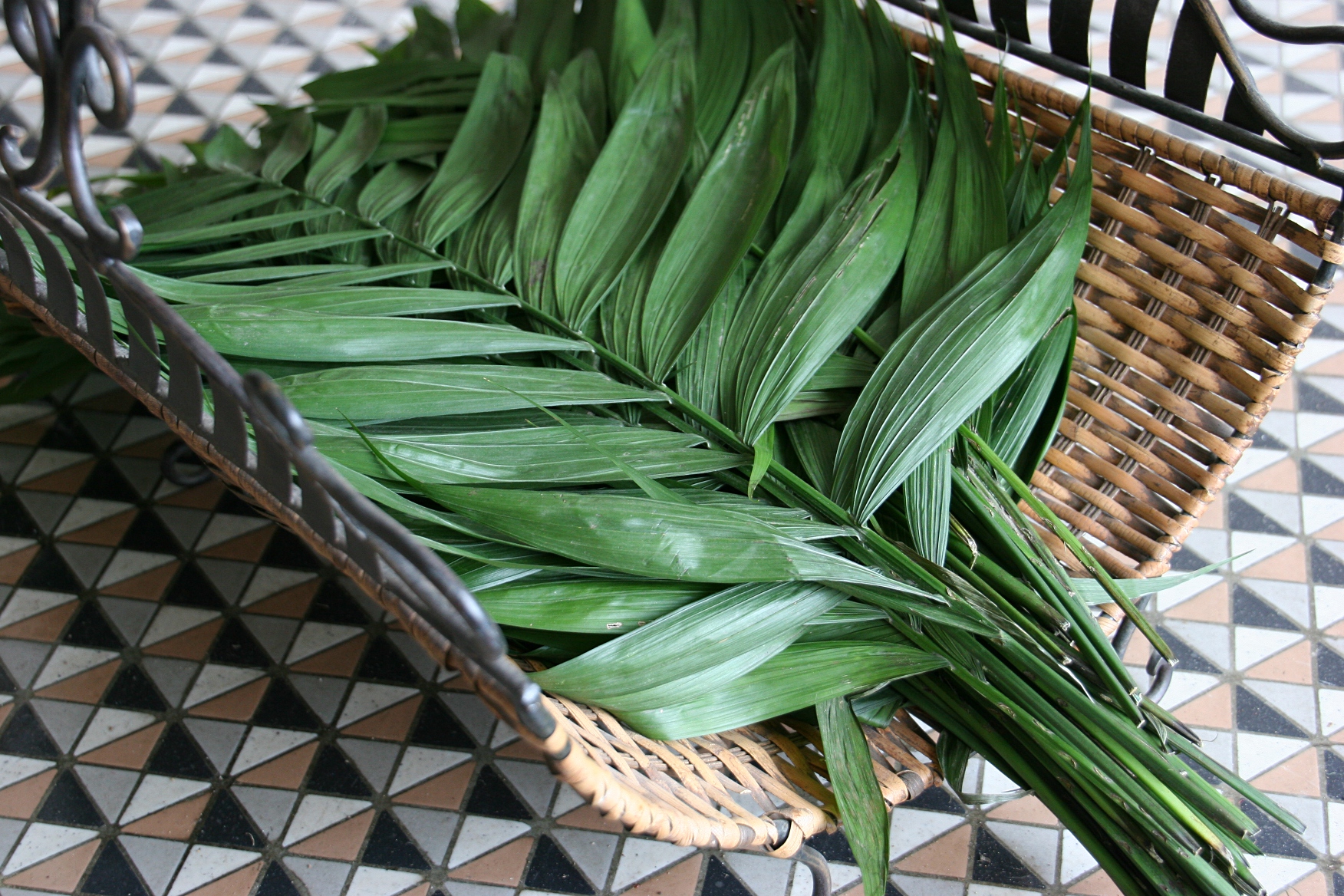
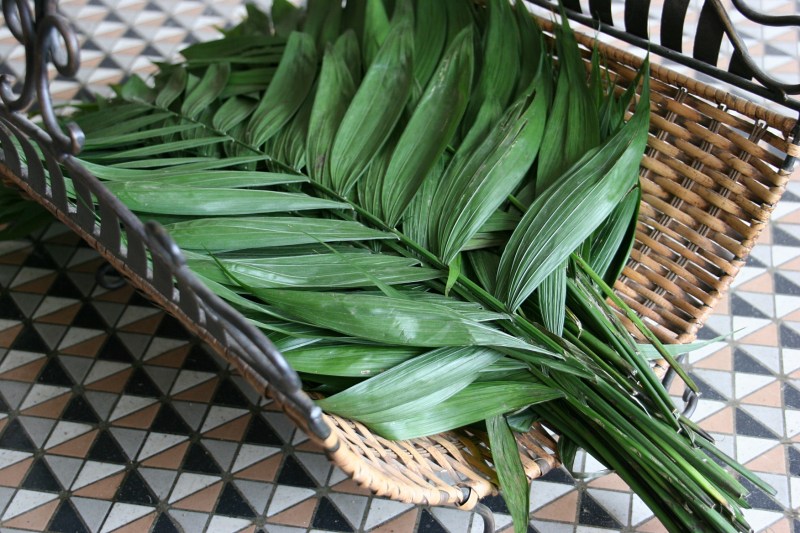
Palm branches.

Palm branches.

PALM BRANCHES AND HOSANNAS. For the Christian church, both mark Jesus’ triumphant entry into Jerusalem on Palm Sunday, the beginning of Holy Week.
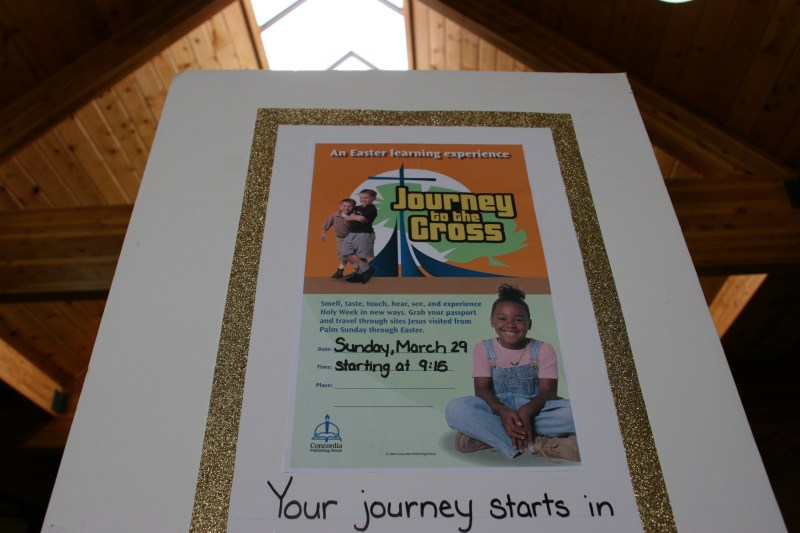
Small groups participated in 45-minute tours on "Journey to the Cross."

Small groups participated in 45-minute tours on “Journey to the Cross.”

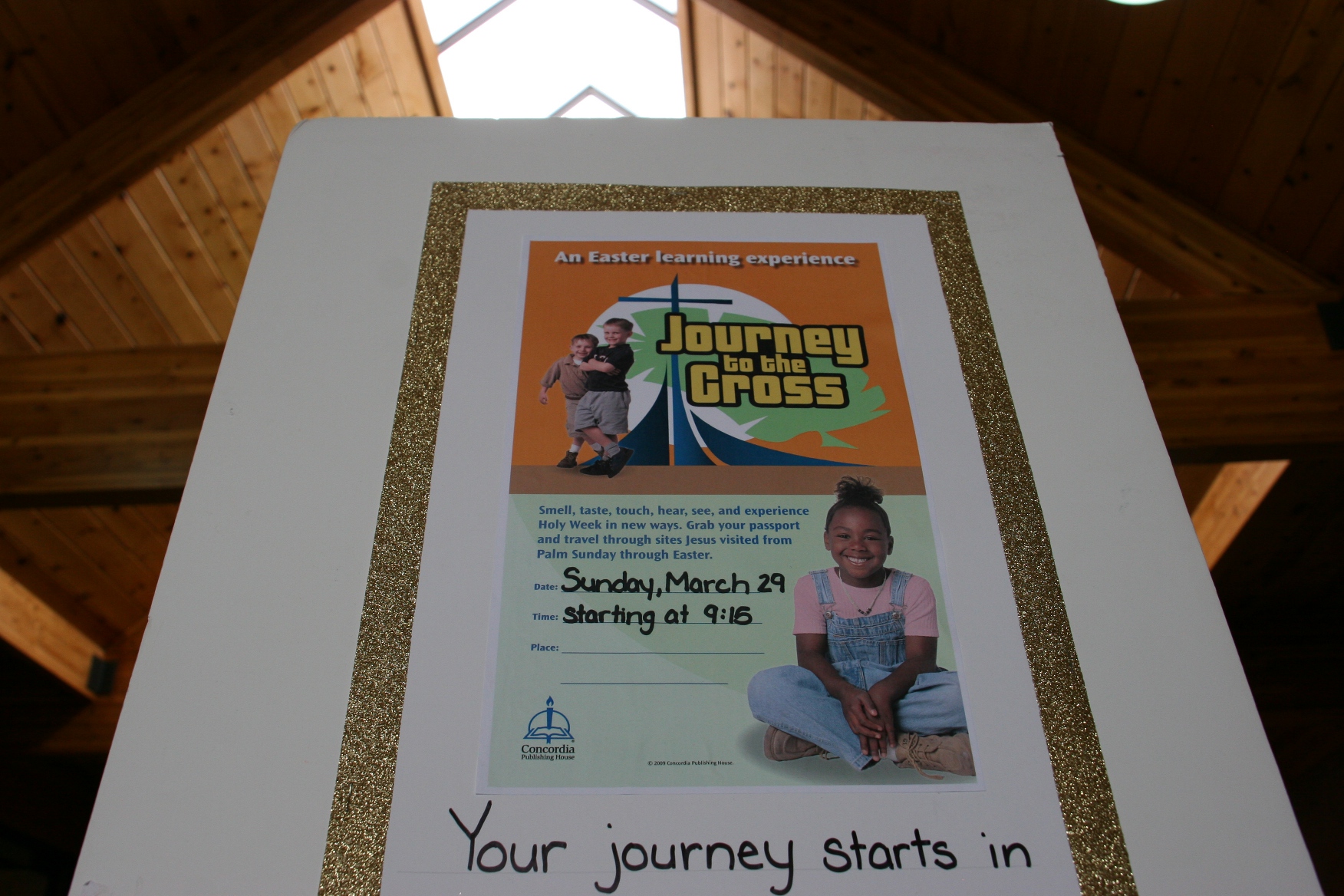
This morning at the church I attend, Trinity Lutheran in Faribault, Holy Week also began with a “Journey to the Cross” event. I was blessed to be a volunteer in this journey which led attendees through Christ’s final days to his glorious resurrection on Easter.
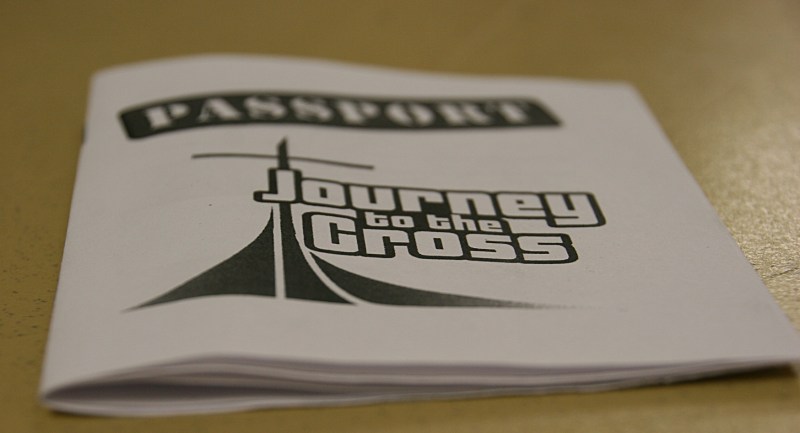
Participating kids (and some adults) carried passports. At nearly every station, stickers were distributed to place in the passports.

Participating kids (and some adults) carried passports. At nearly every station, stickers were distributed to place in the passports.

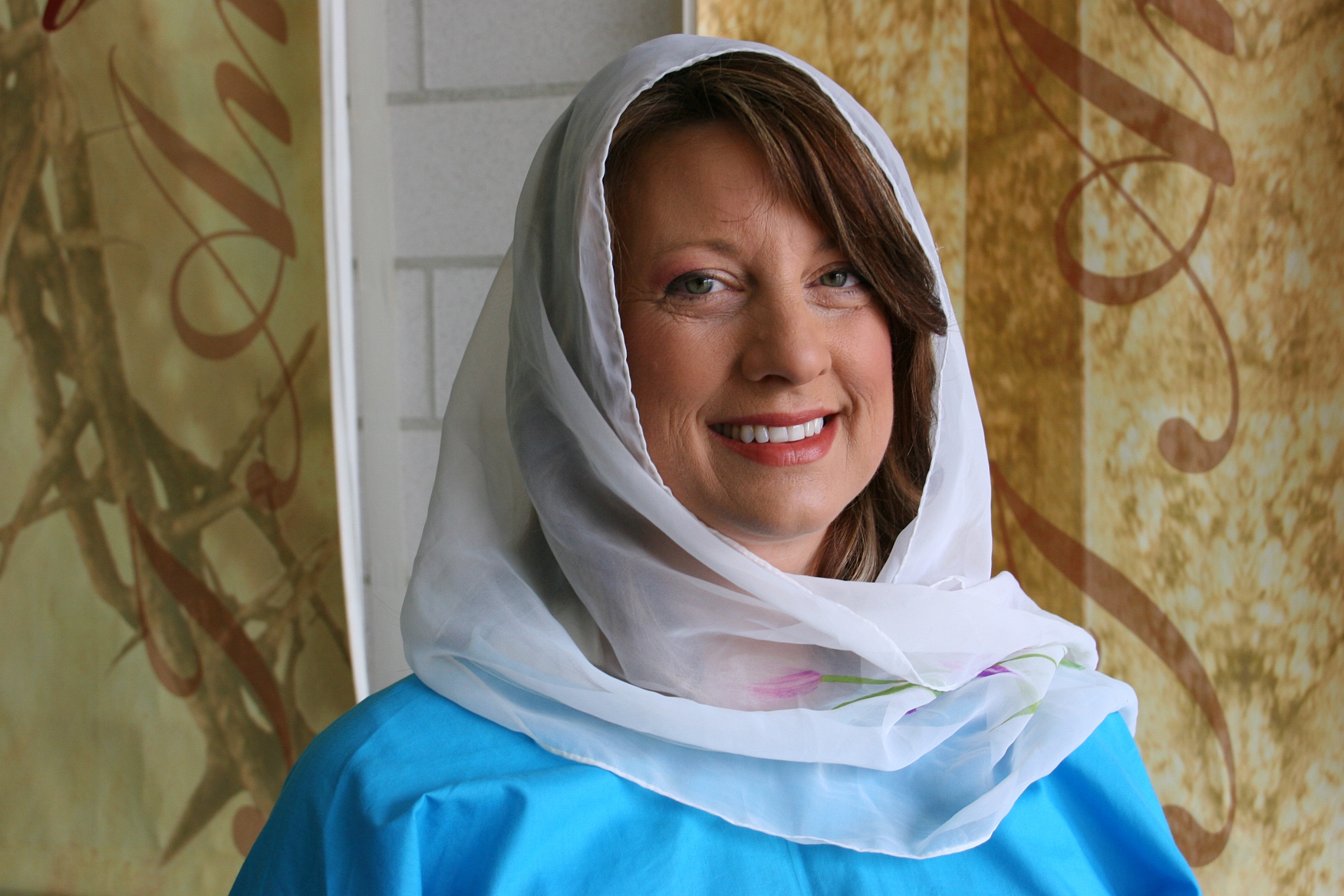
With passports in hand, kids and adults traveled from station to station, listening to performers role-play the parts of towns’ people, a temple worker, soldiers, an angel and others.
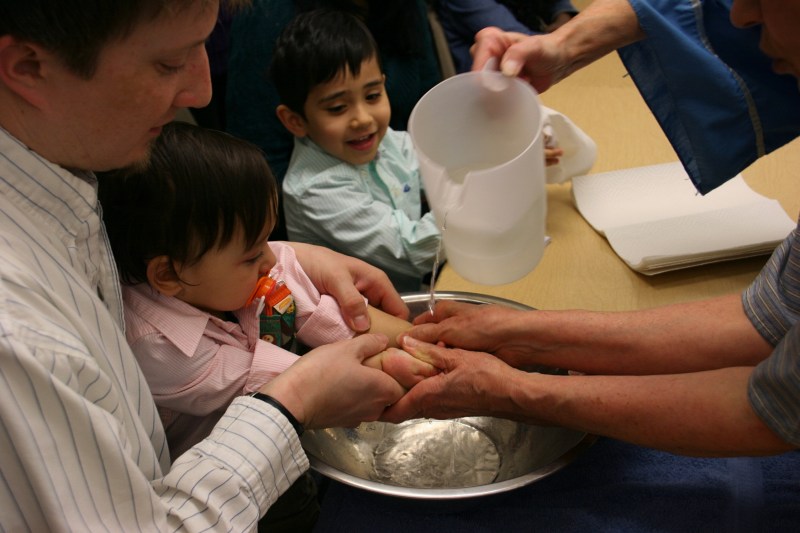
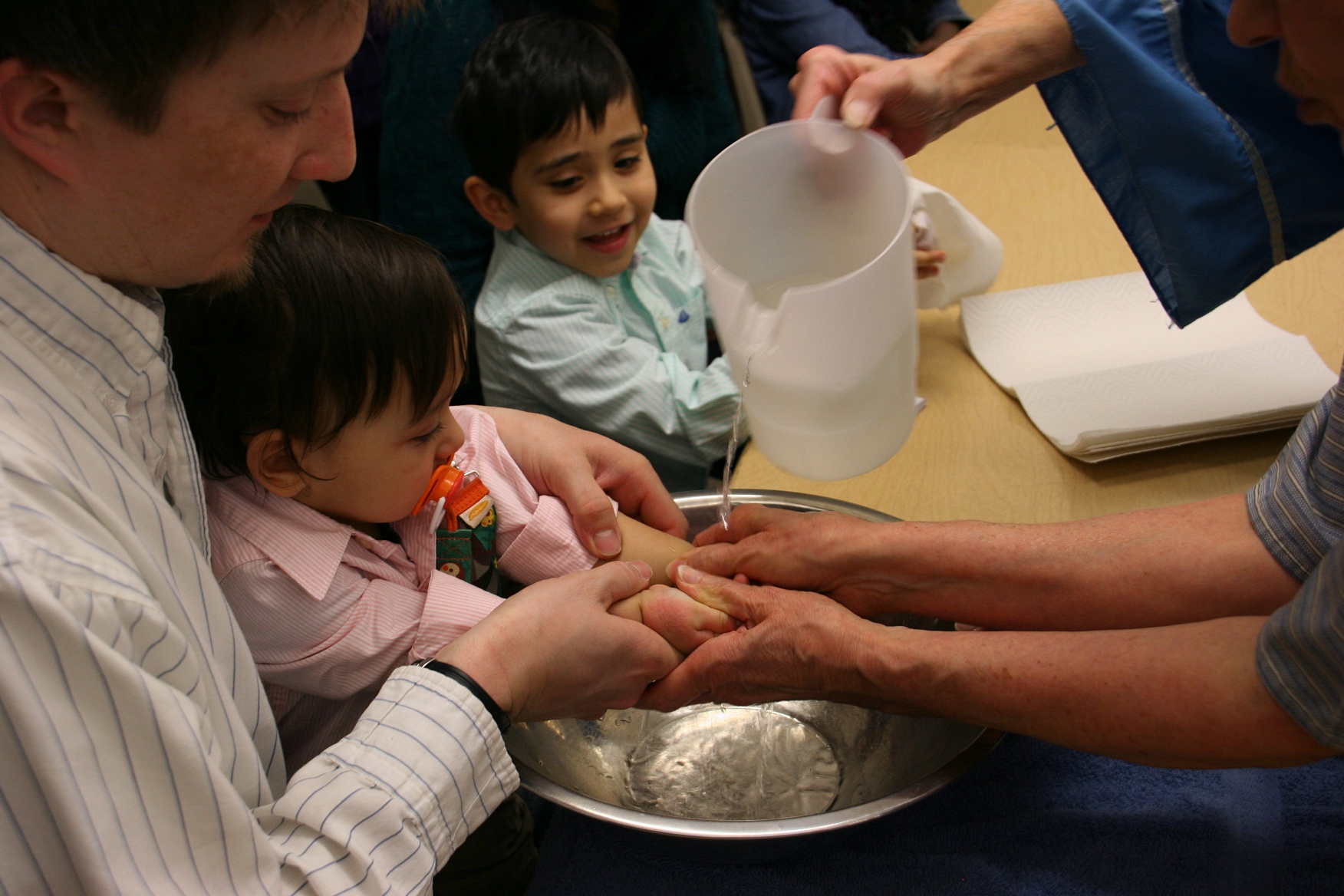
Participants had their hands washed by volunteers just as Christ washed his disciples' feet .

Participants had their hands washed by volunteers, following the example of Christ washing his disciples’ feet.

But this was about much more than sharing biblical history. This was about hands-on activities that reinforced the spoken word. This was about engaging the senses and experiencing Holy Week.
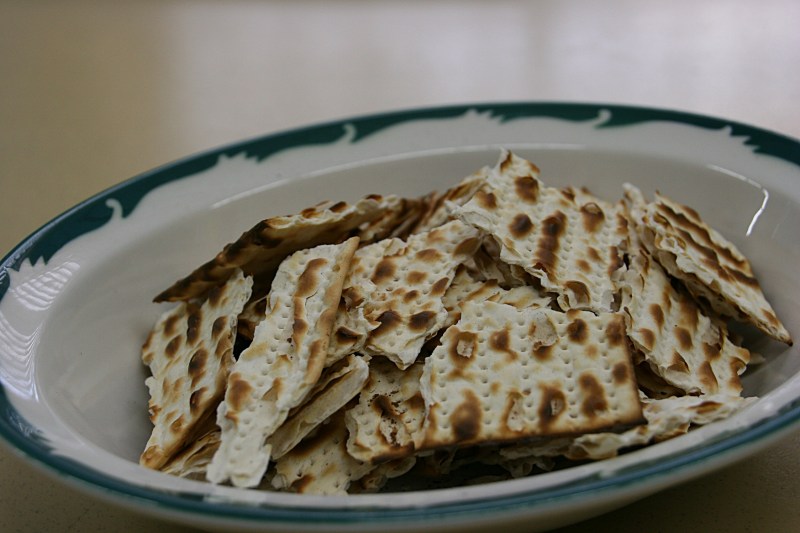
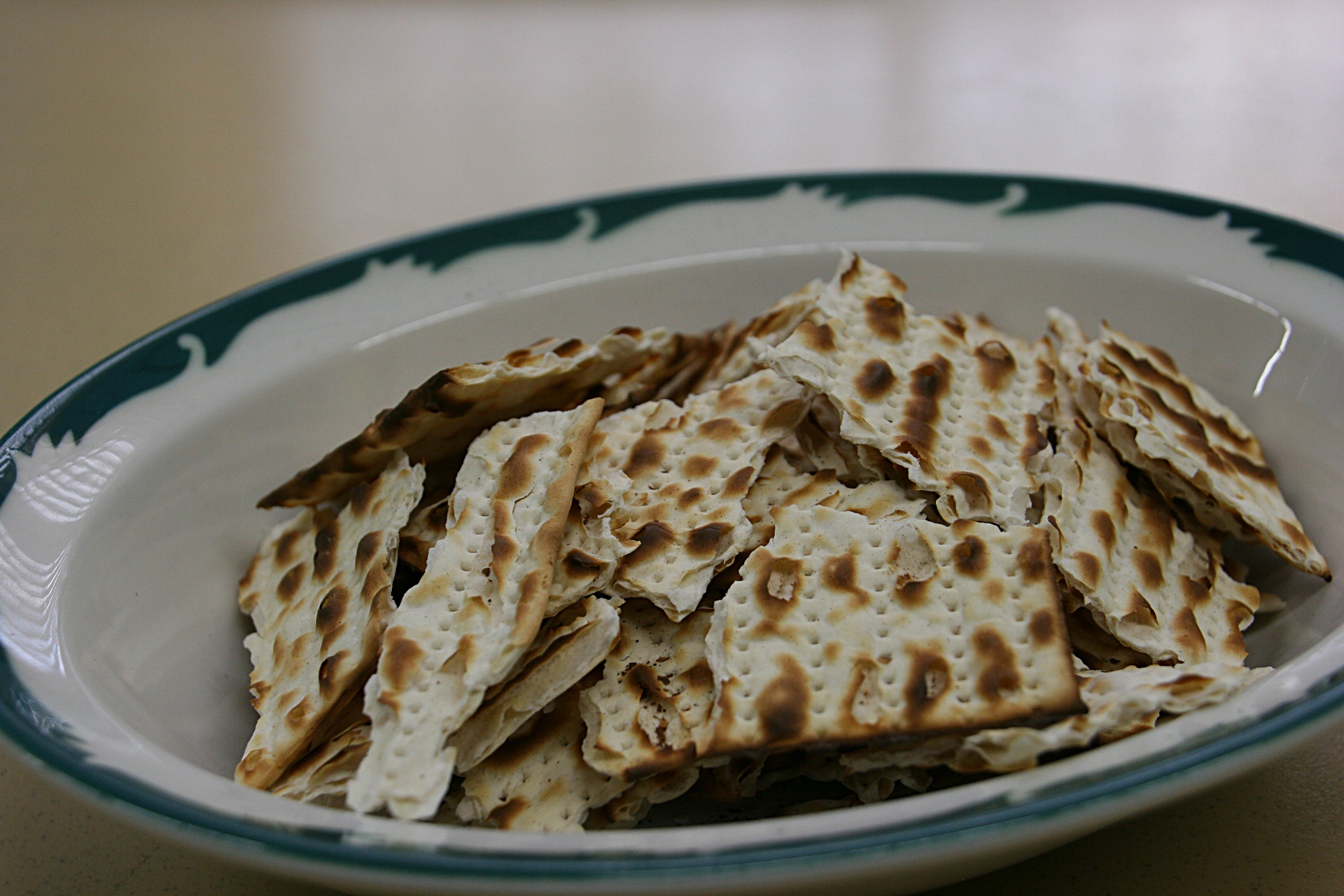
Matzo, unleavened bread from Jerusalem, was served as reprsentative of food from Jesus' time period.

Matzo, unleavened bread from Jerusalem, was served as representative of food from Jesus’ time period.

And therein lies the strength of “Journey to the Cross.” Participants received palm branches, felt the weight of the 30 silver coins Judas received for betraying Jesus, heard the crack of the whip against Jesus’ back, pounded nails into wood, tasted vinegar like that offered to Christ suffering on the cross, raised their voices in “He is risen!” at the vacant tomb and more.
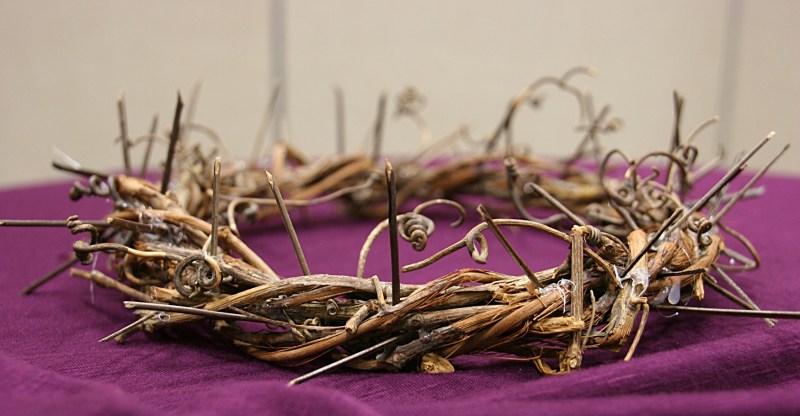
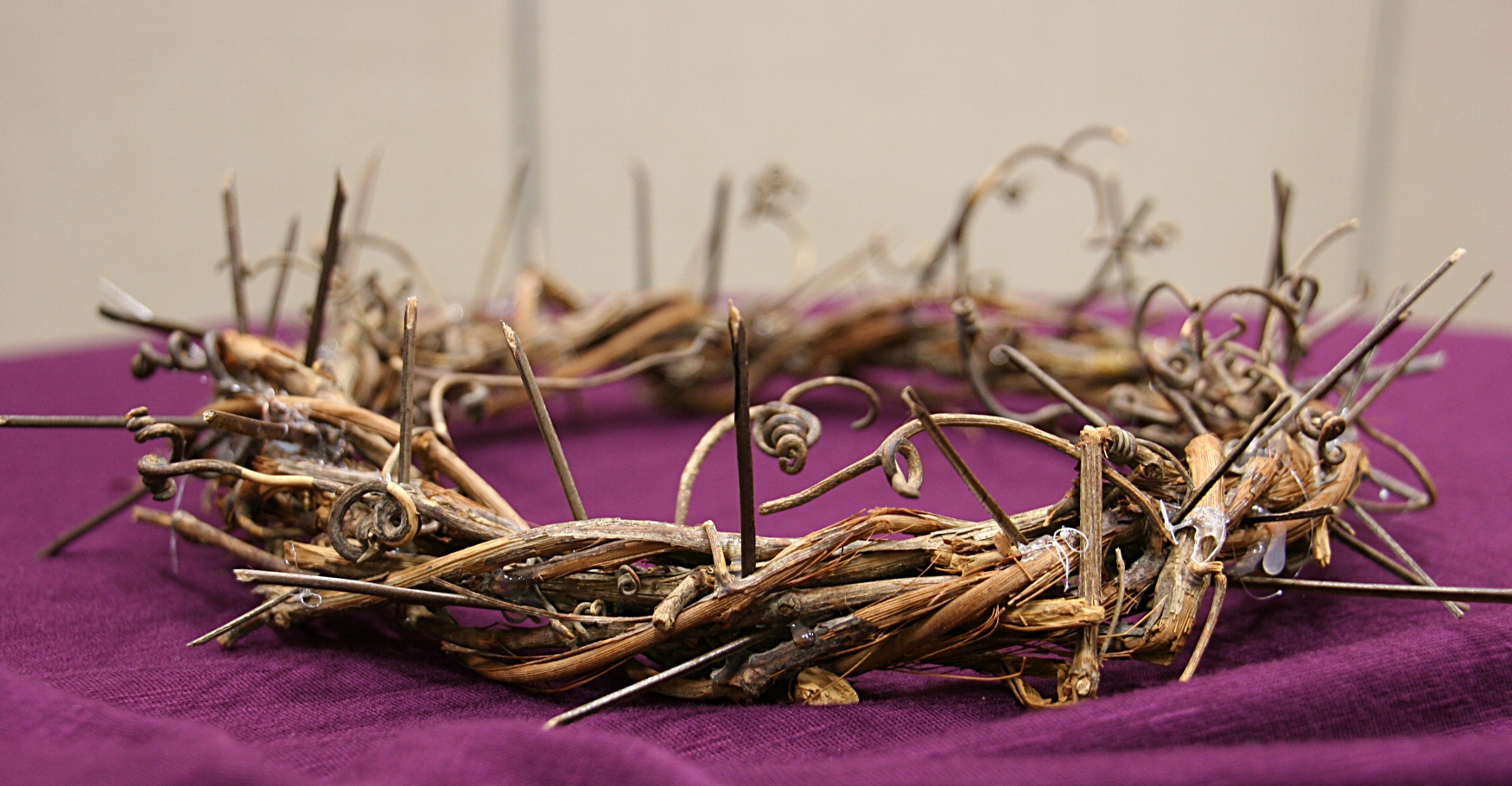
A volunteer crafted this crow of thorns similar to the one Christ wore on the cross.

A volunteer crafted this crown of thorns similar to the one Christ wore on the cross. Tour participants saw it close up and could touch the crown.

I left with a deeper connection and understanding of what Christ endured. I could hear, see, feel, taste and smell the events of that final week. It was a memorable morning and the perfect contemplative beginning to Holy Week.

THE JOURNEY IN MORE PHOTOS:

Stop #1, Jerusalem on Palm Sunday:
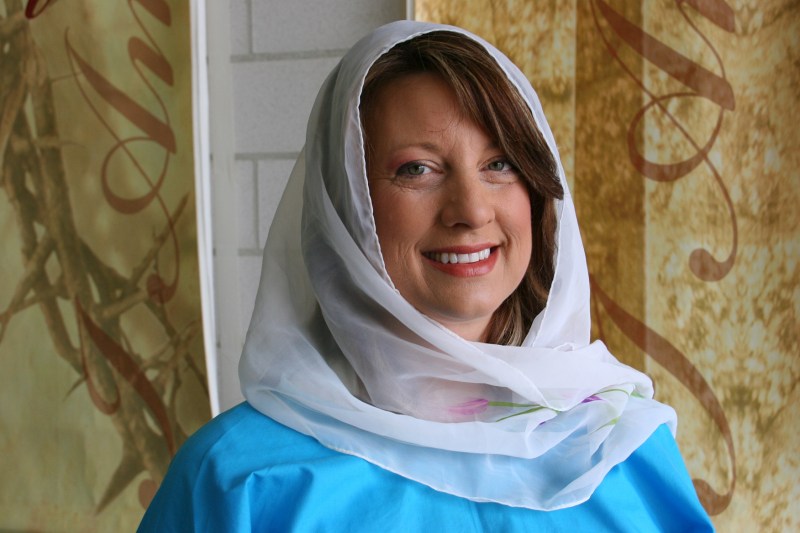
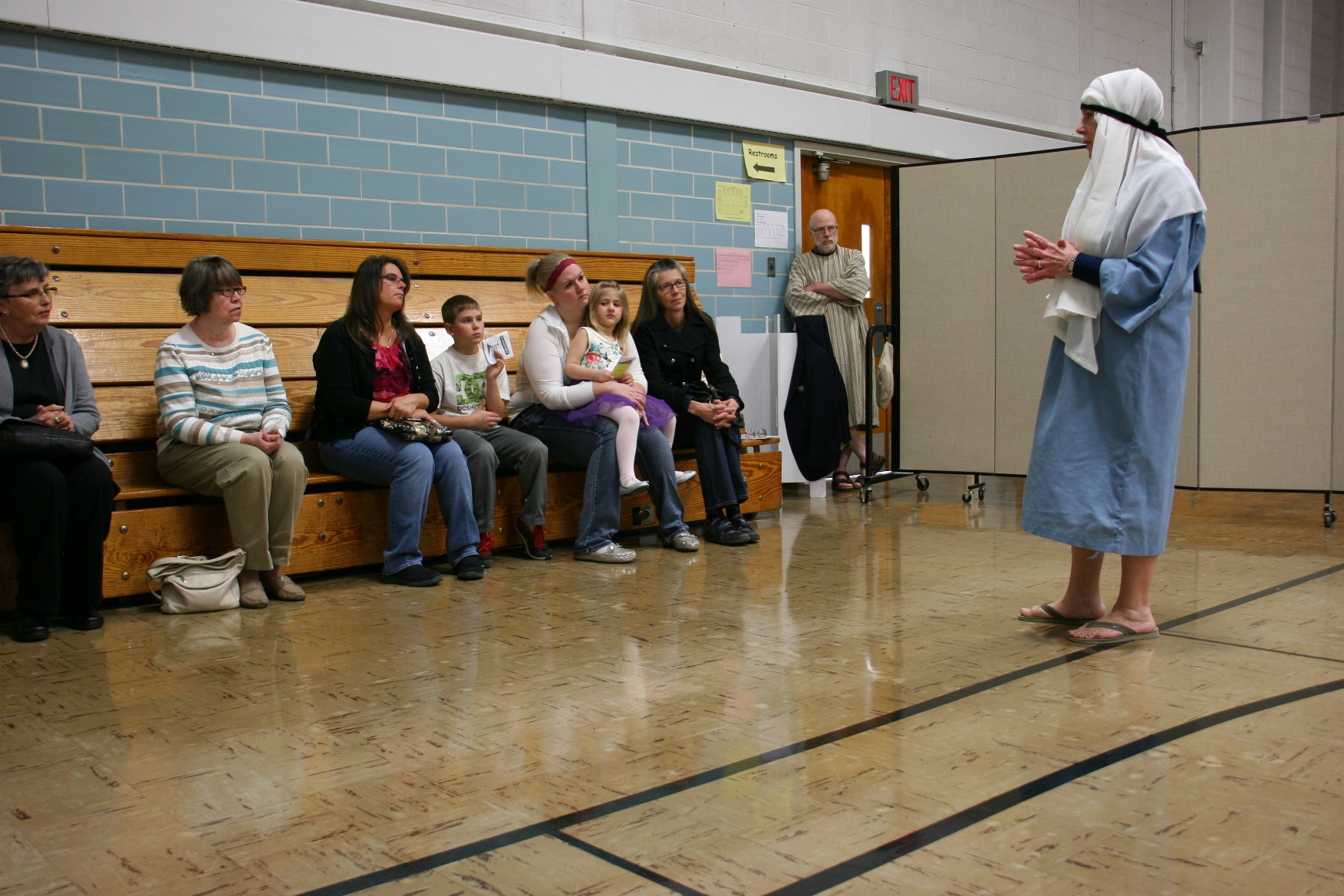
Volunteer Theresa speaks to participants about Jesus' ride into Jerusalem on Palm Sunday.

Volunteer Theresa speaks to participants about Jesus’ ride into Jerusalem on Palm Sunday.

Stop #2, Judas betrays Jesus for 30 pieces of silver:
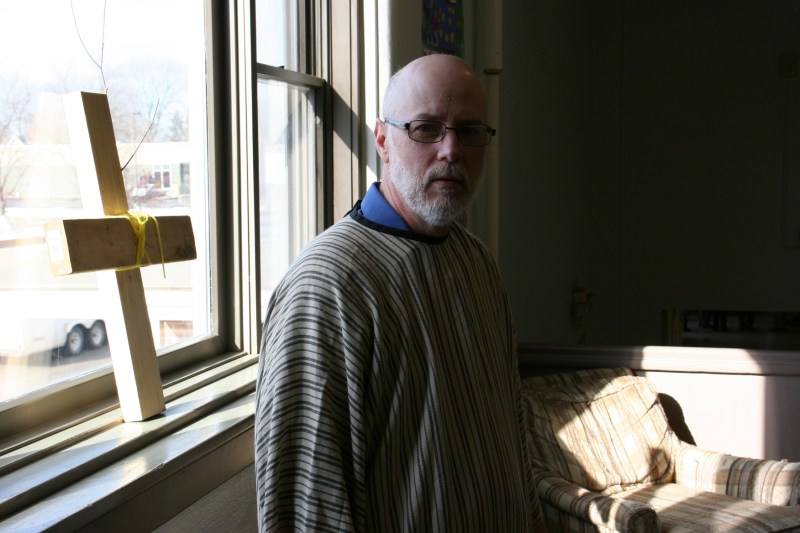
Randy, role-playing a temple worker.

Randy, role-playing a temple worker, tells how Judas betrayed Jesus.
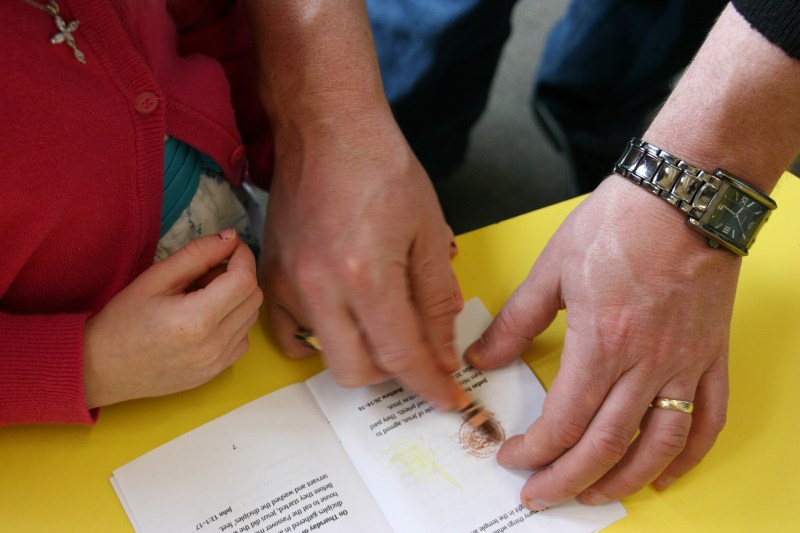
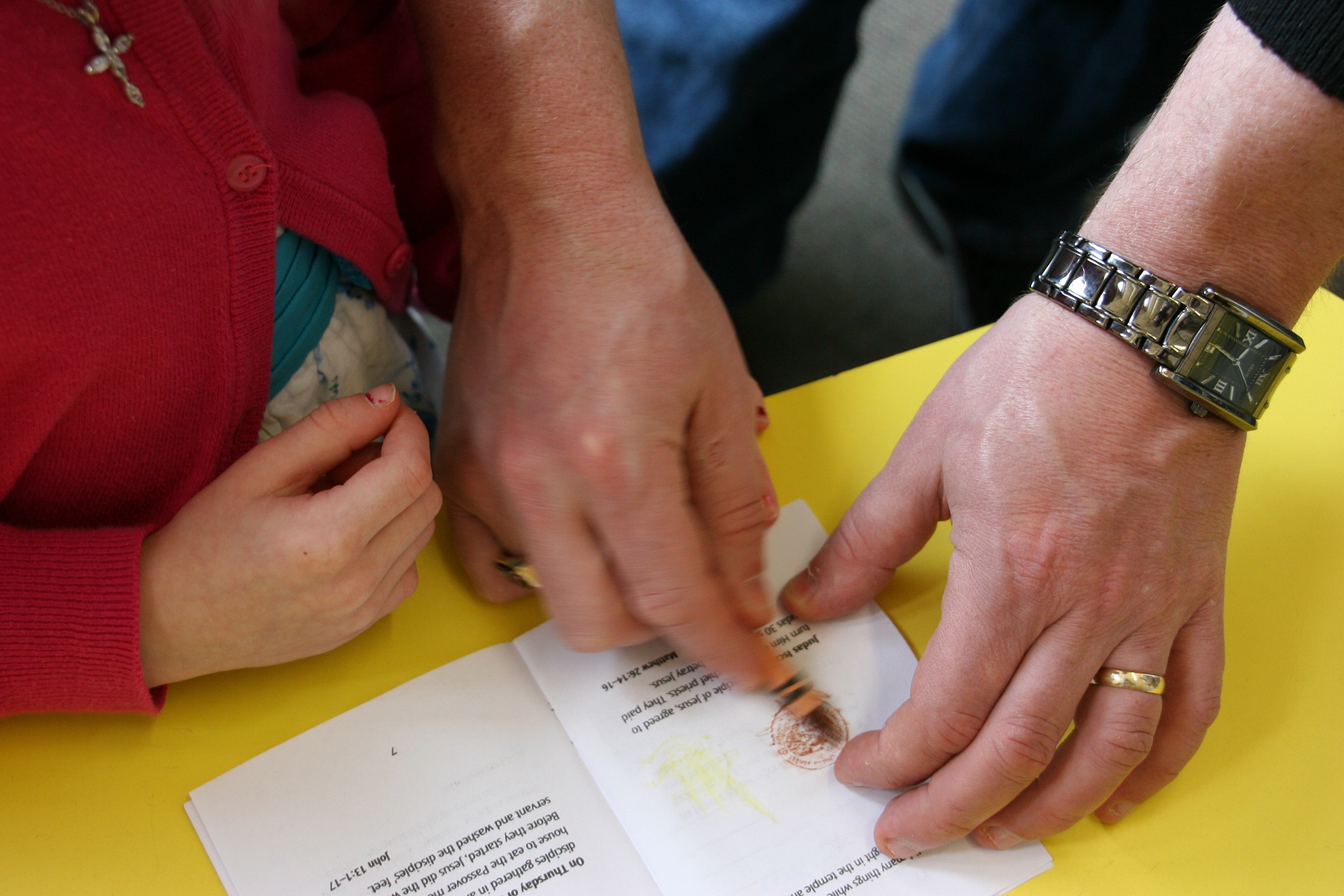
Making coin rubbings in passports to remember how Judas betrayed Jesus with 30 pieces of silver.

Making coin rubbings in passports to remember how Judas betrayed Jesus with 30 pieces of silver.

Stop #3, Before the Passover meal on the Thursday of Holy Week, Jesus washed his disciples’ feet:
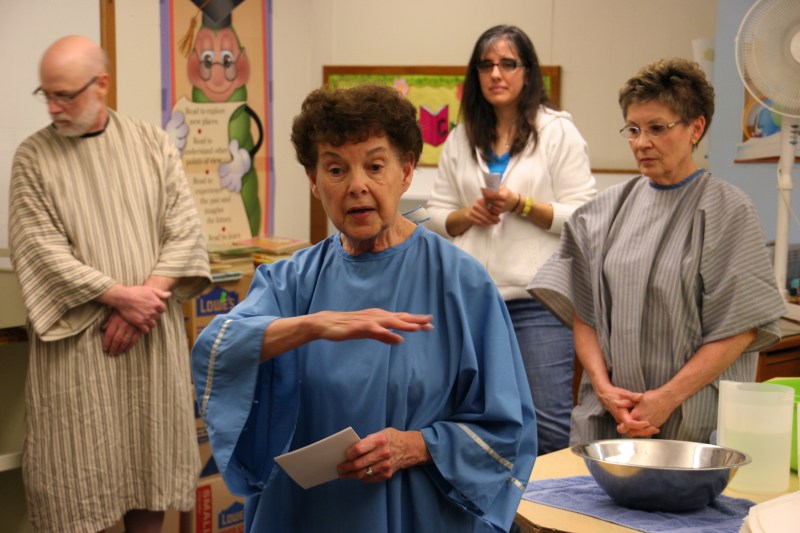
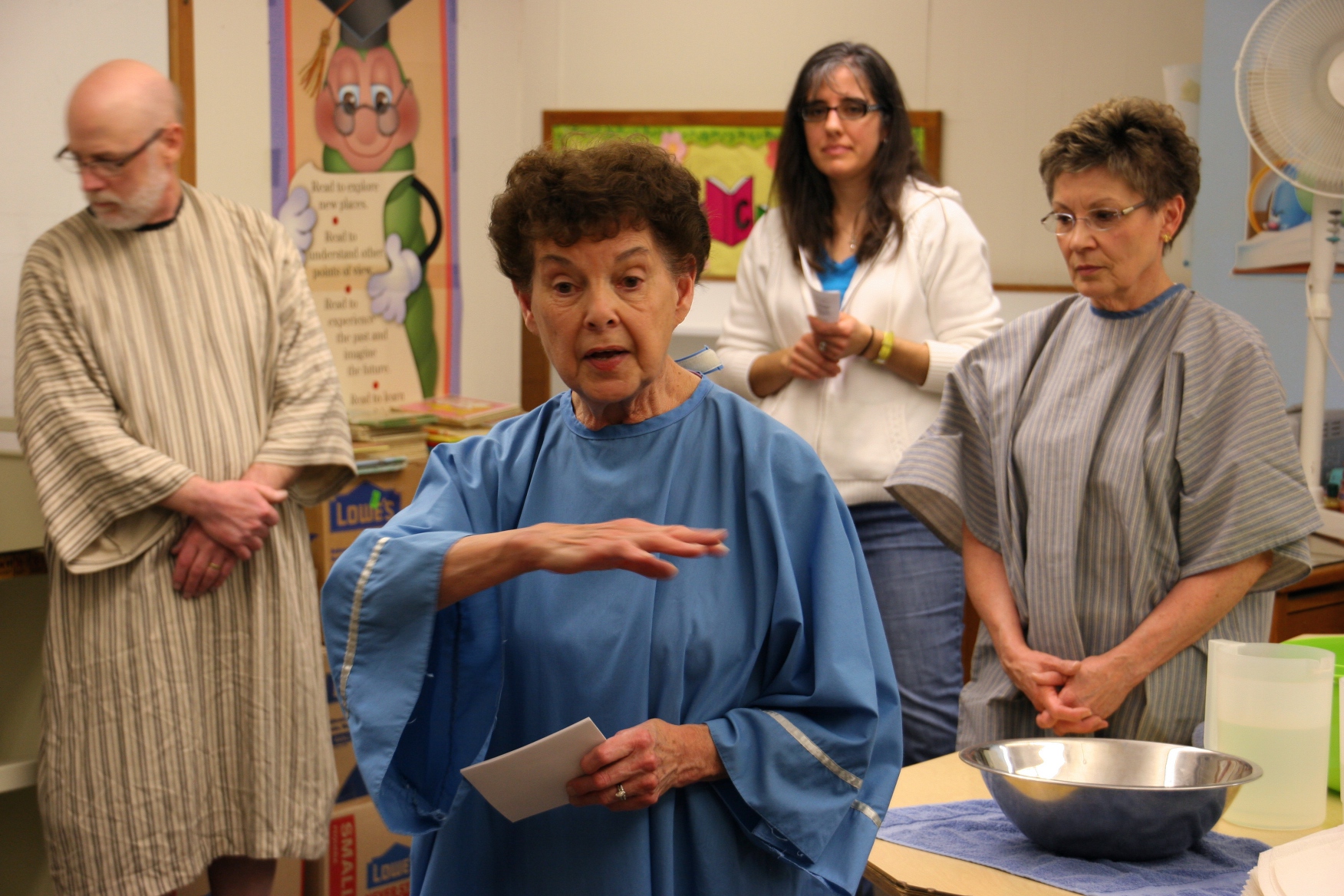
Actress Diane talks about Jesus gathering with his disciples and washing their feet.
Actress Diane talks about Jesus gathering with his disciples and washing their feet.

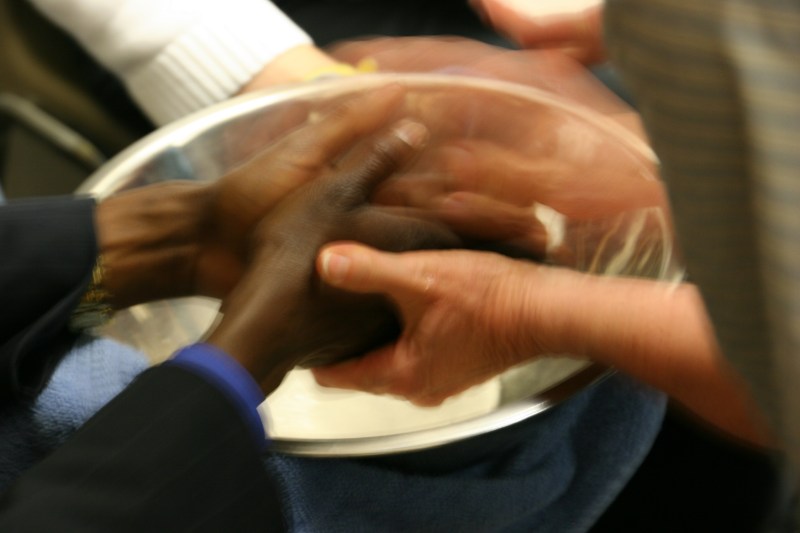
Rather than washing feet, hands were washed.
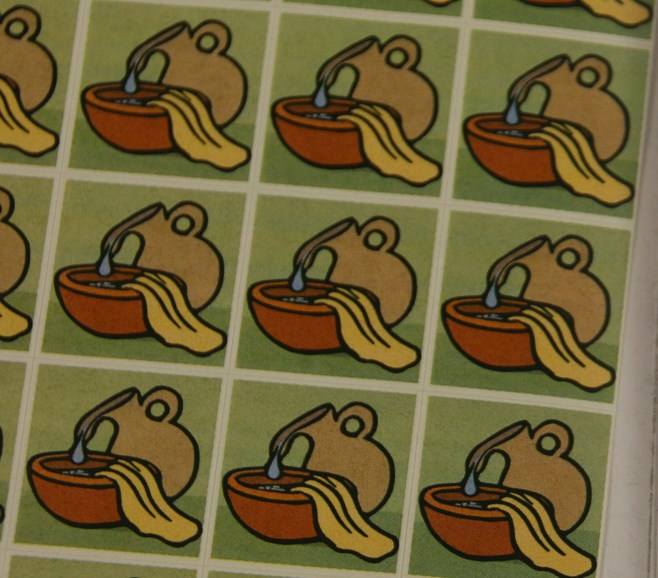
Rather than washing feet, hands were washed.

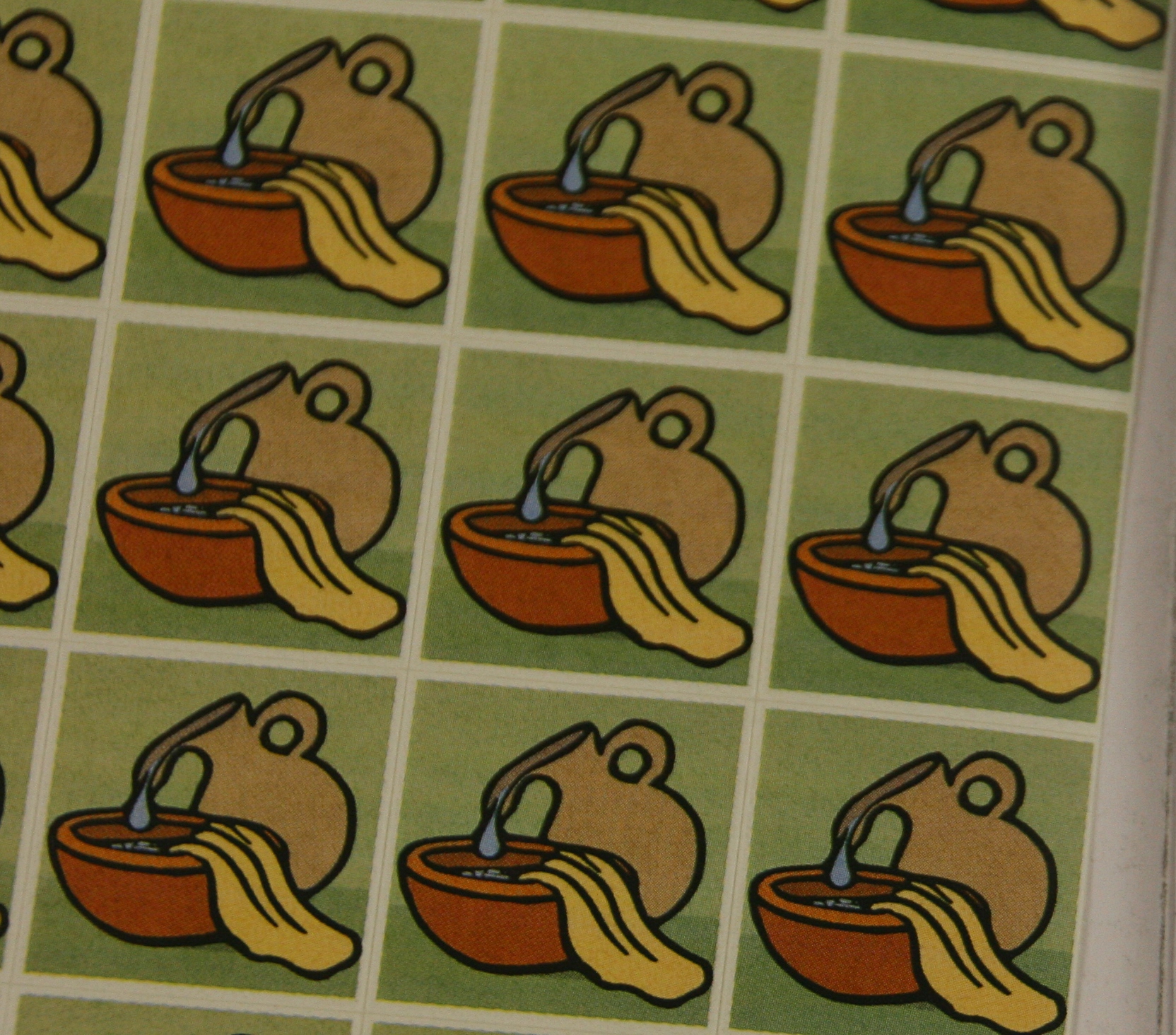
Stickers were handed out for placement in the passport after hands were washed.

Stickers were distributed for placement in the passport after the hand washing.

Stop #4, Remembering the Passover meal, Jesus’ last meal with his disciples:

Sings marked each station.

Signs marked each station.

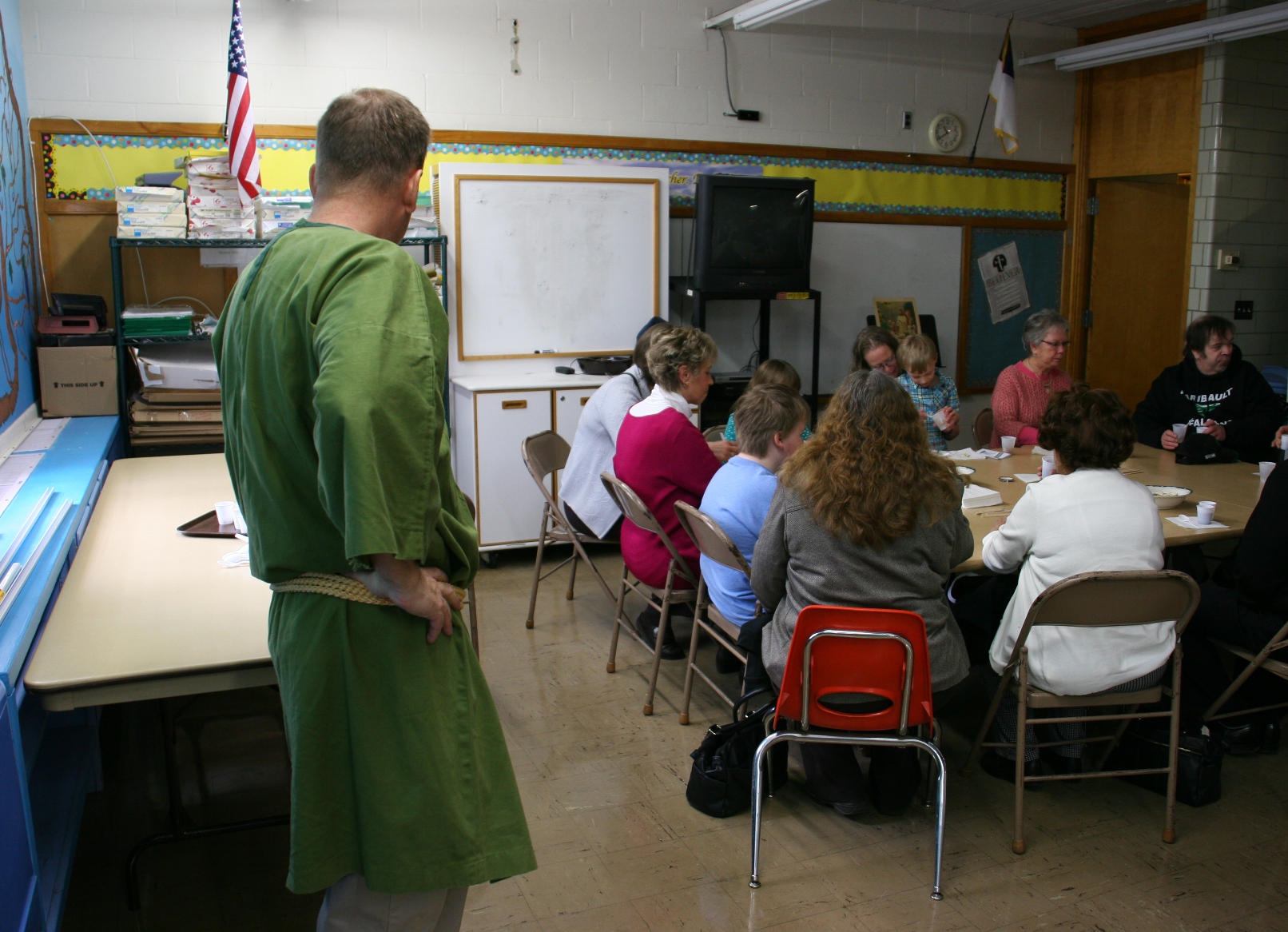
Participants could sample various foods such as horseradish, matzo, grape juice and more.
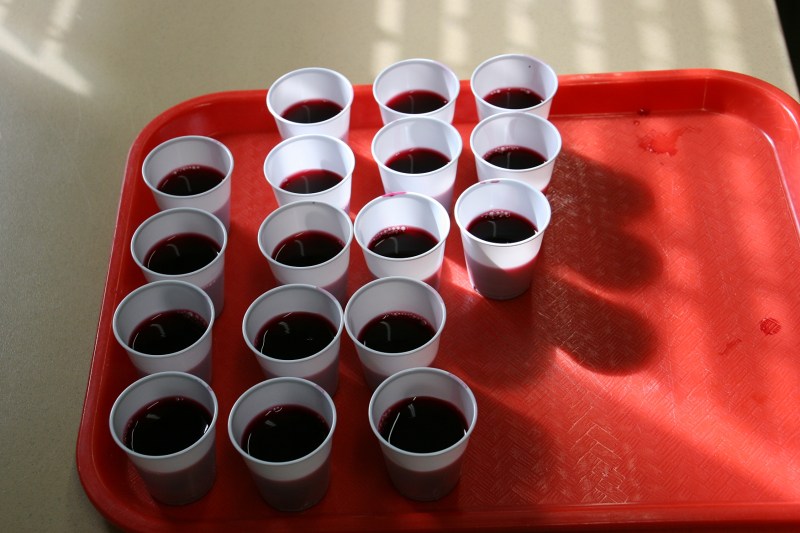
Participants could sample various foods such as horseradish, matzo, grape juice and more.

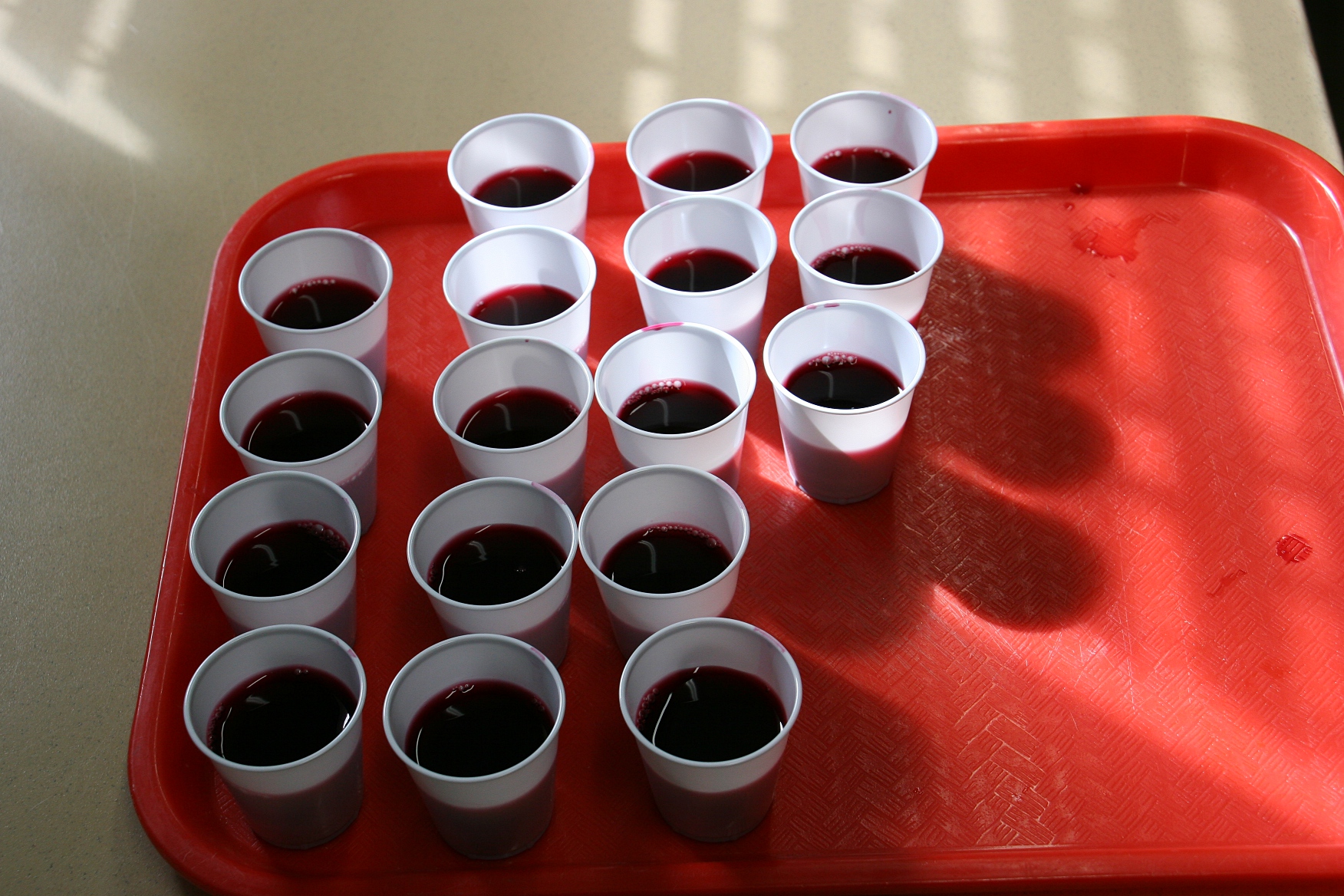
Grape juice ready to be served.

Grape juice ready to be served.

Stop #5, Jesus prays in the Garden of Gethsemane:
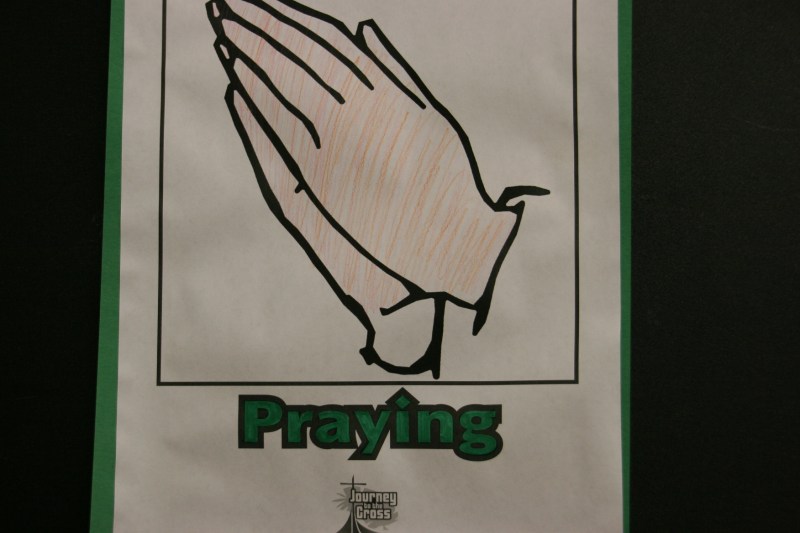
A sign marks the station focusing on prayer.

A sign marks the station focusing on prayer.

Stop #6, Jesus was whipped, beaten and teased:
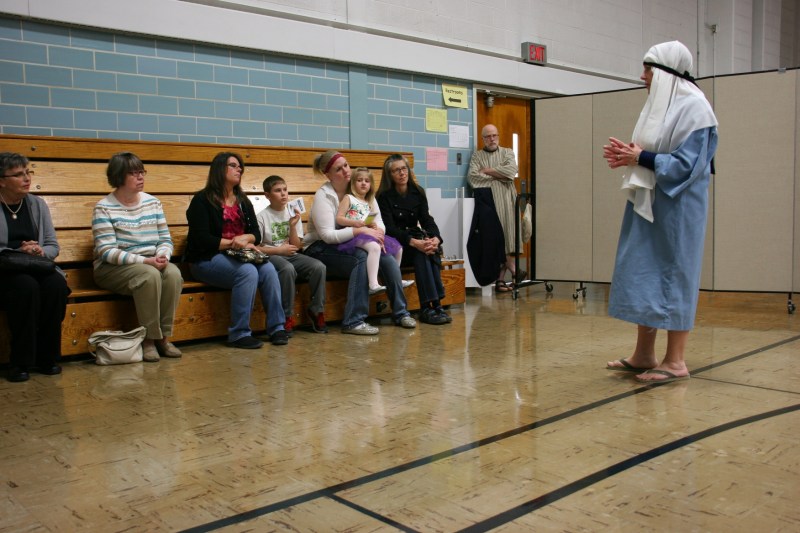
Volunteer Leann talks about the torture Jesus suffered even prior to his crucifixion.
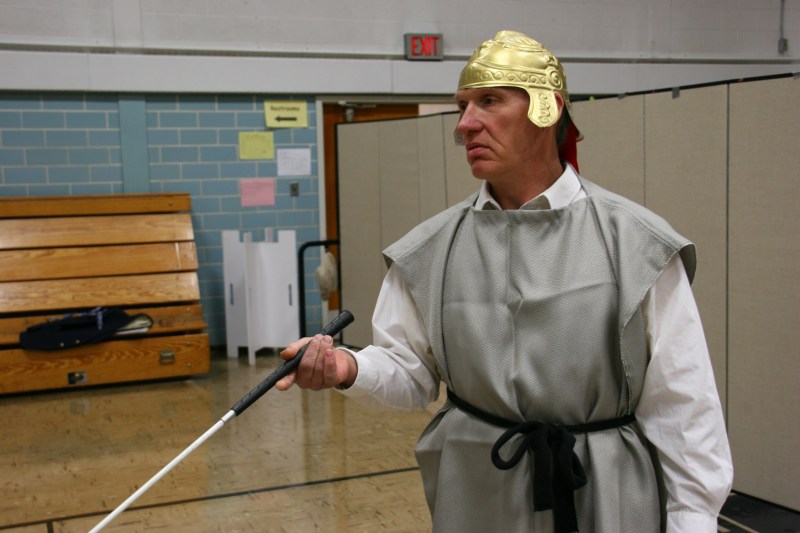
Volunteer Leann talks about the torture Jesus suffered even prior to his crucifixion.

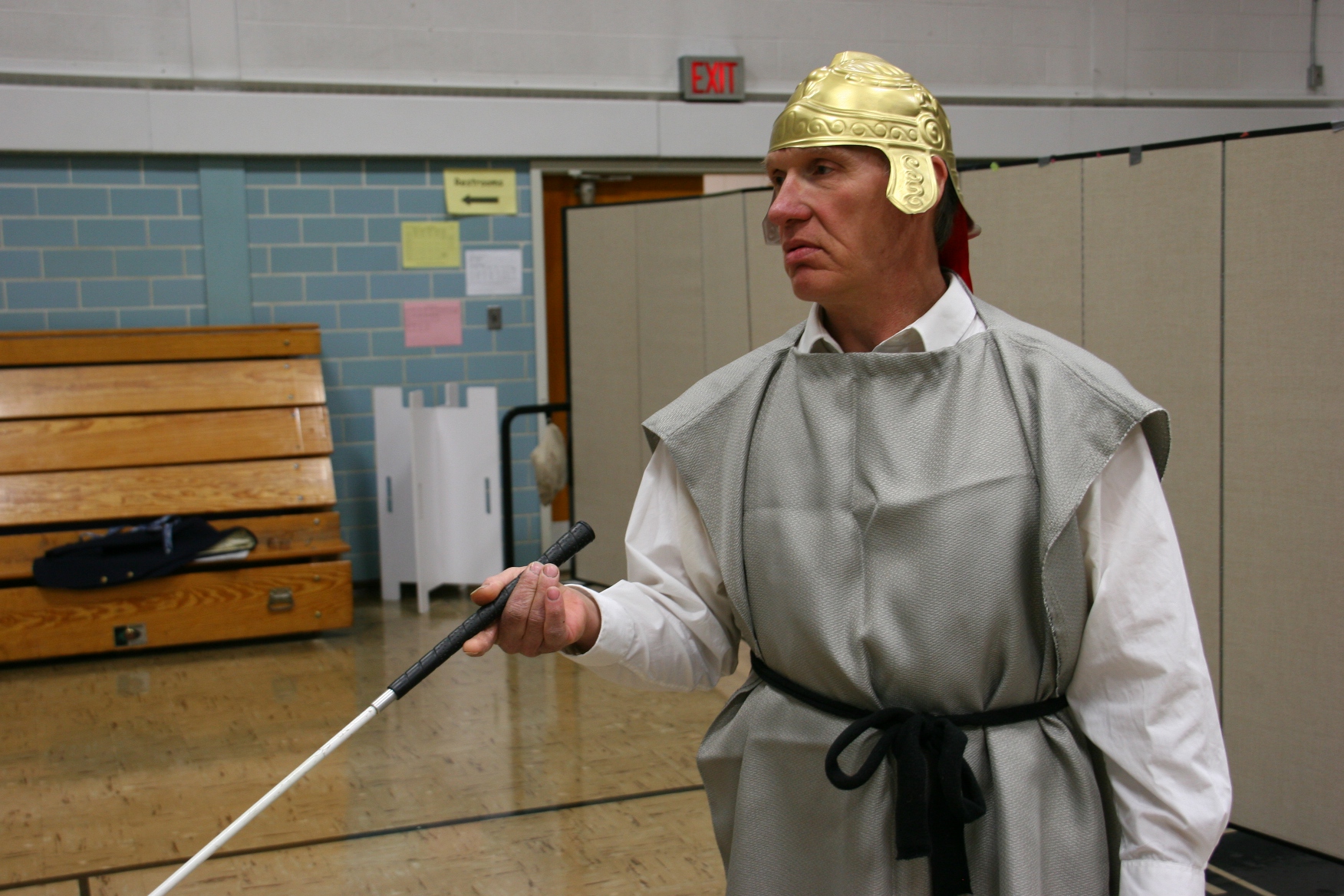
Wayne played perhaps the most memorable role, that of a soldier whipping Jesus.
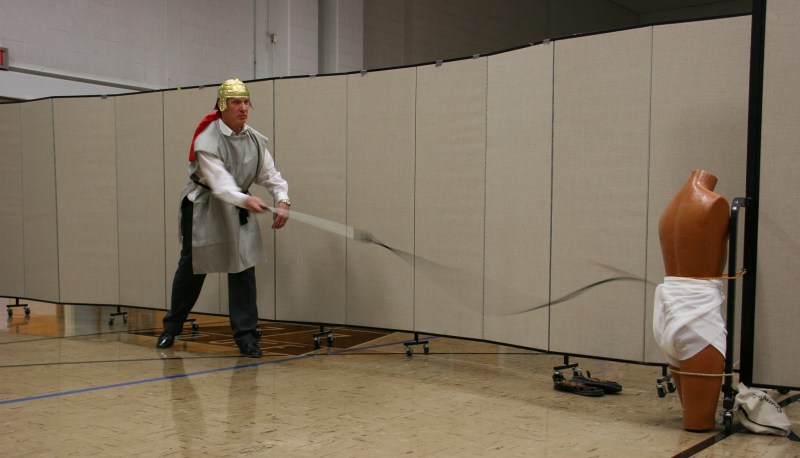
Wayne played perhaps the most memorable role, that of a soldier whipping Jesus.

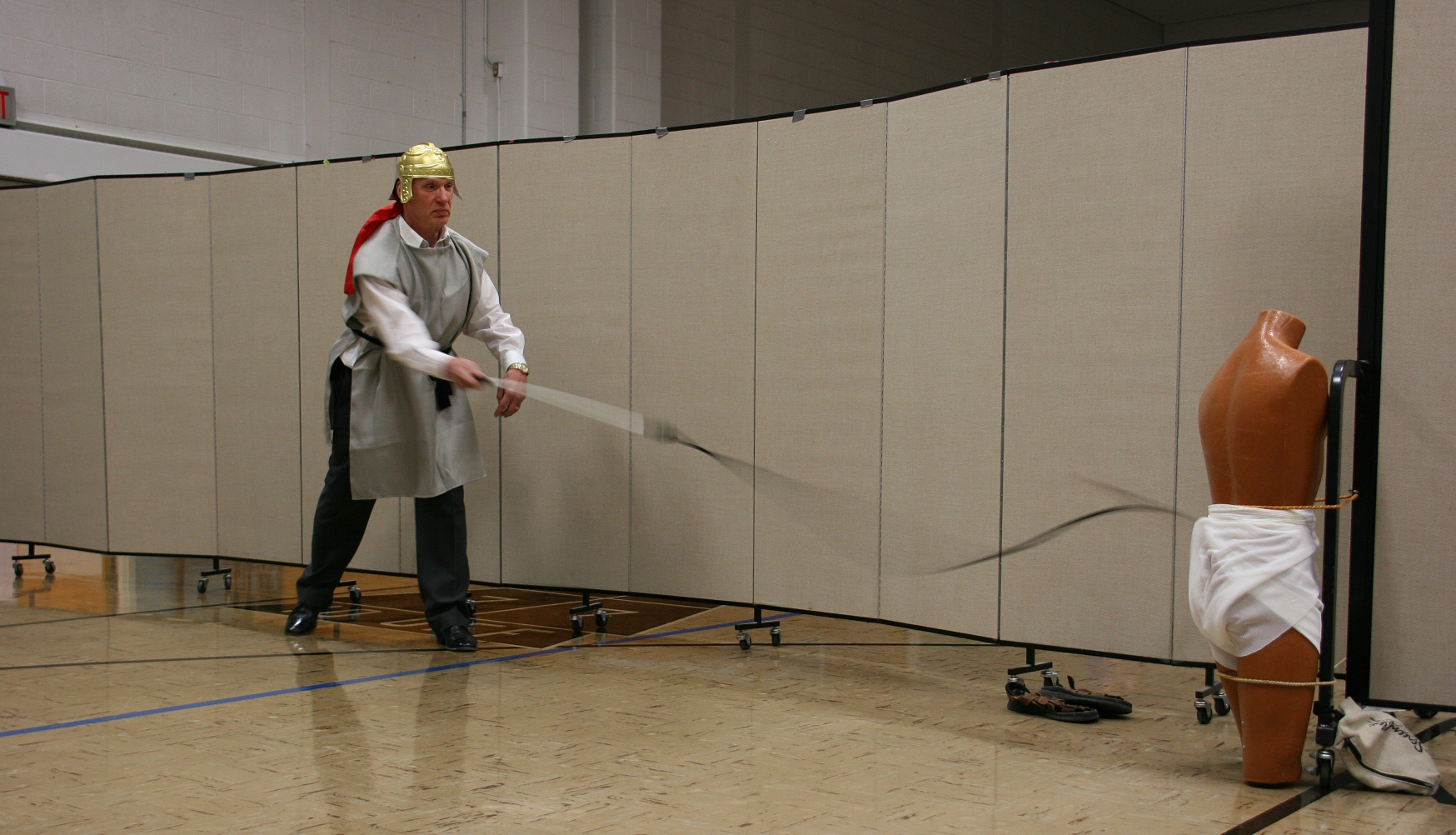
The whip cracked across the floor, toward the mannequin representing Jesus.

The whip cracks across the mannequin representing Jesus.

Stop #7, Christ is crucified on the cross:
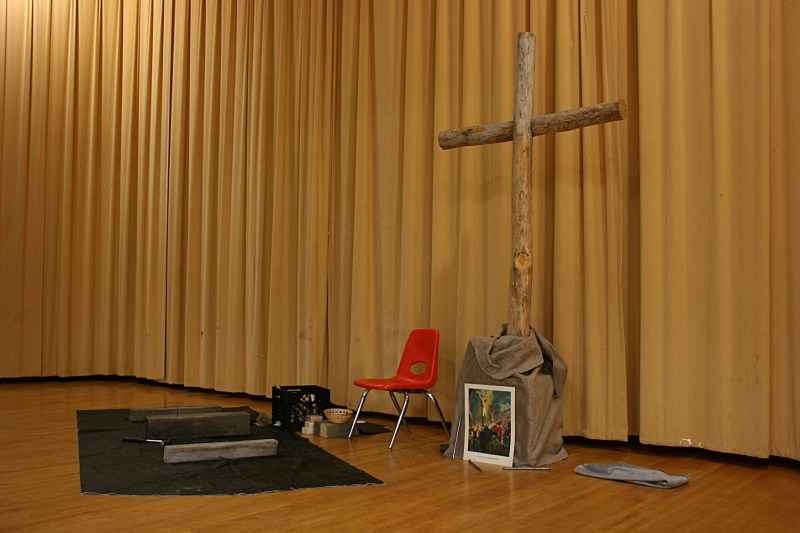
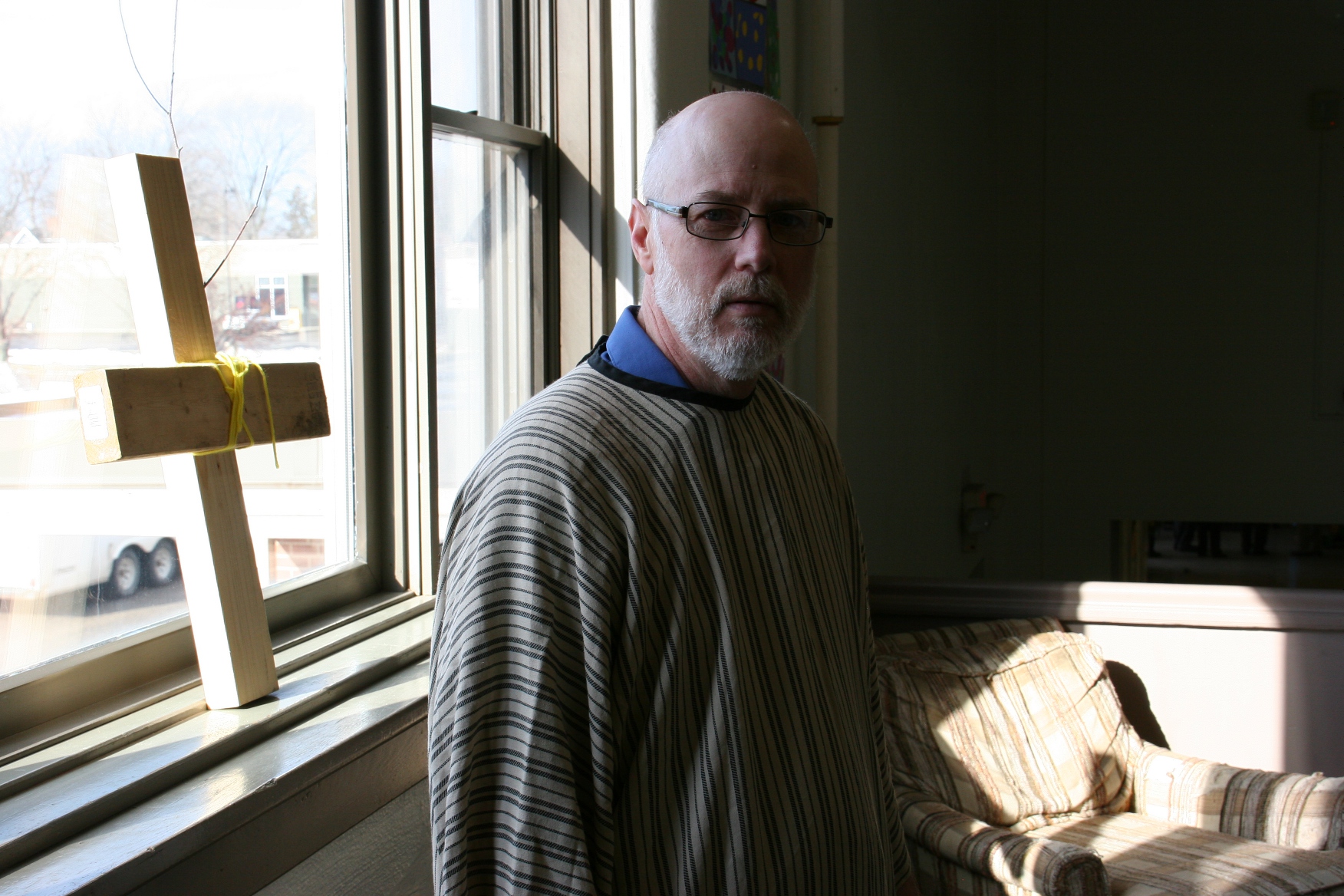
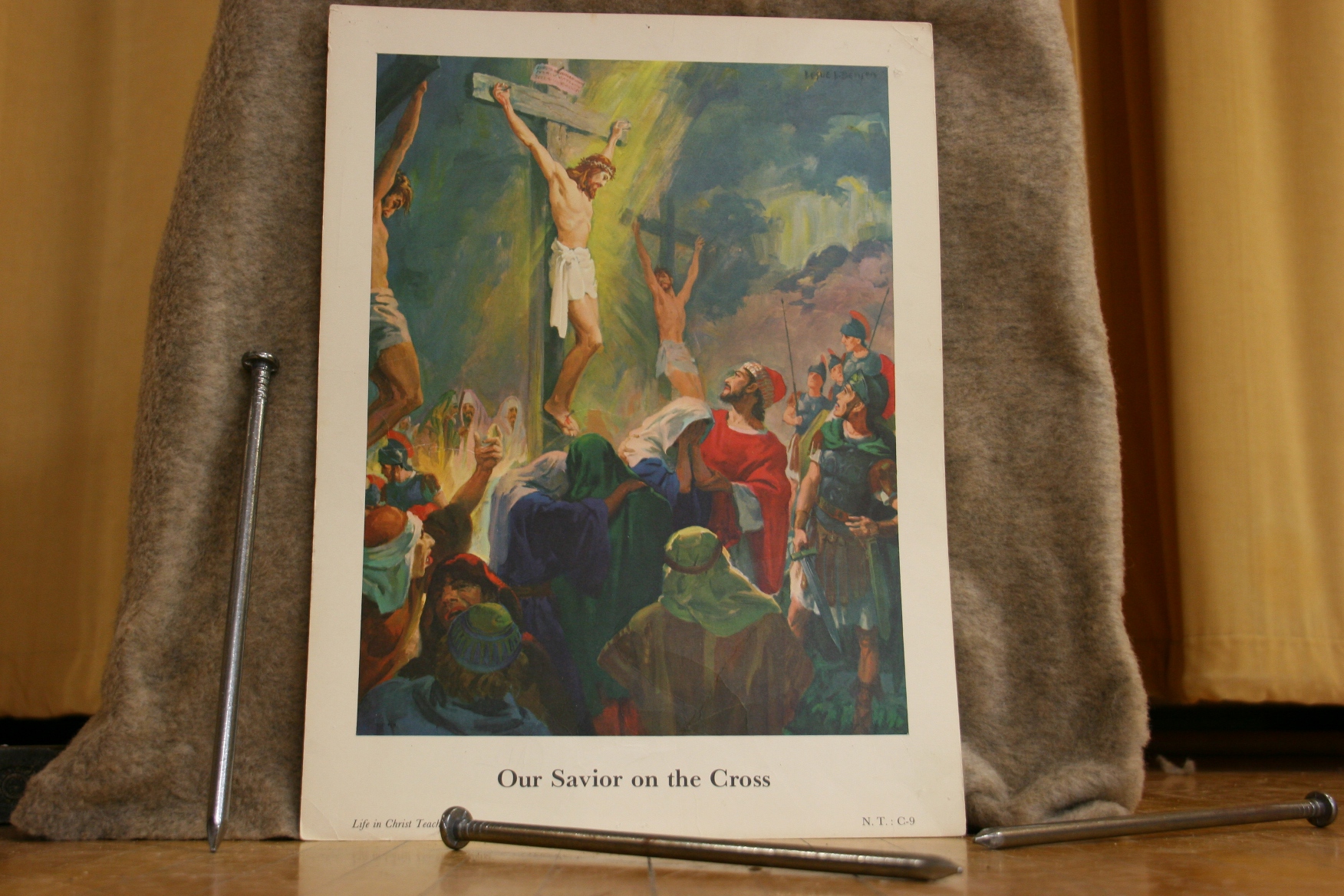
The stage was set with a cross, hammer and nails. Participants pounded nails into wood. Christ was nailed to the cross.

The stage was set with a cross, hammer and nails. Participants pounded nails into wood to remember how Christ was nailed to the cross.
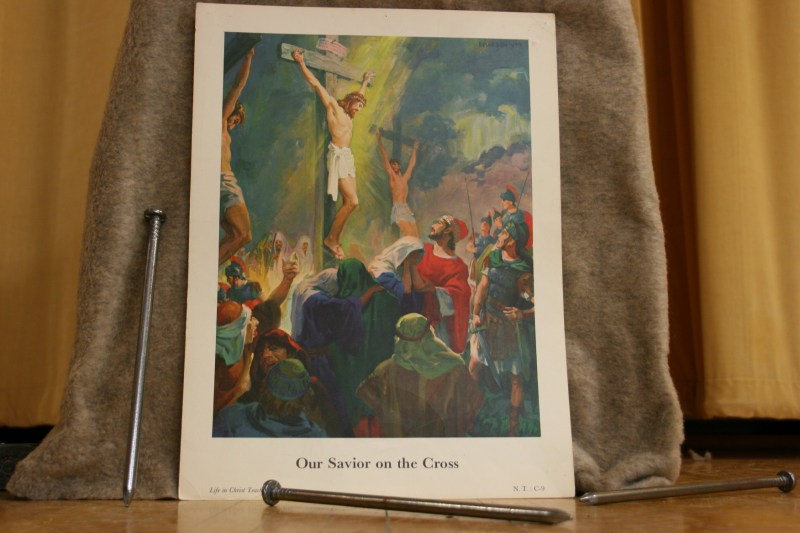
This artwork and nails were placed at the base of the cross.

This artwork and nails were placed at the base of the cross.

Stop #8: As Jesus died on the cross, he said he was thirsty. He was given vinegar to drink.  (I don’t have any photos from this station.) Participants could taste vinegar.

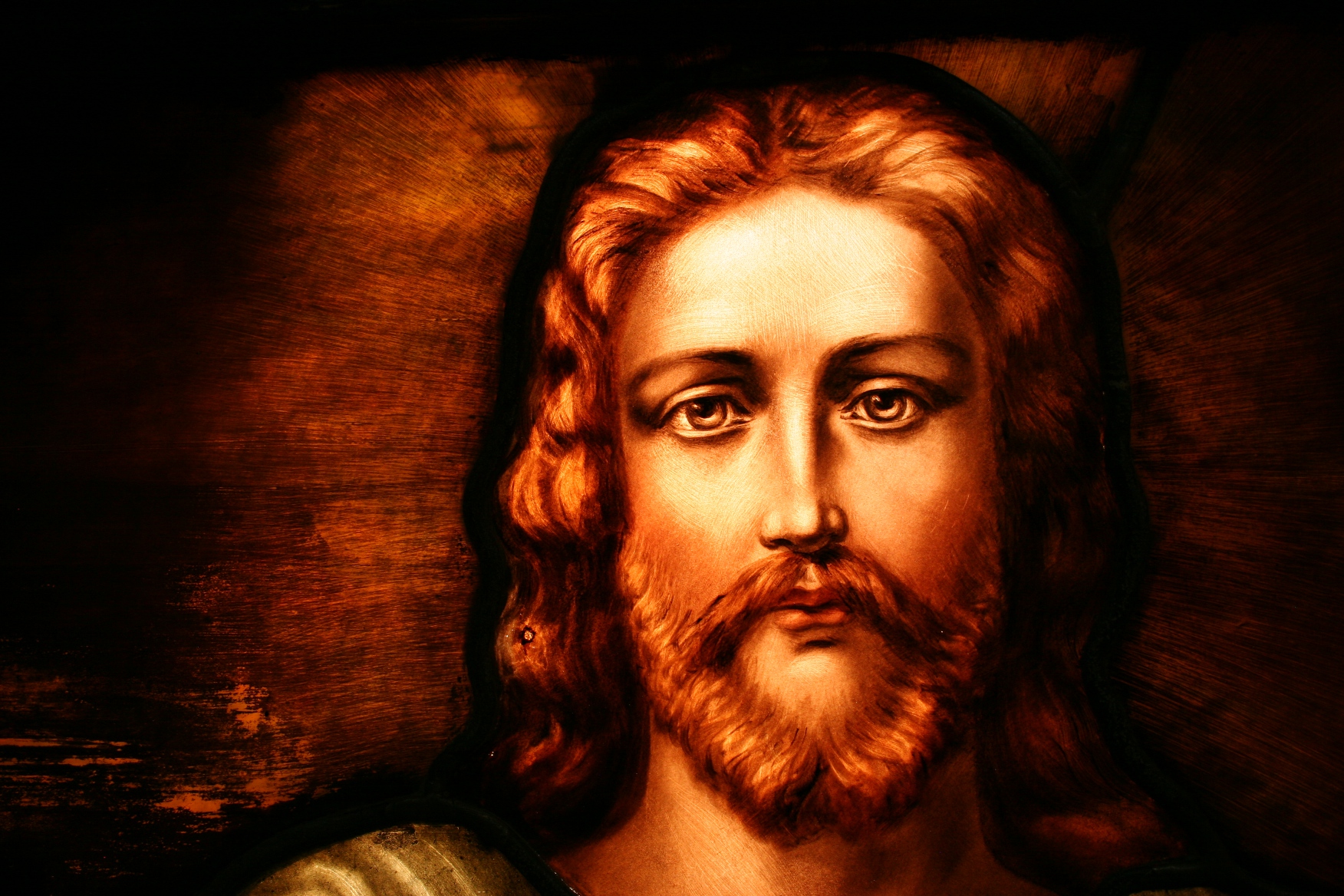
A photo of Christ's face from a stained glass window in my church, Trinity Lutheran, Faribault.

A photo of Christ’s face from a stained glass window in Trinity Lutheran, Faribault. This depicts Him after His resurrection.

Stop #9: Jesus’ tomb is found empty on Easter. (I don’t have any photos from this station.) Those on the tour joined the angel and the woman at the gravesite in celebrating Jesus resurrection with these words: He is risen!

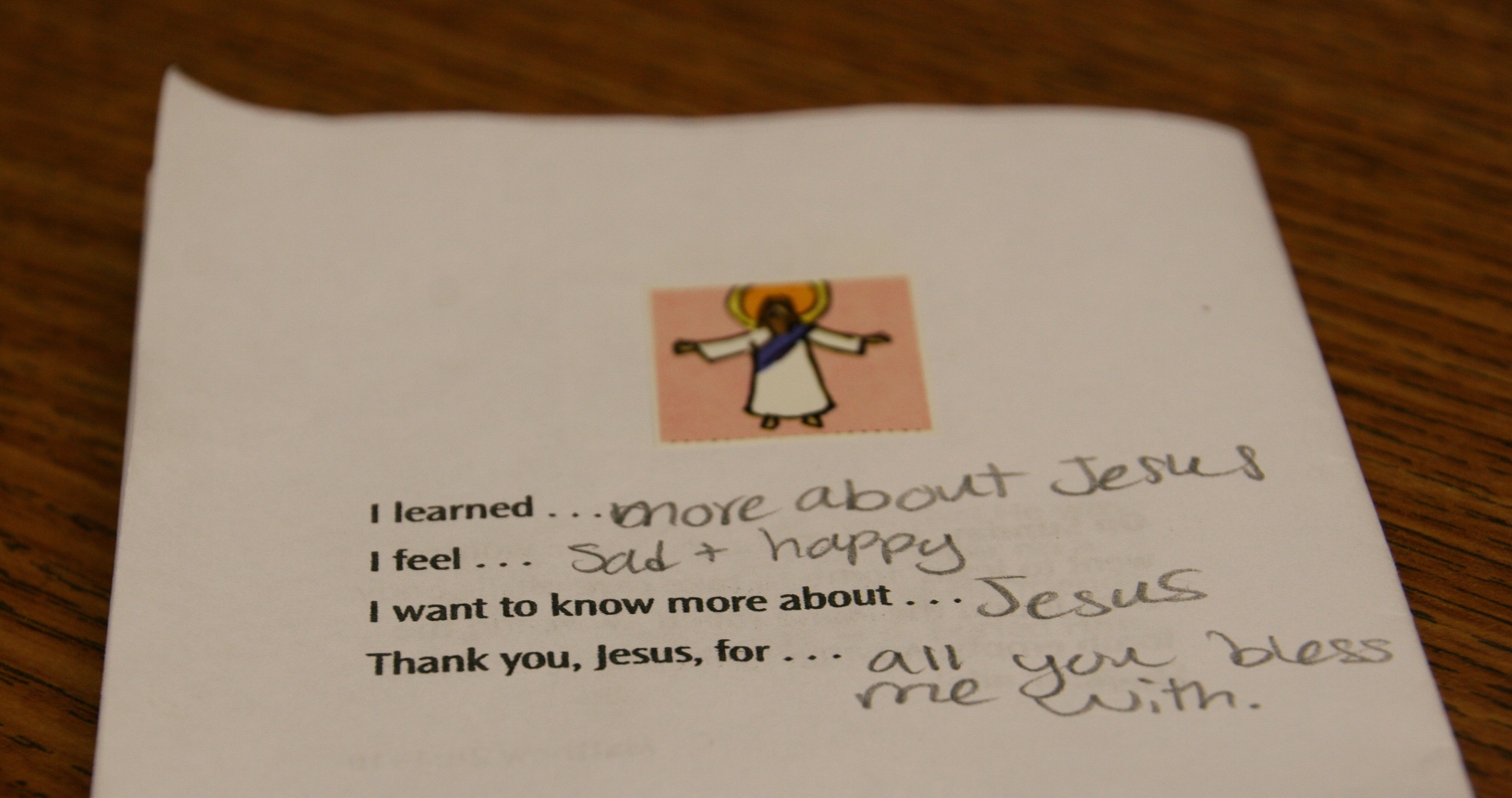
Stop #10, The final check-in station allowed participants to talk and write about their experiences:
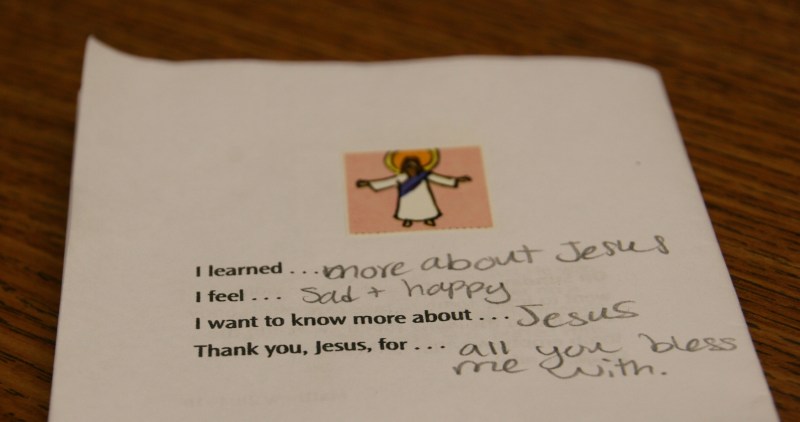
What a young girl, Jennifer, wrote.

What a young girl, Jennifer, wrote.

FYI: “Journey to the Cross” is available for purchase through Concordia Publishing House. Click here for more information.

It’s described as “an outreach and educational event for your congregation and community. Through activities based on Scripture, participants experience the joy of Palm Sunday, the disappointment of Judas’ betrayal, the devastation of the crucifixion, the jubilation of the resurrection, and so much more. This family program invites children and adults to walk the path that Jesus walked.”

© Copyright 2015 Audrey Kletscher Helbling


A shuttered church March 26, 2015

Filed under: Uncategorized — Audrey Kletscher Helbling @ 5:00 AM
Tags: , , , ,

Church in West Concord, close-up


EVERY TIME I SEE an aged church like this shuttered, I am saddened.

Part of that discontent stems from the loss of the old wood-frame church I attended while growing up. It was replaced in the early 1970s by a brick building on the edge of Vesta in southwestern Minnesota.

The “new” church is more practical with no steep steps, everything on one level and more usable space. But it lacks the character of an ornate altar, a balcony, a pulpit looming above the congregation, aged pews, the history of generations worshiping under a roof raised by great grandparents.

Mostly, it lacks memories—of tinseled towering evergreens, singing “I Know That My Redeemer Lives” every Easter, sweeping snow from overboots, men’s hats pegged on hooks in the entry, lining up on the basement steps on Christmas Eve, unwrapping wax paper wrapped sandwiches on the side church steps during Vacation Bible School, kneeling before the congregation in my white dress and white shoes for a blessing on my Confirmation Day…


Church in West Concord, minus steeple


What memories does this former church in West Concord hold? And why is it no longer a house of worship? Did membership decline/grow to the point that the doors were closed? Did upkeep and maintenance costs become unaffordable?

It appears the church has been repurposed as a home or perhaps apartments. Just like St. John’s Lutheran back in my hometown. That’s a better option than the alternative of a final amen.

#

Check back next week for a series of stories about the brick building on the right in these two photos. It’s West Concord’s treasure.

© Copyright 2015 Audrey Kletscher Helbling
 

Minnesota Faces: A pastor with prairie roots February 20, 2015

Portrait #8: Pastor Gordon


Portrait 8, Pastor Gordon Deuel at Little Prairie


This week, the beginning of Lent and Christ’s journey toward crucifixion, seems an appropriate time to feature a portrait of a pastor.

I met the Rev. Gordon Deuel several summers ago when he was still shepherding Little Prairie United Methodist Church, rural Dundas. He left in June 2013 to become the Elko New Market Campus Pastor for Lakeville-based Crossroads Church.

My introduction to this clergyman happened on a Sunday afternoon when my husband and I stopped at Little Prairie School, a former country school located kitty corner from the Little Prairie church. Pastor Gordon noticed us lingering, walked across the road and unlocked the door into the historic building.

Later, we strolled over to the church and poked around. That’s when I captured this portrait of the preacher in beautiful natural light.

While talking to Rev. Gordon, I learned that he, like me, is a native of southwestern Minnesota. He’s from Hendricks, which is about as close to South Dakota as you can get without being in it. I always feel a special kinship with prairie people. We are rooted deep in the land, appreciative of wide open spaces and big skies, fields and small towns. We don’t dismiss the prairie as the middle of nowhere, as some place to pass through en route to somewhere better. The prairie is home, whether we still live there or not.

With that commonality of place, I connected with Pastor Gordon that Sunday afternoon in August 2012.

Now, 2 ½ years later, after visiting the City of Hendricks website, I understand even more how people and place shaped the pastor. Here’s a snippet of well-crafted writing designed to draw visitors and new residents to this rural community of some 700 folks just a stone’s throw from South Dakota:

The residents of Hendricks have focused on creating a town which is a perfect place for children. Our school district is one of the best in the nation. Our weather is temperate and provides for four seasons of fun. We are well grounded in our past, as we continue to worship in a prairie church which is now on the National Register of Historic Places. We look to better our tomorrow through efforts such as our wind farm and organic farming. We believe you will find the Hendricks, Minnesota, quality of life second to none.

And I expect, as in Lake Wobegon, that “all the women are strong, all the men are good-looking and all the children are above average” in this “Little Town by the Lake.”

#

This is part of a series, Minnesota Faces, published every Friday on Minnesota Prairie Roots.

© Copyright 2015 Audrey Kletscher Helbling
Lake Wobegon quote is from Minnesota writer Garrison Keillor.