
I APPRECIATE WHEN LEADERS think outside the box, using creative ways to gather and share information.
Take a project in the southern Minnesota riverside college town of Northfield, home to more than 2,000 Latinos, representing some 10 percent of the city’s population. A 2023 city-inspired effort led by a collective of local Latino artists and activists was tasked with developing a connective public art project focused on Latino voices.
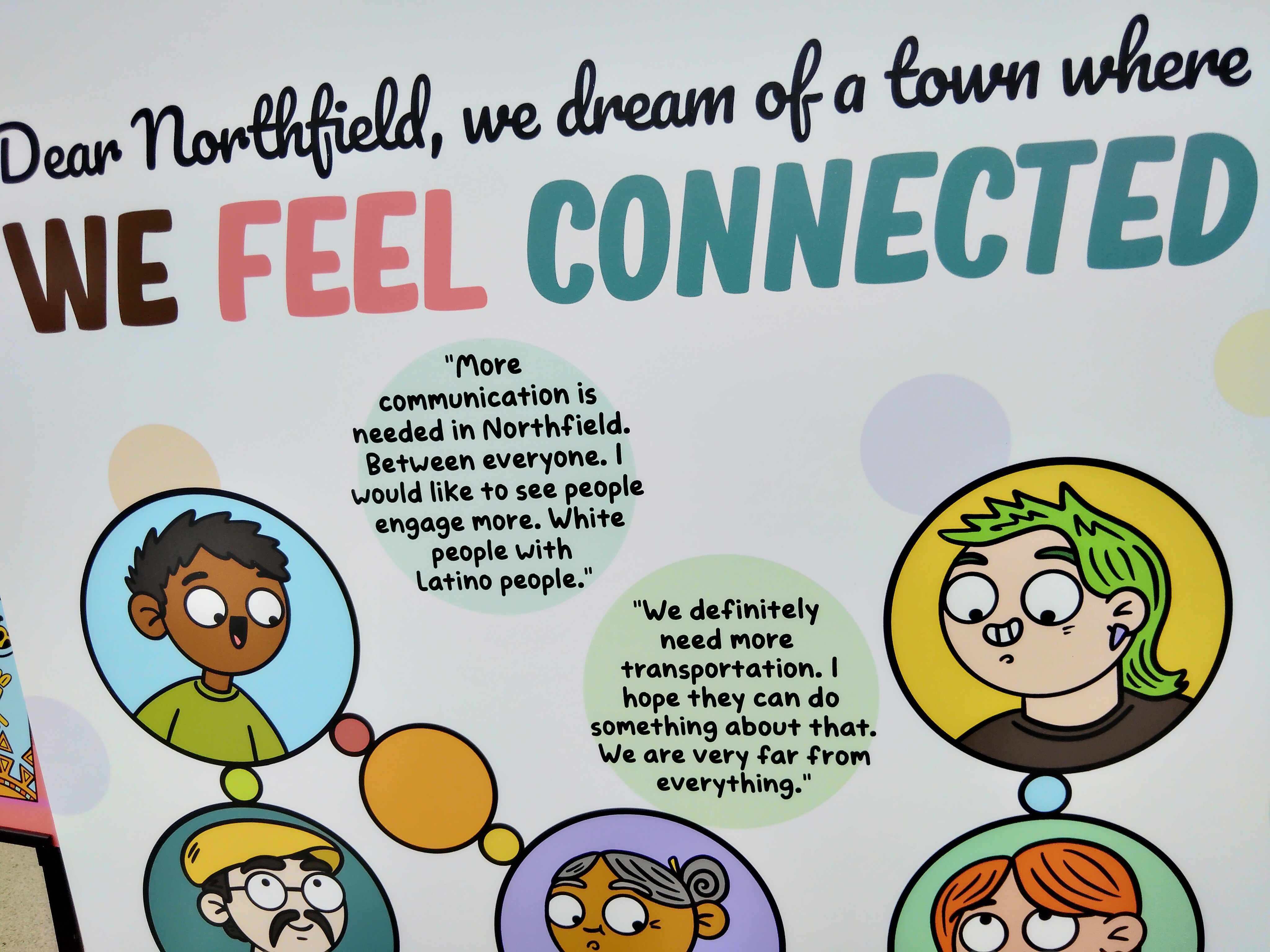
Among the results was a poster campaign, “Dear Northfield,” by Latino artist Rocky Casillas Aguirre. He interviewed 100 Latino residents, asking this question: “If you could write a letter to the people who govern our city, what would you tell them?”
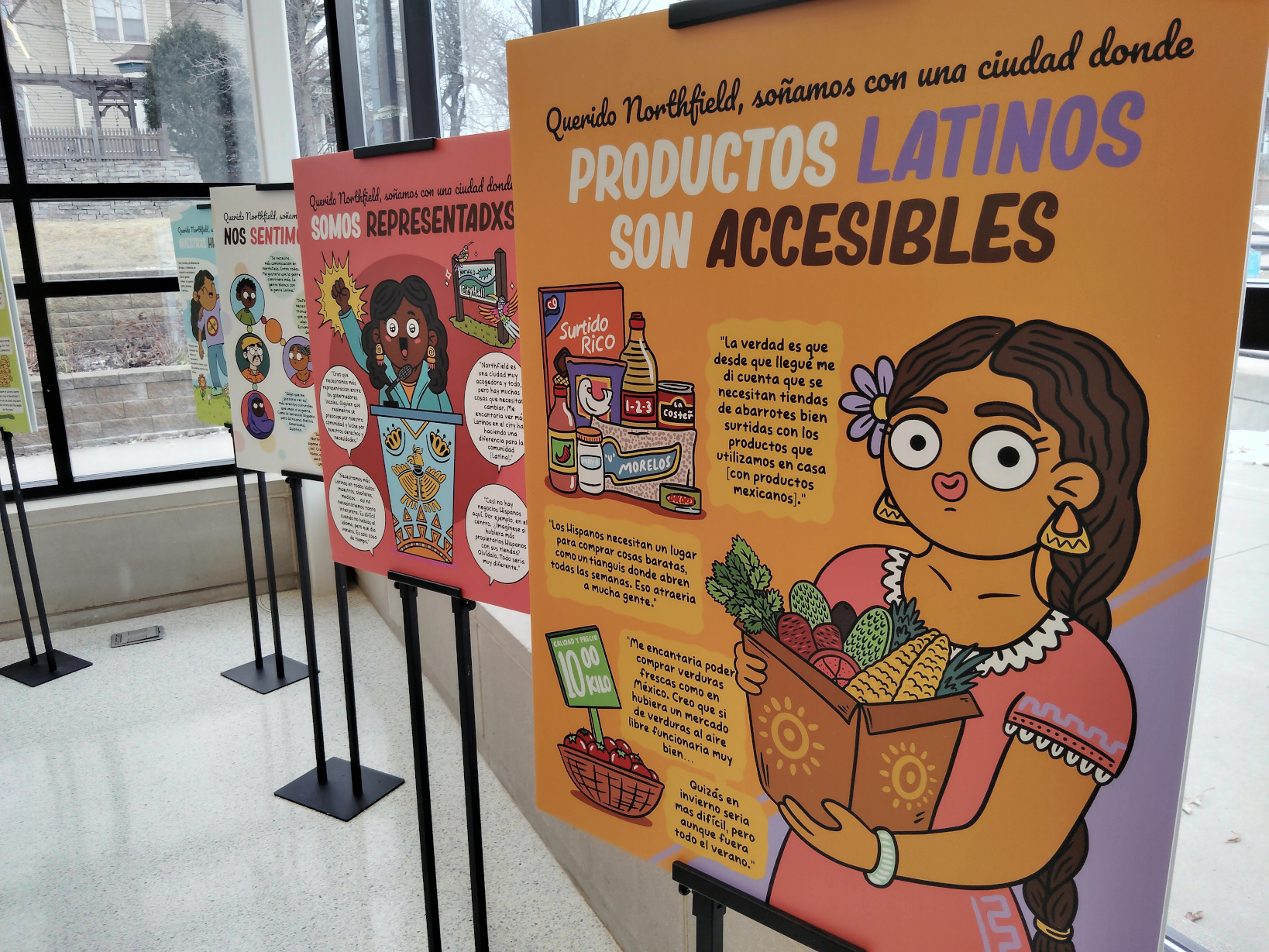
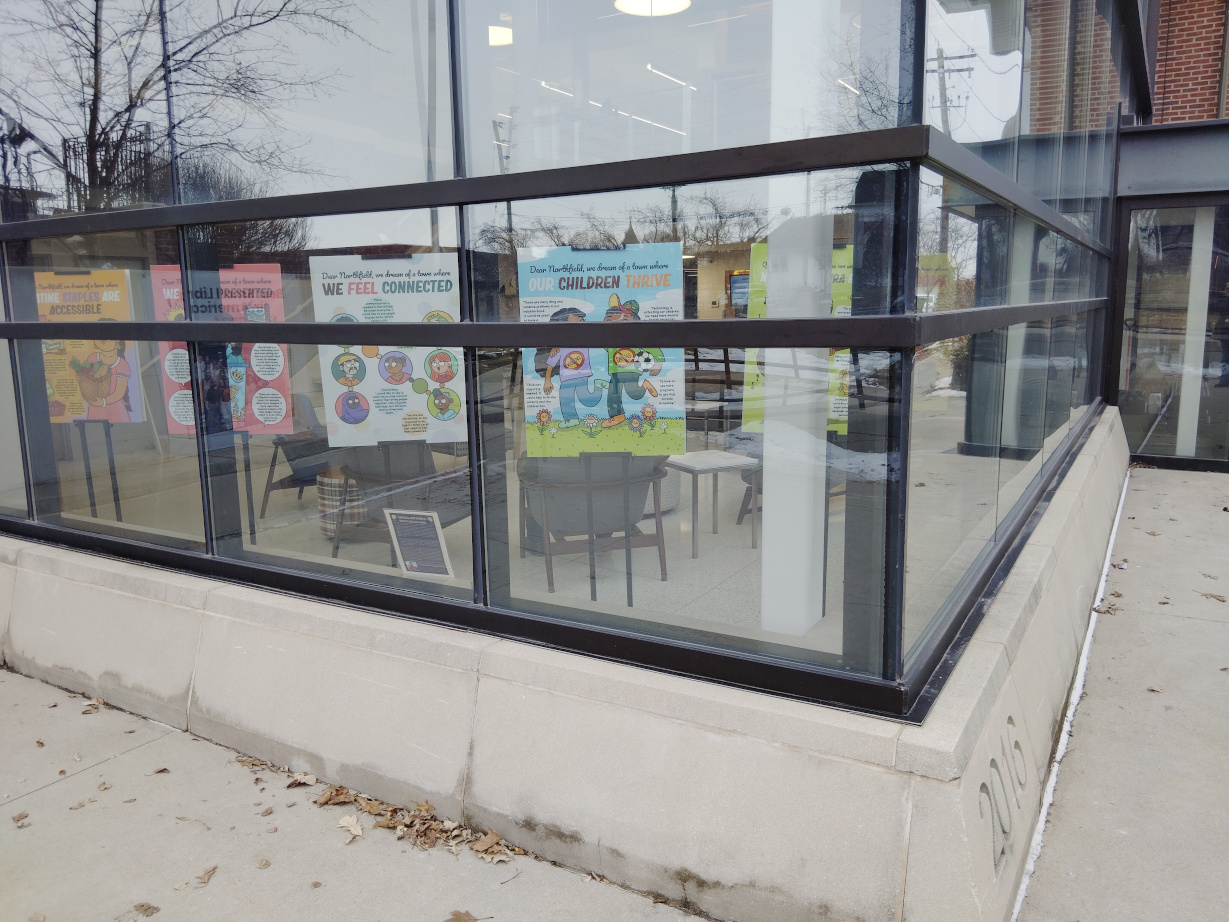
The results are colorful, eye-catching panels that reveal invaluable insights from Northfield’s Latino population. I recently saw six of Aguirre’s art posters displayed in the atrium of the Northfield Public Library, a community gathering spot.
At first glance, the artwork reminds me of illustrations in a children’s picture book or drawings in a cartoon. That’s a signature style of Aguirre, born in Mexico, raised in Northfield and a resident for more than 20 years. His art grabs attention in vivid cultural colors.
But it is the comments on those posters which especially deserve a close look as they address topics like housing, transportation, food, culture, communication and connection.
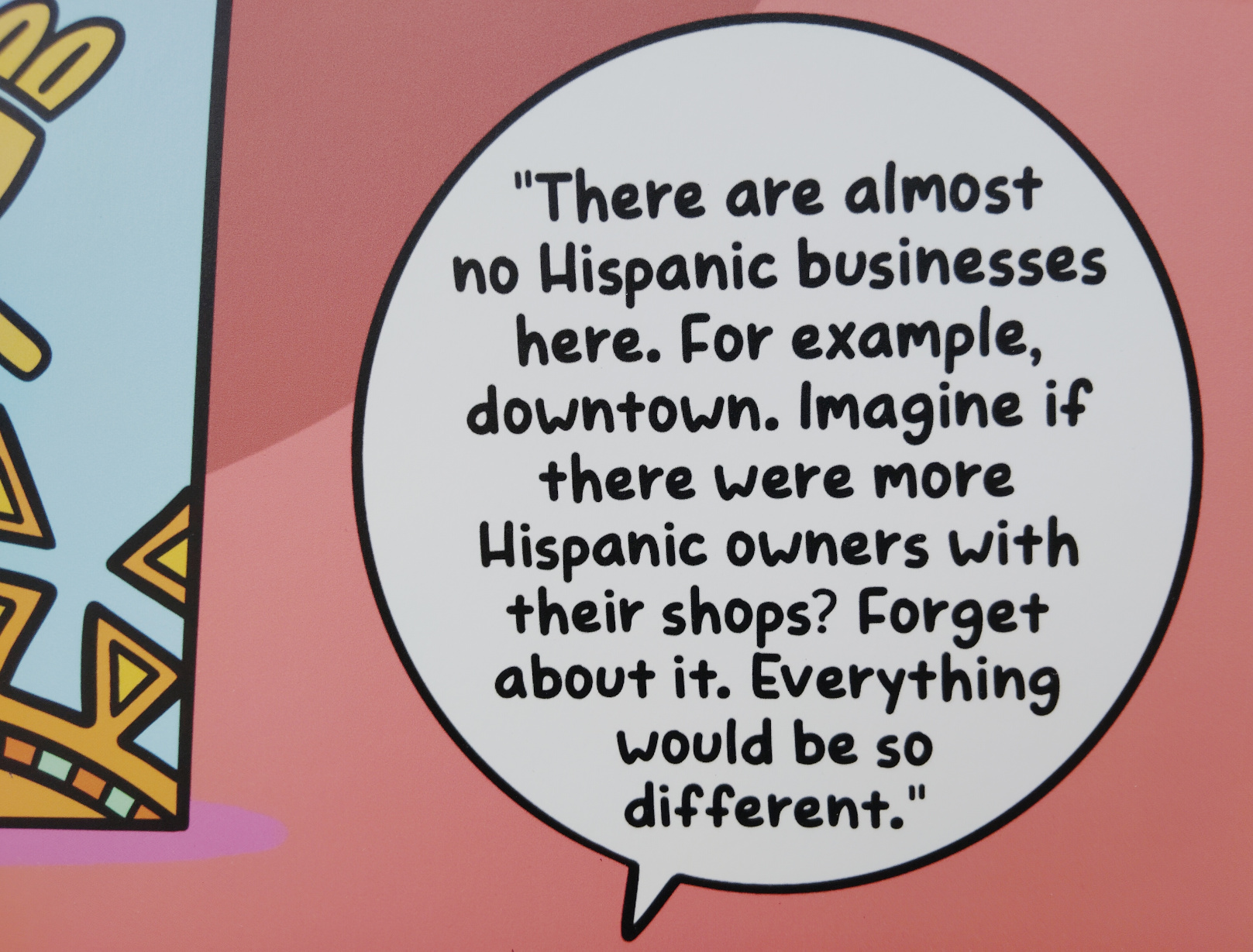
In their own words, Latino residents of Northfield share their thoughts, their concerns, their hopes, their dreams. They wish for Latino businesses downtown, shops where they can buy Mexican-made products, foods familiar and comforting to them.
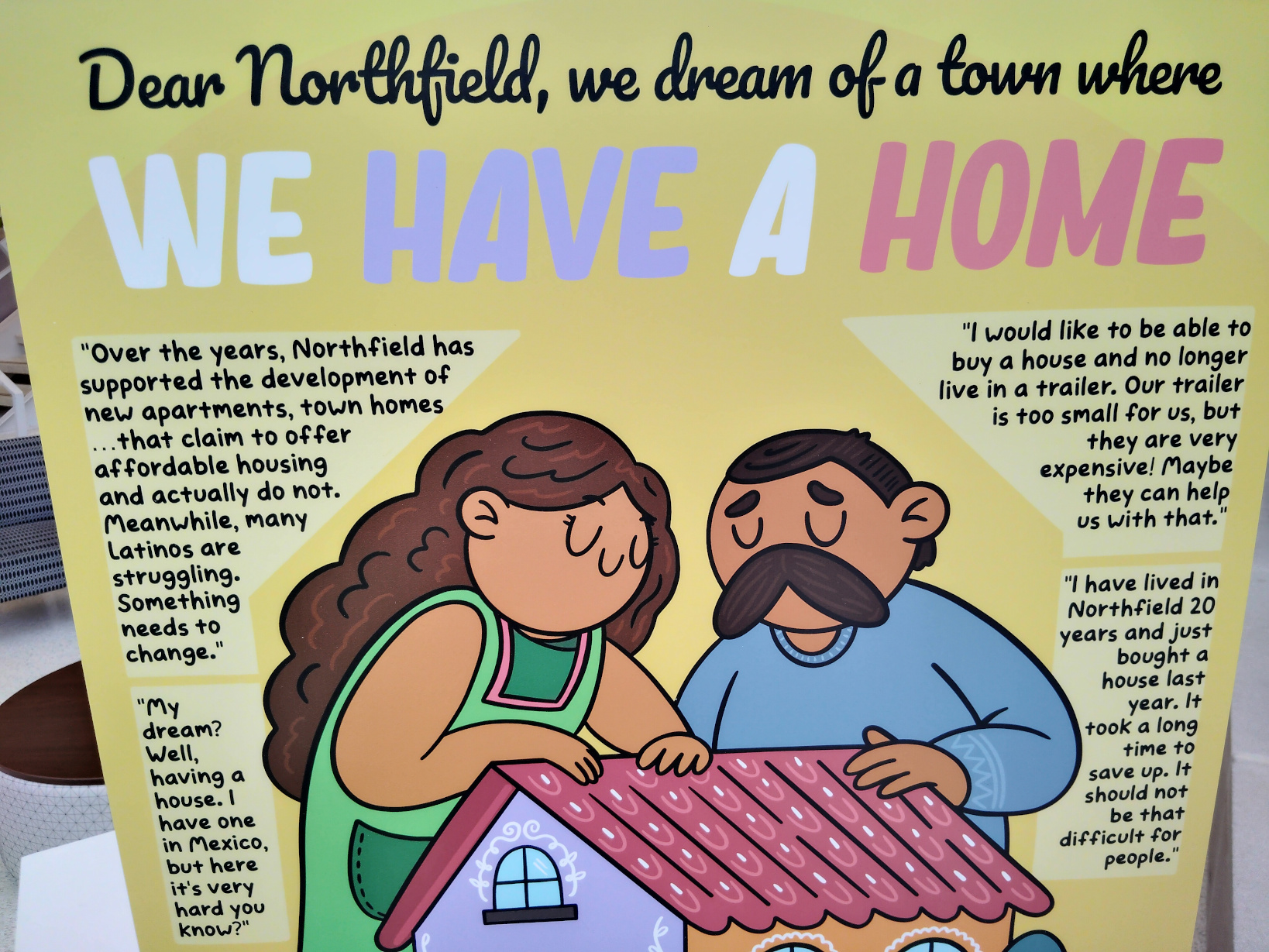
They want affordable housing, options other than living in trailer houses and apartments.
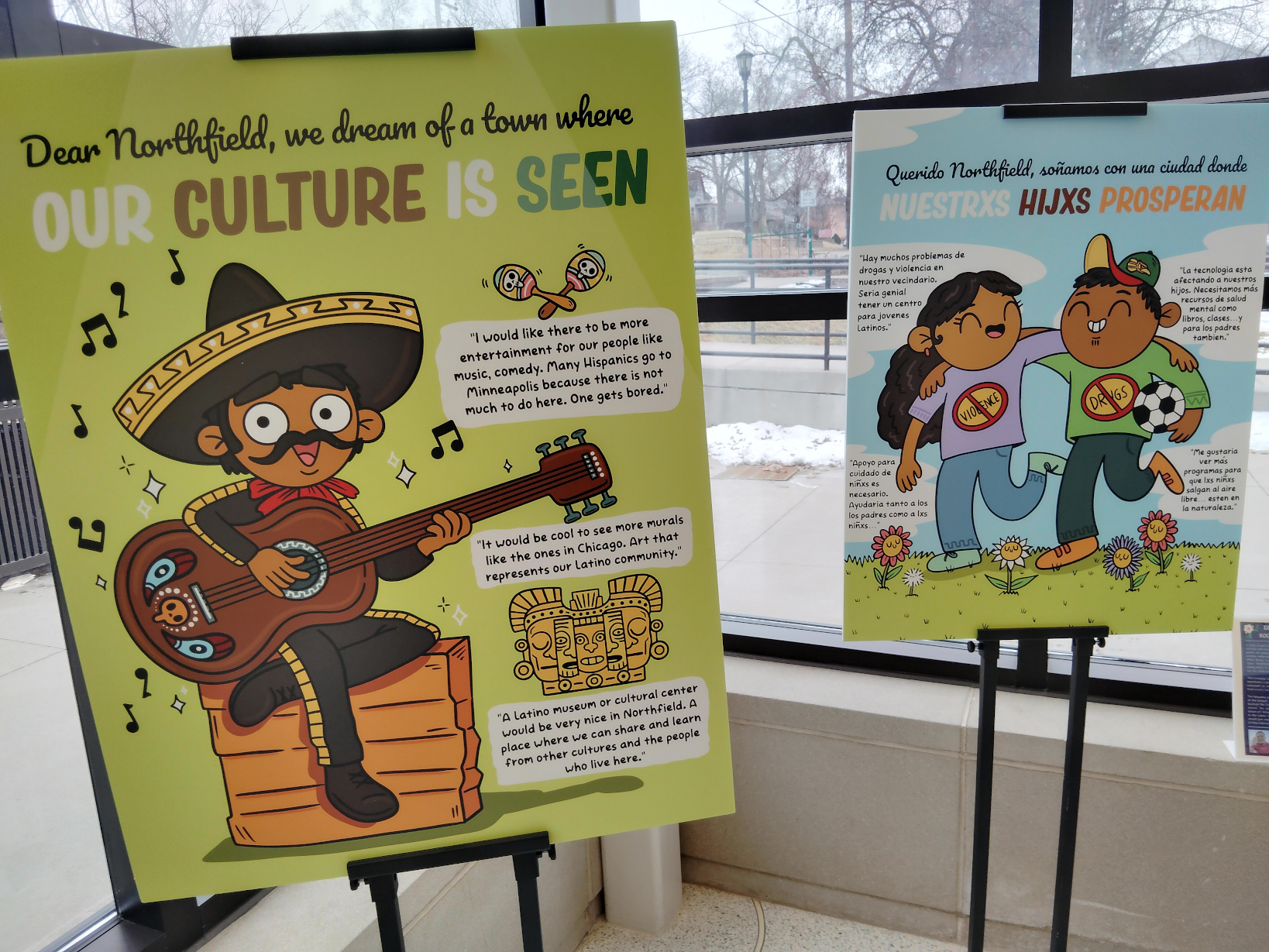
They want local Latino-based cultural choices in music, entertainment and art, specifically naming murals. That seems doable in Northfield, which has always embraced public art and has multiple murals.
They want more options for youth, like a Latino youth center.
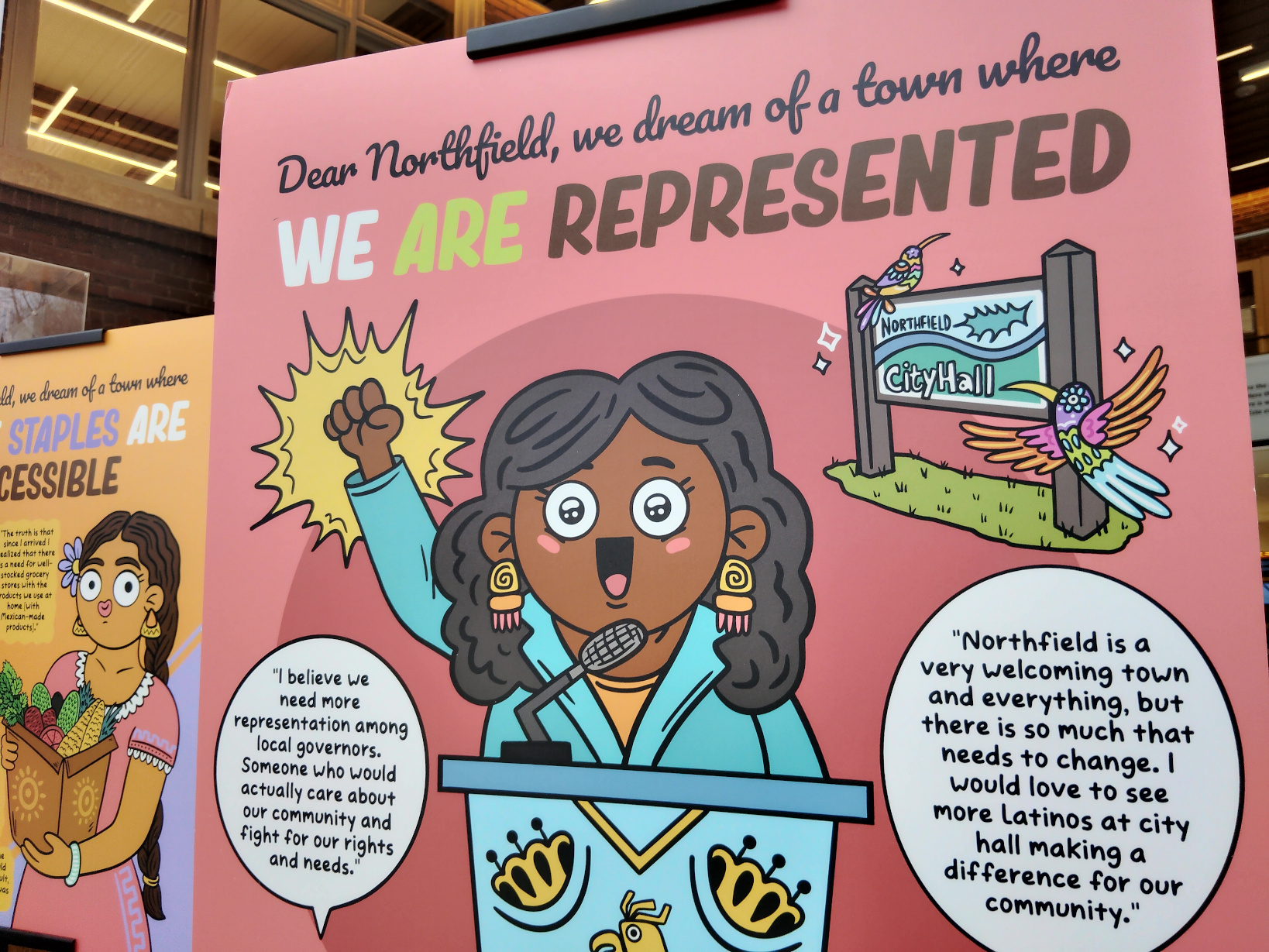
They want more representation in city government and increased connections and engagement between white people and Latinos.
None of these seem like particularly big asks, although some certainly take time and money to implement. It’s good to get the conversation going.
I hope other communities follow Northfield’s example and use art as a way to share information that will help build a stronger, better and more culturally-aware and diverse city. A place where everyone can thrive, no matter their color, no matter their language, no matter their culture.
© Copyright 2026 Audrey Kletscher Helbling












 Minnesota Prairie Roots
Commentary: Floods, alligators & an email July 7, 2025
Tags: "Alligator Alcatraz", "Testify: Americana Slavery to Today, African Americans, America, commentary, communication, natural disaster, opinion, Texas flooding
I HAVE SEVERAL THINGS on my mind today which are roiling my emotions. Not on a personal level. But on a broader, national scale.
First, I feel heartbroken over the loss of lives in Texas following flash flooding. The latest death count I’ve read is eighty-five, 27 of those children. Dozens remain missing. Most heart-rending are the deaths of the young campers at a summer camp. I think many parents, myself included, can relate to dropping a child off at camp with the full expectation that they will be there when we come to pick them up at camp’s end. For too many, a parent’s absolute worst nightmare—that of losing a child—is now reality. I feel for anyone who has lost a loved one in these floods, no matter their age. I am thankful for the 850 rescued thus far.
ALLIGATORS
Secondly, I’m deeply-troubled by the gloating and hype about “Alligator Alcatraz,” a deportation detention facility in Florida. Those in power have been flaunting the name, stating quite clearly what will happen to anyone who tries to escape. There’s nothing remotely “funny” about alligators attacking and devouring human beings. There’s nothing “funny” either about placing people in cages. But neither seems to bother those who are vocally promoting this facility in such a vile way.
As soon as I heard the words “Alligator Alcatraz,” I was reminded of a traveling exhibit, “Testify—Americana Slavery to Today,” that I saw at my local library in April. Within that exhibit was a studio portrait of nine unclothed Black babies and toddlers sitting or standing in one long line. The circa 1897 image by a photography studio was simply titled “ALLIGATOR BAIT.” I remember standing there, my jaw dropping in disbelief. The photo was right above another image, that one of the African-American 9th Calvary Regiment, ca. 1939.
Then I read the text below the two photos: The juxtaposition of photos heightens the irony of being hawked as unwanted, or “alligator bait,” while at the same time being drafted into a calvary regiment to serve in the name of the United States’ highest ideals. Historians have actually investigated to determine if African-American children were indeed used by hunters to lure alligators. The results were somewhat inconclusive, but the fact that research was needed is telling.
I wondered when I saw the “ALLIGATOR BAIT” photo how humans can be so cruel? I wonder the same today.
A TROUBLING EMAIL
Lastly, a few days ago I received an email from the Social Security Administration, which I initially thought to be phishing given the title, “Social Security Applauds Passage of Legislation Providing Historic Tax Relief for Seniors.” Turns out this was legit. I’m sure many of you got the same email.
As I read on, I couldn’t quite believe what I was reading—a clearly partisan piece of propaganda from an agency I thought was non-partisan. Not only that, the content was not complete or accurate.
Whoever crafted this email and thought it was OK to mass-send, it is not OK.
LET’S DO BETTER
There you go. This is what’s on my mind today, just days after celebrating the Fourth of July in a country I love, even with all its faults, atrocities, injustices and troubles. But we can, and must, do better. I believe we can.
© Copyright 2025 Audrey Kletscher Helbling