Minnesota Prairie Roots

Writing and photography by Audrey Kletscher Helbling

Packing his bags for Boston August 28, 2013

Filed under: Uncategorized — Audrey Kletscher Helbling @ 6:00 AM
Tags: , , , , , , , , , ,

HE FLEW INTO MINNESOTA from Washington state, arriving at Bethany Lutheran College in Mankato, Minnesota, with a suitcase and a clock.

His roommate came with an entourage of family and a car filled with belongings.

My friend Dave (not his real name) remembers the moment well. The roommate with all the stuff. And the roommate’s dad who surveyed the dorm room, then locked eyes on that alarm clock.

“Nice clock,” he complimented Dave, who, decades later, laughs about the comment.

My friend’s story pops into my mind as I consider my 19-year-old son’s departure early this morning for Medford, Massachusetts (near Boston), where he’s accepted transfer student admittance to Tufts University.

Will he feel like Dave, the odd man out, arriving via plane with two suitcases, a carry-on bag and his pillow?

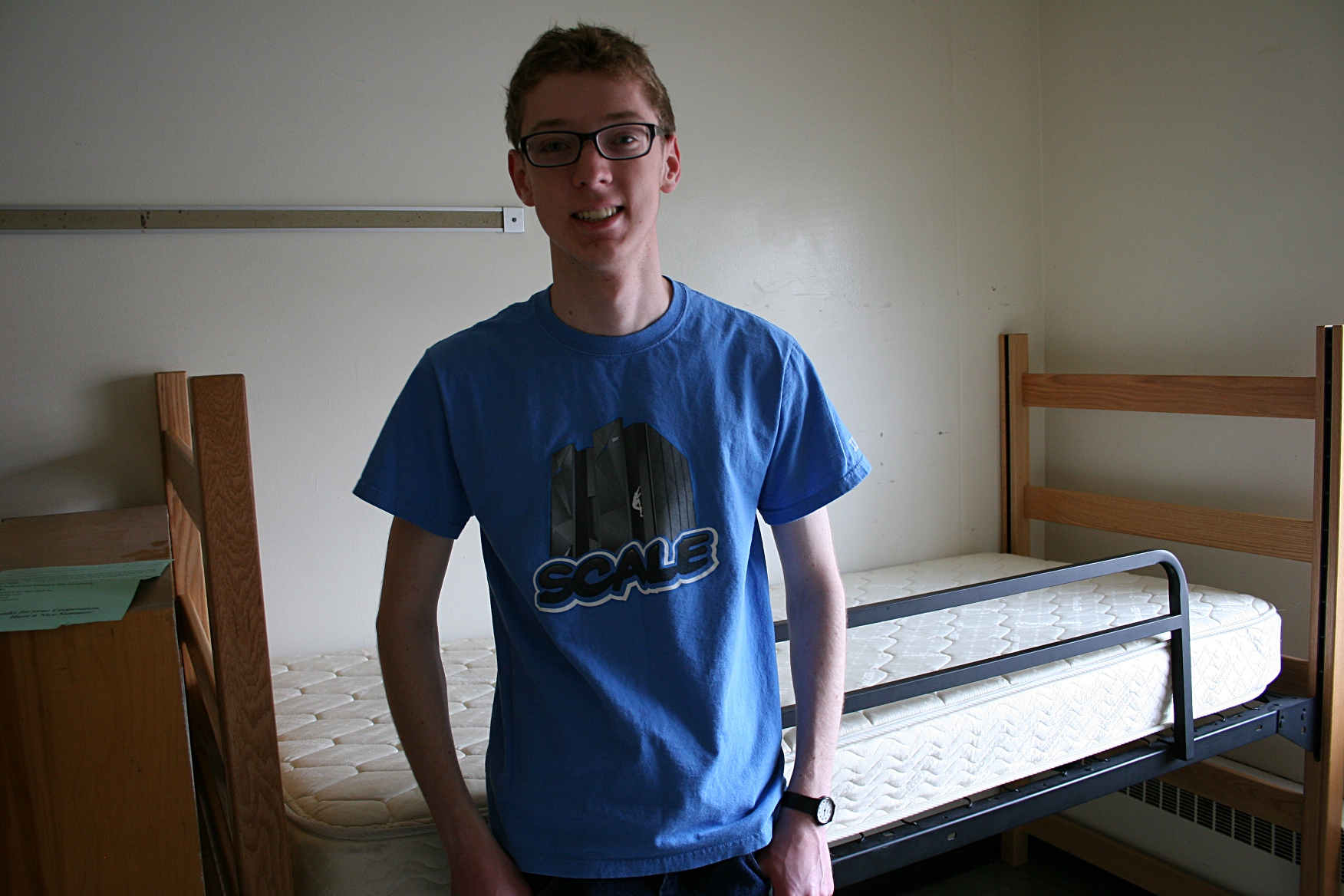
The son poses after packing his belongings in his NDSU dorm room in May.

The son poses for a photo after packing his belongings in his North Dakota State University dorm room in May.

After minimal discussion, our family decided that, given the price of gas, food and lodging, it would not be cost effective for us to pack the son’s stuff into our van and drive east 1,400 miles to Medford and then back next spring.

I won’t miss the moving in and out of dorms that I expected would be a part of our lives for the next several years. My husband and I have done that already with our daughters, long graduated from college.

Only ?? miles to Fargo. We've already driven

On the road to Fargo.

And I definitely won’t miss the long road trips along Interstate 94 to Fargo, where our youngest attended North Dakota State University for a year, or the worry about blizzards and closed interstates.

But I will miss seeing my son settled in and the ability to visualize him in his dorm room or anywhere on the Tufts campus. There is a certain sense of security for a mother in both.

Yet, this is not about me. This is about my son, his education, his need to feel challenged, his happiness and his future. The opportunity to attend a noted and respected research university like Tufts, which offers admission to only 50 – 100 transfer student applicants per year, is huge.

The debt load that our boy will bear, however, also will be huge (compared to NDSU), even with a substantial and outstanding financial aid package. Without that needs-based funding, he couldn’t attend Tufts; we are grateful. Still, I worry about how he/we will come up with our expected family contribution toward his education. The annual cost to attend Tufts exceeds our family’s annual gross income.

My youngest brother, a successful Twin Cities attorney, tells me not to worry, that my computer engineering major son will earn good money upon graduation. I expect he’s right. Already the 19-year-old’s base hourly wage at a summer internship was higher than his dad’s base wage after more than 30 years as an automotive machinist. And everything I’ve read points to continued demand for computer engineers in jobs that pay well.

While at NDSU, my son worked and volunteered in the Technology Incubator as part of an Entrepreneurial Scholarship. He is walking away from two major scholarships at NDSU to attend Tufts University.

While at NDSU, my son worked and volunteered in the Technology Incubator as part of an Entrepreneurial Scholarship. He is walking away from two major scholarships at NDSU to attend Tufts University. This summer he lived in Rochester and worked for IBM. His work experience at both places have been great opportunities to grow and learn and build connections for his future.

If anything, I know my son is driven to learn and succeed. He’s already proven that via his academic, computer programming and gaming successes, and his experiences working for two technology companies and more.

But, still, he’s only 19 and my boy, setting off alone for Boston with his bags. And an alarm clock in his smart phone.

© Copyright 2013 Audrey Kletscher Helbling
 

How you can make a difference in one Minnesota kindergarten classroom August 24, 2013

Looking to the front and one side of the school.

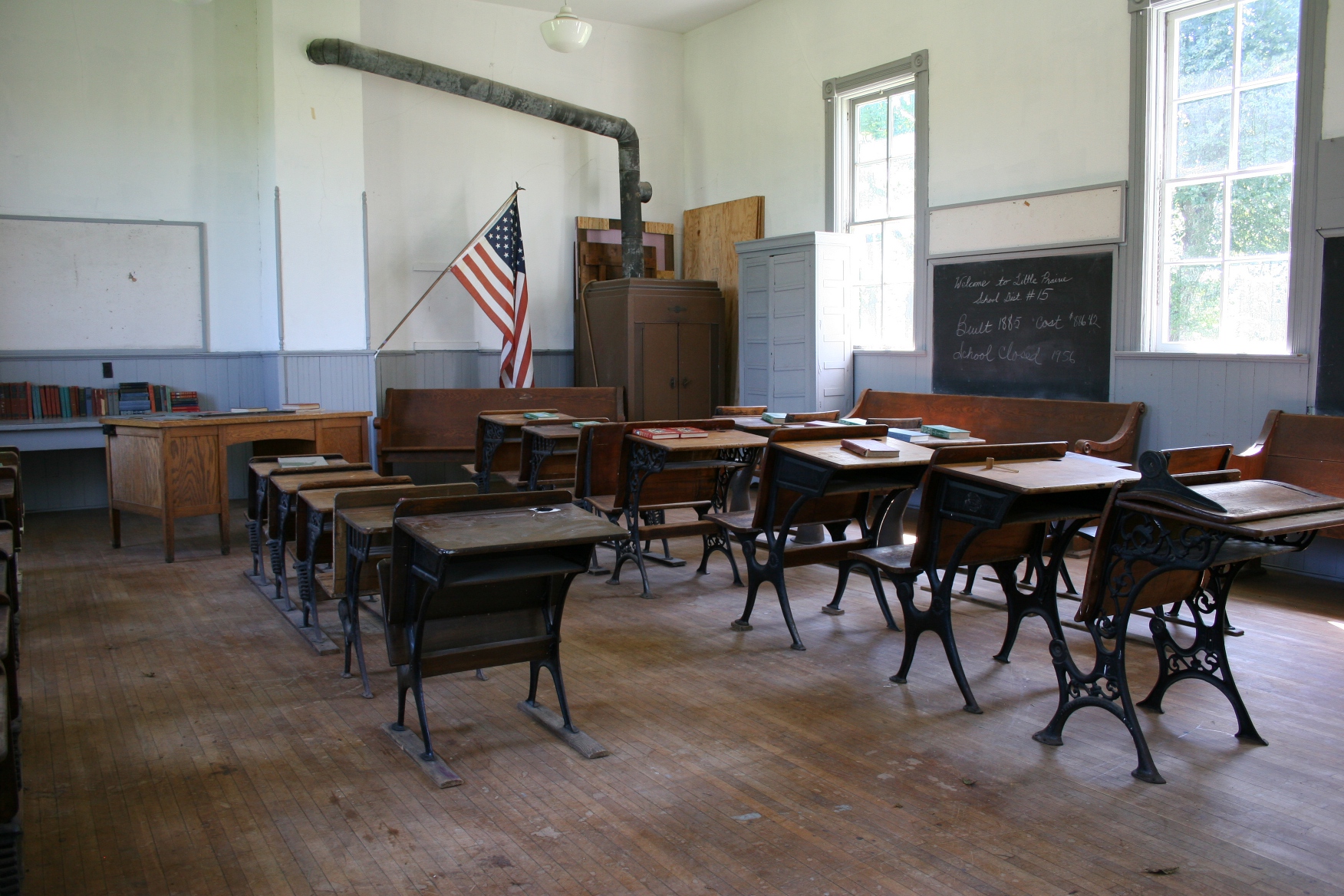
Long gone are the days of ink well desks, blackboards and Big Chief tablets.  Minnesota Prairie Roots file photo of Little Prairie School, rural Dundas, Minnesota.

MY ELDEST DAUGHTER’S friend, Laura, teaches at Earle Brown Elementary School in the north metro, in Brooklyn Center, Minnesota, Independent School District 286.

I’ve met Laura once. Mostly I “know” Laura because I follow her “These are a Few of my Favorite Things” blog. Click here to reach her blog and you will meet a young woman who is passionate about life, about teaching, about helping others (she’s been on summer mission trips to Africa), about photography, her faith and more.

Laura is the kind of person you would hope would teach your children or grandchildren. She cares. Deeply.

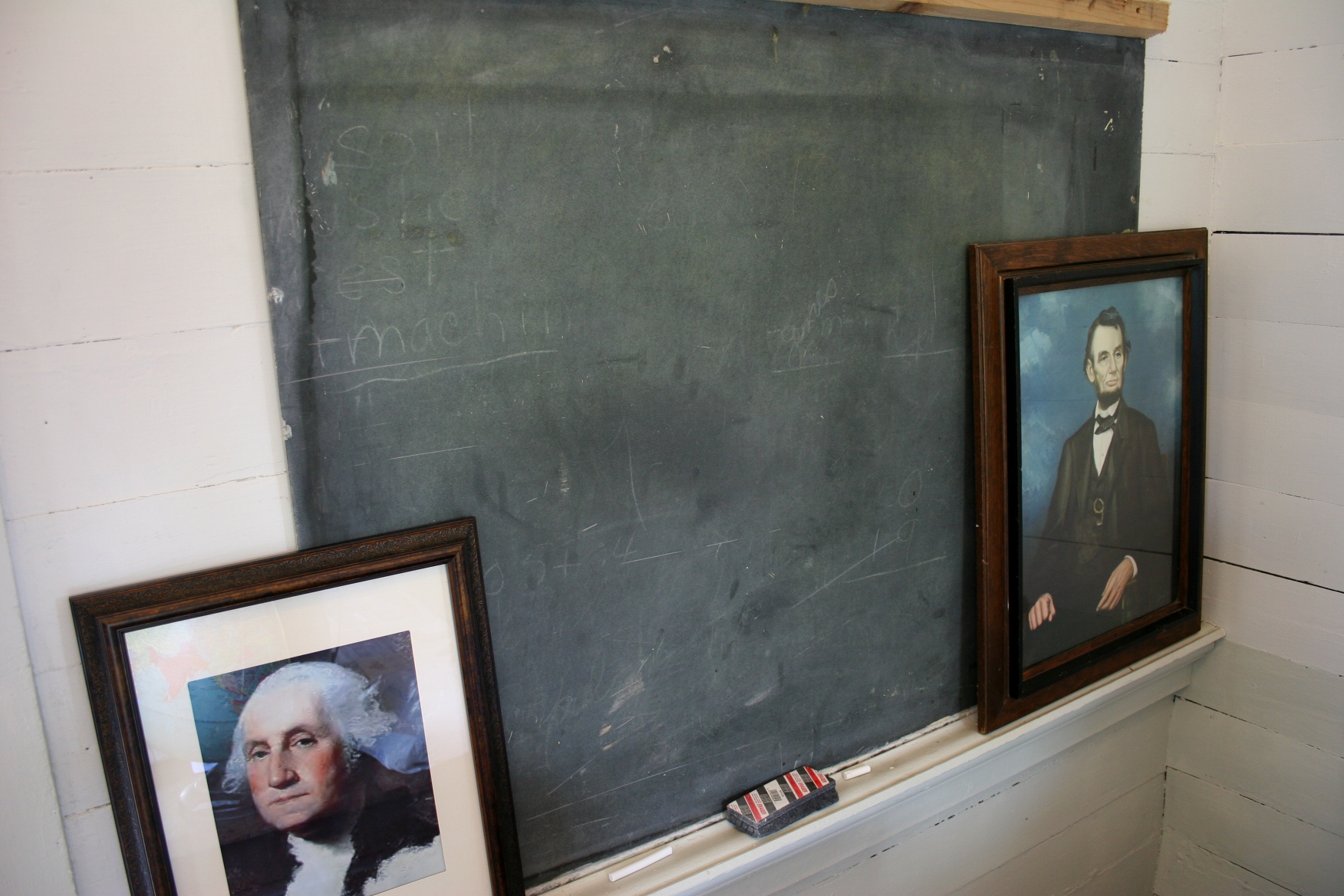
Presidential portraits grace the blackboard by the teacher's desk.

Technology long ago replaced the blackboards of my youth. Minnesota Prairie Roots file photo.

That said, this passionate teacher is looking to buy two iPad minis for her classroom to use in literacy and math centers. Her school district, she says, doesn’t have the monies for such purchases. She needs about $900 and has set up a donation venue at DonorsChoose.org. Click here to reach her Donors page, where you will find more details.

Laura writes in part:

My kindergartners start school already behind academically. Many of them have never set foot in a school environment. Others don’t come to school with clean clothes or proper school supplies. A third of my class doesn’t speak English as their first language.

But the thing is, my kids don’t know they are behind. They don’t realize the challenges they are facing. They are five, and this is life as they know it. They come in my door ready to learn, EXCITED to learn. I want to capitalize on this eagerness and provide them the best environment with the best tools at their fingertips. My goal is to have them leave kindergarten at or above grade level. My goal is for each of my students to know that they matter and they are loved. I want my students to know that they have what it takes to accomplish something in this world.

Can you sense this teacher’s enthusiasm and love for her students? I can. She wants (let’s reread this) her kids “to know that they have what it takes to accomplish something in this world.”

You should also know that the label of “high poverty,” based on the percentage of students eligible for free or reduced lunches, is attached to Earle Brown Elementary.

Please consider donating. For the sake of those five-year-olds.

Click here to link to Ms. Karsjen’s project and give.

© Copyright 2013 Audrey Kletscher Helbling
 

Kids doing good in Owatonna August 8, 2013

ALL TOO OFTEN we are quick to see the negative, to despair about the world today, to worry about what the future holds for our young people.

But then along comes something uplifting like a project undertaken by students from Lincoln and Washington elementary schools in Owatonna and my confidence and hopefulness are restored.

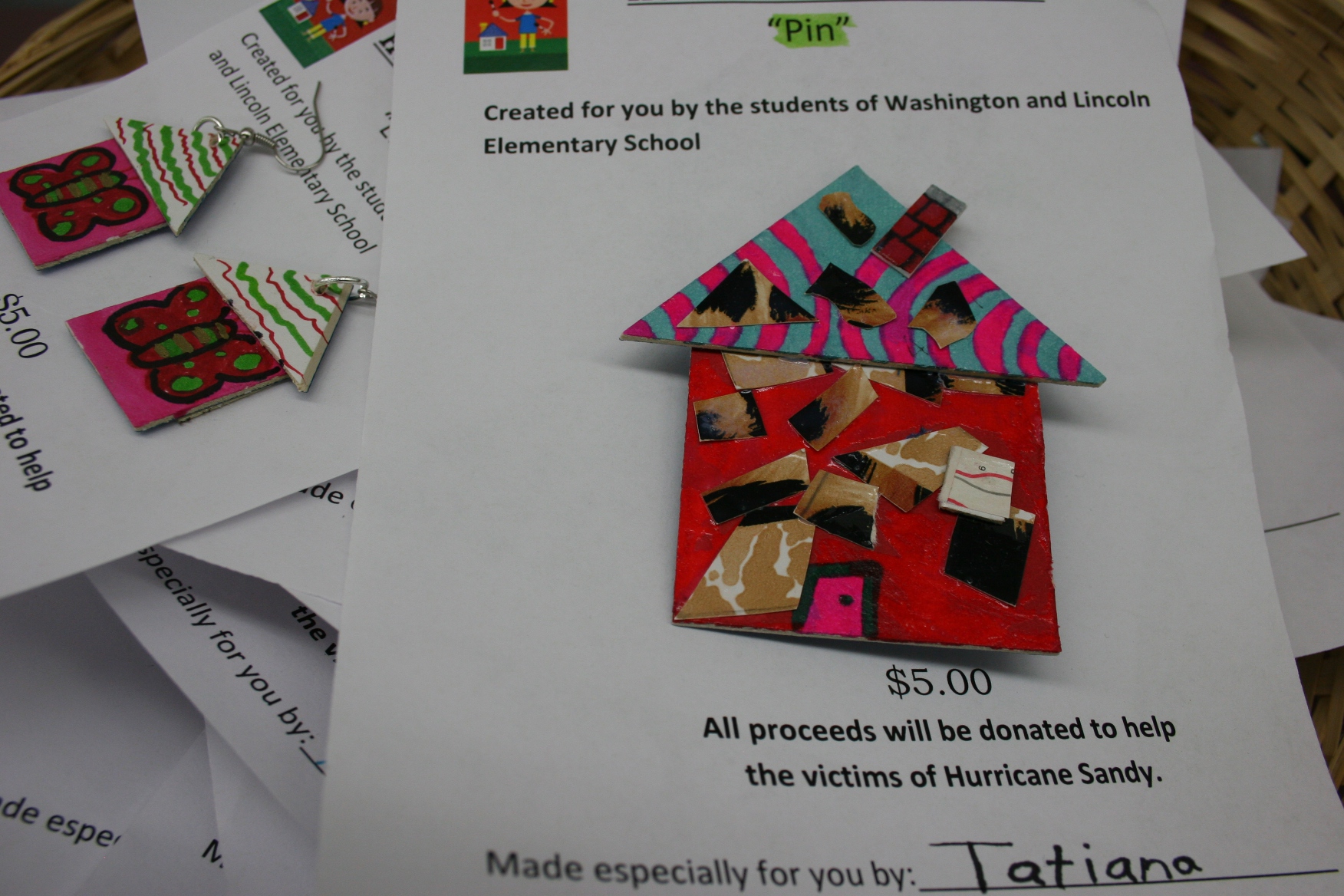
While accompanying my husband on a recent stop at St. Clair’s for Men in Owatonna to pick up his suit for our eldest daughter’s wedding, I noticed a basket filled with colorful art.

Houses 1

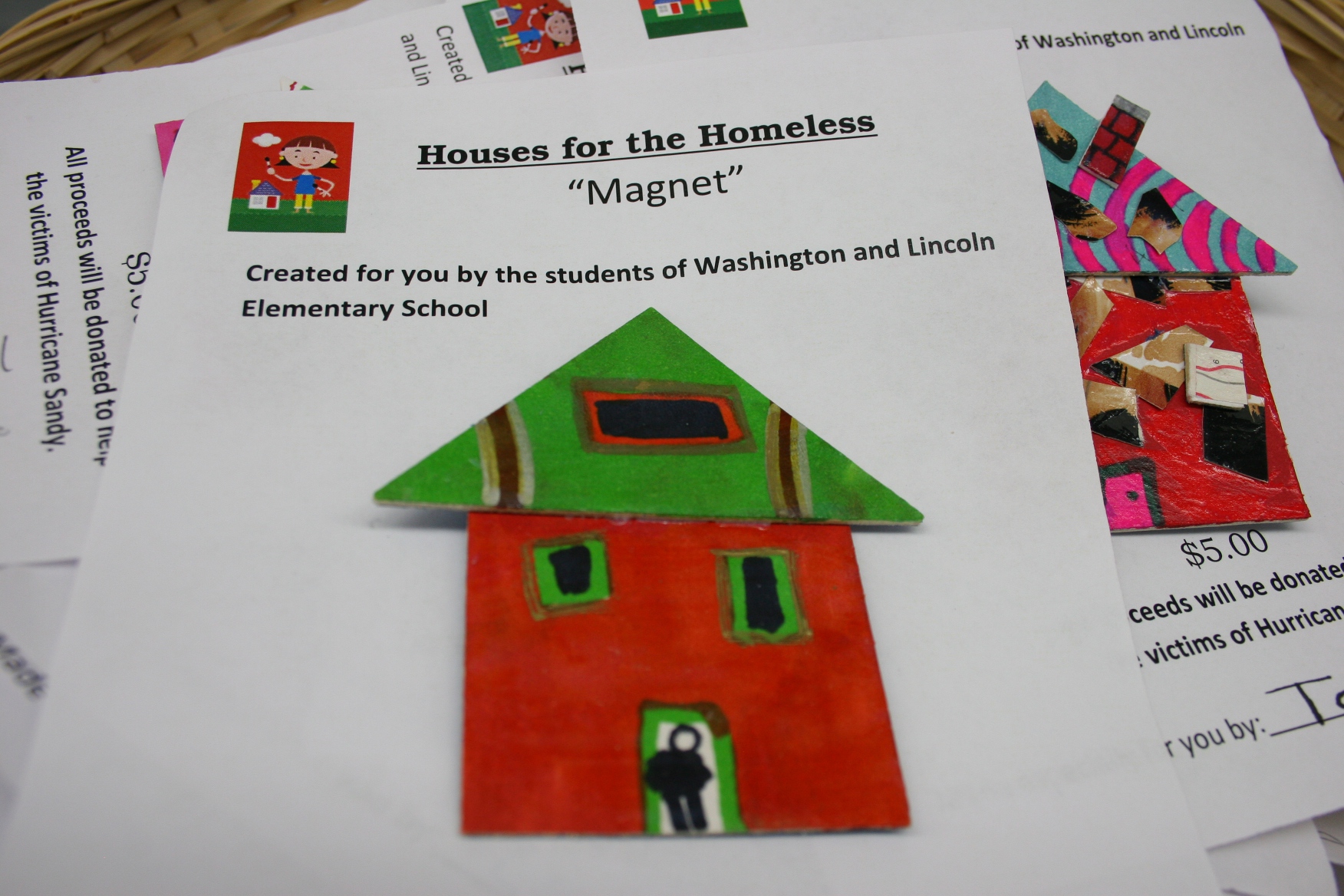
Of course, I inquired about the handcrafted pins, earrings and magnets and was pointed to a sign explaining the project.

Owatonna students, upon learning about the damage caused by Hurricane Sandy and the lives lost in that fierce storm last fall along the East Coast, decided to help. Thus the “Houses for the Homeless” fundraiser, initiated several months ago.

Houses 2

With mat board, markers and hand-painted papers, the young artists designed mini houses, a visual of the rebuilding process.

Already, I’ve been told (although not confirmed with project organizers), the project has raised $3,000 for Hurricane Sandy relief from those $5 per artwork piece sales.

If you’re feeling cynical today, or tomorrow, or the next day, about young people, then consider this fundraiser and these elementary school kids from Owatonna.

Houses 3

Students today, unlike those of my childhood, are growing up in a much different and bigger world. I don’t recall ever undertaking a single compassionate project during my school days. Activities such as “Houses for the Homeless” teach kids to think beyond themselves and their wants and needs. And that is a very good thing.

FYI: “Houses for the Homeless” pins, earrings and magnets are available for purchase in Owatonna at St. Clair’s for Men, Kristi’s Clothing, Cedar Floral Design Studio and Central Park Coffee Co.

© Copyright 2013 Audrey Kletscher Helbling


Reconnecting with my rural roots at “A Day on the Farm” June 23, 2013

NEARLY FORTY YEARS AGO I left the family farm in southwestern Minnesota bound for college in Mankato.

All these decades later I still miss the farm, yearn for those days of country quiet, the soothing pulse of the milking machine, the bellow of a cow, the nudge of a calf, the unmistakable scent of freshly-baled alfalfa.

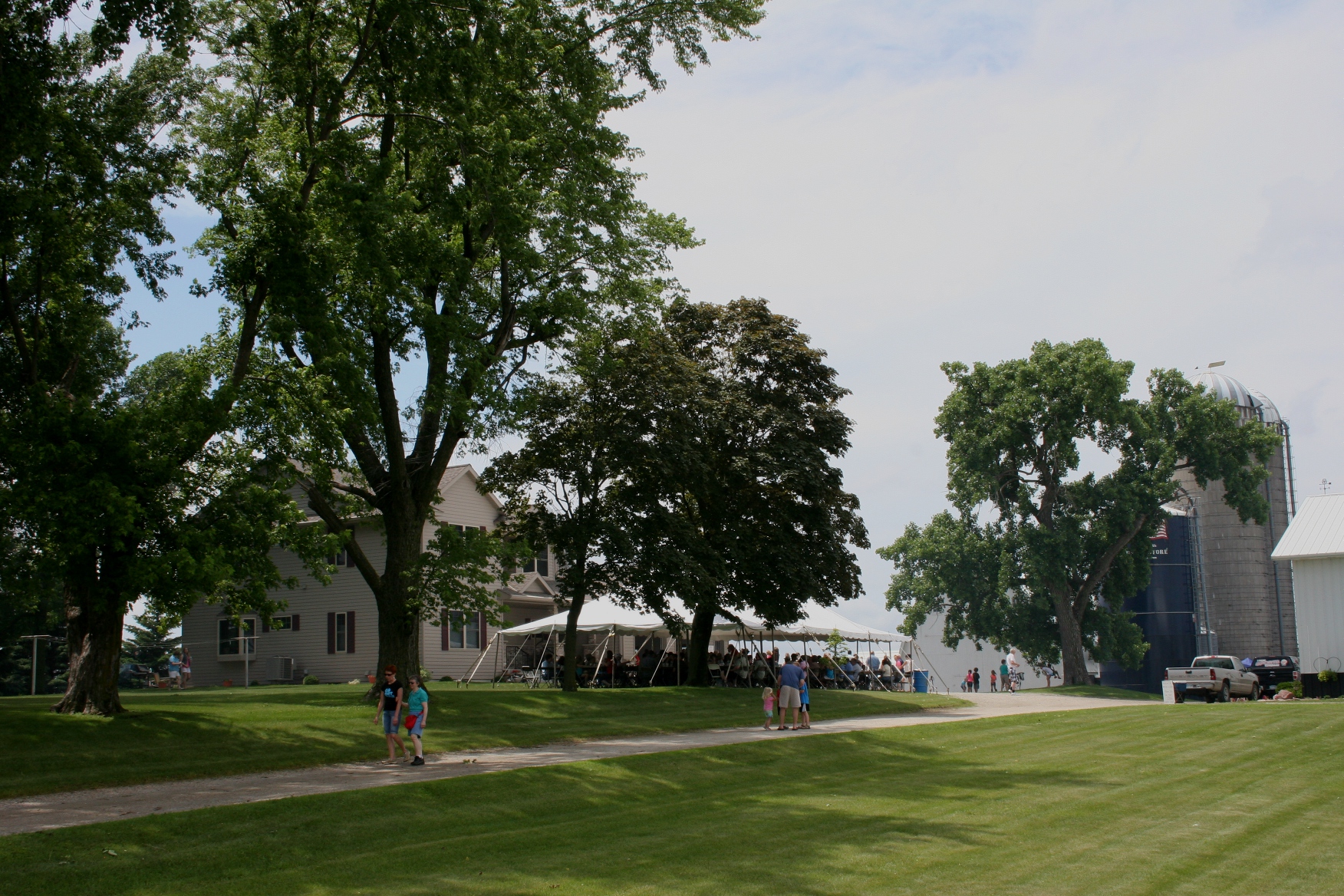
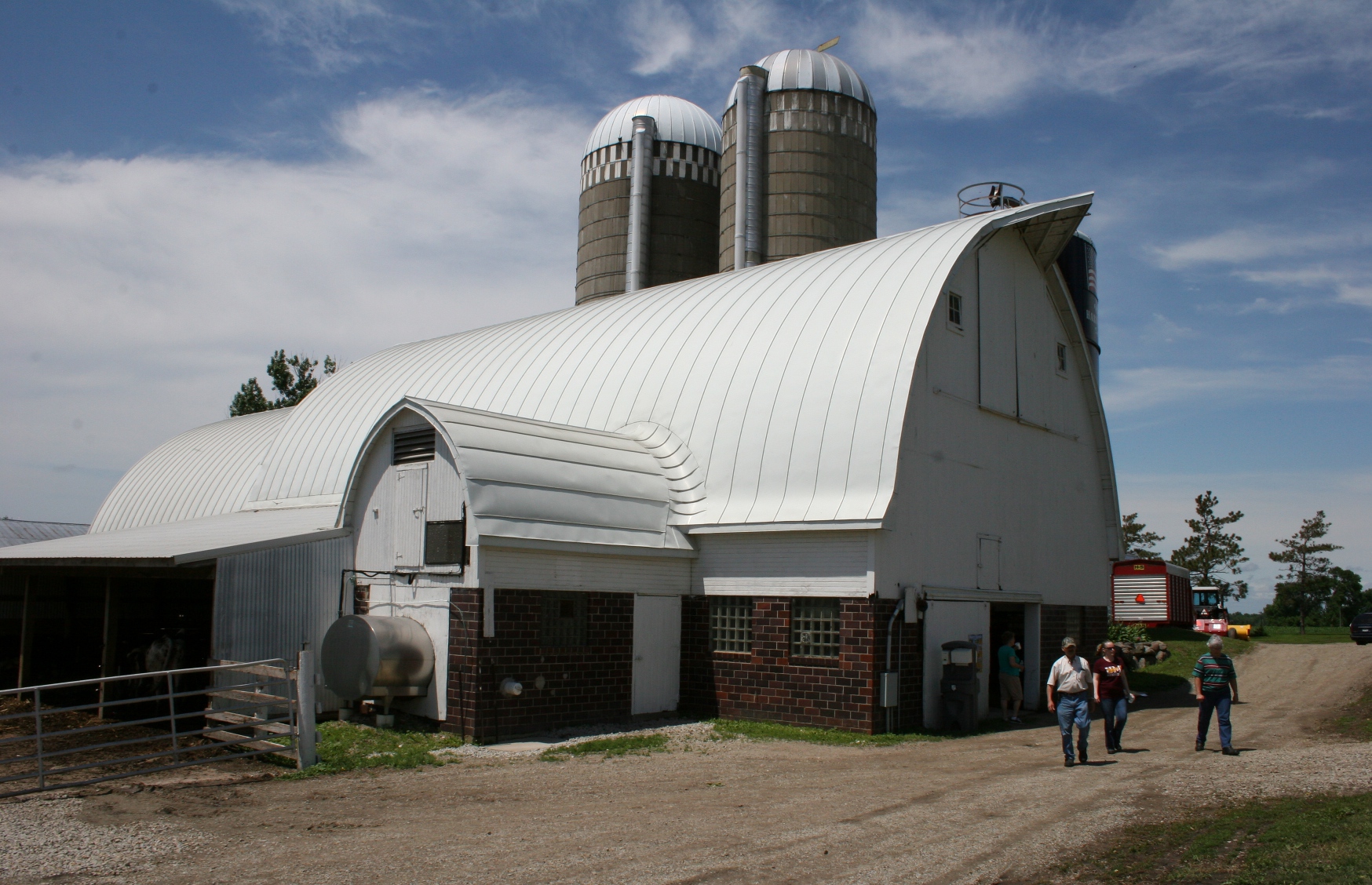
Walking toward the Wegners' farm south of Faribault.

My first glimpse of the Wegners’ farm south of Faribault.

Saturday afternoon I reconnected with my rural roots at “A Day on the Farm” hosted by Ron and Diane Wegner and their daughters, Brianna and Kaylee, and sponsored by the Rice County American Dairy Association and the Minnesota Beef Council.

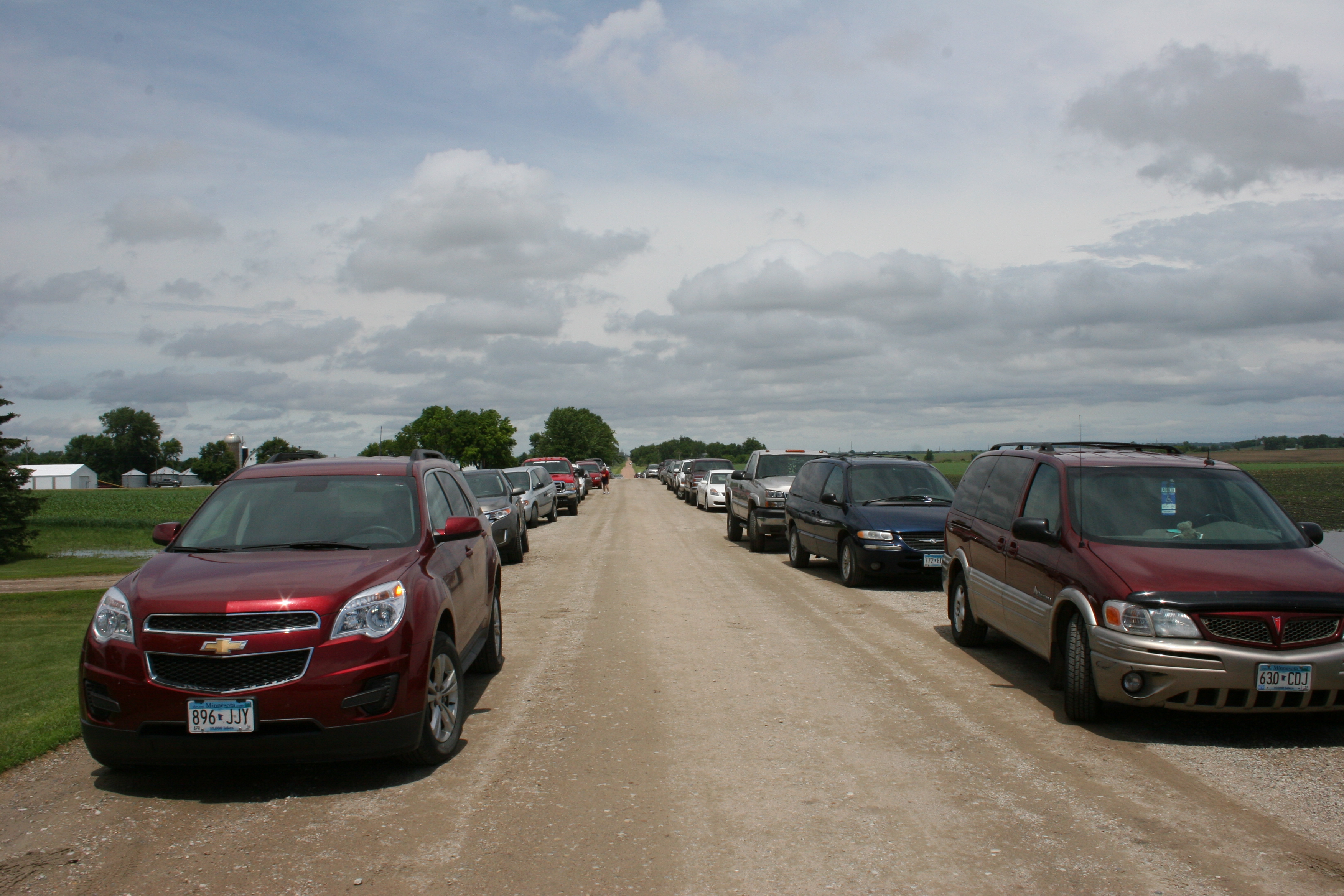
Vehicles lined both sides of Appleton Avenue near the Wegners' farm.

Vehicles lined both sides of Appleton Avenue near the Wegners’ farm.

The free meal was provided by the Minnesota Beef Council, the Rice County American Dairy Association and Hastings Co-op Creamery (to which the Wegners sell their milk).

The free meal was provided by the Minnesota Beef Council, the Rice County American Dairy Association and Hastings Co-op Creamery (to which the Wegners sell their milk).

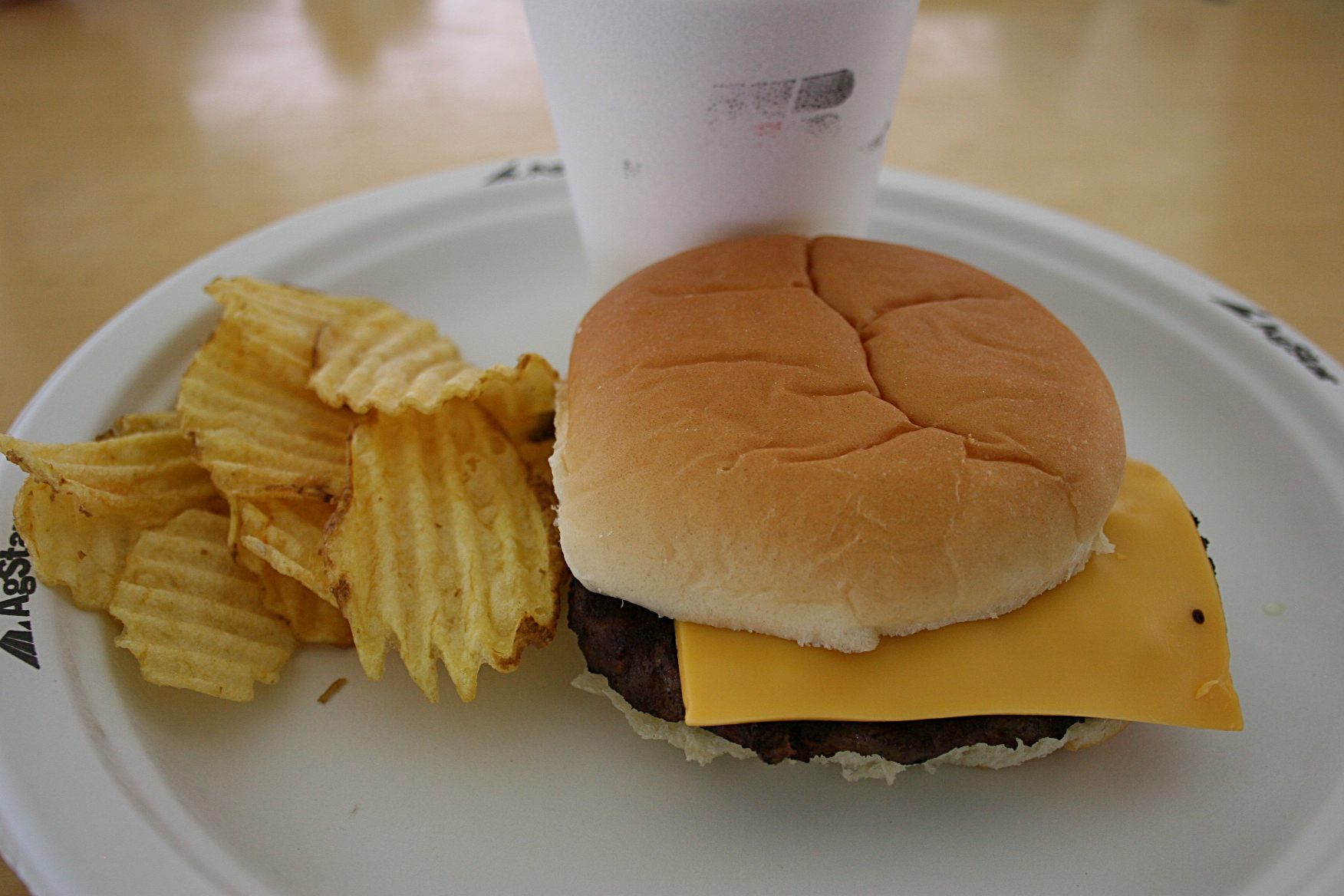
Vehicles lined the gravel road leading to the Wegners’ dairy and crop farm south of Faribault as skies cleared and almost 600 visitors lined up for free cheeseburgers, malts and milk and then wandered the farm site.

Visitors toured the barn to see the cows and calves.

Visitors toured the barn to see the cows and calves.

It was a near perfect day—albeit a bit sultry—to check out this dairy operation, which, with 50 registered Holstein milk cows, 50 head of young stock and 15 springing heifers, still fits the definition of a family farm.

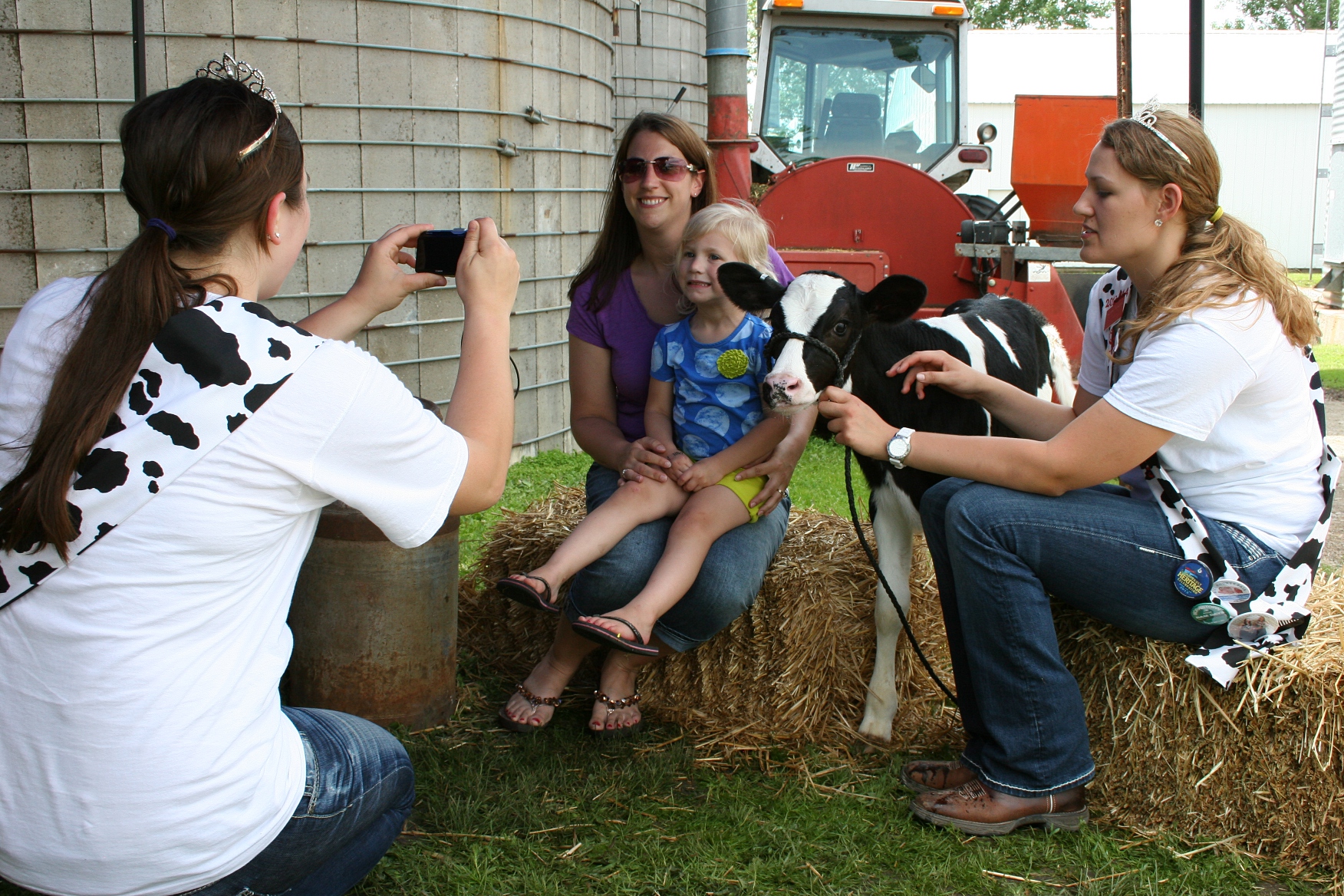
Rice County Dairy Princess Tracie Korbel takes photos while Dairy Princess Kaylee Wegner tends the calf.

Rice County Dairy Princess Tracie Korbel takes photos while Dairy Princess Kaylee Wegner tends the calf.

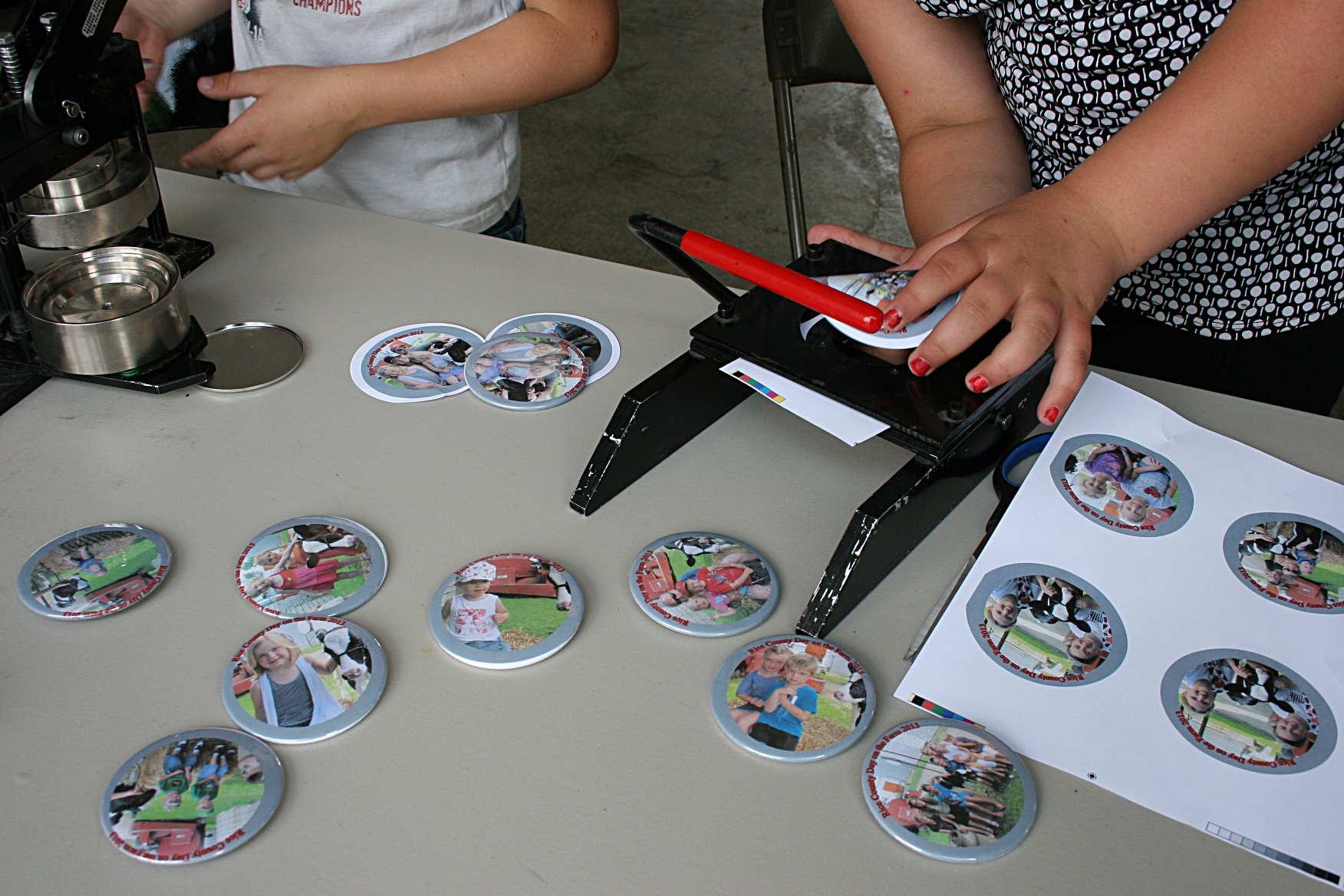
Turning the calf/kid photos into buttons.

Turning the calf/kid photos into buttons.

I felt comfortably at home here, remembering my years of feeding calves as I watched Rice County Dairy Princess Kaylee Wegner tend a calf while Princess Tracie Korbel photographed youngsters with the baby animal. The photos were then adhered to buttons.

Two-year-old Benjamin points out his "Got milk?" tattoo.

Two-year-old Benjamin points out his “Got milk?” tattoo.

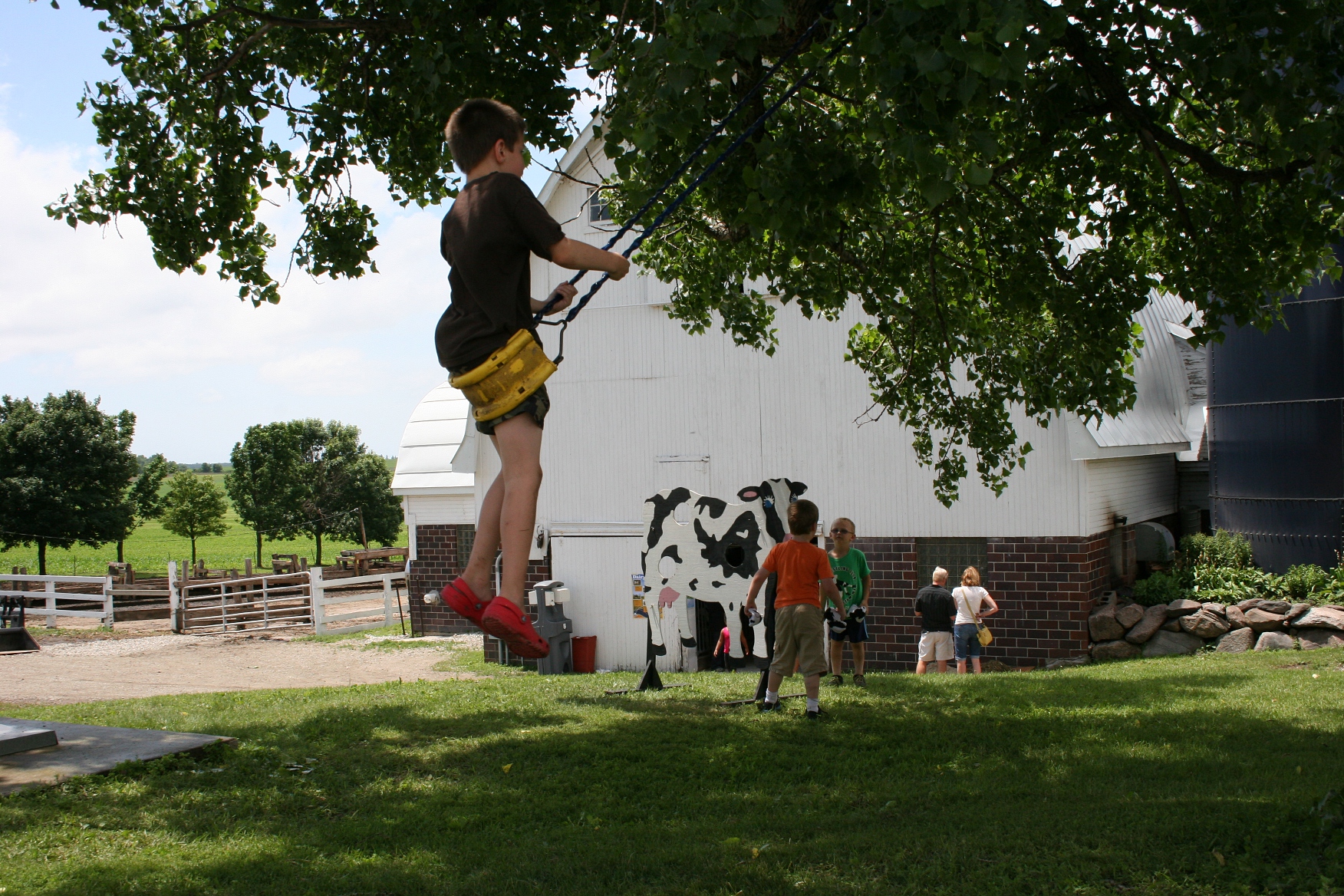
Simple country pleasures: swinging and playing cow bean bag toss.

Simple country pleasures: swinging and playing cow bean bag toss.

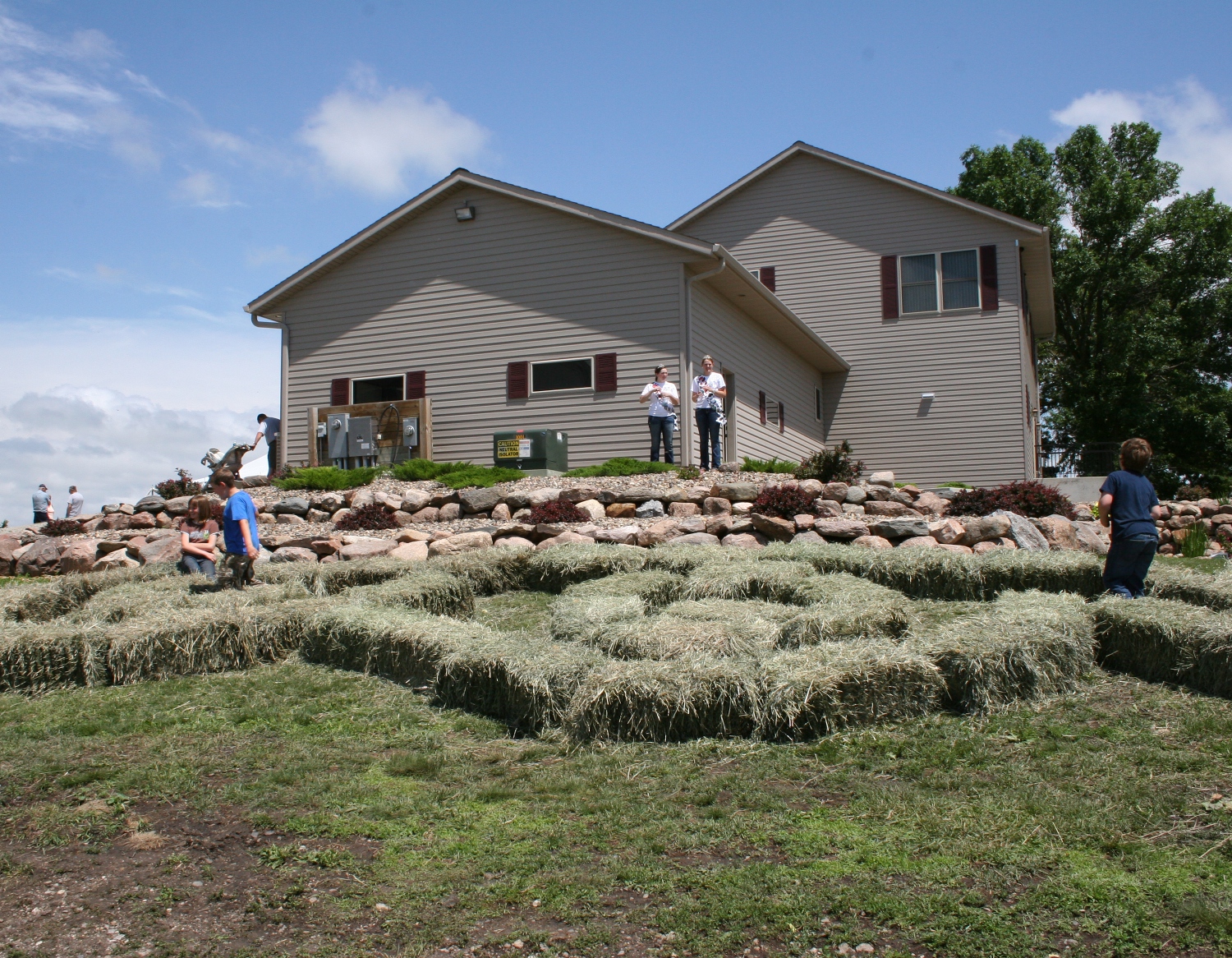
The hay bale maze between the barn and the house. The scent of freshly baled alfalfa caused me to linger here for awhile.

The hay bale maze between the barn and the house. The scent of freshly baled alfalfa caused me to linger here for awhile.

Other kids’ activities included a hay bale maze, cow bean bag toss, temporary tattoo applications and a ride on a swing tied to a tree. Fun stuff on a rare stunning summer afternoon.

Ava, 2 1/2, lives in the Twin Cities. Her grandparents, who live near Dundas, brought her to the farm because she loves animals.

Ava, 2 1/2, lives in the Twin Cities. Her grandparents, who live near Dundas, brought her to the farm because she loves animals. My husband and I dined with Ava and her grandparents.

Familiarizing kids with a farm seemed a common thread among many for coming to the farm, according to host Ron Wegner. He heard on Saturday from many grandparents who grew up on farms and brought their grandkids because “they don’t know what a cow is.”

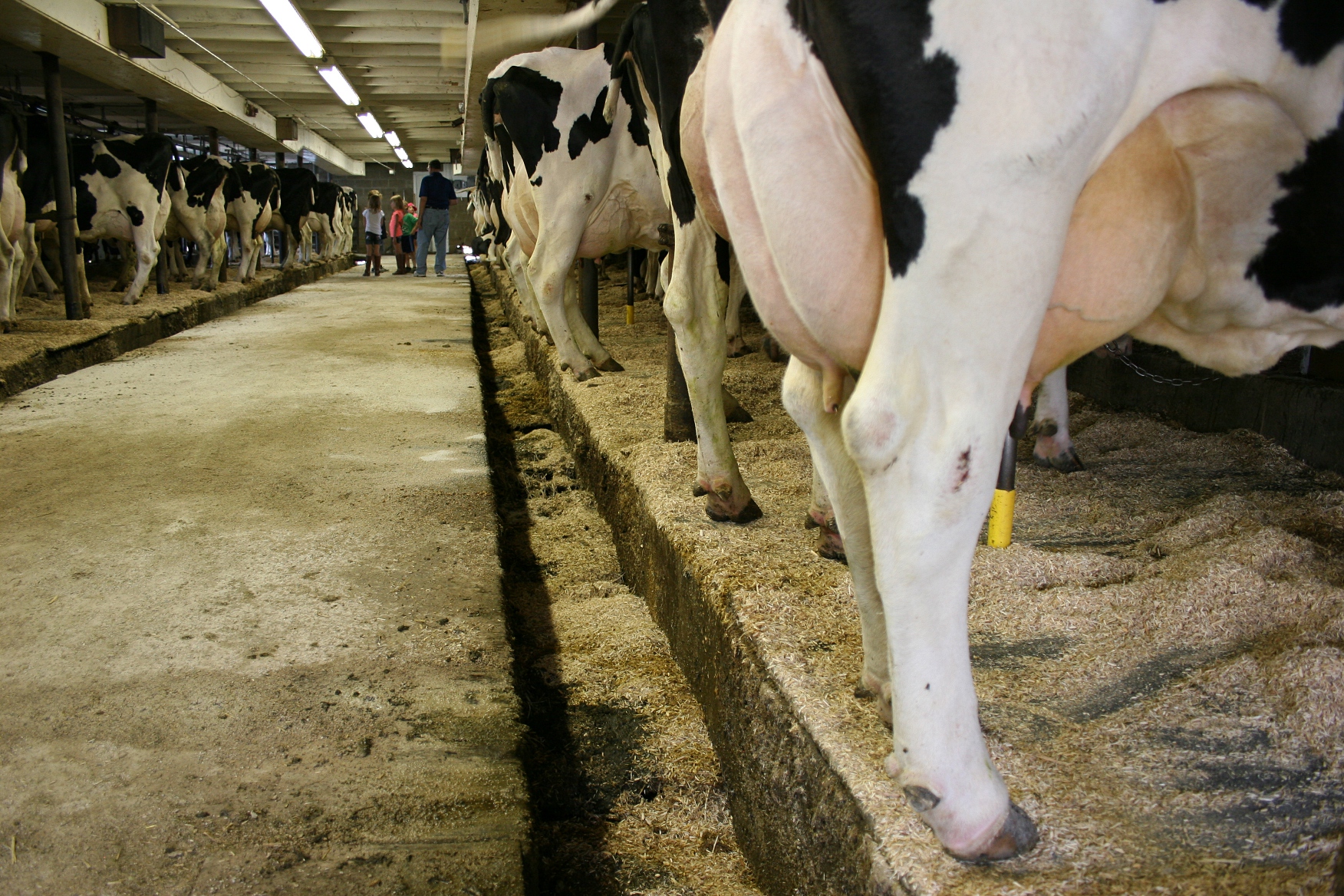
Inside the Wegners' barn, where dairy products come from.

Inside the Wegners’ dairy barn.

But Ron was hoping to educate more than the younger generation. When I asked why he agreed to open his farm to strangers for three hours, he explained that he wanted “the town people to come to a dairy farm and see where milk products come from.”

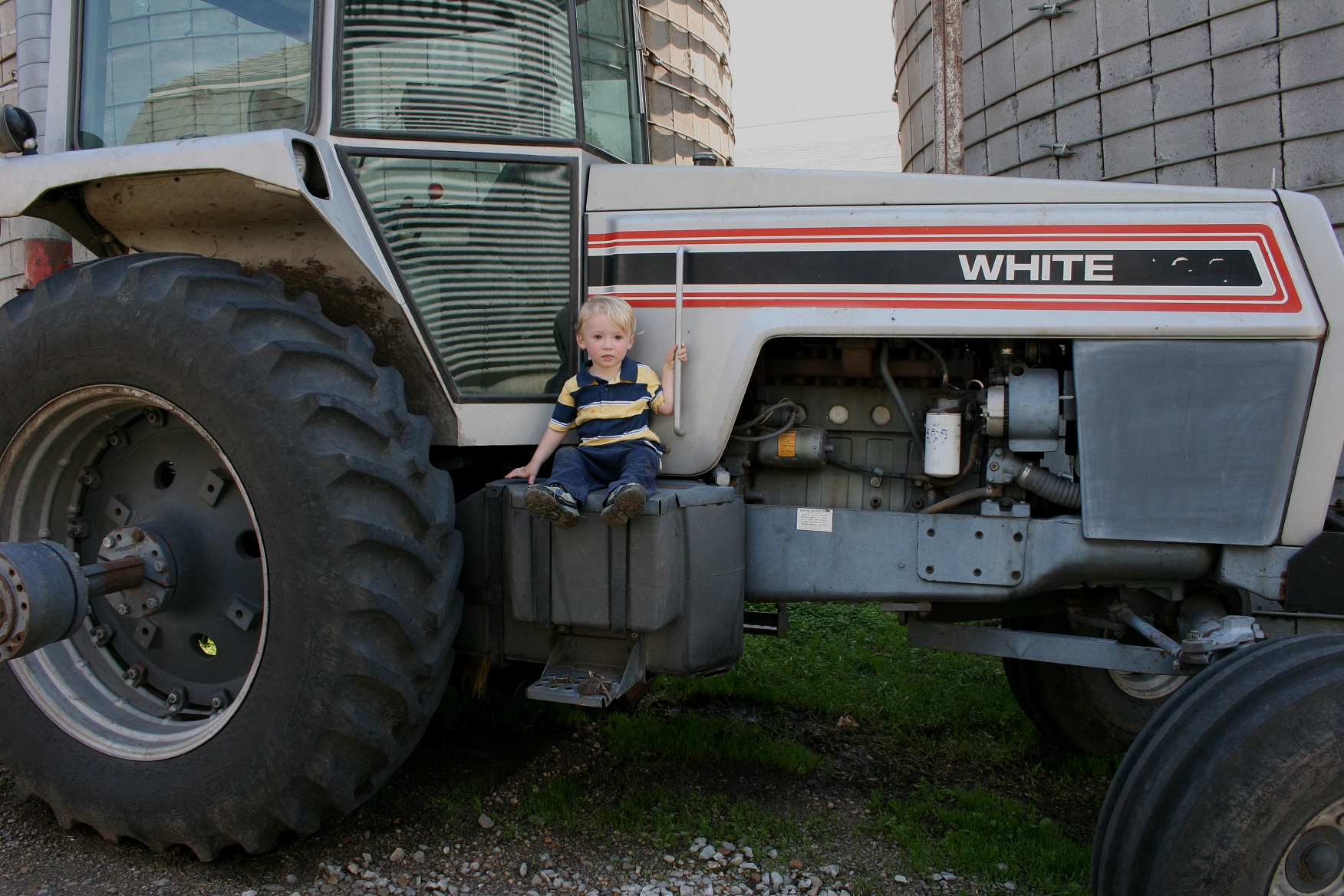
Benjamin, 2, lives on a buffalo farm near Lonsdale. His mom brought him to see a dairy farm. She was posing him for a photo on the tractor when I happened by.

Benjamin, 2, lives on a buffalo farm near Lonsdale. His mom brought him to see a dairy farm. She was posing him for a photo on the tractor when I happened by.

And that seemed as good a reason as any to someone like me, who grew up on a Minnesota dairy farm.

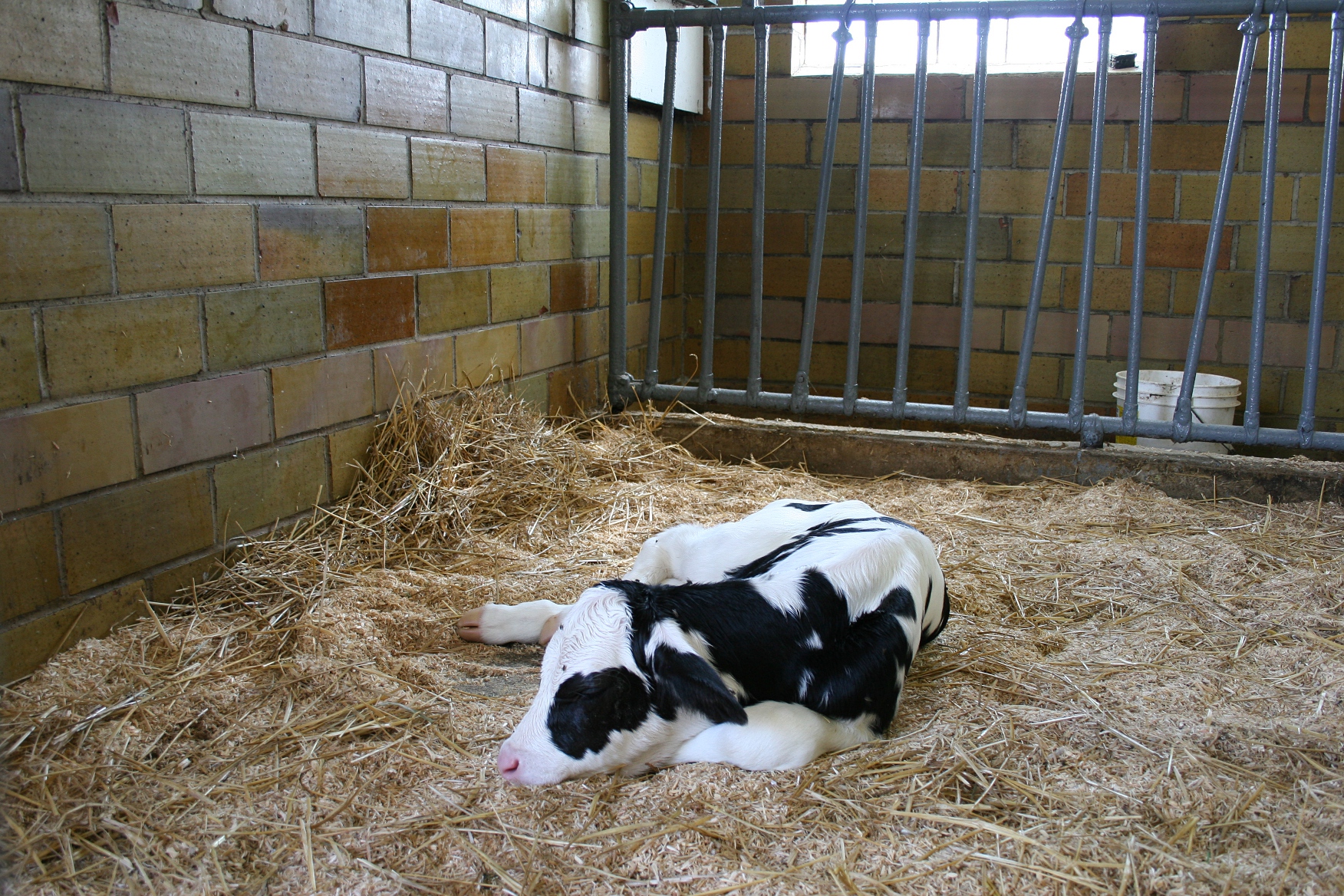
Several calves inside the barn were a hit among visitors.

Several calves inside the barn were a hit among visitors.

CHECK BACK for more photos from “A Day on the Farm” in rural Faribault.

© Copyright 2013 Audrey Kletscher Helbling


Preserving a small town’s history in a Minnesota country schoolhouse June 7, 2013

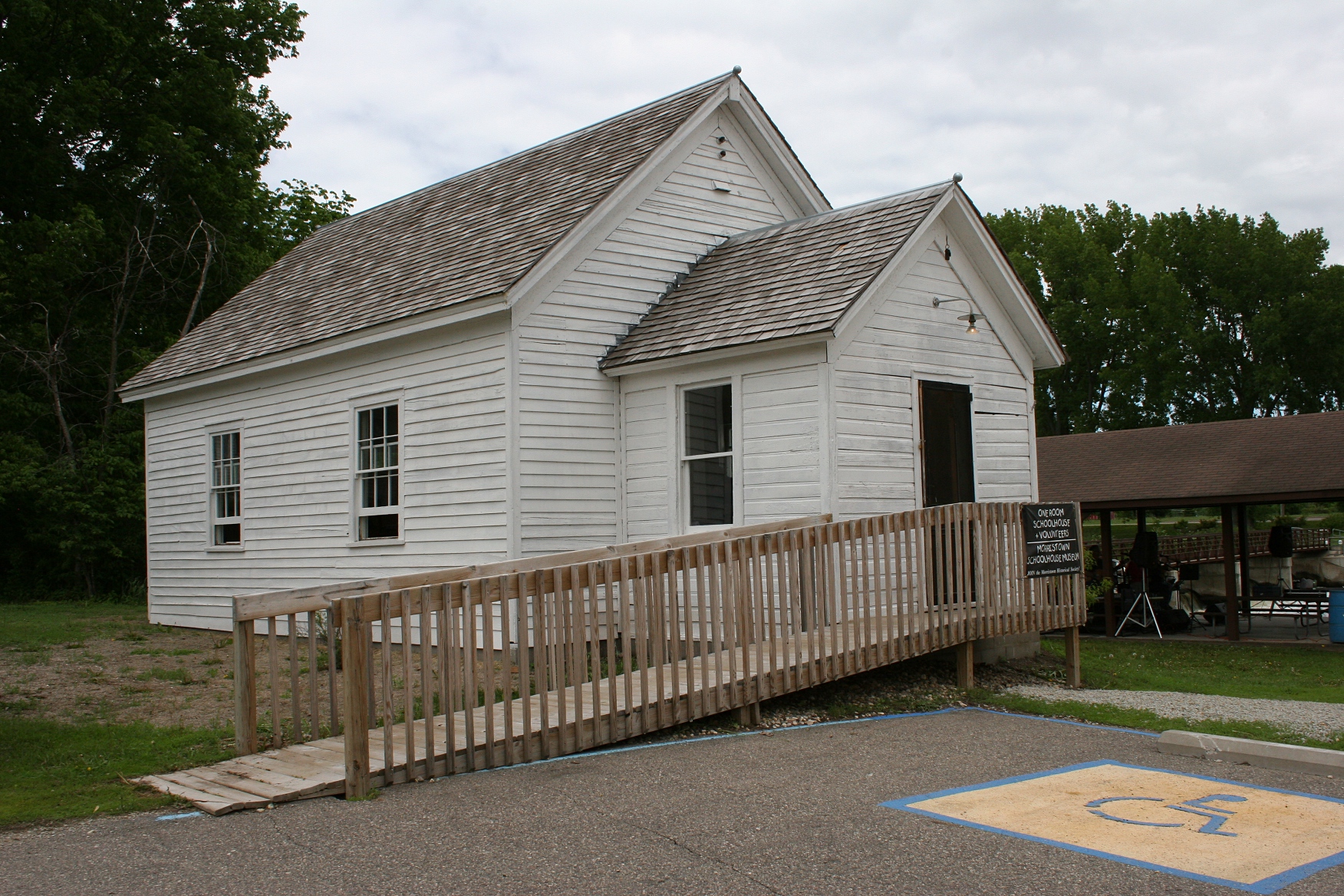
The District #54 country school, built in 1870, was moved into Morristown several years ago to a site next to the old mill along the banks of the Cannon River.

The District #54 country school, built in 1870, was moved into Morristown several years ago to a site next to the old mill along the banks of the Cannon River.

OH, THE THINGS YOU LEARN upon visiting a grassroots historical society run by volunteers in a small town.

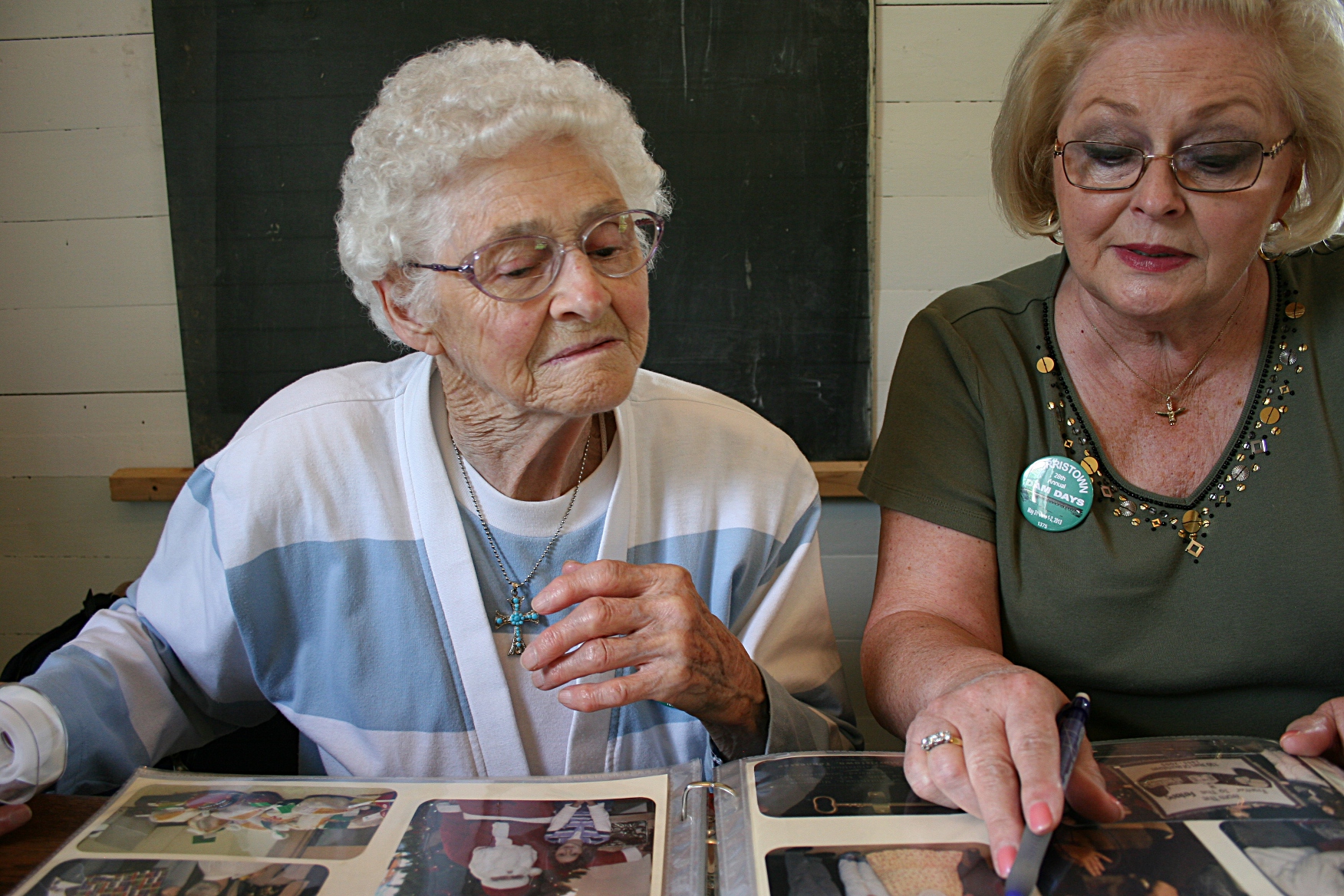
One of my favorite images is this one of volunteer Helen Newman's hand. She was cutting and taping info into the 2005 sesquicentennial book lying on the desk.

One of my favorite images is this one of 87-year-old volunteer Helen Newman’s hand. the life-long Morristown resident was cutting and taping info into the 2005 sesquicentennial album shown here.

Nothing against sprawling museums with paid staff—those places are fabulous, too. But there’s something especially touching about folks from a small town collecting photos and artifacts, memories and information, to display in a building(s) with a deep connection to the community.

You’ll find exactly that in Morristown, population around 1,000, in Rice County in southeastern Minnesota. Set next to the Cannon River are the Morristown Feed Mill, once home to a sawmill and flour mill, and the District 54 Epard School moved in from a few miles north of Morristown and today the District #54 Schoolhouse Museum. The Morristown Historical Society maintains both buildings, which I toured during the recent Dam Days community celebration.

I didn’t study the content of the two buildings like a local with an intimate connection to this place. Rather, I picked topics of particular interest to me to read and photograph.

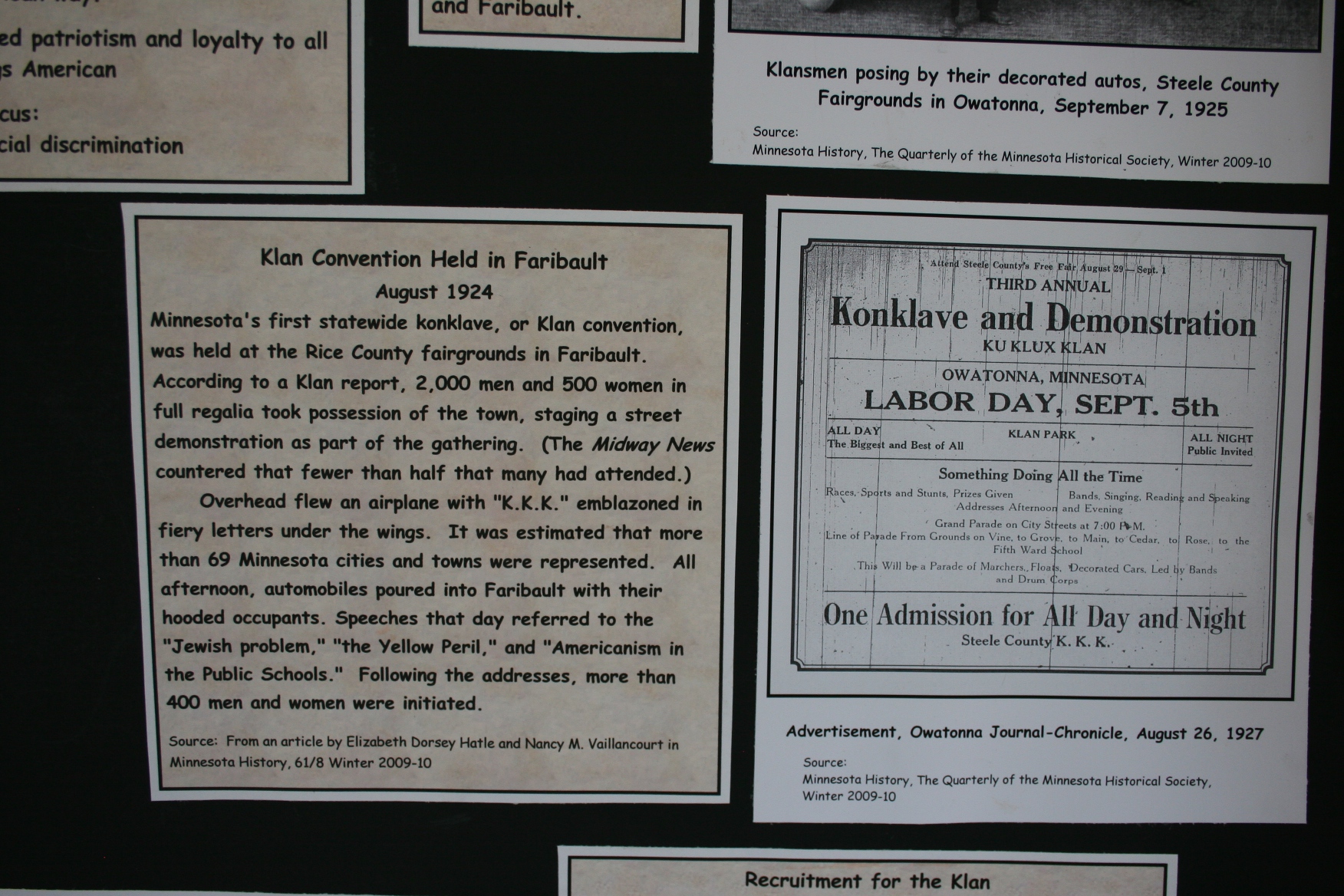
Information about the Ku Klux Klan's presence in Morristown and the region.

Information about the Ku Klux Klan’s presence in Morristown and the region.

For example, I was unaware that my county of Rice was home to Ku Klux Klan chapters and hosted the first statewide Klan convention at the fairgrounds in August of 1924. Chapter #26 was headquartered in Morristown with other chapters in nearby communities like Faribault and Owatonna and Austin and Albert Lea further to the south. Certainly, such membership doesn’t please me. But I’m thankful the Morristown Historical Society didn’t ignore this negative part of the town’s history. We need to learn from our mistakes.

A “Morristown Crime Wave of 1914” display also caught my eye with crimes such as profane and abusive language, drunken and disorderly conduct, and stealing fish noted.

News stories about the devastating 1900 fire.

News stories about the devastating 1900 fire in downtown Morristown.

In another display, a front page article published in the February 1, 1900, issue of the Morristown Press detailed a devastating fire which destroyed 20 buildings, nearly the entire business district, in downtown Morristown. “Loss will reach $35,000,” a sub-head reads.

Mrs. Lydia Meehl, who helped so many Morristown area women birth their babies.

Mrs. Lydia Meehl, who helped so many Morristown area women birth their babies.

My friend Dale, who joined a historical walking tour on the day I visited the schoolhouse museum and mill, learned about his place of birth in the Meehl Maternity Home. Hundreds of local babies were birthed there with the assistance of licensed practical nurse Mrs. Lydia Meehl. A newspaper story quotes the 82-year-old Meehl as saying she “loves them all (the 500-plus babies born in her maternity home).”

A snippet of the artifacts and info displayed inside the schoolhouse turned museum.

A snippet of the artifacts and info displayed inside the schoolhouse turned museum. Those are Civil War cannonballs on the shelf near the center of the photo

In the museum collection, you’ll also find the usual military (including Civil War cannonballs), school, telephone and other small town artifacts.

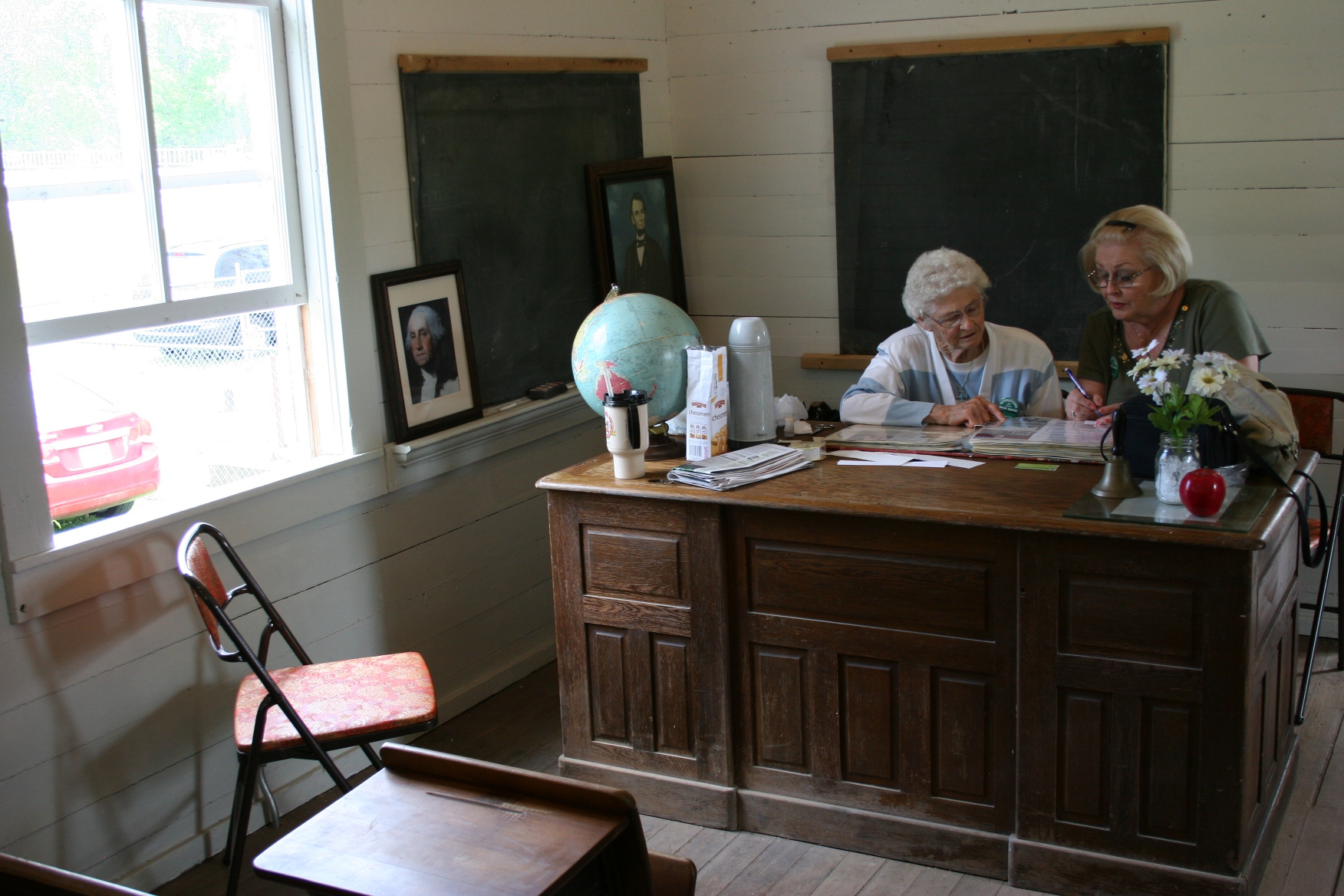
Helen Newman and Cindy Packard work on a sesquicentennial album.

Helen Newman and Cindy Packard work on a sesquicentennial album.

As a bonus, I met 87-year-old Helen Newman, who’s lived in Morristown her entire life, and Morristown native Cindy Packard, visiting her hometown from Colorado Springs. The two were seated behind a hulk of a desk inserting info into an unfinished album about the town’s 2005 sesquicentennial.

Packard brought with her a few items for the schoolhouse museum, including a spatula imprinted with “Our Twentieth Year LLOYD’S FOOD MARKET, Morristown, Minn.” She kind of hated to give it up, but…

Switchboard wires and switches reportedly from Adolph Hitler's bunker.

Switchboard wires and switches reportedly from Adolph Hitler’s bunker.

Upon my request, the pair pulled the spatula and a snippet of wires and two switches from a plastic bag resting on the corner of the desk. The switches came from the switchboard in Adolph Hitler’s bunker and were brought back by Oscar Ahlman to Hewitt Thomspon in Morristown, according to a note accompanying Packard’s donation.

Helen and Cindy visit while they cut and tape information into the album.

Helen Newman and Cindy Packard visit while they write, cut and tape information into the album. I told them just to ignore me and my camera and they obliged. I simply love this photo of the pair.

And that’s how these small town museum collections grow—with donations from the likes of a hometown girl come home every year and the dedication of volunteers like the 87-year-old Newman.

BONUS PHOTOS:

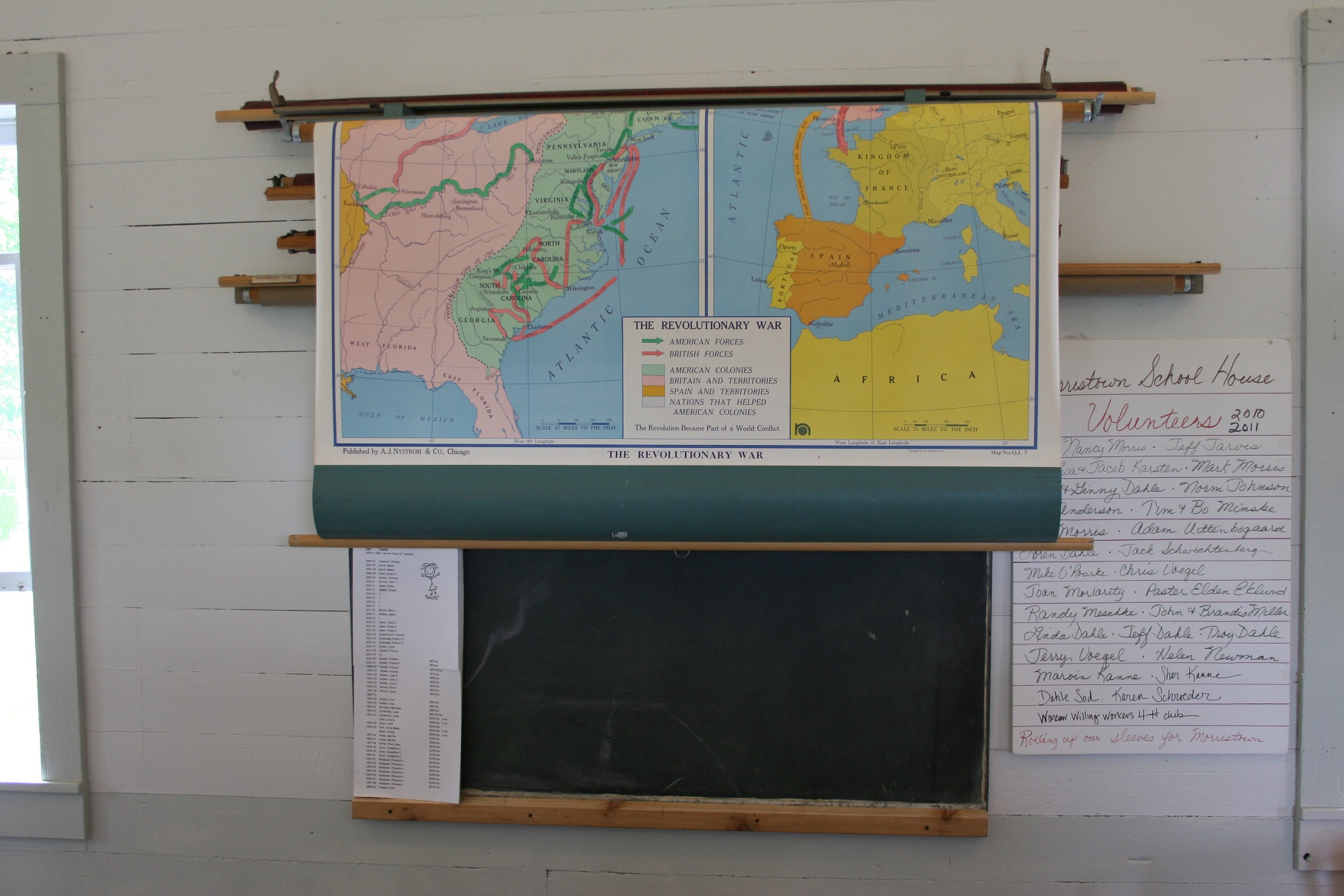
There's something about an old school map that takes me back to Vesta Elementary School, my childhood school.

There’s something about an old school map that takes me back to Vesta Elementary School, my childhood school.

A display of school-related items includes a lunch pail.

A display of school-related items includes a lunch pail, books and photos.

Presidential portraits grace the blackboard by the teacher's desk.

Presidential portraits grace a corner blackboard by the teacher’s desk.

FYI: To read a previous post on the historic Morristown Feed Mill, click here. A second mill post will be forthcoming. Also check my recent archives for stories from Morristown Dam Days.

© Copyright 2013 Audrey Kletscher Helbling
 

Boots and blooms April 27, 2013

Filed under: Uncategorized — Audrey Kletscher Helbling @ 9:29 PM
Tags: , , , , , , , , ,

IF YOU ARE AN ELEMENTARY school student of the 1960s, like me, you can relate to this post. If you are not, pretend that you are and imagine sitting at your desk, mimeographed math worksheet and box of eight thick Crayola crayons at your fingertips.

Your teacher, we’ll call her Mrs. Olson, instructs you to circle the one item among the pictures that does not belong.

You pull a nubby green crayon from the box of colors because green is your favorite. You’re pretty sure you can use green because Mrs. Olson has not instructed you otherwise. You wish to be obedient.

You study the pictures and crook your elbow around your paper. David is seated across the aisle and you have caught him several times peeking at your math worksheets. Mrs. Olson does not like cheaters. Neither do you.

You study the five images.

Blooms

Blooms, purple

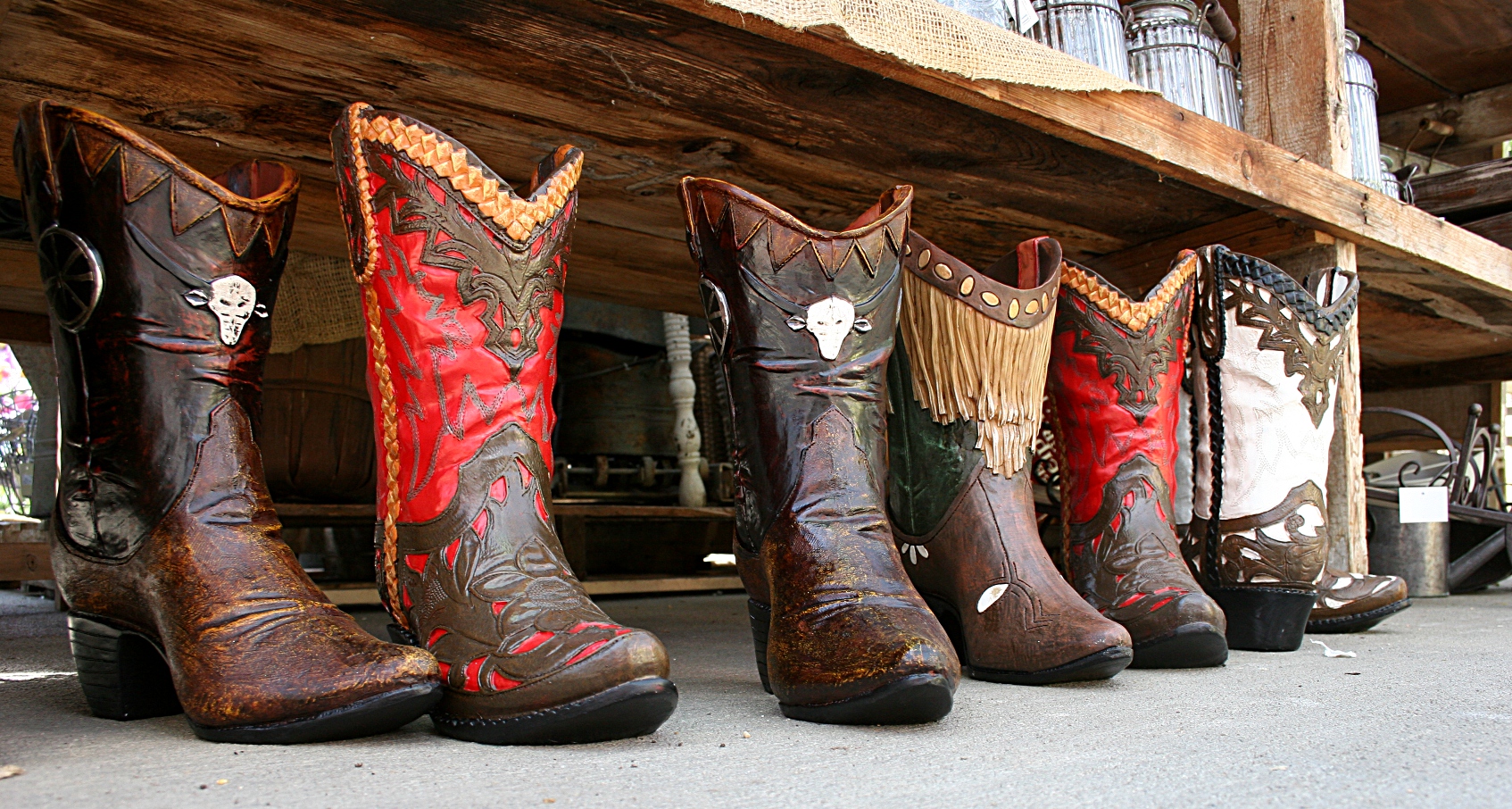
Boots

Blooms, pink

Blooms, blue

Without hesitation, you circle the second picture of the single purple bloom.

The next day Mrs. Olson returns your paper with an “S+” and a smiley face scrawled beside your name.

DEAR READERS, would you have circled the single bloom? I expect most of you would have drawn a circle around the boots. But, remember, this is a math worksheet. We are learning numbers. All of the pictures, with the exception of the purple bloom, show multiples.

I assure you, this marks a rare occasion when I will teach you a math lesson, for I struggled mightily with numbers and still do.

THESE EDITED PHOTOS were taken at Donahue’s Greenhouse in Faribault. I am still wondering how those boots fit in among all those flowers at Donahue’s.

© Copyright 2013 Audrey Kletscher Helbling
 

A Wisconsin school honors orphans via “The Orphan Bed Exhibit” April 25, 2013

The main building at the orphanage, built in 1886, housed offices, a reception room, chapel/auditorium, boys' cottage, living quarters for employees, a sewing room, attic and linen storage. This main portion today serves as the Owatonna city administration building.

The main building at the Owatonna orphanage, built in 1886, housed offices, a reception room, chapel/auditorium, boys’ cottage, living quarters for employees, a sewing room, attic and linen storage. This main portion today serves as the Owatonna city administration building. File photo from December 20, 2011, blog post.

THREE HUNDRED AND TWENTY miles from the Minnesota State Public School Orphanage Museum in Owatonna, a group of Lutheran school students in Hales Corners, Wisconsin, just southwest of Milwaukee, are honoring orphan children of the 1920s and 1930s.

The story of how this came to be involves me, a dedicated and creative middle school language arts teacher/musical theater director, and a bit of personal family history.

Several weeks ago, teacher Judy Lillquist, a native of Le Sueur, MN., who has lived in Wisconsin for 20-plus years, commented on a December 2011 blog post I published after a visit to the Owatonna museum. (Click here to read that story.)  She discovered my orphanage stories while researching for her school’s production of  Annie Jr. My posts included photos of simple orphans’ beds in a stark orphanage bedroom. (Click here to read my second orphanage post.)

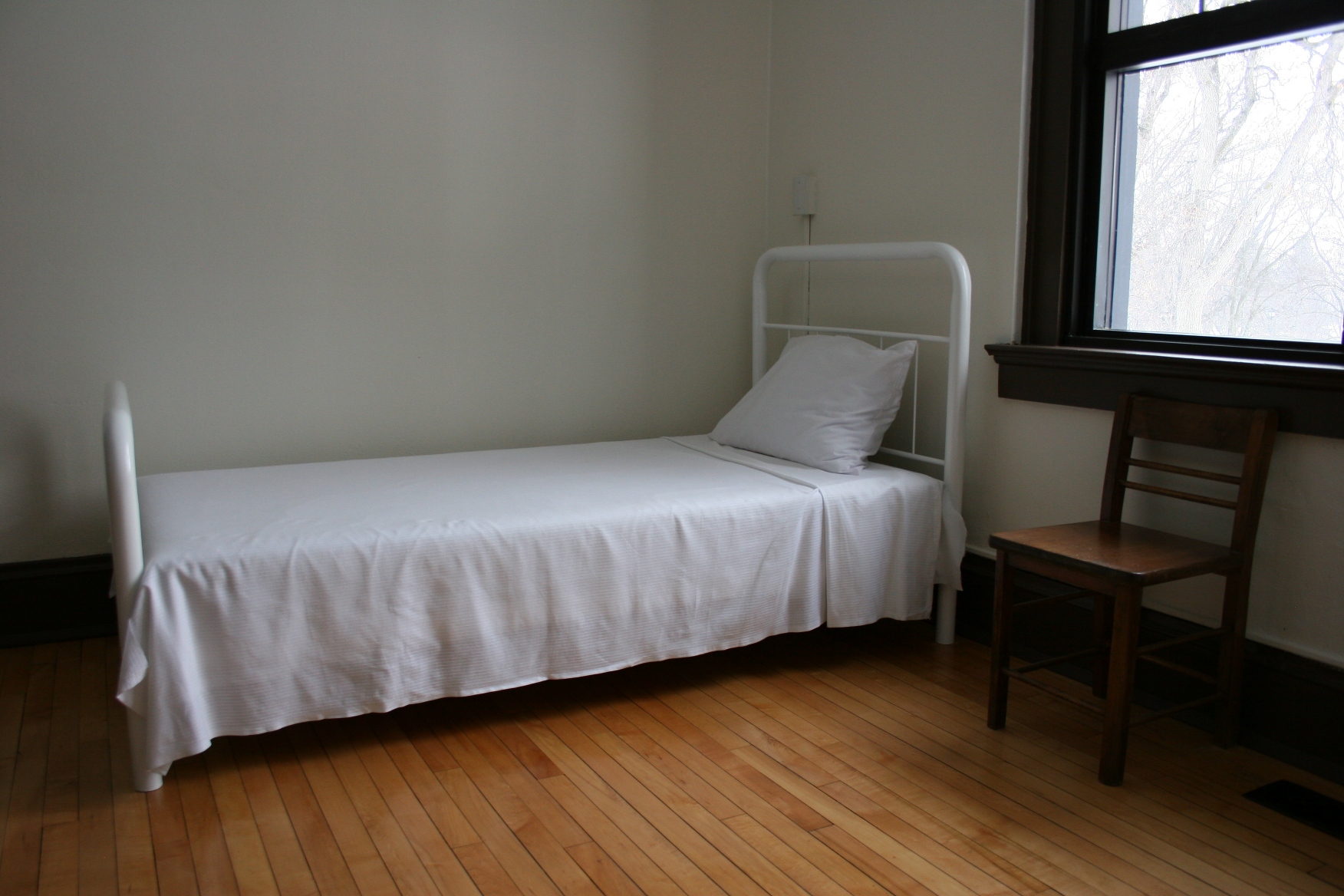
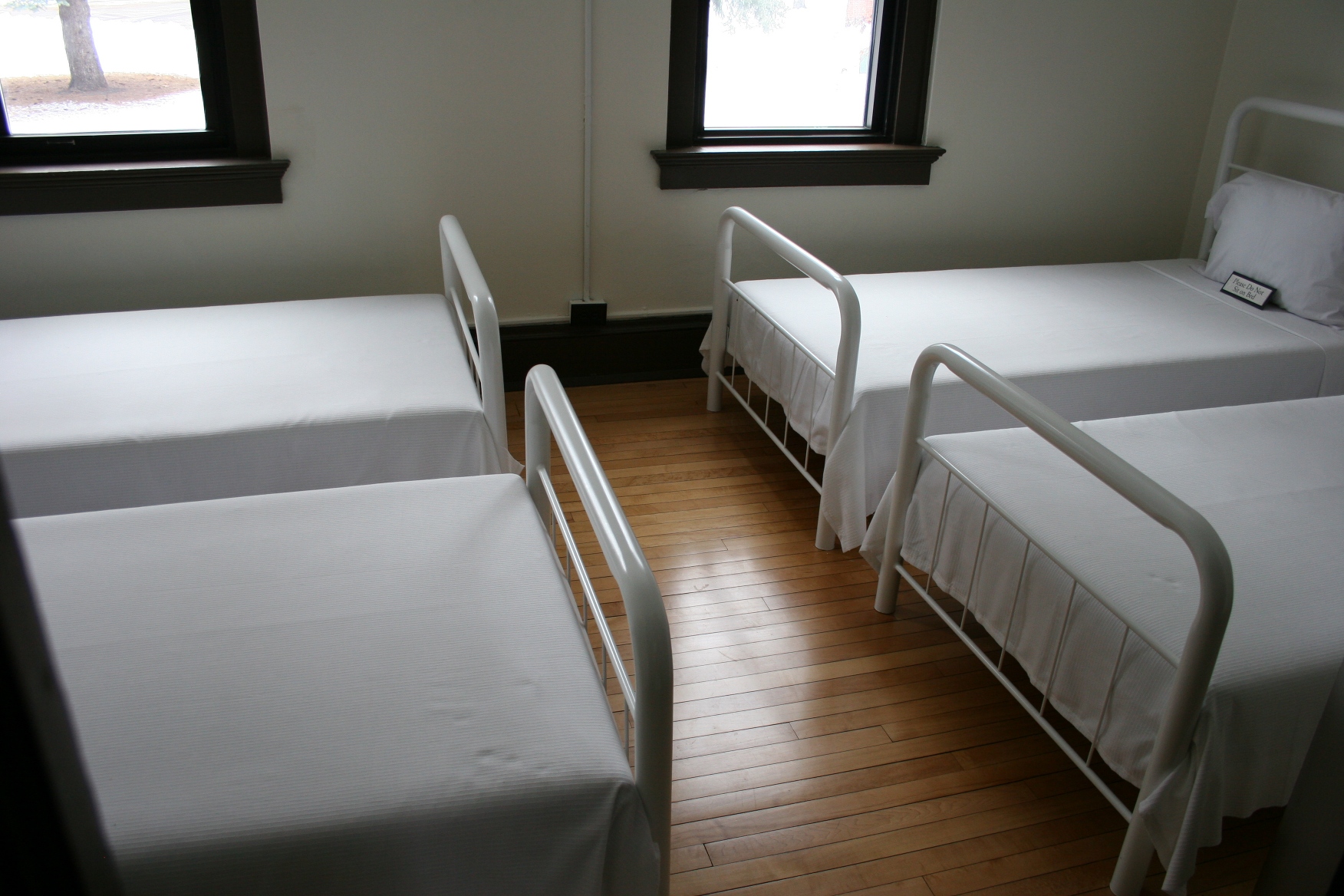
The boys' bedrooms are stark, devoid of anything homey. This small room slept three.

This photo of an orphan’s bed inspired Lillquist to create “The Orphan Bed Exhibit.” The orphans were not allowed to sleep on their pillows; those were just for show. File photo.

Those orphan bed photos inspired Lillquist to work with her students in creating “The Orphan Bed Exhibit” which accompanies the school’s spring musical, Annie Jr., showing this Friday and Saturday at Hales Corners Lutheran Middle School.

Working with middle schoolers on a musical seems challenging enough. So I really have to admire Lillquist’s efforts to personally connect her students and audience members to the plight of actual orphans via “The Orphan Bed Exhibit.” The exhibit includes a synopsis of the inspiration behind the project.

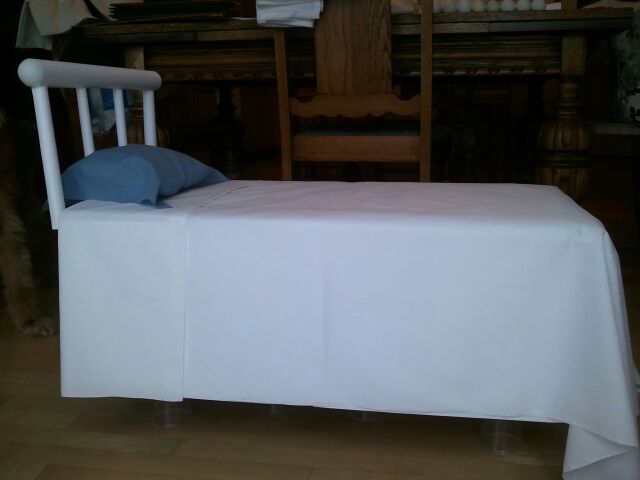
The orphan bed designed by Lillquist.

The orphan bed designed by Lillquist.

Using cardboard boxes, paper, tape, glue, clearance bed sheets and other everyday materials, Lillquist’s sixth graders built 20 orphan beds. Those attending the musical will see silent orphan statues (students), attired in tattered dresses, stationed next to those beds.

Beds were packed tight into sparse bedrooms in the cottage.

Beds were packed tight into sparse bedrooms in the Owatonna orphanage cottages. File photo.

The scene is meant to make a powerful impact. Lillquist explains:

In my research for the play, I began formulating an idea of somehow showing our audience how important it is for us to count our blessings. I for one am very thankful for a warm home and comfortable bed. It gives me a heavy heart knowing that the orphan children of those days were not so fortunate, my husband’s dear grandmother among them.

…The beds pay homage to the orphan boys and girls of the 1920s and 30s. Our plucky little orphan girls get to play that role for a little while. Some children played that role their entire lives. This is simply to honor their memory.

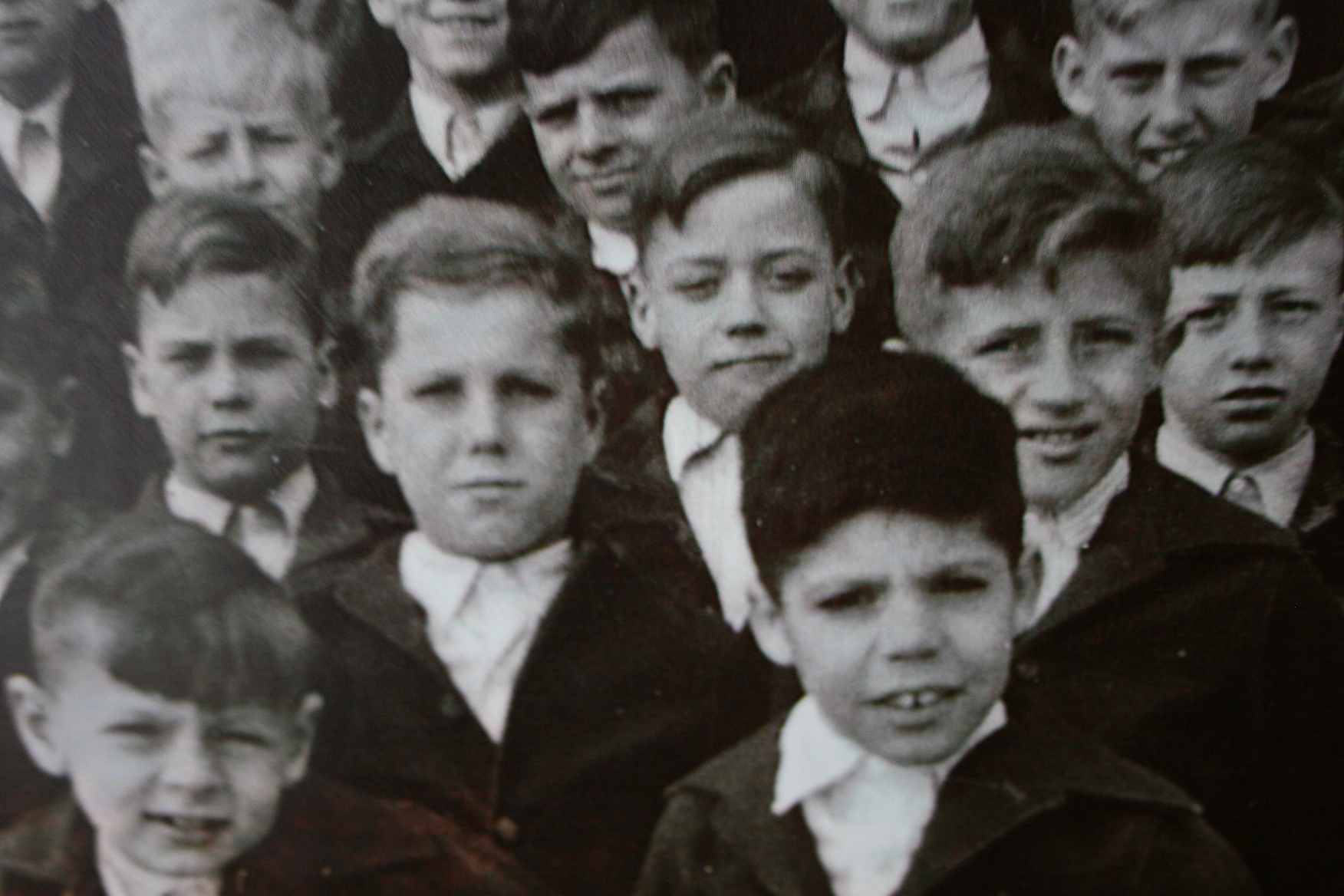
A photo of some of the school's residents on exhibit in Cottage 11, which housed boys ages 6 - 13.

An Owatonna school orphans photo displayed in Cottage 11, which housed boys ages 6 – 13.

For Lillquist’s family, this is personal as her husband’s grandmother and siblings were placed in a state orphanage after their mother died. Lillquist shares:

Once placed, she would wave across the lunchroom at her two brothers. When she was finally fortunate enough to be adopted, her new family decided one year to go back to the orphanage to adopt her sister. That was her birthday present. She was in her 80s when she told us this story.

She never saw her brothers again once she left the orphanage and she could not bear to tell us what eventually happened to her sister.

Can you imagine?

I expect “The Orphan Bed Exhibit,” combined with the theatrical performance of Annie Jr., will drive home the message Lillquist intends:

Our families are blessed and that’s the message of the exhibit.

FYI: Hales Corners Lutheran Middle School, 12300 West Janesville Road, Hales Corners, Wisconsin, presents “The Orphan Bed Exhibit” at 6:30 p.m. Friday, April 26, and at 12:30 p.m. Saturday, April 27. The curtain rises on Annie Jr. a half hour later.

Thank you to Hales Corners students, and especially to Lillquist, for their dedication to this project. I am honored to have been, in some small way, a part of this undertaking.

© Copyright 2013 Audrey Kletscher Helbling
“The Orphan Bed Exhibit” image courtesy of Judy Lillquist


Voting for Minnesota’s most unique high school mascot & insights into other team names in our state February 26, 2013

A gym at Wabasso High School, home of the Rabbits. Minnesota Prairie Roots file photo.

A gym at Wabasso High School, home of the Rabbits. Minnesota Prairie Roots file photo.

MY ALMA MATER, Wabasso High School, has a white rabbit as a mascot. As you would rightly expect, a rabbit does not conjure up an image of athletic prowess. But I do not care. Rabbits reflects the name of the community, Wabasso, a Dakota word, I’m told, meaning “White Rabbit.”

The rabbit mascot also stands out among all the Eagles and Tigers, the most common high school team names in Minnesota, and the country in general, according to Terry Borning, author of MascotDB.com, a free searchable database of team names and mascots. (More on that later.)

Rabbits, though, was not unusual enough to grab the attention of USA TODAY’s High School Sports staff which is sponsoring a competition to find the nation’s most unique high school mascots. Staff chose five mascots from each state and Washington D.C. in the first round of the contest.

Tom Ressler created Blooming Prairie's logo, a black-and-white Awesome Blossom , in 1979.

The Awesome Blossoms logo from the school website.

Now the public will choose their favorites, via online voting, to advance to the second round. One winner from each state and D.C. will move on to regionals and the opportunity to win prizes ranging from $100 to $2,000 for their high school athletic departments.

In the running from Minnesota are the Blooming Prairie Awesome Blossoms, Roosevelt Teddies, Jordan Hubmen, Sauk Centre Mainstreeters and Winona Winhawks.

I’ll admit to a fondness for Blooming Prairie’s Awesome Blossoms, for several reasons. Any school strong enough to sport the name Blossoms deserves to win. Second, Blooming Prairie, a farming community of around 2,000 located 15 miles south of Owatonna, is the smallest of the Minnesota communities vying for this honor. I will always pick the smallest, most rural town and root for the underdog. (Plus, I really like the “Prairie” part of the town’s name.) Third, my second daughter first introduced me to the Blooming Prairie mascot when she was in high school and attended an Awesome Blossoms basketball game with a good friend. It was also the first night she failed to get home at a reasonable hour. Enough said on that.

Apparently, the Blossoms got their name from an area newspaper more than a century ago, according to one source. “Awesome” was later added by locals.

A seen from Main Street in Sauk Centre, home to the Mainstreeters.

A scene from Main Street in Sauk Centre, home to the Mainstreeters. Minnesota Prairie Roots file photo.

Now, if I had to choose my second favorite from the Minnesota five, I’d select the Mainstreeters for the sole reason that I love Sauk Centre native Sinclair Lewis’ satirical book, Main Street.

So there, if this interests you, click here and go online to vote. Voting for the state winners continues through March 5. Those 51 winners then advance to second round regional voting from March 6 -14. Six regional winners then enter the finals March 15-25.

Terry Borning with TC Bear, the Twins mascot.

Terry Borning with TC Bear, the Twins mascot. Borning attended Concordia College in Moorhead, home of the Cobbers.

NOW, LET’S DELVE DEEPER into Minnesota high school mascot names via Terry Borning of the earlier mentioned MascotDB.com. Just a note, Borning, of Billings, Montana, and a computer science adjunct faculty member for an Arizona college, is my cousin. He has 43,799 sports team names and mascots in his database covering U.S. and Canadian high school, college and professional teams, past and present.

Borning’s interest in team names stretches back to high school, when he played nine-man football for the Hendricks Huskies. Hendricks is about as close as you can get to South Dakota in southwestern Minnesota without actually living in our neighboring state.

Hendricks and nearby rival Ivanhoe have since consolidated, becoming the Lincoln H I Rebels. Lincoln references Lincoln County where the schools are located while the “H” and “I,” obviously, stand for the separate communities. Adds Borning: “The UNLV Runnin’ Rebels were a dominant NCAA basketball team at the time the schools consolidated in the early 1990s. The teens of that time considered themselves rebellious, so the moniker fit.”

That led me to ask my cousin how schools choose mascots and to specifically cite examples in Minnesota. He notes the popularity of Vikings here (11 high schools with this mascot) and the once common Warriors and Indians (no longer used), plus names like the Flying Dutchmen, all traced to ethnic heritage.

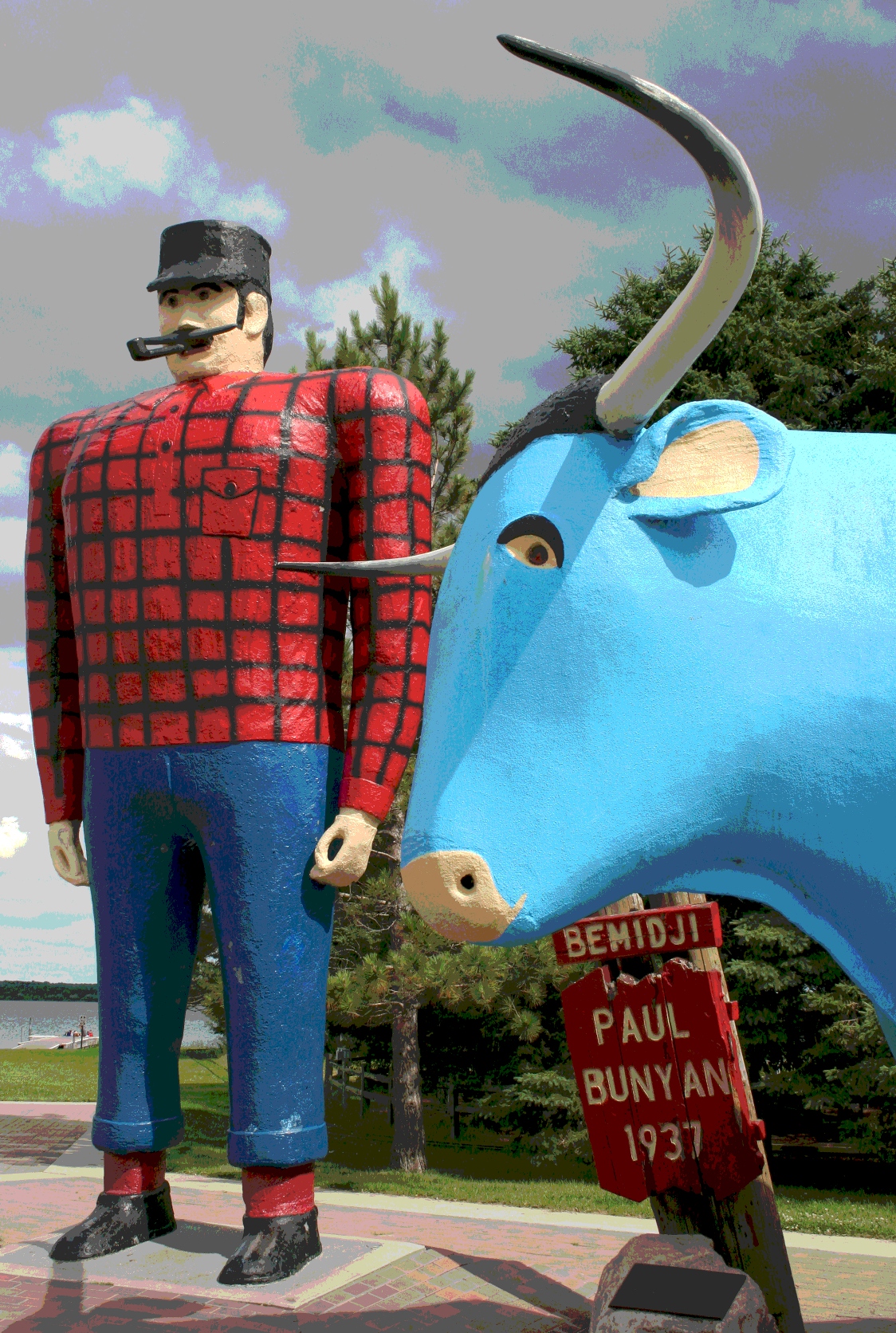
Agriculture and local industries also factor into names like the Moorhead Spuds, Austin Packers, Bemidji Lumberjacks and Crosby-Ironton Rangers.

Team names can extend, too, from the school’s name such as Lindbergh (Hopkins) Flyers, Robbinsdale Robins, Red Wing Wingers and Burnsville Blaze.

A white rabbit statue sits along Minnesota Highway 68 in Wabasso.

A white rabbit statue sits along Minnesota Highway 68 in Wabasso. Minnesota Prairie Roots file photo.

In the past, animals, such as my beloved Rabbits, were common as mascots.

Recent trends during school consolidations are to forge a new identity such as the Northern Freeze Nordics comprised of students from the small northwestern Minnesota communities of Newfolden, Viking and Holt. (Yes, I had to check a map.)

The Otto the otter statue in Adams Park in Fergus Falls. The Otter Tail River runs through this city where the Fergus Falls High School mascot is the otter.

The Otto the otter statue in Adams Park in Fergus Falls. The Otter Tail River runs through this city where the Fergus Falls High School mascot is the Otters. Minnesota Prairie Roots file photo.

Naturally, I wanted to know what mascots Borning might have selected for that USA TODAY contest had he been given the opportunity. He suggests these stand-out Minnesota names: Moorhead Spuds, Esko Eskomos, Thief River Falls Prowlers, Edgerton Flying Dutchmen, Two Harbors Agates, Grand Meadow Superlarks, McGregor Mercuries, Mahtomedi Zephyrs, Blackduck Drakes, Fergus Falls Otters and Barnum Bombers.

Just reviewing that list, I can see the connections between many of the mascots and their respective communities.

Borning also points out some unique Minnesota team names that have been lost to history such as the Jasper Quartziters, Tyler Danes, Walnut Grove Loggers, Granite Falls Kilowatts, Hendricks Midgets, Tracy Scrappers and Freeborn Yeomen.

I photographed this logo a year ago at Randolph Public Schools, home of the Rockets.

I photographed this logo a year ago at Randolph Public Schools, home of the Rockets.

Finding information on past high school sports team names has proven challenging for Borning, so he continues to research information for MascotDB, the only searchable online database of U.S. and Canadian high school, college and professional team names/mascots. “Reading up and discussing great and interesting team nicknames and mascots has always been a fun pastime for me,” he says. That led him to develop MascotDB.

Given the sheer amount of research he’s done, my cousin was able to tell me that only three U.S. high schools have Rabbits (not to be confused with Jackrabbits) as their mascots. Those are in Atlanta, Texas; Delta, Utah; and Wabasso, Minnesota.

Go, Rabbits.

A water tower in Wabasso sports the school's mascot, a white rabbit. Minnesota Prairie Roots file photo.

A water tower in Wabasso sports the school’s mascot, a white rabbit. Minnesota Prairie Roots file photo.

FYI: Click here to visit MascotDB.

Borning also welcomes information and questions about sports’ names/mascots. Contact him at info at mascotdb.com

Also, click here to learn more about the origin of the Rabbits mascot at my alma mater.

© Copyright 2013 Audrey Kletscher Helbling


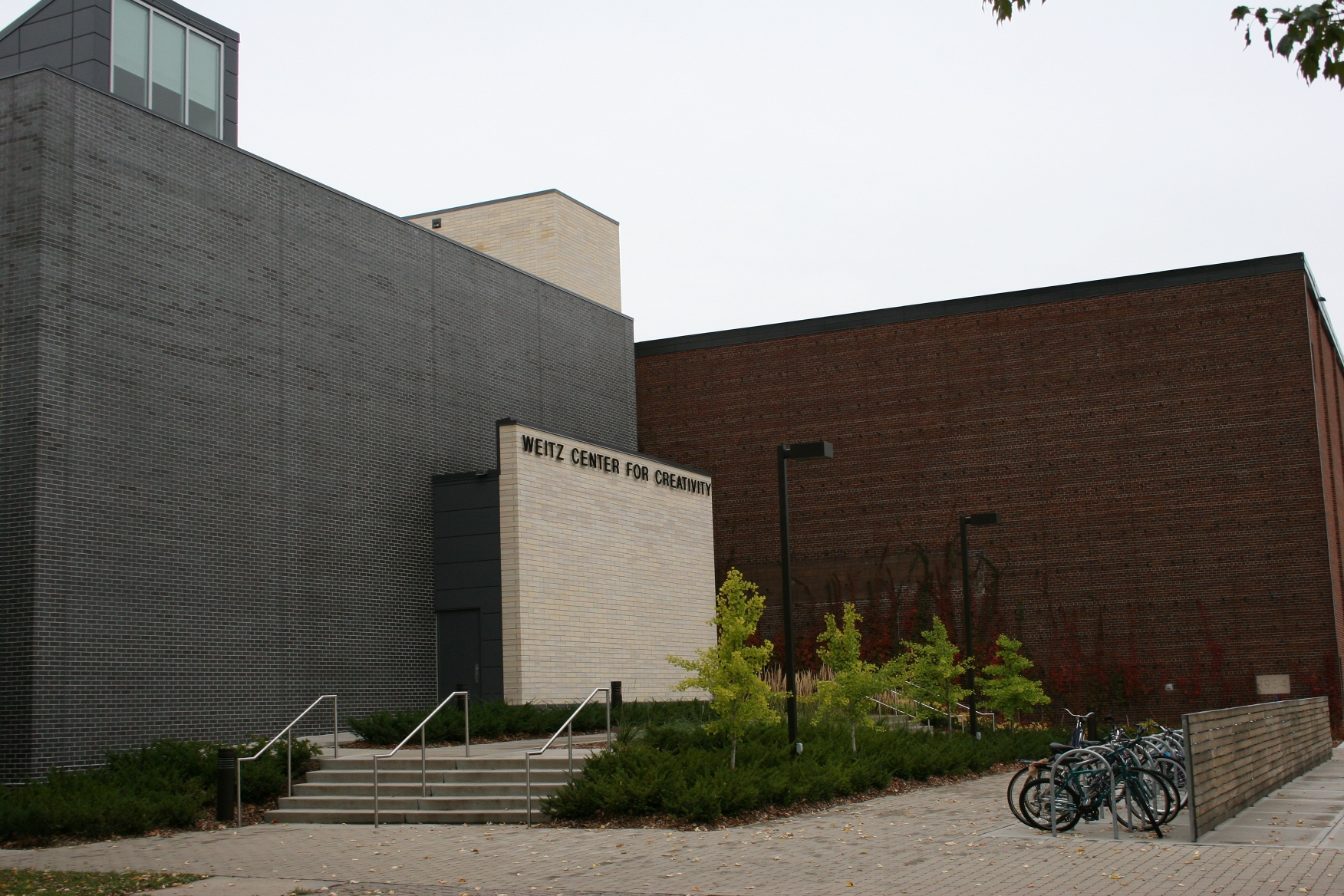
Creativity unleashed at Bethany, my alma mater January 14, 2013

TYPICALLY, COLLEGE ALUMNI magazines hold my interest only long enough to thumb to the section where class updates are printed. I read those and then toss the publication into the recycling bin.

But recently, the bold, artsy cover of the November issue of the Bethany Report, the alumni magazine of Bethany Lutheran College, caused me to take a closer look at an article detailing the school’s new media arts program. I’m a Bethany grad, which in 1976 offered only a two-year associate arts degree to undergraduates.

Today this scenic hilltop campus in Mankato offers an array of four-year degrees, including one in communications, my eventual major at Minnesota State University, Mankato. Oh, how I wish majors and minors had been available back in my Bethany years, because I loved that small Christian college.

All of that aside, today’s Bethany students with an interest in communications, the fine arts and technology can enroll in the media arts major. I don’t pretend to know how Bethany’s program compares to that of other colleges.

I did my own editing on this recent photo of a Bethany billboard along U.S. Highway 14.

I did my own editing on this recent photo of a Bethany billboard along U.S. Highway 14.

But when I saw that magazine cover design emphasizing the media arts program and then an equally vivid, eye-catching billboard along U.S. Highway 14 near Janesville recently, I was impressed enough to visit the BLC website.

There I clicked onto a portfolio showcasing the creations of current and former students.

I’m no expert on the fusing of art, technology and communication. But I liked what I saw. And perhaps that uninformed spontaneous reaction counts for more than the dissected opinion of anyone in academia.

© Copyright 2012 Audrey Kletscher Helbling
 

Don’t ask Santa, ask Grandma in the home of champions December 29, 2012

Filed under: Uncategorized — Audrey Kletscher Helbling @ 12:09 PM
Tags: , , , , , , , , ,

BILLBOARDS, ESPECIALLY THOSE in rural Minnesota, fascinate me.

The signs impress me as more interesting, more focused, quirkier, it seems, and zeroed in on a specific geographical region. The messages, the art, can reveal much about an area and often make me smile, sometimes even laugh.

This creative real estate billboard in Sleepy Eye, at the intersections of U.S. Highway 14 and Minnesota Highway 4, makes me smile. A nearby sign boasts the local high school's athletic accomplishments.

This creative real estate billboard, right, in Sleepy Eye, at the intersections of U.S. Highway 14 and Minnesota Highway 4, makes me smile. A nearby sign boasts athletic accomplishments at Sleepy Eye and St. Mary’s high schools.

Additionally, many small towns take great pride in the local high school’s athletic accomplishments, even from decades ago.

Although many small towns brag about local sporting accomplishments, I would like to occasionally drive into a community and also read a sign boasting of academic, musical, theatrical or other accomplishments.

Wouldn’t that be nice to see in our sports-obsessed world?

Imagine reading a sign like “Home of the 2012 Minnesota State Spelling Bee Champion” or something like that.
HAS ANYONE OUT THERE ever spotted a sign in a community highlighting non-athletic accomplishments at the high school level?
© Copyright 2012 Audrey Kletscher Helbling