Minnesota Prairie Roots

Writing and photography by Audrey Kletscher Helbling

Veterans Day 2025: Reflecting on Dad’s letter home from the frontline in Korea November 11, 2025

On the back of this photo, my dad simply penned “a letter from home.” I appreciate this photo taken by an unknown buddy while they were in the service. (From the Elvern Kletscher photo collection)

A SHORT BIT AGO, I reread a letter my dad wrote home to his parents in southwestern Minnesota on his 22nd birthday in March 1953. Dad penned the letter thousands of miles away in Korea, where he was fighting on the frontline during the Korean War.

Among my dad’s “Korea stuff” are a book of military instructions he carried into the battlefield, a newspaper clipping about him, and his dog tags atop his letter home, the chain circling the words “hell hole.” (Minnesota Prairie Roots copyrighted file photo November 2023)

One long paragraph of that missive stands out for me on this Veterans Day. That is Dad’s anger at the draft board and at those who thought it necessary to send young men like him into what he termed a “hell hole” and a war against Communism that he didn’t think could be won.

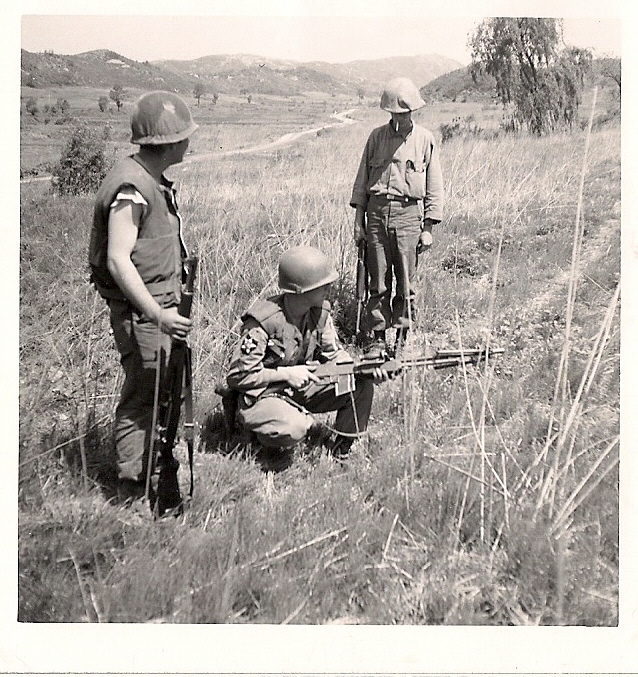
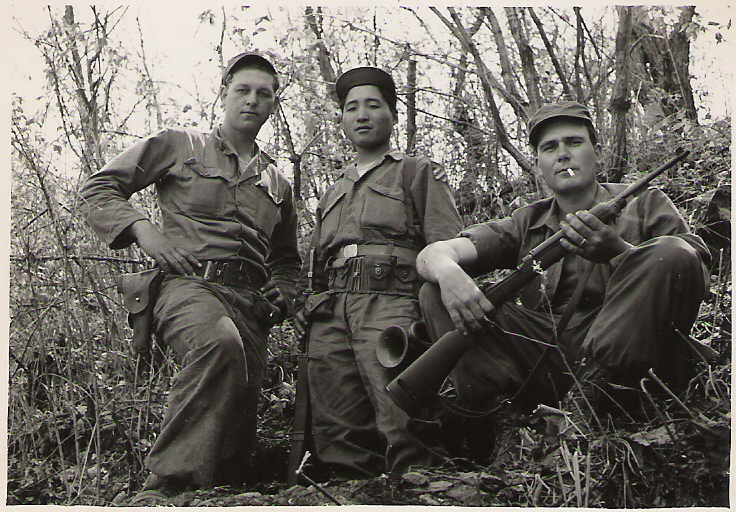
This photo from my dad’s collection is tagged as “Kim, Rowe, Allen & me, May 1953 Machine Gun Crew.” That’s my father on the right. (From the Elvern Kletscher photo collection)

I expect many others thought like Dad. How could you not after shooting, killing, watching your buddies die in battle? After living with hunger and bone-chilling cold in a mountainous land far from home.

At the time of his letter, Dad was especially concerned that his younger brother, Harold, would be drafted. He vowed revenge if that happened. I suppose when you’re an older brother and you’ve seen war like he has, you don’t want someone you love to experience the same. Dad’s words were just that. Words. Words written by a combat soldier weary of war. A soldier frustrated. A soldier counting the months until he could leave Korea and then be discharged from the Army.

Dad vented to his parents. He called for those in positions of power to come to the Korean battlefields, to see for themselves the realities of war. I imagine many a soldier wished the same, that officials, leaders and decision-makers understood the results of their policies, actions, decisions, orders.

My dad came home from Korea with the wounds of war. Mental, emotional and physical. He was wounded by shrapnel at Heartbreak Ridge. He experienced depression and post traumatic stress disorder.

Yet, he returned to America still patriotic, a proud American whose sacrifices and service were not then recognized. He served in what would become known as “The Forgotten War.” How demeaning, to be ignored, unsupported, just like Vietnam War veterans. Only decades later did Dad receive the Purple Heart he earned on the battlefield.

The Rice County Veterans’ Memorial in Faribault. This photo and five other vet-themed photos I took hang in public spaces at the new State Veterans Home in Bemidji. (Minnesota Prairie Roots copyrighted file photo)

Dad went on to become an active American Legion member, serving as commander of the local post. He taught me and my siblings to respect veterans and those who died in battle. We attended every Memorial Day program in my hometown of Vesta. Afterwards we gathered at the cemetery for the playing of taps, prayer and a gun salute. We wandered among the tombstones.

I joined the Junior American Legion Auxiliary, which mostly involved selling poppies on Poppy Day. I also read “In Flanders Fields” at the community Memorial Day program and placed paper poppies on a wreath. My mom was an active American Legion Auxiliary member.

Dad integrated back into life in rural Minnesota upon his return from Korea as if nothing had changed for him. But it had. And it did. Going through his box of “Korea stuff” 72 years after he wrote that birthday letter home to his parents, I glimpse the “hell hole” of war he experienced. My anger rises, too, for all he endured and suffered on the battlefield and upon his return home to rural Minnesota.

© Copyright 2025 Audrey Kletscher Helbling


Remembering, honoring, grieving on Memorial Day May 22, 2025

My father, Elvern Kletscher, left, with two of his soldier buddies in Korea.

WHEN MEMORIAL DAY ROLLS around each May, my thoughts shift to my dad, who served on the front lines during the Korean War. He survived, albeit with the emotional trauma that comes from killing and constant danger of being killed. His close buddy, though, did not survive. And that is the man I remember and honor today, along with others who’ve lost their lives in service to country.

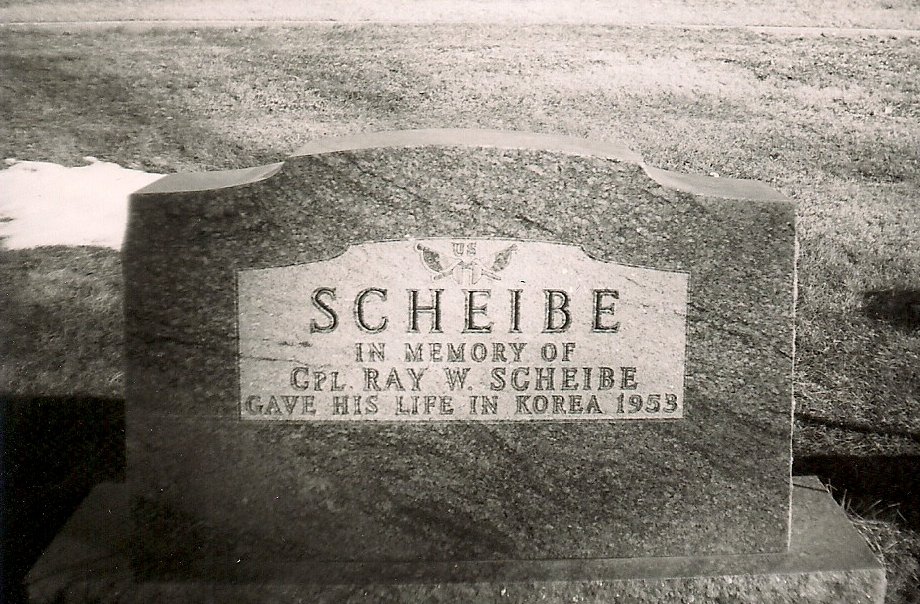
Sonny Nealon, Ray’s best friend in high school, sent me this photo of Ray’s gravestone. (Photo credit Sonny Nealon)

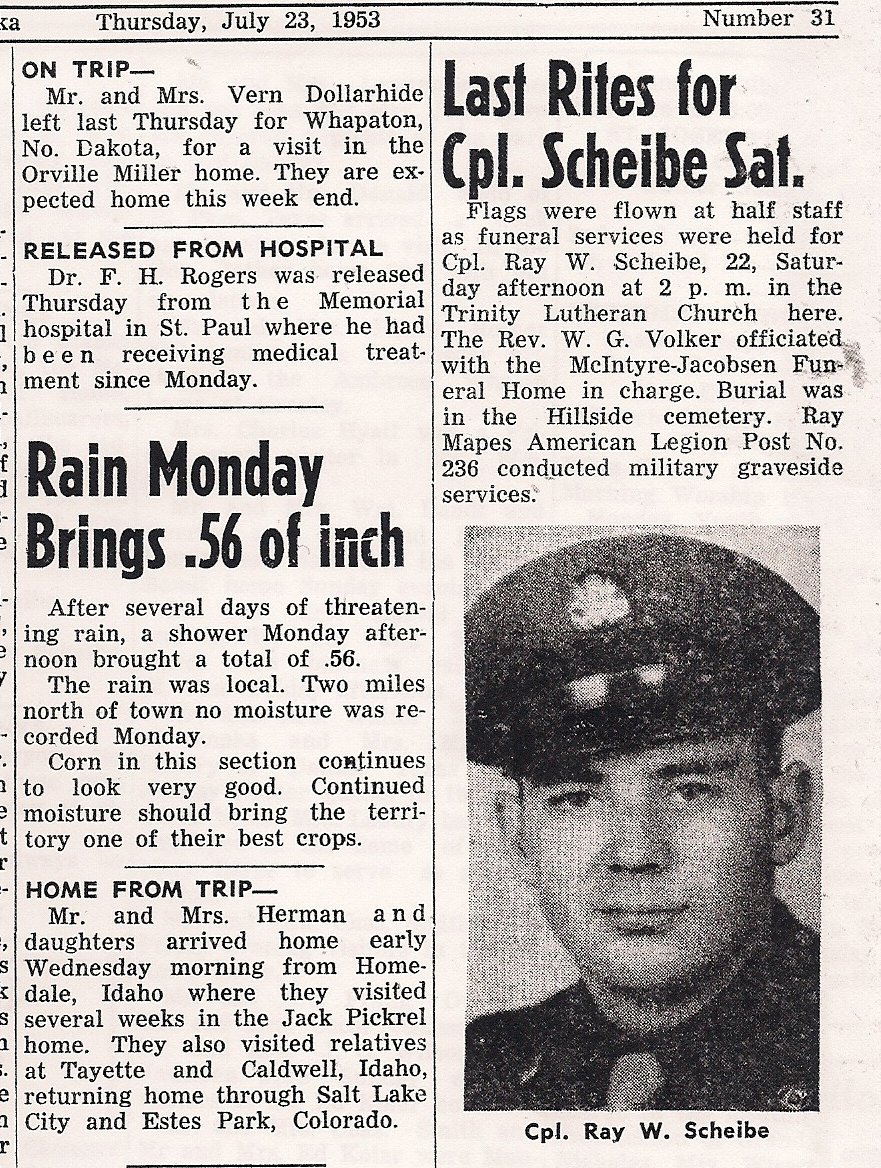
Corporal Ray W. Scheibe, 22, of Wolbach, Nebraska, died on June 2, 1953, blown apart by a mortar shell. My dad witnessed his horrific death, for war is nothing short of horrible. Ray was scheduled to leave Korea the next day, which makes his story even more tragic. He left behind grieving friends and family, including his wife, Marilyn, and 3-month-old daughter, Terri Rae, whom he had not yet seen. I’ve since found and connected with Terri in Iowa, but have yet to meet her.

A story about Cpl. Ray W. Scheibe, published in the July 23, 1953, issue of The Wolbach Messenger.

It is the individual stories of soldiers like Ray that take war to a personal level. A level that allows us to understand the meaning of the words “killed in action.” My father’s grief in losing Ray became, in some ways, my grief, too.

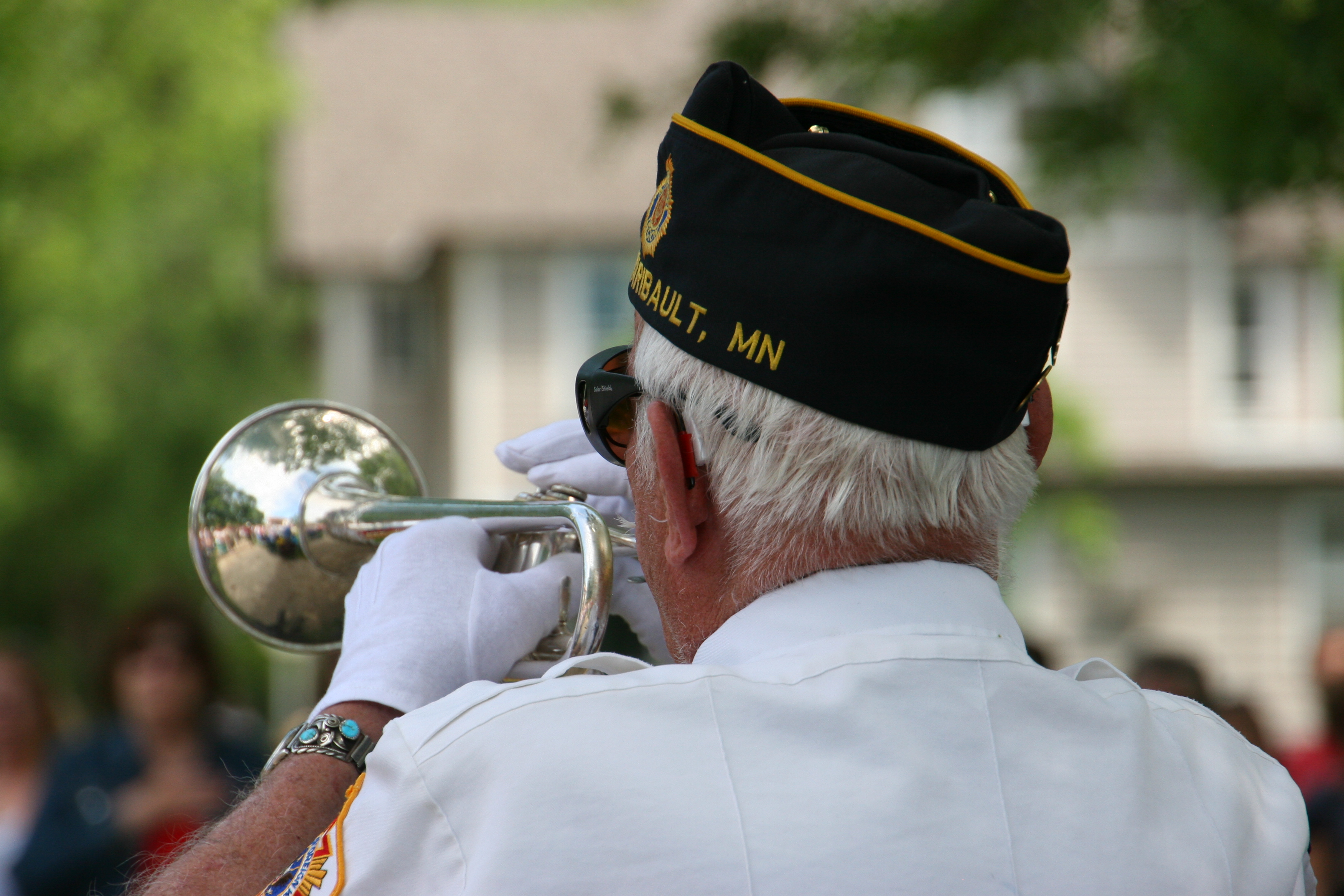
Playing taps at a past Memorial Day program in Faribault. (Minnesota Prairie Roots copyrighted file photo May 2016)

On Memorial Day we gather in collective grief to remember the many men and women who, like Ray, died while serving in the U.S. military. There will be parades and speeches, patriotic music and poetry, poppies and red-white-and-blue attire. Names read. Tears shed. Taps played. Guns fired. Flags carried. Graves visited.

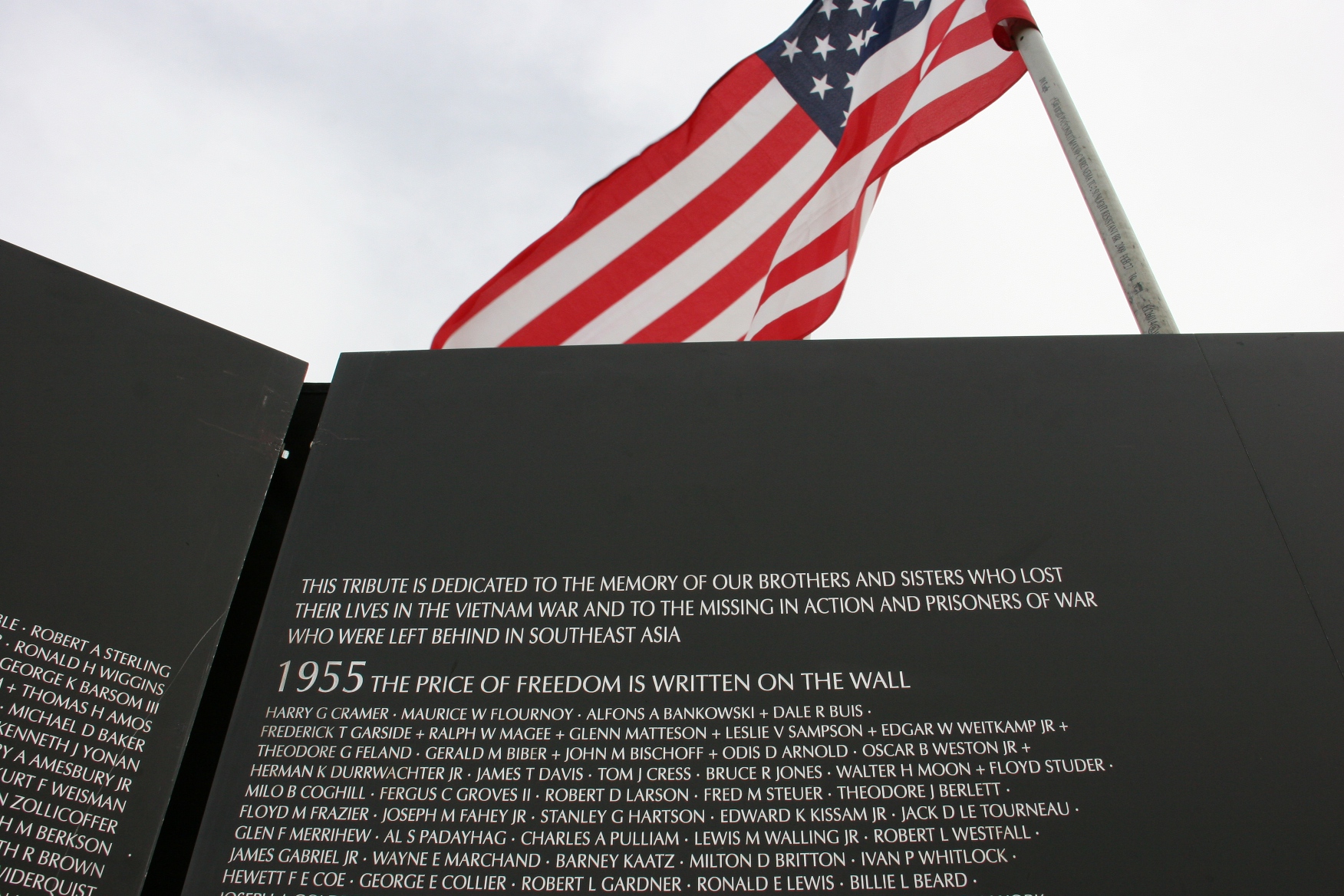
A message and names on the Traveling Vietnam Memorial Wall, which was in Faribault in 2016. (Minnesota Prairie Roots copyrighted file photo 2016)

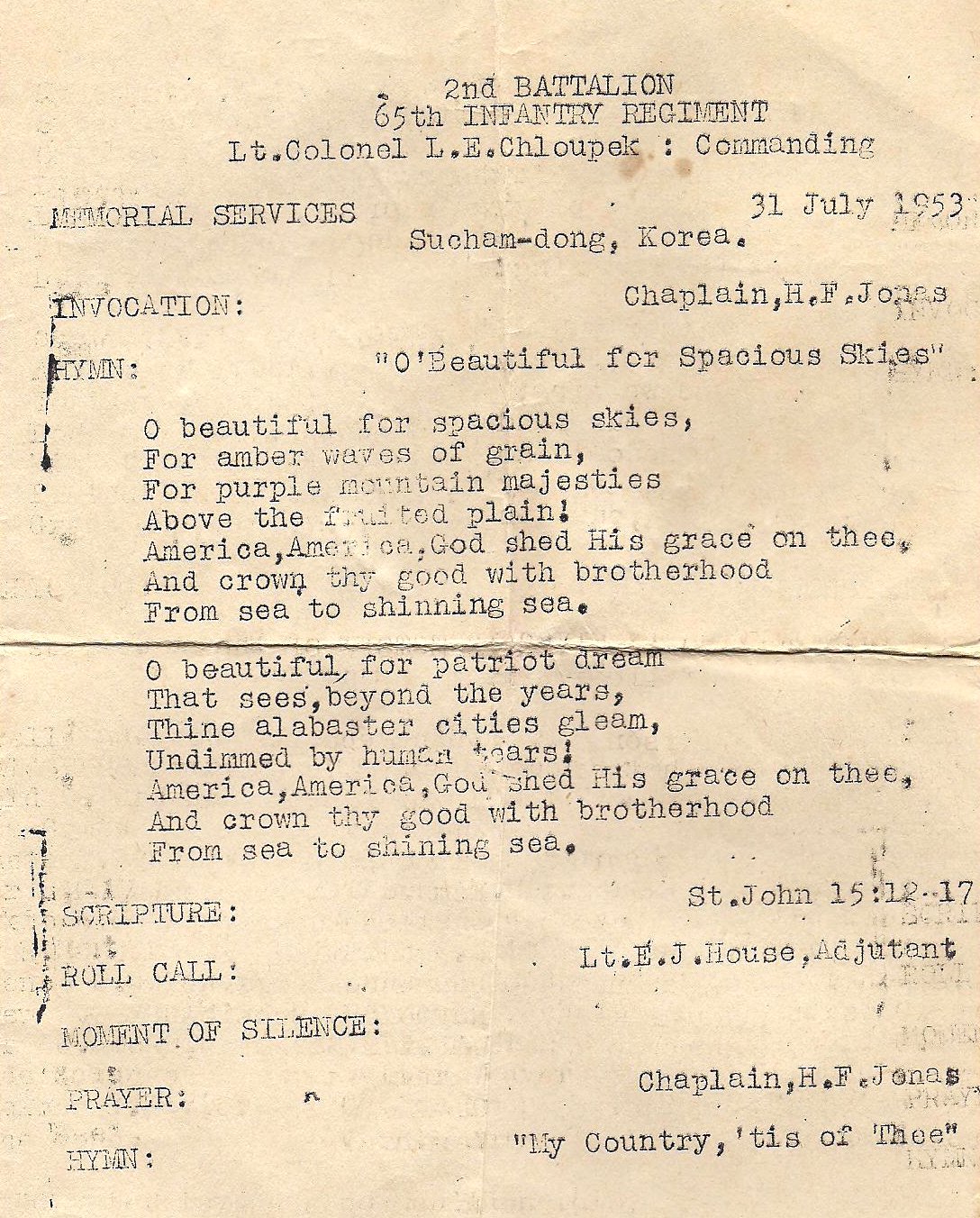
In our hearts, in the silence of our thoughts, we reflect upon what it truly means to give up life for country as did Ray and 27 other men listed in a July 31, 1953, memorial service bulletin my dad carried home from Korea. Below those names are these words from Scripture: Greater love has no man than this, that a man lay down his life for his friends (John 15:13).

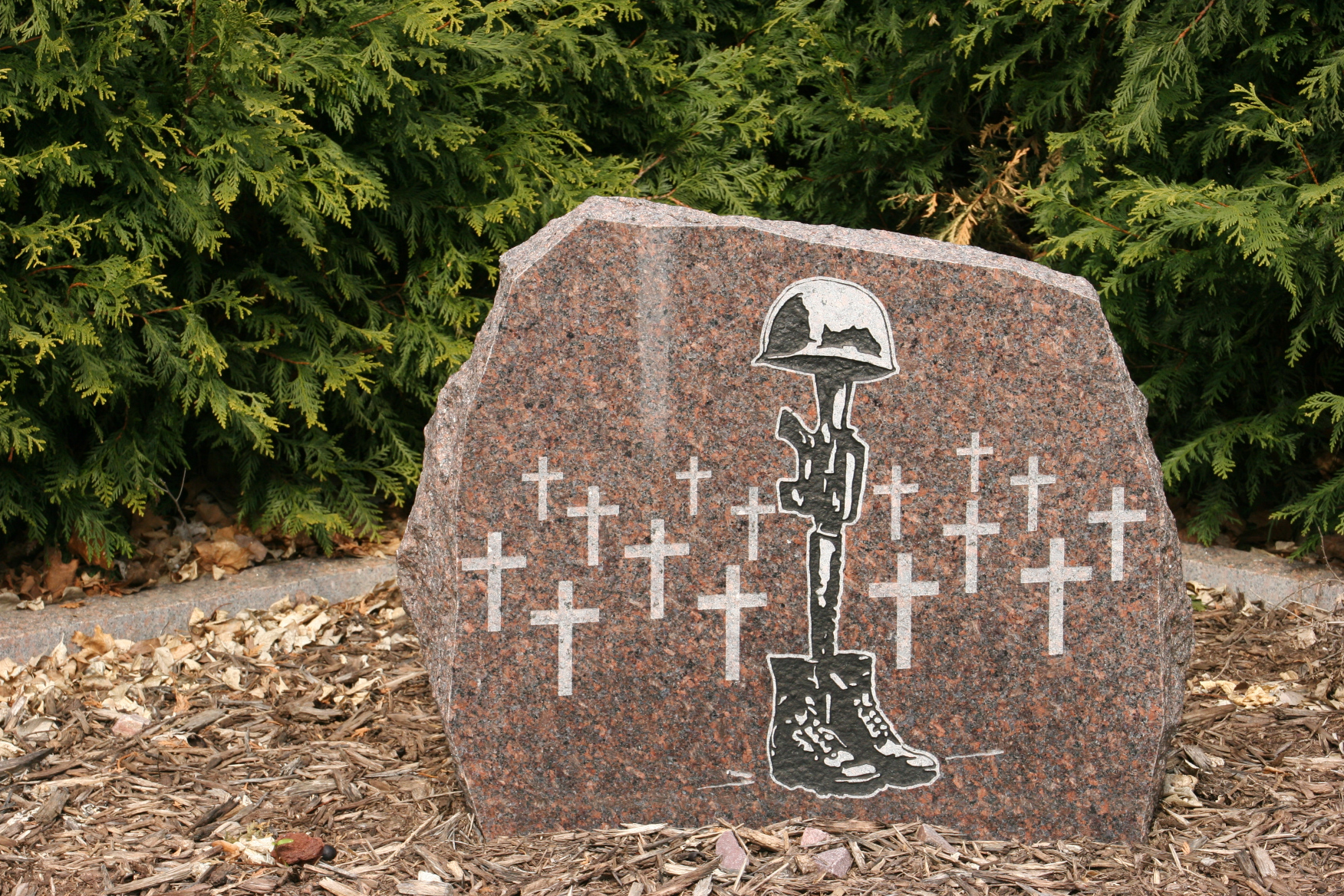
Honoring fallen soldiers with a special monument at the Rice County Veterans’ Memorial in Faribault. (Minnesota Prairie Roots copyrighted file photo)

I get emotional as I open the creased, soiled and yellowing 72-year-old memorial service program from Such’am-dong, Korea. I’ve tucked it into a shoebox with Dad’s other military papers, photos and belongings to pull out twice annually on Memorial and Veterans Days. I need to read the fading typewritten names, to recognize and honor these men who never made it home.

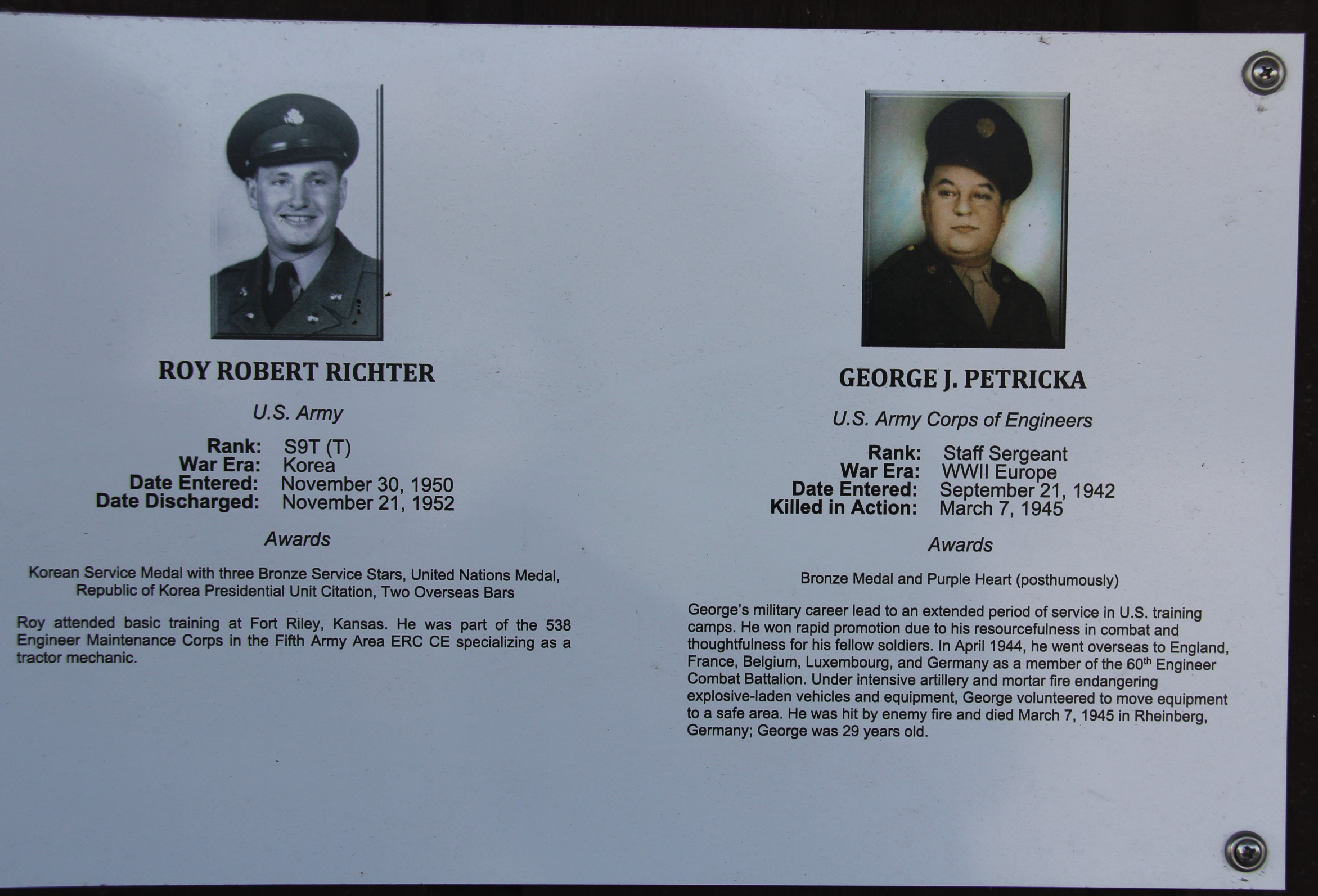
Montgomery, Minnesota, honors veterans via posting their photos and stories (339 thus far) throughout the downtown. To the right is the profile of George J. Petricka, killed in action during WW II on March 7, 1945. (Minnesota Prairie Roots copyrighted photo 2025)

I reread the list of alphabetized names from Turrell Anderson to Vernie Zurn. Raymond W. Scheibe falls at number 24. The surviving men of the 2nd Battalion, 65th Infantry Regiment, who mourned the 28 on that July day in 1953, carried the heavy weight of grief as they prayed, stood in silence, sang “America the Beautiful” and “My Country, ‘Tis of Thee.” And then they carried that grief home.

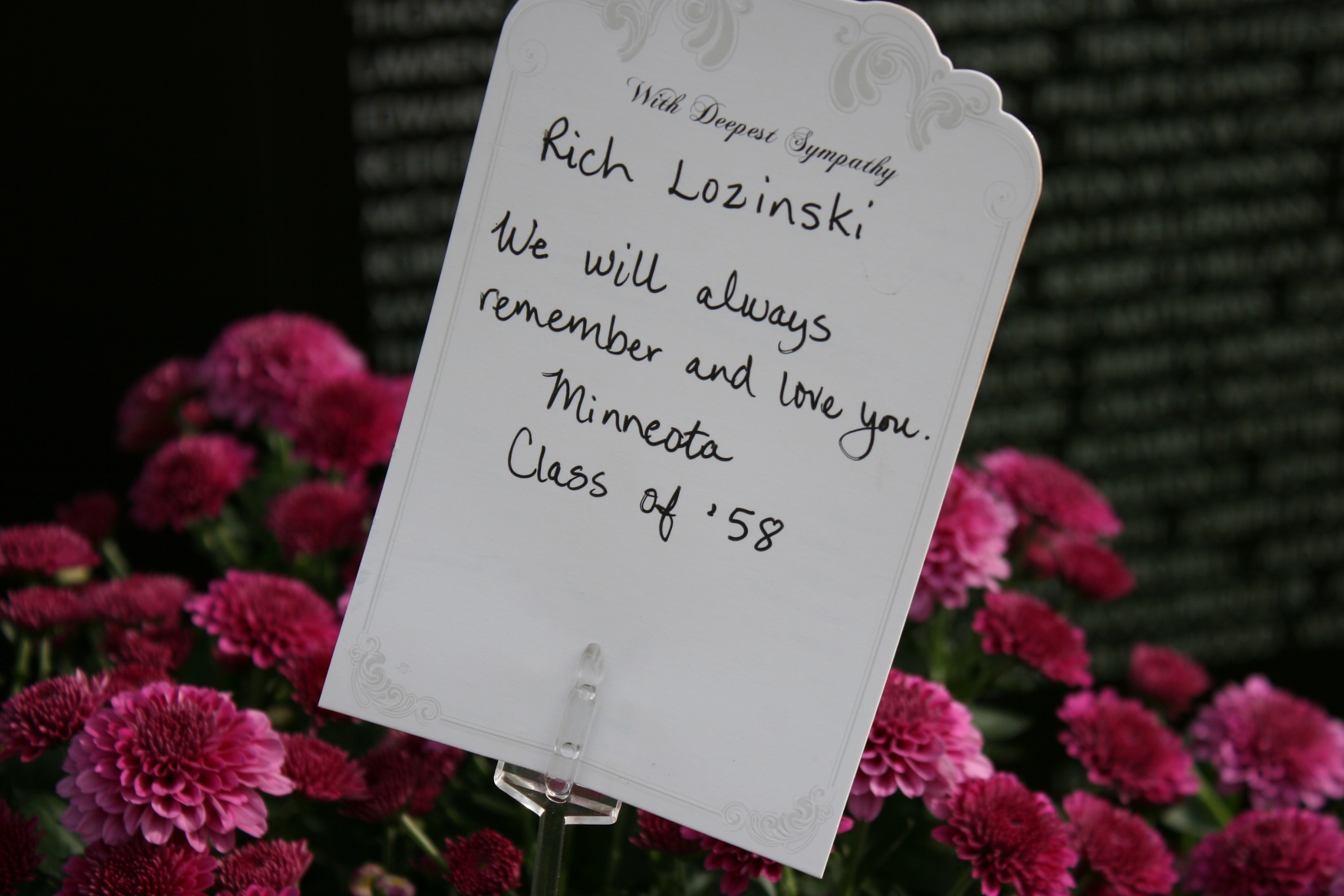
Grief in a note and mums left at the Traveling Vietnam Memorial Wall in Faribault. It honors Rich Lozinski, Class of 1958, Minneota, Minnesota. According to the online Wall list of those KIA, the name is spelled “Lozenski.” Rich was only 26 when he was killed in Quang Tri Province on May 19, 1967. (Minnesota Prairie Roots copyrighted file photo 2016)

Today, even decades after the death of a service member in war, grief carries through generations. It’s important to remember that, to respect that, to take time on Memorial Day for not only honoring, but also for grieving. In grief we begin to acknowledge and process loss. In grief we begin to heal. And in grief we begin to understand the ultimate sacrifice for country.

TELL ME: If you have a story to share about a service member who was killed in action, I’d like to hear. Who do you honor on this Memorial Day?

© Copyright 2025 Audrey Kletscher Helbling
 

Honoring Cpl. Ray Scheibe & others who died in war May 27, 2024

Honoring words on the Northfield Area Veterans Memorial. (Minnesota Prairie Roots copyrighted file photo May 2023)

THE WOOD-GRAIN cardboard shoebox, tattered around the edges, sits on a closet shelf in an upstairs spare bedroom. This box once held size 8D loafers from Pedwin Shoes for Men. Those are long gone, replaced by black-and-white photos, postcards, a military belt, documents and more.

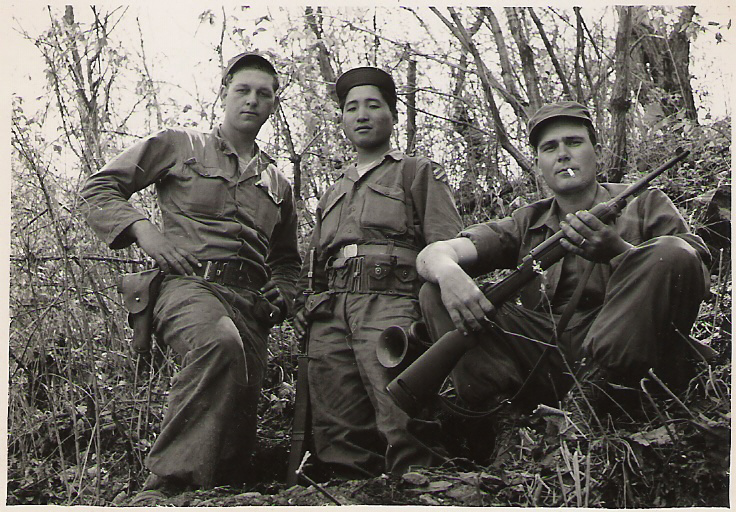
This May 1953 photo, taken by my dad, shows his friend, Ray Scheibe, left, and other soldiers in Korea. (Photo credit: Elvern Kletscher)

A lime green note atop the lid identifies the contents as “Important stuff,” underlined twice, belonging to my dad, Elvern Kletscher. The papers and photos inside are the stuff of war, the Korean War. Dad served as a U.S. Army infantryman on the frontlines, earning the Purple Heart for injuries sustained in battle.

A July 31, 1953, memorial service bulletin from Sucham-dong, Korea. (Minnesota Prairie Roots copyrighted photo)

But this story is not about my father, who survived combat and returned home to southwestern Minnesota, albeit permanently scarred by the trauma of war. This is about 28 men from the 2nd Battalion, 65th Infantry Regiment, who died in Korea. Their names are typed inside a July 31, 1953, memorial service bulletin my dad carried home from war. The folder is creased in quarters, worn, letters fading. I’ve opened it many times. I imagine my Dad did, too, as he read the names listed in alphabetical order from A to Z. Turrell Anderson to Vernie Zurn. Near the end of that list, the name of his buddy, 22-year-old Raymond W. Scheibe.

A story about Cpl. Ray W. Scheibe, published in the July 23, 1953, issue of The Wolbach Messenger.

On June 2, 1953, the day before Ray was to leave Korea and return to his wife, Marilyn, and 3-month-old daughter, Terri Rae, in Wollbach, Nebraska, he died. Blown apart by a mortar shell, his horrific death witnessed by my father. I don’t think Dad ever fully recovered from the trauma of losing his friend. Who would?

(Photo credit: Sonny Nealon, Ray’s best friend in high school)

Today I honor Ray and all the other military men and women who have died in service to country. They made the ultimate sacrifice, leaving behind grieving families and friends. “Greater love has no man than this, that a man lay down his life for his friends.” That biblical quote from John 15:13 is typed below the names of the 28 men honored at that July 1953 memorial service in Suchan-dong, Korea. That had to be an overwhelmingly emotional event for the surviving soldiers.

The third page of the memorial service bulletin my soldier dad carried home from Korea. (Minnesota Prairie Roots copyrighted photo)

Seventy-one years after that memorial service, I feel emotional reading the 28 names, recognizing the immense loss, the grief, the trauma. That my dad kept this folder speaks to his grief, compassion and connection to those who fought in Korea. I honor him and those men by keeping this folder and all the other “important stuff” Dad carried back home to Minnesota.

His documents, photos and more are not mere “stuff.” Rather they represent individuals who died in war, who should always be remembered and honored, especially today, Memorial Day.

NOTE: In 2005, with the help of my brother-in-law Neil, who served in the military, I tracked down Ray Scheibe’s daughter, Terri, in southwestern Iowa. We’ve kept in touch all these years, but have yet to meet. Finding Terri brought my dad’s story full circle, bringing me peace. I shared with Terri how much her father meant to mine. To read my story about finding Terri, click here.

© Copyright 2024 Audrey Kletscher Helbling


Veterans Day reflections: “Returned from hell,” my father’s story November 8, 2023

Among my Dad’s papers, etc.: A letter home to his parents, a page of military instructions he carried into war, a newspaper clipping and his dog tag, circling the words “hell hole” in his letter. (Minnesota Prairie Roots copyrighted photo November 2023)

I RUN MY FINGERS across his dog tag, thumb caressing the raised letters and numbers stamped into metal. His name, KLETSCHER, ELVERN A. B blood type. P for Protestant. His Selective Service number, the same number on his Armed Forces of the United States Geneva Convention Identification Card, the laminated card he carried with him into war. Just like the duplicate dog tags that would identify him if he was injured or killed in action.

This photo from my dad’s collection is tagged as “Kim, Rowe, Allen & me, May 1953 Machine Gun Crew.” That’s my father on the right.

Seventy-one years ago, my dad was a fresh-faced young Minnesota farm boy fighting in the Korean War as a combat soldier for the U.S. Army. Each November, around Veterans Day, I pull out two shoeboxes filled with photos, letters, documents and more from Dad’s time in the service. And although I’ve looked through the contents many times in the 20 years since Dad died, I still feel the same overwhelming sense of sadness in all he experienced. The death of combat buddies. His killing of the enemy. Orphan children begging for food across barbed wire fences. The cold and hunger and fear. And then the Post Traumatic Stress Disorder he suffered upon his return home to southwestern Minnesota.

My dad brought this 7 x 9-inch cloth “RETURNED FROM HELL” patch home with him after serving for nearly a year in Korea. (Minnesota Prairie Roots copyrighted file photo)

I feel all of that as I touch his dog tag, run my fingers along the short chain like fingers worrying rosary beads in prayer. War is hell.

On the back of this photo, my dad simply penned “a letter from home.” I appreciate this photo of my dad taken by an unknown buddy in Korea.

Hell. Dad used that word in a March 4, 1953, letter to his parents and siblings. He criticized the draft board, his anger fueled by the possibility that a younger brother might also end up in Korea. He wrote, in part: “Do they know what it’s like over here? Hell no. Why the heck don’t some of them come over here and look this over? They’d probably come to there (sic) senses…” Not everything he wrote is printable. But his anger and frustration are palpable. And I don’t blame him.

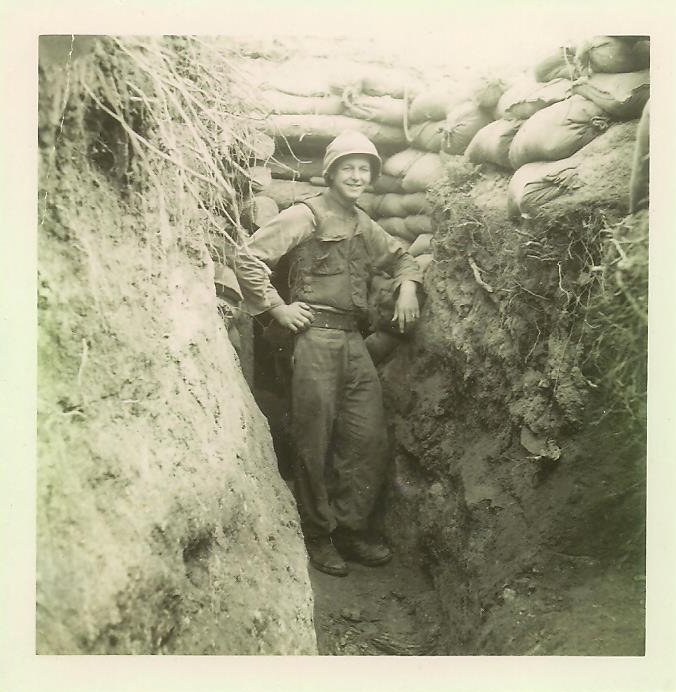
U.S. Army Cpl. Elvern Kletscher, my father, in the trenches in Korea.

War is hell. I try to imagine my dad penning that letter on his 22nd birthday. Missing his family. No cake, no nothing to celebrate. But rather worry about whether he would live to the next day. He had reason to fear for his life. Only a week prior, he was wounded in action at Heart Break Ridge while engaged in mortar firing with the enemy. Shrapnel struck him in the face and he was hospitalized for several days.

My grandparents, Ida and Henry Kletscher, posing with some of their children, flank my father, Elvern Kletscher, who is about to leave for military service in 1952.

Interestingly enough, Dad mentions none of that in his letter home. Rather, he closes with these sentences: “I’m feeling fine and don’t worry about me. I’ll write again soon.” I don’t believe Dad was “feeling fine,” in a place he called a “hell hole” in his letter.

My father, Elvern Kletscher, on the left with two of his soldier buddies in Korea.

As I filter through the shoeboxes holding his military belongings, I pick up a hardcover 4 x 6-inch black book. It’s tattered, bent, dirty, obviously well-used. When I open the cover to read the words Dad penciled across lined paper, the realities of war strike me full force. Here are details and instructions on weaponry—60 mm mortars, submachine guns, tank mines, smoke screens, chemical warfare… He writes about reconnaissance, combat and security patrols and “avoid contact with enemy—may have to fight in self defense.” There are diagrams and fire commands and details I don’t understand, and don’t necessarily want to understand.

My dad carried home a July 31, 1953, memorial service bulletin from Sucham-dong, Korea. In the right column is listed the name of his fallen buddy, Raymond W. Scheibe.

But “Conduct on lines” and the details that follow need no deciphering: “1) Hold fire until enemy is within 500 yards. 2) Listening post must have cover and concealment, must have good route for withdrawal…” I expect Dad carried this book into war. Just as he carried deep trauma home from “The Forgotten War,” as the Korean War has been dubbed.

Words imprinted on the Veterans’ Memorial in Northfield, Minnesota. (Minnesota Prairie Roots copyrighted file photo May 2023)

War is hell, even if done for the right reasons—to defend democracy and freedom and country. For his time in the Army in 1953, Dad was paid $266.27. It’s documented on his federal income tax return. So little for so much given, not that there’s ever enough payment for a combat soldier.

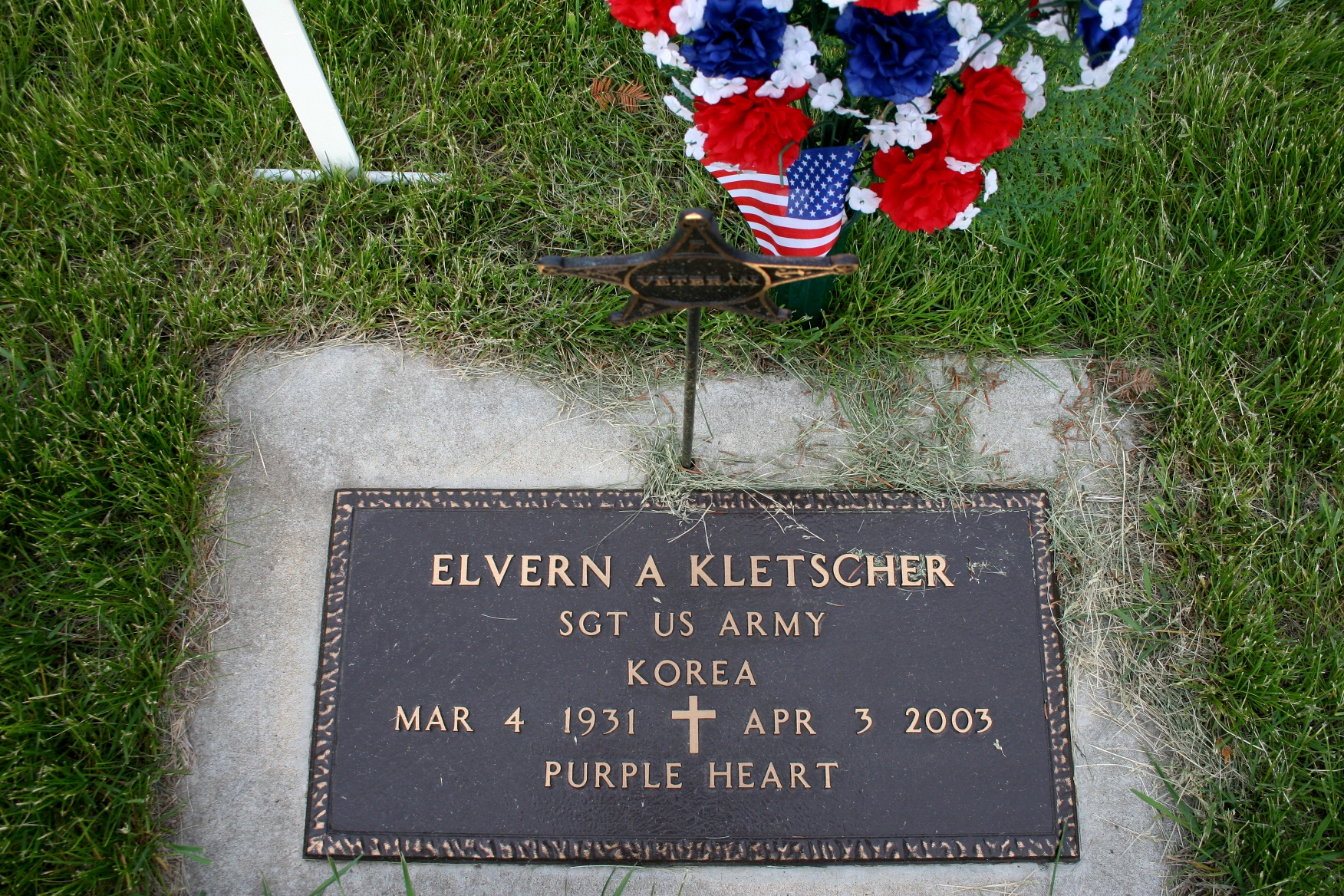
My dad’s military marker in the Vesta City Cemetery. (Minnesota Prairie Roots copyrighted file photo)

I wish I could wrap my arms around Dad, hold him, tell him how deeply sorry I am for the horrors he endured while fighting as an infantryman on the front lines during the Korean War. Mostly, I wish I could simply listen, sitting quietly as I finger the chain of his dog tag, the beads providing tactile comfort as he talked (if he would talk) about the personal hell that is war.

The Rice County, Minnesota, Veterans’ Memorial in Faribault. This photo and five others I took now grace public spaces in the newly-opened State Veterans Home in Bemidji. (Minnesota Prairie Roots copyrighted file photo)

NOTE: Please use this Veterans Day as a time to thank those who have served our country. But more than thanking, listen, support and encourage. The voices of our veterans need, and deserve, to be heard.

© Copyright 2023 Audrey Kletscher Helbling
 

Memorial Day remembrances & reflections May 25, 2023

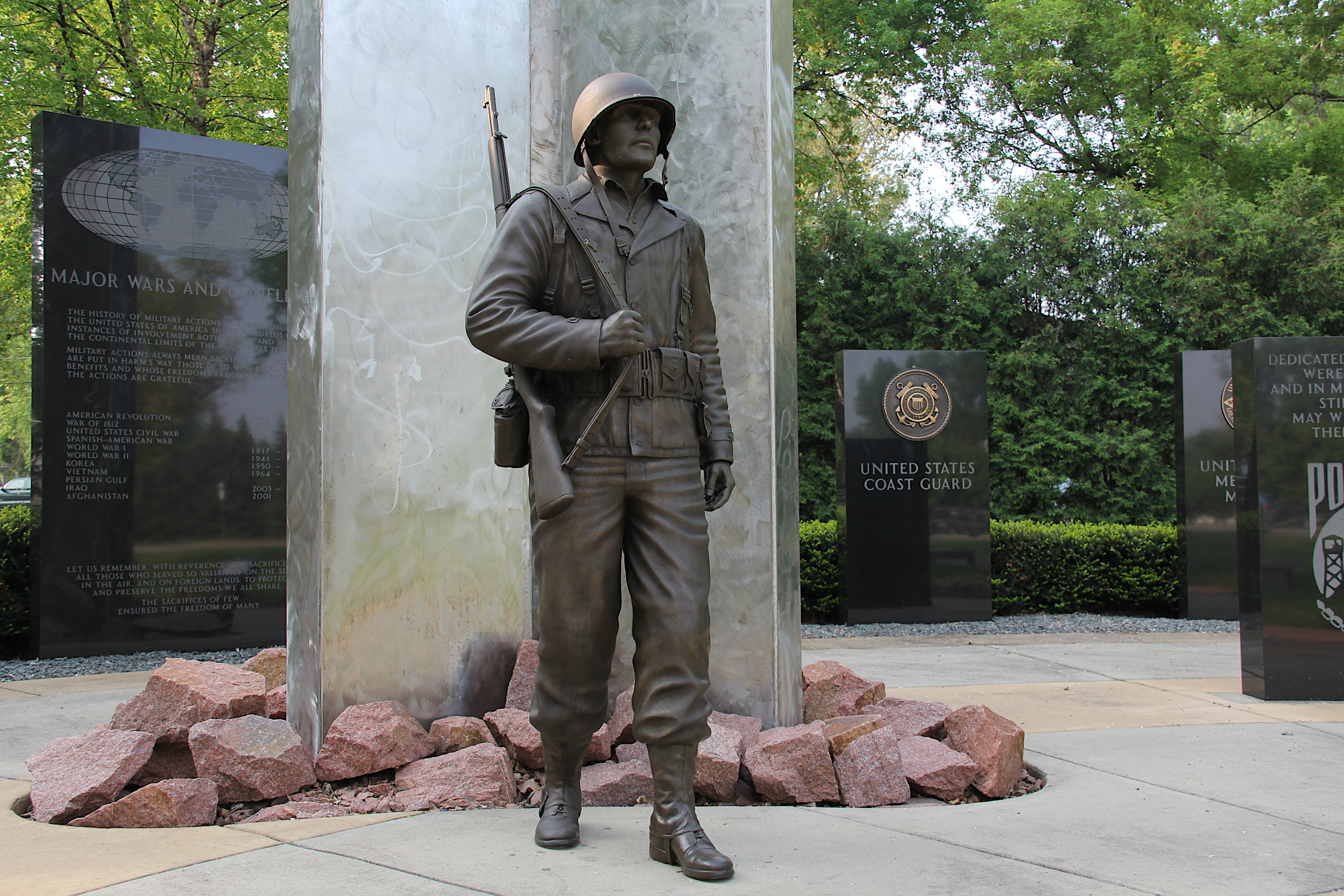
A soldier sculpture centers the Northfield Area Veterans Memorial. (Minnesota Prairie Roots copyrighted photo May 2023)

HIS STRONG STANCE, one boot planted in front of the other, ramrod posture all point to his disciplined military training. I am looking at a sculpture of a US soldier, a combat infantryman. As I study him, I gaze into his haunted eyes, eyes that, by my perception, reveal the horrors of war.

Standing strong in service to country, a life-size soldier replica. (Minnesota Prairie Roots copyrighted photo May 2023)

Perhaps it is my own father’s stories of fighting on the front-line during the Korean War that shape my reaction to this soldier replica at the Northfield Area Veterans Memorial. But this could be anyone’s interpretation. That of a daughter, like me, whose father suffered from Post Traumatic Stress Disorder after leaving the killing fields of Korea. Or this could be the story of any active duty war veteran, the story of a spouse or child who lost a loved one on the battlefield, the stories of too many.

My dad took this photo of his buddies, including Ray Scheibe, left, in Korea. The photo is dated May 1953. Ray was killed in June. (Copyrighted photo by Elvern Kletscher)

This Memorial Day, I pause to remember those who gave the ultimate sacrifice—their lives—to assure my freedom. My dad’s Army buddy and friend Ray was among those. Ray died the day before he was to leave Korea and return to his wife and infant daughter in Nebraska. My father witnessed Ray’s death and it broke a part of him.

Honoring fallen soldiers with a special monument at the Rice County Veterans Memorial in Faribault. (Minnesota Prairie Roots copyrighted file photo)

These are the personal details we need to remember on Monday, a national day of mourning and remembrance for those who died on the battlefield. Veterans’ memorials and parades and programs all provide ways to honor the brave men and women who died in service to country. But their stories are equally as important. These are, after all, individuals with friends and families, likes and dislikes, histories written long before they were drafted or enlisted and then called to war.

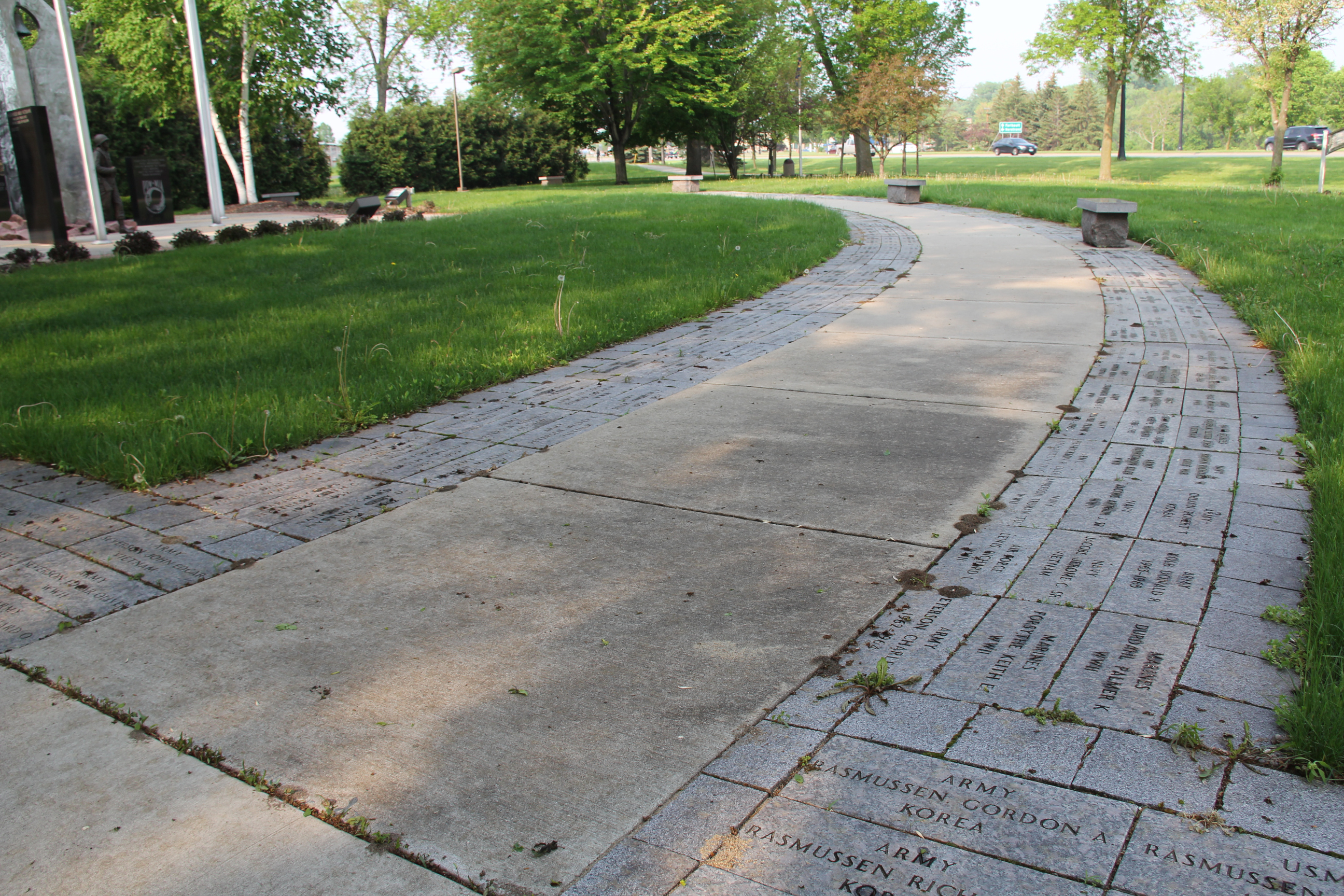
“The Walk of Remembrance” imprinted with veterans’ names and military information edges the Northfield Area Veterans Memorial. (Minnesota Prairie Roots copyrighted photo May 2023)
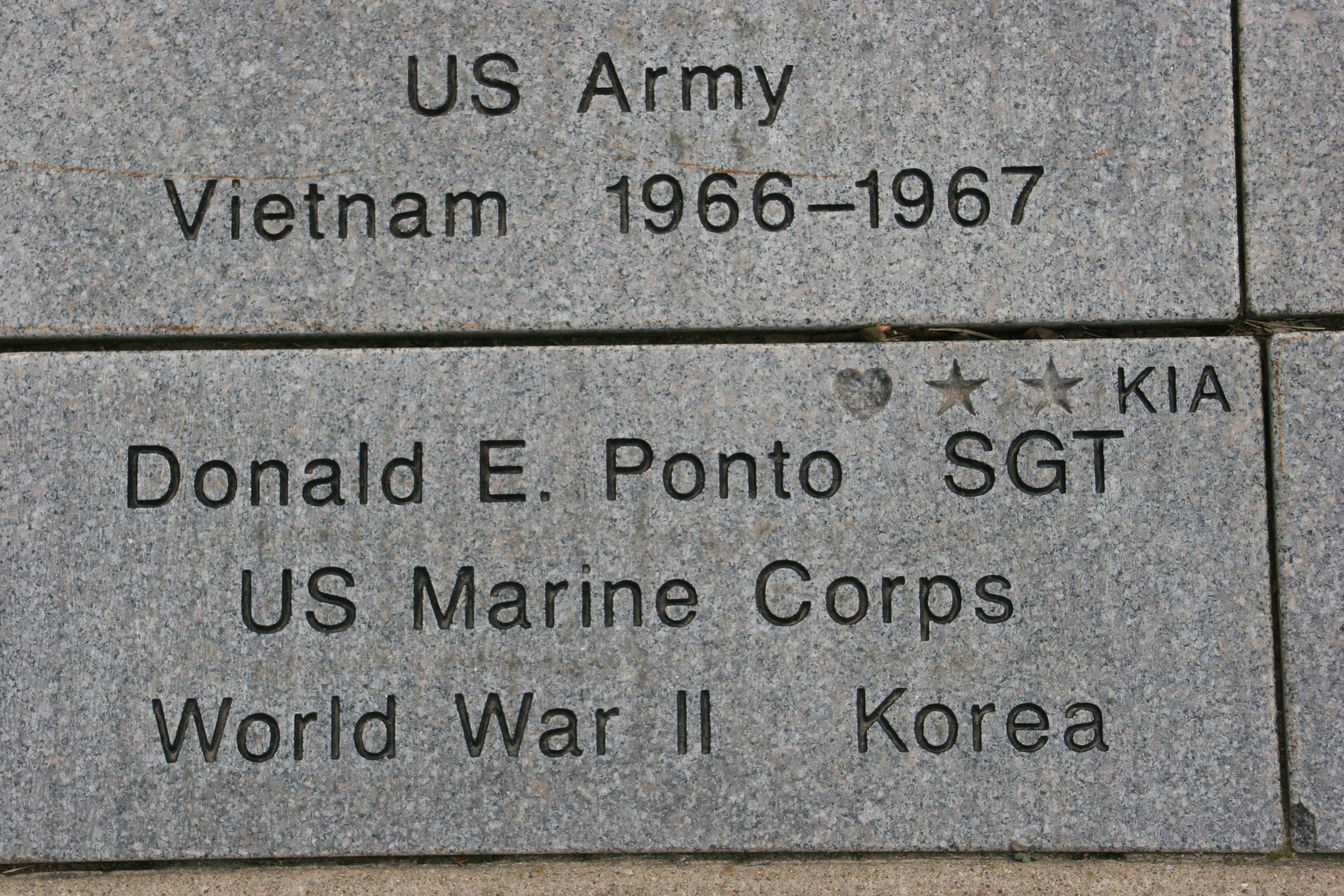
A paver at the Rice County Veterans Memorial honors Sgt Donald E. Ponto, killed in action in Korea. (Minnesota Prairie Roots copyrighted file photo)
A full view of the Northfield Area Veterans Memorial. The stones represent each branch of the military. (Minnesota Prairie Roots copyrighted photo May 2023)

Many Minnesota communities have veterans’ memorials. While designs differ, they share the commonalities of a centerpiece sculpture, sometimes a soldier or an eagle or some other strong symbol; pavers with veterans’ names imprinted; American and other flags; and ways to recognize all branches of the military. It is the names, accompanied by the initials KIA, which break my heart. KILLED IN ACTION. I recognize the intense pain and heartbreak experienced by loved ones back home. The grieving families. The Gold Star Mothers, a mother who lost a child in service to country. The fatherless children, like Teri, the infant daughter of my dad’s buddy, Ray. Overwhelming grief imprints upon those stone pavers.

An eagle at Veterans Memorial Park in Morristown. (Minnesota Prairie Roots copyrighted file photo)

This Memorial Day, I encourage you to reflect on the war dead whom we honor on Monday. Walk through a cemetery and pause at the graves marked by small American flags. Attend a Memorial Day program not out of a sense of obligation, but out of gratitude. I feel thankful for a free press. Not every country has such freedom.

My dad carried this memorial service bulletin home to Minnesota from Korea. In the right column is listed the name of his fallen buddy, Raymond W. Scheibe. (Minnesota Prairie Roots copyrighted file photo)

Spend time at a veterans’ memorial beyond a precursory walk through. Appreciate the words, the names, the symbols, the artwork. And, if a soldier sculpture centers the memorial, look into his eyes and remember this biblical quote pulled from the memorial service folder my dad carried home from Korea: Greater love has no man than this, that a man lay down his life for his friends (John 15:13).

Fitting words engraved in stone at the Northfield Area Veterans Memorial. (Minnesota Prairie Roots copyrighted photo May 2023)

That July 31, 1953, service folder from Sucham-dong Korea lists 28 soldiers who died on the battlefield, among them my dad’s beloved buddy, Raymond W. Scheibe, age 22. It is my dad’s grief and trauma I see when I gaze into the eyes of that soldier sculpture in Northfield. War carries so much death and loss and pain. I vicariously understand that. This Memorial Day I remember, reflect, honor, carry on my heart the heaviness of war.

© Copyright 2023 Audrey Kletscher Helbling


A letter to Dad on Veterans Day November 11, 2021

U.S. Army Cpl. Elvern Kletscher, my father, in the trenches in Korea. (From my father’s photo collection)

DEAR DAD,

I’m sorry.

I’m sorry I didn’t take the time to ask. And then to listen.

I’m sorry I didn’t recognize earlier that you were suffering.

I’m sorry I was too busy with my own life and family to realize that I could have, should have, tried to understand.

An in-ground marker honors my father, Elvern Kletscher, a Korean War veteran and recipient of the Purple Heart for wounds he suffered at Heartbreak Ridge in Korea while killing a sniper. (Minnesota Prairie Roots copyrighted file photo 2011)

Nearly 19 years have passed now since your burial, since that brutally cold early April day when I wrapped my arm around Mom in the wind-swept hilltop Vesta Cemetery. I felt her body shivering, shaking with grief as she accepted a folded American flag.

Moments like that imprint upon me as I remember you—husband, father, grandfather, son, brother…and veteran.

You were buried with military honors. The firing of guns. The mournful playing of taps. An in-ground military marker notes your final rank as a sergeant in the US Army. Awarded the Purple Heart, albeit 47 years after you were wounded on Heartbreak Ridge in Korea.

My father, Elvern Kletscher, left, with two of his soldier buddies in Korea. (From my father’s photo collection)

Today, on Veterans Day, I think of you. Honor you. And consider how fighting as a boots-on-the-ground combat soldier in the mountains of Korea forever changed you.

I recall the few stories you shared through the decades. You watched as a mortar killed your friend Ray, who was scheduled to leave Korea the next day. He left behind a wife and infant daughter. Dad, your grief led me to search for that “baby” two years after your death. I found Teri living in Iowa and with only minimal knowledge of her birth father. I have yet to meet her, but want to some day.

Some day. Days and weeks and months and years pass and then some day is too late. Now I hold a shoebox brimming with curled black-and-white photos and other items from your time in the Army. Your Selective Service System registration certificate. A well-worn mini black book of prayers, hymns and devotions from the Ladies Aid in Vesta. Faith and prayer carried you through many a hellish day and night in Korea.

On the back of this photo, my dad simply penned “a letter from home.” I appreciate this photo of my dad taken by an unknown buddy in Korea. (From my father’s photo collection)

In a letter to your parents, a copy tucked into a folder labeled “Korea” in my office file cabinet, you termed the war-torn Asian country a “hell hole.” Likewise, an over-sized embroidered decal declares “RETURNED FROM HELL.”

I have no doubt that war was hell for you. “Shoot or be shot,” I remember you saying. You spoke, too, of bitter cold, of hunger, of orphans begging for food across barbed wire fences. Of horrible war-time atrocities that I can’t bear to write here.

My dad carried this memorial service bulletin home from Korea. In the right column is listed the name of his fallen buddy, Raymond W. Scheibe. (From my father’s collection)

And then when you arrived home—bringing with you a folded memorial service bulletin from Sucham-dong, Korea, dated July 31, 1953, and including your buddy Ray’s name—the horror and grief you experienced remained. But few, if any, acknowledged your struggles back then. You were expected to resume life as usual, returning to rural Minnesota to farm the land, to milk cows, to marry and raise a family. Post traumatic stress disorder (PTSD) was not yet recognized.

I’m sorry, Dad. Sorry about the neighbor who laughed as you dove to the ground when a rifle fired during pheasant hunting.

I’m sorry, Dad, for the fear you felt when guns fired during a small town parade.

I’m sorry I wasn’t there for you like I should have been.

Near the end of your life, you found empathy and care in your veterans’ support group. That comforts me. Those men understood what you’d experienced. For that I am grateful. They provided the emotional support I failed to give you. I’m sorry, Dad. So sorry.

With love,

Audrey

© Copyright 2021 Audrey Kletscher Helbling


Honoring Ray Scheibe & others who gave their all May 31, 2021

A story about Cpl. Ray W. Scheibe, published in the July 23, 1953, issue of The Wolbach Messenger.

SIXTY-EIGHT YEARS AGO on June 2, 1953, a 22-year-old soldier died on the battlefields of Korea. Blown apart by a mortar just the day before he was scheduled to leave, to return home to Wollbach, Nebraska. To his wife and six-week-old daughter.

This May 1953 photo, taken by my dad, shows Ray Scheibe on the left.

He was Cpl Ray W. Scheibe, my dad’s Army buddy. Fellow soldier. Comrade.

My dad, Elvern Kletscher, witnessed Ray’s horrible death. Something he never forgot. The visual he carried with him from Korea back home to southwestern Minnesota. The trauma. The pain. The loss never left him. How could it? He and Ray were like brothers, linked by a bond unlike any other in the commonality of survival, of facing death, of shoot or be shot.

Today I honor Ray and all those brave men and women who died in service to our country. They left behind grieving friends and families and communities. Eventually, I would find and connect with Ray’s daughter, Terri. (Read that story by clicking here.) We have yet to meet in person, but continue to exchange annual holiday letters.

My dad carried home a July 31, 1953, memorial service bulletin from Sucham-dong, Korea. In the right column is listed the name of his fallen buddy, Raymond W. Scheibe.

I hold close the memory my dad shared about Ray’s death. Dad seldom talked about Korea. I wish I’d asked more about his time there. It’s too late; he died in 2003. But I have a shoe box full of photos and memorabilia, including the memorial service bulletin Dad carried home from Korea. The one that lists Ray’s name among those soldiers who died in service to their country. The ones who gave the ultimate sacrifice—their lives.

© Copyright 2021 Audrey Kletscher Helbling


Honoring our veterans, including my dad November 11, 2020

Filed under: Uncategorized — Audrey Kletscher Helbling @ 5:00 AM
Tags: , , , , , , ,
My father, Elvern Kletscher, on the left with two of his soldier buddies in Korea.

Vesta—Pfc Elvern Kletscher, son of Mr. and Mrs. Henry Kletscher, was wounded in action on Heart Break Ridge in Korea on February 24th. He was engaged in mortar firing at the time. A burst of enemy schrapnel (sic) struck him in the face. He spent a few days in the hospital and was released, but has not returned to active duty. Elvern entered service on February 15, 1952 and has been on front line duty in Korea since November 7th.

The above short article about my father published in a rural Minnesota newspaper in the early winter of 1953. I can only imagine how my grandparents received the news about their son, wounded in action in Korea.

On the back of this photo from my father’s collection, my dad simply penned “a letter from home.” I appreciate this photo of my dad taken by an unknown buddy in Korea.

In a letter written to them just days after his February 26, not February 24, war injury, my dad mentioned nothing about the incident. Rather, he wrote of snow, called Korea a “hell hole” and advised his family not to worry. But how could they not worry, realizing that their son was in the thick of battle as a frontline infantryman with the US Army? According to an earlier newspaper article, he was training with the 24th infantry, the first American division to fight in Korea, from Pusan to the Yalu River in 19 months of combat.

U.S. Army Cpl. Elvern Kletscher, my father, in the trenches in Korea.

My dad shared only a few stories about his time in Korea. He talked about the events leading up to his shrapnel wound. Ordered to take out a sniper who, for days, had been picking off fellow platoon soldiers, Dad hunkered inside a trench. A bullet struck his trench. Dad studied the angle of the bullet, angled his rifle up and shot. He heard a “ka-pook,” understanding that he had hit his intended target.

Two days later, when 12 men were sent to retrieve the sniper’s body, Dad stood guard to assure the enemy was not circling behind. Suddenly, 10 small mortars lobbed toward them, one landing near him. Had it gone off, my father would have died. Instead, shrapnel struck his face. “I knew the blood was running,” he said in a 2000 interview with a Minnesota TV station at the time he was awarded a long overdue Purple Heart. He was shaking and scared, but couldn’t leave his post.

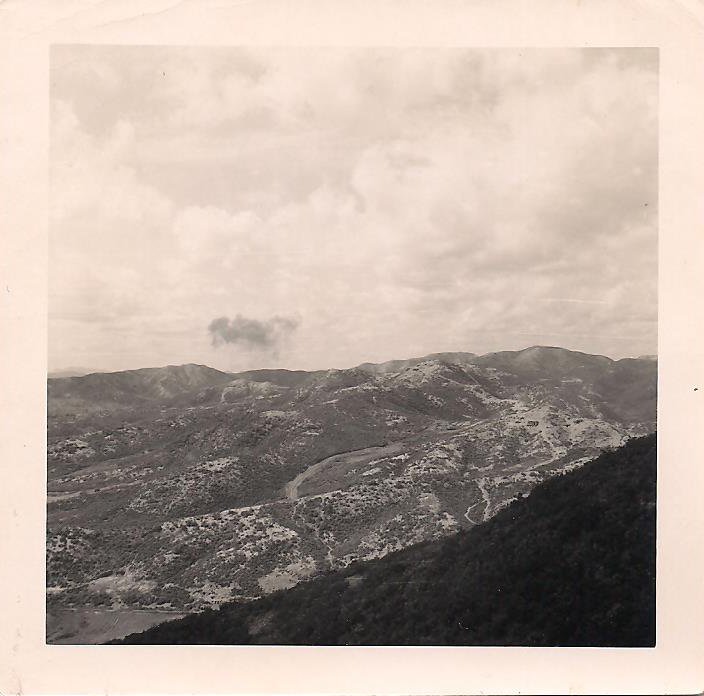
This photo, pulled from the shoebox which holds my dad’s military photos, is simply labeled “front line.” That would be “front line” as in Korea, where my soldier father fought.

Eventually, my dad would make it safely back to rural Minnesota, resume his life as a farmer, marry my mom and raise a family of six children. But he was a changed man, scarred by war, dealing with PTSD (unknown back then) and other issues resulting from his time on the frontline in Korea.

The Rice County, Minnesota, Veterans’ Memorial in Faribault stands in front of the courthouse. Minnesota Prairie Roots file photo.

Today, Veterans Day, I honor my father (who died in 2003) and all others who have served and continue to serve our country, whether they have been in direct combat, served in support capacities or otherwise. I appreciate their efforts to secure our democracy, our freedom.

TELL ME: Who would you like to honor today? Or, if you’ve served, please share your thoughts on this important day.

© Copyright 2020 Audrey Kletscher Helbling
 

Remembering & honoring my hardworking dad this Labor Day September 7, 2020

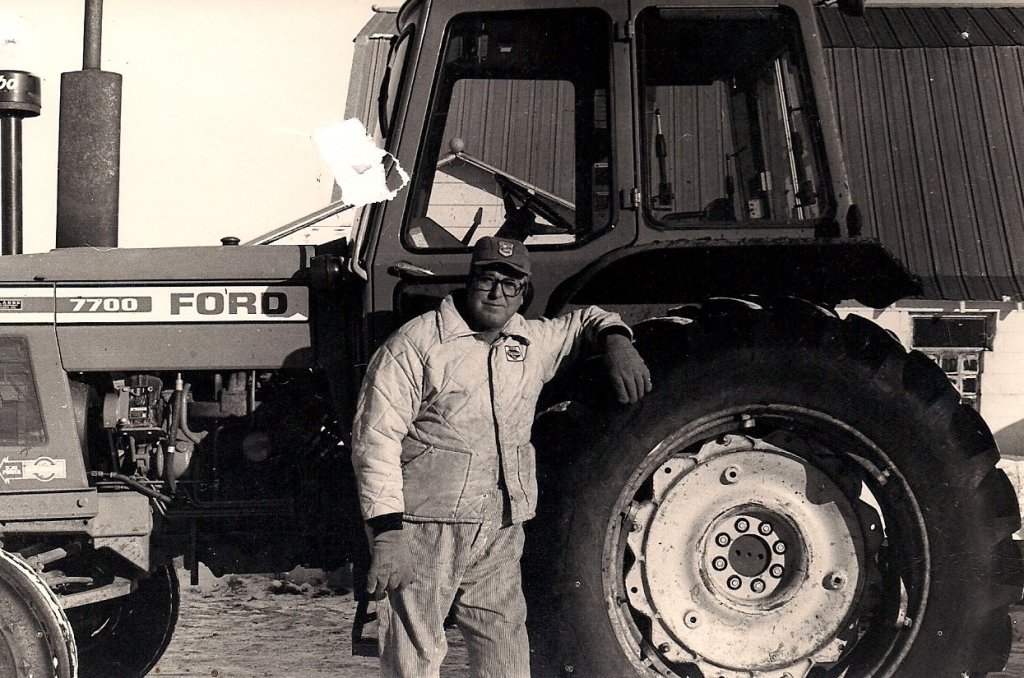
Dad farmed, in the early years with a John Deere and Farmall and IH tractors and later with a Ford. (Photo by Lanae Kletscher Feser)

A photo of my dad, Elvern Kletscher, taken in 1980. He died in 2003.


MY DAD WORKED HARD. Really hard. He was a farmer, beginning back in the day when farming was incredibly labor intensive. Pitching manure. Throwing hay bales. Milking cows by hand. Cultivating corn. He worked from the rising of the sun to beyond sunset. Hours and hours in the barn. Long days in the field. Few, if any, days off.


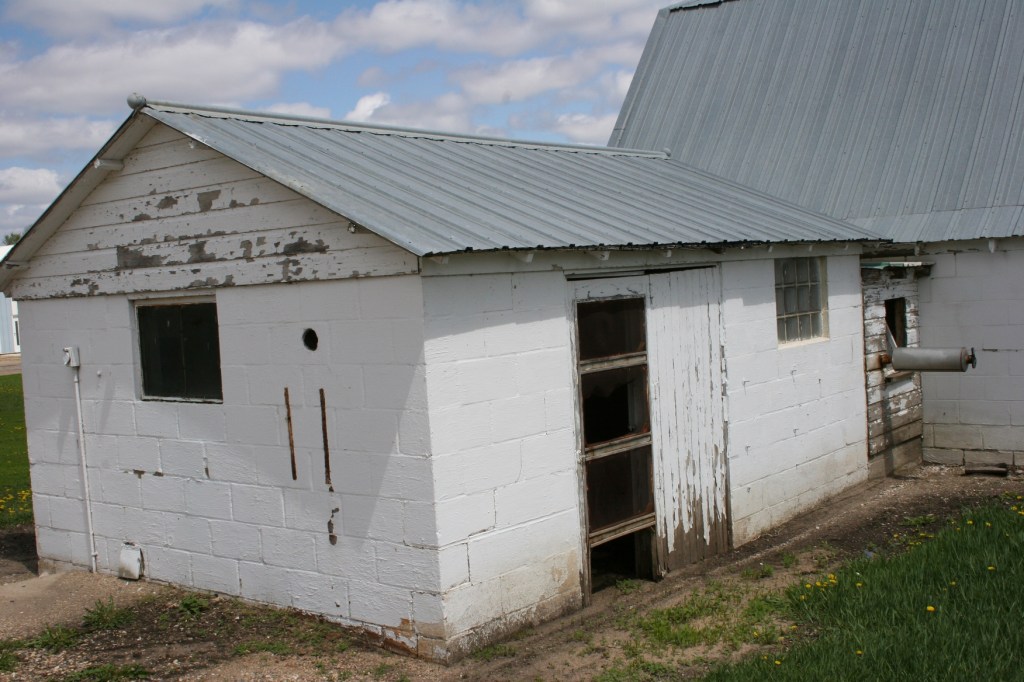
The milkhouse, attached to the barn on the farm where I grew up just outside of Vesta, MN. I spent a lot of time in these two buildings. Minnesota Prairie Roots file photo.


It was a life he knew from childhood, as the son of a southwestern Minnesota farmer. Dad quit school after eighth grade to work on his family’s farm in the 1940s. And when he grew into adulthood, he served on the frontlines during the Korean War, then returned to farm just down the road from the home place. There he worked his own land, milked cows and raised (along with my mom) his family of six children.


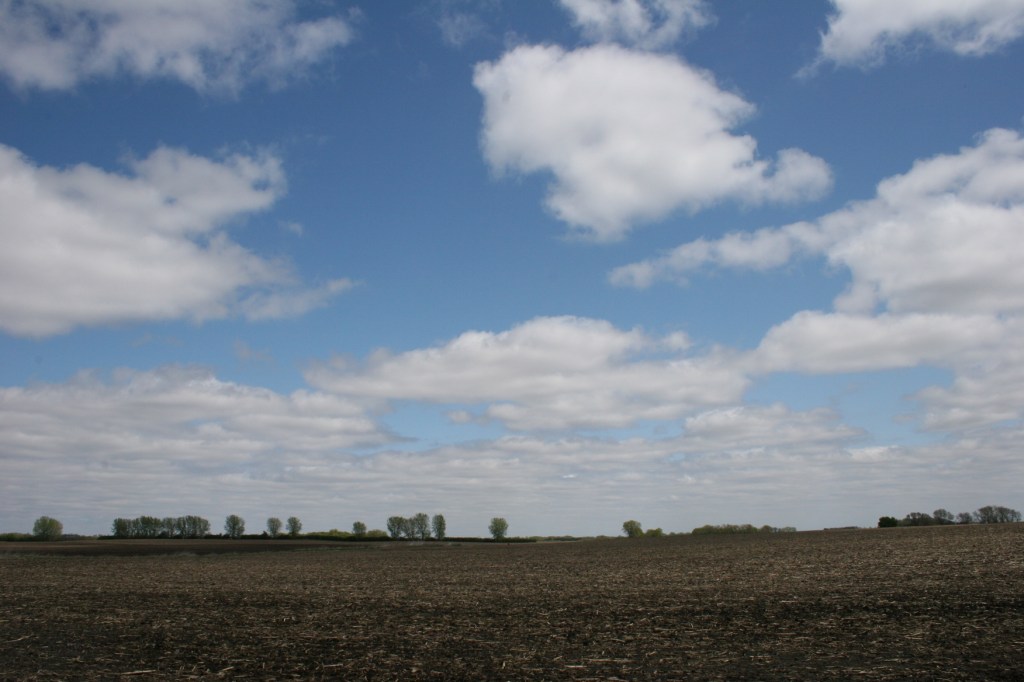
Some of the acreage my dad farmed in Redwood County, Minnesota. Minnesota Prairie Roots file photo.


Like my father, I grew up with a strong work ethic rooted in the land. Walking bean fields to pull unwanted weeds. Picking rock. Throwing hay bales into feed bunks for the Holsteins. Carrying buckets of milk replacer to thirsty calves. Climbing up the silo and forking smelly silage down the chute. The work never ended. And the next day we repeated the process.


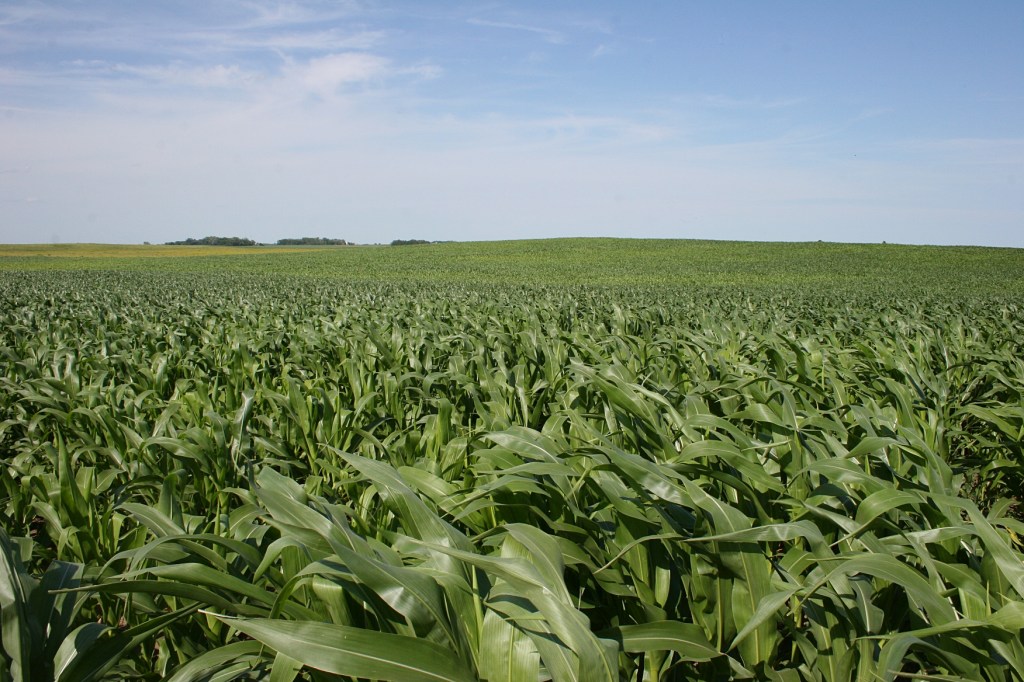
Corn and soybean fields define southwestern Minnesota. Minnesota Prairie Roots file photo.


But it was, in many ways, a good life. Time together. Time outdoors. Time to reflect. Time to learn and grow and stretch, just like the corn stretching toward the sky.


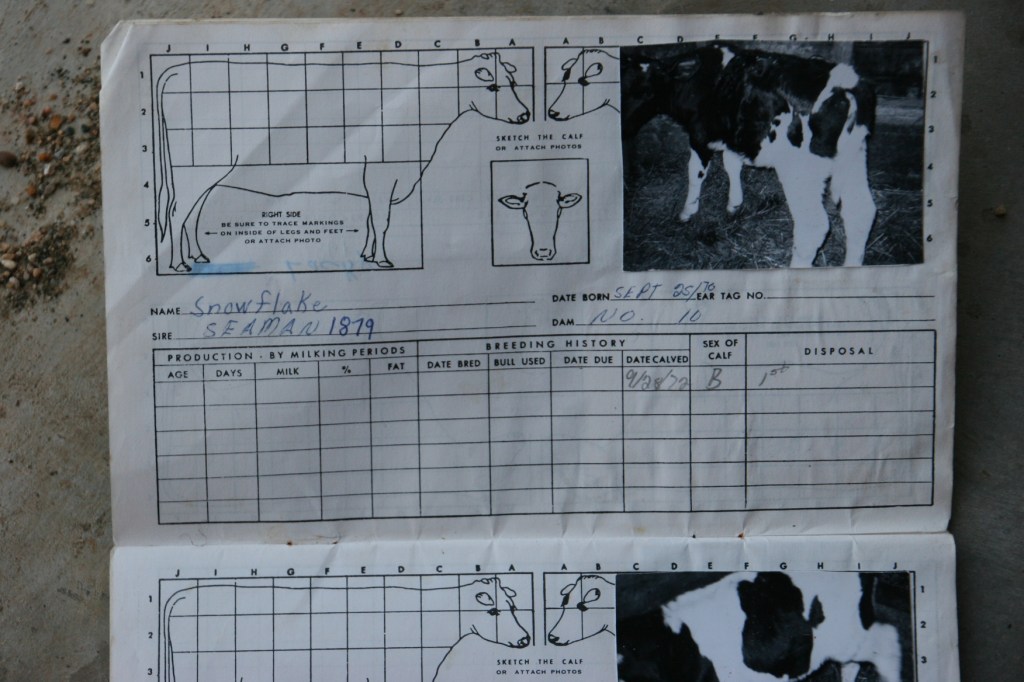
Growing up on our crop and dairy farm, my eldest brother, Doug, photographed the cows and recorded details about them. My middle brother treasures this compilation of information from our farm. And so do I. Memories… Minnesota Prairie Roots file photo.


Working on the farm made me strong and resilient and fostered a sense of independence. I have always been a self-starter, preferring to work on my own. I trace that to the spirit of independence I observed in my farmer dad, who stood up for what he believed. I remember him dumping milk down the drain as the National Farmers Organization aimed to get better prices. I possess a streak of that feistiness, especially when it comes to those who are bullied/oppressed/looked down upon. I do what I can, with the talents I have, to make a positive difference. To uplift and encourage. And to really listen rather than talk.

I always told my dad I wanted to be a farmer when I grew up. He didn’t encourage that thought. None of my five siblings farm, although two work in ag-related businesses. It’s a credit to my parents that each of us pursued diverse careers as a partsman (and part owner) at an implement dealership, as a writer and photographer, a florist, CEO of an ethanol plant, teacher and lawyer. That’s a wide range of occupations among siblings. Our parents did not tell us what to do, and for that I shall always be grateful.


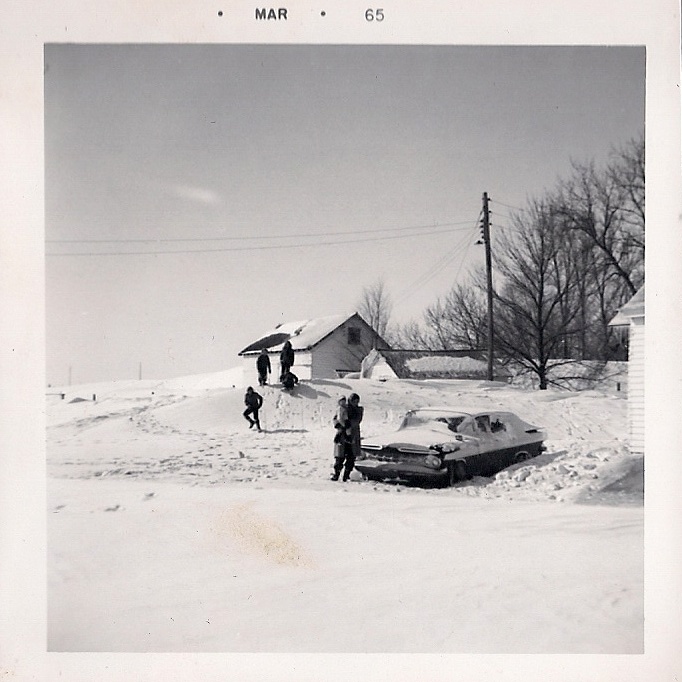
Our southwestern Minnesota farmyard is buried in snowdrifts in this March 1965 image. My mom is holding my youngest sister as she stands by the car parked next to the house. My other sister and two brothers and I race down the snowdrifts.


We were not a perfect family. Still aren’t. There were, and are, struggles. Financial and other. We were poor as in outhouse poor and no gifts for birthdays poor and wearing hand-me-downs poor and only rice for dinner poor. And only two vacations my entire childhood—one at age four to Duluth and one to the Black Hills at around age 12. Yet, I never felt like we were missing anything. We had enough. Food. Shelter. Clothes. And hardworking parents—for my mom worked equally as hard as my dad—who loved and provided for us.

My parents may not have hugged us or told us they loved us. But they showed their love by their care, their provision, their raising us in the faith. Their efforts, from parenting to farming, were a labor of love. And I shall always feel gratitude for that.

#

CLICK HERE TO READ my post, “Many Reasons to Feel Blessed this Labor Day,” published last week on the Warner Press blog.

© Copyright 2020 Audrey Kletscher Helbling
 

Reflecting on Veterans Day November 11, 2018

Filed under: Uncategorized — Audrey Kletscher Helbling @ 5:00 AM
Tags: , , , , , ,

U.S. Army Cpl. Elvern Kletscher, my father, in the trenches in Korea.


IT’S EASY ENOUGH to write words of praise on Veterans Day. Those are words we expect. And they should be spoken, written.

But there are other words which also need exposure. Like sacrifice, pain, guilt, suffering. I saw all of those in my dad, who fought on the front lines in the Korean War. Kill or be killed. He shared little of his experiences, but just enough that I understood the horror he saw, the horror he endured, the pain he would carry with him throughout his life. Peace eluded him. I felt helpless to help him. And I don’t know that I could have, never experiencing war as he did. Eventually he joined a veterans’ support group decades after the war, when post traumatic stress disorder was finally recognized. It helped him to talk to those who understood.

Please take time today to reflect. Reflect on those who served and who still serve.

Be thankful for those who are working hard to keep America safe. Freedom is never a guarantee and today, more than ever, I am fully cognizant of that.

To my many family members and friends who have served in the U.S. military, to my readers who have done likewise, thank you for your service. Because of you, I have the freedom to write this post, to continue to write, to live in a nation where I can go to the polls and vote.

Thank you, veterans, for the personal sacrifices you made for your country. Today I honor you.

© Copyright 2018 Audrey Kletscher Helbling