Minnesota Prairie Roots

Writing and photography by Audrey Kletscher Helbling
The $50K decision and what we can all learn September 1, 2011

Filed under: Uncategorized — Audrey Kletscher Helbling @ 8:15 AM
Tags: , , , , , , , , , ,

ODDS ON PROMOTIONS made the right call Wednesday when it failed to award $50,000 to an 11-year-old Owatonna boy who sunk a hockey puck into a 1.5 by 3.5-inch hole during an August 11 charity hockey event in Faribault.

Nate Smith, who made the shot from 89 feet, wasn’t even supposed to be on the ice. It was his twin brother Nick’s name that was drawn to attempt the shot. But Nick had stepped outside the hockey arena, so Nate subbed for Nick.

Not until the next day did the Smith family reveal to officials that Nate, not Nick, sunk the puck.

That ignited a firestorm of controversy with the story going national. Should the Smiths get the $50,000?

The Reno, Nevada, group insuring the event ruled yesterday that because of legal and contractual issues, the Smiths will not get the $50,000.

That was the right decision, in my opinion, given Nate obviously is not Nick and, although the family told officials the truth the following day, they did not do so initially.

Yet, despite the decision, there are still winners in this story. Odds On Promotions is donating $20,000 in the brothers’ names to youth hockey programs in Owatonna—where the Smith boys play hockey—and in Faribault.

That’s a smart move on Odds On Promotions part. You can’t buy that kind of positive publicity for $20,000. Plus, the substantial gift will calm the ire of those who may disagree with the company’s decision.

The Smiths aren’t complete losers here either. Friday morning they’ll appear on “The Today Show,” according to an article in The Faribault Daily News. Shortly after Nate made the shot and the controversy started, the family was in New York making the talk show rounds.

In summary, we could all learn a lesson from this story about rules, honesty and compromise.

WHAT’S YOUR OPINION on the decision made by Odds On Promotions not to award the Smith family $50,000? Do you agree or disagree? Why or why not?


Art, history and community meld at Faribault car cruise-in August 22, 2011

I CAN’T DIFFERENTIATE a Ford from a Chevy. But I can distinguish a Mustang from a Cadillac.

You needn’t know cars, however, to appreciate a car cruise-in like the one I attended Friday evening in the 400 block of Central Avenue in historic downtown Faribault. The monthly cruises are new to my community and, if I’m correct, Friday’s show marked the first this summer that hasn’t been rained out.

Downtown Faribault Car Cruise Night, looking southeast on Central Avenue.

Just several of the many vintage vehicles, these parked by a Mexican store and bakery.

For me, a car cruise-in is all about art, history, community and having a good time. However, for my automotive machinist husband, the one who got me interested in these shows, it would be mostly about the cars or trucks. He’s my go-to guy whenever I question the make, model or year of any vehicle on display, which is often.

While he’s more interested in what’s under the hood or in the overall design, I appreciate the hood ornaments, wheel covers, taillights, the curve of metal—the details that, to me, represent, mini artscapes.

I switched this photo to black-and-white to show off the hood ornament, a work of art.

A 1948 Dodge sported this artsy license plate.

Call this art, or humor, Ron Lehnen posed this "Halloween Rat" under the hood of his 1970 Chevrolet pick-up truck with the "rat motor."

On Friday, in Faribault, I also appreciated the art of neon lights flashing in storefront windows, the slant of sun against brick during that magical hour around sunset, and clouds that painted the sky on a perfect summer evening of temps in the low to mid 70s.

The setting sun cast a lovely light on the historic Hotel Faribault.

Merchandise and flashing neon lights created a colorful visual at a Mexican store in the car cruise block.

Toss in period tunes and music by the likes of Johnny Cash, my favorite country western singer, played on-site by local radio station Power 96, and the mood was set for hanging out and chatting it up with folks I hadn’t seen in awhile.

Car cruise attendees visited with one another, creating a sense of community.

Aaron shows his 6-year-old daughter, Lexi, the interior of a vintage car.

Ted told me about his new grandson, Jaxson. Kathy told me about the need for rain in the Courtland area, where my maternal roots lie and where her husband had traveled that day to farm with his brother. Lowell told me about the $8.99 steak dinner he’d just enjoyed down the street at the Signature Bar and Grill.

Food was the only item missing from cruise night, although I could have stepped into the Mexican bakery or walked to a restaurant along Central Avenue if I had really wanted something to eat. Maybe, eventually, organizers will encourage places like the bakery or nearby restaurants to set up food stands outside their businesses.

The next Downtown Faribault Car Cruise Night is set for 6 p.m. – 10 p.m. Friday, September 16. However, I’d advise coming well before 10 p.m. as the event pretty much ended around 9 p.m.

The 1970 Chevrolet pick-up with the rat motor. My husband owned an orange truck like his, only a year newer or older, I can't recall which. A steer wandered onto a roadway. He hit it and that was the end of his pick-up truck, many years before I met him. So I've only heard the story...never seen the truck.

Lowell and Deb Melchert leave the cruise in their 1947 Chevrolet as the event winds down.

YOU MIGHT ALSO CHECK out Woody’s Hump Day Cruise In on Wednesday evenings in downtown West Concord. Two remain, including one this Wednesday, August 24, and also on September 7. That cruise-in runs from 5:30 p.m. – 9 p.m., or until dark.

Hastings also hosts the Historic Hastings Saturday Night Cruise-in from 5 p.m. – 9 p.m. with the remaining events set for September 3 and 17 and October 1.

© Copyright 2011 Audrey Kletscher Helbling
 

Take me out to the (vintage) ball game in Faribault August 20, 2011

Curly Schreckenberg watches the vintage baseball match from his Model T Ford.

FRANK “CURLY” SCHRECKENBERG pulled into the Rice County Fairgrounds in his 1918 Model T Ford, a fitting mode of transportation Saturday afternoon for a vintage baseball game between the Northfield Silver Stars and the Rochester Roosters.

“There’s nothing like old-fashioned,” Schreckenberg said as he sat behind the wheel of his Model T, occasionally glancing over at the competition played with 1860 rules. No gloves. No called balls and strikes. No sliding. No spitting. No swearing…

Striker (batter) up!

Schreckenberg’s a fan of ball games. He played church league softball from age 38 – 71, mostly as a pitcher. “I loved playing ball,” he said. “I loved the fellowship.” He was dressed in the uniform of First English, his team for most of his 33 church league years.

His antique car drew lots of attention from the players and from the crowd gathered Saturday for the vintage match. The Silver Stars whooped the Roosters by a score of 6 to 1. Afterward, the players posed for a team photo by the Model T.

With team members sporting names like Cow Pie, Rabbit, Goose, Woodchuck, Bean Field and Admiral, no one seemed to take the event too seriously. Rather, the match focused more on bringing history to life.

Out on the ball field, the players, dressed in vintage uniforms, tried to stay true to the mid-19th century time period.

The Rochester Roosters, the scorekeeper and the umpire posed for a photo after the match.

Likewise, the Silver Stars from Northfield gathered for a team photo.

“Watch the daisy cutters (sharp grounders),” Rabbit, aka Scott Richardson, from the Silver Stars advised.

“Don’t run me over, Tar Cutter,” another player warned.

“I think the whole team ought to be fined.”

“Way to hustle, Bryan,” a teammate said, slipping up on a name.

Wooden bats clustered on the grass behind the players' bench before the match.

Players munched on sunflower seeds on the Silver Stars bench.

At least one Rochester Rooster player sported period style stockings.

Wooden bats and gloveless hands. Bags of sunflower seeds and peanuts. Wood planks balanced between straw bales. Root beer floats. Bell-ringing when an ace (run) was scored. Good-natured bantering. All set a period mood for the 1 ½-hour match (game) between the two teams.

Occasionally a player pulled a cell phone from a pocket, sipped on Gatorade, clicked a digital camera. Ethnic music from a Hispanic celebration across the fairgrounds carried to the ball field, adding to the relaxed setting.

“It’s a beautiful day for a baseball game,” at least one fan was overhead saying.

Indeed, it was a perfect August afternoon for a vintage baseball match in Faribault, even for someone like me who doesn’t get into baseball, but can appreciate living history.

Fans sat in the sun, but most sat under shade trees for the match hosted by the Rice County Historical Society.

Some attendees even brought vintage style wooden folding chairs.

Roosters' bench time and one dirt and grass-stained white uniform.

A young player for the Rochester Roosters.

The end of the match with the victorious Silver Stars on the right and the Roosters on the left.

FYI: Minnesota has some eight vintage baseball teams, I was told on Saturday by the game’s umpire. Most of those are in the eastern part of the state and include teams like the Apple Jacks from La Crescent, the Afton Red Sox and the St. Croixs. The Minnesota teams also compete with Wisconsin teams like the Osceola Onions and the Milwaukee Cream Citys.

© Copyright 2011 Audrey Kletscher Helbling
 

You call the $50,000 shot August 19, 2011

IF YOU ARE BITTEN by a bat that flies away, you should expect to undergo a series of rabies shots.

If you win $50,000 while assuming the identity of someone else, you should expect fall-out from your actions.

Right about now you’re likely wondering why I’m writing about bats and bills all in the same post. Well, both made the news in my community of Faribault this week. One has garnered national attention, the other not.

First, the bat bite, not because it’s less important than the $50,000, but because it’s easier to write about and no gray area exists. You get bitten by a bat that can’t be caught, like a 9-year-old Nerstrand boy did in his family’s barn recently, and you get rabies shots. Simple. Black-and-white.

But, if you potentially win $50,000 like 11-year-old Nick Nate Smith of Owatonna did last week by shooting a hockey puck from 89 feet into a 1.5-inch by 3.5 inch hole at a Faribault Hockey Association fundraiser, you’re talking an entirely different story.

On the surface, this would seem black-and-white. Accomplish the amazing feat, win the prize.

However, Nate isn’t Nick. And it was Nick, Nate’s identical twin, whose name was pulled for the chance to score the $50,000 by sinking the puck into that incredibly small space.

The problem, however, is that Nick wasn’t in the hockey arena when his name was drawn, so Nate stepped in for his brother, made the shot and supposedly won the $50,000.

That is until the Smith family admitted to event organizers that Nate had subbed for Nick.

Now a Reno, Nevada, insurance company for the puck-shot event is investigating, the $50,000 payment remains in limbo and the story of the amazing shot and the follow-up controversy has gone national.

In our house, we’ve discussed this whole $50,000 hockey puck debacle numerous times already. Opinions have varied from:

  • Just give the kid the $50,000.
  • Why did the Smiths tell them it was Nate?
  • He doesn’t deserve the $50,000. Nate isn’t Nick and the family wasn’t intially honest.
  • What if a friend had stepped in and taken the shot? Would they give him the money?

Can you guess which comment is mine?

You better believe that the second response, “Why did the Smiths tell them it was Nate?”, is not my statement and resulted in a lecture from me about honesty and how the family eventually would have gotten “caught.”

I don’t pretend to know every detail related to the hockey puck shot event. But I do know this much: Nate isn’t Nick.

NOW IT’S YOUR TURN to offer your opinion. Would you award the $50,000 to Nate Smith? Why or why not? Vote by submitting a comment.

IN A 24-HOUR unscientific online poll conducted by The Faribault Daily News, 63 percent of the 245 respondents said Nate Smith should get the $50,000. Thirty-two percent said he shouldn’t. And five percent checked “I don’t know.”

MEDIA FOCUS on the Smith story has been substantial. Click on the sources below to read some of the coverage.

CBS The Early Show

The Faribault Daily News:  the initial story published on August 12 and a follow-up story published on August 14

ABC News

National Public Radio

BY THE WAY, my comment is the third one: He doesn’t deserve the $50,000. Nate isn’t Nick and the family wasn’t intially honest. Choose to agree or disagree. It’s your shot.

© Copyright 2011 Audrey Kletscher Helbling
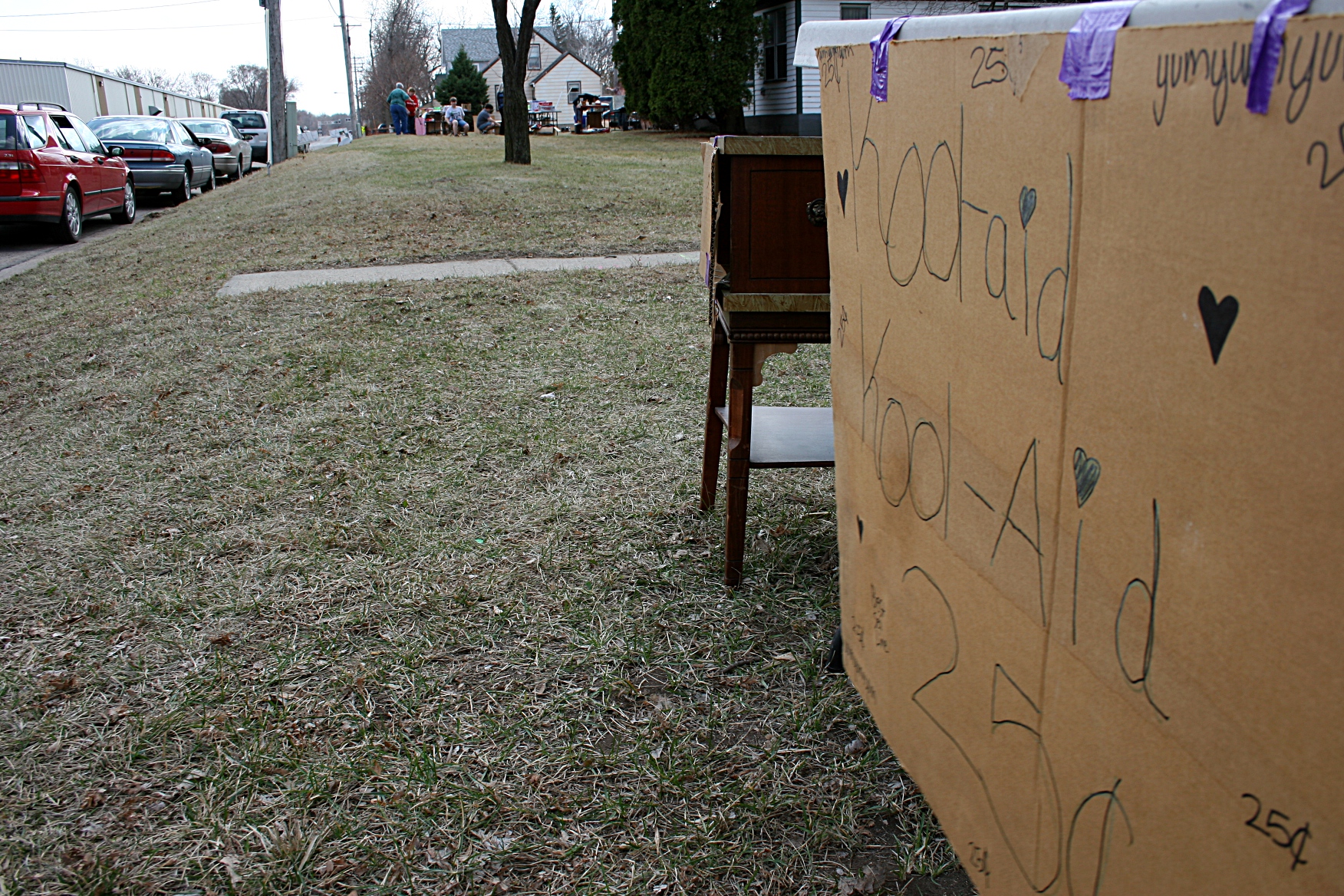
 

This little piggy can go home July 20, 2011

THE RICE COUNTY FAIR in Faribault officially opened at 5 p.m.Tuesday.

But even before then, fair officials were telling 4-H kids and other livestock exhibitors that, because of the excessive heat and humidity, they could arrive late and take their critters home after judging, according to information I heard on local radio station KDHL.

Then Tuesday at 10 p.m., my 17-year-old received a text message and asked me to switch the TV to KARE 11 news. “Adam’s going to be on,” he said. And sure enough, 30 seconds later the camera focused on his friend Adam Donkers spraying a pig with water in the swine barn at the fair. Adam informed viewers that hogs can’t sweat so he was sweating for them by cooling them with water. His family farm lost 11 pigs overnight due to heat stress.

So that got me thinking about excessive heat warnings for livestock, none of which I’ve heard. That doesn’t mean, however, that such warnings haven’t been issued; I simply might not be tapping into the right media sources.

This morning I checked the Rice County Fair website, but didn’t find any information there. I do know that fair officials brought extra fans into the barns on Tuesday.

Then I googled “livestock heat warning,” only to find warnings (not all of them current) from places like Kansas, Iowa, Nebraska and Montana. Not Minnesota.

I googled the Minnesota Department of Agriculture, the Minnesota Pork Producers, the Linder Farm Network and the University of Minnesota Extension Service and, in quick scans of the websites, found nothing.

But then, I suppose, most farmers already understand the importance of keeping their swine, cattle, poultry and other animals cool with fans and water during extended periods of excessive heat and humidity like we’re experiencing in Minnesota. Yesterday the heat index reached 119 in Minnesota, the highest since July 11, 1966. The dew point soared to an all-time high of 82.

But back to those animals… Some may question why removing livestock from the fair would help because conditions are just as hot back on the farm. Consider the stress factor. Take an animal out of its familiar environment, load it into a trailer or truck, haul it to the fair, place it among strange animals and gawking people in unfamiliar surroundings, and stress multiplies. I mean, how would you feel?

IF YOU’RE A FARMER with cattle, swine, poultry or other animals, how are you keeping your animals comfortable and cool during this weather? How is the excessive heat affecting your animals? Have you lost any due to heat stress? How are your crops faring? Submit a comment and share.

© Copyright 2011 Audrey Kletscher Helbling
 

Hot as “you know what” in Minnesota July 18, 2011

Air conditioners will be working overtime in Minnesota this week.

SO, MINNESOTANS, here’s the weather question of the day: “How hot is it outside?”

Although I’m of German heritage, I’d unequivocally state, “hotter than a Finish sauna.”

With a predicted dewpoint in the 70s (Sunday it reached an almost unheard of 81) and temperatures in the 90s today, the National Weather Service in Chanhassen has continued an extensive heat warning for central and southern Minnesota and west central Wisconsin through 9 p.m. Wednesday.

Heat indexes of more than 105 degrees (some media outlets are saying 110 – 117 degrees) are expected for several-hour stretches during the afternoon, creating “a dangerous situation in which heat illnesses are likely.” Ya think?

That means, folks, that we need to keep ourselves cool (preferably in an air conditioned building), drink plenty of fluids (and we’re not talking alcohol here) and stay out of the sun.

Don't increase your fluid intake via alcohol.

Honestly, when I stepped outside Sunday evening, I felt like I couldn’t breathe. You can guess how long I stayed outdoors. Long enough to turn around and walk back inside the house. I had been out earlier photographing the air conditioner you see above. I had a little trouble with the camera lens fogging over as soon as I stepped outdoors. The windows on our house also fogged, a phenomenon I have not previously seen except when I cook pasta. Weird stuff this weather.

All joking aside, this heat and humidity can be downright dangerous, especially for anyone working outdoors.

I know of some teens supposedly heading to the corn fields early this morning to detassel corn in the Stanton/Northfield area. Here’s my advice: Gulp water, by golly, then gulp some more. Slather on the sun screen, wear a cap and, if you’re at all feeling out of sorts, immediately tell your supervisor. Today would not be the day to tough it out. And, yes, I do know of what I write. As a teen I detasseled corn on days so hot it seemed as if the heavy air would suffocate me in the corn rows.

If you, or your teen, is starting a job this week as a corn detasseler, take extra precautions to avoid heat-related health issues. Also, don't quit. Every week in the cornfield won't be like this one and you' likely work only til noon.

Now, with those dire warnings out of the way, let’s talk about the words and phrases we Minnesotans use to describe this stretch of humid, hot weather. Let me pull out my Minnesota Thesaurus and thumb through the pages.

Here are some select synonyms for our current weather: steamy, muggy, scorching hot, sweltering, a real barn burner, so hot you could fry an egg on the pavement, like a sauna, “it’s not the heat, it’s the humidity”…

Whichever words you choose from that non-inclusive list, you might want to add, “It could be worse.” We Minnesotans like to tack that little phrase onto our statements lest, by not adding that qualifier, we leave ourselves open to worse circumstances/situations/weather. We do not want to tempt fate.

After all, come December, we could get socked with a raging blizzard that dumps two feet of snow on us followed by a week of temperatures plummeting to 20-below, and that’s without the windchill. We wouldn’t want to invite a Siberian winter by forgetting, this week, to say, “It could be worse.”

A snow pile divides traffic lanes along Fourth Street/Minnesota Highway 60 a block from Central Avenue in Faribault following a December 2010 snowstorm.

In summary, it’s best, really, not to overly-complain about the hellish, hot, scorching, stifling, steamy, sticky, sweltering, miserable, muggy, unbearable, oppressive heat and humidity. OK, then?

And, please, don’t be thinking, “Whatever, Audrey.”

IT’S YOUR TURN to speak up. How would you describe this weather we’re experiencing in Minnesota? How are you coping? Add your ending to this prhase: “It’s so hot in Minnesota that…”  Submit a comment and tell me whatever.

© Copyright 2011 Audrey Kletscher Helbling


Rain, rain and more rain in Faribault July 15, 2011

I shot this photo from my living room window late this afternoon of flooded Willow Street.

AROUND 4 P.M., the sky turned black as night here in Faribault. And then the rain let loose. Rain pouring forth so fast that if I was Noah’s wife, I would have urged him to hurry up and finish building that ark.

For some 10 minutes or so, a boat would have been the preferred mode of transportation along the street past my house. The storm sewer couldn’t keep up with the rainwater rolling down the hill onto Willow Street, a main route through town.

Some drivers diverted to the opposite traffic lane to dodge the deepest water. Others splashed through without even slowing down. And yet others paused, tentatively tire-tip-toeing into the water.

Some drivers were cautious, others not so much, as they drove on flooded Willow Street.

Motorists drove through flooded Willow Street without too much concern.

Soon the onslaught of water swept across the roadway into a neighbor’s driveway, down the side of the garage and into the backyard. Next door, rain also surged onto the driveway, then channeled south down the sidewalk to another neighbor’s newly-blacktopped driveway.

The rain flowed across the street into the neighbor's driveway (left), along the garage and into the backyard.

The next two neighbors to have water from the flooded street surge onto their properties.

On my side of the street, at the near bottom of the hill, the curb contained the deluge of water.

It’s been quite a day here—rain, rain and more rain. Open the windows, close the windows. Open. Close. Check the skies. Listen to the weather report. Hang clothes on the clothesline and two minutes later pull them off after spotting heavy, threatening clouds moving in.

Then I checked the National Weather Service website to learn Rice County, my county, is now under a flash flood warning. Yes, it’s been quite a day with rain, rain and more rain.

WHAT’S THE WEATHER like in your area? Submit a comment and tell me.

© Copyright 2011 Audrey Kletscher Helbling


Words matter: Prejudice and acceptance in Faribault July 14, 2011

Filed under: Uncategorized — Audrey Kletscher Helbling @ 7:42 AM
Tags: , , , , , , , , , ,

Faribault is home to a sizable Hispanic population. This file photo was taken at a downtown Faribault Mexican bakery, which has since come under new ownership. The bakery was once at the center of a controversy over its exterior color and was repainted when some local businessmen donated money for a new paint job.

EVERY TIME I HEAR a derogatory comment about an ethnic group, I am still surprised. I don’t know why.

Perhaps the fact that this is 2011, and not 1960, factors into my belief that people have overcome their prejudices toward those with skin colors different than their own.

Then I hear a statement like this: “Willow Street is becoming a little fill in a Spanish word here.” I hadn’t heard the word before, which is why I can’t remember it. But I know for certain that it was unkind and derogatory and cutting toward the Hispanic population that lives in my community of Faribault, specifically along my street.

I couldn’t allow the slam to go unchallenged, especially since it was spoken just as I was about to enter, of all places, my church for Sunday morning worship.

In an immediate moment of incredible self control, I responded by telling this clearly prejudiced individual that there are “good whites” and “bad whites,” just like there are “good Hispanics” and “bad Hispanics.” I knew I had to keep my response simple so he would understand. I also told him that my Hispanic neighbors are “good neighbors.”

With those words tumbling off my tongue, I walked into the sanctuary, attempting to dismiss my anger and focus on an attitude of forgiveness.

I also consciously shifted my thoughts to an exchange I witnessed a day earlier. As a Somali mother walked into a Faribault grocery store with her adorable preschool-aged daughter, a Caucasian couple engaged the woman in conversation. They inquired about the little girl and asked her name.

“Amira,” the Somali mother answered and smiled.

“That means ‘princess,’” the man said and continued to share a story about another Amira he knew. All the while, the mother beamed. When they parted, he told the pair, “God bless you.”

I was trailing behind, thinking how my Aunt Dorothy has always called me her “Little Princess,” even now, today, when I am in my 50s. That endearing nickname has always made me feel so loved. Words can make such an impact.

As the Somali woman continued down the grocery store aisle with her daughter tagging behind, I blurted, “She’s so cute.”

The mother of the little princess turned and rewarded me with a smile, a universal human expression that bonds all humans no matter their skin color.

In this file photo, a Somali family waits to cross a downtown Faribault street.

CLICK HERE TO READ one of many posts I wrote related to the exterior colors of two ethnic restaurants in downtown Faribault. The color of the Mexican bakery, which has since changed hands, generated heated discussion within the community in 2009 and 2010.

© Copyright 2011 Audrey Kletscher Helbling


This is what it means to be free July 5, 2011

FOR THE PAST SEVERAL days, I’ve kept my eyes peeled for the perfect July Fourth image.

I thought that photo might come from my extended family’s annual July 4th weekend gathering or from the Roberds Lake Independence Day boat parade. Or perhaps I’d just see a patriotic display worthy of showcasing. Maybe a field of flags.

However, the photo I selected to best portray our nation’s birthday falls into none of these categories.

I chose this image, taken along Seventh Street in Faribault late Monday afternoon.

Let me explain.

This homeowner disagrees with a recent decision by the Faribault City Council to forgive a $72,000 water bill assessed to FWF Fund One, current owners of the Faribault Woolen Mills property. The woolen mill closed some time ago, leaving an original $120,000 unpaid water bill, which has since been paid down $48,000. Now new investors are working on purchasing the property and restarting the mill, thus prompting the request to forgive the remaining portion of the unpaid water bill. Read more about the issue by clicking onto this recent Faribault Daily News article.

Even though I happen to agree with the homeowner, I didn’t choose this as my favorite Independence Day photo for that reason.

This grassroots expression of an opinion represents to me the cornerstone of our nation: freedom.

As citizens of the United States, we are free to speak—to voice our ideas and opinions and concerns.

We needn’t be eloquent speakers or writers or members of city councils to express ourselves.

A simple handwritten sign posted on a tree along a busy street epitomizes freedom at its most basic, individual, level.

© Copyright 2011 Audrey Kletscher Helbling

 

MPR debuts Minnesota architecture series with my submission July 1, 2011

LAST WEEK MINNESOTA Public Radio’s “State of the Arts” blogger Marianne Combs put out a call for photos and stories celebrating the great architecture of Minnesota.
I figured given how much I appreciate old buildings—and that would be considerably—I could submit an entry. But what building would I choose?
I started going through my photo folders in search of an image I considered most worthy of submission. FYI, I even have a folder labeled “architecture.”

Faribault topped my choices since this southeastern Minnesota community, my home since 1982, has many, many buildings on the National Register of Historic Places. And, yes, architecturally, these structures are jewels.

Then I considered images from Lucan, Morgan, Hanley Falls, Wood Lake, West Concord, Mantorville, Alexandria, Northfield and a few other towns I can’t immediately recall. Yes, the list was long.

But something kept tugging at me—my loyalty to my hometown of Vesta. Now those of you familiar with Vesta, population around 350 and with a block-long main street, are likely wondering what on earth I found in this southwestern Minnesota prairie town of architectural worth.

Here is the building I chose and which debuted Marianne Combs’ Minnesota architecture series this afternoon. You can click here to read why I chose the Vesta Municipal Liquor Store.


© Copyright 2011 Audrey Kletscher Helbling