Faribo Frosty’s smile has turned to a frown. (Minnesota Prairie Roots copyrighted file photo April 2023)
FARIBO FROSTY ISN’T RUNNING away with promises to return next winter. Instead, he’s melting in place, his once broad smile replaced by a frown.
But Faribault’s ginormous snowman, crafted by the Andy Hoisington family, may be the only one saddened by the 50 and 60-degree temps forecast for southern Minnesota beginning on Friday. I’m smiling and I expect many others are, too. It’s been an incredibly snowy winter with our seasonal snowfall total in the top three for Minnesota. This has been a forever winter.
In late February, Faribo Frosty was still smiling and making so many people smile. (Minnesota Prairie Roots copyrighted file photo February 2023)
And even though it saddens me to see rotund, 17-foot tall Faribo Frosty slimming down and eventually melting into a puddle, I expect he really will be back. The Hoisingtons have built and maintained an over-sized snowman for 18 years, their gift to the community and a reason to smile.
Snow and blowing snow defined areas of Minnesota earlier this week. (Minnesota Prairie Roots copyrighted file photo January 2020 used for illustration only)
I am smiling wide these days as the snow pack dwindles, revealing dormant grass. Everywhere I look, lawns are visible. Yes, snow still covers shaded areas and snow piles remain. But mostly, it’s beginning to look like spring here, which if you go by the calendar, it is. Tell that to the good Minnesotans who found themselves in yet another blizzard earlier this week.
Along the foundation on the south side of my house, tulips poked through decaying leaves even as snow fell. (Minnesota Prairie Roots copyrighted file photo March 2019)
Here in southern Minnesota, rain, rather than snow, fell. Temps, though, stubbornly continue in the 30s with a raw wind. So winter coats are still the dress code of the day.
These tulips, a gift from blogger friend Paula (a native Minnesotan) in the Netherlands, popped color into my life in 2020. (Minnesota Prairie Roots copyrighted file photo May 2020)
But winter is loosening its hold under pressure from the sun. Tulips and other spring perennials are popping through the soil in my yard. A few more weeks and they will blaze bold hues. And if I rooted around, I expect I would find crocuses emerging under a layer of leaf mulch.
(Minnesota Prairie Roots copyrighted file photo used for illustration only)
Another sure sign of spring are spring openers for the Minnesota Twins and the St. Paul Saints. The major and minor league baseball teams rescheduled their openers this week because of weather. No one really wants to sit in a stadium and watch baseball in 30-degree temps coupled with strong winds. But by the time the ball hits the glove late this afternoon (Saints) and on Friday (Twins), conditions should be comfortable, if not balmy by early April in Minnesota standards.
Crocuses emerge from leaf mulch. (Minnesota Prairie Roots copyrighted file photo March 2021)
So, yes, I think we’ve turned the corner. Faribo Frosty will need to accept that and graciously exit while promising to return again some day…long after the crocuses are done blooming.
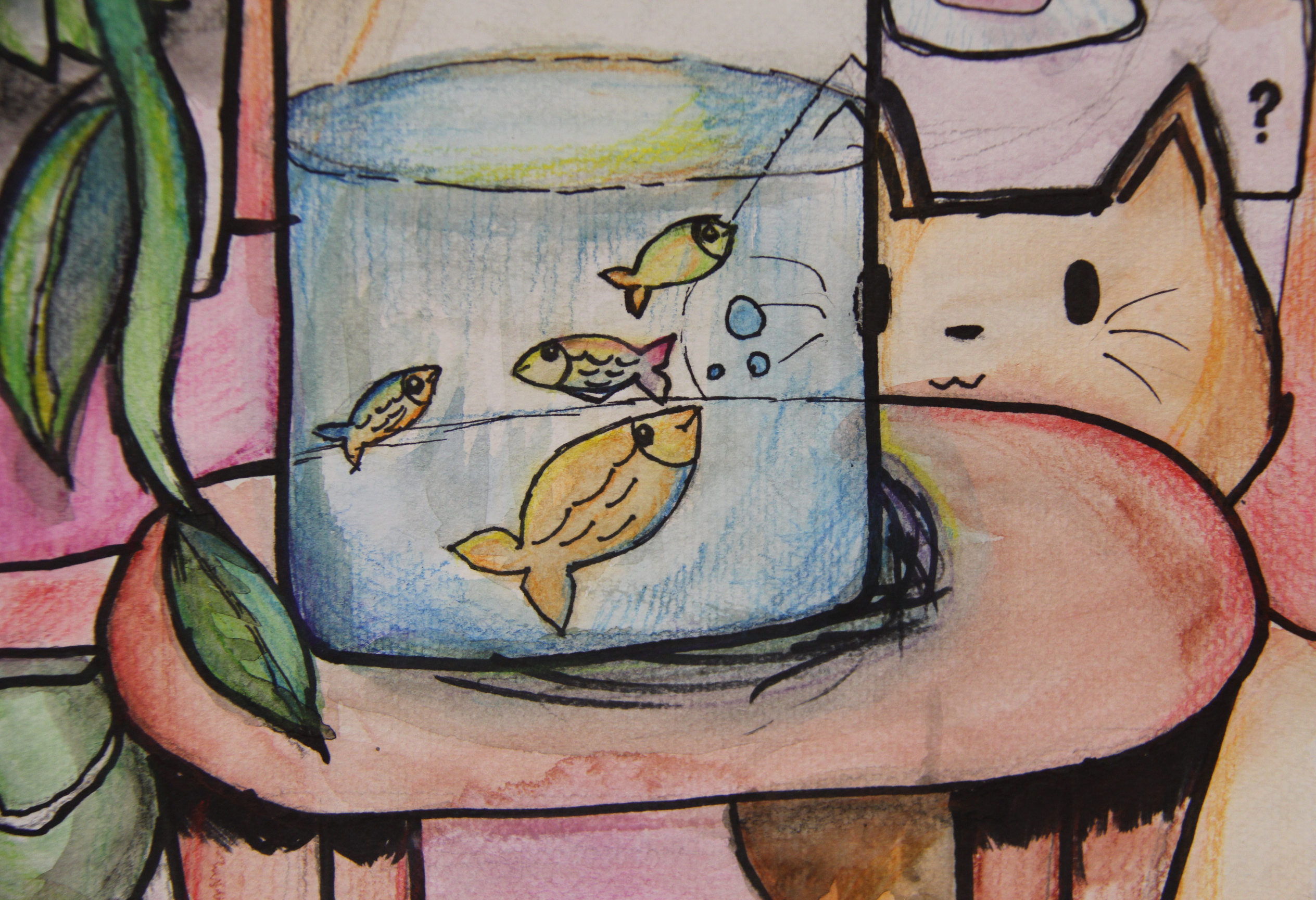
Art created by Briana, Faribault Middle School sixth grader. (Minnesota Prairie Roots copyrighted photo March 2023)
“THAT LOOKS LIKE an illustration in a children’s picture book” I think while viewing a drawing of a cat eyeing fish in a fish bowl. But I’m not paging through a book. Rather I’m appreciating a work of art by Faribault Middle School sixth grader Briana in the All Area Student Art Show at the Paradise Center for the Arts. The exhibit with student art from eight schools closes April 8.
A sampling of artwork in this exhibit, here the art of Faribault Middle School students. (Minnesota Prairie Roots copyrighted photo March 2023)
Likewise, I envision other art on t-shirts, note cards, mugs, places beyond the walls of this Minnesota center for the arts in historic downtown Faribault.
I am grateful to the Paradise Center for the Arts showcasing student art annually. (Minnesota Prairie Roots copyrighted photo March 2023)
Yet, on this day I value this student art in its role as part of a gallery exhibit, showcased to the public. This annual show is always such a delight in the variety of art, the talent, the way these young artists pour themselves into their work. Some pieces, more than others, offer glimpses into personalities and interests.
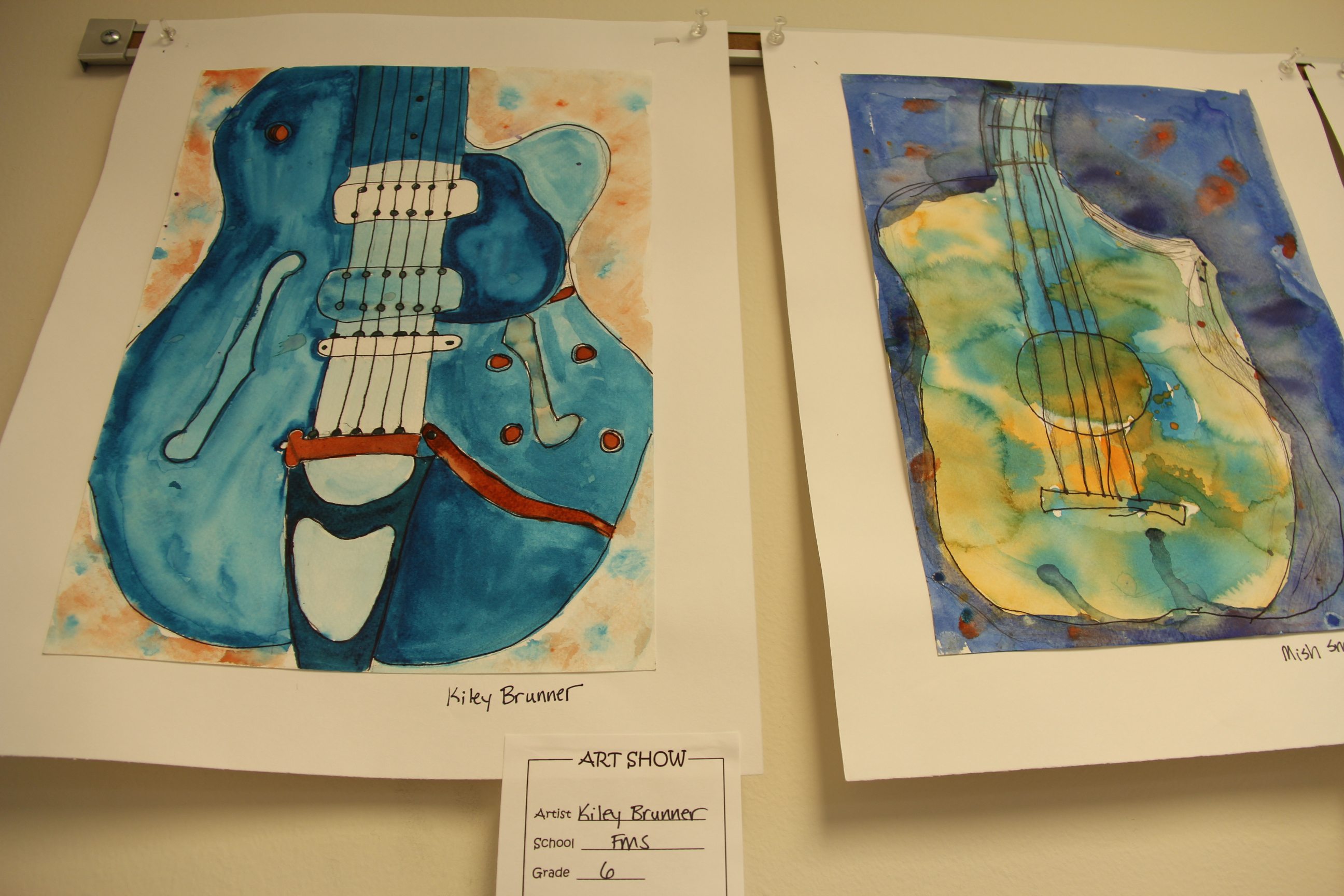
Making music via the visual arts. Guitars by Kiley, left, and Mish of Faribault Middle School. (Minnesota Prairie Roots copyrighted photo March 2023)
I can feel my fingers press into the strings of a guitar, the beat of music filling the room.
Paper collages by Faribault Middle School eighth graders Claire, left, and Maddie. (Minnesota Prairie Roots copyrighted photo March 2023)
I can hear the rhythmic thump of a basketball upon the floor, feel my foot connecting with a soccer ball, see a tennis ball fly across the net toward me. I can hear a dog panting, feel its presence nearby.
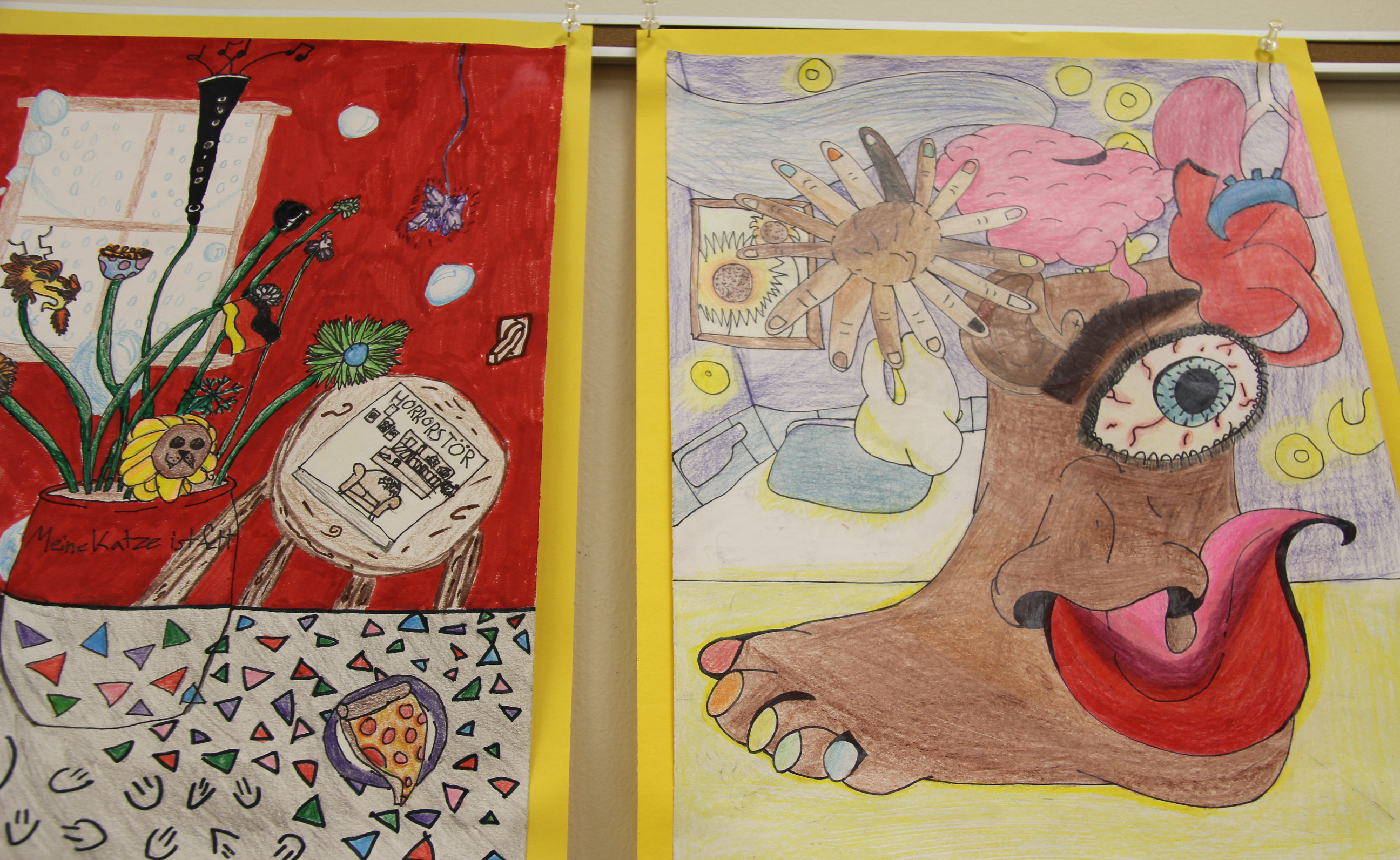
Two especially creative pieces of art from Kylie, left, and Cassie, Faribault Middle School sixth graders. (Minnesota Prairie Roots copyrighted photo March 2023)
I can see my beautiful multi-hued nails, a reflection of this beautiful, diverse world.
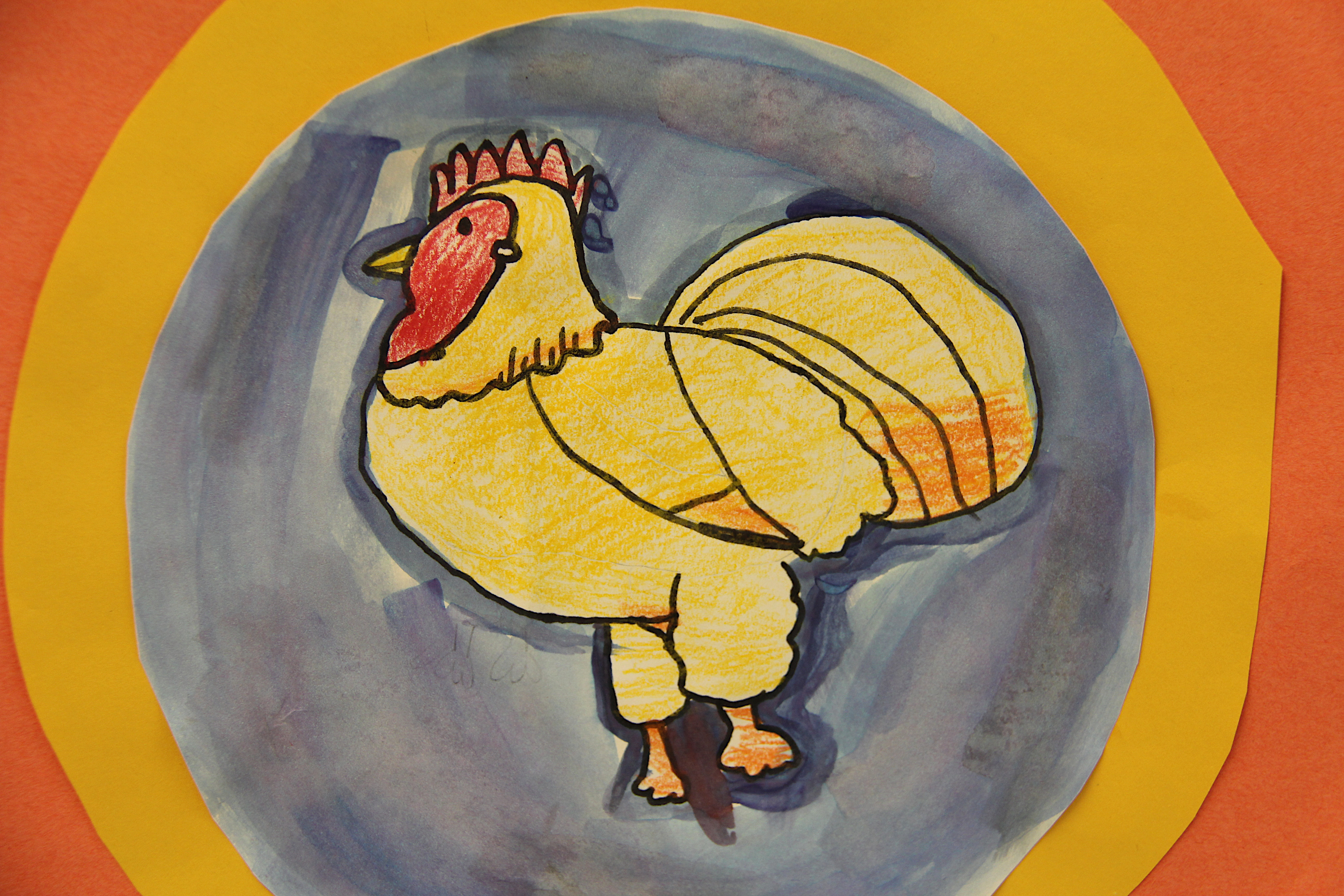
Belinda, Roosevelt second grader, created this bold rooster. (Minnesota Prairie Roots copyrighted photo March 2023)
I can hear the rooster crowing, the chicken clucking, the dog barking.
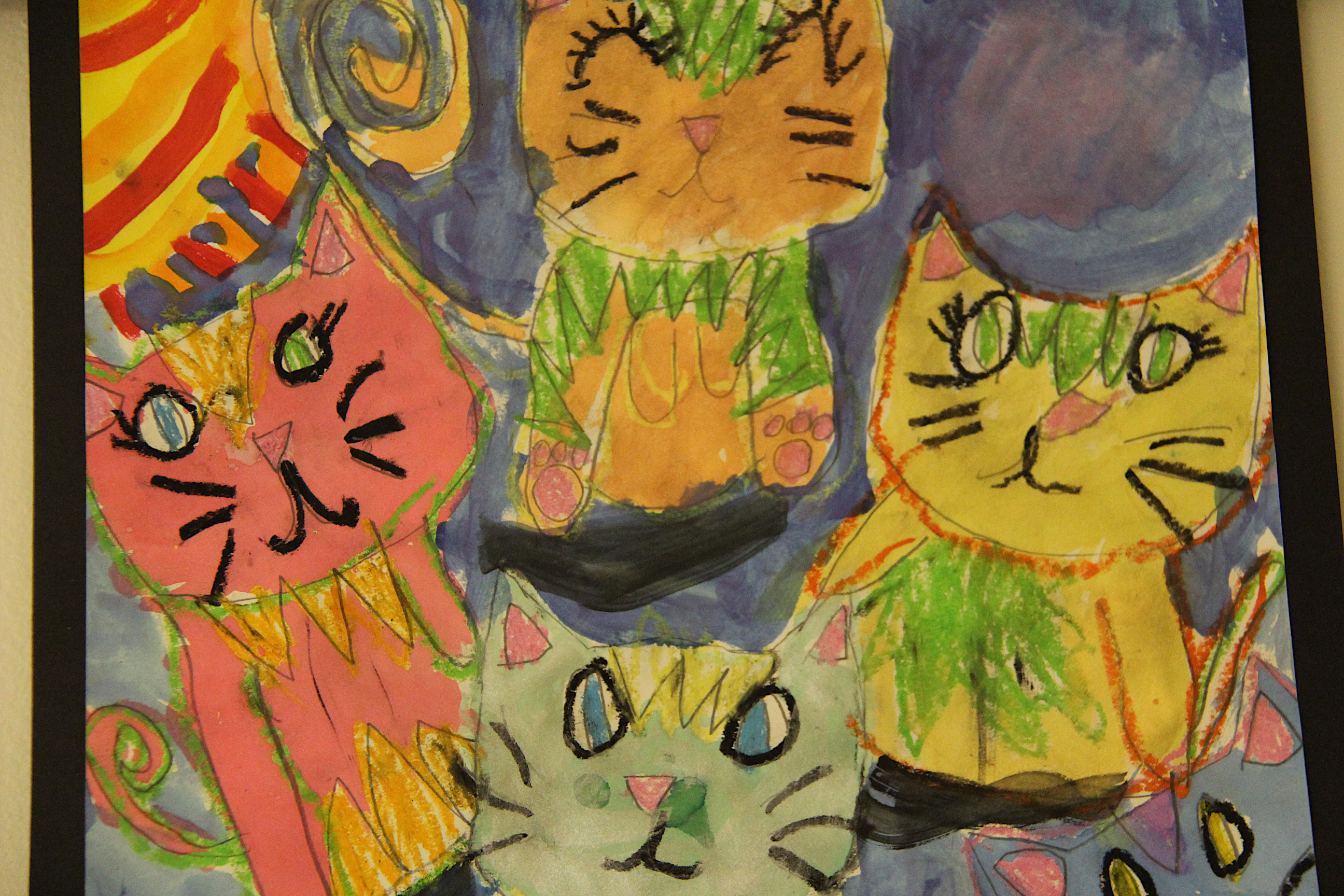
A collection of kitties drawn by Kennedy, first grader at Roosevelt. (Minnesota Prairie Roots copyrighted photo March 2023)
I can feel a hundred cat eyes on me, watching, waiting.
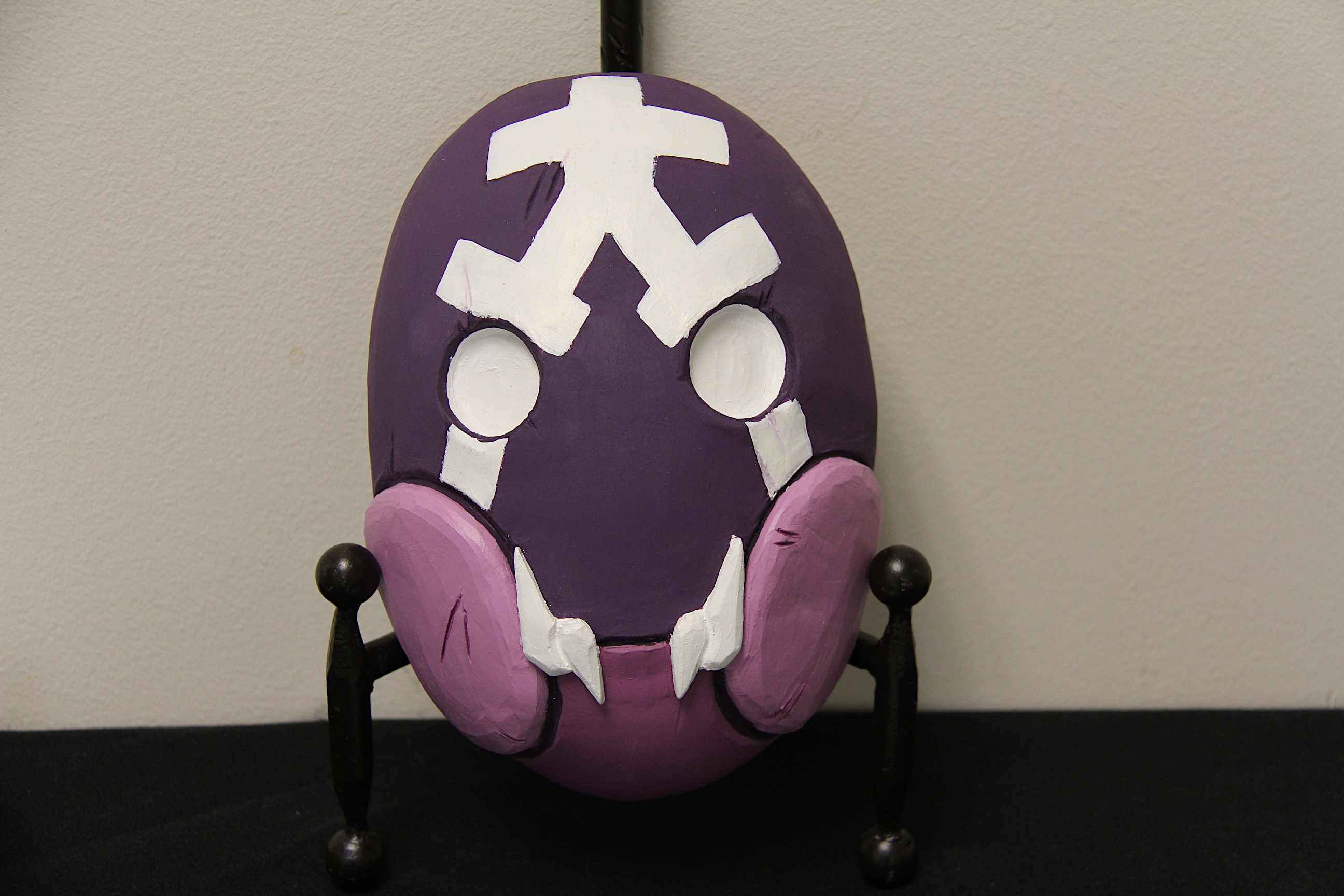
Holly, a senior at Faribault Area Learning Center, crafted this mask. (Minnesota Prairie Roots copyrighted photo March 2023)
It doesn’t take much to immerse myself in this student art, to experience it. Art can take us places. Geographically. Mentally. Back in time, forward in time. Into an imaginative place. Into a real place. Art can be healing and therapeutic and so many other things. Art can make a statement.
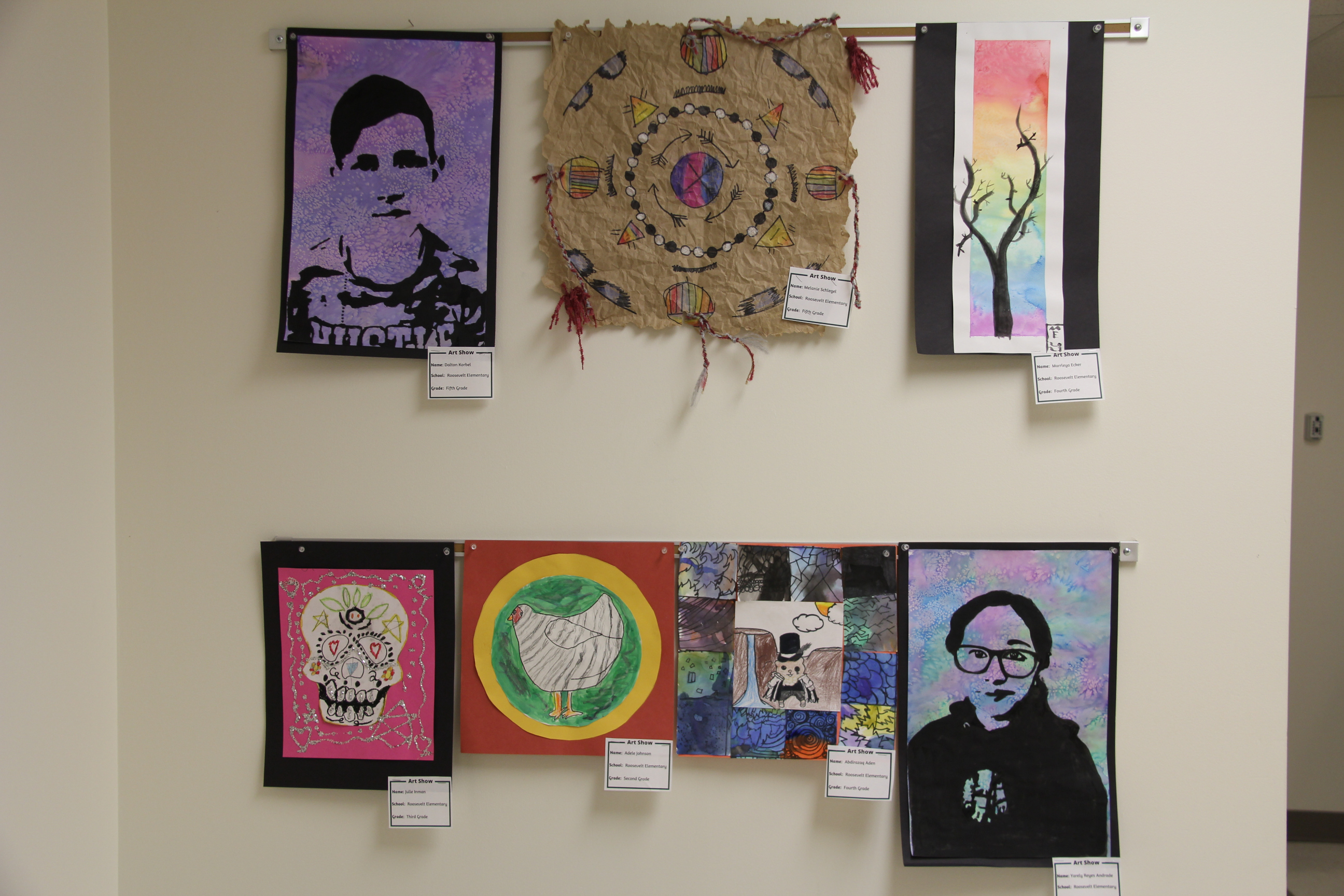
A sampling of art by students from Roosevelt Elementary School. (Minnesota Prairie Roots copyrighted photo March 2023)
To confine art’s purpose to a sentence or two would be like locking ideas inside a box. It can’t be done. As long as creatives create, the expanse of art’s reach is endless. Today these youth have shown me their evolving, developing creativity. And that gives me hope in a world that needs art today more than ever.
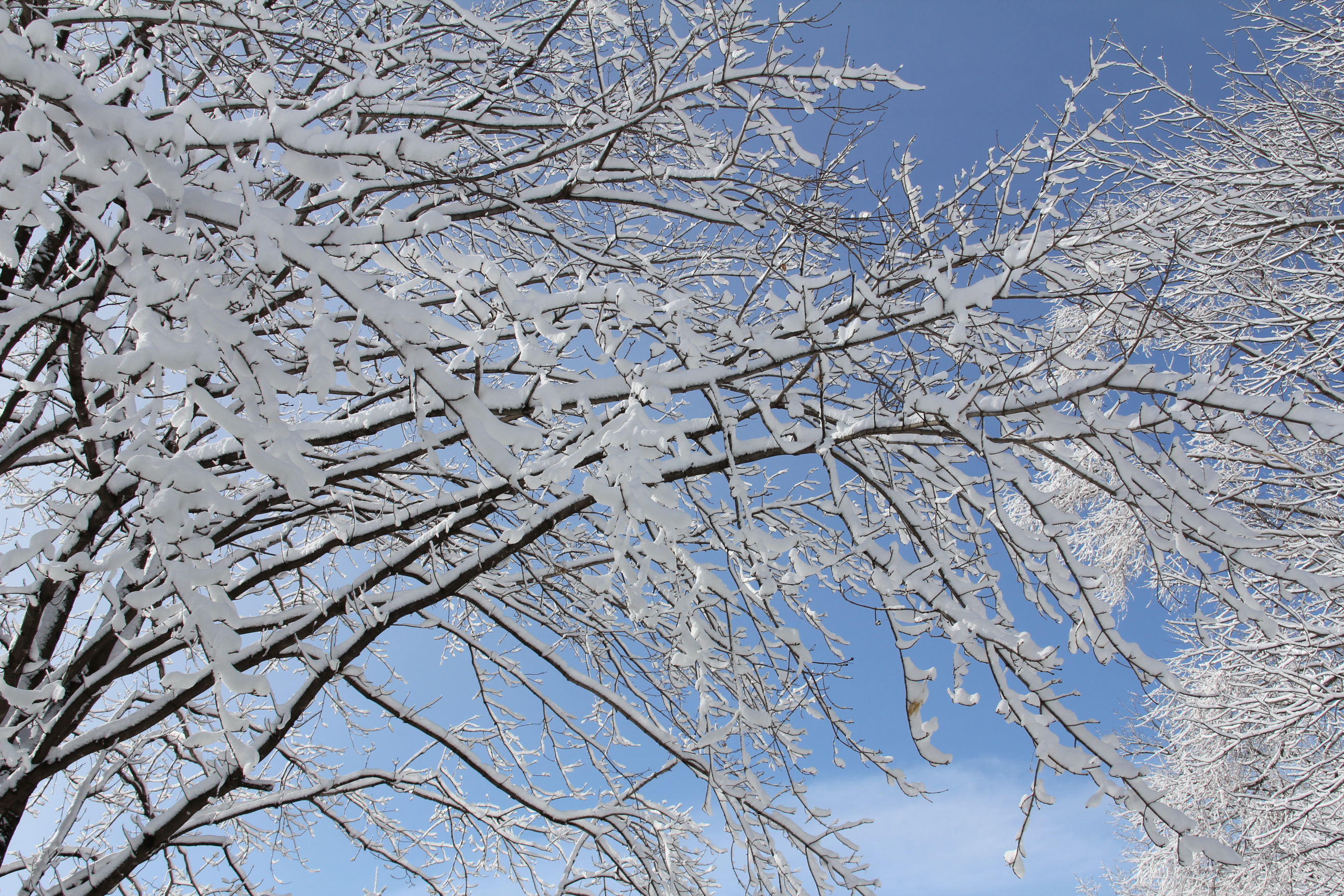
Trees viewed from my backyard were layered in snow Saturday morning. (Minnesota Prairie Roots copyrighted file photo April 2023)
SO… THAT MAJOR WINTER STORM predicted for this past Friday into Saturday transitioned into a blizzard here in southern Minnesota. Not that I witnessed the heavy snowfall of an inch or more per hour and the accompanying strong winds. I didn’t. I was sleeping. Snow didn’t begin here in Faribault until around 10 pm Friday and stopped before I awoke.
Saturday morning we arose to a winter wonderland. Truly, it was that beautiful with the landscape draped in a pristine white blanket. The landscape this late in the season is not pretty with dirt deposited atop snow remnants. New snow refreshes, covers the snirt.
Snow weighs my neighbor’s evergreens. We got about 5 inches of snow in Faribault in the most recent storm. (Minnesota Prairie Roots copyrighted photo April 2023)
As weary as I feel about this relentless winter season, now our third snowiest ever, I appreciated the beauty of Saturday’s snowfall. The trees, especially, were lovely with snow outlining bare branches of deciduous trees and bending boughs on coniferous trees.
Snow and blue sky contrast Saturday morning. (Minnesota Prairie Roots copyrighted photo April 2023)
White contrasting against a bold blue sky is particularly stunning.
I love how the frosty branches shadow on a neighbor’s house in the morning light. (Minnesota Prairie Roots copyrighted photo April 2023)
However, snow piling on utility lines, roofs, sidewalks and driveways caused problems. Here in Faribault, a house fire started when a snow-weighted electrical line broke lose, falling against aluminum siding, igniting a blaze. Thankfully the occupants were up, smelled the fire and escaped before firemen arrived.
In Browerville, the roof of the school gym collapsed under the weight of the heavy, wet snow. Such roof collapses occur occasionally, including in mid-March at a shopping mall in the port city of Duluth. Most memorable, perhaps, is the collapse of the roof on the Hubert H. Humphrey Metrodome (then Minnesota’s professional sports stadium) in December 2010.
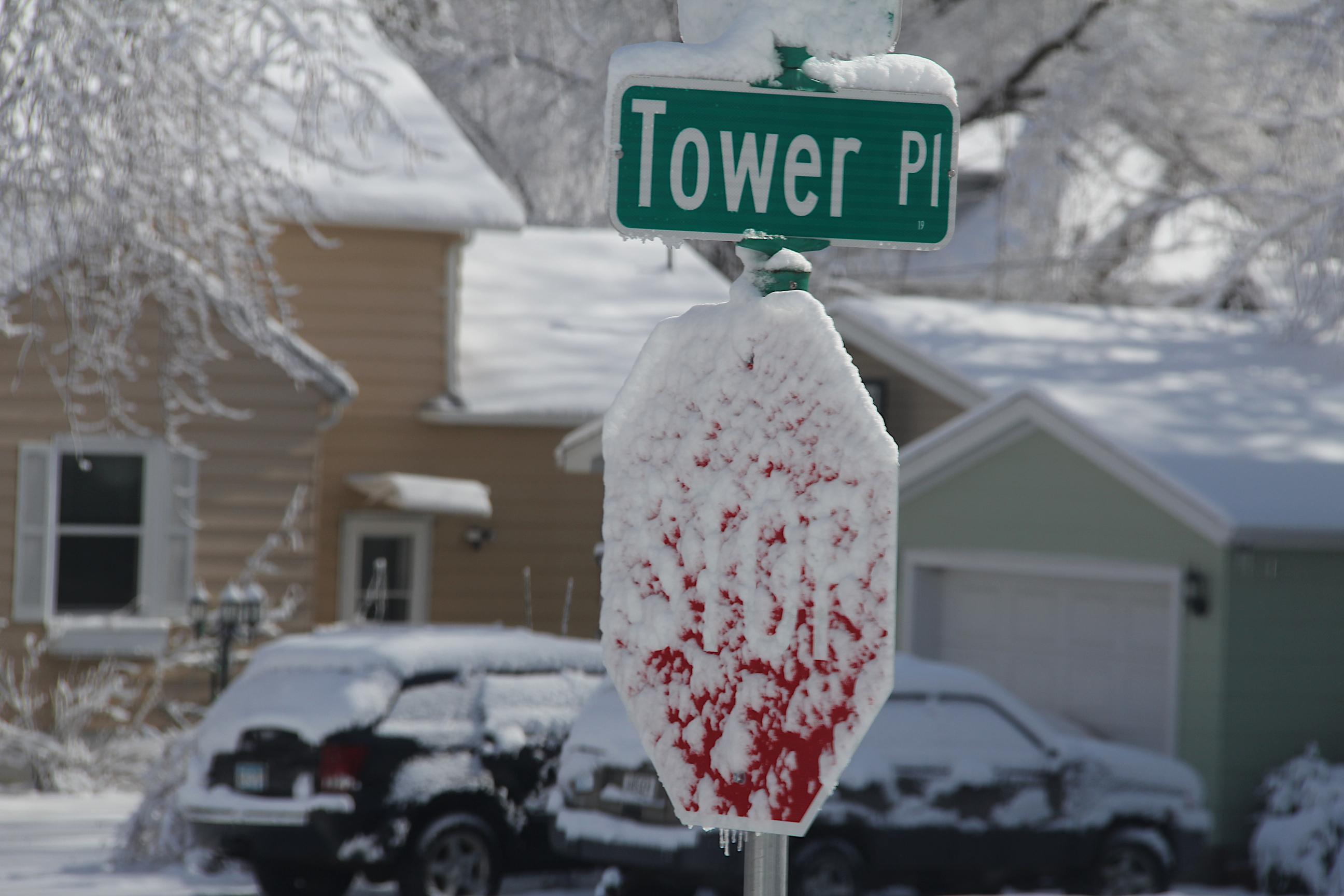
It’s as if Mother Nature played an April Fool’s joke on Minnesota, leaving a message by covering this stop sign with snow. (Minnesota Prairie Roots copyrighted photo April 2023)
For the average Minnesotan, though, the latest winter storm meant firing up the snowblower and pulling out the shovels to clear snow. That we’re all tired of this endless chore is evident in how some sidewalks went uncleared in Faribault, how even city crews did not clear all walkways like they usually do. I expect expenditures for snow removal have stretched or exceeded city budgets. Plus, this time of year, the sun, if accompanied by warm temps (“warm” being 40 degrees or above), result in Mother Nature removing snow via melting.
Faribo Frosty was not smiling on Sunday afternoon. (Minnesota Prairie Roots copyrighted photo April 2023)
Faribo Frosty, Faribault’s iconic landmark snowman crafted by the Hoisington family each winter, is beginning to show the effects of warmer weather. He’s slimming down. On a drive-by Sunday afternoon, I noticed his weight loss and his pipe fallen from his mouth.
But it was the lack of a smile on Frosty’s face that was most noticeable. He’s frowning now. I suppose if I was a snowman and recognized my days were numbered, I might feel the same. I can’t/won’t apologize to Frosty, though, for not sympathizing with his plight. I just want winter gone. Frosty will be back again some day. Just like winter will be back mid-week, when more snow is predicted for parts of Minnesota. Not here. I hope.
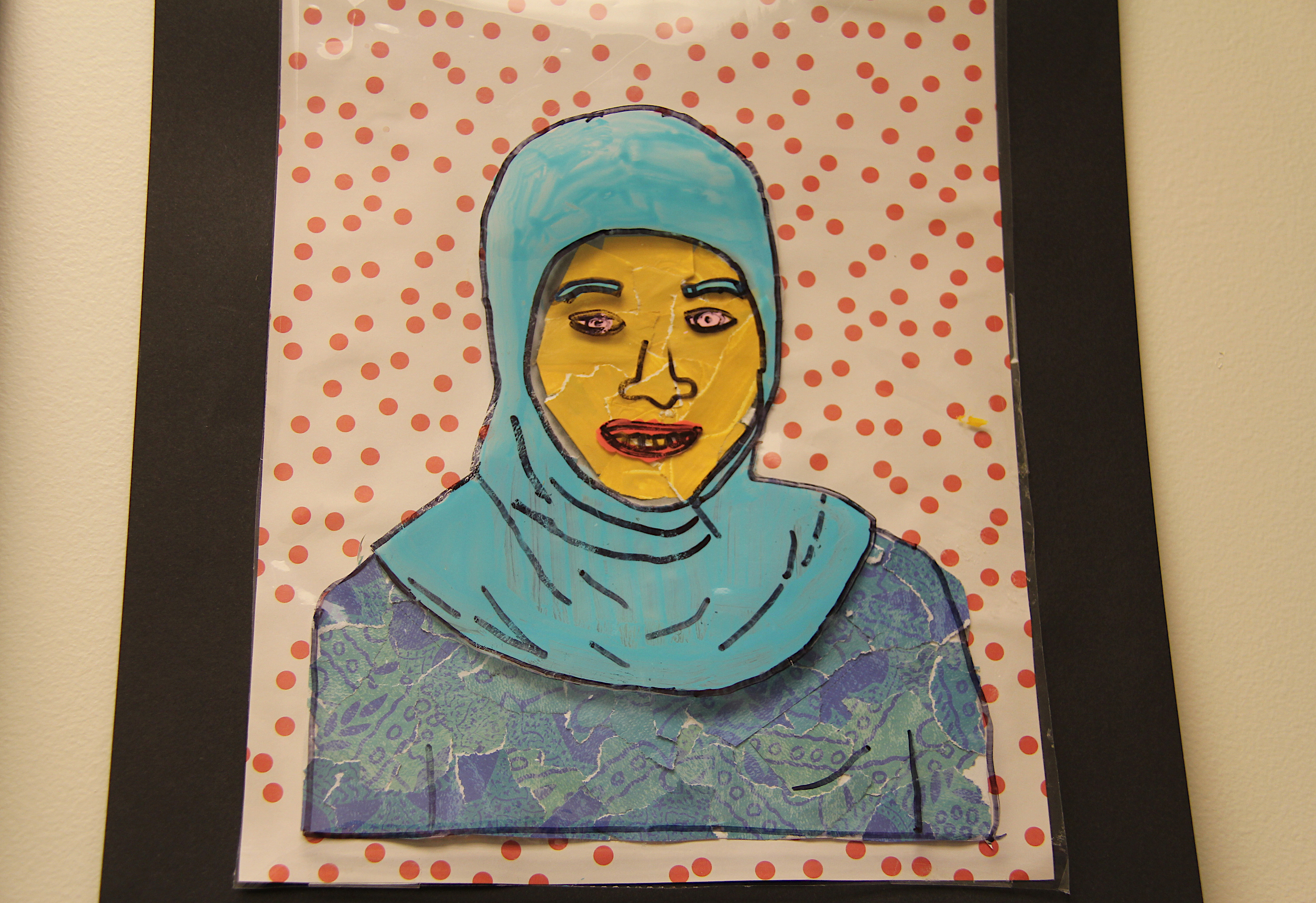
“Bisa Butler-Inspired Collage Portrait” by Ilwad, Lincoln Elementary School fourth grader. Bisa Butler is an award-winning African American textile artist. (Minnesota Prairie Roots copyrighted photo March 2023)
WHAT DO YOU NOTICE first in a human face? Perhaps it’s eyes or a smile, or the lack thereof. Or maybe you see the whole without attention to the details that comprise a face. However you view someone on the exterior, it is the interior which holds the essence of a person.
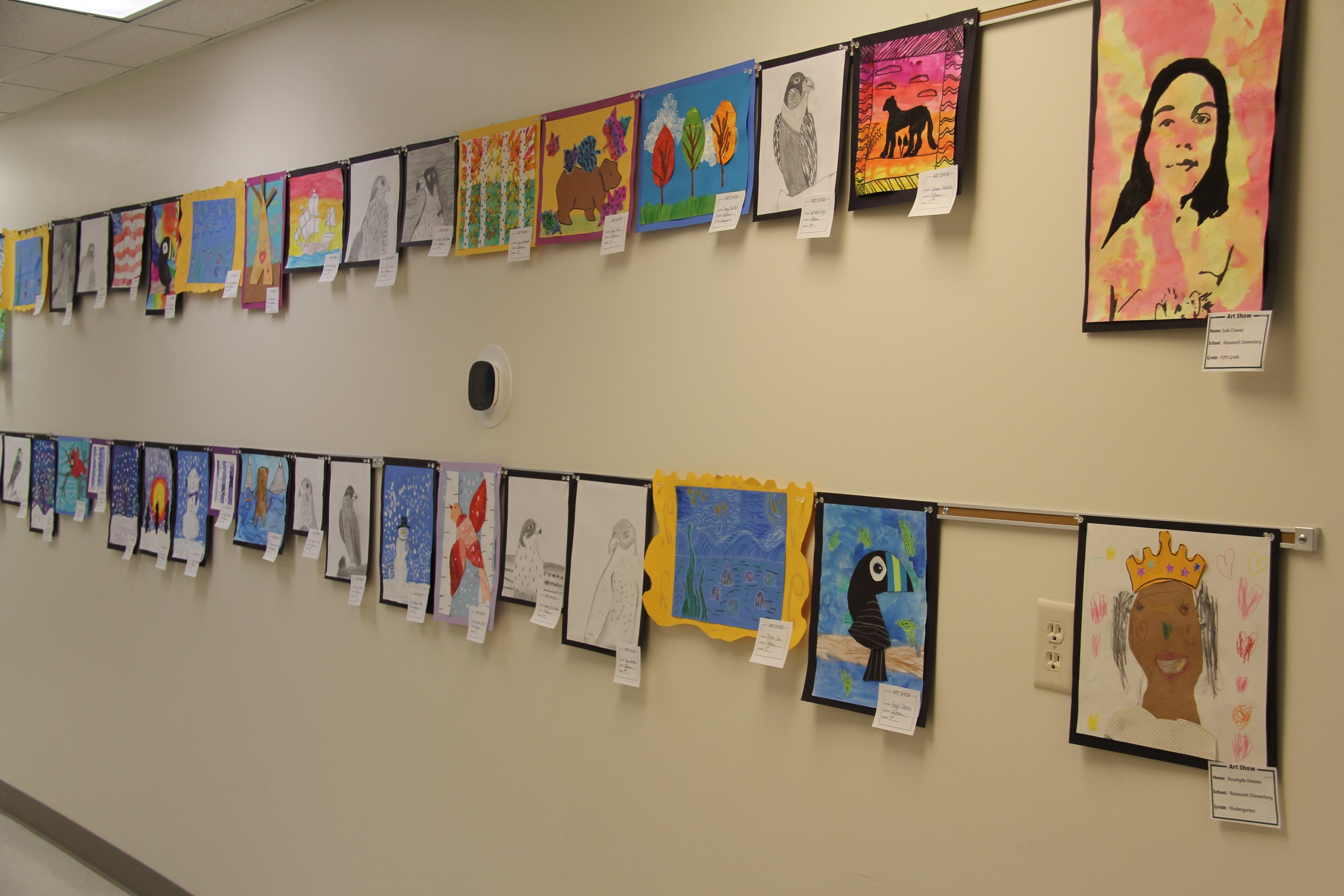
An assortment of student art lines hallways and a room. (Minnesota Prairie Roots copyrighted photo March 2023)
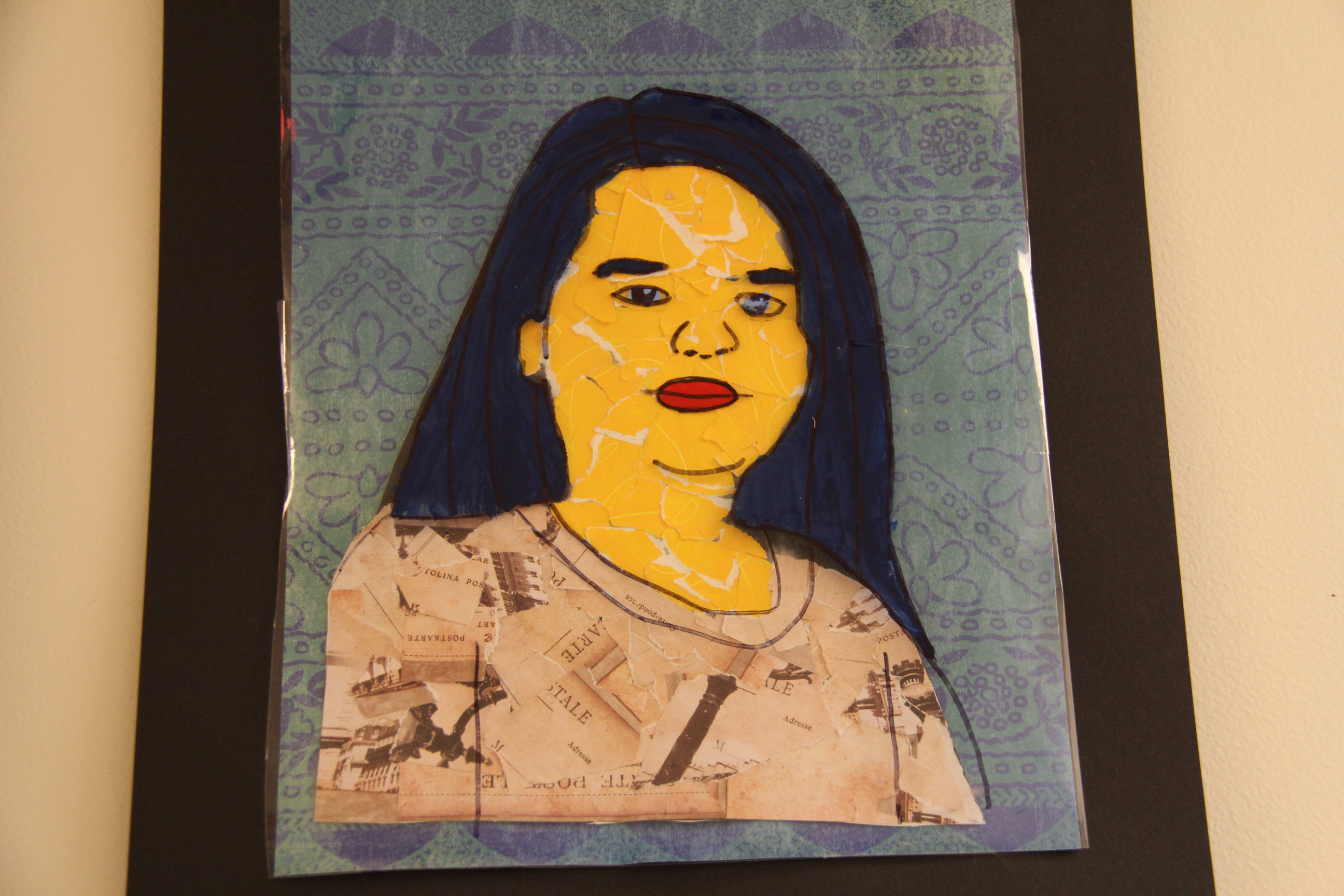
Another Bisa Butler-inspired portrait collage, this one by Lincoln fourth grader Rain. (Minnesota Prairie Roots copyrighted photo March 2023)
If I could, I would sit down with these young artists and ask: “What do you notice first in a human face? Is the essence of this person in the portrait you created? What process did you use to make this portrait?” I am assuredly an inquisitive writer of many questions. I am a listener, an observer, a gatherer of information. I expect answers to my inquiries would vary.
Students from Bethlehem Academy drew these portraits. They are by Martin, left to right, Dania and Mera. (Minnesota Prairie Roots copyrighted photo March 2023)
But one thing is certain. The artists behind the portraits saw a face—whether in a mirror, a photo, his/her imagination, etc. Then their individual perspectives, interpretations, skills factored into creating these portraitures.
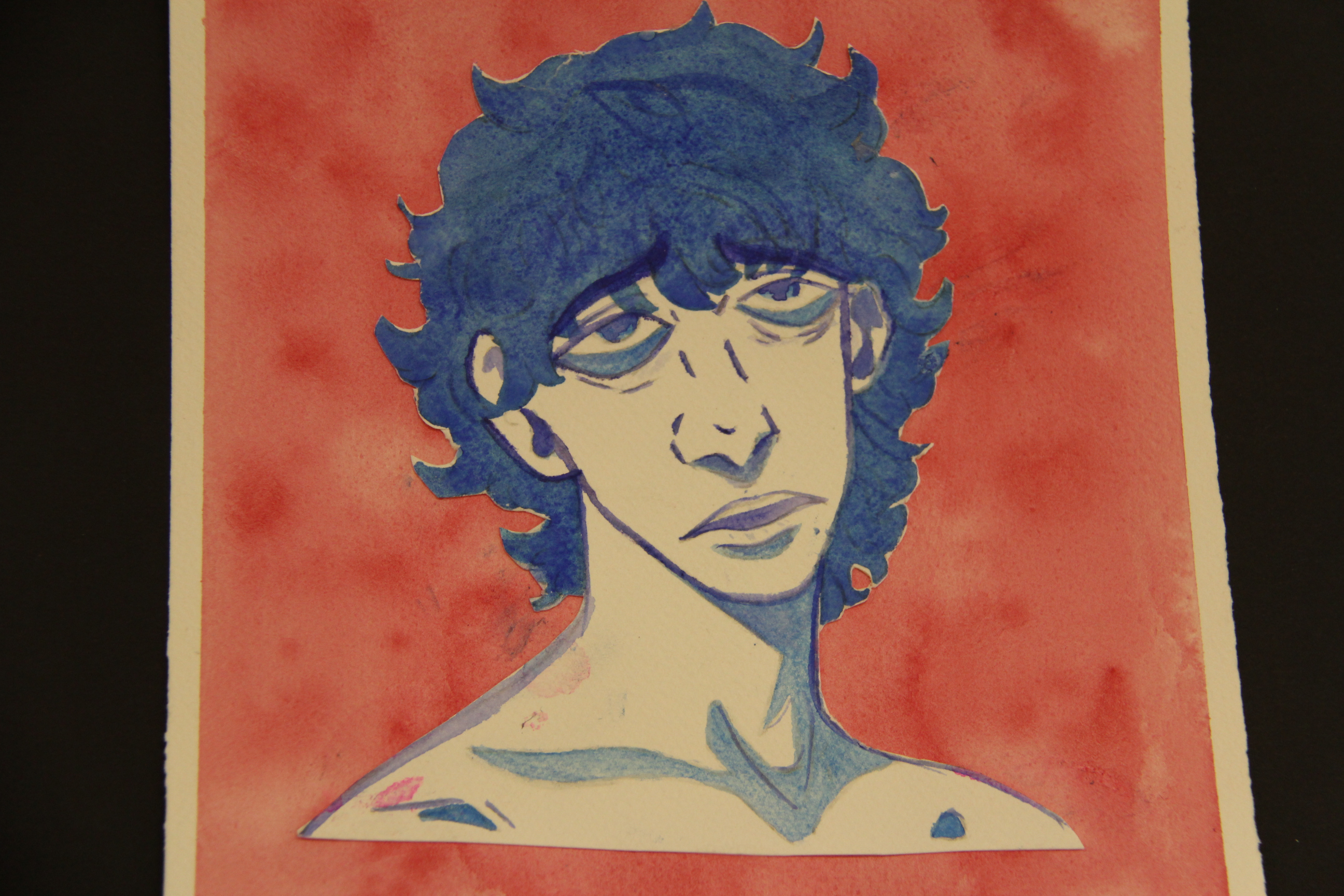
Dexk, a senior at Faribault Area Learning Center, painted this watercolor portrait. (Minnesota Prairie Roots copyrighted photo March 2023)
If I study each work of art, I see personality traits emerging in the subjects. Reserved. Joyful. Tentative. Compassionate. Inquisitive. Even especially creative. I could be right. Or I could be wrong in my observations. Faces can reveal a lot, but can also hide a lot.
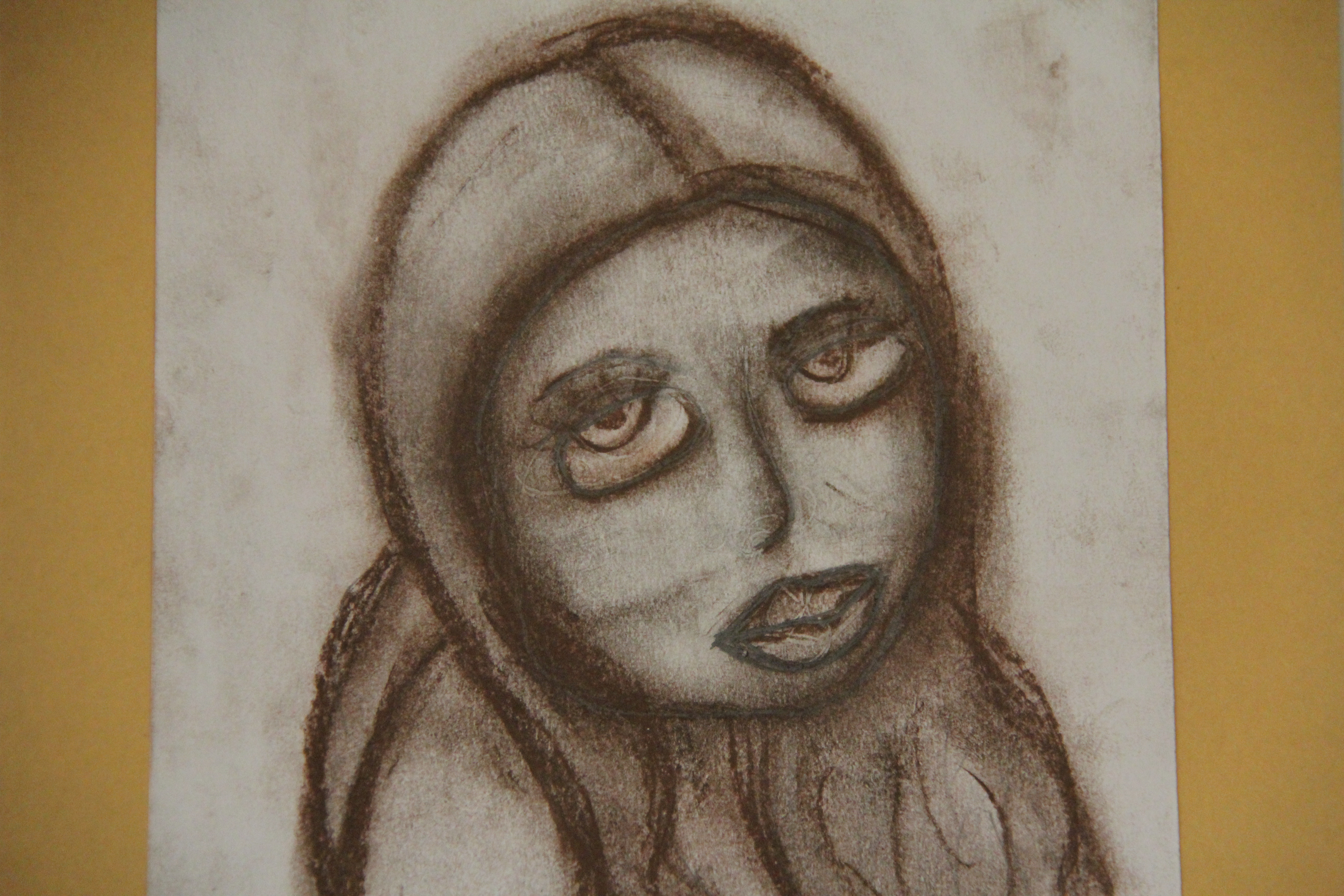
A portrait by Yarely, Roosevelt fifth grader. (Minnesota Prairie Roots copyrighted photo March 2023)
I recognize that for these young artists, such deep thoughts may not have presented themselves. And that’s OK. Perhaps just the challenge of creating a portrait was enough without the added distraction of introspection.
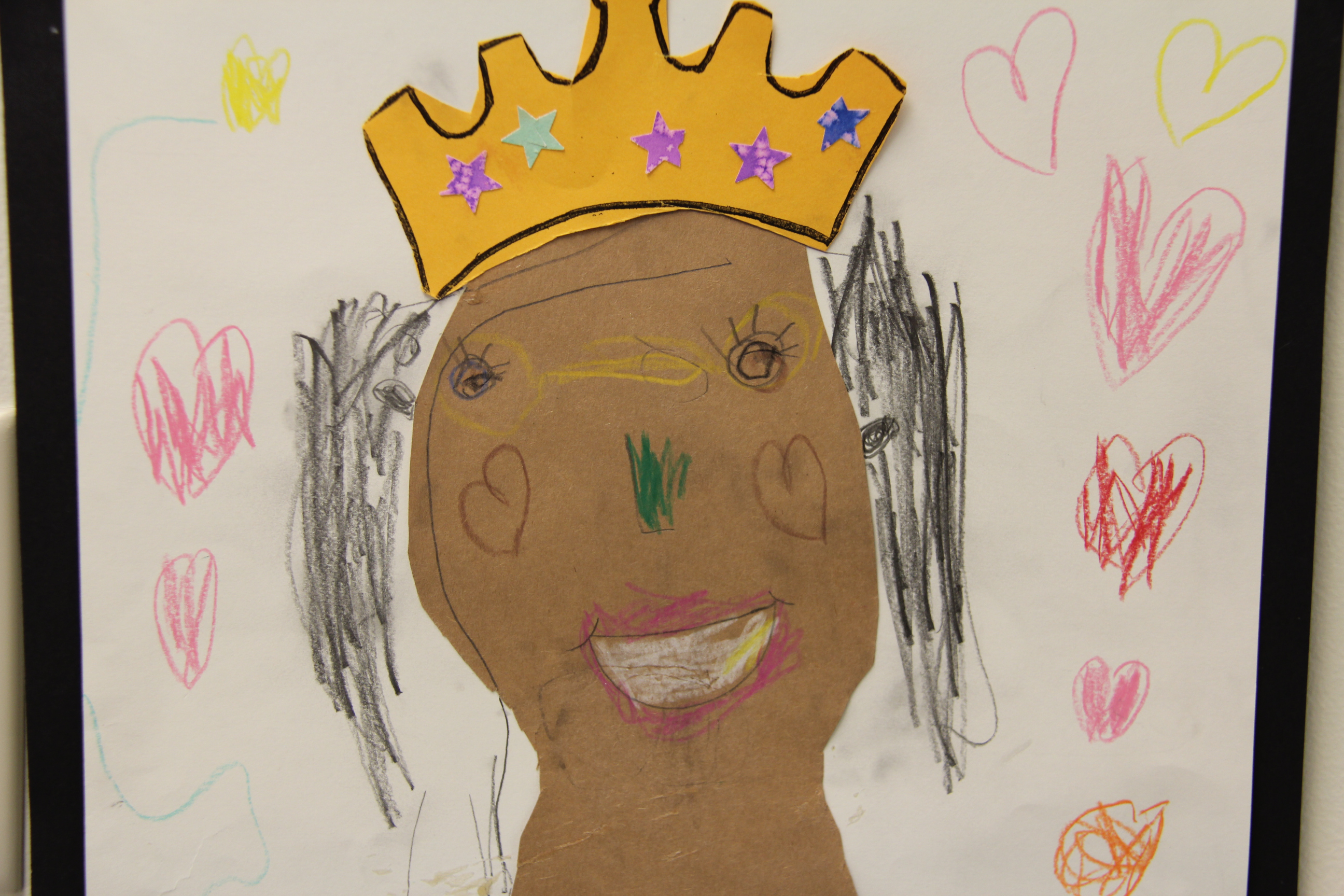
Roosevelt Elementary School kindergartner Ruweyda created this joyful portrait. (Minnesota Prairie Roots copyrighted photo March 2023)
I admire the talent of these student artists ranging from kindergartners to seniors in high school. While I don’t hold any art training, portraits seem particularly difficult to create. They would be for me, unless I captured a portrait with my camera. And even then I don’t claim to be a portrait photographer, except in the journalistic style.
One in a series of developing portraits by Alaina, Faribault Middle School eighth grader. (Minnesota Prairie Roots copyrighted photo March 2023)
Portraits anchor a corner, top row, in the student art exhibit. (Minnesota Prairie Roots copyrighted photo March 2023)
“Winter Self-Portrait Mixed Media” by Evelynn, Lincoln Elementary School first grader. (Minnesota Prairie Roots copyrighted photo March 2023)
When the youth artists in the Faribault art show look at their work and look in the mirror, I hope they see beautiful, creative faces. I hope they see the talent they hold. I hope they understand that they are unique and valued and supported. I hope, too, that creativity continues to be an important part of their lives, a lens through which they can see the world and then share it with others.
A soulful portrait by Grace, Waterville-Elysian-Morristown School eighth grader. (Minnesota Prairie Roots copyrighted photo March 2023)
Art matters. And so do each and every one of these developing young artists. They are our future, wherever their talents take them in this world.
FYI: Paradise gallery hours are noon – 5 pm Wednesday – Friday and 10 am – 2 pm Saturday. This exhibit runs until April 8.Photos were taken with permission of the Paradise. Original copyrights to the art are owned by the individual artists.
Colorful fish art by Dallas, 3rd grader, Roosevelt Elementary School. (Minnesota Prairie Roots copyrighted file photo March 2023)
I APPRECIATE ART. All of it. From performing to literary to visual, art inspires me, uplifts me, causes me to pause and think. Art makes me feel joyful. I am so thankful I live in a Minnesota community where art is valued.
The beautiful Paradise Center for the Arts in downtown Faribault. (Minnesota Prairie Roots copyrighted photo March 2023)
The Paradise Center for the Arts centers the arts in Faribault. From theatrical performances to concerts to gallery shows and more, the opportunity to embrace the arts awaits me inside this historic venue. How grateful I am for that.
This poster posted inside the Paradise lists all the schools participating in the 2023 student art exhibit. (Minnesota Prairie Roots copyrighted photo March 2023)
Recently I toured the All Area Student Art Show, an annual exhibit featuring the art of students from area schools—this year eight. From kindergartners to high school seniors, the talent of these students is beyond impressive. Even more, I love that they are given this opportunity to share their work with the public. I often think how this builds self-confidence and encourages these kids to perhaps pursue art, or, at the least, to value it.
Jocelyn, an 11th grader at the Faribault Area Learning Center, created this butterfly. (Minnesota Prairie Roots copyrighted photo March 2023)
Lincoln kindergartner Reggie created this “Symmetry Butterfly Specimen in Mixed Media.” (Minnesota Prairie Roots copyrighted photo March 2023)
As I slowly walked three hallways where student art lines walls and then entered a room exhibiting more artwork, I pondered what I would photograph. I knew I needed to choose samples from each school. I also wanted a range of ages and art mediums, and also to showcase what spoke to me. Art is, in many ways, deeply personal, whether in creating or viewing.
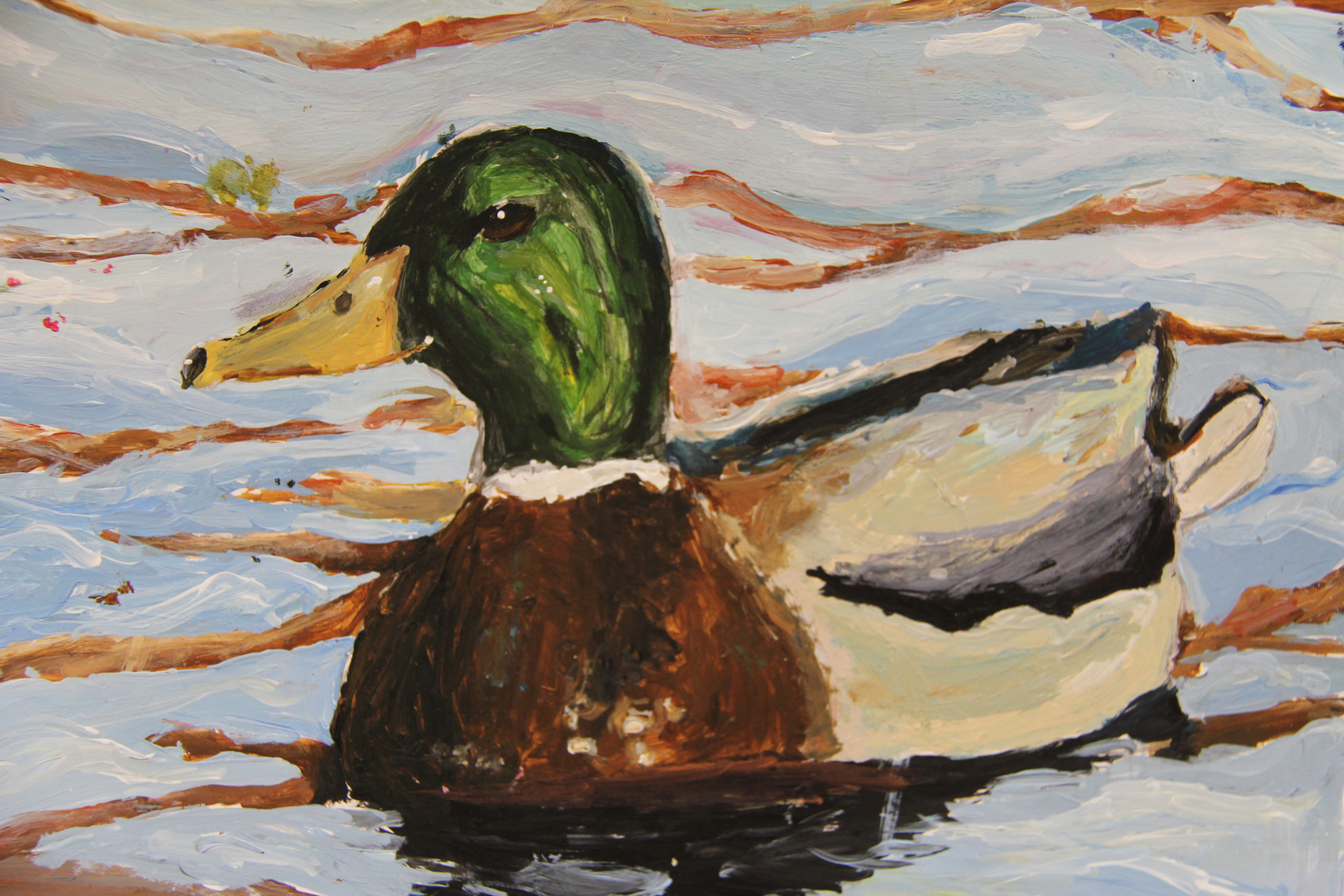
Mallard drake by Adeline, Cannon River STEM School, 7/8 grade. (Minnesota Prairie Roots copyrighted photo March 2023)
Granted, this art was mostly guided by teacher assignments. But still, that leaves space for each artist to infuse his/her style into a piece. Copying art is different than creating art. These students create art.
A block print by Madison, 7th grader at Waterville-Elysian-Morristown Schools.(Minnesota Prairie Roots copyrighted photo March 2023)
Showing you the art I photographed requires more than one post. I took an excess of images, which tells you something about how much I enjoyed this second floor exhibit. Like an editor edits an author’s writing, I had to go through my photos frame by frame and edit. And then I grouped the photos by theme to make this all manageable.
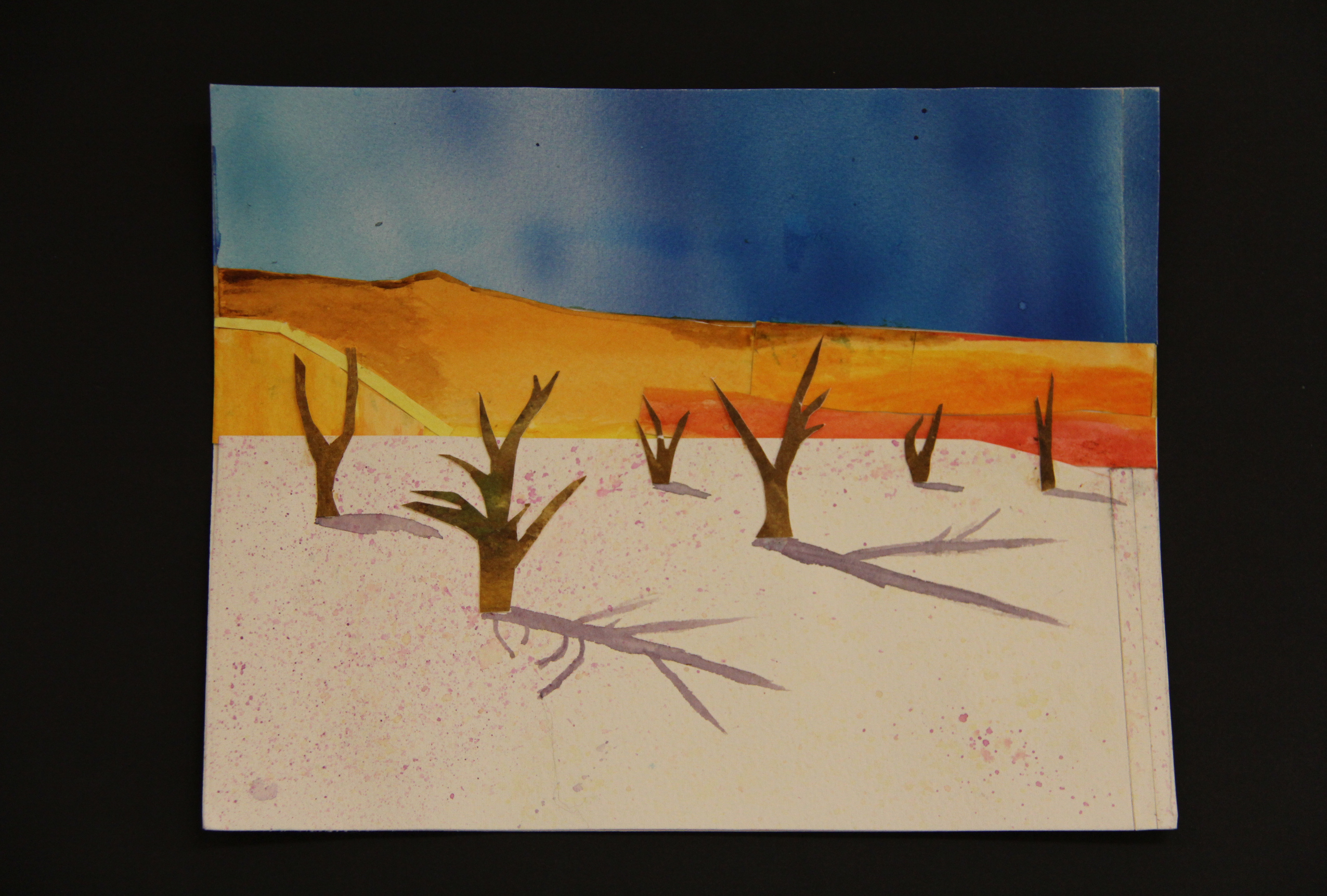
“Tri-Fold Cut Landscape in Crayon” by Addyson, Lincoln Elementary School 5th grader. (Minnesota Prairie Roots copyrighted photo March 2023)
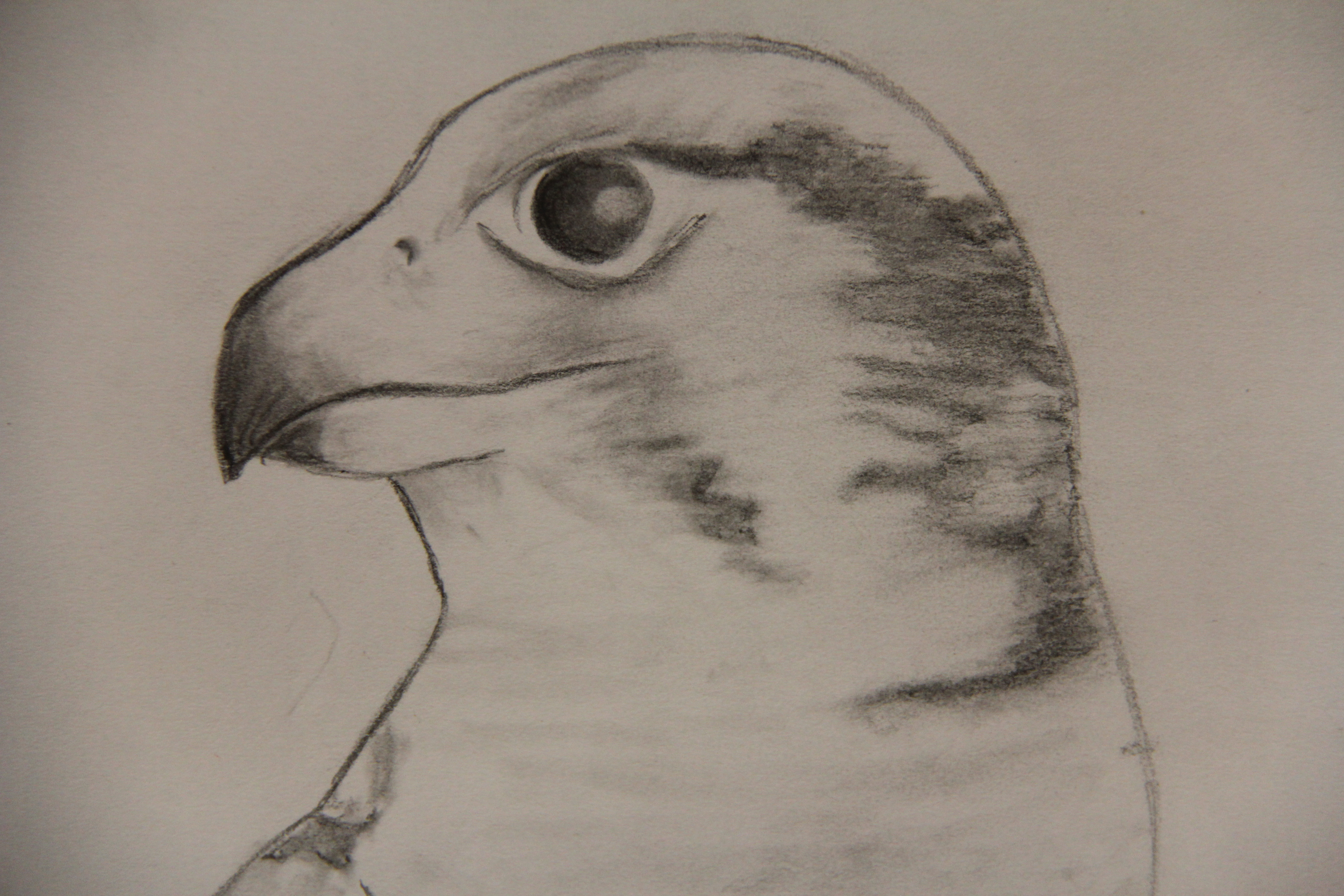
A hawk by Jefferson Elementary School 5th grader Annalicia. (Minnesota Prairie Roots copyrighted photo March 2023)
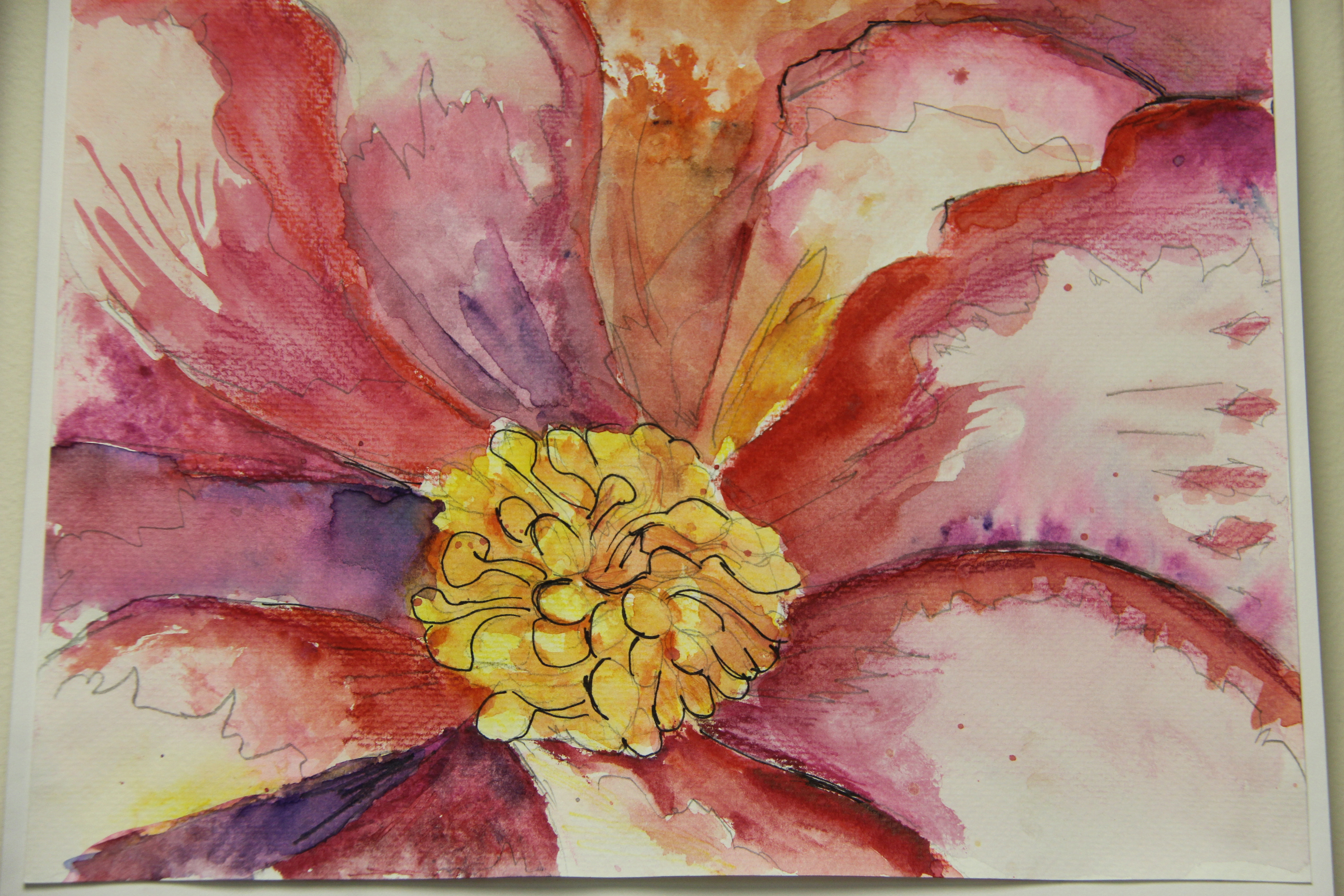
A watercolor flower by Alaina, 8th grade, Faribault Middle School. (Minnesota Prairie Roots copyrighted photo March 2023)
Today’s post is nature-themed. From vivid butterfly to sun-splashed landscape to subdued bird of prey drawn in charcoal, these artistic renditions of our natural world create a sense of wonderment. What a beautiful world we live in, from garden flower to mountain grandeur. These student artists see that, imagine that, create it.
Faribault Area Learning Center 12th grader Josh created this treescape. (Minnesota Prairie Roots copyrighted photo March 2023)
Being in nature takes me to a place that quiets my spirit, feeds my soul, calms me. It doesn’t take much—the rush of water, a vivid blue sky, the silhouette of a tree branch, a blazing sunset. This nature-themed art offers escape, restoration, a momentary respite from our busy lives. I hope these student artists realize the impact of their creativity.
A trio of nature-inspired art by Roosevelt Elementary School students Jeffry, left, Hadia and Steven. (Minnesota Prairie Roots copyrighted photo March 2023)
I hope, too, that these teachers realize how much I value their work in guiding and inspiring their students. Art is as important as any subject in school. I think how art provides not only a way to express creativity but how it also factors into mental health. Just the physical act of using one’s hands can diminish anxiety, ground thoughts, perhaps even spark joy. The benefits are endless from both personal and educational perspectives.
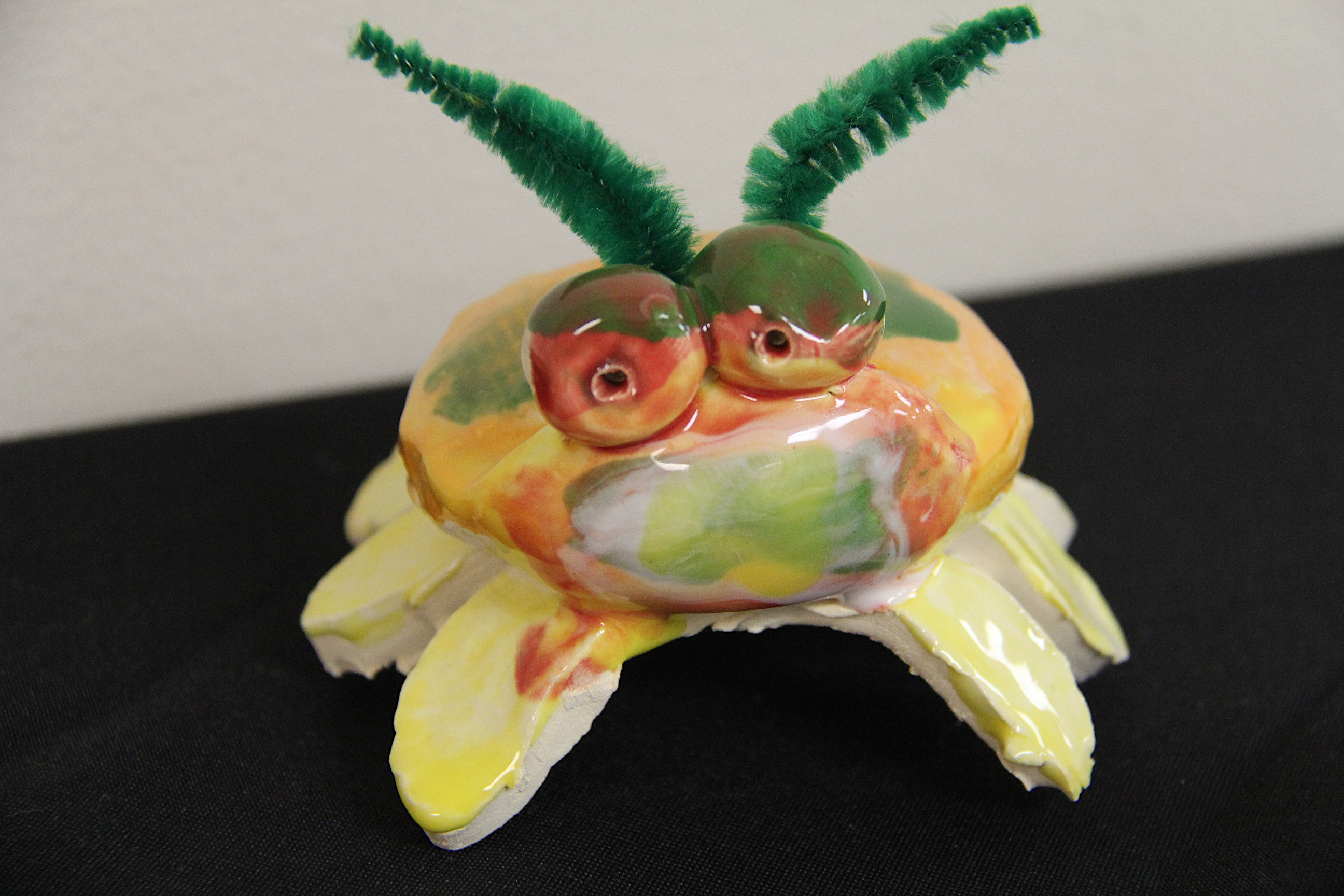
A Ceramic “Squish” Bug with Shoe Impression by Leyton, kindergartner at Lincoln Elementary School. (Minnesota Prairie Roots copyrighted photo March 2023)
My appreciation for this student art show stretches across a spectrum of gratitude. How thankful I feel for these young artists, for the educators who guide them and for the arts center that values their artwork.
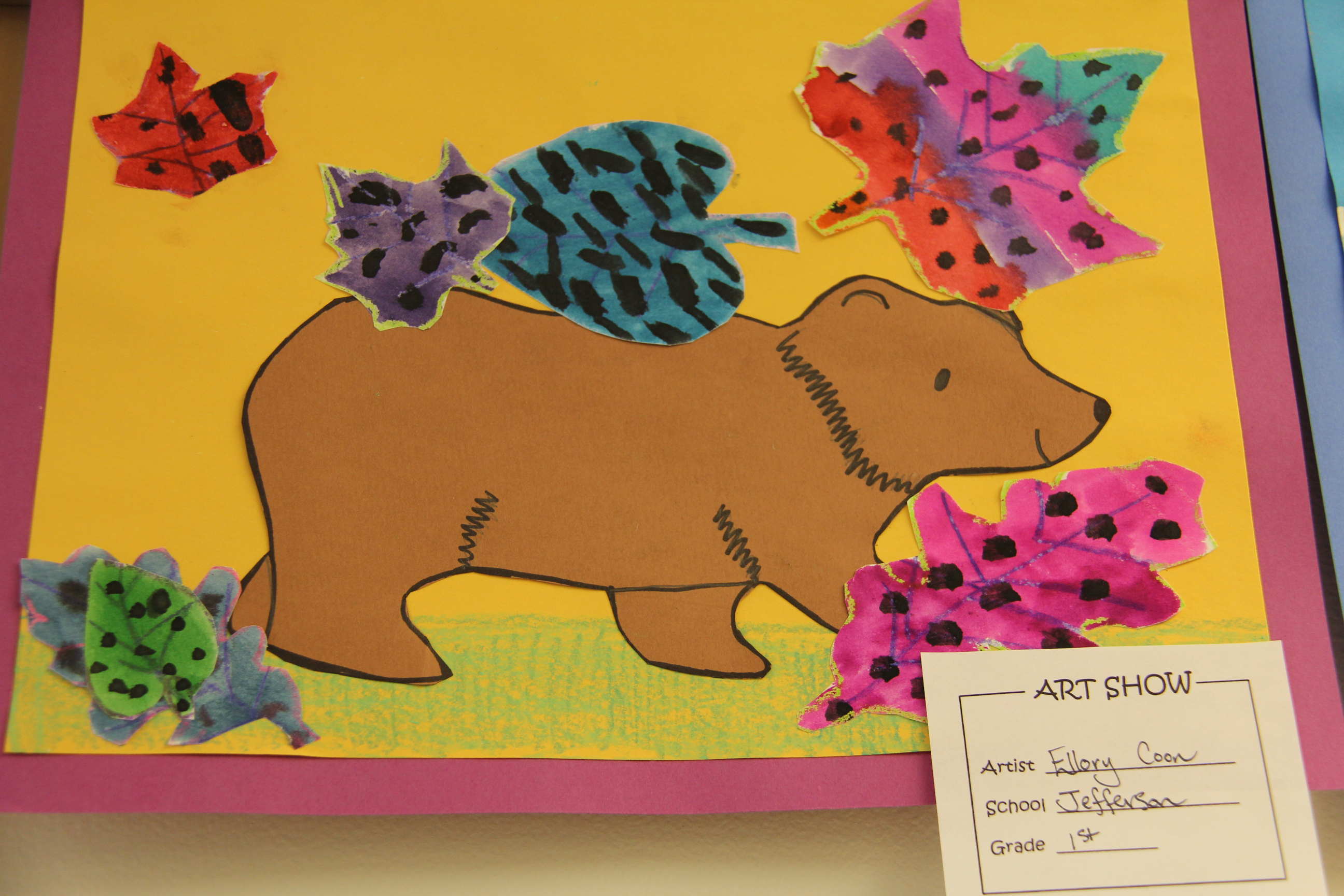
Colorful, patterned leaves fall around a bear created by Jefferson 1st grader Ellory. (Minnesota Prairie Roots copyrighted photo March 2023)
FYI: The All Area Student Art Show will run until April 8 at the Paradise Center for the Arts, 321 Central Avenue North, Faribault. Gallery hours are noon – 5pm Wednesday-Friday and 10 am-2 pm Saturday.
Art was photographed with permission from the Paradise. Individual artists hold original copyrights to their art. Please check back for more posts on this student art show.
Inside the Paradise Center for the Arts theater in 2009, two years after it opened. (Minnesota Prairie Roots copyrighted file photo August 2009)
THEY’VE HAD A 16-YEAR RUN, “they” being the recycled seats filling the Paradise Center for the Arts theater in historic downtown Faribault. Now it’s time for those seats to take a bow, exit and make way for new seating.
The aged chairs landed here as a donation from Albert Lea High School. The Merlin Players theatrical troupe then recovered and repaired the chairs before the PCA opened in 2007. It was the right decision at the time, financially and otherwise.
Watching the 2015 Kentucky Derby at the Paradise. (Minnesota Prairie Roots copyrighted file photo May 2015)
Since then, thousands have settled into those orangish chairs, including me. I’ve enjoyed plays, musicals, concerts, comedy shows, speakers and even a viewing of the Kentucky Derby while sitting on those chairs. I’ve laughed and I’ve cried while seated here. After years of use, an upgrade to more comfortable seating for 278 is definitely needed.
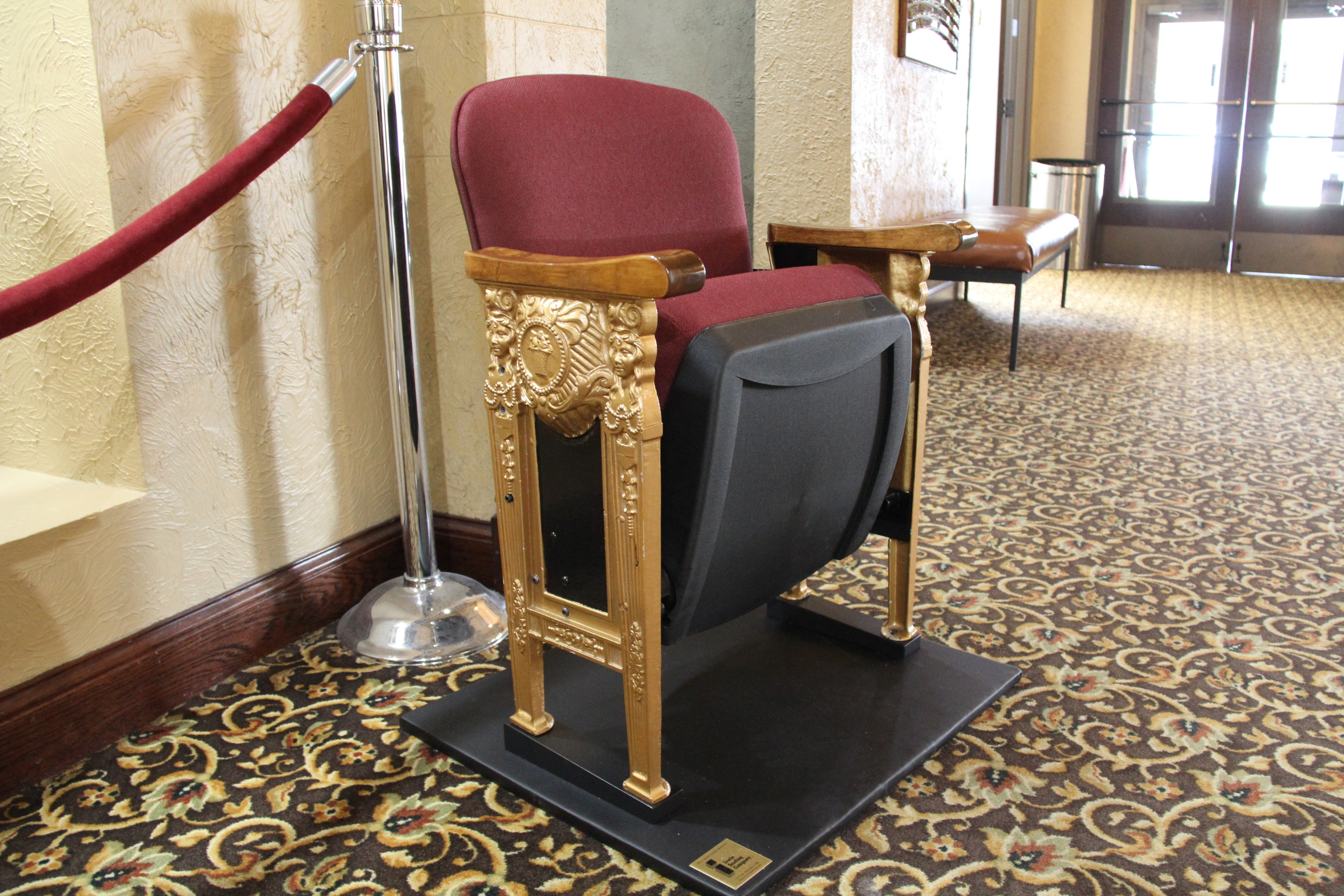
In the lobby of the Paradise, you can try out a model of the new chairs, with the original ornate standards (ends) retained. (Minnesota Prairie Roots copyrighted photo March 2023)
When I stopped at the Paradise recently to see the current gallery exhibits, I noticed a model of the new seats in the lobby. Days later, I received a news release from the PCA with more info and then followed up with a few questions.
I like the plan to install chairs with more comfort, strength and durability, but also with an appreciation for the past. The current ornate ends and the numbered arm rests will be kept. That’s important to me given the historic charm of the auditorium and also as someone who believes strongly in reusing/recycling/upcycling.
One especially nice addition will be cup holders, placed between the two seats in front of each guest. That will certainly cut down on accidental spillage which can occur when drinks are set on the floor.
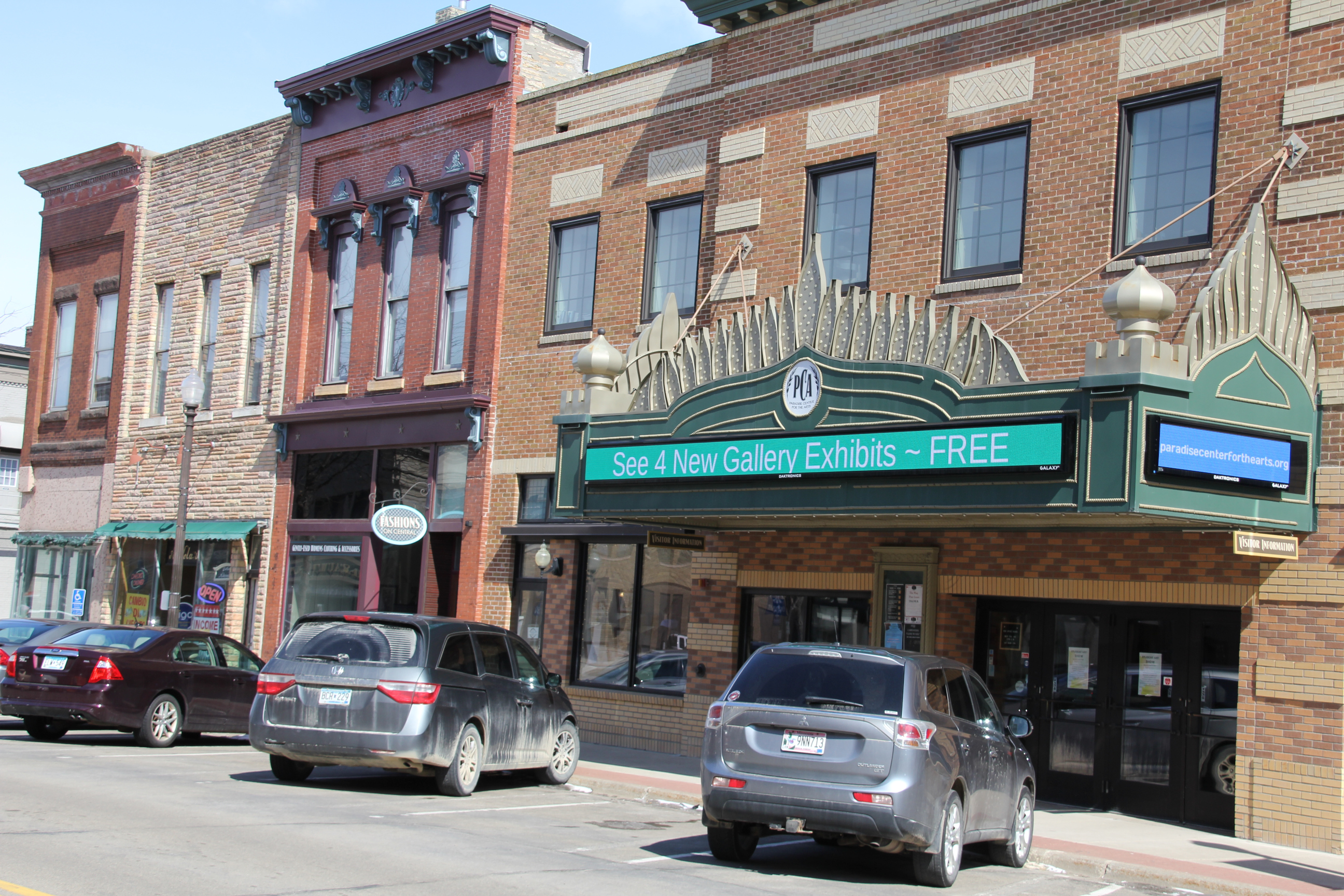
The lovely Paradise, 321 Central Avenue North, in the heart of historic downtown Faribault. (Minnesota Prairie Roots copyrighted photo March 2023)
Now efforts are underway to fund this $460/chair or $128,000 project via donations. If you would like to donate, go to the Paradise website and click on “Donate,” then “Support,” then specify “chairs” in designating your donation. Or call 507-332-7372. Donors will be listed on a plaque.
I look forward to settling into one of these comfortable new maroon chairs to enjoy the performing arts in my community, inside the Paradise.
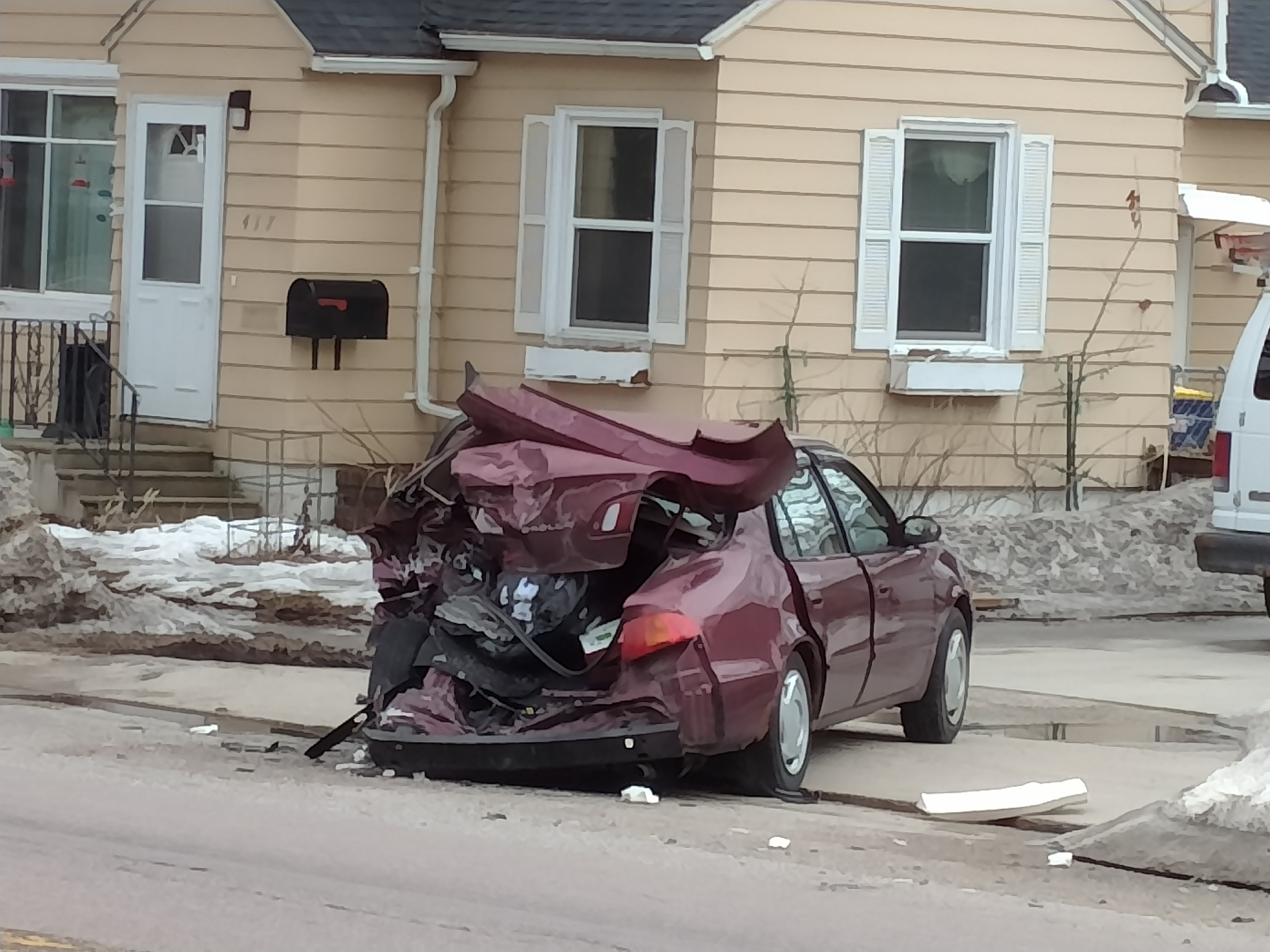
My neighbor’s totaled car, photographed Wednesday morning. That’s another neighbor’s house in the image.The car is exactly where it landed after being slammed into by a hit-and-run vehicle Tuesday evening. (Minnesota Prairie Rights copyrighted photo March 2023)
TUESDAY EVENING, MARCH 21, and we are kicked back, relaxing, watching “Will Trent.” And then it happens. BOOM! The undeniable sound of a crash. But we hear no screeching tires that would indicate slamming of brakes.
We pop from our comfy spots to peer out the windows. In the 9:30 pm dark of March, we see a vehicle parked in front of our house, then people walking down the middle of the street, busy Willow Street. Our eyes follow their path to a neighbor’s driveway and a smashed car. Demolished. We see no second vehicle near the crash scene.
Randy grabs his cellphone, steps outside in his slippers, phones the police. We have no idea what’s just happened, whether anyone has been injured. We know law enforcement needs to be summoned. Soon multiple squad cars arrive. We remain clueless and begin speculating as to what unfolded.
Wednesday morning I spoke with the owner of the totaled car. She was sleeping when an unknown vehicle slammed into her unoccupied car parked curbside by her house in the 400 block of Willow Street. I breathed a sigh of relief, told her how thankful I was that she was not in her car. Despite the loss of what she said was her “best” car, she also said she felt blessed.
My neighbor was remarkably calm. But also determined. She’d already begun phoning auto body repair shops and auto salvage yards in an attempt to locate the vehicle that destroyed her early 2000 Toyota Corolla. Yes, the driver left without stopping. How any vehicle managed to remain operable after totaling my neighbor’s car is beyond my comprehension. And how anyone in good conscience could leave the scene is also incomprehensible. But, hey, a driver drove away (never to be found) after striking my son as he crossed Willow Street to his bus stop in 2006.
On behalf of my neighbor, who asked if I am on Facebook (I’m not), I’m posting this information here in hopes that someone can help find the person responsible. State law requires drivers to stop following a crash. The person who parked her vehicle outside our house Tuesday evening was driving on Willow at the time of the incident and did the right thing by immediately stopping upon hearing the BOOM.
The hit-and-run vehicle is likely a large pick-up (or other) truck, probably with significant front end damage, my neighbor shared. Willow Street is a heavily-traveled arterial street in Faribault. I have to think that someone saw something that may be helpful. Perhaps a doorbell or surveillance camera will show a suspect vehicle.
Please, if you have any information, contact Faribault police at 507-334-4305. That plea goes to possible witnesses, garages, auto body repair shops, salvage yards, Willow Street residents. If someone you know is suddenly no longer driving their pick-up truck and your gut is telling you something, then do something.
My neighbor doesn’t seem the revengeful type. She just wants her losses covered. Then maybe she can sleep at night. It was disheartening to watch her Wednesday morning removing debris from the street, sweeping glass, emptying her car. She deserves justice.
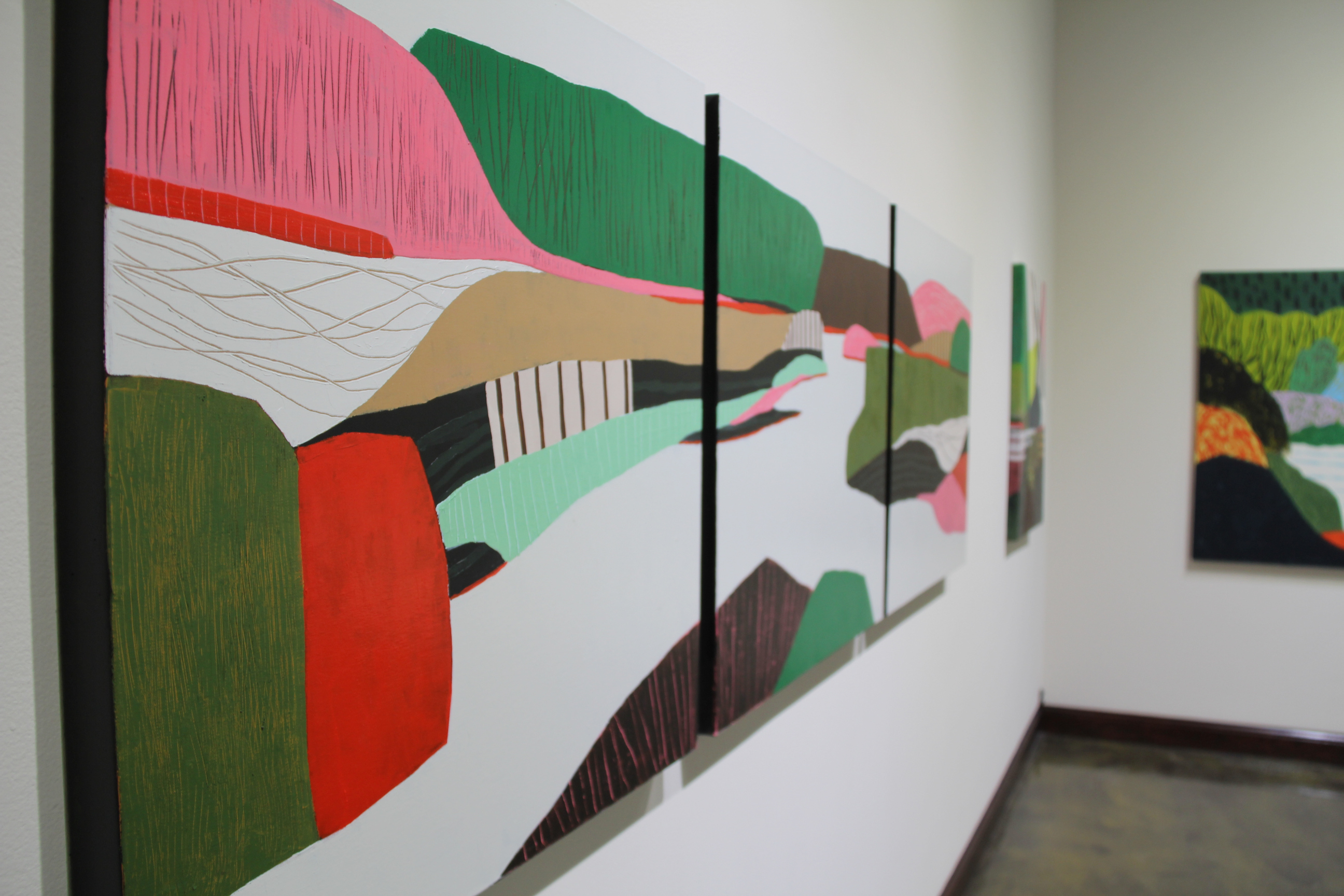
A side view of Amanda Webster’s “Just The Three of Us, A Triptych of Three” acrylic on canvas. (Minnesota Prairie Roots copyrighted photo March 2023)
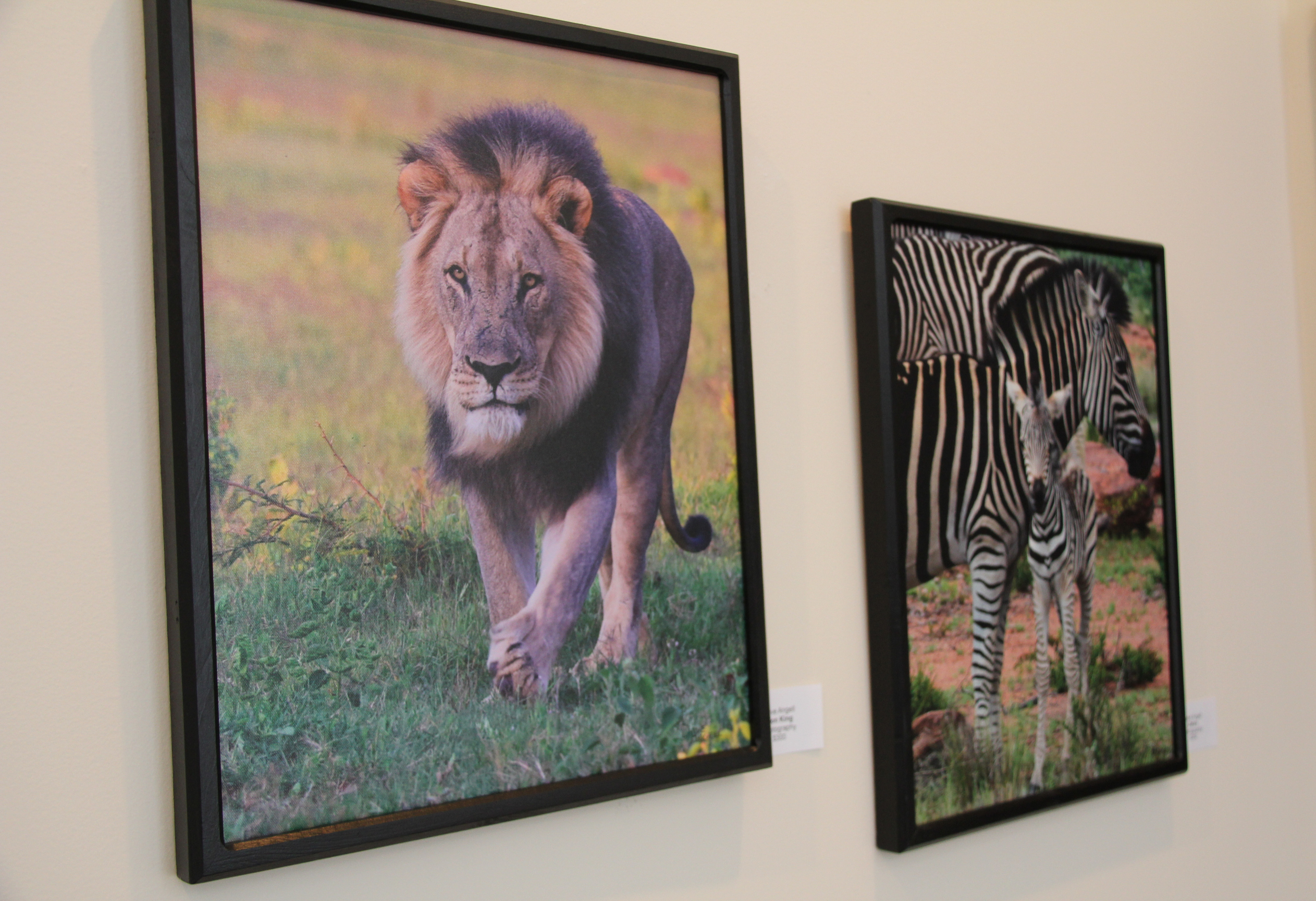
FROM WILD ANIMALS to wildly vivid abstracts, the art of creatives fills four first floor galleries at the Paradise Center for the Arts in historic downtown Faribault. What an array of artwork to infuse color, joy and more into these lingering, colorless days of winter in the season of spring here in southern Minnesota.
“Lion King” and “Zebra” by long-time wildlife and nature photographer Dave Angell of Faribault. (Minnesota Prairie Roots copyrighted photo March 2020)
The incredible talent showcased in these galleries impresses me. Whether created with a camera, a brush, or with a pencil in a sketchbook, this art shows a passion for the craft.
The relatively new digital marquee at the Paradise Center for the Arts in Faribault flashes gallery hours. (Minnesota Prairie Roots copyrighted file photo March 2023)
Only a few days remain to view the current exhibits, which close on Saturday, March 25.
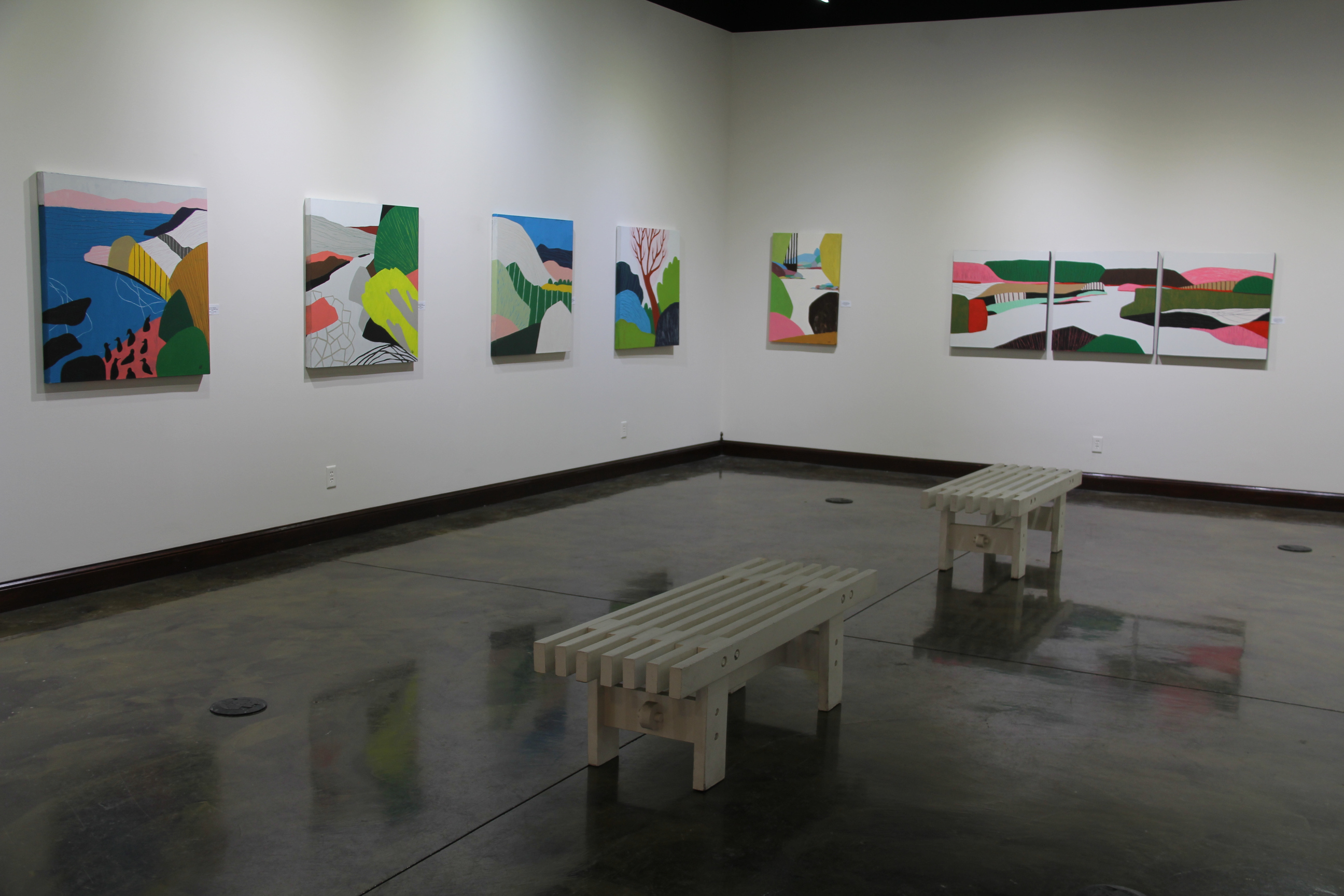
Some of Amanda Webster’s bold abstract acrylic on canvas art showcased at the Paradise Center for the Arts. (Minnesota Prairie Roots copyrighted photo March 2023)
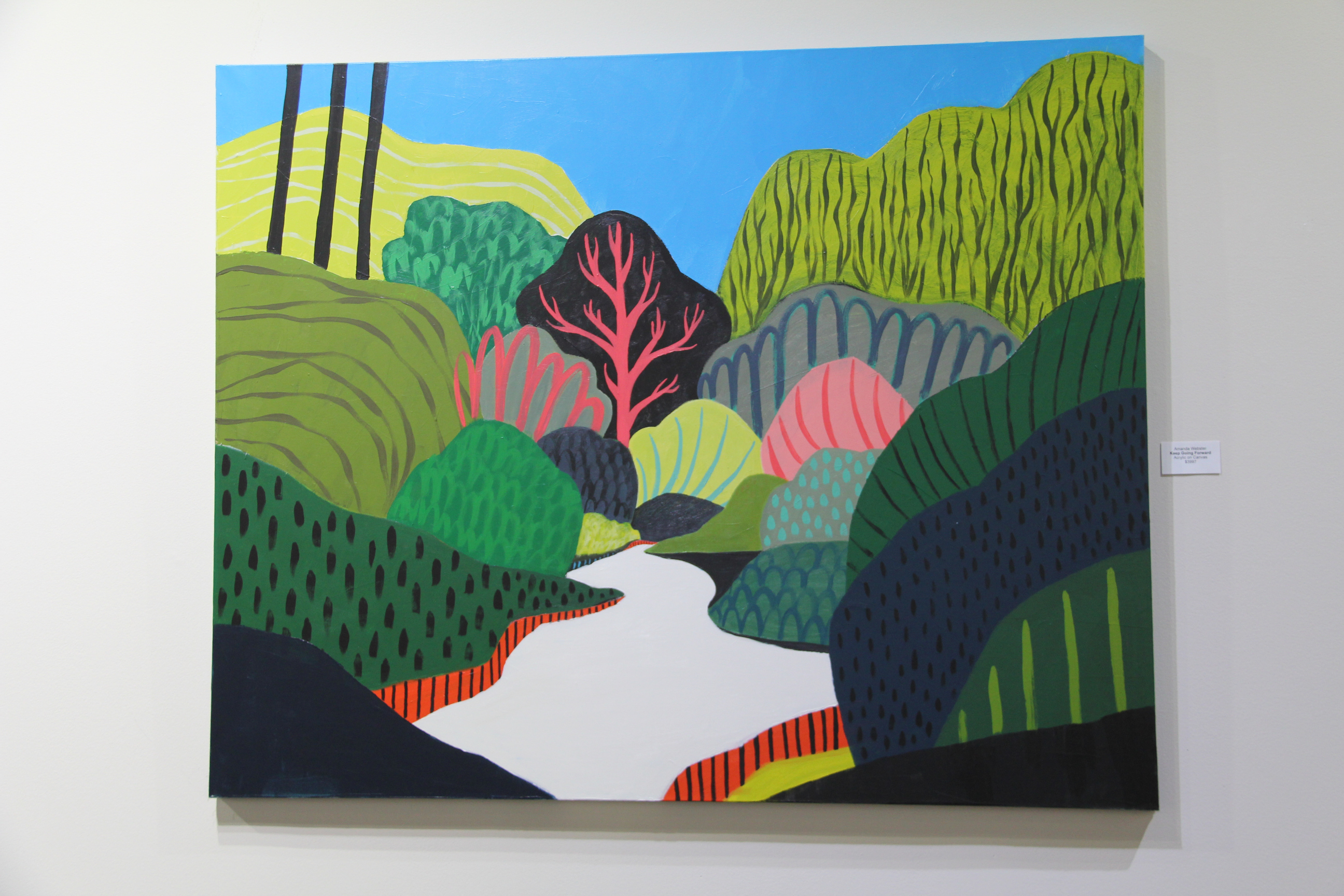
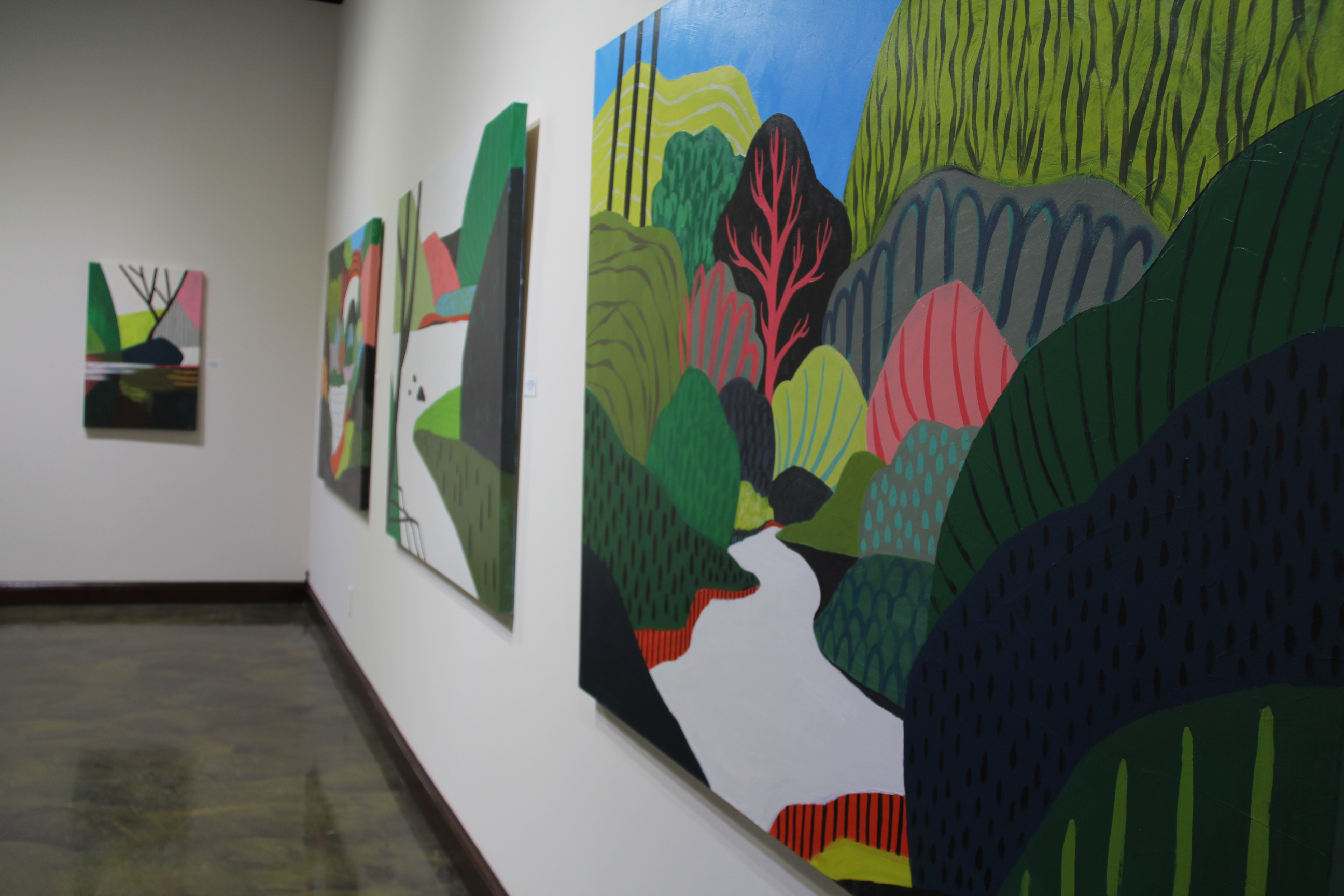
When I stepped inside the main gallery at the Paradise to view the bold acrylic paintings of Twin Cities artist Amanda Webster, I simply stopped. Wow! Her large-scale colorful abstracts jolted me into a happy place.
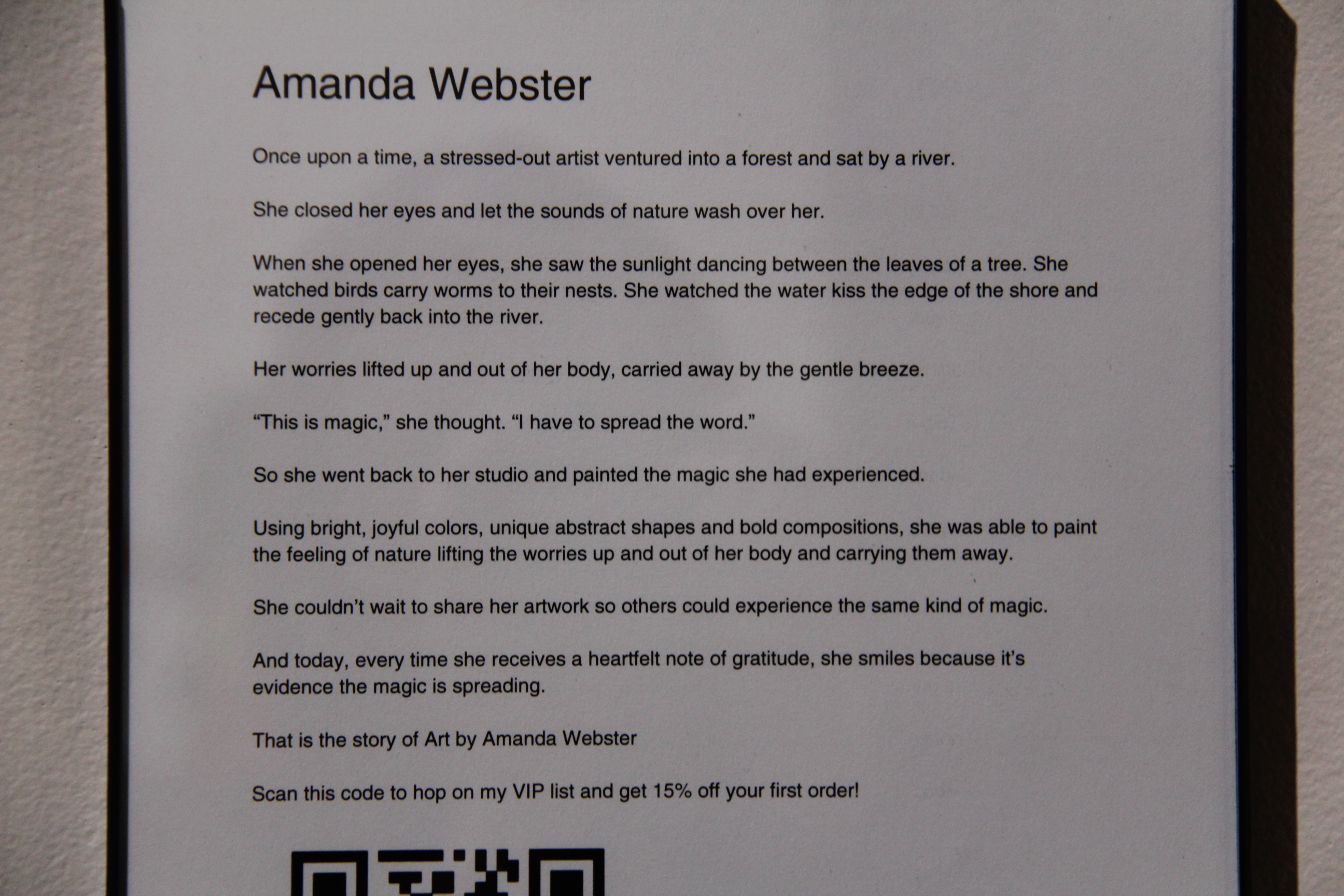
Amanda Webster’s artist statement reveals the story behind her abstract art. (Minnesota Prairie Roots copyrighted photo March 2023)
That I saw Webster’s nature-inspired work on a cold January-like afternoon with a strong, biting wind likely enhanced my reaction. I wanted to walk right into those magical settings and leave this Minnesota winter behind. For an artist’s work to inspire that type of immersive response says something.
The winding white path leads the eye right into Amanda Webster’s vivid acrylic on canvas abstract, “Keep Going Forward.” (Minnesota Prairie Roots copyrighted photo March 2023)
I envisioned Webster’s work in a corporate space, filling a business with energy. I envisioned her art in a medical setting, creating a positive, healing energy. I envisioned her art in my home, if only I had higher ceilings and a more modern, than traditional, house.
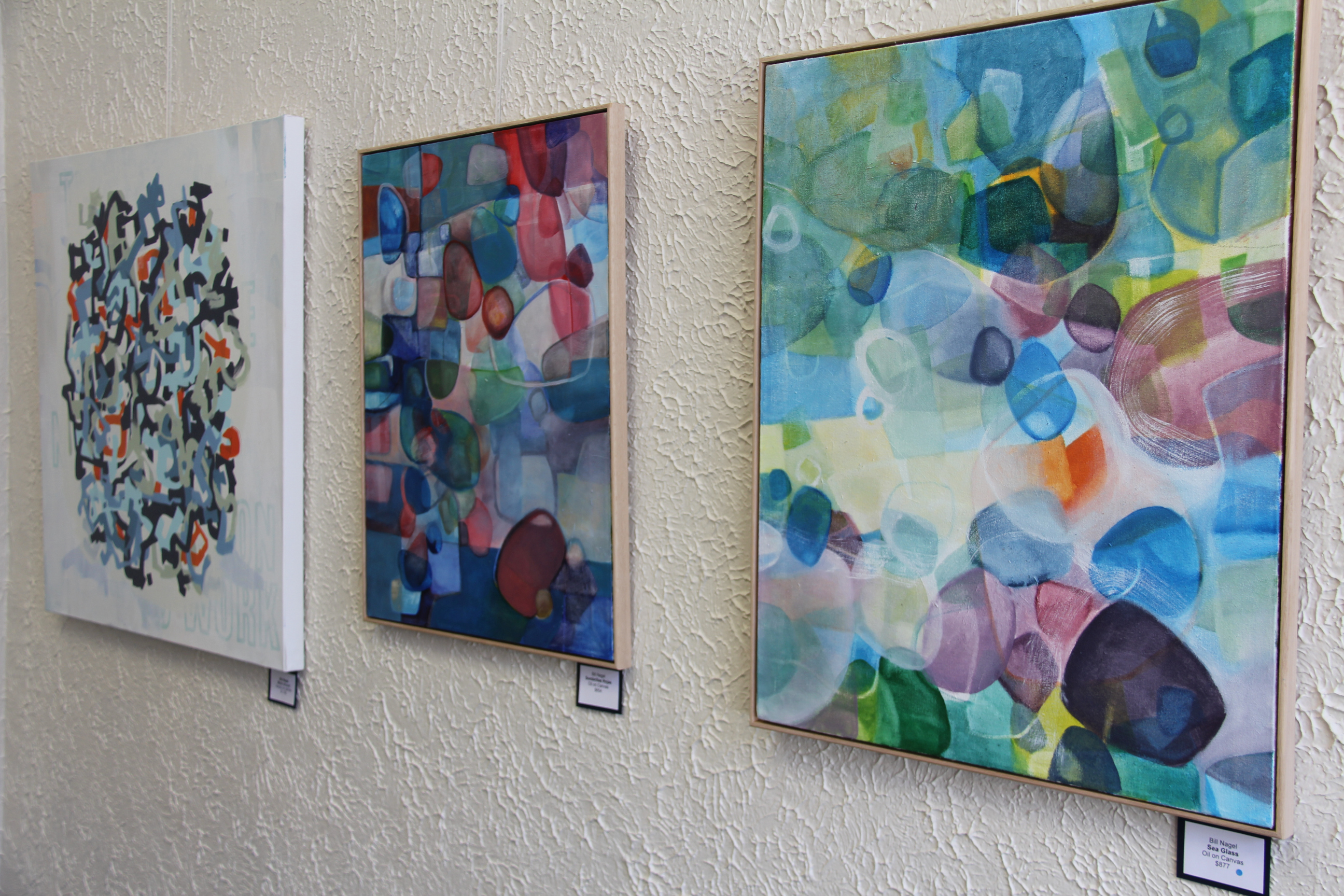
This shows a section of Bill Nagel’s “Walk Around,” an oil on canvas. (Minnesota Prairie Roots copyrighted photo March 2023)
Bill Nagel’s oil on canvas, from left to right: “Work Around,” “Sombrillas Rojas” and “Sea Glass.” (Minnesota Prairie Roots copyrighted photo March 2023)
His abstracts are decidedly different than Webster’s. While still colorful, they are more subdued, more geometric, more defined. At least to my eyes. Everyone views art differently. Nagel’s “Sea Glass” oil painting, especially, felt calming to me. Perhaps it was the mostly blue and green hues. Or maybe the very thought of being seaside was enough to carry me into a tranquil setting of warmth and water lapping against shoreline.
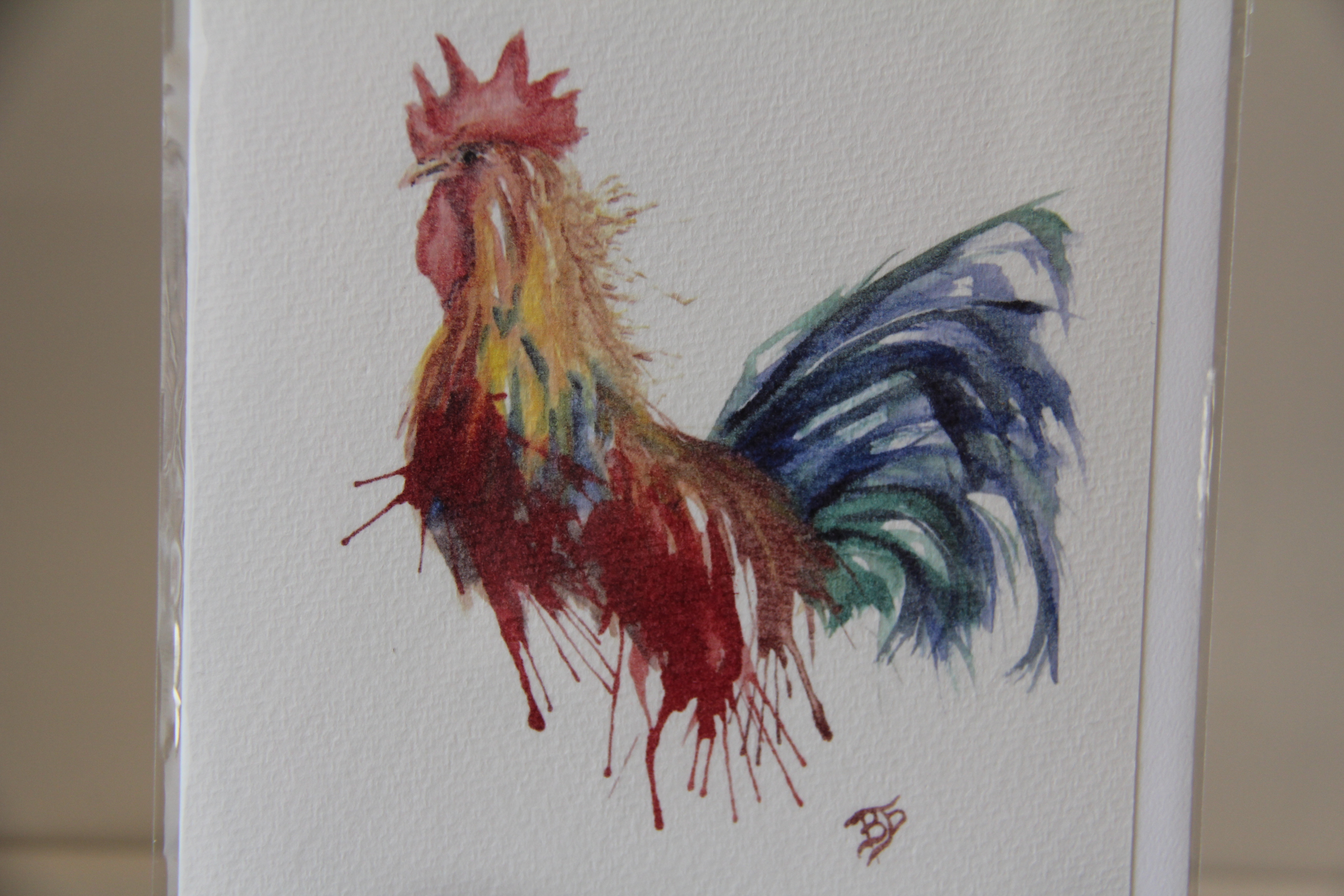
Barb Pendergast created this watercolor of a rooster. (Minnesota Prairie Roots copyrighted photo March 2023)
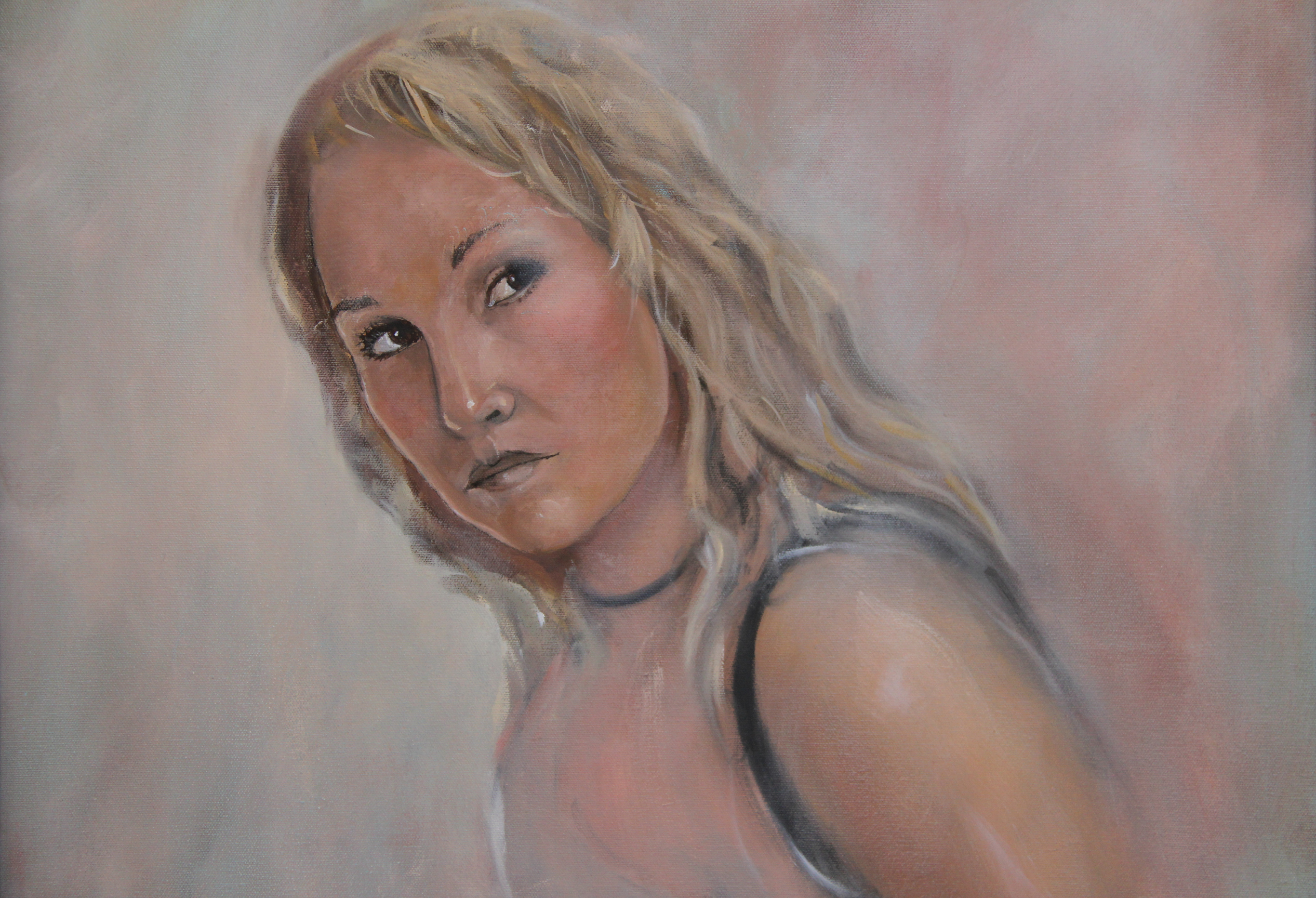
“Jes,” an oil portrait by Ivan Whillock. (Minnesota Prairie Roots copyrighted photo March 2023)
“Haley,” an acrylic portrait by Cheryl Morris. (Minnesota Prairie Roots copyrighted photo March 2023)
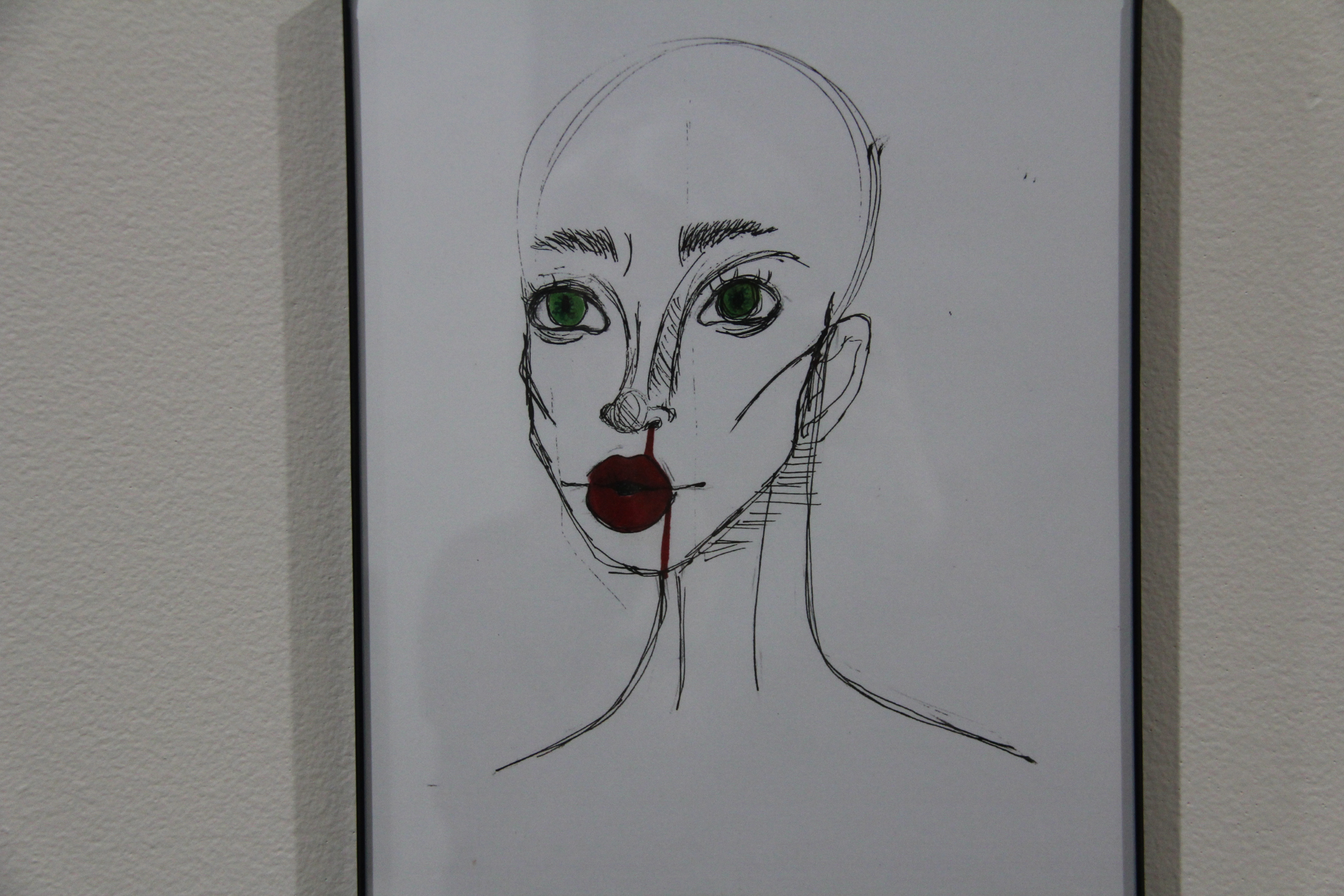
Student artist Syra Romero’s untitled art from a sketch book scan. (Minnesota Prairie Roots copyrighted photo March 2023)
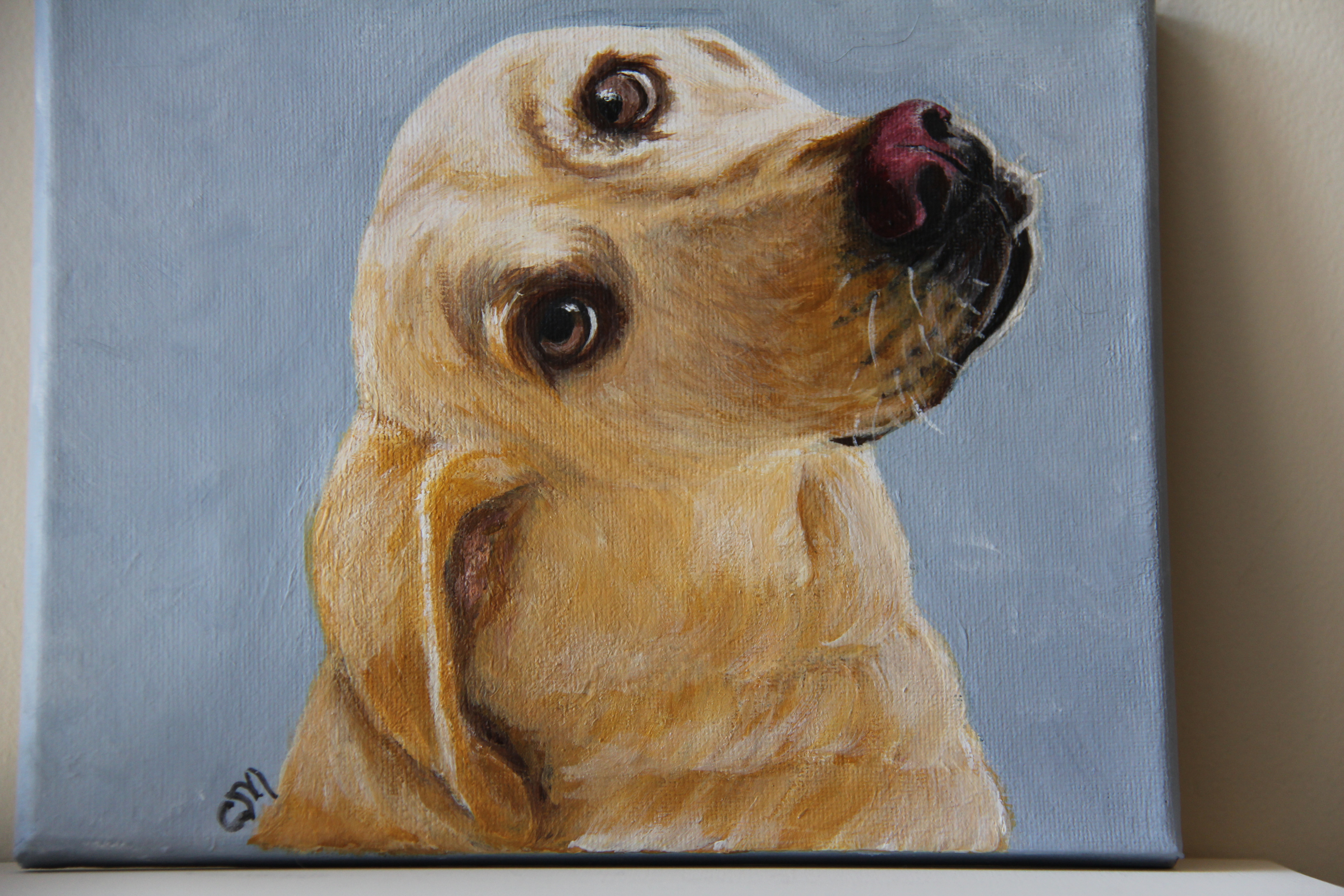
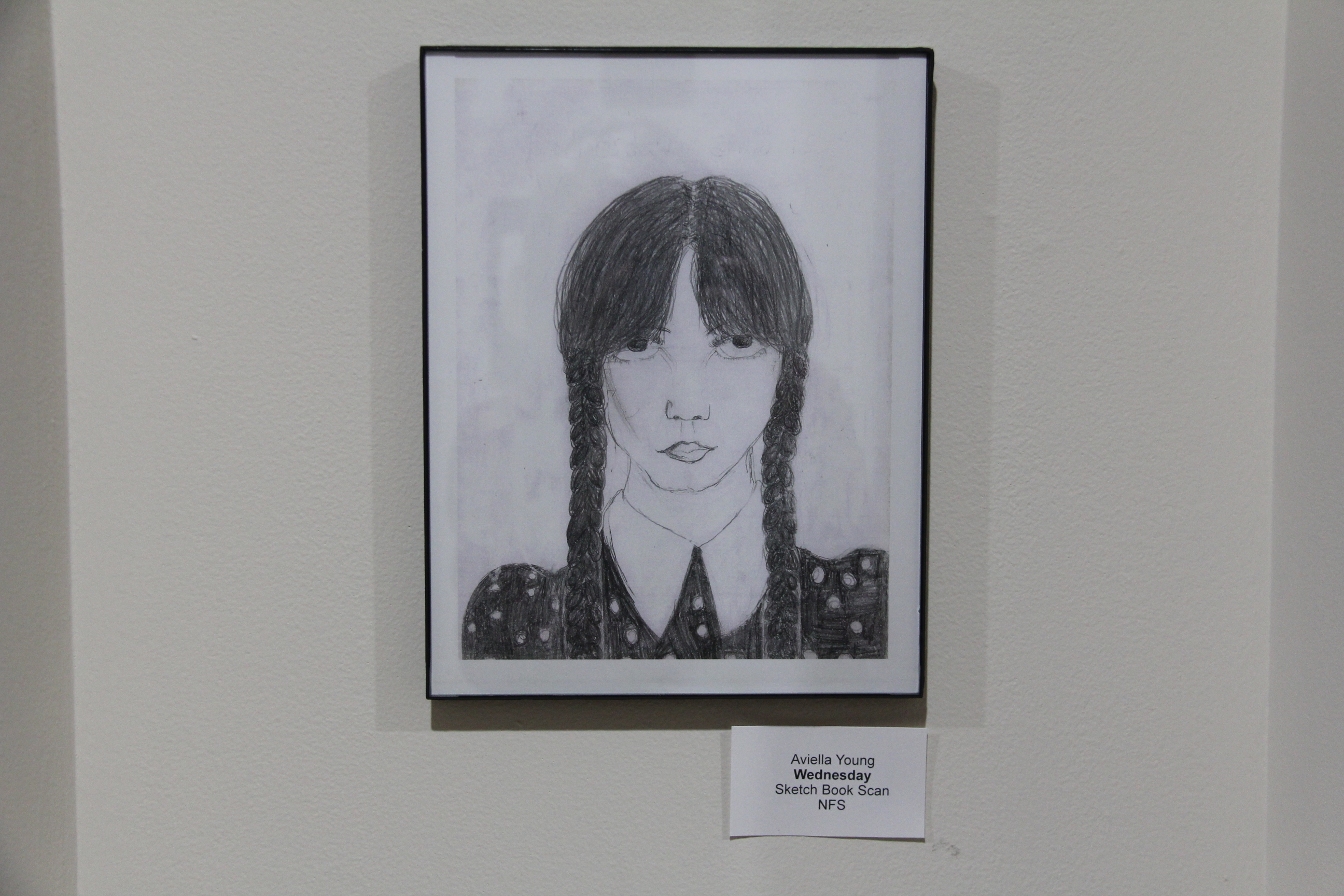
It is the eyes which pulled me in close to view a mini gallery exhibit of art by students in the Paradise’s After School Art Club. The club meets a total of six hours in six sessions with local teaching artists. And what they create impresses. I know I never could have made art like this at their age. Not that I ever had the opportunity to learn. I didn’t.
“Wednesday,” a sketch book scan by student artist Aviella Young. (Minnesota Prairie Roots copyrighted photo March 2023)
But these students, oh, how fortunate they are to pursue their creativity alongside professionals. To learn technique, to be encouraged, to create art is such a gift.
Another gift awaits visitors to the Paradise Center for the Arts in the annual second floor All Area Student Art Show, which runs until April 8. That is one of my favorite exhibits because I love seeing what our young people are creating. Their work is remarkable. They inspire me. That show deserves a solo focus, which will be forthcoming.
“Keep Going Forward,” Amanda Webster’s acrylic, right, leads to more of her abstract paintings. (Minnesota Prairie Roots copyrighted photo March 2023)
For now, head to the Paradise by Saturday, March 25, to take in the current art in the first floor galleries. The Paradise, 321 Central Avenue North, is open from noon to 5 pm Wednesday – Friday and from 10 am – 2 pm Saturday.
NOTE: All art was photographed with permission from the Paradise Center for the Arts.This post includes only a sampling of the art featured in the gallery exhibits.
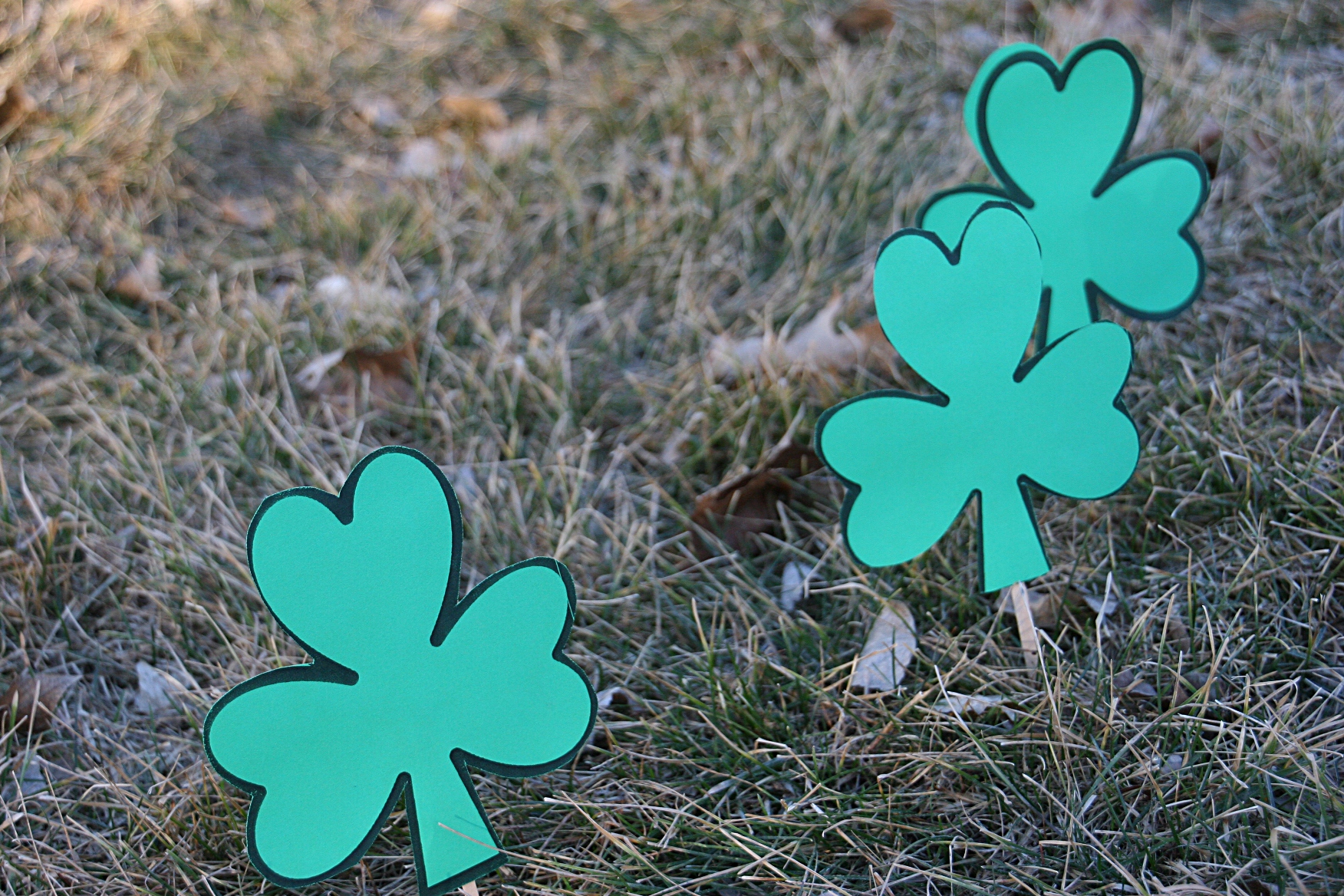
In March 2015, friends planted shamrocks in my yard on St. Patrick’s Day. (Minnesota Prairie Roots copyrighted file photo March 2015)
WITH TWO DAYS until St. Patrick’s Day, there’s still time to pull off some leprechaun magic. The type of magic that will bring joy into someone’s day, just like it did mine eight years ago.
Let me explain by first qualifying that I am neither Catholic nor Irish. But I do like the color green. In fact, it’s my favorite hue. And I do have some really loving friends.
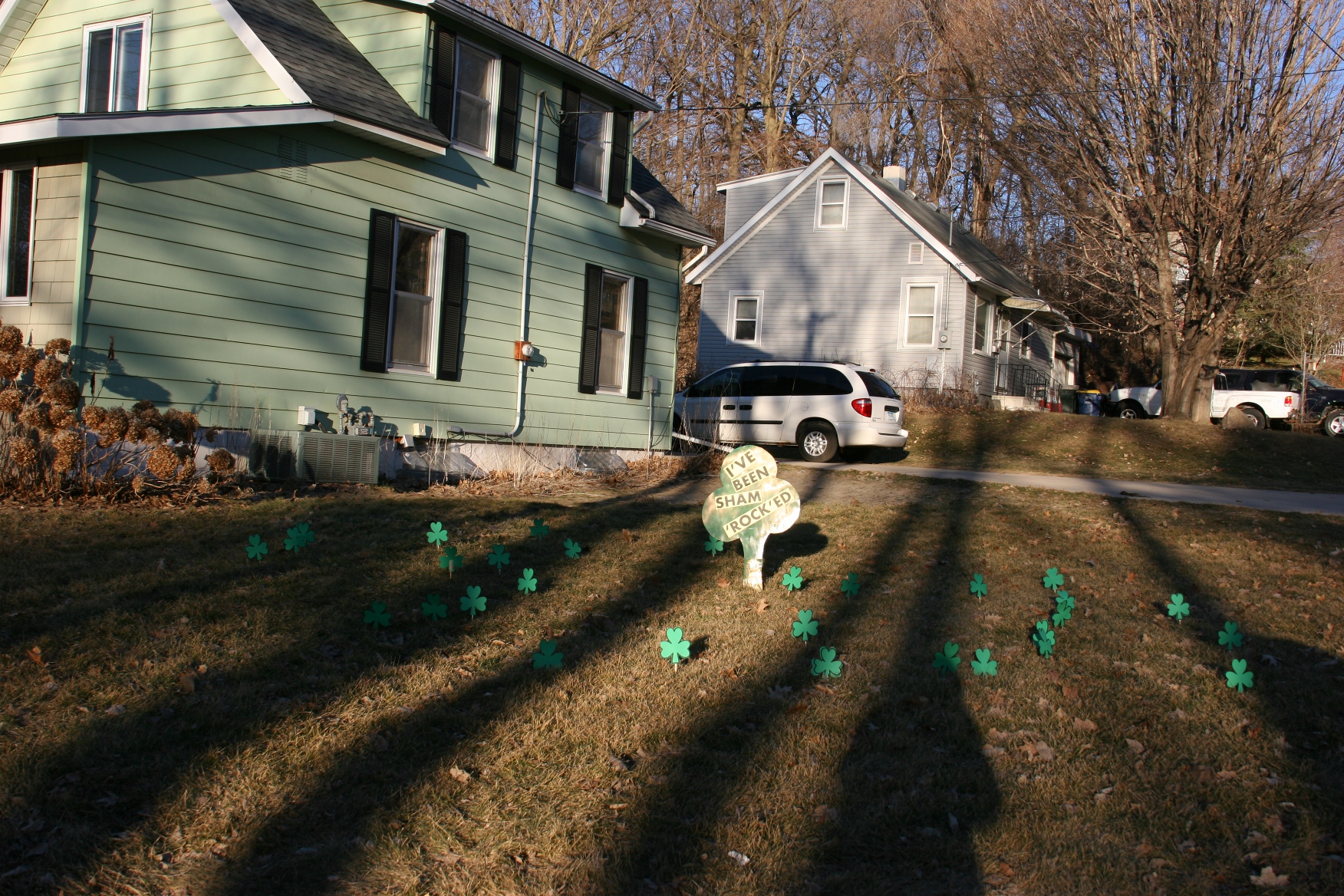
The scene in my yard on St. Patrick’s Day 2015. (Minnesota Prairie Roots copyrighted file photo 2015)
On St. Patrick’s Day 2015, I opened my living room curtains to a field of shamrocks planted in my yard. I dashed outside on that sunny March morning without an inch of snow on the ground (yes, unbelievable in Minnesota) to solve the mystery.
The leprechaun even shamrocked our van. (Minnesota Prairie Roots copyrighted file photo March 2015)
My route took me through the garage and past our van parked in the driveway. Tucked behind a windshield wiper was a shamrock. Onward I went toward that field of green, centered by one oversized three-leaf clover. I’VE BEEN SHAM ‘ROCK’ED read a printed message on that central shamrock.
Immediately I suspected one of two young families. It didn’t take long to determine that Jesse and Tammy and kids had undertaken this St. Patrick’s Day surprise. Young Jack signed his name with his words, “You are smart.” Oh, Jack, you little leprechaun.
This sign explained what was happening in my yard on St. Patrick’s Day. (Minnesota Prairie Roots copyrighted file photo March 2015)
The happiness I felt, the overwhelming love I felt for these dear, caring friends touched me in a way that left me smiling all day. That they would craft these paper shamrocks and then volunteer Jesse to sneak into our yard before daybreak, before he commuted to his job in the metro, to plant these clovers impressed me. What kindness. What love.
I realize the time remaining until St. Patrick’s Day is short. But if you have the time and inclination, I encourage you to “shamrock” a neighbor, a friend, anyone in need of a little joy. Personalize the shamrocks with messages that uplift. I assure you, the recipient will feel gratitude for your loving act of kindness. I did. Eight years later, that March 17 remains memorable. I was gifted not with the luck of the Irish, although shamrocks symbolize good luck, but rather with happiness by a friendly family of leprechauns.
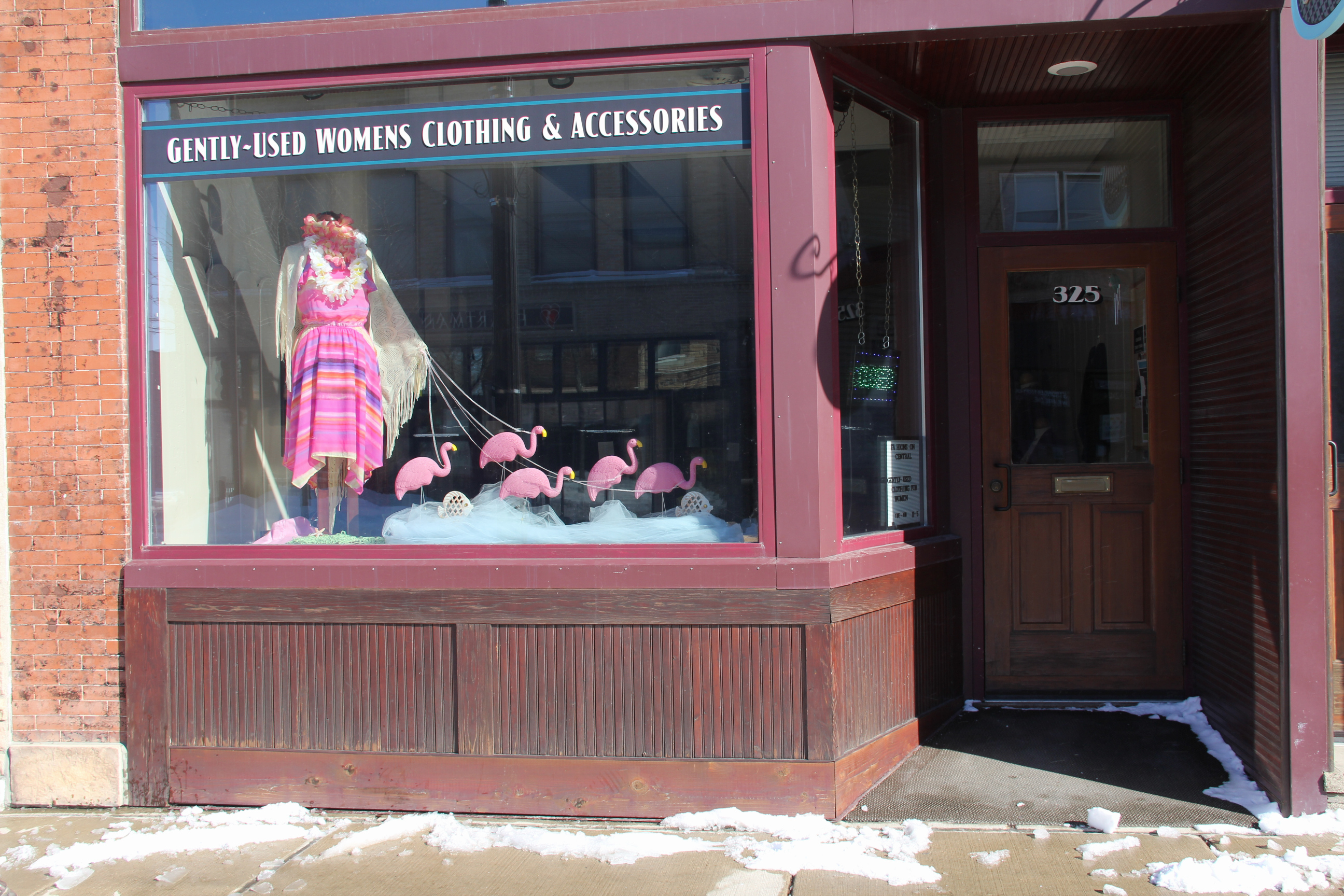
Framed in the front window of Fashions on Central, this tropical display was created by volunteer Ann Meillier for the Buckham West (senior center) retail store. Ann also crafts displays inside this primarily volunteer-run business. (Minnesota Prairie Roots copyrighted photo February 2023)
DECIDEDLY NONTROPICAL MINNESOTA seems an unlikely place to find wild or captive flamingos. And it is…with the exception of the Minnesota Zoo in Apple Valley and Como Park Zoo in St. Paul and their resident flamingos. While those two zoos are not all that far from Faribault, we have our own flock right here. Not real, of course, but fake flamingos, which are good enough for me in the midst of a particularly long and snowy Minnesota winter.
The Fashions on Central Facebook page features this post about its flamingos: Walk like a flamingo! Walk WITH flamingos! YOU ARE FLAMAZING! (Minnesota Prairie Roots copyrighted photo February 2023)
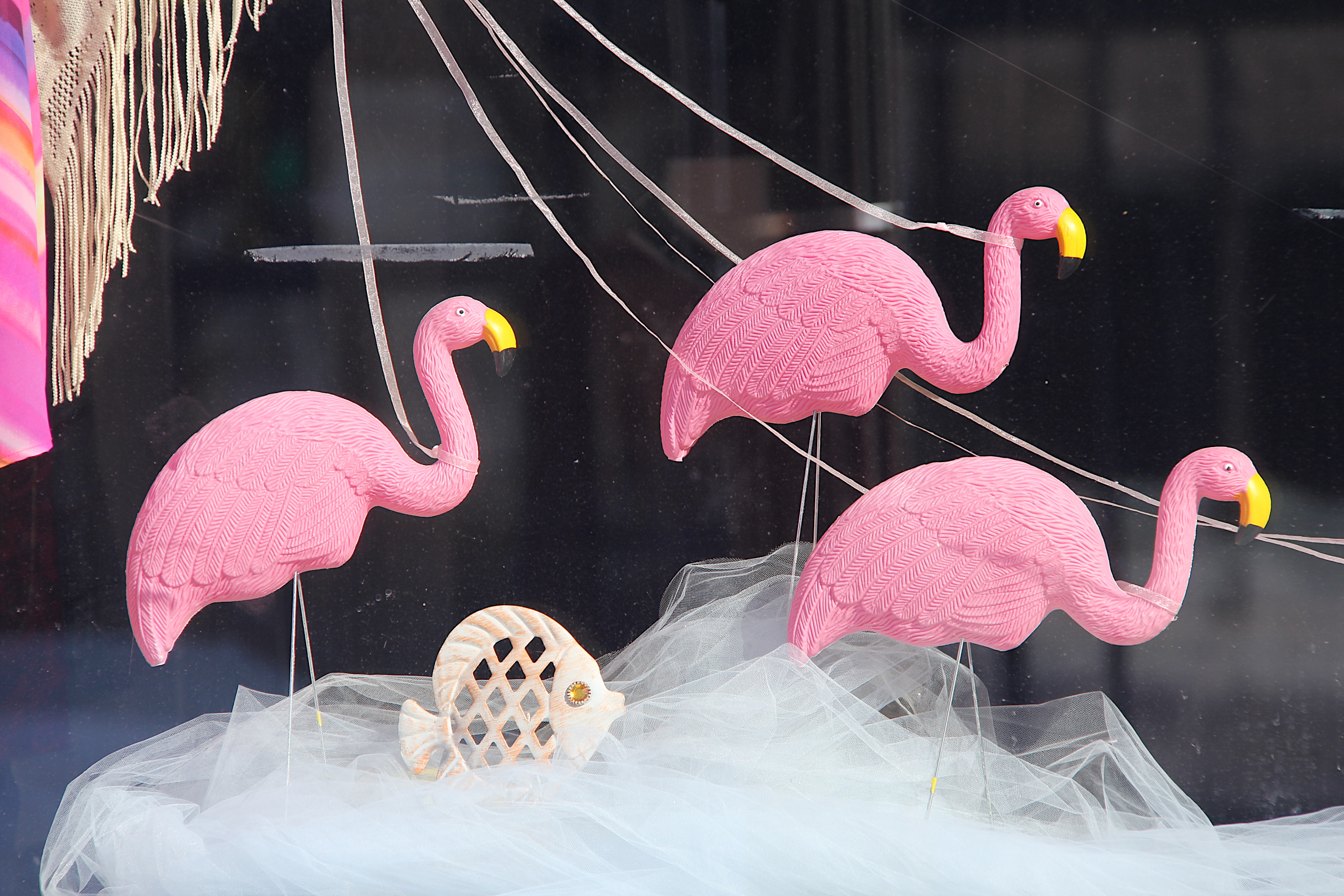
In the storefront window of Fashions on Central, a fashionably-dressed headless mannequin grips the leashes of five plastic flamingos wading in a sea of gauzy fabric. With two fish among them and a starfish to the far left, I recognize this as a tropical scene. Yet my imaginative snowbanked mind drifts to snowdrifts enveloping those warm weather birds.
Enough of that thinking.
Fashions on Central, located at 325 Central Ave. N. in downtown Faribault, is open from 11 am – 5 pm Tuesday through Friday. (Minnesota Prairie Roots copyrighted photo February 2023)
I appreciate the creative efforts at Fashions on Central, a women’s clothing store owned and operated by Buckham West. Proceeds from the sales of gently-used clothing, shoes and accessories go directly back to the local senior center. I love this environmentally-friendly mission of recycling donated, used clothing. I’ve shopped here and, in fact, found a like-new gray wool pea coat for a bargain $7. It’s kept me warm for multiple Minnesota winters already.
While I’m not in the market for beach clothes like those worn by the store-front mannequin, I know others may be as they plan spring break vacations. No matter, this tropical scene gives me a visual respite. If I focus hard enough and long enough, I can imagine myself ocean-side, hot sun warming my skin, leis layered around my sweaty neck, fish swimming, flamingos flaunting.
This streetscape scene shows snow along the sidewalk and street curbs, a contrast to the tropical scene at Fashions on Central. (Minnesota Prairie Roots copyrighted photo February 2023)
And then, if I walk several blocks south from Fashions on Central to Division Street and aim straight ahead rather than turn right to Buckham West, I can escape, too. Inside Buckham Memorial Library, books set in tropical locations await me. Yes, there’s always a way to flee winter in Minnesota, even when you can’t leave.






























 Minnesota Prairie Roots
Recent Comments