An empty buggy parked in a field of sunflowers was part of the IRIS Sunflower Garden planted in Faribault for the first time this summer. It offered a quiet place to contemplate, to grieve, to honor. (Minnesota Prairie Roots copyrighted file photo July 2023)
TO LOSE A CHILD, whether in utero, to stillbirth, to SIDS or some other disease, illness or tragedy is to experience profound grief. It is unfathomable, yet reality for too many. It is heartbreaking and gut-wrenching and painful beyond words.
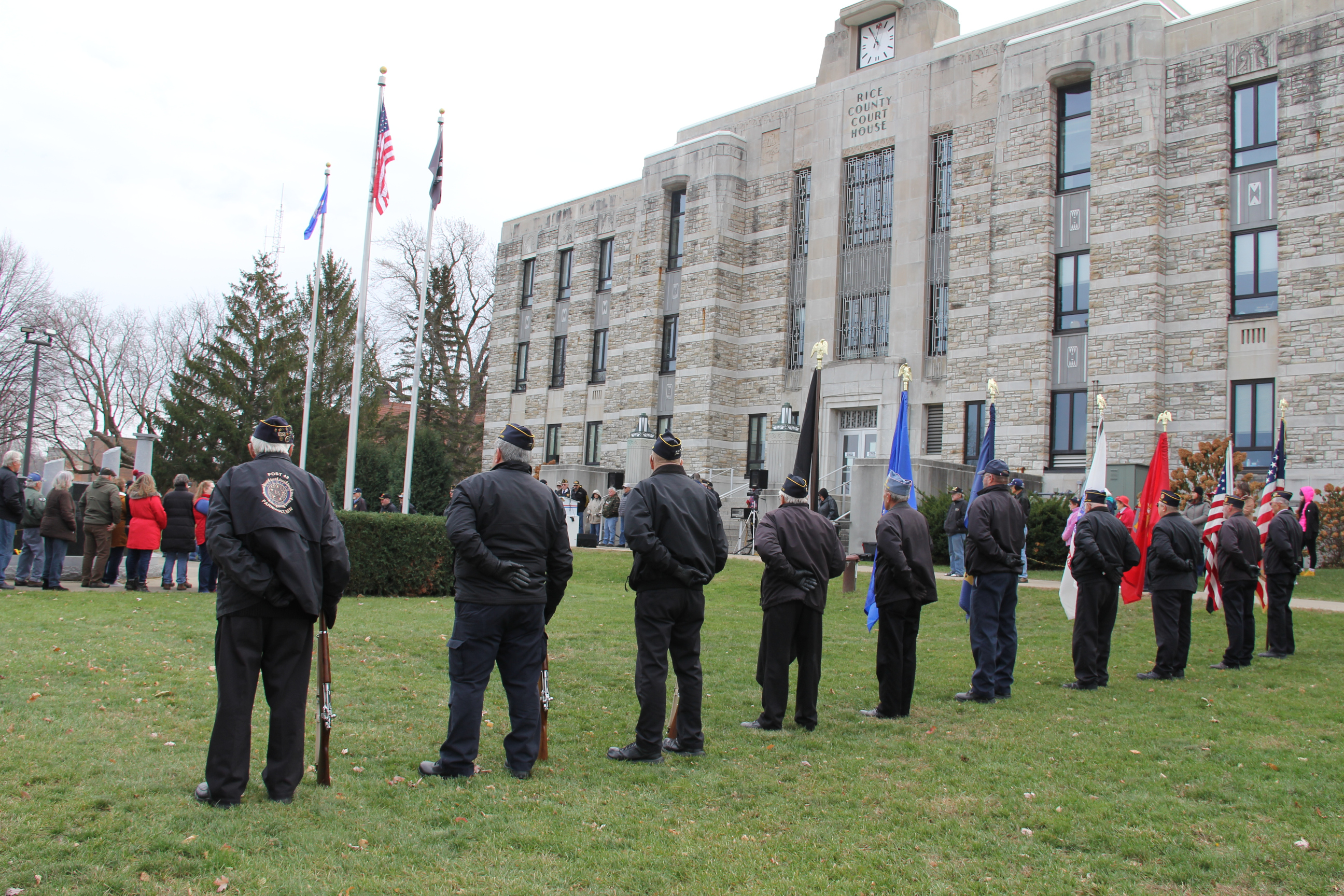
The IRIS house is located in central Faribault near downtown and near the Rice County courthouse and government services building. (Minnesota Prairie Roots copyrighted photo October 2023)
This evening at 7 pm, Faribault-based Infants Remembered in Silence (IRIS) hosts a Wave a Light Gathering to honor the memories of those children lost too soon, whether pre-birth, in infancy or in childhood. October 15 is Pregnancy and Infant Loss Remembrance Day. People around the world are invited to light a candle honoring those children in a collective show of love, support and care.
This moving sculpture defines the front yard flower garden of IRIS, where iris are currently blooming. Hearts will be placed inside the cradle this evening. (Minnesota Prairie Roots copyrighted photo October 2023)
Locally that will happen at the IRIS office, 218 Third Avenue. The Faribault event includes the sharing of poems, songs and readings plus the placing of hearts in the empty cradle of the on-site bronze statue, “I Knew You In The Womb.” Attendees should arrive with candles and with hearts (with the names of lost little ones written thereon). Those hearts will be added to IRIS’ permanent collection.
More iris bloom in a side garden of IRIS. (Minnesota Prairie Roots copyrighted photo October 2023)
IRIS, a non-profit which started in my community, has grown to a world-wide outreach. It supports, advocates, educates, serves, comforts and much more and is truly an invaluable resource for anyone grieving the loss of an infant, a child.
Sunday morning two roses lay inside the otherwise empty cradle of the IRIS sculpture. (Minnesota Prairie Roots copyrighted photo October 2023)
So this evening, light a candle. And if you see blue and pink lights lighting a public structure like the 35W bridge, the Lowry Avenue Bridge or the IDS Center, all in Minneapolis, think of the sweet babies, the darling children, the dear little ones lost, and, oh, so loved.
Flowers were covered to protect them from frost Monday morning at The River Church, Faribault. (Minnesota Prairie Roots copyrighted photo October 2023)
FROST LAYEREDWINDOWS of the neighbor’s 1970s Ford Gran Torino Monday morning. Frost also skimmed roofs, spotted lawns, nipped uncovered plants.
October 9 marked the first light frost in Faribault, a clear indication of winter’s impending arrival.
There was a time when I would have raced around the evening before a predicted frost, covering plants with old sheets. The desire ran strong to extend autumn by keeping outdoor flowers and other plants alive. No more. I no longer plant flowers in pots like I once did given the cost and work. Rather, I rely on primarily perennials to splash color and greenery into my yard.
Cyclamen. (Minnesota Prairie Roots copyrighted photo October 2023)
Only the oregano, rosemary and cyclamen, which I winter over, needed protection from Monday’s below freezing temps. So Randy carried those pots into the garage in the dark of Sunday evening.
Monday morning we arose to that first frost, turned on the furnace for the first time this fall, then slipped on our jackets, stocking caps and gloves and headed to Central Park for our morning walk. City employees were already there, shortly after 8 am, loading picnic tables and park benches onto a trailer and pick-up truck bed for winter storage.
Across the street, a lawn service company edged the sidewalk of grass at an apartment complex, making for easier snow removal come winter.
Across the street from the apartments, blankets and tarps draped flowers and plants at The River Church.
In the brilliant sunshine of this cold October morning, we walked away from and around Central Park, pausing to chat briefly with a Korean War veteran shoving his walker along the sidewalk. It’s part of his morning routine. He was an engineer in the war, tasked once with building a bridge in Korea. His brothers also served in various wars. All came home.
Home. On this day this veteran shared how he misses his lake home, how his children convinced him to move into cooperative senior living housing by the park. He shouldn’t have listened to his kids, he said, sadness tinging his voice.
Enjoying a summer concert at Central Park. (Minnesota Prairie Roots copyrighted file photo July 2020)
Change. It can be tough. Randy and I continued on in the inevitable change of seasons. Past the band shell, where seniors and others once settled onto park benches, picnic tables and lawn chairs for summer concerts. And then back to the van for the drive home in the bright sunshine.
The backyard maple, still mostly green in early October. (Minnesota Prairie Roots copyrighted photo October 2023)
Back home I pulled laundry from the washing machine, carted the basket up the basement stairs, opened the door to the boldness of October, to the backyard maple still mostly green. It’s been an odd autumn of up and down temps which messed with fall colors.
I unwound the clothesline, then began clipping laundry on the line. Methodically. Placing heavier items like bluejeans in the full sun. Soon my fingertips felt the cold—from the cold morning and the dampness of the cold clothes.
And then, when I finished, I stepped inside the garage, carried out the pots of oregano, rosemary and cyclamen into the balminess of 40-degree temps.
Just inside the entrance to Maple Lawn Cemetery, a sign directs visitors to Taopi’s gravesite. (Minnesota Prairie Roots copyrighted photo October 2023)
MY GOAL WAS SIMPLE—to write a piece honoring Indigenous Peoples’ Day. My focus, I initially decided, would be on Taopi, a member of the Little Crow Band of the Mdewakanton Dakota Tribe. Taopi is perhaps best known in Faribault, where he lived for a while and is buried. A small Mower County town near the Iowa border also honors him in name. But my writing expanded beyond Taopi.
Taopi’s grave, and that of his daughter, are easily spotted via the propped poles. (Minnesota Prairie Roots copyrighted photo October 2023)
Recently I visited Taopi’s gravesite at Maple Lawn Cemetery. My interest piqued. I wanted to learn more about this Dakota leader and his importance in my community and in Minnesota history. His place in history connects to the US-Dakota War of 1862, a war all too familiar to me. My native Redwood County, where the Lower Sioux Agency was located, centered that deadly, short-lived conflict between white people and Native Peoples.
Now, viewing this war through a lens not tinted primarily by a white perspective, I understand the injustices. Decades ago, when I wrote a high school term paper on the war, I admittedly wrote a biased, unbalanced report based on biased, unbalanced research sources.
With time and maturity came the realization of the great injustices done, first when the US government acquired Indigenous Peoples’ land at a seemingly low cost and then failed to honor those treaties. The treaties opened nearly 24 million acres to white settlers. It was the Natives, the original inhabitants of this land, who found themselves cheated of government annuities, starving, pushed off their land and confined to strips of land along the Minnesota River. That includes the Wahpekute, a small band of the Dakota who lived in south central Minnesota, including the Faribault area. I live just below a Faribault city park called Wapacuta.
An exhibit at the Rice County Historical Society Museum. Artifacts from Indigenous Peoples are also displayed in cases. (Minnesota Prairie Roots copyrighted photo October 2023)
At the time of the US-Dakota War of 1862, Taopi was in the thick of all of it as a “farmer Indian,” the name tagged to Native Peoples who opted to farm, adapting the ways of the white man in occupation, dress and sometimes religion. He lived near the Lower Sioux Agency, relocated to a reservation there following the Treaty of Mendota in 1851. Those who continued with their hunting and fishing culture were known as “blanket Indians.” Taopi assuredly felt the animosity of his own people for the lifestyle and other choices he made.
A woodcarving of Taopi by noted Faribault artist Ivan Whillock is for sale in the Rice County Historical Society Museum’s gift shop. One is also displayed in a museum exhibit on Taopi. (Minnesota Prairie Roots copyrighted photo October 2023)
I can only imagine the pressure Indigenous Peoples experienced as white settlers moved into the area. The change, at times, had to feel overwhelming. Life would never be the same. Long-time homelands were lost, tradition and culture endangered. And so Taopi and others adapted, likely accepting that change was inevitable.
The gravesite of Taopi and his daughter, Cornelia Whipple Taopi (named after Cornelia Whipple, married to Bishop Henry Whipple). (Minnesota Prairie Roots copyrighted photo October 2023)
But one thing that remained constant with Taopi was his focus on peace. He opposed the war and was a leader in the Dakota Peace Party. He is credited with saving the lives of many.
Yet, at war’s end, Taopi found himself caught—disliked by his peoples, who considered him a traitor, and disliked by whites holding a deep animosity toward any Native person. In Faribault, though, he had a friend in Bishop Henry Whipple, a strong advocate for First Peoples, and in town founder Alexander Faribault. Eventually, Taopi and other Natives moved onto land owned by Alexander Faribault, living under his protection on a bluff overlooking the Straight River. Taopi died in 1869. In 1895, the Indigenous Peoples of Faribault were displaced once again, moved to the Lower Sioux Reservation. They had always existed on the fringes in Faribault, never fully-accepted by most residents while under the protection of the bishop and town founder.
Dana Hanson’s “Father’s of Faribault” (left to right, Alexander Faribault, Taopi and Bishop Henry Whipple) featured on a bench along Central Avenue in downtown Faribault. The same artwork hangs inside Buckham Memorial Library. (Minnesota Prairie Roots copyrighted photo October 2023)
Sources: The First Cathedral, an Episcopal Community for Mission by Benjamin Ives Scott and Robert Neslund; the Minnesota Historical Society website; and the Rice County Historical Society Museum’s Taopi display.
Purple spotlights transformed trees to shades of purple. (Minnesota Prairie Roots copyrighted photo September 2023)
IN THE EARLY EVENING DARKNESS of Faribault’s Central Park, on an unseasonably summery September Saturday, I felt enveloped in a magical world of autumn leaves sparkling purple. The setting seemed surreal, magical, enchanting. And the feeling felt hopeful.
Musician Steve Huber performed first followed by Joe and the Mechanics in the Central Park Bandshell. (Minnesota Prairie Roots copyrighted photo September 2023)
I was among hundreds gathered for the first-ever Light of Hope Celebration to recognize those lost to cancer, those battling cancer, those who’ve survived cancer…and those of us who love (d) them. Purple spotlights shone on trees centering the park, creating a serene, yet celebratory, scene while musicians performed in the bandshell, speakers spoke and kids engaged in activities just for them.
An autumn-themed luminary for a cancer survivor. (Minnesota Prairie Roots copyrighted photo September 2023)
My focus, though, was on the hundreds of luminaries lining the sidewalks that edged and crisscrossed this central community gathering spot. I walk here daily, among the towering trees and scampering squirrels. The din of traffic, the presence of others, the locations of St. Vincent de Paul and the Cathedral of Our Merciful Saviour across the streets are all reminders that Faribault truly is about community. We need one another. And I felt, at this event, a strong sense of community, of coming together, of leaning on one another.
Gathering to talk, to listen to music, to celebrate. (Minnesota Prairie Roots copyrighted photo September 2023)
I felt such love as I hugged the local x-ray tech who did my recent mammogram. I assured her my results were good. She and I have a history, meeting several years ago in the hospital ER when I broke my wrist. I hugged others, too, whom I haven’t seen in a while. It felt right, to reach out and encircle these individuals who, at some point, have been there for me, whether personally or professionally. And if my cousin and a friend, who are currently undergoing chemotherapy for aggressive, advanced breast cancer, had been there, I would have held them close in prolonged hugs also.
I saw so much love written upon luminaries by those who lost loved ones to cancer. (Minnesota Prairie Roots copyrighted photo September 2023)
Twenty years ago I was on the receiving end of many hugs as I stood inside my hometown church, St. John’s Lutheran in Vesta, embracing family and friends at the death of my dad. He died of esophageal cancer and other health issues. At the cemetery, I wrapped my arm around my mom, shaking with cold and grief on that brutal winter day. She was a breast cancer survivor.
Many family—including my husband, a sister and sister-in-law—and friends have survived cancer. Many family—including a dear nephew and aunt—and friends have died of cancer. And today many in my circle are battling cancer, including a much-beloved cousin, a brother-in-law and a dear friend. Cancer is brutal and awful and horrible. And it seemingly spares no family.
A beautiful hope sign suspended in the center of the park. (Minnesota Prairie Roots copyrighted photo September 2023)
But there is hope. In the support of others. In events like the one on Saturday organized by the Light of Hope Cancer Foundation with a mission “to empower local cancer patients and families to focus on treatment and healing by providing immediate and practical financial support while advocating and fundraising for research, education and cancer prevention.” There is strength in a supportive and caring community.
A survivors’ tent, right, offered survivors of cancer a place to gather, celebrate and enjoy cake. (Minnesota Prairie Roots copyrighted photo September 2023)
And there is hope, too, in knowing options are available for treatment. That is also personal for me as my uncle, Dr. Robert M. Bowman, developed the drug Letrozole (Femara), approved by the Food and Drug Administration in 1998 to treat certain types of breast cancer in post-menopausal women. Today, as my retired chemist uncle lies in hospice suffering from Parkinson’s, his wife, my beloved Aunt Dorothy, tells me how grateful Robin feels for having created a life-saving drug. He gave women hope.
I shot this scene shortly before leaving at 7:45 pm. So beautiful…the luminaries, the trees morphed purple by spotlights. (Minnesota Prairie Roots copyrighted photo September 2023)
As I walked among the hundreds of luminaries, first in the light of early evening and then in the darkness, I remembered, grieved silently, contemplated, celebrated… And I felt hope. Strong, beautiful, powerful hope.
It was a milestone day for me in managing the neurological issues I’ve faced following a *viral infection in early January. Twenty-one therapy sessions later and I’m much-improved. Not cured. Not fixed. Not all better. I’ll never be the same as I was pre-virus. But, through targeted therapy exercises, a lot of hard work and simply easing back into life, I’ve built my tolerance for everyday experiences. I can better handle sensory input. I can walk without feeling unbalanced. I can manage beyond sitting in a room with the curtains drawn to shut out light, windows closed to keep out noise.
I still have challenging days. I still struggle. But I am in a much better place than even a month ago.
And so I graduated. Not because I wanted to leave Courage Kenny and my incredibly knowledgeable, supportive and caring therapist. But Ryan and I mutually agreed that I was ready. And so he asked, on that final day together, whether he should cue “Pomp and Circumstance” on his laptop, the same laptop he used to introduce me to virtual reality roller coasters as part of my therapy. I told him we could pass on the music. And I am happy to pass on roller coaster rides.
But I did bring celebratory homemade carrot cake cupcakes with homemade cream cheese frosting. Ryan laughed when I walked through the door carrying that box of cupcakes to share with the Courage Kenny team. When I’d asked the week prior if we would have graduation cake, he said only if I brought it. So I did, along with a thank you card and homemade chocolate chip cookies for this professional who worked tirelessly to improve my health. I always felt like we were a team.
And now, like any new graduate, I hold the knowledge and tools that will help me handle daily living. I participated in class (kinda hard not to when you’re the only student). I did the assigned homework each week. I followed through by getting back into the real world, sometimes failing in my efforts, sometimes succeeding. I’ve done my best, through tears and discouragement and struggles, to rise above the challenges. And now I’ve graduated. Onward.
* Even though I self-tested negative twice for COVID in January, my primary care doctor believes I had COVID, the cause of my multiple, ongoing neurological issues.
A portion of the program for the celebration honoring Robert L. Crandall. (Minnesota Prairie Roots copyrighted photo September 2023)
AS I SIPPED ROOT BEER through a colorful striped straw, the soda mixing with melting vanilla ice cream, I thought of the 93-year-old who enjoyed this simple summer treat. Bob, born Robert Lee Crandall, delighted in root beer floats. And on this first day of autumn, in the Great Hall of Buckham Memorial Library, an appreciative group gathered to honor this Faribault man for the legacy he left in his community.
Crandall, who died in January 2021, gifted nearly $3 million to the City of Faribault, designated specifically for the benefit of his beloved local library. That mega gift came in four installments totaling $2,940,927.
Anne Pleskonko, right, who knew Bob Crandall personally, presents a mock check for nearly $3 million to the Library Advisory Board, city officials, Library Director Delane James and others on Saturday.
What a gift. What a reason to celebrate with music (by Mike Hildebrandt, Dallas Musselmann and Doug Madow), memories and presentation of an over-sized check representing Crandall’s generosity. He will also be recognized with a permanent plaque to be installed in the library entry. Grateful words cast thereon will honor his gift and its impact on future generations.
Buckham Memorial Library, Faribault. (Minnesota Prairie Roots copyrighted file photo November 2022)
The monies, according to Library Director Delane James, will be used in three ways, in a plan created by the Library Advisory Board and approved by the Faribault City Council: A third of the original gift will become a permanent endowment that benefits both present and future library users. Another third will be used to upgrade the library’s current space. James cited technology, hearing loop system and acoustic treatments upgrades to the Great Hall, for example. And the final third of Crandall’s original gift will go toward equipping a future maker space incubator.
I’d like to think Crandall, old enough to remember the Great Depression as a young boy, would approve of this sound financial plan. He spent hours at the library, quietly reading and studying books about investing. And he kept up on the daily stock market, said Anne Pleskonko, who met Crandall six years ago in her then-job at Milestone Senior Living. She got to know the man behind the legacy—a man fond of John Wayne movies and television series like “The Andy Griffith Show” and “Columbo”.
She spoke of his sense of humor, of his walking and biking the Sakatah Singing Hills State Trail, of his fondness for bacon, molasses cookies and pickled pigs’ feet. And root beer floats.
A snippet of the words to be engraved on a permanent plaque honoring Robert Crandall. (Edited Minnesota Prairie Roots image, September 2023)
As I finished the last of my root beer float, I considered Pleskonko’s closing statement that Crandall’s nearly $3 million gift is “a gift for all for generations to come.” I understood that fully as I observed the young families surrounding me, including the sweet blonde-haired girl toddling across the carpet, leaving so many of us smiling. I’d like to think that Crandall would be smiling, too, happy to see little ones in the library he loved, the place where he gained knowledge on investing, the place he clearly held so dear.
Posted on a door at Buckham Memorial Library, Faribault. (Minnesota Prairie Roots copyrighted photo September 2023)
IN LIFE AND IN DEATH, there are reasons to celebrate. And this Saturday, September 23, from 11 am – 12:30 pm, the City of Faribault will celebrate the legacy of Robert L. “Bob” Crandall.
The celebration has been moved inside to the Great Hall due to an uncompleted renovation project on the Library Plaza steps. (Minnesota Prairie Roots copyrighted file photo 2022)
He held a deep love for his local public library. According to his obituary, Crandall “spent many hours at the Buckham Memorial Library studying and reading books on investing.” He also watched CNBC to stay updated on the stock market. I can only assume that his focused reading and television viewing led to sound and knowledgeable investment strategies. As a result, my community, my library, is benefiting from this avid reader’s generosity.
I expect Saturday’s event, which begins with music by Mike Hildebrandt & Friends followed by a ceremony of gratitude, will reveal how some of Crandall’s legacy money was spent. The Faribault City Council, Library Advisory Board and staff tasked themselves with working together to ensure his gift would “make a positive and lasting impact for the citizens of Faribault.”
Inside a section of Buckham Memorial Library. (Minnesota Prairie Roots copyrighted file photo 2018)
Aside from his interest in investing, Crandall liked John Wayne movies and stamp collecting. And bacon. He also hiked, biked, played cards and vacationed in Mexico. Plus, he spoke fluent Spanish. I bet this nonagenarian shared many an interesting story about his travels, his life experiences, but in a humble and gracious way. He moved to my community decades ago to work at the then Faribault Regional Center.
The obituary for this Anoka-born man lists no surviving family, but many friends at his final home, Milestone Senior Living in Faribault. But he certainly leaves many other friends, people like me who appreciate his multi-million dollar gift to a place I love, too, Buckham Memorial Library.
Story updated at 9 pm Thursday, September 21, to reflect a new location for the celebration inside the library Great Hall rather than outdoors on the front plaza.
The river bottom revealed, weeds and flowers growing where once water flowed in the Straight River at Faribault’s Teepee Tonka Park. (Minnesota Prairie Roots copyrighted photo September 2023)
CAUTIOUSLY I SIDLED down the silty river bank, hand clasping Randy’s to steady myself. “This isn’t one of the smartest things we’ve done recently,” I said. I held no desire to slip on the unstable ground, to tumble and break a bone. I’ve twice done that. The doctor who recently diagnosed me with osteopenia likely would remind me of my bone density scan results and of my age, which is much closer to 70 than sixty.
But risk outweighed fear. I wanted to reach the dry river bottom, to stand upon the rocky bed, soles touching a place where water once flowed strong and steady.
In this summer of abnormally high temps and little rainfall, the water level in the Straight River, like so many other waterways in Minnesota, is low. The Minnesota Department of Natural Resources, which monitors river depths, terms the level of the Straight near Faribault as “scrapable.” Defined, that’s “so low that paddlers may have to get out of their watercraft to avoid rocks.” At the Straight River West Bridge Street location in Owatonna, the river level measures only slightly better at “low.” The Cannon River, into which the Straight flows, rates as “scrapable” in Morristown, near Faribault, in Northfield and in Welch.
The effects of the ongoing statewide drought are evident. My county of Rice, like 39 percent of Minnesota, is in a severe drought. And much of southeastern Minnesota, including more than half of Steele County to the south through which the Straight River twists and turns, is in an extreme drought.
Stagnant water ponds near the bridge leading into Teepee Tonka Park with the viaduct in the distance. (Minnesota Prairie Roots copyrighted photo September 2023)
It’s no wonder that on this afternoon in mid-September, I can walk upon a rocky river bottom where water once flowed, even flooded this spring into Teepee Tonka Park near Faribault’s historic viaduct. Earlier this summer, a Faribault teen discovered a cephalopod fossil in an area of a local river typically under water. He refused to identify the specific waterway, but I guessed, perhaps incorrectly, that it was the Straight.
A fossil along a trail near the Straight River overlook in Faribault’s River Bend Nature Center, which connects to Teepee Tonka Park. (Minnesota Prairie Roots copyrighted file photo)
That fossil discovery was also part of my reason for descending the river bank near the east-side Faribault park entrance. I had great uncles who were rock hounds, inspiring in me a childhood fascination with agates and shells and interesting finds revealed only at ground level. That’s carried through into adulthood.
Wildflowers bend toward the narrowed river of exposed river bottom and rocks. (Minnesota Prairie Roots copyrighted photo September 2023)
But on this day I found nothing of interest, only weeds and wildflowers sprouting between stones aside the drought-narrowed river. Correction: I spotted a bra atop a rock, just out of reach in the river, and wondered about the story behind that.
Outdoor enthusiasts intending to paddle the Straight or Cannon rivers now would assuredly have their own disappointing stories to tell about abandoned plans. I observed ankle deep water in parts of the Straight, making water recreation impossible, any recreational outings scrapable.
Around this bend in the river, to the right, the water deepens a bit and flows freely. (Minnesota Prairie Roots copyrighted photo September 2023)
Only a pair of hunting dogs let loose by their owner in Teepee Tonka Park enjoyed the low river level on the day I eased down the river bank. They scrambled down the bank, surefooted, racing along river’s edge, shallow water splashing. Then back up they dashed, sprinting along the grassy bank before returning to the river. I delighted in their antics while simultaneously concerned they might come near me. I never quite trust strange dogs not under the control of their owner. A large muddy-pawed dog once jumped on me while I walked at a city park.
Mud. We’ve seen little of that in most parts of Minnesota this summer. There are exceptions, of course, including flash floods in Duluth on Monday, not something any of us want. Light rain fell in Faribault early on this week, enough to dampen the pavement. But I yearn to hear the steady thrum of rain upon the earth. Rain that will ease this drought, replenish our rivers, revive our waterways, restore the land.
Portraits and stories, including that of Tin Tea owner, Chau, second from right, are featured in the newest “I Am Minnesota” exhibit. (Minnesota Prairie Roots copyrighted photo September 2023)
IN THE CORRIDOR LINKING Buckham Memorial Library and the Faribault Community Center, 13 portraits of immigrants and second-generation immigrants line the walls. They are the work of Faribault artist Kate Langlais in her updated “I Am Minnesota” project.
“Faysel,” who fled the war in Somalia. (Minnesota Prairie Roots copyrighted file photo September 2020)
This is a remarkable and revealing exhibit, which stretches well beyond faces portrayed primarily in black and white charcoal on gray paper. Langlais also includes the stories of those who now call this region home. Those stories hold the challenges and dreams, the successes, the gratitude and more of individuals who have become integral, and important, parts of our communities.
Faysel’s story from Langlais’ 2020 “I Am Minnesota” exhibit. (Minnesota Prairie Roots copyrighted file photo September 2020)
Kate Langlais at work in her home studio. (Photo courtesy of Kate Langlais, 2022)
In her artist’s statement, Langlais states in part that, “It is an honor to learn about each individual’s hardships and perseverance, as well as the beauty of their hopes and dreams.”
“Hilda,” successful Faribault business owner. (Minnesota Prairie Roots copyrighted photo September 2023)
That includes the hopes and dreams of Hilda, who came to Faribault in 1996 with the goal of opening a family-run restaurant serving authentic Mexican food. Twenty-seven years later, El Tequila Family Mexican Restaurant is still going strong, even expanding to other communities. Hilda overcame a vocal naysayer who doubted such a restaurant could survive, let alone thrive, in Faribault. She proved him wrong and, in her story, expresses gratitude to a supportive community.
Likewise, another woman with a dream, second-generation Vietnamese-American Chau, opened Tin Tea in Northfield in June 2021 at the age of 19 while also a full-time student at St. Olaf College. Her story begins with gratitude to her parents: “My parents’ incredible journey from Vietnam to a new land left an indelible mark on my life. Filled with hardships and unwavering determination, their arrival in a foreign land with nothing but hope and courage inspired me deeply.”
An unidentified “I Am Minnesota” portrait of a woman hangs next to a drawing of Peter. (Minnesota Prairie Roots copyrighted photo September 2023)
To read these stories, to view these portraits, is to witness the strength and determination of individuals like Hilda and Chau. And Peter, an immigrant from the Netherlands who moved with his wife Virginia to Faribault in 2002. Since then, Peter, now a U.S. citizen, has volunteered tirelessly in Faribault, heading up the International Festival, being selected as “Citizen of the Year” (along with Virginia), elected to the City Council, recently named the new Rice County fair manager and more.
Included in Hilda’s portrait is the name of her successful Mexican restaurant, the first in Faribault andnow one of several. (Minnesota Prairie Roots copyrighted photo September 2023)
Thirteen faces. Thirteen stories. They are ours to view, to read, to appreciate. For in seeing, we put faces to the word “immigrants.” For in reading, we learn their backstories. And in both, we begin to understand that our newest neighbors and their families overcame much to call this place, this southern Minnesota, home.
This image shows heavy traffic along Interstate 35 north of Faribault, BEFORE road construction started. (Minnesota Prairie Roots copyrighted file photo June 2023)
MATTHEW. CIMBERLY. MONA. DENNIS. They ranged in age from 63 to 79. And they all died this summer as a result of crashes in a construction zone on Interstate 35 just north and south of Faribault. Add to that multiple other crashes, including an August 20 six-vehicle chain reaction pile-up resulting in life-threatening injuries to two women, and this stretch of roadway has quickly become known as unsafe and deadly.
Faribault Fire Chief Dusty Dienst in mid-July publicly encouraged local residents to avoid this section of the I-35 corridor as construction continues into November and then resumes again next year. Dienst’s warning came shortly after two semis collided in a fiery crash on July 12. Dennis, a trucker from South Dakota, died of his injuries 16 days later. And Dienst’s warning came nearly a month before the latest three fatalities.
Mona from east central Minnesota died on August 11 and then Matthew and Cimberly, a couple from Iowa, two weeks later in crashes in the same area of the northbound lanes just south of Faribault.
Local residents are rightly concerned. I am, too. We are avoiding the interstate and have told our daughter and her husband, who live 35 minutes north in Lakeville, to “Stay off 35 by Faribault.”
People are quick, on social media, to speculate on the causes of these crashes. They point primarily to speed and distracted driving, without any insider knowledge. Since I don’t know the facts, I won’t assume anything. The Minnesota State Patrol, the investigating entity, can determine the causes. I will say, though, that I have witnessed my share of distracted and dangerous driving (tailgating, speeding, weaving…) on I-35 and other interstates/freeways both inside and outside the Twin Cities metro. That’s both in passenger vehicles and in semi trucks.
The fact is that four people died within a month in the construction zone on the interstate near Faribault. They leave loved ones and friends grieving their tragic, unexpected deaths.
Every time I hear sirens now and watch as the ambulance speeds by my house, I wonder if yet another crash has occurred along the interstate. Every time I hear and see an air ambulance flying near my home, heading toward the hospital, I wonder if yet another person has been airlifted off the interstate with critical, life-threatening injuries. Every time traffic builds on my street to a steady, higher volume than usual, I check local media for reports of yet another serious crash along I-35 by Faribault. The street past my house is a backroad route between Medford and Faribault, although not the official detour off 35.
And I wonder, what can be done to improve safety so no one else is injured or dies in the I-35 construction zone in Rice County? Something needs to change. And soon.
Recent Comments