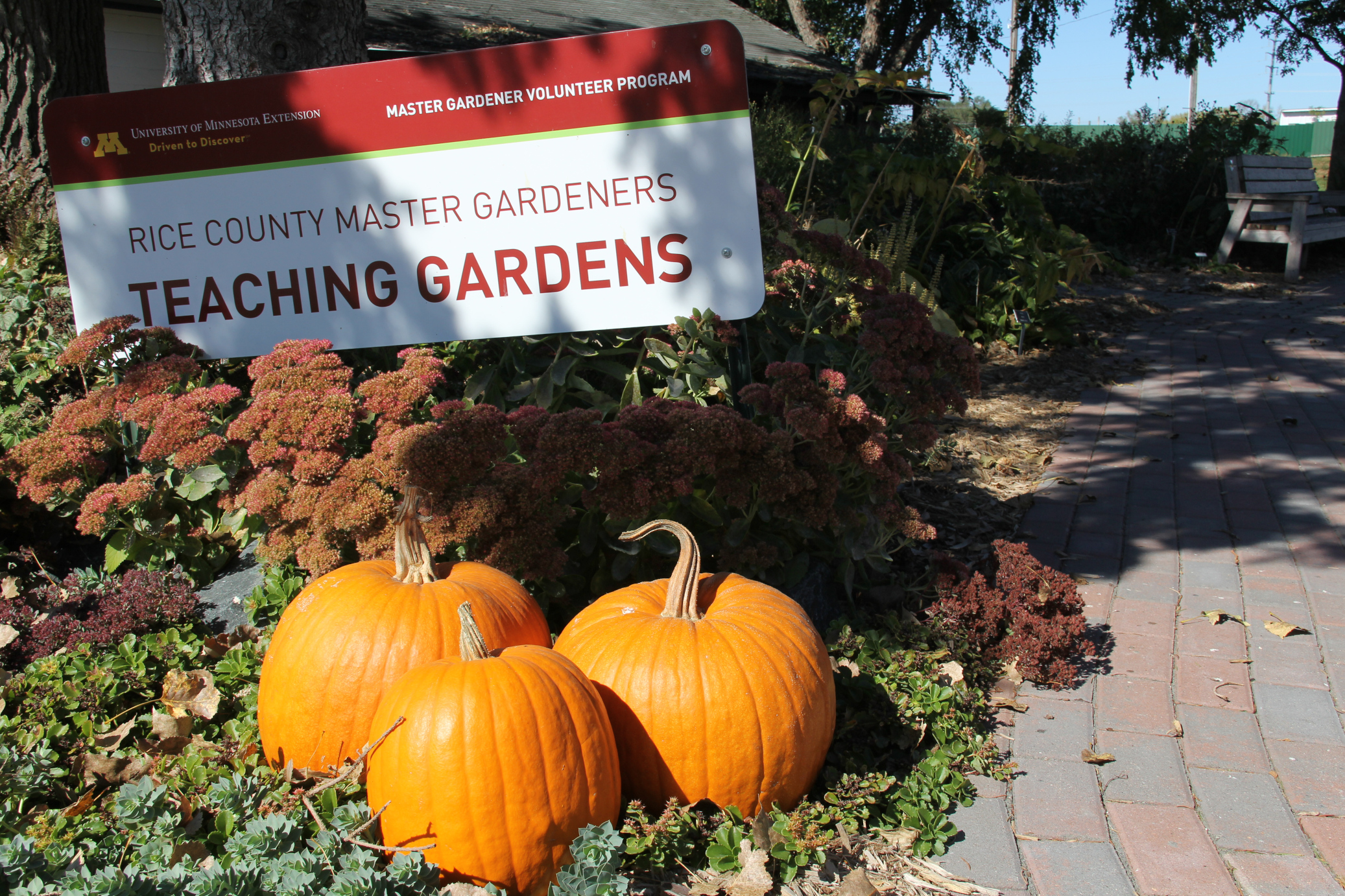
Flowers blooming a few weeks ago in the Rice County Master Gardeners Teaching Gardens. (Minnesota Prairie Roots copyrighted photo September 2025)
IN THIS FLEETING TIME before winter arrives, I find myself drawn to end-of-the-season blooms. And plenty remain, clinging to summer past, attaching to autumn present, but some already ceding to the inevitable cold and snow yet to come.
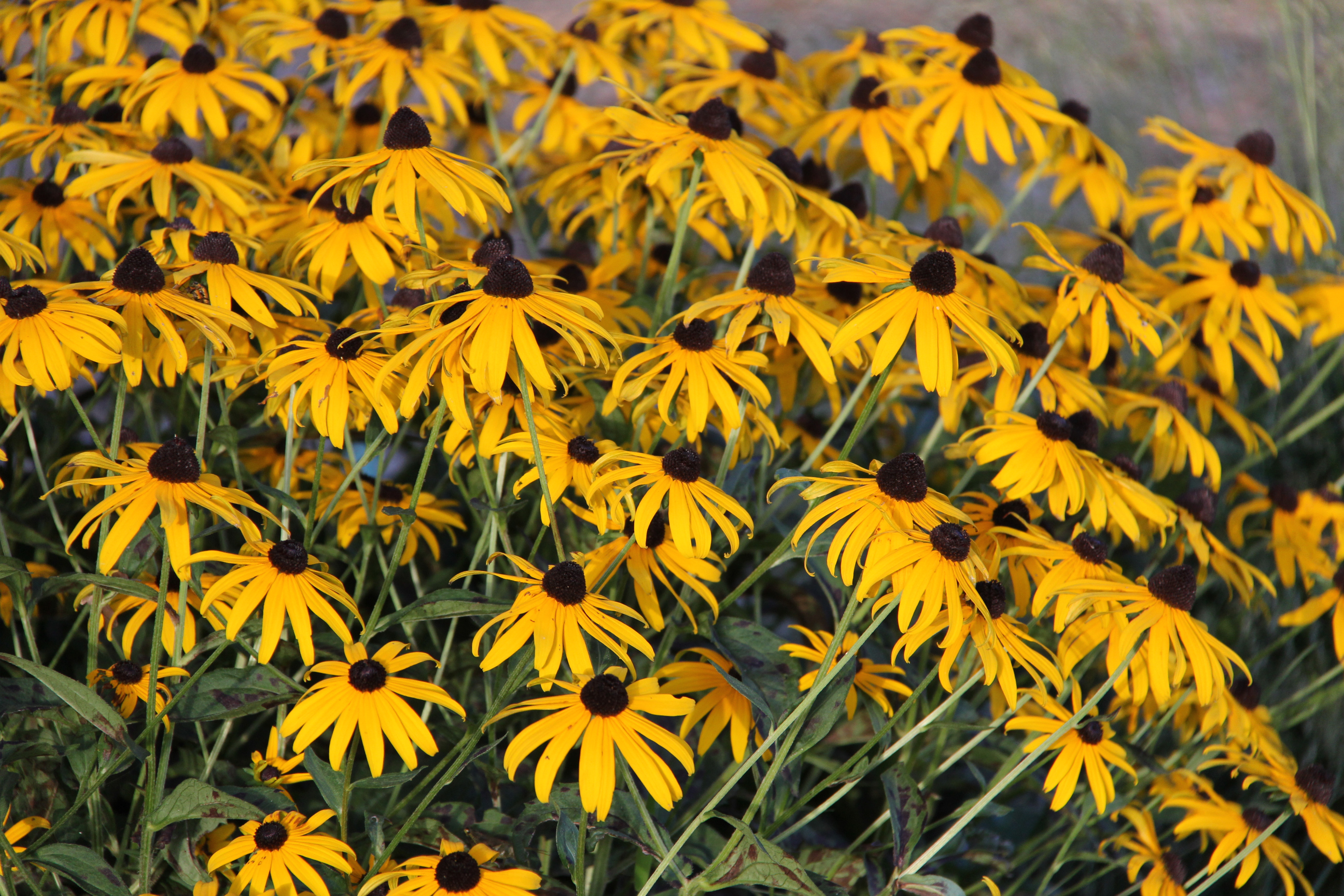
A mass of brown-eyed (I think) susans. (Minnesota Prairie Roots copyrighted photo September 2025)
Even as days grow shorter and nightfall presses dark upon the land, these flowers remain. And I delight in them wherever they stand, bend into the wind, catch the light of the morning and evening sun.
The roses are still blooming. (Minnesota Prairie Roots copyrighted photo October 2025)
Most surprising, perhaps, are the roses that linger. I dip my nose close, expecting the heady scent of perfume, only to be disappointed. They smell ever so faint, a scent barely noticeable.
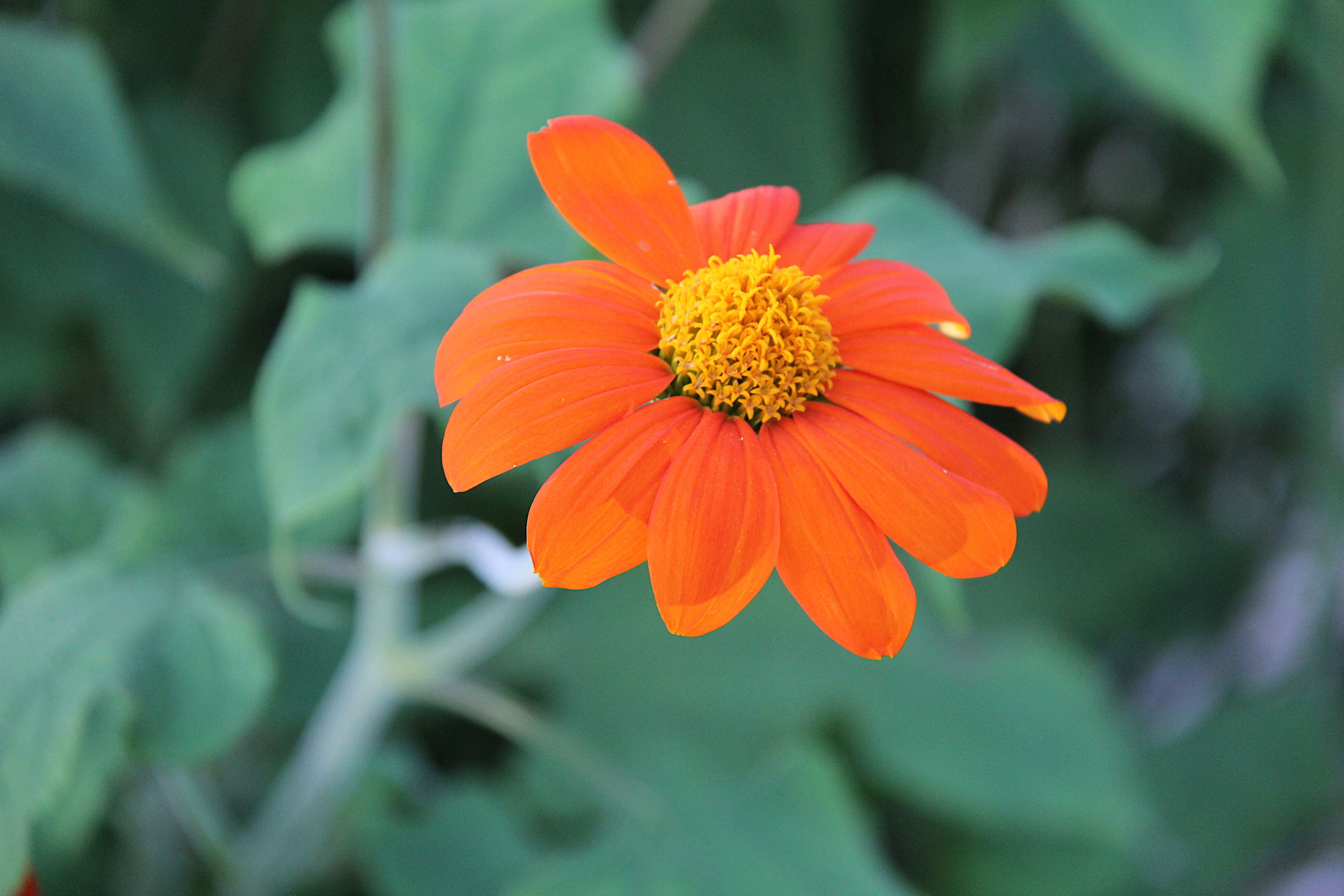
When I took this photo in late September, Monarchs flitted among zinnias. (Minnesota Prairie Roots copyrighted photo September 2025)
Zinnias flash color, a beacon for monarchs.
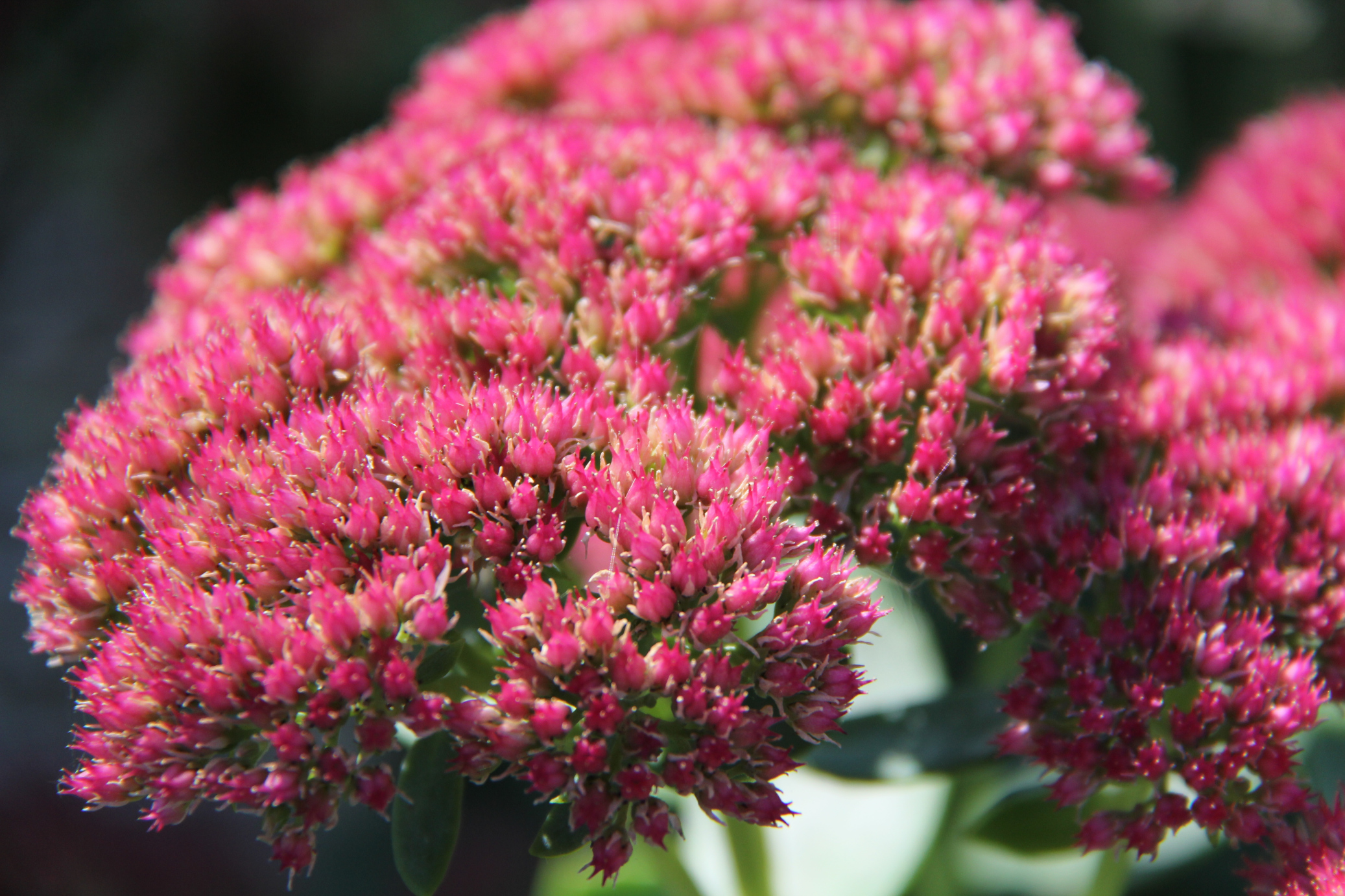
Stunning sedum, absolutely beautiful in the evening light. (Minnesota Prairie Roots copyrighted photo October 2025)
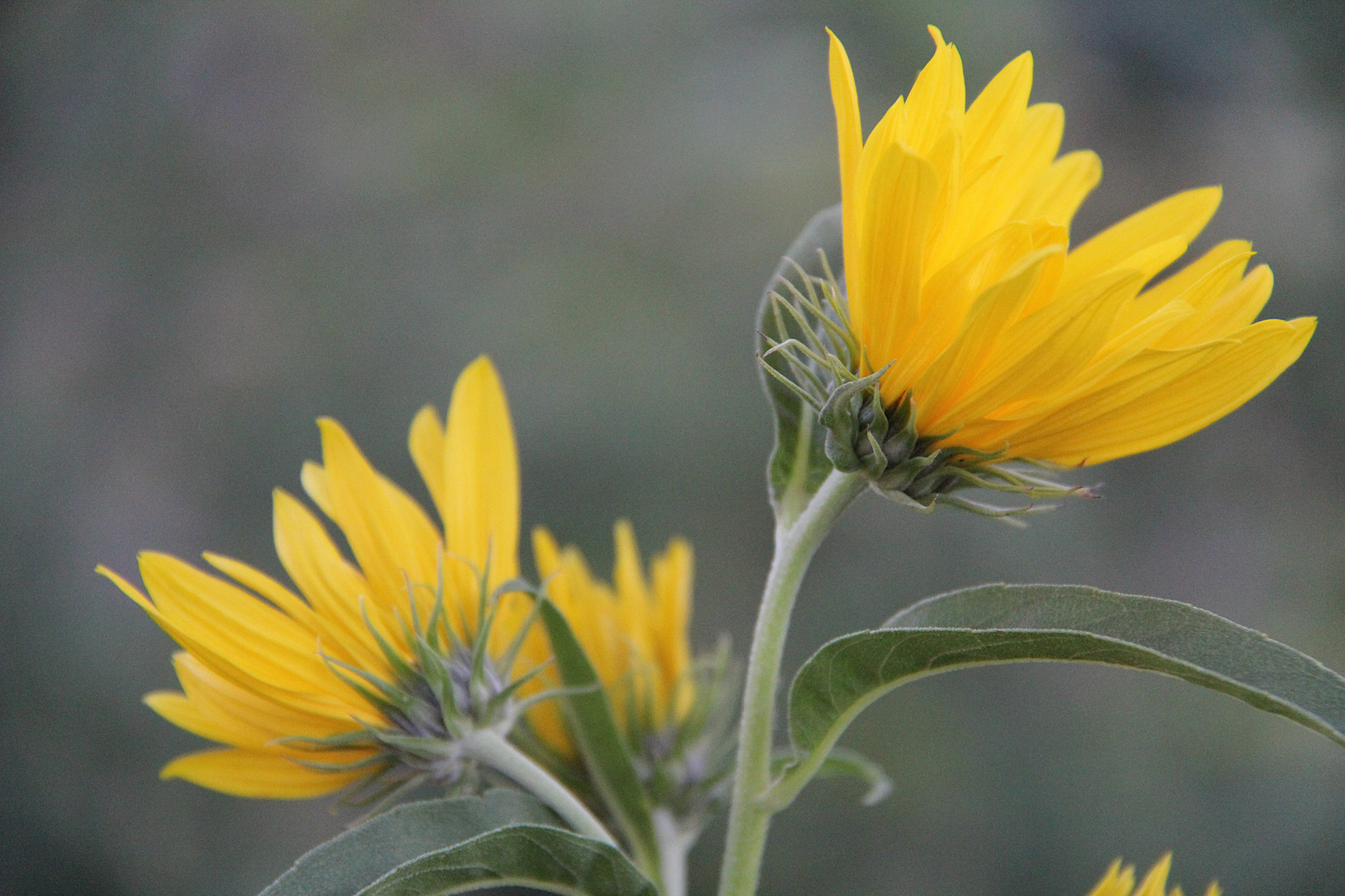
Sedum and seed heads and sunny yellow flowers all cozy together, some spent, some still determined to survive as the season shifts toward winter.
Paver pathways weave through the gardens which include benches, a water feature, rock snakes and more. (Minnesota Prairie Roots copyrighted photo October 2025)
I feel this sense of urgency to focus my eyes on flowers, to imprint upon my memory their glorious beauty. And so I wander among the blooms and dying blooms in the Rice County Master Gardeners Teaching Gardens in Faribault.
Photographed up close or at a distance, these flowers are lovely in the evening light of autumn. (Minnesota Prairie Roots copyrighted photo September 2025)
I love this oasis on the Rice County Fairgrounds next to the historical society. It offers a peaceful respite just off heavily-trafficked Second Avenue where vehicles rush by, their drivers seemingly unaware of the nearby gardens.
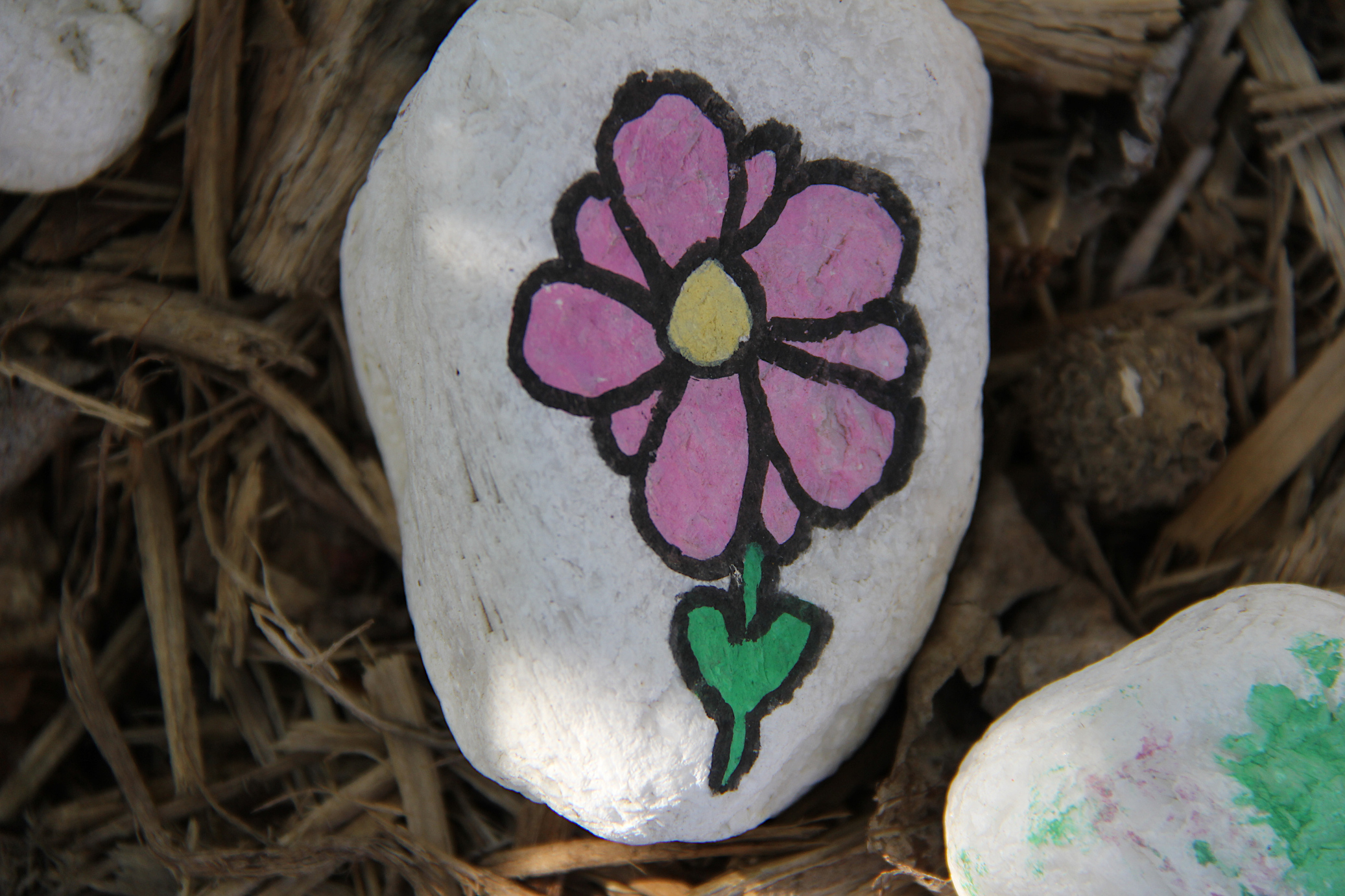
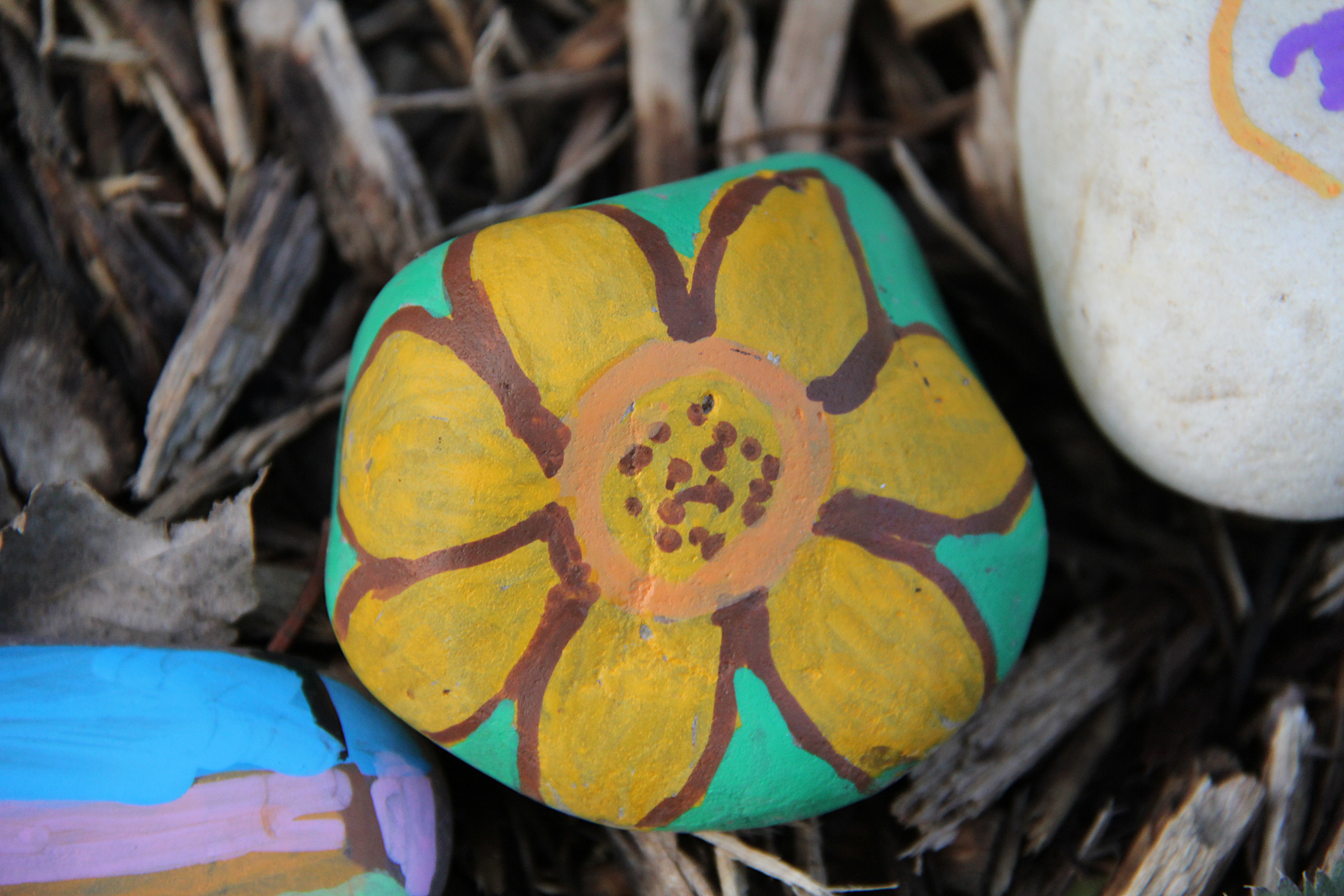
The garden includes two rock snakes, this flower stone among the many forming the serpent. (Minnesota Prairie Roots copyrighted photo October 2025)
But I long ago discovered this spot. Perfect for a picnic. Perfect for wandering. Perfect for photographing flowers. Perfect for reflecting and learning and enjoying. I’m grateful for every volunteer who lovingly tends this garden so I can come here. Sit. Walk. Photograph. Snapshot the scene for future reference.
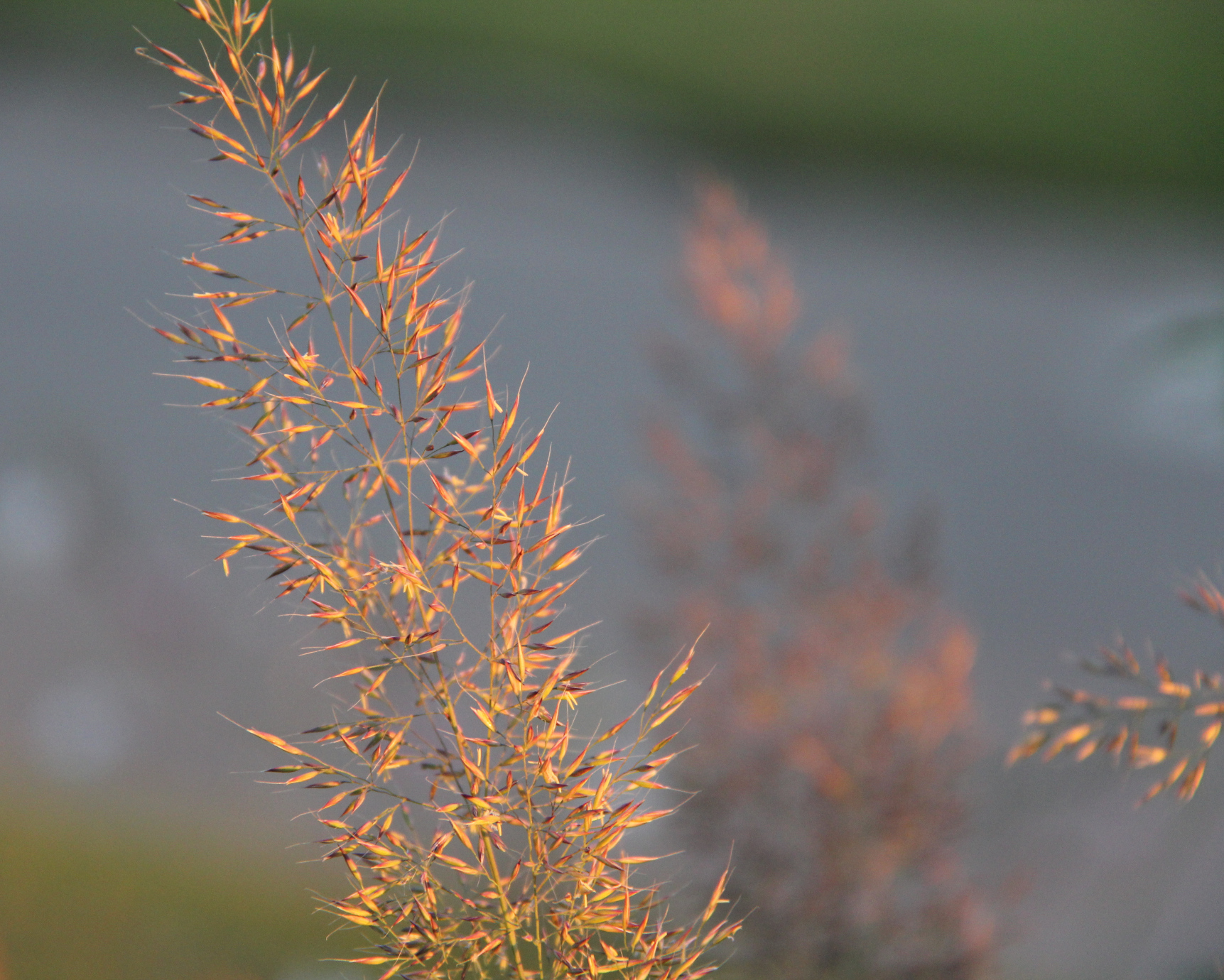
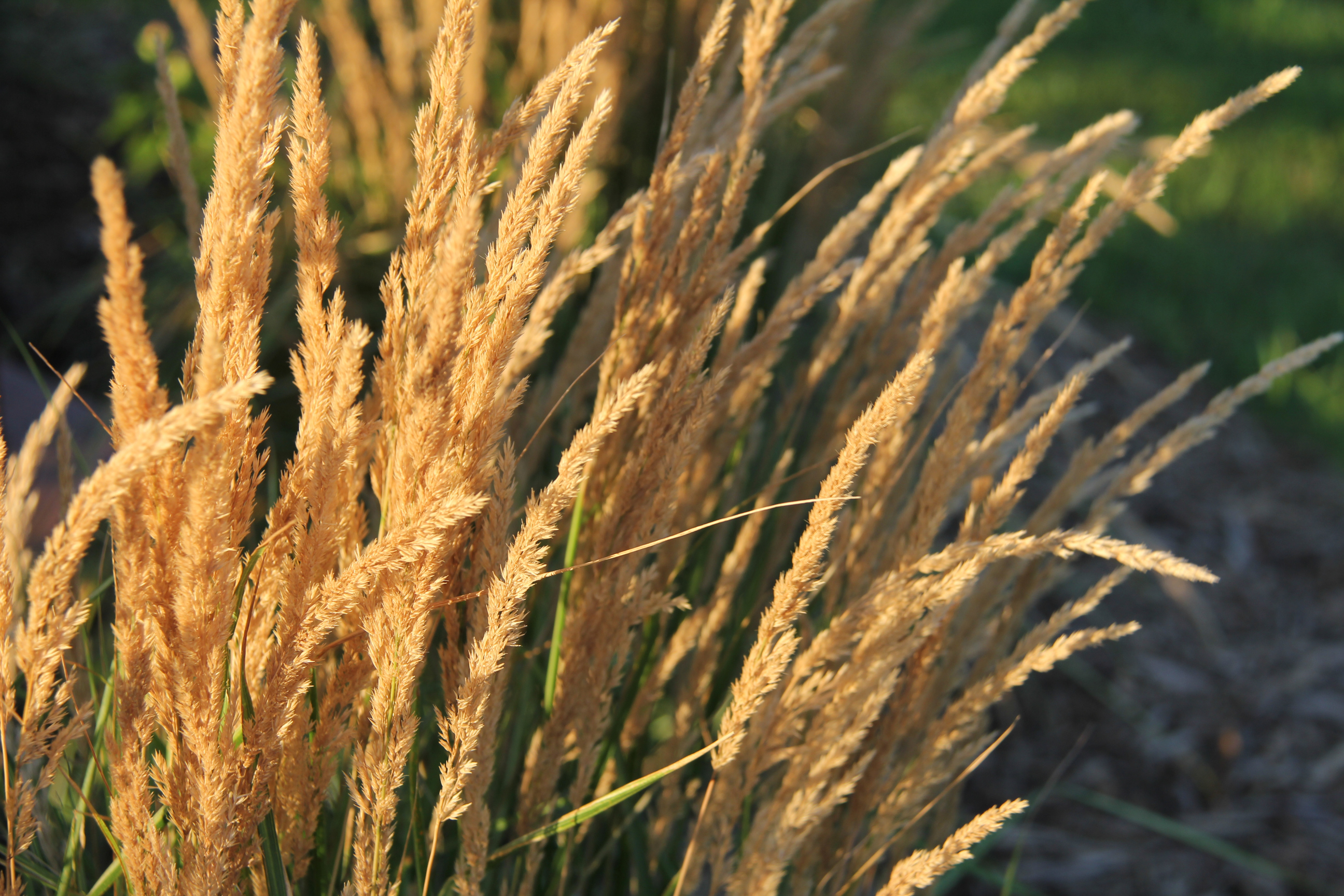
A grass stem glows in the light of sunset. (Minnesota Prairie Roots copyrighted photo September 2025)
When winter comes with its wind and deep-freeze cold and snow, I will remember the pink roses, the bold brown-eyed susans, the grass glowing in the sunlight.
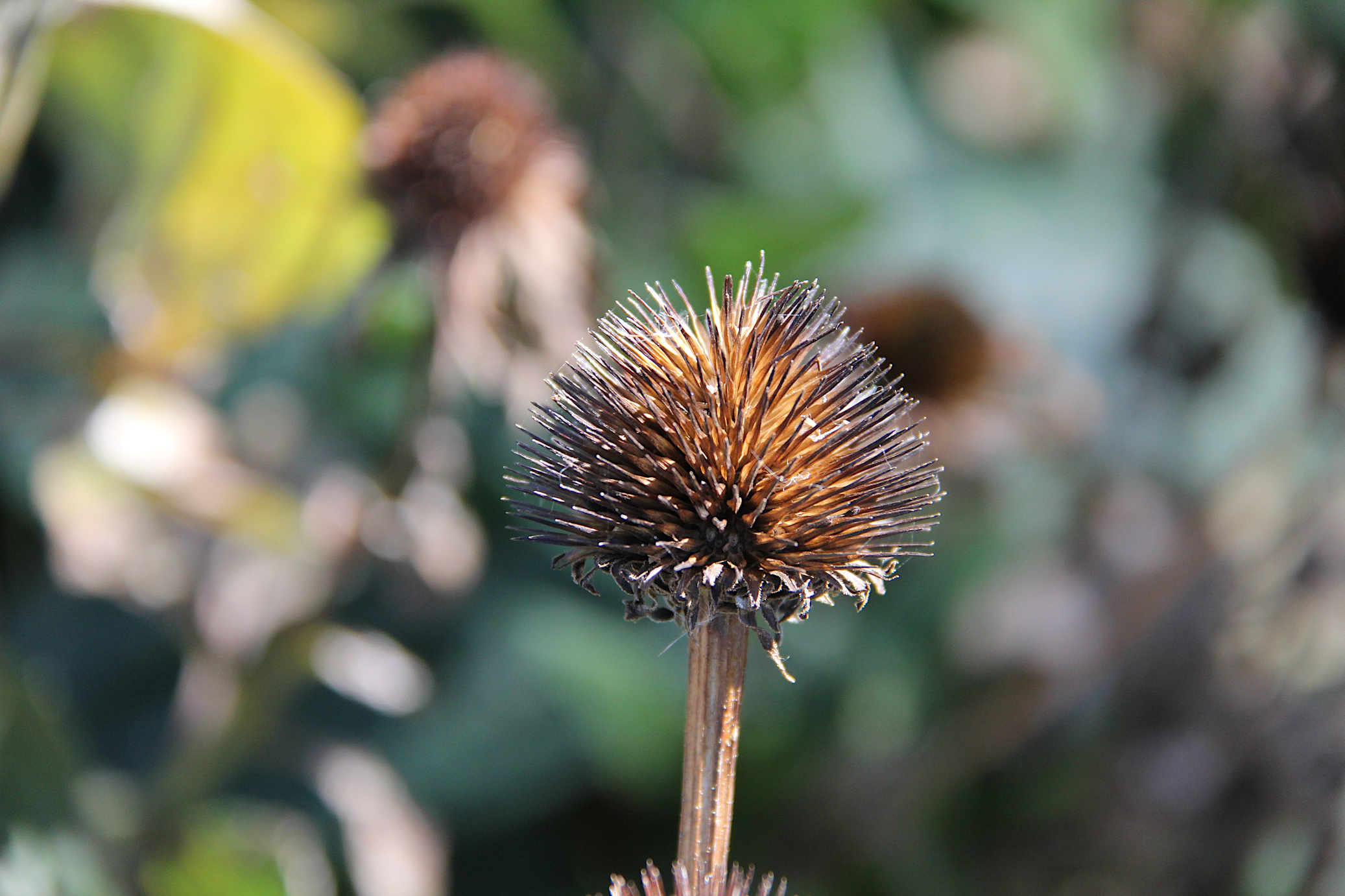
A coneflower seed head. (Minnesota Prairie Roots copyrighted photo October 2025)
And when winter drags on, I will remember this place and how, when spring arrives, the perennials will resurrect and pop through the earth. I will remember, too, how seeds sown in the soil will sprout and push green shoots through the earth to leaf and blossom and bring me summer joy.
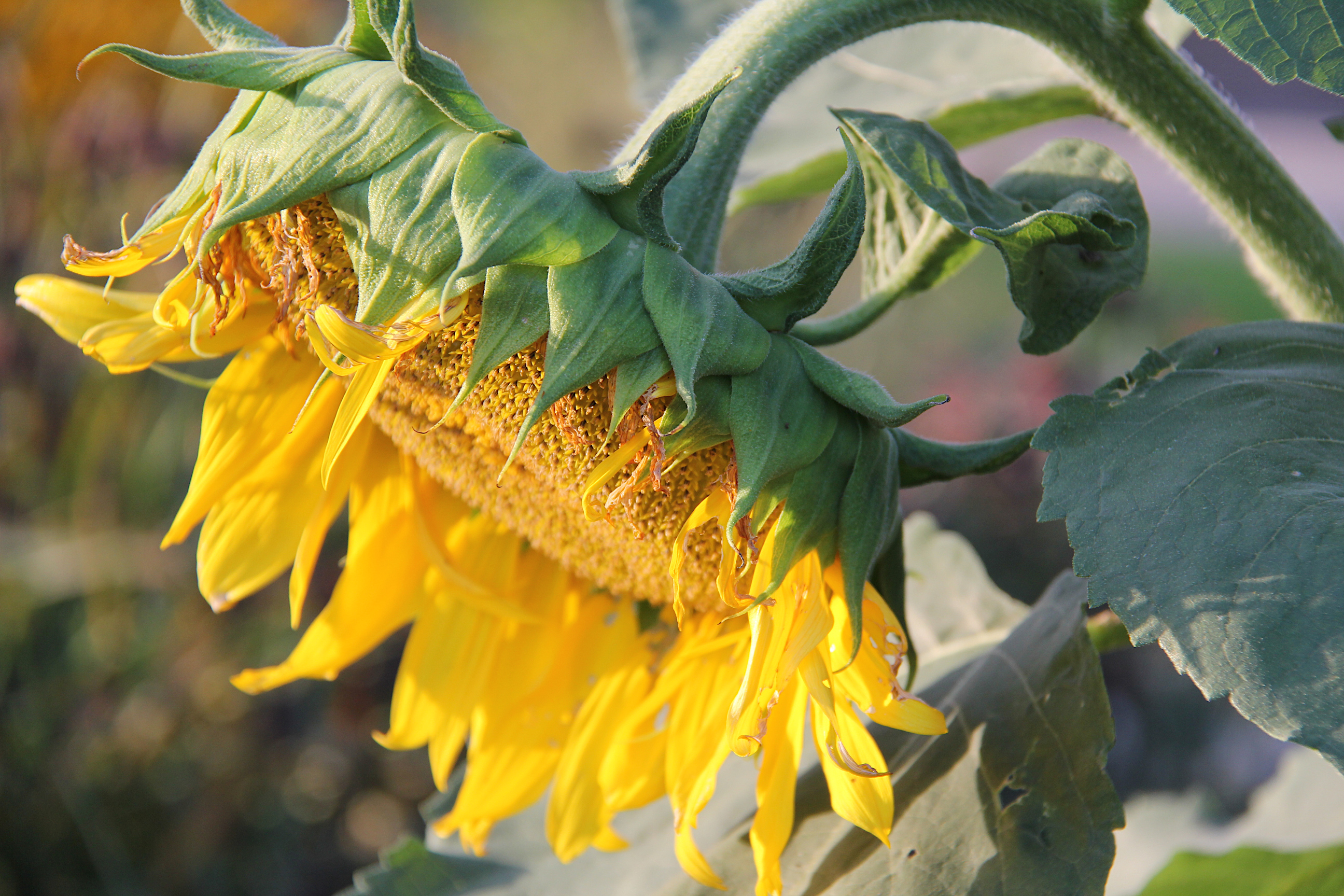
Sunflowers are drooping, like this one in the Rice County Master Gardeners’ Teaching Gardens, Faribault. (Minnesota Prairie Roots copyrighted photo August 2024)
I’M BEGINNING TO FEEL this sense of urgency, as if I need to spend more time outdoors taking in the natural world. It’s not a new feeling, but rather one which rolls into my thoughts at August’s end. When the calendar flips to September, everything shifts. I see it, hear it, smell it, feel it.
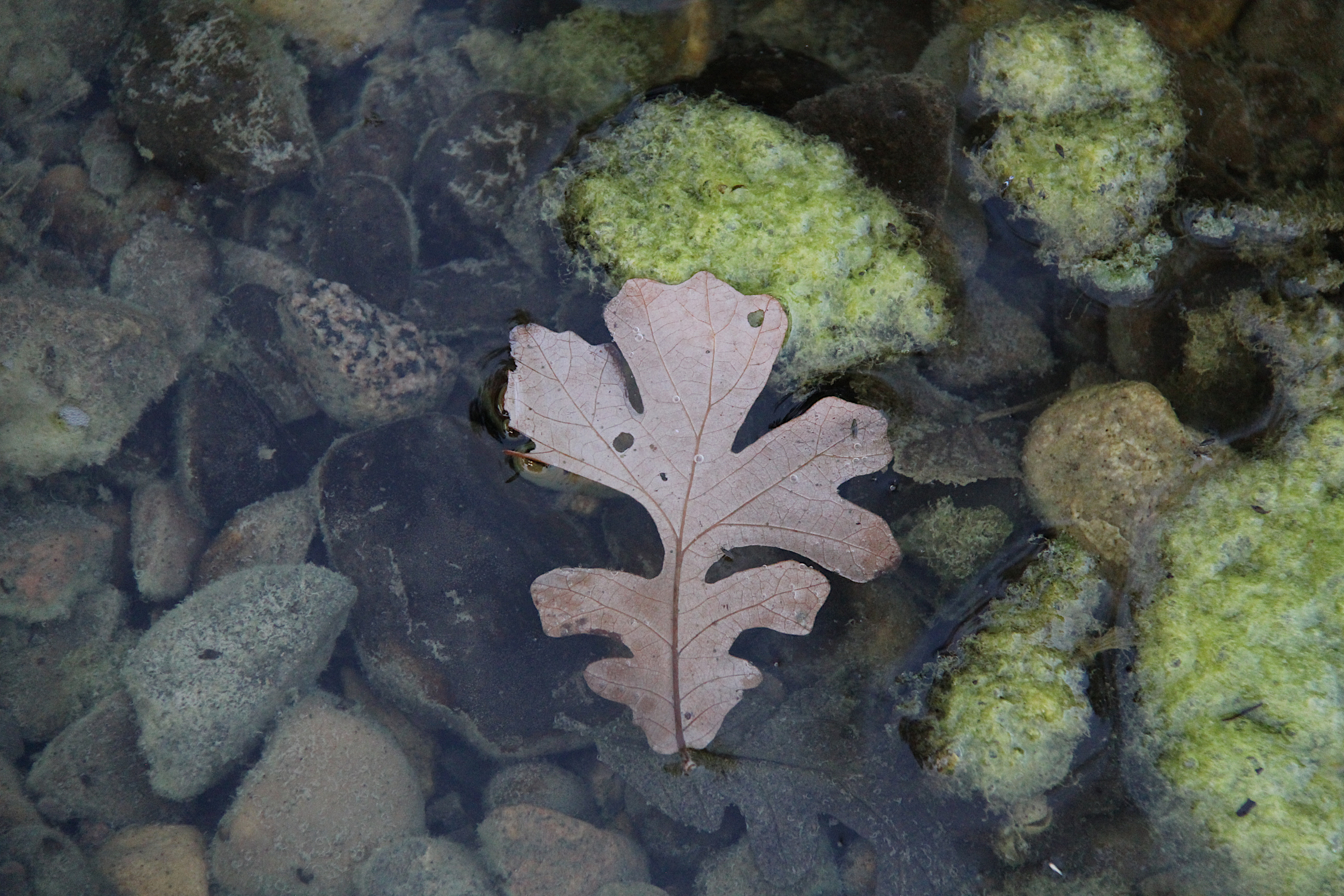
A dried oak leaf floats in a pond at the teaching gardens. (Minnesota Prairie Roots copyrighted photo August 2024)
Outside my front door, massive mophead hydrangeas are drying, morphing from green to brown. Once lush phlox are less full. Maple leaves, in hues of orange and yellow, litter the lawn. All over town, trees are beginning to change color.
Golden grasses sway in the gentle wind of early evening. (Minnesota Prairie Roots copyrighted photo August 2024)
Jolts of color still fill the garden. (Minnesota Prairie Roots copyrighted photo August 2024)
Prolific black-eyed susans. (Minnesota Prairie Roots copyrighted photo August 2024)
Crickets chirp. Cicadas buzz. School buses roll past my house. Everything is shifting. And nowhere is that more noticeable than in a garden.
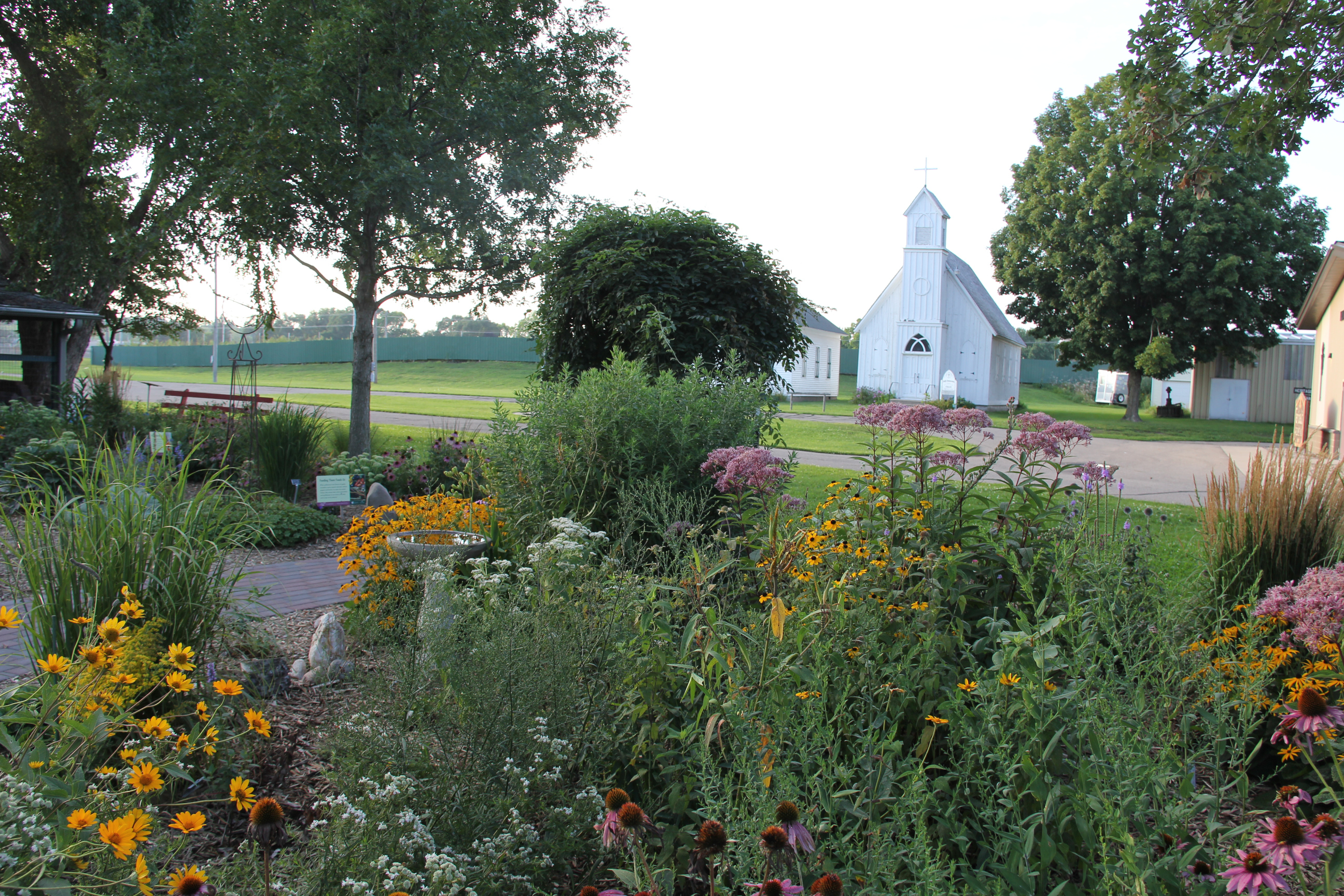
This shows only a section of the teaching gardens. That’s an historic church, on the grounds of the Rice County Historical Society, in the background. The gardens are next to the RCHS museum. (Minnesota Prairie Roots copyrighted photo August 2024)
And so I encourage you, if you live in a place that will soon change to cold and colorless, to enjoy the flowers while they are still blooming, as I did recently at the Rice County Master Gardeners Teaching Gardens.
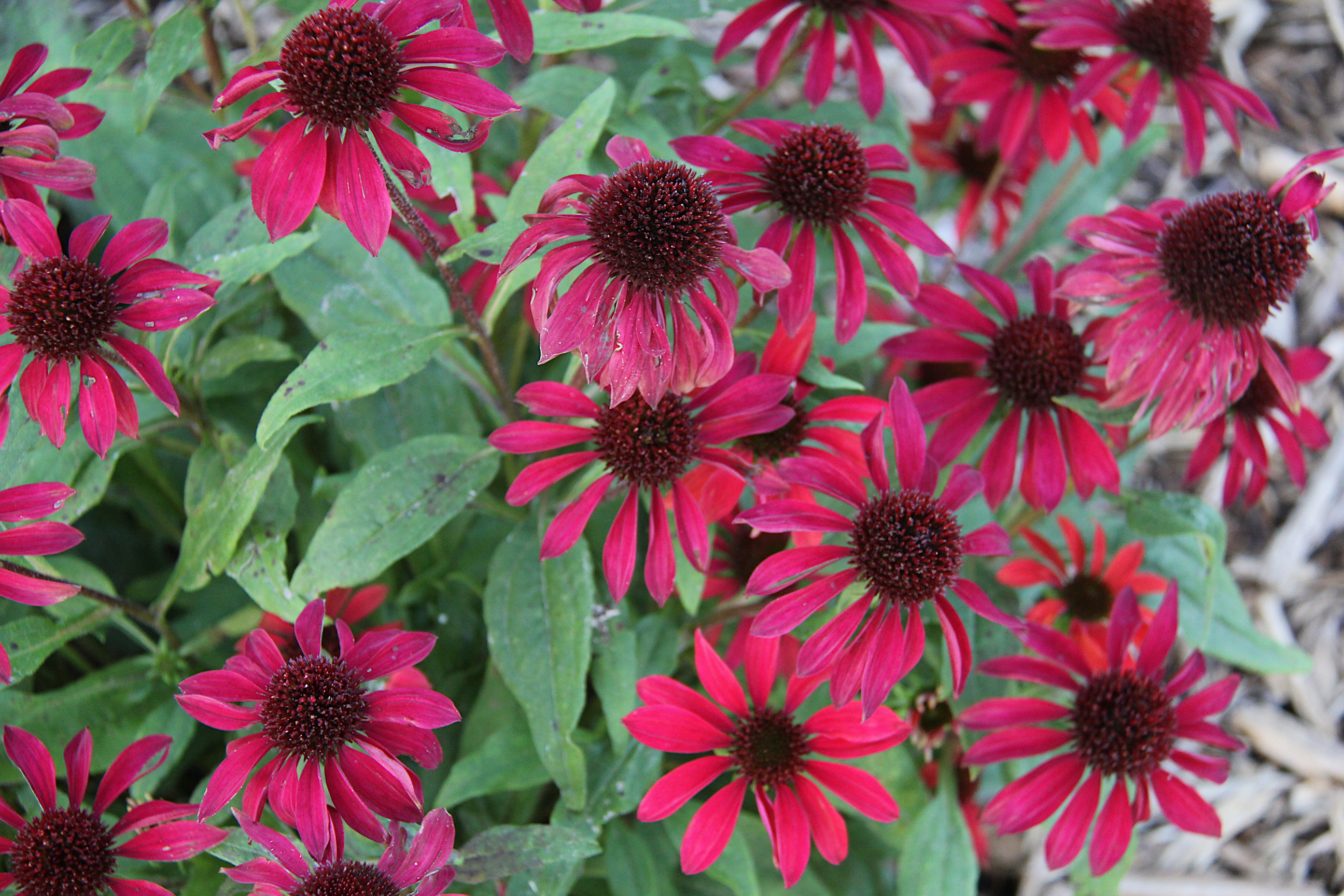
A mass of coneflowers. (Minnesota Prairie Roots copyrighted photo August 2024)
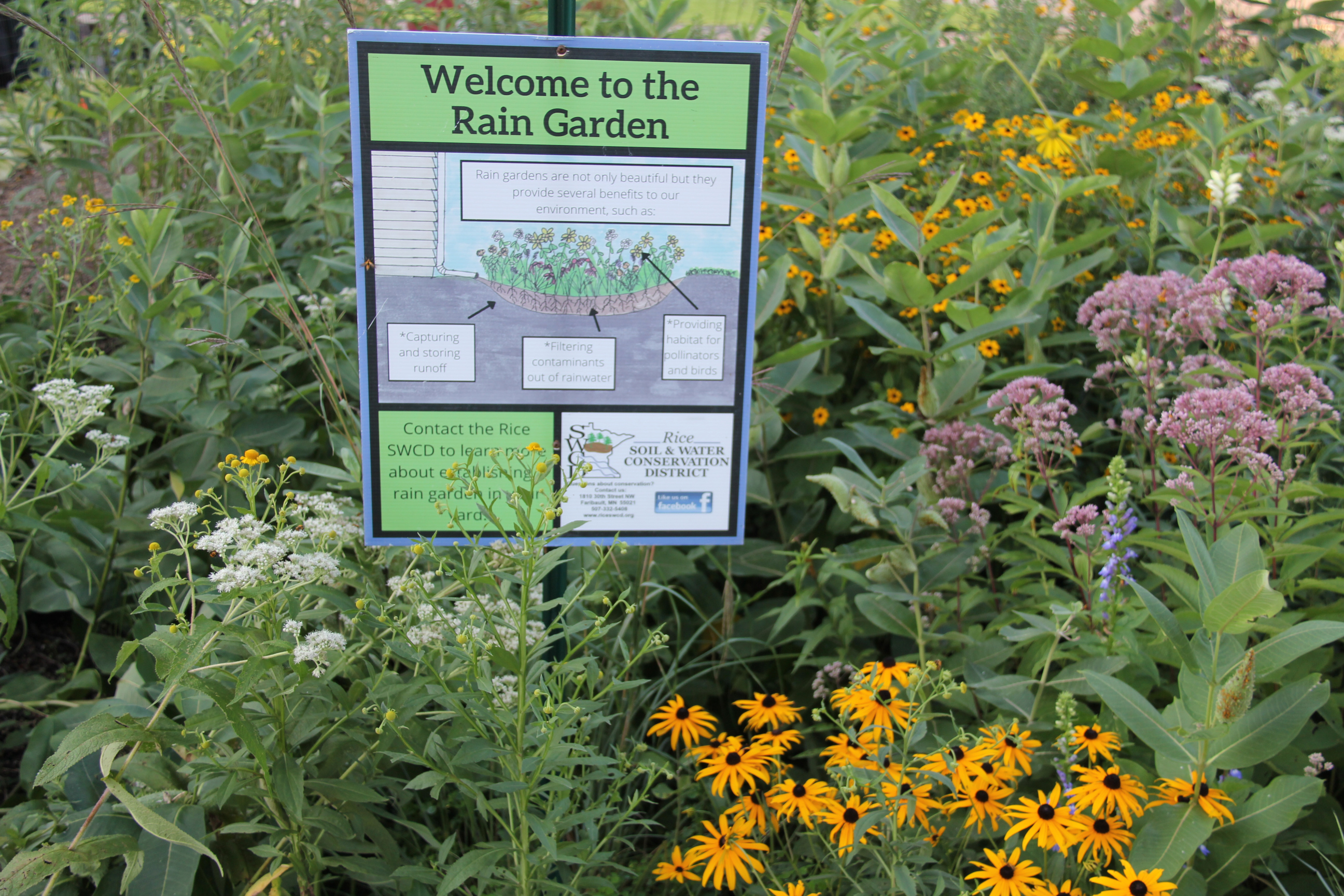
A rain garden flourishes here. (Minnesota Prairie Roots copyrighted photo August 2024)
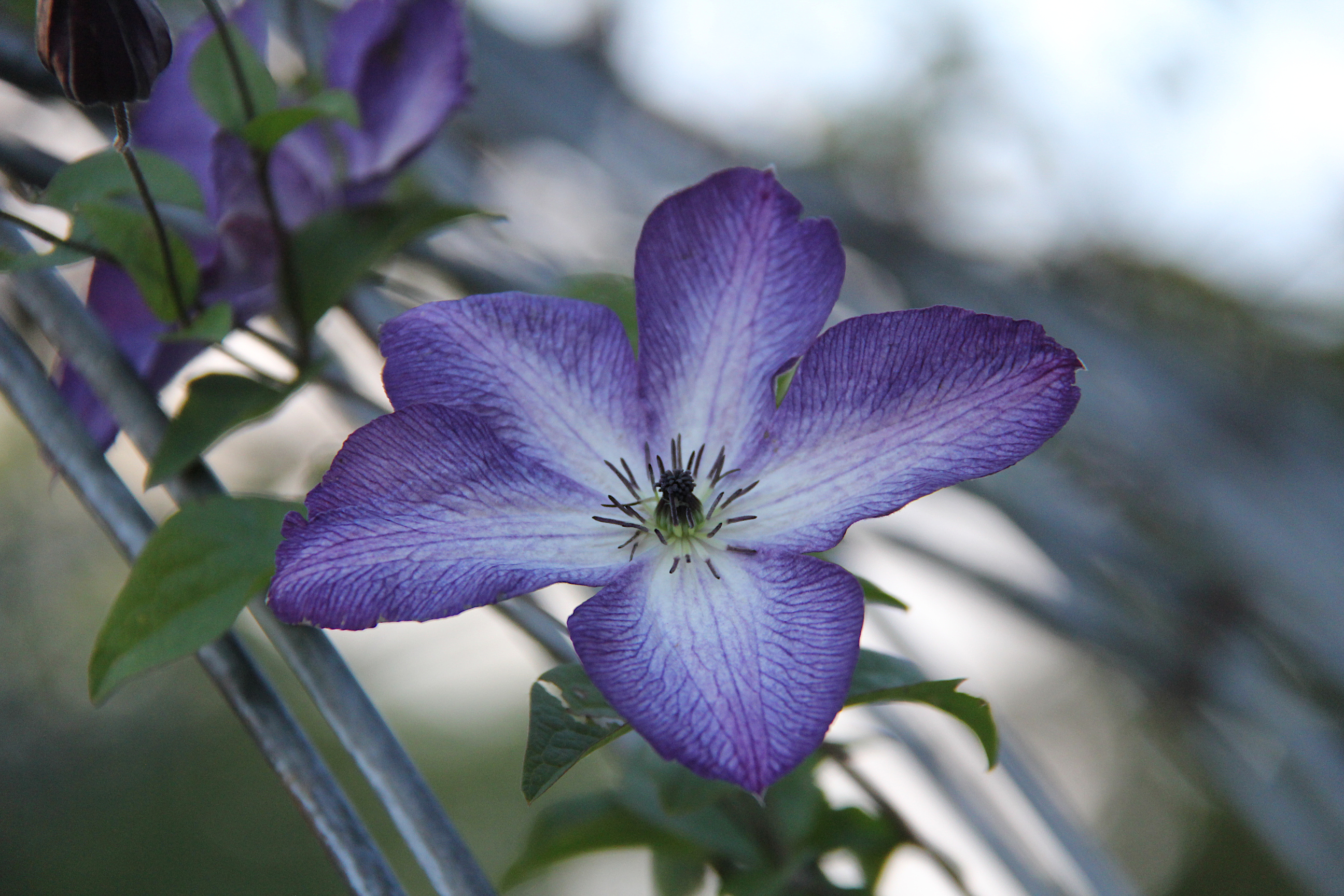
A few clematis were still blooming when I walked the gardens. (Minnesota Prairie Roots copyrighted photo August 2024)
Come, walk with me through this space with its beds of blooms, its textured perennials, its overall loveliness.
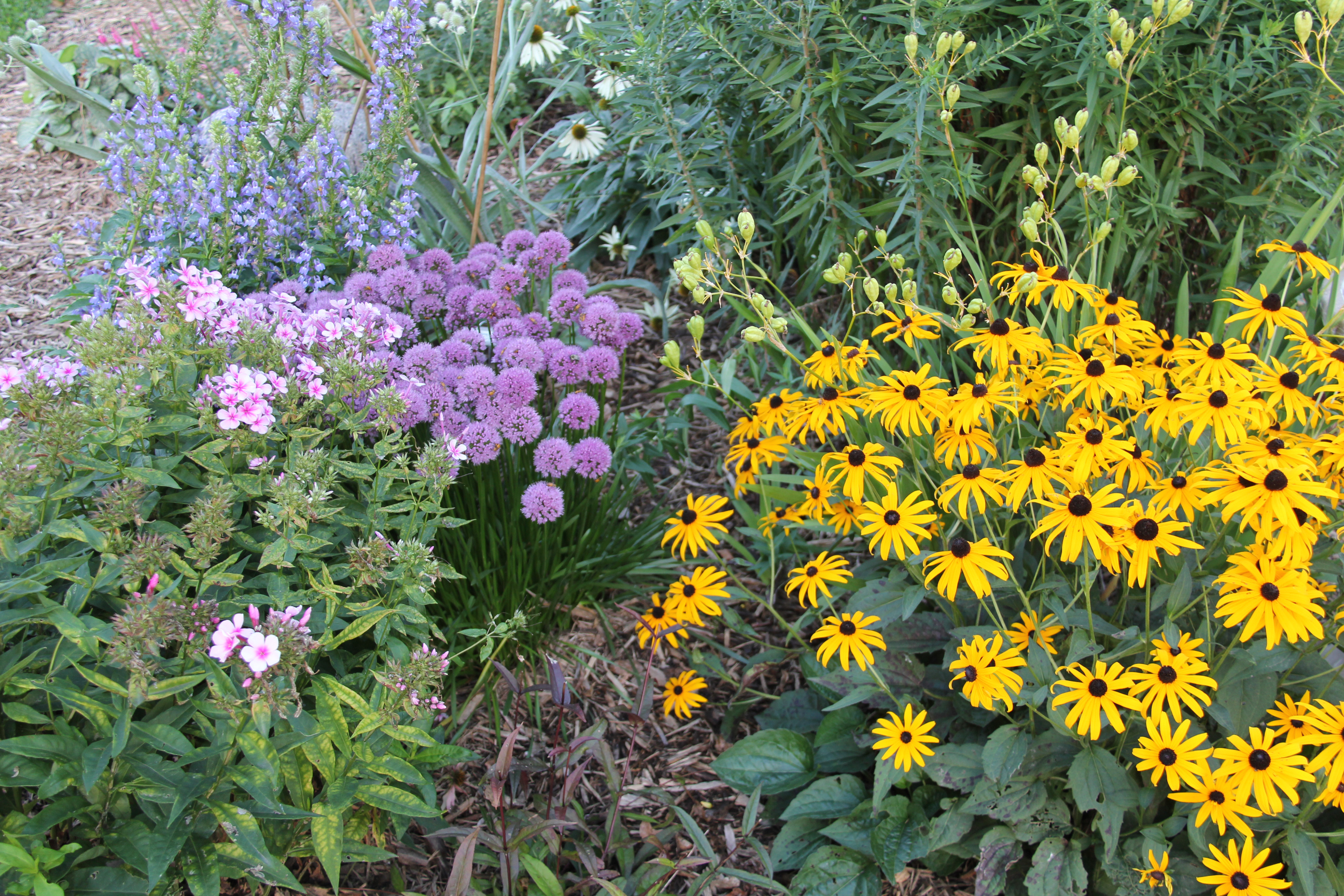
An array of flowers fill the gardens. (Minnesota Prairie Roots copyrighted photo August 2024)
A muted hue that leans into autumn. (Minnesota Prairie Roots copyrighted photo August 2024)
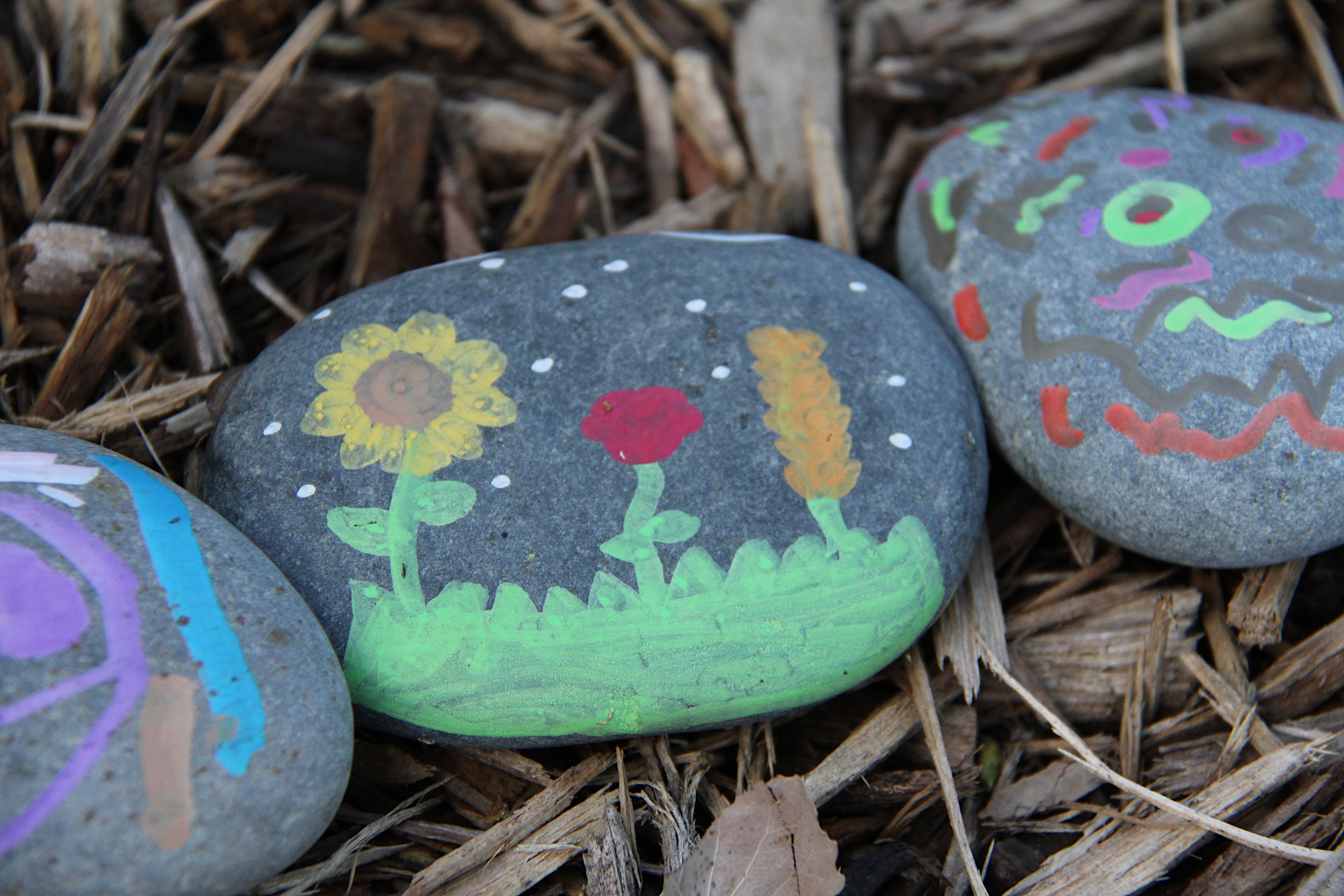
The gardens include rock art, this one in the Rock Art Snake. (Minnesota Prairie Roots copyrighted photo August 2024)
Or find your own garden in your place. Walk. Sit. Take it all in. And when the season shifts, when the flowers are long gone, when the trees have dropped their leaves, then remember this time, these days. Remember the beauty of it all. Remind yourself in the depths of winter how you paused to appreciate these days of summer transitioning into autumn.
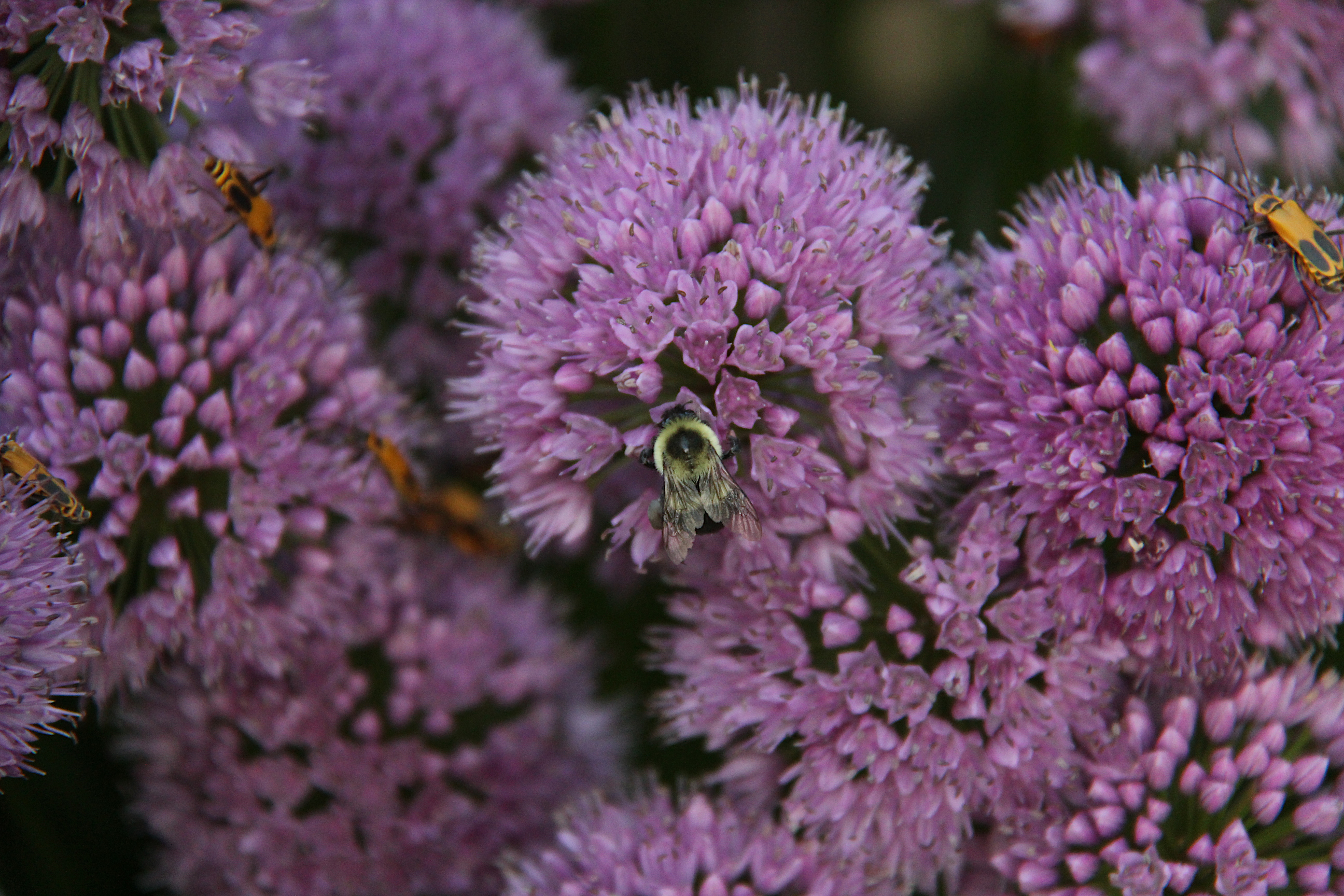
I spotted this bee and other bugs on flowers in the Rice County Master Gardeners’ Teaching Gardens. (Minnesota Prairie Roots copyrighted photo August 2024)
ADMITTEDLY, I NEVER EXCELLED in science. I sort of just got by, learning what I needed to learn to get reasonably good grades in science class. But if I was to go back to the classroom, I’d listen more intently, ask more questions, figure out how the information I was taught actually related to me and my world. In other words, I wouldn’t simply absorb, regurgitate and then move on, which seemed to be the way subjects were taught when I was a student.
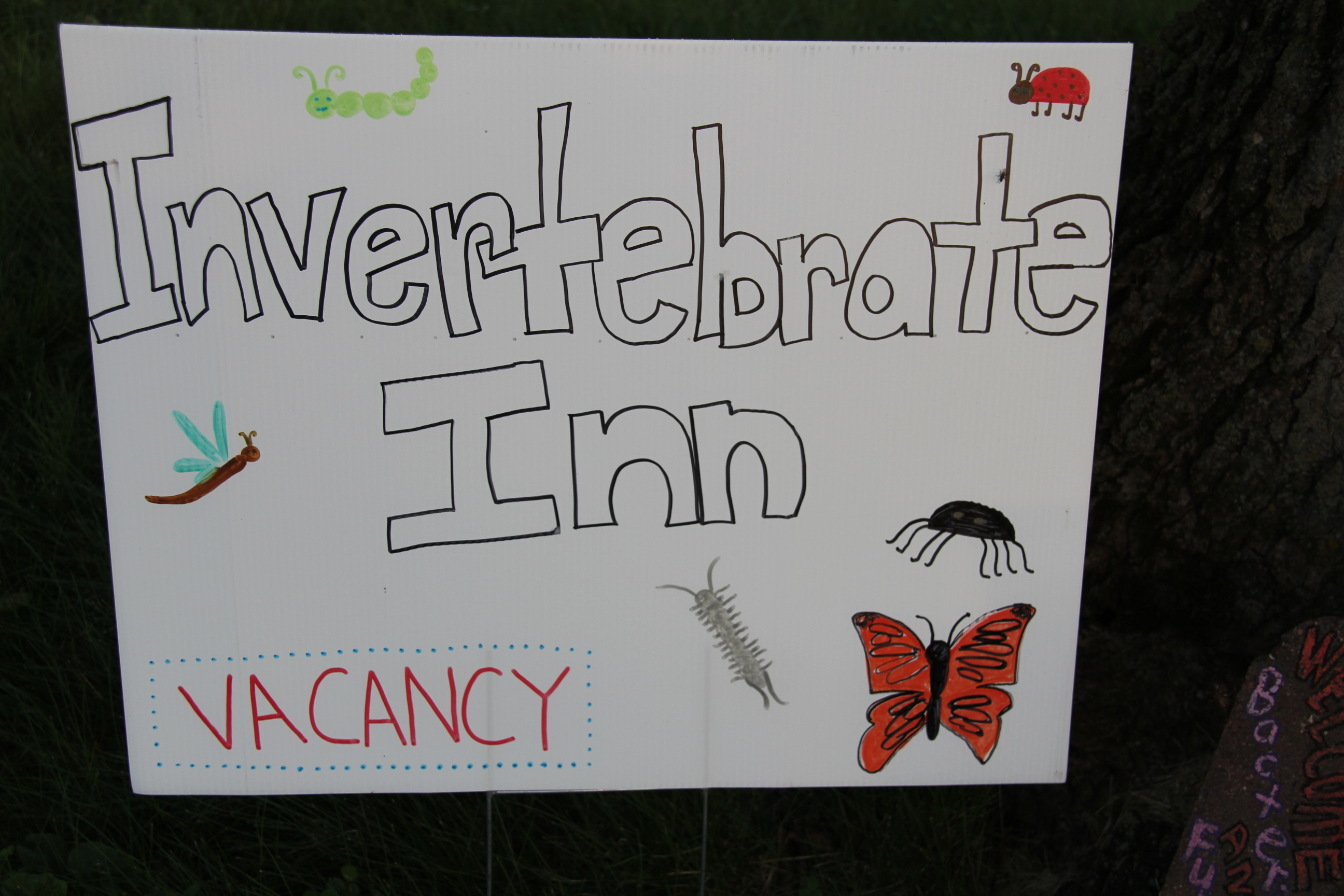
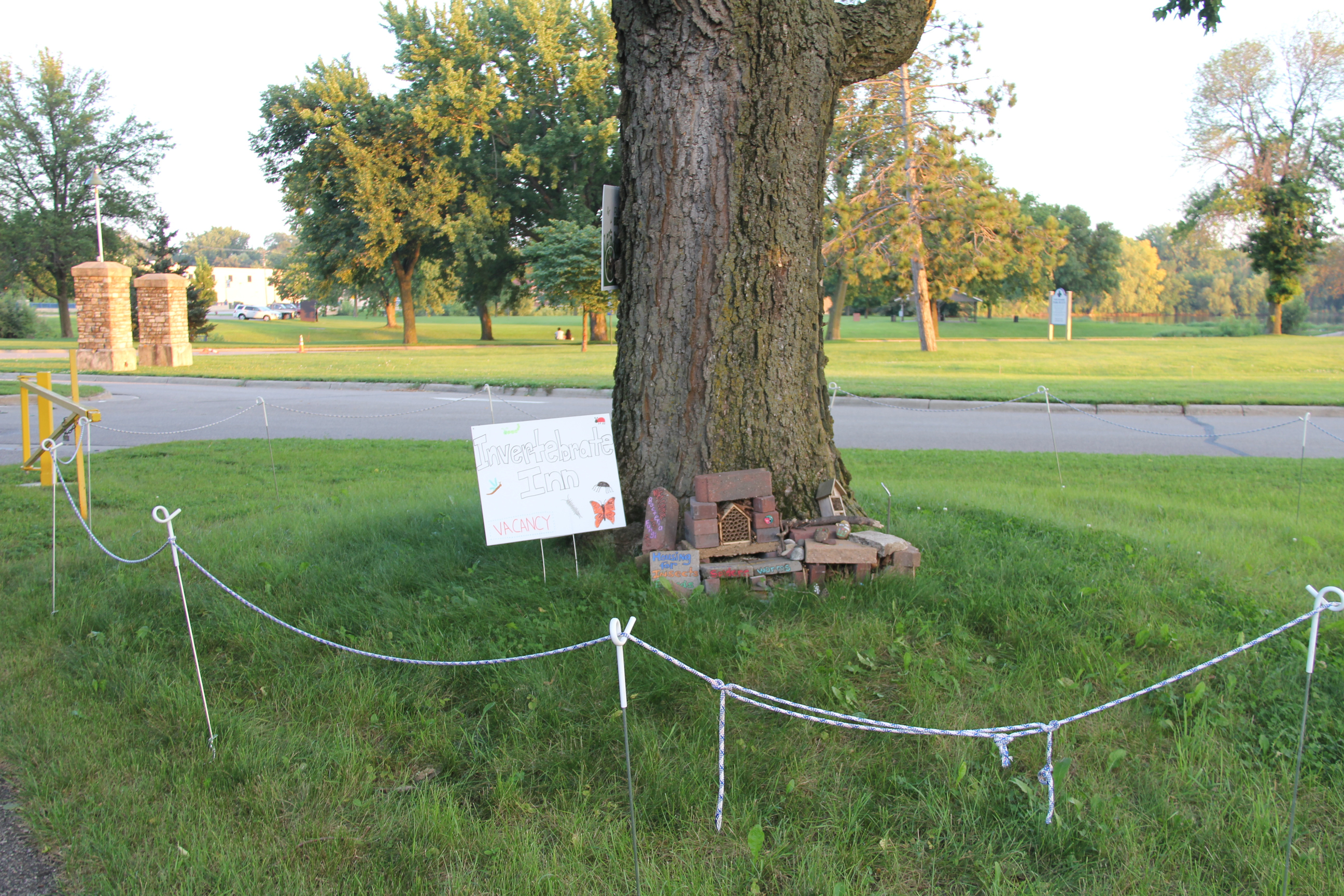
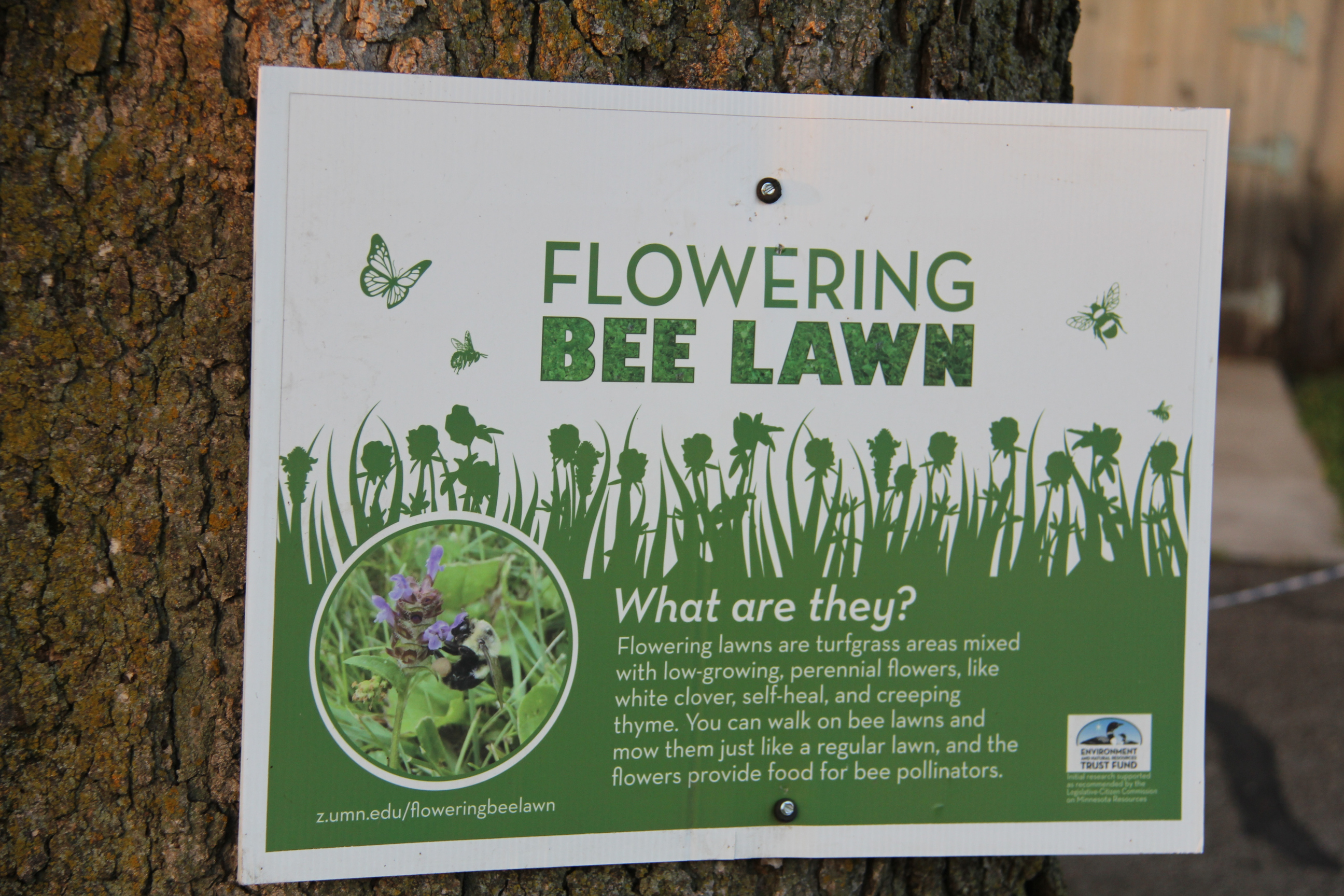
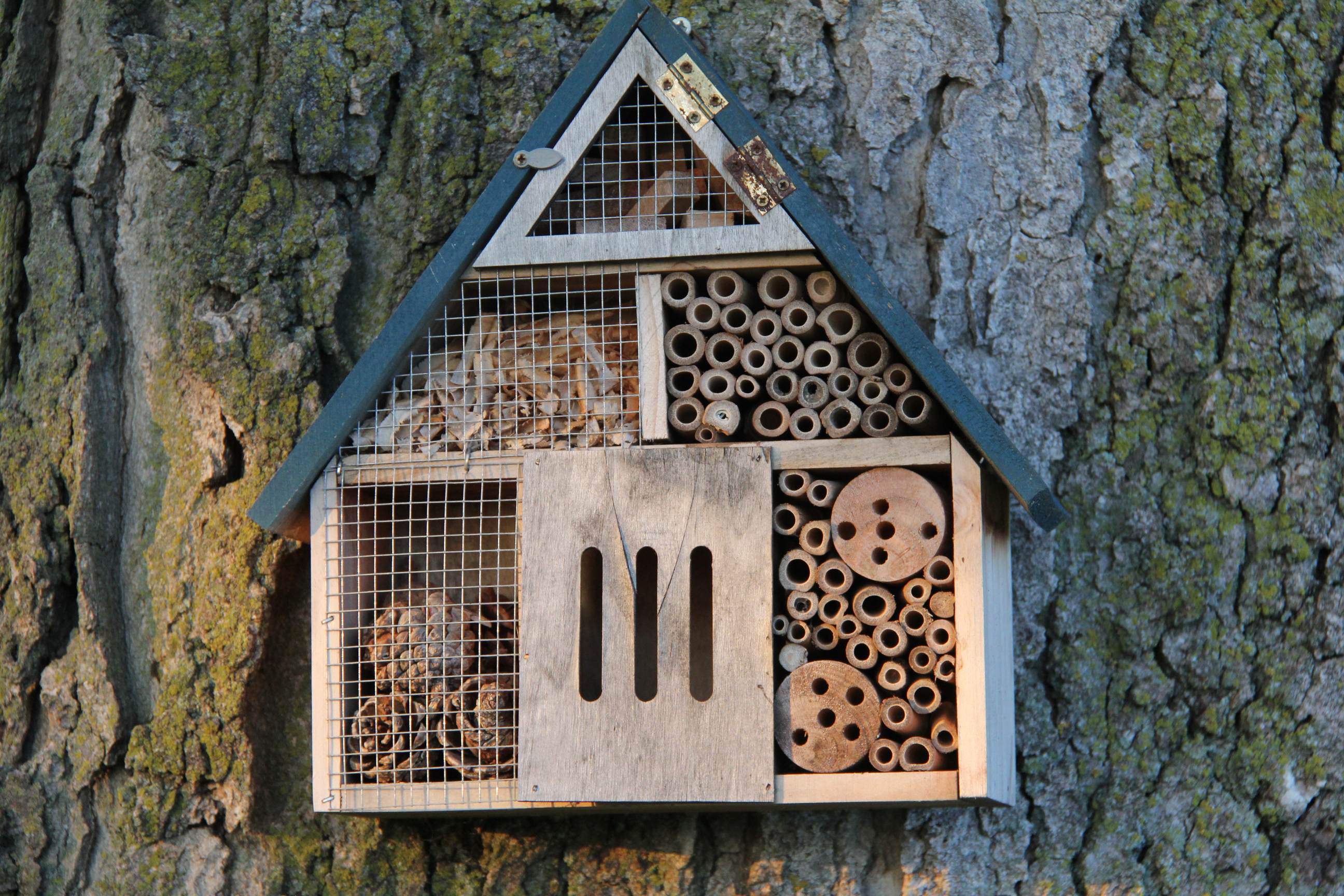
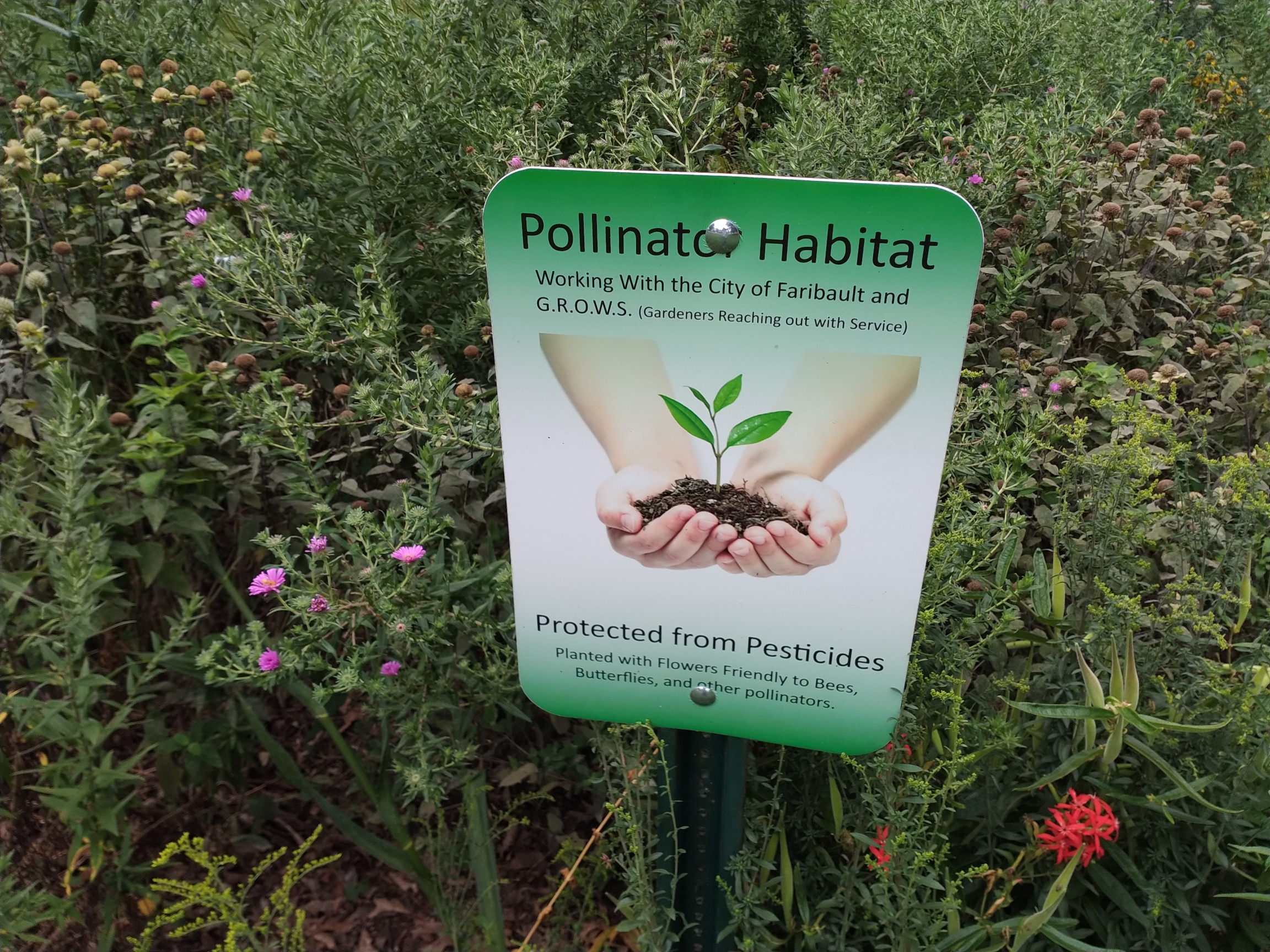
This sign drew me to the base of a tree, where I found an inn and a bee lawn. (Minnesota Prairie Roots copyrighted photo August 2024)
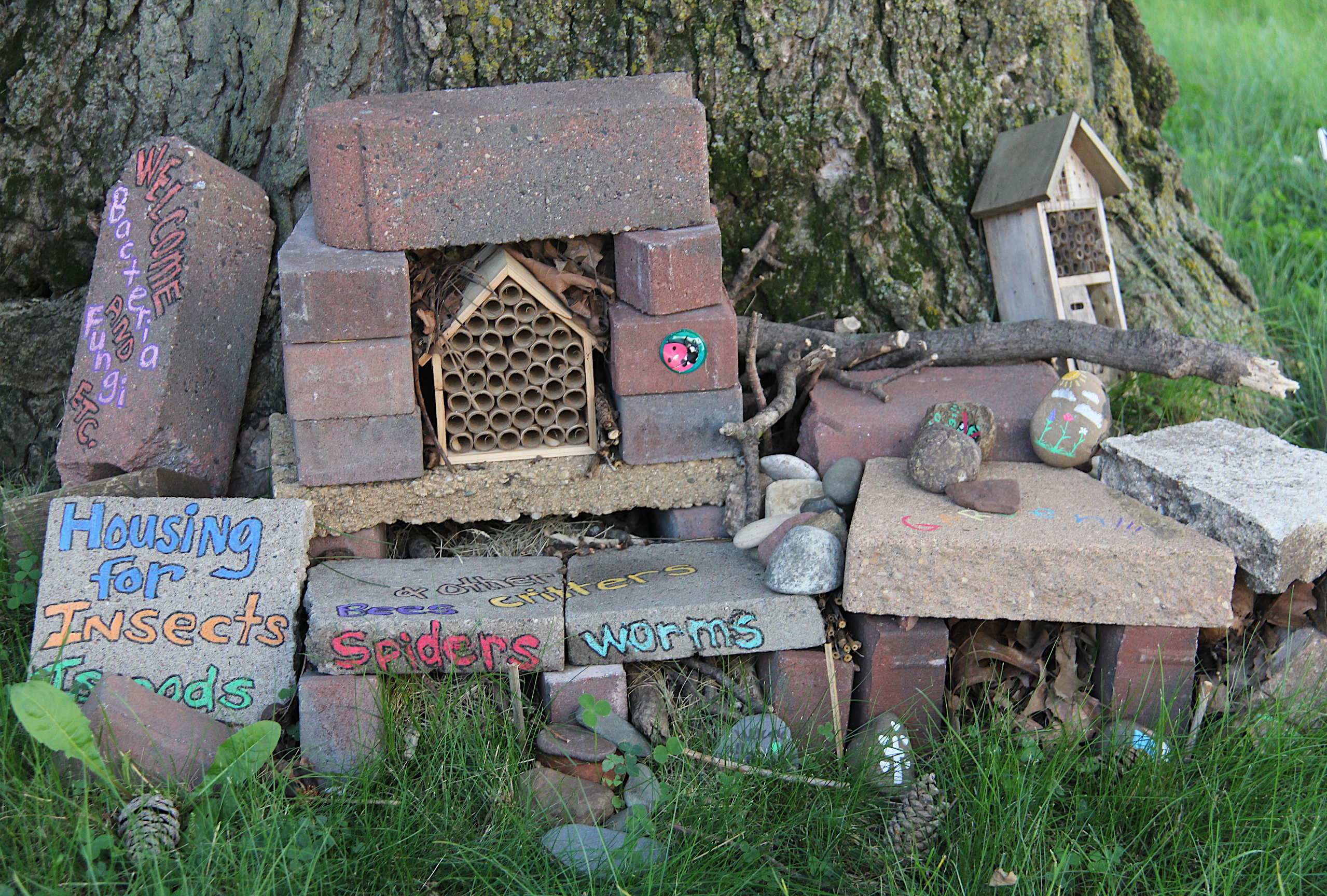
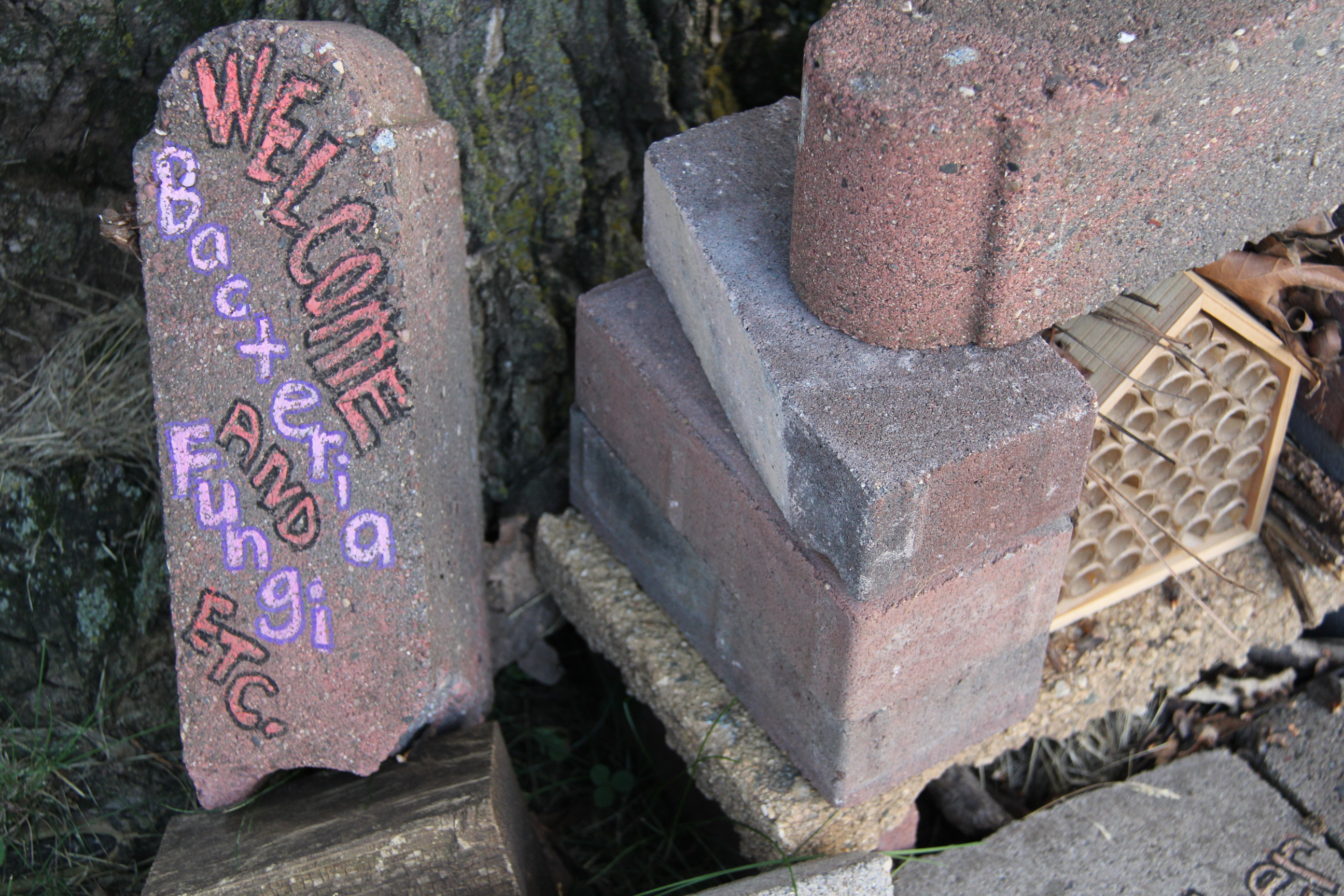
Bricks, stones, sticks and more comprise this haphazard housing unit. (Minnesota Prairie Roots copyrighted photo August 2024)
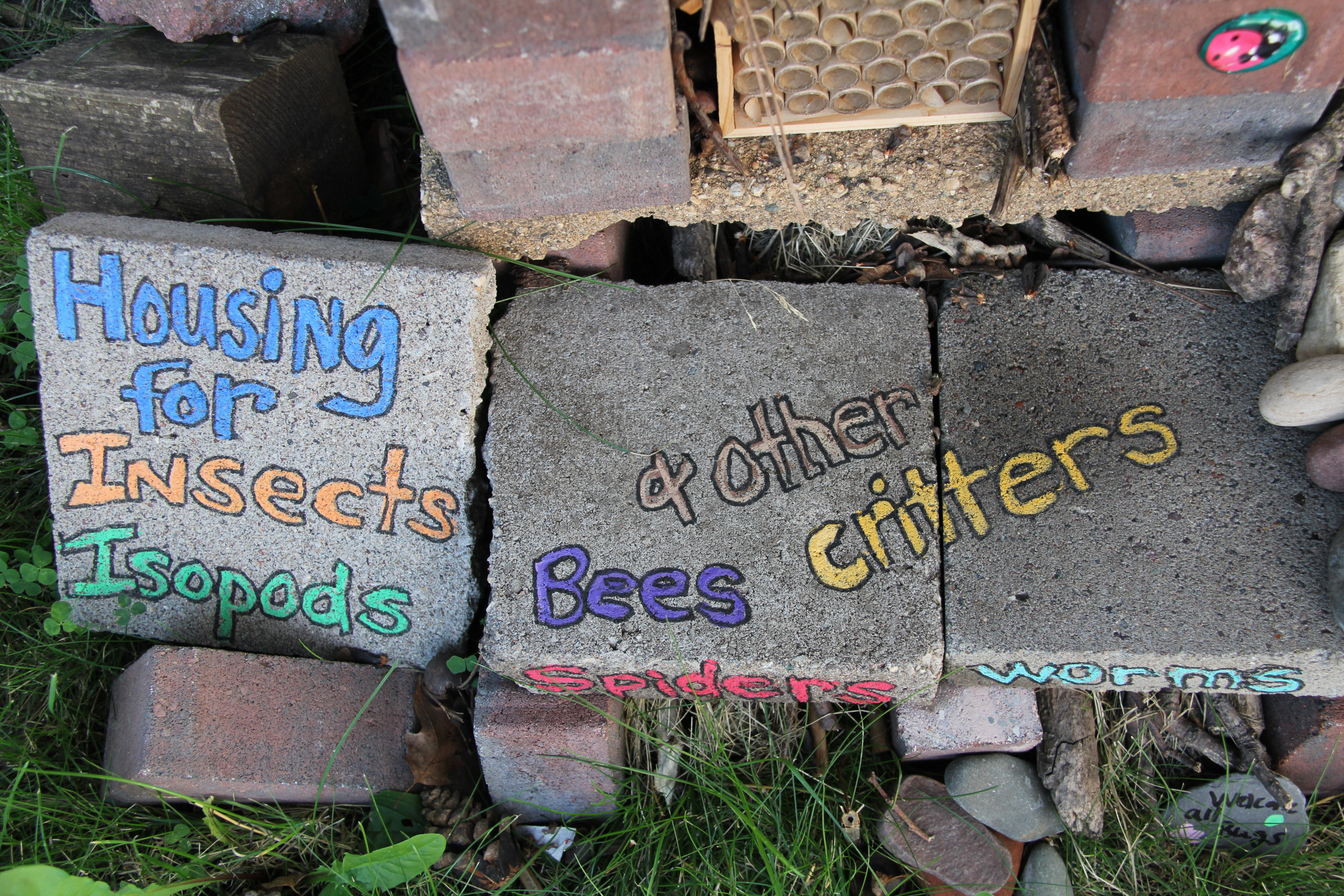
Identifying signage on the Invertebrate Inn. (Minnesota Prairie Roots copyrighted photo August 2024)
Now, as an adult, and an aged one at that, I realize that the core of learning is not memorization. It is rather taking in information that sparks interest, raises questions, causes independent thinking. I am still learning well into my sixties, this year marking 50 years since I graduated from high school.
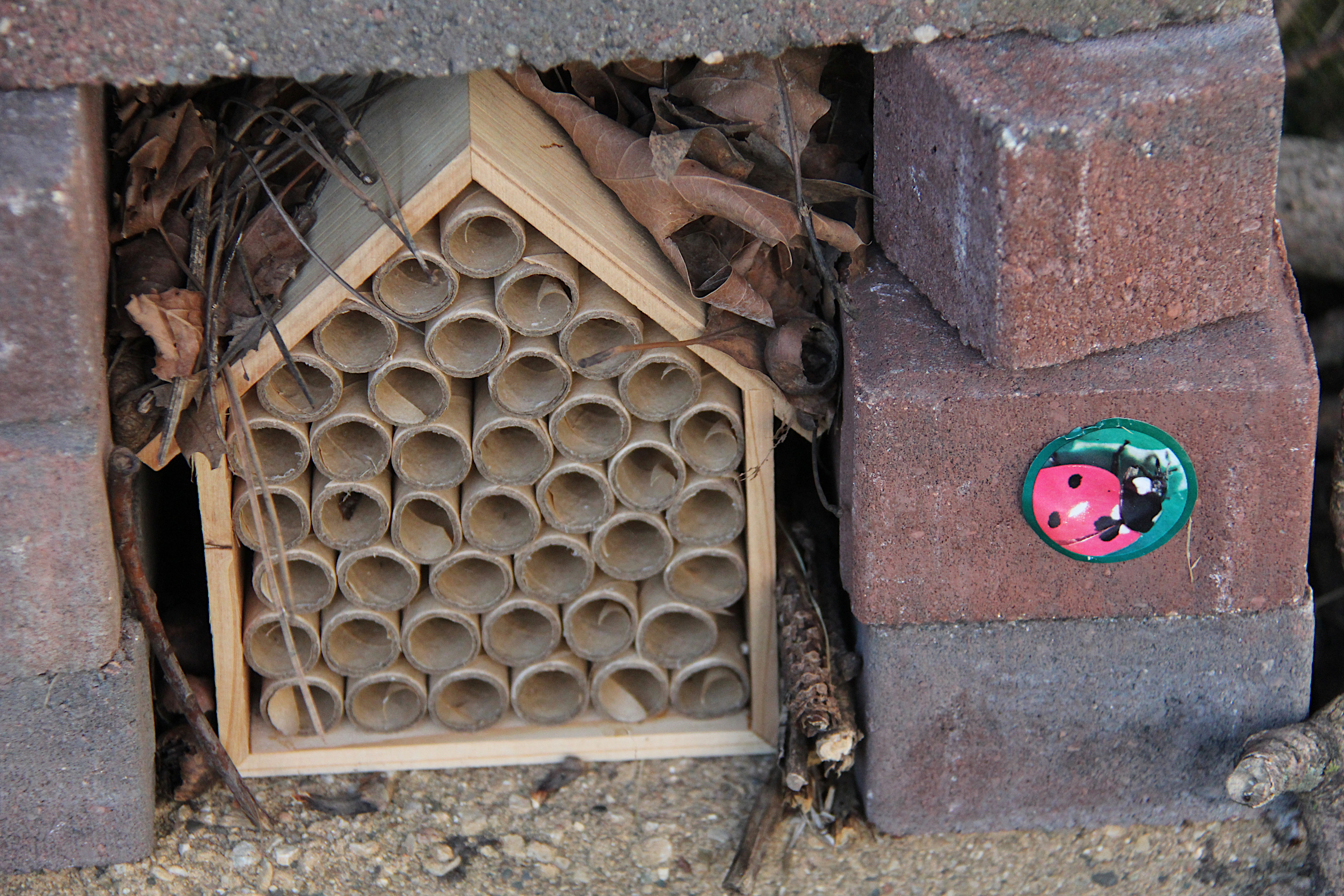
I trust this structure would be a good home for a bug. (Minnesota Prairie Roots copyrighted photo August 2024)
Today I learn because I want to, not because I need to take some class for credits or to earn a degree.
The bee lawn was roped off when I visited. (Minnesota Prairie Roots copyrighted photo August 2024)
Signage on the tree explains a flowering bee lawn. (Minnesota Prairie Roots copyrighted photo August 2024)
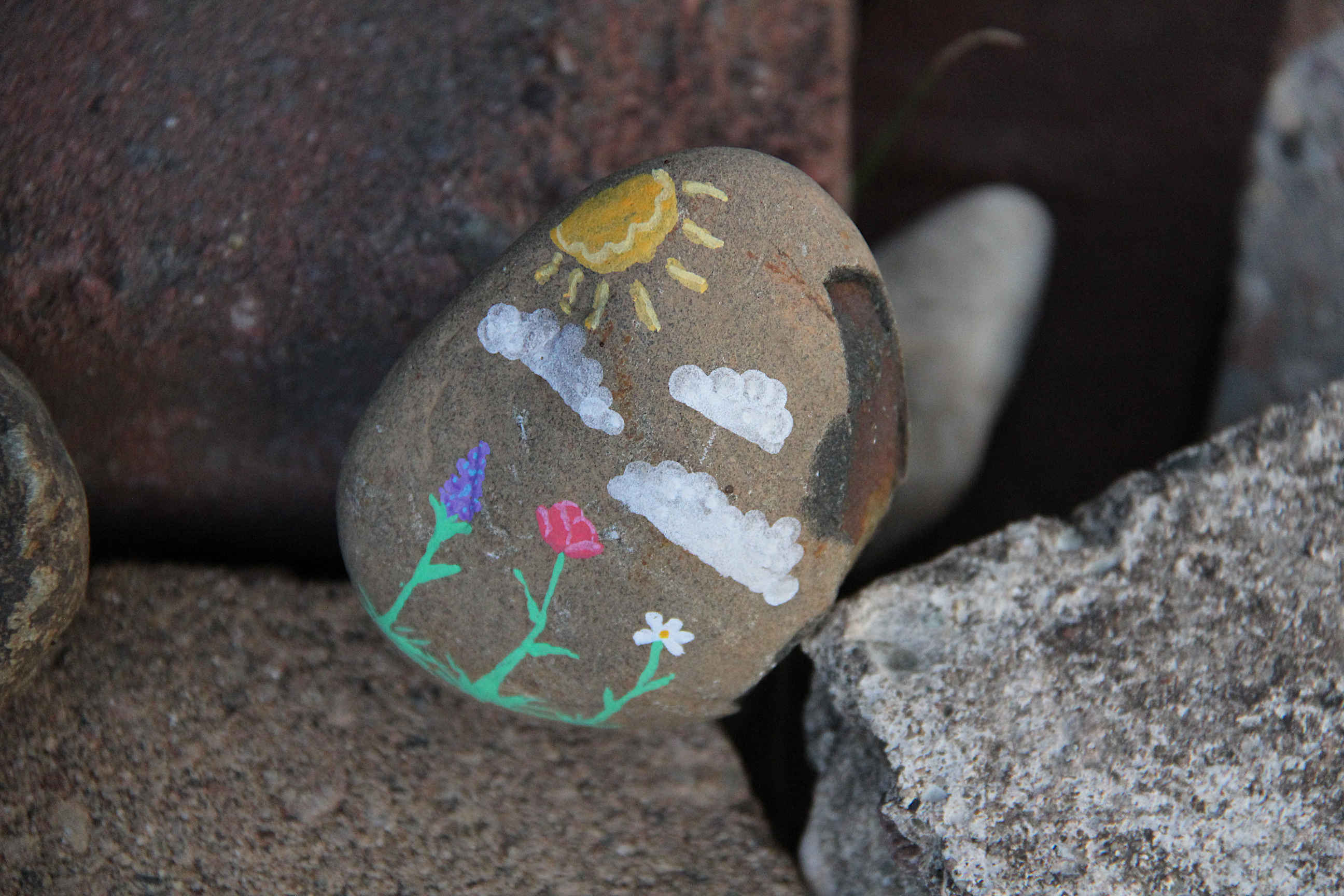
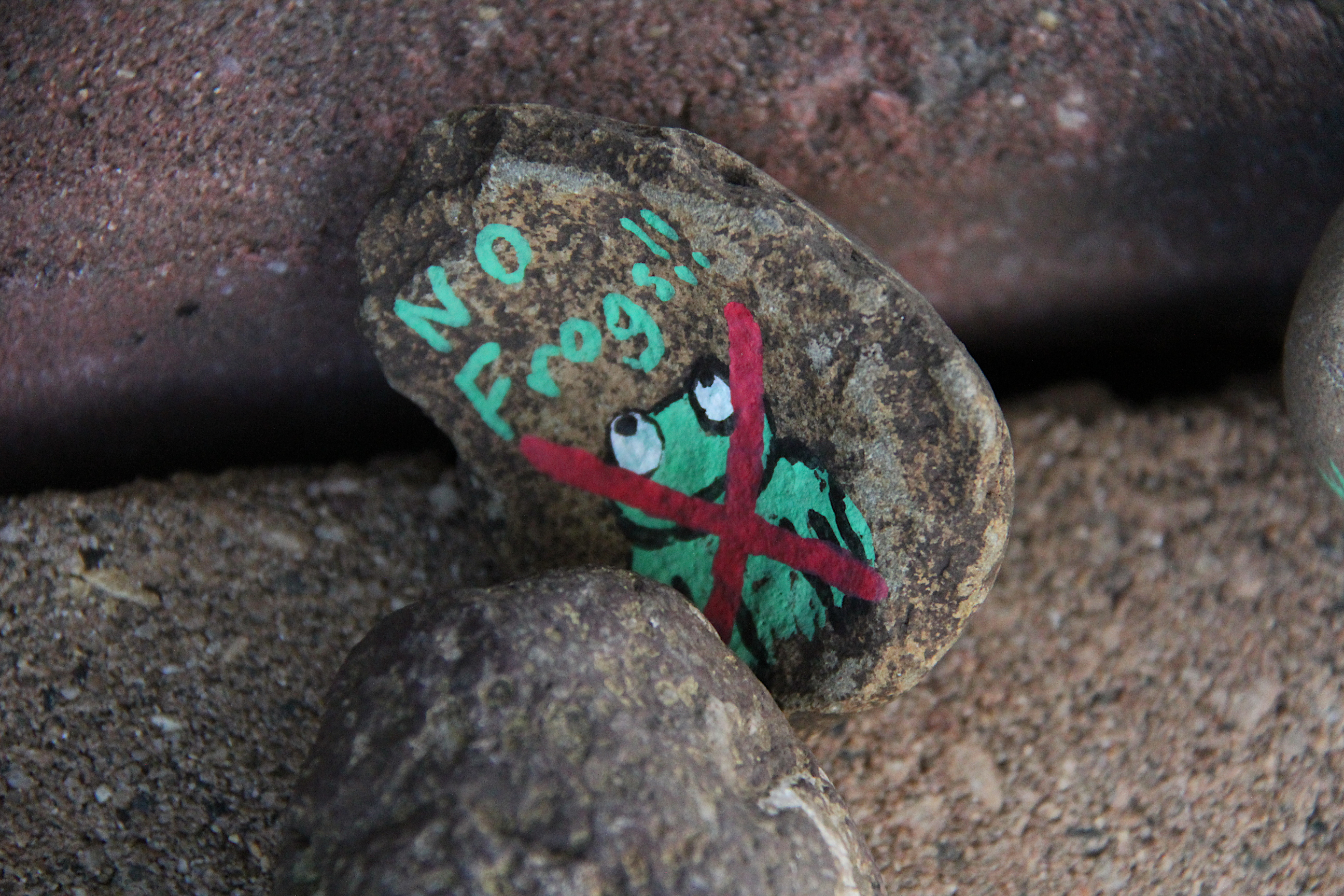
Fitting floral rock art in the inn. (Minnesota Prairie Roots copyrighted photo August 2024)
My latest delve into science was prompted by a visit to the Rice County Master Gardeners Teaching Gardens in Faribault. There I spotted an Invertebrate Inn and a bee lawn, recent additions to the beautiful gardens located at the Rice County Fairgrounds. These are not exactly novel ideas. But I’d not previously considered them much and how they benefit the natural world. Low-lying bee lawns, with their clover and other flowers like creeping thyme, provide nectar and pollen for pollinators.
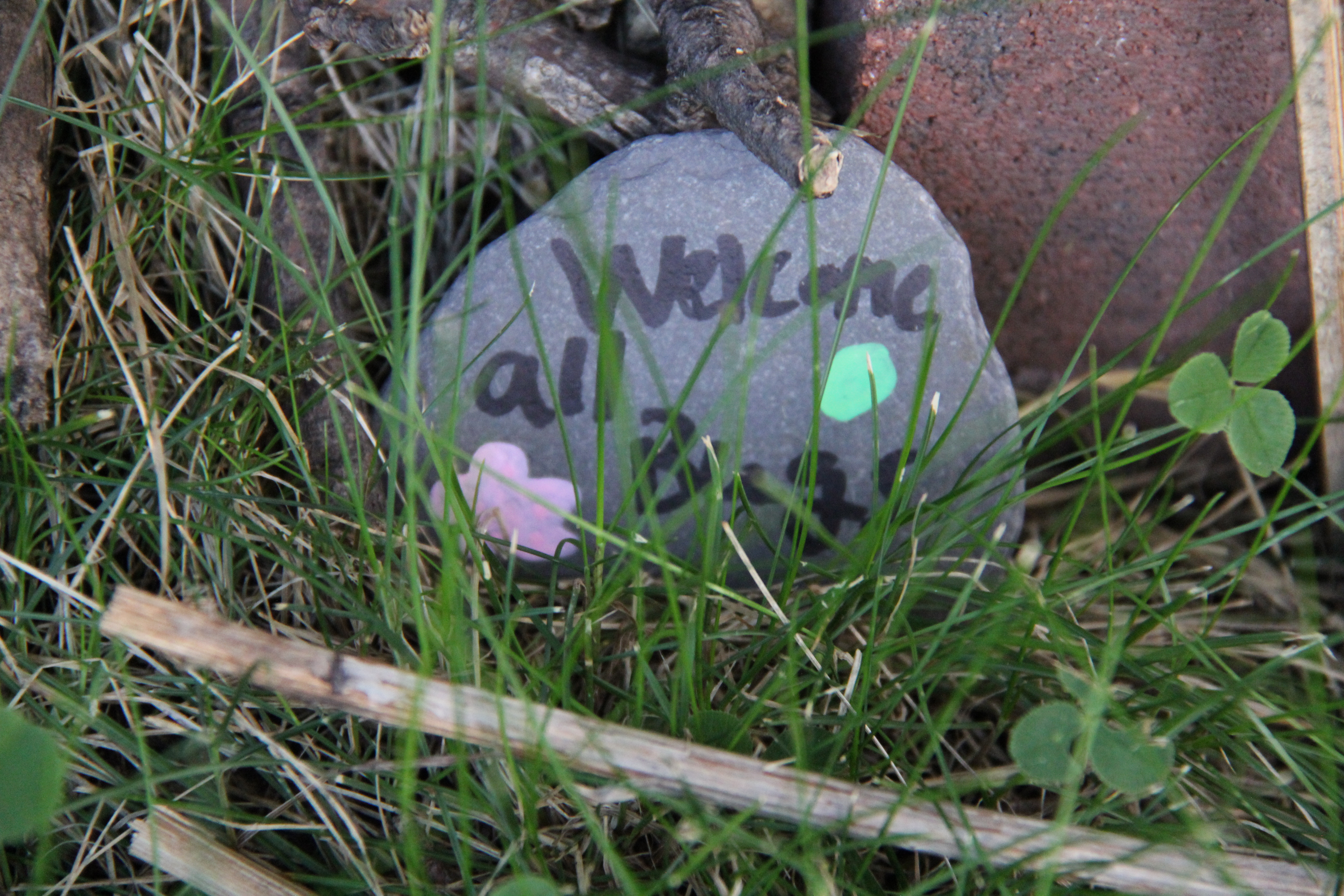
At the inn, a welcome sign for guests. (Minnesota Prairie Roots copyrighted photo August 2024)
In some ways, the inn and the bee lawn remind me of childhood days on the farm with our grass anything but weed-free and manicured. Dandelions and clover were prolific. No weedkiller or insecticides were used except on crops. No nothing applied to the grass, because who cared and who had time to nurture a lawn when there were crops to plant and cultivate and animals to tend?
Housing for more than just insects, isopods, bees, spiders, worms and other critters. (Minnesota Prairie Roots copyrighted photo August 2024)
Times have changed as farming and yard care have evolved. Insecticide and herbicide usage is prevalent. We would be naive to think this has not affected pollinators like butterflies and bees. And so when I discover something like a bee lawn and an Invertebrate Inn, I feel a spark of joy, a sense of gratitude for those who create them.
High rise housing. (Minnesota Prairie Roots copyrighted photo August 2024)
I want my grandchildren to understand that this world they’ve been given is one that needs to be nurtured and appreciated, taken care of in a way that perhaps my generation did not. Sure I celebrated Earth Day, wore Earth Shoes and spouted environmental platitudes of the 1970s. But did that really mean anything, make any long-lasting impact? It was a beginning, I suppose.
Frogs are banned from the inn. (Minnesota Prairie Roots copyrighted photo August 2024)
I want my grandchildren to ask questions in class, seek out information, learn in a way that is focused on curiosity rather than feeding back facts. I want them to care about the bees and the butterflies and the bugs.
There are other bee lawns, pollinator gardens, etc., in my community, including this one in Central Park. (Minnesota Prairie Roots copyrighted photo August 2024)
I want them to connect with nature, to understand that what they do, or don’t do, to the earth matters. I want them to get their hands dirty in the soil, overturn rocks, hold bugs, pick up worms, plant flowers and, most of all, appreciate this natural world of ours. The science of it. The beauty of it. The peace it brings to the soul. The joy it brings to the spirit. And I want them to care. Always.
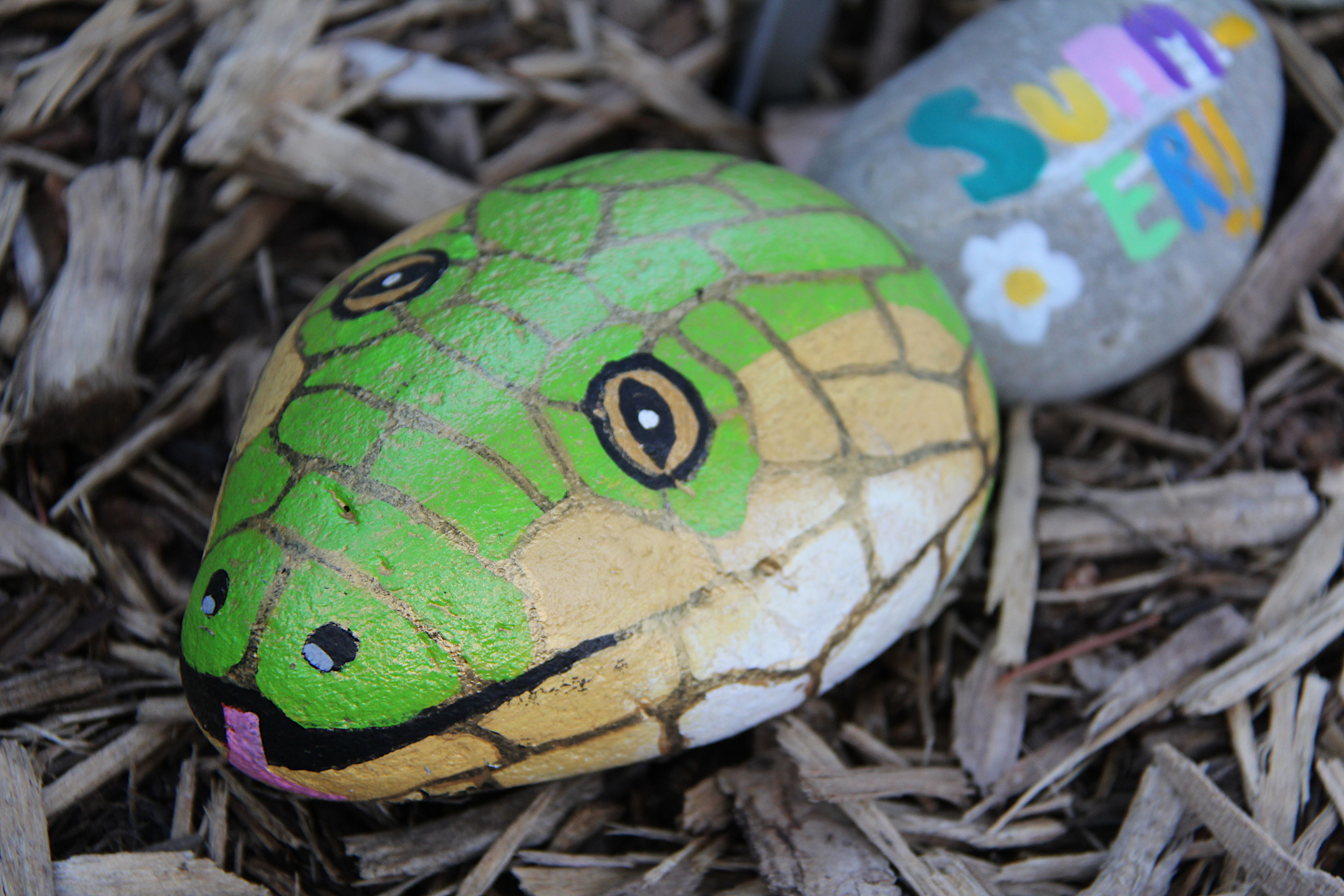
The snake I found in a Faribault garden. (Minnesota Prairie Roots copyrighted photo August 2024)
AS THE BIBLICAL STORY GOES, a cunning snake tempted Eve, convincing her that she could eat fruit from a tree growing in the middle of the Garden of Eden. She believed the snake’s claim of knowledge and immortality. Turns our he manipulated her. Things did not go so well after Eve ate the forbidden fruit and shared it with Adam.
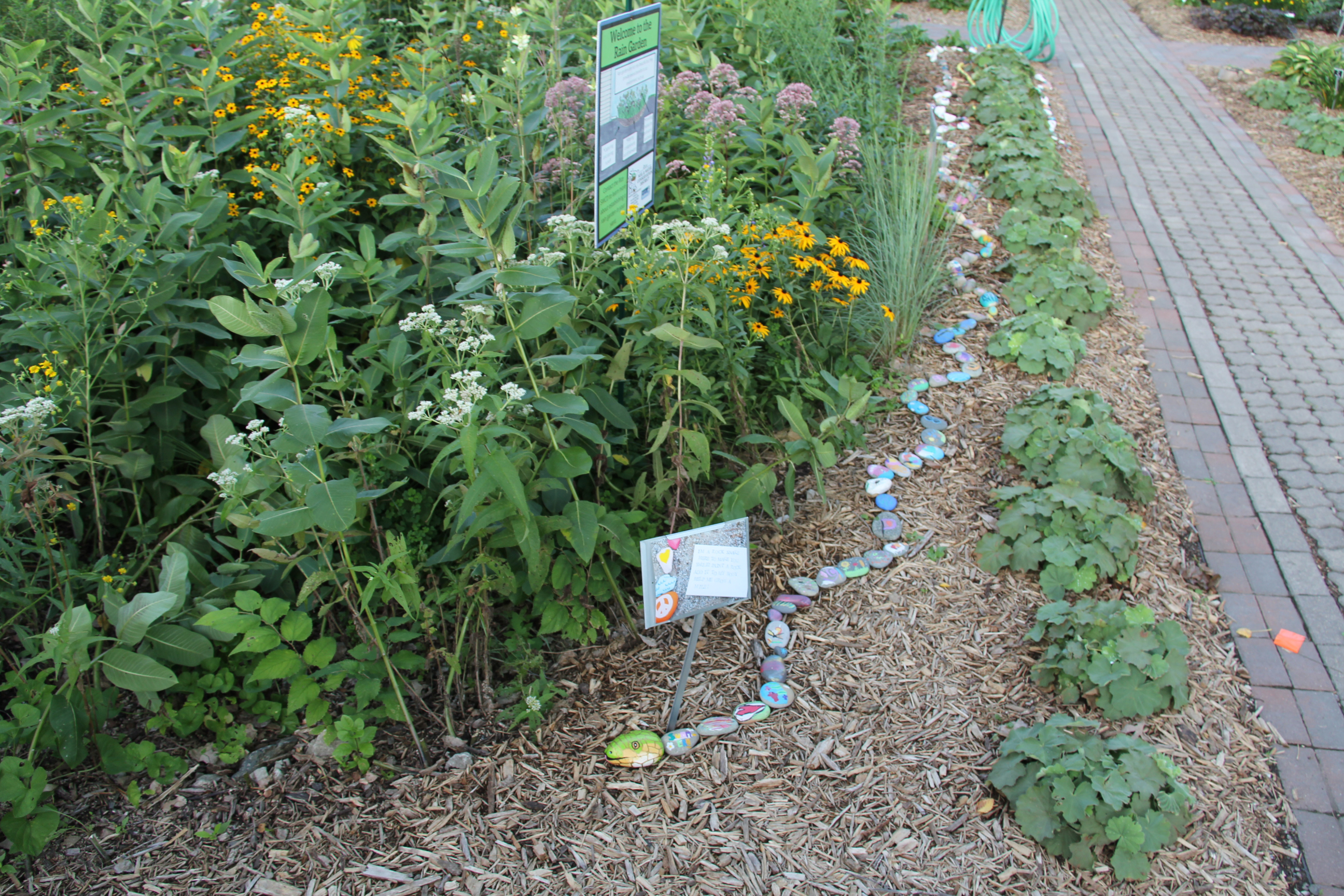
I stood atop a bench to get this photo of the long and winding Rock Snake. (Minnesota Prairie Roots copyrighted photo August 2024)
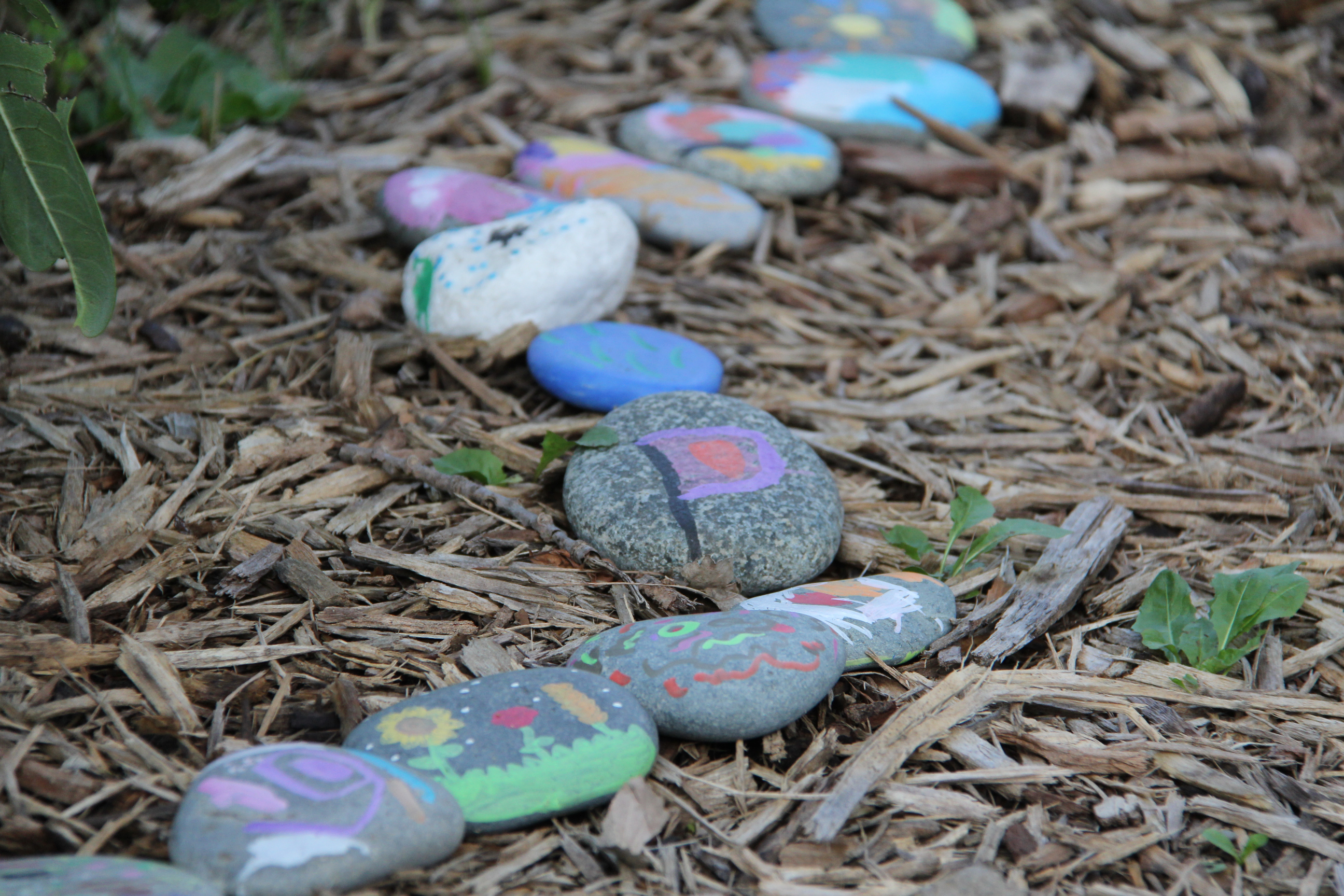
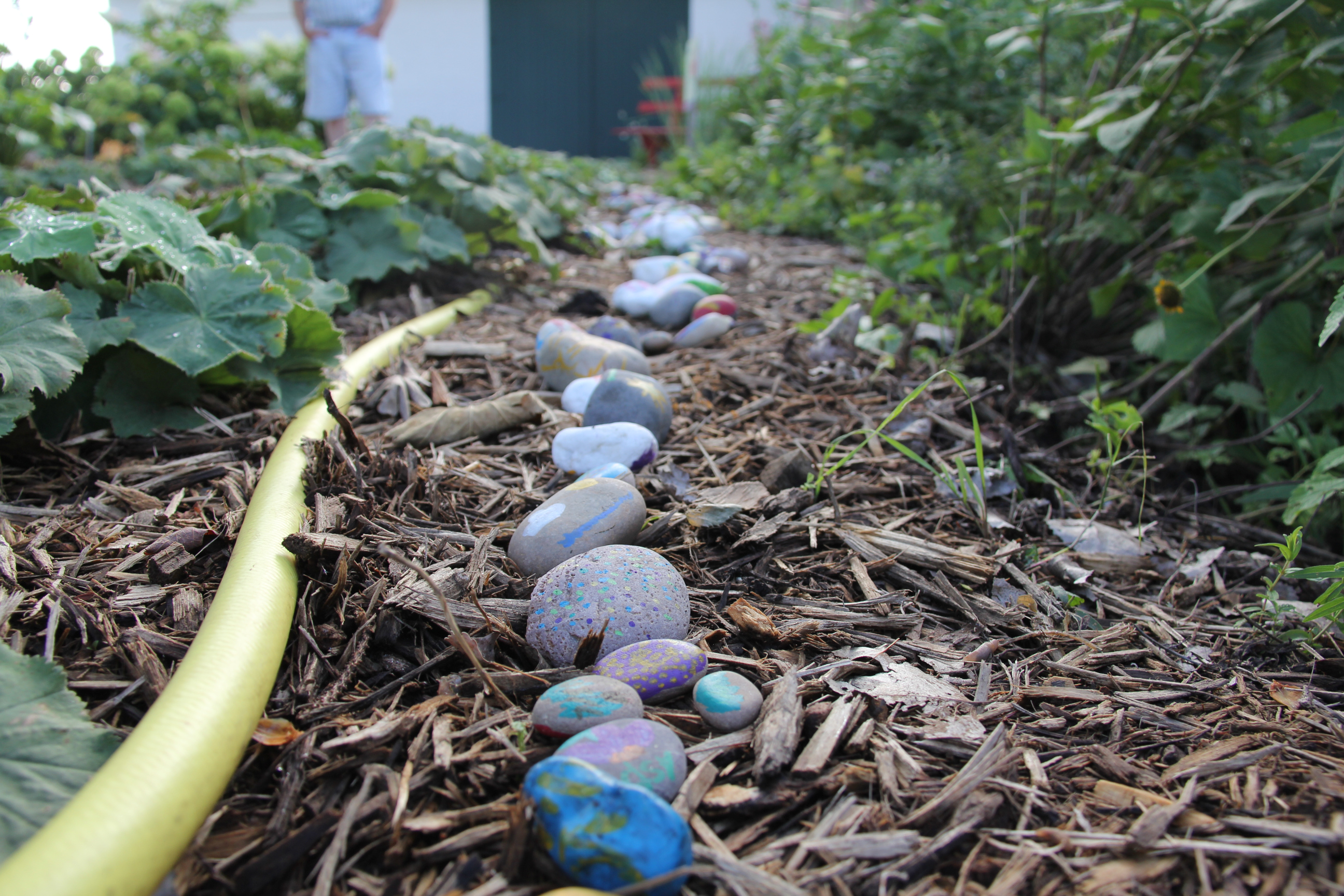
Not all snakes are liars and evildoers. Some, like the one I found recently in a Faribault garden, are quite the opposite. The Rock Snake that stretches an estimated 40 feet across wood chips between a brick pathway and a rain garden in the Rice County Master Gardeners’ Teaching Gardens exudes only goodness.
The Rock Snake slithers (well, not really) past the rain garden. (Minnesota Prairie Roots copyrighted photo August 2024)
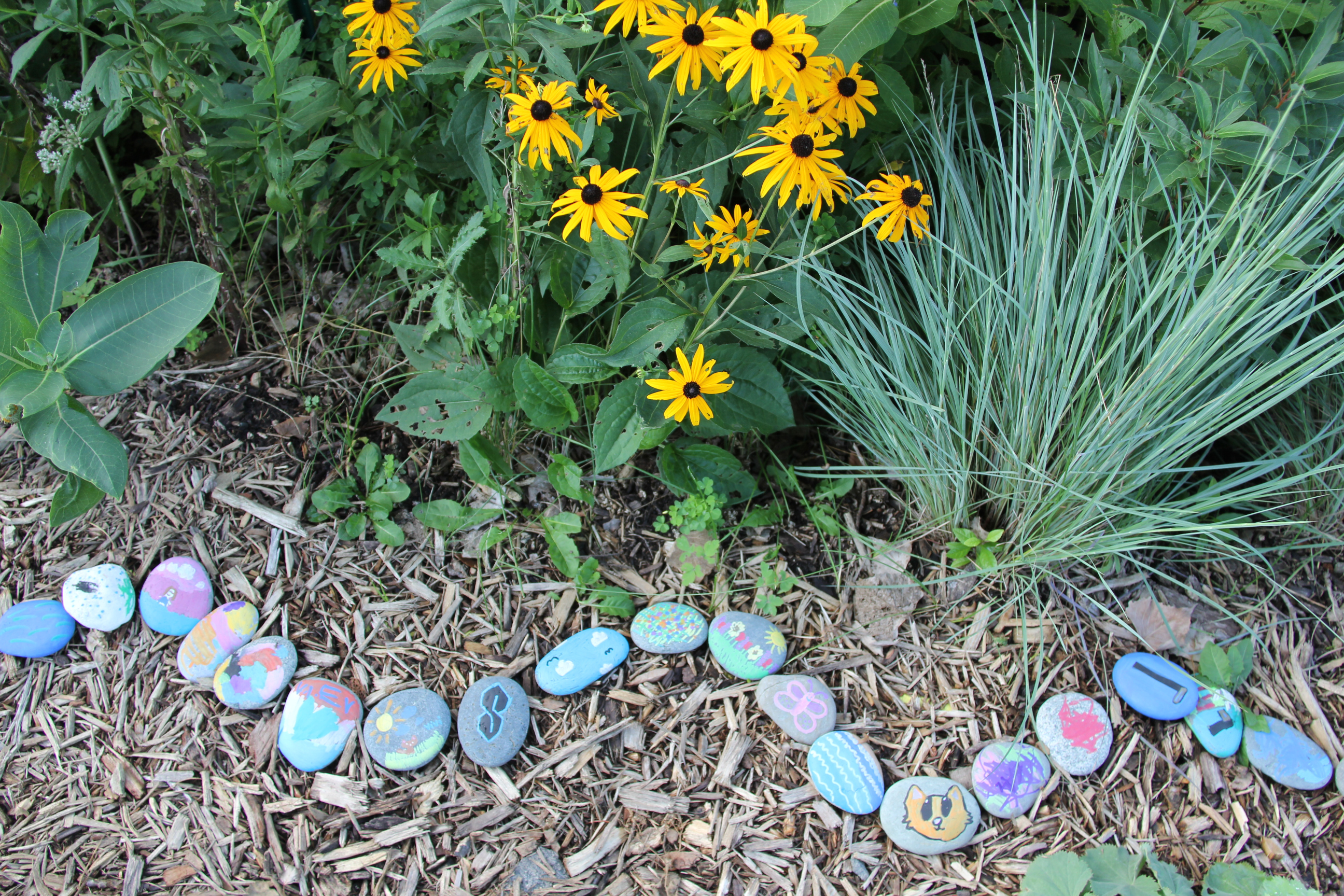
I resisted the temptation to snatch away a segment—a painted rock—of the snake. Some 220 painted stones comprise the serpent. I learned a lesson from Eve. Be strong. Don’t give in to those who would mislead you.
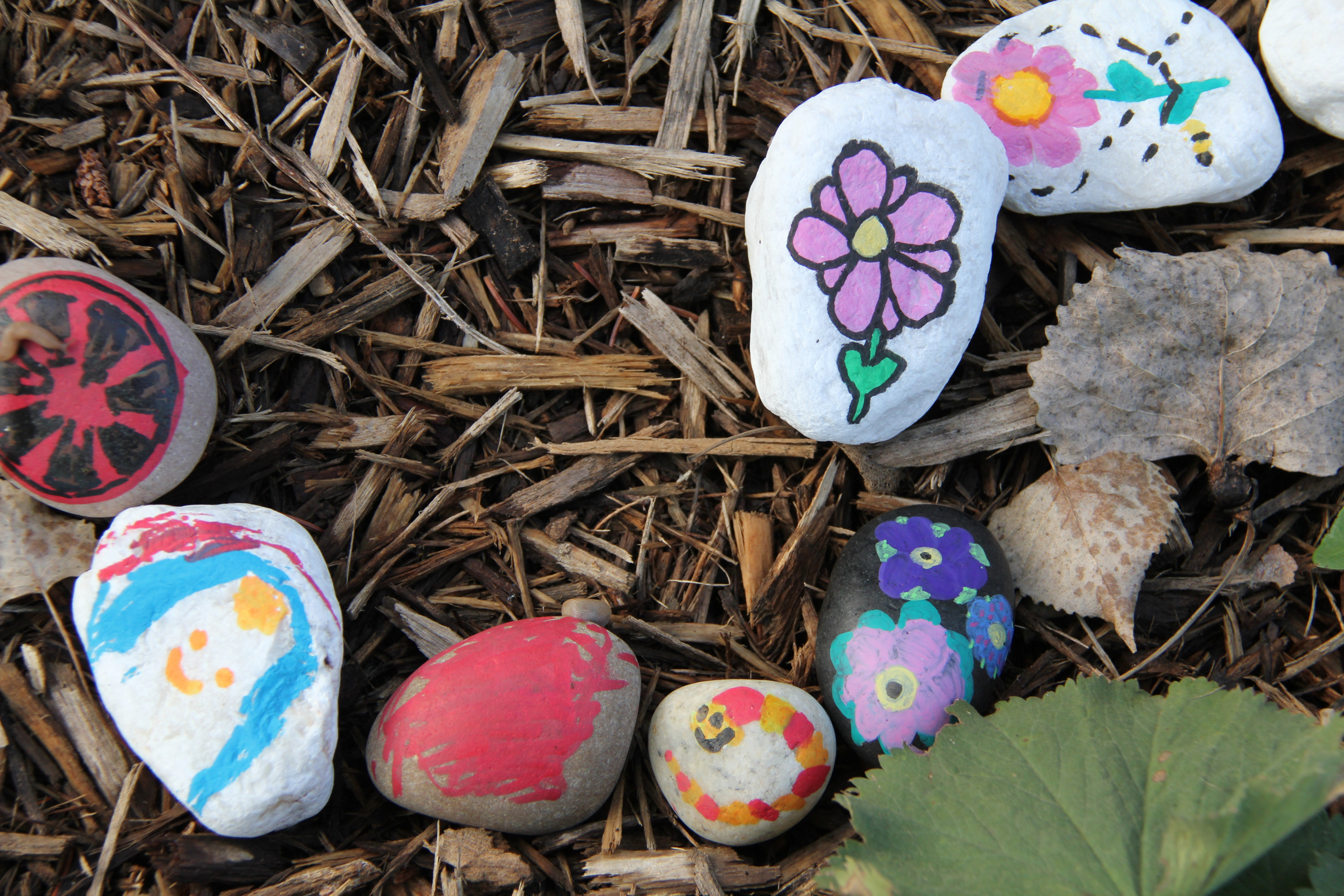
These painted rocks are themed to summer. (Minnesota Prairie Roots copyrighted photo August 2024)
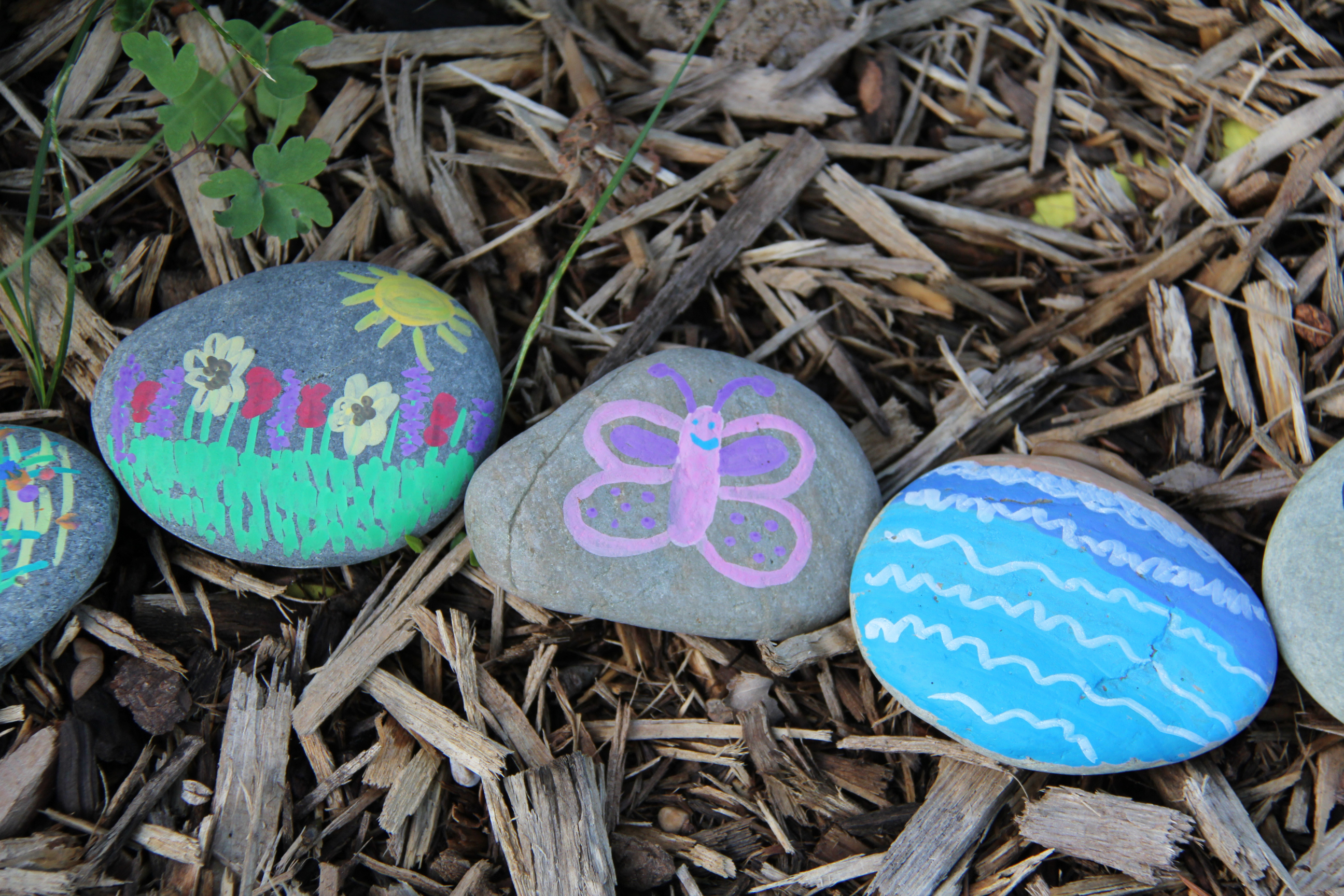
More sunshine and flowers on the snake’s body. (Minnesota Prairie Roots copyrighted photo August 2024)
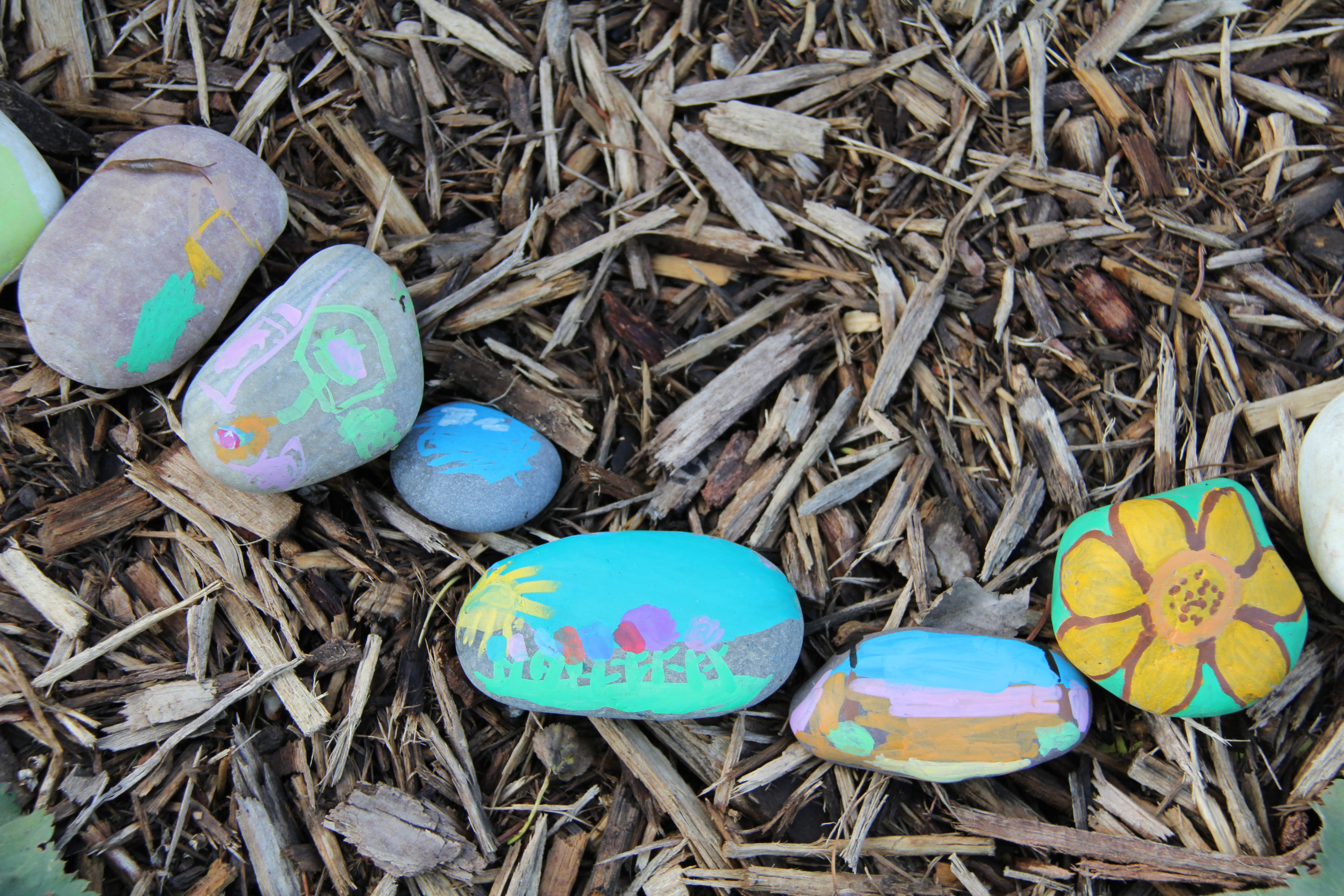
And yet more flowers bloom on the Rock Snake. (Minnesota Prairie Roots copyrighted photo August 2024)
Rather, I opted to photograph and enjoy the Rock Snake with its inspiring, joyful messages, its colorful art. A posted sign invites people to add their own painted rocks, lengthening the snake designed to bring a smile.
(Minnesota Prairie Roots copyrighted photo August 2024)
(Minnesota Prairie Roots copyrighted photo August 2024)
(Minnesota Prairie Roots copyrighted photo August 2024)
And smile I did as I followed the snake’s winding body, bending low to study the art, the words. Many of the stones were painted at the Master Gardeners’ booth during the recent Rice County Fair.
An overview of a small section of the gardens. (Minnesota Prairie Roots copyrighted photo August 2024)
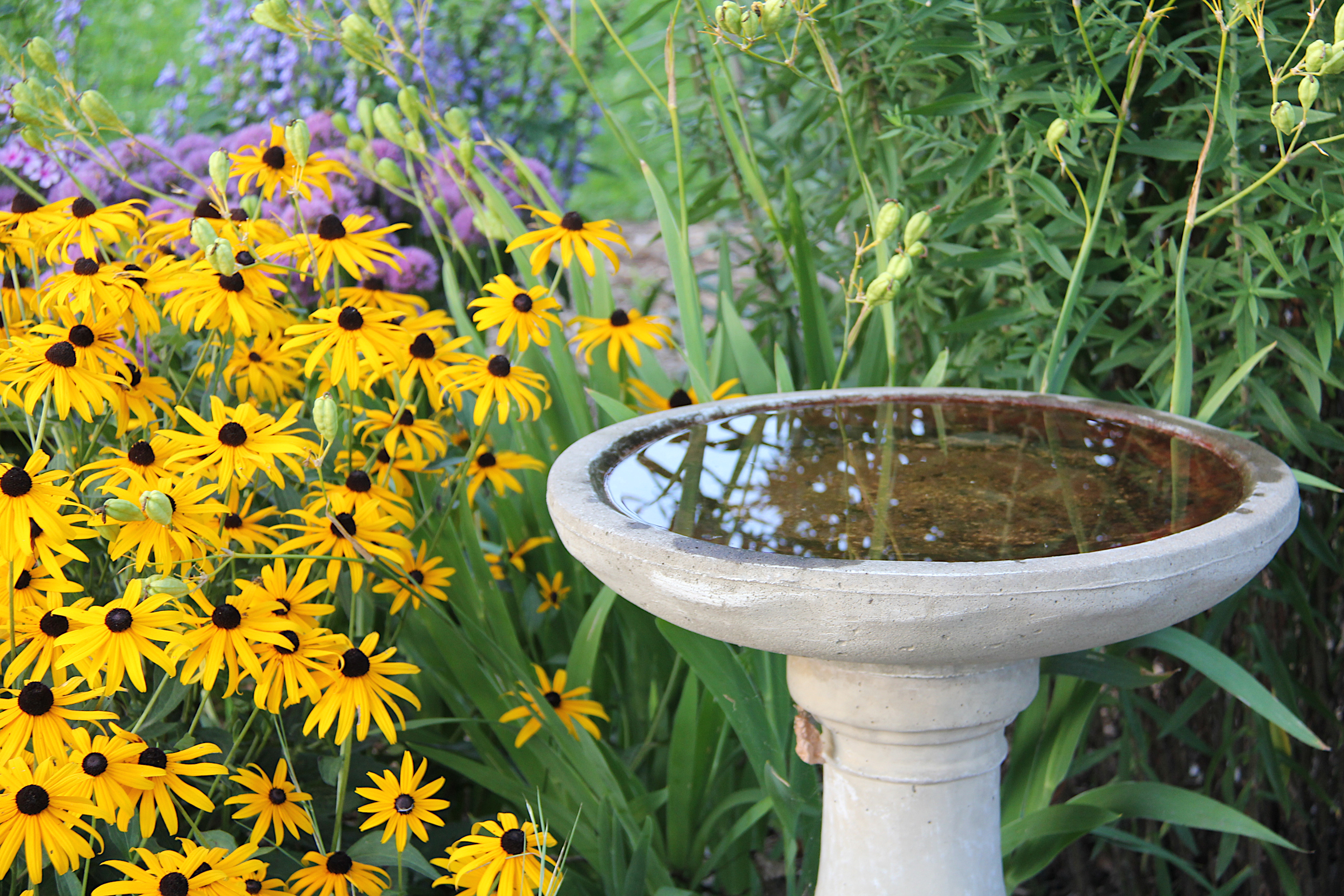
Water features include a bird bath, pond and fountains. (Minnesota Prairie Roots copyrighted photo August 2024)
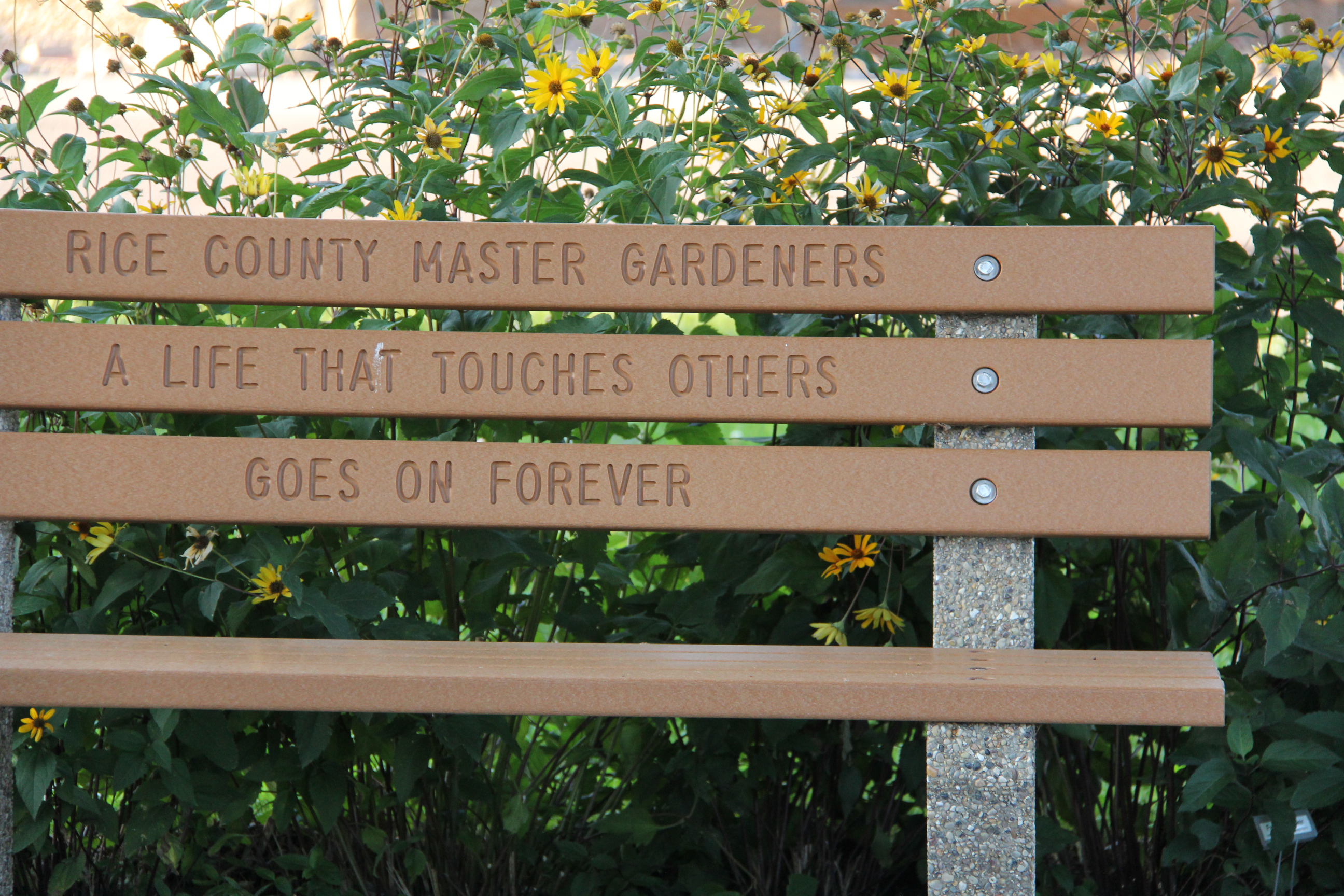
Several benches offer a place to rest, contemplate and enjoy the gardens. (Minnesota Prairie Roots copyrighted photo August 2024)
These gardeners, through their volunteer efforts, have created Faribault’s own Garden of Eden in a spacious area next to the conservation building and the Rice County Historical Society on the city’s north side. It’s taken years to get the garden to this lush, well-kept, welcoming space.
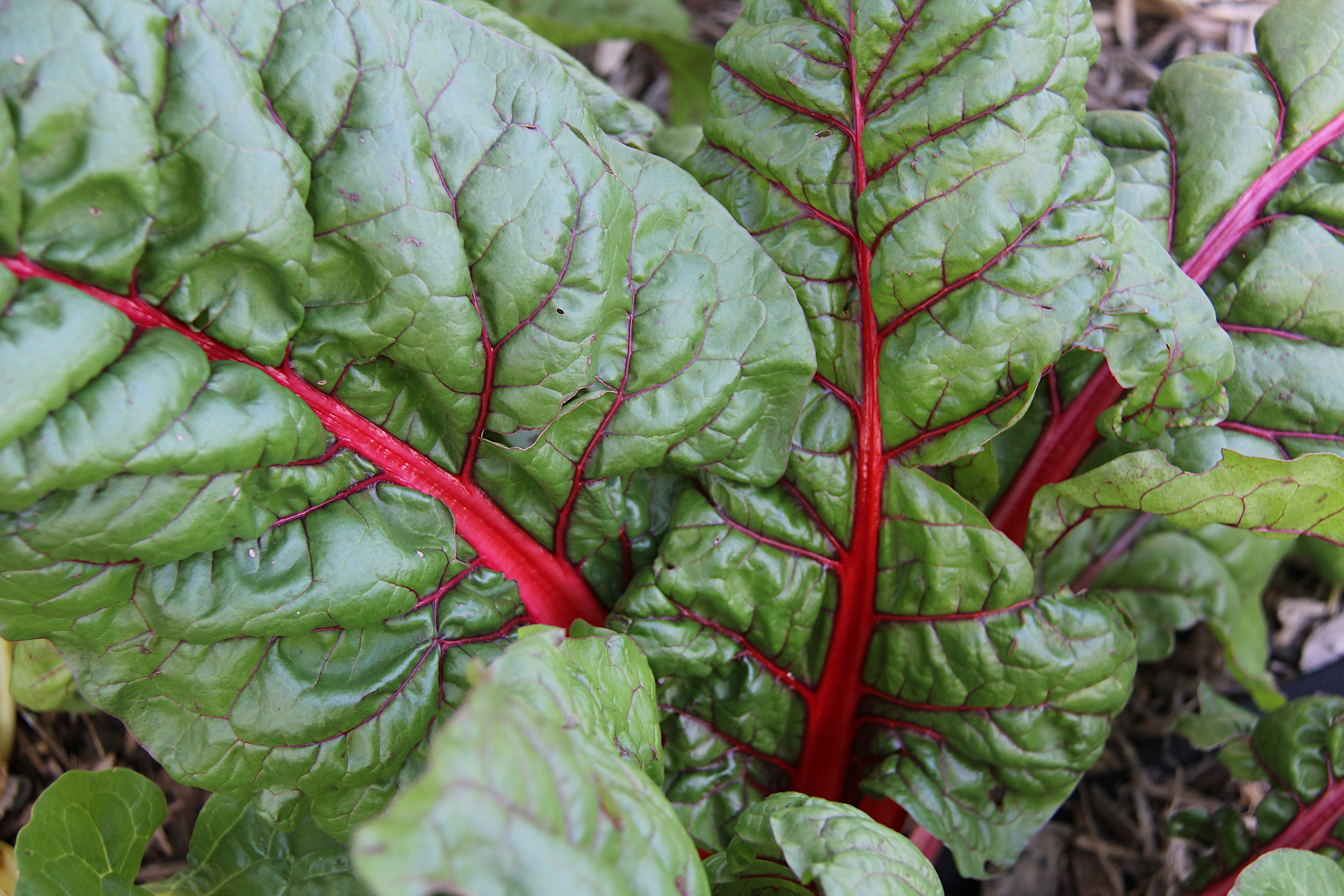
Swiss chard grows in the trial garden. (Minnesota Prairie Roots copyrighted photo August 2024)
I enjoy coming here, meandering among blooming flowers and plants, past the water features, pausing to examine the fairy garden. And now there’s more to see in the Rock Snake and a new bee lawn with habitat. There are trial gardens here and free seeds for the taking and benches for sitting. It is, indeed, a bit of paradise, a respite, a place to rest and contemplate and envelope one’s self in nature.
Flowers are always blooming. (Minnesota Prairie Roots copyrighted photo August 2024)
A garden hose runs alongside the Rock Snake. (Minnesota Prairie Roots copyrighted photo August 2024)
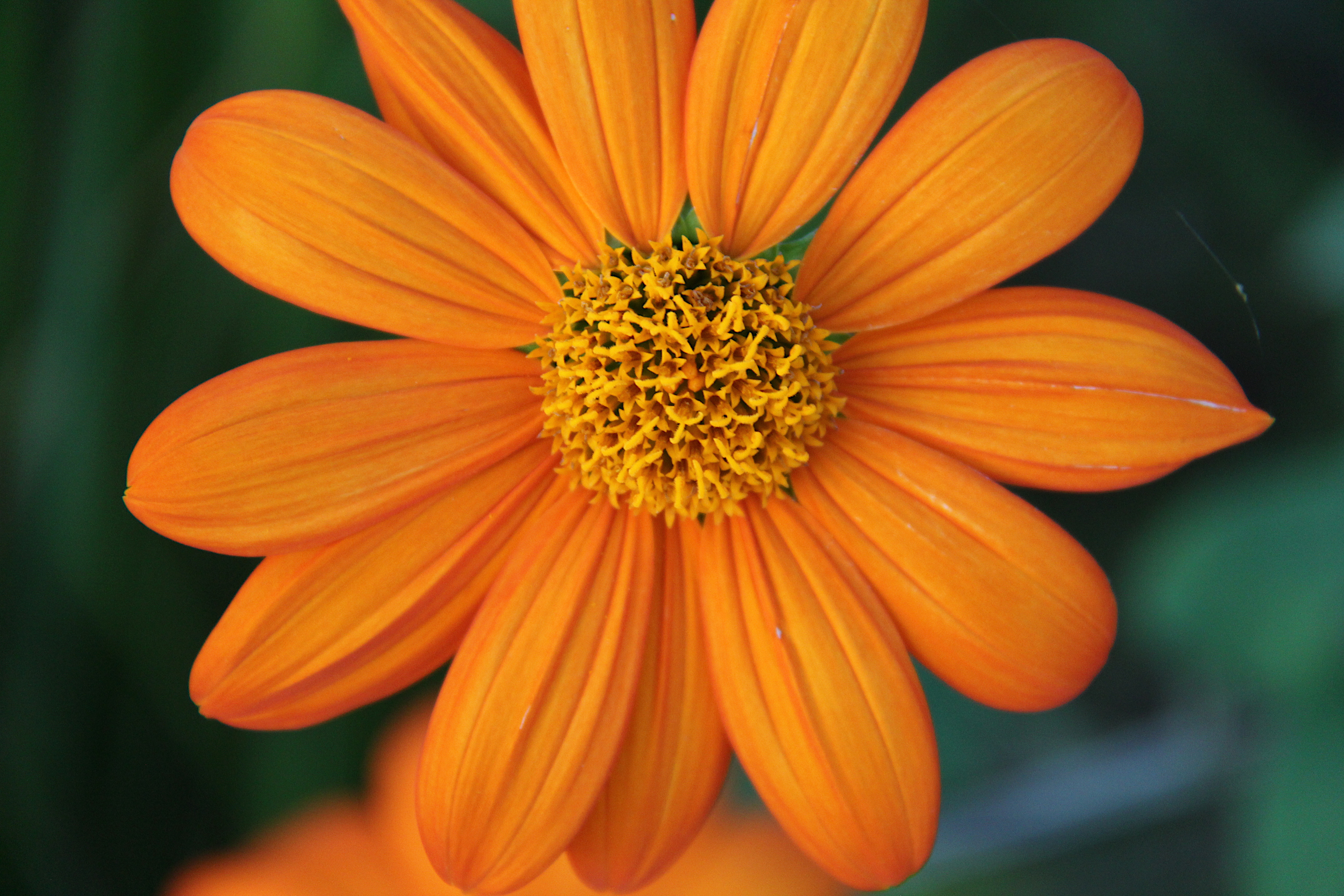
A sturdy dahlia blooms. (Minnesota Prairie Roots copyrighted photo August 2024)
Goodness thrives here. I experience it with my senses. My eyes take in the birds, blooms, bees, butterflies, the colorful Rock Snake. I smell the scent of blossoms. I hear water burbling in fountains, birds chirping. And if I could pluck vegetables from the trial gardens, I would assuredly taste goodness. But I won’t. I will not be tempted. Rather I will look and not touch. Leave and not take. I will leave this bit of Eden as I found it, beautiful and wondrous, a place of peace for anyone who visits.
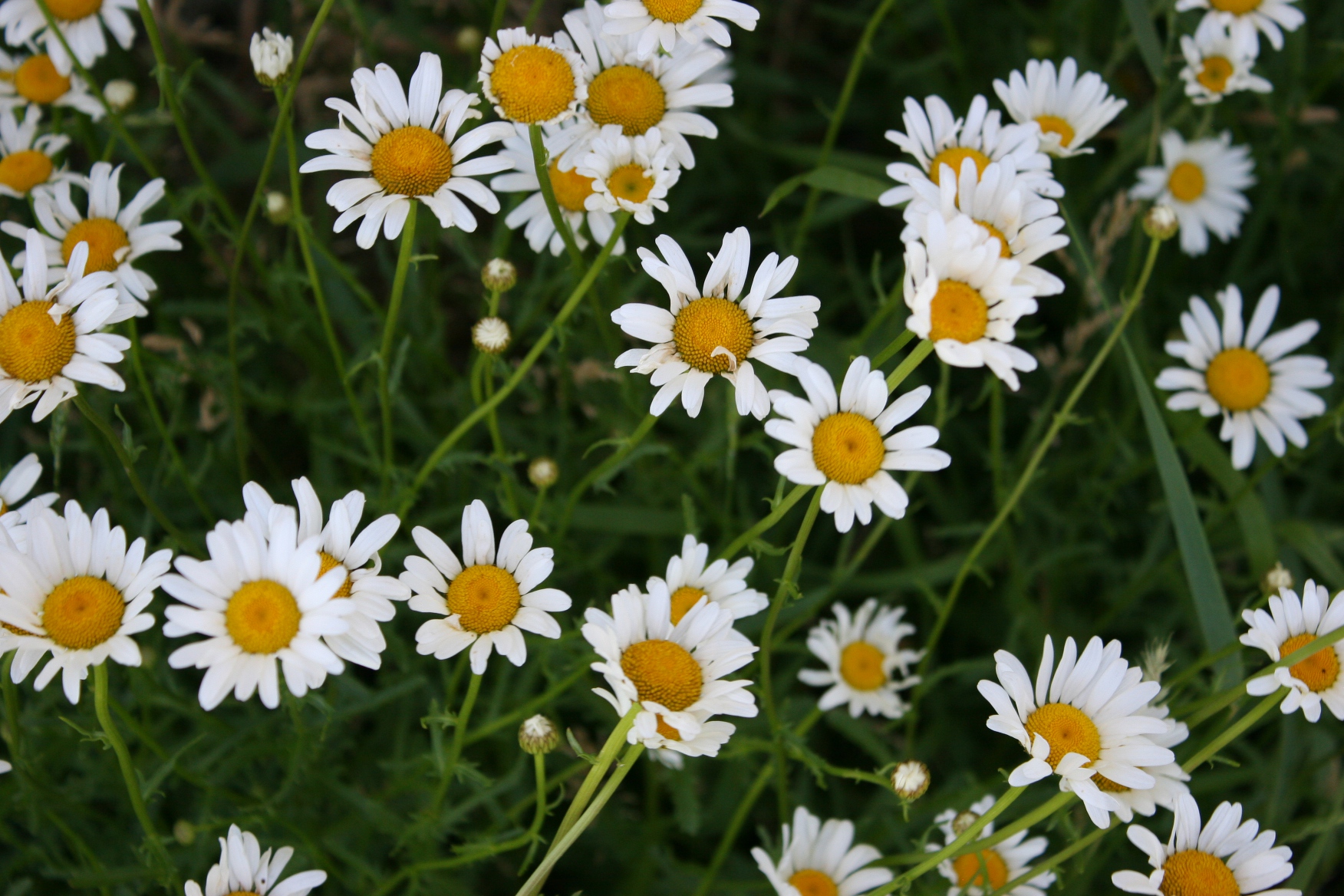
A patch of daisies. (Minnesota Prairie Roots copyrighted file photo)
RECENTLY, MY SISTER-IN-LAW Rena asked me to name my favorite flower. I immediately responded, “Daisy.” But that’s not really true, I realized the more I considered the flowers I especially like.
A time existed when my response to Rena was accurate. For a long time, daisies assuredly were my personal pick for most beloved floral. Daisies, like me, are simple, uncomplicated, down-to-earth. There’s nothing pretentious about a daisy with its circle of white petals and yellow center.
Daisies, too, were the flower of my teen years. The age of flower children and peace symbols and rebellion. Daisies, prolific, strong, reseeding on their own, spreading and blanketing the landscape.
I still like daisies a lot. The way they bend in the wind. The way they remind me of my youth. And young love.
Zinnias sourced at the Faribault Farmers’ Market. (Minnesota Prairie Roots copyrighted photo August 2024)
But, after pondering Rena’s question, I would answer differently. Zinnias. Yes, vivid, bold zinnias are my favorite flower today. Like daisies, they trace to my youth. Mom seeded rows of zinnias in her vegetable garden. They jolted color into the greenery, later adding color to our farmhouse in bouquets gathered.
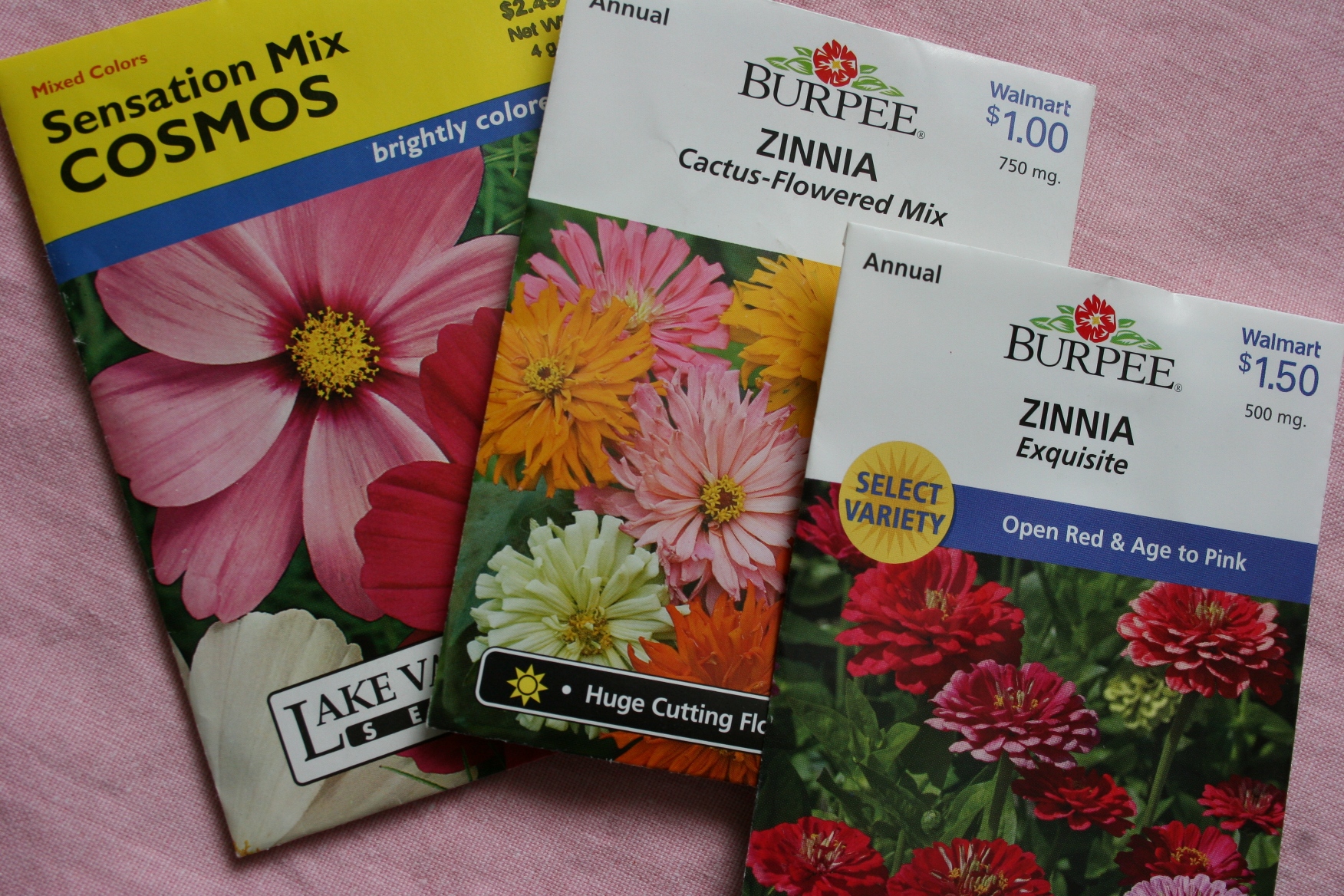
Zinnias and cosmos can be easily grown by direct seeding into the soil. (Minnesota Prairie Roots copyrighted file photo)
Zinnias grow easily from seed. They are hardy and prolific and colorful, coming in varying sizes from small to “giant.” They make excellent, long-lasting cut flowers.
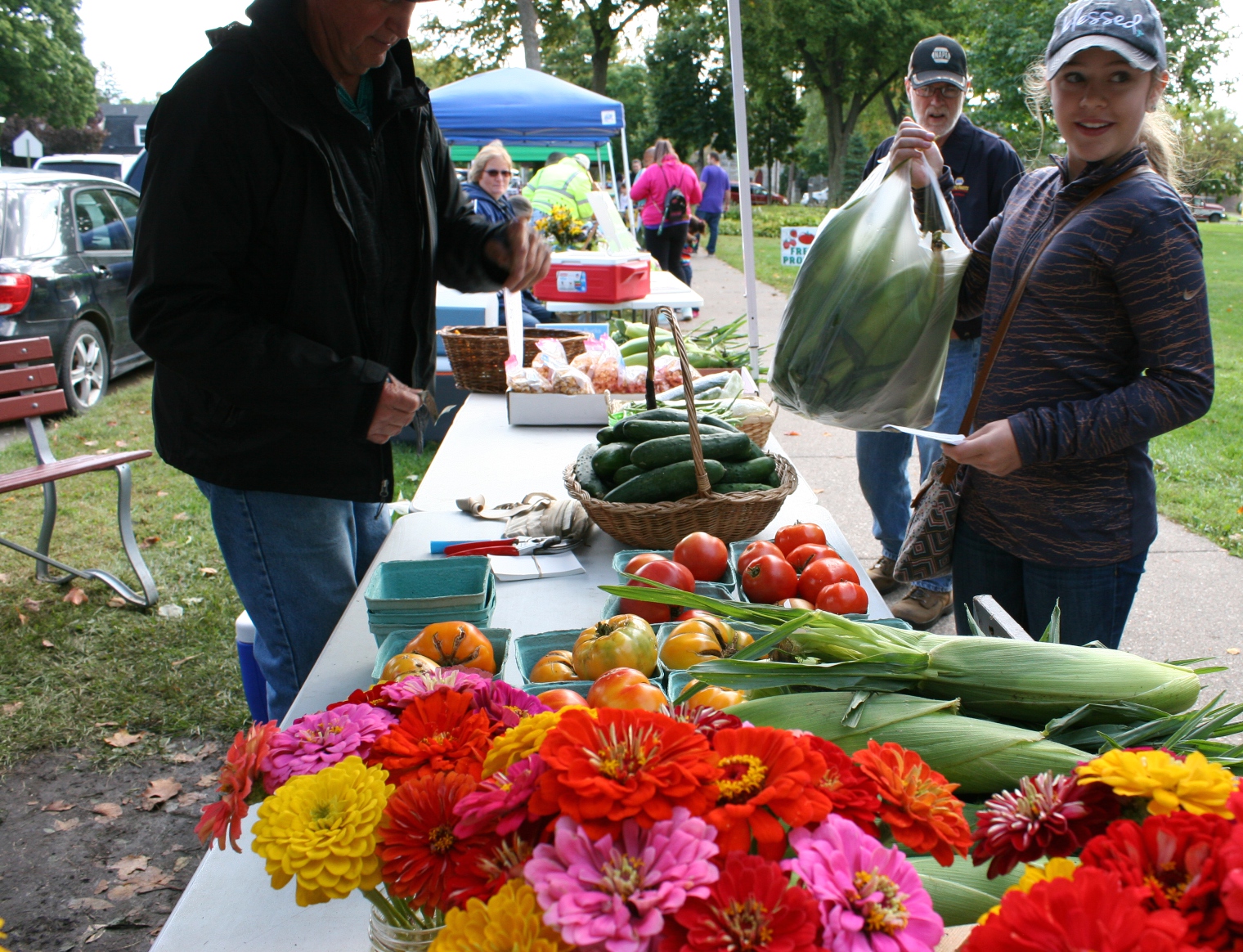
My friend Al, left, sells flowers and produce at the farmers’ market. (Minnesota Prairie Roots copyrighted file photo)
I transferred the zinnia bouquet from Solo cup to vase at home. (Minnesota Prairie Roots copyrighted photo August 2024)
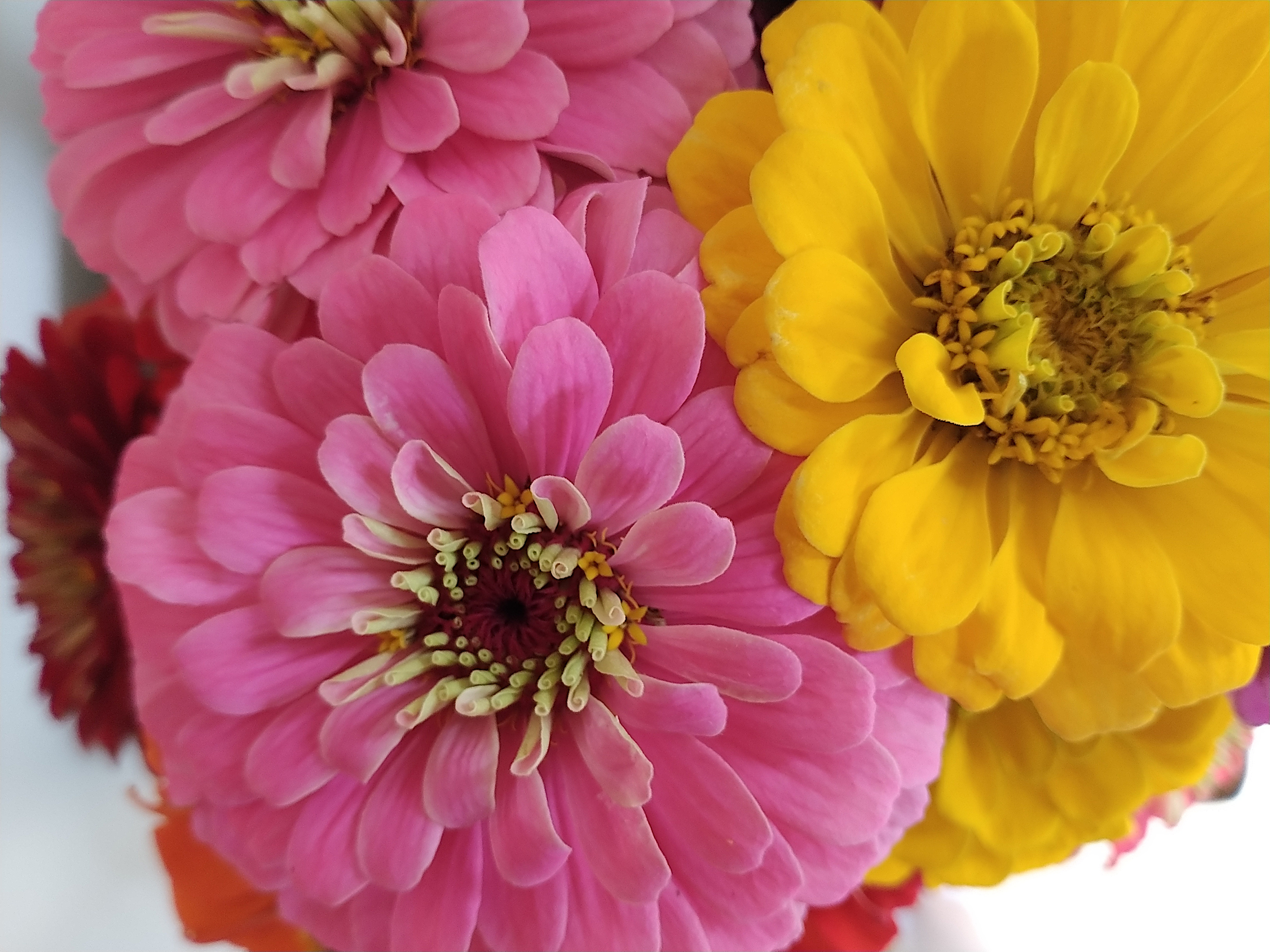
Al and Char’s zinnias up close. (Minnesota Prairie Roots copyrighted photo August 2024)
As I write, a bouquet of zinnias purchased at the Faribault Farmers’ Market graces a vintage chest of drawers in my living room. My friend Al grew them. His wife, Char, artistically arranged the stems of red, pink, orange and yellow with one green-tinted flower tossed in the colorful mix.
Randy bought them for me. For no reason. I love when he does that—spur of the moment gives me flowers. Just because. I was chatting with our friend Duane while Randy paid for sweetcorn purchased from Al along with those unexpected zinnias arranged in a red Solo cup. It was a moment when I felt loved, so loved, as if Randy had given me my daisy a day.
Monarch on the common milkweed flower. (Minnesota Prairie Roots copyrighted file photo 2023)
I’VE ALWAYS HELD a fascination with milkweeds. Their clusters of vanilla-scented dusty pink flowers draw me to a plant that seems more flower than weed. Unless you were my dad, who wanted the common milkweed removed from his acres of soybeans. Yes, I hoed or pulled plenty of milkweeds from the fields on my southwestern Minnesota childhood farm.
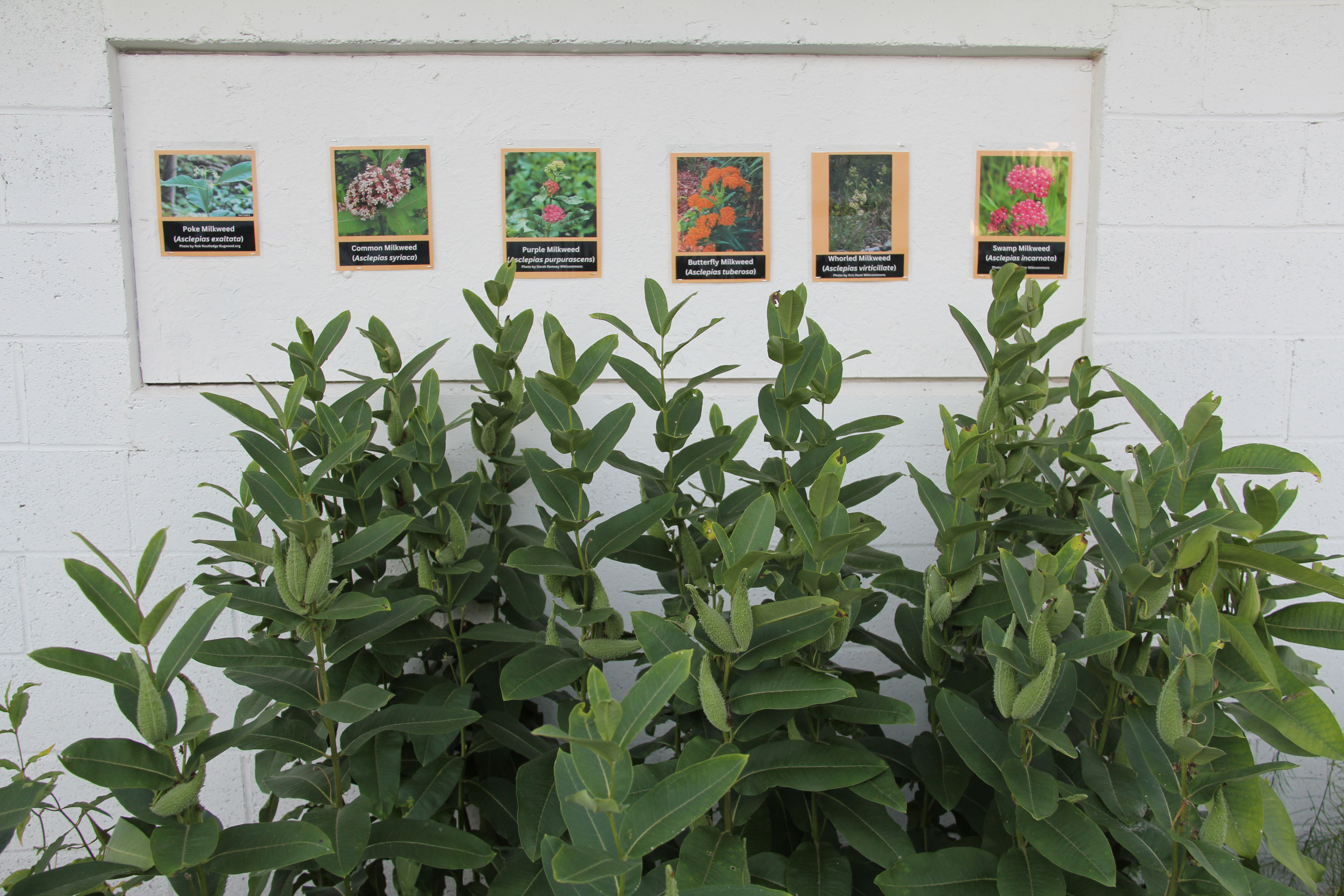
Milkweeds grow next to the conservation building at the Rice County Fairgrounds against a backdrop of identifying milkweed photos. Those include six types: common, poke, purple, butterfly, whorled and swamp. (Minnesota Prairie Roots copyrighted photo August 2024)
My thinking has shifted since then. Today I plant, rather than eradicate, milkweeds. Dad, if he was still alive, might wonder how his farm-raised daughter strayed so far from hoeing to growing.
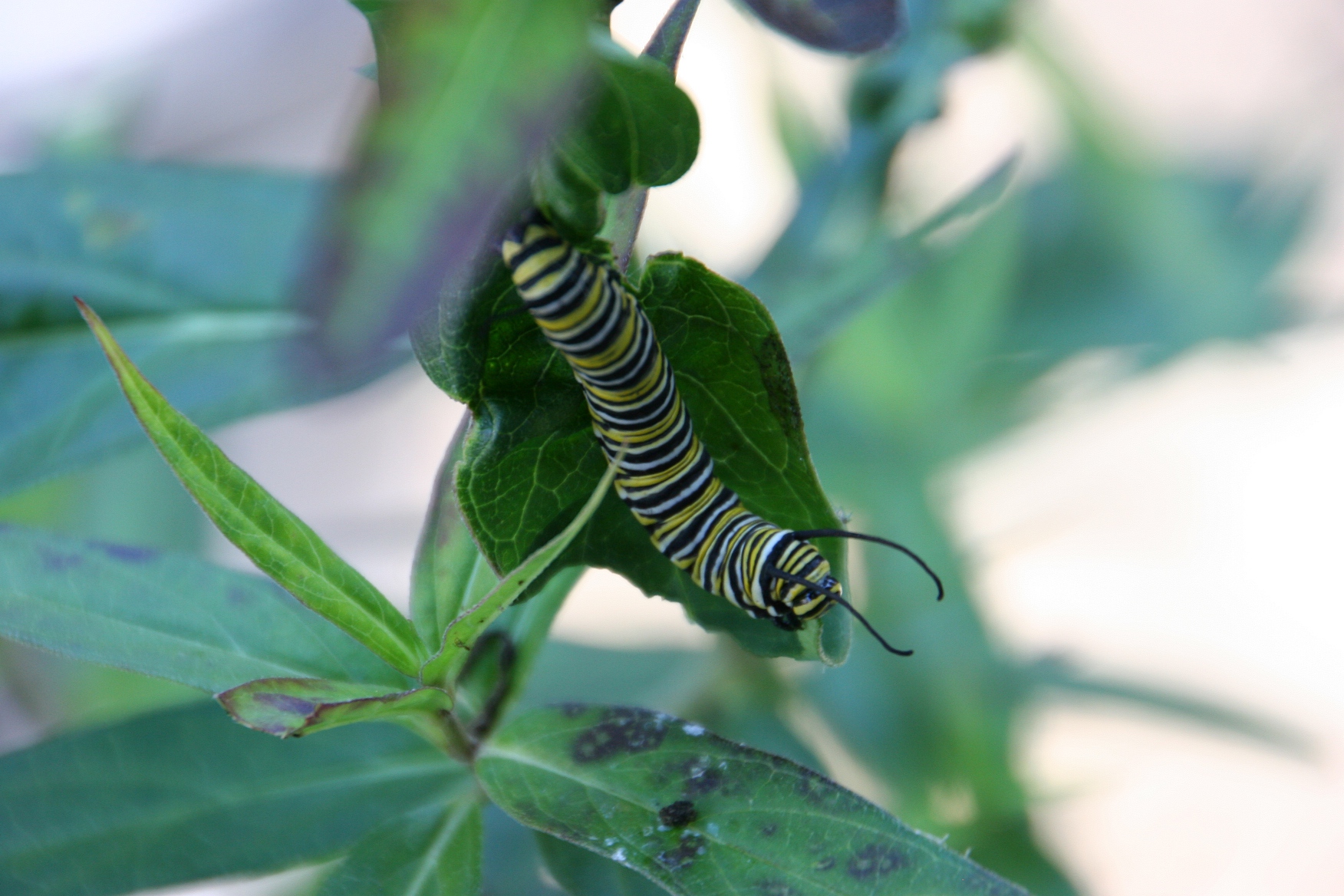
A monarch caterpillar. (Minnesota Prairie Roots copyrighted file photo)
The answer is easy. Long ago I learned the value of milkweeds to our monarch butterfly population. The butterfly lays its eggs on milkweed leaves. And milkweed is the sole source of food for monarch caterpillars. If we want the monarch population to grow, thrive and survive, we need milkweed plants. It’s that simple.
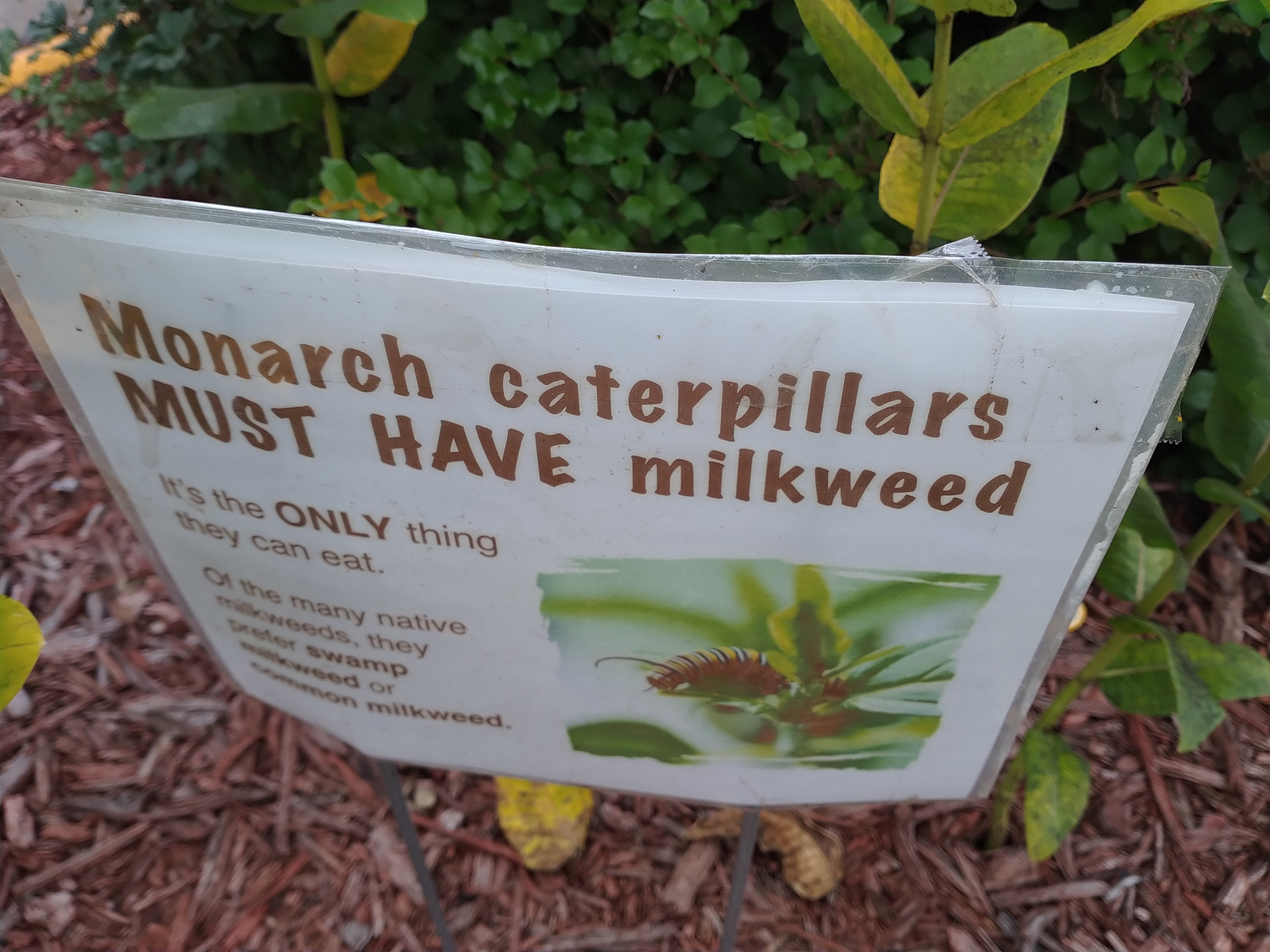
A sign at Hy-Vee grocery store explains the importance of milkweed to monarchs. (Minnesota Prairie Roots copyrighted photo August 2024)
More and more I’ve spotted milkweeds growing in public places in and around Faribault. River Bend Nature Center. Falls Creek County Park. The Rice County Master Gardeners’ Teaching Gardens. Beside the conservation building at the Rice County Fairgrounds. Even in flowerbeds at Hy-Vee grocery store.
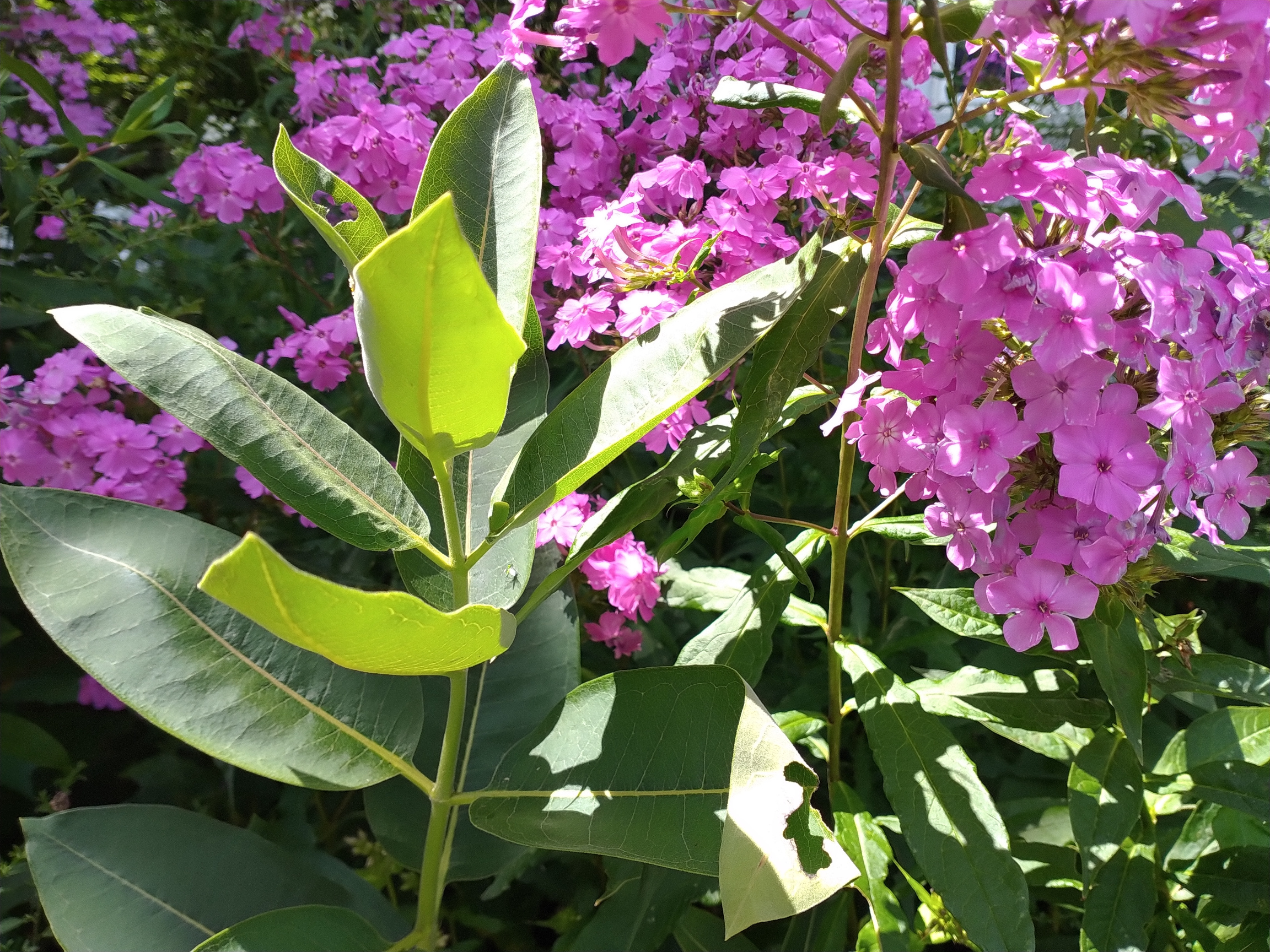
Milkweeds grow among phlox. (Minnesota Prairie Roots copyrighted photo August 2024)
If you walk by my house, you’ll see stray milkweeds popping up here and there. Along a retaining wall. Among the prolific phlox in my messy flowerbeds. The husband has orders not to mow, pull or otherwise remove milkweed plants.
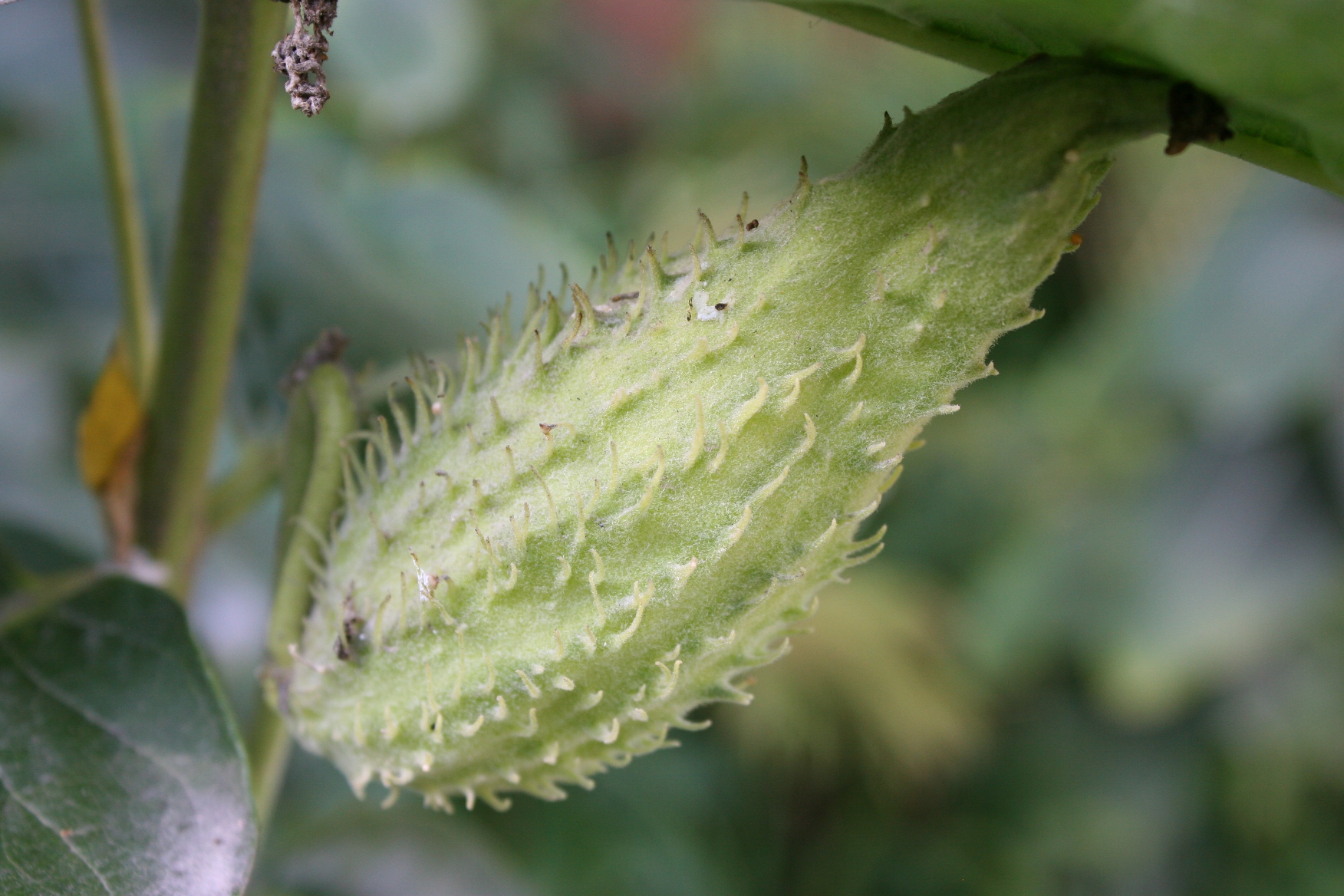
An unripened milkweed pod. (Minnesota Prairie Roots copyrighted file photo)
This time of year, seed pods are forming on milkweeds. Perhaps it’s the writer, the poet, in me that loves the shape of those fat green pods that will eventually dry, burst open and spread seeds on wisps of white fluff carried by the wind.
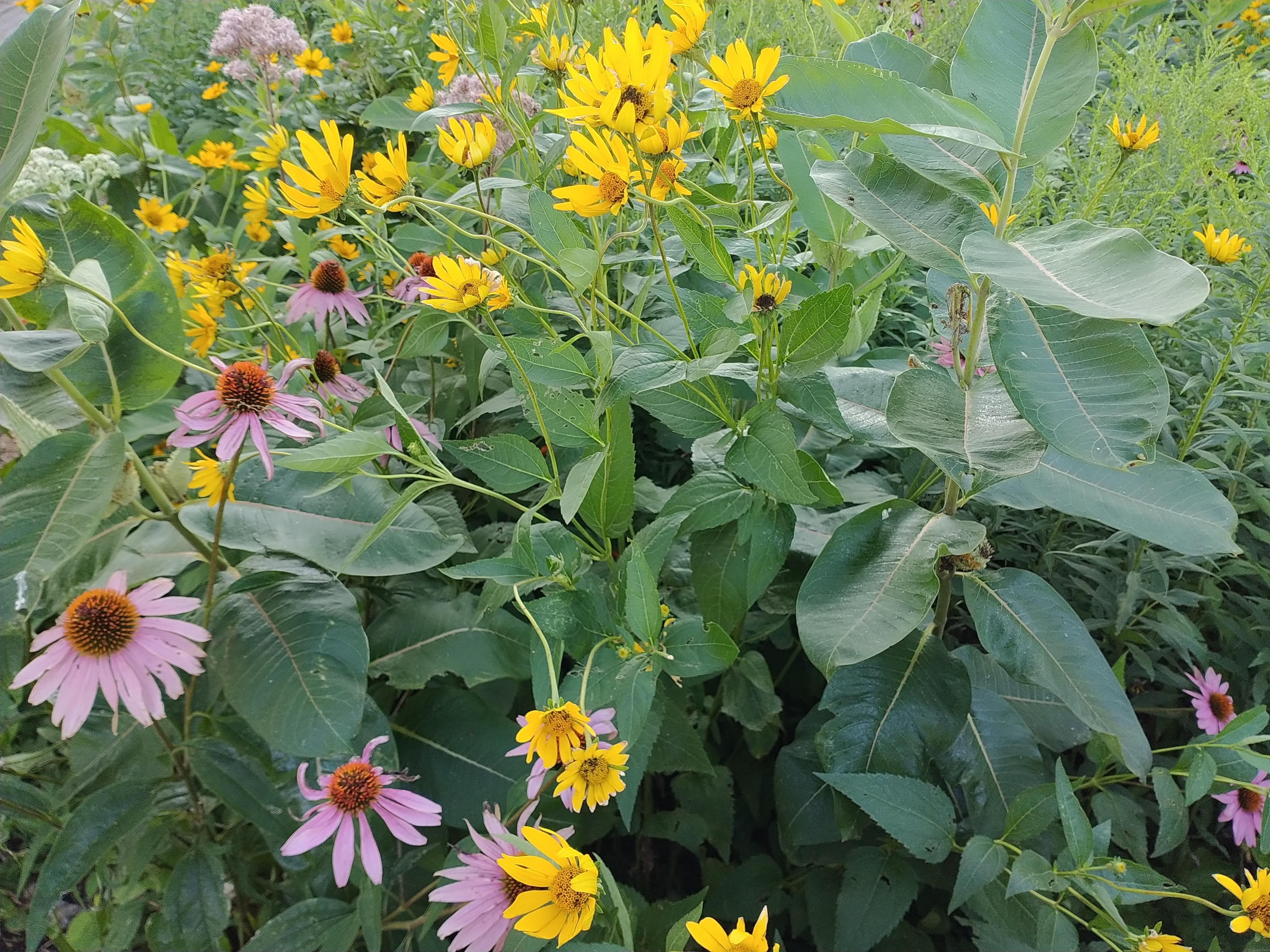
Milkweeds flourish among prairie flowers in the Rice County Master Gardeners Teaching Gardens, Faribault, (Minnesota Prairie Roots copyrighted photo August 2024)
Seeds wing across the landscape, just like monarchs. I remember a time when monarchs were prolific. Yes, even in rural Minnesota where I labored to get rid of milkweed plants.
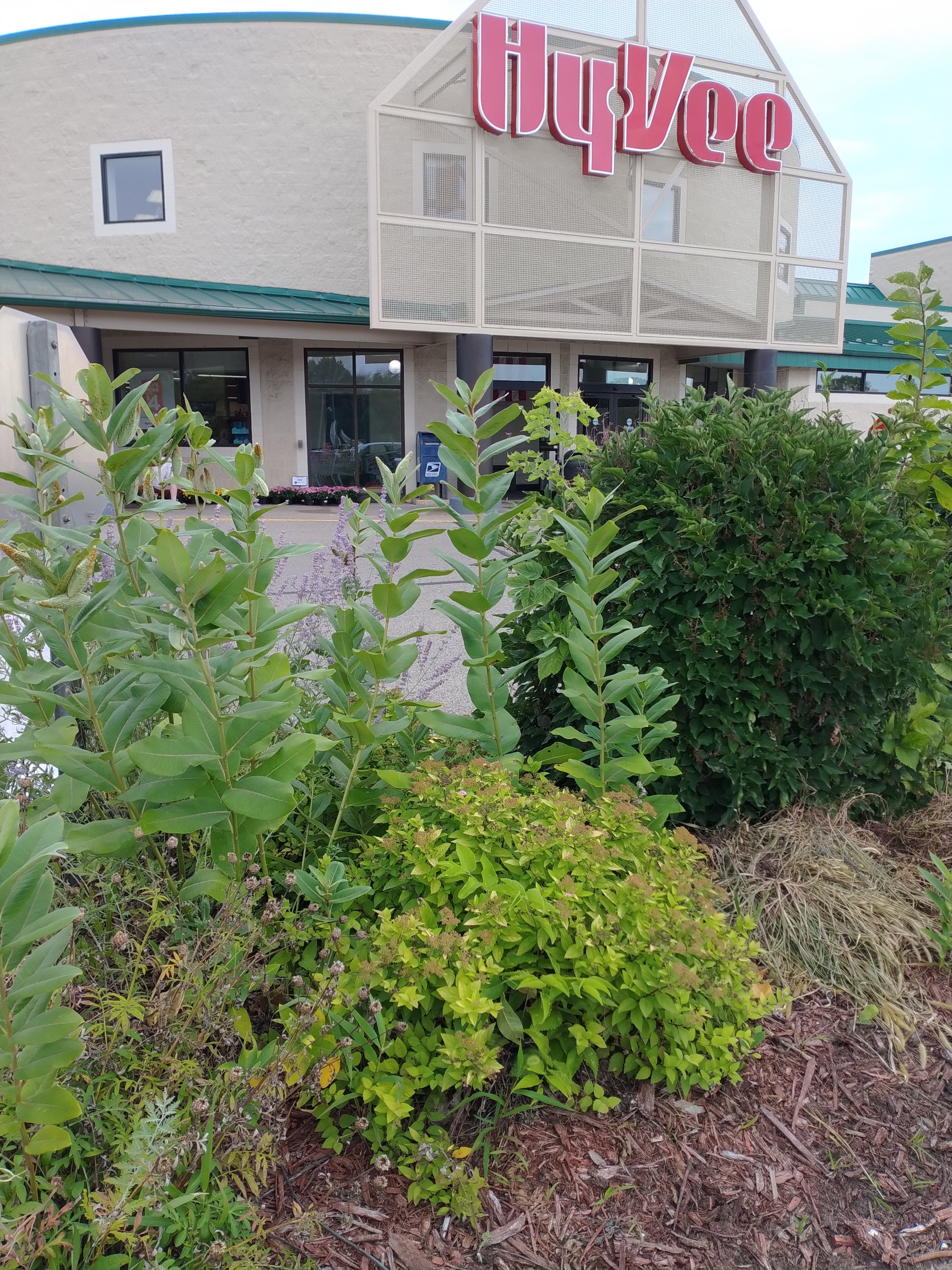
I discovered milkweeds planted outside Hy-Vee. (Minnesota Prairie Roots copyrighted photo August 2024)
Naturalists, gardeners and others are working hard now to bring back the monarch population. It’s taken time, effort and education to convince people to plant milkweeds for monarchs. I don’t expect butterfly numbers will be what they once were—when monarchs flitted everywhere. But we have to start somewhere, do something. And that begins with each of us. Educating ourselves. Caring. And then deciding that milkweeds really aren’t weeds after all. They are vital to the survival of the monarch butterfly. It’s OK to plant milkweed seeds or allow nature to plant them.
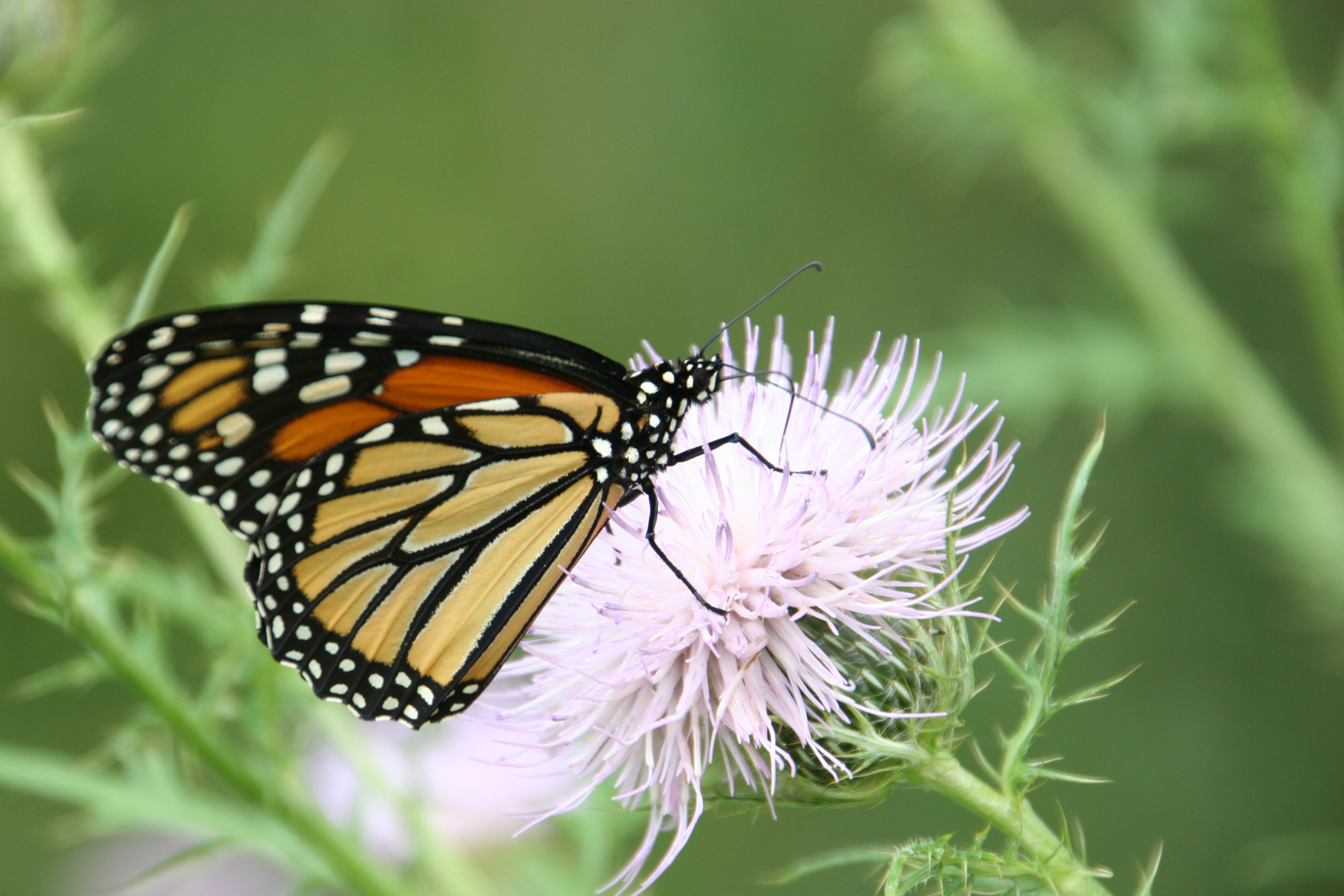
Monarch on a thistle flower. (Minnesota Prairie Roots copyrighted file photo)
I, for one, delight in watching monarchs flit about my yard. They are magical as only a butterfly can be. Delicate, yet strong. Poetically beautiful. Carrying memories and grace on their wings.
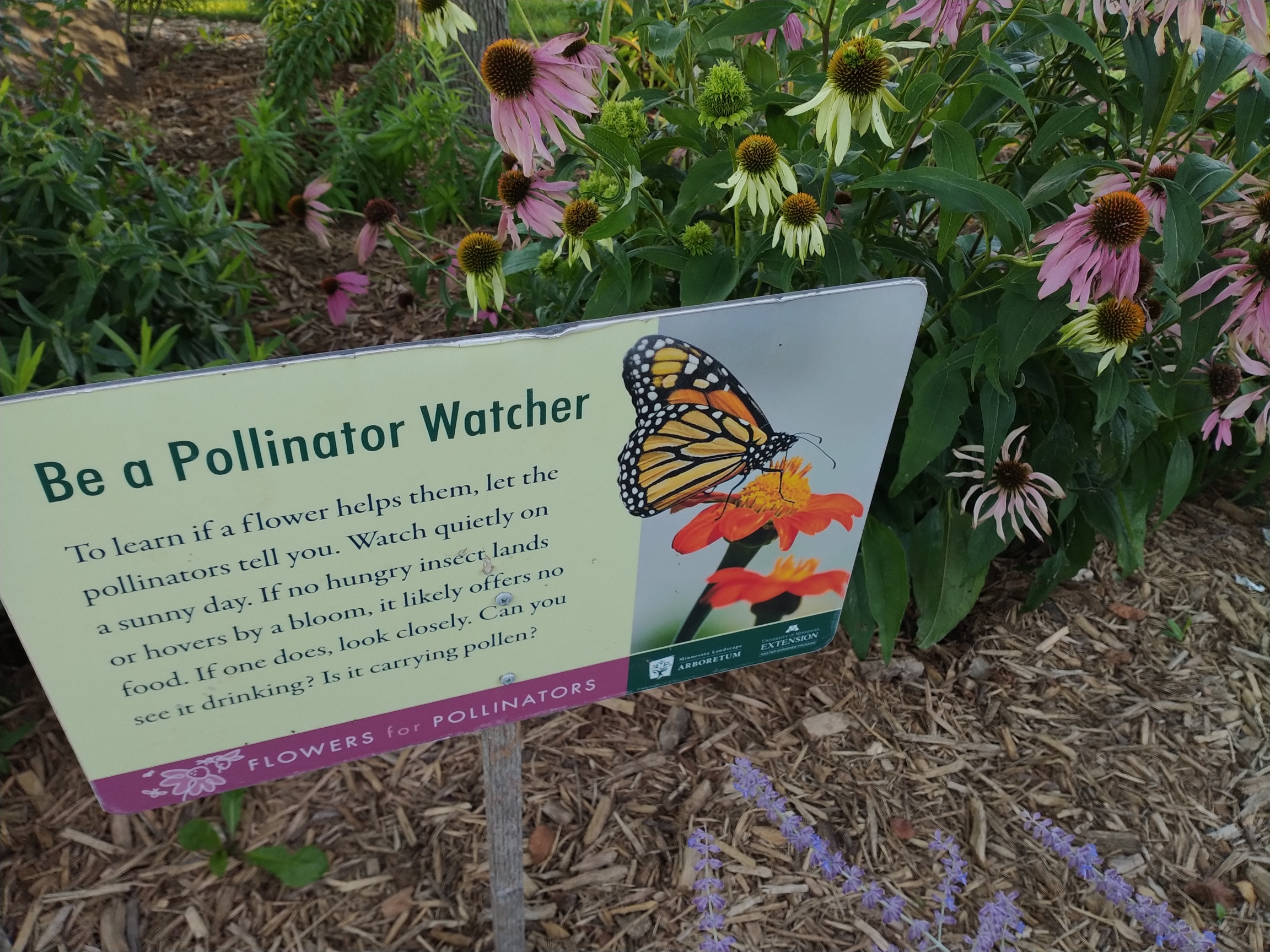
An educational sign among the flowers at the Rice County Master Gardeners Teaching Gardens. (Minnesota Prairie Roots copyrighted photo August 2024)
FYI: Nerstrand Big Woods State Park is hosting a “Monarchs and Milkweeds” presentation at 10 a.m. Saturday, August 24, in the park’s amphitheater. Kathy Gillispie, who raises monarchs from eggs, caterpillars and chrysalises, will speak about her experiences with monarchs. The program is free, but a state park parking pass is needed to enter the rural Nerstrand park.
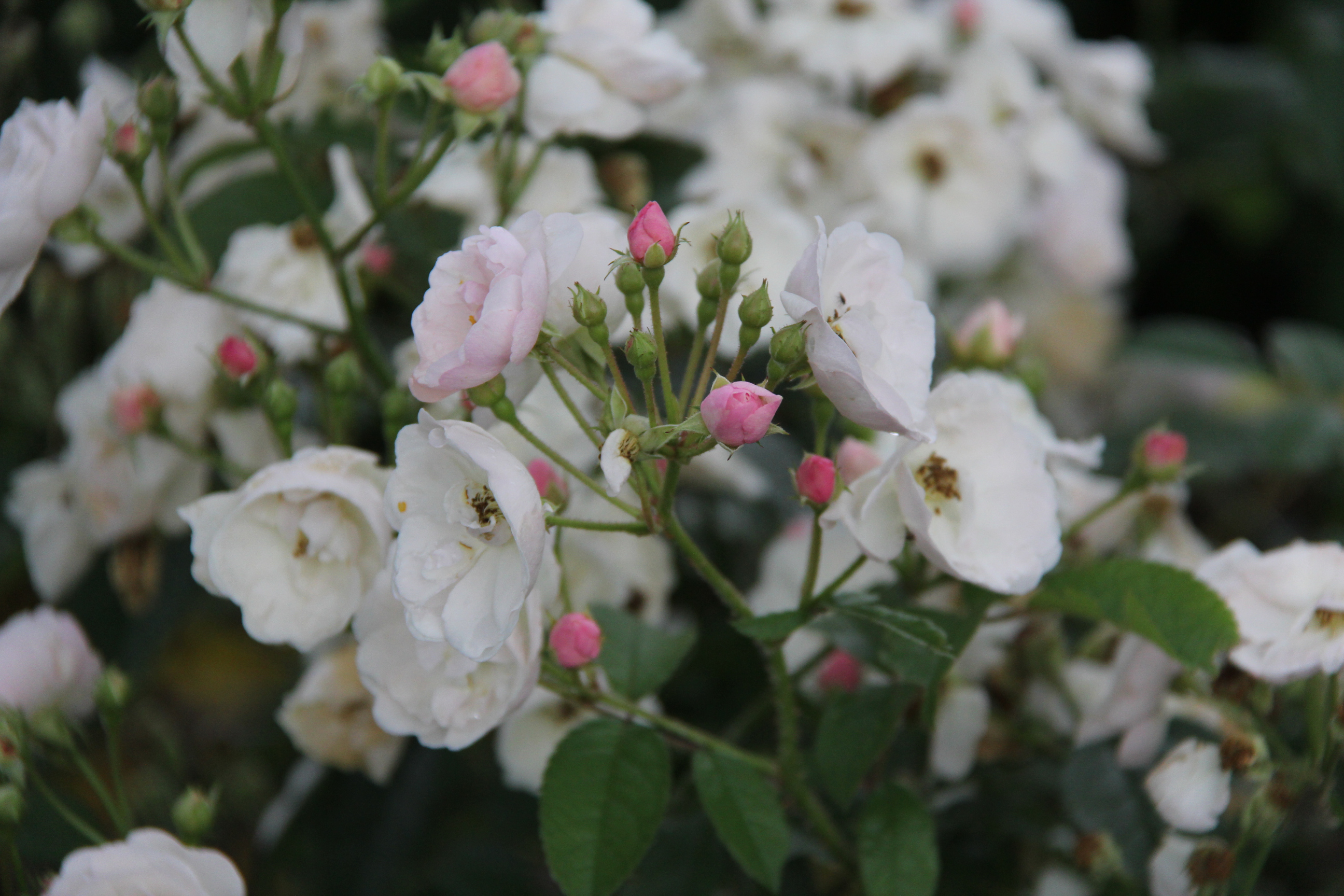
Roses bloom in the Rice County Master Gardeners Teaching Gardens at the Rice County Fairgrounds in Faribault. (Minnesota Prairie Roots copyrighted photo June 2024)
OH, HOW BEAUTIFUL the flowers that gardeners tend. Petals flash color, painting the landscape in bold and delicate hues. Flowers dip and bend in the wind like silent writers penning poetry. Flowers inspire, bring joy, carry love stories and memories.
Delicate pink flowers in a garden at the Cathedral of Our Merciful Saviour. (Minnesota Prairie Roots copyrighted photo June 2024)
Flowers have always been a part of my life. From my paternal grandma’s unruly flowerbeds to my mom’s rows of colorful zinnias in the vegetable garden to my own flowers growing in a chaotic mess, I’ve delighted in blooms.
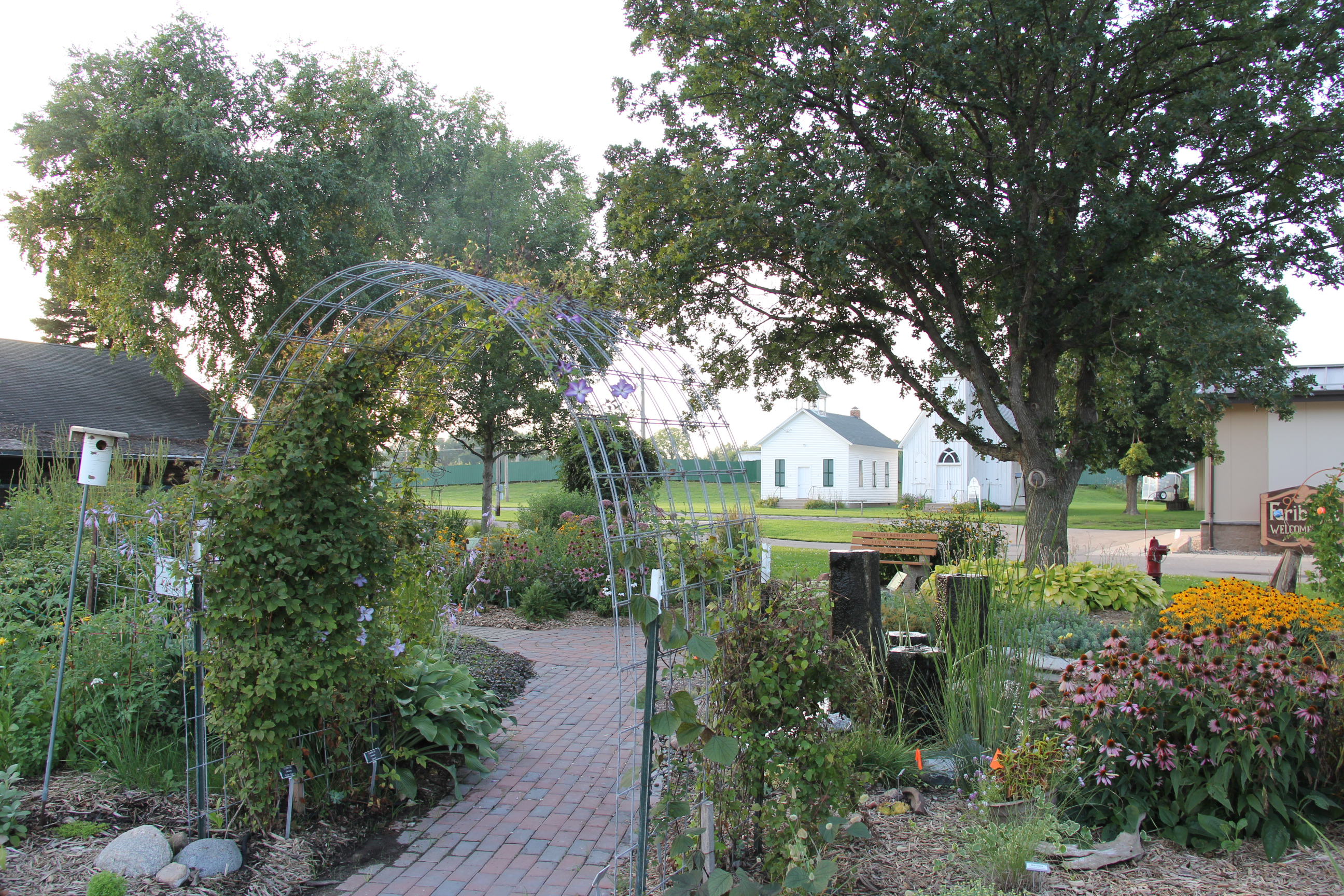
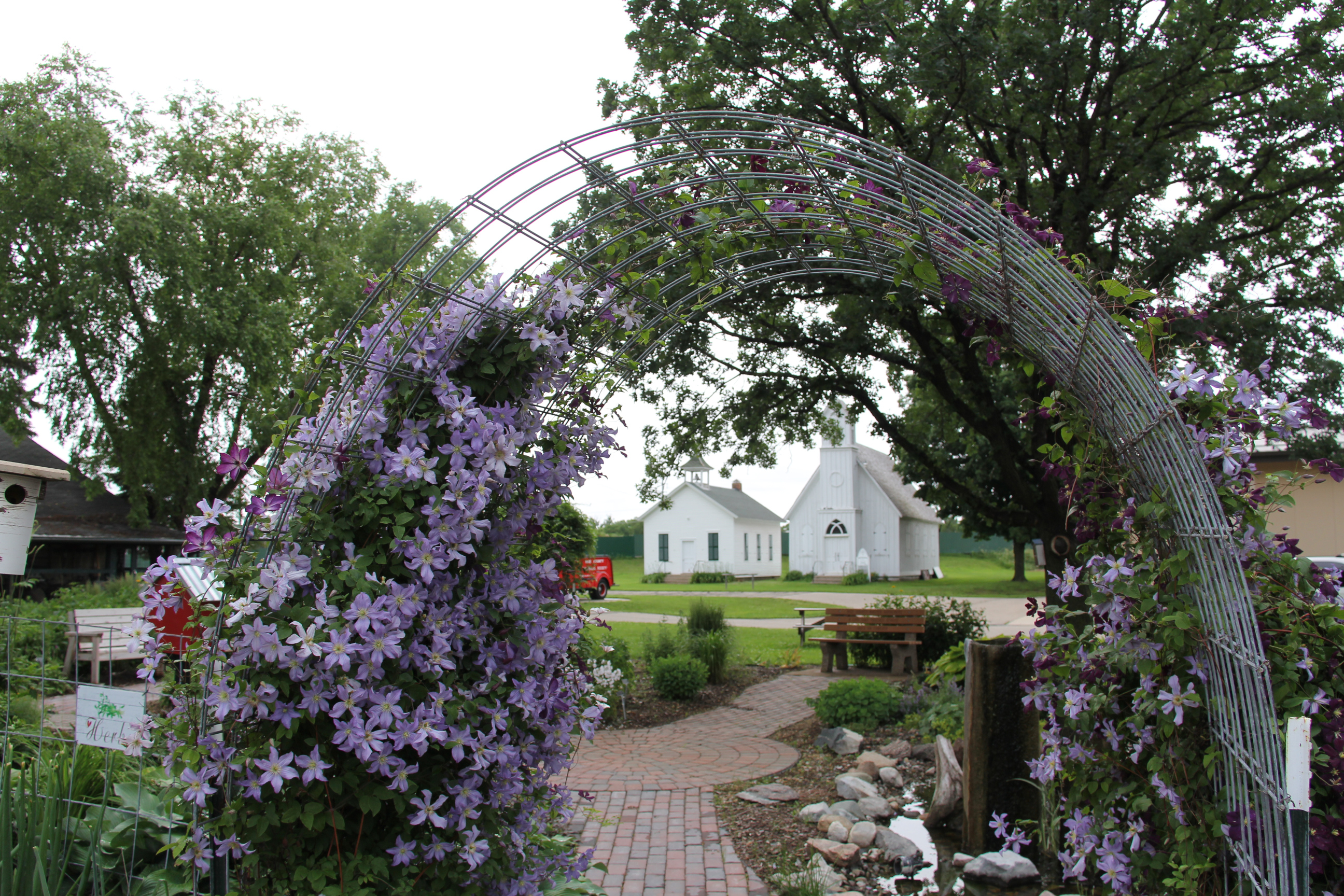
Clematis climb an arched trellis at the teaching gardens. An historic church and school, part of the Rice County Historical Society, are a lovely backdrop. (Minnesota Prairie Roots copyrighted photo June 2024)
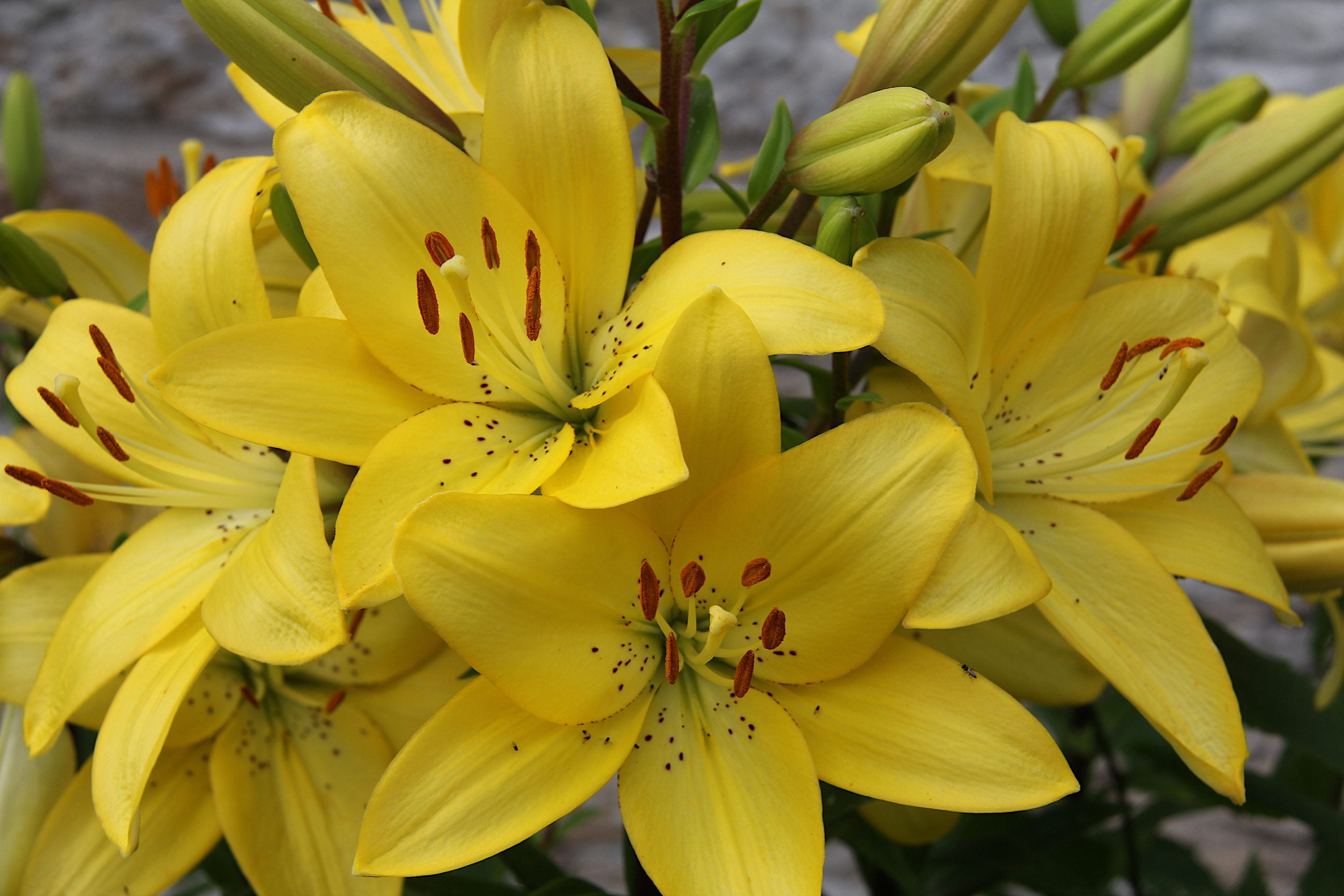
Vivid yellow lilies jolt color into Cathedral gardens. (Minnesota Prairie Roots copyrighted photo June 2024)
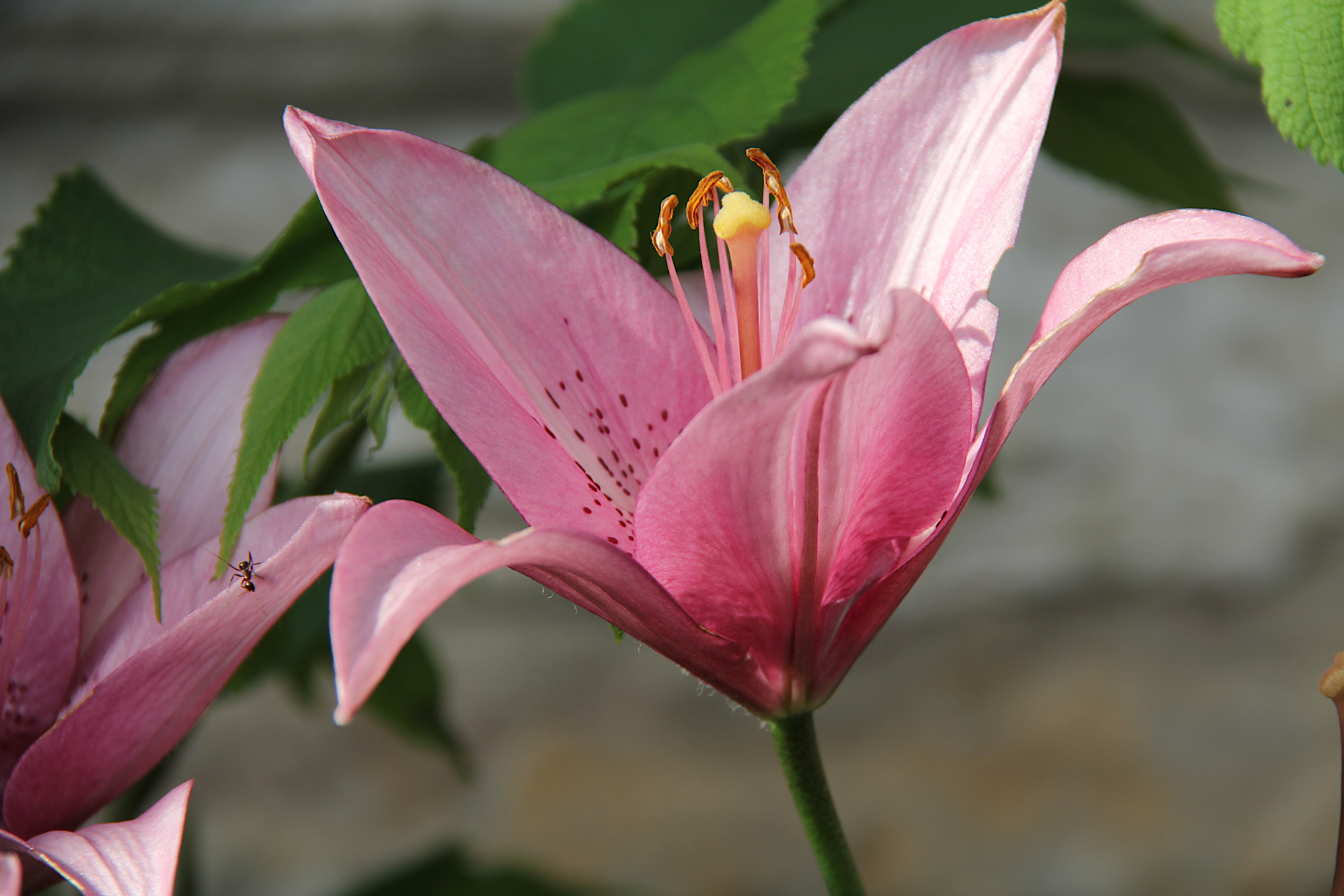
Another Cathedral lily. (Minnesota Prairie Roots copyrighted photo June 2024)
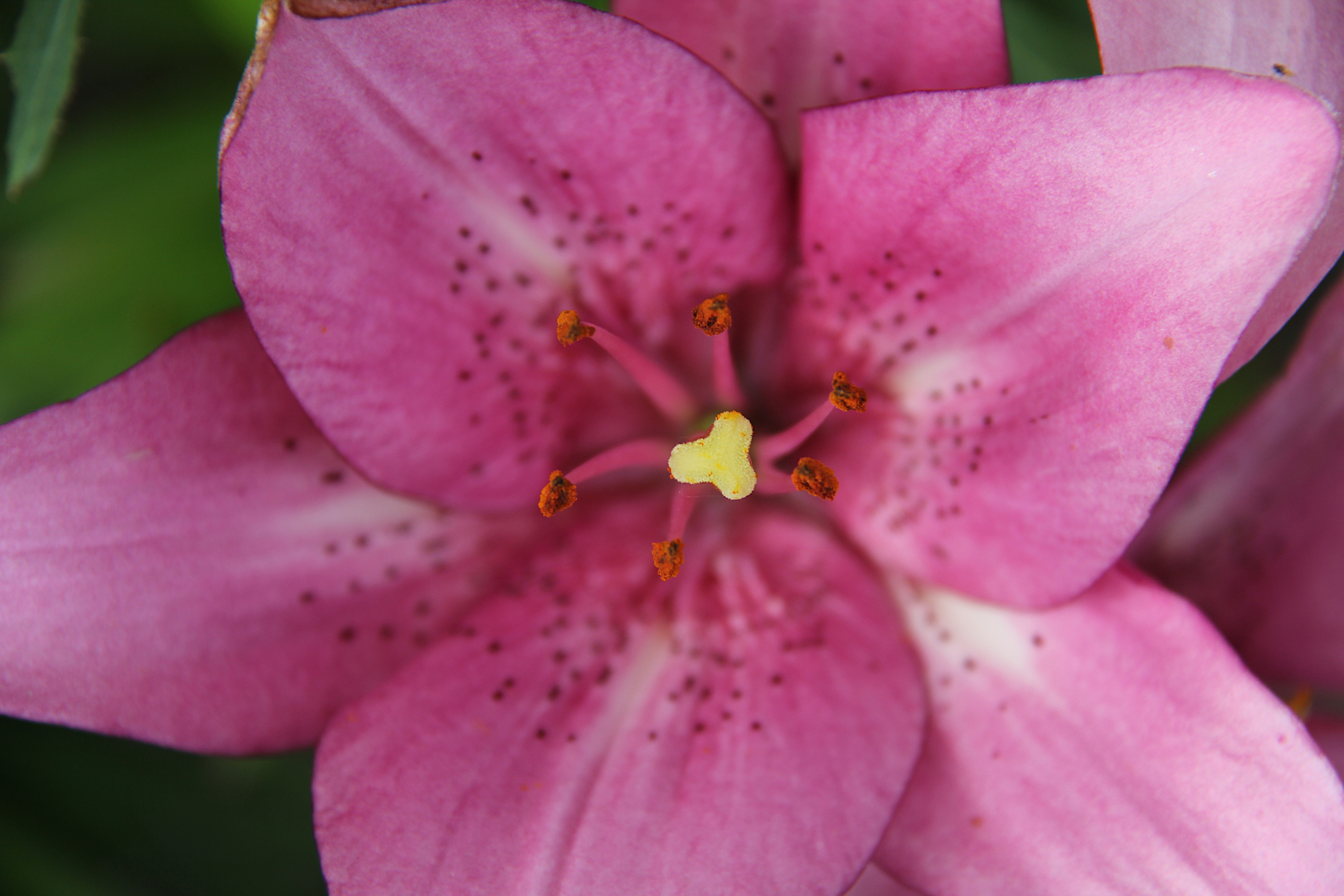
At one time I could identify flower parts, like those shown in this lily close-up blooming at the Cathedral. (Minnesota Prairie Roots copyrighted photo June 2024)
Right now, the lilies are in full bloom. They appear a sturdy lot to me, a lesson in botany with stamens and pistils and all those parts I once learned in a long ago science class. Now I don’t care much about that, just the beauty my eyes take in as I wander among the flowers.
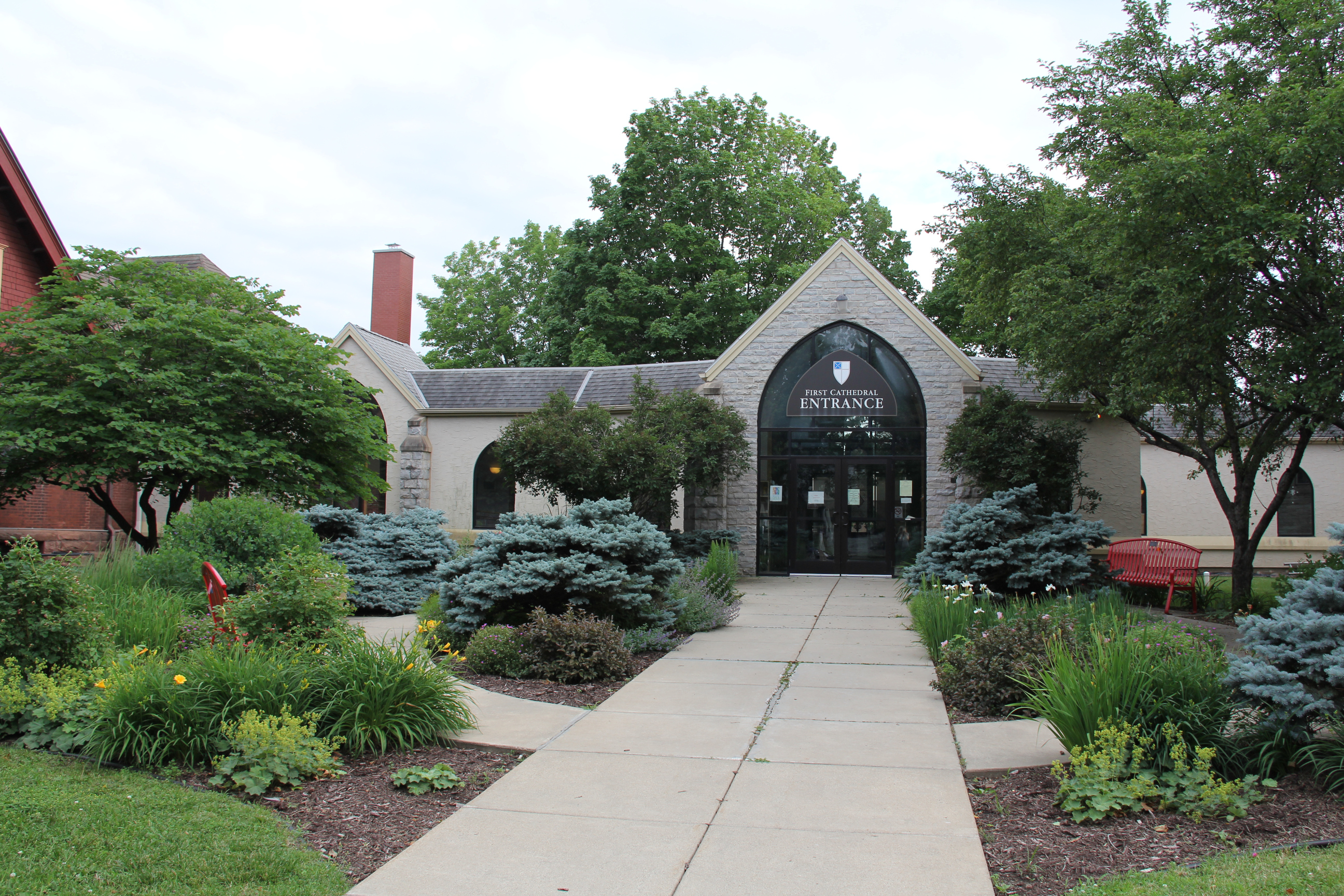
An inviting garden, complete with benches, graces the northside entry to the Cathedral. (Minnesota Prairie Roots copyrighted photo June 2024)
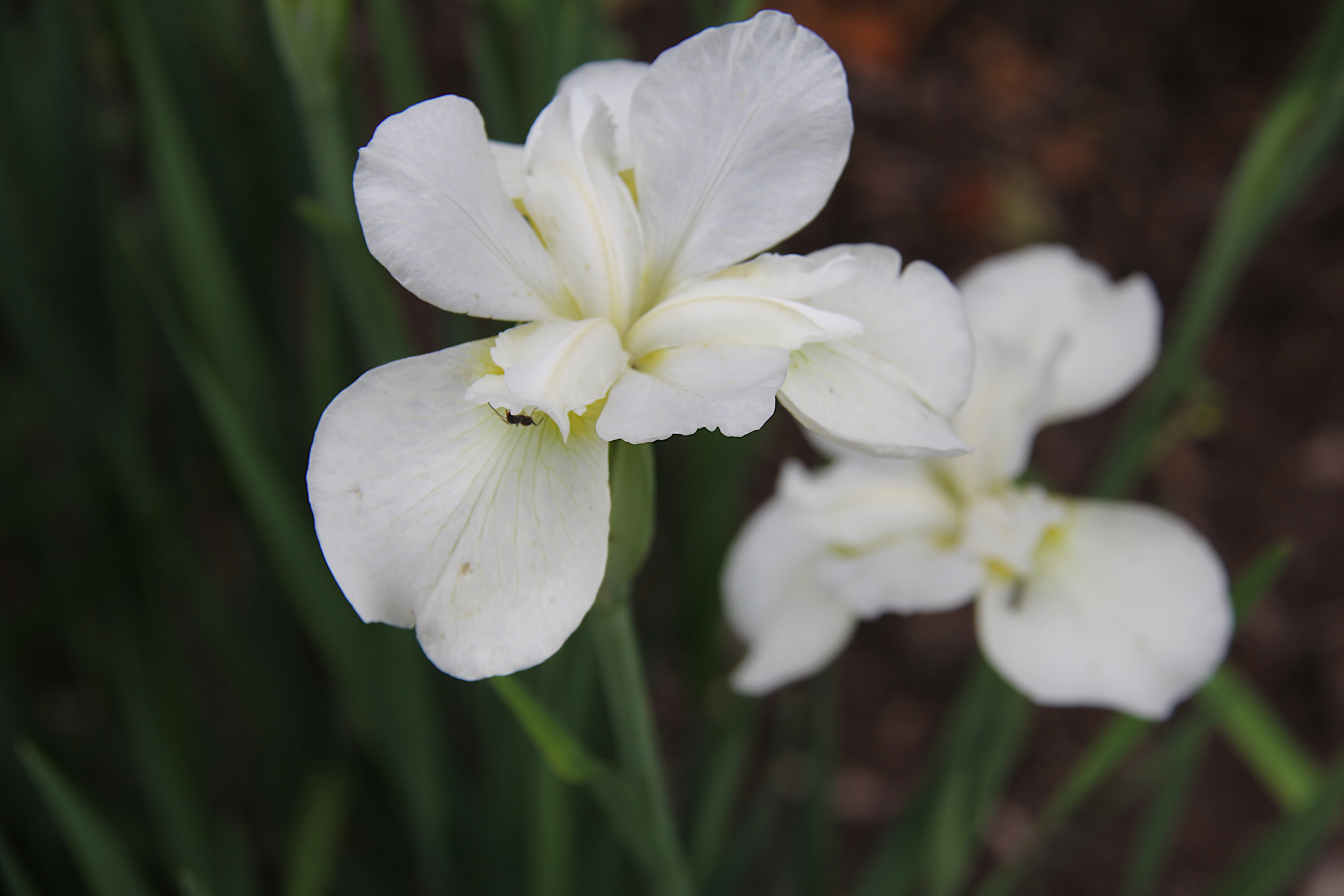
Iris bloom at the Cathedral. (Minnesota Prairie Roots copyrighted photo June 2024)
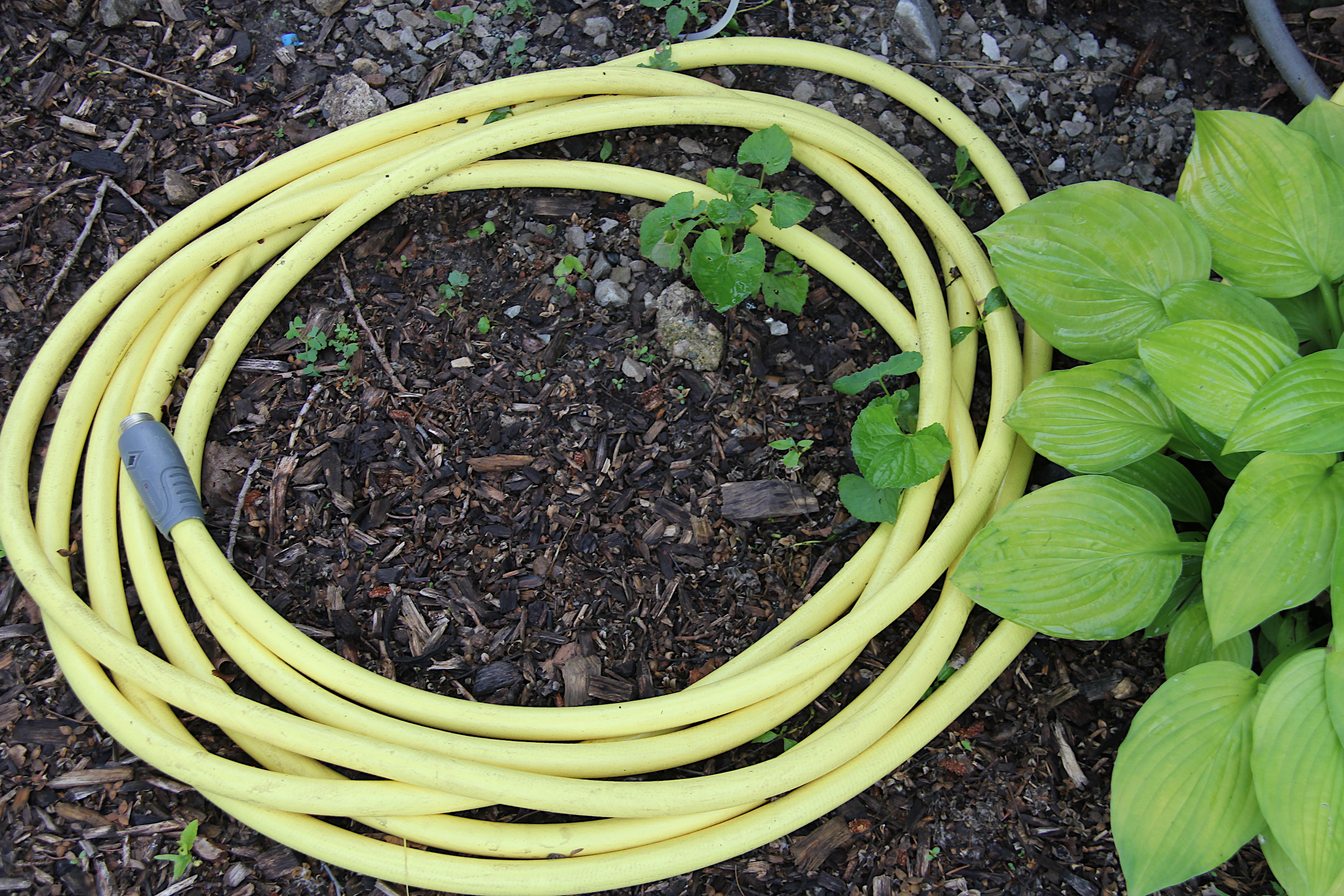
For use at the teaching gardens when needed. (Minnesota Prairie Roots copyrighted photo June 2024)
I’m thankful for the volunteers who plant, weed and care for flower gardens created out of a love of gardening and out of a desire to beautify a community. It takes time, effort, commitment, and that does not go unnoticed by me.
A clump of daisies, similar to these photographed at Faribault Energy Park, grow on my boulevard. (Minnesota Prairie Roots copyrighted file photo July 20219)
Life is full of opportunities to brighten this world. Flowers are one way. I watched the other day from my living room window as a young boy picked a daisy from an errant patch growing in the boulevard by my house. Then his mom plucked one, too, tucking a single stem into the front of her tank top. I didn’t care that they picked the daisies. I could see how happy it made them.
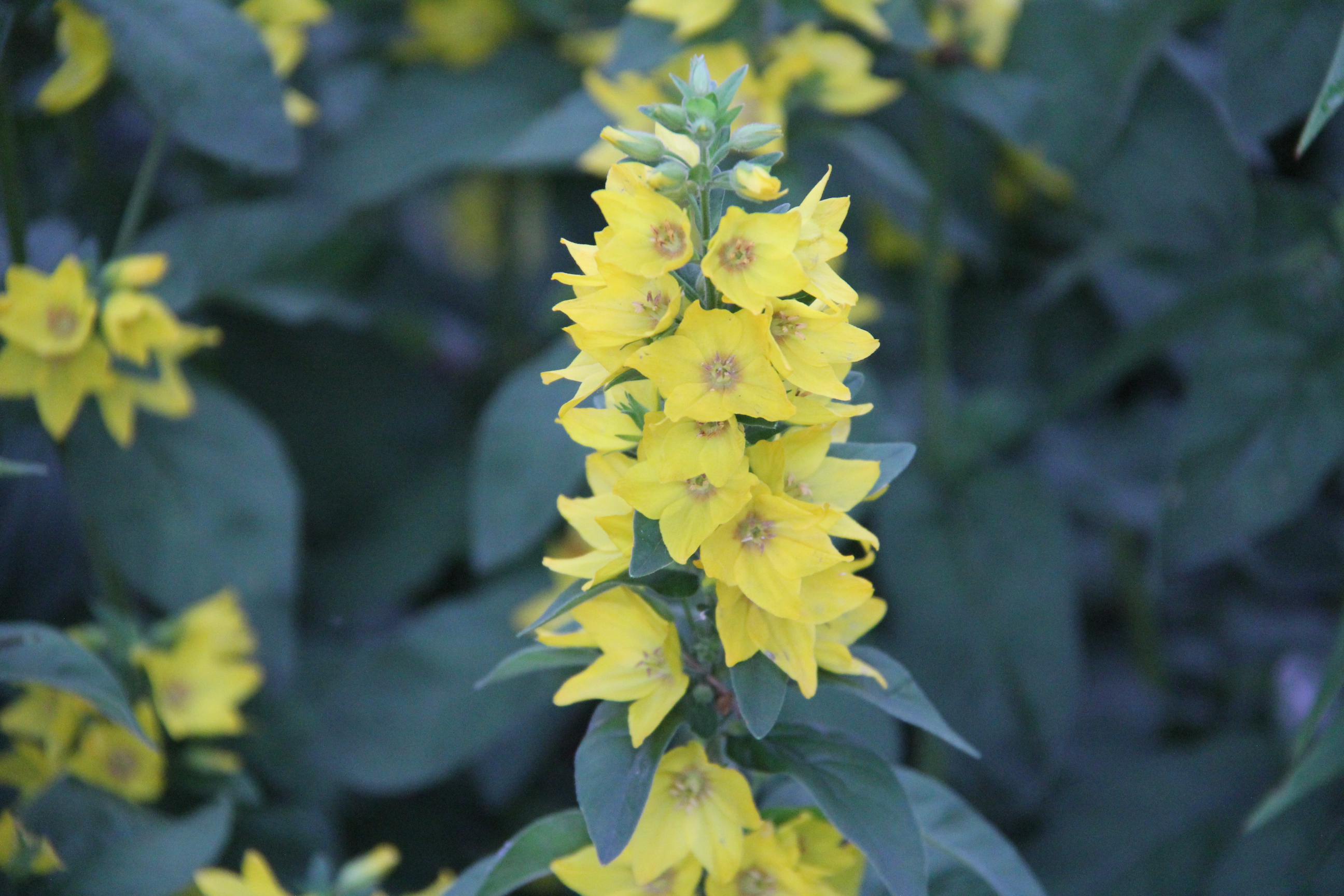
At the teaching gardens, flowers ladder a stem. (Minnesota Prairie Roots copyrighted photo June 2024)
The daisy, such a simple flower, blooming profusely in the grass next to a busy street. Bent by the wind and rain, as if bowing to the earth. The daisy has always been a sunny favorite of mine. Daisies were woven into my bridal bouquet, my bridesmaids’ baskets of flowers and corsages on my wedding day 42 years ago. Flowers hold love stories, memories.
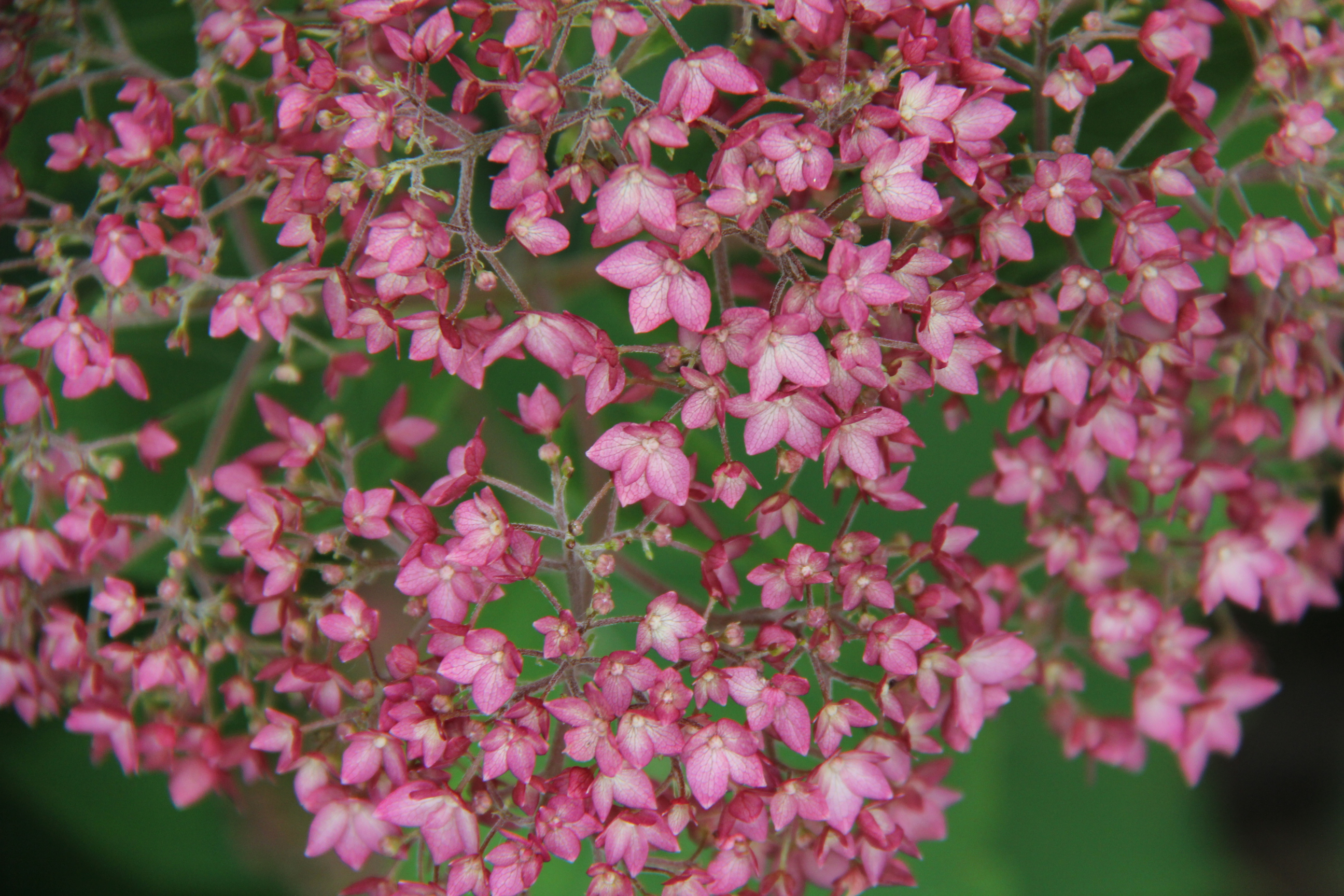
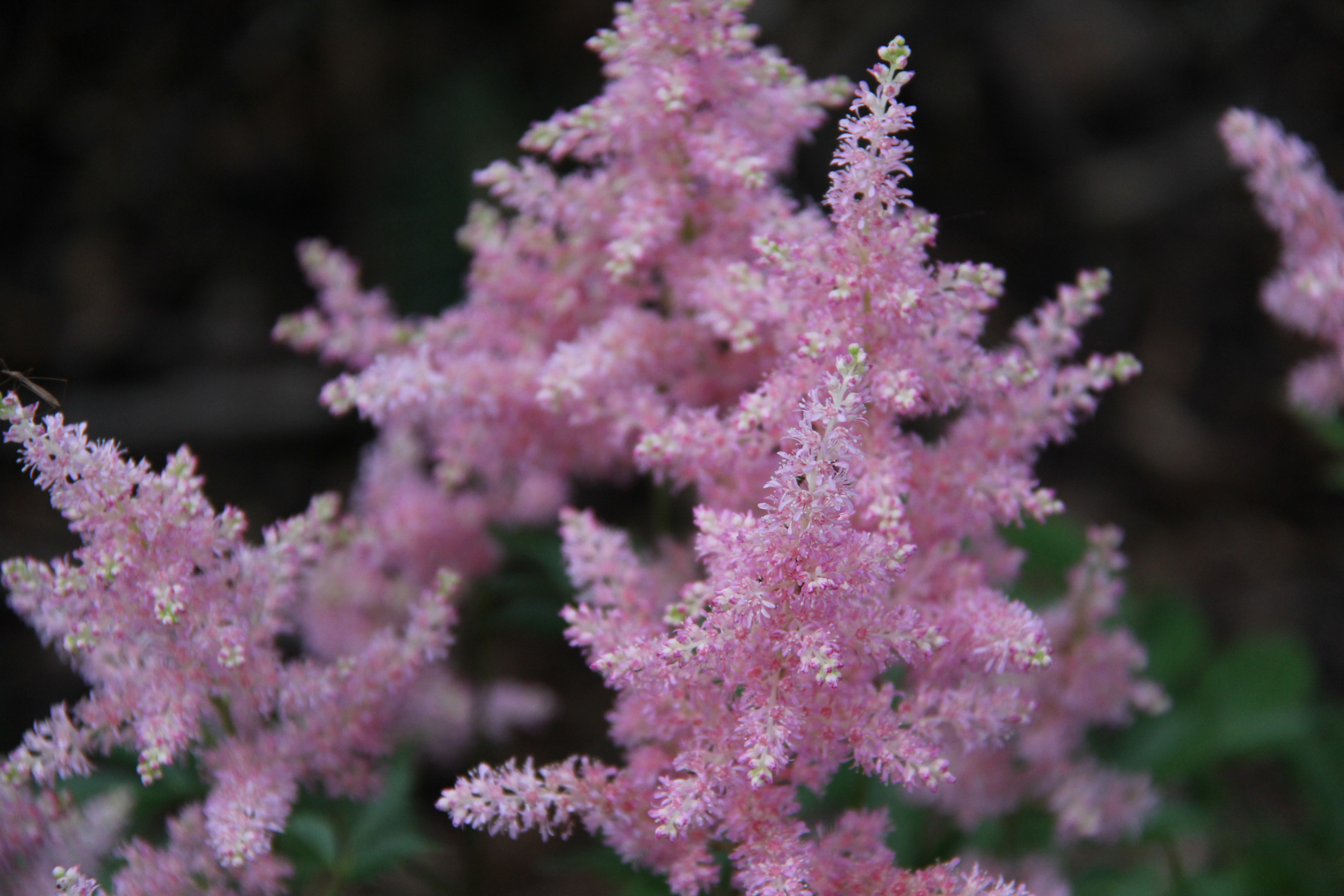
Fanciful astilbe grow in the teaching gardens. (Minnesota Prairie Roots copyrighted photo June 2024)
In bloom at the Cathedral. (Minnesota Prairie Roots copyrighted photo June 2024)
Spots of purple in a Cathedral garden like a single line of poetry. (Minnesota Prairie Roots copyrighted photo June 2024)
I expect, if pressed, anyone could share a flower story. Stories of love and loss, celebration and sorrow, gratitude and healing. Flowers hold stories as much as they write them. Creativity thrives in their bold and delicate hues, in the way they grow and flourish and fade. In the way they stand or bend in the wind, like silent writers penning poetry.
An abandoned farmhouse near my hometown of Vesta. The house no longer stands, but represents to me the financial hardships of growing up in southwestern Minnesota during the 1960s and 1970s. (Minnesota Prairie Roots copyrighted file photo)
THE RESIDUALS OF GROWING UP in poverty remain today in my life. I am careful with my money. I don’t spend much beyond paying bills and for necessities. I seldom buy anything new for myself. Dining out, which I rarely do, always leaves me feeling guilty, thinking about how many groceries I could have bought with that money (although not that many anymore).
This is a thinking pattern ingrained in me by a mother who was a child of the Great Depression. I suspect she picked up on thriftiness from her mother. My mom stretched and budgeted and managed to raise six children on a Minnesota farm with income generated from crops and dairy cows and with food from the land. We wore mostly hand-me-downs and clothing stitched from feed sacks. There were no birthday gifts from our parents, no family meals out, no a whole lot of everything. But we had love. Lots of it.
I share this because it explains why I am the way I am. Content with what I have. And appreciative of second-hand. I don’t need new. Currently, recycling, upcycling, repurposing, keeping stuff out of landfills is trendy. I’ve never been labeled as trendy. But apparently I am now.
That brings me to a number of events this weekend in my area which fit my budget and environmentally-friendly way of living: book sales, plant sales and flea market/garage sales.
You can still find Little Golden books in stores today, like these at JT Varieties & Toys in Plainview. (Minnesota Prairie Roots copyrighted file photo June 2022)
First up, books. I love to read, always have. Mom read Little Golden Book storybooks to me. And she let me select a book from school book orders. That’s how important reading was to her. Without a library in my hometown, this gave me access to books.
Some of the books I’ve purchased at past book sales. (Minnesota Prairie Roots copyrighted file photo)
Today I live blocks from a public library and bring home stacks of books. I’ve also carried bags of books home from used book sales. This weekend Faribault’s American Association of University Women hosts its annual used book sale, its final one after 54 years. Hours are 10 am-7 pm Friday and Saturday and from noon – 5 pm Sunday.
Puzzles borrowed and bought new and used. (Minnesota Prairie Roots copyrighted file photo)
In neighboring Waterville, Friends of the Library are hosting a used book sale from 8 am – 4 pm Saturday in Langerud’s Garage, 503 Marian Street. There’s no set charge for books, just a freewill offering. Oh, and they’re also selling puzzles, sure to be popular with puzzle enthusiasts.
And for those who love garage sales, like me, Waterville is also hosting city-wide garage sales on Saturday. There are garage sales, too, at Christ Lutheran Church in Faribault (Friday and Saturday) and at Nerstrand United Methodist Church (Saturday). Just check the classifieds in your local paper and you’re sure to find garage sales in your community.
A scene from a 2022 RCHS Flea Market. (Minnesota Prairie Roots copyrighted file photo September 2022)
One other fun event is the Spring Flea Market from 8 am – 2 pm Saturday at the Rice County Historical Society in Faribault. I always enjoy poking through the merchandise and talking with people I haven’t seen in awhile.
Plants for sale at the Owatonna Farmers’ Market in 2014. (Minnesota Prairie Roots copyrighted file photo)
Finally, gardeners looking for plants and free advice can get both at two separate plant sales on Saturday in Faribault. GROWS Garden Club is selling plants from 8 am – noon on the southeast corneer of Central Park. And from 9 am – 2 pm, Rice County Master Gardeners are selling plants in the 4-H building at the Rice County Fairgrounds.
A scene at a previous Car Cruise Night in Faribault. (Minnesota Prairie Roots copyrighted file photo 2022)
Two more things: Friday evening is Car Cruise Night from 6 pm – 9 pm along Central Avenue in historic downtown Faribault. It’s free as is entrance to the Straight River Art Festival from 9 am – 6 pm Saturday at Heritage Park in Faribault. The event features art, music and food.
Norwegian treats at a past Trondhjem celebration. (Minnesota Prairie Roots copyrighted file photo)
And then two more things: Historic Trondhjem Church, rural Lonsdale, is hosting a Syttende Mai Celebration beginning at 1 pm Sunday. The event features music and stories by Steven K. Anderson of the Brainerd Lakes area, Norwegian songs sing-a-long and a reception with Norwegian goodies afterwards. Over in Owatonna at the Village of Yesteryear and Steele County History Center, the Sons of Norway will also celebrate Syttende Mail from 1 pm – 4pm with music, crafts, a medallion hunt and more.
So much to do…at no or minimal cost. My mom and grandma would have appreciated all of these budget-conscious opportunities. Just as I do.
Under a layer of leaves, I found this blooming crocus. Already, in early March. (Minnesota Prairie Roots copyrighted photo March 2024)
IN TRULY UN-MINNESOTAN fashion, I have penned very little this winter about the weather. That is atypical of a life-long resident. We are, if anything, obsessed about weather in Minnesota. We take pride in our cold weather, our snow, in managing to persevere in an often harsh climate. Weather affects our lives on a daily basis.
But this winter season, our image as the Bold Cold North has significantly changed. These past four months have been primarily snow-less and unseasonably warm. Sure, we’ve had a bit of snow and some cold snaps with sub-zero temperatures. Yet nothing like we’ve come to expect.
As I write, I look out my office window to a scene devoid of snow. The temperature is 46 degrees. At 9:51 a.m. on an early March morning. Laundry is drying on the clothesline. And the sun blazes bright upon the monotone landscape.
Daffodils, too, are emerging early. (Minnesota Prairie Roots copyrighted photo March 2024)
If I look closely, I see signs of spring come too soon. I need only examine my perennial flowerbeds to find spring flowers emerging from the soil. Under a layer of dried leaf mulch, I uncover a single crocus tipped on its side. I push more leaves aside revealing tender shoots of crocuses and daffodils. They need sunlight to thrive.
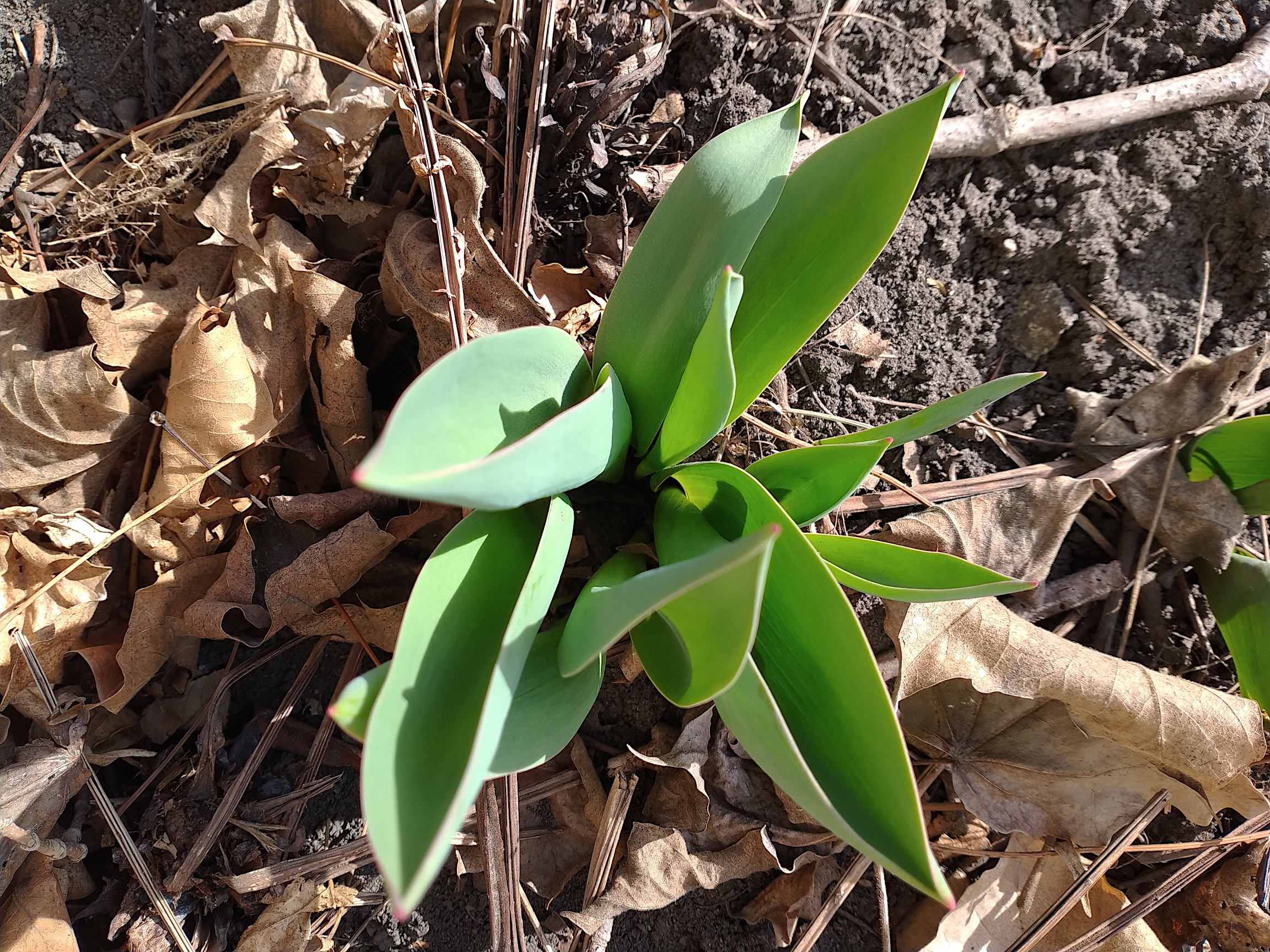
Tulips on the south-facing side of my house started popping weeks ago. (Minnesota Prairie Roots copyrighted photo March 2024)
Tulips and irises are up, too. Too soon. Not yet blooming. I noticed tulip bulbs popping greenery already in February.
All of this is an anomaly. We should be experiencing snowstorms and school closures, hearing the scrape of snowplows, the roar of snowblowers. Kids should be skating and sledding. As much as I appreciate the lack of icy roads and sidewalks, no snow to clear and no worry about winter weather, it just doesn’t feel right.
I’ve realized that I really do like the diversity of distinct seasons in Minnesota. There’s something to be said about anticipating spring after a long hard winter, like we experienced last year with record snowfall…
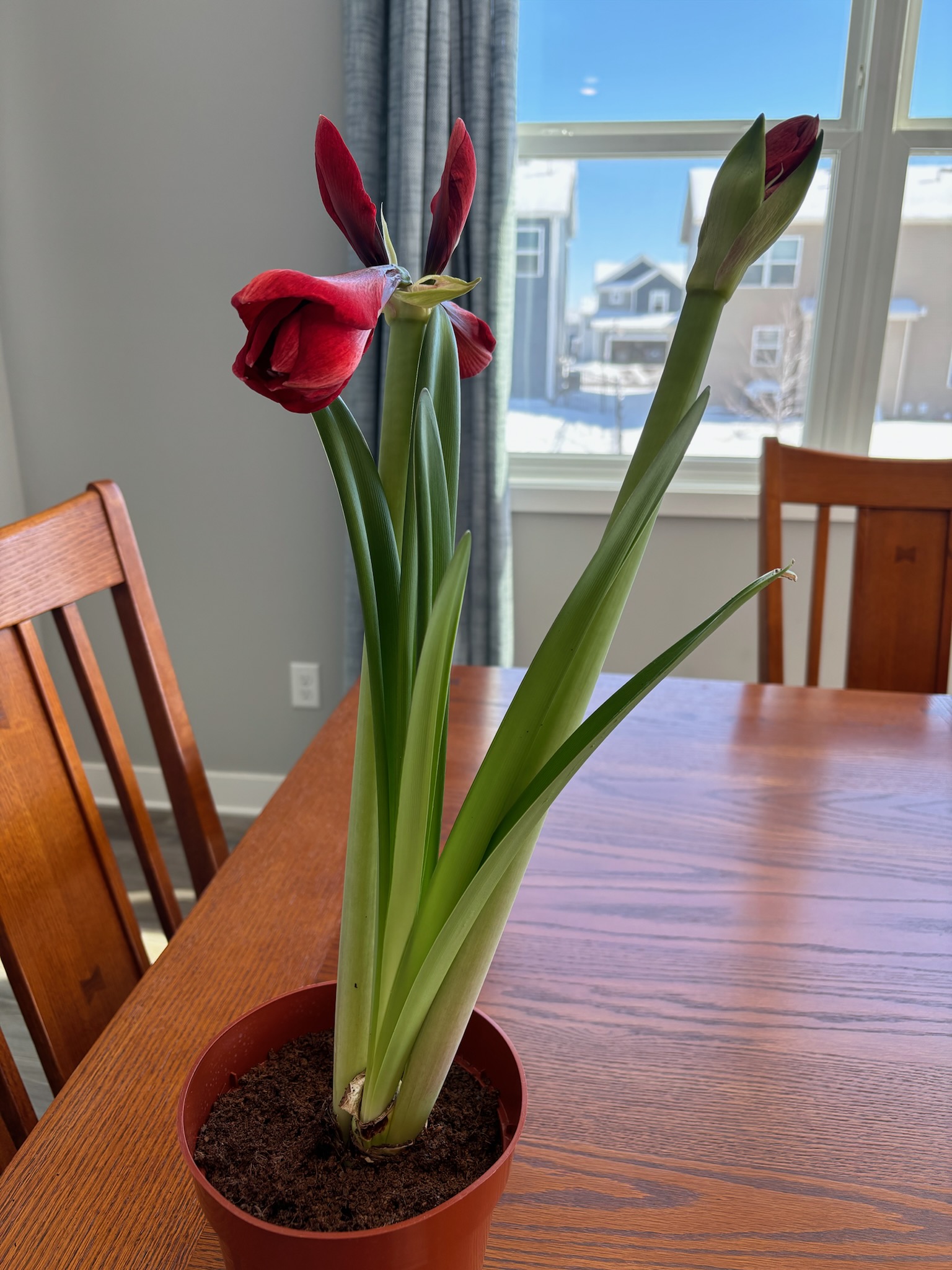
An amaryllis begins to bloom. (Photo credit: Amber Schmidt)
THE BOXED BULBS on an end cap at a big box store caught my eye, as intended. I worked briefly as a grocery store clerk back in the day when cashiers read and punched prices onto cash register keys. I learned then all about moving products by strategically placing them on the end of a shelf row.
So here I was, falling for the age-old marketing gimmick of pushing impulse purchases. But on this day, I was thankful for that end cap display of boxed amaryllis bulbs. This would make the perfect birthday gift for my soon-to-be 5-year-old grandson. Or so I thought.
On Isaac’s birthday in early January, we gathered to celebrate. As Isaac opened his gift stash, it was obvious he liked some presents more than others. That’s the thing about kids his age. They can’t hide their honest reaction, their true feelings. He loved the LEGO sets, the sticker book, the… But when he pulled the boxed bulb from the gift bag, Isaac promptly tossed it aside. Not set the box on the carpet, but threw it. Not even an explanation from Grandma about planting the bulb which would flower in big, beautiful red blooms changed his mind. He didn’t care.
I should back up a minute and explain why I thought this would be a good gift for my grandson. Last spring I gave several packets of seeds to the grandkids. Spinach, carrot and flower seeds, which my eldest daughter planted with her son. He took an interest once the seeds sprouted and the plants grew. Amber called him “Farmer Isaac.”
The farm girl in me felt encouraged. My grandchildren, who live in a sprawling new housing development in the south metro, are far-removed from their rural heritage. It’s important to me that they understand their agrarian roots. Randy and I grew up on crop and dairy farms—farms with large gardens from whence came most of our food. Youth like Isaac and his sister, Isabelle, need to know that food originates on farms, not grocery store shelves. As preschoolers, they loved to dig in the dirt at our house. I would hand them shovels and the dirt would fly. Kids need to touch the earth, splash in mud puddles, gather sticks and pine cones and leaves and do all those activities that connect them to the land. And make their hands dirty.
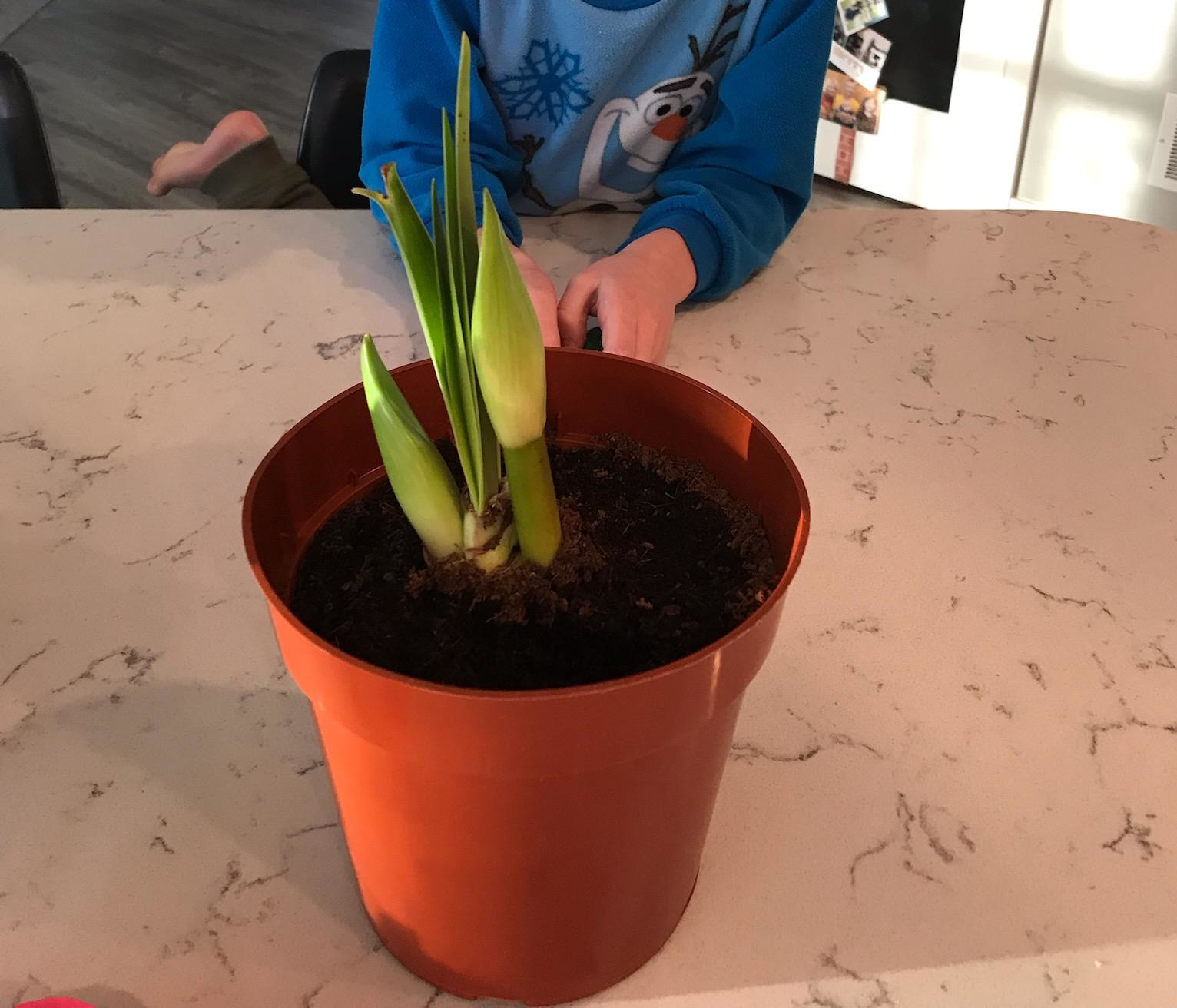
But now here was this dormant amaryllis bulb all ugly and brown and not looking at all like anything that would ever grow. But, once potted, grow it did. When the first green leaves emerged from the massive bulb at the end of January, Isaac suddenly took an interest. “You better take a picture to show Grandma,” he instructed his mom.
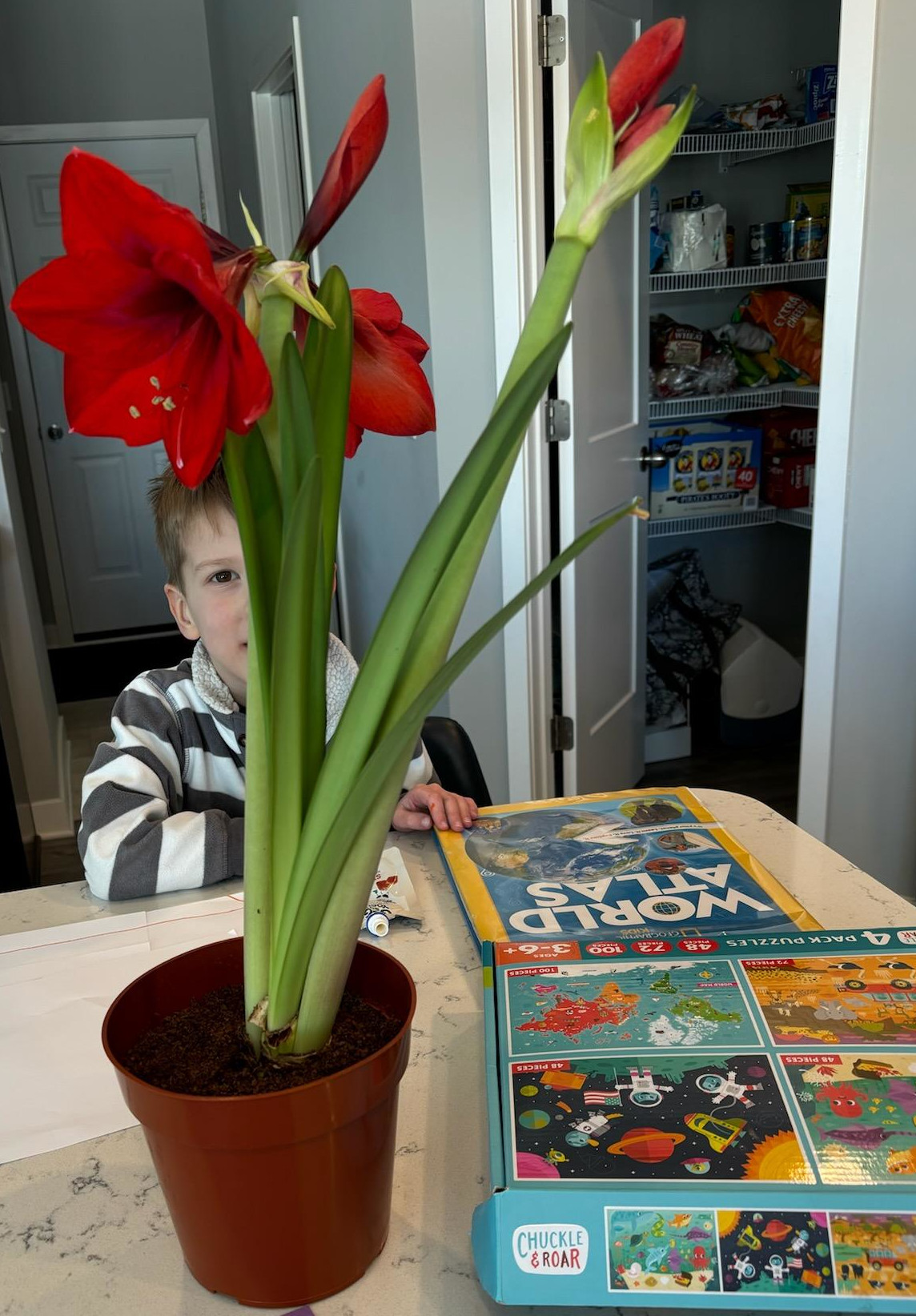
Isaac loves space, puzzles, art and now amaryllis. (Photo credit: Amber Schmidt)
A few weeks later, the first of several flowers bloomed. And there was Isaac again in a photo, right elbow learning on the kitchen island by sheets of paper for his next art project, left hand on his world atlas, jigsaw puzzles and that once dormant amaryllis bulb now blooming in the foreground. His smile was wide, his happiness evident. The amaryllis had its moment. Big. Bold. Beautiful red. No longer tossed aside. Finally and fully appreciated by the birthday boy.











 Minnesota Prairie Roots
Recent Comments