
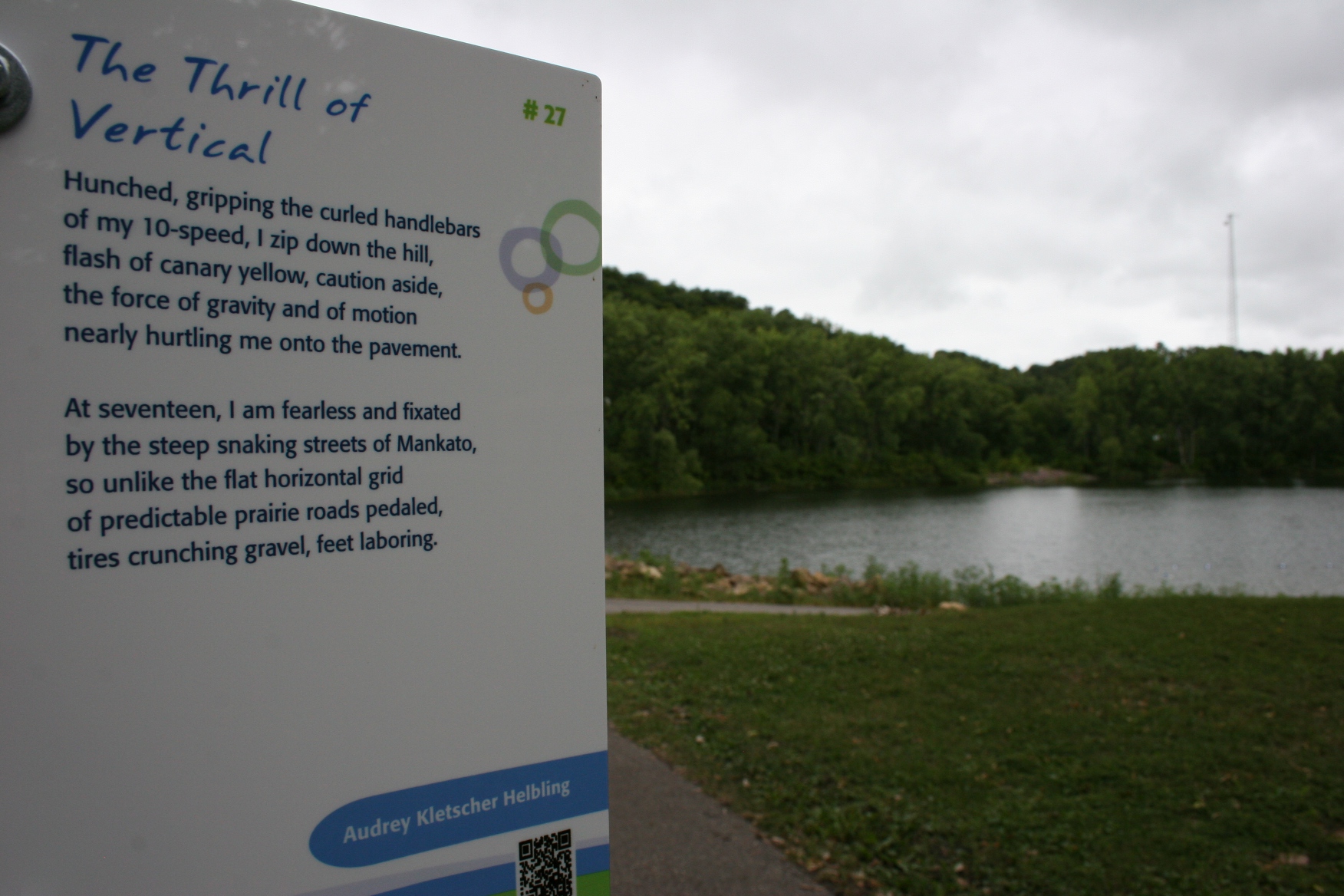
I ARRIVED IN MANKATO with a canary yellow 10-speed bike, a simple orange backpack, my Sears portable manual typewriter, a clock radio, a quilt stitched by Grandma Ida and a suitcase filled with clothes. The year was 1974, the beginning of my freshman year at Bethany Lutheran College, high atop a hill in this southern Minnesota city.

I was only 17, nervous, but ready to leave my childhood farm home some 85 miles to the west. I met my roommate, Rhonda, a beautiful high school cheerleader from western Wisconsin. She was well-traveled, outgoing, vastly different than me, quiet and shy. And she had a stereo for our cozy fourth floor corner dorm room. We were set. Despite our differences, we got along splendidly.

As I settled into the big city (Mankato’s current population numbers around 45,000), big for me when you come from a town of 362, I began to feel at home. Not only on campus, but also in the community. Happy Chef became a go-to destination for conversation and for warm loaves of bread glazed with powdered sugar frosting. A Christian coffee house also drew me off campus. I wasn’t in to the bar scene.
For nearly four years, Mankato became my home away from home. The place that grew me educationally and as a person. I earned an associate of arts degree from Bethany, then only a two-year college, before moving on to Minnesota State University, Mankato, to study journalism. I worked at the college newspaper, “The Reporter.” In the winter of 1978, I earned a mass communications degree with an emphasis in news/editorial. Soon thereafter, I started my career as a newspaper reporter and photographer. Years later I returned to work for “The Mankato Free Press,” heading up the paper’s St. James-based news bureau (me living and working from my apartment long before working remotely became a thing).

Why am I sharing this with you today? Because of Minnesota Governor Tim Walz, now the vice presidential candidate on the DFL ticket. He lived in Mankato, where he worked as a social studies teacher and football coach at Mankato West High School. Walz, likely unfamiliar to most Americans up until recently, has put our state, specifically Mankato, on the map. As a life-long Minnesotan, I am proud to see my state, considered by many to be fly-over land, in the spotlight. No matter your political leanings, such publicity is good for Minnesota.

Like Walz, flannel shirts hang in my closet. I am wearing one as I write on this cool August morning. Flannel truly is a Minnesota thing, no matter political affiliations. We like our hotdishes (not “casseroles”) and the Minnesota State Fair (although not me; too many people), our cabins Up North. We claim musicians Bob Dylan and Prince, the Coen Brothers (of “Fargo” movie fame) and other notables like vice presidents Hubert Humphrey and Walter Mondale.

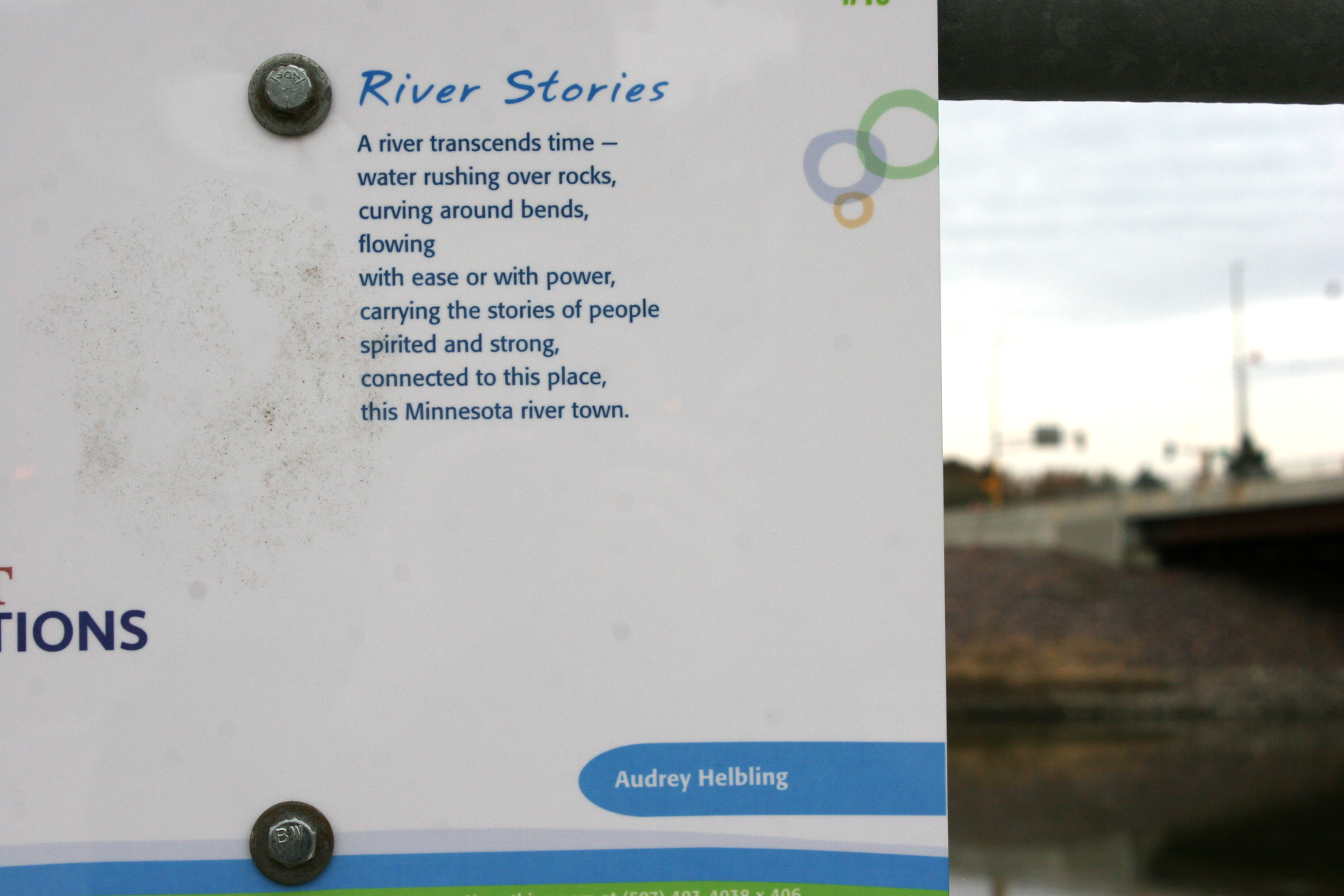
I cannot imagine living elsewhere, even if I don’t especially like the frigid cold and snow of a Minnesota winter. I loved winter as a Redwood County farm girl. Minnesota is home. I live 40 miles northeast of Mankato, a city originally inhabited by the Dakota. Mankato is a river town, a college town, a regional shopping hub, a community with a rich (but not always “good”) history. It is home to many creatives. I’ve been part of that with poetry showcased on signs through the Mankato Poetry Walk and Ride.

My connection with, and appreciation of, Mankato all started in that fourth floor dorm room with a roommate who was nothing like me. Despite our differences, we connected, forged a strong friendship, together grew and matured. We were on the cusp of our lives. Young. Open to new ideas and learning. The future held endless possibilities. For me, the 17-year-old with the canary yellow bike. And for Rhonda with her stereo system.
© Copyright 2024 Audrey Kletscher Helbling











 Minnesota Prairie Roots
ICE OUT, a photo essay & commentary from Minnesota February 13, 2026
Tags: businesses, commentary, Content Bookstore, Division Street, Governor Tim Walz, ICE OUT, immigration, Immigration and Customs Enforcement, Minnesota, Minnesota Strong, news, Northfield, photo essay, photography, signs, strength
THE DAY AFTER BORDER CZAR (anyone dislike that title as much as me?) Tom Homan announced a draw-down of federal immigration agents in Minnesota, I’m feeling, as Governor Tim Walz said, “cautiously optimistic.” Recent history has proven that we can’t necessarily believe or trust what federal government officials tell us. But I’m trying to be hopeful.
For more than two months, 3,000 immigration enforcement agents have been working in Minnesota. And if anyone still believes that they are/were doing only targeted enforcement, arresting “the worst of the worst,” then I have some lakefront property to sell you.
Let’s go back to Thursday morning, when Homan made his draw-down announcement complete with praise for his agents and the success of their mission in Minnesota. I couldn’t listen any more. I’d heard enough.
I had an appointment in neighboring Northfield anyway so off I went to this college town that, like Faribault, has been recently inundated by ICE. Except in Northfield, a decidedly blue city, the business community is publicly vocal about its opposition to ICE’s presence unlike in my decidedly red city.
In the heart of downtown Northfield, on one side of a block along Division Street, nearly every business has posted an anti-ICE sign and/or uplifting signage. I felt the strength of those shopkeepers willing to stand up for and encourage others. There’s power in raising united voices in opposition to wrong.
Inside Content Bookstore, where I stopped to shop for a baby shower gift, I discovered even more messaging and ways in which the Northfield community is stepping up to help their immigrant neighbors, including children affected by ICE’s actions. Monies from the sale of Minnesota state flag and “Rebel Loon” (our state bird) stickers will go toward books and activities for those kids. Content is also collaborating on a poetry chapbook, Words to Meet the Moment: Poetry Against Fascism, releasing soon.
As ICE supposedly ends Operation Metro Surge in Minnesota (which also encompassed cities and small towns outside the metro like my city of 25,000), we are left with a mess. Let me define that. The personal toll is huge. Trauma has been inflicted upon thousands. “Generational trauma,” Governor Walz said.
I worry about the kids who witnessed family members being taken or who saw armed, masked immigration officers with guns outside their schools (with classmates taken by ICE), outside their daycares, outside or inside their homes, at their bus stops, on the streets. It’s hard enough for adults to see such threatening power, aggression and use of excessive force. But our children? The mental health of all Minnesotans concerns me, especially that of the youngest among us.
And then there is the financial fall-out with people now unable to pay their bills, including rent, facing eviction because they haven’t gone to work out of fear of ICE. Again, legal status matters not as anyone with brown or black skin has been targeted. These same individuals and families have relied on community members and nonprofits to help with rent payments and to bring them groceries. This is not long-term sustainable.
Until we are all confident that ICE is really, truly gone and is doing only targeted enforcement of “the worst of the worst,” we will all remain on edge. Rebuilding trust, restoring life to normalcy will assuredly take time.
Likewise, the Minnesota economy has suffered severe damage, especially small businesses. Governor Walz has proposed a $10 million forgivable loan recovery plan to help the business community and is also hoping for help from the federal government. Good luck with that.
While in Northfield on Thursday, I learned that ICE agents recently went along Division Street, asking for employment records at some businesses. I don’t know details. But in my mind, I envision these armed, masked officers as a threatening presence in the heart of this picturesque, riverside American city. This community doesn’t back down from threats. In September 1876, townsfolk stopped the James-Younger Gang from robbing the First National Bank. Northfield is a community which cares for one another and which, in the midst of a federal invasion, has stood, is still standing, Minnesota Strong.
© Copyright 2026 Audrey Kletscher Helbling