Minnesota Prairie Roots

Writing and photography by Audrey Kletscher Helbling

Living with a hearing loss March 24, 2012

Filed under: Uncategorized — Audrey Kletscher Helbling @ 8:37 AM
Tags: , ,

I hear only static and ringing in my right ear after a sudden hearing loss a year ago.

MOST OF THE TIME simply stating I am deaf in my right ear is easier than trying to explain how, a year ago, I lost 70 percent of the hearing in my right ear in an unexplained episode of sudden sensory hearing loss.

Hundreds of times since last March, I’ve repeated, “I am deaf in my right ear,” then turned my left ear toward whomever is speaking to me and asked them to repeat what they’ve just said.

This is not easy, this missing out on conversations, this always conscious effort to remember to sit or walk on the right side of a person. It is exhausting and frustrating and sometimes I just give up.

If I’m in a roomful of people, I may as well sit by myself in a corner. Hearing any snippet of conversation unless I move in close and concentrate is nearly impossible.

About now, you’re likely thinking, “Oh, Audrey, don’t be so vain, just get a darned hearing aid.”

Oh, believe me, if a hearing aid would improve my hearing, I would have one. I cried when an audiologist told me a hearing aid will not work with my type of hearing loss. Yes, I’ve been to specialists, done the MRI, the whole nine yards.

Nothing will change the fact that the door to hearing in my right ear slammed shut in an instant on a Friday afternoon in March of 2011.

In the grand scheme of health issues, hearing loss ranks rather low. Sure it’s inconvenient and annoying and bothersome. But it is not deadly or painful or totally life-altering. I can live with this disability.

And there’s at least one benefit. I live along a busy street, meaning traffic can sometimes keep me awake. Now I need only sleep with my right ear up, left ear pressed against the pillow. And, come morning if I’m still sleeping in that position, I won’t hear the alarm.

CLICK HERE to read my first post last March about this hearing loss.

© Copyright 2012 Audrey Kletscher Helbling


46 years of serving pancakes for a cause on Super Bowl Sunday February 2, 2012

Filed under: Uncategorized — Audrey Kletscher Helbling @ 8:10 AM
Tags: , , , , , , , , ,

THEY’RE SYNONYMOUS in Faribault—the Super Bowl and pancakes.

For 46 years, the Faribault Lions Club has sponsored a pancake and sausage breakfast on Super Bowl Sunday, raising funds to support projects that adhere to the club motto: “We serve.”

Let me repeat that. Forty-six years. Wow. You have to admire an organization so committed to helping others. The Faribault Lions expect to feed 1,200 – 1,500 and raise $5,000 at their Super Bowl Pancake Breakfast.

Now I’m no fan of pancakes (ranking them right alongside liver) or of football, but I may have to eat pancakes this Sunday simply to support a worthy cause. I’ll skip the football except for the commercials.

The Faribault Lions provide funding for college scholarships, dictionaries for third graders, food for children in need, and assistance for the visual and hearing impaired, among other projects.

While all are worthy causes, the club’s effort on Sunday to collect used prescription eyeglasses and hearing aids and to raise dollars to assist those with visual and hearing impairments resonates with me.

I’ve worn glasses since age four, after undergoing surgery to correct crossed eyes. Without that surgery, I would have gone blind in my “lazy eye.” I value my vision and know that without corrective lenses, I would struggle to see.

Lions Club International’s commitment to helping those with vision issues stretches back to 1925 when Helen Keller presented this challenge during a speech to the Lions:

Will you not help me hasten the day when there shall be no preventable blindness; no little deaf, blind child untaught; no blind man or woman unaided? I appeal to you Lions, you who have your sight, your hearing, you who are strong and brave and kind. Will you not constitute yourselves Knights of the Blind in this crusade against darkness?

And so with that challenge, the Lions became “Knights of the Blind,” collecting and distributing prescription eyeglasses through clinics world-wide. Can you imagine the joy of giving someone the gift of sight?

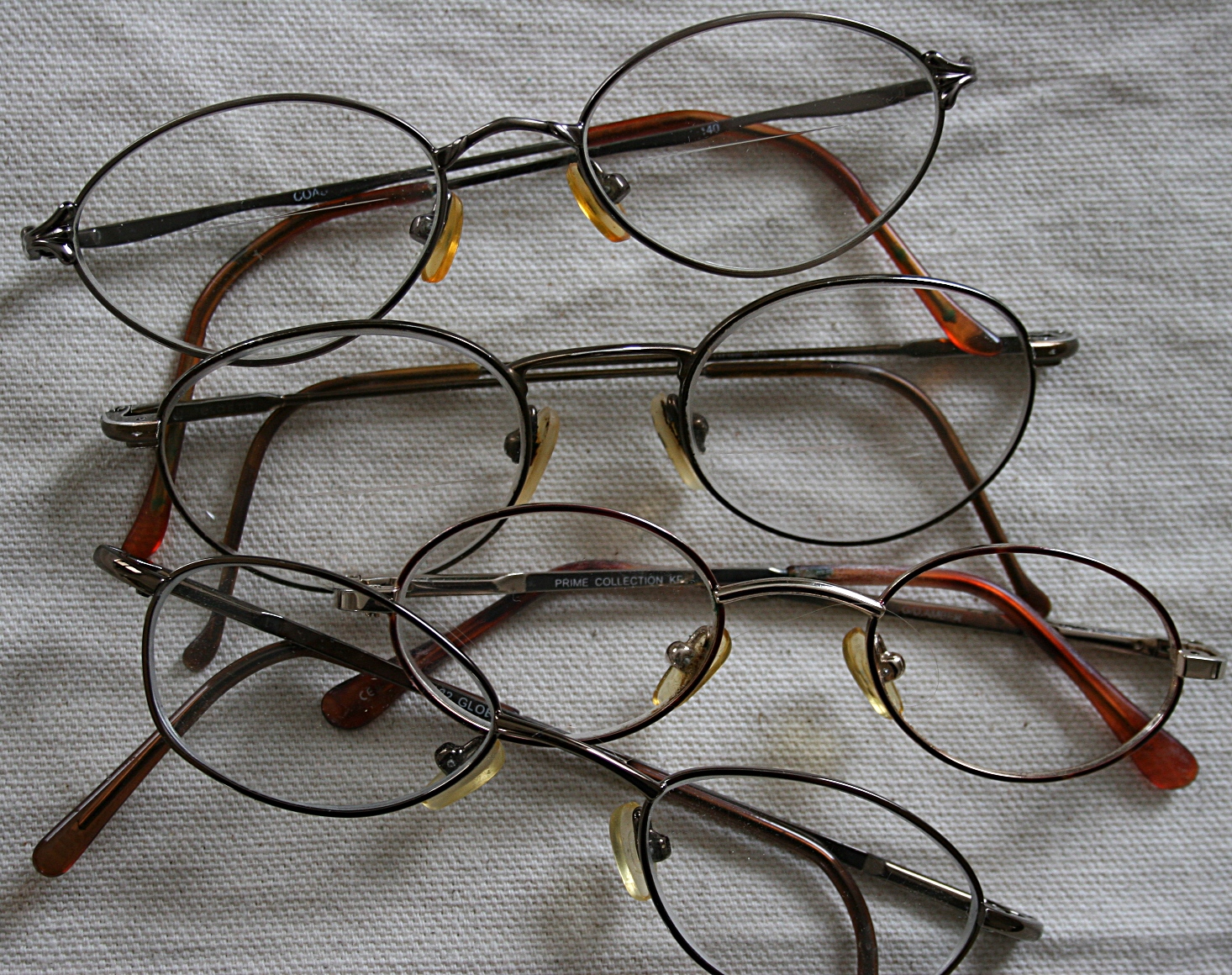
I just rummaged through a dresser drawer and found four eyeglasses that I can donate to the Faribault Lions Club on Sunday.

The prescription eyeglasses I'm donating.

Faribault Lions have also connected with the Minnesota State Academy for the Blind in Faribault, supporting numerous projects there, including an apartment to teach independent living skills.

My community is home to the Minnesota State Academy for the Deaf, perhaps another reason local Lions take such a strong interest in helping those who are hearing impaired.

I am among those with a hearing impairment having lost 70 percent of the hearing in my right ear last March in an episode defined as “sudden sensory hearing loss.” (Click here to read about that.) Unfortunately, a hearing aid will not help with this type of near-deafness.

But for most who suffer from a hearing impairment, a hearing aid will help. The Lions are committed to collecting used hearing aids for distribution to those in need. Can you imagine the joy of giving the gift of hearing?

It’s impressive, isn’t it, how so many worthy causes have evolved from two powerful words: “We serve.”

FYI: The Faribault Lions Club Super Bowl Pancake Breakfast will be held from 7:30 a.m. – 1:15 p.m. on Sunday, February 5, at the Eagles Club, 2027 Grant Street Northwest. Cost is $6 for adults and $4 for those 12 and under.

The Lions are also selling Super Bowl snacks—8-ounce packages of nuts for $5 – $6—to raise monies for their Backpack Blessings Program which provides local children in need with food for the weekends.

It should not go without stating here that many local businesses and volunteers (within and outside of the Faribault Lions Club) contribute to the annual Super Bowl breakfast.

Bring your used prescription eyeglasses and hearing aids, your money and your appetite on Sunday to participate in the “We serve” endeavor.

Click here to learn more about the Faribault Lions Club.

© Copyright 2012 Audrey Kletscher Helbling


Say “no” to cheese? September 28, 2011

“Did u hear about the anti-cheese billboard up by green bay?” my Wisconsin-resident daughter texted.

Since I discovered her message seven hours after she sent it, I was on my own to investigate. You don’t dangle a tidbit of information like that in front of my eyes and expect me to let it go.

So here’s the deal, according to information I gleaned in a quick online search.

The Washington D.C.-based nonprofit Physicians Committee for Responsible Medicine has sponsored a billboard along Highway 41 near Lambeau Field with this message:

Warning:

Cheese Can

Sack Your Health

Fat. Cholesterol. Sodium.

I don’t need to explain. If you want details on the Physicians Committee’s stand, click here.

Originally, the billboard featured an image of the Grim Reaper wearing a cheesehead hat. Now he’s hatless, reportedly due to a threatened lawsuit by the company that makes those signature hats.

So, that all said, I wonder if the D.C. folks understand, really understand, the importance of cheese in Wisconsin.

I’ll take you on a little photographic tour through Wisconsin, showing you images taken within the past 10 months.

I expect this isn’t the last we’ll hear of this billboard controversy.

And, just for the record, I love cheese.

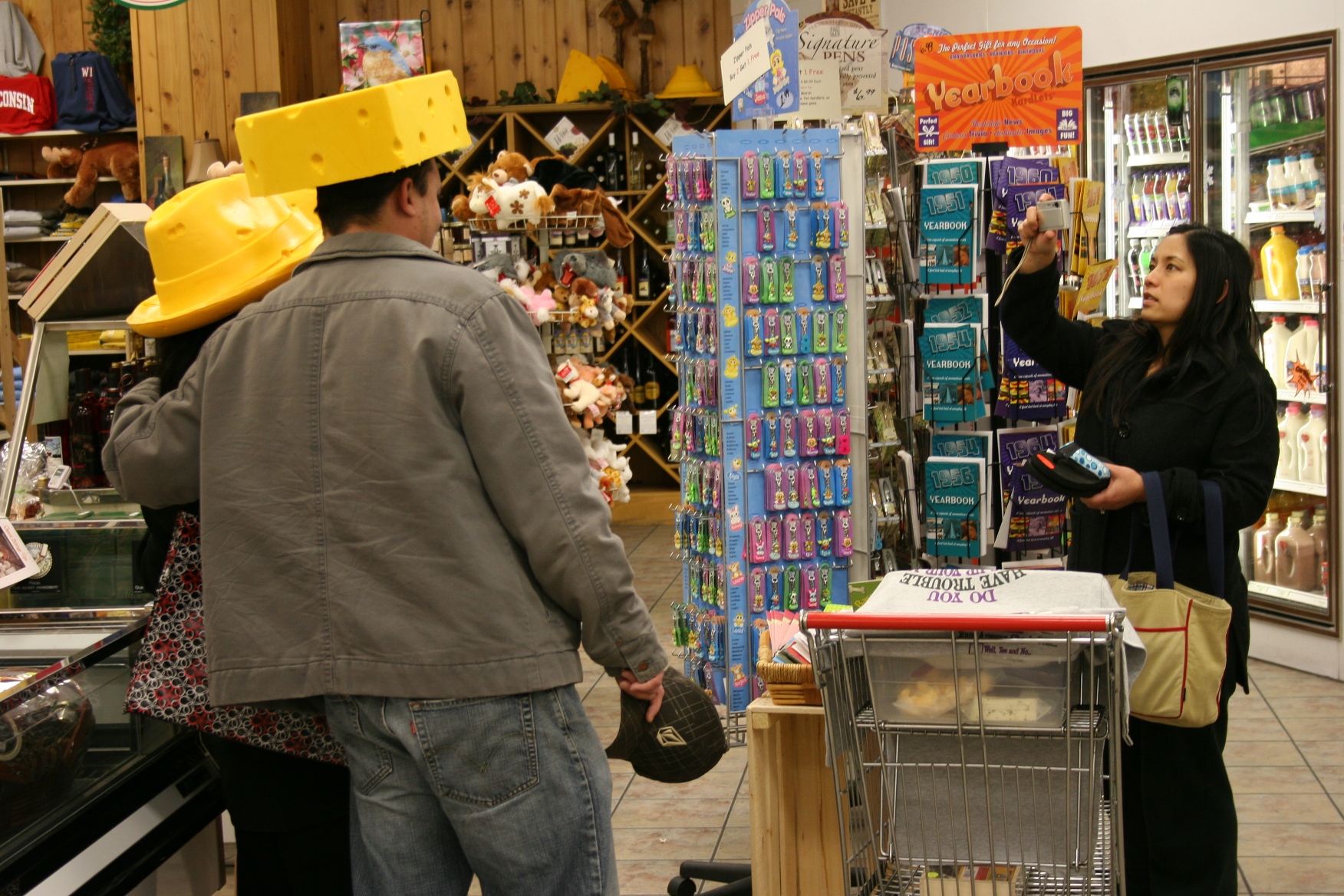
Cheese is a big part of the tourism industry in Wisconsin as evidenced by this photo taken at Simons Specialty Cheese in Little Chute. Yes, those would be the famous cheesehead hats.

Simons Specialty Cheese is one of the retail outlets for Trega Foods, Ltd., which produces natural curds and mozzarella sticks right next door at its Little Chute plant.

Kitschy cheddar cheese shapes sold in Wisconsin.

You can't miss these cows and cheese sign along a Wisconsin roadway.

A small sampling of the cheeses available at Simon's Specialty Cheese.

Humbird Cheese, a popular tourist stop at Tomah.

Promoting cheese on a billboard along a central Wisconsin highway.

SO, WHAT’S YOUR take on the Physicians Committee for Responsible Medicine billboard and/or its stand on cheese?


The trend toward healthier foods in schools and the chocolate milk debate May 7, 2011

SHOULD PUBLIC SCHOOLS offer chocolate milk with school lunches?

That’s an issue being discussed right now in the Fergus Falls Public School system, according to an article published in the Fergus Falls Journal.

The head of the Parent Teacher Organization appeared before the school board recently requesting that chocolate milk no longer be offered to students, except on Fridays as a “special treat.” She’s concerned about the sugar in chocolate milk and about serving healthier food. You can read the entire story by clicking here.

Based on the volume of responses to the Journal article, I quickly concluded that chocolate milk in school is certainly a hot button topic.

Opinions range from “let the kids have their chocolate milk because then at least they are drinking milk” to school lunches need an overhaul to this is a political issue.

Personally, I’ll pick white milk over chocolate any day. I grew up on a dairy farm, meaning I can’t really give an unbiased opinion here. Cows don’t produce chocolate milk. To my taste buds, chocolate milk compares to chugging chocolate syrup and I prefer my chocolate syrup on ice cream.

Here’s my take on banning chocolate milk from school lunchrooms:  Kids will eventually learn to drink white milk if they don’t have the chocolate option.

I think the PTO president erred with her compromise offer to allow chocolate milk as a “special treat” on Fridays. That would send a mixed message to students. Labeling a food as a “treat” only makes it more appealing.

This chocolate milk discussion reminds me of a controversy over soda pop vending machines in schools several years ago. I don’t recall the details, but it was a point of much debate in my community of Faribault. I don’t know how the issue was eventually resolved. And, honestly, because my kids are big milk, and not big soda, drinkers, I really did not pay that much attention to the issue. I should have.

Whether milk or soda is at the center of discussion, it’s good that parents, food service employees, school administrators and others are finally taking a good look at school lunches and working toward serving healthier foods and beverages to our kids.

In Fergus Falls, a Wellness Committee is tackling the topic of improving school lunches. Click here and here for the May school lunch menus in Fergus Falls. You’ll find main menu items like chicken nuggets, hot dogs, corn dogs and super nachos along with baked (not fried) fries, sunflower nuts, fresh fruit and fresh veggies. I can see progress in that list, but still some of those food choices don’t seem all that healthy to me.

And just to be clear here, I’m neither a food purist nor a perfect parent. I’ve served chicken nuggets to my family and I would label my 17-year-old son, my youngest, as a “picky eater.” It’s not that I haven’t tried to get him to eat his fruits and vegetables…

Fergus Falls certainly isn’t alone in moving toward healthier school lunches that feature fewer processed foods and more fresh veggies and fruit.

Throughout Minnesota, students, staff and volunteers are planting gardens, a win-win way to engage and teach students about healthier eating. The gardens will also provide fresh vegetables for school lunchrooms. The Statewide Health Improvement Program (SHIP) is helping lead the way. You can click here to see what’s happening in your county through SHIP.

In my county, Rice, for example, a “Growing Healthy Foods” workshop is slated for 6:30 p.m. Wednesday, May 11, in the 4-H building at the Rice County Fairgrounds. Master gardeners will present information about gardening in this program funded through a SHIP grant.

While individuals and students are planting gardens, Minnesota schools are also working with local growers to incorporate fresh produce into school lunches.

Check out the Minnesota Farm to School Program to see how some schools are embracing the trend toward eating local. It’s inspiring to read about apple orchards and tomatoes and school gardens and efforts to educate and reconnect students to the land.

I expect, though, that despite efforts to improve the quality of food in school lunchrooms, cost will determine whether healthy, permanent changes can be made. School districts don’t exactly have extra money in their budgets. And parents, in a time of already stretched family finances, won’t appreciate/can’t afford hikes in school lunch prices.

Getting kids to change their eating habits presents a major challenge also.

What’s your opinion on the current trend toward serving healthier foods in schools? Are changes needed? Will kids embrace such changes? Can school districts afford to offer healthier foods (which will likely cost more to buy and to prepare)? Will parents pay higher prices for school lunches?

And, finally, how do you feel about pulling chocolate milk from school lunchrooms?

© Copyright 2011 Audrey Kletscher Helbling


WARNING: Proposal would erode Minnesota’s Freedom to Breathe Act April 11, 2011

WARNING: Cigarettes are addictive.

WARNING: Tobacco smoke can harm your children.

WARNING: Cigarettes cause fatal lung disease.

WARNING: Cigarettes cause cancer.

WARNING: Cigarettes cause strokes and heart disease.

WARNING: Smoking during pregnancy can harm your baby.

WARNING: Smoking can kill you.

WARNING: Tobacco smoke causes fatal lung disease in nonsmokers.

WARNING: Quitting smoking now greatly reduces serious risks to your health.


I didn't need to search long or hard to find these cigarette butts. Two were tossed into one of my flowerbeds by a neighbor. I found the third in the street by my house.

Just as Minnesota legislators are considering proposed changes to the state’s Freedom to Breathe law, the U.S. Food and Drug Administration is finalizing plans to modify warnings on cigarette packaging and advertising.

Following requirements of The Family Smoking Prevention and Tobacco Control Act, the FDA has proposed that cigarette packaging and ads bear one of the above nine warnings along with a matching colorful graphic.

The shock value of the proposed graphics—like a toe-tagged corpse and a mother blowing smoke into her baby’s face—are an effort to make a powerful impact on the smoking public. Enough to make a smoker stop smoking.

The final graphics will be selected by June 22 and the warnings must be in place on all cigarette packages sold in the U.S. and in cigarette ads by October 2012.

As a nonsmoker, I’m all for this move to prevent, reduce or stop smoking.

However, I don’t support proposed legislation in Minnesota that would once again allow smoking in bars under specific conditions. Not that I frequent bars, but bars and restaurants are often interconnected, so this matters to me.

The plan basically would allow smoking in bars if a ventilation system is installed to remove the smoke. In bars connected to restaurants, the bar must be walled off with a door separating the bar and restaurant.

Come on. A door will not keep smoke from filtering into a restaurant. And I don’t know about you, but I don’t need smoke served with my meal.

I make no apologies for my strong stand against smoking and my intense dislike of cigarette smoke.

I’m also honest enough to admit that, in my youth, I tried tobacco products on several occasions, enough to realize smoking wasn’t for me.

My dad became addicted to cigarettes when he was in the military, serving on the front lines during the Korean Conflict. He preferred Camel cigarettes. Sometimes he also rolled his own.

My dad, a smoker for many years, first exposed me to cigarettes. Once he even let me puff on his Camel. Now before you start calling him an irresponsible parent, consider this.  He knew I’d cough and sputter and spit and never want to touch a cigarette again. He was right. Eventually he gave up smoking but never quit chewing snuff.

Although I never took up smoking, I was addicted to candy cigarettes as a kid. But candy cigarettes were as popular as Bazooka bubble gum back in the 1960s and no one thought anything of subtly encouraging kids to smoke via those chalky white sticks with the red tips.

As for the few Swisher cigars I smoked in my mid-20s, I offer no excuse except my ignorant, youthful stupidity. I bet many smokers who are now habitual tobacco users wish they’d never started.

If you’re a smoker and want to smoke in the privacy of your home, then go ahead. Just don’t invite me over because, physically, I can’t tolerate cigarette smoke.  I’ve had numerous bad experiences with cigarette smoke.

Back in the early 1980s, I worked for a southern Minnesota daily newspaper that allowed smoking in the office. I came home every night smelling like I’d been in a bar all day. My clothes reeked. My skin reeked. My hair reeked. I remember complaining, with several other nonsmokers in the office, about the smoking. Nothing changed, because the news editor smoked. She didn’t care. So what if the copy editor sat outside the conference room during the weekly staff meeting because he couldn’t tolerate the smoke? I wish I had joined him instead of breathing the toxic air. So what if the news editor should have been more considerate given the Minnesota Clean Indoor Air Act passed in 1975? None of that mattered.

My second worst experience with smoking occurred several years ago at a Winona hotel. The manager tried to pass off a smoking room as a nonsmoking room. The instant I walked into the room, I smelled cigarette smoke. The mobile air purifier that was running on high and the lack of a sign on the door stating that this was a nonsmoking room confirmed my suspicions. When I went to the front desk and demanded a nonsmoking room, the manager denied that he had given me a smoking room. I didn’t believe him. My nose and lungs don’t lie.

My other notable smoke experience also involves a hotel, this one at a southwestern Minnesota casino. I was there attending a cousin’s wedding reception. Although the hotel room my family booked was supposedly smoke-free, the odor of cigarette smoke filtered from the smoke-filled hotel lobby, halls and casino into our room. I barely slept that night because of the tightness in my chest caused by the smoke.

So, Minnesota legislators, listen up. Listen to representatives of The American Cancer Society, the American Heart Association, the American Lung Association and Clearway Minnesota, all of whom have been at the State Capitol opposing the proposed changes to Minnesota’s Freedom to Breathe Act.

Consider the 83.9 percent of adult Minnesotans (according to results of the 2010 Minnesota Adult Tobacco Survey) who do not smoke. Please keep our Freedom to Breathe Act intact and smoke-free.

© Copyright 2011 Audrey Kletscher Helbling


I’d rather not be in Vegas April 6, 2011

I've lost 70 percent of the hearing in my right ear due to a sudden sensory hearing loss.

I AM NOT A RISK TAKER.

I’ve walked through a Minnesota casino twice and failed to pull a single lever on a slot machine or drop a single coin.

I prefer to play it safe, to not risk losing for the slim possibility of winning. It is the reason I don’t buy lottery tickets. I feel like I’m throwing away my money.

That is partially why a decision I am currently facing is so incredibly difficult.

Do I have surgery or not?

Will I be among the 25 in 100 who benefit from a sac round window graft? Even the name of the surgery is daunting. I don’t know enough right now about the outpatient ear surgery to decide.

But I have the statistics. For only one in four patients, the surgery successfully restores some hearing. But the percentage of hearing regained is perhaps only 20 percent. The slim possibility exists—about two percent—that the surgery could cause me to lose all of my hearing in my right ear. That really doesn’t matter given I’m basically deaf in my right ear anyway due to a sudden sensory hearing loss that occurred a month ago.

I currently have only 30 percent hearing in that ear. I hear only “noise,” nothing as distinguishable as a word. I also suffer from tinnitus, ringing in my right ear.

On Tuesday when I met with a renowned ear specialist in Minneapolis, I was presented with the surgery option. I was not expecting this, was not prepared with a list of questions. My immediate thought was this: “I don’t want to have more surgery.”

Already in my life, I’ve had seven surgeries, the first at age four to correct my vision. Since then, I’ve had oral surgery to remove my wisdom teeth, three Caesarean sections, inguinal hernia surgery and my last, total right hip joint replacement, not quite three years ago.

I am not anxious to rush into another surgery.

But time is of the essence. Apparently the sooner the surgery is done after the hearing loss, the better. I don’t understand why and I didn’t think to ask.

My doctor offered no recommendation on the surgery. I asked. He says he doesn’t recommend, only presents the options and information and allows the patient to decide.

I am at the point now of researching, pondering, praying, considering a second opinion, losing sleep over this decision.

What should I do?

Should I risk throwing away $3,000—my health insurance deductible? Should I risk not having the surgery if it could restore even a small percentage of my hearing? (A hearing aid will not help with the type of hearing loss I have.) Should I risk the risks that are always there whenever you have surgery?

I’m not a gambler. But right now I feel like I’m in Vegas.

© Copyright 2011 Audrey Kletscher Helbling


I can’t hear you March 31, 2011

Filed under: Uncategorized — Audrey Kletscher Helbling @ 8:01 AM
Tags: , , , , , , ,

COULD SOMEONE PLEASE answer the phone, turn off the radio and fix the potholes?

That isn’t going to happen. Not for me now, anytime soon or perhaps ever.

Welcome to my new world of ringing telephones, annoying transistor radios and bothersome potholes. I’ll explain after giving you some background.

Three weeks ago I suffered a sudden sensory hearing loss. One minute I could hear mostly fine in my right ear. The next minute it was as if someone had closed the door to my hearing.

At this point, why I suddenly lost 70 percent of the hearing in my right ear remains an unknown. It could be related to an ear trauma three years ago at a Wisconsin waterpark where a waterfall pounded my head. That caused permanent nerve damage, and some hearing loss, to my right inner ear. Or it could be the result of a viral infection, or something else.

Whatever the cause, I now have only 30 percent of my hearing in my right ear.

Thus, the ringing telephone, the transistor and the problem potholes have become issues for me. It’s not like I didn’t try to eliminate all three.

I tried a 10-day mega dose of inflammation-reducing steroids in an attempt to salvage some, if not all, of my hearing. The Prednisone didn’t work, only made me jittery, sleepless and emotional. I noticed no improvement in my hearing. The drug is typically most effective within 48 hours of symptom onset and my treatment started long after that.

I see a specialist next week to recheck my hearing and perhaps get some answers.

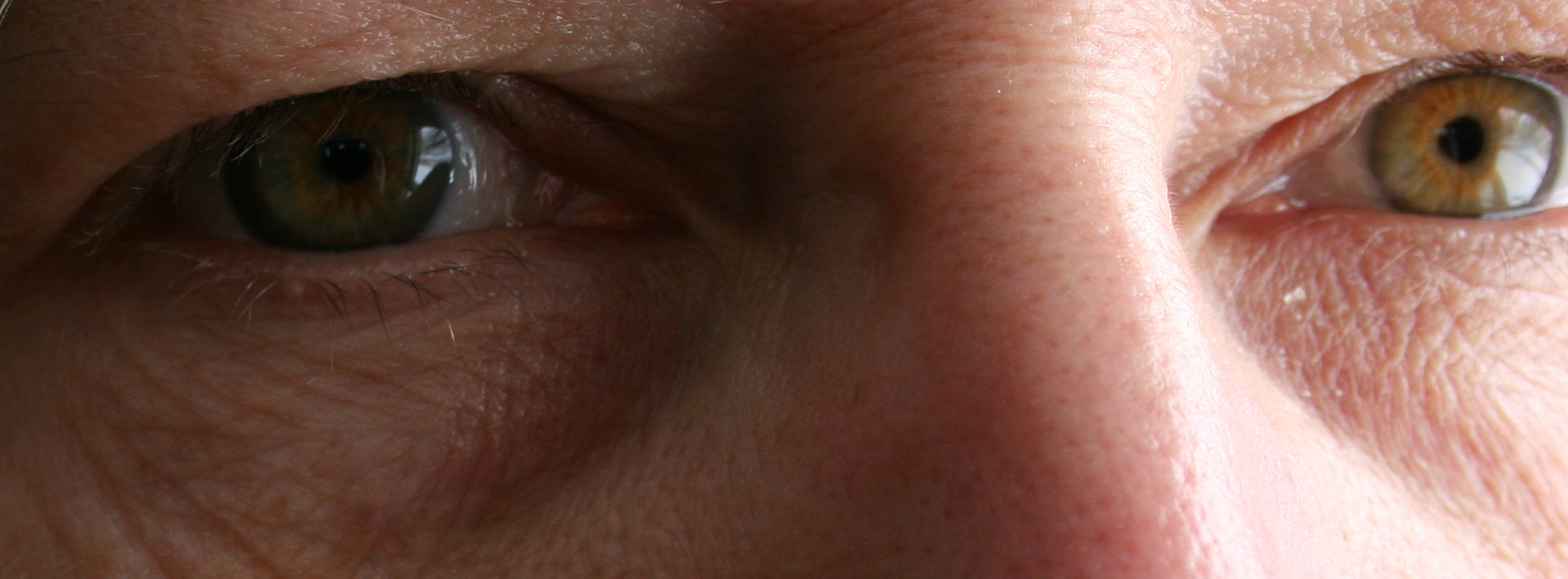
I took this photo of my eyes last week when I wasn't getting much sleep due to the effects of my steroid treatment. I'm still having sleep issues.

For now, I’ve accepted the fact that this is my new world of hearing. Sometimes the tinnitus is so bad that I joke to my husband, “Can you please answer the telephone?” Only problem, the telephone is inside my right ear.

As for the transistor, those of you old enough to remember transistor radios will also recall how they were often plagued by poor reception resulting in lots of static. I’m hearing that type of static now in my right ear more often than I like.

With my “bad” right ear I hear just “noise,” nothing as clear or distinct as an individual word.

Driving over an uneven roadway surface, like a pothole or a crack, hurts my ear with the thump echoing unpleasantly inside my ear.

I’m trying to adjust to this hearing loss. But, honestly, it’s not always easy. I can barely tolerate the organ music in church and singing isn’t too much fun any more.

My right ear, in which I've lost 70 percent of my hearing due to a sudden sensory hearing loss.

But most difficult for me, like anyone with a hearing loss, is the inability to clearly hear conversations. And for me, a blogger and writer, that’s a very big deal. I need to hear, and hear accurately.

All too often I find myself asking others to speak louder. I’m sure they’re thinking, “Why doesn’t she just get a hearing aid?” It’s not that simple. An audiologist and an ear/nose/throat doctor have told me that a hearing aid will not help, not with this type of hearing loss.

Put me in a room full of people, and I struggle to hear.

The other night while waiting in a check-out line at the grocery store, I was frustrated because I couldn’t hear everything the young male checker in the lane next to me was telling the bagger. He was offering her relationship advice, something about his fiancée who’d gone to college on the East Coast and who’d cheated on him. I caught the advice about hanging on to someone you care about and to, basically, not mess it up. It would have been a great blog topic, but I couldn’t hear enough of the conversation to accurately pull together a post. My days of eavesdropping may have ended with this sudden sensory hearing loss.

Despite all of this, I realize my health issues could be much worse and that many people suffer from severe hearing losses.

Like all other challenges I’ve faced in my life, I’ll adjust, adapt, accept and move on.

Yet, if I feel the need to cry, which I have several times already, I’ll cry.

© Copyright 2011 Audrey Kletscher Helbling


Suddenly going nearly deaf in one ear March 21, 2011

THE ELDERLY COUPLE stood in line next to me at the pharmacy gripping their skinny white canes.

He fidgeted, a plastic grocery store bag rustling in his hands. I wondered how much he could see through the thick lenses of his glasses.

She waited beside him. Calm. Steady. Sure. I doubted she could see me, only sense that I was there, close by.

I considered for a minute allowing them ahead of me. But I’d already returned for the second time to the pharmacy and didn’t want to give up my spot.

So I stood there, health insurance and debit cards clenched in my right hand, arms folded across my chest. I did not want to be there sandwiched between the mom with a clearly sick child and the visually-impaired couple. But, mostly, I did not want to be there because I did not want the prescription drugs I was picking up.

Eight hours earlier I laid on my back, head strapped down, face covered with a mask, as my head and upper body slid inside a magnetic resonance imaging machine.

Several hours after that, I sat in a sound-proof booth getting my hearing tested.

A half hour later I braced myself for the MRI results, hoping for the best, semi-prepared for the worst. The news was good. No tumor. No stroke. No anything abnormal, the ear specialist told me. I breathed deeply, the release of tension in my body palpable.

But the hearing, that was different. I had lost most of the hearing in my right ear. I had “one shot,” the doctor told me, to restore some of my hearing. There were no guarantees.

That is when I cried, although the tears had been building since the audiologist pointed to a graph showing that I had lost 70 percent of the hearing in my right ear. I verged on tears when she told me, too, that a hearing aid would not help me.

I listened to the doctor tell me that a 10-day mega dose of steroids could possibly restore some of my hearing. No promises. The Prednisone is most effective within 48 hours of symptom onset. Four days had passed since my symptoms—sudden hearing loss and eight hours of dizziness and nausea—began.

“You’ll cry some more,” he said, explaining that the steroid will throw me into emotional mood swings, cause insomnia, make me jittery, maybe even nauseated. He minced no words: The treatment course “will be difficult.”

And then I asked, “Is it worth it?”

He told me this was my “one shot” to regain some of my hearing.

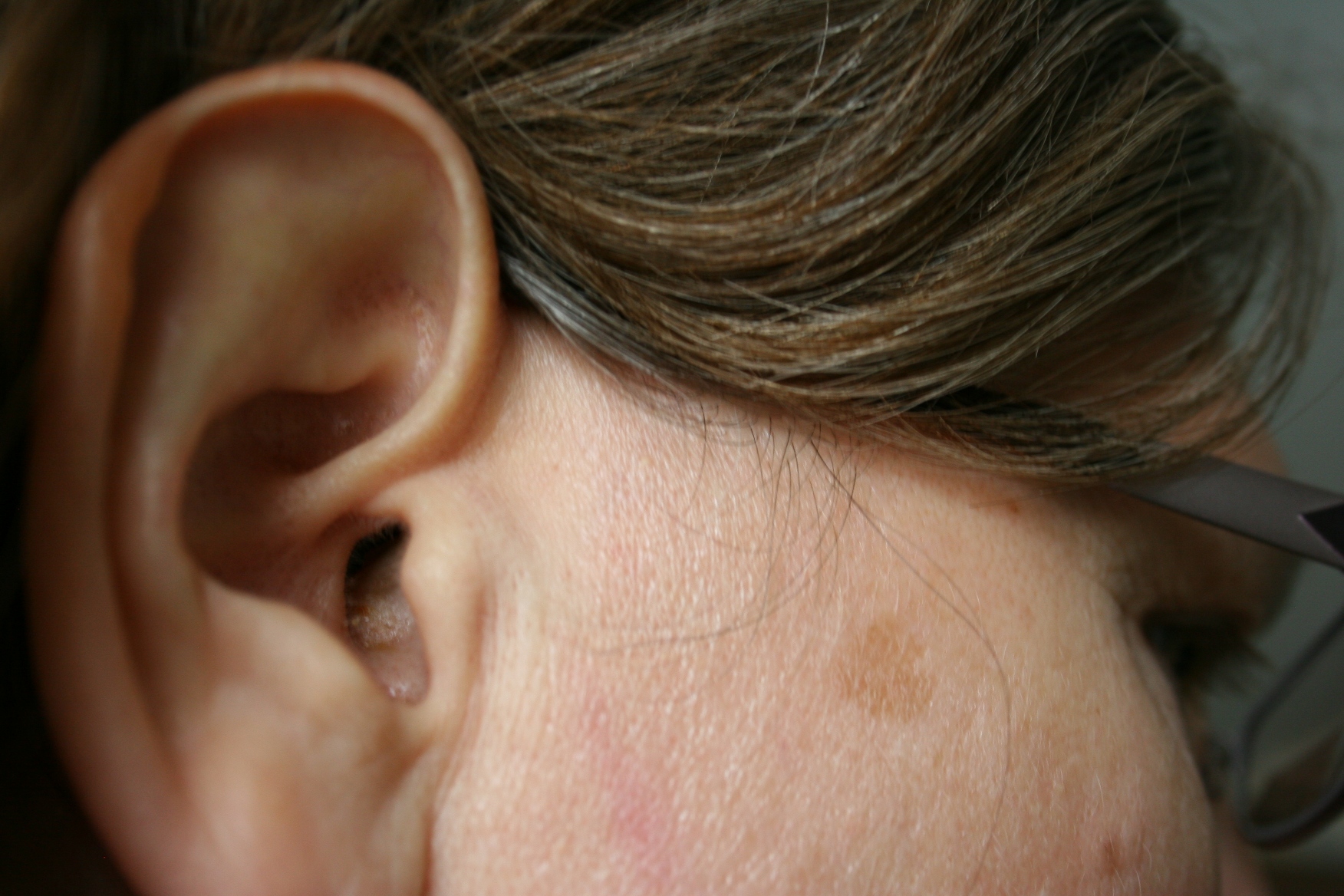
Do you know how difficult it is to photograph one's ear? This is my best shot after many attempts. I could have done without the photo, but images always add to a blog. So there you have it, my right ear that I am hoping, praying, will be healed. Yes, I see the wax. Yes, I know my ear is not petite. Typically it's draped by my hair. But I don't care about lack of prettiness right now. I care only that I get some, or all, of my hearing back.

AND SO I FOUND MYSELF waiting in line at the pharmacy, next to the visually-impaired couple. As I watched them, I asked myself, “Would you rather be blind or deaf?” I don’t mean to offend any of you readers, but that is, honestly, what I was thinking.

The debate swirled briefly through my brain. As the store clerk placed the visually-impaired woman’s hand on a bottle and told her it was fish oil, I chose deafness. I determined that I would rather deal with the loss of hearing in one ear than lose my ability to see.

And so the next 10 days will reveal whether a portion of my hearing can be salvaged. Ten days. I am trying to steel myself for the negative physical and emotional side effects I am certain to experience from the high steroid dosage. I’ve been on the drug before, for whooping cough. I hate it.

I am trying to prepare myself, too, for the very real possibility that this course of treatment will not work—because I waited too long. I did call my clinic within an hour of the symptom onset, but was advised only to come in if my condition worsened. Within several hours, I was feeling better, although my hearing had not improved.

I thought I might be suffering a Meniere’s disease attack related to a previous ear trauma as my symptoms matched those of Meniere’s.

I am writing this post because I need your prayers for healing and strength through my treatment.

I am also writing to warn you that, should you ever experience sudden hearing loss, see a doctor immediately. Don’t wait. Ever. I waited four days to schedule a clinic appointment, another day to get in and then another day to have the MRI and get the diagnosis.

My ear doctor saw several patients just this week with the same sudden sensory hearing loss, leading him to believe a viral infection of some type is going around the Faribault community.

Since developing this issue, I’ve had several friends tell me of acquaintances who’ve suffered the same snap-of-the-finger hearing loss. One regained her hearing; two did not.

The cause of my sudden sensory hearing loss has not been determined. I’m following up with another specialist in several weeks, the same expert I’ve seen since that traumatic ear injury at a Wisconsin water park several years ago.

In the meantime, I am adjusting to the ringing and static (like a bad transistor radio) and partial deafness that are now a part of my world.

I am learning to position myself with my “good” left ear to anyone who is speaking to me.

And I am holding on to hope.

FOLLOW-UP: Today I started my fourth day of steroid treatment. Thus far I’ve noticed no improvement in my hearing. But I am still hopeful that some of my hearing may be restored. Many family and friends are praying for me and for that I am grateful.

I am feeling the effects of taking the Prednisone. Yesterday afternoon and into the evening, I was unsettled and sat twirling my hair, which is not a regular habit of mine. I had trouble falling, and staying, asleep.

Yet, through all of this, I remain cognizant that this diagnosis could have been something far worse than a hearing loss. In the realm of possible medical issues, this is minor.

If, by telling my story, I can prevent one person, even one, from delaying treatment for a sudden sensory hearing loss, then something good will have come from this.

Seven more days to go…

© Copyright 2011 Audrey Kletscher Helbling


Sick of high healthcare costs November 27, 2010

Filed under: Uncategorized — Audrey Kletscher Helbling @ 12:56 PM
Tags: , , , ,

MY HEALTH INSURANCE premium arrived in the mail yesterday. Happy holidays!

Not.

It’s due shortly before Christmas.

Bah! Humbug!

In mid-June, the premium increased from $801 to $813 for three months of coverage. Do the math. That’s $271 per month or $3,252 a year.

I am not happy.

Here’s the deal. I foolishly thought healthcare reform would mean lower premiums and lower costs for medical visits, in other words, more affordable healthcare for families like mine. We are not wealthy. We live in a modest home in a modest neighborhood. We have no debt. We spend carefully and wisely.

But when it comes to health insurance, I believe the word “affordable” cannot fit, cannot even be squeezed, into the same sentence.

I pay $271 a month for coverage with a $3,000 deductible. In other words, my coverage is basically major medical.

I’ve evaluated getting onto my husband’s plan at work. That would cost me even more than the individual policy I have as a self-employed writer. His employer pays only a small portion of his health insurance premium and my spouse, too, has a high deductible.

I haven’t crunched the numbers lately, but my family (which also includes one still-at-home 16-year-old) is forking out a lot of money every month for health insurance.

Yet, we rarely go to the doctor because of the high deductibles and the high cost of healthcare. Cost is a great deterrent for skipping routine exams. I’m just being honest here.

Another problem I face is past medical history. I had total hip replacement surgery in 2008. I will need a new, and very costly, hip in 15 – 20 years. Insurance companies have these policies about pre-existing conditions.  So, even if I was to look for different insurance, the hip would likely be excluded from coverage.

I have no answers to any of this. I just know that I am sick and tired of the high cost of health insurance and of healthcare.

WHAT ARE YOUR THOUGHTS on the topic and do you have any answers? What are you spending every month on health insurance premiums?

© Copyright 2010 Audrey Kletscher Helbling


Minnesota Teen Challenge shares sobering, inspirational stories November 8, 2010

WHEN YOU PUT faces and stories to statistics, substance abuse in Minnesota becomes real.

On Sunday I heard the stories, saw the faces and spoke to individuals who are currently working toward recovery through Minnesota Teen Challenge, a Christian-based drug and alcohol rehabilitation program. The group brought its inspirational message to Trinity Lutheran Church in Faribault with songs and personal stories.

JEFF: He didn’t tell his story, but he sang a sweet, pure, heartfelt rendition of Amazing Grace. “The chains are broken,” Jeff sang with the Minnesota Teen Challenge Choir as his back-up.

MICAH: Once a church-attending youth with intentions of possibly becoming a pastor, Micah spoke of how he became caught up in alcohol after his church youth group folded and he no longer had anywhere to go, nothing to do. He stresses the importance of maintaining church youth groups.

Through his years of abuse, his girlfriend (now his fiancée) has stuck by him, turning him in when she had to with a tough love that today has led him into recovery. He plans now to enter the ministry.

Later his fiancée would tell me about the irony of their situation, how a vehicle in which they were riding was struck head-on by a drunk driver; how, when she lay in the hospital, Micah was back home drinking.

DAR: She shakes my hand before the church service begins and immediately reveals that she was a teacher with a double life as a cocaine addict. Later, she will stand before the congregation and perform a solo with the Teen Challenge Choir. “Love so amazing…the rescue for sinners…our hope is in you.”

JESSICA: She’s 29, a former heroin addict from St. Cloud with a felony record. She tells me her story as we sit side-by-side at the potluck dinner following the church service.

She’s made the news, for all the wrong reasons. She’s had a gun held to her head. For her, the possibility of death was her rock bottom. She never expected to live past 30.

Today Jessica’s doing well. She worries, though, about several roommates who lasted only one night at Teen Challenge. (Program enrollees are free to leave at any time.) She wonders why they couldn’t see the possibilities of successful recovery in her. She wishes she could have told them to “buck up,” that God has not given up on them. He never gave up on her.

Emotion edges her voice as she shares how her application for entry into the Teen Challenge program was prayed over by staff.

When a church member brings Jessica a piece of German chocolate cake, she becomes emotional again, this time over the simple act of kindness from a stranger.

DEVON: “You name it, I did it,” says Devon, 28, who grew up as a church-attending Catholic, the daughter of an abusive and alcoholic father. She was molested (not by her father), sold meth, spent time in jail, lost custody of her kids, lost everything, she says. One day she looked at herself in the mirror and promised God that she would change her life.

“I would probably be homeless or dead in the gutter if not for Teen Challenge,” Devon tells the congregation.

Later, as she sits across the dinner table from me raving about the Rice Krispie bars, Devon reveals more—how only her Catholic upbringing kept her from killing herself because she had been taught that suicide is a damning, unforgivable sin.

Devon tells me how she once asked for a sign from God, for money, after her home had been broken into while she was in jail. Her dealer, who was high, unknowingly left $1,000 in her apartment. She took that as a sign from God (How many times have you had $1,000 dropped in your lap?” she asks), using some of the money to repay her mom, pay a landlord, buy clothes and then buy more drugs.

Today she’s determined to stick with her recovery program, for the sake of her kids and because, if she left now, she would be homeless, a place she does not want to be.

She speaks with a fierce voice of determination.

JIM: He sings a solo: “You make all things new..I will follow you forward.”

JAMES: He’s returned to his hometown—Faribault—“a good town, but it’s had its down sides and its dark sides.” He’s stolen from people here, maybe even some sitting in the pews, he says. He is nervous about returning to the town where his criminal acts placed his name on the front page of the local newspaper. He shares a dream he had about a banner hung in Faribault’s Central Park that reads “From robbery to restoration.”

JERI: She’s 52, a Lutheran from Duluth, an alcohol abuser with her ninth attempt at rehab. “I never thought it would happen to me…I never thought that a cocktail would turn into a three-day binge…I never thought…”

She speaks with eloquence fitting her former profession as a counselor and an educator. It does not fit the image of a woman who confesses that she tried to kill herself in July, who ended up in a psych ward, whose addiction ended her career and her marriage.

“My heart was so far away from God,” Jeri says, quoting Isaiah 29:13.

She visited with her daughter on Saturday and heard the words, “Mom, you’ve changed.”

OF ALL THE INDIVIDUALS I watch singing in the choir, which is a mandatory part of the Teen Challenge Program, Jeri seems the most animated, swaying, lifting her hands in praise, her face expressing her inward joy.

I wish I could talk to all of these recovering addicts, hear their stories and write about them here. I wonder about the young woman who is fiddling with her hair, twirling her curls with her fingertips while she sings. Her fingernails are painted with bright red nail polish and she looks like the girl next door. I wonder about the tall young man in the back row who barely moves his lips and has all-American boy good looks. I wonder about the men with tattoos covering their arms.

Their leader, the administrator whose name I didn’t catch, tells us that we can help these recovering addicts through a volunteer mentoring program. “Sit and listen over a cup of coffee, go to a movie or go bowling,” he says.

They have all come to Minnesota Teen Challenge for sobriety, he says. They are here to overcome addiction, which he defines as “nothing more than incredible selfishness.”

“When they come in, they get God.”

IF YOU HAVE NEVER heard the Minnesota Teen Challenge Choir, check the MTC website for upcoming concerts. You will be forever changed by the inspirational messages these recovering addicts bring through word and song as they speak openly about their past and their addictions and about how God has worked change in their lives.

Their stories are powerful, sobering, inspiring, heartfelt, uplifting and hopeful.

© Copyright 2010 Audrey Kletscher Helbling