Minnesota Prairie Roots

Writing and photography by Audrey Kletscher Helbling

Why I chose the open market over MNSure January 2, 2014

Filed under: Uncategorized — Audrey Kletscher Helbling @ 6:00 AM
Tags: , , , , , ,

ONE OF MY GREATEST STRESSORS in 2013 involved health insurance. After hours of research, many phone calls, an in-person meeting with MNSure assisters, ongoing issues with the state’s health insurance exchange website, many attempts to complete an application, and some muttered choice words, tears and extreme frustration, I finally have a new insurance plan with a lower deductible, better benefits and a lower premium than my old plan.

MNSure website edited screen shot

An edited screen shot of the mnsure.org home page.

But it’s through the open market, not Minnesota’s online health insurance exchange.

That’s despite qualifying for $18 in monthly assistance, or so I’ve been notified online and in a letter I received on December 31, 2013, from MNSure.

No, thank you. I do not want the $216 annual subsidy to help pay my health insurance premium. It is not worth the uncertainty and stress and dealing with a government program. If the assistance was higher, I likely would accept the monies. But then again, maybe not.

So for now I’ve opted to purchase health insurance off the exchange for $441/month.

I’ve experienced too much uncertainty and confusion through the entire MNSure process from unclear application questions to frustrated assisters to a MNSure rep who phoned to tell me I had to resubmit my app because, “due to technical errors, calculations were incorrect.” Initially I was told I didn’t qualify for any government aid.

How could I believe anything I was told or read or mailed? My trust and confidence in the process have been nearly non-existent.

Sunday morning, after church, my husband and I sat down at the dining room table and examined off-exchange policies from two companies. I needed to choose a new plan because I could no longer afford my grandfathered-in $3,000 deductible individual policy. The premium on that plan increased $108, to $562/month, on January 1, 2014, with no change in benefits, including no free preventative care.

To be honest, my insurer ticked me off with the $108/month premium increase, sending me a bill for $1,627 (which I paid) and then billing me for an additional $300 shortly thereafter to continue my coverage until April 1. I won’t get into details, but suffice to say I was not happy. The additional $300 payment issue was finally resolved to my satisfaction, but still left me angry that I even had to deal with this situation in the first place.

I am now with a new company, and therein lies the single most positive change for me through the Affordable Care Act. Prior to this, due to a pre-existing condition, I was stuck with my existing health plan. Now I cannot be denied coverage because of that existing health issue and I have “free” preventative care.

If only health insurance premiums would decrease, I’d be even more pleased. My family forks out $926/month for health insurance premiums for three of us. And, in my opinion, that isn’t exactly affordable.

© Copyright 2014 Audrey Kletscher Helbling


Why NDSU research into growing human bones interests me June 28, 2013

File photo from June of the main entrance to North Dakota State University in Fargo.

File photo from June 2012 shows the main entrance to North Dakota State University in Fargo.

FOR THE MOST PART, I ignore the mass emails sent by whomever, including North Dakota State University, where my son attended his first year of college. He’s transferring to Tufts University in Medford, MA., outside of Boston, this fall.

But this head in a recent NDSU Alumni (I’m not an NDSU alumni) mailing caught my attention:

Researchers Coax Clays to Make Human Bone: Weak bones, broken bones, damaged bones, arthritic bones. Researchers at North Dakota State University, Fargo, are making strides in tissue engineering, designing scaffolds that may lead to ways to regenerate bone.

Arthritic bone.

Up until some seven years ago, I’d never considered arthritic bone, not even thought about arthritis or its debilitating impact on the body and spirit and on mobility.

But then, at age 48 ½, I developed back and hip pain which, initially diagnosed as a pinched sciatic nerve, was eventually correctly diagnosed as arthritis in my right hip. For 2 ½ years I lived with the constant pain until near immobility and an inability to tolerate the pain led me to undergo total right hip replacement five years ago. Given my age, 51, I wanted to put off the surgery as long as possible.

I likely will outlive my hip, which has a life expectancy of 15 – 20 years. That means hip surgery. Again. And that scares the heck out of me because I will be much older, the recovery more challenging.

When I read news about research like that being conducted at NDSU, I am encouraged—hopeful for a better alternative to the current implant system. There have been too many recalls on hip implants. Thus far, mine has not been among them. But pity those people who need to have their defective implants removed and replaced.

To the NDSU researchers who created the system of “3-D mesh scaffold composed of degradable materials compatible to human tissue” in which “cells generate bone and the scaffold deteriorates,” thank you for working on this project.

Do you think you could perfect the process and have it on the market in 10 years?

FYI: Learn more about this NDSU research project by clicking here.

© Copyright 2013 Audrey Kletscher Helbling


The art of healing at a Minnesota hospital January 28, 2013

TWO YEARS AGO this month, my then 92-year-old artist friend, Rhody Yule, opened his first-ever gallery exhibit at the Paradise Center for the Arts in Faribault.

Six months later, he died.

But Rhody, and his art, live on, this time in a Paradise Center Healing Arts Program Exhibit at District One Hospital in Faribault. The arts center and hospital are partnering on the program.

Thursday evening I attended a reception for that show which features 70 pieces of art created by eight outstanding artists, each of them definitively different: Faribault artists Jody Hanscom, Jorge Ponticas, Pearl Tait and Rhody Yule; Marcus Moller of Morristown; Faribault native Tom Fakler, now living in Basel, Switzerland; Jane Strauss of Minneapolis; and Cynthia Ali of St. Paul.

As Healing Arts Coordinator Elizabeth Jacobs led my husband and me through the maze of hallways and centers that comprise the hospital complex, I thought how Rhody would have felt honored to be part of an exhibit designed to comfort patients and make their hospital experiences more pleasant.

The art selected by a committee of hospital staff fits the program’s criteria as “healing art,” meaning it must be calming, happy and a positive piece of work, Jacobs says.

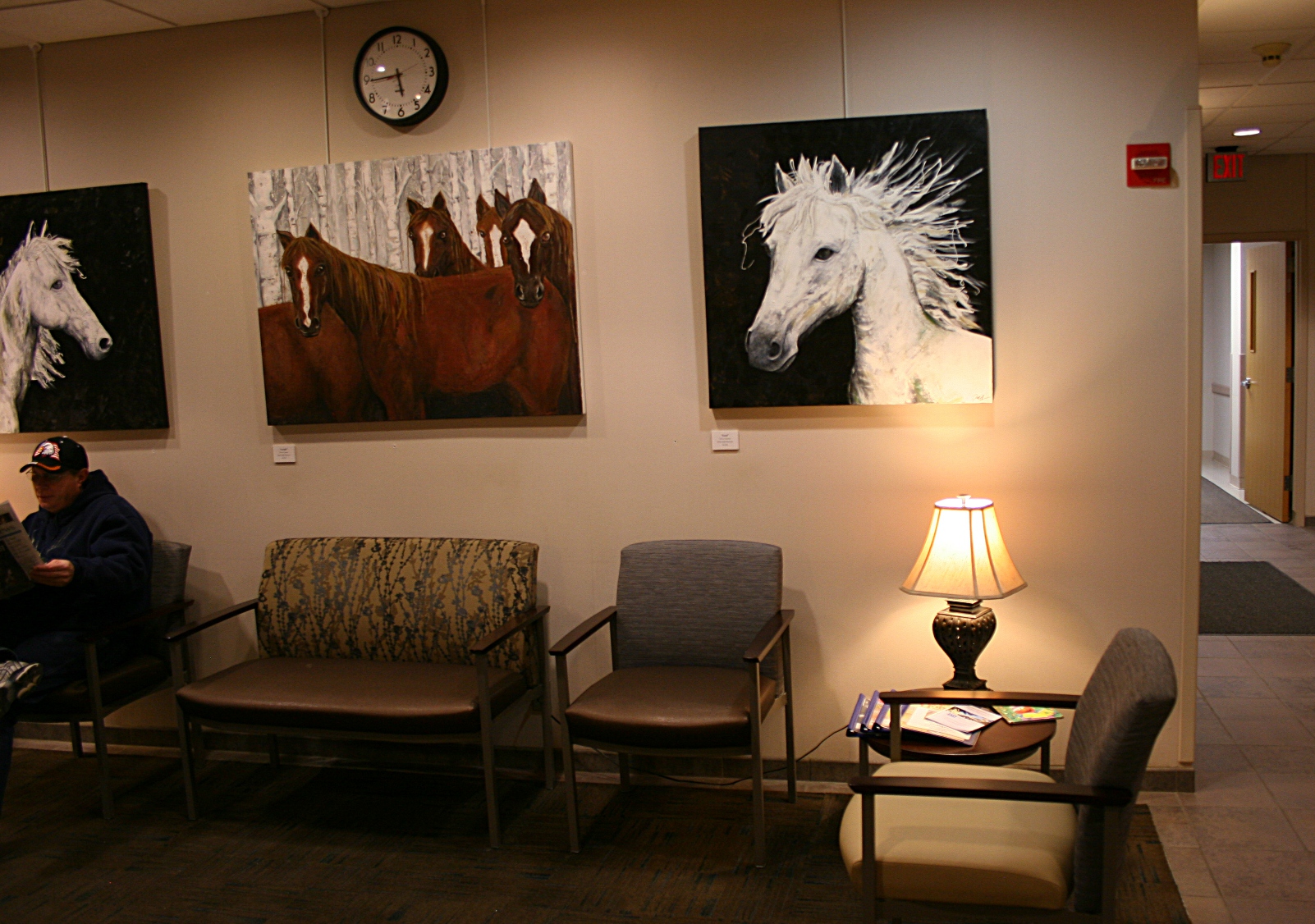
Three of Jody Hanscom's horse portraits.

Three of Jody Hanscom’s horse portraits.

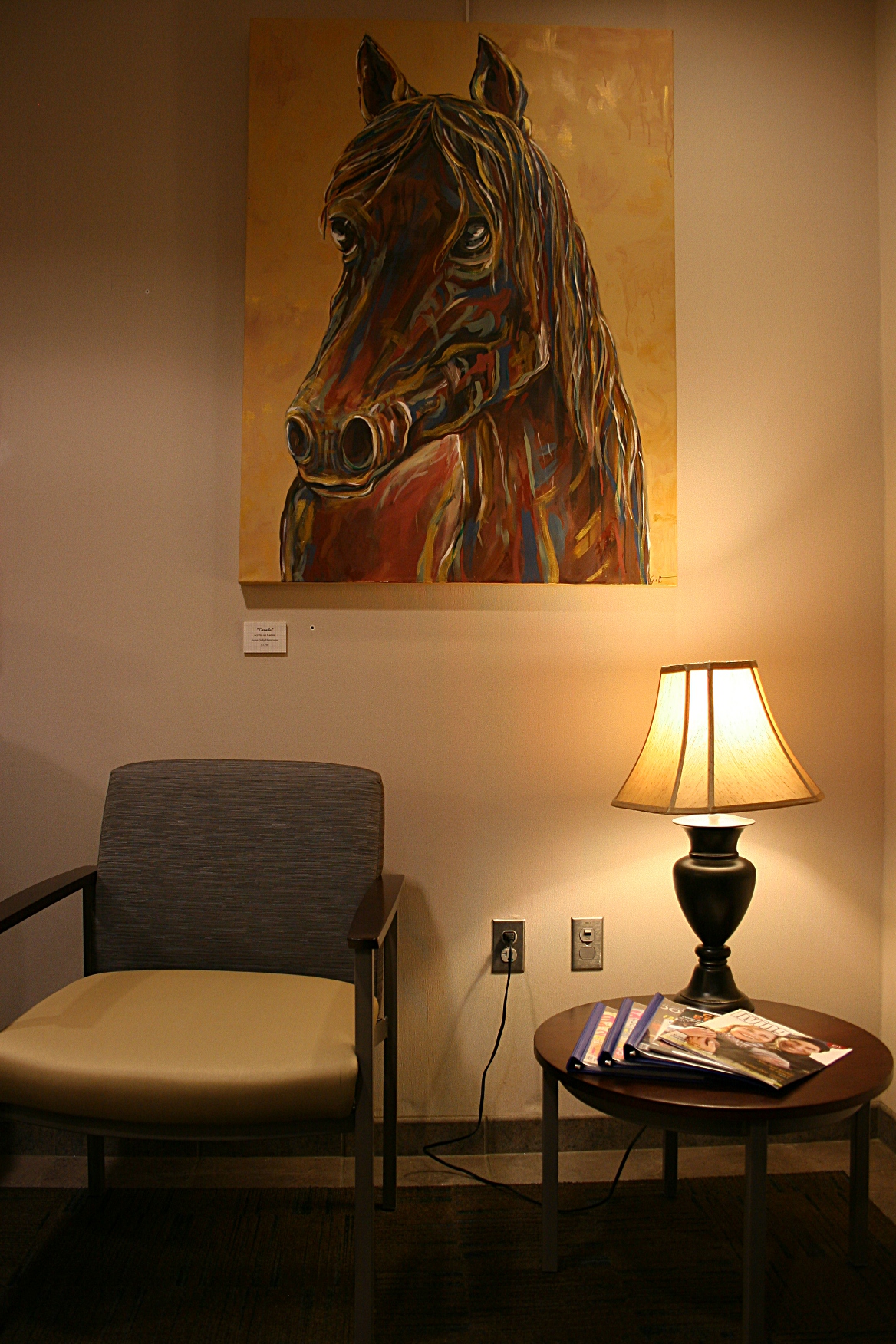
And you’ll see that, almost experience that positivity, from the minute you walk in the front doors of the hospital to view Jody Hanscom’s sizable horse portraits in the lobby waiting areas. Jody’s oil paintings capture both the gentleness and free spirit of horses, a combination that simultaneously calms and uplifts.

Tucked into a corner by the elevators, the fourth of Hanscom's horse oil paintings.

Tucked into a corner by the elevators, the fourth of Hanscom’s horses.

Just down the hallway, five oil paintings by Jorge Ponticas brighten the walls with vivid scenes from his native Chile and elsewhere. His art evokes happy thoughts. What can I say? I can’t resist the sweet face of a llama.

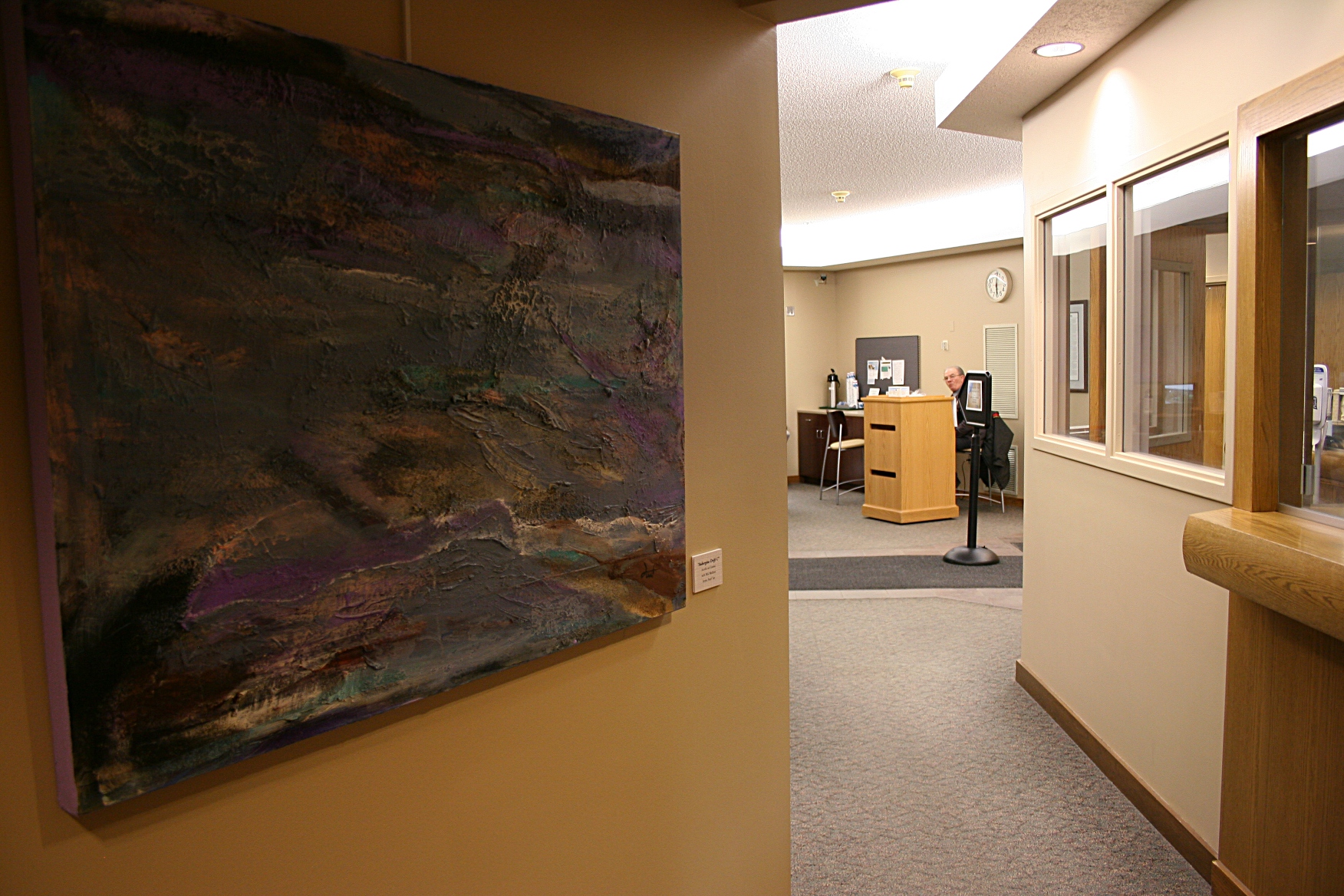
Pearl Tait's "Aubergine Drift I."

Pearl Tait’s “Aubergine Drift I.”

Moving along to the emergency room lobby, I find Pearl Tait’s moody mixed medium art the ideal choice for a setting often filled with emotion and uncertainty. Her work, which features textures like sand and tape incorporated into a painting, reflects, in my opinion, the intense layers of feelings that come with any visit to the ER.

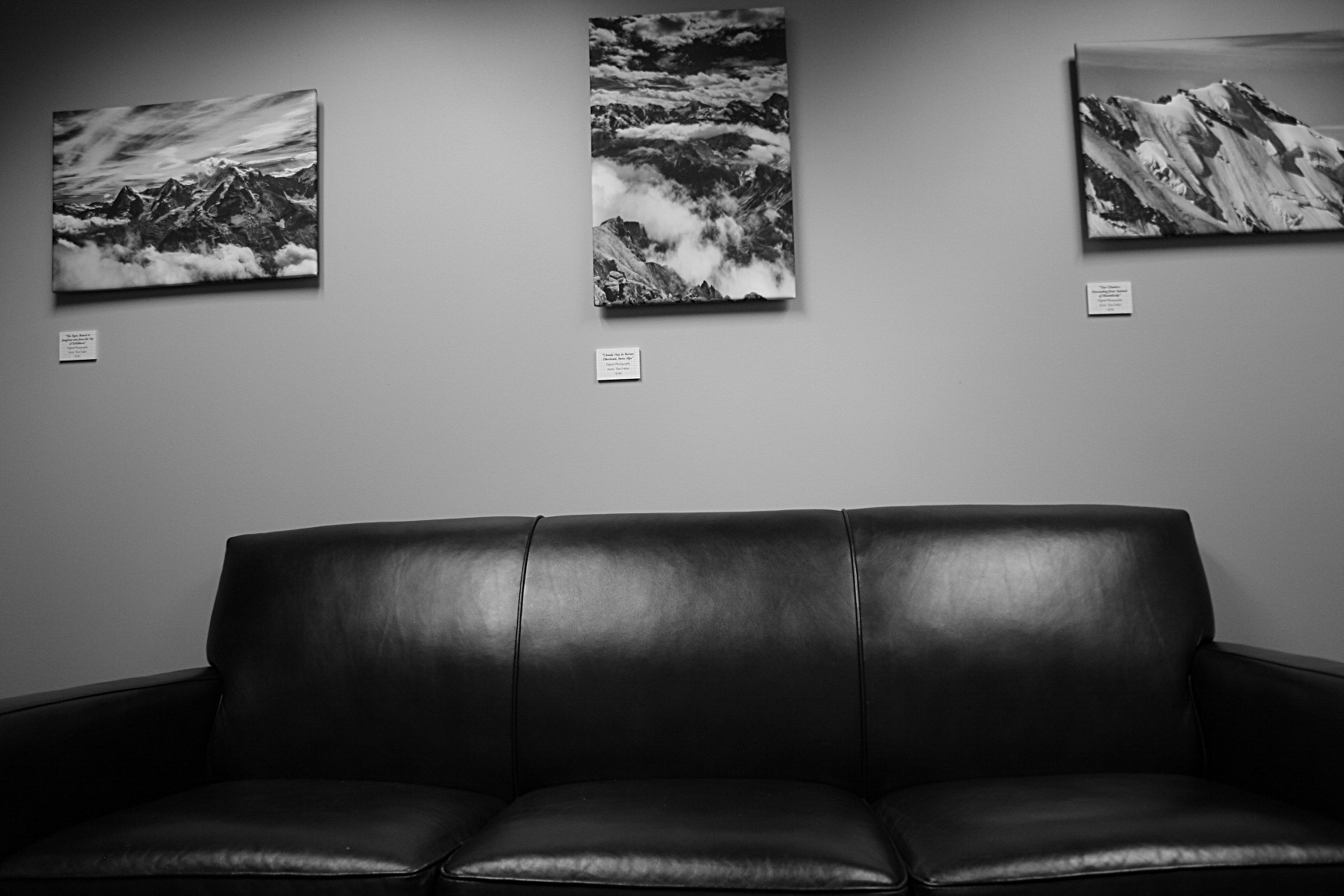
A photo in a cozy private waiting room fronts Tom Fakler's Swiss Alps photos.

A sofa in a cozy private waiting room fronts Tom Fakler’s trio of Swiss Alps photos.

Around the corner inside a cozy ER room where families are taken to hear bad news (so says Jacobs), the mood totally changes with the soothing photography of Tom Fakler. His black-and-white canvas prints of the Swiss Alps offer a natural world escape during a particularly difficult time for patients’ families.

Likewise, the photography of Jane Strauss in the surgery center reflects that same sort of escapism, especially in panoramic landscape scenes. Jacobs notes that Strauss is autistic, meaning her approach to photography focuses on qualities like texture and detail, aspects others might not consider in photographing a scene.

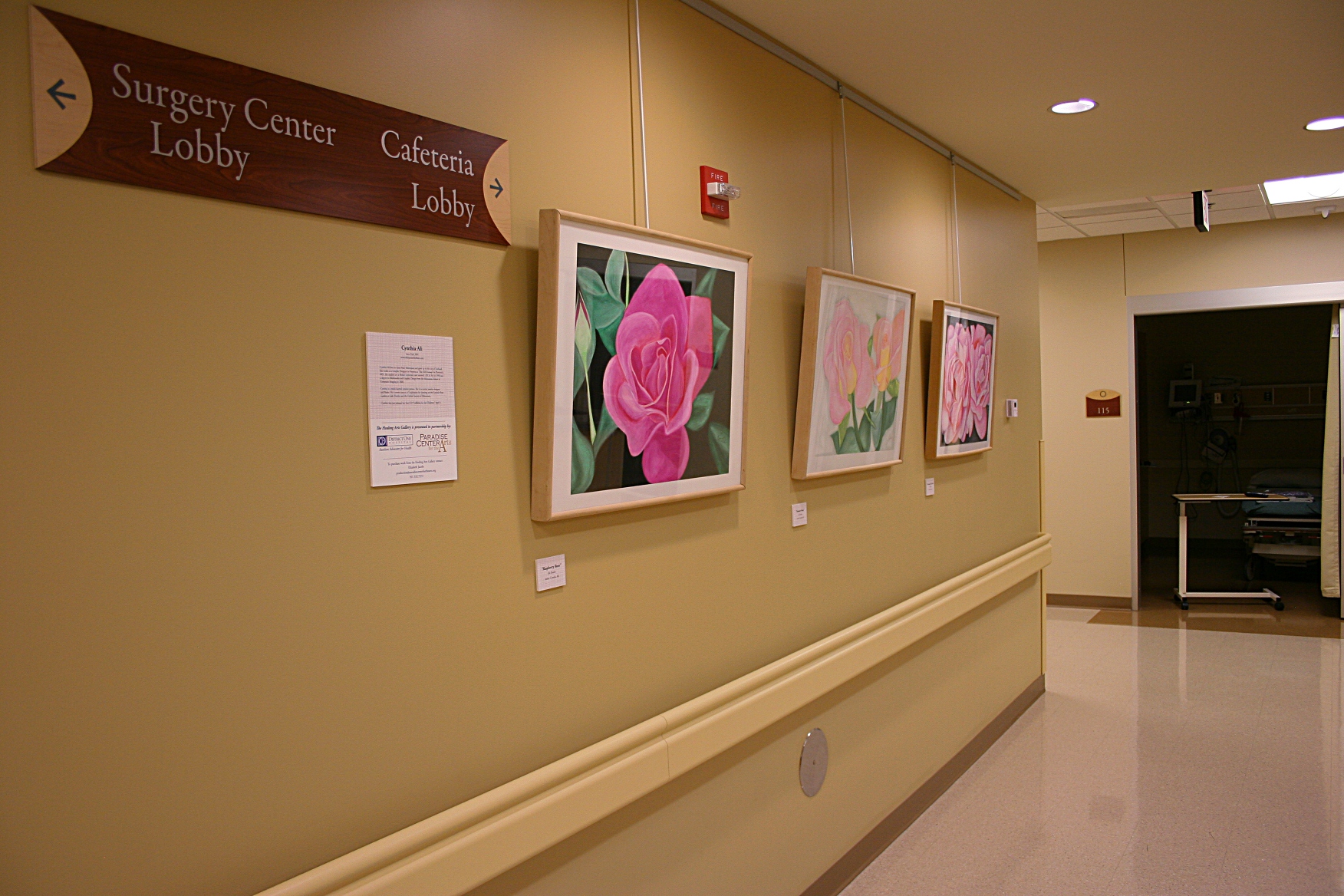
Faribault native Cynthia Ali's floral pastels are not for sale. Ali, of St. Paul, is primarily a jewelry artist.

Faribault native Cynthia Ali’s floral pastels are not for sale. Ali, of St. Paul, is primarily a jewelry artist.

Also in the surgery center, Cynthia Ali infuses a soft natural beauty with her floral pastels. You can almost smell the heady perfume of her beautiful roses.

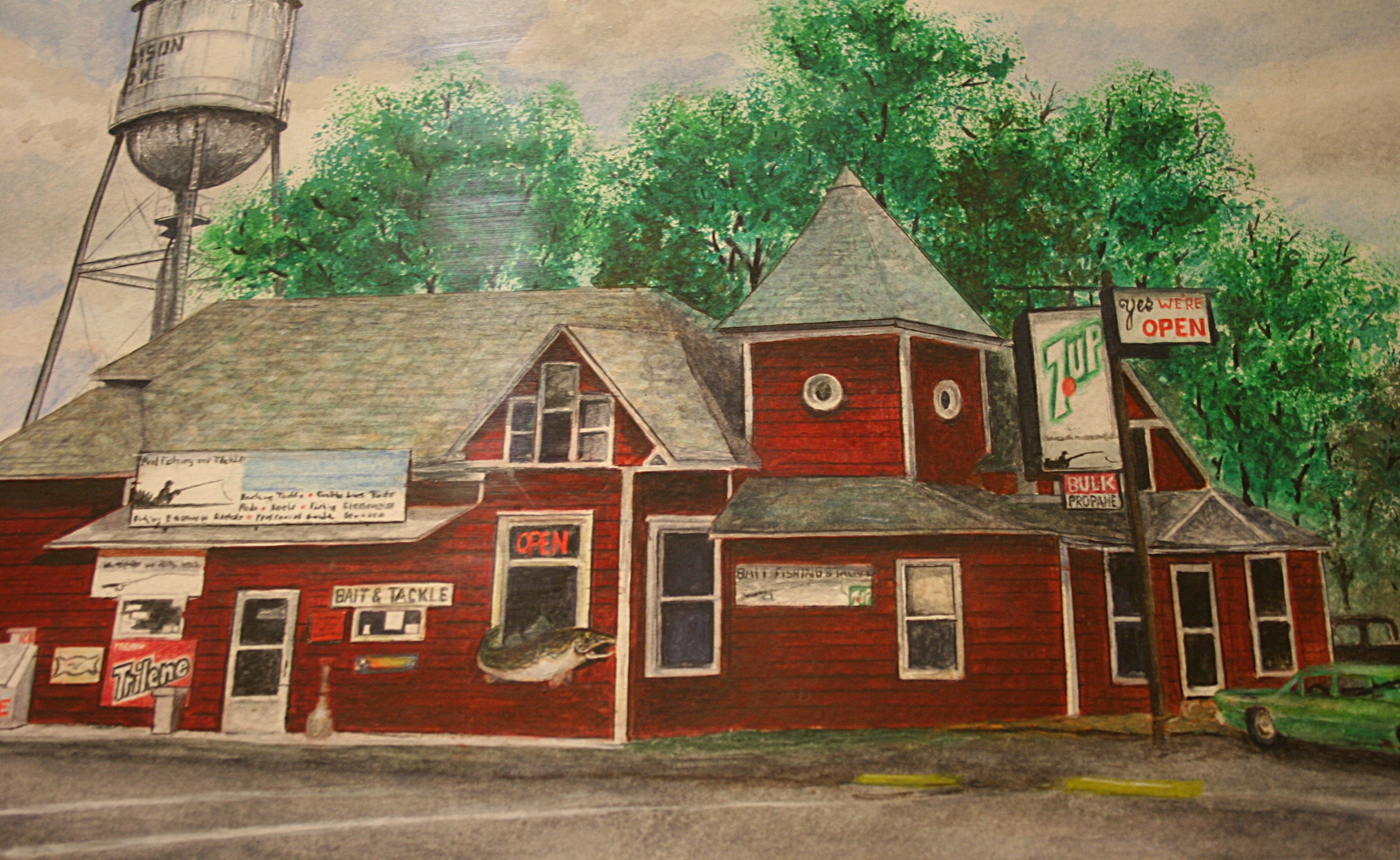
Marcus Moller's "Madison Lake Bait Shop" in watercolor.

Marcus Moller’s “Madison Lake Bait Shop” in watercolor. Moller’s art (mostly pastels) hangs in the surgery center waiting area, a place frequented by children. Thus his art is hung quite high, which made photographing it difficult.

Marcus Moller works in pastels, too, and watercolors, covering a variety of subjects from autumn landscapes to a bold rooster to my favorite, “Madison Lake Bait Shop.” Those of you who’ve traveled Minnesota Highway 60 will recognize the kitschy red building backed by the Madison Lake water tower. I cannot even begin to count how many times I’ve considered photographing that building. Moller’s bait shop painting is nudging me to actually stop and take that photo.

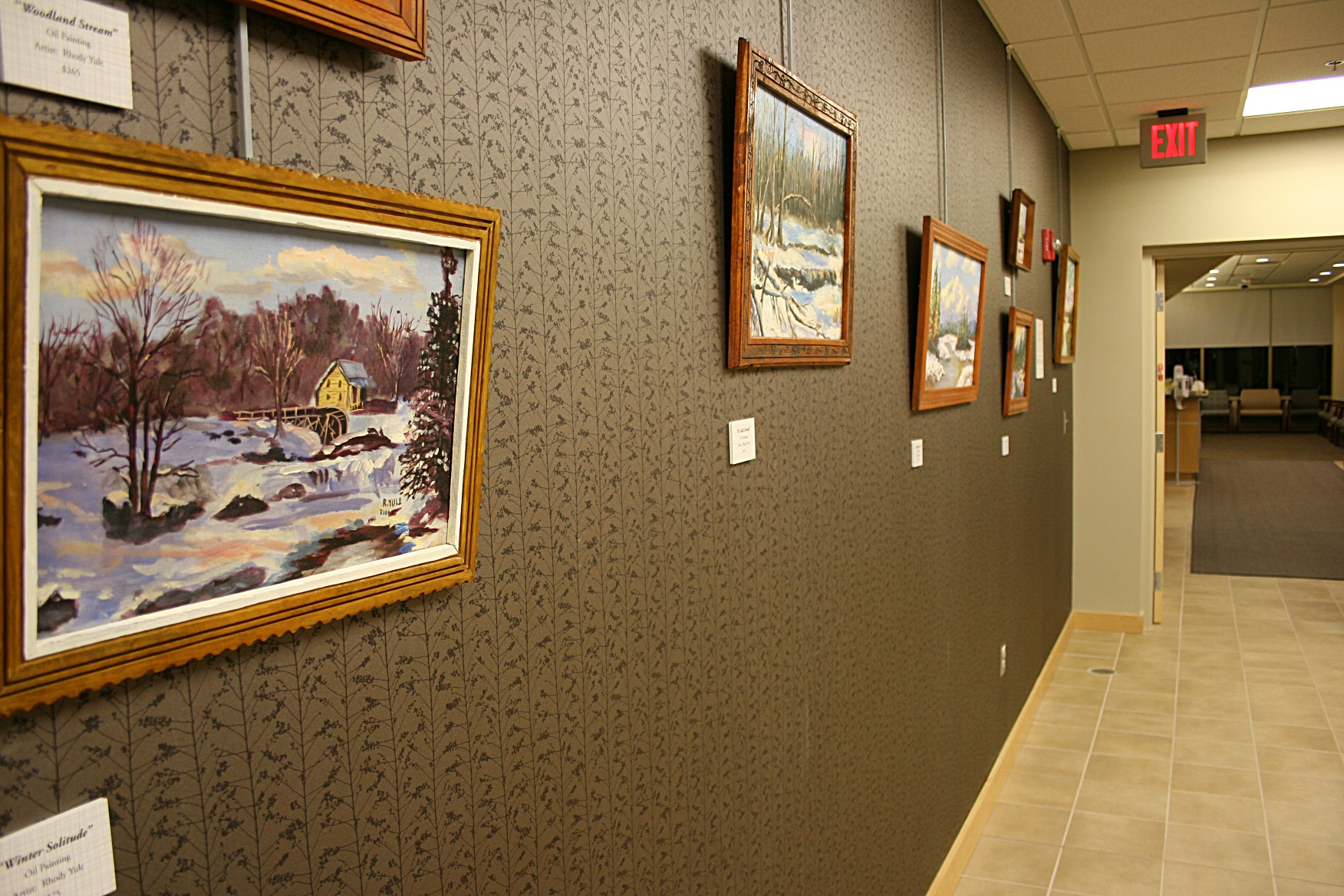
Twenty-five of Rhody Yule's oils grace the hall and patient rooms in the cancer center.

Twenty-five of Rhody Yule’s oils grace the hall and patient rooms in the cancer center.

Finally, my open house tour ended in a hallway outside the District One Cancer Center with the oil paintings of my friend, Rhody Yule. I’d seen nearly every one of Rhody’s hundreds of paintings when I worked with his family and friends on the 2011 Paradise exhibit. But, still, it was as if I was viewing his pieces for the first time, appreciating the landscapes, many of them winter scenes in this show, and the other art he created through decades of painting. Rhody was a kind, gentle man with a heart full of goodness, and I remembered that, too.

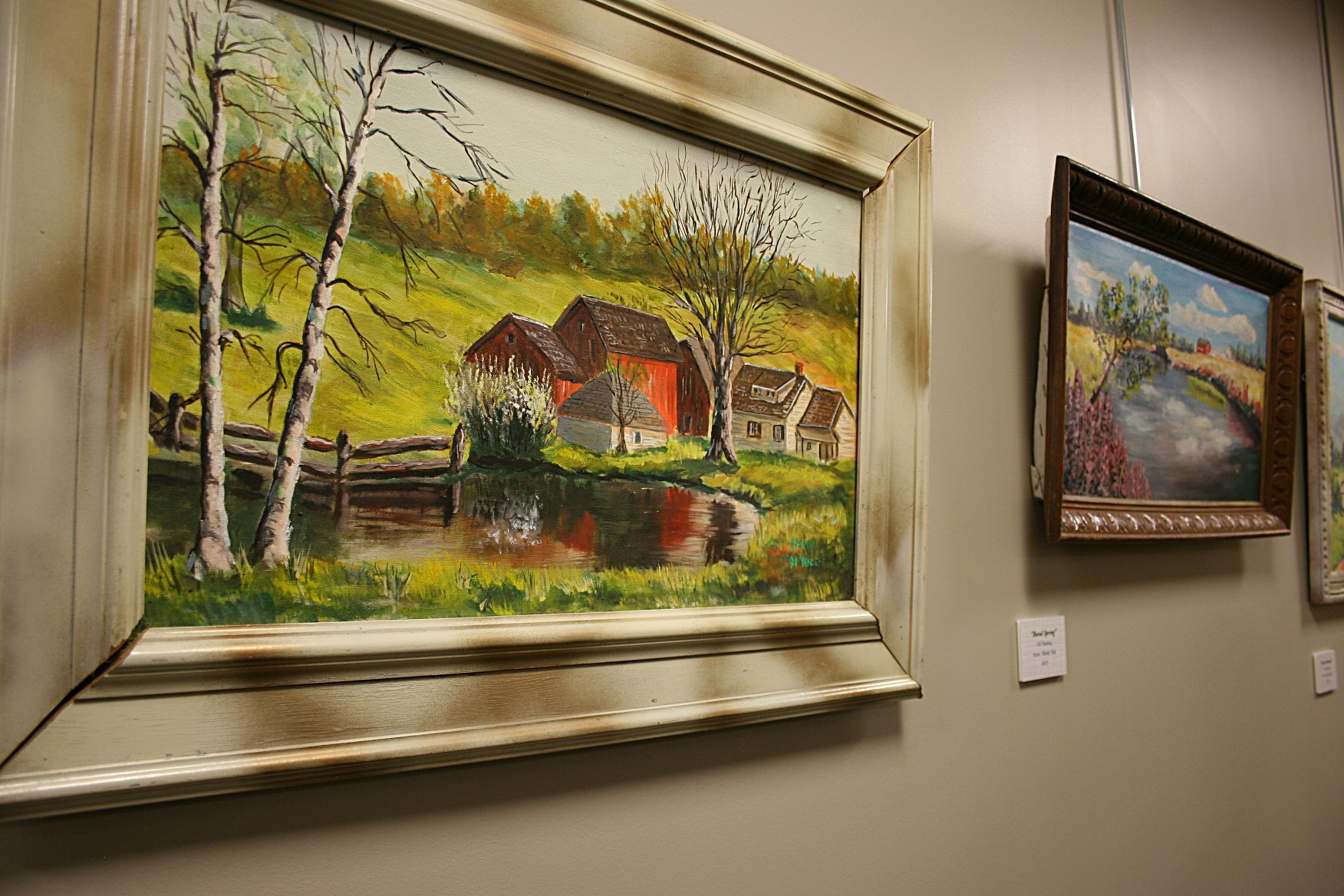
Examples of Rhody Yules art close-up.

Examples of Rhody Yule’s art close-up.

Most of the artwork in the Healing Arts Exhibit, but not all, is available for sale. (Artwork not featured in photos here is because I did not have permission to photograph it.)  A portion of any proceeds from the sale of Yule’s work will go to the local hospice, per the family’s request.

If you wish to tour the winter installment of the Healing Arts Exhibit, check in at the main desk, 200 State Avenue, during hospital business hours. All areas of the exhibit may not be accessible for viewing at all times. The current show runs through February 28.

If you are an artist interested in being featured in a Healing Arts Exhibit, contact Jacobs at the Paradise Center for the Arts. You will find details and contact information by clicking here.

The Healing Arts program is sponsored by the District One Hospital Auxiliary, which initially proposed the concept.

To view information on the artists with an online presence, click on their highlighted names.

WHAT ARE YOUR THOUGHTS on art as a “healing” tool? Have you seen similar exhibits? Please share.

© Copyright 2013 Audrey Kletscher Helbling


I’d rather not be in Vegas April 6, 2011

I've lost 70 percent of the hearing in my right ear due to a sudden sensory hearing loss.

I AM NOT A RISK TAKER.

I’ve walked through a Minnesota casino twice and failed to pull a single lever on a slot machine or drop a single coin.

I prefer to play it safe, to not risk losing for the slim possibility of winning. It is the reason I don’t buy lottery tickets. I feel like I’m throwing away my money.

That is partially why a decision I am currently facing is so incredibly difficult.

Do I have surgery or not?

Will I be among the 25 in 100 who benefit from a sac round window graft? Even the name of the surgery is daunting. I don’t know enough right now about the outpatient ear surgery to decide.

But I have the statistics. For only one in four patients, the surgery successfully restores some hearing. But the percentage of hearing regained is perhaps only 20 percent. The slim possibility exists—about two percent—that the surgery could cause me to lose all of my hearing in my right ear. That really doesn’t matter given I’m basically deaf in my right ear anyway due to a sudden sensory hearing loss that occurred a month ago.

I currently have only 30 percent hearing in that ear. I hear only “noise,” nothing as distinguishable as a word. I also suffer from tinnitus, ringing in my right ear.

On Tuesday when I met with a renowned ear specialist in Minneapolis, I was presented with the surgery option. I was not expecting this, was not prepared with a list of questions. My immediate thought was this: “I don’t want to have more surgery.”

Already in my life, I’ve had seven surgeries, the first at age four to correct my vision. Since then, I’ve had oral surgery to remove my wisdom teeth, three Caesarean sections, inguinal hernia surgery and my last, total right hip joint replacement, not quite three years ago.

I am not anxious to rush into another surgery.

But time is of the essence. Apparently the sooner the surgery is done after the hearing loss, the better. I don’t understand why and I didn’t think to ask.

My doctor offered no recommendation on the surgery. I asked. He says he doesn’t recommend, only presents the options and information and allows the patient to decide.

I am at the point now of researching, pondering, praying, considering a second opinion, losing sleep over this decision.

What should I do?

Should I risk throwing away $3,000—my health insurance deductible? Should I risk not having the surgery if it could restore even a small percentage of my hearing? (A hearing aid will not help with the type of hearing loss I have.) Should I risk the risks that are always there whenever you have surgery?

I’m not a gambler. But right now I feel like I’m in Vegas.

© Copyright 2011 Audrey Kletscher Helbling


I can’t hear you March 31, 2011

Filed under: Uncategorized — Audrey Kletscher Helbling @ 8:01 AM
Tags: , , , , , , ,

COULD SOMEONE PLEASE answer the phone, turn off the radio and fix the potholes?

That isn’t going to happen. Not for me now, anytime soon or perhaps ever.

Welcome to my new world of ringing telephones, annoying transistor radios and bothersome potholes. I’ll explain after giving you some background.

Three weeks ago I suffered a sudden sensory hearing loss. One minute I could hear mostly fine in my right ear. The next minute it was as if someone had closed the door to my hearing.

At this point, why I suddenly lost 70 percent of the hearing in my right ear remains an unknown. It could be related to an ear trauma three years ago at a Wisconsin waterpark where a waterfall pounded my head. That caused permanent nerve damage, and some hearing loss, to my right inner ear. Or it could be the result of a viral infection, or something else.

Whatever the cause, I now have only 30 percent of my hearing in my right ear.

Thus, the ringing telephone, the transistor and the problem potholes have become issues for me. It’s not like I didn’t try to eliminate all three.

I tried a 10-day mega dose of inflammation-reducing steroids in an attempt to salvage some, if not all, of my hearing. The Prednisone didn’t work, only made me jittery, sleepless and emotional. I noticed no improvement in my hearing. The drug is typically most effective within 48 hours of symptom onset and my treatment started long after that.

I see a specialist next week to recheck my hearing and perhaps get some answers.

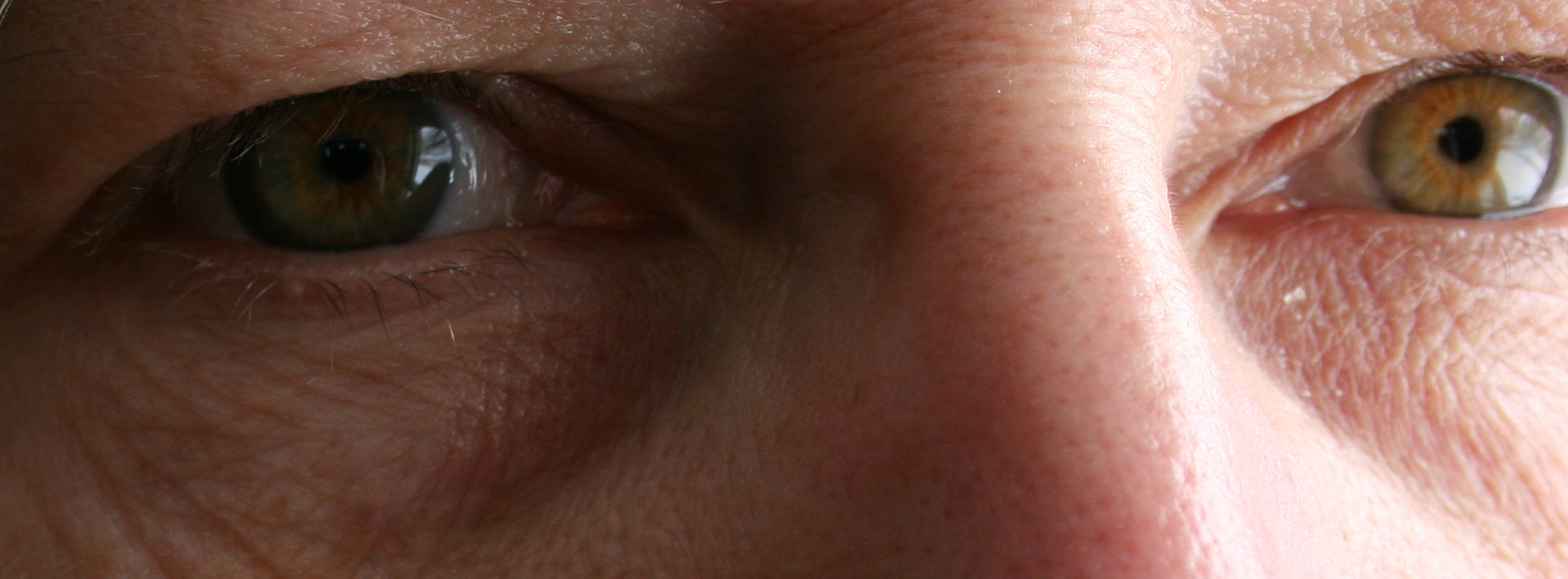
I took this photo of my eyes last week when I wasn't getting much sleep due to the effects of my steroid treatment. I'm still having sleep issues.

For now, I’ve accepted the fact that this is my new world of hearing. Sometimes the tinnitus is so bad that I joke to my husband, “Can you please answer the telephone?” Only problem, the telephone is inside my right ear.

As for the transistor, those of you old enough to remember transistor radios will also recall how they were often plagued by poor reception resulting in lots of static. I’m hearing that type of static now in my right ear more often than I like.

With my “bad” right ear I hear just “noise,” nothing as clear or distinct as an individual word.

Driving over an uneven roadway surface, like a pothole or a crack, hurts my ear with the thump echoing unpleasantly inside my ear.

I’m trying to adjust to this hearing loss. But, honestly, it’s not always easy. I can barely tolerate the organ music in church and singing isn’t too much fun any more.

My right ear, in which I've lost 70 percent of my hearing due to a sudden sensory hearing loss.

But most difficult for me, like anyone with a hearing loss, is the inability to clearly hear conversations. And for me, a blogger and writer, that’s a very big deal. I need to hear, and hear accurately.

All too often I find myself asking others to speak louder. I’m sure they’re thinking, “Why doesn’t she just get a hearing aid?” It’s not that simple. An audiologist and an ear/nose/throat doctor have told me that a hearing aid will not help, not with this type of hearing loss.

Put me in a room full of people, and I struggle to hear.

The other night while waiting in a check-out line at the grocery store, I was frustrated because I couldn’t hear everything the young male checker in the lane next to me was telling the bagger. He was offering her relationship advice, something about his fiancée who’d gone to college on the East Coast and who’d cheated on him. I caught the advice about hanging on to someone you care about and to, basically, not mess it up. It would have been a great blog topic, but I couldn’t hear enough of the conversation to accurately pull together a post. My days of eavesdropping may have ended with this sudden sensory hearing loss.

Despite all of this, I realize my health issues could be much worse and that many people suffer from severe hearing losses.

Like all other challenges I’ve faced in my life, I’ll adjust, adapt, accept and move on.

Yet, if I feel the need to cry, which I have several times already, I’ll cry.

© Copyright 2011 Audrey Kletscher Helbling


Suddenly going nearly deaf in one ear March 21, 2011

THE ELDERLY COUPLE stood in line next to me at the pharmacy gripping their skinny white canes.

He fidgeted, a plastic grocery store bag rustling in his hands. I wondered how much he could see through the thick lenses of his glasses.

She waited beside him. Calm. Steady. Sure. I doubted she could see me, only sense that I was there, close by.

I considered for a minute allowing them ahead of me. But I’d already returned for the second time to the pharmacy and didn’t want to give up my spot.

So I stood there, health insurance and debit cards clenched in my right hand, arms folded across my chest. I did not want to be there sandwiched between the mom with a clearly sick child and the visually-impaired couple. But, mostly, I did not want to be there because I did not want the prescription drugs I was picking up.

Eight hours earlier I laid on my back, head strapped down, face covered with a mask, as my head and upper body slid inside a magnetic resonance imaging machine.

Several hours after that, I sat in a sound-proof booth getting my hearing tested.

A half hour later I braced myself for the MRI results, hoping for the best, semi-prepared for the worst. The news was good. No tumor. No stroke. No anything abnormal, the ear specialist told me. I breathed deeply, the release of tension in my body palpable.

But the hearing, that was different. I had lost most of the hearing in my right ear. I had “one shot,” the doctor told me, to restore some of my hearing. There were no guarantees.

That is when I cried, although the tears had been building since the audiologist pointed to a graph showing that I had lost 70 percent of the hearing in my right ear. I verged on tears when she told me, too, that a hearing aid would not help me.

I listened to the doctor tell me that a 10-day mega dose of steroids could possibly restore some of my hearing. No promises. The Prednisone is most effective within 48 hours of symptom onset. Four days had passed since my symptoms—sudden hearing loss and eight hours of dizziness and nausea—began.

“You’ll cry some more,” he said, explaining that the steroid will throw me into emotional mood swings, cause insomnia, make me jittery, maybe even nauseated. He minced no words: The treatment course “will be difficult.”

And then I asked, “Is it worth it?”

He told me this was my “one shot” to regain some of my hearing.
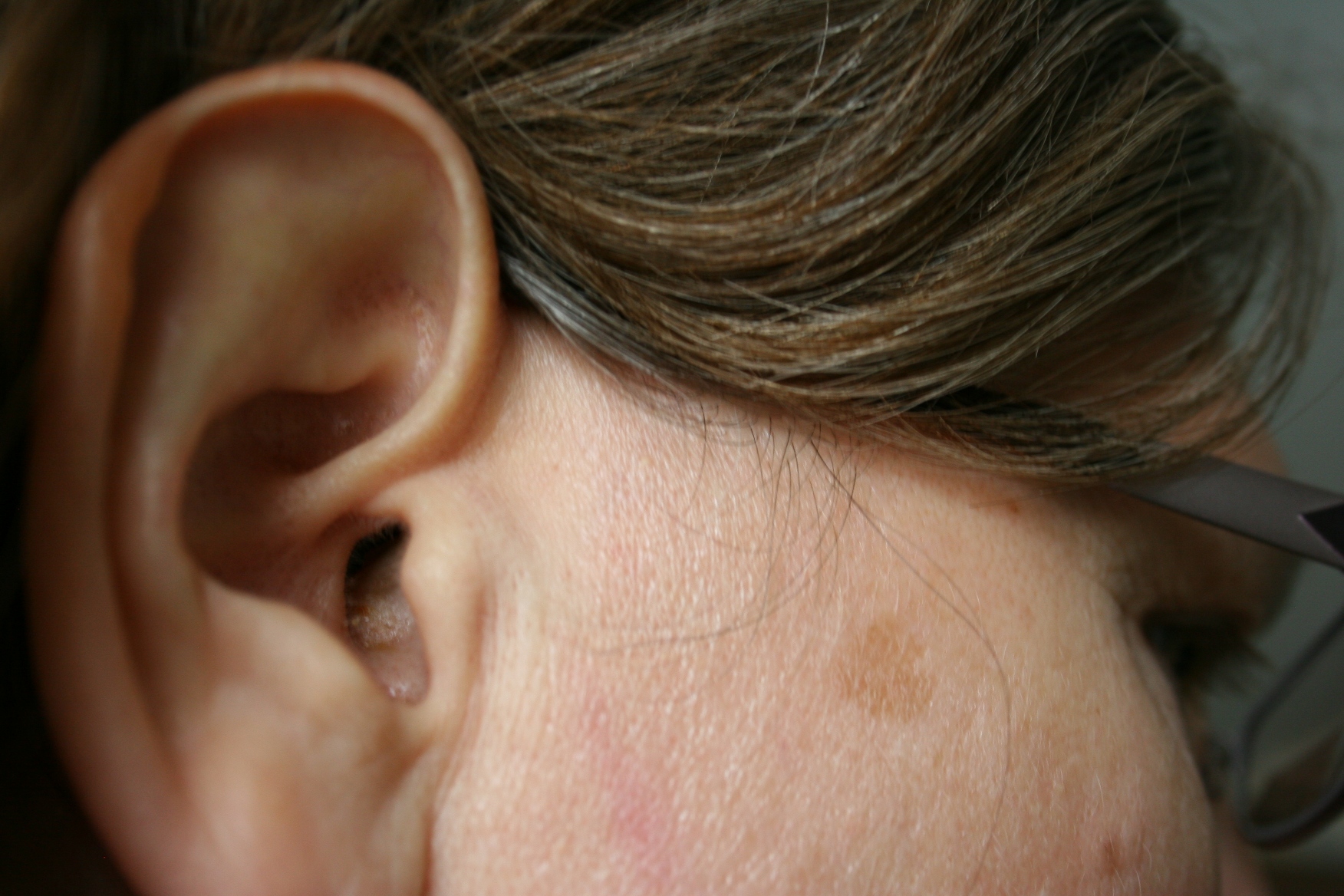
Do you know how difficult it is to photograph one's ear? This is my best shot after many attempts. I could have done without the photo, but images always add to a blog. So there you have it, my right ear that I am hoping, praying, will be healed. Yes, I see the wax. Yes, I know my ear is not petite. Typically it's draped by my hair. But I don't care about lack of prettiness right now. I care only that I get some, or all, of my hearing back.

AND SO I FOUND MYSELF waiting in line at the pharmacy, next to the visually-impaired couple. As I watched them, I asked myself, “Would you rather be blind or deaf?” I don’t mean to offend any of you readers, but that is, honestly, what I was thinking.

The debate swirled briefly through my brain. As the store clerk placed the visually-impaired woman’s hand on a bottle and told her it was fish oil, I chose deafness. I determined that I would rather deal with the loss of hearing in one ear than lose my ability to see.

And so the next 10 days will reveal whether a portion of my hearing can be salvaged. Ten days. I am trying to steel myself for the negative physical and emotional side effects I am certain to experience from the high steroid dosage. I’ve been on the drug before, for whooping cough. I hate it.

I am trying to prepare myself, too, for the very real possibility that this course of treatment will not work—because I waited too long. I did call my clinic within an hour of the symptom onset, but was advised only to come in if my condition worsened. Within several hours, I was feeling better, although my hearing had not improved.

I thought I might be suffering a Meniere’s disease attack related to a previous ear trauma as my symptoms matched those of Meniere’s.

I am writing this post because I need your prayers for healing and strength through my treatment.

I am also writing to warn you that, should you ever experience sudden hearing loss, see a doctor immediately. Don’t wait. Ever. I waited four days to schedule a clinic appointment, another day to get in and then another day to have the MRI and get the diagnosis.

My ear doctor saw several patients just this week with the same sudden sensory hearing loss, leading him to believe a viral infection of some type is going around the Faribault community.

Since developing this issue, I’ve had several friends tell me of acquaintances who’ve suffered the same snap-of-the-finger hearing loss. One regained her hearing; two did not.

The cause of my sudden sensory hearing loss has not been determined. I’m following up with another specialist in several weeks, the same expert I’ve seen since that traumatic ear injury at a Wisconsin water park several years ago.

In the meantime, I am adjusting to the ringing and static (like a bad transistor radio) and partial deafness that are now a part of my world.

I am learning to position myself with my “good” left ear to anyone who is speaking to me.

And I am holding on to hope.

FOLLOW-UP: Today I started my fourth day of steroid treatment. Thus far I’ve noticed no improvement in my hearing. But I am still hopeful that some of my hearing may be restored. Many family and friends are praying for me and for that I am grateful.

I am feeling the effects of taking the Prednisone. Yesterday afternoon and into the evening, I was unsettled and sat twirling my hair, which is not a regular habit of mine. I had trouble falling, and staying, asleep.

Yet, through all of this, I remain cognizant that this diagnosis could have been something far worse than a hearing loss. In the realm of possible medical issues, this is minor.

If, by telling my story, I can prevent one person, even one, from delaying treatment for a sudden sensory hearing loss, then something good will have come from this.

Seven more days to go…

© Copyright 2011 Audrey Kletscher Helbling


The snow angels of rural Minnesota December 22, 2010

THEY ARE THE ANGELS of rural Minnesota.  The volunteer firefighters. The volunteer first responders. The volunteer ambulance crews.

If you don’t believe me, then spend some time in a place like Vesta, population around 330, on the southwestern Minnesota prairie where I grew up.  In small towns like this, the nearest clinic and hospital are often a 20-mile drive or more.

My mom still lives in my hometown and, because she’s getting up there in age, I worry about her. But that concern is offset somewhat by the knowledge that first responders will come to her aid in a medical emergency. And they have.

So when I read an article in the December 16 The Gaylord Hub, a community newspaper where I worked decades ago right out of college, I knew I had to share a story by reporter Lisa Uecker. She wrote about an ambulance trip from Gibbon to New Ulm during the December 11 blizzard.

Uecker is graciously permitting me to retell that story here. It’s worth your time to read for the lessons it teaches in dedication and care and how those in small towns will go the extra mile to assist their friends and neighbors.

In this instance, the miles, literally, were extra and a trip which should have taken perhaps 30 minutes became a 3 ½-hour ordeal.

The incident begins at 2:30 p.m. on Saturday, December 11, during the height of the two-day blizzard. The volunteer Winthrop Ambulance Service receives a call to Gibbon some eight miles to the west. Once the crew reaches Gibbon and the patient, they backtrack to Winthrop knowing they must travel the longer, but safer, state highways rather than follow the shorter route along county roads. From Winthrop, they are headed 16 miles south along Minnesota State Highway 15 to the hospital in New Ulm.

A paramedic intercept is impossible, the crew learns, so snowplows are dispatched to meet the ambulance at the intersection of Highway 15 and Nicollet County Road 1 near Lafayette. One plow goes into the ditch. Another is low on fuel. The third has mechanical problems. None of the plows make it to the appointed rendezvous site.


If you're unfamiliar with Sibley and Nicollet counties, here's a map photo to show you the roadways and towns highlighted in this story.

The ambulance crew is on its own, traveling in white-out conditions near Klossner. The rescue vehicle soon becomes stuck on the shoulder. Because snowplows have been pulled off the roads, the Lafayette Fire Department comes to the rescue, freeing the ambulance with its pumper truck.

After passing Klossner, the ambulance gets stuck again, but the driver–ambulance captain and assistant Sibley County attorney Donald Lannoye–is able to rock the vehicle free.

Finally, at 6 p.m., the patient, who has been stable throughout the ride, is delivered to the New Ulm Medical Center.

The four-member volunteer ambulance crew spends the night in New Ulm.

In an interview with reporter Uecker, Lannoye says that once he passed Sibley County Road 8 right outside of Lafayette, he could never drive more than five miles per hour due to poor visibility and road conditions. The crew saw 11 – 15 cars in ditches and 4 – 6 cars stuck in traffic lanes near Lafayette.

Then Lannoye also reveals that his crew began their day at 5 a.m., transporting a patient on icy roads to Hutchinson.

If ever there was an outstanding example of the care and concern residents of rural Minnesota have for each other, then this would be it. We should all be thankful for volunteers like Lannoye, ambulance crew members Lisa Klenk and Todd Storms,  EMT-in-training Katie Uecker and Lafayette Volunteer Fire Department members who braved a blizzard to help their neighbors.

They are, indeed, snow angels.

IF YOU HAVE A STORY to share about how volunteers have helped you or someone you love, submit a comment. I’m certain there are many such stories out there.

© Copyright 2010 Audrey Kletscher Helbling and Lisa Uecker
 

He smashed his thumb November 30, 2010

Filed under: Uncategorized — Audrey Kletscher Helbling @ 10:16 AM
Tags: , , ,

MY HUSBAND CALLED late yesterday afternoon. “I’m at the clinic.” Those are words a wife does not want to hear.

“What did you do?” The question popped automatically out of my mouth.

“Smashed my thumb with a hammer.”

This did not sound good, not good at all.

“They’re going to do an x-ray and I may need stitches.”

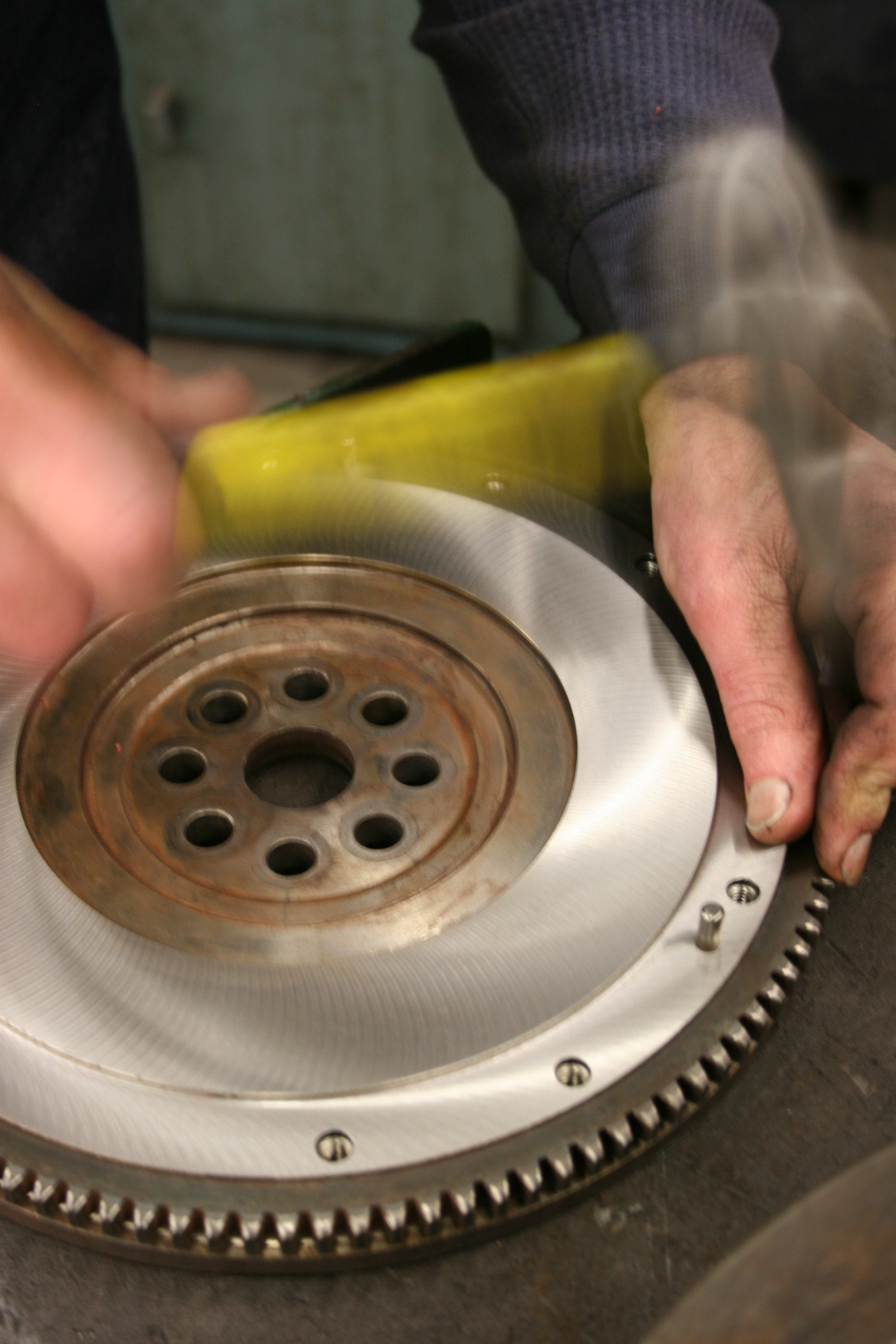
For my automotive machinist spouse, his hands are his tools, so these types of injuries always concern me.

My husband at work with a hammer, a tool he uses often as an automotive machinist.

I hung up, then worried and fretted and worried some more while waiting for a follow-up phone call. Forty-five minutes later he called from the Northfield clinic to say he was on his way home to Faribault.

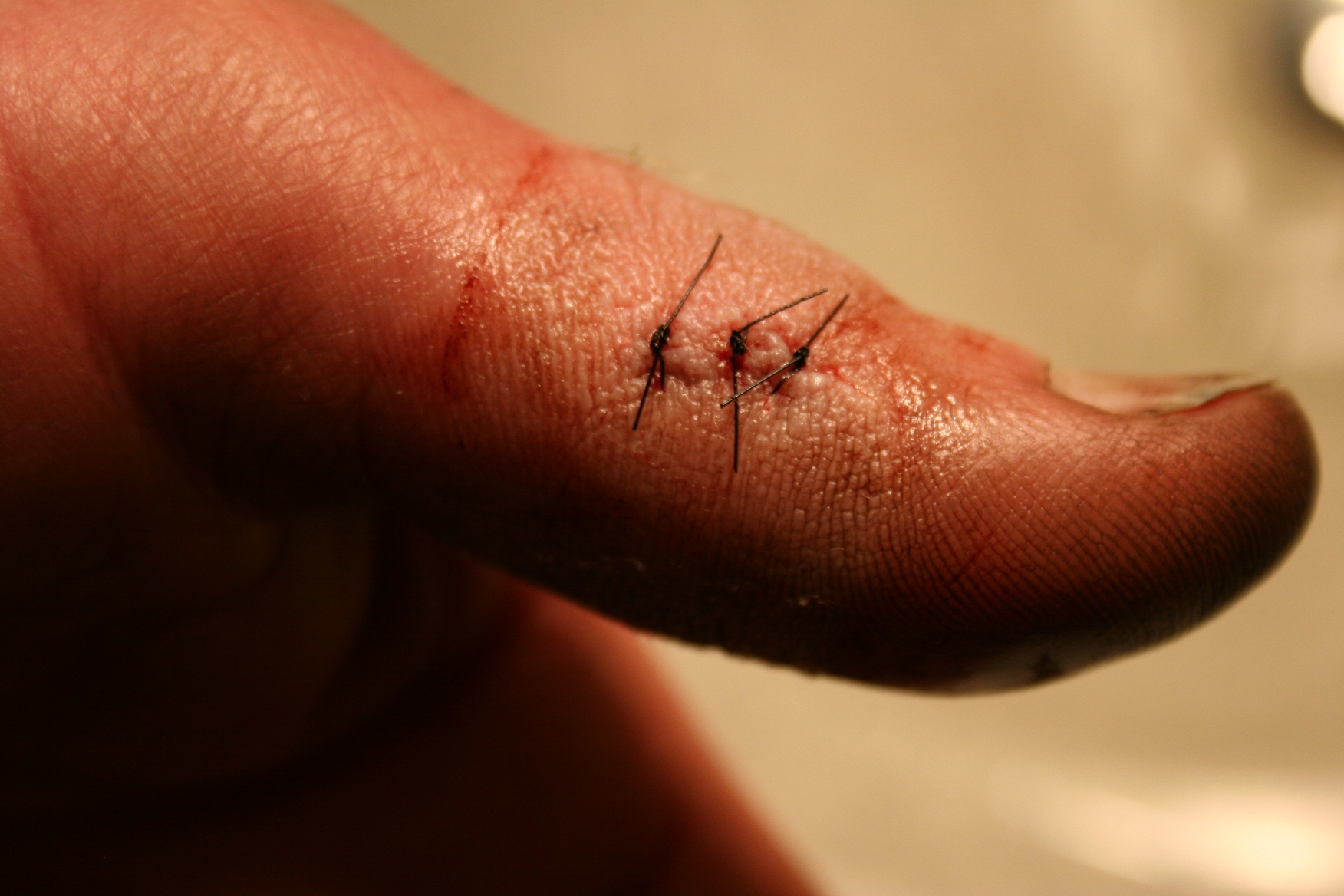
“I got three stitches.”

The injured, and stitched, left thumb. My husband says I will gross you out with this image. To abate his concerns, I've down-sized the photo.

“What’s the prognosis?”

“It’s not broken, but they found bone fragments floating around. They think it might be from a previous injury, maybe not, and want me to come back in a week for another x-ray.”

He claims he didn’t injure the thumb prior to yesterday.

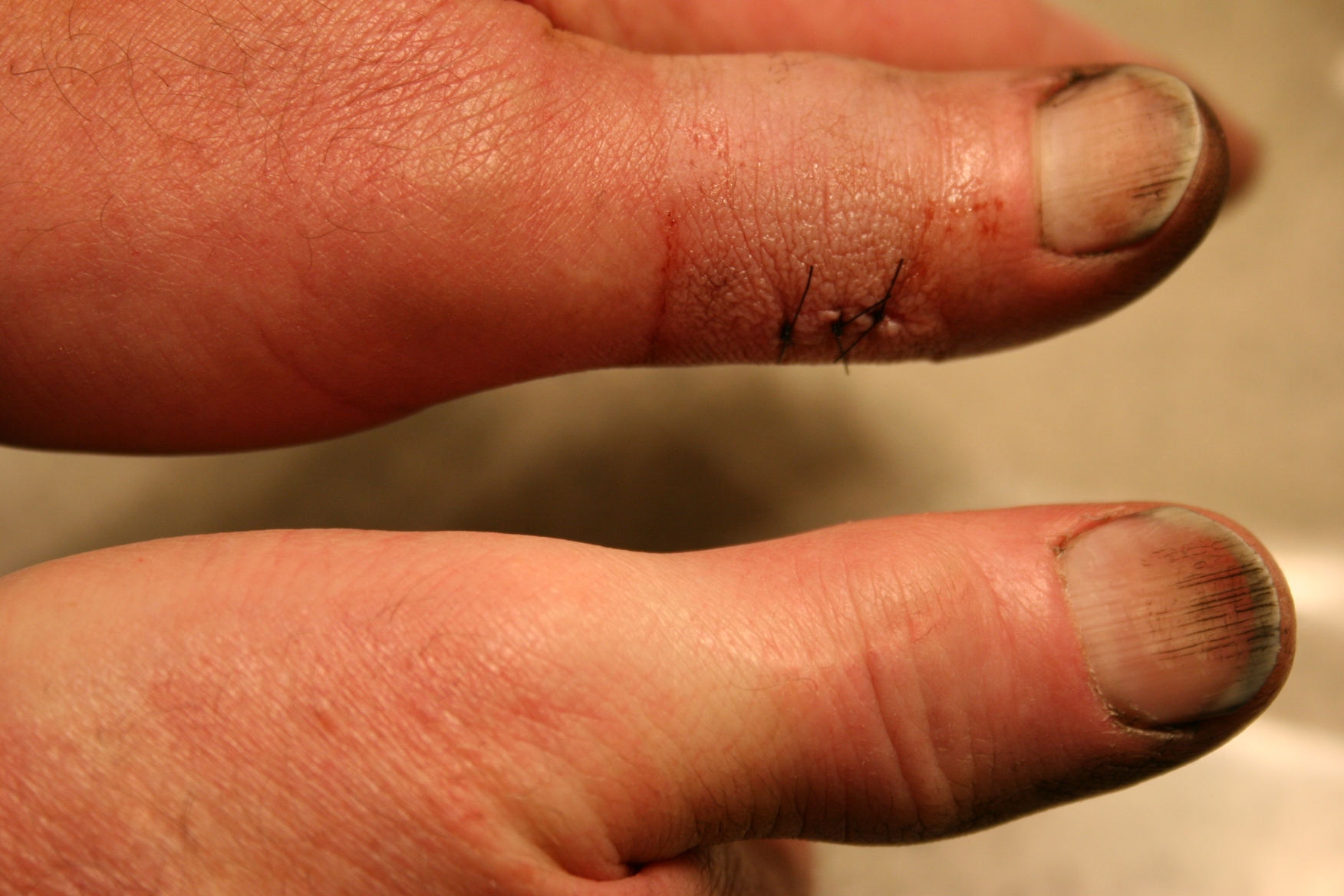
I doubt that statement. Throughout our 28 ½ years of marriage, he’s hit his thumbs more than once with a hammer at work, although certainly not this severely.

Here's proof of a previous injury. Note the semi-circle scar on the right thumb, the telltale mark of stitches from an earlier injury.

This time he delivered a glancing blow to his left thumb with a two-pound hammer while pounding universal joints out of a drive shaft. Ouch.

He’s off to work this morning, despite the doctor’s instructions that he stay home.

He told her he couldn’t. Too much work and he wasn’t going to let an injury like this keep him down. He possesses a strong work ethic and a degree of German stubbornness.

The physician conceded, told him to keep the thumb clean and dry. I’m uncertain how he will manage that given the nature of his job gets his hands dirty and greasy.

My husband at work in the automotive machine shop where he is employed.

This morning he struggled to button his shirt. How will he operate machinery, deal with heavy and grimy automotive parts? But, he’s determined. My concern, a few stitches, a clumsy splint, swelling and a little pain aren’t going to stop him from working.

© Copyright 2010 Audrey Kletscher Helbling
 

Sick of high healthcare costs November 27, 2010

Filed under: Uncategorized — Audrey Kletscher Helbling @ 12:56 PM
Tags: , , , ,

MY HEALTH INSURANCE premium arrived in the mail yesterday. Happy holidays!

Not.

It’s due shortly before Christmas.

Bah! Humbug!

In mid-June, the premium increased from $801 to $813 for three months of coverage. Do the math. That’s $271 per month or $3,252 a year.

I am not happy.

Here’s the deal. I foolishly thought healthcare reform would mean lower premiums and lower costs for medical visits, in other words, more affordable healthcare for families like mine. We are not wealthy. We live in a modest home in a modest neighborhood. We have no debt. We spend carefully and wisely.

But when it comes to health insurance, I believe the word “affordable” cannot fit, cannot even be squeezed, into the same sentence.

I pay $271 a month for coverage with a $3,000 deductible. In other words, my coverage is basically major medical.

I’ve evaluated getting onto my husband’s plan at work. That would cost me even more than the individual policy I have as a self-employed writer. His employer pays only a small portion of his health insurance premium and my spouse, too, has a high deductible.

I haven’t crunched the numbers lately, but my family (which also includes one still-at-home 16-year-old) is forking out a lot of money every month for health insurance.

Yet, we rarely go to the doctor because of the high deductibles and the high cost of healthcare. Cost is a great deterrent for skipping routine exams. I’m just being honest here.

Another problem I face is past medical history. I had total hip replacement surgery in 2008. I will need a new, and very costly, hip in 15 – 20 years. Insurance companies have these policies about pre-existing conditions.  So, even if I was to look for different insurance, the hip would likely be excluded from coverage.

I have no answers to any of this. I just know that I am sick and tired of the high cost of health insurance and of healthcare.

WHAT ARE YOUR THOUGHTS on the topic and do you have any answers? What are you spending every month on health insurance premiums?

© Copyright 2010 Audrey Kletscher Helbling
 

“Can I get a refund on my hip?” September 20, 2010

Filed under: Uncategorized — Audrey Kletscher Helbling @ 7:44 AM
Tags: , , ,

CONSIDER THIS SCENARIO. At the age of 51, you received a total right hip replacement after 2 ½ years of living in pain 24/7 due to osteoarthritis. That would be me.

Now, consider this. Two years later, a friend, who also has a hip implant, tells you of a nation-wide recall on artificial hips.

How would you react?

I faced this very situation recently when my friend, I’ll call her Jane, told me of the recall on her 3-year-old hip. Jane initially reacted as I would expect, with disbelief, anger and outrage. She has since calmed down.

When I heard the news from Jane, I was quite certain I didn’t have the ASR hip system from DePuy Orthopaedics because I knew my implant was different than hers. Yet, I wasn’t certain. So I checked my medical files, which didn’t show the type of hip I sport, and then contacted my orthopaedic clinic.

After explaining the reason for my call and giving the name of my surgeon, I was assured that I likely didn’t have the recalled hip. My doctor apparently does not use the DePuy ASR hip system.  But just to be certain, I was told that a physician’s assistant would check my records and call me back.

Fortunately, my surgeon selected, for me, a metal femur stem from Osteonics with a thigh bone head made of ceramic and a Pinnacle cup with a plastic liner. I later learned while researching online that DePuy makes the Pinnacle cups. But, as far as I know, those are not part of the recall.

If you have a recalled hip, you likely already know. When I contacted my clinic about 10 days ago, employees were compiling a list of patients to notify about the recall and drafting a letter of proper procedures to follow.

According to info published on DePuy’s Web site, data shows that five years after implantation, approximately 13 percent of patients (one in eight) who received the ASR total hip replacement needed revision surgery.

Now, if you’re among that one in eight—and my friend Jane isn’t at this point in time—you would have cause for concern. Hip surgery the first time around is major and expensive and requires a lengthy recovery. Imagine using a walker and then a cane while transitioning to solo walking about two months later. Imagine needing assistance to get in and out of bed, even to handle personal care issues. Recovery isn’t easy, even if you’re only in your 50s. Imagine if you’re decades older, which is typical for most hip replacement patients.

Now imagine being told that you need a new hip, because you’re having problems with your DePuy ASR hip. I feel for those patients and understand their anger. Going through a repeat surgery like they face has to be difficult. Heck, I don’t even want to consider the hip surgery I’ll need in about 20 years when my replacement needs replacing.

Recall of medical devices is nothing new, although when one affects you, such action is certainly personally alarming. In fact, a week prior to my June 2008 hip replacement surgery, news came out that joints in some individuals with ceramic on ceramic (head and cup) hip implants squeaked when they moved.

So guess what my surgeon had planned for me? Ceramic on ceramic. The morning of my surgery, he informed me that we were going to Plan B, ceramic and plastic. Sometimes I think about that. What if I had had my surgery a week or more earlier? Would I squeak when I walk? Or what if my doctor had selected the DePuy ASR hip? Maybe instead of just reading the ad in my local newspaper to call a certain attorney, I would be sitting in his office discussing my legal options.

© Copyright 2010 Audrey Kletscher Helbling