Minnesota Prairie Roots

Writing and photography by Audrey Kletscher Helbling

Gathering beside the Cannon for history come alive at Riverside Rendezvous May 13, 2025

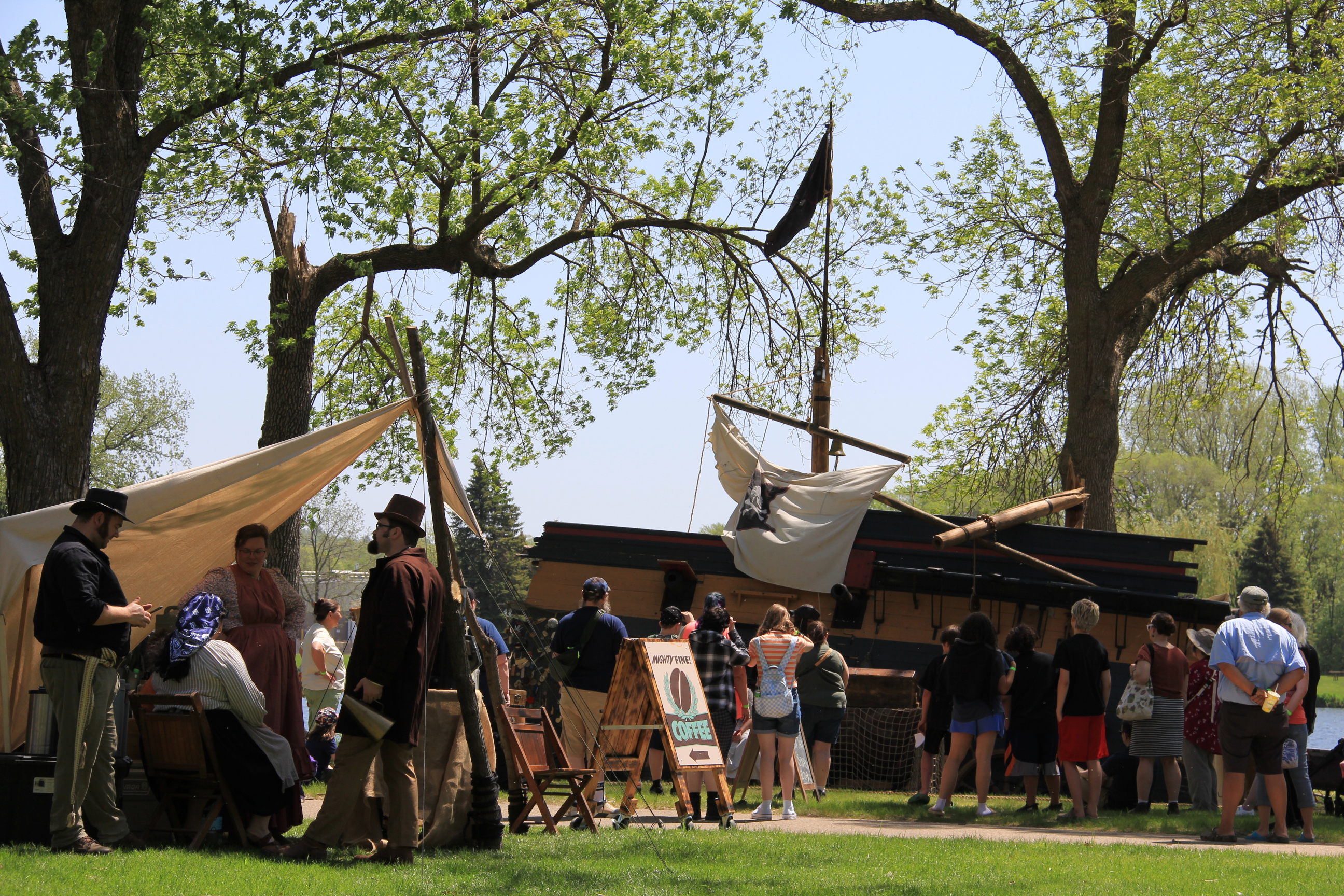
Learning about pirates at the pirate ship sitting near the Cannon River. (Minnesota Prairie Roots copyrighted photo May 2025)

TO READ ABOUT THE PAST is one thing. To learn about history via people passionate about the past is quite another.
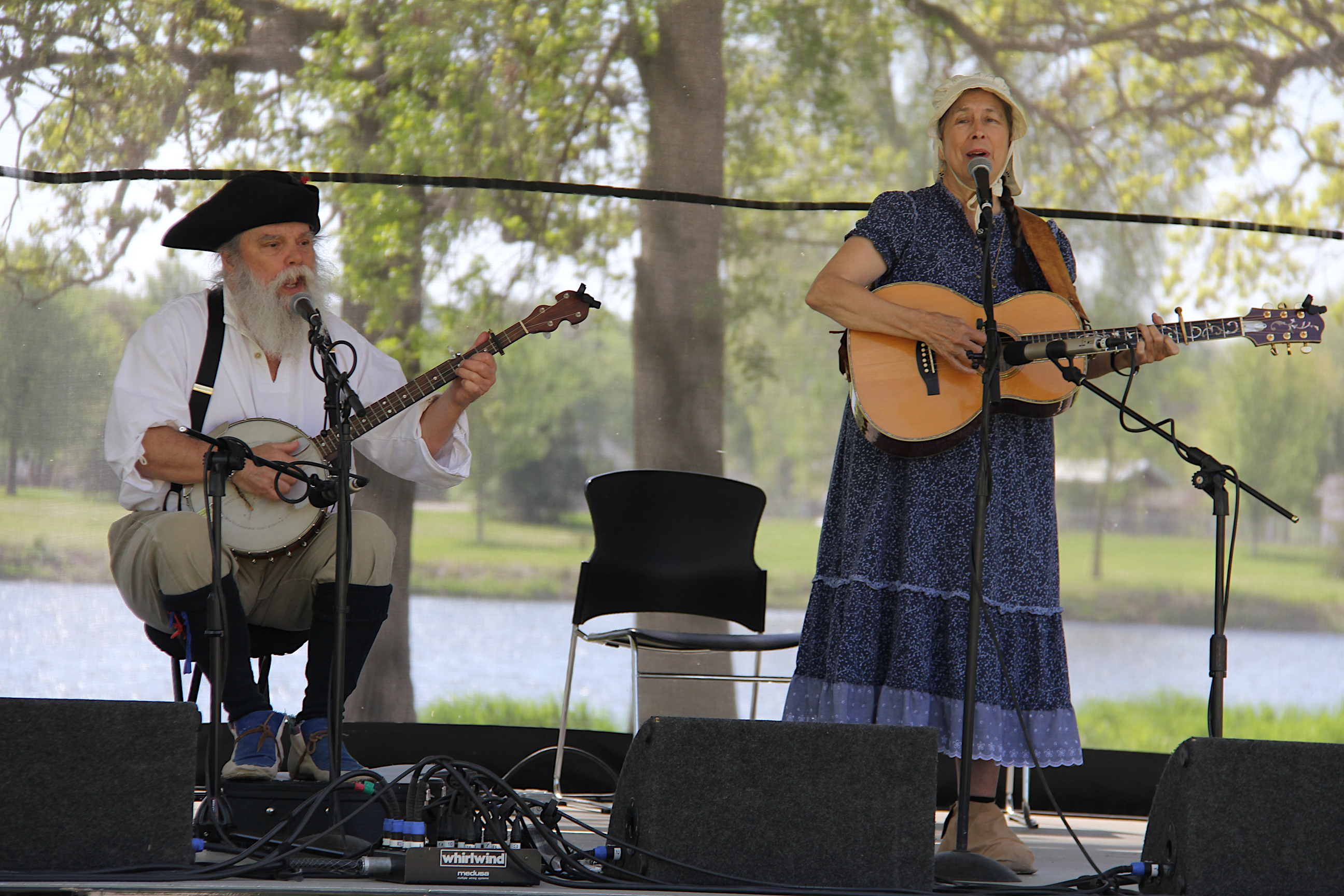
Folk singers Curtis & Loretta from Minneapolis perform Sunday morning. (Minnesota Prairie Roots copyrighted photo May 2025)

The past came alive over the weekend at the first-ever Riverside Rendezvous and History Festival in Faribault organized by the Rice County Historical Society. I spent four hours of my Mother’s Day roaming the festival grounds alongside the Cannon River at North Alexander Park. Listening. Learning. Connecting. Questioning. Observing. And photographing.
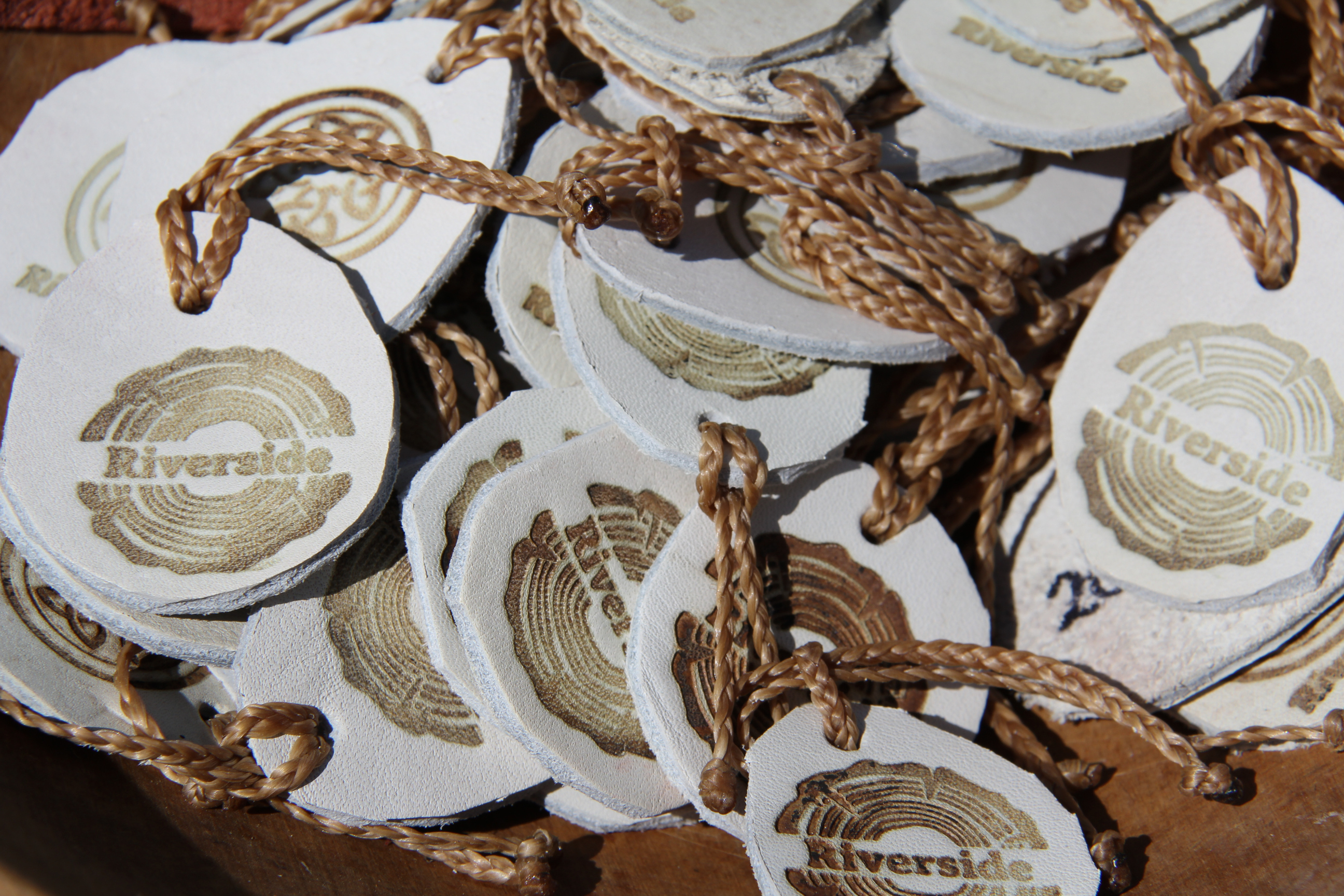
Many rendezvous feature medallions (like these for the Faribault festival) which participants post on their tents. (Minnesota Prairie Roots copyrighted photo May 2025)
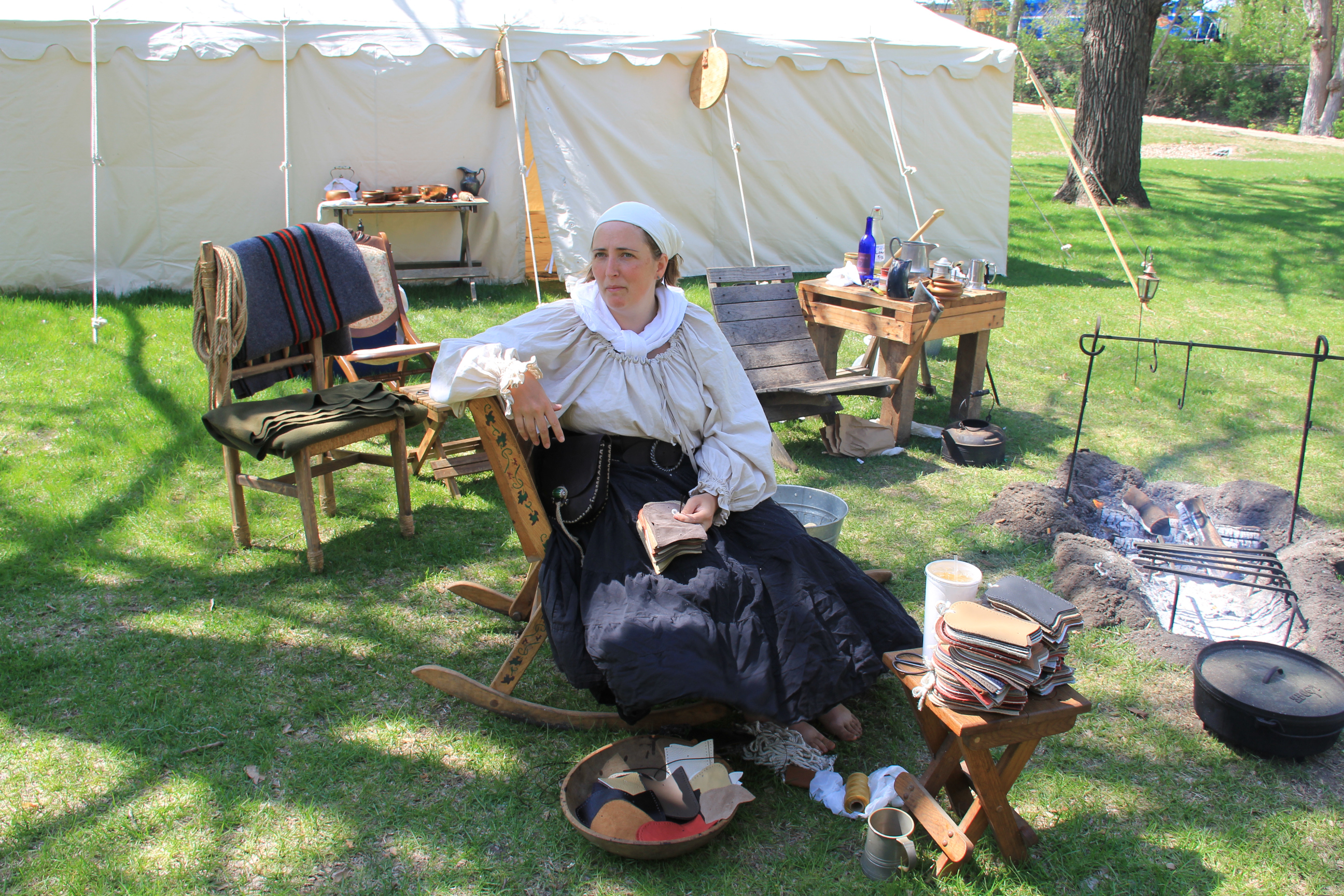
This re-enactor taught kids and adults to stitch mini leather pouches. (Minnesota Prairie Roots copyrighted photo May 2025)
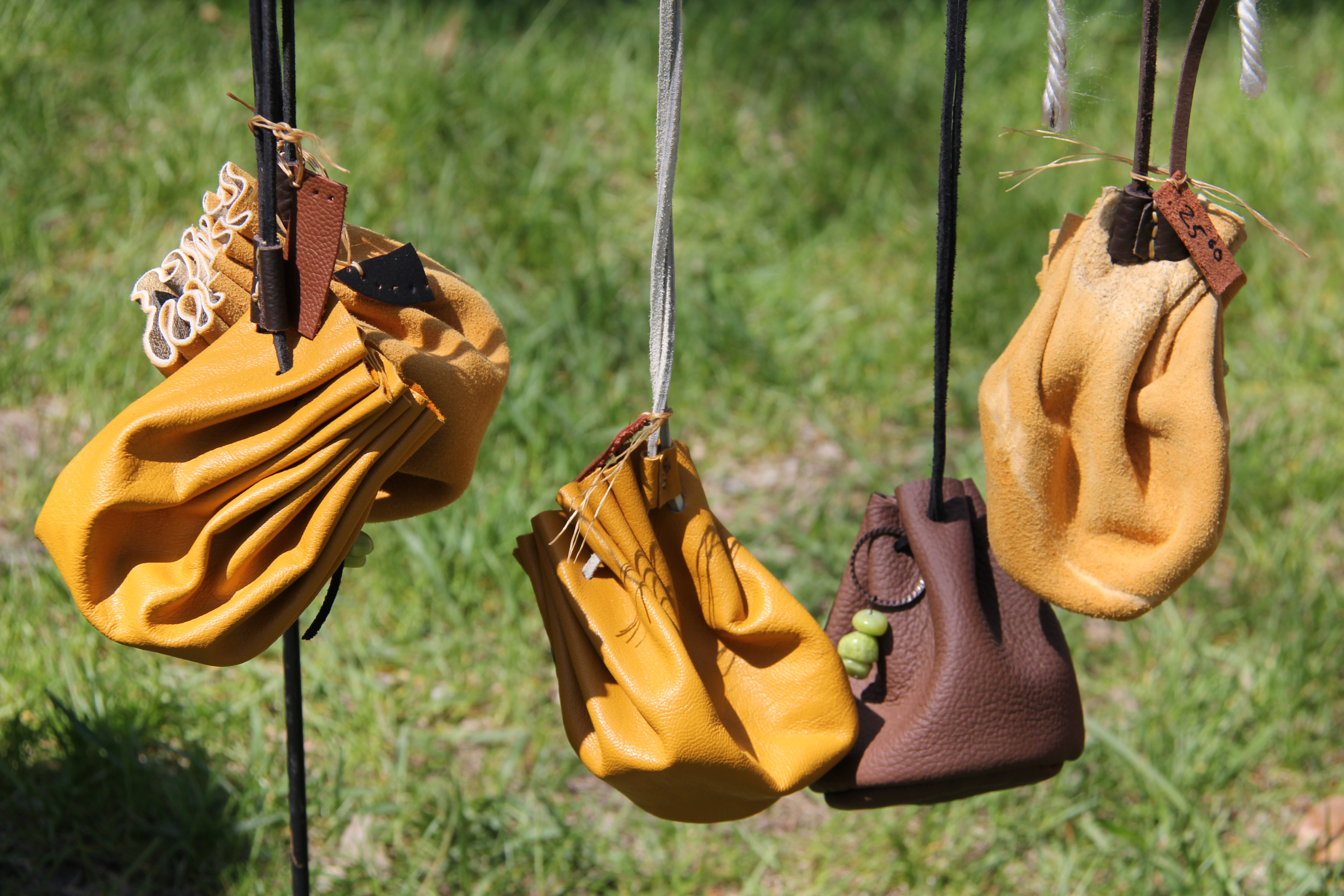
Small handcrafted leather bags for sale. (Minnesota Prairie Roots copyrighted photo May 2025)

The Rendezvous covered 1701-1900 with participants dressed in period costume. Think top hats, mountain hats, head scarves, long skirts, lots of leather and fur.
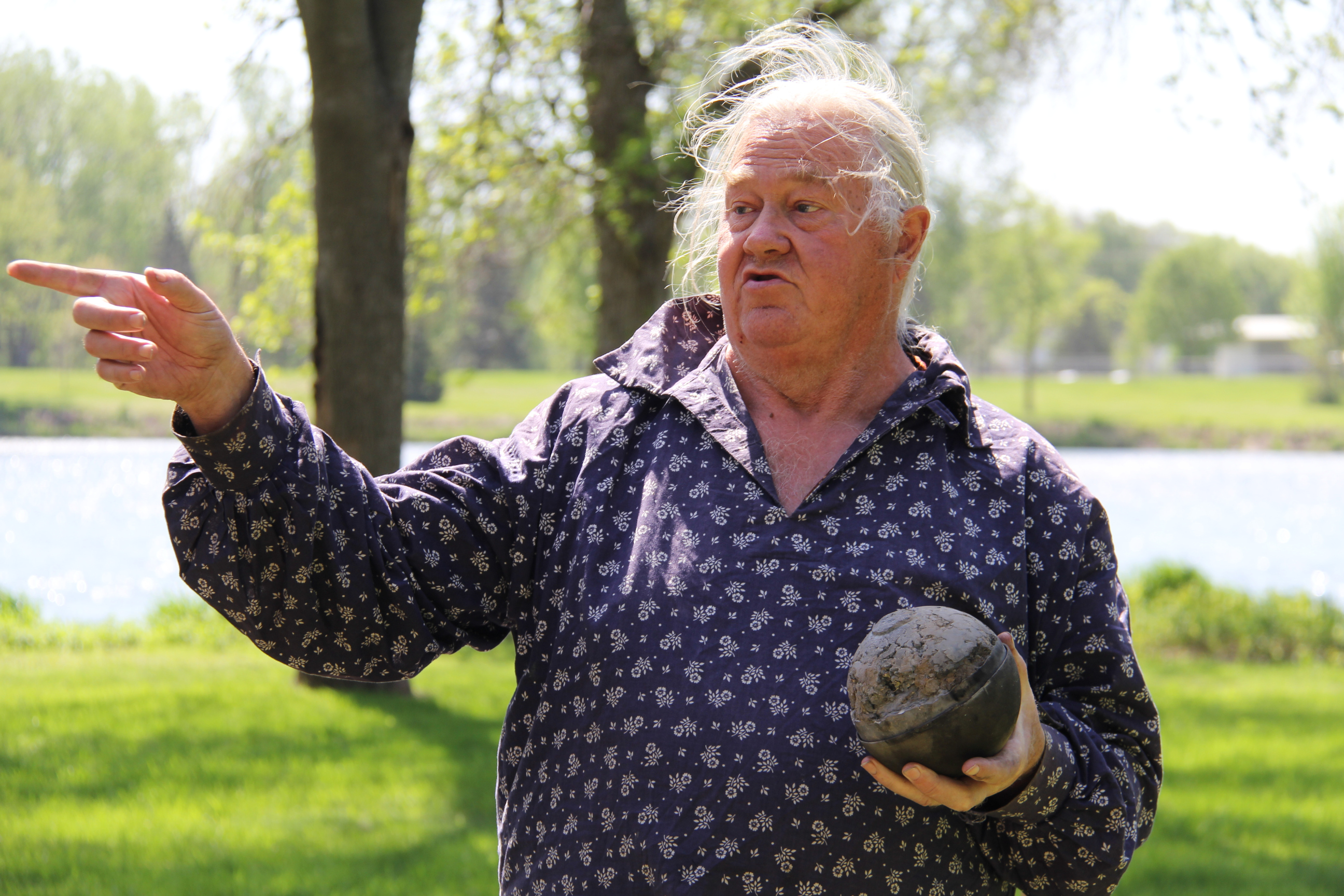
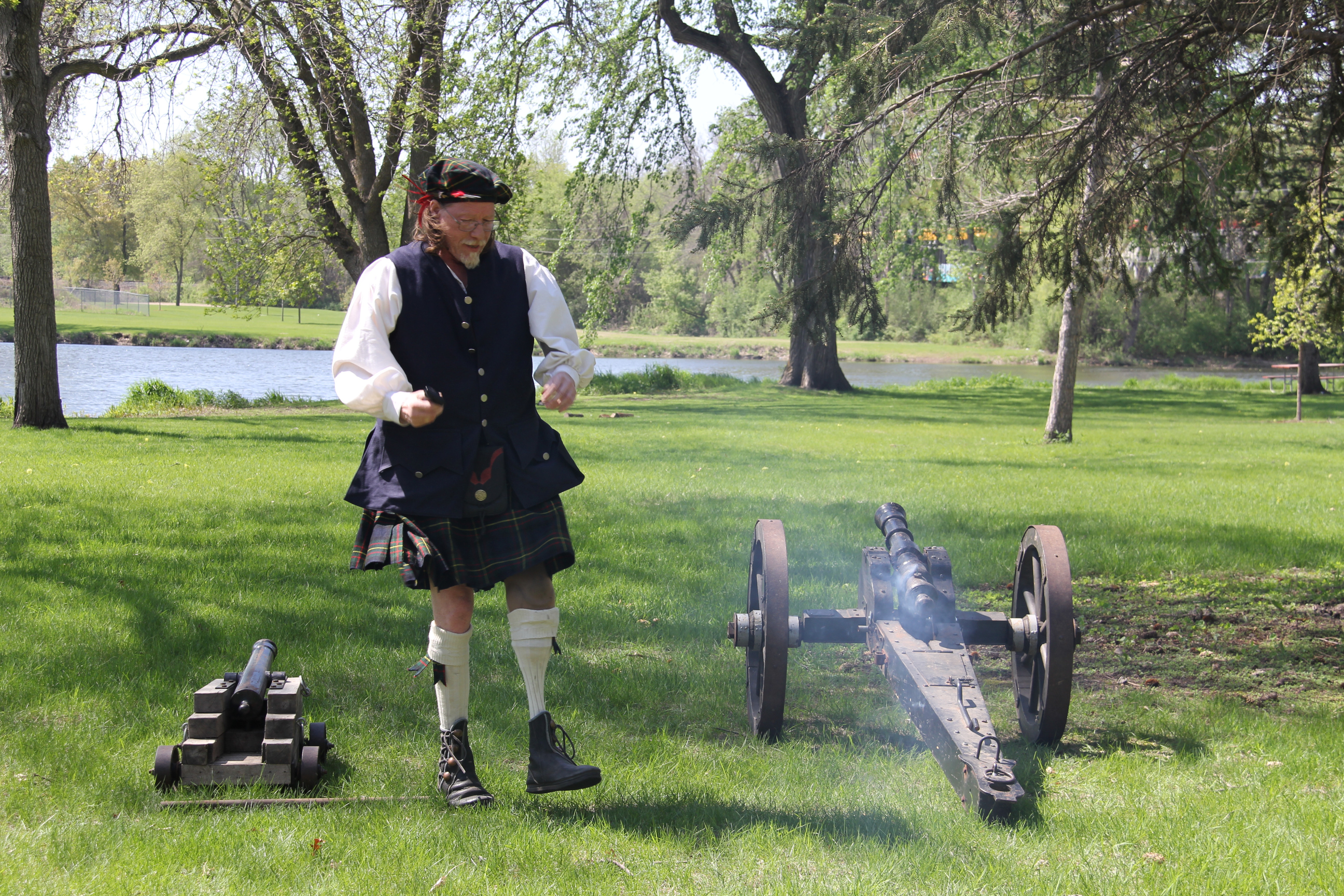
Before shooting off three cannons, this re-enactor talked about cannon balls, loading and firing a cannon, and safety. (Minnesota Prairie Roots copyrighted photo May 2025)
Firing one of three cannons. (Minnesota Prairie Roots copyrighted photo May 2025)
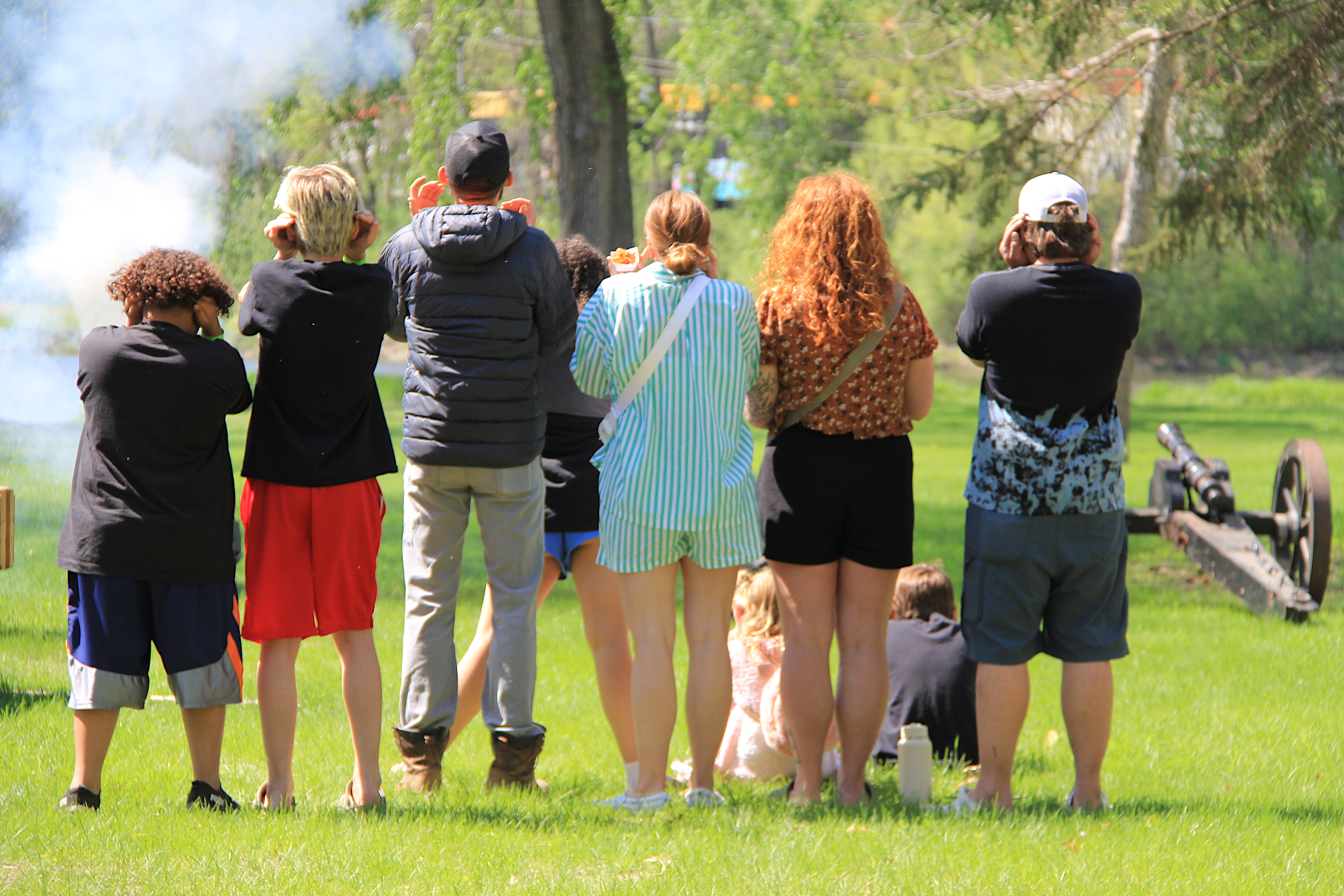
Before the cannons were fired, fest attendees were told to cover their ears “like fish.” The boom was loud. (Minnesota Prairie Roots copyrighted photo May 2025)

The re-enactors shared their period skills from blacksmithing to hat making to cannon shooting, rug weaving, leather stitching and much more. There was a lot to see, a lot to learn. And a lot to do, if you chose to participate.

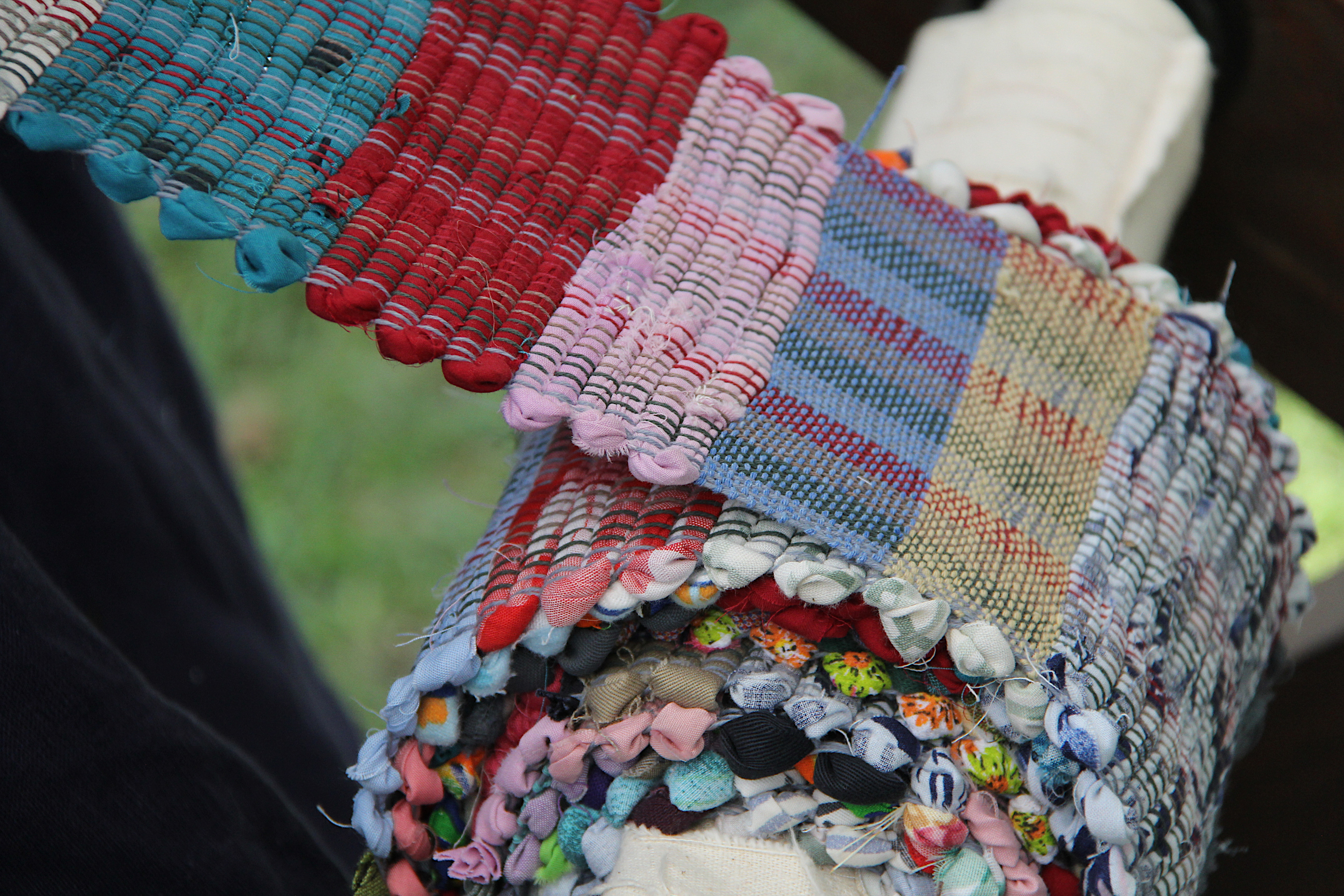
Spools of colorful string for rug weaving fill a vintage suitcase. (Minnesota Prairie Roots copyrighted photo May 2025)
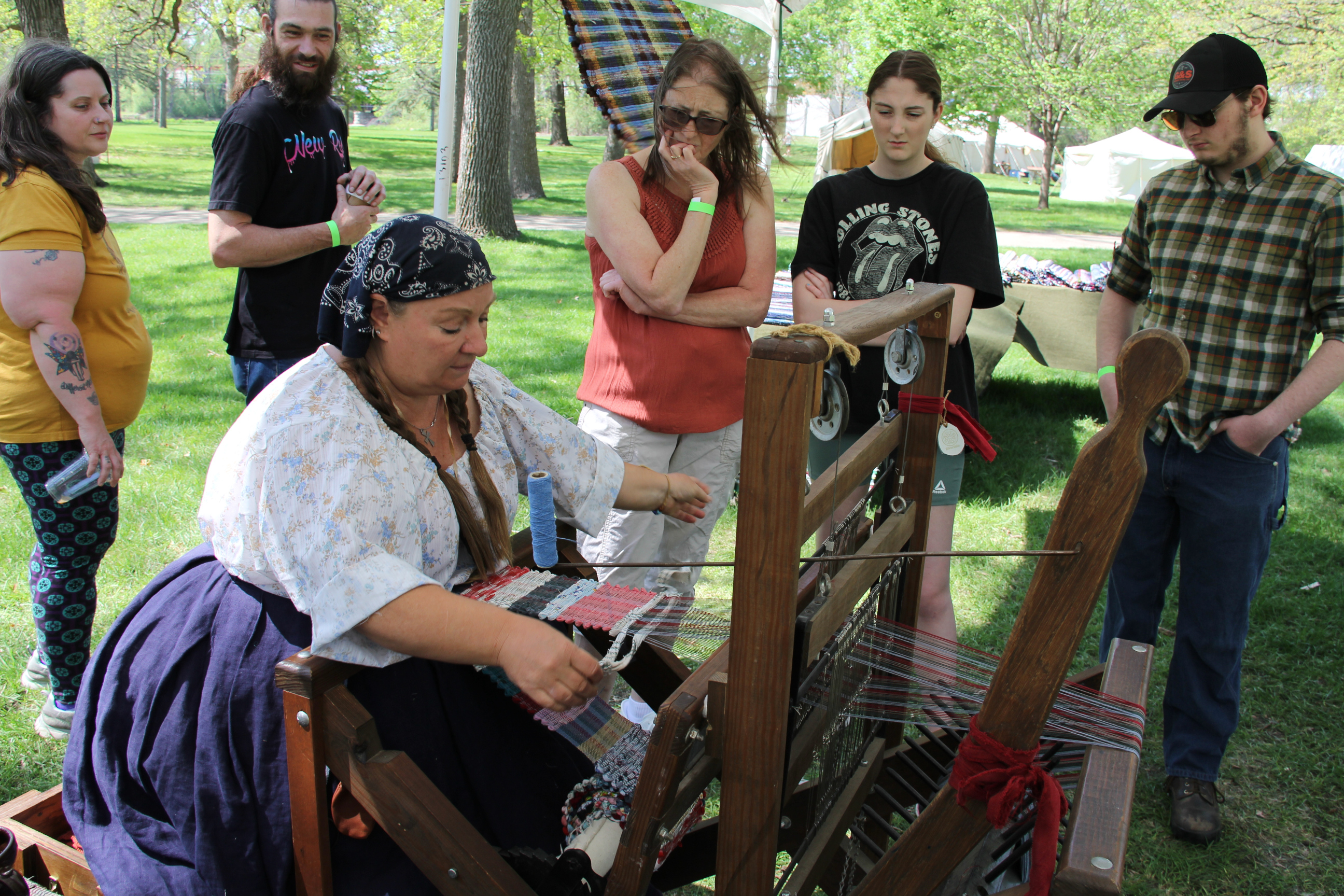
Folks gather around Lori Feltis as she weaves on her portable loom and talks about rug making. She operates Bohemian Rag Rug Studio near Stewartville. My grandkids enjoyed some hands-on weaving with Lori. (Minnesota Prairie Roots copyrighted photo May 2025)
A narrow strip woven on Lori’s loom. (Minnesota Prairie Roots copyrighted photo May 2025)

I left the hands-on activities to others, including two of my elementary-aged grandkids. They joined many kids trying out new skills, making memories. School classes attended the festival Thursday and Friday. So many lessons taught and learned.
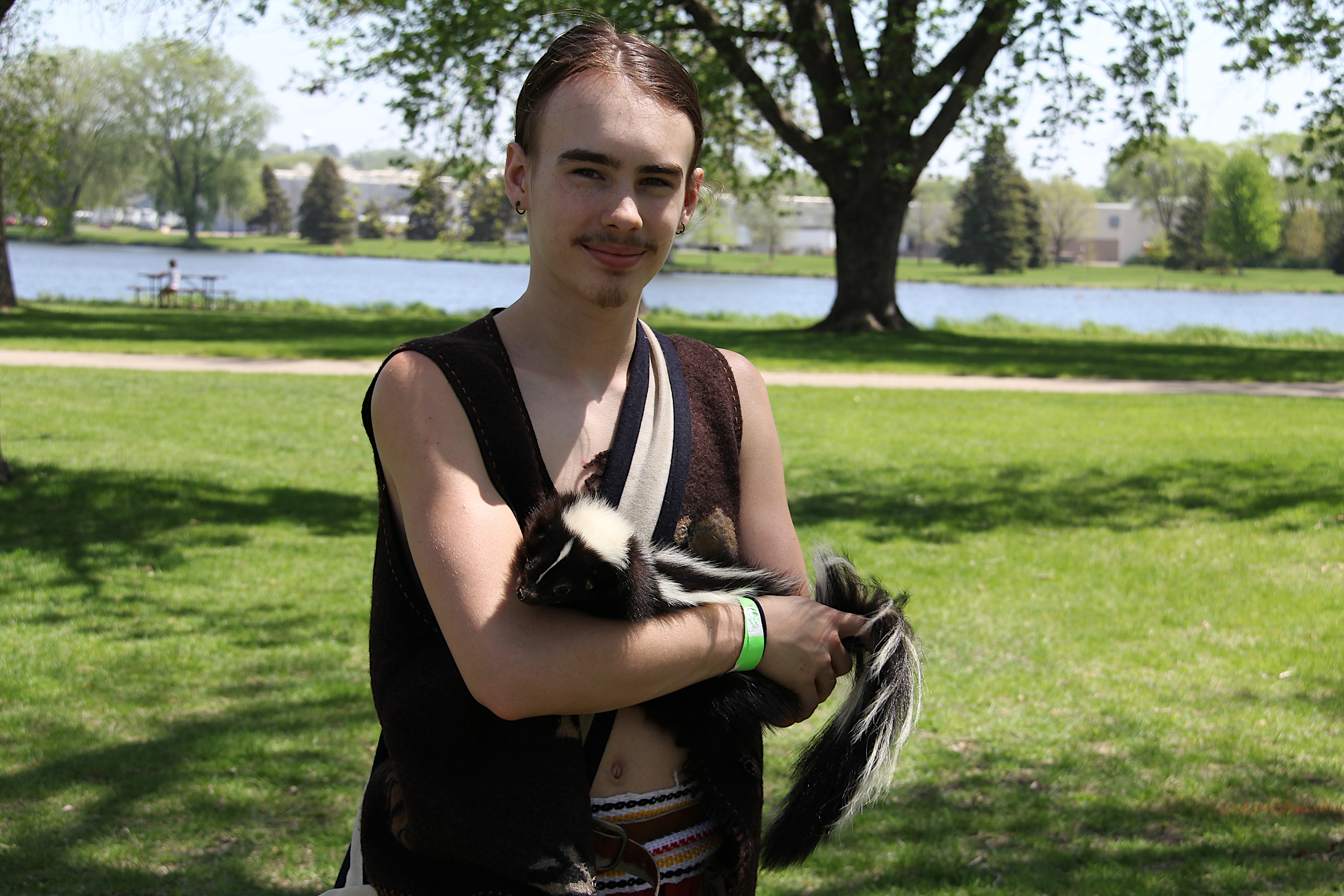
Valin with his “pet” skunk. (Minnesota Prairie Roots copyrighted photo May 2025)

My biggest personal lesson of the day came in an unexpected way, and not until I arrived home. While walking from one tent to another at the Rendezvous, I crossed paths with Valin cuddling his pet skunk. I’d never seen a real skunk up close and I was rather excited to photograph Little Stinky. I even called my husband over for a close-up look. Valin assured me Stinky’s stinky part had been removed. Back home, Randy revealed to me that Little Stinky was a pelt. “Didn’t you see his (Valin’s) hand underneath moving the skunk?” Uh, no. I can only imagine the story Valin told around the evening campfire about the lady who thought his skunk was alive. This is now the stuff of laughter and legend for my family. Lesson learned: Everything is not as it appears.
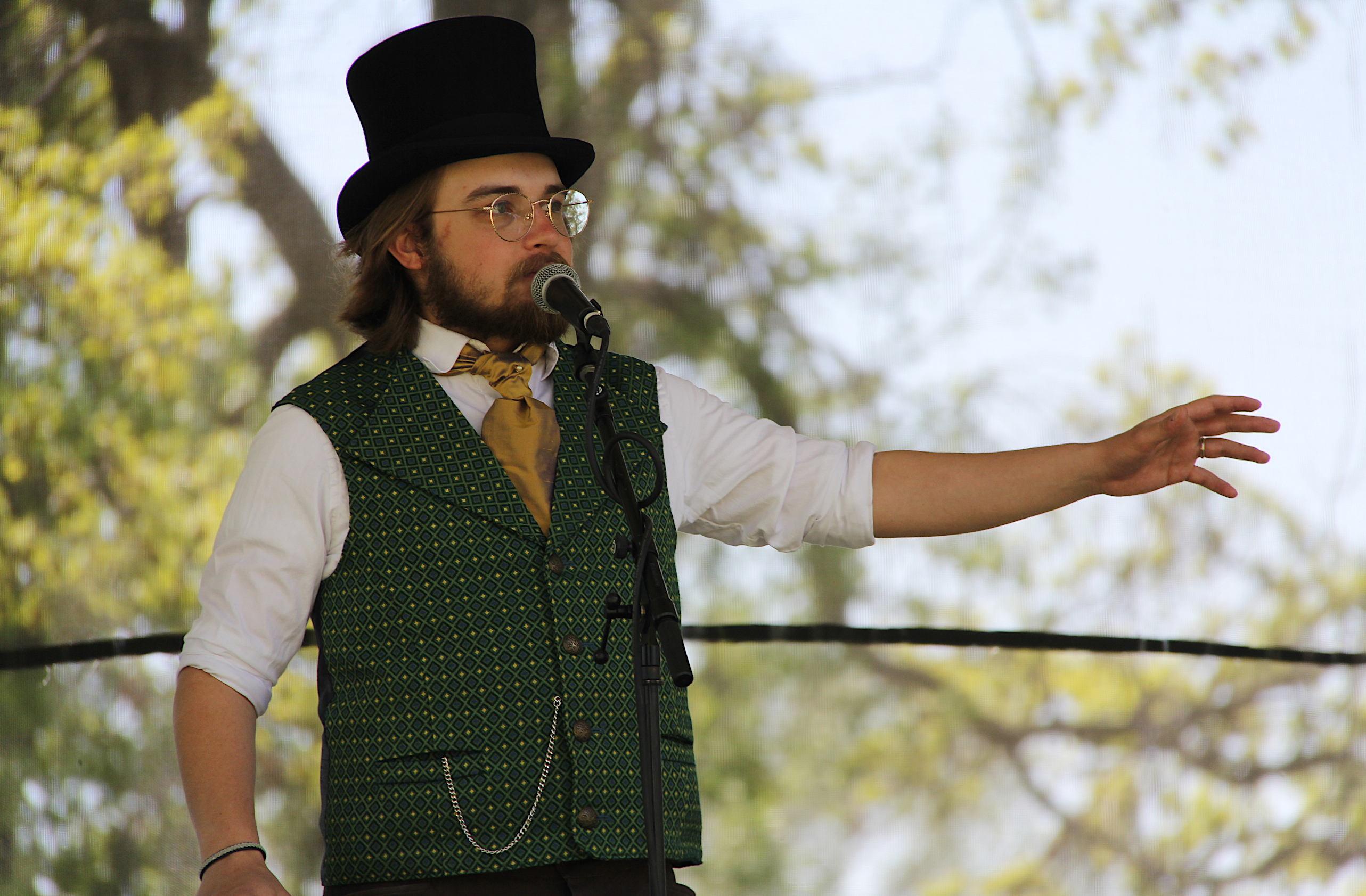
Sam Temple presented about early Minnesota history with a focus on Faribault. (Minnesota Prairie Roots copyrighted photo May 2025)

That humorous moment aside, I did appreciate the honest and informative storytelling of local historian and documentary filmmaker Sam Temple. Smartly attired in a top hat and dress clothes, he talked about early Minnesota, about Indigenous Peoples, about the illegal French Canadian fur traders who came here first—about their relationship of interdependence and co-existence with Native Peoples and how a new mixed race culture developed.
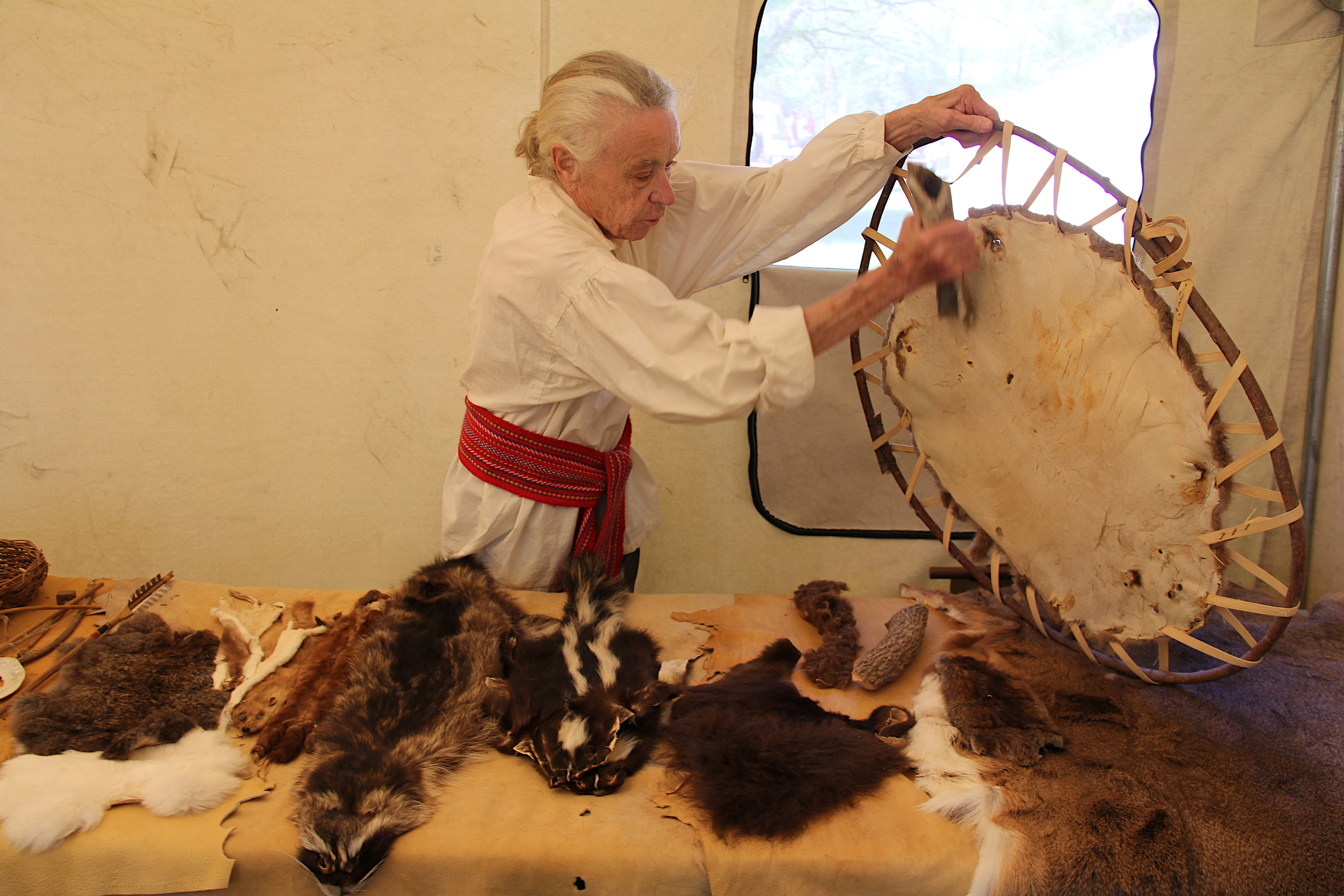
Scraping a beaver hide, the woman in this tent focused on the Dakota, their connection to nature and how that wove into their way of living. They traded furs for goods. (Minnesota Prairie Roots copyrighted photo May 2025)

Temple shared much more before shifting his focus to Faribault town founder Alexander Faribault, of mixed race (his mother was part Dakota) and a licensed fur trader by age 21. Alexander arrived in a multi-cultural community with “a foot in both worlds,” Temple said. Wood-frame houses and teepees stood side-by-side. As I listened, I considered my multi-cultural community today. Getting along, but not always. By the time Alexander Faribault, who was historically-influential both locally and state-wide, left Faribault, “the teepees were missing and his mother’s culture was gone,” Temple said.
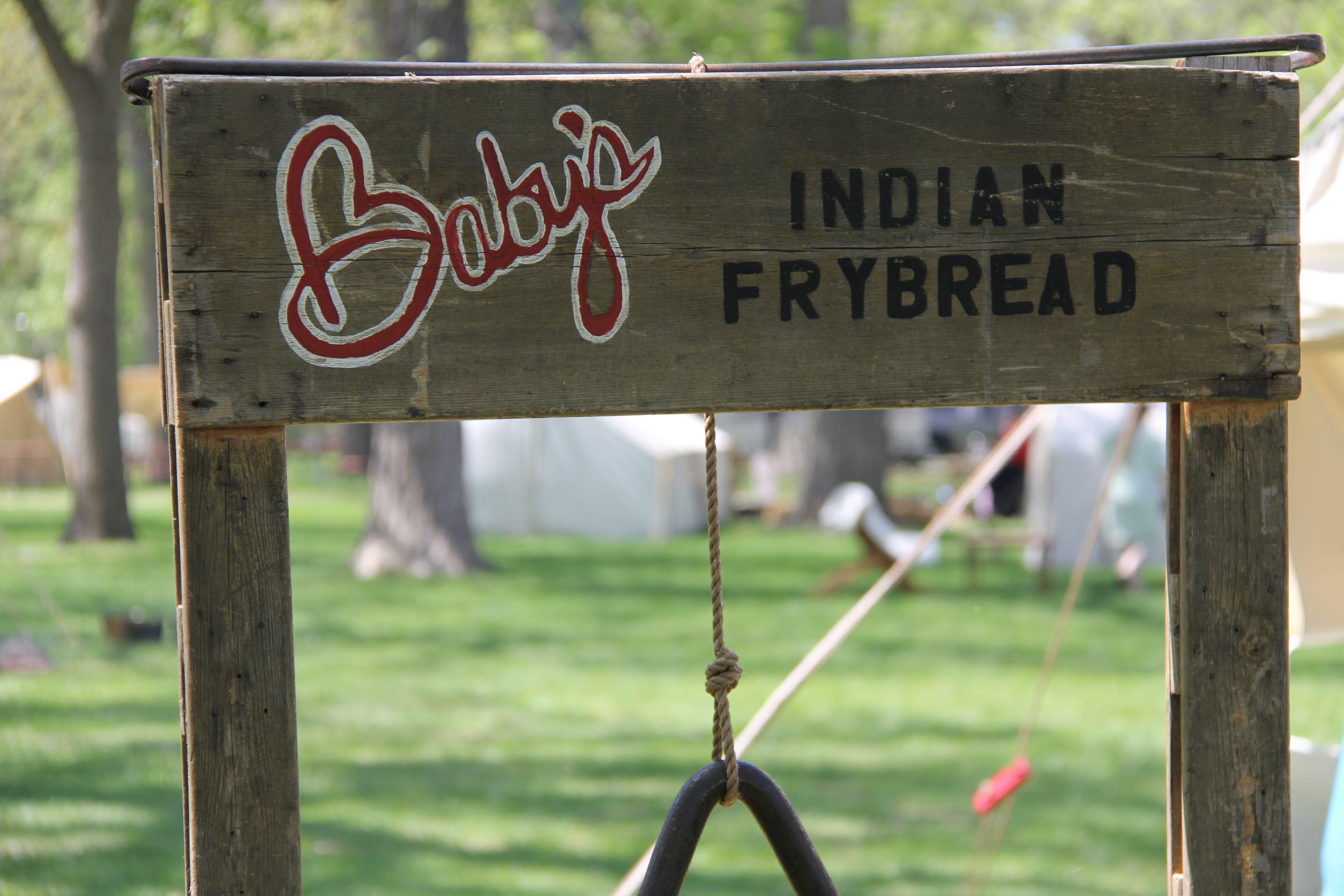
There were several food and beverage vendors on-site, with Baby’s Indian Frybread proving especially popular. (Minnesota Prairie Roots copyrighted photo May 2025)

If there’s something else I learned while attending the Rendezvous it is that I absolutely love fruit-filled Indian frybread, which I’ve not previously eaten. The sugar-topped pie-like dessert oozed blueberry filling and cream cheese. It was beyond decadent.
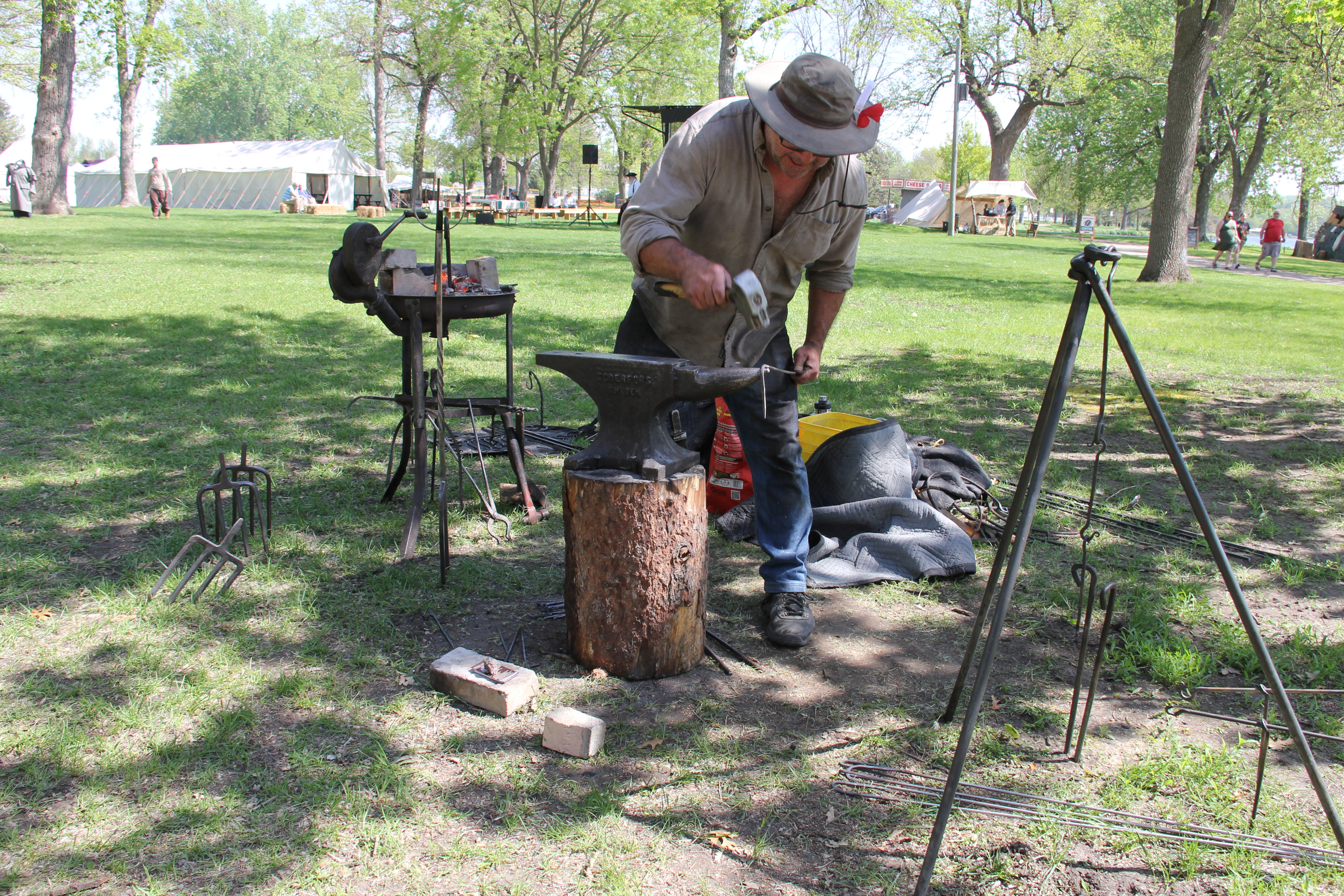
A blacksmithing demonstration. (Minnesota Prairie Roots copyrighted photo May 2025)

As much as I loved frybread and Little Stinky, the good folks who participate in history fests like the Riverside Rendezvous assuredly love stepping back in time. Their passion and desire to present the past in a way that engages people in history was something I felt, saw, heard while moving from tent to tent, space to space. To be part of this proved a cultural, historic experience, growing my knowledge and appreciation of those who shaped Minnesota and Faribault, this place I call home.
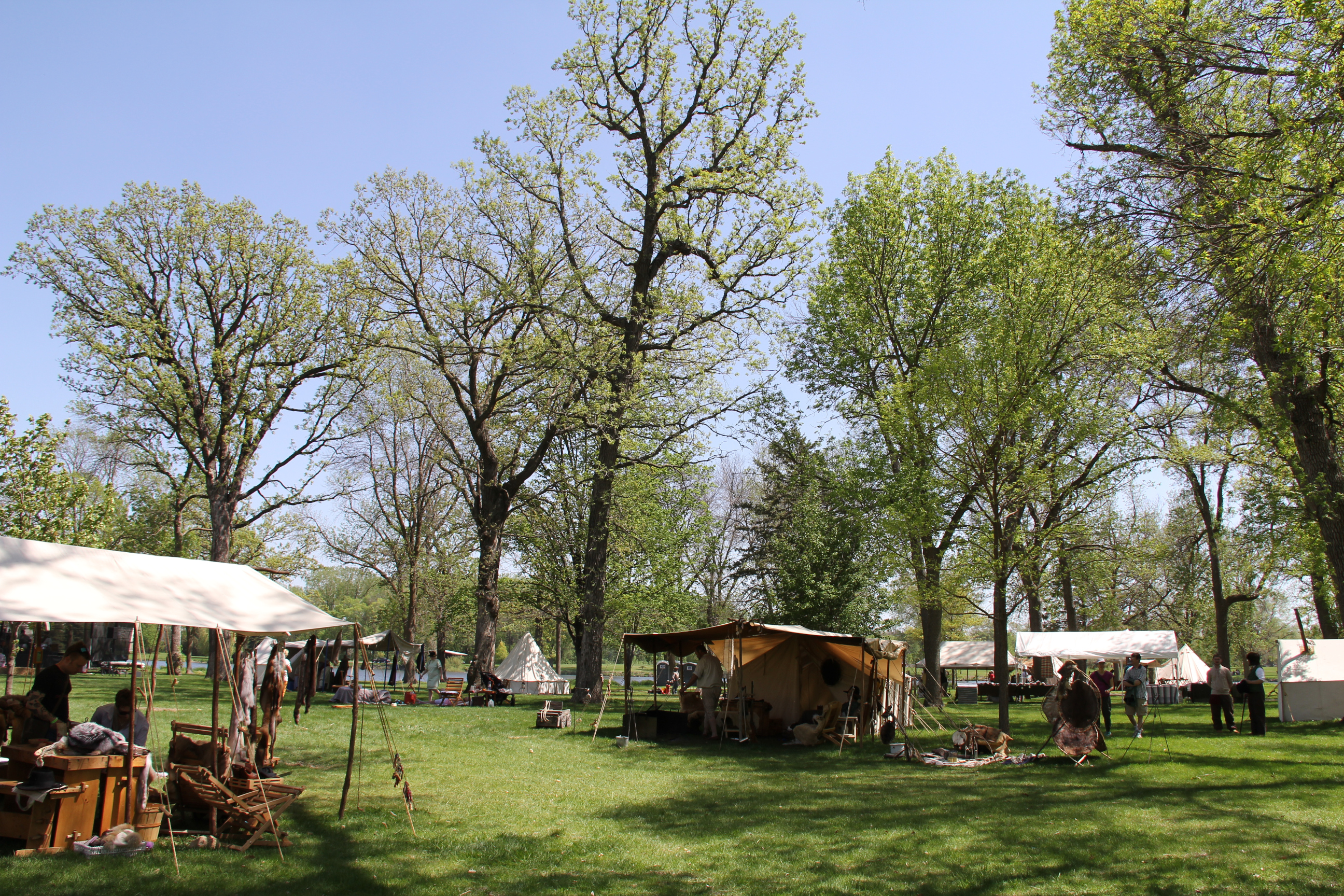
Tents were scattered across the spacious, shady grounds of riverside North Alexander Park. (Minnesota Prairie Roots copyrighted photo May 2025)

FYI: Please check back for more photos from the Riverside Rendezvous and History Festival in Faribault. This year’s Rendezvous was so successful that the Rice County Historical Society is planning a second one for 2026, but a weekend later so the event does not fall on Mother’s Day and the fishing opener weekend.

© Copyright 2025 Audrey Kletscher Helbling


Experience yesteryear at Riverside Rendezvous & History Festival in Faribault May 8, 2025

An1849 map of Minnesota Territory and more as seen through a magnifying lens inside the Rice County Historical Society Museum. Minnesota became a state in 1858. (Minnesota Prairie Roots copyrighted file photo)

HISTORY COME TO LIFE appeals to me because of the immersive experience. I learn better, retain more, when I can engage. This weekend offers ample opportunity to get into history at the Rice County Historical Society’s first-ever Riverside Rendezvous and History Festival along the banks of the Cannon River in Faribault’s North Alexander Park.

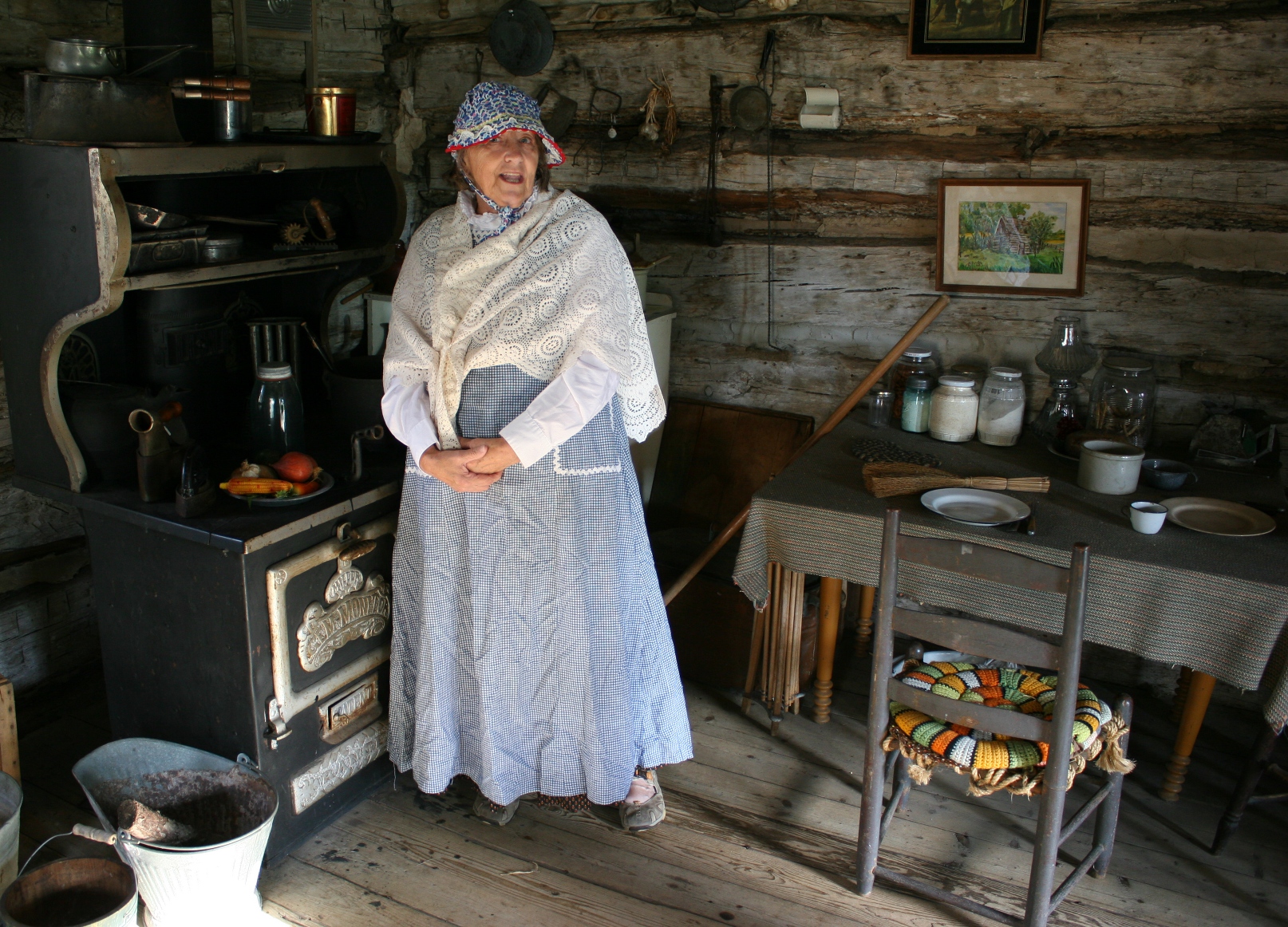
A scene inside an 1856 log cabin during a past living history event at the Rice County Historical Society. This weekend’s festival will be outdoors in a park in an encampment type setting. (Minnesota Prairie Roots copyrighted file photo)

Organizers promise that the trades, traditions and history of the 18th and 19th centuries (1701-1900) will come alive via hands-on activities, demonstrations, workshops, storytelling, music and special events. Hours are 9 a.m.-5 p.m. Saturday, May 10, and Sunday, May 11. Mothers get in free on Mother’s Day. Otherwise ticket prices are $10 for adults, $5 for children 6+ and $30 for a family pass.

Admittance buys you a whole lot of history-based entertainment, knowledge and fun. For example, the hands-on history happening all day both days includes candle making, rope making, tomahawk throwing, historic toys and games, quill making, log cutting and shops at which to shop, not trade.

This sculpture of Alexander Faribault and a Dakota trading partner stands in Faribault’s Heritage Park near the Straight River and site of Faribault’s trading post. (Minnesota Prairie Roots copyrighted file photo)

But you can learn about the fur trade at noon either day as local historian and documentary filmmaker Sam Temple talks about town founder Alexander Faribault and the fur trade. Todd Finney, a descendant of the Wahpekute band of the Dakota (original inhabitants of the land which is now Rice County), will speak at 3 p.m. Saturday and again at 11 a.m. Sunday about the Wahpekute Dakota.

On that same storytelling stage, musicians The Roe Family Singers, The Skally Line, Hannah Flowers, and Curtis and Loretta will perform at various times throughout the festival.

You can learn about hat making, pirates (yes, pirates with MN Jack Sparrow), historic clothing and weapons, things that do and don’t go boom, Civil War medical care and more during workshops and demos.

And then there are four special events, the first a Cane Pole Fishing Tournament starting at 10 a.m. Saturday. Bring your cane pole, not your rod and reel. Some cane poles will be available for participants. Saturday also brings Voyageur Games at 1 p.m. On Sunday, there’s a Tomahawk Throwing Competition at 1 p.m. followed by a Log Cutting Contest at 3 p.m.

I’ve never attended a rendezvous, so I have nothing with which to compare this event. But just reading through the schedule, I’m excited to take in this history festival with my two elementary-aged grandchildren, their parents and my husband. I expect we will all learn a lot and make some great memories.

Vendors will be selling food and beverages. (Minnesota Prairie Roots copyrighted file photo used for illustration only)

One more thing, food and beverages will be available for purchase, the food being cheese curds (no festival is complete without that deep fat fried fair food), hot dogs, corn dogs, assorted frybreads, and candy and fudge.

All in all, the Riverside Rendezvous and History Festival looks to be an interesting, informative and enjoyable event for history lovers, families and anyone who’s looking for something different to do on a beautiful spring weekend in southern Minnesota.

© Copyright 2025 Audrey Kletscher Helbling

 

A documentary, 50 years after the Vietnam War, showing in Faribault April 28, 2025

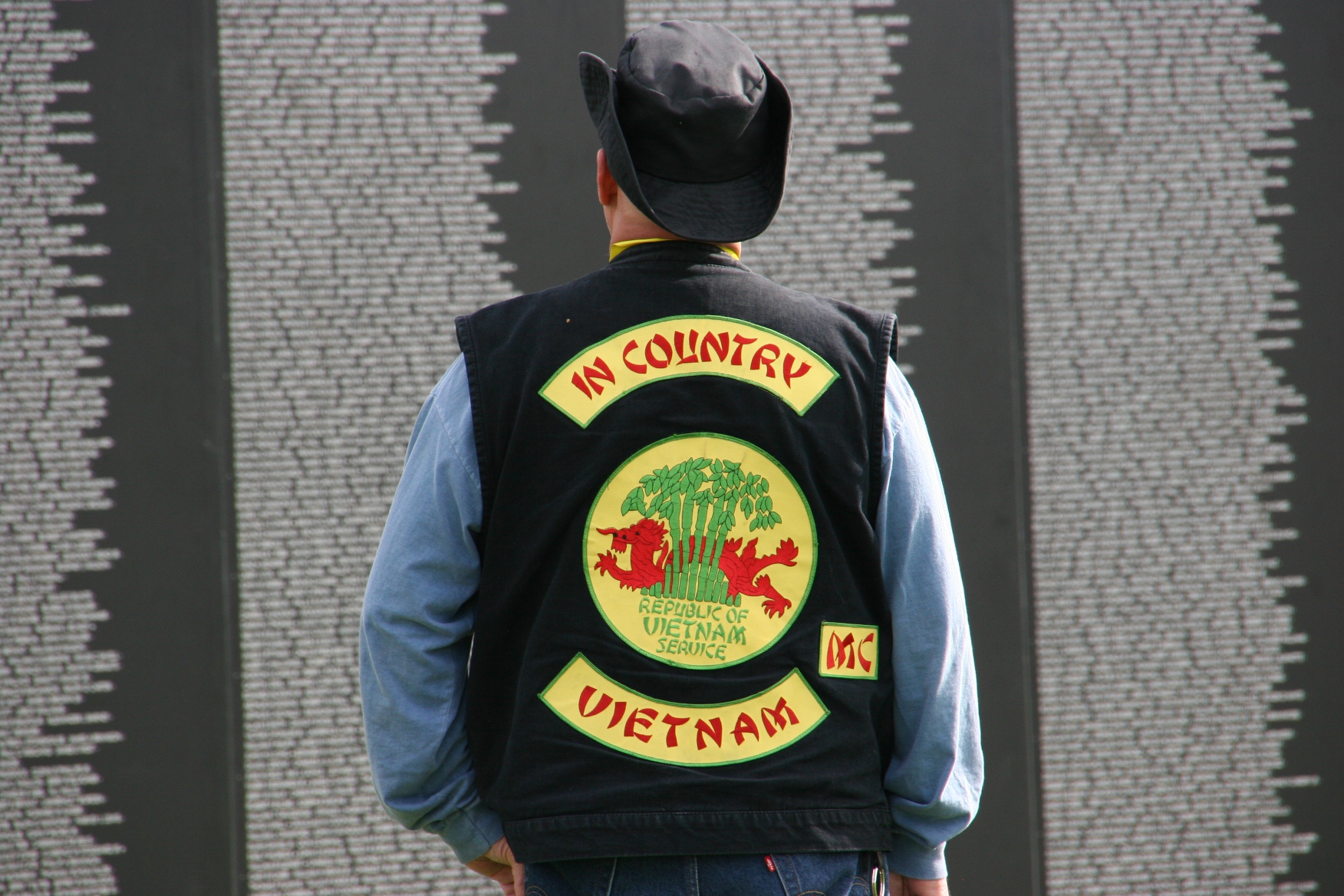
A Vietnam veteran views The Traveling Vietnam Memorial Wall when it came to the Rice County Fairgrounds in Faribault in 2016. All photos in this story were taken at that exhibit. (Minnesota Prairie Roots copyrighted file photo 2016)

MENTION THE VIETNAM WAR and the reaction will be mixed, depending. Some served. Some supported. Others protested. And some, like me, viewed the war as teens not quite old enough to vote, but old enough to care.

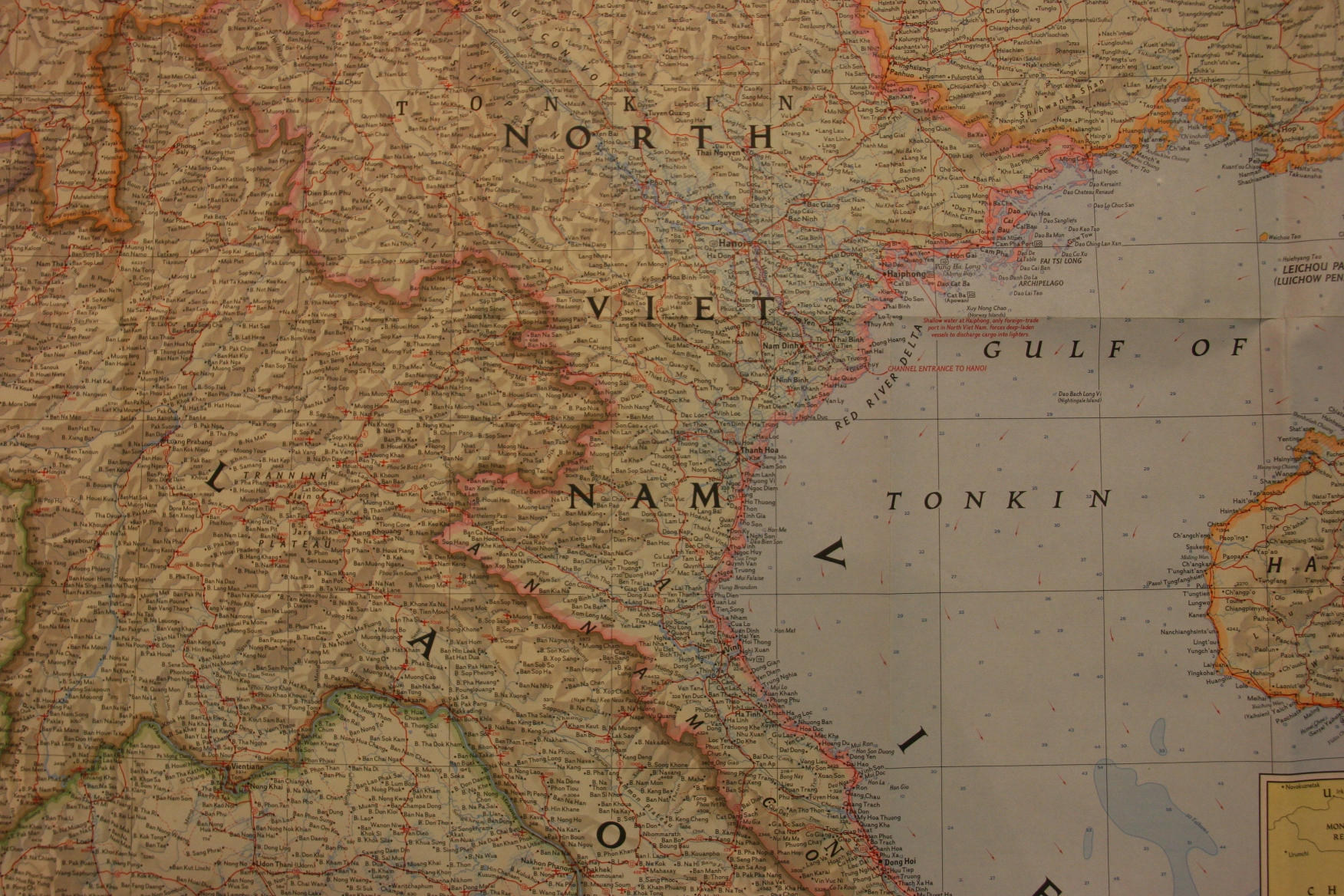
A map posted in the veterans’ lounge when the traveling wall was in Faribault. (Minnesota Prairie Roots copyrighted file photo 2016)

Fifty years ago on April 30, 1975, Communist forces seized control of the South Vietnamese capital, ending the war in what became known as “The Fall of Saigon.” Two years prior, with the signing of the Paris Peace Accords, the U.S. ended its direct military involvement in the conflict.

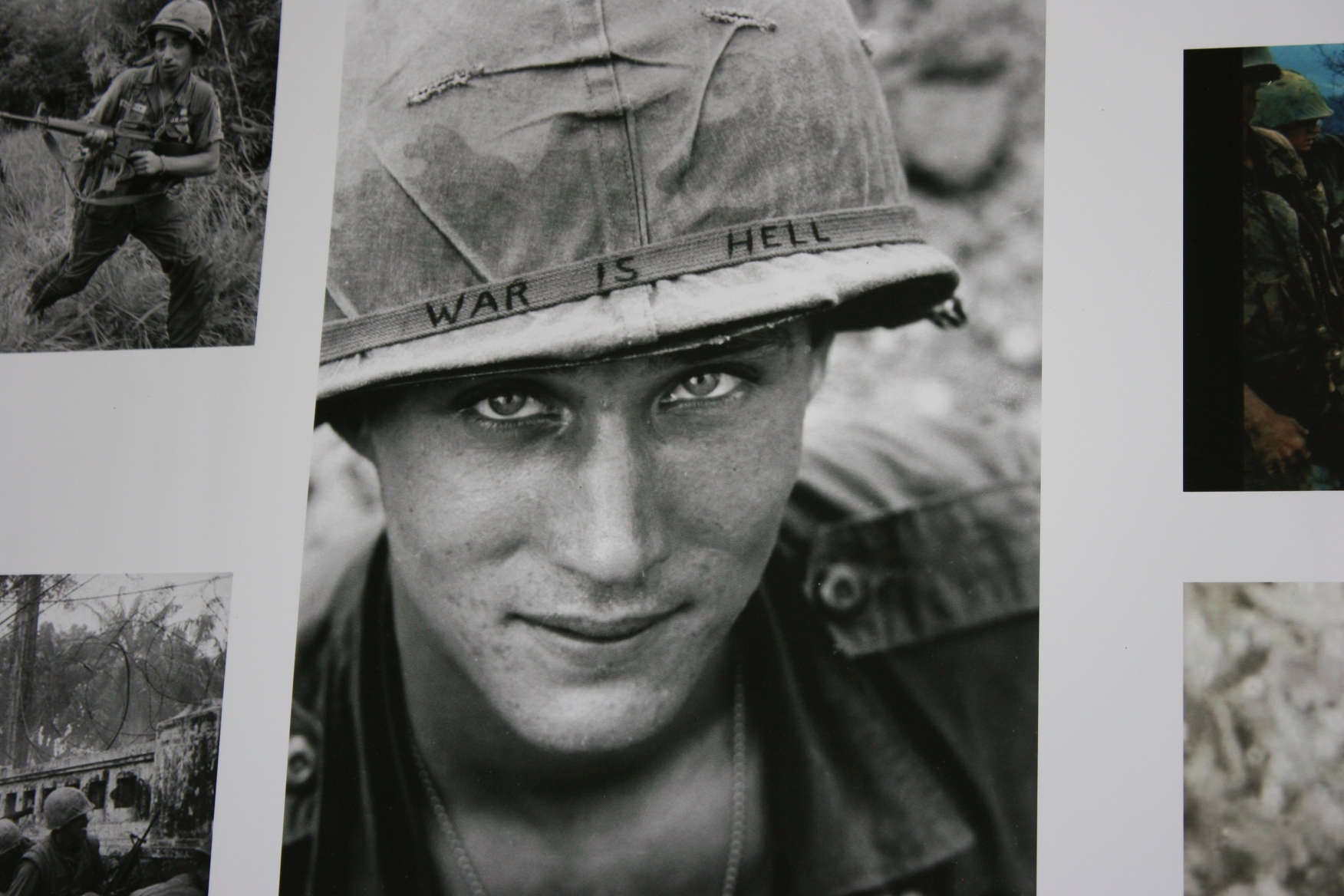
A soldier’s photo displayed in the traveling exhibit. (Minnesota Prairie Roots copyrighted file photo 2016)

But those two events did not end the pain and suffering or the issues which still linger and swirl regarding the Vietnam War.

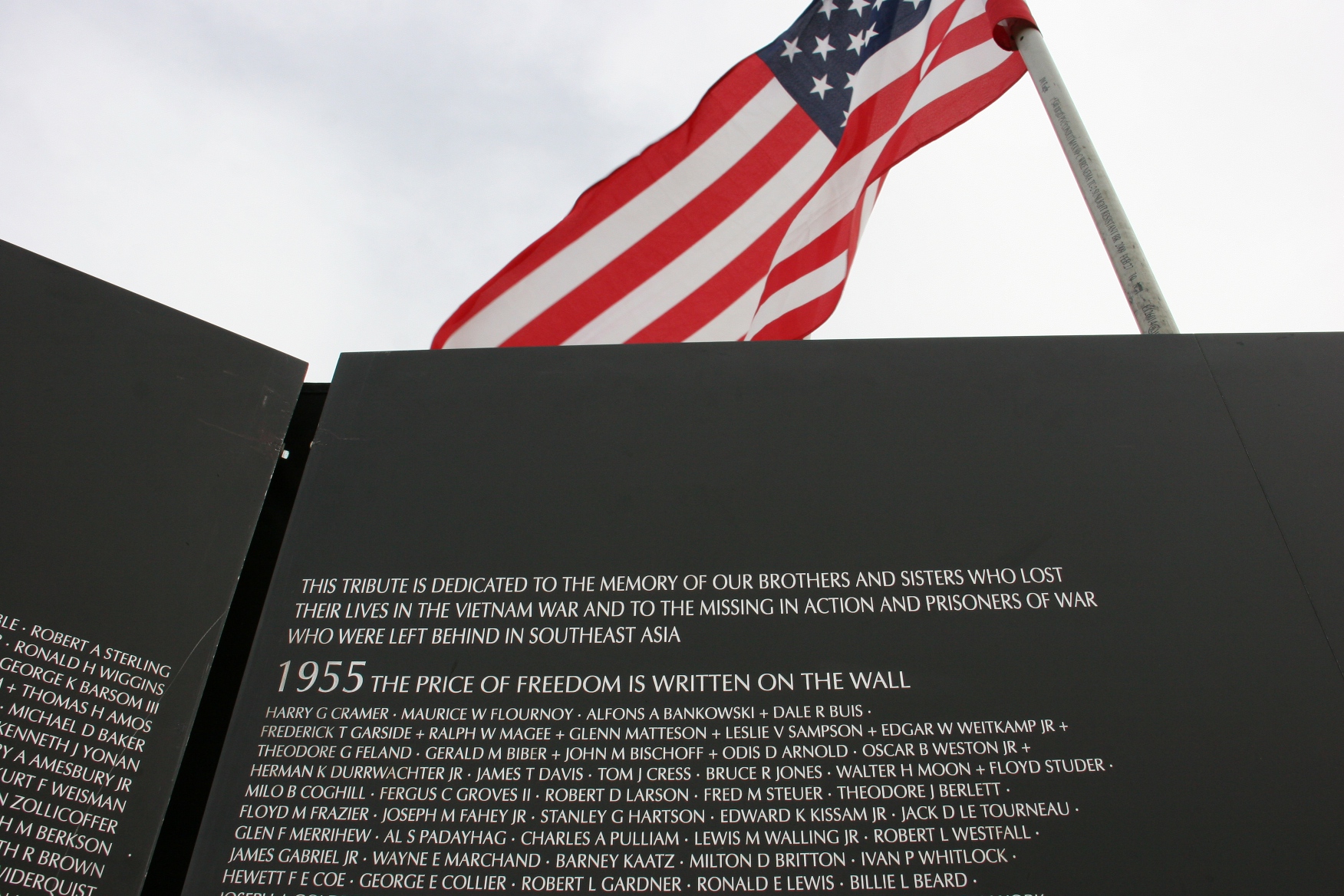
The purpose of the wall and the names thereon. (Minnesota Prairie Roots copyrighted file photo 2016)

At 6:30 p.m. on Tuesday, April 29, American Legion Post #43, Unit #43 Auxiliary and Operation: 23 to Zero are hosting a showing of the 47-minute documentary film, “Truths and Myths About the Vietnam War,” at the Legion in Faribault. The film was produced by the Atlanta Vietnam Veterans Business Association “to honor those who served in the Vietnam War, by providing factual information to address the decades of misinformation that has presented a skewed historical perspective of the war,” according to the AVVBA website. “We believe this a very important and long overdue film, one that captures the information and lessons learned most Vietnam War veterans want reported about the war.”

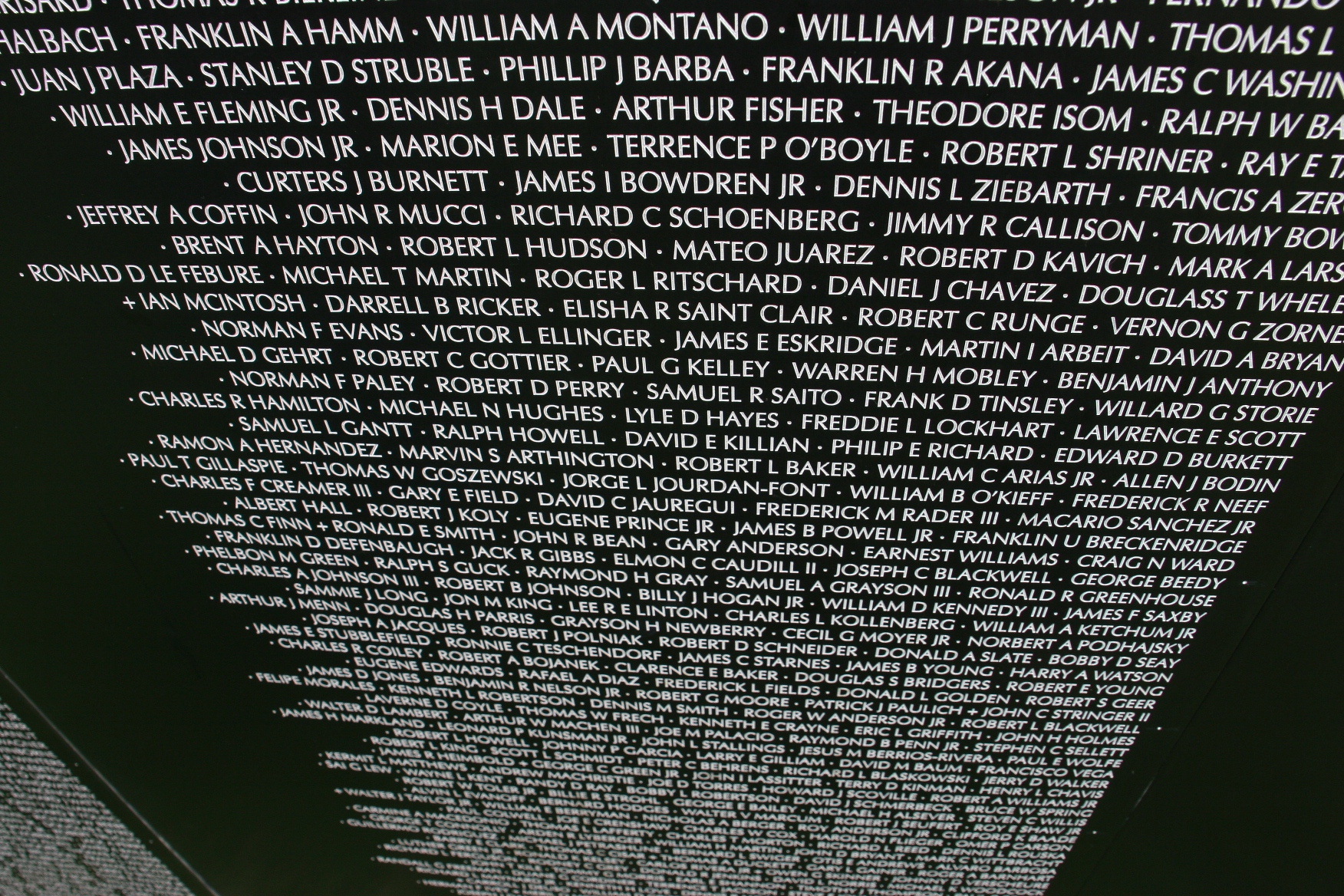
I lifted my camera and pointed the lens down at a panel filled with names of soldiers. (Minnesota Prairie Roots copyrighted file photo 2016)

Now I’m always interested in learning and considering different viewpoints. And it seems this 2024 documentary by Emmy Award-winning film producer David Naglieri will offer me some new insights and perspectives via a Medal of Honor recipient, those who served, and historians. The film promises to address many facets of the Vietnam War from media coverage to anti-war protests to politics to the treatment of returning soldiers and more.

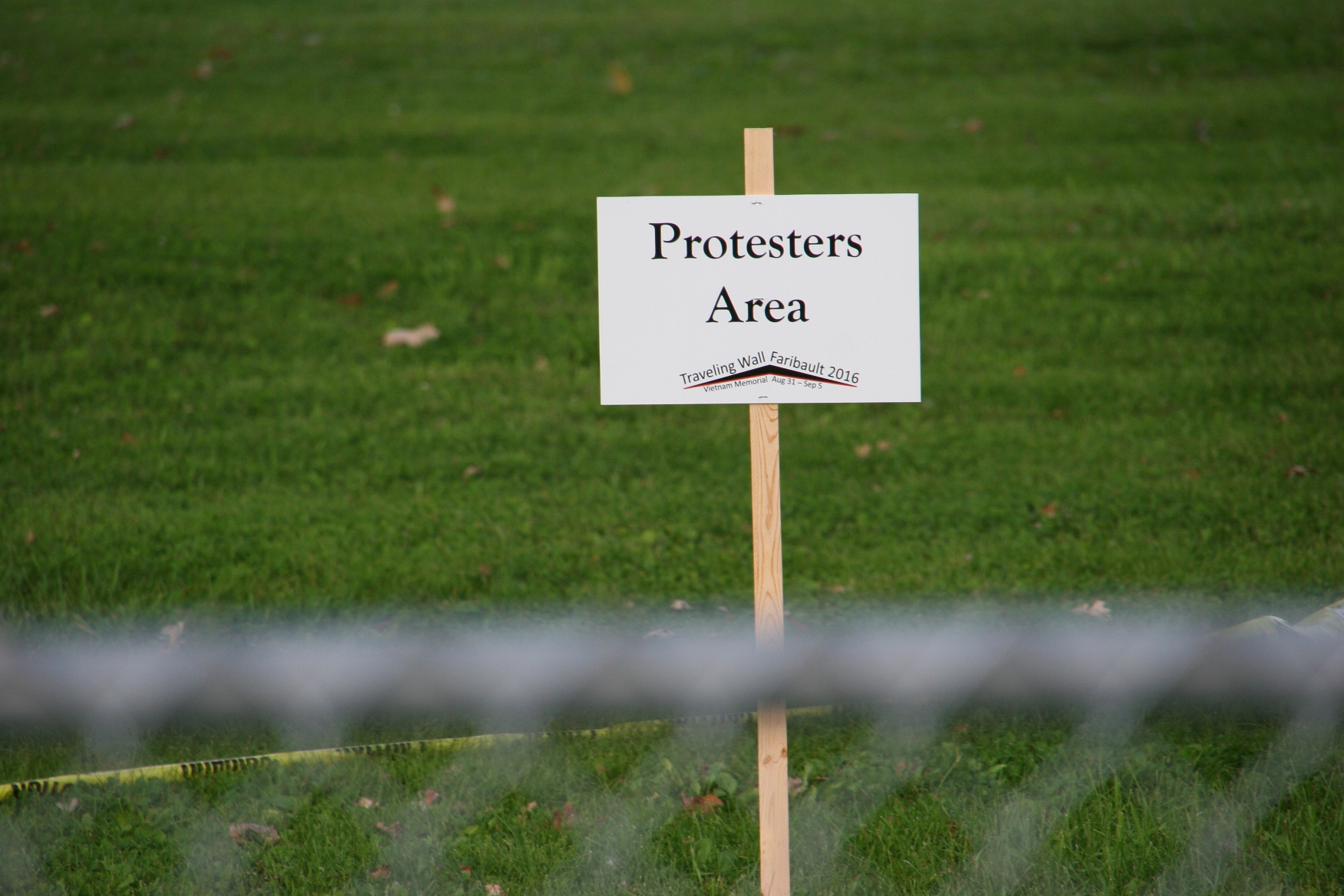
An area set aside for protesters on the northwest side of the fairgrounds. (Minnesota Prairie Roots copyrighted file photo 2016)

I well remember how poorly returning American soldiers were treated by many who opposed the war. They were not respected for their service. Rather, they were met with protests and disdain. I’m all for free speech and expressing our opinions via protests. But it had to be hard, really hard, for those Vietnam veterans, most of whom were drafted. I remember my own dad, who served on the front lines during the Korean War (“The Forgotten War”), sharing how he never felt supported and appreciated upon his return home.

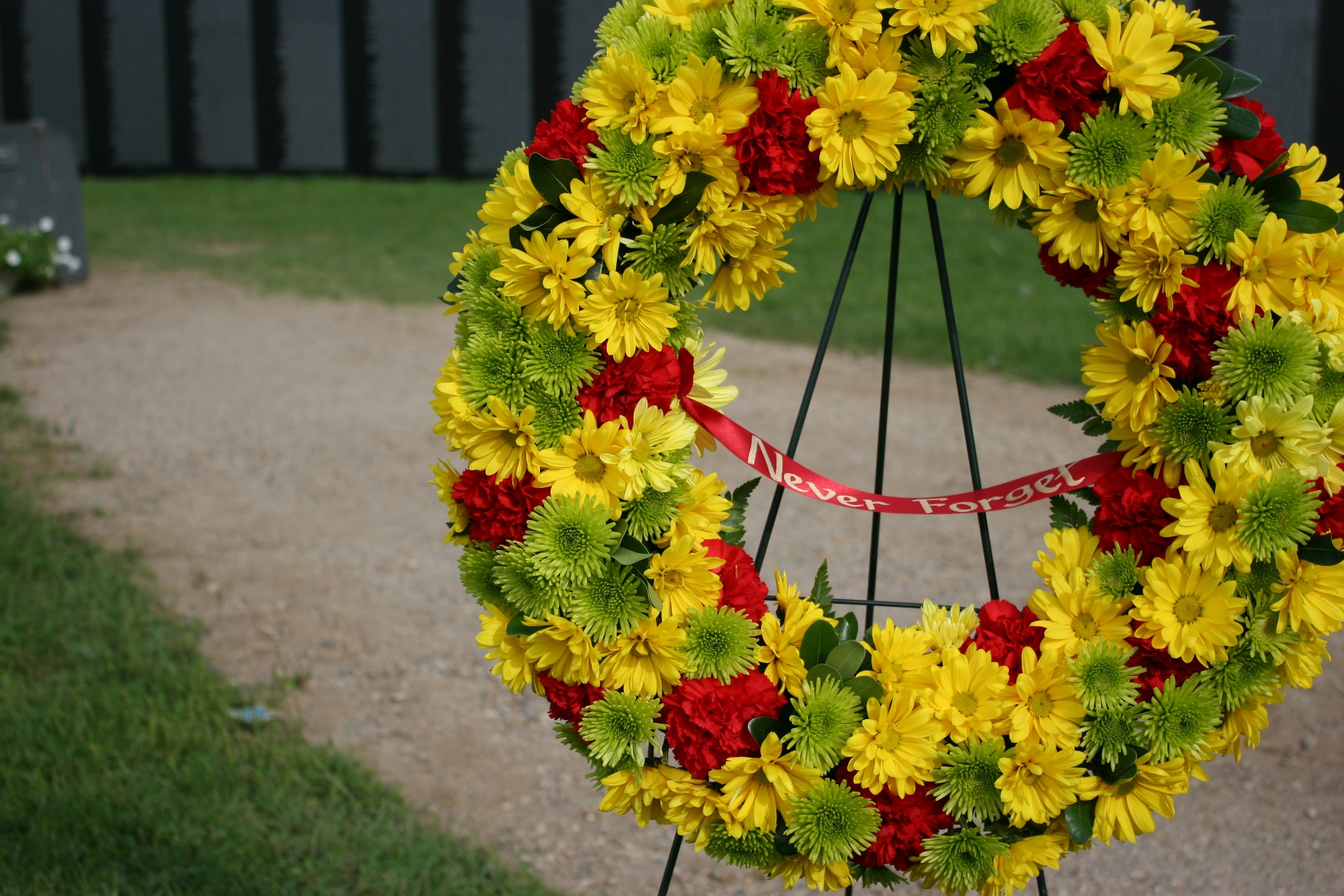
Multiple wreaths featured words of remembrance. (Minnesota Prairie Roots copyrighted file photo 2016)

Tuesday’s event at my local Legion, while focusing on the Vietnam War, will honor all veterans and offer them free wings during Wing Night. A social hour runs from 5:30-6:30 p.m. followed by the film screening from 6:30-8 p.m. The event is free and open to the public.

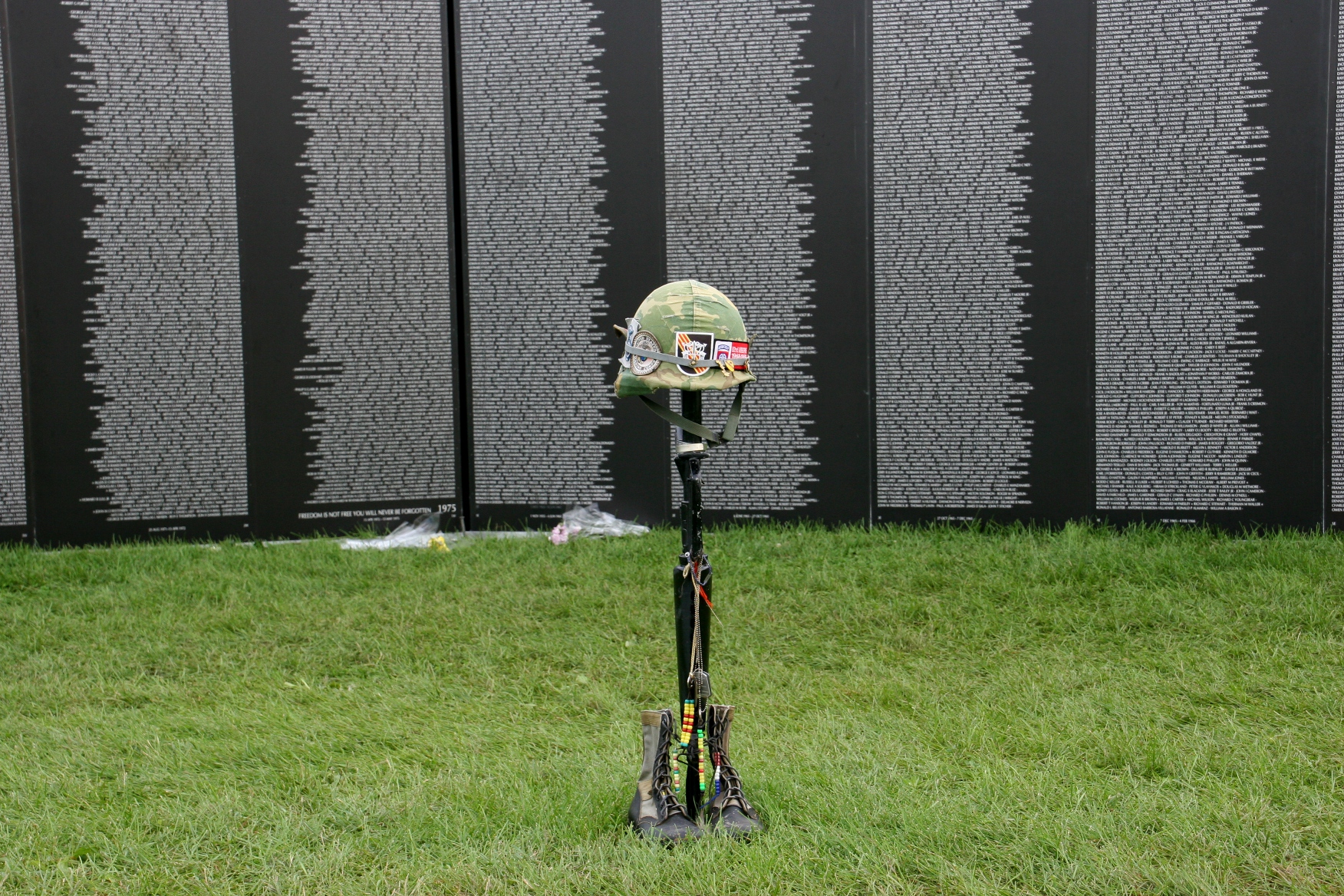
The ultimate honorary salute to a fallen soldier. (Minnesota Prairie Roots copyrighted file photo 2016)

I encourage you to attend, whether you are a veteran or friend/family member; were a war protester; were, like me, a Vietnam War-era teen (who wore a POW bracelet); or simply want to learn more about a war which claimed 58,220 American and millions of other lives and left countless traumatized.

#

FYI: You can watch “Truths and Myths About the Vietnam War” online by clicking here.

If you served in the Vietnam War, lost a loved one in the war, protested or otherwise, please feel free to share your experiences/thoughts in a respectful comment.

© Copyright 2025 Audrey Kletscher Helbling
 

From Northfield: Of bank robbers & books, lots of books April 22, 2025

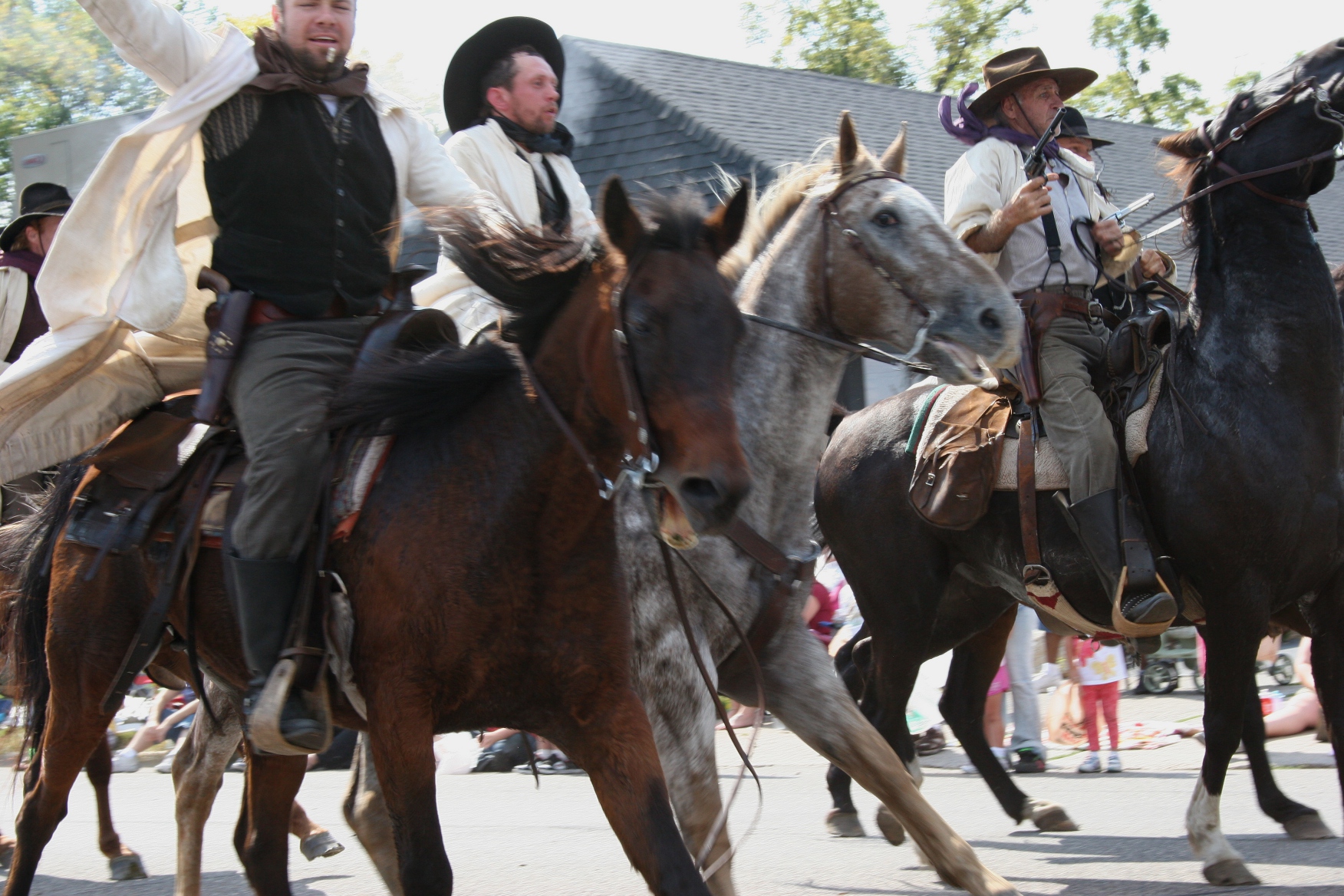
The James-Younger Gang shooting it out during a past Defeat of Jesse James Days parade. (Minnesota Prairie Roots copyrighted file photo)

NORTHFIELD, MINNESOTA is best-known as the community that, on September 7, 1876, thwarted plans by the James-Younger Gang to rob the First National Bank. Townspeople stood their ground against the outlaws, ending in the deaths of the acting bank cashier, a Swedish immigrant and two of the robbers before the gang fled. Northfield marks the failed bank robbery each September with a Defeat of Jesse James Days celebration. That draws 100,000-plus to this city of some 21,000.

Books I’ve purchased at a used book sale, not in Northfield, but in Faribault. (Minnesota Prairie Roots copyrighted file photo)

This week the masses will once again descend on this riverside college town, not for a historical occasion, but rather for one of Minnesota’s biggest used book sales, the Great Northfield Minnesota Book Fair. Certainly, crowds will not swell to levels gathered for the historical event in September. But they will be large, as I can attest from shopping past book fairs, although not recently.

The sale, sponsored by the Northfield Hospital Auxiliary, features an estimated 70,000 donated books, musical recordings, games and puzzles filling tables inside the Northfield Ice Arena. The goal is to raise $100,000 “to enhance healthcare in the Northfield Area.” That means funding special projects at the local hospital and clinics, supporting local health organizations and offering health education scholarships. The book fair began in 1961 and in 2018 hit $1 million in total sales.

Doors for this year’s sale open at 5 p.m. Tuesday, April 22, closing for the day at 9 p.m.. The fair continues until Saturday, April 26, with the following hours: 9 a.m.-9 p.m. Wednesday-Friday and from 8 a.m.-3 p.m. Saturday. Friday is half-price day. Saturday is $5 bag day until 12:30 p.m. From 1-3 p.m. Saturday everything is free. Yes, free.

Puzzles will also be sold at the Book Fair in Northfield. (Minnesota Prairie Roots copyrighted file photo)

Shopping this book fair almost leaves you feeling like you’re robbing the bank given the reasonable prices. Base prices for paperbacks are $1 and for hardcovers, $2, according to the Book Fair website. Of course, some are priced higher depending on rarity or newness. Musical offerings will cost a few bucks. Puzzles and games are priced around $5.

I’ve never shopped the first, or even the second or third, day of the sale. I suppose I’ve missed out by waiting, especially when looking for children’s books. But, hey, with a starting inventory of 70,000, it takes a while for the supply to diminish. There’s still plenty for people to haul out (and they do, by the wagon and box loads) during Saturday’s two-hour freebie close-out.

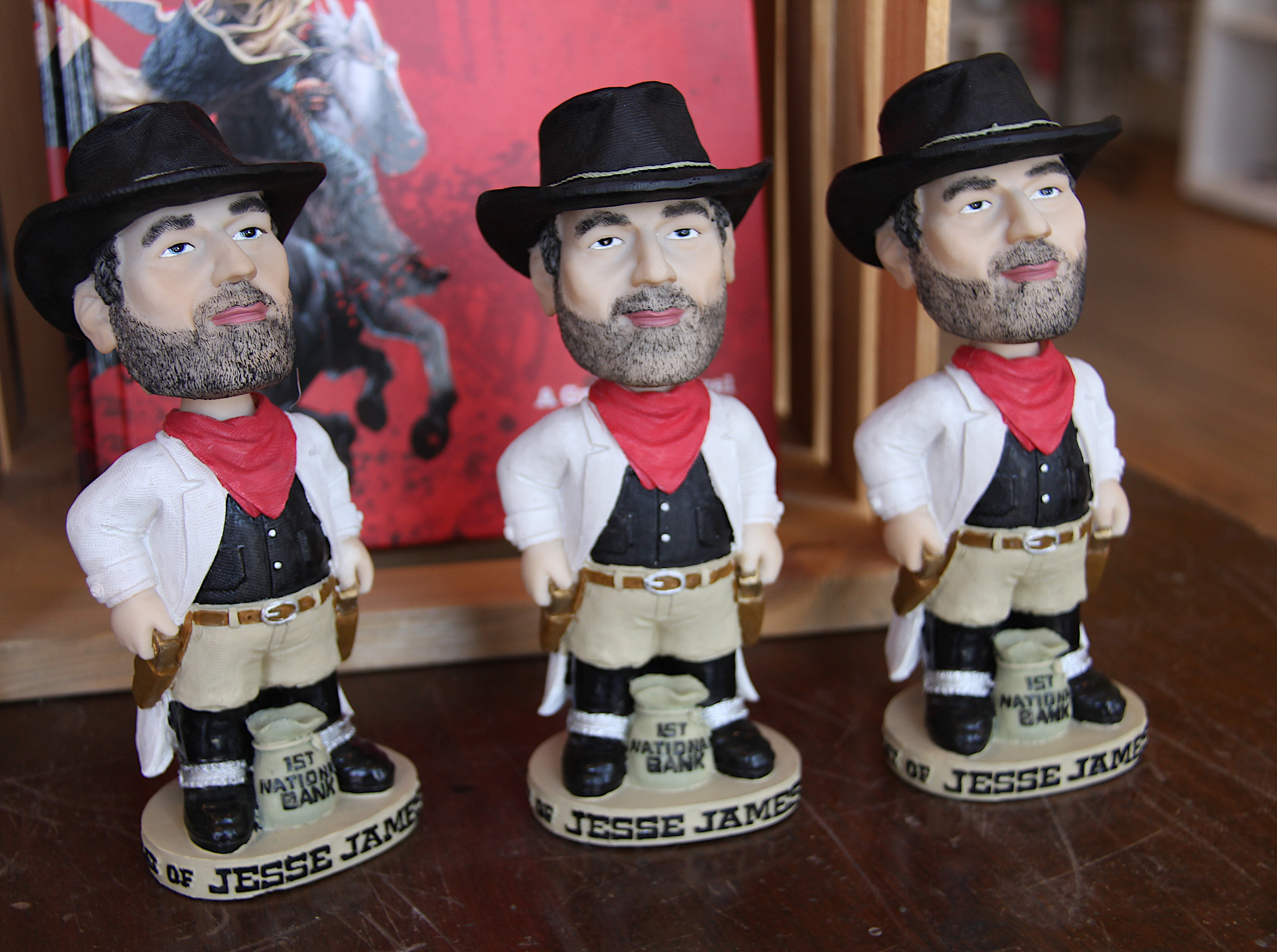
Defeat of Jesse James Days bobbleheads for sale at the Northfield History Center. (Minnesota Prairie Roots copyrighted photo April 2025)

Some 300 volunteers sort through donations, set up and run the sale in the sprawling ice arena with books separated into more than two dozen categories. The organization and efficiency are truly something to behold. The sheer size of this book fair is overwhelming. But then again, Northfield is a city that values books, knowledge and learning, as evidenced by its two liberal arts colleges, an independent bookstore, an engaged public library and an active writing community, especially of poets. That Northfield hosts one of Minnesota’s biggest book fairs should come as no surprise. This is a community which embraces books, and stands up to bank robbers.

© Copyright 2025 Audrey Kletscher Helbling


Chief Taopi: Man of peace, community leader & more April 21, 2025

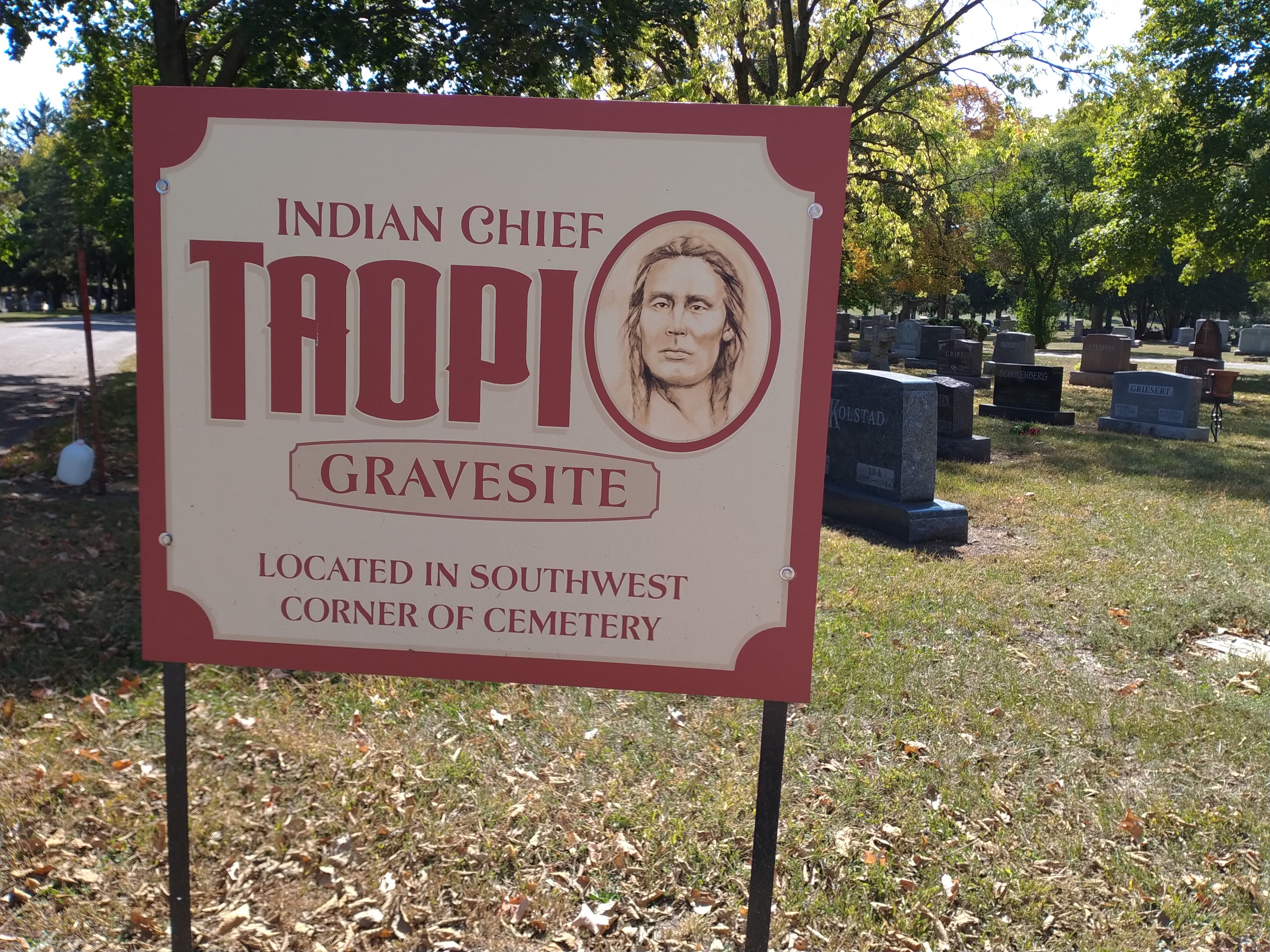
Prominent signage at Maple Lawn Cemetery directs visitors to the gravesite of Chief Taopi, “Wounded Man.” He was wounded in a battle with the Ojibwe. (Minnesota Prairie Roots copyrighted file photo)

HE FOUND HIMSELF AT ODDS with his own people. A “Farmer Indian” among “Blanket Indians.” A peace promoter among those who favored war. He was Chief Taopi, a member of the Little Crow Band of the Mdewakanton Dakota. He’s buried in Faribault, at Maple Lawn Cemetery.

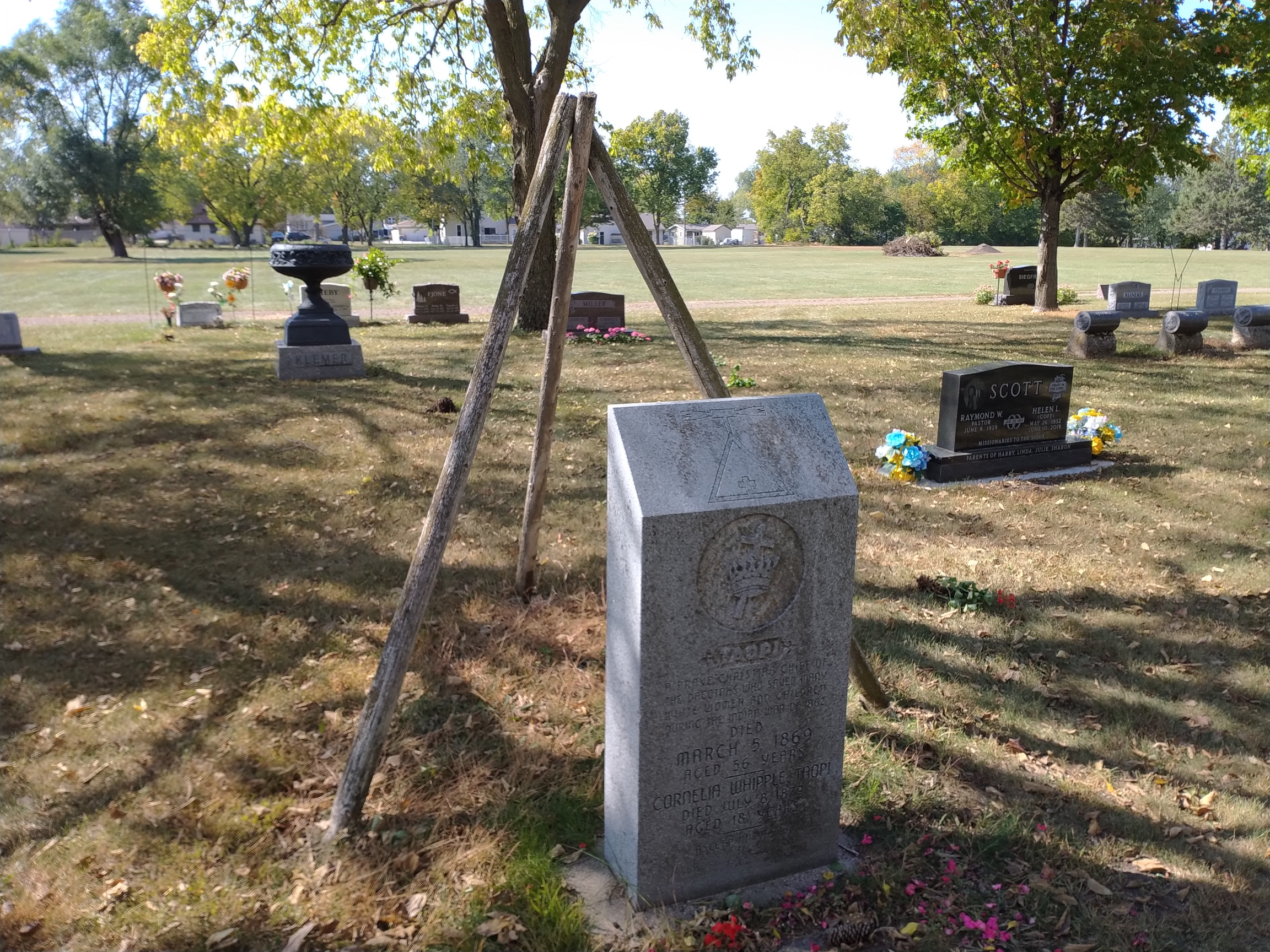
A tipi formation easily identifies the burial site of Taopi and his daughter, Cornelia Whipple Taopi. She died at age 18. He died at 56. (Minnesota Prairie Roots copyrighted file photo)

Recently, I attended a presentation about Taopi by Rice County Historical Society Executive Director Dave Nichols. It’s not the first time I’ve listened to local talks on the history of Native Americans in Minnesota, focused on those who called Faribault home. Each time I learn something new.

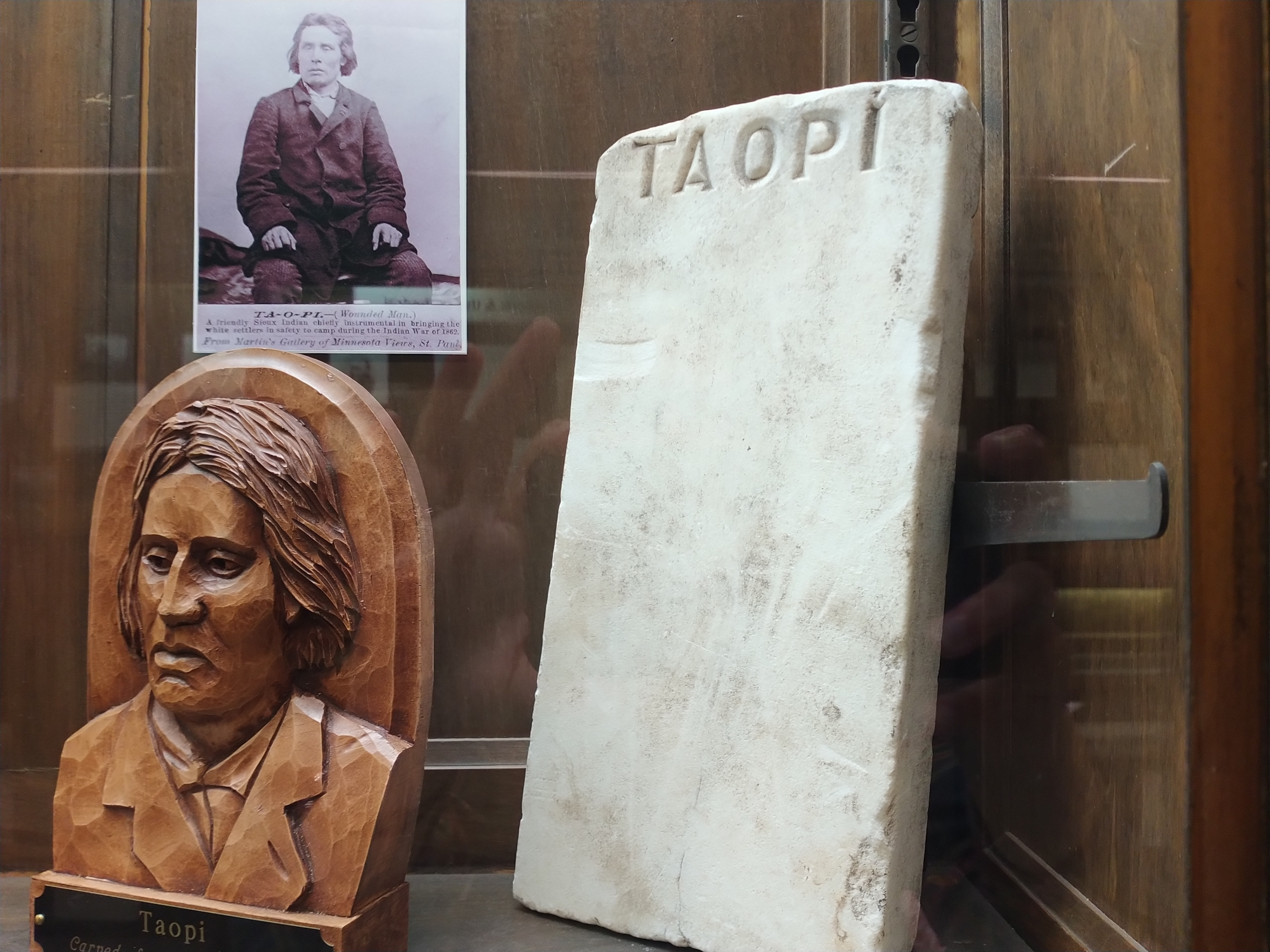
A Taopi exhibit at the Rice County Historical Society. The carving (by Ivan Whillock) and photo show Taopi with short hair as a “Farmer Indian.” (Minnesota Prairie Roots copyrighted file photo)

During his talk, Nichols called Taopi “a poster child for what an assimilated Dakota looks like.” And he didn’t mean that in a negative way. “You either assimilated or you would be destroyed,” Nichols said, qualifying that he wasn’t saying assimilation was right. Understood.

As settlers moved into Minnesota, pushing onto Native lands, the Dakota found themselves facing many challenges. Some, like Taopi, gave up their culture and adopted European ways, believing that was the only way to survive. That included learning to farm as the White man farmed. Taopi was considered the leader of the “Farmer Indians,” a term assigned during the U.S. Census. Dakota who continued in traditional cultural ways were labeled “Blanket Indians.”

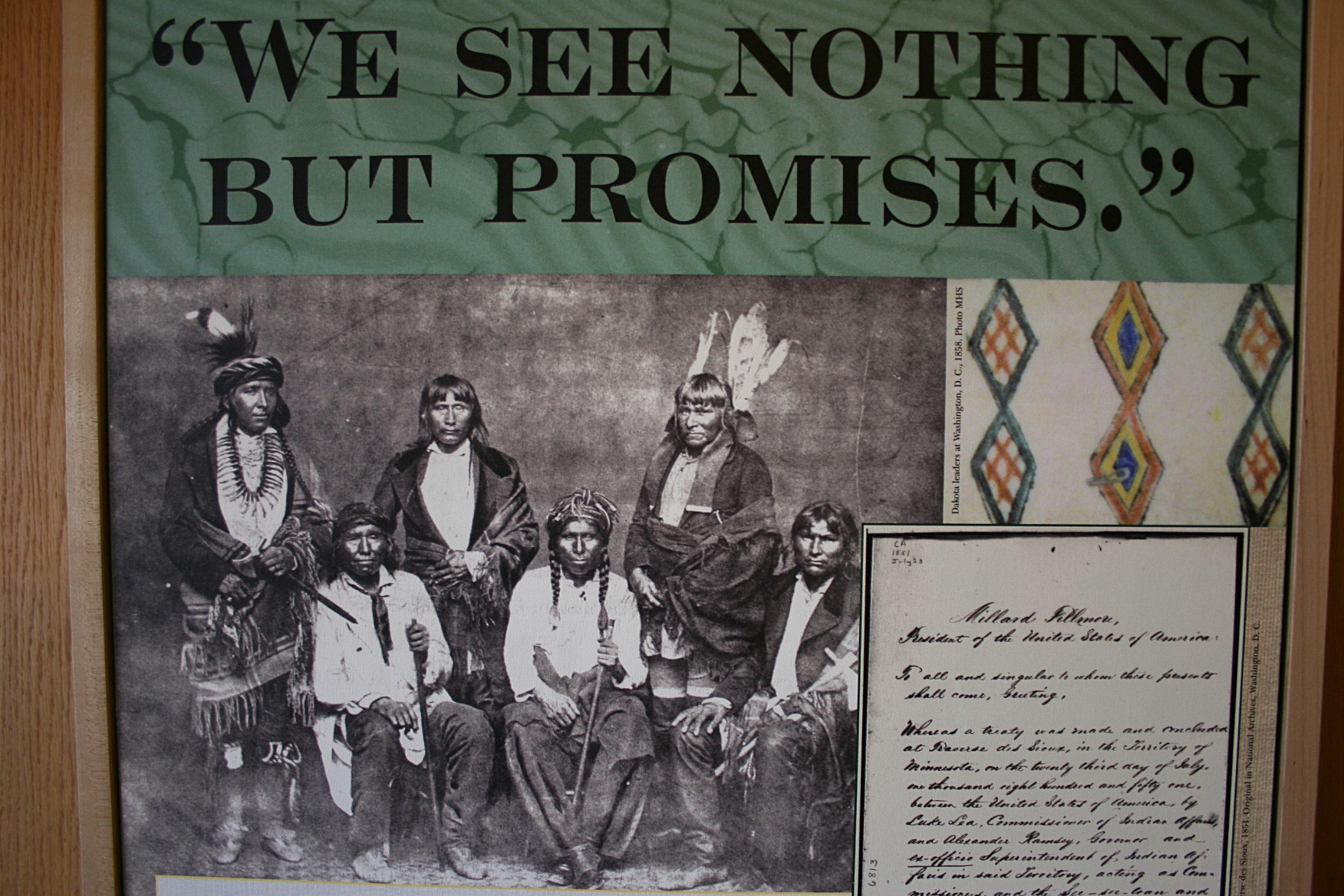
A photo panel at the Traverse des Sioux Treaty Center in St. Peter shows Dakota leaders photographed in Washington D.C. in 1858. The photo is from the Minnesota Historical Society. The war followed broken treaties. (Minnesota Prairie Roots copyrighted file photo)

Taopi farmed and established a school and mission, Hazelwood Republic, with chiefs Wabasha and Good Thunder on the Lower Sioux Reservation along the Minnesota River in southwestern Minnesota, Nichols shared. Because I grew up in that region, I’ve always been particularly interested in the Indigenous Peoples who were original inhabitants of the land, including Redwood and Brown counties. The region became the epicenter of the U.S.-Dakota War of 1862, which centered around issues of land, hunger and broken promises.

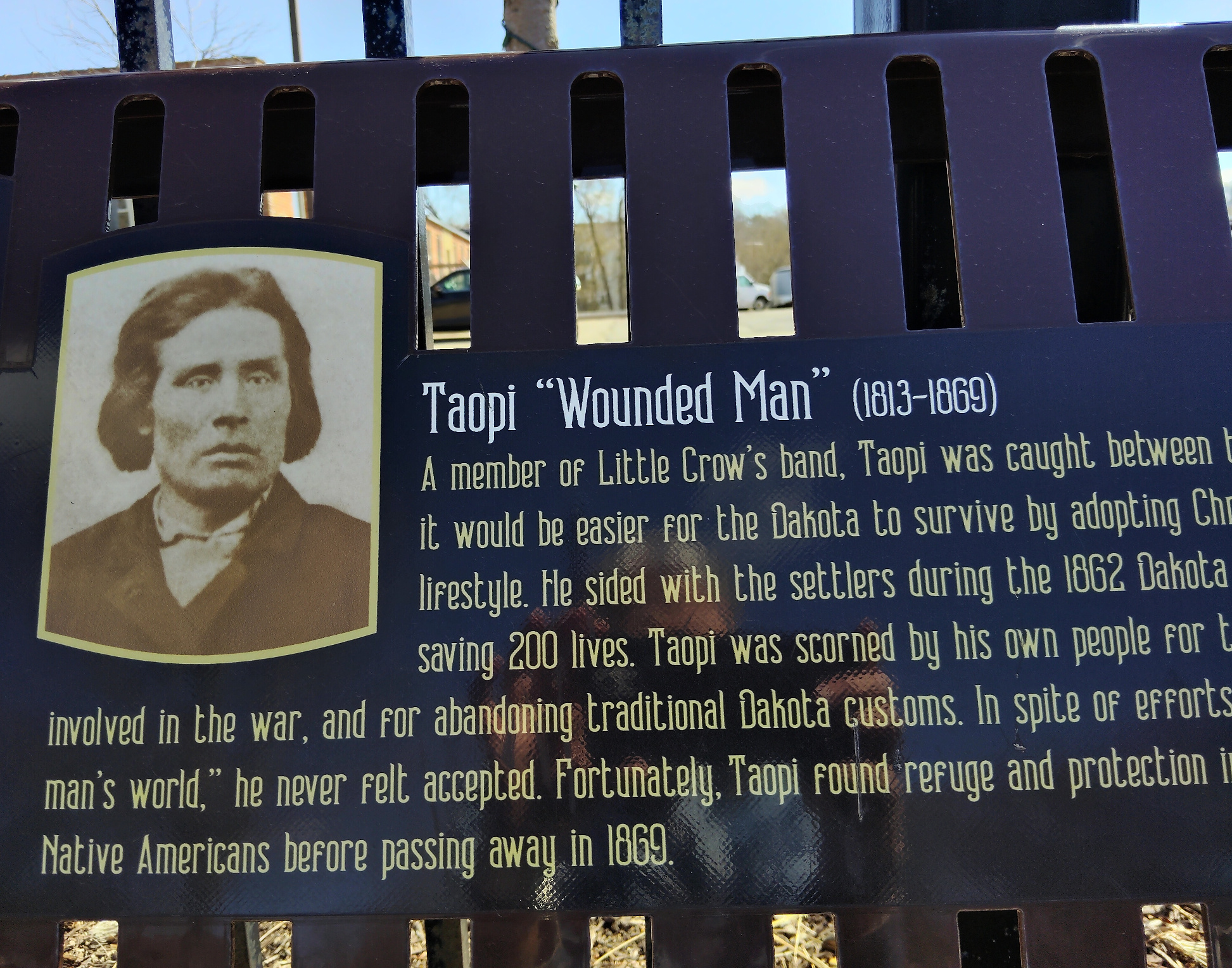
An historic-themed bench on the corner of Central Avenue and Sixth Street in Faribault highlights Taopi. (Minnesota Prairie Roots copyrighted photo April 2025)

That war facilitated the banishment of most Native Americans from Minnesota. If Taopi and other Dakota would have had their way, that war may not have happened. He led the Peace Party opposed to war, while his cousin, Little Crow, led the War Party, Nichols said. Taopi protected White settlers during the short war which claimed countless lives on both sides.

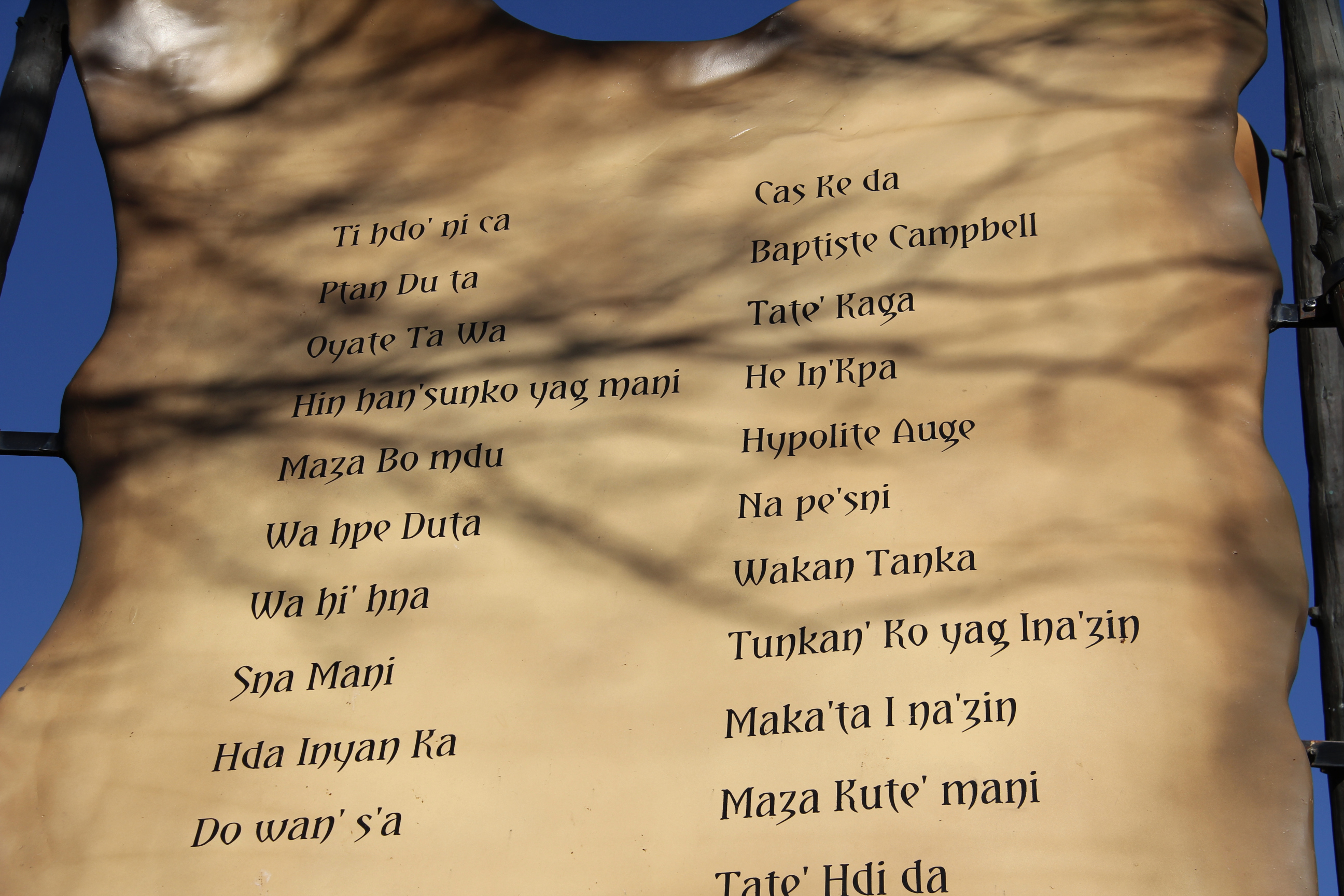
The names of the Dakota who were hung are listed at Reconciliation Park in Mankato. (Minnesota Prairie Roots copyrighted file photo)

Post-war, though, it mattered not to the U.S. government whether you were a Dakota person who opposed the war or who engaged in war, according to Nichols. All were considered guilty, imprisoned and eventually exiled from Minnesota (although not the Mdewakanton). Thirty-eight Dakota men were hung on December 26, 1862, in Mankato (40 miles from my community) during the largest mass execution ever in the U.S. It’s truly a tragic event in Minnesota history. But what multiples the awfulness is that 1,600 Dakota prisoners were marched to Mankato to watch the hangings before being marched back to Fort Snelling. That was new information I had not previously heard and it troubles me greatly.

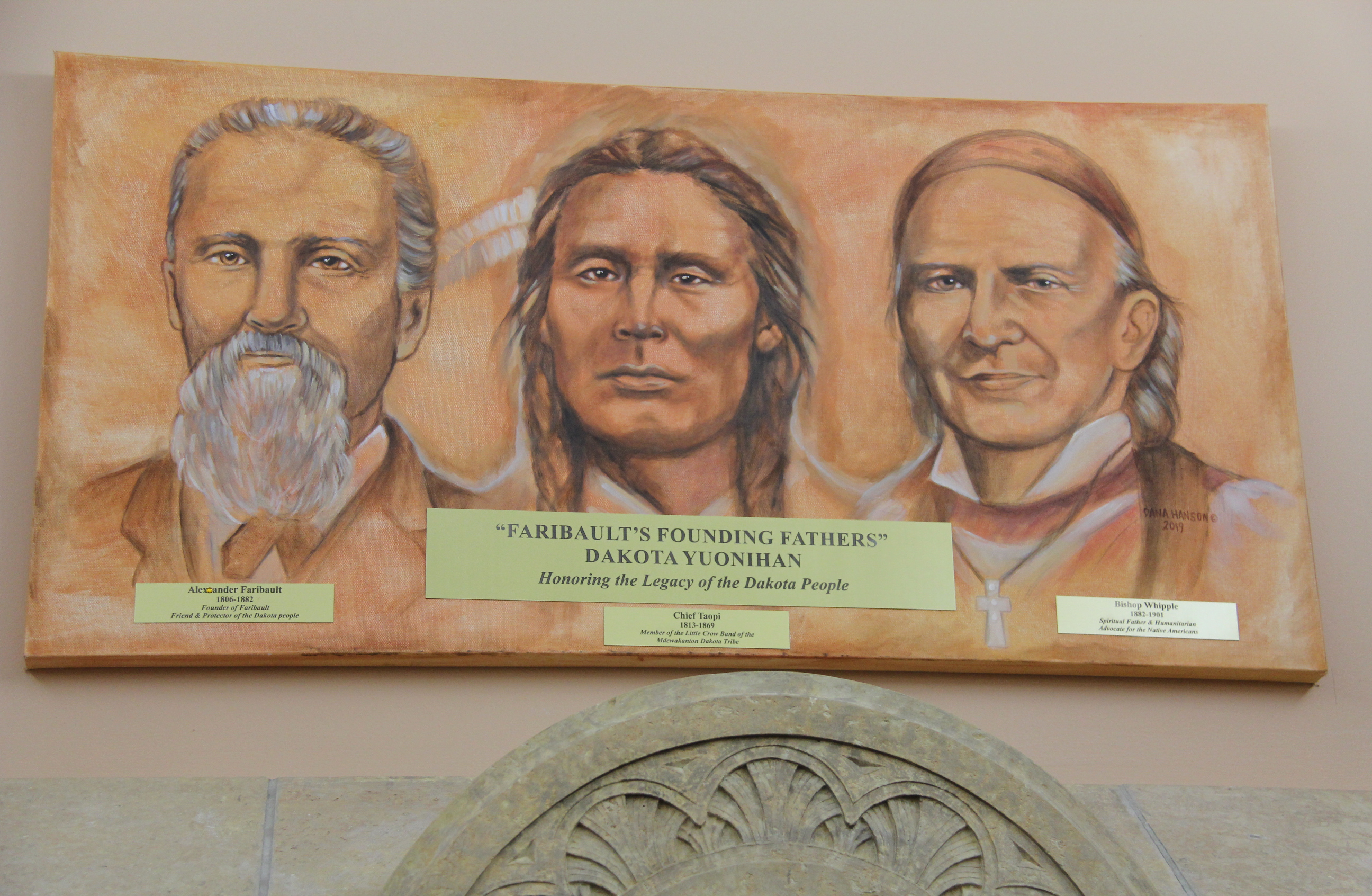
These portraits by Dana Hanson of Faribault’s Founding Fathers, Alexander Faribault (left to right), Taopi and Bishop Henry Whipple, hang in Buckham Memorial Library. (Minnesota Prairie Roots copyrighted file photo)

Taopi avoided prosecution and banishment, eventually landing in Faribault with 180 other Mdewakanton. About 80 were family members, according to Nichols. It was his friendship with Bishop Henry Whipple, who had long worked with and advocated for Native Peoples, that brought Taopi here. Town founder Alexander Faribault housed “the Peacefuls,” as the 180 were considered, on his land. They lived in tipis and lodges.

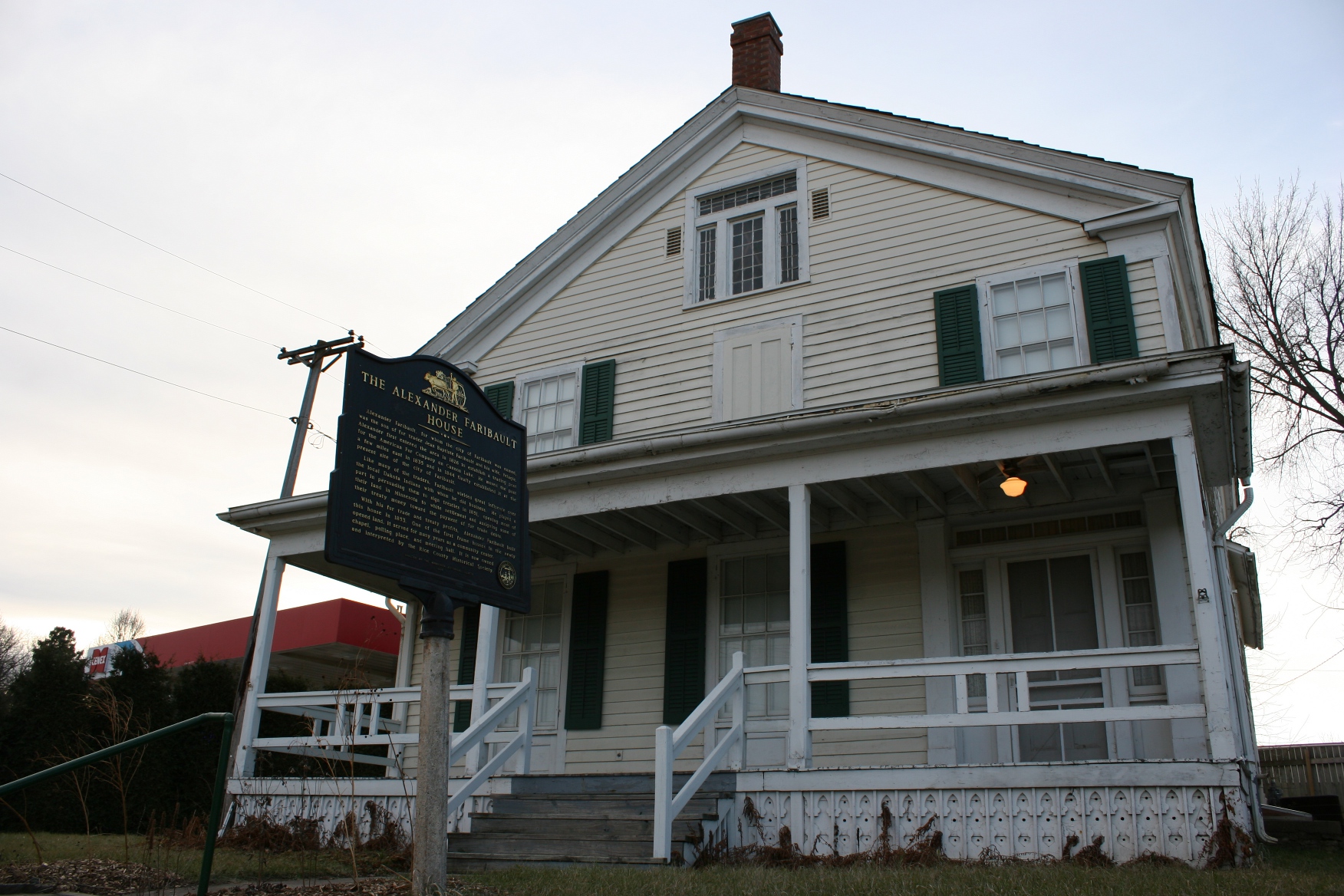
The home of fur trader and town founder Alexander Faribault. (Minnesota Prairie Roots copyrighted file photo 2017)

As you might rightly guess, not everyone in Faribault liked the Mdewakanton living among them. A wall was built in the area around Alexander Faribault’s house to protect them. Taopi became a community leader, said Nichols. As such he represented his people and mediated when necessary.

By the time of Taopi’s 1869 death, 90 of the 180 Mdewakanton who settled in Faribault had already left. But they left behind an imprint upon the land, not necessarily seen or appreciated even today. Yet, efforts are underway to change that with The Faribault Dakota Project. Nichols couldn’t speak specifically to that, only to say that local historian Jeff Jarvis has been working with the Dakota community on how to memorialize and honor the Indigenous Peoples of Faribault. That also includes the Wahpekute Dakota.

Peace Park, a protected Dakota burial site (but unmarked as such) next to the parking lot of Buckham Memorial Library. (Minnesota Prairie Roots copyrighted file photo)

Among the locales discussed by those attending Nichols’ talk was Peace Park, a triangle-shaped slice of property near Buckham Memorial Library. Alexander Faribault donated the land to the city with the stipulation that it never be developed. According to Nichols, the park is a protected burial site, where at least two Dakota are buried. Their bones were unintentionally uncovered in 1874 and then reburied. Today nothing marks that land as a cemetery. Rather a faith-based WWII monument stands in Peace Park. There is no reference to the Dakota. Perhaps some day this will be righted and the land publicly recognized as sacred ground. That is my hope as I continue to learn about the Dakota who once called Faribault home. I am grateful for every opportunity to grow my knowledge of them and their importance in local and state history.

#

FYI: Here are some suggested Dakota-connected places to visit in Faribault: the Rice County Historical Society Museum, Maple Lawn and Calvary cemeteries, the Cathedral of Our Merciful Saviour, a mural on the Central Park Bandshell and information on an historic-themed bench along Central Avenue.

Two fun facts: A small southeastern Minnesota town in Mower County near the Iowa border is called Taopi, named after the Mdewakanton Dakota chief. It suffered a devastating tornado in April 2022. The town celebrates its 150th birthday this year.

A woman attending Dave Nichols’ talk named her horse Taopi after Chief Taopi.

© Copyright 2025 Audrey Kletscher Helbling

 

“Testify,” an enlightening & unsettling exhibit focused on Black history April 18, 2025

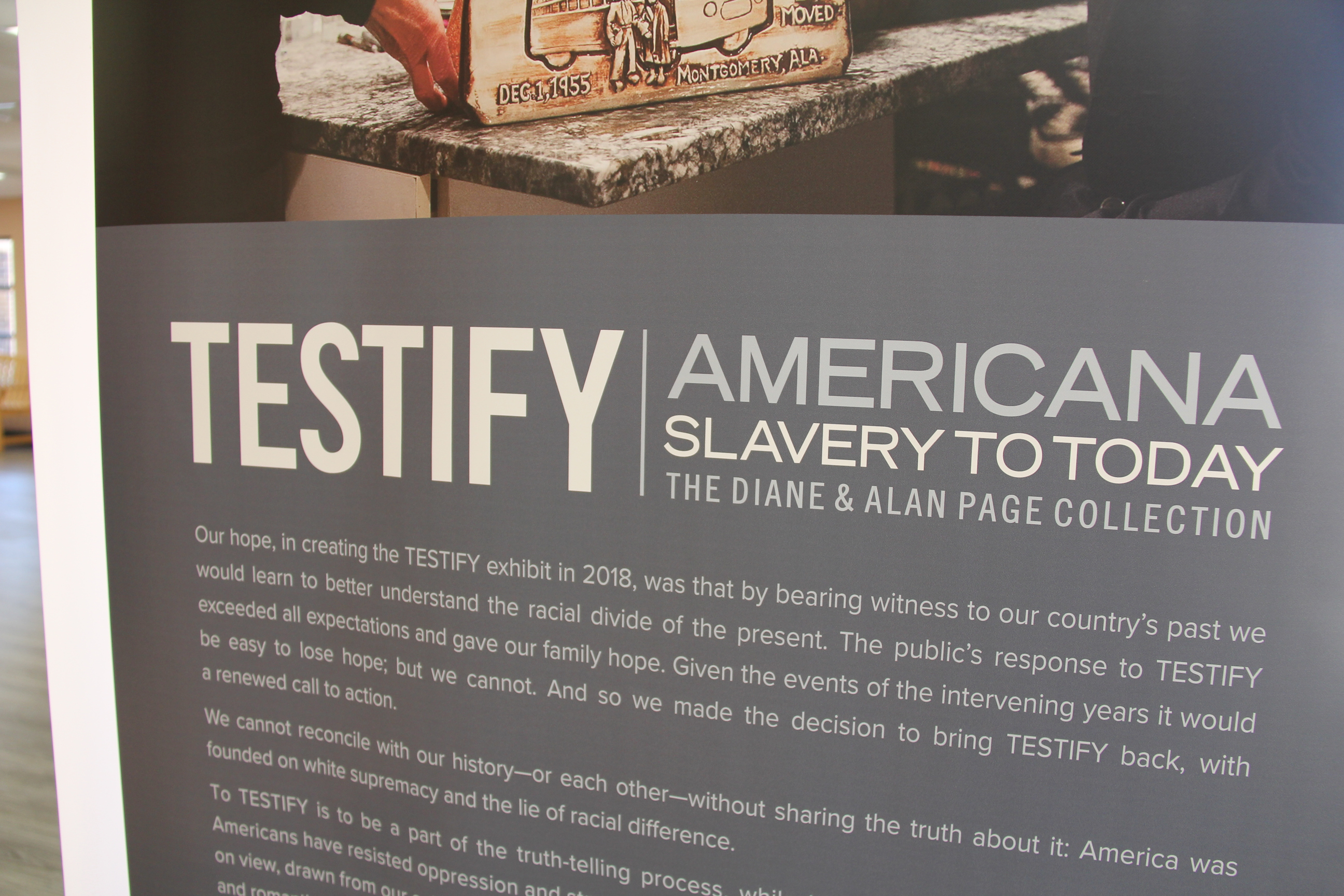
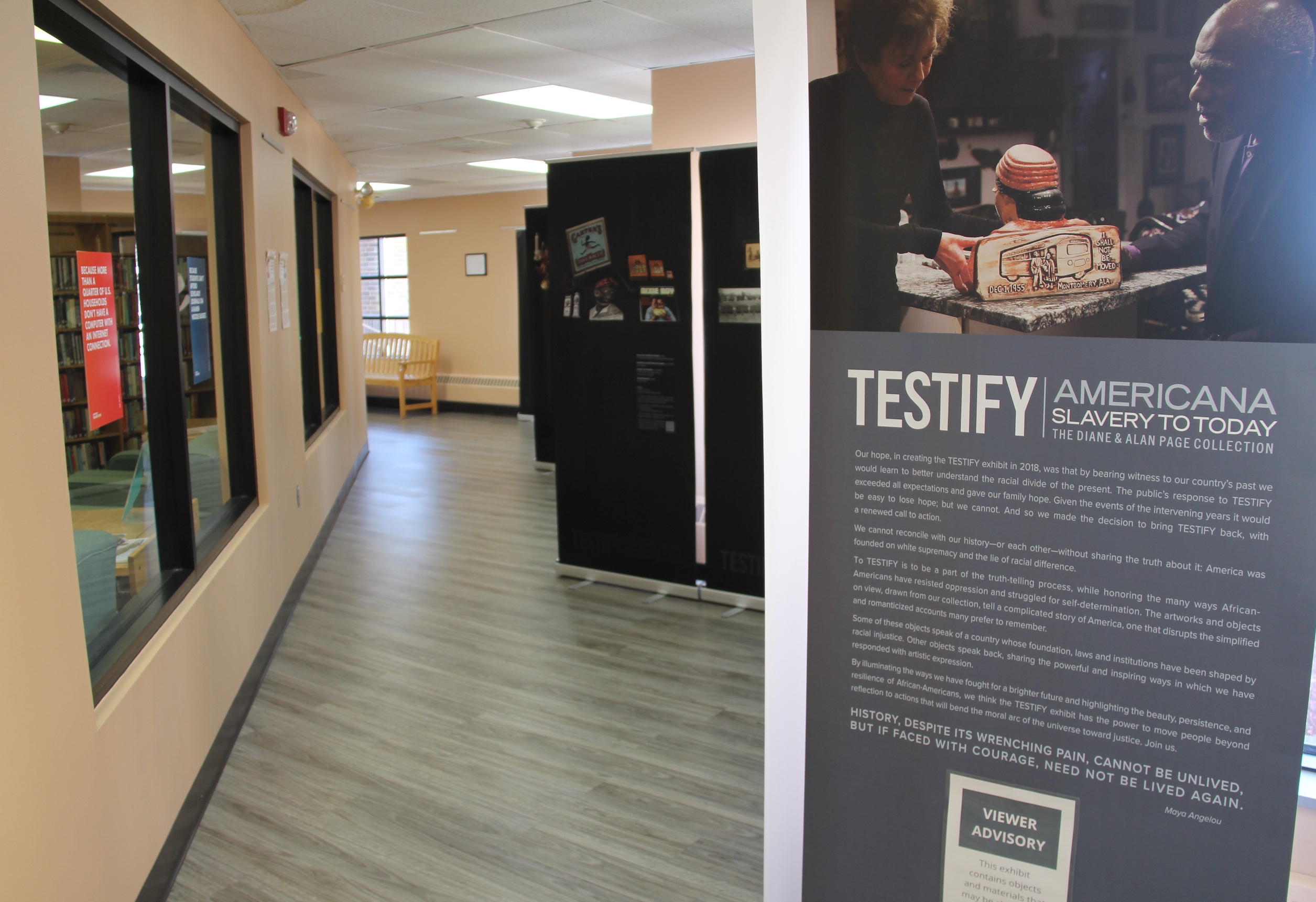
The first panel explains the “Testify” exhibit. (Minnesota Prairie Roots copyrighted photo April 2025)

THE IMAGES AND WORDS left me feeling simultaneously unsettled, uncomfortable, disturbed, enlightened, impressed, angry and incredibly sad. My emotional reaction is not surprising after viewing the traveling exhibit, “Testify—Americana Slavery to Today,” at my local public library.

The 16 “Testify” panels stretch along the hallway connecting the library and community center in Faribault. (Minnesota Prairie Roots copyrighted photo April 2025)

The exhibit features photos of select African American art and artifacts from The Diane and Alan Page Collection. Alan Page, who is Black, was a Minnesota Supreme Court justice and, in the 1970s, a defensive lineman for the Minnesota Vikings. He’s in the NFL Hall of Fame. Diane, who was White, worked in marketing and was a businesswoman and notable philanthropist. She led the way in securing the art and artifacts in the couple’s collection.

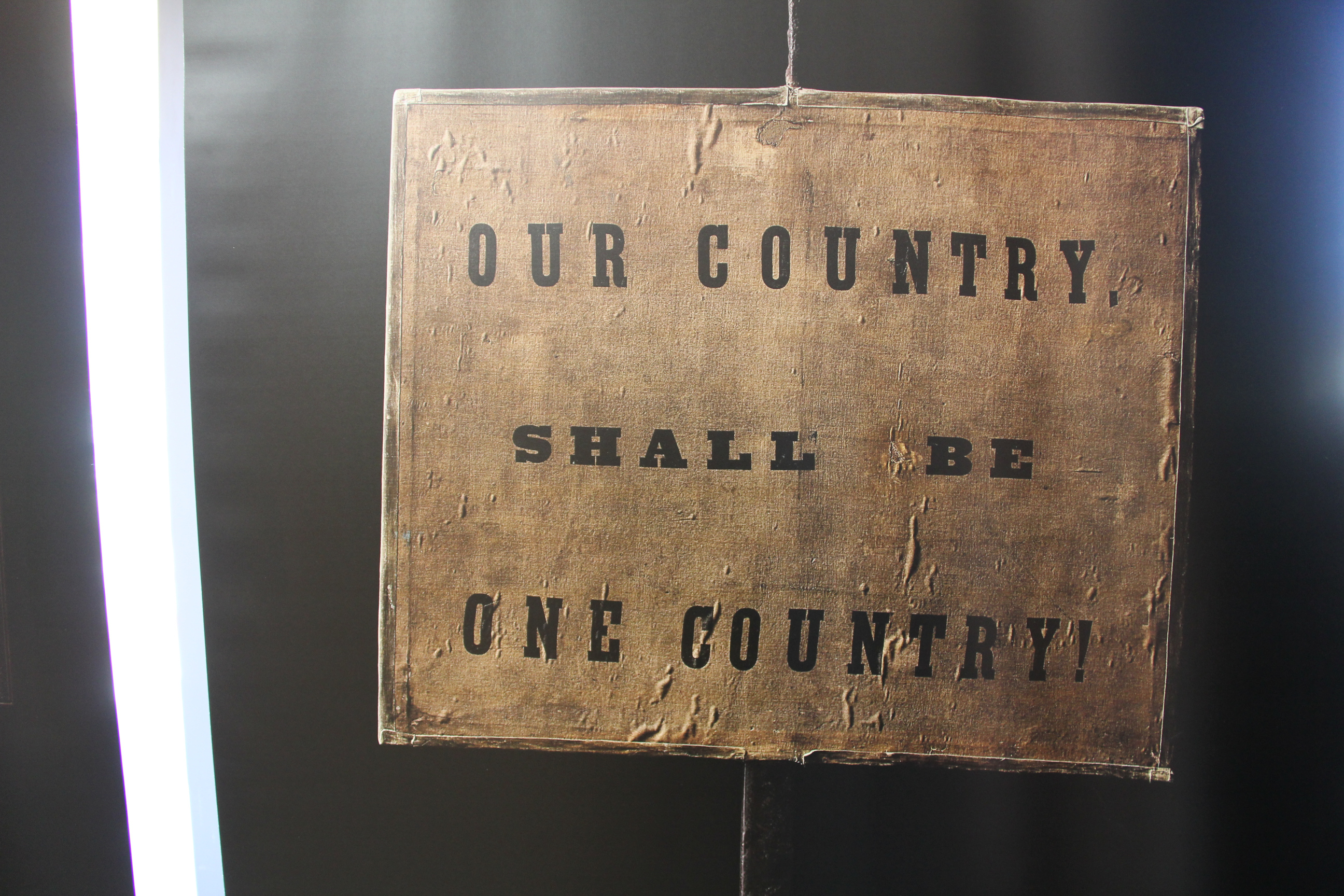
This 1864 banner may have been carried by freedmen at a rally or march. During the 1864 election of Abraham Lincoln, both political parties came together to reject slavery. (Minnesota Prairie Roots copyrighted photo April 2025)

I’m grateful Buckham Memorial Library (through SELCO, the regional library system) brought this exhibit to Faribault for the public to see. We can all learn from history, deepening our understanding. We begin to recognize perspectives and biases and can then move toward change and healing.

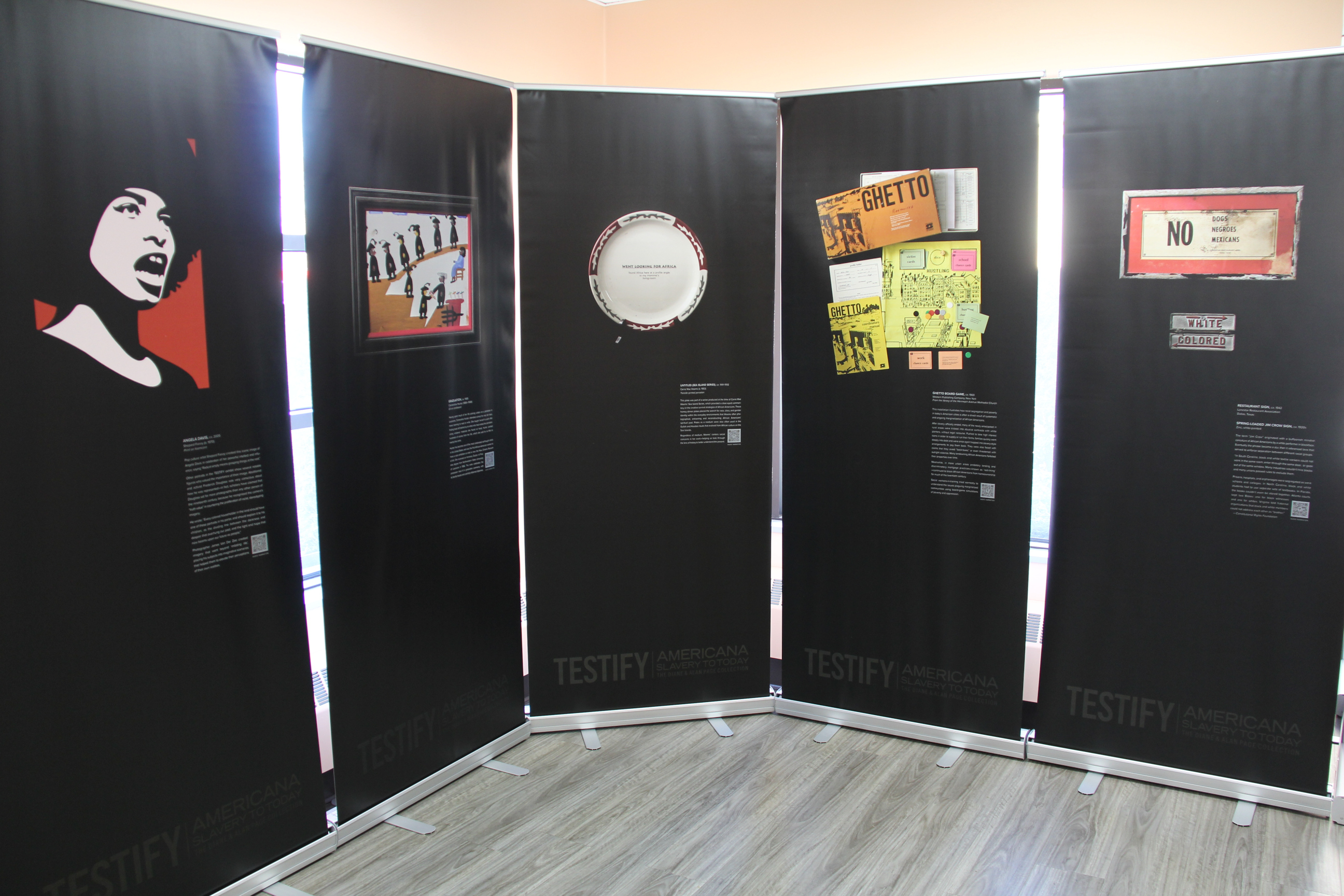
The last five panels cover a span of topics. (Minnesota Prairie Roots copyrighted photo April 2025)

As I walked my way along the 16 towering photo panels paired with text, I began to more fully appreciate the suffering, the abuse, but also the fortitude, of African Americans. Despite everything, they retained strength and resilience.

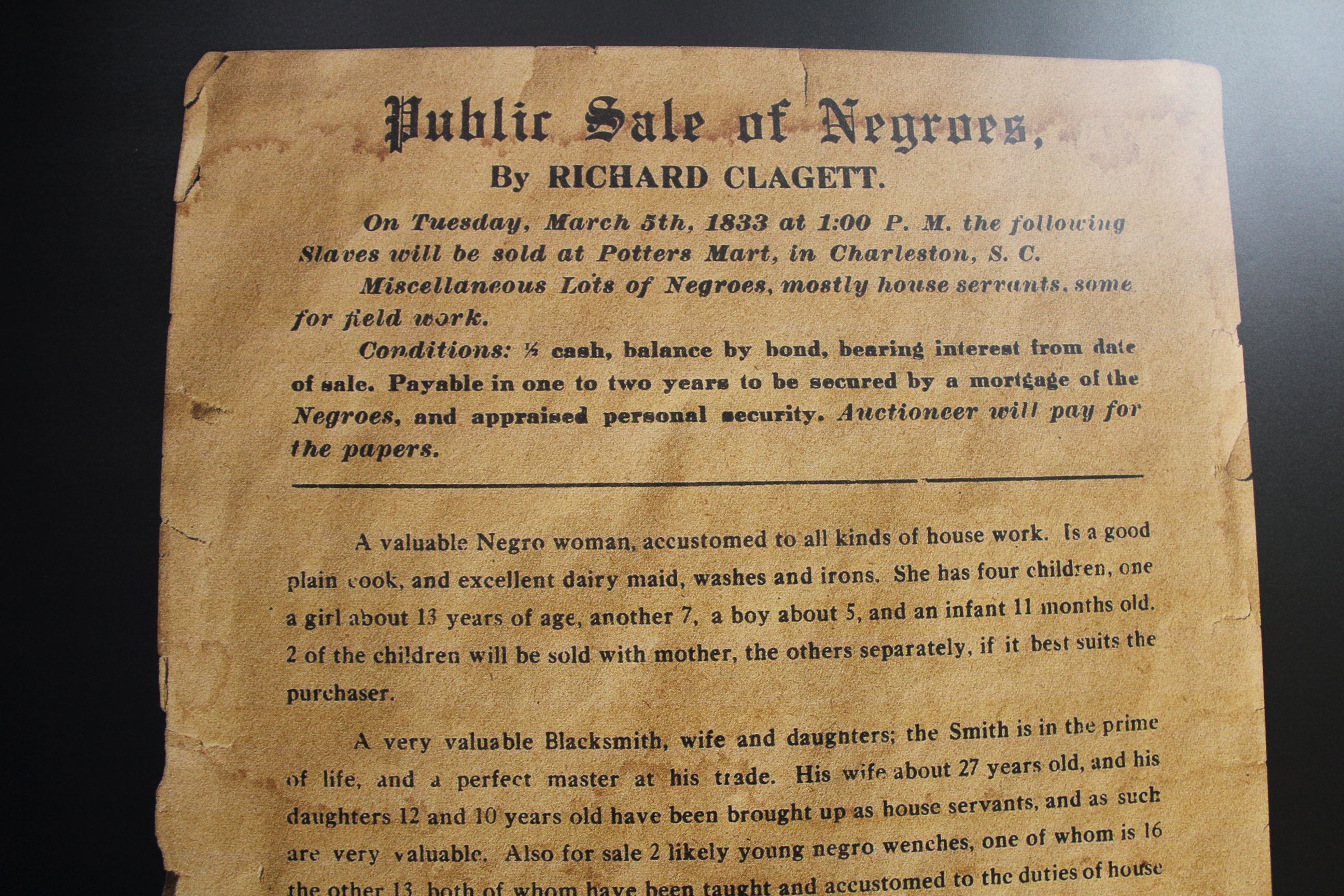
Notice of an 1833 slave auction in Charleston, South Carolina. (Minnesota Prairie Roots copyrighted photo April 2025)

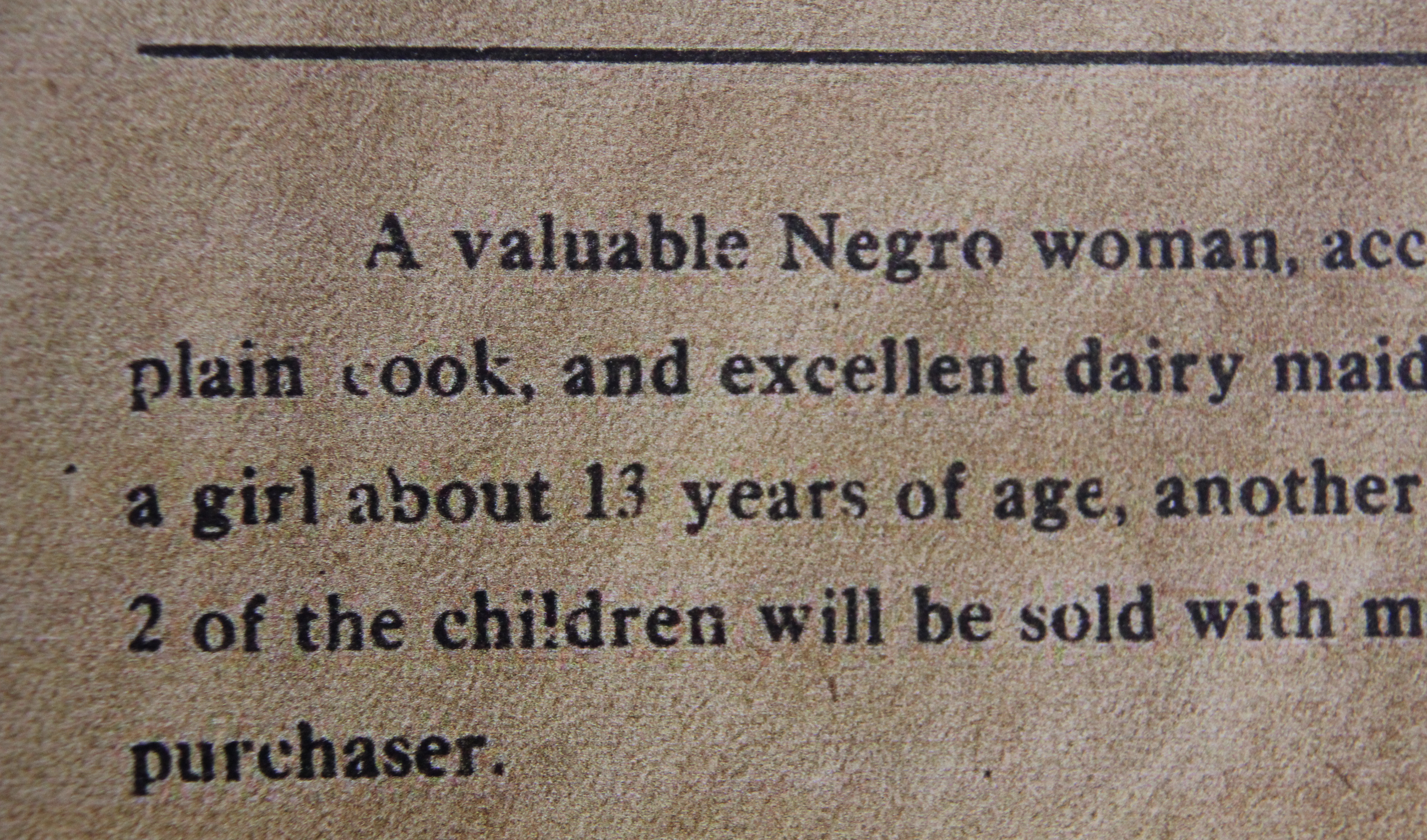
Yet, how hard it must have been at times to hold hope, especially from slavery to the time of Jim Crow laws. When I read a Public Sale of Negroes notice from 1833, I read words of degradation. I cannot imagine being that “valuable Negro woman,” that “very valuable blacksmith,” the slaves in “miscellaneous lots of Negroes” who were auctioned off like so much property. What humanity does to one another seems unimaginable, unfathomable. Yet, it still happens today, just in different ways.

A description of a slave to be sold at the 1833 auction. (Minnesota Prairie Roots copyrighted photo April 2025)

As disturbing as that slave bill of sale was, a group photo of nine unclothed Black toddlers in a professional studio portrait titled “Alligator Bait” proved profoundly disturbing to me. So much so that I can’t bear to show this 1897 image to you. The accompanying text states that historians researched whether hunters actually used African American children as alligator bait. Results were inconclusive, which is telling.

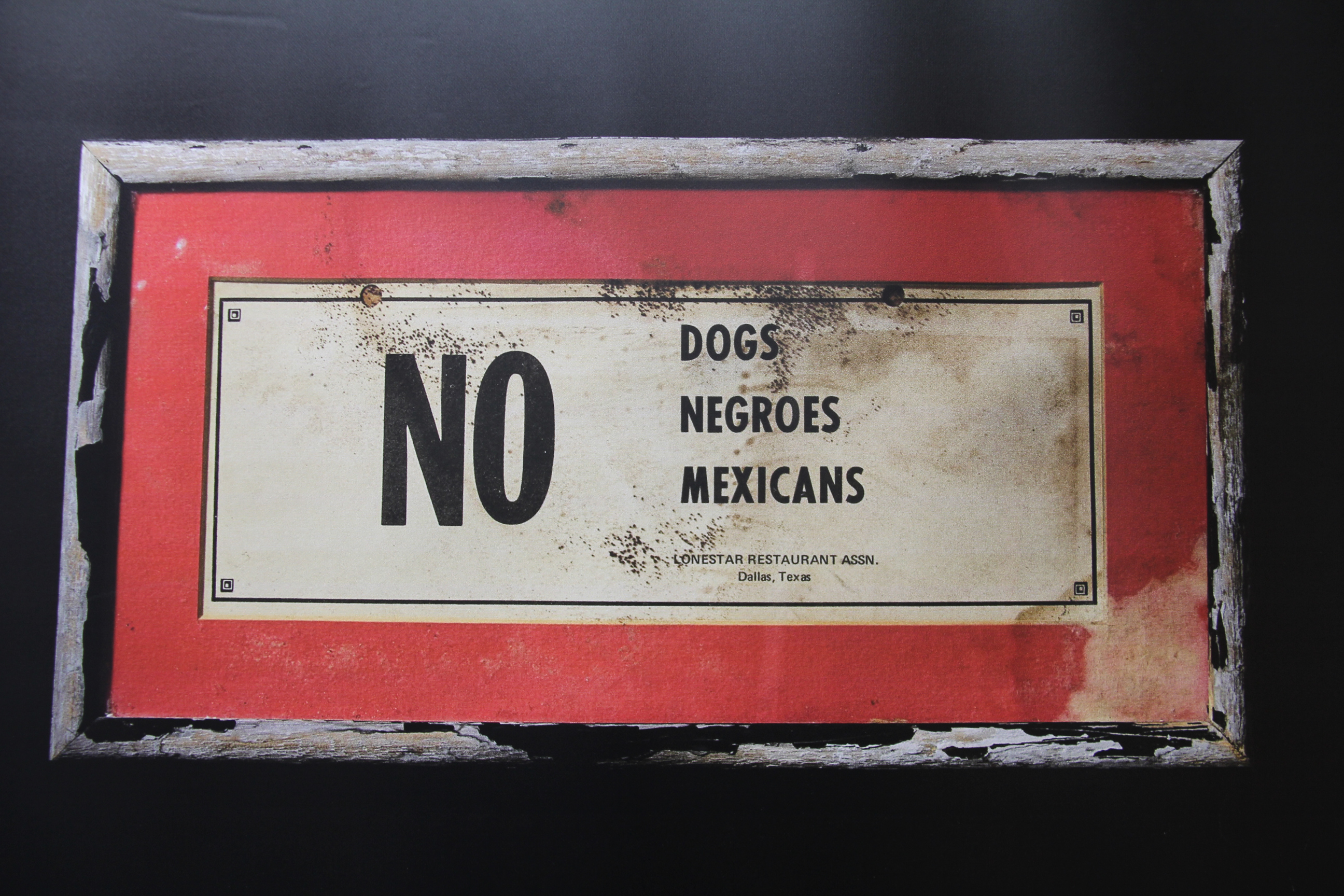
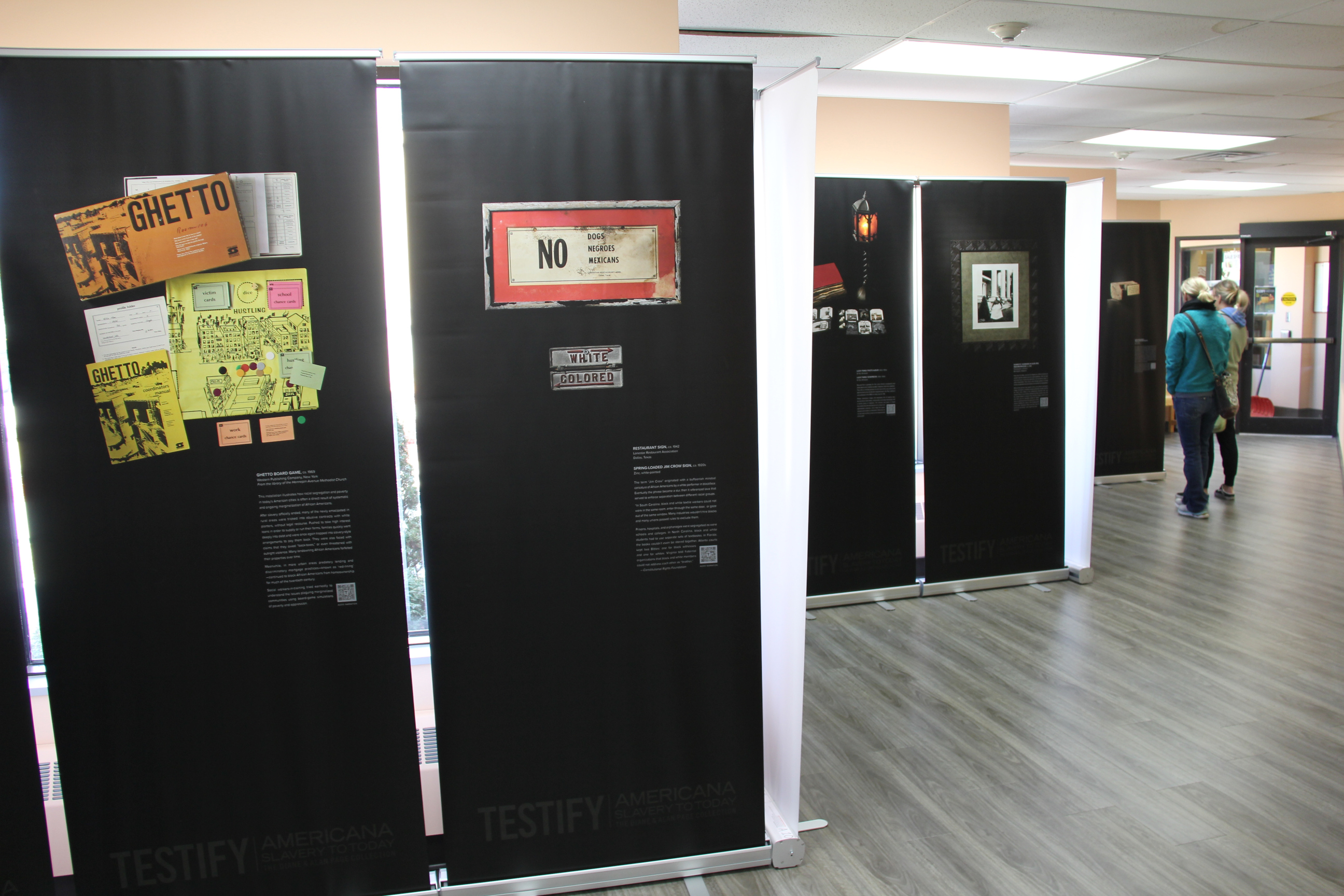
An unwelcoming 1942 sign from the Lonestar Restaurant Association in Dallas, Texas. (Minnesota Prairie Roots copyrighted photo April 2025)
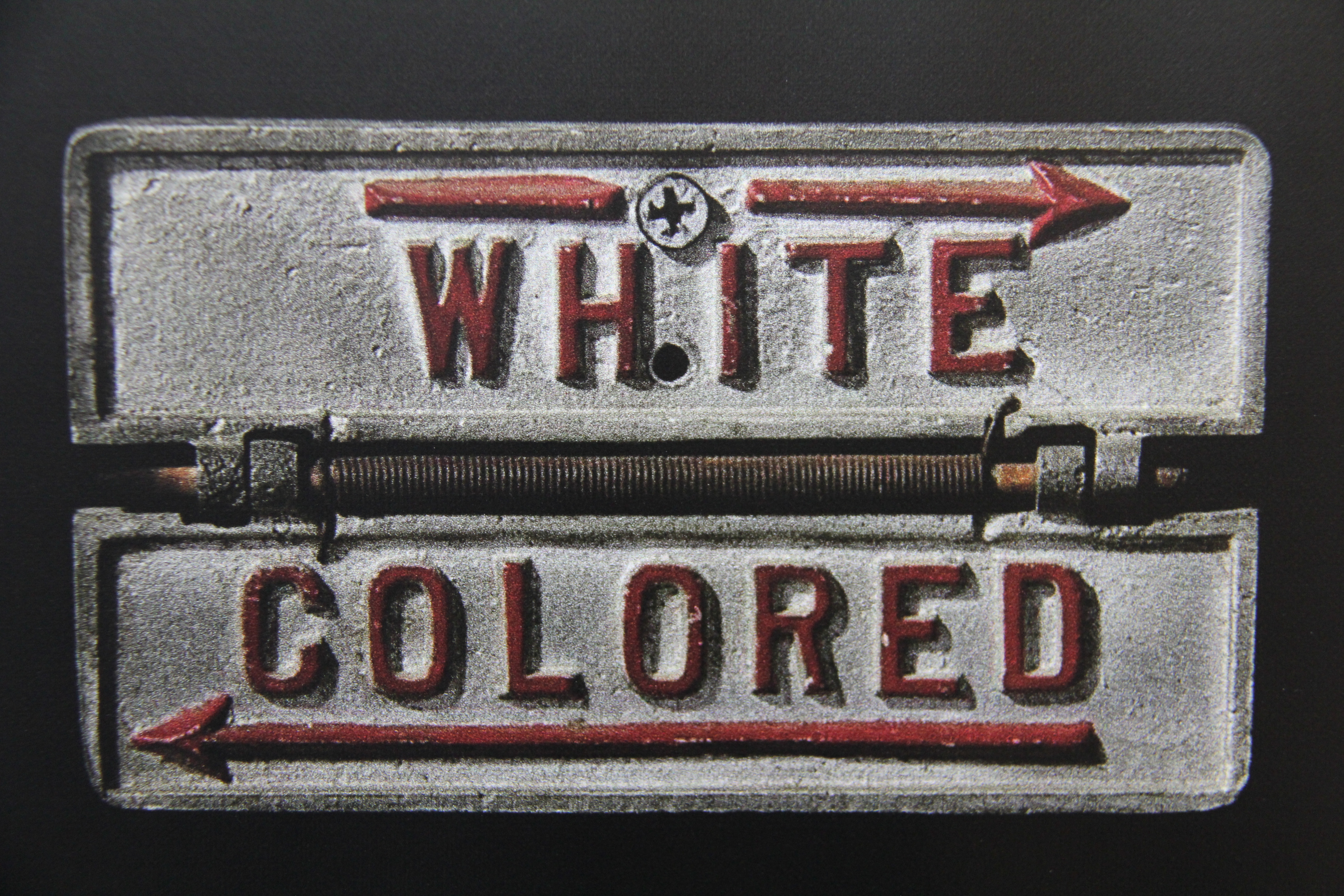
A 1920s spring-loaded Jim Crow sign. (Minnesota Prairie Roots copyrighted photo April 2025)
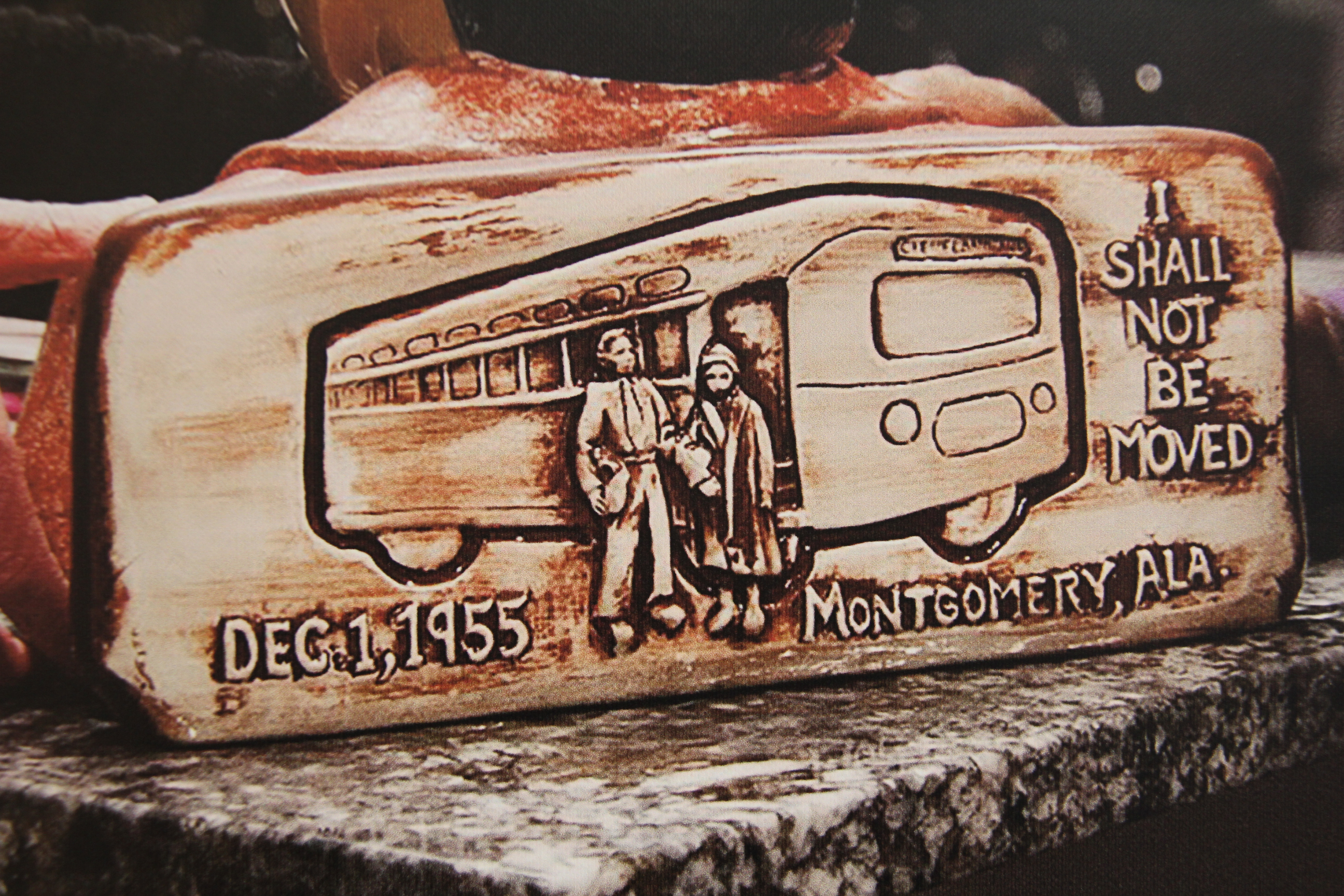
Protest art from the Civil Rights Movement. (Minnesota Prairie Roots copyrighted photo April 2025)

A sign banning “dogs, Negroes and Mexicans” and another pointing Whites one way and “Colored” people the other prompted thoughts of, well, things have not changed all that much. Of course, they have, but not really if you dig deep or, conversely, read today’s headlines.

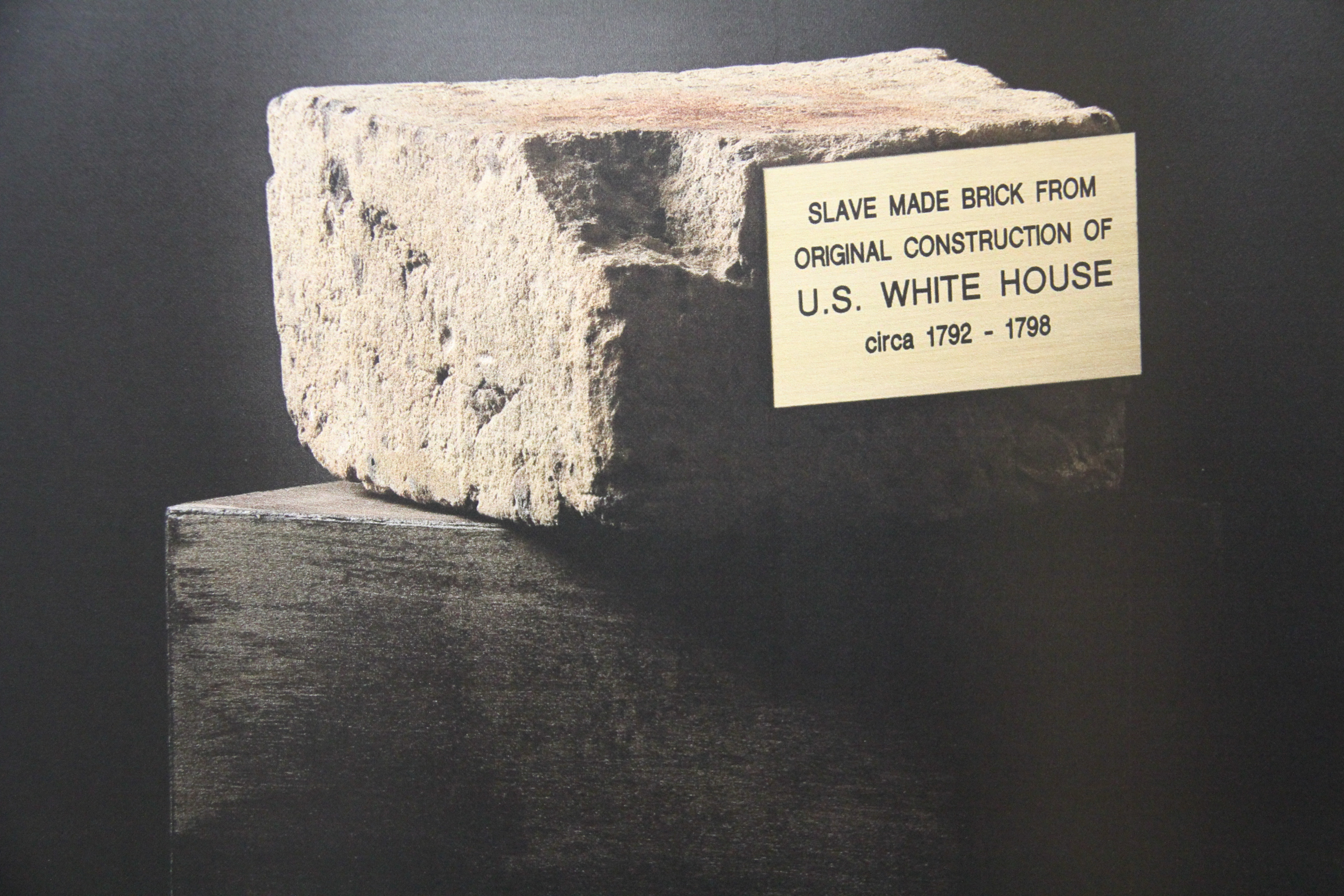
A brick crafted by slaves for the White House. (Minnesota Prairie Roots copyrighted photo April 2025)

I want to backtrack for a minute to the first photo I saw in the exhibit. It was of a single brick, circa 1792-1798. This singular object drove home the point that this country was built on the backs of slaves, like those who molded and laid the bricks for government buildings in Washington DC. That includes the White House and many U.S. Capitol buildings, according to the exhibit text. Unpaid slave labor. Think about that for a minute or ten.

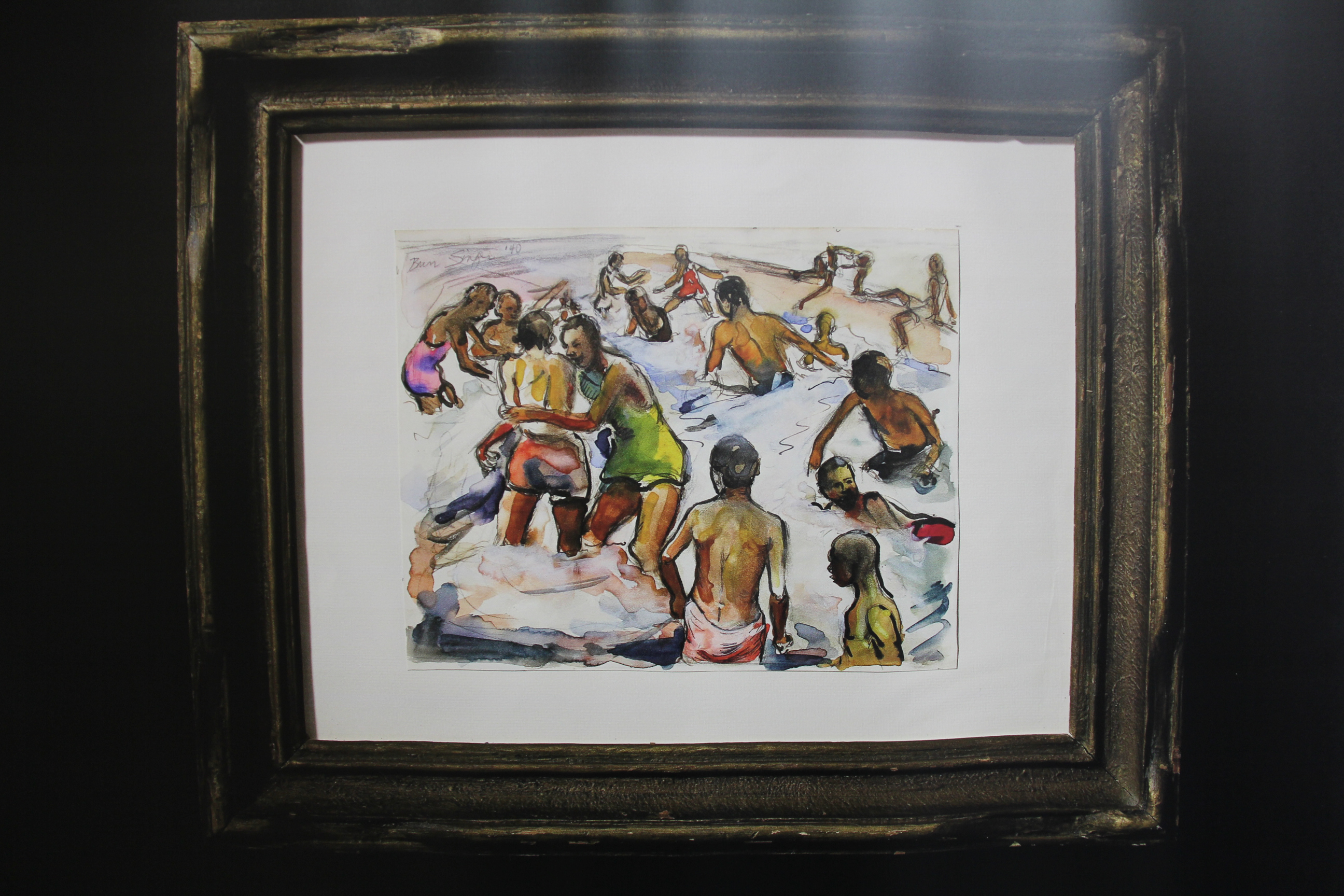
“Only on Thursdays,” a 1940 painting by Burr Singer. (Minnesota Prairie Roots copyrighted photo April 2025)

There’s lots to contemplate in the “Testify” exhibit. That includes the watercolor art of Burr Singer titled “Only on Thursdays.” If you just looked at the art without the title and context, you might think it was simply a depiction of African Americans swimming. But it’s not. Thursday was the only day Blacks could use the Pasadena public pool. This painting makes a statement.

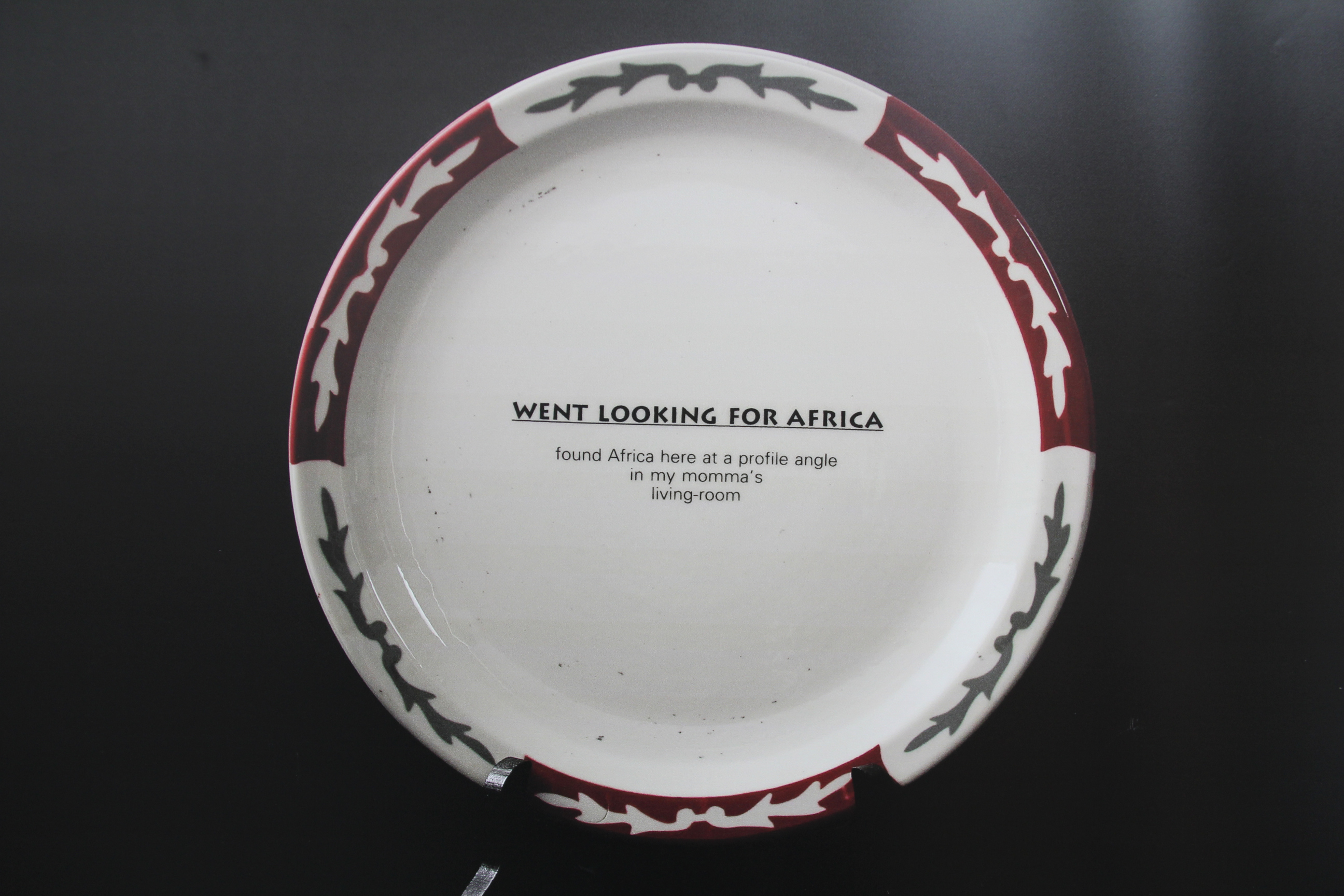
This 1991-1992 plate in Carrie Mae Weems’ Sea Island Series honors the creative survival strategies of African Americans. (Minnesota Prairie Roots copyrighted photo April 2025)

This exhibit makes a statement. Through images and words, it shines a light on the past, on Black history, on the atrocities of slavery and segregation and racism (both subtle and overt). Through “Testify,” truth-telling emerges for all to view and contemplate.

The panel to the far left shows a photo of the board game GHETTO. Social workers in training used the game to understand issues facing marginalized communities. (Minnesota Prairie Roots copyrighted photo April 2025)

FYI: “Testify—Americana Slavery to Today” is on display until April 23 in the corridor linking Buckham Memorial Library to the Faribault Community Center. The photos and information included in this story are only a sampling of what you will see in the exhibit. The Mabel Public Library hosts the exhibit from April 25-May 7.

© Copyright 2025 Audrey Kletscher Helbling
 

Celebrating diversity past & present in southern Minnesota April 14, 2025

This photo, taken during a car show in downtown Faribault, shows the diversity of my community. (Minnesota Prairie Roots copyrighted file photo)

WALK THROUGH THE HEART of downtown Faribault and you’ll see diversity. Diversity in businesses. Diversity in the people who live here. It’s a beautiful thing, at least to me.

A banner in Faribault’s historic district features a vintage photo outside a local business. (Minnesota Prairie Roots copyrighted file photo)

We need only look back to the founding of Faribault to understand the diversity which existed from the very beginning. Immigrants from around the world settled here, set up shop, engaged in business and grew this community. The shoemakers. The brewers. The furniture builders. The general store proprietors. The barbers. And on and on. They were as diverse as their skills. They shaped this place.

Faribault is the richer for those individuals and families who left their homelands, crossed the ocean, bringing their hopes and dreams to America. With the exception of Indigenous Peoples, we can mostly all trace our ancestry to a land a long ship ride away.

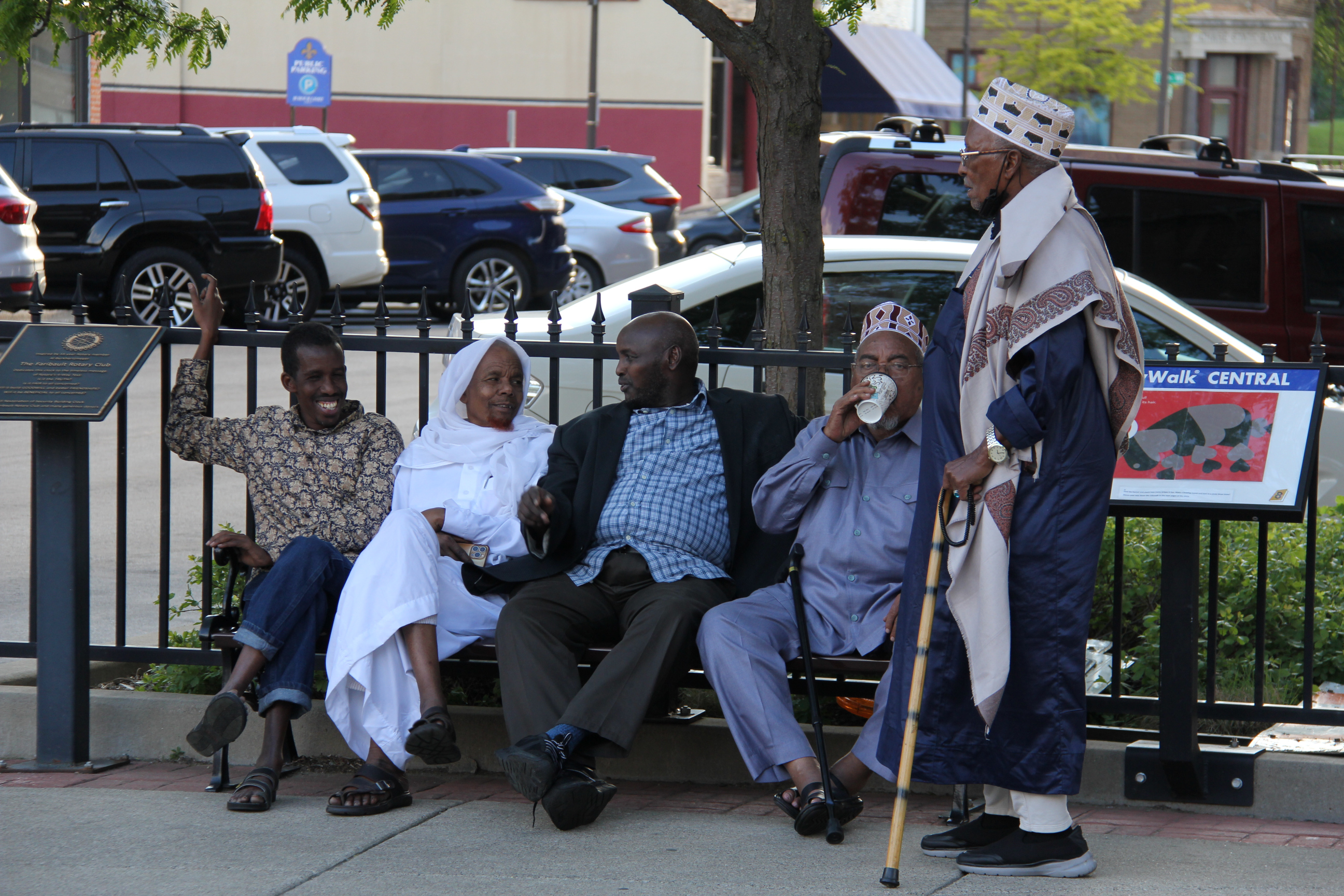
Somali men visit in downtown Faribault. My community is home to a sizeable Somali population, some of whom live downtown. (Minnesota Prairie Roots copyrighted file photo 2024)

Today our newest Faribault residents arrive mostly by plane. From Somalia. From Sudan. From Venezuela. From Mexico. And elsewhere. Many have fled worn-torn countries. Unimaginable atrocities. Their losses, their heartache, their pain is beyond what anyone should have to endure. But they have managed. They settle in, set up shop in our community, work in our local factories gutting turkeys and more, shingle our houses, cook and serve us their delicious cuisine… They work hard to rebuild their lives here in southern Minnesota. And I am glad to have them here as an integral part of my community.

Among the colorful merchandise at Mercado Local. (Minnesota Prairie Roots copyrighted file photo 2024)

In neighboring Northfield, a downtown shop, Mercado Local, vends the art, crafts and more of artisans from Latin America and Hispanic backgrounds. Under the umbrella of Rice County Neighbors United, a nonprofit supporting the immigrant and refugee communities of Northfield, Mercado Local has flourished, serving as a marketplace, arts center (I’ve read poetry here) and community gathering space.

(Promo courtesy of Mercado Local)

From 4-6 p.m. Tuesday, April 15, Mercado Local is hosting a fundraiser for this nonprofit which aims to “empower immigrant entrepreneurs to thrive.” There will be updates, raffles, promotions, Loteria (like BINGO) and, of course, Mexican food. Even if you can’t make the event, I encourage you to pop into the marketplace. Just being inside this small space with all its colorful art and wares makes me happy. That’s one of the things I appreciate about Hispanic and Latino culture—the vivid colors. And I rather like the food, too.

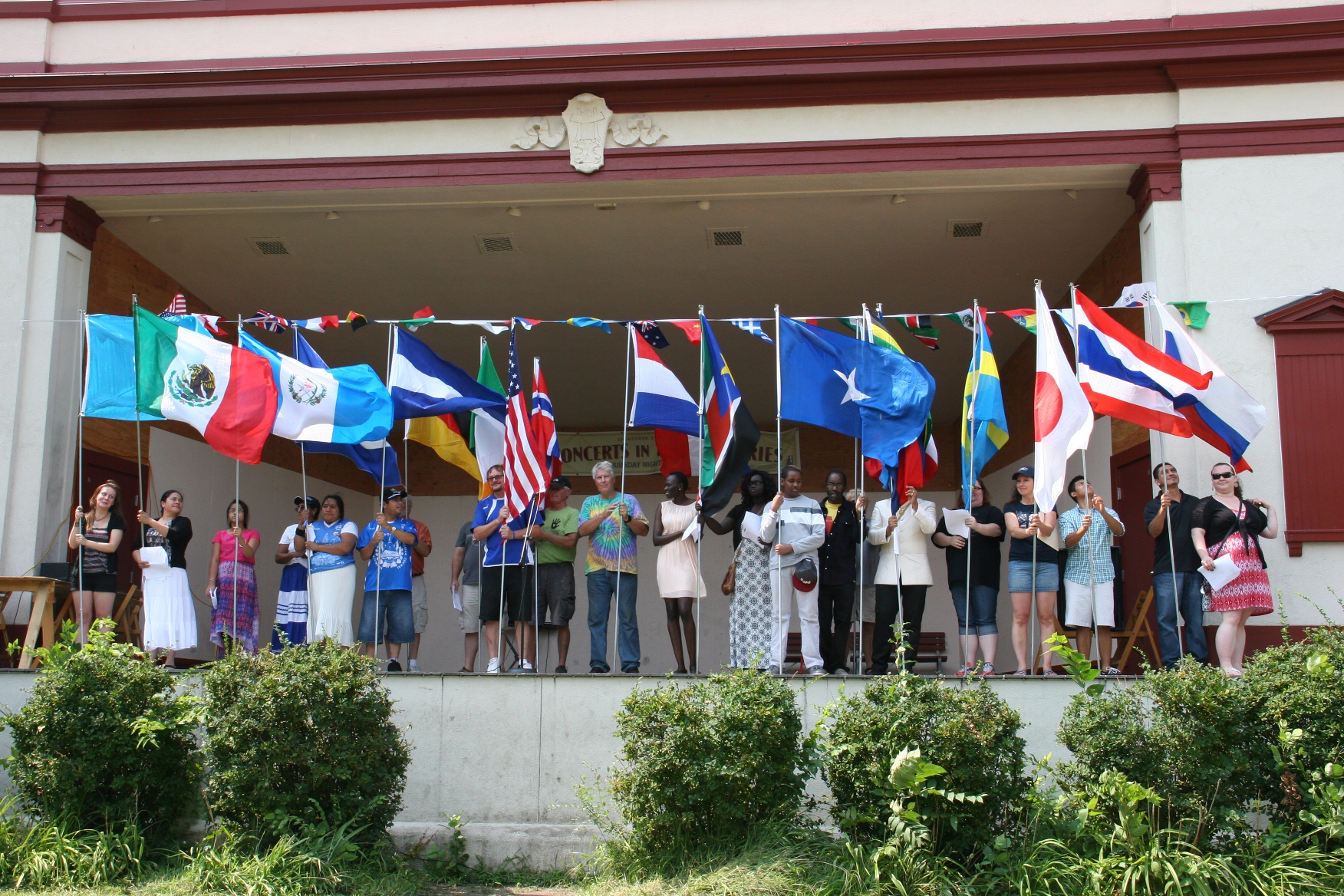
A flag ceremony at a past International Festival in Faribault featured national anthems and information about some of the countries from which Faribault residents have originated. (Minnesota Prairie Roots copyrighted file photo)

To have a diverse community is to experience the world up close, to widen our circle and understanding of others. Yet, no matter our skin color, our language, our customs, our dress, our roots, we are all just people. Individuals who laugh and cry and love and live. Now, together, we are growing our communities in new, exciting and diverse ways, just like those who crossed the ocean all those years ago to settle in America.

© Copyright 2025 Audrey Kletscher Helbling
 

A rose is not just a rose & other gravestone symbolism March 25, 2025

A graveyard surrounds the historic Valley Grove Churches, rural Nerstrand. I’ve walked this cemetery often. (Minnesota Prairie Roots copyrighted file photo)

I’M TRYING TO RECALL when I first began walking through cemeteries while out and about. But I think it started with my interest in old country churches. Cemeteries typically embrace historic countryside houses of worship. Baptized, confirmed, married and buried often defines those rooted in these rural churches. There’s a lot of history to uncover in a graveyard.

An angel sculpture graces the cemetery of St. Patrick Church of Cedar Lake Township, St. Patrick, Minnesota. (Minnesota Prairie Roots copyrighted file photo)

But it’s not just the history that interests me. It’s the art. And the stories, many of which remain unknown, unless you’re familiar with the deceased or connected in some way. Sometimes you can piece stories together by looking at dates, names and inscriptions.

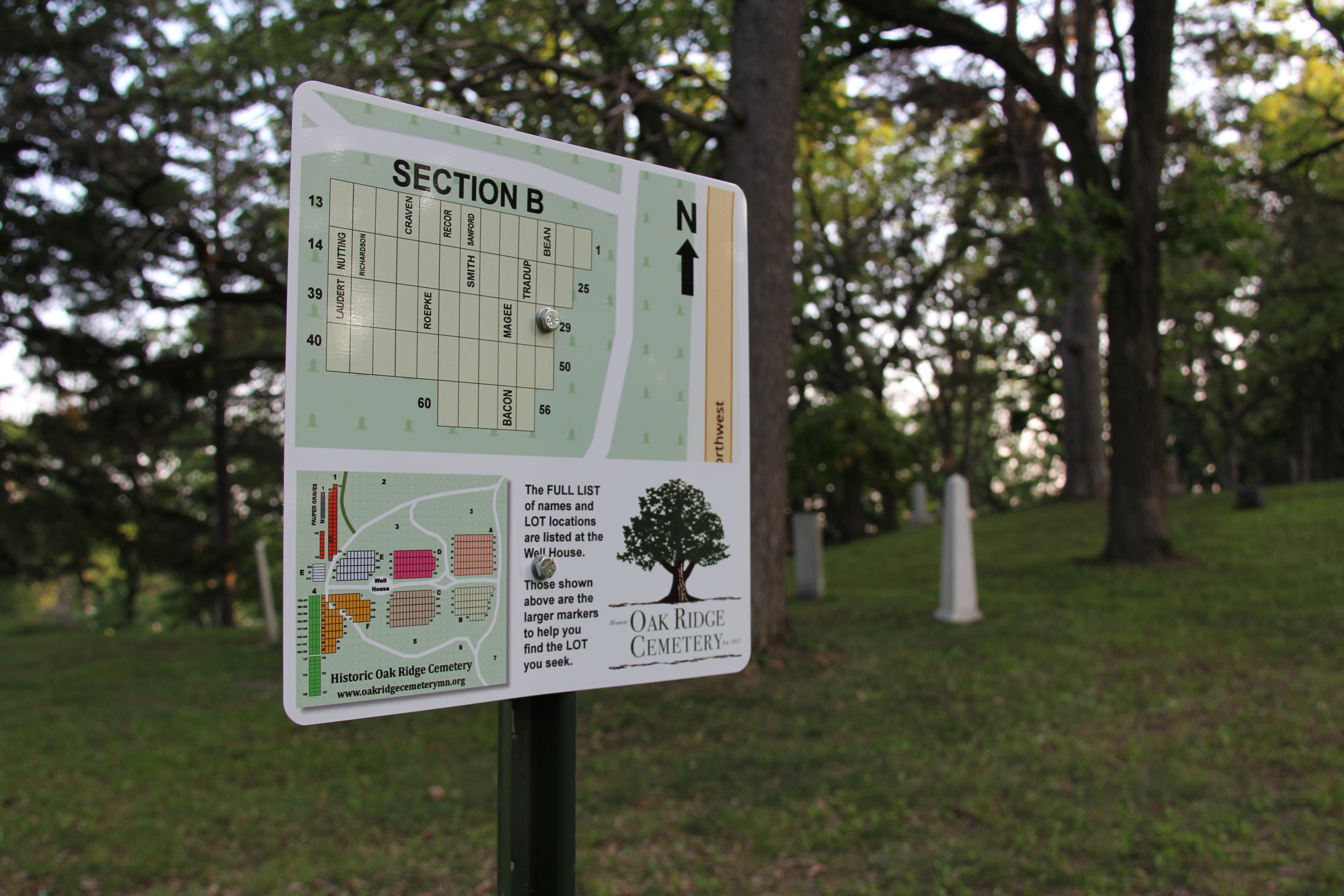
I find signage like this posted at Oak Ridge Cemetery to be helpful when visiting a cemetery. (Minnesota Prairie Roots copyrighted file photo)

As a creative, I’ve always been particularly interested in the artistic side of a cemetery, specifically the art of tombstones. Aged grave markers, most made of marble, feature images and words hand-chiseled by local stone masons. It is those long ago tombstones that focused a recent talk, “Understanding Gravestone Symbols and Icons,” by Oak Ridge Cemetery Association board member Tom Rent. An avid volunteer in the upkeep, preservation and restoration of the cemetery, Rent previously talked at the Rice County Historical Society about preserving Faribault’s oldest cemetery, one of 61 in the county.

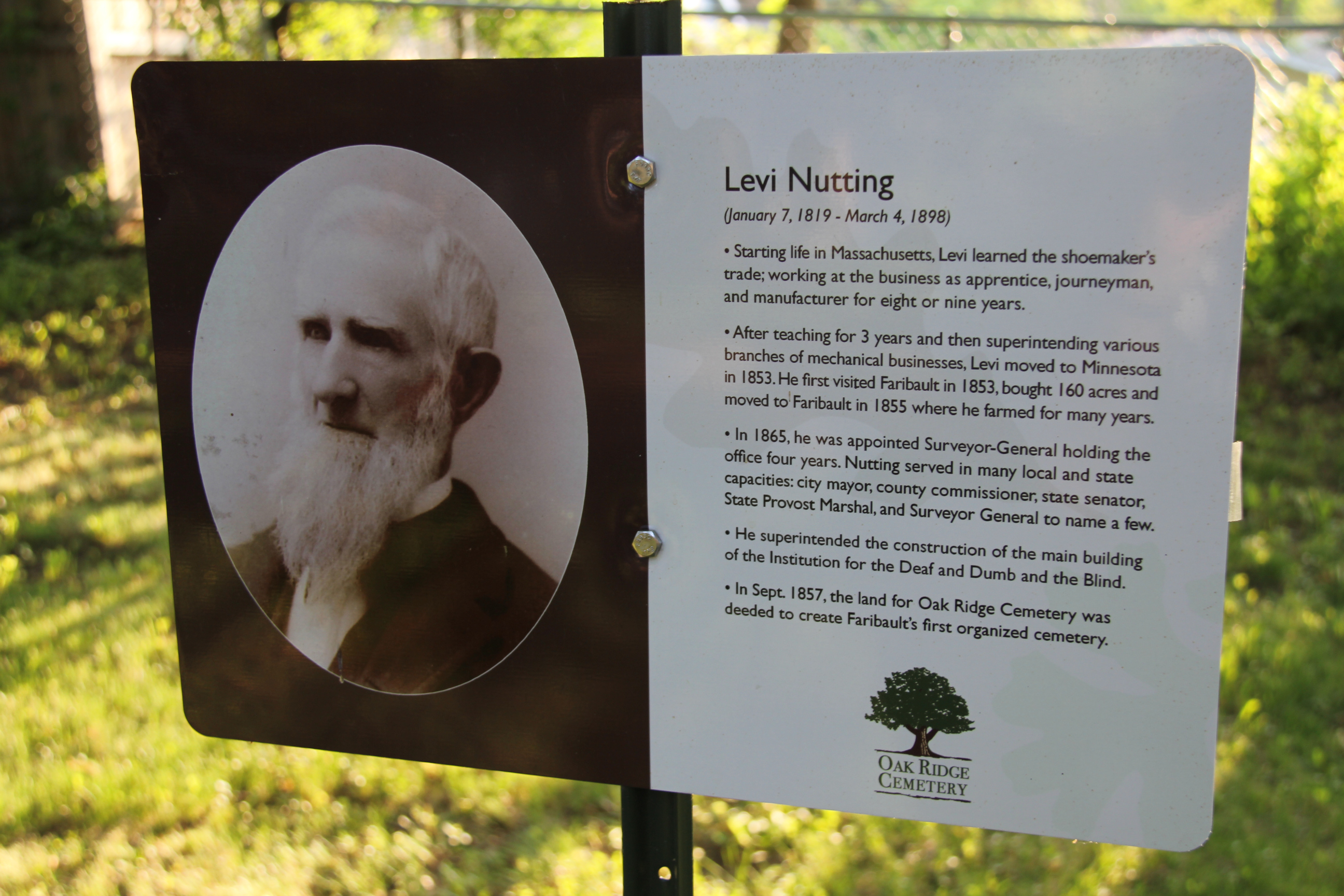
Biographical markers are posted for some notable people buried at Oak Ridge Cemetery. I really like this way of sharing history and people. (Minnesota Prairie Roots copyrighted file photo)

Oak Ridge Cemetery, founded in 1857 on land donated by Levi Nutting, encompasses 10 acres, features 371 family names and is the burial site for 111 veterans, according to Rent. Rebecca Lougee, 29, who died of tuberculosis, was the first to be buried in the incorporated hilltop cemetery in October 1857. Earlier burials occurred before Oak Ridge officially became a cemetery. Many recognizable names from the early days of the Faribault area grace gravestones here: Andrews, Batchelder, Mott, Nutting, Roberds, Sheffield…

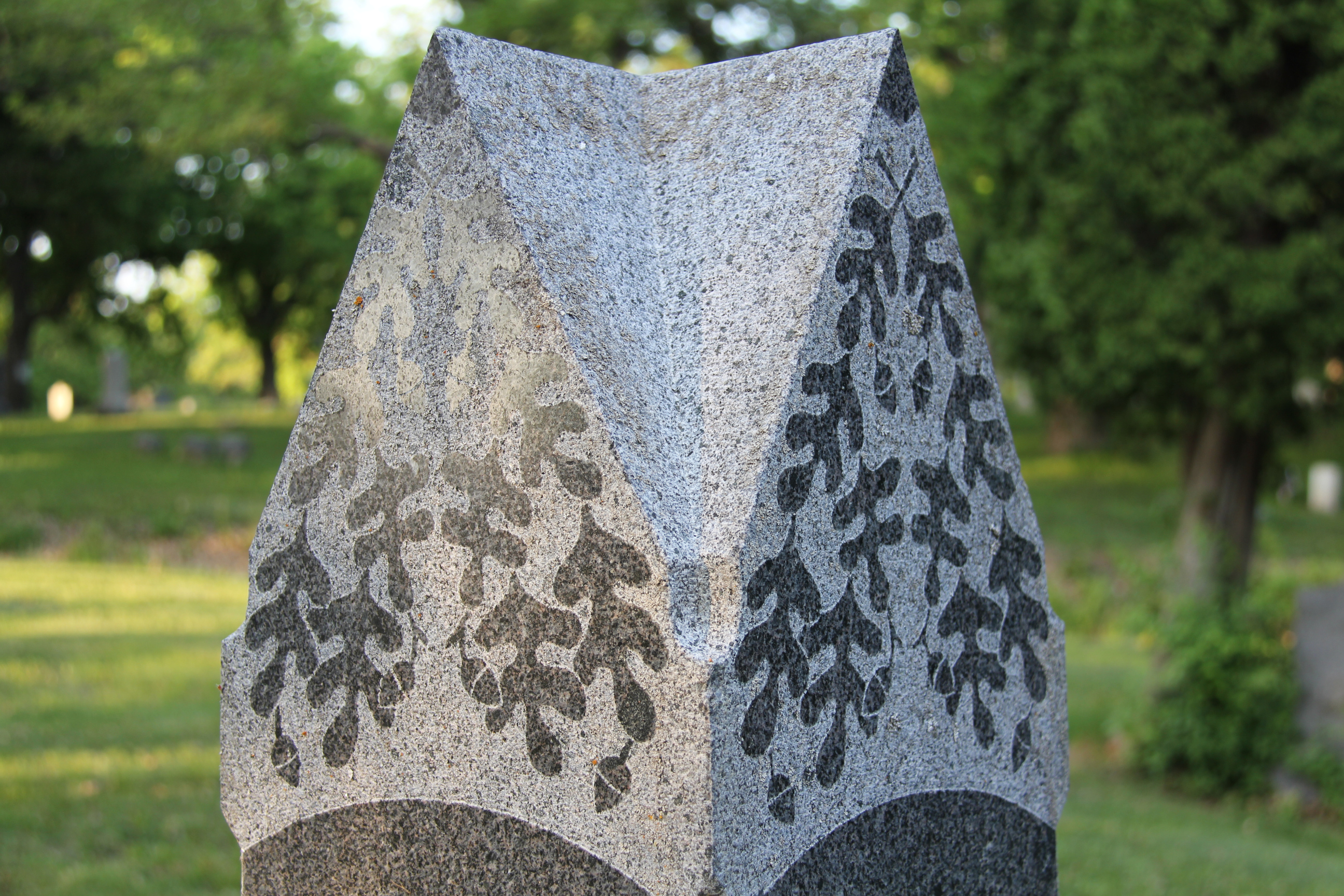
Oak leaves on a tombstone at Oak Ridge Cemetery symbolize strength and power through patience and faith. (Minnesota Prairie Roots copyrighted file photo)

And on many of those tombstones, you will find symbols, a common way of communicating messages back in the day. I’d never really thought much about the meaning of the art I’ve seen on hundreds of aged tombstones beyond recognizing that lambs are on children’s grave markers. That Rent shared his knowledge and passion has opened a deeper understanding and appreciation of cemeteries for me.

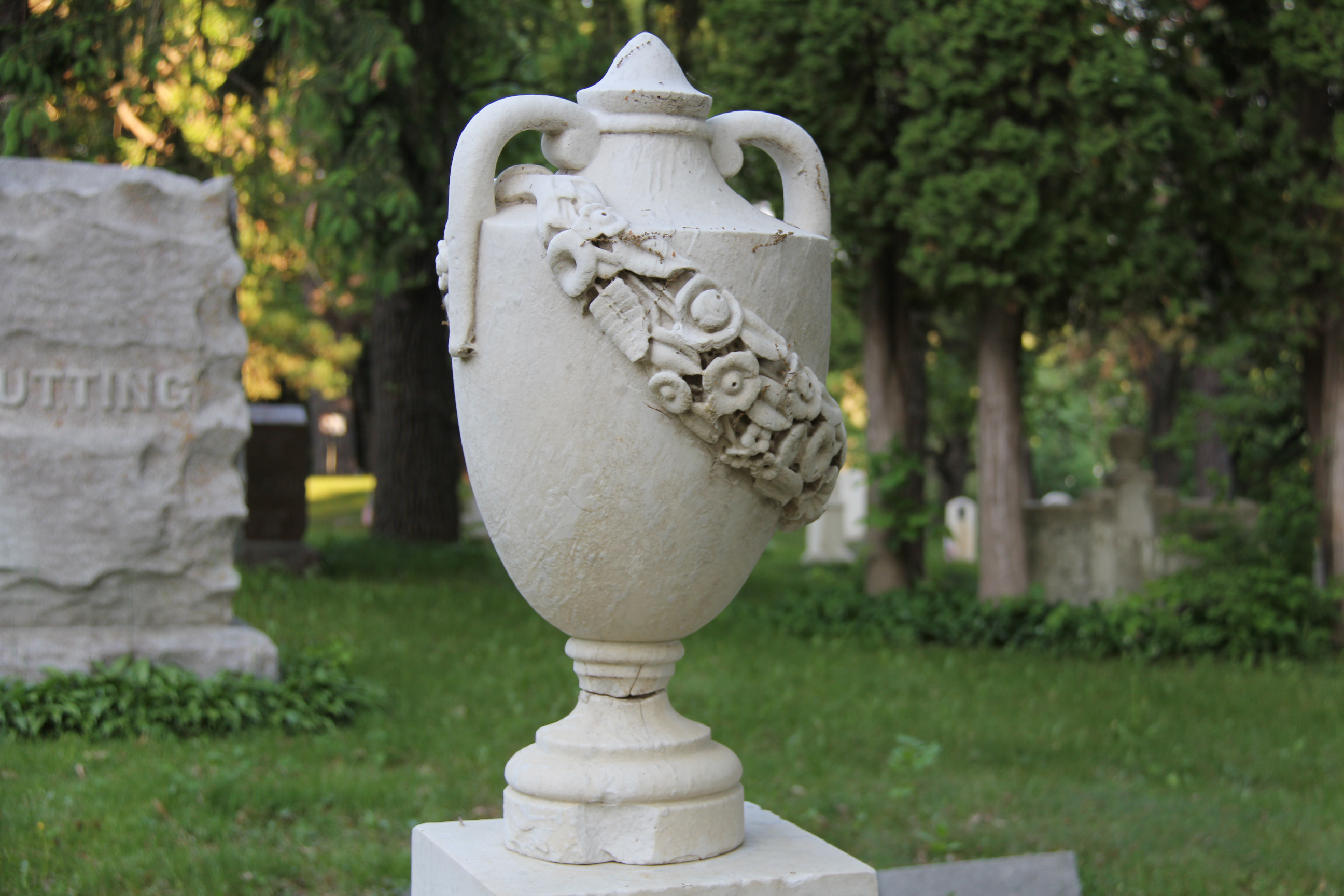
This massive urn marks a grave at Oak Ridge Cemetery. The urn symbolizes mourning and eternal remembrance. (Minnesota Prairie Roots copyrighted file photo)

He introduced his points about gravestone symbology simply by stating that symbols are something to which we have an emotional connection. For example, an eagle, a rose, a cross, are all symbols we can understand as representing freedom, love and faith. That makes sense to me.

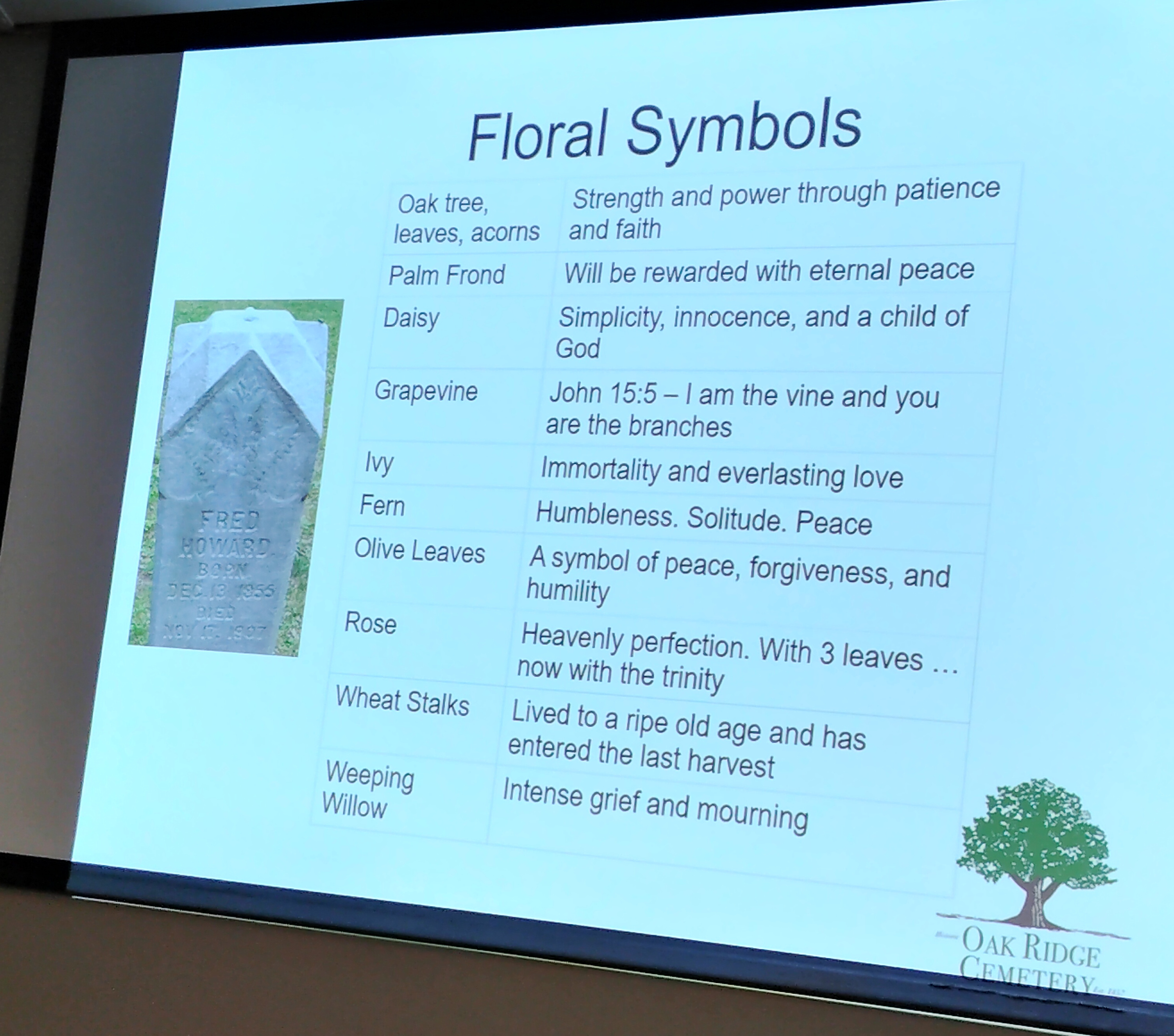
Tom Rent prepared this slide explaining floral symbols on tombstones. (Minnesota Prairie Roots copyrighted photo March 2025)

And then Rent broke it down further—into floral, hand and animal symbols. I found this particularly revealing. For example, ivy, which symbolizes immortality and everlasting love, is very popular on aged tombstones, according to Rent. So are weeping willows, although I don’t recall ever seeing one chiseled into stone. The willow, indicating intense grief and mourning, is often carved onto the gravestone of someone who has died unexpectedly, he said. He referenced the long ago drowning of a young boy in Faribault’s mill pond. A rose, which is difficult to carve, symbolizes heavenly perfection. An unopened rose bud implies a person died way too young.

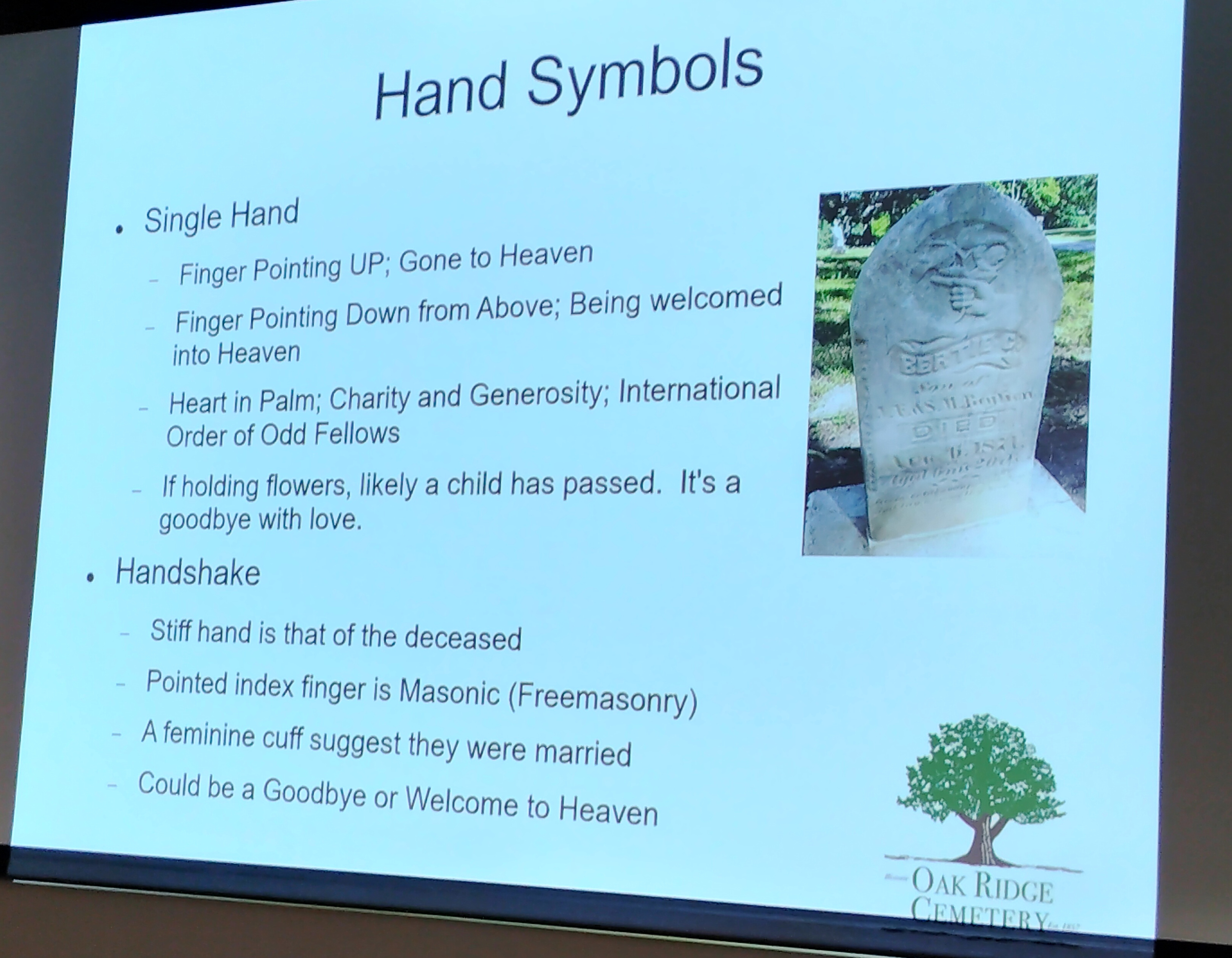
Tom Rent prepared this slide explaining hand symbology on gravestones. (Minnesota Prairie Roots copyrighted photo March 2025)

And then there are those hands, all those hands I’ve seen chiseled into marble tablet gravestones. The hand symbology traces back to Masonic handshakes mostly. Some are single hands, others handshakes, and all hold meaning. Rent shared that a heart on the palm of an open hand indicates charity and generosity. One such symbol decorates the Oak Ridge grave marker of Faribault police officer Henry Kaepernick, accidentally shot to death by a guard at the Faribault jail where the Younger brothers were held following a failed bank robbery in nearby Northfield on September 7, 1876.

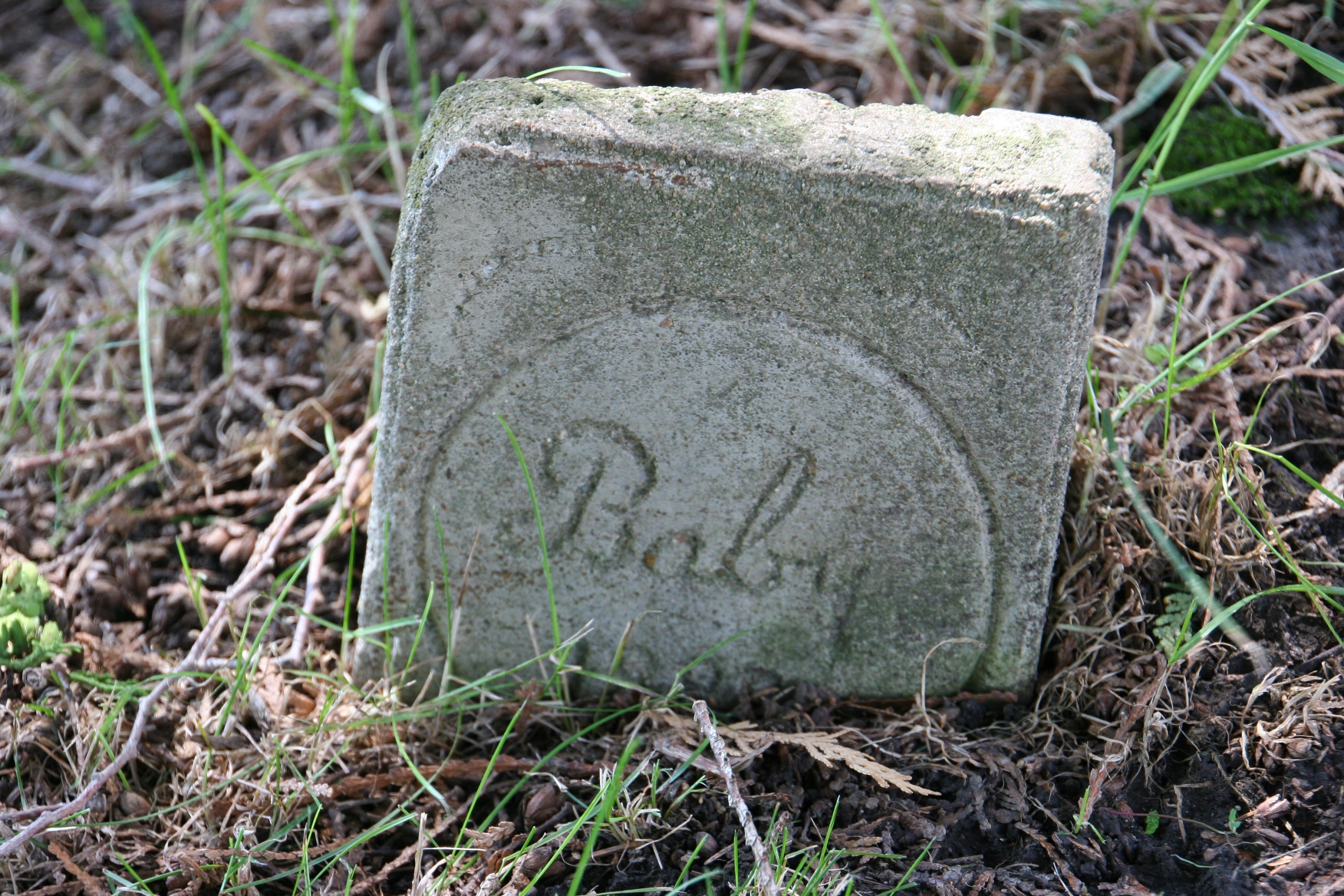
Oftentimes the graves of long ago deceased babies are unmarked or simply marked such as this one at Emmanuel Lutheran Church Cemetery, Aspelund. (Minnesota Prairie Roots copyrighted file photo)

Finally, Rent talked about animal symbols, reserved for children’s gravestones. He named lambs, sheep and doves, symbols of innocence and peace.

Before even entering Calvary Cemetery, Faribault, you can learn something about town founder Alexander Faribault on this memorial. He’s buried at Calvary. (Minnesota Prairie Roots copyrighted file photo)

Of course, Rent shared much more in his hour-long presentation. But these are highlights, information I will take with me the next time I walk through the gates of a cemetery, symbolic of a threshold into the afterlife. I will no longer see just a daisy or a rose, a hand with a finger pointing heavenward, a sheep atop a child’s grave. Rather, I will see the emotional connections in the symbology. The choices made for gravestone art and messages, past and present, hold deep meaning, if only we pause to see, consider and honor.

© Copyright 2025 Audrey Kletscher Helbling
 

Marking time in Faribault March 6, 2025

I took this photo 10 years ago, when the refurbished Security Bank Building clock was reinstalled in downtown Faribault. (Minnesota Prairie Roots copyrighted file photo 2015)

THIS WEEK MARKED a week of time. Of deadlines and changes. Time to get the fish house off the lake by midnight Monday in the lower two-thirds of Minnesota or risk a fine or house removal. Time to pull out the snowblower, for some the first time this winter. Time to give up sweets, or whatever, in the penitent season of Lent. And now this weekend, time to move time forward an hour.

Looking from the bank clock south on Central Avenue. (Minnesota Prairie Roots copyrighted file photo 2015)

That got me thinking about some of the outdoor public clocks I’ve seen through the years. They are not only useful if you want to know the time. But they are also works of art and part of local history.

A 1950s scene along Faribault’s Central Avenue, with the Security Bank Building clock in the background, is depicted in this mural in our downtown district. (Minnesota Prairie Roots copyrighted file photo)

Take for example, four prominent clocks in Faribault. A refurbished 1915 box style clock graces the Security Bank Building at 302 Central Avenue in the heart of downtown. In 2015, a professional clock “doctor” and a local stained glass artist restored the clock with funding efforts led by the Faribault Rotary Club. The bank clock is truly an historic and artistic jewel in my community. I can only imagine how many people have walked beneath that clock in its 110-year history.

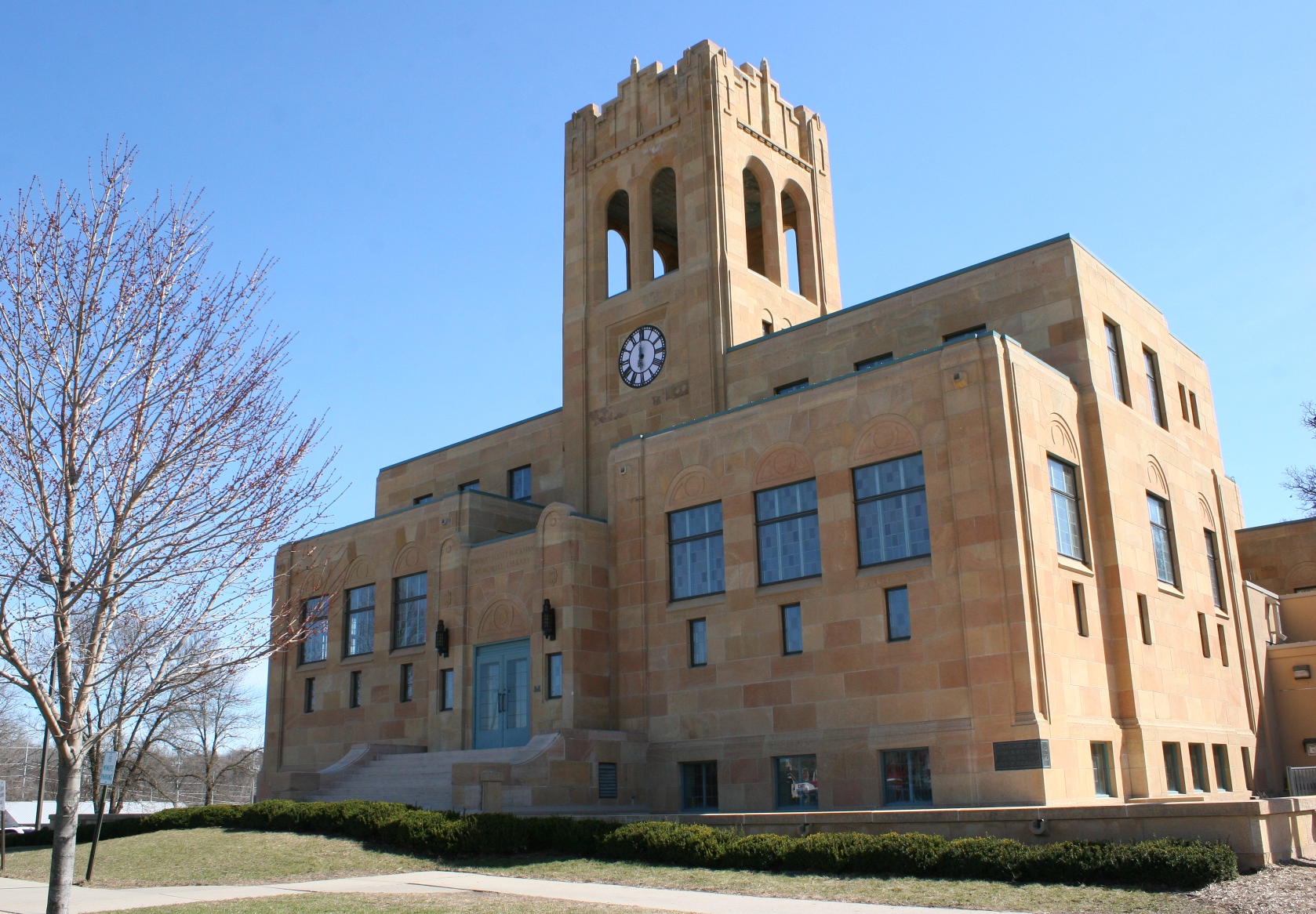
The 1929 section of Buckham Memorial Library with its signature central tower. (Minnesota Prairie Roots copyrighted file photo)

Several blocks to the south, a clock focuses the base of the central tower at Buckham Memorial Library, a lovely Moderne/Art Deco style limestone building constructed in 1929 and on the National Register of Historic Places. The stained glass window below the clock was designed by Charles Connick of Boston. This is a timeless classic building where generations of families have pulled books from the shelves to grow their knowledge and simply for the joy of reading.

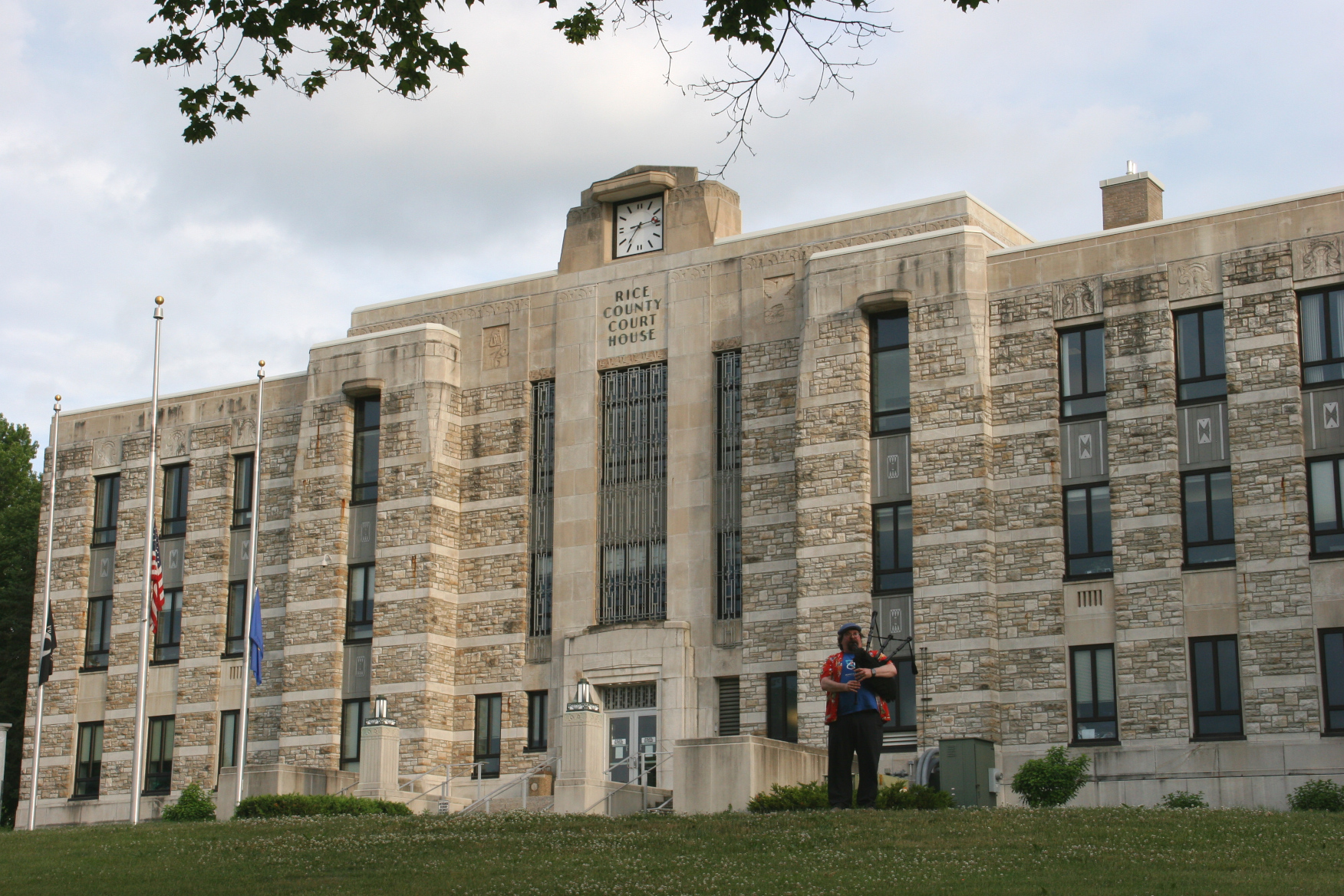
A bagpiper plays outside the Rice County Courthouse topped by a clock. (Minnesota Prairie Roots copyrighted file photo)

Just blocks away, a clock fronts the Fourth Street side of the Rice County Courthouse, built in 1932, also in the Art Deco style. Each year, events honoring veterans happen at the Rice County Veterans Memorial within view of the courthouse clock. For a moment or an hour, time stands still as we remember the sacrifices made for country, for democracy, by our veterans.

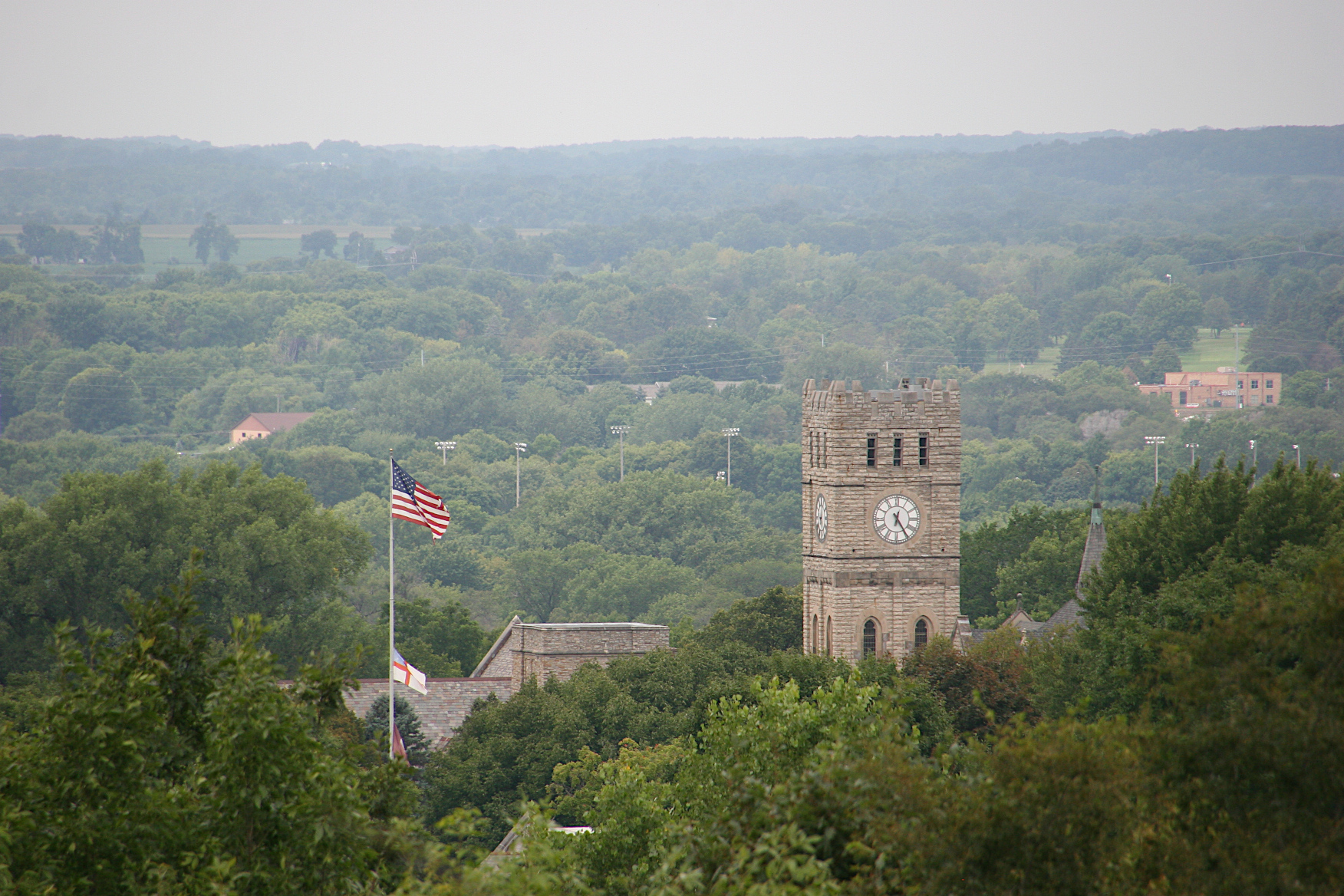
A view of the Shumway Hall tower from City View Park. (Minnesota Prairie Roots copyrighted file photo)

And then across the Straight River on the east side of Faribault, the Shumway Hall clock tower rises on the campus of Shattuck-St. Mary’s School in a complex of buildings that looks more castle than private college prep school. City View Park atop a hill blocks from campus offers a bird’s eye view of the tower, a view that is especially stunning in autumn. Shumway’s tower is assuredly a Faribault landmark, with Shumway Hall built in 1887 and on the National Register of Historic Places. Thousands of students have passed beneath that clock tower as they learned, studied and grew. Time passages.

Each day we mark time. Just as these notable outdoor public clocks do in Faribault. I expect most locals take these historic clocks for granted, pass by them without a thought. Too often we do that in our personal lives also, thinking we have all the time in the world. Until we don’t.

© Copyright 2025 Audrey Kletscher Helbling
 

An enlightening talk focuses on Minnesota’s “Hooded History” February 21, 2025
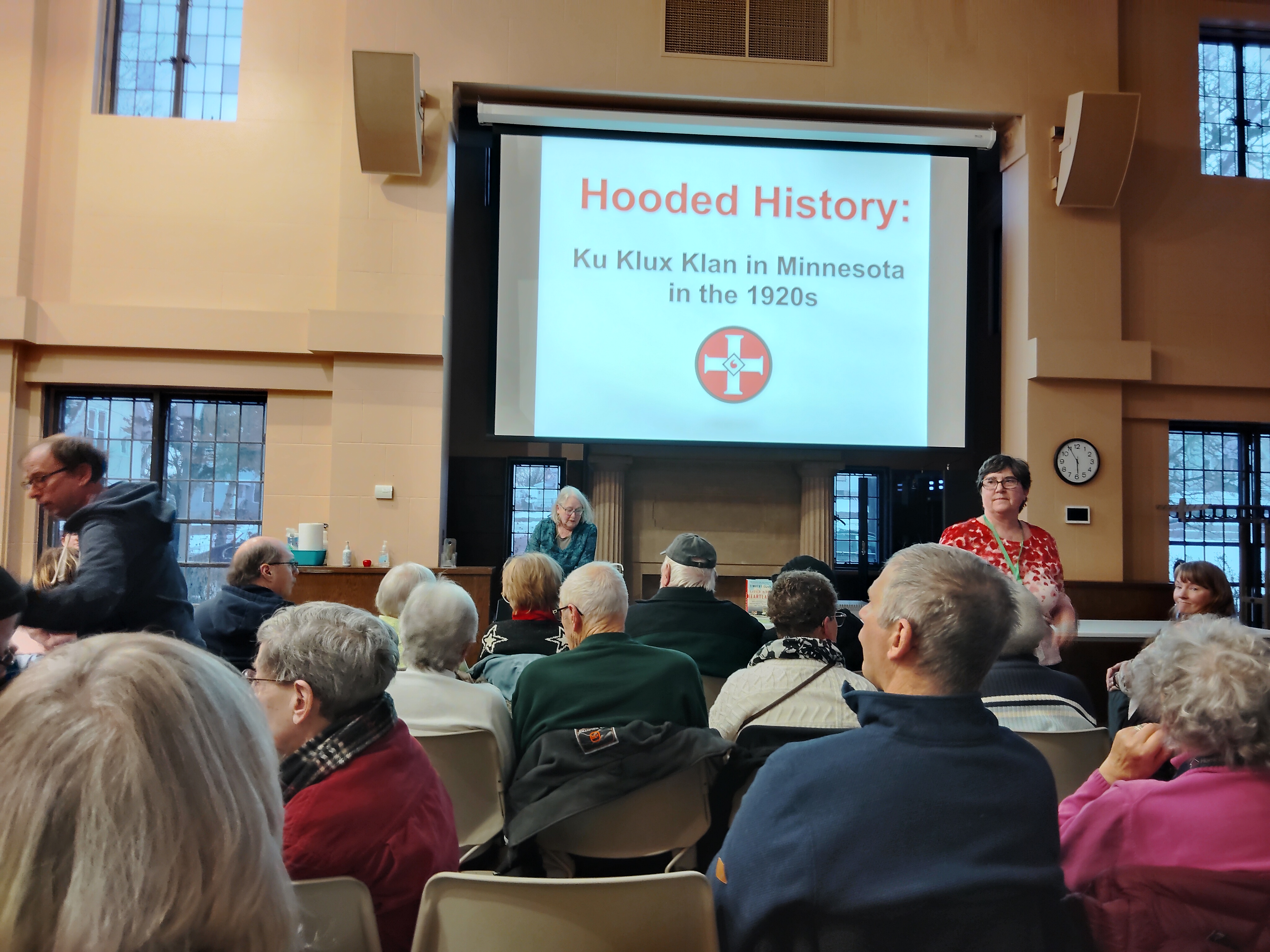
The audience settles in as Nancy Vaillancourt, center, is about to begin her presentation, “Minnesota’s Hooded History.” (Minnesota Prairie Roots copyrighted photo February 2025; all photos taken with my smartphone)

NOT MUCH HAS CHANGED in 100 years. That summarizes my thoughts after attending a talk, “Minnesota’s Hooded History—The Ku Klux Klan in 1920s Minnesota,” followed by a Q & A Thursday evening at my local library. Hate groups still exist in America, just with different names, different targets, different locations, different levels of participation.
But the core ideology of these groups, based on what I heard and what I’ve read, remains unchanged. The same in 1925 as in 2025. Historian and retired librarian Nancy Vaillancourt could have been talking about current day America when she shared her research into the KKK in Minnesota. The KKK professed a strong Christian faith, patriotism, Americanism, American ideals and more as they targeted first Blacks, then Catholics, Jews and others, including immigrants. Sound familiar? Today this hatred and intolerance is coming not only from organized hate groups, but also from individuals and from people in positions of power.

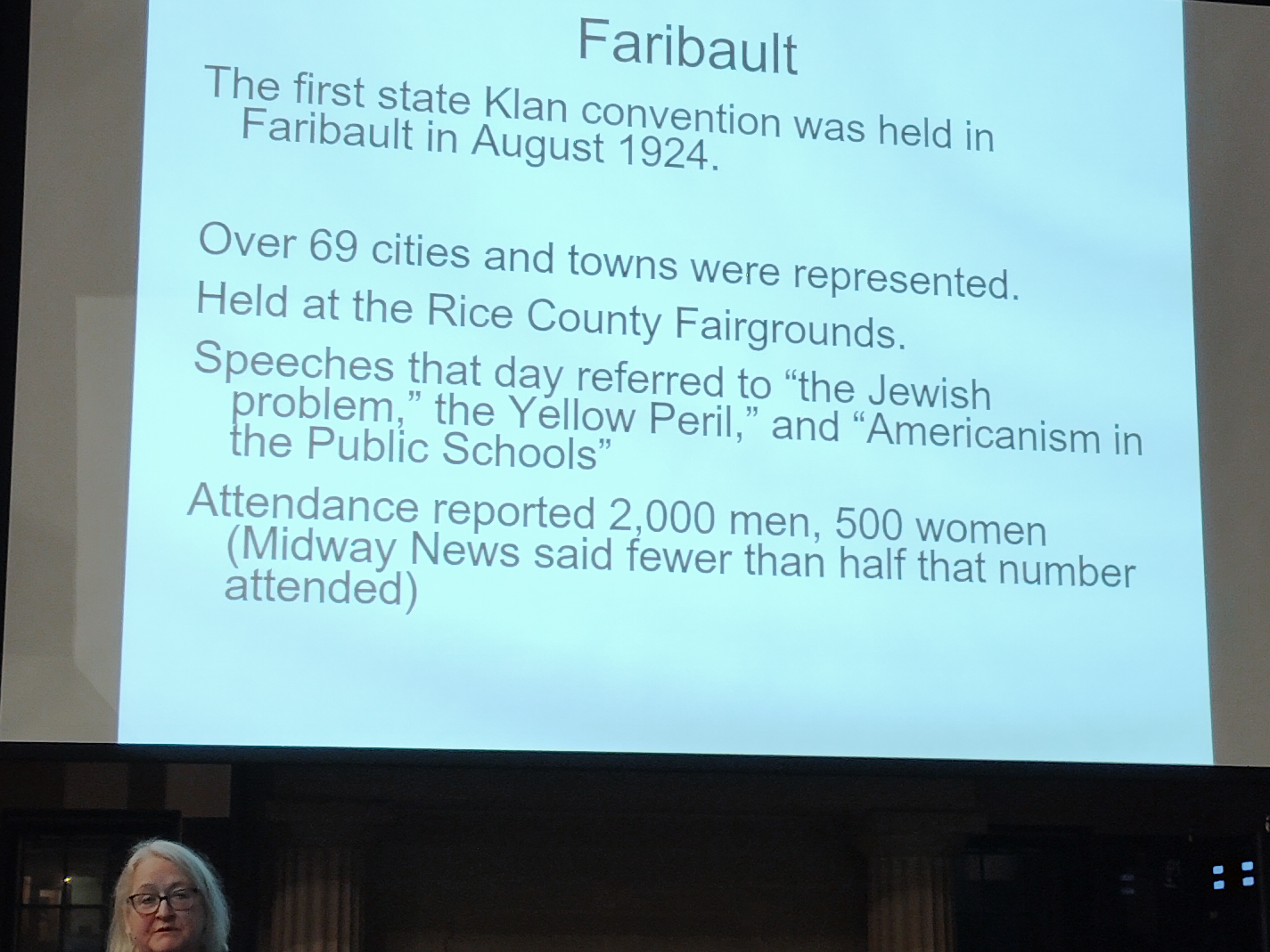
Faribault hosted the first state Klan convention, with details outlined in this slide presented by Nancy Vaillancourt. (Minnesota Prairie Roots copyrighted photo February 2025)

Back to Vaillancourt’s presentation Thursday evening. About 100 attendees packed the Great Hall meeting room at Buckham Memorial Library to capacity in a city which hosted Minnesota’s first state Klan convention in August 1924. Klan members from 69 cities and towns attended the event at the Rice County Fairgrounds in Faribault with the KKK claiming 2,500 in attendance. A publication noted fewer than half that number actually attended. Inflated crowd numbers. Sound familiar?

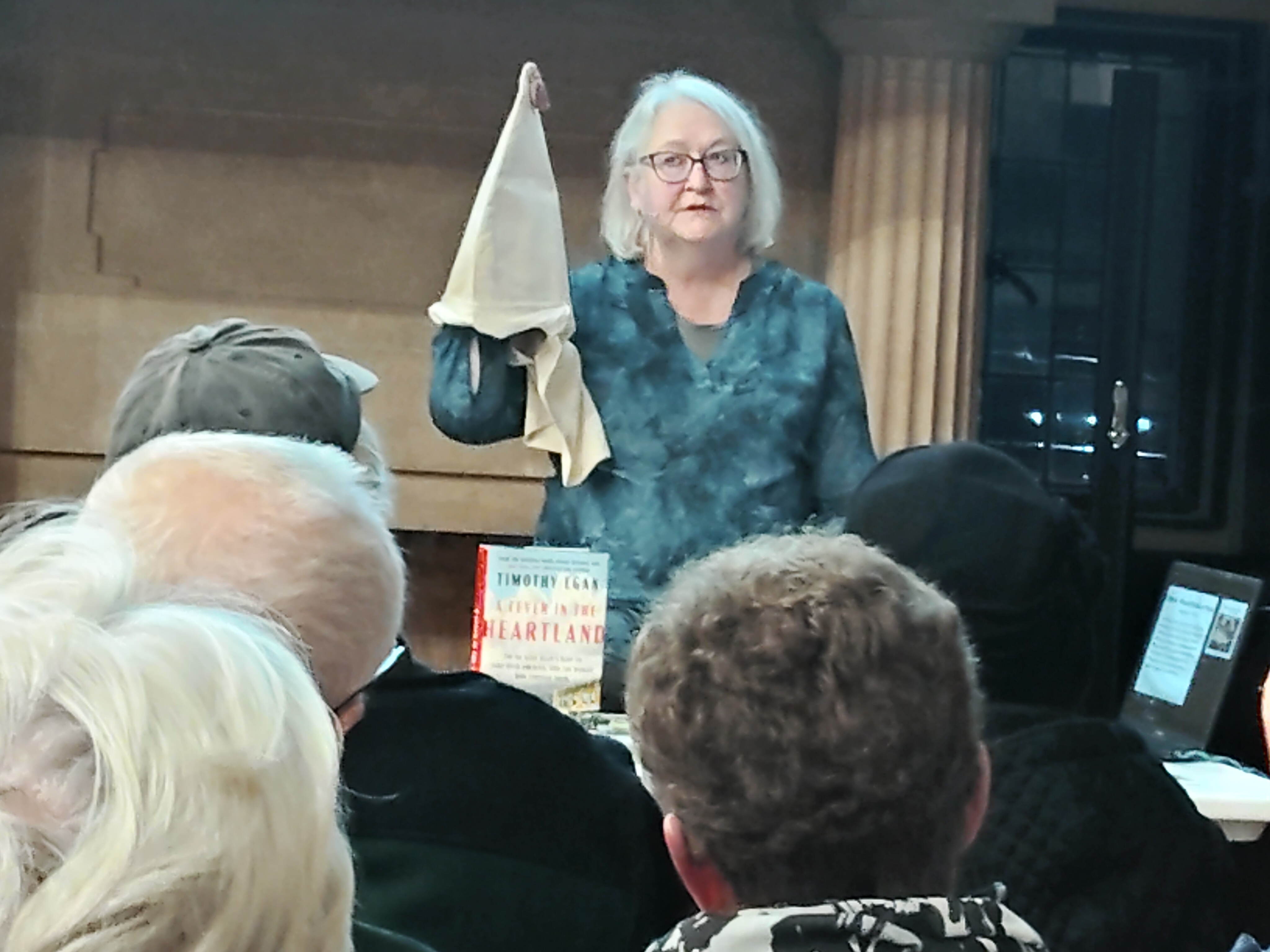
Nancy Vaillancourt displays an authentic Klan hood given to her by a woman from Blooming Prairie. She warned audience members that some items she would be showing may be disturbing and that they could step out if necessary. (Minnesota Prairie Roots copyrighted photo February 2025)

Certainly, hosting a state KKK convention is not a proud moment in a city’s history. But it is history none-the-less and important to know. We cannot deny our past, even if hurtful and painful and awful. And Vaillancourt revealed plenty of hurt and hate as she presented, focusing on the KKK in my region of southern Minnesota. She confirmed the presence of Klan chapters in nearly 60 Minnesota counties at one time. Groups of men, women and sometimes children who, in their hooded coverings, spewed hatred and intolerance while waving American flags and singing “Onward Christian Soldiers.”

Cross burnings occurred in Faribault, (including on the bluffs below St. Mary’s Hall), Stockton, Red Wing, Winona and other locations cited not only by Vaillancourt, but by audience members. Like Teresa, whose husband’s grandmother had a cross burned in her yard near Waterford (outside Northfield) because she was Catholic. Klan hatred toward Catholics was particularly strong in 1920s Minnesota.

A Catholic mother, who had just given birth, watched as the KKK paraded past the Owatonna hospital while en route from the Steele County Fairgrounds to Central Park during the state Klan convention in 1926. Can you imagine the fear she felt? Not unlike the fear targeted groups of people are experiencing today in this country.

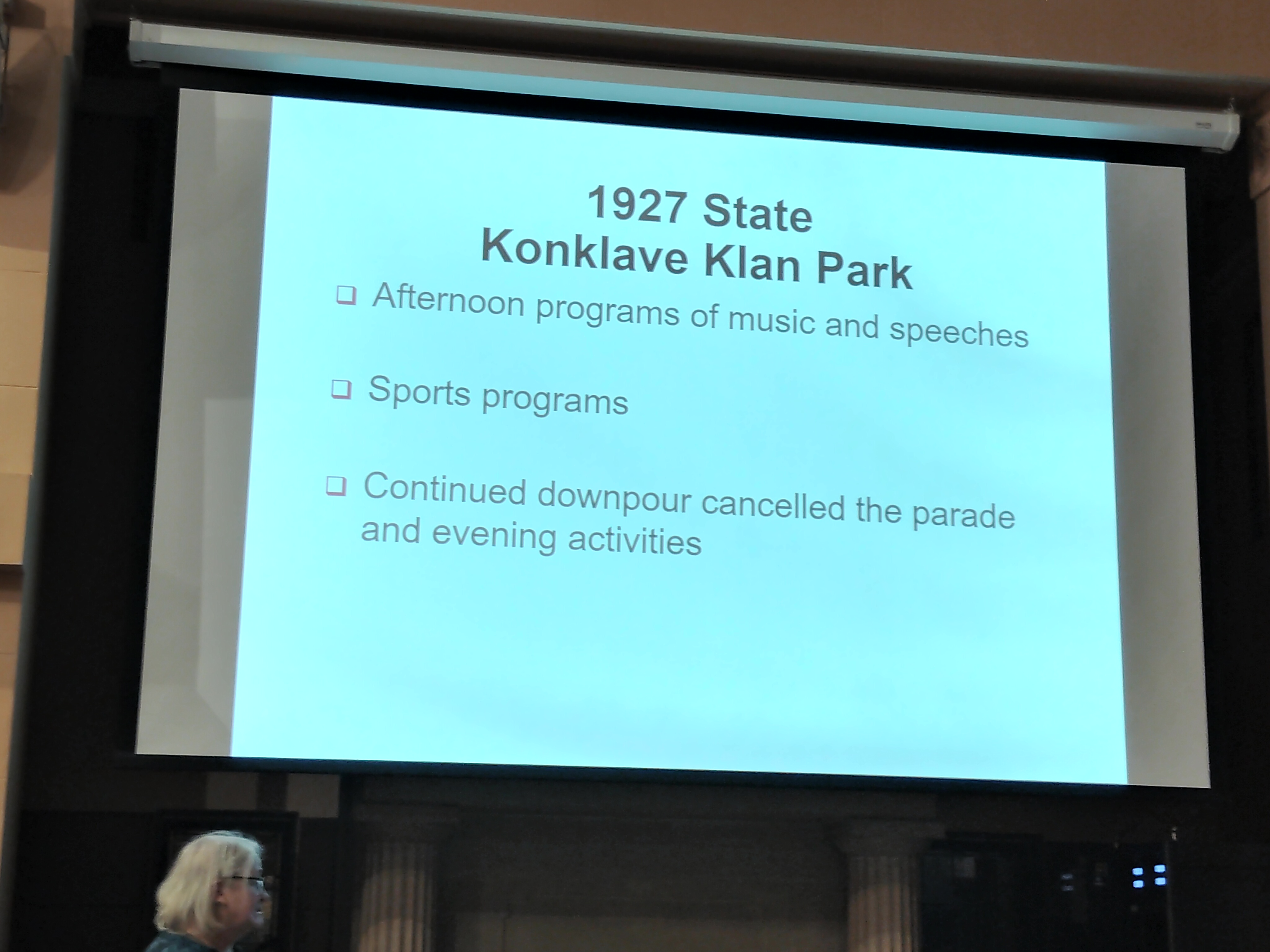
Sounds like a deceptively wholesome gathering at the Klan Park in Owatonna. (Minnesota Prairie Roots copyrighted photo February 2025)

Because Vaillancourt is from Owatonna, much of her talk focused on that community just south of Faribault along Interstate 35. Owatonna, it seems, was a hotbed of Klan activity, hosting local and state gatherings. But the fact that stood out for me was the Klan’s purchase of 20 acres of land east of downtown Owatonna. That land became Klan Park, a place to gather, organize and socialize. The local chapter even constructed a meeting house there. While it is disheartening to hear this, it was uplifting to learn that the land was sold in 1945—to a man whose wife was Catholic. Attendee Bonnie shared that bit of information about her great uncle, who was invited to join the Klan, declined because of his wife’s Catholicism and then eventually bought the land. Today that former KKK park is the site of soccer practice fields, Vaillancourt noted, where a diverse group of youth play.

Vaillancourt covered a whole lot more in her presentation. Like how the Klan recruited from fraternal orders, Protestant churches, via fiery speeches, by invitation. Fear and social and economic pressure were used to draw people into the Klan. Sound familiar? In Virginia, in northern Minnesota, the entire school board claimed Klan membership and made Bible reading in school compulsory. The mayor of St. James was a major grand dragon of the KKK. The Northfield Klan hosted a KKK homecoming Labor Day parade in September 1926. The Klan was big on parades. That makes sense given the intimidation and fear a mass of hooded marchers can instill in the public. And Owatonna residents were afraid, Vaillancourt said.

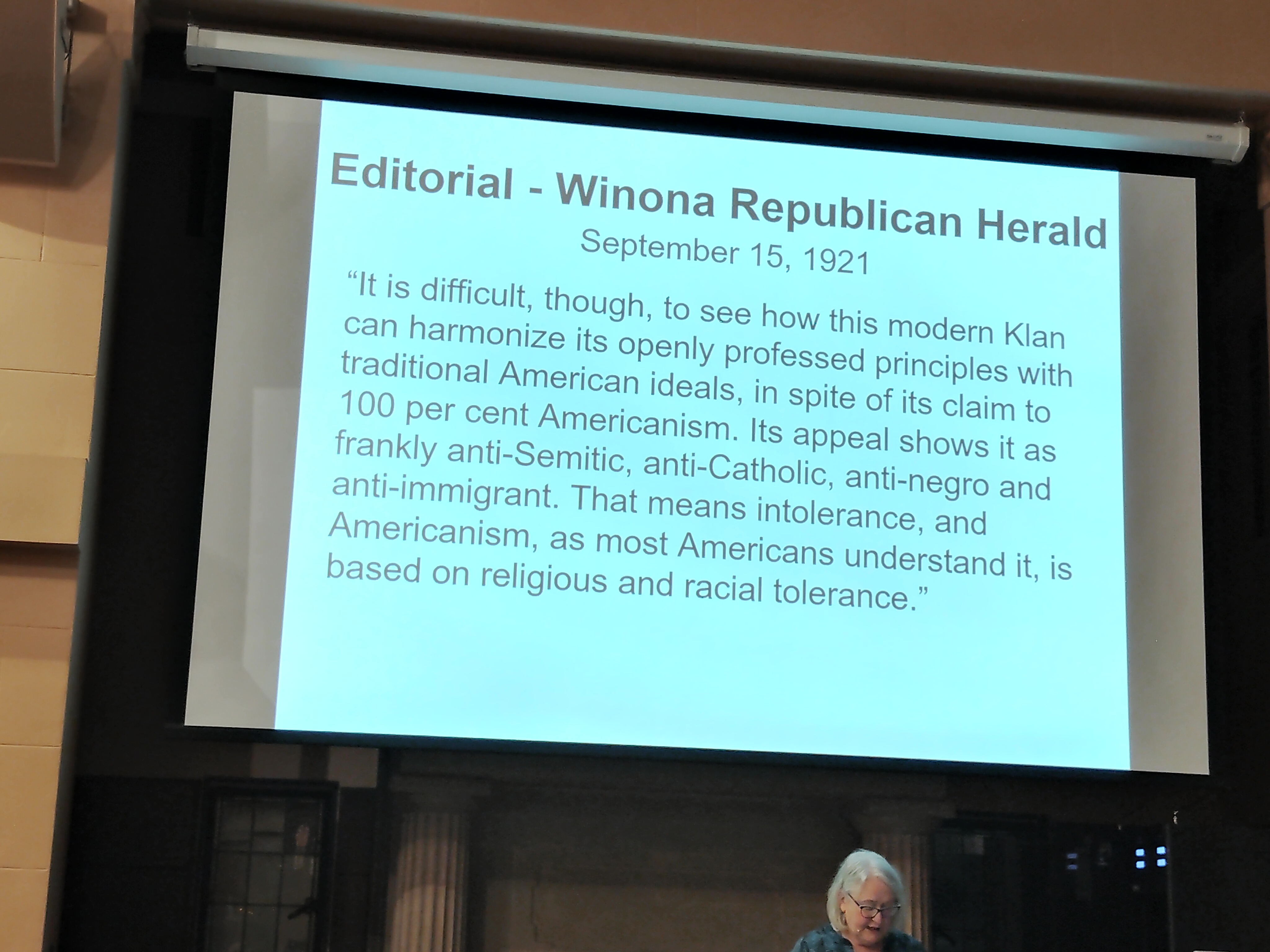
A powerful editorial from a southeastern Minnesota newspaper. (Minnesota Prairie Roots copyrighted file photo February 2025)

Yet, there were individuals—like Bonnie’s great uncle—organizations and media who resisted and challenged the Klan. The NAACP, the National Vigilance Association, the Knights of Columbus… Vaillancourt specifically noted the Catholic-based KC group for effectively exposing Klan members in a community.

This gives me hope, when I hear of media, individuals and organizations that stood up and refused to accept hatred and intolerance. It gives me hope, too, when members of my community turn out in strong numbers to learn about “Minnesota’s Hooded History.” Knowledge is powerful. It gives me hope, too, when someone like Nancy Vaillancourt cares, researches and shares because, she says, she wants “to get the truth out.” Even while some still deny it.

#

FYI: To learn more about the Ku Klux Klan and about other hate groups in America, visit the Southern Poverty Law Center.

A photo gallery exhibit, “Testify—Americana Slavery to Today, The Diane and Alan Page Collection,” will be displayed in the hallway connecting Buckham Memorial Library and the Faribault Community Center from April 1-23. The exhibit will also be at other libraries throughout the Southeastern Libraries Cooperating (SELCO) system.

The “Minnesota’s Hooded History” program was made possible with support from Minnesota’s Arts and Cultural Heritage Library Legacy Fund and SELCO.

© Copyright 2025 Audrey Kletscher Helbling