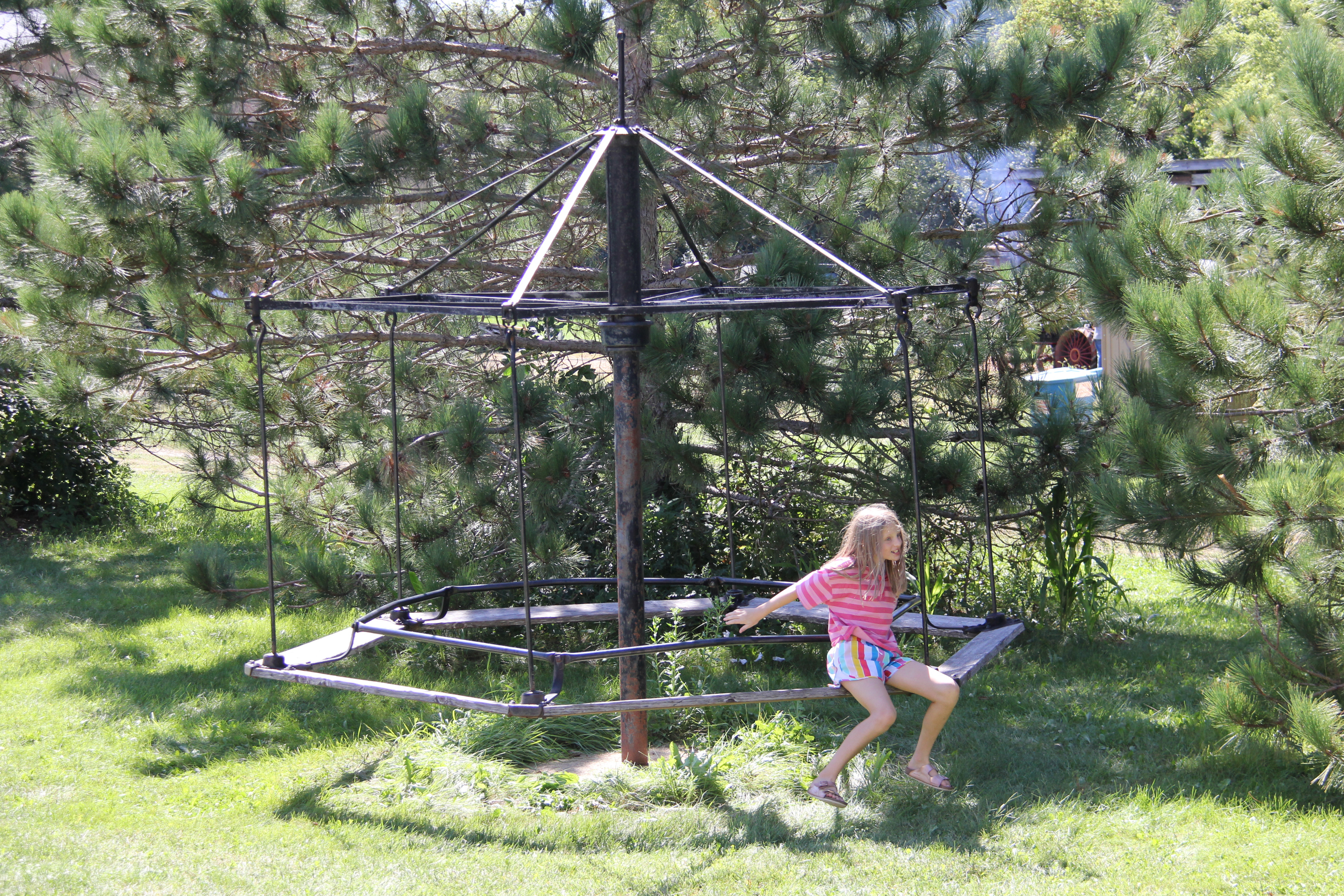
Taking a spin on the merry-go-round at the Rice County Steam & Gas Engines Fall Show. (Minnesota Prairie Roots copyrighted photo September 2024)
I LOVE WATCHING KIDS engage in activities from “the olden days.” Like circling on a vintage merry-go-round which, in today’s world, would fail all safety standards. But at the Rice County Steam & Gas Engines showgrounds in rural Dundas, playground and farm equipment of yesteryear, with all its inherently “dangerous” aspects, takes center stage. Common sense and caution are required at the bi-annual event which draws people of all ages. I observed a lot of young families at the recent Labor Day weekend farm show.
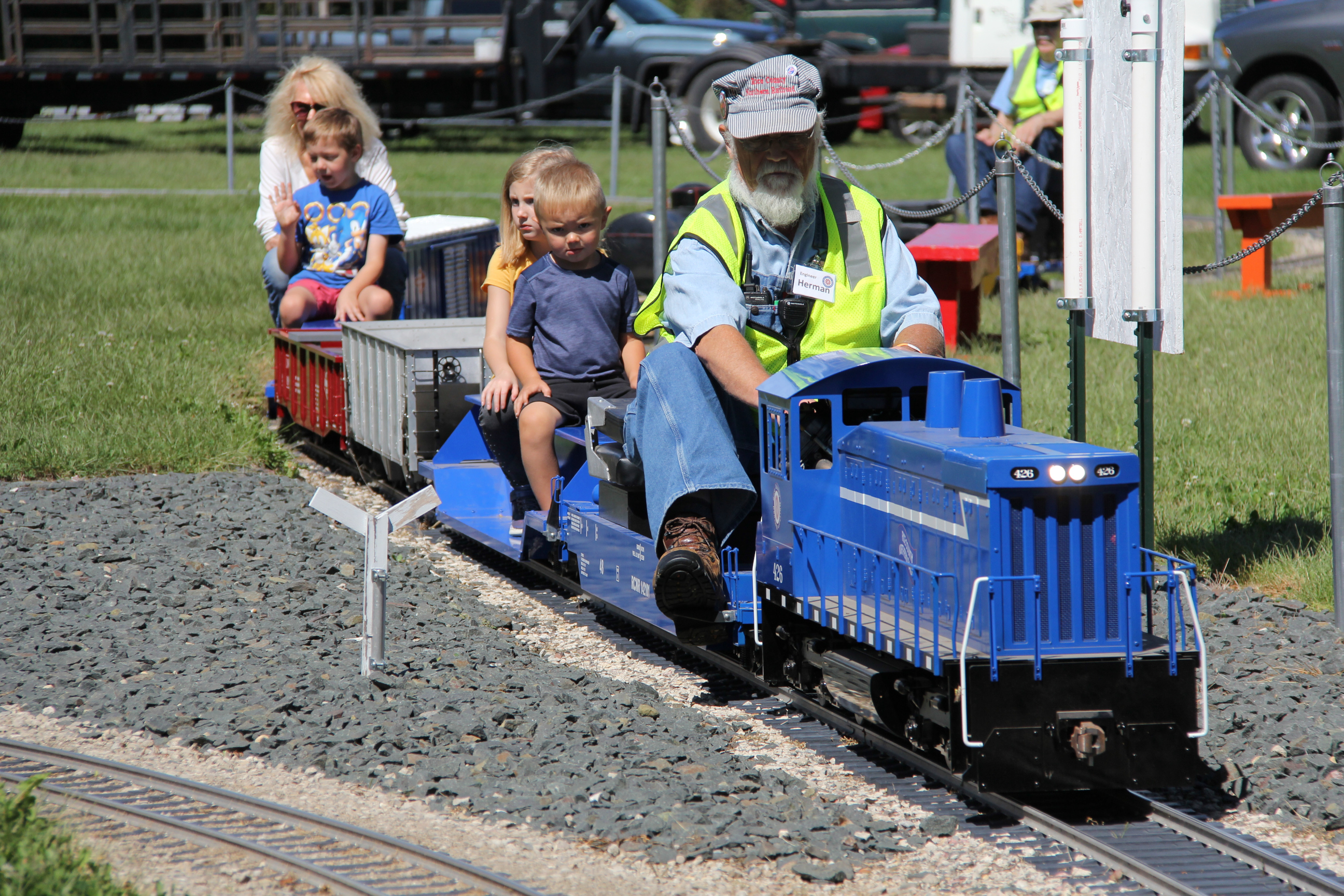
Train rides were a popular attraction with kids waiting in line to climb aboard. (Minnesota Prairie Roots copyrighted photo September 2024)
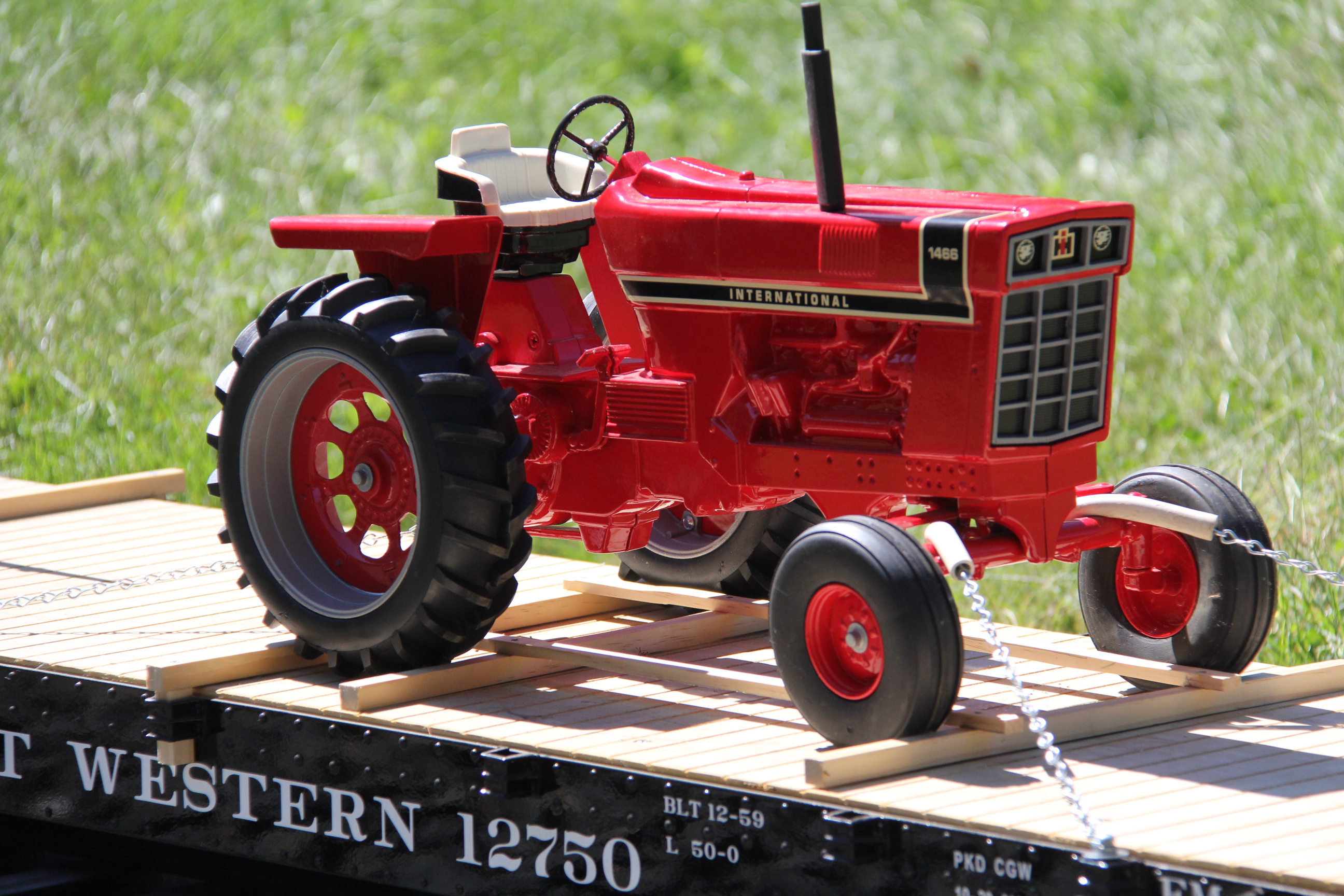
Tractors truly are a focal point of the farm show. This mini International sits on a train car. (Minnesota Prairie Roots copyrighted photo September 2024)
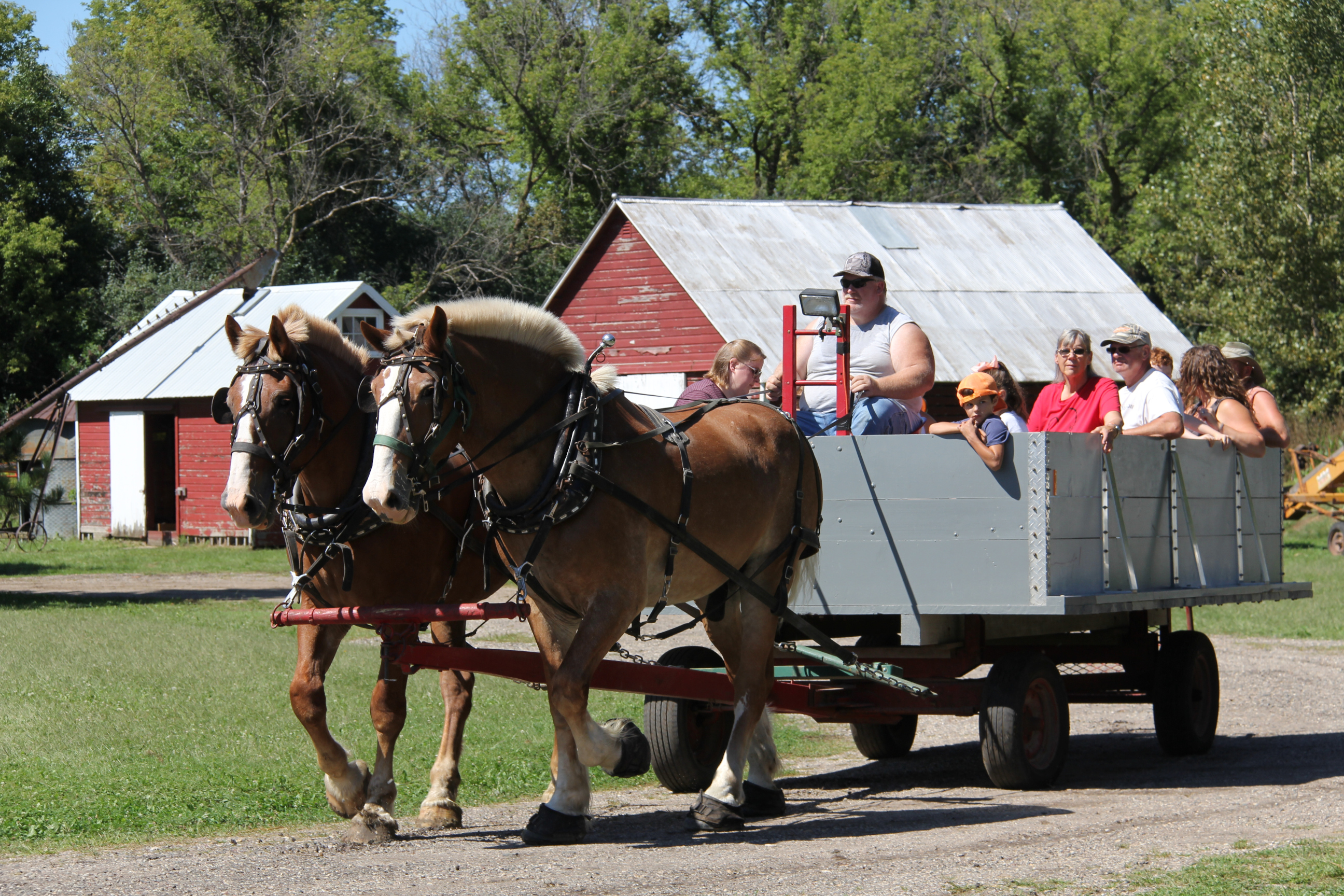
Horse-drawn wagon rides, too, drew lots of riders of all ages. (Minnesota Prairie Roots copyrighted photo September 2024)
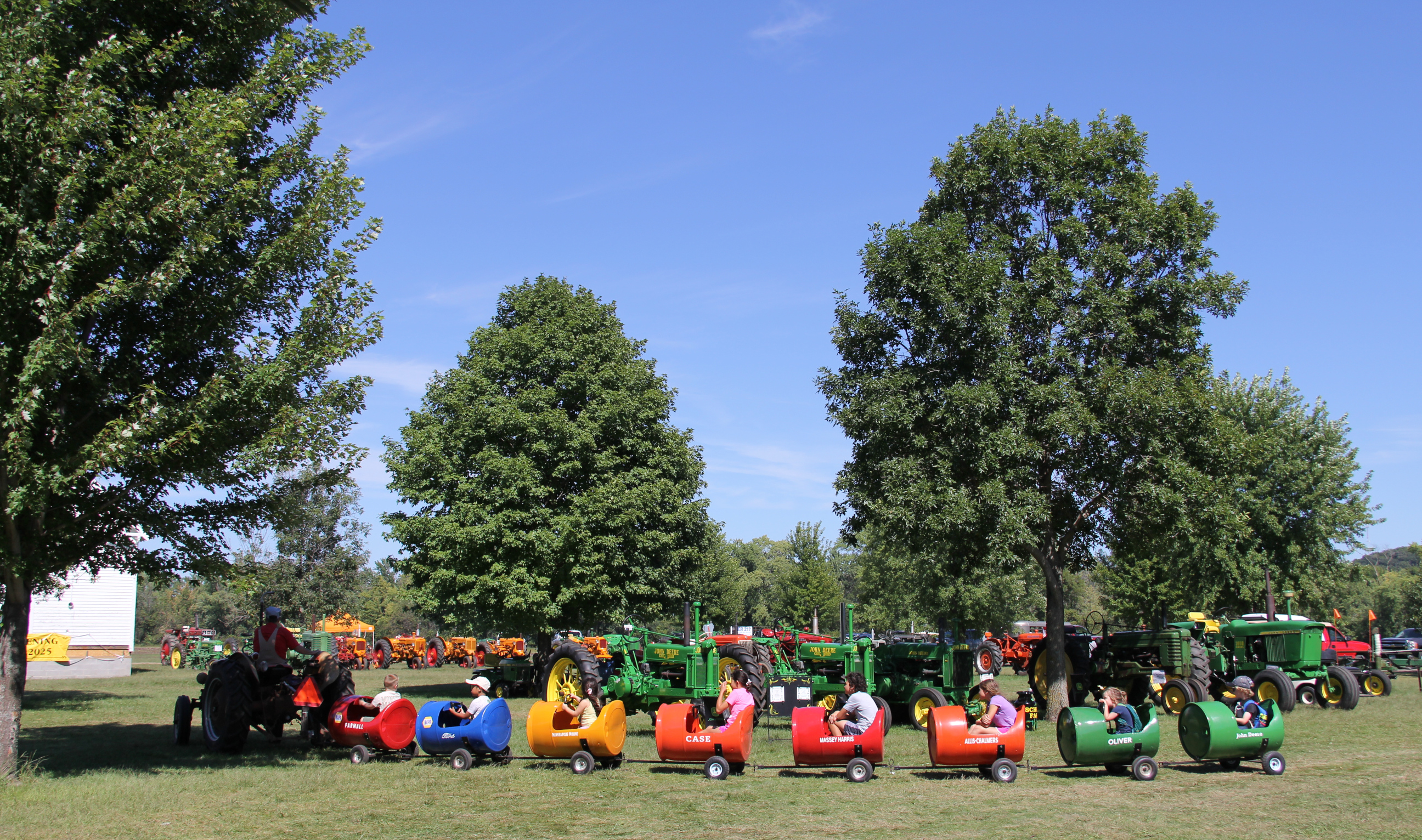
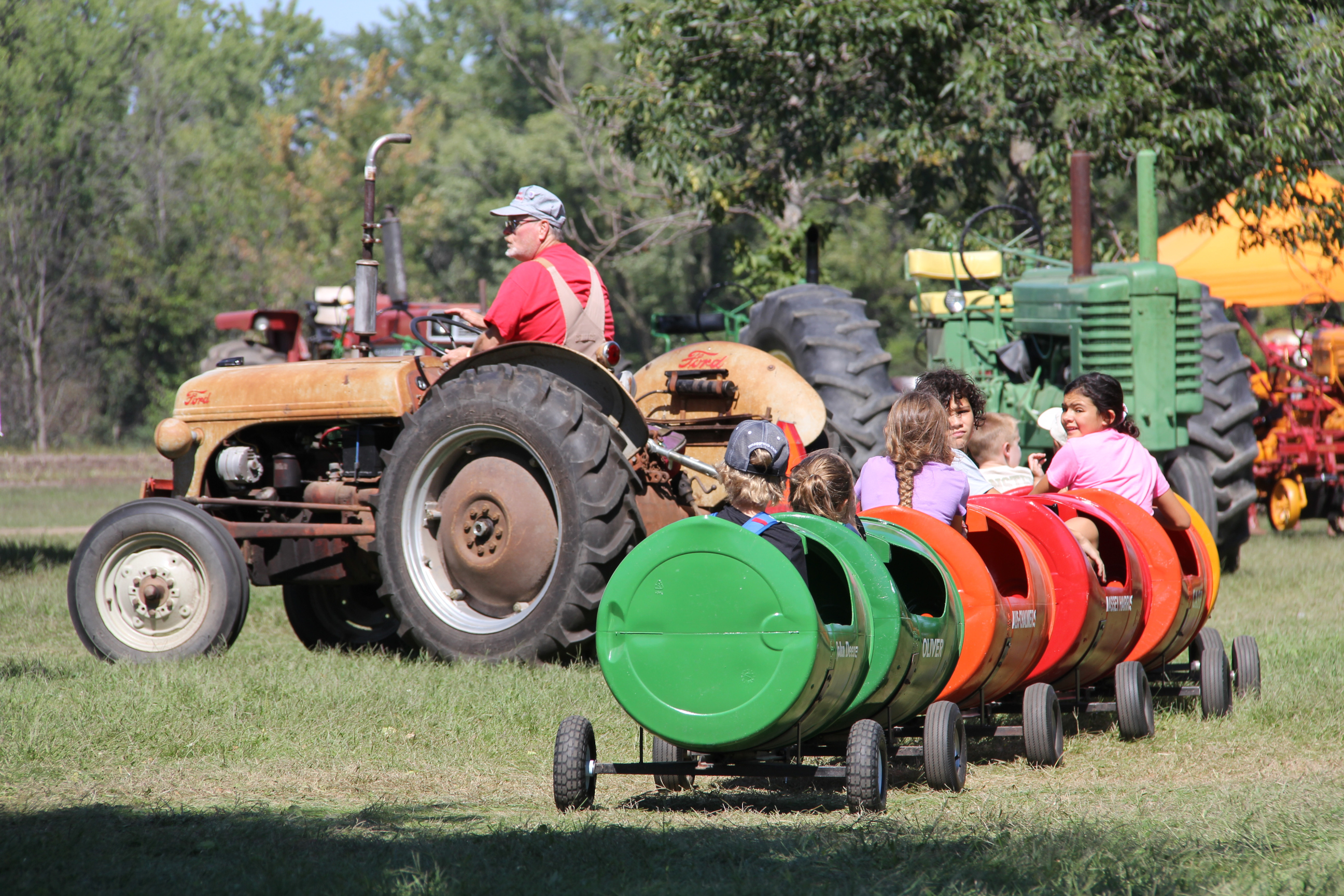
From a ride on a mini replica train, to rides on tractors, in horse-drawn wagons, and in a barrel train, kids have plenty to do here.
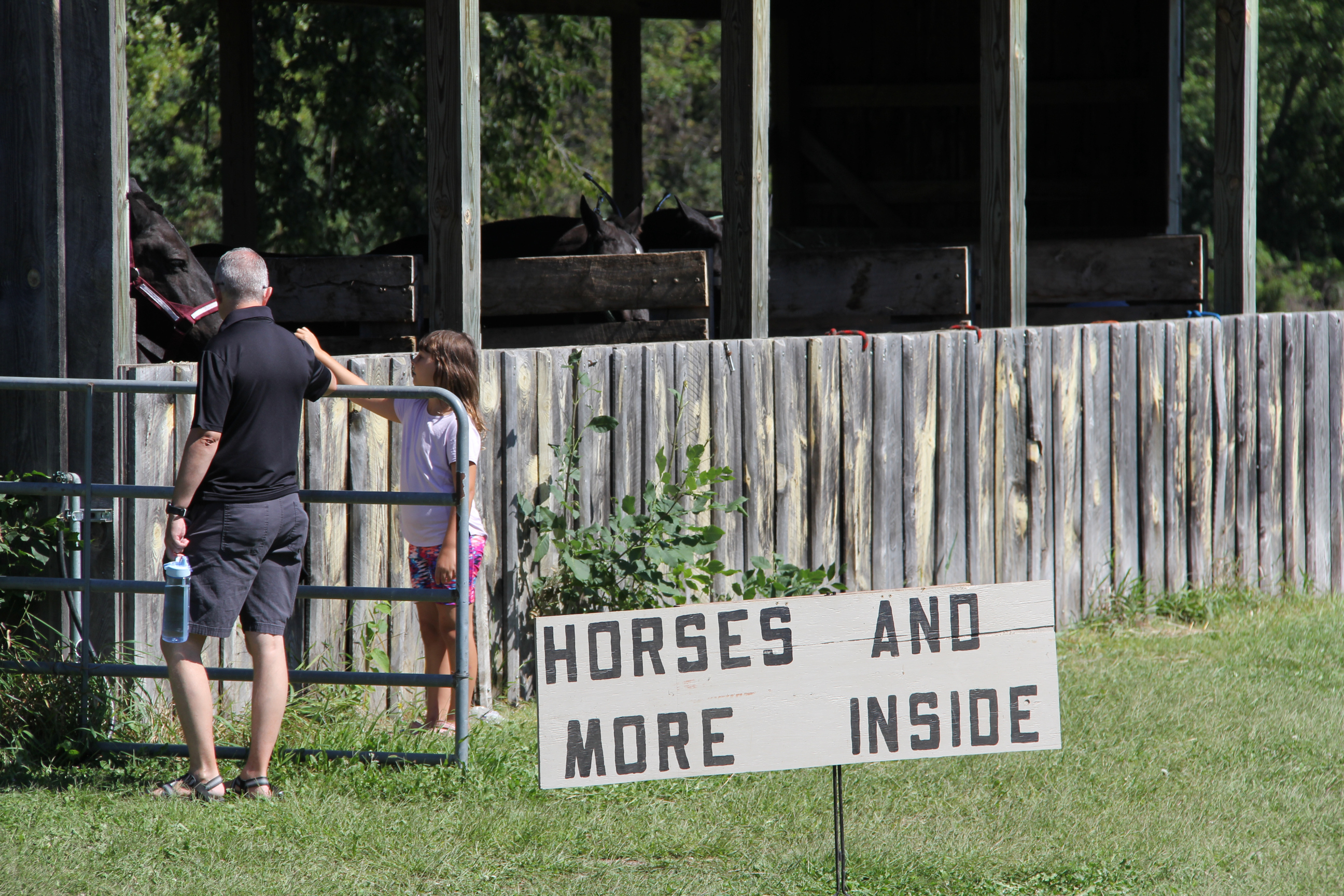
Windy Willow Farm Adventure, rural Northfield, provided animals housed in this shed. There were sheep, goats, rabbits, geese and chickens from the farm, plus horses. (Minnesota Prairie Roots copyrighted photo September 2024)
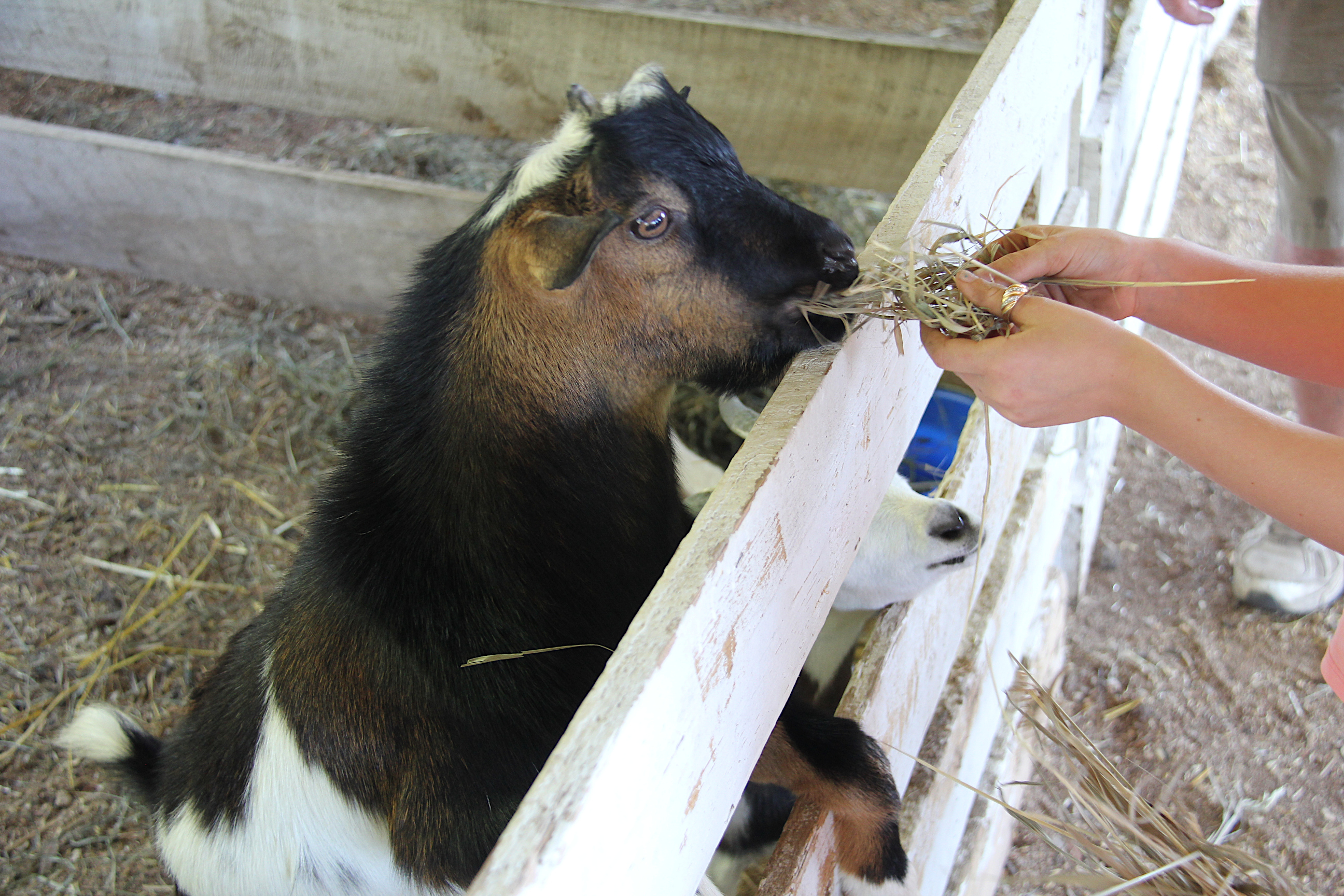
Two friendly goats vie for attention. (Minnesota Prairie Roots copyrighted photo September 2024)
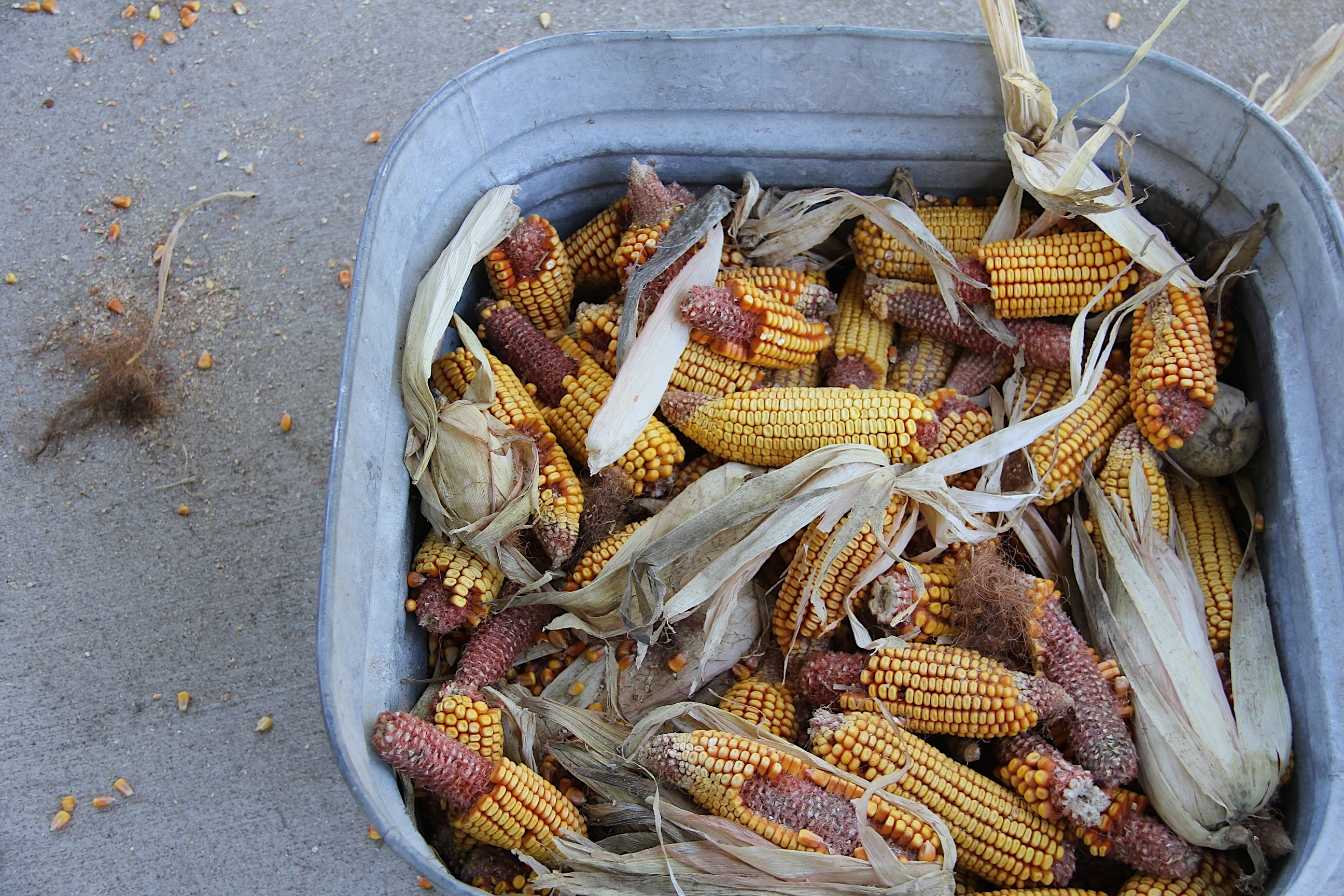
Tubs and buckets of corn await shelling. (Minnesota Prairie Roots copyrighted photo September 2024)
There are also clothes to feed through a ringer washer, corn to shell, animals to pet, a reel lawnmower to push and more.
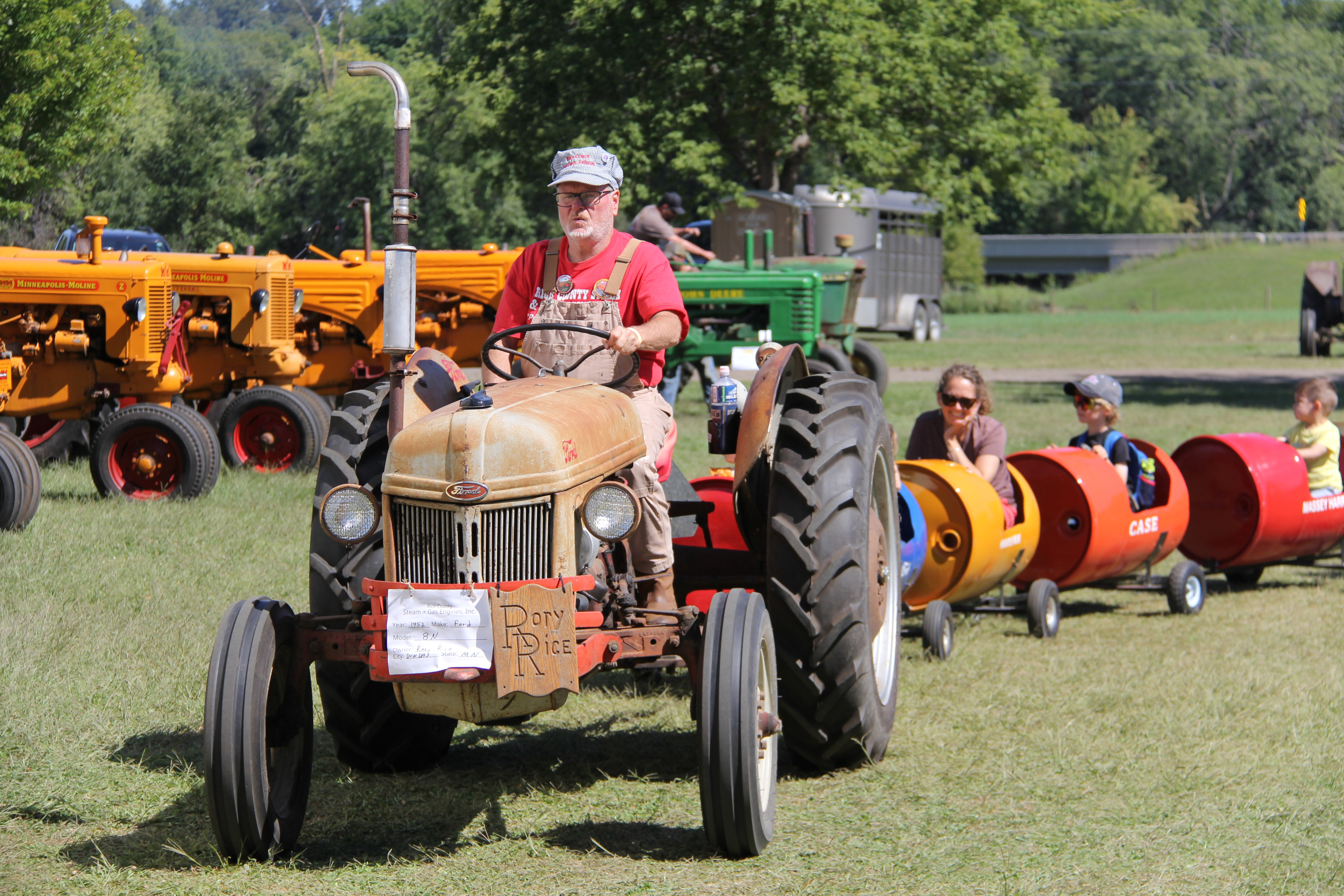
The “engineer” of the barrel train steers a 1950s era Ford tractor around the showgrounds. (Minnesota Prairie Roots copyrighted photo September 2024)
Without rails, the barrel train weaves among the vintage tractors at the farm show. (Minnesota Prairie Roots copyrighted photo September 2024)
Anytime anyone can get kids outdoors, off their electronic devices and learning rural history, it’s a good thing. Organizers of the steam & gas engines show clearly understand the importance of activities that keep kids busy and happy while adults watch the tractor pull, listen to music, mill around the vintage tractors and more as they connect in this rural community gathering.
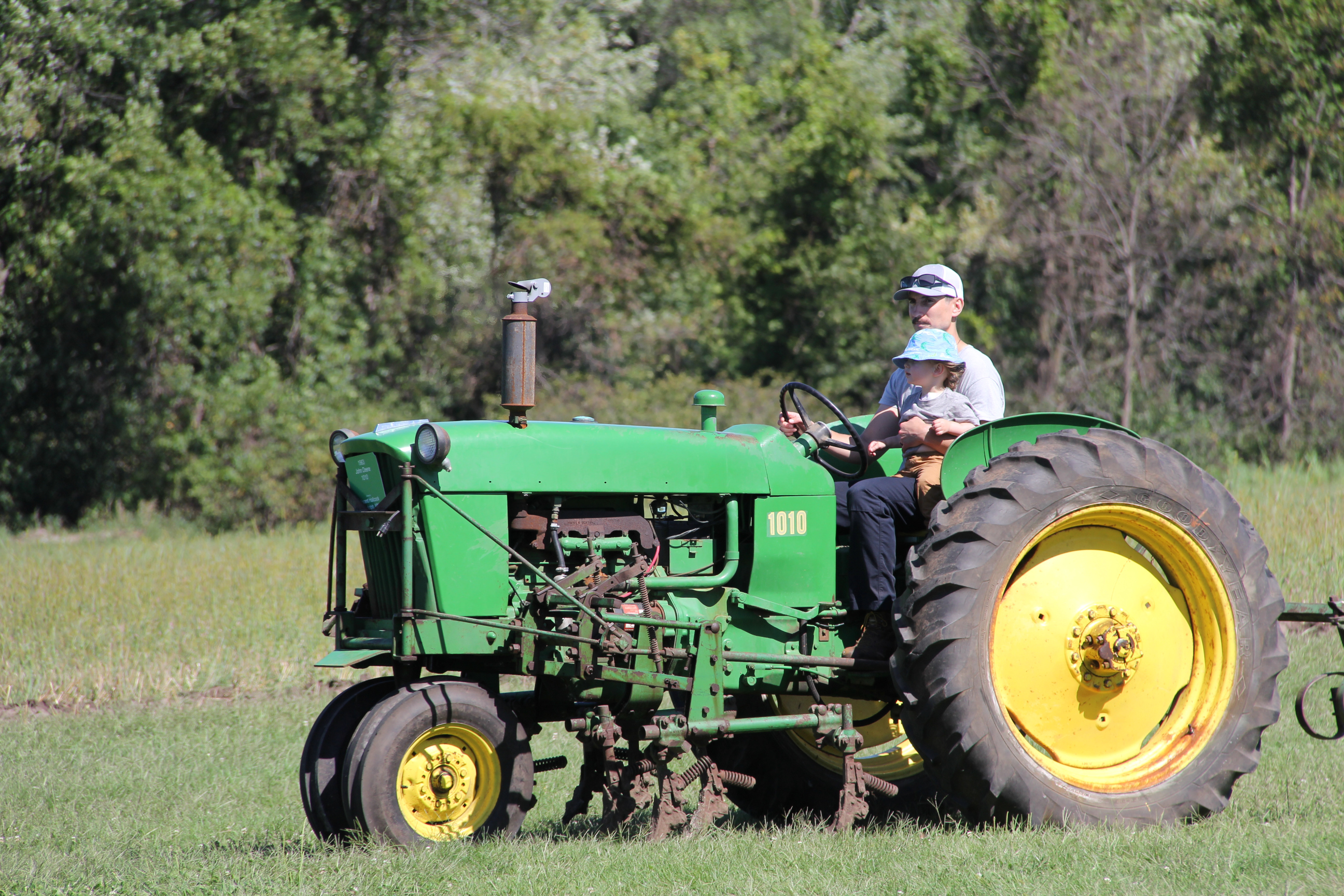
Father and son circle on a 1010 Model early 1960s John Deere pulling a cultivator. (Minnesota Prairie Roots copyrighted photo September 2024)
Most kids, even those from greater Minnesota, aren’t growing up “rural” anymore. Even if they live in the country, they’re not necessarily farm kids. So it’s important to expose them to the area’s agricultural heritage. The old tractors. The old farm machinery. The way clothes were washed and lawns were cut and how kids played back in the day.
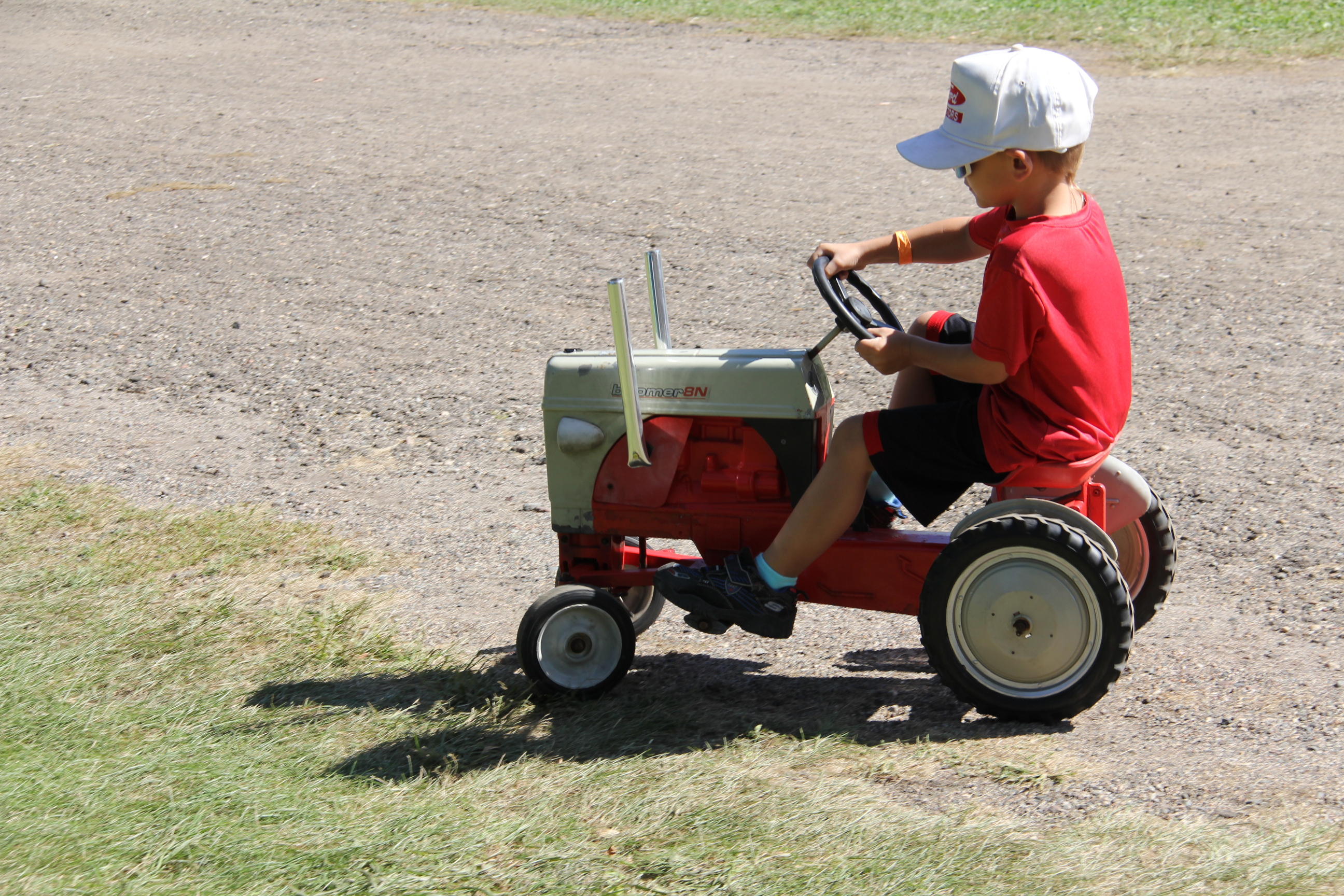
The day after he competed in the pedal tractor pull and earned second place, this little guy was back pedaling. (Minnesota Prairie Roots copyrighted photo September 2024)
A kids’ pedal tractor pull contest engages youth, allows them to compete, show off their strength. It’s also a way to build memories so that years from now perhaps they will bring their own kids to the Rice County Steam & Gas Engines Show. They’ll remember those merry-go-round rides and how they climbed into a horse-drawn wagon and how they pedaled with all their leg power to get a mini tractor across a finish line. In the end, we all cross the finish line. And sometimes getting there requires experiencing a little danger mixed with a whole lot of fun.
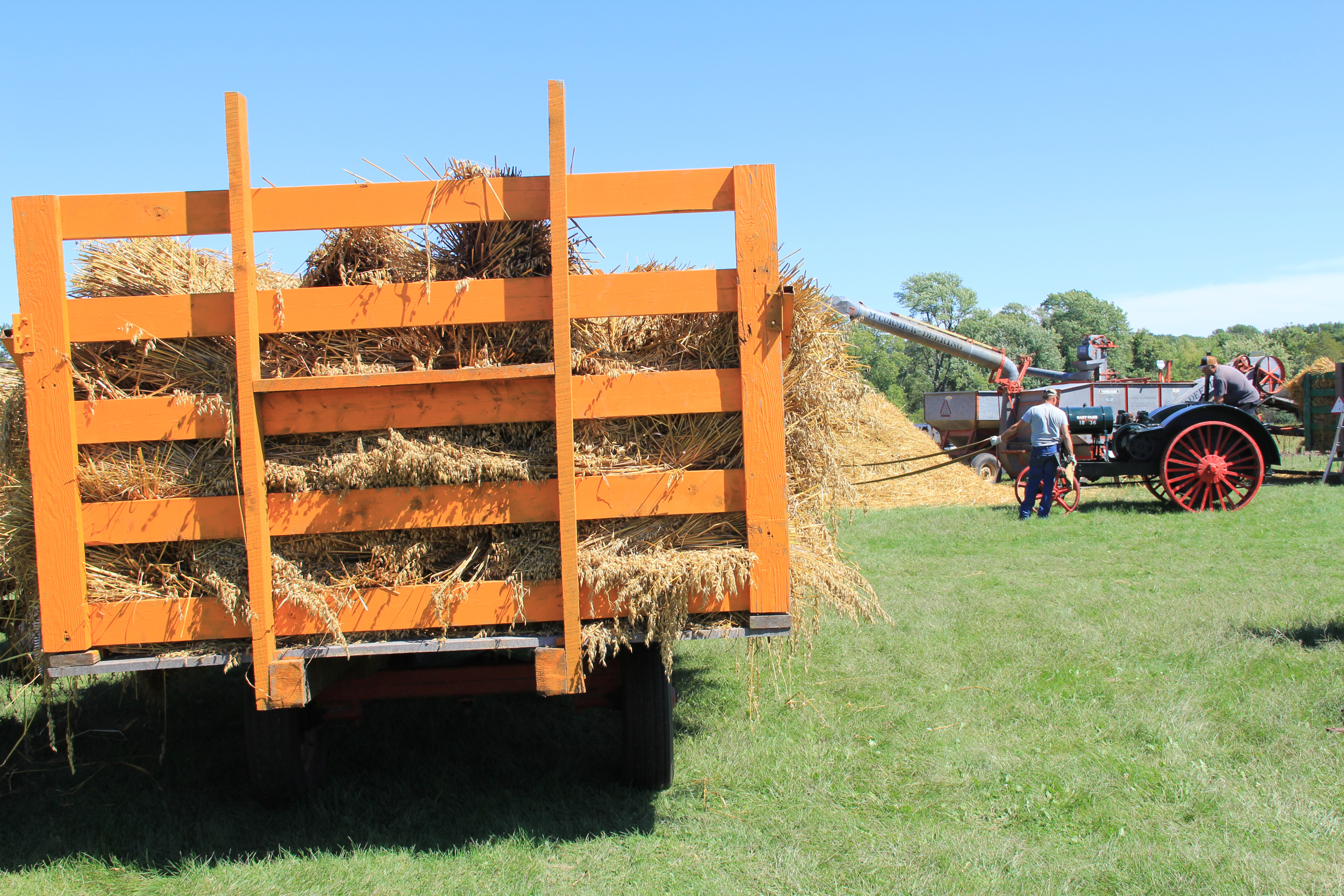
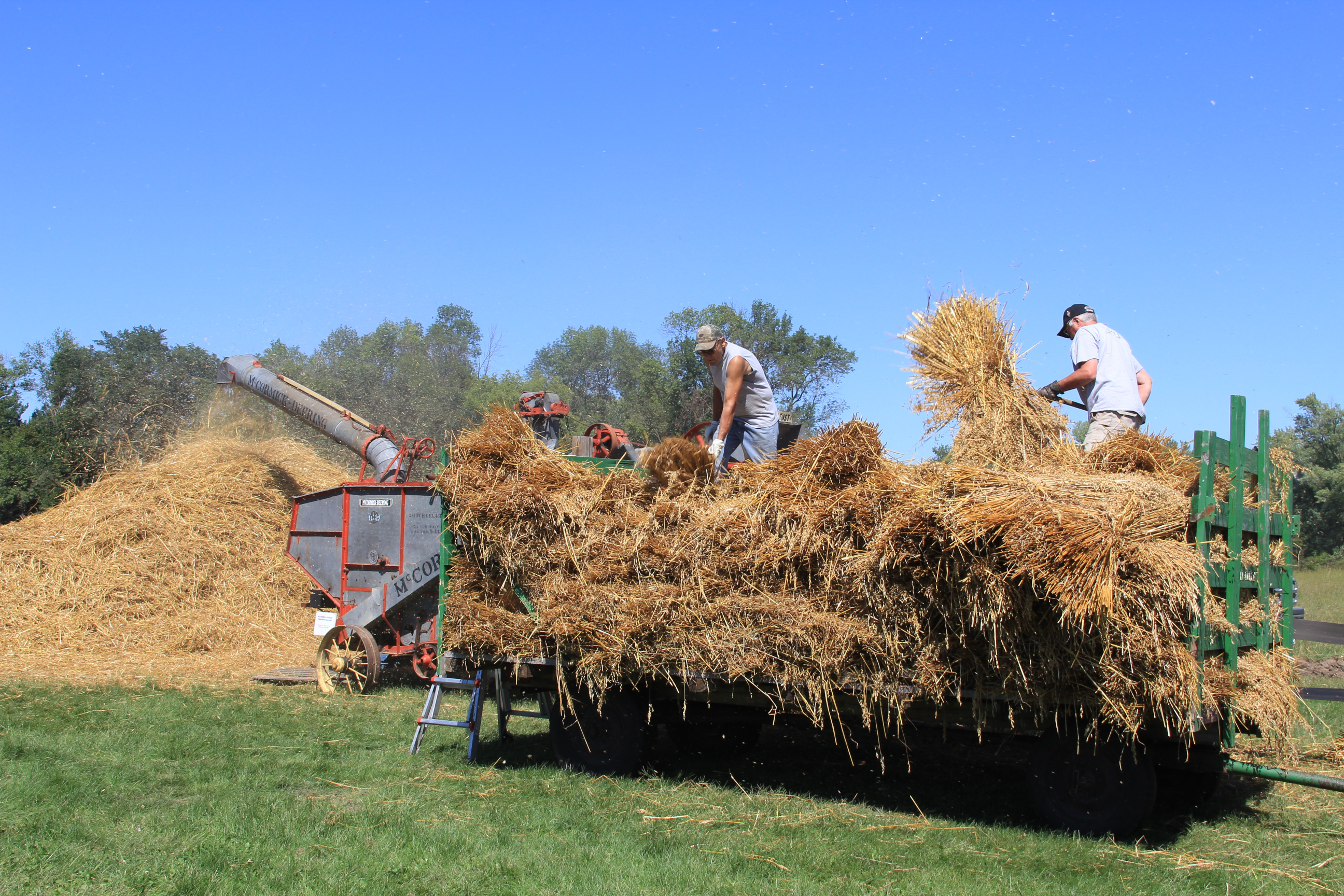
A wagonload of oats awaits threshing at the Rice County Steam & Gas Engines Fall Show. (Minnesota Prairie Roots copyrighted photo August 2024)
MEMORIES. A HISTORY LESSON. A step back in time. The Rice County Steam & Gas Engines Fall Show is that and more. It’s also entertainment, a coming together of friends and families and neighbors. A reason to focus on farming of yesteryear.
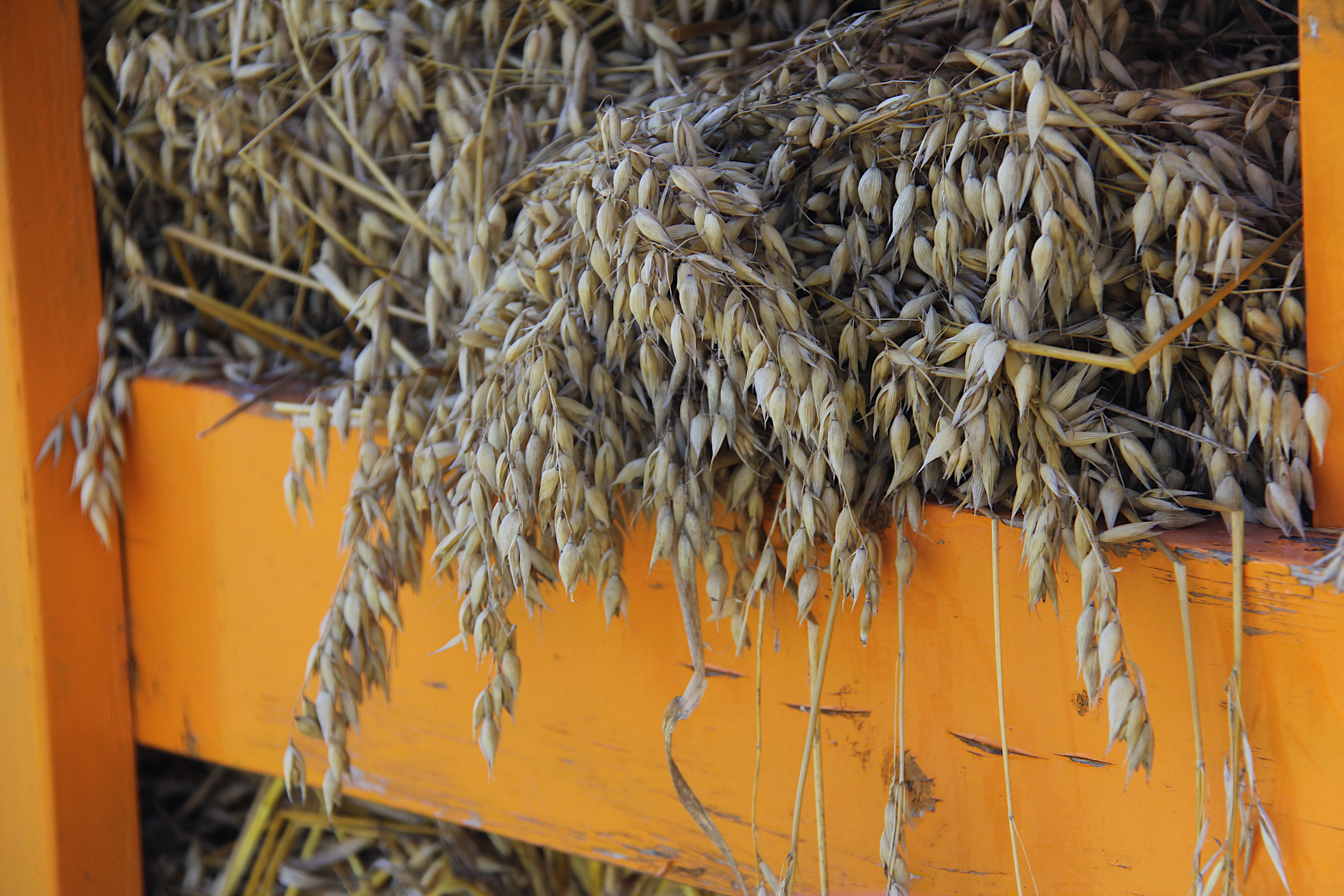
Oats drape over the edge of the wagon. (Minnesota Prairie Roots copyrighted photo August 2024)
I was among the crowds gathered over the Labor Day weekend at the showgrounds south of Dundas. This show features demos, rows and rows and rows of vintage tractors and aged farm machinery, a tractor pull, flea market, music, petting zoo, mini train rides and a whole lot more.
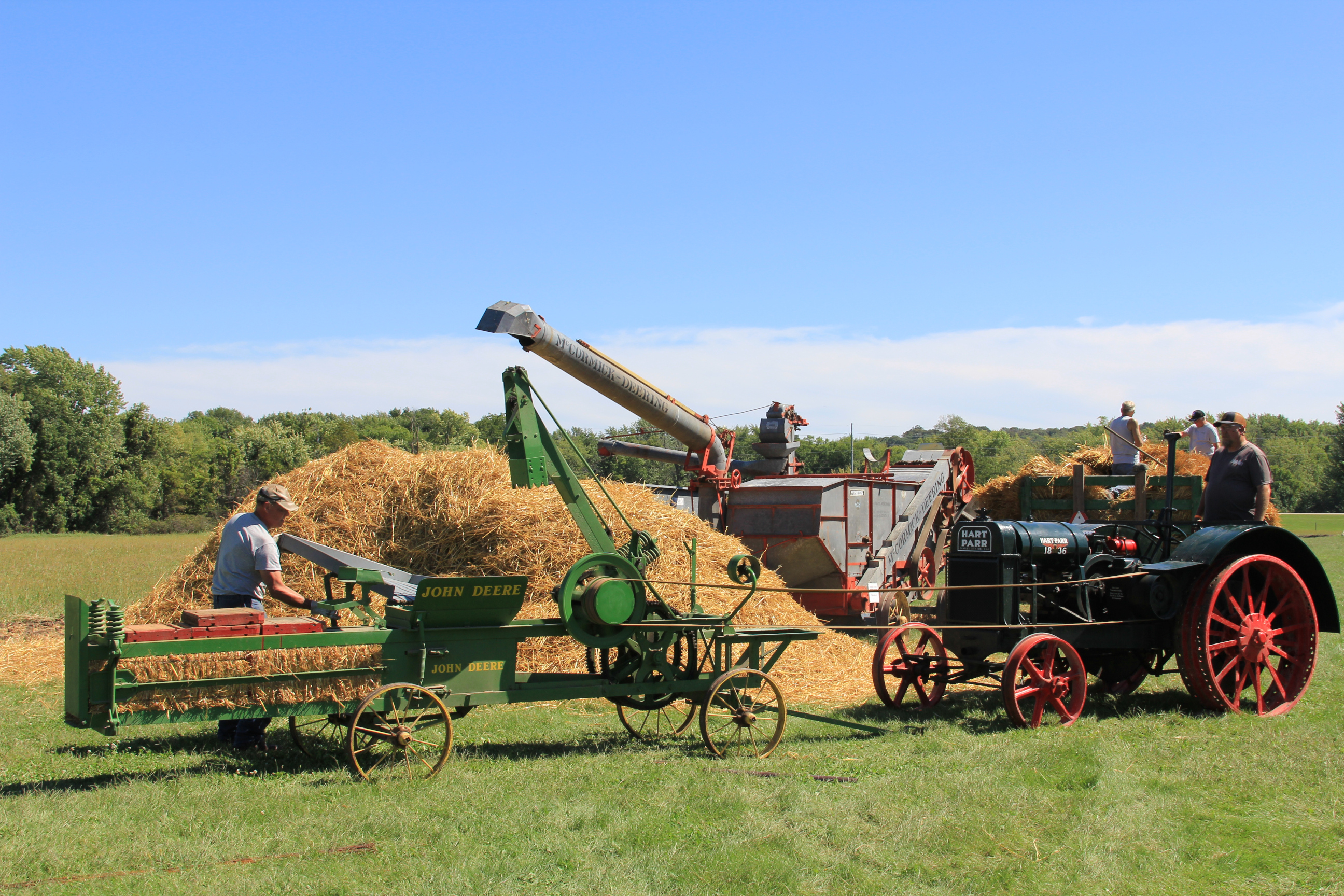
The scene is set to resume threshing with thresher, tractor, baler and manpower. (Minnesota Prairie Roots copyrighted photo August 2024)
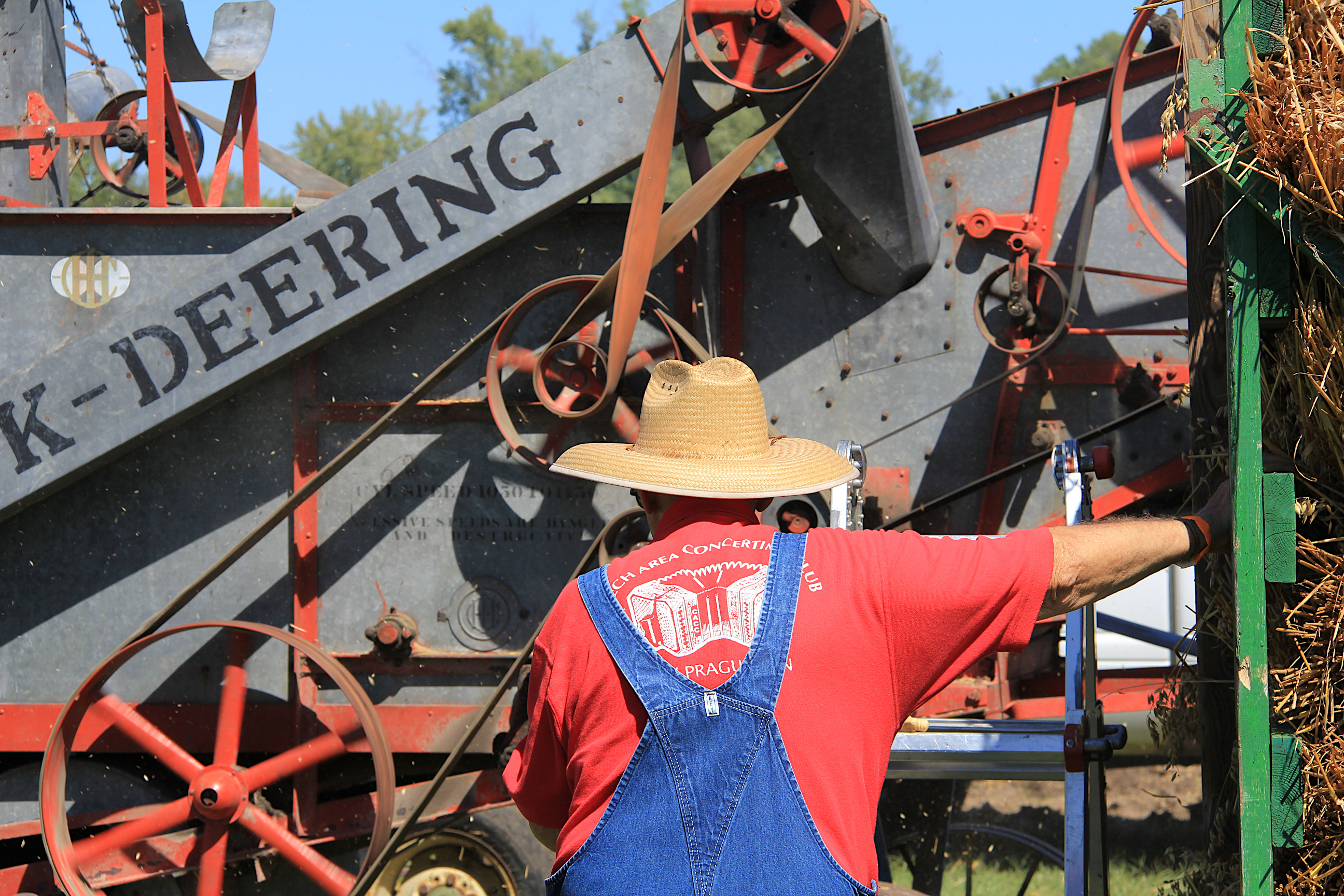
For me, a highlight was watching a crew of men threshing oats. The work is hard, labor intensive, even dangerous with exposed belts and pullies. It’s no wonder farmers lost digits and limbs back in the day.
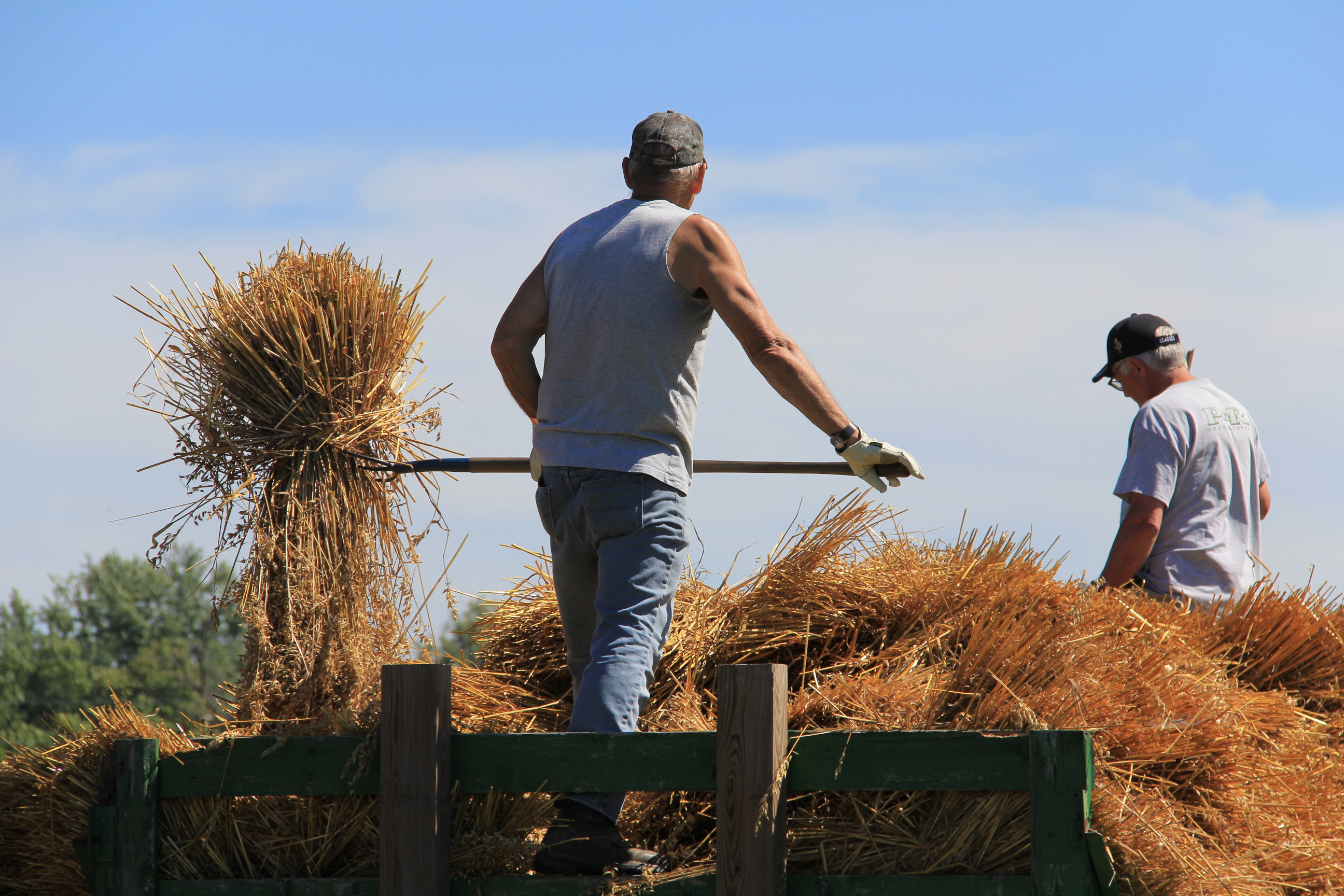
This part of the threshing crew pitches oats bundles into the threshing machine. (Minnesota Prairie Roots copyrighted photo August 2024)
While my observations are not connected to memories, my husband’s are as he recalls threshing on his childhood farm in rural Buckman, Morrison County, Minnesota. After Randy moved with his family from rural St. Anthony, North Dakota (southwest of Mandan), his dad returned to threshing oats. In North Dakota, he used a combine. But his father before him, Randy’s grandfather Alfred, threshed small grains.
Hard at work forking bundles into the thresher. (Minnesota Prairie Roots copyrighted photo August 2024)
Lots of exposed pullies and belts line the threshing machine. (Minnesota Prairie Roots copyrighted photo August 2024)
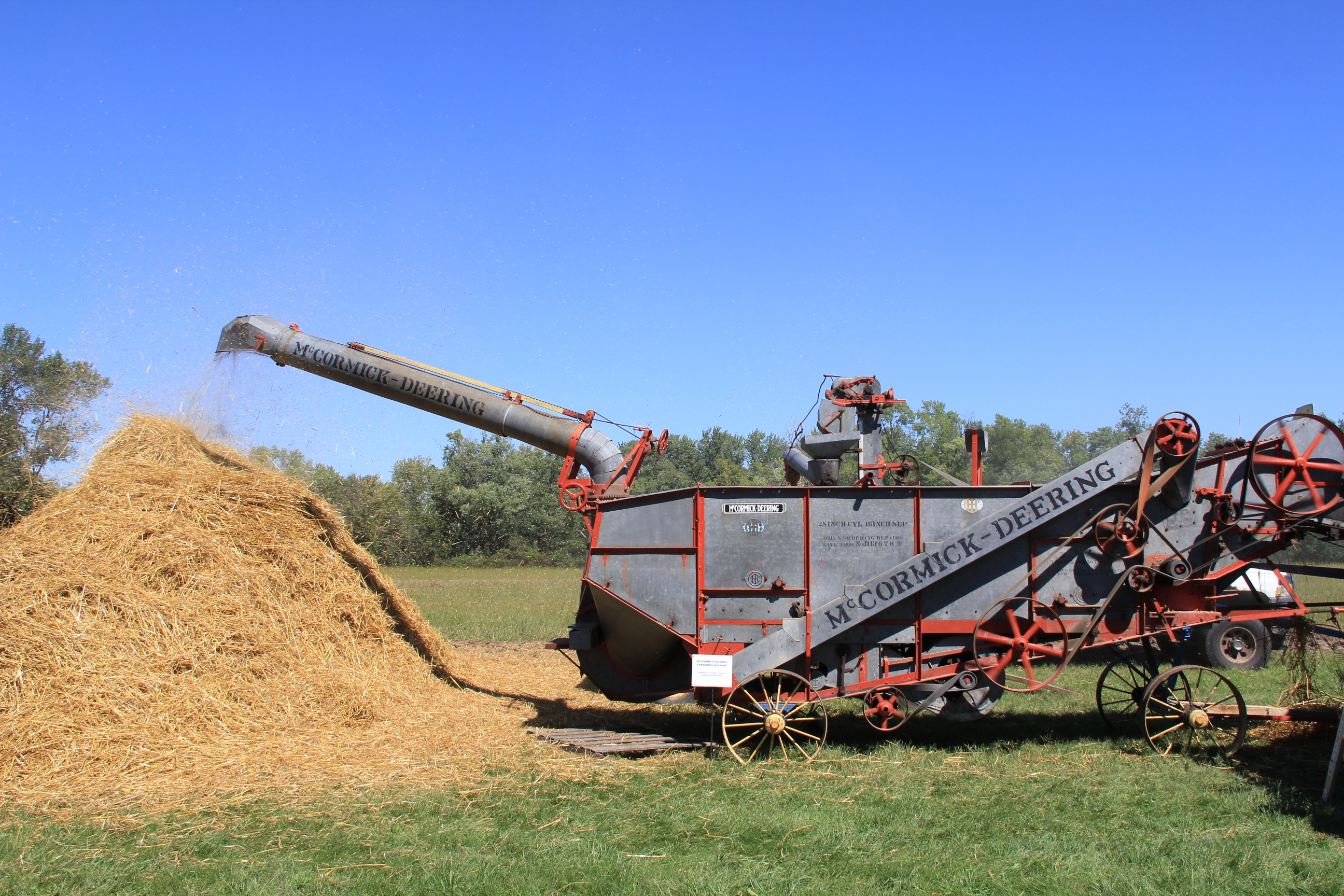
The workhorse of the operation, the threshing machine. (Minnesota Prairie Roots copyrighted photo August 2024)
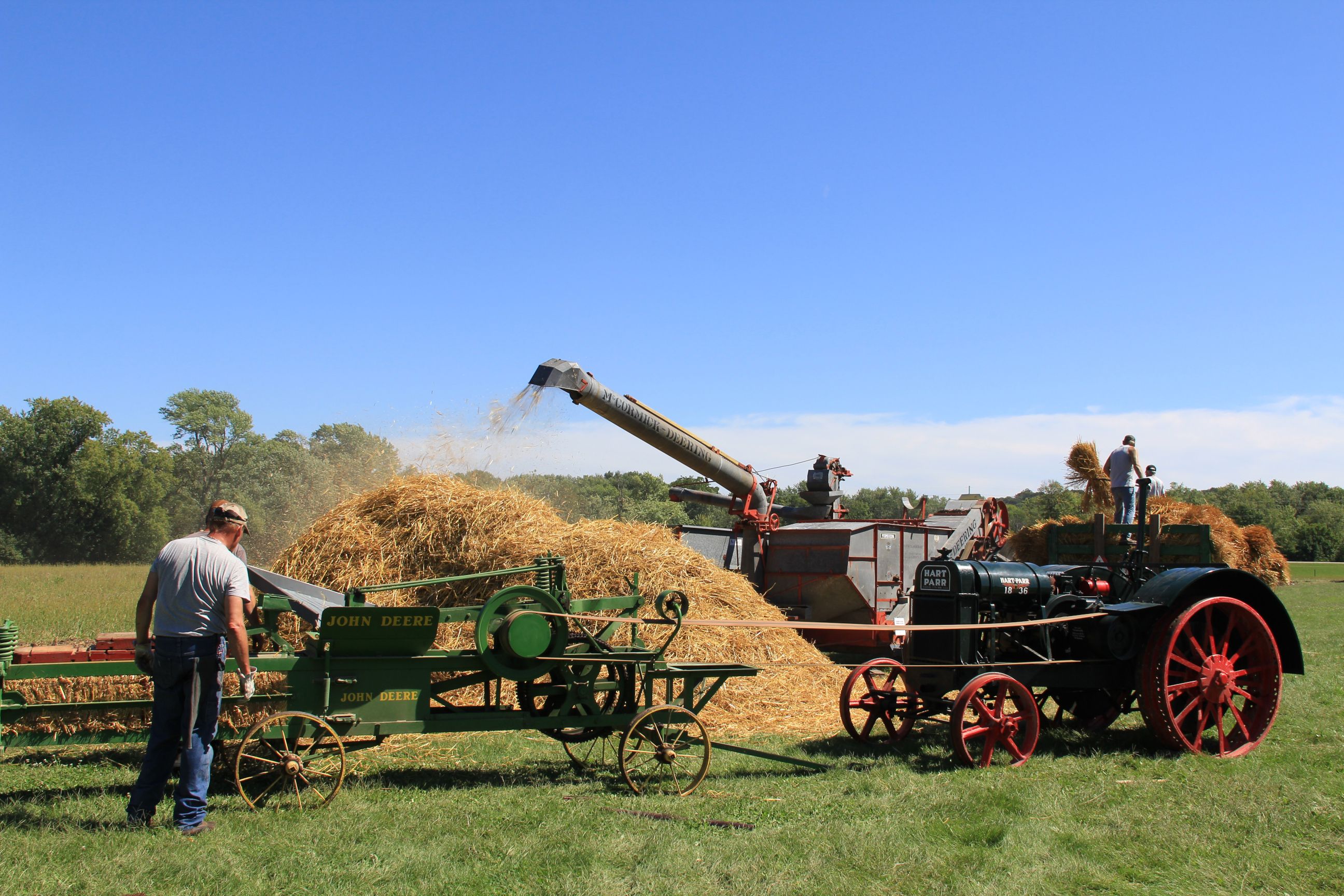
As I watched in Dundas, men forked bundles of oats into a McCormick-Deering thresher. The threshing machine separated the grain from the stalk, the oats shooting one direction into a wagon, the straw the other way into a growing pile. I stood mostly clear of the threshing operation with dust and chafe thick in the air.
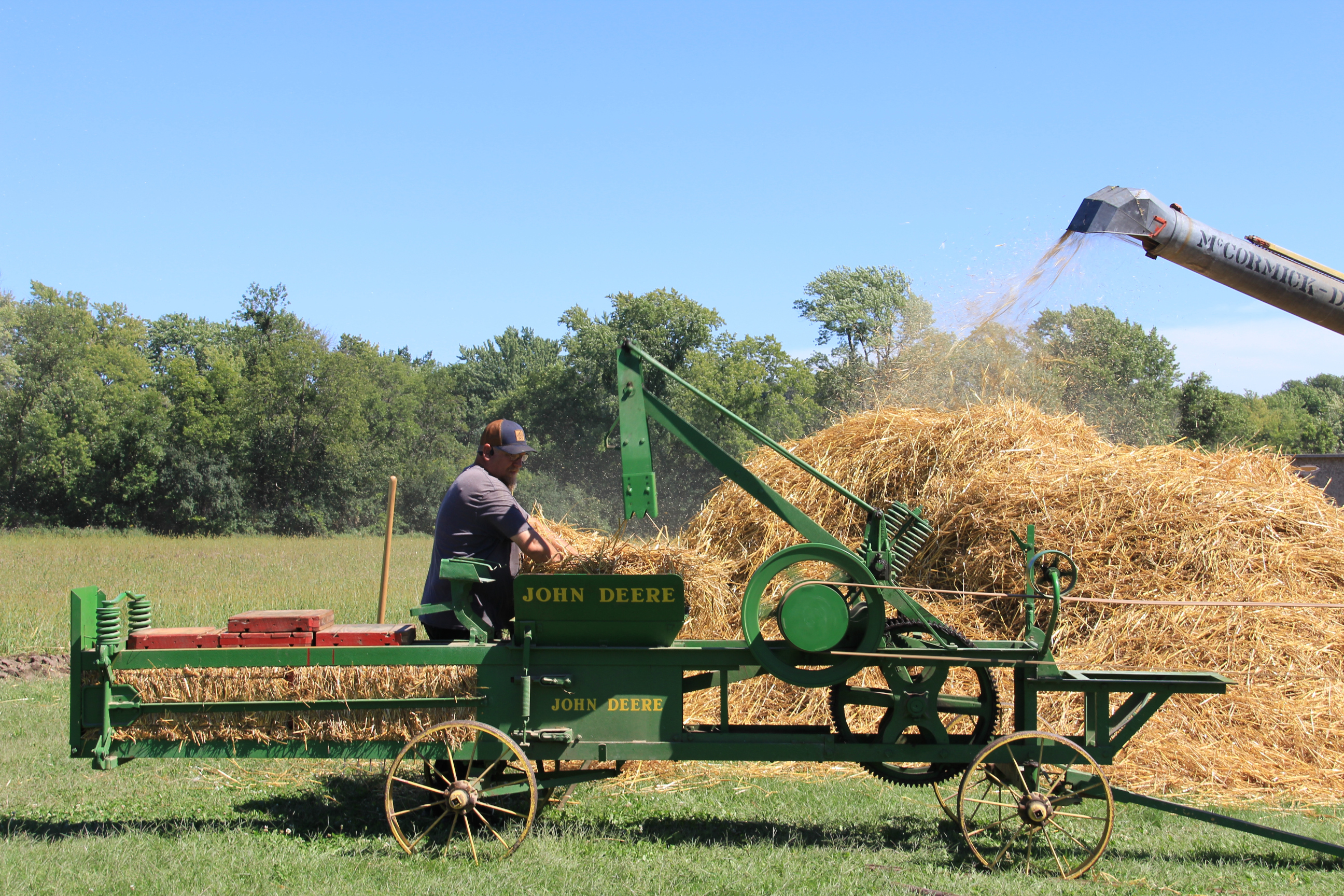
Feeding the loose straw into the baler. (Minnesota Prairie Roots copyrighted photo August 2024)
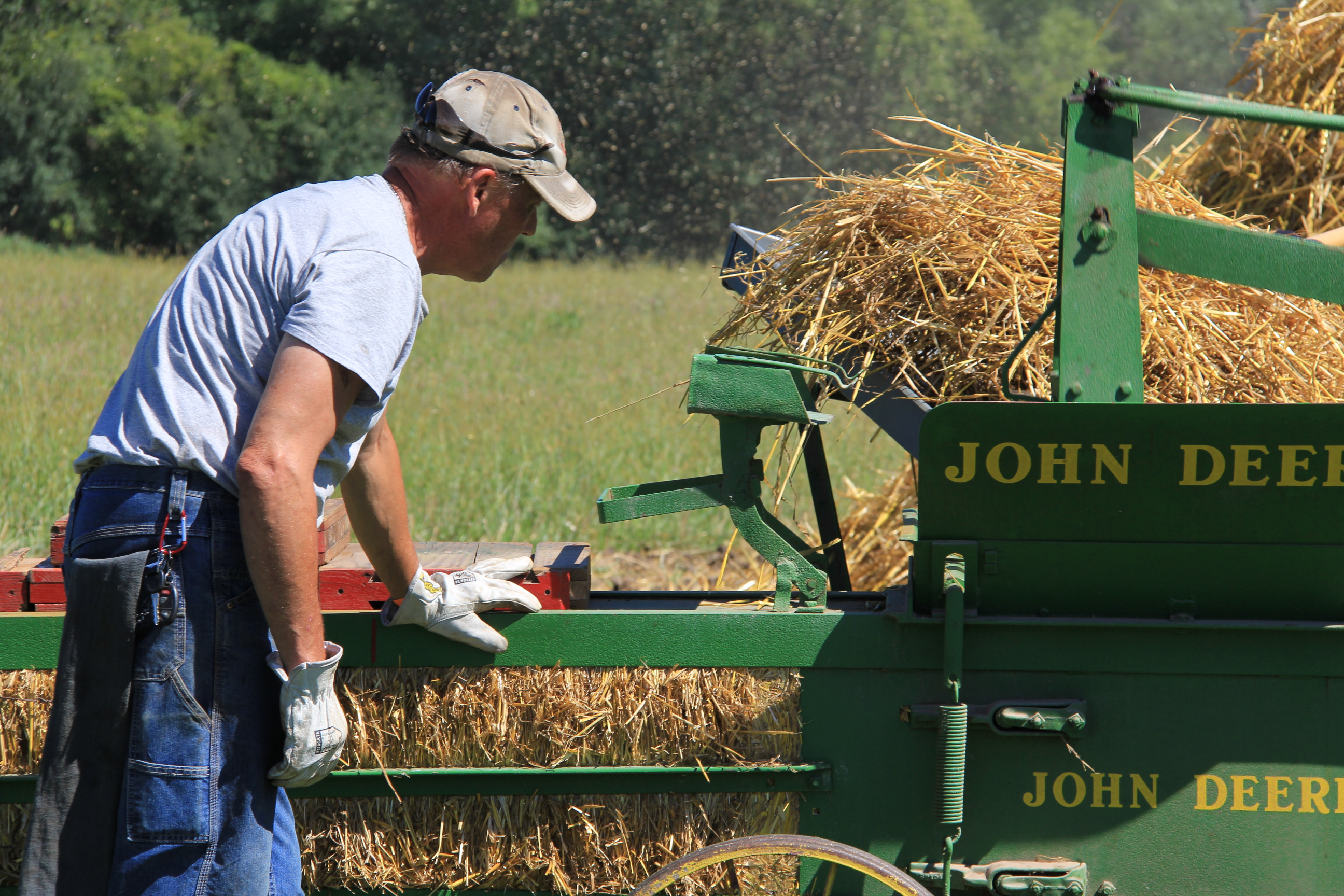
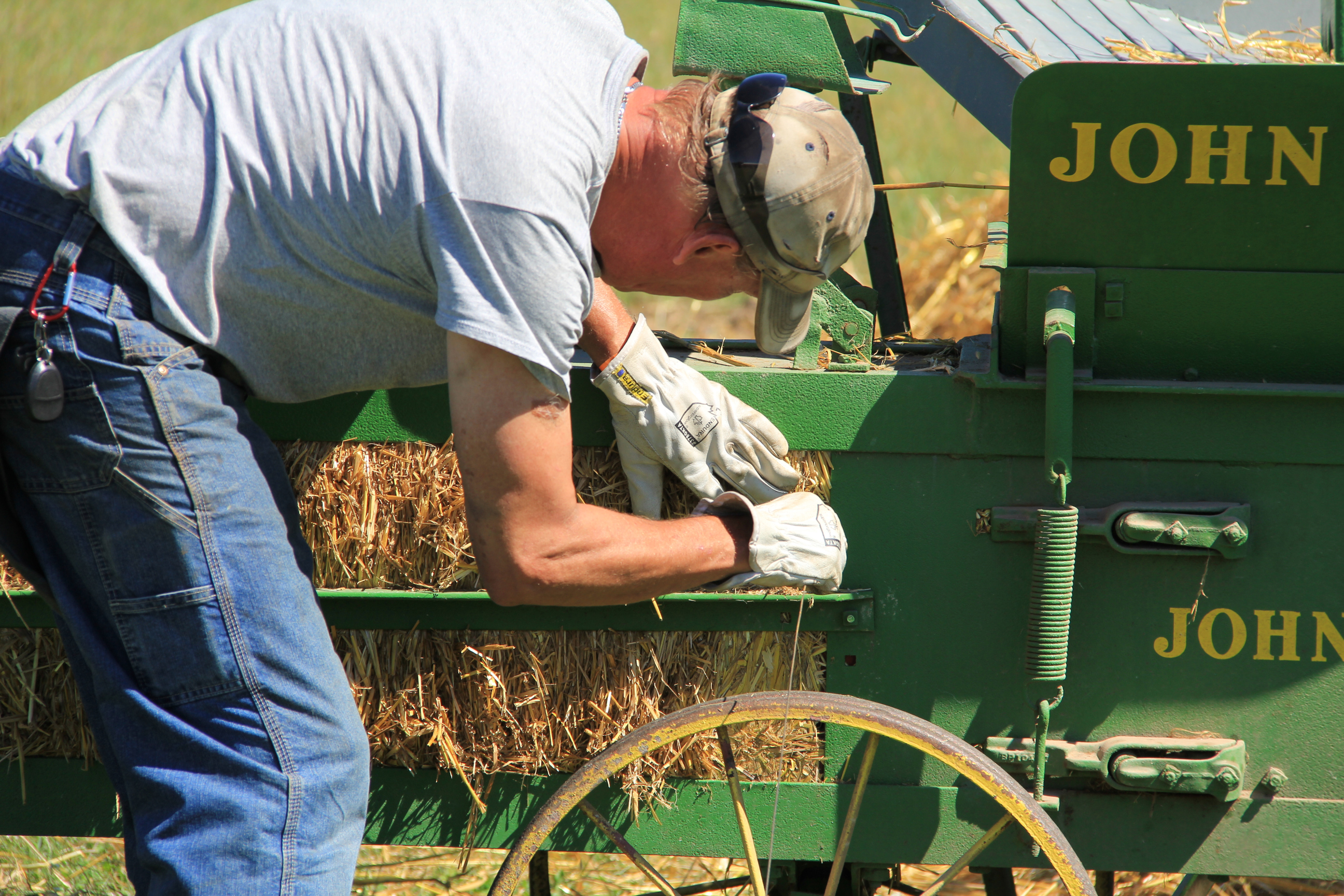
From the straw pile, a volunteer stuffed the stalks into the shoot of an aged baler. An arm tamped the straw, feeding it into the baler. Another guy stood nearby, feeding wire into the baler to wrap the rectangular bales. A slow, tedious process that requires attentiveness and caution.
Watching and waiting for the straw to compact in the baler. (Minnesota Prairie Roots copyrighted photo August 2024)
The entire time I watched, I thought how easy it would be to lose focus, to look away for a moment, to get distracted and then, in an instant, to experience the unthinkable. Farming is, and always has been, a dangerous occupation.
Carefully guiding wire into the baler to wrap each bale. (Minnesota Prairie Roots copyrighted photo August 2024)
Randy understands that firsthand as he witnessed his father get his hand caught in a corn chopper. Tom lost his left hand and part of his forearm. But Randy saved his life, running across fields and pasture to summon help. It is a traumatic memory he still carries with him 57 years later.
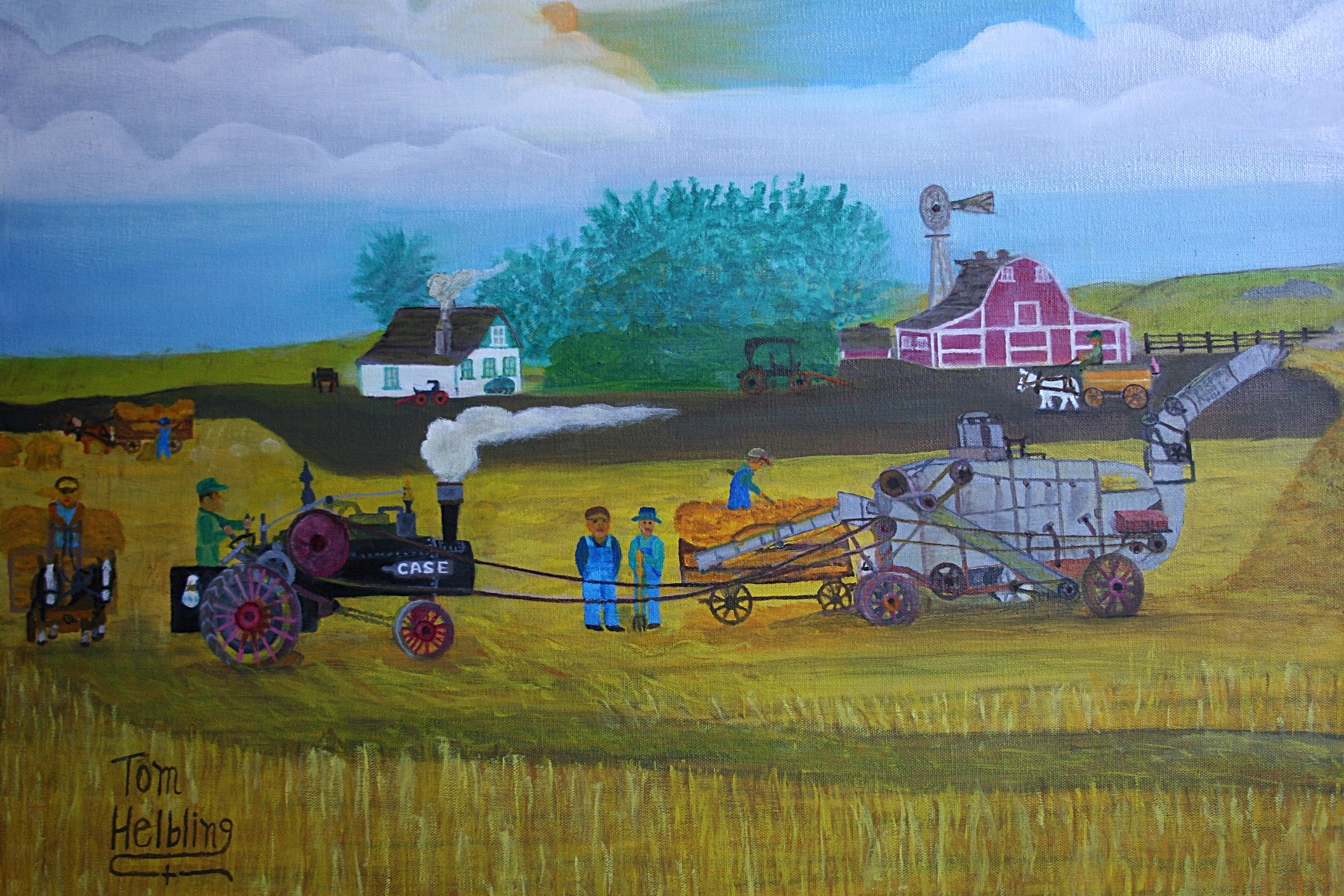
Threshing at Sunnybrook Farm, St. Anthony, North Dakota, as painted by Tom Helbling. (Minnesota Prairie Roots copyrighted file photo)
But memories of threshing are good memories, preserved today in an oil painting from the farm in North Dakota, Sunnybrook Farm. My father-in-law took up painting later in life. Among the art he created was a circa 1920s threshing scene. We have that painting, currently displayed in our living room. I treasure it not only for the hands that painted it, but also for the history held in each brush stroke.
Threshing grain, living history in 2024. (Minnesota Prairie Roots copyrighted photo August 2024)
The painted scene differs some from the threshing scene I saw in Dundas. In North Dakota, horses were part of the work team, the tractor steam powered. In Dundas, there were no horses, no steam engine at the threshing site. Still, the threshing machine is the star, performing the same work. And men are still there, laboring under the sun on a late summer afternoon.
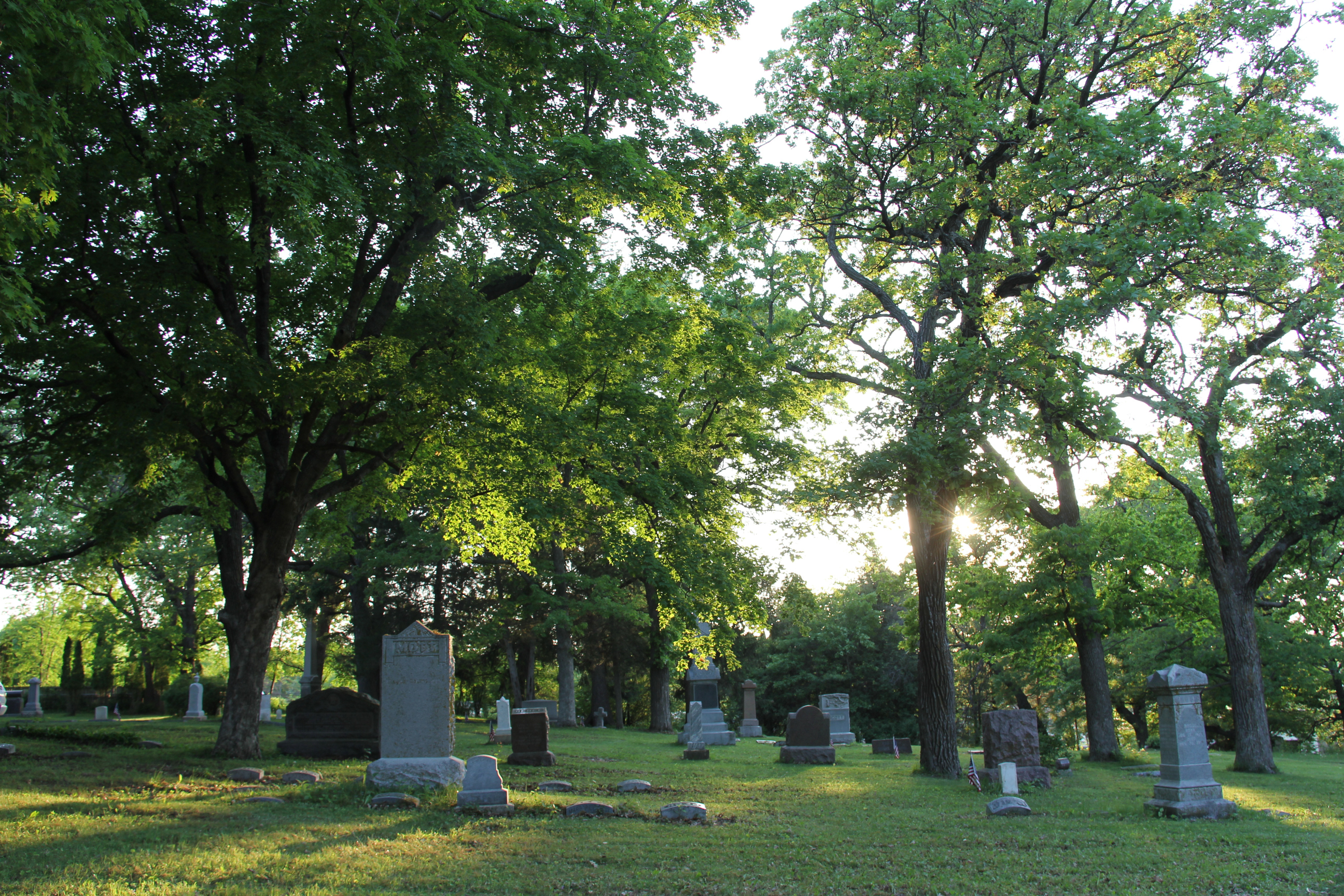
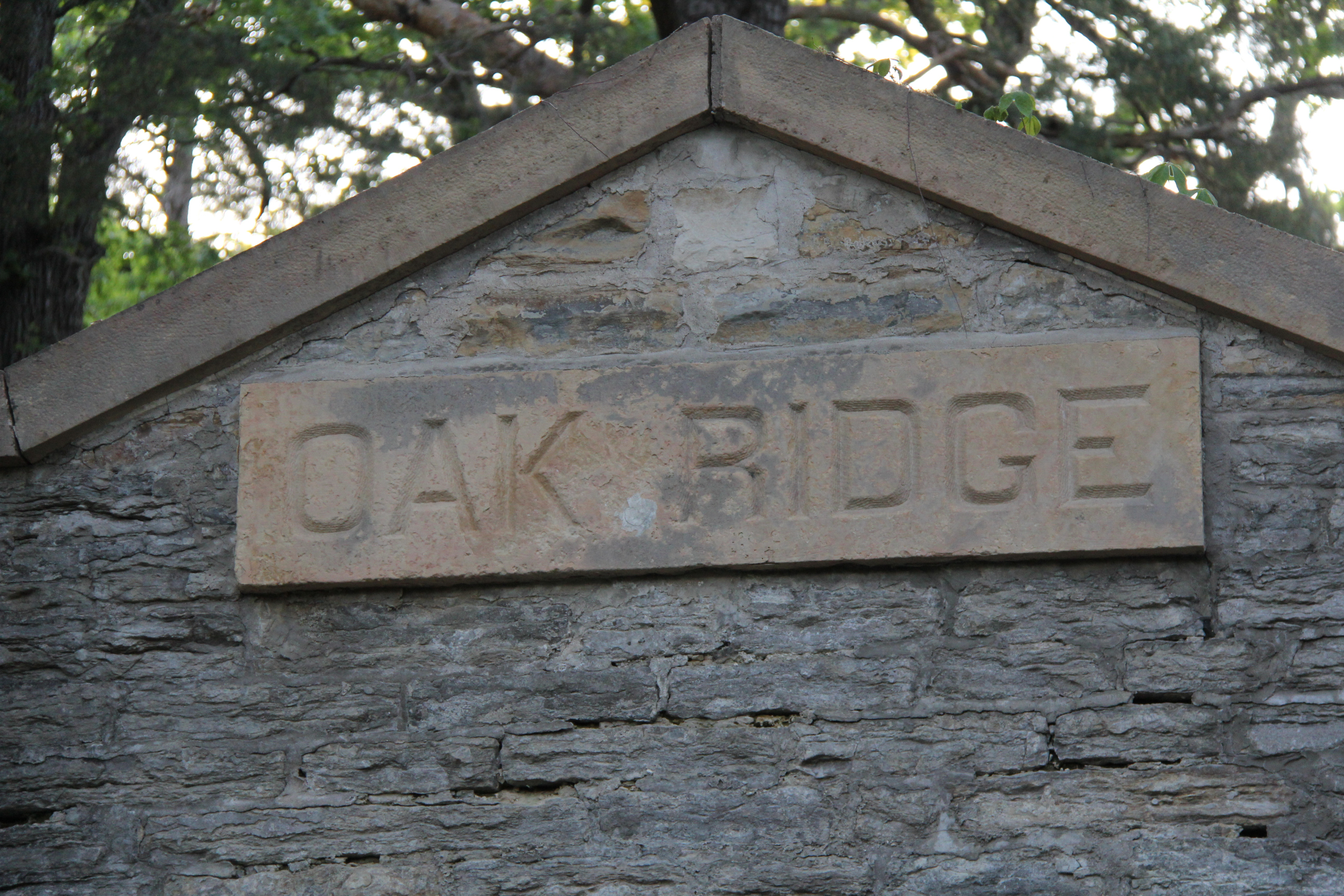
Oak Ridge Cemetery, Faribault. (Minnesota Prairie Roots copyrighted file photo)
FOR ANYONE WHO APPRECIATES local history, especially cemeteries, the Rice County History Museum in Faribault is the place to be at 7 pm Thursday, August 22. Tom Rent, an Oak Ridge Cemetery volunteer, will present “Preserving Faribault’s Oldest Cemetery, Oak Ridge.”
It’s sure to be an informative talk focusing on the cemetery’s history, operation and preservation. Rent will also share photos, stories, headstone symbology, preservation methods and future plans to maintain Oak Ridge Cemetery. Plus, he’ll talk about some of the people who helped shape Faribault and Rice County.
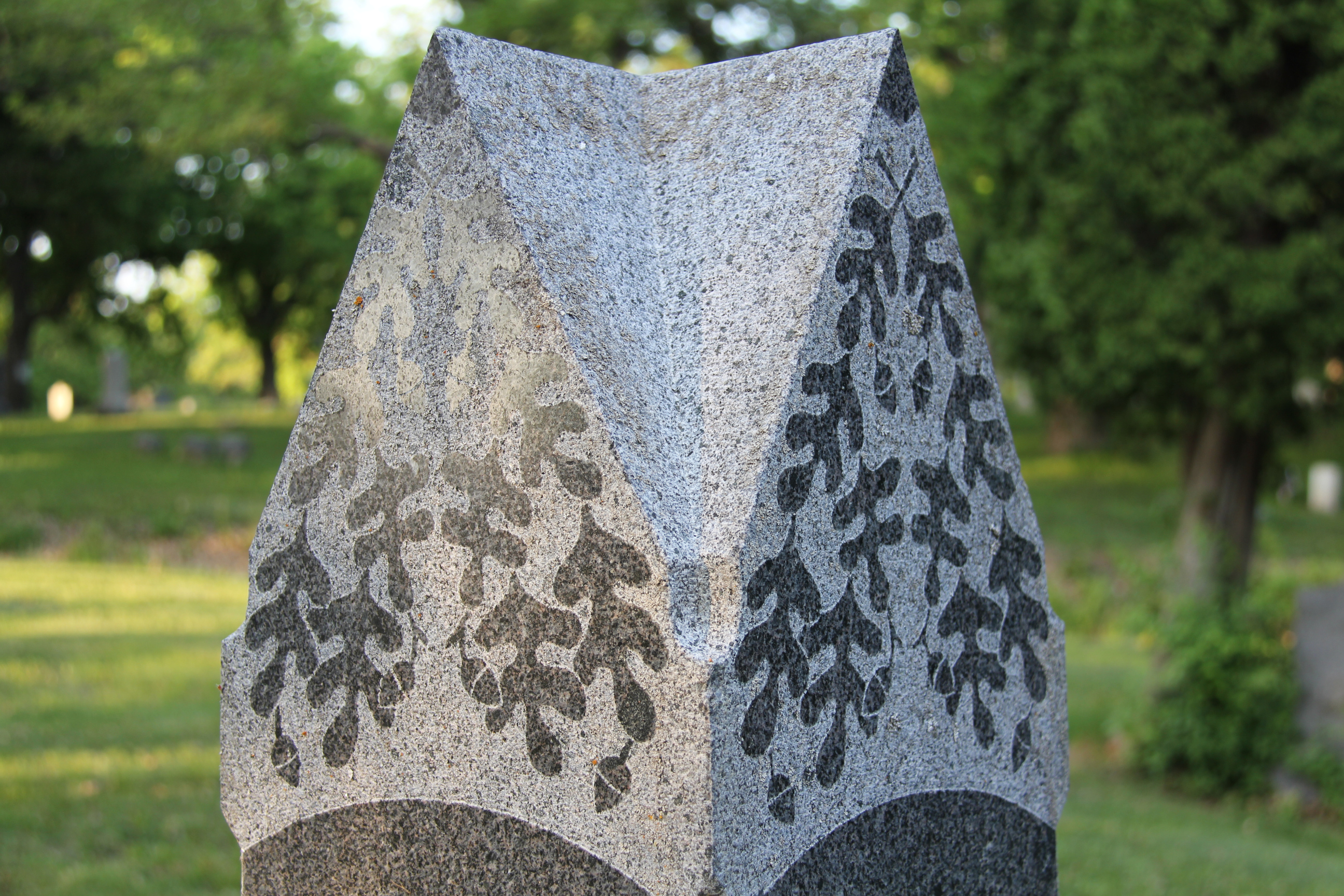
Oak leaves fittingly grace the top of a grave marker at Oak Ridge Cemetery. (Minnesota Prairie Roots copyrighted file photo)
As someone who did not grow up in this region of Minnesota, I’m always interested in learning more about this place I’ve called home for 42 years now. I’ve explored a lot of cemeteries, including Oak Ridge. Cemeteries fascinate me with their history, art, stories, natural beauty, peacefulness and aura of reverence.
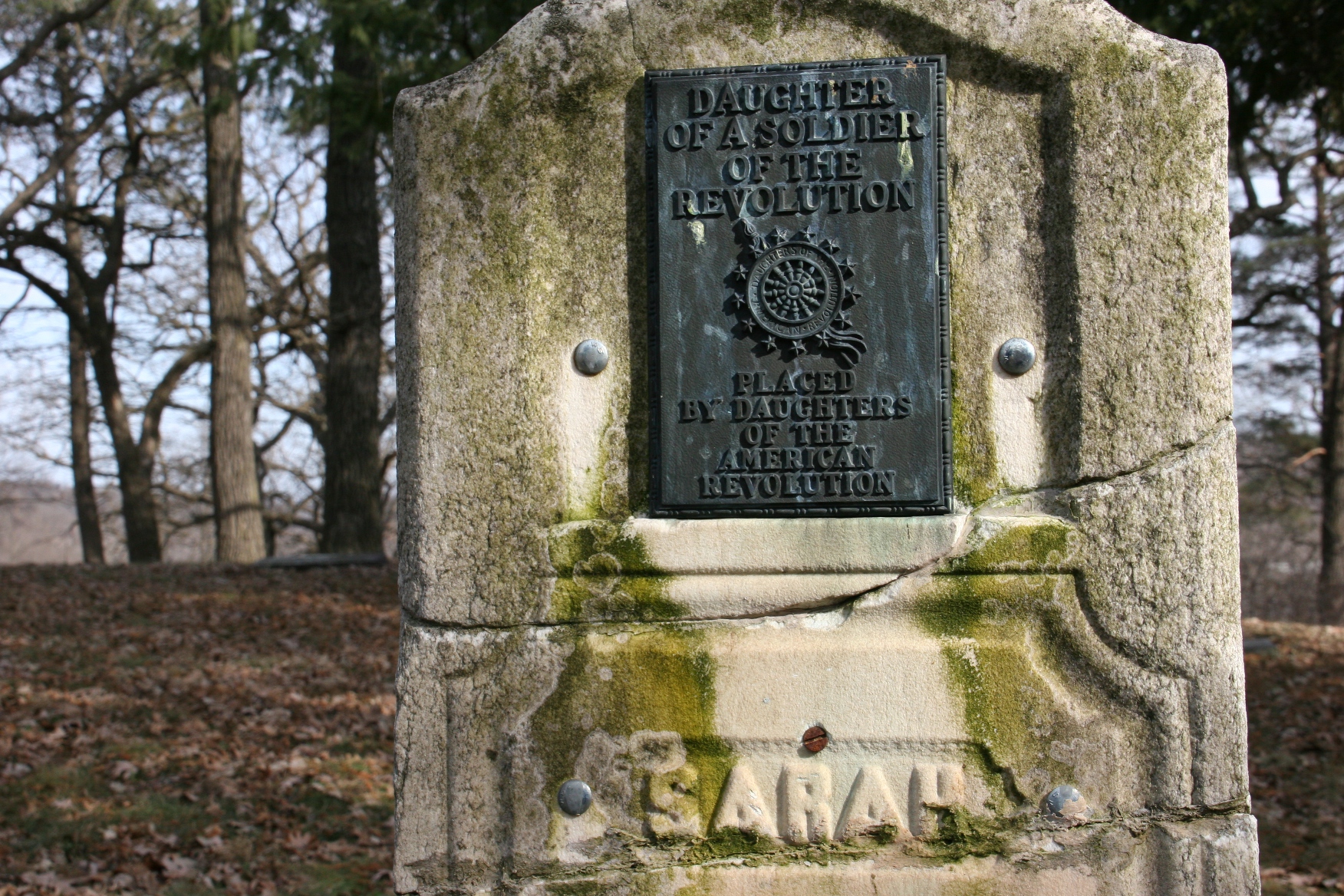
Sarah, daughter of a Revolutionary War soldier, lies buried here. (Minnesota Prairie Roots copyrighted file photo)
Oak Ridge Cemetery, founded in 1857, sits high atop a hill on Faribault’s north side just off Minnesota State Highway 3. It’s a beautiful, wooded location filled with oak, maple and spruce trees, and many aged headstones. There are names—like Nutting and Buckham—recognizable as key figures in local history. There are Civil War and Spanish American War veterans and a daughter of an American Revolutionary War soldier buried here. Senators and representatives, too. Local leaders and farmers. Immigrants and paupers and people from all walks of life. People with stories. So. Much. History.
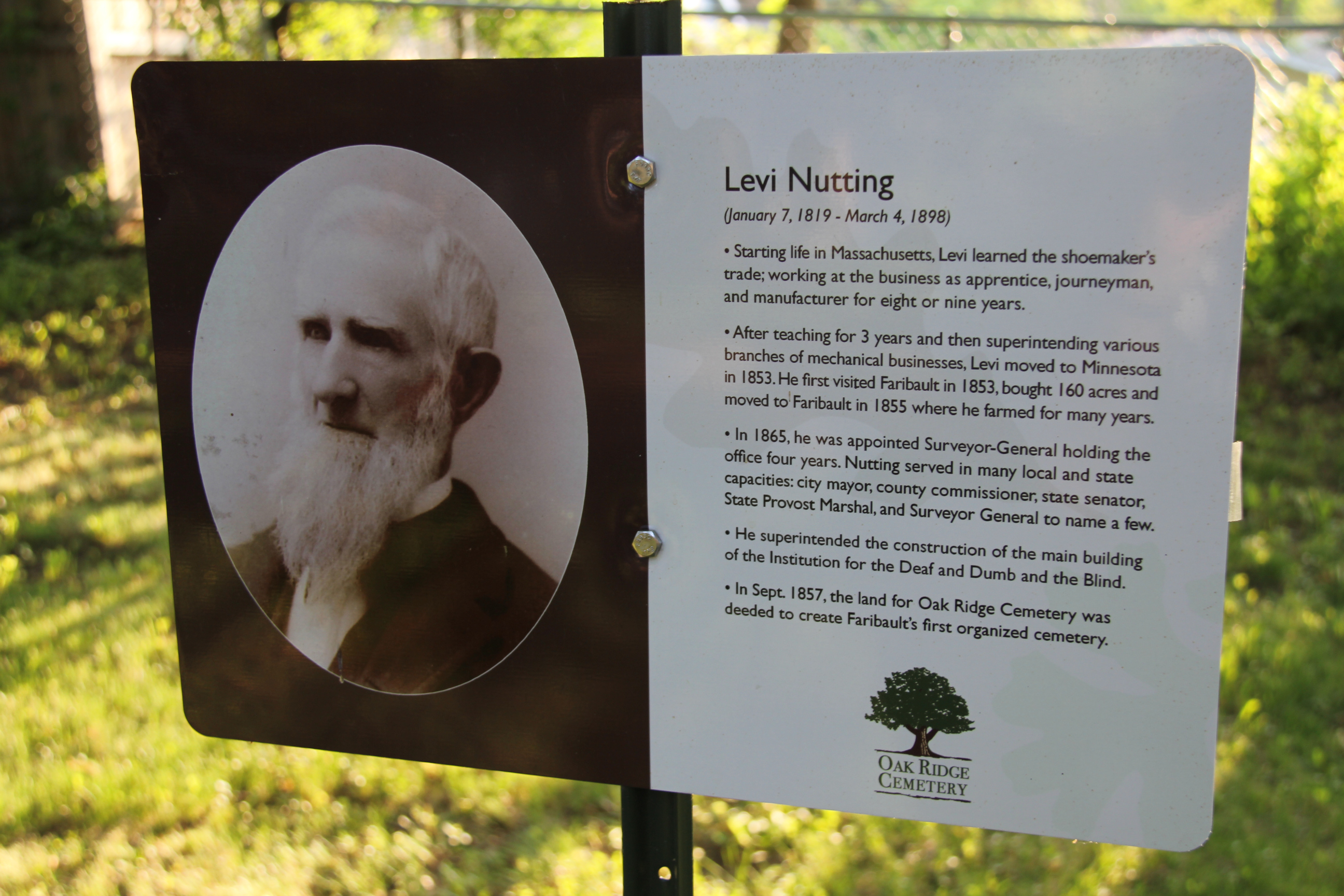
Levi Nutting was important in early Faribault history, as noted in this cemetery signage. (Minnesota Prairie Roots copyrighted file photo)
I especially like that the caretakers/volunteers of Oak Ridge have installed signage profiling some of the people buried in the cemetery. For those like me who are curious about the stories behind the deceased, this is valuable information. I always want to know more beyond names and dates of birth and death. The Oak Ridge Cemetery Facebook page offers lots of historical info, too.
Efforts have also been underway to restore aged tombstones in the cemetery.
Identifying signage on the limestone crypt at Oak Ridge. (Minnesota Prairie Roots copyrighted file photo)
I expect Tom Rent will cover much of this in Thursday’s talk. He, like so many others, cares deeply about those who lie buried beneath the canopies of trees at Oak Ridge Cemetery.
FYI: To reserve a seat at Thursday’s presentation, call 507-332-2121, email rchs at rchistory.org or stop at the history museum. The program is free to Rice County Historical Society members and $5 for non-members.
A young concert-goer creates art at a past Art in the Park event. (Minnesota Prairie Roots copyrighted file photo August 2020)
THREE DECIDEDLY DISTINCT EVENTS are happening in my area Thursday evening and on Sunday. One focuses on the visual and performing arts, another on a pre-Columbian Aztec deity, the other on weddings.
First up, the Paradise Center for the Arts is offering free arts activities for all ages beginning at 6 p.m. Thursday, June 20, as part of Faribault’s summertime Concerts in the Park series. Teaching artists Kate Langlais and Julie Fakler will lead the hands-on art making in Central Park. At 7 p.m., Grand Rapids-based Adessa & the Beat performs a mix of country, classic rock and pop covers from the park bandshell.
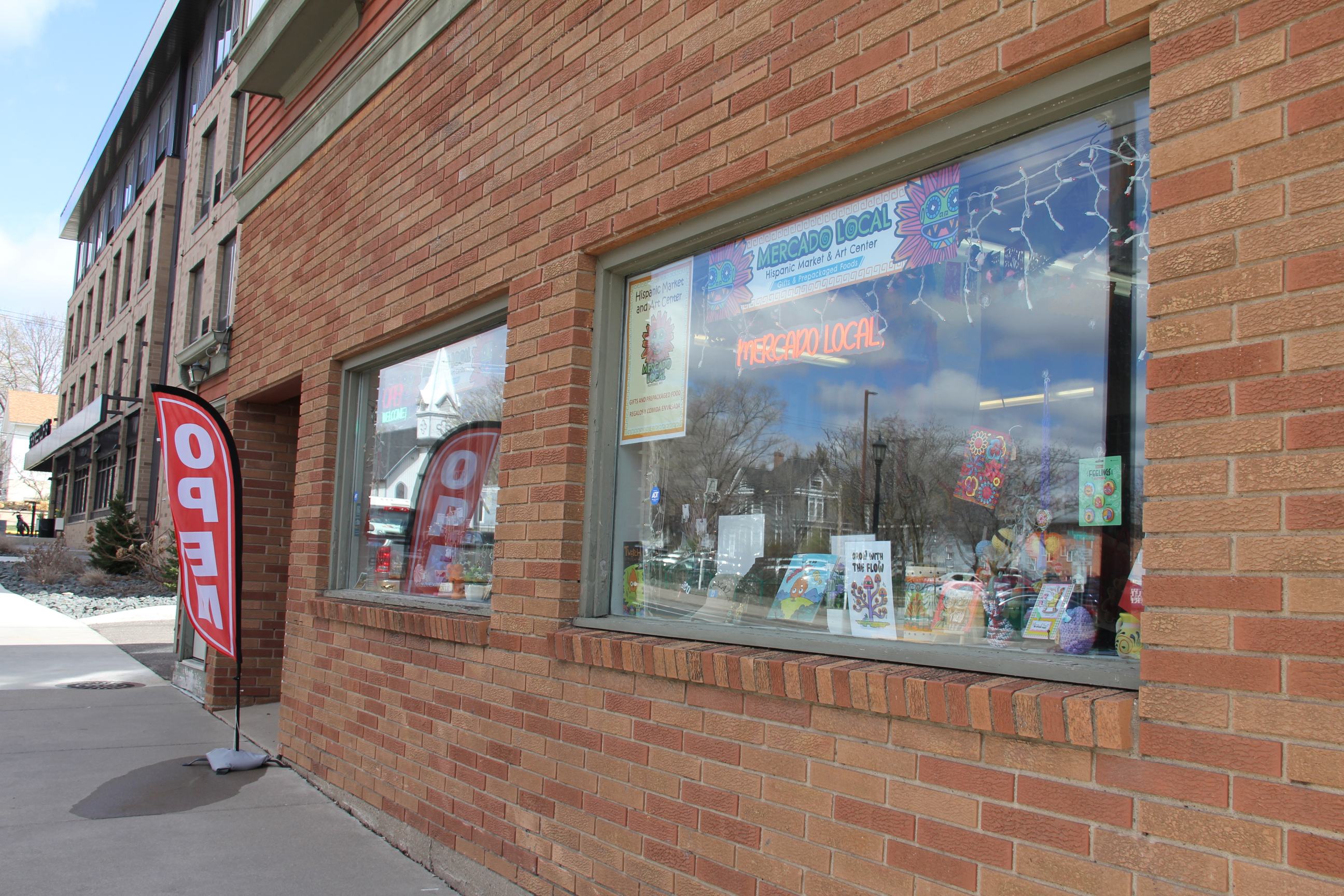
Inside the Mercado Local marketplace. To the far right on signage is the shop logo created by Rocky Casillas. It is his version of the Aztec deity, Quetzalcoatl. (Minnesota Prairie Roots copyrighted file photo April 2024)
Also on Thursday evening in neighboring Northfield, Mercado Local, a marketplace for immigrant vendors and the home base for Rice County Neighbors United, hosts artists Rocky Casillas and Leslie Mendez. They will talk about art inspired by the Aztec feathered serpent, Quetzalcoatl. Casillas designed a version of the colorful snake as the Mercado Local logo. Mendez then crafted her own serpent inspired by Casillas’ art.
Mercado Local, located off Division Street just behind the Reunion restaurant. (Minnesota Prairie Roots copyrighted file photo April 2024)
Attendees at the 7-8:30 p.m. June 20 event in the Mercado Local community and art room at 108 Fifth Street E. can create their own Quetzalcoatl art.
In addition to art talk and hands-on art, Mexican food will be served. It’s a great opportunity to learn about and connect with other cultures while celebrating the arts.
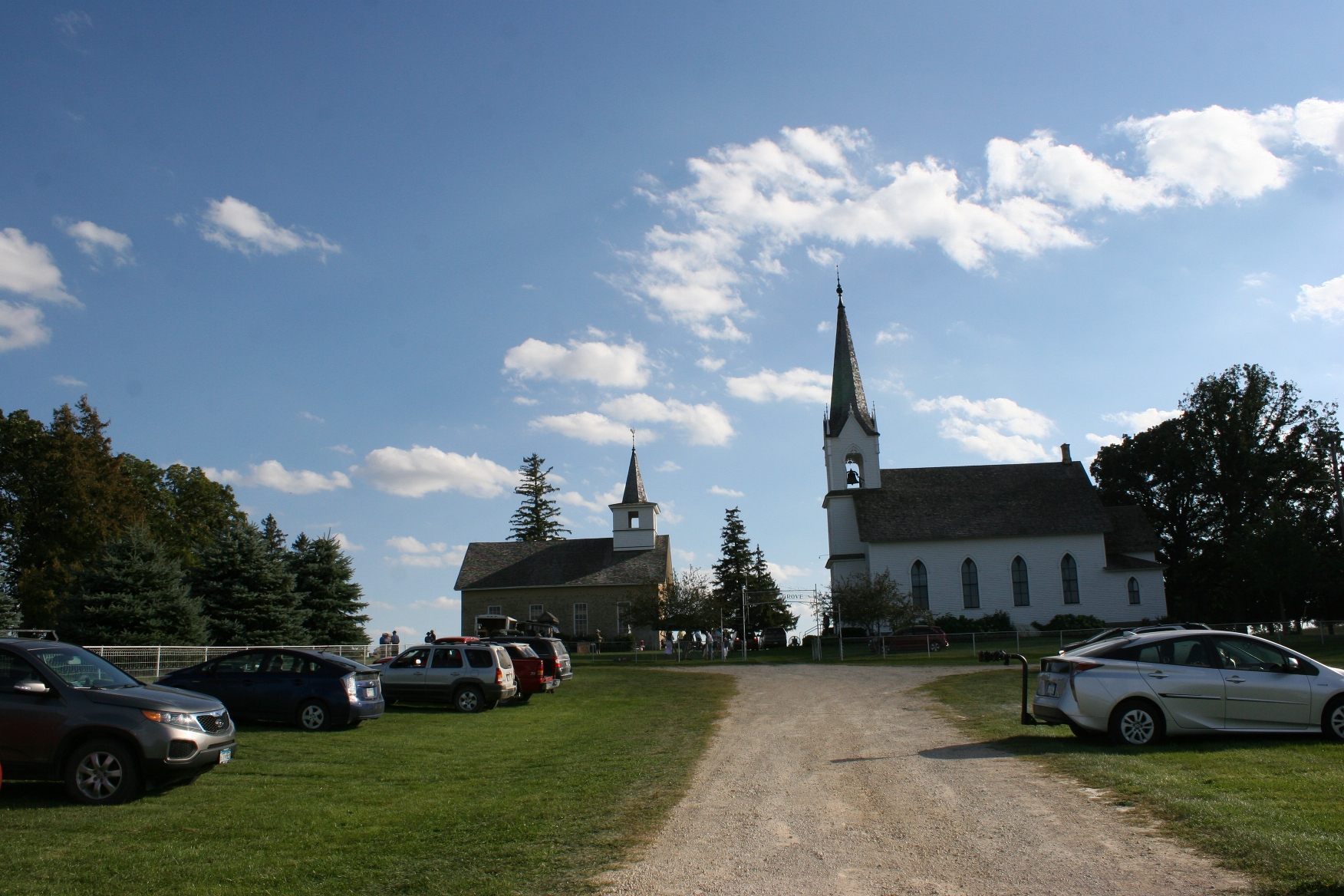
The historic Valley Grove churches, rural Nerstrand. (Minnesota Prairie Roots copyrighted file photo)
Then on Sunday, June 23, two historic Norwegian churches near Nerstrand Big Woods State Park will host “Celebrating Weddings at Valley Grove” from 2-4 p.m. The Valley Grove Preservation Society is inviting anyone who has attended a wedding at the Valley Grove country churches, been married there or who is planning a wedding at the hilltop site, to attend. Even those of us who have no wedding connection to these churches are welcome to join the celebration.
A wedding in the wooden church at Valley Grove. (Photo courtesy of Valley Grove Preservation Society)
Wedding stories and photos can be shared from 3-3:45 p.m. in the wooden church. Besides stories, people are encouraged to wear or bring photos of their wedding attire. To add to the celebration, there will be Nordic music plus coffee, lemonade and cookies. No wedding cake. But I expect some guests will bring photos of wedding cakes.
A photographer will be on-site to take photos for a donation with proceeds going to ongoing restoration projects at Valley Grove, located at 9999 155th Street E, Nerstrand.
What a lovely way to spend a June afternoon. Celebrating love at a bucolic location, one of my favorite country spots in Rice County.
An exhibit at the Rice County Historical Society, Faribault, shares information on the original inhabitants of the county, the Dakota. (Minnesota Prairie Roots copyrighted file photo)
HERITAGE. It’s a word that identifies us, connects us to our families, to our ethnicity, to the way we were raised, the place of our roots. At least that’s my definition.
This week Faribault celebrates Heritage Days. I’ve never felt totally comfortable celebrating heritage in the city I’ve called home since 1982. My heritage, my home, my roots run deep in the southwestern Minnesota prairie some 2 ½ hours west of here.
But many are rooted in this community by birth, by families that trace back generations. If it’s one thing I’ve learned in four decades about the people of Faribault, it’s that many are related to one another via blood and marriage. But I’ve also learned much about the peoples who came before the French, the Irish, the Scandinavians, the Germans, the Cambodians, the Latinos, the Hispanics, the Sudanese, the Somalis… I’ve learned about the Dakota, the original inhabitants of this region.
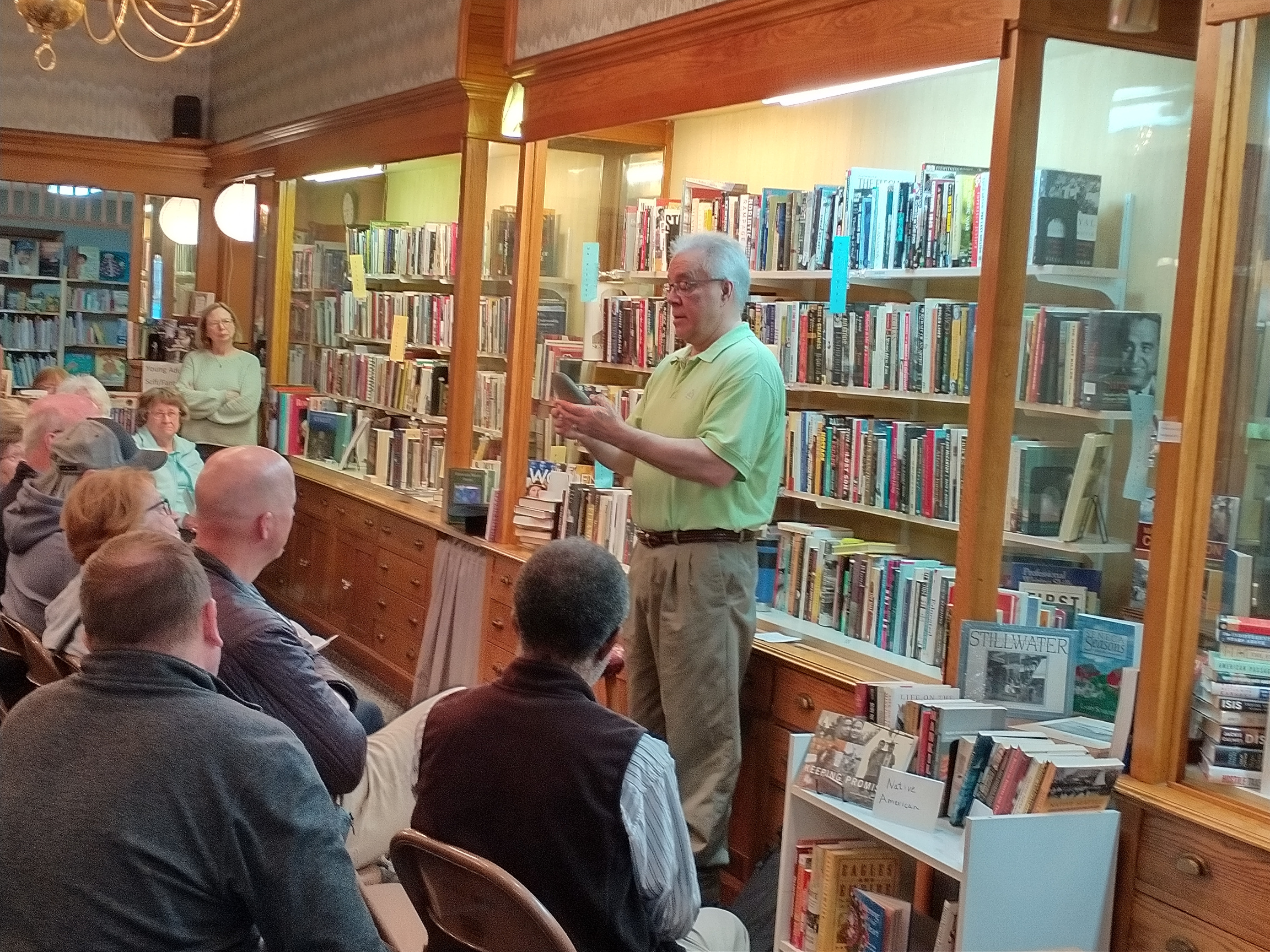
Jeff Jarvis talks about the Dakota at Books on Central. (Minnesota Prairie Roots copyrighted file photo April 2024)
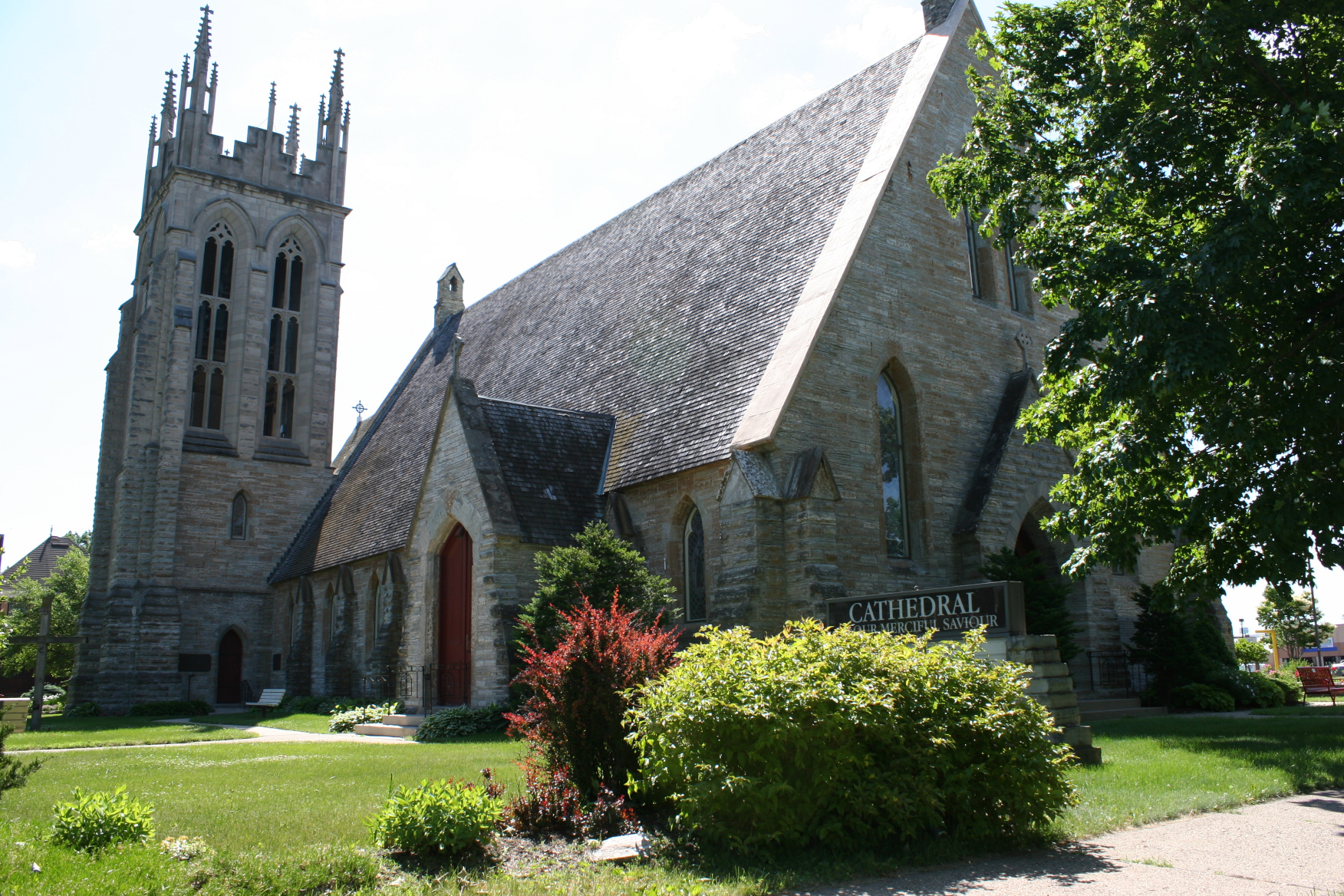
That knowledge came through my own reading and via attending events focused on the Dakota. In April, I listened to local historian and artist Jeff Jarvis talk about the Dakota to a packed audience at Books on Central in Faribault. Jarvis is presenting again, speaking at 6:30 p.m., Wednesday, June 12, on the Wahpekute Dakota at The Cathedral of Our Merciful Saviour, 101 NW Sixth Street, across the street from Faribault’s Central Park.
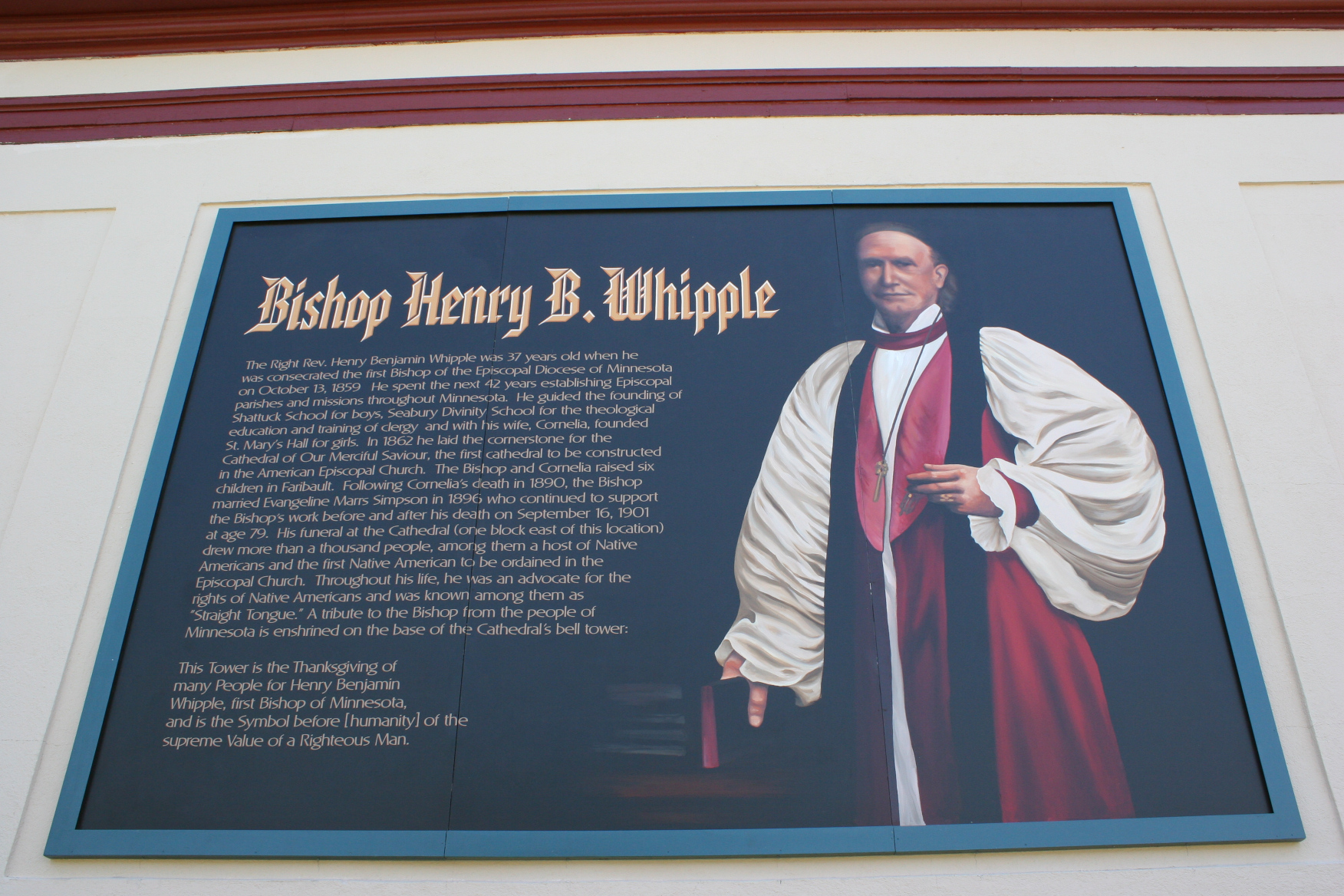
Information on Bishop Henry Whipple focuses one of the murals on the back of the bandshell at Central Park. (Minnesota Prairie Roots copyrighted file photo June 2020)
The Cathedral and its founding leader played an important part in local, state and national history with then Bishop Henry Whipple befriending the Wahpekute Dakota. He also pled with President Abraham Lincoln to spare the lives of 303 Dakota men sentenced to death by the US government following the US-Dakota War of 1862. Eventually all but 38 were pardoned, partially due to Whipple’s efforts.
The pamphlet Jeff Jarvis created about the Wahpekute Dakota. (Minnesota Prairie Roots copyrighted file photo April 2024)
I expect Jarvis will touch on that in his Wednesday evening presentation. He’s an engaging speaker, knowledgeable and passionate. He’s met with Dakota people, compiled a summary of his research in a mini pamphlet titled “The Faribault Dakota, Wahpekute Band.” It features an historic timeline, a Dakota primer of place names, his original art and more.
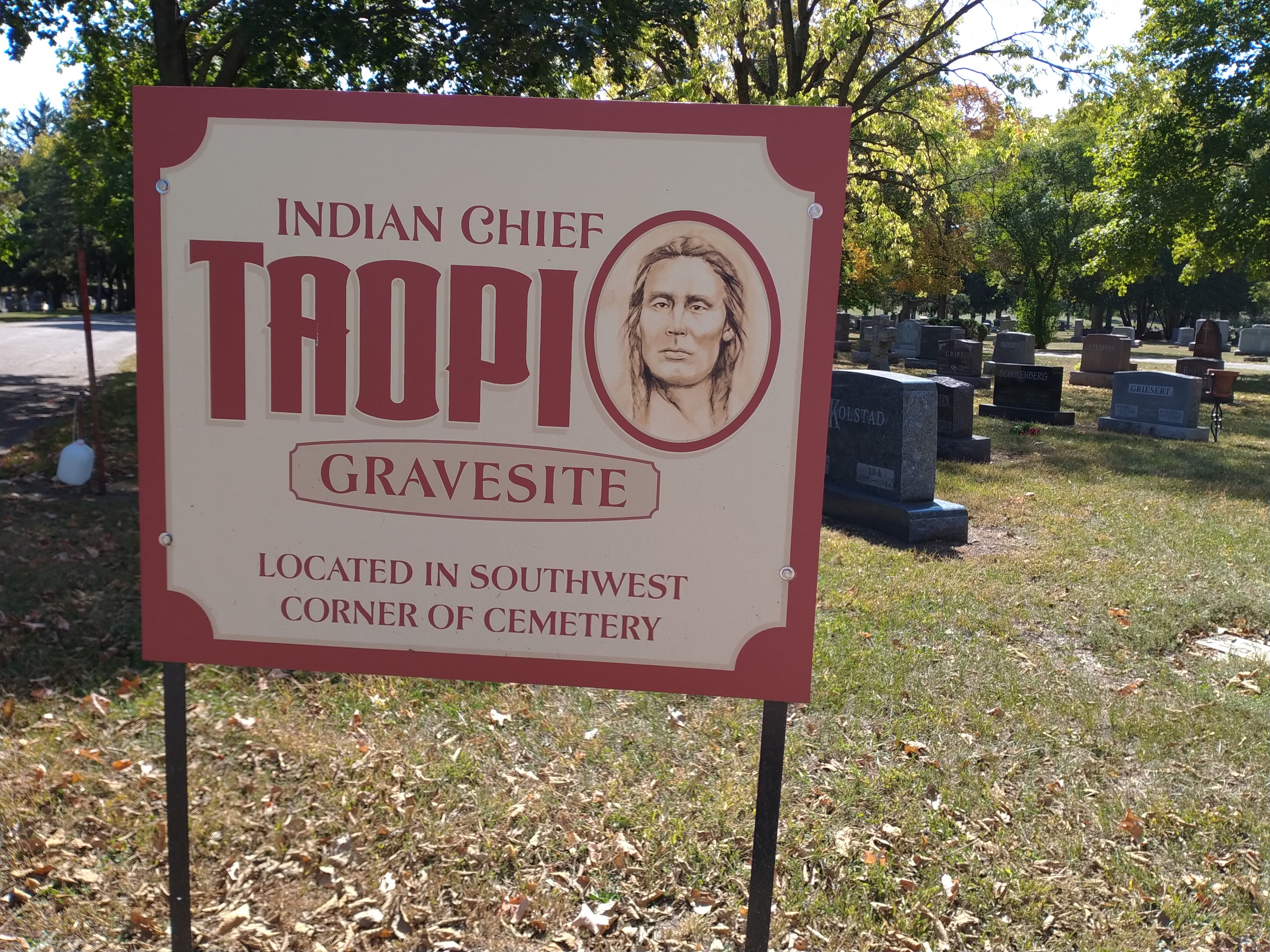
Chief Tapoi, a leader and member of the Little Crow Band of the Mdewakanton Dakota Tribe, lived in Faribault for a while and is buried at Maple Lawn Cemetery. (Minnesota Prairie Roots copyrighted file photo October 2023)
Jarvis is involved in the Faribault Dakota Project, a local endeavor that aims to increase awareness, visibility and knowledge of the original inhabitants of this land. To that end, presentations like his set during Heritage Days are important for locals to attend.
Just across the street from Central Park, the stunning Cathedral of Our Merciful Saviour.(Minnesota Prairie Roots copyrighted file photo)
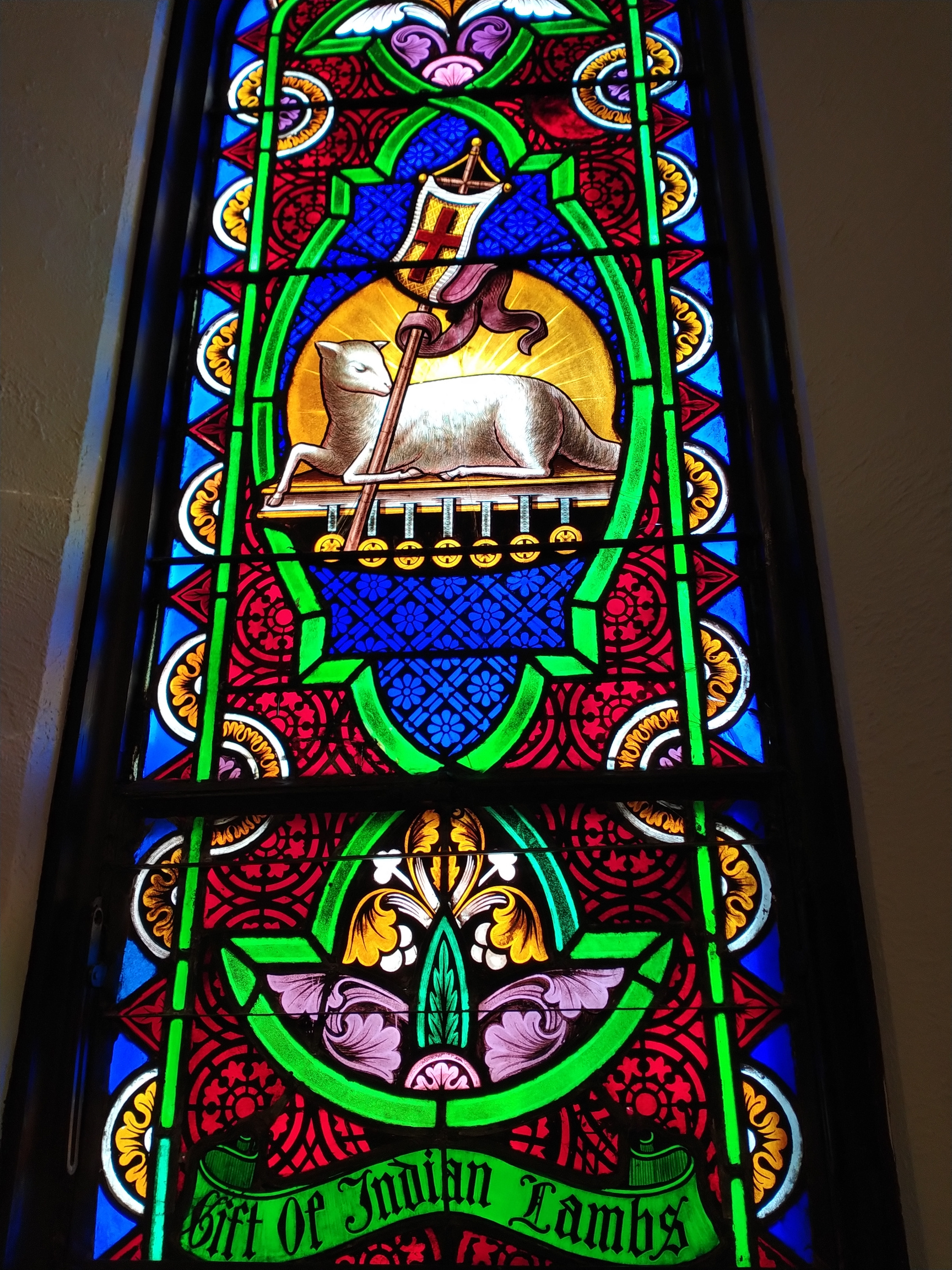
Likewise, free tours of the Cathedral at 11:30 a.m. Sunday, June 16, following a 10 a.m. ecumenical church service, likely will provide more information on the Wahpekute and their connection to Bishop Whipple and the massive limestone church. Several stained glass windows inside the sanctuary were gifted to the Cathedral by the Dakota.
This stained glass window was gifted by the Dakota to the Cathedral in honor of Dakota children. (Minnesota Prairie Roots copyrighted photo November 2023)
The Dakota and this house of worship, which focuses on connecting to the broader community, are such a vital part of Faribault’s history. That’s important to understand, to recognize, to honor no matter one’s heritage. I know locals who’ve lived here their entire lives and have never stepped inside the historic Cathedral. I find that almost unbelievable. We need to understand our past—our connections to peoples and land—to grow our future.
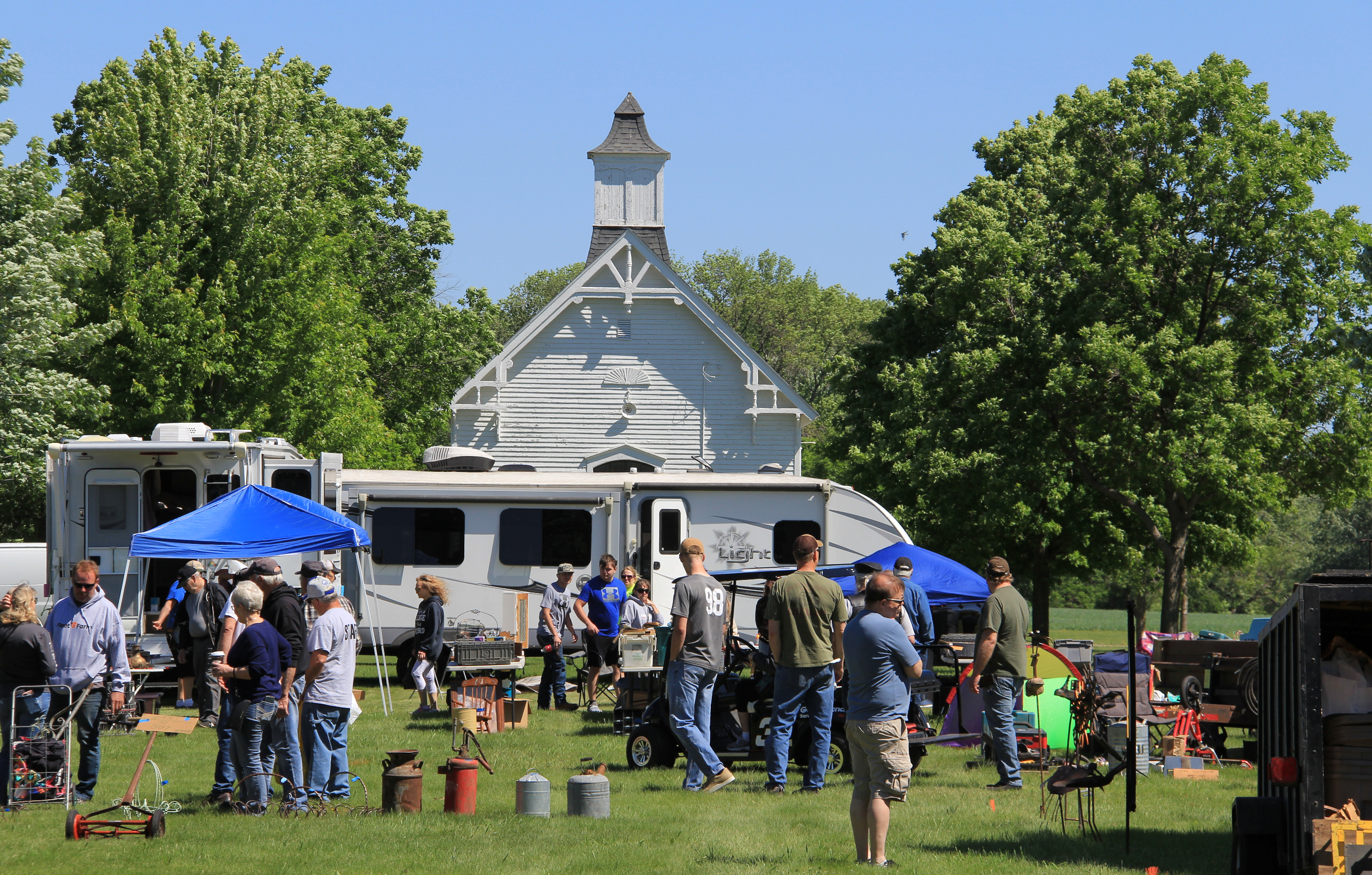
Set against the backdrop of the historic Waterford School, the flea market. (Minnesota Prairie Roots copyrighted photo May 2024)
IF I WAS A COUNTRY WESTERN SONGWRITER, I could probably pen a single inspired by the recent Rice County Steam & Gas Engines Spring Flea Market and Consignment Auction. Scenes from this event seem prompts for country western lyrics—boots, dogs, tractors, seed corn caps, blue jeans…gravel roads and pick-up trucks.
Street signs on the showgrounds honor families who helped found the Rice County Steam & Gas Engines Club. (Minnesota Prairie Roots copyrighted photo May 2024)
Many of the folks I saw there likely live either on farms or have a connection to farming. Just like me, born and raised on a southwestern Minnesota crop and dairy farm.
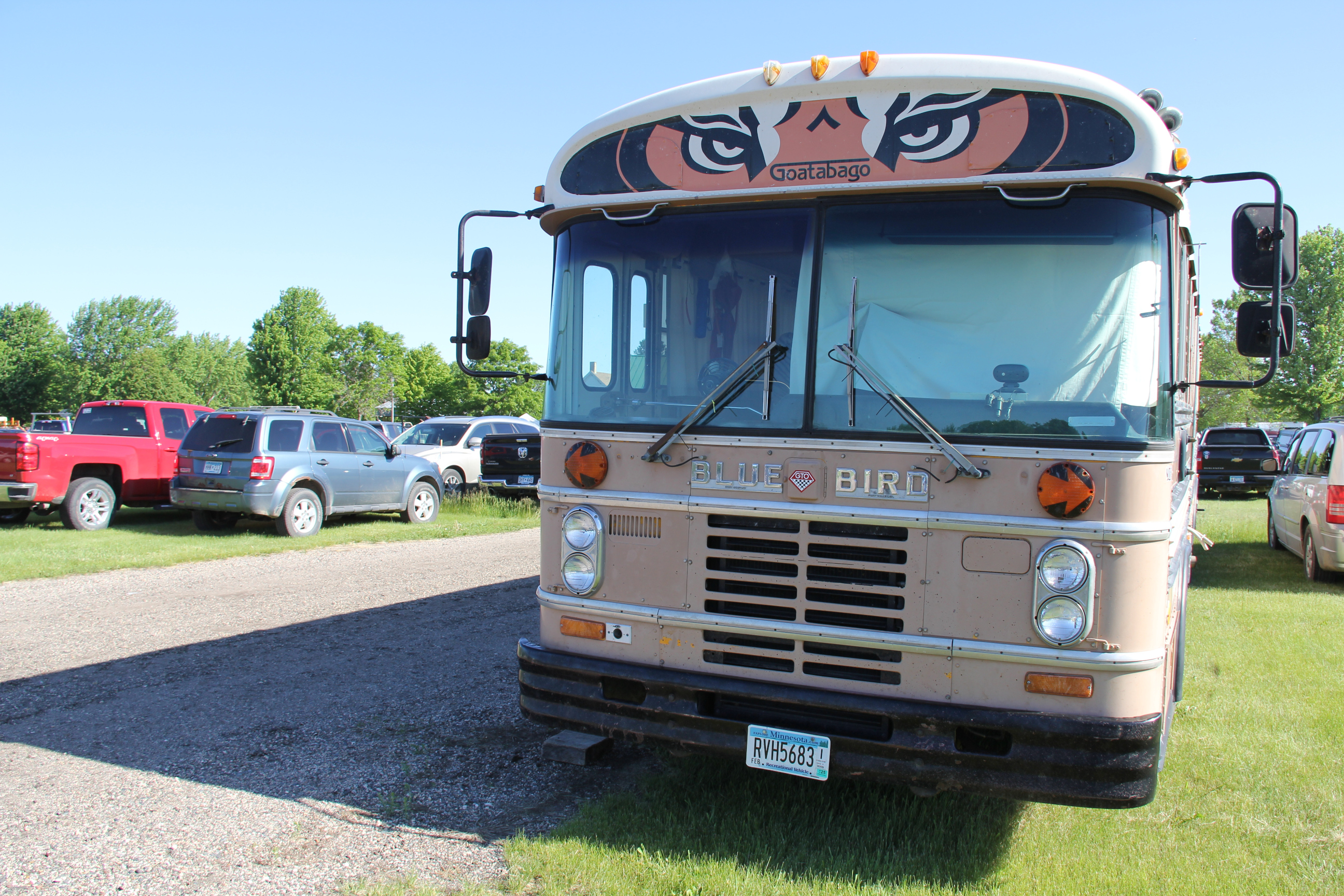
A bus converted by a vendor for hauling flea market merchandise. (Minnesota Prairie Roots copyrighted photo May 2024)
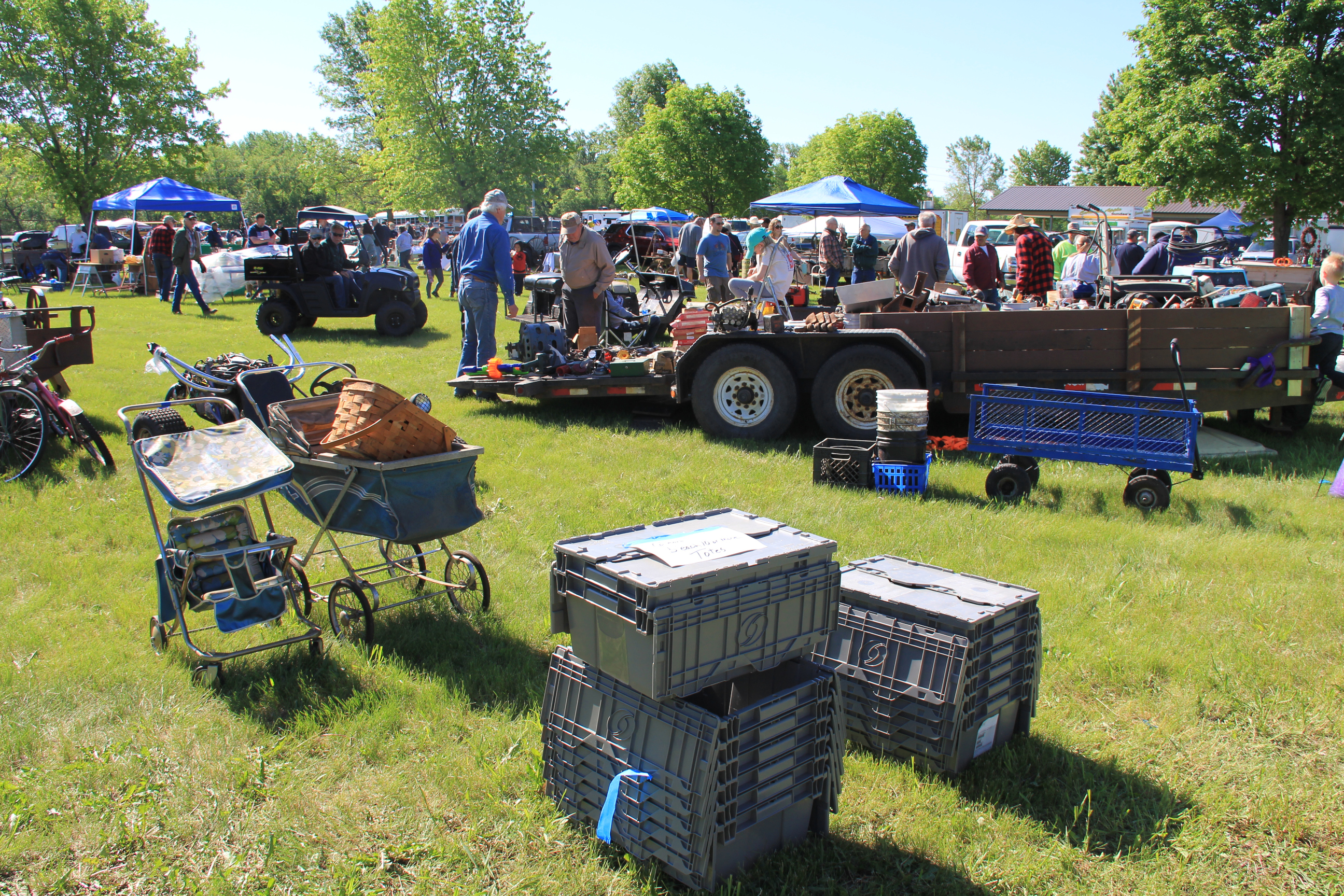
Rural draws people of all ages to this country location along Minnesota State Highway 3 south of Dundas, to look, shop, bid, buy and converse twice yearly. Neighbor meeting neighbor, swapping stories, comparing rainfall totals and crop updates. Strangers mingling. Vendors trying to make a buck or ten off merchandise they’ve crammed into vehicles and trailers and then displayed on tables and lawn.
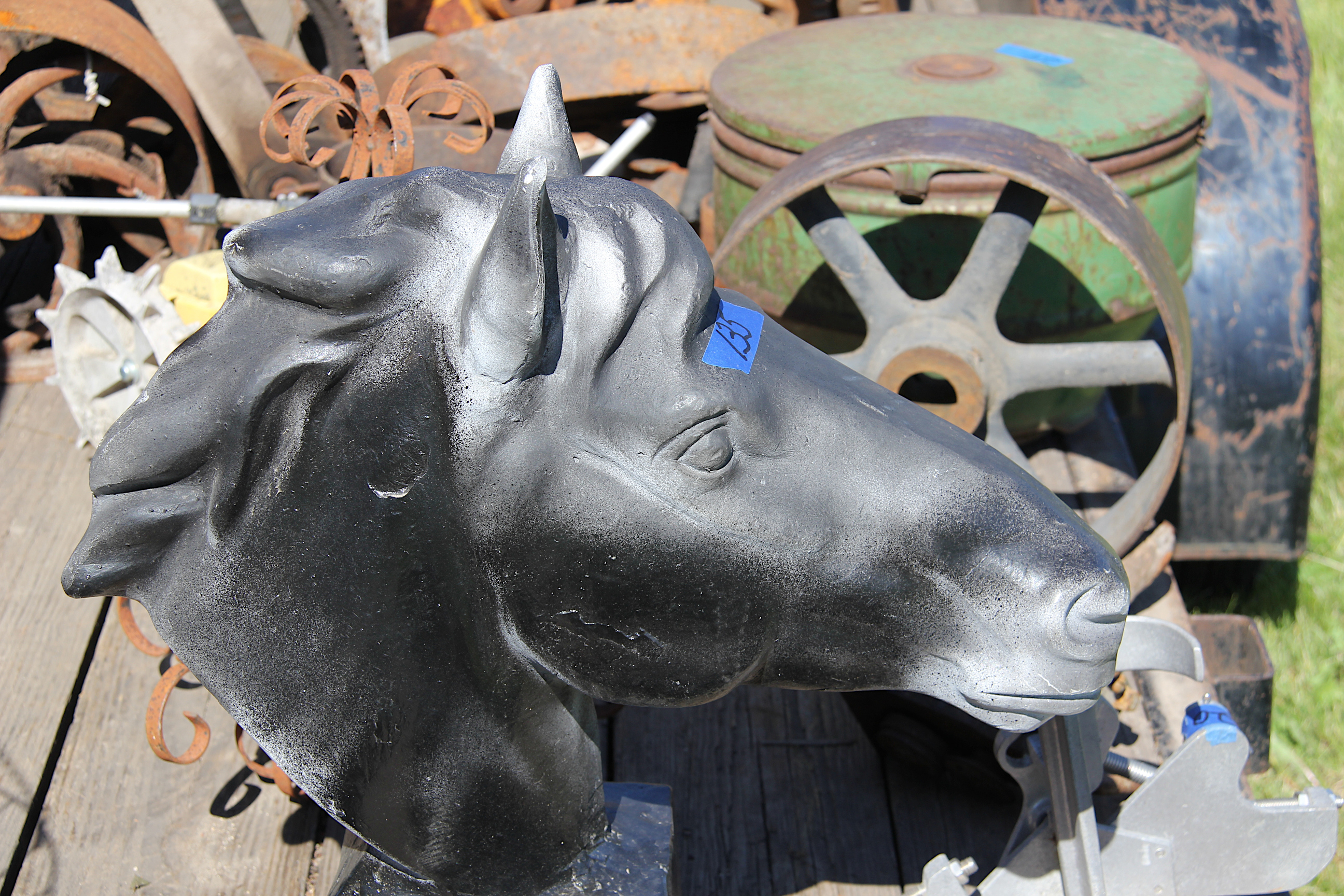
The horse head that reminded me of a movie from 52 years ago. (Minnesota Prairie Roots copyrighted photo May 2024)
Goods are spread out like a potluck of merchandise. You never know what you’ll find. I found a horse’s head, reminding me of a horrific scene from the 1972 film, “The Godfather.” The head could make for a creative Halloween prop. Nothing particularly country about this discovery, although horses in whole are decidedly country.
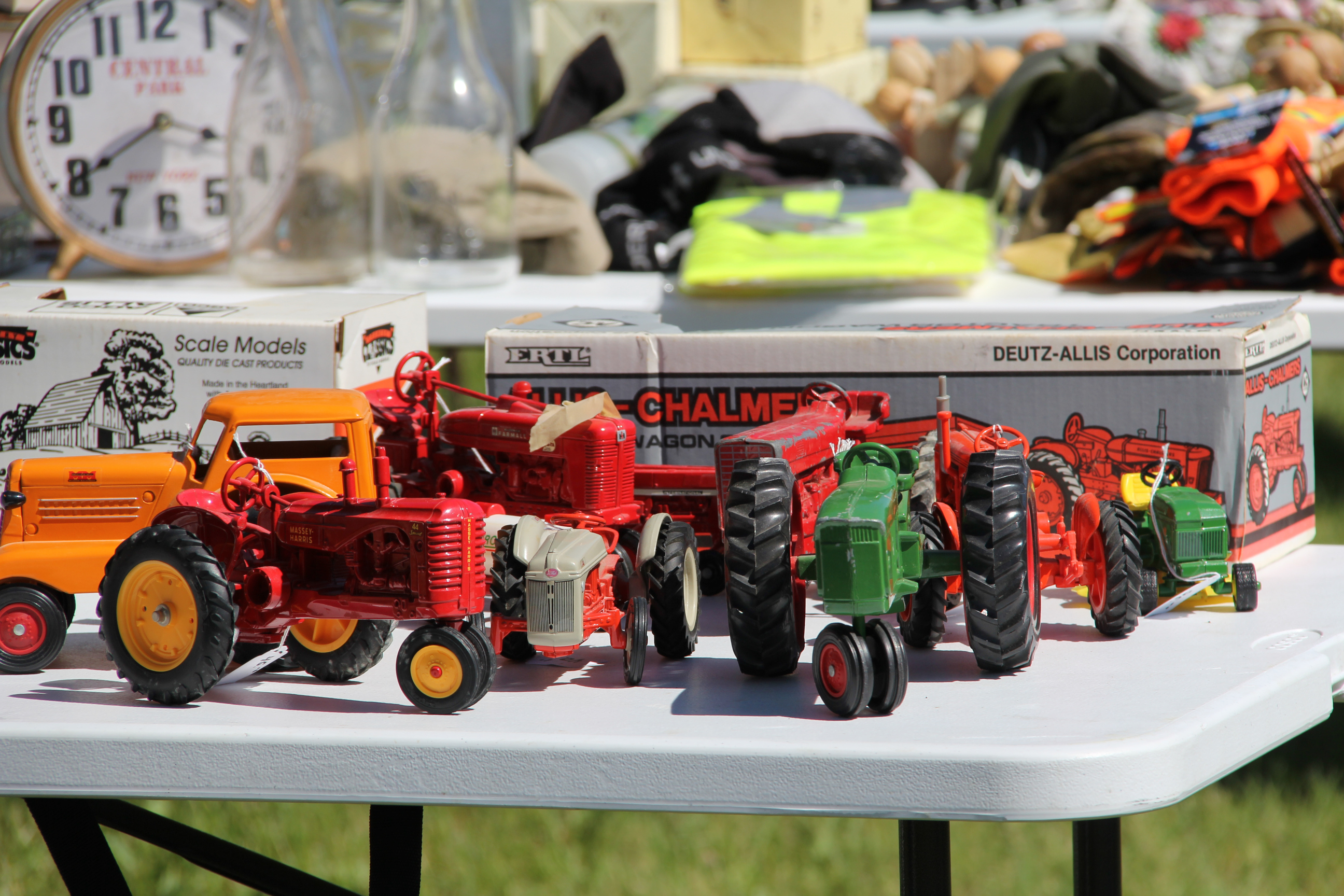
Toy tractors hold timeless appeal. (Minnesota Prairie Roots copyrighted photo May 2024)
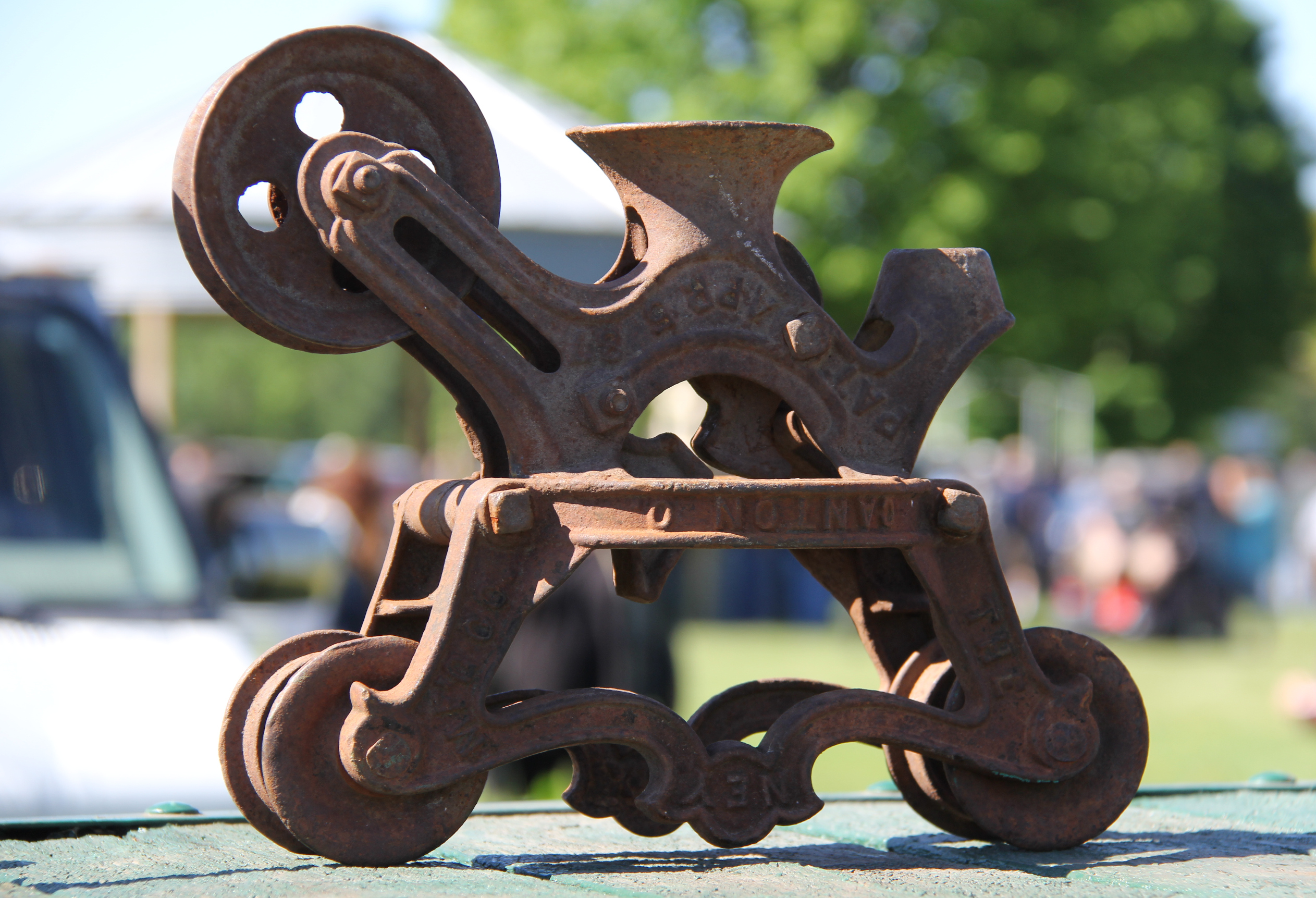
A caster truck, used with a pully system to move hay into a hay loft. (Minnesota Prairie Roots copyrighted photo May 2024)
An array of goods at the flea market. (Minnesota Prairie Roots copyrighted photo May 2024)
Mostly, I saw merchandise that related to rural life. Toy tractors and trucks. A caster truck, which differs from a truck you drive. Old stuff that’s obsolete, holding the memories of yesterday’s family farms.
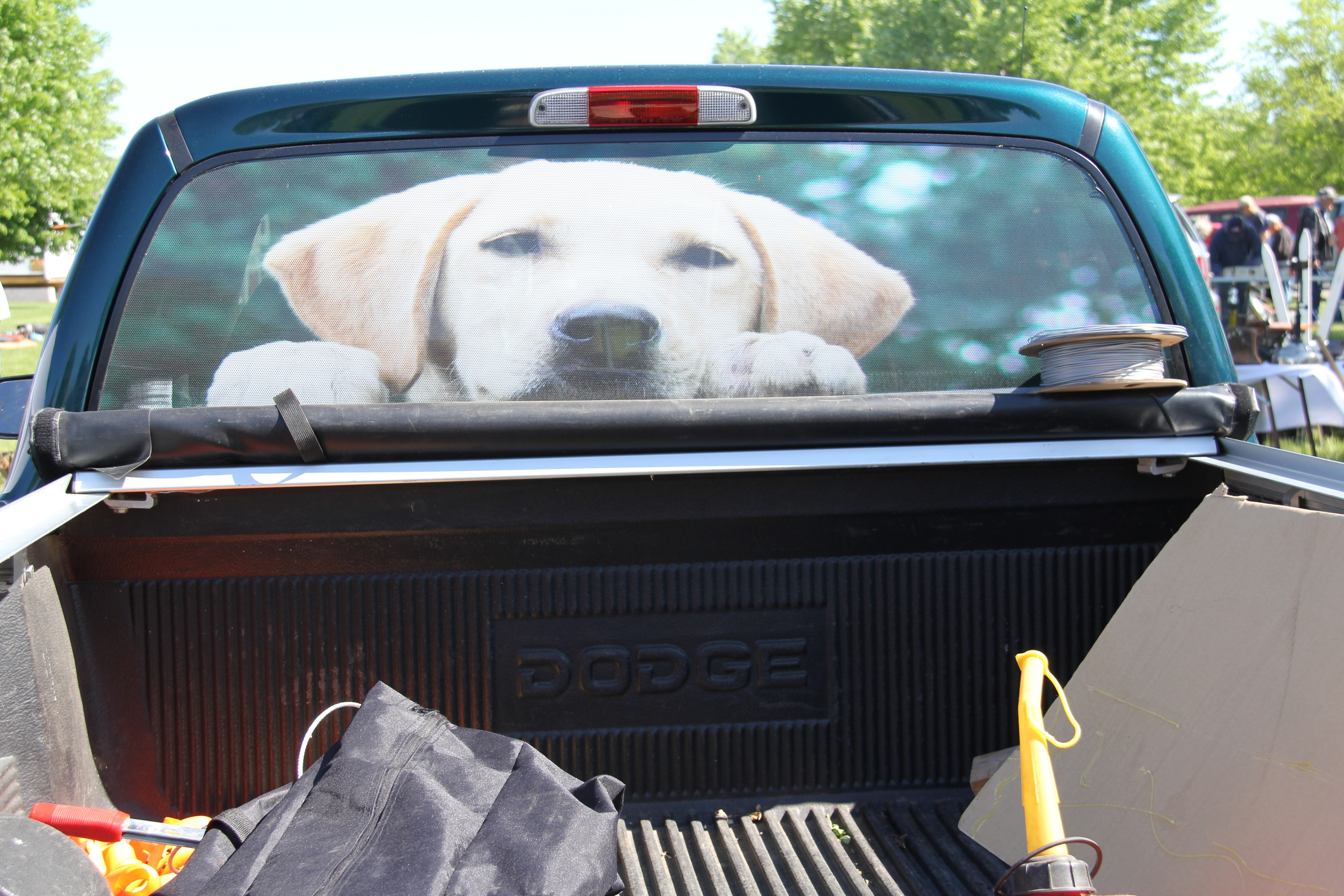
The dog-in-the-truck-window that drew my interest. (Minnesota Prairie Roots copyrighted photo May 2024)
And dogs, oh, so many dogs. Leashed, lounging on a picnic table, penned. Even in the back window of a pick-up cab, a cute dog photo that often draws interest from passing motorist. So says the guy who owns the truck. Farms and dogs go hand-in-hand.
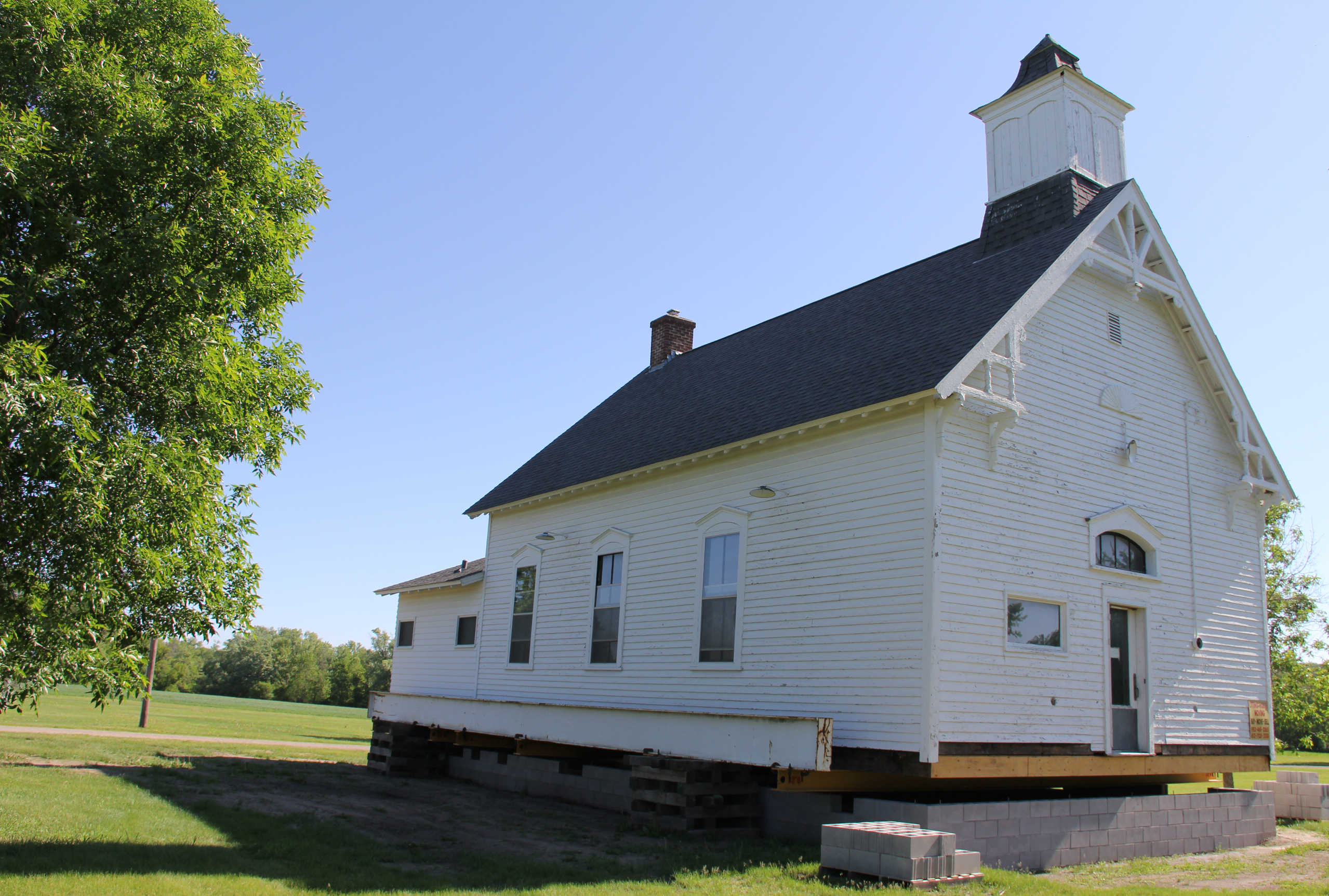
The historic Waterford School, moved on-site and soon to be placed on a new foundation. (Minnesota Prairie Roots copyrighted photo May 2024)
There are stories to be heard here, lyrics to be written. If the old Waterford Schoolhouse, recently moved onto the Rice County Steam & Gas Engines showgrounds and not yet open, could talk, oh, the stories it could tell. The songs it could sing.
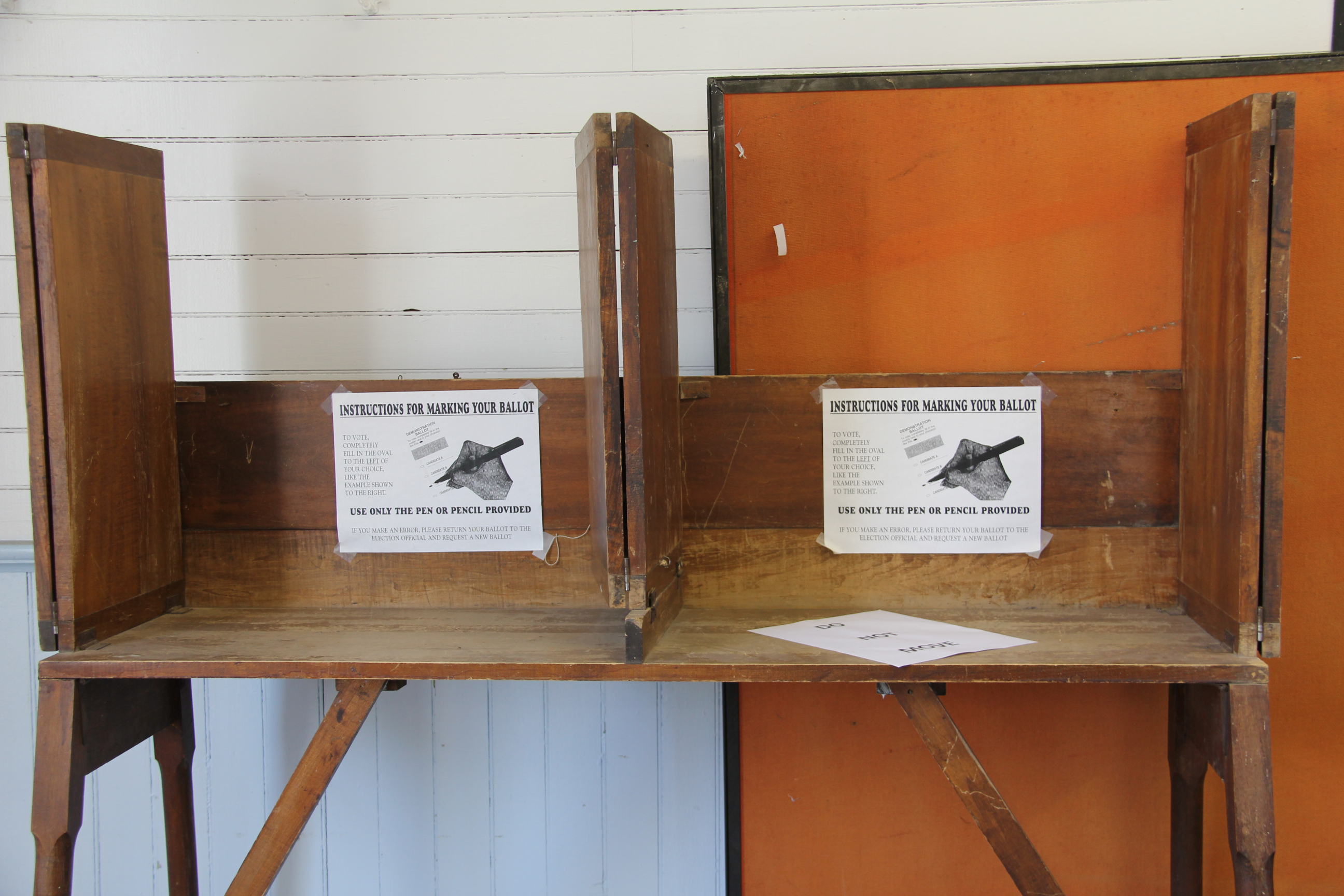
Vintage polling booths inside the former Northfield Township Hall. (Minnesota Prairie Roots copyrighted photo May 2024)
The same goes for the vintage polling booths inside the Northfield Township Hall. They aren’t for sale, simply part of the historic backdrop for vendors selling goods. If only those voting booths could talk, sing…
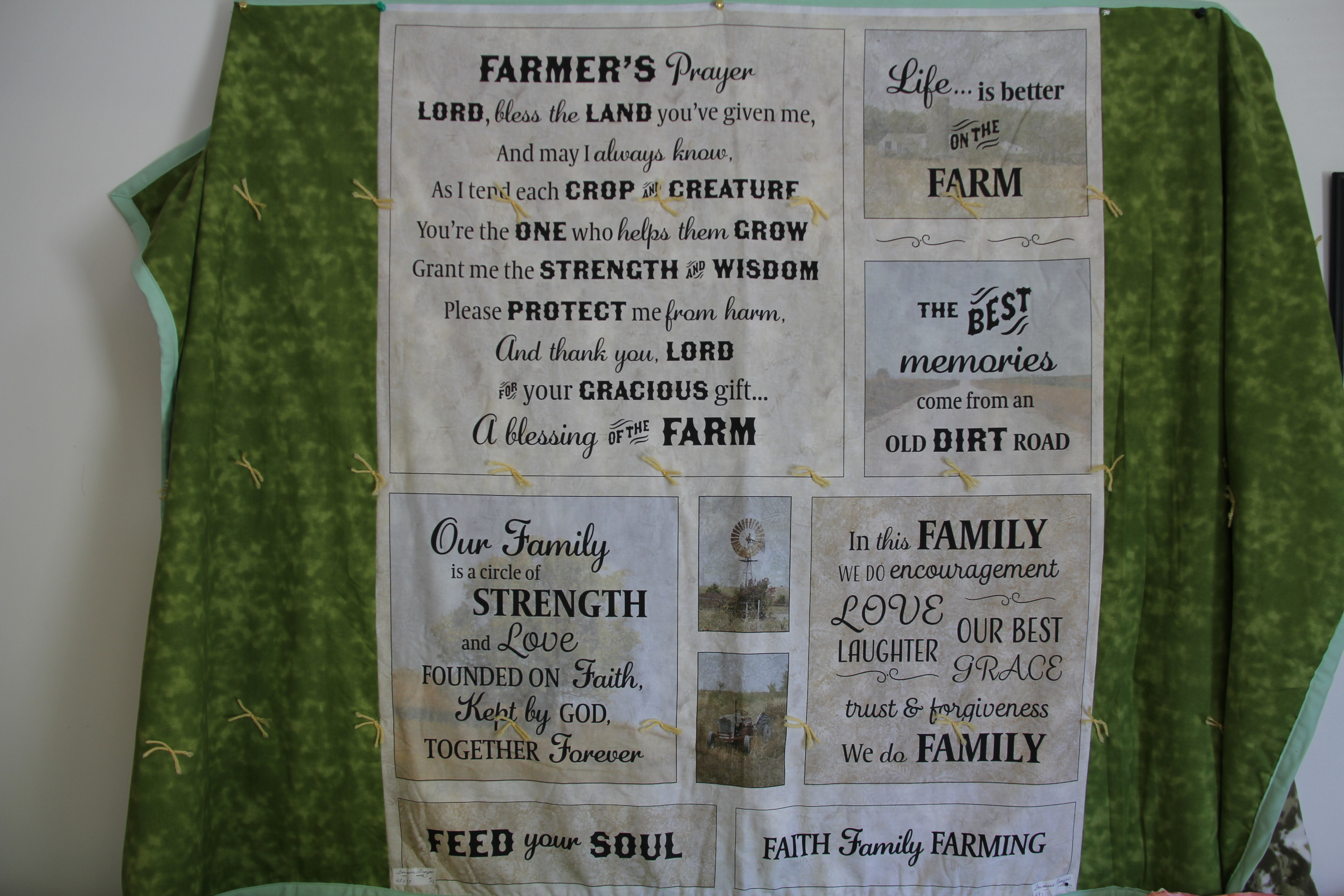
This quilt inside the clubhouse/office summarizes well the values of rural life. (Minnesota Prairie Roots copyrighted photo May 2024)
This place, this nonprofit, this event is about history. Preserving it. Showcasing it. Honoring it. Honoring farmers and farming. The land. The hands that work it. The people who live on it and love it. And those who appreciate the stories of country western music.
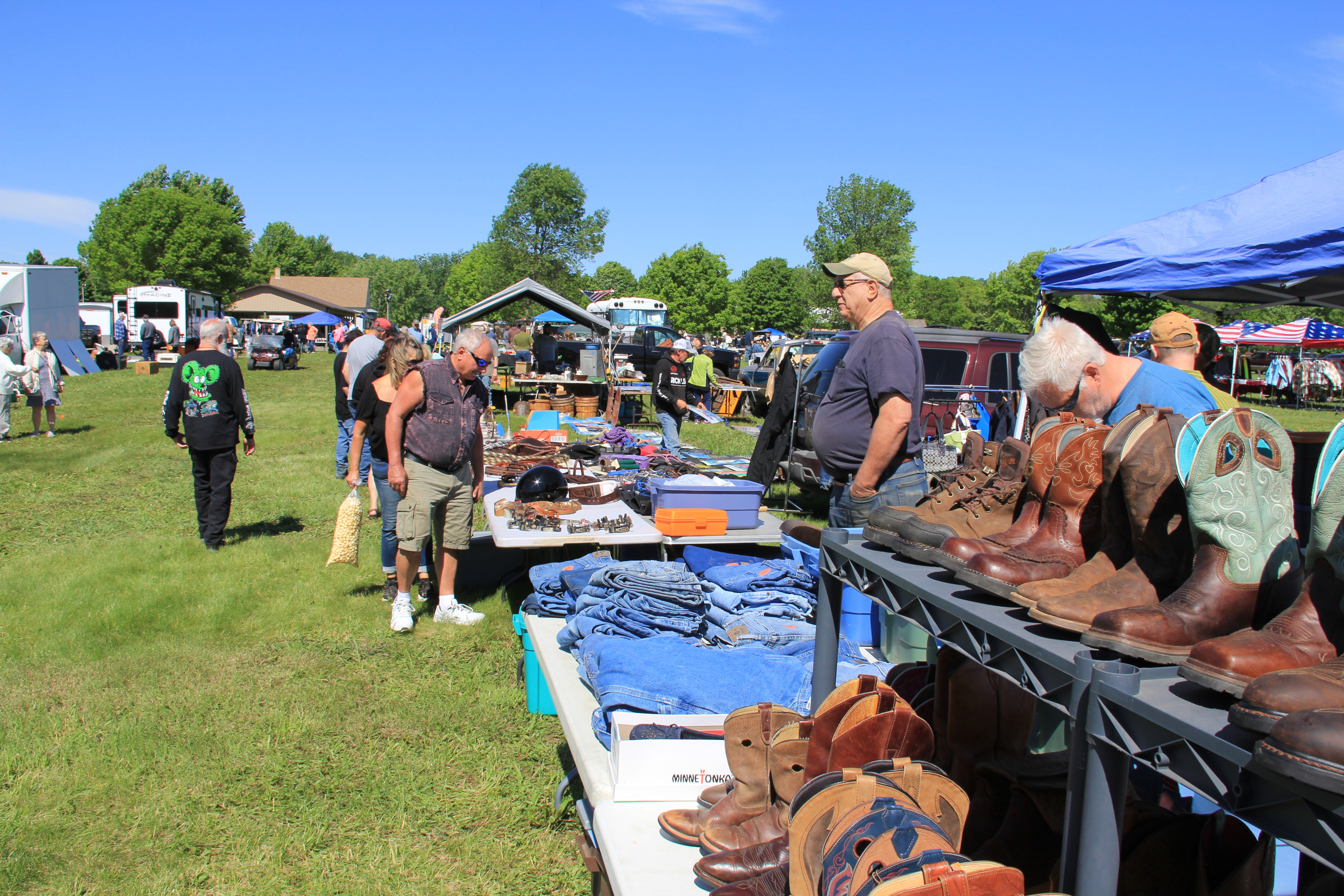
For sale: Boots and jeans, staples of country wear. (Minnesota Prairie Roots copyrighted photo May 2024)
I can almost hear the guitar, the lyrics:
Truck kickin’ dust on a gravel road, headin’ into town on a Saturday night. Boots shined up.
She’s sittin’ on a stool at the Circle Bar, sippin’ a cold one, waitin’ on him.
Truck kickin’ dust on a gravel road, headin’ into town on a Saturday night. Boots shined up.
She’s sittin’ on a stool waitin’ on him, smellin’ of wild roses growin’ in ditches.
And so on, until she breaks his heart or he breaks hers and he’s driving back home to the farm, truck kickin’ dust on a gravel road.
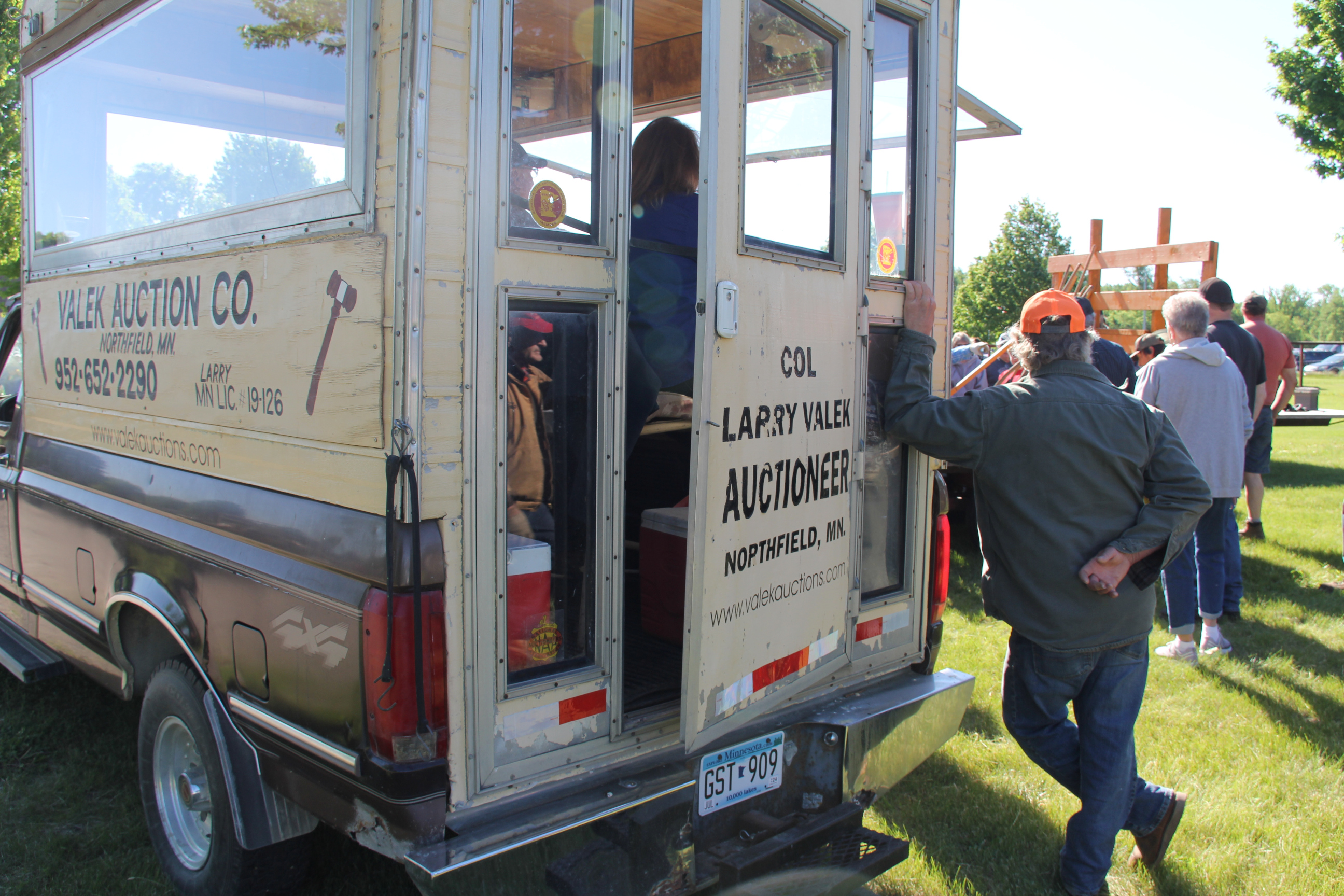
Watching the auction from behind the auctioneer’s truck at the Rice County Steam & Gas Engines Consignment Auction on May 25 south of Dundas. (Minnesota Prairie Roots copyrighted photo May 2024)
THERE’S SOMETHING ABOUT AN AUCTION that evokes nostalgic curiosity, drawing people together to peruse second-hand merchandise, perhaps to bid, perhaps only to watch silently from the side. Even to mourn.
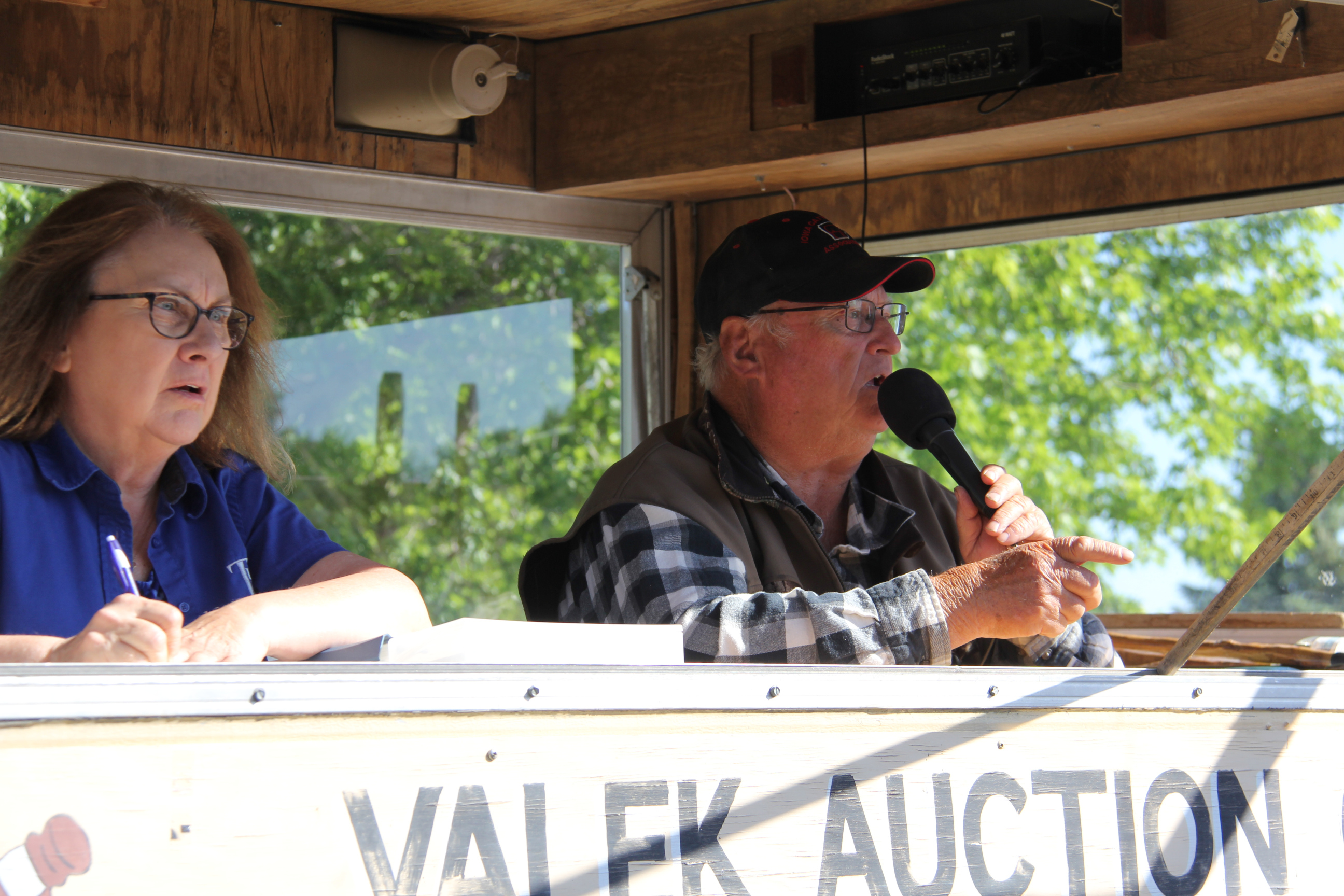
The auctioneer and clerk sell and record items sold. (Minnesota Prairie Roots copyrighted photo May 2024)
Recently, I attended the spring auction at the Rice County Steam & Gas Engines showgrounds south of Dundas as an observer. I didn’t need any of the goods sold on consignment with all commissions donated to the nonprofit. But, still, I watched and wove among the items auctioned by Valek Auction Co. of Northfield.
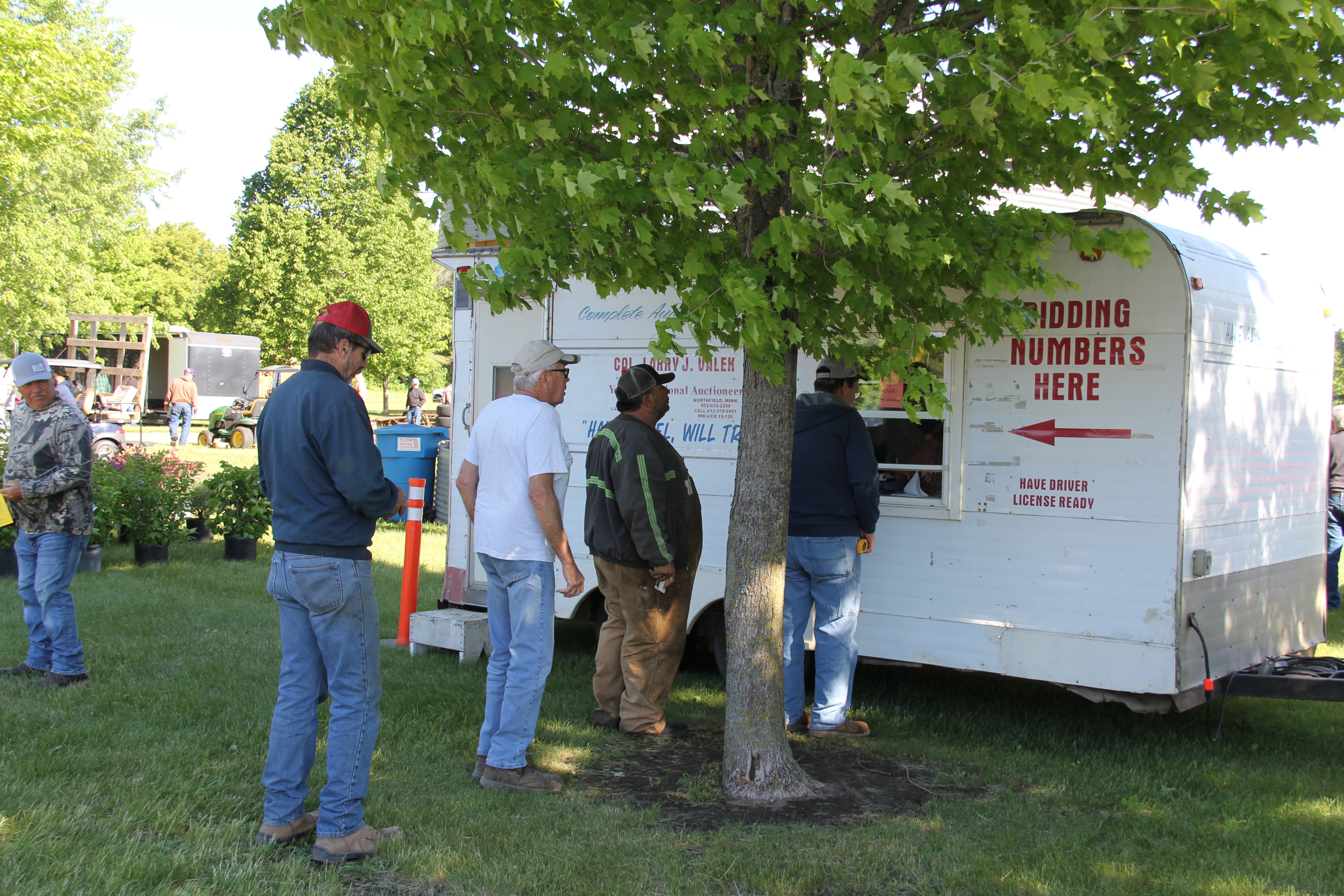
Lining up for bidding numbers. (Minnesota Prairie Roots copyrighted photo May 2024)
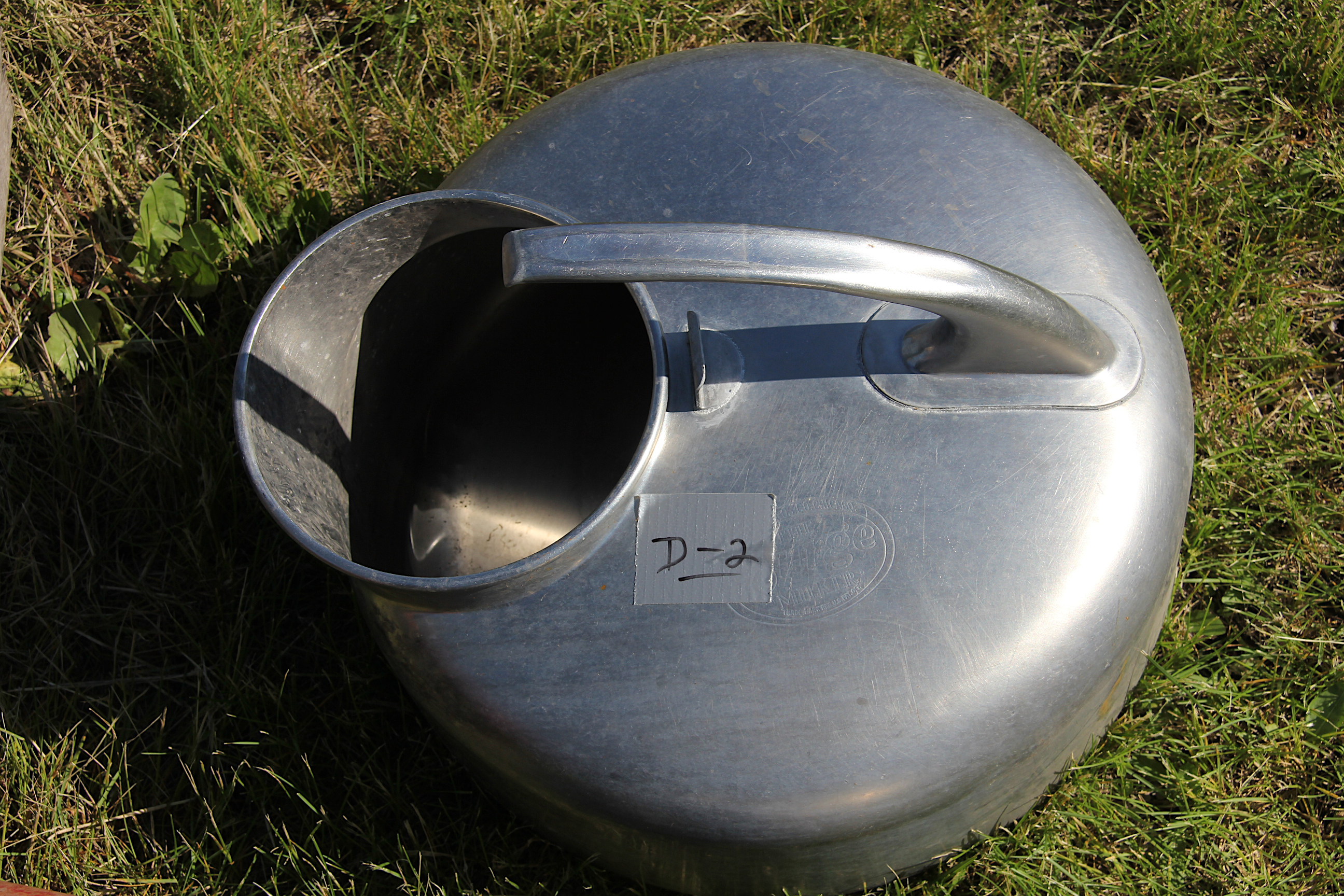
A familiar milk bucket, just like the one my dad used when milking his Holsteins. (Minnesota Prairie Roots copyrighted photo May 2024)
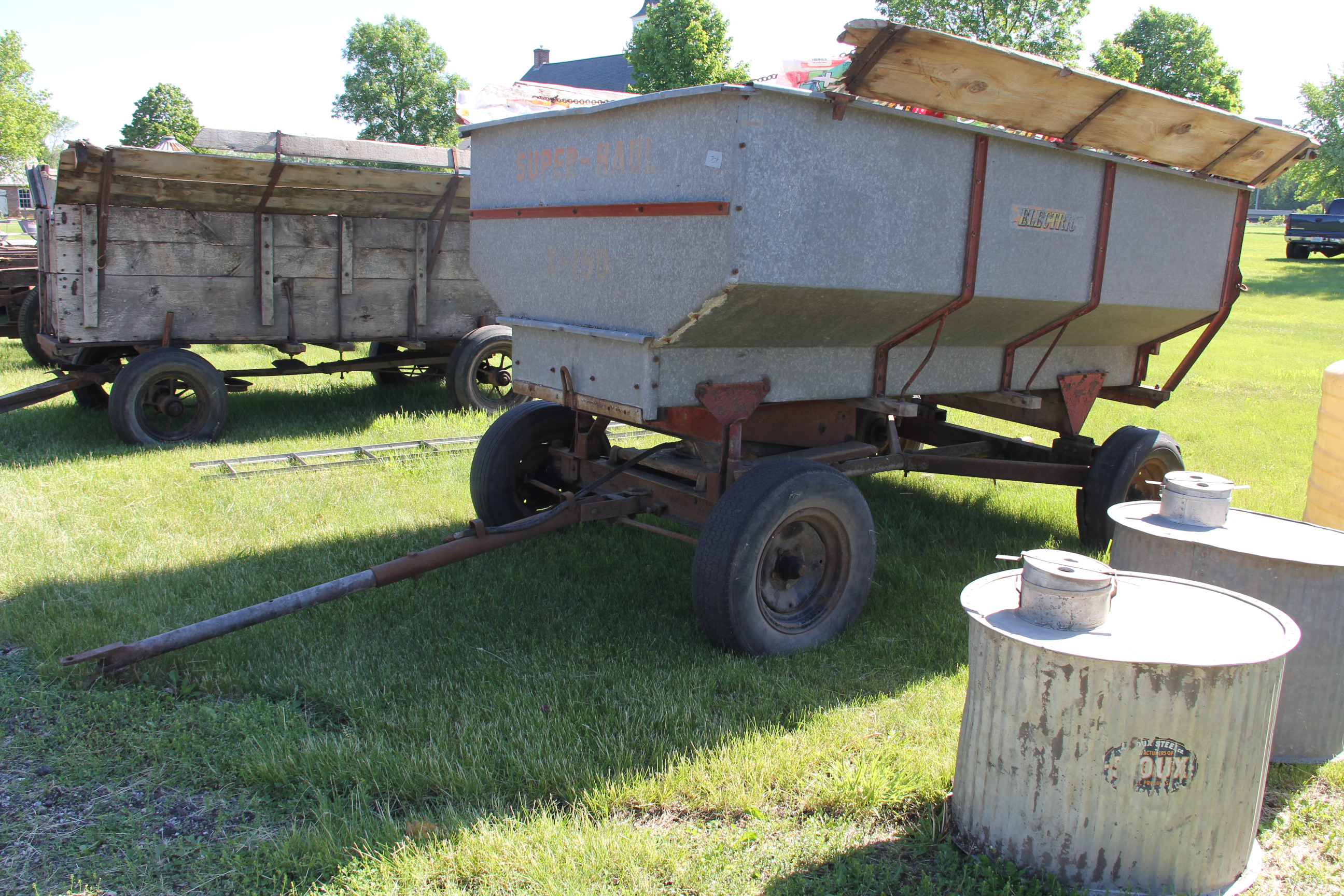
I felt like I was back on the farm, filling a bushel basket with silage for the cows, scrubbing the milk bucket with a brush, mixing milk replacer in a galvanized pail, watching corn flow into an aged grain wagon…
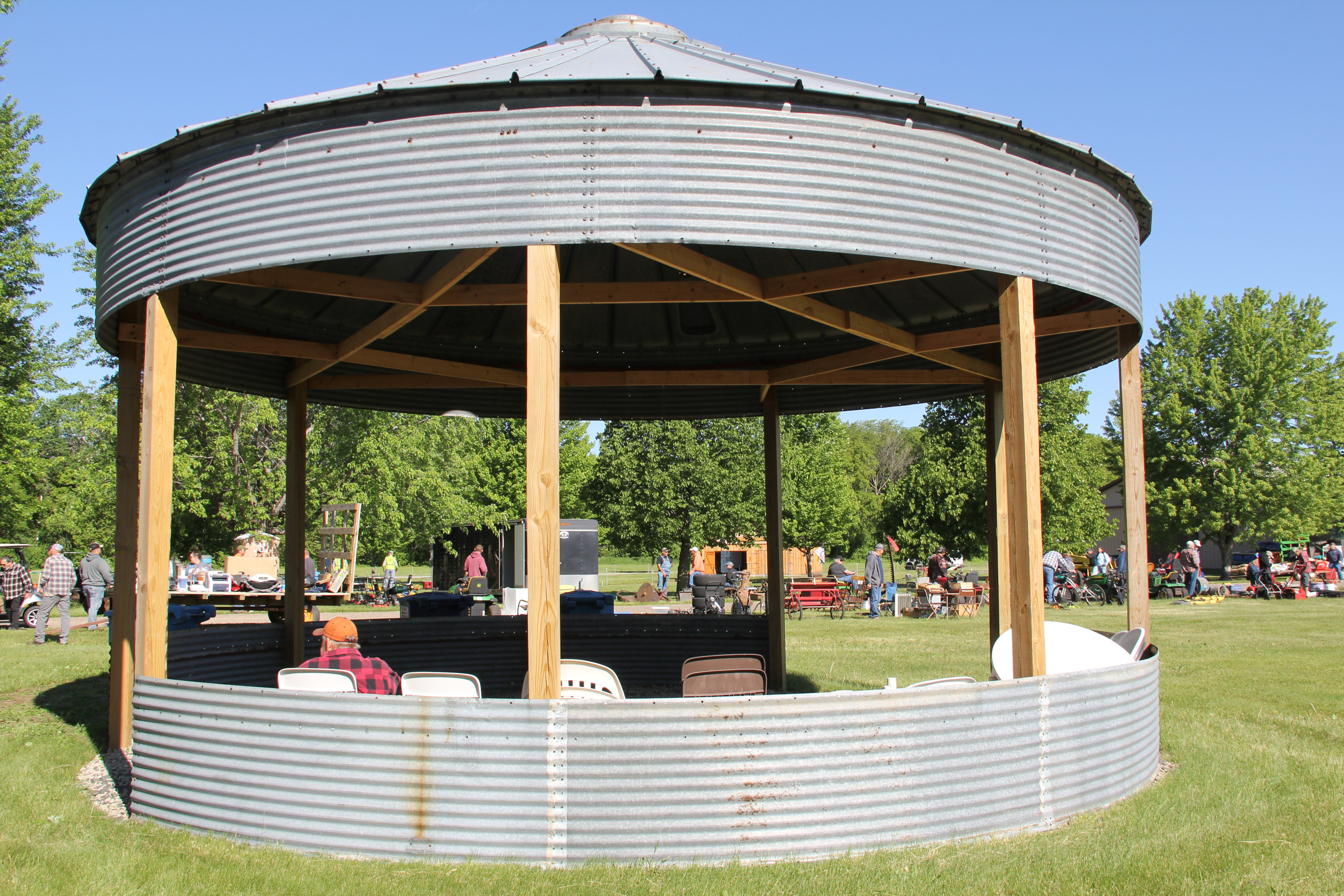
A grain bin repurposed as a shelter/resting area at the Rice County Steam & Gas Engines showgrounds. (Minnesota Prairie Roots copyrighted photo May 2024)
Rural auctions like this, for those of us who grew up on working farms or still live on them, are like steps back in time. Decades removed from farm life, I would feel out of place on a modern-day farm with all the technological advancements, the oversized equipment. That bushel basket, that milk bucket, that pail, that grain wagon…all are the stuff of yesteryear. Farming today is much less labor intensive, more efficient.
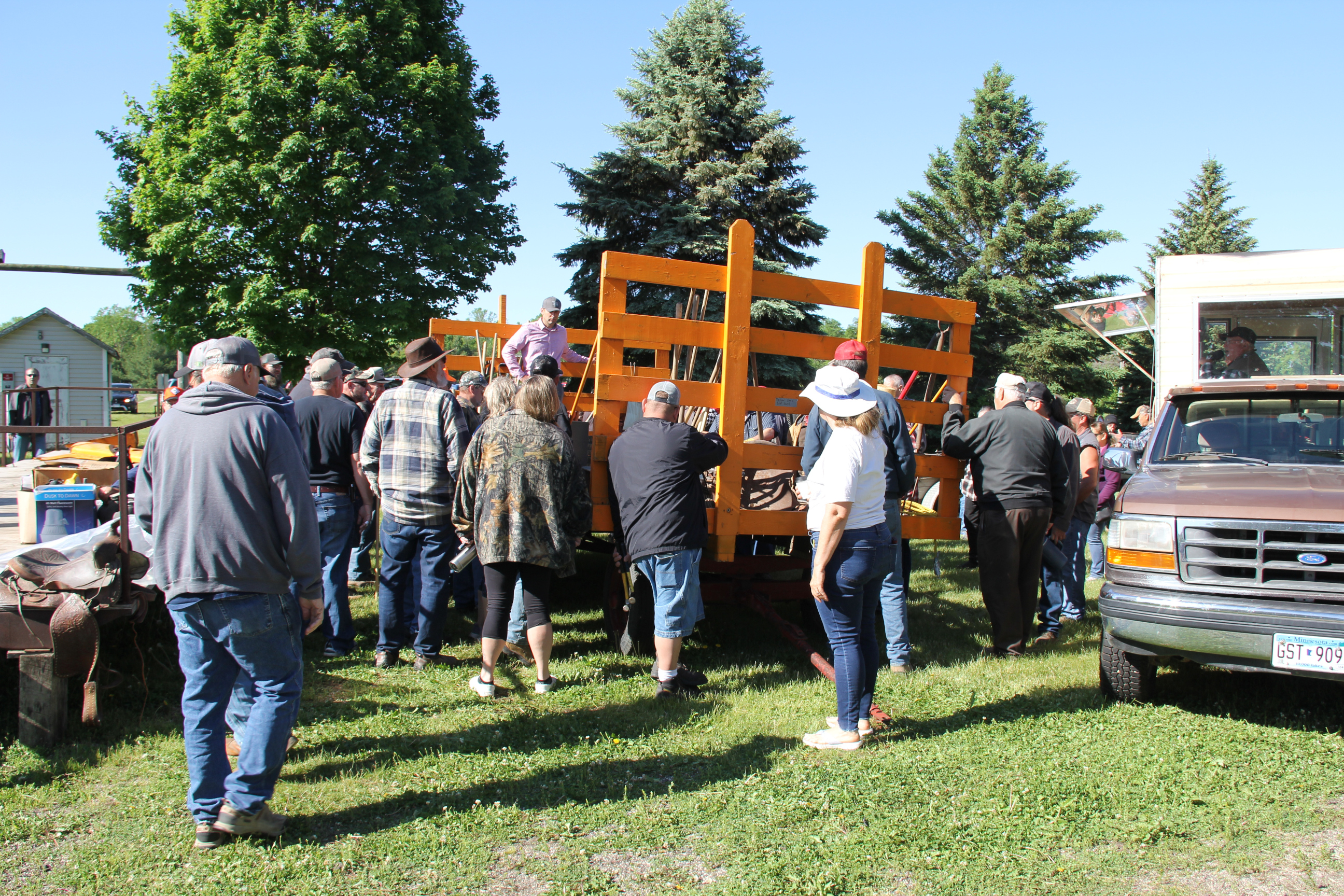
Items are auctioned off a hay rack. (Minnesota Prairie Roots copyrighted photo May 2024)
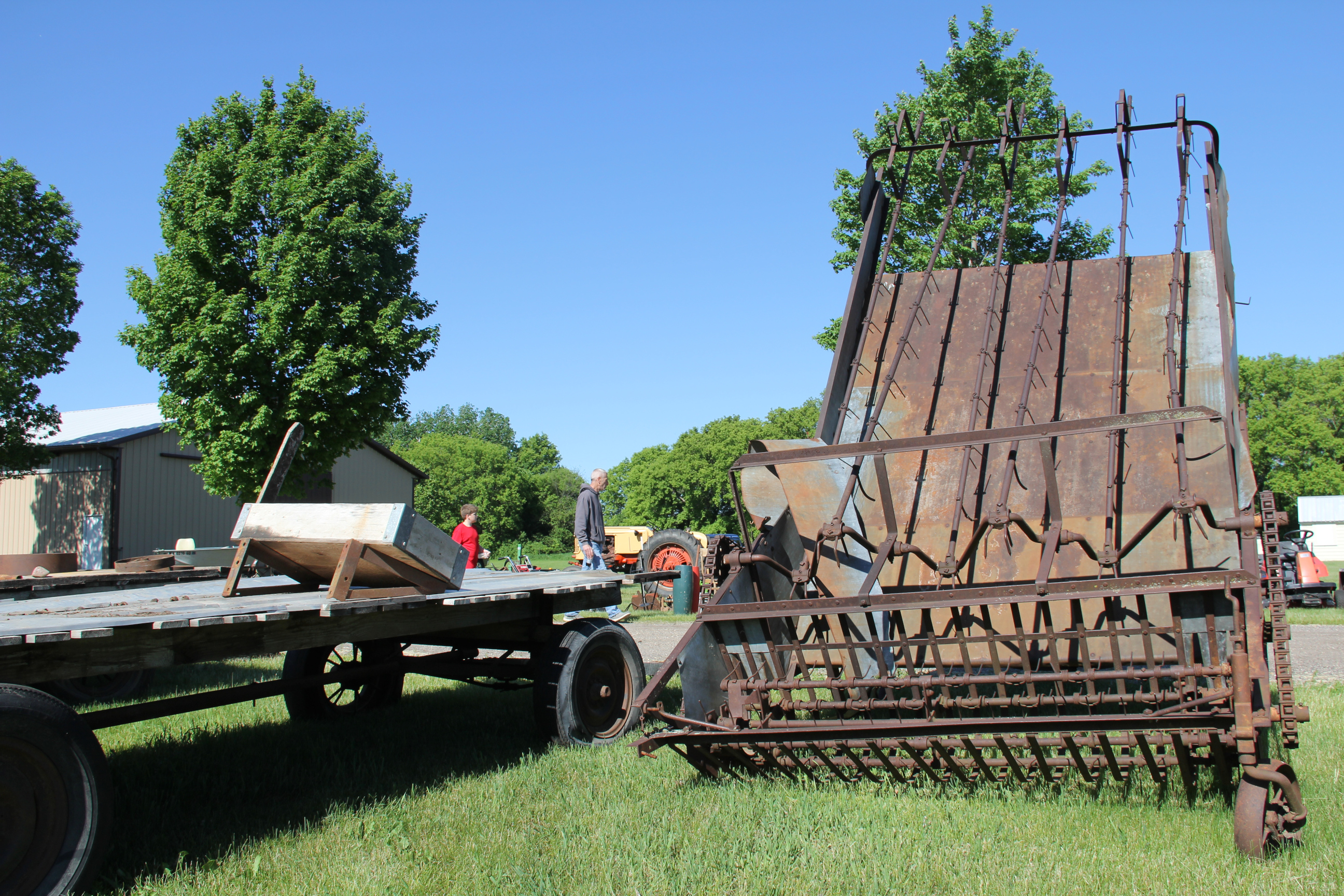
A vintage hay loader. (Minnesota Prairie Roots copyrighted photo May 2024)
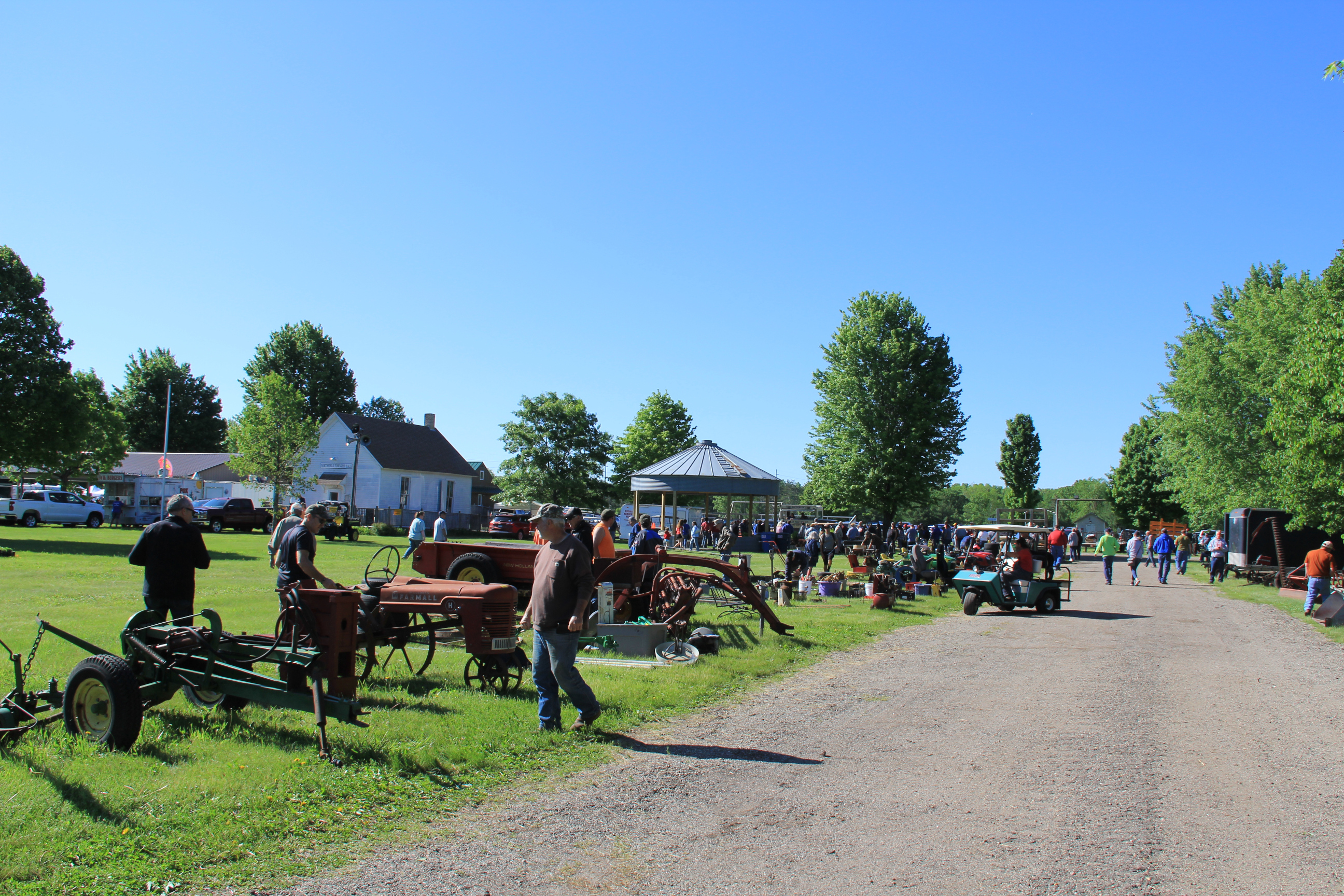
Merchandise lines the gravel road. (Minnesota Prairie Roots copyrighted photo May 2024)
Still, we often hold onto the past, the memories of back-in-the-day, the “way it used to be.” Nostalgia runs strong at auctions. I saw that, felt it, overheard it as folks gathered around the auctioneer’s pick-up truck, leaned on the hay rack piled with auction goods, meandered among the merchandise lining both sides of a gravel road.
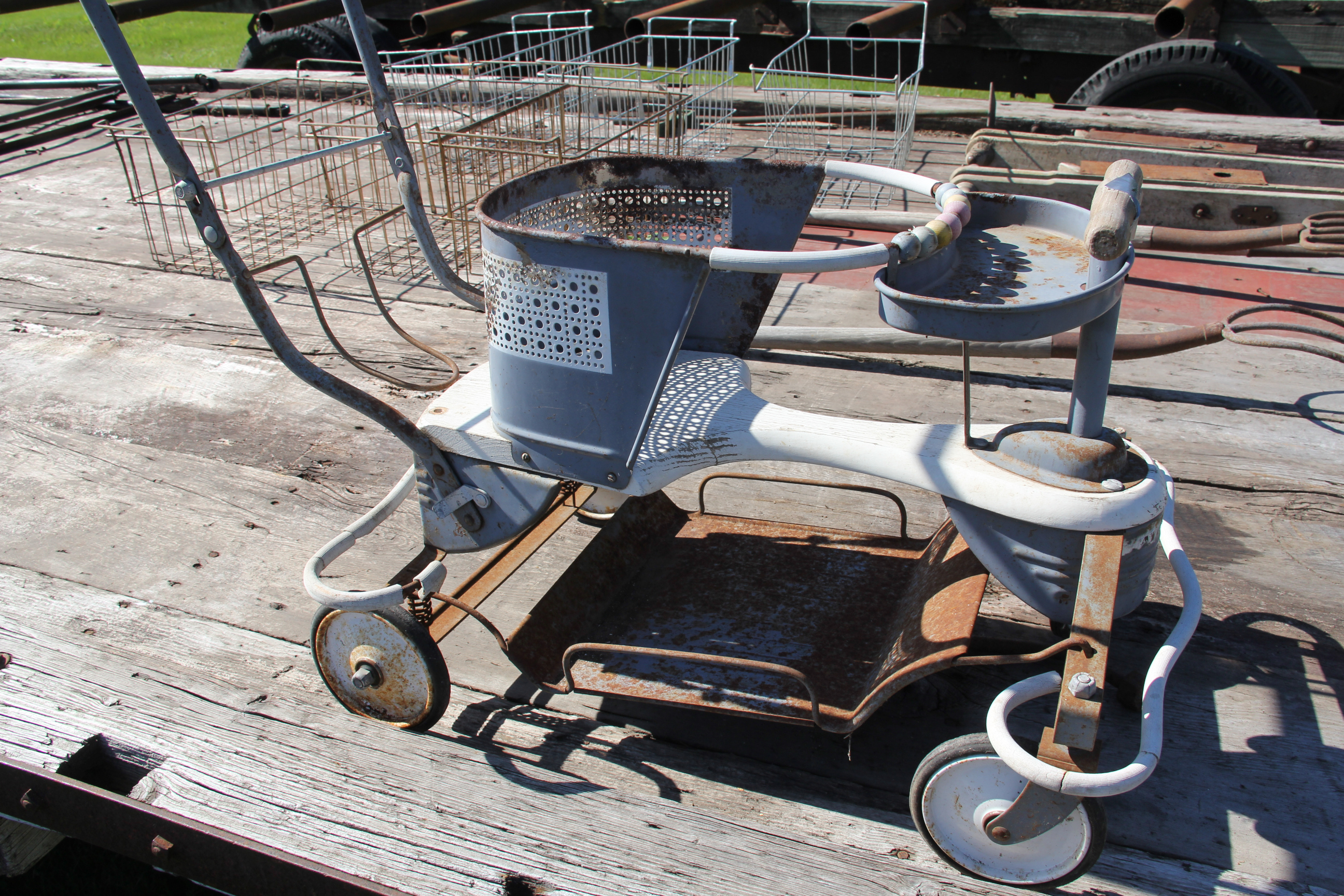
A 1950s vintage stroller, exactly like the one used for me and my five siblings. (Minnesota Prairie Roots copyrighted photo May 2024)
Many of the auction items were vintage, likely pulled from the back corners of a dark machine shed or abandoned barn or from weeds along the edge of a grove. The rusted metal baby stroller could have been the one I rode in, the pitchfork the one I used to bed straw, the hand-reel lawnmower my grandma’s.
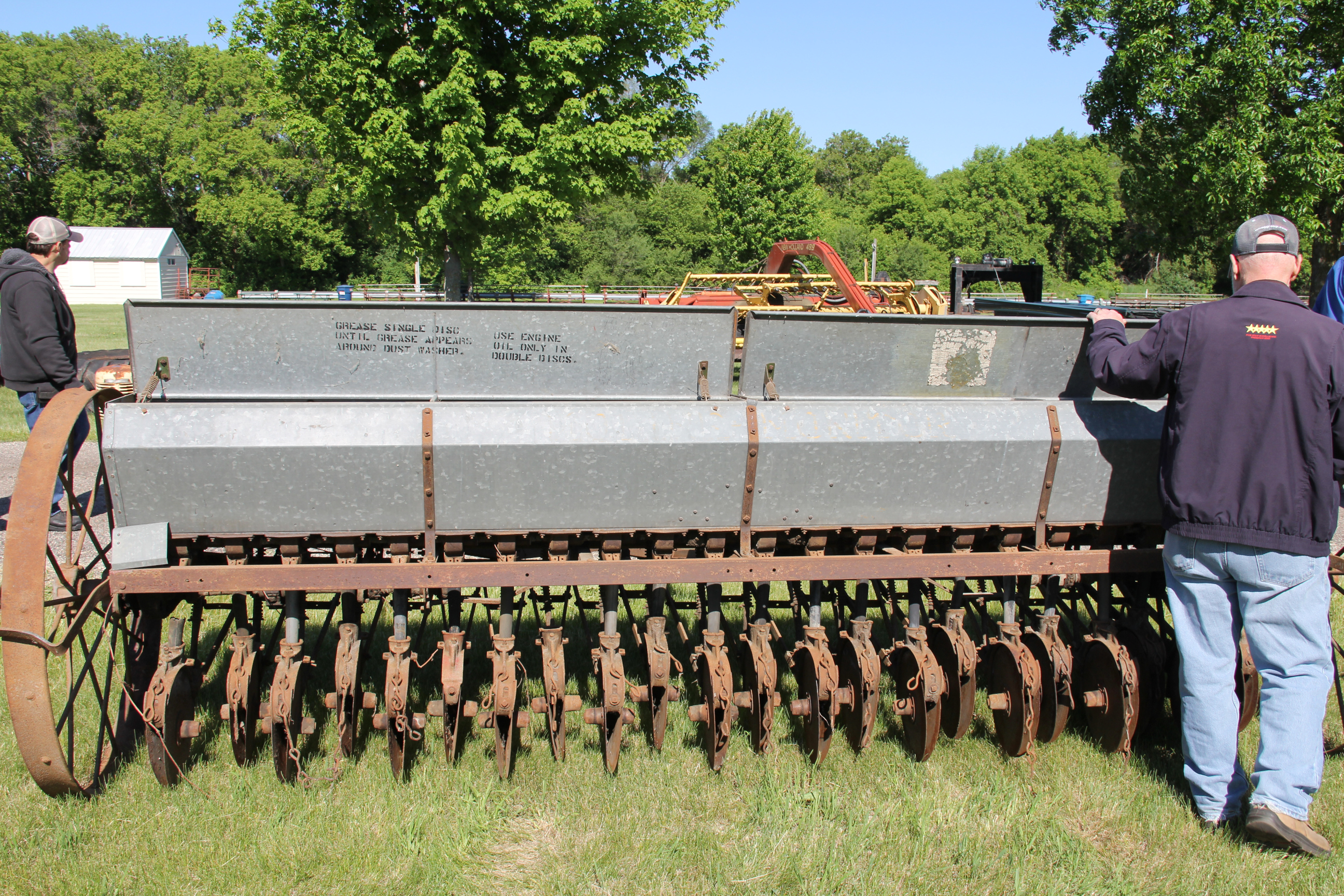
A vintage grain drill. (Minnesota Prairie Roots copyrighted photo May 2024)
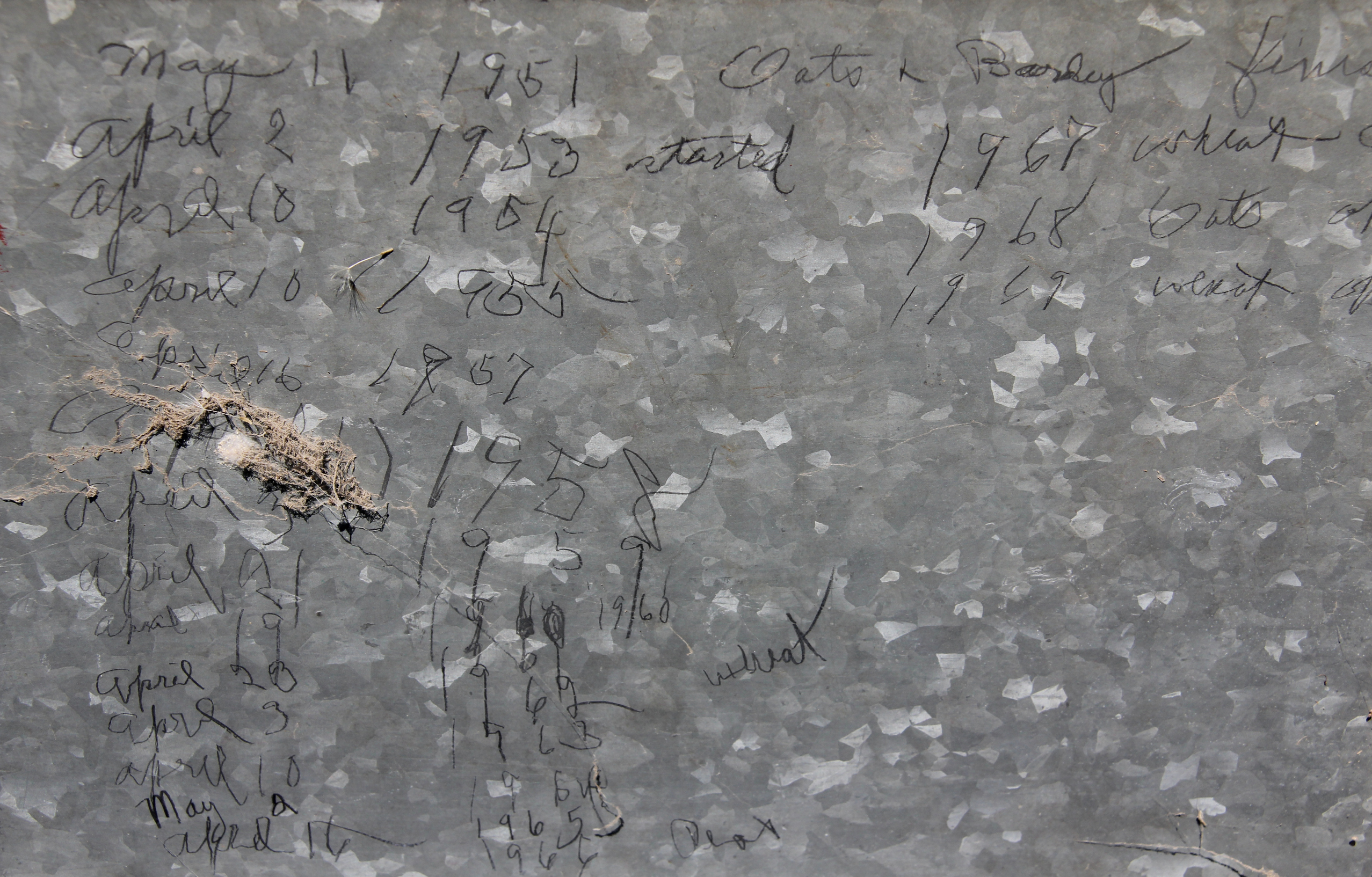
Planting dates written inside the lid of the grain drill. (Minnesota Prairie Roots copyrighted photo May 2024)
This particular auction held so much relatable history. I doubt I was alone in feeling that way. While looking at a vintage grain drill, an implement used to plant small grains, I discovered historic documentation. There, on the underside of a metal lid, a farmer recorded the dates he planted oats, barley and wheat, beginning in 1951 until 1969 with a few years missing. Planting and finishing dates are important to farmers as they put seed in the ground, anticipate harvest. I thought of this farmer who 73 years ago wrote that first entry on his grain drill, holding the hope of harvest within him.
Inspecting before bidding starts. (Minnesota Prairie Roots copyrighted photo May 2024)
There’s a certain reverence and respect in rural auctions. An honoring of farmers and farm life and the responsibilities that come with tending the land. This isn’t just stuff being sold to the highest bidder, but rather something of value, of importance, that once belonged to another. I remember standing at my father-in-law’s farm auction decades ago and feeling a certain sadness in the sale of items gathered from shed, house, barn and elsewhere.
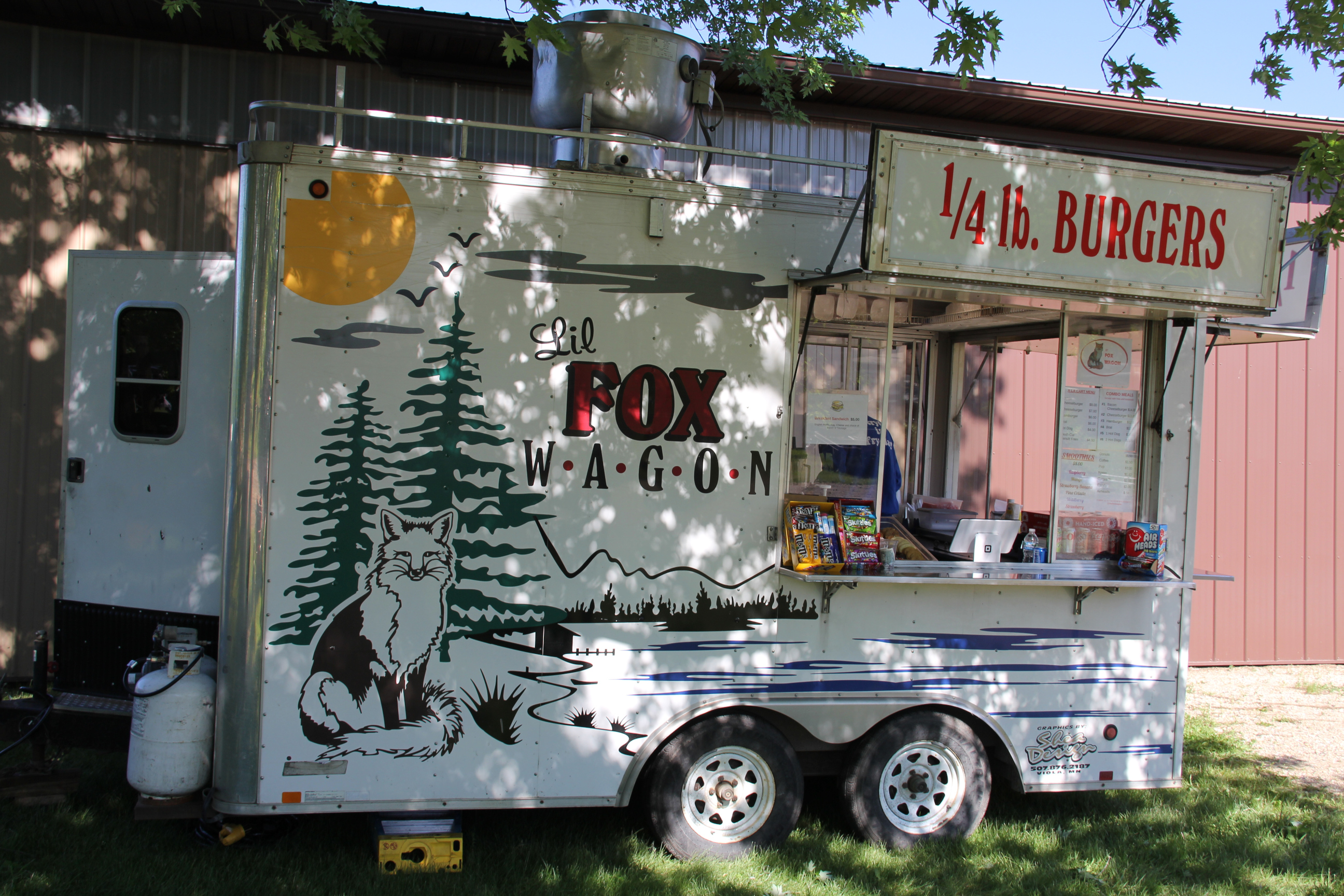
Lil Fox Wagon, one of several on-site food and beverage vendors. (Minnesota Prairie Roots copyrighted photo May 2024)
Farm auctions represent the final verse in a hymn, the congregation gathered, the auctioneer chanting the liturgy. Comfort and community and closure come. At the hay rack. Among the rows of numbered auction items. At the lunch wagon. All until the last item is sold.
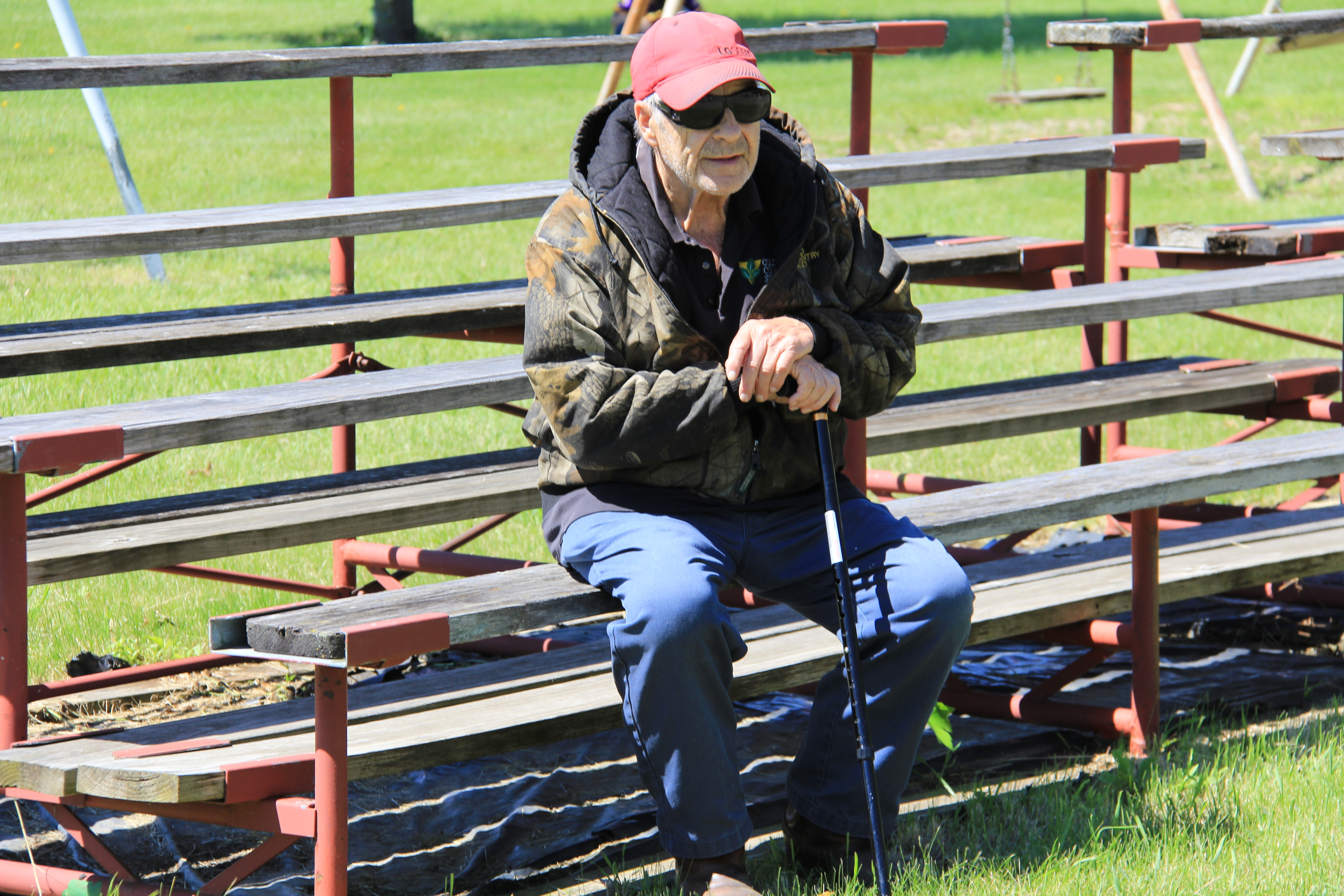
Resting during the morning auction. (Minnesota Prairie Roots copyrighted photo May 2024)
Hallelujah. And amen.
#
NOTE: Check back tomorrow to read my prize-winning poem, “Sunday Afternoon at the Auction Barn,” published in 2014 in a Minnesota literary anthology.
HER POEMS SING with the rhythm of a writer closely connected to land, heritage and history. She is Gwen Nell Westerman of Mankato, Minnesota poet laureate and author of Songs, Blood Deep, published by Duluth-based Holy Cow! Press.
Of Dakota and Cherokee heritage, Westerman honors her roots with poems that reflect a deep cultural appreciation for the natural world. The water. The sky. The seasons. The earth. The birds and animals. They are all there in her writing, in language that is down-to-earth descriptive. Readers can hear the birdsong, feel the breeze, see the morning light… That she pens nature poems mostly about the land of my heart—fields and prairie—endears me even more to her poetry.
This slim volume of collected poems is divided into seasons of the year, each chapter title written in the Dakota language. The book features multiple languages—Dakota, Cherokee, Spanish and English. That adds to its depth, showing that, no matter the language we speak, write or read, we are valued.
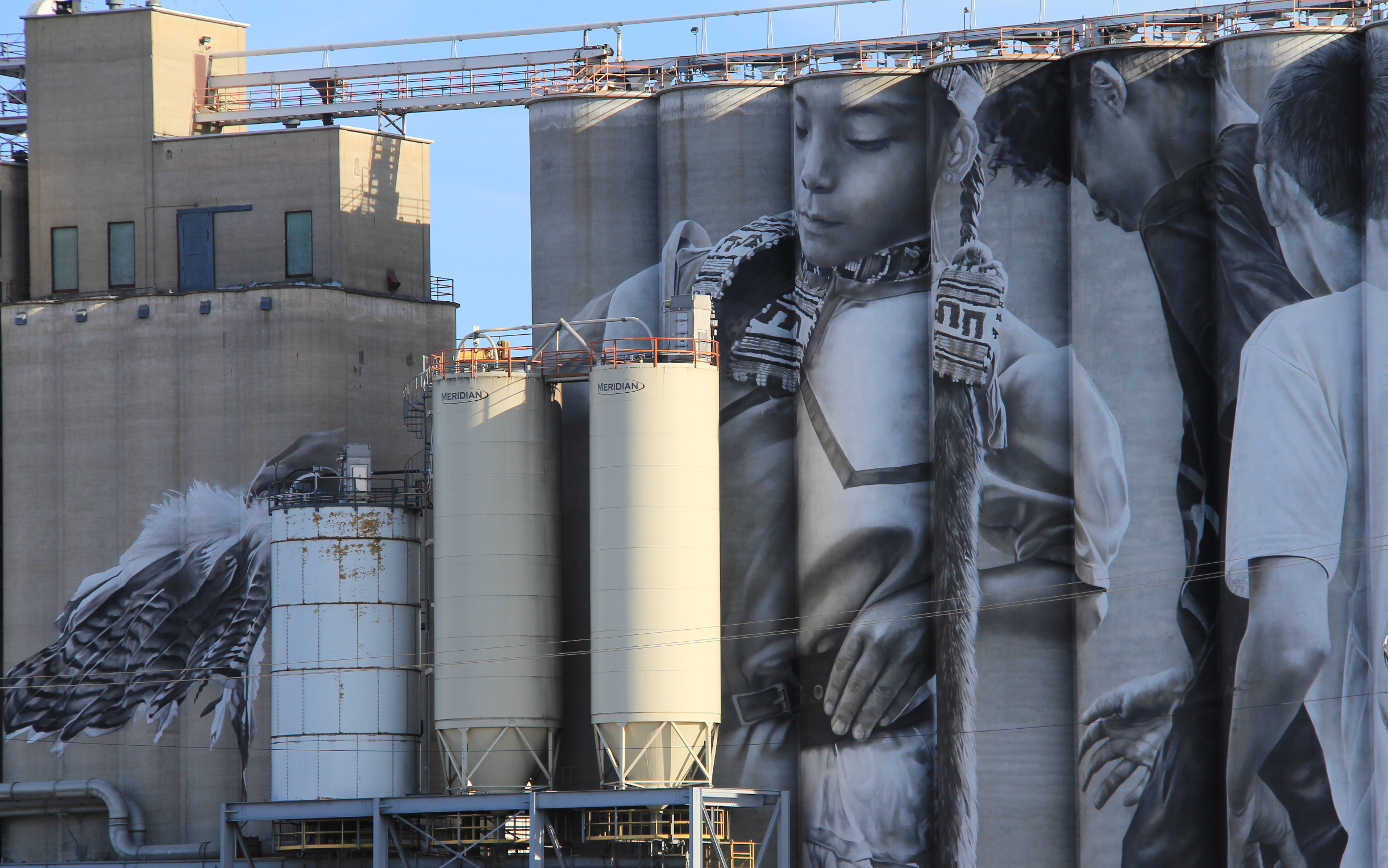
This silo mural in downtown Mankato celebrates the cultural diversity of the region, including the Dakota. (Minnesota Prairie Roots copyrighted photo November 2023)
Westerman clearly values her Native heritage, how lessons and stories have been passed to her through generations of women, especially. Songs, blood deep. In her poem “First Song,” she shares a lesson her grandmother taught her about the importance of sharing. After reading that thought-provoking poem, I considered how much better this world would be if we all focused on the singular act of sharing.
The Dakota 38 Memorial at Reconciliation Park in downtown Mankato lists the names of the 38 Dakota men hung at this site on December 26, 1862. (Minnesota Prairie Roots copyrighted photo November 2023)
This poet, who is also a gifted textile artist (creator of quilts), wraps us in her words. In the season of waniyetu, her poetry turns more reflective and introspective, as one would expect in winter. She writes of family, injustices and more. “Song for the Generations: December 26” is particularly moving as that date in history references the mass execution of 38 Dakota sentenced to death in 1862 and hung in Mankato. Westerman writes of rising and remembering, of singing and prayer. It’s a truly honorable poem that sings of sorrow and strength.
Her poems remind us that this land of which she writes was home first to Indigenous Peoples. Westerman writes of a state park in New Ulm, the sacred Jeffers Petroglyphs and Fort Snelling, where Dakota were imprisoned after the U.S.-Dakota War of 1862 and before their exile from Minnesota. The name of our state traces to Mni Sota Makoce, Dakota for “the land where the water reflects the sky.” It’s included in Westerman’s poetry.
I appreciate poems that counter the one-sided history I was taught. I appreciate Westerman’s style of writing that is gentle, yet strong, in spirit. Truthful in a way that feels forgiving and healing.
In the all of these poems, I read refrains of gratitude for the natural world, gratitude for heritage and gratitude for this place we share. We sang. We sing. Songs, blood deep.
FYI: Songs, Blood Deep, is a nominee for the 2024 Minnesota Book Award in poetry. The winner will be announced May 7. This is Westerman’s second poetry book. Her first: Follow the Blackbirds. In addition to writing poetry and creating quilts, Westerman teaches English, Humanities and Creative Writing at Minnesota State University, Mankato.
Jeff Jarvis shows an artifact while talking about the Dakota. (Minnesota Prairie Roots copyrighted photo April 2024)
“WE’RE ALL CONNECTED. We’re all one.” Those closing words by local historian and artist Jeff Jarvis as he ended an hour-long presentation on “The Faribault Dakota” at Books on Central Thursday evening resonate. I’ve long been geographically-connected to Indigenous Peoples, first in my native Redwood County and now in Rice County. But Jarvis’ definition of connection stretches well beyond geography to the connection we all share simply via our humanity.
Jarvis, who is also an artist and graphic designer, handed out this mini guidebook at Thursday’s presentation. (Minnesota Prairie Roots copyrighted photo April 2024)
Jarvis spoke to a standing room only crowd packed into the Rice County Area United Way used bookstore on Faribault’s Central Avenue. The third speaker in the popular literary event series hosted by the bookshop since its fall opening, his talk was more history than literary. Interest ran high.
My interest in the Dakota traces back to the southwestern Minnesota prairie, where I grew up between the Upper and Lower Sioux Indian Reservations. Today the word “community,” references these homes of the Mdewakanton Dakota. When I moved to Rice County 42 years ago, I moved onto land once inhabited by the Wahpakute Dakota. But it wasn’t until I listened to Jarvis speak that I learned even more about the place I initially called home on the southeastern tip of Cannon Lake west of Faribault.
Long before fur traders and settlers moved to this region of southern Minnesota, the Dakota called this land home, typically living along the area’s lakes and rivers, including the Cannon. I knew this; I’ve attended many presentations on the Dakota by local historians. But I wasn’t aware that the former Ackman Store, the rental home where Randy and I lived for 2 ½ years after our 1982 marriage, was near the site of a trading post opened by fur trader and town founder Alexander Faribault.
Native American artifacts found in Rice County and displayed at the Rice County Historical Society. These are not the artifacts shown by Jarvis. (Minnesota Prairie Roots copyrighted photo 2024)
Jarvis asked me after his presentation whether I saw ghosts while living there. I didn’t. And in a conversation with Lou Ackman, who grew up and lived along Cannon Lake and loaned Indian artifacts for Jarvis to show Thursday evening, I learned that people often searched the Ackmans’ farm fields for artifacts.
When Randy and I moved into Faribault, our geographic connection to Indigenous Peoples continued. We purchased a house below Wapacuta (sic) Park, where we still live today. It was upon this now park land that the Dakota placed their dead, (wrapped in buffalo robes or blankets) upon scaffolding until later burial. Jarvis also shared that the Dakota sometimes suspended wrapped bodies from trees to catch the spirits in the windy hilltop location prior to burial 1-2 years later. I’d never heard this prior to Thursday.
Peace Park, an unmarked Dakota cemetery near Buckham Memorial Library. (Minnesota Prairie Roots copyrighted file photo September 2022)
But I was aware that Peace Park, a triangle of land near Buckham Memorial Library, is an Indian burial grounds. Jarvis termed it an unfenced and unrecognized cemetery marked by a faith-based WW II monument and nothing indicating this is sacred ground of the Dakota. Several bodies were discovered buried there in 1874, he said, not wanting to delve deeper into that troubling topic at Thursday’s event.
Jarvis covered a lot more in his one-hour presentation. Most I knew. Some I didn’t. I always appreciate learning local history, especially about the 300-400 Dakota who relocated from Cannon Lake to live in elm bark huts and teepees in the area along the Straight River from Division Street to the wastewater treatment plant.
The community of Faribault, Jarvis said, had/has a lot of color and was/is “a beckoning place” to many peoples. He referenced the Indigenous Peoples of yesteryear and the immigrants of today. “We’re all connected. We’re all one,” Jarvis said. He’s right.
One of two rainbows arches over Faribault Thursday evening. (Copyrighted photo by Randy Helbling April 2024)
As I stepped outside the bookshop after Jarvis’ talk, cloudy skies opened to reveal stunning double rainbows—a symbol of promise and of hope. A symbol that we all live under the same sky, that we’re all connected.
Joyful mannequin. (Minnesota Prairie Roots copyrighted photo March 2024)
AMONG THE TRANS-SIBERIAN ORCHESTRATOUR and other t-shirts, the refurbished shoes, the hats, the colorful purses, the VHS tapes, the stereo and even the television set playing in black-and-white, they stood out. The dark-skinned mannequins, joyfully jubilant.
I happened upon the pair after popping into Closet Sale, a recently-opened thrift and secondhand shop in downtown Faribault. Inside the cozy space at 103 Central Avenue, they stood, mouths stretched wide as if to shout, “Welcome!” or perhaps, “Hey, you, stop and look!”
No matter what I imagined their words to be, I was drawn to the two. Drawn by their poses. Drawn by their expressions. And drawn by their skin color. I don’t recall ever seeing a black mannequin in a local store, even though Faribault is home to many people whose skin tone is anything but white.
Love the vivid LEGO glasses on this mannequin. (Minnesota Prairie Roots copyrighted photo March 2024)
Upon seeing the extroverted pair, I felt as happy as they appeared. They had character. Spirit. Personality. Their bold over-sized glasses added fashion flair. They seemed the creative type—perhaps musicians or painters of vivid abstracts or performers.
I recognize that’s a lot to take from two store mannequins. I offer no apologies. To me, the duo are more than plastic models showcasing merchandise. They represent my culturally diverse community, including the man who runs Closet Sale. He’s Juan Pablo Zuñiga Navarro, native of Chile.
I appreciate diversity of ownership in Faribault’s historic district. Today’s downtown core is no longer just that of white ownership. Those of Hispanic and Somalian ethnicity also now run businesses along and bordering Central Avenue. We’ve come full circle. Immigrants from many countries, all speaking different languages and with their own customs, faiths and dress, settled this city. Set up shop. Crafted shoes. Built furniture. Brewed beer. Sold dry goods. And much more. All to make a better life for themselves and their families in the land of opportunity.
Just like yesterday, the immigrants of today are working hard to achieve the American dream. Many have escaped war-torn countries, violence, extreme poverty. I recognize that. So I welcomed Juan Pablo to Faribault, told him, “I’m happy to have you here!” I am. And I’m happy also to have those two spirited mannequins, who welcomed me into Juan Pablo’s shop. Joyfully. Exuberantly.















 Minnesota Prairie Roots
Recent Comments