Minnesota Prairie Roots

Writing and photography by Audrey Kletscher Helbling

“Peoples of Faribault,” an enlightening must-see video August 4, 2017

High school students Logan Ledman, left, and Samuel Temple produce “1855: A Faribault History Series on FCTV” in Faribault. Photo courtesy of Samuel Temple.


THEIR APPRECIATION FOR LOCAL HISTORY shines in the videos they produce. But it’s more than a passion for Faribault history that drives Samuel Temple of Faribault and Logan Ledman of Northfield. The 16-year-olds strive to make viewers think via the videos they create for Faribault Community Television.


Photo courtesy of Samuel Temple.


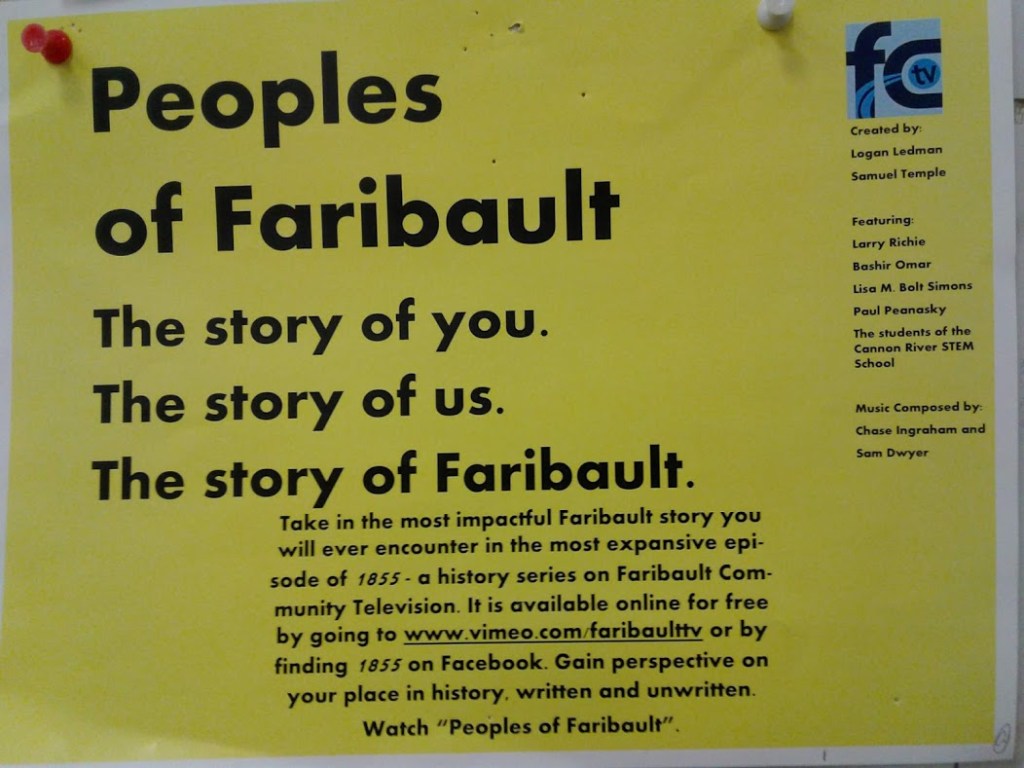
Nearly two years after their first of 11 history episodes aired, the teens tackled their most extensive project yet—a 40-some minute video titled “Peoples of Faribault.” I watched the show this week and am impressed by the research, the content and the clincher ending that challenges viewers to consider how their choices affect Faribault’s identity as a community.

Negative local perceptions of his hometown prompted Samuel to co-produce a video that counters that negativity. He and Logan do that through the art of entertaining, informative and thought-provoking storytelling. Their work is top-notch professional as they address issues of ethnicity in their latest and most lengthy film.


This prize-winning photo which I shot at the International Festival Faribault in 2012 reflects the cultural diversity of our community.


It’s no secret that Faribault has struggled with accepting newcomers. And newcomers have struggled to adapt. But Samuel and Logan put it all in perspective by tracing back to the town’s 1850s beginning and progressing from there. They cover the ethnic groups of the Dakota, French-Canadians, Swedes, Norwegians, Czech, Germans, Irish, Latinos, Cambodians, Chinese and Faribault’s newest immigrants, Somalis. Each group faced issues of assimilation and rejection, the two discovered through extensive research and interviews.


This sculptor of Alexander Faribault trading with a Dakota trading partner stands in Faribault’s Heritage Park near the Straight River and site of Faribault’s trading post. Faribault artist Ivan Whillock created this sculpture which sits atop the Bea Duncan Memorial Fountain. Minnesota Prairie Roots file photo.


Samuel summarizes the reason each group came to Faribault in one simple statement: “Everyone was looking for a home, for a wide array of reasons, and each found it in Faribault.”

Looking for a home. It doesn’t get more basic than that. But behind those four words are specifics such as war, famine, pursuing the American dream and more. It’s all covered in the film, for each of the featured ethnic groups.


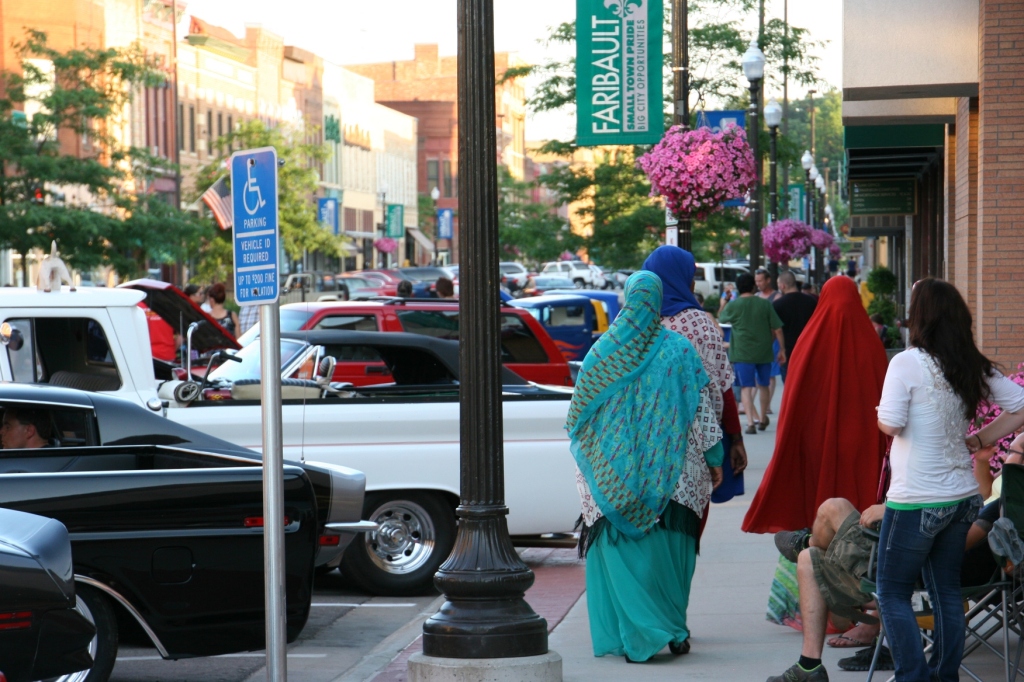
Many Somalis now call Faribault home. I took this photo at a 2015 car show in historic downtown Faribault.


While researching for the video, the producers began to see a pattern. Says Logan in an email response to my questions:

“Issues of racism, cultural conflict, and discrimination came up in our work for this video. It ended up being a consistent pattern; the town’s response to newcomers was, initially, consistently negative. Over time, though, as new Faribault townsfolk left a multi-generational mark on the community, there was a parallel, consistently positive final acceptance of those newcomers by the town. This was a pattern that repeated itself across every group we looked at, and it’s a pattern we see repeating itself today.”


Bashir Omar. Photo courtesy of Samuel Temple.


Bashir Omar, a 10-year Faribault resident who serves on the Faribault Diversity Coalition and who works as a cultural liaison in the public school system, offers primarily praise for Faribault in comments aired in the “Peoples of Faribault” video. Although he says people fear the Somali culture, he’s always felt welcomed here and has not been targeted because of his Muslim faith. “Faribault has been a great town,” Bashir says.


Samuel and Logan narrate from the front porch of the Alexander Faribault house, home to town founder Alexander Faribault. Photo courtesy of Samuel Temple.


Not all newcomers have received the same warm welcome, an issue Samuel and Logan sensitively address through narrative and interviews. They also spoke with a local historian/author, city official and author/English as a second language educator and collaborated with sixth graders from the Cannon River STEM School to create family trees. Town founder Alexander Faribault, son of a part Dakota woman and a French trader, for example, faced discrimination when he befriended the Dakota, according to historian Larry Richie. He reveals in the video that Alexander died a despised and broken man. “We gotta learn to accept others,” Larry says.


A flag ceremony during a past International Festival featured national anthems and information about the countries from which Faribault residents have originated. Minnesota Prairie Roots file photo.


In their research, the filmmakers learned a few things about Faribault that surprised and unsettled them. I asked. For Samuel, the strong presence of the Ku Klux Klan in Faribault, including a mass gathering at the Rice County Fairgrounds for a state convention in 1924, left him feeling queasy. He noted, too, the Klan’s strong anti-Catholic (in addition to anti-black and anti-Jew) sentiment. For Logan, discrimination against Germans especially during the world wars came as a surprise. In the video, the term “enemy aliens” is linked to Germans.


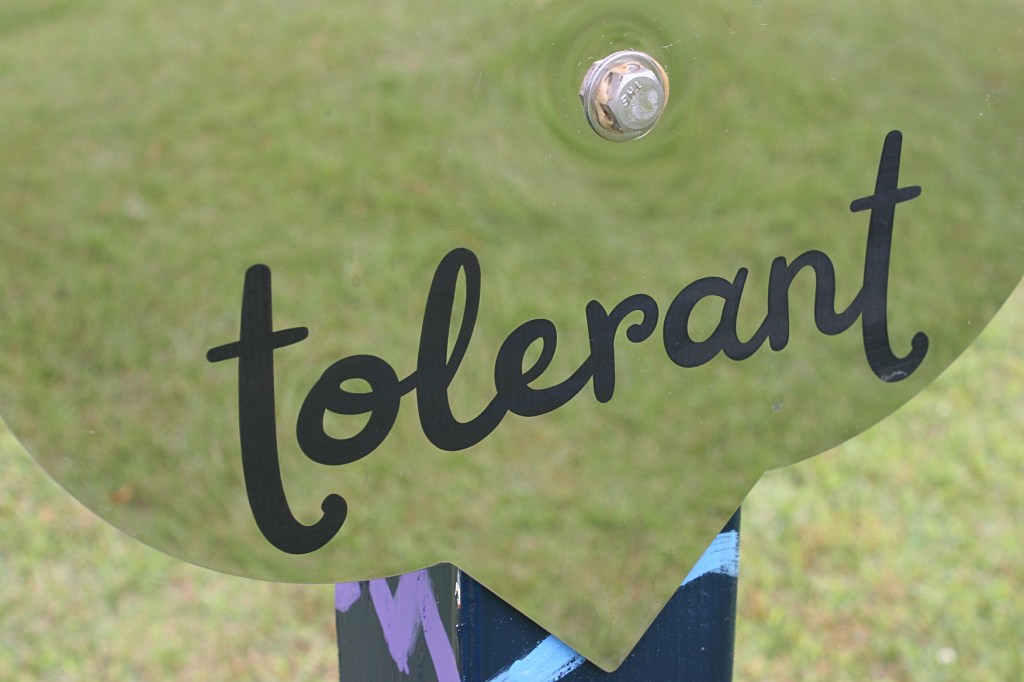
I photographed this sign on the front desk of Buckham Memorial Library in Faribault. Minnesota Prairie Roots file photo 2017.


“Faribault is not immune to hate,” Samuel says in the film and then adds this in an email to me:

“Gathering information about the adversity that quite literally every group has faced put in perspective a single truth: accusing any one nationality or ethnicity or religion or group of people of having evil values, or being the root cause of problems in a community is wrong across the board; if we want history to look back on us favorably, we must live by that without exception.”


We learn from our past, looking back. This photo shows the back of the Alexander Faribault-Dakota sculpture at Faribault’s Heritage Park.


To read those words written by a 16-year-old inspires me and gives me hope. He and Logan are right. We can preserve our heritage while moving forward. We can learn from history. We can choose to focus on the positive, knowing that our choices affect our identity as a community. The choice is ours.


FYI: Joining Samuel and Logan in creating “Peoples of Faribault” are friends/musicians Sam Dwyer and Chase Ingraham of Northfield. Sam has also created original music for past episodes of “1855: A Faribault History Series.”

To view the “Peoples of Faribault” video, click here.

You can also see past episodes of “1855” that cover everything from the Fleckenstein Brewery to the Tilt-A-Whirl to local WASP Elizabeth Wall Strohfus at this same link.

© Copyright 2017 Audrey Kletscher Helbling
“Peoples of Faribault” images are courtesy of Samuel Temple


Take two: A second look at the film “Sweet Land” & immigration issues February 6, 2017

sweet-land-envelope-copy

The letter Inge received from Olaf, in the fictional film Sweet Land.

She is not one of us. We speak a common language. We have a common background, a common culture. She is not one of us.
#

We have to be careful about this sort of thing…German nationals. German nationals engage in prostitution. They harbor dangerous political convictions. Are you aware of the Espionage Act of 1916?
#

English only in the church. English.
#

You’re German. It’s a bad influence. You’re German. It’s a disruption to my community. You make coffee that’s too black.

She makes good coffee, not like the women in church.
#

I was fearful of her differences, but I was hopeful she could join us on our path….Do not allow your good lives to be poisoned by these two.
#

This is German food?

No, just food.
#

You don’t have the papers.

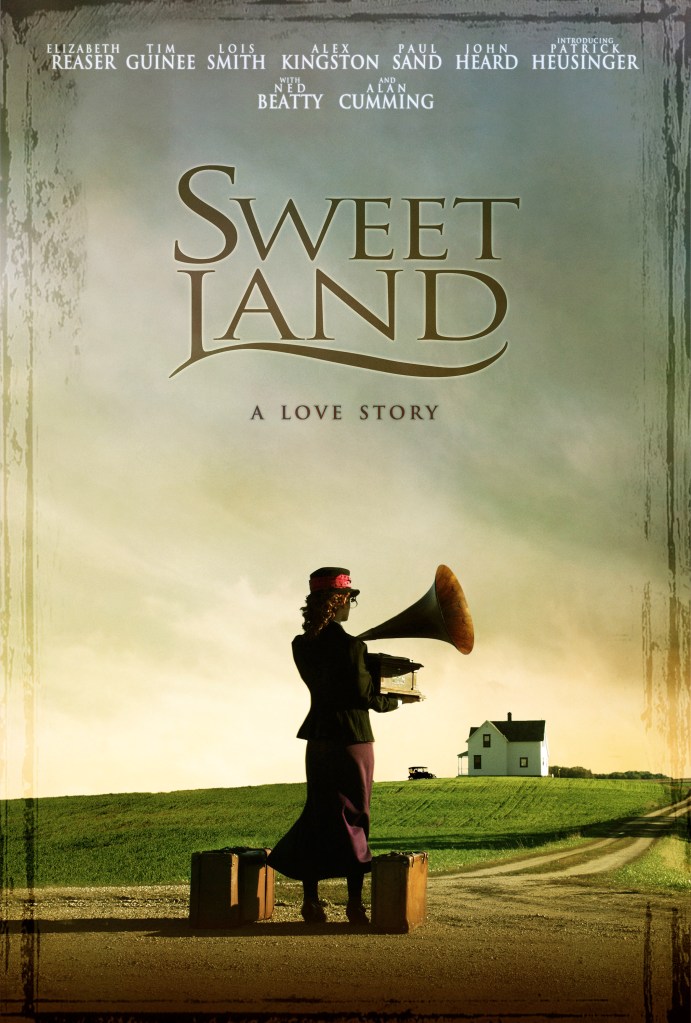
sweetlandposter_mini

Promotional from Sweet Land website.

LAST WEEK I REWATCHED Sweet Land, an award-winning independent film released in 2005. The movie, based on Minnesota writer Will Weaver’s short story, “A Gravestone Made of Wheat,” and filmed on my native southwestern Minnesota prairie, rates as a favorite of mine.

sweet-land-farmhouse-copy

Olaf Torvik’s home on the prairie. The film was shot in and around Montevideo, Minnesota.

I appreciate the early 1920s setting, the music, the story and, now, its relevancy to today. The above dialogue comes from Sweet Land, which focuses on the challenges faced by Inge Altenberg, summoned to America by Norwegian farmer Olaf Torvik. He expects a Norwegian mail order bride as do others in the community. But Inge is not Norwegian; she is German.

Thereafter, the conflict begins with “She is not one of us.”

The land and love shape the story.

The land and love weave into this story. Here Inge and Olaf dance on the prairie.

I won’t give away the plot, which includes a love story. But I will tell you that I watched the movie this time from a much different perspective, in the context of current day immigration issues in our country. Sadness swept over me.

Please watch this thought-provoking, conversation-starting film. It’s a must-see whether you make coffee that’s good, judged as too black or you don’t brew coffee at all. It’s still coffee.

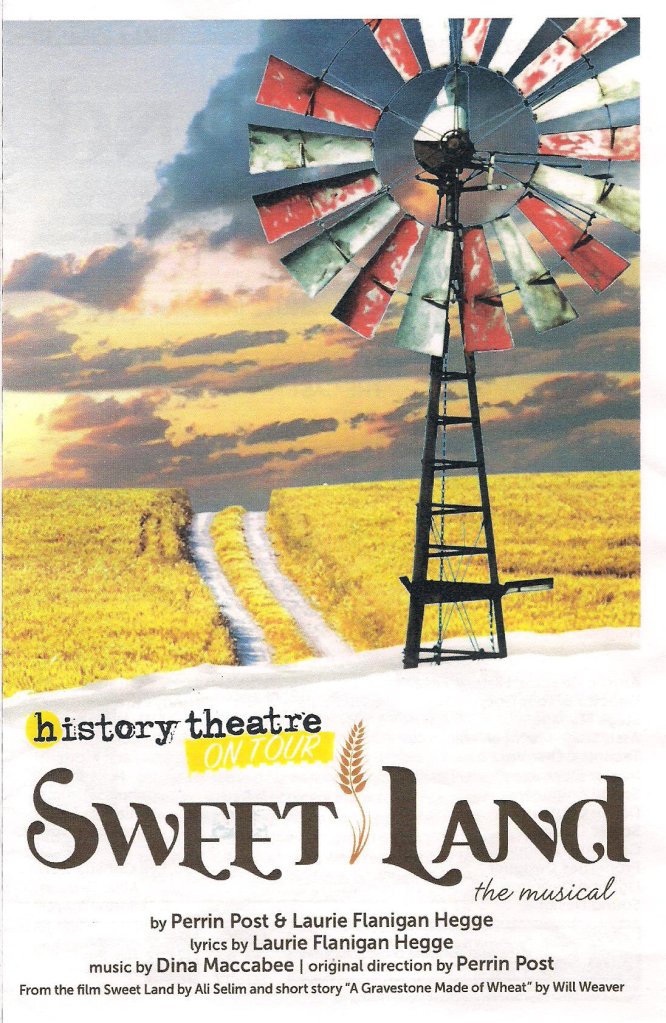
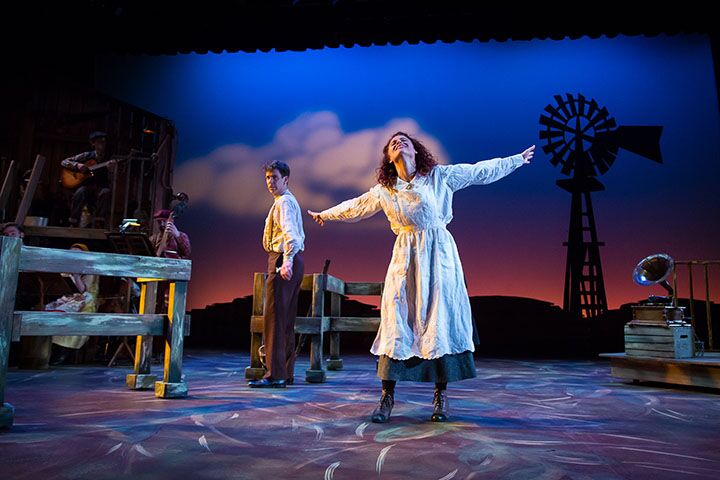
FYI: Sweet Land, the musical opens April 29 at History Theatre in St. Paul. It runs for five weeks, Thursday – Sunday, until May 28. Will I go? I’d love to…

RELATED: Saturday afternoon a sizable crowd gathered on the Rice County Courthouse grounds in my community for a peaceful protest. Please click here to watch the video, Faribault, Minnesota Immigration Ban Protest 2-4-17, posted by Terry Pounds. Faribault is home to many immigrants and refugees, including from Somalia.

A photographic exhibit of refugee children who fled Syria, leaving everything behind, is showing at the American Swedish Institute in Minneapolis. Photos for Where the Children Sleep were taken by award-winning Swedish photojournalist Magnus Wennman. In order to increase community access to the exhibit, the ASI is providing free admission on Wednesdays in February. The exhibit runs through March 5. Where the Children Sleep launches the Institute’s 2017 “Migration, Identity and Belonging Programming.”

Review © Copyright 2017 by Audrey Kletscher Helbling


In a Minnesota cemetery: Oh, sweet baby, who were you? June 16, 2016


Emmanuel Cemetery, Aspelund 169 baby grave marker


I’VE TOURED MANY RURAL CEMETERIES. But never have I seen a grave marker that so saddened me as the one I spotted on the edge of the Emmanuel Lutheran Church Cemetery in Aspelund on Sunday afternoon.


Emmanuel Cemetery, Aspelund, 172 baby grave & flip flop


Smaller than the length of my size eight flip flop, the simple slab of concrete tilted barely above the earth. Inscribed thereon, in cursive, was a single word—Baby.


Emmanuel Cemetery, Aspelund 170 baby grave marker close-up


Certainly I’ve seen grave markers of many babies. But this one, because of its minimal size and placement under trees along the cemetery boundary and its simplicity of design, caused me to pause. I am a mother and a new grandmother. And I suppose in the humanity of that, thinking of my own love for my daughters, son and granddaughter, I empathized with the grief of such a loss.

A section of the cemetery that lies next to Emmanuel Lutheran Church and next to a field.

A section of the cemetery that lies next to Emmanuel Lutheran Church and a field.

Aged tombstones, which I assume once stood vertically, are now cemented flat into the ground.

Aged tombstones, which I assume once stood vertically, are now cemented flat into the ground.

The names reflect the ethnicity of the immigrant families who settled in the Aspelund area.

The names reflect the ethnicity of the immigrant families who settled in the Aspelund area.

Dates are missing from the in-ground marker of Hans, whom I believe to be an early immigrant.

Dates are missing from the in-ground marker of Hans, whom I believe to be an early immigrant.

A beautiful sheltered gravesite

A beautiful sheltered gravesite for John and Maren.

Love the immigrant names of Johannes and Engeborg. So poetic.

Love the immigrant names of Johannes and Engeborg. So poetic.

As I further explored the cemetery—reading the Scandinavian names, studying tombstones and admiring the meticulously kept grounds—I couldn’t shake the image of that baby’s gravestone. Who was he/she? Who were the parents? Why did he/she die?

Next to this list of rules is a graveyard directory, which we couldn't decipher.

Next to this list of rules is a graveyard directory, which we couldn’t decipher.

Hoping to find answers on a posted cemetery directory, neither my husband or I could figure out how to match names with platted marker locations. So I left, still wondering about this precious baby buried here beneath trees in rural Goodhue County, Minnesota.

© Copyright 2016 Audrey Kletscher Helbling
 

Honoring the clothesline July 22, 2015

Filed under: Uncategorized — Audrey Kletscher Helbling @ 5:00 AM
Tags: , , , , ,

ON A RECENT AFTERNOON, I hustled outside to pull laundry from the line during an unanticipated downpour.

I rushed along three lengths of clothesline, unclipping clothing I’d hung hours earlier when the sun shone with the promise of a good drying day despite the intense humidity. Now I was hauling everything inside to dry in the dryer or on a clothes drying rack. In the process, I was soaked.

I am a clothesline drying devotee, choosing to hang laundry outdoors any day, even in the cold of a 30-degree Minnesota winter morning. It’s therapeutic—the methodical lifting of wet laundry, of clipping it to the line. I delight in the shifting light of morning, of being outside, of solo time to think, of an aged rite that celebrates the beginning of a day.

The scene along a balcony on the back side of a building along Third Street N.E. in downtown Faribault, just across the alley from the post office.

The scene along a balcony on the back side of a building along Third Street N.E. in downtown Faribault, just across the alley from the post office.

So I wondered, when I spotted colorful laundry draped over a second story railing behind an historic building in downtown Faribault, whether the immigrant woman I saw there felt the same as me. Does she delight in hanging out laundry? Or is this, for her, a matter of simple practicality, of saving money?

Whatever the reason, I was pleased to see her hanging laundry outdoors, in the heart of my community, making this place her home.

FYI: Check back tomorrow for a second clothesline post, this one about an entirely different purpose.

Copyright 2015 Audrey Kletscher Helbling


Speaking up against prejudice in my Minnesota community April 28, 2014

AWHILE AGO, I DECIDED I would no longer remain silent.

And Saturday afternoon, while purchasing a Betsy Bowen print and greeting cards at the Northfield Senior Center thrift store, Used A Bit Shoppe, I spoke up.

While I waited for my framed print to be wrapped in newspaper, I chatted with the friendly woman behind the counter. We talked about the spinning glasstop table crafted from three monkey statues—“hear no evil, see no evil, speak no evil”—and the other unique recycled merchandise in this jam-packed shoppe.

I’d never been here, I told her, didn’t even know that this place existed, that I didn’t live in Northfield. The business had moved not all that long ago, she said, to this larger location.

About that time a hulk of a man wedged in beside me and interrupted, adding that he remembered the old store, that he used to live in Northfield and now lived in neighboring Faribault.

A Somali family waits to cross a street in downtown Faribault. Minnesota Prairie Roots file photo 2010.

A Somali family waits to cross a street in downtown Faribault. Minnesota Prairie Roots file photo 2010.

But he wanted to return to Northfield, he said, “because of all the Somalis in Faribault.” Disdain colored his words.

He’d just said the wrong thing to me.

I turned, looked him in the eye, and told him I did not appreciate his disrespect for Somali people.

That set him off. I can’t recall every word spoken, but I do remember the bit about his grandmother being a war bride and speaking seven languages. Not once did he explain why he so disliked Somalis. Not that an explanation would have mattered.

As his agitation grew, I began to feel threatened.

“Sir, I don’t want to argue with you,” I said, attempting to diffuse the situation. “I’m just sharing my opinion.”

“I don’t like you forcing your opinion on me,” he responded, ever-growing anger tinging his voice. “When they (Somalis) respect me, I will respect them.”

He finally walked away, edging toward a cluster of other shoppers, including my husband, who’d overheard bits of the mostly one-sided conversation.

I turned back to the elderly clerk, picked up the four dollars and some odd cents change she’d laid on the counter.

“Welcome to Northfield,” I said. “Oh, that’s right, he’s from Faribault. I feel sorry for people like him who cannot respect others.”

Then I exited this shoppe where a “speak no evil” monkey hunches with a hand clamped across his mouth.

© Copyright 2014 Audrey Kletscher Helbling


At the Hjemkomst Center: A cultural melting pot of gifts November 19, 2012

The interior of the Hjemkomst, a replica Viking ship.

IMAGINE PACKING YOUR ENTIRE LIFE into a steamer trunk and sailing across a vast ocean into the unknown and a future that holds both fear and promise.

I cannot fathom this as I am neither an adventurer nor lover of water transportation. Nor would I desire to leave the familiarity of the only home I’d ever known, or loved ones behind.

To be an early immigrant to this country had to be difficult.

My ancestry is 100 percent German.

My own forefathers, both maternal and paternal, arrived here from Germany, making their way west to eventually settle in Minnesota.

A Swedish ( I think) gift shop doll.

Minnesota. Home to Swedes and Germans, Norwegians and Finns and Irish and Poles and Italians and…a whole melting pot of people in those early days of settlement. Today we might add Sudanese, Somali and Hispanic to the mix.

A gift shop doll labeled Solveig. Norwegian, I think.

So where am I going with this pondering?

In the center of the Hjemkomst Center, the mast area of the Hjemkomst ship dominates the roofline.

A visit to the Hjemkomst Center on the western border of Minnesota in the city of Moorhead, snugged against the Red River of the North, prompted all this thought about immigration. The center is, among other things, home to the Hjemkomst, a replica Viking ship constructed in northwestern Minnesota and then sailed from Lake Superior in Duluth, Minnesota, across the Atlantic Ocean to Norway in 1982. (Click here to read my post about the Hjemkomst.)

A Scandinavian painting on a plate in the gift shop.

It was the Hjemkomst Center Heritage Gift Shop which truly directed my thoughts toward immigration and celebrating the cultural diversity of our country. Here, in this store, you can purchase merchandise which connects to ethnicity.

A Viking helmet on display.

And because I have never traveled across the ocean, not any farther west than the eastern border of Wyoming, but as far east as New York with the Statue of Liberty within my view, shops like this allow me to experience snippets of other countries and cultures.

Hands down, I found this to be the most stunning piece of handcrafted art for sale in the Heritage Center Gift Shop. Bosnian immigrant Dzenan Becic carved this incredible cedar chest and other pieces sold in the gift shop. I tried to find more info online about this artist, but could not. His father, Izudin, is also a carver. These artists live either in Fargo or Moorhead.

I know. This museum gift shop does not hold the same meaning to those of you who are seasoned world travelers. But for me, a child of the land-locked prairie, such places hold a certain allure. I suppose it’s like reading a book. I can travel afar without actually ever boarding the ship.

More Becic carving in a wall shelf.

Just a cute little Viking I spotted for sale in the gift shop. May I call a Viking “cute?”

BONUS BUY:

Even though, geographically, you’re in Moorhead, Minnesota, and not Fargo, North Dakota, when you’re at the Hjemkomst Center, you may still be interested in purchasing this Fargo native t-shirt.

© Copyright 2012 Audrey Kletscher Helbling
 

Reaching “the nations” November 21, 2011

I STILL REMEMBER the derogatory label, even after all these years. “Gooks,” he called them. I lashed back, defending the Asian families who fled their war torn countries to start new lives in America in the late 1970s and early 1980s.

“Didn’t your great grandparents immigrate here?” I asked, trying to control my emotions as I confronted the Faribault man who spit out the venomous word. But I knew, even as I spoke, that I could not quell his hatred.

Now, nearly 30 years later, I hear similar disparaging terms directed toward Somalis and Sudanese and, yes, Hispanics, too.

Don’t we ever learn?

These thoughts, of anything I could have considered, passed through my mind yesterday afternoon as I photographed Hmong families participating in a “Let the People Praise!” mission event at my Faribault church, Trinity Lutheran.

Deacon Johnny Vang of New Life Lutheran Church, Robbinsdale, with his wife Tina and children, Leviticus, 10, Cecilia, 7, and Christian, 4.

I could forgive the man who nearly three decades prior had spoken with such ignorance. But I could not forget.

The organizers and participants in Sunday’s mission gathering wouldn’t expect my thoughts to wander back to that previous unwelcoming American attitude toward Southeast Asians. But I am honest and this post would not be mine if I ignored that unsettling flashback.

With that historic frame of reference, I could only admire the faith and fortitude of the men and women who stood before me in the sanctuary singing in the Hmong choir, speaking of their mission outreach to Southeast Asia and in Minnesota, specifically in Robbinsdale and the east side of St. Paul.

Members of the Hmong choir wore colorful, ethnic costumes.

The congregation, including individuals from the Hmong community, sang at Sunday's mission celebration.

Churches initially embraced Cambodian and Laotian refugees in the years following the divisive and turbulent Vietnam War. I remember, during my first newspaper reporting job out of college in 1978, writing about a Southeast Asian family resettling to the small Minnesota town of Gaylord. I don’t recall details now, but the compassionate sponsorship of this family by a local church made an impression on me.

That care and love triumph over the hateful words and attitudes of the past.

It pleased me to listen to those involved in the Hmong Lutheran Ministry speak of mission trips to the Communist countries of Laos and Vietnam and to Cambodia and Thailand. The “Communist” part certainly doesn’t please me, but the Christian outreach does.

“They are hungry for the gospel and they want to be saved,” a Hmong deacon told us.

My favorite photo of the day shows the Vang children, Leviticus, Cecilia and Christian on the floor in the narthex, the church doors into the sanctuary flung wide open. This symbolizes to me the doors that are being opened to Christianity through mission work here in Minnesota and in Southeast Asia.

Later the Rev. David Seabaugh of Bethel Lutheran Church in St. Paul, home to a Liberian ministry, used nearly the same words: “The Liberian people are hungry for the gospel.”

I considered then how complacent I’ve sometimes become in my Christian faith, even in my free access to the bible, and in my personal outreach.

I needed to hear this Scripture from I Chronicles 16: 24:

Declare his glory among the nations, his marvelous deeds among all peoples.

God doesn’t care if we’re black or white or yellow, or even Lutheran for that matter, or where we live. He considers us “the nations.”

Today, just like 100 years ago when the Germans and Italians and Swedes and Norwegians and so many others immigrated to America, “the nations” are still arriving on our doorstep.

Are you welcoming them?

A sombrero rests in the side aisle prior to a musical performance by Hispanic children from the Le Sueur and Henderson areas.

Members of the Hispanic children's choir perform.

A representative of the Sudanese ministry spoke at the mission gathering. "Before, we suffer a lot," he said, calling it "God' s plan" that the Sudanese came to America and to Minnesota.

A musical performance by the Sudanese.

Copyright 2011 Audrey Kletscher Helbling
 

Bring warm clothes December 17, 2010

ABOUT TWO MONTHS AGO, after my second daughter had just returned from Argentina and was searching for a job, I suggested that she volunteer at the St. Vincent dePaul Center for Charitable Services in Faribault. I figured the organization could use her Spanish speaking skills.

I was right. She interpreted for some of the Hispanic people who came to the center for assistance. And in the process, I think she gained as much as she gave.

By serving, we grow to understand the needs and the value of caring for others.

My daughter has since finished her brief volunteerism in Faribault and moved on to a full-time job as a Spanish medical interpreter in east-central Wisconsin. She’s doing what she most loves—speaking Spanish. And, in the process, through her work, she’s helping others.

Like my second oldest, you too can help those in need.

Last night I received an e-mail from Milo Larson, a Faribault businessman determined to welcome and assist our community’s immigrants and others in need. He’s been active in the Faribault Diversity Coalition.

He writes: “With this extremely cold fall and winter, St. Vincent dePaul is in dire need of winter clothes. The cold weather clothing is going out as fast as they come in. Please check your homes and see if you have any extra clothing lying around. If you run across winter clothing on sale or at garage sales, it would be greatly appreciated.”

Winter clothing—coats, hats, mittens, sweaters, snow pants, new socks, boots, gloves—are needed.

“Like every other year, the young children 8 and under are especially in need. Most of the children’s clothes are usually worn out after they are handed down to their brothers or sisters so if you see children’s clothes on sale, please don’t hesitate (to buy).”

Just like the people Larson is referring to, I know what it’s like to grow up without a lot of money. Although we had no charitable service to turn to for clothing, my family got clothing from relatives—hand-me-downs from cousins and new clothing from generous aunts. Clothes were passed down from sibling to sibling until, truly, they were nearly threadbare.

That family closeness and connectedness which existed years ago doesn’t necessarily exist today. Families today must rely on the generosity of caring strangers, like you.

If you live in Faribault and would like to donate new or gently-used warm winter clothes to St. Vincent dePaul, drop your contributions off between 9 a.m. – 3 p.m. Monday – Friday at the center in the former Sacred Heart School at 617 Third Avenue N.W. Donations may also be left at Larson’s Faribault Print Shop, 302 Central Avenue. Call 507-334-2100 for more information.

Now, I realize that many of my readers don’t live anywhere near Faribault. So reach out to those in need within your community by volunteering or donating. Everywhere, families are in need and we ought to care.

© Copyright 2010 Audrey Kletscher Helbling
 

Striving for harmony among cultures in one Minnesota community October 17, 2010

Filed under: Uncategorized — Audrey Kletscher Helbling @ 10:16 PM
Tags: , , , ,


An immigrant family in downtown Faribault.


SATURDAY AFTERNOON I shot this image while passing through downtown Faribault. It was a split-second decision to lift the camera from my lap and aim through the windshield. I had wanted for some time to photograph the newest residents of my town of 22,000. Technically, this photo is lacking.
But from the standpoint of depicting the changing face of my mid-sized Minnesota community, it’s perfect.
We are no longer just a city of German, Irish, Scandinavian, Polish, or, in Faribault’s case, strong French descent. We have become a community of color and of varying cultures. Hispanic. Somali. Sudanese. Asian.


Choosing pastries in a downtown Faribault Mexican bakery.


Los 3 Bakery in Faribault was painted in this shade of green until about a year ago when some local business owners objected to the bright color. They donated money to repaint the building a subtler green.


Different cultures, all the faces of today's Faribault, mingled during the recent Fall Festival along downtown's Central Avenue.


As much as I would like to say that we all embrace, accept and respect each other, I would be lying. I’ve heard the derogatory remarks, the ignorant comments, even among friends and acquaintances. Crime connected to “Mexicans.” Groups of Somali men hanging out downtown. Too many people living in one house.

Such unfair general categorizations and culturally uninformed biases raise my ire. Who are we to make sweeping judgments about an entire ethnic group? After all, I typically pronounce, didn’t our grandparents or great grandparents arrive here, in the land of opportunity, from many different countries?

Exactly.

Fortunately, many Faribault residents realize that and understand that we need to welcome our newest residents. We have, for the past 15 years, had the Faribault Diversity Coalition to lead the way in helping our immigrants. The Welcome Center opened its doors as a vehicle to facilitate the process.

Two weeks ago, though, the FDC and The Welcome Center announced that they would disband in December due to a lack of funding. That disheartened me, although I understood and knew how hard the two groups had struggled to continue.

Then last night, to my absolute surprise, I received a mass e-mail from Milo Larson of the Diversity Coalition announcing that he (and others) had a change of heart. While the Welcome Center will, indeed, close, the FDC will continue.

He wrote, in part:

“…There is more need now more then ever to keep our town, state and world a more harmonious and informed place.

“As I’ve said so many times the past 10 years we are communicating with real people, with hearts, souls and feelings. Just because some are from different cultures, different color skin, different religions, doesn’t mean they are numbers on a sheet of paper.  They’ve all had child hoods, most have had problems with bullies in school, abused by parents, gone hungry, homeless, not wanted in the country they were born in or this country because they are different.

“We must find compassion & respect in working and living with these newcomers as well as with ourselves. We are not asking for money, just your heart and time. Surprising what a smile and hi will do to everyone you meet on the street, I don’t care what culture or if they understand you or not. That my friend don’t cost a dime.”

I simply have to admire a man with his level of commitment, passion and compassion. Larson is the kind of person you want as a friend or living within your community. He doesn’t care if your skin is black or white or purple or green.

NOW, I WANT TO BACKTRACK a minute to the photo at the top of this page, the one of the immigrant family. I am going to admit my ignorance here. I do not know whether the family is from Sudan or Somalia. But I expect that if I asked Larson, he could tell me. There is much we can all learn from each other, for we are all here, on this earth, together.


The 2009 International Market Day in Faribault sponsored by the Faribault Diversity Coalition.


Downtown Faribault businesses include Banadir Restaurant, a Somali restaurant.


© Copyright 2010 Audrey Kletscher Helbling