
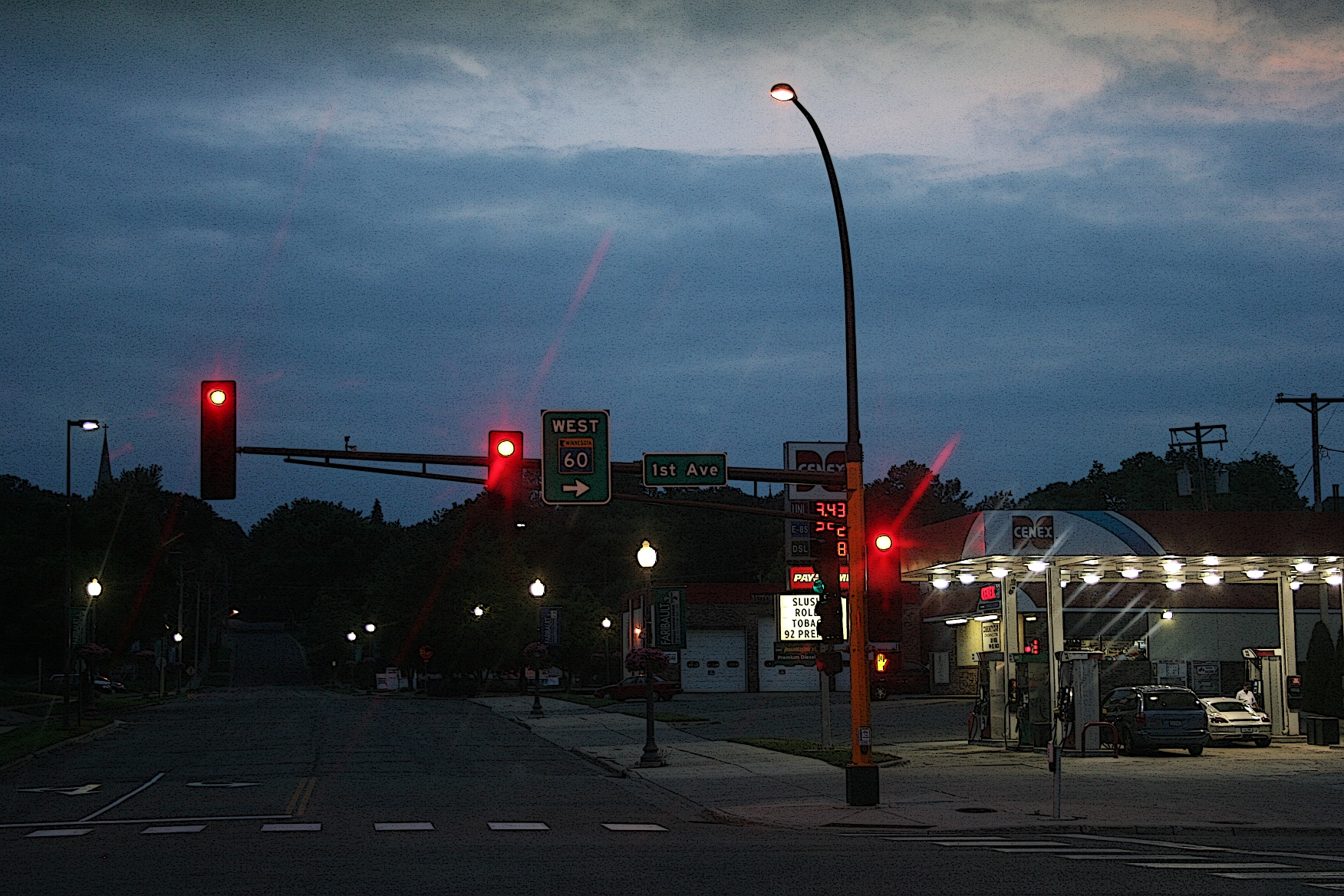
STOP.
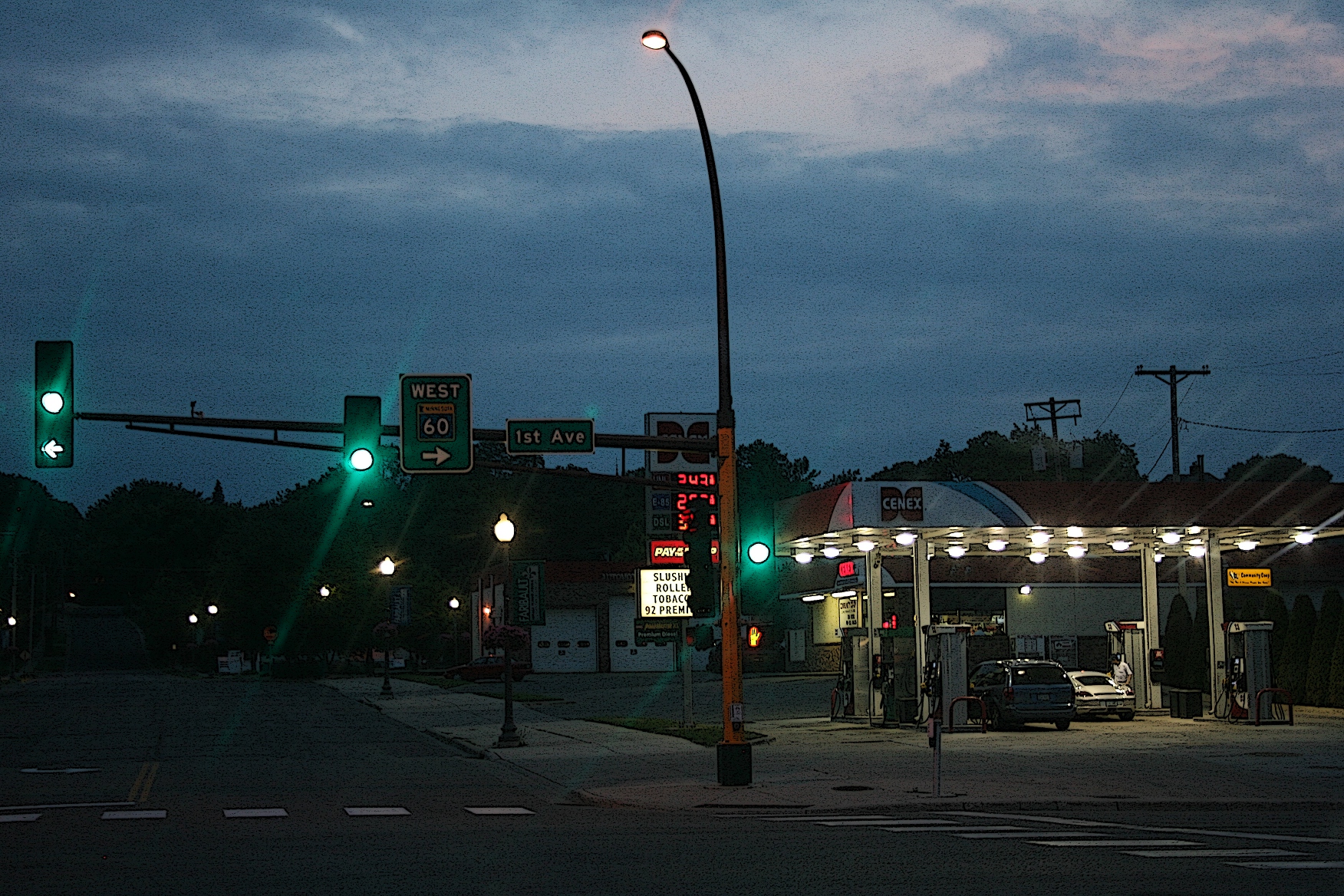
GO.
Copyright 2014 Audrey Kletscher Helbling
STOP.
GO.
Copyright 2014 Audrey Kletscher Helbling

Bird art perched on a front yard rock.
AFTER SLIDING MY FINGERTIPS into bird poop while photographing a bird sculpture duo perched on a rock, I determined to be more watchful.
But often I get so lost in what I’m doing that I don’t notice the obvious. Like poop. Bird or dog.

A portion of the shady backyard.
Yet, in a northwoods style yard situated along a quiet residential street in Northfield far from the wilds of northern Minnesota, it didn’t take long for me to determine property owners Barry and Kerry Cipra have created gardens that call for focus.
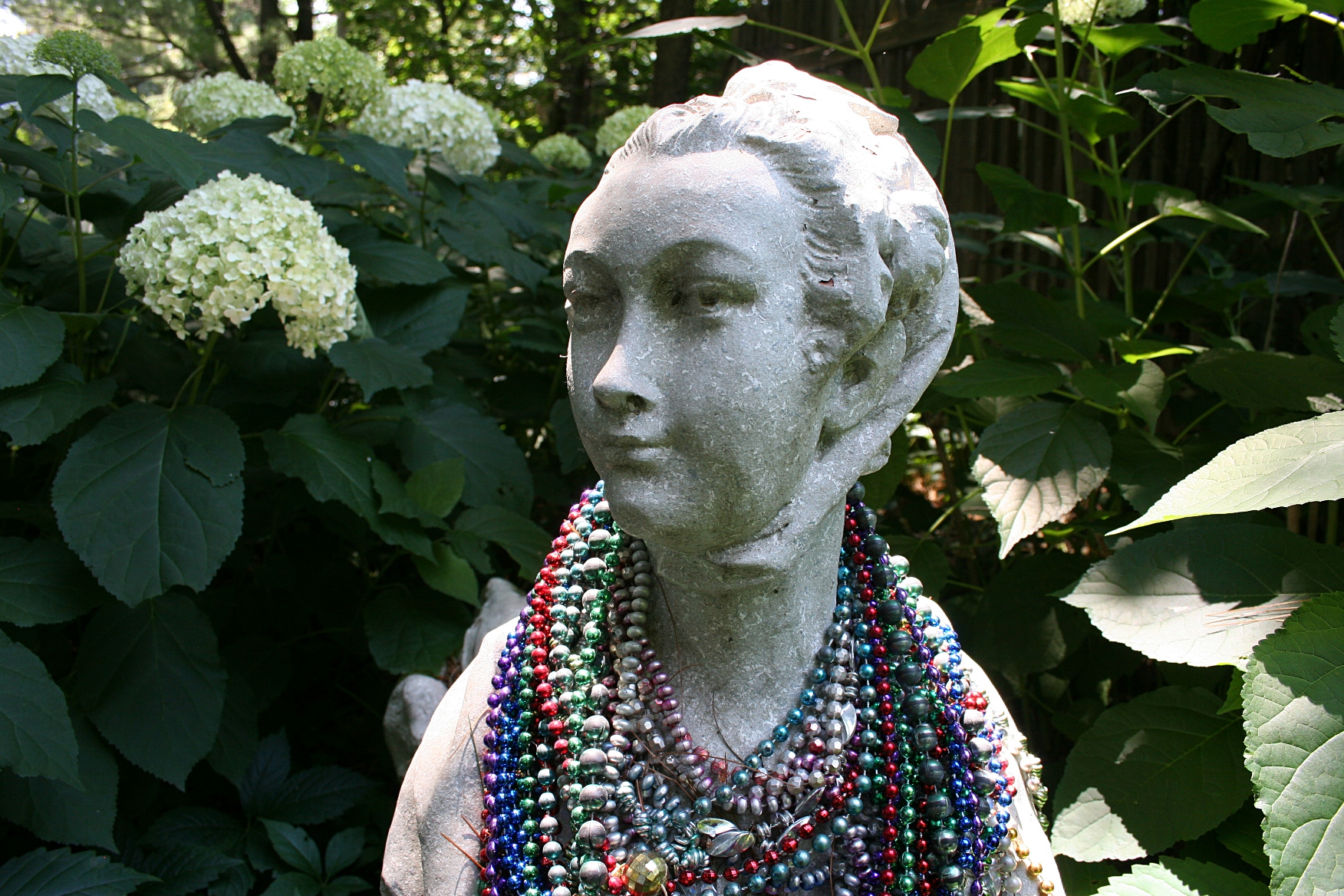
At first glance, I thought this simply a woman draped in beaded necklaces.

On a second focused look, I saw this sculpture is part woman, part cat, aka “The Cat Lady.”
Fail to focus and you may miss some of the eclectic art incorporated into a property defined by six mature white pines, boulders and rocks, but no grass.
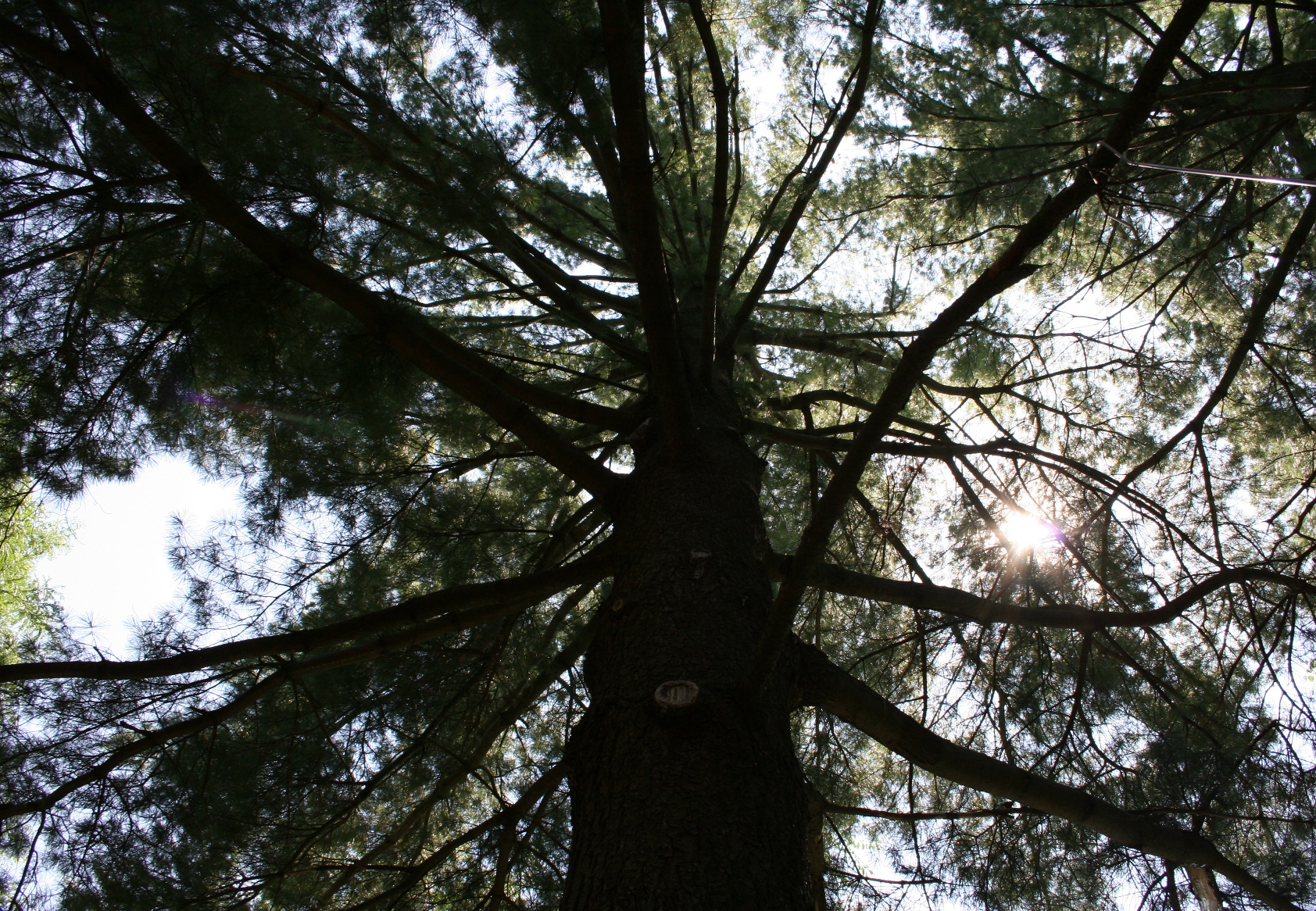
Beautiful pines tower over the property.
No grass. Rather, pine needles layer the ground, creating a cushy carpet.
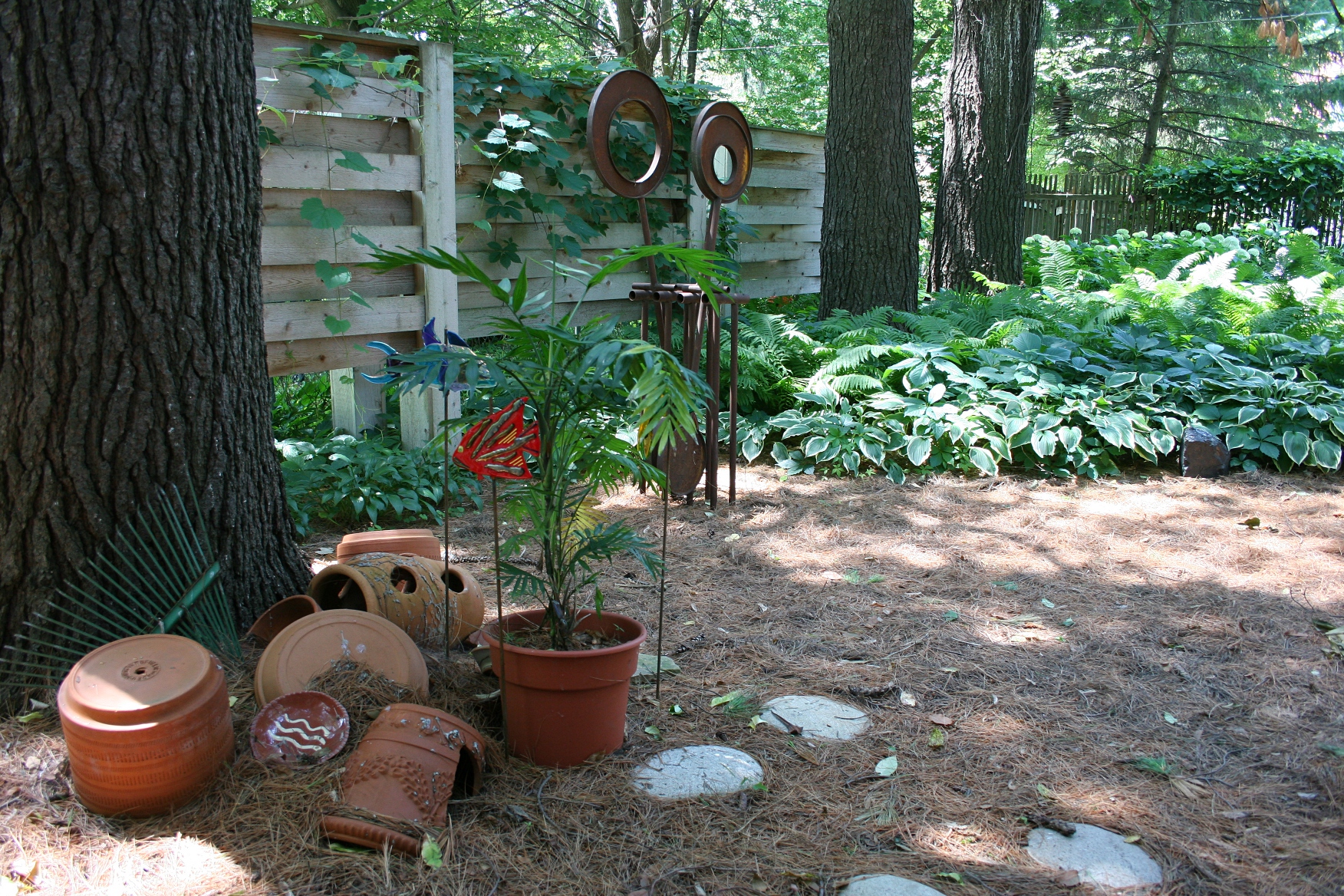
The garden art includes original sculptures by Jennifer Wolcott.
I’ve never seen a yard quite as northwoods style unique as this one. Here the greenery of shade-loving plants like ferns and hosta provide a neutral backdrop for quirky and one-of-a-kind sculptures.

Art pops with color.
Art infuses color and interest.

Yes, that’s a goat hiding in the greenery.
See for yourself, as viewed through my camera lens. Just remember to focus.

I had a little fun pairing my foot with garden art on the back steps. Yes, I should polish my toenails.
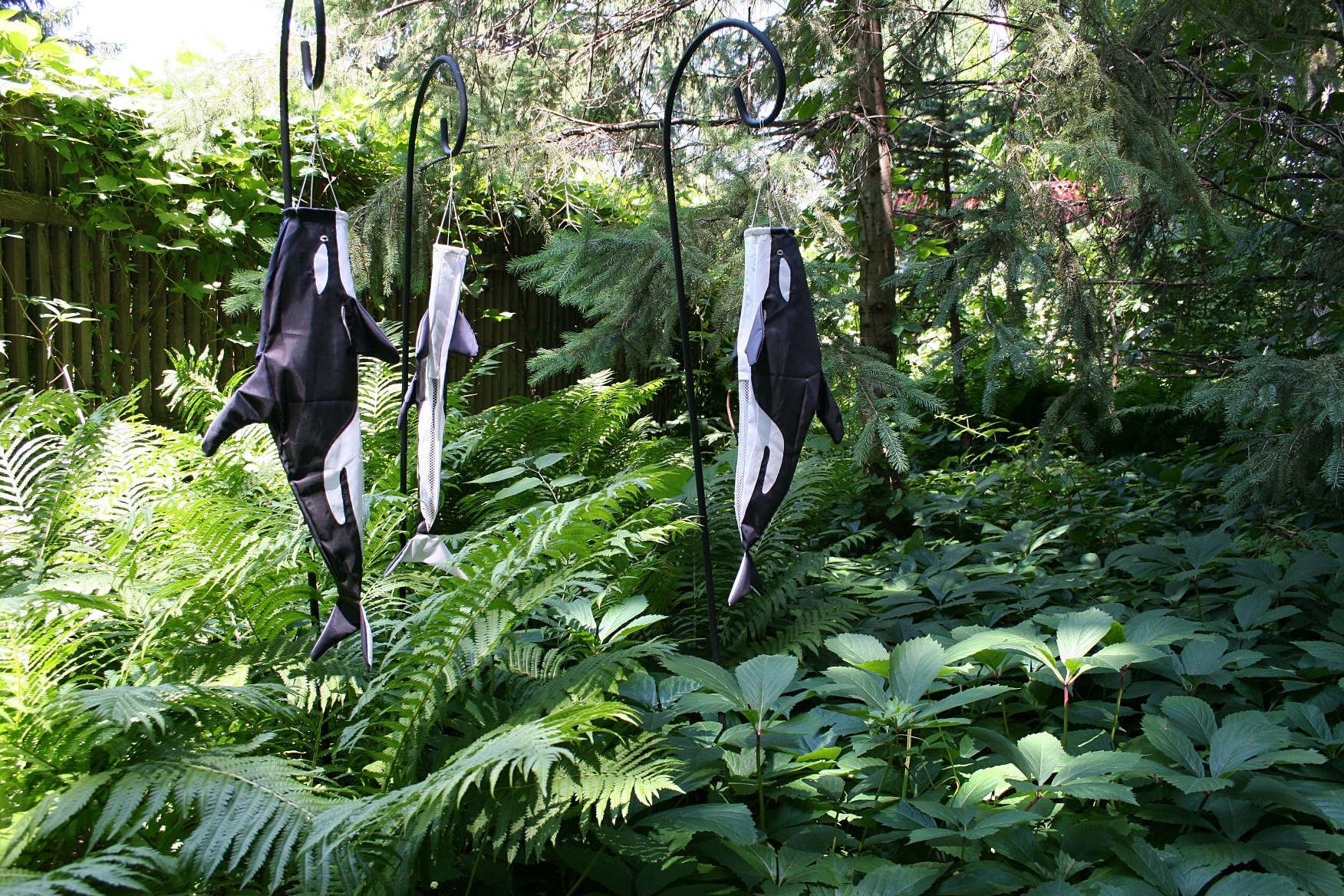
Sea life in the backyard. Maybe northerns or walleyes would be more appropriate for this Minnesota garden.
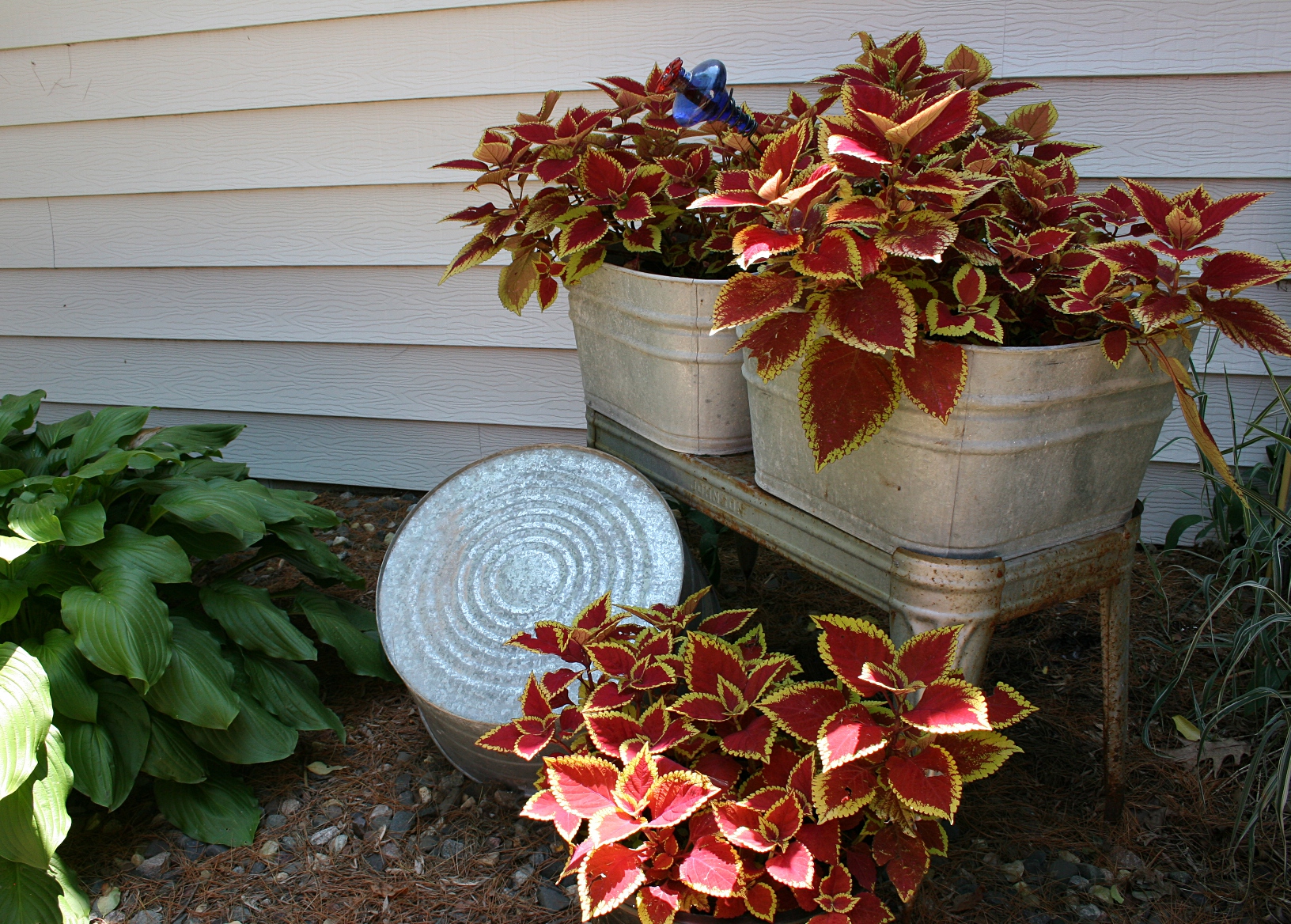
Washtub coleus add a spot of color in a sideyard space next to the house.

A rustic arbor, Jennifer Wolcott sculptures and rocks define the front yard created by Switzers’ Landscaping.
BONUS PHOTO: Woodcarver Dick Zawacki was the featured artist in the Cipra garden. He created this life-like mountain lion:
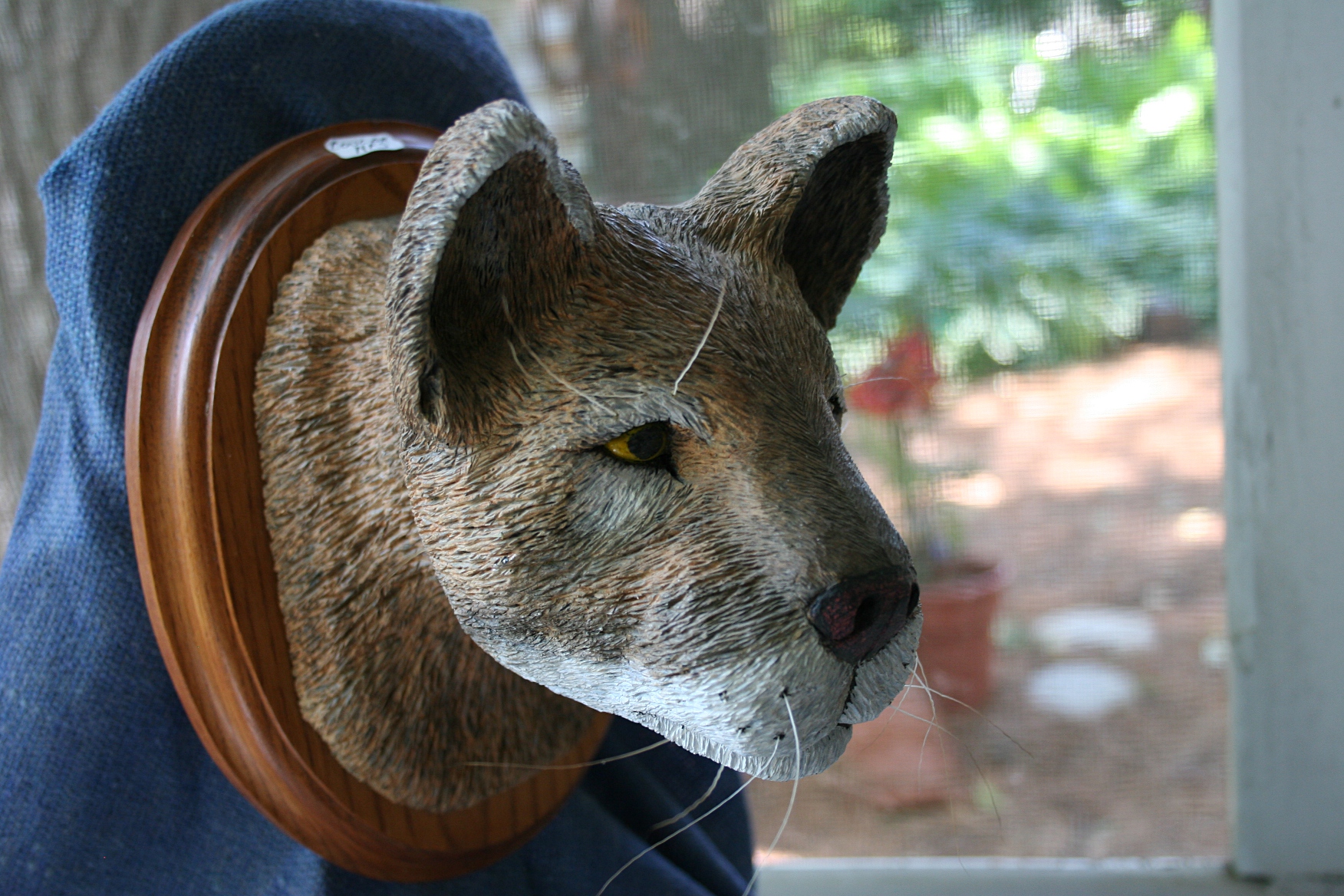
Dick Zawacki says this is one of his favorite carvings, so realistic it stopped a dog in its tracks.
FYI: The Cipras’ property was one of six featured on the recent Northfield Garden Club 2014 Garden Tour. Click here to read previous posts from the tour and check back for one final garden tour.
© Copyright 2014 Audrey Kletscher Helbling
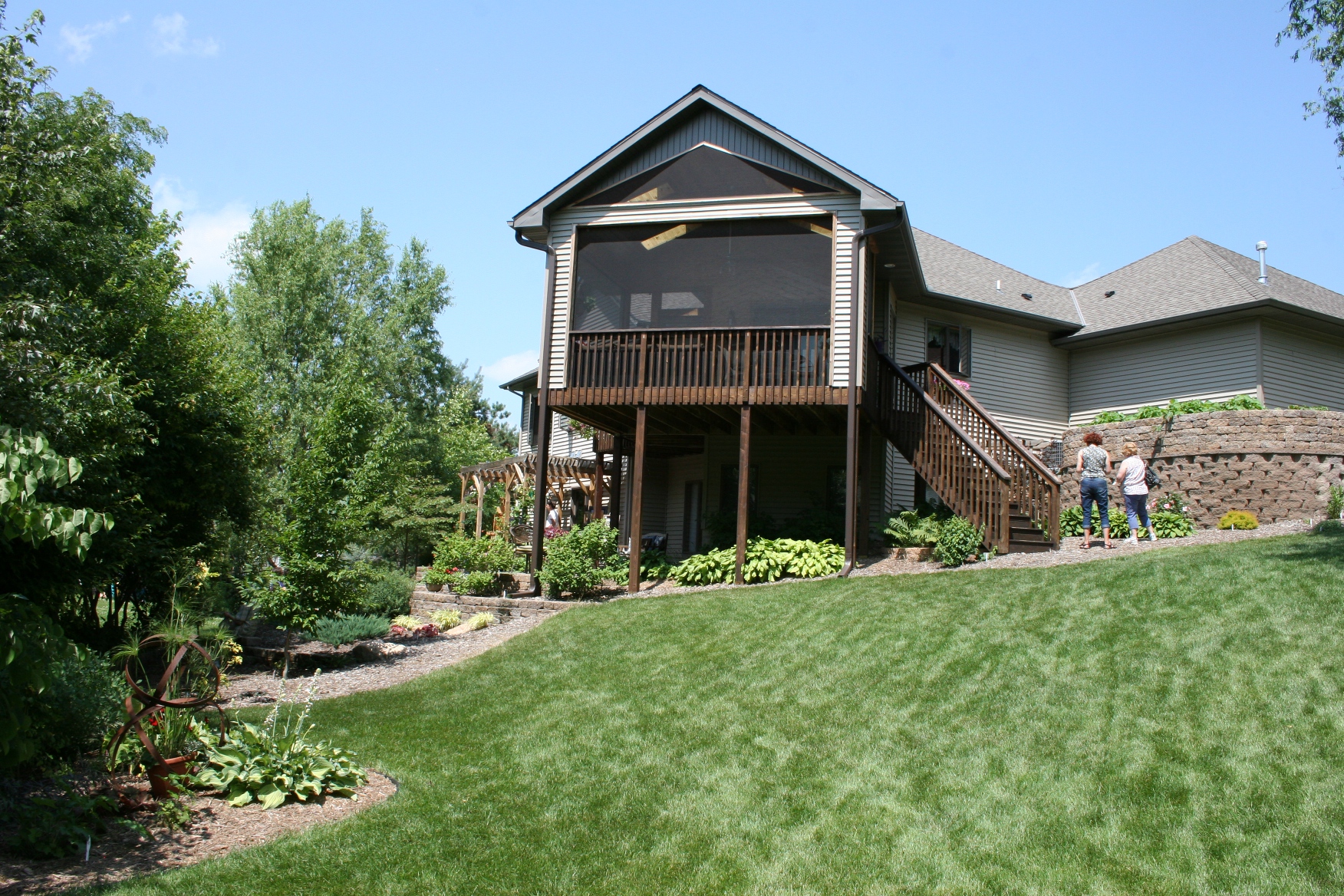
A rear and side view of Elizabeth Olson’s house shows the steep hillside that defines her lot.
I ADMIRE GARDENER ELIZABETH OLSON. She gardens on a property that I would term challenging given her home’s hillside location.
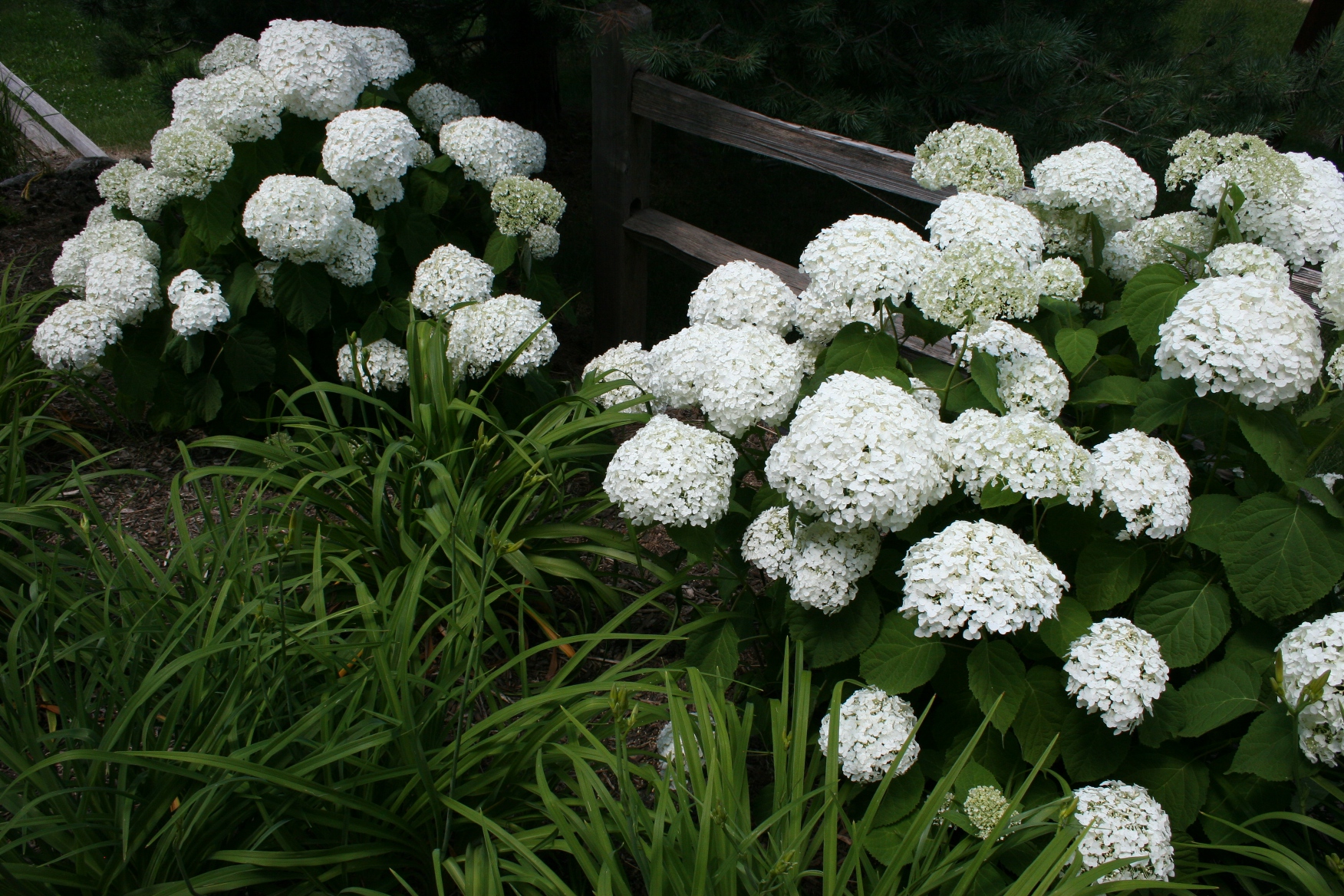
Hydrangea nestle a fence along a side yard stairway.
Numerous retaining walls and lots and lots and lots of stairs mark her south Northfield yard. Cautiousness proceeded my every step as I tread downhill, up more stairs to the backyard patio, then back down to side yard gardens and back up the hill during the recent Northfield Garden Club 2014 Garden Tour.
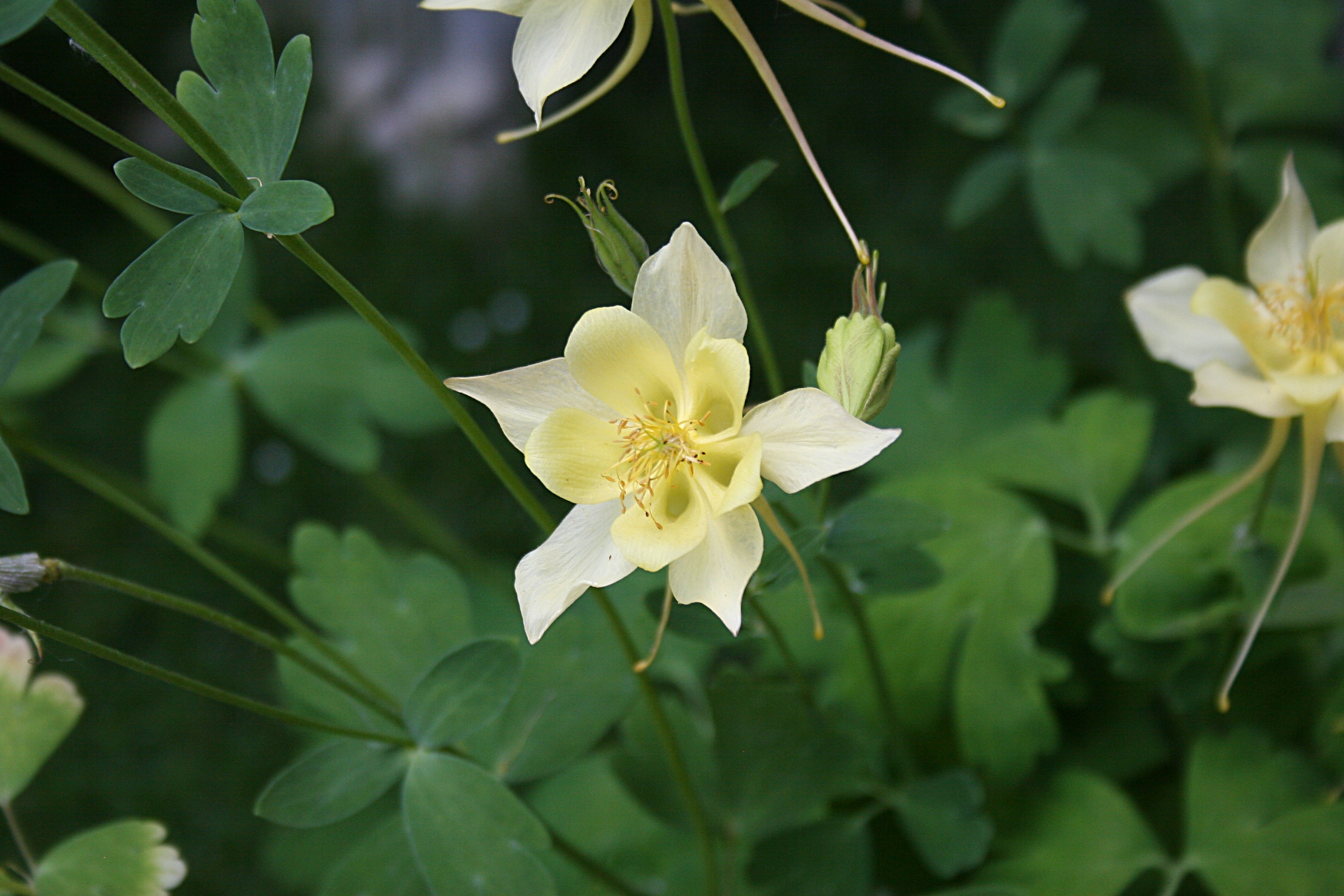
Yellow Columbine grow near the entry to Elizabeth’s home.
In between all that stepping, I stopped to admire the plants—156 of them tagged for identification. I suppose that’s a good plan if you’re participating in a public garden tour.

Sculpture art mixed with plant art.
During a brief chat with Elizabeth, she claimed no artistic talent except in gardening. She creates art via plants. That, I think, makes her an artist.
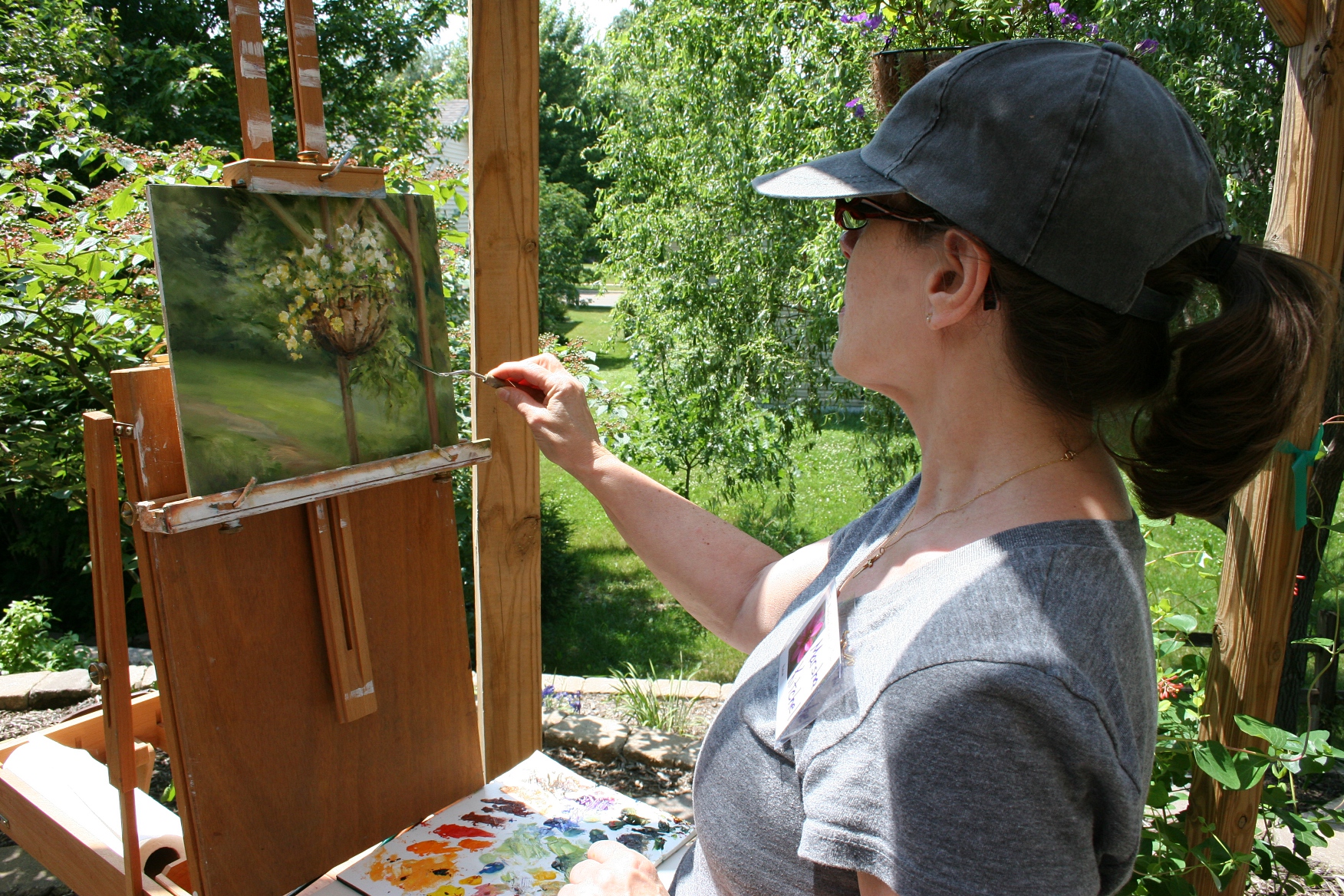
Artist Marsha Kitchel paints on the patio.
On the backyard patio, another artist had set up an easel to create en plein air. I watched as Marsha Kitchel daubed oils, recreating one of Elizabeth’s hanging baskets.
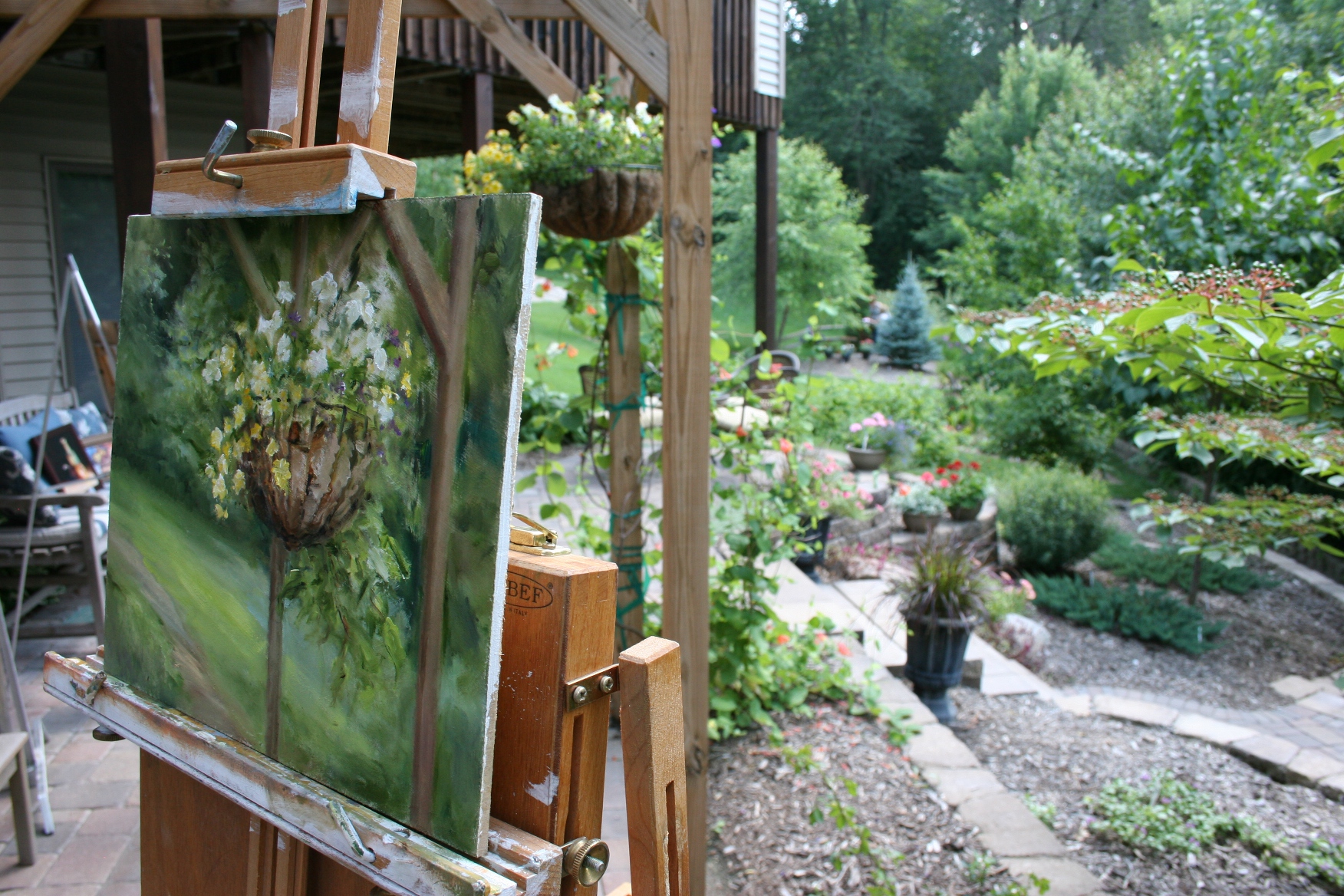
Marsha was painting the basket in the background, just to the right of her easel.
I love this concept of incorporating artists and their work into garden tours. It makes sense as an unassuming way to introduce artists to the public. Other artists in the Northfield Garden Club Tour were Derrin D. O’Connell, Judy Saye-Willis, Tom Willis, James Wilson and Dick Zawacki.
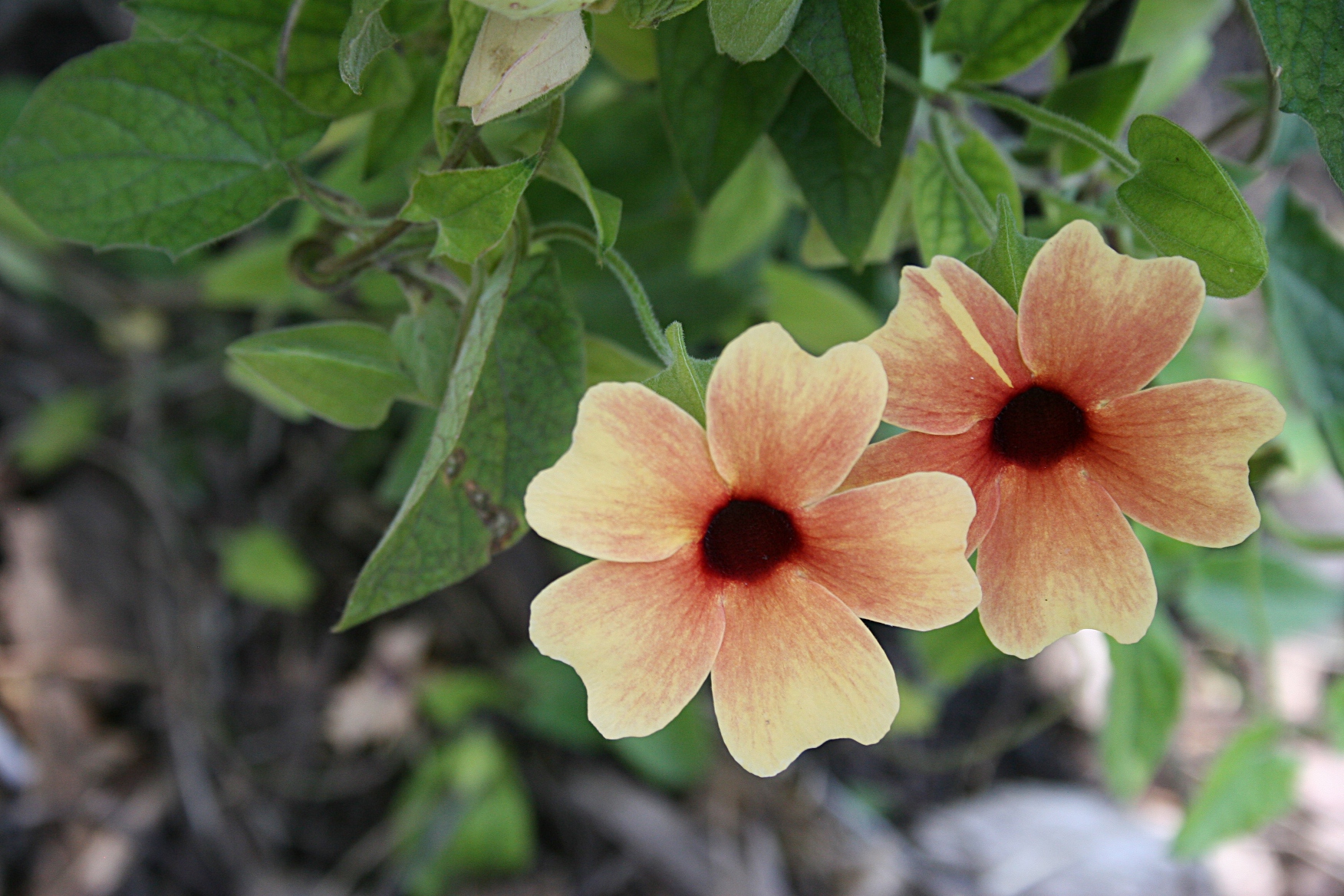
I failed to check Elizabeth’s cheat sheet to identify these lovely peach flowers. Anyone know their identity?
BONUS PHOTOS:
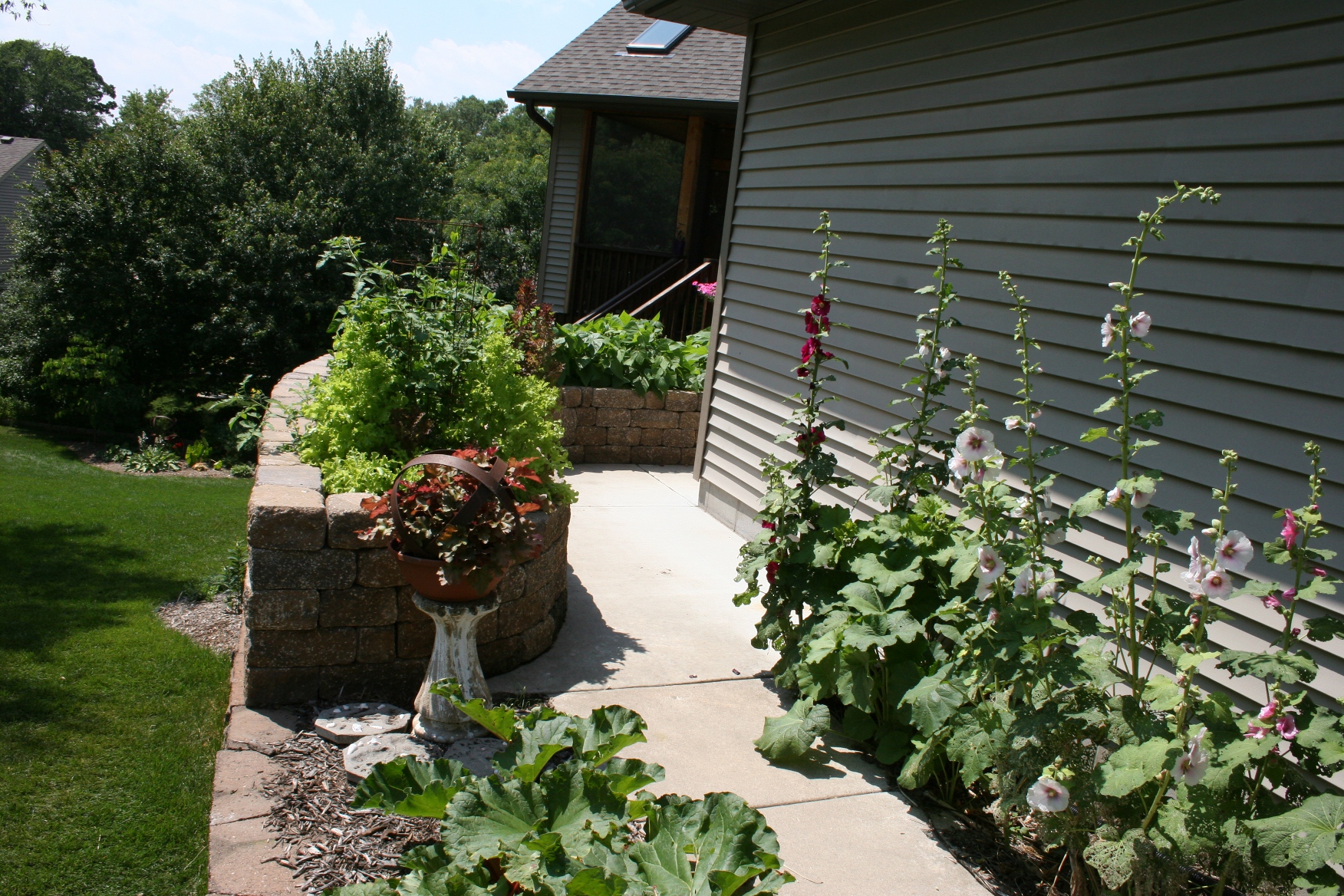
This area features a raised vegetable garden.
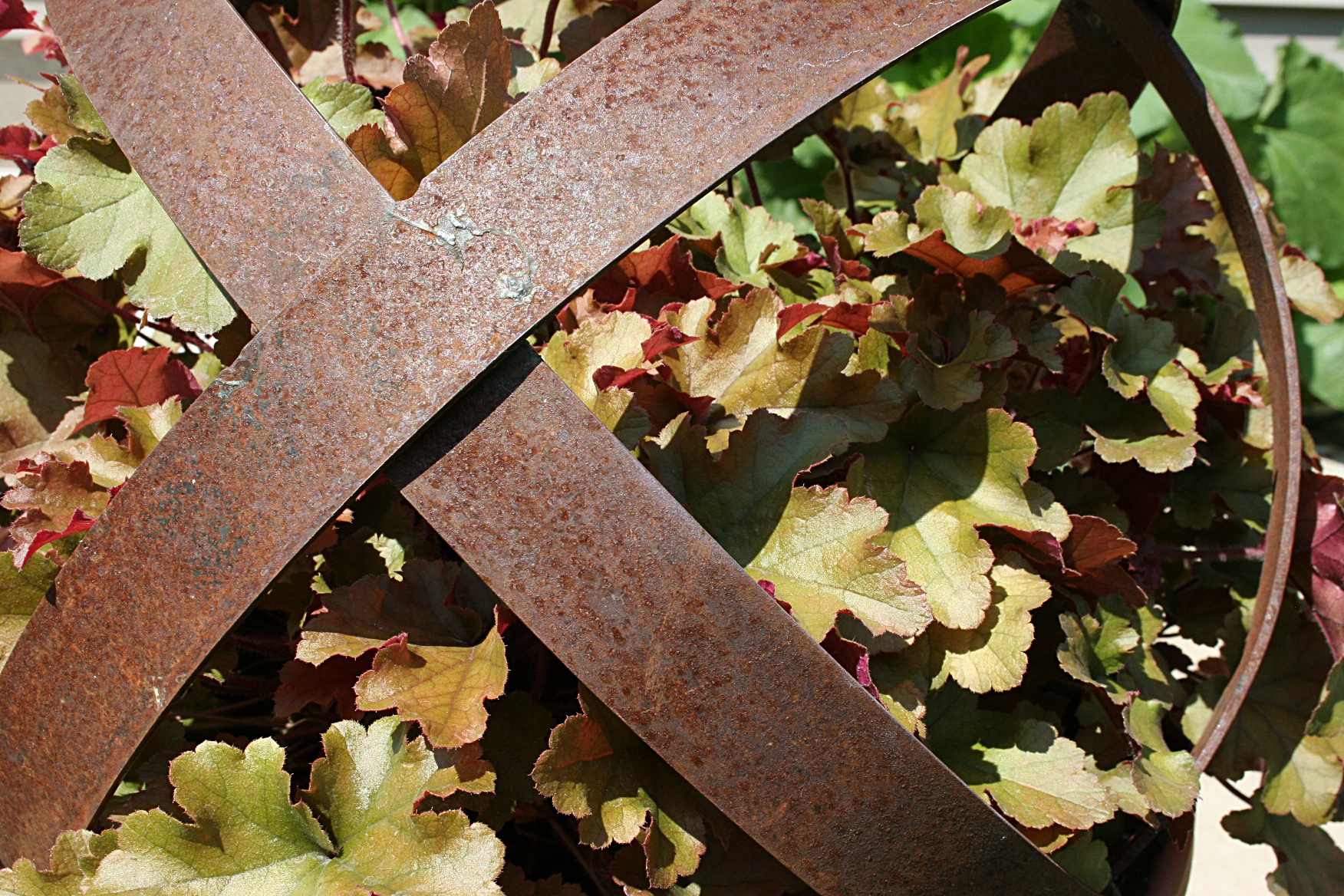
Here’s a close-up of the sculpture in the photo above.
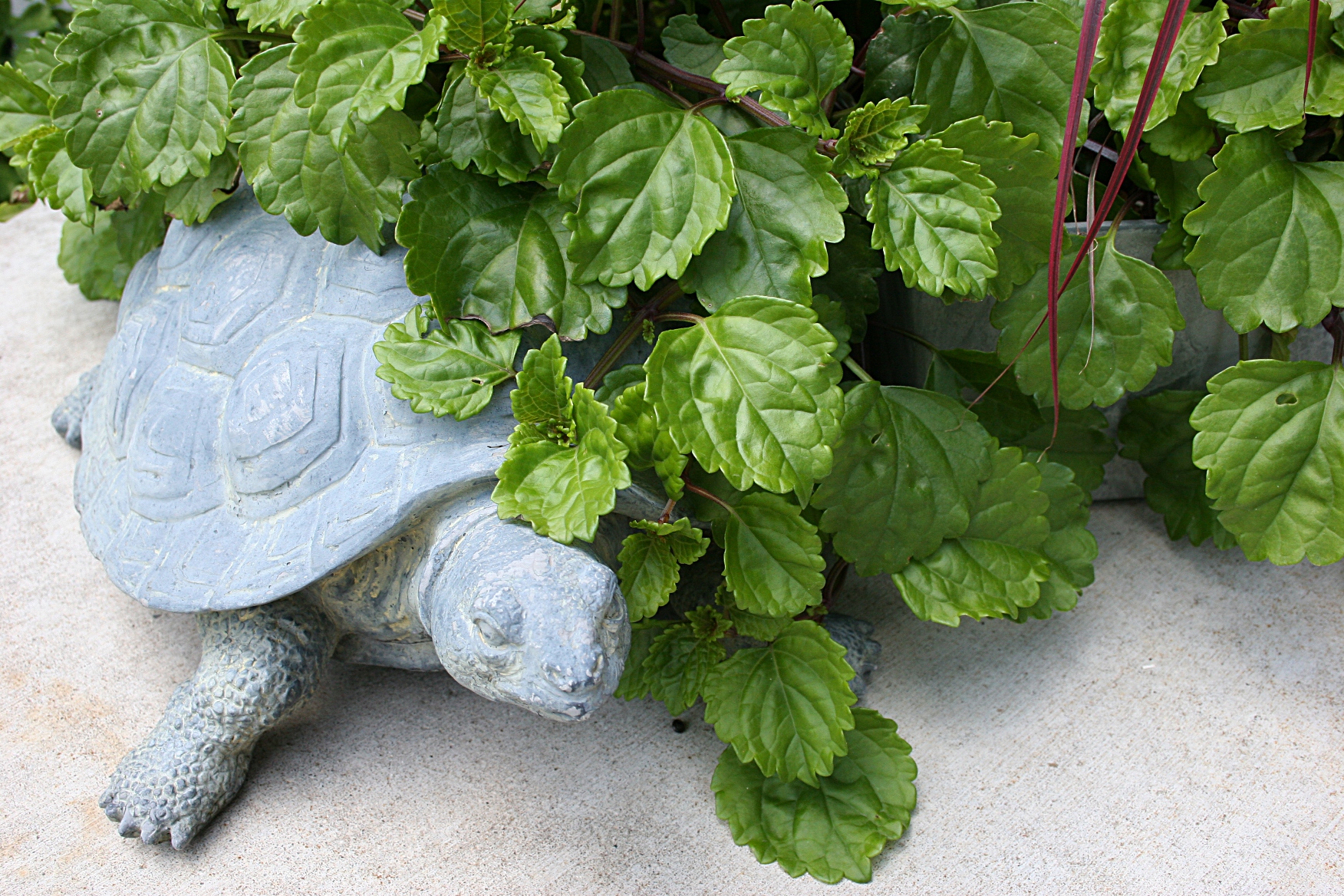
This turtle tucked next to a pot of ivy and other plants belonged to Elizabeth’s mother.
FYI: Click here and here for previous posts from the Northfield Garden Club 2014 Garden Tour. And watch for additional posts.
© Copyright 2014 Audrey Kletscher Helbling
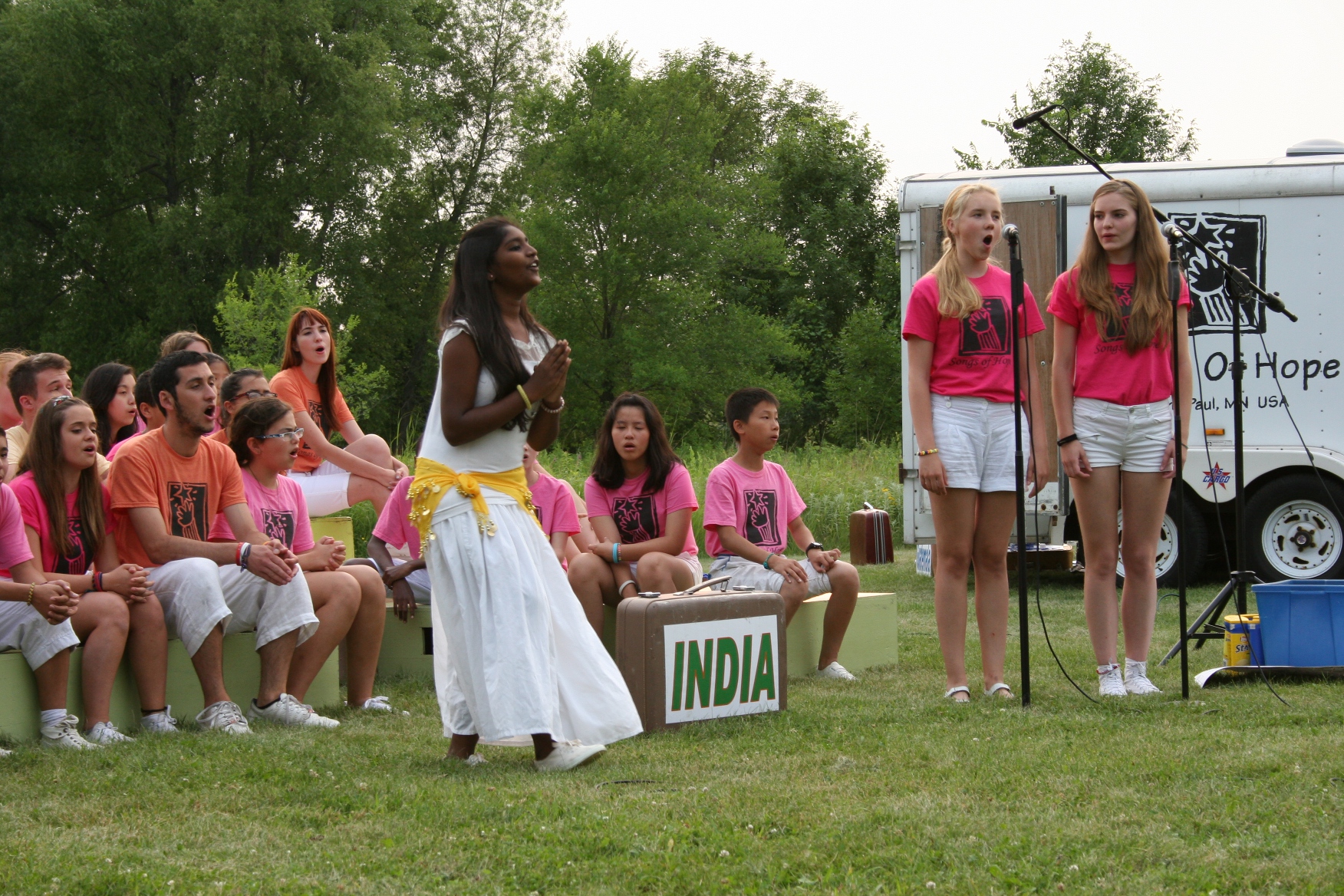
Songs of Hope performers present a selection from India.
IF EVER YOU DESPAIR in today’s young people, consider the youth participating in Songs of Hope, a six-week St. Paul based performing arts summer camp that is part of Sounds of Hope, Ltd.

Labeled suitcases and stands denote countries of origin during featured songs.
Consider these young people who travel from all over the world—places like Vietnam, China, Italy, Turkey, Israel and Guatemala—to spread messages of peace, hope, understanding and more via song and dance.
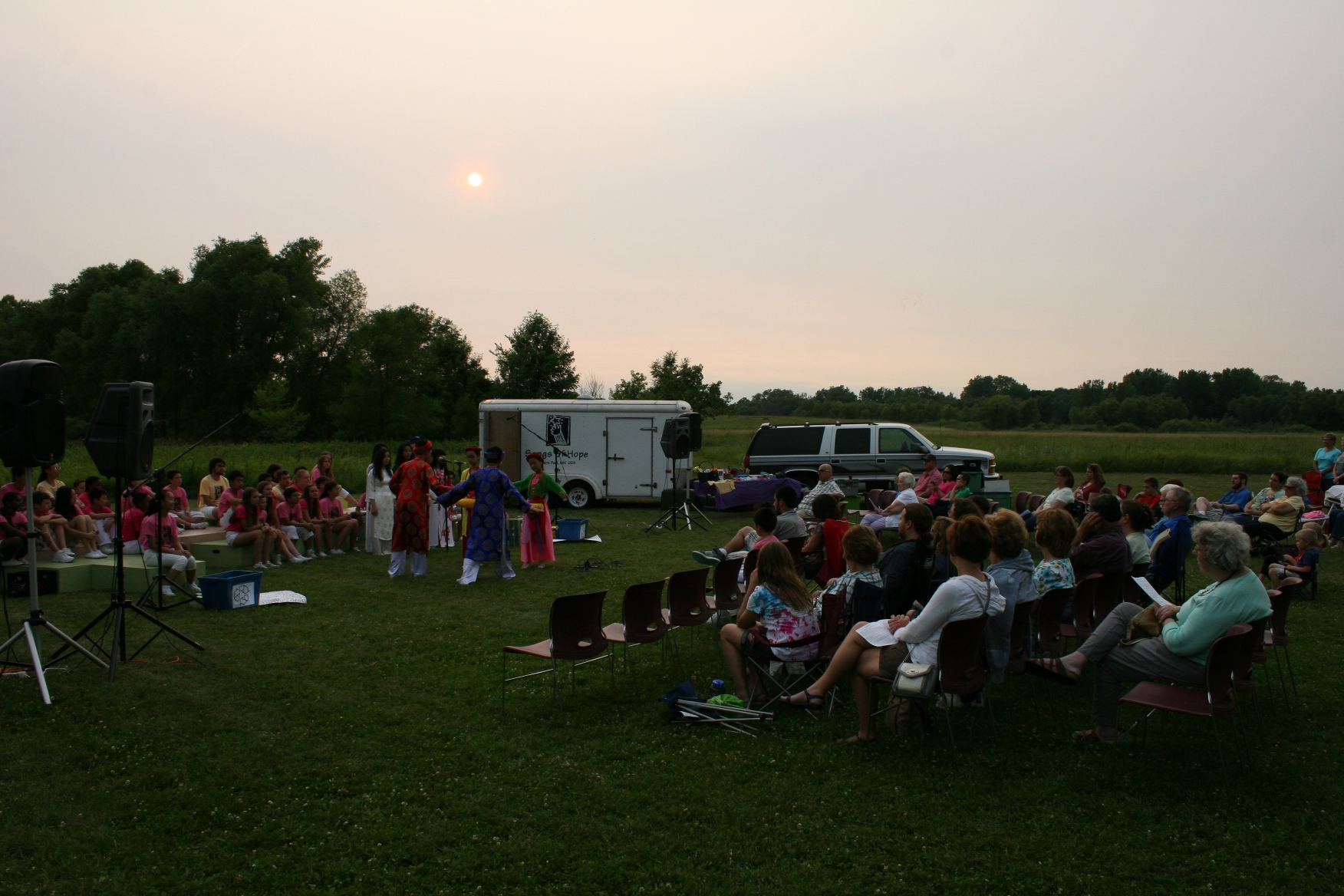
As the sun sets, performers in traditional Vietnamese attire present selections from Vietnam.
These musicians lifted my spirits during a 90-minute outdoor concert last Saturday at River Bend Nature Center in Faribault.
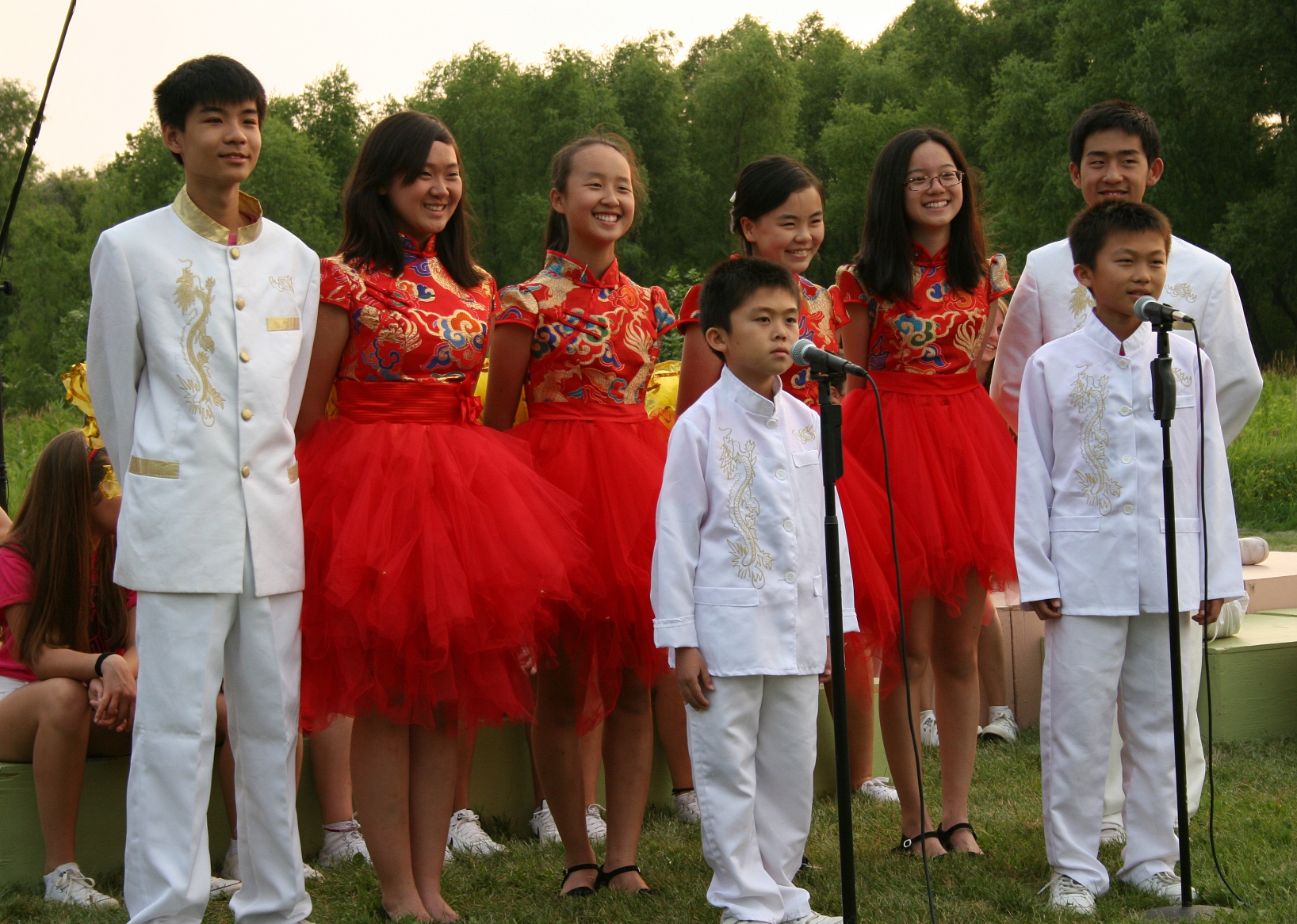
Ready to perform in traditional Chinese attire.
They give me hope that, despite the unrest in the Gaza Strip, the tense situation in the Ukraine, the continuing war on terror in Afghanistan, the situation along the U.S. southern border, and, yes, even the gun violence in Chicago, we can resolve our differences, overcome cultural and other barriers, and live in peace.
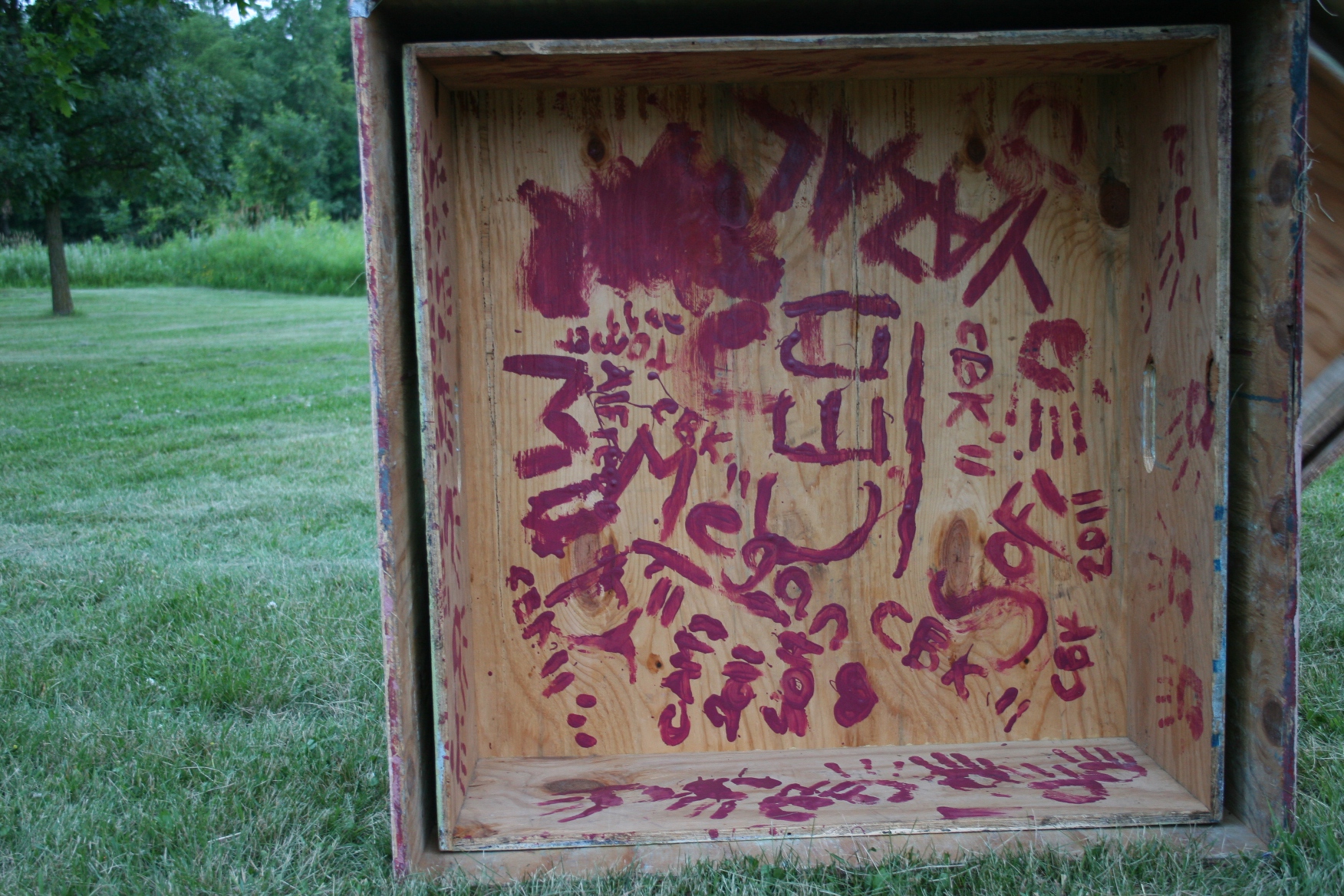
Participating youth from all over the world paint their names and hand prints on the underside of boxes upon which they perform.
Hope, though sometimes an elusive word, is worth believing in.
BONUS PHOTOS:
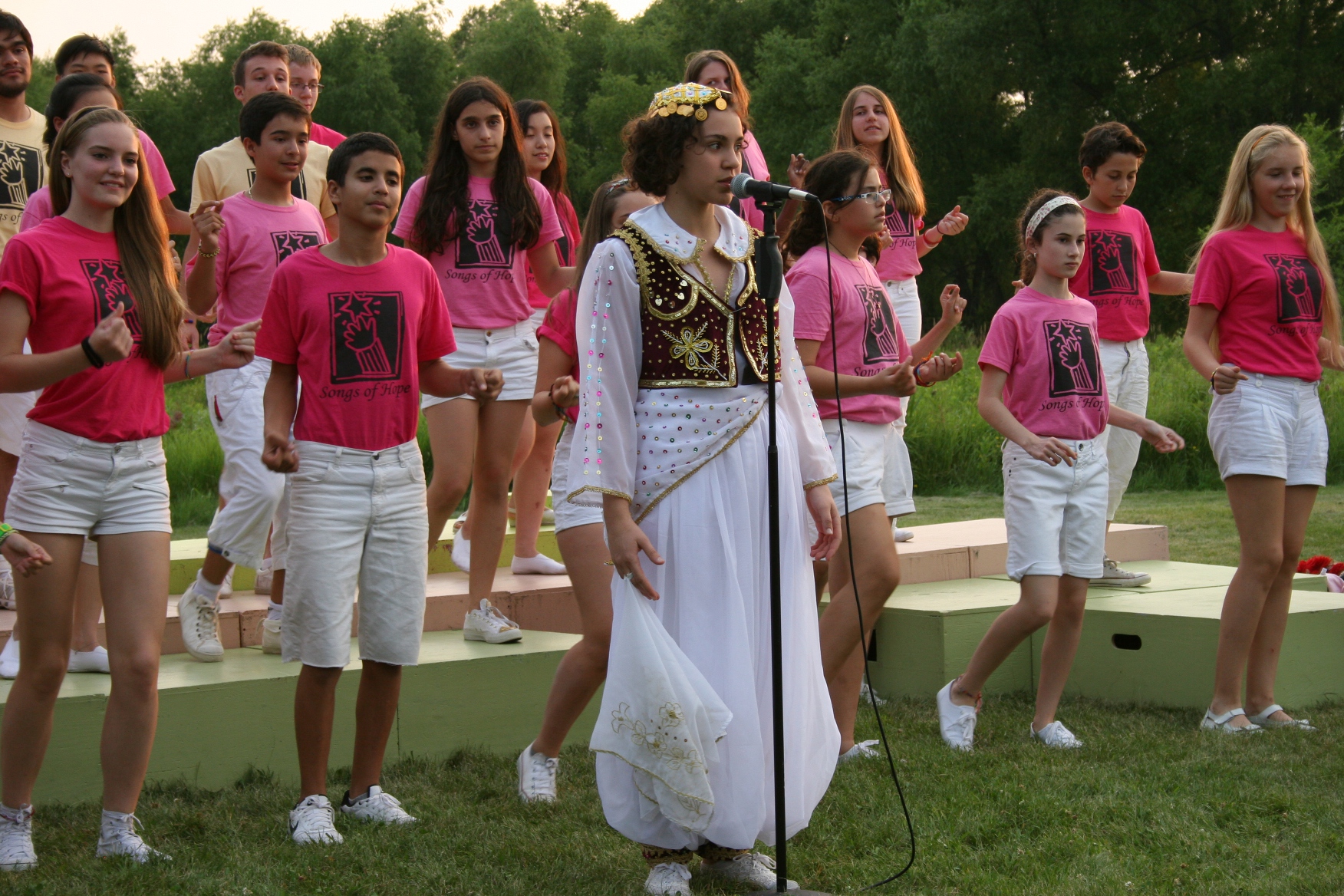
Featuring Albania…
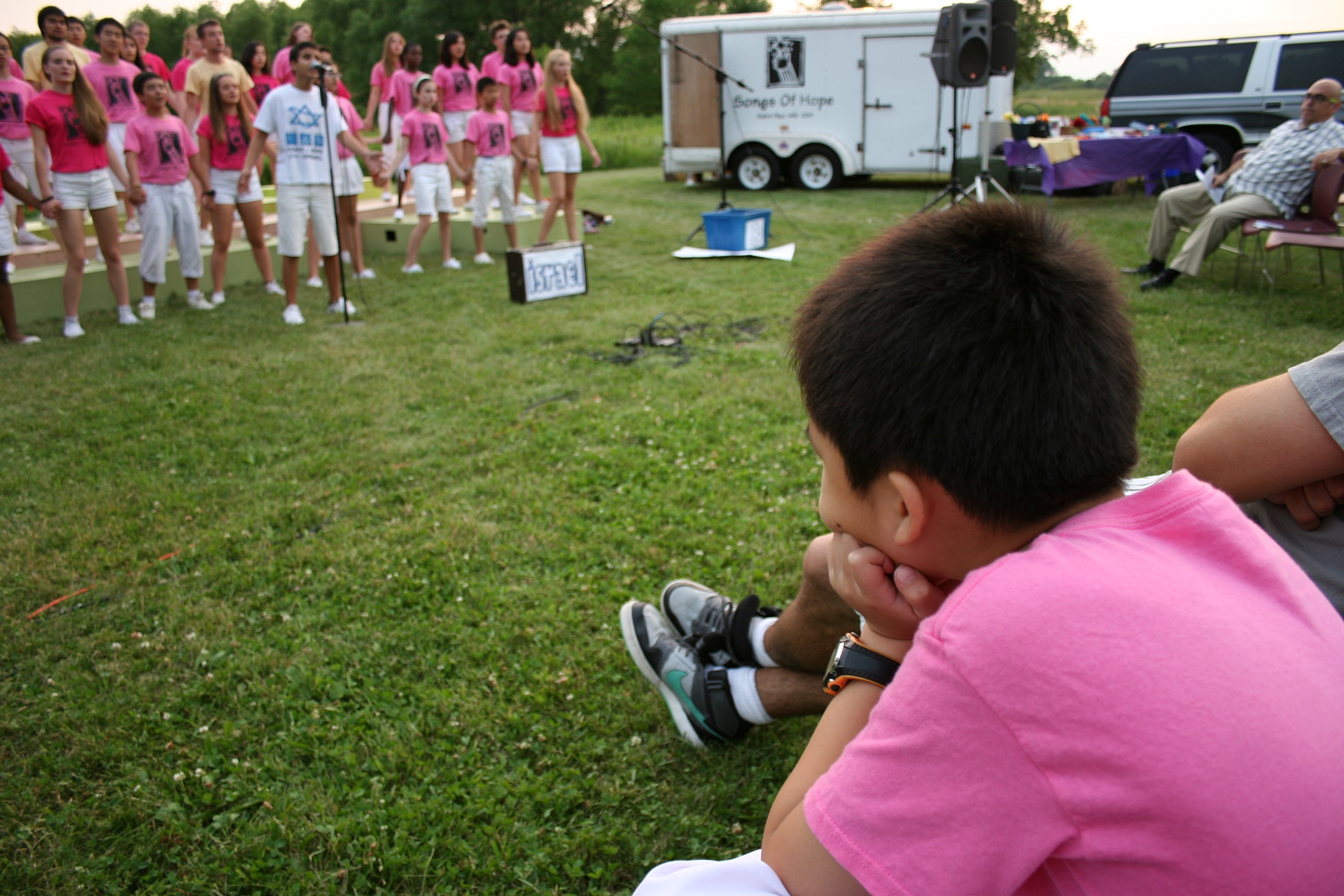
Waiting to perform.
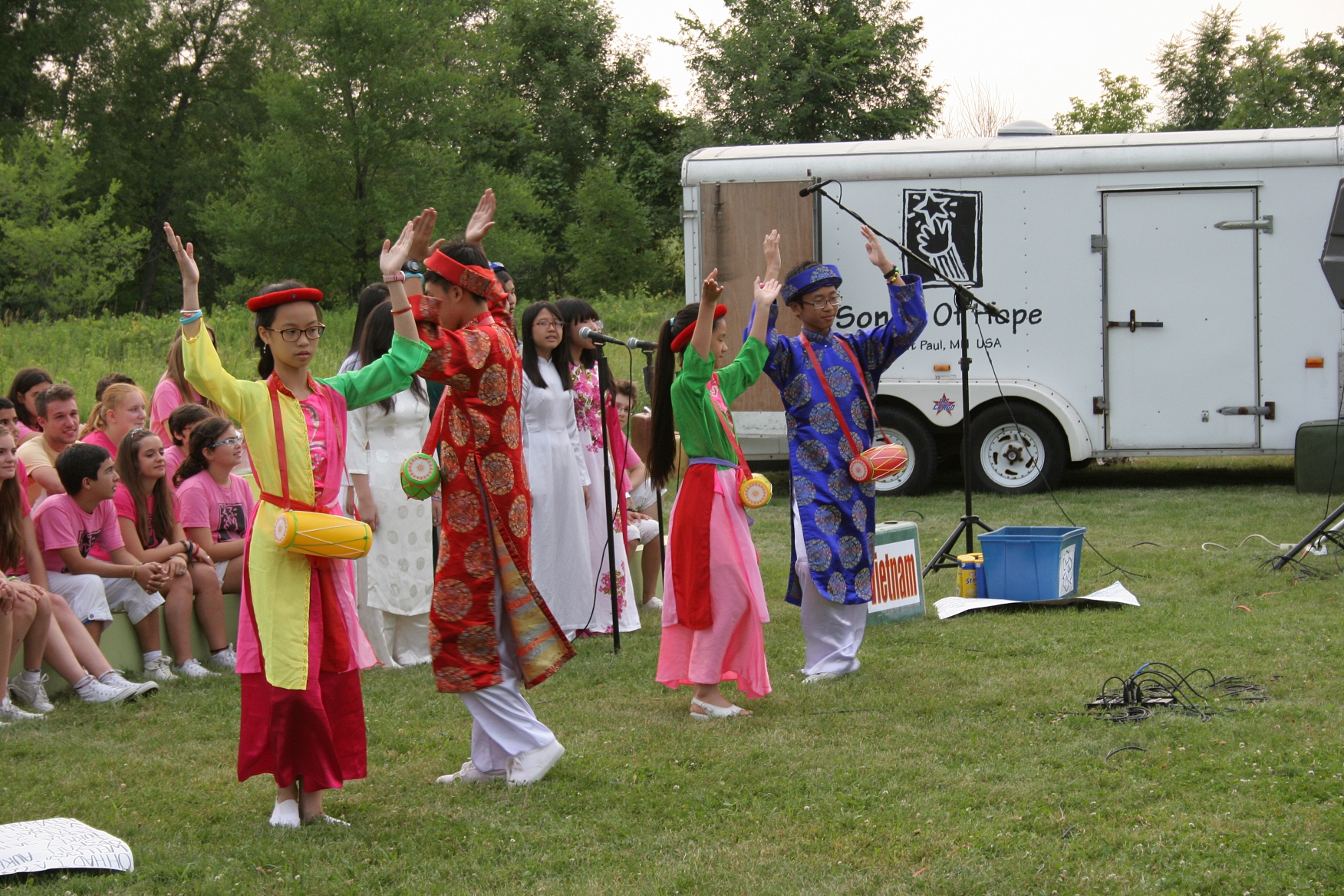
Song and dance from Vietnam.
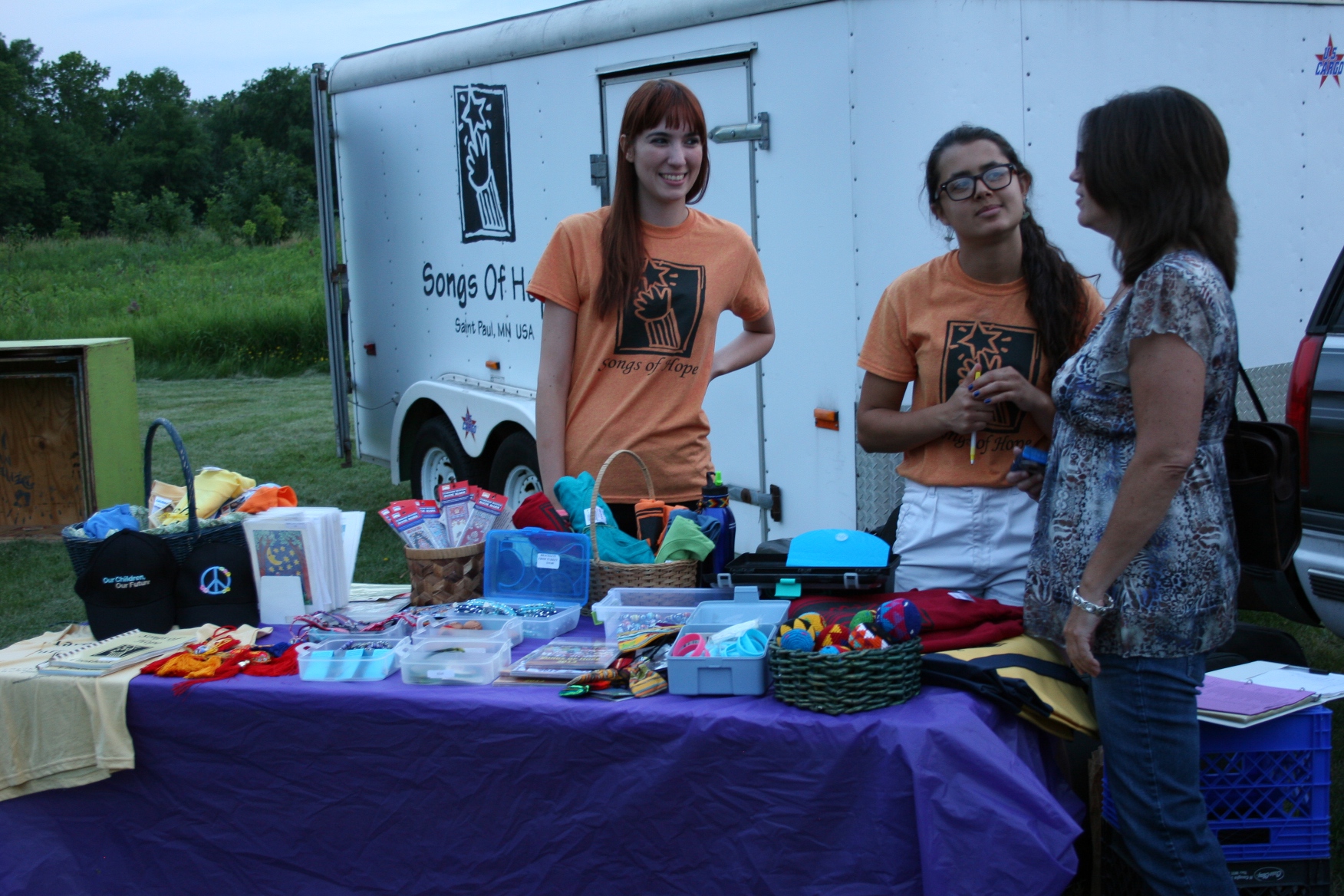
After the concert, goods from various countries and more were available for purchase. The young woman on the left is a native of Argentina who works as an opera singer in France. She’s in the U.S. for a month with Songs of Hope.

A sample of the merchandise available for purchase.
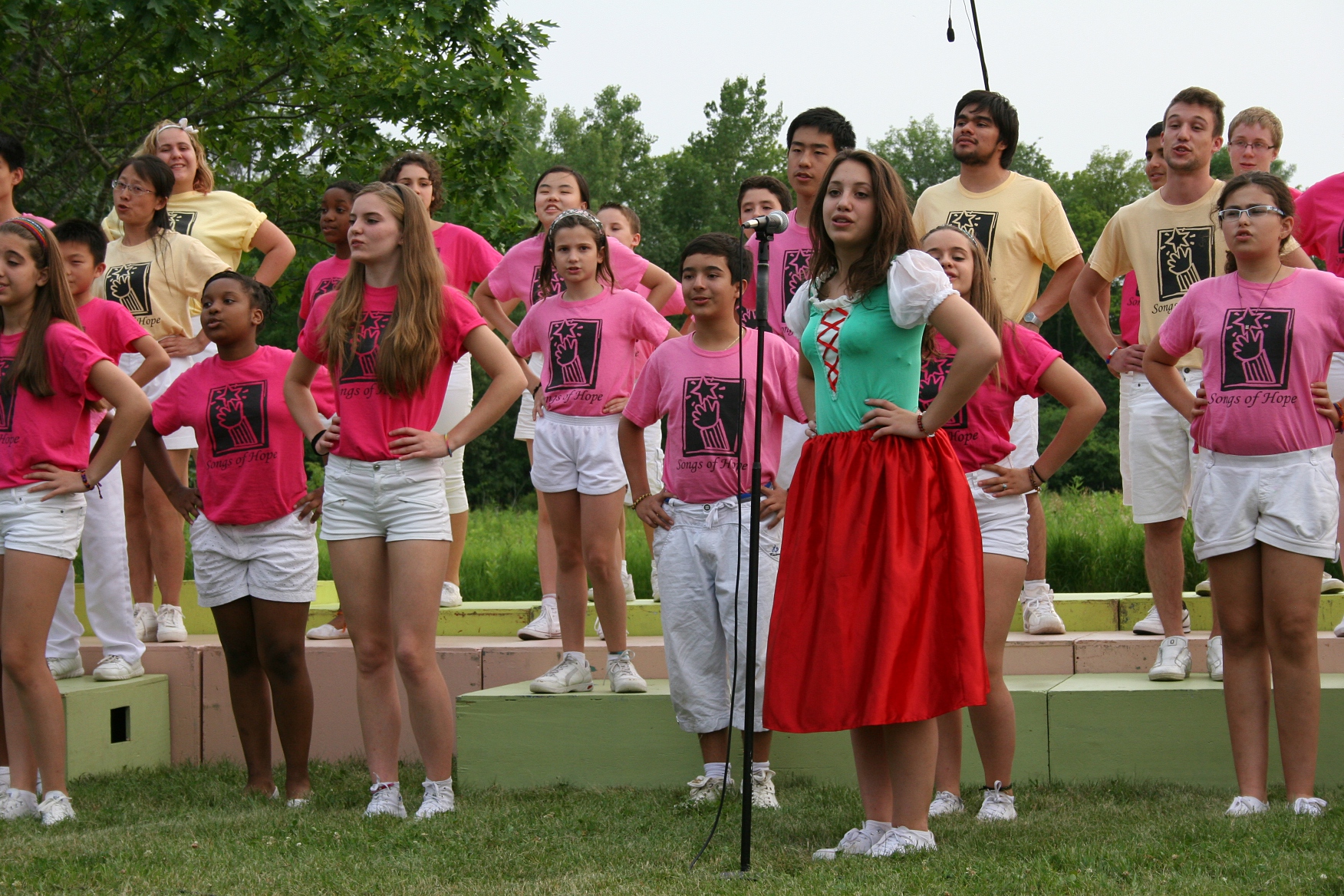
From Italy…
FYI: Click here to learn more about Sounds of Hope, Ltd.
And click here to view my previous blog post on the Songs of Hope concert in Faribault.
© Copyright 2014 Audrey Kletscher Helbling
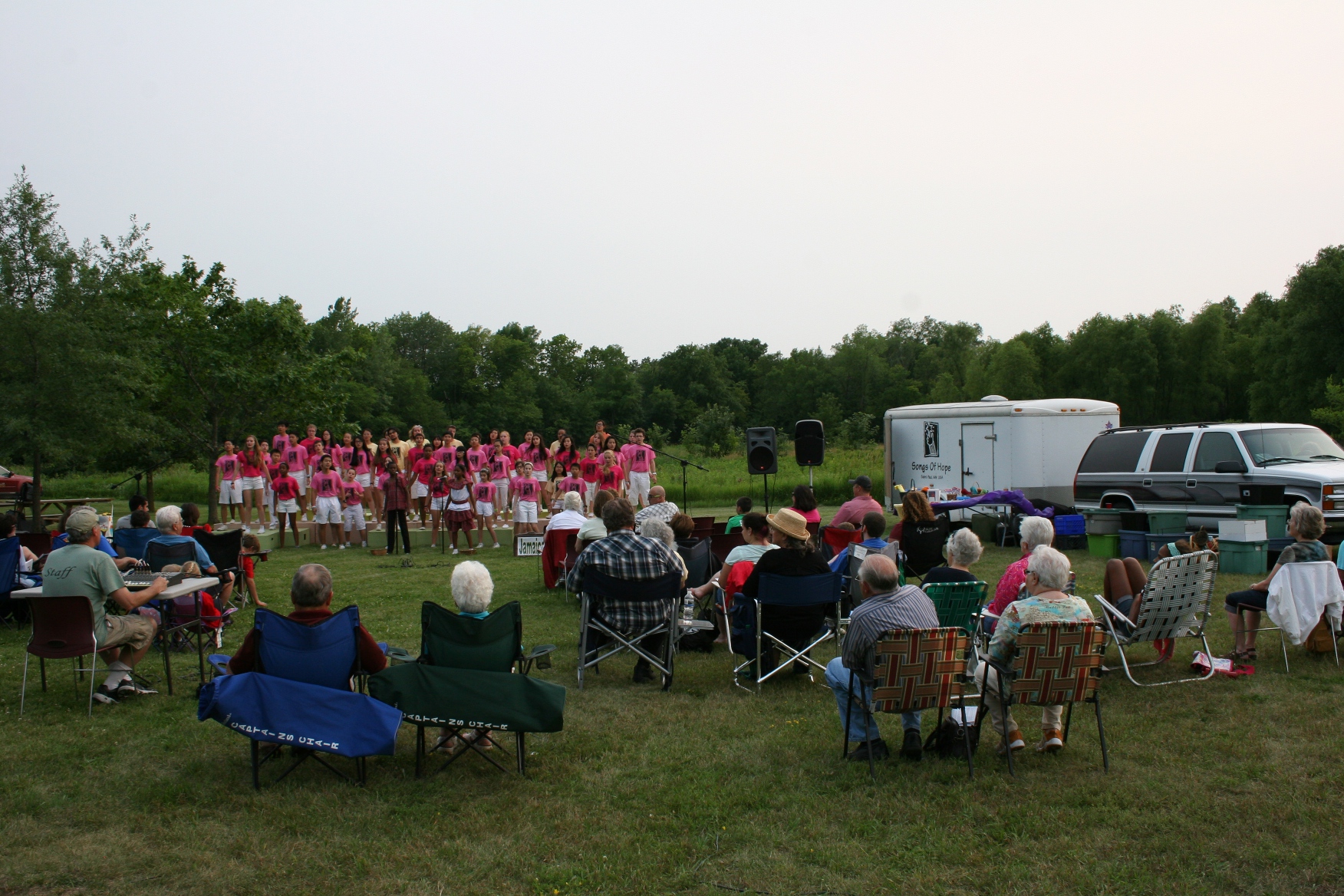
On a perfect summer night, Songs of Hope performed an outdoor concert at River Bend Nature Center in Faribault.
AS THE GOLDEN ORB of the sun shifted across the sky, as dragonflies dipped above the audience, as a distant train rumbled, Songs of Hope musicians performed before a rapt audience at River Bend Nature Center in Faribault on Saturday evening.
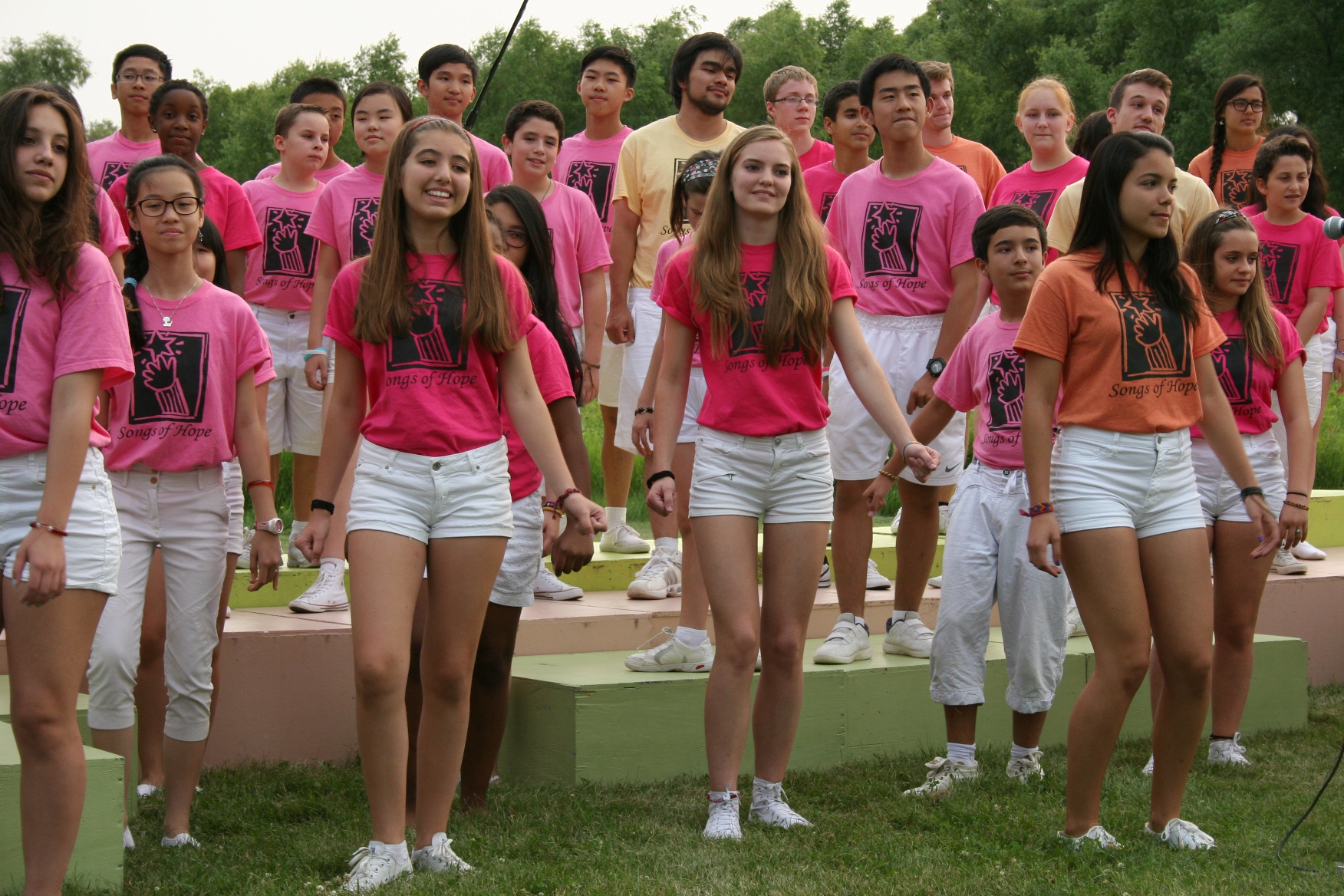
The performers focused on hope, like their name.
And the message they brought—in their dancing and in their singing—was hope.
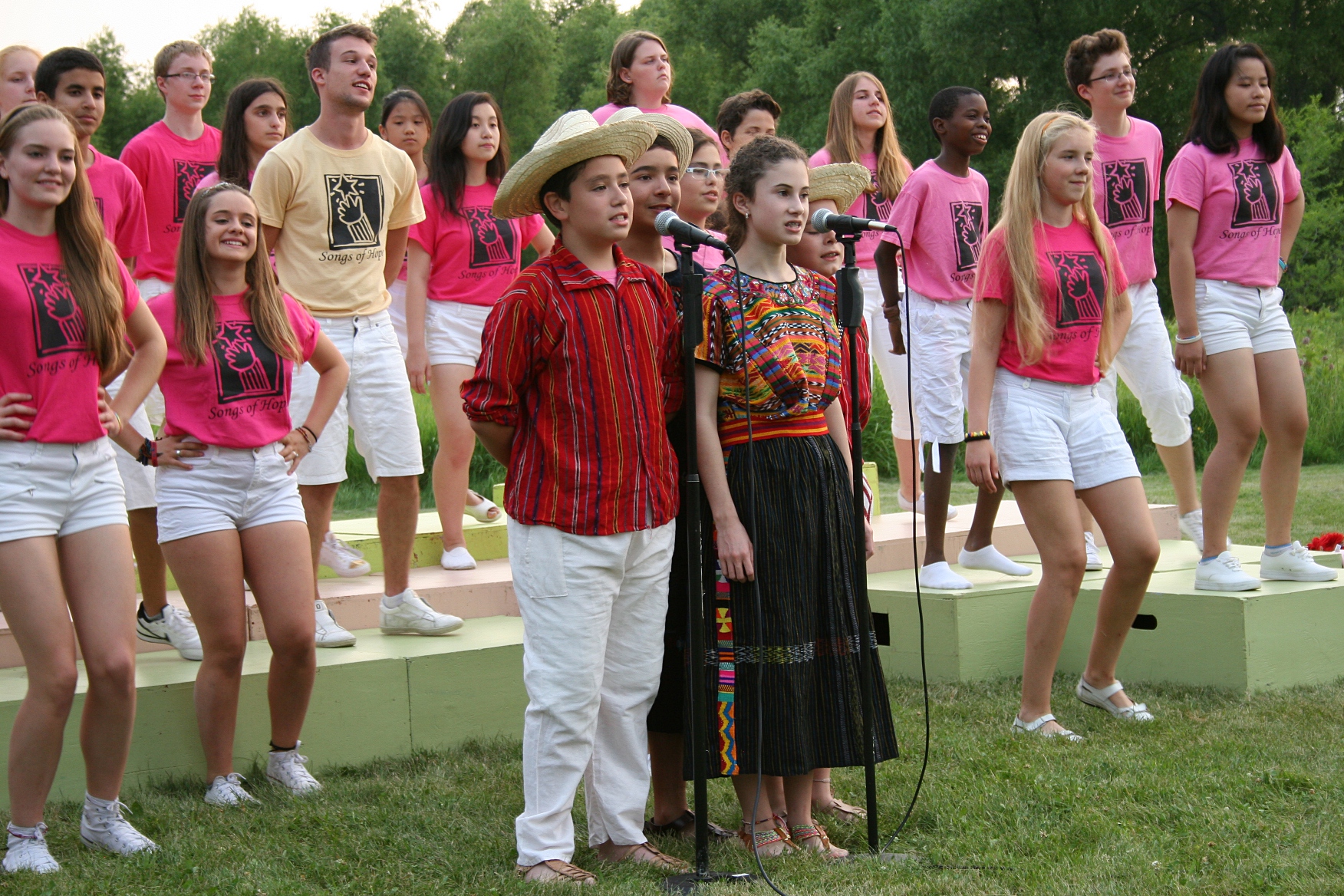
Songs from Guatemala.
Inspirational defines these performers who have been attending the St. Paul based international performing arts summer camp, Songs of Hope. Seventy musicians from 15 countries are currently on tour, presenting 33 concerts in 18 days.
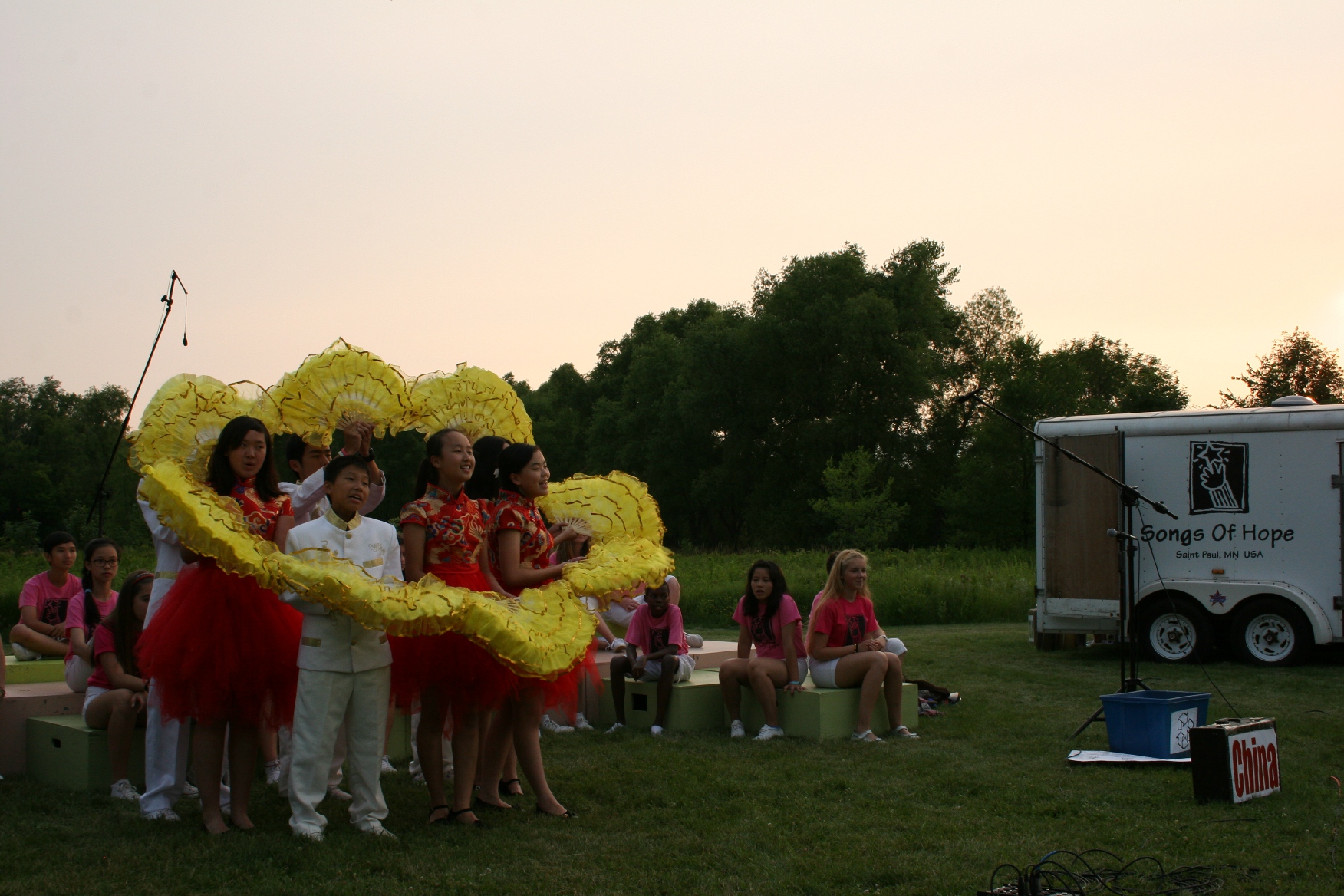
Chinese youth perform as the sun sets.
Songs of Hope is “about people getting together and sharing culture and lives,” Program Director Tom Surprenant said as he introduced the group.
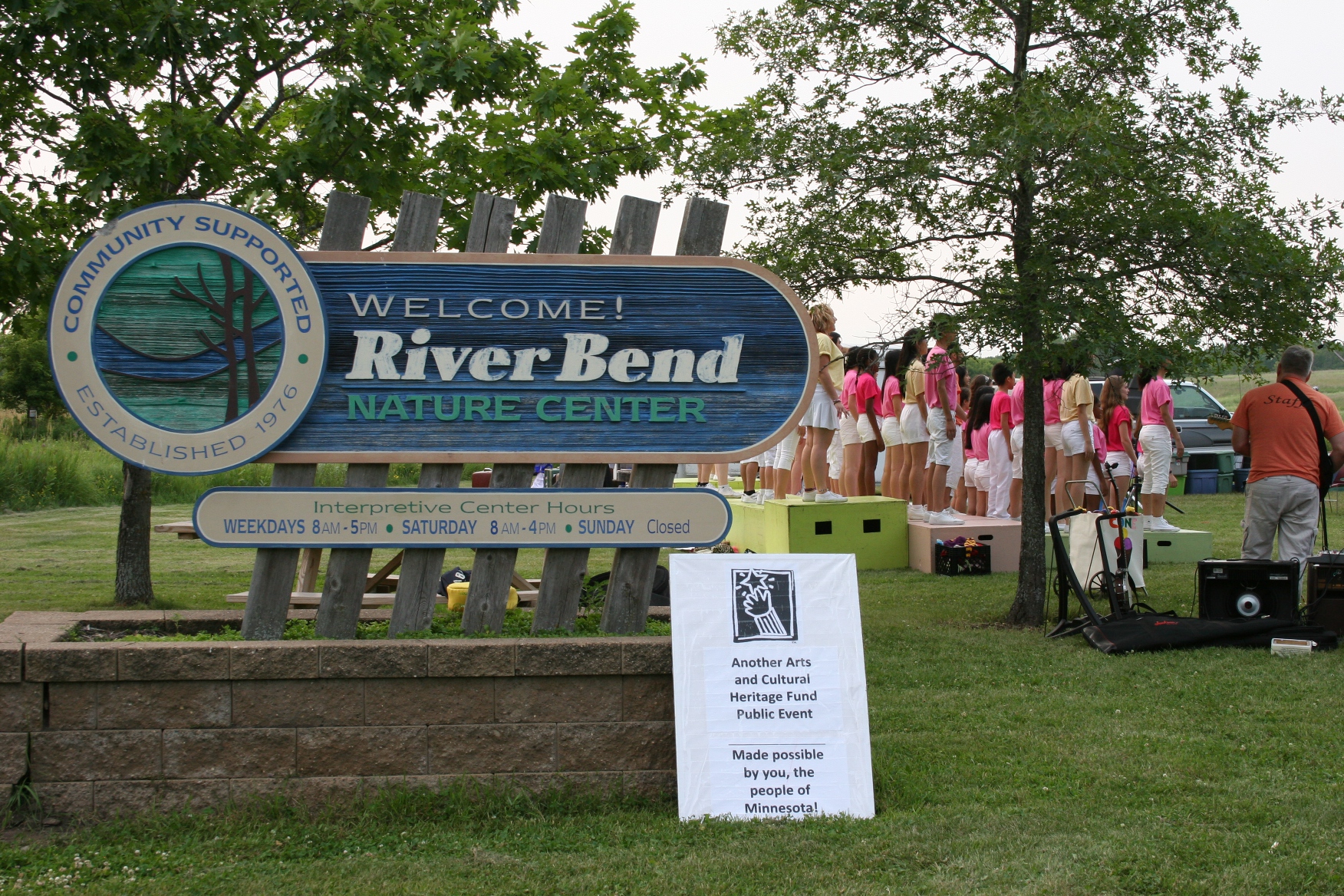
Performing outdoors at River Bend.
But with audiences, like the one in Faribault, they share so much more: possibilities, hope, peace, freedom, justice…
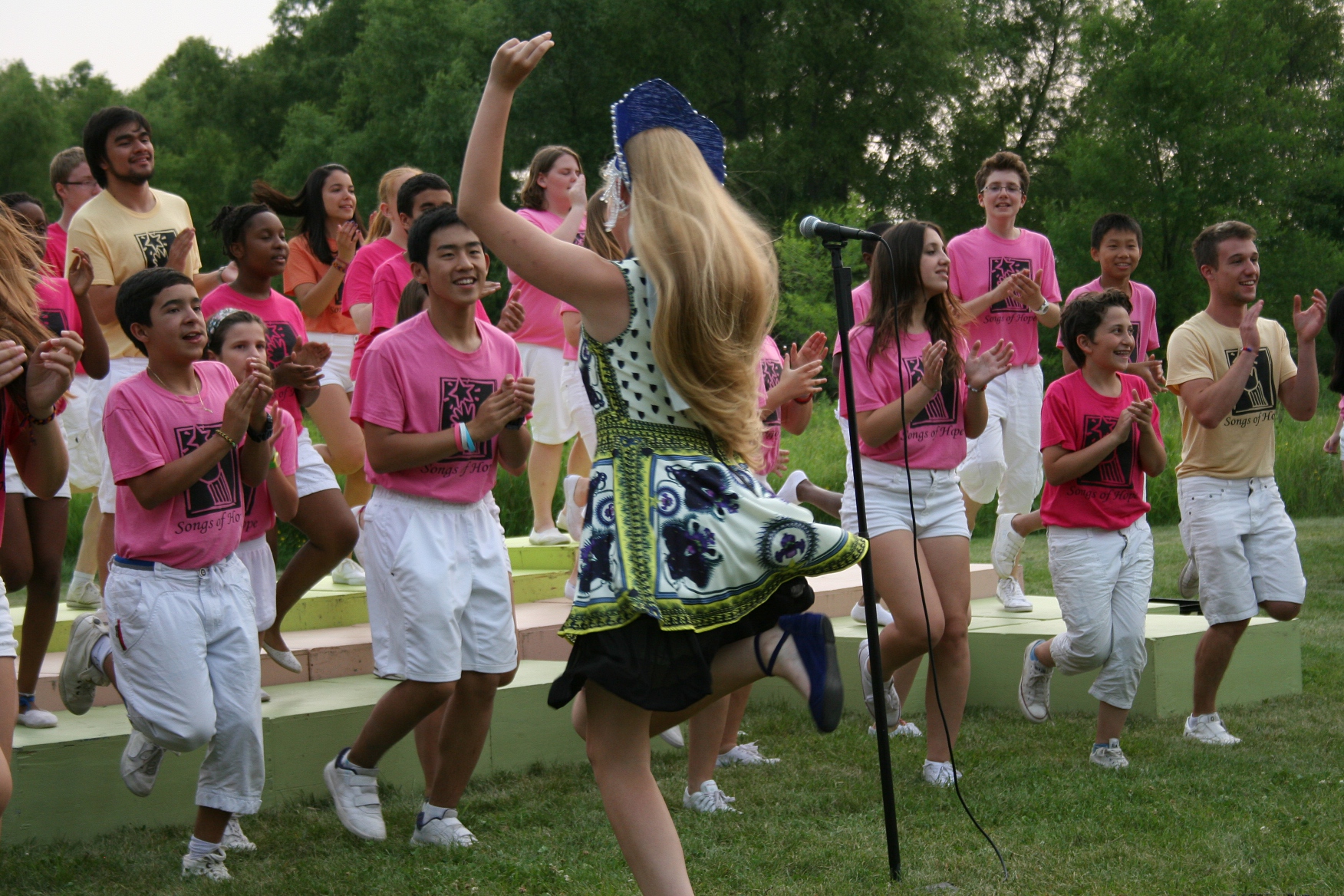
In nearly constant motion.
I was beyond impressed by these young people who sang with such force and enthusiasm and rarely stopped moving as they presented 90 minutes of songs spanning multiple nations from India to Jamaica to Guatemala to Italy to Russia and many other places.
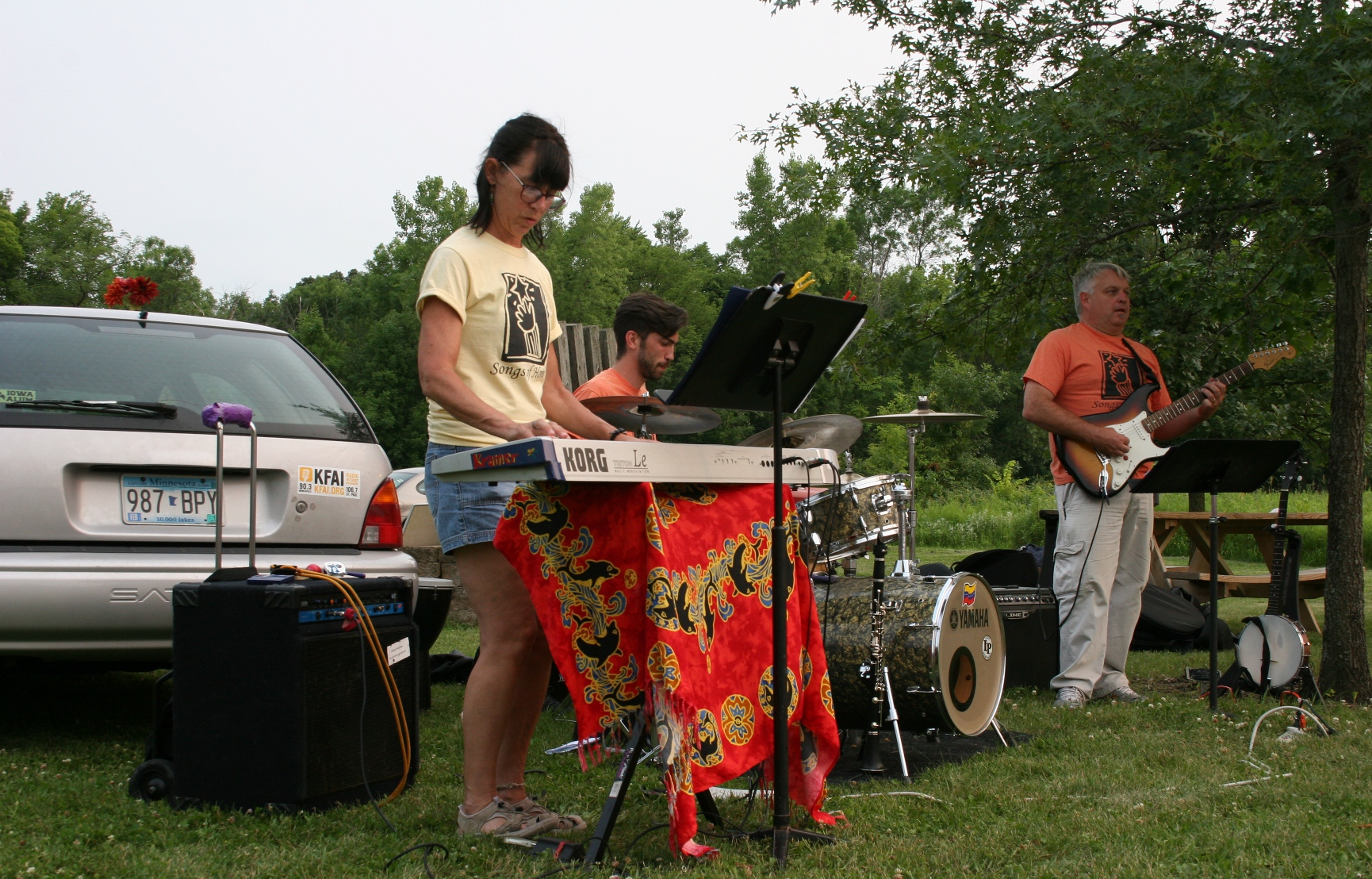
The band provided upbeat music that makes you want to dance.
Even though I could not always understand, music bridges language and cultural differences.
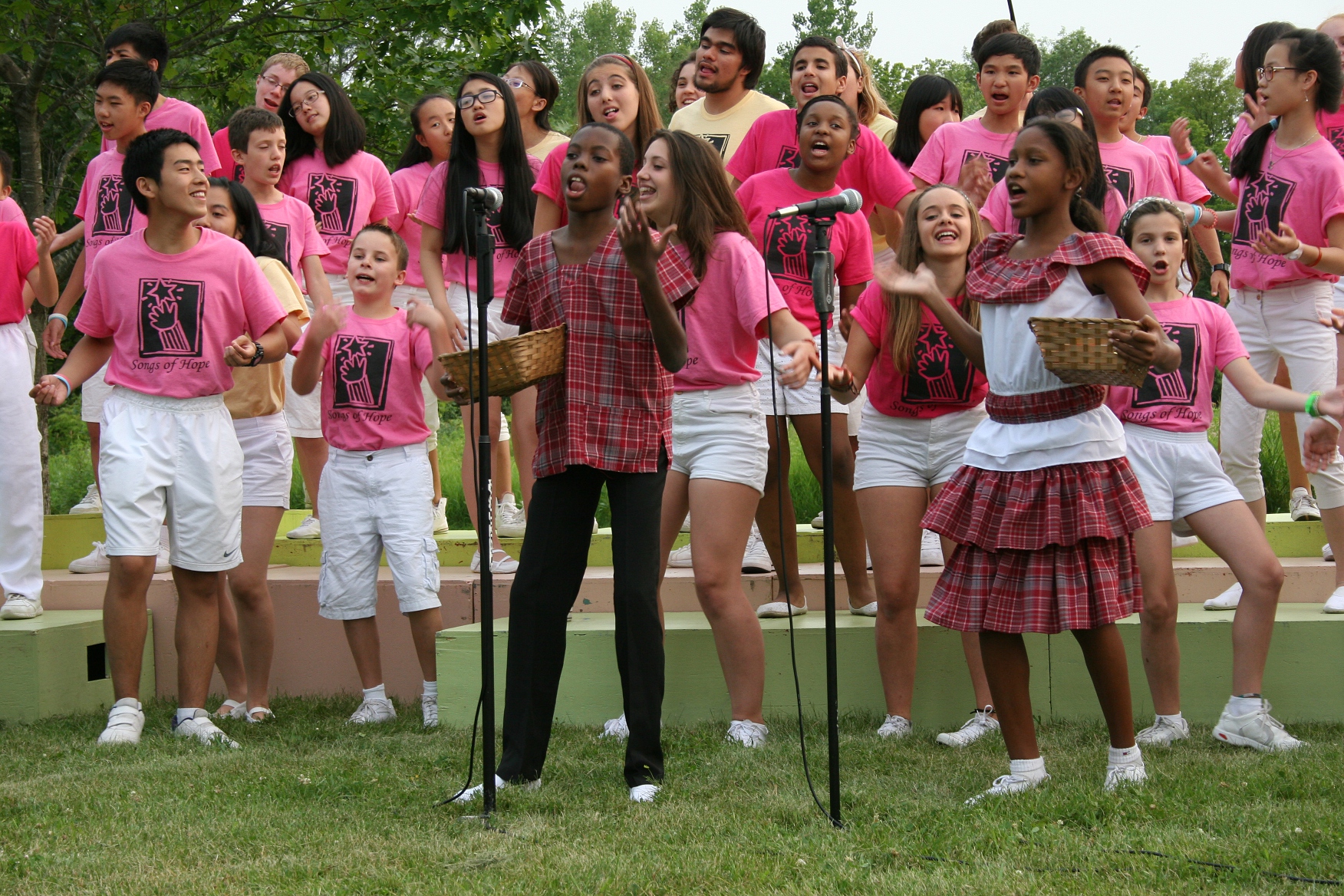
Selections from Jamaica included “Linstead Market” and “Stand Up For Your Rights.”
Truly, skin color, eye shape, height nor any other physical characteristic mattered as these youth performed.
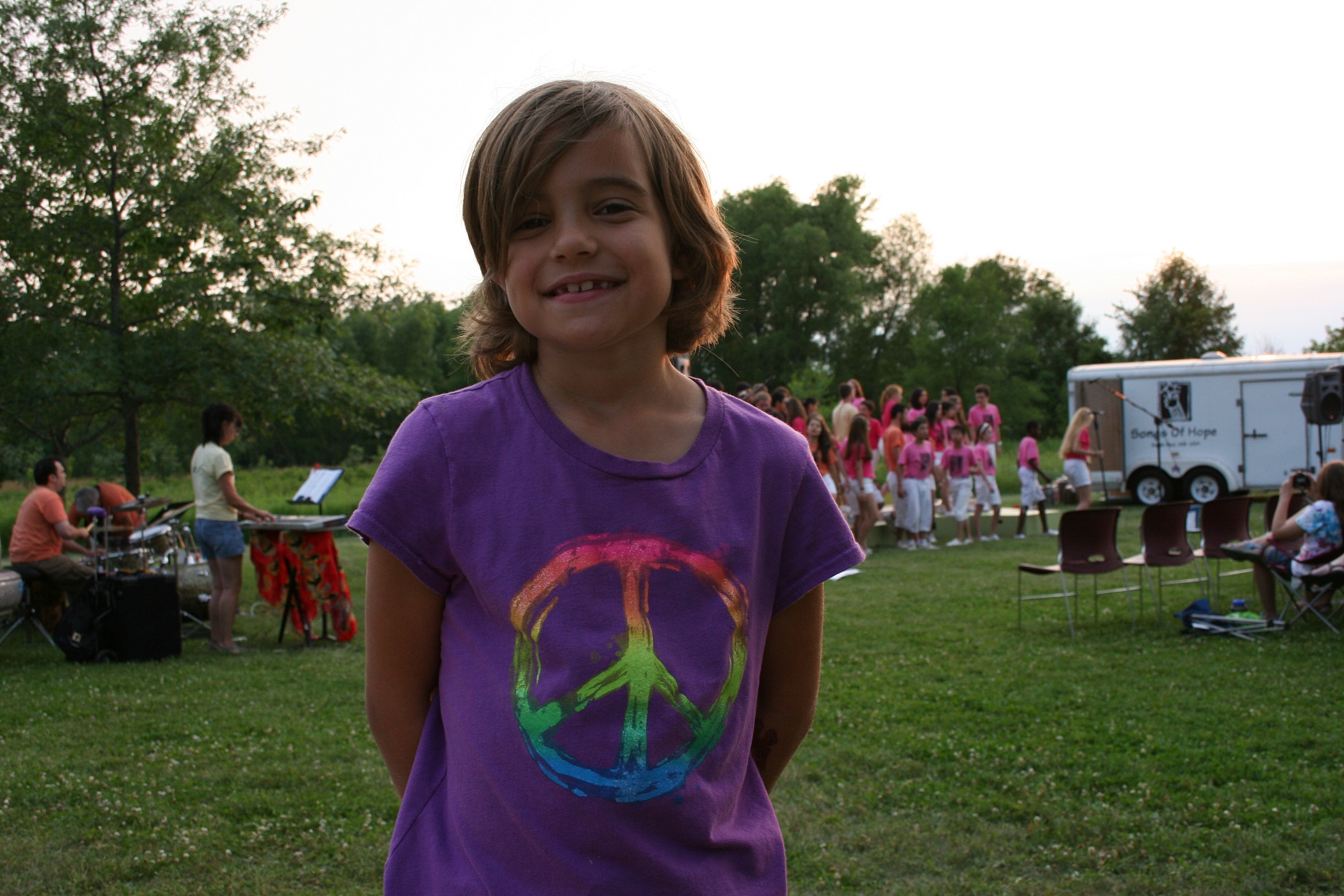
Nevaeh, the daughter of friends, wore the perfect shirt for the concert.
They were to me just kids sharing a hopeful message through song and dance, showing us that we are all human beings who can get along if we make the effort, living in harmony and peace with one another.
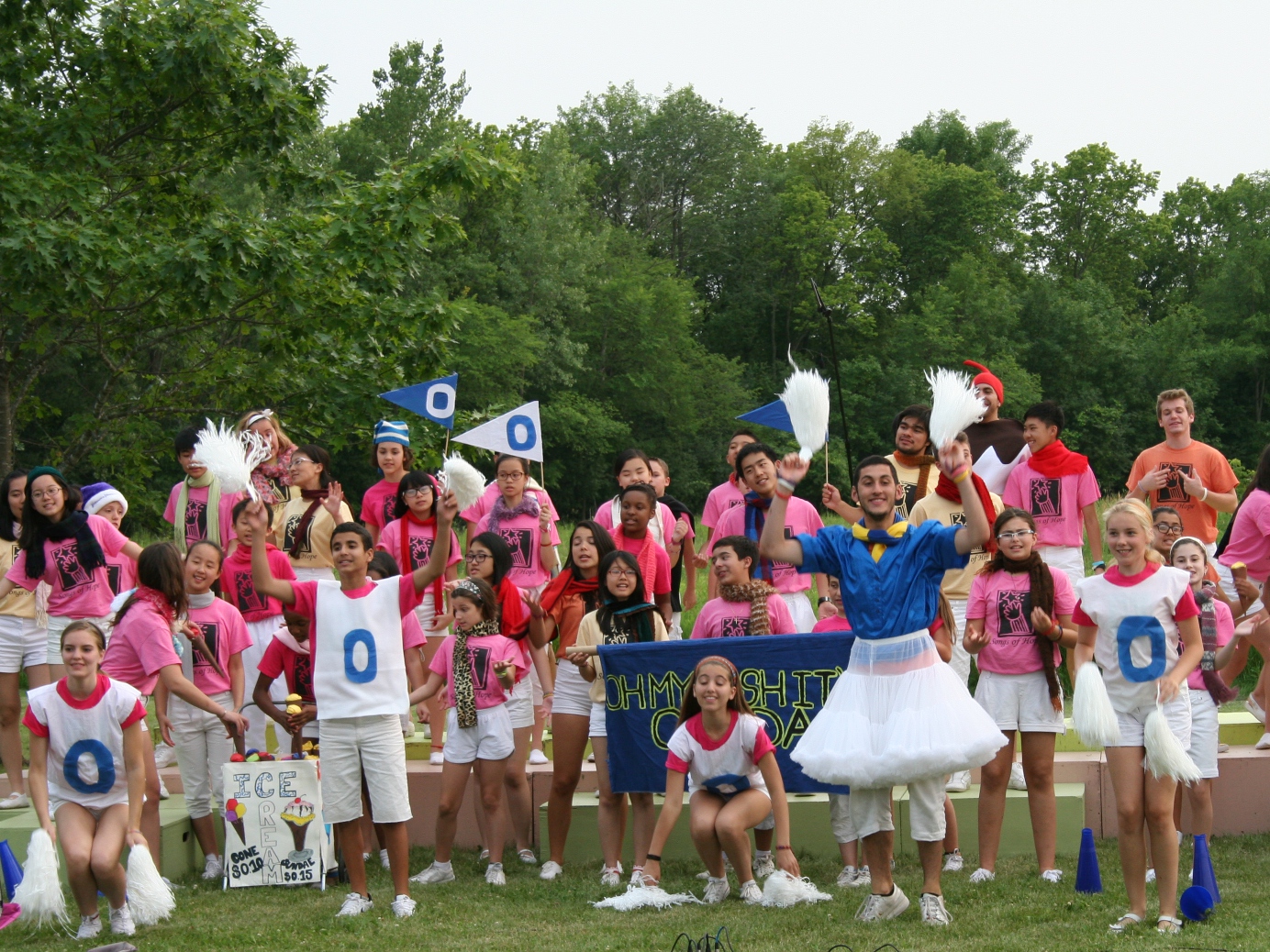
Look at the fun these youth had singing “I Scream, You Scream, We All Scream,” a song about ice cream, a universal treat.
Especially moving was the group’s performance of “I Am Malala,” based on the experience of the young Pakistani girl who was shot simply for pursuing education. “Fight for what you believe in…for education…infinite hope.”

Hands joined in hope.
After attending this concert, I am, indeed, hopeful.
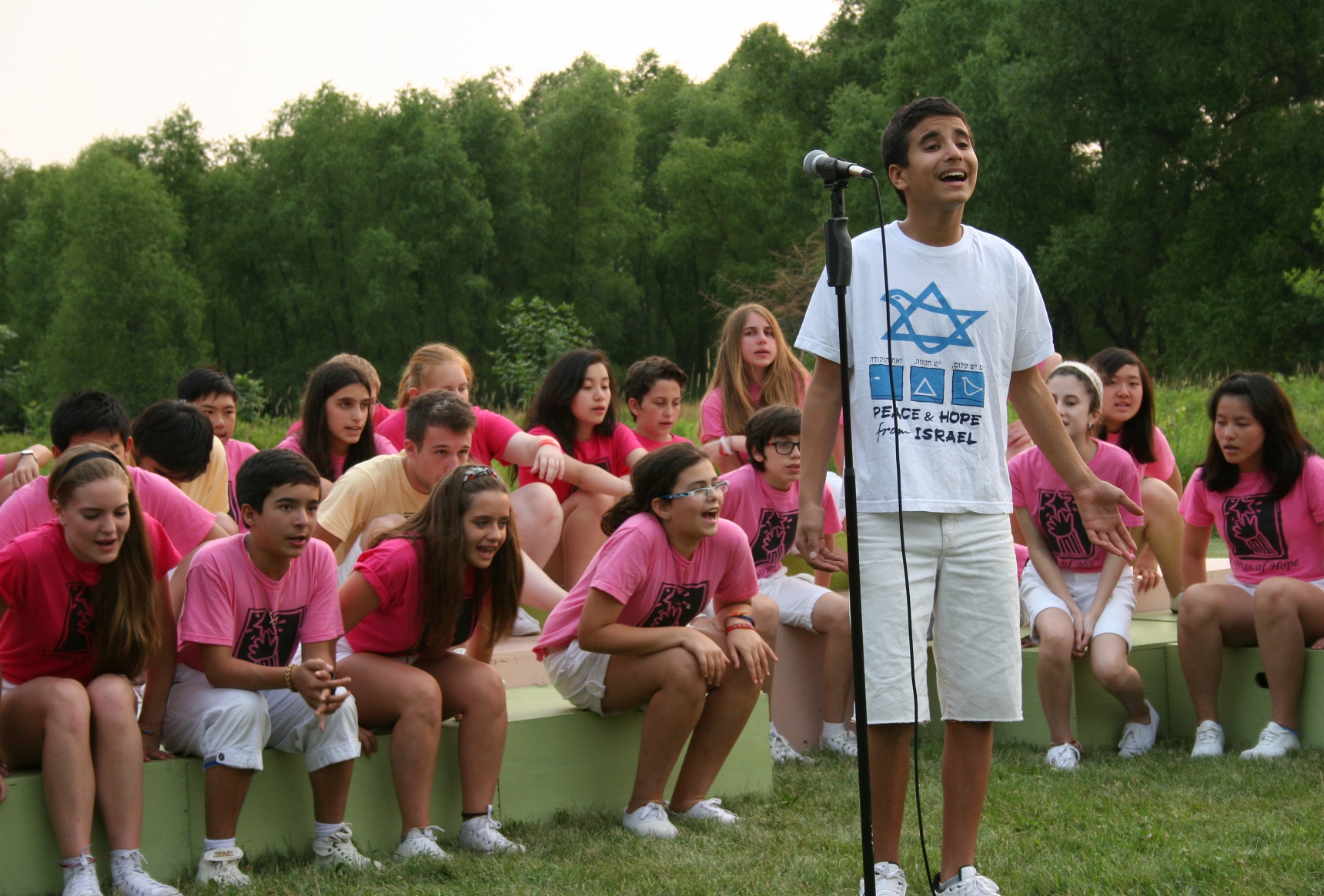
My heart went out to this boy from Israel given the current situation there.
And I expect so is the young soloist from Israel who sported a t-shirt reading “PEACE & HOPE from ISRAEL.”
FYI: CLICK HERE to see a schedule of the remaining performances in the summer concert schedule, which ends on July 27. The final concerts are in St. Paul, Roseville and Montgomery.
Please check back tomorrow for additional photos from the Faribault Songs of Hope concert. If you have an opportunity to attend a performance, do. Songs of Hope will inspire and uplift you.
© Copyright 2014 Audrey Kletscher Helbling
OH, FOR THE SWEETNESS of this butter-colored 1879 gingerbread house.
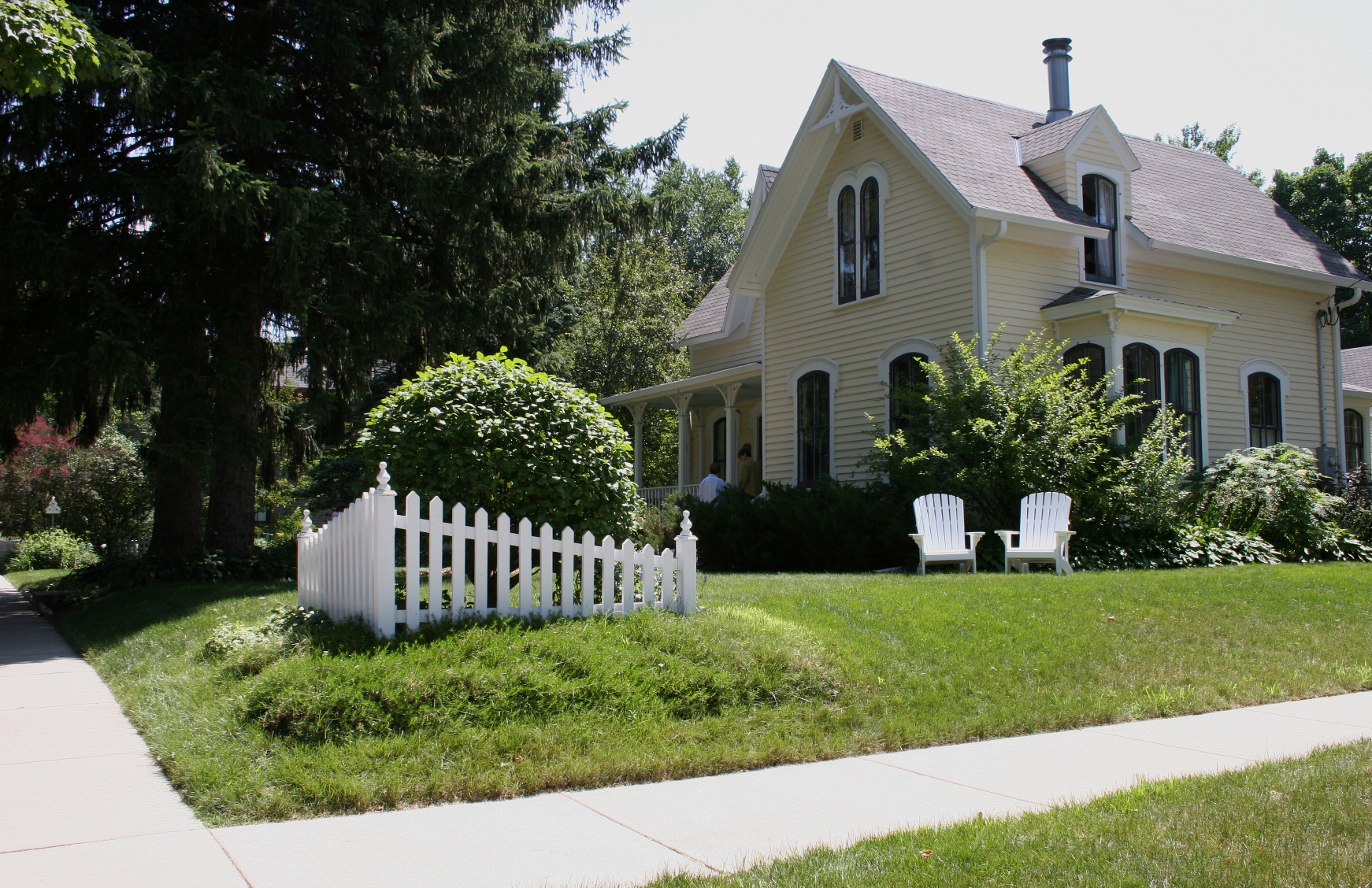
Derrin and Paul O’Connells’ Northfield home, built in 1879.
Arched windows and roof-line architectural detail. And that porch, oh, that porch—a cozy place to read or simply relax on a summer day. Pure white Adirondack chairs are positioned at a front corner of the house as an invitation to sit a spell and perhaps observe passersby or a game of croquet. And then a corner picket fence adds the perfect accent to this period home.
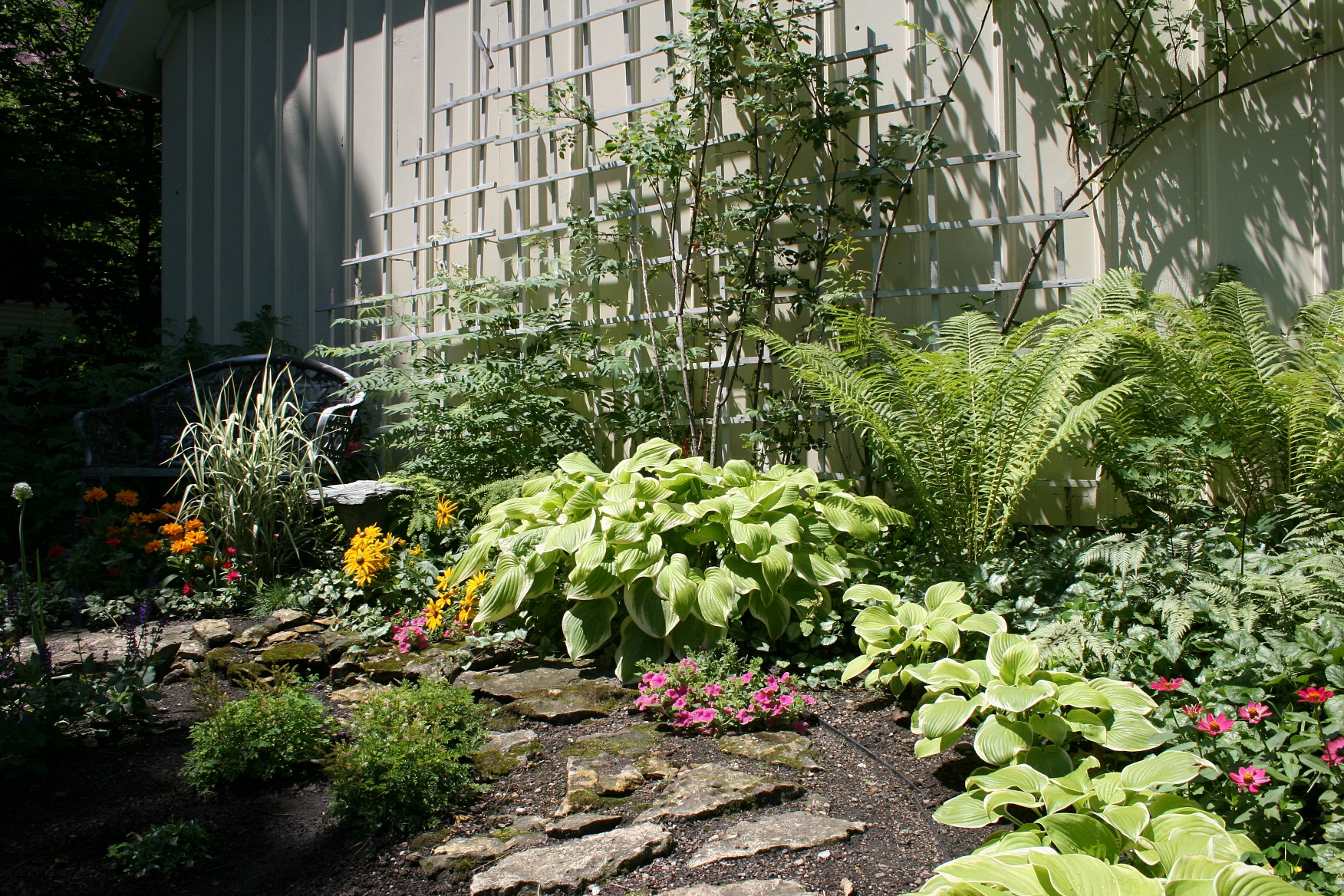
An inviting spot, complete with trellis, to sit a spell next to the garage.
Derrin and Paul O’Connell are only the third owners of this 135-year-old house located by Central Park in Northfield. And, recently, their property was among six showcased in the Northfield Garden Club 2014 Garden Tour. Not the house specifically, but the yard and gardens, although my attention was focused as much on the historic house as the plants. I love old homes with character.
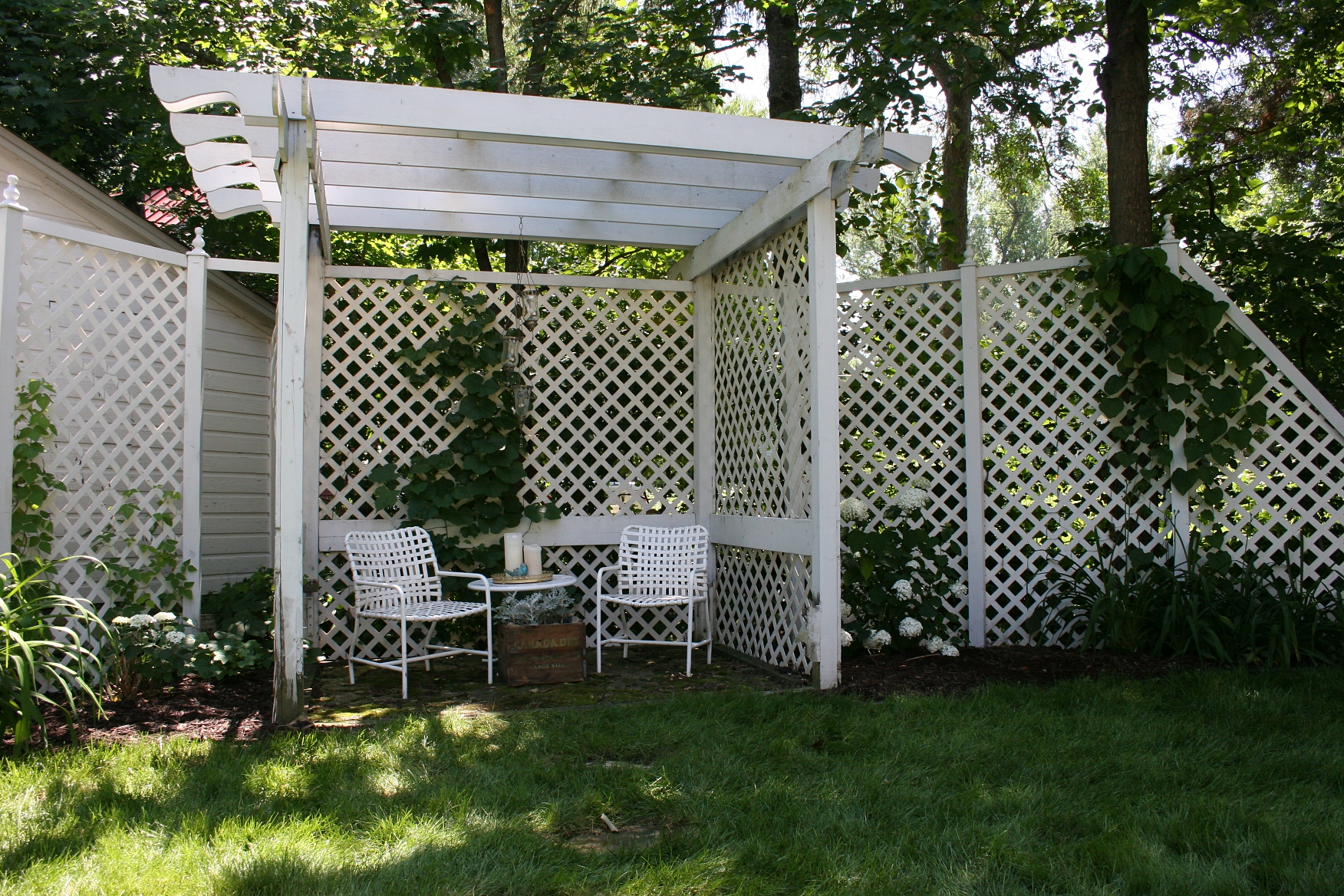
Latticework accents a corner garden pergola.
The O’Connells have done a fine job of complementing their home’s style with garden rooms that call for lingering under a pergola or settling onto a bench next to a trellis.
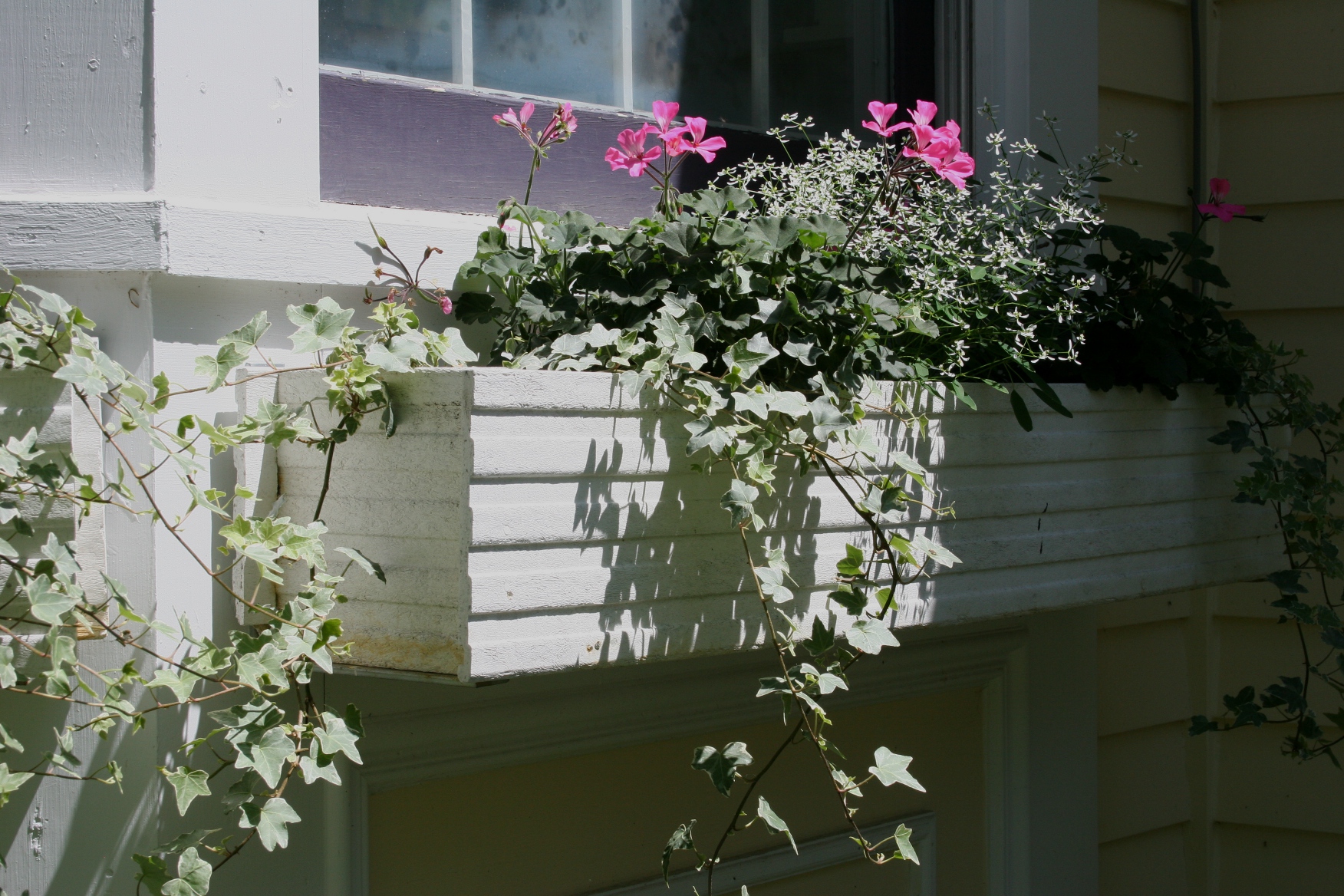
Windowbox charm complements the historic home.
Window boxes hold pink geraniums, hardy English ivy and airy Diamond Frost. Spruce trees, more than 100 years old, grace the yard.
And just off a sprawling 1980s enclosed porch addition that blends so seamlessly with the house in architectural style and detail that you would think it original, a swath of wide deck steps extend a warm visual welcome.
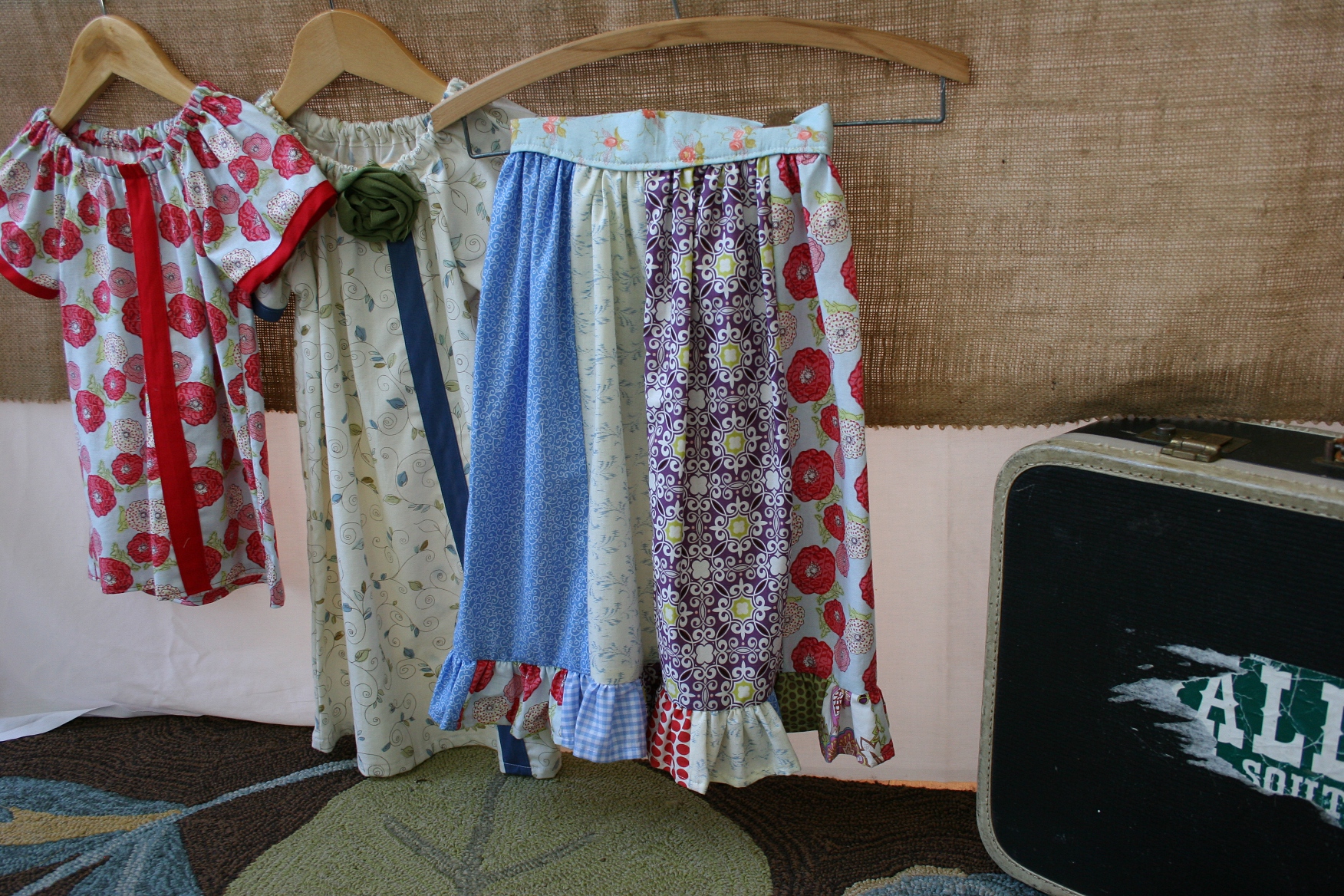
Some of Derrin’s creations displayed next to a vintage suitcase in the porch.
Inside that porch, Derrin O’Connell showcased some of her creations, like sweet little girls’ dresses and headbands. Her artistry style of hand-stitching, upcycling and more fits this house as does her business name, Tillie’s. Derrin’s mom called her this endearing name when Derrin was growing up. Tillie’s will be among the featured vendors at the Fall 2014 (September 25 – 27) Junk Bonanza Vintage Market at Canterbury Park in Shakopee. Click here for more info.
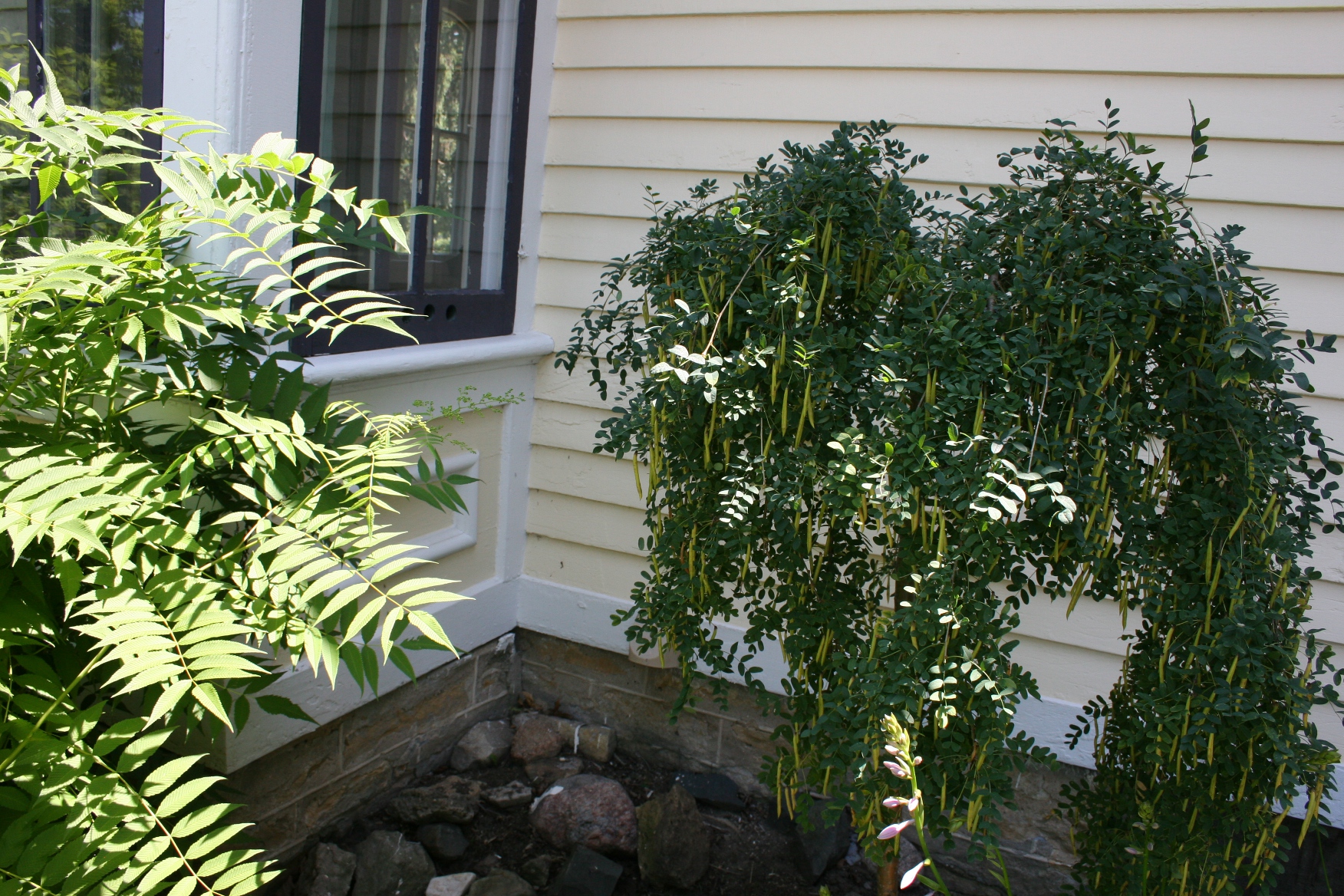
I love the interesting plant, right, tucked into a corner of the home’s exterior. Anyone know its identity? I should have inquired.
Now if only I could have toured the O’Connells’ house, I would have been even more pleased. But I was grateful to wander around their yard, imagining the history this house, this land, holds.
BONUS PHOTOS:
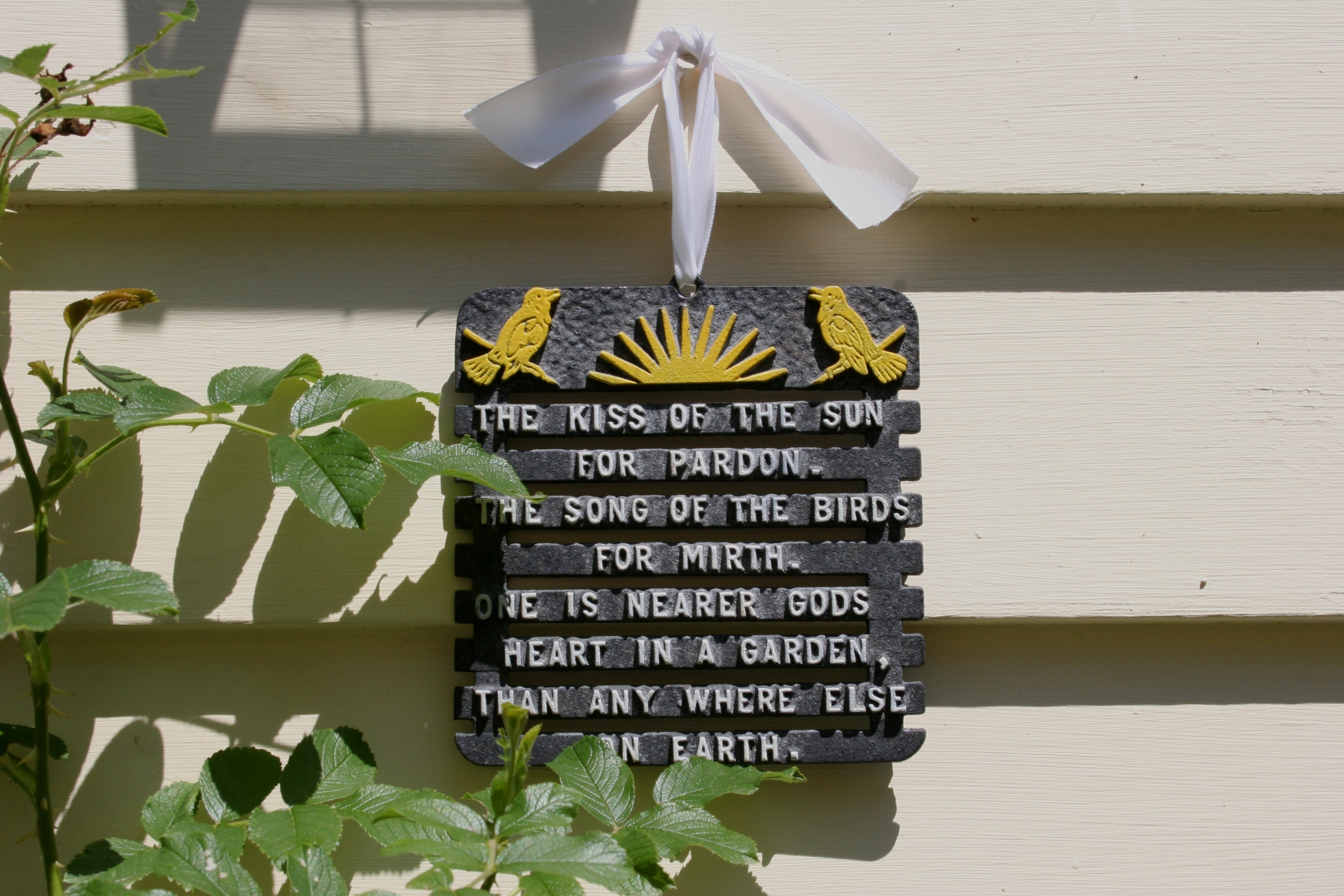
Love the message on this plaque.
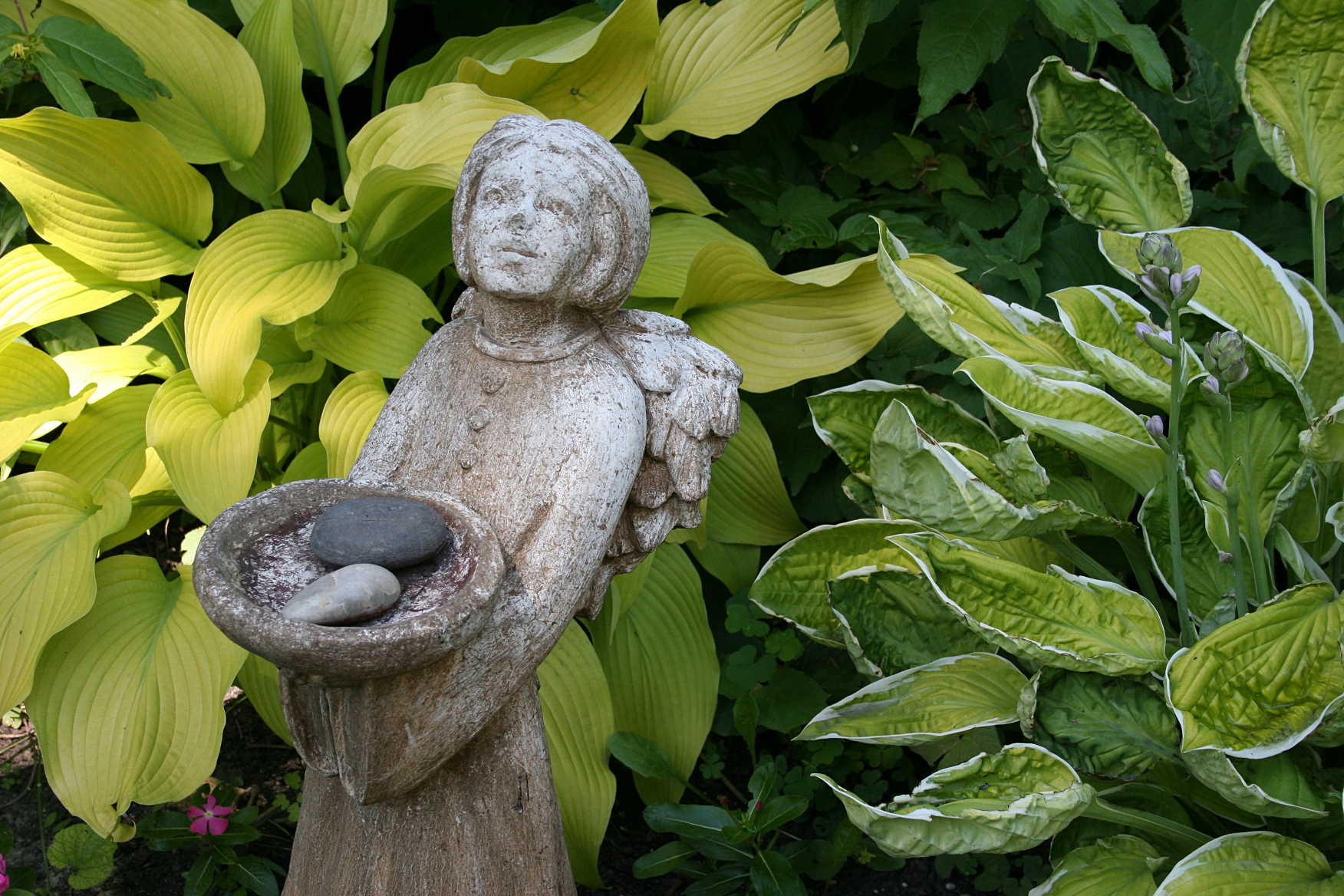
Garden art in the hosta.
FYI: Click here to read an earlier post from the Northfield Garden Club 2014 Garden Tour. Watch for additional tour posts.
© Copyright 2014 Audrey Kletscher Helbling
I DIDN’T BUY ANYTHING at this recent garage sale in Dundas. But I got this photo:
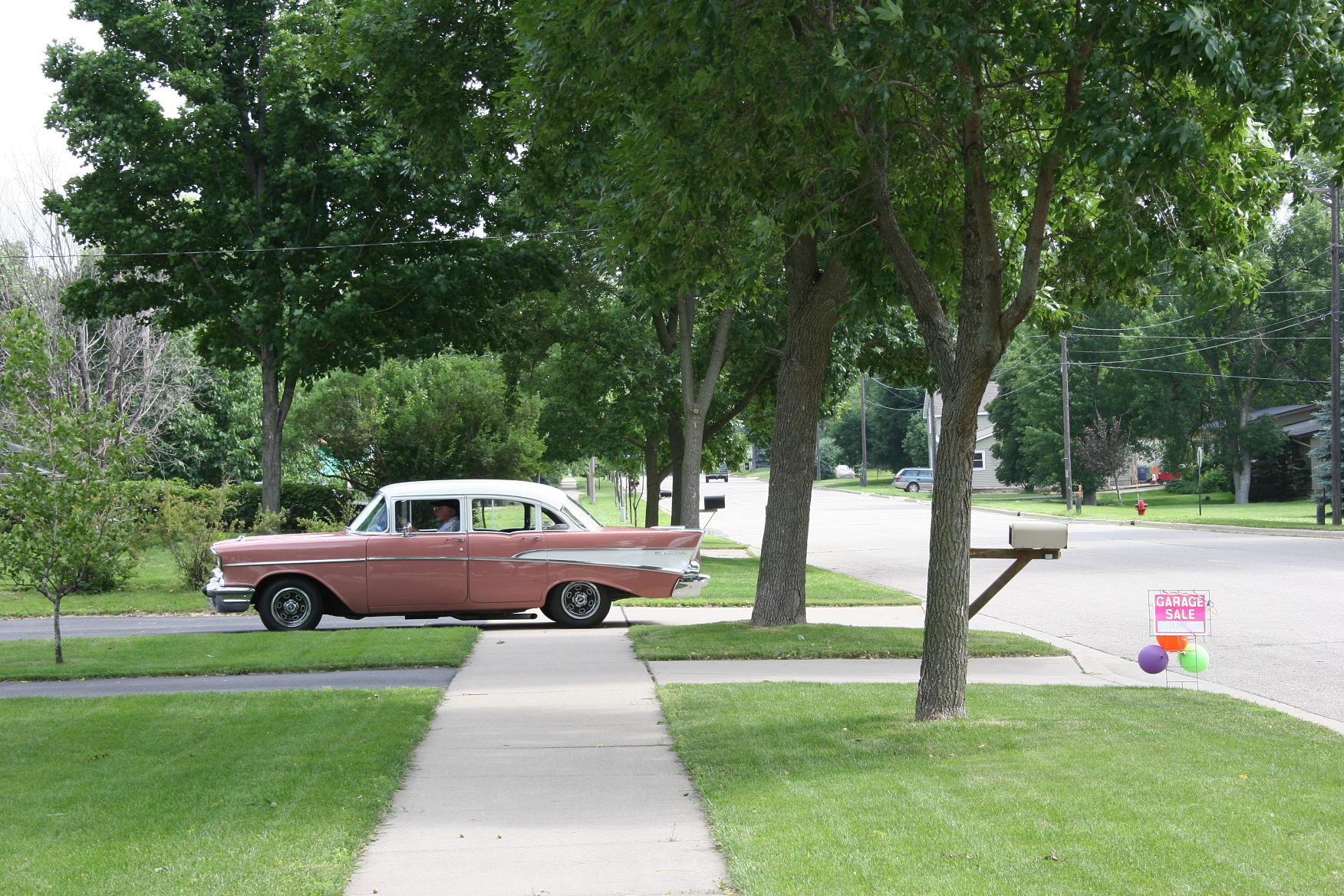
I can’t quite put my finger on why I like this scene, this image.
It’s not because I’m some old car enthusiast, although I admire this shiny 1957 Chevy.
Rather it’s the serenity, I think, of a Saturday morning in a small town. This car collector had driven to Dundas for a car show, which was cancelled presumably because of the predicted rainfall. This scene speaks to me of small town living and contentment and simpler days when life was less hurried.
And I like, too, how the hue of the car is mimicked in the color of the garage sale sign. Not quite the same shade, but noticeable to my eye.
This photo could write a story. That’s my conclusion.
How does this scene speak to you?
Copyright 2014 Audrey Kletscher Helbling
I’VE SHOPPED COUNTLESS antique shops in my life.
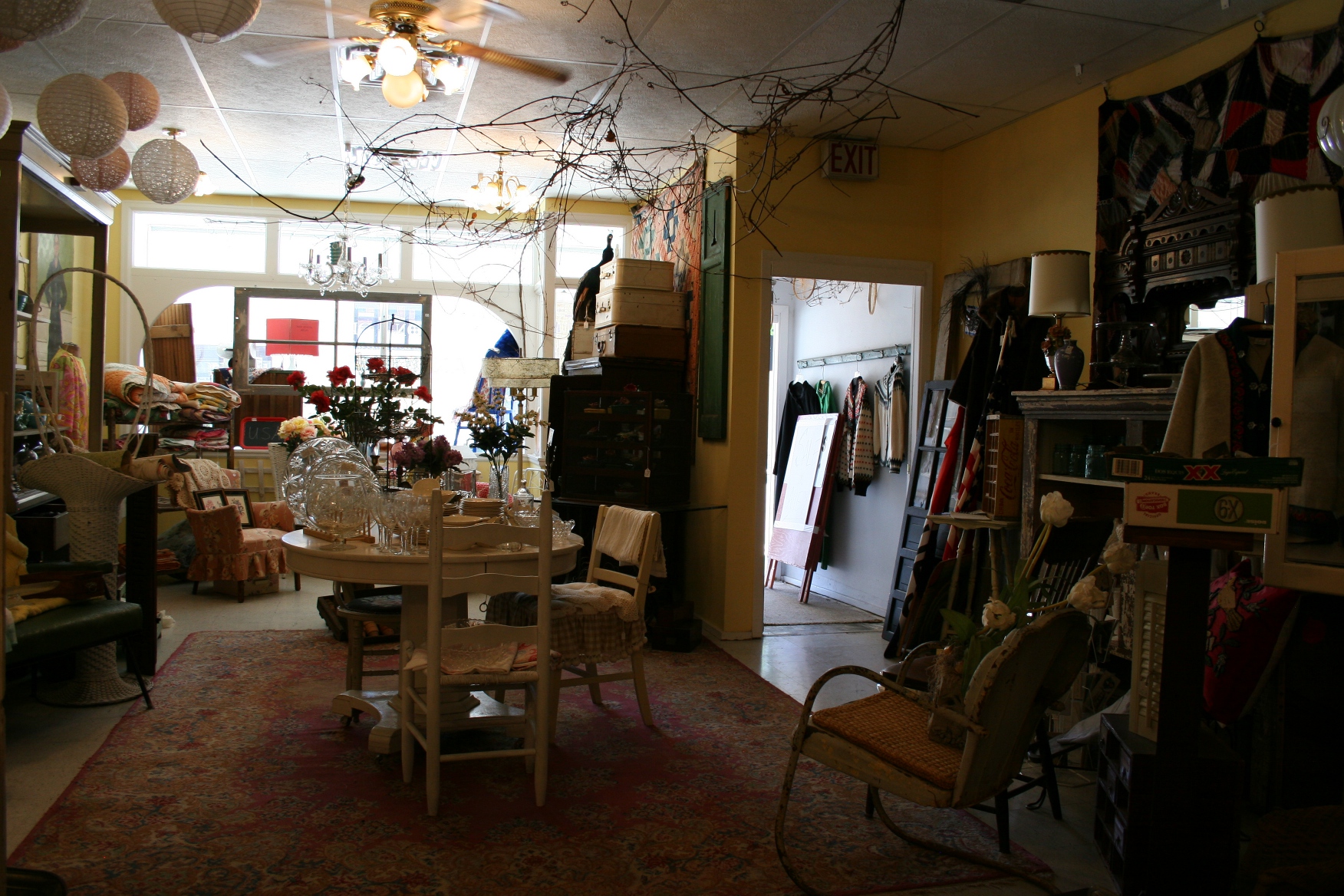
Looking toward the front of Pearl Button Primitives.
But never have I seen one as artistically inclined as Pearl Button Primitives in downtown Waseca.
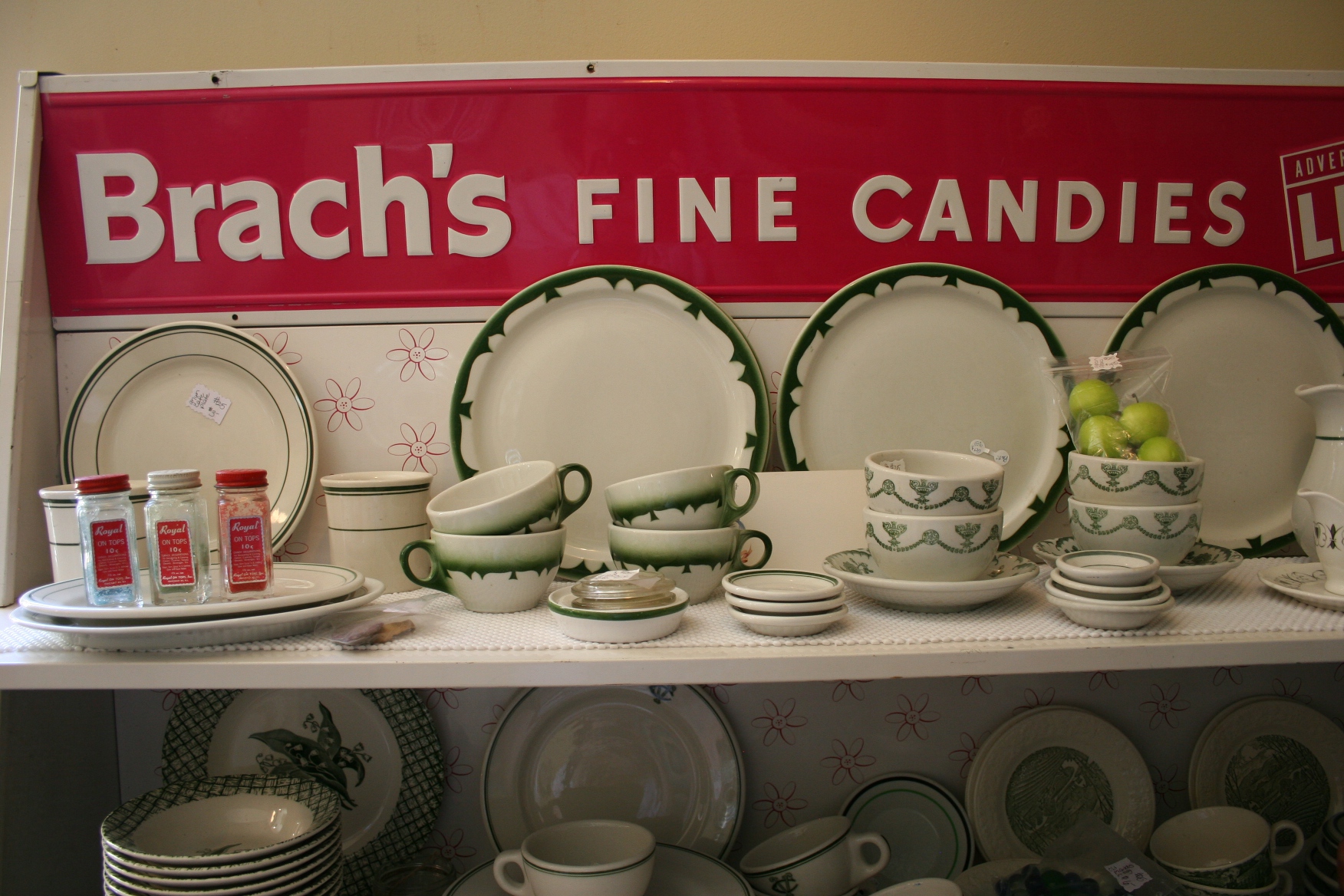
A candy display rack repurposed.
Shopping here is like perusing an art gallery or perhaps a museum curated by someone with an artistic flair.
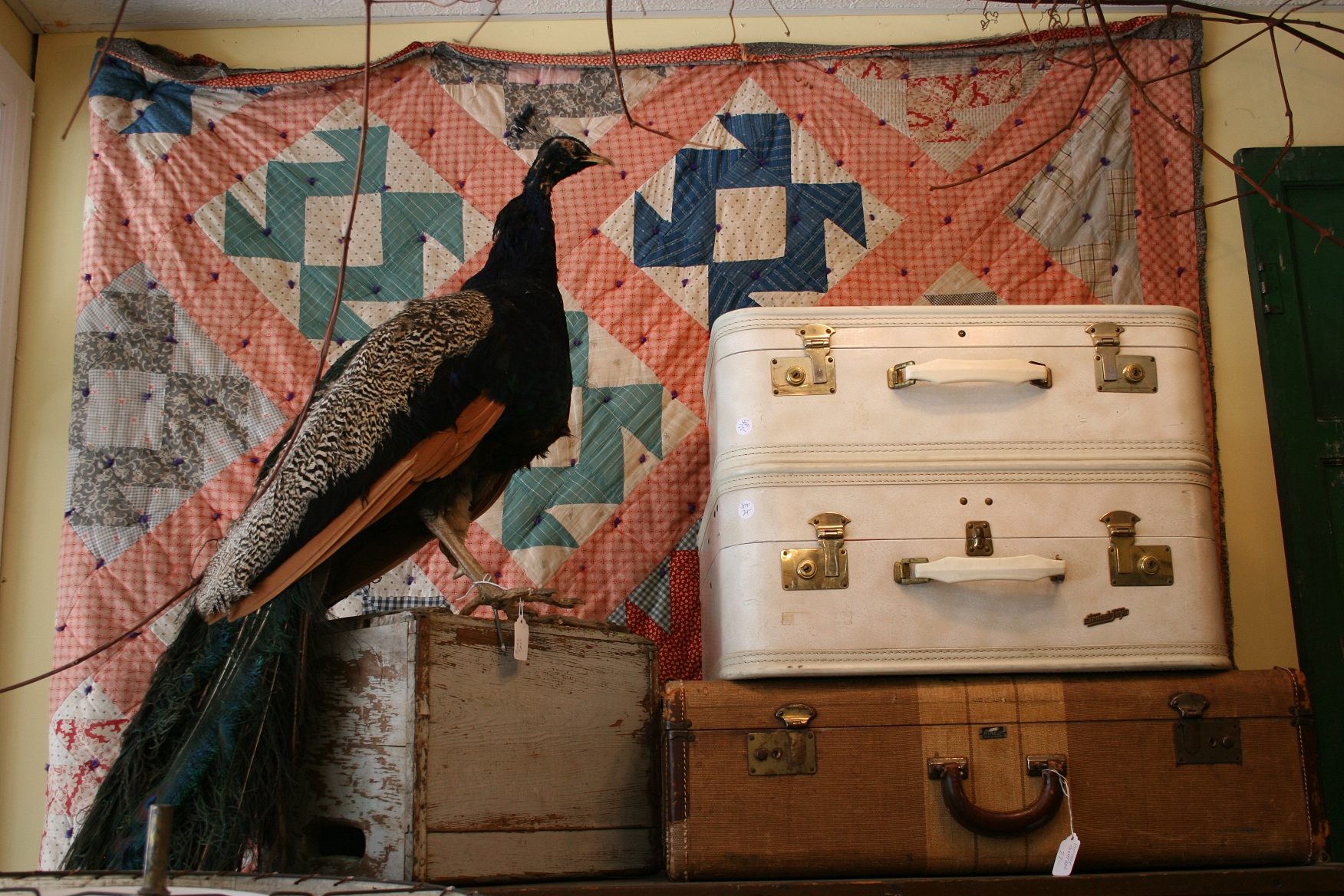
This setting seems the perfect prompt for a story.
I expect that’s because Justine Meyer possesses an educational background in art. It shows in the way she artfully arranges merchandise in snippet scenes that catch the eye.
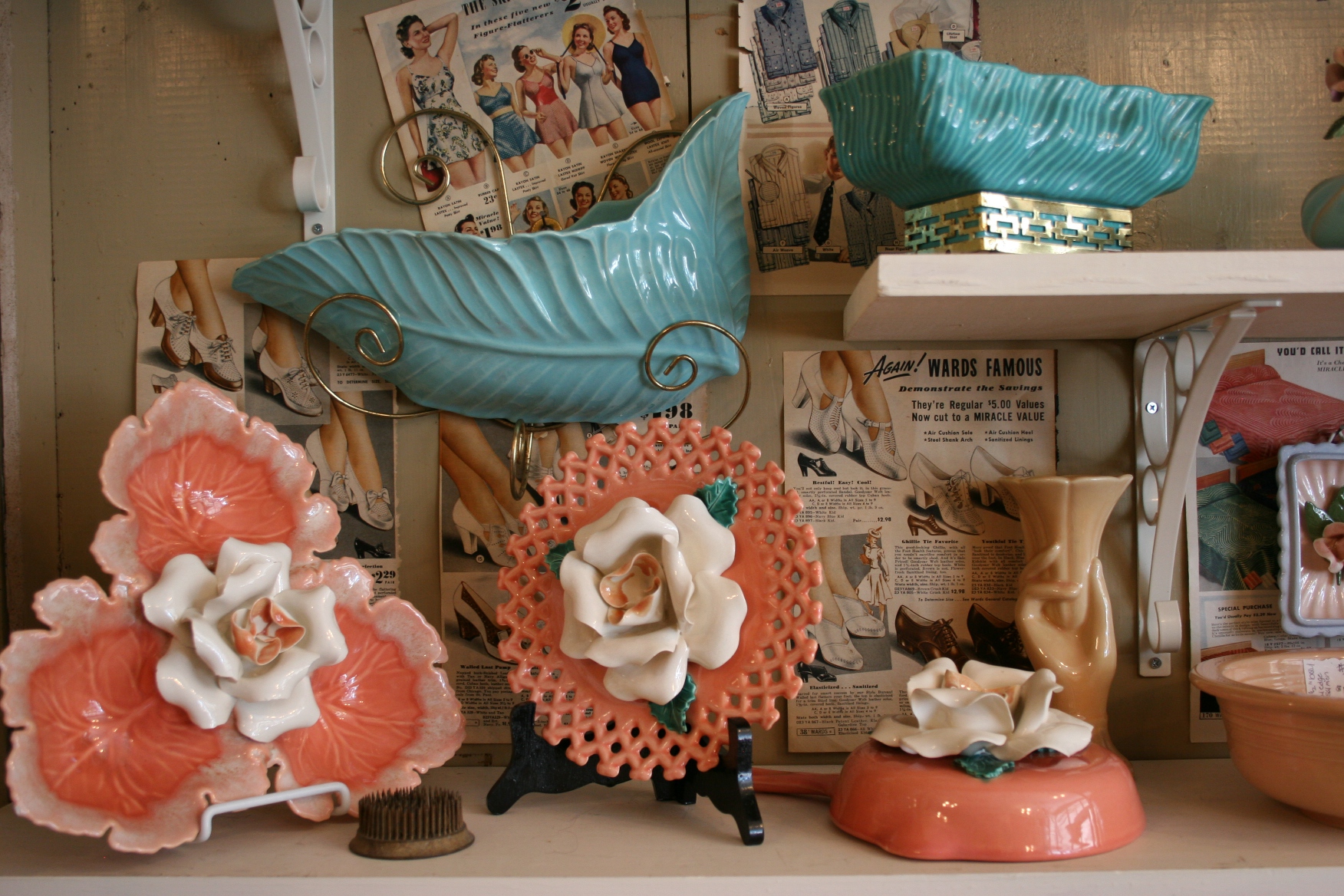
A backdrop of vintage magazine pages create visual interest.
Afghans and quilts brighten walls. Vintage ads and magazine pages make for unique merchandise backdrops. Rows of 45 rpm vinyl records precisely arranged on a wall appear pop art style. A vintage suitcase holds Carolyn Keene’s The Mystery of the Ivory Charm, Zane Grey’s Nevada and other old books. Plastic magnetic letters—the type my kids once plastered to the front of the fridge—provide a visual pop of color in a chest of drawers. I wonder whether my eldest would appreciate one of the maps splayed across the wall.
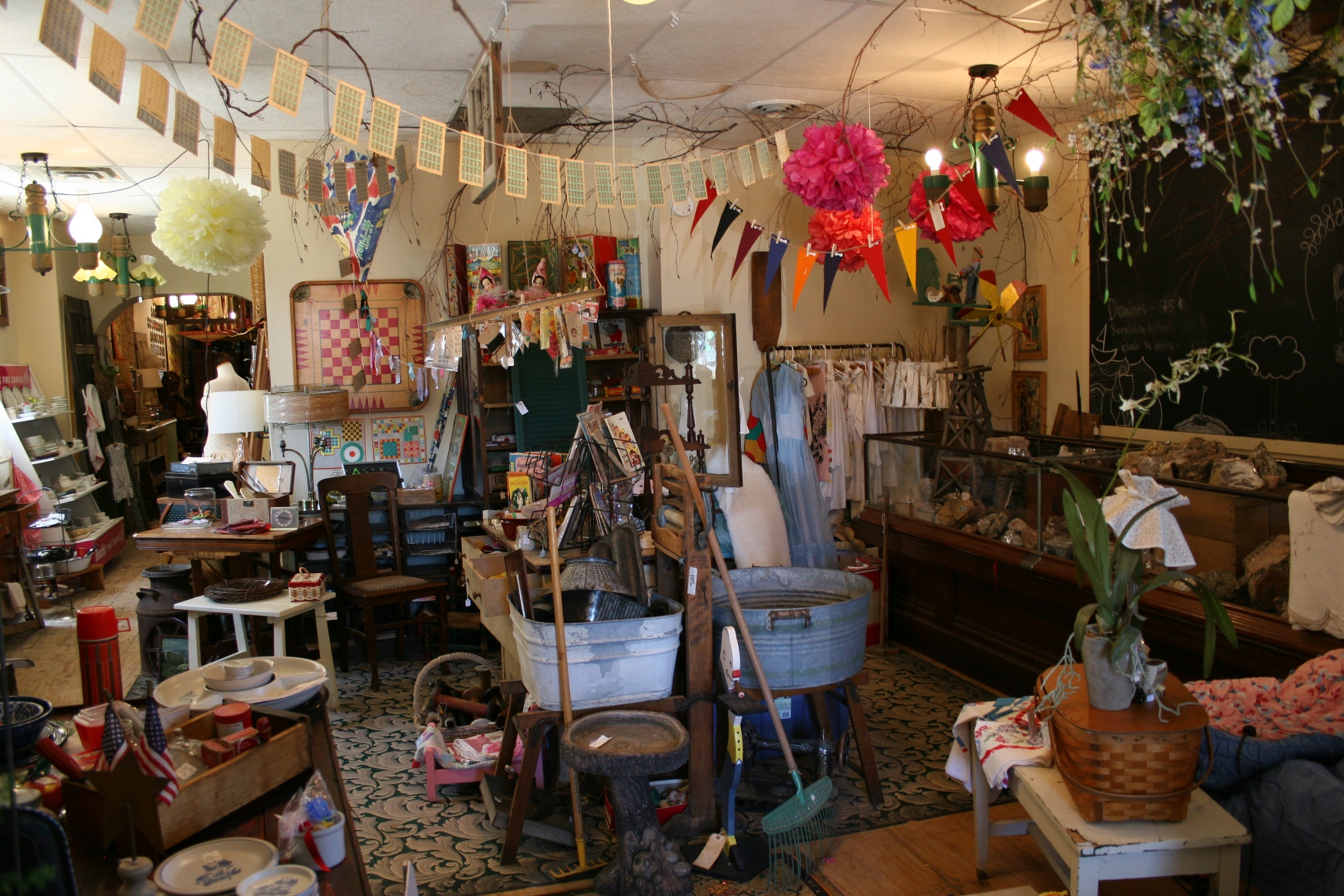
The back room.
There’s so much to take in here that I really needed more than the 20 minutes I wandered through the shop on a recent Saturday afternoon. But Justine and crew (friends are part of the business, too) were already plucking up merchandise that had been hauled out back for an alley garage sale when I arrived late. They are clearing out, making way for new stuff and promise more such sales. I figured I best not linger too long.
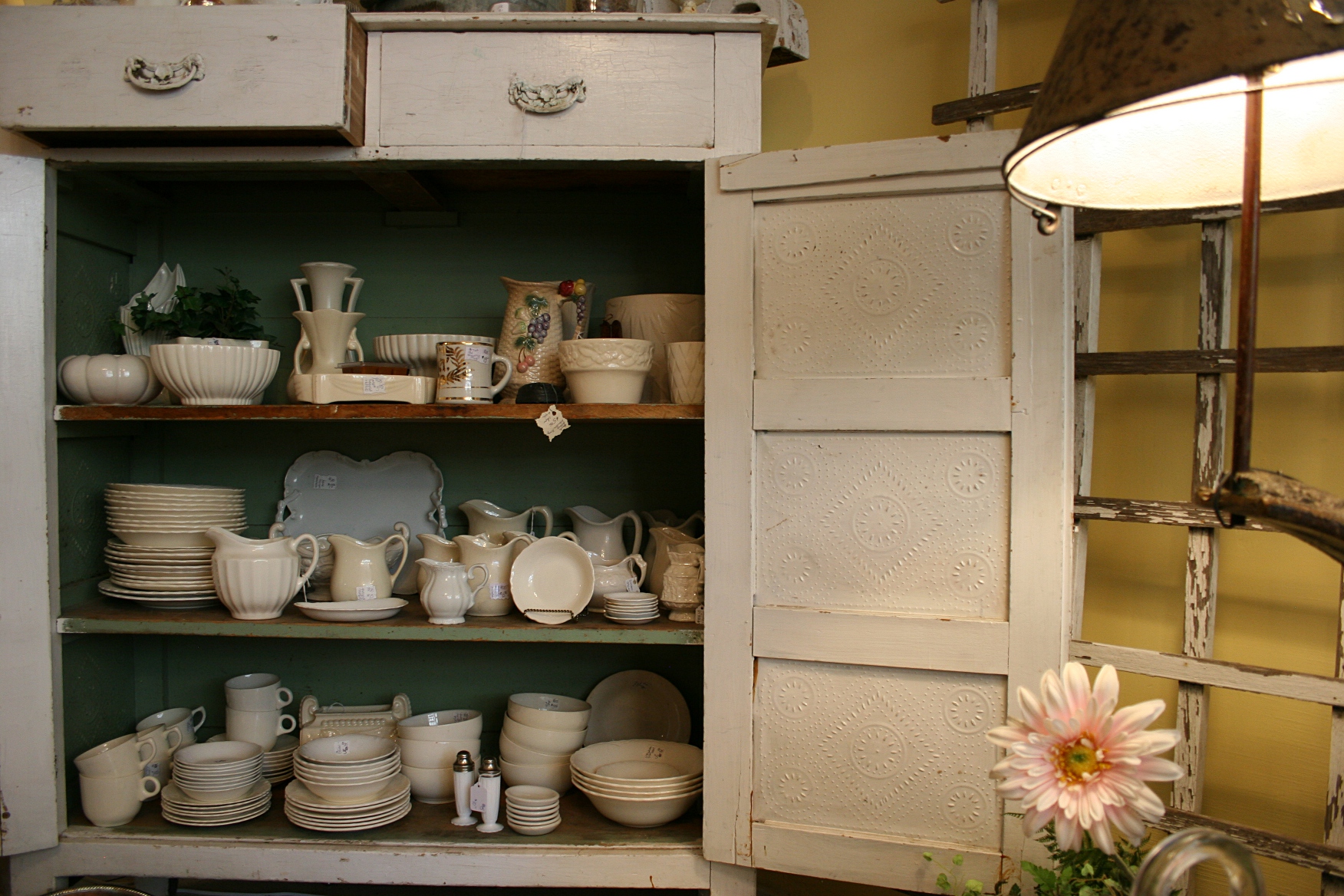
Beautiful setting just makes me want to scoop up these dishes.
Pearl Button Primitives describes itself as “an eclectic mix of antiques and primitives; featuring vintage jewelry & buttons, linens, architectural salvage, furniture, pottery, and other gathered treasures all lovingly displayed.”
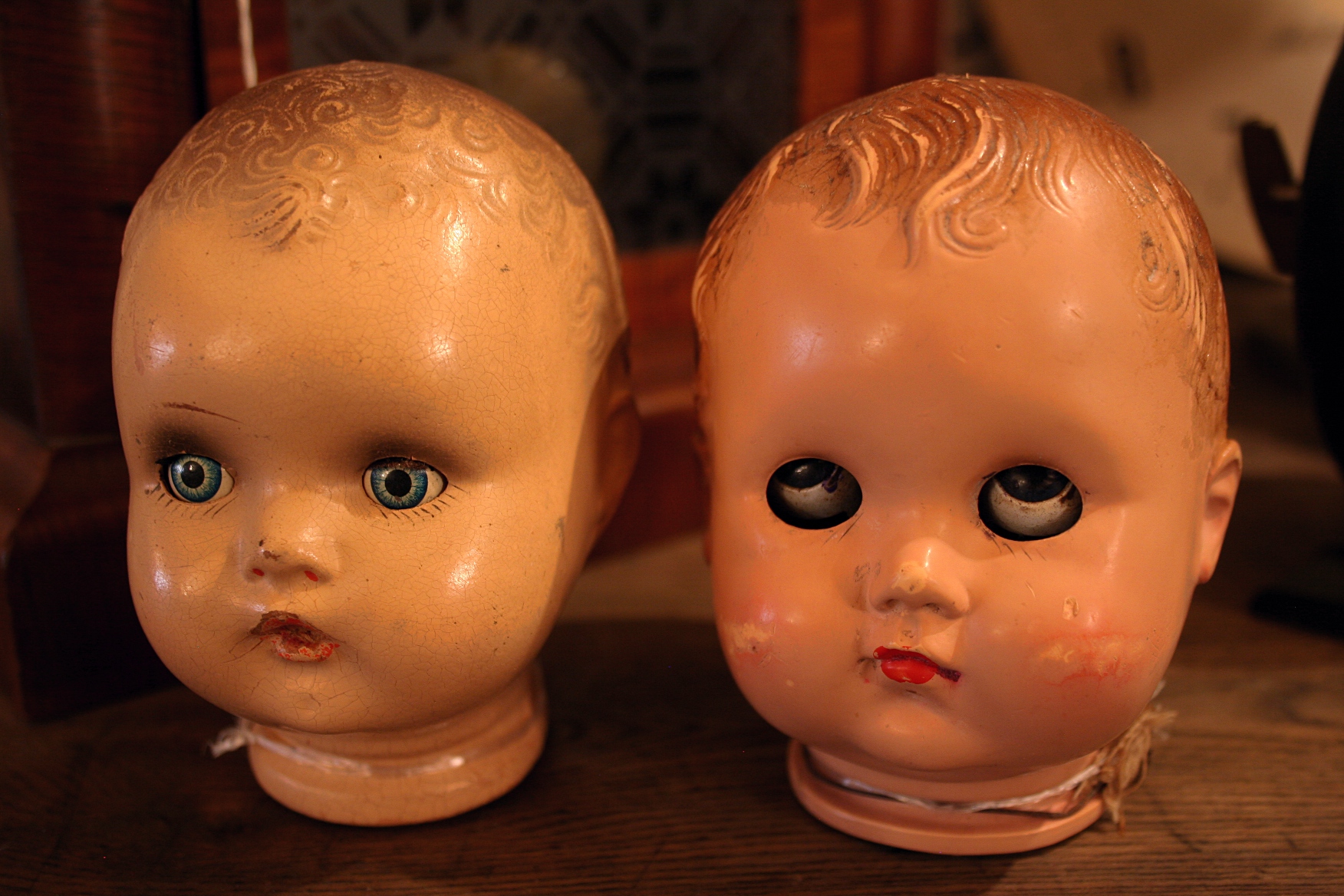
Quirky.
In the tight space of this shop, antiques and collectibles abound. Quirky doll heads with open and shut eyes remind me of my favorite childhood doll.
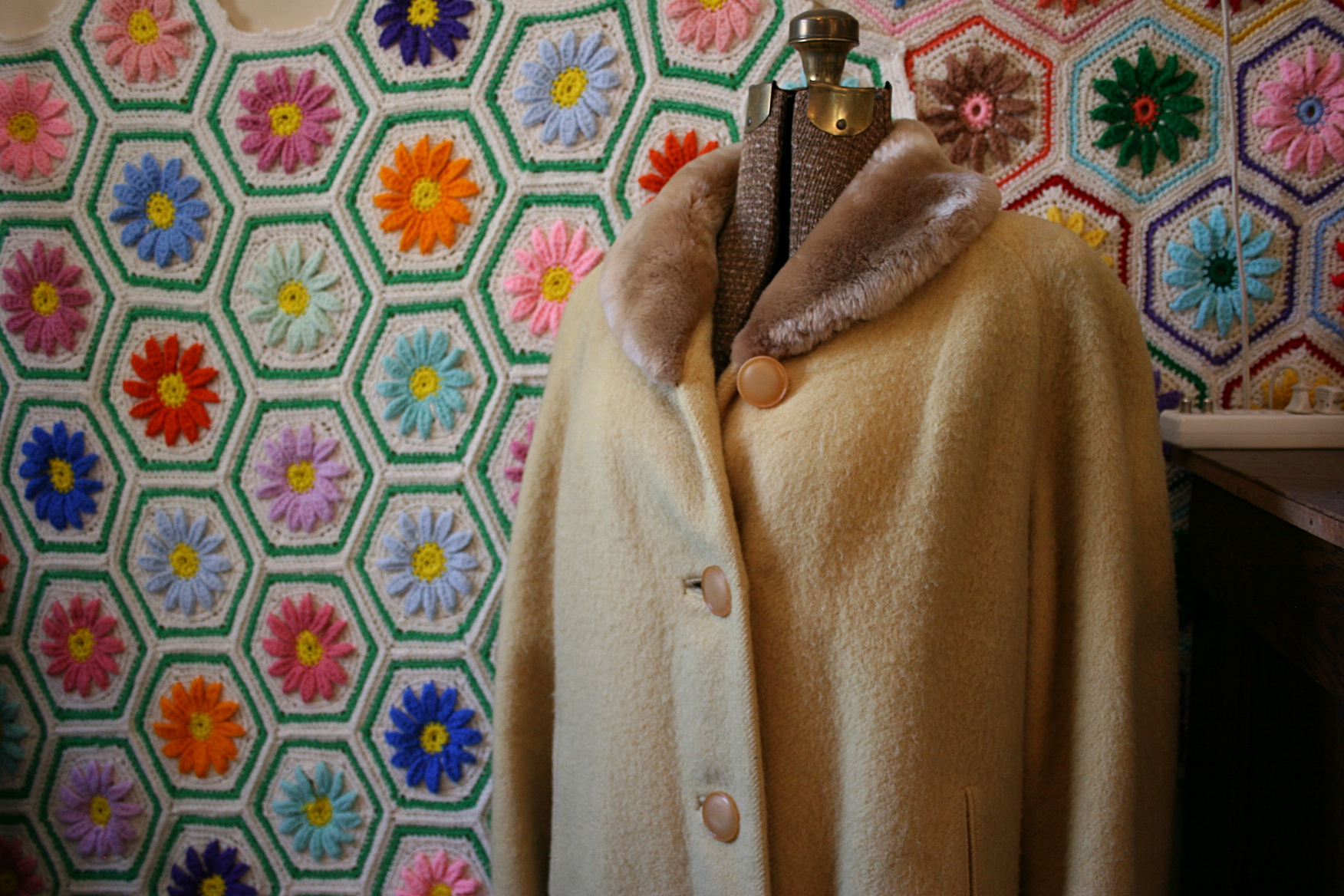
It takes an artist’s eye to pair this coat with this afghan. Textures and contrast of color make this work.
Milk bottles and vintage jewelry pins and wash tubs and dainty floral hankies and dishes and a lovely coat and so much more draw my interest.
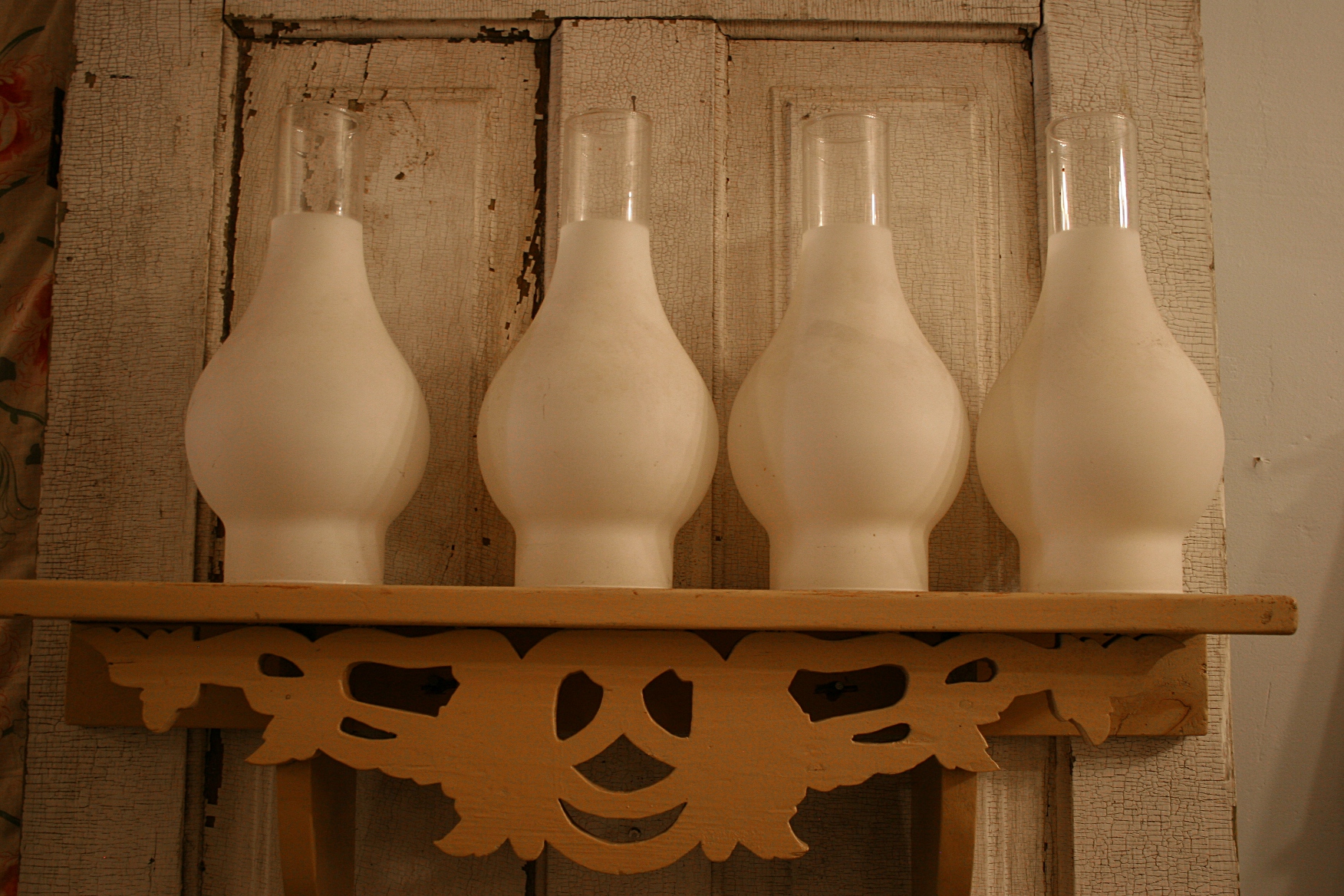
Repetition and simplicity. Perfect.
But it is the artsy displays, the attention to detail, the obvious time and care invested here which most impress me.
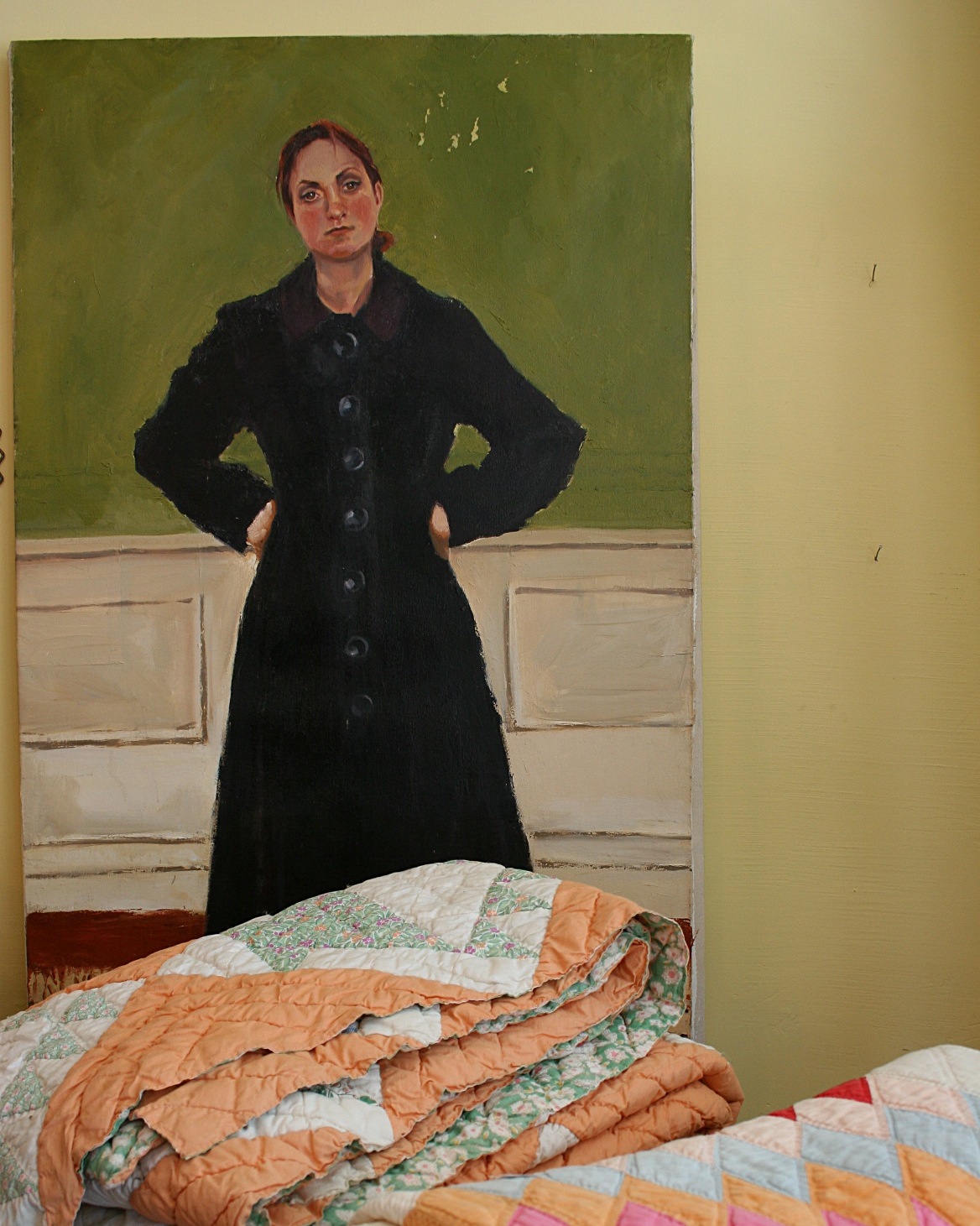
There’s something about this portrait of a determined, defiant woman with an attitude that I love.
This shop makes a memorable imprint. Just like the “Woman with an attitude,” as I’ve dubbed the hands-on-hips woman in a portrait showcased at the front of the store. Love that painting.
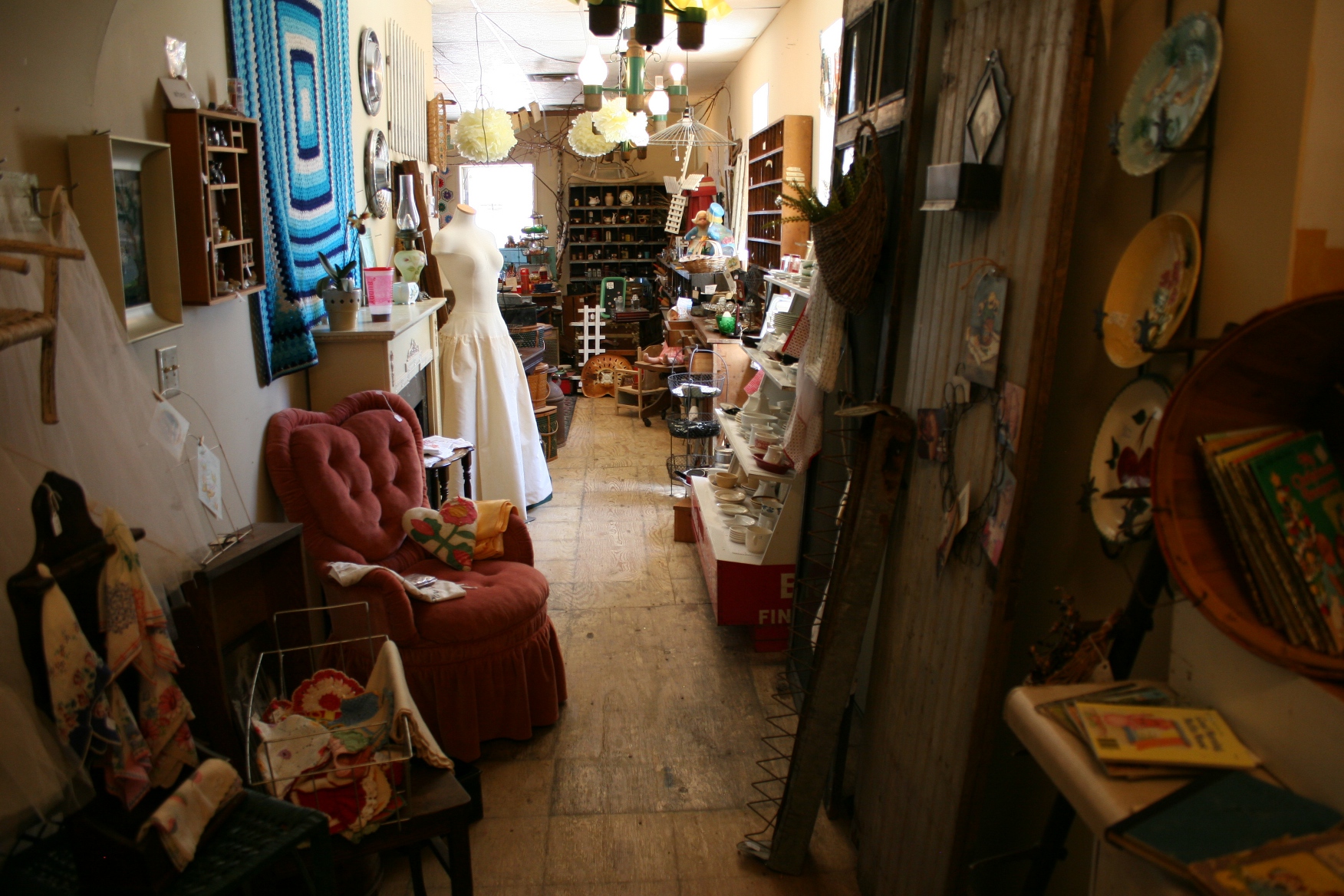
The narrow space that connects the front of the shop to the back.
Love this shop.
FYI: Pearl Button Primitives, 206 N. State Street, Waseca, is open from 10 a.m. – 4 p.m. Friday and Saturday, but not year-round. Best check before you visit. Click here to reach the shop’s website and here to reach the Facebook page. Phone: 507-461-1648.
© Copyright 2014 Audrey Kletscher Helbling
ONCE UPON A TIME, I could have cared less about car shows. They held no interest for me. Or so I thought.

A scene from Faribault Car Cruise Night during the community’s recent Heritage Days.
But then a few years back, I tagged along with my husband to a local car show, camera in hand, and I was hooked.
It’s not the make or model or engine or such that typically draws my interest. Rather, it’s the art of the vehicles and my ability to view a car show with a photographer’s eye.

The red grabbed my attention.
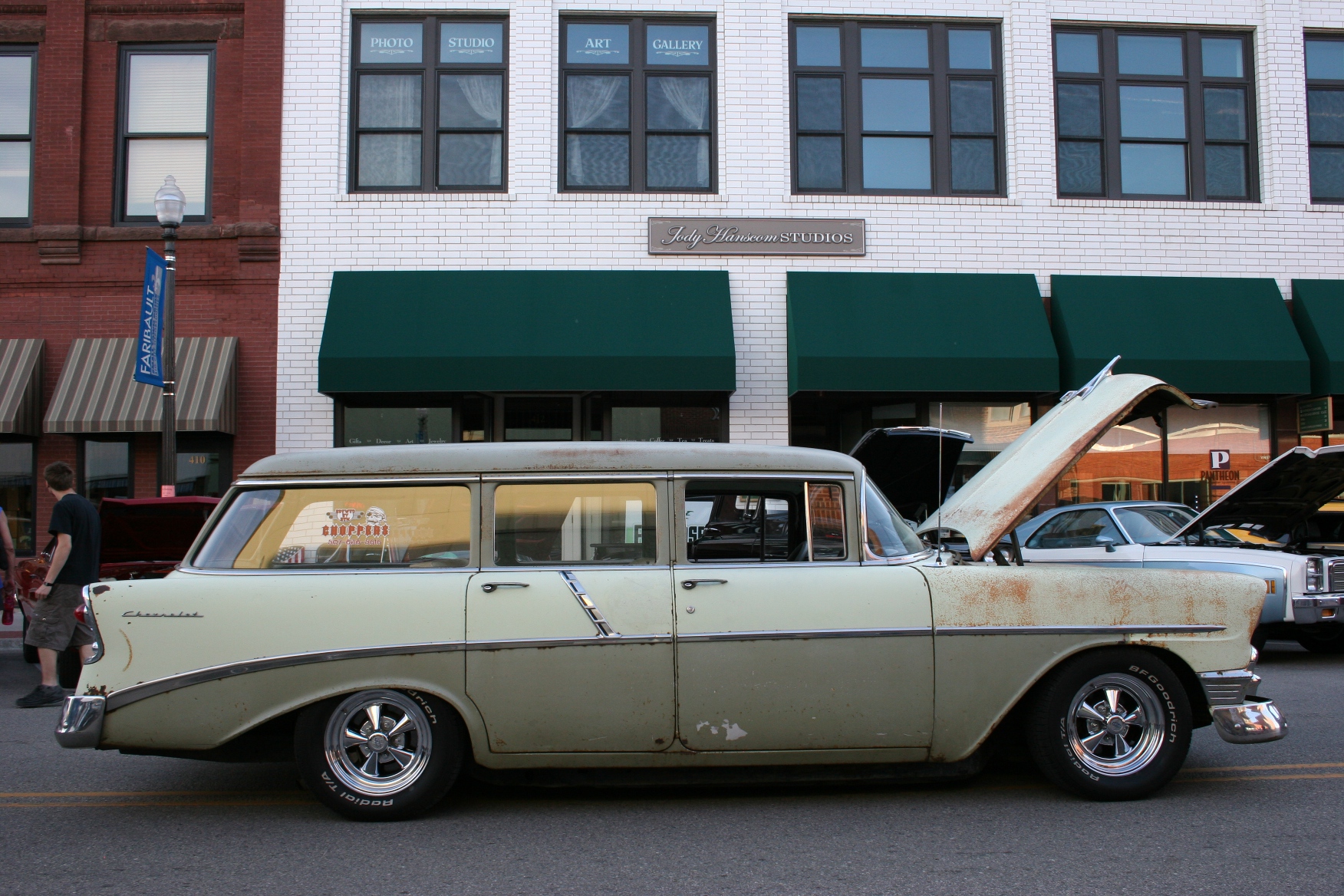
This rustic Chevy wagon rated as my favorite of the evening.

Here it was the message which drew my focus.
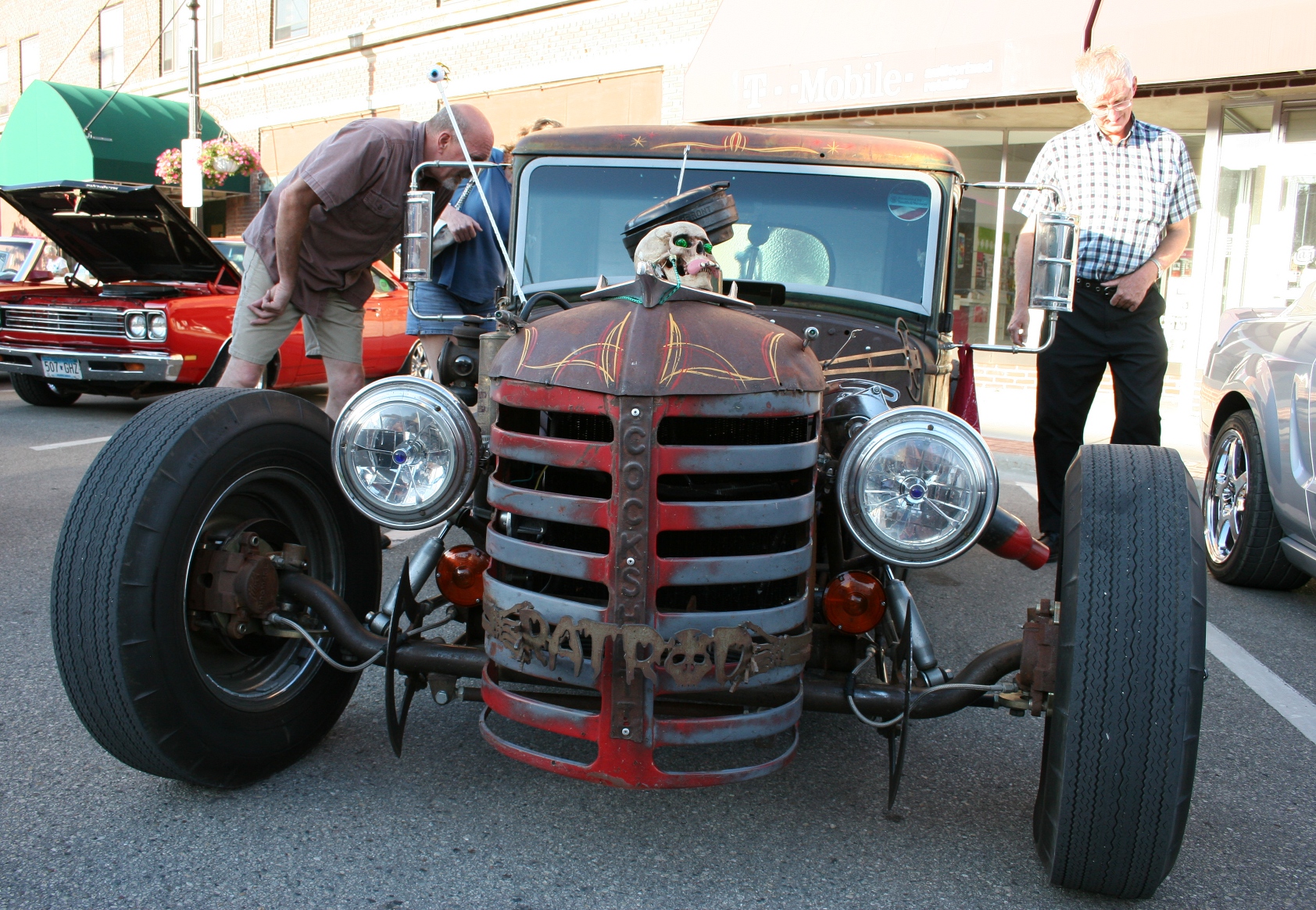
From the back of the Rat Rod (above photo), I moved to the front, crafted from a tractor.
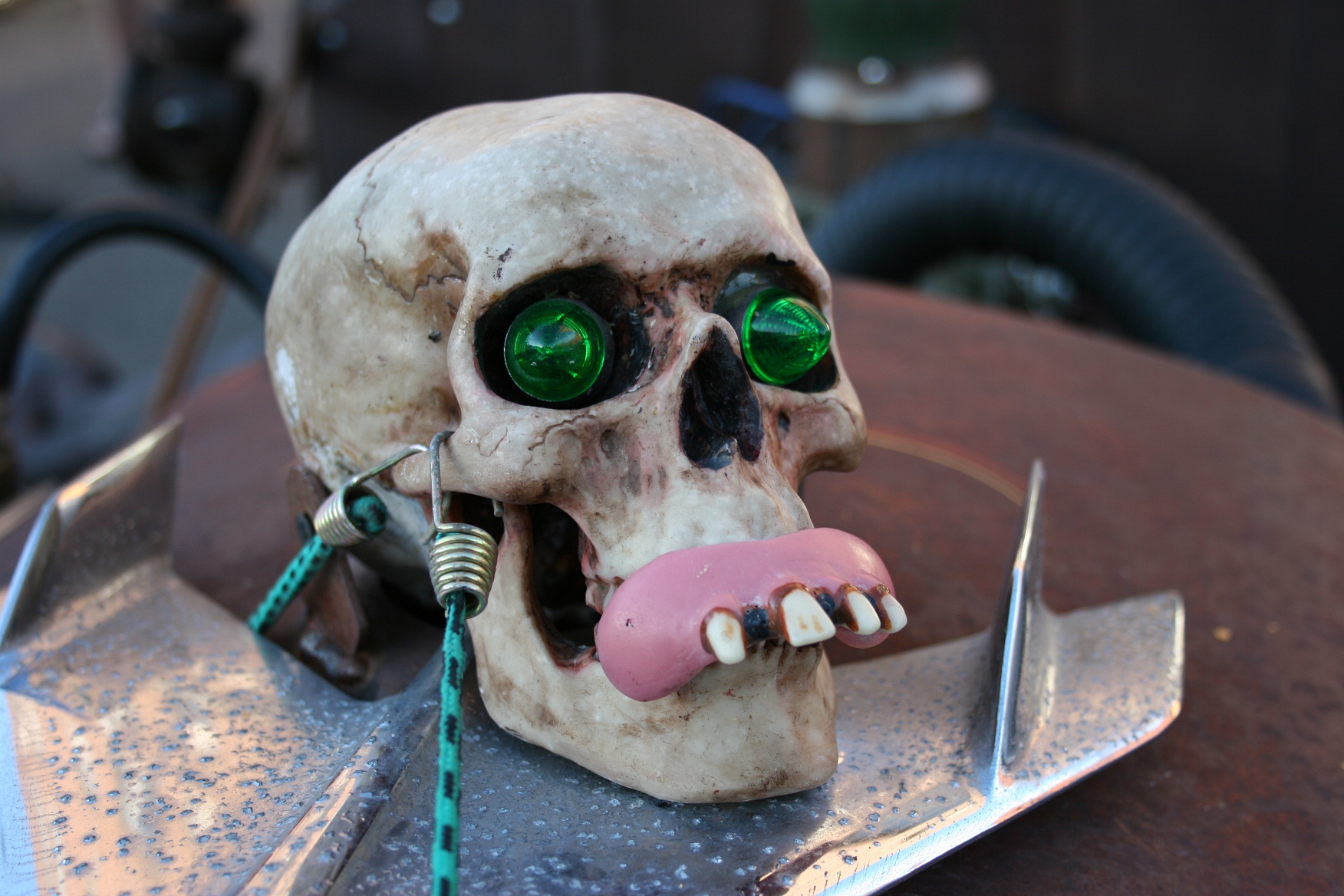
And then I moved in even closer to examine the freaky skull atop the Rat Rod.
I find myself seeking our hood ornaments, the curve of a fender, the shine of a gleaming bumper. Anything artsy. Or unique. Or interesting.
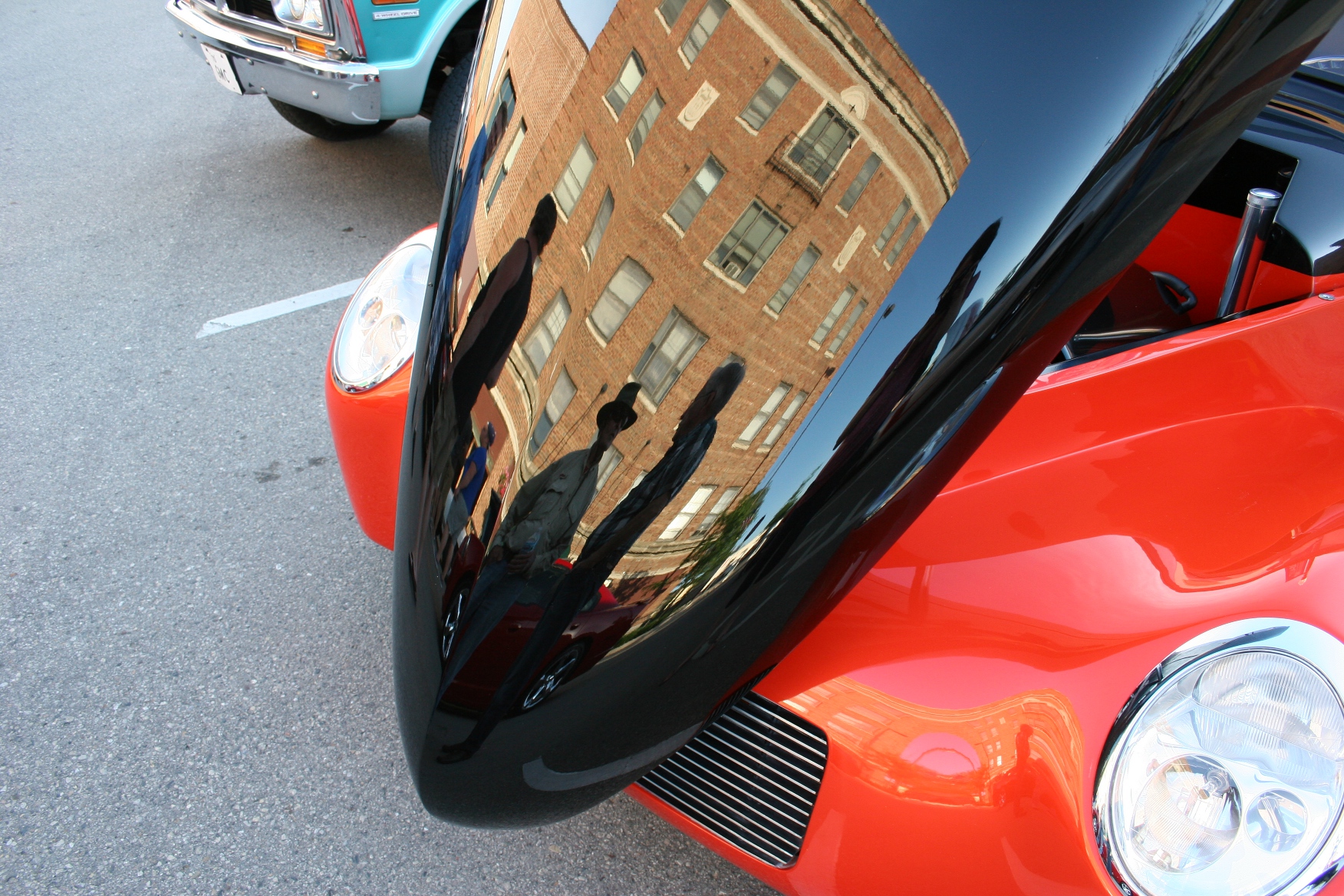
I’m ever conscious of shine and reflections.
Awhile ago, a Chicago ad agency contacted me about using a car show image of a rippled, shiny bumper. The offer for my photo, one of six being considered for a nation-wide ad campaign for a car wax company, was wildly substantial. In the end, mine was not chosen.
But this experience taught me to value every photo I take, even those shot at the car shows I once dismissed.
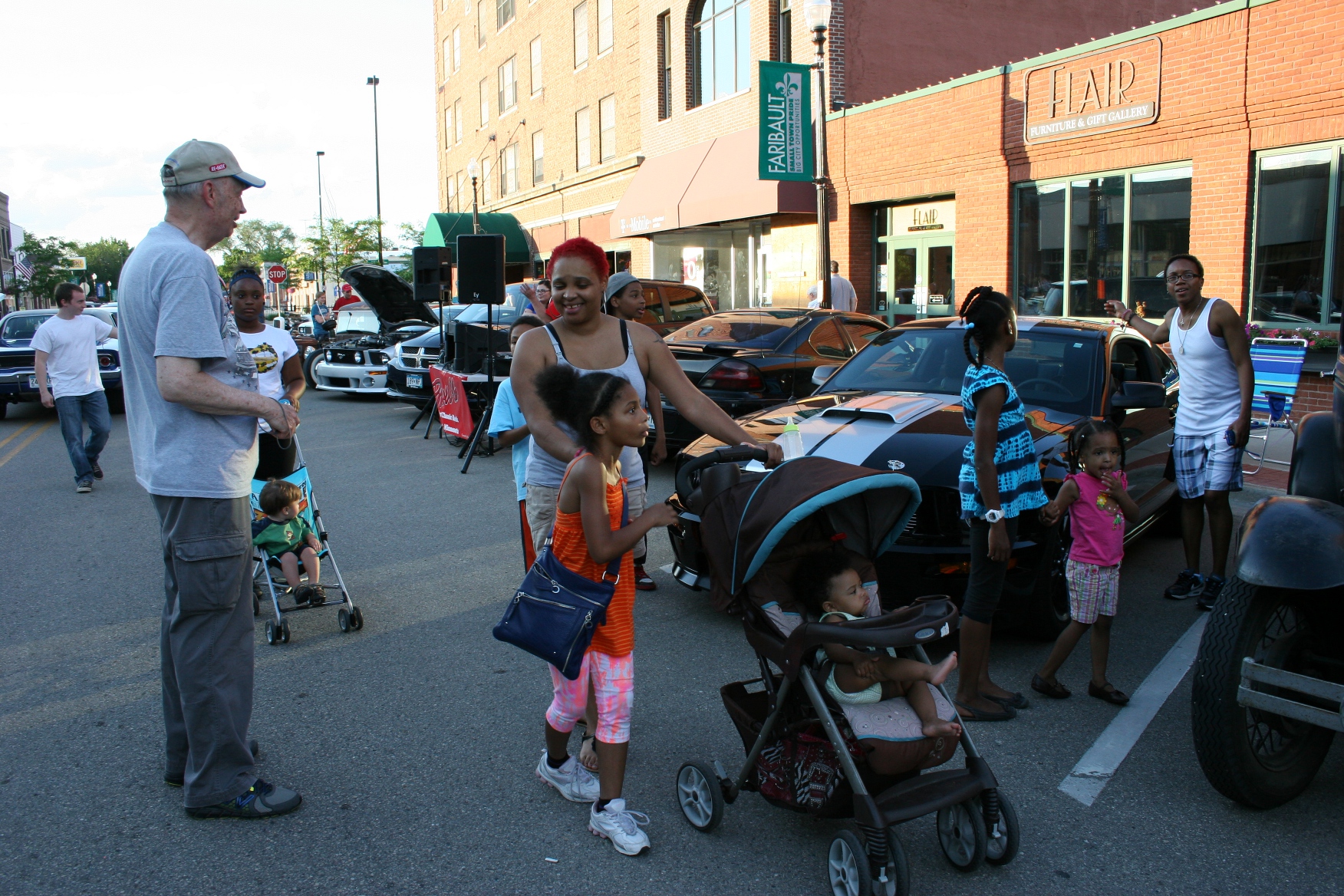
All ages participate in and enjoy the car show.
It’s not only the photo op aspect I enjoy, though. It’s also the opportunity to stroll along the street of my historic downtown in the gloaming of the day, chatting with friends and car collectors alike.
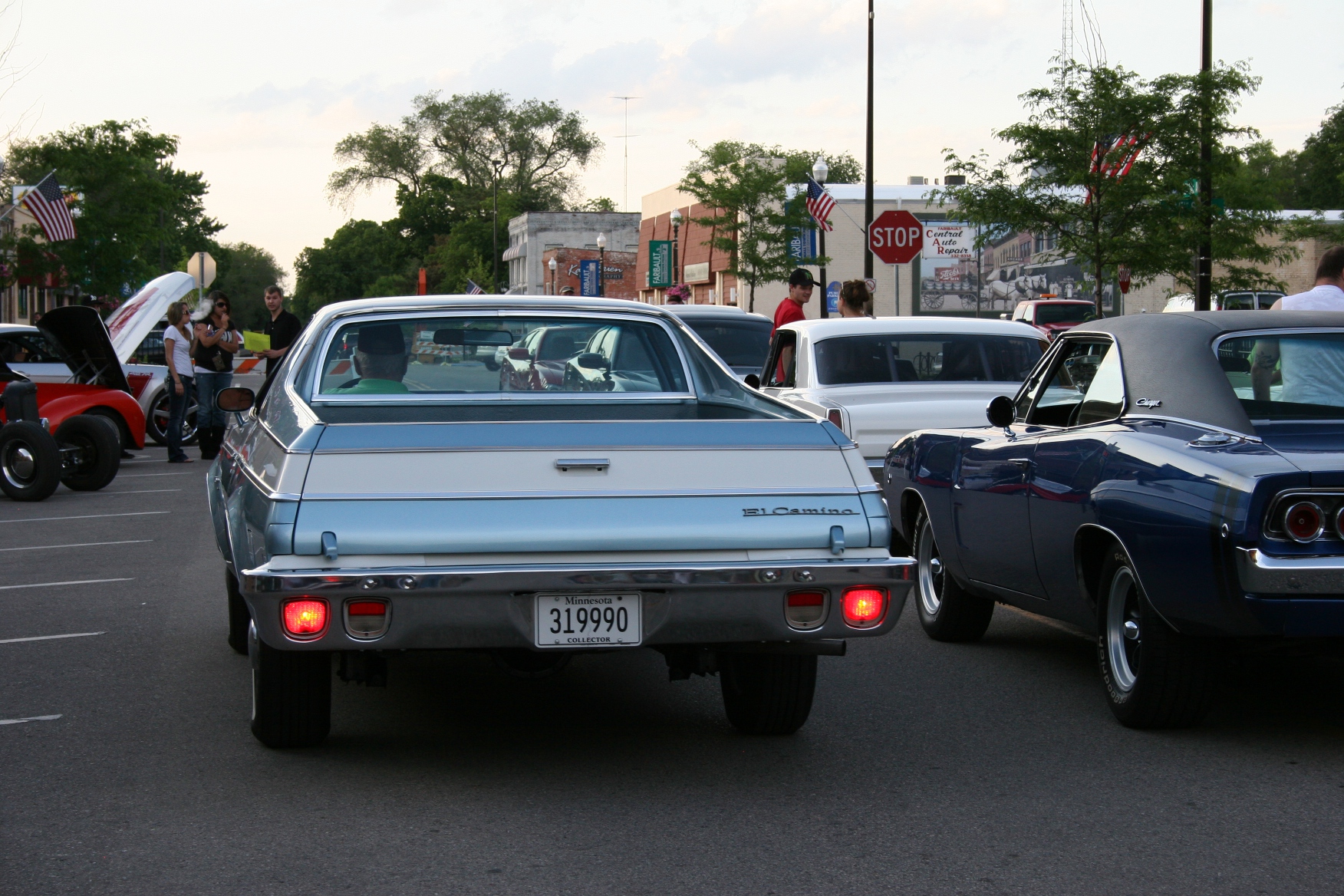
As daylight fades, vehicles begin to leave.
Talking cars. Talking family. Talking while the sun fades and Johnny Cash rumbles “Ring of Fire,” his throaty, husky words bouncing between buildings.
BONUS PHOTOS:
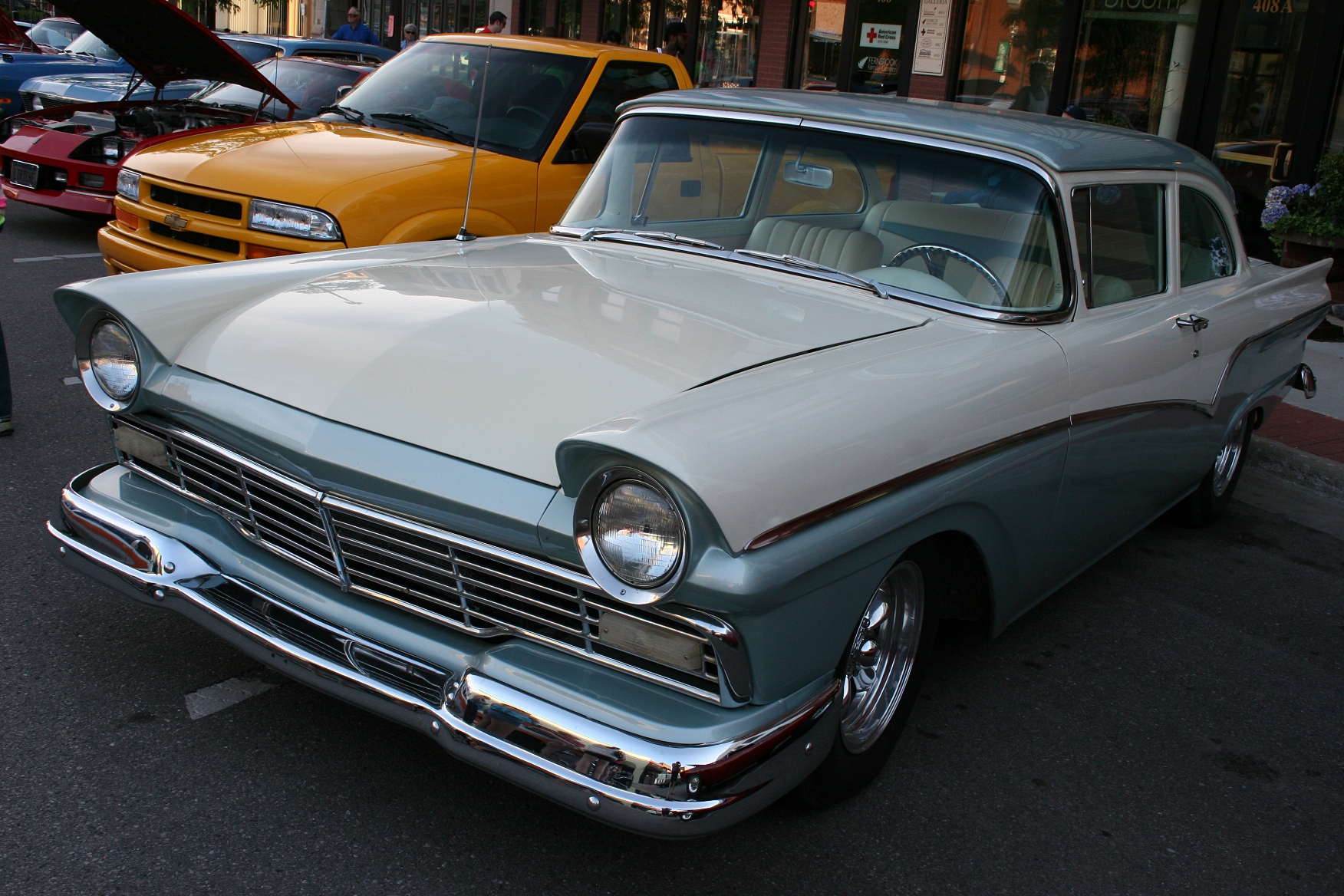
I like the style and the colors. So classy.
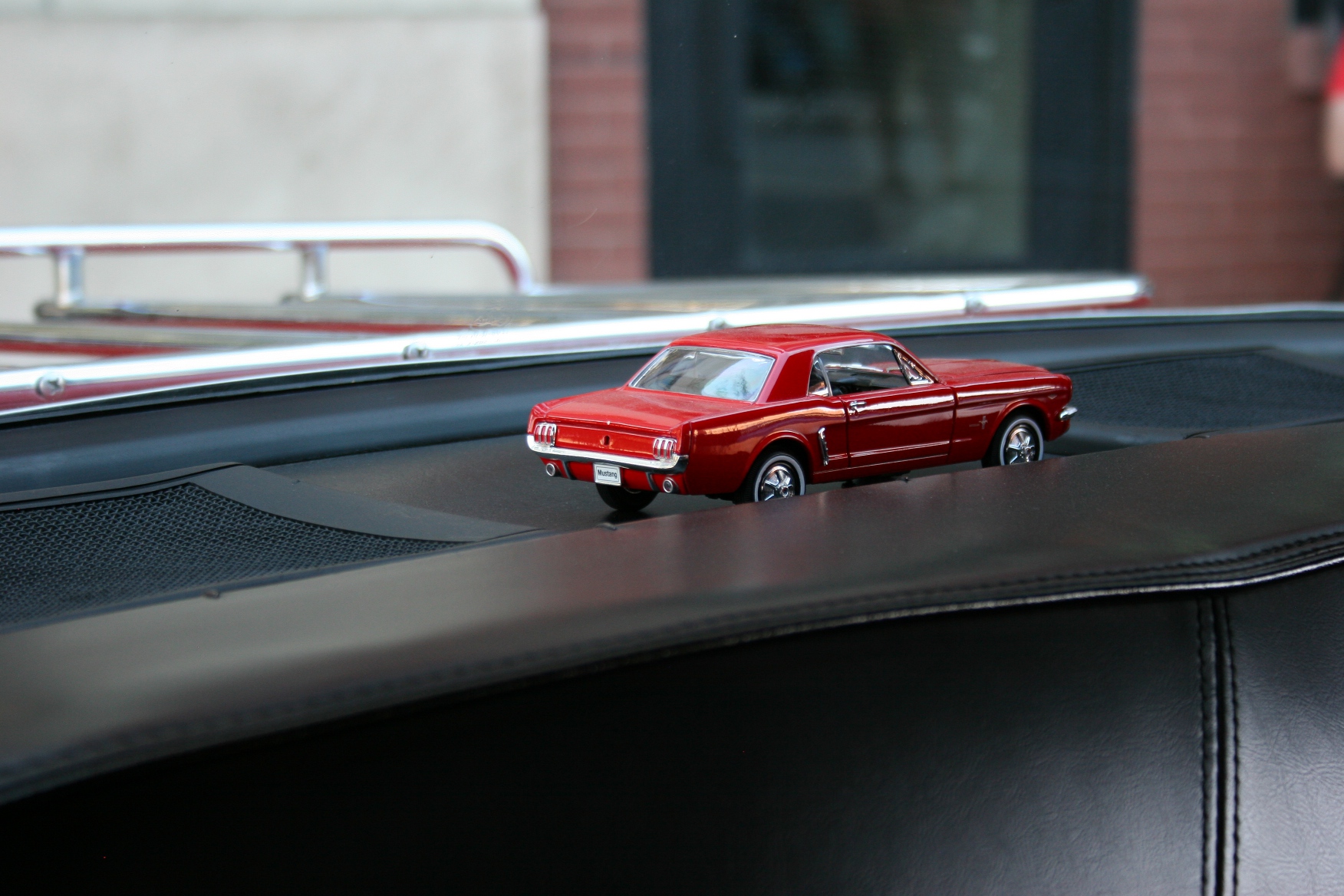
Details: a toy Mustang in a rear window.
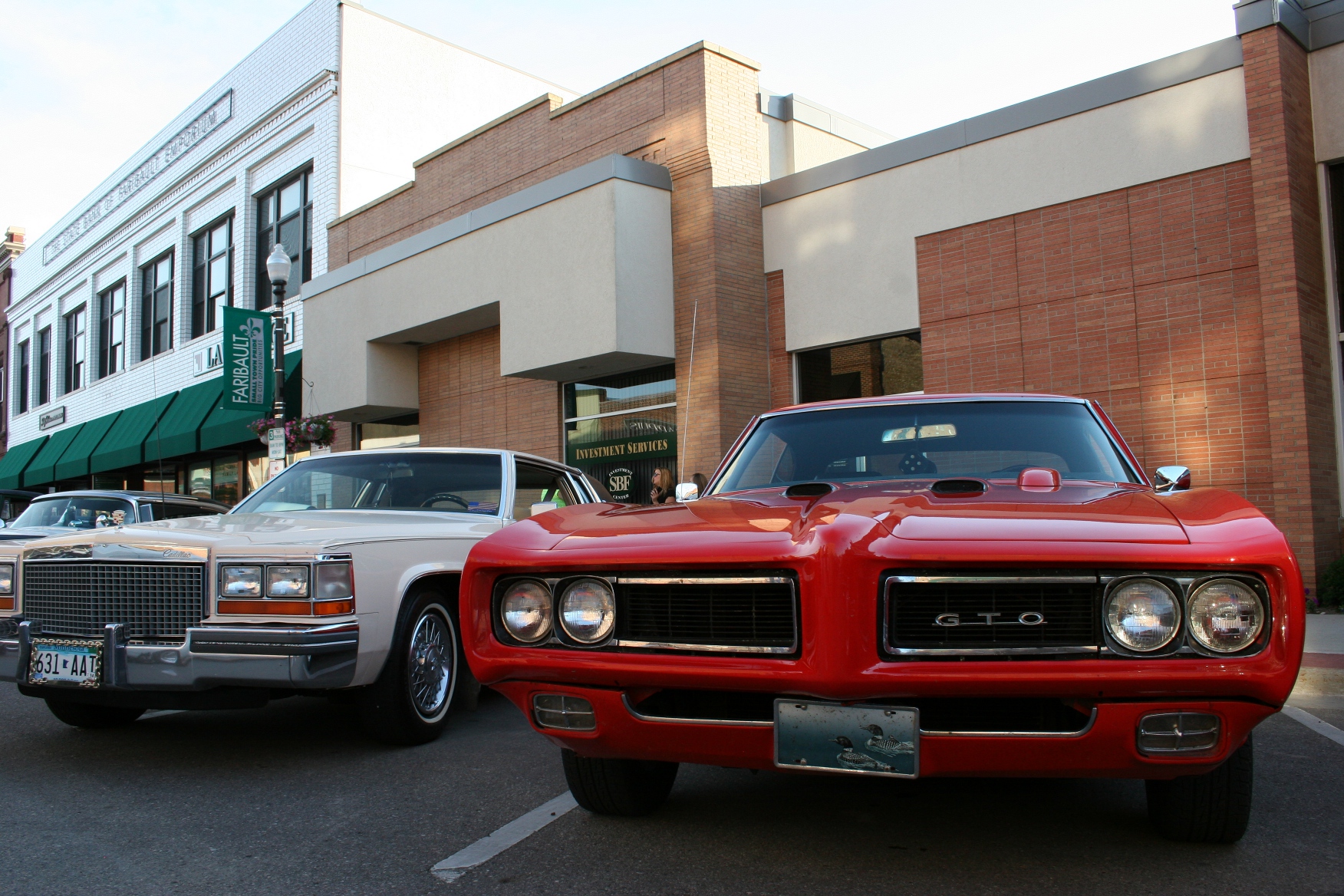
A snazzy GTO.

Custom upholstery matches the exterior paint striping.
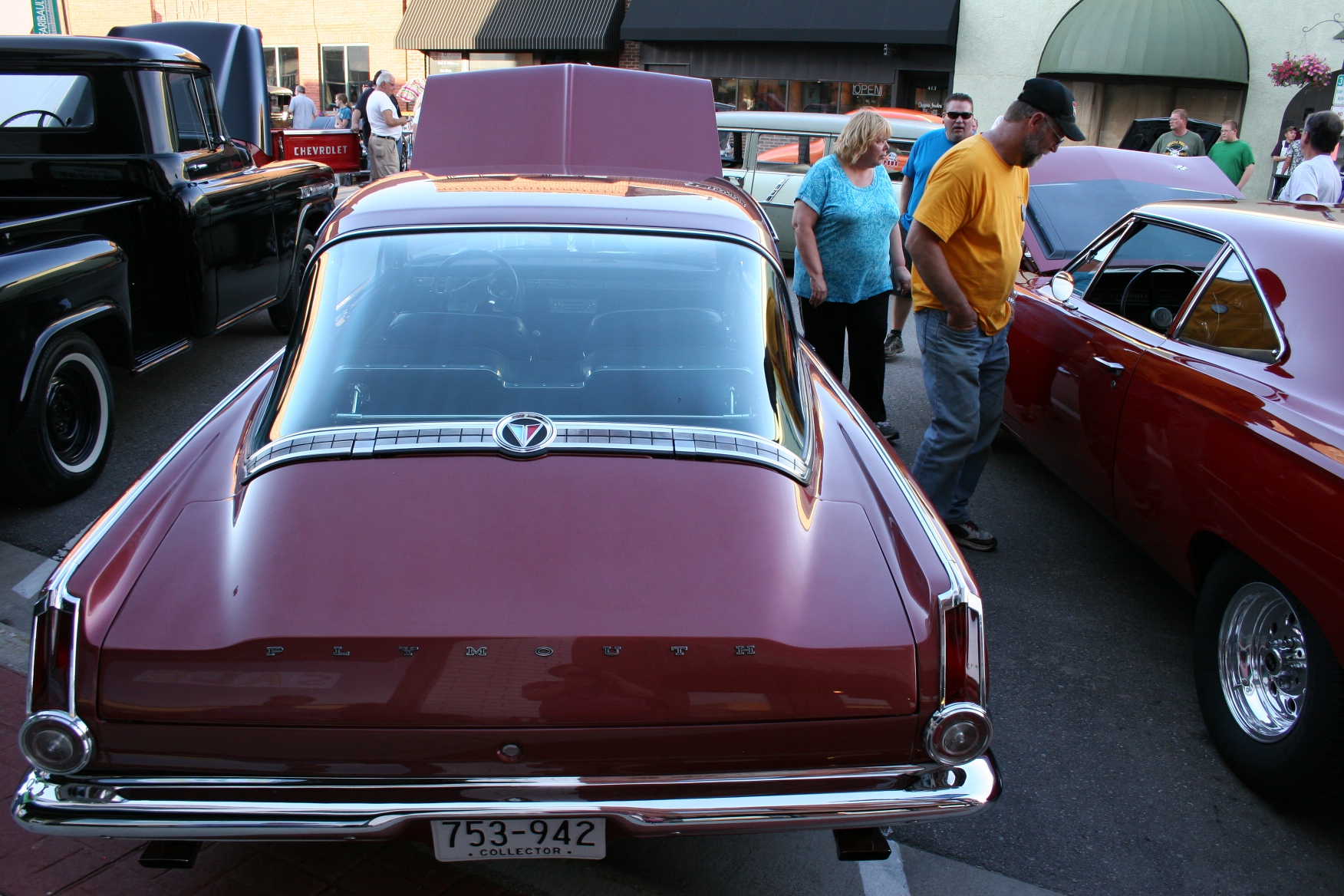
A 1965 Plymouth Barracuda, center, purchased in 1964 and still owned by the original owner.
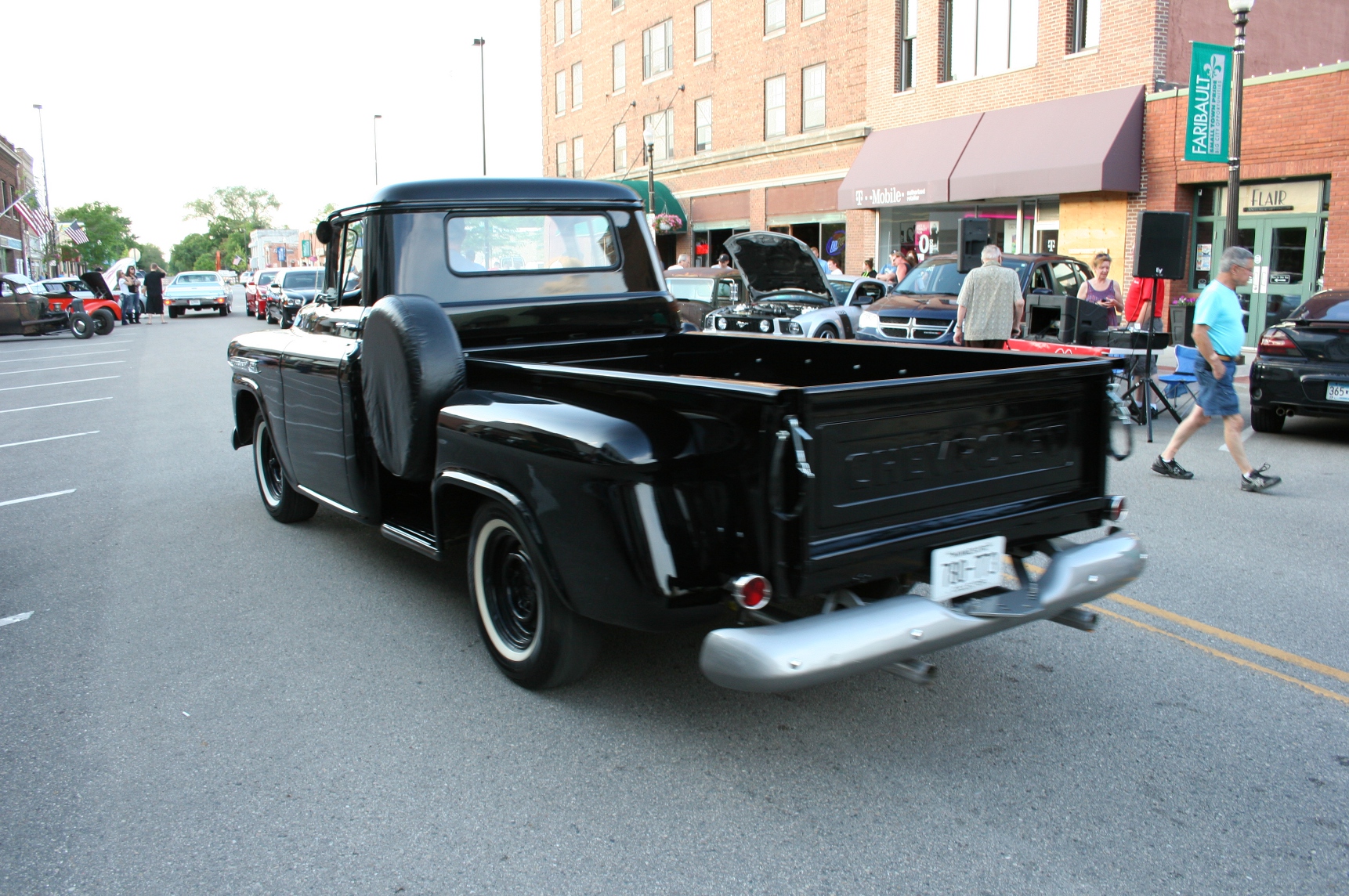
Leaving…
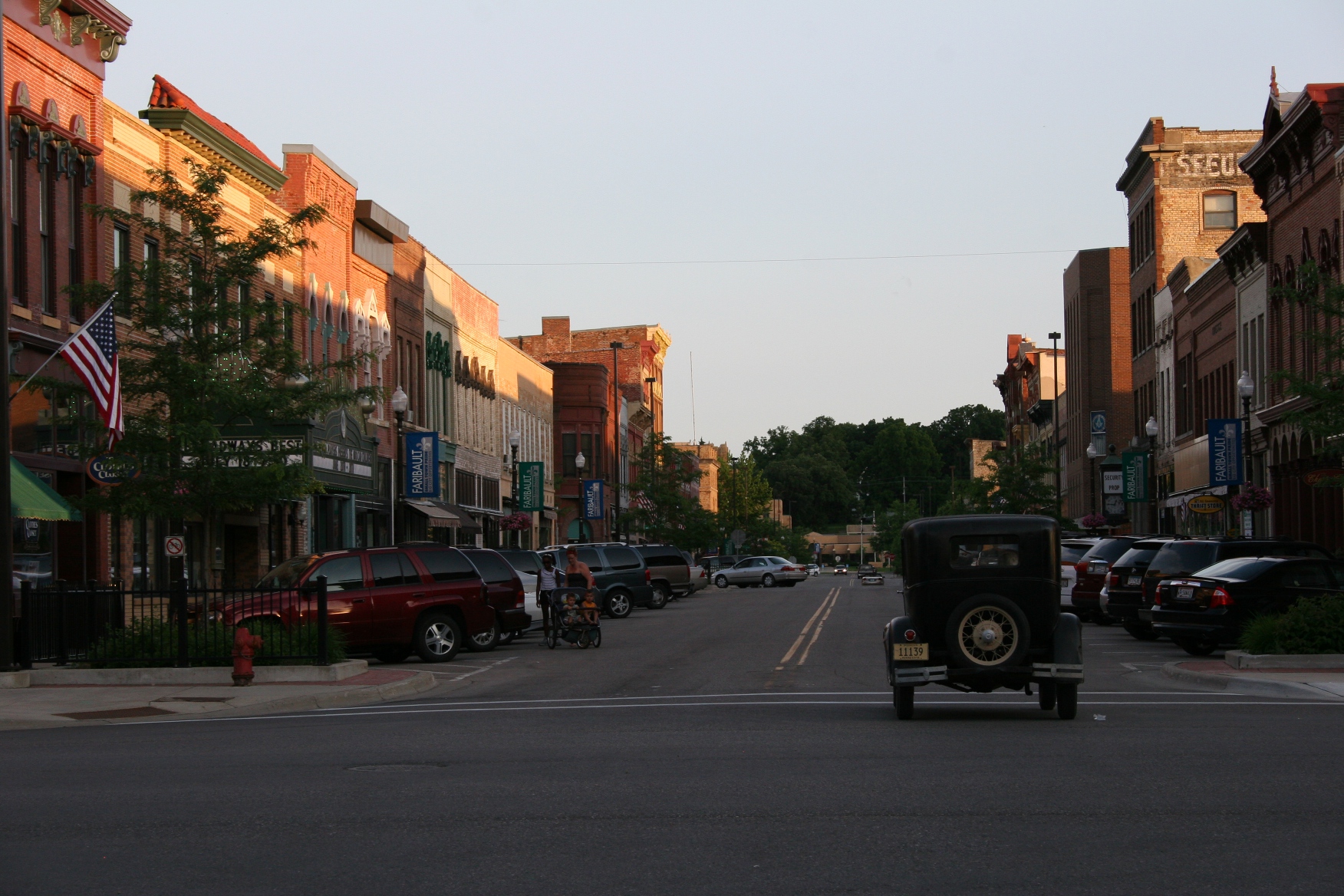
Leaving the show and driving southbound on Central Avenue through historic downtown Faribault.
FYI: Faribault Car Cruise Night is held from 6 – 9 p.m. the third Friday of every month during the summer with upcoming shows set for July 18 and August 15. The event is held on Central Avenue in downtown Faribault.
© Copyright 2014 Audrey Kletscher Helbling
MAGICAL. ENCHANTING. DELIGHTFUL.
All those adjectives fit the gardens of Susan and Dale Kulsrud who’ve created a fairy tale world outside their south Northfield home.
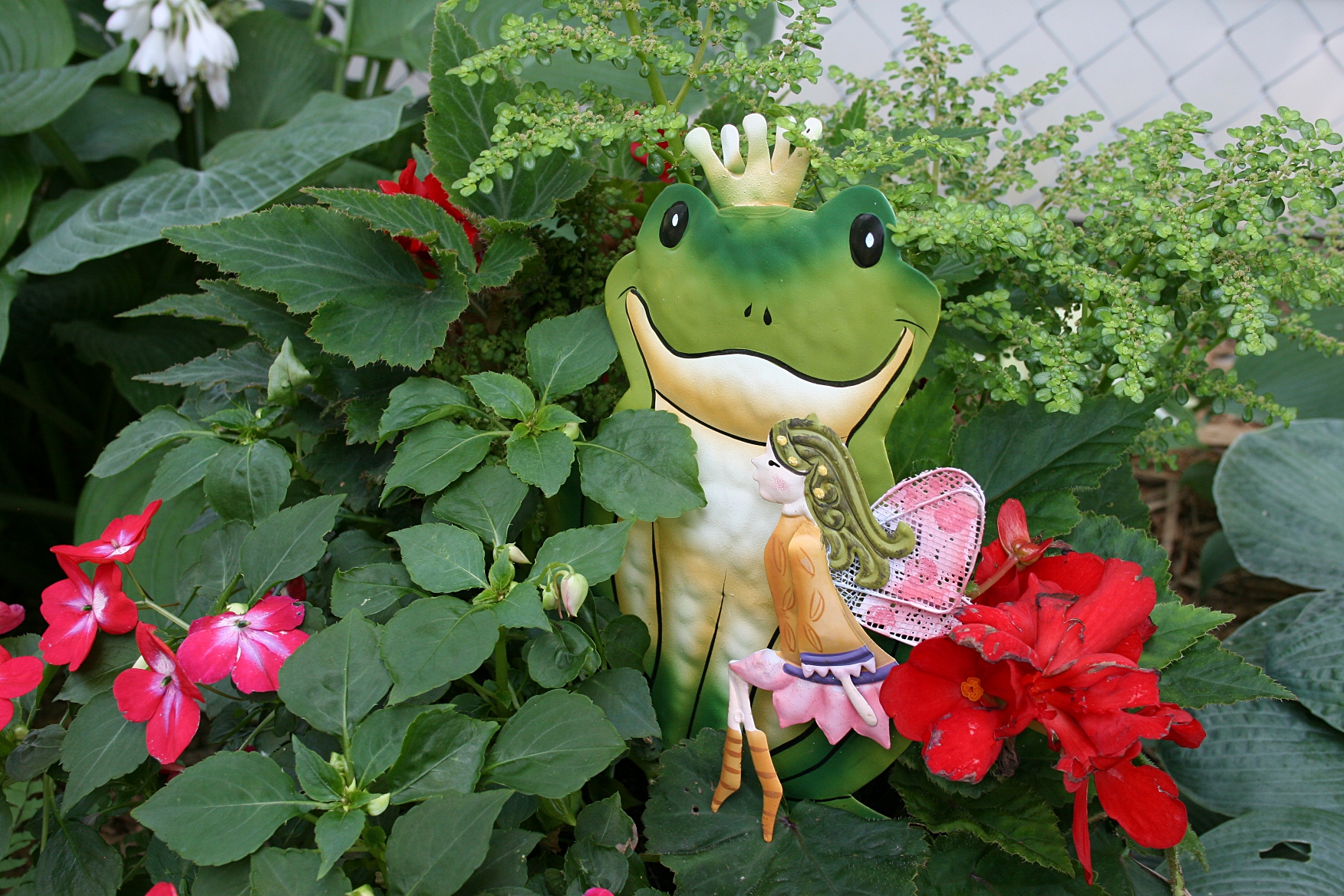
One example of the fairy tale magic tucked into the Kulsruds’ gardens.
From streetside, you’d never guess this corner lot would hold such garden charm. So when my husband parked our van and we crossed the driveway past the Corvette to the side yard during the Northfield Garden Club 2014 Garden Tour, we were surprised.
What a delight.
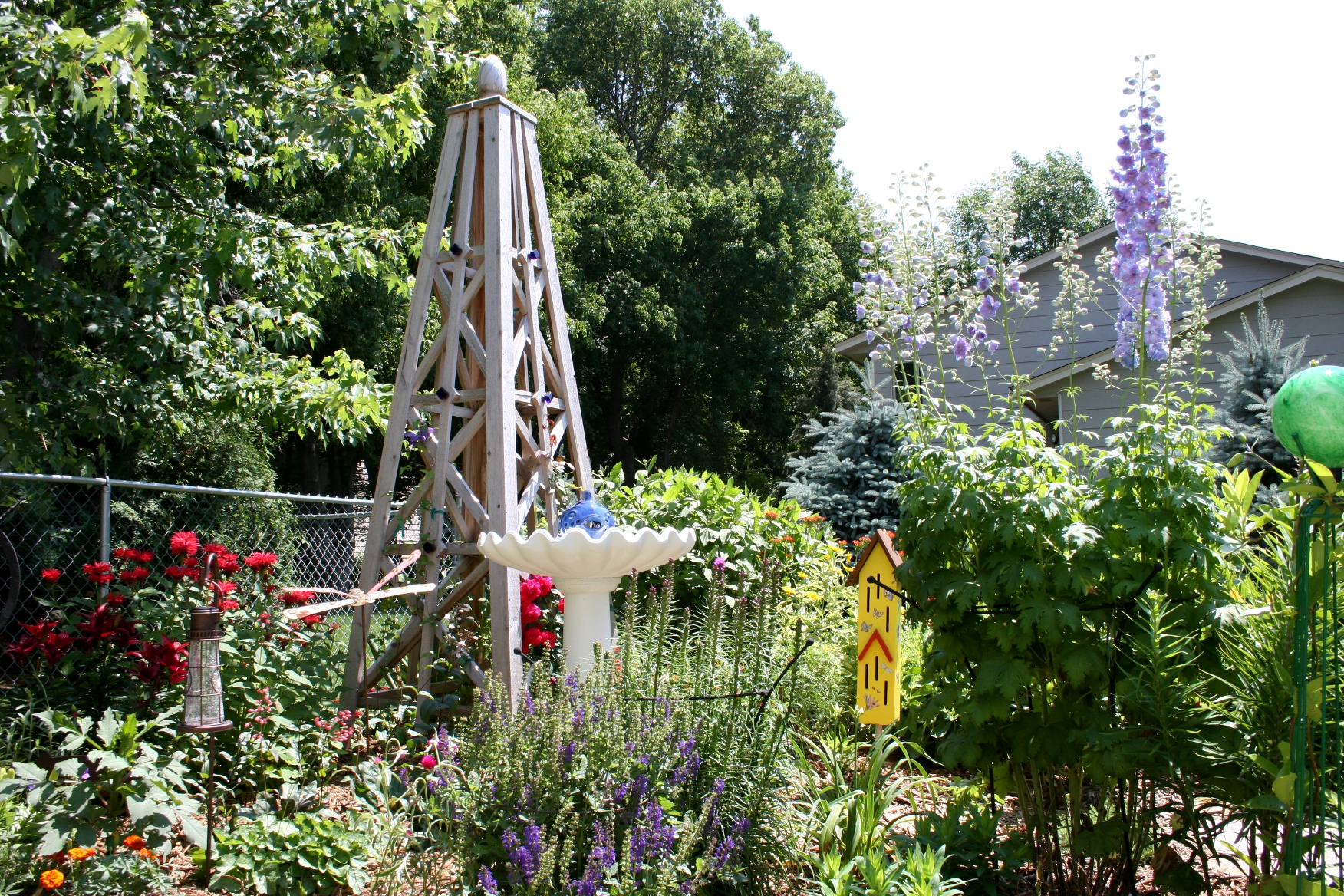
The side yard garden features Dale’s handcrafted trellis sculpture.
First the side garden with an array of flowers—including magnificent towering delphiniums—grabbed my attention. But this plot includes much more than plants. An impressive wood sculpture trellis crafted by Dale defines the space that includes other works of art.

The garden shed, Valhalla.
Art. It’s everywhere in this enchanting yard where a garden shed of Dale’s design and crafting anchors a rear corner.
I almost hesitate to dub this building a shed given its appearance and name, Valhalla. The name is an apparent tribute to the family’s Scandinavian heritage. Valhalla is a hall for the slain in Norse lore.
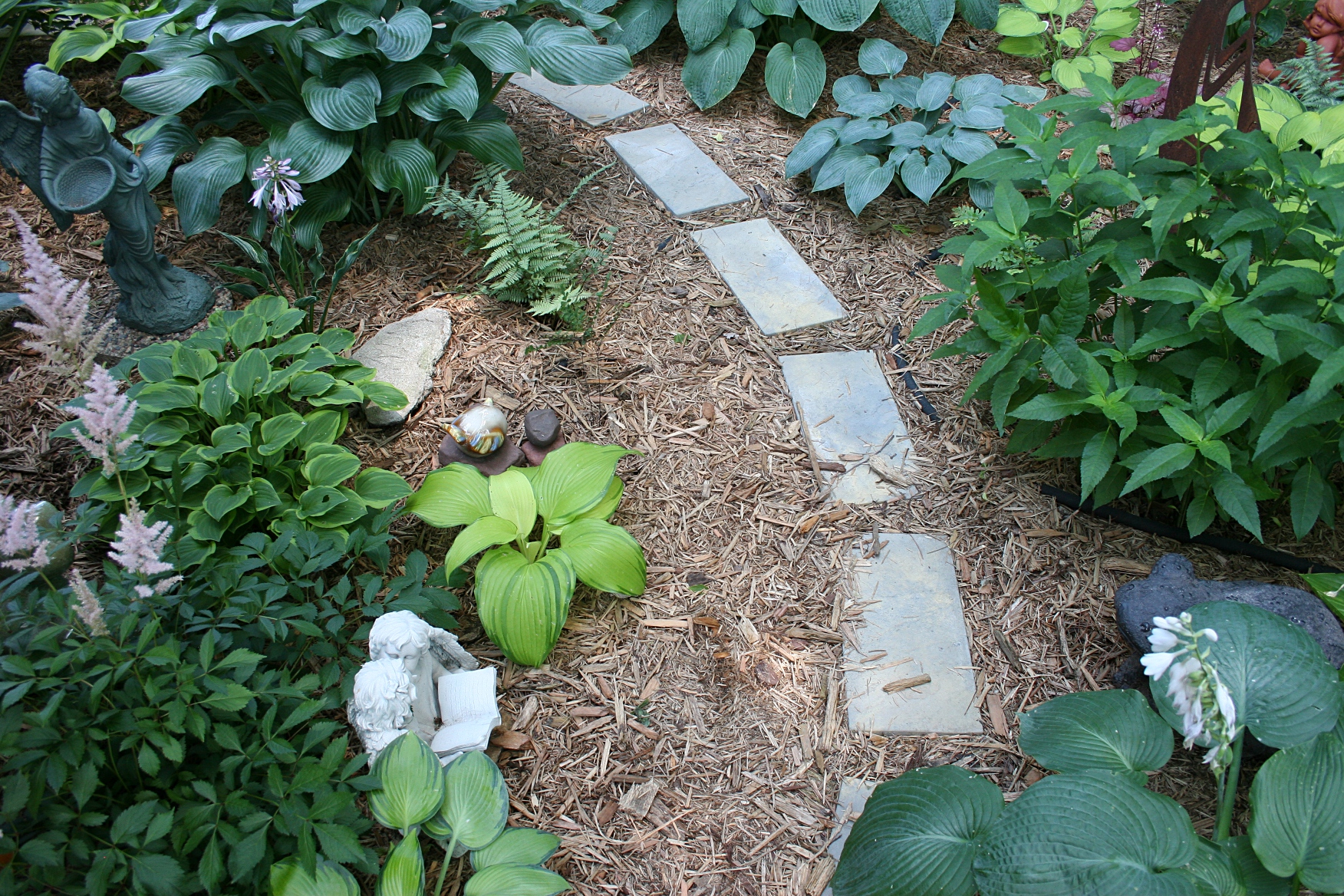
Shade-loving plants fill the Valhalla garden.
With the use of carefully chosen shade-loving plants like hosta, King Kong coleus, ivy, impatiens, begonias and more and the integration of garden art, the Kulsruds have created a fantasy world in their backyard.
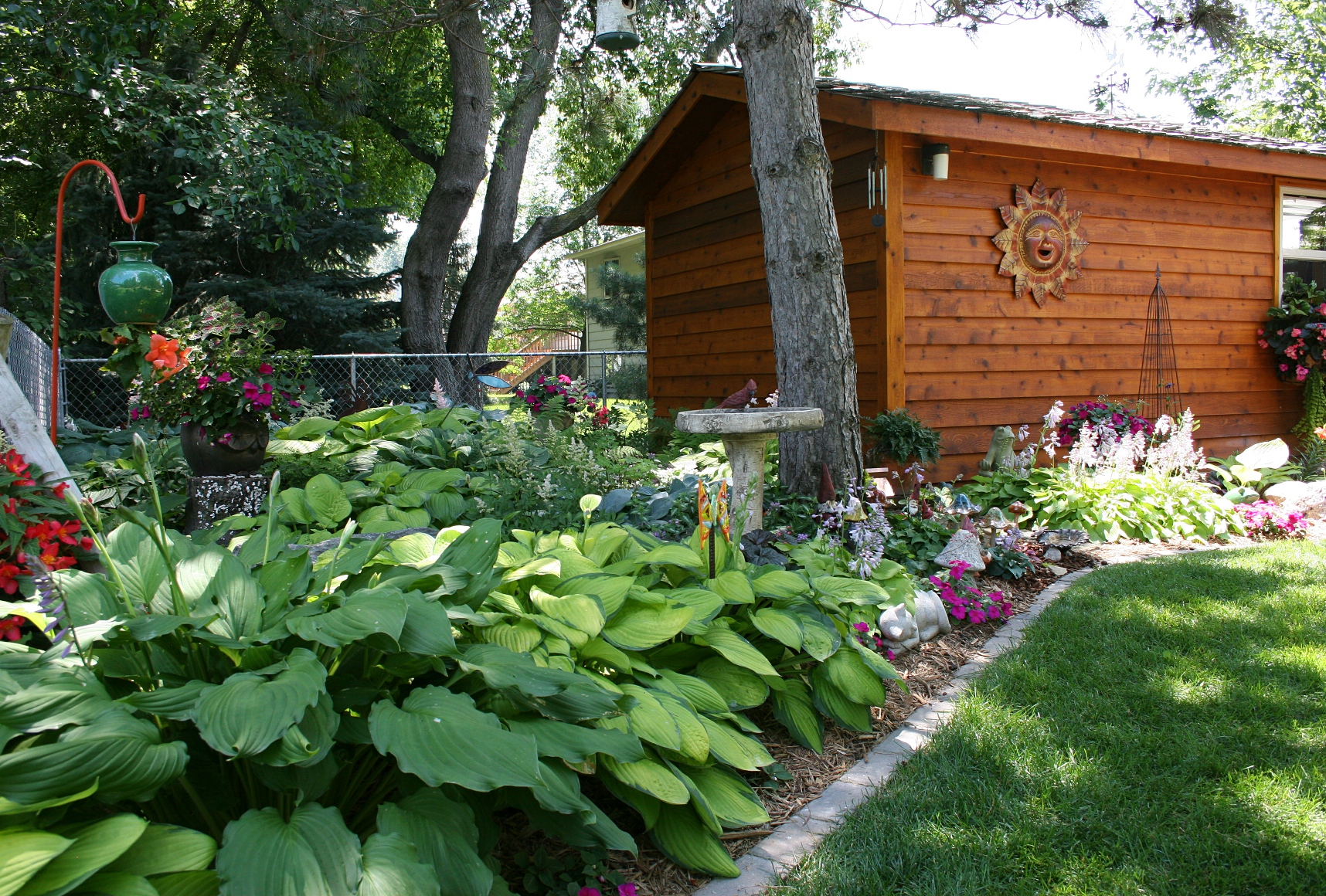
A view of the garden behind and to the side of Valhalla.
The area surrounding Valhalla calls for an inchworm pace with multiple pauses to examine the details. I literally lowered myself to nearly lying down at some points to take in and photograph the scenes created here. Kids would love this mini world of surprises tucked in among the plants:
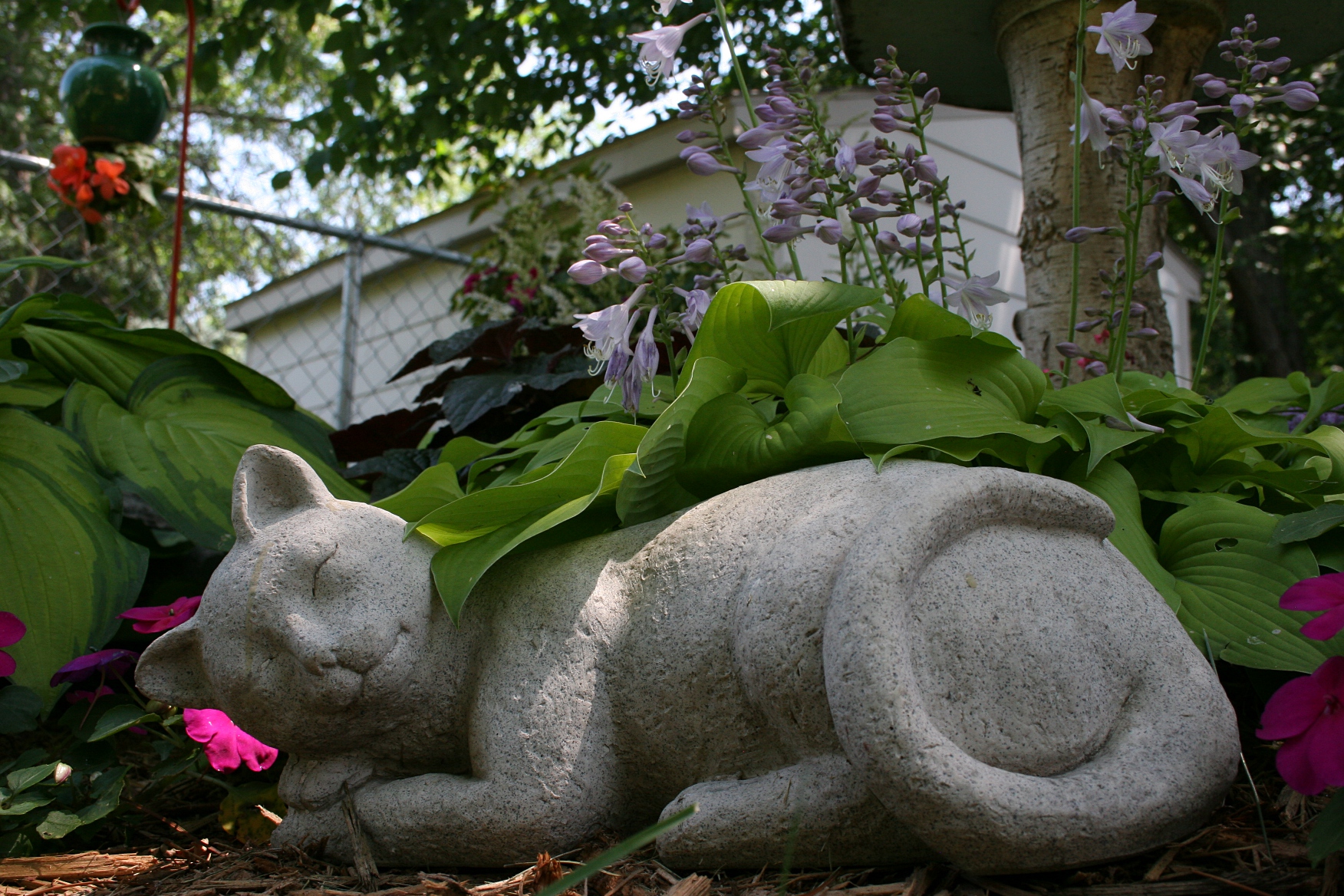
I placed my camera on the ground to photograph this cat napping among hosta and impatiens.
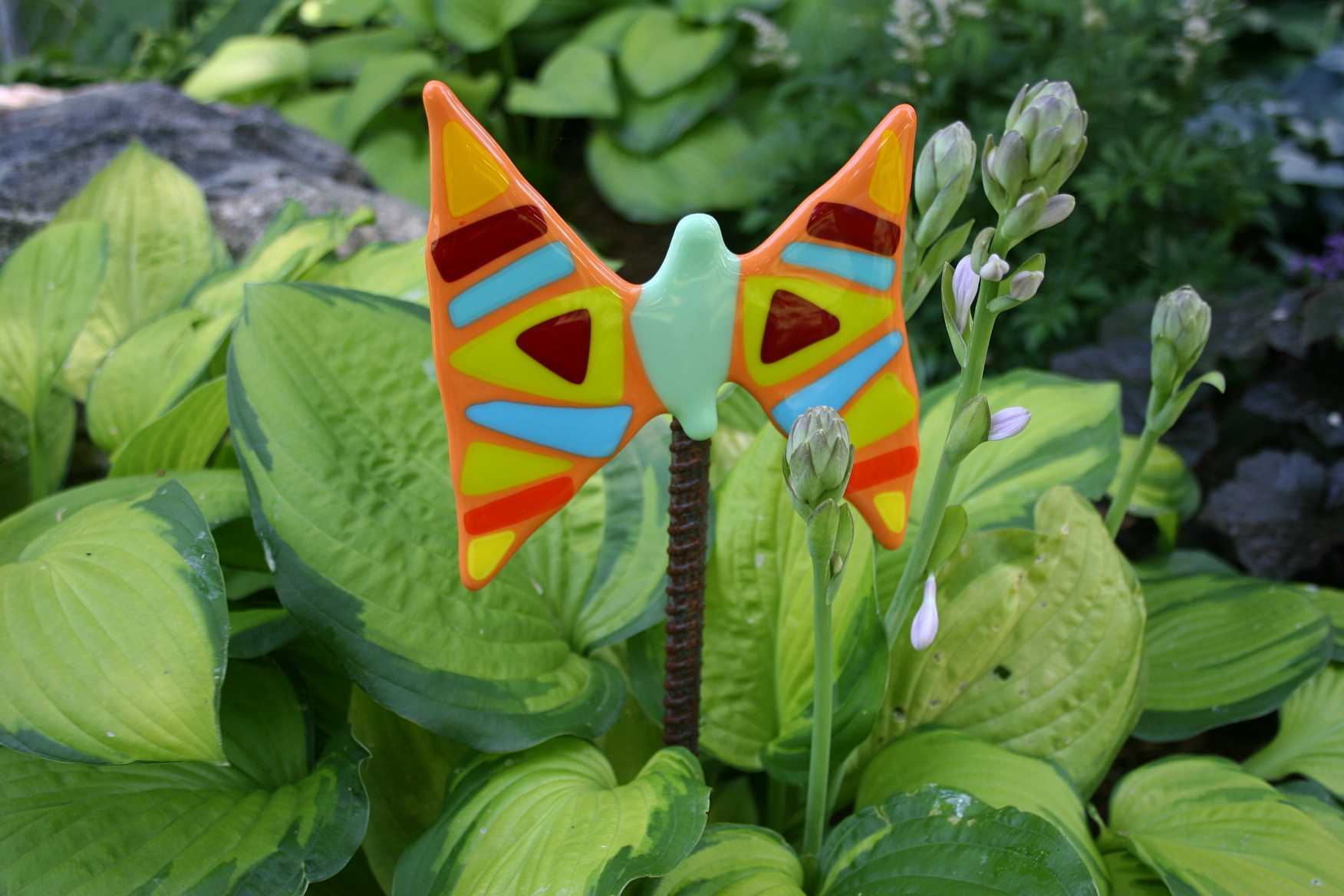
A jolt of color among hosta. Perfect.
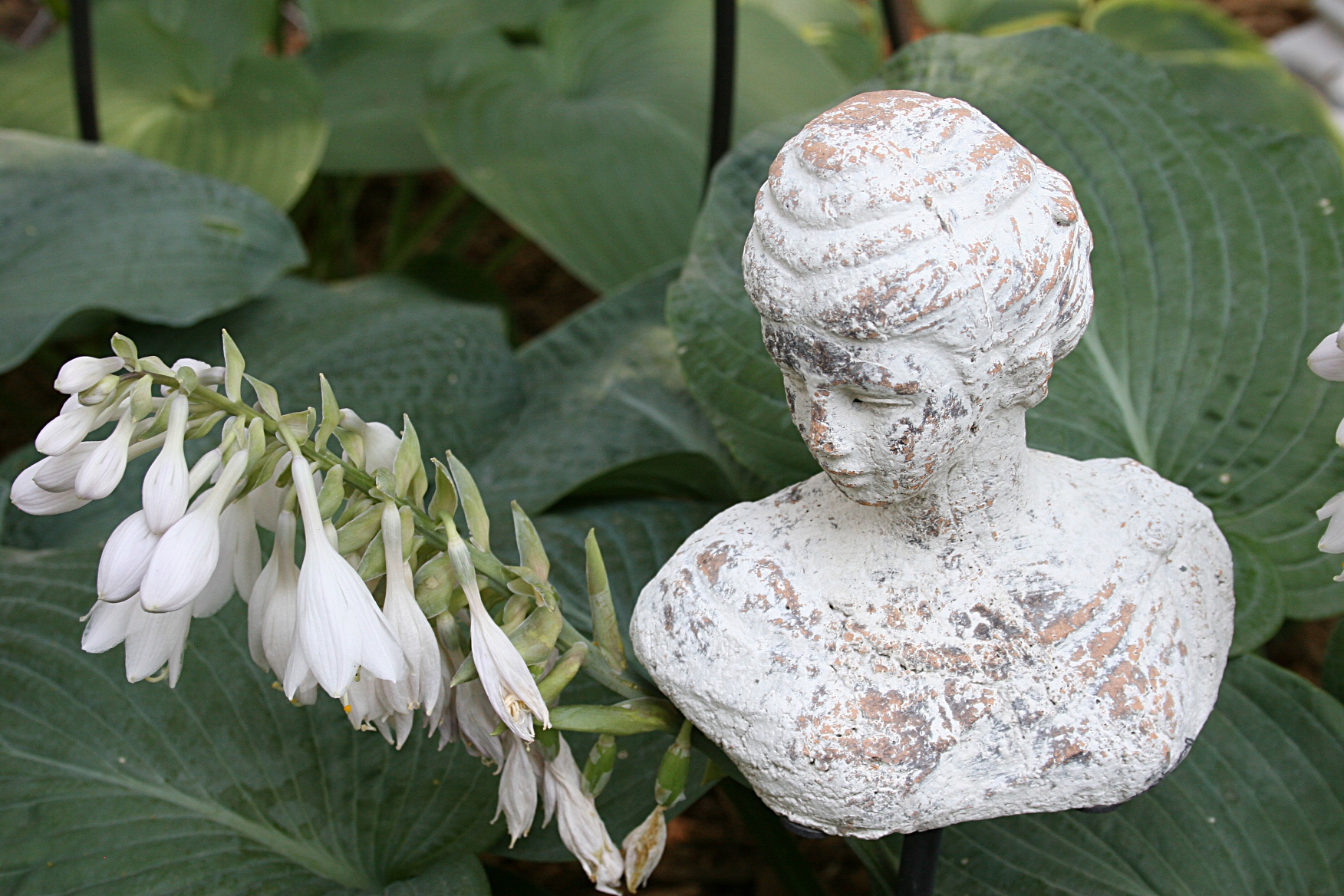
Some of the art is more serious, like this bust among flowering hosta.
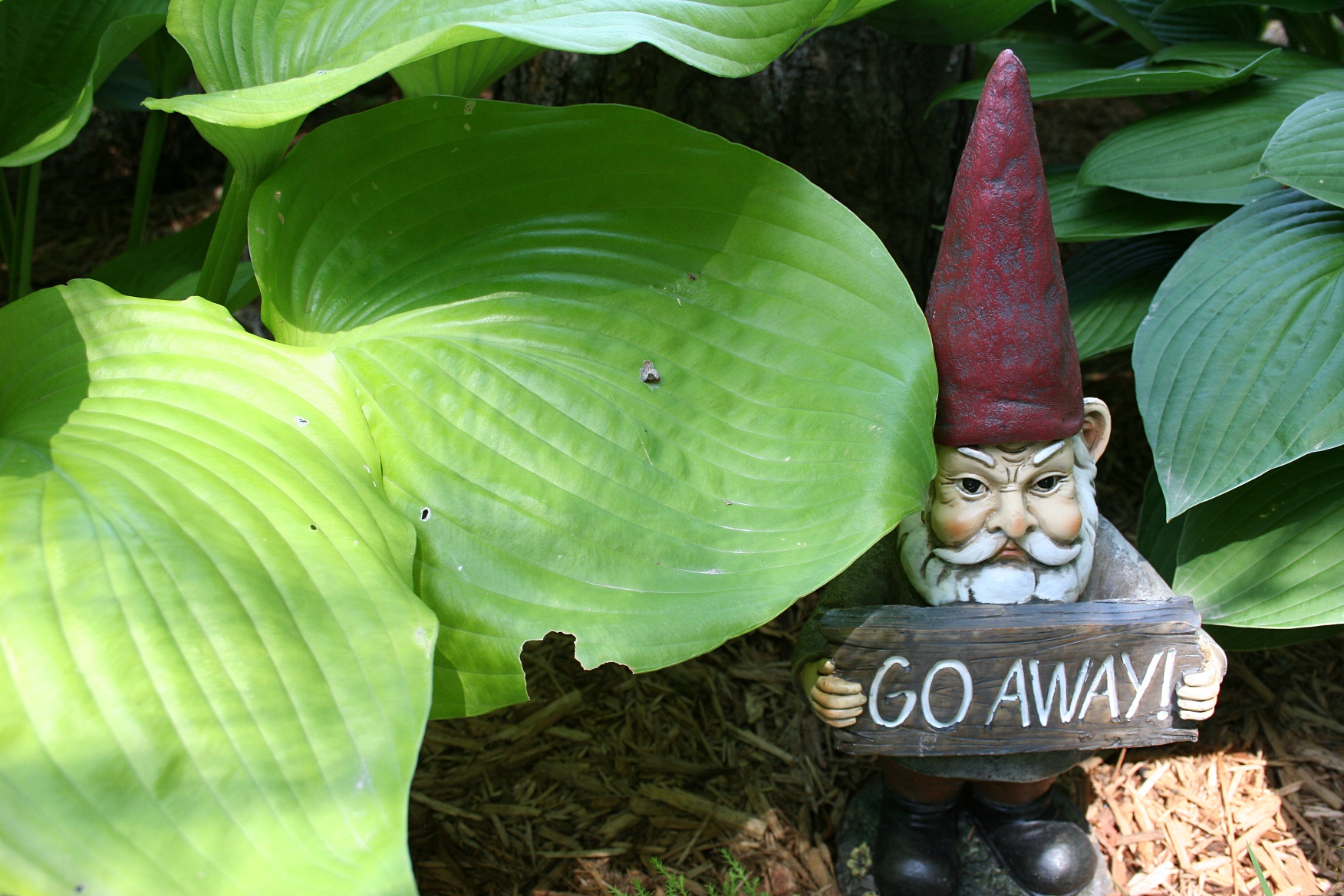
Garden gnome humor.
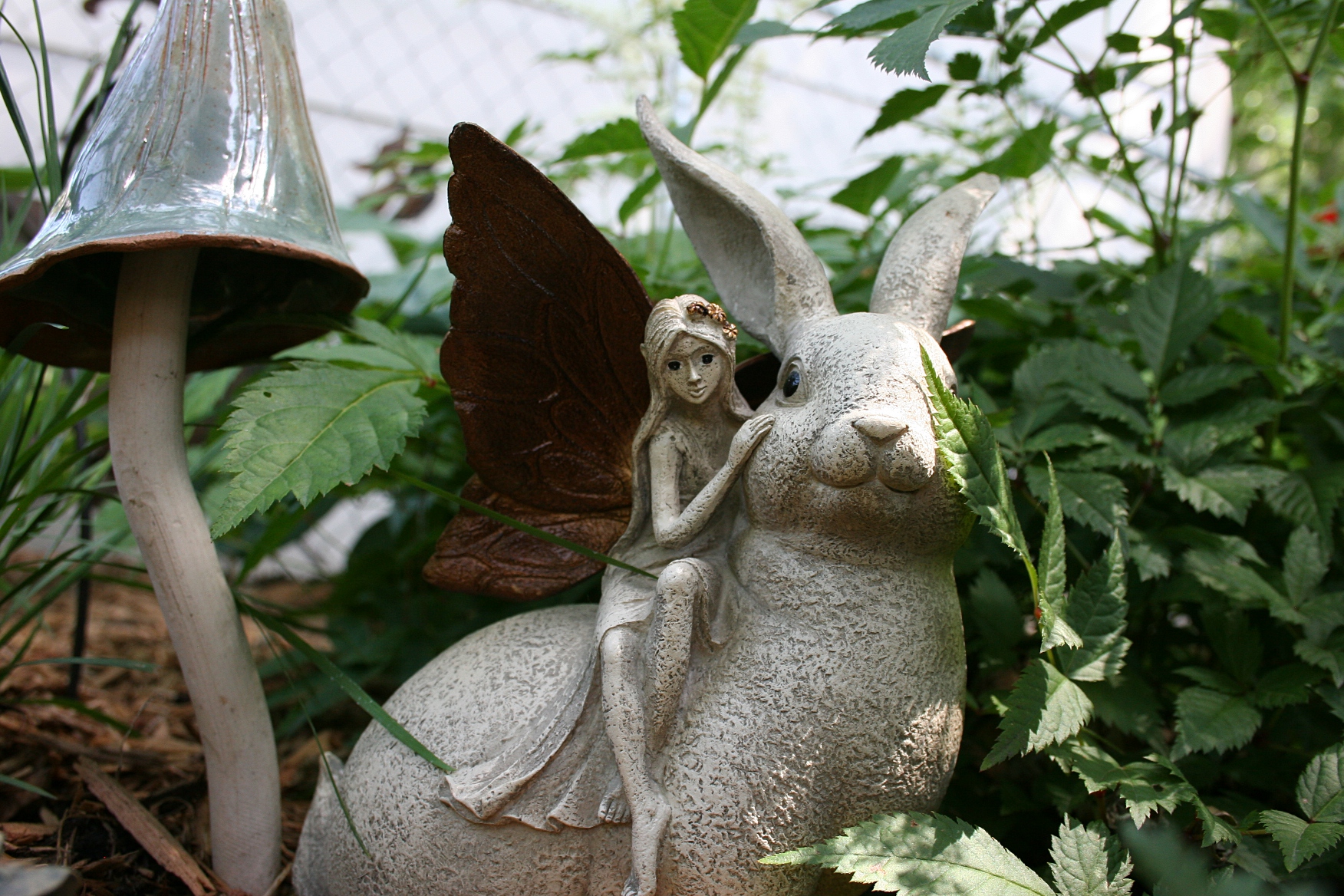
The stuff of fairy tales…
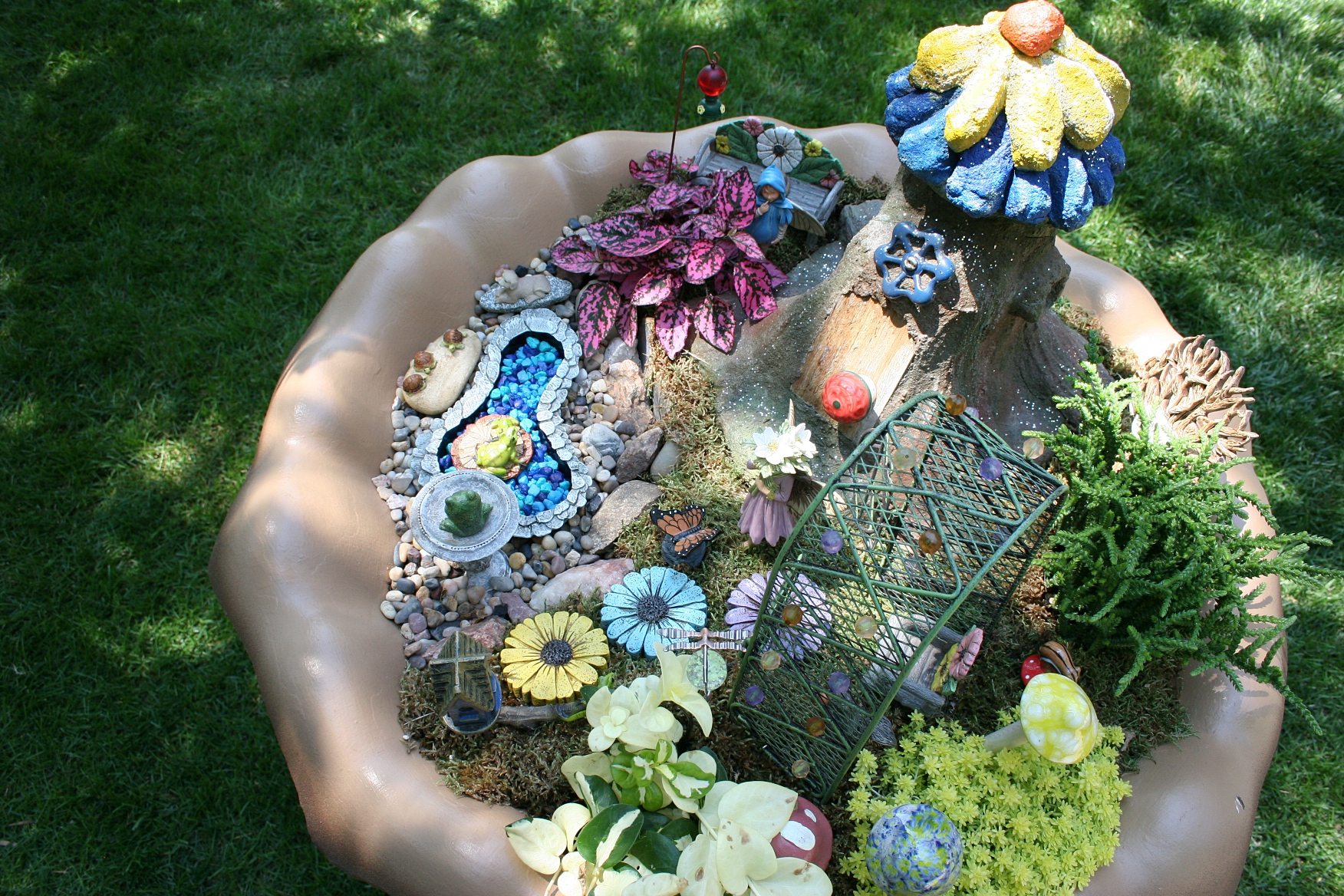
Looking down in to a fairy garden created in a bird bath.
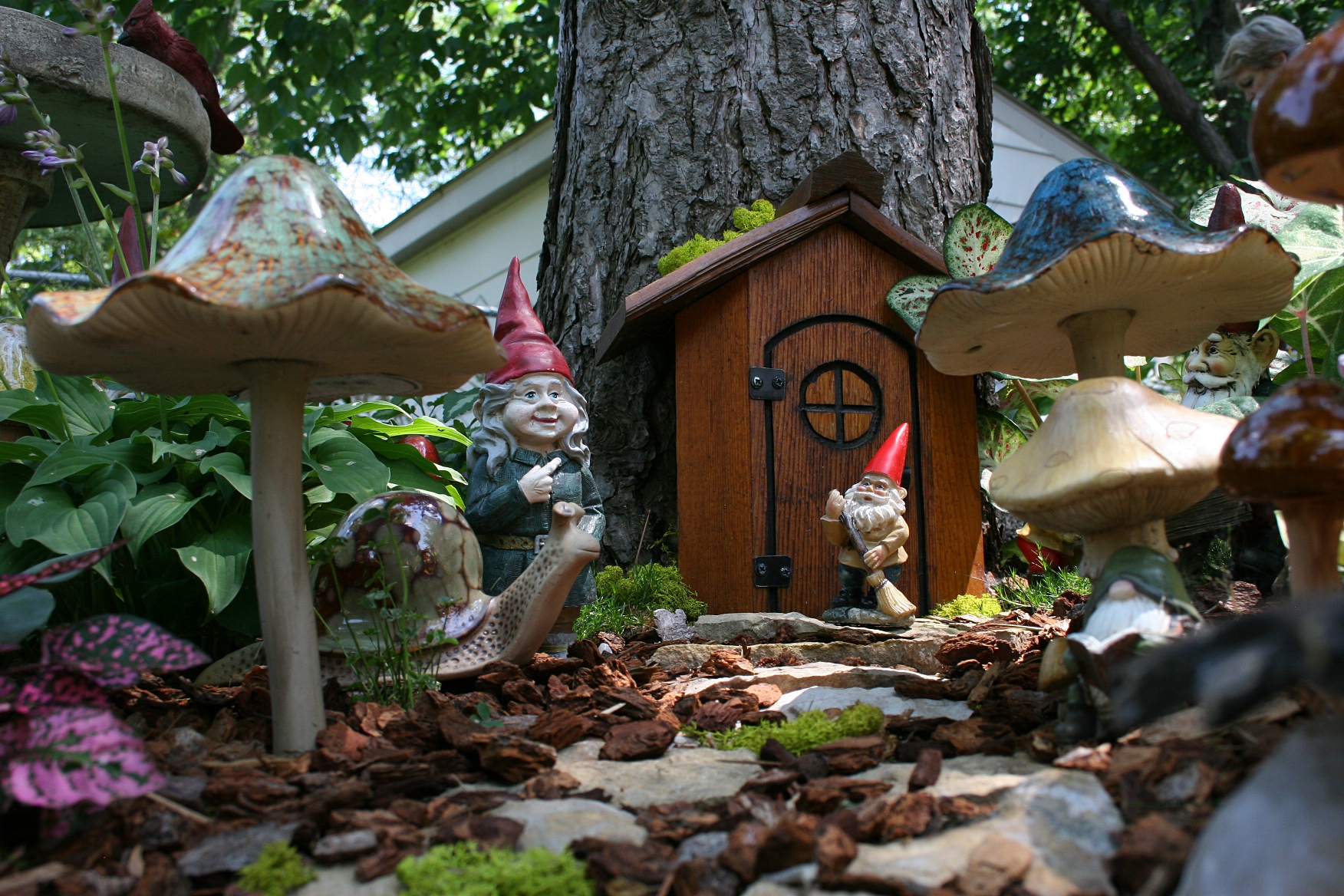
A ground level view of the gnomes’ rocky woodland home.
My favorite scene could have come straight from the pages of a Scandinavian storybook with a gnome house situated against a tree trunk and the resident gnome sweeping his front stoop. It’s absolutely magical.
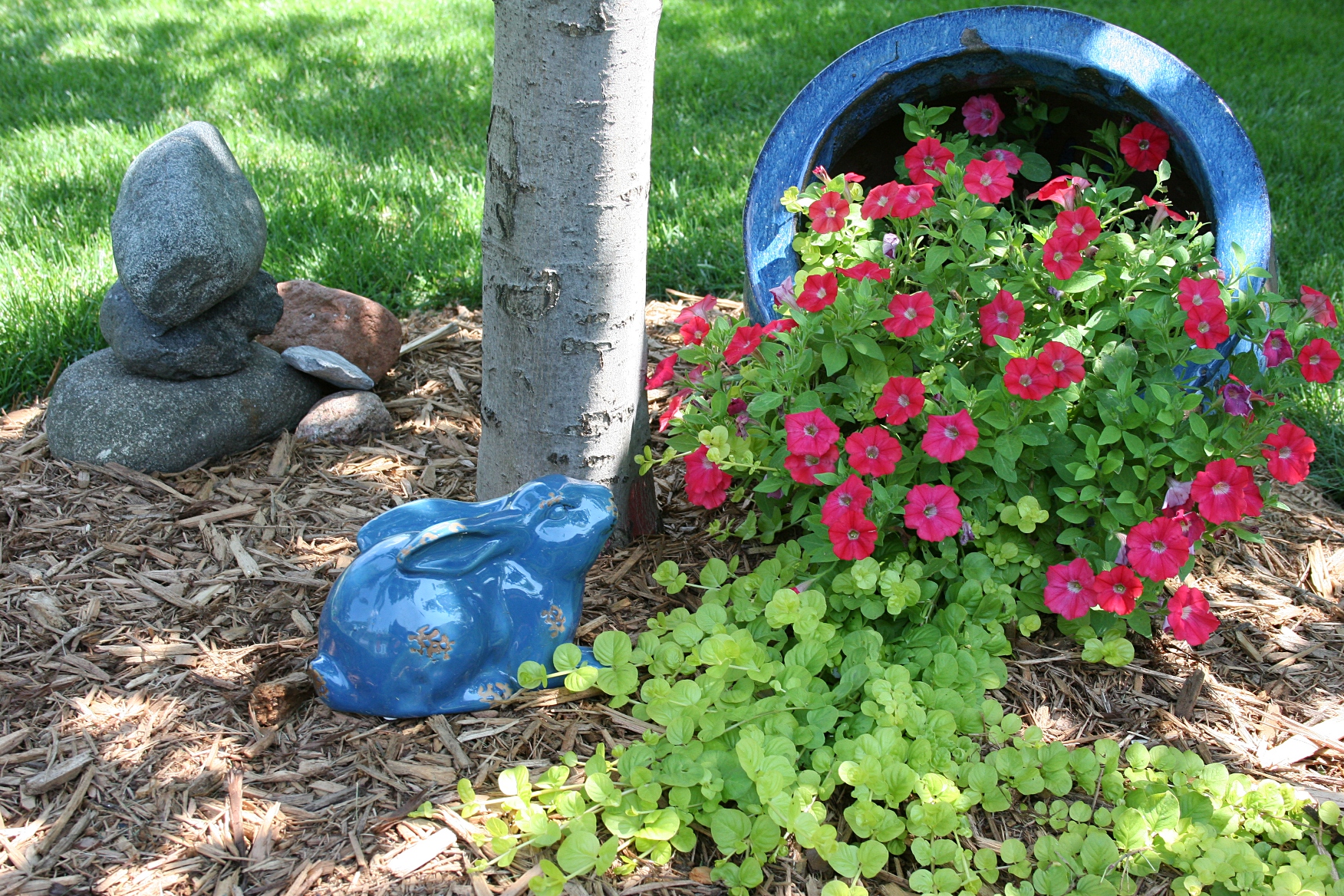
Petunias spill from a tipped pot.
This entire yard enchants with plant life and art complementing each other. Flowers and accent plants spill from pots and window boxes, mingling with all that art.
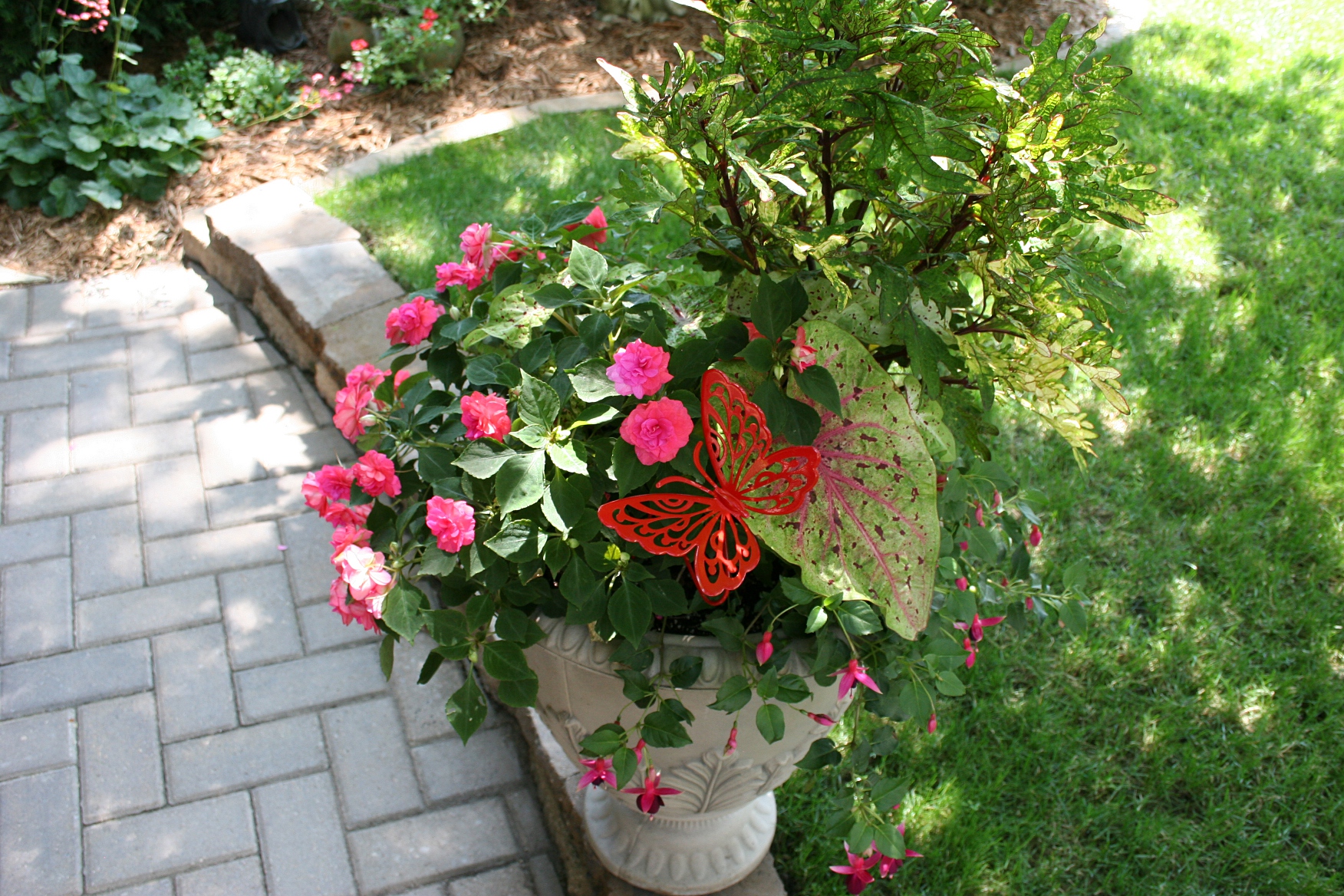
Impatiens and butterfly art add color to a planter situated along a walk way.
I left undeniably inspired.
CHECK BACK FOR MORE POSTS from the Northfield Garden Club 2014 Garden Tour.
© Copyright 2014 Audrey Kletscher Helbling


Recent Comments