Minnesota Prairie Roots

Writing and photography by Audrey Kletscher Helbling

Take this weather, California March 16, 2012

Filed under: Uncategorized — Audrey Kletscher Helbling @ 7:10 AM
Tags: , , , , , ,

Daffodils, the first flowers of spring in Minnesota, are springing up during this unseasonably warm March weather.

OH, HOW I TRIED, resisted, told myself not to write on this topic. But I have finally given in to an indisputable Minnesotan urge to discuss the weather.

I will not, cannot, apologize for this geographical predisposition. Weather is always a topic of conversation in Minnesota. Too hot. Too humid. Too cold. Too dry. Too wet. Just like Goldilocks, we are never quite satisfied until…we get weather like this…

…recent string of sunshine-filled mid-March days with temperatures soaring into the 60s and 70s. Typically the weather this time of year is cold, snowy and gloomy, the landscape bleak and depressing.

I suppose we would all feel more grateful if this had been a long cold winter with mountains of snow and sub-zero temperatures. Remember last winter? This season my husband has used our snowblower only once. And this week, as I survey my neighborhood, I spot not a speck of snow, not even under trees or in the north side shade of buildings.

Rather, I see joggers and mothers pushing babies in strollers and a gym class of students running past my house.

I spy tulips and daffodils poking their folded leaves several inches through the soil. I’ve tossed the decaying mulch leaves of autumn from crocuses teasing me with peeks of purple. And Tuesday evening, on a whim, I picked up a packet of spinach seeds. Tell me, is it too soon to sow spinach?

If this weather holds, I expect my crocuses will soon be in bloom, like these I photographed last spring.

I’ve thrown open the windows, allowing the fresh air to sweep indoors, pushing out the closed-up stale air of winter.

Laundry goes out on the line nearly every day now, although I must qualify that even when temps are in the 30s, I hang freshly-washed clothes outside, if the sun is shining. Nature’s dryer will dry clothes in the strong afternoon sunshine of a frigid winter day.

My son has asked me to replace the flannel sheets on his bed with light-weight cotton ones. I’m keeping the cozy flannel on my bed. He is 18; I am 37 ½ years wiser.

My eldest daughter flew out to southwestern California this morning, right into a winter storm predicted to bring significant rain and cold to the West Coast this weekend. So much for warm and sunny California.

How about warm and sunny Minnesota? Eighty degrees predicted today here in Faribault.

A pussy willow snipped on Wednesday from a neighbor's yard.

© Copyright 2012 Audrey Kletscher Helbling


St. Patrick’s Day at one of Minnesota’s oldest Irish Catholic parishes March 15, 2012

Filed under: Uncategorized — Audrey Kletscher Helbling @ 8:05 AM
Tags: , , , , , , ,

A sign on the old St. Patrick's Parish Hall, circa 1910, photographed several years ago.

SOME MIGHT CALL it the luck of the Irish that St. Patrick’s Church—Shieldsville, has persevered through two devastating fires.

Or perhaps St. Patrick’s, one of Minnesota’s first Irish Catholic parishes, established in 1856 in rural Rice County, could be considered unlucky given those two inferno-inducing lightning strikes upon church buildings nearly 100 years apart.

Bad luck or good luck, these strong Irish Catholics have withstood the tests of their faith, rebuilding after fires in 1888 and in 2002.

The congregation's newest church and fellowship hall, built in 2004 after lightning presumably struck and burned the previous sanctuary to the ground in 2002. The Brazil-Dudley Fellowship Hall, linked to the new church, is the site for the annual St. Patrick's Day meal.

This weekend they’ll celebrate their heritage and patron saint namesake at the annual St. Patrick’s Day Celebration, going strong at 18 years. Beginning with an 11 a.m. Mass, the Irish, and even those who aren’t, will gather to worship.

Starting at noon, congregants and guests will meet in the social hall for the annual St. Patrick’s Day lunch of Mulligan Stew, coleslaw, Irish soda bread, buns and dessert. All homemade.

For those over 21, “Irish libations” will be available. I assume that means green beer and not Irish whiskey.

No reservations are needed to dine with the Irish and no fee has been set for the meal. Give a free-will offering.

While I’ve never dined at the St. Patrick’s Day lunch, this may be the year to imbibe. I’m talking food here, not beer, although I could possibly be persuaded to swig an ale. I’ve been to enough church dinners to know that you’ll find some of the best and tastiest homemade food in parish halls.

For those of you who enjoy Irish music, the Twin Cities-based band, Reverse Cowboy, will present its interpretation of traditional and contemporary Irish music during a 1 p.m. – 3 p.m. concert.

The circa 1910 parish hall, photographed several years ago, once served as the social hub of Shieldsville. Folks congregated here for Saturday night dances, card parties hosted by the Ladies' Rosary Society, St. Patrick's Day plays, an annual chicken dinner and bazaar, and for other events. Confirmation classes were also taught here and grain was once stored in this building. When St. Patrick's 1882 stone church burned to the ground in 2002, parishioners gathered here for worship services.

WHAT ARE YOUR PLANS, if any, for celebrating St. Patrick’s Day?

Click here for more information about St. Patrick’s Church—Shieldsville. 

Situated along Minnesota State Highway 21 about 10 miles northwest of Faribault, Shieldsville is not an incorporated city, but rather a township. It was one of Minnesota’s first Irish settlements. St. Patrick’s Church is located at 7525 Dodd Road. To learn more about Irish history in Minnesota, click here. 

As long as we’re talking Irish history here, historians consider Jessenland Township north of Henderson in rural Sibley County to be Minnesota’s first Irish agrarian settlement. You’ll find St. Thomas Catholic Church here, built in 1870 and on the National Register of Historic Places. The first church was built in 1855. Click here to read more about the Irish in Minnesota and specifically those who settled in Jessenland.

© Copyright 2012 Audrey Kletscher Helbling


Appreciating the corner gas station March 14, 2012

THERE’S NOTHING PARTICULARLY appealing about filling up with gas these days. Pull up to a generic convenience store/gas station, pump your own gas and then kiss a sizable wad of your money goodbye.

It wasn’t always that way, though, either in gas prices or service or the cookie-cutter service stations.

Maybe because my Uncle Harold once owned a gas station/garage in my hometown of Vesta, I am drawn to former full-service gas stations, specifically those angled into a street corner. My uncle’s station was neither angled nor on a street—his sat along Minnesota State Highway 19.

Most old-style corner service stations have long closed, although the buildings still exist, either vacant or re-purposed. They possess a nostalgic and architectural charm that spells magic.

Just look at this fine example in Morristown, a town of about 1,000 residents in Rice County, Minnesota, within 10 miles of my Faribault home.

The old corner style gas station and vintage Standard Oil sign on Morristown's main street.

For years I’ve passed by this building, but never once stopped to photograph it. I have recently come to realize that such a plan of inaction, of thinking I’ll photograph a scene when I have more time, is unwise. Waiting equals only regret when a structure is torn down or falls into a rotting heap.

That’s not likely to happen anytime soon at Nordmeier Brothers, in business since 1926. The sturdy brick building with the brilliant blue doors appears, from the exterior, to be structurally-stable. And although the old gas pumps have long been abandoned, Nordmeier still operates a garage and sells used vehicles.

I love how the vintage Standard Oil sign reflects on the windows of the garage late on a sunny afternoon in March. There's a modern Mobil station/convenience store next door.

Old, abandoned gas pumps at Nordmeier.

There’s much to be said for long-standing family businesses like Nordmeier Brothers that have anchored small-town Main Streets and stuck it out through economic difficulties. Not that Morristown is devoid of vacant buildings—it certainly isn’t.

But at least it has this lovely corner gem of a building, a place that hearkens to years past and the memories of full service gas stations and lower, much lower, gas prices.

I'm an appreciator of vintage signs, too. I hope the folks of Morristown value this sign.

It takes awhile to read all the window and door signage, a small-town art form of its own.

You can pick out a vehicle right here at Nordmeier Brothers in downtown Morristown. The business once was a Chevrolet dealer until GM began pulling franchises several years ago.

© Copyright 2012 Audrey Kletscher Helbling


Poets & artists collaborate in Zumbrota and I’m in March 13, 2012

Filed under: Uncategorized — Audrey Kletscher Helbling @ 7:52 AM
Tags: , , , , , , ,

I SET A GOAL for 2012 to write more poetry. I’ve posted a contest list on my office desk and filed information in a three-ring binder. But all the best-laid plans and organizing are meaningless unless I follow through with my intentions.

Thus far, I’m doing OK, although not penning poetry probably as frequently as I should be.

Yet, I’ve already seen my initial efforts, including poetry revision, rewarded with the acceptance of a poem into Crossings Poet-Artist Collaboration XI in Zumbrota.

The exhibit, which will be installed on April 2 at Crossings at Carnegie, pairs poetry with art.

Poets were invited to submit up to three poems for consideration. Then four professional writers/poets juried the poetry—this year more than 180 poems—and selected 26 for inclusion.

I’m honored and thrilled to have my writing in this exhibit.

Marie Marvin writes in an e-mail to the selected poets: “It was exciting to receive such a fine outpouring of exceptional work from so many talented poets for this collaboration. Jurists told us they were a pleasure to read, and selecting those to be included was a difficult task.”

Additionally, Laura McDonough of Crossings tells me jurists were given complete license and no specific guidance during the selection process and did not know the identity of the poets.

But, she surmises, “They look for excellence and magic.”

Now artists, who also were juried for the collaboration, are working their magic creating  pieces of art inspired by the poetry.

Paired poets and artists will not know each others’ identities until the show is installed. Nor will the names of participating poets and artists be revealed to the public until April 2. I asked.

I’m not disclosing the content of my poem which I unsuccessfully submitted to previous contests and then reworked for this competition to make it a stronger, better poem. Yes, time allowed me to view my writing with fresh eyes and see areas where I could improve.

Naturally, I’m wondering how “my artist” will interpret my quite visual poem.

I’ll find out on Saturday, April 21, when I attend a reception beginning at 7 p.m. at Crossings at Carnegie, 320 East Avenue, in Zumbrota. Poets and artists will discuss their works. Please join me and the 25 other poets and 26 artists at this celebration during April, National Poetry Month.

FYI: MARIE MARVIN, who opened Crossings in 2001 to create an oasis for artists, writers and musicians, is the driving force behind the Crossings Poet-Artist Collaboration. She discussed her love for “mixing up the arts” with poet Beverly Voldseth and, between the two of them, the first collaboration took shape in April 2002.

The collaboration also includes publication of an exhibit book offered at a nominal cost to participating poets and artists and their families.

Crossings is housed in a former Andrew Carnegie Library built in 1908 in the Classical Revival style. I can’t wait to see the building as I appreciate libraries, history and architecture.

Zumbrota, a community of around 3,000, is located along U.S. Highway 52 about 25 miles north of Rochester.

Click here for more information about the art center.

IF YOU’D LIKE to share information about a similar poet-artist collaboration in Minnesota, please submit a comment with details.

© Copyright 2012 Audrey Kletscher Helbling

Graphic courtesy of Crossings at Carnegie


An evening at the Soup-er Bowl, Minnesota style March 12, 2012

Filed under: Uncategorized — Audrey Kletscher Helbling @ 6:58 AM
Tags: , , , , , ,

Diners lined up for samples of homemade soup in the fellowship hall of Bethlehem Lutheran Church, Morristown, Sunday evening for the Cannon Valley Lutheran High School Soup-er Bowl.

“IT’S SAUSAGE, SHARON, not hot dogs.”

And so the debate waged at our table Sunday evening during the second annual Cannon Valley Lutheran High School Soup-er Bowl—Sharon, remembering how her mother stretched meals with hots dogs; others at our table laughing and telling her she was wrong about the hots dogs in the soup.

After the soup at the center of our conversation placed second in the competition, I sought out the soup maker, Bonnie Borchert, who had her hands immersed deep in soapy dishwater in the kitchen of Bethlehem Lutheran Church, Morristown.

“What gave your soup that smokey flavor?” I asked Bonnie after praising her soup and congratulating her. In an agonizing decision, hers got my vote as the best soup.

“Three pounds of Polish sausage.”

There you go, Sharon. Polish sausage. Not hot dogs. No tangy vinegar either, as you suggested.

And so Bonnie took second with her Cheesy Potato Polish Sausage Soup, vying against six other soup makers.

Winner of the 2012 CVLHS Soup-er Bowl: Creamy Chicken Noodle Soup made by Steve LaMotte, representing Trinity Lutheran Church, Faribault.

Repeat contestant Steve LaMotte won the Soup-er Bowl with his Creamy Chicken Noodle Soup, the same soup which last year earned him a second place. Laced with homemade noodles and hefty chunks of chicken and vegetables, Steve’s savory and creamy soup could have passed as hotdish. It was that thick. He promises to return next year, but with a different soup.

The coveted trophy awarded to Steve LaMotte.

While the soups were the draw for those who love soup, like me, the Soup-er Bowl also serves as a fundraiser for CVLHS and as a social gathering. The din of conversation reached a deafening roar in the fellowship hall as diners filed in and settled in to sample the soups.

Good food. Lively conversation. Laughter.

What more could you want in small-town Minnesota on a Sunday evening?

Soup makers, including Steve LaMotte, right, served the soups to diners. The soup makers did not scoop up the soups they prepared. That was done intentionally to preserve the integrity of the voting process. One diner (aka my sister Lanae) voted for two soups. I considered hers a spoiled ballot.

And the kids, as kids will do, entertained themselves by running and swinging and jumping off/ on the table and chair racks under a mural of the women at the tomb on Easter morning.

© Copyright 2012 Audrey Kletscher Helbling


Musings in the Clay Center March 9, 2012

This sculpture sits in front of the Arts Center of Saint Peter along South Minnesota Avenue/U.S. Highway 169 in St. Peter. The downtown is graced by historic buildings like these across the street from the Arts Center.

MY HUSBAND AND I are nearly through the Arts Center of Saint Peter front doors when she waves us in—she being Thalia. Not a Greek goddess, mind you, rather the Greek “muse of comedy.”

She’s not Greek either, but Mexican, this Thalia will tell you and smile as she slaps a hunk of clay, working out the air, mixing the clay just like Joel Moline across the table.

At only four feet seven inches tall, she should be manipulating clay on a table half the height, living in a world where everything is lower, shorter, Thalia Taylor surmises in a voice laced with humor.

“You should see her husband,” Joel says.

“He’s seven-two,” Thalia says and my jaw drops picturing this petite woman next to a towering man.

Then this muse of comedy laughs and corrects her mistake. “He’s six-two.”

Joel Moline and Thalia Taylor knead hunks of clay.

That is my introduction to the two artists, who on this Sunday afternoon are in the Clay Center working mud-hued clay like two bakers kneading dough. When I verbalize the comparison, Joel says he’s a baker.

He also enjoys writing letters, taking on a recent challenge to write a letter daily for 30 days. He collects fountain pens. You would rightly guess that he’s penning his letters the old-fashioned way.

An example of Joel's graceful writing on the Clay Center blackboard. He could teach penmanship. Remember that forgotten art which some of us were taught in grade school?

I tell him I seldom hand-write a letter any more, instead typing correspondence on my computer.

Then we—my husband, the baker/potter/letter writer and the potter/muse—bemoan the inability of today’s young people to write by hand. Joel laments how youth are losing that physical connection to writing, to individual letters and words. We are in agreement on this topic, that the youth of today should be able to write and read cursive.

After we’ve discussed that topic, I slip two business cards onto the table where Thalia and Joel continue to pound clay.

As I walk away, Joel hints at sending me a letter scribed with a fountain pen. I tell him I would welcome such a gift. Then I shoot a few more photos before exiting the Clay Center, leaving the baker/potter/letter writer and the potter/muse to their musings.

Stacked pottery in the Clay Center.

CLICK HERE for information about the Clay Center at the Arts Center of Saint Peter, 315 South Minnesota Avenue, St. Peter.

As any inquisitive writer would do, I googled Joel Moline’s name just to learn more about this man who once lived in Faribault (where I live) and taught art at the Minnesota State Academy for the Deaf. Turns out Joel, a retired St. Peter art teacher, is also a print maker. If only I’d known that when we met, but we didn’t have enough time to discuss everything… Click here to read a story about Joel  published six years ago in The Faribault Daily News.

© Copyright 2012 Audrey Kletscher Helbling


Moody March in Minnesota March 8, 2012

Filed under: Uncategorized — Audrey Kletscher Helbling @ 7:44 AM
Tags: , , , , , , ,

An abandoned farmhouse along Minnesota State Highway 19 east of Vesta on the southwestern Minnesota prairie.

WINTER IN MINNESOTA this time of year and in November often seems stripped of color, a drab world of black-and-white mimicking the melancholy mood of those who wish only for spring.

So it takes some effort to appreciate this month of March which can’t quite decide whether to pursue spring or linger awhile yet in winter.
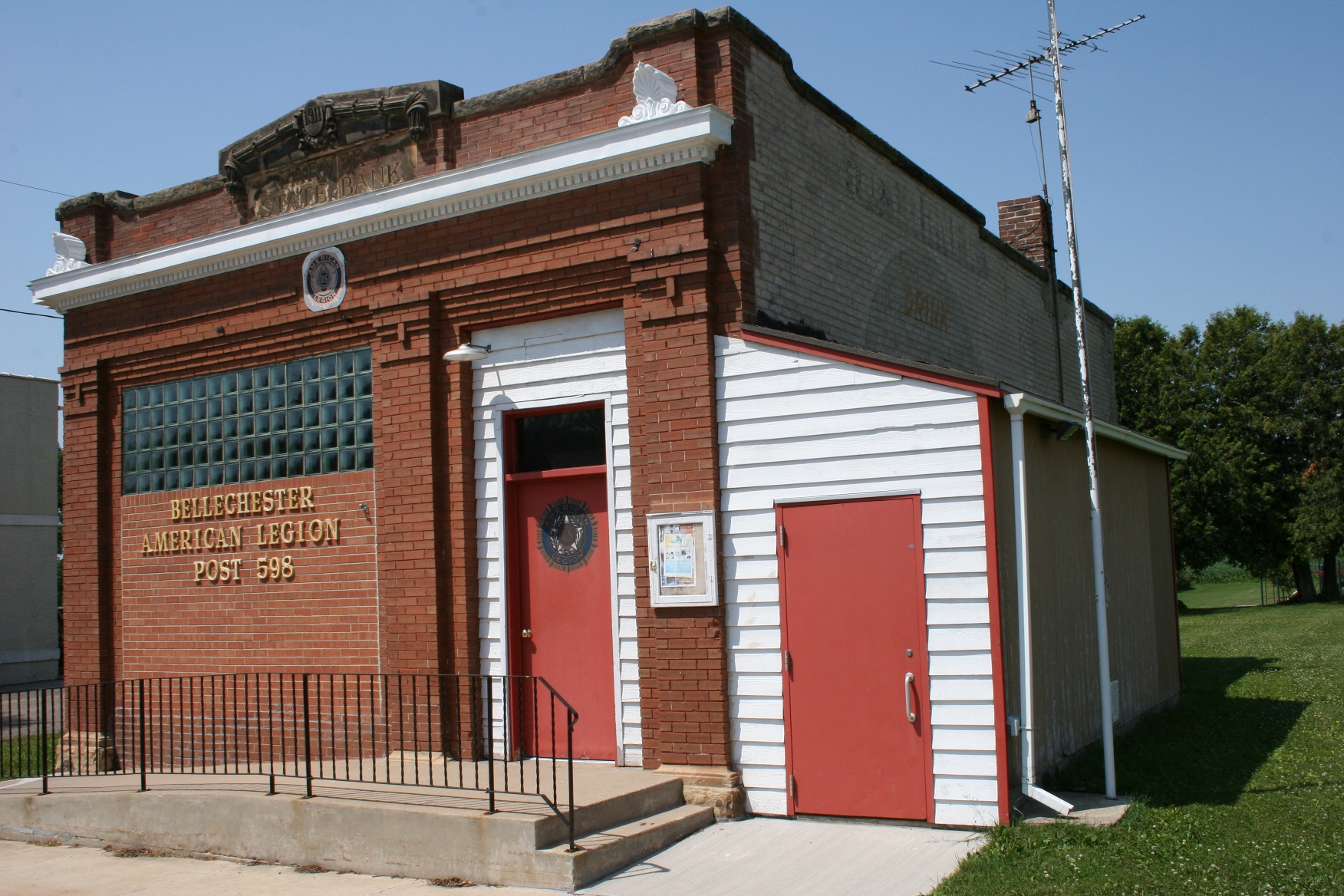
One day she’s dark and brooding, the next bright and cheery. Understanding her mood swings can be a challenge.
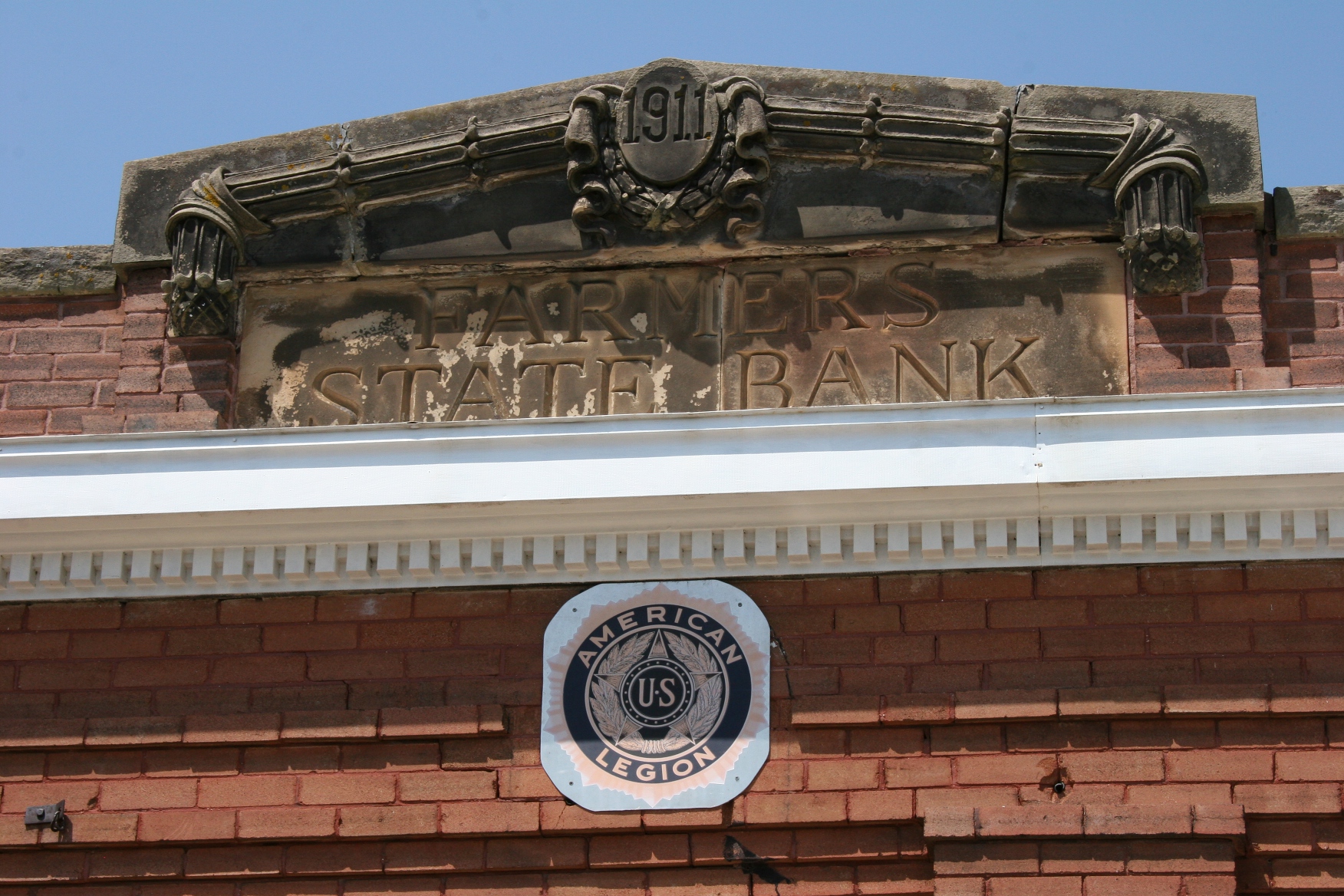
Sometimes you just have to accept who she is and realize that even in her colorless world, a certain sense of beauty prevails.
An aging windmill and a cluster of old buildings define this picturesque farm site along Minnesota State Highway 60 just west of Waterville in southeastern Minnesota.

The sweeping curves in the field drew my eye to photograph this scene west of Waterville along State Highway 60.

A lone tree along Minnesota State Highway 60 between Faribault and Waterville on a brooding March morning.

Farm sites mark the landscape along a back county road between New Ulm and Morgan.

All of these images were taken last Saturday morning from a moving vehicle while traveling through southern Minnesota. Each has been edited to create a more artsy, earthy feel.

© Copyright 2012 Audrey Kletscher Helbling


Praying for the tornado survivors March 6, 2012

Filed under: Uncategorized — Audrey Kletscher Helbling @ 11:19 PM
Tags: , , , , , , ,

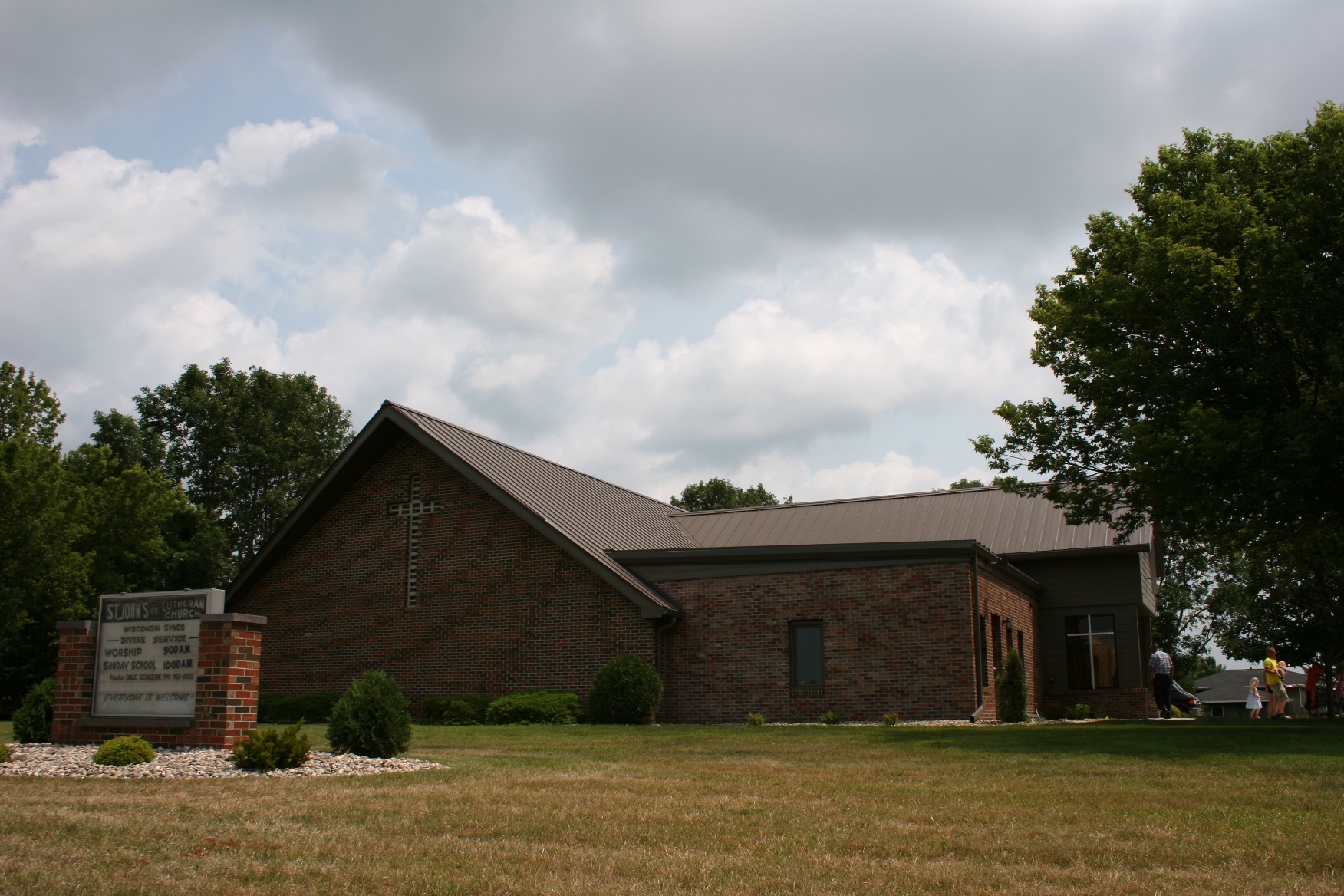
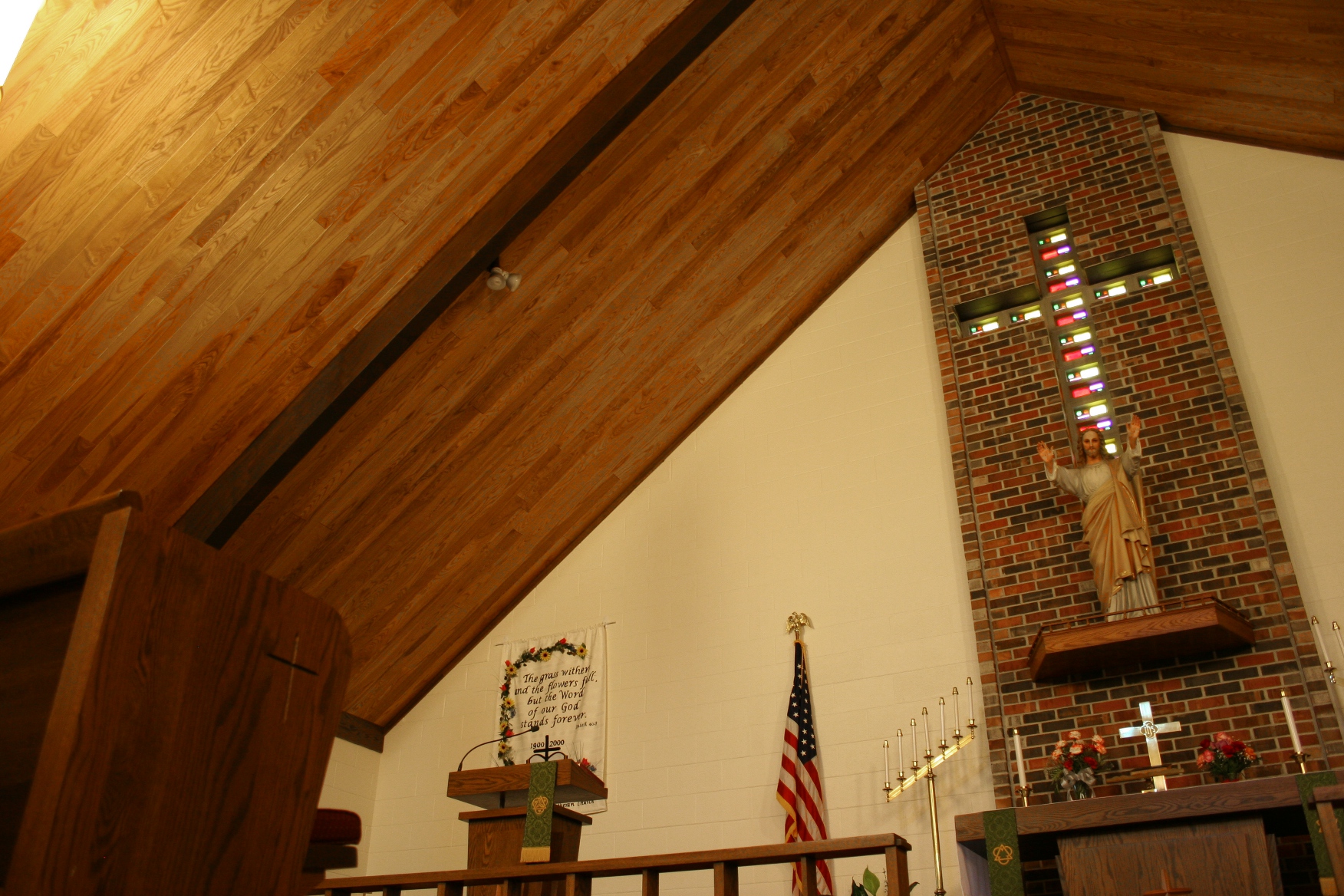
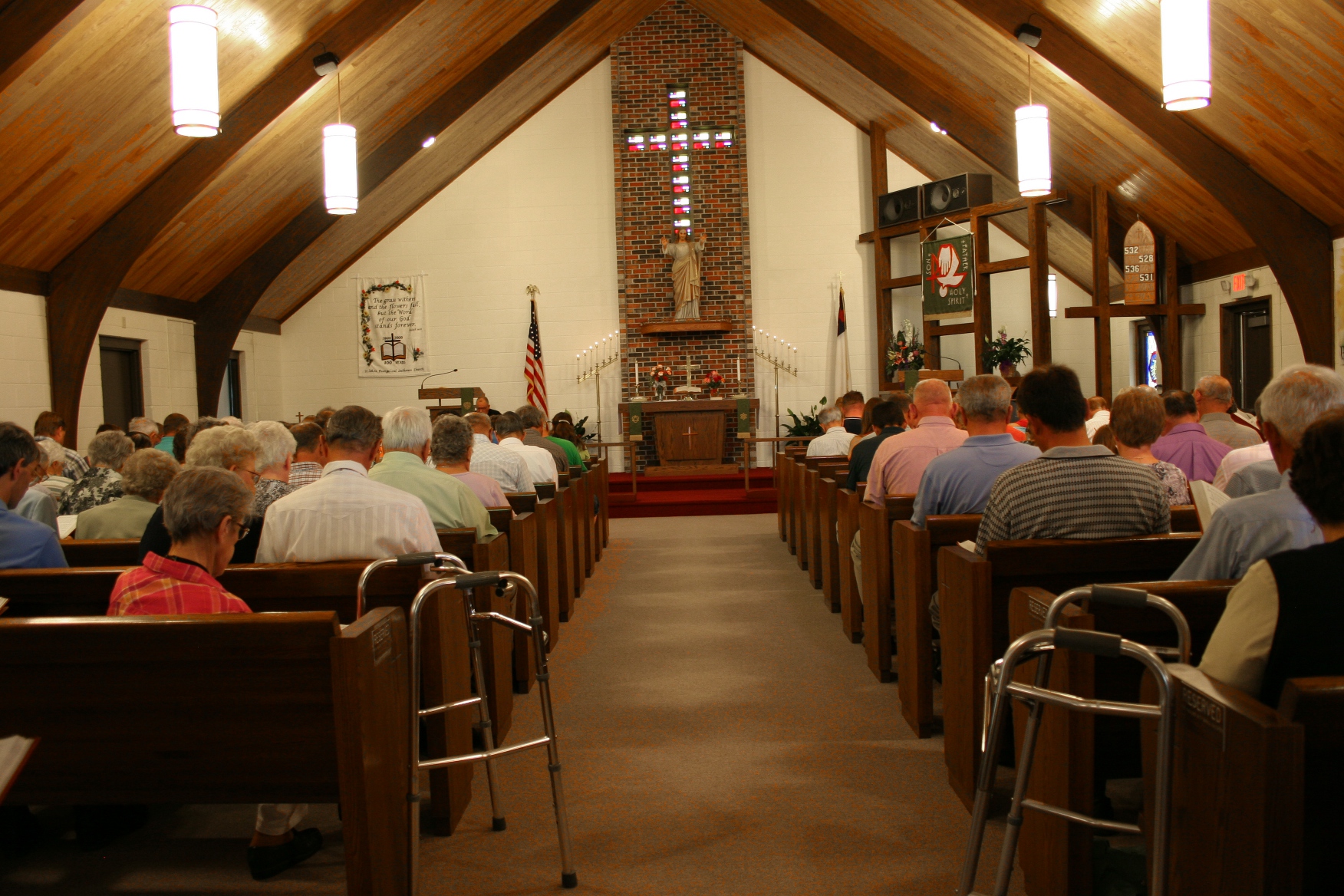
ON SUNDAY I ATTENDED morning worship services at Peace Lutheran Church in Echo, the sister congregation of St. John’s Lutheran Church in Vesta, the congregation of my youth.

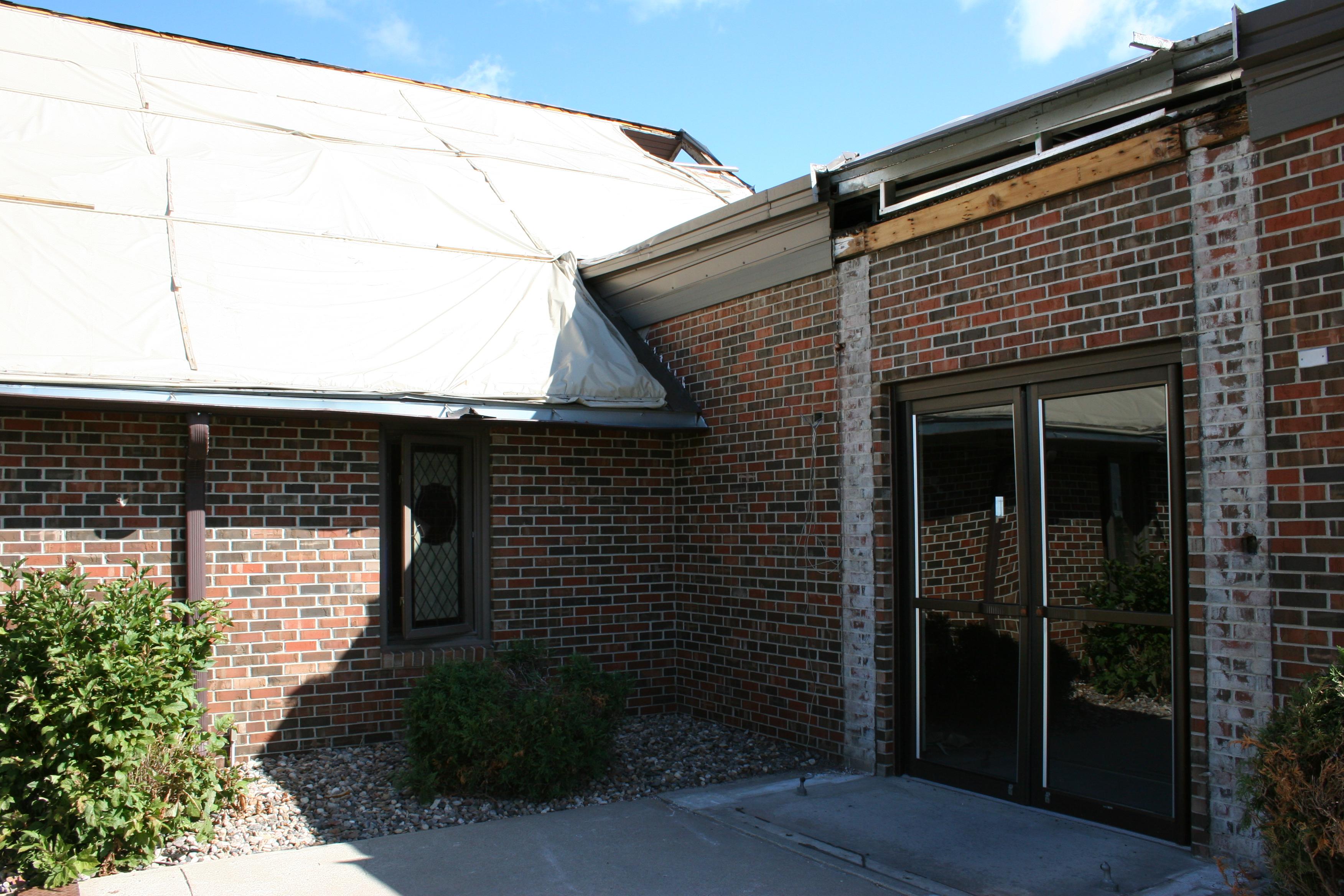
St. John’s members have been worshipping at Peace since a July 1, 2011, series of downbursts with wind speeds of 90 – 100 mph ripped the south roof from the sanctuary.

St. John's, hours after the July 1 storm tore through Vesta. Photo courtesy of Brian Kletscher.

Just to the north, west and east in this region of southwestern Minnesota, EF-1 tornadoes with winds of 95 – 105 mph wreaked havoc on farms and on the neighboring community of Belview.

Eight months later, St. John’s is still in the process of rebuilding.

Eight months after the storm, St. John's is still under construction with a new addition to the right. Congregants had hoped to be back in the church by Easter, but that likely will not happen until May.

The narthex was expanded and a pastor's office and handicapped accessible bathroom were added on the southwest side of the church built in 1974. This photo and the one above were taken on Saturday.

Despite the inconvenience of driving additional miles to worship and the temporary loss of their church home, St. John’s members realize the situation could have been so much worse. No lives were lost in the storms and their church could be salvaged.

This we—visitors and members of the two sister congregations—understood as we bowed our heads to pray for the survivors of the recent deadly tornadoes.

© Copyright 2012 by Audrey Kletscher Helbling


Perspectives on life presented in Saint Peter galleries

Filed under: Uncategorized — Audrey Kletscher Helbling @ 7:53 AM
Tags: , , , , , , ,
The Arts Center of Saint Peter, 315 South Minnesota Avenue, St. Peter, Minnesota.

The Arts Center of Saint Peter, 315 South Minnesota Avenue, St. Peter, Minnesota.

LIKE BLACK AND WHITE, night and day, the artwork of Pamela Bidelman and Kay Herbst Helms, at first glance, holds no comparison.

Pam, of St. Peter, is a painter, working in the more abstract in her current exhibit, “lamina,” installed at the Arts Center of Saint Peter Moline Gallery.

Kay, of Mankato, is a photographer, grounded in the earth with her black-and-white, rural-themed images in “What Sustains Us: considering the hands and the land of rural south central Minnesota.” Her art is showcased in the Lower Level Gallery of the Arts Center.

Both artists distinguish themselves in their individual approaches to art. Therein lies the essence of art—the ability to create and express one’s self in a truly personal style that emerges from the heart and soul of the artist.

I am more of a down-to-earth appreciator of art, meaning abstracts puzzle and challenge my mind to consider what the artist is attempting to convey.  I don’t have to think so hard to understand real-life art.

Yet, it’s good for me to view more abstract art like that created by Pam and to talk with her and learn that she is trying to show, in her exhibit, “the quality of skin as a container…deconstructing the body parts…the fragility of life.”

Three almost ghost-like faces, with undefined, haunting eyes, created by Pam Bidelman.

I expect that her artistic expression connects to her former profession as a clinical social worker. One can only imagine the experiences she drew on while creating her current exhibit.

There’s a certain translucency to Pam’s pieces that I interpret as a sense of vulnerability.

A series of suspended faces, again with that vulnerable quality.

In Kay’s work, vulnerability also exists, in the primarily close-up black-and-white images she’s shot, mostly of hands, and in the accompanying short stories she writes about her subjects. I know rural people. It is not always easy for them to open up, to allow introspective photos and insights into their lives.

Kay gained their trust and shares her discoveries in art that is as honest as a hard day’s work on the farm.

For example, she writes in her interview with Sharon Osborne:

Sharon tells the story of her uncle, a retired farmer. Her aunt has answered the phone and the caller asked, “What’s your husband doing on this cold, blustery, snowy day?”

Her aunt replied, “What else do farmers do on a cold winter’s day other than crack walnuts down the basement?”

Viewing Kay Herbst Helms' photos in "What Sustains Us." She focuses primarily on hands in her images.

With other photos, Kay pairs poetry by Paul Gruchow and the poetic words of additional writers.

She is, says Kay, connecting the elements of hands, land, photographs and words in her exhibit.

Kay accomplishes that with the spirit of an artist rooted deep in her appreciation of rural life and the rural landscape.

Both exhibits are distinctly different. Yet each can be appreciated for the unique perspectives they offer on life.

Several of Kay's images include cattle, following the exhibit's rural theme.

FYI: Both artists’ projects were supported by grants from the Prairie Lakes Regional Arts Council with funding provided by the McKnight Foundation. Their exhibits run through March 18.

Kay created a previous, similar project, “Blessed Are the Hands That Have Served,” focusing on photos of 13 retired School Sisters of Notre Dame.

Click here for more information about the Arts Center of Saint Peter.

Check back for another post from the art center wherein you will meet two more artists.

© Copyright 2012 Audrey Kletscher Helbling


Longing to skate March 1, 2012

Filed under: Uncategorized — Audrey Kletscher Helbling @ 10:15 PM
Tags: , , , , ,

My neighbor's temporary "pond."

IF I WAS 10 AGAIN, I’d slip on my winter boots and dash across the street to slide on my neighbor’s pond.

Oh, for the joy of slip-sliding across ice, free and untethered from the worry of falling.

Those thoughts flew through my mind this morning as I viewed the pond that just days ago existed only as a patch of dormant lawn, visually unappealing in the deep of the winter we haven’t had here in Minnesota.

Tuesday brought snow to most regions of our state. But here in the southeast, precipitation fell as strong, steady, relentless rain that gushed down hills, pooled along curbs and flooded basements.

And in some spots, like the low-lying lot that dips between two neighbors’ property, the rainwater just kept pouring in, creating a pond.

That water’s frozen now, and, as I gaze out my window, I’m tempted, oh, so tempted, to pull on my chunky and practical Northwest Territory boots and race over to skate upon the ice. Except that the ice likely descends no more than a half inch.

I cannot risk it, risk the falling , the plunging into ice water, to relive youthful moments of skating across corn field-stubbled ponds in buckle overshoes.

© Copyright 2012 Audrey Kletscher Helbling