Minnesota Prairie Roots

Writing and photography by Audrey Kletscher Helbling

Recovering from the Hammond flood, in the voice of a survivor September 23, 2011

FOR THE PAST YEAR, Katie Shones has been my main connection to Hammond, the southeastern Minnesota community of 230 flooded one year ago today by the raging waters of the Zumbro River.

Katie and her family—husband Scott and children Bekah and Romie—live just across Wabasha County Road 11 from the Zumbro. The floodwaters came within mere feet of their home on the east end of Hammond’s business district.
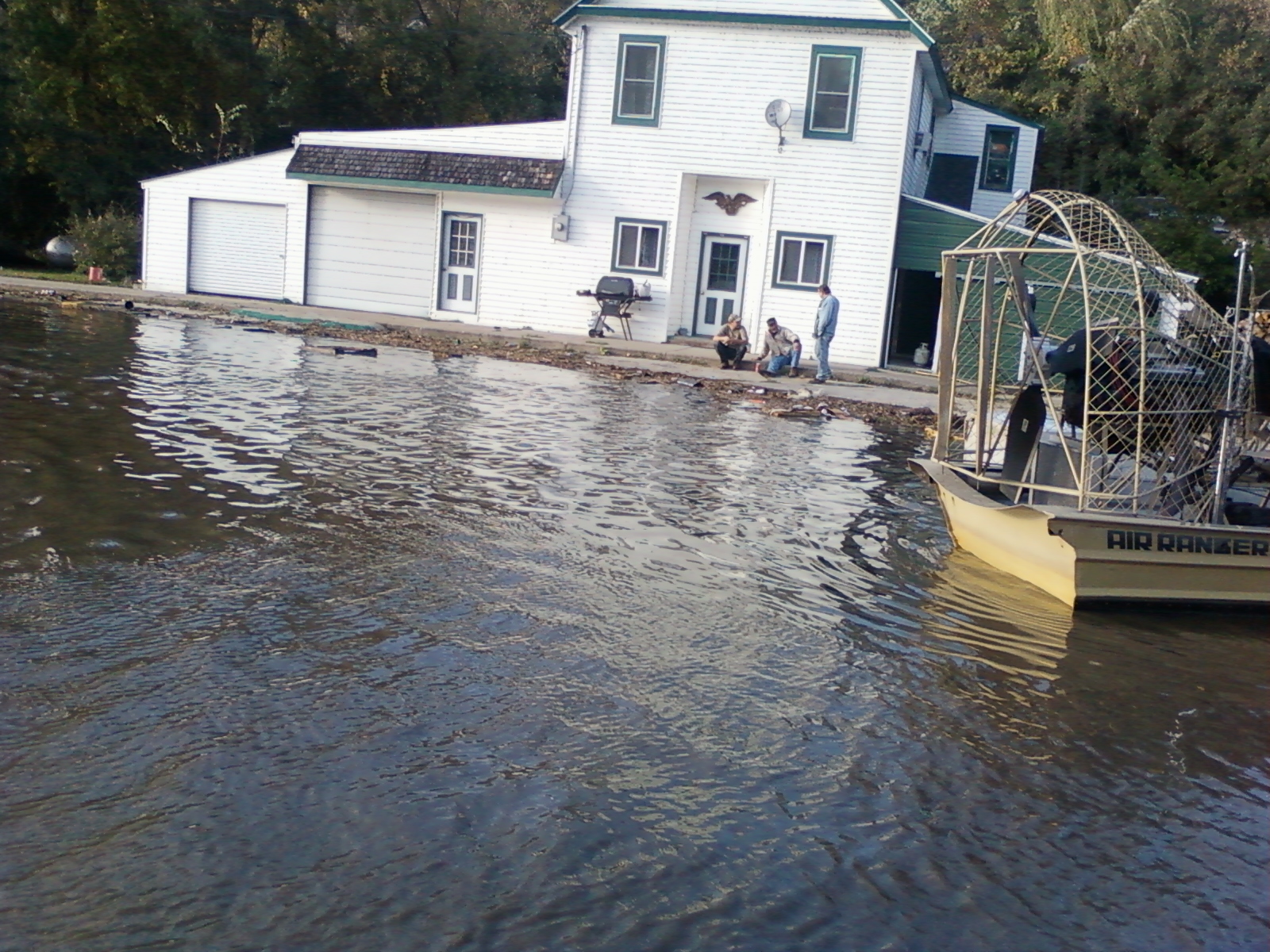
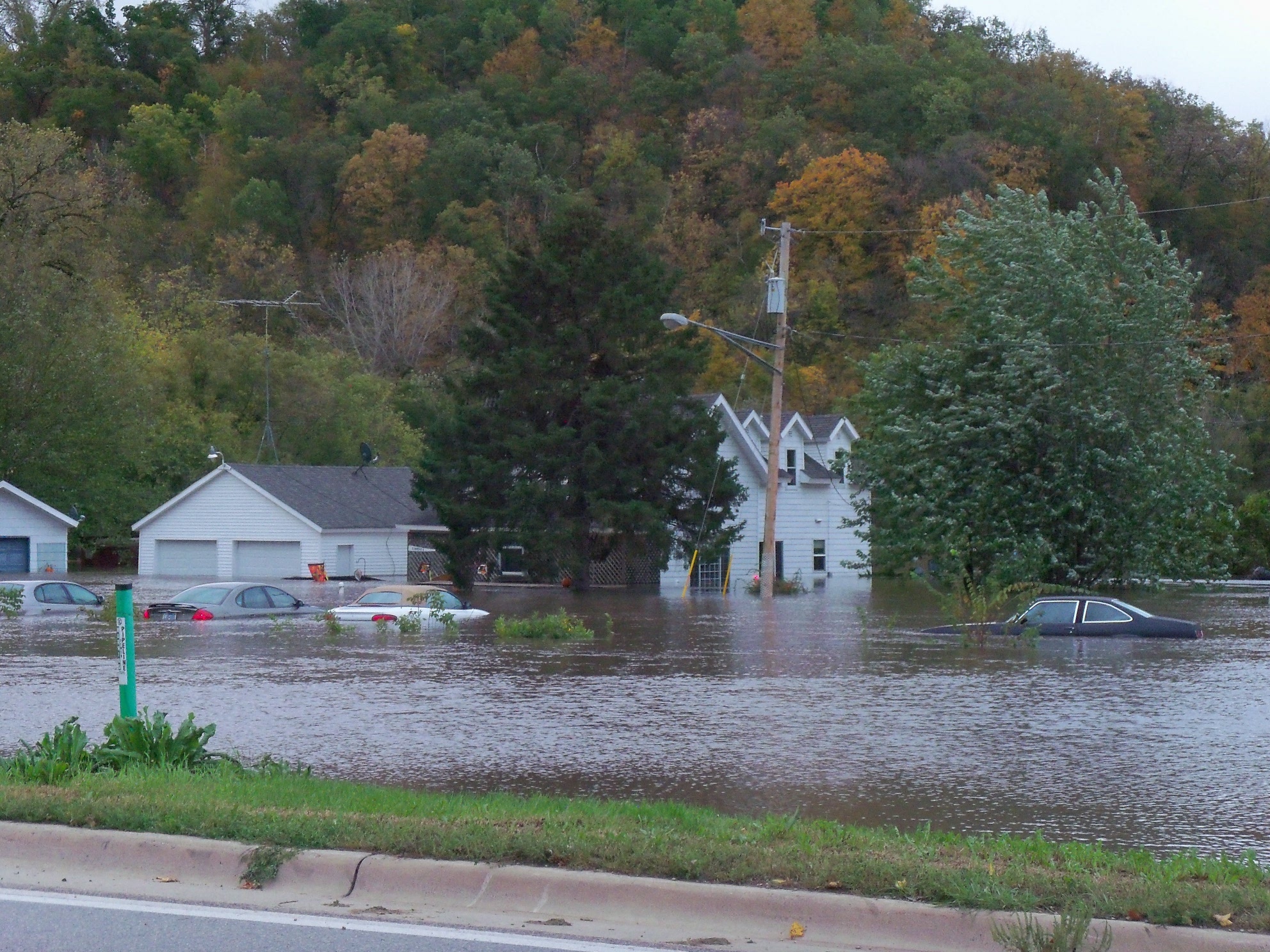
Katie Shones and her family live in this house, photographed during the September 2010 flood by Gene Reckmann.

Even though the family’s home was spared, they were still deeply impacted by the flood, especially the Shones children.

I offered Katie the opportunity to reflect on the flood and its impact on this, the one-year anniversary. Her words are sure to move you. Katie is a woman who speaks her mind and tells it like it is. (Click here to read my first interview with her in October 2010.)

Through our months of corresponding, I’ve come more and more to appreciate the resilience and strength of individuals like Katie who’ve endured so much and yet find the silver lining in the most difficult of situations.
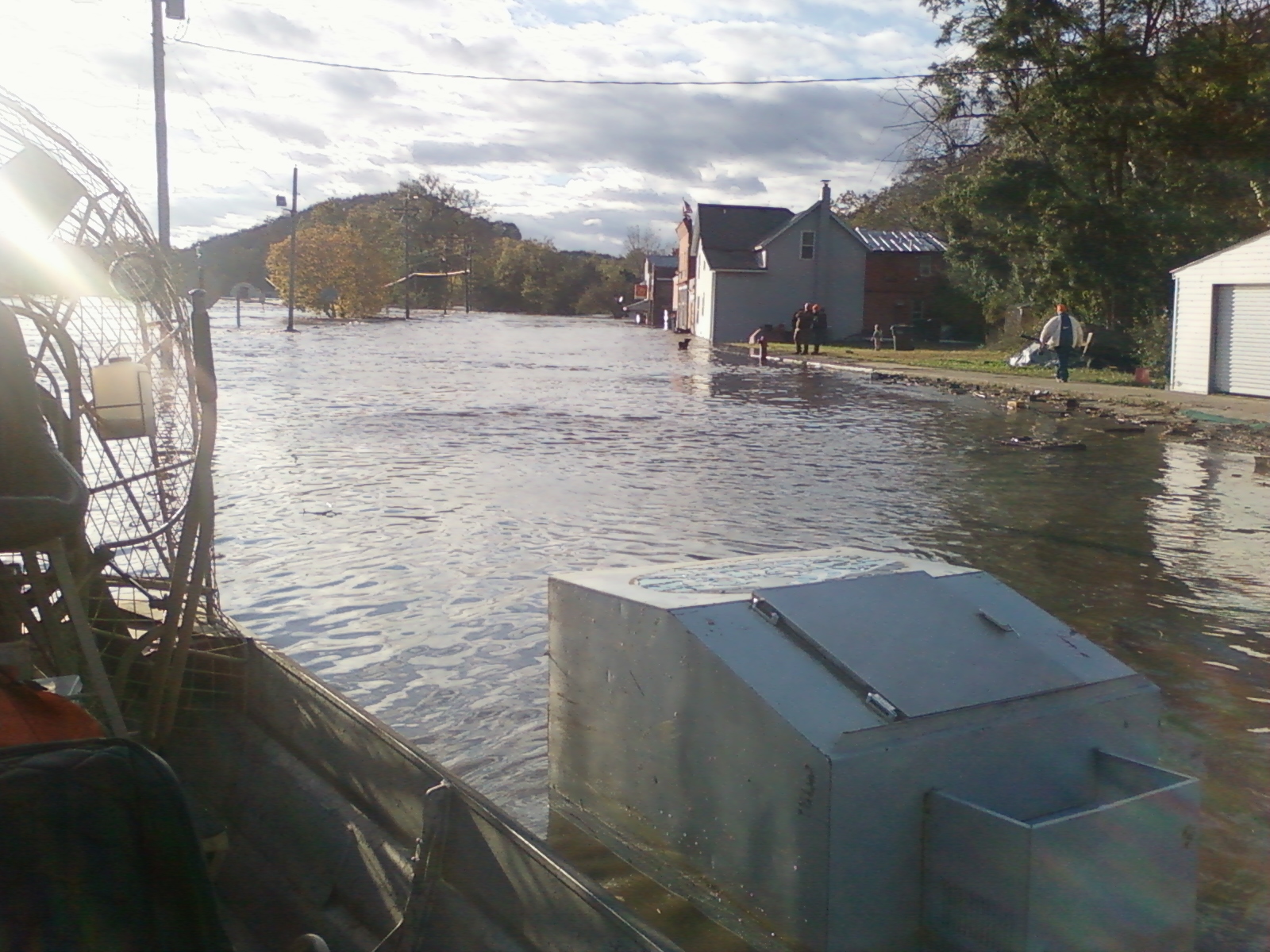
Main Street Hammond at the height of the September 2010 flood. Water was rushing over the sidewalk and into the basement of the gray house via the cellar doors. Katie Shones' house is only two lots away from the gray house. Photo by Gene Reckmann.

Here, then, are Katie’s words:

I DO NOT LIKE to think of that day nor the days immediately following the flood. I don’t like to look at pictures, either. I shudder at the thought of being evacuated from my home and the three-plus long weeks of the National Guard patrolling the town and enforcing a 6 p.m. curfew. Check points to enter the city, not being outside after 6 p.m….

The response of people to this tragedy has been overwhelming. Complete strangers have come into the town and surrounding areas and donated hundreds, no thousands, of man hours for clean up and rebuilding. Thousands of dollars of building materials were donated and installed in homes and businesses. Local restaurants provided delicious meals.

The flood has reaffirmed my belief that people are basically good and caring deep down inside.

I cannot sing praises high enough to Lutheran Social Services. Their aid to people was up and above the call of duty. Camp Noah, (for children who have survived a natural disaster) was a positive experience for my children. Bekah and Romie could talk about their feelings and express them through art, theater, crafts, etc. LSS still has an office in Hammond to assist people.

The parks are coming along beautifully. The baseball field is usable again and a new chain link fence has been installed around it and the basketball court. Flowering crabs have been planted in the boulevard of Main Street. I can’t wait until spring to see them bloom.

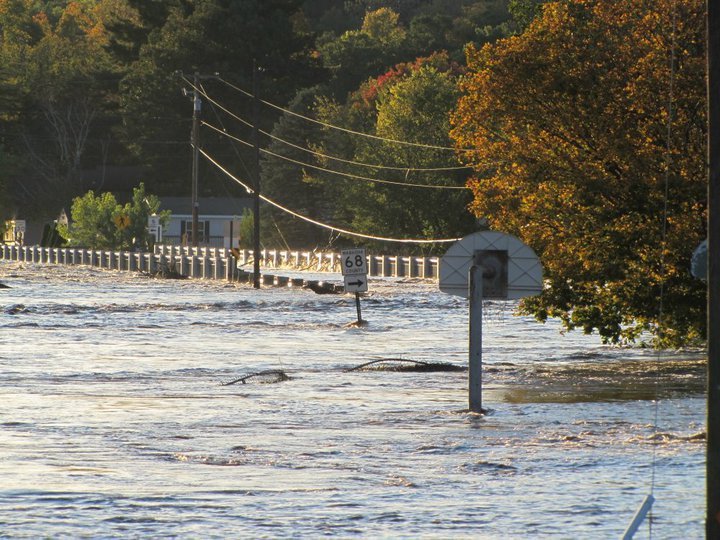
This photo by Carrie Hofschulte shows the Zumbro River raging across the bridge that connects east and west Hammond on Wabasha County Road 11.

FRUSTRATIONS. I believe there are 17 or 18 homes on the buy-out list. I am being told it will be another 18 months before the buy-out is complete. That will be 2 ½ years after the flood occurred. That is a long time to wait.

Some people are still making double payments. When those homes are demolished, it will significantly impact the tax structure of this town. What will happen to my property taxes? I also expect a dramatic increase in the water and sewer bill. We already pay about $100 a month for water and sewer…
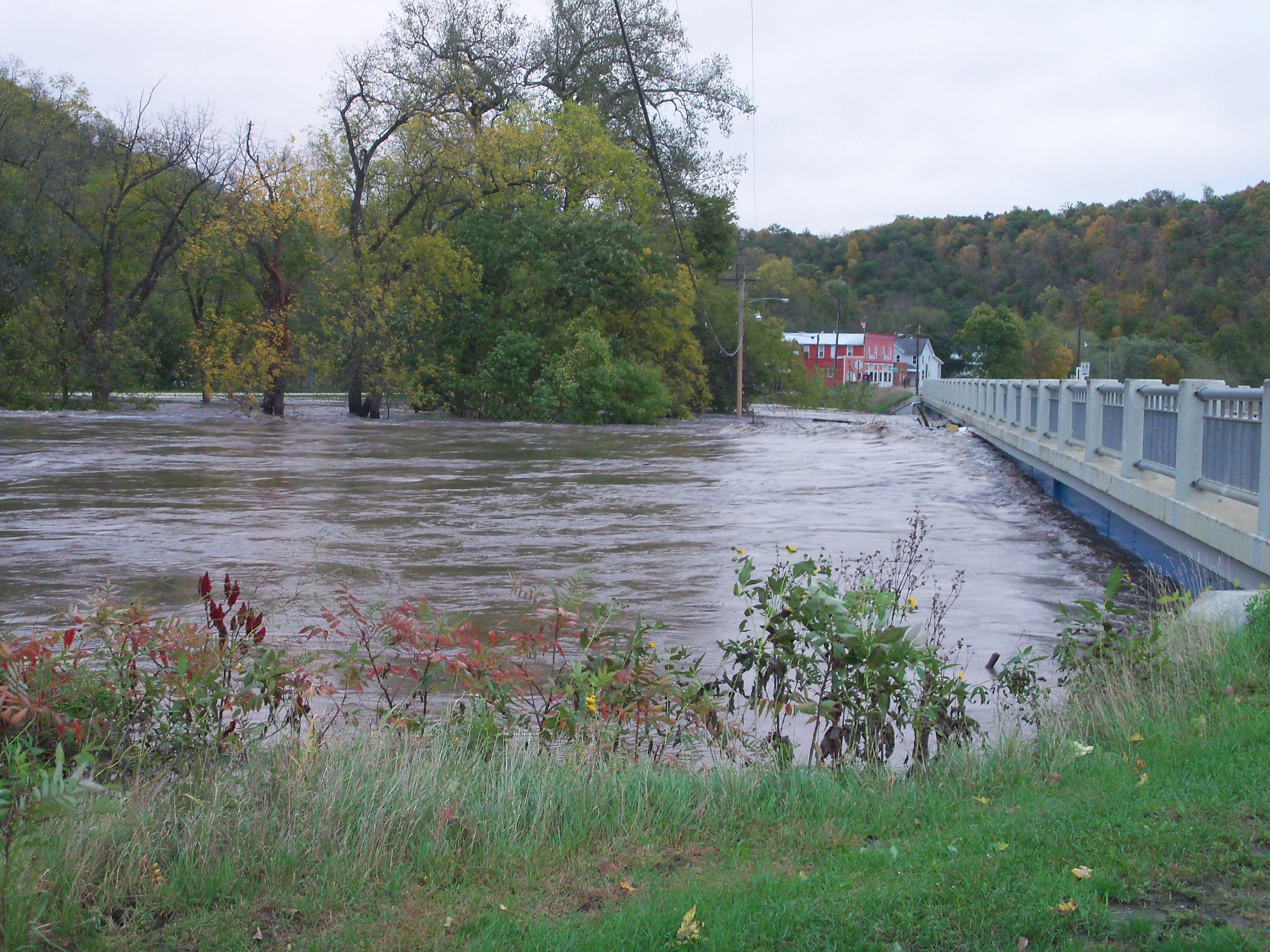
A view of the raging Zumbro River, looking from the west side of Hammond to the east at 7:30 a.m. on Friday, September 24, 2010. Photo by Susie Buck.

I CERTAINLY RESPECT Mother Nature more now than prior to Sept. 23, 2010!  The sheer force and power of the Zumbro River was unbelievable. We did not enjoy the river this year as in years past. Bekah and I only went tubing twice this year—last year we went 13 times in one week!  Scott and Jerome took the flat bottom out a few times in 2011. Not very often compared to years past.

However, there is a silver lining to this all. People have come together to help each other. The community is much closer knit than before. Neighbors that haven’t spoken to each other for a long time stop by to chat and visit. After Scott’s neck surgery last fall, I had many offers of help for snow removal and cutting and splitting of firewood. I don’t think as many people would have helped out prior to the flood as after.

Sheri Ryan shot this image of the same bridge, above, when the water had returned to its almost "normal" level.

BEKAH AND ROMIE STILL WORRY about flooding, especially when it downpours. They monitor the weather station almost every day and keep a close eye on the river level. Rebekah doesn’t cry out in her sleep anymore, thank goodness. The bags are still packed under her bed, though. Jerome doesn’t speak of that day often. I think he is like me, I try to forget it. However, I know they will never forget that day for the rest of their lives. (Click here to read an earlier post about the flood’s impact on Bekah and Romie.)

One more thing: The flood has taught me not to sweat the little things in life. Family, friends and faith are what is important in life.

© Copyright 2011 Audrey Kletscher Helbling


After the flood: “A long way from normal” in Hammond September 22, 2011

HOW DOES A DEVASTATING flash flood change you and the place you call home?

I posed those and other questions to Tina Mann from Hammond, a southeastern Minnesota community ravaged last September by the overflowing waters of the Zumbro River. A year later, what is life like in Hammond for residents such as Tina, now a member of the Hammond City Council?

Here, in her words, are Tina’s reflections one day before the one-year anniversary of the flood which left her and her family living in three hotels and a rental house for three months before they could return to their Hammond home.

Tina, on her June 25 wedding day, in the bridal gown she saved when she had to evacuate her home last September. Photo by Sherwin Samaniego Photography.

How has Hammond/life in Hammond changed since the flood?

Hammond is a lot quieter now. A lot of our long time residents have left, and a lot of our regular crowd has been sporadic. But, they are slowly starting to trickle back in.

Hammond has made some new friends along the way, and we see some of them come back down from time to time, too. I predict, though, that as winter draws close, that it may taper off. I think we may be in for another very quiet Hammond winter. There are fewer children, too, which makes it hard for the few that are still here. I hope that sometime down the line, Hammond will start to see more families coming down here.

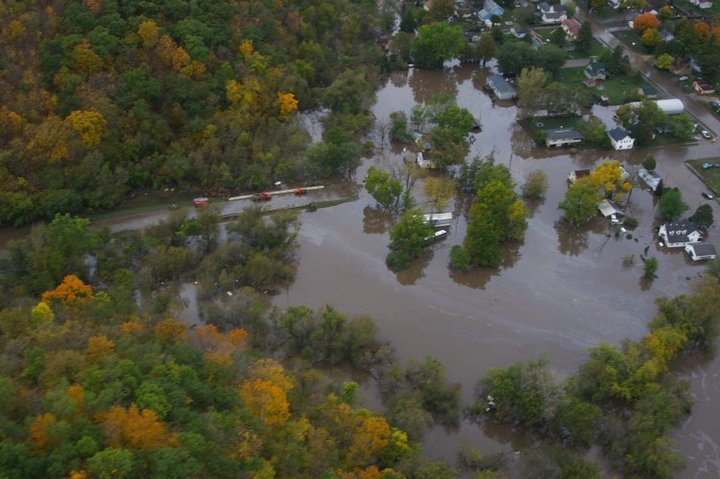
An aerial view of Hammond during the flash flood of September 2010. Photo courtesy of Micheal and Tina Mann.

What still needs to be done in terms of recovery in your community? Be specific.

For the most part, weather permitting, the city should be done with the municipal repairs by the end of the month. We were able to get the park building repaired and fully restored.

On the residential end, however, things are different. FEMA and the State funded the programs to repair the Municipality of Hammond and, with some careful planning and negotiating, we were able to come very close to a pre-flood state.

But the residents did not get any FEMA aid at all. Some only qualified for a state grant, which just barely covered expenses to repair their homes. Some qualified for low-interest loans and depending on the amount of damage to the home, they may have been able to replace a few of their possessions. But without FEMA funding, most people were not compensated for their personal belongings and it may well be many years before they feel they are ‘recovered.’

Then there are those still waiting for their buy-outs. The residents on the state program have begun receiving their offers, but are still in the ‘red tape’ part of the process and have not received any funding yet, and those on the federal list (50 percent or more damage, in flood way and flood plain) have been put on hold by the federal government, and no one knows how long that is going to take.

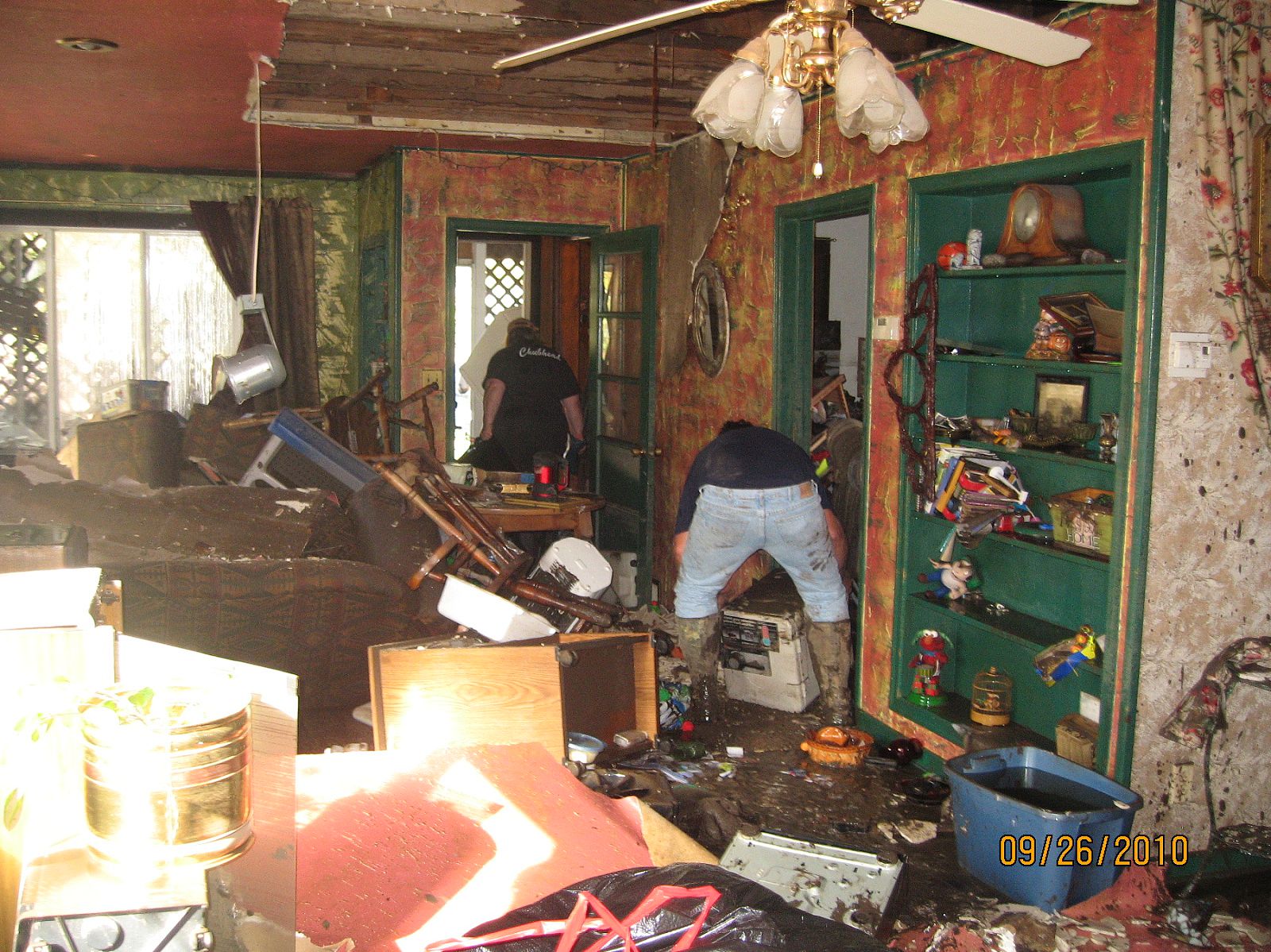
After the flood, the gutted home of Dallas and Vicki Williamson, who relocated 35 miles away to an 1882 hilltop farmhouse in rural Cannon Falls. Photo by Sheri Ryan.

Do you need additional funding for Hammond recovery projects? Volunteers still needed? I’m wondering how that park rebuilding is going.

The ‘city’ is pretty well rebuilt and I am happy to say that we no longer need volunteers unless we decide to start some new projects.

Financially, however, we are still trying to find ways to compensate for some shortfalls. There are city employees that have not been compensated for personal expenses, such as cell phone overages, incurred while working for the city during the immediate aftermath. Although it is realized that it is a responsibility of your position, we also feel that if we can find a way to do it, it really is the right thing to do.

We also have employees who worked well beyond the normal scope of their position and they really do deserve compensation for their time, services, and personal expenditures. Although most of them haven’t asked for it, it still would be nice if somehow we could work it out. These people did a phenomenal job taking care of our city!

And we have the future to look at, too. We are probably going to loose 6-8 residential properties to the 100 percent buy-outs. There are another 10 or so on the 50/50 buy-out list And those who choose the 50/50 but do not rebuild, of course their property value will decrease dramatically.

This is going to have financial consequences to our tax base, which is going to result in higher property tax and water and sewer bills for every business and property owner in Hammond.

And we need to take a look at what we are going to do with all of the new green space in town. When we lose the residents to the 100 percent buy-outs, those properties become ‘green space’ by law. That means that the lots become city property that cannot have permanent structures built on them. Many of these lots are centrally located in the middle of a residential area. The city is going to be moving into phase two of the recovery, which is the long-term aspect…and we do have a lot of things to think about and consider.

This photo shows the destroyed road that goes from Wabasha County Road 11 to the business area on the east side of Hammond. Waters were receding in this photo taken mid-morning on Saturday, September 25, 2010, by Jenny Hoffman.

Is there a sense of frustration about anything or are things going well?

Yes, there has been, and is, a lot of frustration. It has been a very long, hard process trying to filter through the red tape to realize what is the ‘city’s’ responsibility, what is the ‘residents’” responsibility, and what programs are responsible for what.

A lot of phone calls from residents, confused about who they should be speaking to. Frustration because the process is very slow. The city has very few answers for the residents who are working with the buy-out program and it’s been hard to convey the message that the city has nothing to do with that part of it and we really have no answers for them. All we can do is direct them back to the agencies they are working with.

We have lawns that are not being mowed, properties that have been abandoned since the flood. The residents that have rebuilt are frustrated because the ‘clean-up’ won’t be complete until these issues are resolved, and we don’t know how long it is going to take.

Our city is coming together, but we really are still a long way from being back to normal.

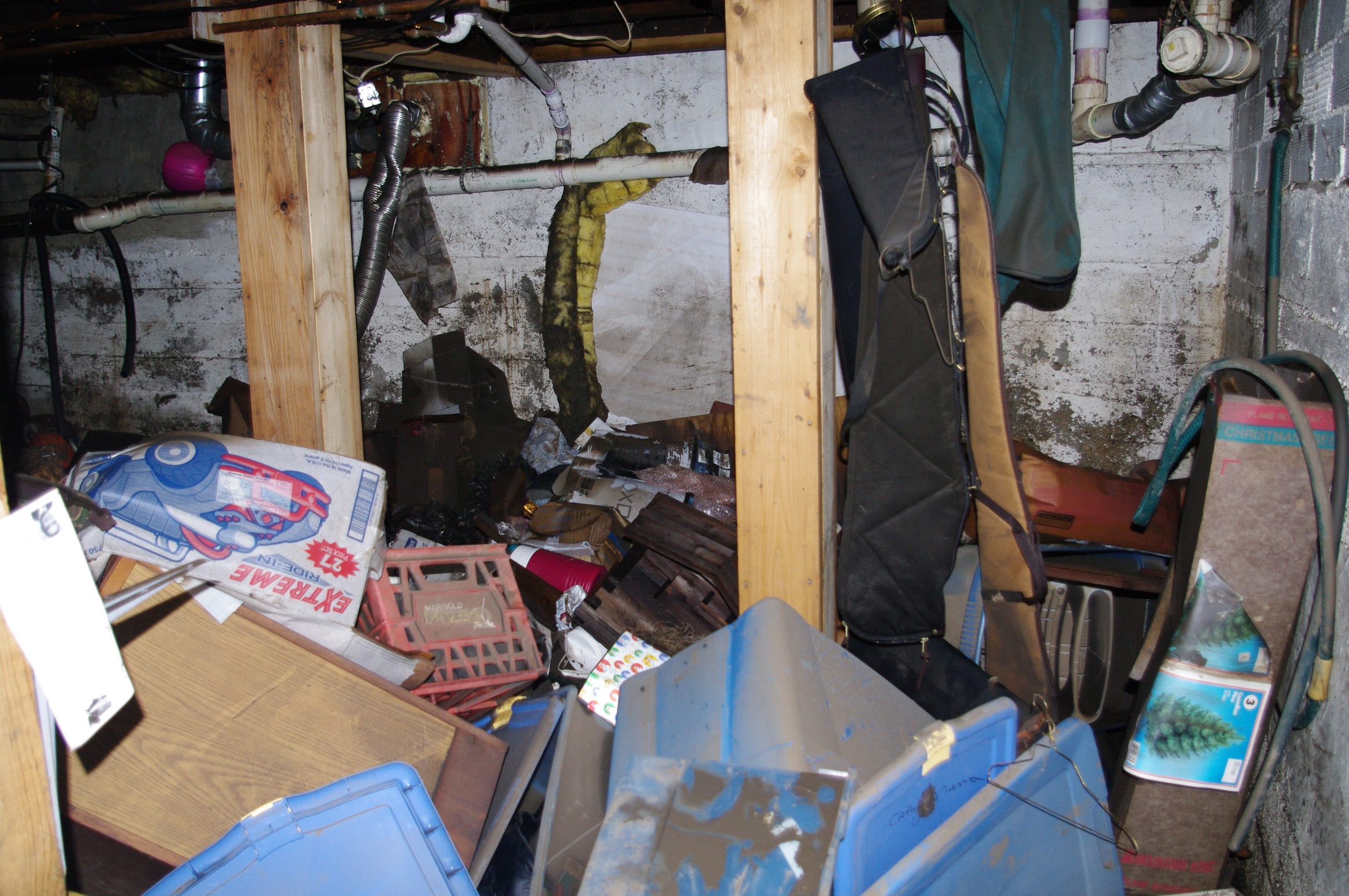
Floodwaters destroyed everything in the basement of the house where Tina, Micheal, Cassie and Christian and Bob and Cathy Mann live. Photo courtesy of Micheal & Tina Mann.

What was the biggest single impact of the flood on you emotionally? Did it change you in any way?

Watching the hurricanes and flooding in the east was really hard and I realized that my emotions are still very raw. I could not control my weeping as I watched the news and saw the devastation in the eyes of those people. I know how that feels, I’ve been there….. It still hurts very much. I doubt that feeling is ever going to go away.

Becoming involved with the city on the council has opened my eyes to a lot, and yes, it has changed me. This flood and the impact it is going to continue to have on this area for years to come is bigger than what the eye can see. We are going to be dealing with this for a long time.

On a personal level, I am dealing with the impact by being involved with the revolution of Hammond. I have been very busy planning the Anniversary Party (set for Saturday, September 24) and working on the council ‘learning the ropes’. I plan to be involved in finding the solutions to the challenges that are before us, and help guide Hammond into the future.

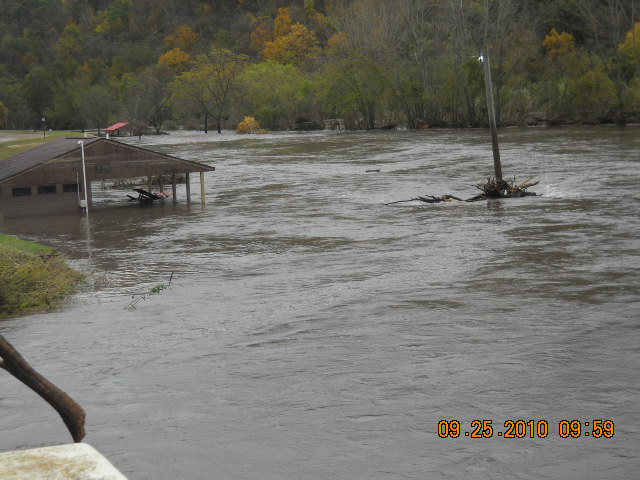
Hammond's riverside park was all but destroyed by the flood. Marks on the shelter roof show how high the water rose. A baseball field next to the shelter, with a fence around it, is covered by receding floodwaters. Jenny Hoffman took this photo at 10 a.m. on Saturday, Sept. 25, 2010.

THANK YOU, TINA, for sharing your thoughts. You have always been open and honest, never holding back, and I appreciate that. We can all learn a thing or 10 from you about the strength of the human spirit and the strength of community.

READERS, PLEASE CHECK BACK for another post featuring thoughts from Hammond resident Katie Shones.

© Copyright 2011 Audrey Kletscher Helbling

 

One year later: A thank you party in flood-damaged Hammond September 21, 2011

An aerial view of Hammond during the flash flood of September 2010. Photo courtesy of Micheal and Tina Mann.

NEARLY A YEAR AGO, residents of  Zumbro Falls and nearby Hammond were evacuating their homes during a devastating flash flood.

They were not prepared—could not have been prepared—for the rapidly rising Zumbro River that would inundate their homes and businesses on September 23/24, displacing them for months and many of them permanently.

Within three weeks of the flooding, while on a Sunday afternoon drive to view the fall colors, my husband and I drove into Zumbro Falls. There I met Jackie, Tracy and Susie. Just down the road in Hammond, I met Katie.

Tracy Yennie of Zumbro Falls, whom I photographed shortly after the flood which left her without a home and living temporarily in a shed.

These four women shared their stories and frustrations and worries with me. In return, I published what I today consider some of the most powerful posts I have ever written. Click here to read this flood series published on October 11, 2010.

Flooding in Hammond, one year ago. Photo by Susie Buck.

My coverage of the flood did not end then. These women so impressed me with their fortitude, their strength and their outspokenness that I continued to follow one of them, Katie Shones of Hammond, throughout the year. Katie was my go-to person any time I wanted an update from her Wabasha County community of 230. Not once did she suggest that I was intruding into her life. In fact, she has gone above and beyond in answering my many questions. She also introduced me to her dear friend, Tina (Marlowe) Mann.

Tina and I have never met, but we’ve corresponded numerous times via e-mail. Like Katie, Tina has always, always, been forthright and open with me. She allowed me to share her story in a March 13-19 series. Click here to read the first of those six posts.

Via my connections with Katie and Tina, I was able to inform you of the need for volunteer help in Hammond. And at least two readers responded with crews to assist in Hammond. Others of you may have responded in ways that I’ll never know.

This weekend Hammond is celebrating its recovery with a “Thank You” party. “We would like anyone who was impacted, donated, volunteered, or showed compassion for Hammond to come back down and see how far we’ve come and allow us to show our appreciation – the Hammond way!!!” Tina wrote in a recent e-mail. She invited me to attend and said I could spread the word.

So, if you fall into that “impacted, donated, volunteered or showed compassion for Hammond” category, make your way to this picturesque riverside berg on Saturday, September 24, to celebrate with Tina and Katie and their families and the other residents, and former residents, of Hammond.

The first day back into their flooded Hammond home, Vicki and Dallas Williamson had 20 minutes to grab whatever they could carry on the back of a four-wheeler. The family did not move back. Photo by Sheri Ryan.

Tina, who now serves on the city council; Hammond Bar co-owner Janice Farris; Hammond Café co-owner Cindy Campbell; former Mayor Judy Radke; and flood-affected resident Beau Mischke did the initial planning for the party and pulled in many local residents to help with activities, according to Tina.

Here’s the schedule of events:

  • 2:30 p.m., park dedication
  • 2:45 p.m., Kiddy Carnival
  • following the carnival, horseshoes at the Hammond Bar & bean bags at the Hammond Cafe
  • 3 p.m., corn husking in the park
  • 5 p.m., free sweet corn and hot beef sandwiches
  • Also, live music by Led Penny and Bad Logic and fireworks at dusk.

As you might guess in a small town, the entire event and door prizes are being covered by donations from businesses, residents, friends of Hammond and clubs. I’m not going to list them for fear of omitting someone.

Suffice to say you would be impressed.

And just one more thing. Tina tells me that by the end of the month, 12 crab apple trees will be planted on Main Street and in the east end of the park in honor of the children of Hammond affected by the flood.  Those, too, have been donated, by a Rochester nursery and garden center. Click here to read an earlier post about the affect of the flooding on Katie Shones’ children.

I never doubted that the folks of southeastern Minnesota would rebound from the devastating flood of September 2010. I knew it when I met Jackie, Tracy, Susie and Katie. These are strong, determined women. Nothing would stop them from reclaiming their communities.

The bridge connecting east and west Hammond is barely visible during the flood, which also overtook the town's park. Photo courtesy of Micheal and Tina Mann.

CHECK BACK FOR A POST tomorrow in which Tina Mann shares her thoughts on the past year and how her community has worked toward recovery. As in the past, Tina speaks with an honest, open voice that will touch your heart.

© Copyright 2011 Audrey Kletscher Helbling
 

National Weather Service confirms July 1 tornadoes in southwestern Minnesota July 7, 2011

THE NATIONAL WEATHER SERVICE confirms what many Minnesotans had already figured out. Several tornadoes touched down during a massive storm system that began near the South Dakota/Minnesota border late Friday afternoon, July 1, and swept as far east as northwestern Wisconsin.

In my home area of Redwood County, two tornadoes were confirmed—both in the northwestern section of the county.

According to the NWS Chanhassen office, an EF-1 tornado with maximum winds of 95 – 105 mph began approximately six miles west of Vesta and continued for some 21 miles to the northeast. The maximum half-mile wide twister moved across Belview, which saw the most widespread tree damage in the surveyed area. The tornado then crossed the Minnesota River and ended two miles into eastern Renville County. Click here to read my previous post on the storm damage in Belview.


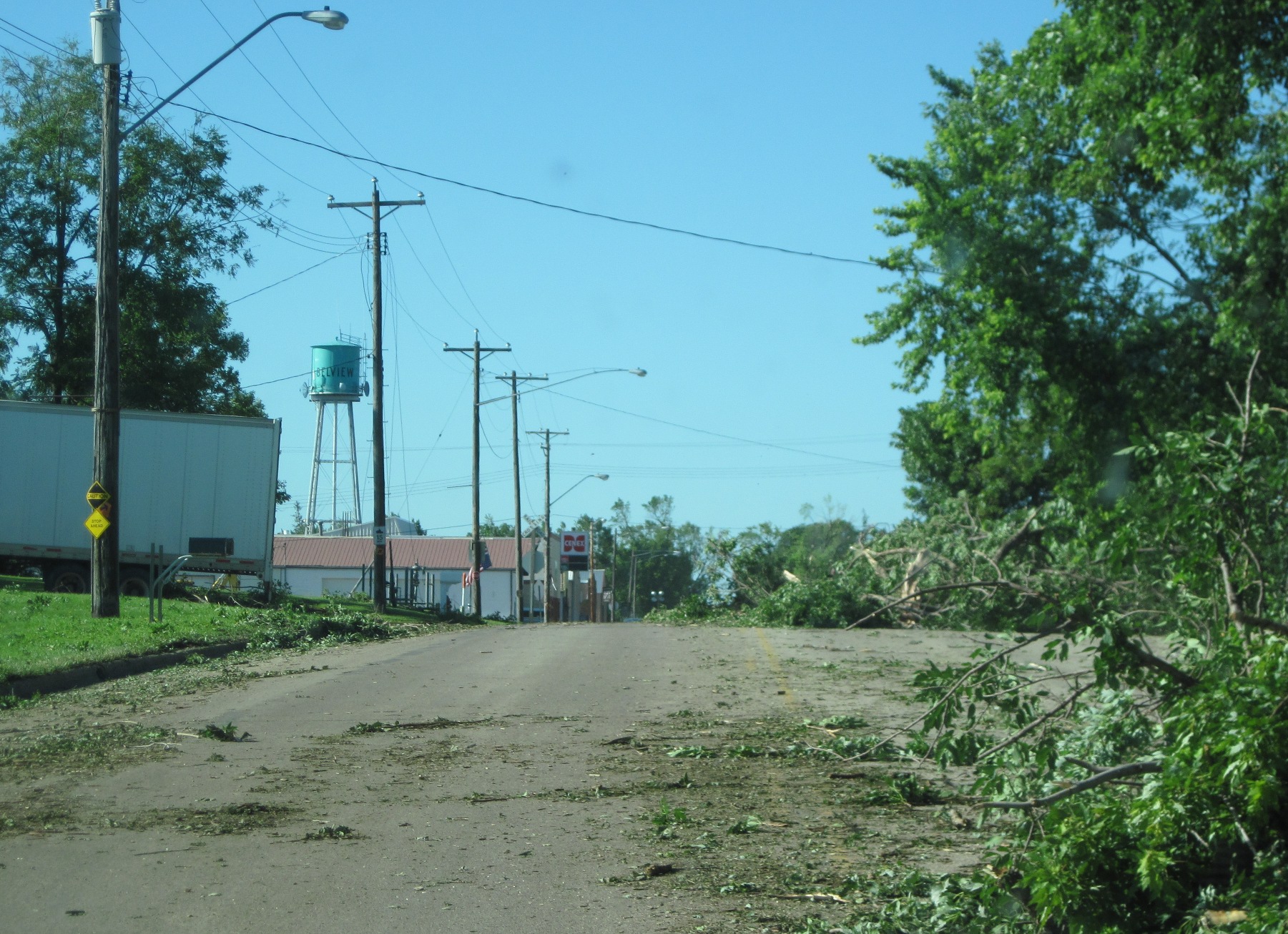
Trees blocked the street north of the Belview City Park following the tornado that passed through this Redwood County community of 375. Photo courtesy of Merlin and Iylene Kletscher.

The second EF-1 Redwood County tornado just nipped the northwestern corner of the county traveling a 2 ½-mile path. The tornado hit the farm of my cousin, Marilyn Schmidt, and her husband, Dan. To see the damage there, click on this post published yesterday on Minnesota Prairie Roots.


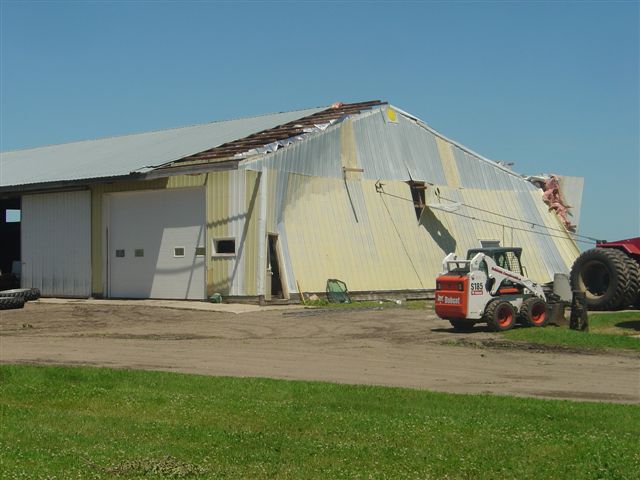
This tractor rigged with chains holds up a wall of a shop on Dan and Marilyn Schmidt's Wood Lake area farm. The building was severely damaged by Friday's twister. I'm showing this photo specifically for the reader who yesterday questioned how a tractor could hold up a wall. Photo courtesy of Heather Rokeh.

Three other tornadoes were confirmed in southwestern Minnesota—the most-damaging an EF-2 in Tyler with winds estimated at 115 mph. Check out the storm assessment of this 3-mile long tornado in Lincoln County near the South Dakota border by clicking here onto the NWS Sioux Falls website.

You’ll also find information there on an EF-1 twister that struck the Ruthton area in Pipestone County with wind speeds of 100 – 110 mph.

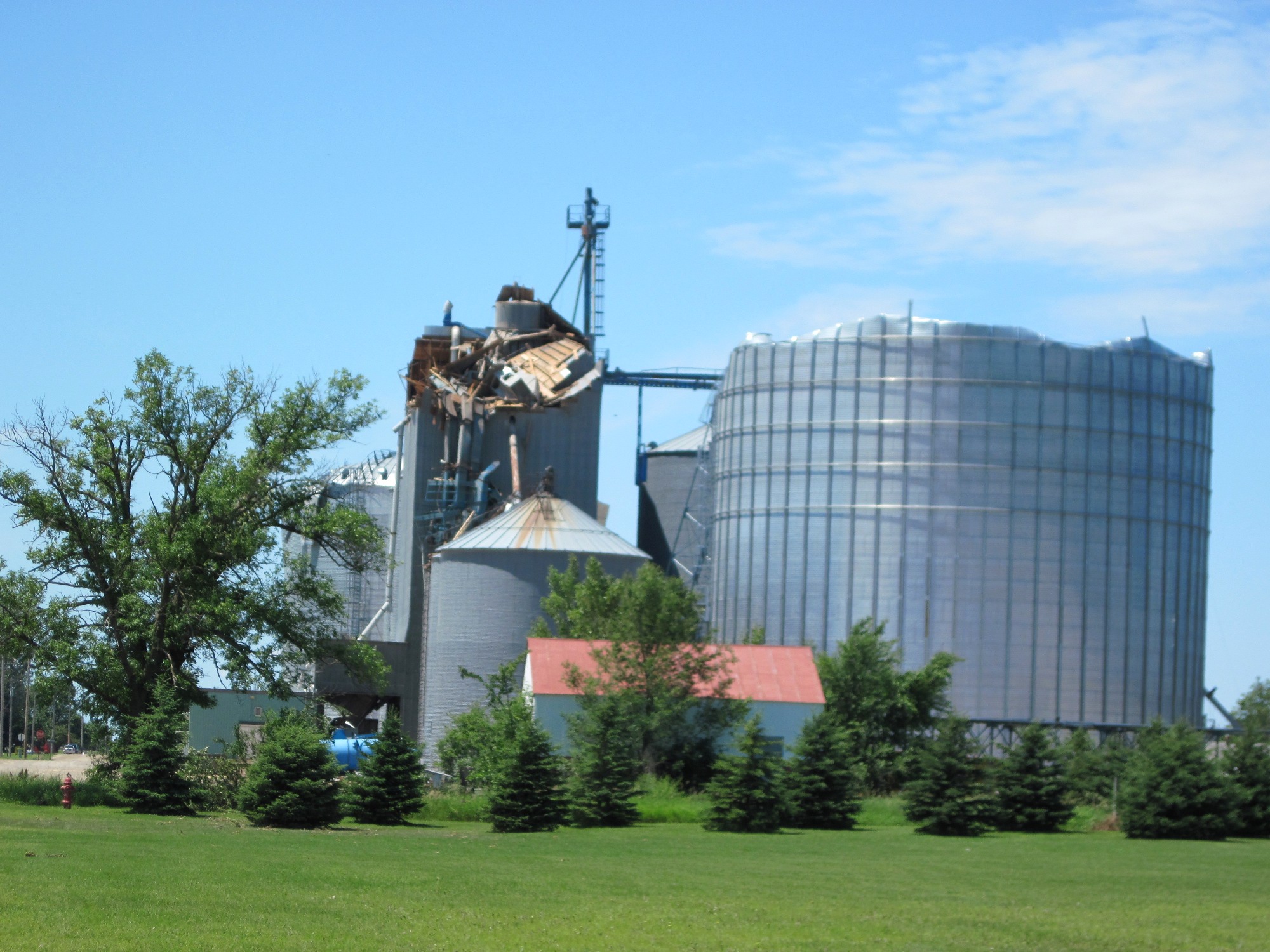
Strong winds, not a tornado, apparently caused the damage in my hometown of Vesta. The Chanhassen office of the NWS lists the storm there as “a series of downbursts” with wind speeds of 90 – 100 mph. Destruction in Vesta included dozens of downed trees, a roof partially-lifted from St. John’s Lutheran Church (my home church), smashed grain bins, damage to the elevator and more. To learn more about the damage in Vesta, read my previous blog post by clicking here or click here to read a story published in The Redwood Gazette.

St. John's Evangelical Lutheran Church in Vesta with the roof half ripped off by strong winds during the Friday afternoon storm. Photo courtesy of Brian Kletscher.

The NWS also determined that an EF-1 tornado with wind speeds of 100 – 110 mph cut a 300-yard-wide, 2 1/2 –mile swath northeast of Danube, lifting much of the roof from at least one home.

Check out the two NWS websites for maps, photos and more detailed information on the storms and the resulting damage.

Also visit the Belview Blue Jays Facebook page, where you’ll find photos of storm damage and other information from Belview.

IF YOU HAVE INFORMATION and photos you would like to share of storm damage, please submit a comment and I will follow-up with an email to you.

Based on my blog readership yesterday and Tuesday, interest in the southwestern Minnesota storms remains high. Yesterday Minnesota Prairie Roots blog views totaled 1,129, my highest daily total since launching this blog. On an average day, I get around 400 views.


Damage suggests tornado hit Wood Lake farm July 6, 2011

DAN AND MARILYN SCHMIDT had just arrived for the July Fourth holiday weekend at a west central Minnesota lake when they got the phone call from their daughter, Heather Rokeh. She was calling from Marshall with news that a storm had swept through town. It was late Friday afternoon, July 1.

Dan asked about their farm 20 miles northeast of Marshall. Heather suggested that “it wouldn’t be a bad idea to have someone check it out.”

And so Heather’s sister, Amy St. Pierre, and Amy’s husband and daughter went to the farm, surveyed the damage, then called the Schmidts. The couple returned that night to inspect their Wood Lake area farm.

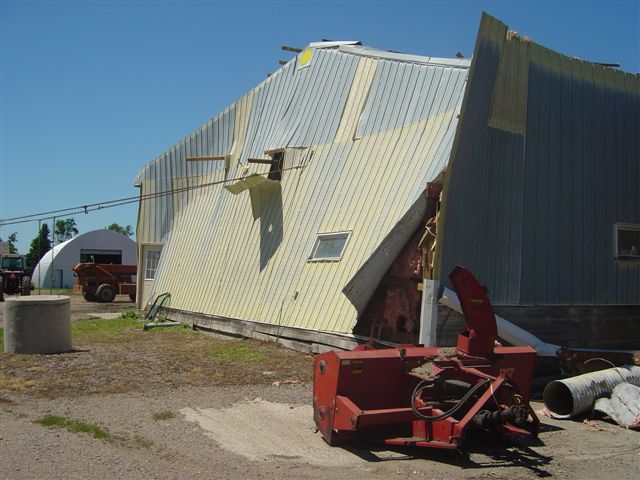
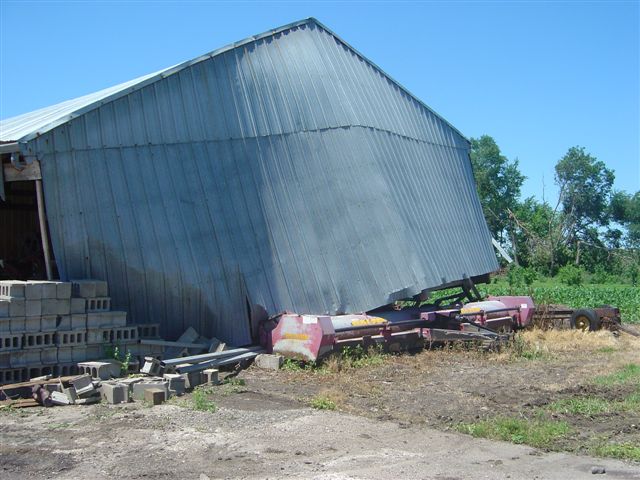
Every building had been damaged. Hail pounded holes in the siding on the house, where shingles and an antenna were blown off. The door of the Quonset building had been ripped away with part of the board trim speared into the ground.

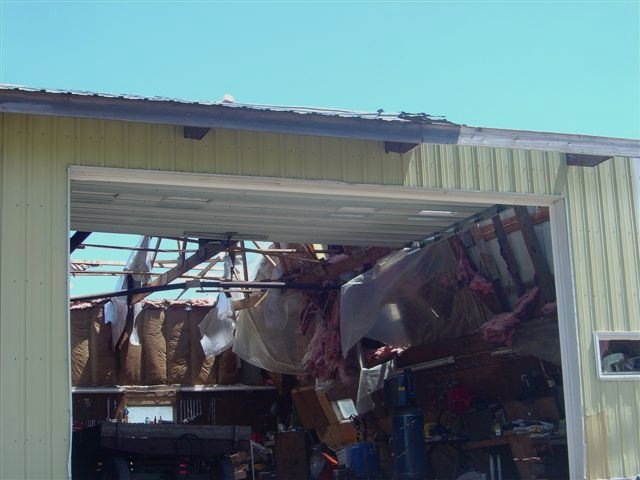
Half the roof was blown off the shop, collapsing an interior wall. That wall is now being held up by two chains and a tractor until items inside can be removed and the building demolished.

Another view of the caved-in shop wall.

The exposed interior of the shop.

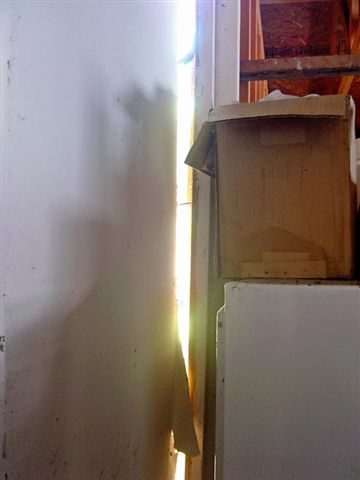
Trees were down or uprooted. Branches littered the farmyard. On one of the two houses on the farm site, the garage was pulled away from the house, leaving a visible gap.

Here you see light shining through the space where an attached garage was separated from the house during Friday's storm.

“A lot of these things spelled out tornado for us,” says Heather. “The twisting of the trees, things stuck in the ground and the twisted buildings all suggest tornado to us.”

Whether straight-line winds or tornado, Heather remains grateful: “We are so thankful no one was injured.”

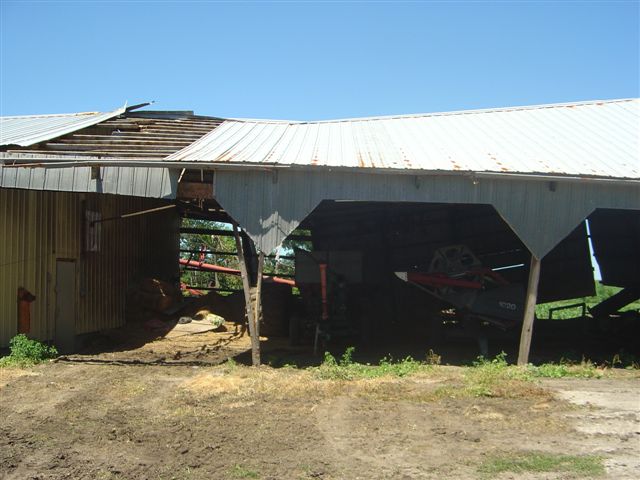
This lean-to, connected to a hog barn, was lifted up, twisted and set back down on top of a stock chopper. The hog barn was OK, but the lean-to was deemed unsafe and removed on Saturday.

This photo shows a portion of the lean-to that was lifted and dropped onto the stock chopper pictured here.

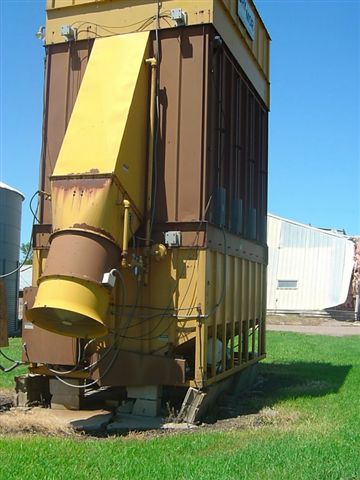
This grain dryer was moved and it is now sitting crooked on its foundation. The cement slab foundation was cracked and cement blocks are now sitting at an angle.

IF YOUR FARM, HOME or community was damaged during the July 1 storm in southwestern Minnesota, I’d like to hear from you. Submit a comment summarizing your storm experience, the damage to your property or town, and progress toward recovery. If you have photos to share, like those above from my cousin Heather, let me know and I’ll be in touch.

Also check out my previous posts on storm damage in my hometown of Vesta and in neighboring Belview.

PHOTOS BY HEATHER ROKEH Copyright 2011

Text copyright 2011 Audrey Kletscher Helbling


Belview pulls together after destructive storm

THREE MONTHS AGO Merlin and Iylene Kletscher closed on the purchase of a foreclosed house along Main Street in Belview. They plan to sell their lake home near New London and move back to Iylene’s hometown, also within 10 miles of Merlin’s hometown of Vesta.

My aunt and uncle want to be closer to family and friends and back in a small town like Belview with a population of 375.

They chose the Main Street fixer-upper, among other reasons, for all the beautiful trees on the property.

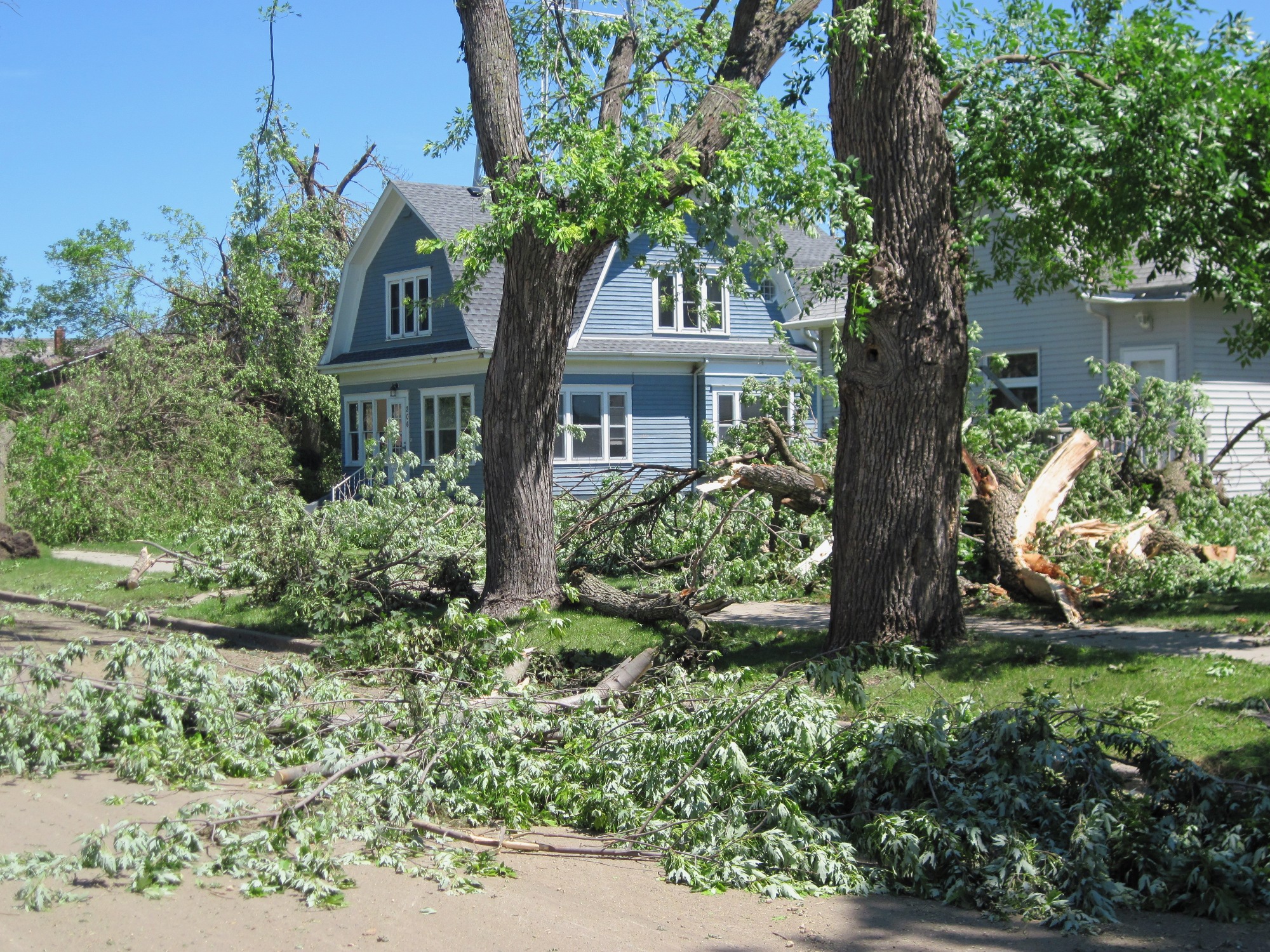
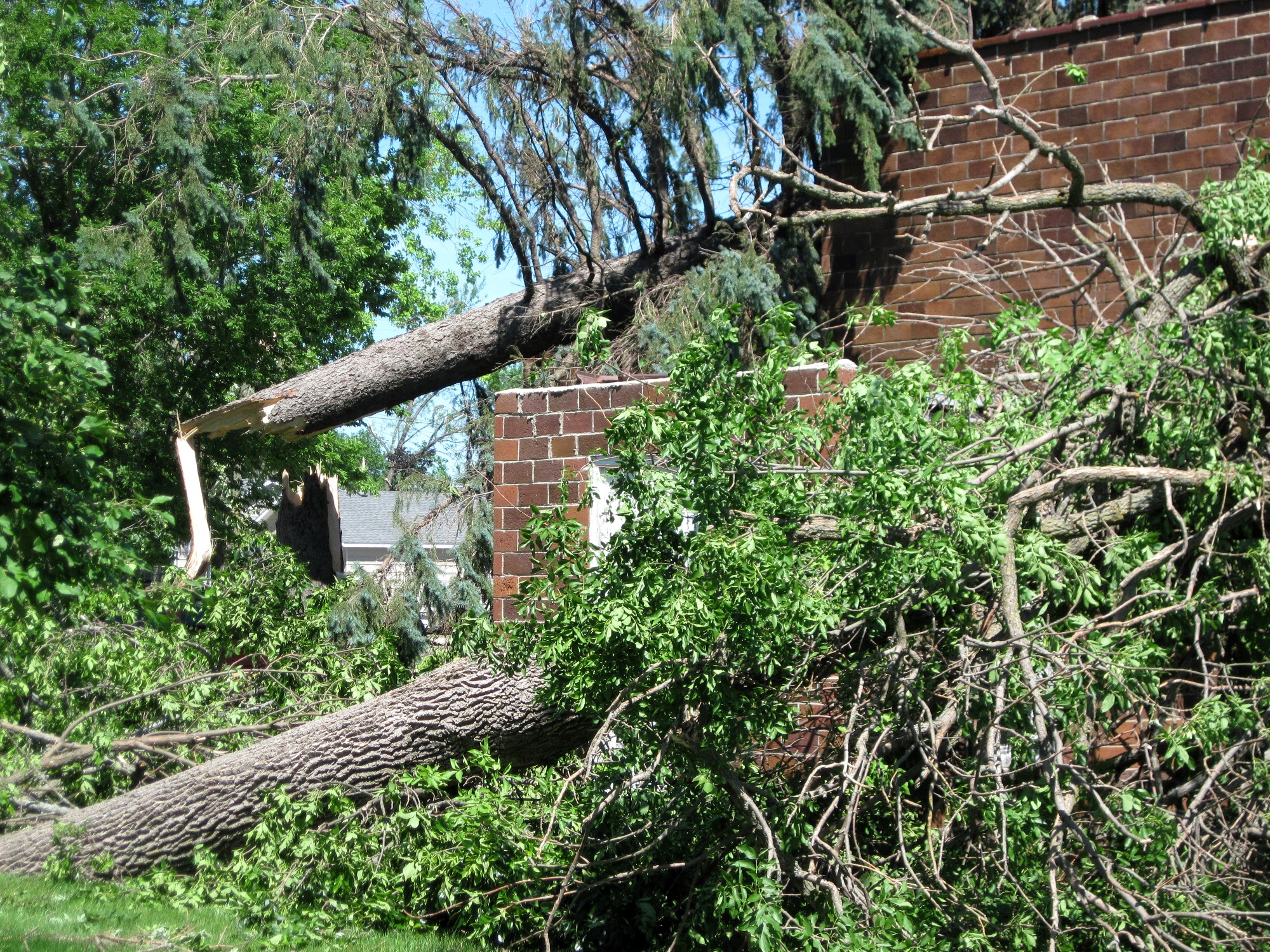
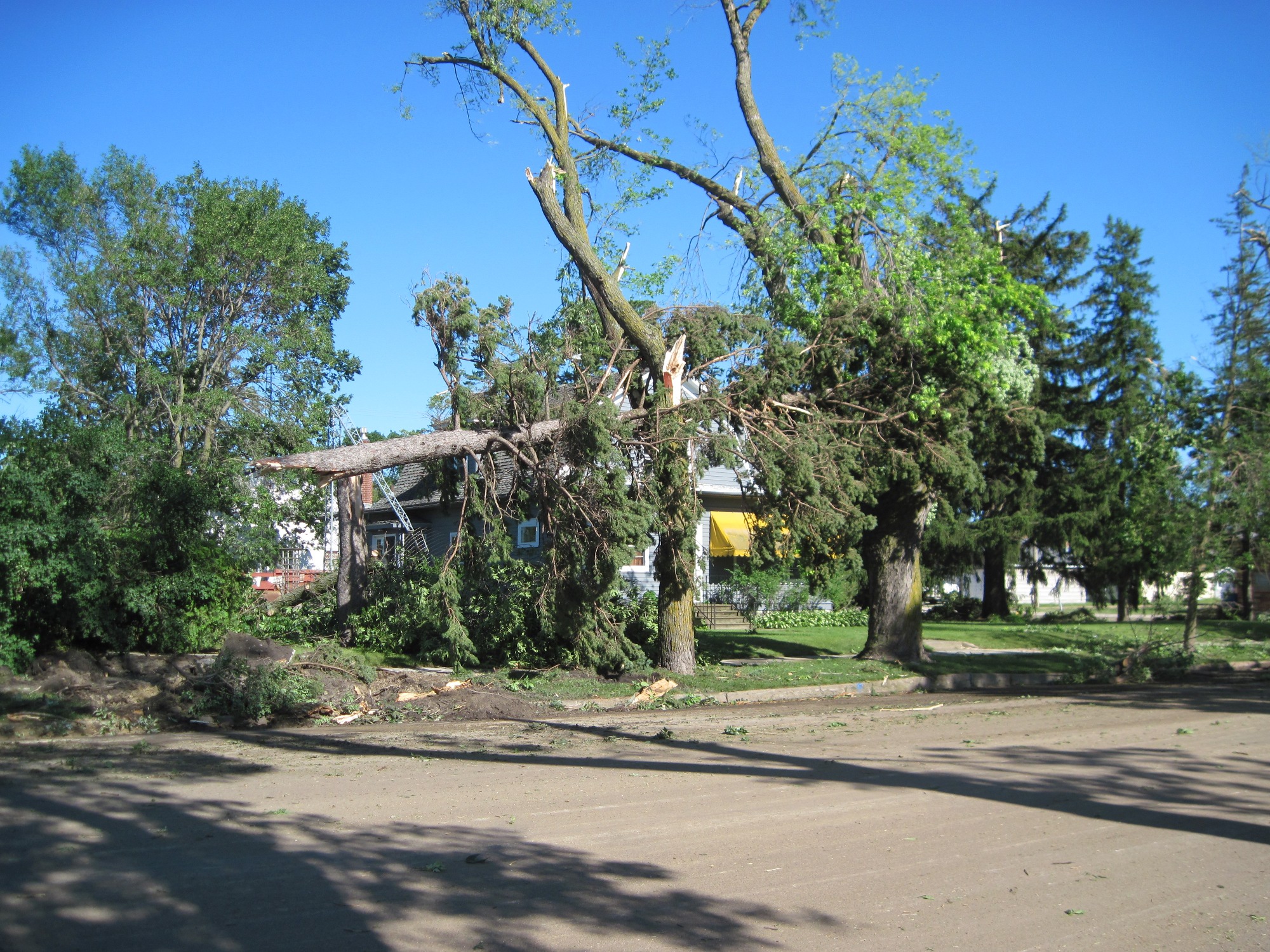
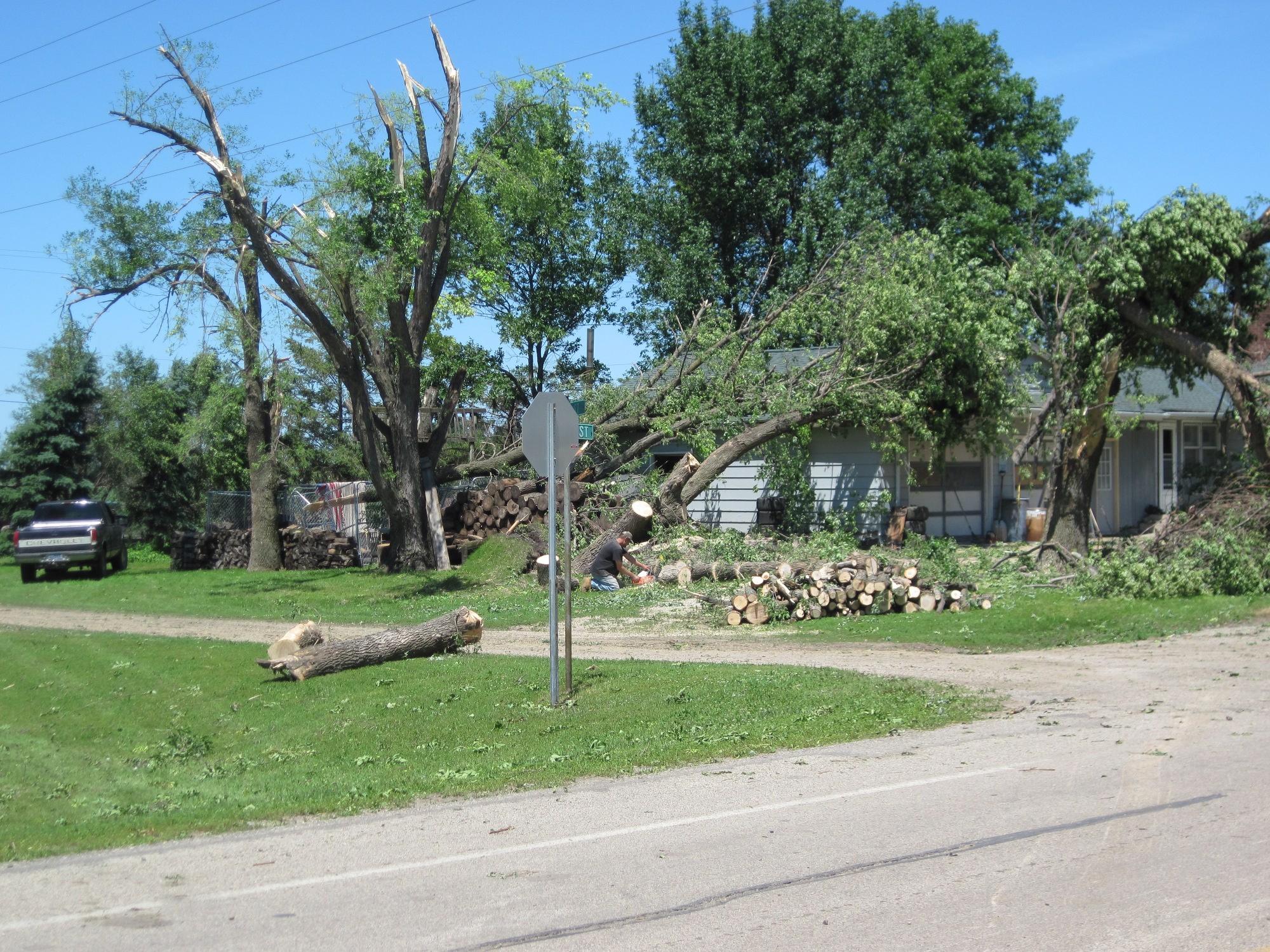
Today most of those trees are gone, toppled in a storm that swept through Belview and a wide-spread area of southwestern Minnesota late Friday afternoon. The storm ripped off roofs, took down power lines and trees, smashed grain bins and elevators and more as fierce winds roared across the flat prairie.

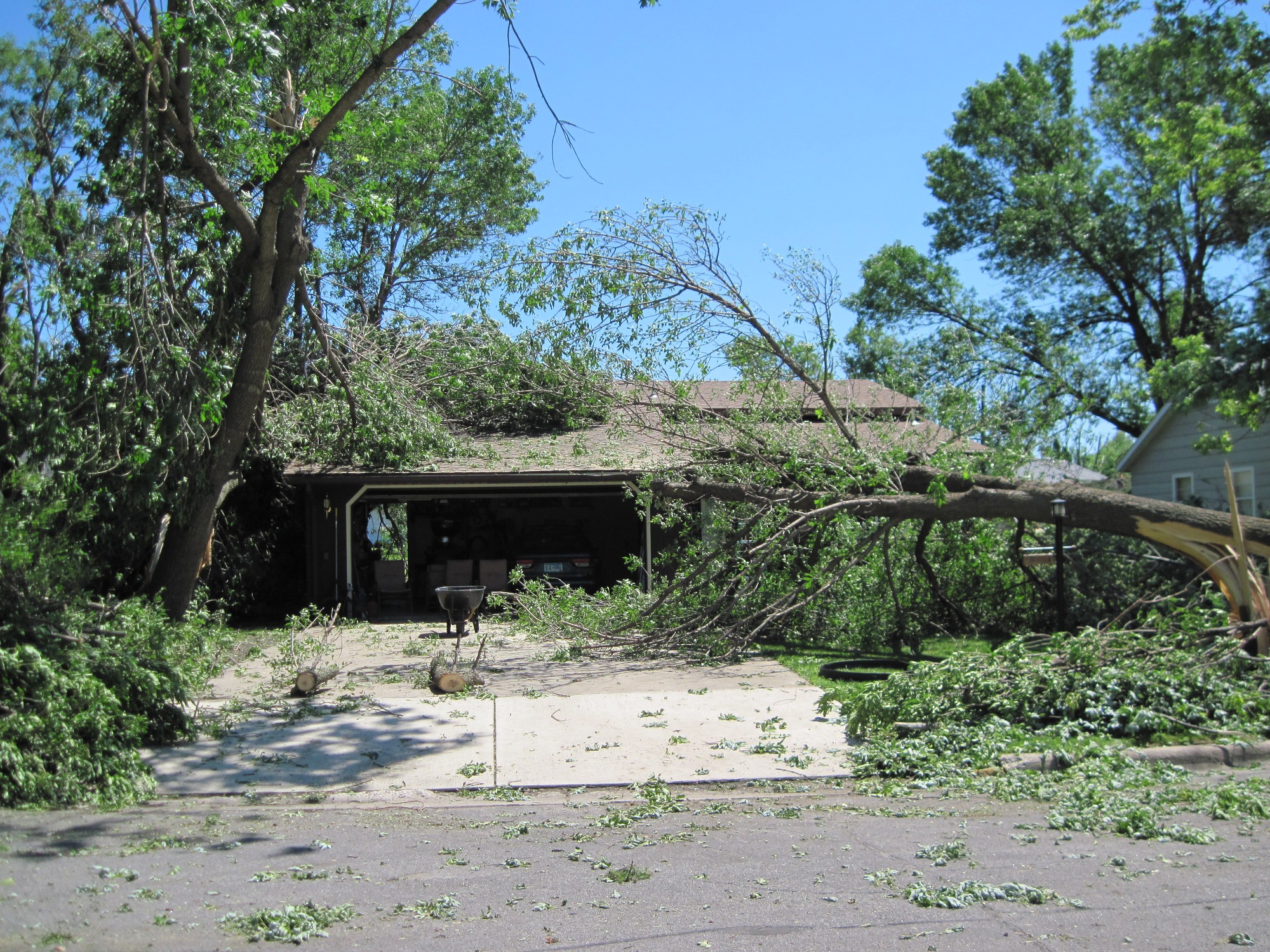
Merlin and Iylene Kletscher's home on the left, surrounded by downed trees.

Now Merlin and Iylene, like so many others in this area of Minnesota, are dealing with insurance companies and contractors as they clean up and repair their homes and businesses.

“The new chimney we had installed is leaning,” my uncle says. “The new shingles are missing ridge caps. We have broken windows and torn screens, etc.” The couple had just installed new windows in their home and made other major improvements.

Despite all of that damage to a house he and Iylene have worked so hard to restore, my uncle doesn’t seem at all discouraged. Rather, he praises Belview’s reaction to the storm: “Belview is amazing in that the people just pull together…I can’t say enough good things about the fire department and city employees and council. While we were there, trucks, tractors, 4-wheelers, payloaders, backhoes and pickups went by our house about one every 30 seconds pulling trees, debris or branches to the MPCA-approved burn site on the northeast edge of town.”

It seems the city was prepared for a natural disaster such as Friday’s storm. Log onto the city website and you’ll find a “CONSUMER ALERT: SUMMER STORM SEASON” posted by City Clerk Lori Ryer on May 24 encouraging residents to prepare for summer storms.

Entering Belview from Sacred Heart at 9 a.m. on July 2.

The city of Belview's water department building.

The ferocity of Friday’s storm is impressive. “Our neighbor across the street in Belview said that during the height of the storm, he couldn’t see his mother’s house right next door!” Merlin shares. “Chad Krinke (next door neighbor and relative) said two inches of rain fell in 20 minutes—he called us about a half hour after it hit, giving a report on our house damage. The city was blocked off, so no one could get in unless they had specific ties to someone in the city.”

Trees blocked the street north of the Belview City Park.

Jerry Hagen's house, across the street from Merlin and Iylene's home in a July 2 photo.

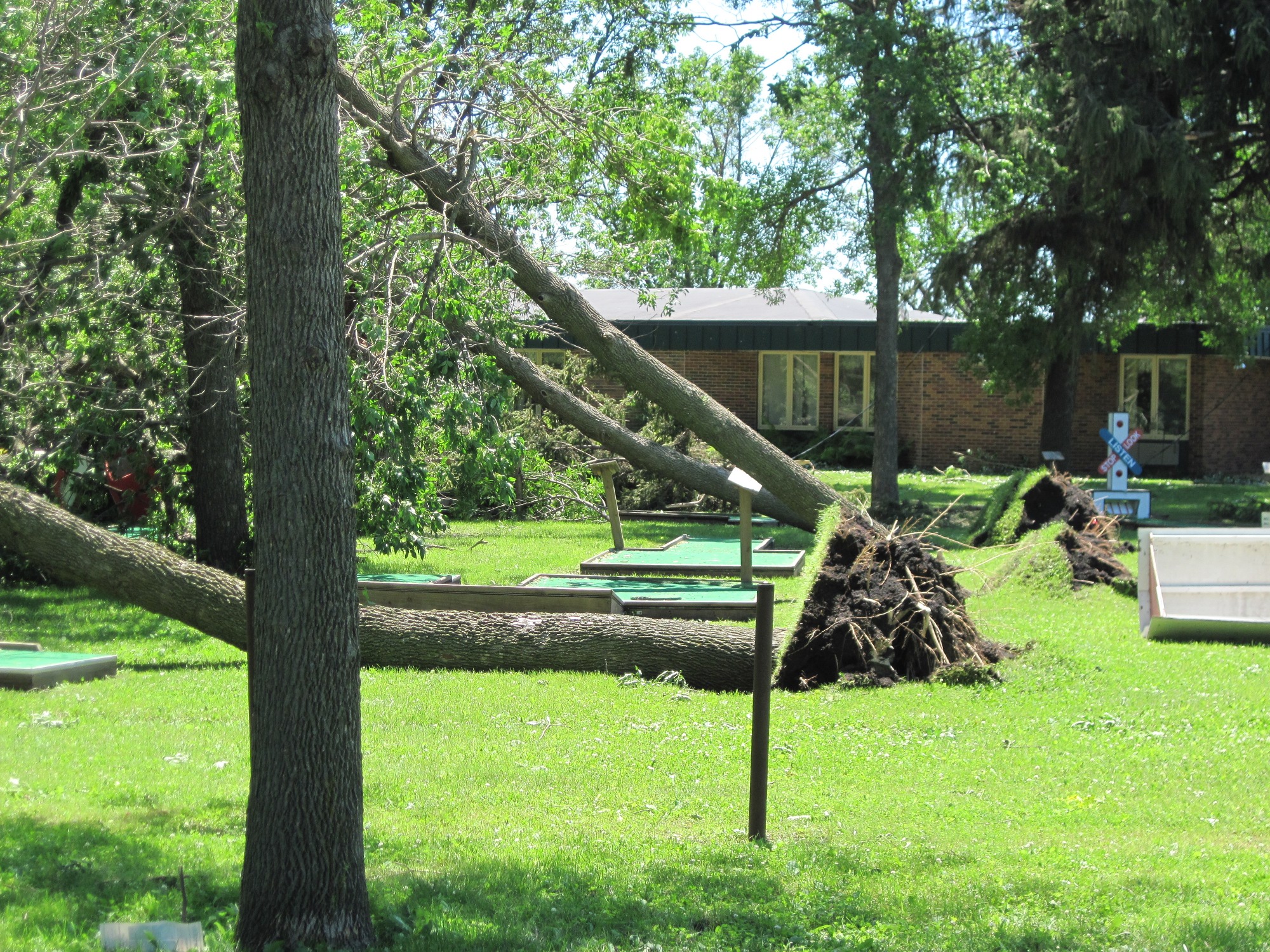
Residents of Parkview Home, next to the city park, were evacuated Friday night. This photo shows the nursing home and mini golf in the park. The rubber roof of the nursing home was peeled off during the storm.

Storm damage at the home of the Rev. Daniel Faugstad family.

Damage along South Main Street.

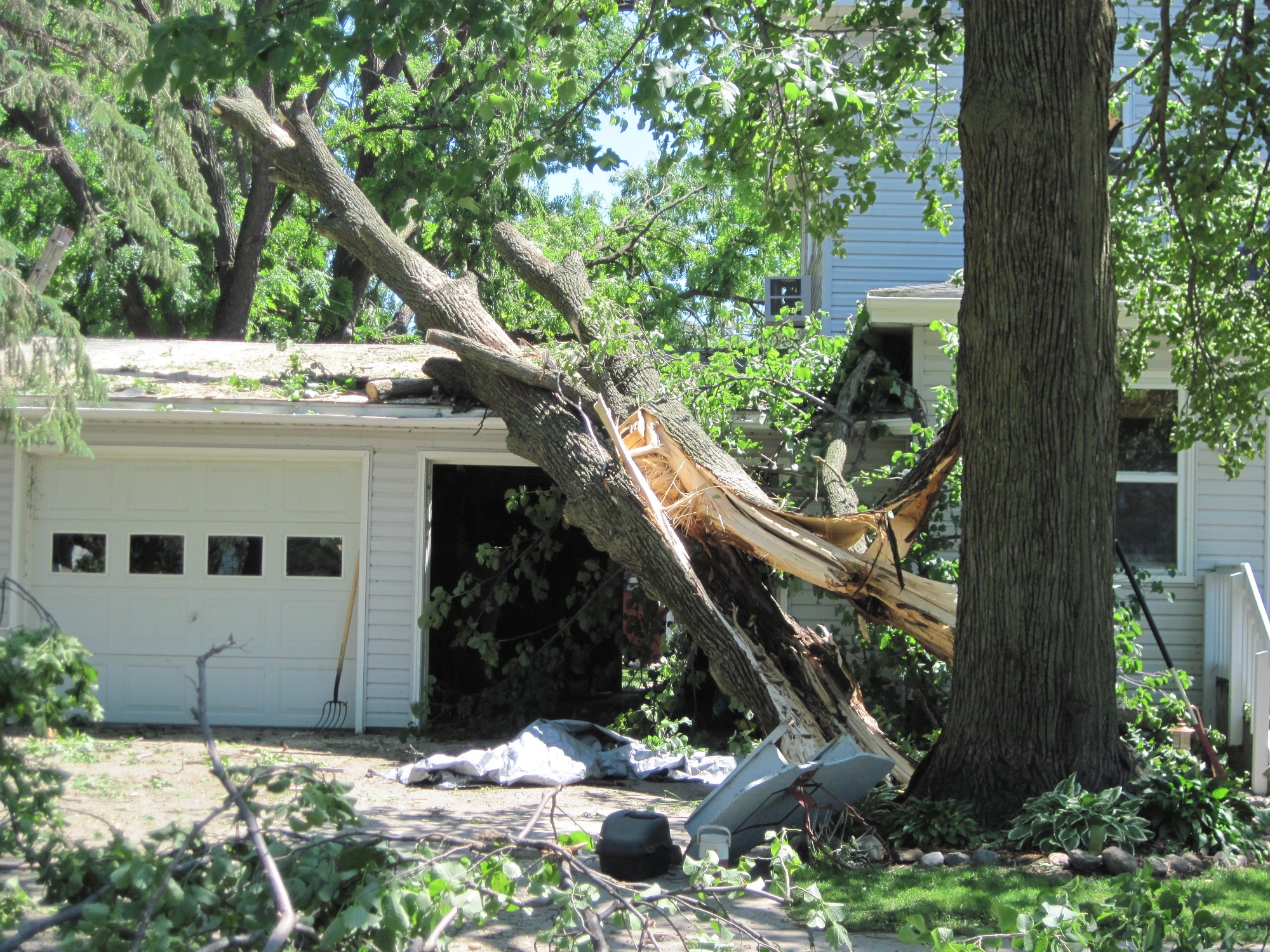
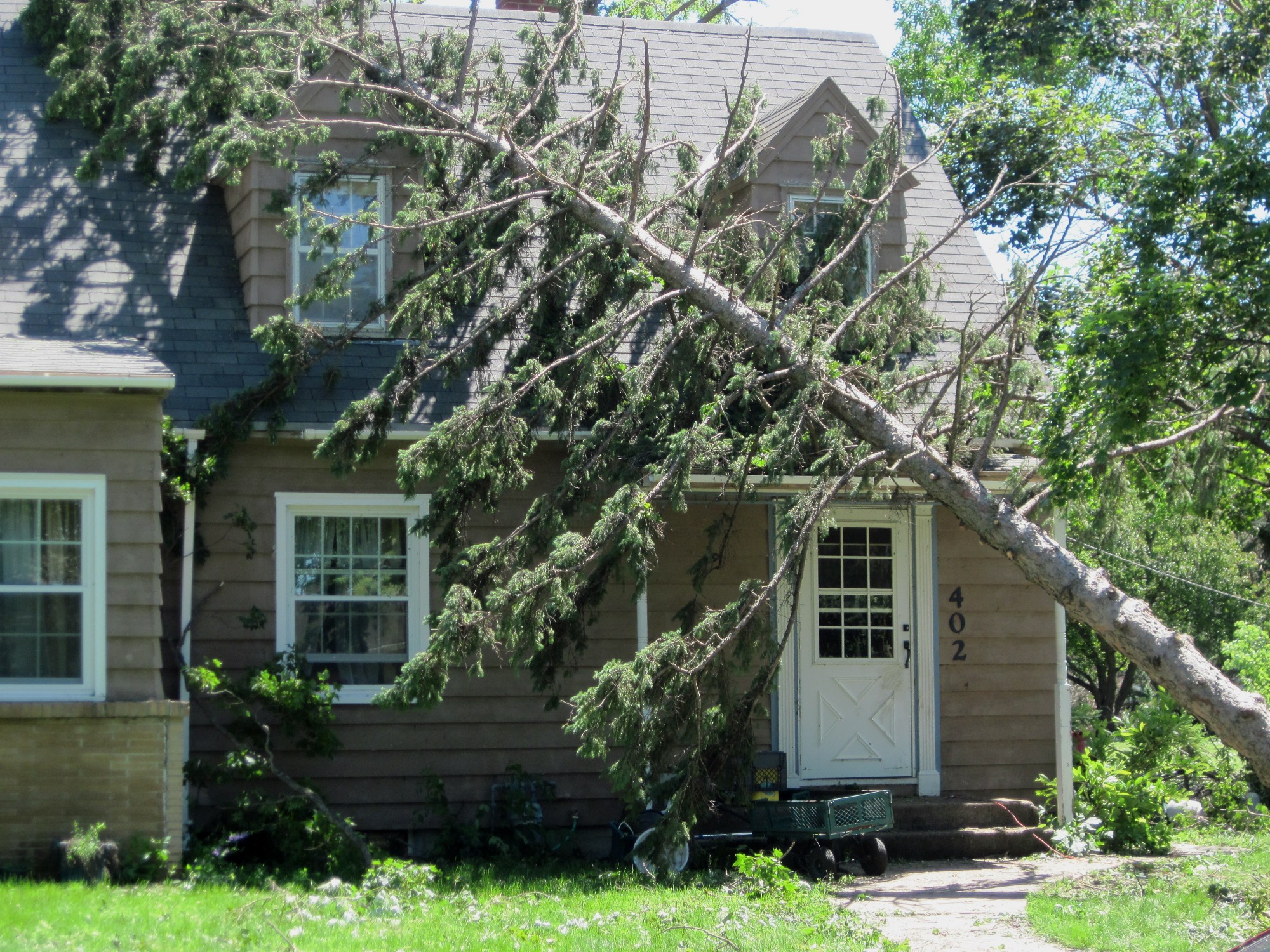
Another tree toppled onto a house.

More residential storm damage in Belview.

Merlin also reports that a farmer just west of nearby Vesta (my hometown) recorded a high wind speed of 110 mph on his wind velocity meter during the storm. I have not yet confirmed that information. Vesta was also hard hit by the storm. Click here to read that story and view photos of the damage.

The damaged bins and elevator at Meadowland Farmers Elevator in Vesta.

Neighboring Belview and Vesta are only two of the many, many small towns in southwestern Minnesota hit by Friday’s storms. I expect that hundreds of farm places were also ravaged. For the most part, the disaster has not been covered by metro media and that bothers me—a lot.

IF YOU LIVE in southwestern Minnesota and were impacted by the storm, please submit a comment telling me about your personal experiences (where were you/did you seek shelter/what was the storm like, etc.), damage to your property or town, and recovery progress. I am also looking for photos to publish, so contact me via a comment and I will follow-up by emailing you.

PHOTOS COURTESY of Merlin and Iylene Kletscher

© Copyright 2011 Audrey Kletscher Helbling


What’s your reaction to the blare of tornado warning sirens? May 25, 2011

HOW DO YOU RESPOND to sirens warning of an approaching storm?

I’d like to know, so consider this an unscientific poll spinning off the worst outbreak of deadly tornadoes in the U.S. since 1953. Already the death toll for 2011 has surpassed 450. And we’re not even into June, the peak of tornado season, at least here in Minnesota.

Why have so many died? I haven’t researched the reasons, but some residents of Joplin, Missouri, for example, claim they didn’t hear warning sirens above the roar of the storm.

During the Sunday afternoon tornado that cut a swath through north Minneapolis, sirens failed to work in places like Hugo to the northeast in Washington County. That didn’t sit well with residents who experienced a devastating tornado in 2008.

Even if sirens blare, warning of an approaching tornado or severe thunderstorm, do residents seek shelter?

How do you react when storm warning sirens sound?

A)    Immediately seek shelter in the basement.

B)     Step outside to look at the sky.

C)    Turn on the television or radio or go online for weather updates.

D)    Ignore the sirens.

E)     None of the above. Explain.

Please cast your vote and share your comments.

Not to influence your vote or anything, but I generally choose A. I possess a healthy, deep respect for storms, specifically tornadoes. That stems from growing up on the southwestern Minnesota prairie, near Tracy, a small town devastated by a June 13, 1968, tornado that killed nine and injured 150. The destruction of that F5  (261 – 318 mph winds) tornado, which I saw firsthand, left a lasting impression upon me.

Fortunately, I don’t panic like I once did when storm sirens sound. After I became a mother and realized that my panic was impacting my children, frightening them more than they needed to be frightened, I reigned in my fears. They didn’t need to know that I was afraid.

Other family members may disagree with that current assessment of my reaction to foreboding storms. My 17-year-old son, for example, surmised that I have an overactive imagination when I called him to the window Sunday afternoon to view ominous clouds that I thought might be swirling into a tornado. He actually laughed at me.

However, when storm watches, and especially warnings, are issued, I listen.  And when sirens sound, I prepare to take shelter.

© Copyright 2011 Audrey Kletscher Helbling
 

After a natural disaster…the fear, the loss and reaching out to help April 29, 2011

I COULD WHINE, moan and grumble all day about the recent weather here in Minnesota. Rain. Cold. Snow showers. More rain and more cold. The cycle never ends.

But then I pick up today’s newspaper, turn on the television, switch on the radio or go online and my mouth clams. I have nothing, nothing, about which to complain.

I have not lost my home, my possessions, my business, my community, family or friends to killer tornadoes like those in Alabama, Mississippi or Georgia. Wednesday’s storms have been termed “the deadliest outbreak of tornadoes in nearly 40 years.”

To view the devastation, to hear the survivors, to even think about the utter destruction brings me to tears. I cannot fathom, do not want to fathom, such total devastation, loss of life and injury.

Tornadoes scare the h double hockey sticks out of me. I can trace that fear back to the June 13, 1968, tornado in Tracy, about 25 miles from my childhood home. I was an impressionable 11 ½-year-old when the tornado raced through this southwestern Minnesota farming community, killing nine. My family drove to Tracy, saw the flattened homes, the pick-up stix jumbled trees, the boxcars tossed aside like dropped toys. You don’t forget memorable images like that.

Decades later a tornado struck my childhood farm, damaging a silo and silo room, tossing farm wagons effortlessly about in the field. Those images, too, remain forever imprinted upon my memory.

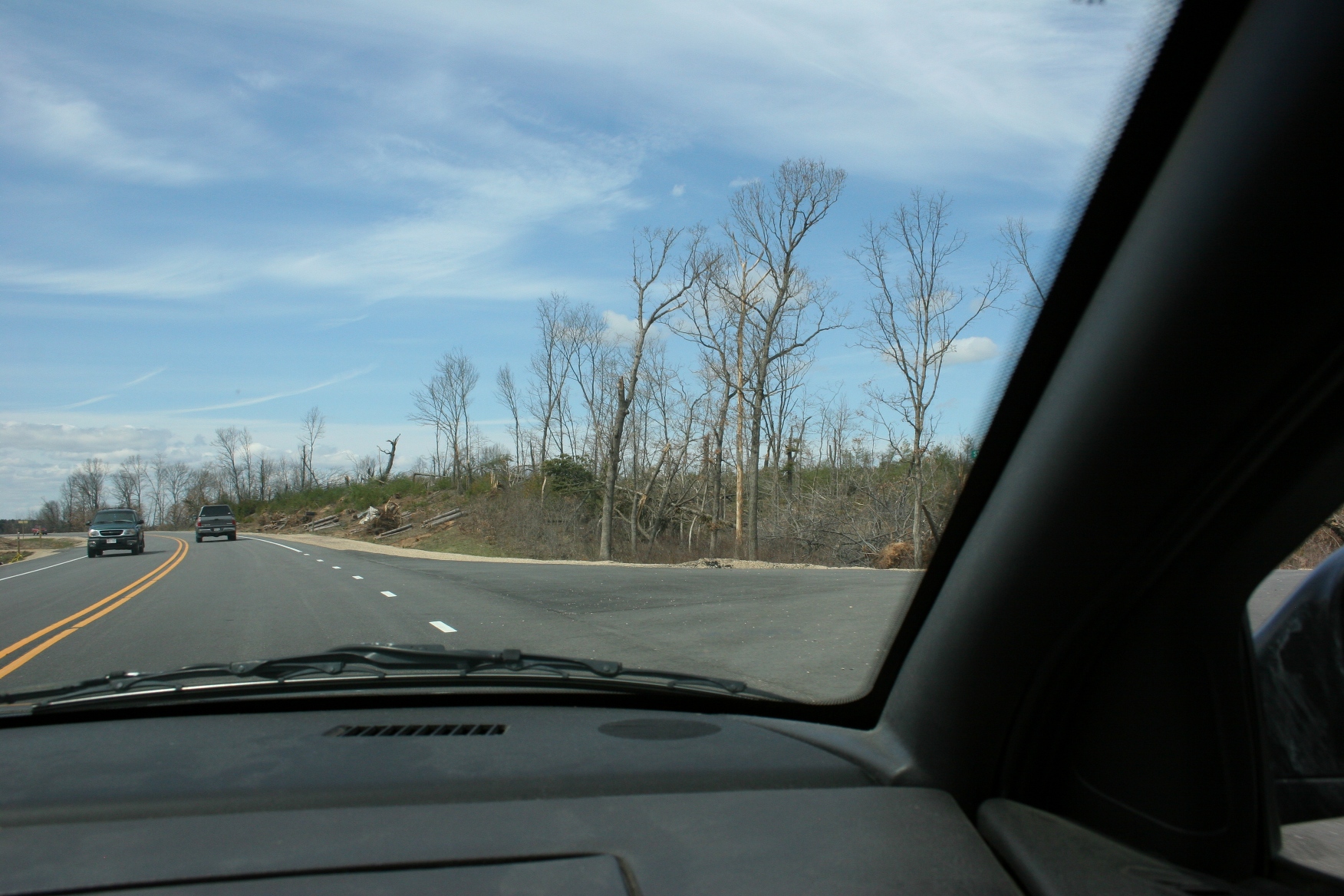
Last week I saw snapped trees and minor damage to buildings along Wisconsin Highway 21 near Arkdale, which was struck by an April 10 tornado.

A view of storm damage to trees while traveling along Wisconsin Highway 21 west of Arkdale.

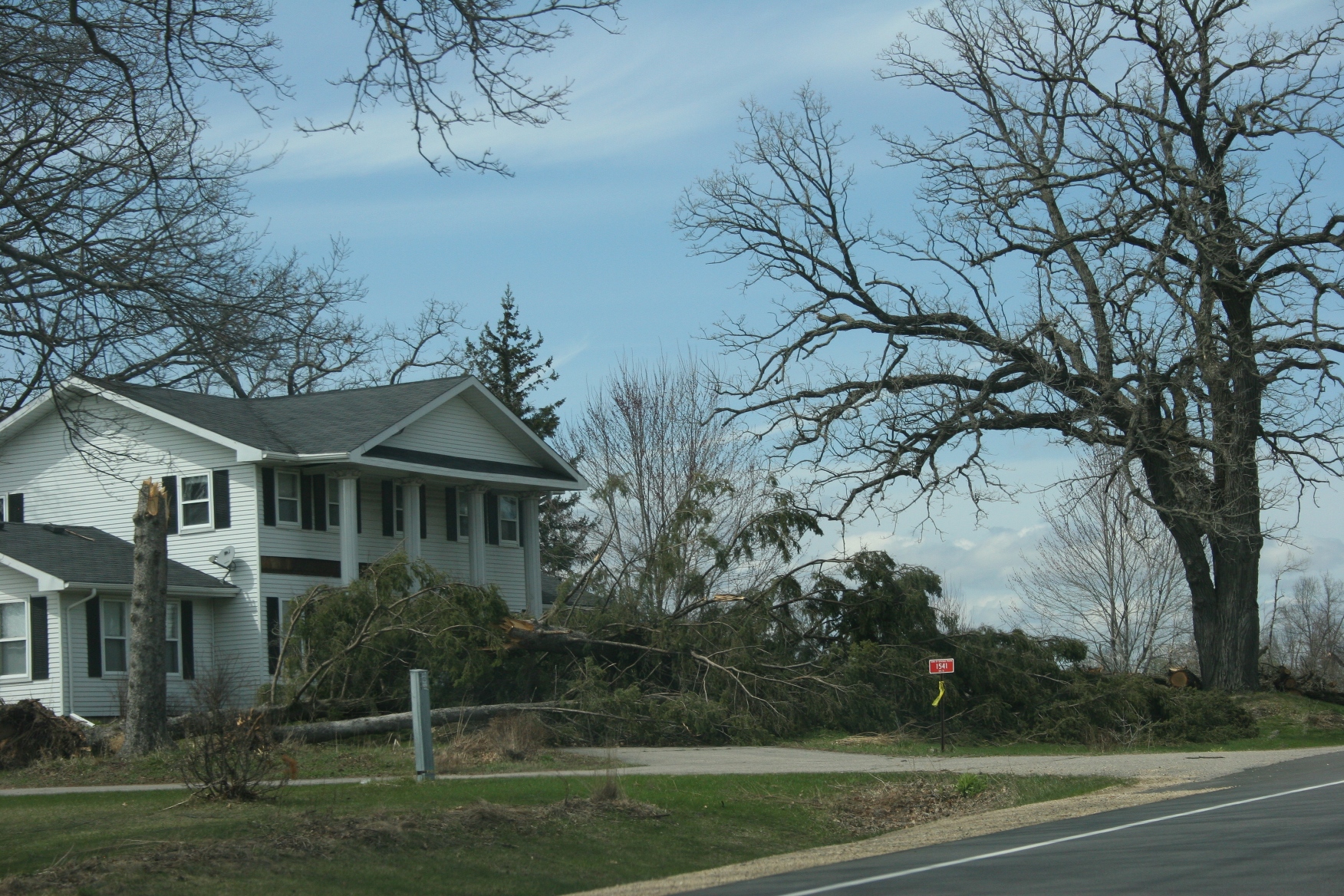
A felled tree by an apparently untouched home in Arkdale, Wisconsin.

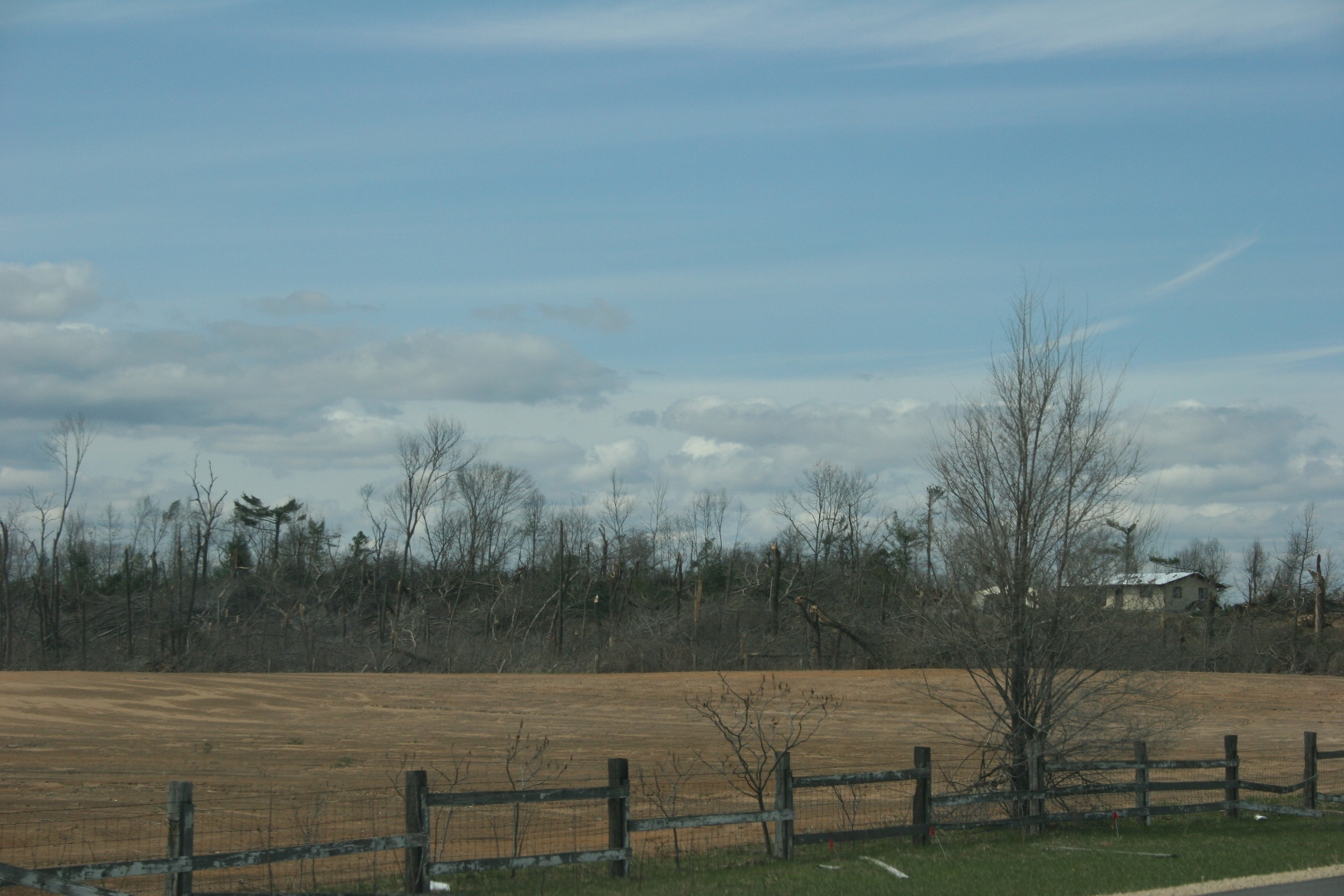
In the distance, trees were damaged by a tornado that cut a 17-mile path from Arkdale to near Coleman in Wisconsin on April 10.

Less than a year ago, on June 17, 2010, a tornado outbreak swept through Minnesota, killing one person in Mentor in Polk County, another in Almora in Otter Tail County and the third near Albert Lea in Freeborn County.

How many of us have already forgotten about those tornadoes as we move on to the next natural disaster news story?

Yet, for those personally affected, the story never really ends. The chapters continue with the rebuilding of homes and lives, the haunting nightmares, the emotional aftershocks. Lives have been forever rewritten.

Tornadoes. Hurricanes. Tsunamis. Earthquakes. Fires. Floods.

Survivors manage to pull their lives back together with the help of family, friends, neighbors and even strangers.

After a flash flood devastated Hammond in southeastern Minnesota last September, a group of Dakota County Technical College architectural technology students reached out.  They’ve worked with Hammond resident Judy Johnson in drafting remodeling plan options for her damaged home. You can read their story by clicking here. These students represent the good that emerges from the bad, the spirit of giving that makes me proud to be a Minnesotan.

I’ve followed the situation in Hammond since visiting that community shortly after the flood. I haven’t lifted a hammer to assist with recovery there. Rather, I’ve used the one tool that I possess—my words. I’ve crafted words into stories that I hope are making a difference. After reading my blog posts, two groups of volunteers have gone to help in Hammond.

That’s what it takes, each of us using our resources—whether that be words or money or skills or whatever—to help our neighbors in need.

© Copyright 2011 Audrey Kletscher Helbling
 

Back in Faribault, Minnesota, from Japan March 23, 2011

FIVE DAYS HAD PASSED since a young Faribault woman posted on her blog from earthquake and tsunami stricken Japan.

And now I know why. She was on her way back from Fukushima to Minnesota for her brother’s wedding.

Haidee, a Christian outreach worker and English teacher, has been safely reunited with her family at their rural Faribault home.

But her decision to leave Japan did not come without struggle. Read Haidee’s insightful post by clicking here. She reveals, in a March 22 post, the emotional turmoil she experienced, being torn between wanting to stay in Japan and returning to the United States.

Her words are honest, poignant and touching. They also point to an unshakable faith and an undisputed belief that God directed her onto the path that would take her to the airport and then back to Minnesota.

God, clearly, was watching over and guiding her on this journey.

A snippet of Jesus' face in a stained glass window at Trinity Lutheran Church in Faribault, where Haidee's father serves as the pastor. I'm certain that many times since the disaster in the Pacific, Haidee has been especially cognizant of God watching over her.

SHOULD I HAVE the opportunity to speak with Haidee, I’ll share that information with you. Click here to read my first post about Haidee, shortly after the disaster devastated Japan.


© Copyright 2011 Audrey Kletscher Helbling
 

Part VI: The future for Hammond and Tina March 19, 2011

EDITOR’S NOTE: This post marks the final in a series of six stories that focus on a Hammond, Minnesota, family forced from their home during a September 2010 flash flood. Today we look at Hammond, its recovery and how you can help.

“WE HAVE A LONG ROAD ahead of us and none of it can really start until spring,” says Tina Marlowe, assessing the work that still needs to be done in Hammond. Her family returned to this town of (once) 230 residents shortly after Christmas.

This southeastern Minnesota community exists in limbo as residents await the arrival of warmer weather, and money, to begin rebuilding their community. Many homes must be gutted and rebuilt or torn down. Hammond needs a new city hall and new maintenance equipment. The river bank, river bed, parks and canoe landing need to be cleaned and rebuilt.

“Everything…everything is left to be done,” says Tina, who plans to help form a park committee that will raise $200,000 to update and rebuild the town’s parks. Tubing, canoeing, a horseshoe tournament, camping, fishing, motorcycling and more draw locals and visitors to this quiet river valley, “a beautiful gift of nature that we like to call ‘Our Valley’,” Tina says.

She and good friend Katie Shones will be setting up a Park Fund for donations to rebuild the parks.


Hammond's riverside park was all but destroyed by the flood. Marks on the shelter roof show how high the water rose. A baseball field next to the shelter, with a fence around it, is covered by receding floodwaters. Jenny Hoffman took this photo at 10 a.m. on Saturday, September 25, 2010.

HOW YOU CAN HELP?

“SINCE OCTOBER, Lutheran Social Service of Minnesota has been very involved in the long-term recovery efforts in the Pine Island – Oronoco area and in Wabasha County,” says Caitlin Hughes, LSS Disaster Services administrative specialist.  “LSSMN assisted in the development of two community supported long-term recovery committees. These committees are working with the LSSMN Southeast Minnesota Disaster Response Team to help families locate the precious resources to rebuild their homes and their lives.  Presently LSSMN has a local staff of three disaster case managers, a volunteer and resource coordinator and a reconstruction manager.

Currently, the disaster case managers are working with over 250 families/ individuals and the rebuild team is assisting 25 clients in using volunteers to make their homes habitable once again.”

St. John’s Lutheran Church is serving as a base for LSS relief operations in Hammond. Contact LSS caseworker Mary Walker at 507-753-3057 business days. St. John’s has served, among other functions, as a site for distribution of food, clothing and other essentials to flood survivors.

INDIVIDUALS INTERESTED in helping with Hammond’s recovery should contact LSS Volunteer Coordinator Dan Kalstabakken at 651-741-7234.

Go to this link for the most up-to-date information on LSS efforts in southeastern Minnesota: http://www.lssmn.org/disaster/

Also visit the Zumbro Valley Disaster Relief Fund.

Tina says flood survivors could use cash donations and that skilled laborers are still needed to help with the ongoing rebuilding efforts.

HELPING THE CHILDREN

LSS also provides support for children who have been through disasters like the Hammond flood.

Camp Noah is a day camp for children impacted by disaster that offers children a safe, caring and fun environment where they can heal and process their disaster experience, according to LSS. The five-day camp is based on a curriculum that celebrates each child’s unique gifts and talents and provides them with an opportunity to share their story.

For more information about Camp Noah, call 612-879-5312 or go to http://www.lssmn.org/camp_noah/


This photo shows the destroyed road that goes from Wabasha County Road 11 to the business area on the east side of Hammond. A bar, bank, cafe, city hall and homes are located along this street. Waters are receding in this photo taken mid-morning on Saturday, September 25, 2010. All of the businesses, city hall and most homes along this road were flooded.

THE FUTURE FOR TINA

Tina and her fiancé, Micheal Mann, are planning a June 25 wedding. The bride will wear the wedding dress she saved from the floodwaters.

“I don’t know how we will get the wedding paid for now…it certainly won’t be all that I planned it to be,” Tina says.

But, despite the financial hardship, the setbacks, the challenges, this determined woman wants to move forward. And that means proceeding with the wedding as planned. Her wedding will give people a break, a reason to “take one night to celebrate all that is real in this life: friends, family and love.”

THIS CONCLUDES my six-part series of stories told through the voice of Hammond flood survivor Tina Marlowe. Thank you, Tina, for the privilege of sharing your story. I admire your strength, your determination and your resiliency.

Thanks also to Katie Shones, who has been my main contact in Hammond since last October. She is one strong, kind woman.

Thanks, too, to Susie Buck for pulling together the many photos featured in this series and to those who allowed their images to be published here.

Sheri Ryan, I am grateful to you also for the use of your photos, but, more importantly, for a deeply personal look at how this flood affected your mom. All too often we view blurs of faces and piles of debris, but we fail to see beyond, to the real hurt that runs deep.

I appreciate every one of you who have so willingly worked with me to tell the story of the people of Hammond through words and photos.

I also appreciate volunteers like Gary Schmidt from the Twin Cities who worked with a Woodbury church to bring volunteers to Hammond in late January and then again one day in March. Gary learned of the need through this blog. I hope to share Gary’s experiences with you in a future post.

I am grateful also to the folks over at Minnesota Public Radio who have plugged my flood series online. In the “Minnesota Today” section, Michael Olson included a reference to my stories in his March 16 statewide blog round-up. My post, “She just wants to hug her house,” was also featured in MPR’S “Blog Box.”

MPR columnist Bob Collins summarized my series and linked to my blog in the “5×8” section of his March 18 “News Cut” column. Bob also publicized my first set of flood stories back in October 2010, when I toured Hammond and Zumbro Falls about two weeks after the flash flood. Thank you, MPR, for helping Hammond’s story reach an even wider audience.

It is my hope, Minnesota Prairie Roots readers, that the flood stories I’ve shared with you this week will touch you. I hope you will be moved to help the residents of Hammond recover from a flood that may have damaged their homes, but has not destroyed their spirits.

These are strong, strong people who continue to need our support, our prayers and our help even six months after the flood.

© Copyright 2011 Audrey Kletscher Helbling