Minnesota Prairie Roots

Writing and photography by Audrey Kletscher Helbling

Black squirrels, oh, my May 23, 2014

Filed under: Uncategorized — Audrey Kletscher Helbling @ 6:00 AM
Tags: , , , , ,
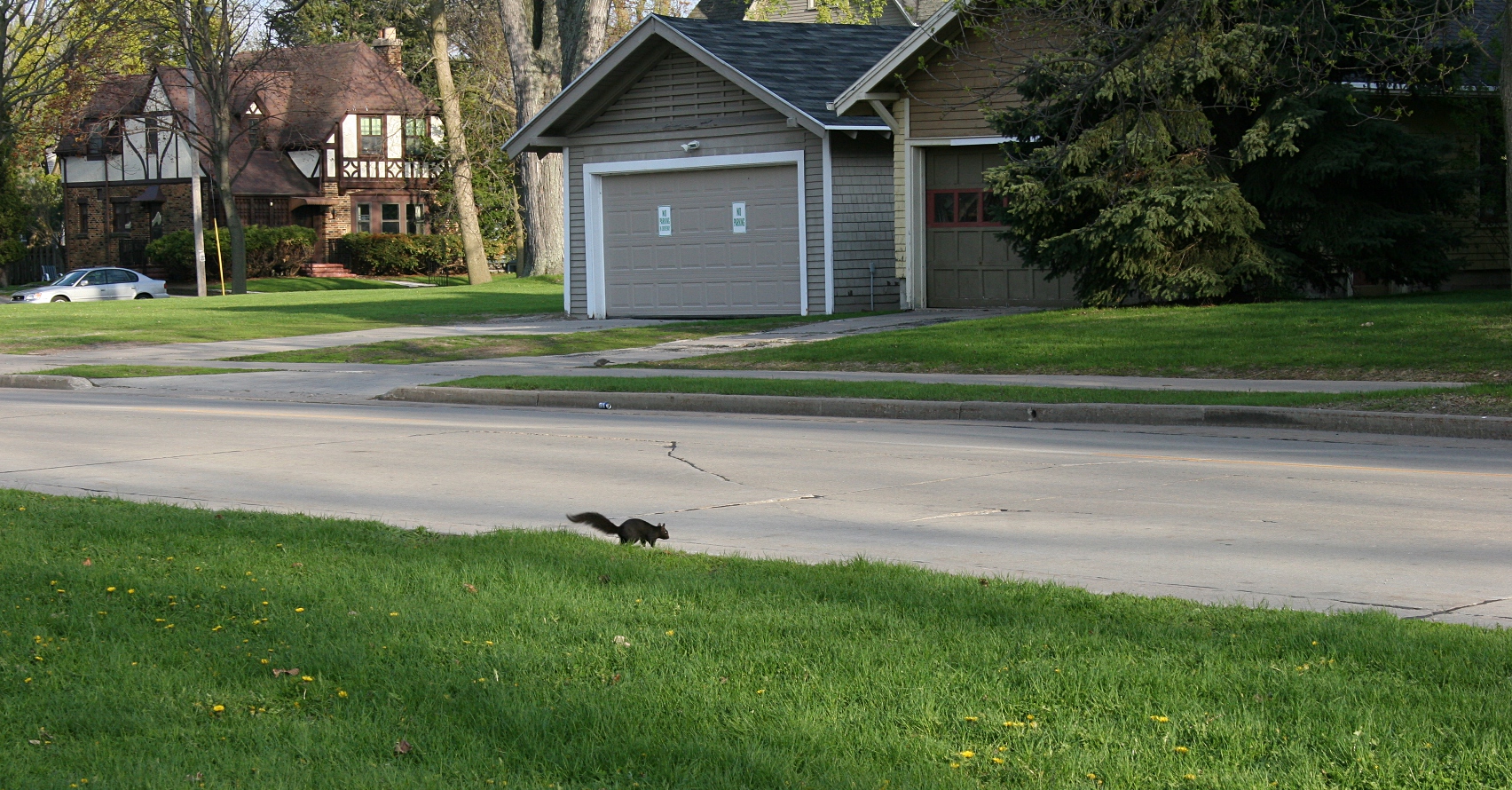
Squirrel number one scampers from the park across the street as soon as I approach with my camera. I don't have a telephoto lens, thus the distant view.

Squirrel number one scampers from the park across the street as soon as I approach. (I don’t have a telephoto lens.)

NO, THIS IS NOT one of those “Why did the chicken squirrel cross the road?” joke stories.

Rather, I am wondering, have you ever seen a black squirrel?

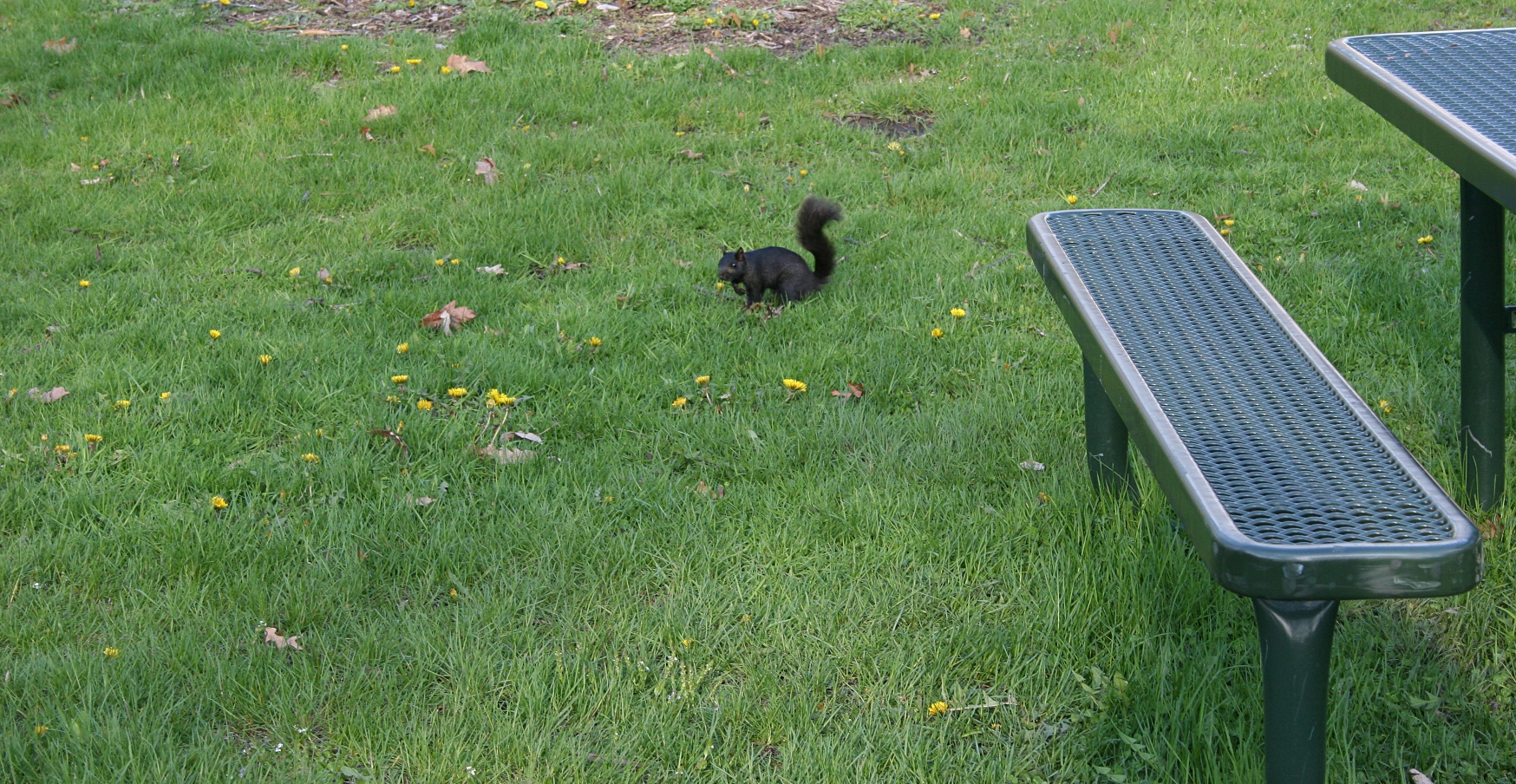
I manage to get a bit closer to squirrel number two.

I manage to get a bit closer to squirrel number two.

I hadn’t until last weekend while at City Park in downtown Appleton, Wisconsin.

My second daughter, who attended college in western Wisconsin and now lives on the eastern side of the state, couldn’t believe I’d never, in nearly 60 years of life, seen anything but grey or red squirrels.

My husband also had never spotted a black squirrel although he once saw an albino in the woods on his central Minnesota childhood farm home.

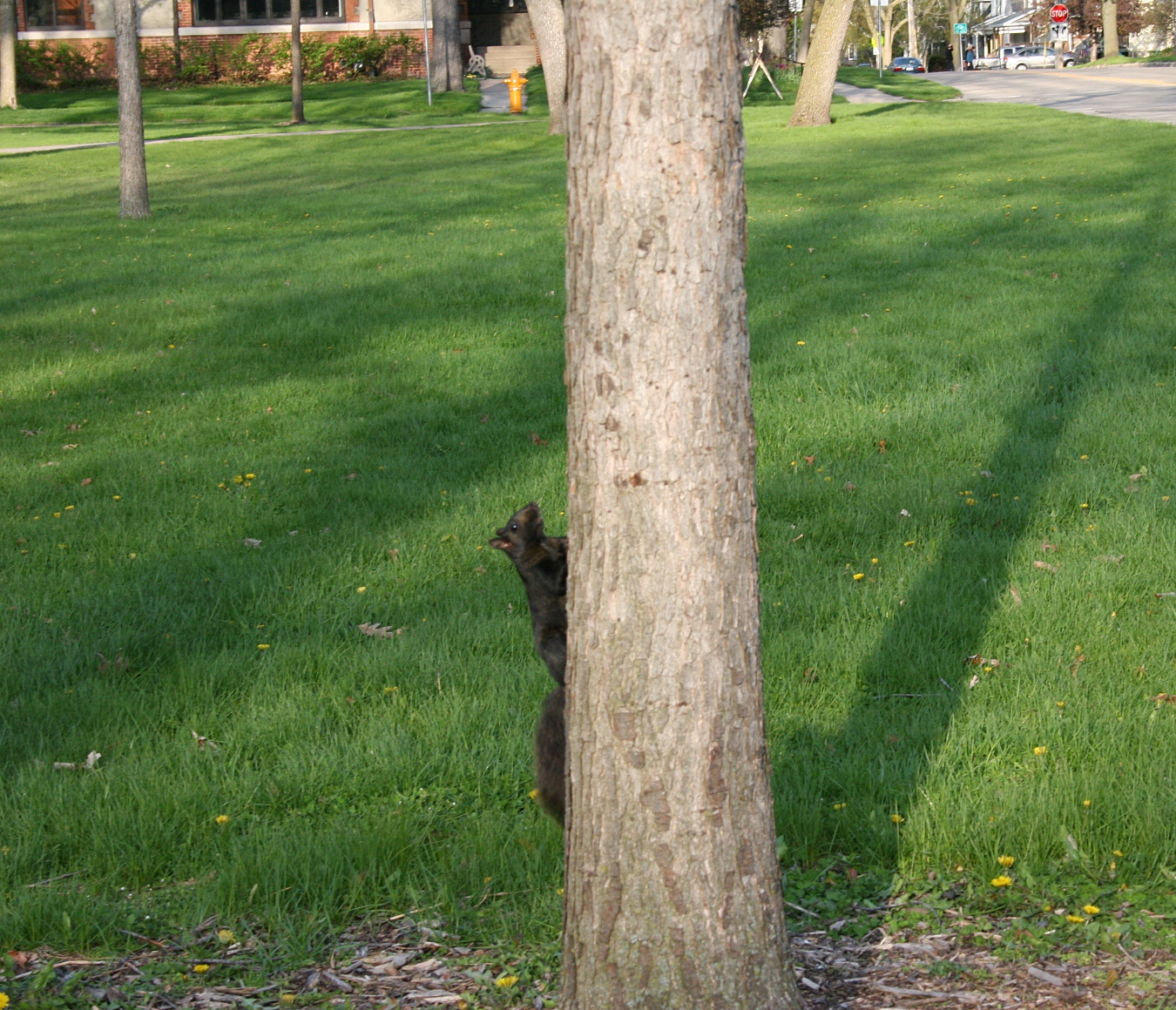
There are plenty of trees in Appleton's City Park, where I snapped one quick shot before the squirrel scooted out of camera range.

There are plenty of trees in Appleton’s City Park, where I snapped one quick shot before the squirrel scooted out of camera range.

I don’t recall any squirrels on my native southwestern Minnesota prairie farm while growing up. Maybe the shortage of trees had something to do with their absence.

In any case, I was intrigued by the two black squirrels in City Park. My daughter found my interest rather amusing. Sometimes it just doesn’t take much to entertain me.

© Copyright 2014 Audrey Kletscher Helbling


A Minnesota prairie sunset May 5, 2014

Filed under: Uncategorized — Audrey Kletscher Helbling @ 6:00 AM
Tags: , , , , ,

MY HUSBAND SCURRIED back to my mother’s house, told me to grab my camera and hurry.

And hasten we did.  Between her house and the neighbors, along the grass alley a block. Turn west at my uncle and aunt’s house. Fast-walk another block.


Prairie sunset 52


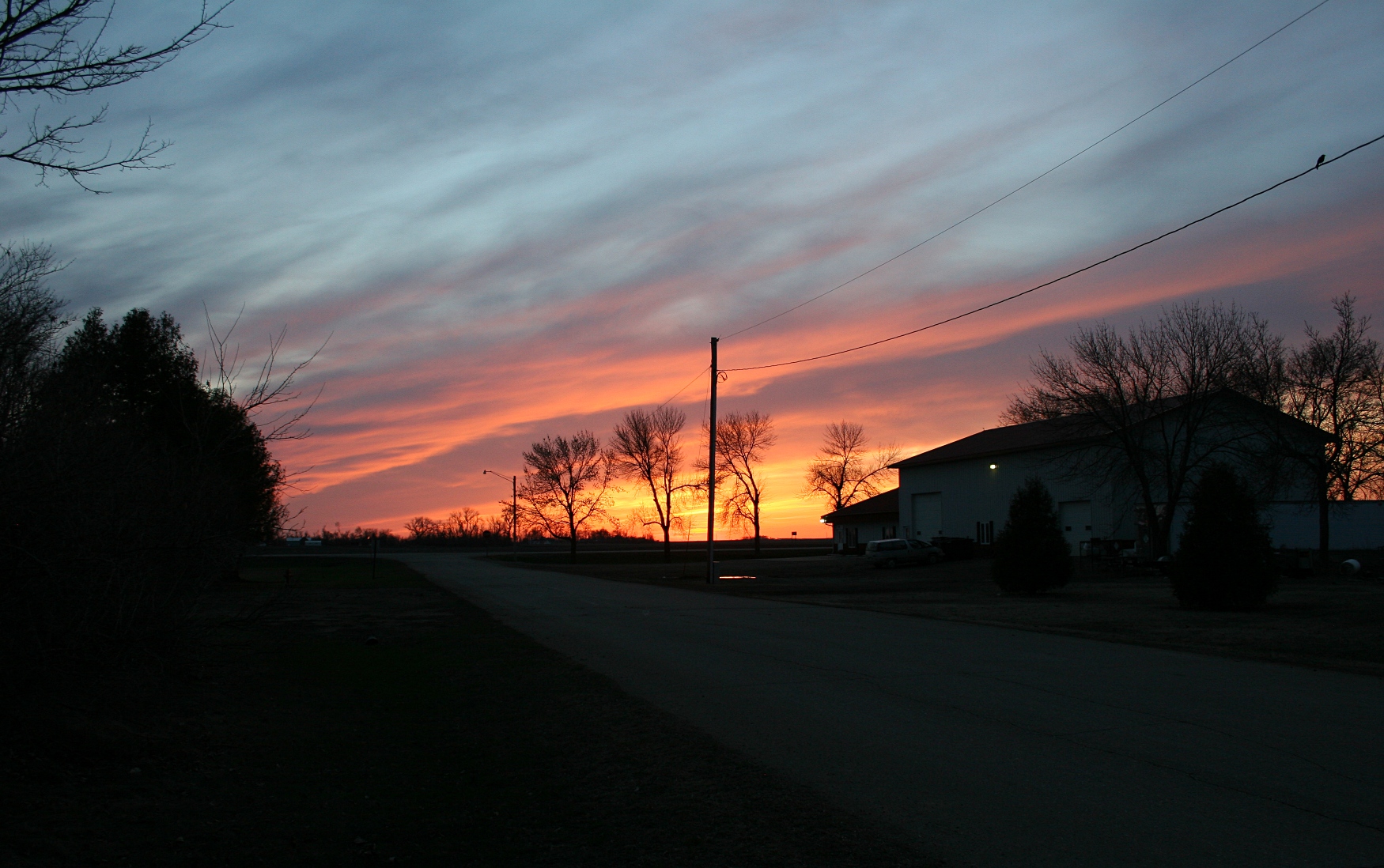
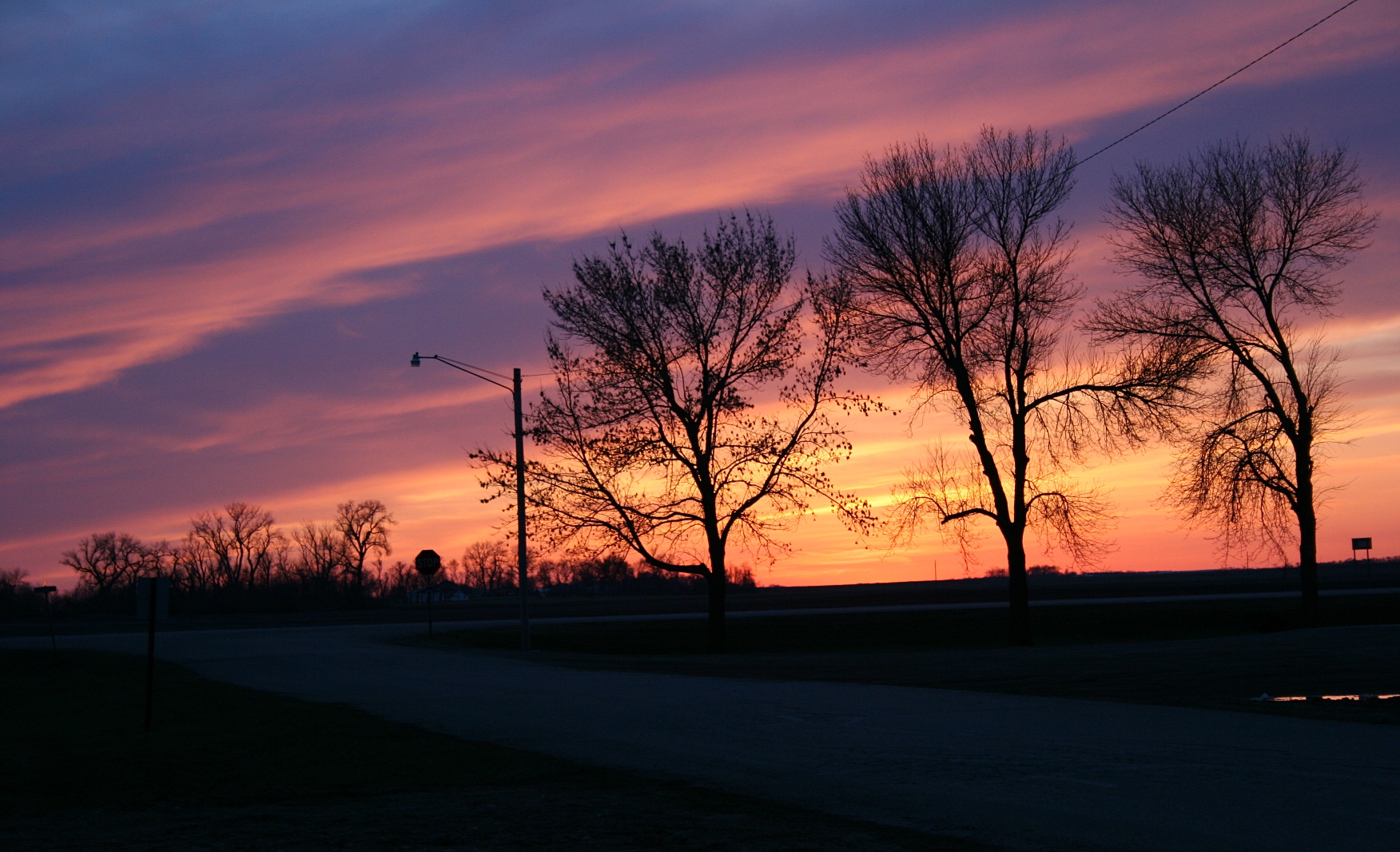
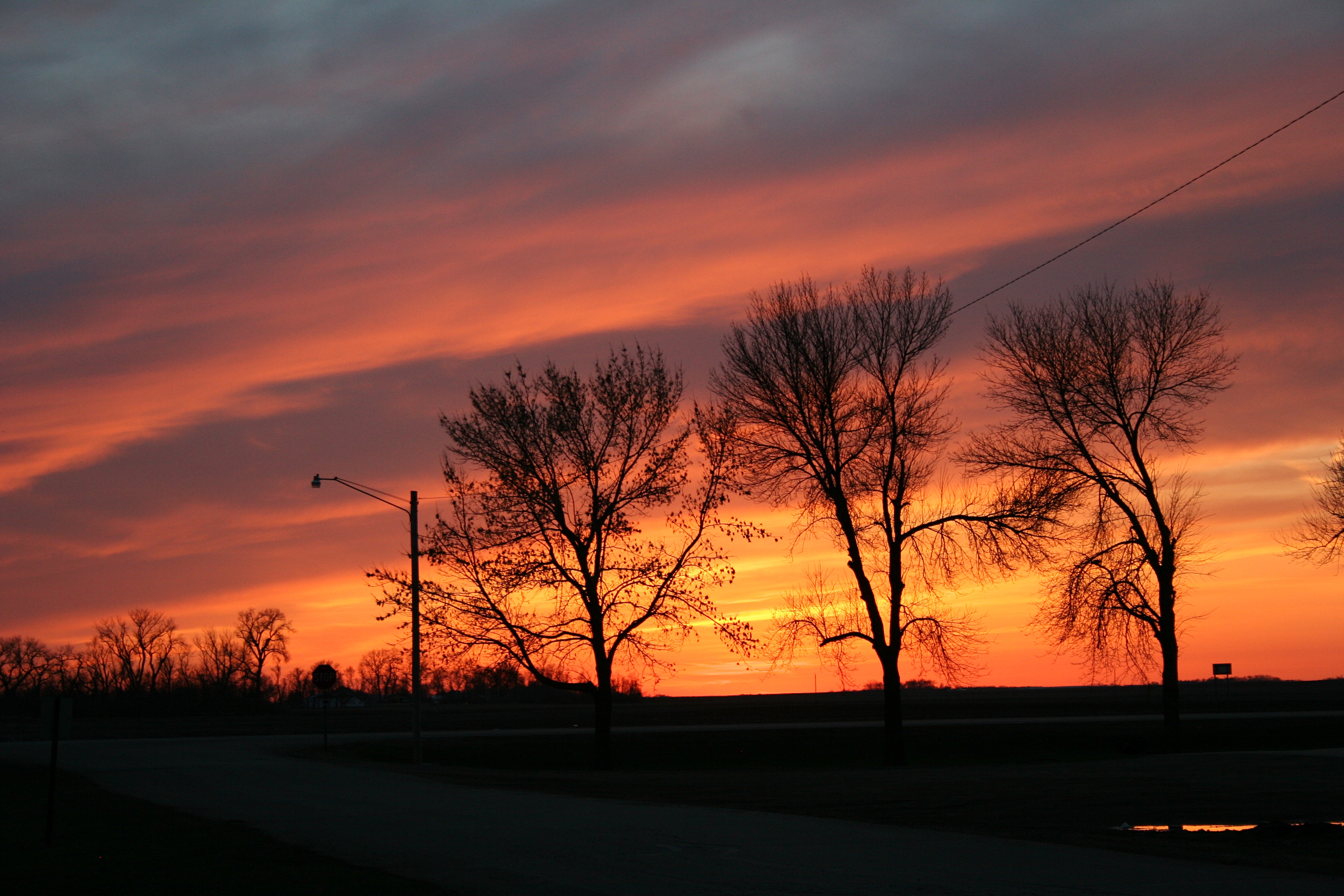
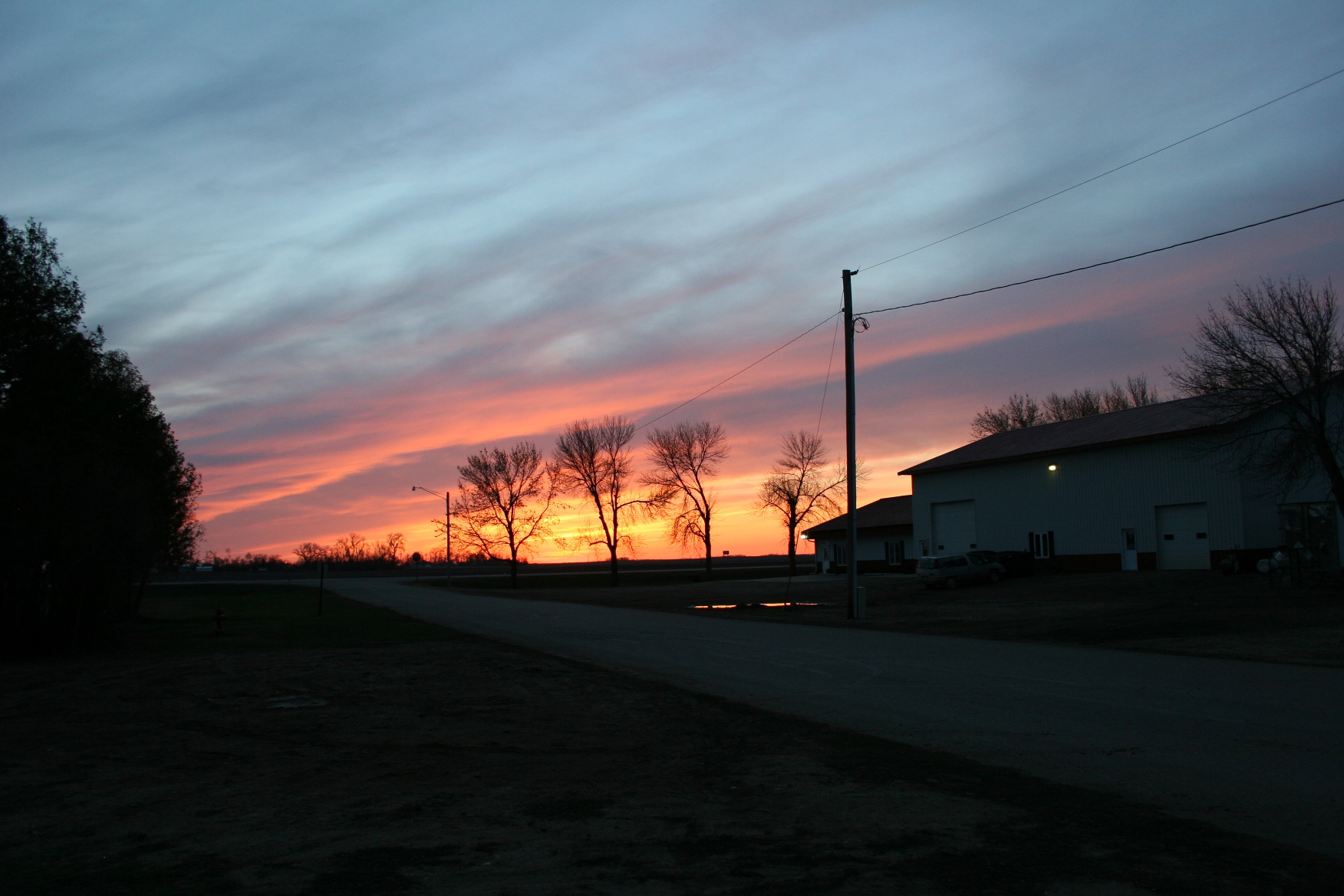
Focus on the setting sun, the sky colored in layered shades of orange and yellow, pink and purple.


Prairie sunset 54


Oh, how I love the sunset on my beloved prairie in my hometown of Vesta, Minnesota.


Prairie sunset 55


I can never get enough of it.


Prairie sunset 56


This moment when day transitions into evening with beauty unequal on a land that stretches flat into forever.

Spectacular sunset, like poetry sweeping across the prairie sky.

Copyright 2014 Audrey Kletscher Helbling


No April Fool’s: Sixty degrees, then snow & tornadoes April 1, 2014

Filed under: Uncategorized — Audrey Kletscher Helbling @ 6:00 AM
Tags: , , , ,

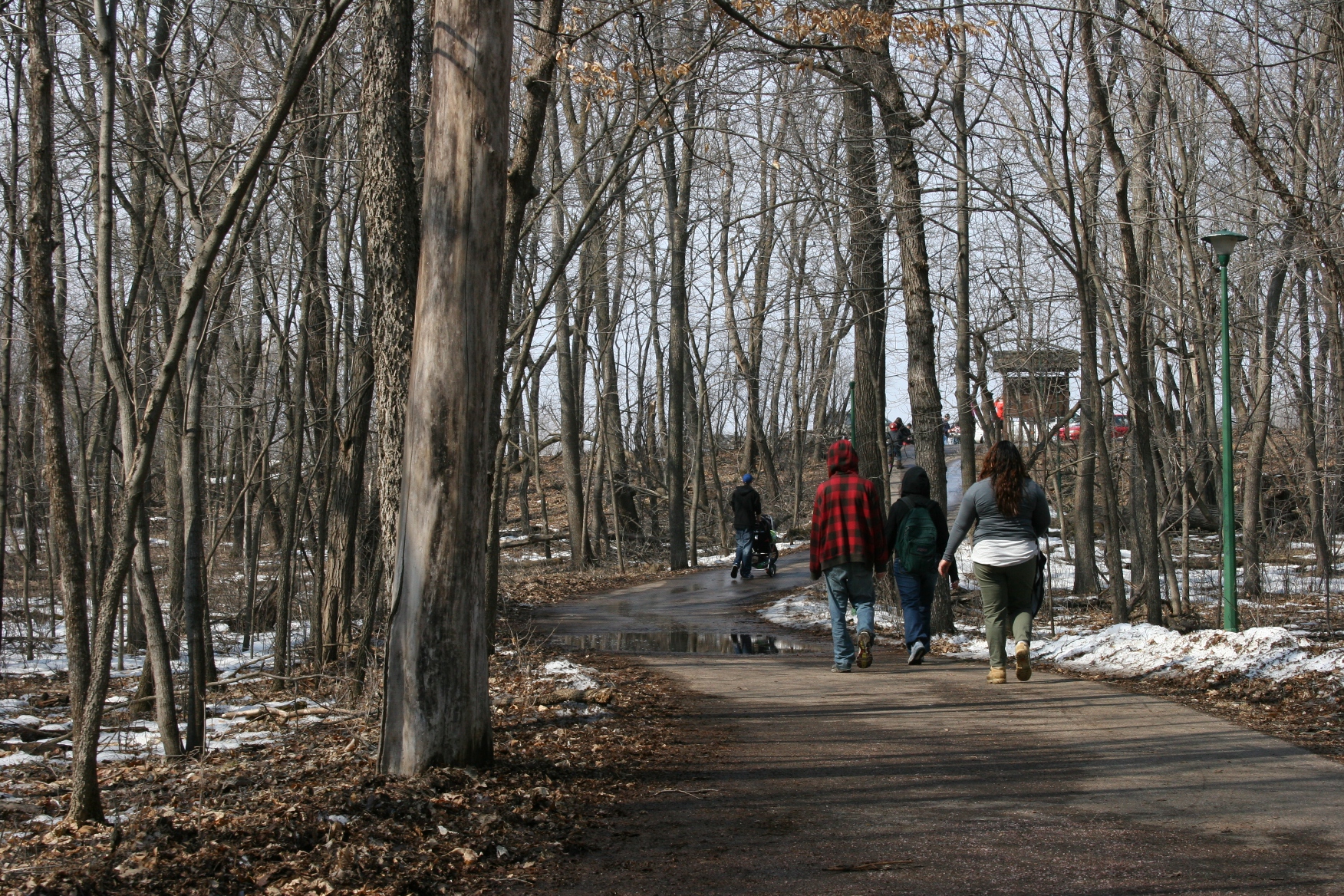
THEY THRONGED TO RIVER BEND Nature Center Sunday afternoon.

Walking the trails.

Walking the trails, this a rare one that wasn’t snow-covered and icy.

More warm weather outdoor enthusiasts than I’ve ever seen at this nearly 750-acres of woods, prairie and water on Faribault’s east side.

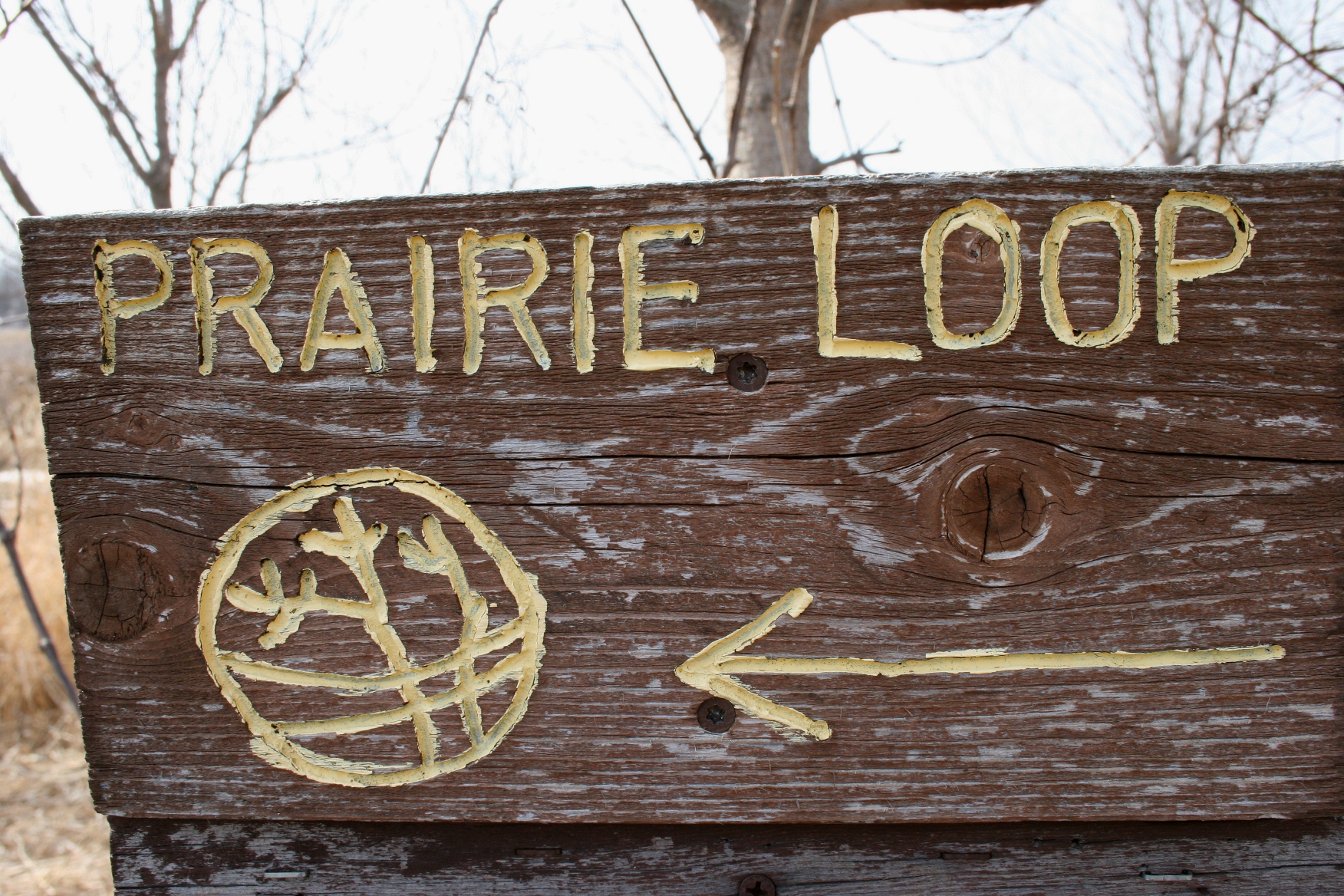
Handcrafted signs guide visitors along trails.

Handcrafted signs guide visitors along trails.

Bare-headed baby tucked in mother’s arms. Elementary-aged boy in helmet zipping his scooter down a tarred path. Elderly couple snugged on a bench.

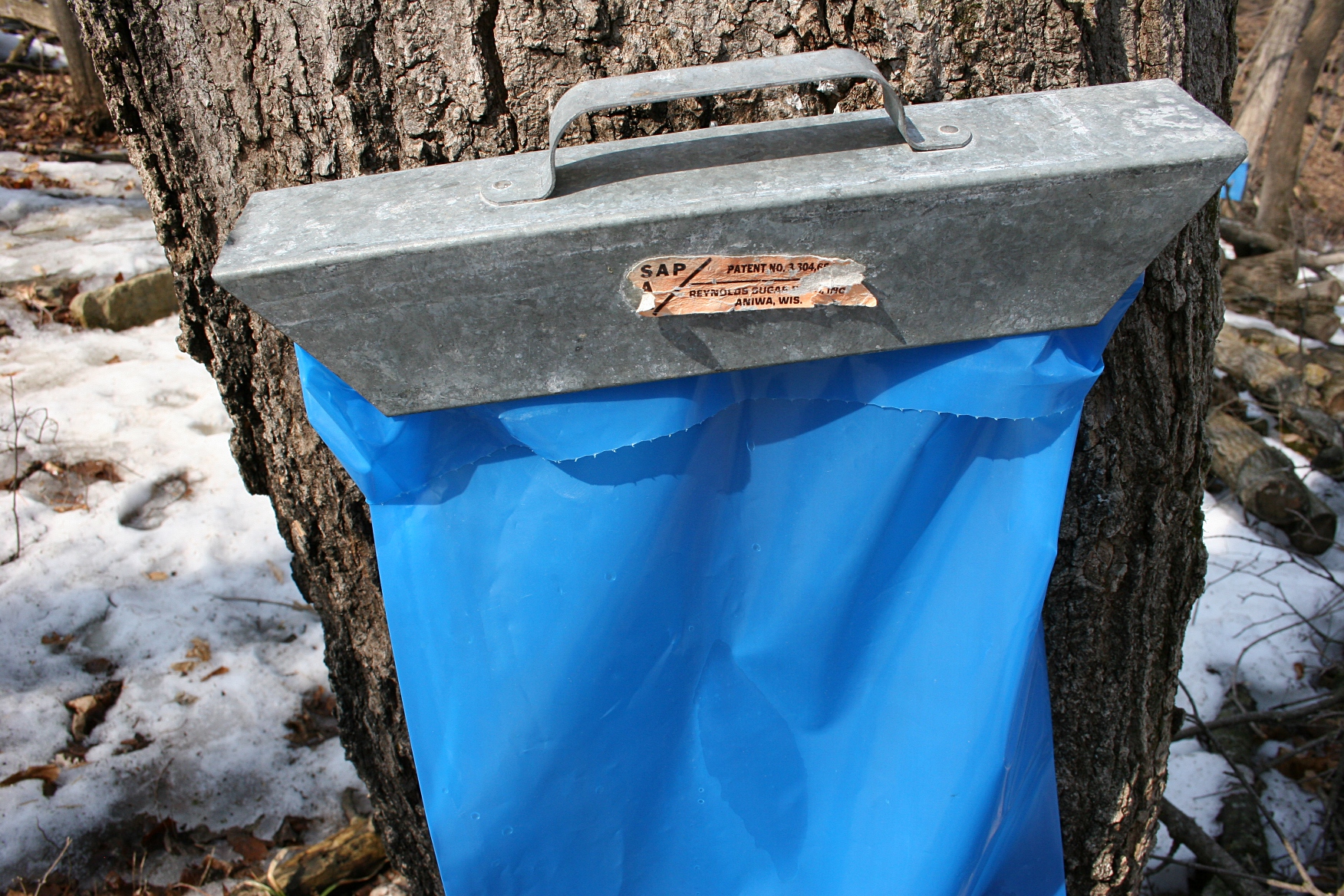
Trees tapped to collect sap in bags.

Trees tapped to collect sap in bags.

Folks clustered around an evaporator that cooked freshly tapped maple syrup.

Kids played in the water with sticks similar to this scene.

Kids played in water with sticks similar to this scene.

A trio of kids crossing a stick bridged across a rush of water.

A family picnicking.

Guy in shorts; boy in snowpants.

Abdi studies by the swamp.

Abdi studies by the swamp.

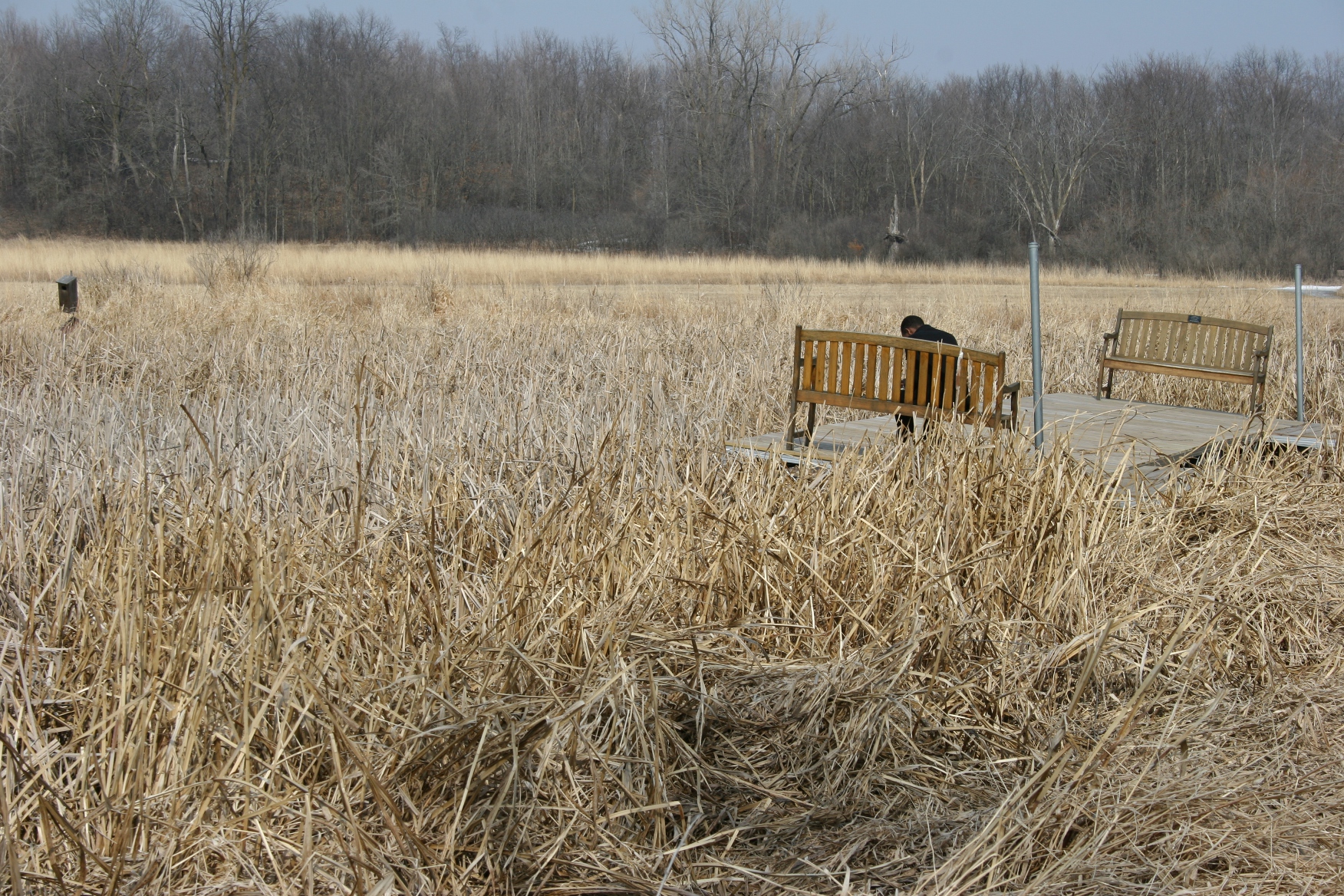
Abdi, a native of Ethiopia, benched by the swamp/pond studying for his medical lab class in the quiet of nature, away from his noisy apartment building.

A 20-something teaching archery to kids just outside the interpretive center.

And us, threading our way along still icy trails, slushing through melting snow. Me, grabbing my husband’s hand to keep from slipping, his snow boots gripping the ice, mine not.

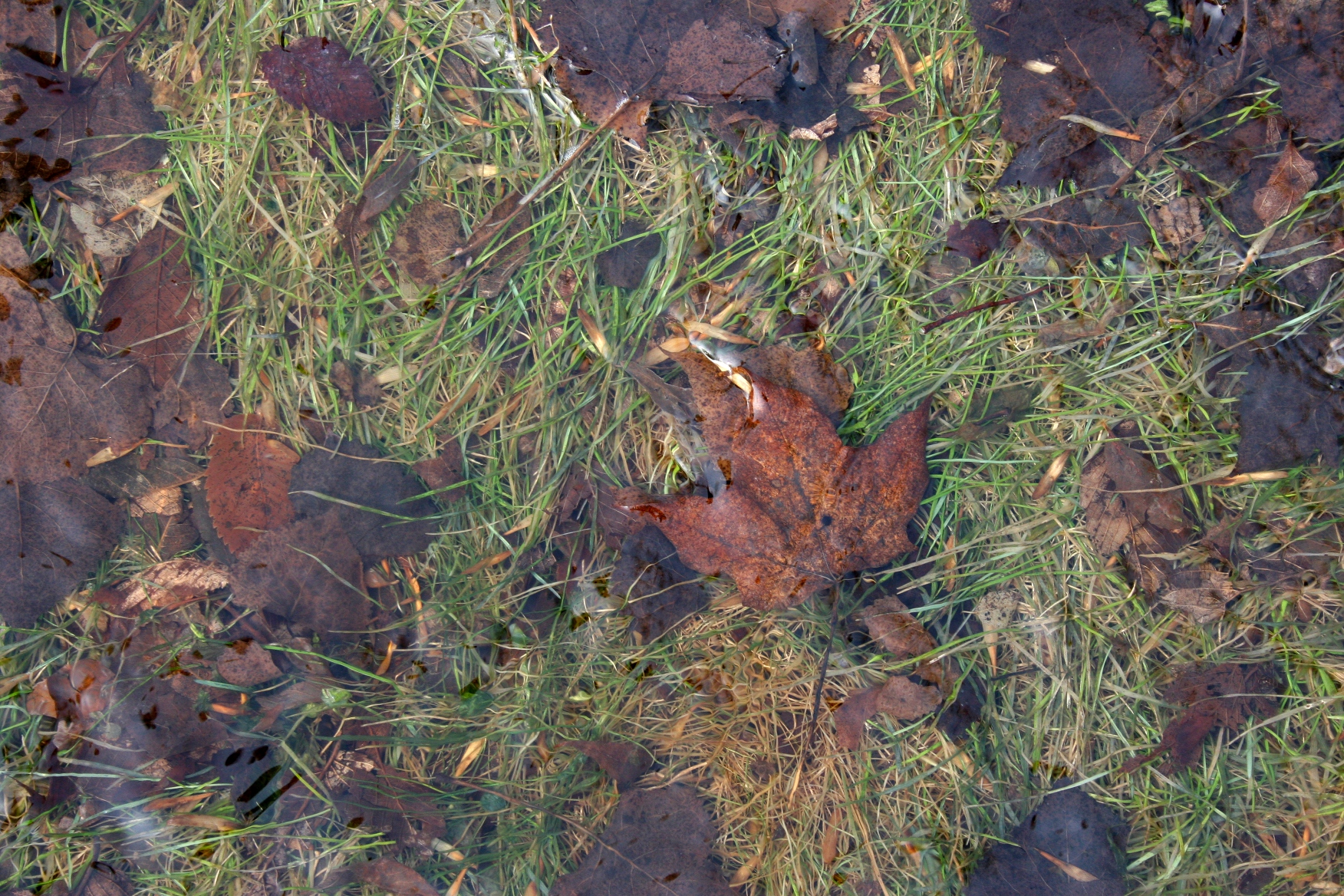
Patches of green grass mingle under water with dead leaves.

Patches of green grass mingle under water with dead leaves.

My eyes grasping for green and finding it in patches of emerging grass.

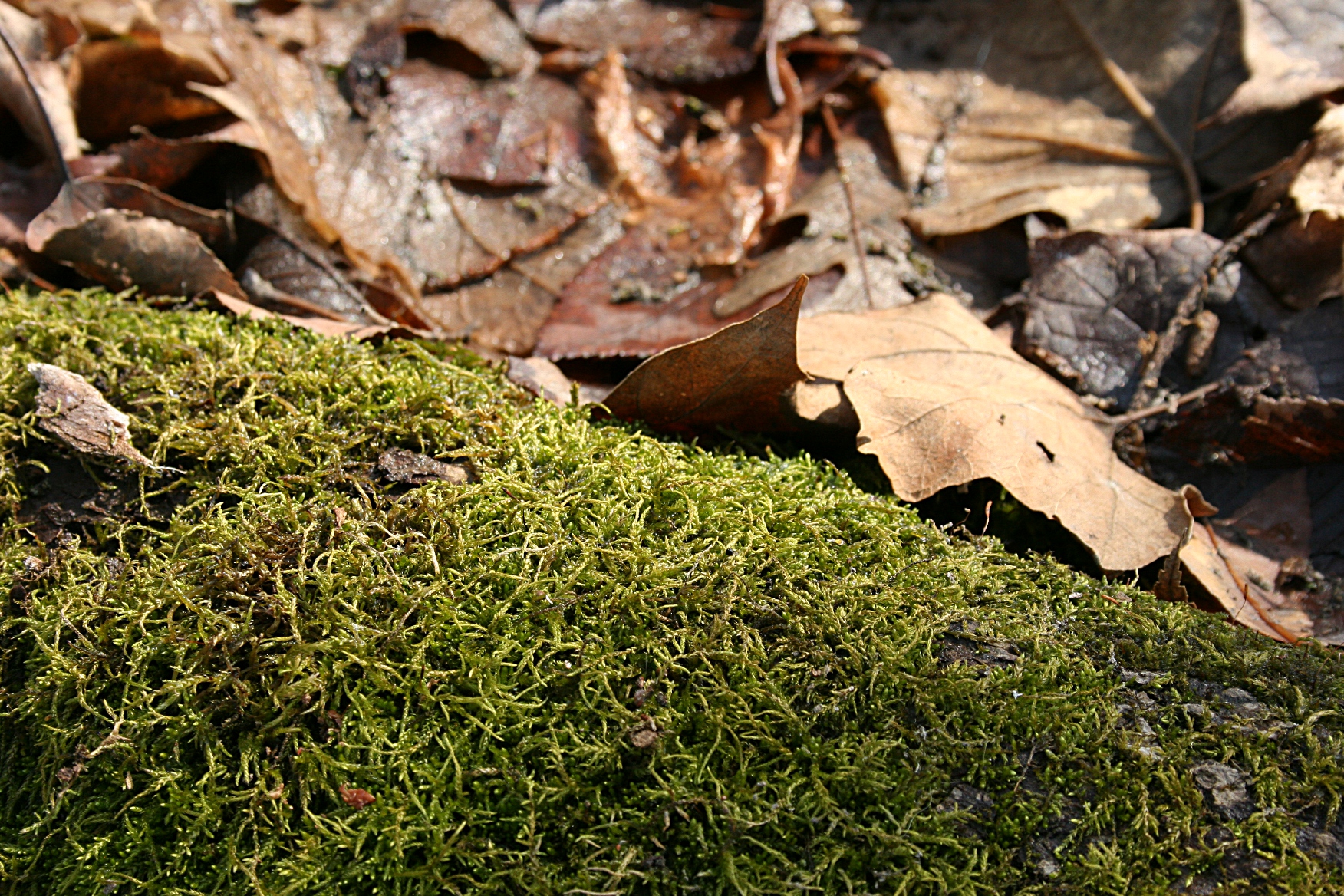
The brightest green discovered--moss on a log.

The brightest green discovered–moss on a log.

Green moss on dead logs.

The tiniest of green plants poking through the dormant prairie grass.

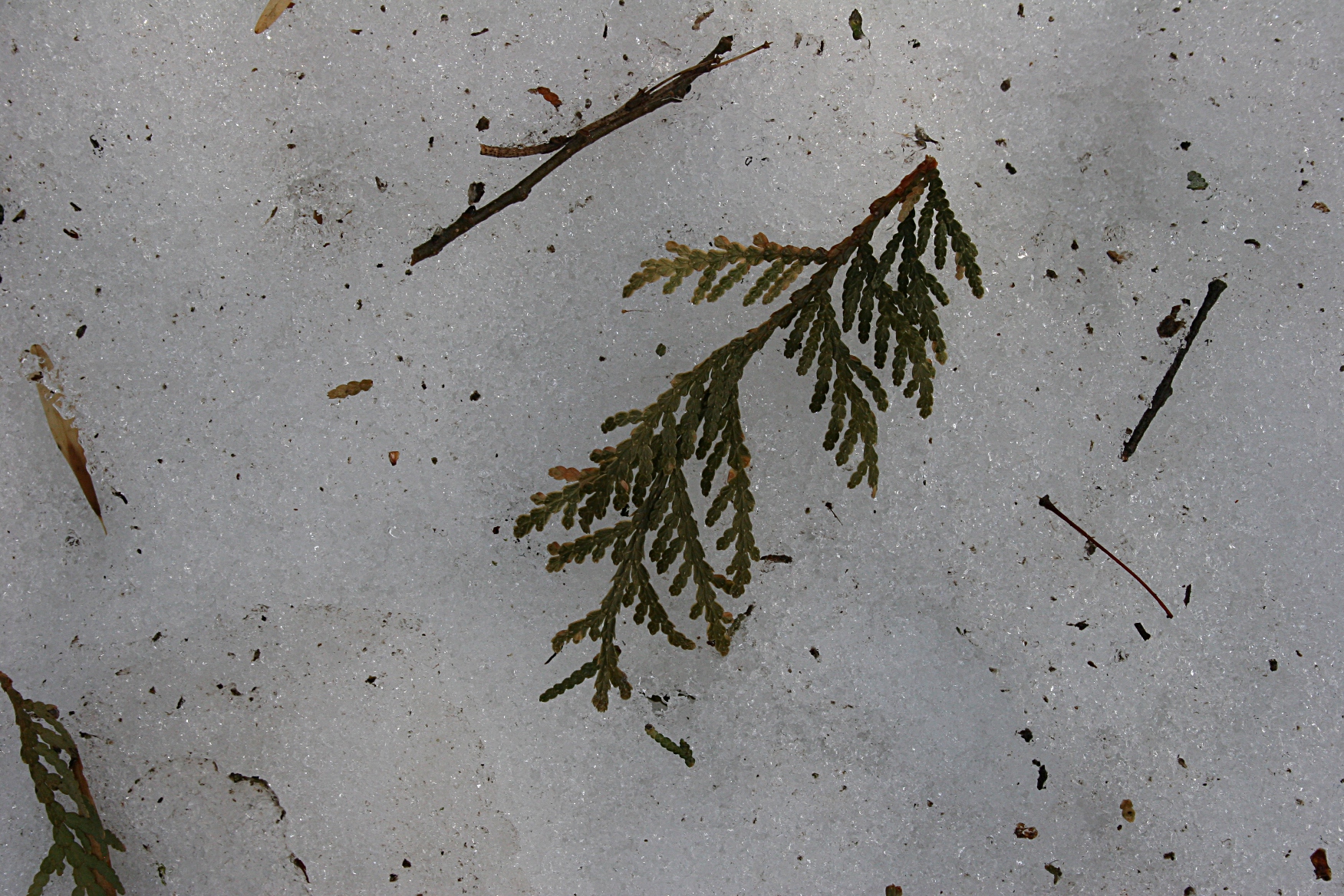
A snippet of green cedar upon snow.

A snippet of green cedar upon snow.

Searching for signs of spring.

Trees reflected in a "lake" of water from the snow melt.

Trees reflected in a “lake” of water from the snow melt.

Finding it in watercolor paintings.

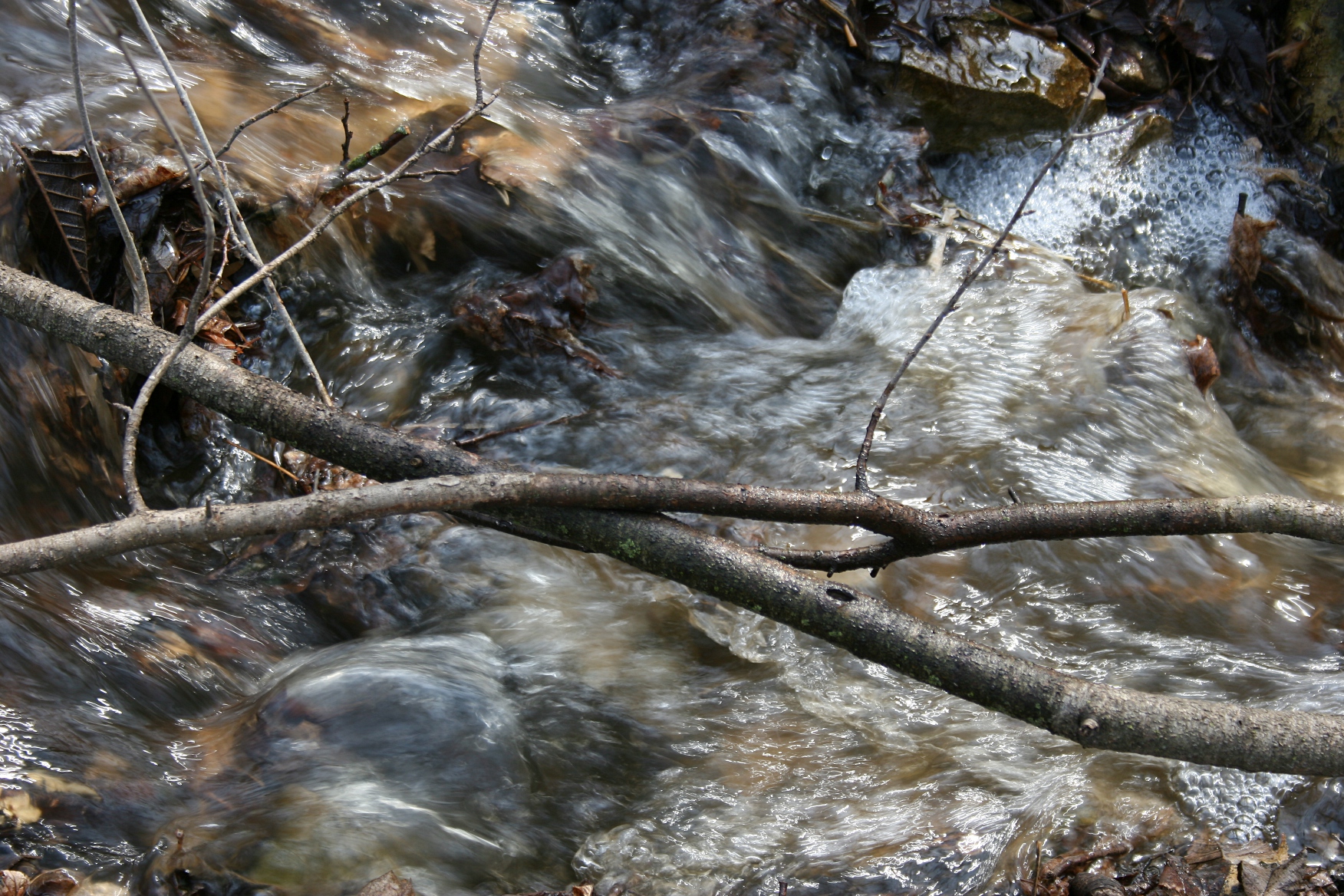
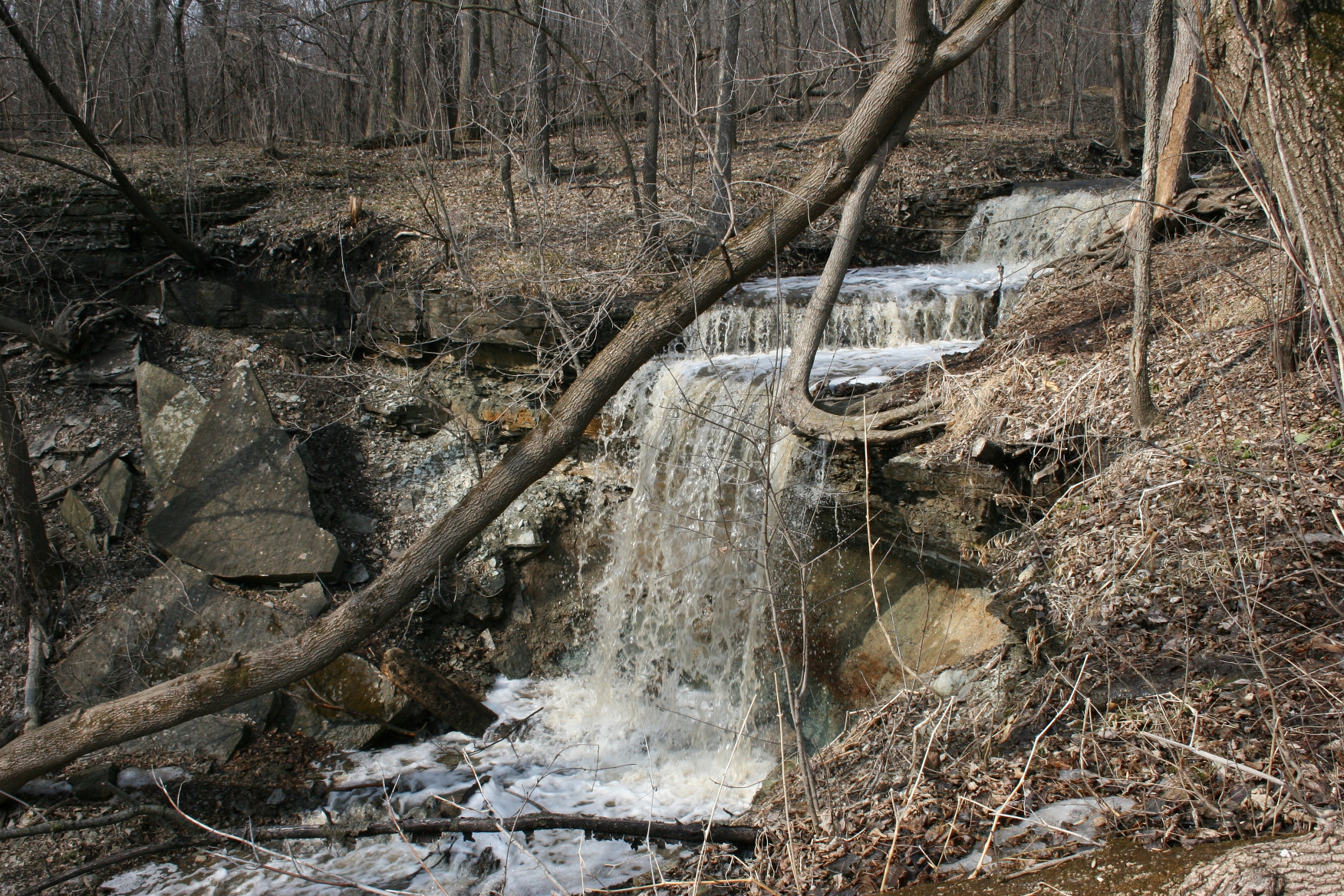
I've never seen this much water roaring over the nature center waterfall.

I’ve never seen this much water roaring over the nature center waterfall.

Water roaring over limestone in a three-tied waterfall.

Water rushes down a trail.

Water rushes down a trail.

Slogging through water, with grass and dead leaves squishing beneath our boots.

Sunday and sixty degrees. Glorious. Spring.

And then came blizzards (northern Minnesota) and tornadoes (southwestern Minnesota) on Monday with temps plunging into the 20s and 30s overnight.  A wind advisory remains in effect until 10 a.m. today for a portion of Minnesota sweeping from southwest/central to southeast with sustained winds of 25 – 35 mph topping at 50 mph, according to the National Weather Service.

No April Fool’s.

FYI: According to an article in The Marshall Independent, a twister was sited near Taunton Monday afternoon with structural damage from the storm reported five miles north of Minneota. On Monday, a tornado warning and a blizzard warning were issued simultaneously for a portion of southwestern Minnesota.

In Yellow Medicine County, the West Central Tribune of Willmar reports structural damage from a tornado at three farm sites southeast of St. Leo.

© Copyright 2014 Audrey Kletscher Helbling


Bluff ice art March 31, 2014

Filed under: Uncategorized — Audrey Kletscher Helbling @ 6:00 AM
Tags: , , , , , , , ,

PERHAPS I AM too easily impressed.

But I have not visited the ice caves at Apostle Islands National Lakeshore in northern Bayfield County, Wisconsin.

Ice formations by La Crosse 1

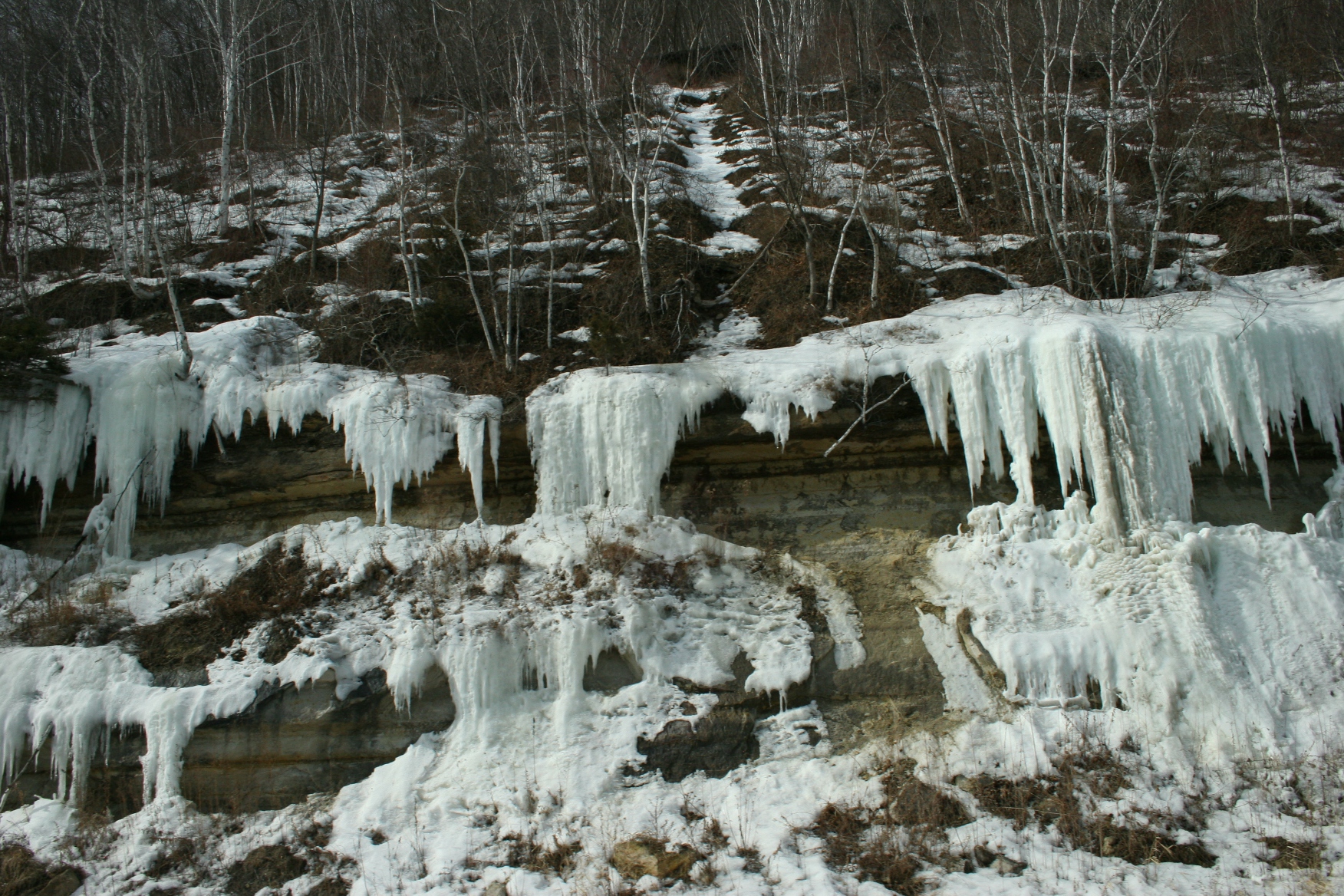
Thus the ice formations gracing the Mississippi River bluffs along Interstate 90 on the Minnesota side near La Crosse, Wisconsin, impress me.

Ice formations by La Crosse 2

There is no stopping along I-90 to view or photograph this natural ice art up close. Rather, I rely on the rapid fire of my camera to capture the scene for later study.

Ice formations by La Crosse 3

Every time I see this water frozen in the icebox of winter, I marvel at its beauty.

I remember, too, how once upon a time I snapped icicles from the milkhouse roofline to engage in sword fight battles with my siblings.

Ice formations by La Crosse 4

The flip side of my mind views the ice formations as powdered sugar icing dripping down the sides of a homemade chocolate birthday cake baked by my mother.

That’s the thing about art—man-made or natural. It’s always open to interpretation.

FYI: These photos were taken 10 days ago. Since then, the weather has warmed to around 60 degrees in southern Minnesota, meaning these formations are likely disappearing.

© Copyright 2014 Audrey Kletscher Helbling


All about eagles in Wabasha March 20, 2014

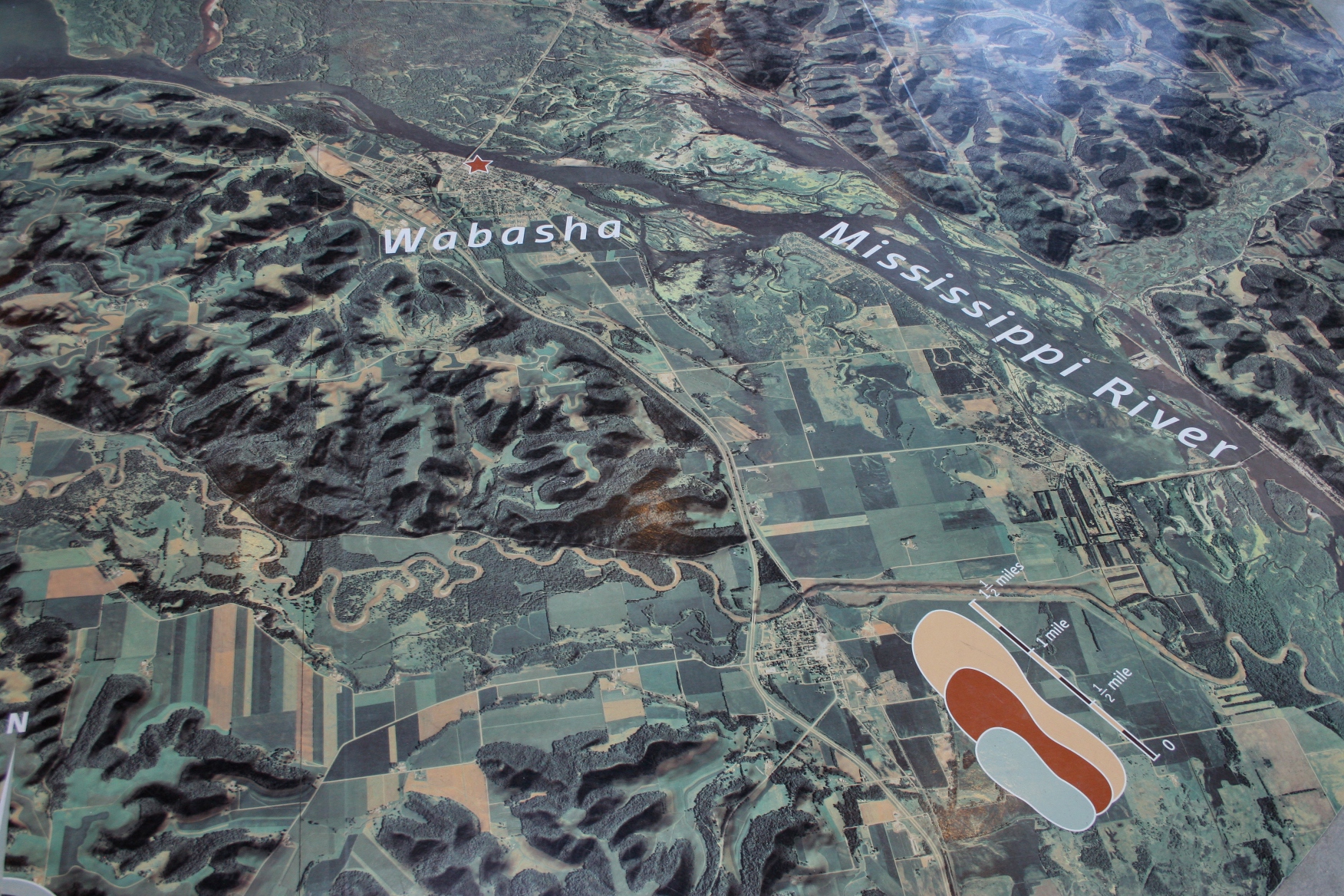
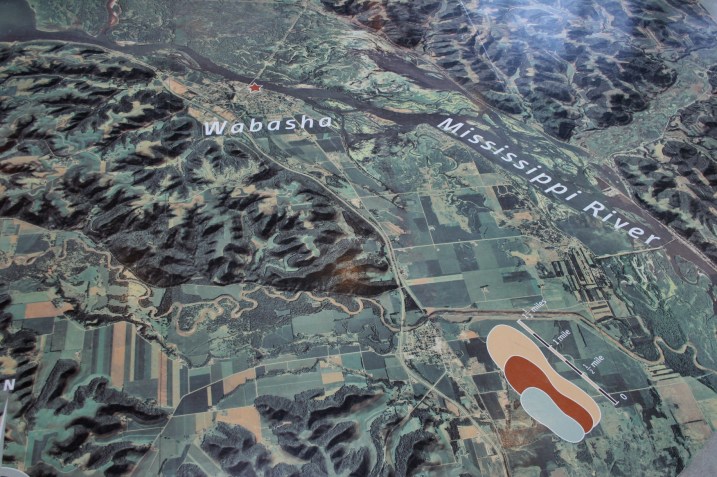
A section of a map on the floor of the National Eagle Center shows the location of Wabasha along the Mississippi River.

A section of a map on the floor of the National Eagle Center shows the location of Wabasha along the Mississippi River.

DRIVING INTO WABASHA, Minnesota, late on a Sunday morning in mid-March, we spot a bald eagle soaring high above this historic river town.
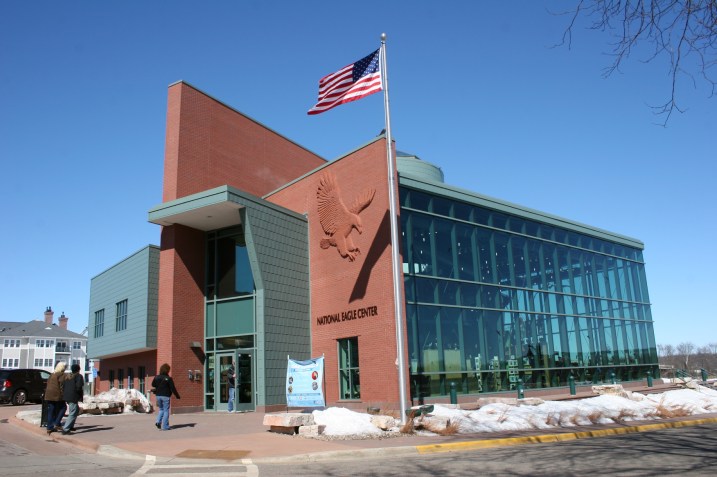
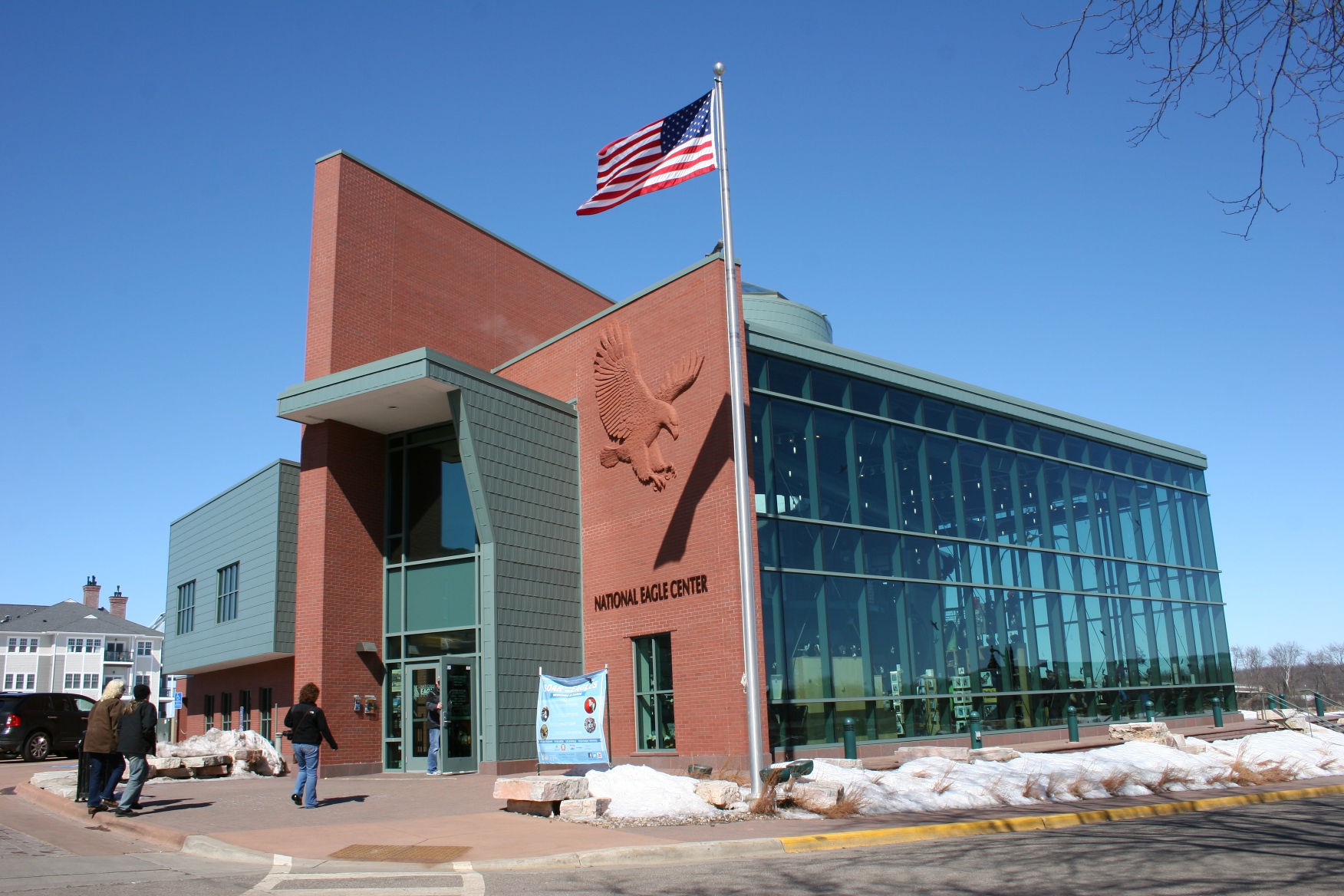
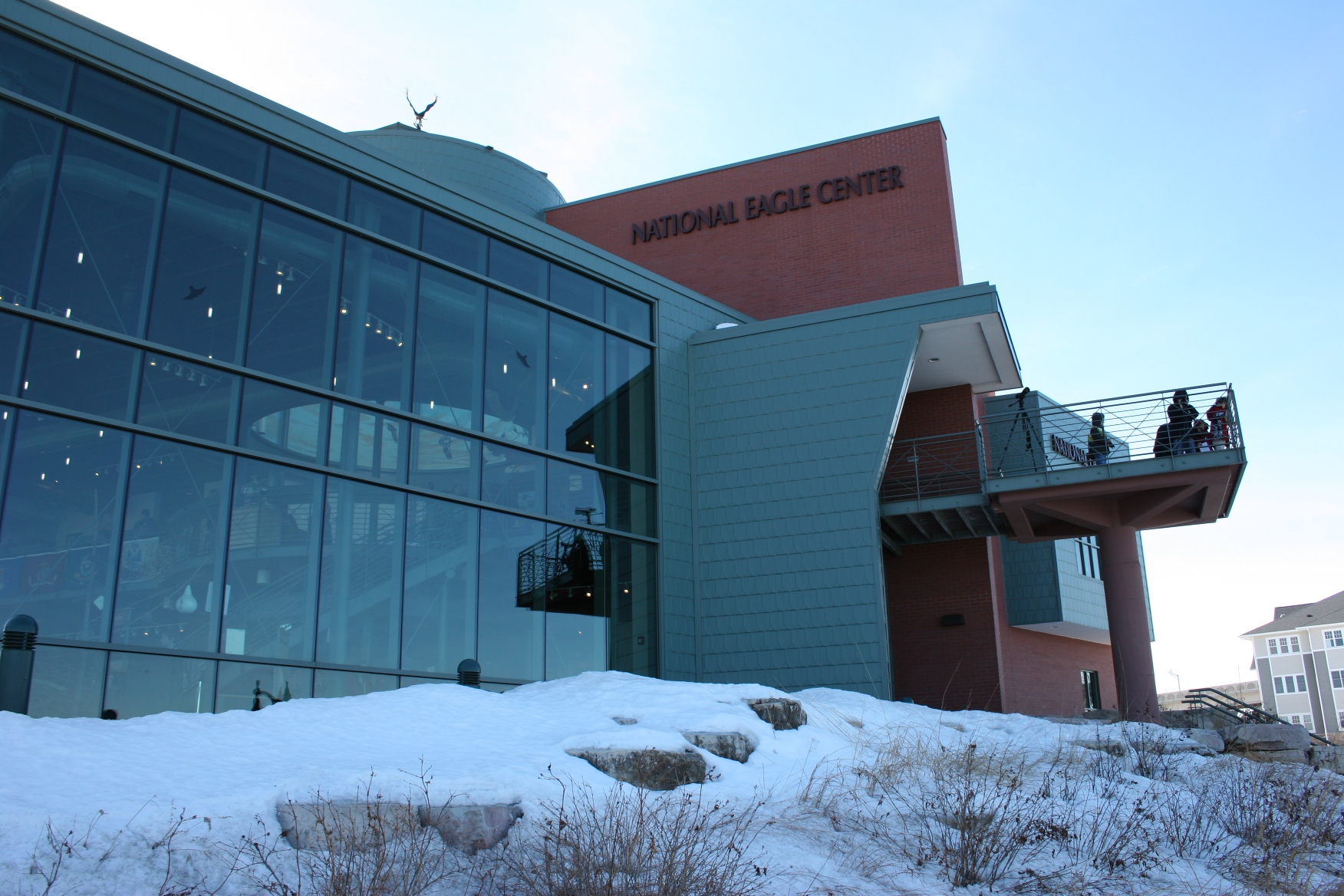
The stunning National Eagle Center, along the river and a block off the main downtown business district.

The stunning National Eagle Center, along the river in the heart of downtown Wabasha.

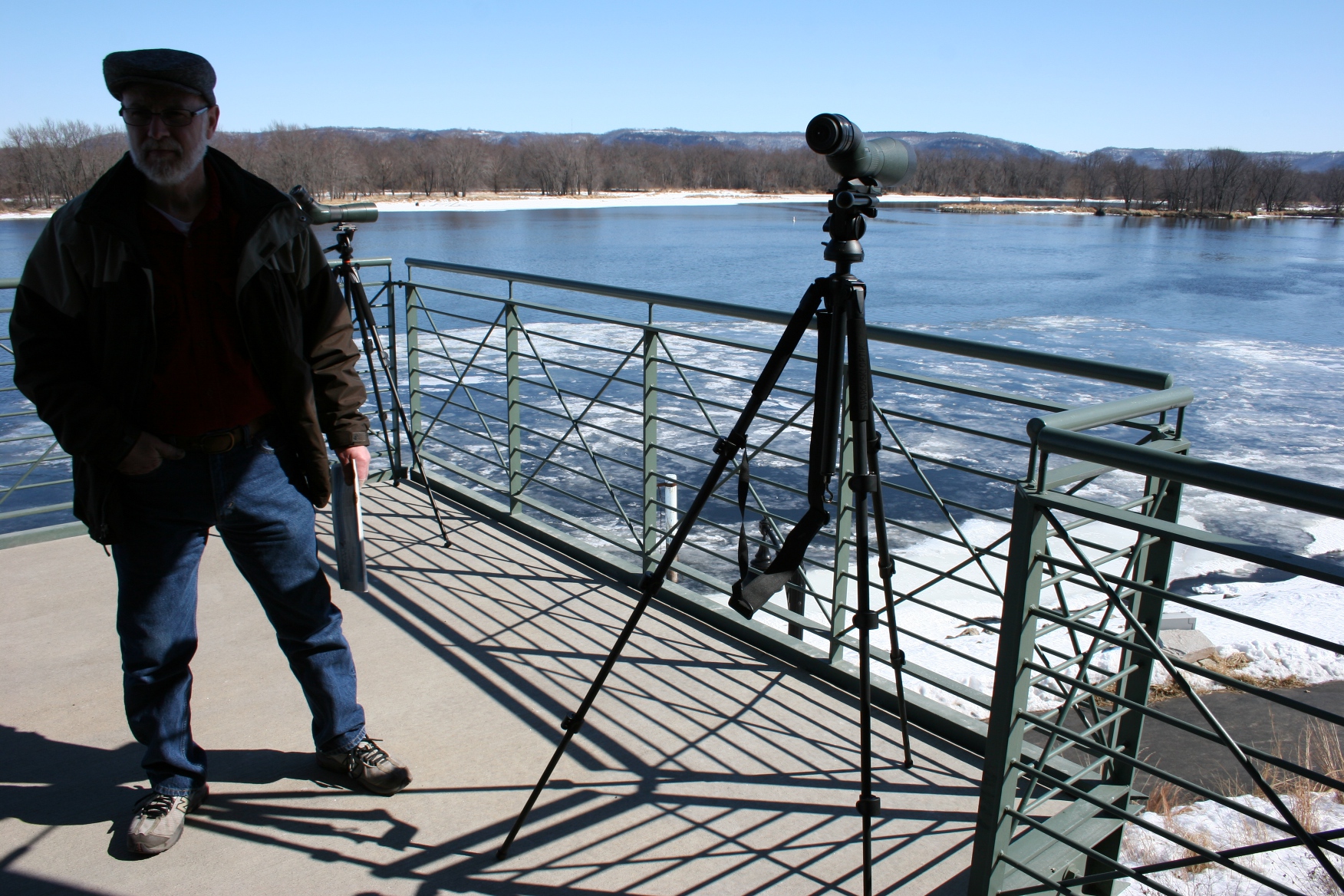
The bird’s welcoming appearance seems fitting given my husband and I have come here to tour the National Eagle Center, a modern two-story educational facility with banks of two-story windows and a second floor outdoor observation deck overlooking the Mississippi River.
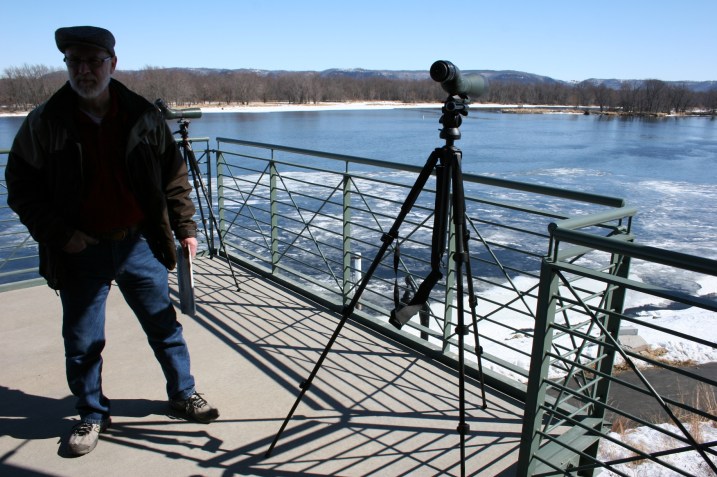
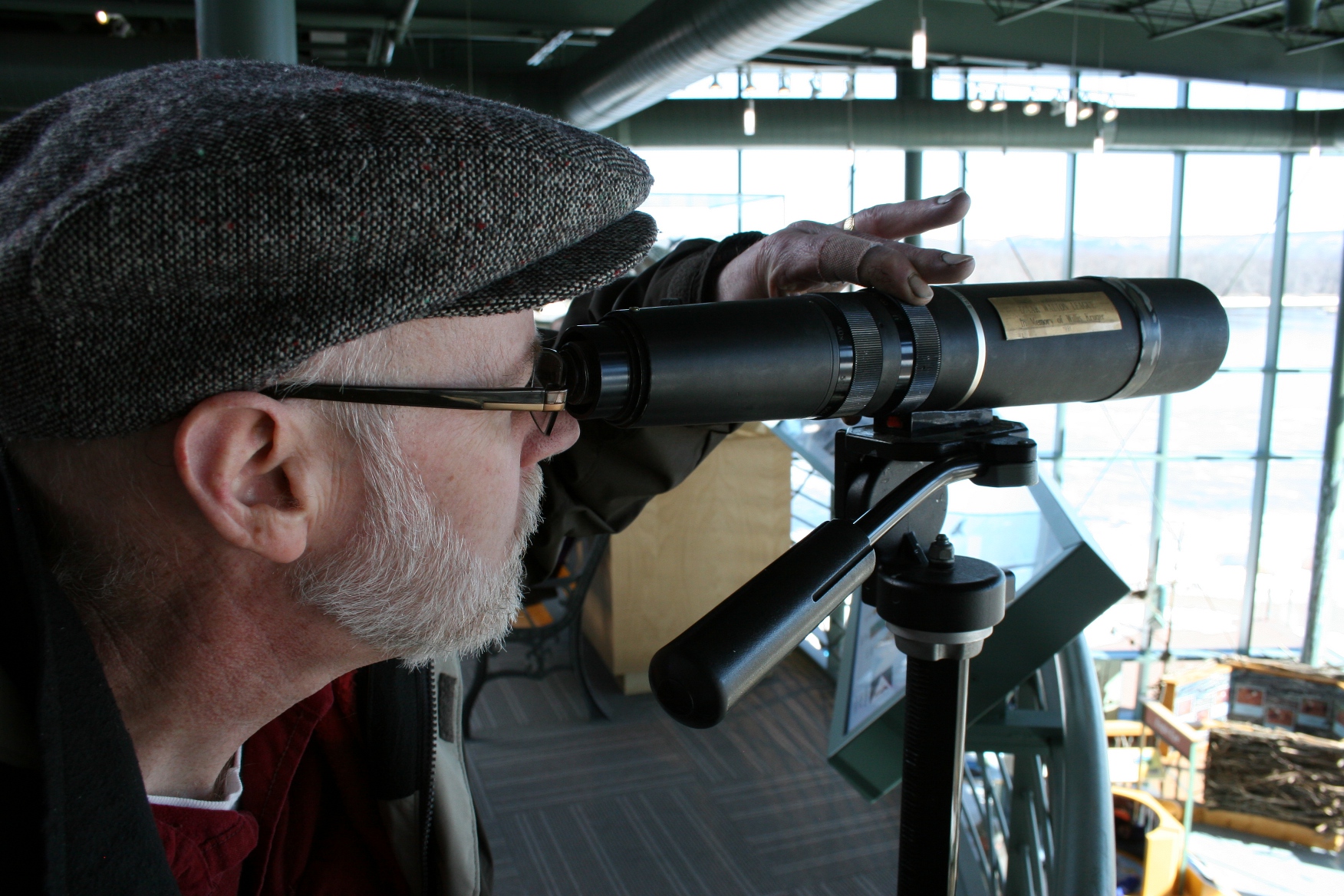
A second story observation deck outfitted with numerous binoculars, allows visitors to view the eagles along the Mississippi River.

The observation deck, outfitted with binoculars, gives visitors like my husband a view of eagles along the Mississippi River.

This ideal riverside setting allows visitors like us to observe eagles riding river bluff air currents, scooping fish from the water and perching in trees. Wabasha, with its year-round open water, proves an inviting locale for eagles.
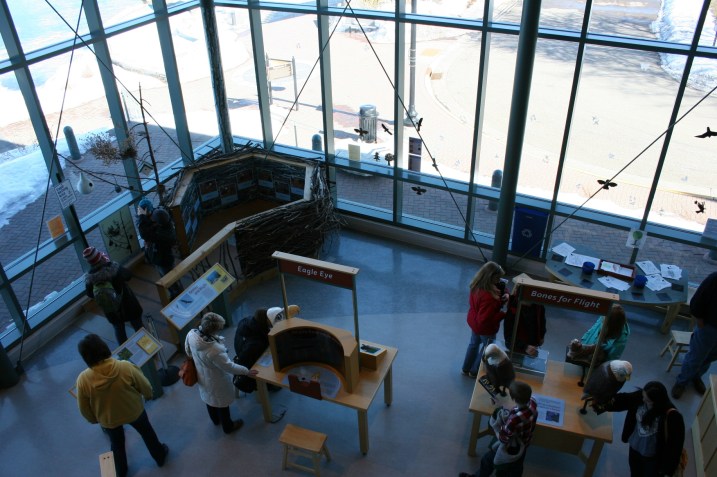
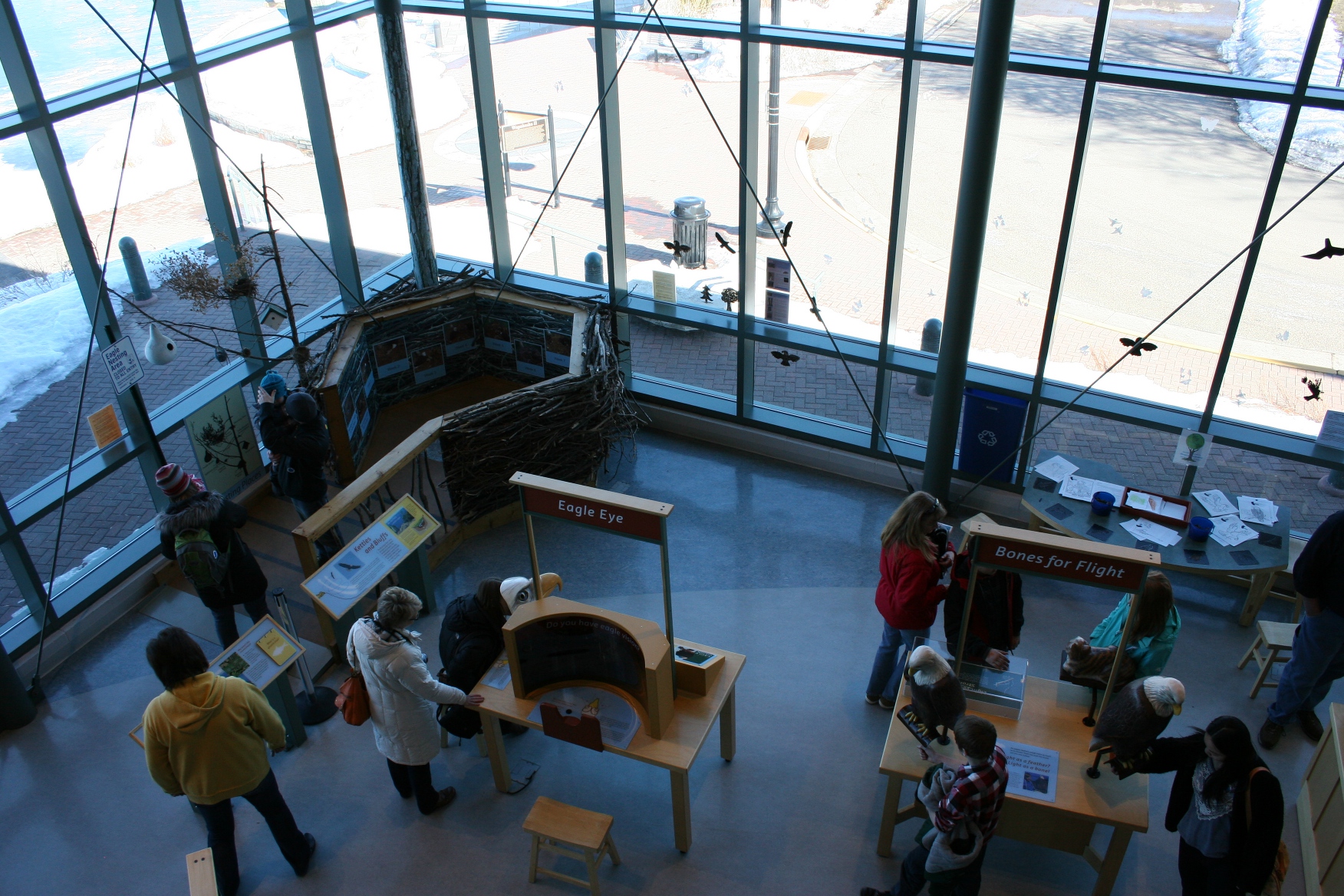
The activity area includes a replica eagle's nest, upper left.

The activity area includes a replica eagle’s nest, upper left.

Inside the center, hands-on interactive activities—from stepping inside a mock eagle’s nest to testing the weight of an eagle to experiencing the majestic bird’s vision to creating eagle art to scoping eagles through binoculars and more—occupy all ages.
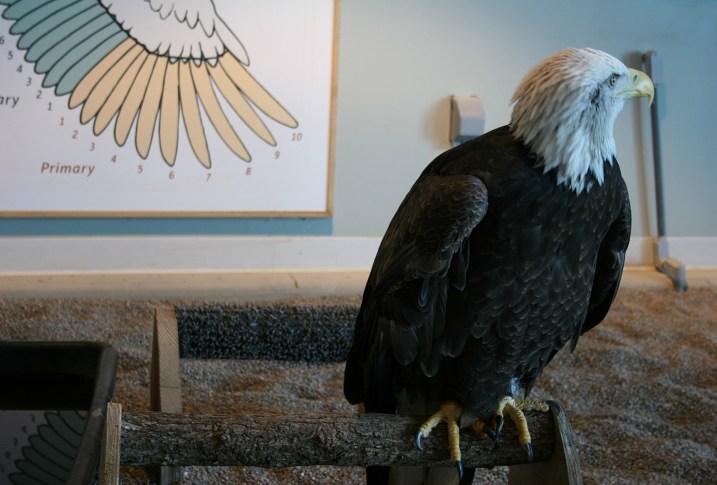
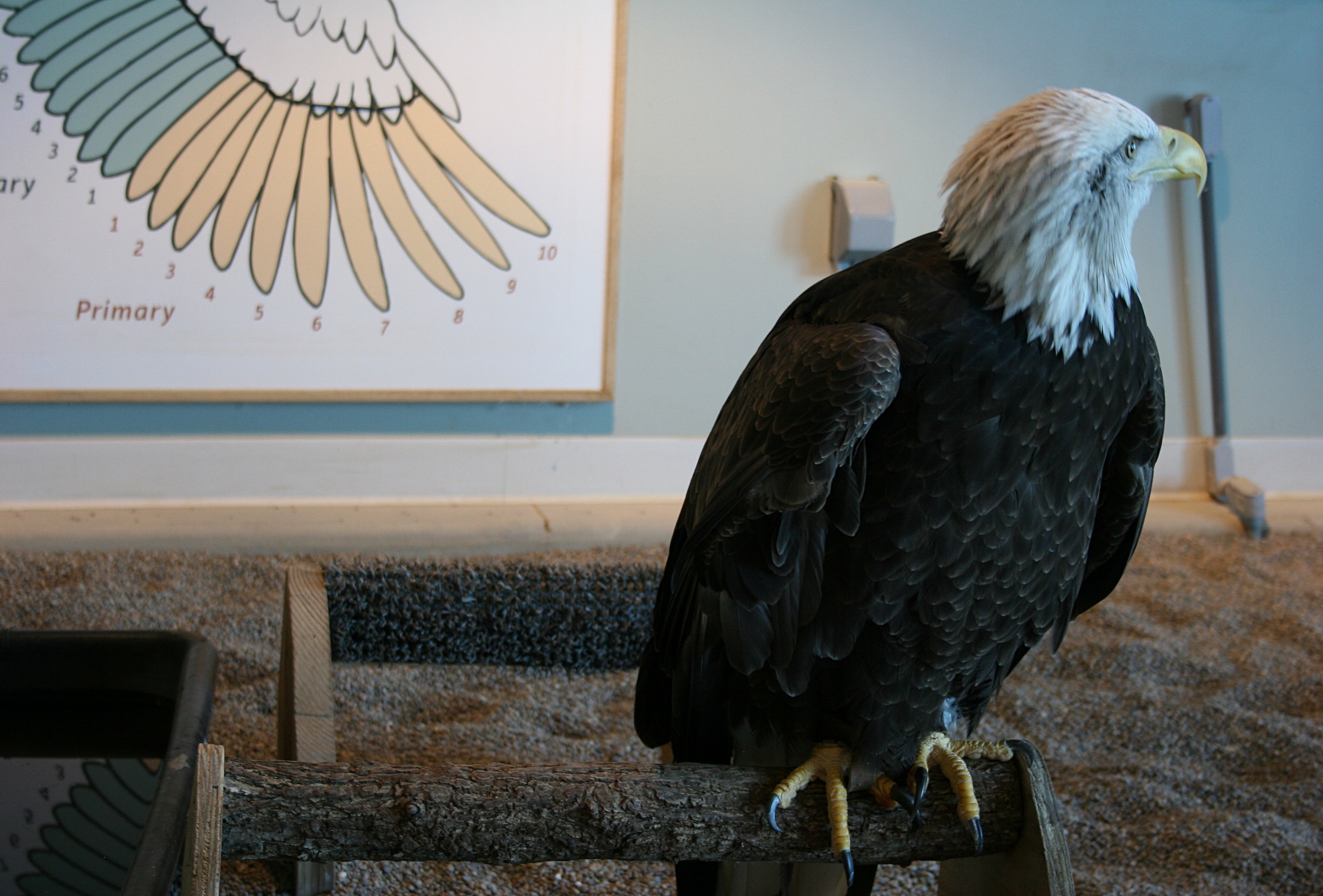
You can get up close to the resident eagles.

You can get up close to the resident eagles.

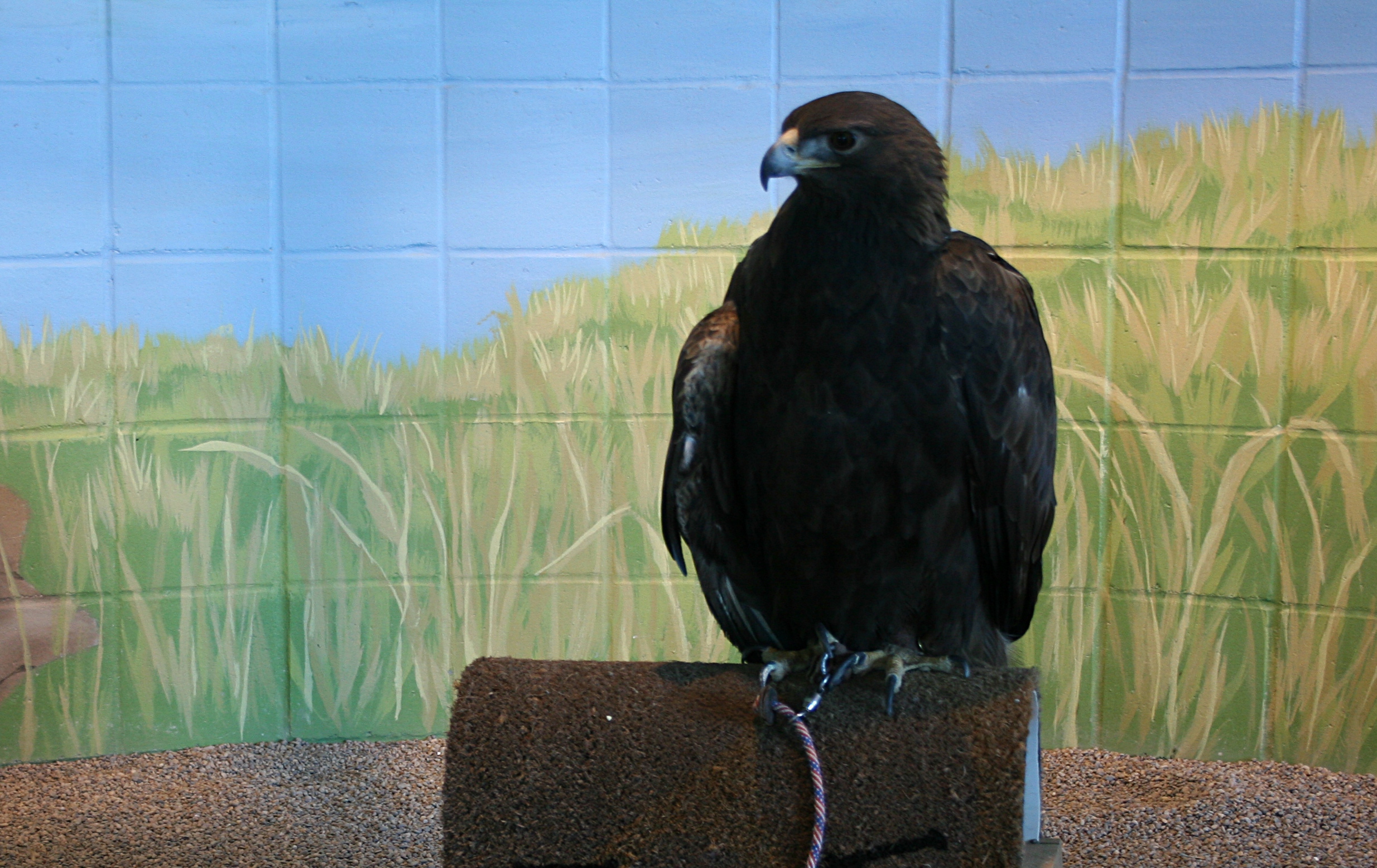
But, unequivocally, the major draws are the resident eagles, birds that were injured, treated and could not be released back into the wild. Bald eagles Angel, Columbia, Harriet and Was’aka call this place home while Donald is the sole golden eagle here. The 32-year-old Harriet is perhaps the best known, appearing numerous times on television and serving as the model for Minnesota’s Support Our Troops vehicle license plate.
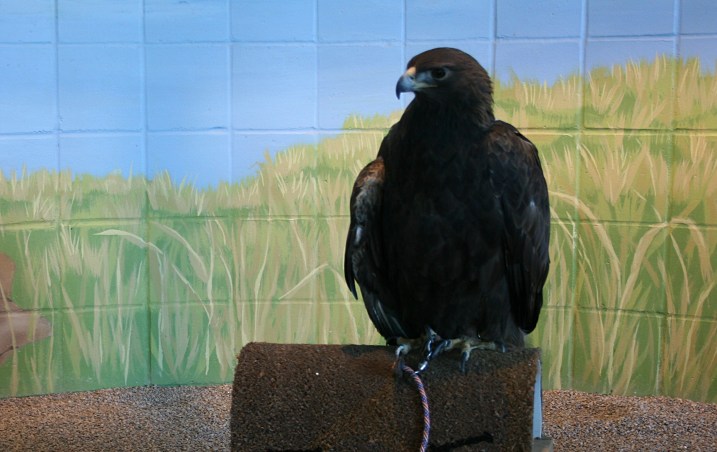
Donald, the single resident golden eagle.

Donald, the single resident golden eagle.

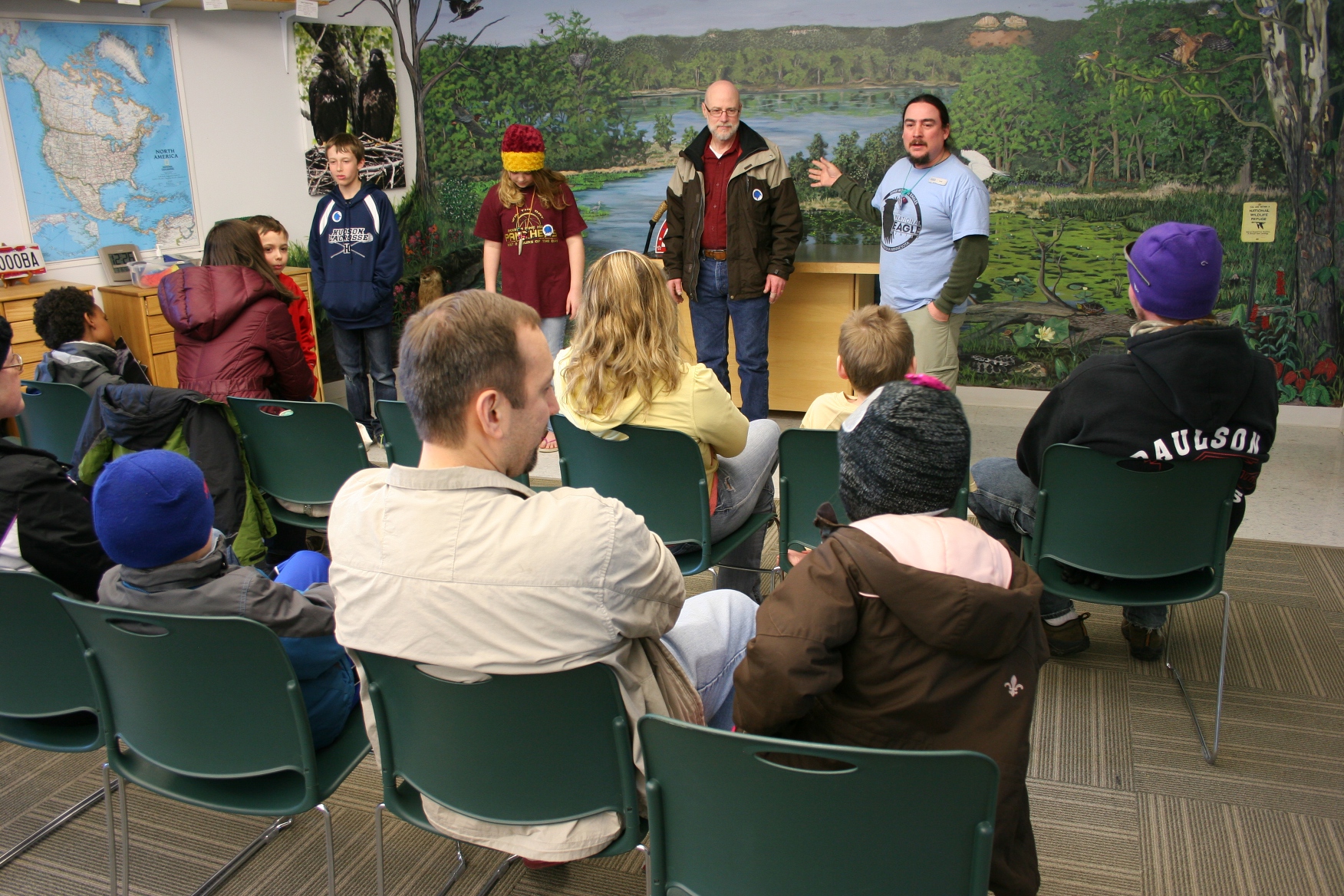
Handlers tend the tethered eagles in a viewing room while answering questions among a curious crowd snapping photos with cell phones and cameras.

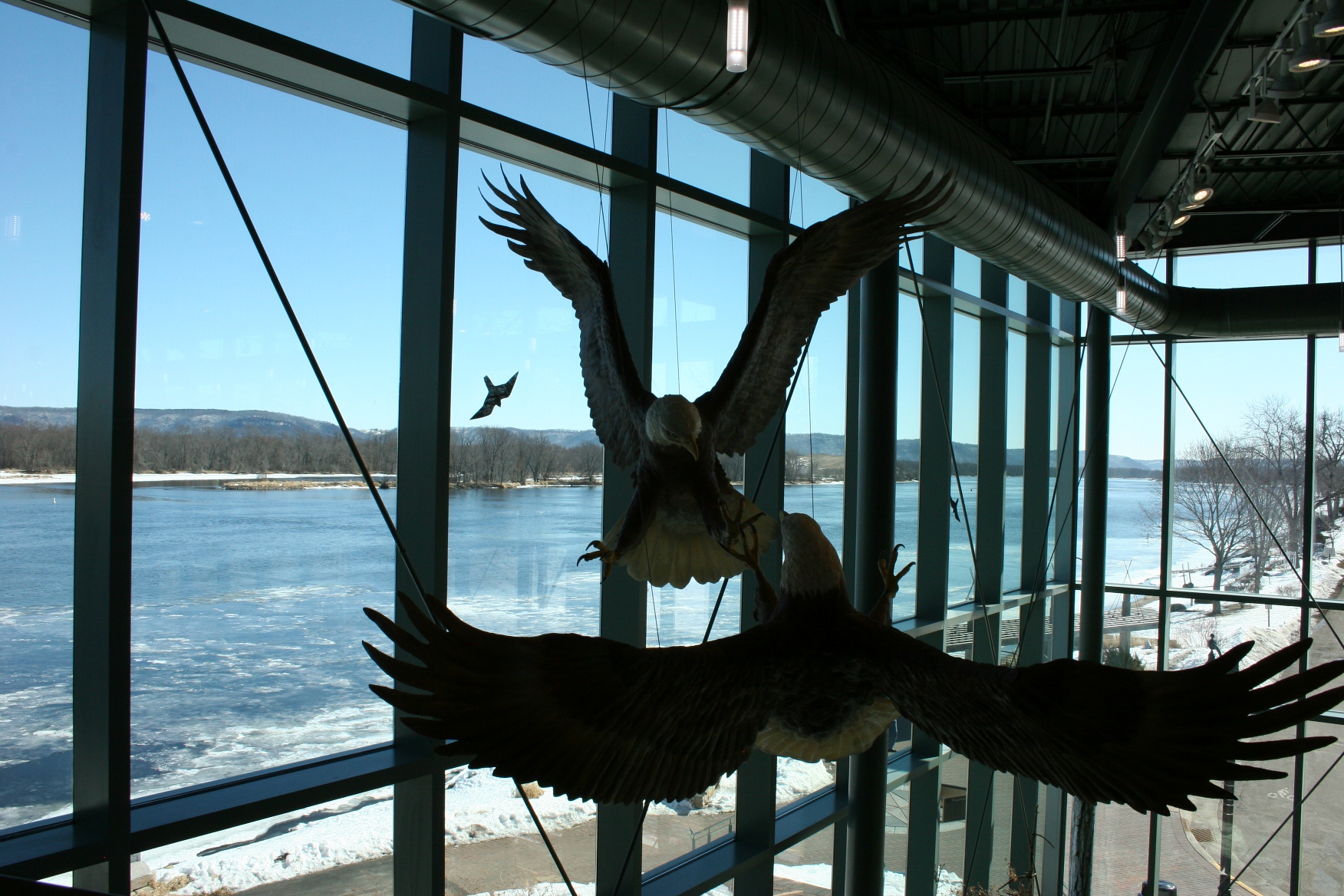
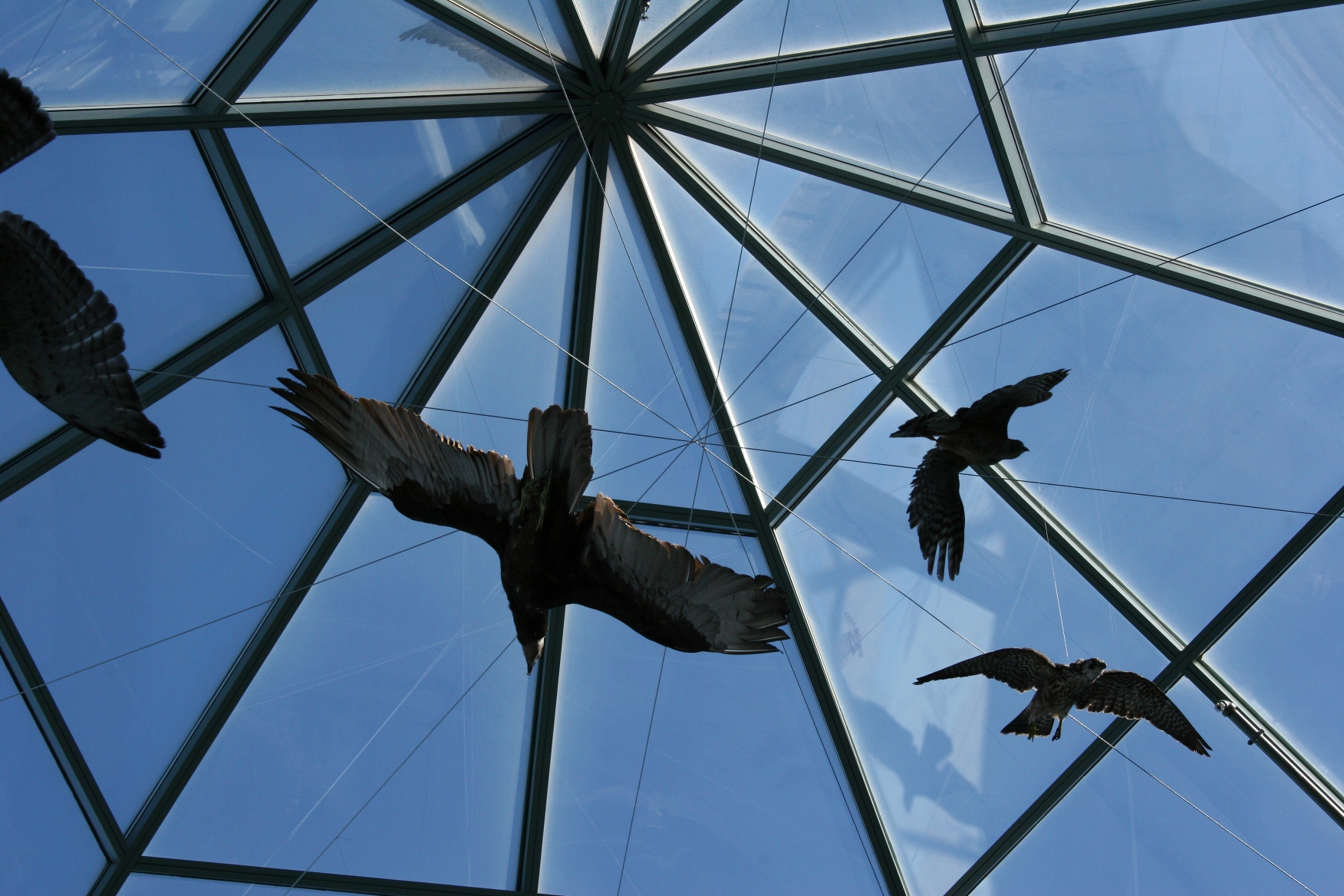
Eagles suspended from the ceiling and a view of the river from the second floor of the eagle center.

Eagles suspended from the ceiling and a view of the river from the second floor of the eagle center.

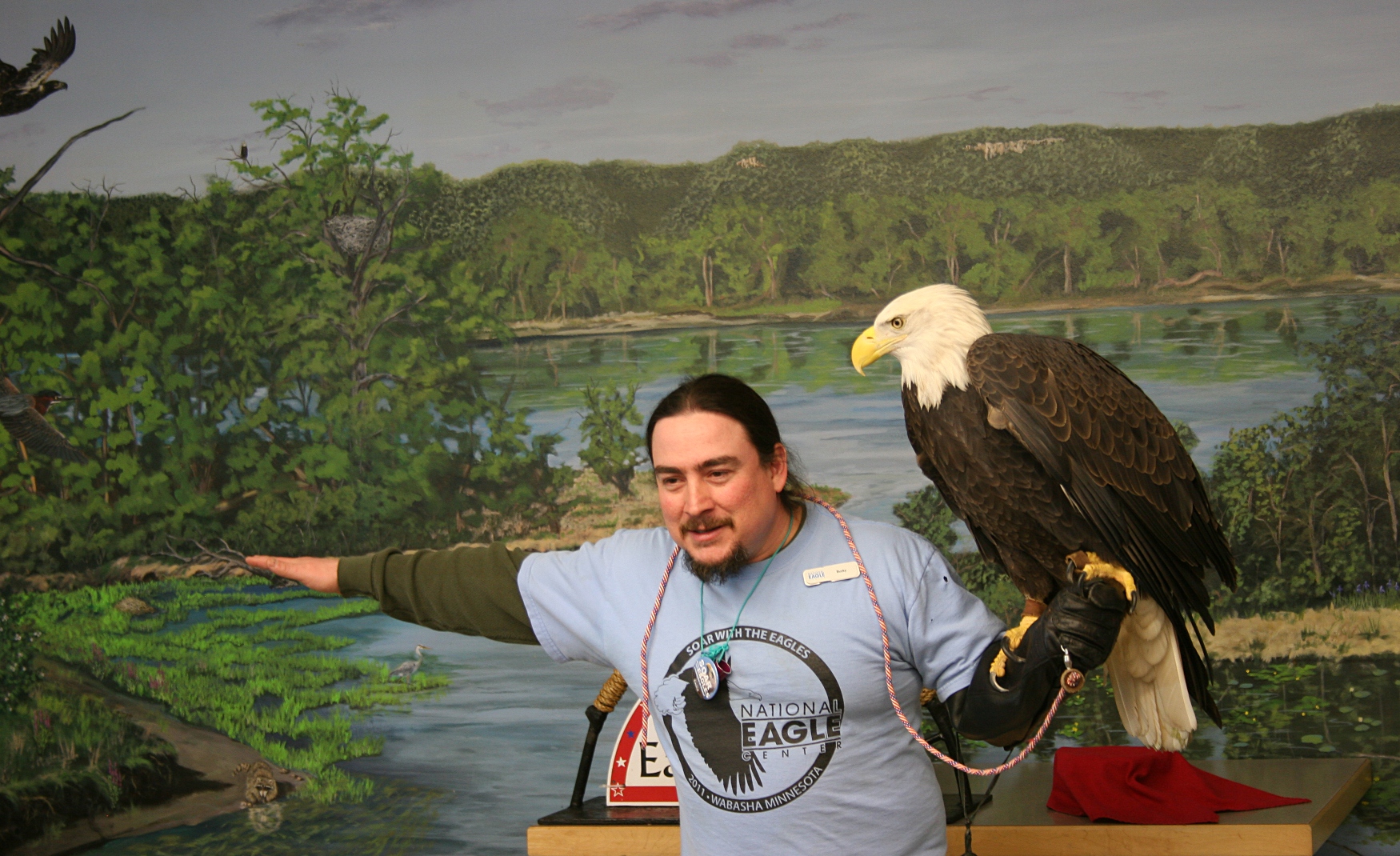
Thrice daily, the center presents an educational program on eagles. On this Sunday, staffer Bucky, with humor, skill, knowledge and audience engagement, entertains and educates young and old (that would be Randy and me).
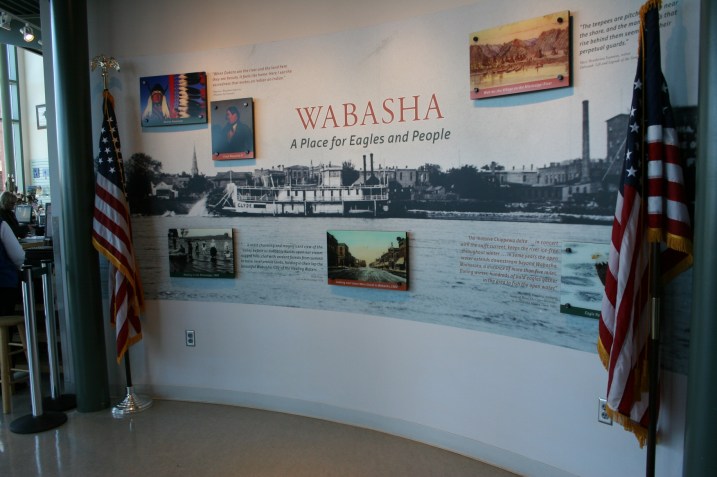
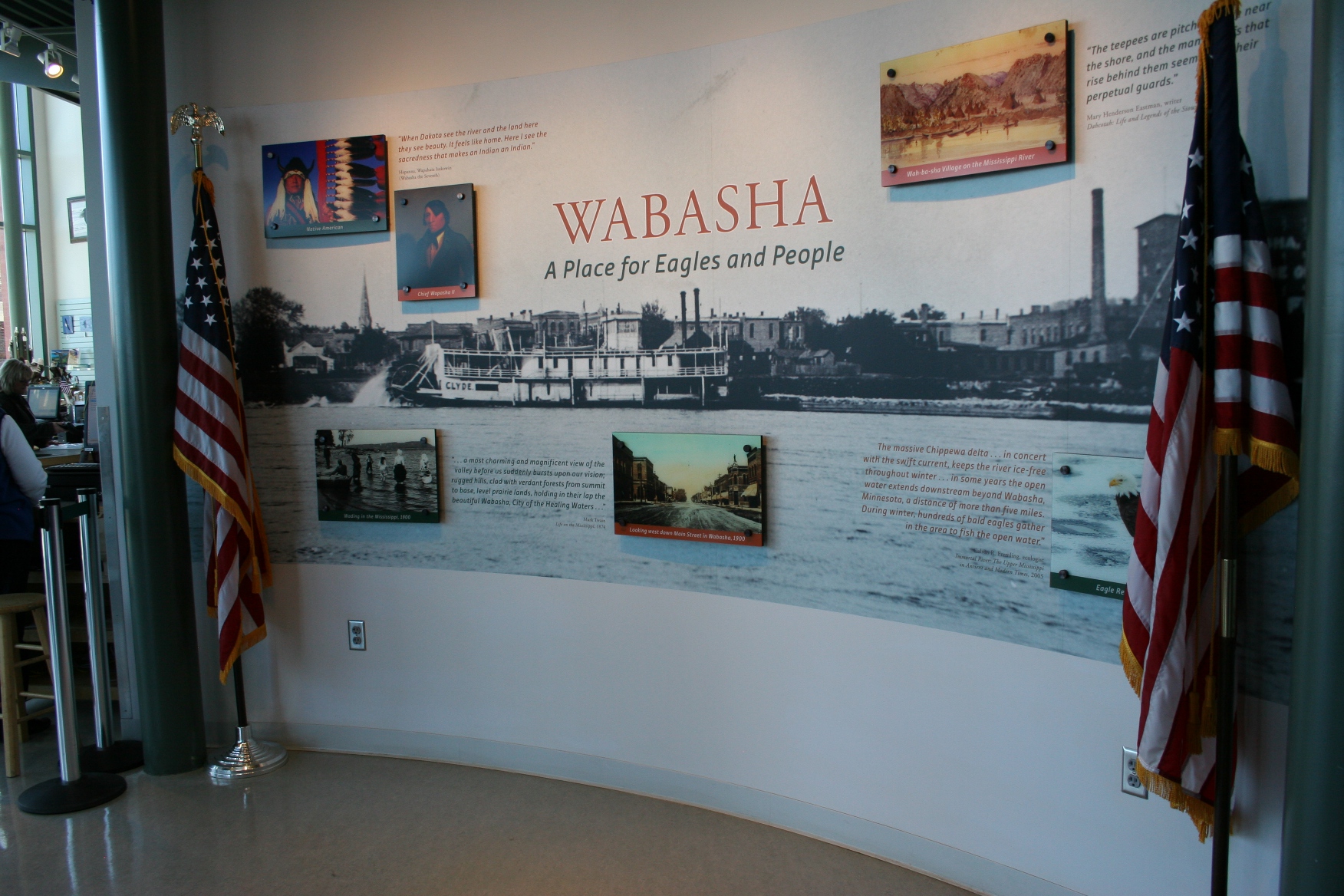
A mural provides information about Wabasha and its open water draw for eagles.

A mural provides information about Wabasha’s history and eagles.

We learn, for example, that Wabasha provides the perfect environment for bald eagles with the river, protected habitat and bluffs. Eagles nest across the river and at nearby Read’s Landing.
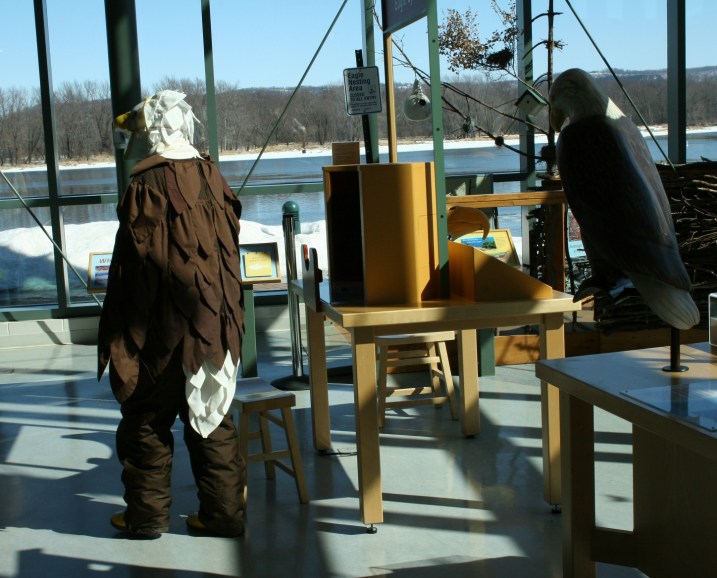
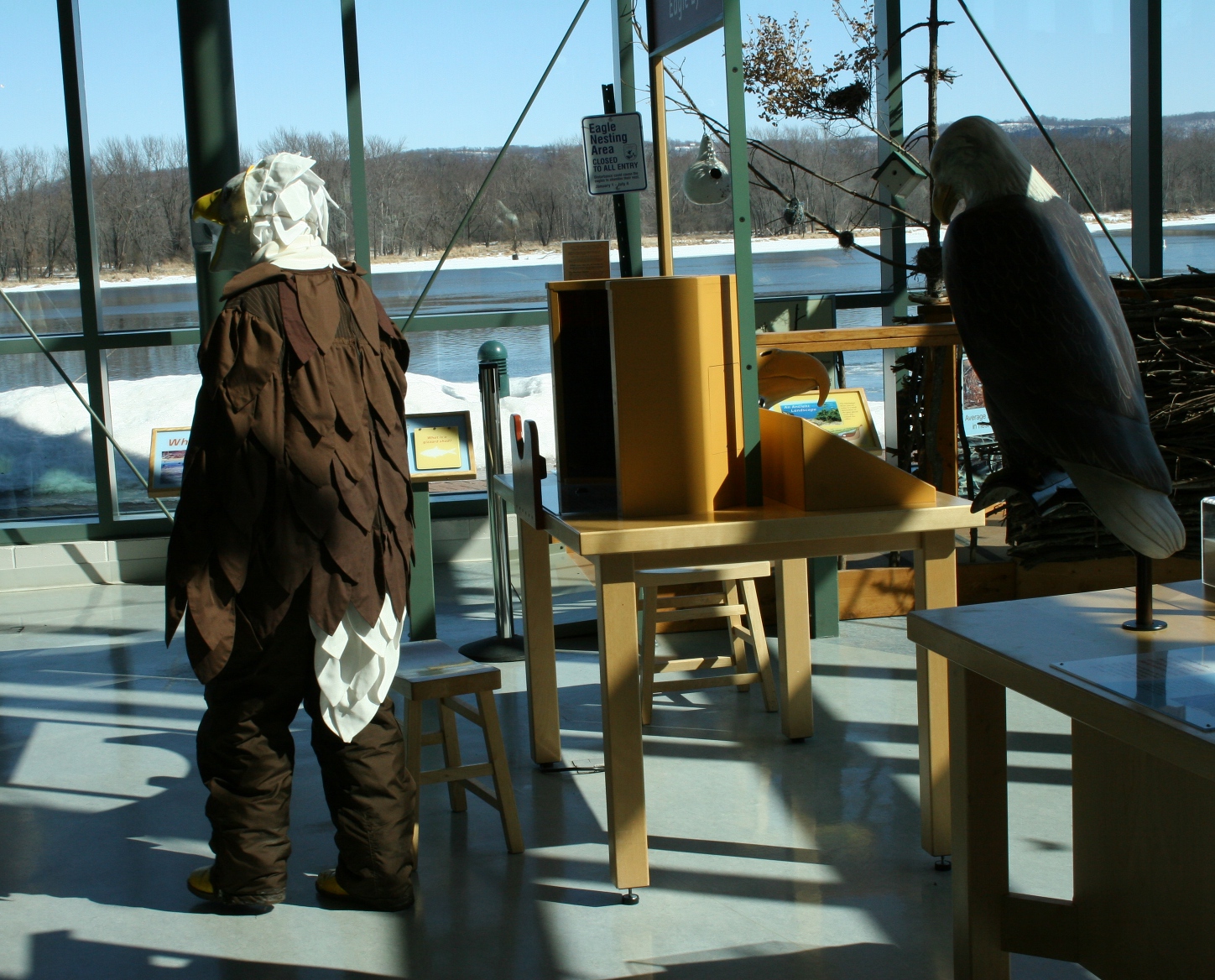
Dressed as an eagle, a staffer wanders through the eagle center.

Dressed as an eagle, a staffer wanders through the eagle center.

When Bucky shares that eagles are territorial, he mimics the bird’s high-pitched call then asks us to practice our eagle calls. Kids giggle. Adults laugh at the attempts.

During the presentation, Bucky occasionally checks on an elementary-aged boy who is keeping a replica eagle egg warm in the pouch of his sweatshirt. Eagle nests can measure up to nine feet wide and 20 feet deep and weigh as much as three tons.
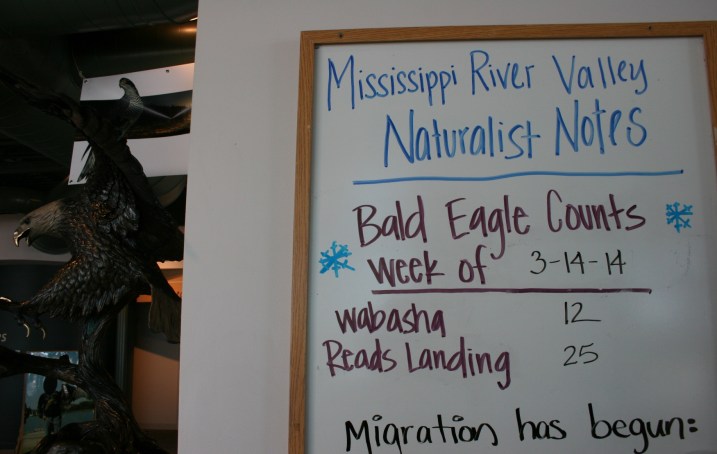
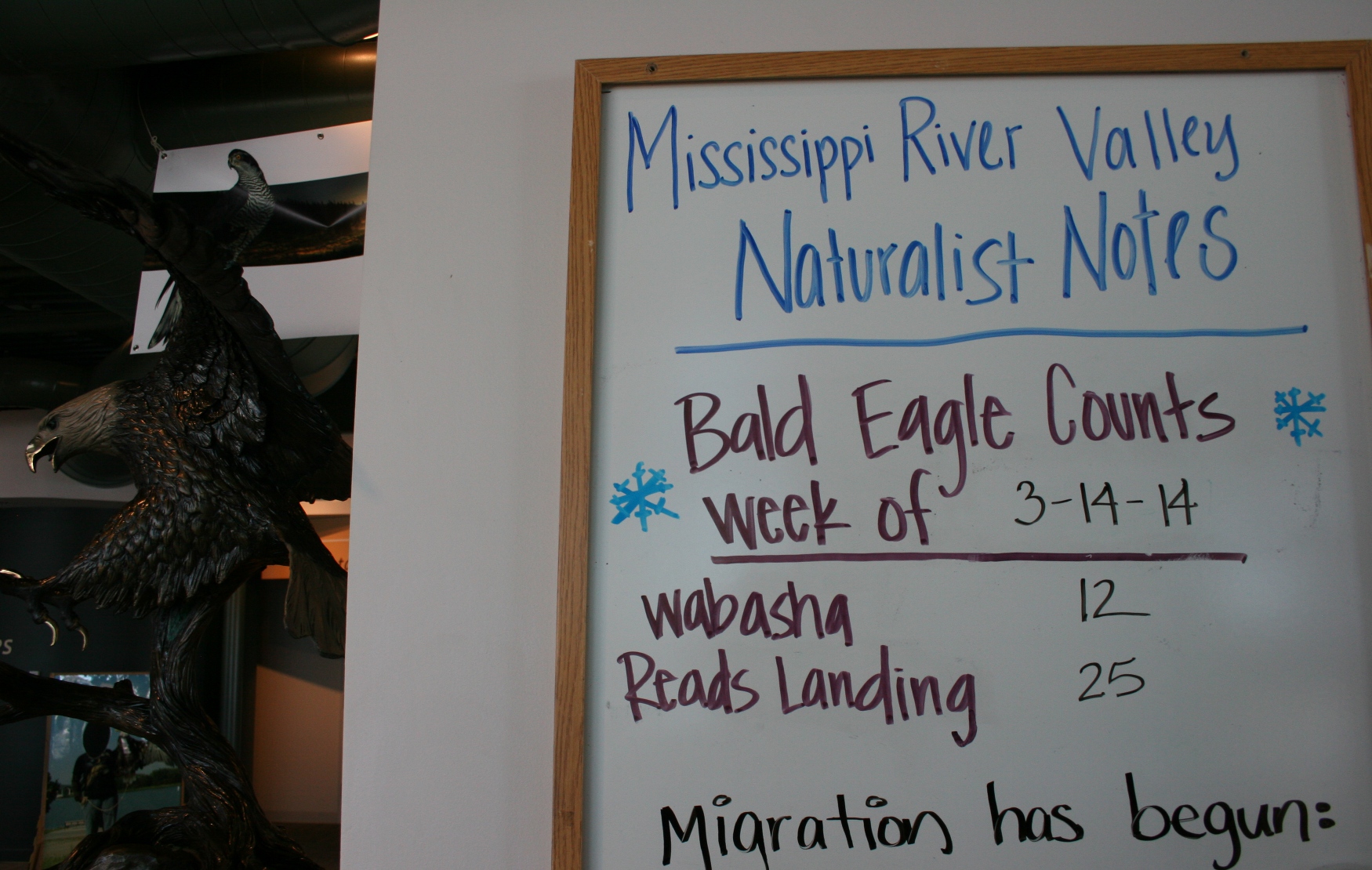
The current eagle count tallied.

The current eagle count tallied.

Today, Minnesota is home to 1,200 active eagle nests. When the eagle expert asks how many of us can see eagles in our home areas, nearly all 17 of us raise our hands.

But it wasn’t always that way. Randy and I are among the audience few who remember a time when these birds were endangered. Shortly after World War II, the pesticide DDT was introduced, washing into waterways where fish and aquatic life absorbed the toxin. When eagles ate the fish, they, too, were impacted. The DDT weakened their eggshells, resulting in eggs that broke during incubation or failed to hatch. The pesticide was banned in 1972.
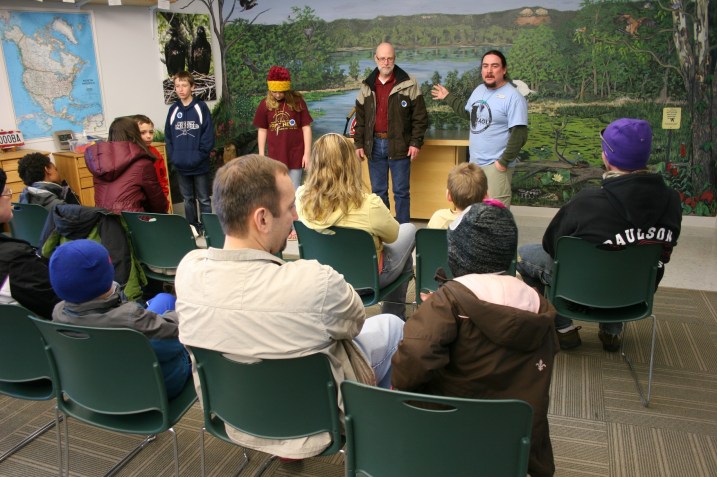
My husband, second from right, plays a bald eagle.

My husband, second from right, plays a bald eagle.

To visually explain the chain reaction, Bucky chooses three kids to role play a mosquito, a small fish and a large fish. I know precisely whom he will pick to play the bald eagle. The bald guy in the third role, my husband, makes his acting debut.

Bucky proves his point as, one by one, the performers “ingest” DDT.
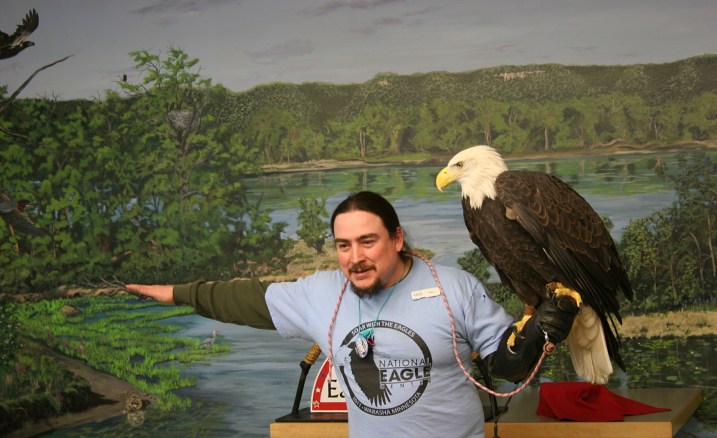
Bucky and Angel.

Bucky and Angel.

A few minutes later, after this educator pulls out a board the length of an eagle’s wing span (6 ½ to 7 feet), he exits the room and returns with resident bald eagle Angel. The 11-pound female came to the center in 2000 after suffering a broken wing.

Perched on Bucky’s gloved arm, Angel is the model of perfect human imprinted behavior. She is a guest at many Native American ceremonies and also makes educational appearances.
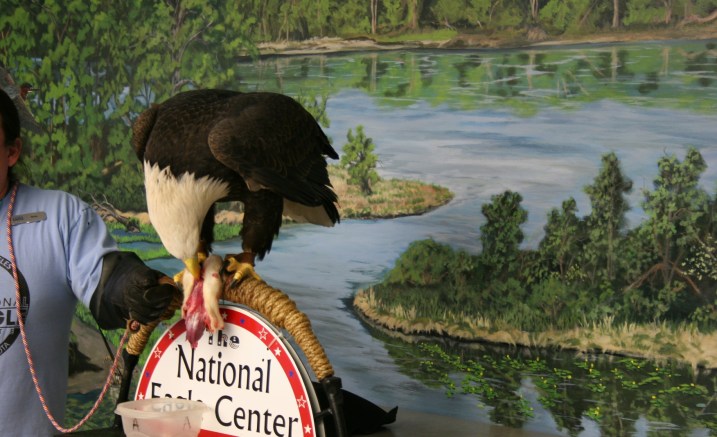
Shortly after Randy shot this photo of Angel eating a rat, I left the room.

Shortly after Randy shot this photo of Angel eating a rat, I left the room.

I enjoy Angel, until feeding time. Bucky pulls a white rat from a plastic container. For awhile, I watch as the eagle uses her beak and talons to rip apart the rodent. I stop photographing the scene and hand my camera to Randy. By then I’m looking down. He snaps a few photos, hands the camera back to me and shortly thereafter I exit the room to view the resident eagles who are not dining.

Rather they are simply perched, an activity which occupies 94 percent of their lives.
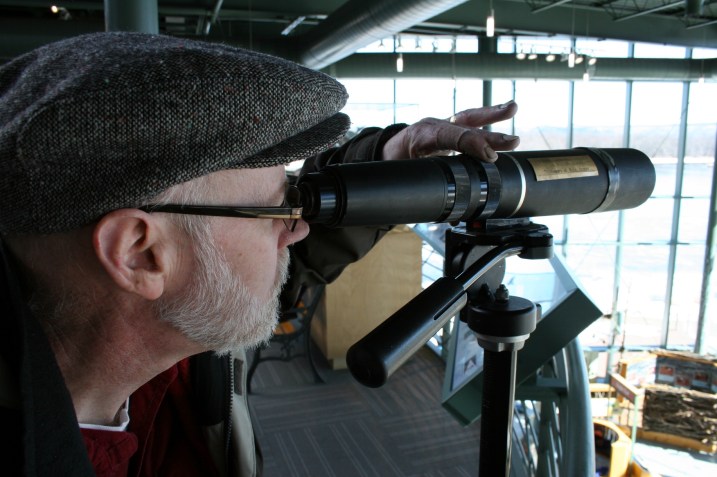
You'll find binoculars throughout the eagle center.

You’ll find binoculars throughout the center for viewing eagles.

Later, Randy will search me out, inform me that I left at just the right time—before rat pieces started flying toward the audience.

#

BONUS PHOTOS:
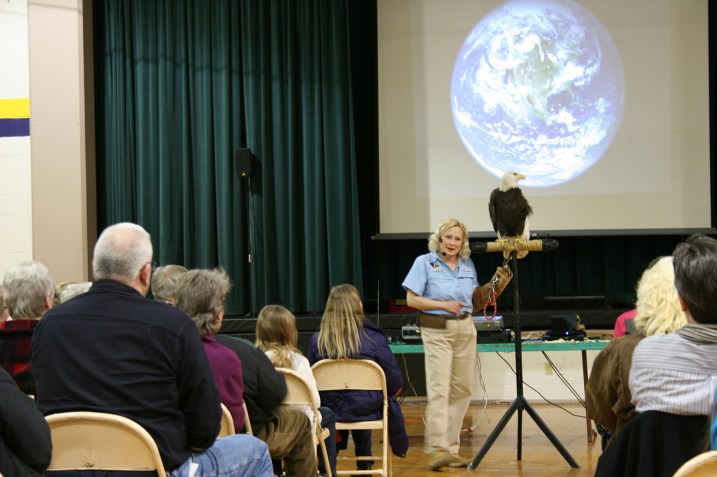
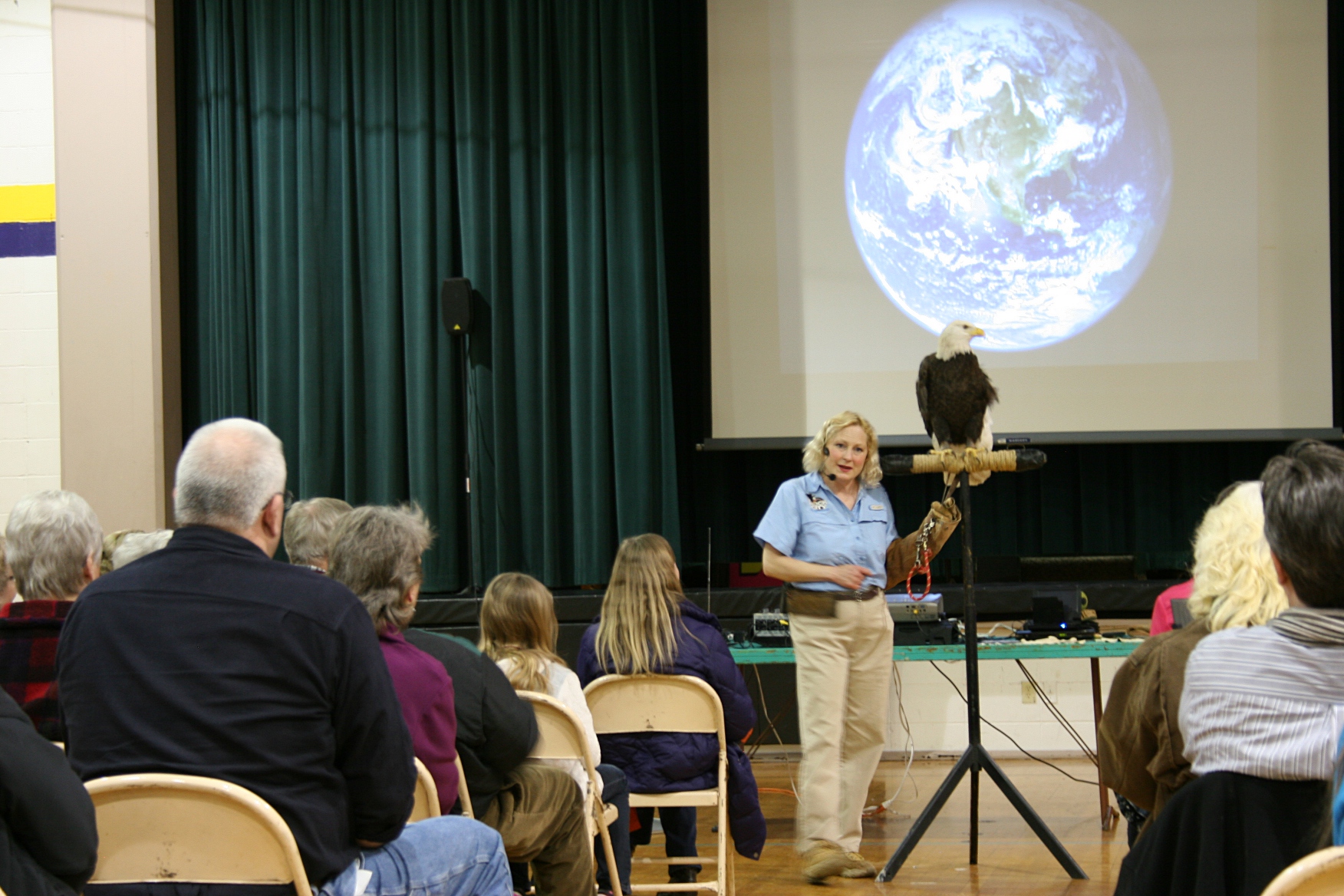
A bald eagle was part of the show in the gym. No, it did not fly.

A bald eagle was part of “Wings to Soar” in the nearby St. Felix gym. No, the eagle did not fly.

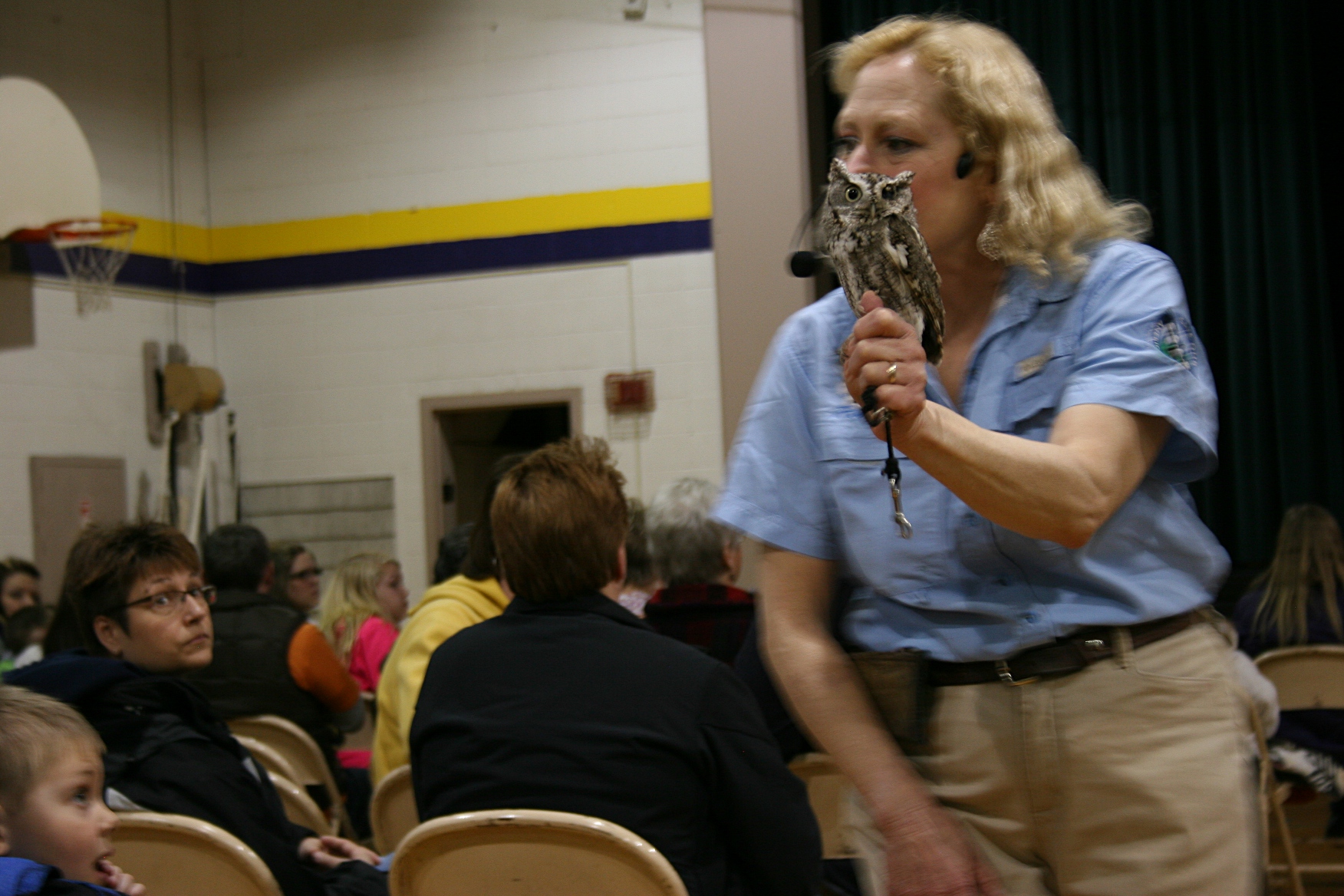
WHILE IN WABASHA, we also took in the National Eagle Center sponsored program, “Wings to Soar.”
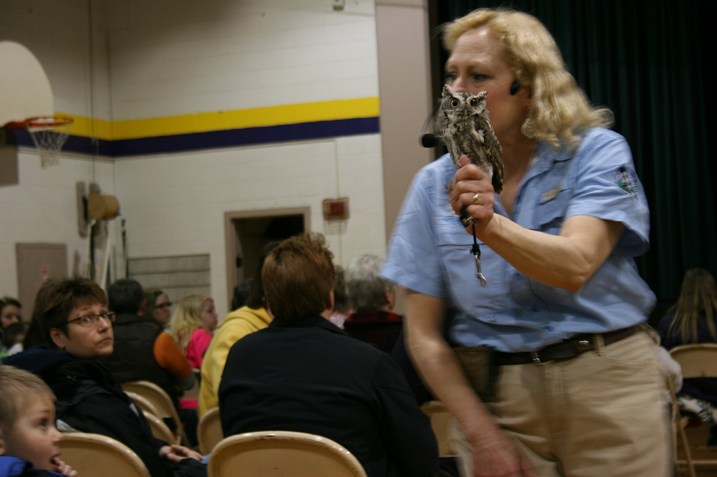
Dale wandered through the audience with the birds, like this owl.

Dale wanders through the audience with an owl.

In St. Felix auditorium several blocks from the eagle center, Southerners John Stokes and Dale Kernahan presented an educational flying raptor program that, yes, involved birds of prey flying over our heads.
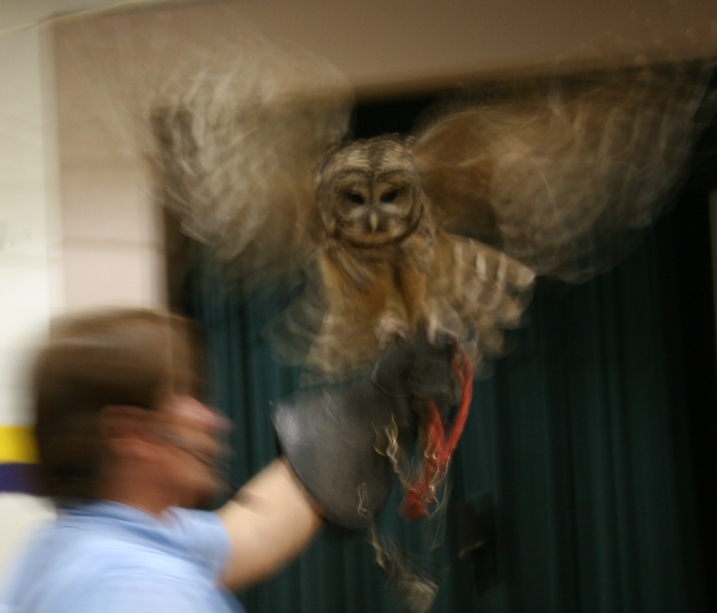
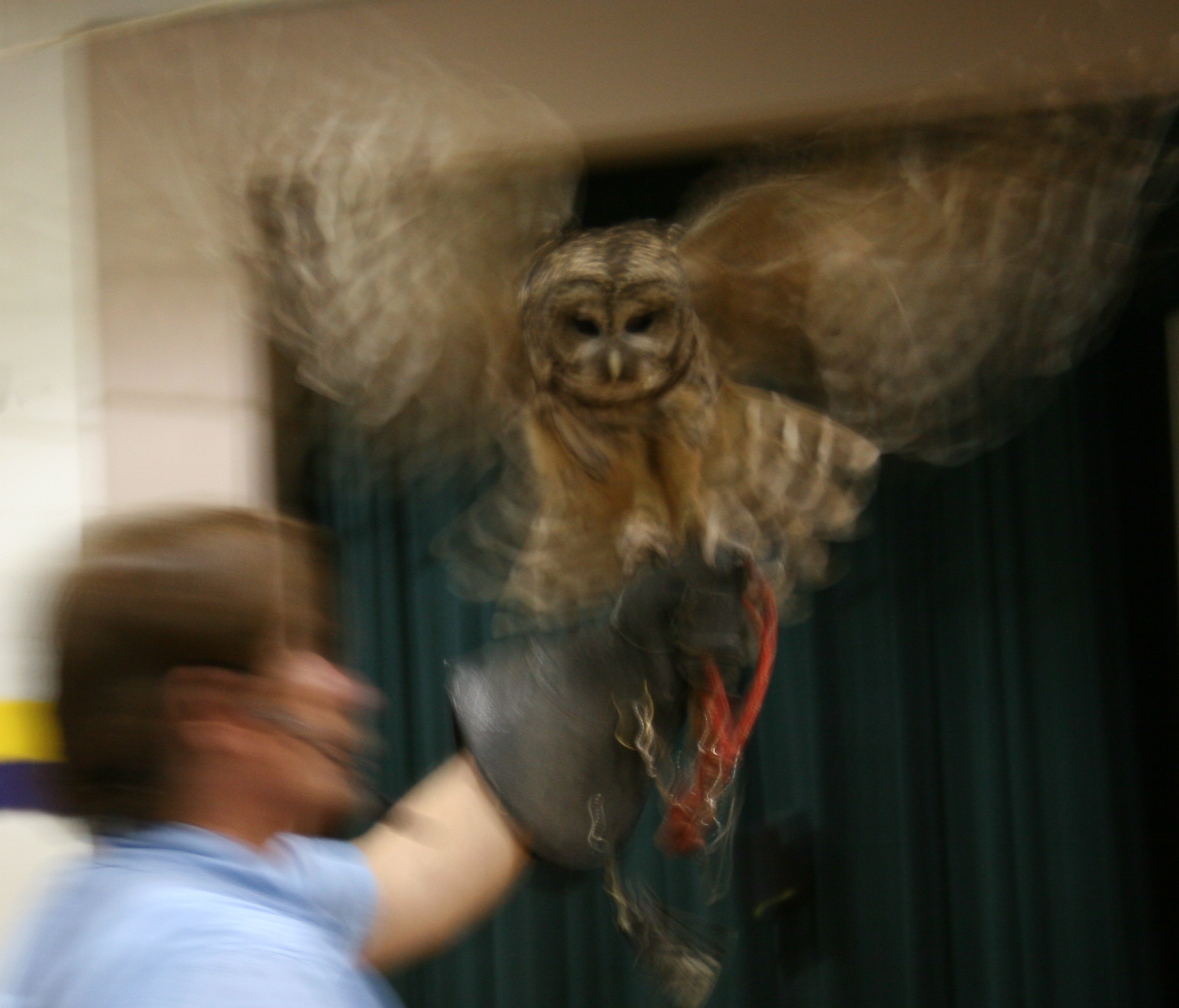
Here an owl flaps its wings. The birds skimmed over our heads during the show.

Here an owl flaps its wings. Some of the birds skimmed over our heads during the show.

Stokes advised anyone who was afraid of birds to leave. That would be me. But I stayed and did just fine with the owls and hawks. But when Kernahan walked out with a vulture and then allowed it to fly at low altitude, I slunk into my folding chair.
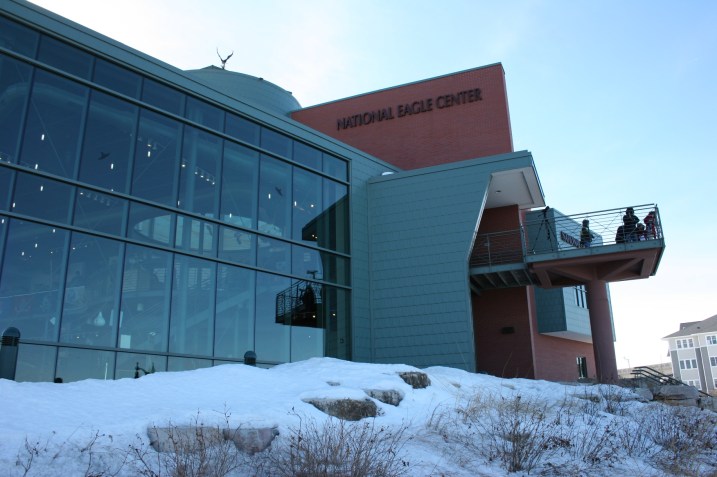
On the right, you'll see the second story riverside observation deck.

On the right is the second story riverside observation deck.

FYI: March marks special “Soar with the Eagles” weekends in Wabasha. March 22 – 23 you can attend Sky Hunters, a flying bird show.
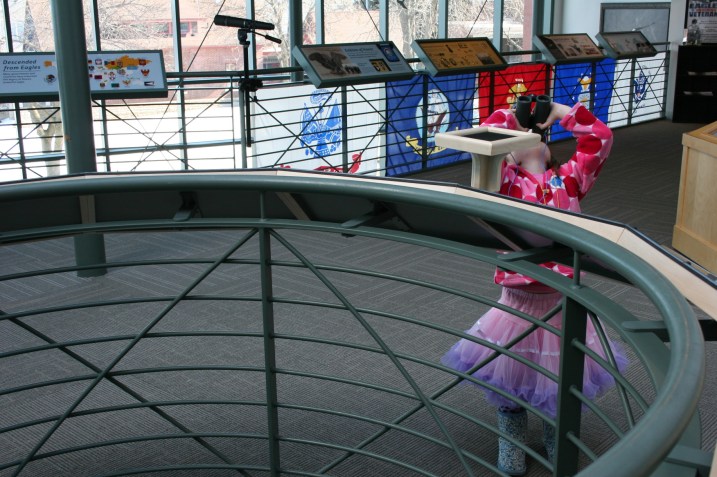
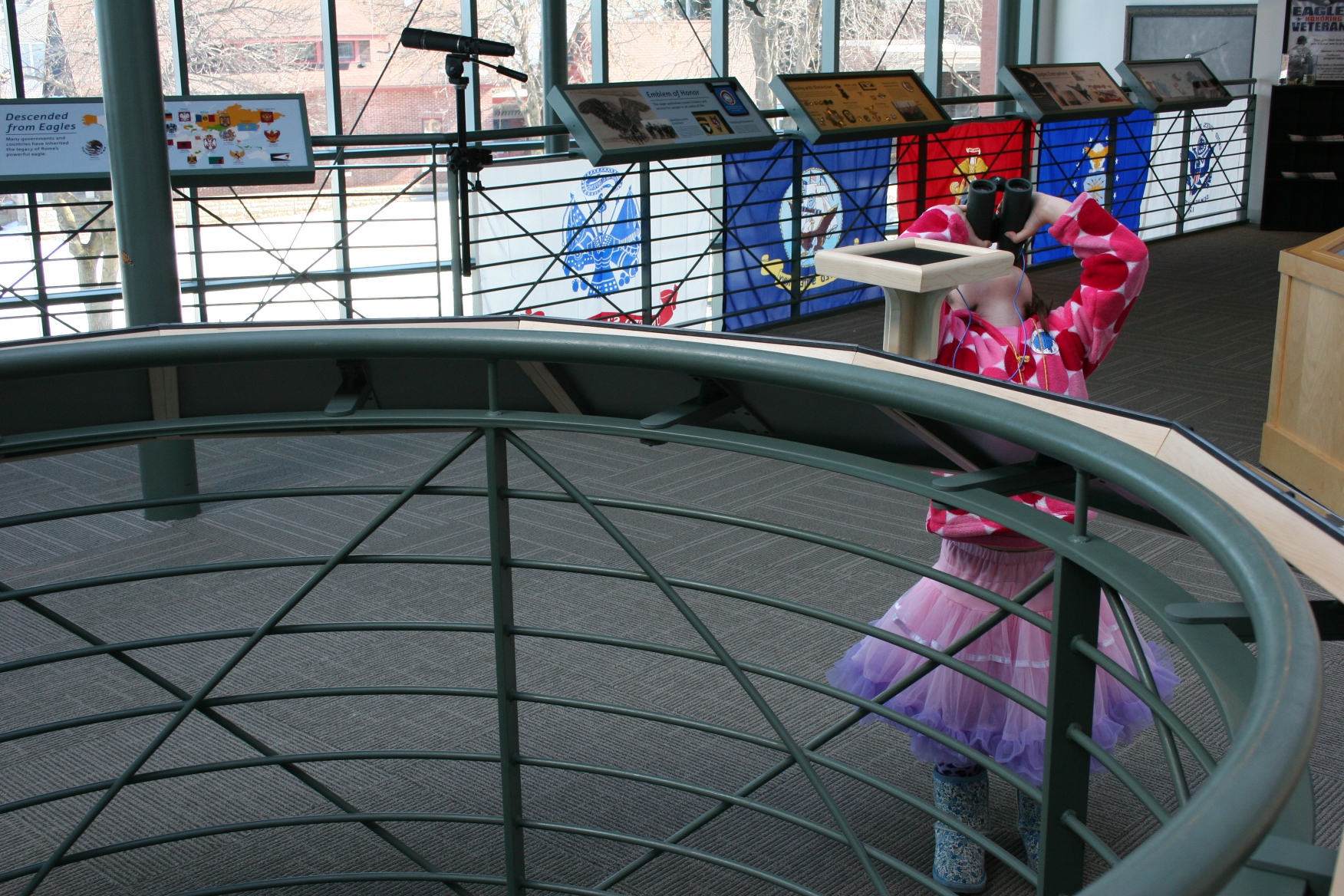
This girl is looking up at these...

Inside the National Eagle Center, this girl is looking up at these…
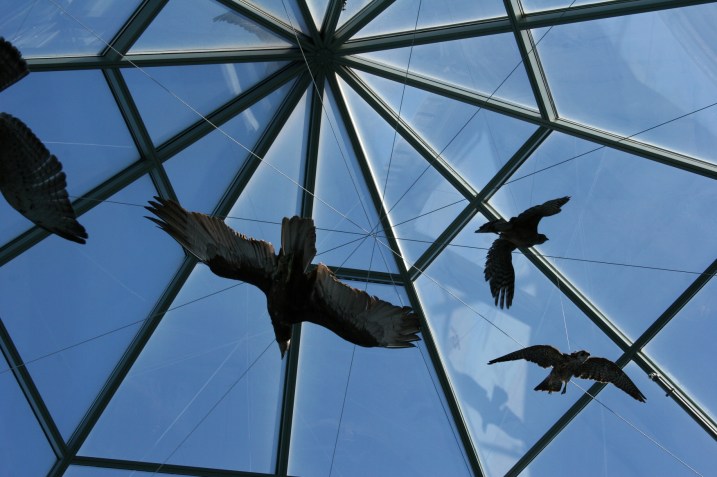
...birds suspended from the glass ceiling.
…birds suspended from the glass ceiling.

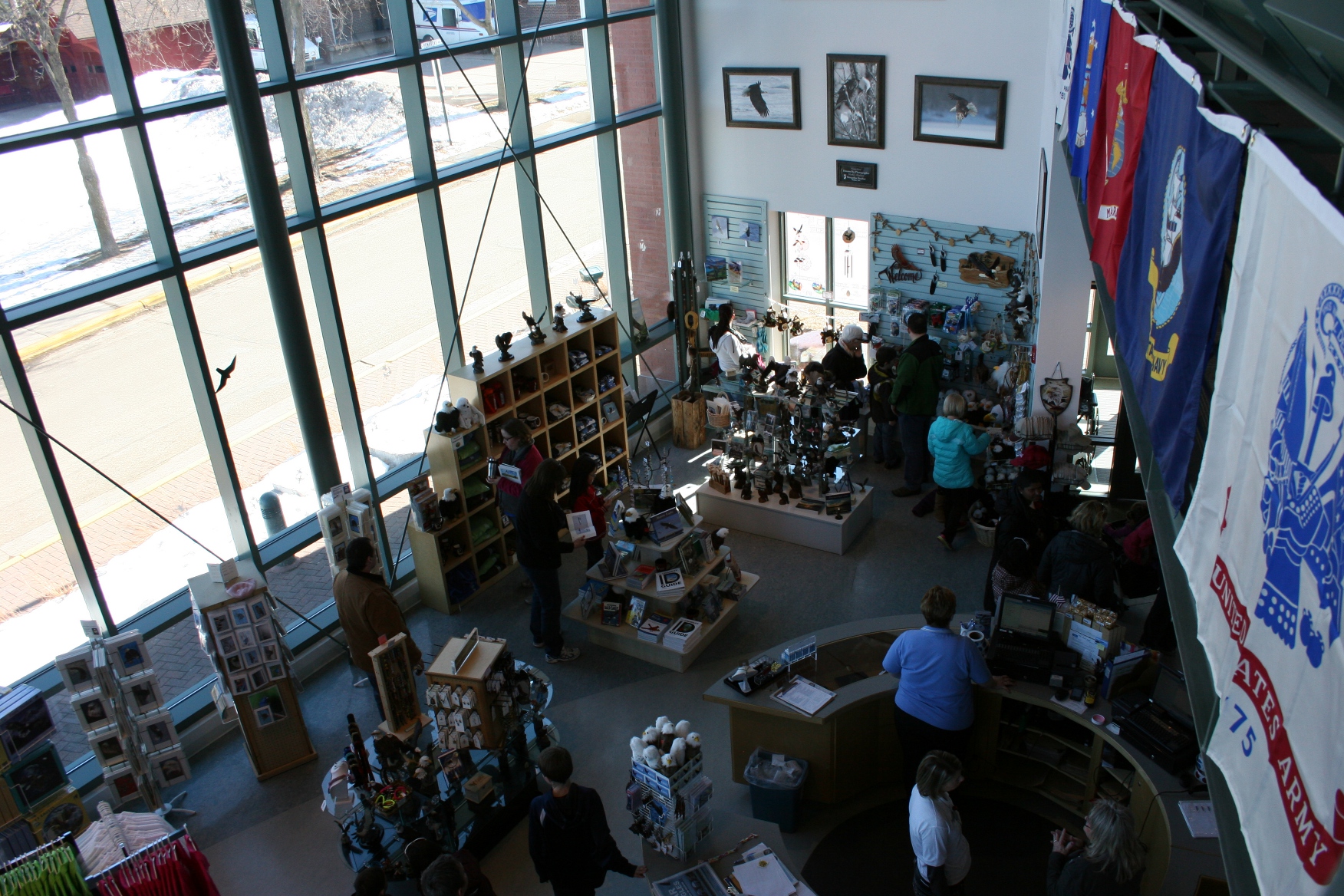
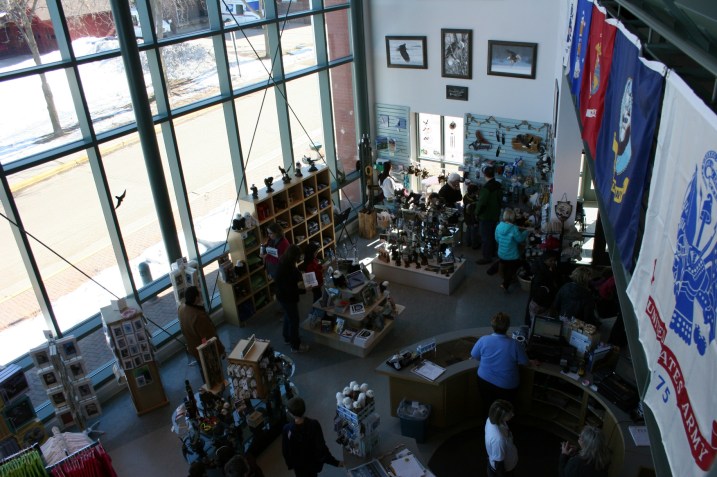
In the first floor gift shop, shown here...

In the first floor gift shop, shown here…
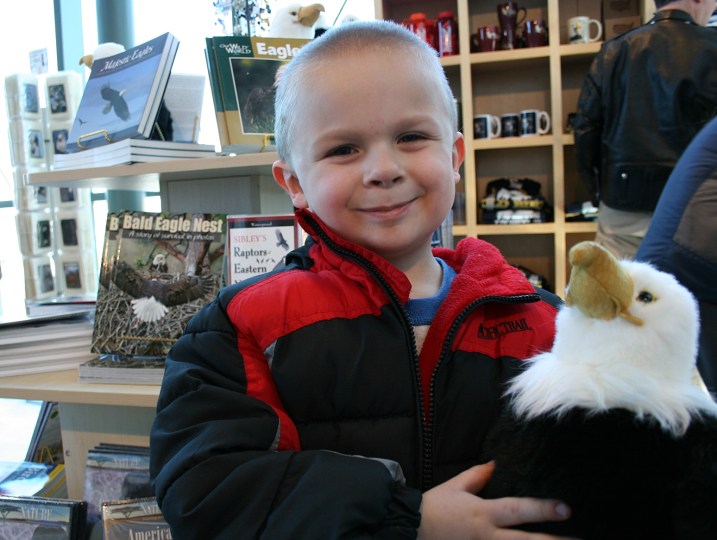
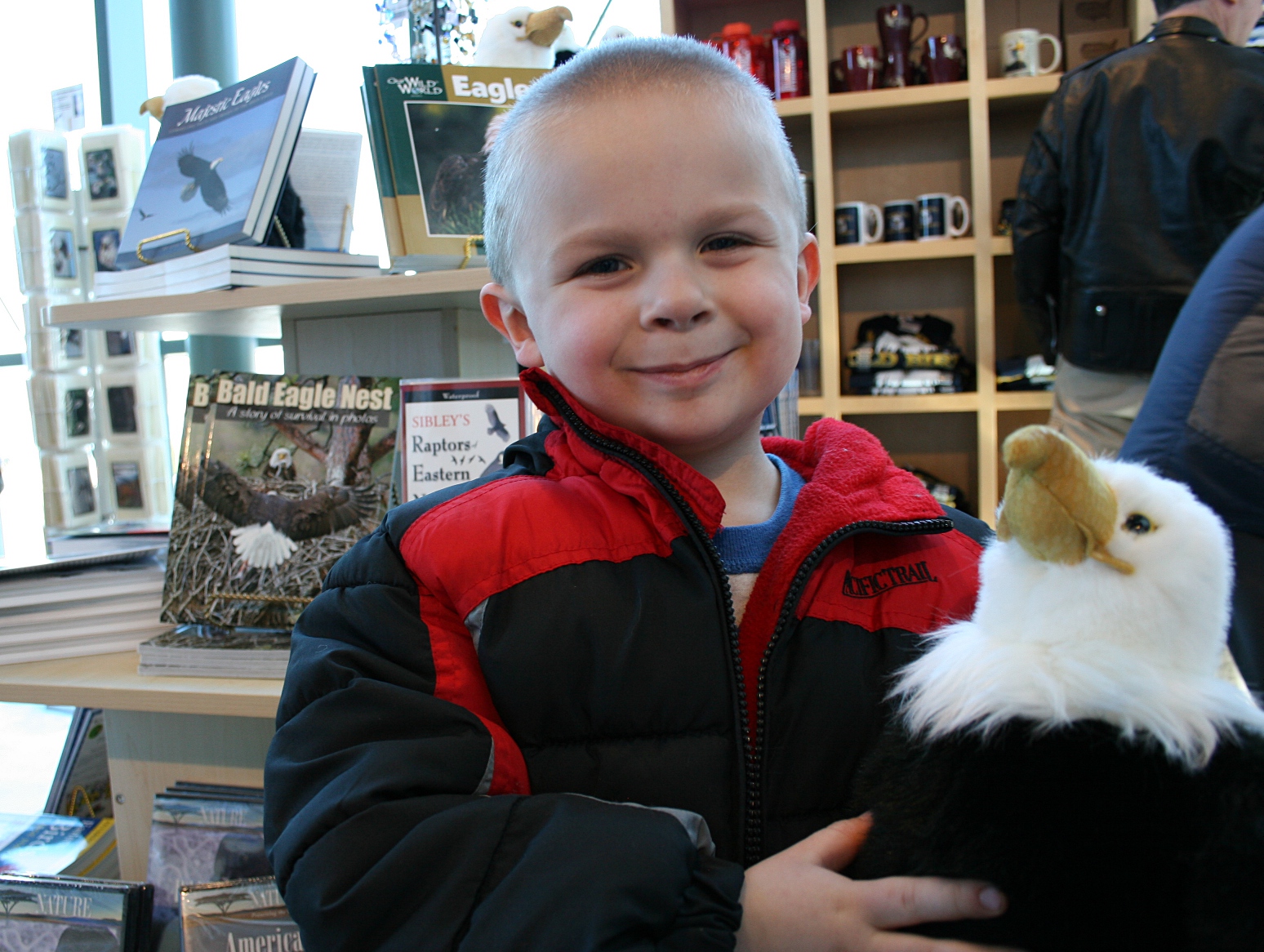
...Joseph found a plush toy eagle.

…Joseph finds a plush toy eagle.

The National Eagle Center truly appeals to all ages, to anyone who appreciates the beauty of this majestic bird.

Check back for another post from the National Eagle Center and for additional photos from Wabasha.

© Copyright 2014 Audrey Kletscher Helbling


A love & hate relationship with winter March 14, 2014

Filed under: Uncategorized — Audrey Kletscher Helbling @ 6:00 AM
Tags: , , , , , ,
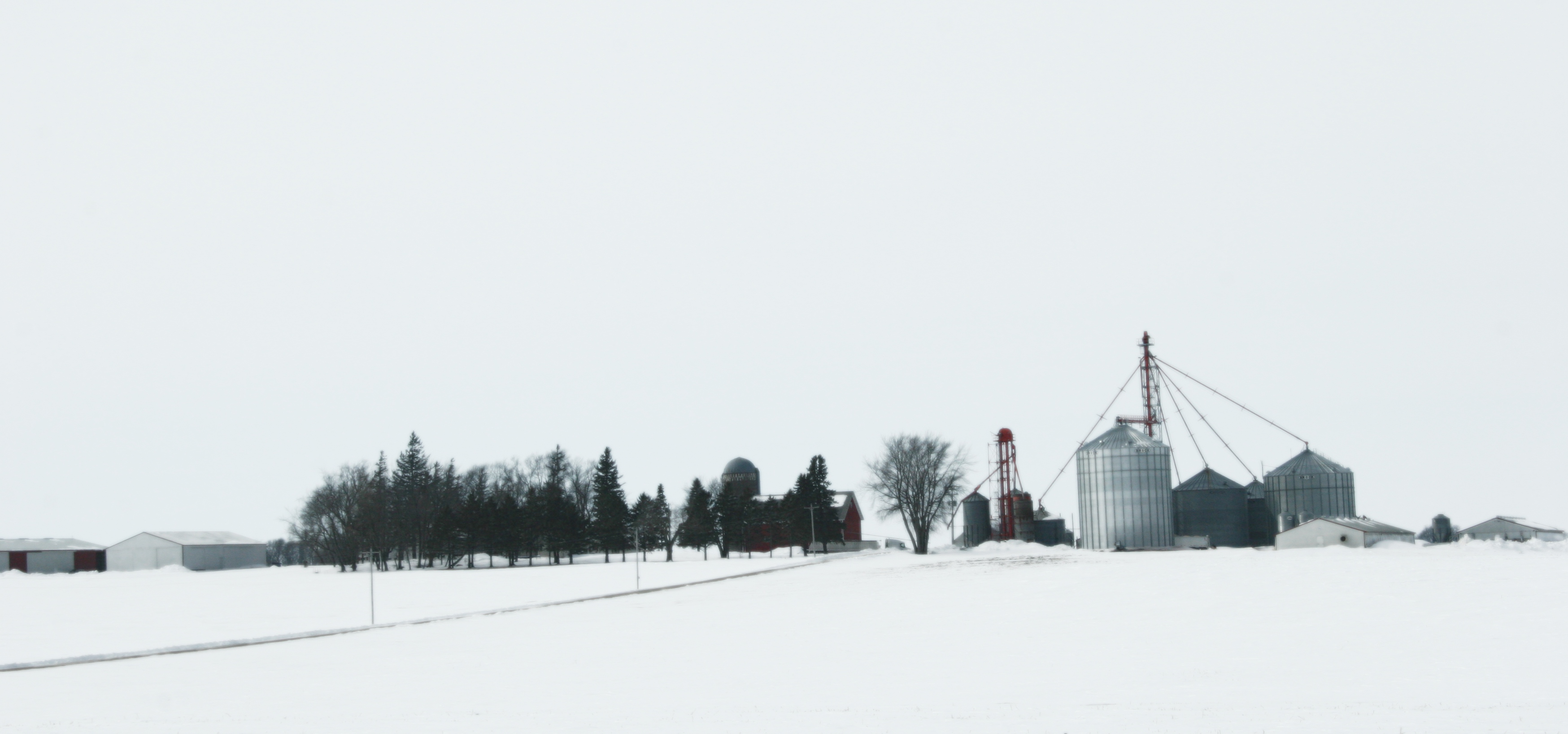
Along a gravel road somewhere between Nerstrand and Kenyon, Minnesota.

Along a gravel road somewhere between Nerstrand and Kenyon, Minnesota. That’s the driveway, not the road.

FOR ALL OF THE TIMES I’ve spurned this winter of brutal cold and deep snow, I must confess to a certain appreciation for the poetic dreaminess of a snowy rural landscape.

Winter exposes, uncovers, bares the basics to the eyes in a way that the fullness of summer cannot.

Power lines and roads cut horizontal swaths. Farm sites beckon like a welcome oasis in a sea of white. Bare-branched trees flag the sky.

A red barn seems redder, a steely grey bin greyer. And a white farmhouse simply vanishes.

This is winter. Spurned. And, sometimes, loved.

© Copyright 2014 Audrey Kletscher Helbling
 

In the conservatory with the camera, Part II March 5, 2014

GROWING UP, I LOVED the mystery board game Clue. Determine the murderer, weapon and mansion room in which the crime was committed and you win the game.

Simple? Not necessarily. The game requires a great deal of concentration, plotting and even some deception.

While Clue includes a cast of characters with interesting names like Colonel Mustard and Mrs. Peacock, what most intrigues me are the rooms. Imagine a home with a lounge, a billiard room and a conservatory. Yes, a conservatory, smaller in scale than the one I toured Sunday afternoon at Como Park.

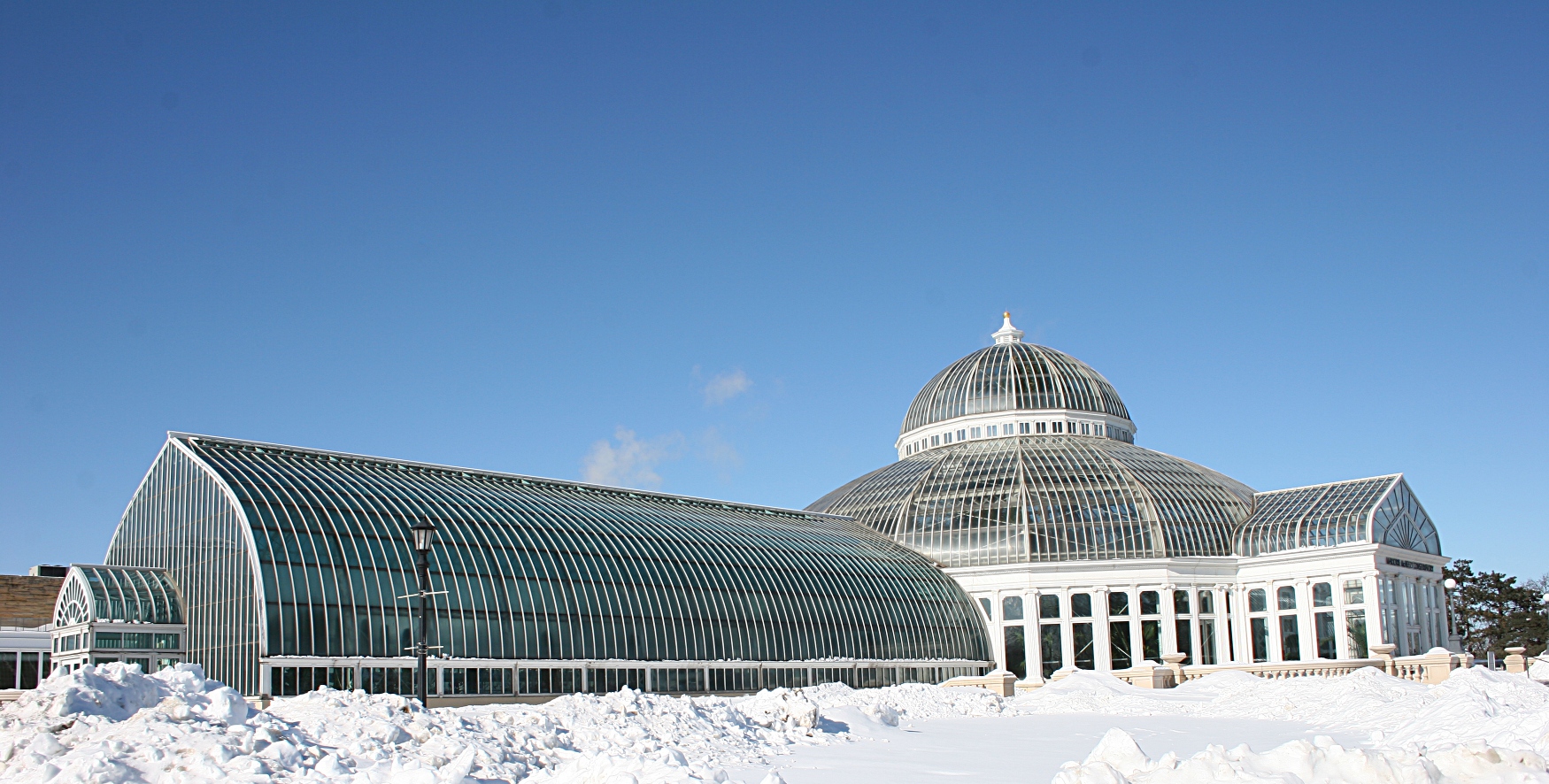
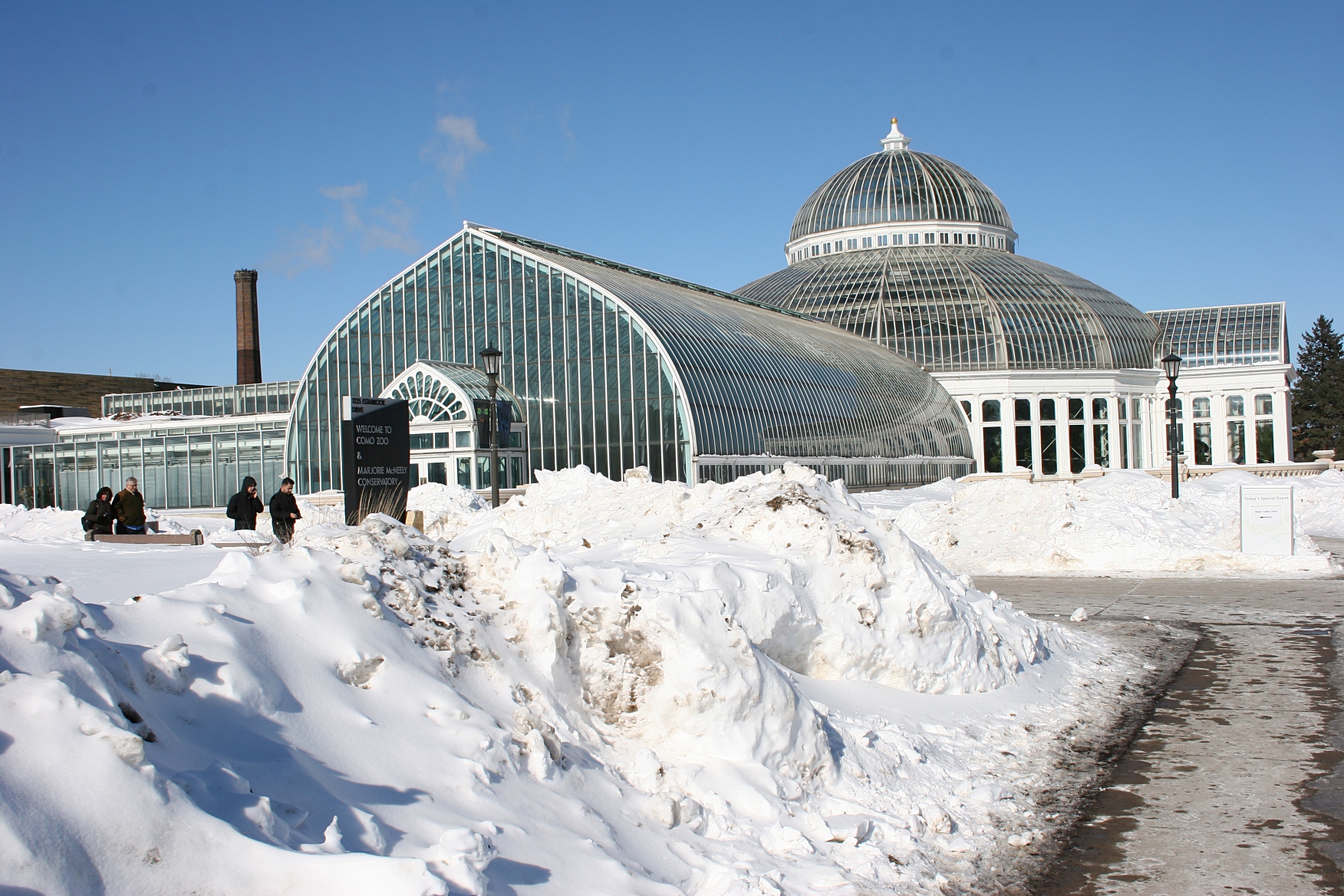
The Mzarjorie McNeely Conservatory at Como Park in St. Paul, Minnesota.

The Mzarjorie McNeely Conservatory at Como Park in St. Paul, Minnesota.

The Marjorie McNeely Conservatory, with its winding paths, nooks and extensive foliage, would present the perfect setting for a St. Paul-based mystery. In the shrouded mist of the Fern Room, I can almost imagine a shadowy figure lurking. In the Palm Dome, I can envision a chase. Inside the Sunken Garden, I can picture a stand-off on opposite ends of the garden.

Ah, yes, my imagination appears to be in overdrive. Blame winter madness. Blame the need to escape.

And so we shall…

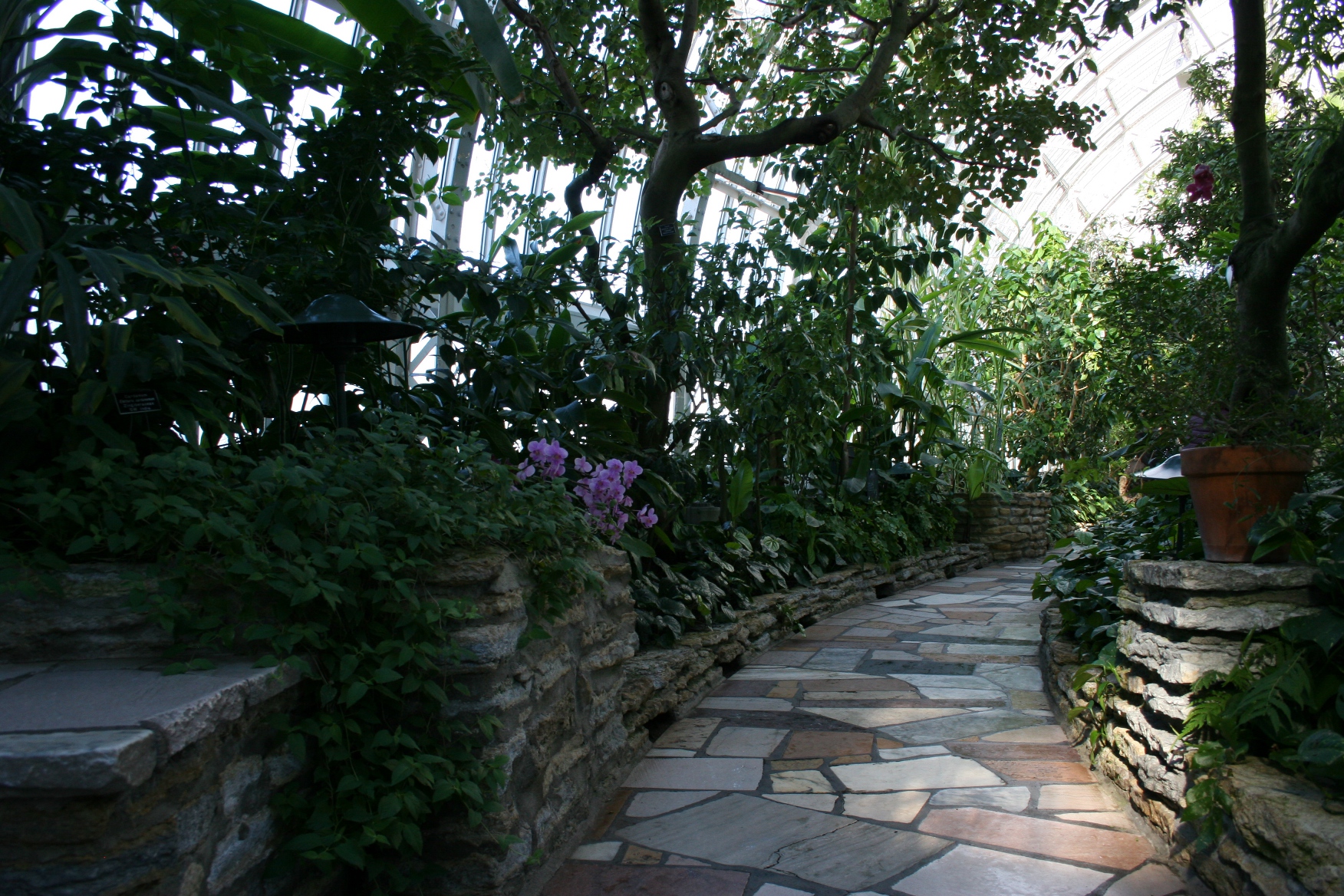
Follow this path through the North Garden.

Follow this path through the North Garden.

Stop to enjoy the orchids, these in the Palm Dome.

Stop to enjoy the orchids, these in the Palm Dome.

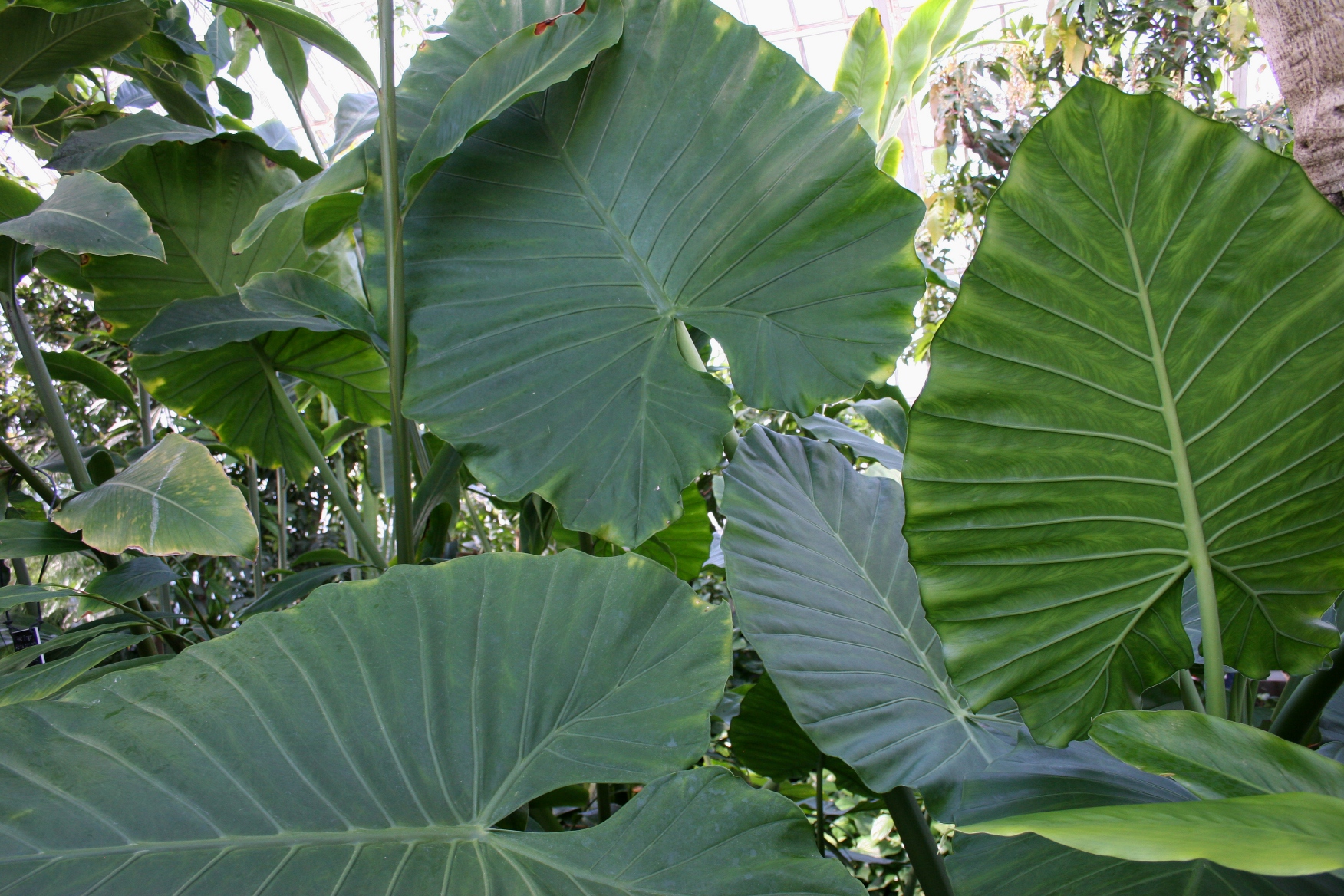
Appreciate leaves as big as an elephant's ears.

Appreciate leaves as big as an elephant’s ears.

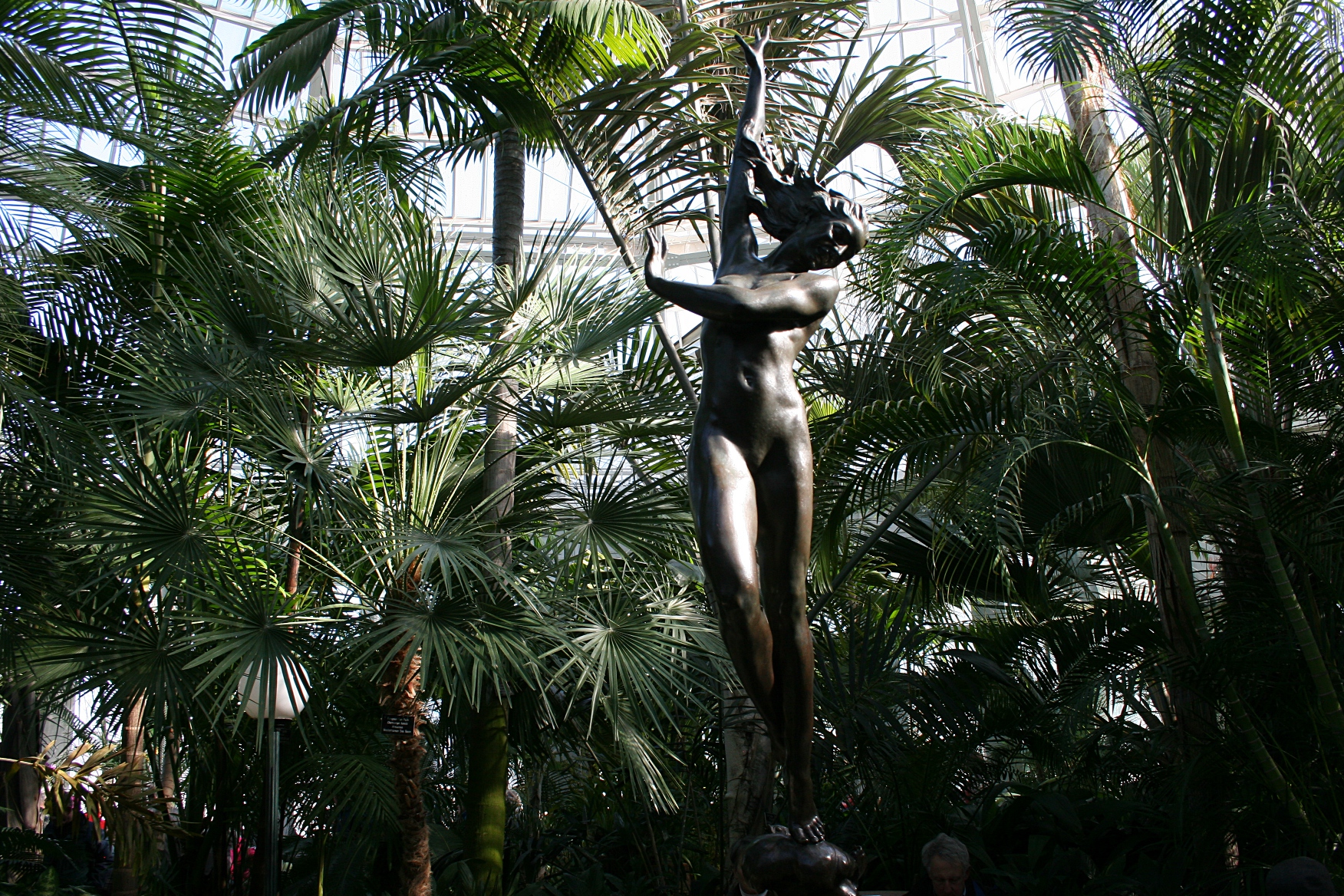
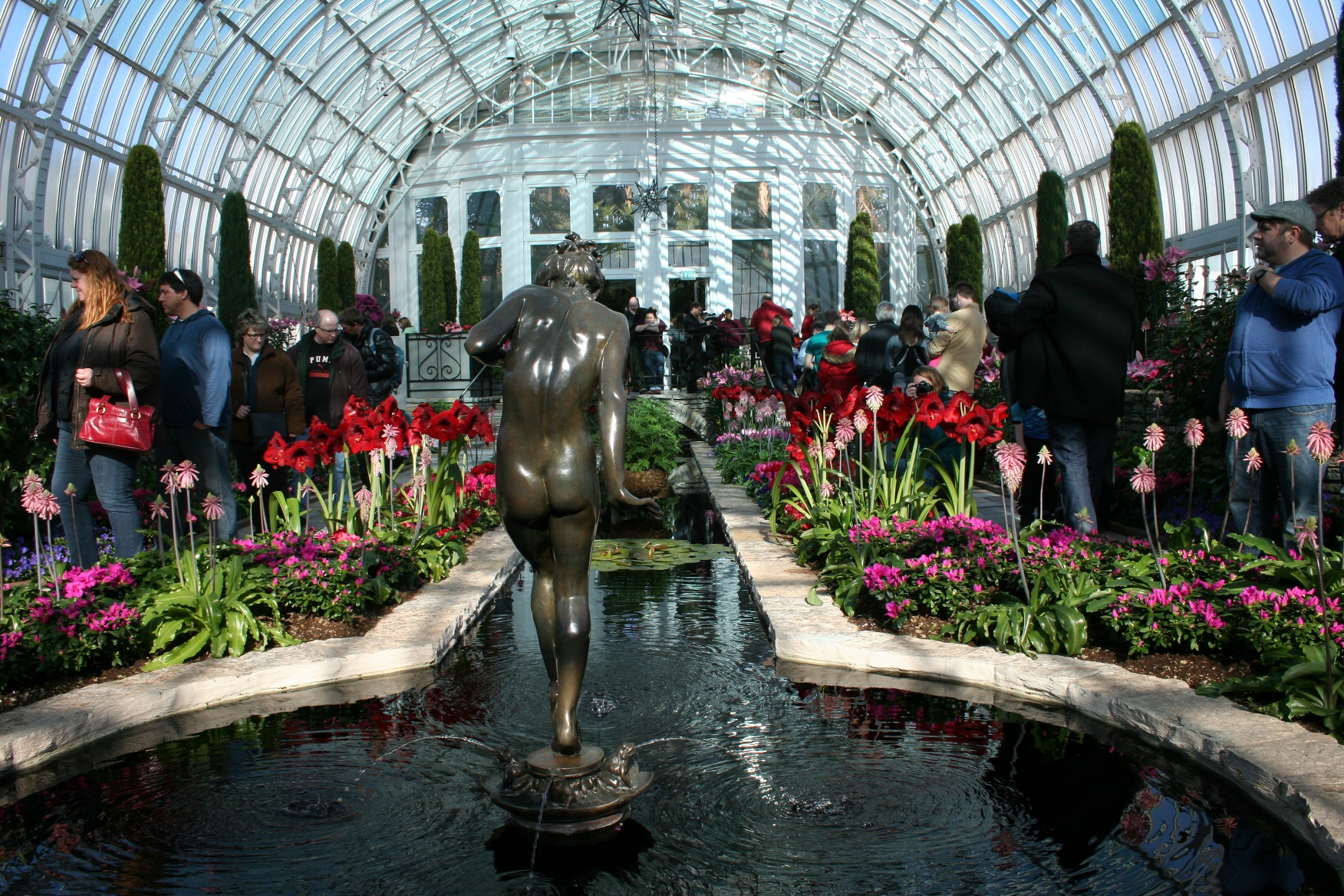
Admire the art, including this statue in a Palm Dome fountain.

Admire the art, including this statue in a Palm Dome fountain.

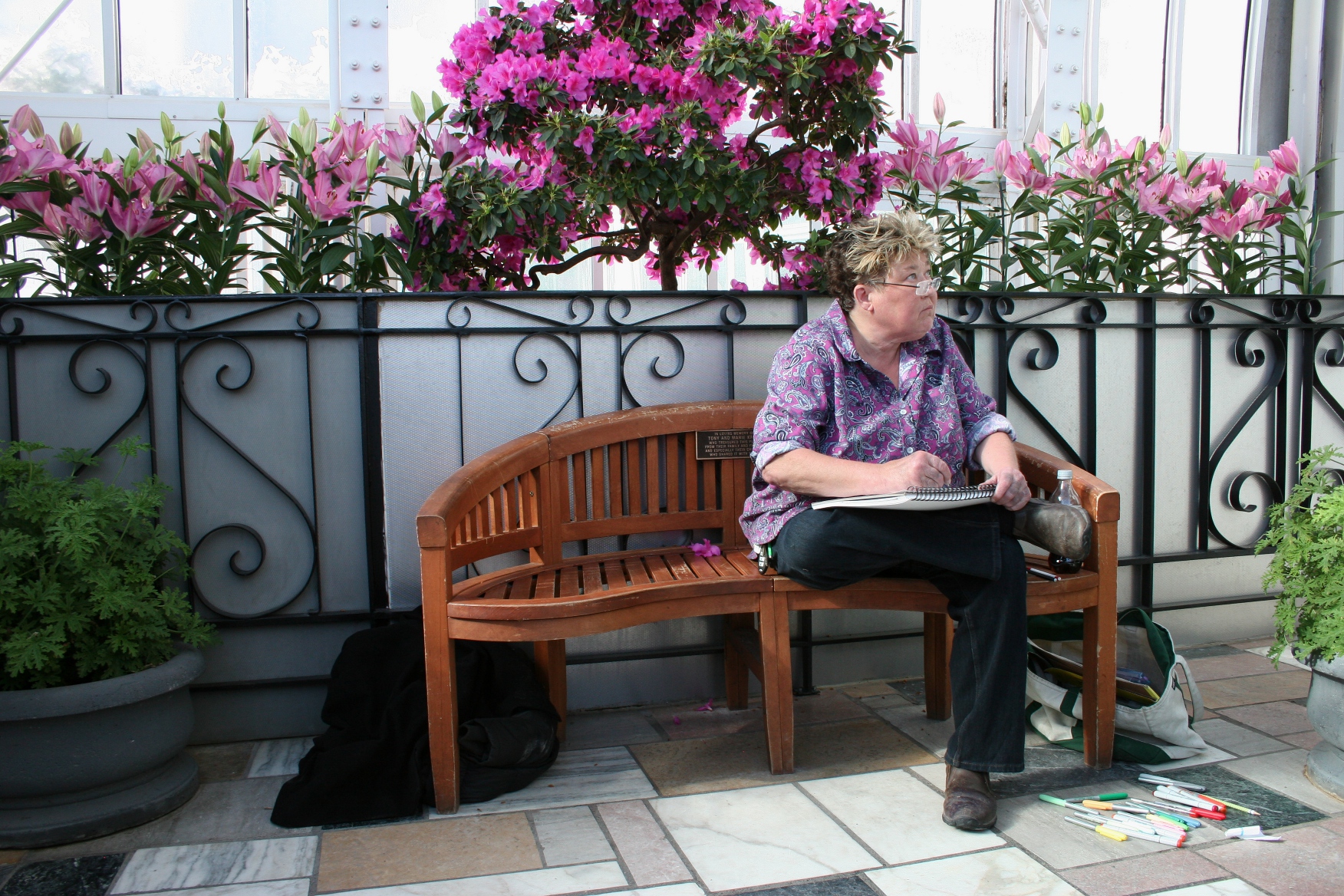
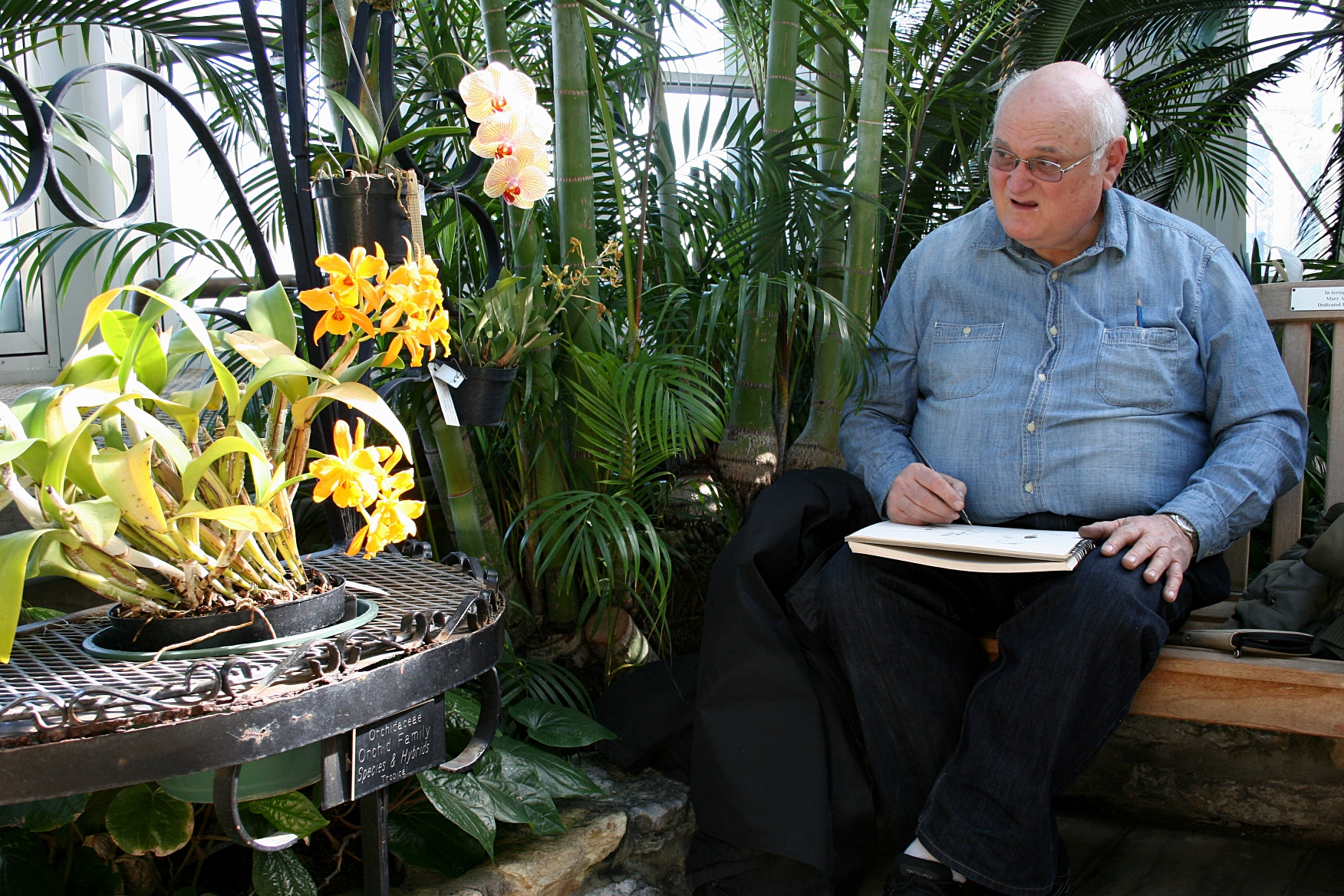
Or create art like this member of the Metro Sketchers working in the Sunken Garden.

Observe a member of the Metro Sketchers creating art in the Sunken Garden.

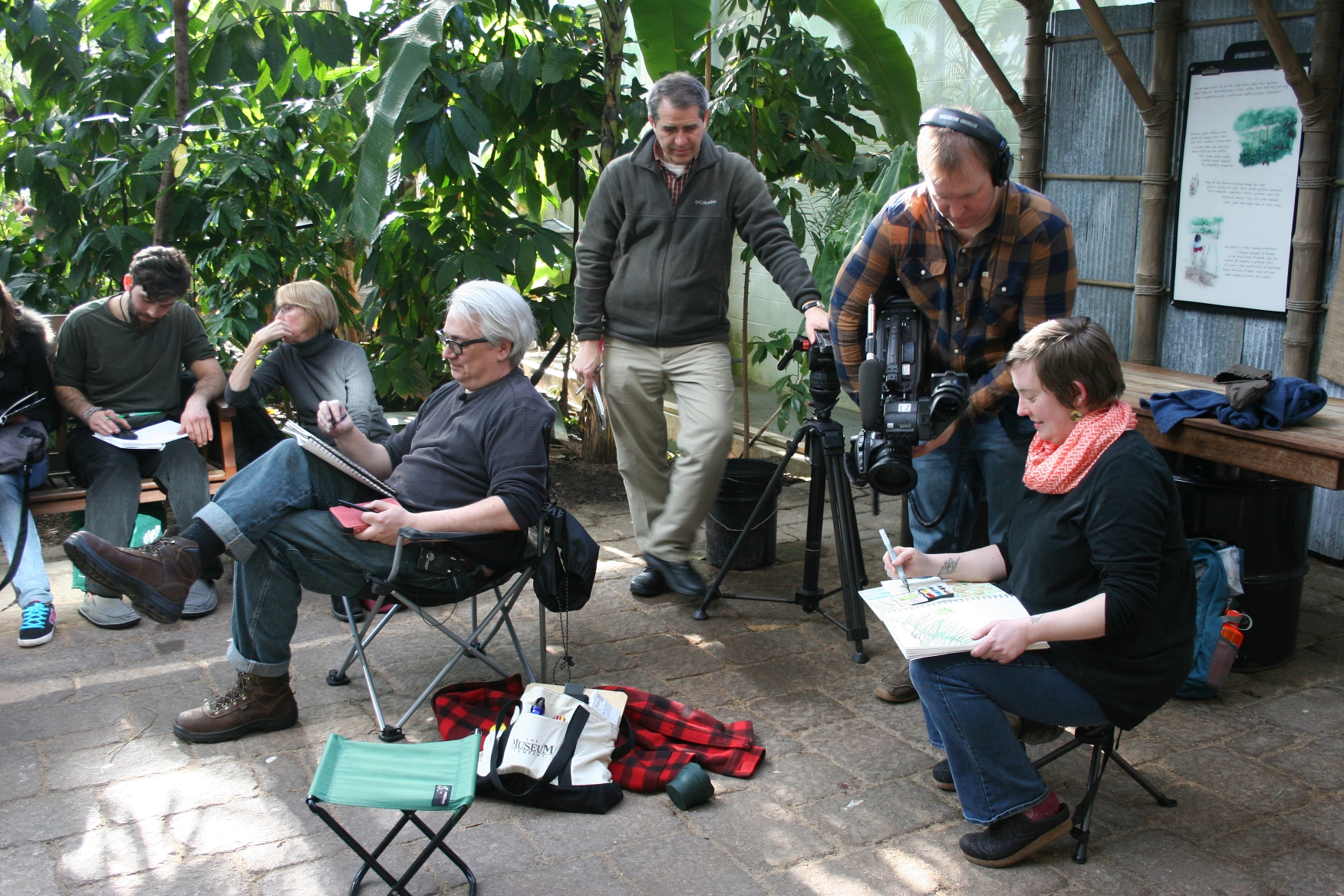
Or photograph the film crew filming the artist's work.

Photograph the cameraman filming the artist’s work.

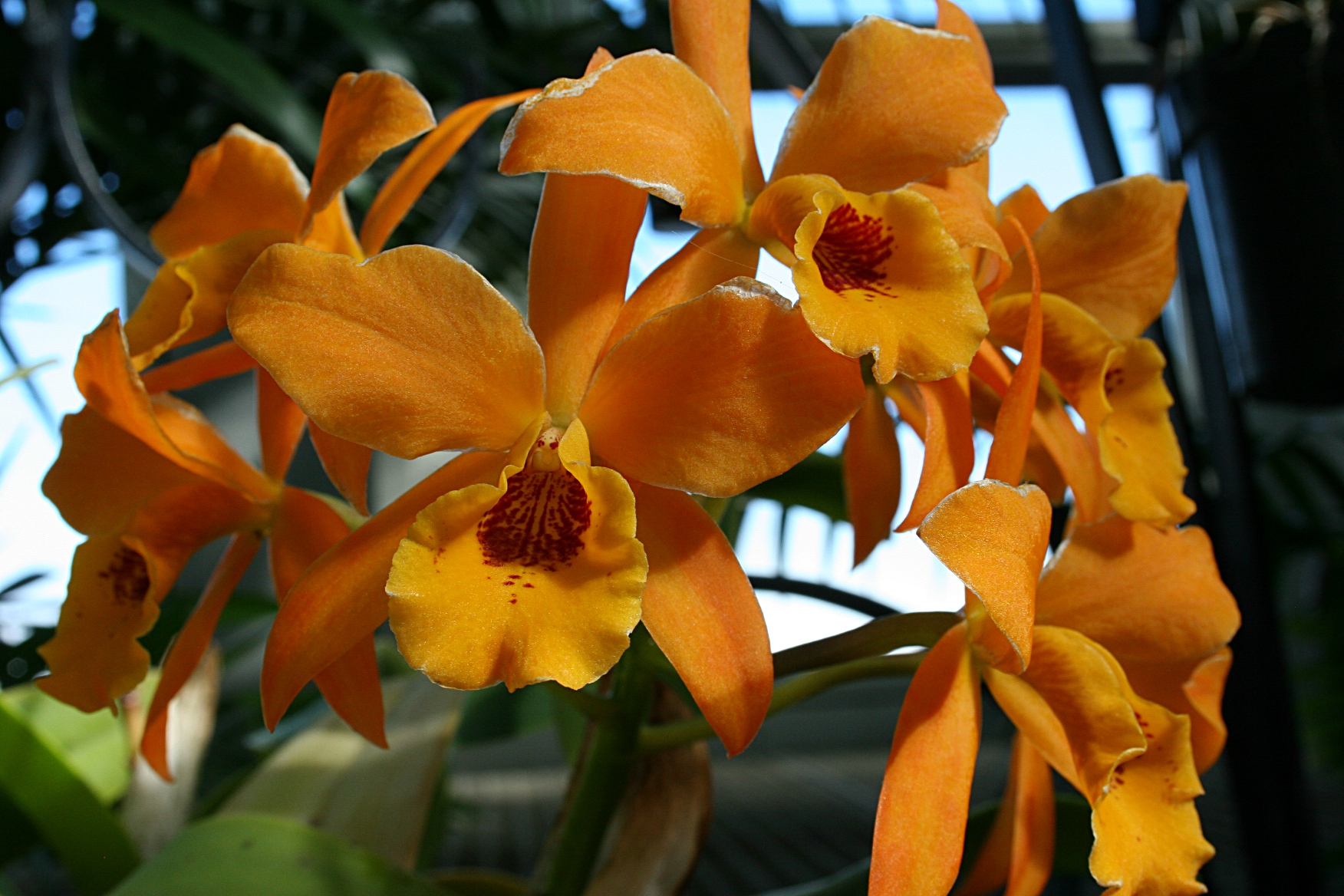
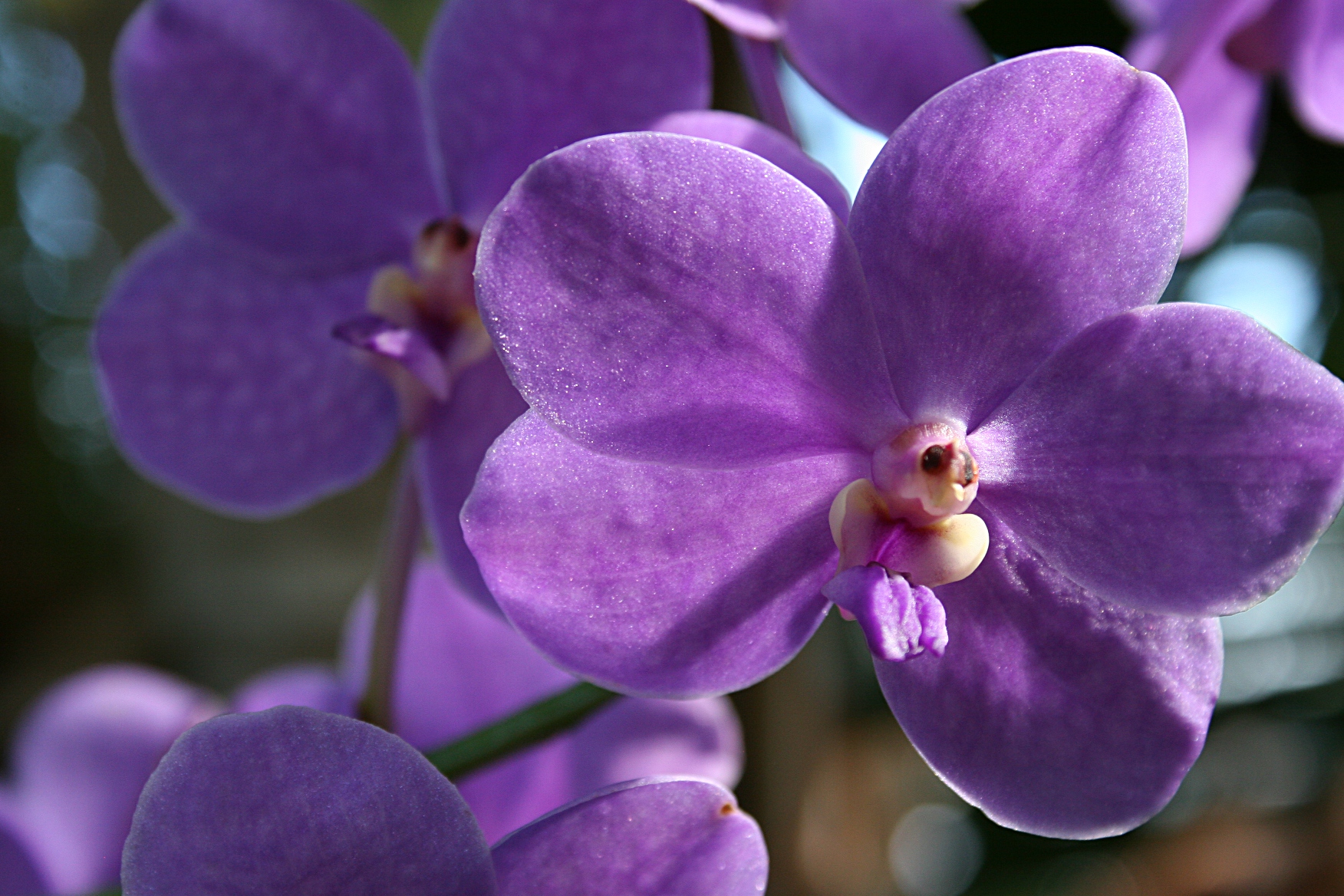
Admire the simplistic beauty of orchids.

Admire the simplistic beauty of orchids.

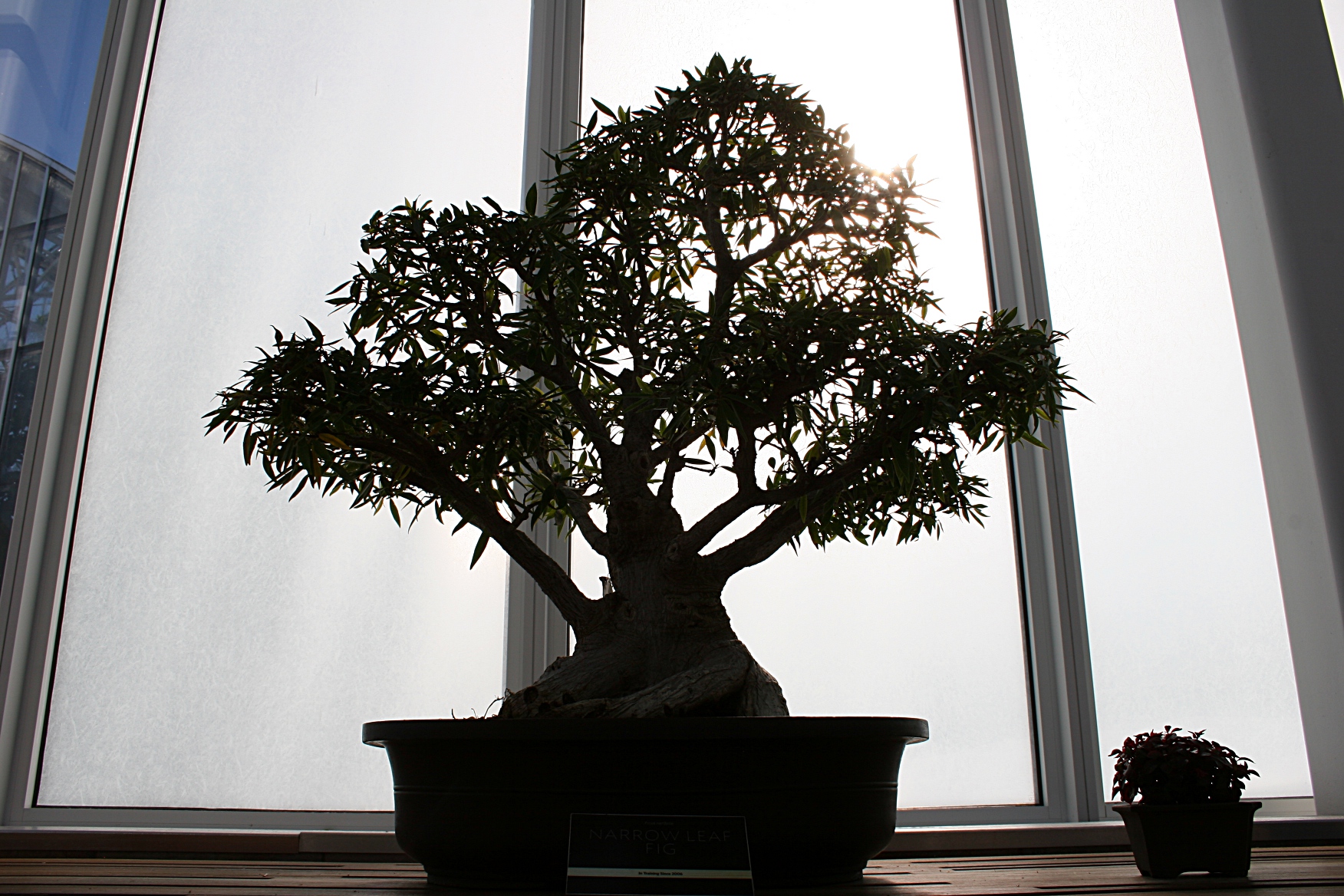
Notice the contrast of a bonsai tree against a steamed window knowing only glass separate the plant from a snowy landscape.

Notice the contrast of a bonsai tree against windows, knowing only glass separates the plant from a snowy landscape.

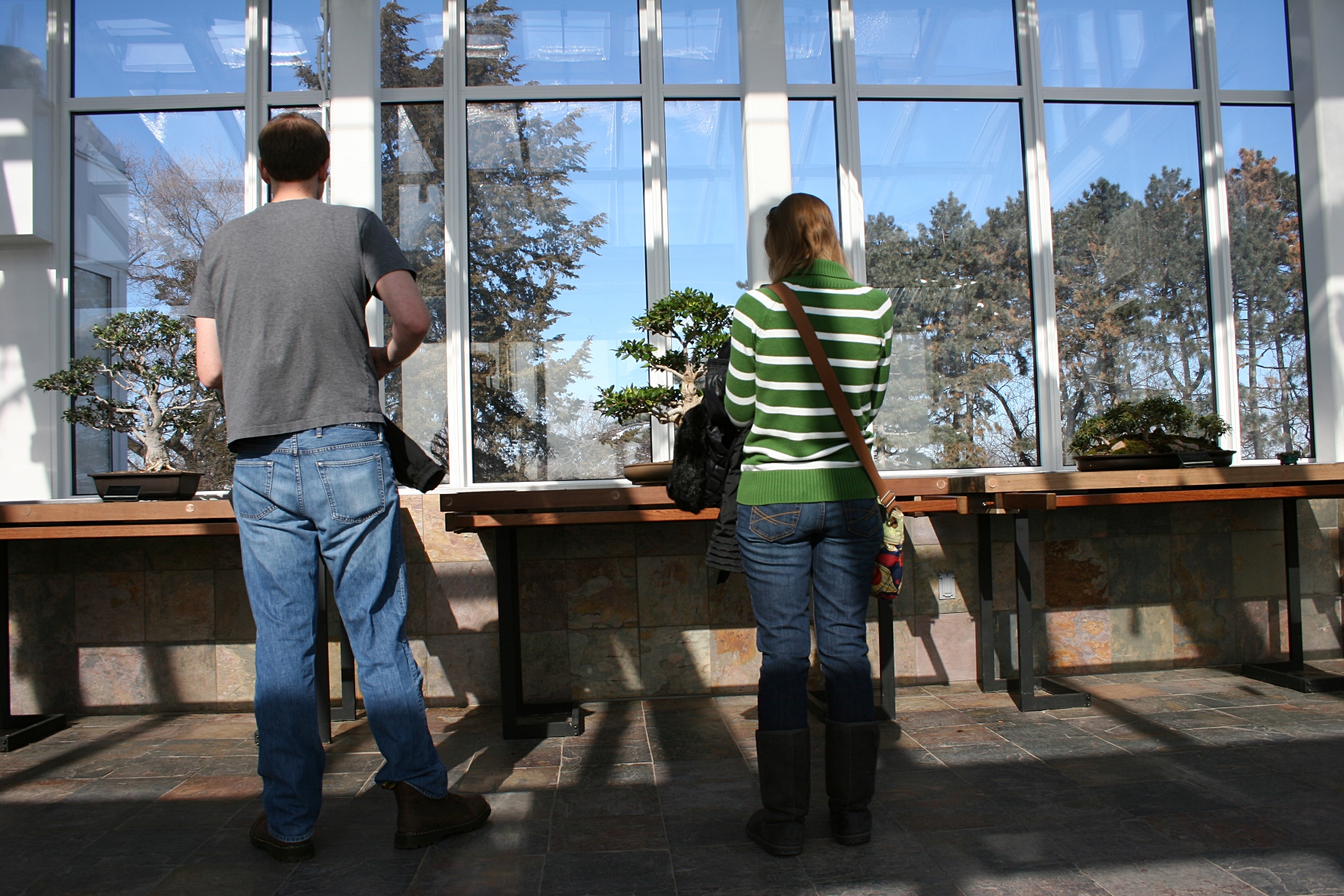
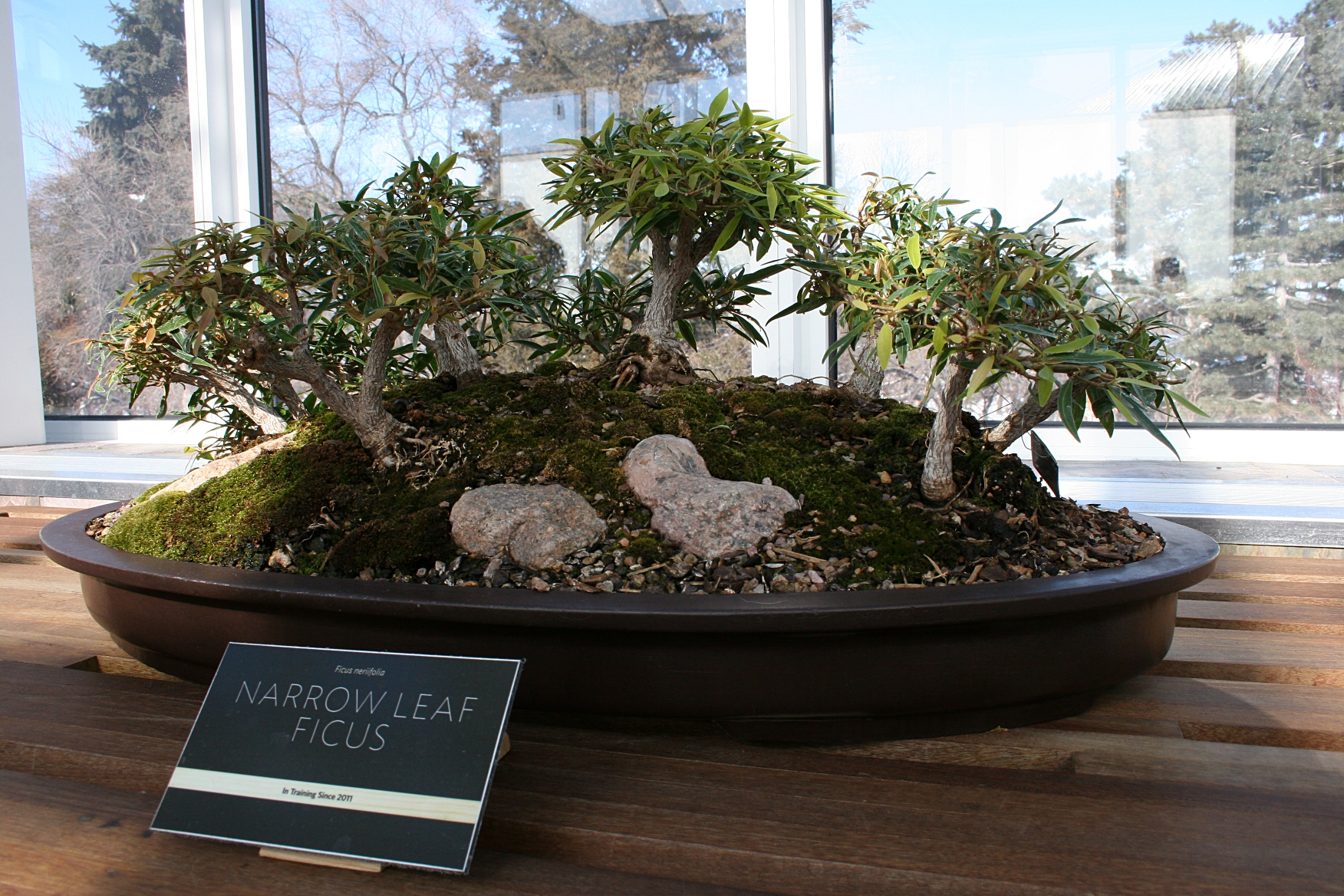
Mention to your daughter and son-in-law how nice one of these bonsai trees would look sitting on a window ledge in their St. Paul apartment.

Mention to your daughter and son-in-law how nice one of these bonsai trees would look on a window ledge in their  apartment.

Because you are so smitten by these mini trees, consider for a moment how you might smuggle one out of the conservatory. You realize this is an impossibility given the crowd, the staffing and that you left your winter coat in the car.

Because you are so smitten by these mini trees, consider for a moment how you might smuggle one out of the conservatory. You realize this is an impossibility given the crowd, the staffing and that you left your winter coat in the car.

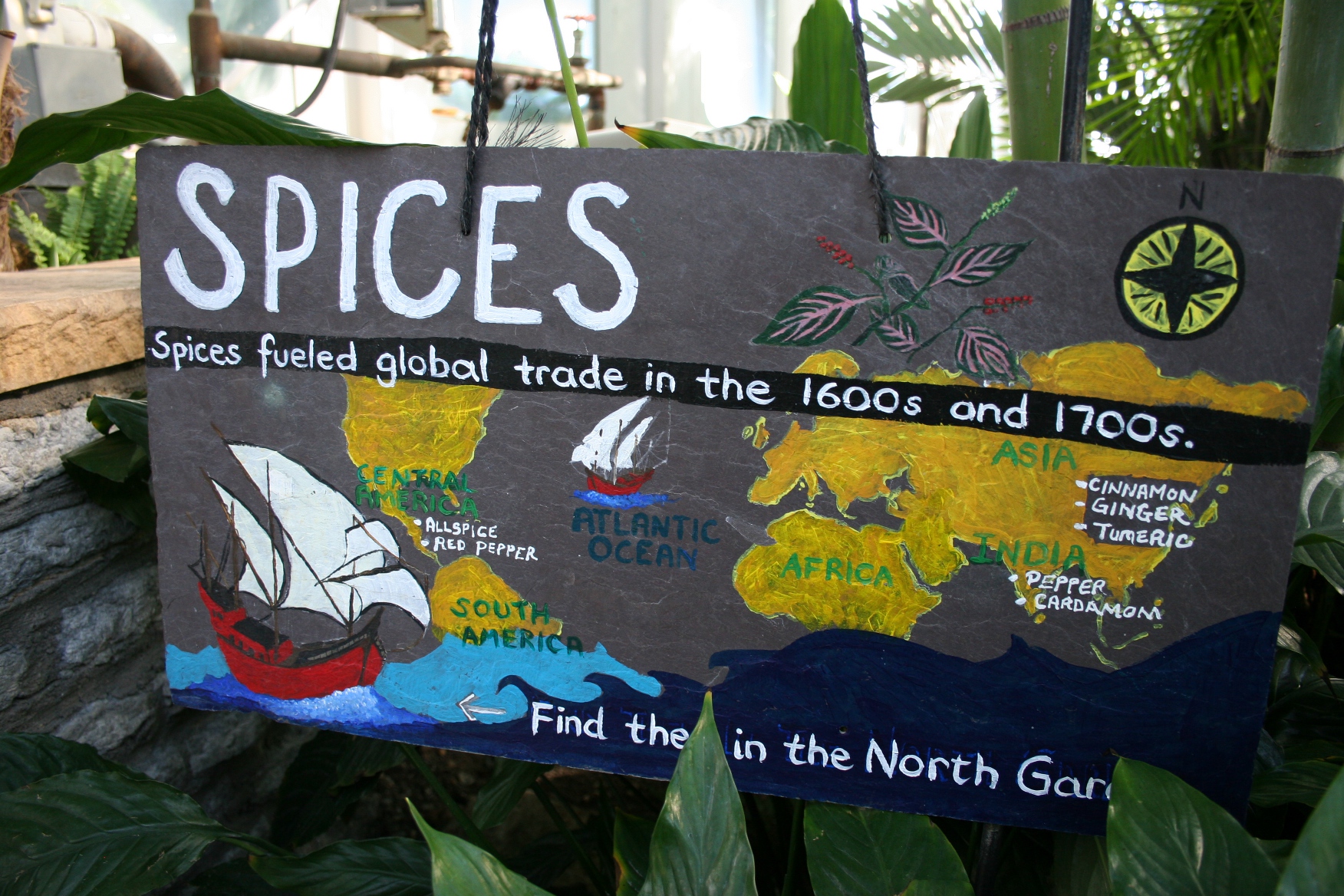
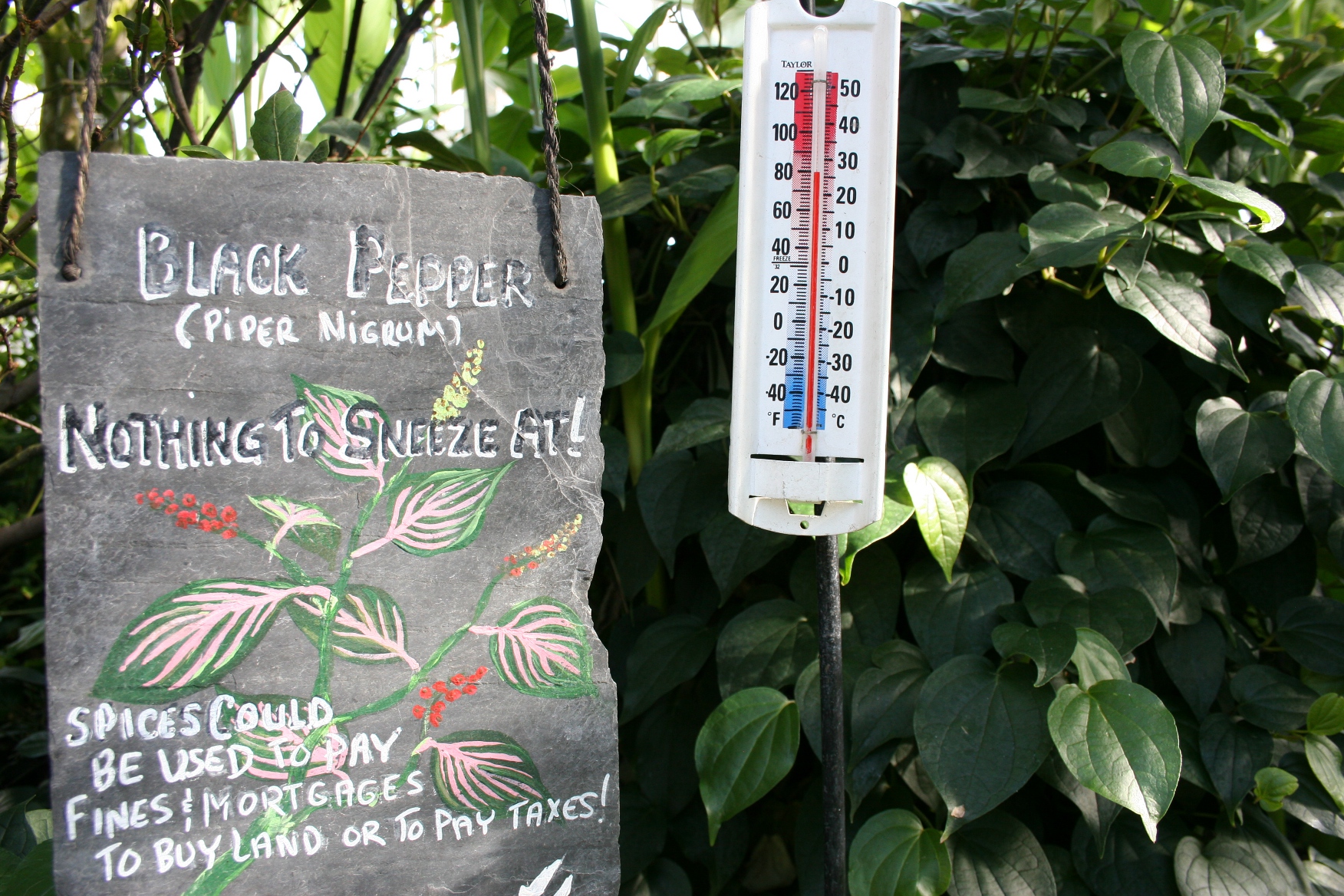
Imagine that you are aboard a ship in a fleet transporting exotic spices.

Pretend you are aboard a ship in a fleet transporting exotic spices.

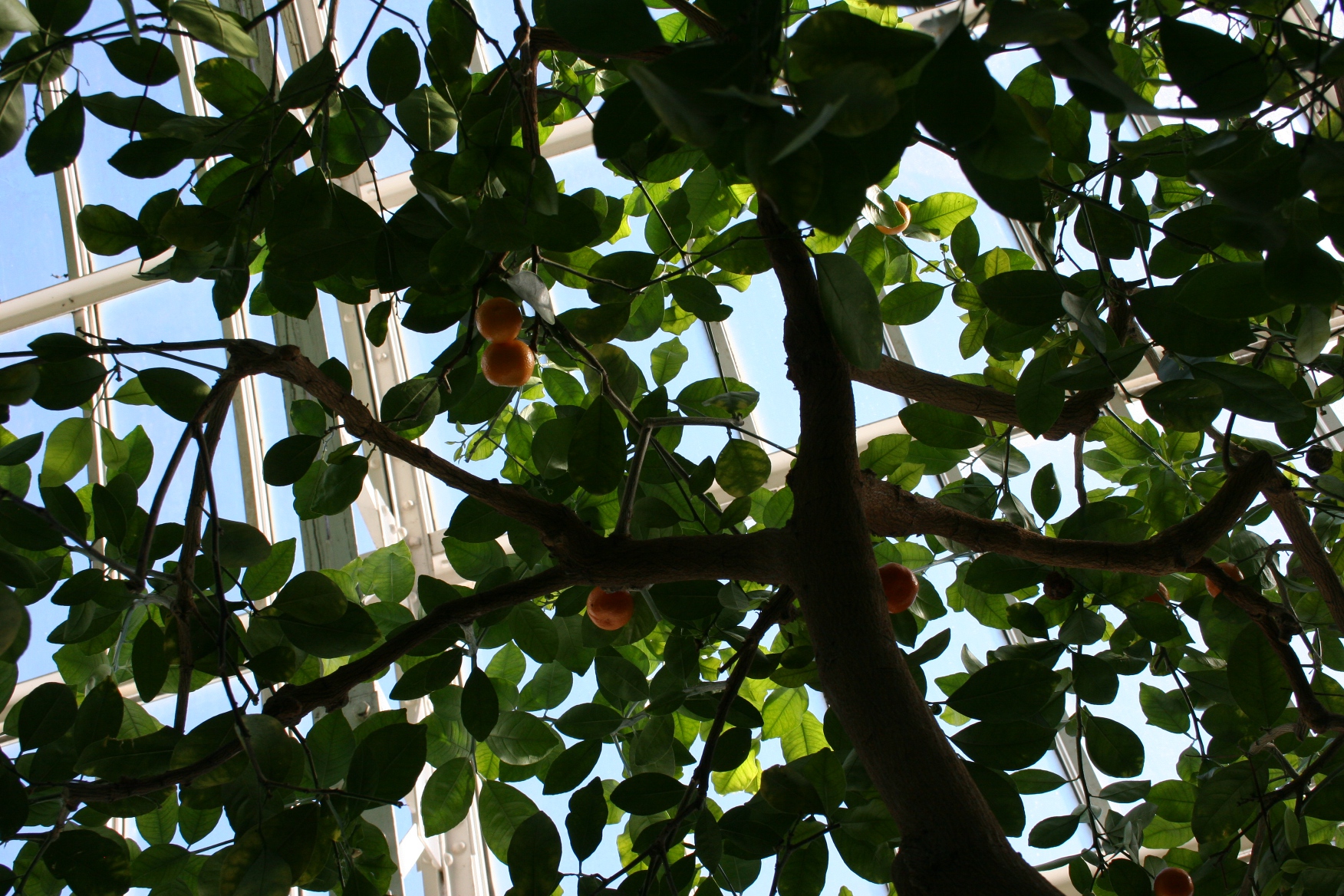
If only you were a little taller, you'd grasp one of those oranges. Wait a minute. Where's that tall son-in-law?

Banish the temptation to pick a juicy orange. (Where’s that tall son-in-law?)

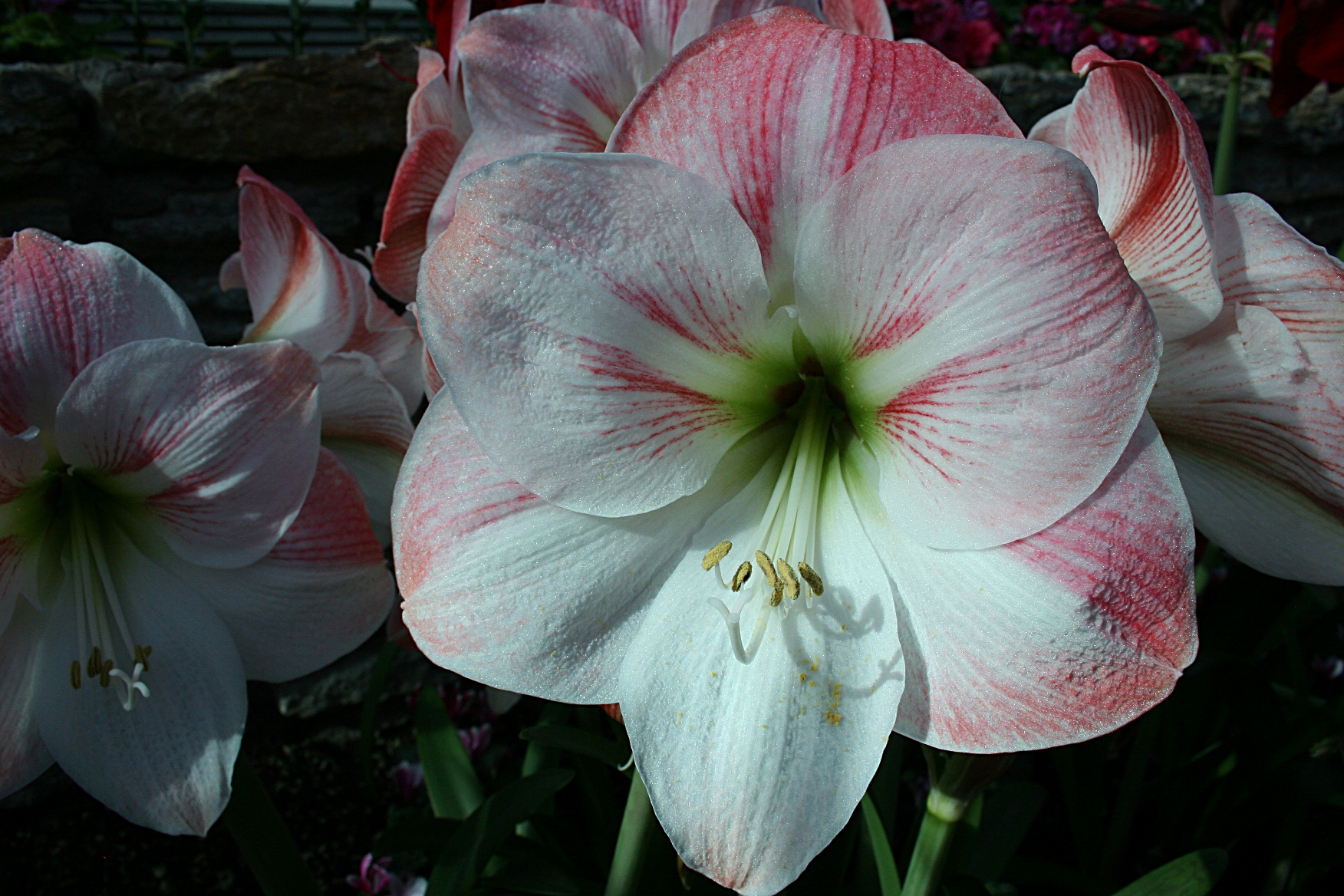
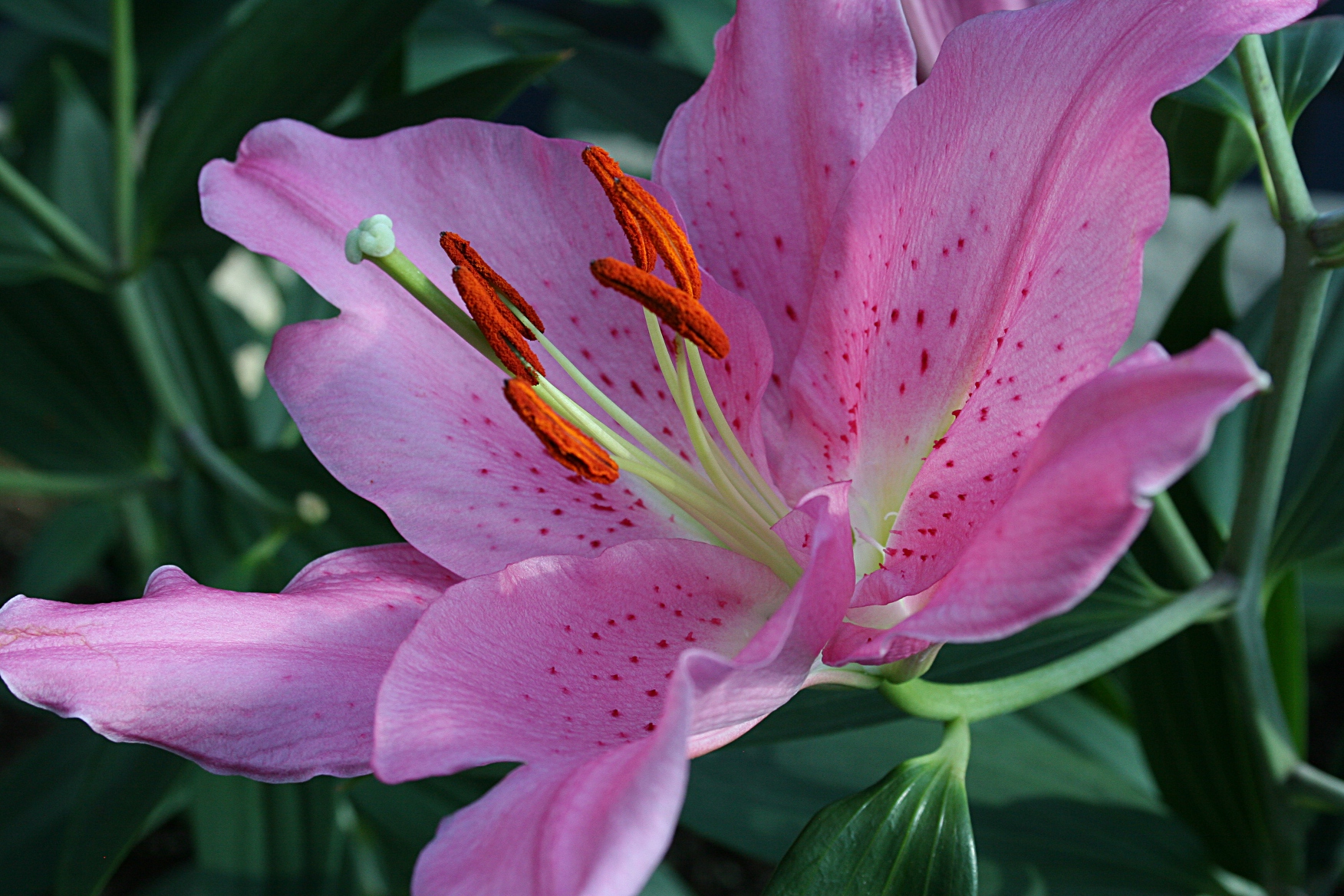
If only you could snip a few lilies to take home, to carry you through the next few months. Until spring...

If only you could snip a few blooms to take home, to carry you through the next few months. Until spring…

FYI: To read my first post from Como Park Conservatory, click here.

Copyright 2014 Audrey Kletscher Helbling
 

Guilty of escaping a Minnesota winter: In the conservatory with the camera… March 4, 2014

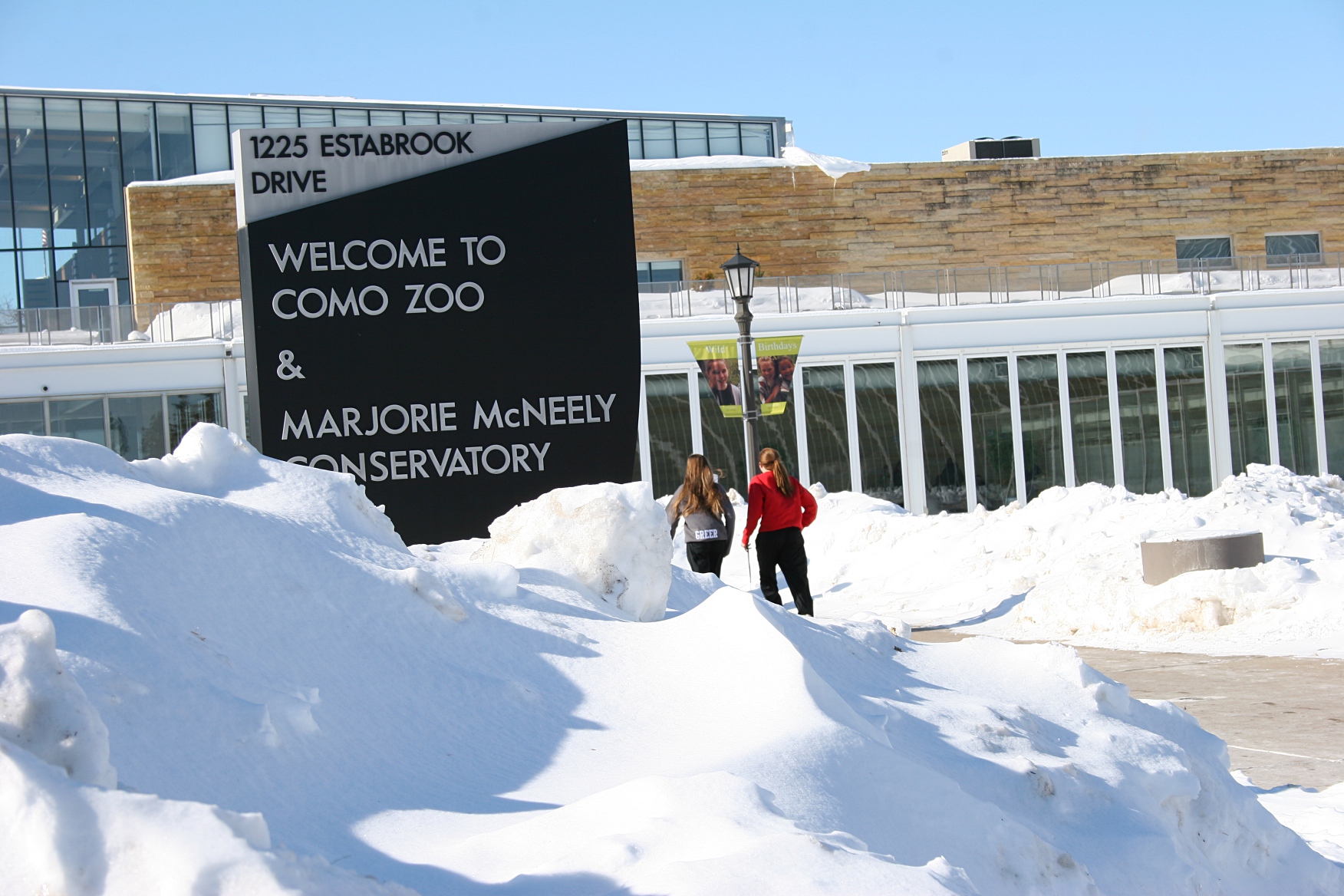
Photographing the Marjorie McNeely Conservatory in the cold Sunday afternoon.

The Marjorie McNeely Conservatory in St. Paul on Sunday afternoon.

“SHE’S CRAZY,” the woman remarked to her companion, not realizing I overheard her as I photographed the exterior of the Como Park Zoo and Conservatory.

I wasn't the only one racing from vehicle to the Como Park Zoo & Conservatory minus a coat.

I wasn’t the only one racing from vehicle to the Como Park Zoo & Conservatory minus a winter coat.

The outdoor air temp hovered around five degrees Fahrenheit. Add in the windchill and the “feels like” temp likely plummeted to minus 25 degrees. And I was coatless.

Was I crazy? Perhaps. But stir craziness marked precisely the reason I came here on a sunny Sunday afternoon on the second day of March with my husband, eldest daughter and son-in-law. I needed a respite from the coldest Minnesota winter in 35 years. And I might add a particularly snowy one.

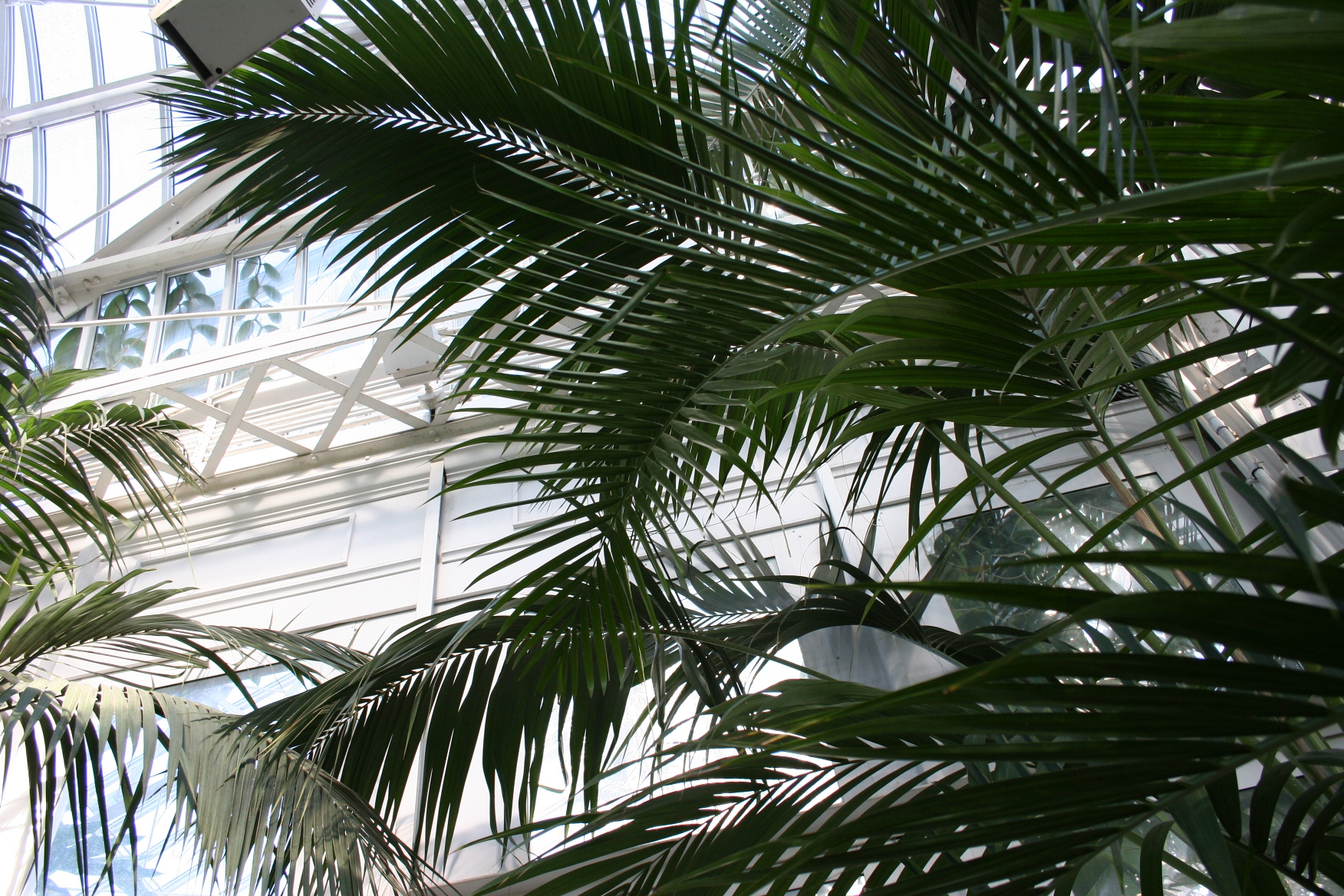
Looking up at the palm trees.

Looking up at the palm trees.

For a snippet of an afternoon, I pretended I was in the tropics, in a land of lush greenery and flowing rivers and blooming flowers.

Temps were downright hot inside the Conservatory, the reason I left my coat in the car.

Temps were downright hot inside the North Garden, the reason I left my coat in the car.

Not difficult to imagine in the 80-degree warmth of the North Garden,

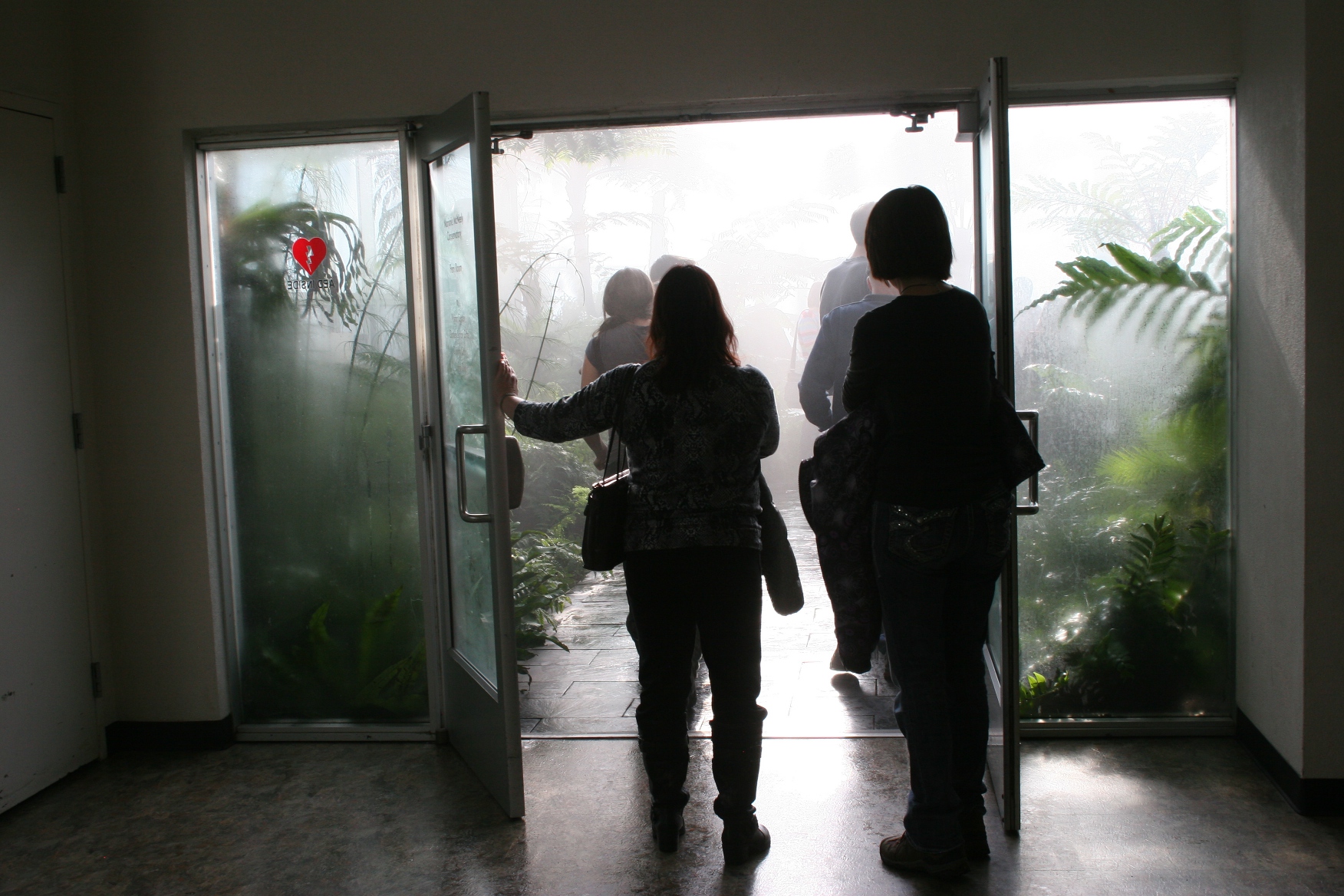
I tucked my Canon inside my camera bag before entering the humid/misty Fern Room.

I tucked my Canon inside my camera bag before entering the humid/misty/foggy Fern Room.

in the smothering humidity of the Fern Room

Lilies and other flowers perfumed the Sunken Garden.

Lilies and other flowers perfumed the Sunken Garden.

or in the Sunken Garden scented by the blossoms of blooming flowers.

Lines of people streamed through the Sunken Garden, by far the most crowded space.

Lines of people streamed through the Sunken Garden, by far the most crowded space.

This was exactly what I needed, as did hundreds of others. Conservatory paths were packed with people meandering through the gardens, pausing to photograph flowers and/or simply basking in the warmth and beauty.

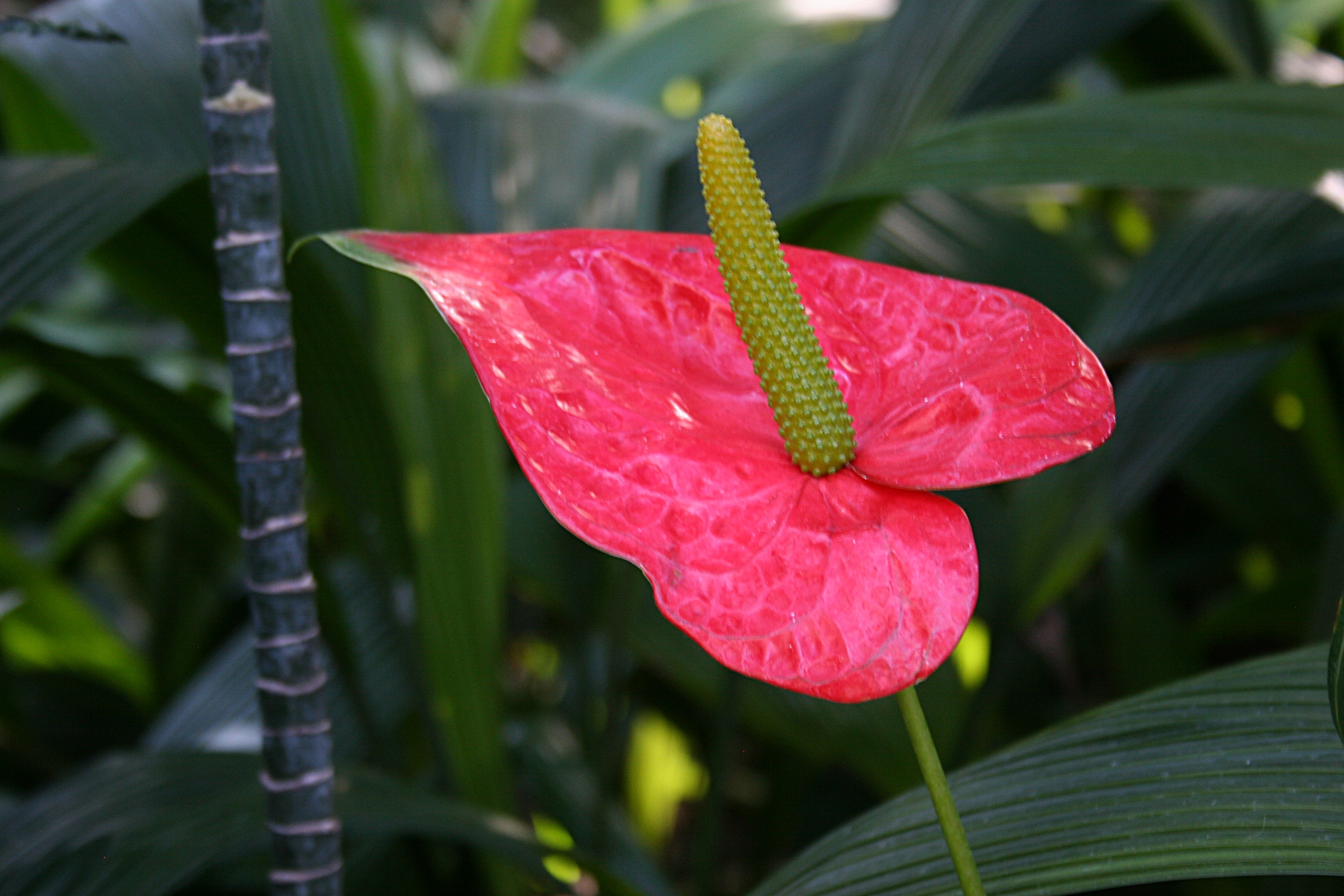
I can't recall the name of this flower, but I paused to photograph it because I like its shape and sheen.

I can’t recall the name of this flower, but I paused to photograph it because I like its shape and sheen.

Crowded conditions were not conducive to creative photography as I had to move along lest I hold up others. But I managed.

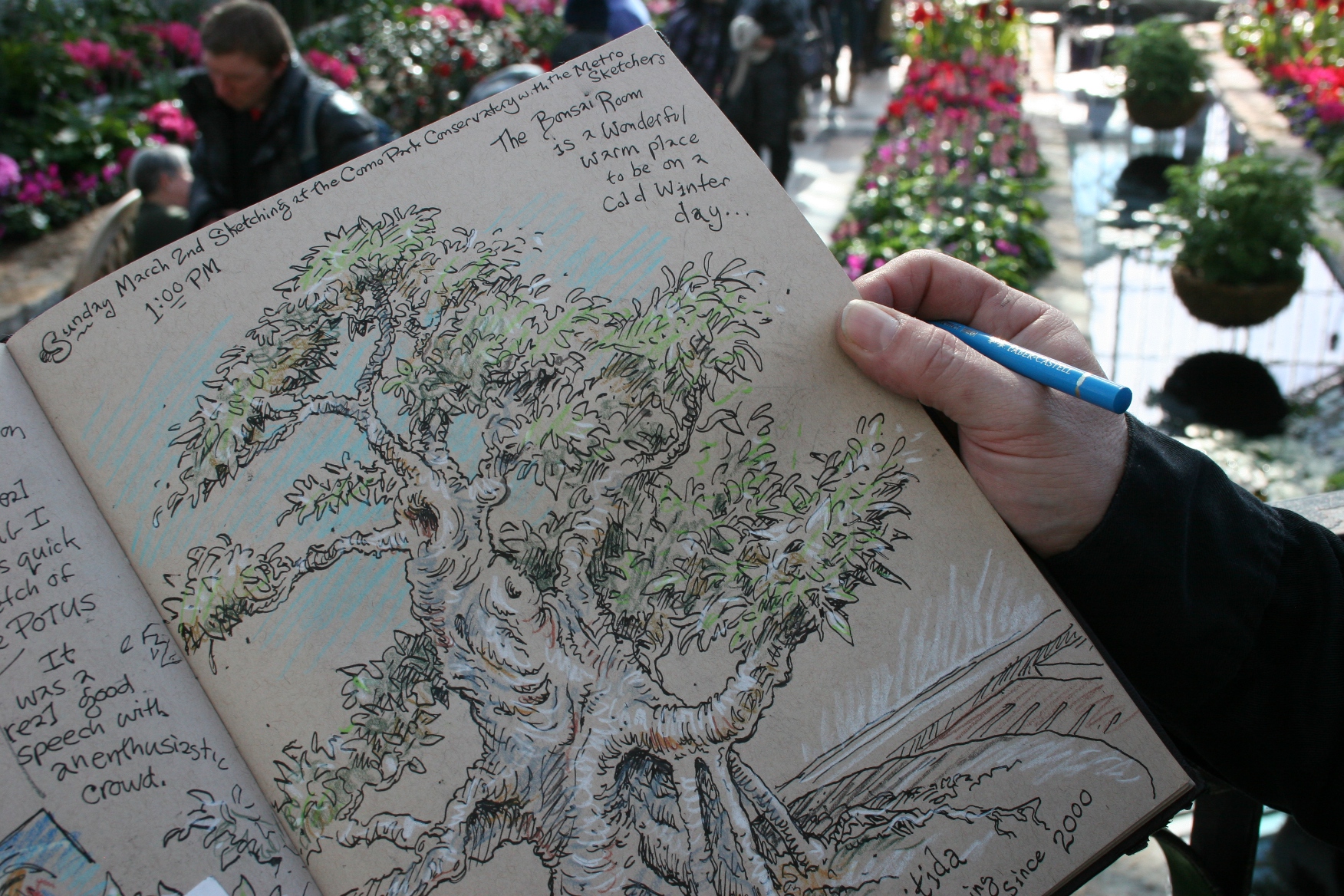
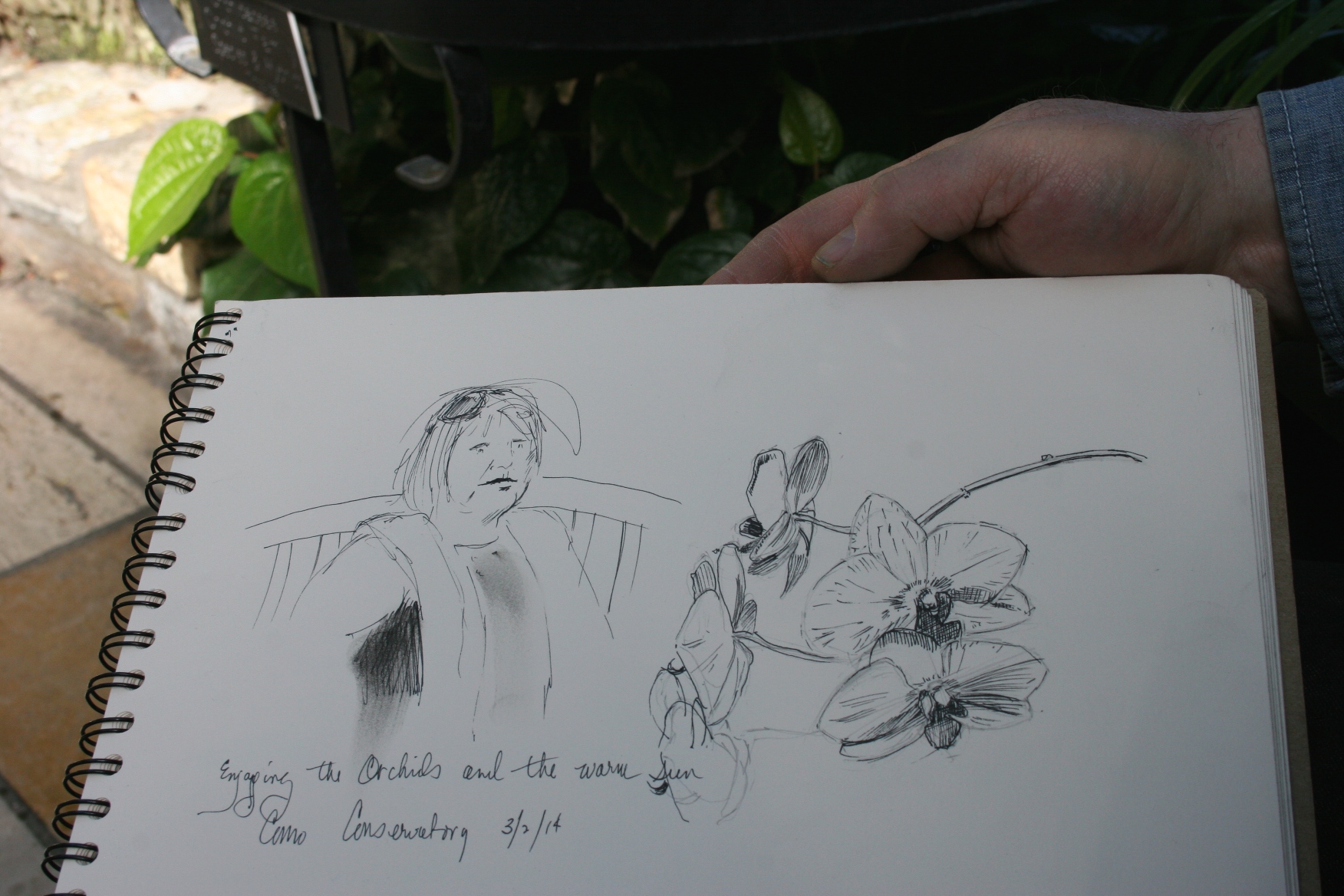
An artist sketching in the Sunken Garden flipped his sketchbook back to reveal his favorite sketch of the day, that of a bonsai tree. His art is spectacular.

An artist sketching in the Sunken Garden flipped his sketchbook back to reveal his favorite sketch of the day, that of a bonsai tree. His art is spectacular. My apologies for failing to ask his name.

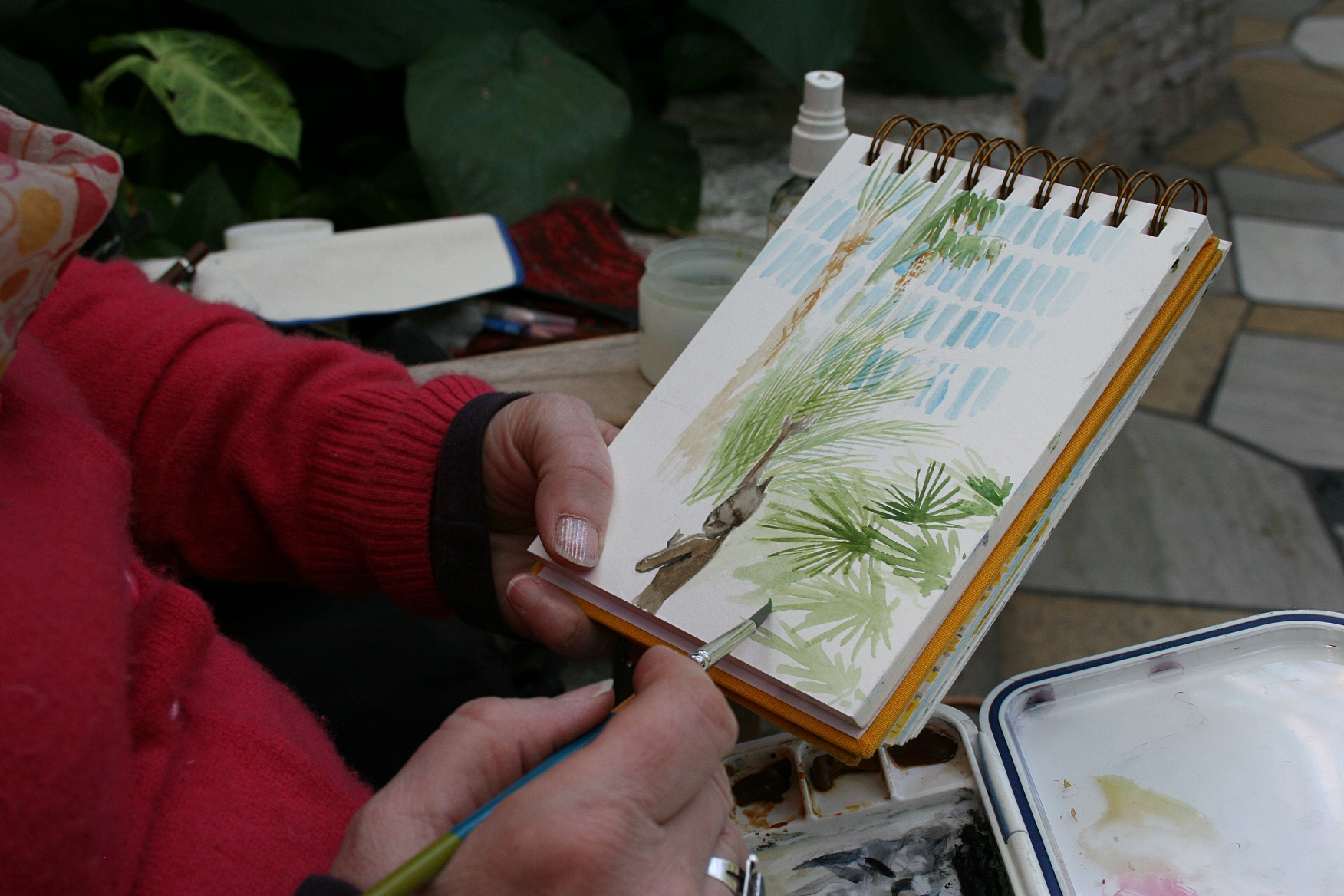
Metro Sketchers, artists who monthly gather to create art at a chosen location, recorded the scenes unfolding before them.

Thomas Winterstein of St. Paul sketches a scene in the Palm Dome.

Thomas Winterstein of St. Paul sketches a scene in the Palm Dome.

I chatted with a few,

Thomas Winterstein's sketch.

Thomas Winterstein’s sketch.

admired their art and their ability to create with paint and pencils and other mediums.

Watercolor artist Kathleen Richert paints a fountain in the Palm Dome.

Watercolor artist Kathleen Richert paints a fountain scene in the Palm Dome.

I wondered, too, if my California native son-in-law was at all impressed. After all, palm trees and other warm climate plants certainly aren’t foreign to him.

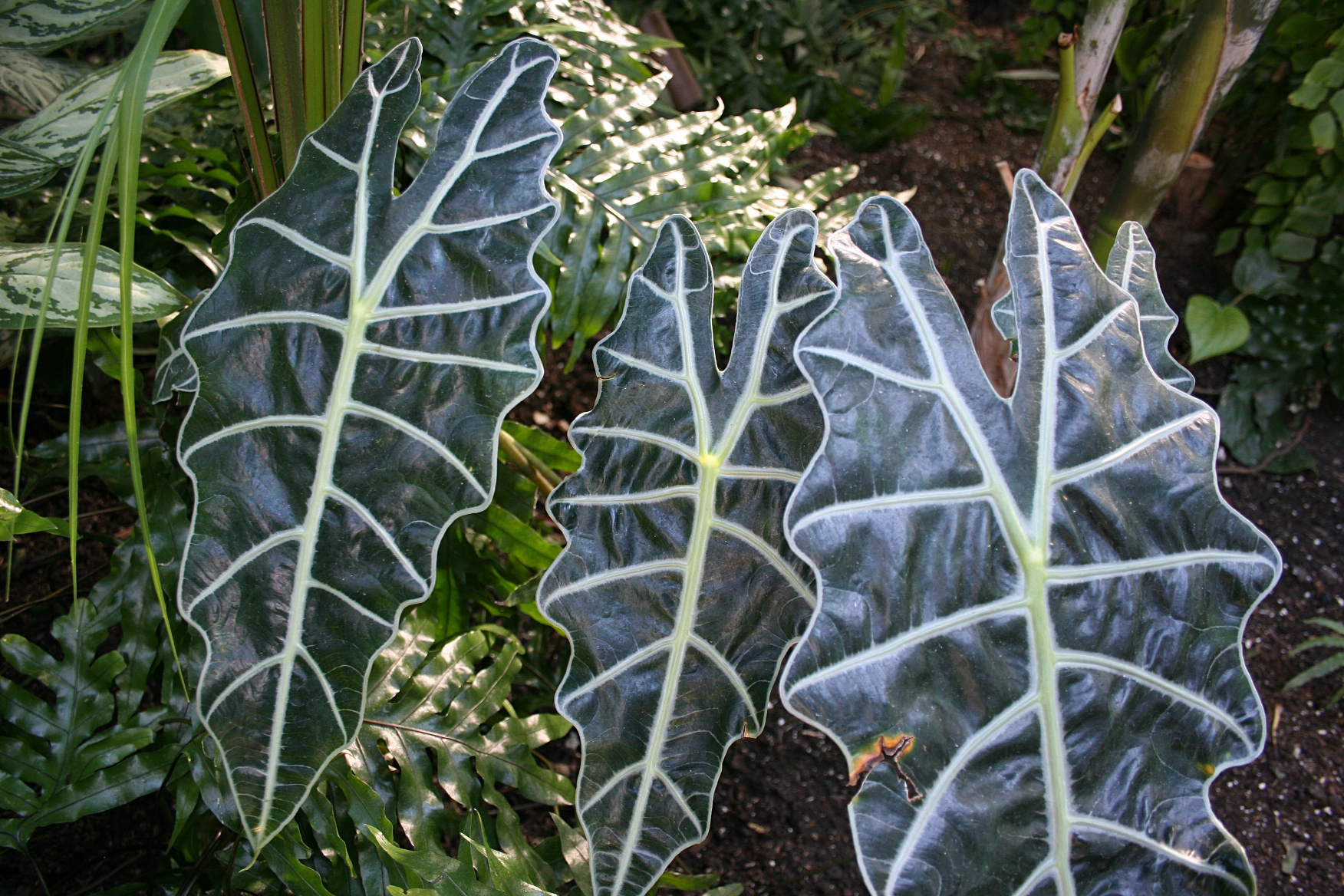
I have no idea what plant this is, but I love the leaves.

I have no idea what plant this is, but I love the leaves.

To this Minnesotan, though, the Marjorie McNeely Conservatory at Como Park in St. Paul proved impressive and mentally uplifting in this longest and coldest of Minnesota winters.

Even though you're not supposed to snap posed portraits, I managed to take a quick shot of my daughter and her husband in the Palm Dome.

I managed a quick shot of my daughter and her husband in the Palm Dome, even though portraits are banned.

FYI: Just for the record, I left my coat in the daughter’s car as I did not want to carry it around in the Conservatory while also juggling a camera. The daughter was kind enough to drop Mom and Dad off at the sidewalk leading to the Conservatory. She and her husband then circled the parking areas for an incredibly long time before squeezing into a tight parking space. I’d advise driving a small vehicle here and not attempting to park in the unplowed gravel lot where vehicles were getting stuck.

Check back for more photos.

© Copyright 2014 Audrey Kletscher Helbling
 

A Halloween treat: Perry the corpse flower blooms at Gustavus Adolphus College October 31, 2013

THE TIMING COULDN’T BE BETTER.

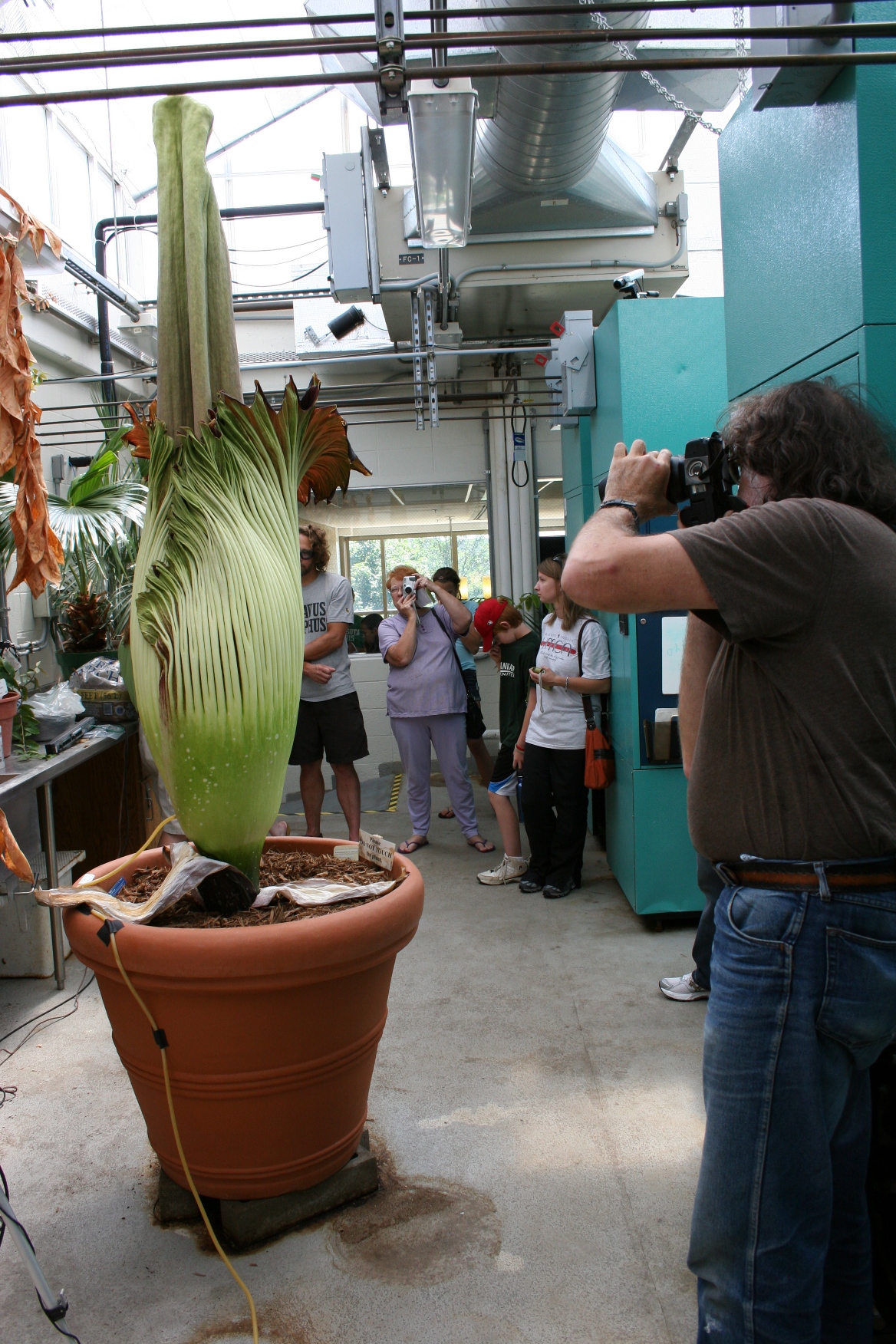
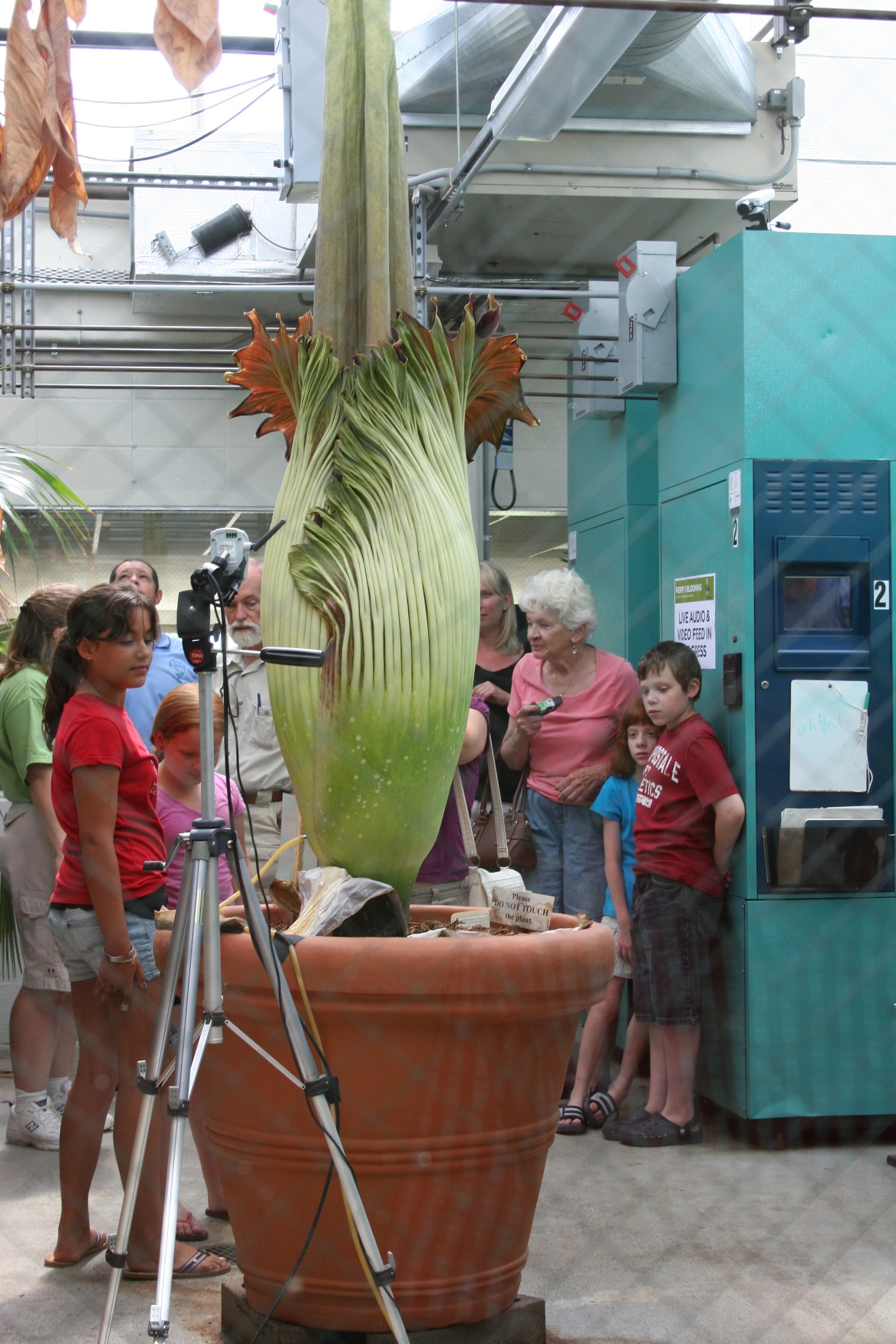
Visitors came with cameras in hand to photograph the rare blooming of Perry, which lasted until Sunday.

Visitors came with cameras in hand to photograph Perry in July 2010.

At 2 a.m. today, Perry the corpse flower began blooming in a third floor greenhouse in the Alfred Nobel Hall of Science on the campus of Gustavus Adolphus College in St. Peter.

What better day than Halloween for the rare blossoming of this rare tropical plant emitting the stench of death or rotting meat, depending on your nose and opinion.

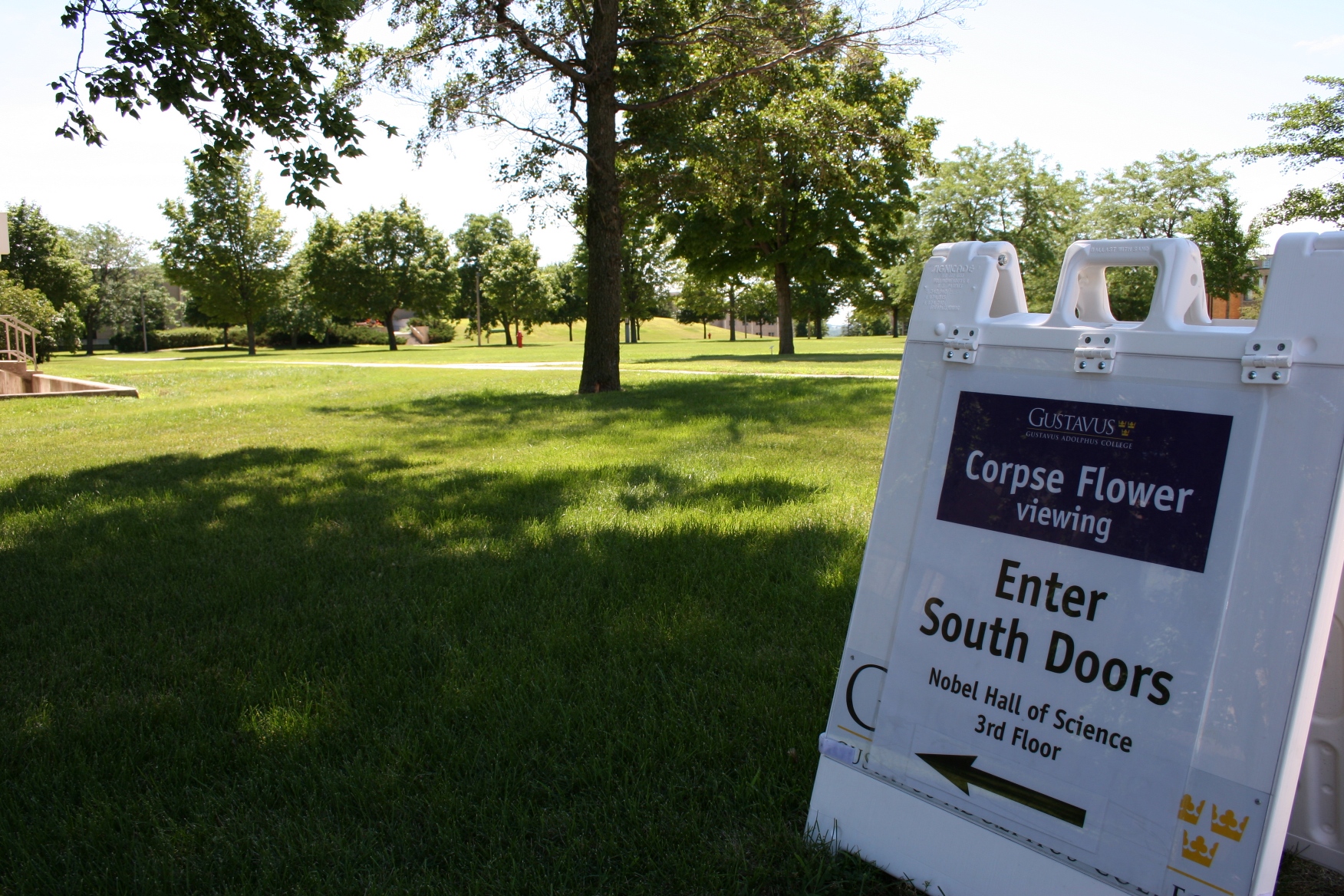
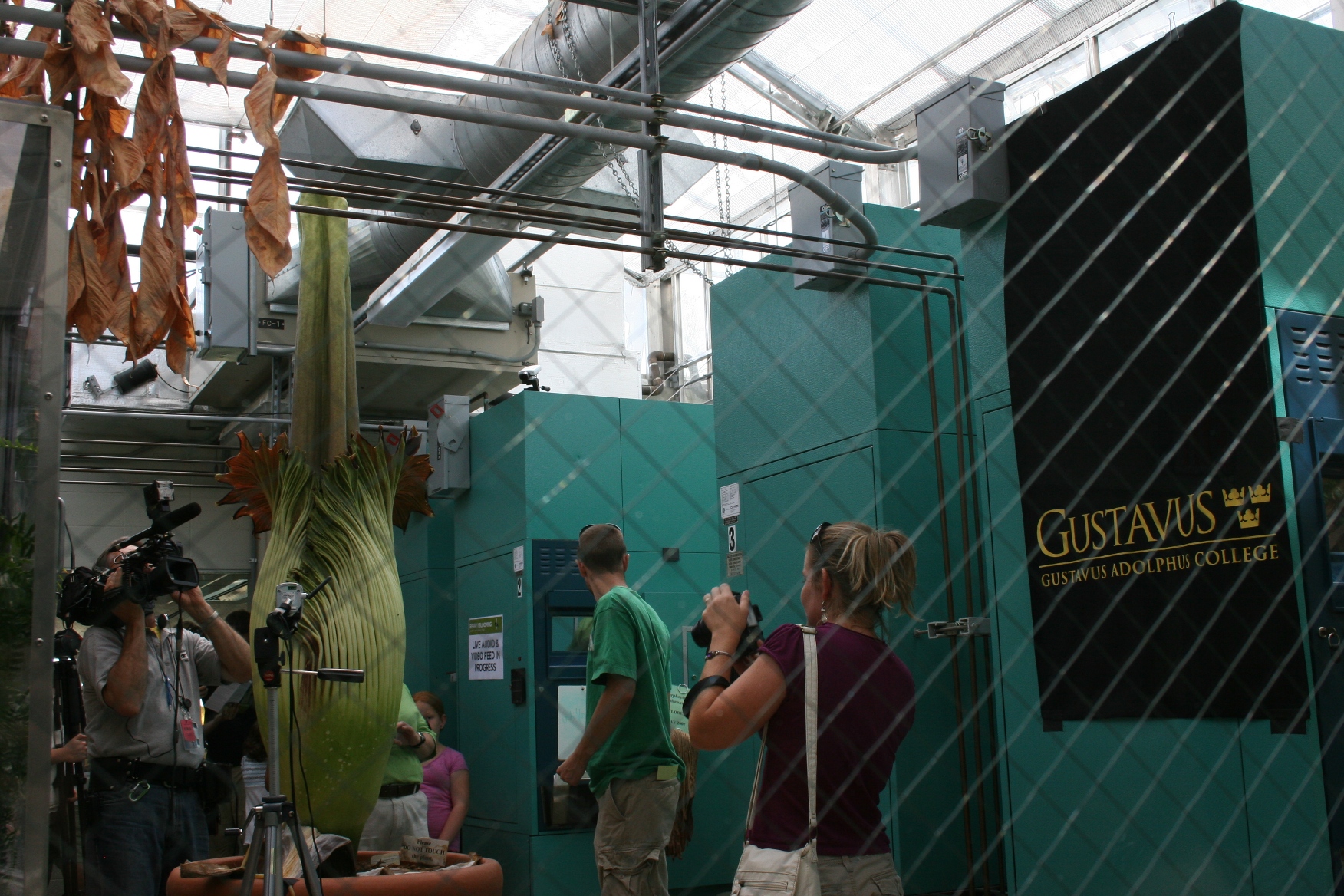
A sign at Gustavus Adolphus College directs visitors to the Nobel Hall of Science where "the corpse flower" grows in a third floor greenhouse.

A sign at Gustavus Adolphus College directs visitors to the Alfred Nobel Hall of Science where “the corpse flower” is blooming in a third floor greenhouse. Minnesota Prairie Roots file photo 2010.

You can view, and smell, this mammoth Amorphophallus titanum, nicknamed Perry, from 2 p.m. – 9 p.m. today (Halloween) or from noon to 8 p.m. on Friday, November 1.

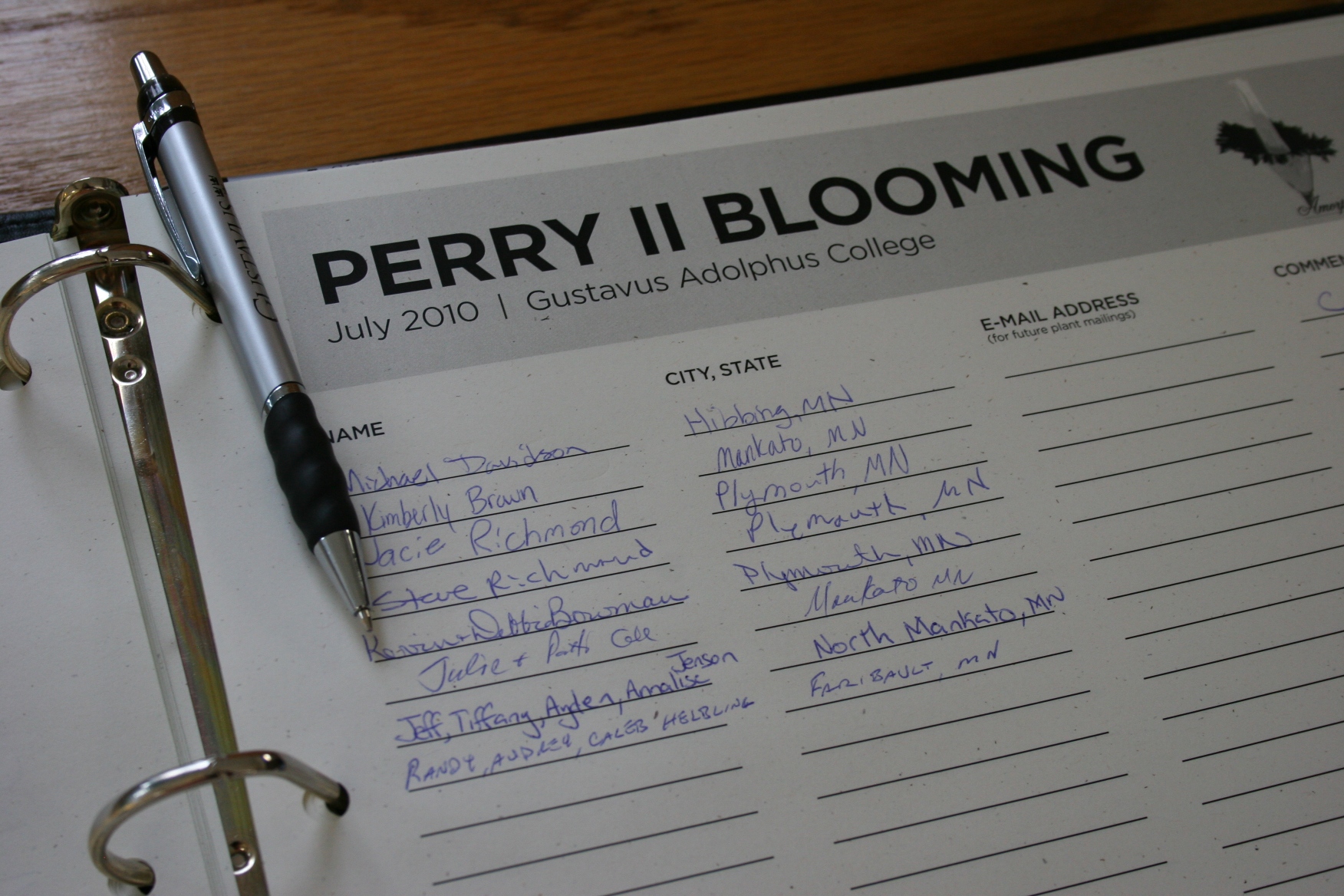
As of noon Friday, most visitors who signed Perry's guestbook came from the St. Peter-Mankato area. However, as word of the blooming spread, visitors were expected from all over--some had already come from Paris and Sweden (they were already visiting in the area).

The Petty guestbook signed by visitors in 2010. Minnesota Prairie Roots file photo.

I saw Perry when the plant bloomed in 2010.  (You can view photos from that visit by clicking here.)

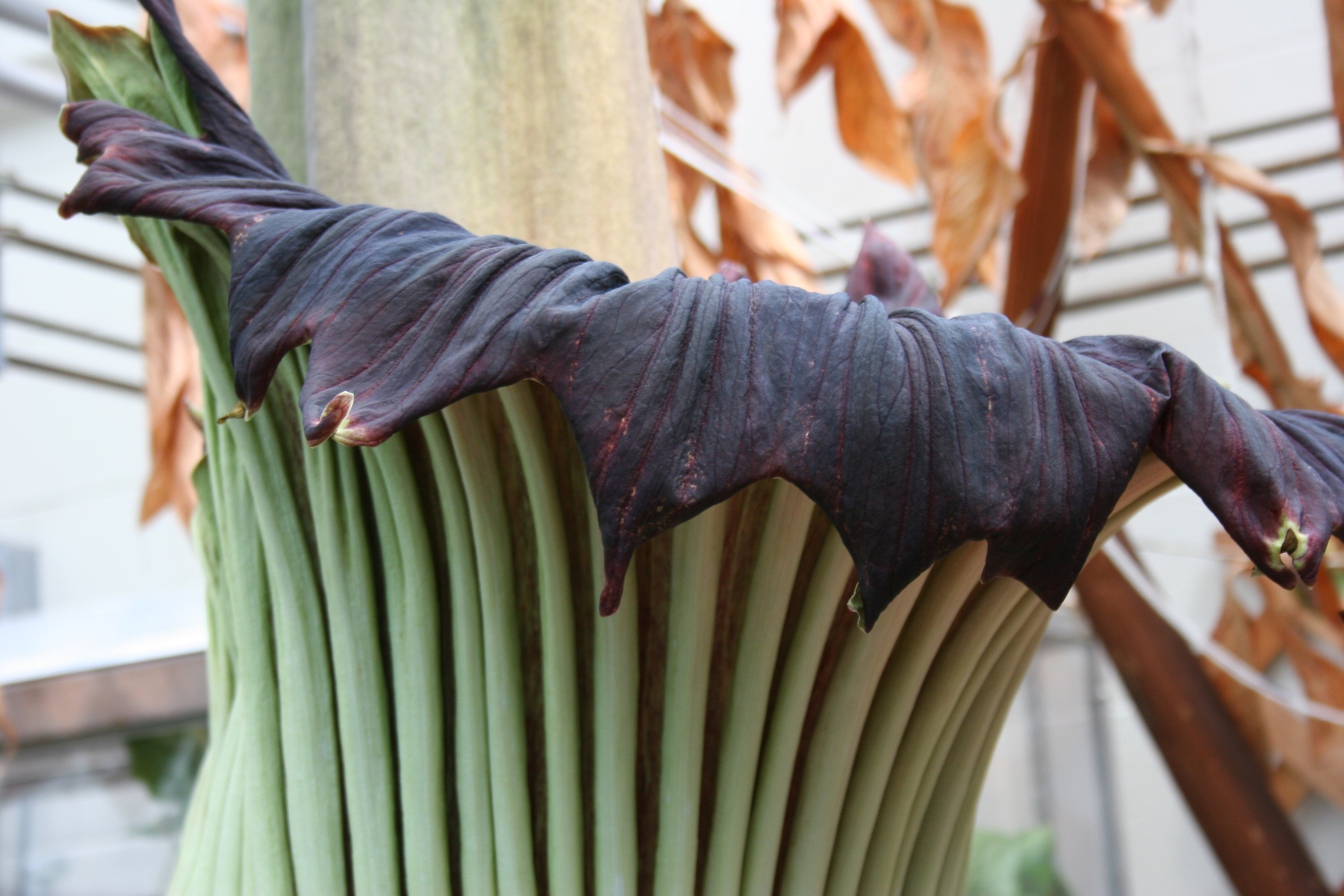
A close-up of Perry's unfolding spathe, an outer purple vase-like sheath.

A close-up of Perry’s unfolding spathe, an outer purple vase-like sheath. Minnesota Prairie Roots file photo 2010.

If you plan to see Perry in person, make haste. If you can’t get to St. Peter, then click here to watch Perry via web cam.

Happy Halloween!

Copyright 2013 Audrey Kletscher Helbling
 

In St. Peter: Waiting for the corpse flower to bloom October 29, 2013

PERRY MANIA is invading Gustavus Adolphus College in St. Peter.

A shot through a window into the viewing area shows Perry beginning to open.

A shot through a window into the viewing area shows Perry beginning to open in late July 2010.

OK, that may be a bit of a stretch. You decide, But interest in the predicted early November blooming of Perry, otherwise known as the “corpse flower,” is strong.

Think web cams, “featured news” on the college website, headlines in the St. Peter Herald, a Perry blog and even Perry themed t-shirts, cap, mugs, tote bag, bumper sticker and other merchandise available for purchase.

A close-up of Perry's unfolding spathe, an outer purple vase-like sheath.

A close-up of Perry’s unfolding spathe, an outer purple vase-like sheath. Minnesota Prairie Roots file photo 2010.

And all of this because the rare tropical plant, a native of Sumatra in Indonesia and with the largest unbranched inflorescence in the world, is about to blossom.

This mammoth plant, which can reach heights of eight to 10 feet and a life span of 40 years, is noted for its distinct rotting flesh/rotting meat odor.

A shot through the window into the viewing area of the titan arum.

A shot through the window into the viewing area of the titan arum shows the high level of interest in the corpse flower. Minnesota Prairie Roots file photo 2010.

Three years ago, my husband, son and I were among the 5,000 plus curious who flocked to the third floor greenhouse in the Nobel Hall of Science to view, and smell, the Amorphophallus titanum, aka Titan Arum. Gustavus named its plant, seeded in 1993, after the Titan Hyperion, associated with intellectual curiosity. That would be Perry, for short.

I don’t recall the precise smell of Perry only 12 hours after the plant began blooming in late July 2010. But I do remember thinking the odor was not nearly as bad as I had imagined and that I’ve smelled worse (like a slurry pit being emptied) while traveling through rural Minnesota.
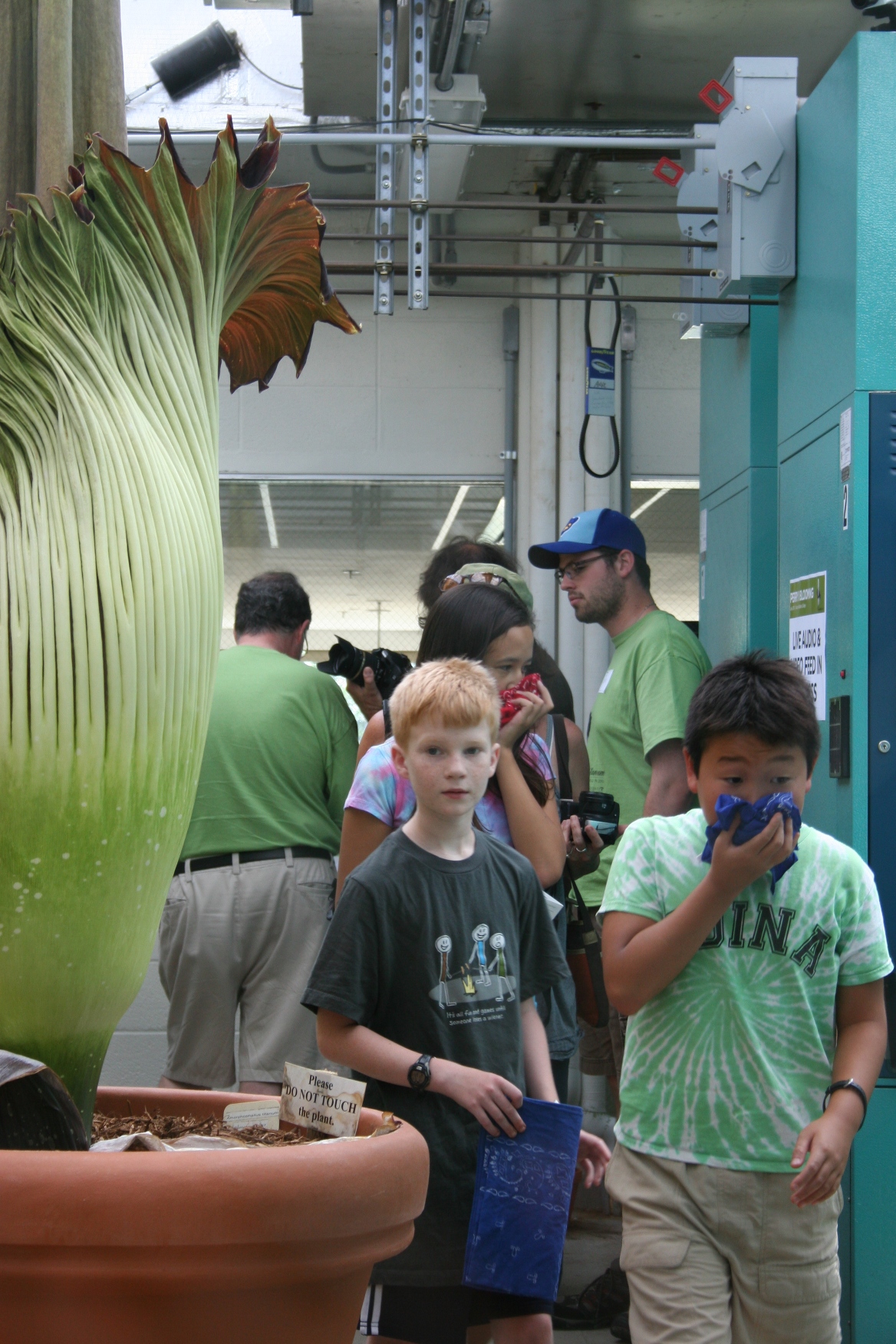
One of the Yang boys wards off the offending odor with a perfumed bandanna.

The odor was too much for this boy, who covered his face with a perfumed bandanna when visiting Perry in 2010. Minnesota Prairie Roots file photo.
But others, such as elementary-aged kids from Edina, pressed perfumed bandannas to their noses.

A diagram explained the life cycle of "the corpse plant."

A diagram explains the life cycle of “the corpse plant.” Minnesota Prairie Roots file photo 2010.

To see, and smell, a corpse flower in bloom is a rare opportunity, one limited to only a few days. This marks Perry’s third blooming. And there isn’t exactly an abundance of these plants in the world, one of the reasons Gustavus botanists are invested in conservation of the Titan Arum. Gustavus received 20 Titan Arum seeds from a San Francisco physician  in 1993 and Perry is the result.

Visitors came with cameras in hand to photograph the rare blooming of Perry, which lasted until Sunday.
Visitors came with cameras in hand to photograph the rare blooming of Perry in July 2010. Perry has previously bloomed in 2007 and 2010. Minnesota Prairie Roots file photo 2010.

Is Perry worth seeing, worth smelling, worth photographing? Definitely.

If you’re hypersensitive to odors, though, pack your perfumed bandanna.

FYI: As early November nears, be sure to check the Gustavus Adolphus website (click here) often for updates on Perry and the precise date when blooming is expected. Some Facebook fans are predicting blossoming on Halloween or even earlier.