Minnesota Prairie Roots

Writing and photography by Audrey Kletscher Helbling

Insights into domestic violence & a Minnesota father’s mission after his daughter’s murder February 2, 2016

Filed under: Uncategorized — Audrey Kletscher Helbling @ 5:00 AM
Tags: , , , , , , , ,
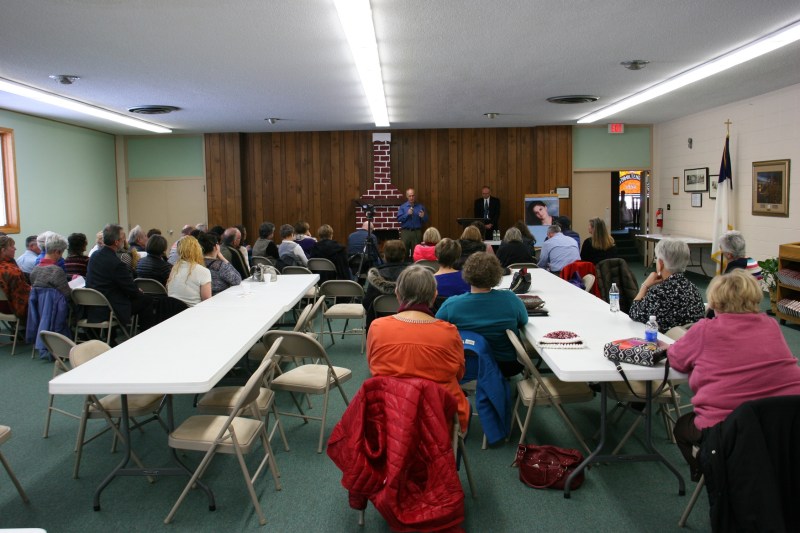
Local clergy, representatives from crisis centers and many others gathered to hear Dan Kasper's powerful message on domestic violence.

Local clergy, representatives from crisis centers and many others gathered to hear Dan Kasper’s powerful message on domestic violence.

IN A NEARLY TWO-HOUR presentation Sunday afternoon to a crowd of around 50 gathered at Redeemer Lutheran Church in Owatonna, Dan Kasper of Northfield spoke from the heart—of losing a daughter to domestic violence.

In April 2013, Becky Kasper, a 19-year-old marketing major at Arizona State University, was murdered by her former boyfriend, Luis Soltero. He is currently serving 25 years in an Arizona prison for second-degree murder, plus an additional five for kidnapping, followed by a lifetime of probation with mental health terms.

Dan Kasper delivered a powerful message that personalizes domestic violence. With a portrait of Becky to his left, Dan remembered his daughter—with the beautiful brown eyes of her mother, Sheryl—as determined, a go-getter, a leader, a problem solver. Friends described her as strong, bold, brave, independent and a loyal friend.

“Becky did everything right in life,” her father said, dispelling preconceived notions about victims of domestic violence. “No one could see this coming. Doing everything right got her killed.”

He explained: Becky was trying to help Luis deal with drug and alcohol abuse. But his daughter, he said, “didn’t know what she was up against.” Luis was dealing with mental health issues and had previously attempted suicide, as recently as six weeks before Becky’s murder. “Trying to help puts you in a vulnerable spot…we are losing a lot of young women.”

On April 9, Becky and Luis ended their relationship. On Saturday, April 20, within the two-week time frame that is most dangerous for any domestic abuse victim leaving a relationship, Luis killed Becky with a 10-pound dumbbell. The following Tuesday Luis turned himself into police, after using Becky’s bank card, going to a movie within hours of her murder and attempting suicide. His plan was murder-suicide.

We need to get rid of the “he snapped” notion, Dan said, accepting that a process leads an abuser, like Luis, to domestic violence.
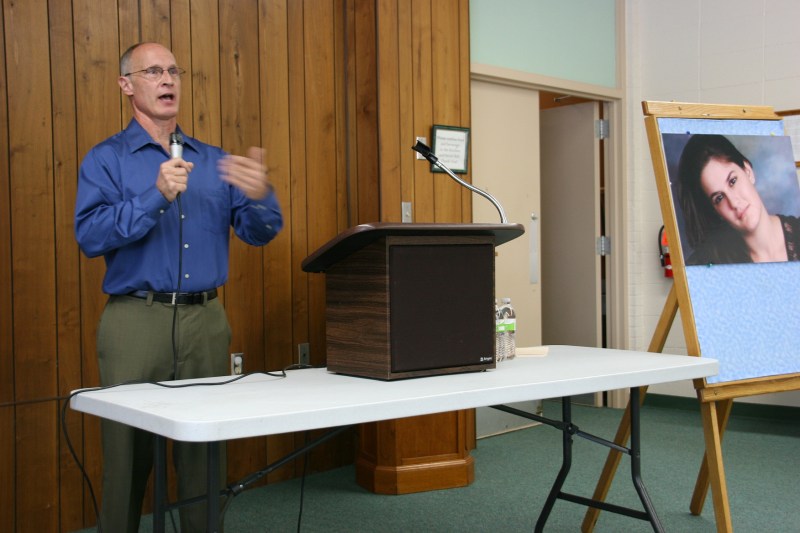
Dan Kasper spoke with passion and purpose.

Dan Kasper speaks with passion and purpose.

The Kaspers’ mission and the warning signs

Dan and Sheryl Kasper are on a mission now to honor their daughter. Specifically, Dan encourages parents to educate their children about and mentor healthy relationships. He emphasizes the need to increase communication and to maintain that communication, especially if a daughter is in an abusive relationship. It is up to parents, he said, to fight the battle against domestic violence because they have the most to lose.

For the Kaspers, living 1,600 miles away from Becky, there was no reason to suspect anything was amiss in Becky and Luis’ relationship. The pair spent a Christmas with the Kaspers in Minnesota and Dan drove back with the couple to Arizona in a car he’d purchased for Becky. All seemed well between them. Dan would next see Luis 1 ½ years later in an Arizona courtroom.

In hindsight, the Kaspers now recognize Becky’s calls for help. Literal calls. In one phone conversation, Becky told her mother about bruises on her arm, explaining that she’d bruised herself while pulling pans from the oven in the coffee shop where she worked. On another occasion, she told them about two black eyes caused by an air bag deploying when a friend’s car, in which she was a passenger, crashed.

“Why would we think she was lying?” Dan asked. “She was always truthful before.”

The Kaspers would learn later that, in Arizona, “people were seeing these warning signs.” They learned that “Becky was roughed up,” that people “heard screaming and stuff flying around” and even the foreboding scream, “Stop it, I can’t breathe!”

“No one told us,” Dan said. “We never had the chance to help.”
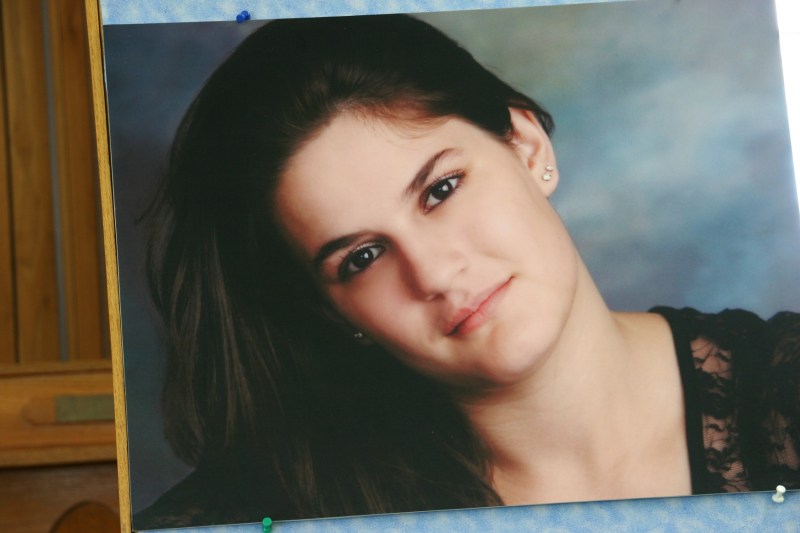
Becky Kasper's portrait.

Becky Kasper’s portrait.

Honoring their daughter

But now, despite his frustrations with “the system,” despite this tragedy that has left him existing rather than living, despite no longer feeling emotions but only thinking logically in survival mode, Dan is determined to make a difference. He quoted the words inscribed on a plaque in Becky’s honor at Arizona State University: This is not where it ends.

Sunday marked his first public speaking engagement to educate, to begin to effect changes in laws and in policies on college campuses, to fight the battle against evil. “Domestic violence is under the umbrella of evil,” Dan said, encouraging audience members to be persistent, relentless, never changing the course in being good people. “By being good people, we are fighting domestic violence.” He likened that to putting “a little grain of sand in the devil’s shoe.”

As the murder case worked through the judicial system—which Dan says is all about the abuser—the Kaspers begin to ask themselves, “What will best reflect and honor Becky’s life?” Their top priority, they determined, was assuring Luis gets the mental health help he needs and to also protect the public. That was accomplished with the 30-year prison sentence and lifetime probation with mental health terms.
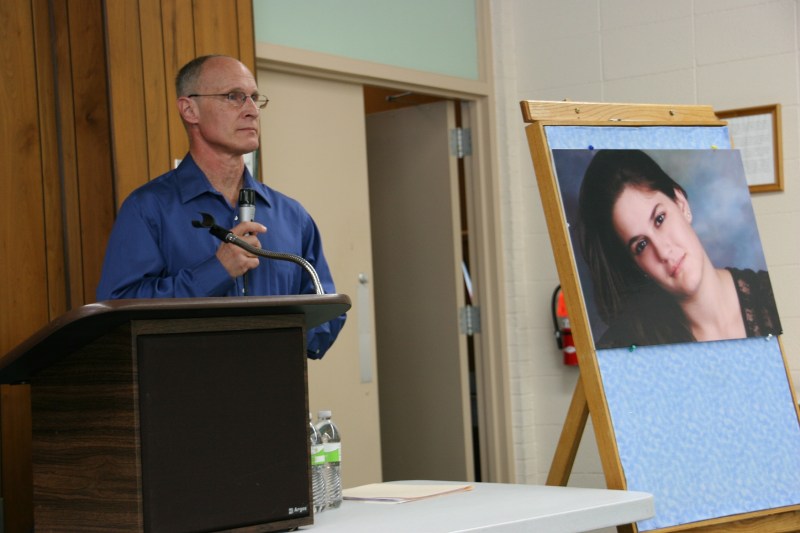
Dan Kasper next to a portrait of Becky.

Dan Kasper listens to audience questions.

Meeting the murderer in prison

In November 2014, Dan met face-to-face with his daughter’s killer. Luis walked into the prison visiting room unshackled with a bounce in his step, a smile and as happy as could be, like they were old buddies, Dan said. This father didn’t get the answer to his question, “Where is the mental illness I didn’t see?” Nor did he get an apology. Nor an explanation other than Luis “got in his head that Becky needed to die.”

Luis accepted responsibility for the crime, not blaming it on mental illness. He also talked about dedicating his life to Christ and repentance and said he some day wants to speak about domestic violence.

During that prison conversation, when Dan revealed that he would have helped Luis had he known of his problems, Luis shared that he would have called him.

“The abuser is a victim, too…he has a family,” Dan told audience members on Sunday. His wife, he noted, “would rather be Becky’s mother than Luis’ mother.”

In the final hours before her death, Becky and Luis’ mother were texting each other about Luis. In her last text late in the afternoon of April 20, 2013, Becky wrote, “He seems relatively OK.”

That day, Luis murdered Becky.

#

FYI: If you are in an abusive relationship, seek help. You are so worth it. Contact a local crisis resource center or women’s shelter for help and support. If you are in immediate danger, call 911. Leaving an abuser is the most dangerous time; have a plan to leave safely. Additional information is available, for abuse victims, family, friends and survivors by clicking on any of these links:
National Coalition Against Domestic Violence
Minnesota Coalition for Battered Women
NO MORE

© Copyright 2016 Audrey Kletscher Helbling


One father’s powerful story about domestic violence January 27, 2016


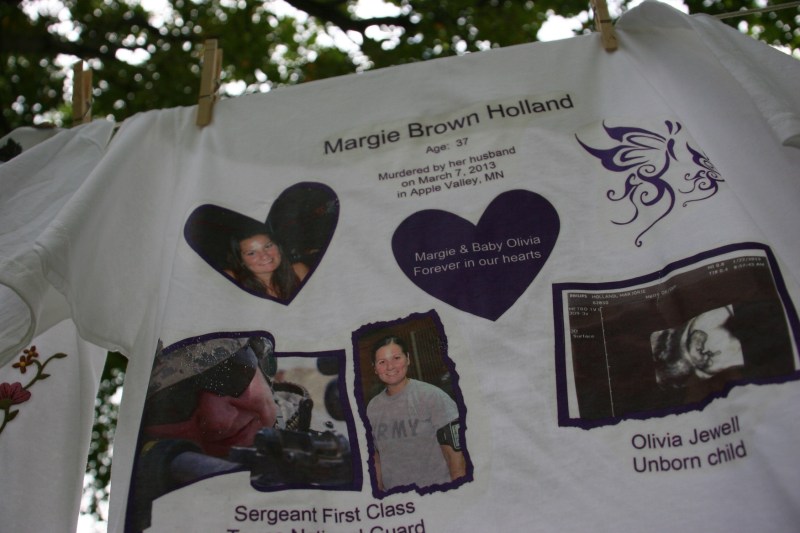
Margie Brown Holland and her unborn daughter, Olivia, were honored at The Clothesline Project display this summer in Owatonna. The Minnesota Coalition for Battered Women coordinates the project to honor victims of domestic violence. Redeemer Lutheran Church brought the project to Owatonna this past summer.

Margie Brown Holland and her unborn daughter, Olivia, were honored at The Clothesline Project display this summer in Owatonna. Margie is the daughter of my former neighbor Ron. The Minnesota Coalition for Battered Women coordinates the project to honor victims of domestic violence. Redeemer Lutheran Church brought the project to Owatonna.

JUST OFF THE TOP of my head, I can think of perhaps 20 family, friends and indirect acquaintances who have been victims of domestic abuse/violence. Nearly all survived; some did not.

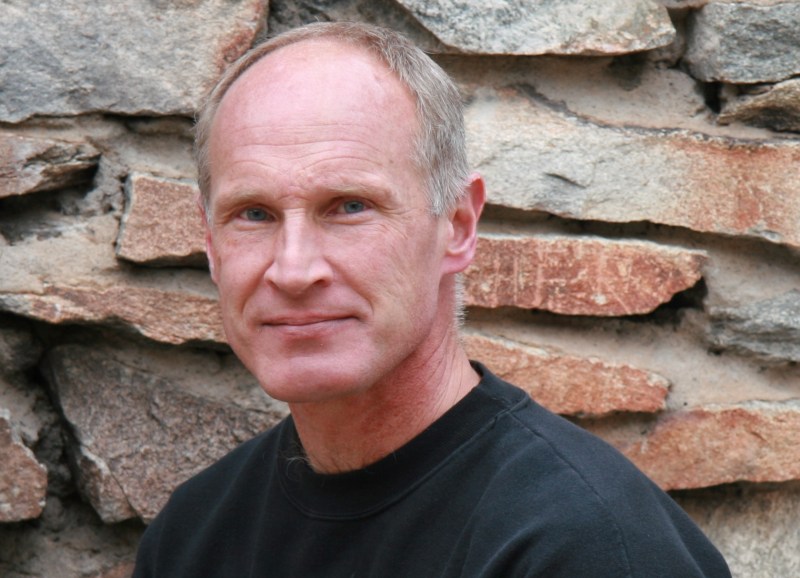
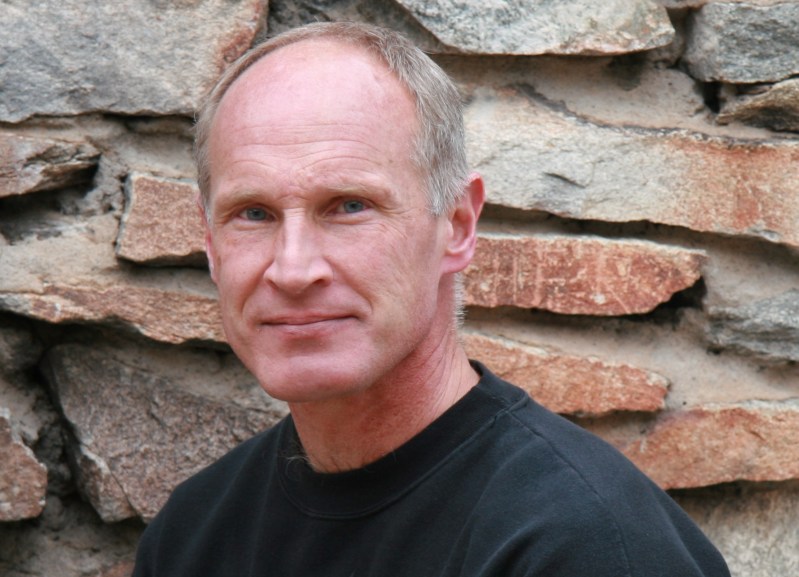
Dan Kasper

Dan Kasper. Photo courtesy of Redeemer Lutheran Church/Dan Kasper.

On Sunday afternoon, January 31, Dan Kasper of Northfield will talk at a church in Owatonna about his daughter Becky, who was murdered in April 2013 by her ex-boyfriend. Dan’s personal story of “Finding hope in the midst of loss” is certain to make a powerful impact.

Last week I spoke with Dan in a 90-minute phone conversation. I didn’t take notes to shape this blog post. I only listened.

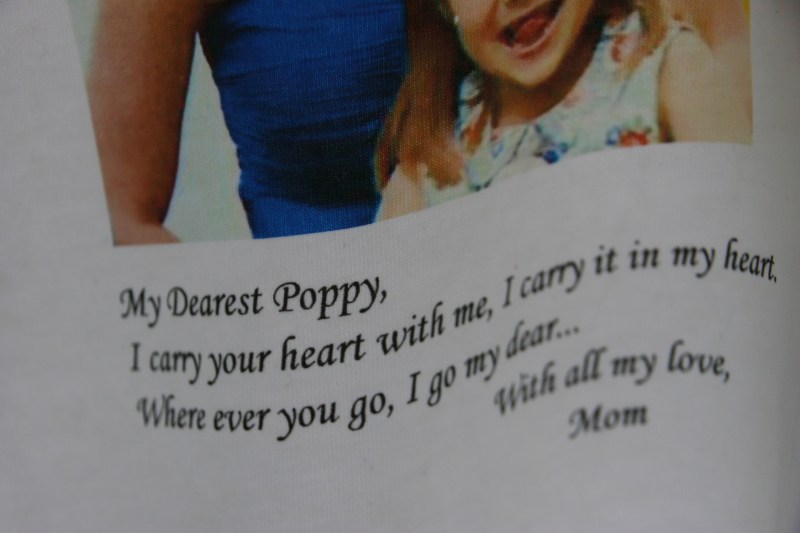
Another t-shirt from The Clothesline Project.

Another t-shirt from The Clothesline Project.

And what I heard was the strength of a father determined to honor his 19-year-old daughter by sharing his experiences. I learned of the warning signs Dan and his wife missed, mostly because they live in Minnesota and Becky was far away attending college in Arizona. I heard a father who, even through the worst pain a parent can experience, has risen up to make a difference.

I learned more about his precious Becky, how she was compassionate and caring and how she was trying to help her ex-boyfriend work through issues. Dan would later meet, face-to-face, with her killer in prison.

I heard a man of faith speaking to me.

I heard the anguish of a man abandoned by some friends after Becky’s death, but also the recipient of unexpected support from others.

I heard this father, a secondary victim of abuse, state that “you can’t rely on the system.”

I listened to a hard-working man from a small Midwestern college town tell me of the near financial ruin his family has faced since Becky’s death due to funeral costs, lost income, travel related expenses and more.

His story is powerful. If you live anywhere near Owatonna, plan to attend this 2 p.m. Sunday, January 31, presentation at Redeemer Lutheran Church, 1054 Truman Avenue. We all need to be educated about domestic violence/abuse. And I can’t think of anyone, other than a victim, more poised to educate us than a father who has lost his daughter to domestic violence.

#

the logo

FYI: Dan and Sheryl Kasper have established the non-profit Becky Kasper Foundation to honor their daughter. Click here for more information.

If you are in an abusive relationship, seek help. You are so worth it. Contact a local crisis resource center or women’s shelter for help and support. If you are in immediate danger, call 911. Leaving an abuser is the most dangerous time; have a plan to leave safely.

Additional information is available, for abuse victims, family, friends and survivors by clicking on any of these links:

National Coalition Against Domestic Violence

Minnesota Coalition for Battered Women

NO MORE

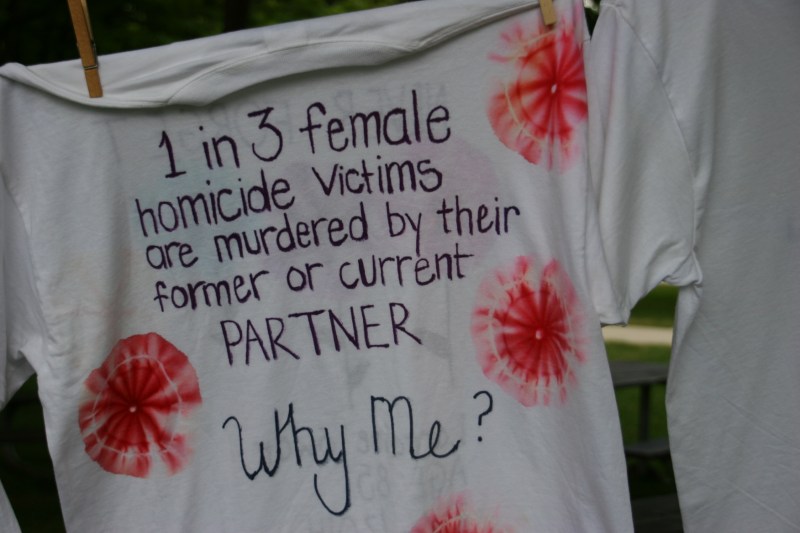
Statistics on a The Clothesline Project t-shirt.

Statistics on a The Clothesline Project t-shirt.

Click here to read my July 2015 blog post about The Clothesline Project.

And click here to read the just-released Minnesota Coalition for Battered Women 2015 Femicide Report. Last year at least 34 people in Minnesota were killed due to domestic violence.
© Copyright 2016 Audrey Kletscher Helbling


One father’s story of finding hope in the midst of loss January 15, 2016

WHEN YOU READ Rebecca Kasper’s 2013 obituary, you learn of a young woman described as sweet, beautiful and always smiling. You read of a former Northfield High School athlete and of a student finishing her second year at Arizona State.

You read words of heartache and heartbreak expressed by friends and those who never knew Becky. You read condolences for her parents, sister and those who loved the 19-year-old.

And you would wonder, if you didn’t know the story of Becky’s death, why she passed away tragically on Tuesday, April 23, 2013. Becky was killed by her ex-boyfriend, now serving 30 years in prison for her murder.

Dan Kasper

Dan Kasper. Photo courtesy of Redeemer Lutheran Church/Dan Kasper.

But there’s more to the story. And that story will be shared at 2 p.m. on Sunday, January 31, at Redeemer Lutheran Church in Owatonna, 1054 Truman Avenue. Becky’s father, Dan Kasper, speaks about “Finding hope in the midst of loss.” He visited his daughter’s killer, Luis Soltero, in prison.

Dan Kasper’s presentation promises to be powerful as he talks about that prison meeting and what he has learned since his daughter’s murder.

Come and hear this compelling story of tragedy and of hope. You will also learn about the warning signs of domestic violence and more.

#

FYI: If you are in an abusive relationship, seek help. You are so worth it. Contact a local crisis resource center or women’s shelter for help and support. If you are in immediate danger, call 911. Leaving an abuser is the most dangerous time; have a plan to leave safely.

Additional information is available by clicking on any of these links:

National Coalition Against Domestic Violence

Minnesota Coalition for Battered Women

NO MORE

© Copyright 2016 Audrey Kletscher Helbling

 

Minnesota Faces: Northfield historian September 11, 2015

Portrait #39: Christian Hakala

Christian Hakala talks about gang members involved in the Northfield bank raid, pictured to his left: Frank and Jesse James; Cole, Bob and Jim Younger; Clell Miller; William Chadwell; and Charlie Pitts.

Christian Hakala talks about gang members involved in the Northfield bank raid, pictured to his left: Frank and Jesse James; Cole, Bob and Jim Younger; Clell Miller; William Chadwell; and Charlie Pitts. Minnesota Prairie Roots file photo 2012.

To say folks in Northfield, Minnesota, appreciate local history would be an understatement.

Take Christian Hakala. He has a Master of Arts in history, has taught history, has served as Northfield Historical Society Board president and volunteers as a tour guide.

During his day job, he’s Director of Individual Giving at Northfield’s Carleton College.

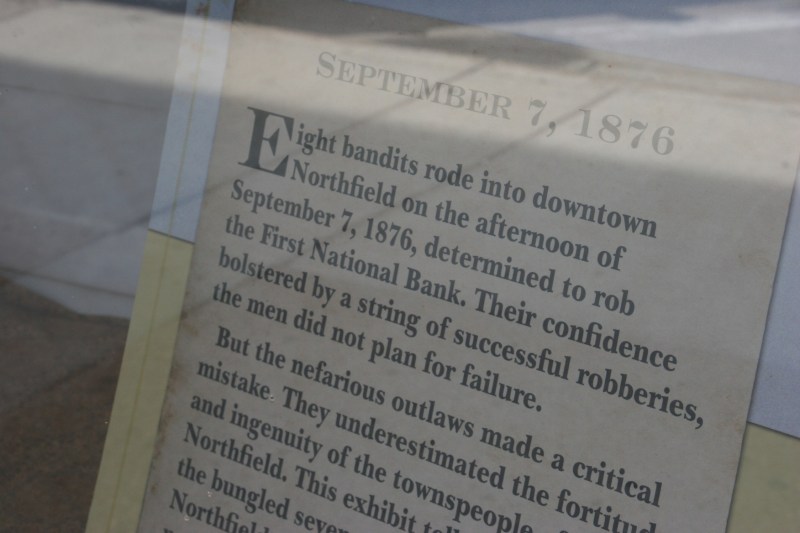
It was in his capacity of NHS tour guide that I met Hakala in September 2012 as he walked visitors through the “Attempted Bank Raid” exhibit. That would be the September 7, 1876, attempted robbery of the First National Bank of Northfield by the James-Younger Gang. A bank cashier, a Swedish immigrant and two of the outlaws died in seven minutes as townspeople fought back.

Northfield this week is celebrating the heroism of locals during the annual The Defeat of Jesse James Days, an event which is among Minnesota’s most popular community celebrations. DJJD includes bank raid re-enactments. Hakala has participated in those, too, role-playing a townsperson.

If you appreciate history and drama and community celebrations, then head on over to Northfield this weekend. This beautiful historic river city knows how to showcase local history in a big way.

FYI: Click here for more details about The Defeat of Jesse James Days.

Minnesota Faces is featured every Friday on Minnesota Prairie Roots.

© Copyright 2015 Audrey Kletscher Helbling
 

At St. Olaf College: A Minnesota connection to the 1965 Civil Rights Movement May 12, 2015

The name Reeb holds special significance at a Minnesota college.

The name Reeb holds special significance in a memorial at a Minnesota college.

JAMES REEB. You may not recognize his name. Or you may remember an actor portraying the Rev. Reeb in a scene in the movie, Selma. Or heard/read his name in a recent news story.

The memorial honoring the Rev. James Reeb was dedicated in March, on the 50th anniversary of his death.

The memorial honoring the Rev. James Reeb was dedicated in March, on the 50th anniversary of his death.

Today, just outside the entrance to Rolvaag Library on the hilltop campus of St. Olaf College in the southern Minnesota community of Northfield, Reeb is honored with a memorial for his efforts in the Civil Rights Movement.

Words play across a screen in a video next to the memorial.

Words play across a screen in a video next to the memorial.

His involvement cost him his life.

A portrait of Reeb printed on the memorial.

A portrait of Reeb printed on the memorial.

On March 9, 1965, Reeb and two friends were attacked after dining at a Selma restaurant run by local black citizens. The Massachusetts clergyman, an outspoken advocate for civil rights, desegregation and more, died two days later from his injuries.

Reeb, shown to the left in this photo, was among those who marched to the Edmund Pettus Bridge on March 7, 1965, Bloody Sunday.

Reeb, shown to the left in this photo, was among those who marched to the Edmund Pettus Bridge on March 7, 1965. This image is in a video at the St. Olaf memorial.

Dr. Martin Luther King, Jr., who’d called upon clergy to join a voting rights march from Selma to Montgomery, Alabama, delivered Reeb’s eulogy.

Reeb’s death served as a catalyst for passage of the Voting Rights Act of 1965, according to information published on the memorial to this 1950 St. Olaf graduate.

Visitors to the "Selma to Montgomery: Marching Along the Voting Rights Trail" exhibit at St. Olaf College let their voices be heard.

Visitors to the recent “Selma to Montgomery: Marching Along the Voting Rights Trail” exhibit at St. Olaf College let their voices be heard.

To view this recently-installed memorial, to read that Reeb possessed “a healing personality, but his convictions are like iron” is to understand that one voice can make a difference. Reeb considered taking a stand for justice more important than remaining in the safety of his home. He left his family in Massachusetts to join the march from Selma to Montgomery. While walking to a planning meeting for that march, Reeb was brutally attacked.

The "Selma to Montgomery" exhibit at the Flaten Art Museum, St. Olaf, recently closed.

The “Selma to Montgomery” exhibit at the Flaten Art Museum, St. Olaf, recently closed.

In Reeb’s eulogy, King noted that, “His death says to us that we must work passionately, unrelentingly, to make the American dream a reality, so he did not die in vain.”

Those are words we would do well to remember today, 50 years after Reeb’s death and the march from Selma to Montgomery.

FYI: Click here to read my post about the recently-closed Selma to Montgomery: Marching Along the Voting Rights Trail exhibit at St. Olaf College.

© Copyright 2015 Audrey Kletscher Helbling
 

The Civil Rights Movement as photographed by Stephen Somerstein April 23, 2015

POWERFUL. HISTORIC. MEMORABLE.

Looking through a window into an exhibit space at Flaten Art Museum.

Looking through a window into the “Selma to Montgomery” exhibit in the Flaten Art Museum at St. Olaf College in Northfield, MN.

That trio of adjectives describes Selma to Montgomery: Marching Along the Voting Rights Trail, an exhibit of 45 black-and-white photos documenting the 1965 Civil Rights Movement through the work of photographer Stephen Somerstein.

I was only eight years old in 1965, living in rural southwestern Minnesota, far removed from what was occurring in Alabama.

The faces of the Civil Rights Marches and Movement include Dr. Martin Luther King, Jr. Photo by Stephen Somerstein.

Faces of the Civil Rights Movement include Dr. Martin Luther King, Jr., left, and his wife, Coretta Scott King, right. This shows a snippet of a photo by Stephen Somerstein.

But the exhibit, showcased at the Flaten Art Museum of St. Olaf College, took me to Alabama in 1965 and into the movement for equality in an up close and personal way.

An overview of a section of the exhibit at St. Olaf College, Northfield, Minnesota.

An overview of a section of the now-closed exhibit at St. Olaf College.

If a picture is worth a thousand words, then Somerstein’s pictures are worth 45,000 words. My one regret is that I did not visit this exhibit until the day before it closed on April 12 thus failing to inform you, my readers, of the opportunity to see this for yourselves.

This portion of a photo by Stephen Somerstein drew my attention.

This portion of a photo by Stephen Somerstein drew my attention.

As I circled the museum space, I studied many of the photos in detail. These images by Somerstein, a then student at City College of New York and editor of the school newspaper, call for close examination. It is in the details that we begin to fully understand, to see the fear, the hope, the defiance, the anger, the love, the determination.

I found myself drawn to hands and arms—those of an interracial couple, that of a union member gripping a sign, activists carrying American flags, a soldier focusing binoculars, a mother cradling her son:

One of my favorite images

One of my favorite photos by Stephen Somerstein.

Skin color matters not, as showcased in this section  of a Stephen Somerstein photo.

Skin color matters not, as showcased in this section of a Stephen Somerstein photo I photographed.

The two things I noticed in this Stephen Somerstein photo: the marcher carrying and American flag and the soldier atop the building scanning the scene with binoculars.

The two things I noticed in this Stephen Somerstein photo: the marchers carrying American flags and the soldier atop the building scanning the scene with binoculars. It’s truly a multi-layered image.

The Teamsters Union

The Teamsters Union Local 239 sent supplies to activists who were marching. This is a selected section of a photo by Stephen Somerstein.

Eyes and words also drew me in:

vote

Bobby Simmons, a member of the Student Nonviolent Coordinating Committee, wearing zinc oxide to prevent sunburn, wrote VOTE onto his forehead. This is a section of Stephen Somerstein’s portrait of Simmons.

The exhibit featured explanatory information about photos and the movement.

The exhibit featured explanatory information about photos and the movement.

And although I did not participate in the interactive portions of the exhibit created by artist Nancy Musinguzi, I appreciated that visitors could photograph themselves and pen thoughts on working toward justice and equality.

Visitors could photograph themselves at the exhibit and express their thoughts.

Visitors could photograph themselves at the exhibit and express their thoughts.

Opinions expressed in the exhibit polling place.

Opinions expressed in the exhibit polling place.

They could also vote in a People’s Survey. Vote.

A St. Olaf College student staffing the museum makes sure a video is working properly.

A St. Olaf College student staffing the museum makes sure a video is working properly.

The exhibit drew a wide range of interest at St. Olaf College with students in social work, history, art history, gender studies and more viewing the photos, says Flaten Art Museum Director Jane Becker Nelson. The timing of the exhibit—on the 50th anniversary of the Civil Rights Movement, relating to current day issues and release of the movie, Selma—added to the interest.

Another overview of part of the exhibit.

Another overview of part of the exhibit. Photos displayed are by Stephen Somerstein.

Additionally, Becker Nelson notes that the exhibit connects to the 50th anniversary of the death of St. Olaf graduate James Reeb. (More to come on that in a post next week.)

A chair placed before a Stephen Somerstein photo offers visitors a place to sit and contemplate.

A chair placed before a Stephen Somerstein photo offers visitors a place to sit and contemplate.

This remarkable collection of documentary photos impresses in a deeply personal way. Beyond headlines. Beyond news stories. Beyond the pages of history books. Somerstein’s photos document the humanity of the Civil Rights Movement in the eyes, in the hands, in the stances of individuals. And that connects all of us, no matter our skin color.

#

© Copyright 2015 Audrey Kletscher Helbling
Original photos are by Stephen Somerstein. My photos of Somerstein’s images are published here with permission of Flaten Art Museum, St. Olaf College.

Selma to Montgomery was booked through New York-based National Exhibitions & Archives.


In which I discover the art treasures of St. Olaf and Carleton Colleges April 20, 2015

SOMETIMES I FEEL like I am missing out on a whole big wide world of art.

Not because art is absent here in outstate Minnesota. It isn’t. Recent years have seen a renewed effort to bring the arts—visual and performing—to communities like mine outside the Twin Cities metro area. Faribault has the Paradise Center for the Arts. Neighboring Owatonna, Northfield and Waseca also have art centers. Even the community of Zumbrota, population around 3,400, has the thriving Crossings at Carnegie.

So there are plenty of opportunities to engage in the arts at a local and regional level without venturing into Minneapolis or St. Paul, which I really prefer to avoid given my aversion for traffic congestion and big cities in general.

Despite an abundance of wonderful local art, I was still missing that segment of art created by renowned artists or by artists outside of Minnesota.

That is until I recently realized that I can see that type of art, too, right in my backyard.

In the center of this display space outside the Flaten Art Museum is a poster for the "Selma to Montgomery" exhibit on the Civil Rights Movement.

Promotional posters posted in the Dittman Art Center at St. Olaf College show the wide variety of artistic offerings.

Two colleges in Northfield, a 22-minute drive from my Faribault home, both sometimes showcase notable art from their collections in exhibits that are open to the public. They also bring in outside artists and traveling exhibits. Entrance to Carleton’s Perlman Teaching Museum and St. Olaf’s Flaten Art Museum is free. No cost and no traffic are a winning combination for me.

Items from St. Olaf's art collection were displayed in the recent "Interrogating Genders" exhibit.

Items from St. Olaf’s art collection were displayed in the recent “Interrogating Gender” exhibit.

Together, these two prestigious private colleges hold more than 6,500 paintings, fine art prints, photographs, sculptures and more in their collections.

Entering the Flaten Art Museum Atrium, I encountered this mega sculpture just outside the "Selma" exhibit.

Entering the Flaten Art Museum Atrium, I encountered this mega sculpture just outside the “Selma” exhibit.

I discovered Carleton’s gallery space about 18 months ago and St. Olaf’s just recently, when I arrived at the college atop the hill to view Selma to Montgomery: Marching Along the Voting Rights Trail, an exhibition of Stephen Somerstein’s photos.

Walking across the hall from one museum space to another, I found Michon Weeks' "Wheel Within Wheel (#1-44) paintings hung along the atrium wall. The acrylic on paper on wood panel is a visual inventory of items in her Northfield garage.

Walking across the hall from one museum space to another, I found Michon Weeks’ “Wheel Within a Wheel (#1-44) paintings hung along the atrium wall. The acrylic on wood panel paintings are a visual inventory of items in her Northfield garage.

After studying Somerstein’s remarkable images, I strode across the hall to see the Interrogating Gender exhibit, since closed.

Rosa Bonheur's "Cows in Pasture."

Rosa Bonheur’s “Cows in Pasture.”

The 16th Century "Madonna and Child, an oil painting on panel by Adriaen Isenbrandt of Belgium.

The 16th Century “Madonna and Child” by Adriaen Isenbrandt of Belgium.

The angle at which I photographed "Archaic Greek Statue of a Woman" makes it appear as if the Italian terra cotta sculpture is studying the art on display.

The angle at which I photographed “Archaic Greek Statue of a Woman” makes it appear as if the Italian terra cotta sculpture is studying the art on display.

There I marveled in getting close up to photographs taken by Andy Warhol. Yes, the Andy Warhol. I stood in reverent awe before a 16th Century oil painting on panel of Madonna and Child by Adriaen Isenbrandt. I enjoyed art from Africa and Italy and the Cows in Pasture pencil on paper by Rosa Bonheur.

A wood sculpture from Africa, artist unknown, and titled "Seated Maternity Figure."

A wood sculpture from Africa, artist unknown, and titled “Seated Maternity Figure.”

I could have reached out and touched the art, except I didn’t. It was that comfortably accessible and intimate. I didn’t have that feeling I often get in galleries of “be careful and don’t touch,” although I was aware of cameras on the premise.

My husband peruses the art.

My husband peruses the art.

I only wish I’d realized years ago that I could simply walk onto these college campuses and view art by well-known and other artists and students, too.

I got down low to photograph the Greek woman sculpture encased in glass.

I got down low to photograph the Greek woman sculpture encased in glass.

Now that I know, I’ll be back.

FYI: All of the exhibits mentioned in this post are no longer showing. Both colleges will be featuring a Senior Art Show in their exhibit spaces.

Please check back for a story and photos of the Selma to Montgomery exhibit.

© Copyright 2015 Audrey Kletscher Helbling

 

Minnesota remembers Abraham Lincoln 150 years after his assassination April 14, 2015

THE PISTOL WEIGHS HEAVY in my hand. Cold metal and wood against warm flesh nestled in my palm. I am surprised, really, by the weight and smallness of this curved 1840 Philadelphia Derringer, which is exactly like the deadly weapon John Wilkes Booth fired at President Abraham Lincoln on April 14, 1865.

An 1840 Philadelphia Derringer, like the pistol used to assassinate President Abraham Lincoln.

My husband holds an 1840 Philadelphia Derringer. Minnesota Prairie Roots file photo 2009.

I wrote that paragraph in 2009 after attending a meeting of the Cannon Valley Civil War Roundtable. There an area collector showcased Lincoln memorabilia. I’ve never forgotten that petite pistol he allowed me to cradle.

Today, especially, I feel the weight of that Derringer. April 14 marks 150 years since Booth shot our 16th President as he watched the play, Our American Cousin, in Ford’s Theatre in our nation’s Capitol.

The assassination of Lincoln—the President who, via the Emancipation Proclamation set slaves free in “rebellious states”—stands as a memorable and pivotal moment in U.S. history.

A Lincoln postcard which a collector brought to a Cannon Valley Civil War Roundtable meeting several years ago.

A Lincoln postcard which a collector brought to a Cannon Valley Civil War Roundtable meeting in 2009.

Today we honor this remarkable leader of humble roots, author of the Gettysburg Address wherein he vowed “that we here highly resolve that these dead shall not have died in vain—that this nation, under God, shall have a new birth of freedom—and that government of the people, by the people, for the people, shall not perish from the earth.”

An original photo of Abraham Lincoln in Roger's collection.

An original photo of Abraham Lincoln from a southern Minnesota collector’s collection.

I’m also particularly fond of a lesser-known Lincoln quote: “All that I am, or ever hope to be, I owe to my angel mother.”

Promotional poster for the Lincoln event in Northfield, Minnesota.

Promotional poster for the Lincoln event in Northfield, Minnesota.

Throughout our nation and even here locally in Rice County, folks are publicly remembering Lincoln on the 150th anniversary of his death. At The Grand Event Center, The Northfield Historical Society this evening presents Our American Cousin, A Night That Changed Our Nation, The Assassination of President Abraham Lincoln. Held in an 1899 historic opera house/theatre with balcony booths much like those in Ford’s Theatre, the event includes summary presentations on the assassination and the nation’s reaction; a snippet from Our American Cousin; and a re-enactment of Lincoln’s assassination. Tickets are available in advance and at the door, although there is no guaranteed seating the day of the show.

An ink drawing of Abraham Lincoln by my artist friend, Rhody Yule, now deceased.

An ink drawing of Abraham Lincoln by my artist friend, Rhody Yule, now deceased.

At 7 p.m. on Thursday, April 16, the President of the Wood Lake Battlefield Preservation Association will arrive on horseback at the Faribault Senior Center, 19 West Division Street, Faribault. There, at the monthly meeting of the Cannon Valley Civil War Roundtable, Tom Hosier of Rochester, dressed in period costume, will talk about Lincoln’s assassination. The presentation is free and open to the public.

A poster promoting the upcoming Lincoln's Traveling Troupe performance.

A poster promotes the upcoming Lincoln’s Traveling Troupe performance.

In Mankato, Lincoln’s Traveling Troupe will present the “true and dramatic story of Lincoln’s assassination” and its immediate aftermath in The Heavens Are Hung in Black, a play written by Lincoln historian and re-enactor Bryce O. Stenzel. Show times are 7 p.m. Friday, April 24, and Saturday, April 25, and 2 p.m. Sunday, April 26, at the Bethlehem Lutheran Church Dining Room.

How will you remember Lincoln today or this month?

© Copyright 2015 Audrey Kletscher Helbling
 

Minnesota Faces: Layton Fossum January 16, 2015

Portrait #3: Layton Fossum, the ultimate optimist

Layton Fossum posed for me at the August 2010 Cancer Stroll.

Layton Fossum posed for me at the August 2010 Cancer Stroll.

When I met Layton Fossum 4 ½ years ago at the American Cancer Society Straight River Stroll, I looked into the face of an optimist.

The rural Northfield man, despite a difficult struggle with neck and head cancer (the words he used), was upbeat and positive, living life to the fullest.

It was obvious, from looking at him, that he’d been through a lot, that cancer had taken a physical toll. He had no facial nerves on his right side. He’d undergone reconstructive surgery on his drooping face. He’d lost the hearing in his reshaped right ear. Gold weighted his right eyelid.

But Layton didn’t dwell on any of this.

He lived. And he lived a good life. A joyful life.

Layton died on Monday at age 52, losing his long battle with cancer. He will be buried on Saturday.

But his positivity lives on. In condolences posted on the Benson & Langehough Funeral Home website, friend after friend writes of an upbeat man of faith with a beautiful smile, a great sense of humor, a generous and enthusiastic spirit, the type of person we all wish we could be, but likely aren’t.

My favorite comment comes from the folks at Full Service Battery & Salvage in Farmington. (Layton collected and sold scrap metal besides working numerous other jobs.) They wrote:

Layton was our favorite customer. His positive energy always blasted through our doors like hope! You couldn’t be down with Layton around. We will miss him!

That we should all blast through life with hope, like Layton.

© Copyright 2015 Audrey Kletscher Helbling
 

Maybe he plows snow… October 30, 2014

Filed under: Uncategorized — Audrey Kletscher Helbling @ 6:00 AM
Tags: , , , ,
Photographed on a hot and humid Saturday on Minnesota Highway 3 in Northfield.

Photographed on Minnesota State Highway 3 in Northfield.

AT THE TIME I shot this Ford truck with the “let it SNOW” window sticker, I found the message humorous. It was a hot and humid July afternoon in Northfield, Minnesota.

Now that winter isn’t all that far away and overnight temps are dipping into the 30s, I’m not laughing.

All too soon the snow will fall. Remember the Halloween blizzard of  1991?

Copyright 2014 Audrey Kletscher Helbling