Minnesota Prairie Roots

Writing and photography by Audrey Kletscher Helbling

Remembering the quotes of 35W bridge collapse survivor Garrett Ebling August 4, 2012

YOU’VE LIKELY SEEN HIM on the news this week, perhaps read about him in a newspaper article. He would be Garrett Ebling, survivor of the 35W bridge collapse.

I’ve never met Garrett, although we have communicated, first after my son was struck by a hit-and-run driver near my Faribault home in May of 2006. Garrett was managing editor of The Faribault Daily News then and showed such compassion and concern for my son and our family.

The following year, not long after the bridge collapse, Garrett and I would reconnect. This time I was on the other end, offering him compassion, concern and prayers as he battled to recover from severe injuries sustained when his car plunged from the bridge into the Mississippi River.

His fortitude impressed me then and still does.

Shortly after, I asked Garrett if he would share his experiences and thoughts with me for a magazine article. He agreed, granting me one of only a few interview requests he accepted. The result was a feature story which published in the November/December 2007 issue of Minnesota Moments. Garrett answered my questions via email given his jaw was wired shut or had recently been unwired, I can’t recall now which. That interview process worked best given his tenuous physical and emotional condition.

The story also included information and quotes from phone interviews with his rescuer, Rick Kraft of St. Paul, and his fiancee, Sonja Birkeland, to whom he’d proposed only four days before the bridge collapse. (They married on August 3, 2008, one year and two days after the bridge collapse and now have a young son, Cooper.)

Garrett’s responses to my long list of questions showed me his incredible strength, determination and positive attitude. He shared his excitement after he stood for the first time in these words:

This morning I stood up—STOOD UP—for the first time since the accident. I was so excited I screamed to my therapist: “Monica, look! I’m standing! I can’t believe it!” But with my jaw wired shut it sounded like “”Wonka, ook! Aye andin! Aye ant eave it!” For a brief moment I didn’t care that I’m muzzled.

Sir Edmund Hillary—the first person to climb Mount Everest—once said “It is not the mountain we conquer but ourselves.” When this is all said and done, I will be standing—STANDING—at the top of the mountain.

But I will not have conquered the bridge. Rather, I will have bested the uncomfortability, the uncertainty, the pain. I will have realized from which the depths I can rise up.

It’s the top of the mountain that puts us closest to heaven.

That last sentence, particularly, has stuck with me through the years. This week I worked the quote into a poem I submitted to The Minneapolis StarTribune which issued a call to readers for 35W poems. Mine, “Quotes from a survivor,” was accepted for online publication and was also published in the Variety section of the August 4 print edition. You will find it, and several other poems, by clicking here. Poems were limited to 35 words.

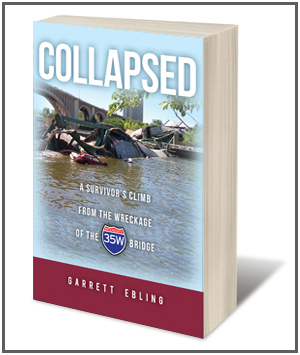
Garrett, the former journalist and now a small business owner of a sandwich shop, recently published a book, Collapsed: A Survivor’s Climb From the Wreckage of the 35W Bridge. Notice that use, again, of the word “climb.”

I have not yet gotten a copy of Garrett’s book. But I expect inspiring words from this man who has overcome seemingly insurmountable physical and emotional obstacles during his climb to the mountaintop.

© Copyright 2012 Audrey Kletscher Helbling


Unlocking the poetry within an abandoned farmhouse April 30, 2012

An abandoned farmhouse along Minnesota State Highway 19 east of Vesta on the southwestern Minnesota prairie.

Abandoned Farmhouse

My old bones rattle in the winter wind,
grown weary from years of standing,
bitter cold encompassing my body.

Despair surrounds me
like rot in the weathered heap of the barn,
like rust consuming the junk pile.

Alone, all alone now, abandoned
except for the dying circle of trees
that embrace me, holding me close.

The years have broken my spirit—
too much silence within my walls,
too many tears shed upon my floors.

Left here, without laughter, without hope.
Dreams shattered in my broken windows.
My door closed, locked with a skeleton key.

Abandoned. Desolate. Alone.
Leaning only on the prairie sky,
in a circle of dying trees.

#

IN 2001, THIS POEM published in Poetic Strokes, A Regional Anthology of Poetry from Southeastern Minnesota, Volume 3. To this day, it remains one of my favorite poems among all those I’ve penned.

“Abandoned Farmhouse” retains that status because the poem connects to my past, to rural southwestern Minnesota where I grew up in a cramped 1 1/2-story wood-frame farmhouse. When I was 11 years old, my parents built a rambler with a walk-in basement a stone’s throw across the circular gravel driveway from the old house. They needed the space for their growing family as the sixth, and final, child arrived in August of 1967.

The summer after we moved into the new house, we tore down the old house, board by board. Memories of dismembering that house lath by lath, nail by nail, imprinted upon my memory. Decades later I would recall the bones of the old house, the skeleton key that unlocked the porch door, the grove of trees that sheltered it from the strong winds that swept across the prairie.

I would write this poem, personifying an abandoned farmhouse.

My poetic words reach beyond my childhood home, though, to embrace the many abandoned farmhouses that dot the prairie landscape. I often wonder about the families that lived in these houses and about the stories they would tell.

Returning to an even earlier time period, my poem also reflects a pervasive loneliness that often troubled early pioneer women in a land that could feel desolate, harsh and inhospitable.

This past March, I captured that desolation in an abandoned farmhouse photo (above) taken within five miles of my childhood home. It aptly illustrates my poem.

To this day, I see both beauty, and despair, in abandoned farmhouses.

©  Copyright 2012 Audrey Kletscher Helbling
Shared with you in celebration of National Poetry Month, which ends today, April 30.


Celebrating poetry and art in Zumbrota on a Saturday evening April 22, 2012

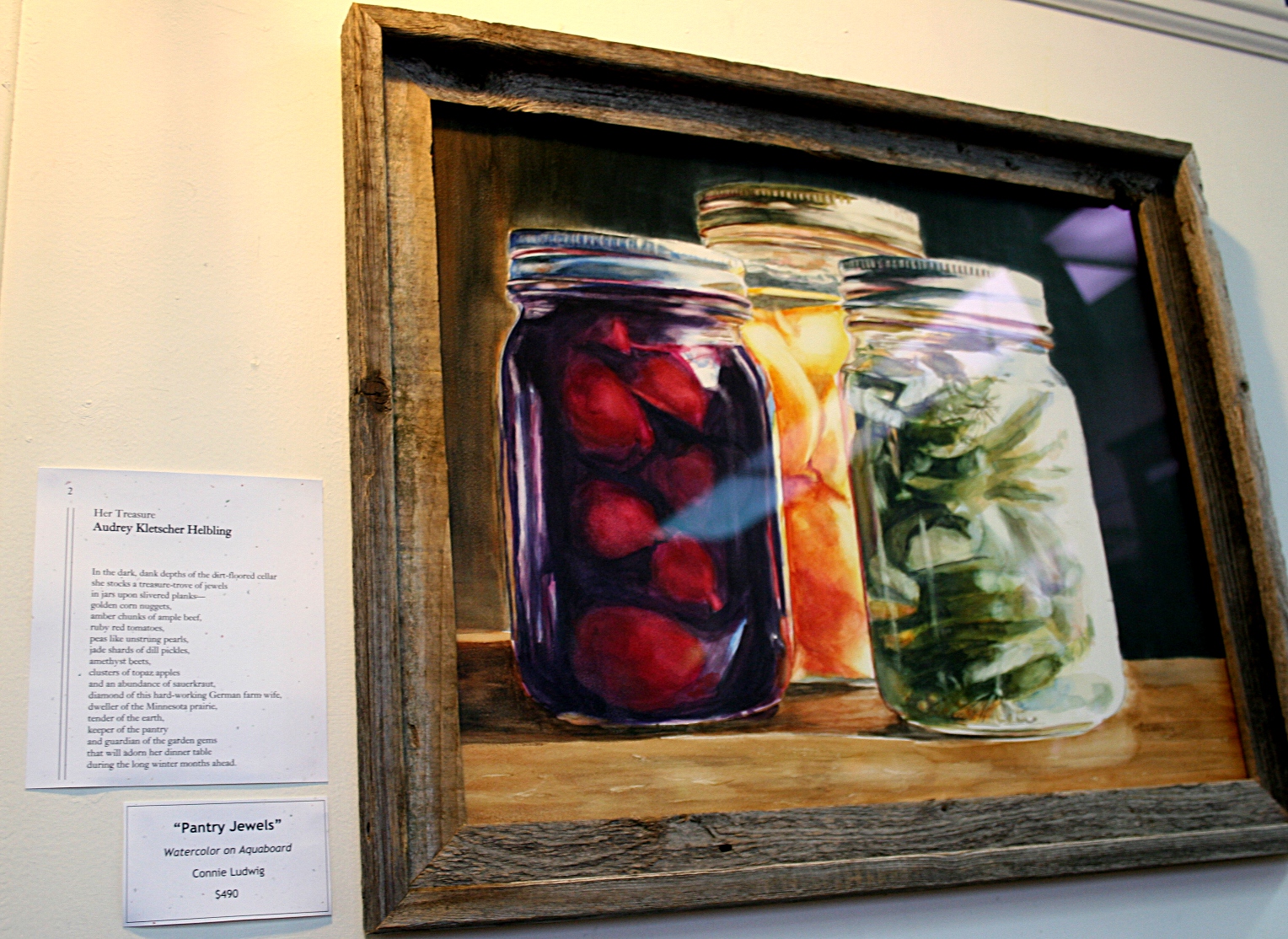
Artist Connie Ludwig's "Pantry Jewels," inspired by my poem, "Her Treasure." (Please excuse the glare on the glass; there was no way to avoid it while photographing the painting.)

Her Treasure

In the dark, dank depths of the dirt-floored cellar
she stocks a treasure-trove of jewels
in jars upon slivered planks—
golden corn nuggets,
amber chunks of ample beef,
ruby red tomatoes,
peas like unstrung pearls,
jade shards of dill pickles,
amethyst beets,
clusters of topaz apples
and an abundance of sauerkraut,
diamond of this hard-working German farm wife,
dweller of the Minnesota prairie,
tender of the earth,
keeper of the pantry
and guardian of the garden gems
that will adorn her dinner table
during the long winter months ahead.

#

I MET “MY ARTIST” Saturday evening and saw the art she created, inspired by my poem (above).

And I use those words, “my artist,” because I feel connected to Connie Ludwig of Goodhue. She, like 25 other artists participating in Poet Artist Collaboration XI at Crossings at Carnegie in Zumbrota, took words of poetry and shaped them into art.

“Her Treasure,” under Connie’s paintbrush, became “Pantry Jewels.” The earthy watercolor painting of canned beets, pickles and peaches glows with the perfect balance of light and darkness, with sunlight filtering through glass and glinting off the golden rings that lock in garden goodness.

Connie understands my poem—the memories of my mother canning fruits and vegetables in her southwestern Minnesota farmhouse kitchen. She understands the dark dirt-floored cellar in which these preserves were stored upon rough boards. She understands the importance of honoring the women who honored the land by feeding their families with the fruits of their labors.

In the chapbook published for Crossings’ Poet Artist Collaboration XI, Connie writes:

My mother and aunts loved gardening and canning. They considered those “squirreling skills an essential part of themselves. I have wonderful memories of the ladies showing off, trading and sharing their canned jewels. And, of course, feeding them to us. The models for this painting came from the pantry of my husband’s cousin.

Connie, right, and I pose for a photo after a 90-minute presentation in which 26 poets read their poems and 26 artists talked about how the poems inspired their art. Note Connie's "Pantry Jewels" painting just above my head to the left. If I could buy this $490 watercolor on aqua board, I would in a snap. I love it that much and how it honors my rural roots. But I can't... If you're interested, contact Crossings.

Connie, thank you for transforming my poem into such down-to-earth, beautiful art that touches my soul. Your painting was all I hoped for in this process of poetry inspiring art.

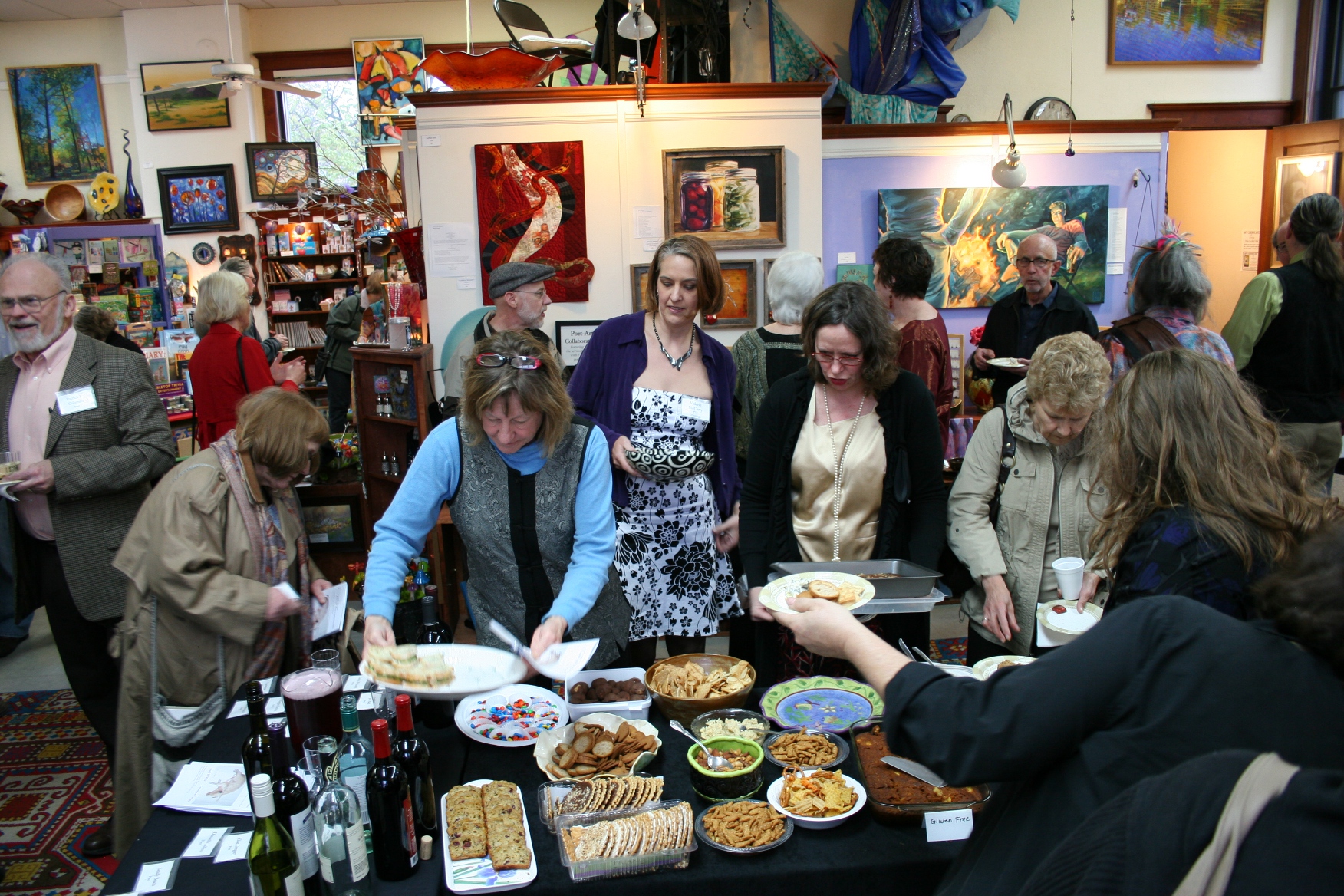
A snippet shot of the crowd at Crossings at Carnegie, including Marie Marvin, center in blue. This place was elbow-to-elbow people during the hour-long gala reception before and after the poetry readings and artist talks held at the next door historic State Theatre. There were 26 poems selected from around 180 submissions for this juried Poet Artist Collaboration, now in its 11th year.

Thank you also to the artists and poets and guests who took the time to thank me for writing “Her Treasure.”

Thank you to my husband, Randy, for always supporting me in my writing.

To Crossings at Carnegie, and specifically Marie Marvin who opened the art center in 2001, thank you for acting as the driving force behind this collaboration. The phenomenal (or as I would say, overwhelming) turn-out is a tribute to the hard work of your team. I’d like to see more events like this through-out Minnesota that pair words and art.

To be one of the 26 poets selected for inclusion truly brought me joy. To mingle with so many poets and artists for an evening inspired and validated for me the importance of the arts in our lives.

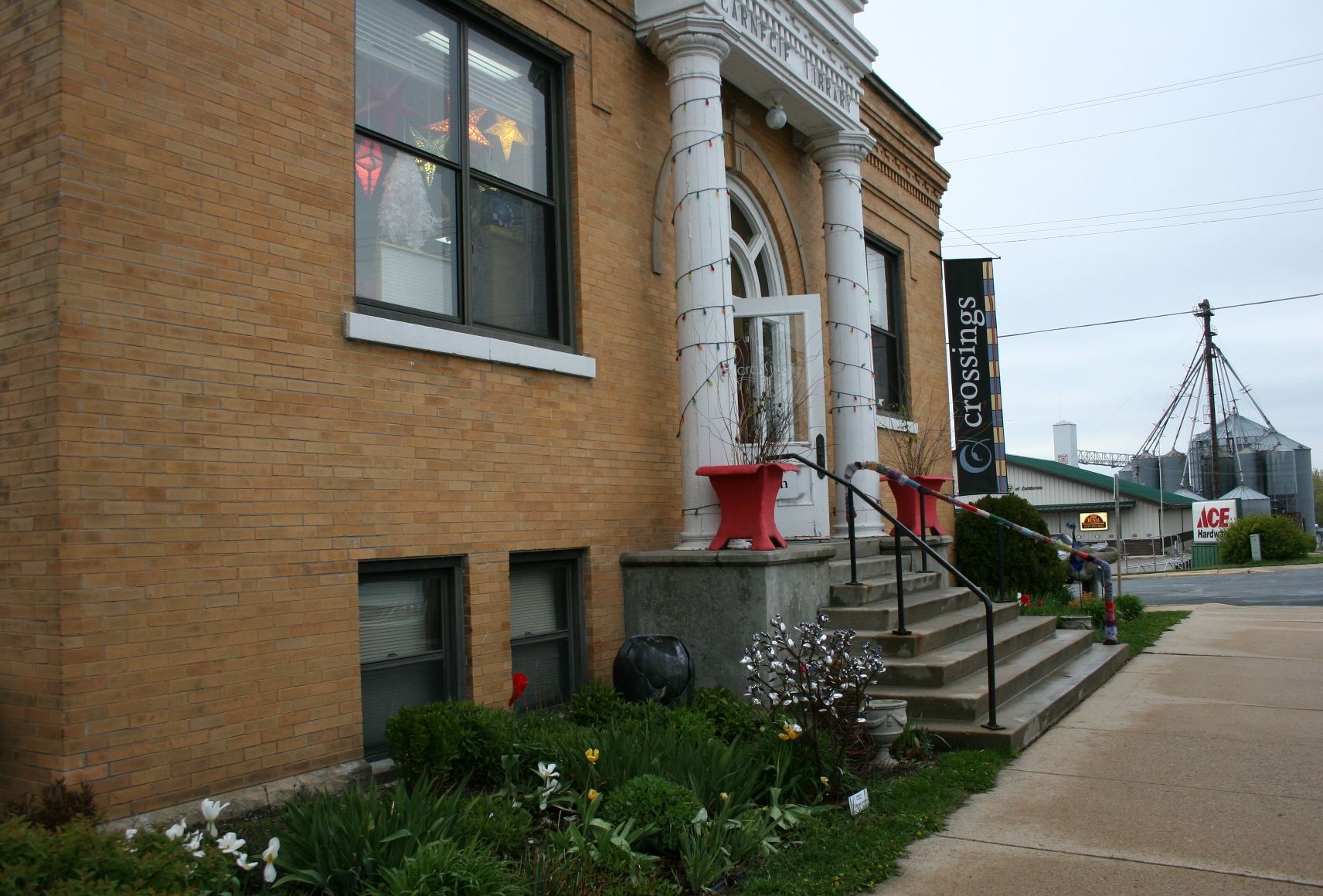
Crossings at Carnegie, housed in a former Carnegie library, is a privately-owned cultural, visual and performing arts center in Zumbrota. I love the rural atmosphere with the hardware store and grain elevator just down the street. I need to return to Crossings as I was overwhelmed (crowd-wise and visually) on this busy evening.

I’d encourage you, if you have not seen this exhibit at Crossings, 320 East Avenue, to take it in before the April 26 closing date. Click here for more information.

Also check back here for an additional post from Poet Artist Collaboration XI.

© Copyright 2012 Audrey Kletscher Helbling


Pairing poetry and art in Zumbrota April 19, 2012

Filed under: Uncategorized — Audrey Kletscher Helbling @ 7:08 AM
Tags: , , , , , , , ,

Lois' jellies and pickled beans photographed in July 2009 at the Faribault Farmers' Market.

In the dark, dank depths of the dirt-floored cellar

she stocks a treasure-trove of jewels

in jars upon slivered planks—

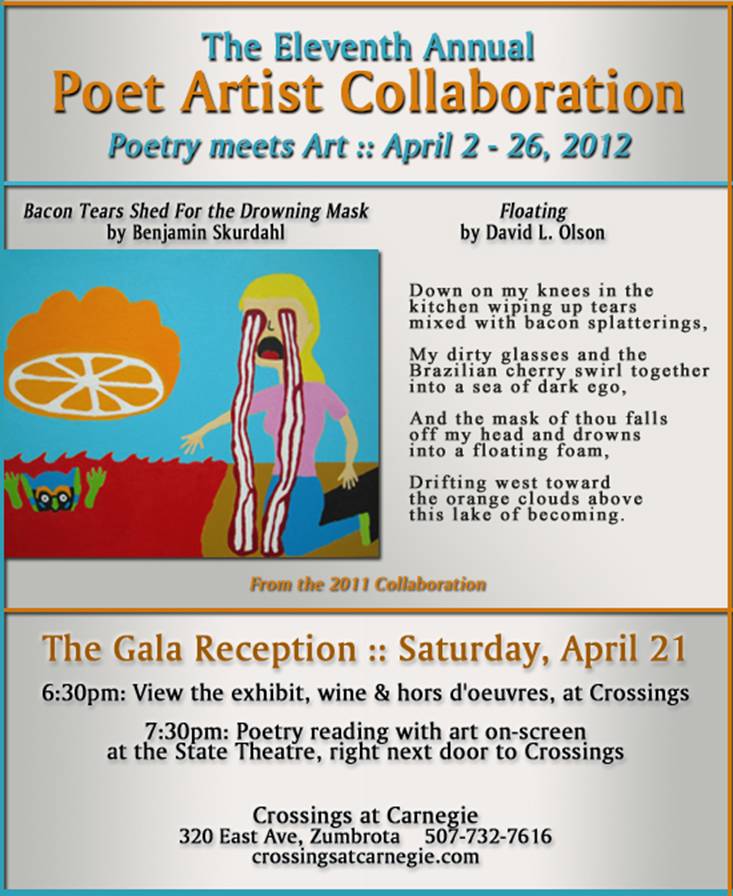
Thus begins my poem, “Her Treasure,” which I will read this Saturday, April 21, at the Poet-Artist Collaboration XI Gala Reception at Crossings at Carnegie in Zumbrota. The reception begins at 6:30 p.m. at Crossings with guests treated to refreshments and to music by pianist Matthew Rivera. The event then moves next door to the State Theatre for poetry readings with on-screen art at 7:30 p.m.

Yes, art. And poetry. Together. One inspired by the other.

I’ll meet “my artist,” Connie Ludwig of Goodhue who created a watercolor, “Pantry Jewels,” inspired by my poem about canned fruits and vegetables stocked in a farmhouse cellar.

The works of 25 other poets and of 25 other artists are also included in this juried exhibit.

Once I learned Connie’s identity, I contacted her, asking her to share some information about herself and about the process of creating her poetry prompted piece. Unlike me, Connie is not a novice at this poet-artist collaboration. This marks her tenth time participating in the Crossings event.

Recently retired from the Zumbrota library, Connie is an established artist who typically works in pastels from her home studio. In the summer she does pastels outdoors and on her front porch.

But this time, for this show, Connie opted to work in watercolor, which, she says, “more often than not has control over me.”

Drawing on childhood memories of the huge garden her family planted every year at their home in St. Croix State Park along the Minnesota-Wisconsin border east of Hinckley, this artist understands the content of my poem.

My aunts and my mother were survivors of the Great Depression and gardens and canning were very, very important to them. So you can probably deduce that your poem about the dark basement, dirt floor and canned jewels reminded me of them.

When I read it (your poem), I could picture the light on the jars when I used to go down and get them. And I knew both the physical resemblance to jewels and the equivalent worth of jewels was how they felt about their canning endeavors. You wrote a poem that reflected an important part of their lives.

Fortunately my husband has cousins that enjoy canning. The models for the three jars that I used to illustrate your poem are Mary’s peaches and Greg’s pickles. I took a picture of them and painted both from that and the actual jars. Jim (my husband) could hardly wait for me to finish so he could “open and eat.”

Well, Connie, I can hardly wait to see your art, “Pantry Jewels,” paired with my poem.

FYI: Click here to read more about Poet-Artist Collaboration XI, including a list of the participating poets and artists. The exhibit will be on display through April 26. Please join Connie and me at the Gala Reception and at the poetry reading.  I’m second on the list to read my poem and Connie to talk about her art. We’d love to meet you.

Copyright 2012 Audrey Kletscher Helbling
 

Prairie poetry in Fergus Falls June 12, 2011

SATURDAY MORNING MY HUSBAND and I hit the road, heading north on Interstate 35 and then west on Interstate 94 to the west central part of Minnesota.

This was our destination:

It's approaching noon on Saturday, and we've nearly reached our destination, Fergus Falls.

Because of this:

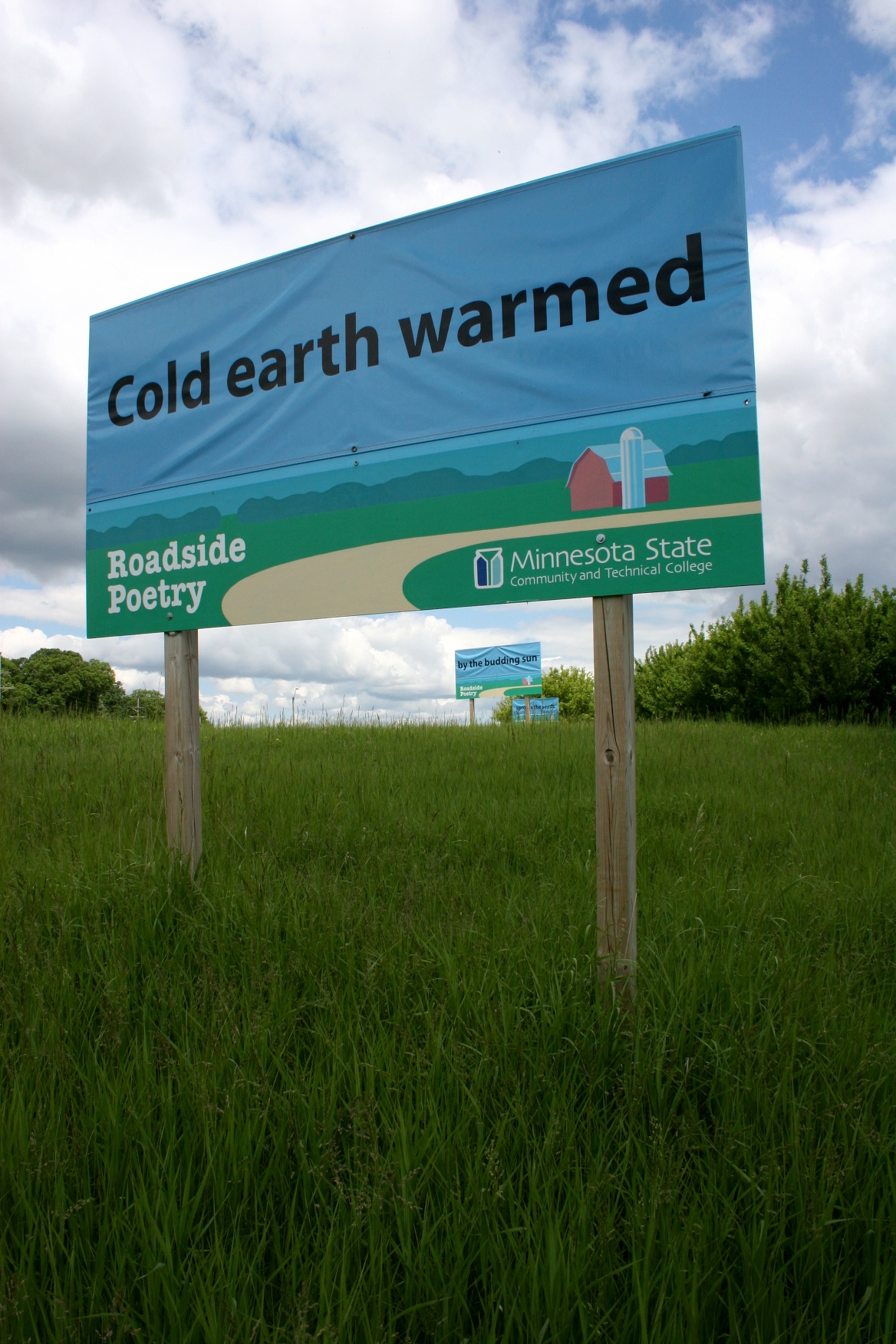
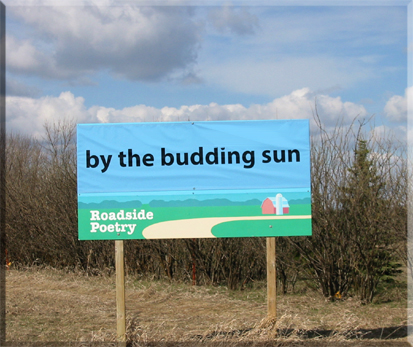
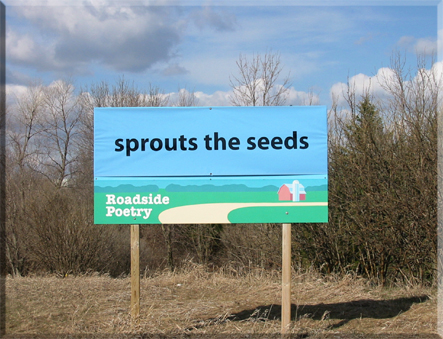
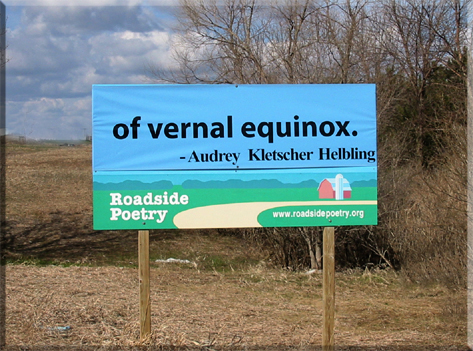
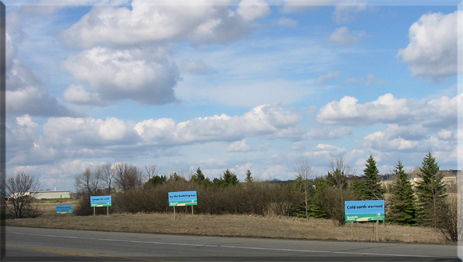
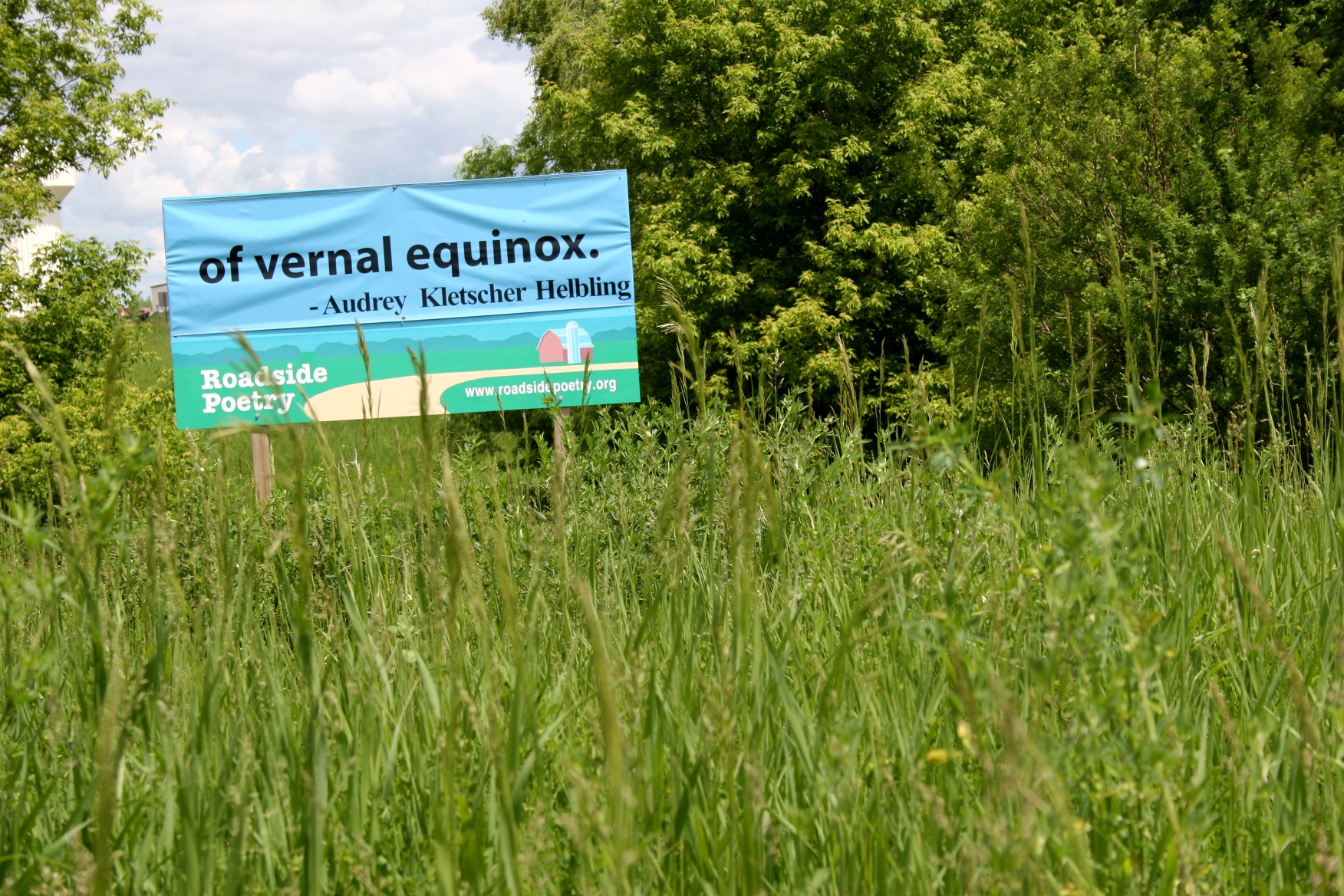
The first of my four Roadside Poetry billboards in a stretch of ditch along North Tower Road in Fergus Falls.

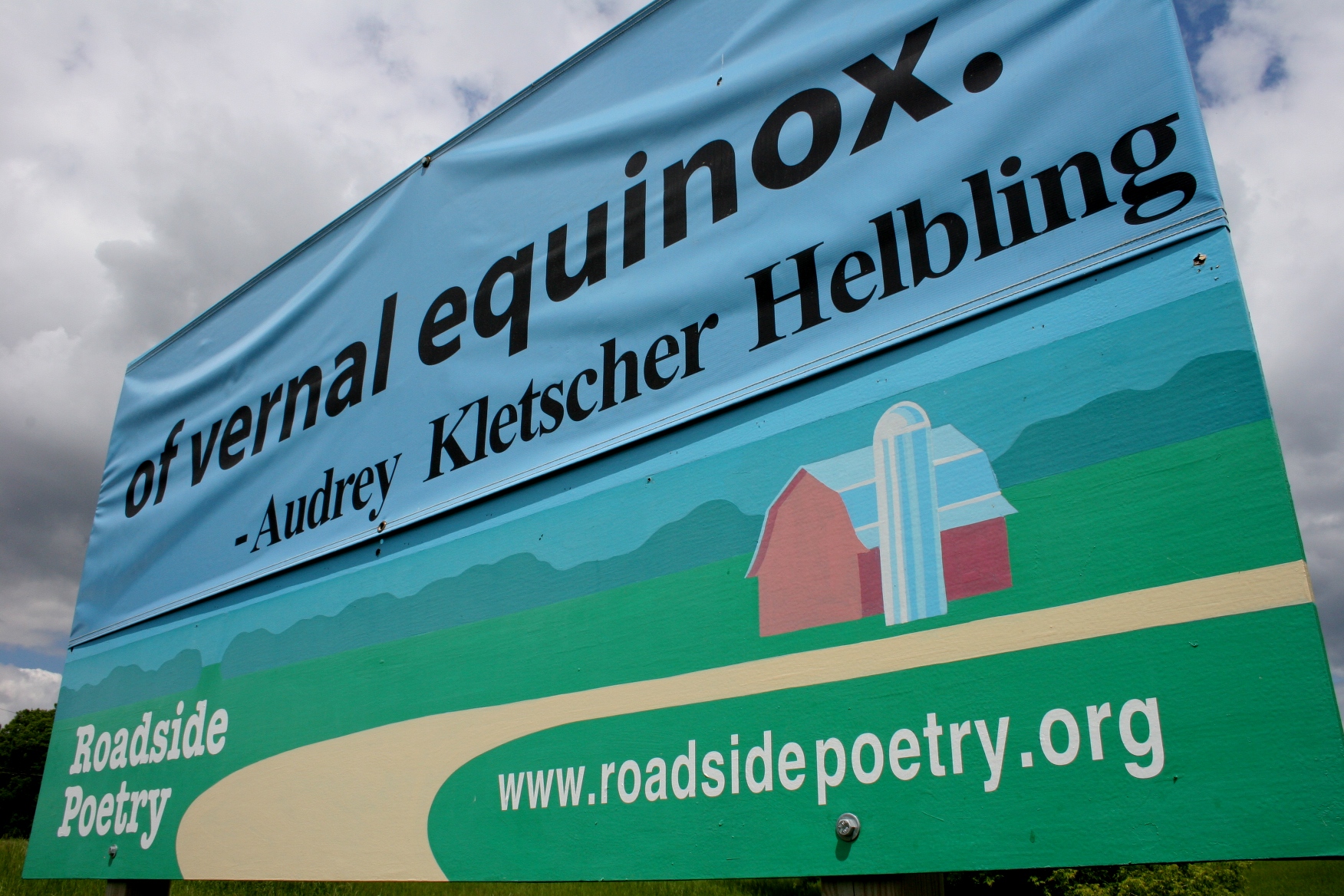
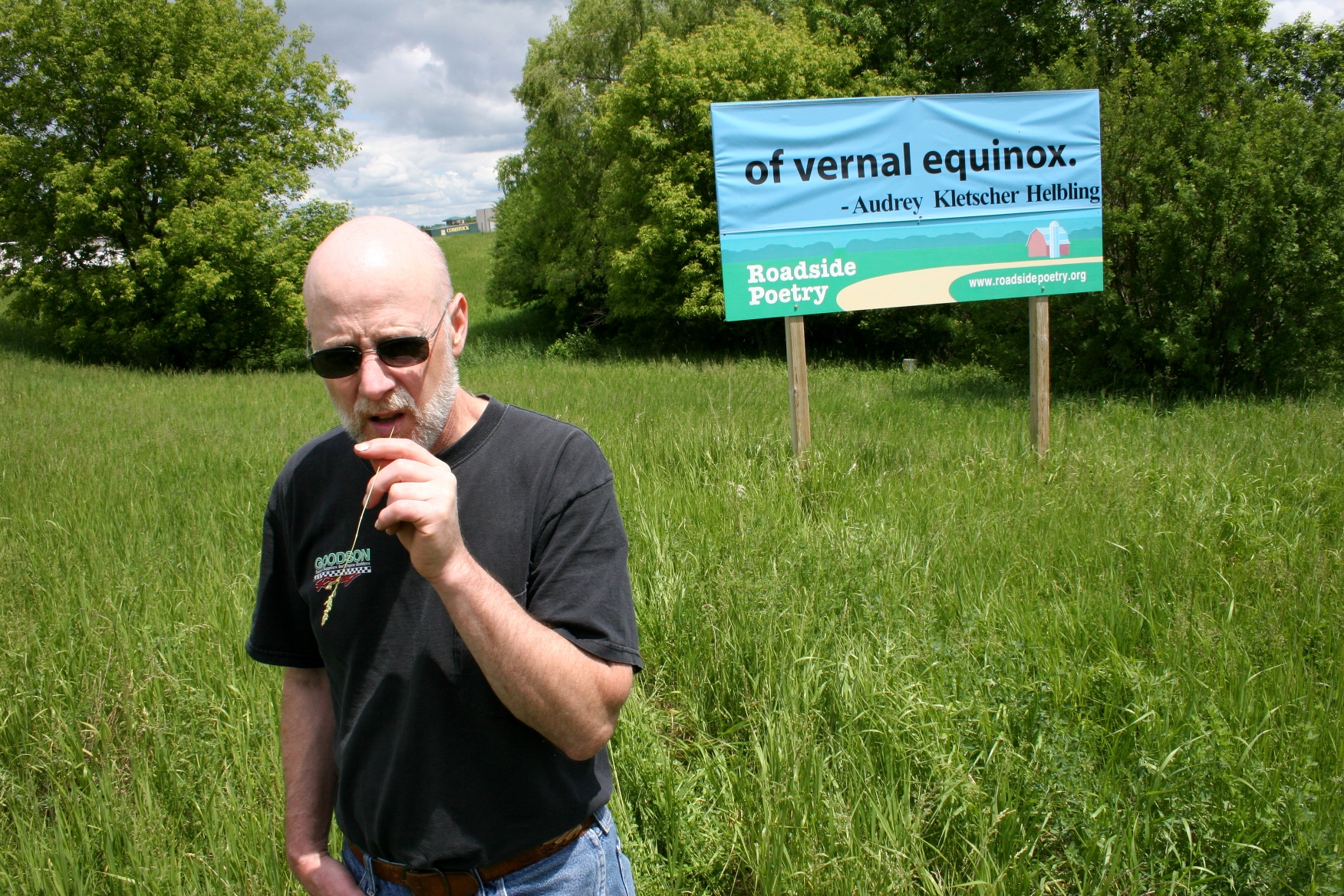
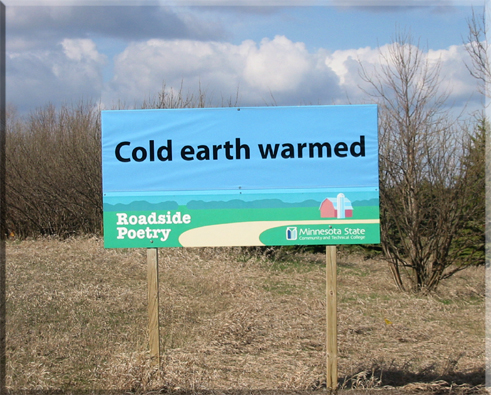
I got word last Monday that my winning Roadside Poetry Project spring poem will come down on June 17, to be replaced with a summer poem. (Click here to read a previous post about my poem.) So if I wanted to see “Cold earth warmed by budding sun sprouts the seeds of vernal equinox” and my name—all sprawled across four Burma Shave style billboards—we had to get our butts up to Fergus Falls.

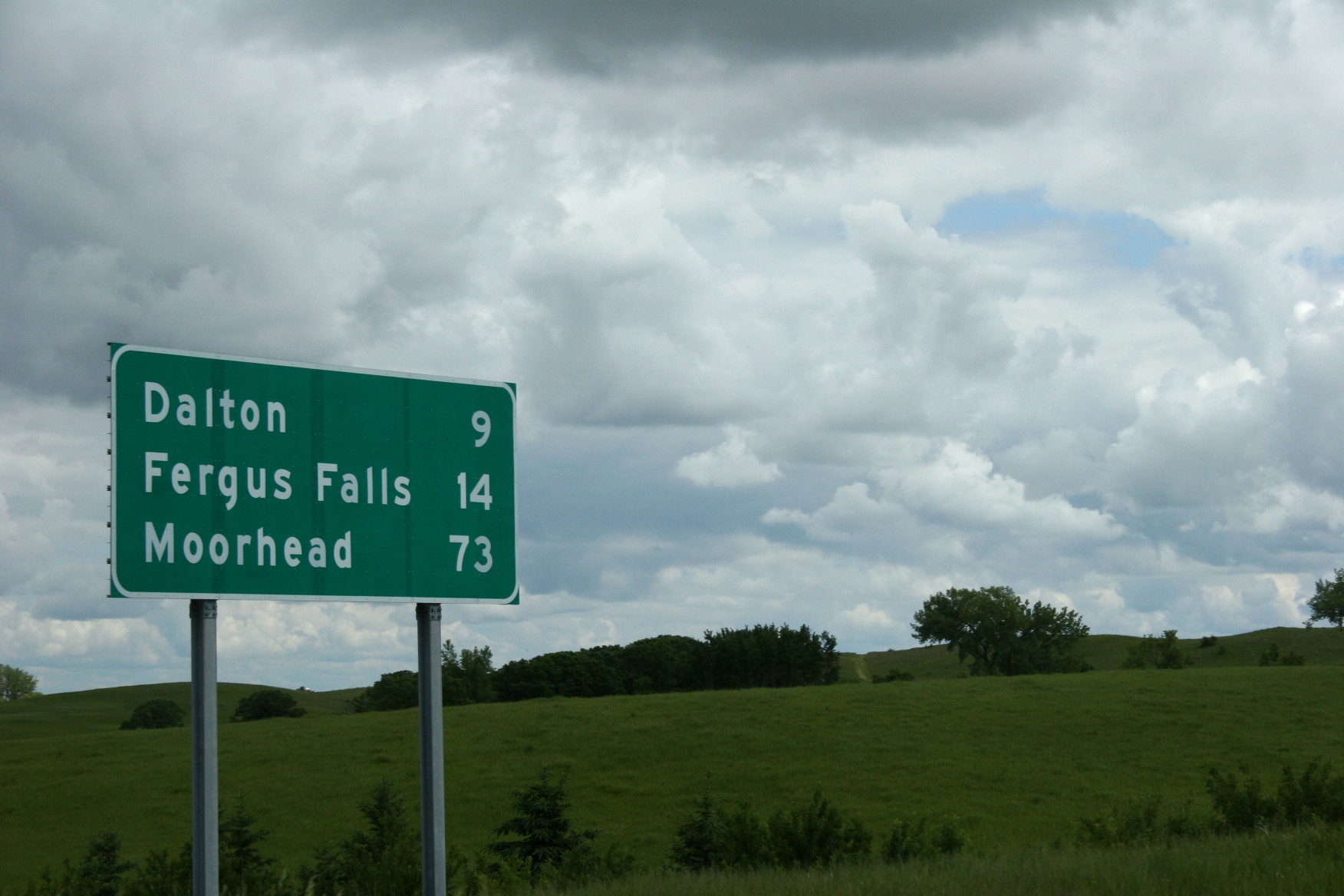
So we did, making the 200-mile trip this weekend under big skies that stretched all the way to the Dakotas.

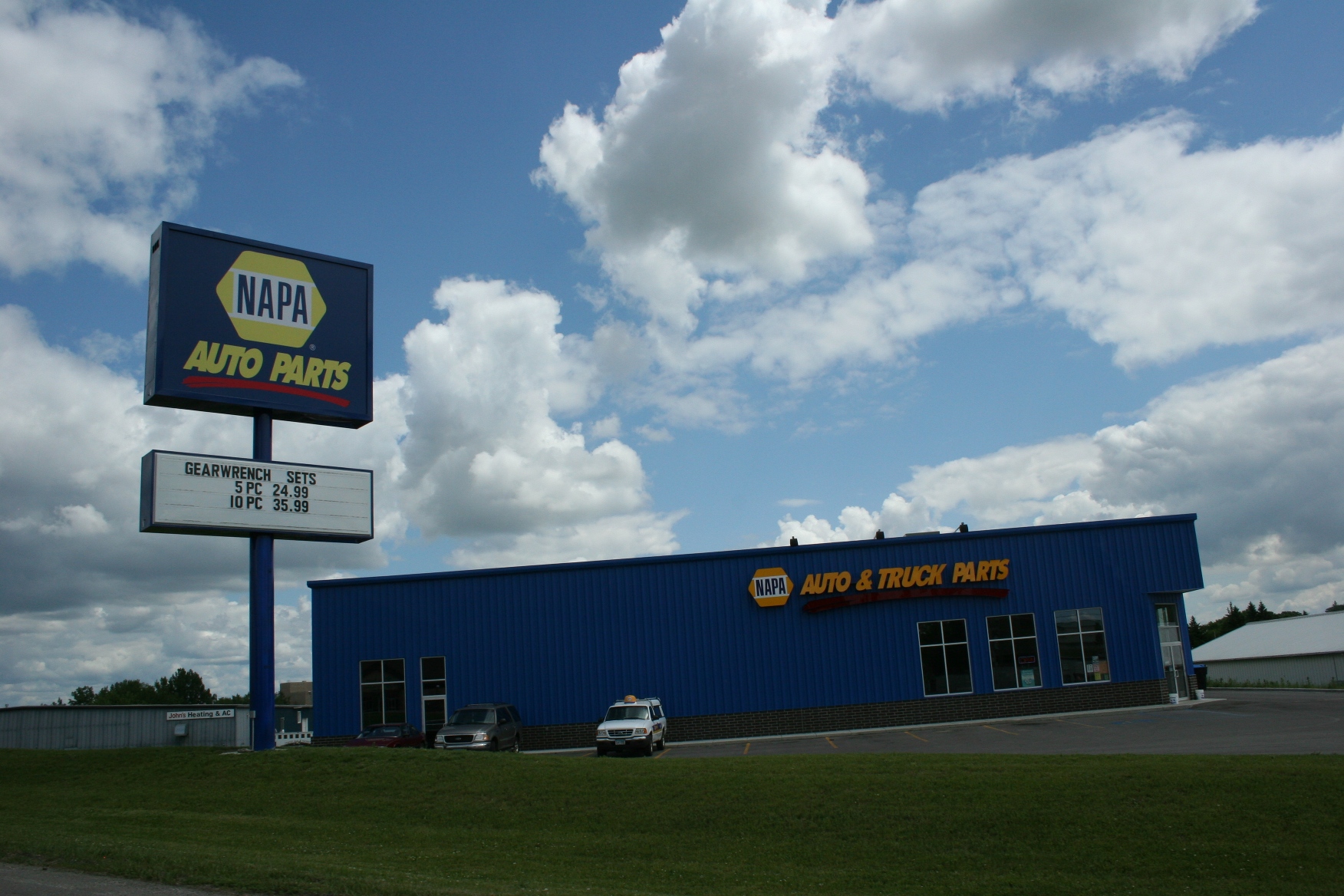
After a few stops, including a swing into Melrose to view an historic Catholic church (more on that in another post), we eventually reached Exit 54 into Fergus some 3 1/2 hours later. We followed Highway 210/West Lincoln Avenue, turned onto North Tower Road and drove past the NAPA Auto Parts store before reaching those poetry billboards. I mention NAPA because Randy works at the NAPA store in Northfield as an automotive machinist and we found it interesting that my poems just happened to be right down the road from the Fergus NAPA store.

We passed right by the NAPA store to reach my billboards just down the road.

When Randy pulled to the side of North Tower Road by my billboards, I determined this was not the safest place to park. So we pulled into the Fastenal parking lot and then descended the steep ditch, wading through tall, and wet, prairie grasses—sweet clover, June grass, alfalfa—and more than a few thistles.

Our shoes and jean legs were soon soaked with moisture. But, you know, that really didn’t matter. I was so focused on viewing my four-line, spring-themed poem and on taking photos that the wet feet and denim seemed more a nuisance than anything worth fretting over on a glorious early Saturday afternoon.

And so, billboard by billboard, we worked our way down the road ditch, stopping by each sign for photos. Eventually I handed the camera over to Randy, who managed to figure out how to turn on the camera, focus it, compose and snap some pictures.

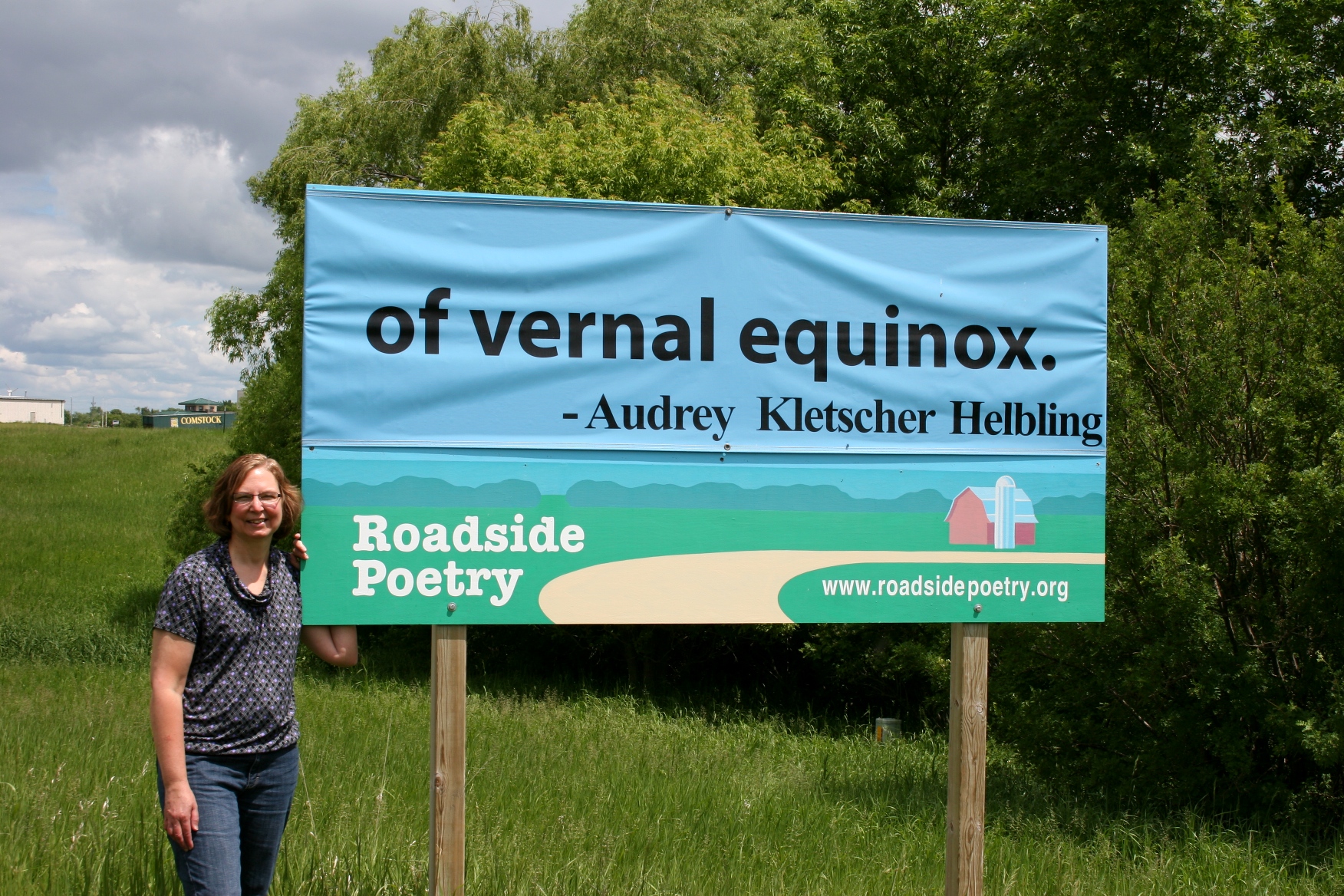
Me posing by the last of the four billboards with my spring poem.

This may be the first and last time my poetry, and my name, will be on billboards, so I savored every letter, every word, every line, every billboard...

Then I snapped this image of my husband, who had plucked a spear of prairie grass and slipped it into his mouth. The frame marked one of those quick clicks of the camera that resulted in a photo that you could never recapture given its spontaneity.

A sweet shot of my husband as he walked away from the final billboard.

I’m uncertain how long we worked the road ditch along North Tower. But long enough to appreciate that this spot on the edge of town, under a sky that always feels bigger, wider, on the open prairie, perfectly fit a poem written by me, a southwestern Minnesota prairie native.

I crouched to capture this image which focuses on the road ditch prairie grasses.

© Copyright 2011 Audrey Kletscher Helbling
 

Count me in on Roadside Poetry April 26, 2011

“We’ve selected YOUR poem for our spring Roadside Poetry installment!”

For nearly a month now, I’ve kept that exciting, boldfaced news mostly to myself, sharing it with only my immediate family, my mom and a few select friends and extended family members.

But now that the billboards are up—yes, I said billboards—I no longer feel obligated to keep this a secret.

I won the spring Roadside Poetry competition and my poem now sprawls across four billboards, Burma Shave style, 50 yards apart in Fergus Falls.

That’s it, my poem, the winning poem, which is posted along North Tower Road west of Minnesota State Community and Technical College in Fergus Falls, just down the road from Fleet Farm. Take exit 54 off I-94 on the west edge of Fergus.

Paul Carney, the project coordinator who delivered the good news to me via e-mail in early March, tells me that 100,000 vehicles drive by the billboards each month. “How’s that for readership?” he asks.

Well, mighty fine, Paul. Mighty fine.

Getting my poetry out there in this unusual, highly-public venue really is an honor for me, adding to my poems already published in two magazines and four, soon-to-be five, anthologies.

The mission of The Roadside Poetry Project “is to celebrate the personal pulse of poetry in the rural landscape,” according to roadsidepoetry.org. The first poem went up in September 2008 and was, interestingly enough, written by another Faribault resident, Larry Gavin, a writer and Faribault High School English teacher.

The poems, all seasonally-themed, change four times a year. Mine will be up through the third week of June when a summer poem replaces it. Yes, entries are currently being accepted for the summer competition.

About now you’re likely, maybe, wondering how I heard about this contest. I honestly cannot remember. But I do remember thinking, “I can do this.” So one night I sat down with a notebook and pencil and started jotting down phrases.

Like most writers, I strive to find the exact/precise/perfect/right words.

I scribbled and scratched and thought and wrote and crossed out and jotted and erased and counted and filled several notebook pages.

These poems do not simply pop, like that, into my head, onto paper.

To add to the complexity of this process, poets are tasked with creating poetic imagery that describes the wonderment of the season, all in four lines. But there’s more. Each line can include no more than 20 characters.

Now that character limitation, my friends, presents a challenge. Just when I thought I had nailed a phrase, I counted too many characters. Again and again, I had to restart until, finally, I had shaped and molded the poem I would submit.

“I love the language and the imagery,” project leader Paul said of my winning spring poem.

Honestly, when I wrote this poem, I could feel the sun warming my back as I stooped to drop slips of zinnia seeds into the cold, damp earth. Visualizing has always been a part of my creative process. Choosing the words “vernal equinox” simply seemed so much more poetic than the single, plain word, “spring.”

Even though Paul loved my poem and it fit the contest guidelines, there was a problem: Audrey Kletscher Helbling. Count and you get 23 characters and two spaces in my name, putting me five over the 20-character limit.

I understood the space limitations, but explained to Paul that I really wanted Audrey Kletscher Helbling, not Audrey Helbling, on the billboard because that’s my professional name. He agreed to see if the sign-maker could fit my full name and keep it readable. From my experience years ago writing newspaper headlines, I knew that the letters “l” and “i” took less space than other letters. The sign-maker was able to honor my request.

I haven’t been up to Fergus Falls yet to see my poem and Audrey Kletscher Helbling splashed across four billboards. But a trip will be forthcoming.
FYI: Paul Carney hopes to expand Roadside Poetry, supported in Fergus Falls by the Fergus Area College Foundation, to other locations in Minnesota. However, additional funding is needed to finance start-up, printing and other costs. If you would like to support this public art venue, have questions, need more information or wish to enter the seasonal contest, visit roadsidepoetry.org.

© Text copyright 2011 Audrey Kletscher Helbling
Photos courtesy of Paul Carney