Minnesota Prairie Roots

Writing and photography by Audrey Kletscher Helbling

In St. Peter: Celebrating water through dance, poetry & photography August 23, 2016

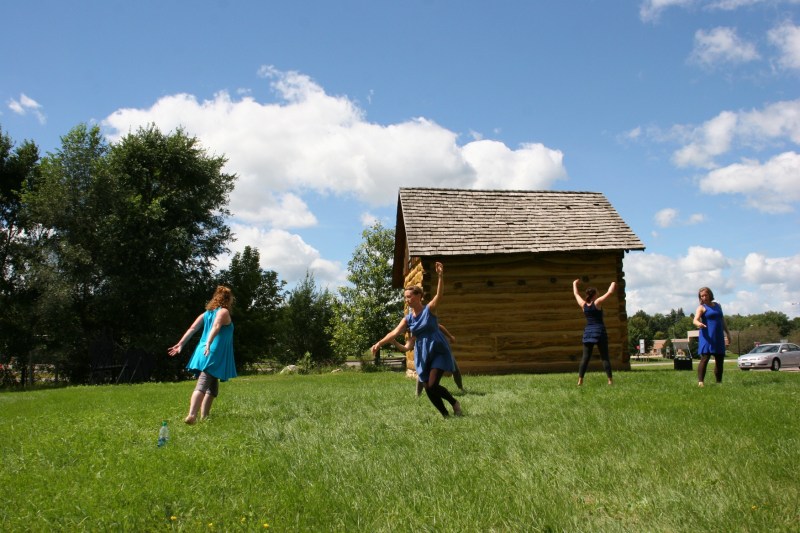
The southern Minnesota based Rural Route Dance Ensemble performs Sunday afternoon next to a log cabin at the History Site Treaty Center along Highway 169 in St. Peter.

The southern Minnesota based Rural Route Dance Ensemble performs Sunday afternoon next to a log cabin at the Treaty Site History Center along Highway 169 in St. Peter.

ON THE OTHER SIDE of the log cabin, traffic thrummed in a steady rhythm, the noise sometimes detracting from the five young women dancing barefoot in the grass and from the poets reading in to the wind.

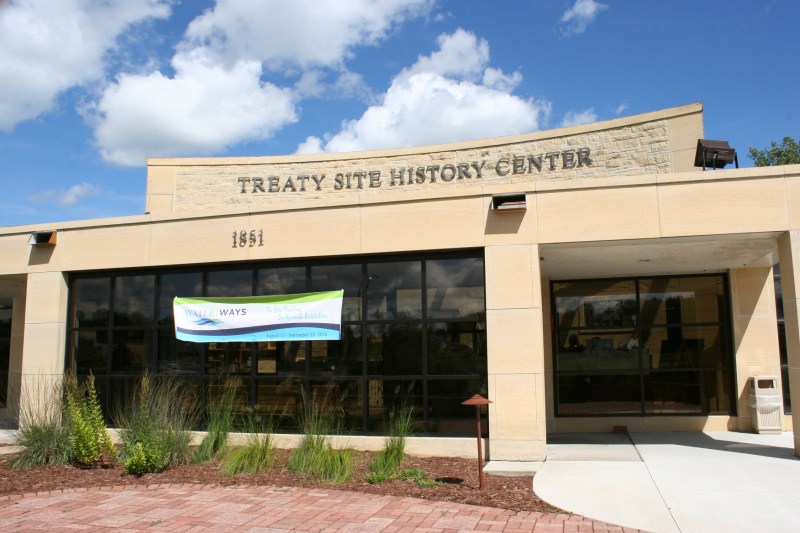
A Smithsonian exhibit on water is currently showing at the St. Peter history center.

A Smithsonian exhibit on water is currently showing at the history center.

Still, despite the traffic noise from busy U.S. Highway 169 in St. Peter, the focus remained primarily on “When Water Dreams: A Celebration,” hosted Sunday afternoon at the Treaty Site History Center.

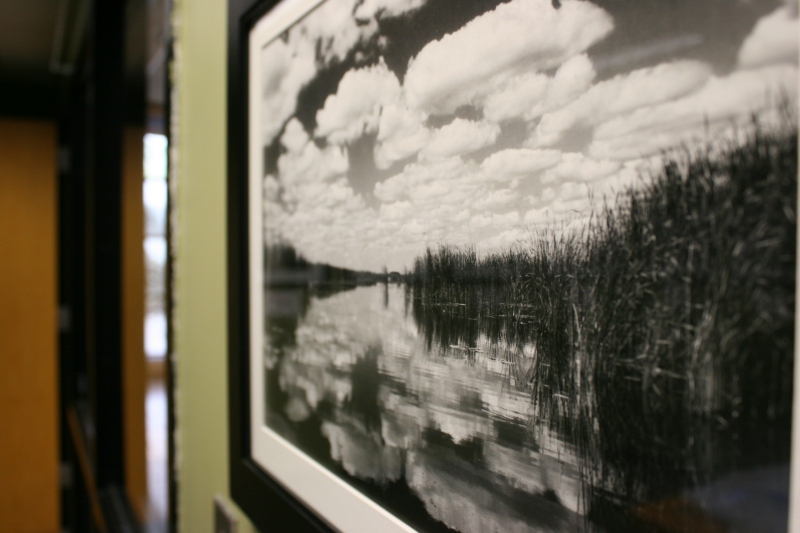
This photo of Swan Lake near Nicollet is one of 19 black-and-white images included in an exhibit by Kay Herbst Helms.

This photo shows a side view of Kay Herbst Helms’ photo of Swan Lake, one of the largest prairie potholes in the contiguous United States. Located in Nicollet County,  the lake covers 14 square miles. I’ll tell you more about Kay’s exhibit of 19 black-and-white photos in a follow-up post.

I was part of that event thanks to Mankato photographer Kay Herbst Helms. Kay’s latest photo project, “Water Rights,” sidebars “Water/Ways,” a Museum on Main Street exhibition organized by the Smithsonian Institution showing through September 25 at the Nicollet County Historical Society host site in St. Peter.

Sunday afternoon, along with other invited southern Minnesota poets, I read “In which Autumn searches for Water,” a poem published four years ago as part of an “It’s All One Water” collaboration in Zumbrota. I clarified before reading my poem that I wrote this when our region was suffering a drought, unlike now when Minnesota has been deluged with rain. Here’s the third verse in my five-verse poem:

But she finds at the pond site, the absence of Water,
only thin reeds of cattails and defiant weeds in cracked soil,
deep varicose veins crisscrossing Earth.

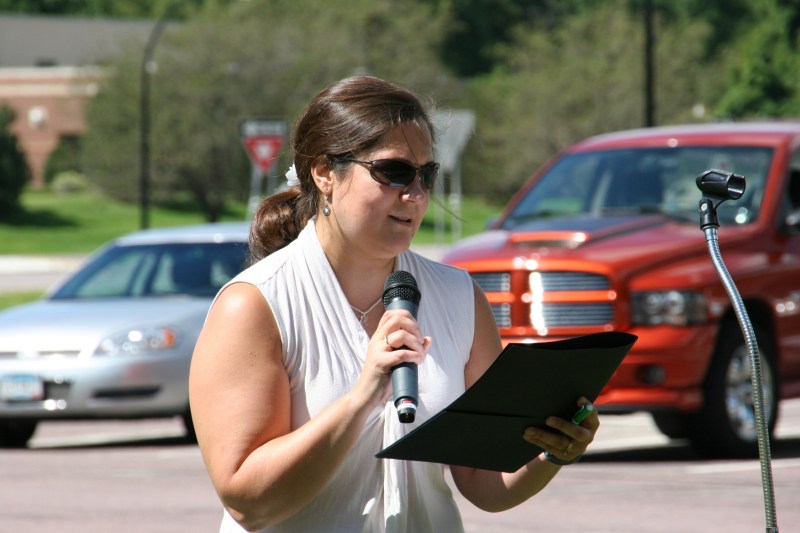
League of Minnesota Poets President Christina Flaugher reads her poetry. John Hurd and Susan Stevens Chambers also read their poetry.

League of Minnesota Poets President Christina Flaugher reads her poetry. Christina’s mother, Susan Stevens Chambers, also read, both her poetry and that of Henry Panowitsch. Two others, Craig Nelson and Mira Frank, read the works of published poets, including that of local poet Jim Muyres who was unable to attend.

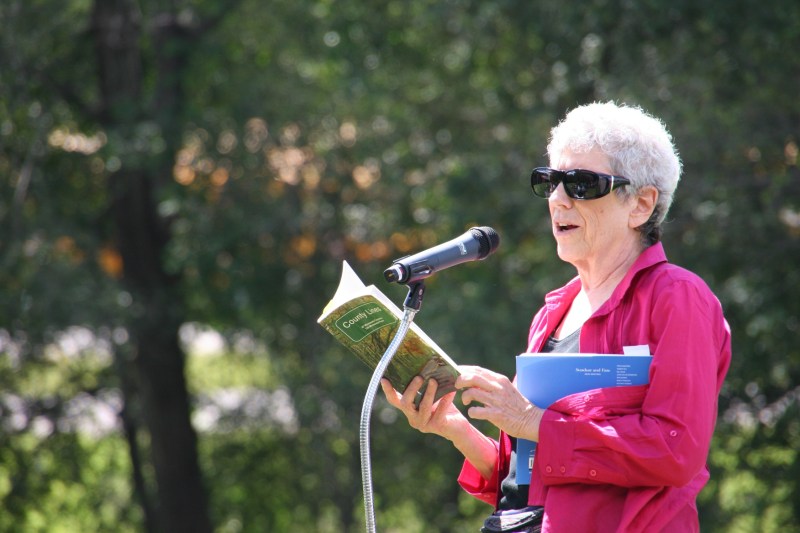
Mira Frank reads the works of published Minnesota poets, here from County Lines.

Mira Frank reads the works of published Minnesota poets, here from County Lines.

I’ve come to enjoy poetry readings—listening to the rhythm of words penned by those who, like me, are moved to string words together in a lyrical way that touches emotions.

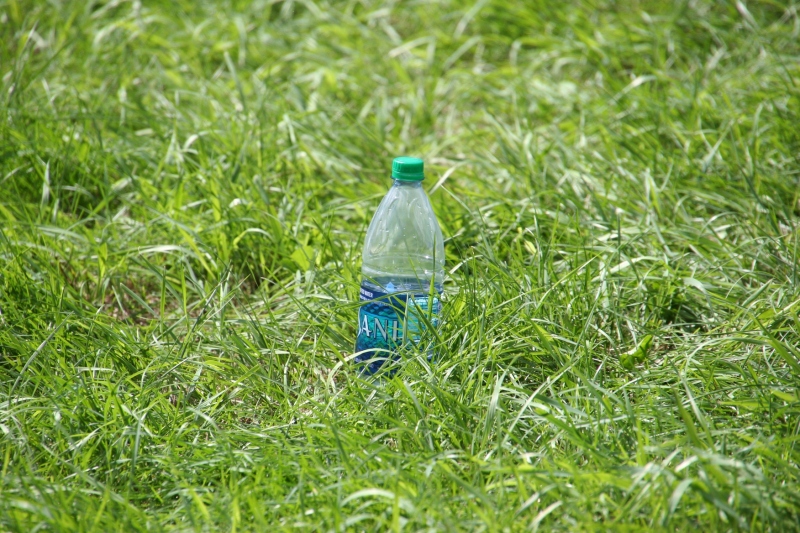
This water bottle was sitting in the grass at Sunday's event.

This water bottle was sitting in the grass at Sunday’s event venue site.

With water as the theme for Sunday’s celebration, poets read of lakes and rivers, of rain and of drought, of ships steaming immigrants across the ocean, and more.

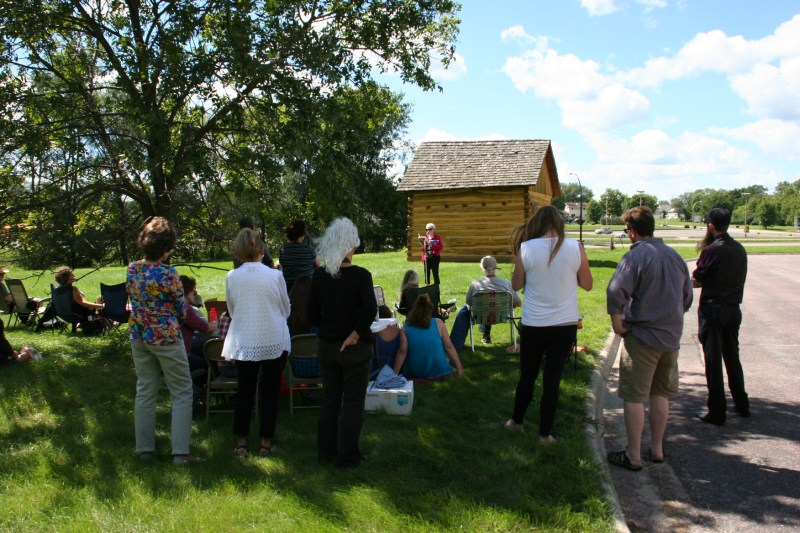
An appreciative audience attended the water celebration.

An appreciative audience attended the water celebration.

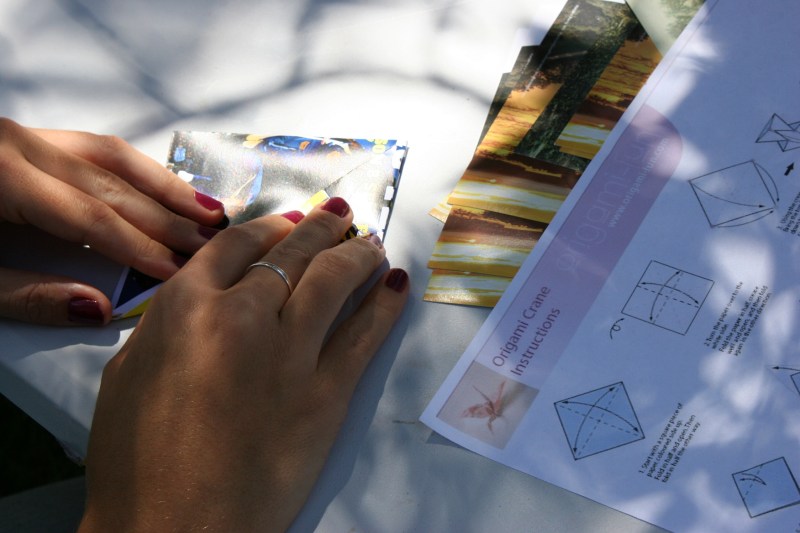
Volunteers taught attendees to fold paper cranes.

Volunteers taught attendees to fold paper cranes.

Those clustered in lawn chairs, on blankets and standing—some folding paper cranes for the Minnesota State University, Mankato, 1000 Peace Crane Project—focused on the scene unfolding before them.

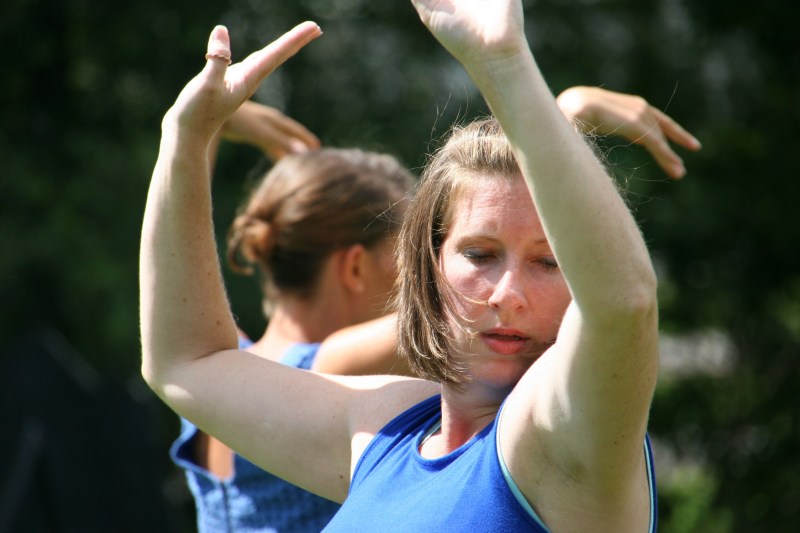
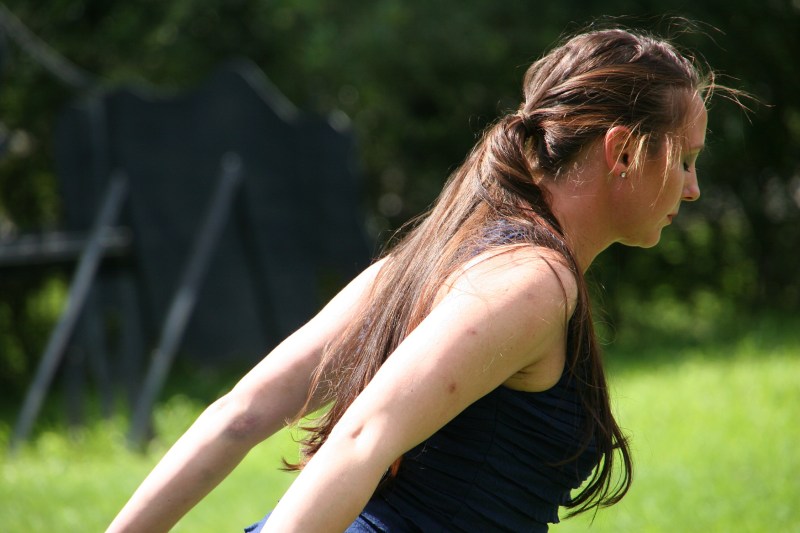
Water celebration, #47 dancer close-up arms up


Water celebration, #49 dancer close-up arms behind


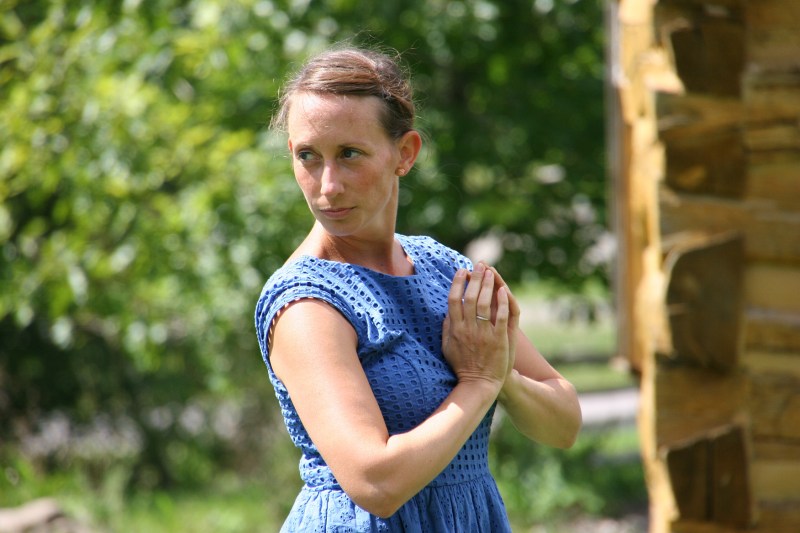
Water celebration, #57 dancer with hands together


Water celebration, #67 dancers with hands up


Dressed in blue, members of Rural Route Dance Ensemble moved with such grace, like water lapping at the shore, waves rolling in the ocean, rain falling from the heavens. I won’t pretend to be an expert in dance; I have viewed few dance performances. But dance, like poetry, is open to interpretation.

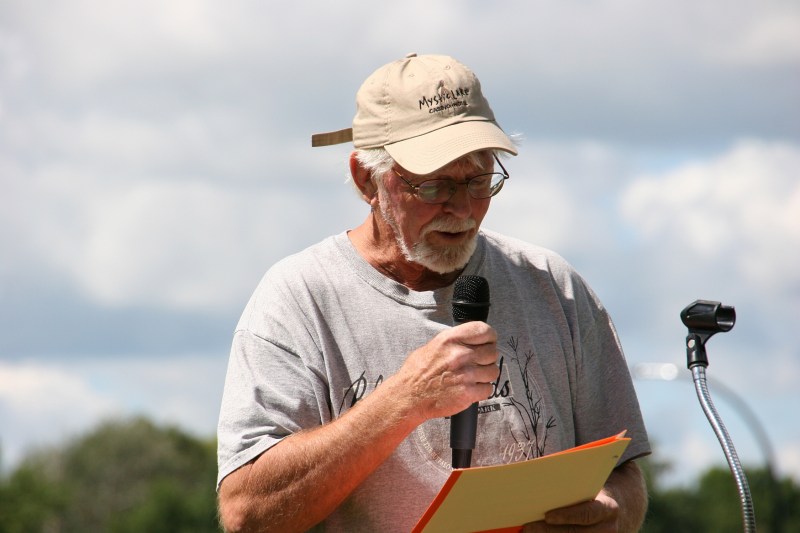
North Mankato poet John Hurd reads.

North Mankato poet John Hurd reads.

Life experiences, emotions and more shape poetry—how it is written, read and interpreted.

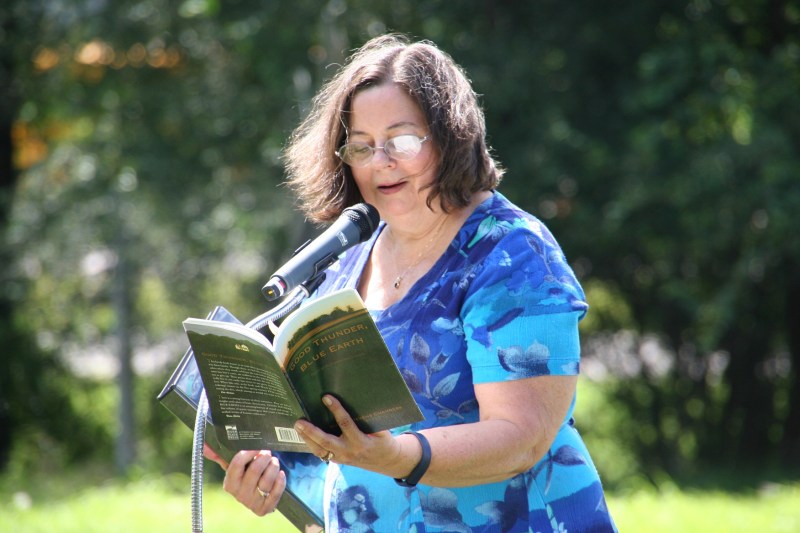
Susan Stevens Chambers reads from her new book.

Susan Stevens Chambers reads from her new book, Good Thunder, Blue Earth.

The poetry readings of Good Thunder writer Susan Stevens Chambers mesmerized me. Susan has a melodic voice that soothes and comforts like the sound of rushing water. Except her words don’t rush. They flow. I especially savored Susan’s selected readings from her recently published compilation of rural-themed poems, Good Thunder, Blue Earth, published by River Place Press.


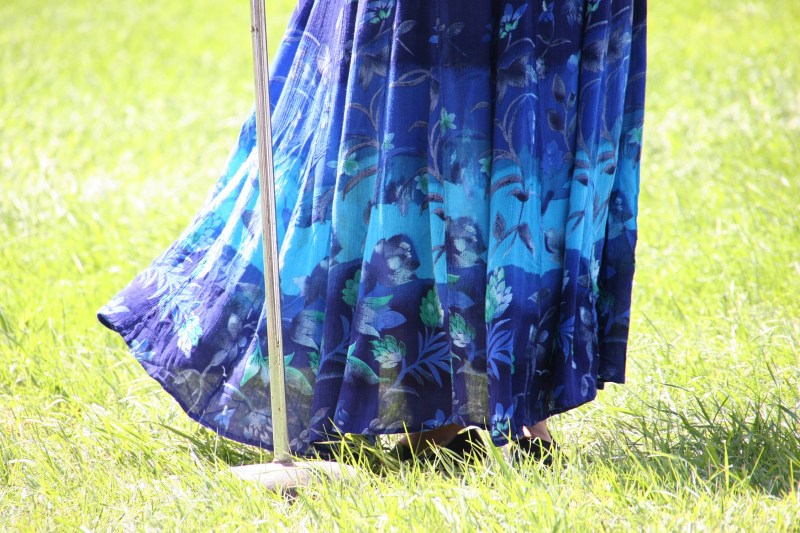
Water celebration, #94 Susan's dress blowing in breeze


As this poet read, her long blue dress swayed in the wind and I thought of gentle waves. Of water.

FYI: Check back for a post on the Smithsonian “Water/Way” exhibit, including more information on Kay Herbst Helms’ photography exhibit, “Water Rights.”

© Copyright 2016 Audrey Kletscher Helbling


An evening with Minnesota poet Todd Boss in Owatonna May 1, 2013

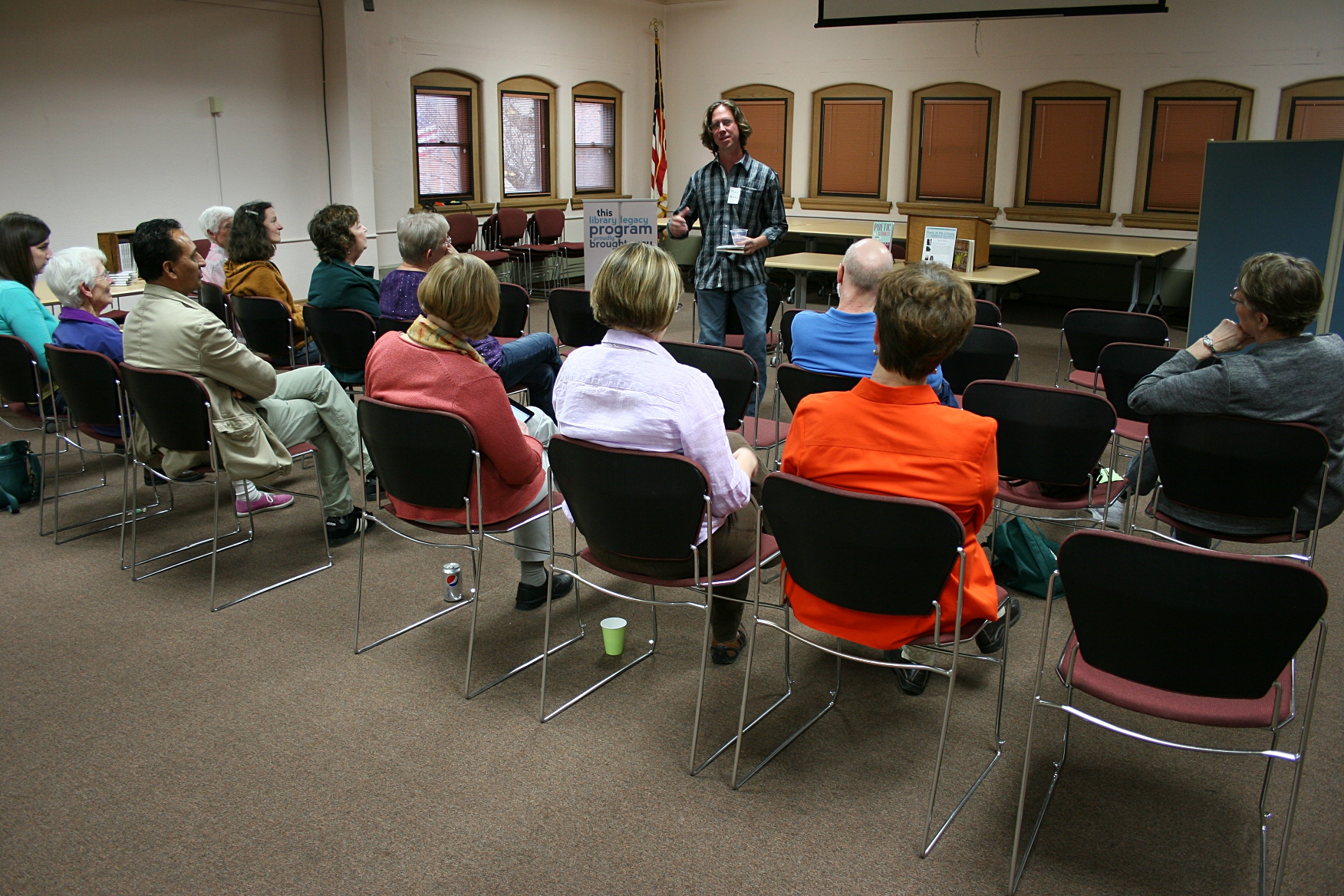
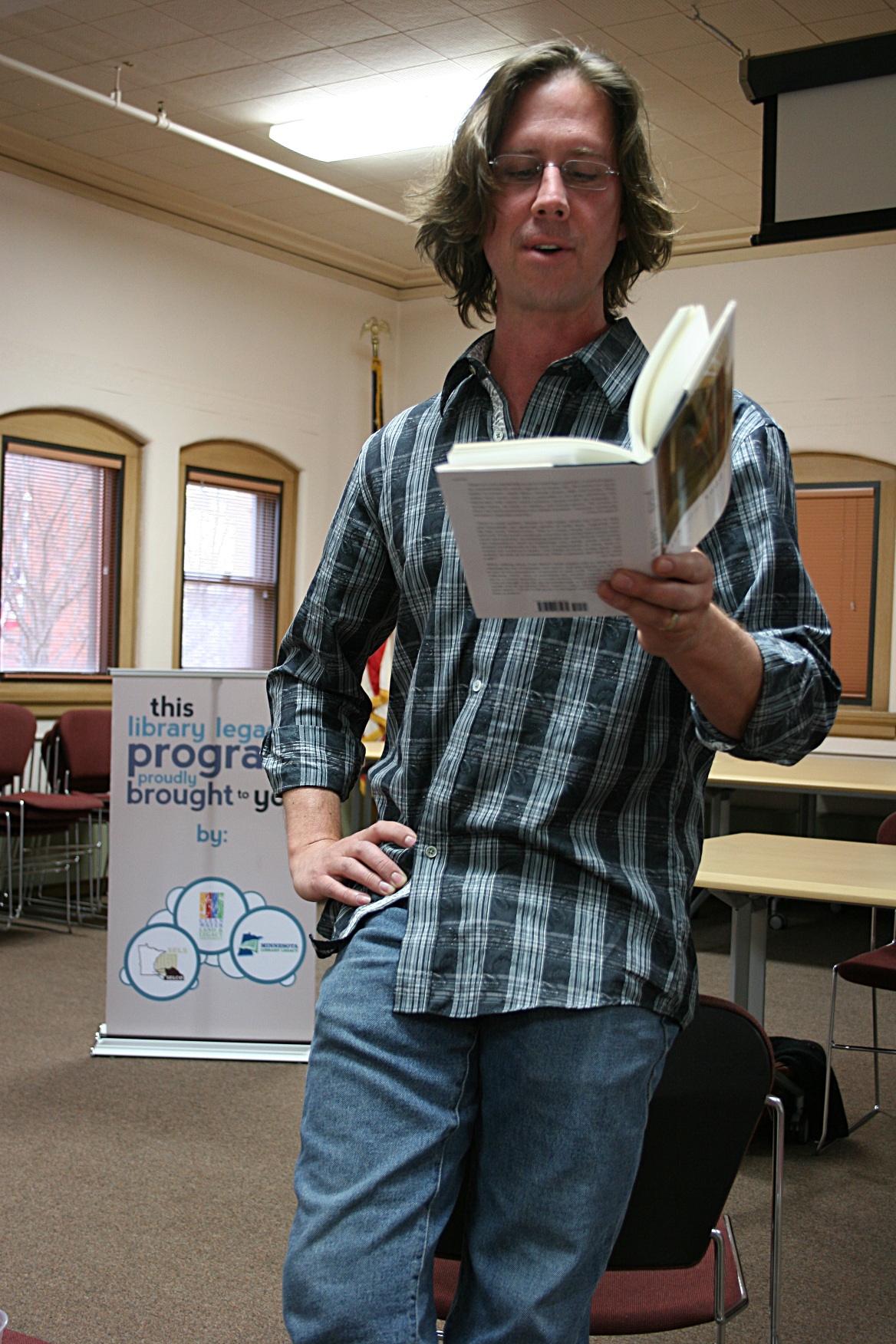
Todd Boss reads his poetry Tuesday evening at the Owatonna Public Library.

Todd Boss talks about poetry Tuesday evening at the Owatonna Public Library.

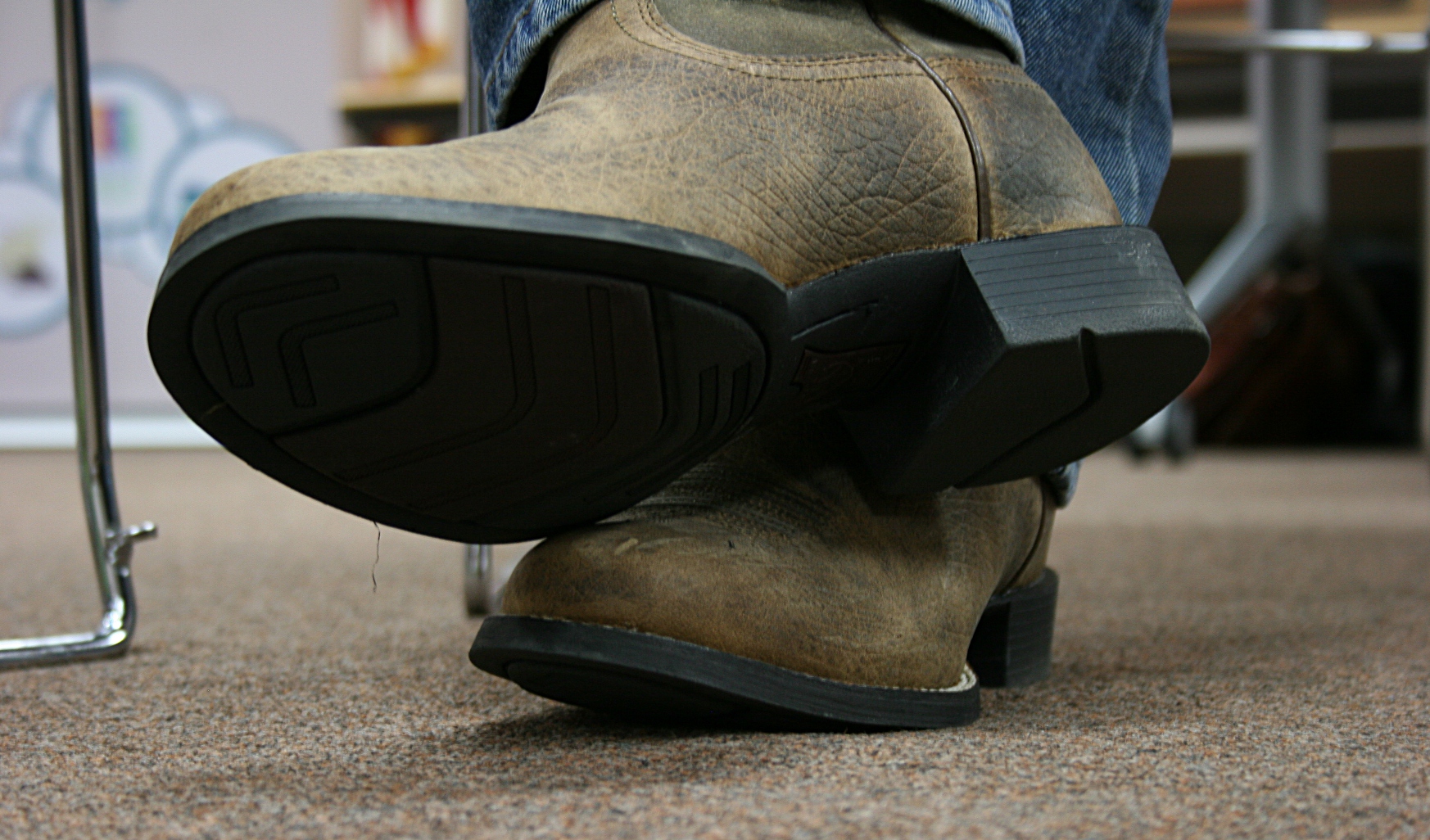
HE READS WITH THE CADENCE of a seasoned poet, with the ease of familiarity, written words fitting his voice like a comfortable pair of boots.

Which is exactly what award-winning St. Paul poet Todd Boss sported, along with faded jeans and a long-sleeved plaid shirt, to a “Poets at the Library Tour” event Tuesday evening at the Owatonna Public Library.

Todd Boss' boots.

Todd Boss’ boots.

Casual, laid back and unpretentious, Boss settled in to read from his poetry books, Yellowrocket and Pitch, Minnesota Book Award finalists in 2009 and 2013 respectively.

Before reading a poem set in Luckenbach, Texas, Boss shared that a woman from New York wants to include him in a dissertation she’s writing on cowboy poetry. He showed off his cowboy boots, then laughed. The audience laughed, too. While Boss often writes about his rural Wisconsin upbringing, he isn’t exactly a cowboy poet. Audience members agreed with Boss that Wisconsinites and Minnesotans live on farms, not ranches, defined by this poet as big open landscapes of earthy hues.

Later he referenced the New York perspective again: “My mother used to read a lot of poetry on the ranch.” Ranch. A carefully chosen word. Just like the words in his detailed and rhythm rich poems.

Reading from Pitch.

Reading from Pitch.

Boss read poetry about card playing, wood piles, his mother, an exchange with a check-out clerk at a Minneapolis food co-op, the 35W bridge collapse…

He revealed, too, that when he writes about his parents, he gives them the option of nixing those personal poems. They never have, a point audience members noted as respectful—of Boss in asking and of his parents in respecting his work.

Audience members read their poetry prior to Boss' reading. Some audience members, like me, were honored at a "Meet and Greet the Poets" reception earlier for those published in Poetic Strokes 2013, a regional anthology of poetry published by Southeastern Libraries Cooperating.

Numerous audience members read their poetry prior to Boss’ reading. Some, like me, were honored at a “Meet and Greet the Poets” reception earlier for those published in Poetic Strokes 2013, A Regional Anthology of Poetry From Southeastern Minnesota. Southeastern Libraries Cooperating publishes the annual collection.

Boss is that kind of caring guy. After listening to audience members read poetry before his presentation, he thanked them, defining their readings as “a little bit like overhearing people’s prayers…things they’re worried about.”

He’s genuine and honest enough to admit that he doesn’t write every day, but that he should and that he’s sometimes lazy about writing.

And, yes, he actually earns a living writing poetry; touring the state and country reading poetry; collaborating on his grant-funded motionpoems; and, most recently, undertaking a public art project, an art/poetry installation on the five-year anniversary of the 35W bridge collapse.

He’s a farm boy from Wisconsin now living in the big city, but still strongly connected to his rural roots via his poetry.

If Tuesday’s event had been held at a ranch, instead of the third floor of a public library, audience members would have gathered around the campfire to hear Boss, cowboy boots resting on a chunk of wood, strumming his not-exactly-cowboy-poetry rhythmic poetry.

FYI: In addition to publishing two books of poetry, Boss works with animator/producer Angella Kassube on producing motionpoems, which “turn contemporary American poems into short films. To learn more about this grant-supported non-profit project, click here.

And click here to link to Todd Boss’ website.

© Copyright 2013 Audrey Kletscher Helbling


Presenting poetry: Practice makes perfect December 7, 2012

THAT WELL-KNOWN ADAGE of “practice makes perfect” proved prophetic for me Thursday evening during a poetry reading in Faribault.

An event which I had fretted/worried/stressed about for the past week nearly went off without the proverbial hitch. (I struggled only once, as I read a poem about my son being struck by a hit-and-run driver six years ago.)

Peter Allen presented with me Thursday evening at the Faribault library. I handed my camera to my husband and he tried to get some decent shots shooting available light. This one is the best.. And, no, I am not not sleeping. I'm either contemplating Peter's poem or glancing at my script. Photo by Randy Helbling

Peter Allen presented with me Thursday evening at the Faribault library. I handed my camera to my husband and he tried to get some decent shots shooting in available light. This one is the best. And, no, I am not not sleeping.

Yes, I did it. I stood before an audience and read/discussed poetry along with a co-presenter for 1 ½ hours.

The secret to that success most certainly was practice and, as I emailed my virtual, now real-life, blogger friend Beth Ann, prayer. Beth Ann traveled all the way from Mason City, Iowa, 20 miles south of the Minnesota border, with her husband, Chris, to hear me and Peter Allen present.

Me reading "Prairie Sisters," my first poem of the evening. The poem was published in volume two of Poetic Strokes.

Me reading “Prairie Sisters,” my first poem of the evening. The poem was published in volume two of Poetic Strokes.

About that practice… I’ve been reading my poetry and scripts to my kitchen walls for the past week, rehearsing twice on Thursday and even more on Wednesday. When I phoned my husband, Randy, late Thursday afternoon to remind him of the presentation (he’d asked me to do so), he inquired, “Have you been smoking? Your voice sounds hoarse.”

He was joking, of course, as I don’t smoke and can’t even tolerate cigarette smoke.

I’d been practicing, I told him. Perhaps I’d rehearsed enough if my voice was growing raspy.

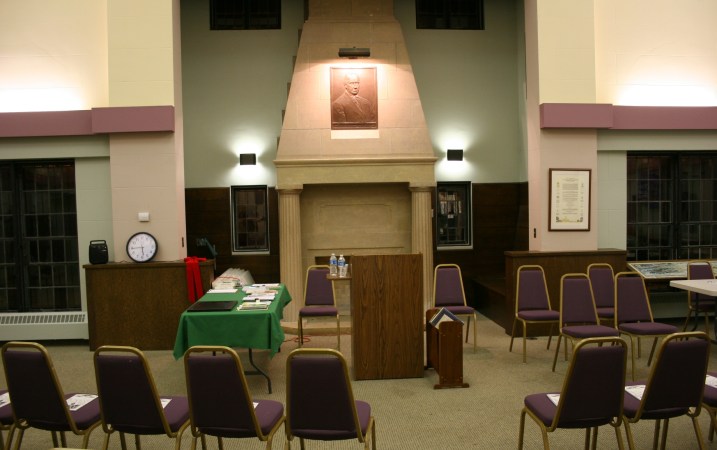
The scene in the Great Hall before the audience arrived. It's a gorgeous venue.

The scene in the Great Hall before the audience arrived. It’s a gorgeous venue. I used a few props and visuals in presenting.

Here’s one of the biggest surprises of all from the evening: Because I felt so confident going into the presentation, I actually, truly, enjoyed myself. Who would have thought? Not me.

Second, the turn-out of 32 audience members floored me and Peter. I expected perhaps a dozen. Buckham Memorial Public Services Librarian Allyn M. McColley, who coordinated the event, shared my enthusiasm for the high audience attendance. And, honestly, I did not personally invite a single person, although I did post about the event here last week.

I am grateful that so many ventured out of their warm homes on a cold December evening to embrace poetry. Such interest warms this poet’s heart. I could hear that interest in the laughter, in the questions, in the comments.

It also warms my heart that my two dear friends, Billie Jo and Tammy, both the mothers of young children, would choose to hear me read poetry on their girls’ night out.

And then to think that blogger Beth Ann, whom I’d never met prior to Thursday evening, drove more than an hour with her husband from northern Iowa to listen to me and Peter present simply touches me. (Beth Ann blogged this morning about our meeting and the poetry presentation, so be sure to click here and read her engaging piece.)

Finally, my dear husband, Randy, who helped me tote a van full of props and books and food to the library and then assisted with props and hand-outs, took me out to dinner afterward. We dined at a lovely Italian restaurant, Augusto’s Ristorante, several blocks from the library. It was the perfect way to end a fabulous evening.

FYI: Click here to link to photos posted on the Buckham Memorial Library website.

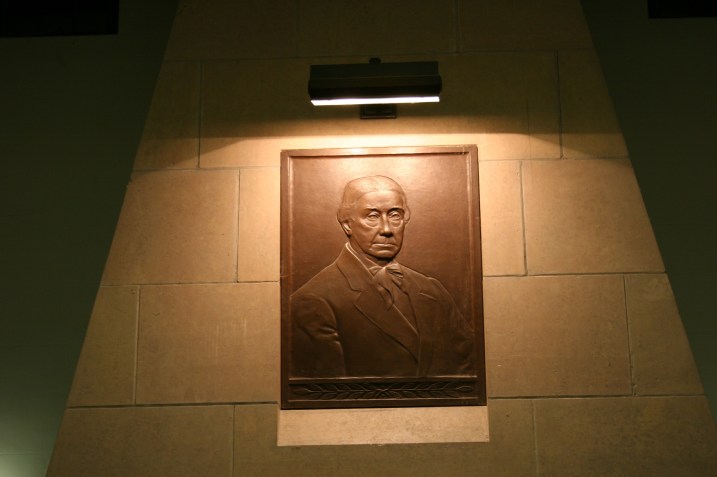
I believe this is a bust of Judge Thomas Scott Buckham, after whom the library is named. His wife, Anna, gifted the city of Faribault with this Art Nouveau/Greek Revival style building constructed in 1929-1930. The bust is located above the fireplace in the Great Hall, right behind where Peter and I presented.

I believe this is a bust of Judge Thomas Scott Buckham, after whom the library is named. His wife, Anna, gifted the city of Faribault with this Art Nouveau/Greek Revival style building. The bust of this pioneer settler is located above the fireplace in the Great Hall, right behind where Peter and I presented.

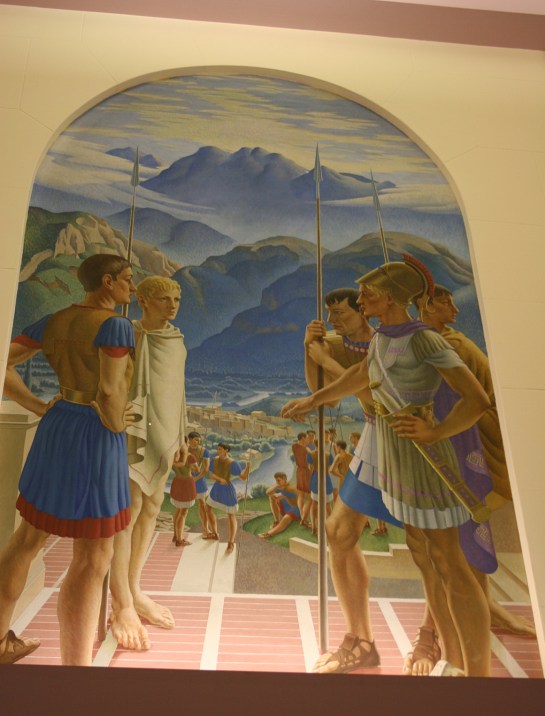
One of several Greek murals gracing the Great Hall.

One of several Greek murals gracing the Great Hall.

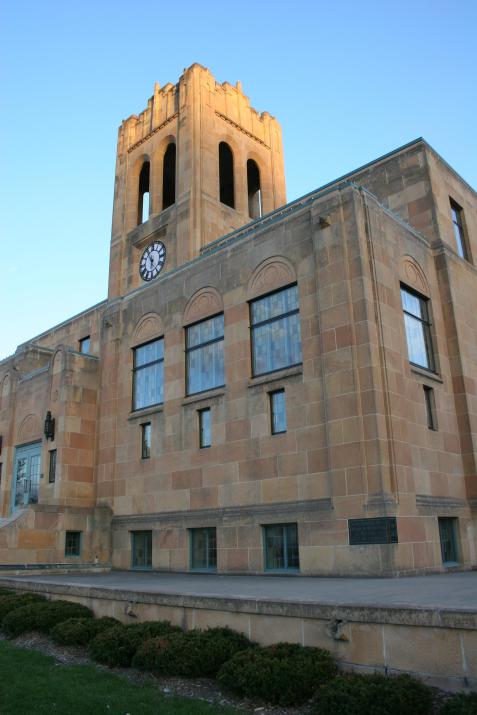
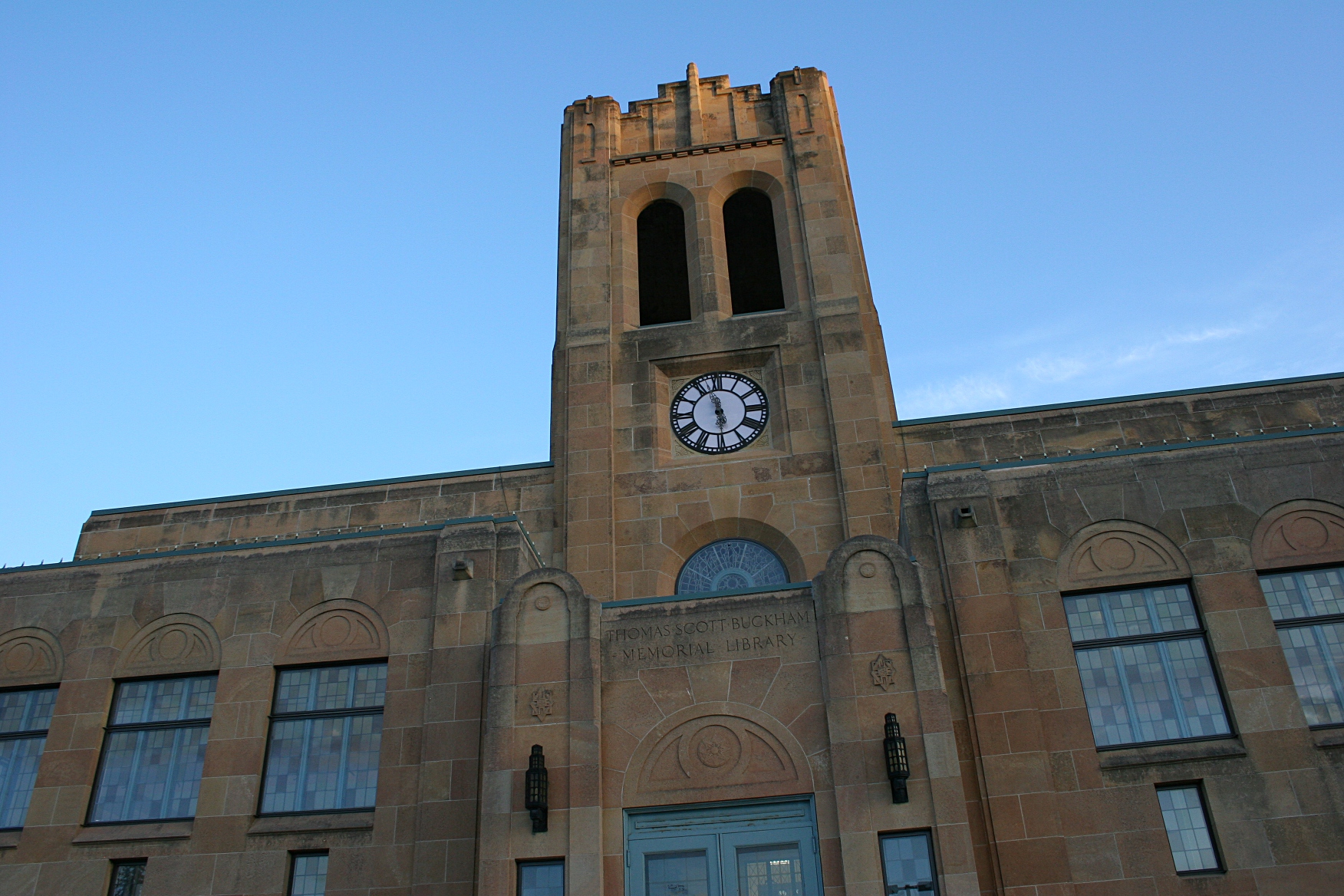
Buckham Memorial Library, Faribault, was built in 1929 with a Greek theme. Interior features include a Charles Connick stained glass window and Greek murals.

Buckham Memorial Library, Faribault, was built in 1929-1930 with a Greek theme. Interior features include a Charles Connick stained glass window and Greek murals. Minnesota Prairie Roots file photo.

© Copyright 2012 Audrey Kletscher Helbling


You’re invited to hear two Faribault poets read & talk about poetry November 29, 2012

WITH ONLY A WEEK until the presentation, I figured I better buckle down and finish my prep work. After all, wasn’t I the annoying mom sometimes harping on my once high school-aged kids to finish their homework?

“Don’t leave it until the last minute,” I would urge, not that they heeded my advice.

Peter C. Allen and I will present in the Great Hall, a lovely room with Greek murals on the second floor of the library.

I decided to listen to myself and have been preparing for a poetry presentation Faribault poet Peter C. Allen and I will give at 6 p.m. next Thursday, December 6, in the second floor Great Hall of Buckham Memorial Library, 11 East Division Street, Faribault.

I expect Peter is not really stressing at all about this event as he enjoys reading his poetry to an audience.

Me? Not so much.

Connie Ludwig, right, and I pose with her watercolor, “Pantry Jewels” (above my head), inspired by my poem, “Her Treasure.” We were participants in Poet-Artist Collaboration XI at Crossings at Carnegie in Zumbrota in April.

I’m counting on Peter, whom I first met last spring at a poet-artist collaboration in Zumbrota, to help me ease into our joint poetry reading and poetry educating. He’s the kind of guy who makes you feel comfortable and who reads with the confidence of a seasoned poet.

And that he is. Several weeks ago Peter invited my husband and me to dinner in his home with wife, Maria, and their adult son, Peter Allen (the sixth). After our savory meal, I asked the elder Peter to read some of his poetry. When my friend pulled out a thick binder of his poetry, I spouted, “You’ve written way more poetry than me.”

That matters not to Peter. Nor, I suppose, should it matter to me. After all, we each write poetry when the muse calls—or in my case when a contest deadline approaches.

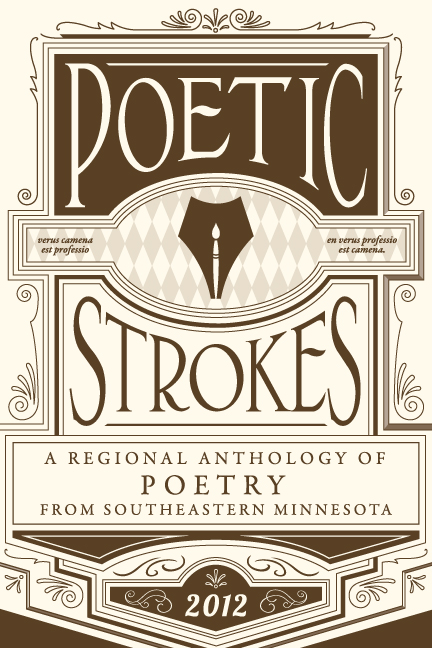
The 2012 volume of Poetic Strokes in which Peter Allen and I are both published.

Peter and I were both winners in the Southeastern Libraries Cooperating 2012 Poetic Strokes competition, which is why we were invited to speak at the library next week. Of the 202 submissions from regional poets, only 30 poems were selected for publication in Poetic Strokes: A Regional Anthology of Poetry from Southeastern Minnesota, Volume 6.

I’ve also been published in volumes 2, 3 and 4 of Poetic Strokes.

Lake Region Review 2, right, in which I was recently published, and LRR 1, to the left, in which I was published in 2011. I will read from both volumes during the poetry presentation next Thursday evening. This weekend you can listen to writers read their works from LRR 2 on selected western Minnesota radio stations. Go to lakeregionwriters.net and click on “Upcoming Events” for details. LRR 2 writers will also read and discuss the craft of writing at  Zandbroz Vareity, 420 Broadway Ave., Fargo, North Dakota, at 2 p.m. on Sunday, December 9, where I shot this photo.

I’ll read six of my poems from those four volumes plus an additional 11 published elsewhere. Even I did not realize, until I began gathering my work, that I’d been published this often. Do I have enough published work to possibly think about compiling a book of my poems?

Additionally, I’ll share tips on poetry writing and a sampling of places Minnesota poets can submit their poetry right here in Minnesota.

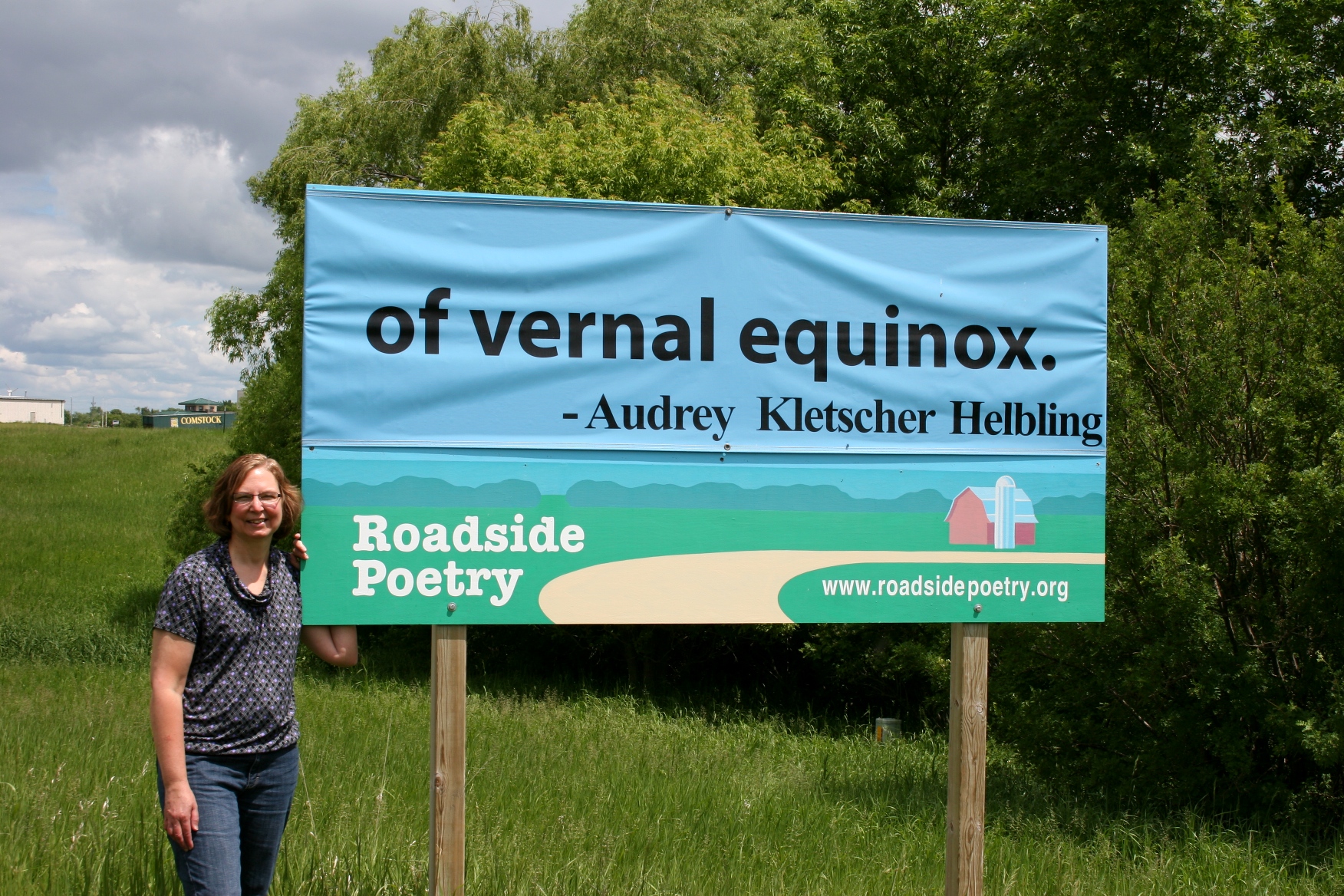
The most unusual place my poetry has been published, on billboards as part of the Roadside Poetry Project in Fergus Falls.

You can also expect me to use visuals in presenting several of my poems. Initially I’d considered using PowerPoint, but worried that I couldn’t pull that off given I have no idea how to prepare or technically present a PowerPoint. Lack of equipment at the library for that type of presentation caused me to drop that thought and rely instead on my ingenuity. (No, I’m not even going to hint at what I have planned.)

Besides listening to Peter and me read our poetry and talk about poetry and our other writing experiences (including blogging), you will leave with a gift—a free copy of the 2012 Poetic Strokes, compliments of SELCO.

Peter and I will also treat you to snacks and beverages.

So…if you’re up for an hour of poetry followed by a question-and-answer period, or simply want to meet me, the real person behind this blog, join Peter and me at 6 p.m. next Thursday, December 6, at the Faribault library. Peter and I promise a casual and relaxed (hopefully for me) atmosphere with down-to-earth poetry you will (hopefully) understand and enjoy.

Full disclosure: I am being paid a small stipend to present on poetry at the library. However, I was not asked to write this post and did so because I often promote such cultural events in my community and elsewhere.

The Poetic Strokes project is funded in part or whole by Minnesota’s Arts and Cultural Heritage Fund.

© Copyright 2012 Audrey Kletscher Helbling


The Beat: “In Minnesota, poetry matters” September 27, 2012

WHY DID IT TAKE ME until recently to determine that poetry is meant to be read aloud, preferably by the poet, and not just silently to one’s self?

I came to that realization in April after reading my poem, “Her Treasure,” to an audience gathered in an historic Zumbrota theater for Crossings at Carnegie’s “Poet-Artist Collaboration XI.”

That poetry-inspired art celebration proved pivotal for me, prompting a personal recognition that poetry is as much performance art as it is an intimate experience.
The Beat logo

And now the independent, nonprofit Northern Community Radio, with studios in Grand Rapids and Bemidji, Minnesota, recognizing the importance of poetry read aloud, is bringing poetry to the public via The Beat, broadcasting a poem a day by a poet with a Minnesota connection.

The Beat, according to NCR’s website is “Northern Community Radio’s daily reminder that, in Minnesota, poetry matters, and Minnesota poets are proving that every day.”

I proved that on September 17 with the reading of my poem, “Her Treasure.” Because traveling hundreds of miles up north from southern Minnesota was neither practical nor cost effective for me, The Beat producer Steve Downing, himself a published poet, read my poem. You can listen to Downing’s fine rendition of “Her Treasure” by clicking here.
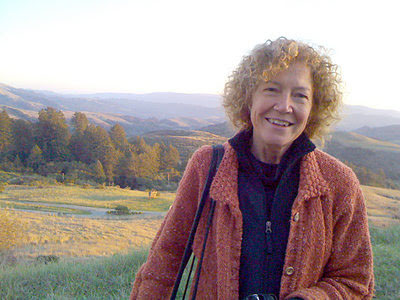
Minnesota’s 2011 Poet Laureate, Joyce Sutphen of Chaska.

Since early July, an assortment of about three dozen poets—from the well-known John Berryman, James Wright, Joyce Sutphen, Louis Jenkins, Will Weaver and Sean Hill—to the complete unknowns have been featured on The Beat.
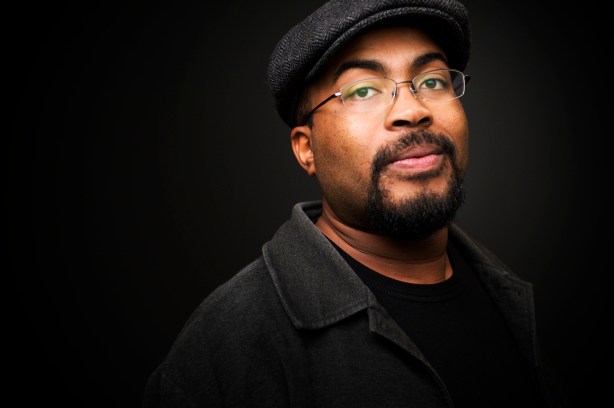
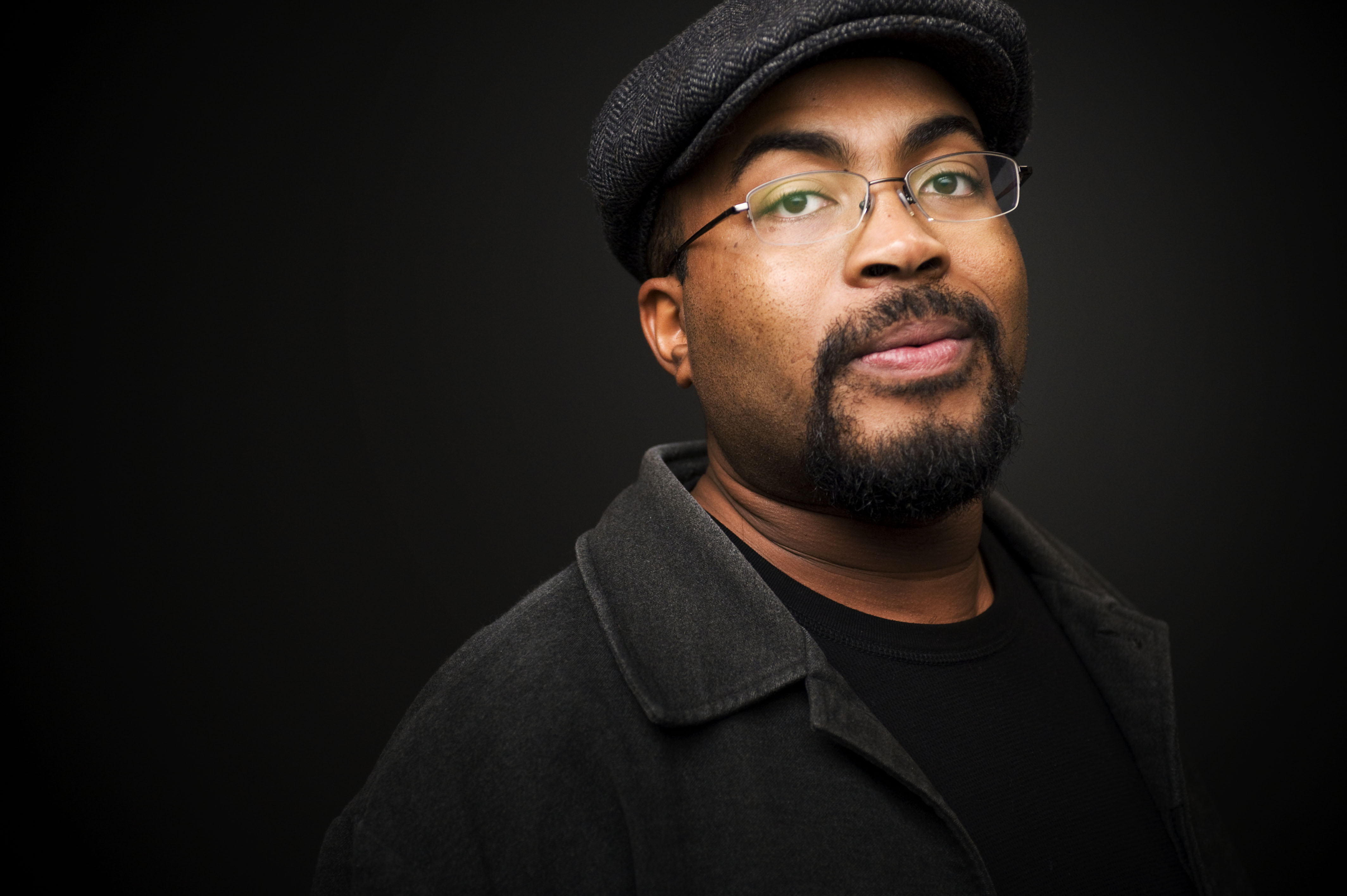
Poet Sean Hill recently moved from Bemidji to Alaska where he is teaching creative writing at a university in Fairbanks. Milkweed Editons will publish his second collection of poetry in 2014.

The show airs weekdays between 7:30 – 8 a.m. and then again between 3:30 – 4 p.m. on 91.7 FM in north-central and northeastern Minnesota, 90.5 FM in north-central and northwestern Minnesota and on 89.9 FM in the Brainerd area. With 150,000 listeners under the NCR signal, coverage extends from Grygla on the north to Pierz on the south to Fertile on the west and Hermantown on the east.

And for those outside the coverage area, like me, The Beat can be heard via audio streaming from kaxe.org or via the KAXE online archives.

“Reaction from poets and listeners, including folks who thought they hated poetry, has been unconditionally affirmative, making us think this was a success story waiting to happen,” says producer/poet Downing, also a former high school English teacher, published essayist, arts administrator and lifelong musician.
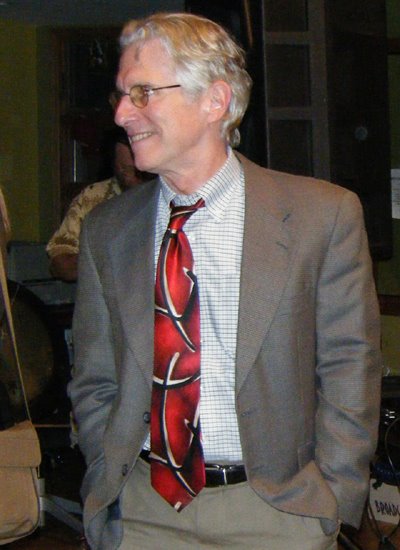
Steve Downing, poet and producer of The Beat

He and two others—NCR’s program director, who interviews writers for her long-standing RealGoodWords show, and a design-artist NCR staffer who is also a poet and has taught English at the college level—have been evaluating the hundreds of poetry submissions coming in from across the state.

“We didn’t know what to expect, but no one thought we’d be swamped, which we are,” Downing says. “It’s a nice problem to have but a problem nevertheless.”

The three-person jury meets every Friday to look at/listen to submissions. “The jury looks for creative work that, first, sparks a positive ‘gut’ response; that demonstrates originality; that makes smart word choices; and that’s provocative, in the best sense of the word,” Downing explains.

He advises submitting poets to avoid the topics of partisan politics, religion and lost love and to remember that the Federal Communications Commission is listening.

The range of topics is “all over the place,” Downing says, although some poems are somewhat “Minnesota-centric,” covering subjects like family farms, old barns, and the state’s flora, fauna and weather.

Broadcasting these poems on its community-based public radio stations helps fulfill NCR’s overall mission “to build community in northern Minnesota by way of radio programming, cultural events and interactive media.”

The Beat is currently funded by a one-year $30,000 allocation from the Minnesota Arts & Cultural Heritage Fund.

The history of The Beat, however, stretches back several years to The Beat Cafe, a live-on-air pledge drive program which, among other Beat content, featured Downing reading his poems, with live bass and percussion accompaniment. The success of that first show prompted discussion on how to make this happen again. So come spring 2013, The Beat Cafe fundraiser will be back with live-on-air poetry and music.

Says Downing: “Think berets, dark glasses, shawls, candles in wine bottles…”

Between now and then, though, Downing will continue to air selected poetry by Minnesota poets, known and unknown, and will apply again for state funding to continue the popular poetry program, The Beat.

#

FYI: If you’re a Minnesota poet and would like your writing considered for The Beat, email text or, preferably, audio versions (e.g. MP3) of your poetry to Downing at this address: sdowning@kaxe.org

A poem should take three minutes or less to read.

Once accepted for The Beat, poets have recorded their poems at KAXE in Grand Rapids, KBXE in Bemidji and at KFAI in Minneapolis or on their own devices. NCR also offers the option of Downing or others reading a selected poem if the poet cannot record his/her work.

I contacted Downing about writing this post after my poem was selected by the jury for airing on The Beat.

© Copyright 2012 Audrey Kletscher Helbling
Artwork and photos courtesy of Northern Community Radio

 

Pigs and poetry May 14, 2011

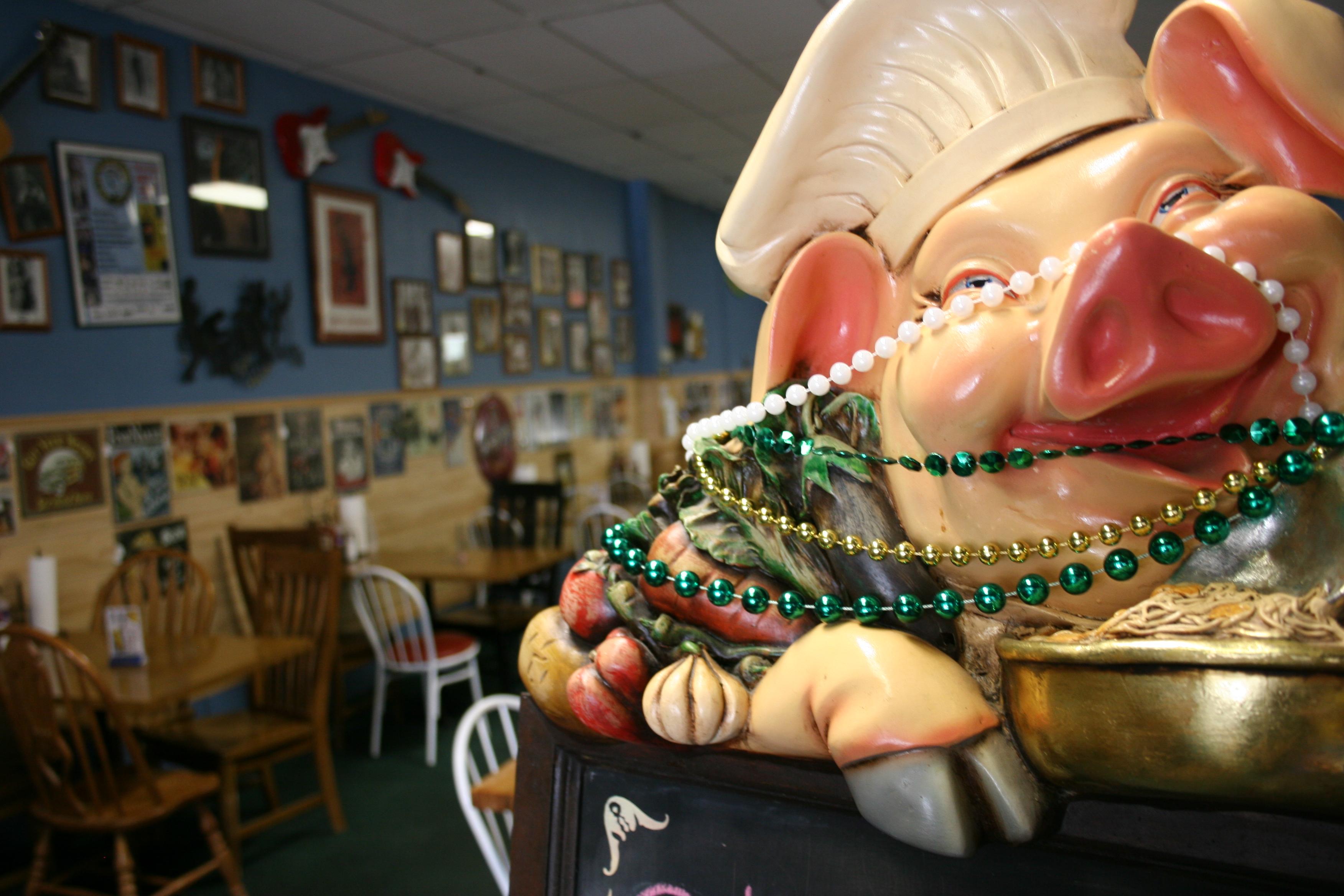
This pig greets diners at Piggy Blue's Bar-B-Que in Austin, Minnesota. This image is posted here for pig illustration purposes only, not because it's specifically related to the following story.
IN A WEEK, my sister-in-law is moving from Minot, North Dakota, to Missouri. In August, my brother-in-law, an Air Force man, will join her and their young son.

She’s leaving early to seed the garden, plant the orchard and ponder the purchase of pigs. This has always been Jamie’s dream, to own a country acreage where she can grow fruits and vegetables and raise an Old McDonald variety of animals.

Chickens, rabbits, goats and a pig or two comprise her animal acquisition list.

But about those pigs…I overheard a man advising her last Saturday to “hold off” on the pigs for awhile. He didn’t give a reason, only suggested she wait.

Her husband, Neil, although supportive of his wife’s plan, also has reservations about the swine. If Jamie wants a pig, Neil says he can shoot one. He would be right. The Missouri Department of Conservation advises residents to “shoot ’em on sight” in an online article about the problem of feral pigs running rampant.

Thankfully we do not have a wild pig problem in Minnesota. Our problem would be an overabundance of deer.

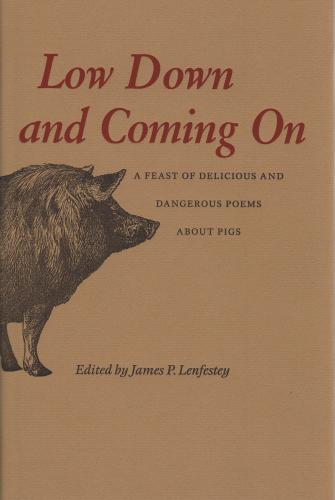
But we do have a book of pig poetry featuring 133 pig poems penned by 103 poets like Robert Bly, Louise Erdrich and Bill Holm. Red Dragonfly Press, a solely poetry not-for-profit literary organization based in Red Wing, published Low Down and Coming On: A Feast of Delicious and Dangerous Poems About Pigs. James P. Lenfestey edited the 232-page anthology printed last October.

Tomorrow (May 15) several of the pig penning poets, including Lenfestey, will read from the book at a “Pig Gig” slated for 2 p.m. at the Litchfield Opera House in Litchfield.

Now if my sister-in-law wasn’t preoccupied with packing for Missouri, I’d propose she check out this pig gig for pig pointers prior to purchasing pigs.

© Text and Piggy Blue’s photo copyright 2011 Audrey Kletscher Helbling