

…Minnesota style.
Copyright 2014 Audrey Kletscher Helbling
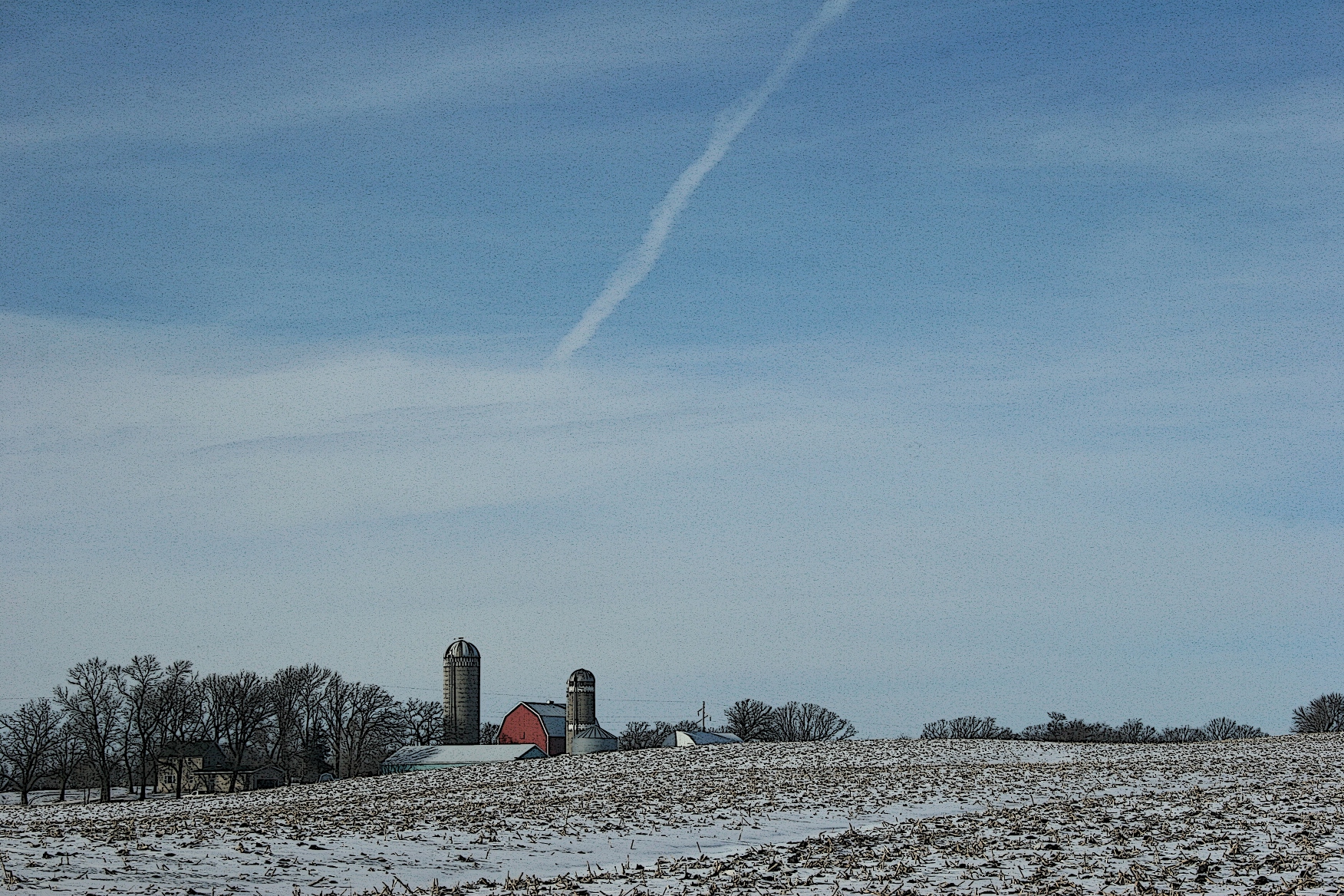
The rural scene, dominated by a blue sky, unfolds before us.
BLUE SKY STRETCHES before my husband and me as we traverse back gravel roads northwest of Faribault Sunday afternoon.
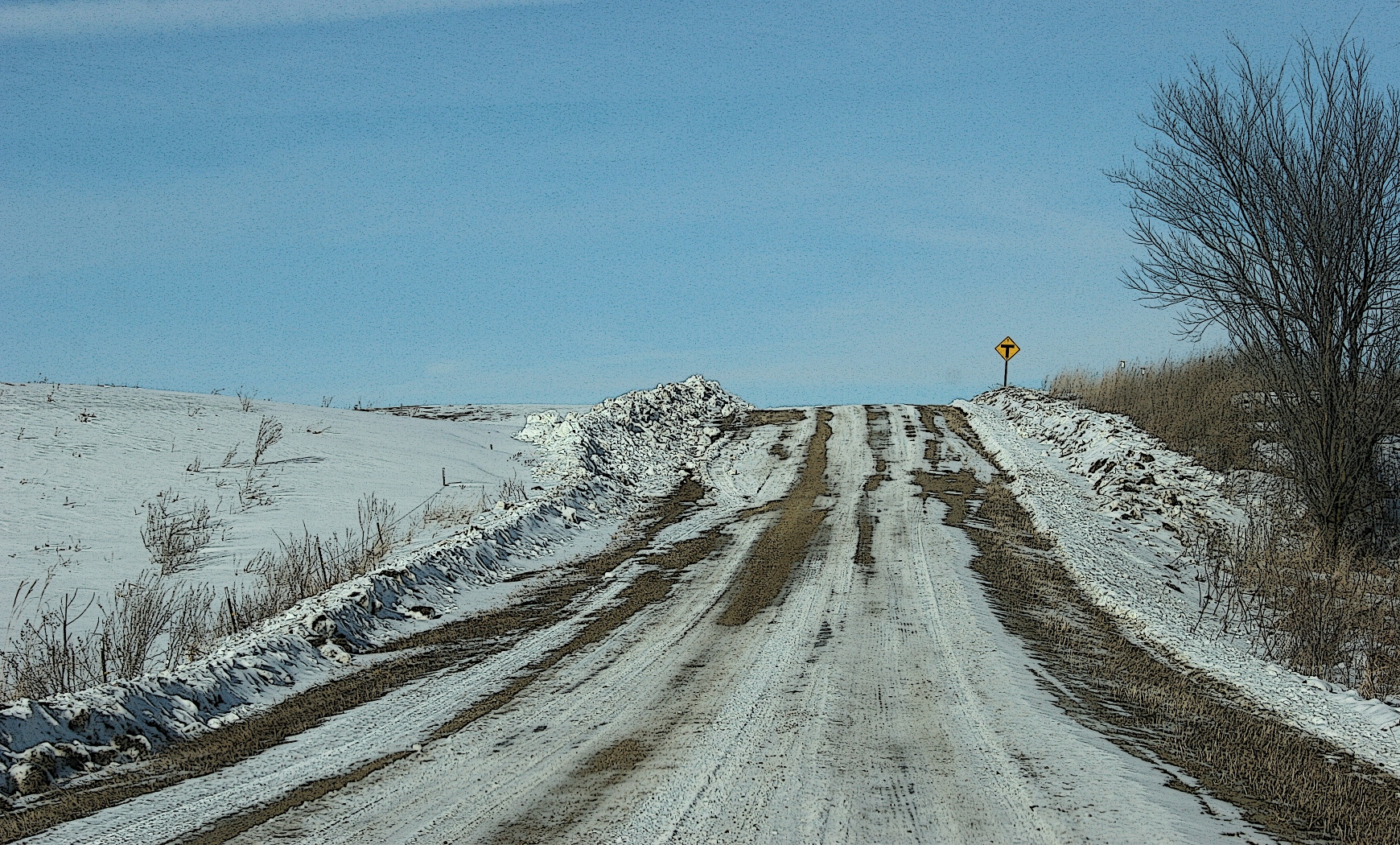
A drive along country gravel roads always uplifts me, no matter the season.
I yearn for this escape, for this reconnection to the land, this attempt to rejuvenate my spirit.
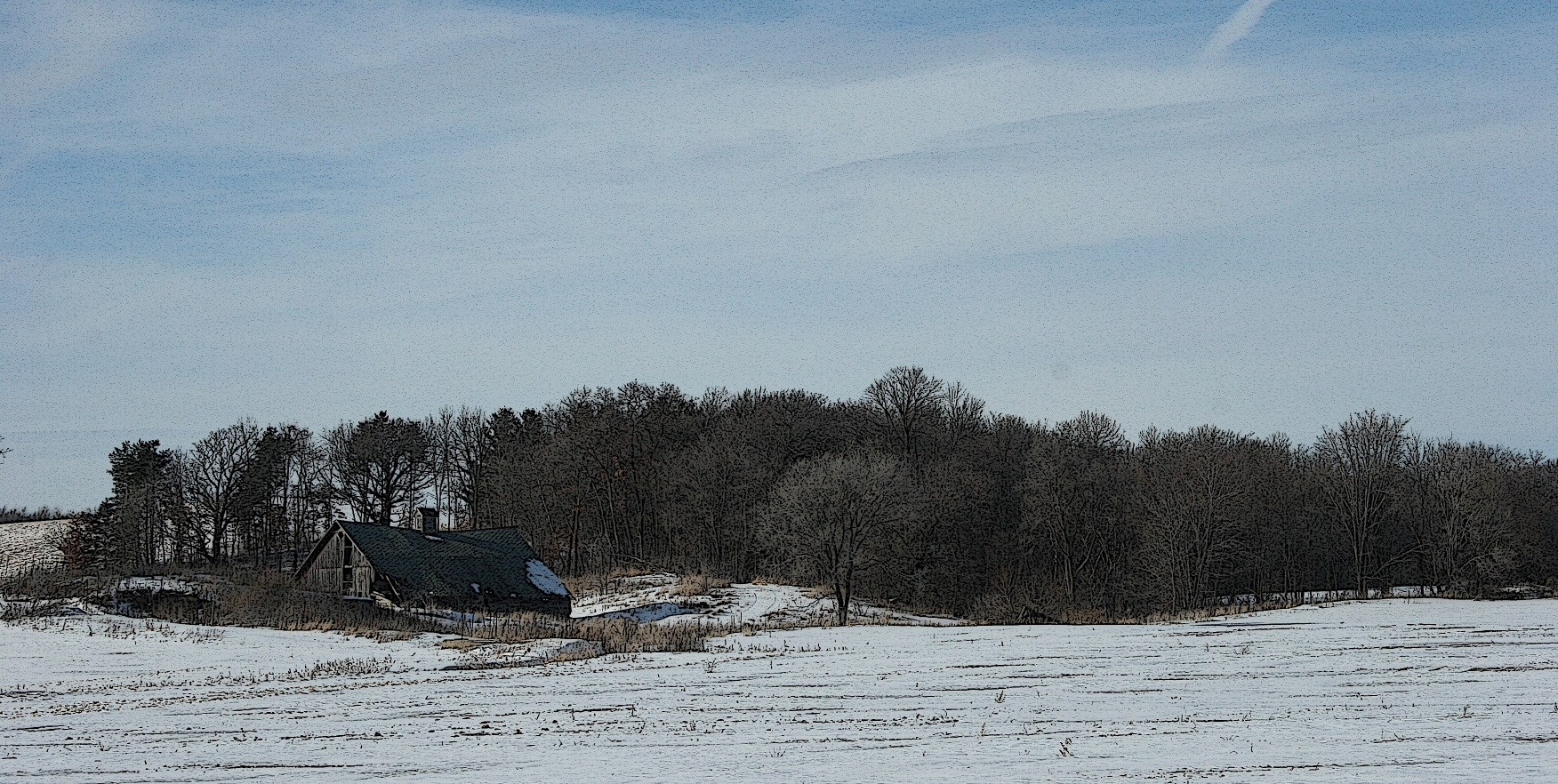
This scene inspires the poet in me.
Just being in the country calms my soul, brightens my outlook, causes me to pause and appreciate this land, this place God has created and given into our care.
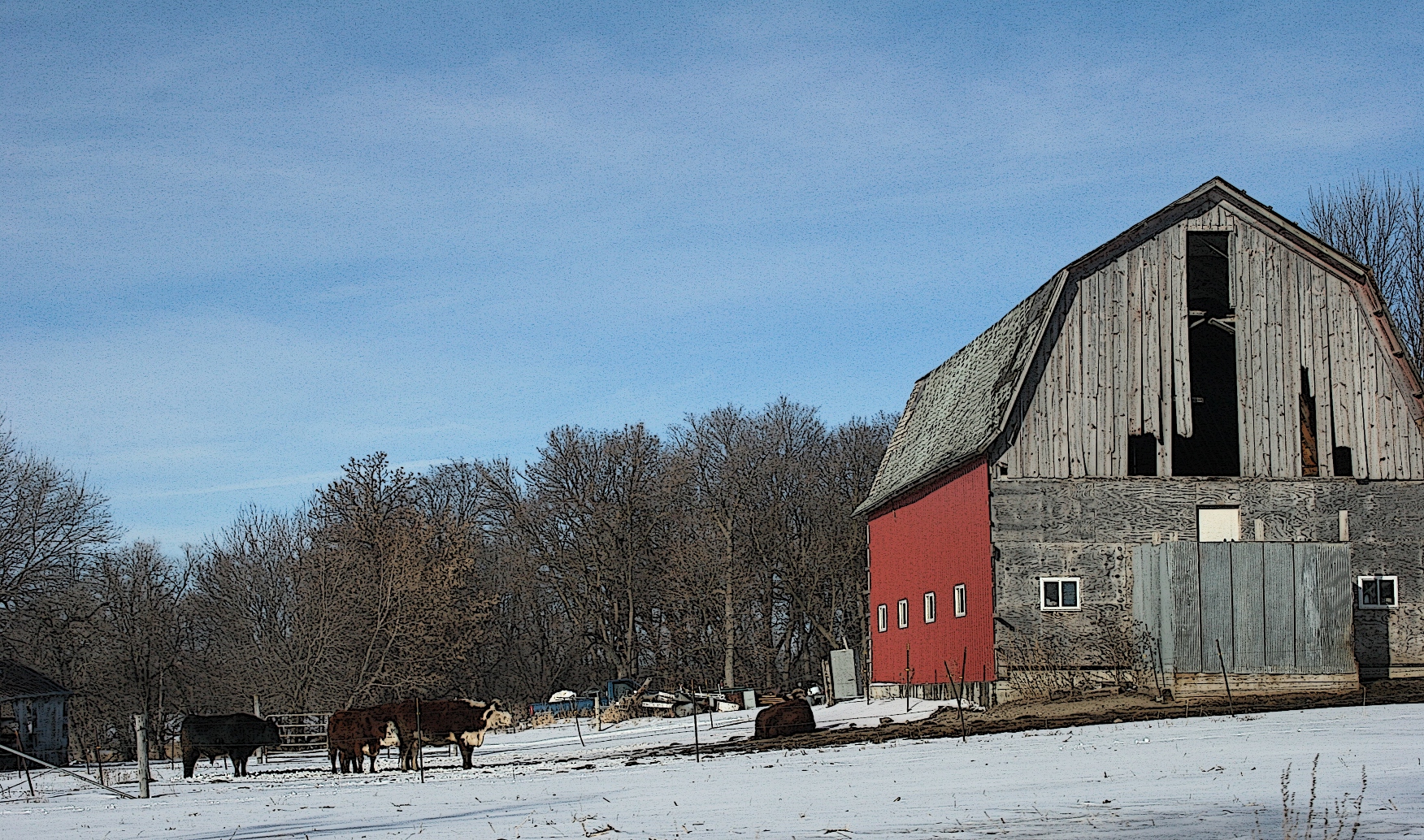
Memories in this scene…
In this moment, at this time, I slip into the past, envision myself laboring in the barns we pass. Soothing thrum of the milking machine. Cocooning warmth among cows snugged in mounds of golden straw. The comfort of ‘CCO radio.
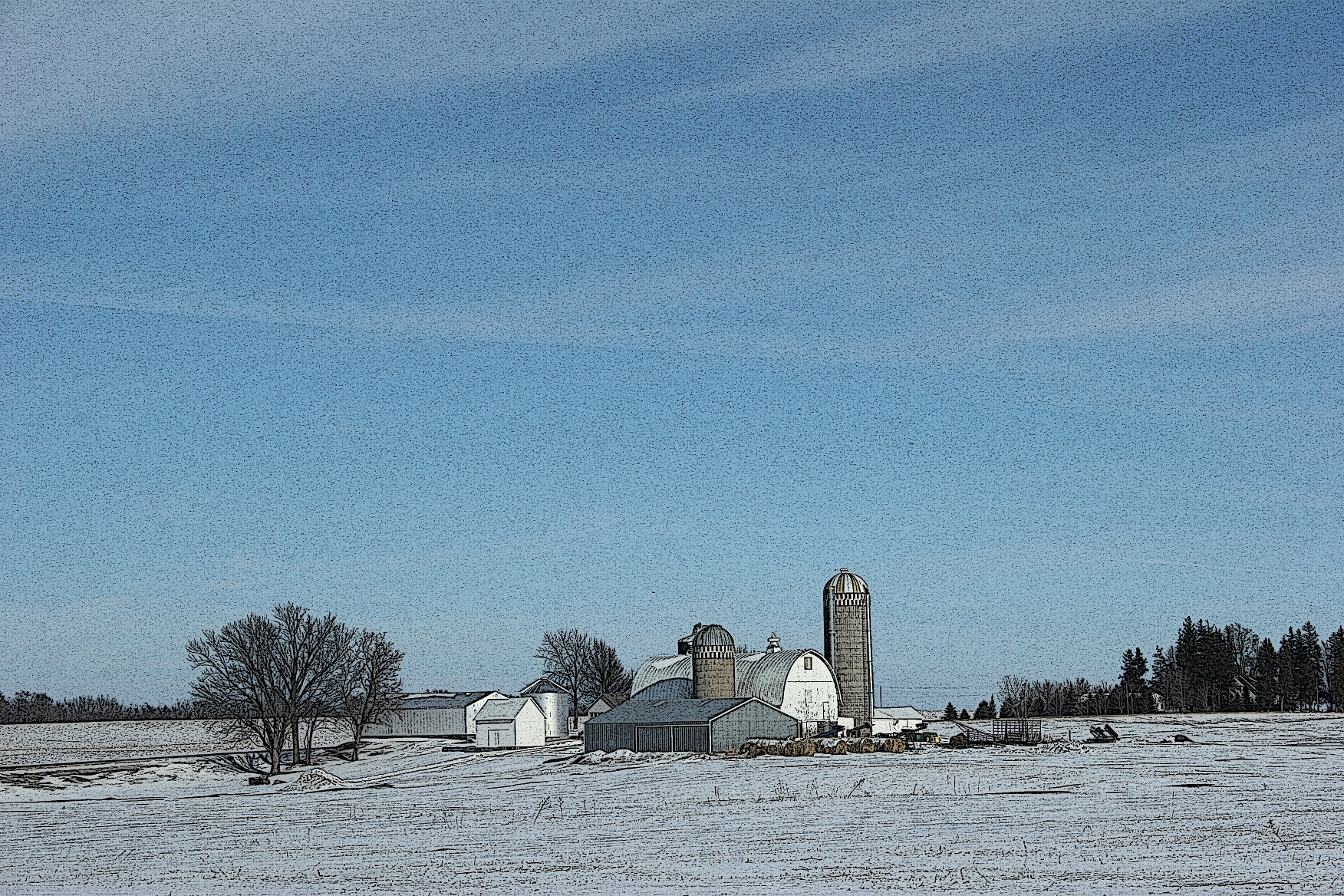
I envision these fields seeded in corn or soybeans.
In farm fields, I see a much younger and skinnier version of myself plodding between rows of soybeans to yank cockleburs on a scorching summer day.
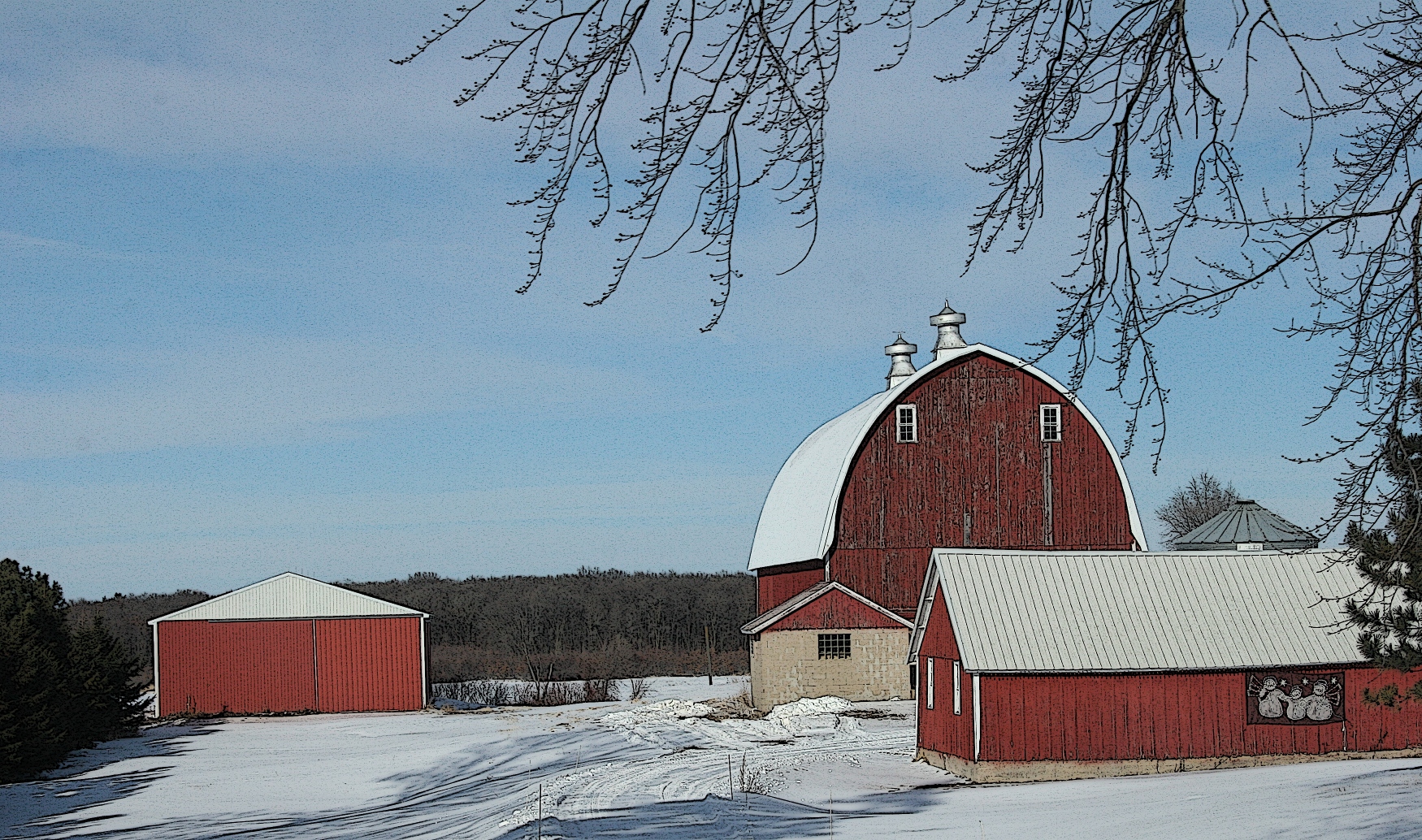
The comfort of memories in a farm yard.
At the sight of a farmyard, I hear my buckle overshoes crunch upon hard-packed snow as I follow the path from house to barn.
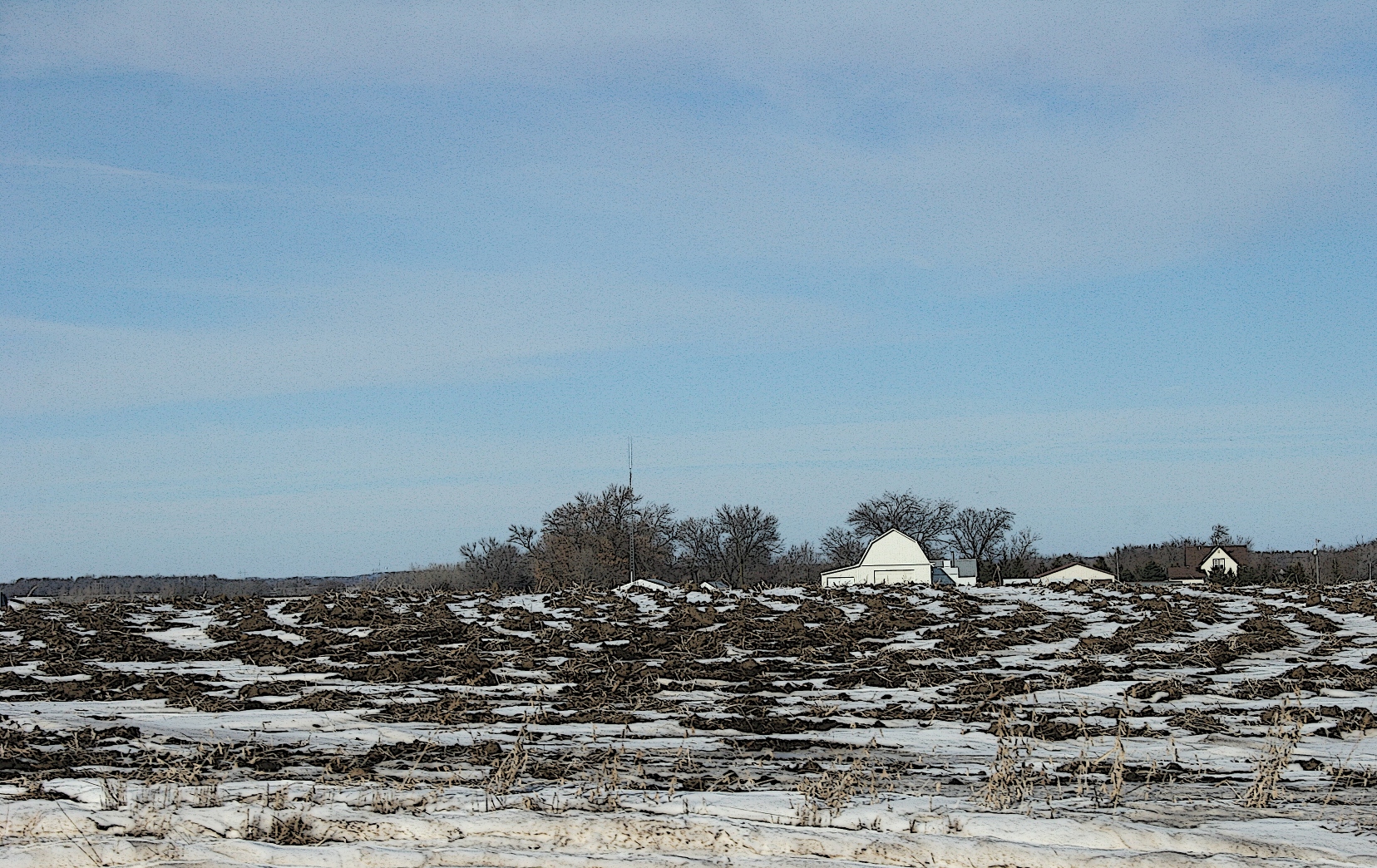
An ocean of snow-washed land.
Memories unleash in this landscape, in the view of farmyards anchored into hillsides within an ocean of snow-washed fields.
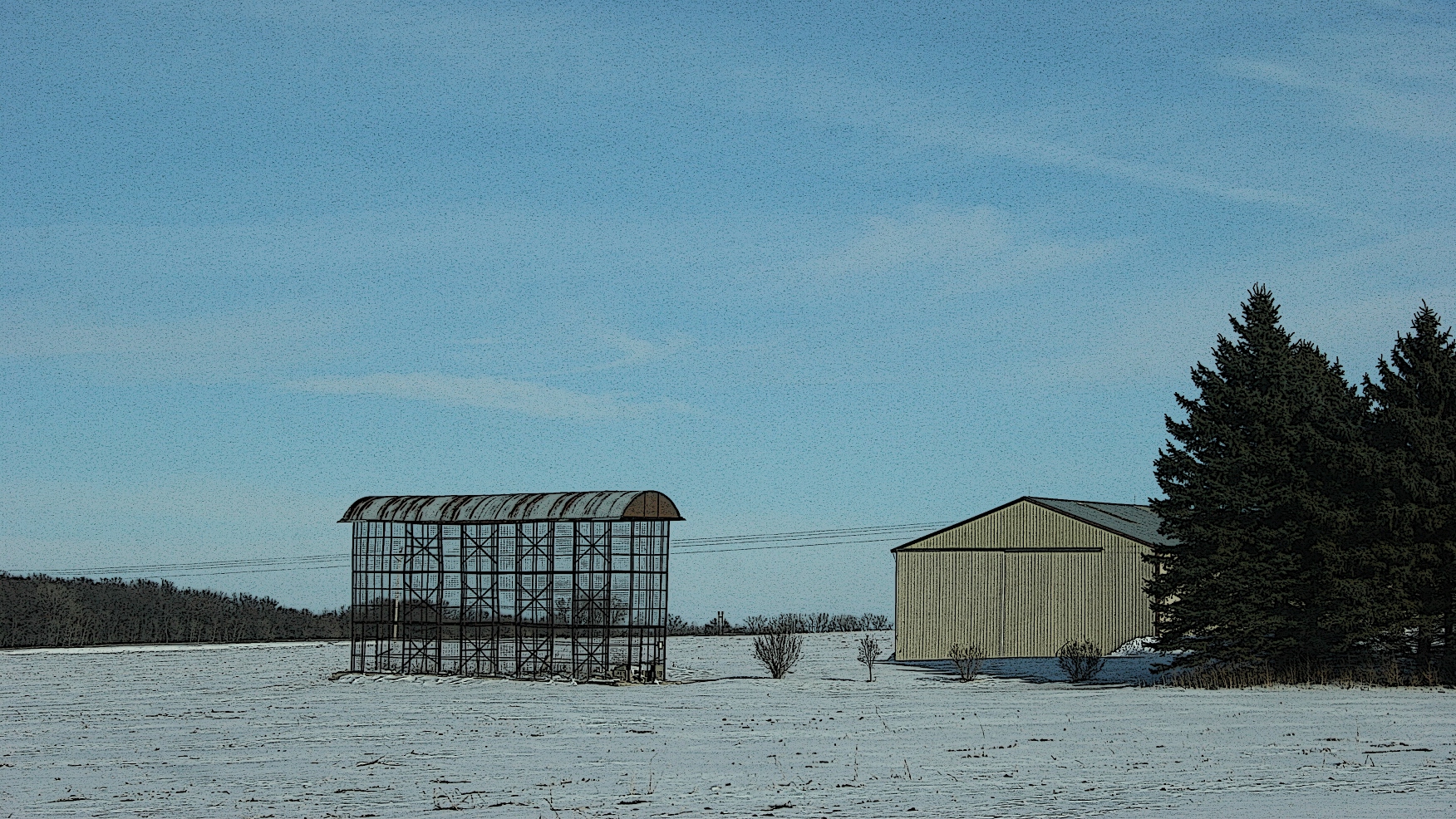
A remnant of yesteryear in an old corn crib.
I am happy here. Content. At peace.
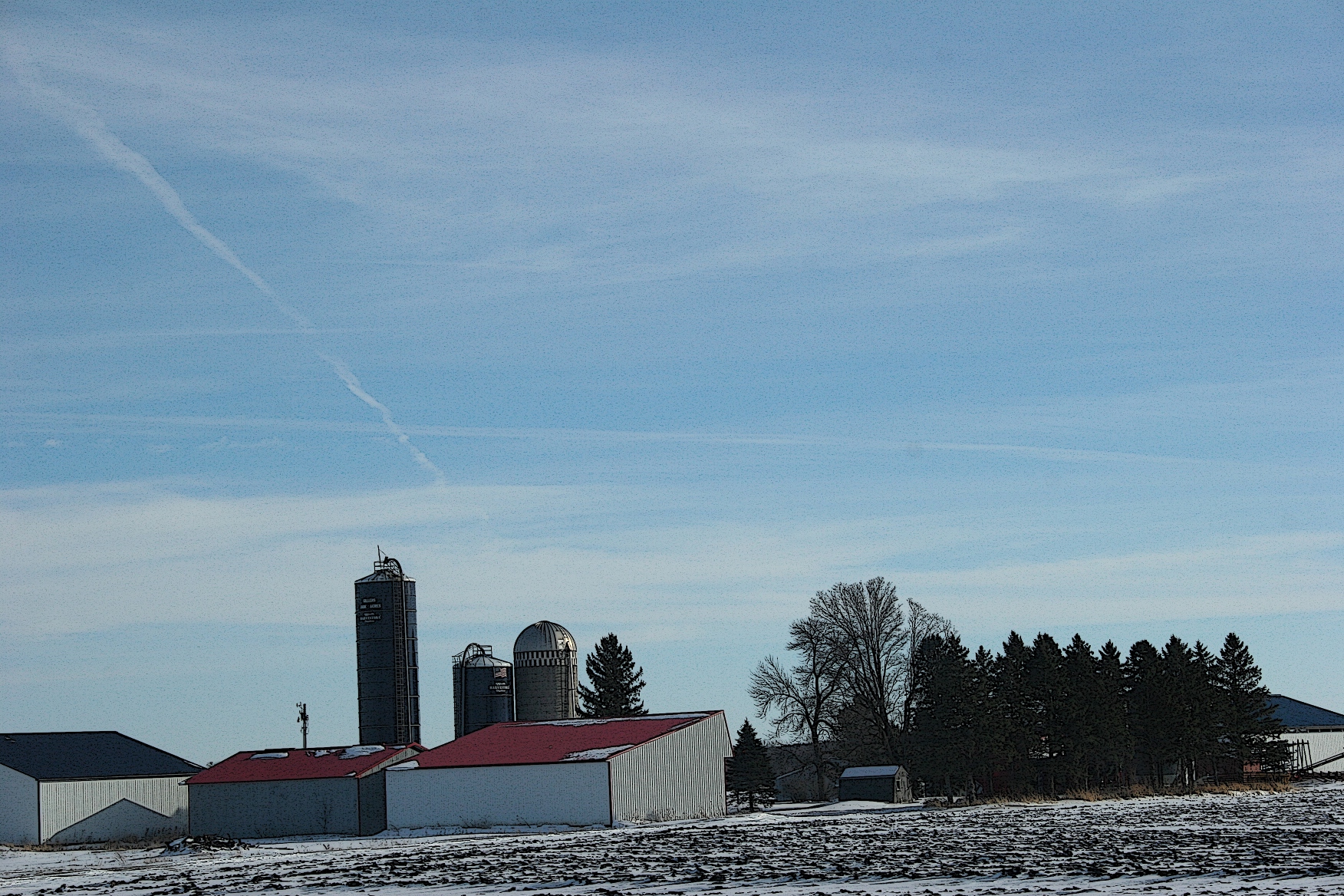
Splashes of red jolt the blue and white landscape.
Yes, even in this winter of too much cold and too many snowy days, I find solace in blue skies and sunshine, barns and white-washed fields.
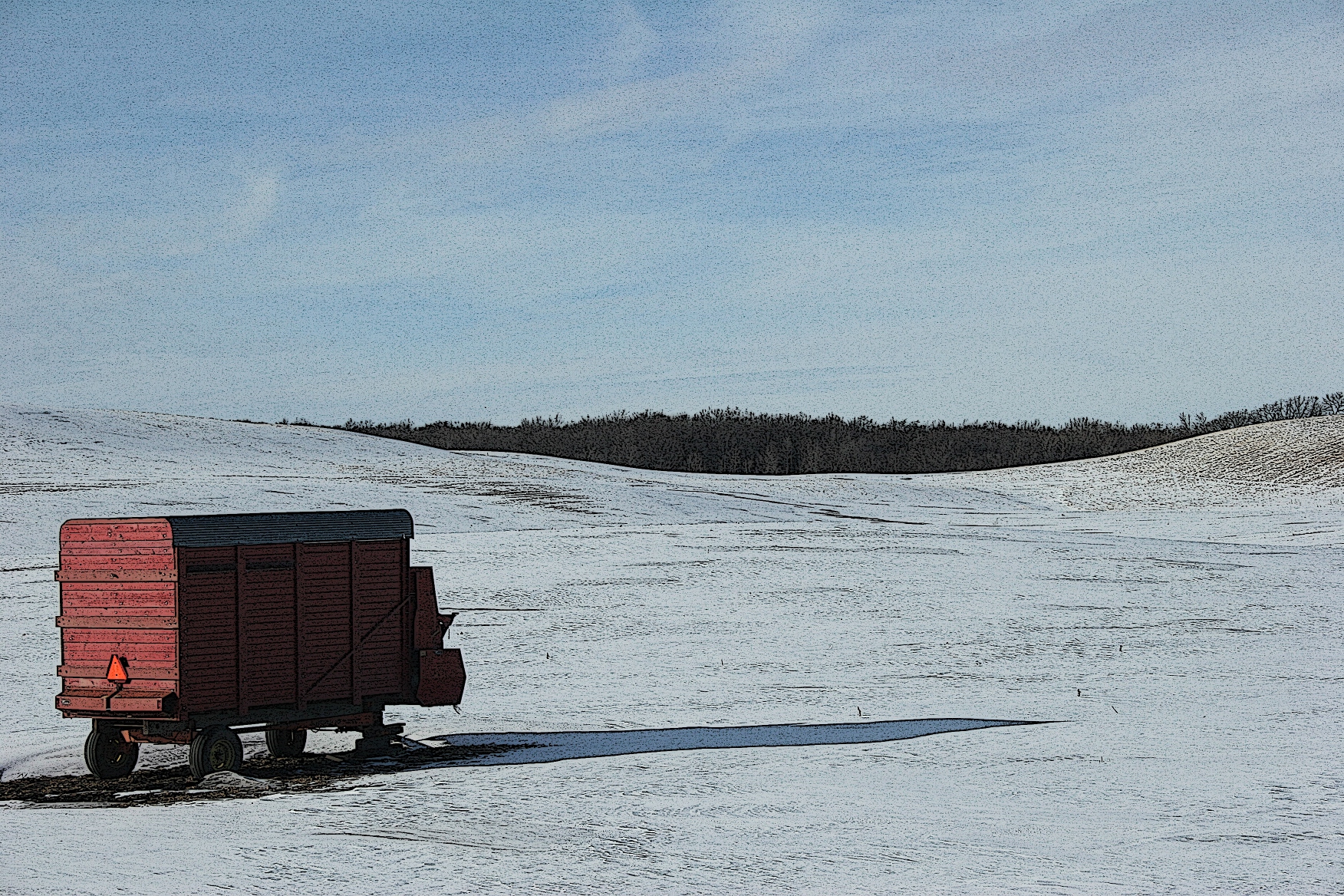
The punctuation of a red wagon and its shadow stretching across the snow draw my attention.
FYI: To read my previous post featuring photos from this Sunday afternoon drive, click here.
© Copyright 2014 Audrey Kletscher Helbling
HISTORY BROUGHT TO LIFE pleases me, for I am an interactive learning history type of person.
I often get overwhelmed and impatient reading information in traditional museum displays.
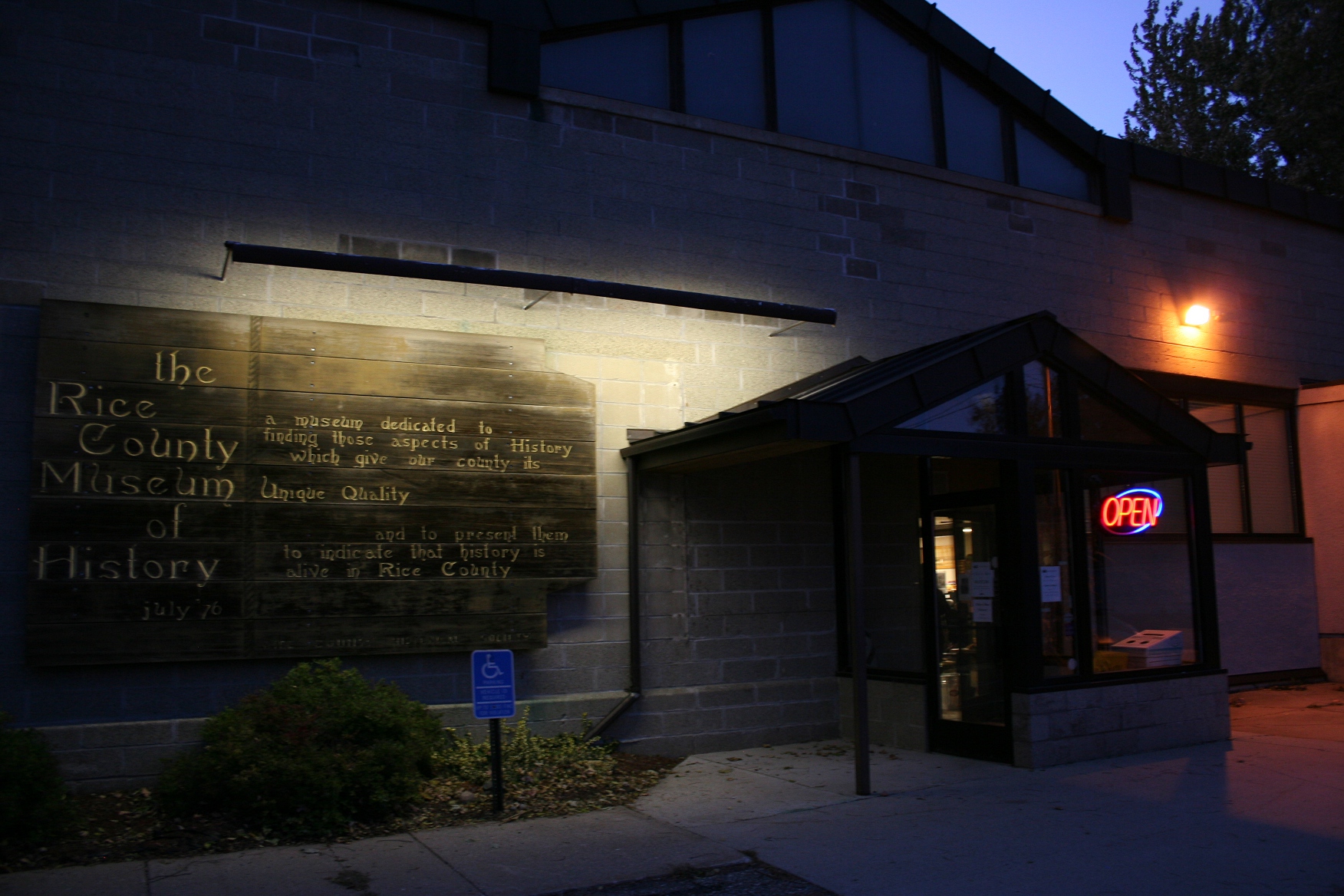
Arriving around 6:30 p.m. Friday for A Night at the Museum at the Rice County Historical Society in Faribault.
So I was excited Friday evening to attend the Rice County Historical Society’s first ever A Night at the Museum in which costumed men, women and children played the roles of historical figures. Like Evangeline Whipple, second wife of Bishop Henry Whipple, and Ordinance Sargent Jones, stationed at Ft. Ridgely during the U.S. – Dakota Conflict of 1862:
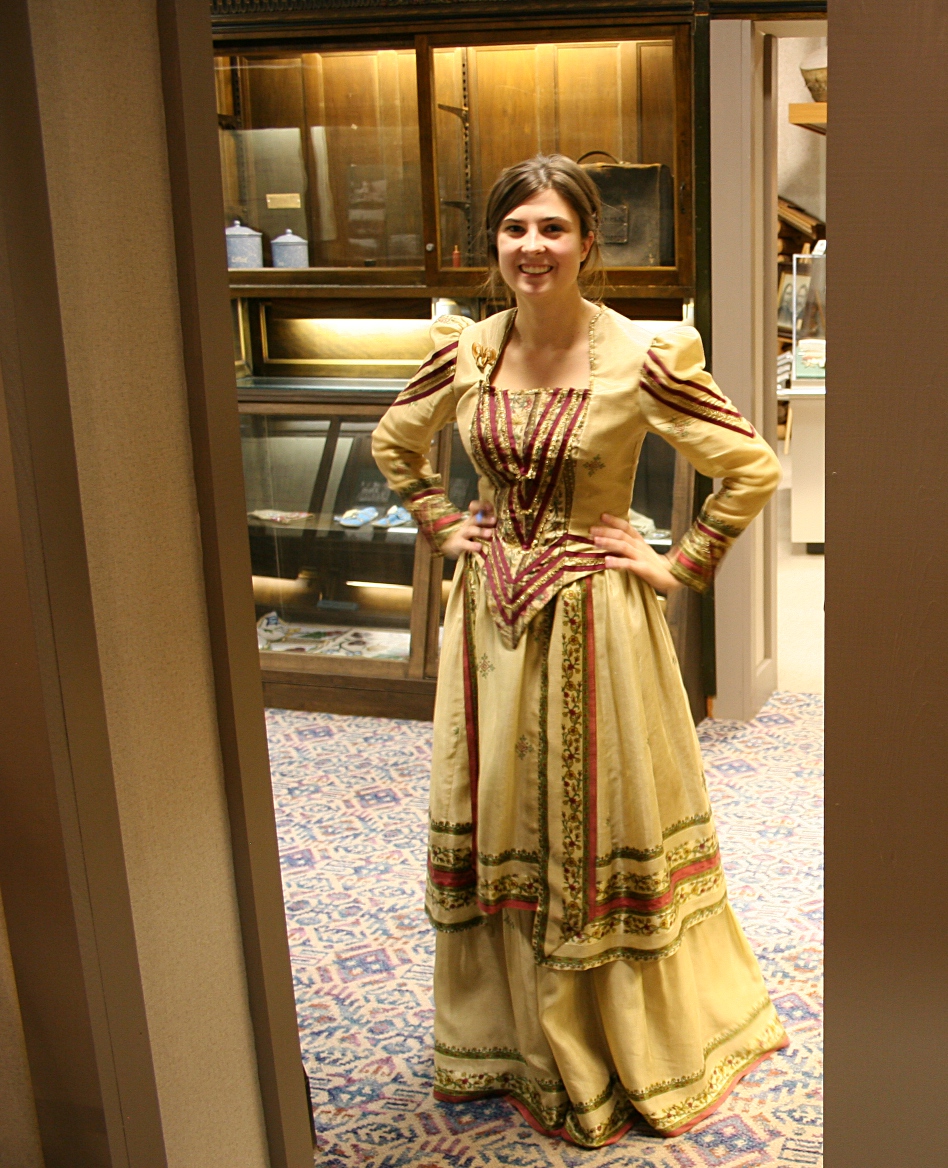
Role-playing Evangeline Whipple.
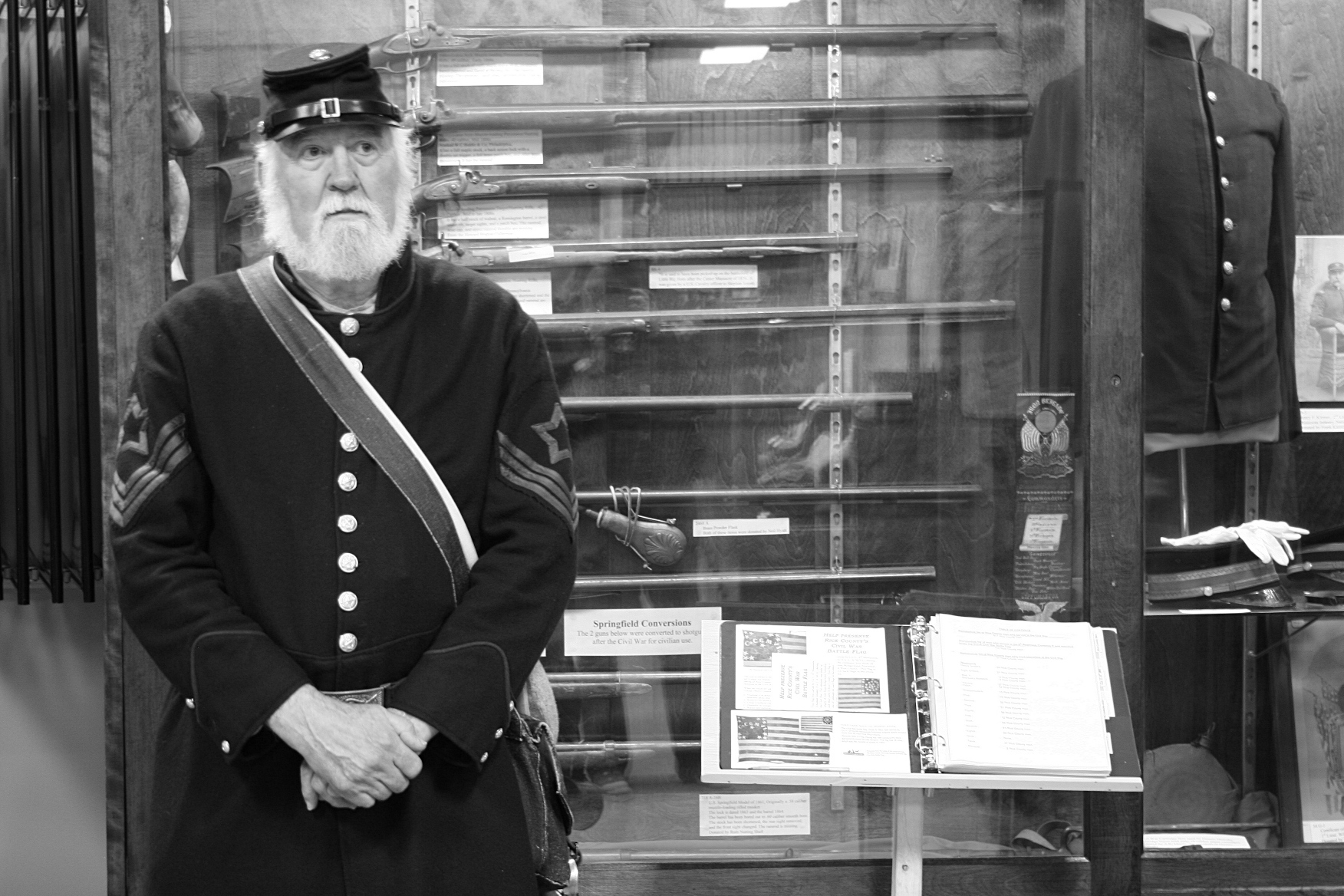
Playing the role of Ordinance Sgt. Jones.
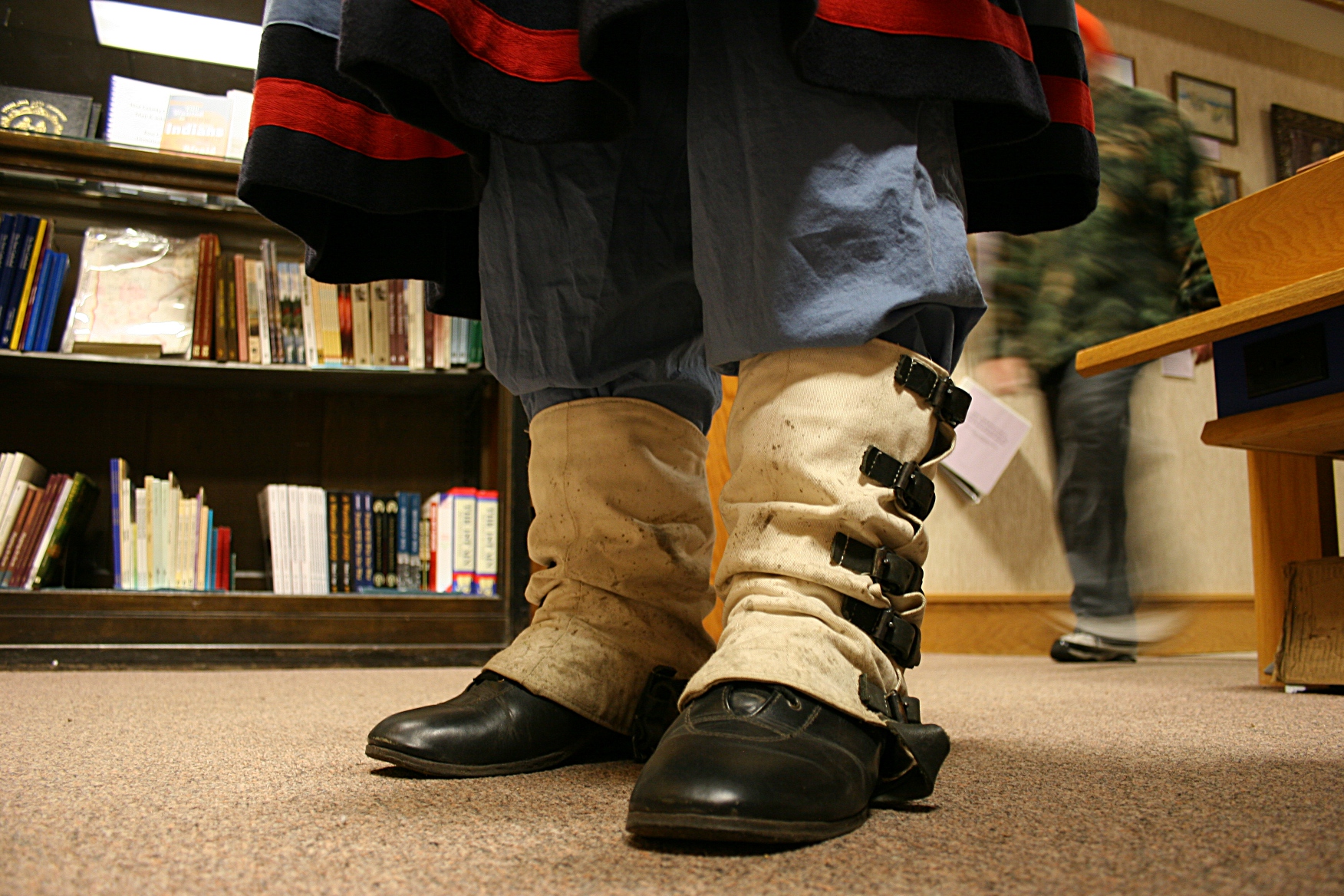
The buckled cloth covering worn by French Mary keeps mud from boots.
I spoke with “French Mary” Tepe about her role as a vivandiere with Pennsylvania volunteers in the Civil War. Vivandieres carried a canteen of spirits and more and attended to the sick and wounded. I’d never heard of vivandieres prior to meeting French Mary.
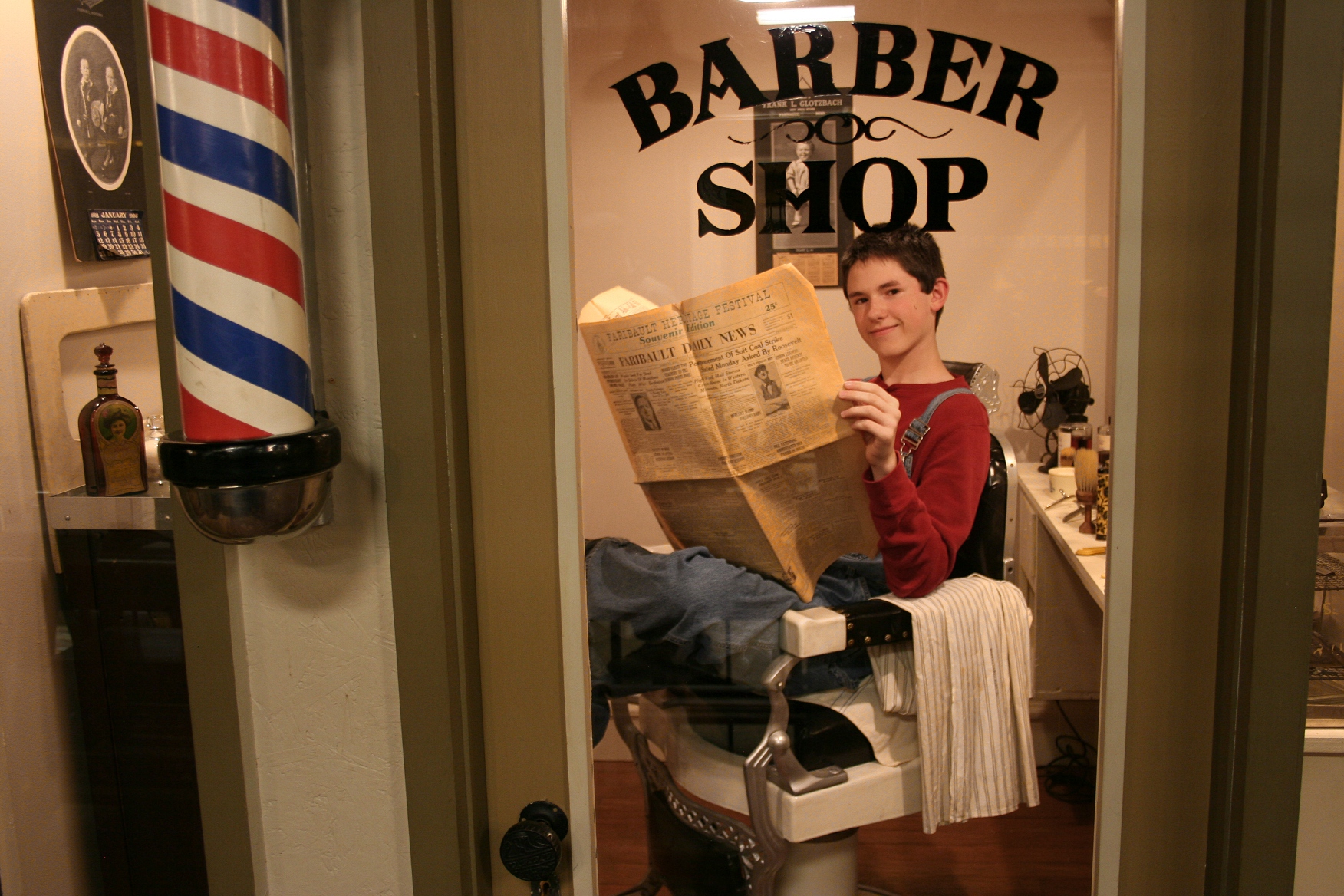
Noah, who volunteers at the library through its youth program, sat in the museum’s barbershop chair.
Noah read a souvenir edition of the Faribault Daily News in an old-time barbershop while Leroy bathed in a second story room above.
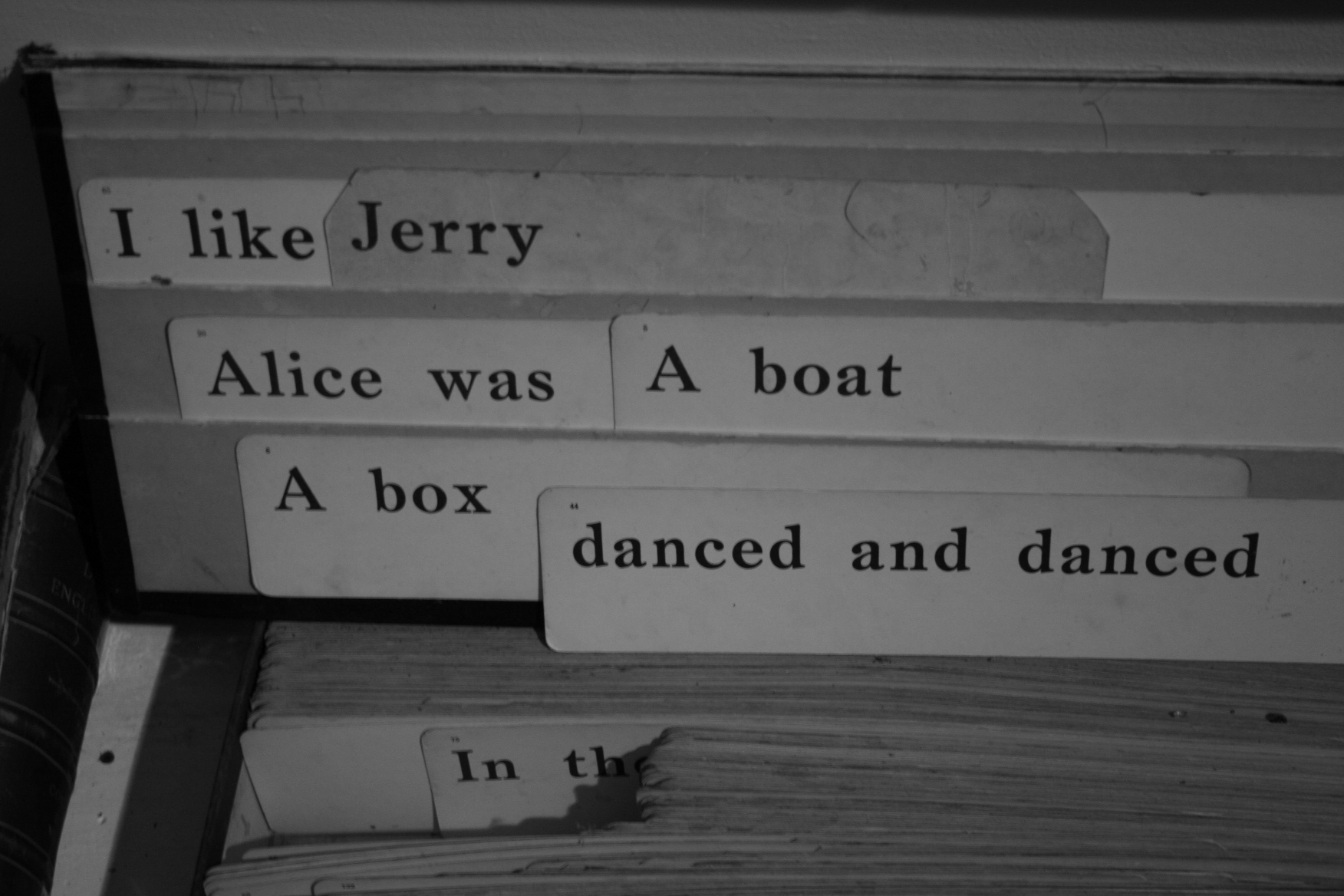
Flash cards in the one-room school.
Mrs. Sweet taught arithmetic in the late 1850s one-room Pleasant Valley School where Noah’s sister, Hannah, along with others, assumed the roles of students.
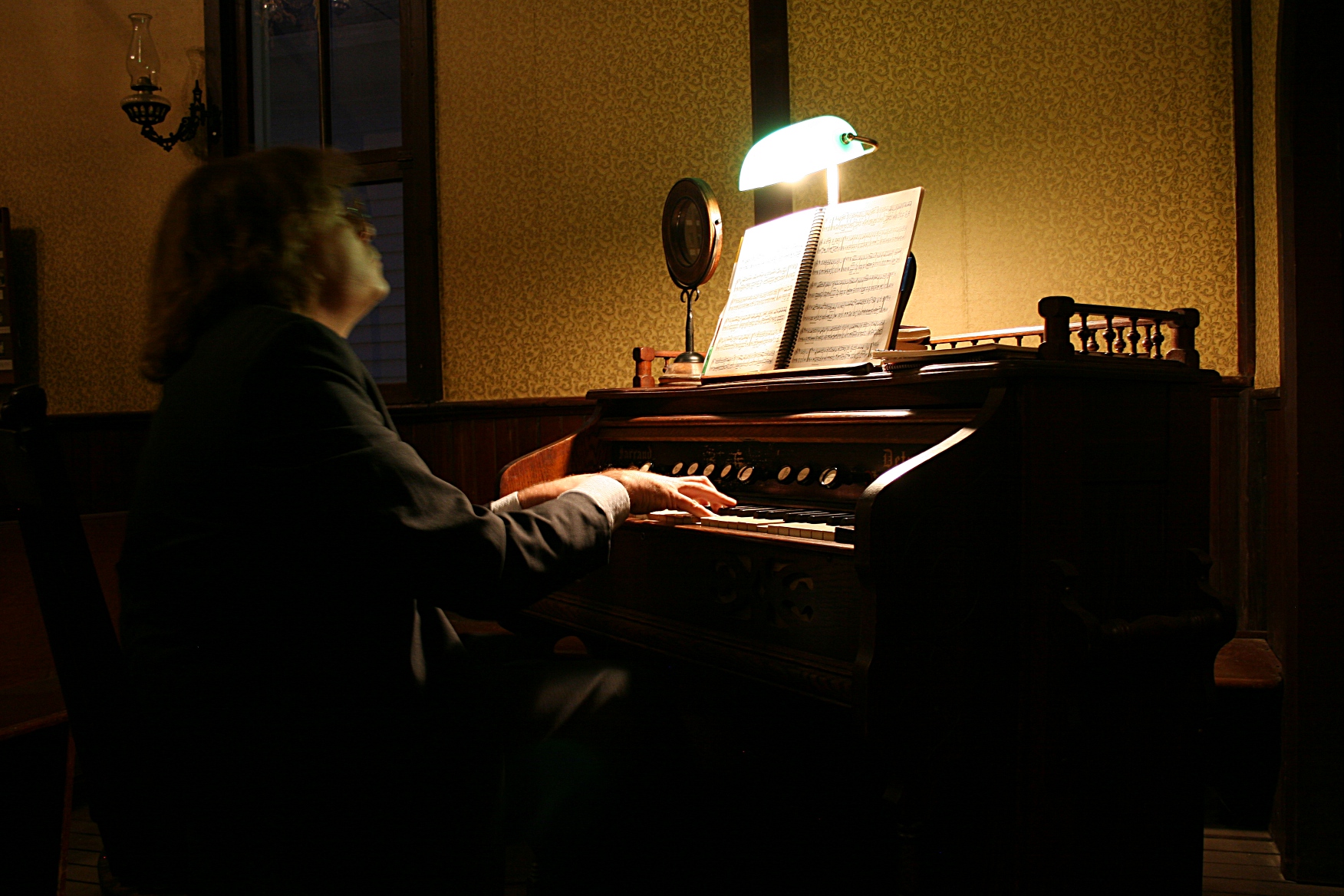
Playing the old pump organ.
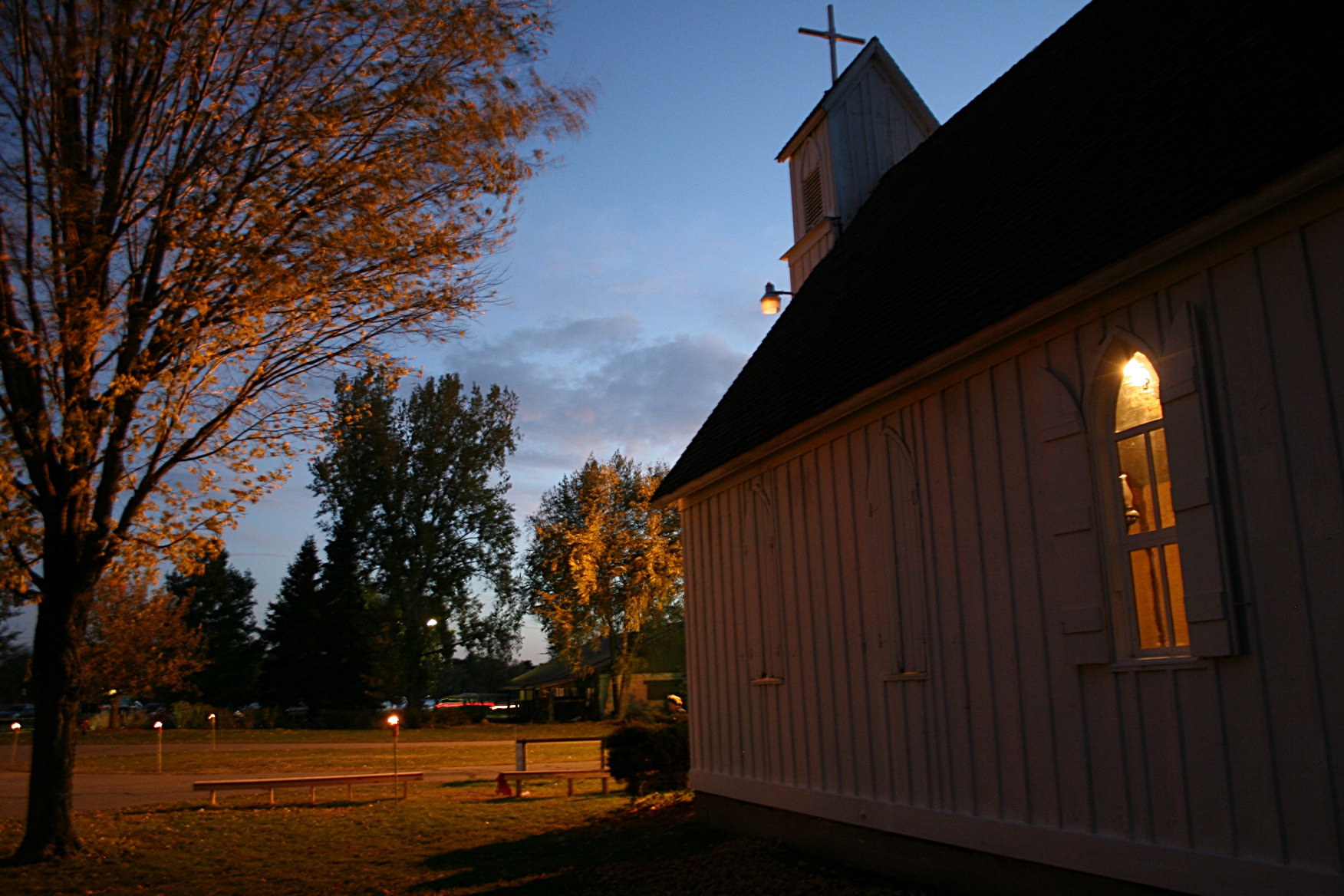
Holy Innocents.
I listened to music played on the pump organ in Holy Innocents Episcopal Church built in 1869 in Cannon City and consecrated by Bishop Whipple.
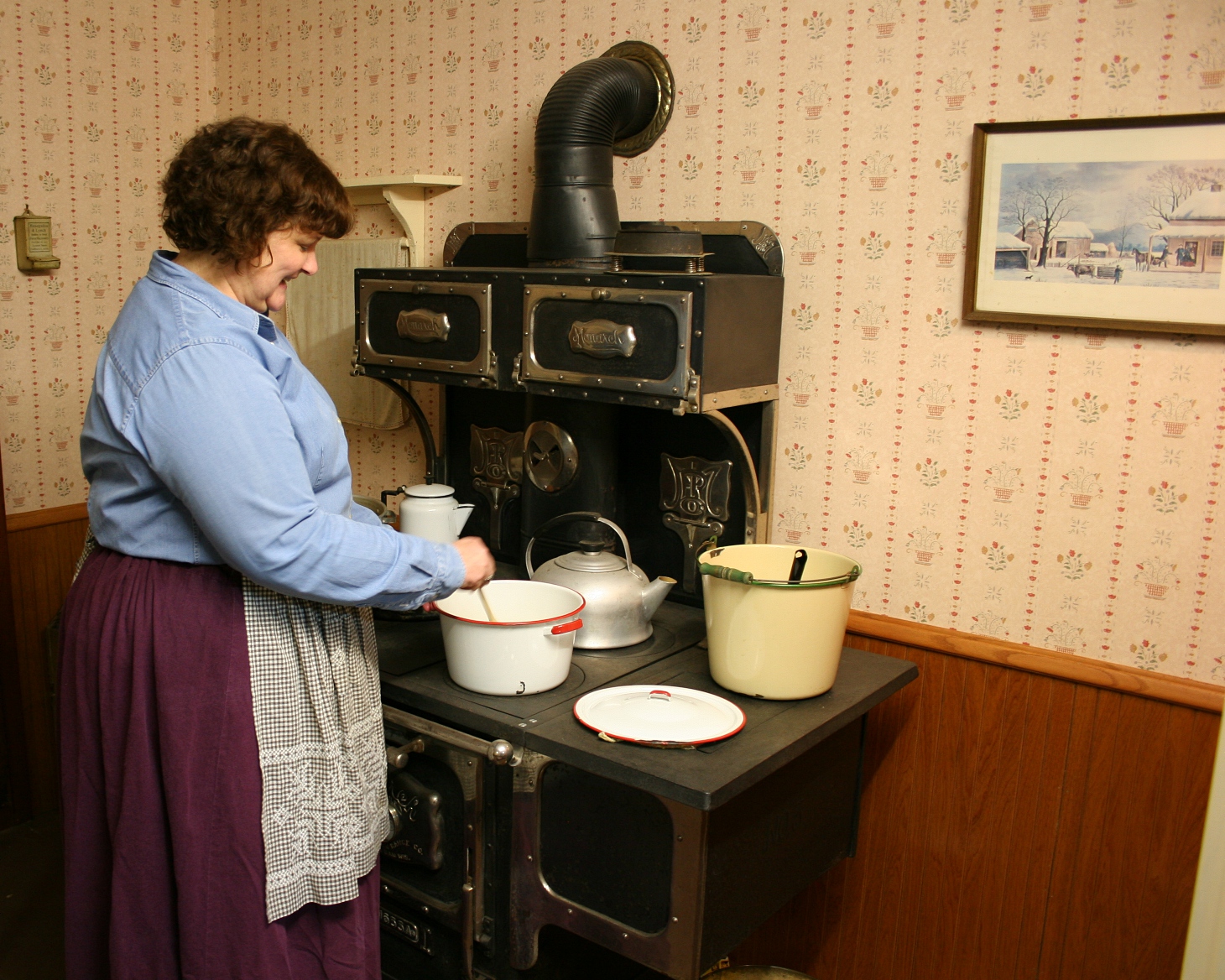
Mrs. Morris “cooking” applesauce.
Next door I spoke with Mrs. Morris who was “cooking” applesauce in her 1920s kitchen. Except she wasn’t really using the old cookstove. The inviting scent of apples wafted, instead, from apple slices heating in a kettle on a mostly out of sight hotplate. Ingenious.
This multiple engaging of the senses added to the experience. In the old log cabin, built in the mid 1800s by a Scandinavian immigrant in the Nerstrand Big Woods, I savored the yeasty aroma of bread baking—not in the old stove—but rather in a bread machine hidden away. Ingenious.
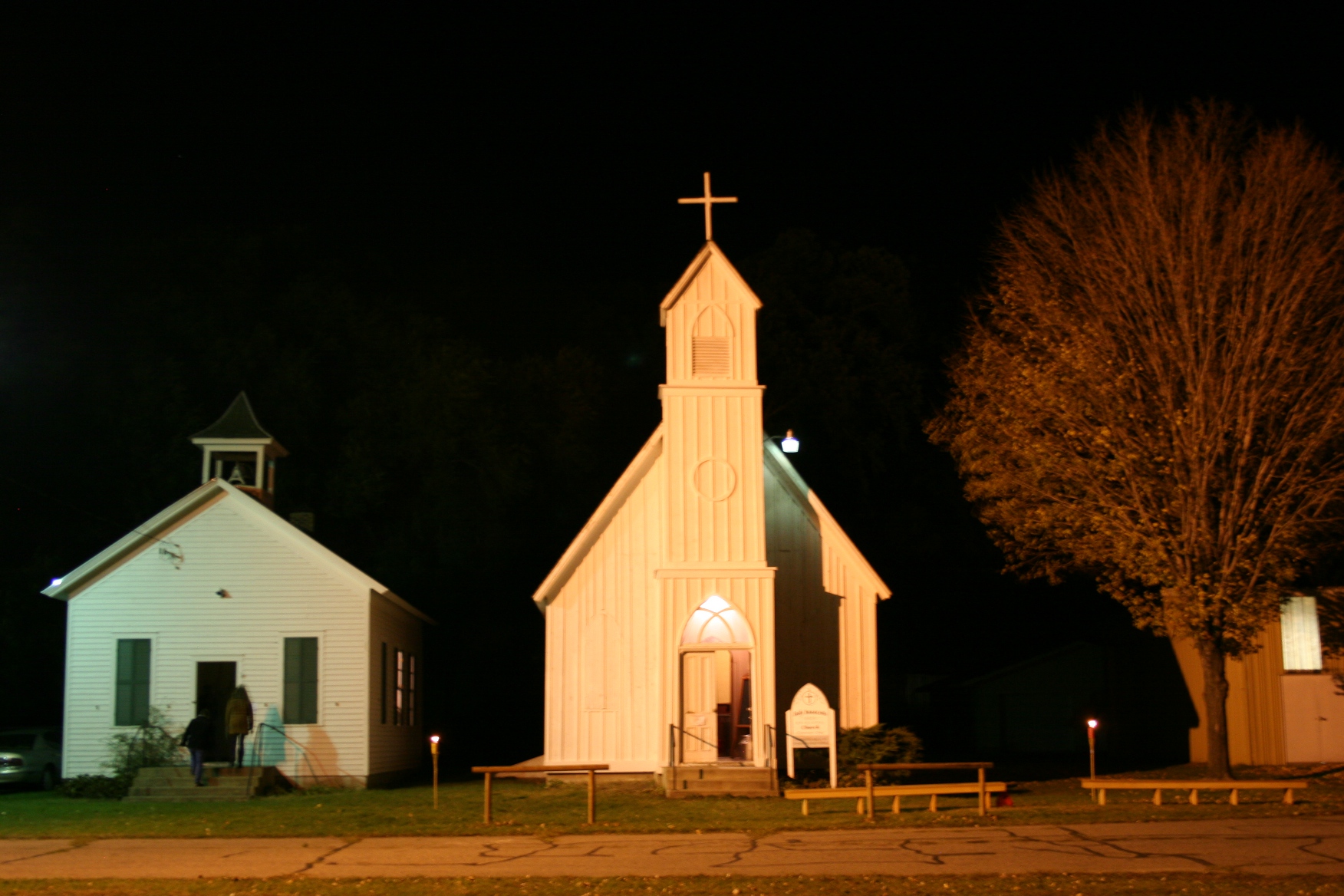
The setting for A Night at the Museum.
Outside, several tiki torches flickered, many snuffed out by the strong early evening breeze. Nearby, visitors gathered around a small campfire to sip apple cider, eat hot dogs and/or munch on cookies.
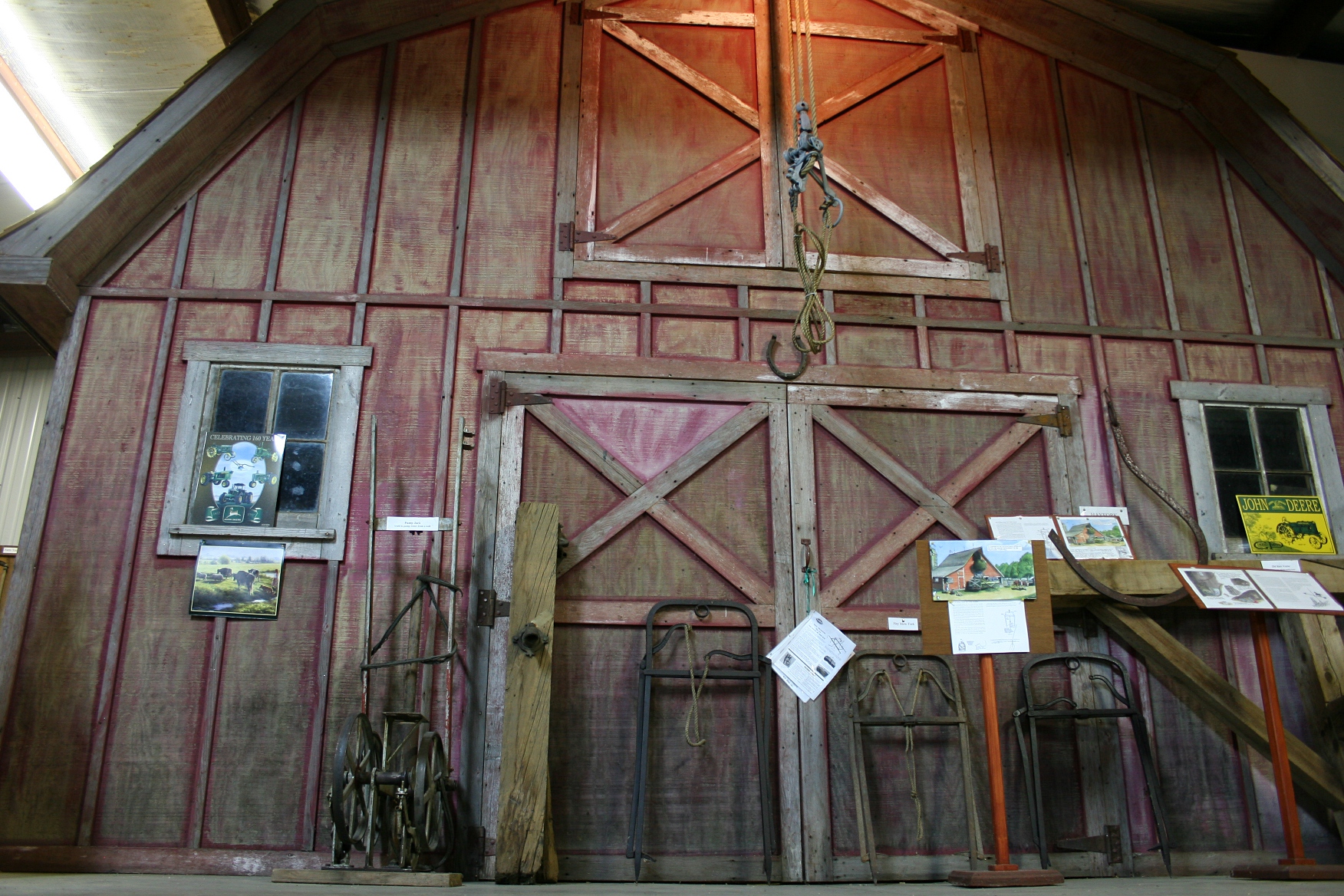
A barn front forms a backdrop in Harvest Hall, where visitors can learn about the area’s agricultural heritage.
Horses hooves clopped on the pavement as visitors were treated to a wagon ride around the adjoining county fairgrounds.
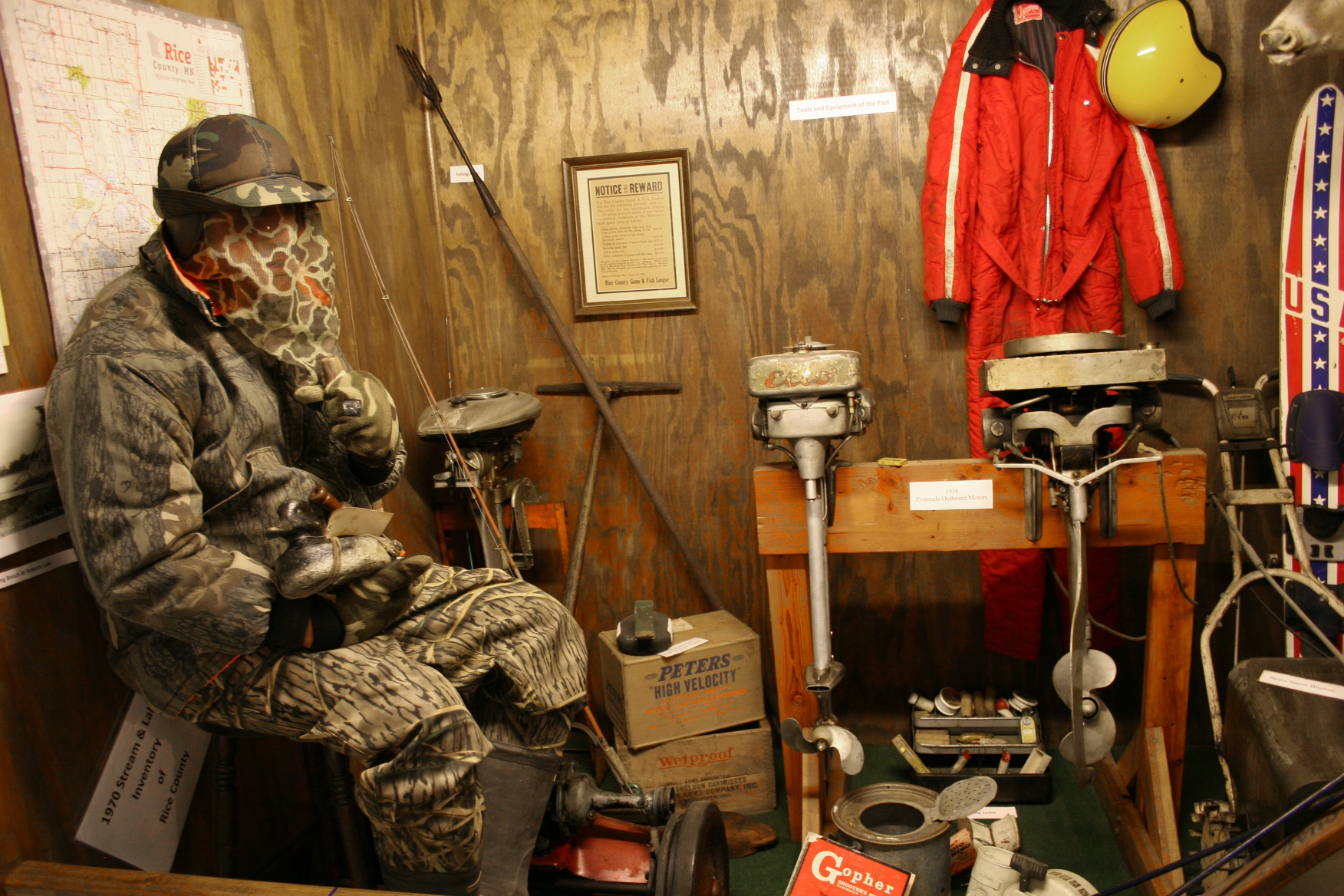
Not a scene from Duck Dynasty.
But the most memorable event of the evening for me, and likely Brian Schmidt who serves on the historical society board, occurred inside Heritage Hall. I stopped briefly at a display on outdoor recreational activities in the county and noticed what I assumed to be a camouflaged duck hunter mannequin in a corner. Except he wasn’t. As I walked away, a duck call sounded. Startled, I turned back, peered more closely at the masked face and realized I’d been fooled. By Brian.
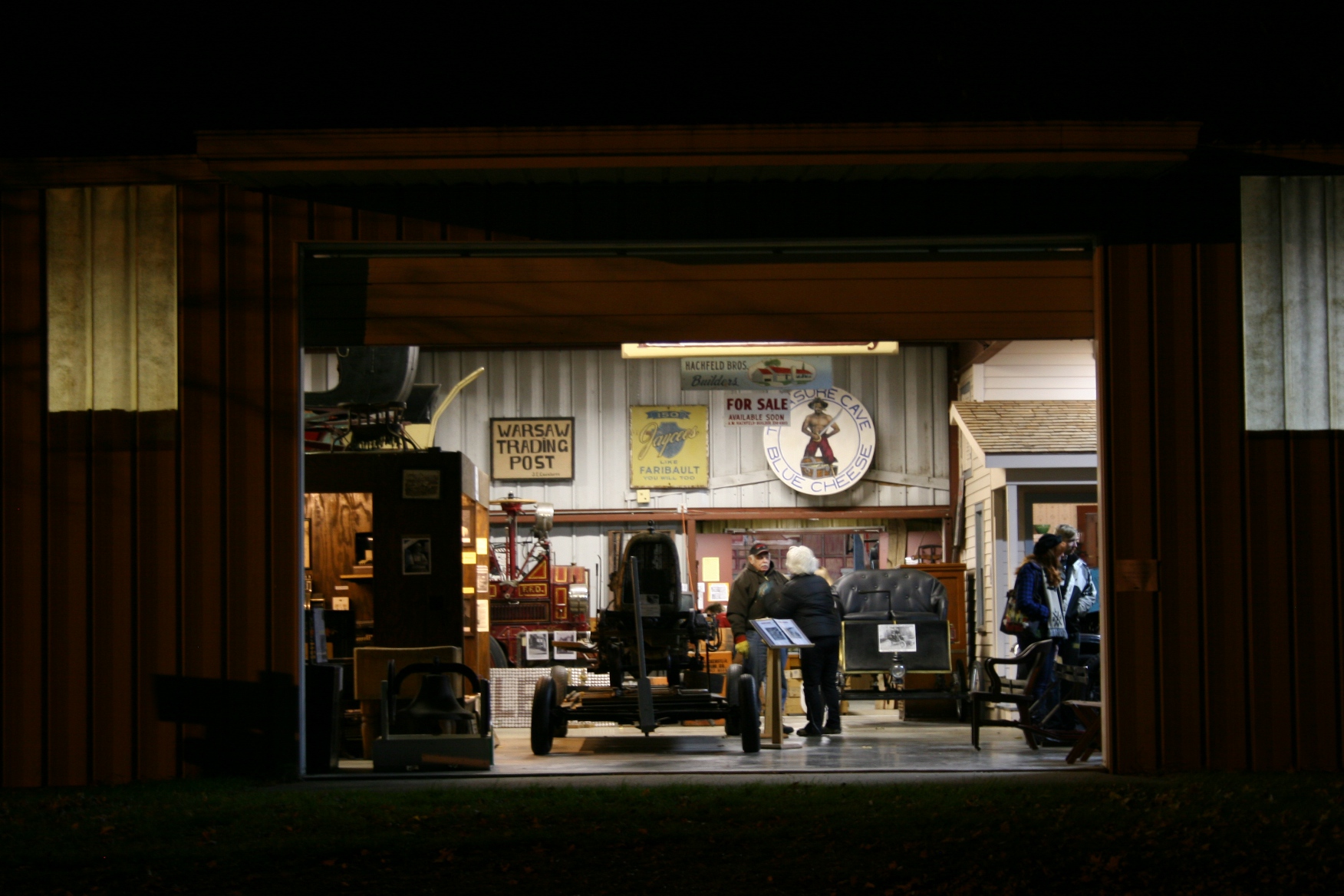
A peek at Heritage Hall.
Excellent. This Night at the Museum was not billed as a Halloween event. But in that moment, for me, it was.
© Copyright 2013 Audrey Kletscher Helbling
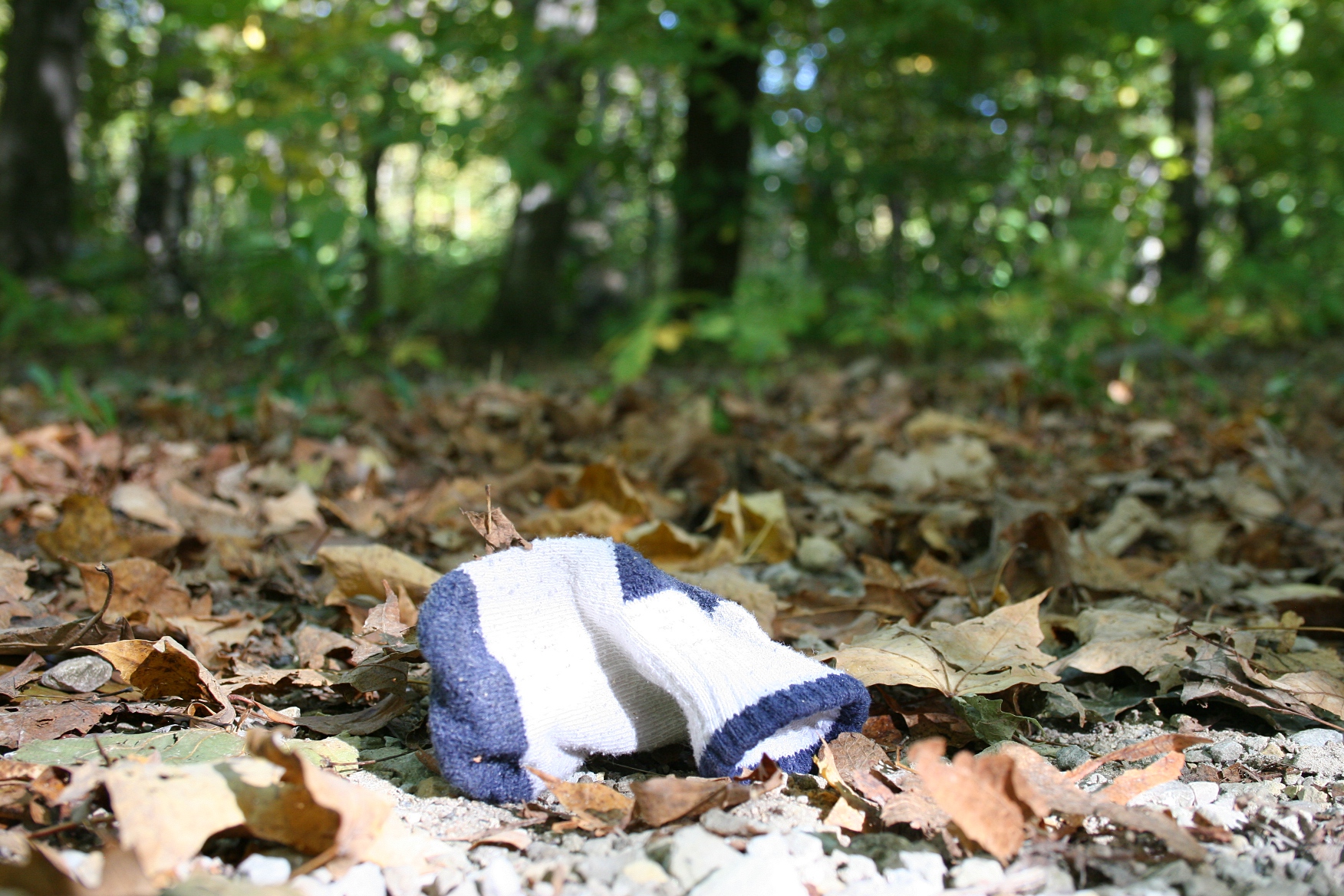
A baby’s sock lost along a path at Nerstrand Big Woods State Park in rural Rice County, Minnesota.
A single sock.

When I paused to photograph this oak leaf, my husband dubbed the trail Acorn Trail.
A single oak leaf.

One of the many bees and butterflies swarming the wildflowers.
A single bee.
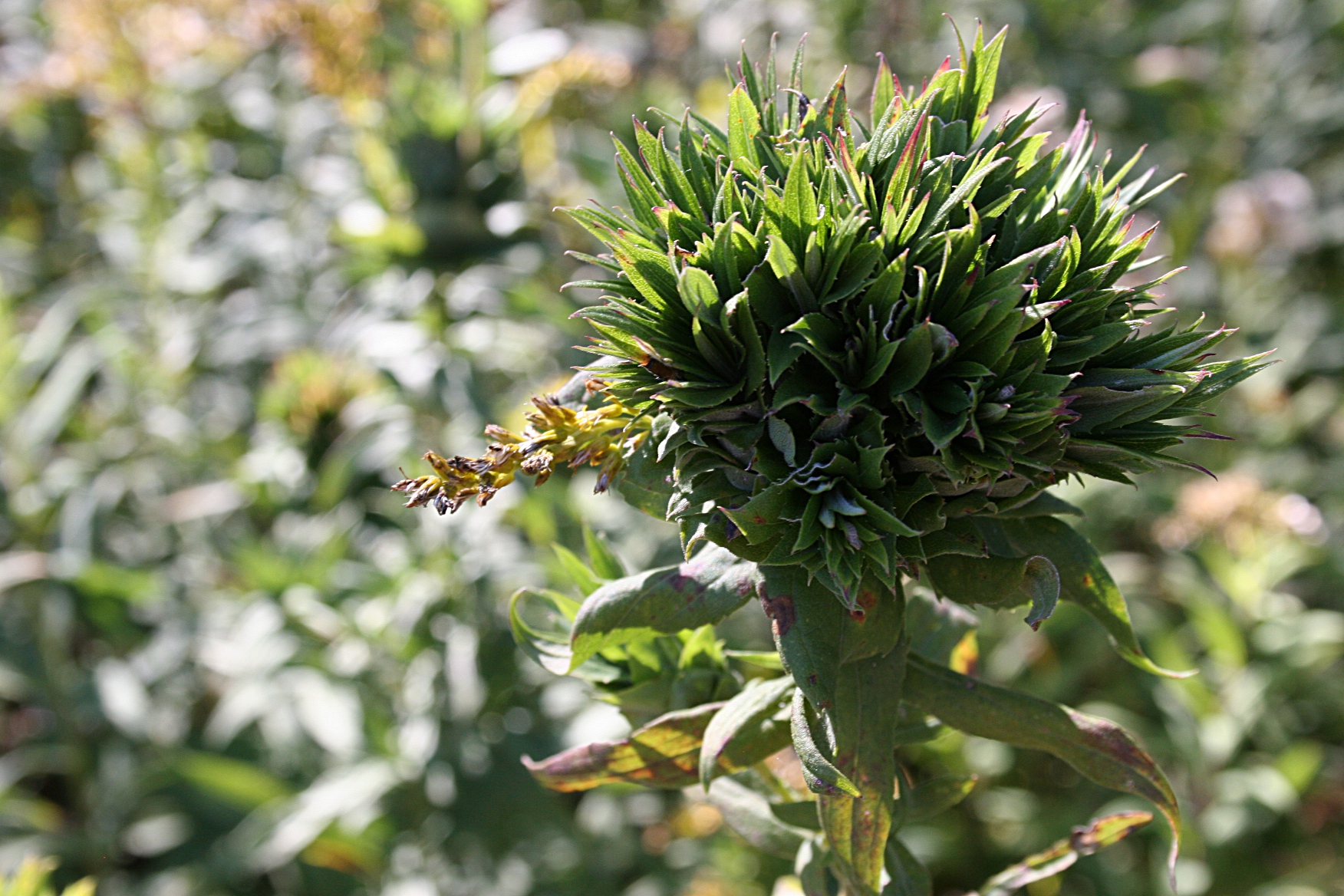
The solo head of an unidentified plant in the afternoon sunlight.
Solitude.
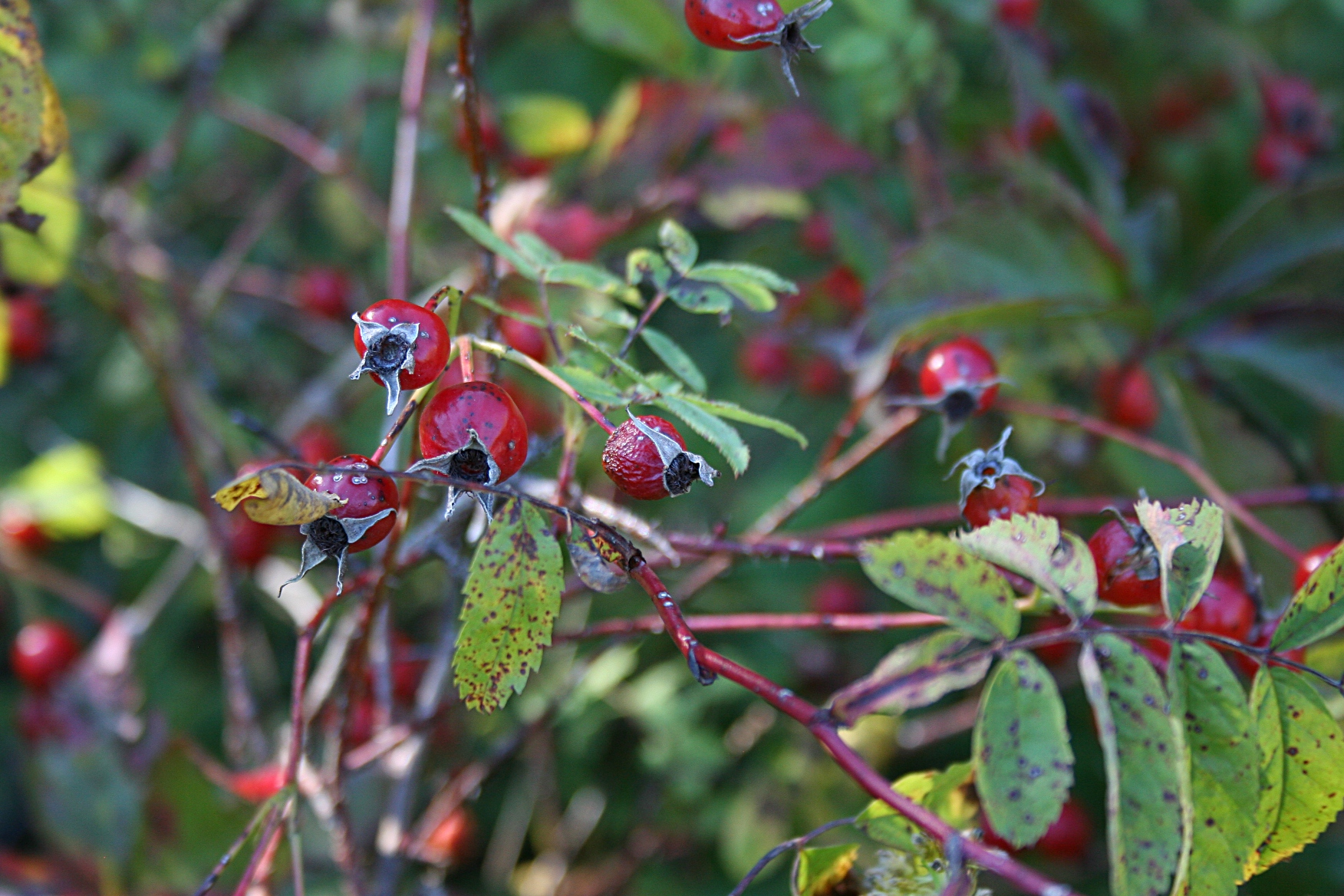
In the quiet of the woods, beautiful berries discovered.
Beauty.

Clusters of wildflowers edge the woods.
Wind bending wildflowers and weeds, the sun beating upon our backs as we curve into the shaded woods.
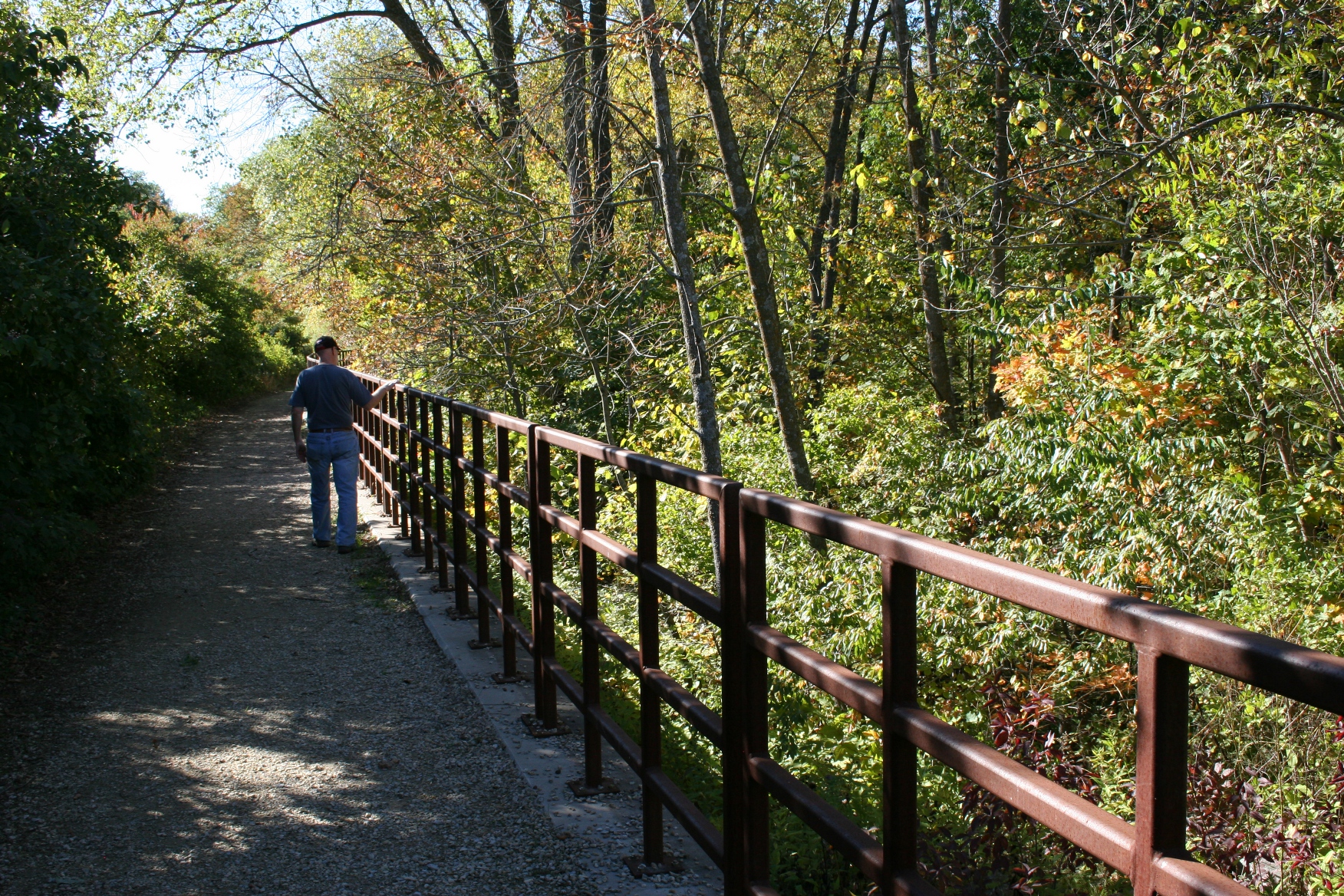
My husband, Randy, pauses to look over the ravine.
Pause at the rust-hued railing, glimpse to the ravine below where water once flowed when rain was plentiful.
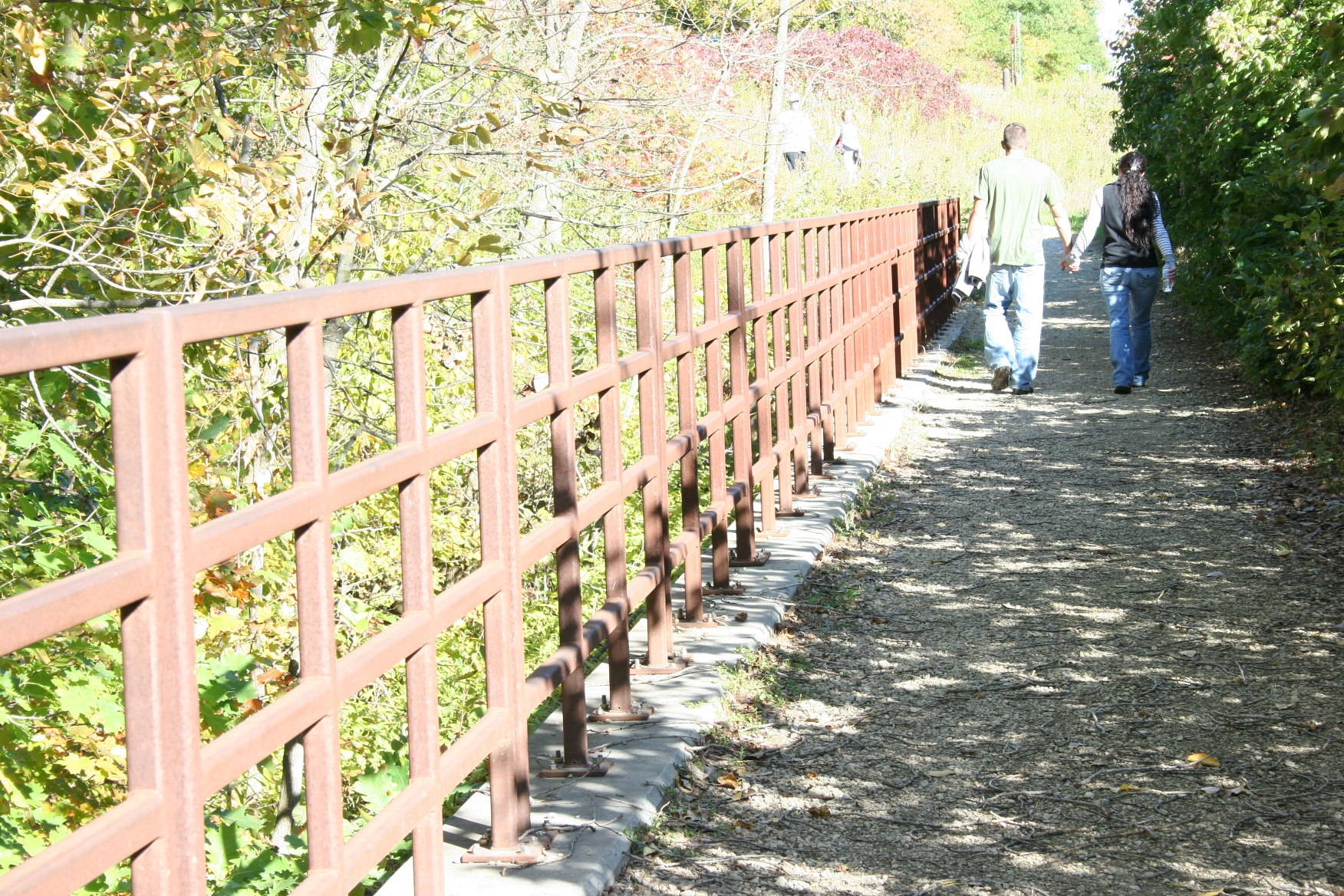
Couples and families hike the trails through the park.
Lost in thoughts. Savoring the solace which embraces us even as groups of hikers pass us by.

A tree line in the park shows leaves beginning to change color.
We have come here to Nerstrand Big Woods State Park on a Sunday afternoon to see the fall colors, only beginning to show.
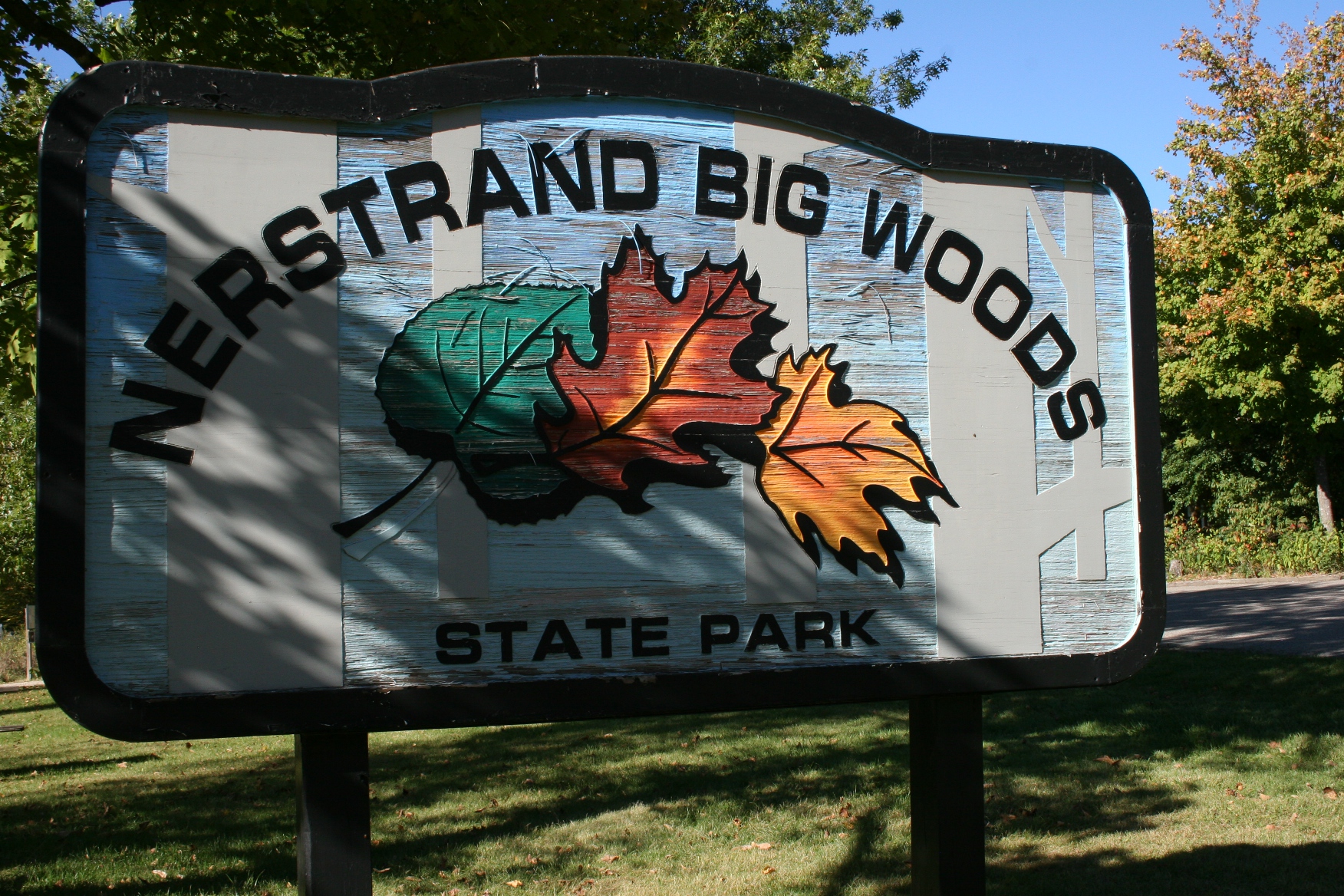
The sign welcoming visitors to Nerstrand Big Woods State Park, known for its beautiful fall colors.
But we have come here, too, my husband and I, to walk together, to hold hands, to embrace this afternoon in a place not far from home, yet so far away.
BONUS PHOTOS:
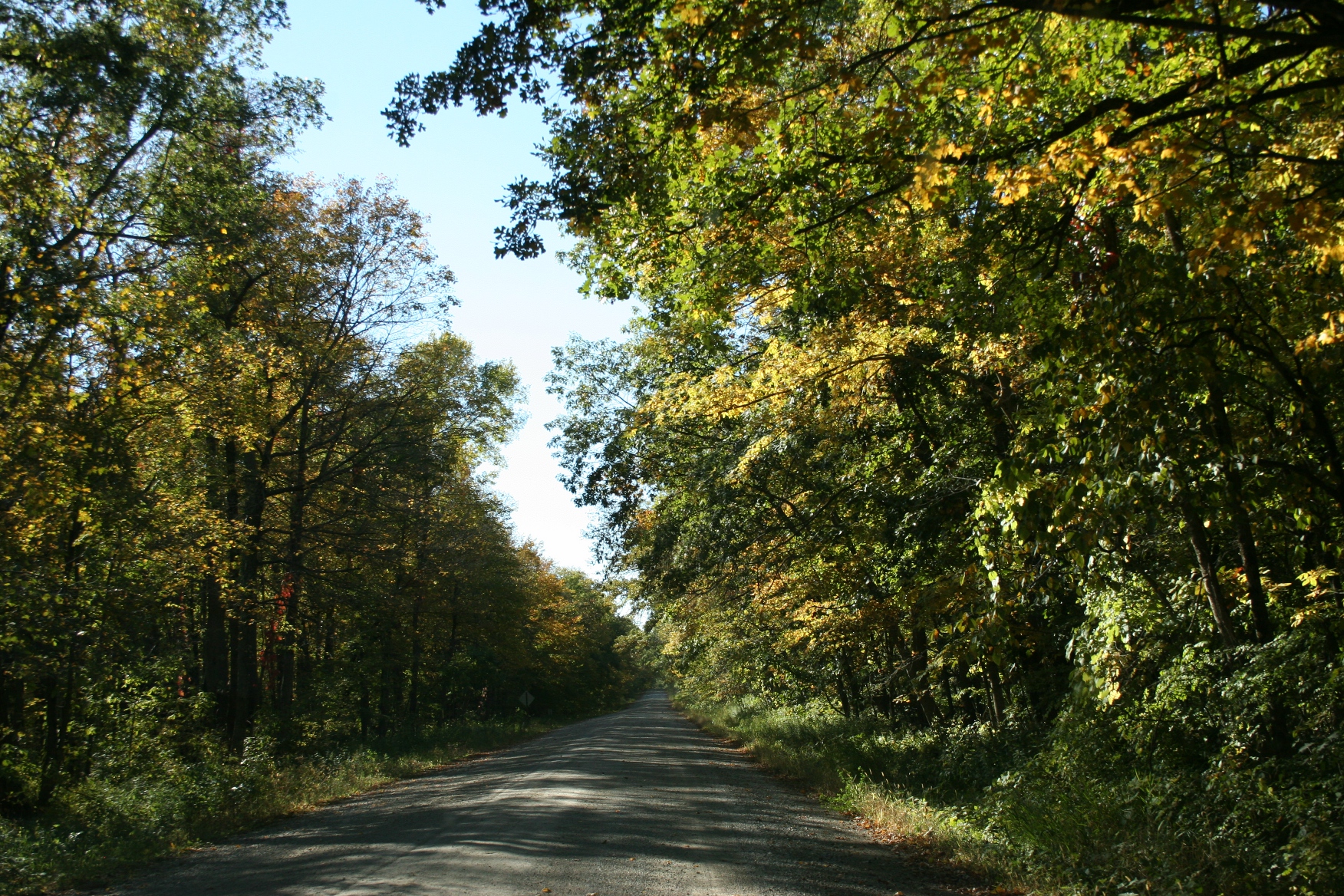
The road running east and west past the park.

Berries pop with color near the park entry.

Along a path in the woods.

The park features an abundance of wildflowers.
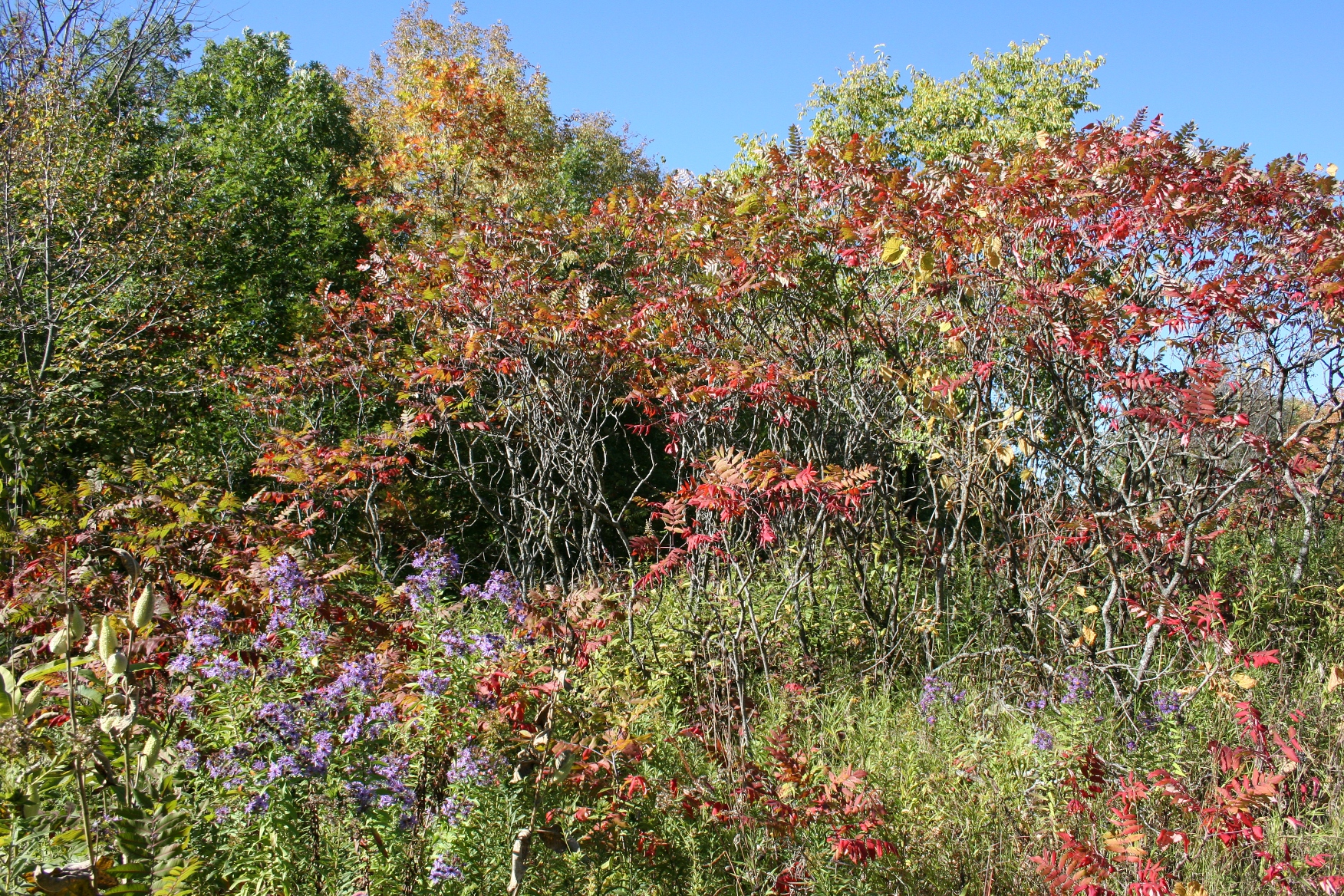
The sumac has already turned color.
FYI: Nerstrand Big Woods State Park offers numerous organized activities to engage visitors in the season.
For example, from now until October 19, the park is hosting a Fall Photo Quest scavenger hunt. Bring your digital camera or borrow one at the Visitor Center where you will get instructions. Collect fall photos while learning why and how leaves change color.
On Saturday, October 5, from 1 p.m. – 4 p.m., gather native seeds for planting in park restorations. Sign up at the Visitor Center.
The following Saturday, October 12, from noon – 4 p.m., join the Autumn Trees Scavenger Hunt, collecting clues along trails as you discover which leaf belongs to which tree. Stop at the Visitor Center to start your adventure.
Click here for details on the above listed programming at Nerstrand Big Woods State Park.
Also on Saturday, October 12, St. John’s United Church of Christ, Wheeling Township, sponsors its 17th annual Big Woods Run beginning at the country church near the park. Registration deadlines are October 7 and 8. After the race, enjoy a luncheon featuring homemade soups and more, an awards ceremony and a bake sale. For more info, click here.
This Saturday, October 5, from 10:30 a.m. – 1 p.m., Nerstrand United Methodist Church, 12 Maple Street in Nerstrand hosts its annual Fall Festival. The event features gift baskets, a silent auction, a bake and produce sale, and lunch. Hot beef sandwiches, chili, chicken wild rice soup and homemade pies with ice cream will be served.
Nerstrand Big Woods State Park is located just west of Nerstrand or northeast of Faribault.
© Copyright 2013 Audrey Kletscher Helbling
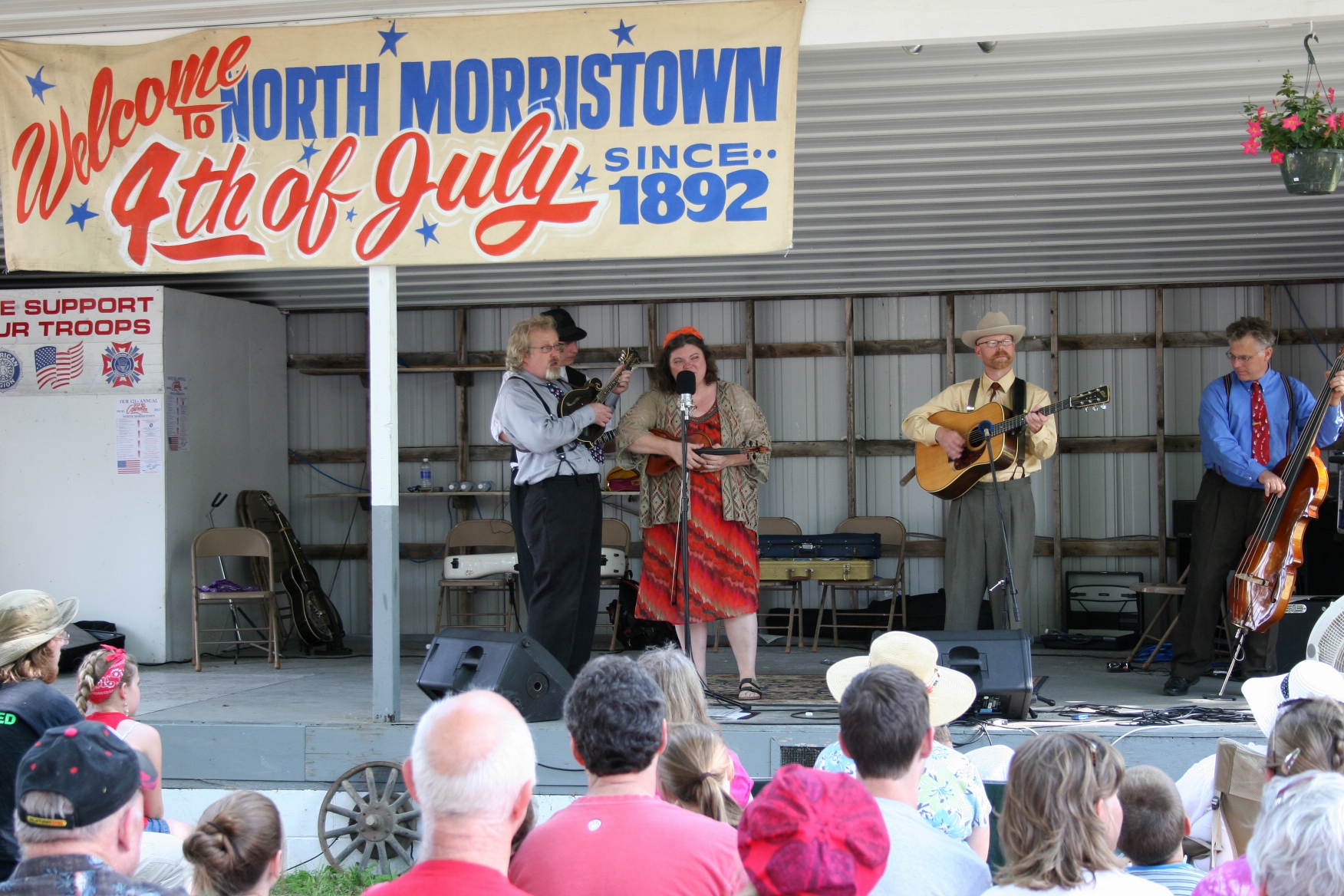
The bluegrass band, Monroe Crossing, has performed at North Morristown the past seven years, presenting two concerts at the celebration this year.
NORTH MORRISTOWN, MINNESOTA, is about as rural Americana as you’ll find anywhere in these United States of America on the Fourth of July.

The event is held at the North Morristown picnic grounds in southwestern Rice County.
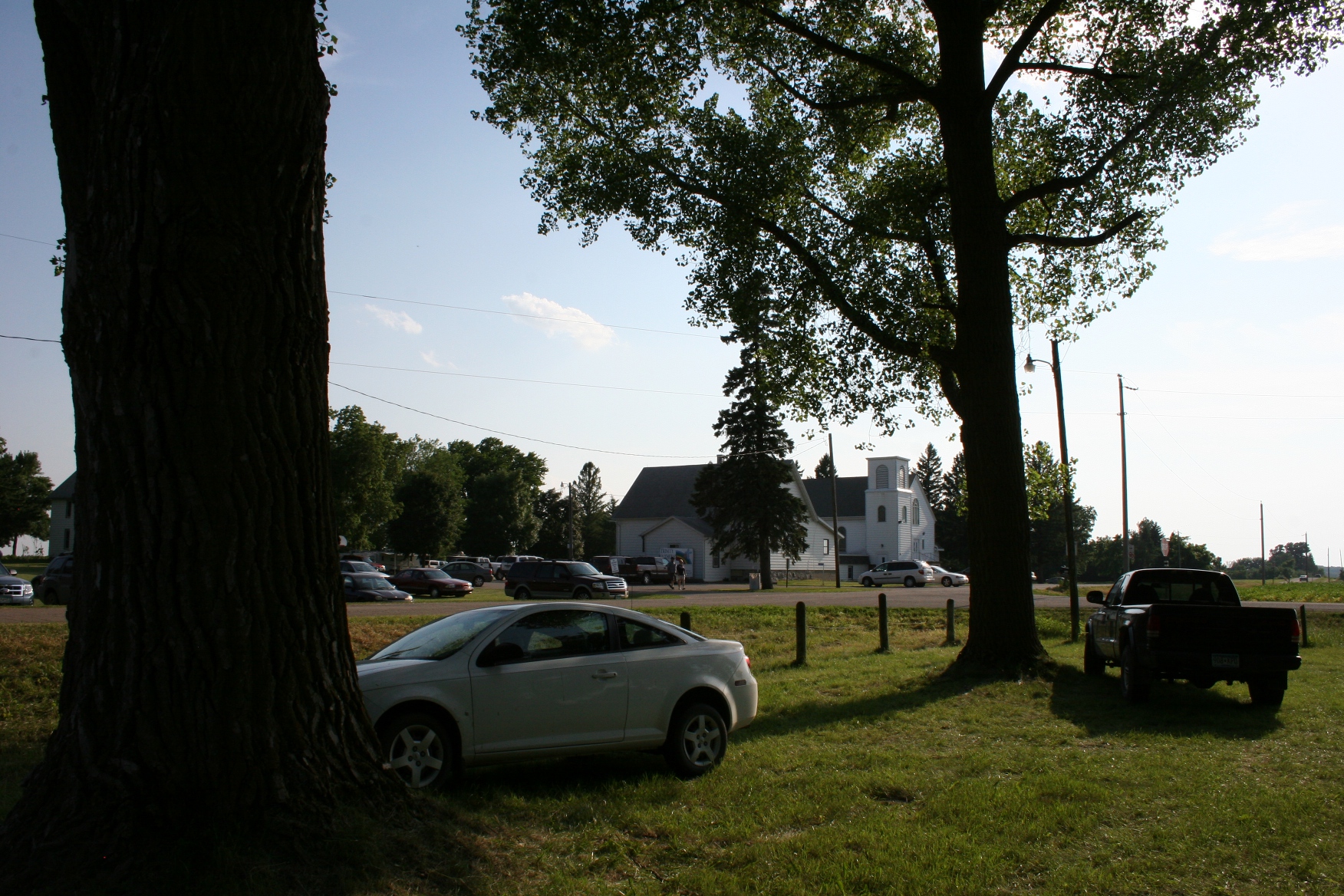
Trinity Lutheran Church and School sit across the road from the picnic grounds.
Here, on the picnic grounds of Trinity Lutheran Church and School, generations of families have gathered for 121 years to celebrate our nation’s birthday with family and friends at our state’s oldest Independence Day celebration, begun in 1892.
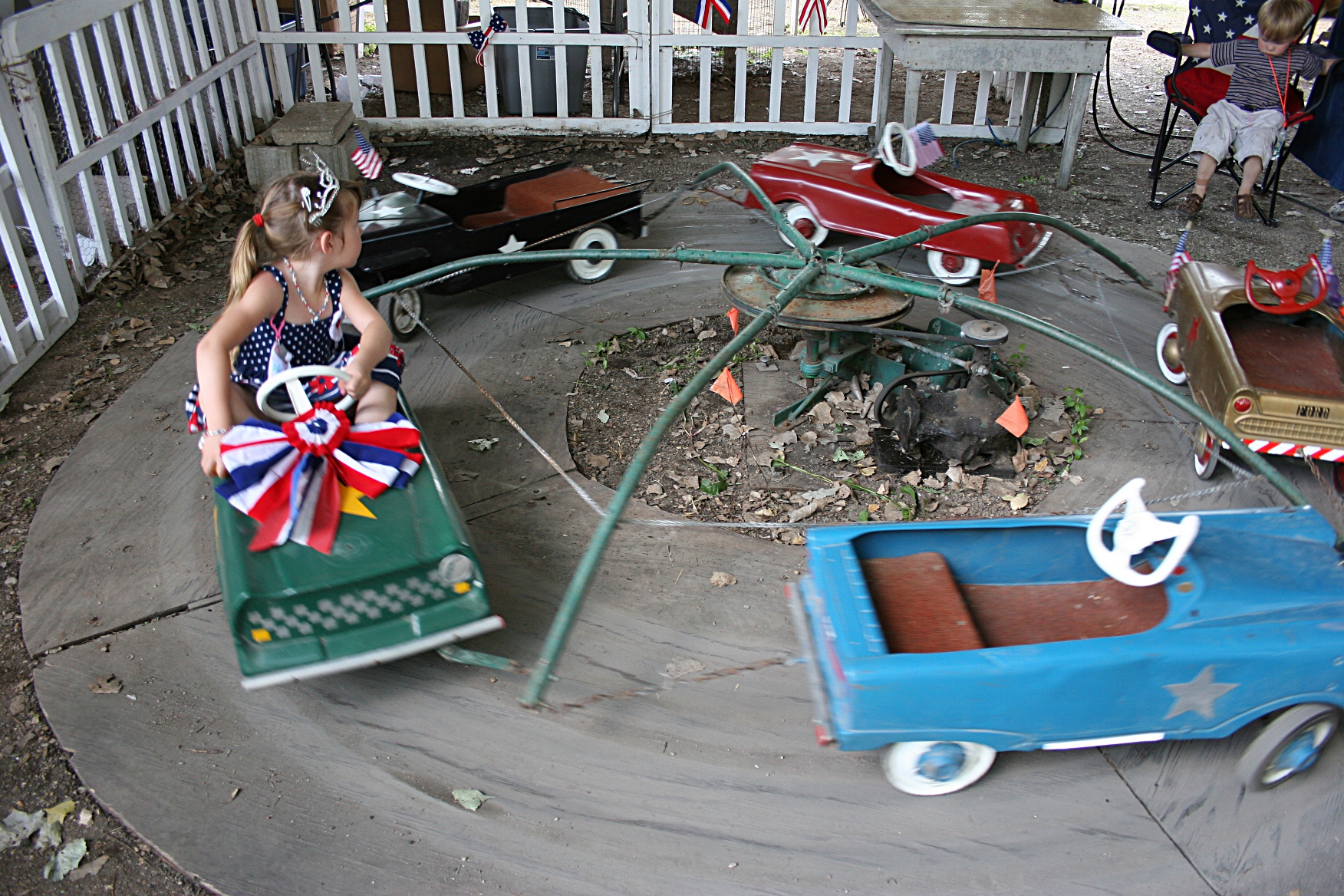
The vintage car ride for kids.
The day brings old-fashioned games and rides for the kids, bingo, music, a scavenger hunt, a parade, a patriotic program and more. Fireworks shot over farm fields cap the day’s festivities.
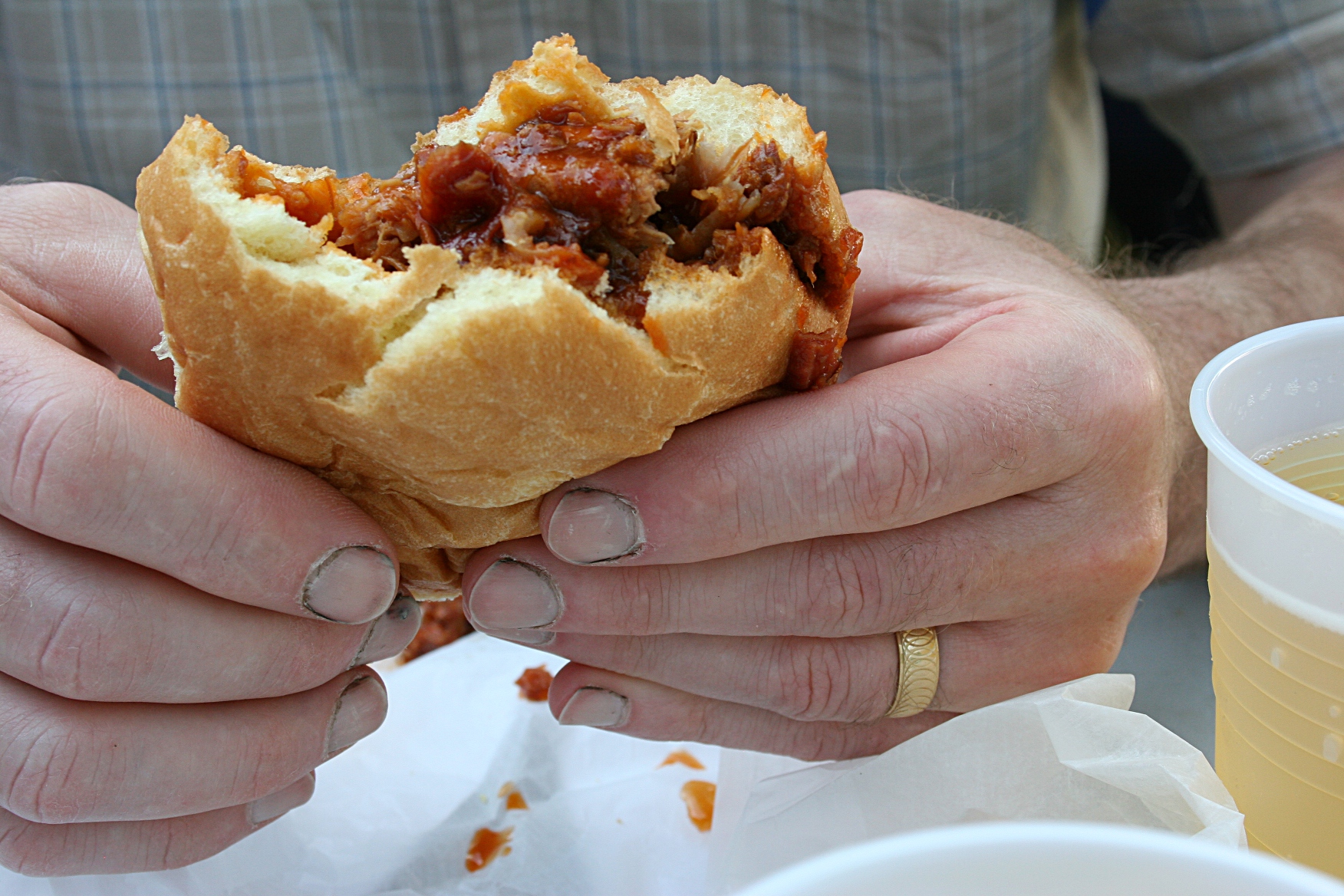
Enjoying a pork sandwich and a beer.
And the food, oh, the food. Homemade pies. Savory hot pork and beef sandwiches, burgers, thick onion rings, and more.
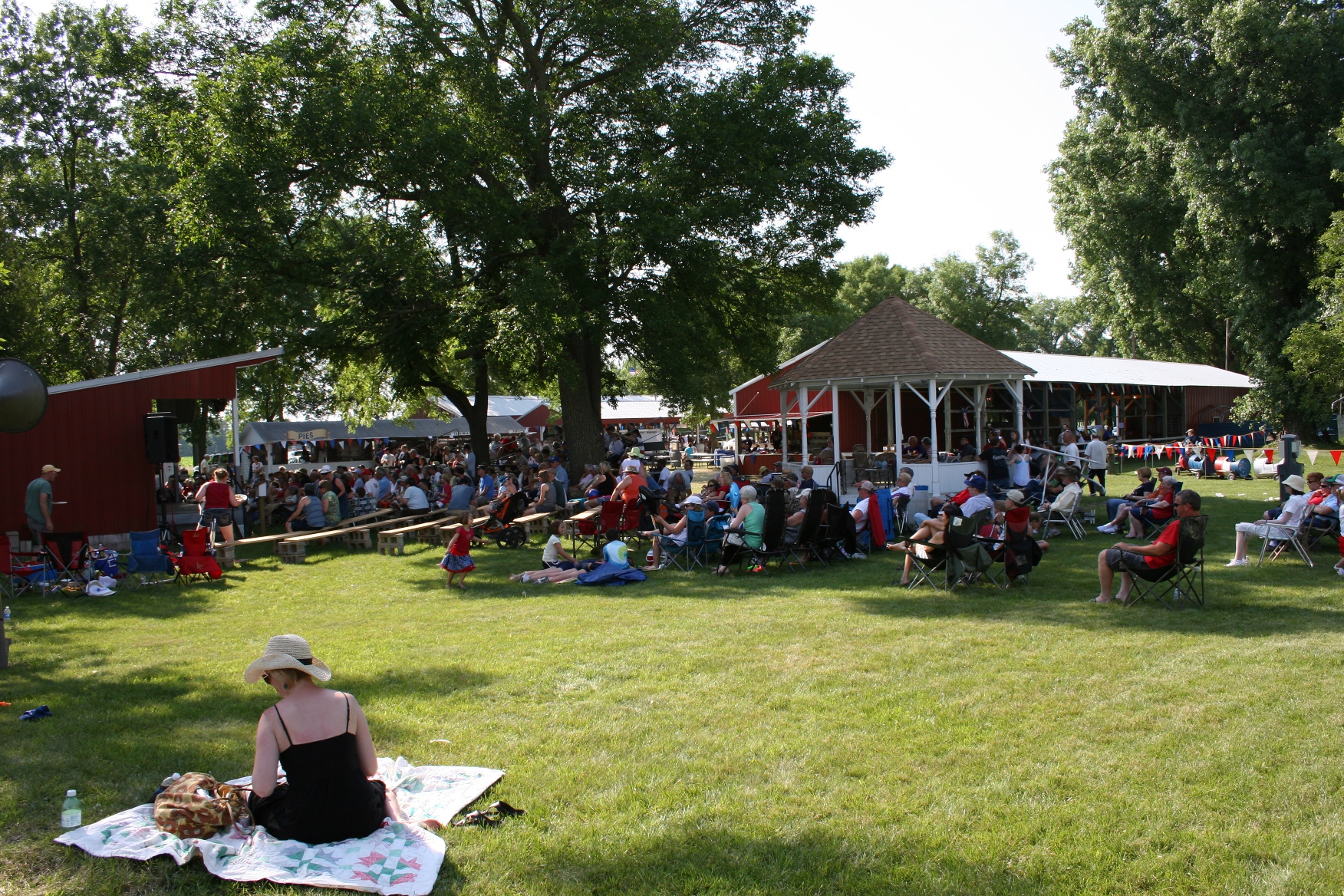
A large crowd enjoys a free afternoon concert by Monroe Crossing.
What a day. What a celebration.
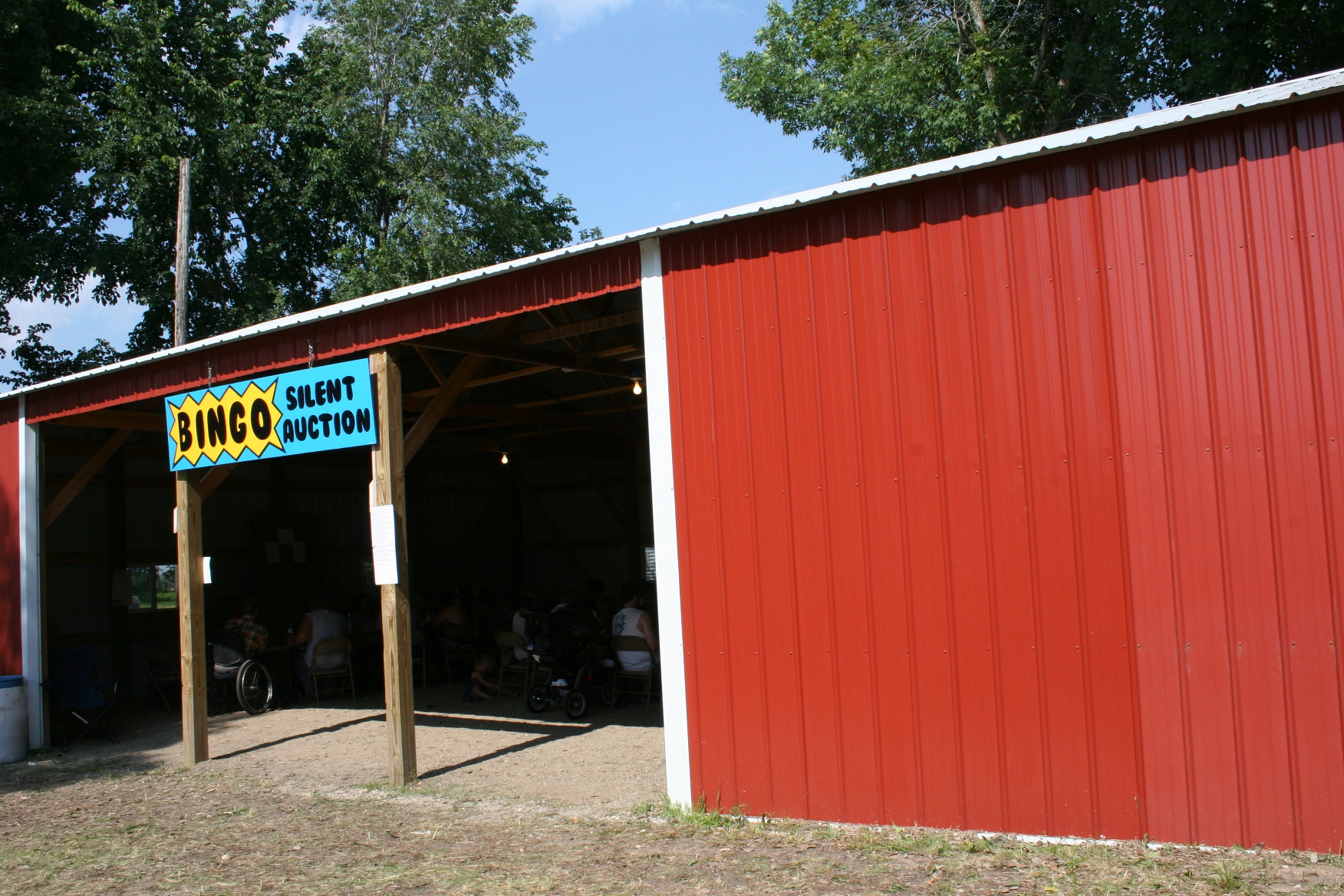
One section of a pole shed is dedicated to bingo and a silent auction.

The bingo callers.
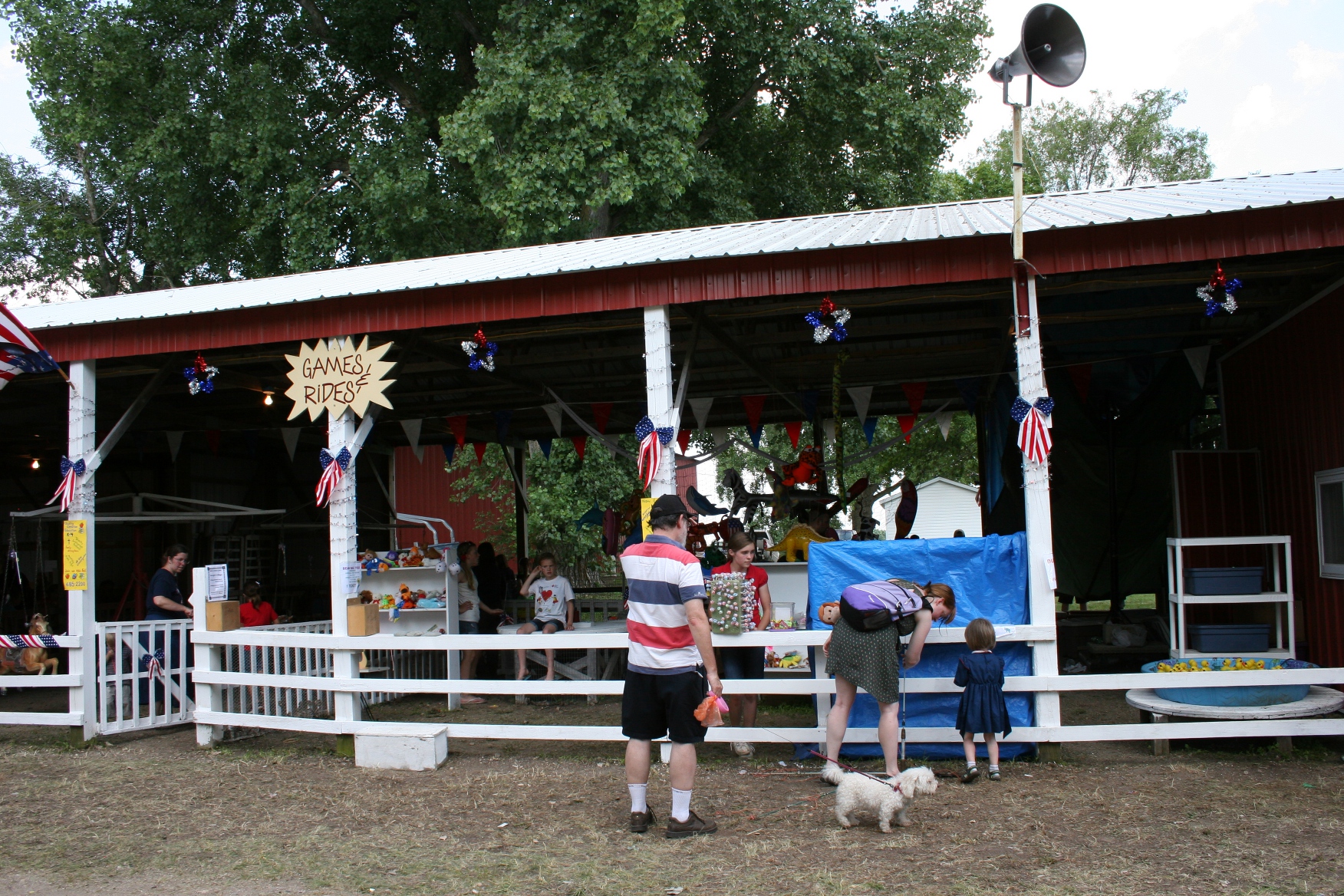
Fun for the kids in the games and rides building.
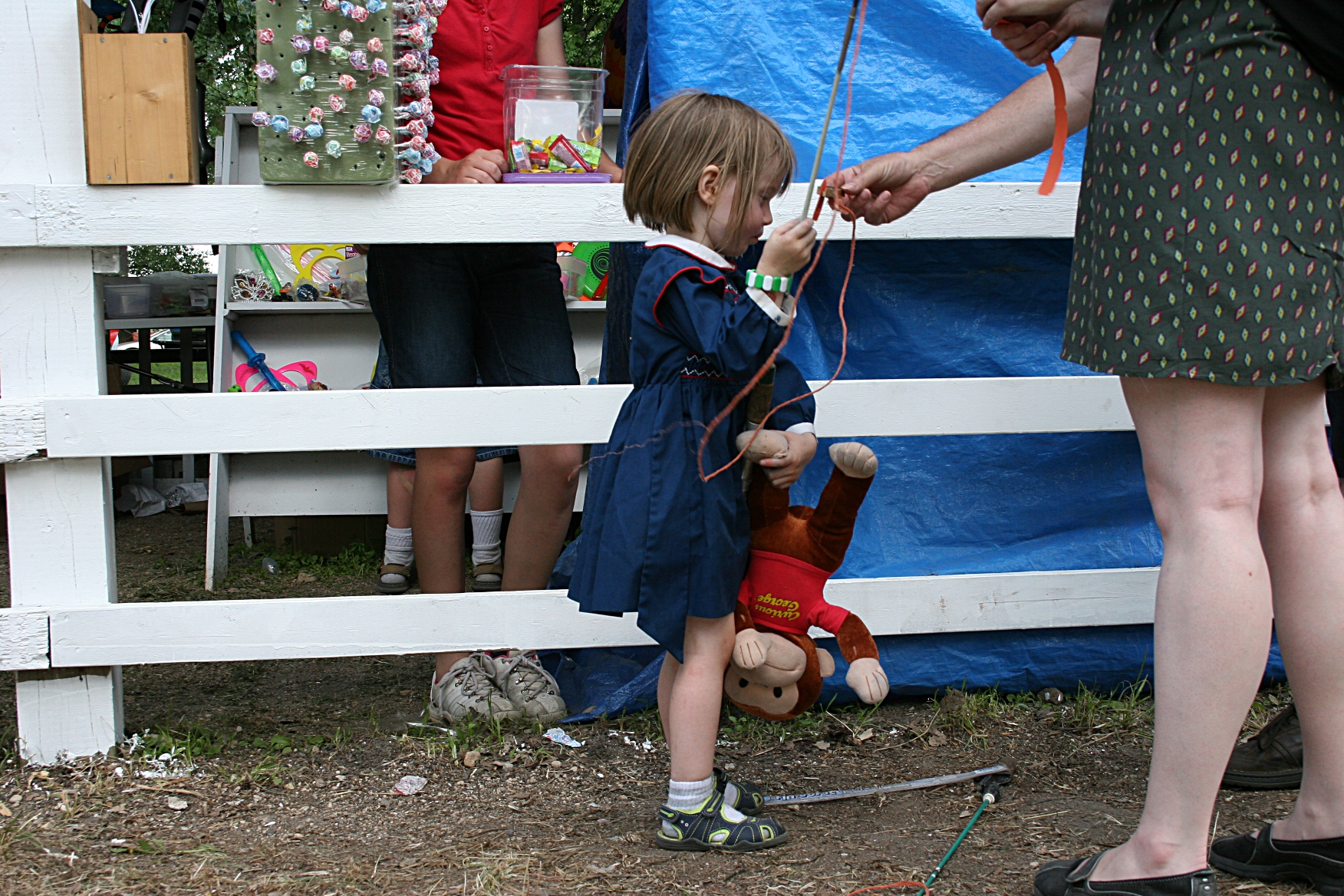
A ticket for the fish pond.

Filling the squirt gun in the duck pond.
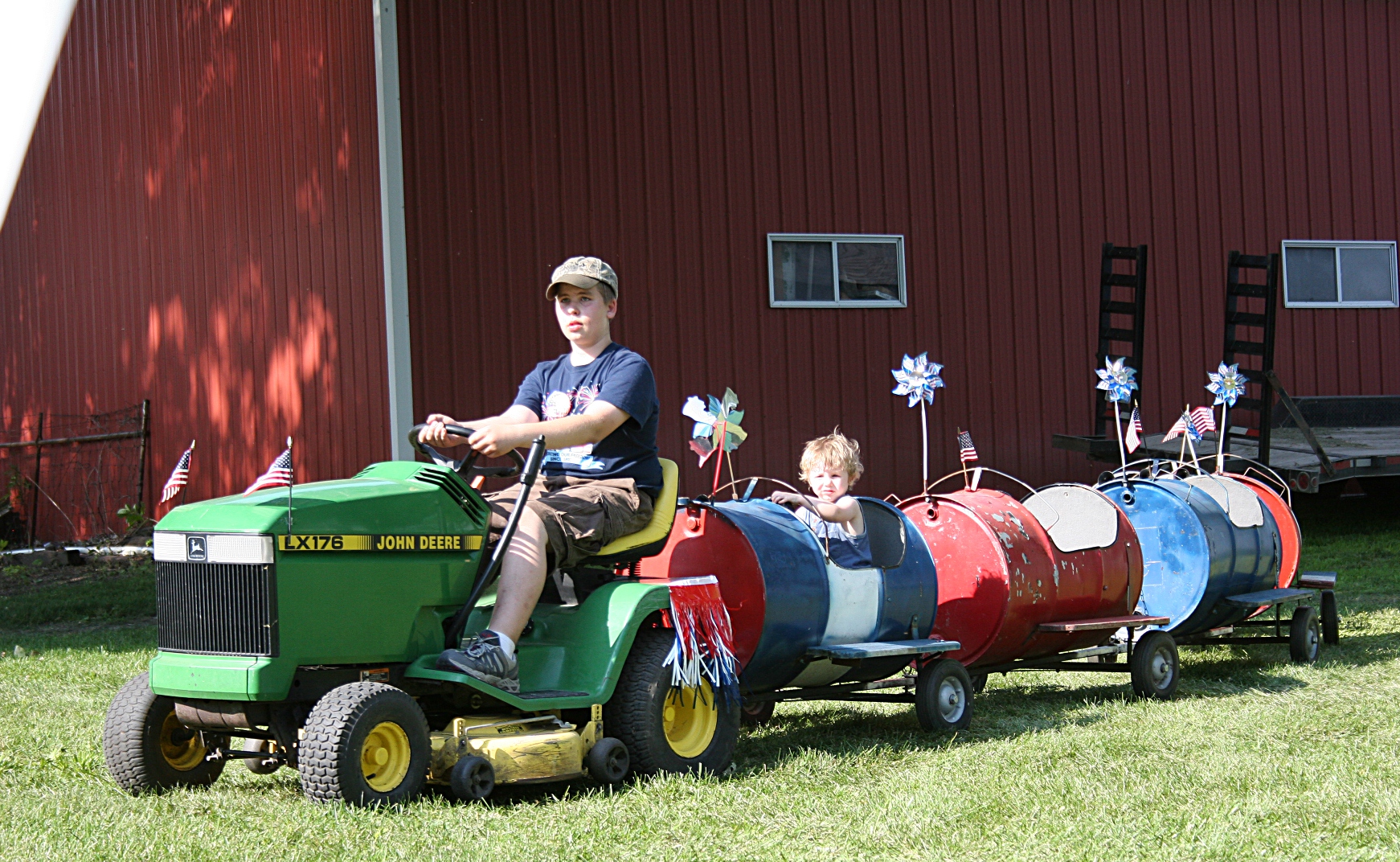
Riding the old-fashioned barrel train.

The day’s proceeds benefit Trinity Lutheran School.
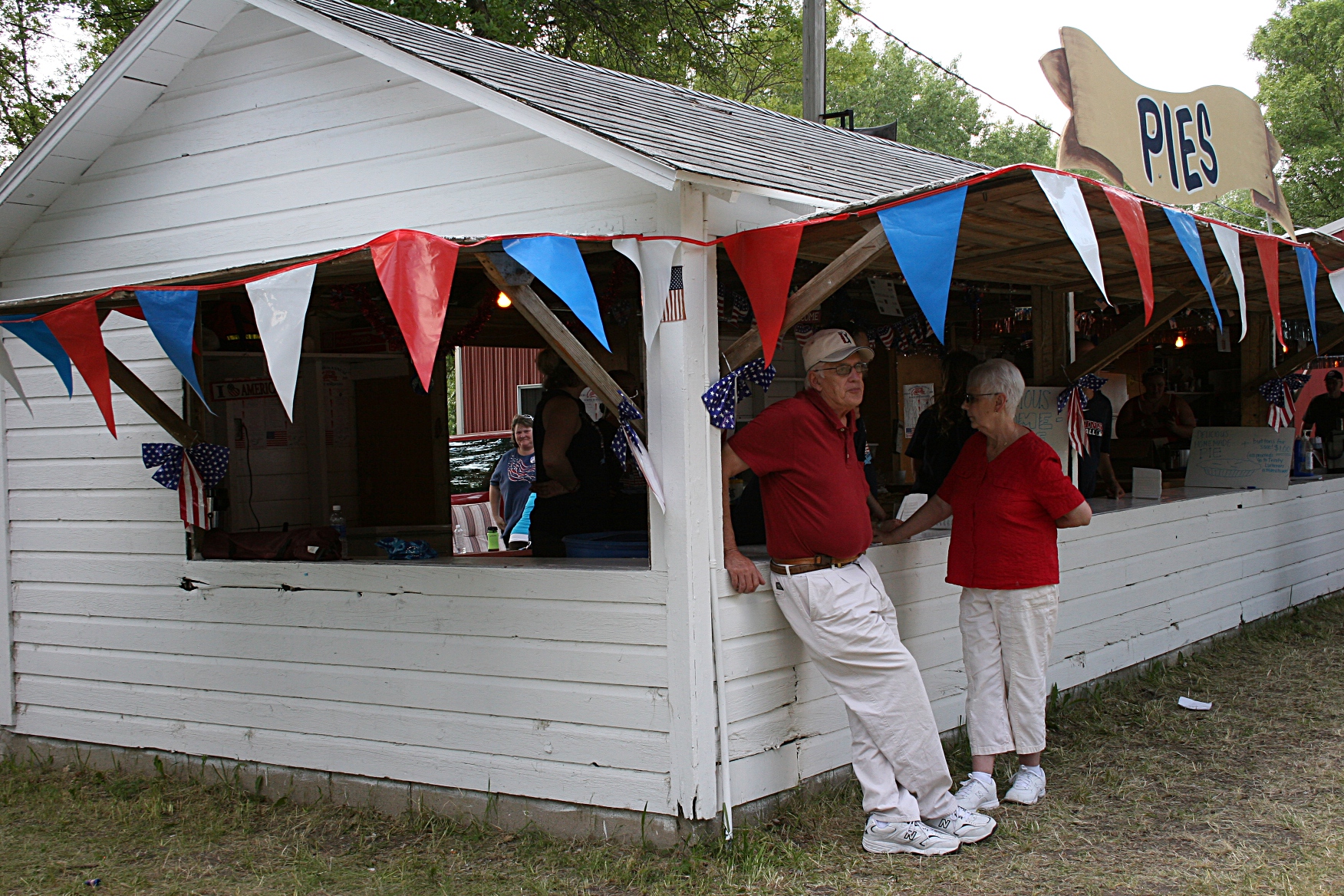
Homemade pies and ice cream are served from the pie building.
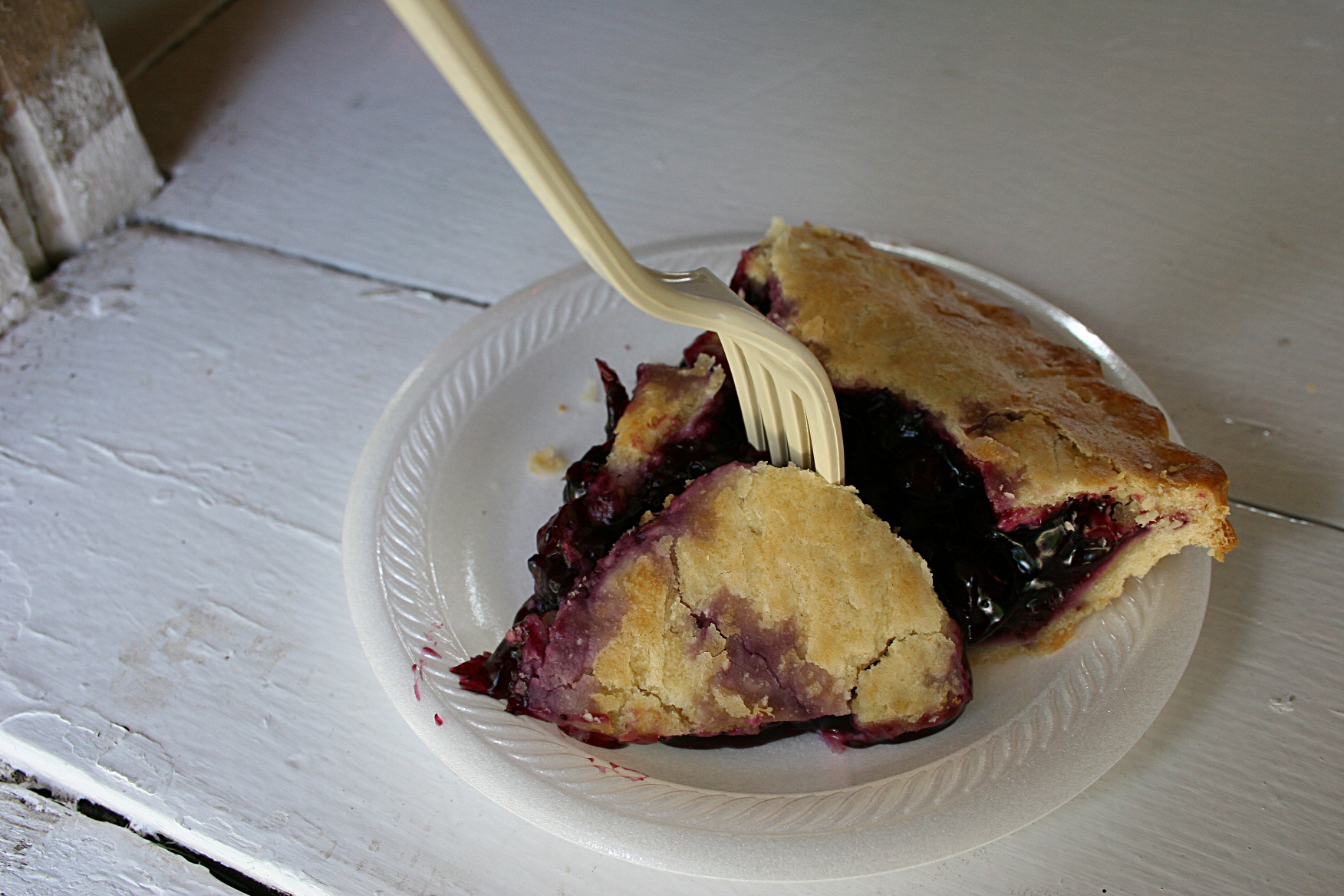
Blueberry pie.
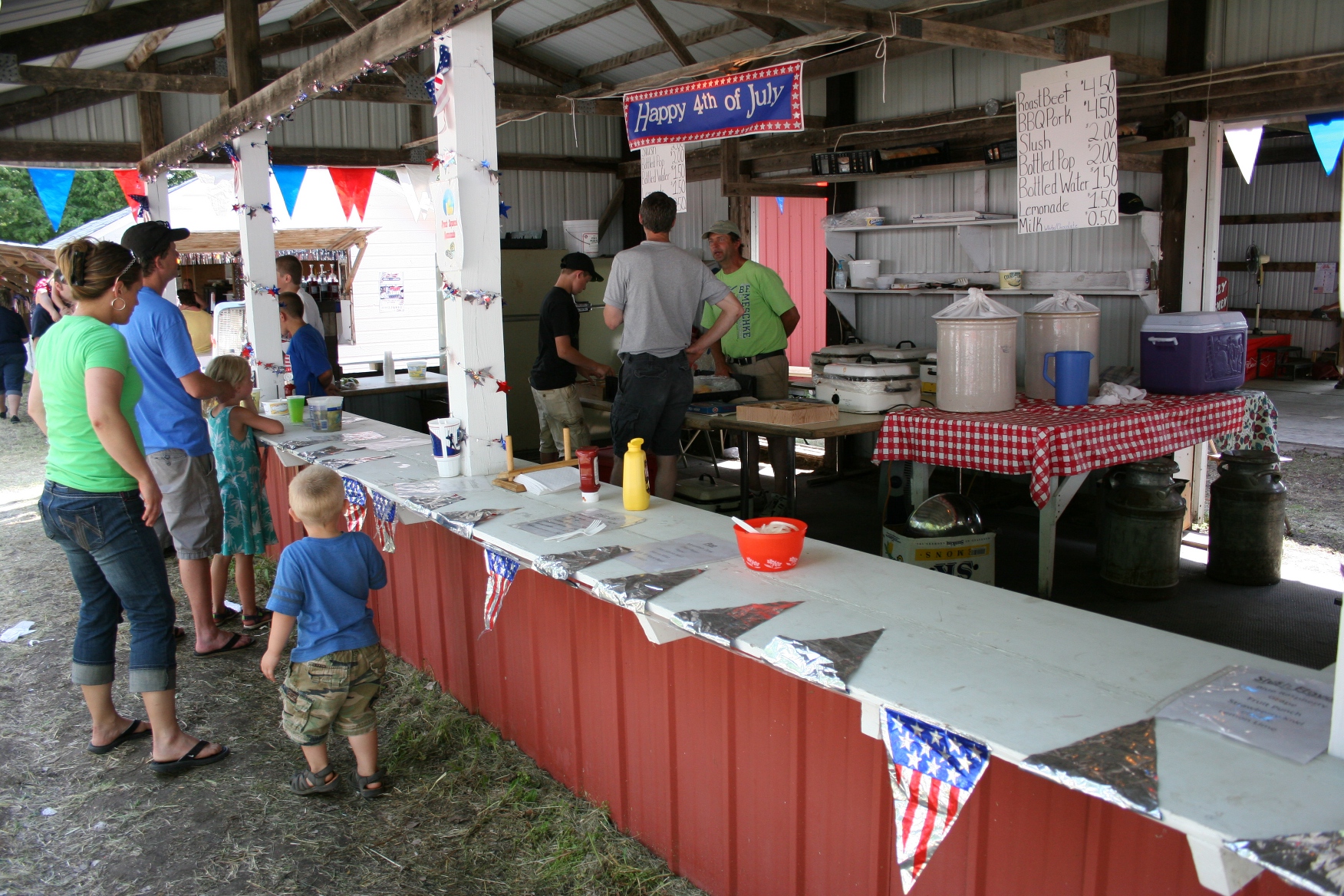
Hot pork and beef sandwiches and cold beverages are served from this stand.
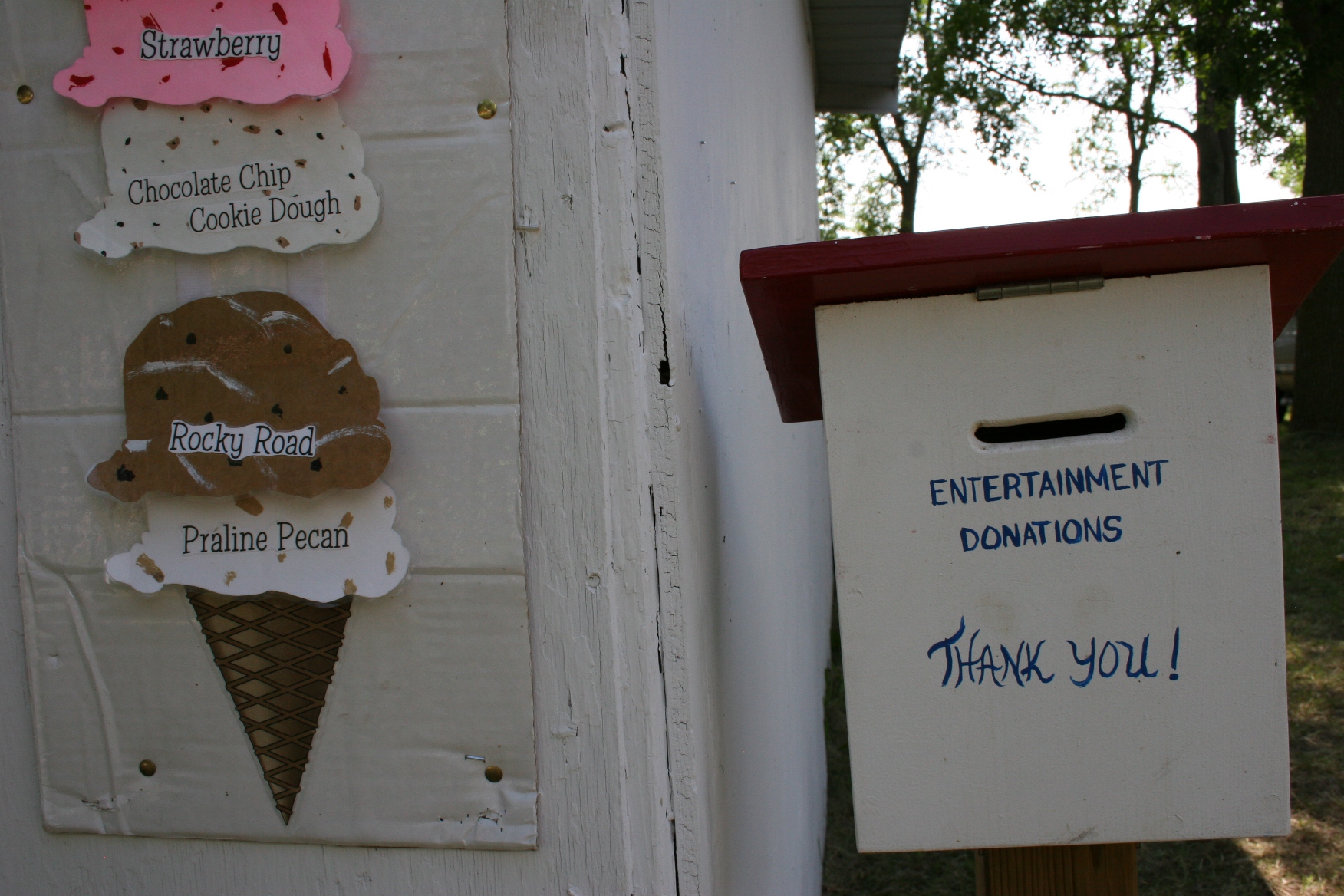
Visitors stopping by the ice cream shoppe can drop donations for the entertainment into a drop box.
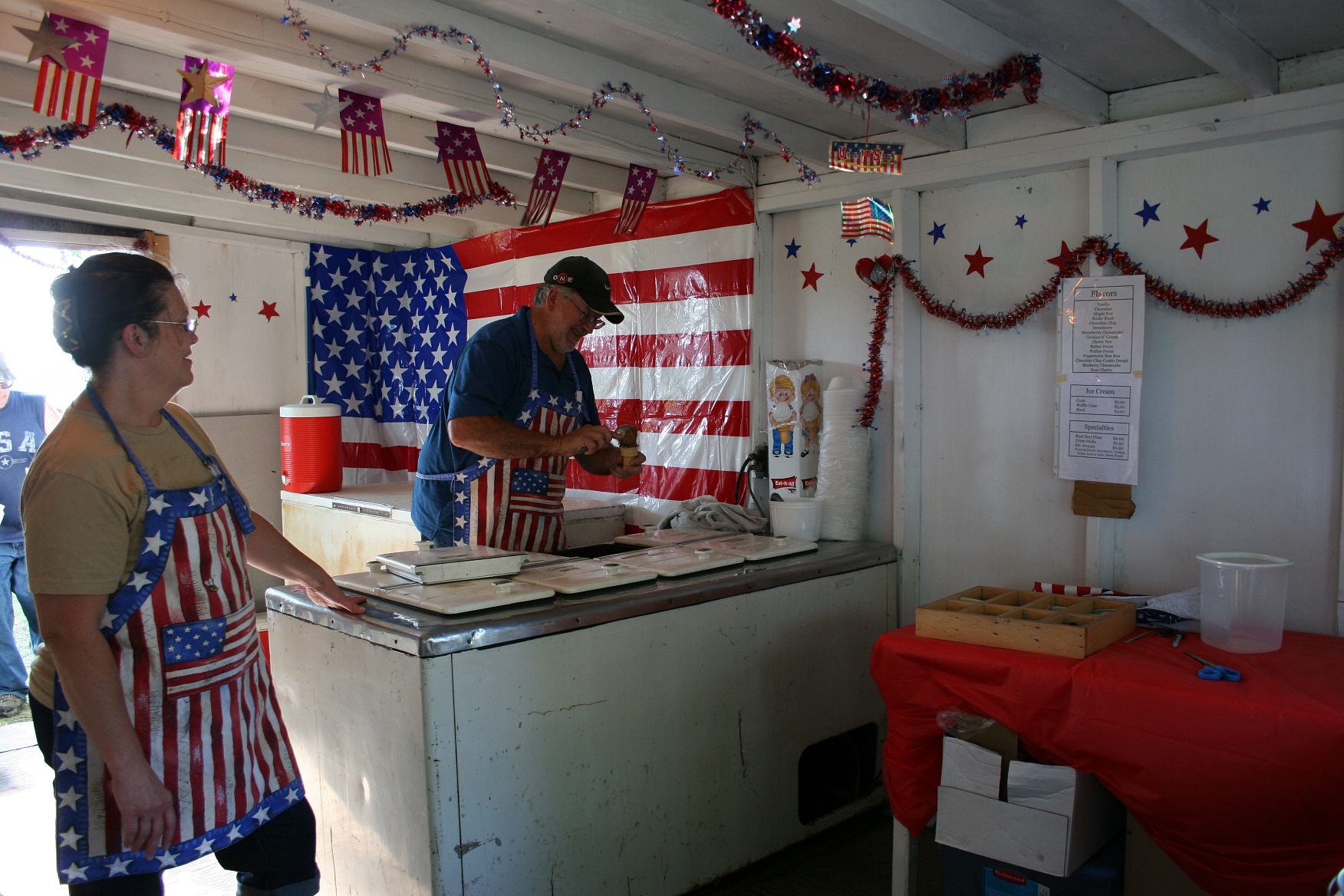
A peek inside the ice cream shoppe.
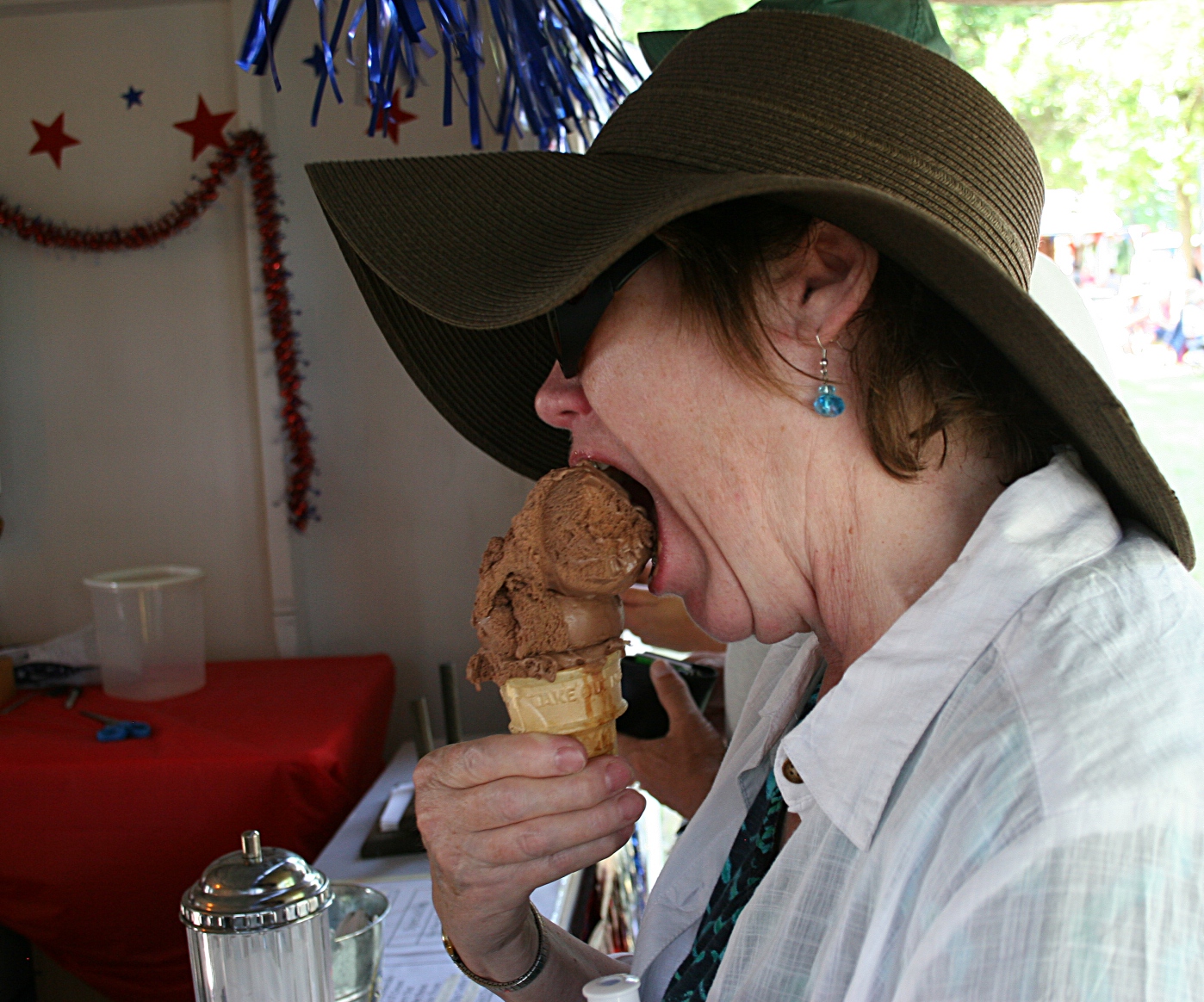
Enjoying an ice cream cone.
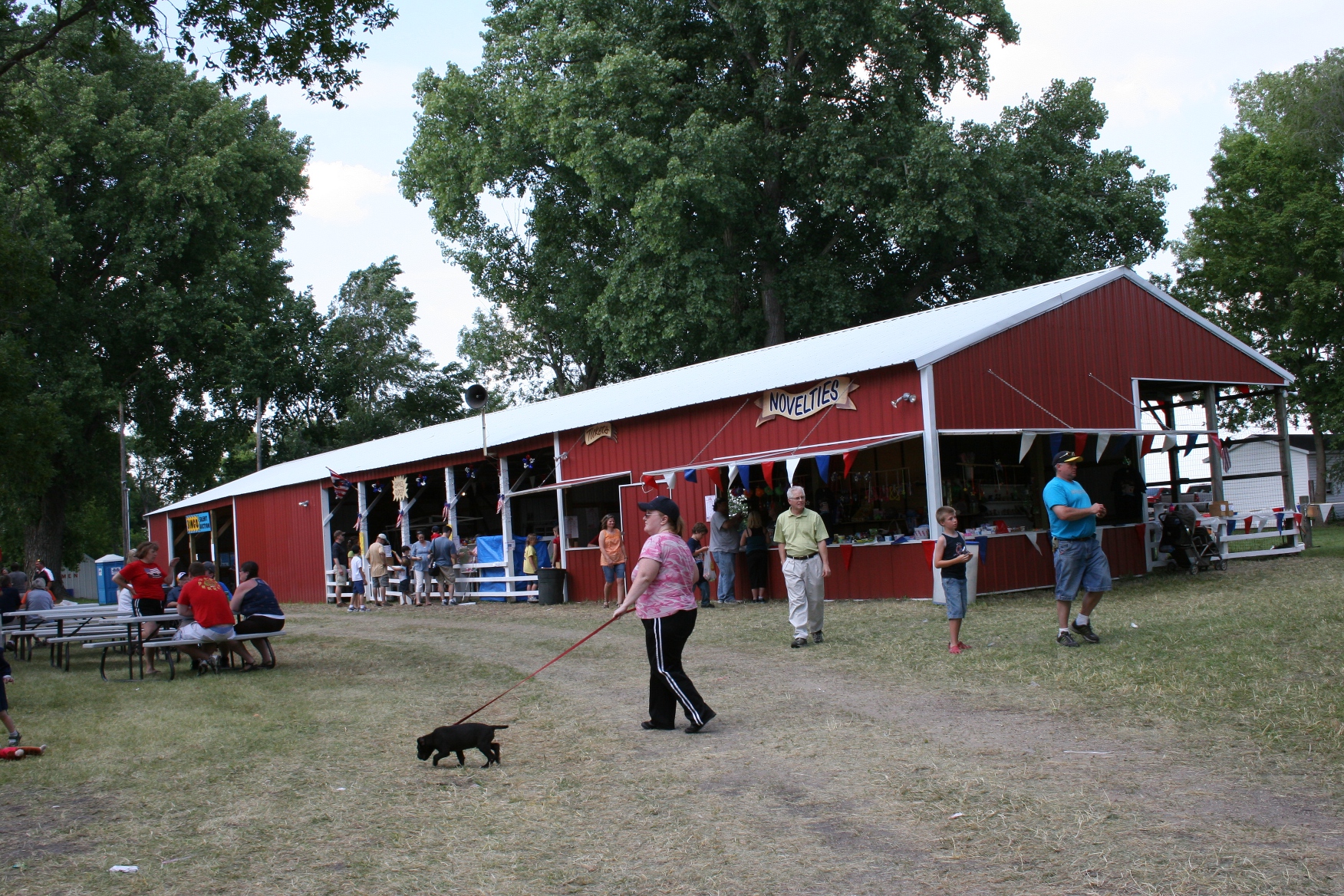
An overview of the novelties shoppe and games and rides and bingo building.
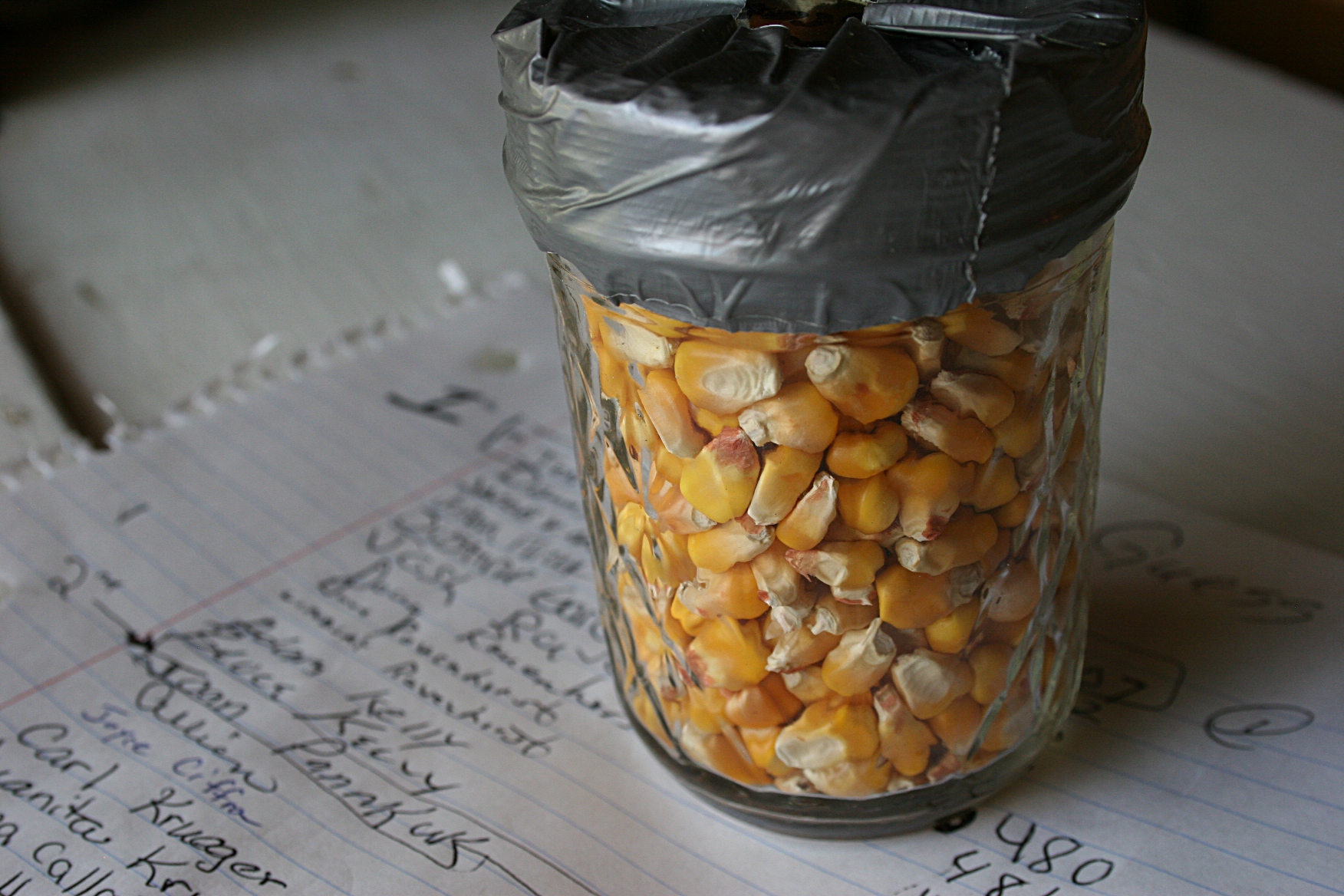
Guess the number of corn kernels in the duct taped jar and win a prize.
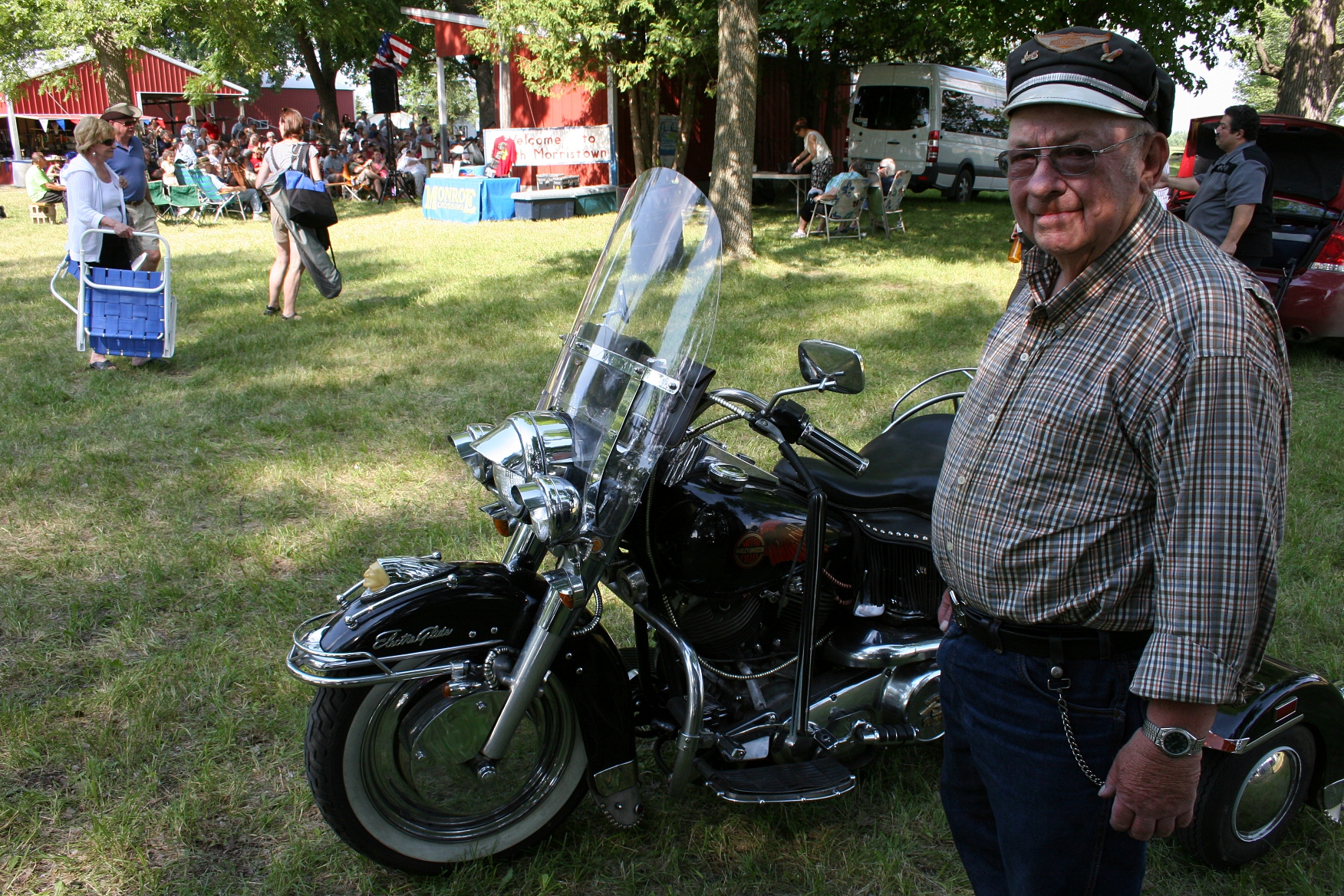
A 75-year-old biker arrives at the celebration late in the afternoon on his 1977 Harley.
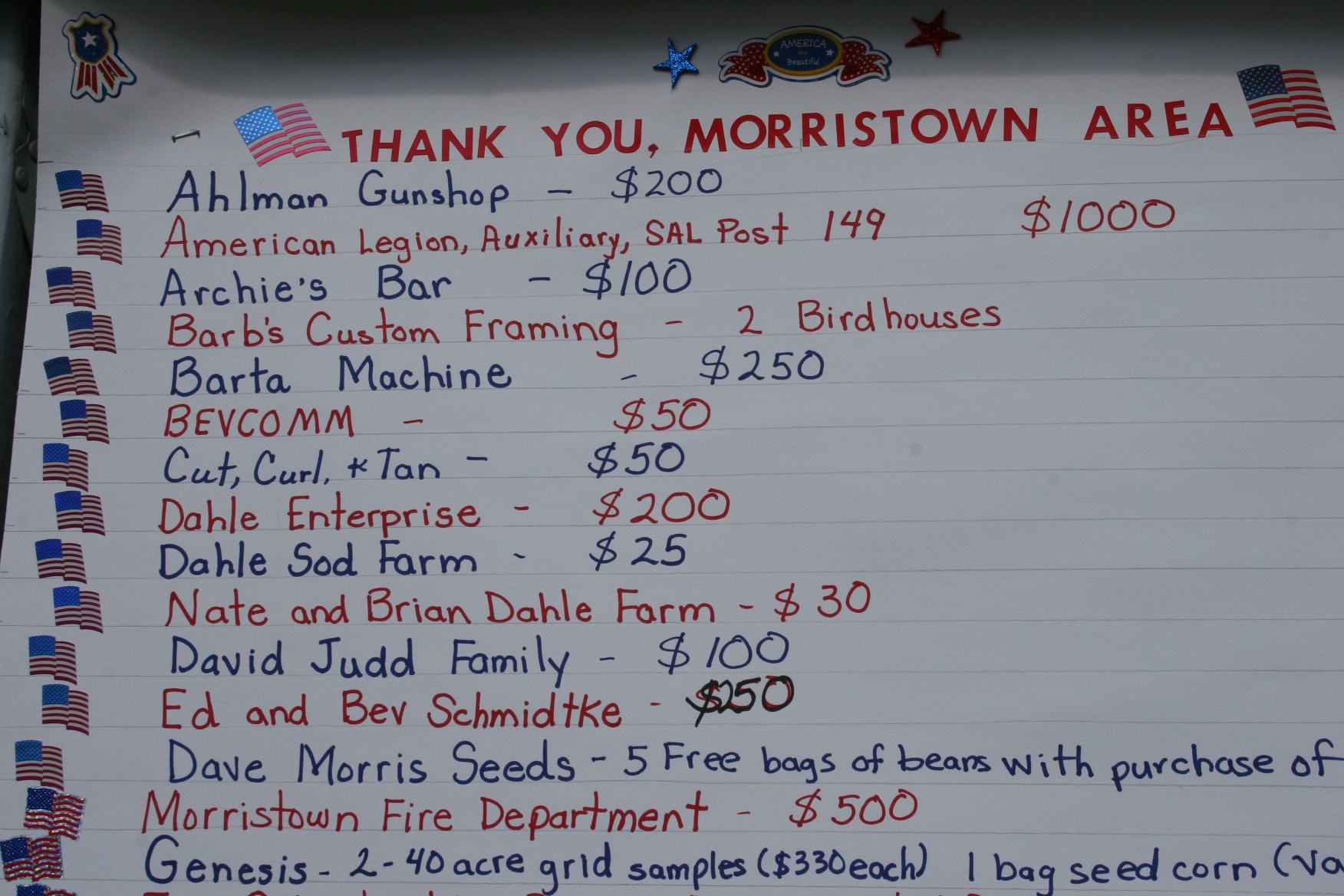
One of several lists thanking supporters.
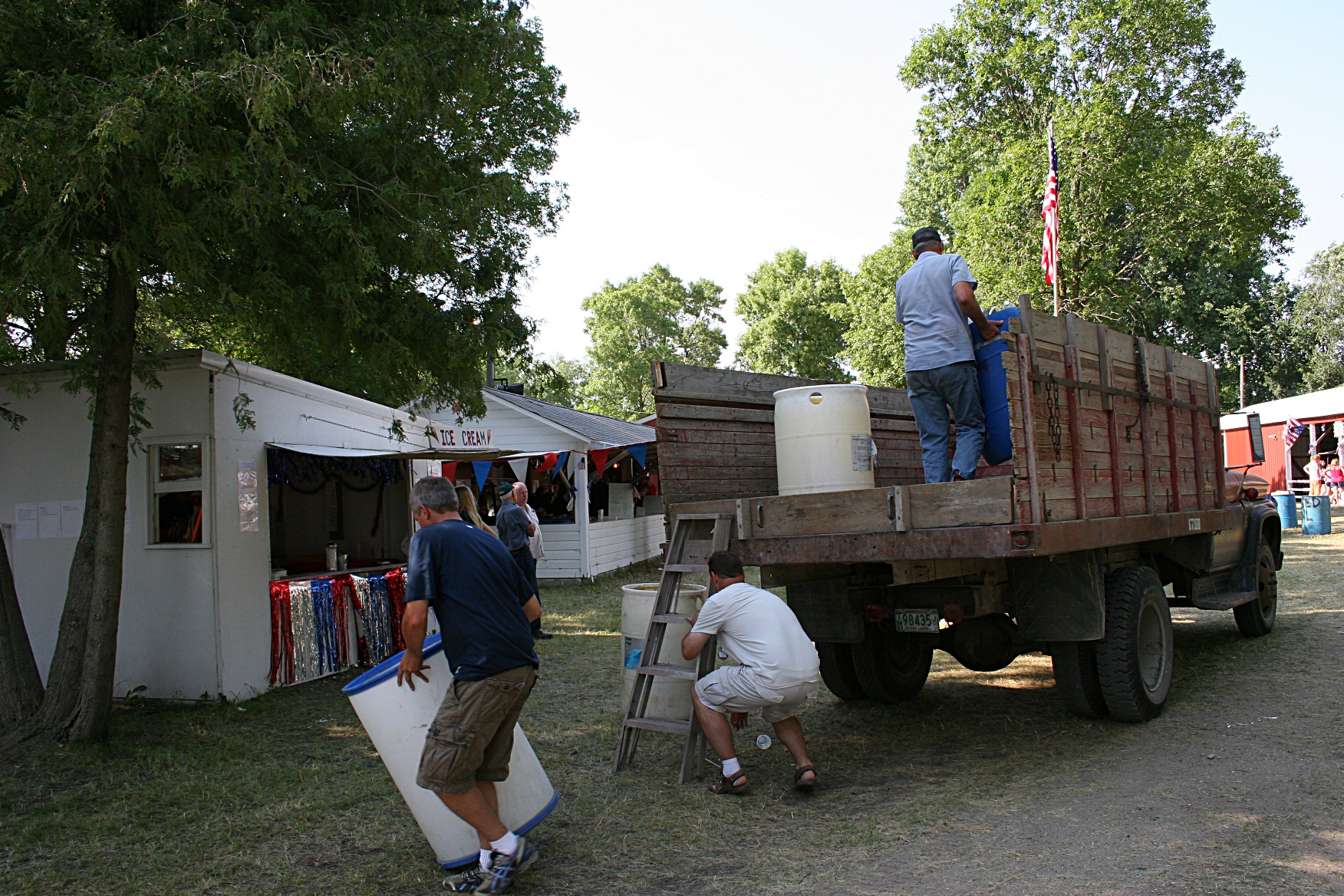
Garbage pick up by a 1964 grain truck.
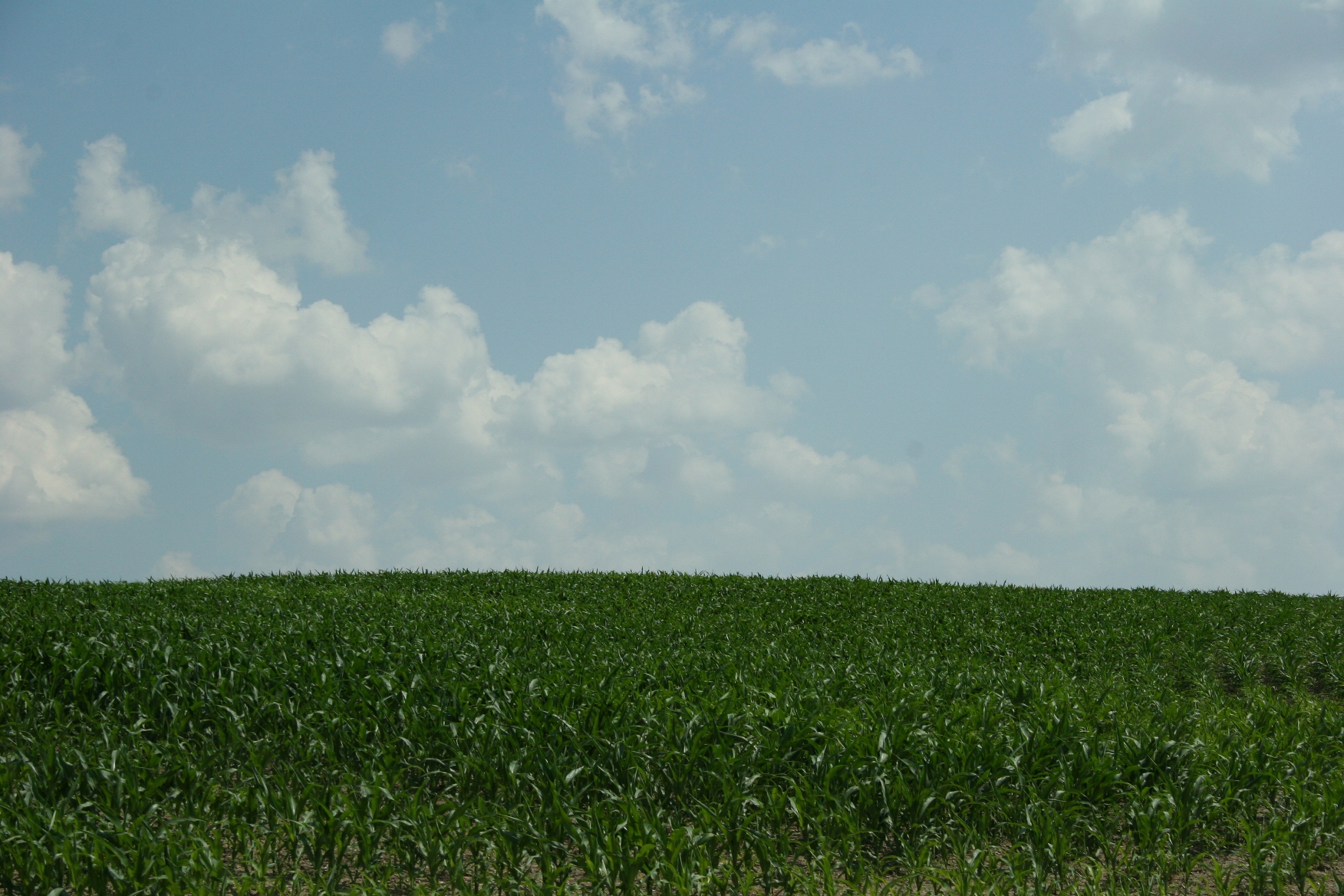
North Morristown is set in the middle of farm fields.
© Copyright 2013 Audrey Kletscher Helbling
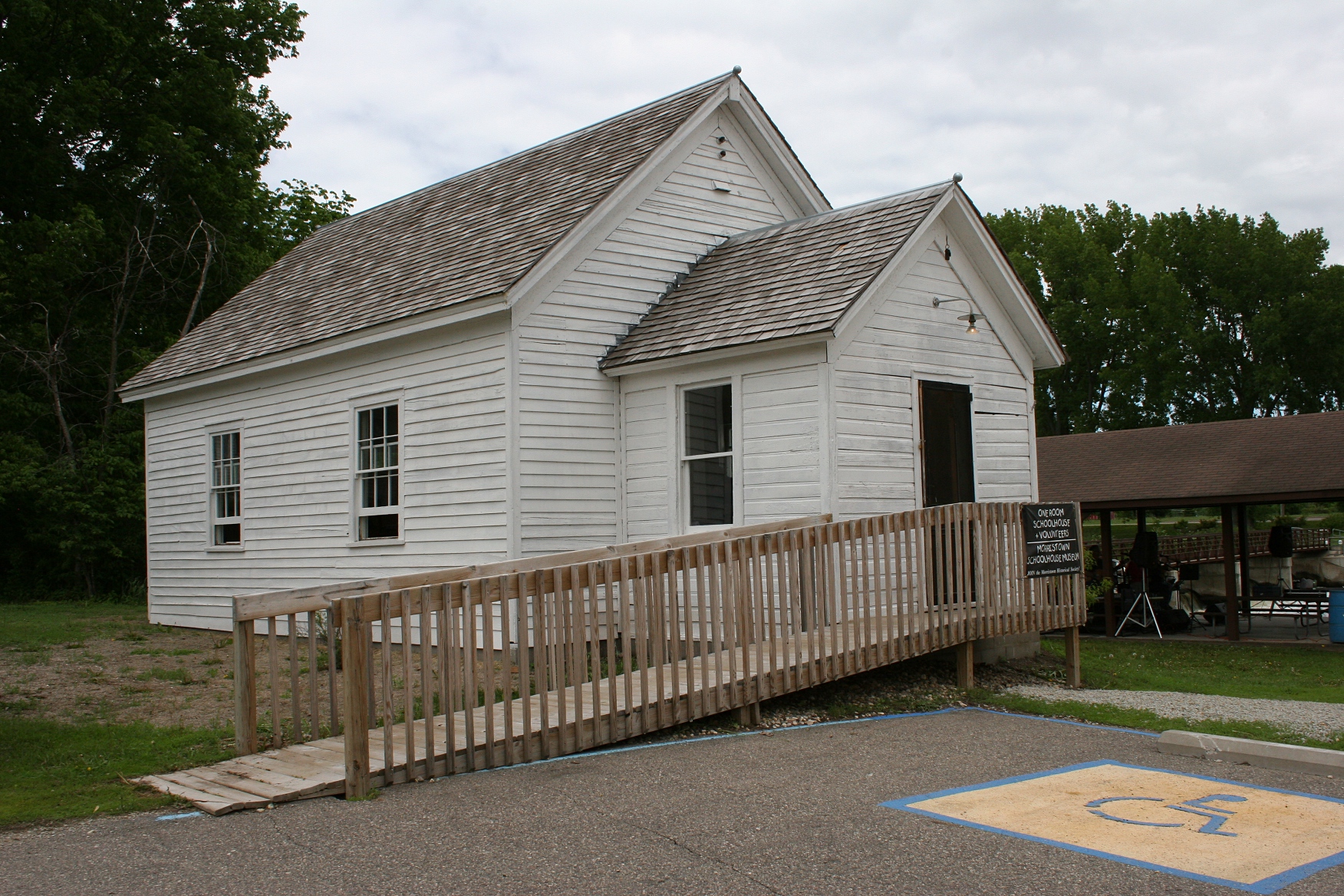
The District #54 country school, built in 1870, was moved into Morristown several years ago to a site next to the old mill along the banks of the Cannon River.
OH, THE THINGS YOU LEARN upon visiting a grassroots historical society run by volunteers in a small town.

One of my favorite images is this one of 87-year-old volunteer Helen Newman’s hand. the life-long Morristown resident was cutting and taping info into the 2005 sesquicentennial album shown here.
Nothing against sprawling museums with paid staff—those places are fabulous, too. But there’s something especially touching about folks from a small town collecting photos and artifacts, memories and information, to display in a building(s) with a deep connection to the community.
You’ll find exactly that in Morristown, population around 1,000, in Rice County in southeastern Minnesota. Set next to the Cannon River are the Morristown Feed Mill, once home to a sawmill and flour mill, and the District 54 Epard School moved in from a few miles north of Morristown and today the District #54 Schoolhouse Museum. The Morristown Historical Society maintains both buildings, which I toured during the recent Dam Days community celebration.
I didn’t study the content of the two buildings like a local with an intimate connection to this place. Rather, I picked topics of particular interest to me to read and photograph.
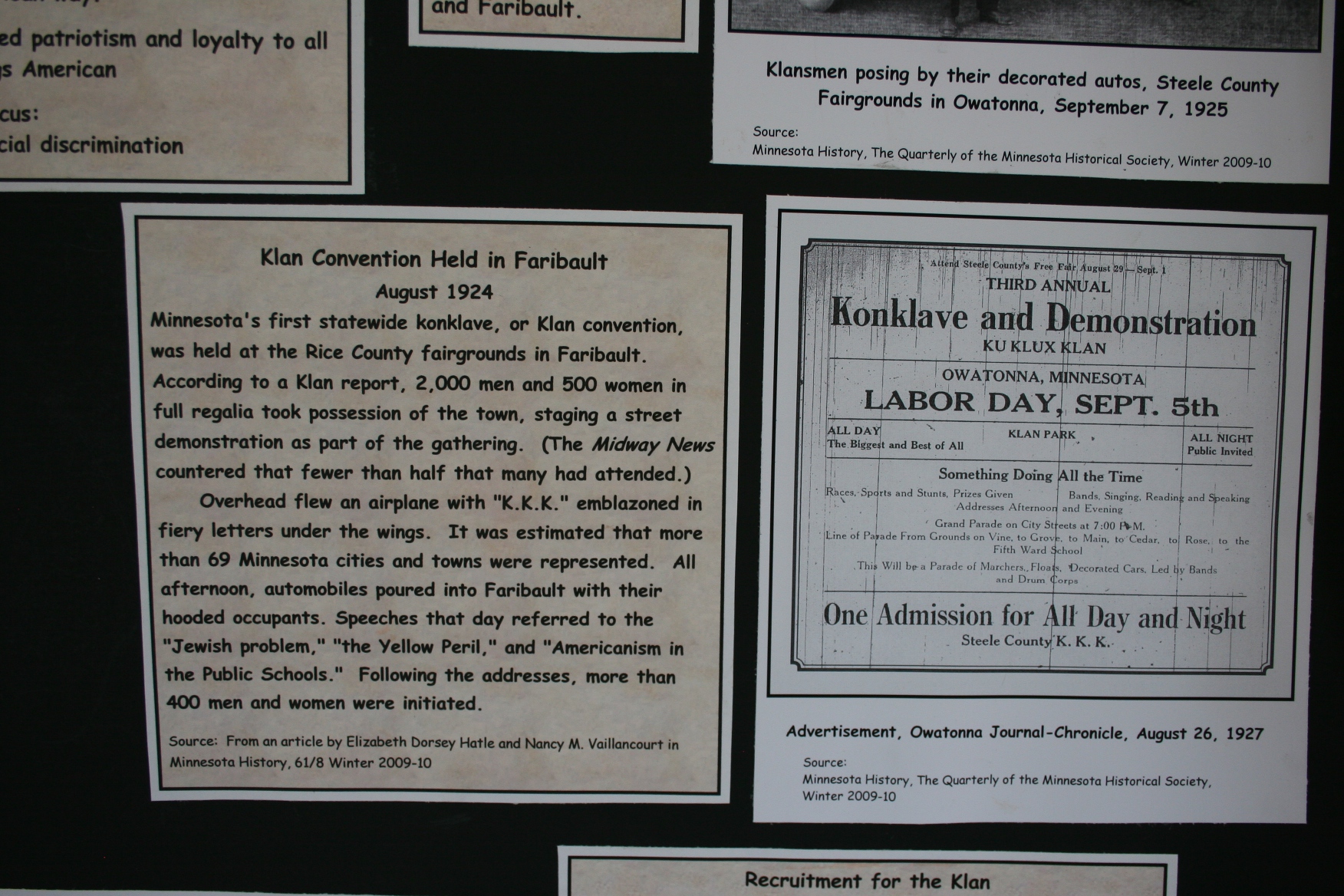
Information about the Ku Klux Klan’s presence in Morristown and the region.
For example, I was unaware that my county of Rice was home to Ku Klux Klan chapters and hosted the first statewide Klan convention at the fairgrounds in August of 1924. Chapter #26 was headquartered in Morristown with other chapters in nearby communities like Faribault and Owatonna and Austin and Albert Lea further to the south. Certainly, such membership doesn’t please me. But I’m thankful the Morristown Historical Society didn’t ignore this negative part of the town’s history. We need to learn from our mistakes.
A “Morristown Crime Wave of 1914” display also caught my eye with crimes such as profane and abusive language, drunken and disorderly conduct, and stealing fish noted.

News stories about the devastating 1900 fire in downtown Morristown.
In another display, a front page article published in the February 1, 1900, issue of the Morristown Press detailed a devastating fire which destroyed 20 buildings, nearly the entire business district, in downtown Morristown. “Loss will reach $35,000,” a sub-head reads.

Mrs. Lydia Meehl, who helped so many Morristown area women birth their babies.
My friend Dale, who joined a historical walking tour on the day I visited the schoolhouse museum and mill, learned about his place of birth in the Meehl Maternity Home. Hundreds of local babies were birthed there with the assistance of licensed practical nurse Mrs. Lydia Meehl. A newspaper story quotes the 82-year-old Meehl as saying she “loves them all (the 500-plus babies born in her maternity home).”

A snippet of the artifacts and info displayed inside the schoolhouse turned museum. Those are Civil War cannonballs on the shelf near the center of the photo
In the museum collection, you’ll also find the usual military (including Civil War cannonballs), school, telephone and other small town artifacts.
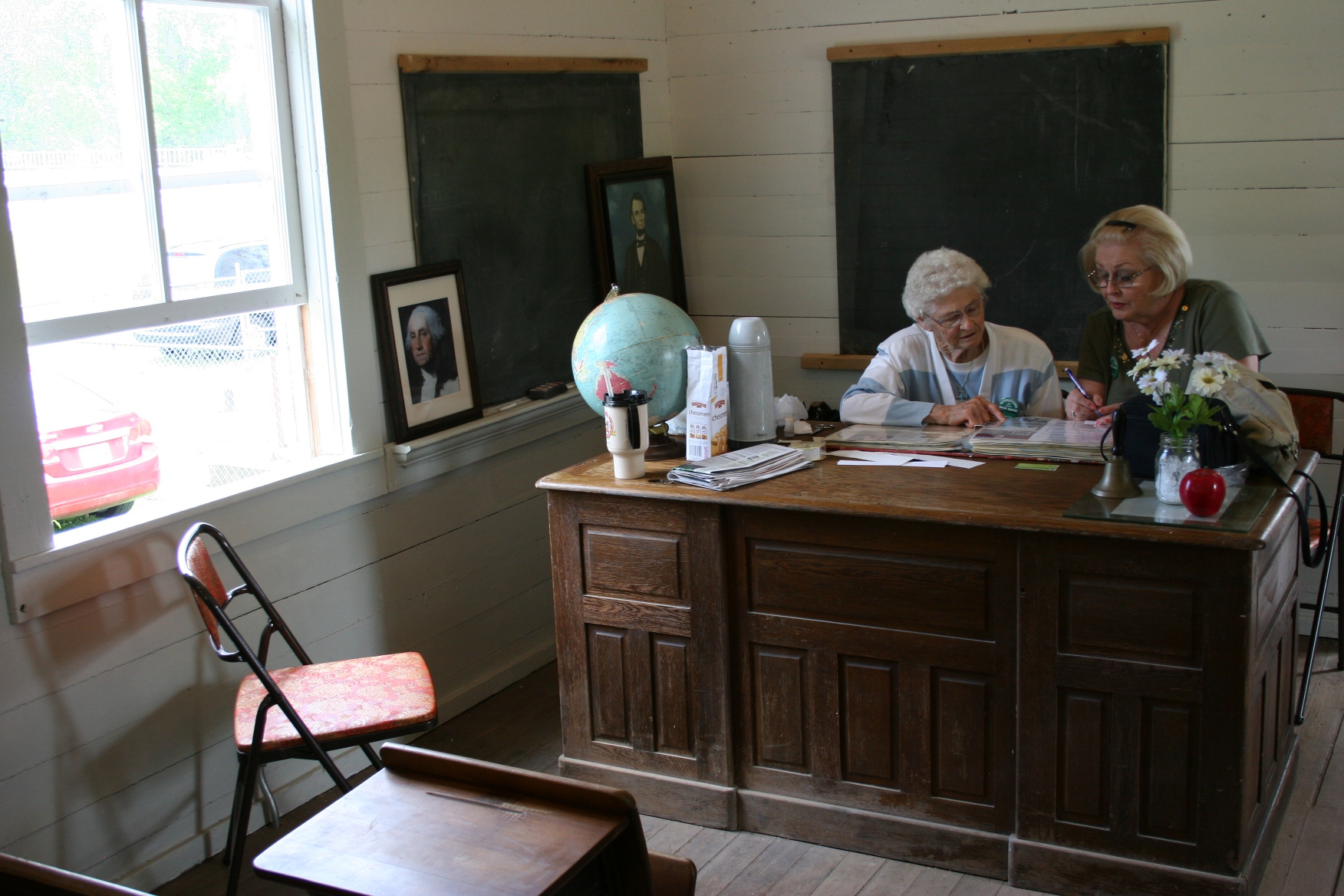
Helen Newman and Cindy Packard work on a sesquicentennial album.
As a bonus, I met 87-year-old Helen Newman, who’s lived in Morristown her entire life, and Morristown native Cindy Packard, visiting her hometown from Colorado Springs. The two were seated behind a hulk of a desk inserting info into an unfinished album about the town’s 2005 sesquicentennial.
Packard brought with her a few items for the schoolhouse museum, including a spatula imprinted with “Our Twentieth Year LLOYD’S FOOD MARKET, Morristown, Minn.” She kind of hated to give it up, but…

Switchboard wires and switches reportedly from Adolph Hitler’s bunker.
Upon my request, the pair pulled the spatula and a snippet of wires and two switches from a plastic bag resting on the corner of the desk. The switches came from the switchboard in Adolph Hitler’s bunker and were brought back by Oscar Ahlman to Hewitt Thomspon in Morristown, according to a note accompanying Packard’s donation.
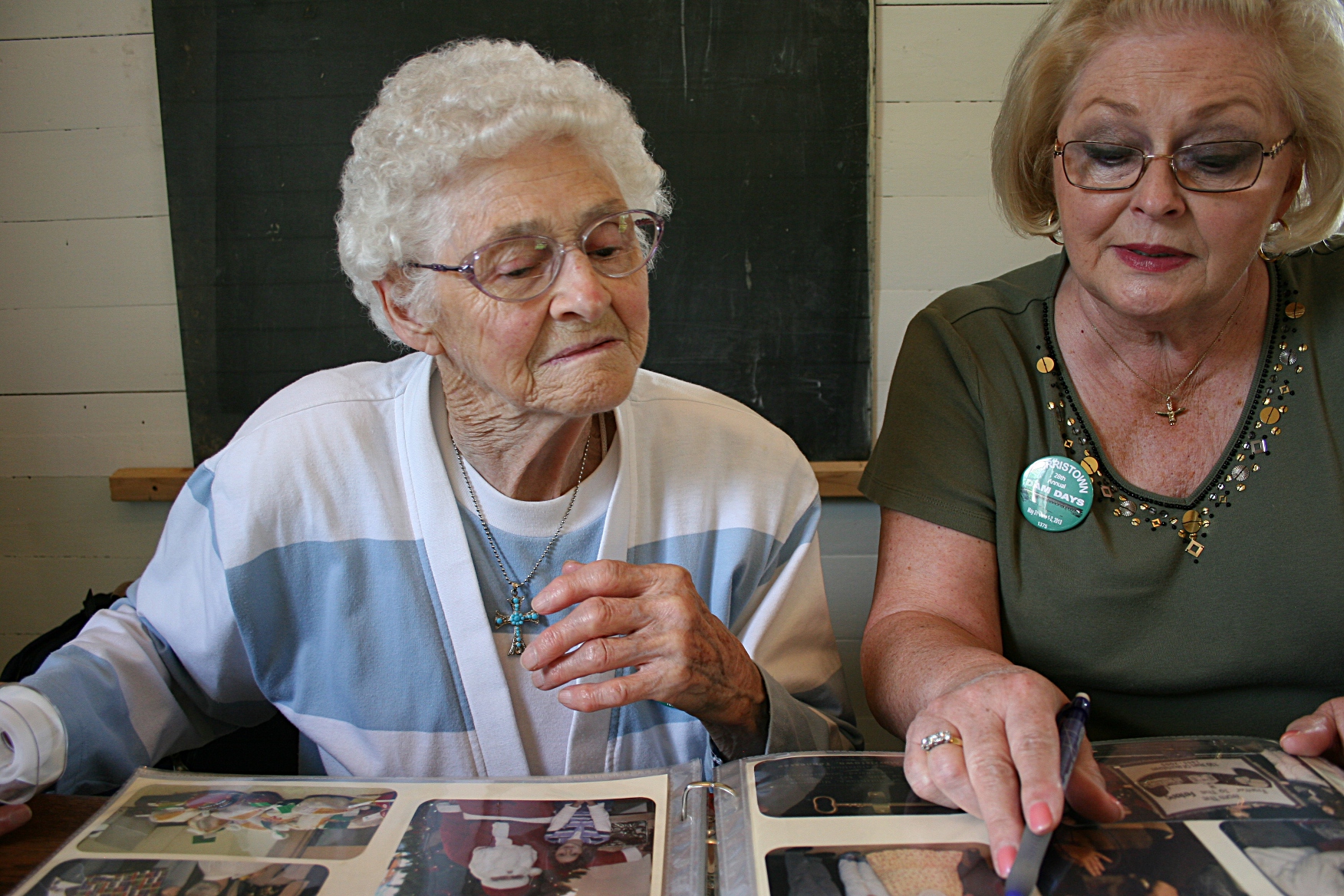
Helen Newman and Cindy Packard visit while they write, cut and tape information into the album. I told them just to ignore me and my camera and they obliged. I simply love this photo of the pair.
And that’s how these small town museum collections grow—with donations from the likes of a hometown girl come home every year and the dedication of volunteers like the 87-year-old Newman.
BONUS PHOTOS:
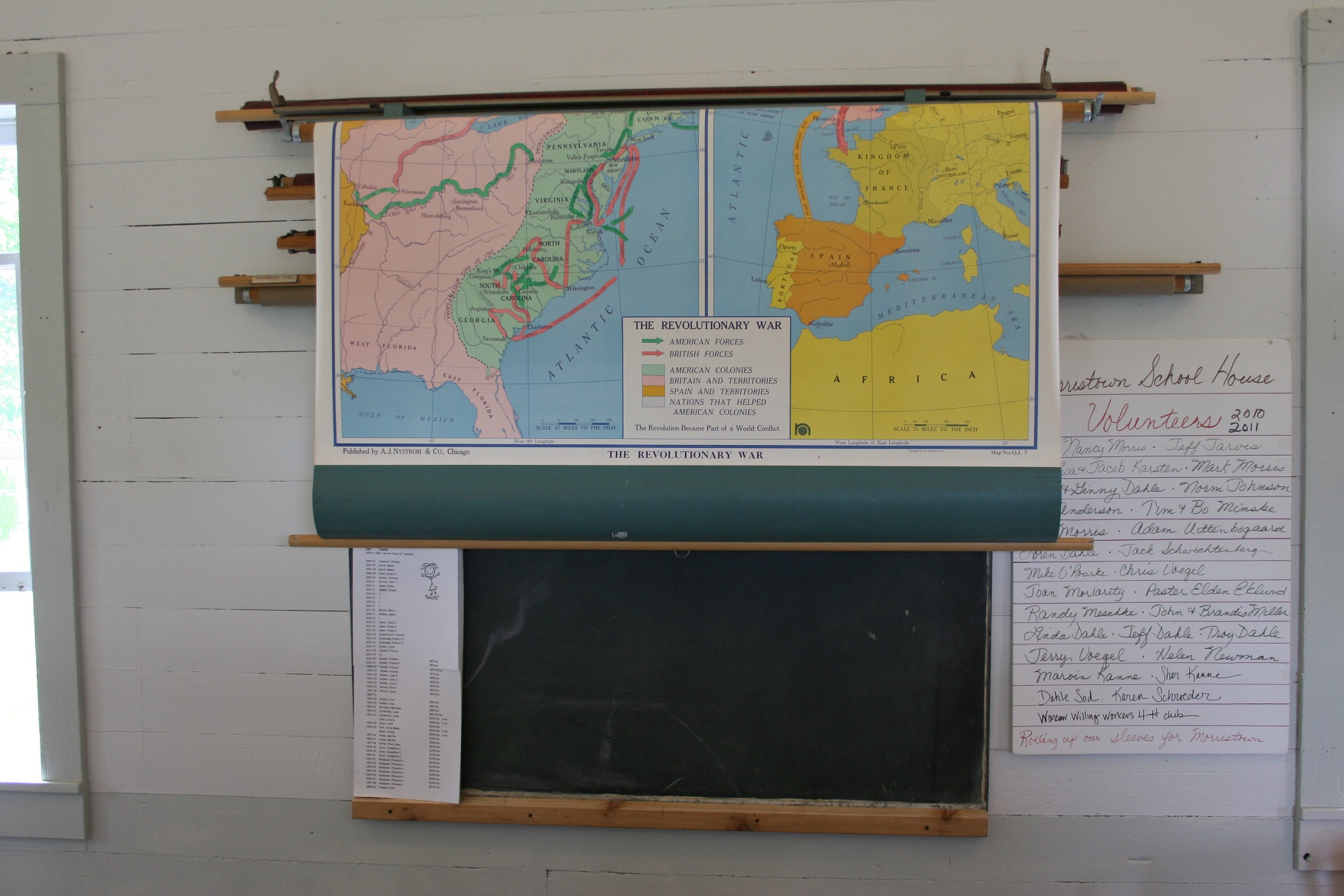
There’s something about an old school map that takes me back to Vesta Elementary School, my childhood school.

A display of school-related items includes a lunch pail, books and photos.
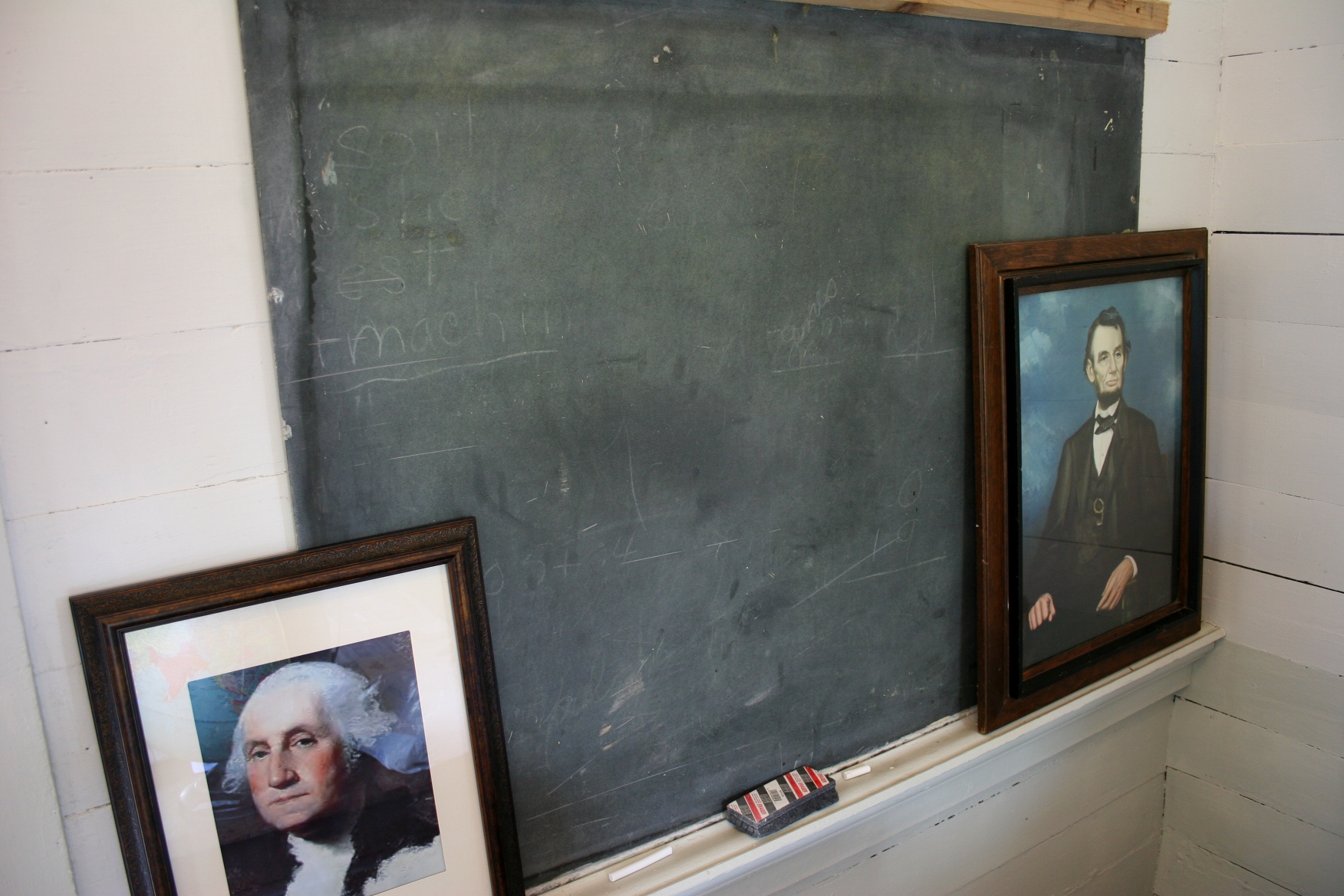
Presidential portraits grace a corner blackboard by the teacher’s desk.
FYI: To read a previous post on the historic Morristown Feed Mill, click here. A second mill post will be forthcoming. Also check my recent archives for stories from Morristown Dam Days.
© Copyright 2013 Audrey Kletscher Helbling
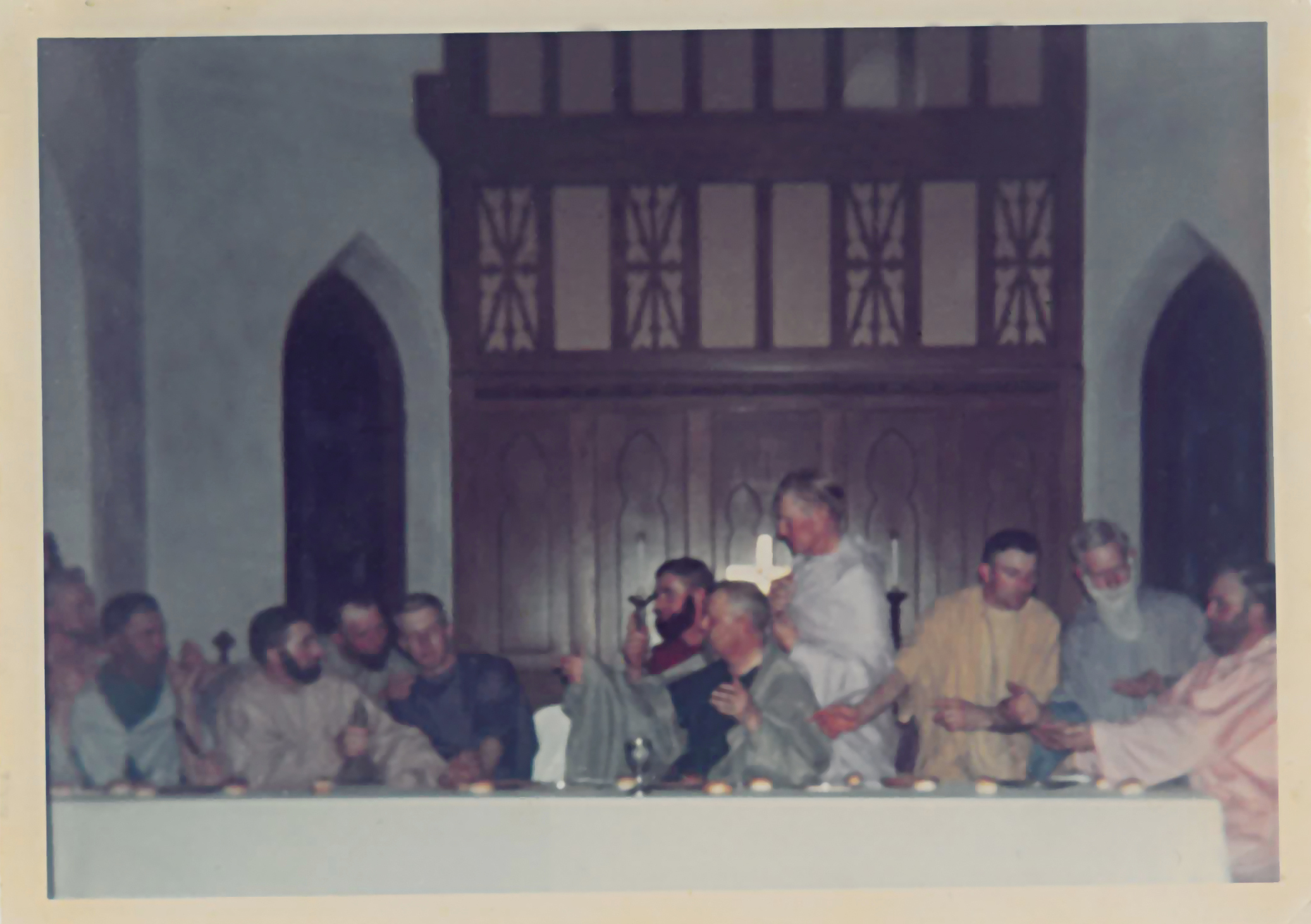
St. John’s members portray the disciples in this undated vintage photo, the first record of a photograph from The Last Supper Drama. Actors, from left to right, are Luverne Hafemeyere, Earl Meese, Vicgtor Luedke, Howard Meese, Virgil Bosshart, Arnold Keller, P.L. Golden, Alvin bosshart, Paul Bauer, Elmer Covert Sr. and Arnold Bauer. Photo courtesy of St. John’s.
THOUSANDS OF MILES from Milan, Italy, in the flat farm fields of Rice County in southeastern Minnesota, Leonardo da Vinci has left his mark on a small congregation.
For 50 consecutive years, St. John’s United Church of Christ, Wheeling Township, has presented The Last Supper Drama, a theatrical interpretation of the master artist’s most famous painting created in 1495 as a mural in an Italian monastery.
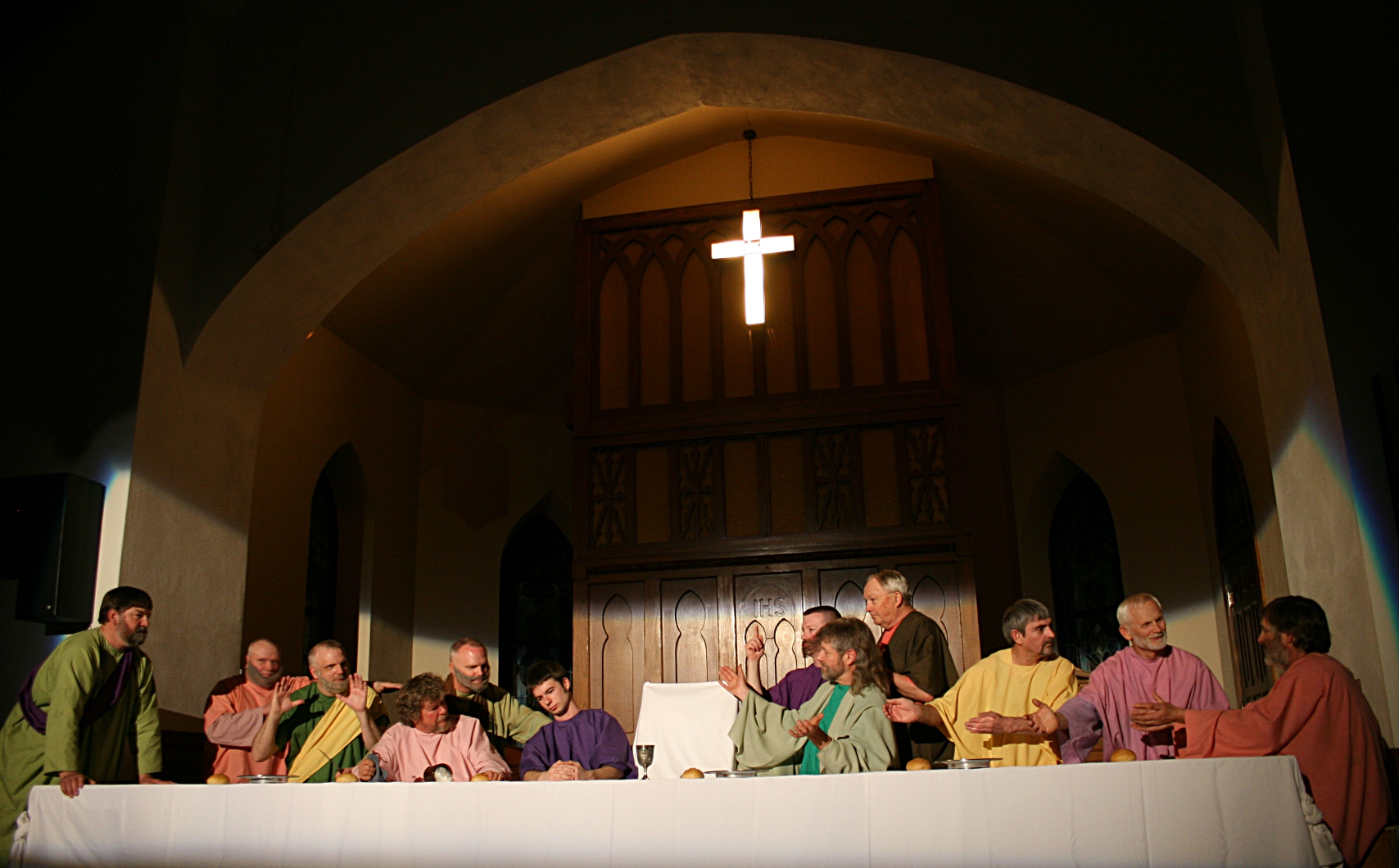
St. John’s 50th presentation of The Last Supper Drama in 2012.
I penned those two opening blog post paragraphs during Holy Week 2012, shortly after attending the St. John’s performance.
So update that number. The congregation is slated to present its 51st The Last Supper Drama at 8 p.m. on March 24, Palm Sunday.
I’d advise attending because you don’t get more grassroots basic than this in the retelling of Christ’s final meal with his 12 disciples via a script penned by a long ago St. John’s pastor.
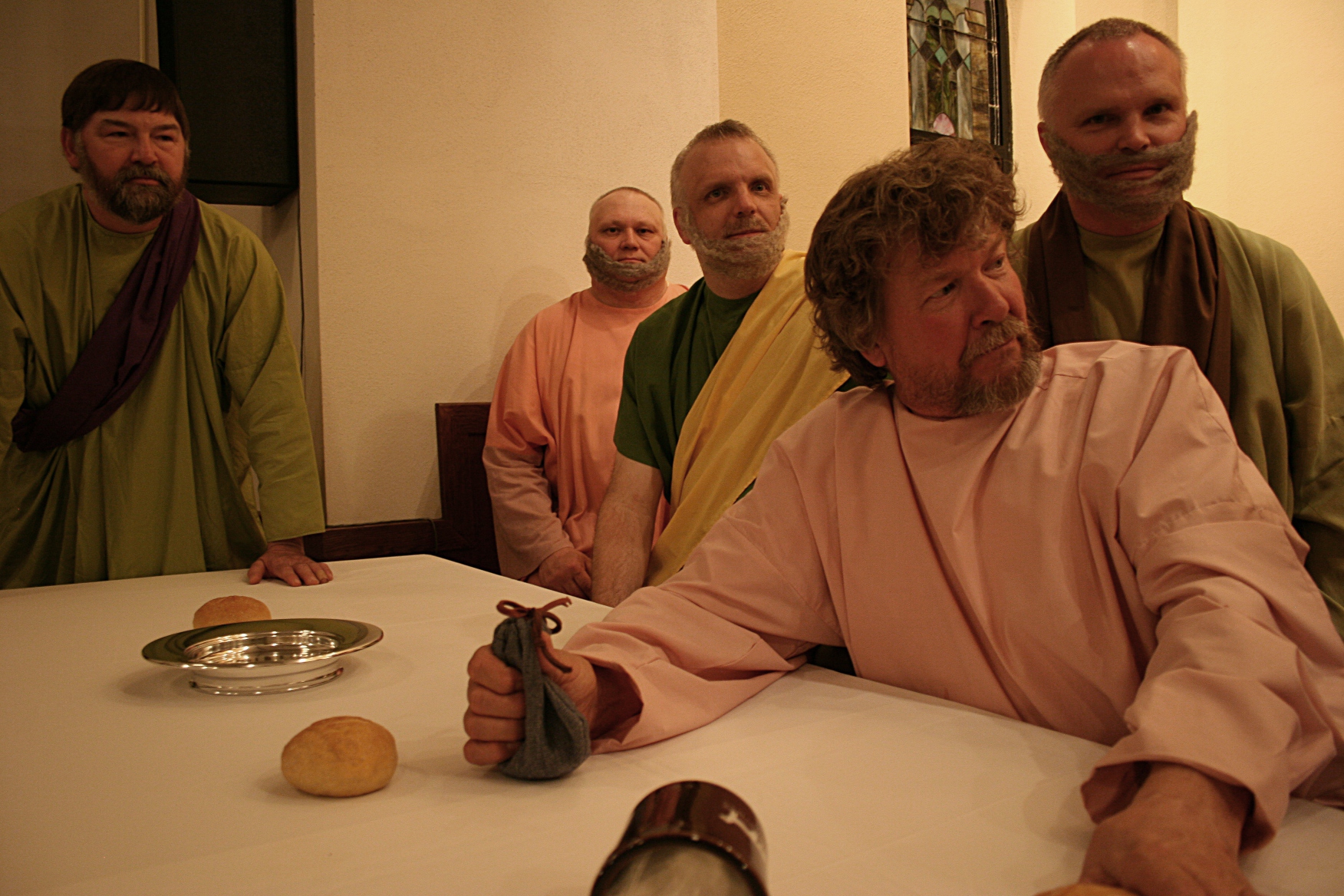
Judas grips the bag of silver, his reward for betraying Christ, as seen in the 2012 drama.
Each disciple speaks of his personal relationship to Christ, making this a particularly introspective drama presented by members and former members of St. John’s.

The parking lot at St. John’s United Church of Christ, Wheeling Township, is nearly full 20 minutes before the congregation’s annual performance of The Last Supper Drama.
Truly, there’s something about slipping inside this rural 1800s limestone church as evening melds into night, settling upon aged pews among those who have worshiped here for generations, that is particularly comforting.
It is good for the soul to sing and pray and listen, to sweep your thoughts into a meditative mindset for Holy Week.
That this country congregation continues with a tradition begun in 1963 impresses me. Such uninterrupted longevity is a testament to faith, an appreciation of history and a clear understanding that still today, perhaps more than ever, The Last Supper Drama needs to be shared.
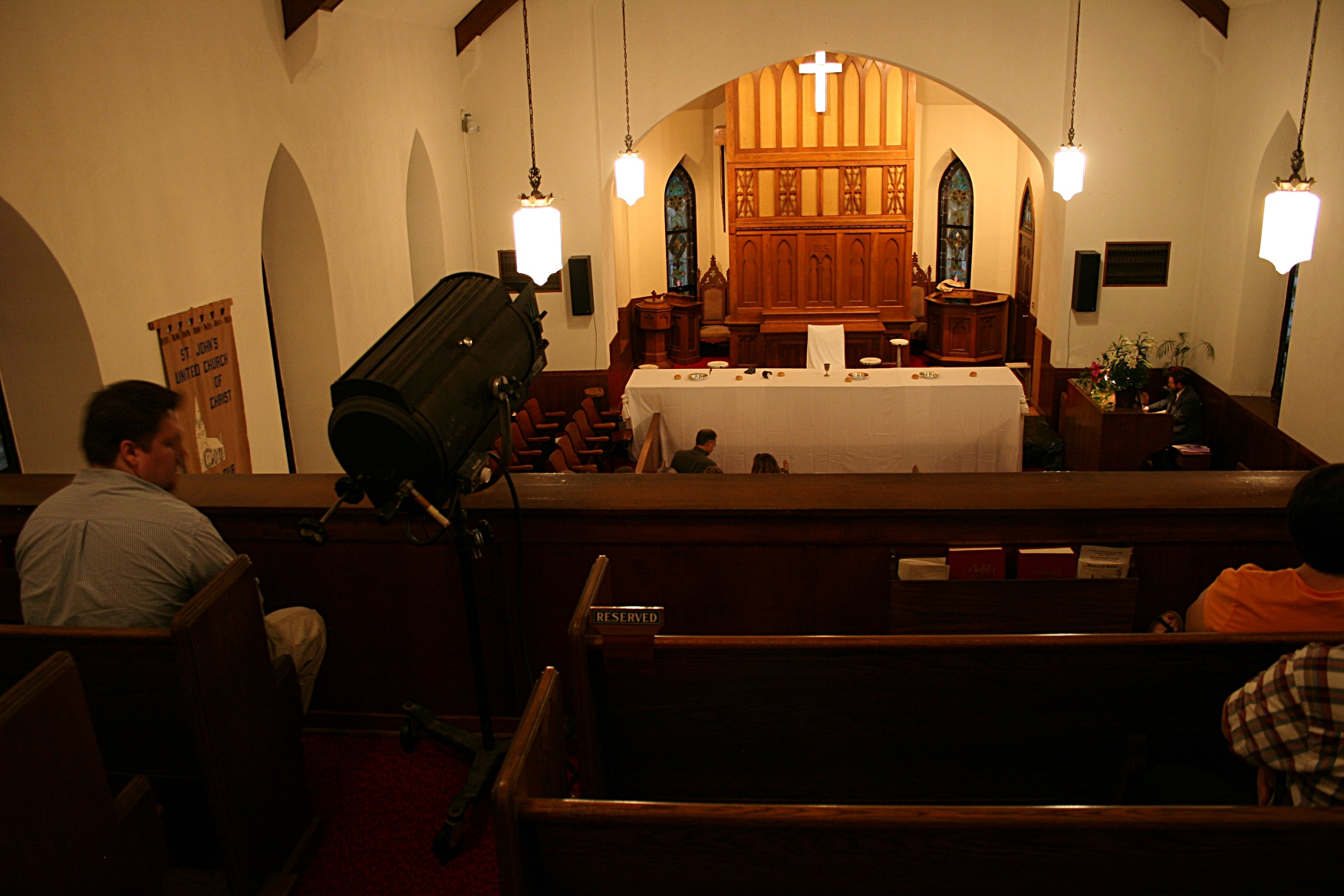
A view from the balcony before the drama begins shows the spotlight to the left and The Last Supper table below. The actors enter, spotlighted in the dark church, to take their seats at the table. There they “freeze” in place to mimic Leonardo da Vinci’s painting.
FYI: St. John’s United Church of Christ, Wheeling Township, is located 10 miles northeast of Faribault. Take Minnesota State Highway 60 east for eight miles and then turn north onto Rice County 24. Drive two miles to 19086 Jacobs Avenue.
Click here and then here to read my detailed The Last Supper Supper Drama posts from 2012.
Click here to read my post from 2011.
© Copyright 2013 Audrey Kletscher Helbling
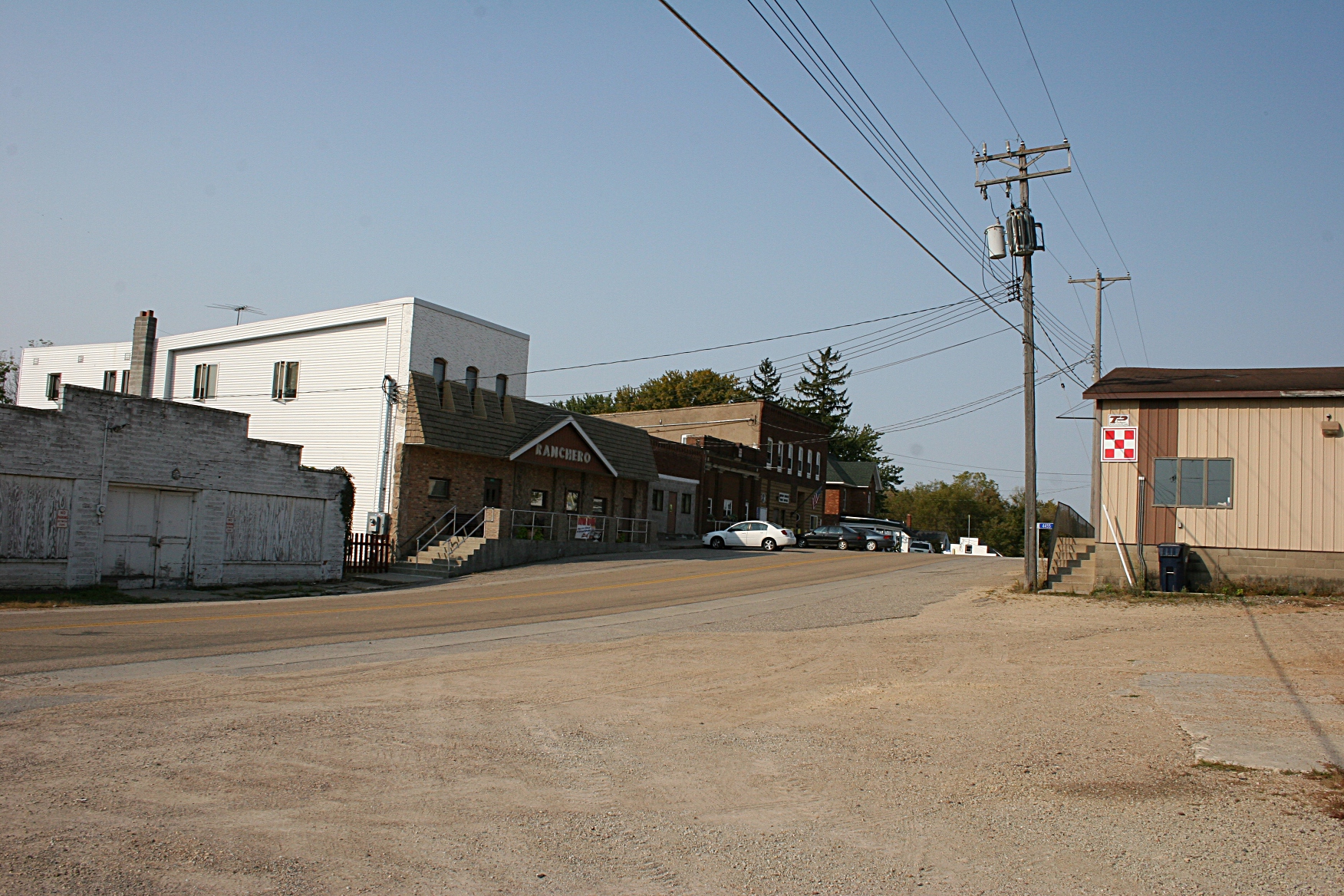
Main Street/Rice County Road 3 in Webster, Minnesota. One of the best known businesses in Webster is the Ranchero Supper Club, near middle in photo, to the left of the white car.
WHENEVER I SNOOP around a small town, I wonder when someone is going to step outside of their home or business and ask why I’m taking pictures. Only once has that happened in my many Main Street visits. That was in Otisco, south of Waseca. When I explained who I was, the local relaxed.
If I lived in one of these rural towns and saw a stranger wandering with a camera, I’d question him/her, too. But that’s me.
My traveling companion, my husband, is used to my curious ways, my quest for interesting photos. He even tips me off occasionally to photo possibilities. Yes, he’s a quick study.
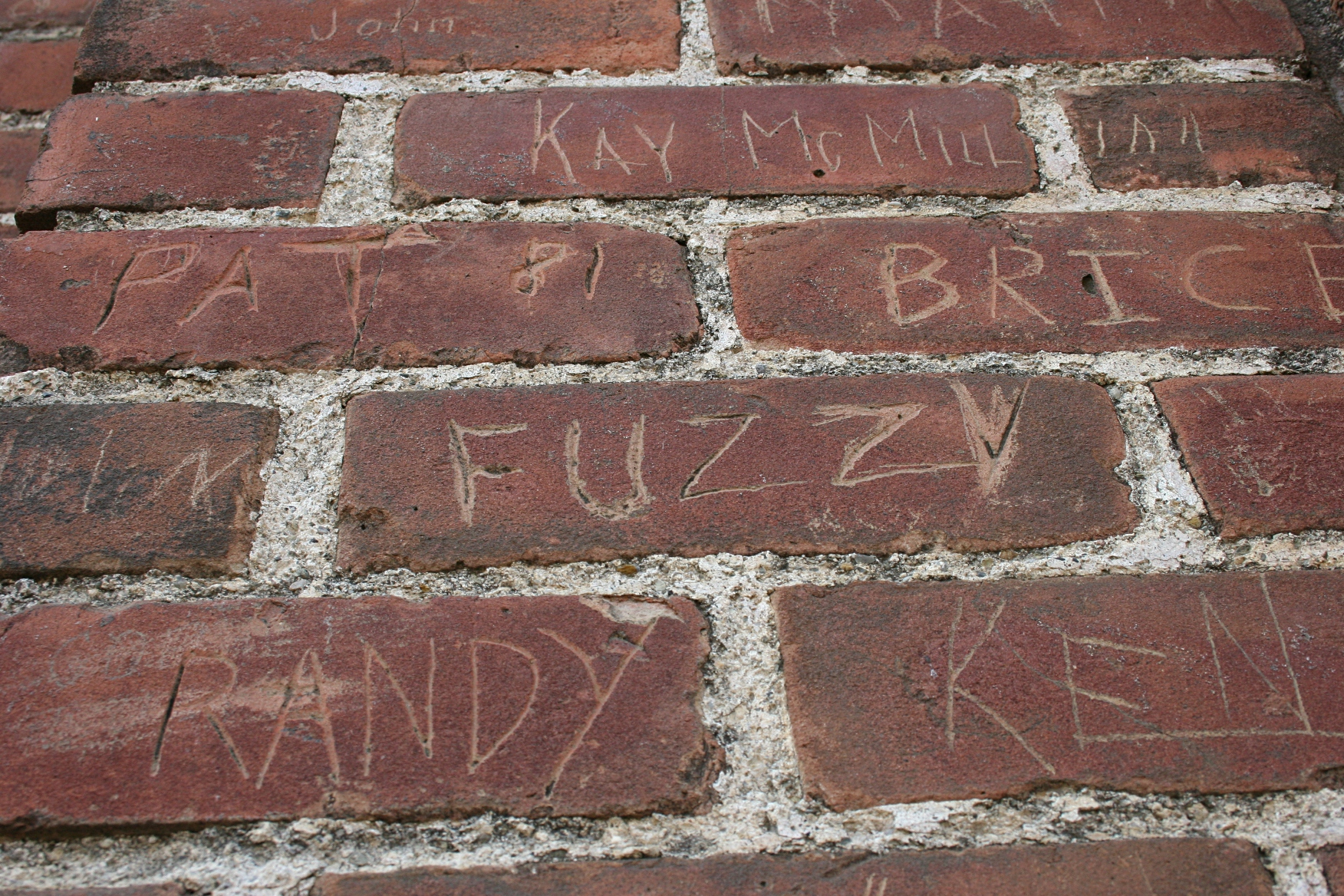
One of the more unusual finds in Webster was this graffiti etched into brick on a downtown building. Names covered several separate sections of wall. I photographed this particular section because of the name Randy (my husband’s name) and “FUZZY,” which was the nickname for one of his sisters. No, they did no etch their names here. Anyone know the story behind all of this downtown graffiti?
Sometimes he probably thinks my photo ideas are crazy. But if he does, my spouse has the good sense not to tell me.
Here are the remainder of the interesting (at least from my perspective) photos I shot in Webster in northern Rice County several weeks ago.
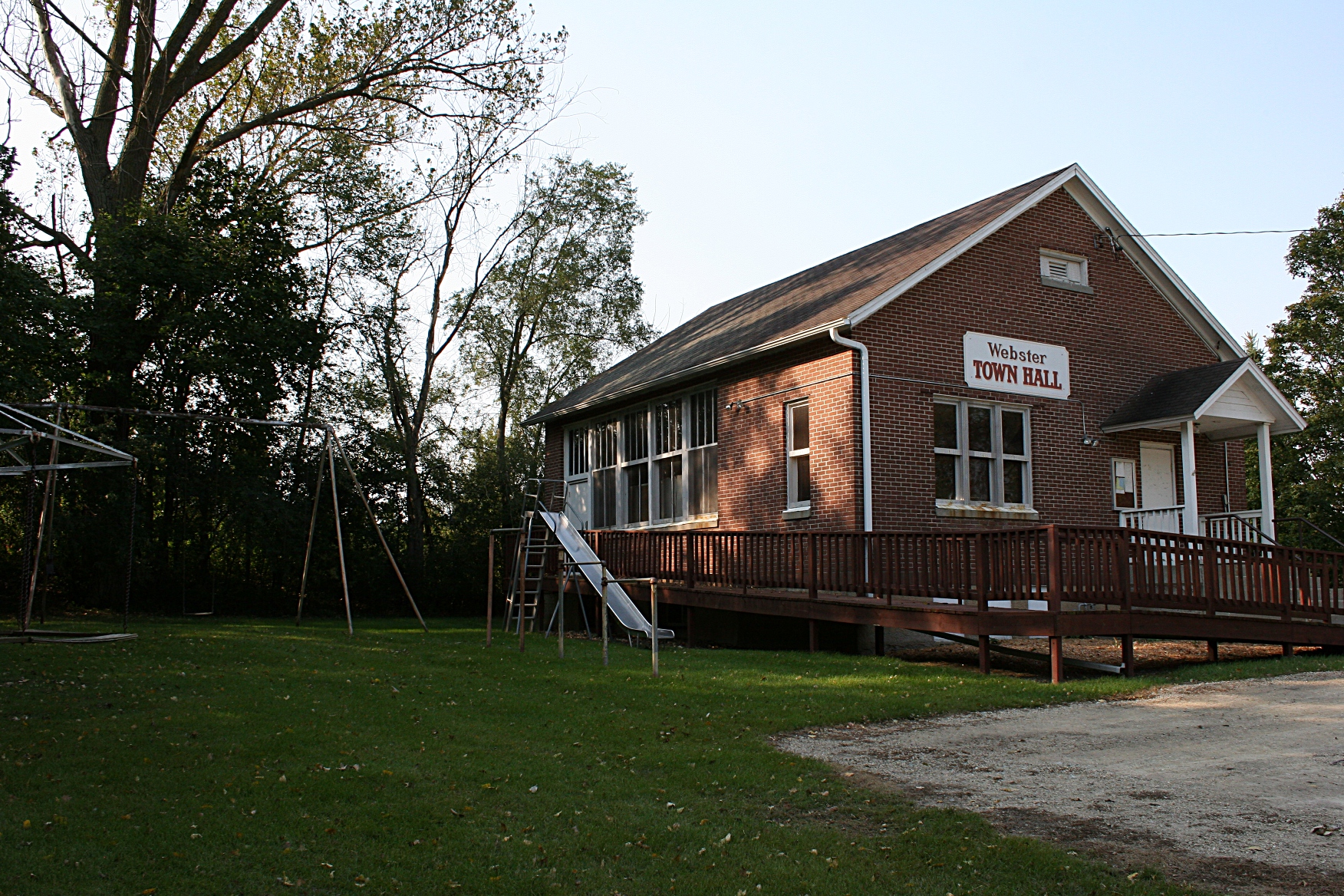
More brick at the Webster Town Hall, a former school, I presume. I love that the old playground equipment has not been removed due to safety concerns. That’s the edge of an old merry-go-round you’re seeing to the left in the frame.
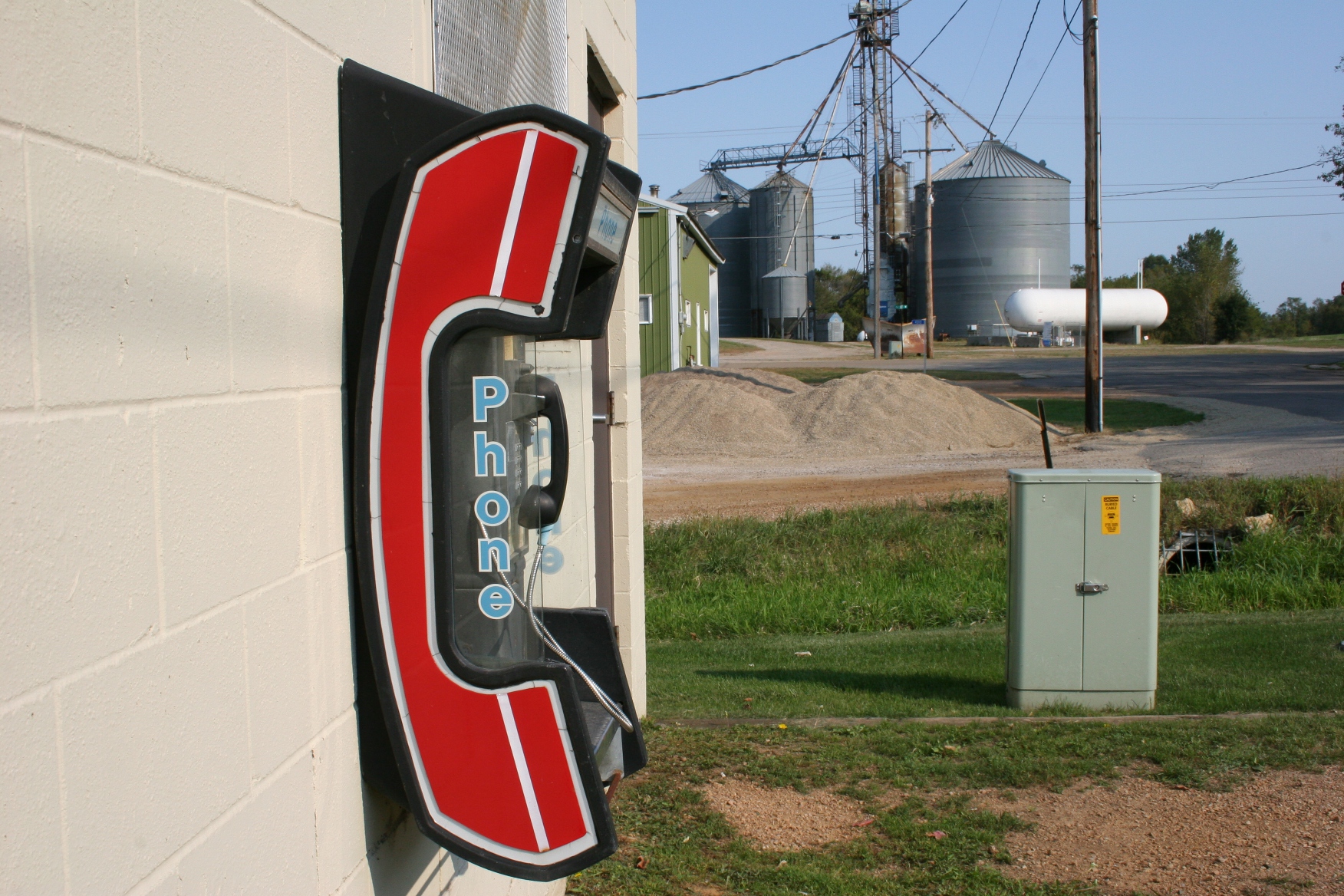
And just how often do you see a pay phone anymore? Well, in Webster you’ll find this one.
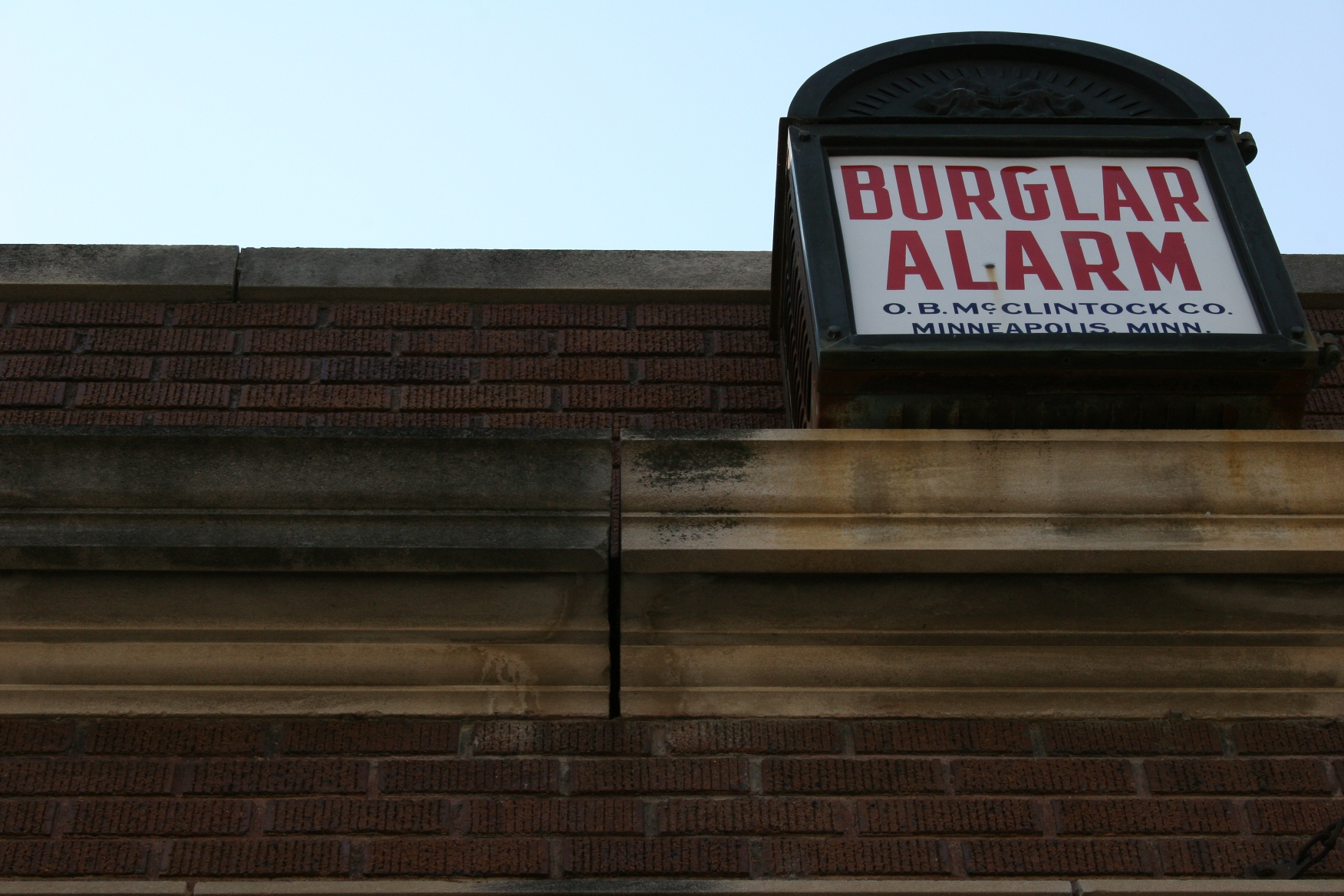
Interesting signage atop what I think is a former bank building.
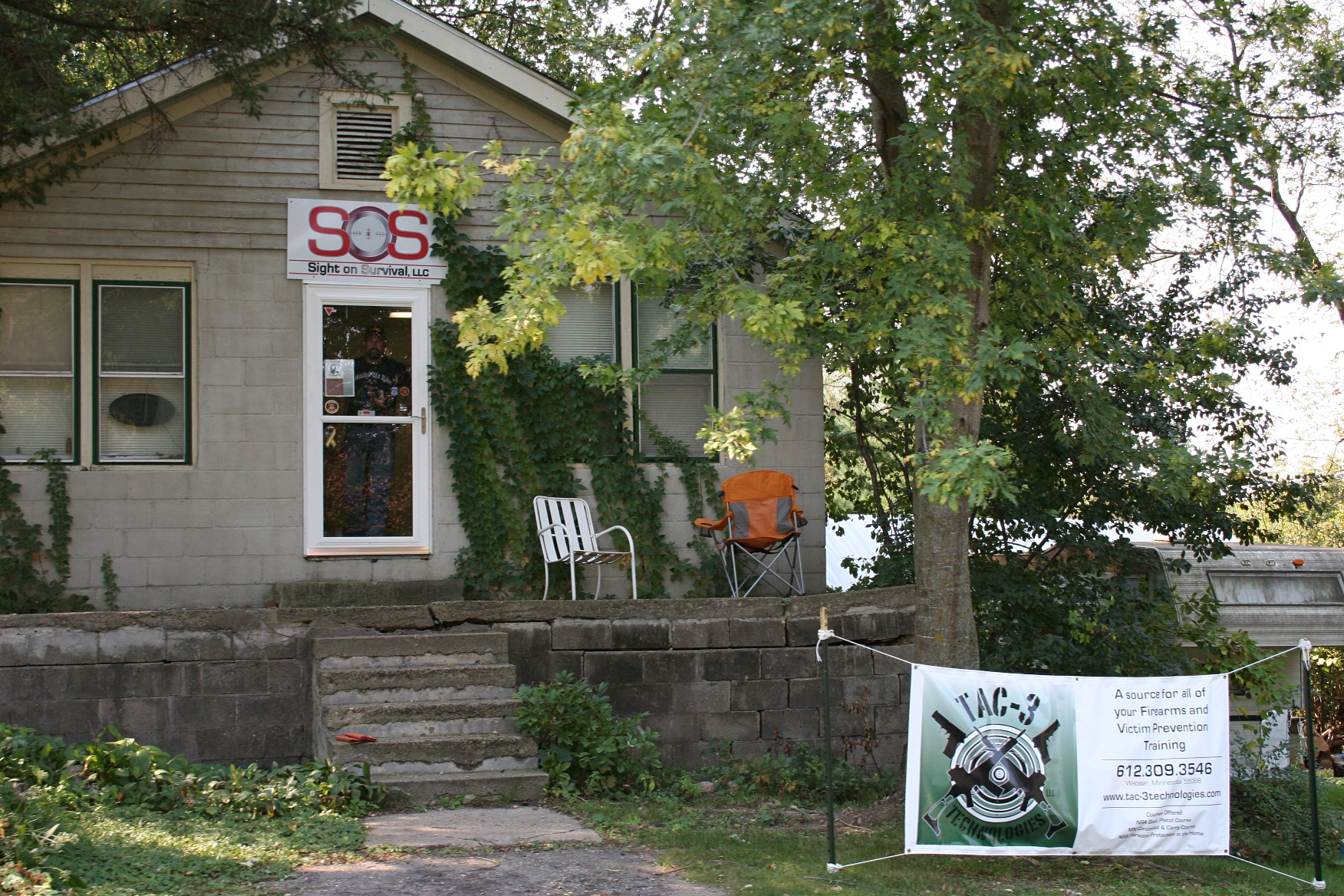
One of Webster’s most interesting businesses: Sight on Survival, “a defensive products and law enforcement gear retail store.”
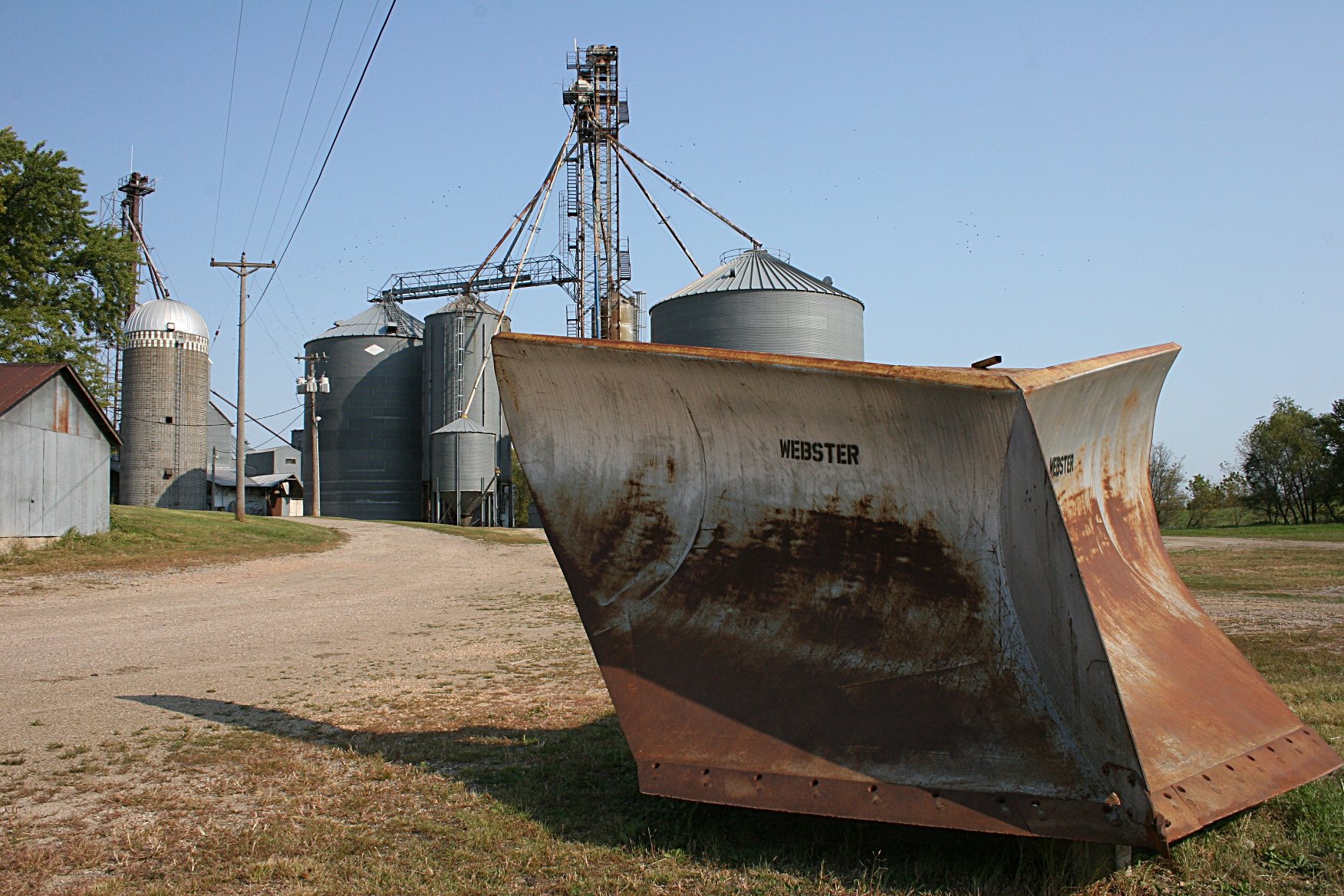
A snowplow blade awaits winter’s arrival.
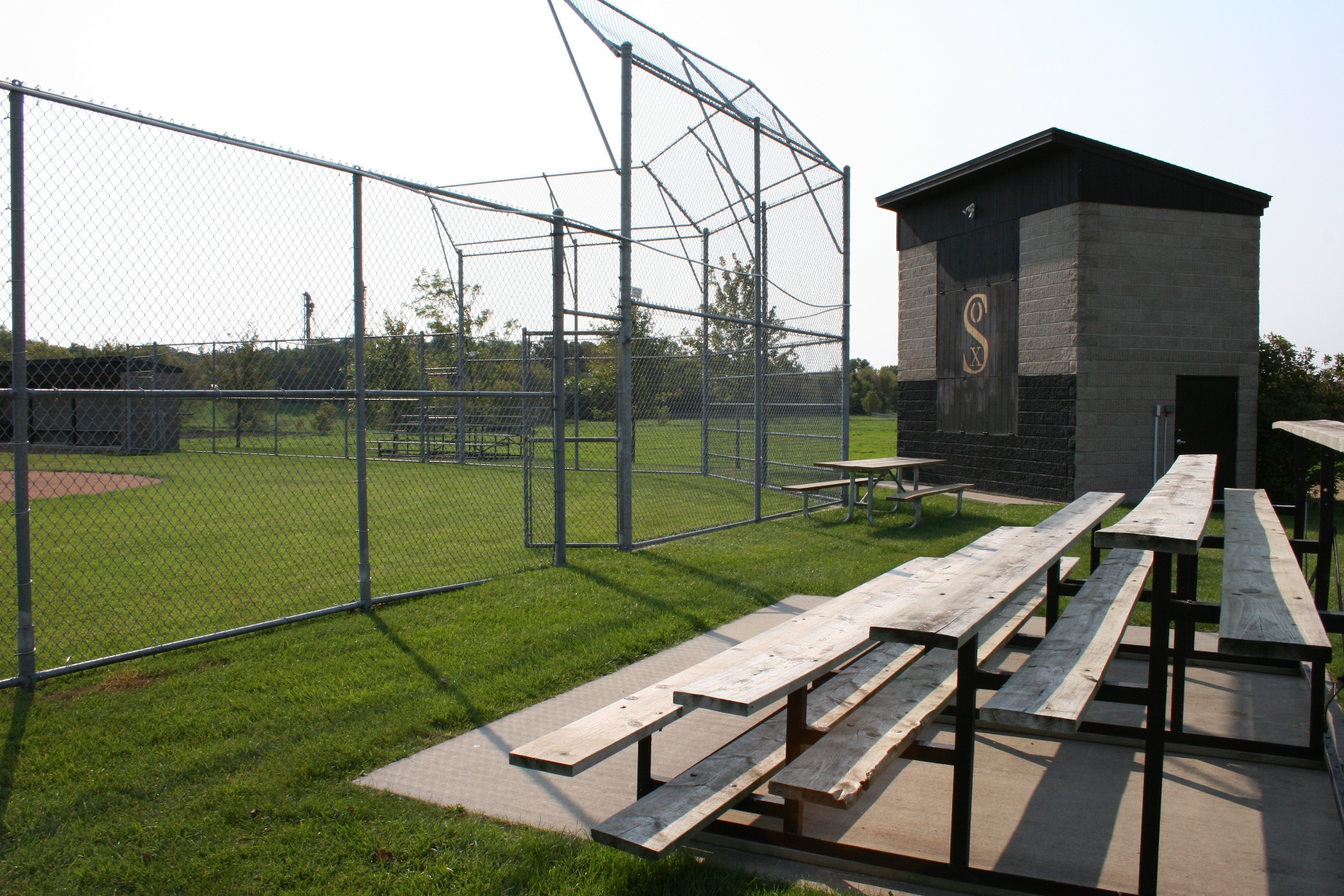
To the west of Webster lies one of the most beautiful multi-purpose parks I’ve seen, the Webster Township Park. the park includes this ball diamond, basketball court, horseshoe pits, playground, picnic shelter and grills, nature trail and more.
TO SEE ADDITIONAL images, click here to link to my previous post, “Webster, Minnesota, on a Sunday morning in September.”
Copyright 2012 Audrey Kletscher Helbling
MY SWEATSHIRT REEKS of smoke, as if I’ve been sitting around a campfire for hours.
But in reality, I’ve only stepped into my backyard for several minutes, into the strong scent of smoke drifting from across the street a few houses away.
Honestly, I could not believe my eyes. Who, in their right mind, would burn leaves in tinder dry conditions like this? Apparently my neighbor.
Only an hour ago, I heard a local radio broadcaster announce a burning ban issued by the sheriff in Rice County. Given the dry conditions, only recreational campfires and grilling are allowed.
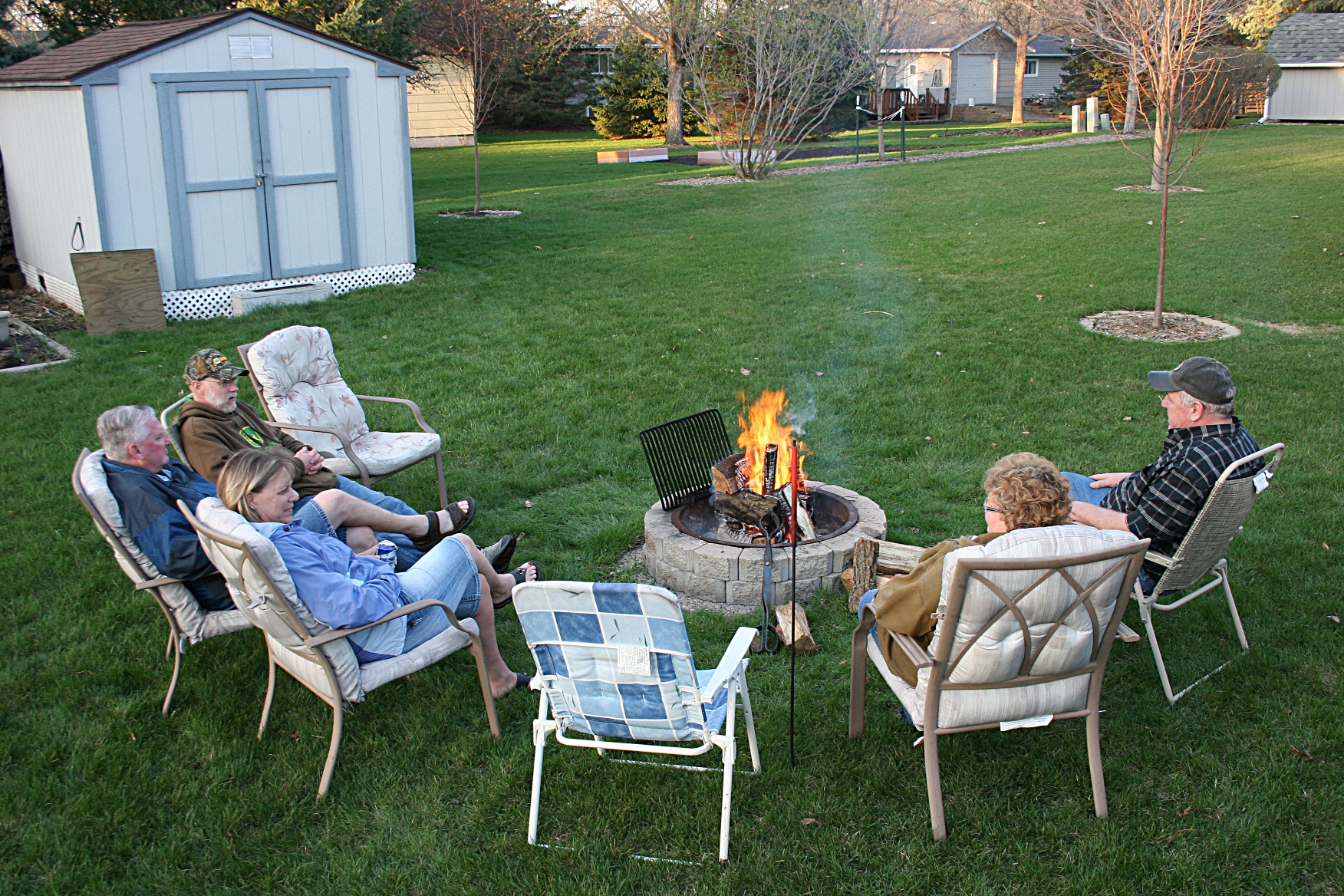
Recreational campfires like this one are still allowed. I gathered with extended family around this campfire in Waseca on March 24. This photo is for illustration purposes only.
The National Weather Service has issued a “red flag warning” for the western half of Minnesota from the northern to southern borders. Gusty winds and low relative humidity in an already dry landscape are creating “critical fire weather conditions,” according to the NWS.
Heed the warning, Minnesotans. Use common sense. It doesn’t take a rocket scientist or a warning from the NWS or a directive from the sheriff to tell you that burning leaves, or anything else for that matter, today or anytime soon would be a very bad idea.
I kept expecting to hear the wail of fire trucks racing to my neighbor’s house. I live along a heavily-traveled street. It’s happened before that a passerby has called the fire department when a neighbor has been burning leaves.
HAVE YOU HAD any fires in your neighborhood today or recently? If so, send me a report via a comment.
© Copyright 2012 Audrey Kletscher Helbling
DO YOU KNOW someone critically-injured or killed in a motor vehicle accident who was not wearing a seat belt?
I do.
So when I picked up The Faribault Daily News and read this front page headline, “County on new motorist deaths list,” I was not pleased, not at all.
My county of Rice is already on the list of Minnesota’s 13 deadliest counties for impaired driving. (Click here to see that list.) Now we’re on that latest “State’s 20 counties with highest percentage of unbelted deaths” list, according to a recent study released by the Minnesota Department of Public Safety Office of Traffic Safety. (Click here to read that report.)
From 2008 – 2010, Rice County had 14 motor vehicle fatalities. Nine of those individuals, or 64 percent, were not wearing seat belts.
Ranking at the top of this list you don’t want to be on are rural Kanabec and Wadena counties, each with three fatalities, all three unbelted. Nearly every county on the list of 20 lies in a rural area.
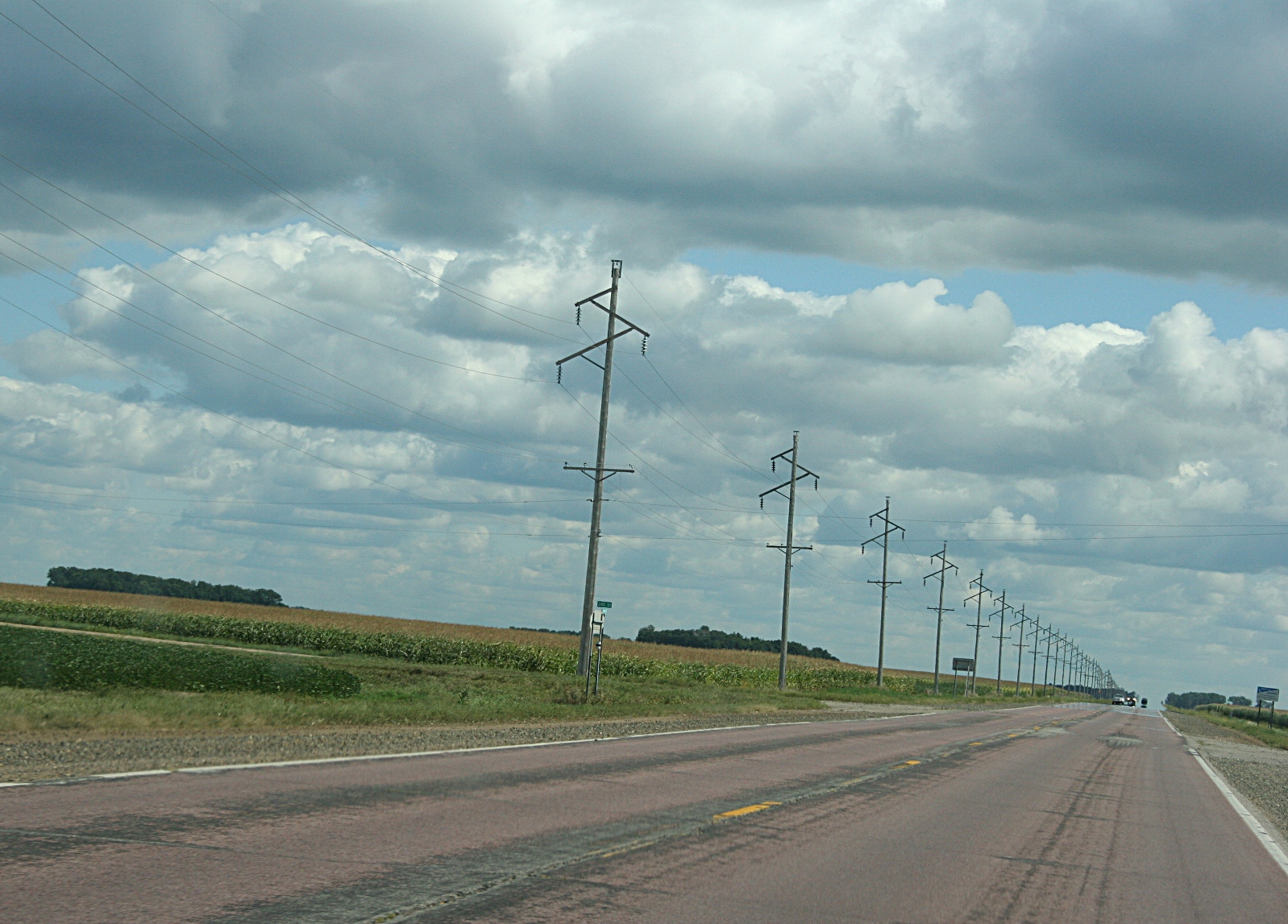
A rural southwestern Minnesota highway.
Certainly, statistics do not tell the full story of these deaths. Many factors can contribute to losing your life in a motor vehicle accident. Yet, buckling up is the one simple action you can take to increase your chances of escaping death or severe injury in a crash. Common sense tells you if you’re not strapped in place, you’re most likely going to be ejected or partially-ejected from your vehicle during a serious accident.
Why would you risk traveling without buckling up?
I’d like to pose that question not only to my fellow residents in Rice County, but also to those living in Redwood County in rural southwestern Minnesota where I grew up.
Redwood County, with a population of only 16,059, ranked third on the unbelted fatalities list with five of the six individuals killed from 2008 – 2010 not buckled in.
Perhaps Minnesotans living in less-populated areas like Redwood County possess a false sense of security regarding travel on rural roads. I know that region of Minnesota well. You can sometimes drive forever without seeing another motorist. And seldom do I see a law enforcement vehicle. But that should not stop drivers and passengers from wearing seat belts.
As much as I detest the traffic congestion and often times crazy driving in the metro area, I know that I am statistically safer on Twin Cities highways than I am on rural roadways.
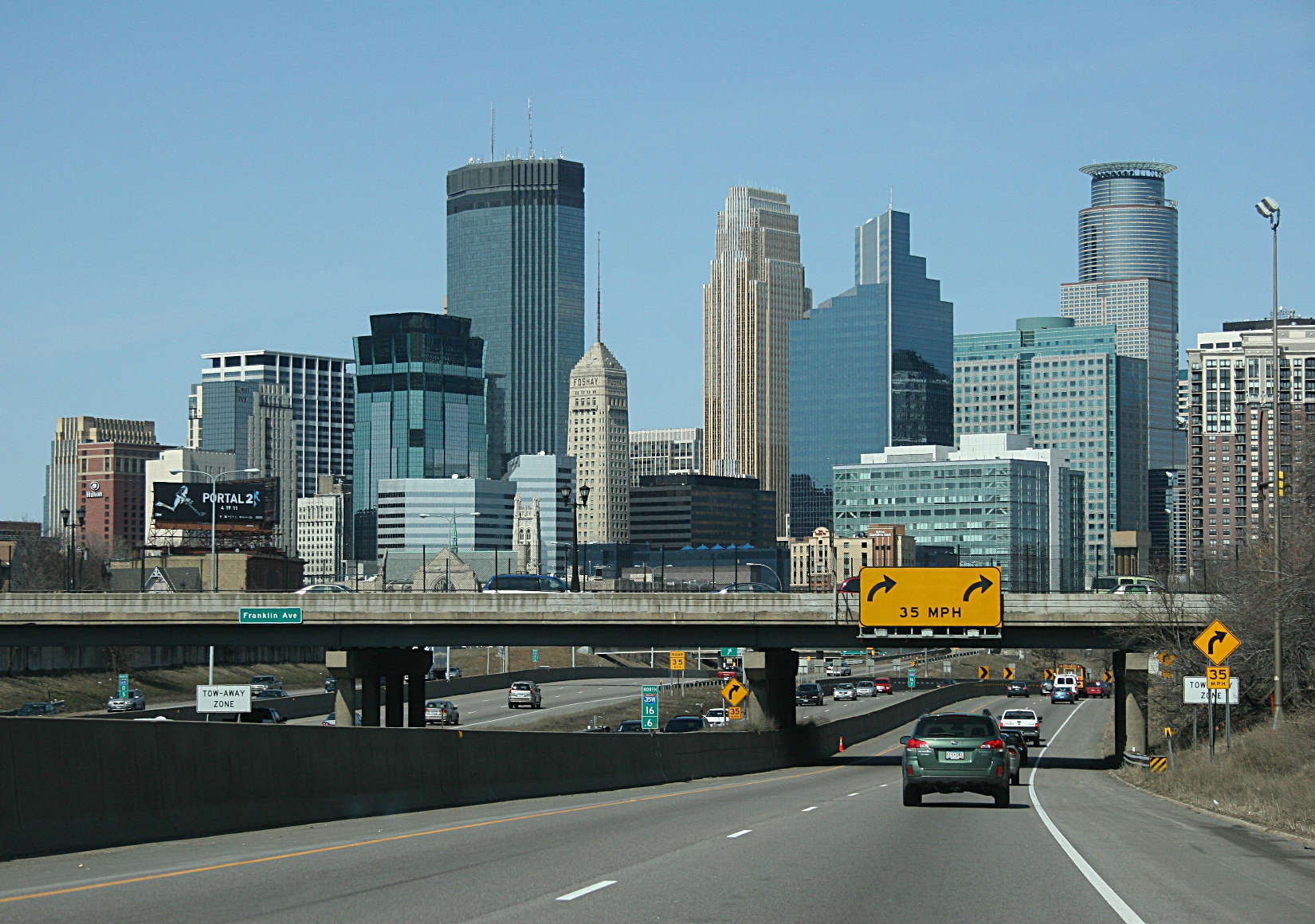
A rare, uncongested drive through Minneapolis.
That brings us back to Rice County in southeastern Minnesota along Interstate 35. I don’t consider my county—with a population of 63,034, the state’s 13th most populous county and an hour from downtown Minneapolis—to be rural although we certainly have plenty of farms and back roads.
Why are people failing to buckle up here? How does that relate to driving while impaired?
When a law enforcement officer stops a driver in Rice County for failure to wear a seat belt, does the officer ask why the motorist is not buckled in? Can that question legally be asked?
Recently, two Faribault High School students were ejected from a vehicle during a crash. The unbelted driver, a 17-year-old member of the FHS football team, suffered a neck injury and was released shortly after the accident, according to an article in The Faribault Daily News. His unbelted 16-year-old passenger was critically-injured.
I hope the two teens involved, and their families, will approach local school officials to use this as a teachable moment to promote seat belt usage. As parents of most teens will tell you, an experience shared by a peer can accomplish what all the lecturing in the world by a parent cannot.
Minnesota high schoolers interested in promoting seat belt usage can compete for a $1,000 prize in the “Buckle Up Teens! TV Commercial Challenge” contest sponsored by the state’s Office of Traffic Safety. Entry deadline for the 30-second TV public service announcement is April 16, 2012. (Click here for information about this competition.)
Realistically, I realize that no matter how hard we try collectively to increase seat belt usage in Minnesota to 100 percent via contests, education, laws, enforcement of laws and more, we’ll never reach perfection. But we’re getting close at 92 percent of Minnesotans now buckling up, according to the state Traffic Safety office.
Residents of Rice and Redwood counties, and all those other 18 counties on the state’s “unbelted fatalities list,” please buckle up. Honestly, I don’t like reading stories about traffic deaths that could have been prevented.
DO YOU BUCKLE UP every time you get into a motor vehicle? Why or why not? Share your personal reasons, your story.
© Copyright 2011 Audrey Kletscher Helbling


 Minnesota Prairie Roots
Recent Comments