Minnesota Prairie Roots

Writing and photography by Audrey Kletscher Helbling

A lot of Irish in Saint Thomas in Derrynane Township March 20, 2018


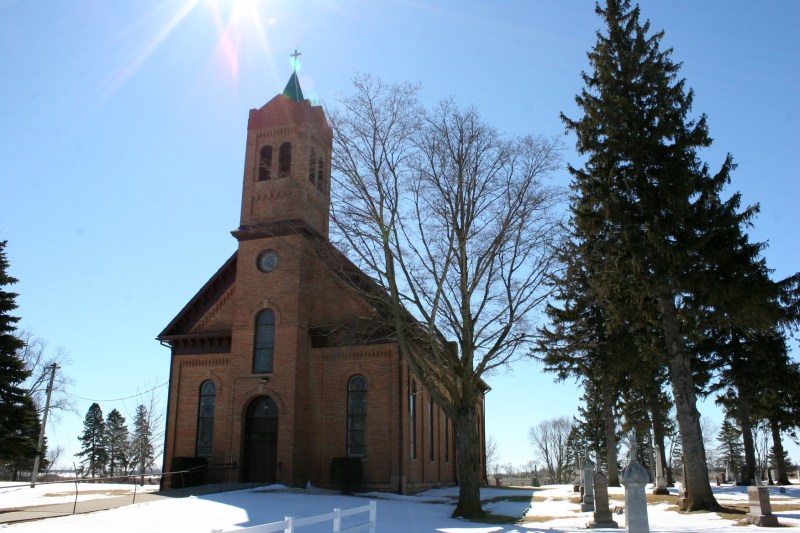
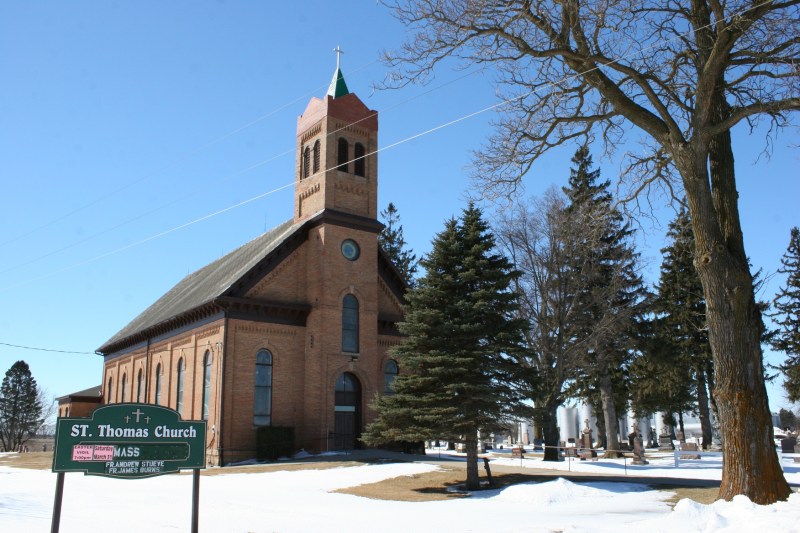
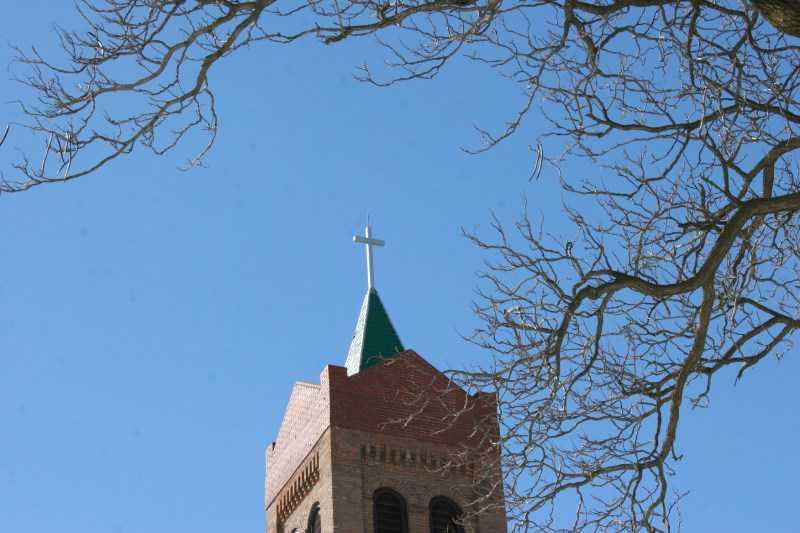
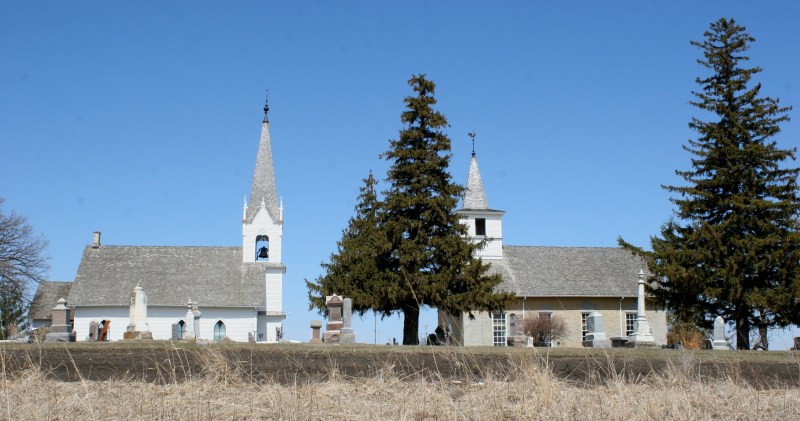
I APPROACHED THE BEAUTIFUL brick church with the full expectation that the doors would be locked. They were. There would be no getting inside St. Thomas Catholic Church on this St. Patrick’s Day. I felt disappointment, but not surprise.


A hot pink sign tacked onto the church sign notes an Easter vigil here on March 31.


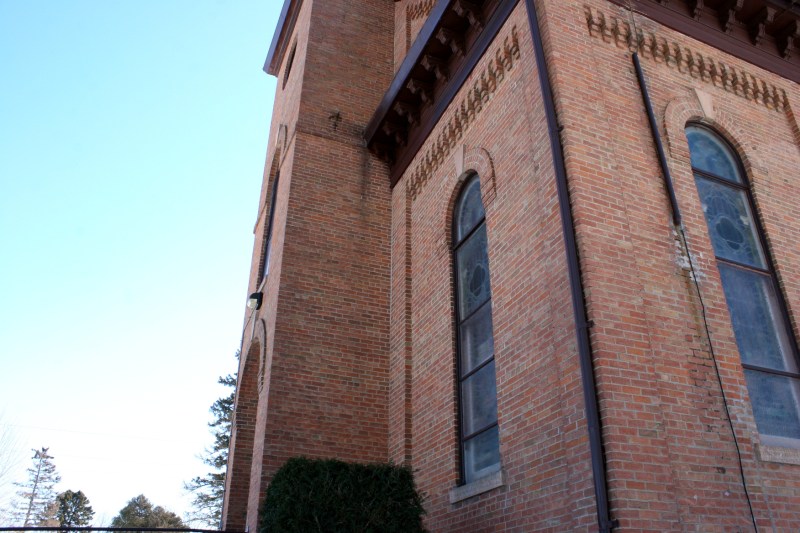
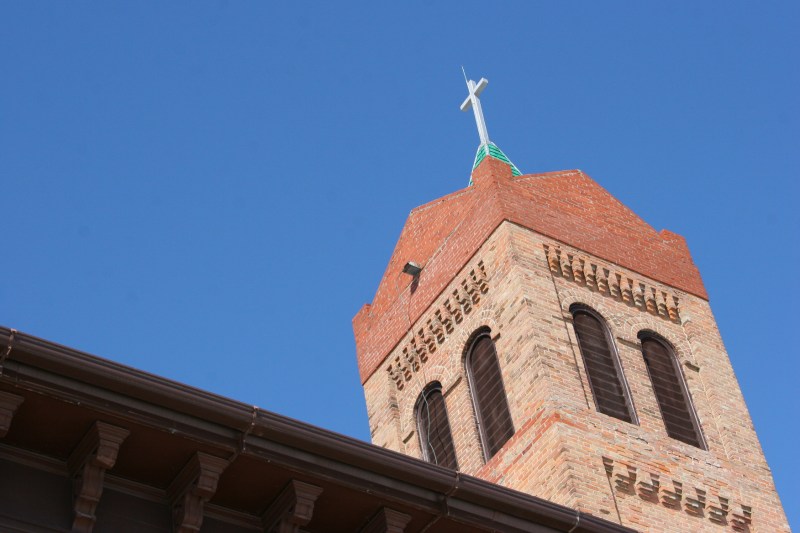
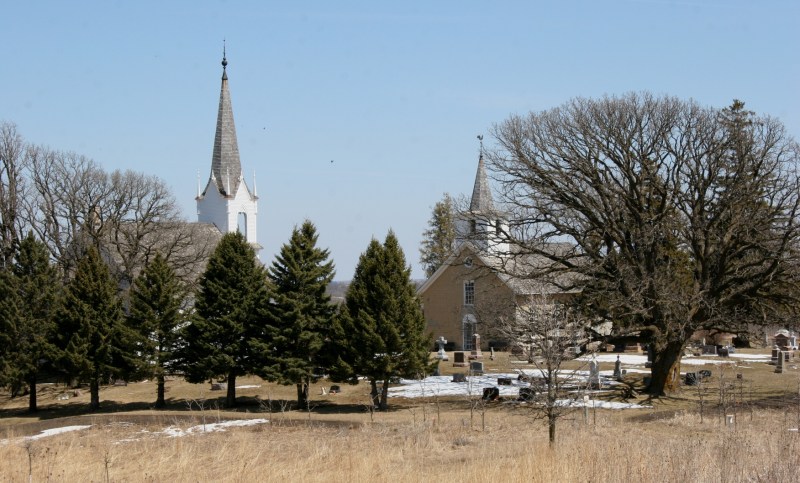
Even though shut out, Randy and I still explored, circling this immense church with stained glass windows and with tower steepling to a cross.


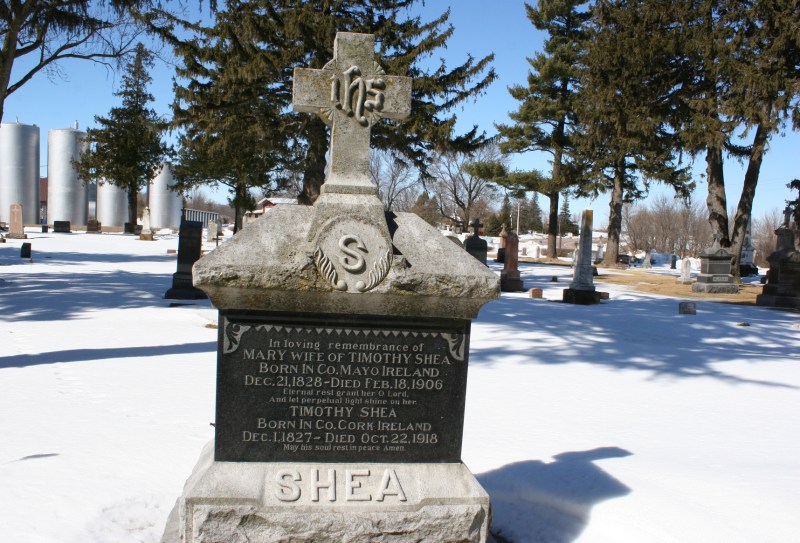
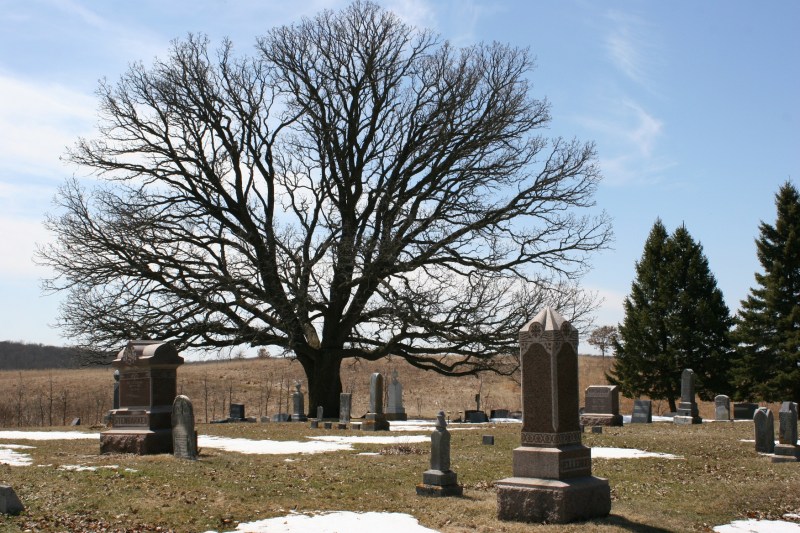
We crunched across crusty snow to look at gravestones that bear the Irish history of this place in names like O’Malley, Shea, O’Connell and noted ancestral roots in Cork County, Ireland and elsewhere.


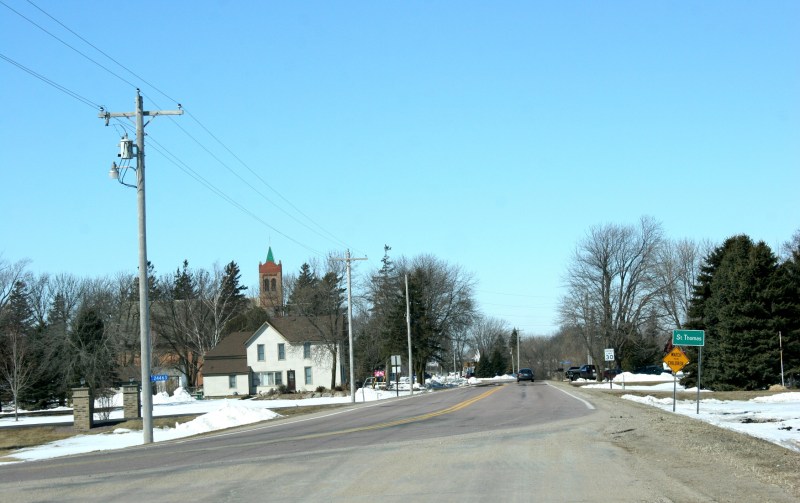
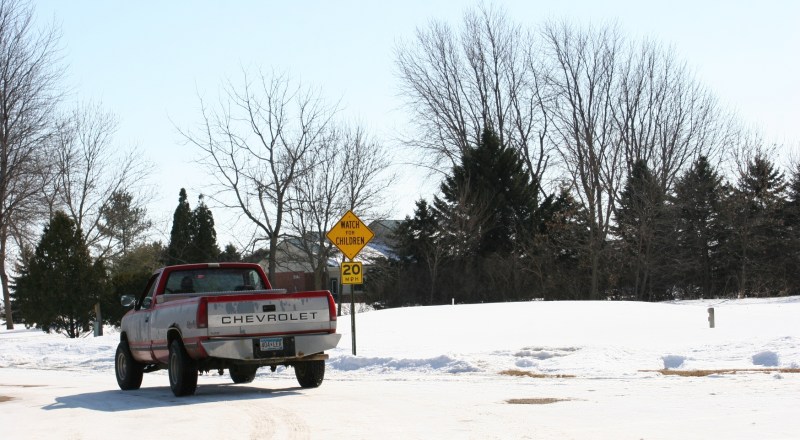
Driving into Saint Thomas, Minnesota.


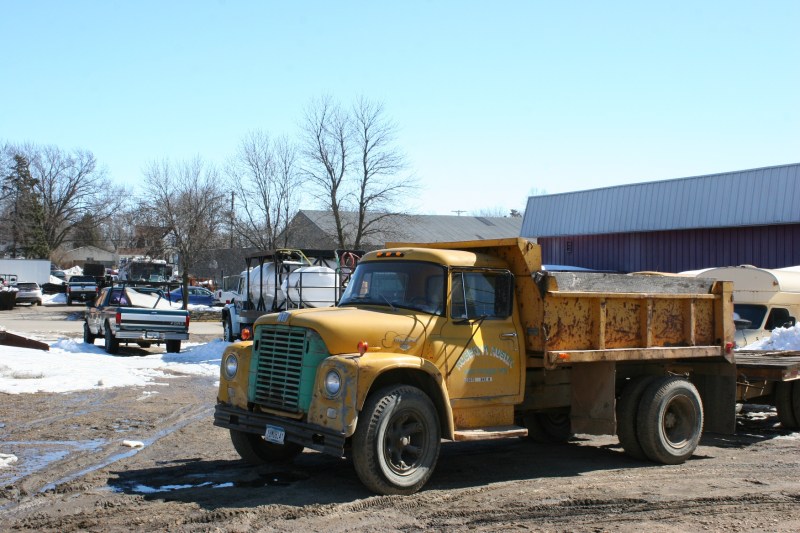
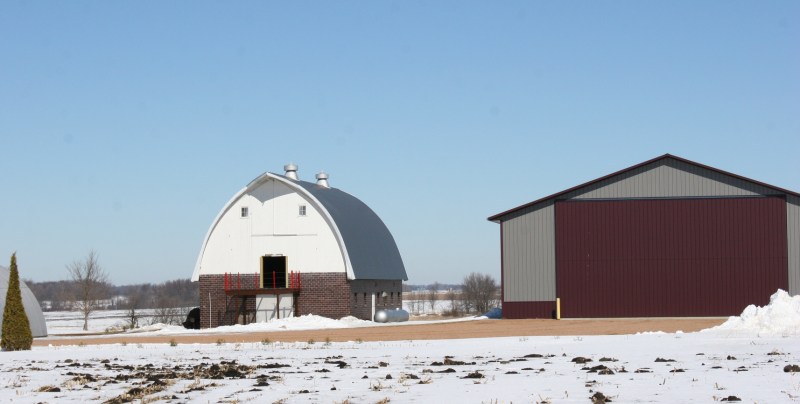
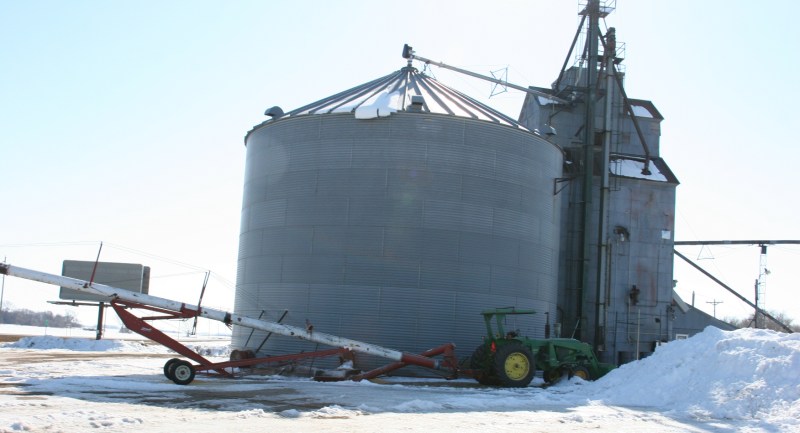
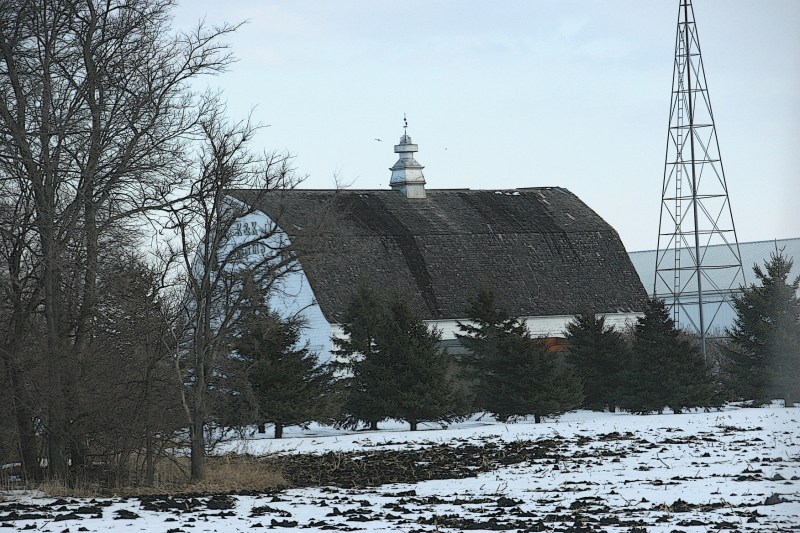
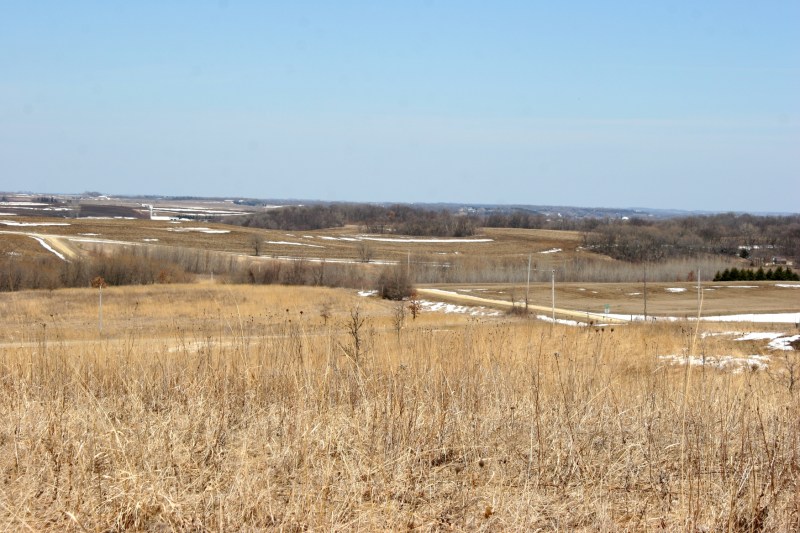
This village lies in the middle of farmland with this farm site on the edge of Saint Thomas.


This ag business sits right next to the cemetery.


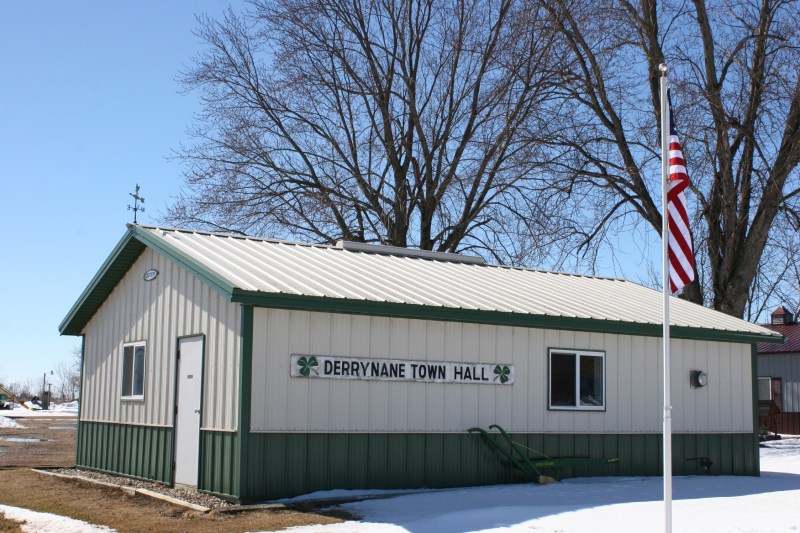
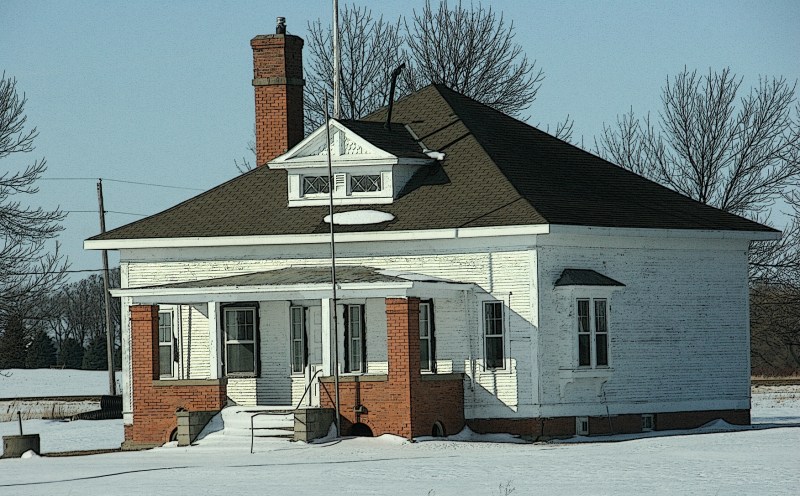
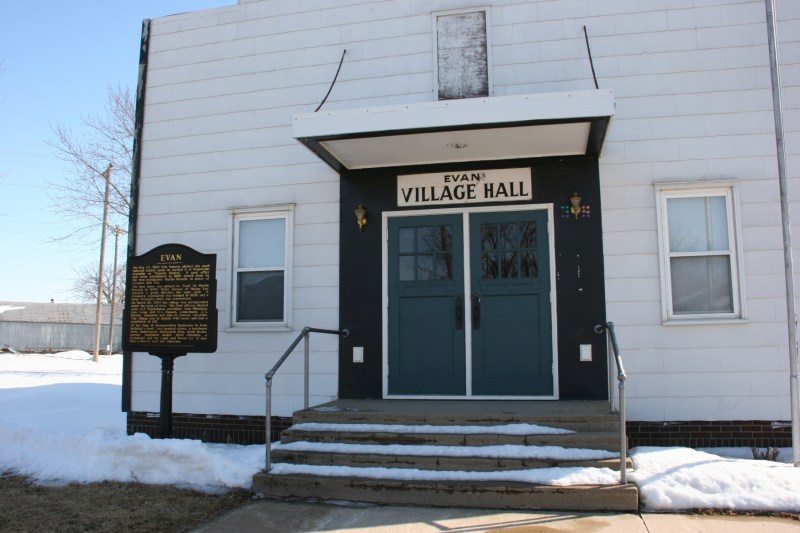
Then comes the town hall.


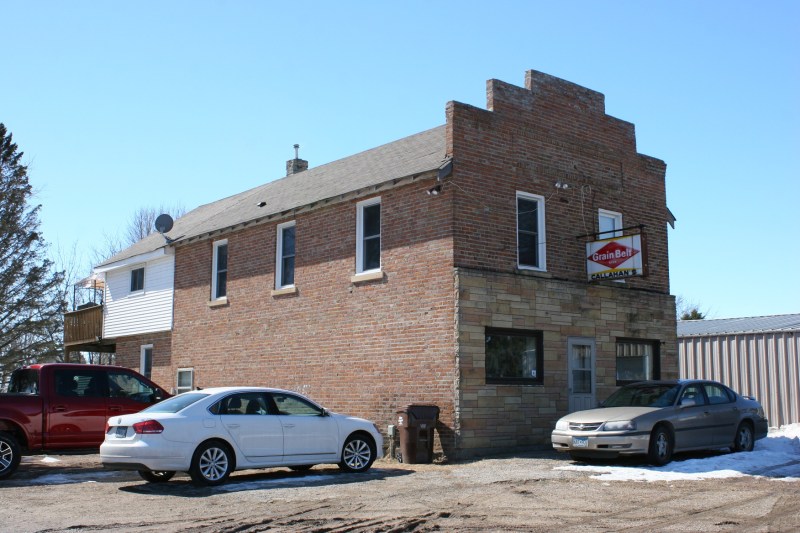
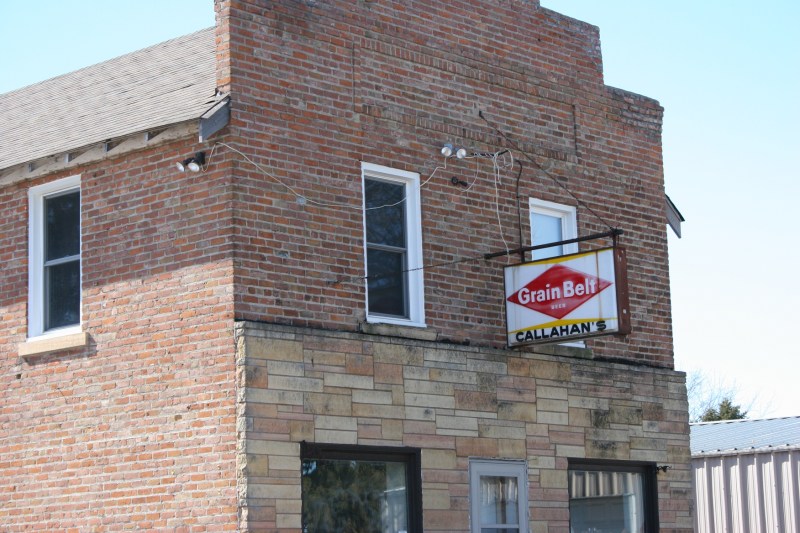
And, finally, Callahan’s, which appeared no longer in business.


Saint Thomas is through-and-through Irish, based on our observations of this unincorporated village along Le Sueur County Road 28 just north of Le Center in Derrynane Township. We found this settlement via an atlas that is our guidebook to mostly unknown places in Minnesota. With a name like St. Thomas, we expected a Catholic church and not much more.


The church, built in 1883, closed in January 2011, just another among many rural Catholic churches shuttered and merged. Mass is still held occasionally at St. Thomas.


I often wonder how long such mostly vacated churches will stand. St. Thomas appeared well-cared for still. At least on this St. Patrick’s Day in 2018. But when those who once worshiped weekly here are gone, will their descendants care? Will they still tend the cemetery, swing open the doors for an Easter vigil? I hope so.


© Copyright 2018 Audrey Kletscher Helbling


Evan, like so many small southwestern Minnesota towns, is fading into the prairie March 19, 2018

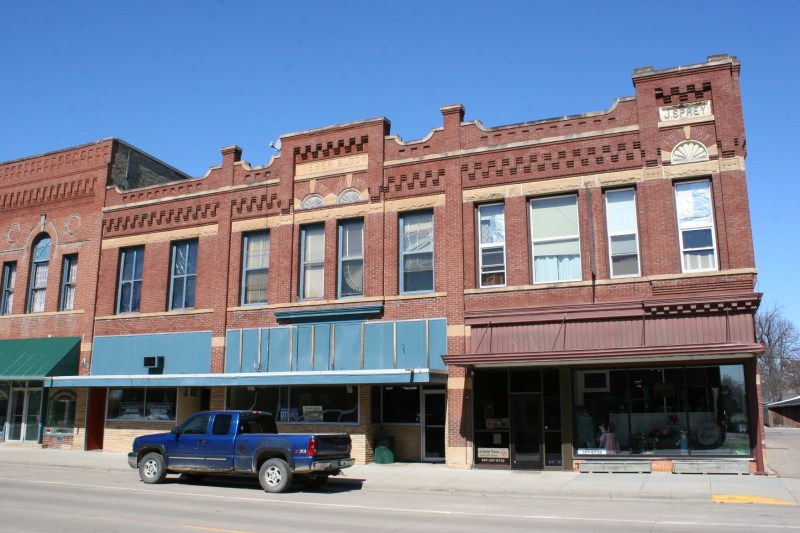
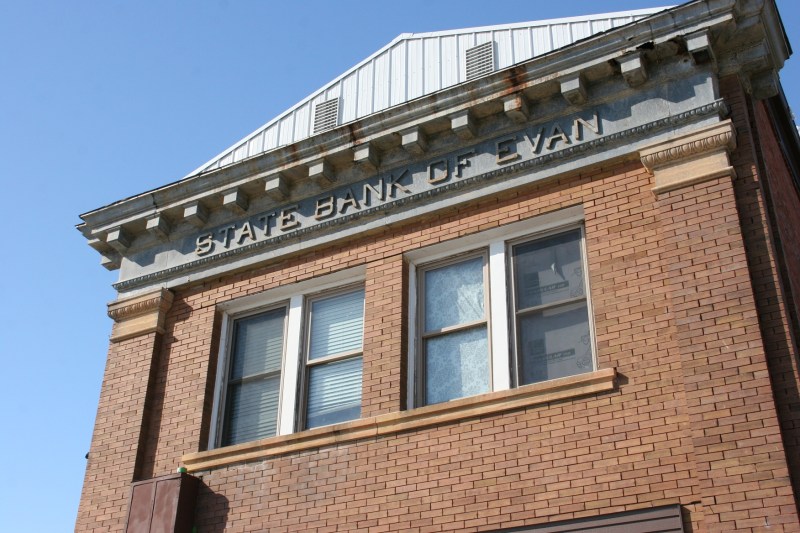
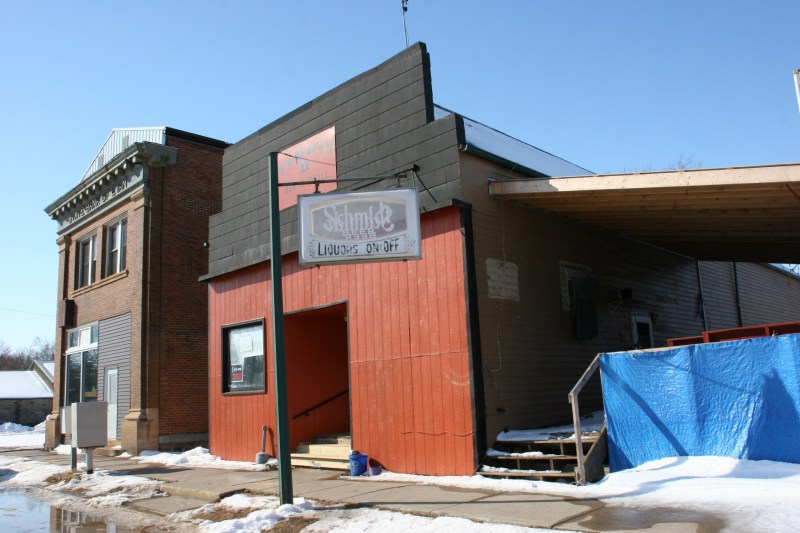
Downtown Evan today anchored by a former bank building.


LIKE SO MANY OTHER SMALL TOWNS on the southwestern Minnesota prairie, Evan once boasted a long list of businesses—creamery, bank, two general stores, hardware store, lumberyard, blacksmith shop, stock dealer, garage, implement dealer, three elevators, restaurant, utility company, library and two churches.


Evan, incorporated in 1904, is named after Eva Hanson, married to Nels. He platted the railroad station known as Hanson Station several years earlier.


So claims the historical marker fronting the village hall in this Brown County community of around 80 residents.


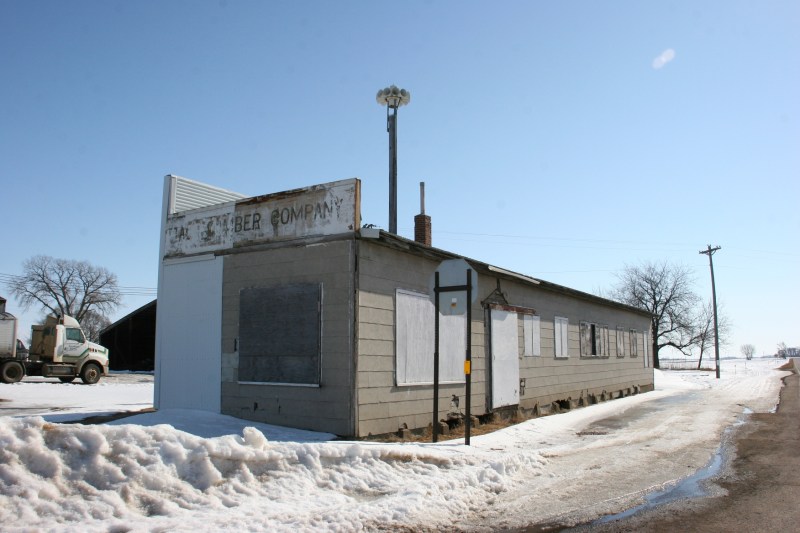
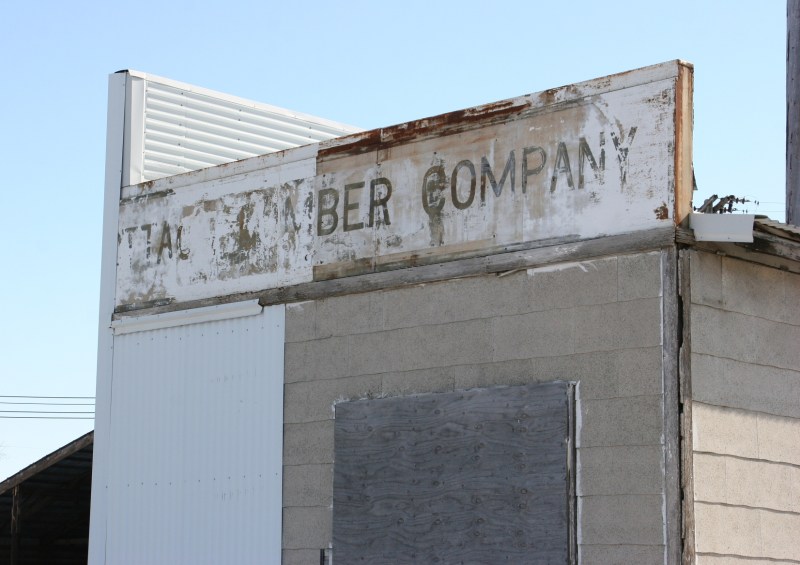
Fading signage identifies this as the former lumberyard.


Today only remnants of those original businesses remain.


I believe the brick building may be the former creamery.


On a recent drive through Evan, I noted the decline.


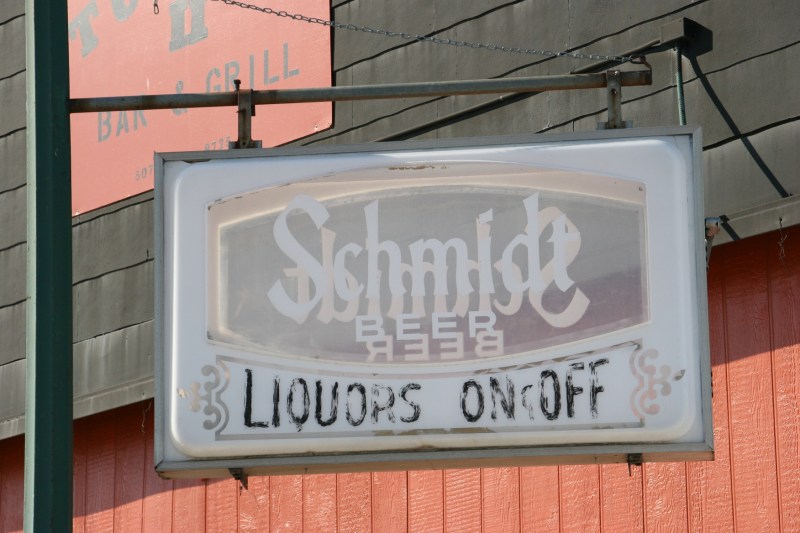
This vintage sign hangs outside Tubby’s II Bar & Grill. A sign in the window noted the bar is closed for the winter.


Faded signs.


Boarded windows.


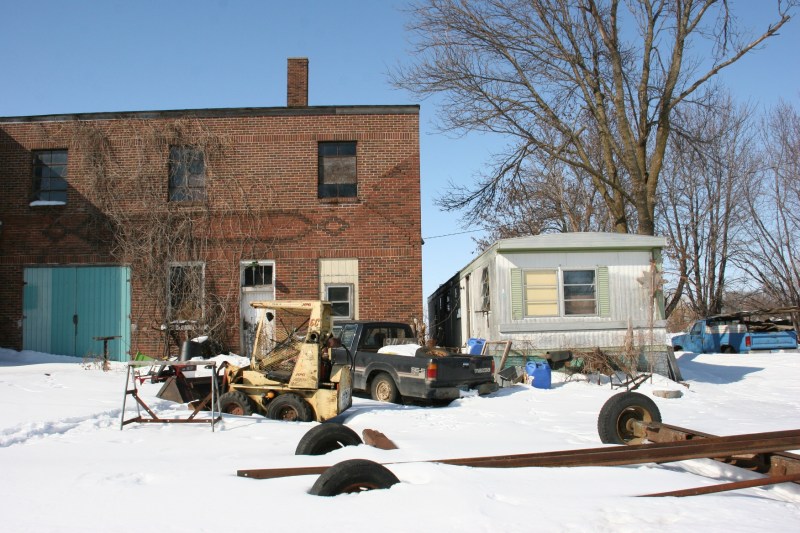
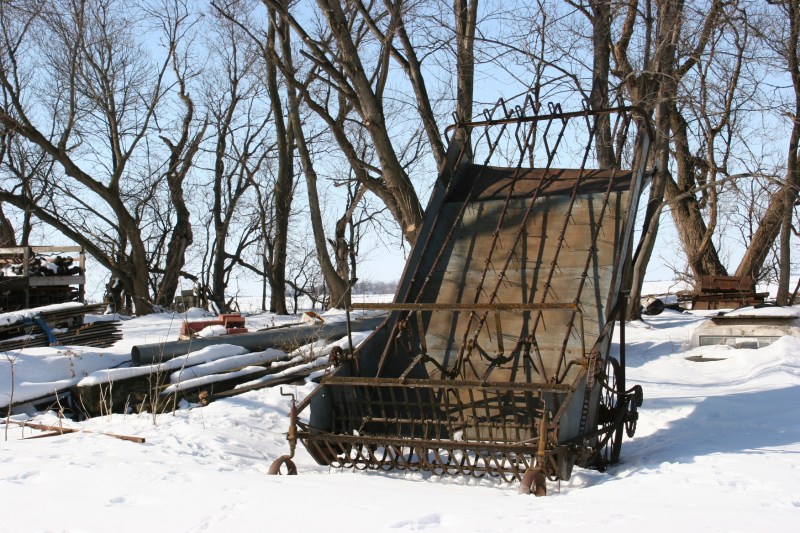
This vintage hay loader rested among other junk.


Clustered junk.


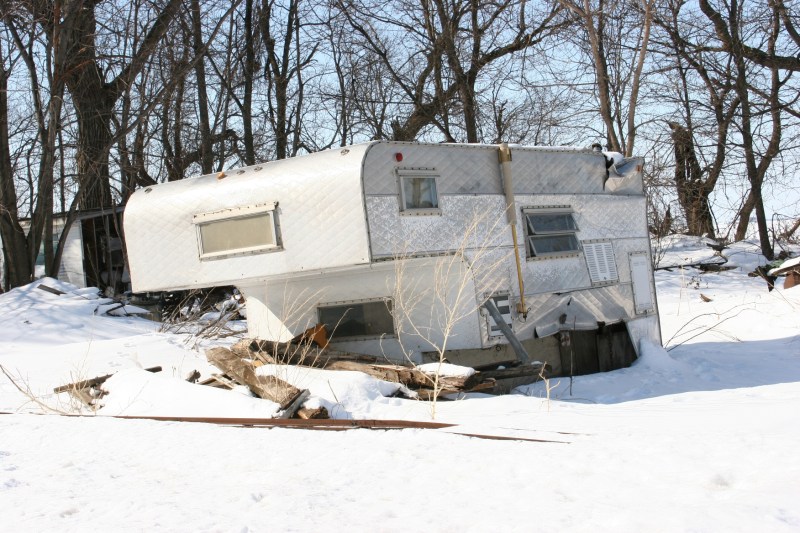
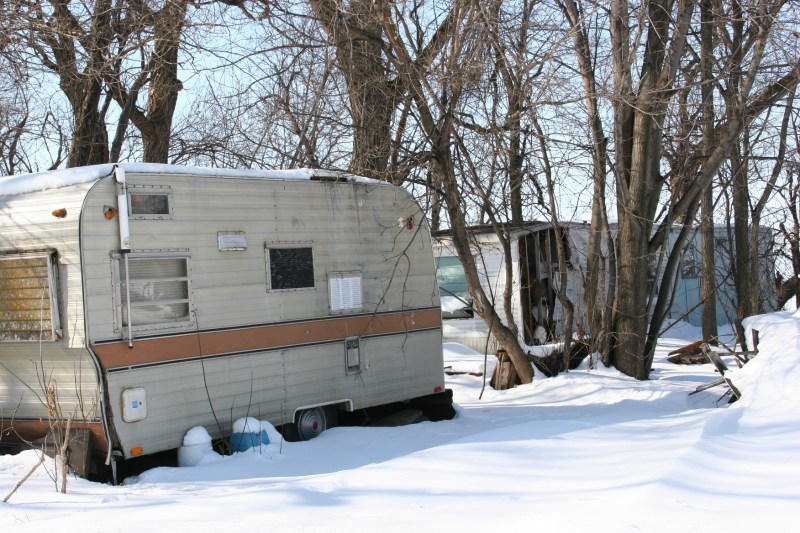
I’ve never seen anything like this graveyard of campers and trailers.


Abandoned campers and trailers and trucks. It made me sad, just sad, to see the abandonment.


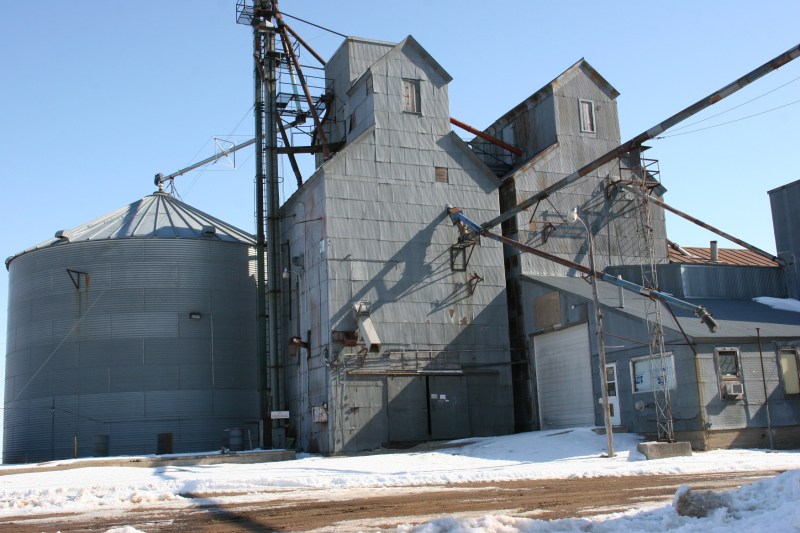
The old grain elevators still stand on the edge of town along the highway.


But none of this surprises me. It’s our fault really. We are a much more mobile society, a society much different than back-in-the-day or even 20 years ago. At one time, places like Evan thrived as area farmers and locals kept their business local. Today regional shopping centers pull in customers from all those small towns.


The train still runs, not through Evan, but through neighboring Sleepy Eye.


The railroad left.


Without jobs, with our farmer fathers still farming, many from my generation of Baby Boomers left Minnesota’s small towns. We couldn’t bank on a future in our rural hometowns.


Attitudes changed. Kids from my generation left for college and bigger cities and better opportunities. There’s nothing wrong with that desire to see the world, to become something other than our parents. But in doing so we added to the demise of many a small town. I am hard-pressed to think of many classmates who stayed in my hometown of Vesta 45 minutes from Evan to the north and west. Vesta, too, is a shell of the community it was when I grew up there in the 1960s and 1970s.


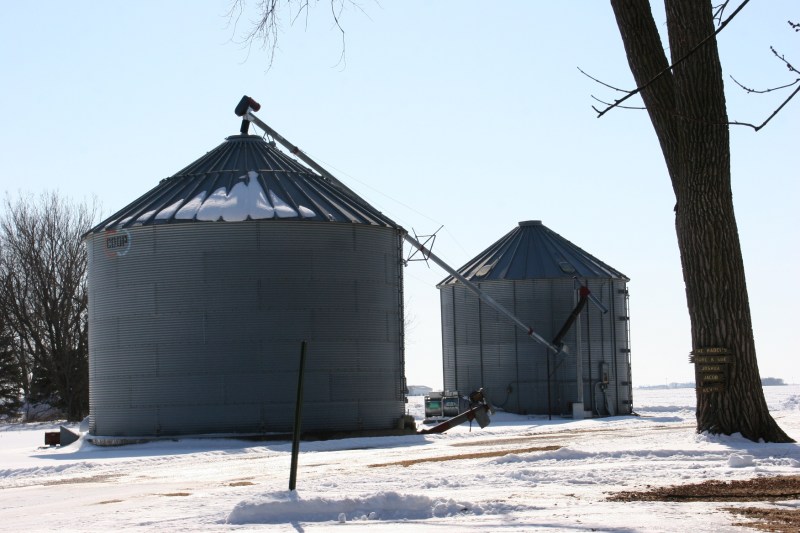
Grain bins on opposite ends of town mark this as a farming community still today.


I don’t pretend to know the intricacies of Evan’s decline except an overall understanding of why once thriving towns now are mere ghosts of their pasts. Certainly Evan’s remote rural location factors into the mix. Located along Minnesota State Highway 68, Evan is easy to bypass on the shortcut route between Sleepy Eye and Morgan.


The only person or moving vehicle I saw in Evan during my short stop there.


Yet, Evan is home for some. I saw newer homes there. Not new as in recent, but newer than old. I saw a lovely church and that well-kept village hall. And grain bins. And the fading letters on the lumberyard, a visual reminder that at one time a demand for building supplies existed in a farming community that once prospered.

© Copyright 2018 Audrey Kletscher Helbling
 

Winter exposure in southern Minnesota March 15, 2018

Filed under: Uncategorized — Audrey Kletscher Helbling @ 5:00 AM
Tags: , , , , , , , , ,

Near New Ulm.


IN THE NAKEDNESS of winter, when trees are stripped bare of leaves, when fields lie exposed to the elements, rural Minnesota seems especially vulnerable.


Near Essig along US Highway 14.


In no other season do I notice more the intimate details of this place.


Along US Highway 14 somewhere west of Owatonna.


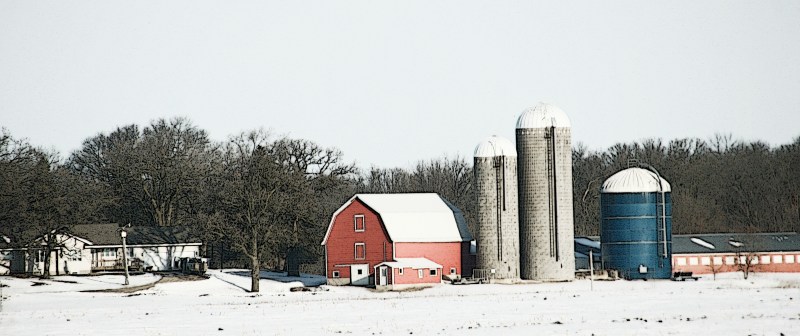
Red barns seem redder.


By Morgan


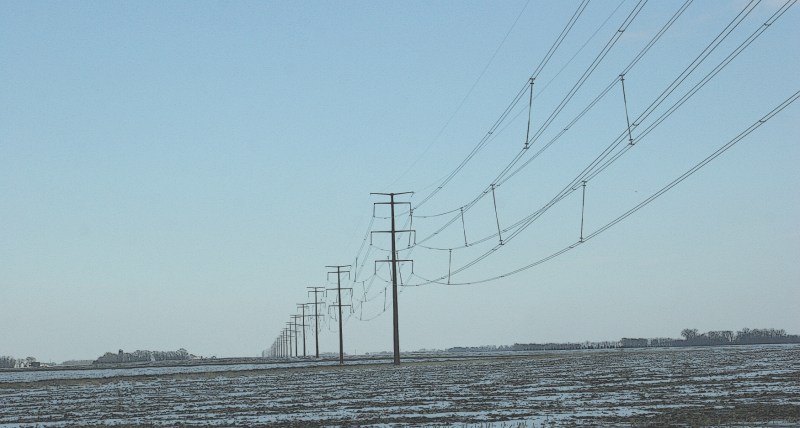
Power poles appear more intrusive.


Morgan, Minnesota


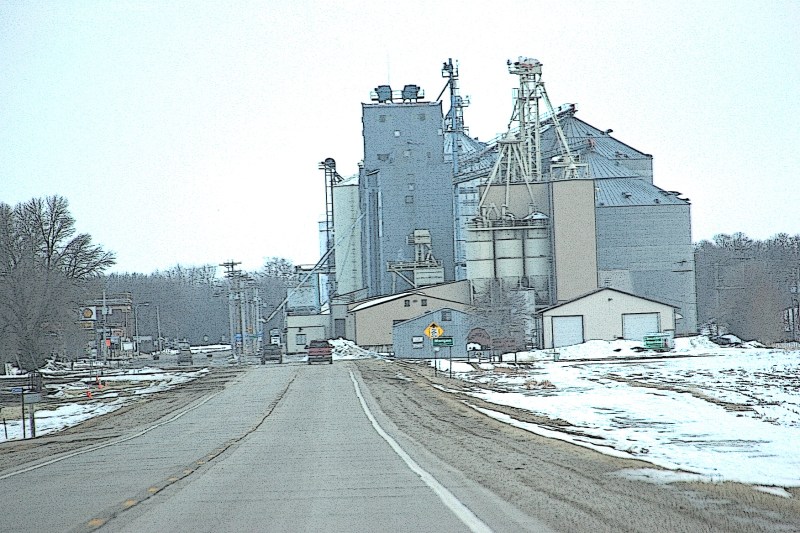
Grain elevators dominate, shoving grey mass into an already colorless landscape.

All of this I see through eyes that crave now the melting of snow, the cloaking of the land in the greening of spring.


NOTE: All images have been edited to create an artsy look.

© Copyright 2018 Audrey Kletscher Helbling
 

This & that from my tour of downtown Sleepy Eye, Part IV March 13, 2018

Editor’s note: Today’s post concludes my four-part series from downtown Sleepy Eye in southwestern Minnesota. This final photo essay presents a mishmash of images. Enjoy.


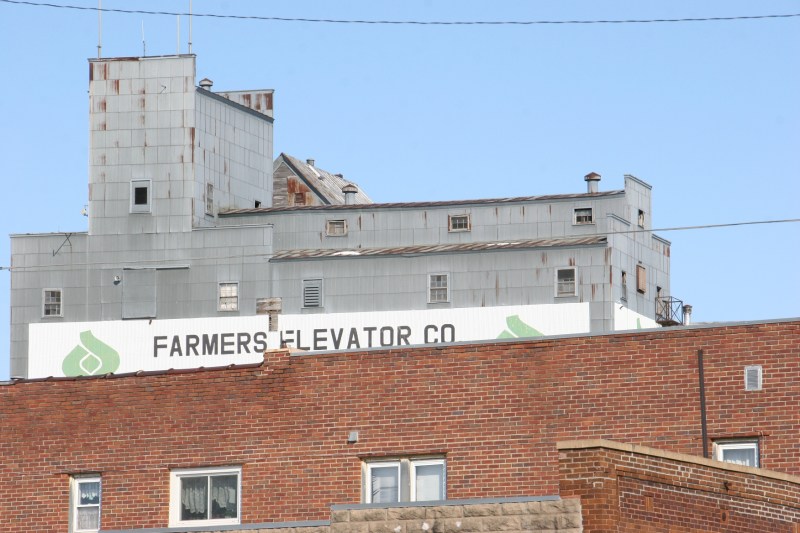
The Sleepy Eye Farmers Elevator stands as a visual reminder of this area’s strong farming base. However, the elevator has not been used since 2009 and was purchased by a private party from Central Region Cooperative just a year ago.


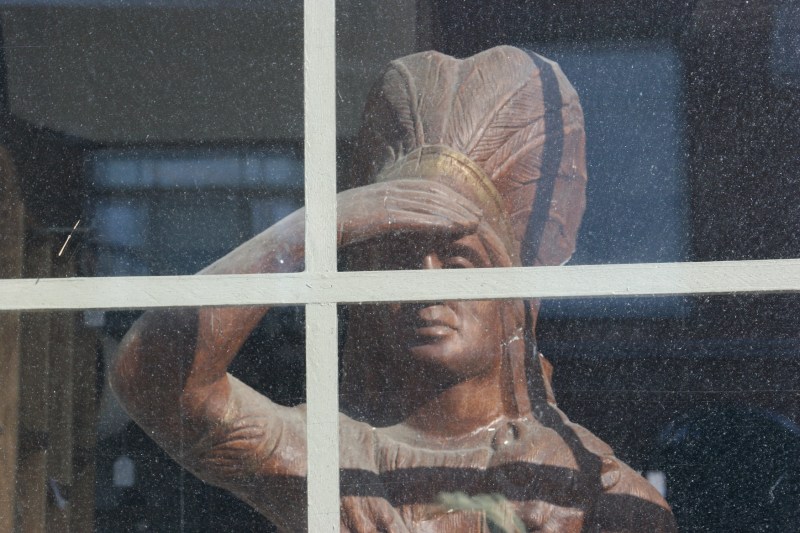
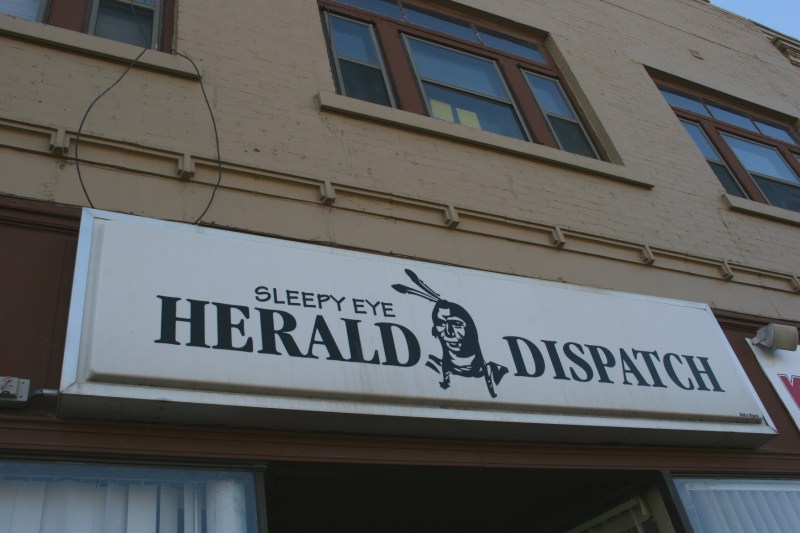
An Indian chief, spotted in a storefront window, connects visually to the town’s namesake, Chief Sleepy Eyes.


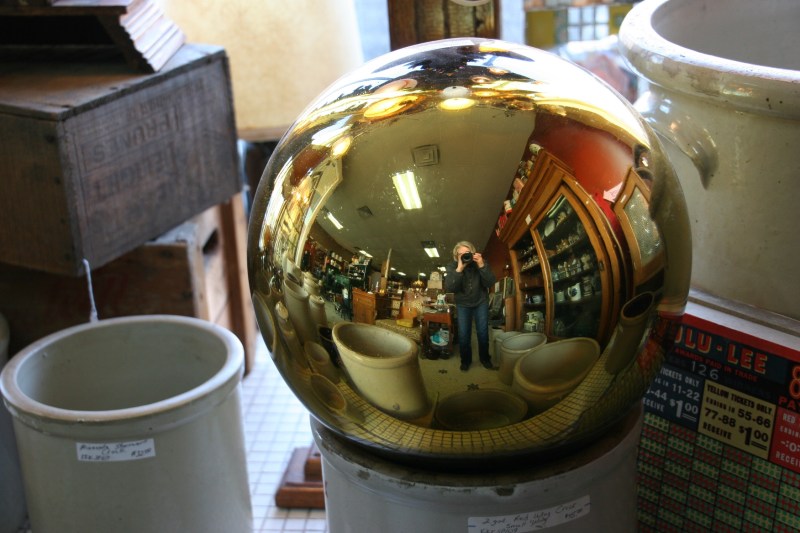
I took my camera inside K & J Antiques & Collectibles where shopkeeper Kurk Kramer graciously allowed me to take photos.


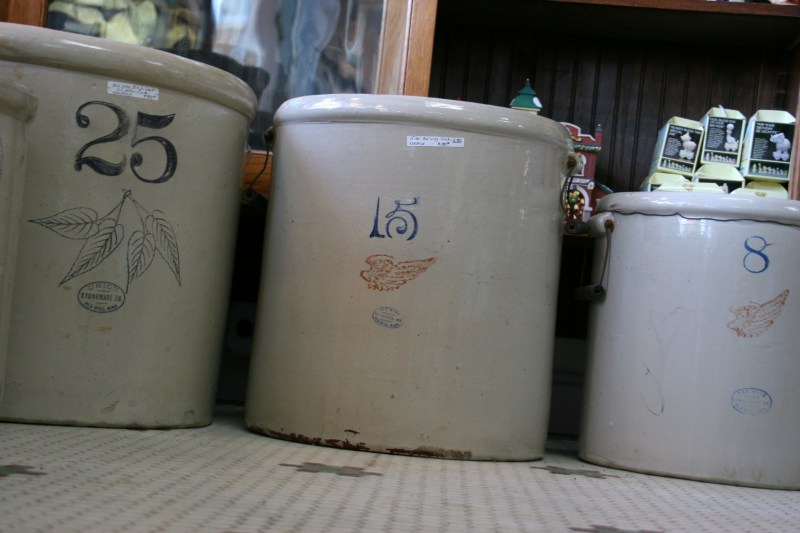
Red Wing crocks and a beautiful vintage tile floor drew my attention in this former bakery turned antique shop.


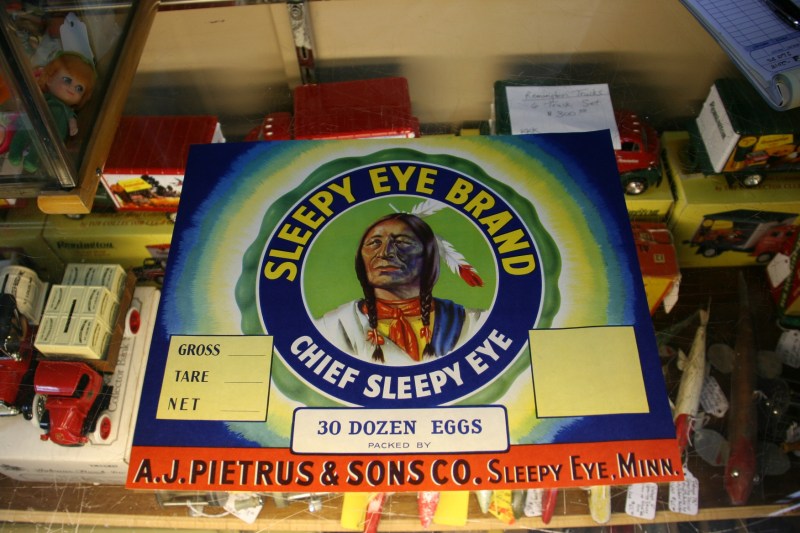
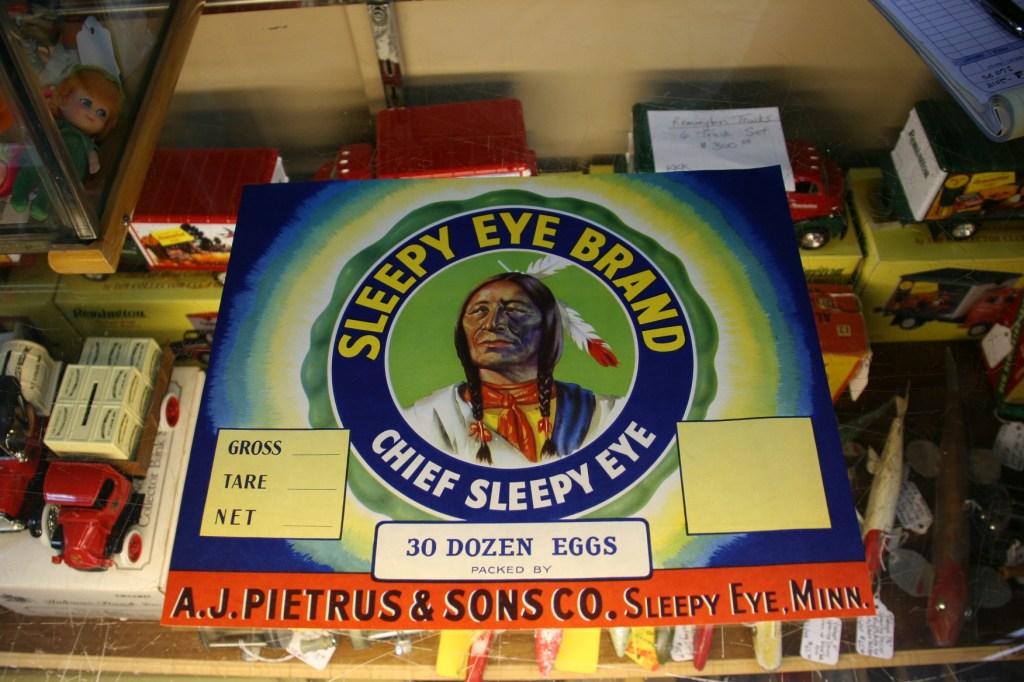
Dakota Chief Sleepy Eyes is the town’s namesake. Kurk Kramer pulled this A.J. Pietrus & Sons vintage promo from a display case. He has plenty of Sleepy Eye collectibles for sale.


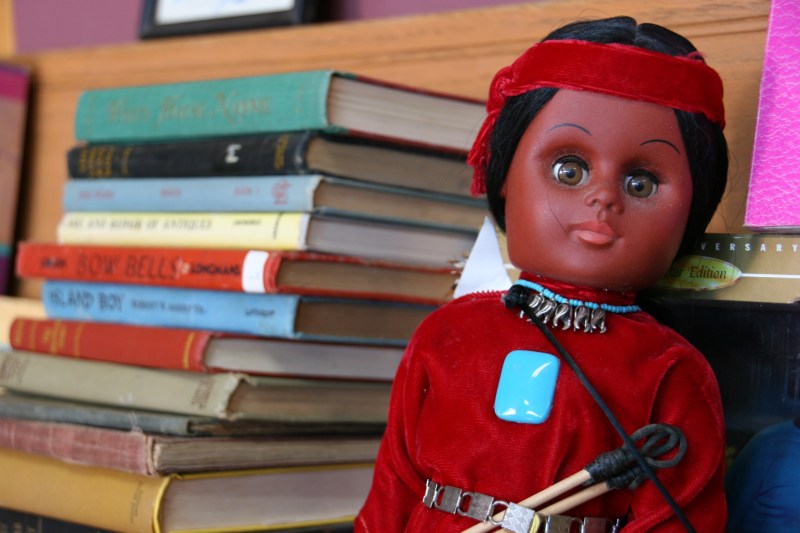
Native American collectibles are prominently displayed in this town named after a Dakota chief. This doll is offered for sale at K & J Antiques.


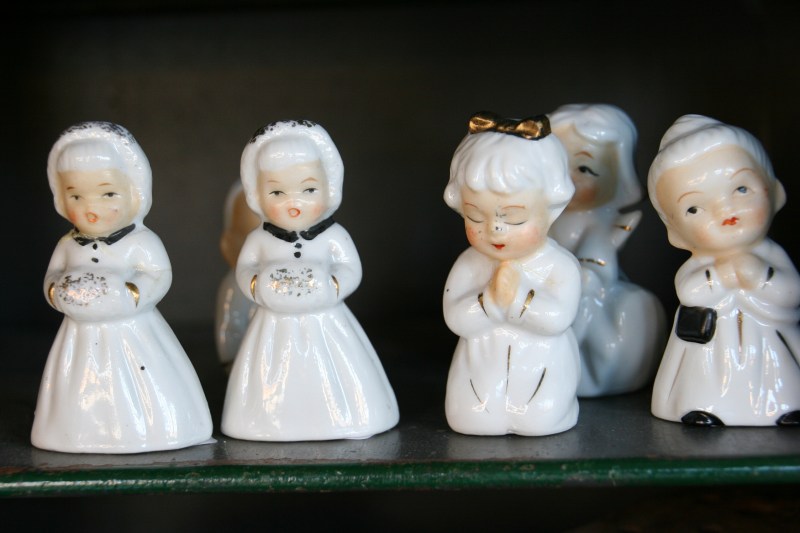
Sleepy Eye has a strong faith community with St. Mary’s Catholic Church and churches of other denominations. These figurines are shelved at K & J Antiques.


This photo shows a corner of a promo for the Orchid Inn, once a fine dining, banquet and dance hall in Sleepy Eye. These vintage paper pieces are for sale at K & J Antiques. The promo boasts (in part): “Of prime importance is the fact that while conveniently located, the Inn does provide the host with a site free of metropolitan distractions–a vital factor in group control.” It’s an interesting piece of literature for a former regional gathering place. Plans call for the property to become a STEM learning center with a focus on agriculture.


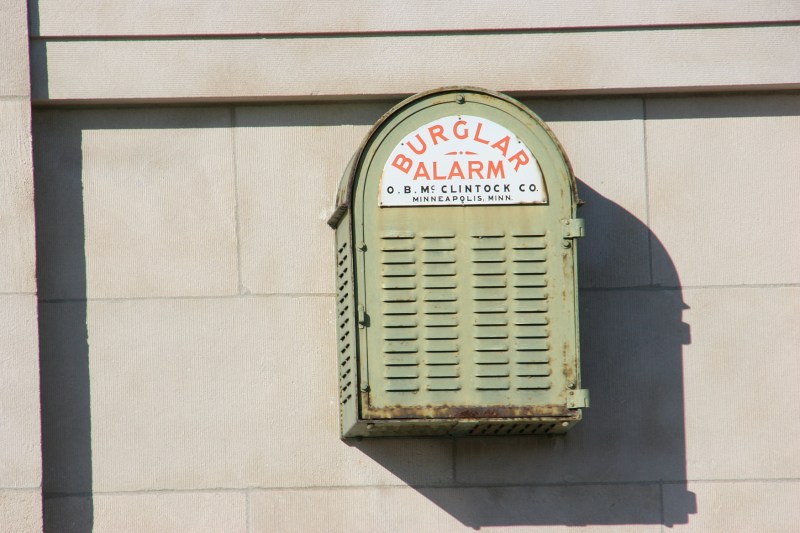
On a stalwart former bank building, I noticed this vintage alarm.


On another building I spotted this rusted mail slot. It looks like it’s been there awhile, as has the door.


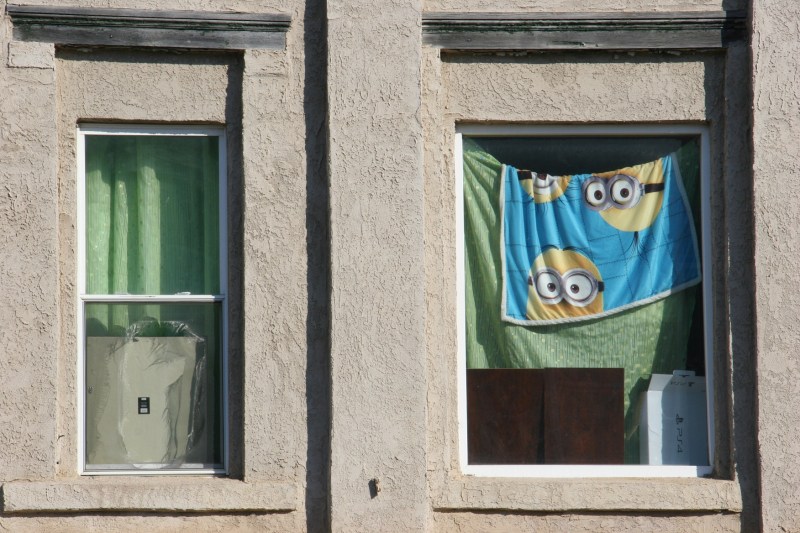
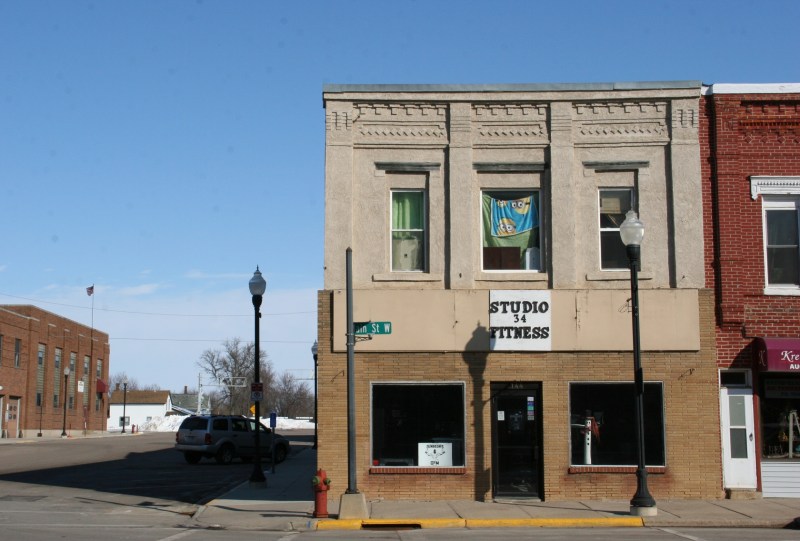
I notice details, including this Minion towel hanging in a second floor window in an historic building. Made me laugh.


If you are interested in reading past posts written about Sleepy Eye through the years, please type Sleepy Eye into my blog search engine. Note that Sleepy Eye is much more than I presented in this four-part series. These posts are a result of about an hour spent walking through the downtown area before I had to be on my way. Plan your own trip to explore this community in Brown County, Minnesota. Click here to visit the Sleepy Eye Chamber of Commerce & CVB site for more information. 

© Copyright 2018 Audrey Kletscher Helbling
 

An outsider’s quick look at, & visions for, downtown Sleepy Eye, Part II March 9, 2018


WHEN I SEE A COMMUNITY like Sleepy Eye with so many architecturally-pleasing historic buildings, I wish I could wave a financial wand.


If I could, I would sweep away the metal, the wood, the stucco, the fake fronts that hide the bones of these beautiful, mostly-brick, structures. I would restore them to their grandeur, drawing the interest of motorists passing through this southwestern Minnesota community. I would give people a reason to stop, to check out the architecture, the unique small town shops and eateries. Many do. More could.


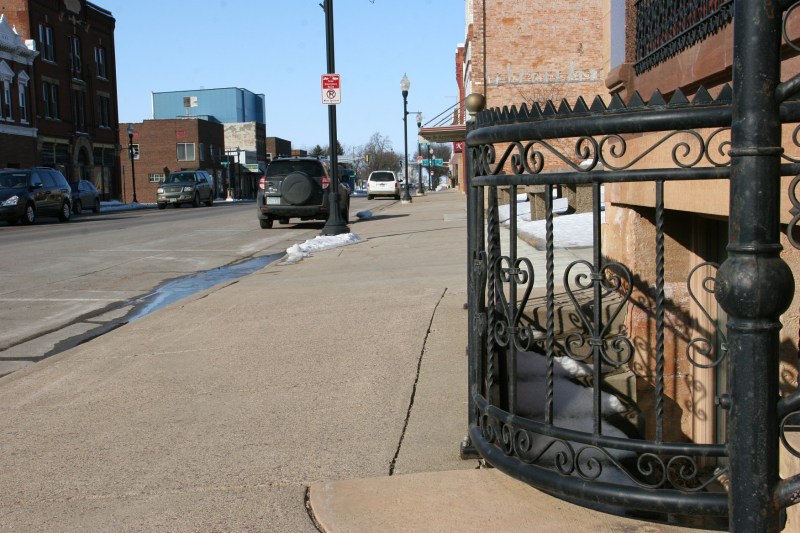
Details like this curved, ornate railing on city hall add visual interest and charm.


I would also make this busy main street more pedestrian and visually-friendly with bump-out corners graced by public art and lovely flower planters.  I would replace concrete sidewalks with brick, or at least edge them in brick. I’d buy some paint and repair windows and fix unsafe and run-down buildings…if only I held a magical wand of unlimited finances.


This map, from a vintage Orchid Inn promo, shows Sleepy Eye’s location in southwestern Minnesota.


With US Highway 14, a major east-west roadway running right through Sleepy Eye, heavy traffic is already here. And the bonus of this route as the Laura Ingalls Wilder Historic Highway adds to the potential.


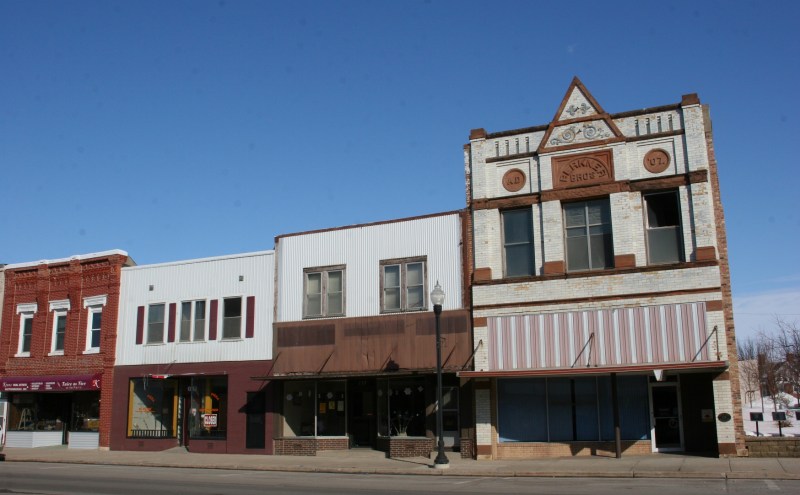
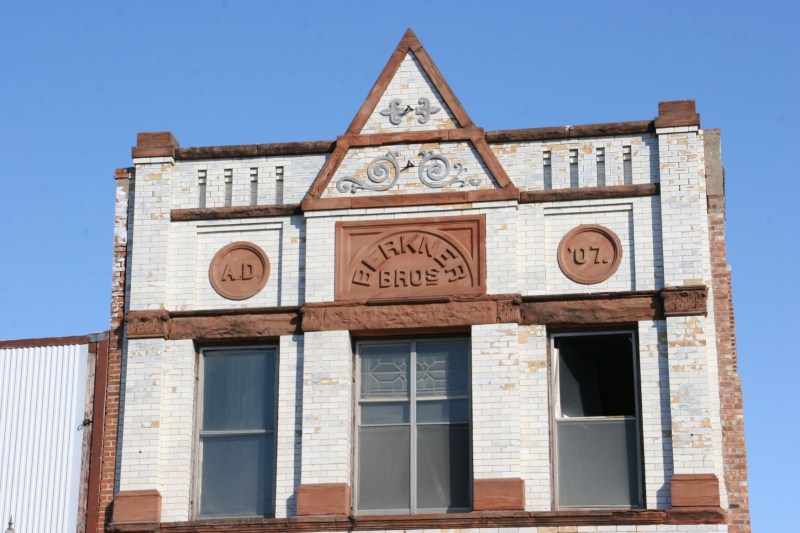
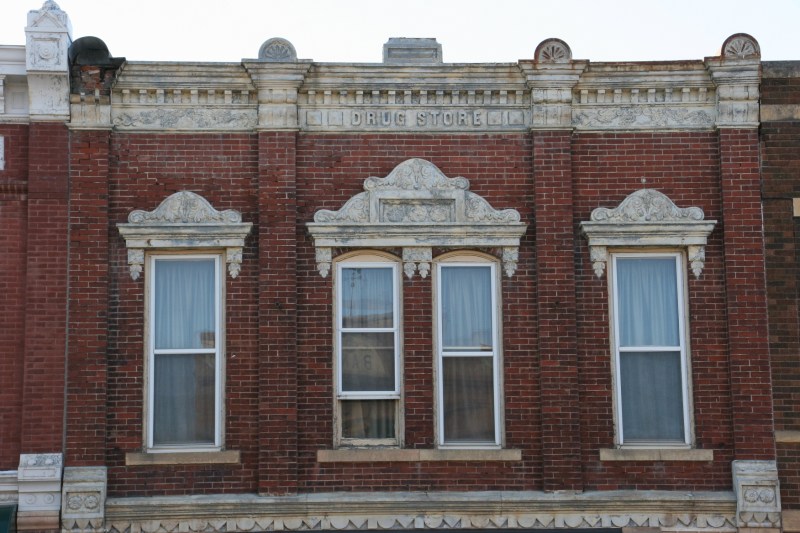
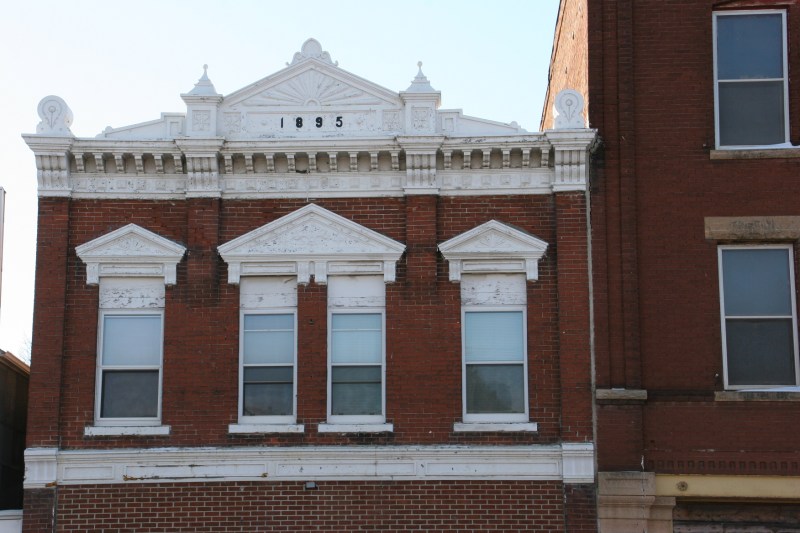
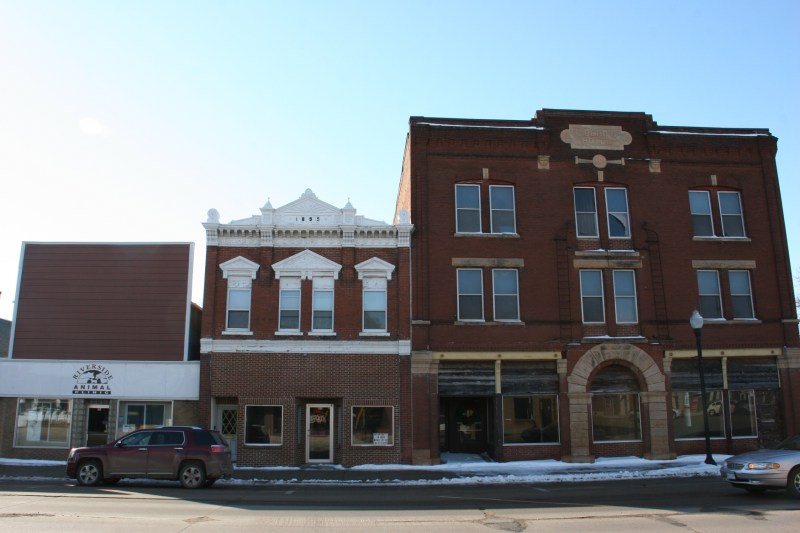
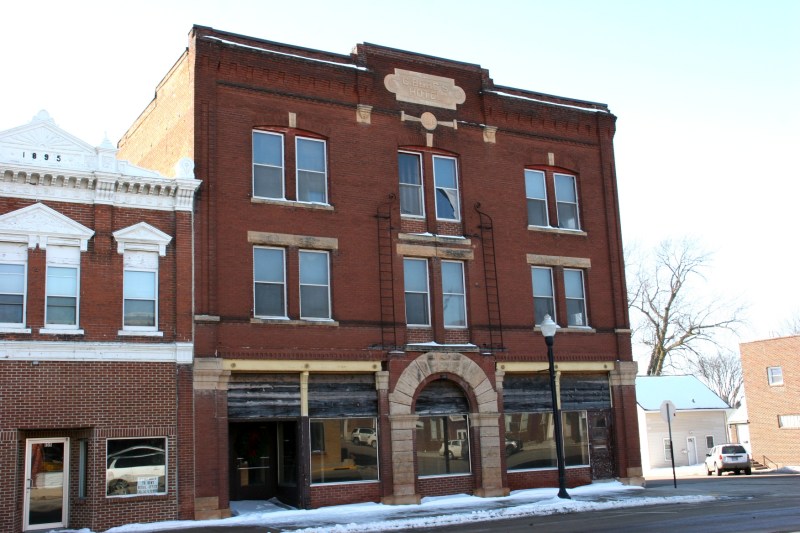
These architecturally detailed buildings hold Sleepy Eye’s history in dates and names.


You have to look upward to see the true beauty of these historic buildings.


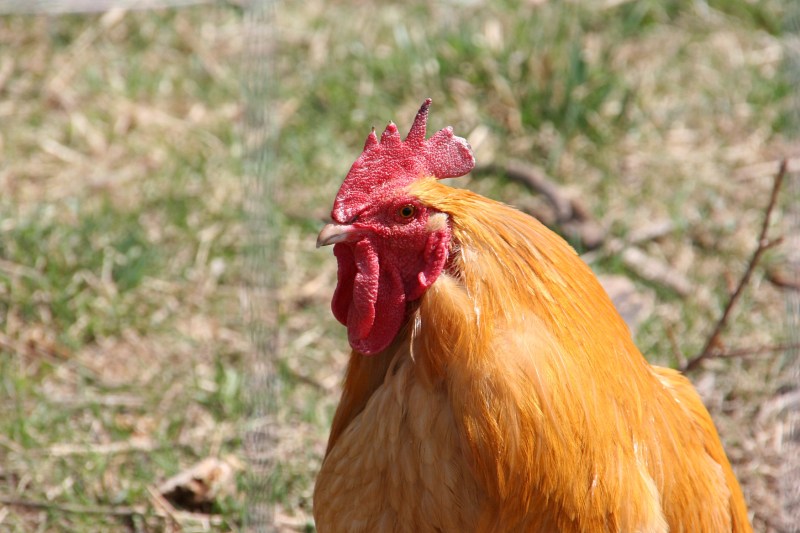
A rooster weather vane drew my interest atop city hall, housed in a former bank.


If I had unlimited financial resources, I would do all of these things for this Brown County community west of New Ulm. But magical wishes differ from reality. It takes money to make these improvements. And I expect the merchants here, like those in so many small farming communities, are simply happy they’re still in business given competition from regional shopping centers, Big Box stores and online sources.


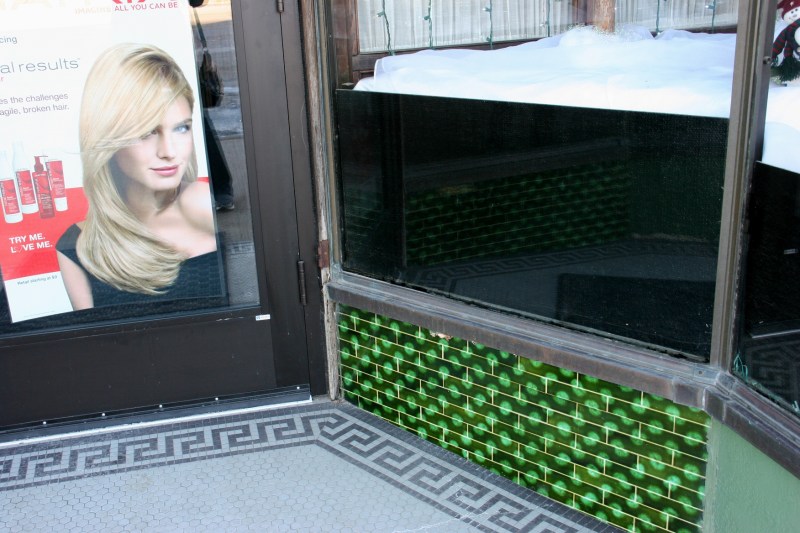
In numerous buildings I noted lovely tile, inside and out.


Yet, small towns like Sleepy Eye offer an alternative, a welcome break from the sameness of mass everything. Places like Sleepy Eye Stained Glass draw customers from all over to purchase stained glass supplies or to get stained glass windows and more restored. Three local antique shops, other shops and the friendliness and service of small town proprietors are additional draws. Schweiss Meats is a popular place for those who appreciate small town meat markets.


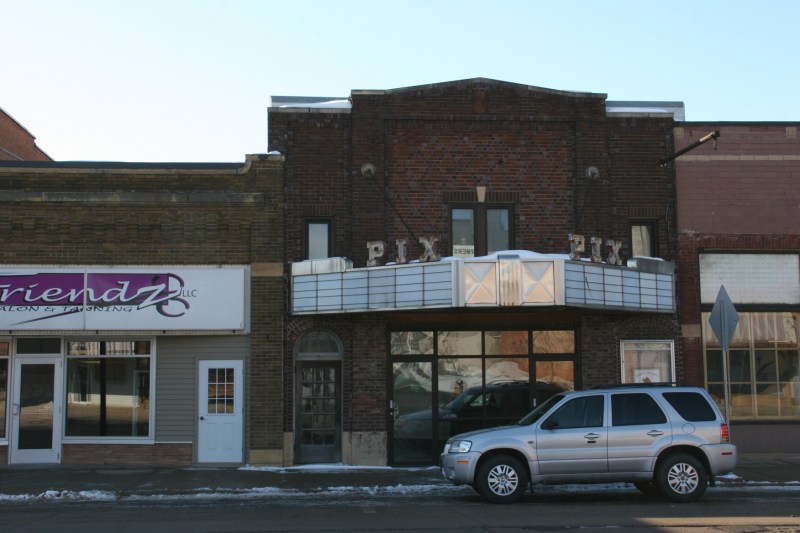
The old Pix Theatre needs lots of work inside and out. The intention is to save and restore the marquee, according to EDA Coordinator Kurk Kramer.


Within a year or so, two local physicians hope to reopen the abandoned Pix Theatre as a nano-brewery and coffee shop, according to Sleepy Eye Economic Development Authority Coordinator Kurk K. Kramer. He also runs K & J Antiques and Collectibles. If all goes as planned, the former Orchid Inn motel and event center will become AGlobal, a STEM-based learning center with a focus on agriculture. Additionally, the Orchid would house a language immersion institute.


Those plans show me people are working hard to keep this community thriving, with businesses that distinguish Sleepy Eye from other small Minnesota towns. EDA Coordinator Kramer noted that Sleepy Eye is also home to a business (Mark Thomas Company) which serves the funeral home industry by producing such products as handcrafted wooden urns. Who knew? Not me.


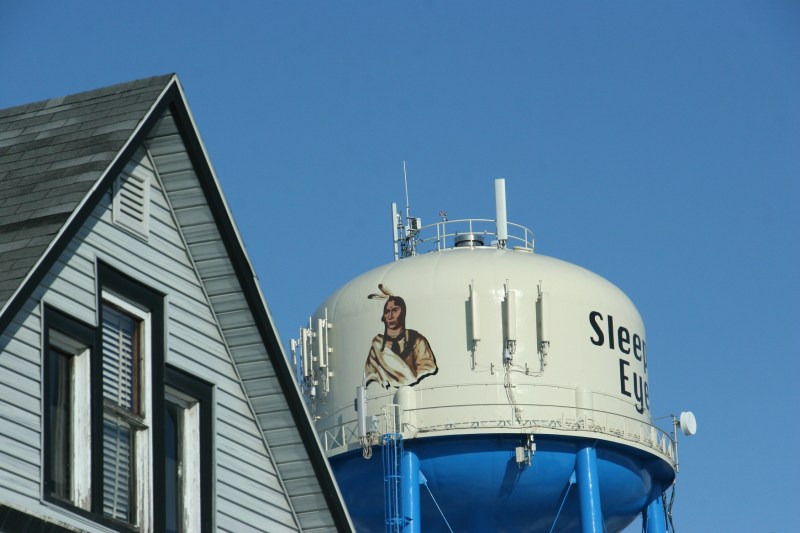
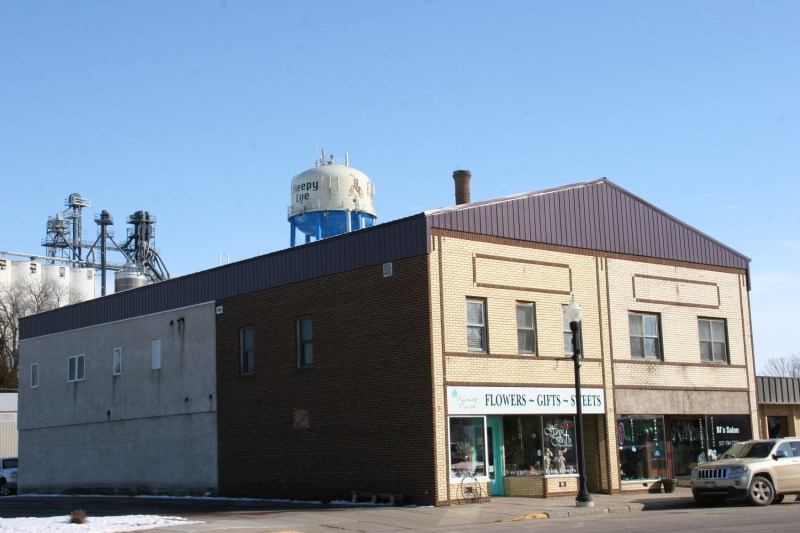
Sleepy Eye honors its namesake on its water tower.


But I do know that Sleepy Eye is named after Chief Sleepy Eyes, buried at a monument site marking his grave. Everywhere you will see the respected Dakota leader’s portrait. He brings historical interest and identity to Sleepy Eye. Those are existing strengths.


Perhaps some day these historic downtown buildings will all be restored. I appreciate that some already are. Funds are available through the Sleepy Eye Downtown Rehabilitation Incentive Program to make improvements. So perhaps my vision for this small Minnesota town will evolve into more than simply a wish…


FYI: Highway 14 improvements in downtown Sleepy Eye this summer call for sidewalk replacement, pedestrian flashers at ped crossings and more. Click here to read details.

Please check back next week for “The Art of Signs in Sleepy Eye, Part III.”


© Copyright 2018 Audrey Kletscher Helbling
Content on this site may not be duplicated, transmitted or otherwise copied without the permission of Audrey Kletscher Helbling.


Revisiting downtown Sleepy Eye & the insights gleaned, Part I March 8, 2018

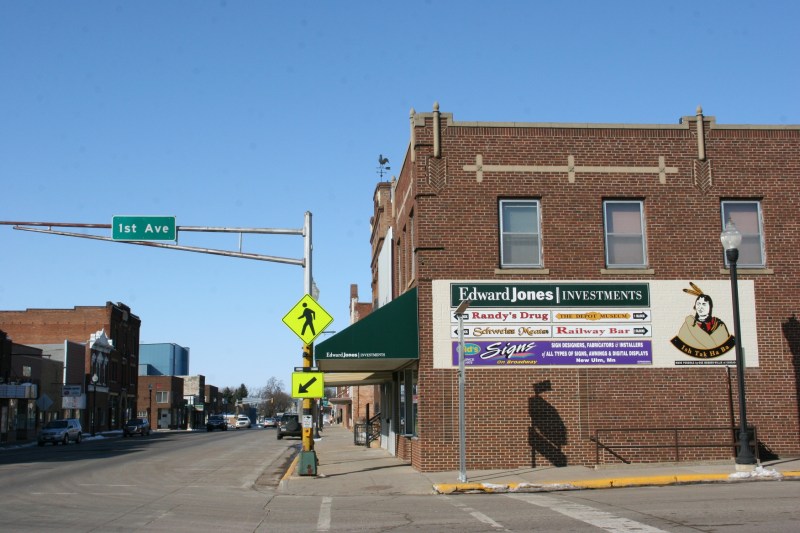
A painting of a Dakota chief on the city water tower gives travelers a hint at the history of Sleepy Eye, Minnesota. The town is named after noted and respected Dakota Chief Sleepy Eyes. He settled with his band along Sleepy Eye Lake and is buried here with a monument and park dedicated to him.


YOU CAN LEARN A LOT about a community by simply walking through the central business district. Many times I’ve done just that with camera in hand. I’ve found that, through photography, I focus on details in addition to the overall scene. That gives me insight into a place.


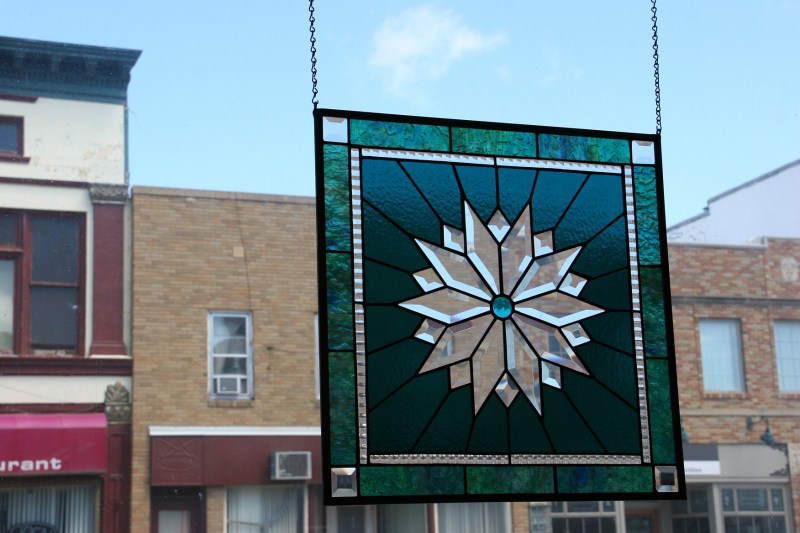
I photographed this stained glass hanging in the front window of Sleepy Eye Stained Glass during a May 2016 visit. Minnesota Prairie Roots file photo.


Most recently I walked along several blocks of downtown Sleepy Eye with my Canon DSLR while my husband shopped at Sleepy Eye Stained Glass for supplies for a church window he’s refurbishing. US Highway 14 (the Laura Ingalls Wilder Historic Highway) runs right through the heart of this small town in south central Brown County. That’s in southern Minnesota next to my native county of Redwood.


More than 30 years ago I lived and worked in Sleepy Eye for six months as a newspaper reporter and photographer. Thus I hold a certain familiarity of place. On this stop, I wanted to grab a sweet treat from the bakery next door to the newspaper office.


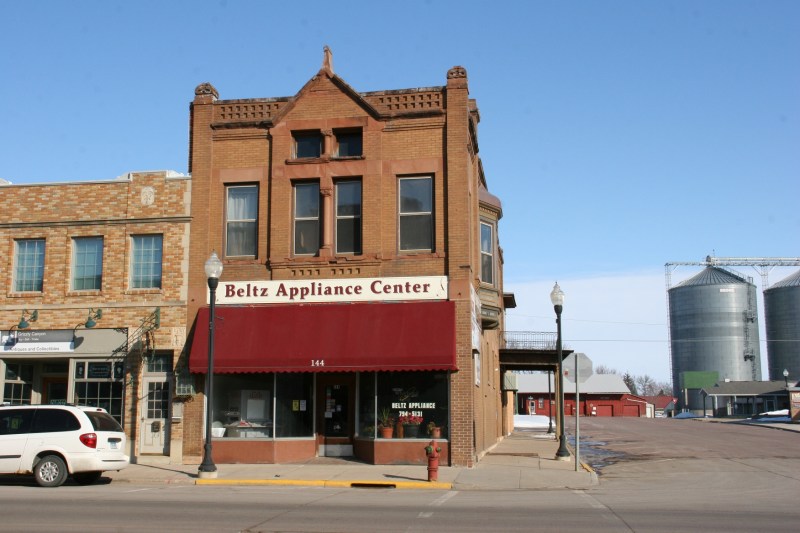
Sleepy Eye has many architecturally-pleasing aged buildings such as city hall.


I found, though, in the remembered location not a bakery, but rather K & J Antiques and Collectibles run by the welcoming Kurk K. Kramer. He happens also to work as the city’s Economic Development Authority coordinator. Given his friendly personality and clear love for Sleepy Eye, Kramer seems an ideal fit for the job. He laughed when I walked into his shop and asked for a doughnut from the long-closed bakery. He was a wealth of information about the town. I’ll share more in future posts and also show you a sampling of goods from Kramer’s shop.


A snippet of the downtown, situated along Highway 14, a major east-west roadway across southern Minnesota.


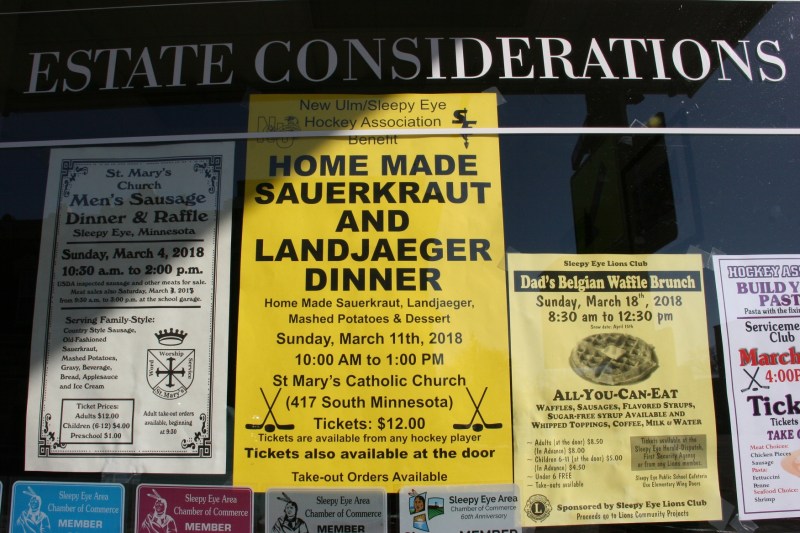
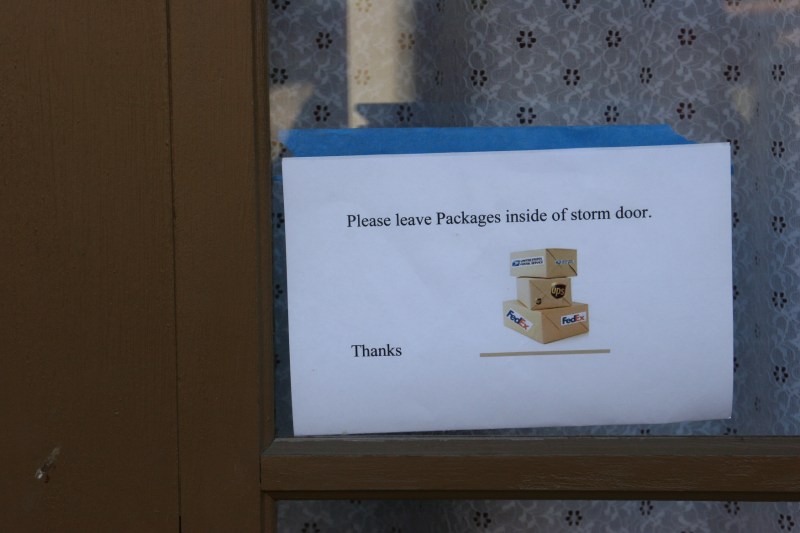
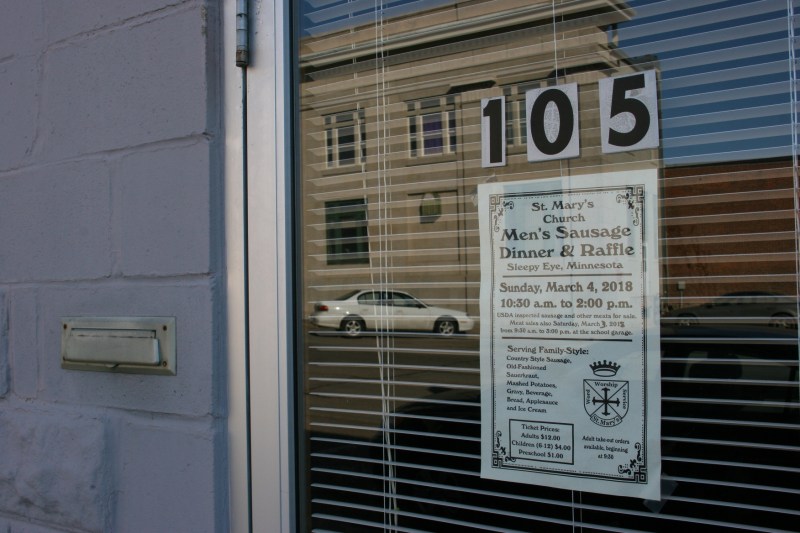
Despite my disappointment at the absence of the bakery, I still delighted in revisiting this town I called home for a short while. Whenever I explore a community, I look for fliers and notes posted in downtown businesses. Such finds often amuse me and present a snapshot of a place and its people. I love the small townishness of these public postings, these postscripts.


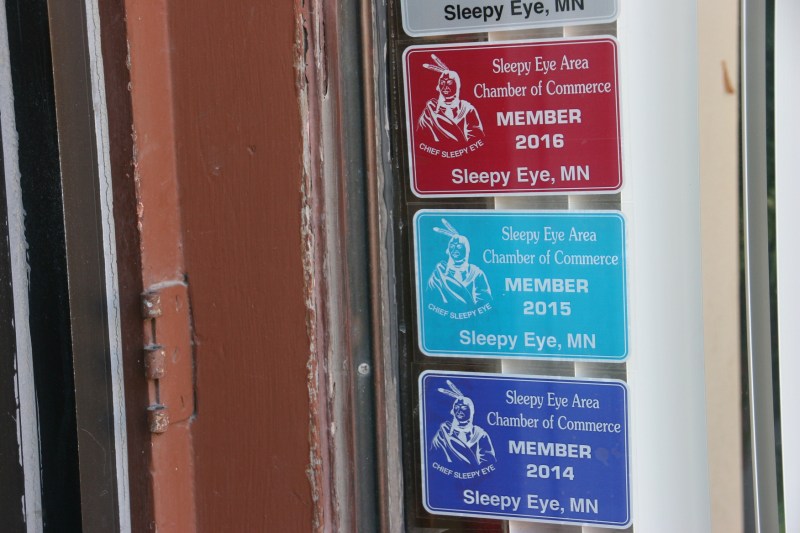
I saw lots of these stickers in many businesses, indicating a strong Chamber of Commerce and a sense of community pride.


Take a look at what I found in storefront windows. And then check back for more posts from Sleepy Eye. See what caught my eye as I wandered—and drew some curious looks—while the husband shopped.


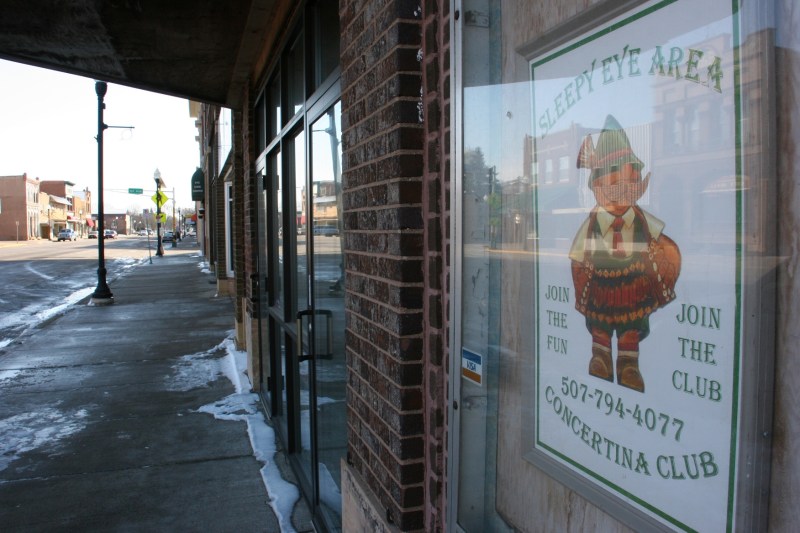
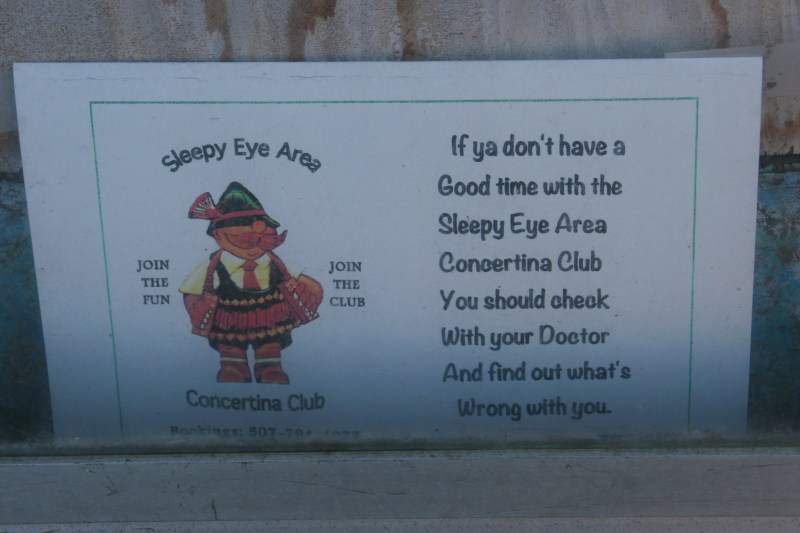
So what do my photos tell you about Sleepy Eye? Like most small Minnesota towns, community dinners/breakfasts/brunches are an integral part of the social fabric and also indicate a strong volunteer base of caring residents. Heritage is important. Note the homemade sauerkraut and Landjaeger (a type of sausage) dinner and the Sleepy Eye Area Concertina Club signs. Politeness, humor and community pride are givens.

These are my assessments based on my quick walk-through of peering into downtown storefront windows.

TELL ME: Have you ever done the same to learn more about the personality of a community?


Check back tomorrow for Part II in my series titled “An outsider’s quick look at, & visions for, Sleepy Eye.”

© Copyright 2018 Audrey Kletscher Helbling
 

Winter poetry from the Minnesota prairie March 5, 2018

Filed under: Uncategorized — Audrey Kletscher Helbling @ 5:00 AM
Tags: , , , , , , ,


IN THE FADING OF THE DAY, as clouds shove grey across the southwestern Minnesota prairie, a Dodge pick-up jolts color into the March landscape.

The sight pleases me visually, unleashes poetic thoughts of horizontal prairie lines. My eyes trace the truck traveling along a gravel township road against backdrop tree lines. Even the rich black soil runs horizontal across fields of melting snow.

In this scene, I see the immensity of the prairie. Land stretching. Sky stretching. Far. High. Endless.

The red pick-up provides a point upon which to focus my eyes, in which to ground myself. Still, I feel a certain smallness, a vulnerability. Even in this land where I once belonged, where my roots run deep.

© Copyright 2018 Audrey Kletscher Helbling
 

Let the little children come…to the playground February 21, 2018


TRAVELING DOWN A SNOW slicked county road toward Little Prairie United Methodist Church south of Dundas, I expected nothing out of the ordinary. Just a familiar country church with jolting red doors marking a rural intersection.


But then, to the left of the church, set back from the county road and next to the parking lot, I spotted a structure. Inaccessible unless I wanted to slog through snow. But visually accessible via the telephoto lens of my camera.


I noted a mini church facade marked as Little Prairie Playground, complete with those signature red double doors, stained glass and a bell tower. How clever. How fun. How cute.

Since I didn’t want to plow through snow for a close-up look, I checked out the church Facebook page, which reveals volunteers constructing this playground last spring with a June dedication.


Behind that mini church front and through those doors, kids will find a slide, mini climbing wall, swings and more, the more including an aged bell rung by the pull of a rope. The bell honors Anna Mae Little, whose farm family once lived nearest the church.


As I snapped a few photos, I considered that I need to return in the spring for another photo shoot and perhaps to bring my two-year-old granddaughter here to play in the quiet of the countryside in the holy presence of this place.

© Copyright 2018 Audrey Kletscher Helbling
Note: All images are edited using an artistic filter.


From pets to farm animals, Faribault artist creates vibrant portraits February 20, 2018

“LaFonda” from Squash Blossom Farm


I’D RECOGNIZE Faribault artist Julie Fakler’s art anywhere. She paints animal portraits that pop with personality and color, that leave me smiling and happy.


“Peters Farm Horse”


Her signature acrylic paintings feature domestic animals against a backdrop of bold color. No distractions of setting. Just the animal, full focus.


“Grandview Farm Cat”


I’m always drawn to the eyes. Julie has the ability to paint eyes that connect me to the cat or dog or horse or cow or goat or whatever creature she paints. I look into those eyes and I see an animal cared for, loved, important to someone somewhere.


A promo for Julie’s Faribault show.


The latest somewhere took Julie onto five area farms to wander among and photograph animals, talk with the farmers and then paint for her latest show, “Southeastern Minnesota Farm Animal Portraits Exhibition.” She received a Southeastern Minnesota Arts Council grant for the project.


Julie’s farm animal portraits, including “Squash Blossom Farm Chicken,” adorn walls in Buckham Commons.


Several days ago I photographed, with Julie’s permission, her art now displayed through February 28 at Buckham Commons, the hallway linking Faribault’s public library to the community center. Her farm animal paintings are also displayed through February 24 at the Austin (MN) Artworks Gallery. Julie’s new show deviates from her usual pet portraits. I always appreciate an artist who takes on creative challenges.


“Grandview Farm Goat”


Whenever I view Julie’s animal art, I envision her vibrant work beyond acrylic on hardboard. I see her animal portraits on the pages of a children’s picture book, on t-shirts, on pillows, on tote bags…the possibilities seem endless for this animal-loving artist.


Even Julie’s guestbook is handcrafted.


Portrait propped next to the guestbook.


Some of the comments penned in the guestbook.


TELL ME: What do you think of Julie’s art and/or other possibilities for her paintings?

© Copyright 2018 Audrey Kletscher Helbling
Artwork copyright of Julie Fakler and photographed with her permission. Julie paints animal portraits on commission and also teaches “Paint your Pet” classes. Check her website by clicking here for more info.


Artistry along Minnesota State Highway 68 January 9, 2018

Filed under: Uncategorized — Audrey Kletscher Helbling @ 5:00 AM
Tags: , , , , , , , ,


STATE HIGHWAY 68 slices diagonally across rich Minnesota farmland southeast of Morgan.


I often travel this section of roadway until it intersects with Brown County Road 29 when I return to my roots in Redwood County. The angle of the highway in a place where roads typically run in a straight gridded pattern confuses my sense of direction. I must use the sun as my compass. Or remind my mind that highway 68 does not run true north or south, east or west.

Other than the directional issue, I delight in this roadway for the visuals. My photographer’s eye appreciates the power poles that stretch along the highway. Wires loop between poles reinforcing the horizontal lay of this land. There’s just something about the repeating line of poles and wire that artistically pleases me.


And then there are the sunsets which, in this exposed plain, prove spectacular, even in layers of clouds. Everything—trees, barns, fields—seems insignificant beneath a fiery sun suspended above the land, my native land.

NOTE: These photos were taken several weeks ago.

© Copyright 2017 Audrey Kletscher Helbling