Minnesota Prairie Roots

Writing and photography by Audrey Kletscher Helbling

Watching the 2018 Winter Olympics from the perspective of a Minnesota soldier’s daughter February 13, 2018

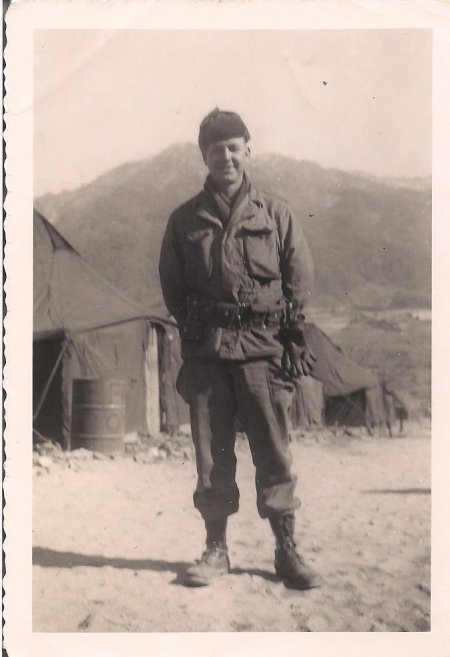
My dad, Elvern Kletscher, at Camp McNair in Korea, photo dated February 14 (1953).


WATCHING THE WINTER OLYMPICS the past several days, I’ve felt a closeness to my deceased father. He walked this soil, this mountainous land so different from the flat, open farm land of his southwestern Minnesota home.


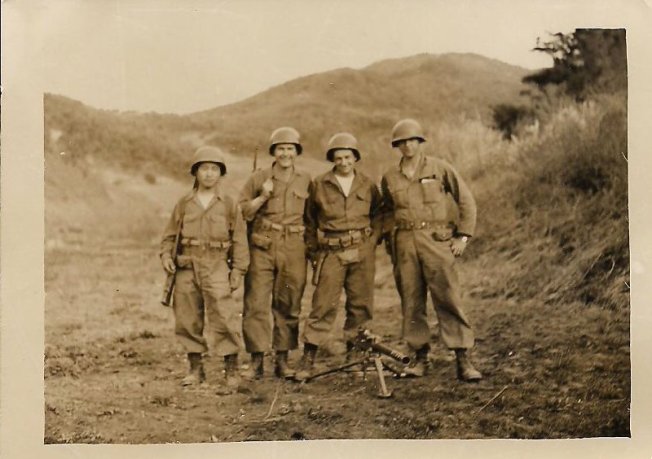
This photo from my dad’s collection is tagged as “Kim, Rowe, Allen & me, May 1953 Machine Gun Crew.” That’s my father on the right.


He landed here in 1952 with a ship full of other U.S. Army soldiers, gun in hand. A young man sent here by his government to fight on foreign land in a region that still is without solid peace. He fought on the front lines. Kill or be killed. Buddies dying. Explosions and hungry Korean orphans begging for food across barbed wire and him eating bark from trees and cold that felt even colder than the coldest of Minnesota winters.


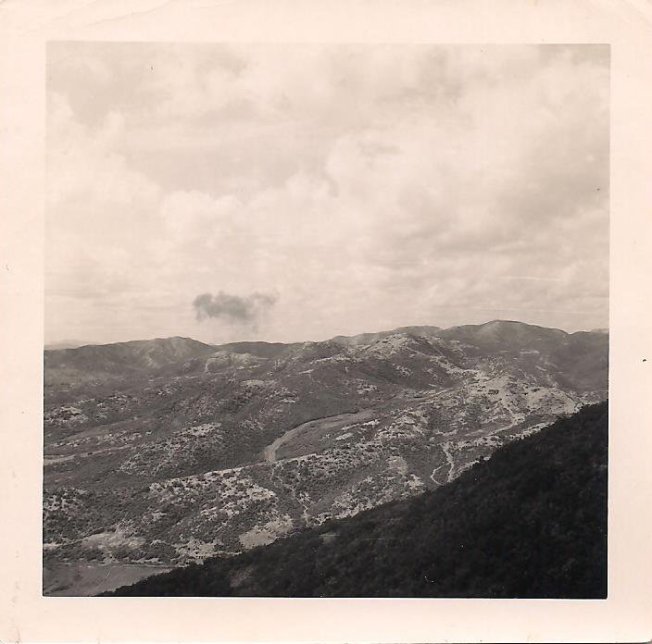
This photo, pulled from the shoebox which holds my dad’s military photos, is simply labeled “front line.” That would be “front line” as in Korea, where my soldier father fought.


When I see the blowing snow and rugged mountain ranges during Olympics coverage, I think of my foot solider infantryman father, ranging through and over those Korean mountains. Scared. Yet doing what he must to survive. Kill or be killed.


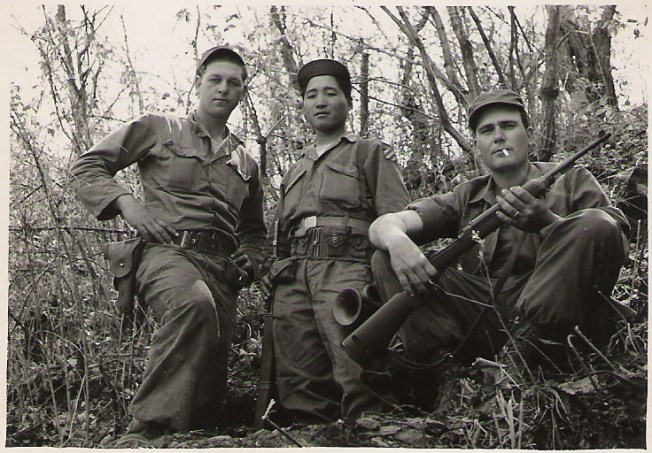
My father, Elvern Kletscher, on the left with two of his soldier buddies in Korea.


I think of him on Heartbreak Ridge, picking off a sniper who had taken many of his buddies. And I think of the fiery shrapnel piercing his skin and the Purple Heart he would claim decades later, when he was an old man. Because a fire had destroyed his military records. Because he had tucked most of his war memories away. Because no one cared about what happened on a Korean mountaintop in 1953.


On the back of this photo, my dad simply wrote “a letter from home.” I appreciate this photo of my dad taken by an unknown buddy in Korea.


I regret that I didn’t understand him and the inner turmoil he carried with him from Korea back home to Minnesota. I regret that I didn’t ask more about his war experiences, that I didn’t recognize the trauma he suffered as a result. I regret that healing never fully came, although he found understanding and solace in the company of other veterans with similar shared experiences late in life.

All of this I consider when I view the Olympic athletes in their designer clothing, medals around their necks, applause of crowds, praise of many.

All of this I consider when I see the sister of the North Korean dictator seated behind our Vice President.

All of this I consider when I view those Korean mountains flashing across my TV screen.


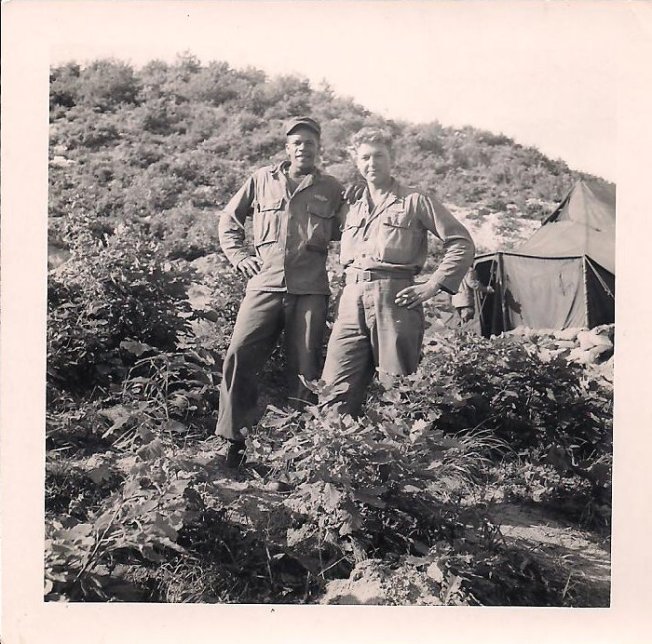
Dad penciled on the back of this 1953 photo from Korea: “Sgt Smith & me from the States to Korea.”


I think of my dad as I retrieve a shoebox full of his black-and-white Korean War era photos. I sit on the sofa filing through those curled images while Olympic athletes ski and skate and propel themselves down an icy tunnel. On the back of one photo, I read my dad’s cursive notation: me in Korea May, 53.

Sixty-five years have passed since he left Korea. I wish I could sit with him now, ask him about his time in Korea, about the stories behind those photos. Perhaps he would talk, perhaps not.


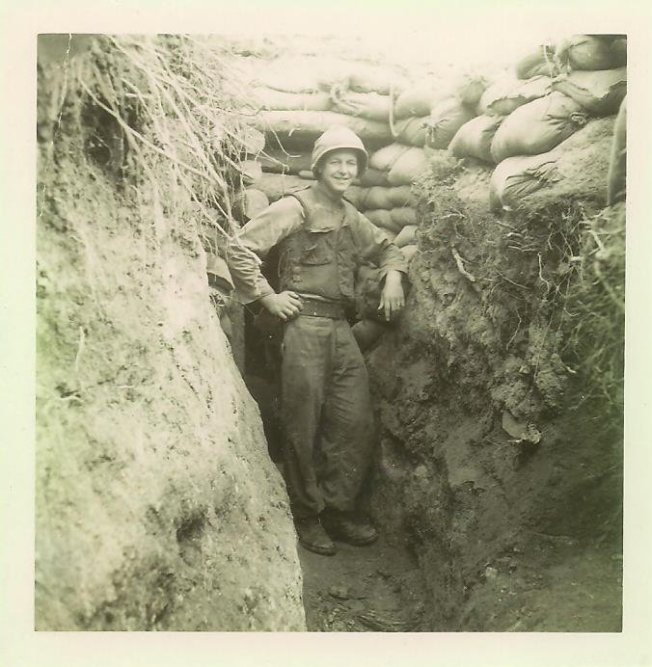
U.S. Army Cpl. Elvern Kletscher, my father, in the trenches in Korea.


I wonder, would he turn off the television or would he watch the Olympians perform? Could he handle seeing the backdrop of those rugged mountains where too many of his buddies died? Would he flash back to the horrors of war?


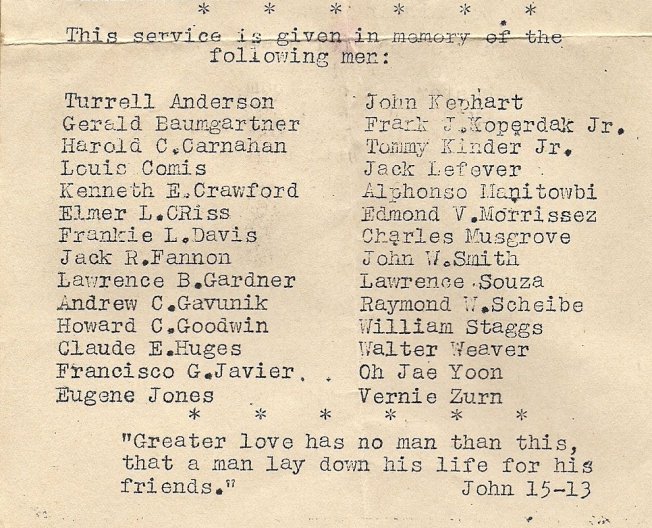
My dad carried home a July 31, 1953, memorial service bulletin from Sucham-dong, Korea. In the right column is listed the name of his fallen buddy, Raymond W. Scheibe.


The reality is that I can’t ask him. He died in 2003. But I can write. I can use my words to tell his story, to apologize for my lack of understanding, to honor him. And this I do as Olympians cross country ski, stop, sprawl stomach down, then fire their rifles in this land, this Korea. This land where my soldier father from Minnesota shot his weapon, too. Kill or be killed.

© Copyright 2018 Audrey Kletscher Helbling


Only in Minnesota, North Dakota & Wisconsin February 10, 2018

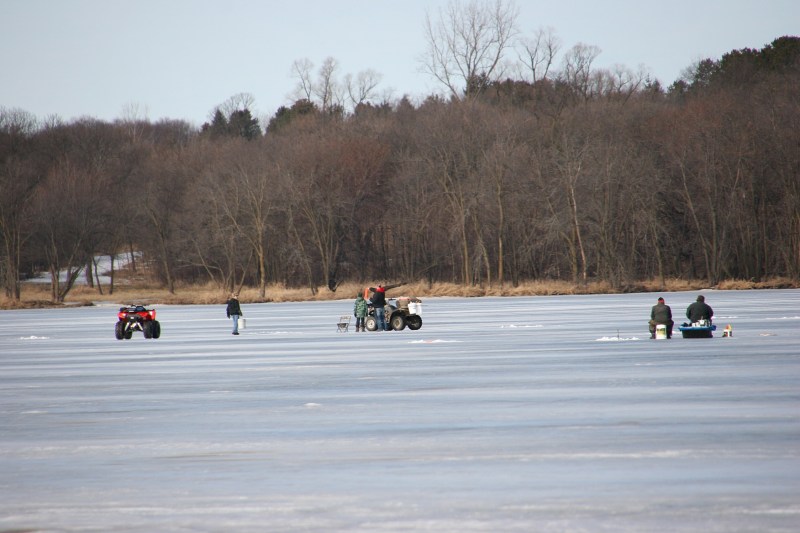
Ice fishing on Union Lake in rural Rice County, Minnesota. Minnesota Prairie Roots file photo February 2017.


LIFE CAN BE STRANGER than fiction. As a life-long Minnesotan, I know that to be true.


Vang Lutheran Church advertises its annual Lutefisk & Meatball Supper. Minnesota Prairie Roots file photo.


For example, here in Minnesota, we drive onto frozen lakes to drill holes in the ice and then angle for fish. We also organize polar plunges in which we dive into frigid lakes in the winter to raise monies for charities. And we eat cod soaked in lye at annual church dinners. Some of us. Not me, although I’ve tried lutefisk twice.


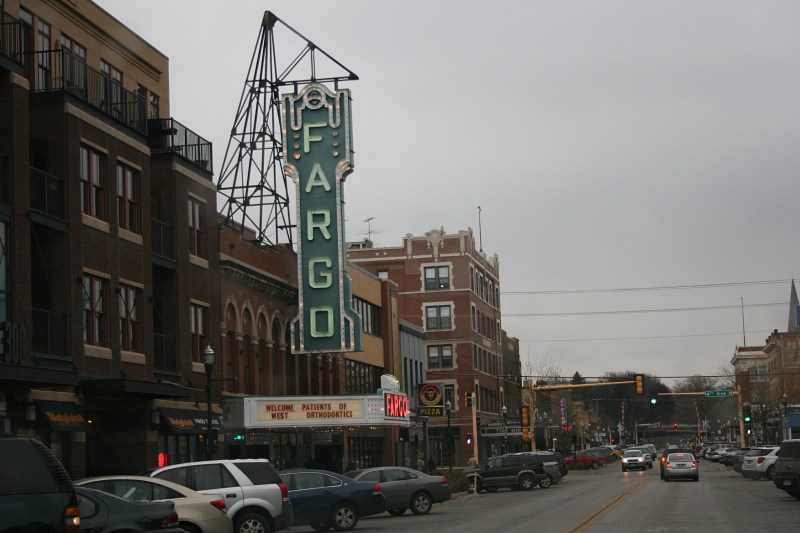
Downtown Fargo, North Dakota. Minnesota Prairie Roots file photo.


Our neighbors to the east and west can tell similar strange stories. The most recent comes from the campus of North Dakota State University in Fargo. On Thursday around lunch-time, a cow escaped from The Little International Livestock Show and roamed the campus for a short time before it was wrangled.


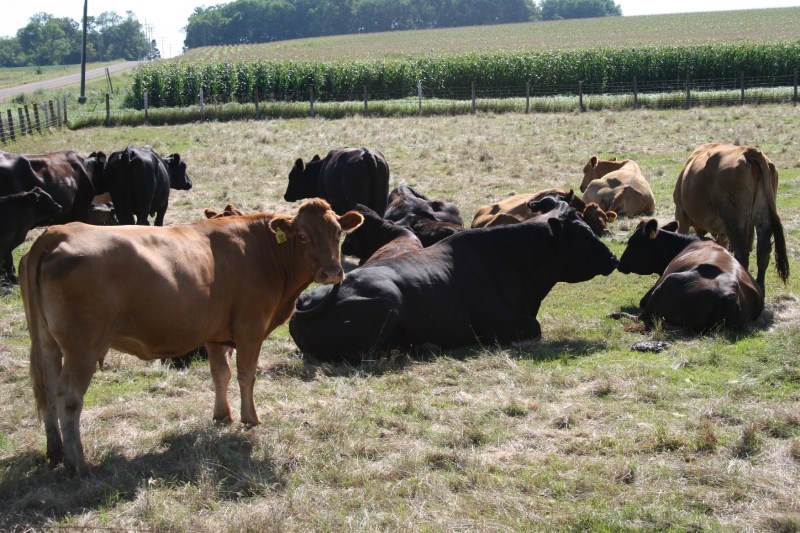
This photo, taken in southwestern Minnesota, illustrates the size of the cow which escaped at NDSU on Thursday. Minnesota Prairie Roots file photo 2010.


The NDSU Saddle & Sirloin Club sponsors the show, the largest student-led event on campus with 300 collegiates involved. That likely explains the calm reaction of students in the short video clip I watched of the escape. Students didn’t panic. They continued walking to classes or wherever they were headed. Many of them come from rural areas to this school with numerous ag majors. No reason to get excited about a bulky, wandering bovine.


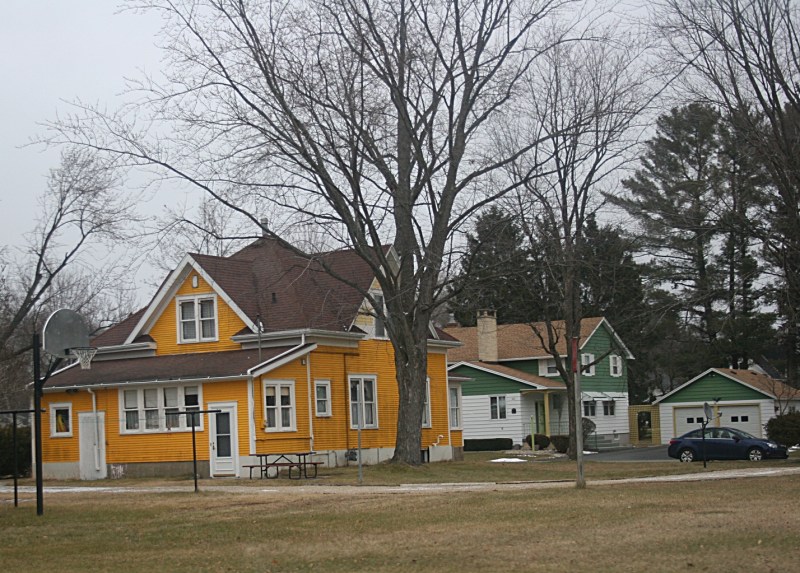
Packers fans houses in Wautoma? Or simply a gold house and a green house? Minnesota Prairie Roots file photo 2012.


Then we have Wisconsin, which never ceases to surprise me, especially with its Packers fanaticism. I’ve seen brat buns and popcorn colored green and gold. And in Wautoma, two neighboring houses are painted in Packers colors. At least they were several years ago.


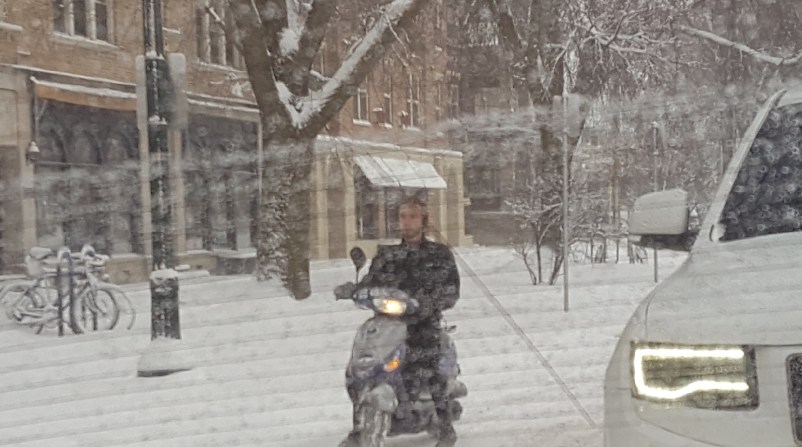
My daughter, Miranda, snapped this scene through the back car window while in Madison, Wisconsin. Photo courtesy of Miranda Boyd.


But then along came a February 4 report from my daughter, who lives in eastern Wisconsin and who was in Madison for the weekend. She snapped a photo of a guy riding a motorcycle, or maybe it’s a scooter, as snow fell on a 10-degree day. How crazy is that?

TELL ME: What stranger than fiction story can you share from your community or state?

© Copyright 2018 Audrey Kletscher Helbling
Wisconsin biker photo courtesy of Miranda Boyd


Angels we have seen on high December 15, 2017

Filed under: Uncategorized — Audrey Kletscher Helbling @ 5:00 AM
Tags: , , , , , , , ,


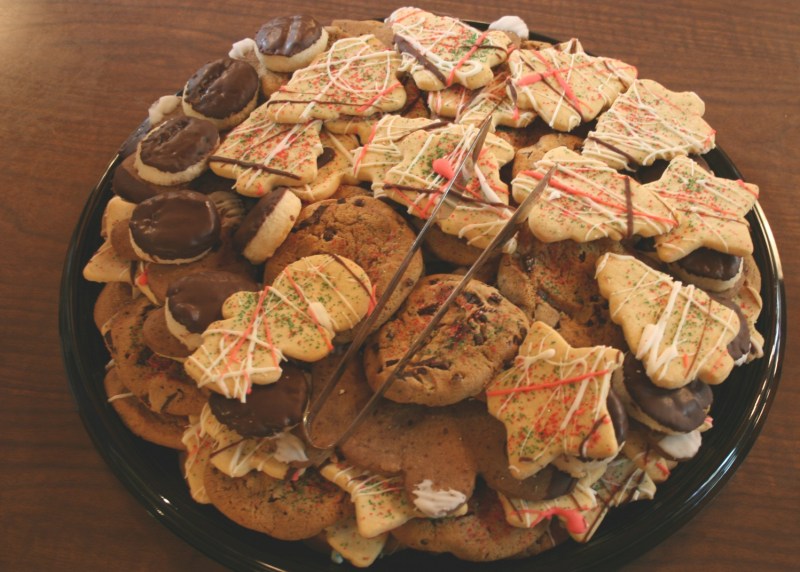
YEARS HAVE PASSED since I thought about this observation: The angels are baking cookies.


Minnesota Prairie Roots file photo 2014.


But when a family member recently noticed the gold and pink tinge of the evening sky, she suggested the cherubs were busy baking Christmas cookies.

Unless you’re a Helbling family member, you’ve likely never heard this comparison of the sunset, or sunrise, to angelic bakers. It’s an interpretation attributed to my late mother-in-law, passed on to her children and then to her grandchildren.

Many times while they were growing up, my three kids directed me to look outside, to see the fiery sky, to see the angels baking cookies. It is a sweet part of family lore passed from one generation to the next.

This time of year, traditions and stories seem more important than ever. What are some of your family stories and/or traditions? I’d like to hear.

© Copyright 2017 Audrey Kletscher Helbling
 

Paul & Babe, more than a Minnesota legend October 26, 2017

Filed under: Uncategorized — Audrey Kletscher Helbling @ 5:00 AM
Tags: , , , , , , , , , ,

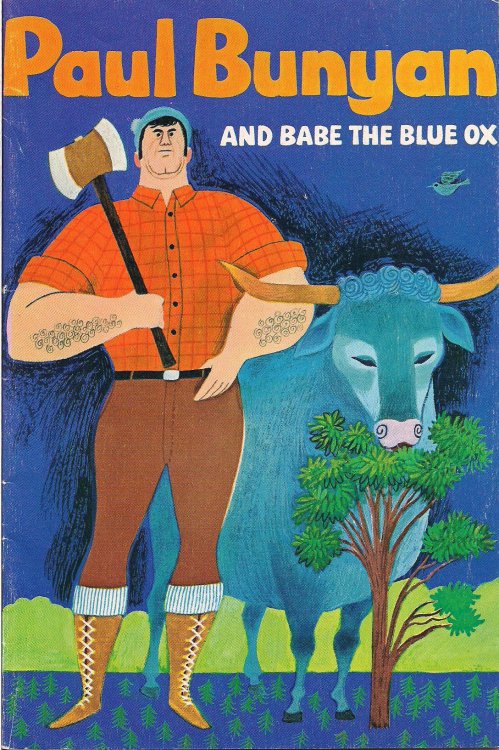
I purchased this vintage 1960s mini book, published by BANG Printing of Brainerd, at a used book sale.


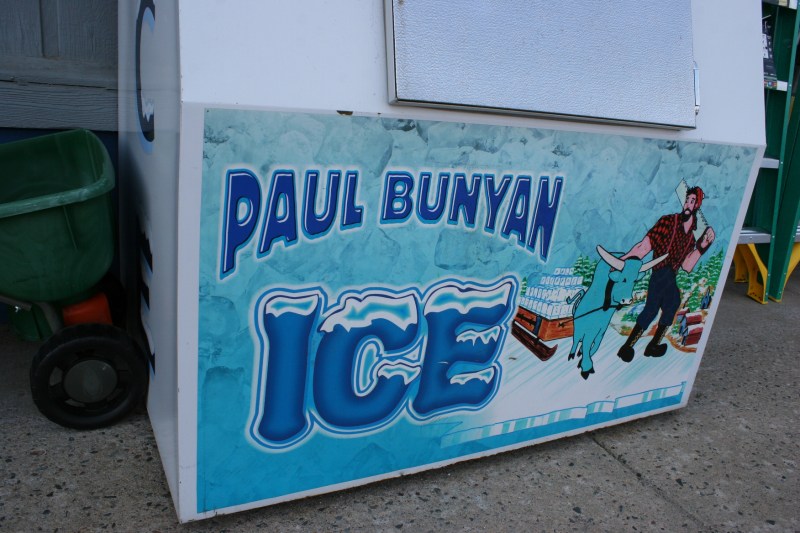
IN MINNESOTA, PERHAPS no other legend perpetuates as much as that of Paul Bunyan and Babe the Blue Ox.


Photographed outside a hardware store in Pequot Lakes.


The larger-than-life pair fits the image we present of hardiness and strength, of surviving, and thriving, in a cold and snowy land. Paul cleared woods in one swell swoop of his axe. Babe imprinted our soil with depressions soon filled with water in the Land of 10,000 Lakes.


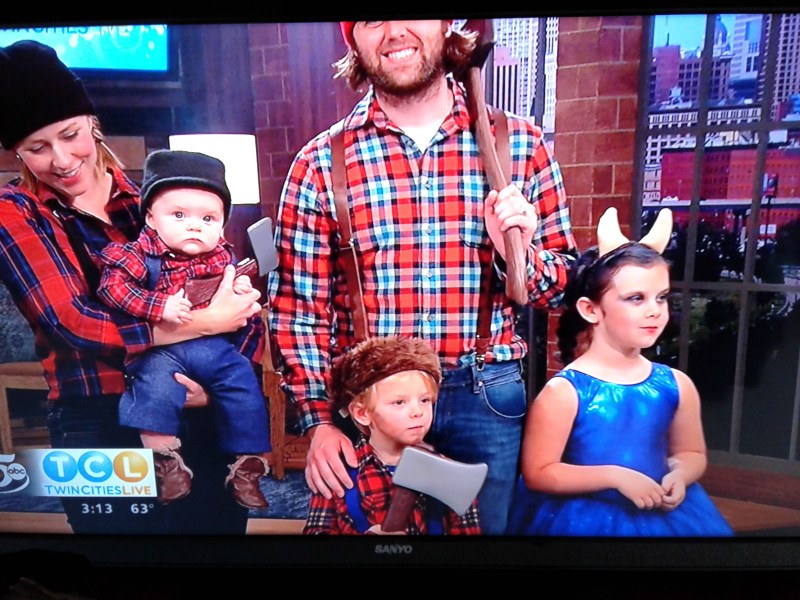
“The Paul Bunyan Family” with Babe the Blue Ox suggested as a Halloween costume on a recent edition of Twin Cities Live.


Dressed in our buffalo plaid flannel shirts—and I’m wearing one right now while typing this post—we embrace our identity as practical people. We don our flannels and our snow boots, fish on frozen lakes, shovel snow and long for summer, although we’re not going to tell you that.


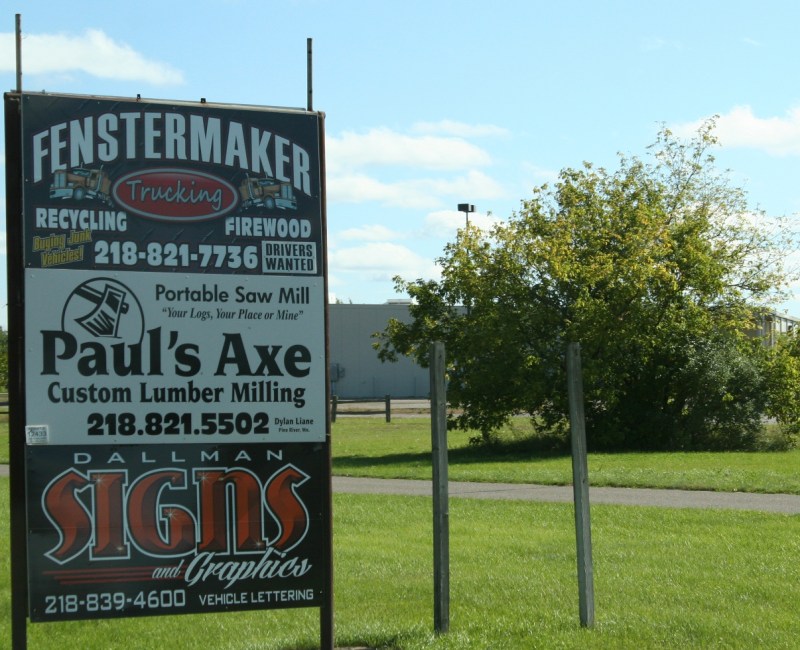
Many northern Minnesota businesses tap into the Paul Bunyan legend as indicated in this sign photographed in Pine River.


We are of stolid, hardworking immigrant stock—of farmers who broke virgin sod, of lumberjacks who felled trees, of families who fled refugee camps and war torn countries, of men and women and children who decided Minnesota offered a place to fulfill our dreams.


Legendary Paul Bunyan and Babe the Blue Ox in Bemidj. Minnesota Prairie Roots edited file photo.


We showcase Paul and Babe as legendary celebrities not because we’re trying to boast—we are mostly a modest bunch—but because we realize the value of these two. The pair reflects us, markets Minnesota, promotes tourism, boosts local economies, especially in the Brainerd Lakes area and to the north in Bemidji. Both communities feature oversized statues of Paul and Babe.


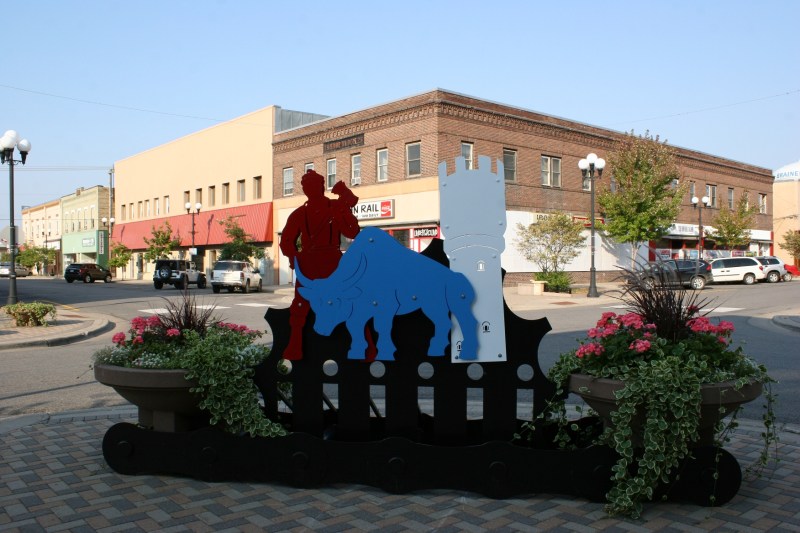
Paul Bunyan and Babe stand next to the iconic Brainerd water tower in this sculpture on a downtown Brainerd street corner.


Throughout the Minnesota northwoods and lakes region, the lumberjack and the ox show up in roadside attractions, in business and state trail names, in art and more. They symbolize the Minnesota spirit of strength and of creativity. We are a place of artists and wordsmiths, of hardworking men and women unafraid of getting our hands dirty, of determined entrepreneurs, of business leaders, of educators, of young people forging their paths into the woods of life…

We are individuals crafting our lives in a land that has, for generations, valued the legend of Paul Bunyan and Babe the Blue Ox as part of our Minnesota story.


© Copyright 2017 Audrey Kletscher Helbling
 

Don’t tell me you’re “fine” when you’re not & other insights March 5, 2017


HOW ARE YOU? I’ve never liked that question, even realizing the underlying kindness that laces those three trite words.

The standard answer of “I’m fine” is expected. The truth most often is not.


ttfa-1024x1024


Now Minneapolis writer Nora McInerny Purmort—who has faced her share of “I’m not fine” days—tackles the “How are you?” question in a podcast series from American Public Media. Terrible, (Thanks for Asking) is a must-listen series in which Nora seeks only honest responses to “How are you?”

I’ve listened to one podcast thus far. “Unbroken” features an interview with sexual assault survivor Sarah Super. It’s an incredible, horrible, powerful and, yes, sometimes graphic, story. But so worth your time for the insights revealed. Sarah is one strong woman. And we can learn so much from her about the importance of speaking up, of being heard and more.

Both she and Nora address the issue of silence. And, yes, I picked that from the interview because silence is all too pervasive. I’m talking the hard, uncomfortable silence that those who have suffered trauma, those who are dealing with health issues, those who are facing unimaginable difficulties and challenges hear. Yes, hear. Silence truly can be deafening.

Sarah cites the reason many friends and loved ones remained silent following her assault: “I didn’t know what to say or do.”

Puh-lease.

“Your silence,” Sarah says, “feels like apathy.” The definition of apathy is lack of interest, enthusiasm or concern. Lack of. Imagine how that feels to your loved one who is hurting. Lack of.

Nora reiterates Sarah’s thoughts: “Silence hurts when you are on the other end of something awful.”

In an interview with National Public Radio about her podcast series, Nora repeats, “The worst thing—and it doesn’t matter if you’re dealing with death, or if you’re dealing with all of these other things that we’ve talked to people about—silence is the worst thing you can hear from people.”

She gets it. Within six weeks, this young woman lost her father to cancer, miscarried and then lost her husband to brain cancer. Since then, Nora has authored the book It’s Okay to Laugh (Crying Is Cool, Too). And now the enlightening podcasts have followed.

What can we learn from all of this? My take-away is this: First, we need to speak up, to end the silence, to really care when we ask someone, “How are you?” And then we need to listen, really listen. That means setting aside our stories, our comments, our whatever, and truly focusing on what the other person is telling us. It’s about them. Not us.

#

CHECK BACK TOMORROW for a way that Minnesota is breaking the silence on an issue that affects all of us, directly or indirectly.

© Copyright 2017 Audrey Kletscher Helbling
 

How to write an obit 101 from Jim’s family March 1, 2017

Filed under: Uncategorized — Audrey Kletscher Helbling @ 5:00 AM
Tags: , , , , , , , ,

THE OLDER I GET, the more I find myself reading the obituaries published in the Faribault Daily News. And, yes, I’m old school. I still subscribe to a print paper.

I also have education and work experience in journalism, including writing obituaries. It’s one of the first skills I learned in the journalism program at Minnesota State University, Mankato. If you can’t write an obit—and make damn sure the name is spelled correctly—then you best choose another career.

But much has changed since I graduated from MSU in 1978. Newspaper staffers no longer write obits that once published for free. Today obits are paid-for pieces written by survivors of the deceased or penned in advance before death. That allows for creative obits reflecting personalities rather than the straight-forward factual death notices I once composed.

Source: Faribault Daily News

Source: Faribault Daily News

On Tuesday I opened the Faribault paper to find probably the longest obituary I’ve ever seen published. It runs 38 column inches, which takes you from the top of the “Matters of Record” page to the bottom, spanning two columns.

I figured, given the length, that I would find stories and humor therein. I did. I always appreciate humor in an obit. We all need moments of laughter in the midst of grief.

So here, for your entertainment, are some stories from the obit of Faribault resident James Dale Kittlesen, 87, who died on Sunday, February 19:

While at Gustavus, he met his future wife (Karen), of 59 years, although there is confusion as to how this happened…Others blame Karen’s brother Morrie who gave his fellow geology student a bag of brownies and told Jim that his sister Karen had made them especially for him. It became obvious to Jim that Karen knew nothing about the brownies while he was thanking her in the library.

#

In 1991, after 16 years, Jim retired from his position as Director of Business Affairs of the Faribault School District having been hung in effigy only once.

#

In recent years he became a fan of the Minnesota Windchill… After sitting in the bleachers for an entire game he discovered he could barely stand as his back hurt too much. When people would ask about his sore back he would explain it was a “sports injury.”

#

At Trinity he worked with the pie makers where he learned “mad chopping skills.”

#

Recently, while Jim was sitting in his comfy chair, Karen asked, “Is there anything on your bucket list you would have liked to have done?” He replied, “No, not really. I think I’ve done everything I wanted to do.”

#

I never knew Jim. But I feel like I do now after reading his life highlights, stories and quotes.

There’s one more thing Jim’s family wants mourners to know regarding his funeral: Jim will not be wearing a tie so feel free to follow suit.

TELL ME: How do you want your obituary written? Straight forward journalism style? Or a mix of straight facts and stories? How do you want to be remembered?

FYI: Click here to read Jim Kittlesen’s complete obituary published on the Boldt Funeral Home website.


Abandoned in rural Minnesota January 12, 2017

Filed under: Uncategorized — Audrey Kletscher Helbling @ 5:00 AM
Tags: , , , , , ,

abandoned-house-truck-in-alma-city


SCENES LIKE THIS sadden me.

Why was this house abandoned? Did the owner fall ill or die? Or simply move to a better and more spacious home? Or did lack of finances factor into this abandonment? Or a personal crisis?

I wonder.

This scene in unincorporated Alma City in western Waseca County, rural Minnesota, is all too familiar. Houses that once sheltered families stand deserted, paint peeling, wood softening to a weathered grey.

What stories does this house hold? What memories were made here? Does anyone care that this house is no longer a home?

And what about that rusting truck? What routes did it travel? Back county roads, gravel roads, field drives? Perhaps to the hardware store, the grain elevator, a local cafe.

Who steered the wheel of this GMC? Perhaps a farmer or a retired farmer.

All these things I ask because my mind works that way. Inquisitive, ranging around thoughts, always wondering.

TELL ME: What short story would you write about this scene?

Note: This image was taken in October, well before winter arrived in Minnesota.

© Copyright 2017 Audrey Kletscher Helbling


Minnesotans remember the Holocaust in traveling exhibit June 23, 2014

I READ IT IN THEIR STORIES. Courage. Hope. Strength. Fortitude. Survival.

I see it in the lines that etch deep into their faces, in their piercing eyes, in their hands. Courage. Hope. Strength. Fortitude. Survival.

Panels showcase portraits and stories.

Panels showcase portraits and stories.

They are men and women, now living in Minnesota, who survived the Holocaust.

On a recent Saturday, in Owatonna, a rural Minnesota community far removed from the horrible history of Nazis and concentration camps and atrocities against Jews, I was introduced to brave souls who endured almost unimaginable experiences to emerge with spirits still strong, hope alive, lives to live.

Holocaust survivor Leo Weiss.

Holocaust survivor Leo Weiss.

Eva, Ella, Sam, Walter, Paula, Anne, Joe, Trudy, Leo…

The Steele County History Center, 1700 Austin Road, Owatonna, is hosting "Transfer of Memory" through August 17.

The Steele County History Center, 1700 Austin Road, Owatonna, is hosting “Transfer of Memory” through August 17. Museum admission charges apply.

Thirty-five impressive portraits by photographer David Sherman and accompanying information written by Lili Chester tell the stories of these Holocaust survivors in the traveling exhibit, “Transfer of Memory.” The show, created in partnership with the Jewish Community Relations Council of Minnesota and the Dakotas, will remain at the Steele County History Center until August 17.

Their stories will touch you.

Their stories will touch you.

I’m especially pleased that this exhibit is showing in Owatonna, offering southeastern Minnesota residents like myself the opportunity to view the portraits and read the stories without traveling into the Twin Cities metro.

Panels of portraits and stories define "Transfer of Memory."

Panels of portraits and stories define “Transfer of Memory.”

As I perused the panels of photos, plucking laminated story cards from below the portraits, I found myself immersed in the personal stories of survival and lessons learned. Hands gripped to prevent separation. Warnings given to save lives. Lying about age and religion to save one’s self. Death and marches and sickness. Horrible horrible stories.

Hope in a story.

In their words: hope.

But always hope. Hope and faith and more allowed these individuals to survive such awful atrocities.

I wonder if I would have possessed the willpower to continue on, to overcome, as they did.

Survivor portraits and stories impress.

Survivor portraits and stories impress.

These Holocaust survivors offer not only their experiences, but their introspection. Therein lies the power of this exhibit:

Don’t hate, it is a terrible thing. Everyone is born innocent. There is no reason to hate.—  Eva Gross

The United State presents to me and all our sons and daughter (s) an equal opportunity. Have patience, make an effort and be tolerant.—  Sam Rafowitz

The potential of (evil) is there in all of us if we do not remember the past.—  Lucy Smith

FYI: If you are unable to view this exhibit in person, click here to see the portraits and read the stories online.

Permission was secured from curators Laura Zelle and Susie Greenberg and from photographer David Sherman to use these photos of Sherman’s work and the exhibit quotes published here. Original exhibit photos and text are copyrighted.


Gathering photos & stories at a Faribault car show June 17, 2013

An idyllic car show setting in Faribault's TeePee Tonka Park.

An idyllic car show setting in Faribault’s TeePee Tonka Park.

SUNDAY MARKED A PERFECT summer-like day here in southeastern Minnesota, ideal for strolling the Faribault Heritage Days Car Show in TeePee Tonka Park.

I love the tree-lined setting along the banks of the Straight River where, on this afternoon, wisps of cottonwood tree seed fluff wafted through the air while I meandered among the vintage vehicles. Fifties music set a period mood.

The truck marking the show.

The truck marking the show.

Although my knowledge of cars is limited, my automotive machinist husband is like a walking encyclopedia of information. He approaches car shows from an automotive perspective. I view them from photographic and storytelling angles.

This ambulance transported patients to the  Tracy Hospital and to other hospitals, including in Sioux Falls, S.D.

This ambulance transported patients to the Tracy Hospital and to other hospitals, including in Sioux Falls, S.D.

For example, why would someone like Kurt Halverson of Owatonna own a 1977 ambulance used by the City of Tracy from 1981-1989 and prior to that, Fergus Falls?

The words that caught my attention on this 1977 ambulance.

The words that caught my attention on this 1977 ambulance. Kurt hopes to drive the ambulance in Tracy’s annual community celebration, Boxcar Days, in September. He recently received an old Tracy ambulance jacket from the Rev. Homer Dobson,pastor at his grandfather’s church.

I was drawn to this particular vehicle by the words “Tracy Ambulance” posted on side windows. (I wrote about Tracy, 25 miles from my hometown, last week on the 45th anniversary of a killer tornado there on June 13, 1968. Click here and then click here to read those posts.)

Kurt, a former EMT, always wanted to own an ambulance. When the Tracy emergency vehicle came up for sale, he jumped at the chance to purchase it. His grandpa lived in the Tracy area, so he knows this small town in southwestern Minnesota well. Owning Tracy’s ambulance is a sentimental connection, he says.

Besides that, this particular ambulance fits into a 7-foot standard garage.

A peek inside Kurt's ambulance. At one time the funeral home in Tracy, like those in many small towns, provided ambulance service.

A peek inside Kurt’s ambulance. At one time the funeral home in Tracy, like those in many small towns, provided ambulance service. Kurt belongs to The Professional Car Society, Northland Chapter.

His geographic familiarity with the Tracy area surprised me. I find few people around here who know towns west of Mankato. We instantly connected as we talked about Tracy and he praised Tracy native Scott Thoma’s book, Out of the Blue, about the killer F5 tornado.

Our connection, though, extended beyond Tracy. Turns out Kurt attended Waseca High School with my niece, Tara, and knows my sister, Lanae. Small world.

For me, these car shows are always more about the stories than about the cars…

BONUS PHOTOS (with more to come in a future post):

a 1930s Ford owned, if I remember correctly, by Kurt's father-in-law.

A 1930s Ford owned, if I remember correctly, by Kurt’s father-in-law.

Because I like to photograph details...

Because I like to photograph details…

On the front of a Road Runner car.

On the front of a Road Runner car.

Lots of trophies to be awarded.

Lots of trophies to be awarded.

© Copyright 2013 Audrey Kletscher Helbling
 

Friday night at the car wash January 19, 2013

Filed under: Uncategorized — Audrey Kletscher Helbling @ 11:47 AM
Tags: , , , , , , , , ,

HE LEANED ACROSS the front seat of the car, not to kiss me, but to spray Windex onto the passenger side windshield and then wipe the glass dry with a paper towel.

After 30 ½ years of marriage, this is Friday night—a date at a local car wash.

Not that my husband invited me along or even remotely suggested that this might be a date. But at the last minute I decided the car wash would make for an interesting photo shoot. Randy knows me well. He didn’t even question me or roll his eyes.

My first side view shot of the car wash, taken from the adjoining Kwik Trip gas station.
My first side view shot of the car wash, taken from the adjacent Kwik Trip gas station.

While he tended to gassing up the car, I strolled over to the car wash to shoot some exterior scenes before we joined the line of five waiting vehicles. Not bad for a 37-degree January evening topping off an exceptionally warm winter day with temps soaring into the 40s.

When you live in Minnesota, you have to jump on warm weather like this to wash away the destructive road salt that clings to vehicles. A sign at the car wash even states the business will close when temps dip to 10 degrees.

And we all know, because we’ve been hearing for days now from weather forecasters, that Minnesota is headed into the deep freeze. Wind chill advisories have already been issued for parts of the state. Strong winds, combined with air temperatures, will make the outdoor temp feel like 25 to 30 degrees below zero.

We’ve heard repeated warnings about frostbite and hypothermia and the need to protect our skin.

I tell you this to emphasize to those of you who live in much warmer locales and cannot fathom such extreme cold, why Minnesotans would wait in line at a car wash on a 37-degree evening.

While Randy and I waited, he fiddled with his cell phone, inputting the number to an area radio station. He’s good at music trivia or being the whatever number caller, having recently won tickets to a Trans-Siberian Orchestra concert and years ago a trip to the Bahamas and the chance to win $1 million (which he did not win).

Waiting in line at the car wash, our car is on the left.

Waiting in line at the car wash, our car is on the left.

At this point, I stepped briefly from the car to scope out photo ops and shoot a few frames, hoping the other motorists wouldn’t roll down their windows and question me.

Back inside the car, we chatted a bit—about what I can’t remember—and Randy cleaned the interior windshield and eventually the garage door rose, the car ahead began exiting and my spouse directed our car inside.

Now you might think that in the privacy of the enclosed car wash, this could have been a date-date. But, nope, I was too busy photographing the art.

You perhaps see simply a car. I see art in this photo-edited image.

You perhaps see simply a car. I see art in this photo-edited image.

Yes, more car wash art.

More car wash art.

Not just water spraying on the windshield, but abstract art.

Not just water spraying onto the windshield, but abstract art.

Nearing the end of the car wash art exhibit.

Nearing the end of the car wash art exhibit.

Exiting the car wash (exhibit).

Exiting the car wash (exhibit).

© Copyright 2013 Audrey Kletscher Helbling