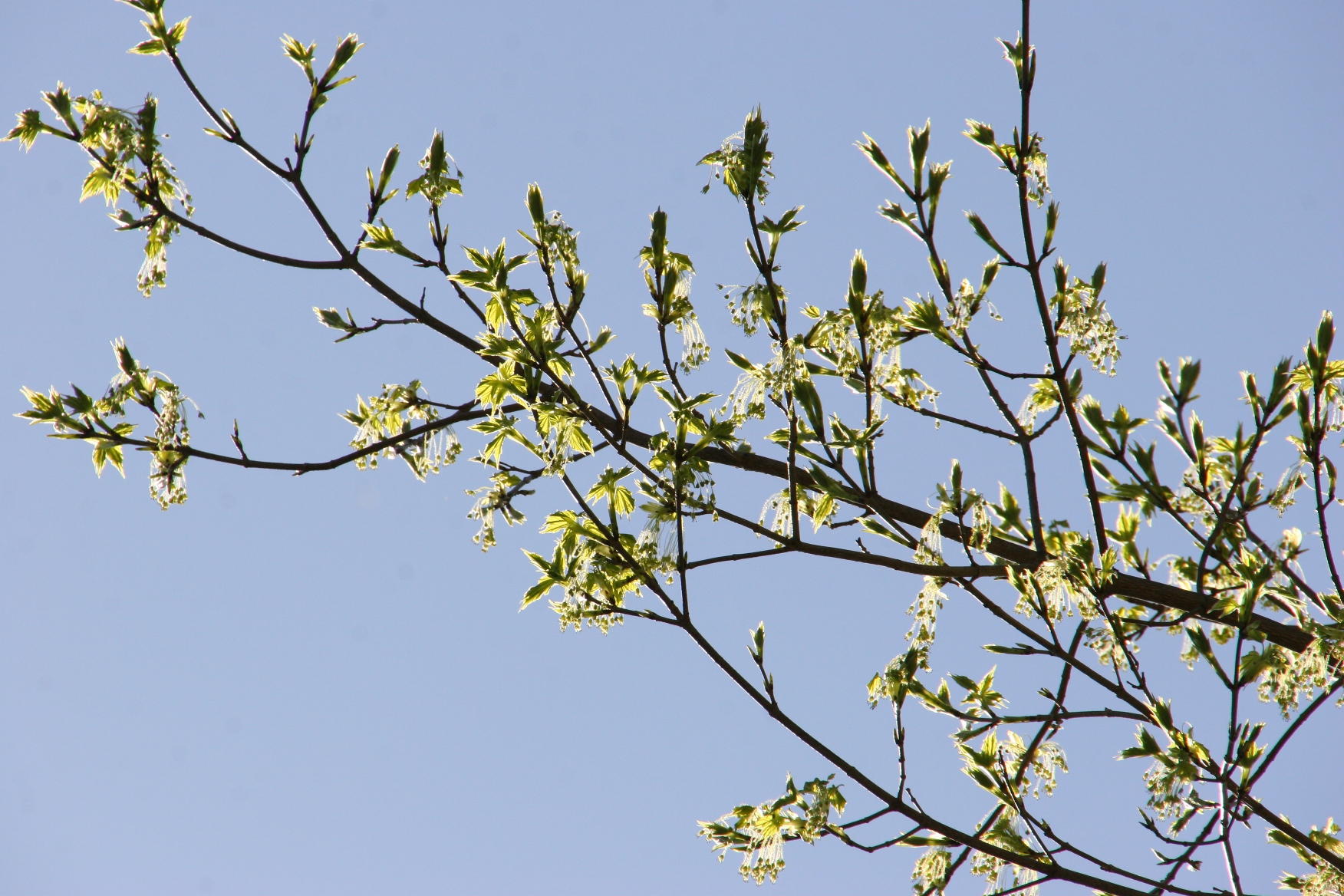
Leaves unfurling in southern Minnesota. Minnesota Prairie Roots file photo May 2018.
THIS FEBRUARY MORNING, with spring still months away in Minnesota, I crave a landscape flush with color. Snow gone. Spring flowers popping. Grass greening. Trees budding.
Daffodils bloom in my front yard. Minnesota Prairie Roots file photo.
I think we all need a glimpse of warmer, sunnier days after a wicked weather week across much of our country. I feel, especially, for the people of Texas. The unseasonably cold weather of ice and snow wrought incredible challenges with no power, broken water lines, even death. I feel for anyone living in Texas.
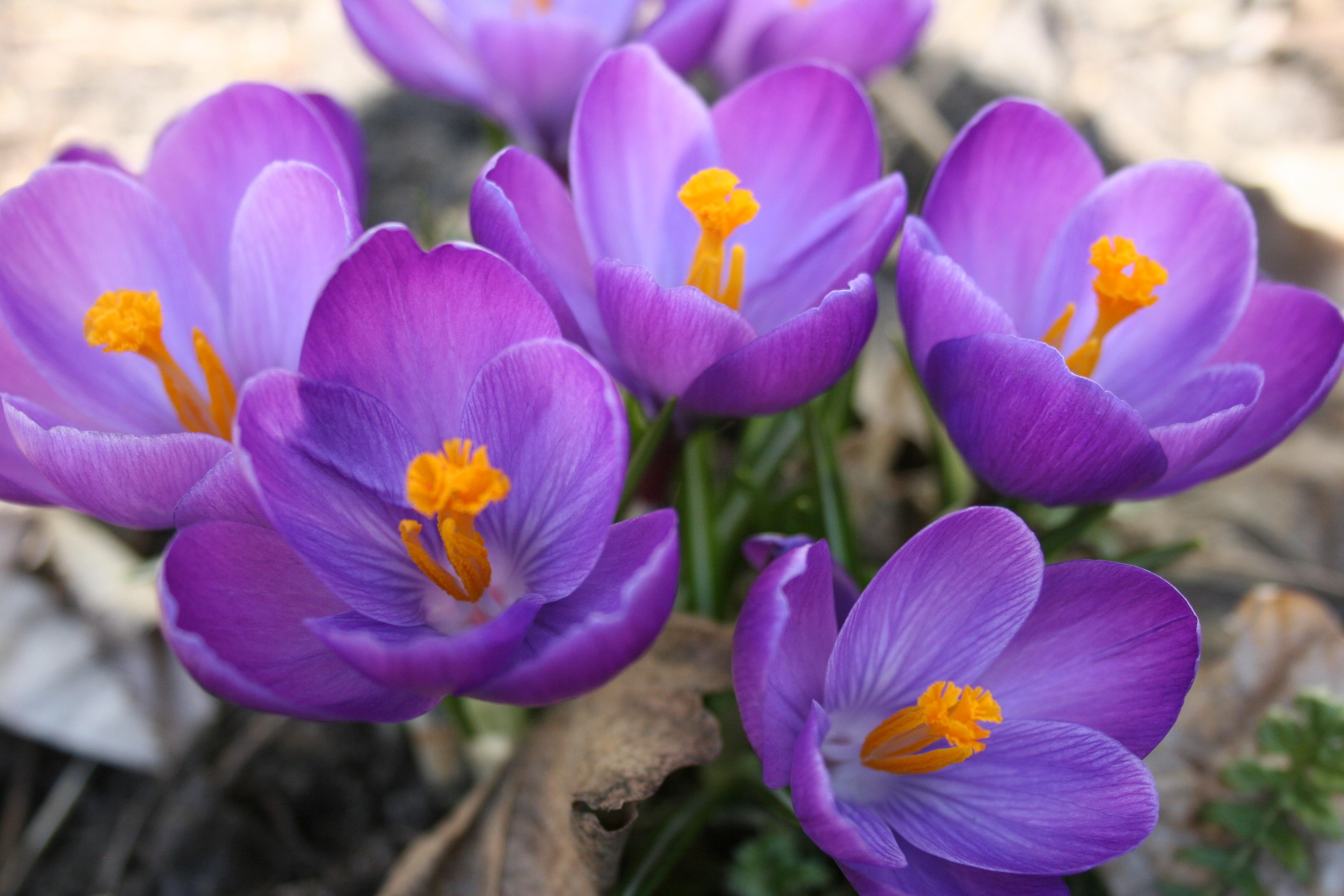
Crocuses blooming in my yard. Minnesota Prairie Roots file photo.
Even though we’ve endured a lengthy stretch of subzero temps here in Minnesota, it’s just cold. Not destruction. Not heartache. We can manage and function and mentally remind ourselves that this won’t last forever. Temps are already rising.
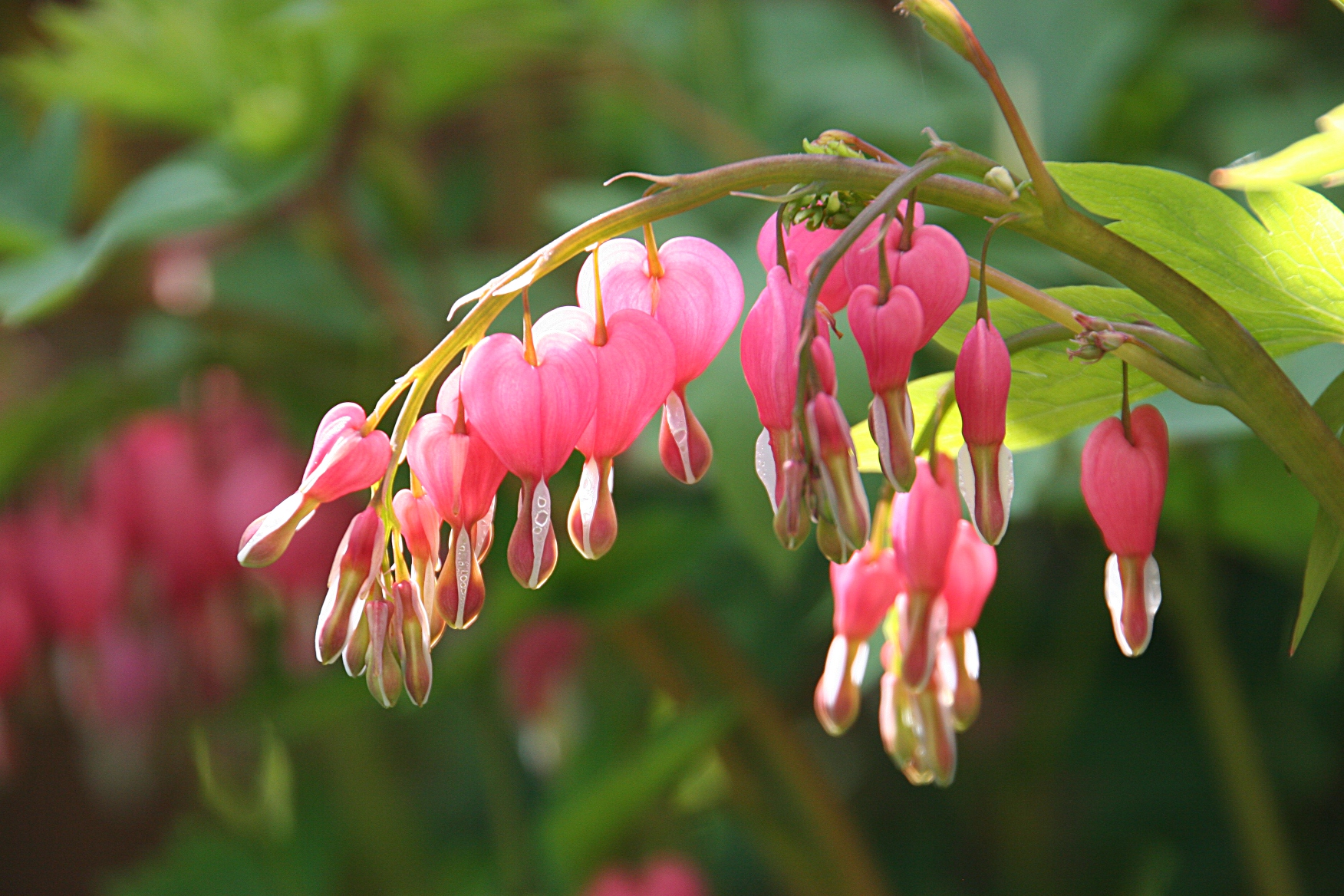
Beautiful bleeding hearts bloom on two bushes in my backyard each spring. Minnesota Prairie Roots file photo.
With those thoughts, I searched my files for photos of spring flowers. To brighten your day. To bring you joy. To remind you that in every season of life, we face challenges which stretch and test and grow us. But we can, and often do, come out on the other side as better people. More empathetic. More understanding. More grateful than ever for life, even if it’s sometimes hard.
These tulips were sent to me, as bulbs, from Paula in the Netherlands last spring. I later planted the bulbs in my yard and hope they erupt this spring. Minnesota Prairie Roots file photo 2020.
We push through the difficulties, often with the support of loving family and friends, to bloom color into the world. Or at least that is my hope.
#
BE ASSURED THAT MINNESOTA looks nothing like the photos above right now. Snow layers the land in a landscape devoid of color. Under the snow and decaying leaves, spring flowers await warmer days when the frozen earth opens to the sun and sky.
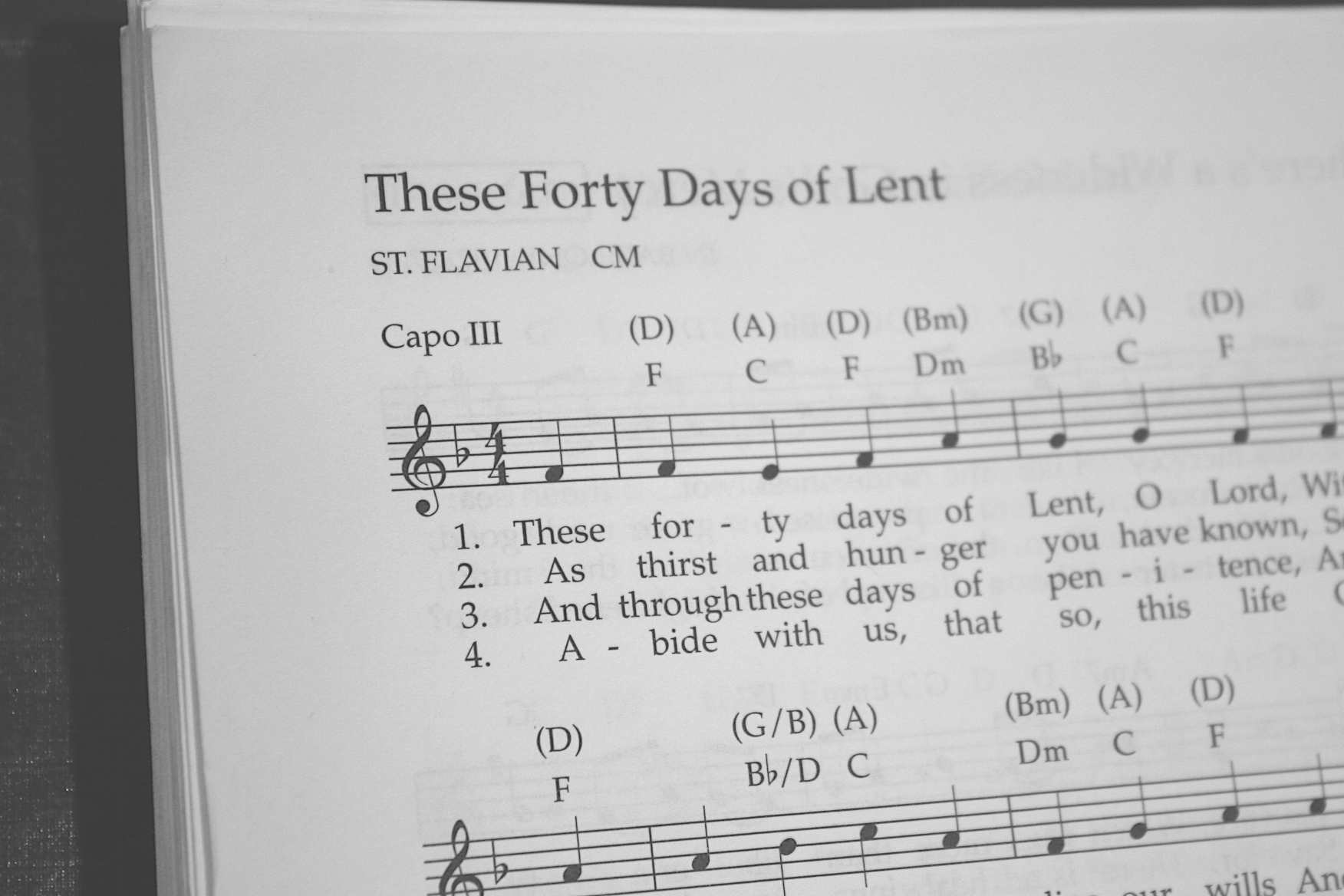
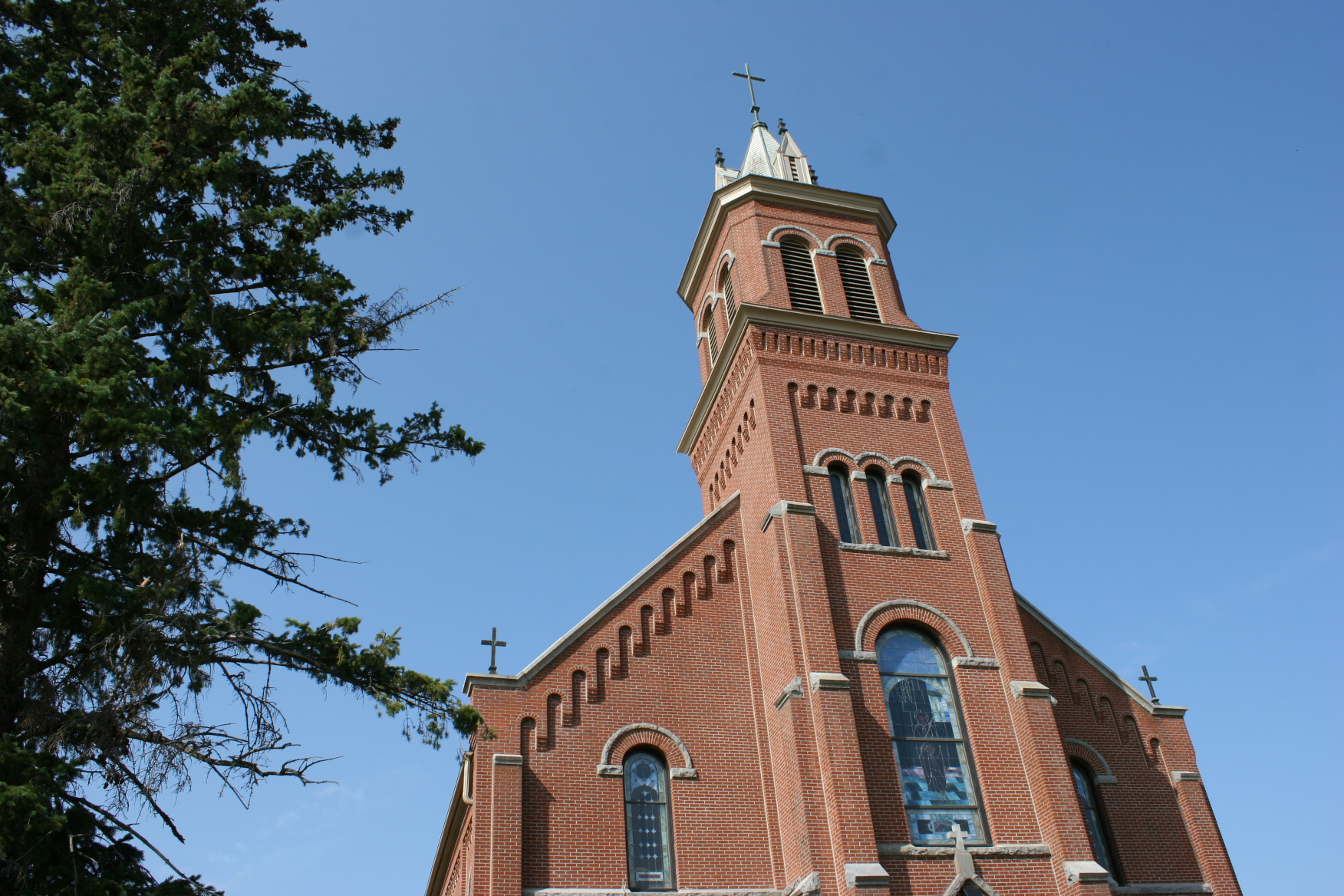
Photographed at St. Mary’s Catholic Church, New Trier, MN. Minnesota Prairie Roots file photo March 2017.
ASH WEDNESDAY PASSED yesterday not without my lack of awareness of this special day in the Christian church. Rather, I experienced the day with an acute awareness rooted in a recent personal loss—the death of my father-in-law.
Now, a day after the Wednesday symbolizing death and repentance and the beginning of Lent, I am thinking of my husband’s father, his funeral and burial only one week ago.
…for dust you are and to dust you will return—Genesis 3:19.
I doubt any words can better describe the reality of death. Ashes to ashes. Dust to dust. That’s basic. Understandable. Maybe uncomfortable for some. But it’s truth. We’re all going to die, whether at age 90 like my father-in-law or age 19 like my nephew Justin in 2001. Sometimes death takes our loved ones way too soon.
Last Thursday, as we celebrated the Mass of Christian Burial for Tom and heard the priest speak those familiar words of dust to dust, grief and reality descended. Yet, as a woman of faith, hope balances that in the belief that I will see my loved ones again in heaven. Dad Helbling. Justin. My dad and grandparents and many aunts and uncles…and others I’ve had the joy of loving. For to love is to also open one’s heart to grief. And to hope.
I APPRECIATE DR. ANTHONY FAUCI. He’s been a strong, calm, unwavering source of factual information about COVID-19 since the pandemic began. I trust him. As director of the National Institute of Allergy and Infectious Diseases, he speaks as a scientist, and also as an individual and official who cares deeply about others. He speaks truth, with no interest in self-glory. He never compromised, even in the face of public criticism from the highest powers.
Fauci impresses me as a man of incredible character. Or, as the awardees stated, “speaking truth to power.”
When I consider this scientist and all he’s done for the health and well-being of not only Americans, but also the global world, I consider how his expertise is still dismissed by some. Too many really. Just recently I walked away from a conversation in which the value of wearing face masks was questioned. Dr. Fauci’s name was mentioned. Although I voiced my disagreement, I realized it held no weight to these individuals. So I walked away.
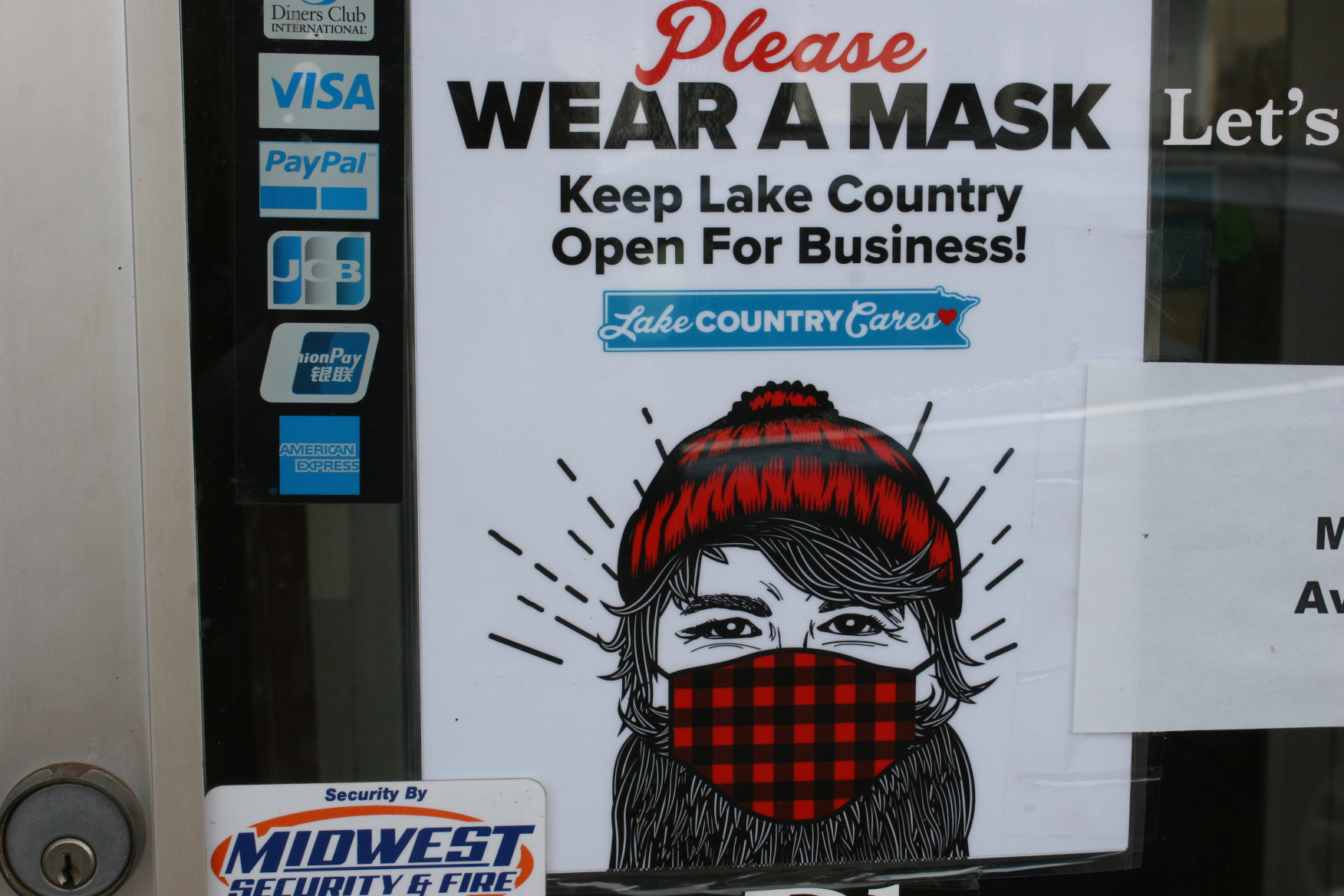
I photographed this sign on a business in Crosby. Minnesota Prairie Roots file photo 2020.
I am walking away more and more these days from people. Generally not people in conversation, because I’m seldom around anyone long enough to carry on a conversation. But walking away from people in public places who refuse to either wear face masks or who do not wear them over their mouths and noses. Those numbers are increasing, and I just do not get it. Walk into any grocery store in Faribault and you’ll see them—the non-maskers, the half-maskers. Even some cashiers are half-maskers and, when I see that, I call them out. I figure they owe it to customers to protect and respect them if they want their business.
We have a mask mandate in Minnesota requiring those ages six and over to wear face masks in public places. Children ages two to five are strongly encouraged to also wear masks. Minnesota Prairie Roots file photo June 2020.
When I pick up the local daily newspaper, I see photos of people grouped together, unmasked. And when I turn to the sports page, photo upon photo upon photo shows half-masked athletes. It’s disheartening. Disappointing. I am weary, too, of the political rhetoric over mask mandates.
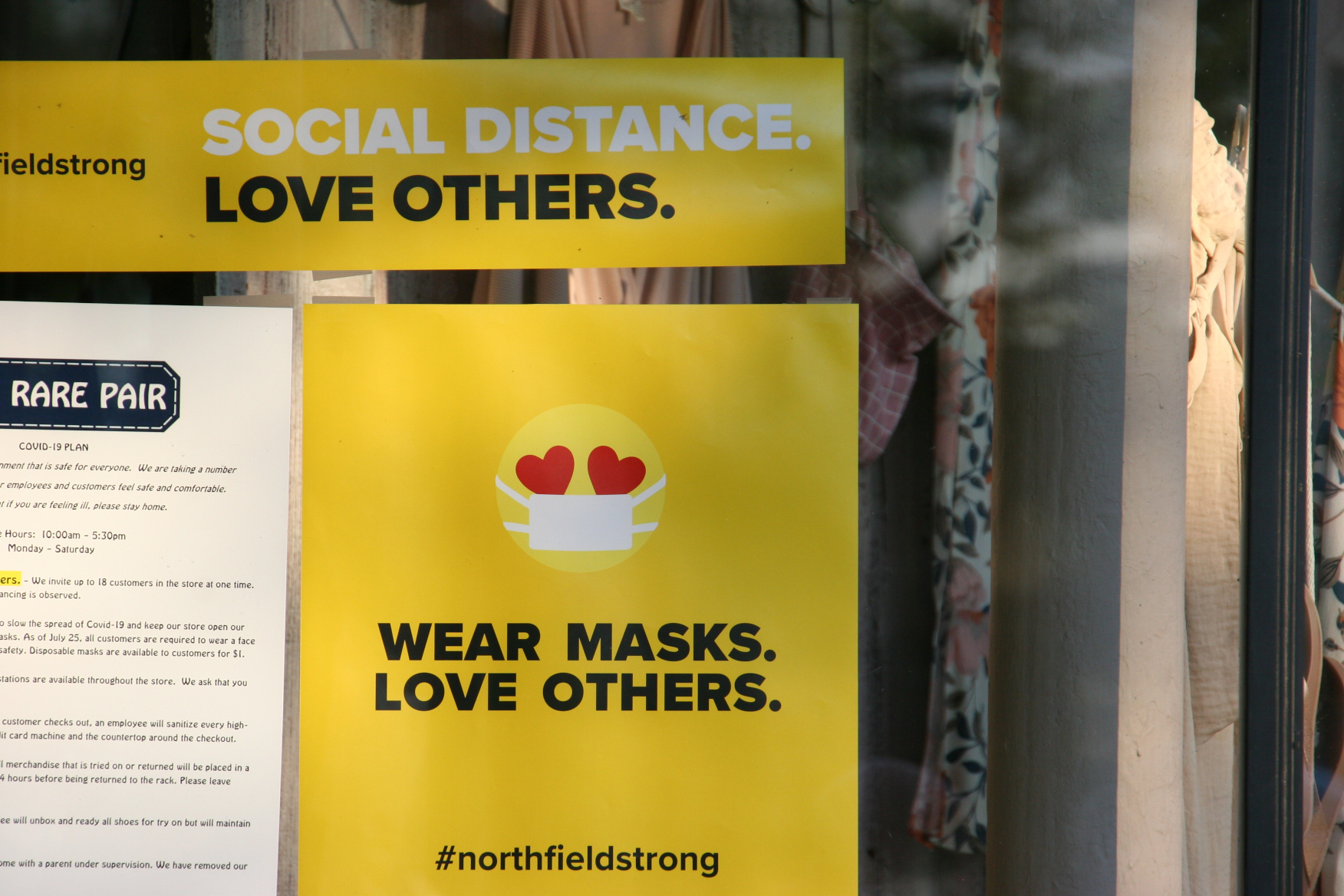
The reason the Rare Pair in Northfield gives for wearing face masks. Minnesota Prairie Roots file photo summer 2020.
I want people to do the right thing. Just wear a face mask and wear it correctly. Or, as my nearly 5-year-old granddaughter told her little friend recently, “It goes over your nose and mouth!” And, yes, she wears a face mask as does her little brother, who just turned two. If preschoolers can mask properly, so can adults.
For the 15 minutes or half hour or hour adults are grocery shopping or whatever in public, they can wear a mask and wear it correctly. Hanging around your neck doesn’t count. Nor does wearing a plastic shield without a mask meet CDC guidelines. The CDC now recommends double masking for added protection. I don’t know what it will take for people to understand the importance of mask-wearing. A locally-targeted marketing campaign. Public service announcements. My granddaughter accompanying me to the grocery stores in Faribault with her masking message.
Masking, and masking correctly, is about keeping all of us healthy and safe. Me. You. Your friends and neighbors and loved ones. Strangers. My granddaughter. And it’s about common sense and believing scientists, like Dr. Anthony Fauci.
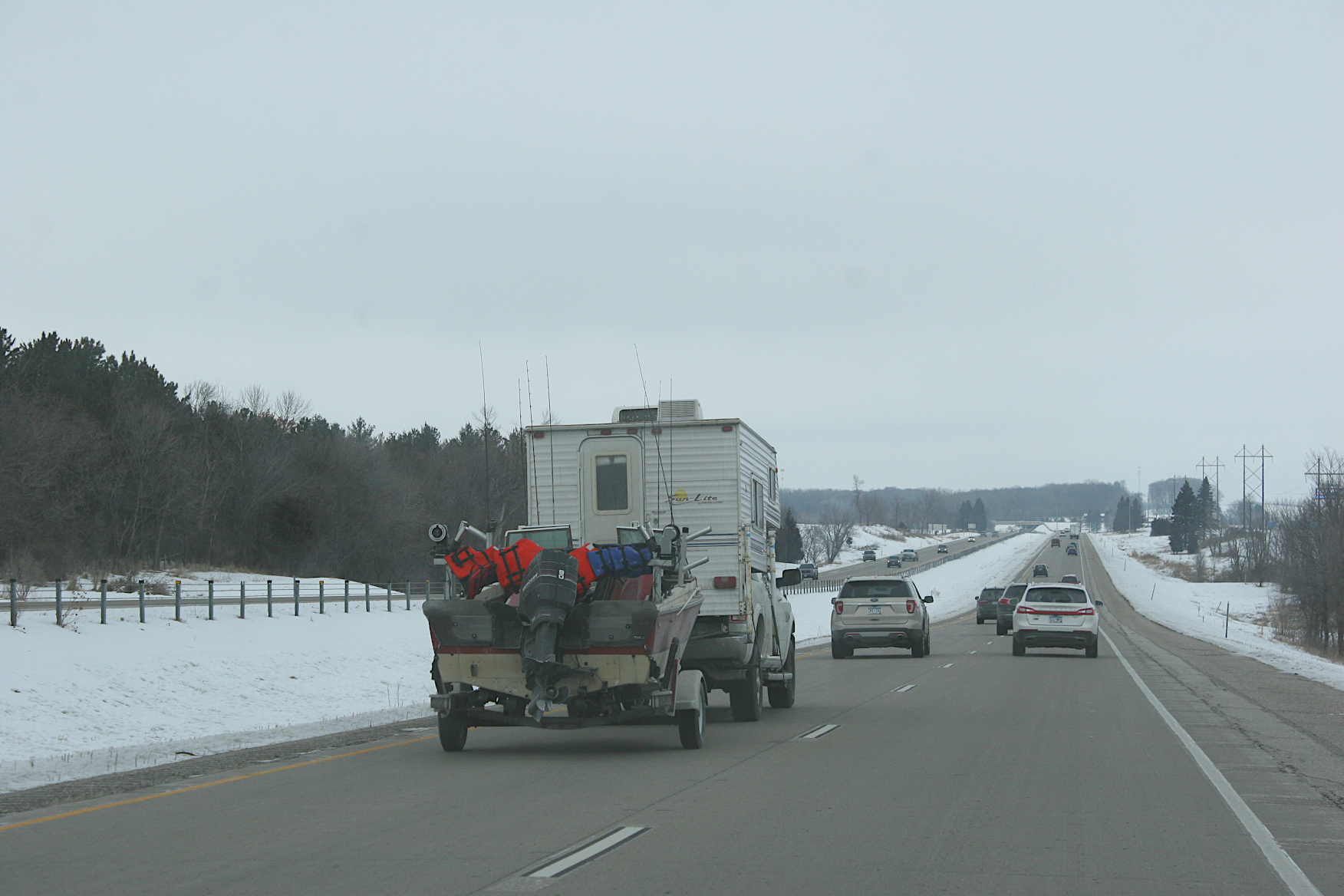
Contrast of seasons photographed northbound along Interstate 35 near Faribault. Minnesota Prairie Roots file photo January 2021.
AFTER AN ENDLESS STRETCH of subzero cold, relief is in sight. By Friday, we could see temps reaching the 20s here in southern Minnesota. Finally. That will feel downright warm after recent daytime highs not even reaching zero, temps plunging into the minus 20 degrees range and windchills as low as 50 degrees below zero.
During Arctic snaps like this, we complain a lot, warm up the car, crank up the furnace, bundle up and venture out when necessary, and even when not. After all, we have an image to maintain of hardy Minnesotans.
Secretly, and not so secretly, we dream of warmer days. Days at the lake for some. Fishing from a boat rather than an ice shack on a frozen lake. Camping. Walking outside without concern for frostbite.
As sure as the sun rises and sets, we realize that this cold spell won’t last forever. That winter will end…come April.
St. Michael’s Catholic Church, Buckman, MN. Minnesota Prairie Roots file photo September 2020.
It was an unusually frigid February day in central Minnesota with the temp hovering around zero as we gathered at St. Michael’s Catholic Church in Buckman. Over the course of more than three hours, memories imprinted upon me. Memories shaped in part by a global pandemic, which affected the ways in which we could be comforted. Randy and I declined hugs and handshakes. There would be no luncheon, the time of one-on-one visits. No getting together with siblings, at least for us, either before the funeral or after.
Yet, simply being together in the same building brought comfort. Comfort came, too, in flowers and music and Scripture. Like the words of Ecclesiastes 3:1-14, read by my sister-in-law Rosie. When she read a time to embrace and a time to refrain, I thought, how fitting for a funeral during COVID-19.
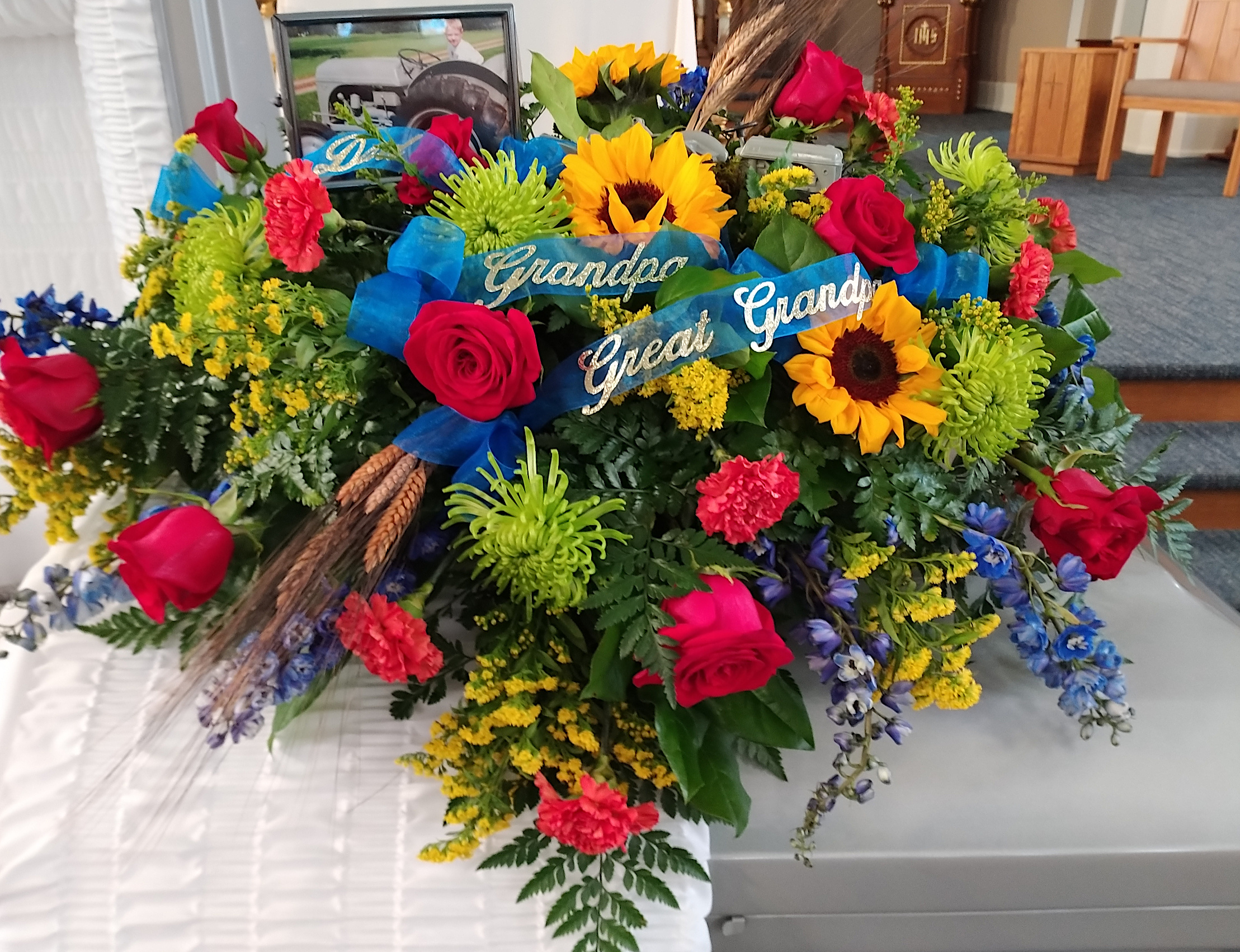
The casket spray, which incorporated a tractor photo and a toy tractor.
Images seared into my mind—like the lowering of the casket lid over my father-in-law. Or the surprise of seeing my then preschool-aged son in an image atop the casket spray. He was perched on the seat of his grandpa’s Ford 9N tractor in a photo I took decades ago.
We sat in the front pew to the left. Above the altar, in the blue ceiling, are the heavenly angels that drew my focus. Minnesota Prairie Roots file photo September 2020.
Many times throughout the service—especially during the farewell chant and song of angels welcoming Dad into heaven—I focused on the heavenly angels painted on the ceiling high above the altar. What a gift the artists and craftsmen of this aged church left for mourners. Art comforts.
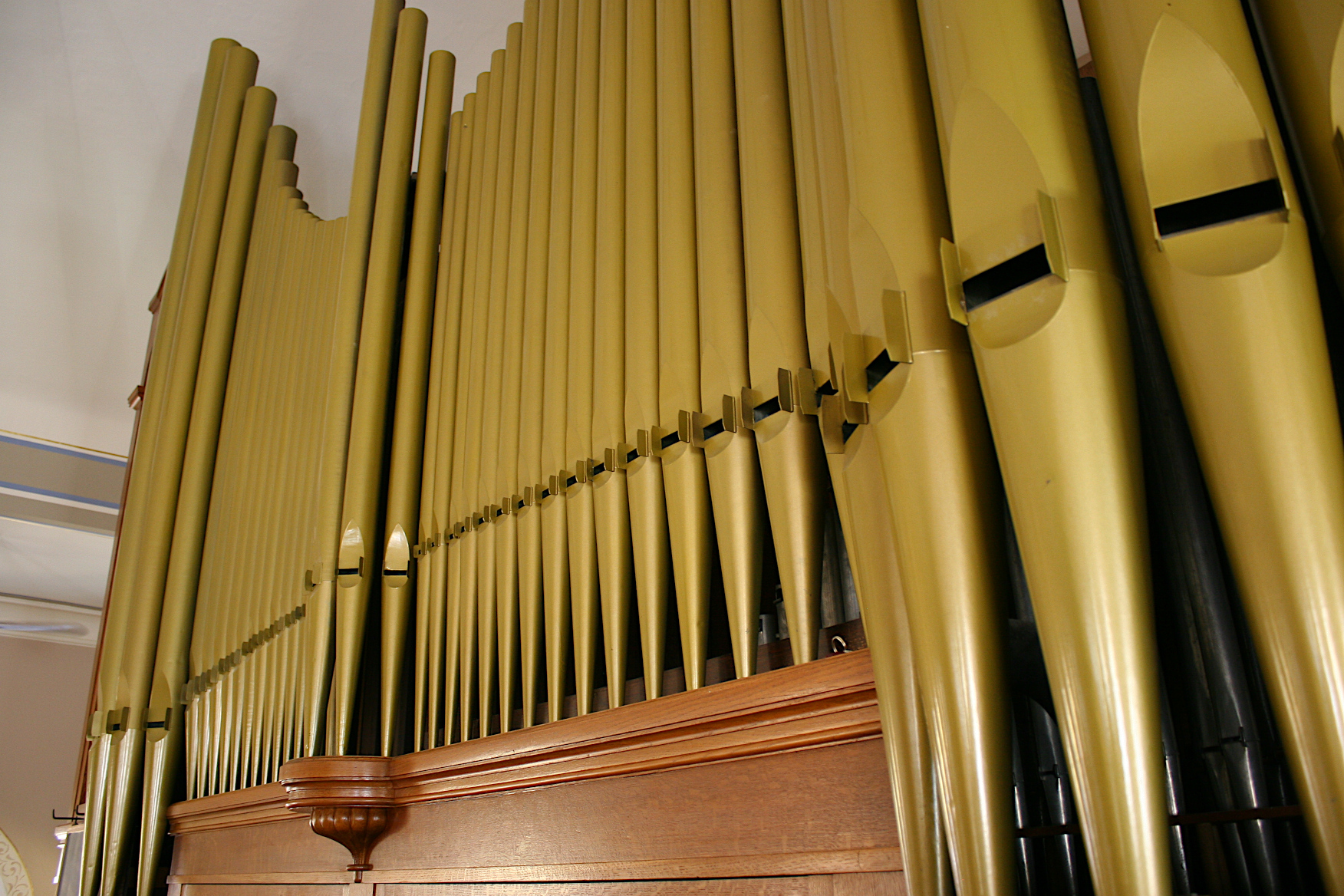
Pipes on the St. Michael’s organ. Minnesota Prairie Roots file photo September 2020.
So does music, especially music. “Joyful, Joyful, We Adore Thee” and “The Lord is My Shepherd” and “Holy God, We Praise Thy Name” and many other songs filled this massive church with the most beautiful, heavenly music performed by musicians in the balcony. St. Michael’s has incredible acoustics. Randy and I suggested to his classmate Janel prior to the service that perhaps the musical team could play a polka or waltz in honor of Dad, who so enjoyed both and who also played piano, organ and accordion (not the concertina, as the priest noted). My sister-in-law Vivian shared with me later that the hymn “Whispering Hope,” played before the casket closed, was a popular waltz at wedding dances in the area and was a favorite of her parents. I love nuances like that which personalize a funeral.
As I sat through the service next to Randy on an uncomfortably hard straight-back pew, physically-distanced from family, I determined not to cry. I didn’t want to cry into my mask. I considered how surreal this felt to experience a funeral during a global pandemic. And how surreal also to experience a funeral during Minnesota’s longest cold snap in nearly three decades.
We dressed for the weather, wearing long johns under our dress pants. Randy told me his dad wore long johns often back on the farm so this extra layer of warmth seemed another fitting tribute. Before heading to the cemetery, we slipped out of dress shoes into snow boots.
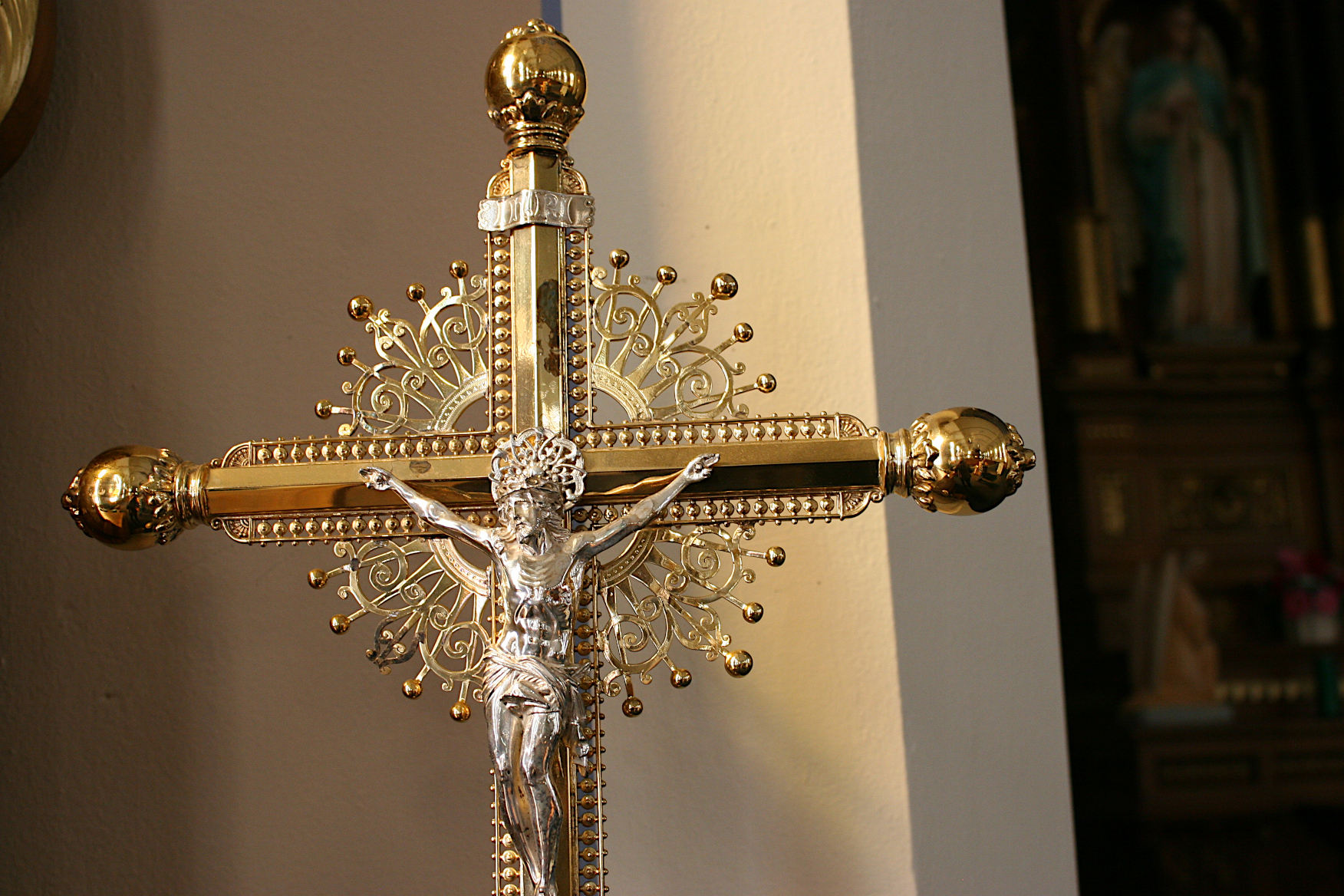
The crucifix carried to the cemetery. Minnesota Prairie Roots file photo September 2020.
And then, once grandchildren slid their grandfather’s casket into the hearse for the short drive to the cemetery, mourners followed by foot, crossing Minnesota State Highway 25. A church officiant stood half-way into the traffic lane, bundled for warmth, purple mask covering his face, holding a pole with crucifix atop as traffic waited out of respect for us to cross the road. It was a strong visual moment for me. The red pick-up truck parked curbside contrasting with mourners dressed in black. Waiting vehicles. Masks and stocking caps and bald heads (among those who chose to brave the elements minus head coverings). The priest in his, oh, so Minnesotan red buffalo plaid coat and matching ear flapper cap. An icy parking lot with occasional welcome patches of gravel. And then, the final steps across the snow to the burial site.
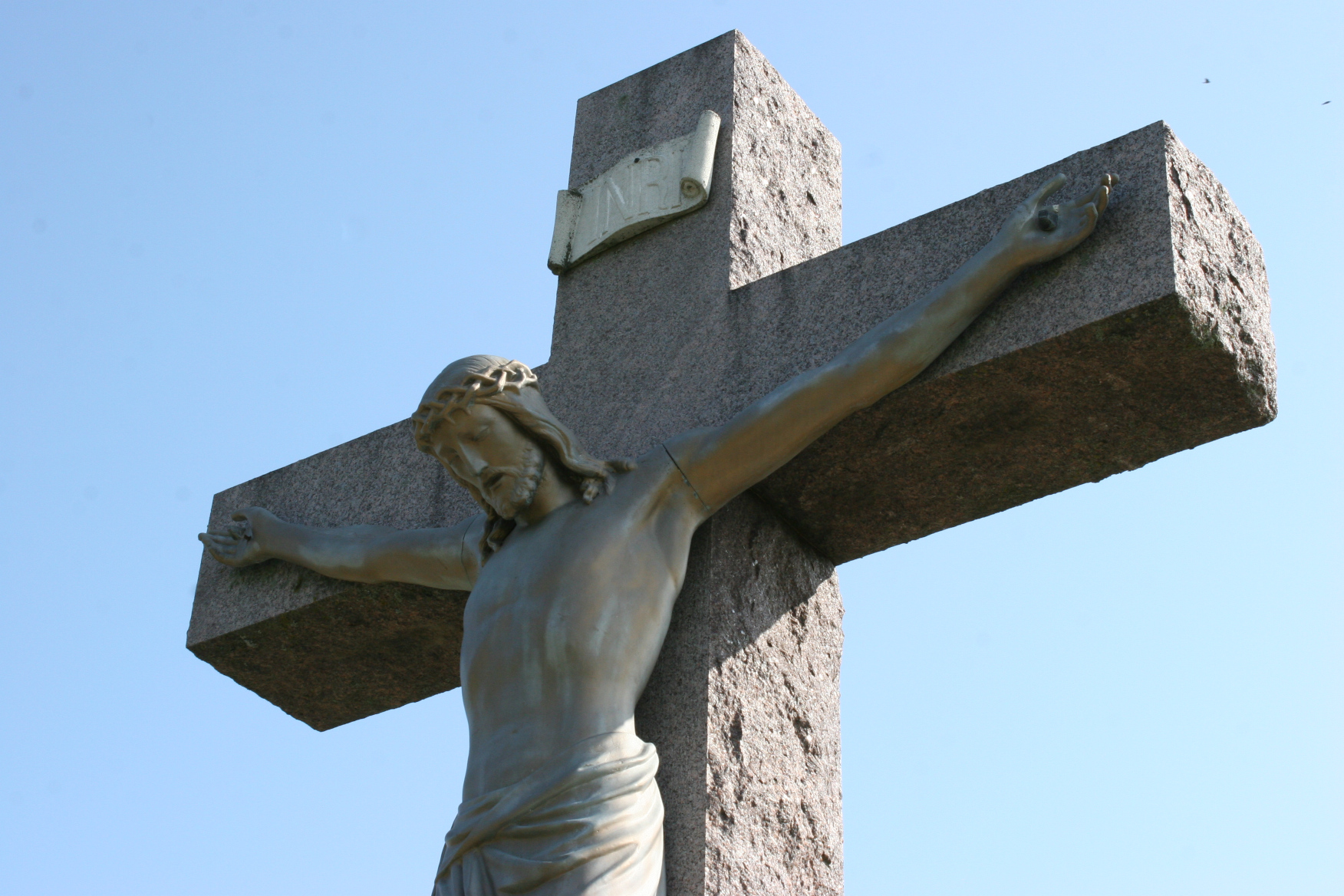
This art rises above St. Michael’s Cemetery. Minnesota Prairie Roots file photo September 2020.
As my nieces and nephews carried my father-in-law’s casket, I felt the heaviness of grief. The cold of death, balanced by the promise of eternal life. Grief and joy.
And then, in one last act of love, we each stepped up to pull flowers from the casket spray to lay upon the casket. I chose a red rose, not yet blackened by the cold, placed it on the shiny grey surface. And then, with my mittened hand, I patted the lid twice in a final farewell to my father-in-law.
HOW ARE YOU, dear friends? I don’t ask that question without expecting an honest answer.
Perhaps you’ve had a really difficult week. Like me. One filled with concern for those you love. One of endless texts and emails among family. Worry. Awake too early. Feeling stressed.
Or maybe everything is going great. And that’s good. Life is a mix of rainy days and sunny days. Or if I put that in the context of winter in Minnesota, days with snow and days without snow. Days when temps are well above zero and days when they are unbelievably cold. Like the weather predicted for the next week.
Minnesota Prairie Roots file photo February 2014.
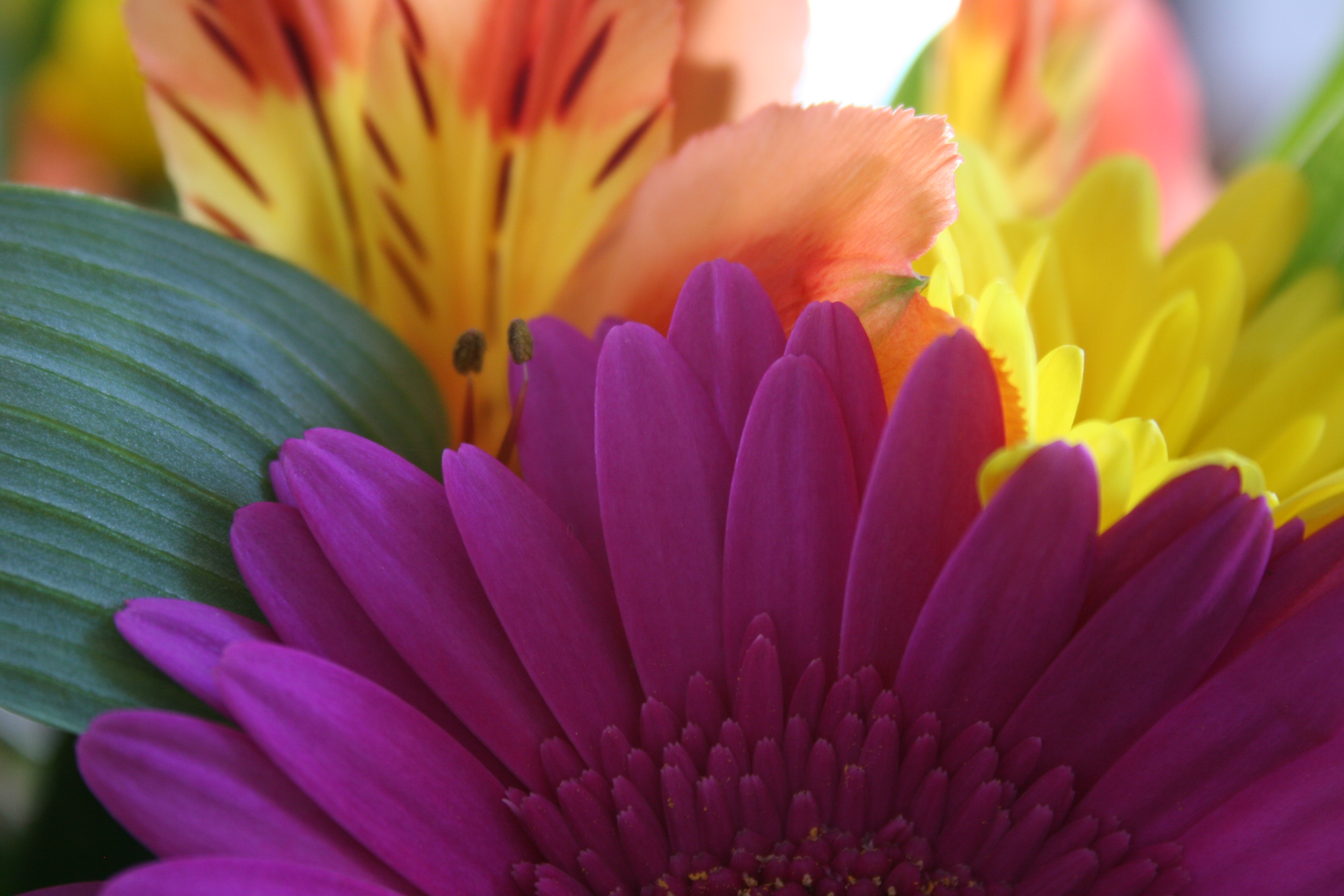
But let’s put all that aside right now and focus on flowers. Yes, flowers. When I awakened too early the other morning and couldn’t fall asleep again with pain pressing upon my head, neck and shoulders, I prayed. And then I pictured flowers. These flowers. Aren’t they lovely?
And happy is good. Even in difficult days that challenge us, there are ways to find joy. And today my joy comes in remembering the gift of these flowers, how they popped color into a February day and lifted my spirits seven years ago. And now again, today.
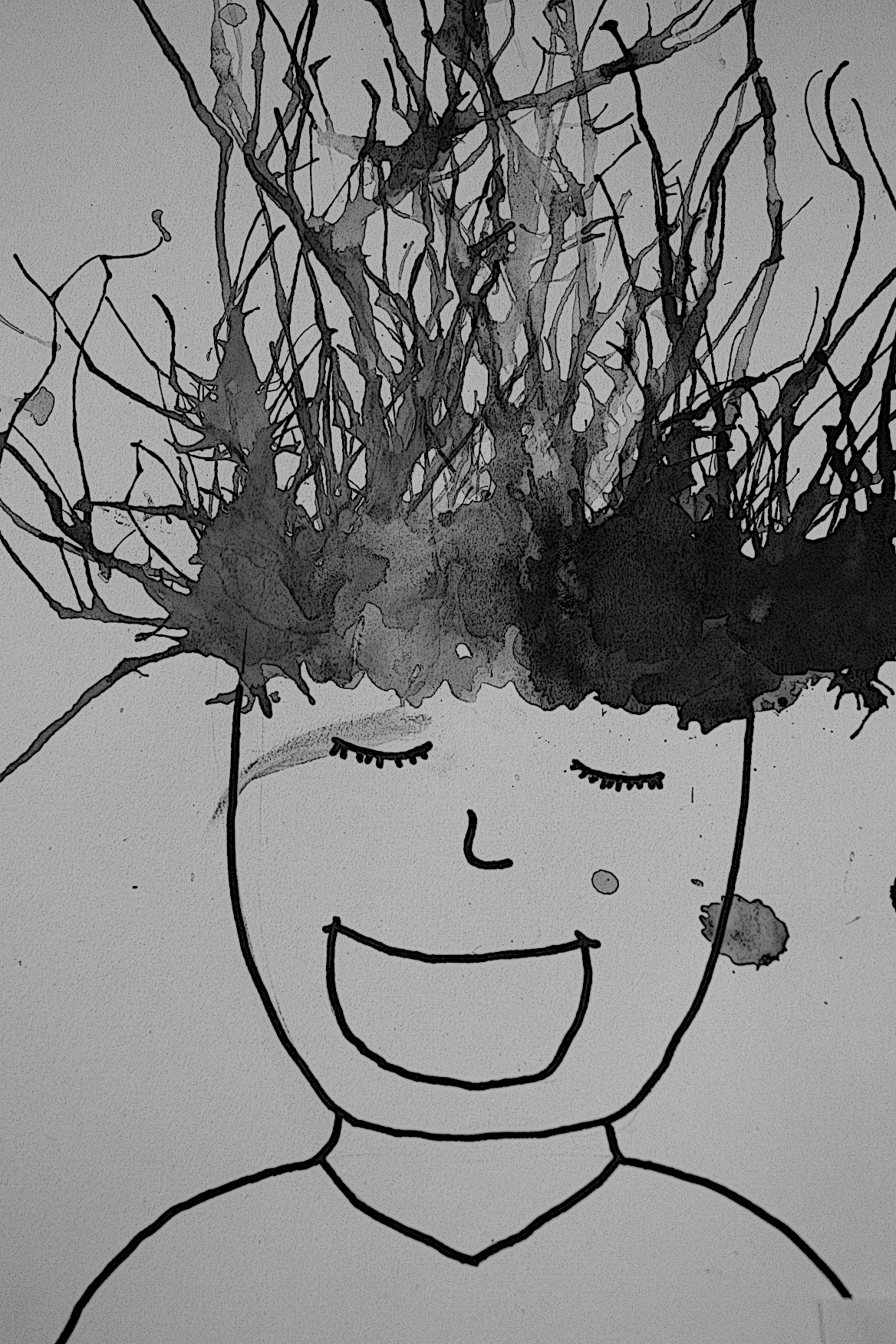
Edited painting by Ruby from the 2018 student art show at the Paradise Center for the Arts, Faribault. Minnesota Prairie Roots file photo.
ONCE UPON A TIME, in The Land of Plenty…
Ah, a fairy tale, you say. Not exactly. Rather, this is a story rooted in reality. A story with a main character who, for ease of writing, shall be identified in secondary references as “he.” Not that The Great Invader is male.
So let’s dive into the story. Once upon a time in The Land of Plenty, The Great Invader landed, making himself comfortably at home. He was, by nature, a traveler. But he wasn’t the type of guest you’d knowingly invite into your home. You know the kind. Ungrateful. Demanding. Messy. And mean, just plain mean. Because of those undesirable traits, he soon found himself on the road, hopping from place to place under a guise of masterful deception. West Coast to East Coast. Then to the South and Up North and to the Midwest. He wanted, above all, to avoid detection and negative publicity.
But word soon got out about The Great Invader. Scientists found him especially fascinating. The more they studied the strange-looking traveler with his signature spiky hair, the more alarmed they grew. They realized he was much more than he appeared. Dangerous. He left a path of death and destruction wherever he went. Yes, that’s a cliché. But it fits.
The scientists warned about the intruder and suggested ways to deal with him. By then they’d studied him in their labs and determined that he traveled mostly by air. No ticket required. “Wear masks,” public health officials who collaborated with the scientists, advised. “Distance yourself from others. Avoid crowds. If you’re sick or feel like you’re coming down with something, stay home.” All of those tactics would discourage The Great Invader. But these proactive protocols were especially difficult for some people in The Land of Plenty to hear, let alone follow. They didn’t like anyone telling them what to do.
The Great Invader was acutely aware of these efforts to stop his adventures. He also recognized the discontent and division spreading across the land like a California wildfire. He needed a plan. And he didn’t have to think too hard. He’d simply rely on people who doubted scientists, who took little stock in warnings from health officials, who spread false information, especially via social media. People who could be a voice. He didn’t much care if that voice was loud or insidiously quiet.
As the months passed, The Great Invader found his hands-off strategy working quite well. He traveled to nearly every corner of The Land of Plenty. Even to the smallest village, where the villagers never dreamed he would visit and leave his imprint. “Why would The Great Invader come here? We have no great theaters or art museums or sports arenas or five-star restaurants or any major tourist attractions,” the villagers reasoned. So many went on with life as usual. Yet, an undercurrent of concern began to bubble when evidence of The Great Invader’s presence surfaced in the remotest of villages.
Meanwhile, across The Land of Plenty, scientists, health and government officials, and even journalists, were tracking The Great Invader on his journey around the country. And the world. They soon discovered they were no longer dealing with a sole sojourner, but rather many with magical powers. The spiky haired traveler had reproduced millions, if not billions, of times and created new versions of himself. This frightened the scientists, who by then had called upon experts to develop a battle plan. They needed to stop the traveler as he asserted his deadly powers. So researchers created a powerful potion to protect the people.
Soon squabbles arose as to who would get the potion first. The Great Invader laughed. He thrived on chaos, confusion and discontent. And lies. He admired selfishness.
He also secretly applauded those who defied common sense and science. He reveled, especially, in those in The Land of Plenty who refused to wear face masks. He celebrated every single person who wore their masks below their noses. And he saw plenty of those, whom he considered valued allies. The mask-less and the half-maskers allowed The Great Invader to travel with ease. If he found himself temporarily removed from a region, he just moved on for a while, only to return when people thought he’d permanently left.
And so, while the people of the land claimed all sorts of indignities brought on by The Great Invader and even tried to stop distribution of the powerful potion, he continued mapping his routes, plotting strategies and documenting his travels in his Once Upon a Time journal.
#
NOTE:In every story there are truths, this one no exception. To all who have encountered The Great Invader/COVID-19 at his worst, I am sorry.
Observations in my community of Faribault sparked the idea for this story. As COVID-19 infections and deaths rise in Rice County, I see too many individuals in public who are wearing masks below their noses and/or mouths or not masking at all. I am beyond frustrated. We’re not talking just a few people. While I shopped at a local big box retailer, a smaller discount store and grocery stores recently, I saw perhaps 30 individuals who were half-maskers, plus a mask-less couple and children old enough to wear masks (but who were unmasked). Employees were among those half-maskers. I implore the people of Faribault to, please, just wear a tight-fitting, multi-layered mask, and wear it over your mouth AND nose. It’s not that difficult.
Buckman, Minnesota. Minnesota Prairie Roots file photo September 2020.
RURAL MINNESOTA. For Randy and me, that represents our upbringing, the place of our roots, the land that is part of our personal geography.
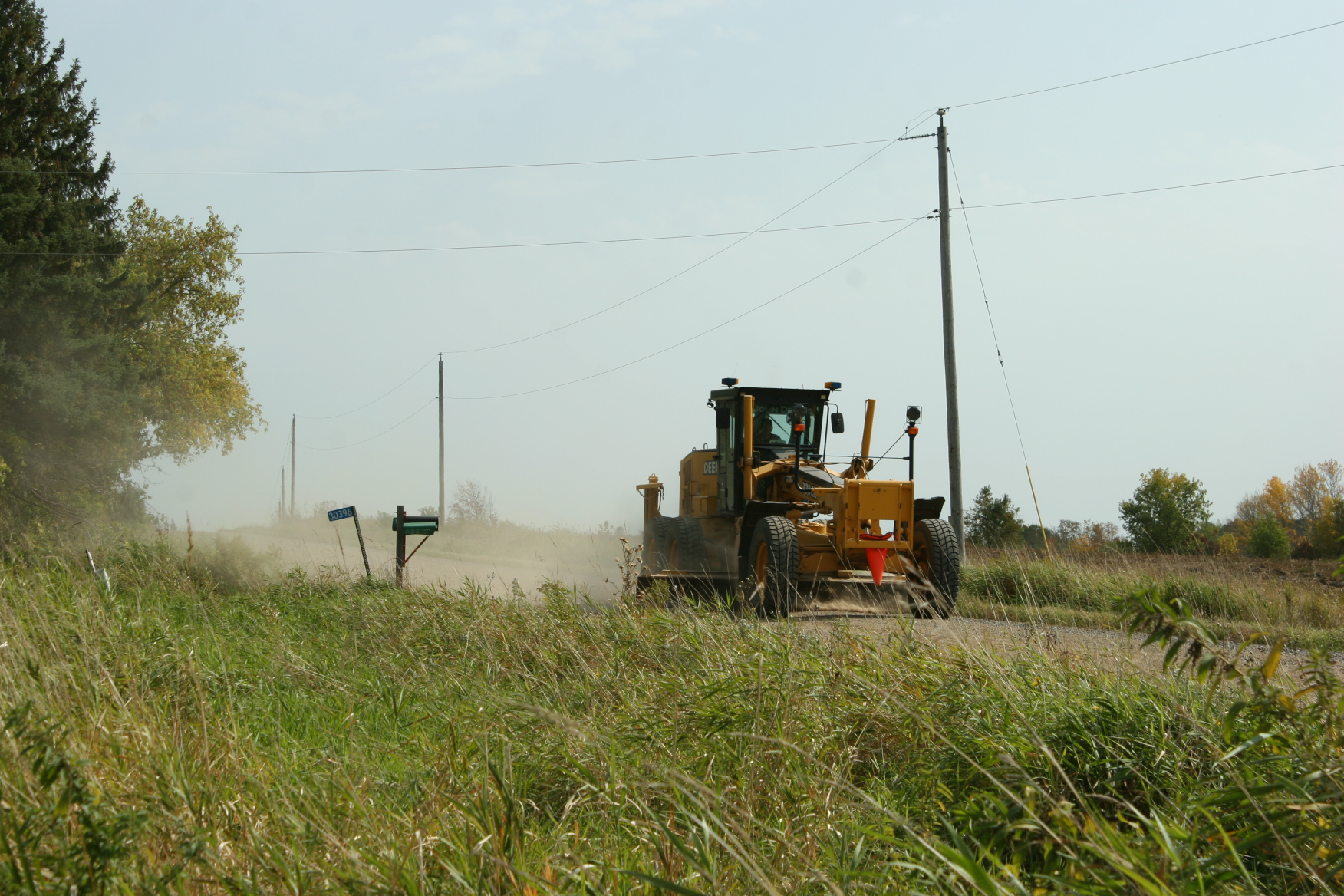
A road grader grades the gravel road near Randy’s childhood farm southeast of Buckman. We pulled off the narrow road to allow the grader to safely pass by our van. Minnesota Prairie Roots file photo September 2020.
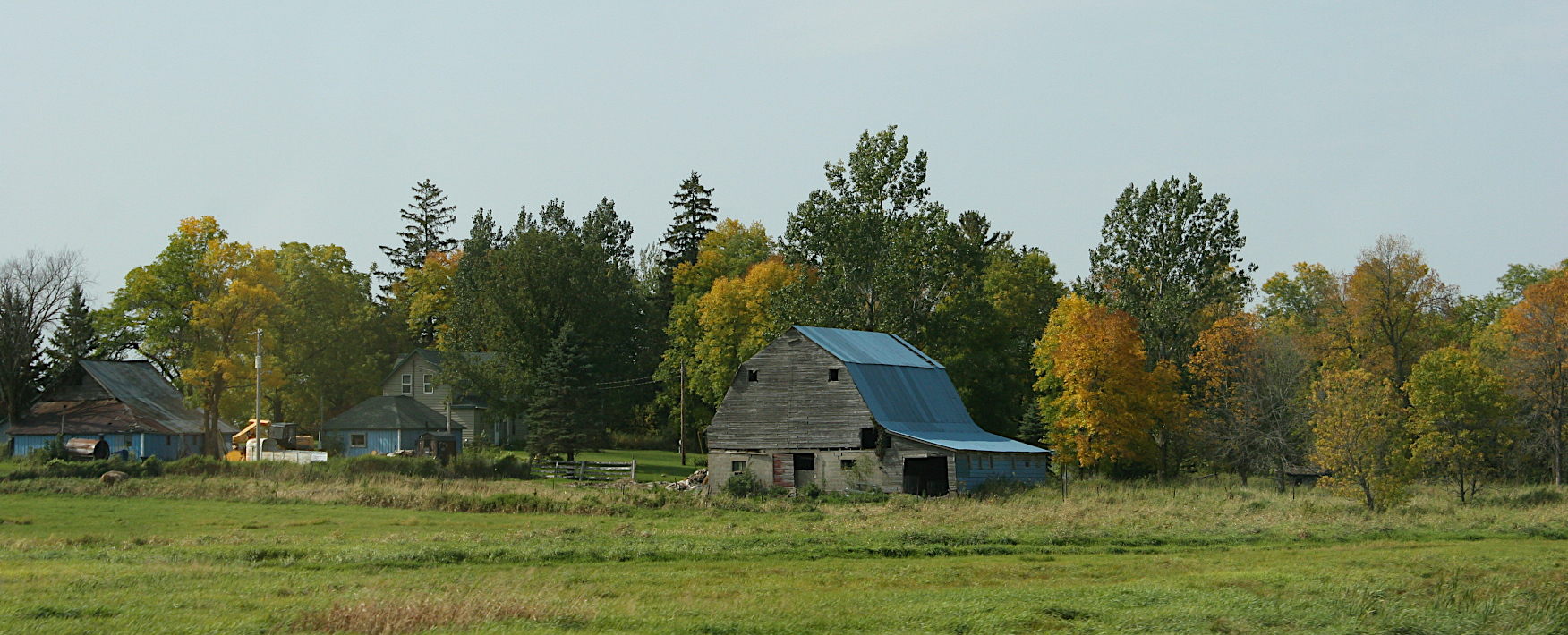
A farm place between Buckman and Gilman. Minnesota Prairie Roots file photo September 2020.
In the small town of Gilman. Minnesota Prairie Roots file photo September 2020.
We both grew up on farms, in large families—his three kids larger than mine at nine. We both picked rock—he more than me as Morrison County in central Minnesota sprouts more rocks than Redwood County. We each labored in fields and barns and understood the value of hard work and our importance in the farming operation. Even at a young age. That carries through in our strong work ethics and our strong link to the land.
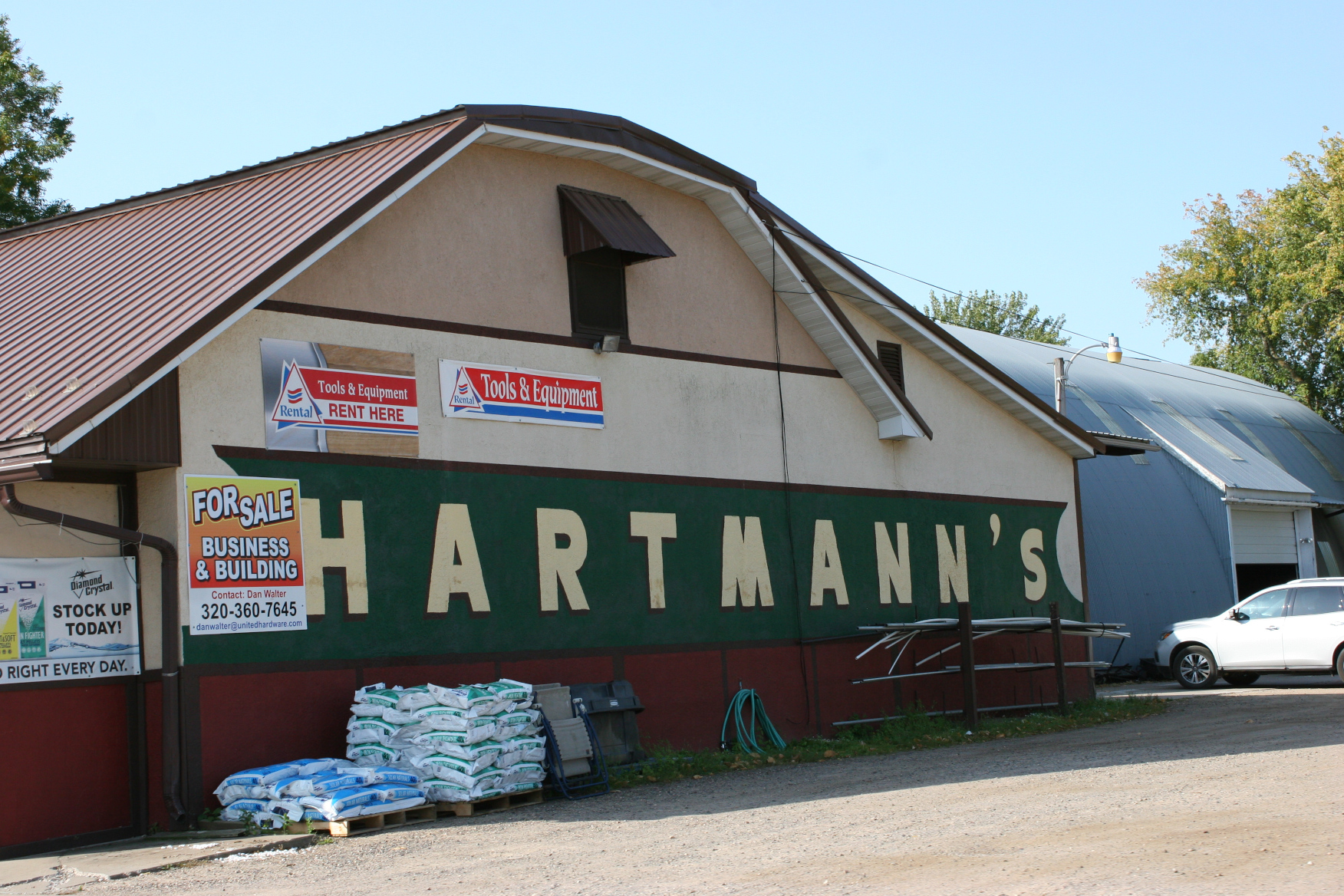
Pierz, a small town to the north of Buckman and bigger than Buckman, still has a hardware store. Randy attended junior and senior high school in Pierz. Minnesota Prairie Roots file photo September 2020.
As we passed through Pierz, I photographed this updated community gathering spot. Minnesota Prairie Roots file photo September 2020.
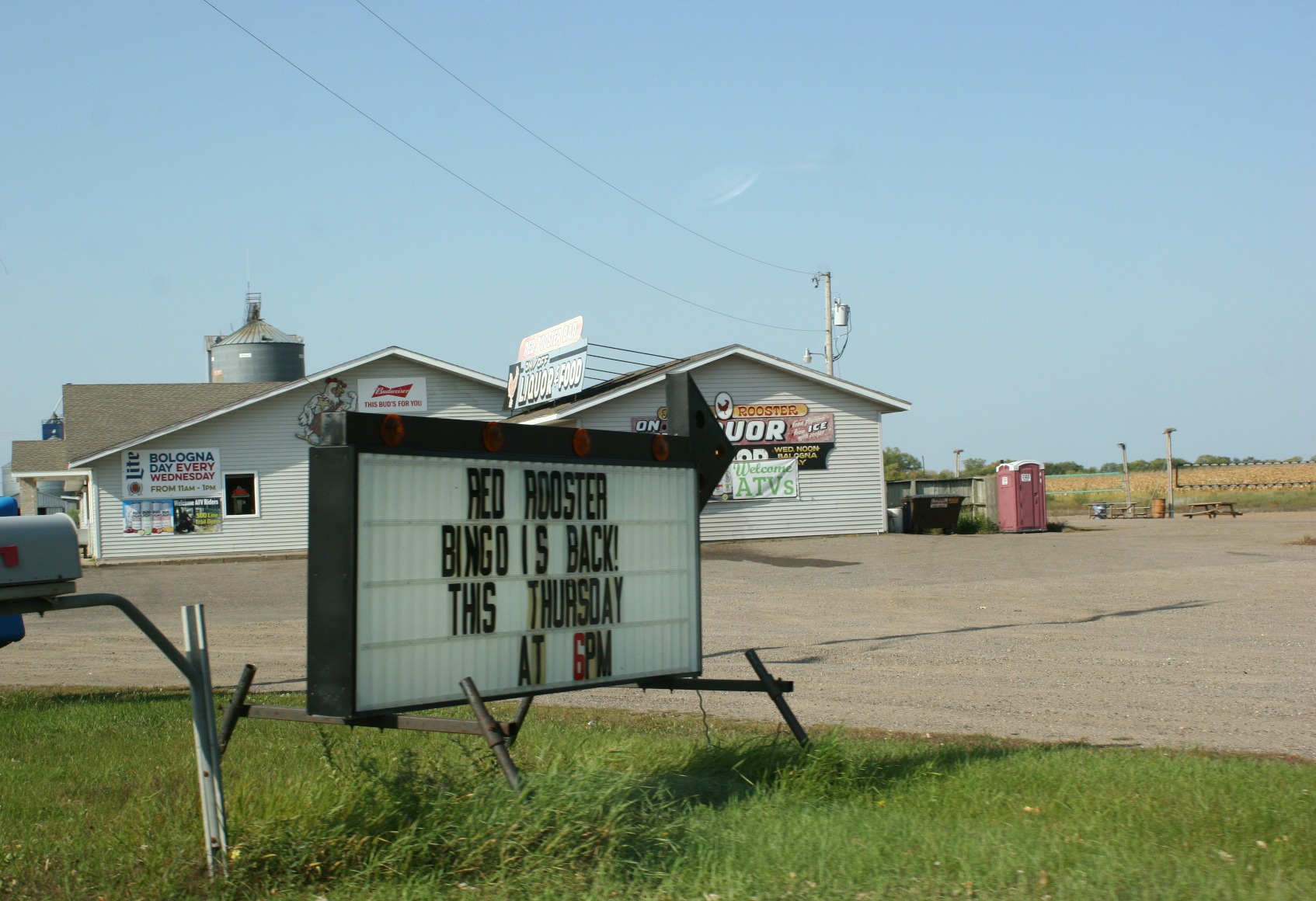
Genola, just to the south of Pierz, is home to the Red Rooster. BINGO is big in this part of rural Minnesota as is weekly Bologna Day (as noted in the banner on the building). Minnesota Prairie Roots file photo September 2020.
And, though we left our rural communities at age 17, we still hold dear the small towns—Buckman and Vesta—that were such an important part of our upbringing. Both have changed with familiar businesses long gone. Society changed and locals began driving farther for groceries and other necessities.
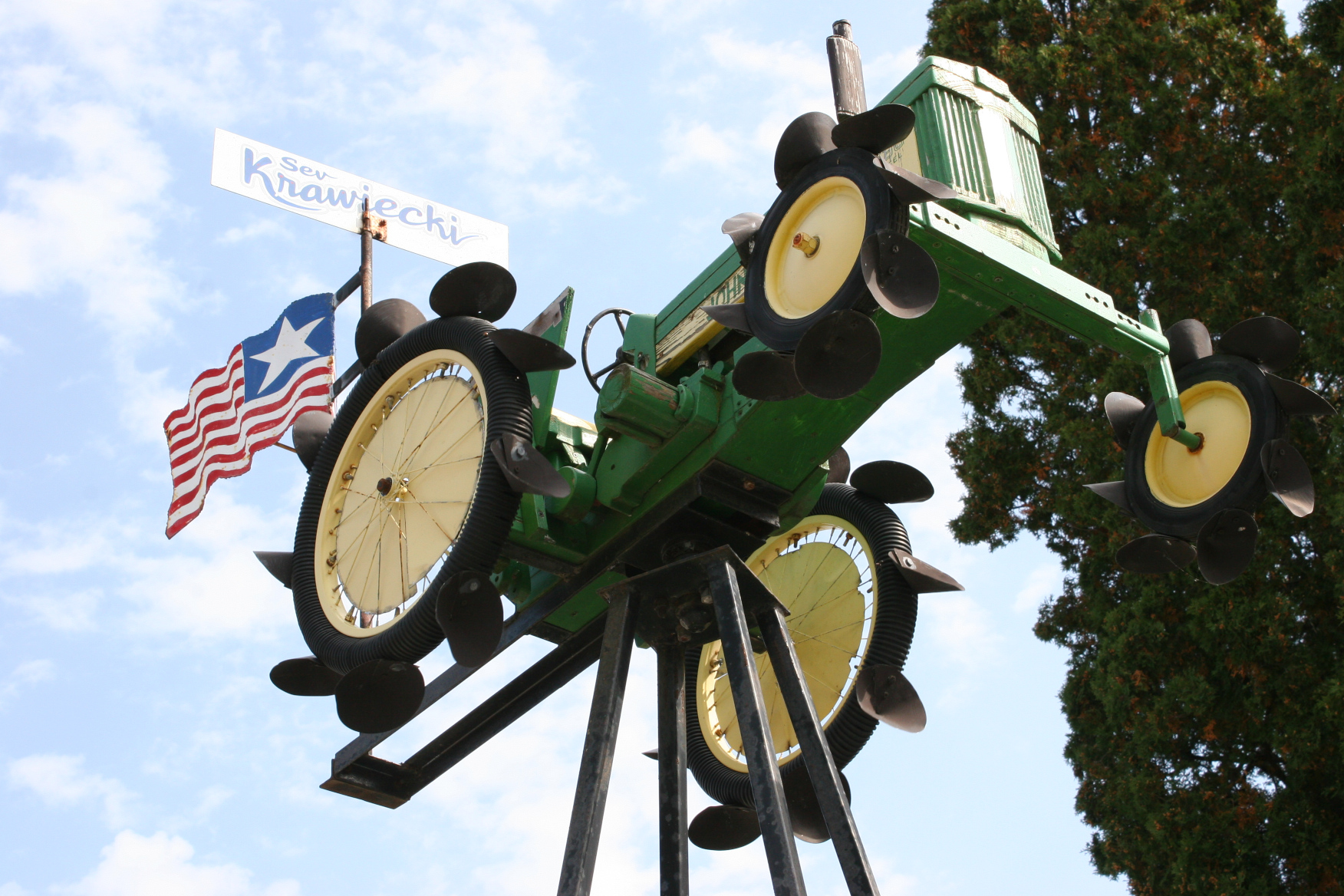
A nod to this area’s rich agricultural base outside Sev’s Food & Liquor in Buckman. Minnesota Prairie Roots file photo September 2020.
It’s easy to get caught in the memories, of the back then, of wishing nothing had changed. But it has and it does. And life goes on.
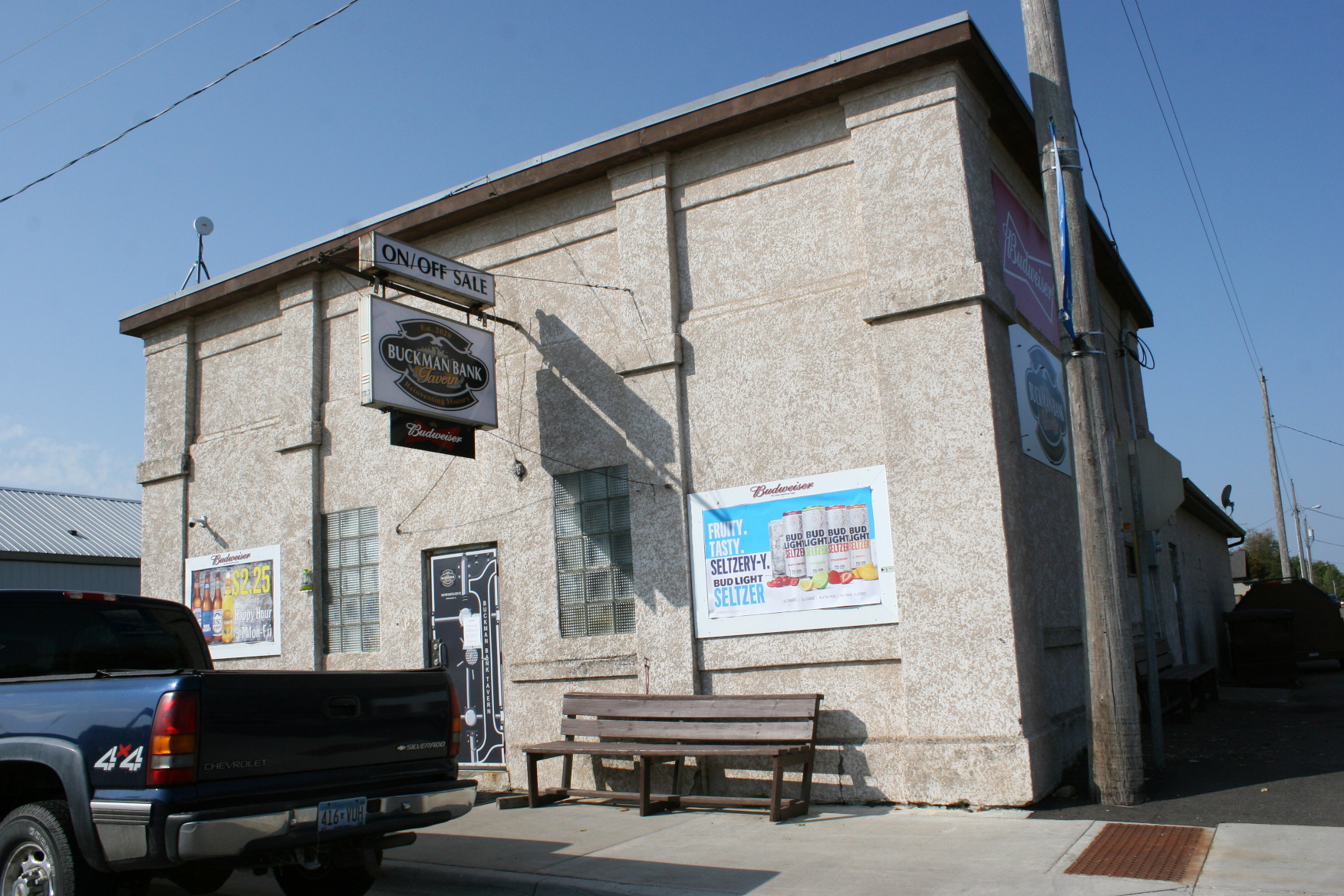
Housed in the old bank building, the Buckman Bank Tavern. Minnesota Prairie Roots file photo September 2020.
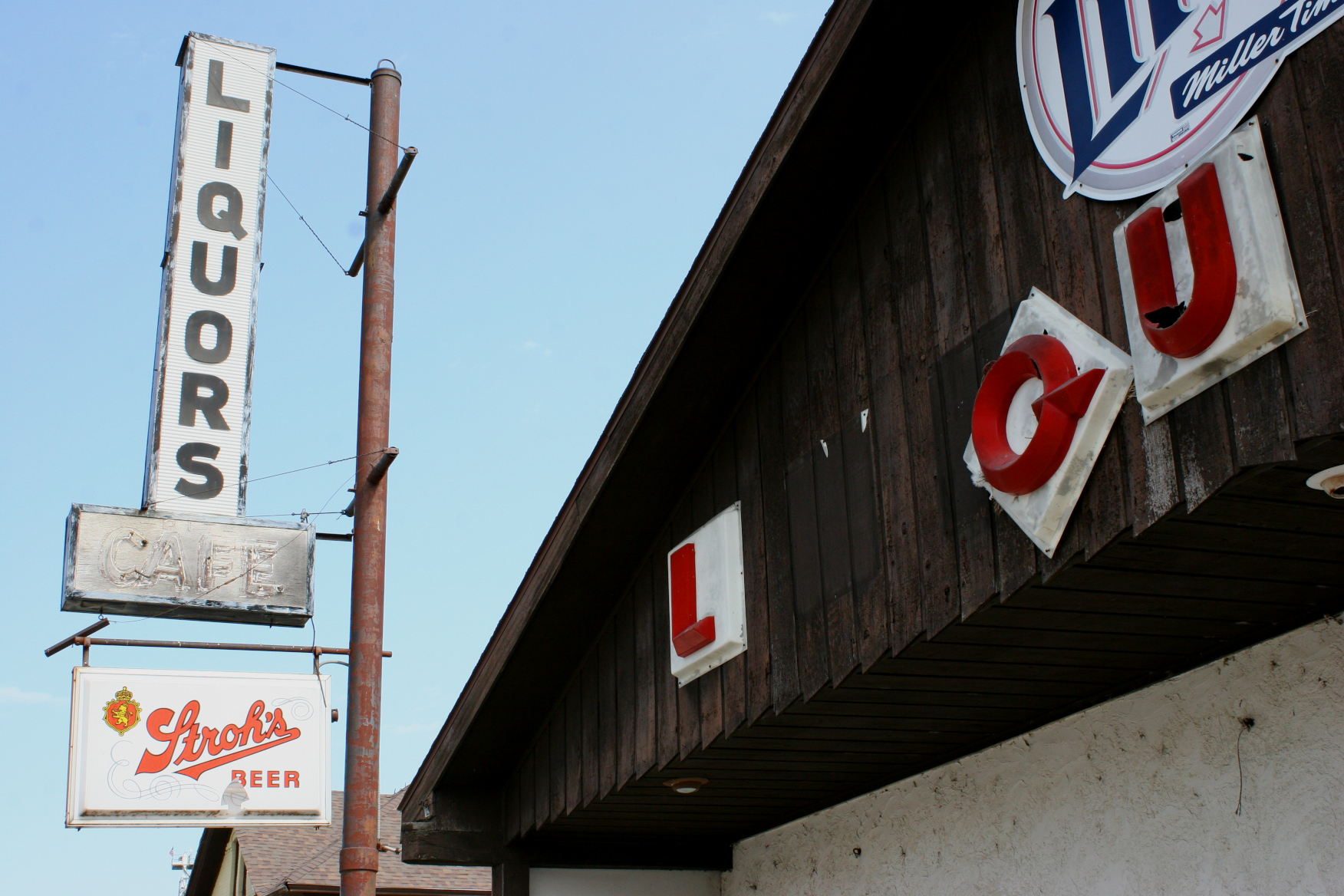
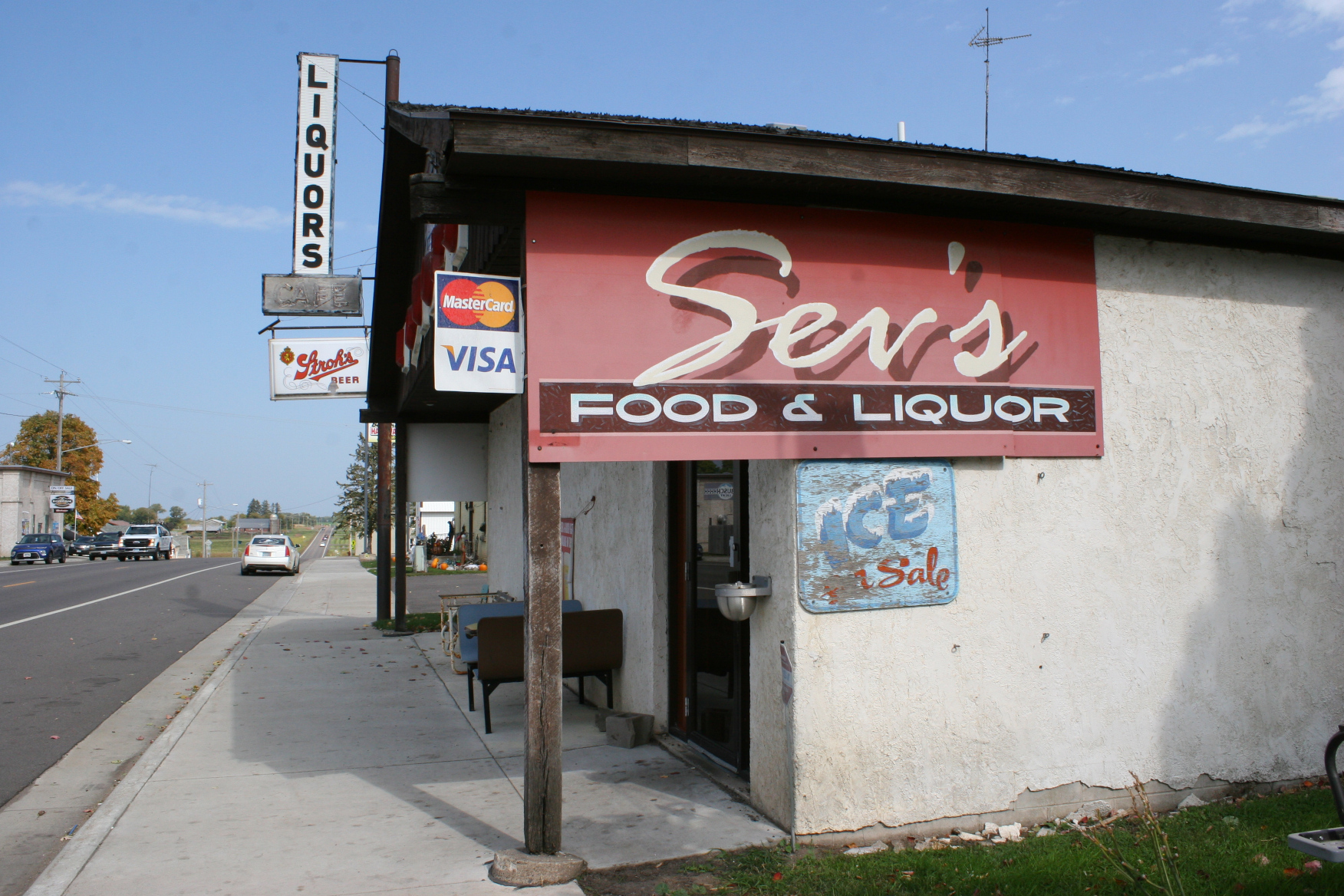
Signs on Sev’s in Buckman. Minnesota Prairie Roots file photo September 2020.
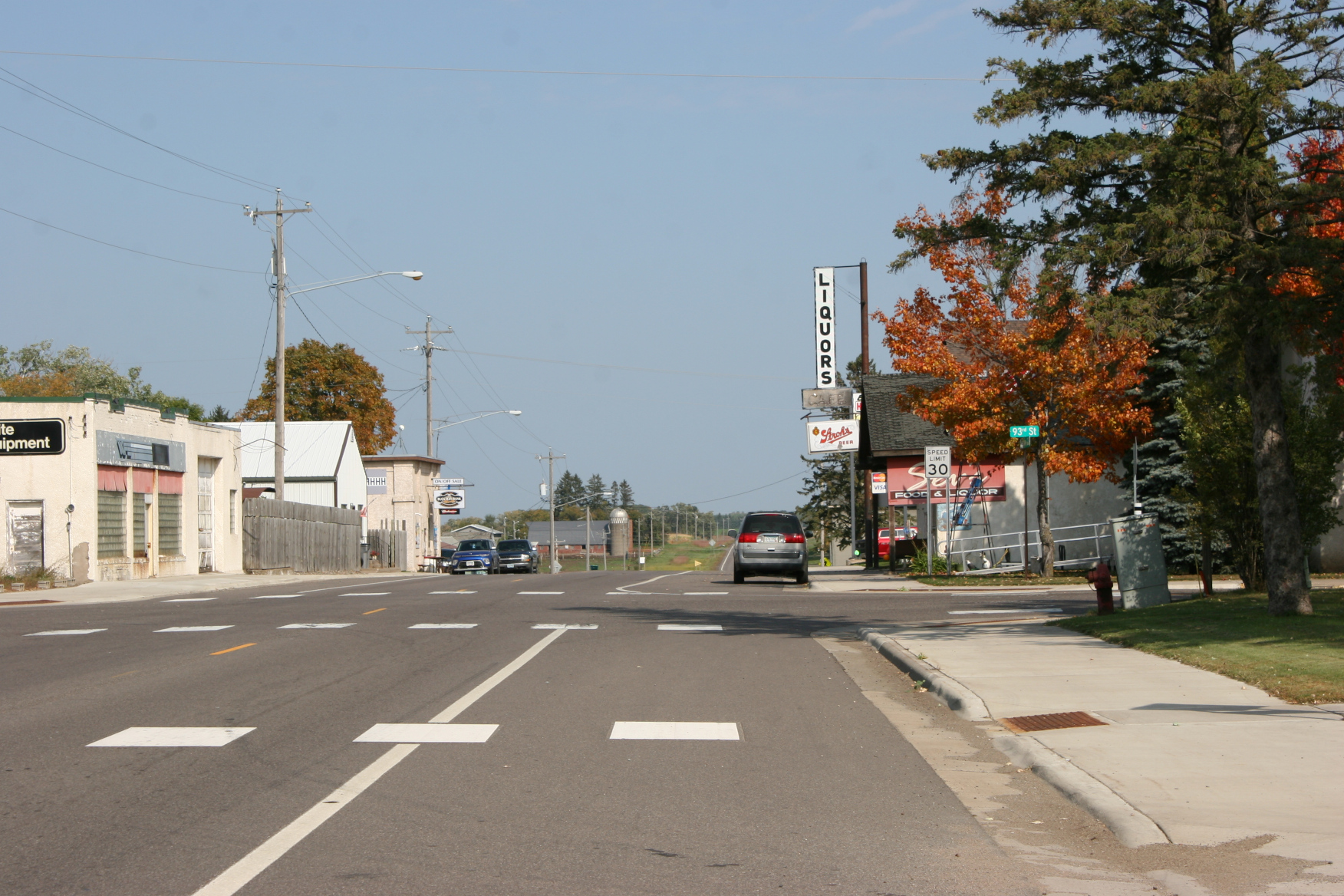
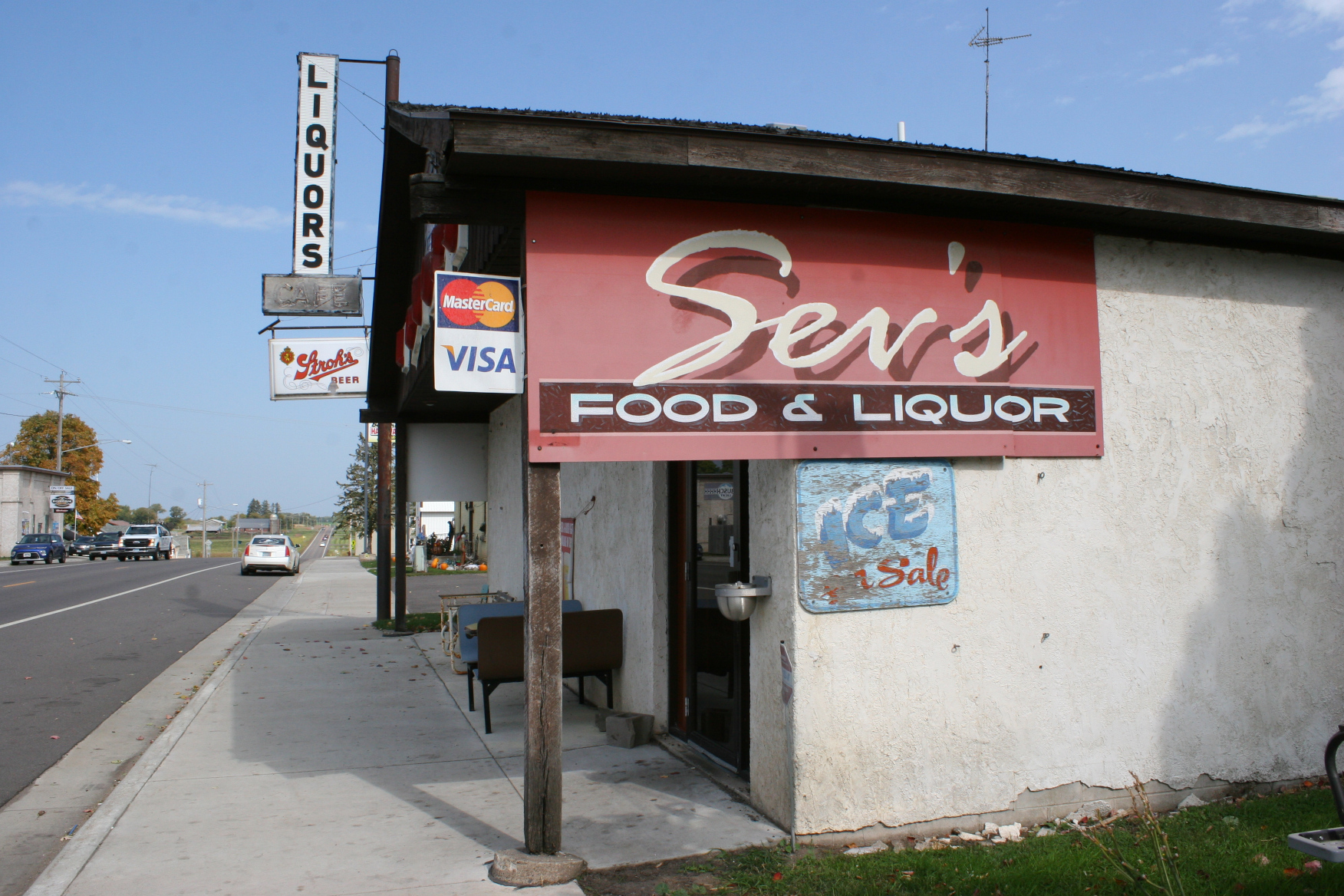
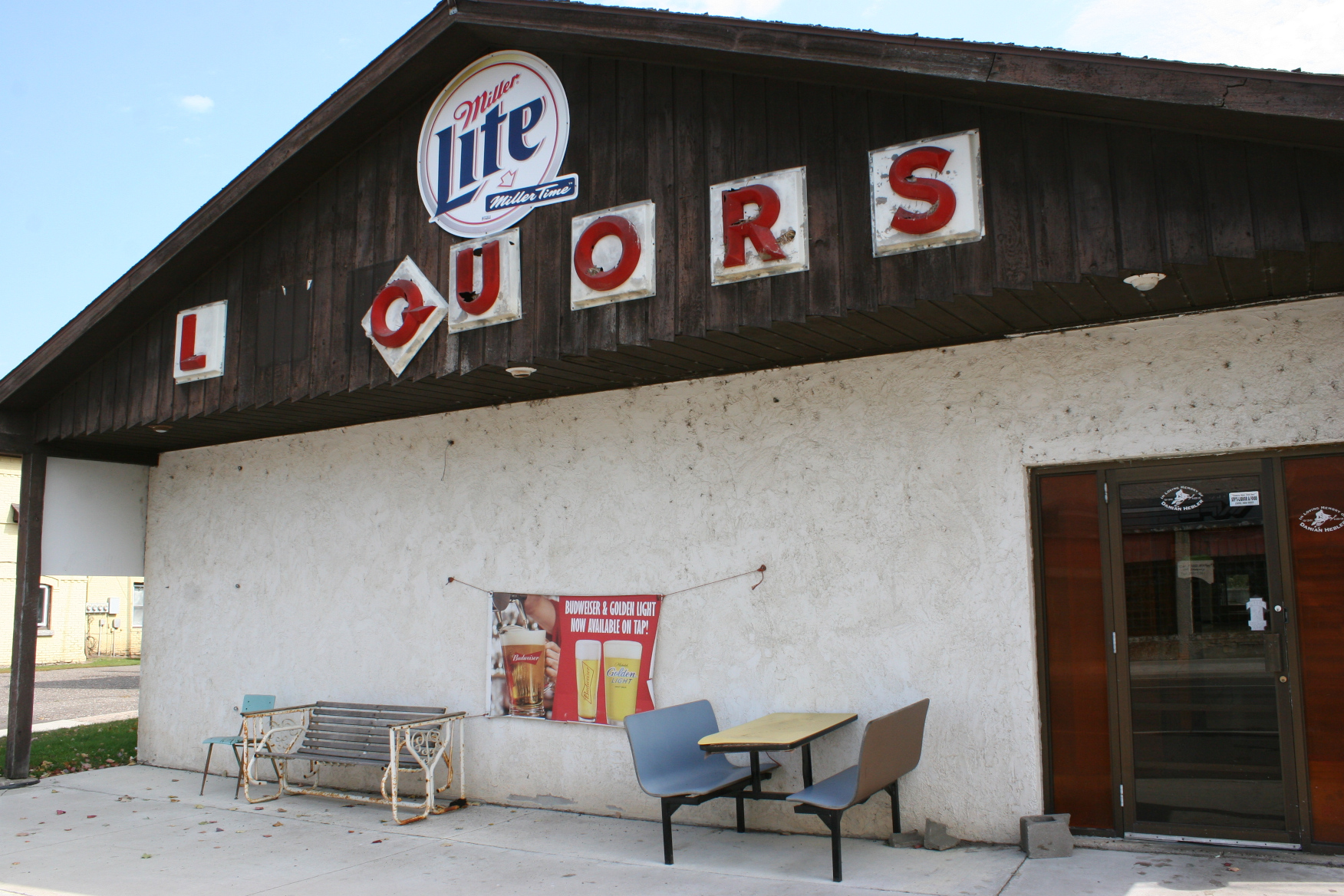
Sev’s Food & Liquor along Buckman’s main street. Minnesota Prairie Roots file photo September 2020.
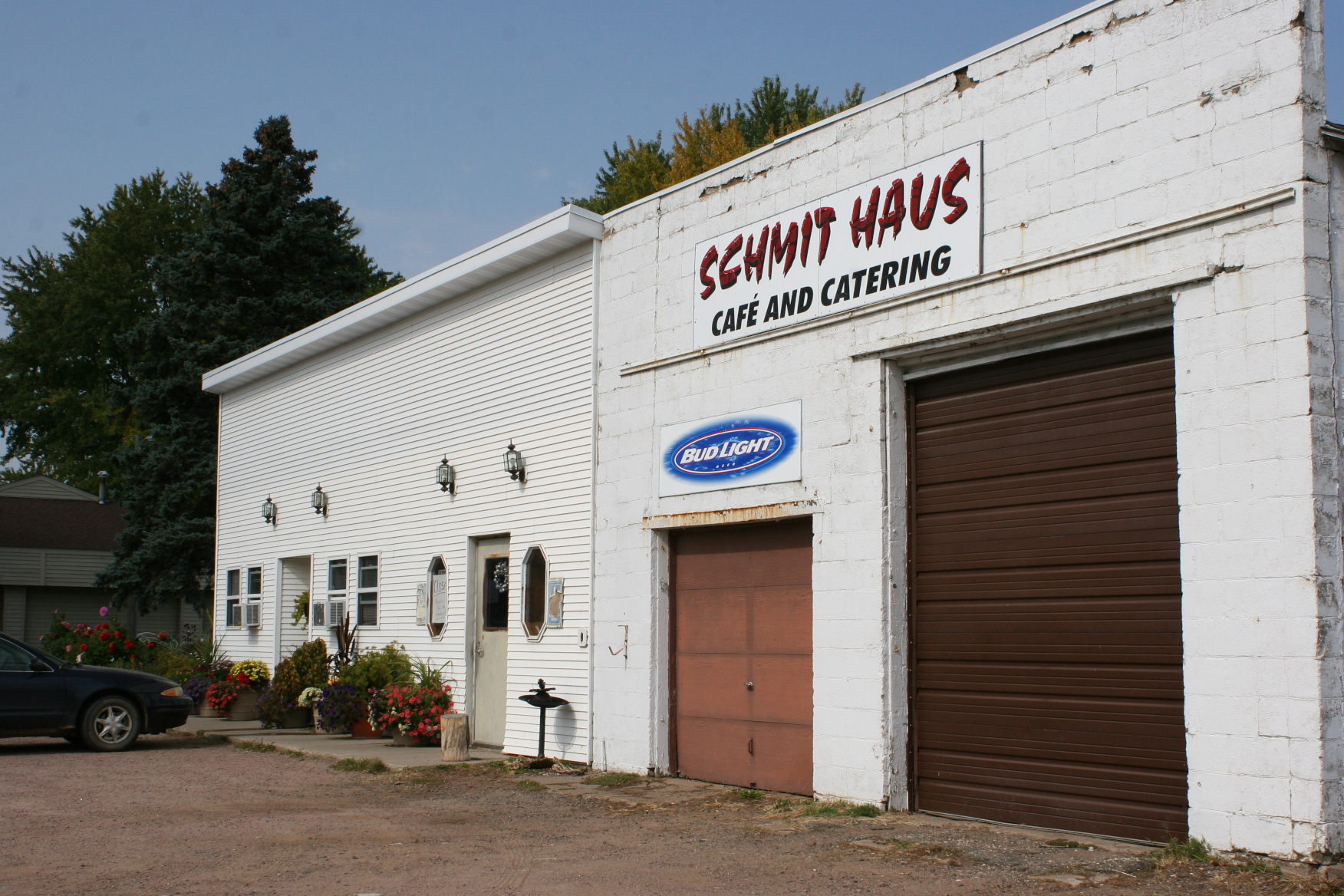
Returning to our hometowns, our home areas, causes me to reflect while simultaneously appreciating that which remains. Cafes and churches and hardware stores. Post offices and bars and grain elevators. These are the community gathering spots that still mark many of Minnesota’s smallest communities, those towns that span only blocks from east to west, north to south.
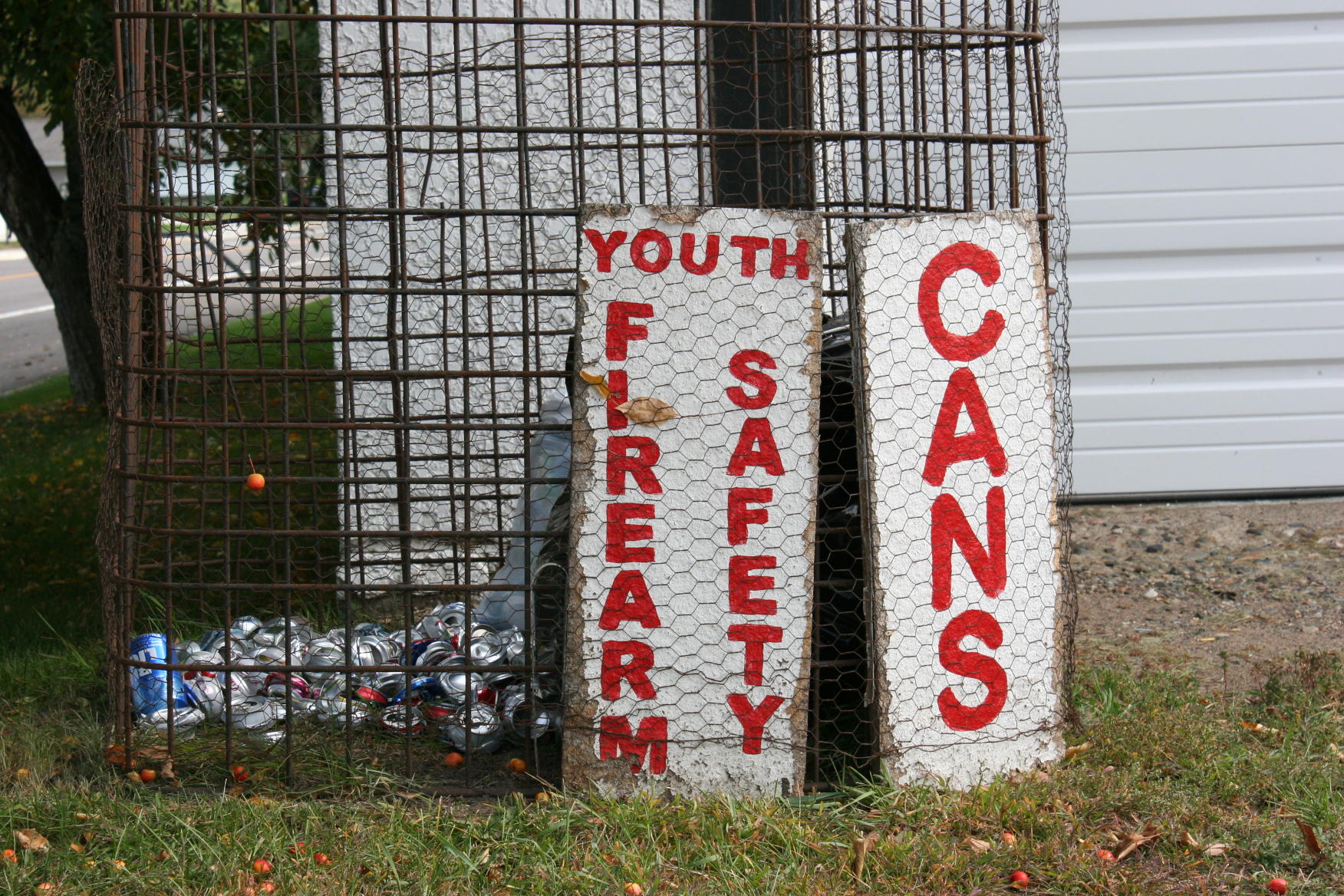
I often see can collection sites in small towns, like this one in Buckman. They offer insights into a community. Minnesota Prairie Roots file photo September 2020.
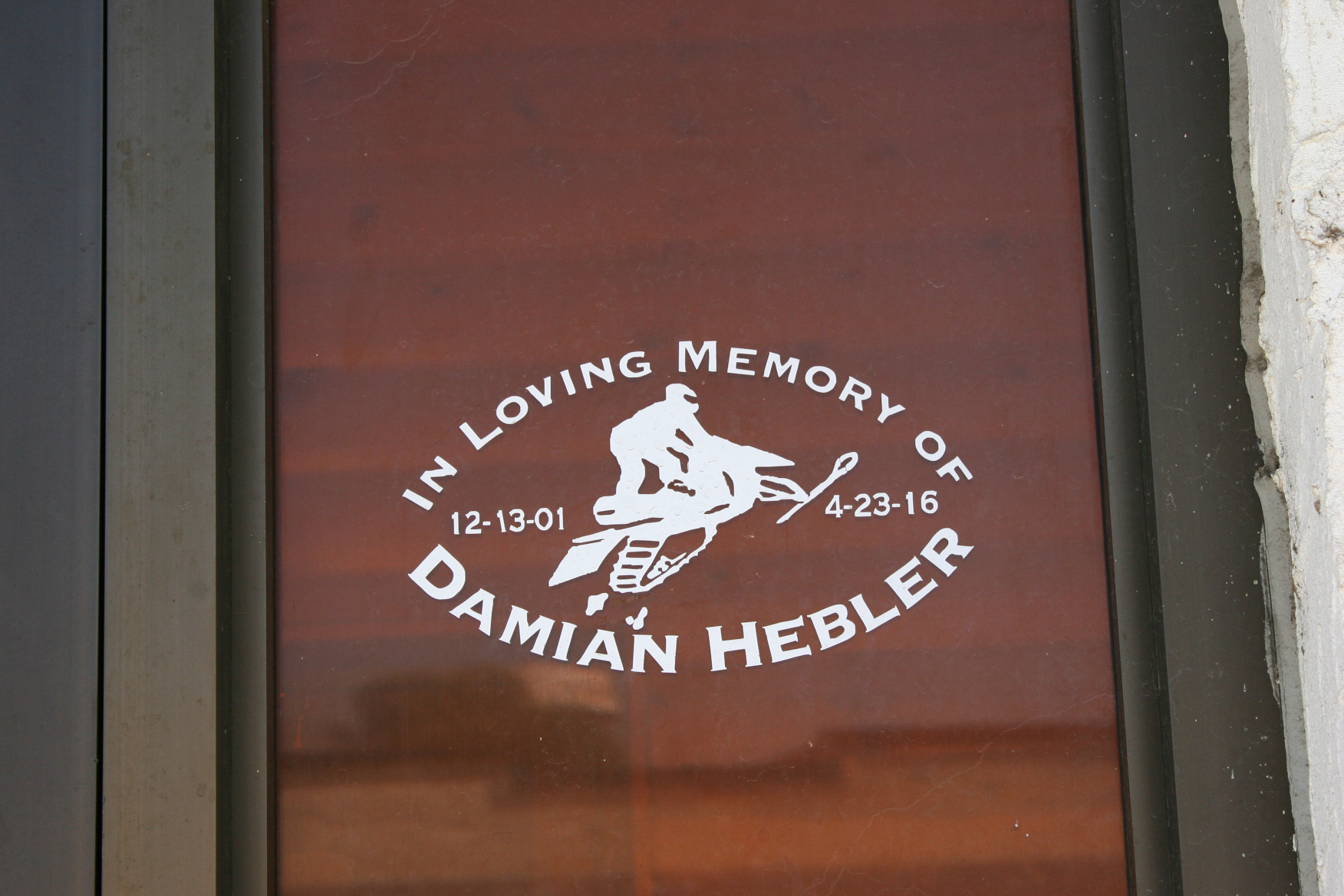
On the door of a Buckman bar, a young man remembered. Minnesota Prairie Roots file photo September 2020.
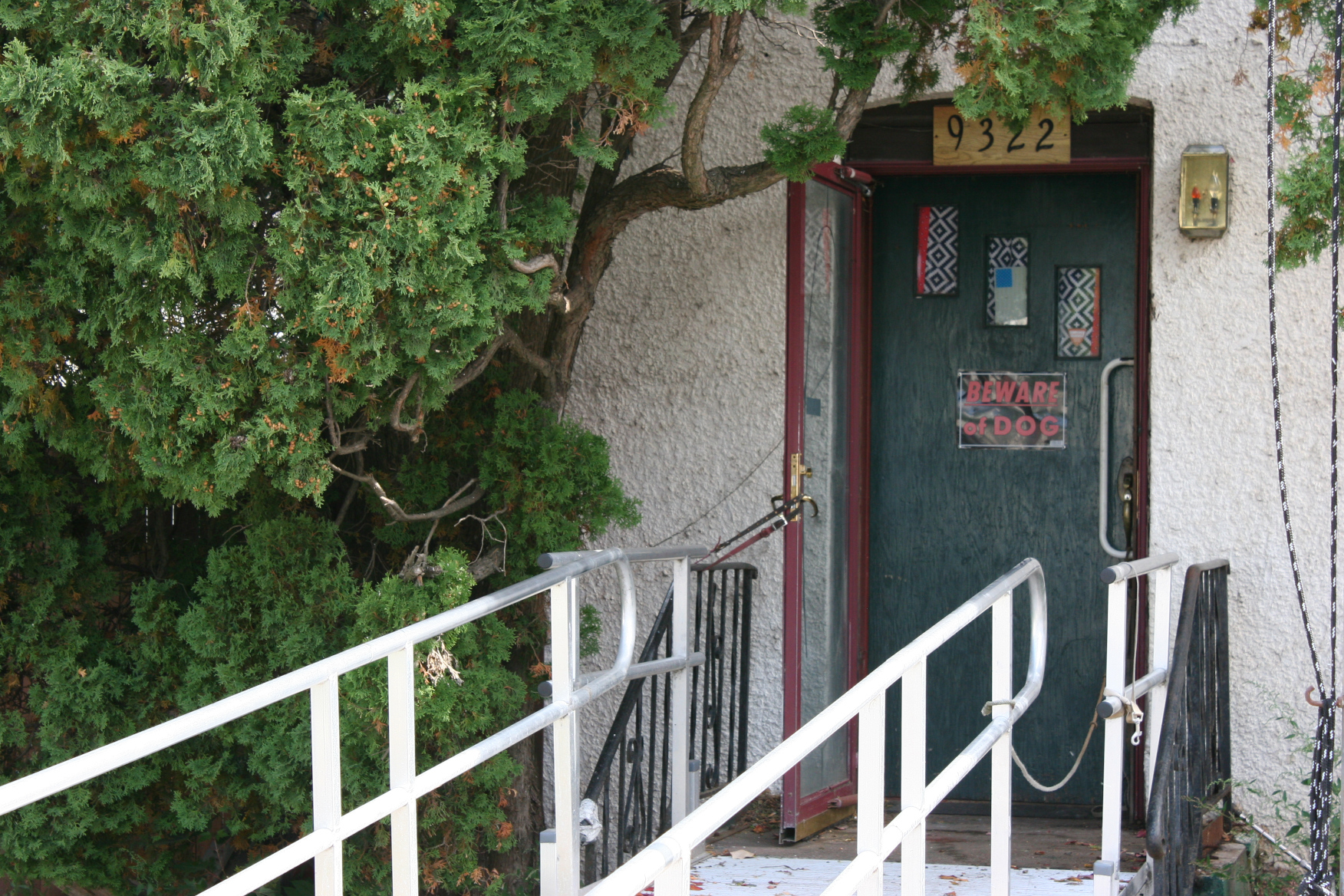
A warning sign posted on a house in Buckman. Minnesota Prairie Roots file photo September 2020.
But more than buildings, people form community. Even in Faribault, where Randy and I have lived since 1982, we’ve found our small town in a city of around 25,000. That’s in our faith family at Trinity Lutheran Church, the “town” that centers our lives. An uncle and I discussed this recently. He lives in Minneapolis. His neighborhood is his community, his small town.
A place to gather outside Sev’s Food & Liquor in Buckman. Minnesota Prairie Roots file photo September 2020.
No matter where you live, whether in rural Minnesota or New York City, the mountains of Idaho or the plains of Nebraska, I hope you’ve found your community and place of joy.
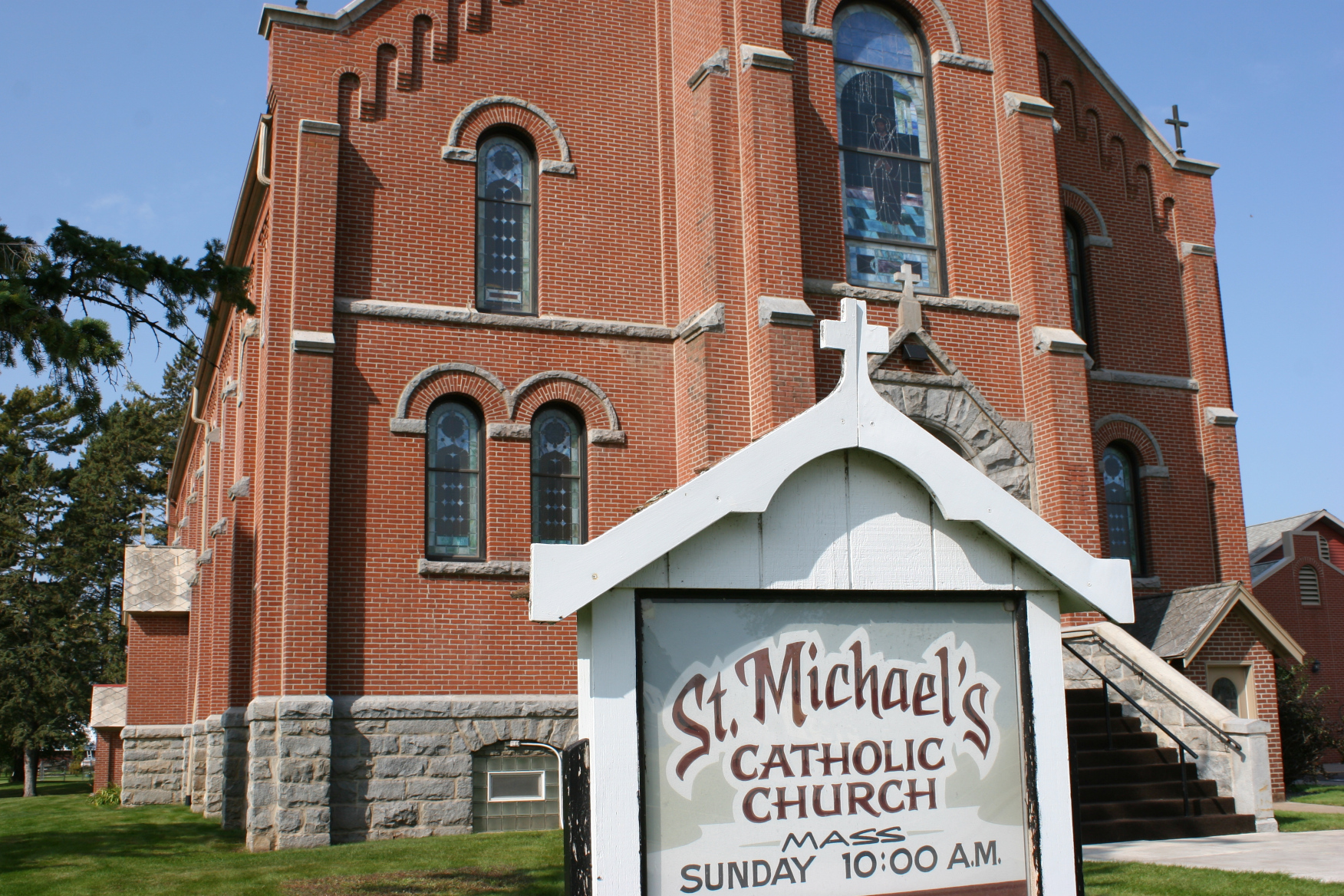
Outside my husband Randy’s home church, St. Michael’s in Buckman. Minnesota Prairie Roots file photo September 2020.
FOR MANY, THE WORD “church” prompts visions of a physical structure, a place where people of faith gather to worship. Certainly, that’s part of the definition. But, even more important, “church” is the people. That’s why, in times of natural disaster or fire or whatever may render a physical building unusable, the “church” continues.
This sign marks a back pew. Minnesota Prairie Roots file photo September 2020.
For 118 years, the faithful have gathered at St. Michael’s Catholic Church in Buckman. Even during COVID-19, Mass happens three mornings a week. On the September weekday Randy and I visited, not a soul was around, giving us ample opportunity to explore this beautiful aged sanctuary.
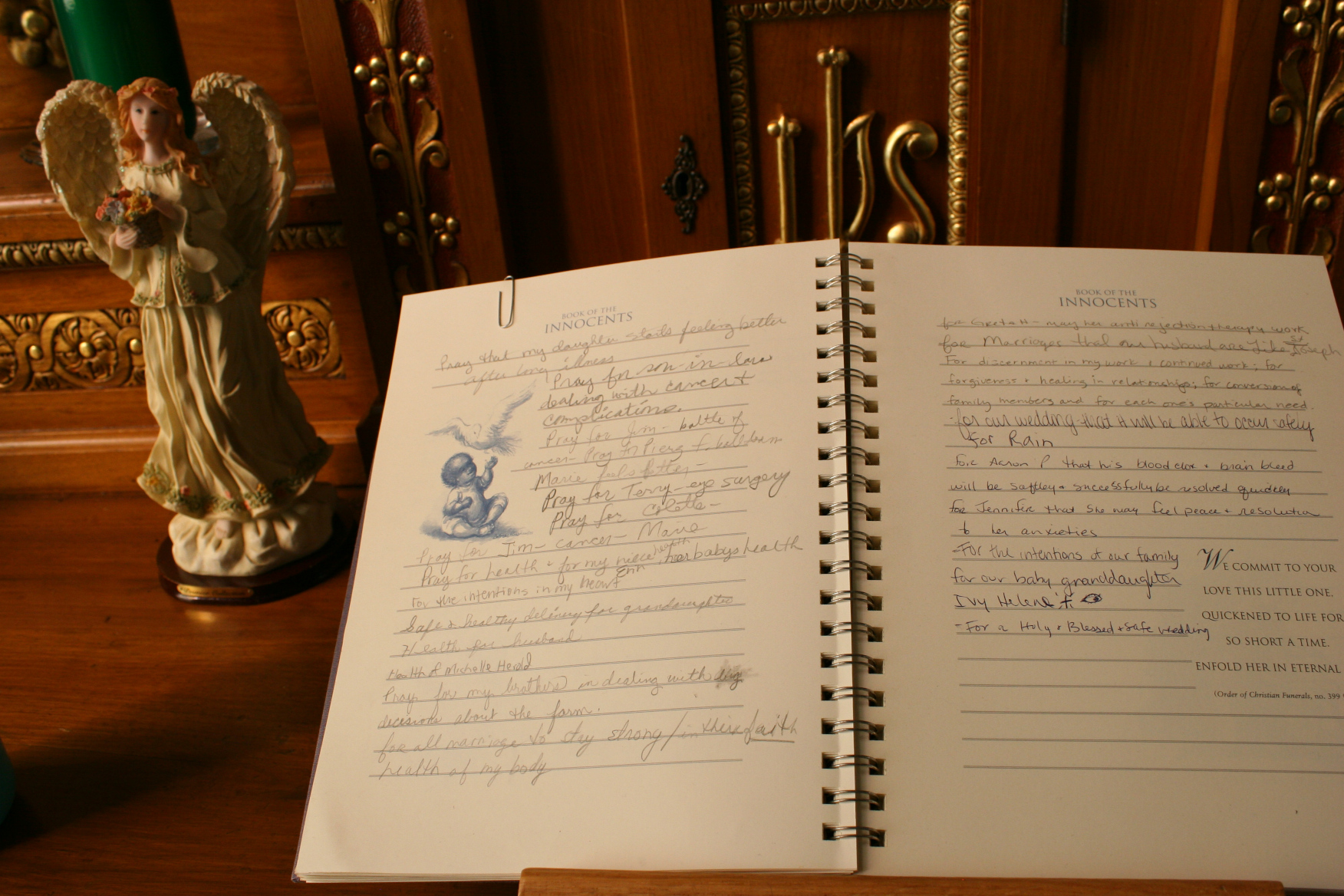
Book of the Innocents photographed at St. Michael’s. Minnesota Prairie Roots file photo September 2020.
Despite the absence of people, I experienced the presence of those who call St. Michael’s their church home. I saw the human spiritual connection in handwritten prayers recorded in The Book of Innocents.
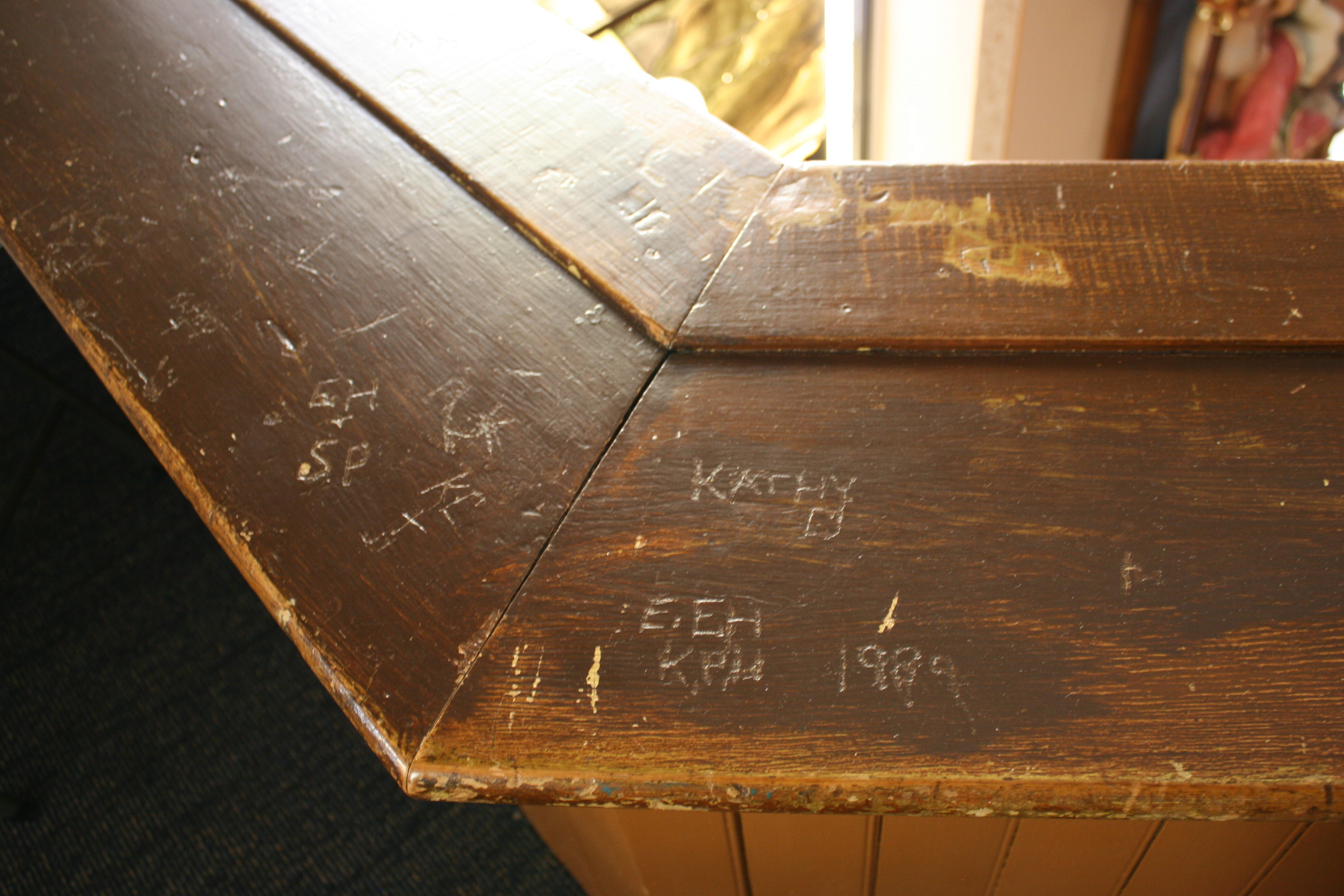
They left their mark… Minnesota Prairie Roots file photo September 2020.
Upstairs, atop the balcony wall ledge, I noticed initials, names and dates etched in wood. Another human notation, albeit probably not appreciated by all. But the scratchings are part of St. Michael’s history.
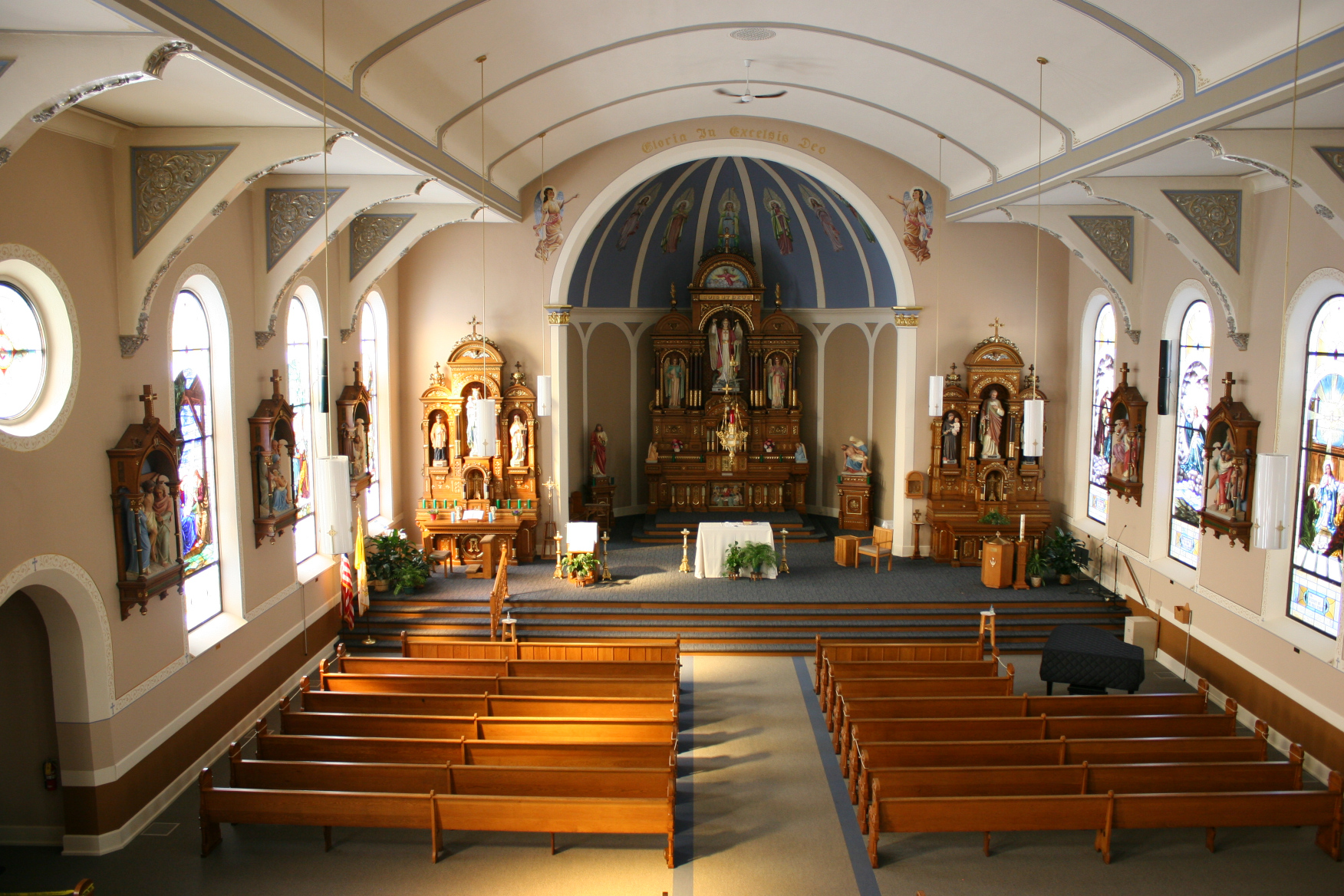
A view from the balcony. Minnesota Prairie Roots file photo September 2020.
Stained glass windows abound, this one next to a side altar. Minnesota Prairie Roots file photo September 2020.
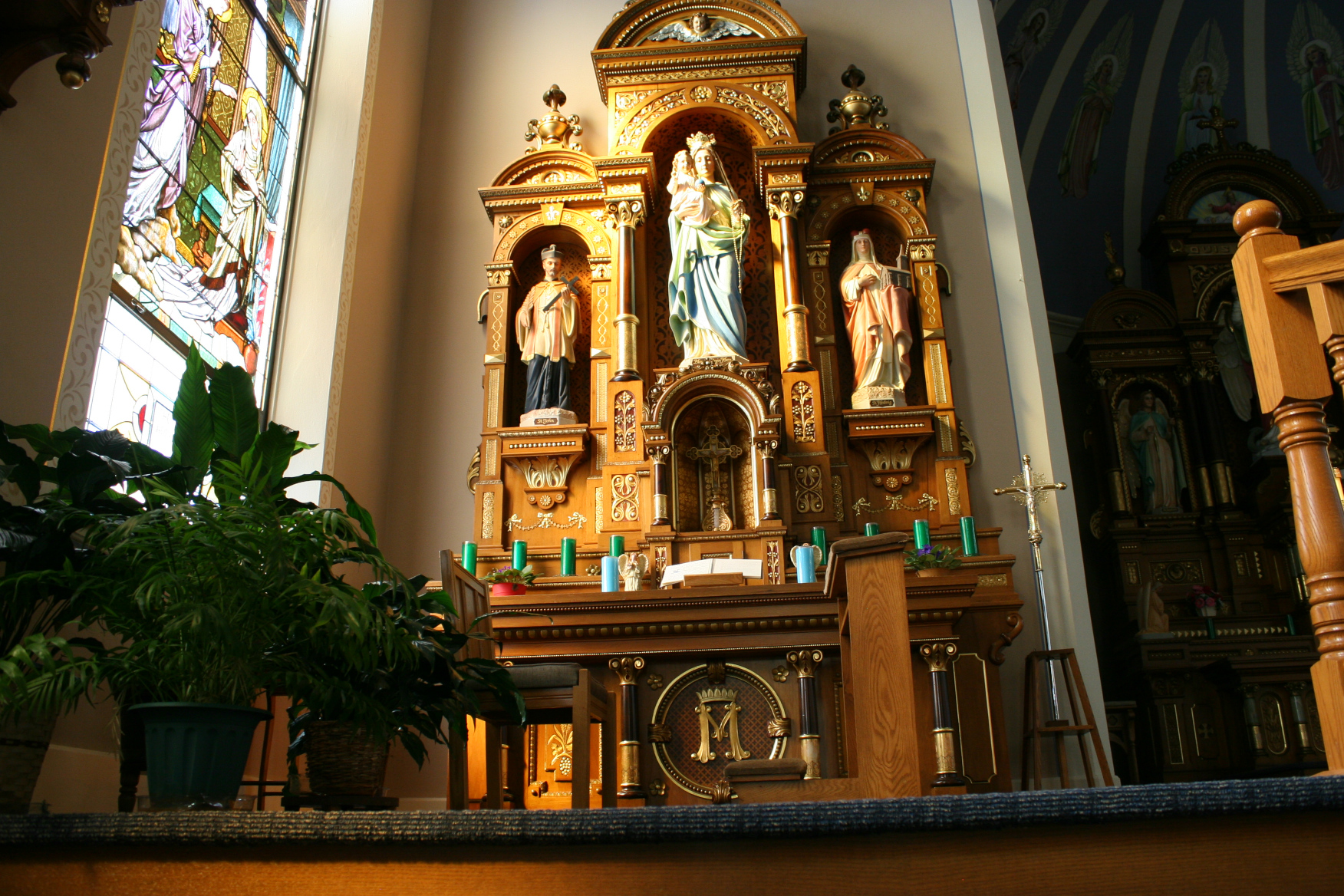
The beautiful side altar. Minnesota Prairie Roots file photo September 2020.
As I looked down upon the massive sanctuary defined by stained glass, sculptures, woodcarvings, paintings and other impressive art, I considered the humanity of this place. Baptisms. First Communions. Weddings. Funerals. Events—joyful and sad—which brought/bring people together to celebrate or to mourn. Mass, too, with singing and praying and forgiving and worshiping and growing in faith.
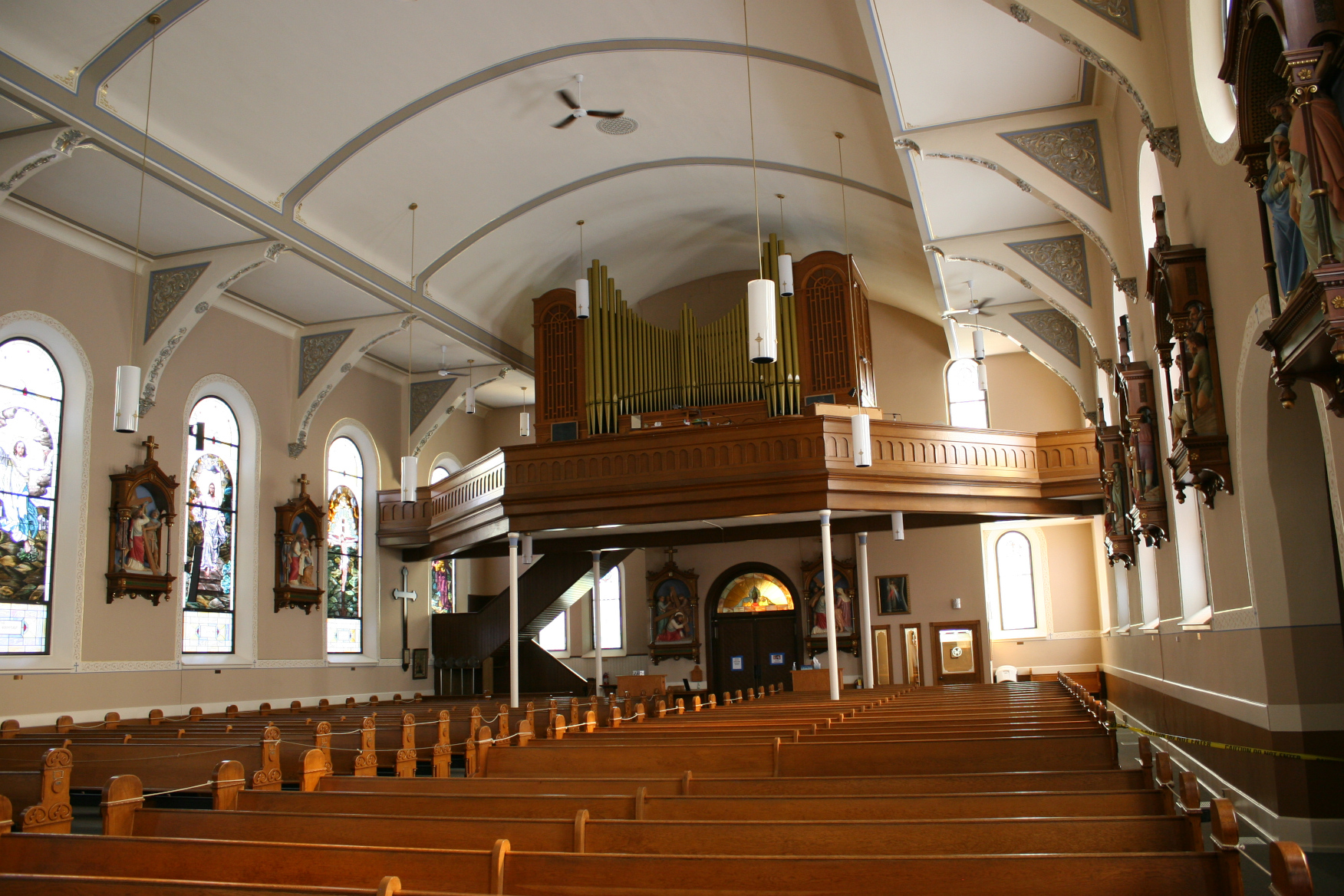
Looking toward the back of the church and the balcony. Minnesota Prairie Roots file photo September 2020.
Generations have gathered here, within these walls, as a faith family.
This stunning cross stands in the center of the main altar. Minnesota Prairie Roots file photo September 2020.
I’ve found comfort and joy here, too, celebrating the marriage of my father-in-law and a sister-in-law and grieving the loss of a brother-in-law and then my mother-in-law 27 years ago. Since then, the church has been restored and a side entry and fellowship hall added, making the building much more accessible.
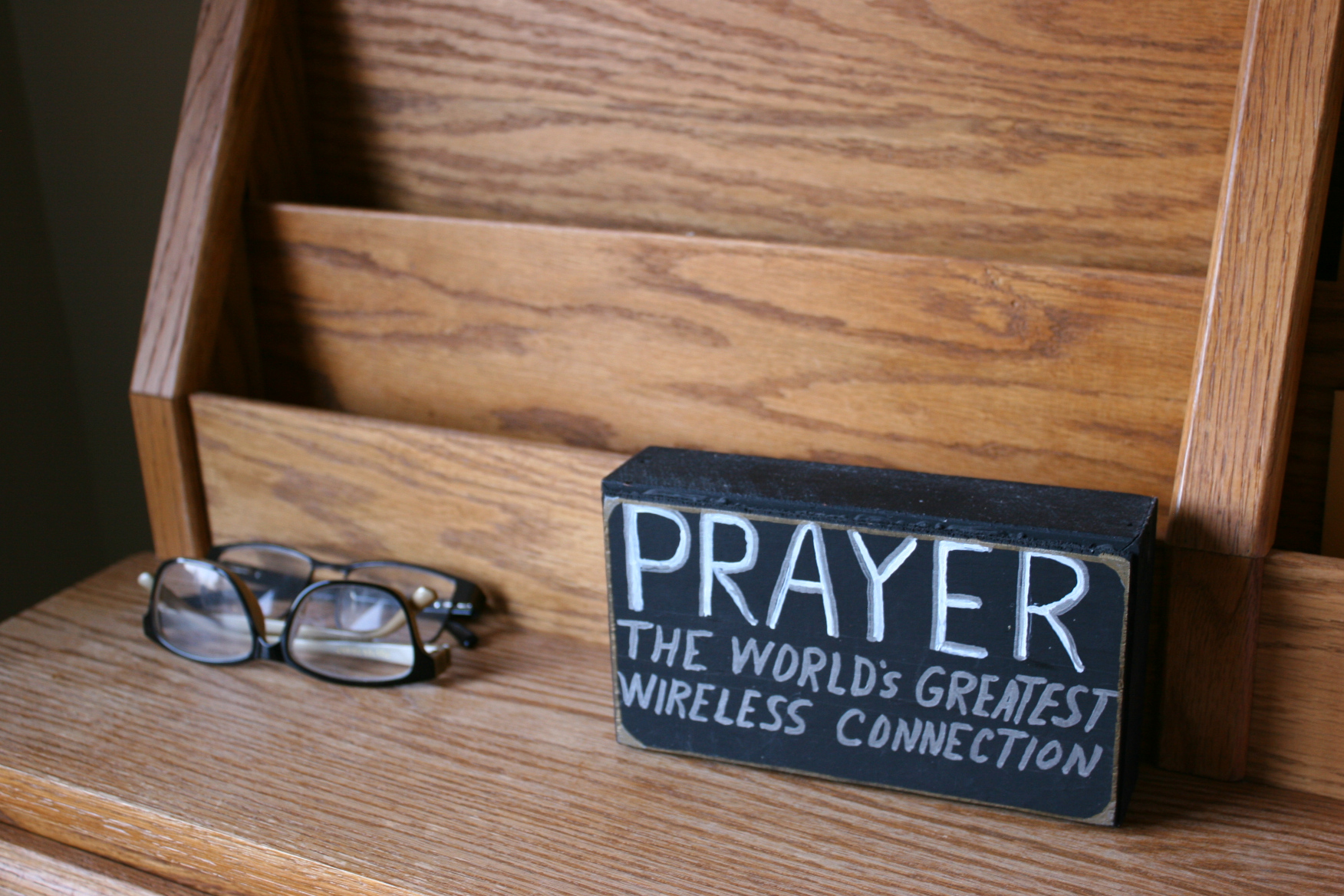
Spotted on a table in the entry. Minnesota Prairie Roots file photo September 2020.
In the new entry, I paused to read a small sign: PRAYER THE WORLD’S GREATEST WIRELESS CONNECTION. I laughed and thought, so true while simultaneously considering how much the world has changed since the construction of this church in 1903.
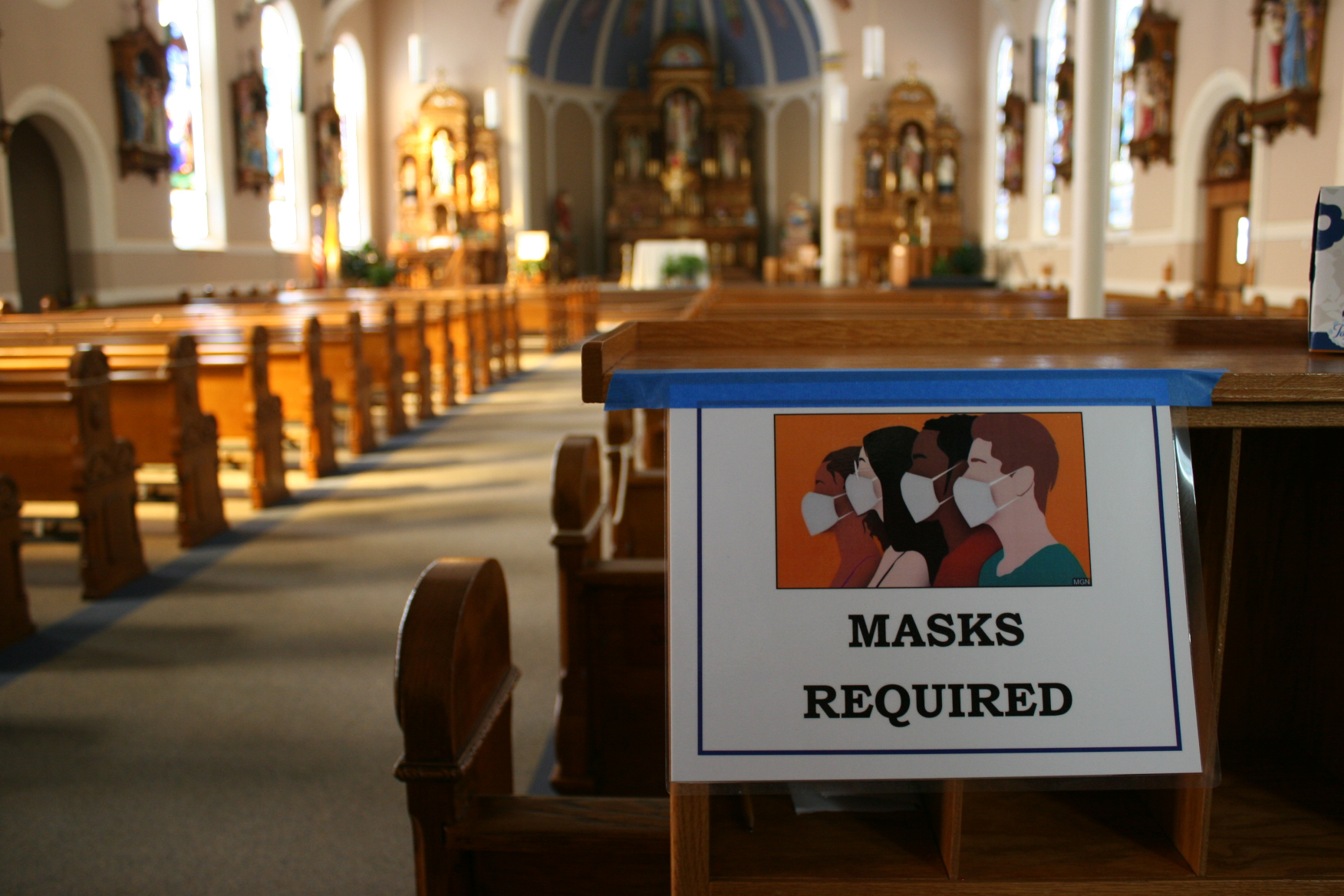
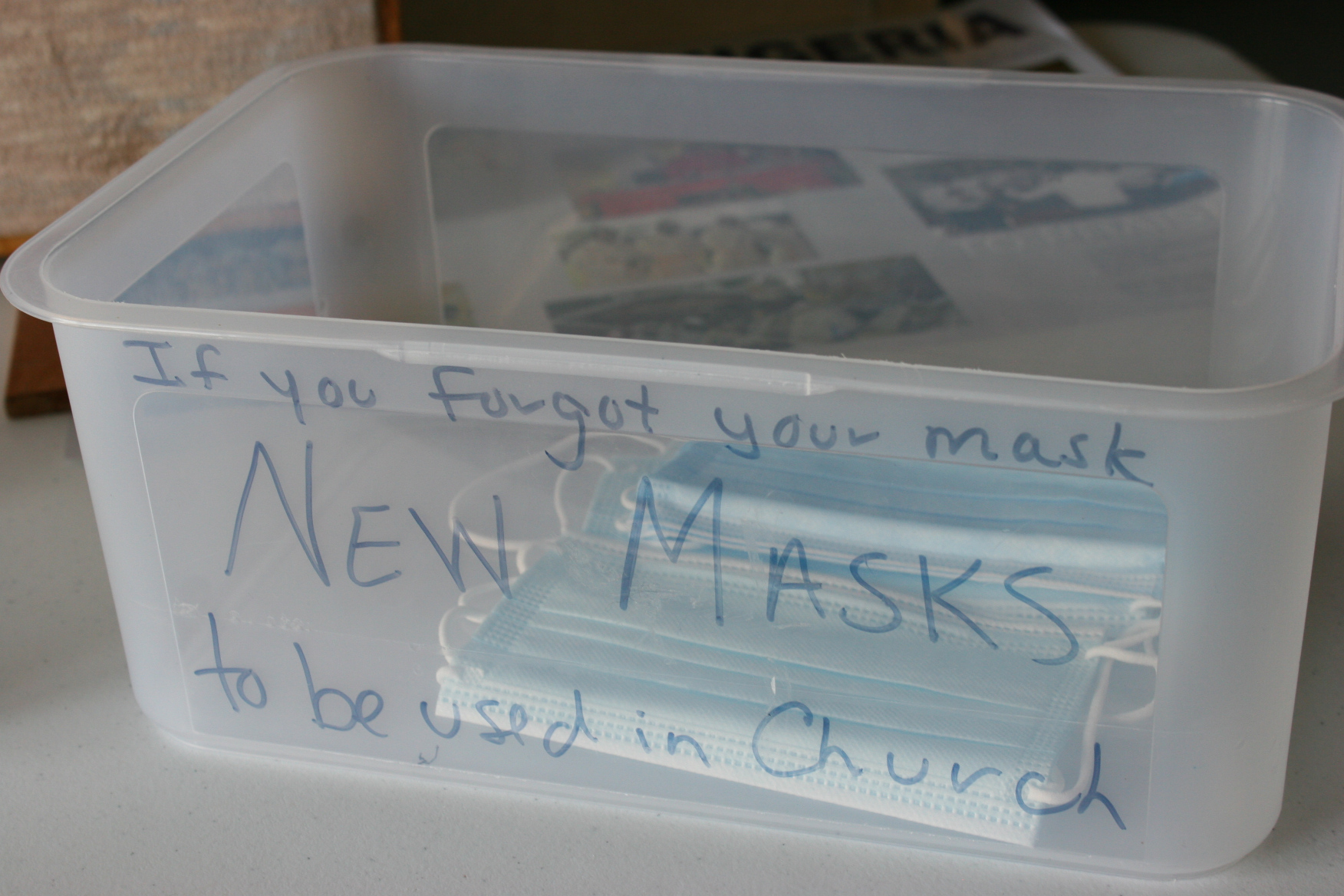
Masks are available for worshipers inside the entry. Minnesota Prairie Roots file photo September 2020.
Yet, little has changed. People still define St. Michael’s. They gather here—as they have for generations—within this art rich sanctuary, embracing liturgy steeped in music and tradition, to worship God. And to connect, heart-to-heart, with one another and with their Savior. Even during a global pandemic.
This is the final post in my three-part series on St. Michael’s Catholic Church, Buckman, Minnesota.
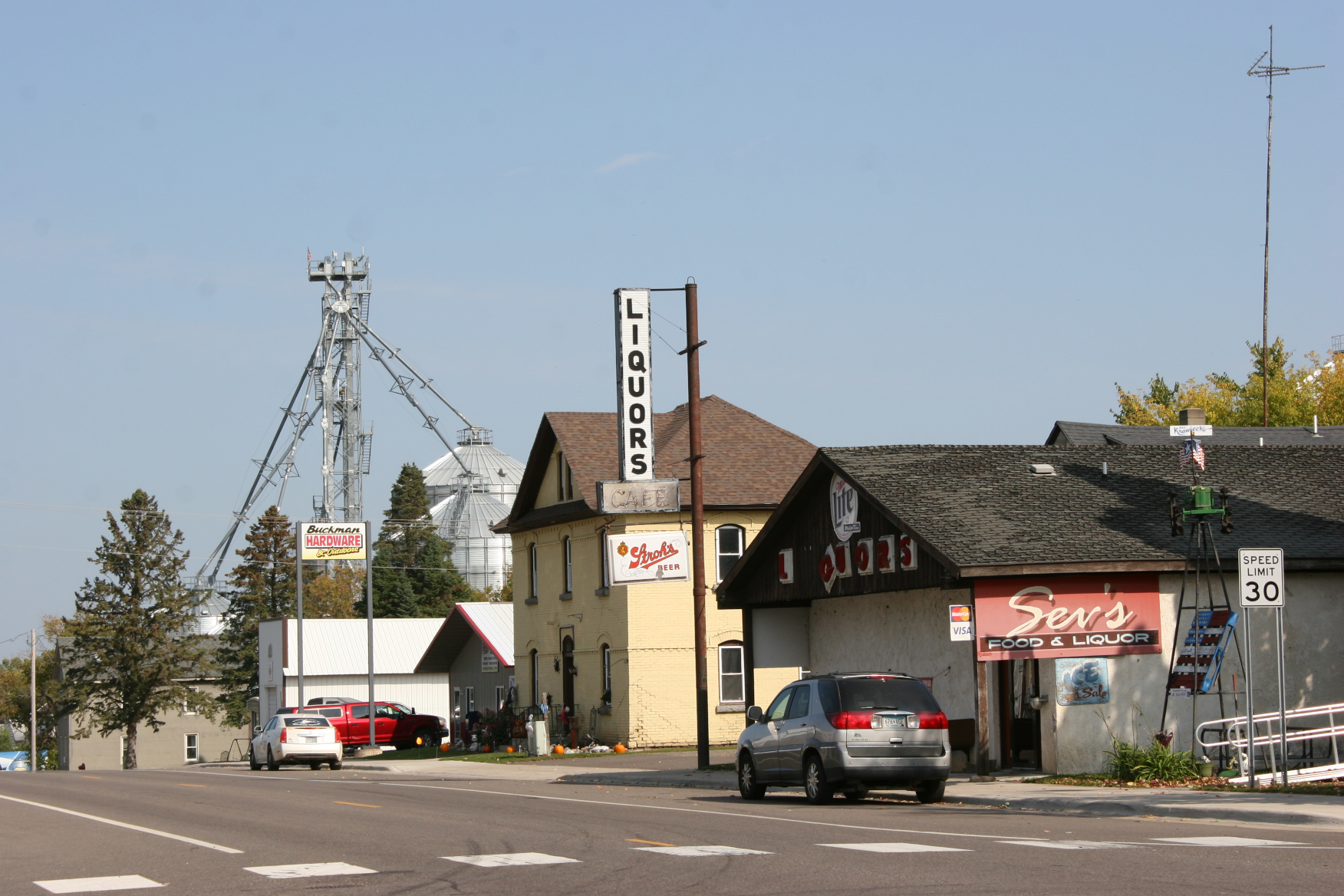
The heart of small town Buckman, Minnesota. Minnesota Prairie Roots file photo September 2020.
HOW DO YOU DEFINE a small town?
For some, it’s a community to pass by or through en route to wherever.
For others, it’s an occasional destination to visit extended family.
But for some of us, it’s the place of our roots.
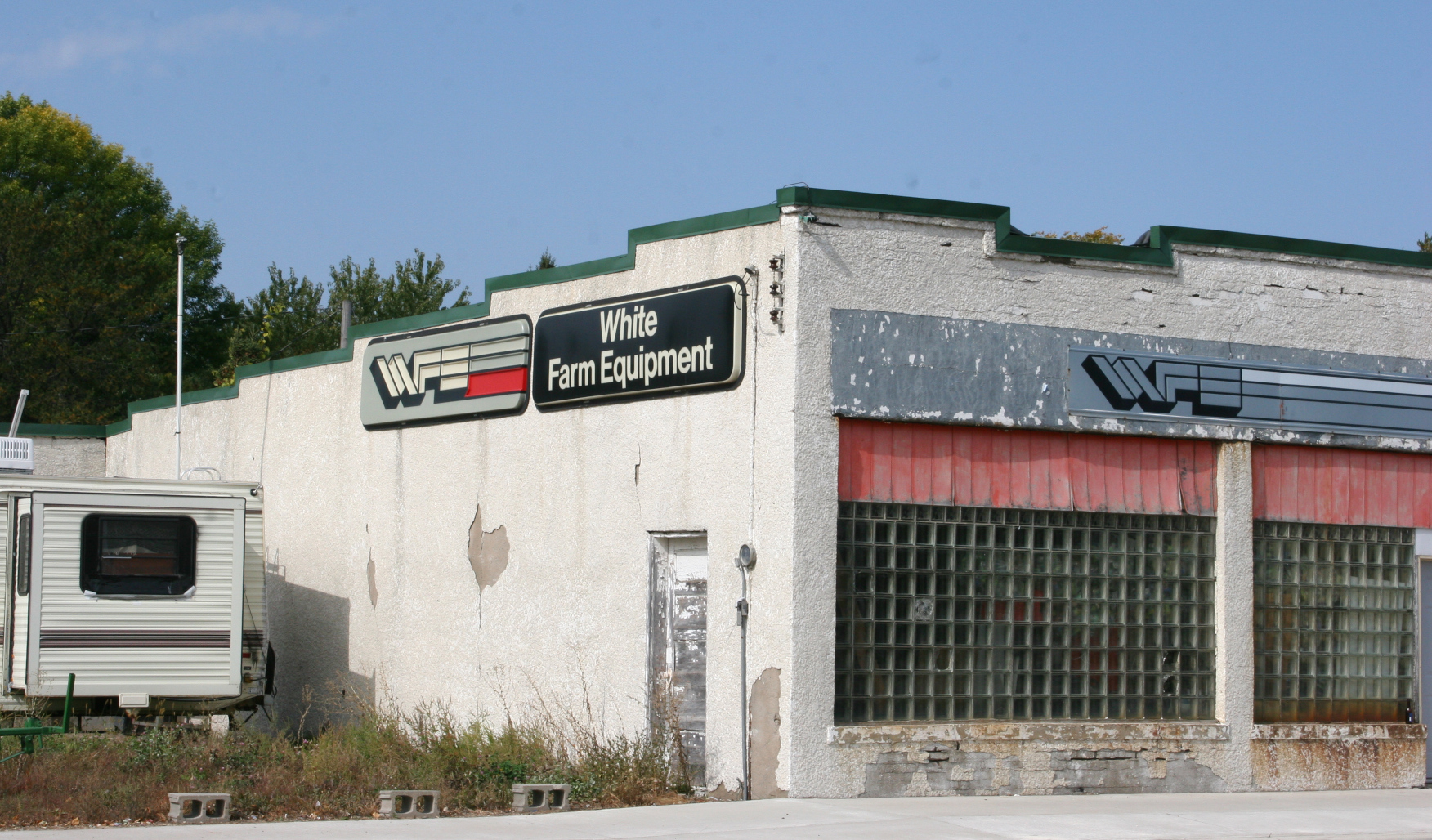
The vacated farm implement dealership in Buckman. Minnesota Prairie Roots file photo September 2020.
Randy and I both grew up on dairy and crop farms near small towns—him near Buckman in central Minnesota and me just outside Vesta in southwestern Minnesota. Those communities, once thriving with elementary schools and many businesses, are no longer hubs of local commerce or education. Much has changed since we each left our respective rural towns in 1974.
Sev’s Food & Liquor sits along Minnesota Highway 5 in Buckman. Minnesota Prairie Roots file photo September 2020.
Yet, the core of our hometowns, with populations under 300 and 145 miles apart, remains unchanged. Community spirit and neighborliness and a certain connection to place remain particularly strong. Often, generations of families live within miles of each other. Churches center these towns, too, as do bars, both community gathering spots.
It’s not often now that either of us returns to our hometowns. The farms we grew up on are no longer in the family, a loss I feel deeply. I return only for funerals and the annual family reunion. Only occasionally do we divert to Buckman so we can visit the gravesites of Randy’s mom and brother, Brian.
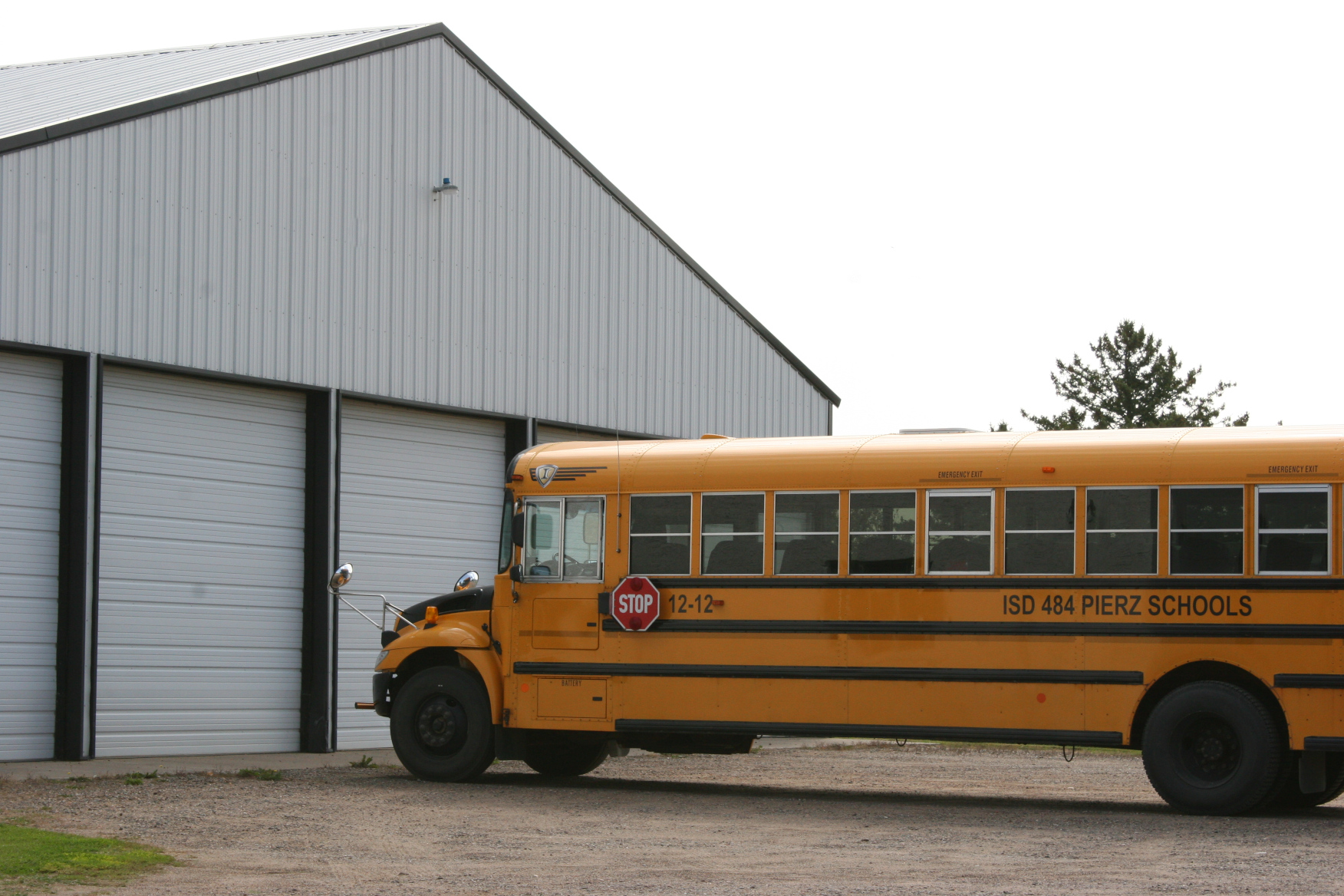
Randy attended elementary school at St. Michael’s (now gone) in Buckman and the rest of his schooling in Pierz. This bus was parked outside a garage in Buckman. Minnesota Prairie Roots file photo September 2020.
We did just that this past fall after spending time at a family member’s guest lake cabin in the Brainerd Lakes area. Buckman lies some 40 miles to the south of Brainerd. We drove through Pierz, where Randy attended junior and senior high schools, on our way to his hometown.
Minnesota Highway 25 runs through the middle of Buckman, here looking north in the heart of downtown. Minnesota Prairie Roots file photo September 2020.
Some seven miles later, we pulled off Minnesota State Highway 25, which slices through Buckman, and turned into St. Michael’s Cemetery. I always feel such a sense of sadness upon visiting my mother-in-law’s gravesite. She died way too young at age 59, just months before her grandson, our son, was born.
A massive stone cross monument marks St. Michael’s Cemetery in Buckman. Minnesota Prairie Roots file photo September 2020.
Tragedies, like those of the Dehler family, are written upon tombstones in this cemetery landmarked by a towering stone cross.
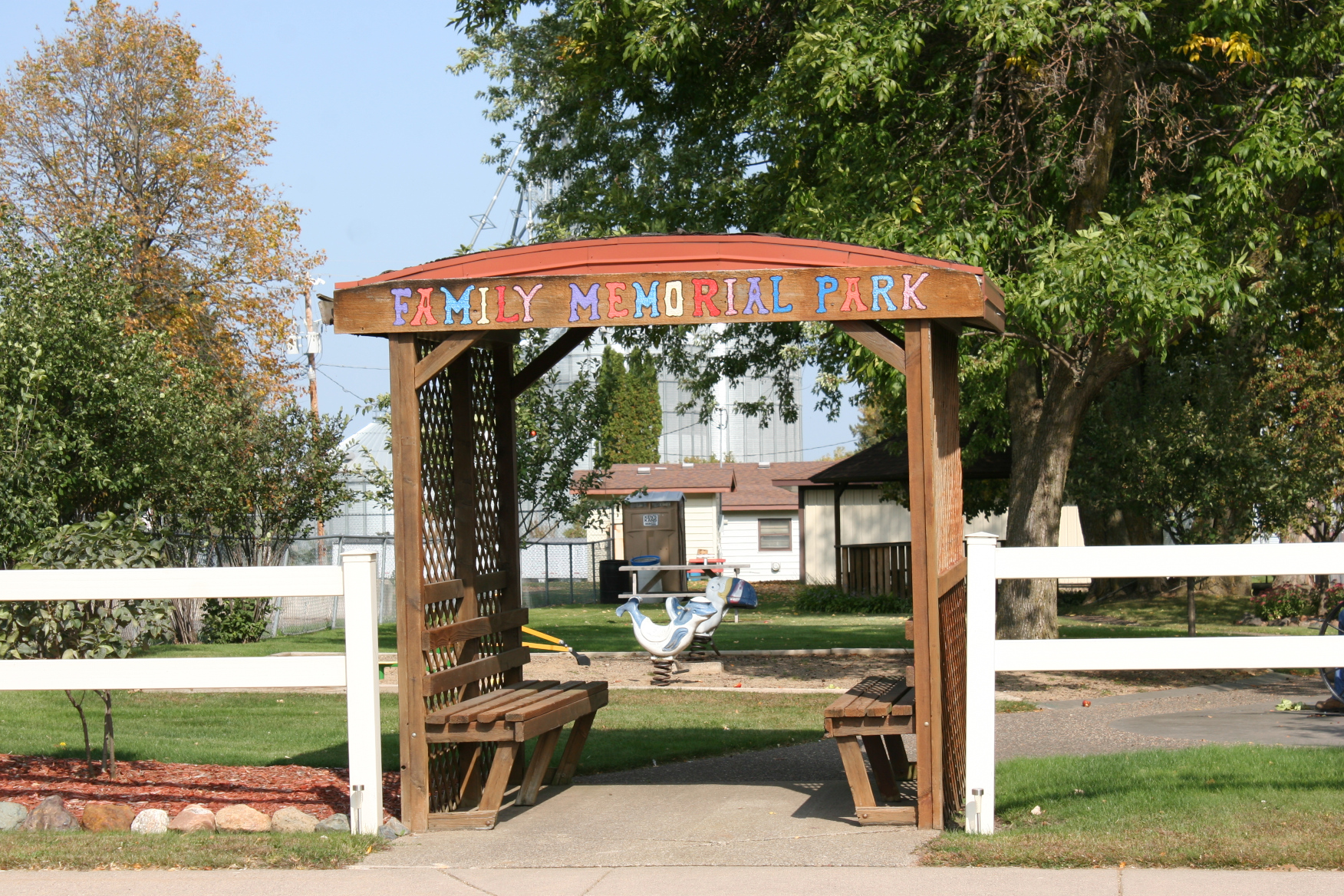
The entry to Family Memorial Park, across the street from the bus garage and cemetery, Minnesota Prairie Roots file photo September 2020.
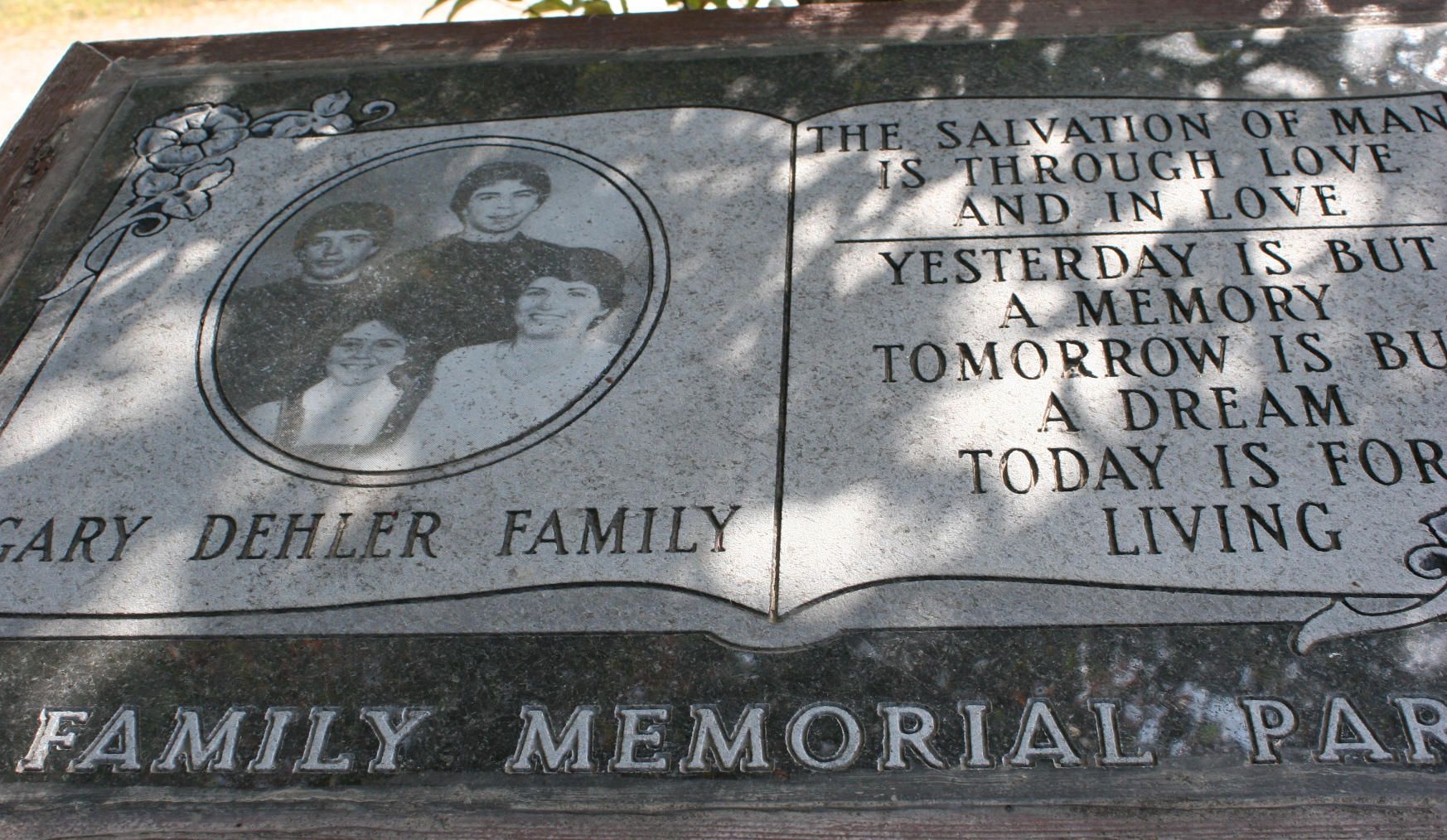
A plaque honors the Dehlers, four of whom died in a car-train collision. Minnesota Prairie Roots file photo September 2020.
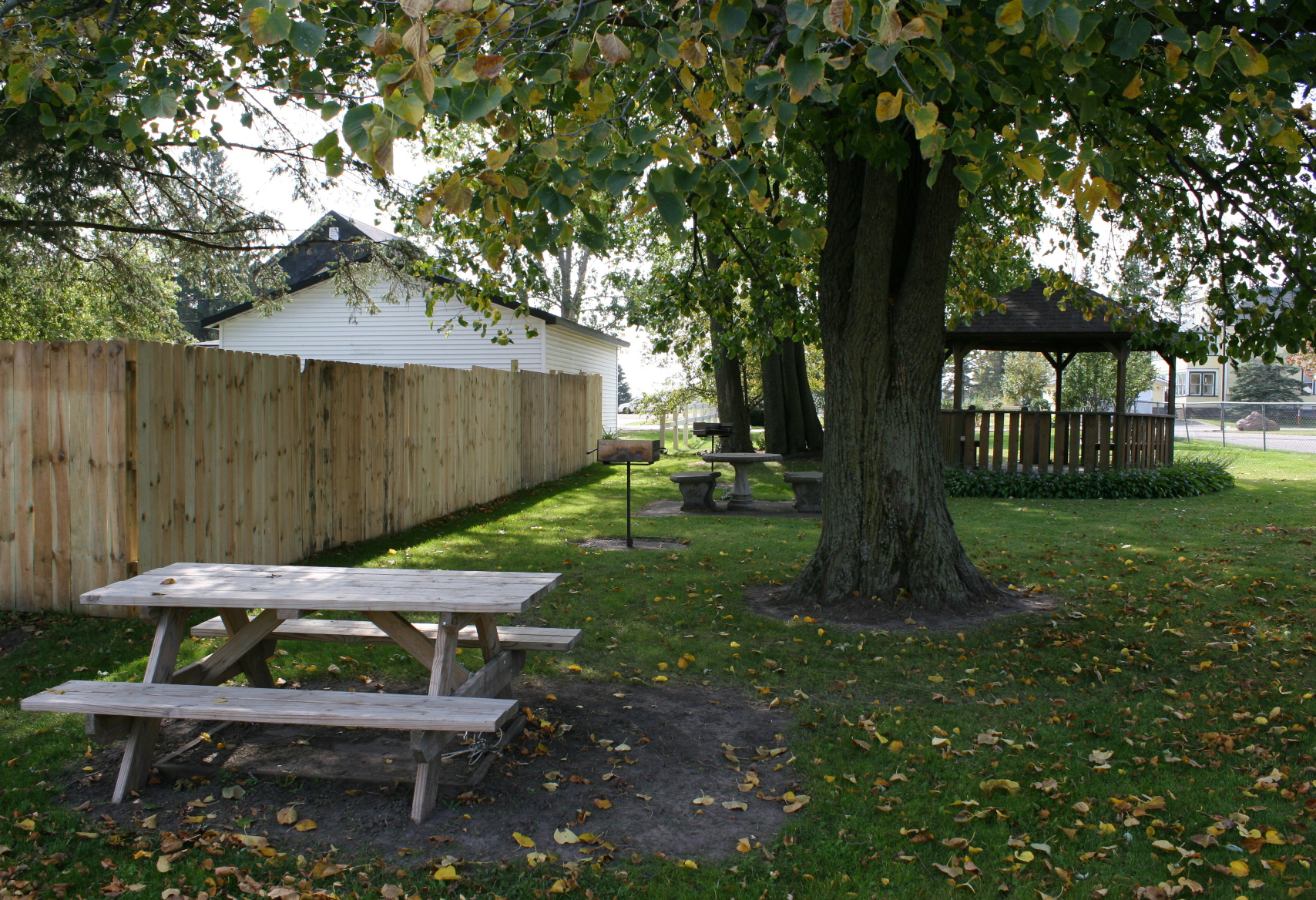
Inside Family Memorial Park, Buckman. Minnesota Prairie Roots file photo September 2020.
Across the street, Family Memorial Park—with a mini playground, picnic tables and gazebo—honors 36-year-old Suzette Dehler and her children, Gerald, 15, Christopher, 14, and Tammi, 8. They died in a car-train accident in July 1986.
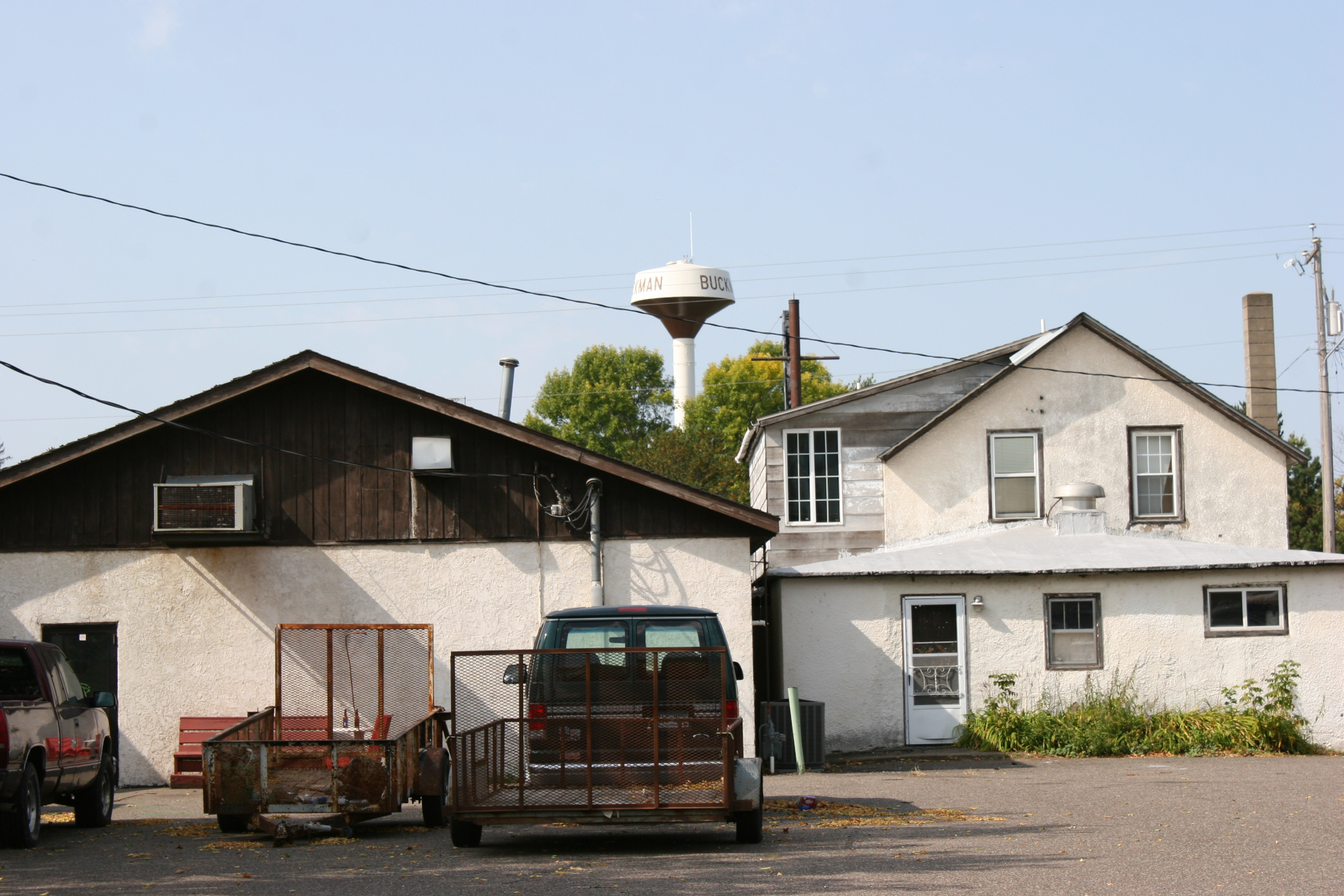
Photographed from the park, the back of Sev’s with the Buckman water tower in the distance. Minnesota Prairie Roots file photo September 2020.
On this autumn afternoon, we picnicked there, behind Sev’s Food & Liquor and across the street from the bus garage. A dog barked at the neighboring house, breaking the small town silence.
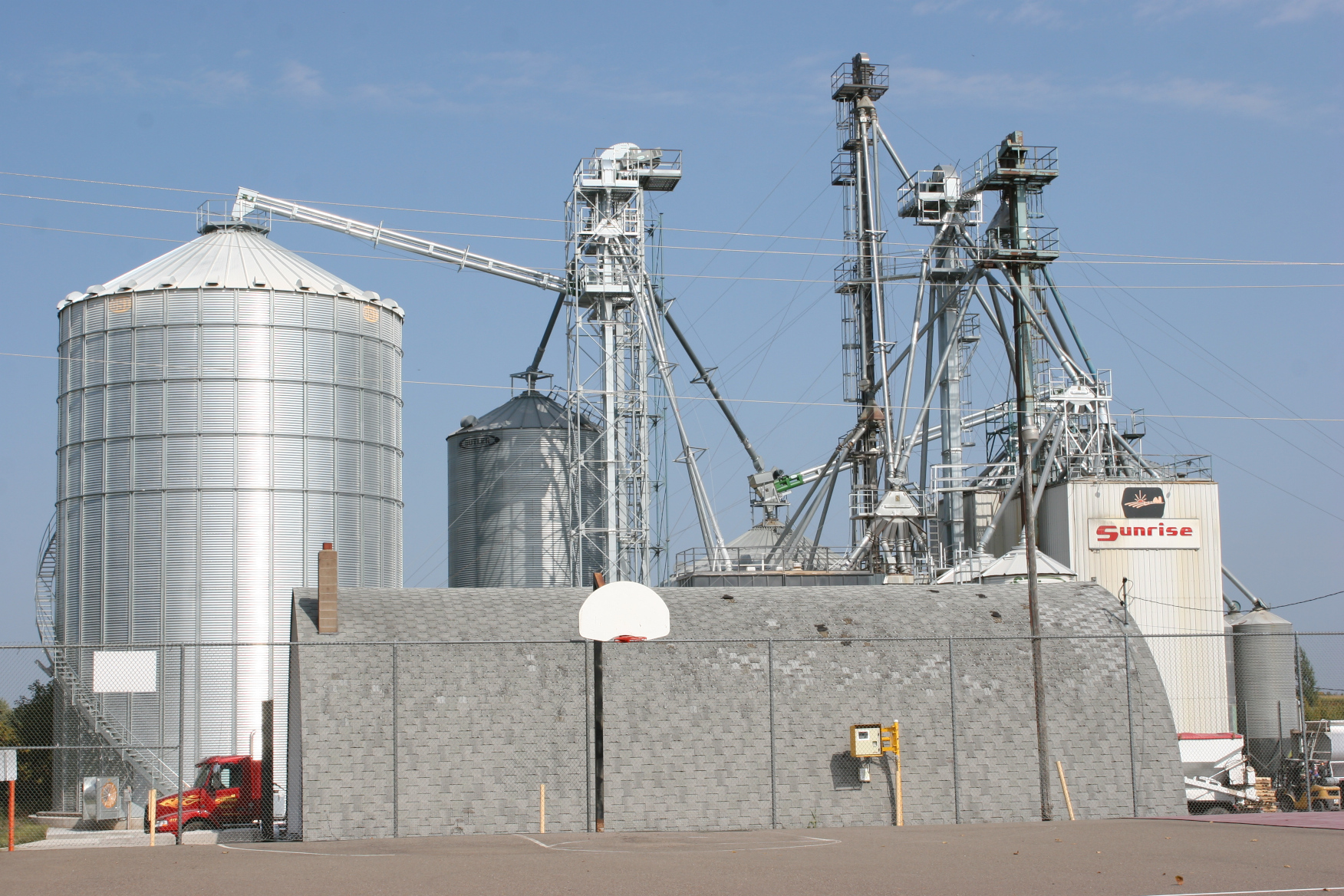
Buckman still centers around agriculture, as seen in this ag business on the north end of town. Minnesota Prairie Roots file photo September 2020.
To the north, massive grain bins define this as an agricultural community.
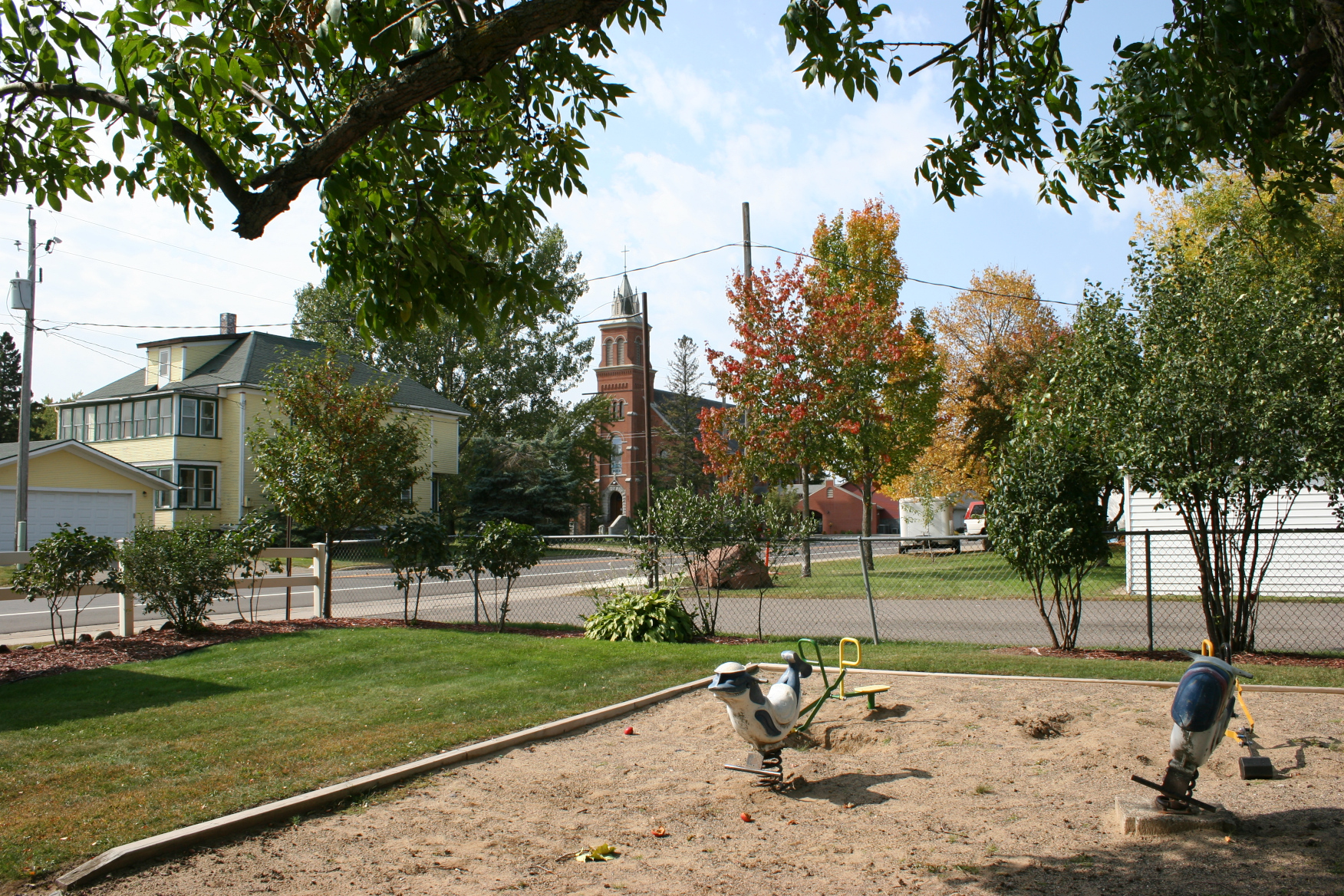
To the west of Family Memorial Park, St. Michael’s Catholic Church rises above Buckman. Minnesota Prairie Roots file photo 2020.
And to the west, the steeple of St. Michael’s Catholic Church rises above Buckman. It’s a beautiful church, recently refurbished, and an integral part of this town. Randy worshiped here with classmates from St. Michael’s Parochial School and with his parents and siblings. He served as an altar boy, too. We mourned his mom here and a few years later he stood as best man when his dad remarried. I photographed the wedding.
On this day, I carried my camera inside again, this time to document the sanctuary. I feel like a foreigner inside Catholic churches, which are typically massive and ornate, so different from the simple Lutheran churches of my upbringing.
Check back as I take you inside St. Michael’s in a series of posts focusing solely on this church. The art inside will, I expect, impress you. And remind you that, even in the smallest of towns, treasures await our discovery.
Upcoming posts will also feature more photos from Buckman and several from neighboring Pierz.













 Minnesota Prairie Roots
Recent Comments