Minnesota Prairie Roots

Writing and photography by Audrey Kletscher Helbling

Post Super Bowl thoughts from southern Minnesota February 5, 2018

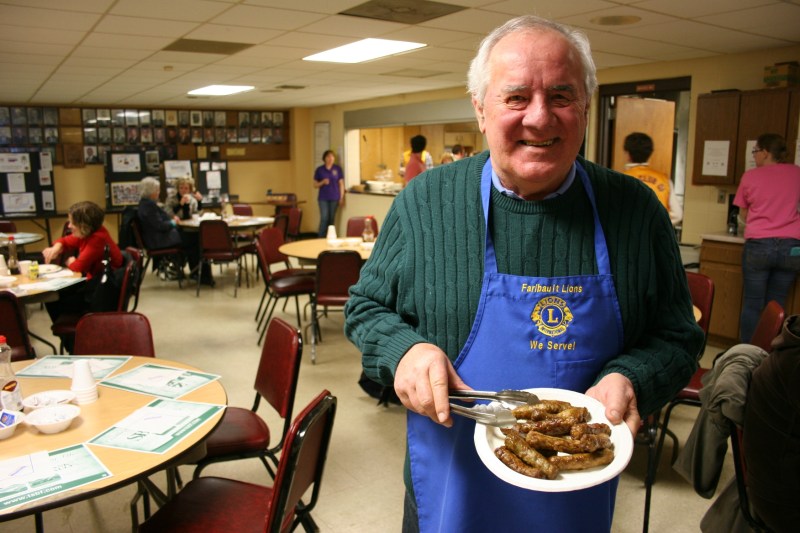
I started my Super Bowl Sunday (after attending worship services) by dining at the Faribault Lions Club Super Sunday Pancake & Sausage Feed with my husband, Randy, and his brother. Neil was on his way home to Missouri after visiting family in Minnesota for the weekend. Minnesota Prairie Roots file photo 2015.


FOR ME TO STAY UP past 11 p.m. rates as rare. But I did last night. Until nearly 12:30 a.m. Monday. I wanted to watch The Tonight Show from Minneapolis, ending way too much time for me in front of the TV on Super Bowl Sunday. But, you know, when the championship game plays out in your home state, you get caught up in the excitement—even if you don’t much care about sports, which I don’t. I finally have it down that a touchdown earns a team six points.


Not a ref from the Super Bowl…image used here for illustration only. Minnesota Prairie Roots file photo 2015.


During past Super Bowls, I’ve focused primarily on the commercials and the half-time show. I still did this year. But, for the first time ever, I watched most of the game. Except for the 33 minutes and 35 seconds I missed when my Wisconsin daughter called during the third and fourth quarters. Family trumps football any day, even on Super Bowl Sunday.


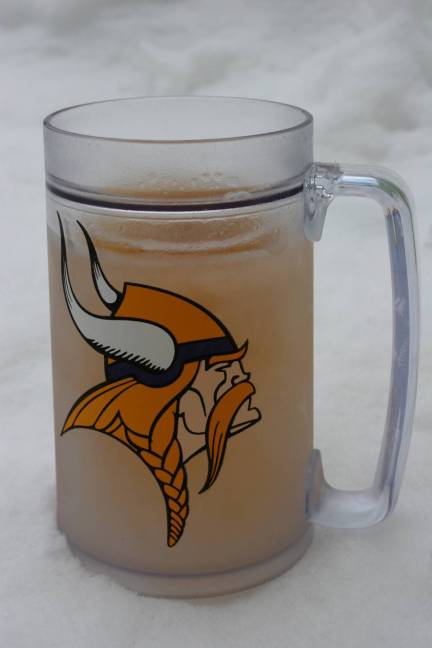
Icy cold beer served up in a Minnesota Vikings mug chilled in the snow. Minnesota Prairie Roots file photo.


It was an exciting game. I found myself rooting for the underdog Philadelphia Eagles, even if they kept the Vikings from the biggest game in football and even though I can’t stand those creepy dog masks worn by some Eagles fans. I did, though, feel, for New England Patriots quarterback Tom Brady, who has a strong Minnesota connection via his mom, born and raised here. Up until a few weeks ago, I’d never heard of Brady. That just shows how much of a football fan I am not.

As for that half-time show…I’m not raving like most are about Justin Timberlake’s performance. But then I’m not a Timberlake, nor a Prince (gasp), fan. Unfamiliar with the songs performed, I couldn’t understand the lyrics. And when Minneapolis lit up in purple during half-time, I didn’t even notice the Prince symbol displayed.


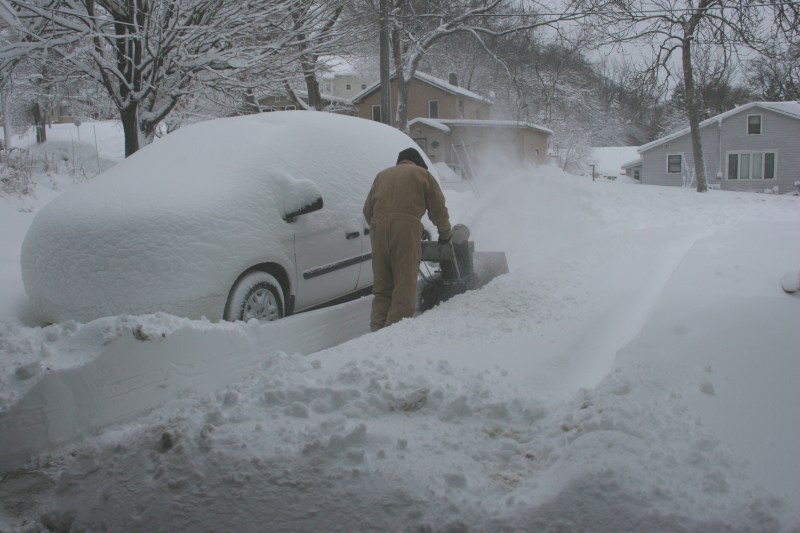
Two weeks ago a major storm dumped 16 inches of snow on Faribault and other parts of Minnesota. Snow also fell on Super Bowl weekend. But it is the cold, below zero temps and minus double digit windchills that marked the weather. I was delighted with the weather, which played perfectly off Minnesota’s Super Bowl tag as the “Bold North.” Minnesota Prairie Roots file photo January 2018.


I saw many, but not all, of the commercials. My favorites focused on the theme of bringing our country together in an especially divisive year. Strength. Unity. Togetherness. Diversity. I especially liked T-Mobile’s “Little Ones” spot featuring babies of multiple ethnicities paired with empowering words. Most, but not all, of these social cause ads worked for me. In the didn’t like/work would be the Dodge Ram Truck ad using the words of Dr. Martin Luther King Jr. I didn’t appreciate his inspiring words used for a commercial purpose.

TurboTax nailed the humor, at least for me, with ads themed on convincing viewers they have nothing to fear in doing their taxes. A monster creeping from under a bed, a ghost in an attic—both were memory relatable. I just hope no little kids got scared.

The Mucinex spot that zoned in on post Super Bowl Monday as a sick day also tickled my funnybone and, in a round-about way, connected to that daughter who called me during the game. Thirty years ago she also used boogers to illicit laughter. “How do you make a Kleenex dance?” she asked kids and parents during a family skate time at a (now closed) Faribault rollerskating rink. “You put a little boogie in it,” she delivered in her sweet preschool voice.


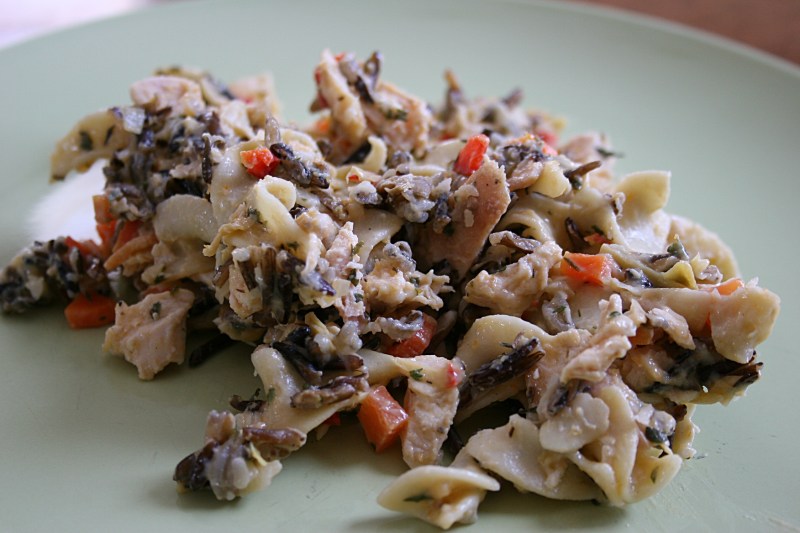
A wonderful blend of textures is presented in Wild Rice Hotdish, another popular Minnesota dish. Minnesota Prairie Roots file photo.


A year from now I likely will have forgotten who played in Super Bowl LII. I will have forgotten the record low game time kick-off temp of one degree above zero. (An effort is underway to collect cold weather gear for Minnesota homeless from Super Bowl attendees returning to warm weather destinations via “Pass Your Parkas.”)  I will have forgotten the Mucinex and other commercials. I will have forgotten who performed at half-time. I will have forgotten how Jimmy Fallon gushed about Minneapolis and the Tater Tot Hotdish (not casserole) served to him by a Champlin family. But that memory of my sweet preschooler—now a grown woman—telling that joke about boogers, that I still, and will always, remember.

© Copyright 2018 Audrey Kletscher Helbling


Why a community should care about its alleys January 25, 2018

Filed under: Uncategorized — Audrey Kletscher Helbling @ 5:00 AM
Tags: , , , , , , , , , , ,

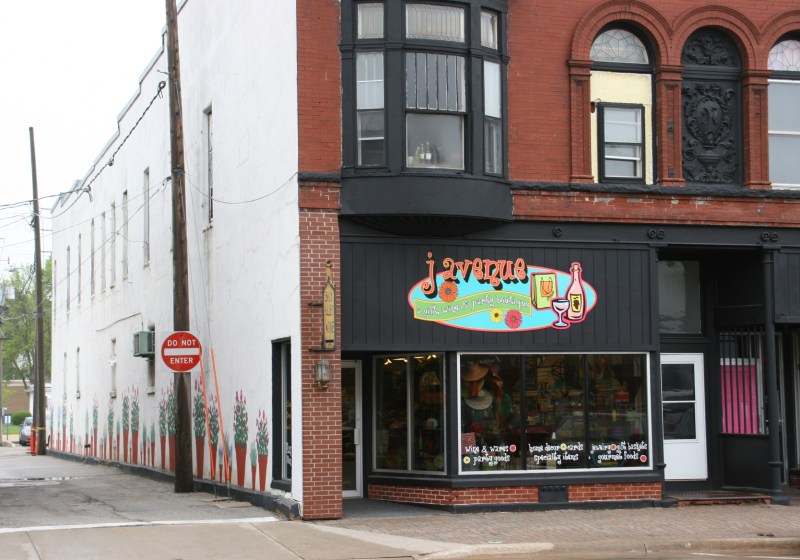
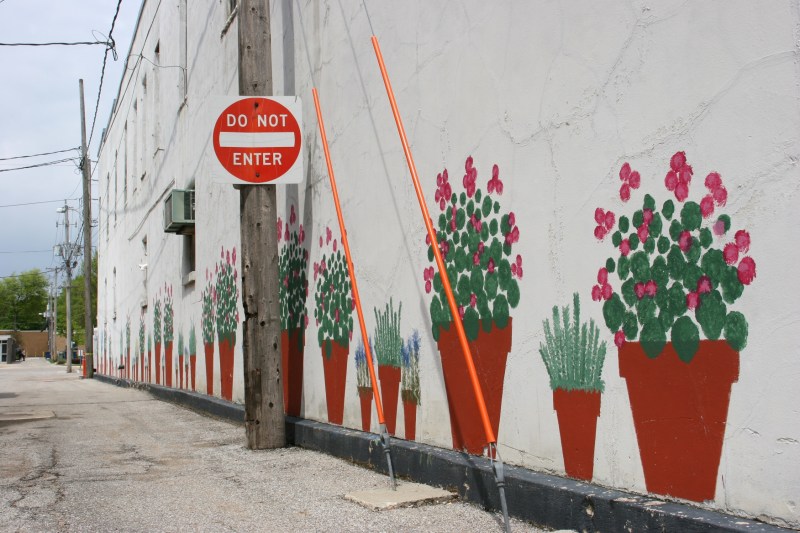
This alley of art in Clear Lake, Iowa, impresses me. Minnesota Prairie Roots file photo 2015.


I NOTICE DETAILS, always have. This heightened awareness weaves into my work. I write and photograph with a strong sense of place, a quality instilled in me long ago by growing up on the prairie. In that vast space of sky and land, every nuance of the environment imprints upon the soul.

My reactions to a place evolve from first impressions, most often viewed through my camera lens. I see the world in details of color, balance and perspective, of light and mood and texture and more.


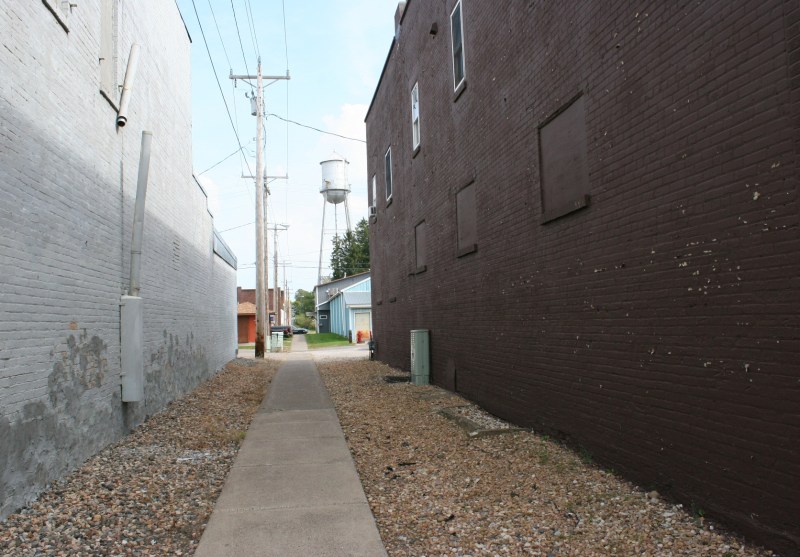
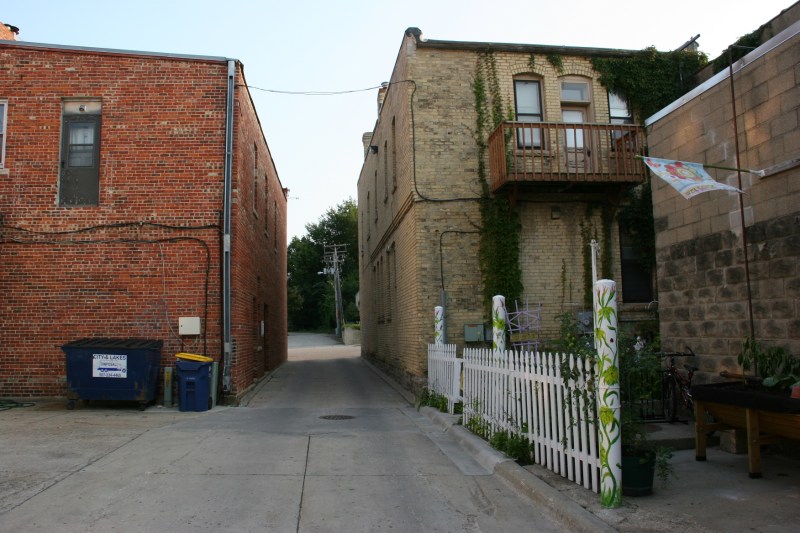
An alley in Milaca, photographed in September 2017.


With that background, you can perhaps better understand why, when photographing a community, I notice more than the slick fronts of buildings, the parks and other attractions tourism offices promote. I look beyond those to the alleys, the roof lines and even the sidewalks. The details.


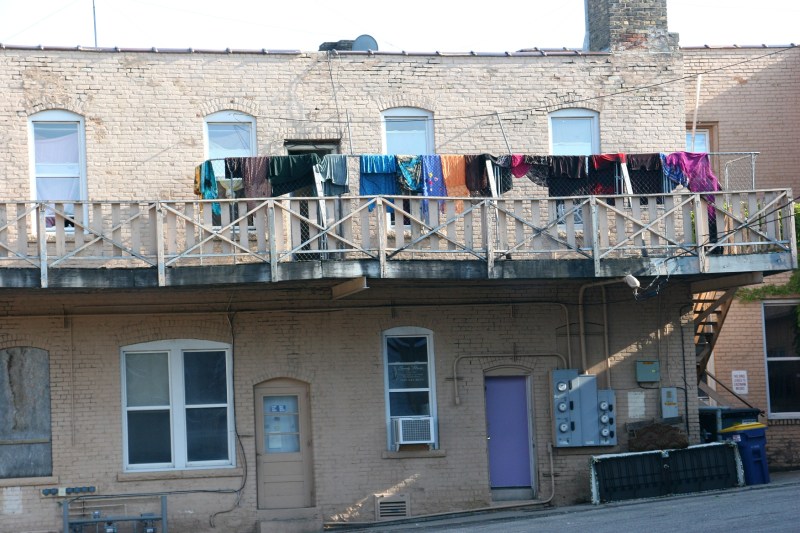
The scene along a balcony on the back side of a building along Third Street N.E. in downtown Faribault, just across the alley from the post office is one of my favorite alley photos for the story it tells. Minnesota Prairie Roots file photo July 2015.


It is the alleys in particular that draw my visual interest and show me the side of a community often overlooked. And too often neglected. There’s much to learn in those alleyways about people and places and cultures and even socioeconomic status.


I love the sweet surprise of these floral paintings brightening an alley in downtown Clear Lake. Minnesota Prairie Roots file photo May 2015.


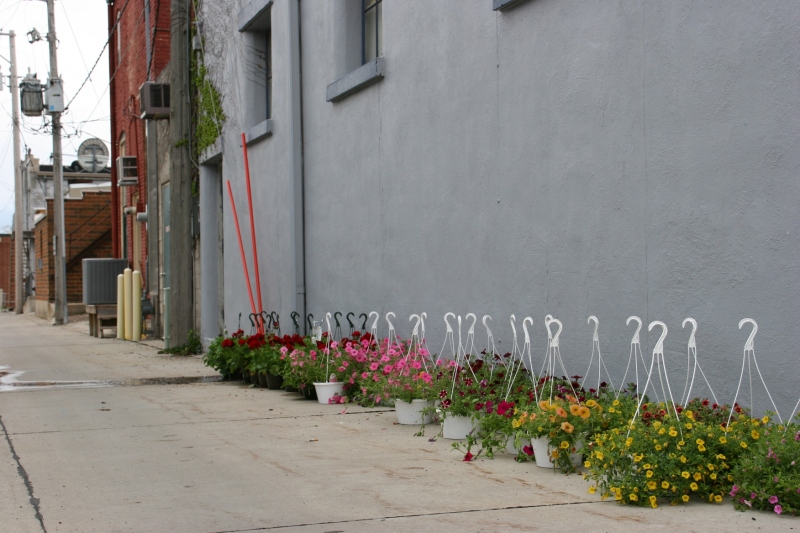
Hanging baskets line the alley behind Larson’s Mercantile in Clear Lake, adding a splash of color to the downtown. Minnesota Prairie Roots file photo May 2015.


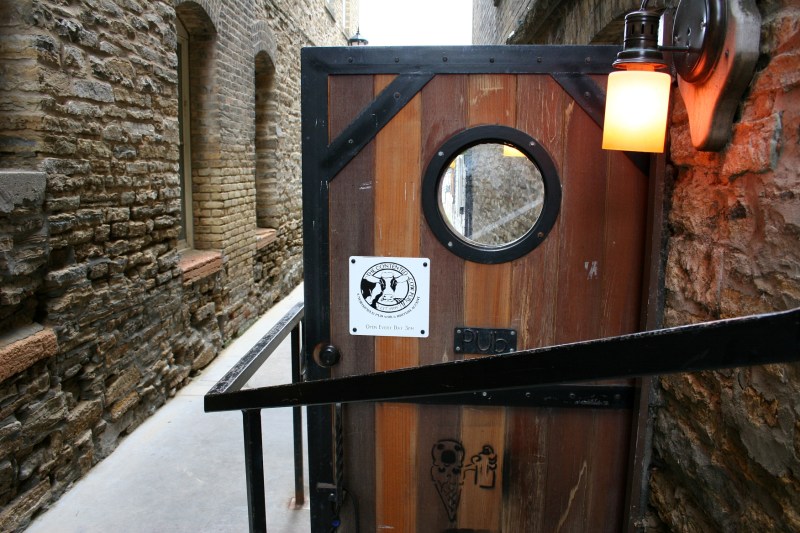
The Contented Cow opens onto a riverside space between buildings in historic downtown Northfield. Minnesota Prairie Roots file photo October 2014.


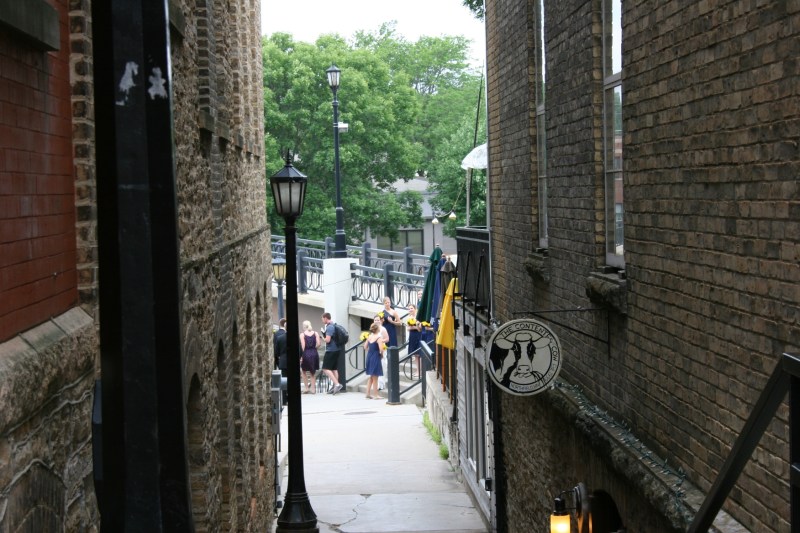
Looking further down that narrow space, I photographed a wedding party gathering near the Cannon River. Minnesota Prairie Roots file photo.


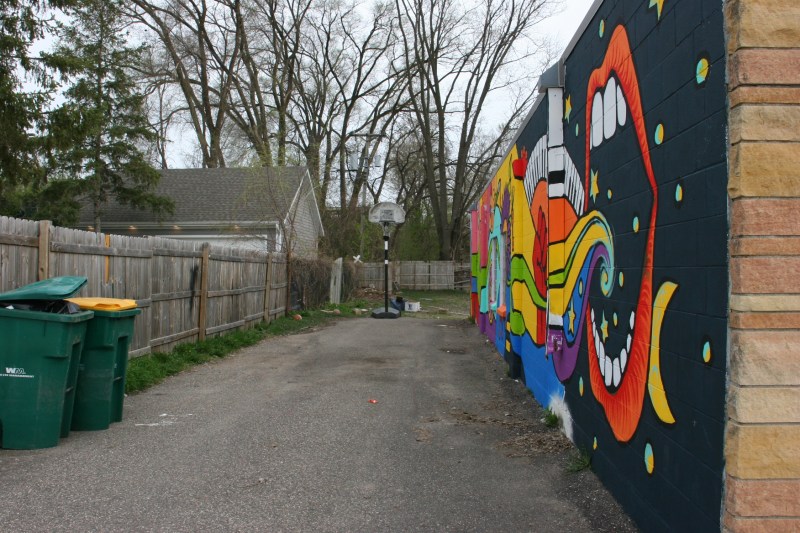
A mural on The Key (youth center) building in downtown Northfield. Minnesota Prairie Roots file photo April 2017.


Through the years, I’ve documented many behind and between businesses scenes with my camera. I’ve seen how a community can convert an alley into a lovely and inviting space. Clear Lake, Iowa, and Northfield, Minnesota, especially, have succeeded with this attention to detail beyond storefronts.


Michelle’s Garden, right next to the alley behind buildings along Faribault’s Second Street and Central Avenue. Minnesota Prairie Roots file photo September 2015.


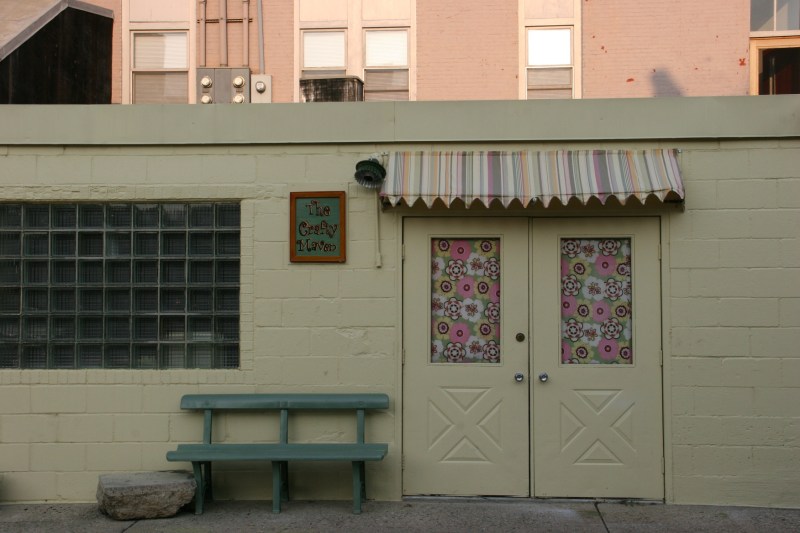
The back of The Crafty Maven (now closed) sat right across the alley from the garden. Minnesota Prairie Roots file photo September 2015.


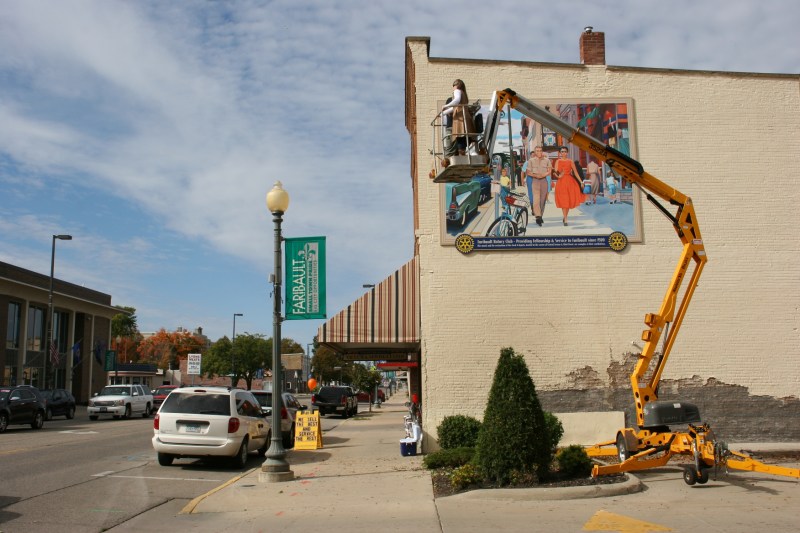
This mural of an iconic scene from downtown Faribault was installed along an alleyway visible from busy Minnesota State Highway 60/Fourth Street in the heart of downtown. Minnesota Prairie Roots file photo.


My community of Faribault, too, boasts an alley-side mini park and an alleyway mural creating a more inviting downtown. But dumpsters overflowing with garbage in other sections of the downtown counterbalance the positive efforts.


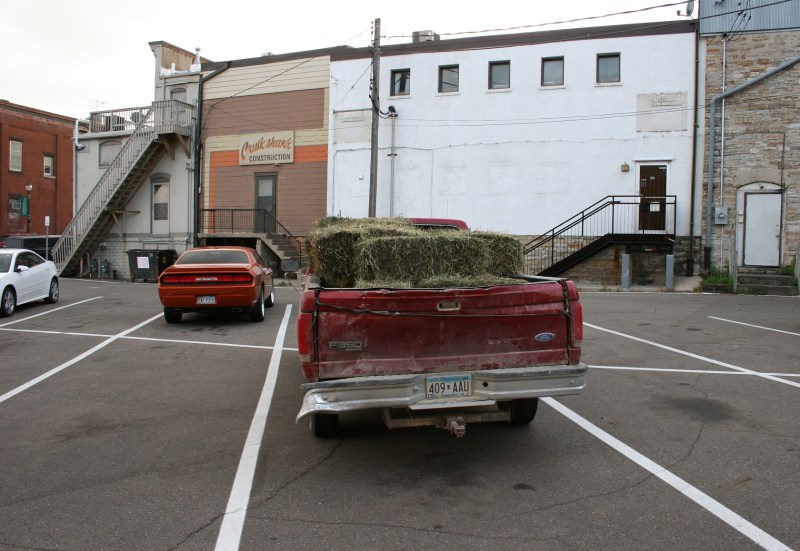
The behind buildings parking lot scene in downtown Faribault highlights the area’s ag base. Minnesota Prairie Roots file photo August 2014.


In my opinion, every community should pay closer attention to the details. They are part of the whole, of the impression visitors gather of a place beyond the side we’re supposed to see.

THOUGHTS? I’m interested, especially, in hearing how your community or other communities have beautified alleys and/or backs of businesses.

© Copyright 2017 Audrey Kletscher Helbling


How one little girl put some fun back in my Minnesota winter January 24, 2018

Filed under: Uncategorized — Audrey Kletscher Helbling @ 5:00 AM
Tags: , , , , , , , , ,

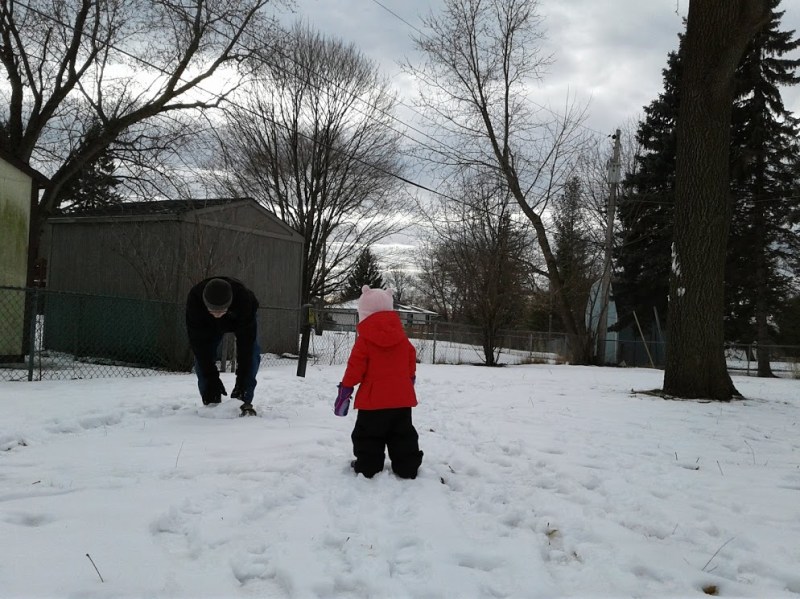
My granddaughter watches while her grandpa rolls a snowball.


AS I’VE AGED, I complain more about Minnesota winters. But I didn’t always dislike this season of cold, snow and ice. I once loved being outdoors in the winter—rolling snowballs in to snowmen, engaging in snowball fights, racing up and down snow piles, sledding, digging caves into snow banks, making snow angels, running across rock-hard snow drifts, ice skating and constructing snow forts. Winter as a child was fun in between doing farm chores.

Even when I had my own three children, winter remained semi fun with some of the same winter activities. But as the kids grew, so did their disinterest in outdoor winter play. It’s been years since I’ve thought about the fun aspect of the months spanning November – April in Minnesota.

But then along came my granddaughter who is now nearing age two. On Saturday Randy and I offered to play with Izzy so her parents could have an afternoon out. My motive was also grandma selfish in wanting some time with this sweet little girl.


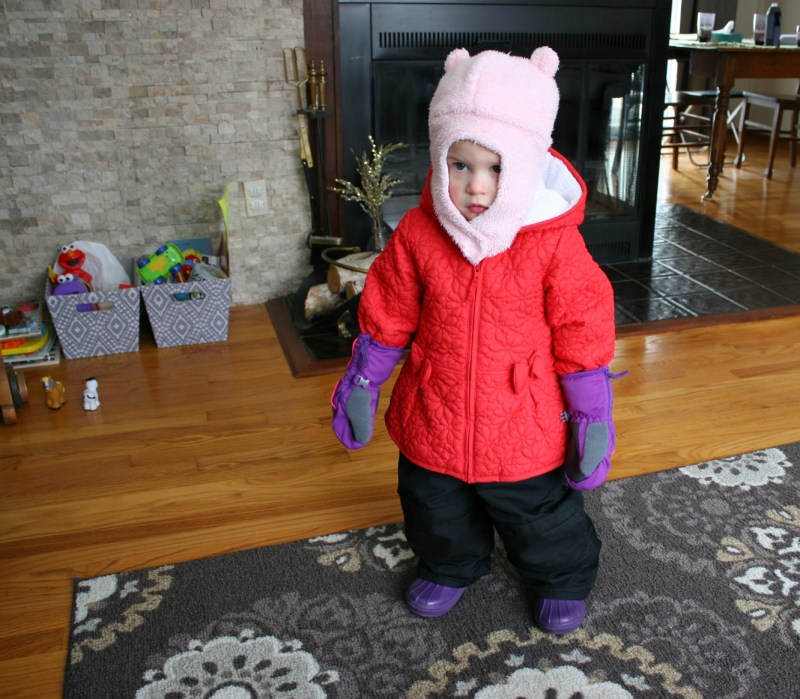
Ready to head outside into the snow.


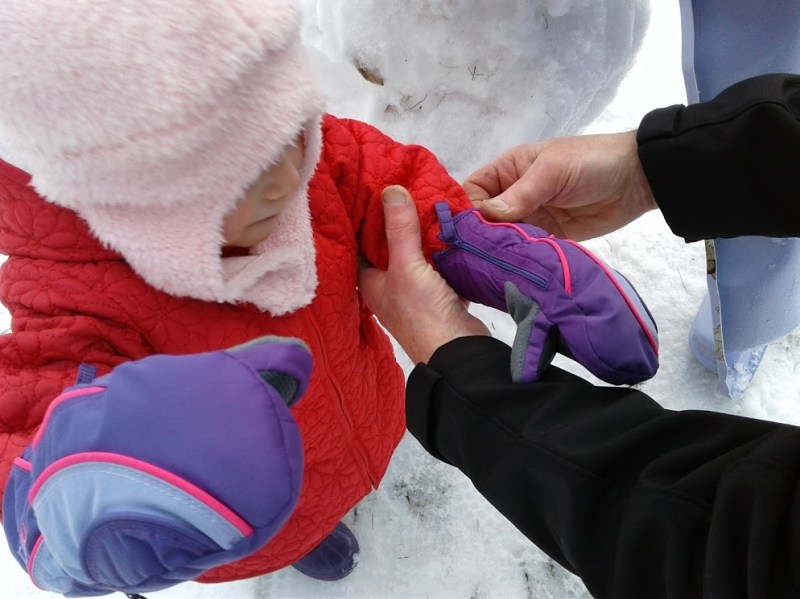
With temps around 40 degrees, I decided (and Grandpa went along with the idea) it would be a great day to play with Izzy in the snow. After I bundled her into her snowpants, boots, coat, cap and mittens and then got myself ready, we finally headed to the backyard. I’d forgotten how long it takes to get a little one into snow gear.


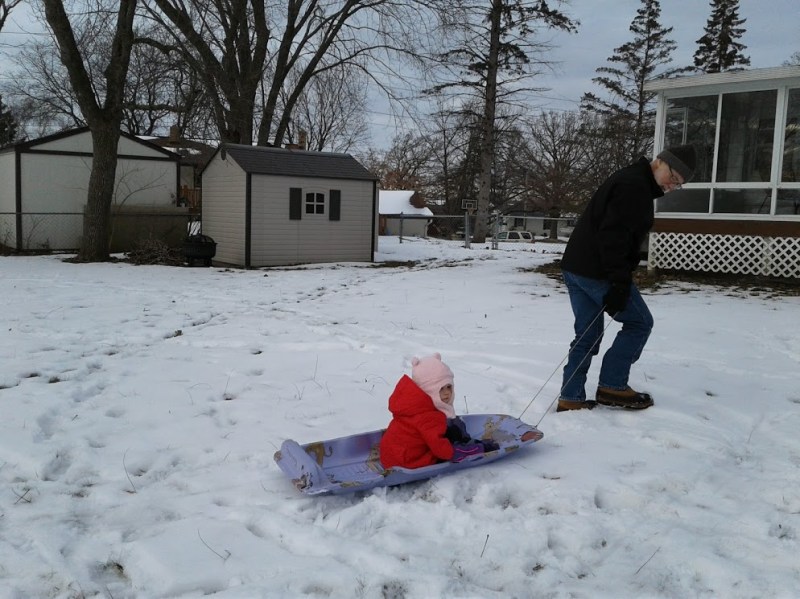
Once in the backyard, Randy and I pulled Izzy around on a Lion King sled Randy recently retrieved from the garage rafters. It’s the same sled Isabelle’s mama used as a child.


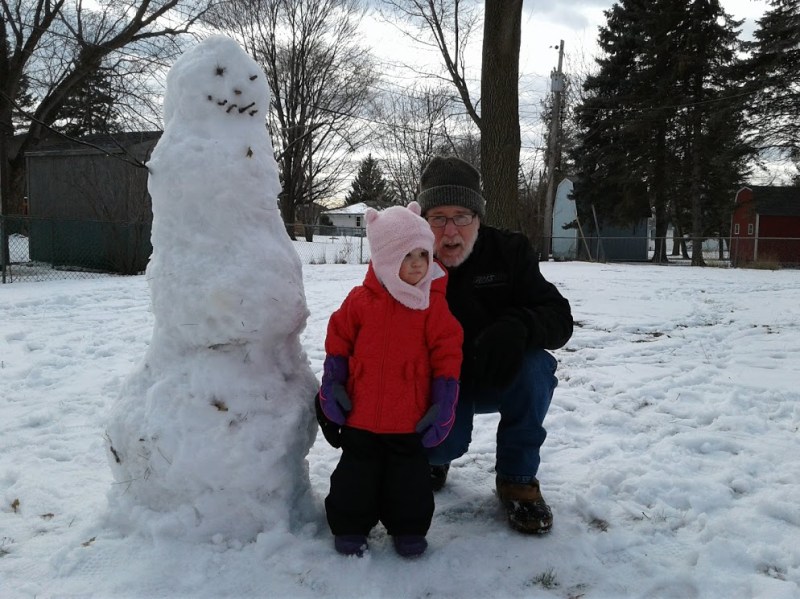
While Grandpa rolled snowballs and stacked them into a snowman, I played with Izzy. She trundled in the snow as best she could, occasionally reaching for my hand to assure she stayed upright. When I started throwing snowballs at a tree trunk, she burst into waves of giggles. She may have been laughing at Grandma’s inability to hit the target about 50 percent of the time.

The time outdoors with my granddaughter on a balmy January afternoon in Minnesota put the fun back in winter for me. Oh, the power of a child. Over a grandmother.

© Copyright 2018 Audrey Kletscher Helbling


Of Vikings, a blizzard & Minnesota Nice January 22, 2018

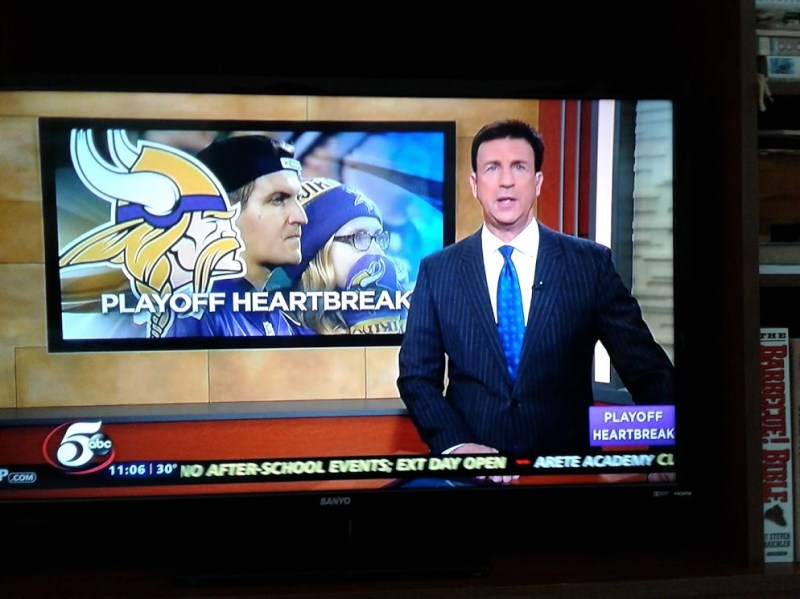
The Vikings’ loss and fan reaction headlined news late this morning on a Twin Cities TV station.


NOT WANTING TO SOUND like a poor loser the day after the Minnesota Vikings’ loss to the Philadelphia Eagles in the NFC championship game, I pondered what to post here. Watching the second half of the game, which ended with a 38 – 7 win for the Eagles, proved difficult. I mostly read a book, diverting my attention from the disaster unfolding on the TV screen.

But rather than wallow in the disappointment of the Vikings not advancing to the Super Bowl in their hometown, I choose to remember the seven days in which Minnesotans united in exuberance over the Minneapolis Miracle. It felt good, really good, to be part of such a positive experience, the pride in our state strong.

As the Vikings-Eagles game ended Sunday evening, I turned to my husband and asked, “Now who are you going to cheer for in the Super Bowl?” His answer was swift. “The Eagles,” he said, explaining that he often roots for the underdog. Me, too. Typically. But our son lives in greater Boston and the New England Patriots hail from Massachusetts…

And then I read a post by Minnesota Public Radio’s Bob Collins, whom I respect as a news blogger. He wrote this morning about the way some Eagles fans treated some Vikings fans yesterday in Philadelphia. It wasn’t pretty with taunting, foul language and even beer cans tossed. Is this normal behavior? I hope not. Collins points out that in just two weeks, Eagles fans will arrive in Minnesota from the City of Brotherly Love. Will we show them our signature Minnesota Nice? I am confident we will.


Minnesota kids need warm hats and mittens during these cold and snowy Minnesota winters.


An email which arrived in my in-box this morning from Thrivent Financial, a Minnesota Super Bowl Host Committee Partner, confirms my premise that we Minnesotans are good at heart and we’ll show the world that during Super Bowl LII. Thrivent is partnering with Hats and Mittens for a Super Hats & Mittens event the day before the game to make (or collect) 52,000 hats and mittens for those in need. Attendees will craft hats and mittens from fleece during the gathering which also features food, an author, music and more. If this event wasn’t located just blocks from US Bank Stadium, I’d consider attending. But I don’t want to be anywhere near the stadium around Super Bowl time.


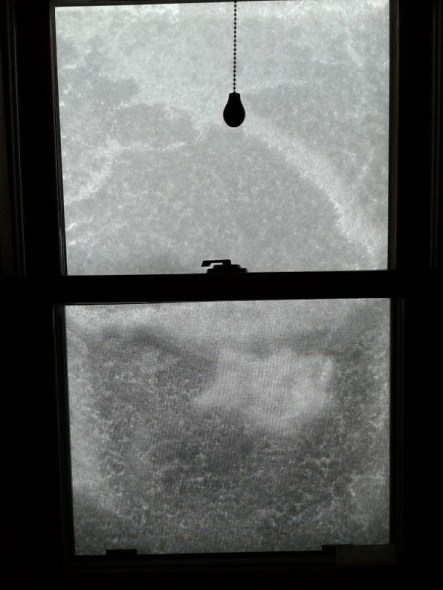
The view from my home office window this morning as a blizzard rages outside.


And this would be my kitchen window which is totally covered by wind-driven snow.


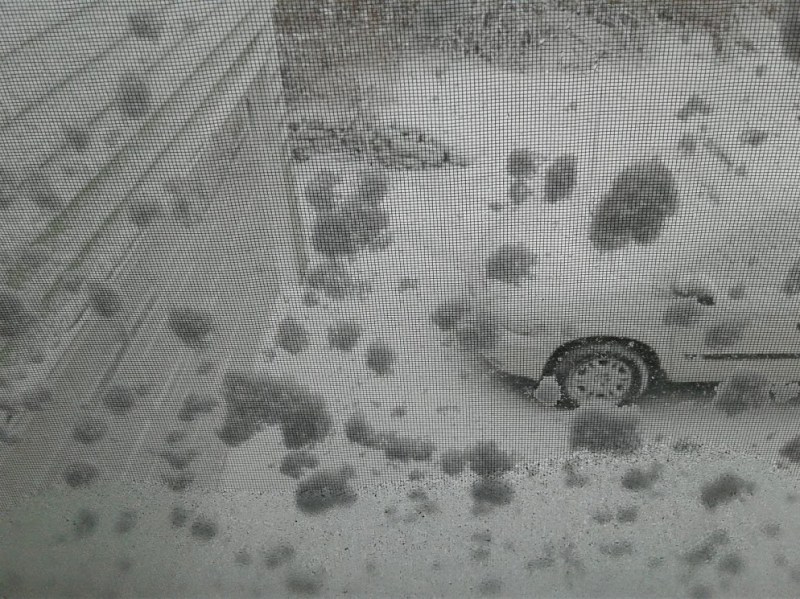
Early this morning I took this shot from an upstairs window of the van parked in my driveway near the garage.


All of this aside, we here in southern Minnesota have another, much more important, distraction today. The weather. My county of Rice and several other Minnesota counties are in a blizzard warning until midnight. Fierce winds are driving snow nearly horizontally across the landscape. It’s not pretty out there.

© Copyright 2018 Audrey Kletscher Helbling


In Minnesota: When a football team brings a state together January 21, 2018


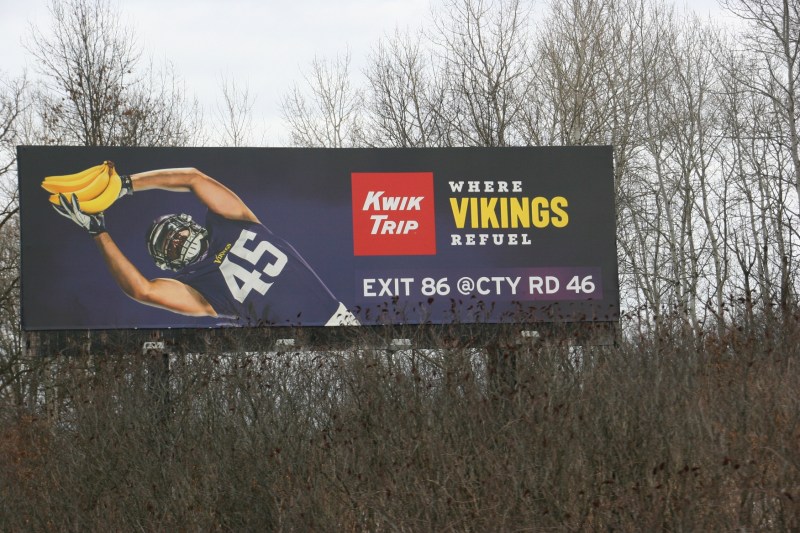
I photographed this billboard along the northbound lane of Interstate 35 near Lakeville. Kwik Trip is headquartered in LaCrosse, Wisconsin, with many convenience stores in southern Minnesota.


EIGHT DAYS AGO, I couldn’t have identified a single Minnesota Vikings player. But this morning, only hours from the NFC championship game and one week after the Vikes’ stunning win over the New Orleans Saints, I know the names Stefon Diggs and Case Keenum.


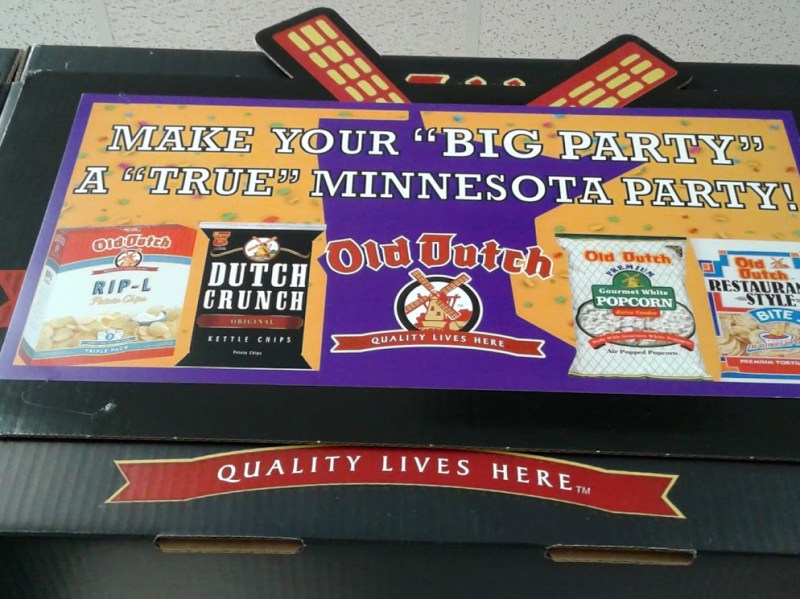
The “true Minnesota” reference refers to Old Dutch, started in St. Paul in 1934 and still based in Minnesota, in Roseville. Photographed at Fareway Foods, Faribault.


And I know something else. This state has come together in a way I haven’t seen in a long long time. We needed the Minneapolis Miracle. We needed a reason to celebrate that stretches far beyond simply winning a football game. We needed this win to bring us all together during an incredibly divisive time in our country.


At Fareway Foods in Faribault, the push is on to sell snacks for the play-off game today and then for the Super Bowl.


The level of excitement and enthusiasm and pride in Minnesota right now has created a strong sense of community here. We are Bold North proud. We are hardy Minnesotans united in our desire to see the Vikings, our team, in the Super Bowl that we are hosting in just a few weeks. We. Us. Good, typically stoic folks who are now chanting Skol! Skol! Skol! from small town school gymnasiums to the Mall of America.

You’ll see Vikings pride on interstate billboards and in grocery stores. Everywhere.

On this morning before the NFC championship game against the Philadelphia Eagles, this feels like our year. To win. Big.

© Copyright 2018 Audrey Kletscher Helbling


Reflecting on the US – Dakota Conflict of 1862 & my changed approach to history January 20, 2018

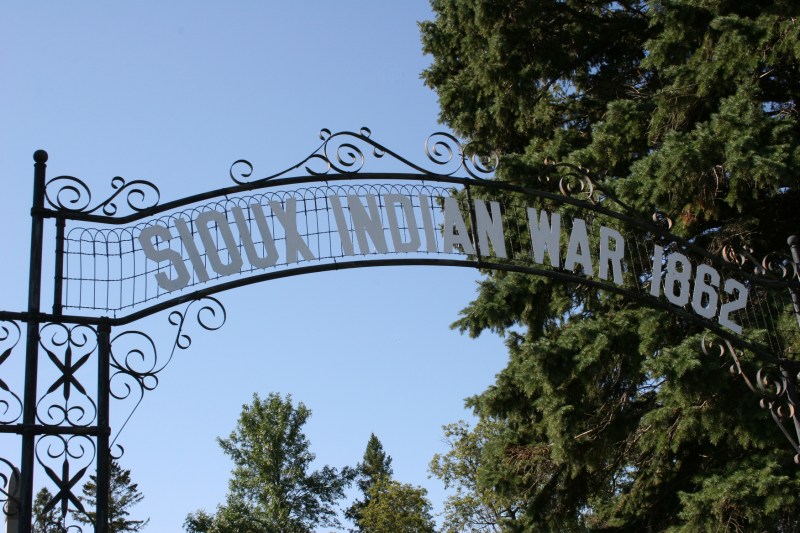
This archway leads to the Wood Lake State Monument, on the site of the battle which ended the US -Dakota Conflict of 1862. Minnesota Prairie Roots file photo 2012.


TUCKED INSIDE A CARDBOARD BOX among teenage journals, clippings of news stories I wrote, old greeting cards, my last childhood doll and more rest pages of history. History I gathered from books, summarized and typed on a manual typewriter into a document titled “The Sioux Uprising of 1862.” I wrote that term paper in ninth grade, or maybe as a sophomore. All these decades later, specifics elude me.
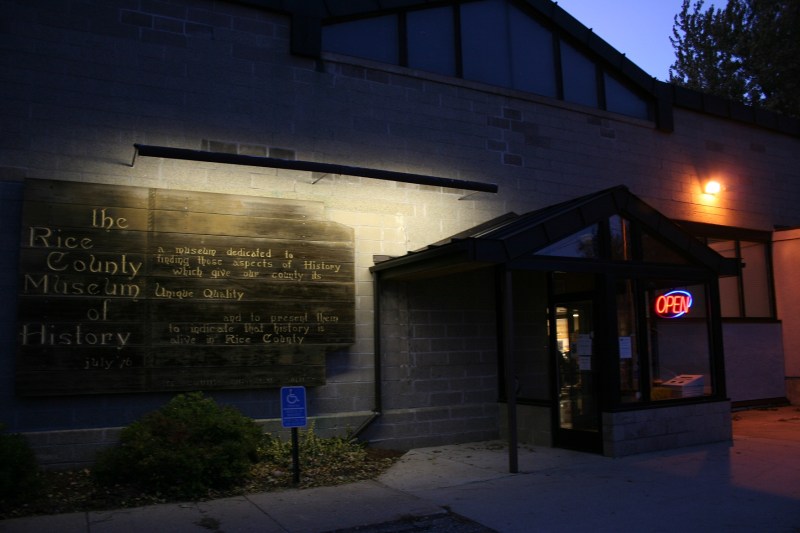
 

The Rice County Historical Society in Faribault. Minnesota Prairie Roots file photo 2013.


But my interest in this Conflict, centered in my home area of southwestern Minnesota, remains steadfast. Thursday evening the Uprising, more appropriately tagged today as The US – Dakota Conflict/War of 1862, focused a presentation by Tim Madigan at the Rice County Historical Society in Faribault. A history major, Madigan taught social studies back in the 1970s in Morton, near the epicenter of the Conflict. He is also a former Faribault city administrator.


A photo panel at the Traverse des Sioux Treaty Center in St. Peter shows Dakota leaders photographed in Washington D.C. in 1858. The photo is from the Minnesota Historical Society.  The quote reflects the many broken treaties between the Dakota and the U.S. government. Minnesota Prairie Roots file photo 2013.


To a rapt audience of nearly 50 mostly history buffs, Madigan outlined basics of the war from its root causes—in delayed annuity payments, withholding of food and resulting starvation among the Dakota people—to information on battles and more. I hadn’t forgotten those basics. But considering them now as an adult rather than as a high school student completing an assignment opened new perspectives. Madigan made it clear that history, as written, includes not only facts, but also myths, lies and more depending on the source. His talk seemed appropriately titled “The Fog of War: Perceptions and Realities, US – Dakota Conflict 1862.”


The Loyal Indian Monument at Birch Coulee Monument near Morton honors Native Americans and features strong words like humanity, patriotism, fidelity and courage. Minnesota Prairie Roots file photo 2010.
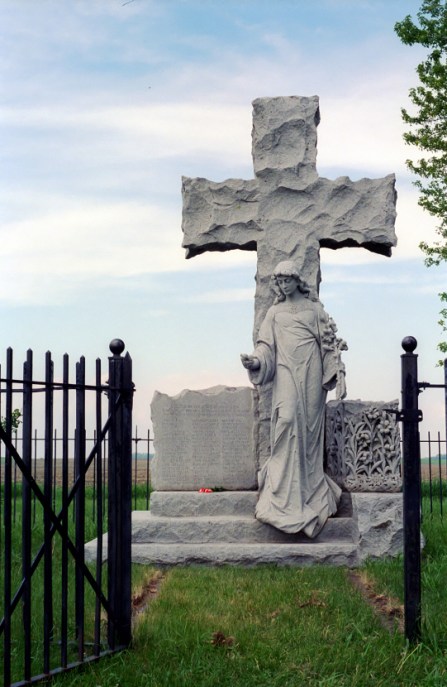
 

The Milford State Monument along Brown County Road 29 west of New Ulm commemorates the deaths of 52 settlers who were killed in the area during the US – Dakota Conflict. Located along the eastern edge of the Lower Sioux Reservation, Milford had the highest war death rate of any single township. Minnesota Prairie Roots file photo 2012.


Going into the presentation, I thought I knew almost everything about the Conflict. But I didn’t. Or perhaps I’d forgotten details like 500 – 700 people of European descent killed in the war along with 100 Dakota warriors and an unknown number of Native civilians. Refugees displaced as a result of the war numbered 20,000. As I listened, I thought of my own maternal ancestors who fled their Courtland area farm for safety in St. Peter some 30 miles distant.
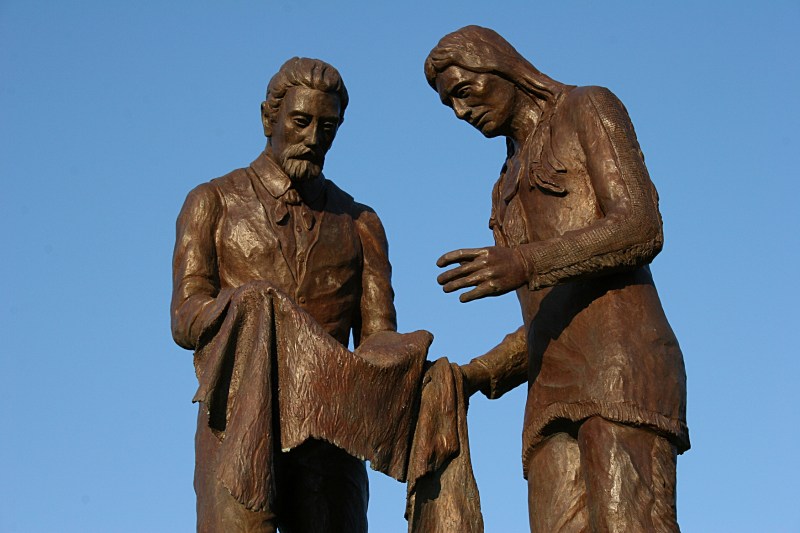
 

This sculpture of Alexander Faribault and a Dakota trading partner stands in Faribault’s Heritage Park near the Straight River and site of Faribault’s trading post. Faribault artist Ivan Whillock created this sculpture which sits atop a fountain known as the Bea Duncan Memorial Fountain. Minnesota Prairie Roots file photo.


But it was the Rice County connection to the war which I found most interesting. My interest always centered on what happened in my native Redwood County and neighboring Brown County versus my home of the last 35 years in Faribault. I was unaware that town founder and fur trader Alexander Faribault (who was part Dakota and part French), for example, was at the Battle of Birch Coulee, an intense battle waged near Morton. I can only imagine the personal conflicts Faribault sometimes felt as a person of mixed blood in the war between the Dakota people and white settlers and soldiers.
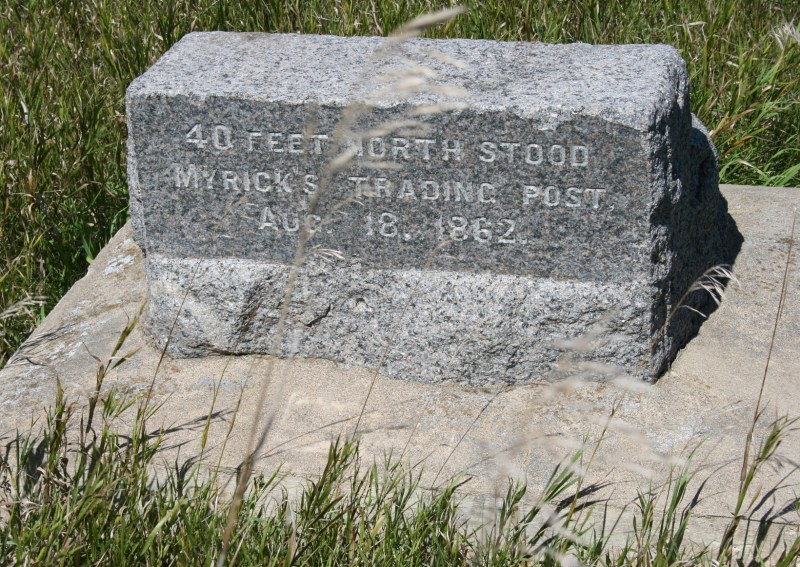
 

Trader Andrew Myrick refused to grant the Dakota credit, remarking, “Let them eat grass.” After an attack on the Lower Sioux Agency, Myrick was found dead, his mouth stuffed with grass. Minnesota Prairie Roots file photo 2012.


Madigan also noted the challenges Dakota leader Little Crow experienced in a war he didn’t initially support. I expect Little Crow felt extreme pressure as he tried to negotiate with government agencies while his people starved.


Above the photos and info is this quote by Bishop Henry Whipple to President Buchanan in August 1860: “In my visits to them (the Dakota), my heart had been pained to see the utter helplessness of these poor souls, fast passing away, caused in great part by the curse which our people have pressed to their lips.” This was part of a 2012 display at the Northfield Historical Society on the Rice County aspect of the US – Dakota Conflict of 1862. Minnesota Prairie Roots file photo 2012.


And then there was Bishop Henry Whipple, a well-known figure in my county of Rice and Minnesota’s first Episcopal bishop. He played a key role in the US – Dakota Conflict. Madigan tagged him as “the disappearing hero,” noting Whipple’s strong advocacy for Indian missions; his support of efforts to educate the Dakota and convert them to Christianity and agrarian ways; his backing of fair treaties between Native peoples and the U.S. government; and, most important, his role in convincing President Abraham Lincoln to reduce the number of Dakota executed in a mass hanging in Mankato following the war. Of the 303 men sentenced to death, 38 were hung.
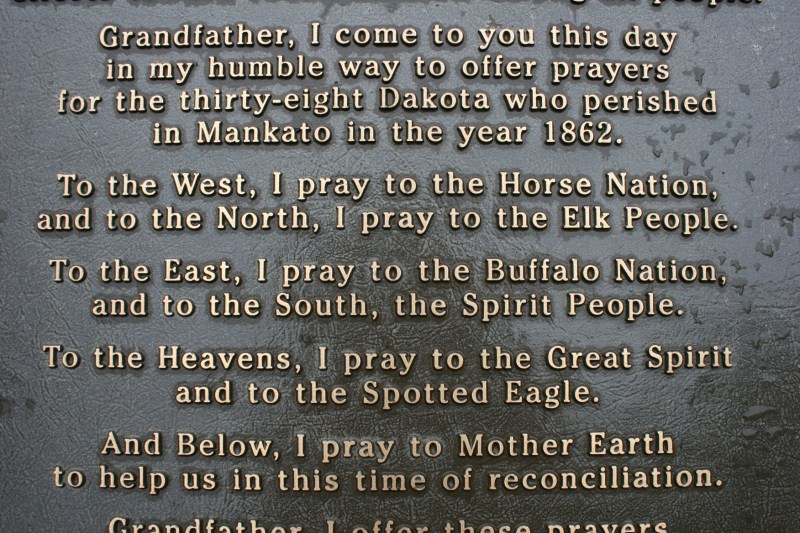
 

Words on a marker in Reconciliation Park in Mankato where 38 Dakota were hung on Dec. 26, 1862. Minnesota Prairie Roots file photo 2012.


Whipple centered much of the audience discussion following Madigan’s talk. In the context of today’s world, Whipple’s approach to changing the Dakota way of life, rather than respecting their culture, seems outdated. Yet, change appeared inevitable in a time period when settlers moved West into Dakota hunting territory to establish homesteads and to farm, several people noted. I couldn’t help but think those expectations of change and adaptation remain strong today toward our immigrant populations.

The Faribault faith leader’s peaceful approach and genuine kindness toward the Dakota was, as you would expect, not embraced by all. There were, noted Rice County Historical Society Executive Director Susan Garwood, assassination attempts on Whipple’s life. This proved news to me.


Dakota beadwork displayed at the Rice County Historical Society Museum in Faribault. Minnesota Prairie Roots file photo 2010.


Following the war, about 80 Native Americans moved to the Faribault area under the protection of Whipple. Some even helped construct The Cathedral of Our Merciful Saviour, Whipple’s church and the oldest cathedral in Minnesota. Built between 1862 – 1869, it’s on the National Register of Historic Places and remains a place of community care with the Community Cathedral Cafe, many support groups, public concerts and more based there.
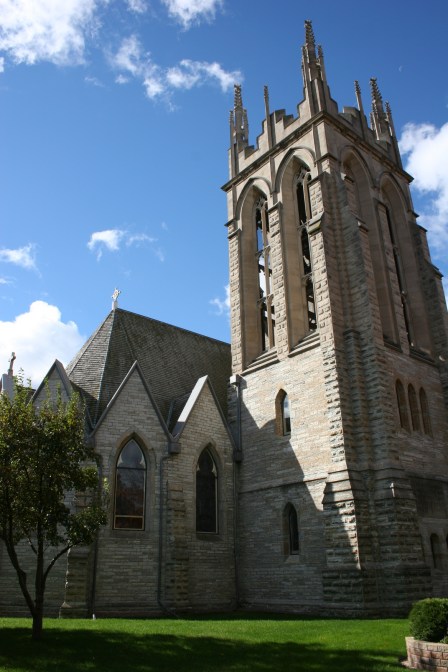
 

The historic Cathedral of Our Merciful Saviour in Faribault. Minnesota Prairie Roots file photo.


As a related addendum, Director Garwood shared that several Dakota and African Americans attended Faribault’s long ago Seabury Divinity School directed by Whipple. The presence of those non-white seminarians caused concern among some, as you might imagine.
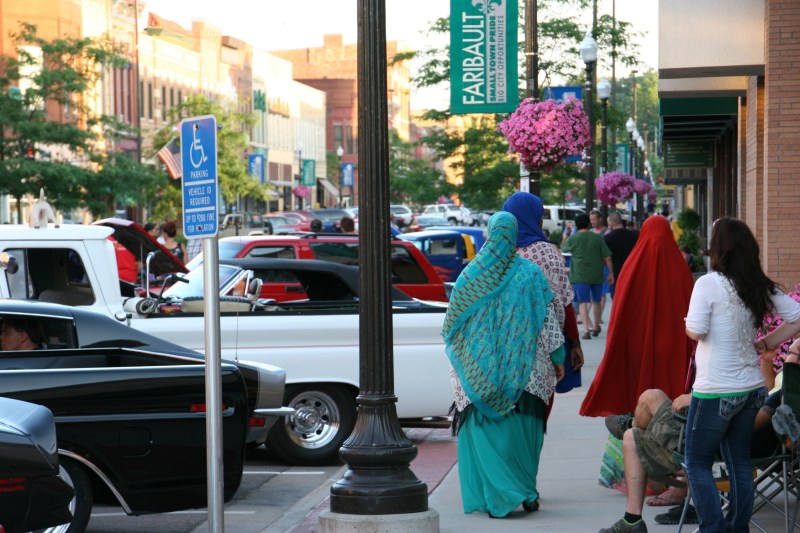
 

A scene in downtown Faribault during a 2015 Car Cruise Night shows my community’s diversity, which includes Somali immigrants. Minnesota Prairie Roots file photo 2015.


Much has changed, yet much hasn’t. In my community of Faribault, where Whipple worked nearly 160 years ago to embrace and express love to all peoples, conflict remains between many long-time locals and our newest immigrants. The same goes for acceptance between Caucasians and Native Americans in my native Redwood County. To deny its existence would be fooling ourselves. We have, in many ways, become more accepting of each other. But we still have far to go.

While I took away new information from Madigan’s talk, I left with more. I realized how much my approach to history has changed since high school, since I researched and wrote about “The Sioux Uprising of 1862.” My perspective shifted to actually thinking about issues rather than simply regurgitating historical facts/myths/lies. And that is a good thing.

© Copyright 2018 Audrey Kletscher Helbling


The power of words at the highest level January 12, 2018

Filed under: Uncategorized — Audrey Kletscher Helbling @ 12:01 PM
Tags: , , , , ,


LAST EVENING I FINISHED reading 365 Days of Wonder, Mr. Browne’s Precepts: A Quote for Every Day of the Year About Courage, Friendship, Love, and Kindness by R. J. Palacio. The book packs powerful quotes that inspire, uplift and, most of all, cause readers to pause and think. Exactly what we need. Especially this morning in the light of President Donald Trump’s latest reported vulgar comment on immigrants and his subsequent denial.

While reading those precepts, I simultaneously started reading The Dangerous Case of Donald Trump: 27 Psychiatrists and Mental Health Experts Assess the President by Bandy Lee. I’m only 60 pages into this book. But nothing—bullying, narcissism, racism—I’ve read thus far, and tagged to the President, surprises me. Nothing.

What will come out of this man’s mouth next? When you’re a powerful world leader like the President, especially, words matter. As they do with all of us.

I realize that in writing this post, I’m not exactly being Minnesota Nice. While I respect the Office of the Presidency, I don’t respect this President.

Perhaps Mr. Trump should read 365 Days of Wonder, Mr. Browne’s Precepts: A Quote for Every Day of the Year About Courage, Friendship, Love, and Kindness. I’m returning the book to my library tomorrow…so it’s available for check out.

#

NOTE: All comments are moderated. You can disagree with me. But please keep comments civil, considering that words do matter.

© Copyright 2018 Audrey Kletscher Helbling
 

January grief January 11, 2018

Filed under: Uncategorized — Audrey Kletscher Helbling @ 10:52 AM
Tags: , , , , , ,

I TRAILED MY HUSBAND as he wheeled his dad through double doors and across door mats, guiding him between a duo line of young men waiting outside the care center.

Just moments earlier the group carried their grandmother’s casket, grey as the January skies that matched the mood of this Wednesday afternoon in central Minnesota.

Randy veered his dad’s wheelchair to the left, behind the coffin, behind the hearse that would carry my father-in-law’s wife two hours west to her burial plot in Montevideo. There she would be laid to rest in the cold soil beside her first husband.

Earlier we gathered inside the care center chapel to remember Jan and to seek comfort in words of Scripture, song, prayer and memories. I learned of my step mother-in-law’s fondness for Tator Tot Hotdish and doughnuts as my own memories surfaced of a woman who always looked lovely with nails painted, hair done, and clothes and jewelry just so. Twenty-two years ago I photographed her marriage to Tom, Randy standing beside him then just as he was now.

Now, with her family preparing for the 100-mile funeral processional westward, my wheelchair bound father-in-law had his final moments with his second wife. It took one heave of Tom’s shoulders for Randy to place his hand upon his dad’s shoulder in a loving and tender act of comfort. I did likewise as the funeral director slid the grey casket, brightened by a lovely spray of red flowers, inside the hearse, then shut the doors.

In that act of finality, grief for my father-in-law surged through me. To see him lose a second wife 24 years after losing his beloved Betty hurt my heart.

Yet, we are people of faith, confident that Jan, like Betty, is now in heaven, and no longer suffering. That comforted us as we headed back inside the care center to sip coffee and to eat ham sandwiches (made with homemade buns), chips and bars (baked by the hands of those who loved Jan). Absent, though, were my step mother-in-law’s favorite doughnuts and Tator Tot Hotdish.

© Copyright 2018 Audrey Kletscher Helbling
 

Artistry along Minnesota State Highway 68 January 9, 2018

Filed under: Uncategorized — Audrey Kletscher Helbling @ 5:00 AM
Tags: , , , , , , , ,


STATE HIGHWAY 68 slices diagonally across rich Minnesota farmland southeast of Morgan.


I often travel this section of roadway until it intersects with Brown County Road 29 when I return to my roots in Redwood County. The angle of the highway in a place where roads typically run in a straight gridded pattern confuses my sense of direction. I must use the sun as my compass. Or remind my mind that highway 68 does not run true north or south, east or west.

Other than the directional issue, I delight in this roadway for the visuals. My photographer’s eye appreciates the power poles that stretch along the highway. Wires loop between poles reinforcing the horizontal lay of this land. There’s just something about the repeating line of poles and wire that artistically pleases me.


And then there are the sunsets which, in this exposed plain, prove spectacular, even in layers of clouds. Everything—trees, barns, fields—seems insignificant beneath a fiery sun suspended above the land, my native land.

NOTE: These photos were taken several weeks ago.

© Copyright 2017 Audrey Kletscher Helbling
 

Writing in Minnesota in January January 4, 2018

Filed under: Uncategorized — Audrey Kletscher Helbling @ 5:00 AM
Tags: , , , , ,


SIX-THIRTY a.m. and the furnace flutters, taking wing in the morning cold.
I stir, too, beneath a layer of blankets topped by an extra fleece throw. I’m in no hurry to exit my warm bed, even if I am a morning person. The dark and cold of a Minnesota winter hold me there, pressed between flannel sheets rough as sandpaper.

Outside traffic rushes by in sub zero temps, drivers shivering inside vehicles warming on the way to work. I’m lucky. My office is only a room away.

Soon enough I rise, dress in jeans and a t-shirt layered by flannel and a zip-up sweatshirt during this Minnesota cold snap. Banana-laced oatmeal and a coffee fuel my body. I settle at my desktop computer to write.

The beginning of the year launches submission season. I focus on writing poetry, fiction and creative nonfiction for numerous regional contests. Submission guidelines roll into my email as I note details and push myself to meet deadlines. Every year I doubt myself. But then the ideas come and the words emerge from my fingertips, pulled from the bank of experiences and memories and places that shape my writing. Even in fiction some truth prevails.

And so I write, not because anyone makes me write. But because I must write words that flutter, take wing, rise in the cold of a January morning in Minnesota.

© Copyright 2018 Audrey Kletscher Helbling