Minnesota Prairie Roots

Writing and photography by Audrey Kletscher Helbling

Appreciating the little things at a barn dance & in life September 20, 2011

COUNTLESS TIMES my husband and I have driven into John and Debbie Becker’s rural Dundas yard for bible study and not given their barn a second thought. Maybe we’ve glanced toward it, noticed the 1915 date on the cupola or the cow art on the exterior milkhouse wall. But beyond that and John’s occasional comment that he’d like to have a barn dance, we really haven’t focused too much on that building which centers the farm (although I did photograph the exterior one evening this past summer).
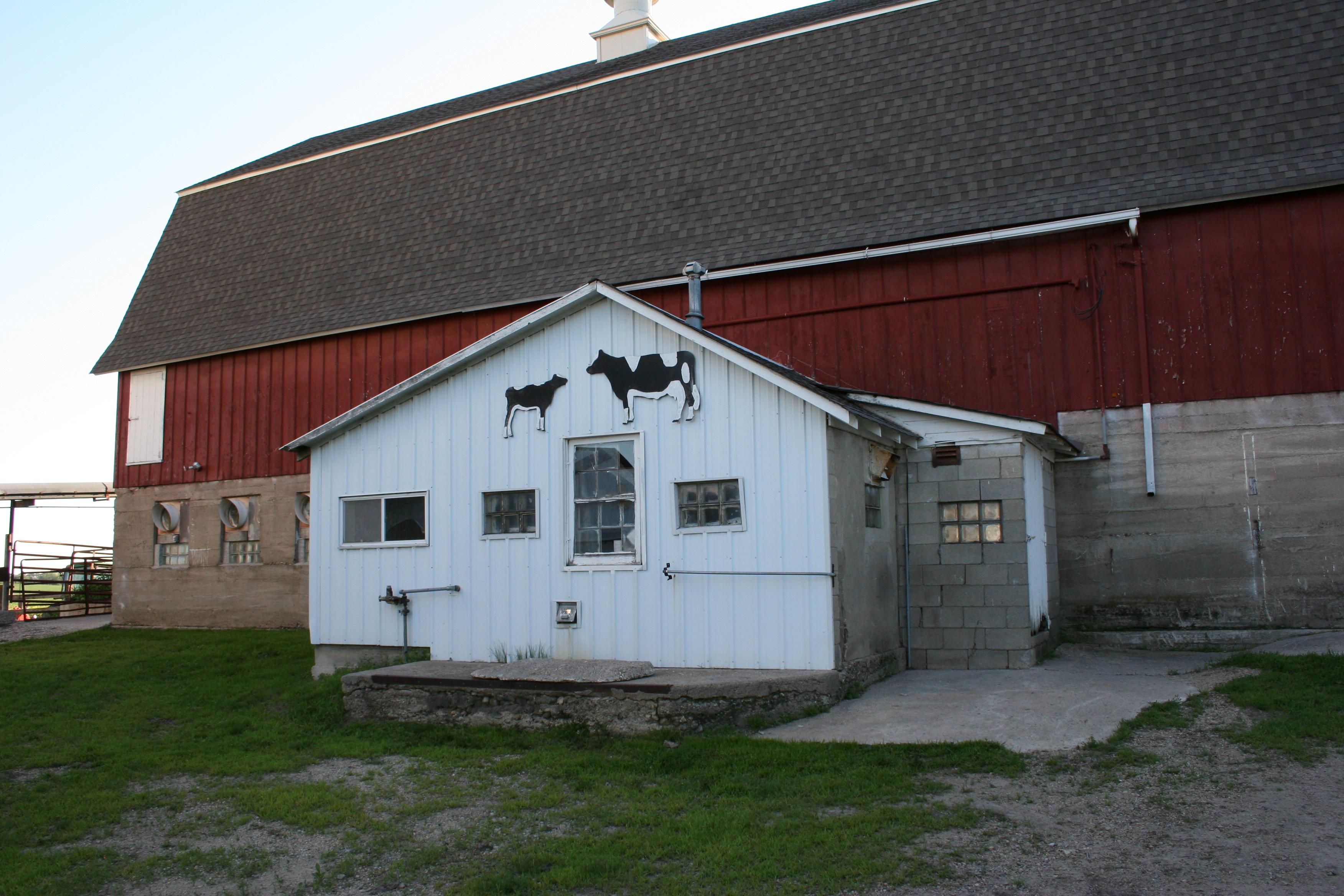
Notice the cow art on the milkhouse in this image taken several months ago.

That all changed Saturday when the Beckers hosted their first-ever Harvest Time Barn Dance. I was there with camera in tow trying to capture the essence of the event via my photography.

That involved not only taking the general overall photos you would expect, but zooming in on the details. It is the details, like chapters in a book, that combined tell the complete story.

So today, in this post, I want you to see the “little things” I noticed. And I want to encourage you, as you go about your daily, busy lives, to pause and see the details. They make life interesting and fun and joyful and memorable.

All too often we hurry here and there, filling our minutes and hours and days and weeks—and then months and years—with activities and work and busyness. We miss out on so much of life by living that way.

We all need a barn dance to appreciate the sweet details of life.
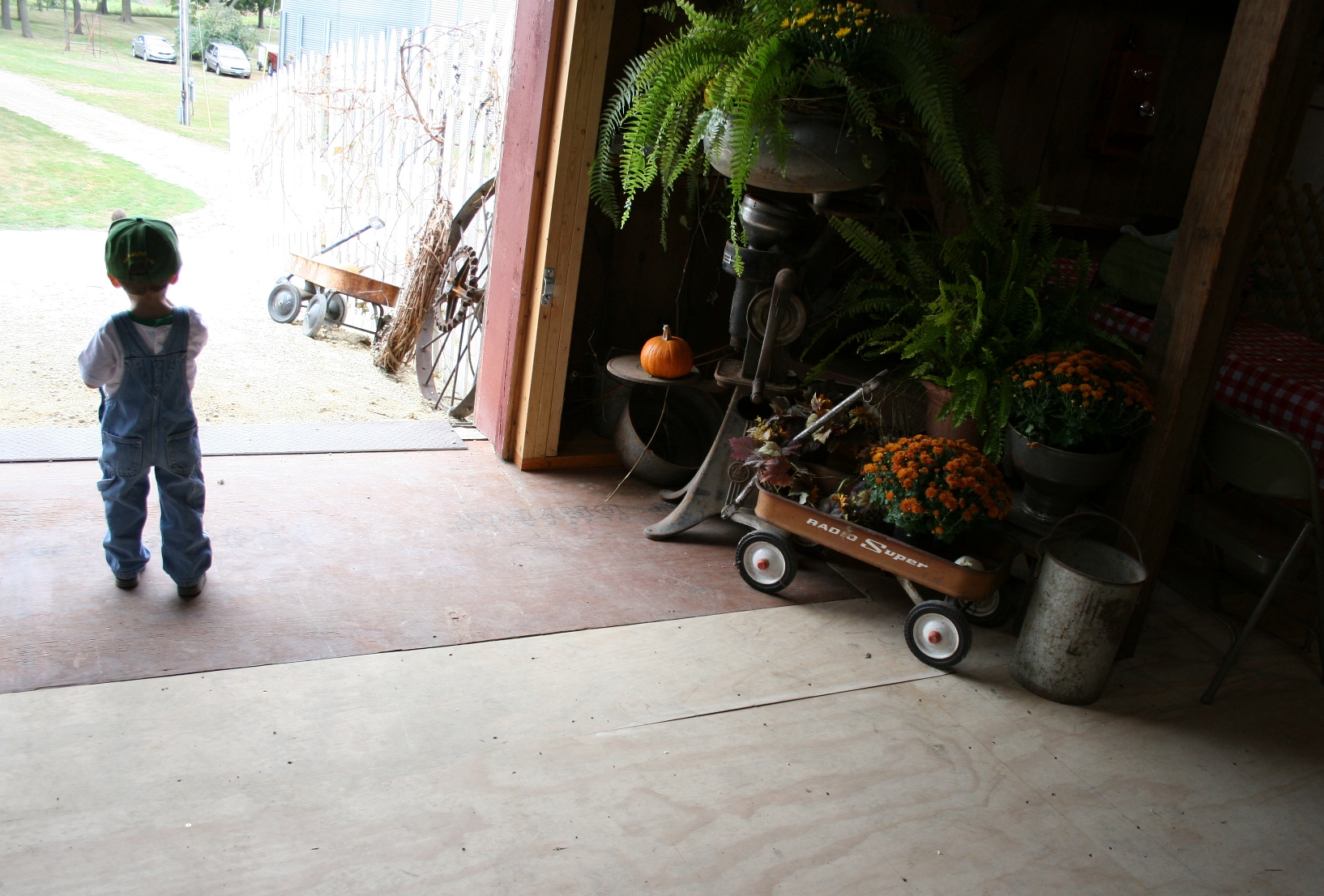
There's something about this "boy in bibs looking out the barn door" that is sweet and endearing.
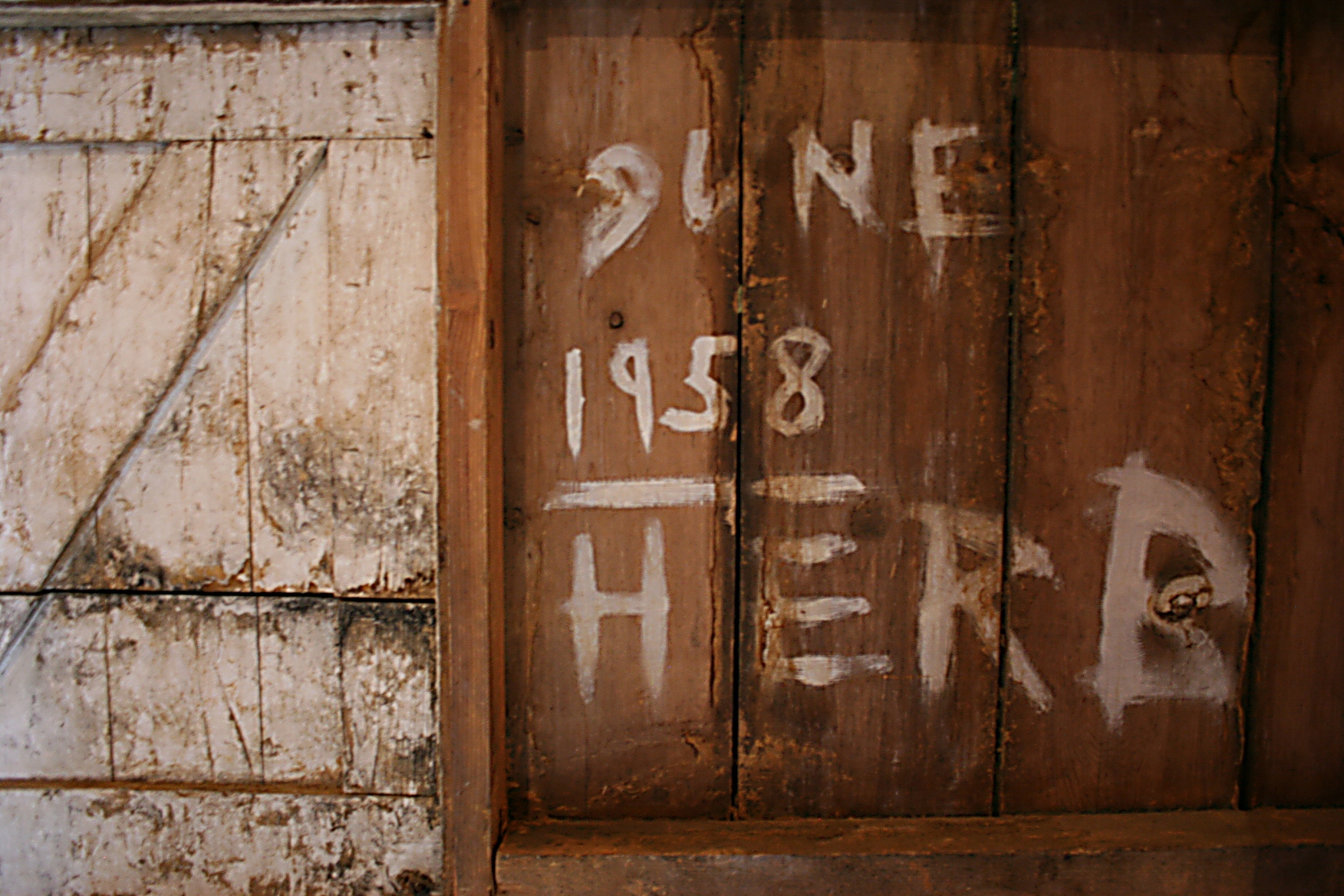
Herb Becker painted this on the west end of the barn interior in 1958. Family members are uncertain what it means, but John Becker thinks it may have something to do with his mom being pregnant with him then.

Most of the kids dressed in western attire, right down to the tips of their cowgirl/cowboy boots and hats.
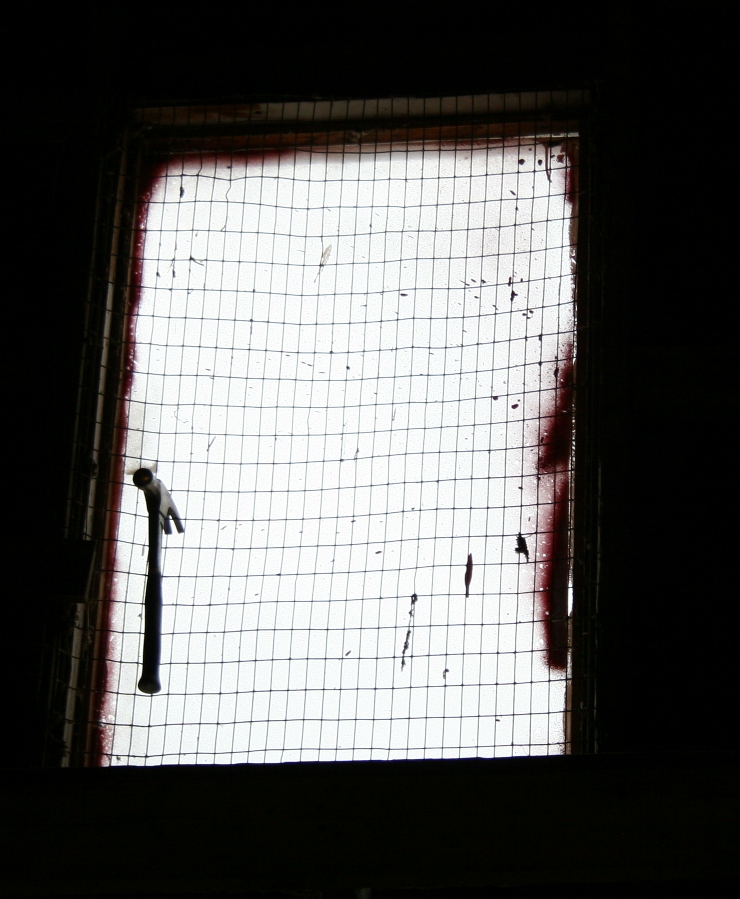
A hammer high on a screen has hung there for 40 - 50 years and is used to close the barn window, John Becker says.
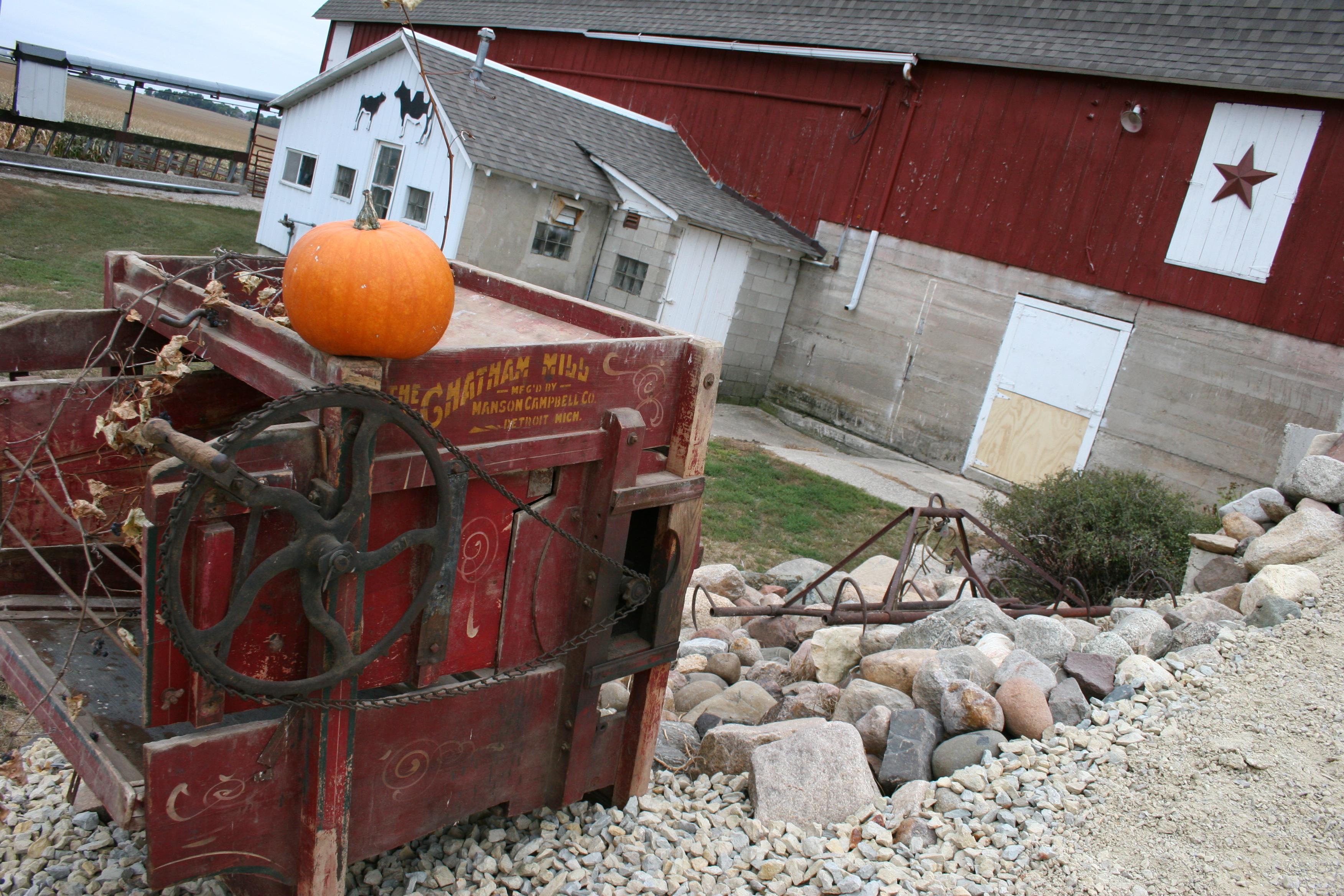
A vintage fanning mill was displayed along the pathway into the barn.
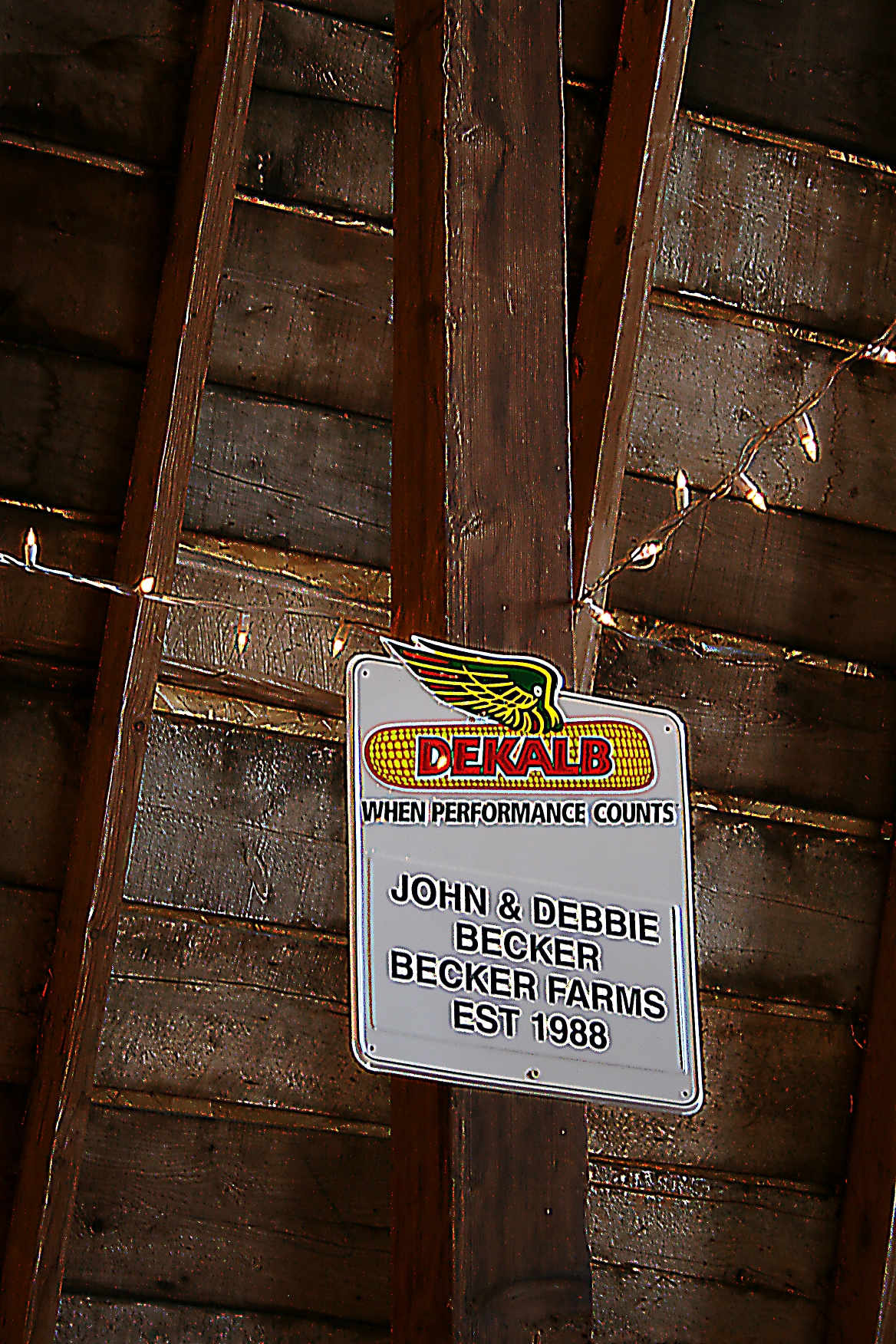
Among the signage decorating the barn interior: the Beckers' seed corn sign
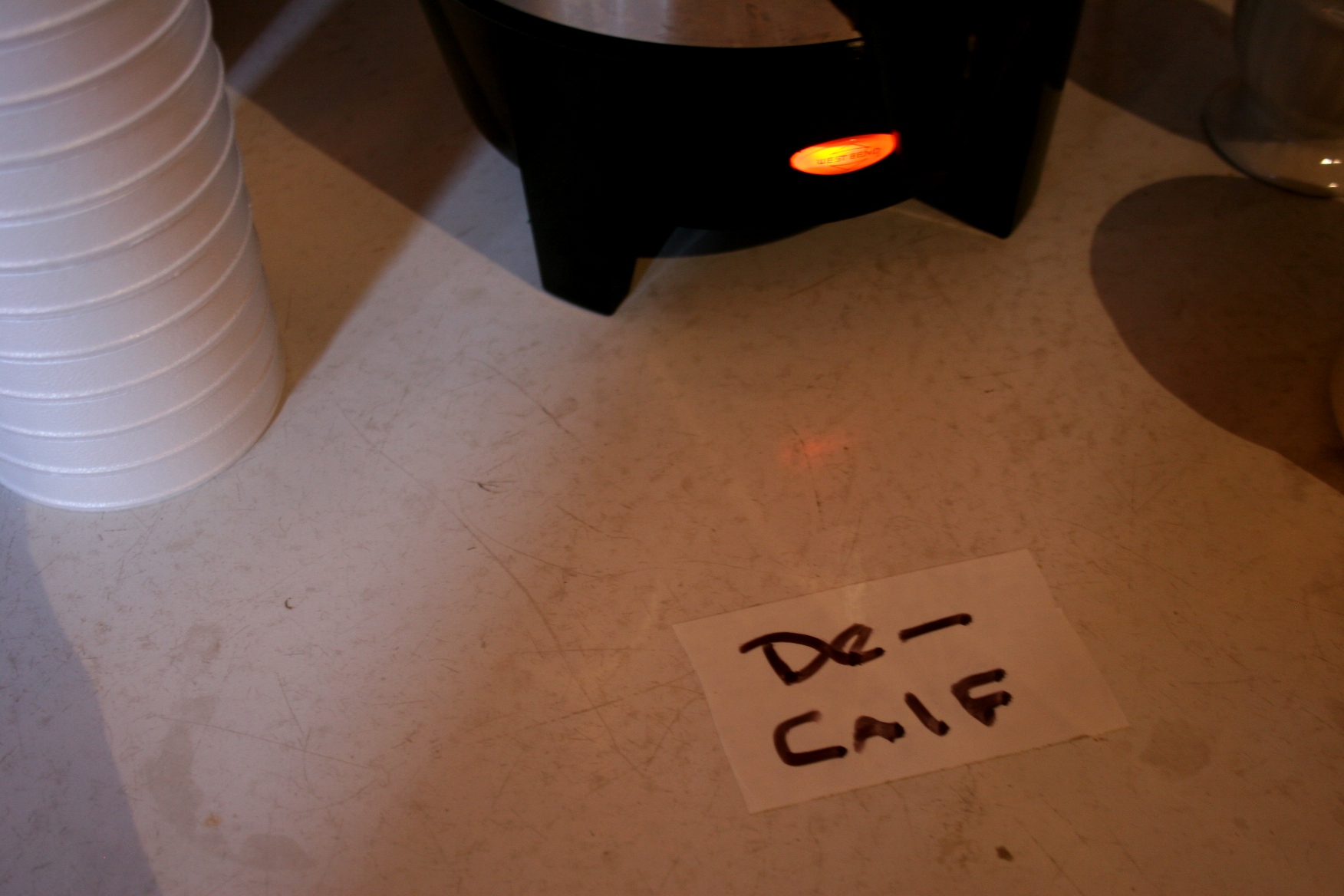
Farm humor: "De-CALF coffee
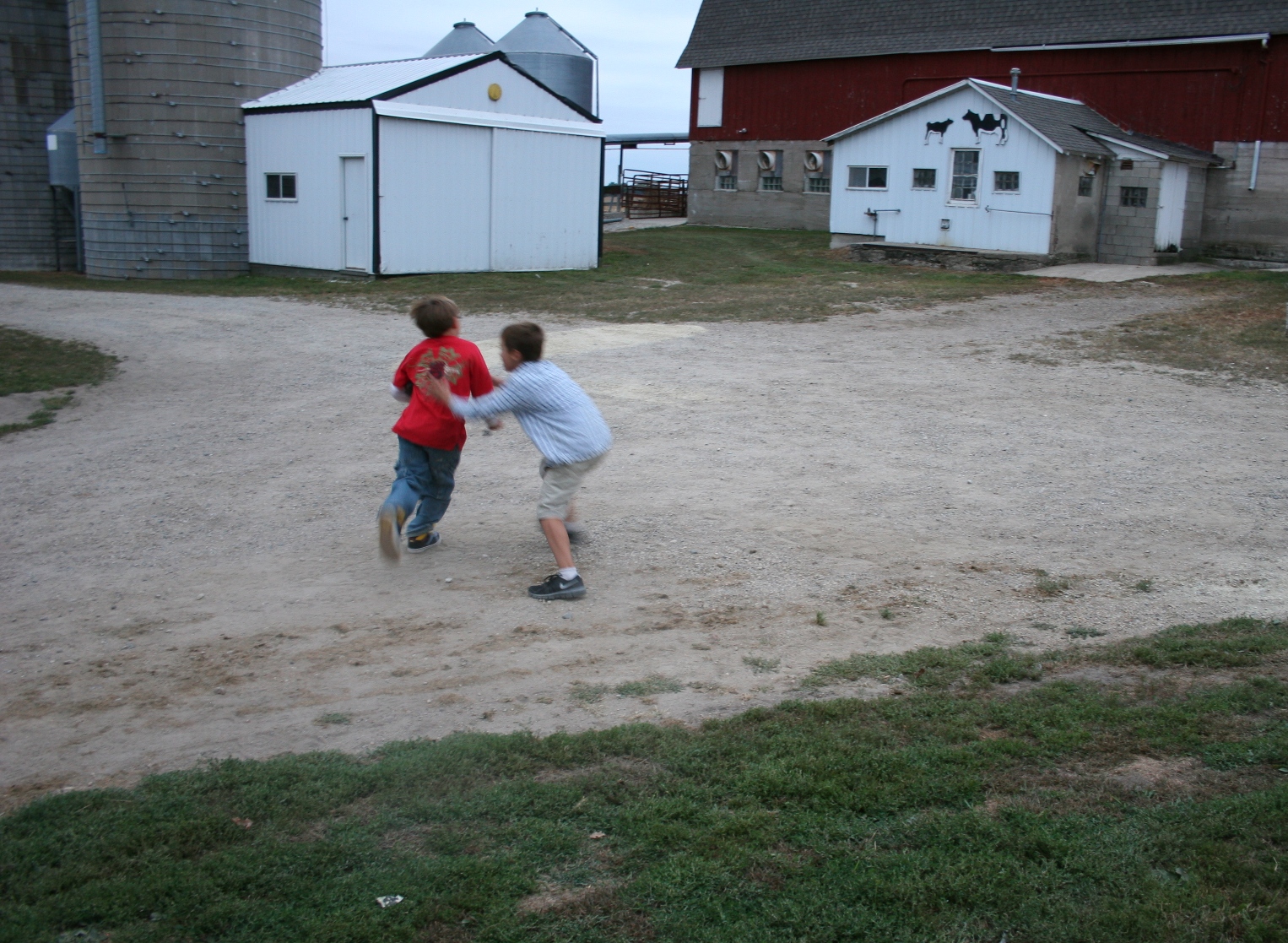
Kids played in the farmyard...just using their imaginations. No electronics, toys, etc., necessary.

Kids weren't the only ones carrying cap guns. I managed to pull the pistols from this deputy sheriff's holsters twice before he pulled out his handcuffs and threatened to cuff me.
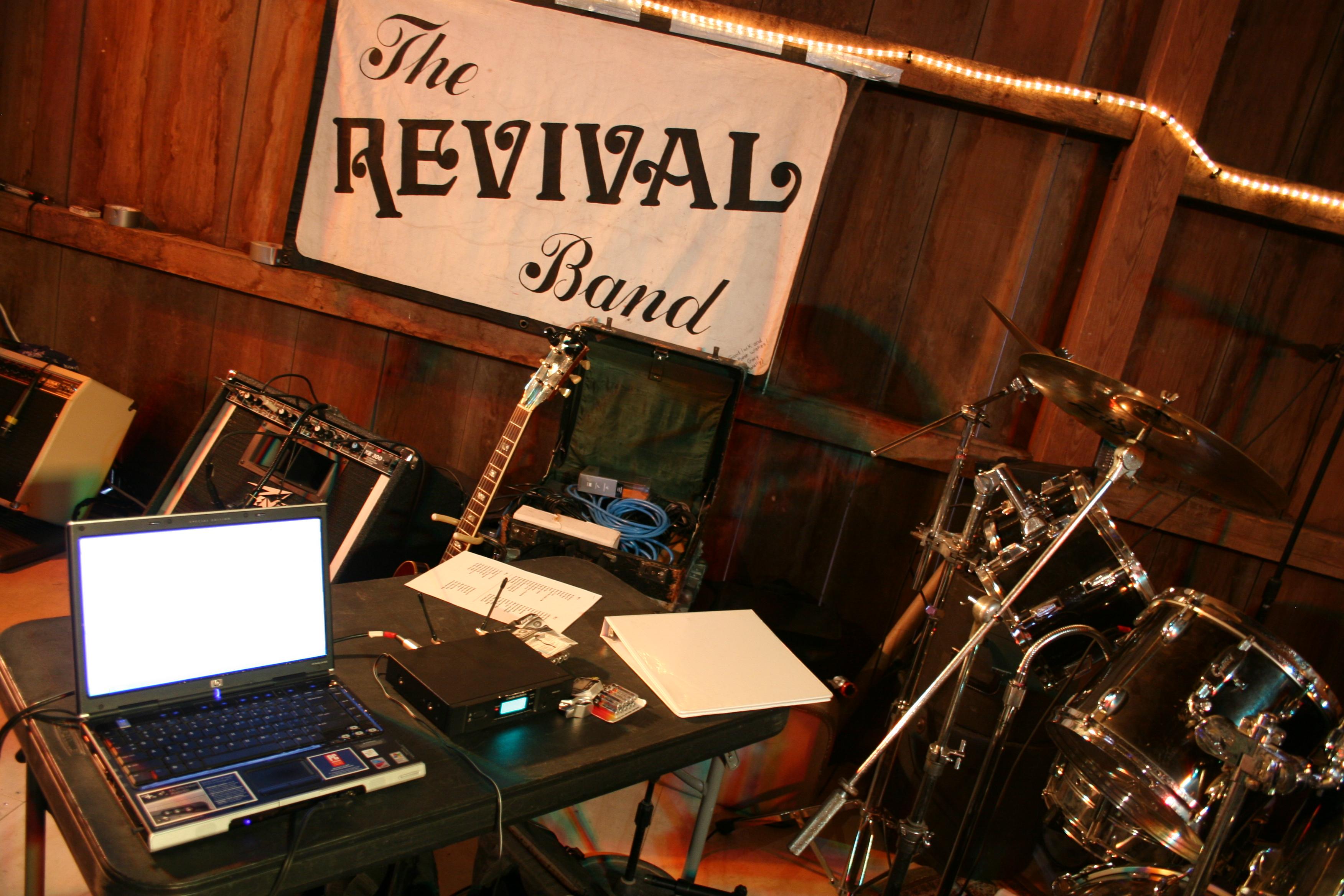
When I composed this frame, I considered the barn dances held here in the 1930s and how bands have changed with computers and high tech instruments. The contrast between old and new was not lost on me in this setting.
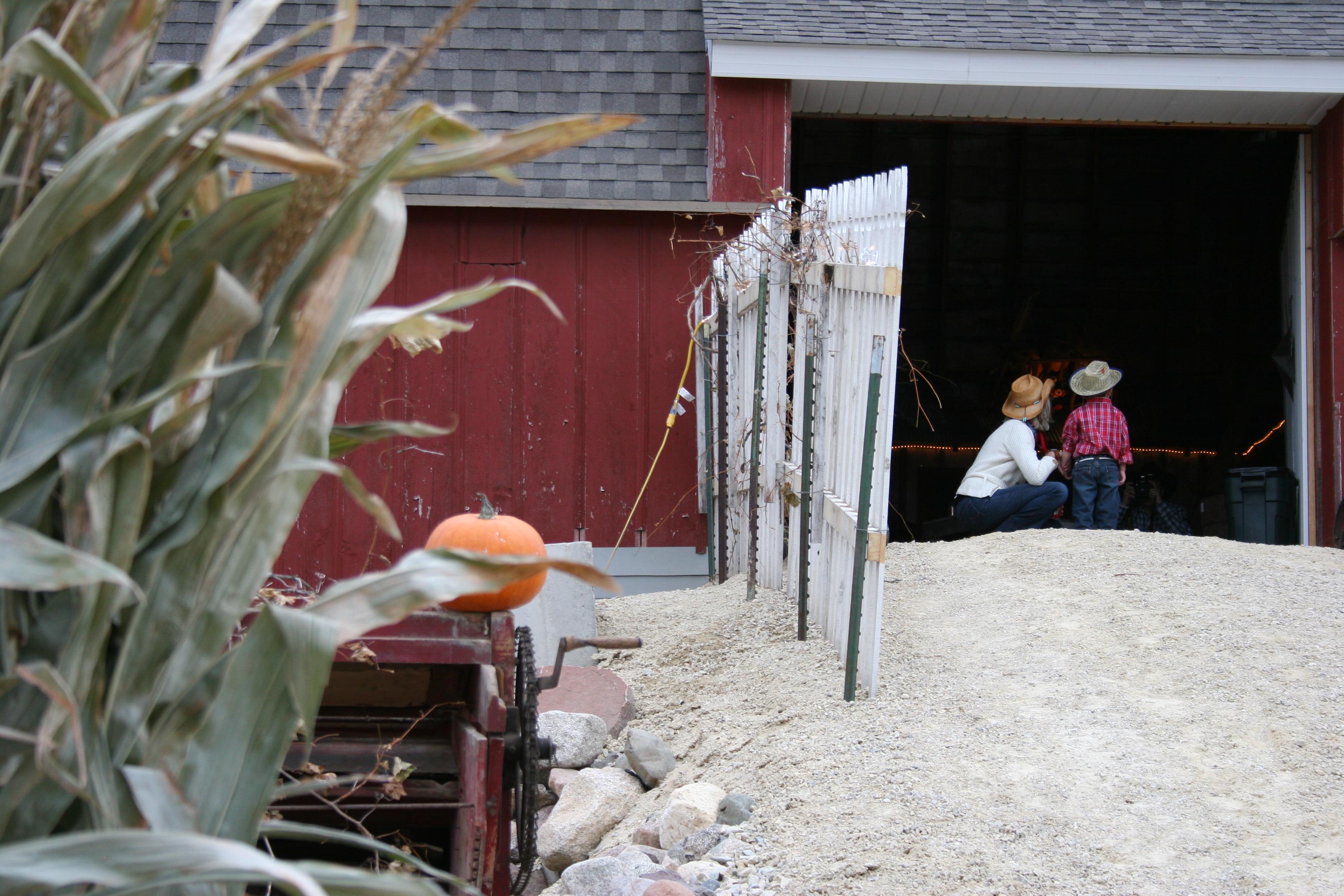
In one of my favorite images, I captured this sweet interaction, the bending down to the child's level, the care, the love and concern shown in this simple act. I saw that repeatedly at the barn dance, in the clasp of a child's hand, in a child atop her dad's shoulders, in hands joining on the dance floor...

© Copyright 2011 Audrey Kletscher Helbling


A firefighter’s praise for “Ted from Owatonna” September 16, 2011

Ted Leon, initially known only as "Ted from Owatonna," extinguishes the fire on and under my neighbor's deck with water from a garden hose late Saturday afternoon. Ted was the first on the scene.

FIVE DAYS AFTER Ted Leon of Owatonna, the passerby who extinguished a deck fire at my neighbor’s house with water from a garden hose, I spoke to a Faribault firefighter who responded to the scene. As you recall, my initial post about Ted sparked a whirlwind of media coverage to find “Ted from Owatonna.”

I wanted to hear what professional Joel Hansen, whom I’ve personally known for years, thought of Ted’s actions. I was finally able to connect with Joel late Thursday morning; he had been off-duty for several days.

“What he did was very heroic, very courageous,” Joel says.

Ted ran onto the burning deck and banged on the front door to alert the Klocek family of the late Saturday afternoon fire before putting out the blaze himself. Kristin Klocek and her young daughter escaped through a side door into the garage.

“He went way and above what a normal person would do. I’m encouraged to see someone who got that involved,” Joel says, emphasizing that dialing 911 to get the fire department en route should be the first course of action in any fire. Ted’s wife, Kathe, made that call.

Joel praises Ted for stopping, getting that emergency call in via Kathe, focusing first on the safety of the residents, and then having the presence of mind to look for a garden hose to put out the fire.

“Life safety is first,” Joel says. “We want people to be safe.”

Ted, he says, seemed to be aware of his safety, to know what he was doing and to understand that he had options—like leaping over the deck railing—had that become necessary to escape the flames.

“I wouldn’t encourage someone to put themselves in harm’s way,” Joel says, “but I wouldn’t say I wouldn’t have done the same thing (as a passerby like Ted).”

In this photo you can see the scorched deck and how the heat of the fire melted the vinyl siding.

If Ted hadn’t extinguished the fire when he did, there would have been “substantially more damage” to the deck and home exterior before firefighters arrived, Joel says. The Kloceks live about six blocks from the fire station, mere minutes away. Damage to the home was limited to a partially-burned deck and wood chips underneath and to the front door and siding, which were warped due to the intense heat.

Statistics show that a fire doubles in size every three minutes, according to Joel.

BESIDES TED’S HEROISM, Joel and I talked in general about how people react to a fire. Some panic. Others call 911 and then leave. Some have no concern for personal safety… Then he mentioned “tunnel vision.”

I told Joel I was so focused on making sure my neighbors were safe and Ted was so focused on getting the blaze out (after he knew the family was aware of the fire) that we didn’t communicate. Joel wasn’t surprised.

Then he asked if I looked for traffic before crossing Tower Place as I ran toward my neighbor’s home during the fire. I did. I distinctly remember telling myself to stop and look for cars.

But I don’t recall hearing emergency sirens, although I watched two police cars and a fire truck race down Willow Street toward the scene. My husband assures me the sirens were blaring.

In contrast, I remember sidestepping a pile of dog poop in the Kloceks’ yard and reminding myself to avoid that patch of grass. I was barefoot.

I recall seeing a woman on her cell phone in the Kloceks’ side yard. I also recall a young man in the front yard, someone my husband later noted as a motorist who had pulled over in his truck and parked along Tower Place.

FOR NIGHTS AFTER THE FIRE, I didn’t sleep well. The first night I was twice awakened by emergency sirens. We live along an ambulance route, an arterial street through town, and I’ve become so accustomed to sirens that I often sleep right through them. But not Saturday night.

At 5:30 a.m . Sunday I awoke to the smell of smoke and flew out of bed to check if the fire at my neighbor’s house had rekindled. It hadn’t. Later I realized the smoke odor likely came from a smoldering campfire.

For days afterward I felt emotionally-drained. Talking with Joel on Thursday proved cathartic. He understood how my emotional involvement—knowing the family—affected my reactions at the fire. He understood my lingering thoughts and emotions even days afterward.

I shared with him that I have a new appreciation for how rapidly a fire can spread.

He’s heard it all—how people think a fire can never happen to them, how they intended to replace the batteries in a smoke detector…

Before Joel and I ended our conversation, I asked him about an award for Ted. He can’t speak publicly about that possibility, he says, because such an honor would be routed through the local union (not the fire department) and that involves a specific process.

But you can read between the lines here. I fully expect Ted to be honored. And you can bet I’ll be there thanking him. Again.

CLICK HERE to read a story on today’s The Northfield News website about a fire just outside Dundas that sounds all too-recently familiar. The Thursday morning fire also involved a passerby, a garden hose and a cigarette.

CLICK HERE to read my first fire post.

CLICK HERE to read my interview with Ted Leon, whom I’ve termed our “Willow Street neighborhood hero.”

© Copyright 2011 Audrey Kletscher Helbling
 

Remembering 9/11 in Faribault, Minnesota September 11, 2011

WE CAME. We listened. We prayed. We remembered.

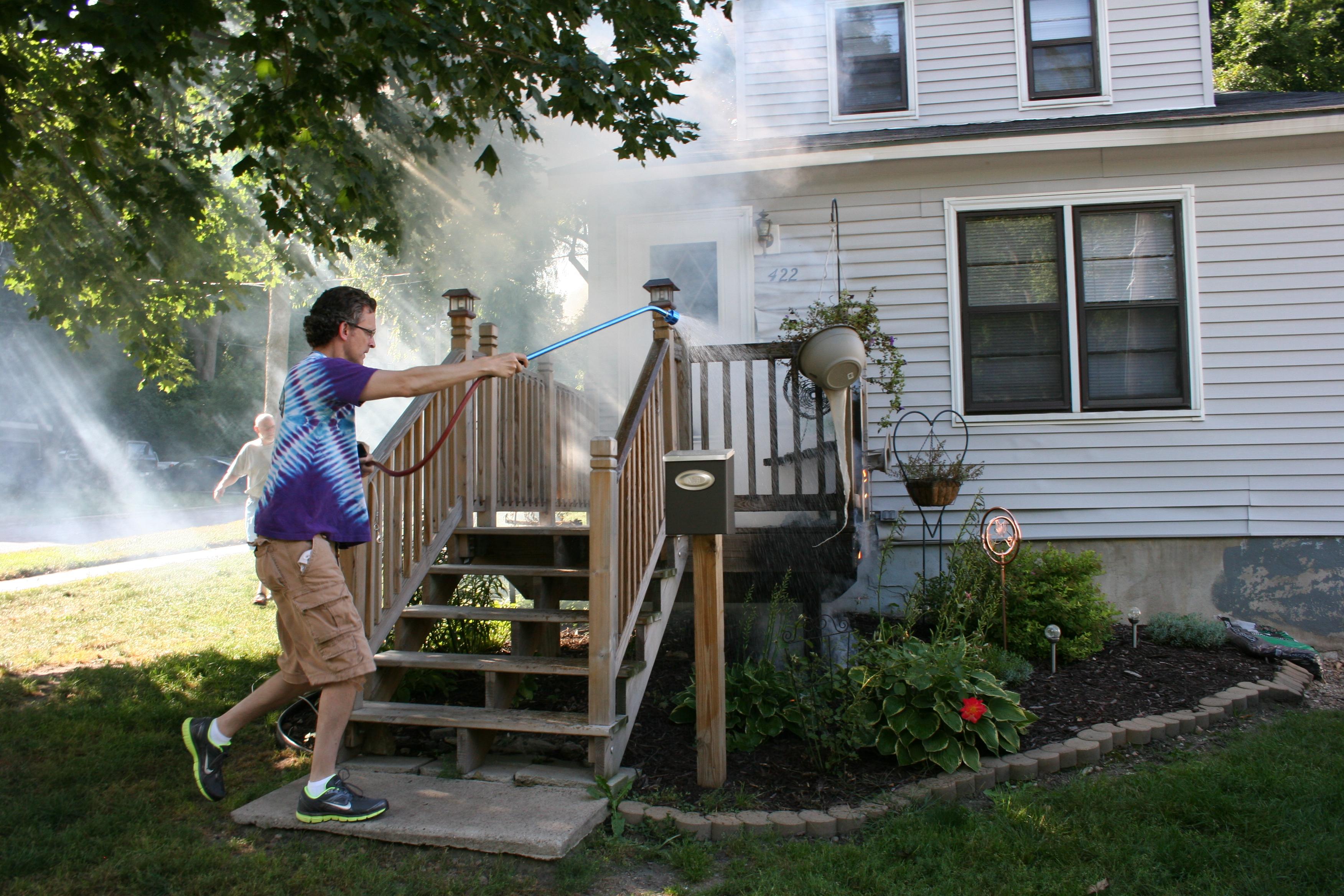
This afternoon my husband and I were among perhaps 100 individuals who gathered outside the county courthouse at the Rice County Veterans Memorial in Faribault to remember September 11, 2001.

A view of the crowd in front of the Rice County Courthouse and veterans memorial.

WW II veteran George DeLay, among those in attendance, waits on the courthouse steps for the program to begin.

As traffic whizzed by on busy Fourth Street, aging veterans stood or sat, their heads bowed in quiet contemplation.

Representatives of local law enforcement and emergency personnel stood attentively.

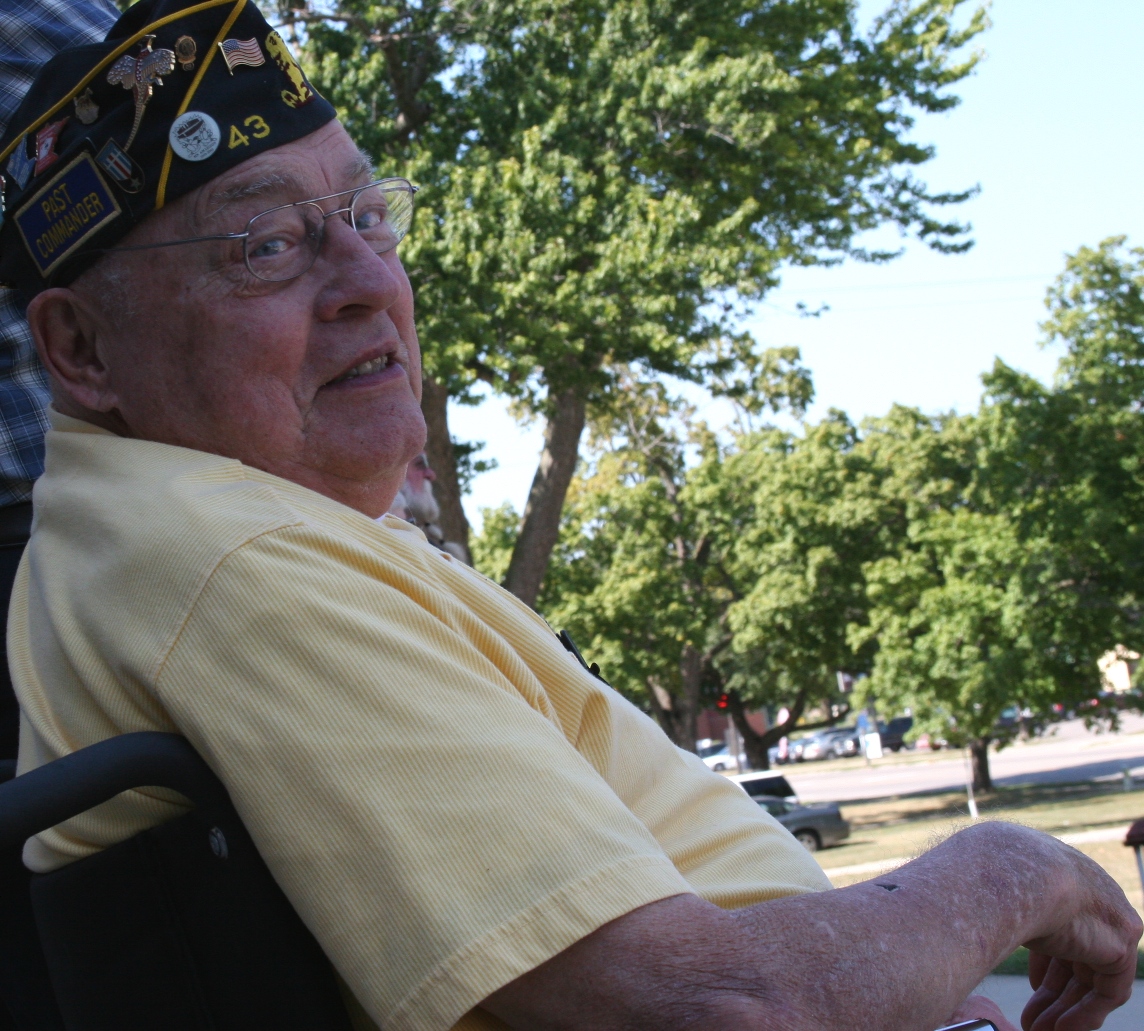
Six-year-old Dakota, son of Faribault American Legion Post 43 Commander and Desert Storm veteran Kirk Mansfield, perched on his mother Paula’s lap on the courthouse steps clutching an American flag. Too young to have lived through this day, he is learning about 9/11 from his parents, from ceremonies like those held today.

We are all still learning, experiencing and understanding how that attack on our nation 10 years ago has affected us, changed our thinking, our perspectives on life.

“Freedom is our greatest asset and our greatest export,” former Sheriff Richard Cook, who has been active in expanding the veterans’ memorial, said. “Freedom will live and flourish.”

Veteran and chaplain Roger Schuenke led the crowd in prayer: “May the faith of our fathers guide, protect and sustain our people.”

But it was the names read by Kirk Mansfield and American Legion Auxiliary representative Louise Flom that most impacted me, that caused me to pause, to settle onto the lawn of the courthouse with my camera in my lap and to listen, just listen, instead of photographing the scene.

For nearly 10 minutes the pair read the names of 94 Minnesotans who have been killed in action since 9/11:

Chester W. Hosford of Hastings, Corey J. Goodnature of Clarks Grove, Brent W. Koch of Morton, Randy W. Pickering of Bovey, Edward J. Herrgott of Shakopee, Andrew J. Kemple of Cambridge…

Familiar names, like Jesse M. Lhotka of Alexandria (originally from Appleton), David F. Day of  Saint Louis Park (originally from Morris) and Jason G. Timmerman of Cottonwood/Tracy—all National Guard members killed on February 21, 2005, in Iraq, and whose families I interviewed several years ago for a feature published in Minnesota Moments magazine.

I remembered how speaking with Lhotka’s widow had been one of the most emotionally-challenging interviews I’d ever done in my journalism career.

This I thought as Commander Mansfield and Flom read for nearly 10 minutes. Ninety-four men whose families grieve.

This is how I remembered 9/11 today, by honoring those who have given their lives for freedom.

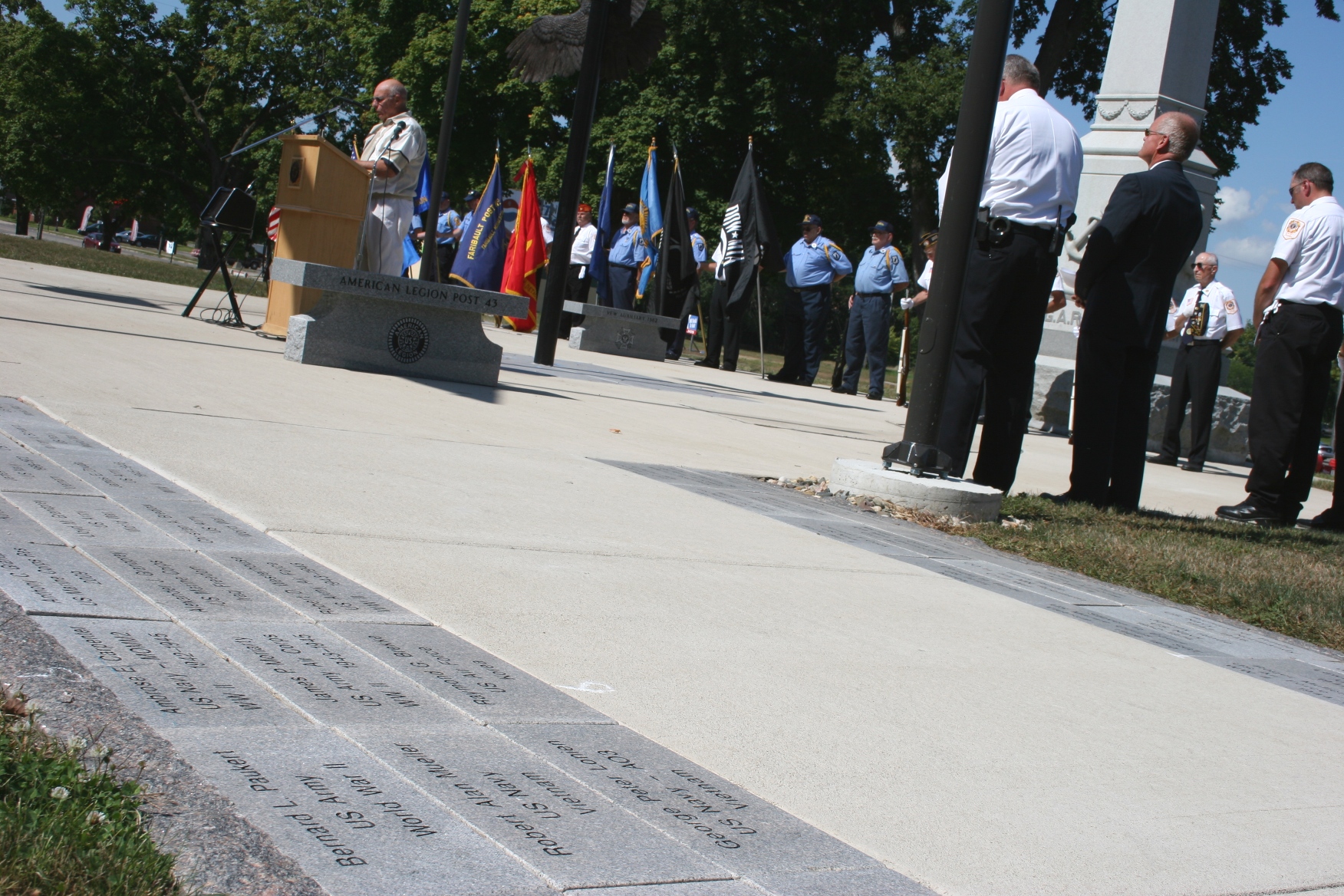
Veterans' names are engraved in pavers edging the Rice County Veterans Memorial, the site of today's ceremony.

Some of the 20-plus veterans who stood in a line flanking the memorial.

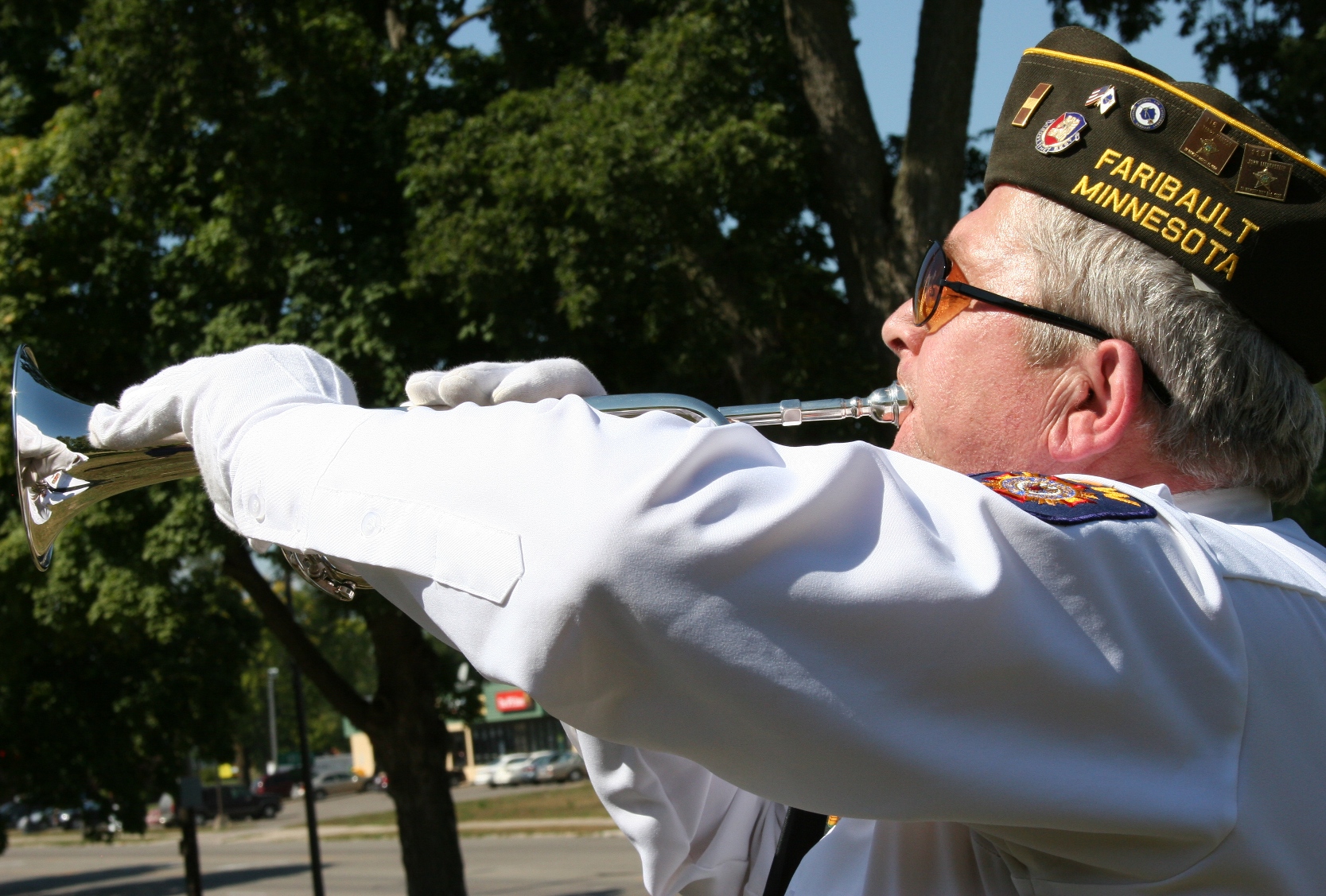
Jim Kiekeknapp, who served in Vietnam, played taps.

Dakota with him mom, Paula, watched from the courthouse steps.

WW II veterans Bill Korff and past commander of the local Legion came in his wheelchair.

A veteran's salute.

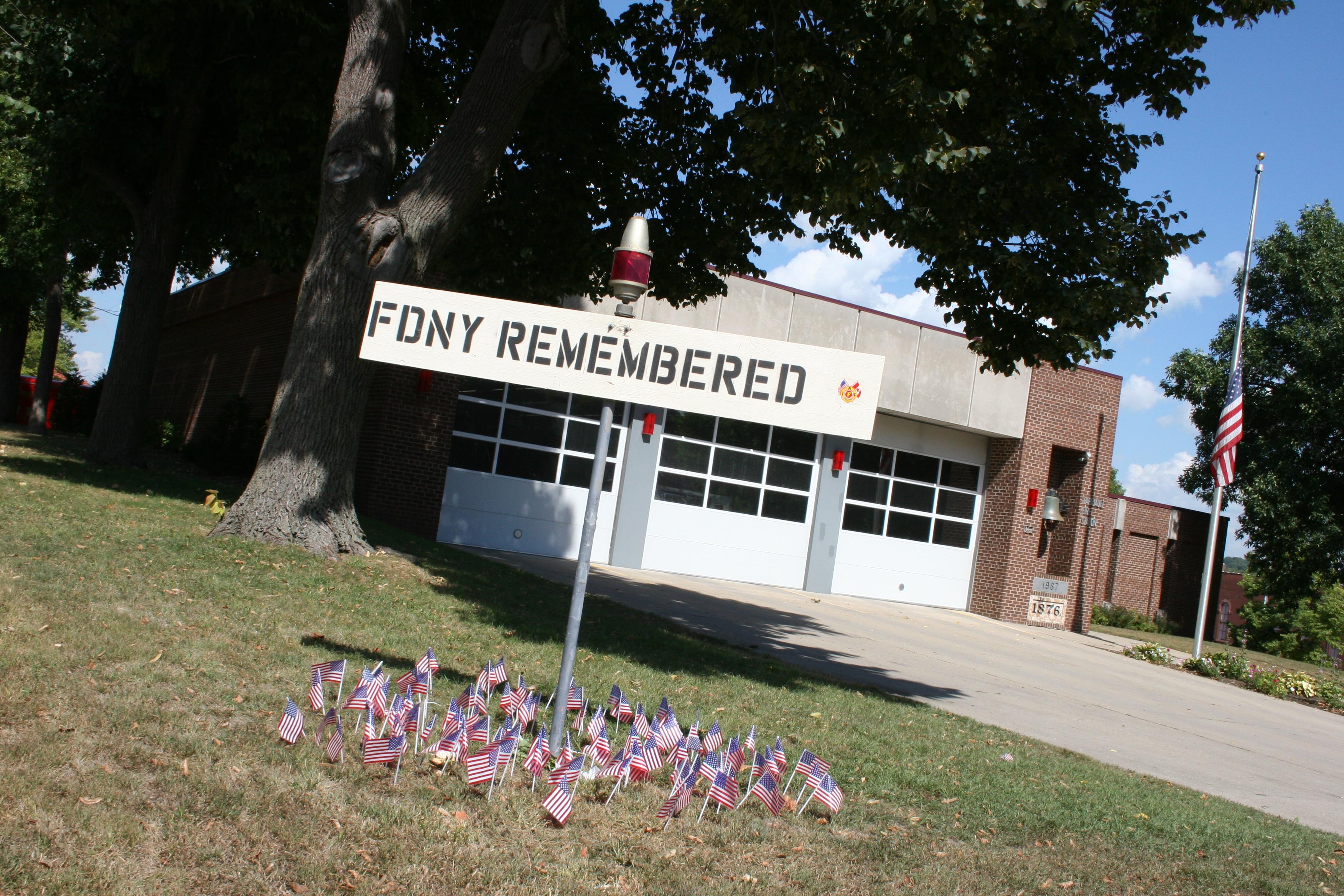
AND THEN ON THE WAY HOME from the courthouse, I stopped at the Faribault Fire Department to photograph the memorial there honoring the New York City firefighters who died in the Twin towers.

A memorial at the Faribault Fire Department, where a short service was also held this morning.

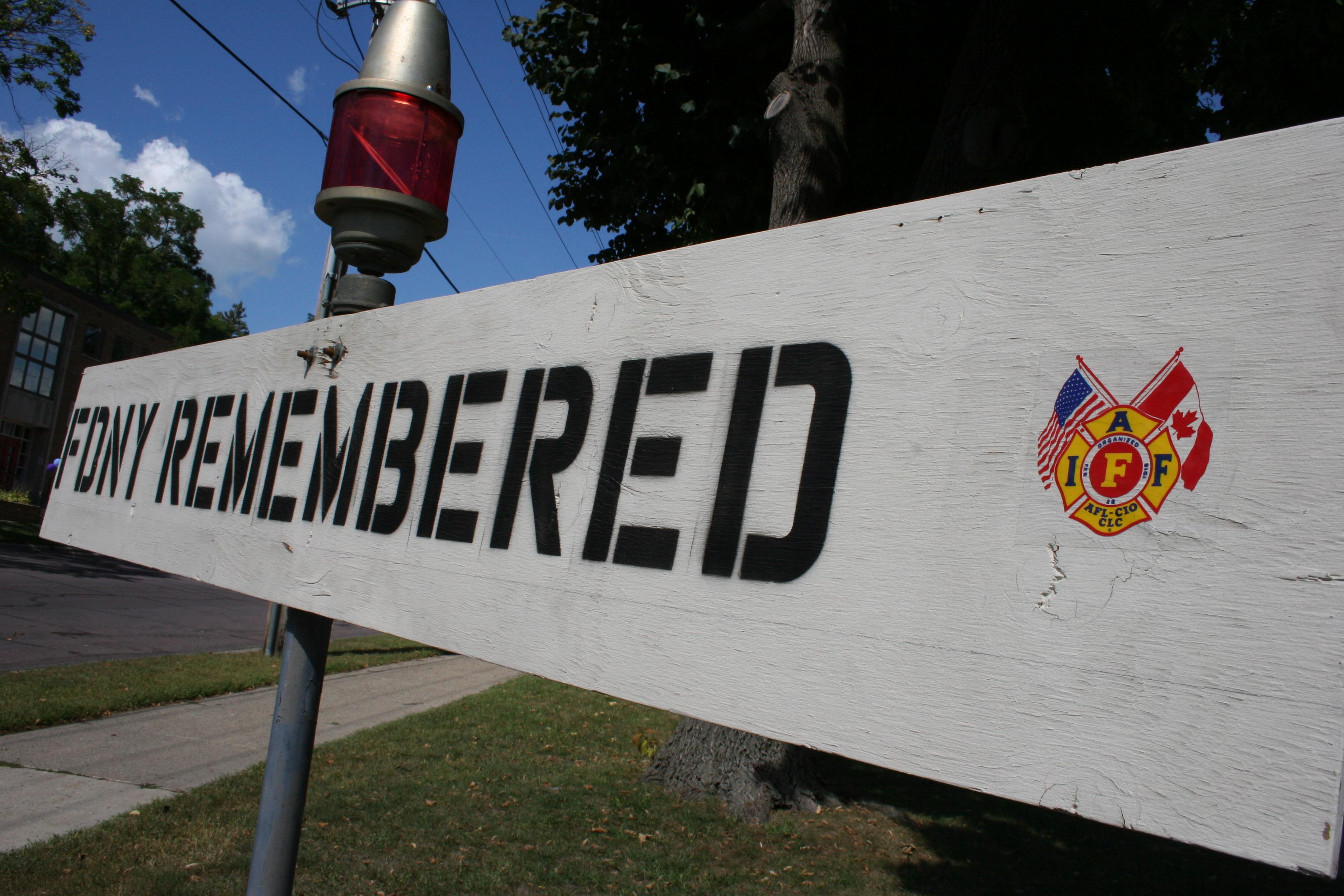
The Faribault firefighters pay special tribute to the fallen New York firefighters on their memorial sign.

TO BACKTRACK EVEN FURTHER in my day, when my husband and I were at a local nursing home leading a morning church service, I insisted that the eight of us gathered there sing “America, the Beautiful.”

I found verse 3 especially fitting for this day when we as Americans pause in our lives to remember September 11, 2001:

“O beautiful for heroes proved

In liberating strife,

Who more than self their country loved,

And mercy more than life!

America! America! May God thy gold refine

Till all success be nobleness

And every gain divine!”

Six-year-old Dakota and others in attendance perused the veterans' pavers after the ceremony.

© Copyright 2011 Audrey Kletscher Helbling


No first day of school tears here September 6, 2011

Filed under: Uncategorized — Audrey Kletscher Helbling @ 8:35 AM
Tags: , , , , , , , , ,

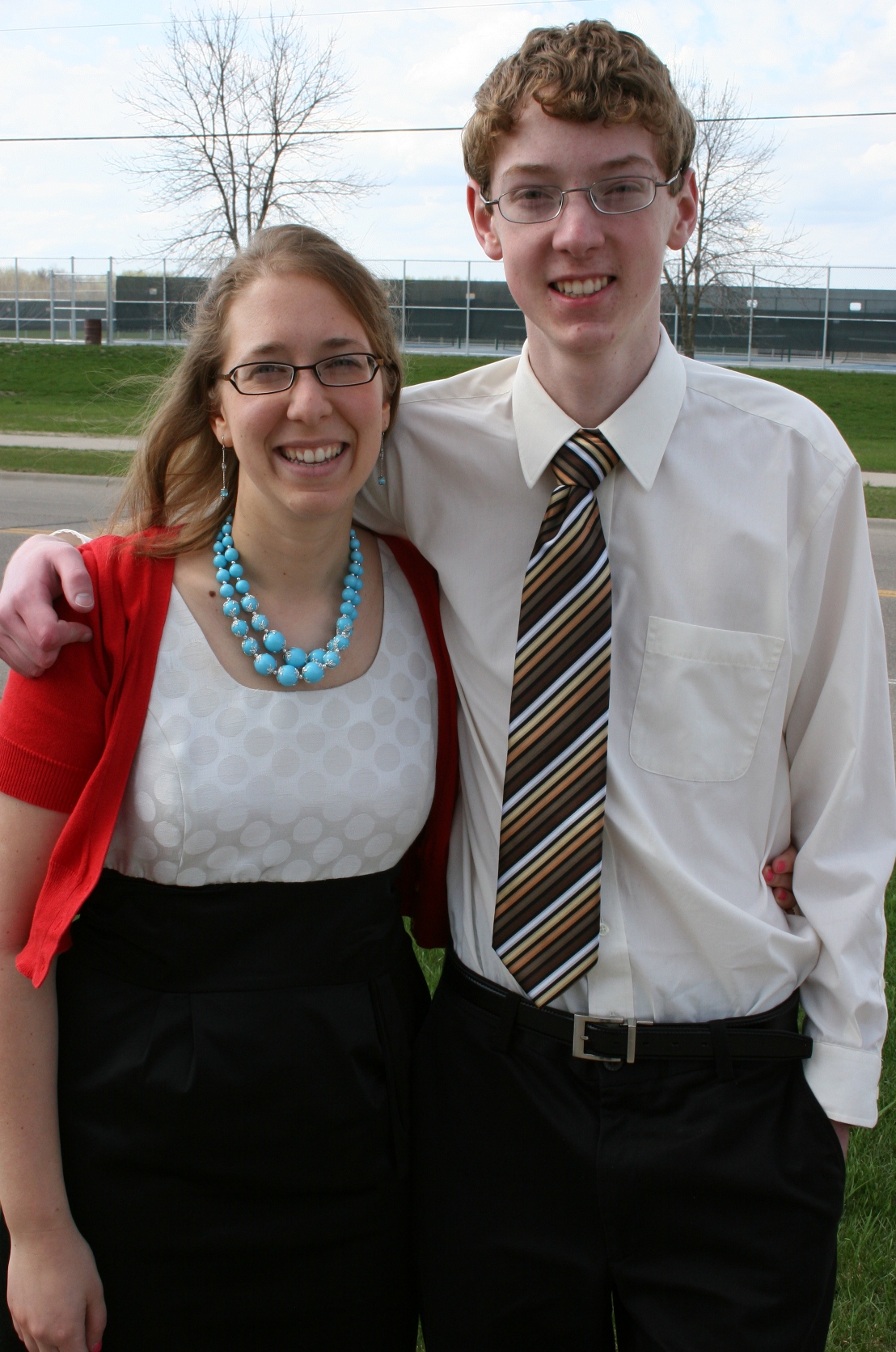
My oldest daughter and my son in a photo taken in May.

MY YOUNGEST STARTED his first day of his final year of high school this morning.

I feel as if I should be crying or something. But I’m not.

By now, by the third child, after 20 years of first days of school, it’s not such a big deal any more. The excitement and the anticipation just aren’t there.

It’s not that I’m a negligent mom who doesn’t care about her child or her child’s education. Rather, the first day of school novelty wore off long ago.

Last night in our house, there was no last-minute packing of the backpack, no pre-school-day jitters. Rather my concern leaned more toward making sure the 17-year-old got to sleep at a reasonable hour.

He is a night owl. If my teen had his way, classes would start around 11 a.m. So today, really, begins the battle of trying to get him to get enough sleep. This issue causes much strife in our household. Next year, at college, he’s on his own.

My focus right now is directed in guiding my son toward selecting a college. He has the smarts—an ACT test score of 32 and nearly a 4.0 GPA—to get in anywhere. But he certainly doesn’t have the money. However, I’ve encouraged him to apply wherever he wishes because maybe, just maybe, he’ll get a financial aid package that will allow him to afford a school he couldn’t otherwise afford.

I’ve suggested he make two college lists: a dream list and a realistic list.

In the meantime, during the first semester of his senior year of high school, my boy is enrolled in a rigorous course of study: Introduction to Economics, Advanced Placement Calculus, Advanced Chemistry and CIS Anatomy/Physiology. He’s also taking speech and logic at the local community technical college. By graduation in June, my son should have more than a semester of college credits earned.

I’ve encouraged him to pursue these college credits. They’re free, I keep telling him. Why wouldn’t you? He understands.

And so these are my thoughts this morning as my last child, who is eight years younger than his oldest sister and six years younger than his other sister, begins his senior year of high school.

No tears shed in this household. But next year at this time, when my husband and I are dropping our youngest off at his dorm, or seeing him off at the airport—if he manages to get into a college on his dream list—I expect the tears will fall fast and steady.

IF YOU’RE A PARENT with school-age children, how did the first day of school go for you? Share your thoughts and/or experiences in a comment.

© Copyright 2011 Audrey Kletscher Helbling
 

Take time to stop and appreciate small towns August 11, 2011

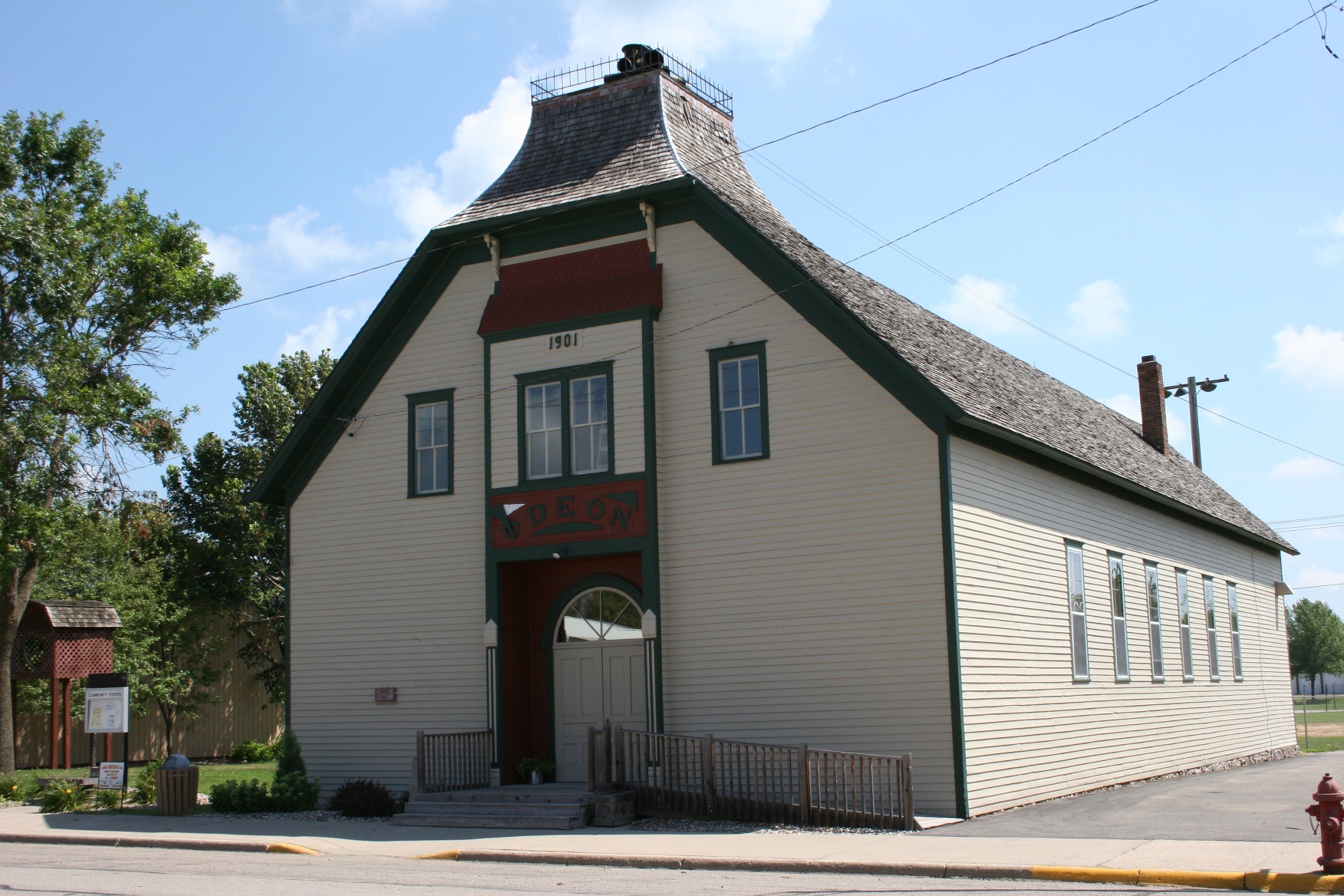
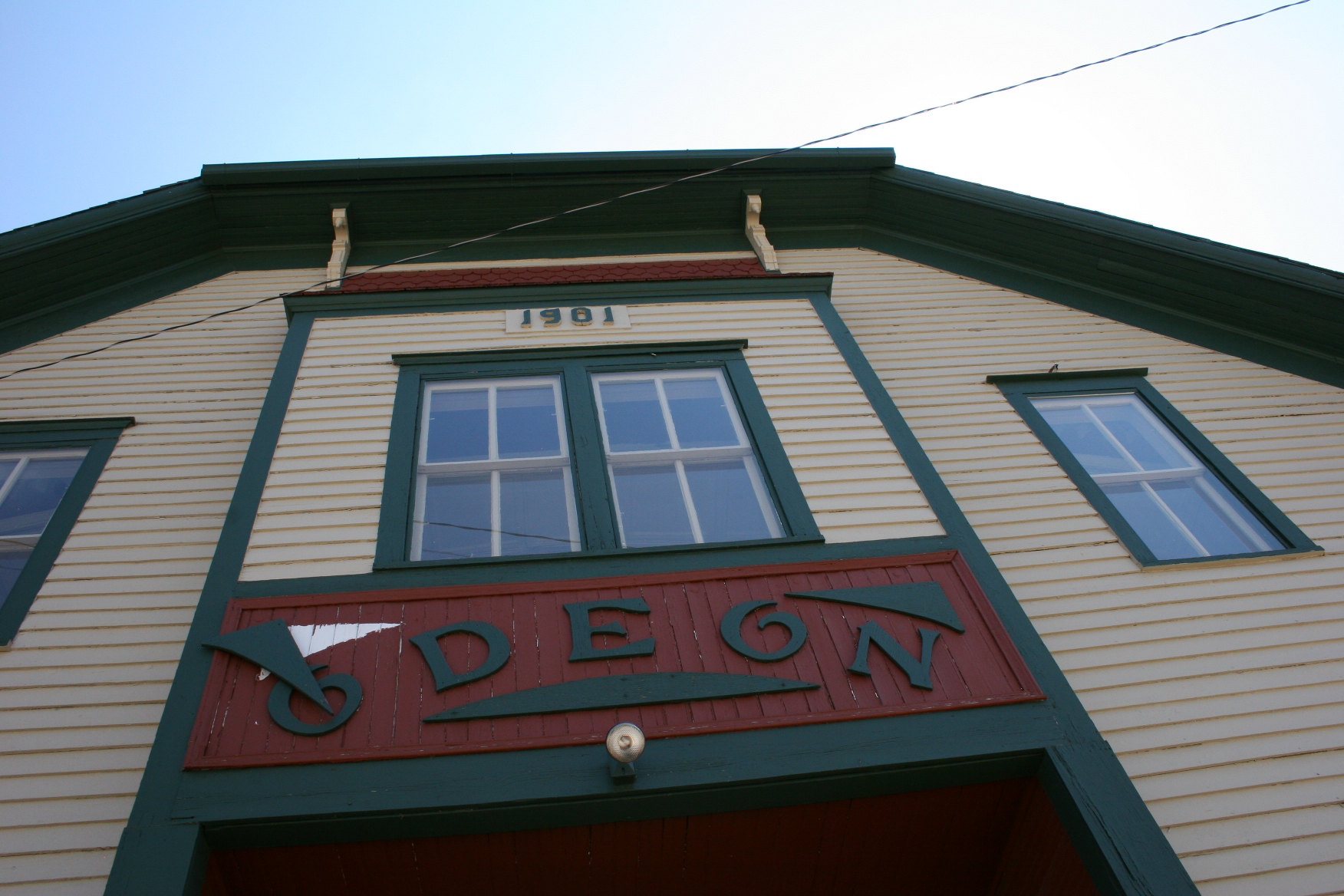
In tiny Belview, you'll find the 1901 Odeon Hall. Listed on the National Register of Historic Places, this Queen Anne style building features a barrel-vault ceiling. Still in use today for wedding receptions and community events, etc., Odeon Hall once also featured vaudeville shows, motion pictures, concerts and more.

I WANT TO THROW a challenge out there. The next time you’re driving through/near small-town Minnesota, or small-town wherever, stop. Pull off the highway and drive along Main Street. Park your vehicle. Get out. Walk. Look. See.

Notice the buildings, the architecture, the signage, the history. Consider what centers the town: the café, the post office, the grain elevator, the churches, the school—if there is a school.

Families, retirees and even single people choose to live, to work, to worship together, to celebrate, to mourn, to live their lives here. This is their home, not just some town in the middle of nowhere that you must pass through to get from destination A to destination B.

I have, in recent years, begun to appreciate the small towns and rural areas of Minnesota more than ever. I grew up on a dairy and crop farm in southwestern Minnesota, which is about as rural as you can get. But I haven’t always valued that upbringing like I should.

As I’ve gotten into the art of photography, I’ve begun to view these towns with a fresh perspective. I notice what, in the past, I’ve overlooked or taken for granted because of my rural roots.

Let me show you some photos I took recently in and near Belview, a community of 375 located four miles north of State Highway 19 in northwestern Redwood County. Belview lies about 10 miles from my hometown of Vesta, another one of those small towns that motorists zip by without a second thought. I bet you didn’t know that Vesta is the home of the nation’s first electric cooperative. I thought so.

That’s the thing about small towns. If you stop and walk and look and see, and I emphasize the word, see, you will discover more than just a place to drive through when getting from point A to point B. You will discover the heart and soul of community.

Move in close to view the details, like the front of Odeon Hall. I attended a cousin's wedding dance here decades ago. Imagine the celebrations inside this historic building.

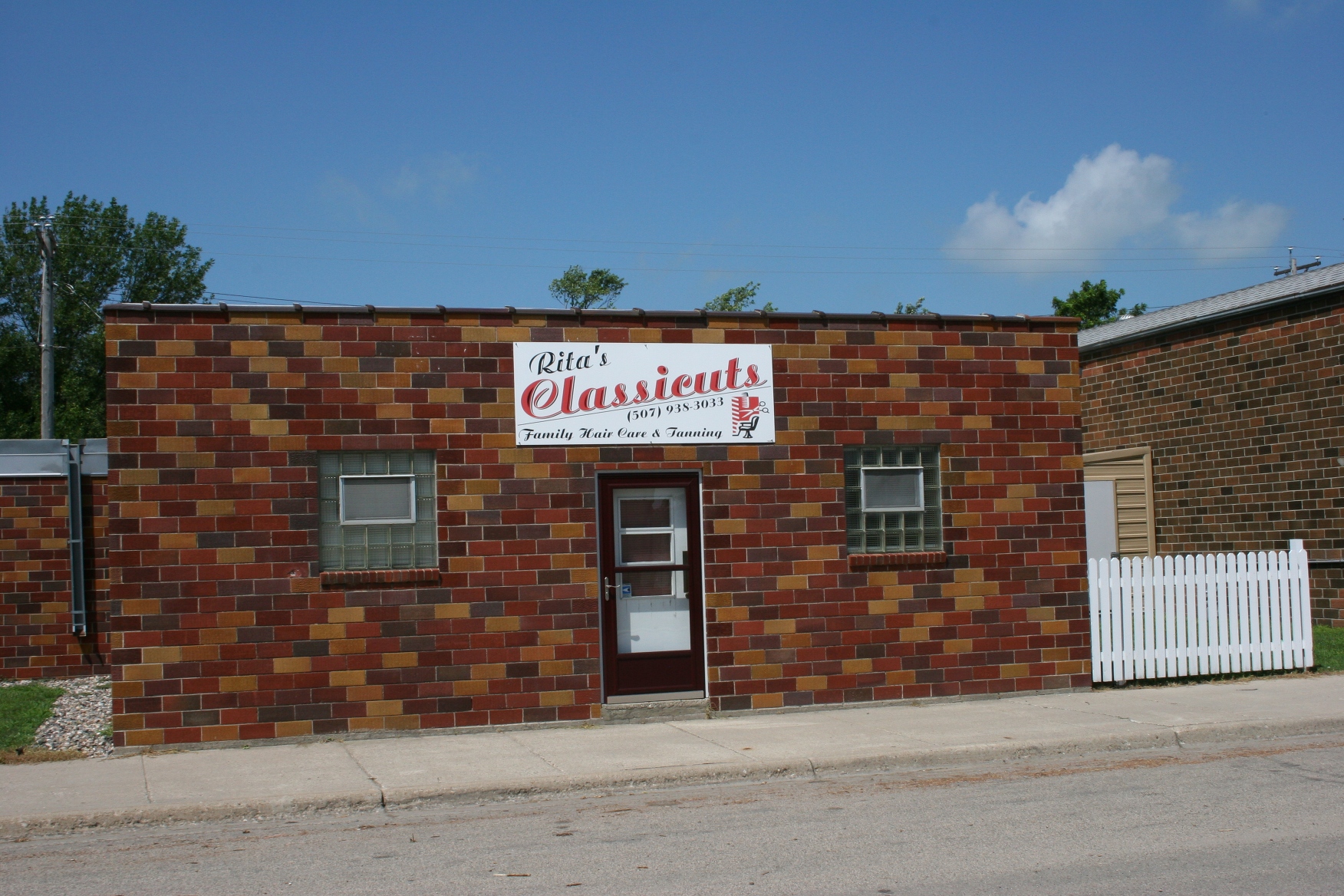
Most small towns, like Belview, are fortunate to still have a place where you can get your hair cut and styled. I appreciate the simple lines of this brick building located along Main Street.

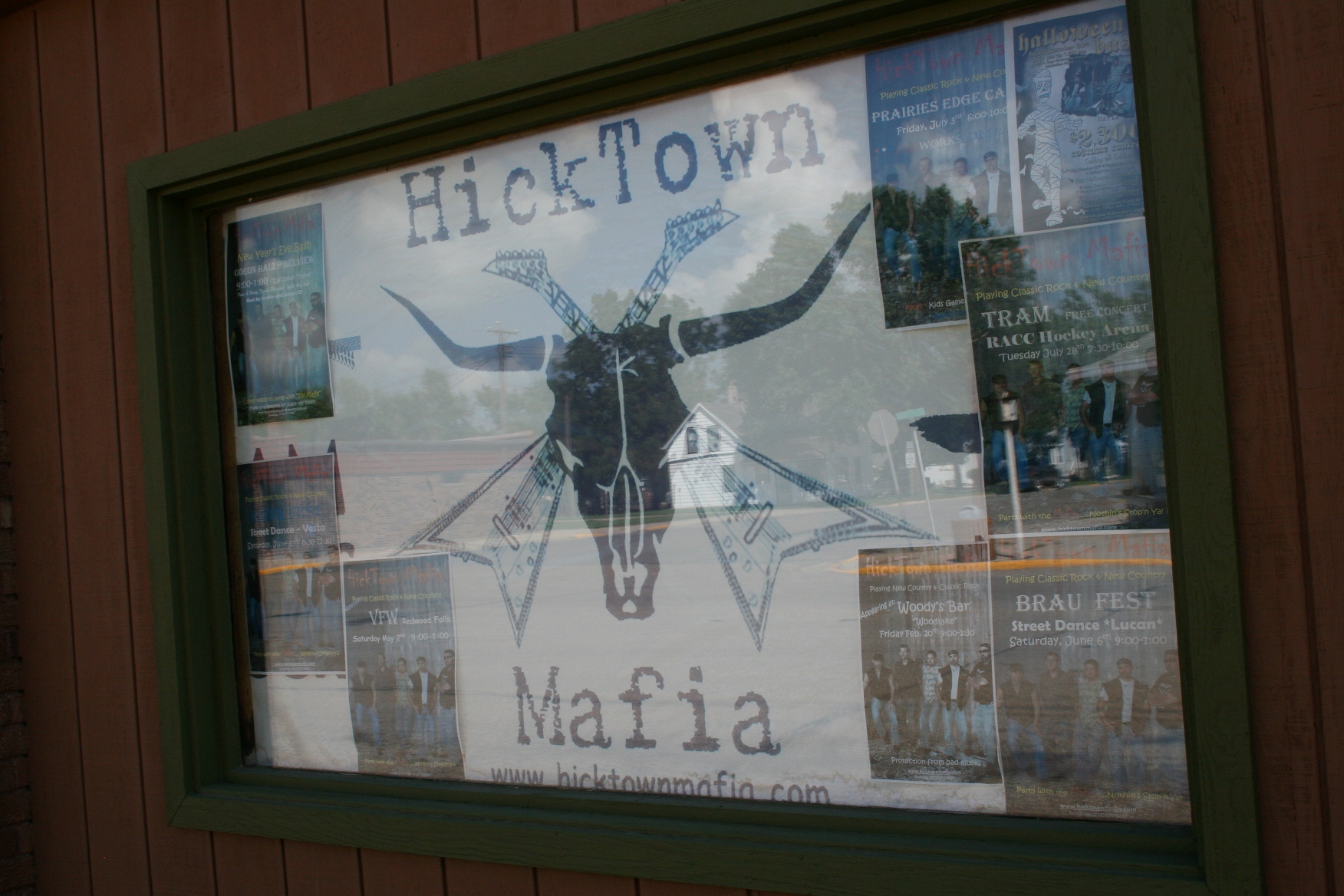
I discovered this poster in the window of a Main Street building advertising a local band, HickTown Mafia. The band plays "country with a kick, rock with an attitude," according to the group's website.

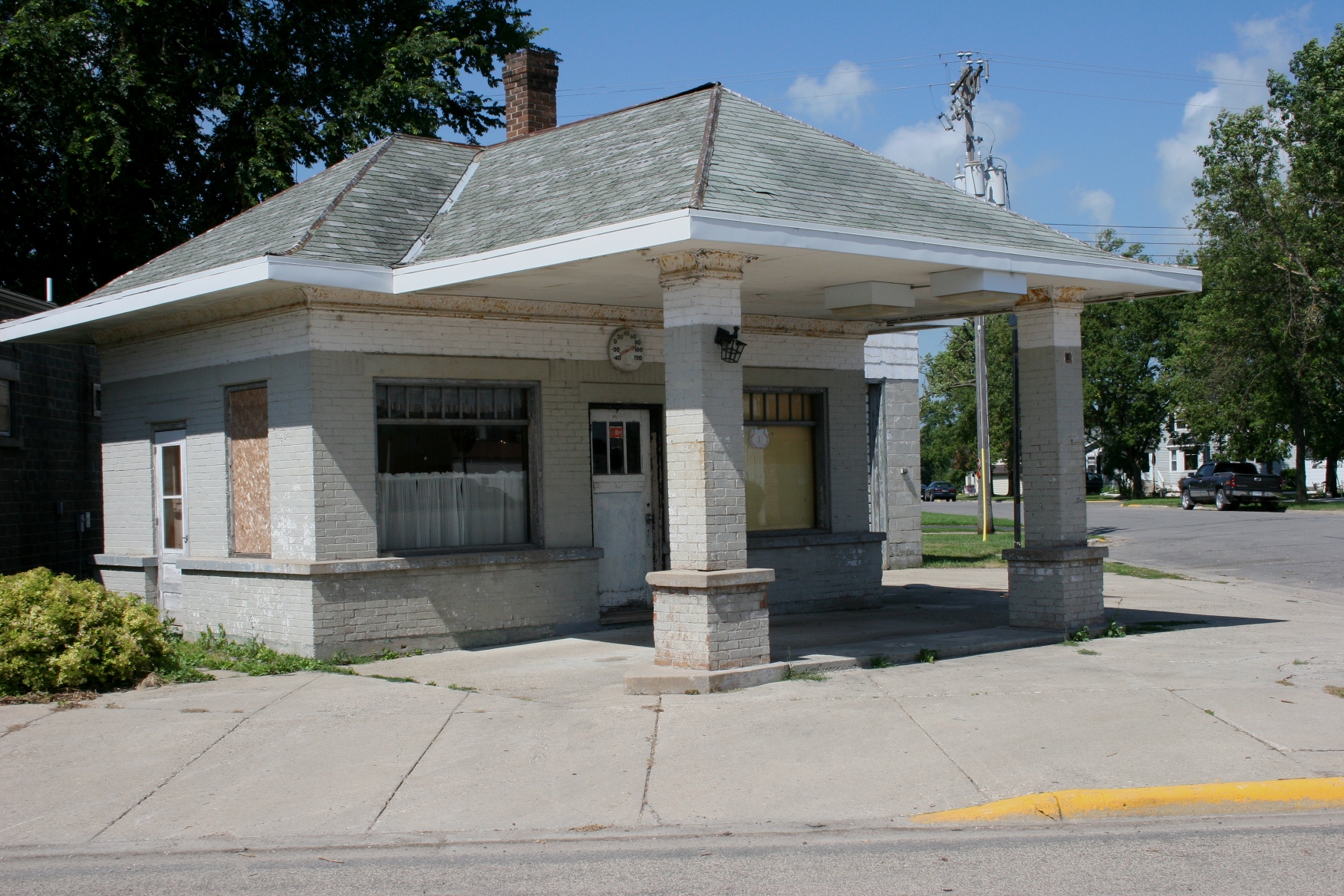
I found this abandoned former gas station (I think) on a downtown corner. This charming building practically shouts for someone to reopen it as a bakery, coffee shop, antique store or some other such venue. Perhaps the two local wineries/vineyards and other area vendors could market their products here.

The Parkview Home, a Belview nursing home, was once home to my maternal grandfather and to other extended aging family members. I've been here often to visit relatives and, during high school, to sing Christmas carols with the Luther League. The building was damaged in a July 1 tornado (note the blue tarp on the roof) and residents have been temporarily displaced.

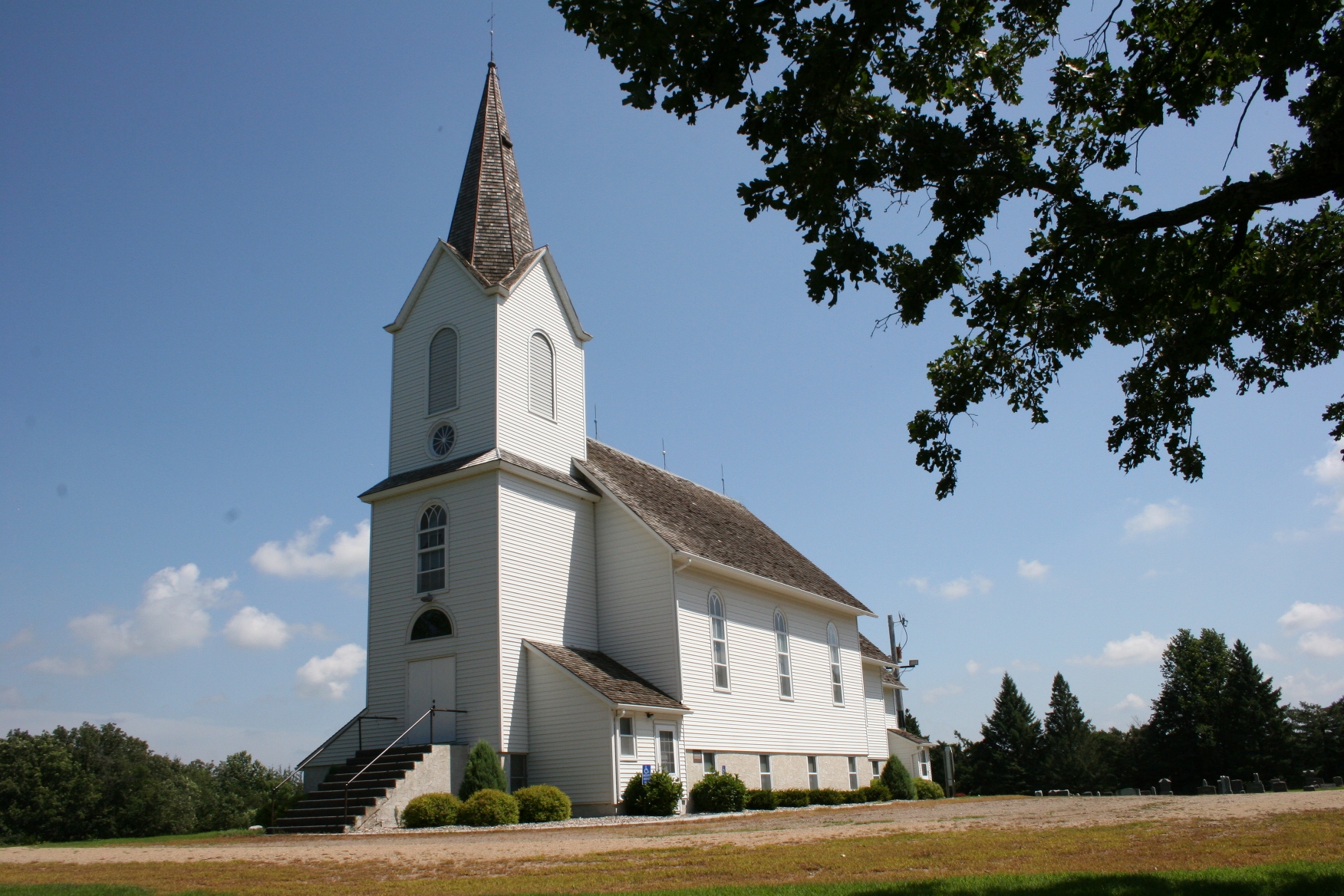
Northwest of Belview, you'll find picturesque Rock Dell Lutheran Church. My Uncle Merlin and Aunt Iylene Kletscher were married here in November 1964, the last time I was inside the church.

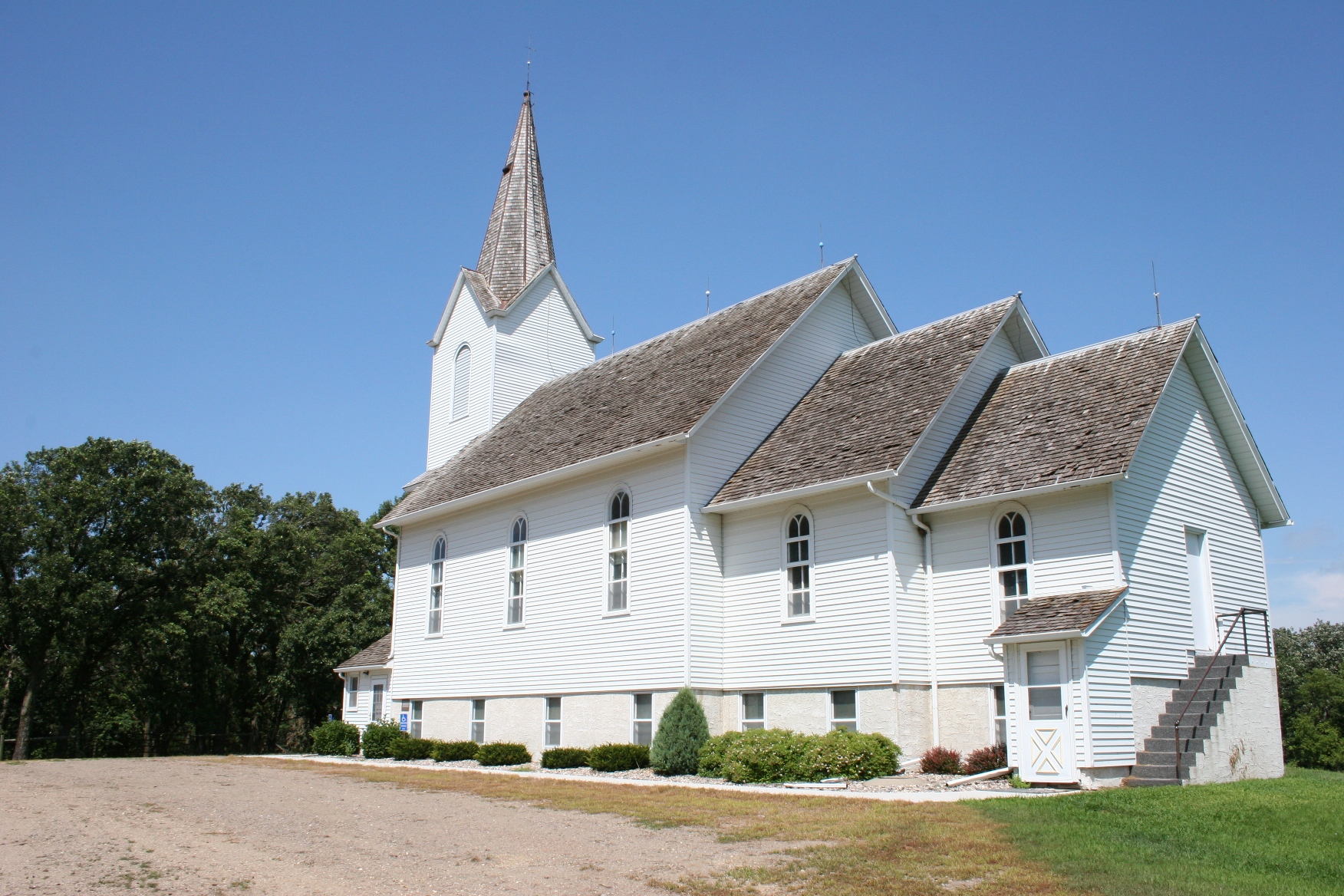
A side view of Rock Dell.

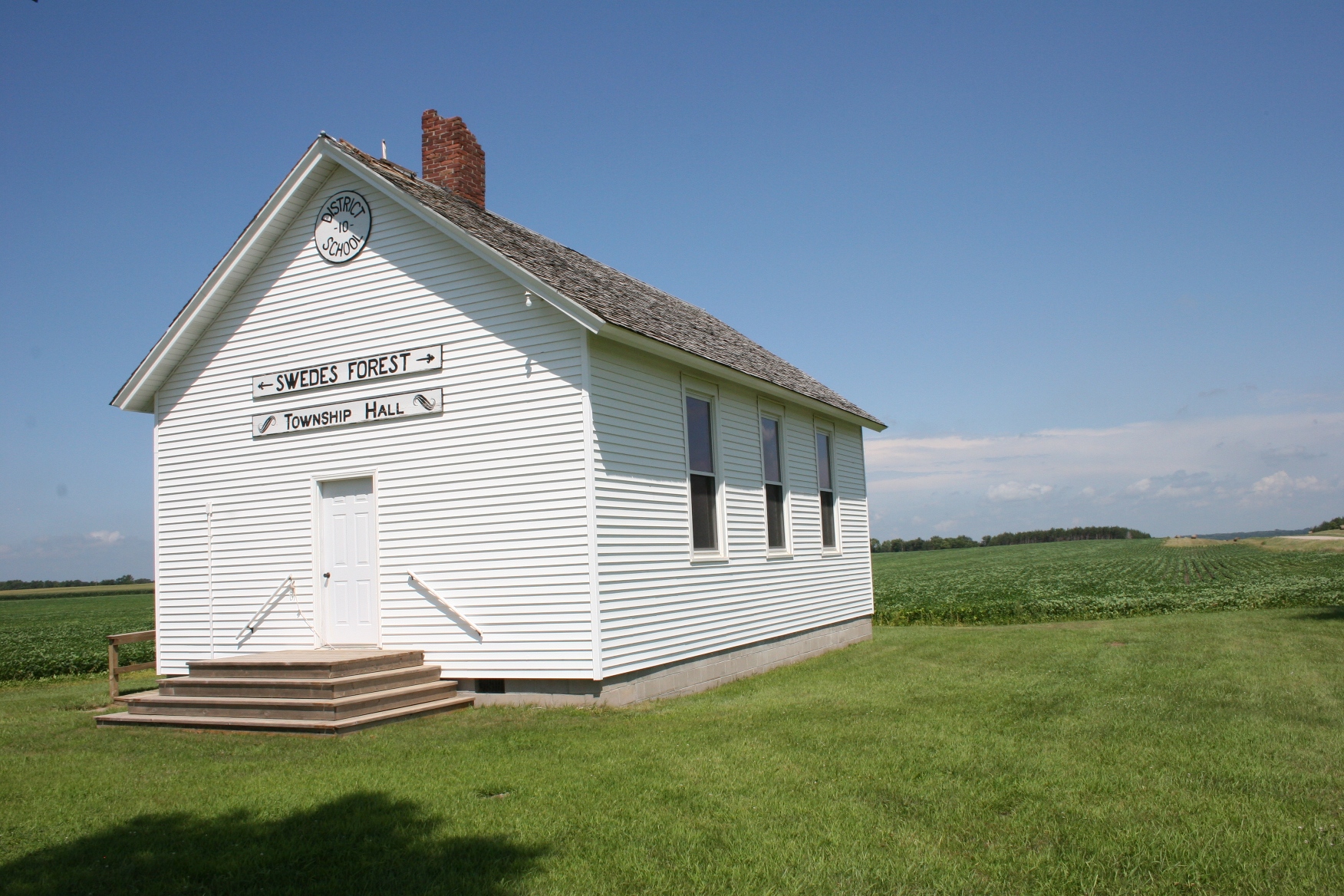
Near Rock Dell you'll find Swedes Forest Township Hall in the middle of corn and soybean fields.

FOR MORE INFORMATION about Belview, click here and here. Also read my previous post about Rainbow Antiques, Crafts and Junque in Belview by clicking here.

TAKE MY CHALLENGE and report back to me on the treasures you discover in a small town or rural area.

© Copyright 2011 Audrey Kletscher Helbling
 

From a small Minnesota town: “My dad got shot” August 10, 2011

Filed under: Uncategorized — Audrey Kletscher Helbling @ 12:13 PM
Tags: , , , ,

WEEKS LATER, I STILL can’t shake her haunting words. “My dad got shot,” the darling pixie of a 6-year-old with brown eyes and long, spaghetti-straight auburn hair tells me.

I don’t want to believe her and even question the truthfulness of her statement.

But she is too quick to respond, to say that her dad, Bill, is dead, “buried in the ground.” The father who stole a car and went to jail was shot by someone who came to the house when she was only one, she says. I don’t know if she has her story spot-on correct, but I figure she’s heard it too many times to mess up the truth.

Recently, the police stopped by her house—the one across from the park with the boxspring leaning outside the front door and the stockade of a fence enclosing the back yard. “I don’t know why they came,” she says. I can see the hint of fear in her eyes.

I don’t pry. But I want to swoop her up, hug her, take her away from the bad memories and the stories of the violent death of her father, away from a life that seems not all that stable even now.

Yet, I’ve only met her as my husband and I are in a southern Minnesota small-town city park on a Sunday afternoon. I want to advise her and the boy, who isn’t her brother but lives with her because her mom and his dad “are in love,” that they shouldn’t talk to strangers in the park.

But she has already told me the dead father story and rolled her eyes at the living arrangement between parents. I can’t just tell her and the little boy to go home. Be safe. Don’t talk to strangers or accept food from them. She’s already caused my heart to ache.

So instead, we offer them food. She refuses any. But the boy, about four, gobbles up the potato chips and grapes we give him. It is 1:00 and they have not eaten lunch, although the six-year-old says they ate a late breakfast.

I’m not so sure. Maybe she’s heeding advice she once heard about not accepting food from strangers. Yet, she’s the one who approached Randy when we first arrived, when I was using the porta potty, and told him he looked like her friend Emma’s grandpa.

They seem hungry, not only for food, but for someone who cares.

“I have a dad,” the boy shares between mouthfuls of chips. And that’s when the mite of a girl tells us about her dead father.

Soon the boy’s older sister, by a few years, arrives at the park, apparently sent over to check on the other two.

“Do you want some potato chips?” I ask. She accepts a handful.

“She stole a peach,” the redhead accuses.

“From the grocery store?” I ask, thinking I may now need to teach them right from wrong.

No. The peach was stolen at home.

“I stole pop tarts,” the talkative six-year-old confesses. “She told me to.” She looks directly at the other girl, the one who may someday become her sister if the two in-love parents marry.

I don’t understand her word choice—“stole.”

“We’re supposed to ask (for food),” she explains or “get in trouble.”

Now I am worried. “You don’t get hit for taking food, do you?”

They say “no” and I inwardly breathe a sigh of relief.

Then, after we give cheese slices to the little boy and his sister, with the pixie girl still refusing food, she obeys a summons to come home. The boy is still standing near the picnic table, his sister a short distance away. He struggles to unwrap the single cheese slice.

“Here, let me help you,” I say. He hands me the cheese and I unwrap it. He shoves the slice into his mouth and runs home. His sister declines my offer to remove the cheese wrapping, determined to do it on her own. She does.

I leave the small-town park unsettled and worried about the future of these three children. Already they’ve experienced so much in their young lives: Violent death. Police knocking on the door. Food they feel they must steal.

My heart aches for these children. Will they grow up tough, hardened by the life they’ve already lived? Will they overcome the pain they’ve already experienced? Will they continue to approach strangers in the park…to talk about the dad who was shot, the food they must “steal?”

I wonder. I worry.  Should I have done something more?

THE NAMES IN THIS STORY have been changed to protect these children who thought nothing of walking up to strangers in a park. That also is the reason I am not revealing the Minnesota town where I met them. The rest of the story, sadly, is true.

© Copyright 2011 Audrey Kletscher Helbling
 

The armless Jesus at storm-damaged St. John’s in Vesta August 4, 2011

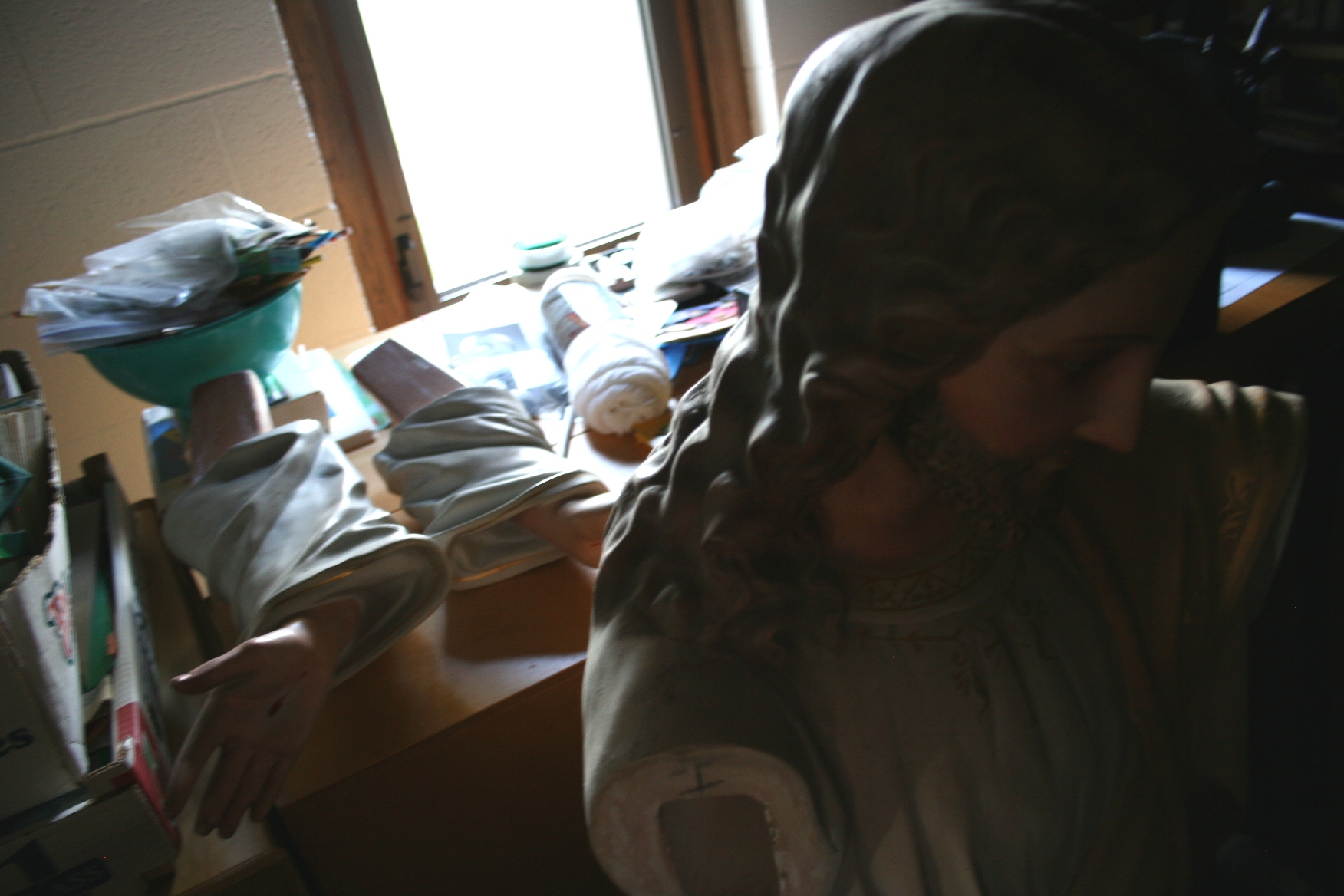
THE ARMLESS JESUS stood there, shoved into the back corner against a desk in the dark fellowship hall packed with misplaced pews.

That’s when I panicked, thought for a moment that Jesus had lost his arms in the July 1 storm, until I realized his appendages had been removed, not broken.

To the right in this photo, stands Jesus. His arms were removed and lie behind him on a desk.

The statue of Christ has been my greatest concern ever since a series of downbursts with winds of 90 – 100 mph ripped half the roof from St. John’s Lutheran Church, exposing the sanctuary and Jesus to the heavens.

One month after that strong windstorm, I returned to my hometown of Vesta in southwestern Minnesota and viewed the damage I’d only seen in photos. The town looks better than I’d feared, although I’m certain if I’d been there right after the storm, I wouldn’t be writing that.

St. John's, hours after the July 1 storm with half of the south roof ripped off by high winds. The roof fell against and cracked the bell tower, which has since been taken down. Photo courtesy of Brian Kletscher.

It’s the damage to St. John’s that I knew would impact me the most emotionally. My worries centered on that Jesus statue, the single remaining visual reminder of the old 1900 church building across town where I was baptized and confirmed and worshipped for the first 18 years of my life. In May of 1982, I was married in the new brick church built in 1974.

Jesus, who once blessed us with outstretched arms from the altar of the old church, was alright. For that I was thankful.

As St. John’s members await word from an engineer on whether the damaged building is structurally-sound or will need to be demolished, they are attending their sister church, Peace Lutheran, in Echo seven miles to the north.

That seems to be working for now. But come winter, when travel can sometimes be difficult and dangerous on the southwestern Minnesota prairie due to blowing snow, options to worship in Vesta may need to be considered. Or maybe not. Pastor Dale Schliewe doesn’t expect the church to be rebuilt by the time the snow flies.

Right now, though, church members are more concerned about getting the building process started. That could include an expansion.

No matter what ultimately happens, this congregation remains a thriving one, attended by many members of my extended family. My great grandfather, Rudolph Kletscher, helped found St. John’s. The first church service was held in his home one mile east of Vesta.

My emotional attachment to this congregation runs deep, rooted in that legacy of faith passed from generation to generation.

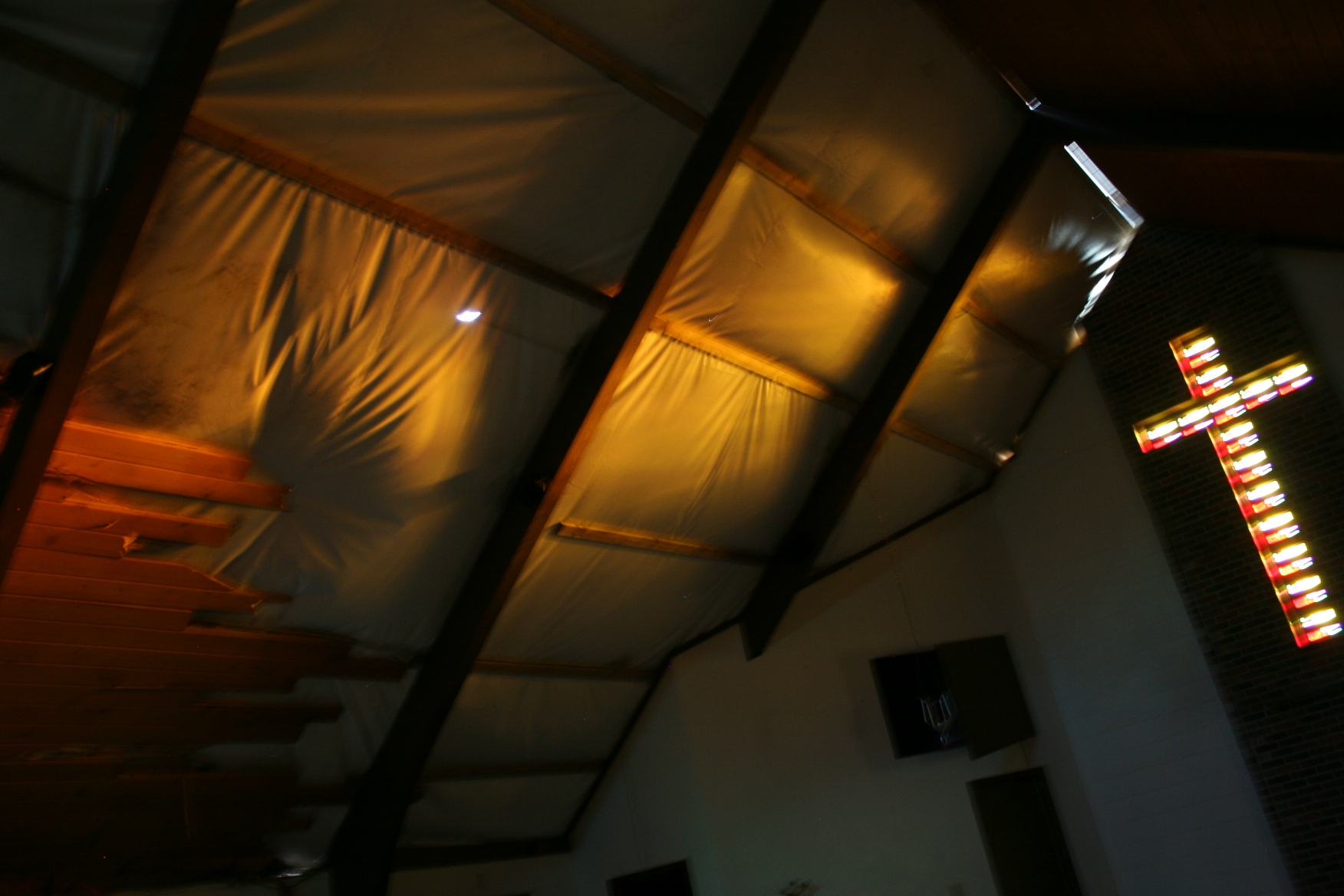
I understand that a building does not comprise a church. Yet, when I walked into the empty sanctuary of St. John’s, gazed upward at the tarp covering the missing roof, saw the splintered wood, walked around the pews jammed into the fellowship hall, noticed Jesus standing armless in the corner, spotted the hymnals stacked on a kitchen counter and skirted the pile of debris in the church parking lot, my soul ached.

Inside the sanctuary, you see the damage to the roof, now covered by a tarp. To the right, a stained glass cross centers the worship area in this photo shot at an angle.

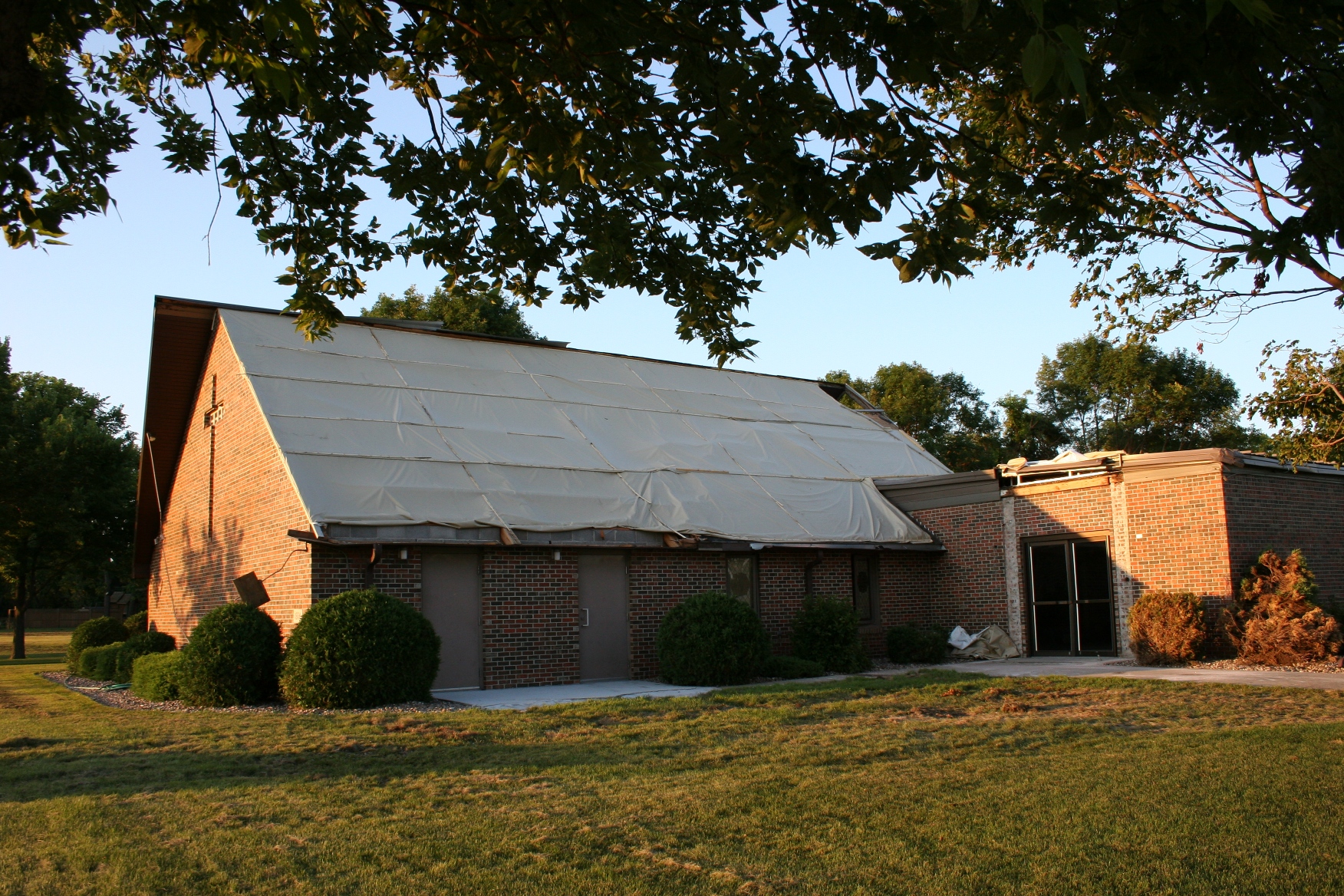
One month after the storm, the south side of the roof is covered with a tarp.

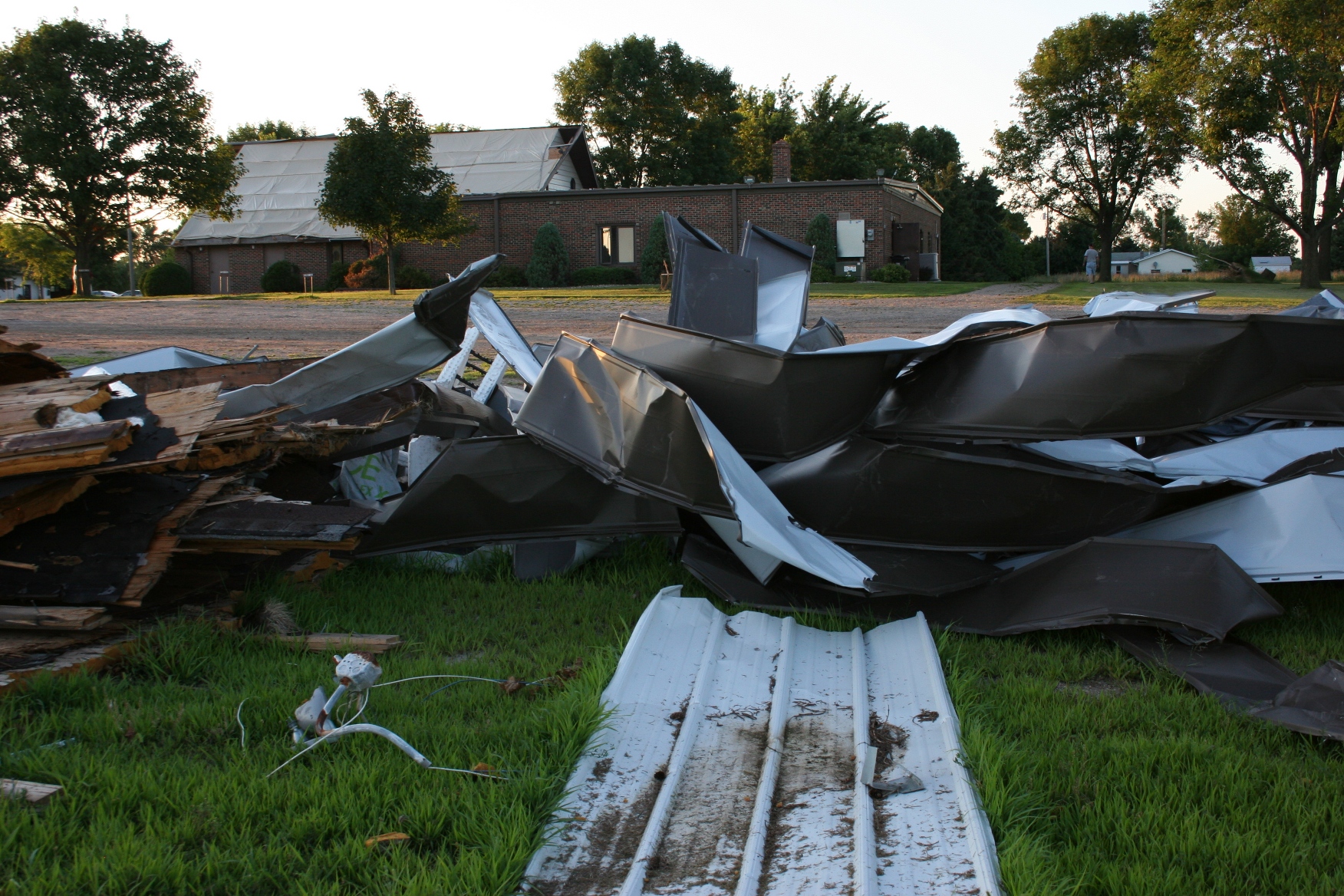
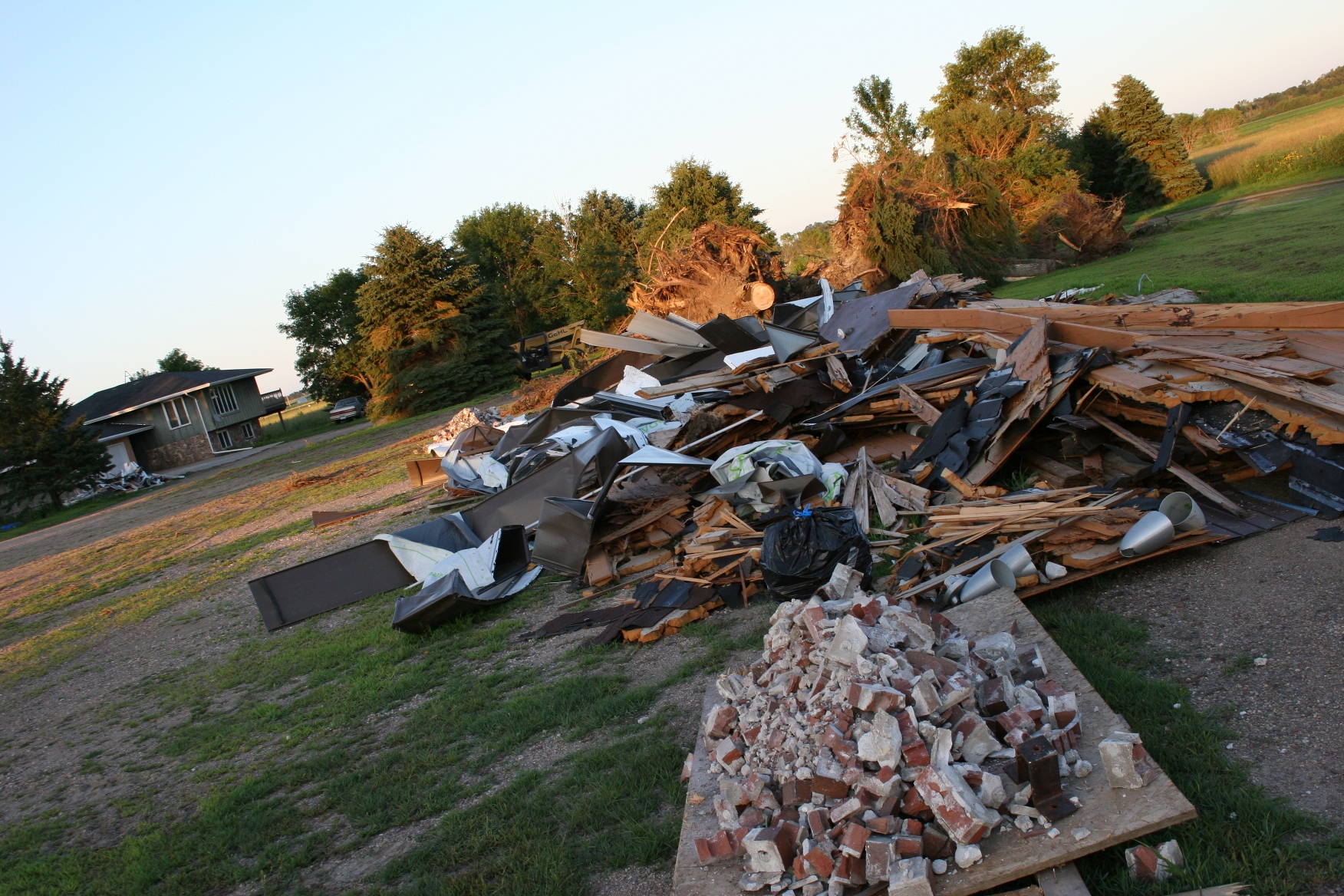
A debris pile on the edge of the parking lot includes pieces of steel from the roof and brick from the bell tower.

Another angle of that debris pile shows uprooted trees and, to the east, a house which was damaged.

© Copyright 2011 Audrey Kletscher Helbling

 

Zip code 56046 July 26, 2011

THE NEXT TIME YOU’RE traveling Interstate 35 south of Owatonna, instead of whipping by the Hope exit at 70 mph, pull off the freeway and check out this unincorporated community of 120 residents, probably best-known outside of Steele County for Hope Creamery butter.

Unless my husband and I missed the signage, we never saw a sign marking the creamery and simply guessed that the butter-making operation is housed in an old brick creamery on the edge of town next to a farm.

But we discovered several other places of interest after parking our car along the one main road that cuts through Hope. Yes, you need to park your vehicle, get out and walk, rather than simply driving through town thinking, “There’s nothing here.”

You would be wrong, oh, so wrong.

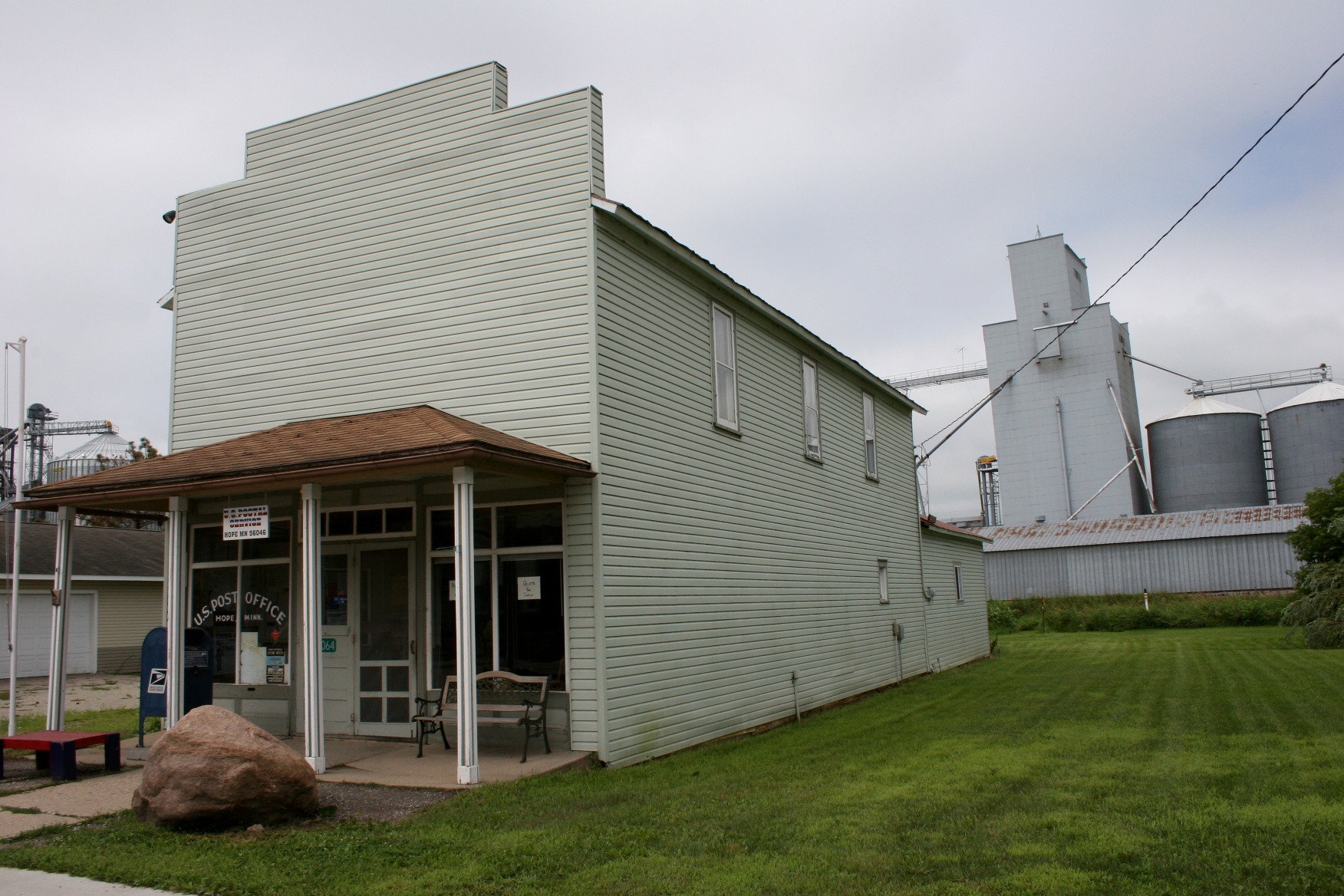
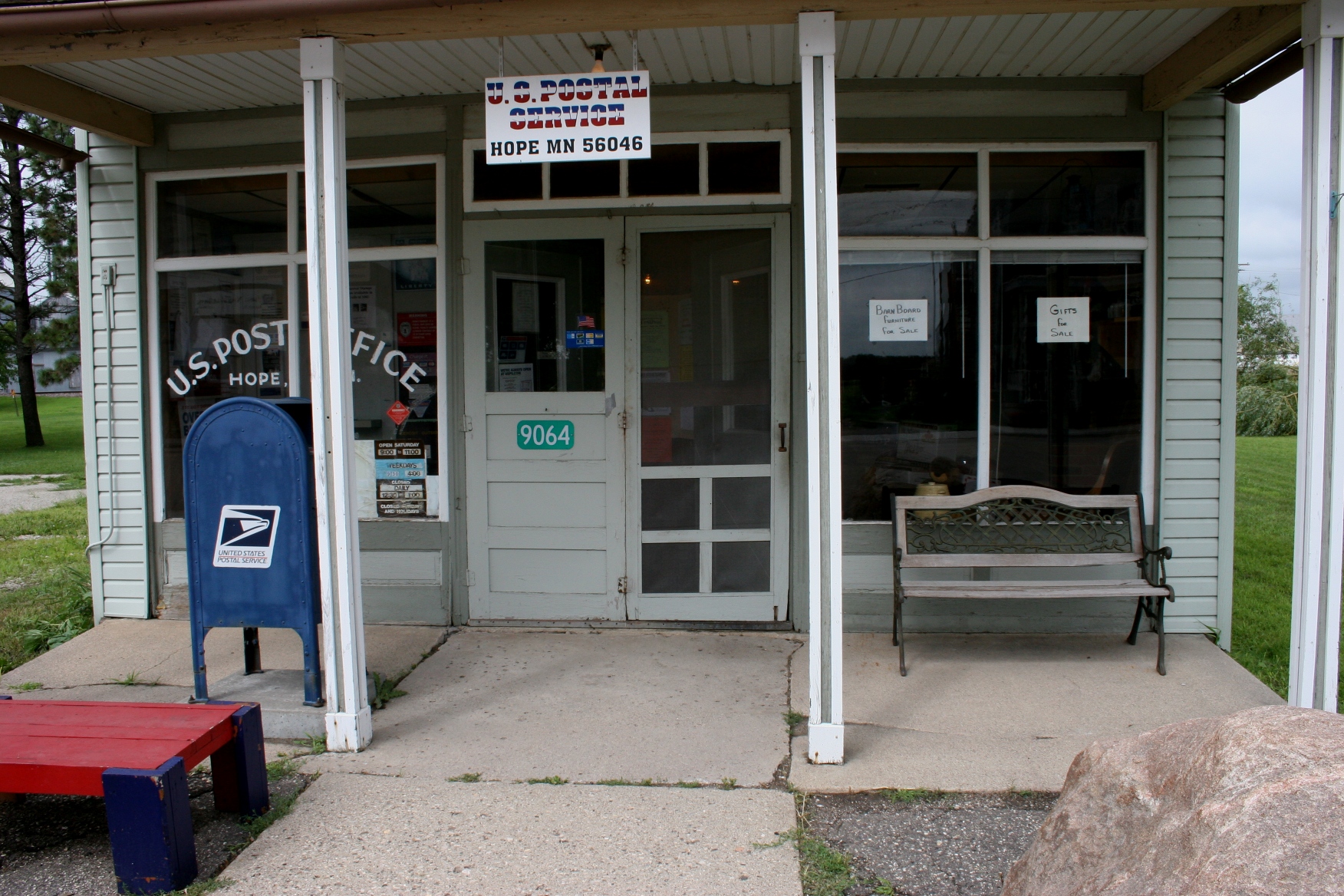
First point of interest: 56046. That would be the Hope Post Office. With a street front facade resembling the general stores of yesteryear or perhaps a building from a western movie set, this old-style structure charms.

The Hope Post Office sits along Main Street. The elevator complex in the background is just across the train tracks.

Take in the details: the red and blue bench, the double front doors, the rock out front, the welcoming porch...

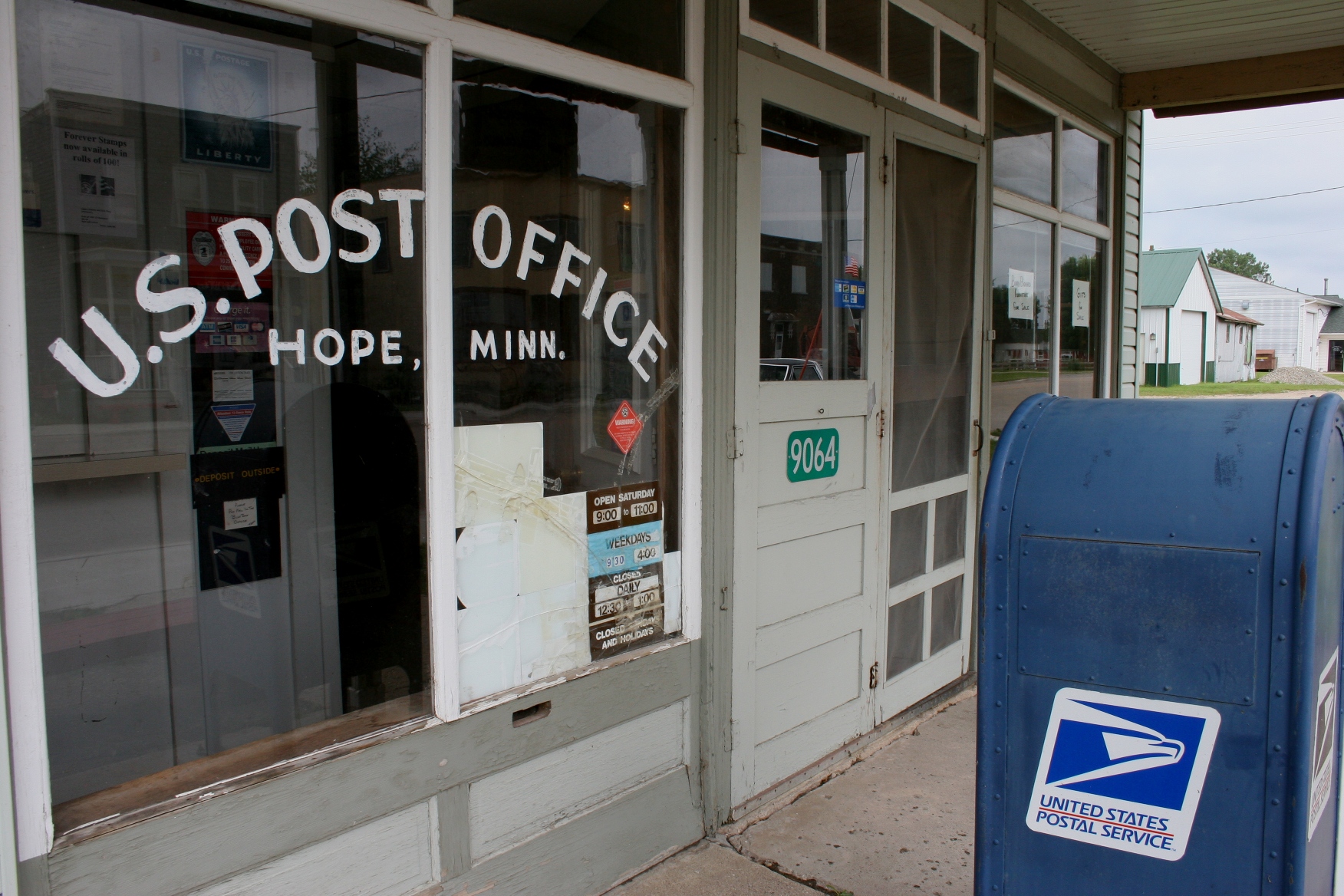
Even the lettering on the front window has old-style charm.

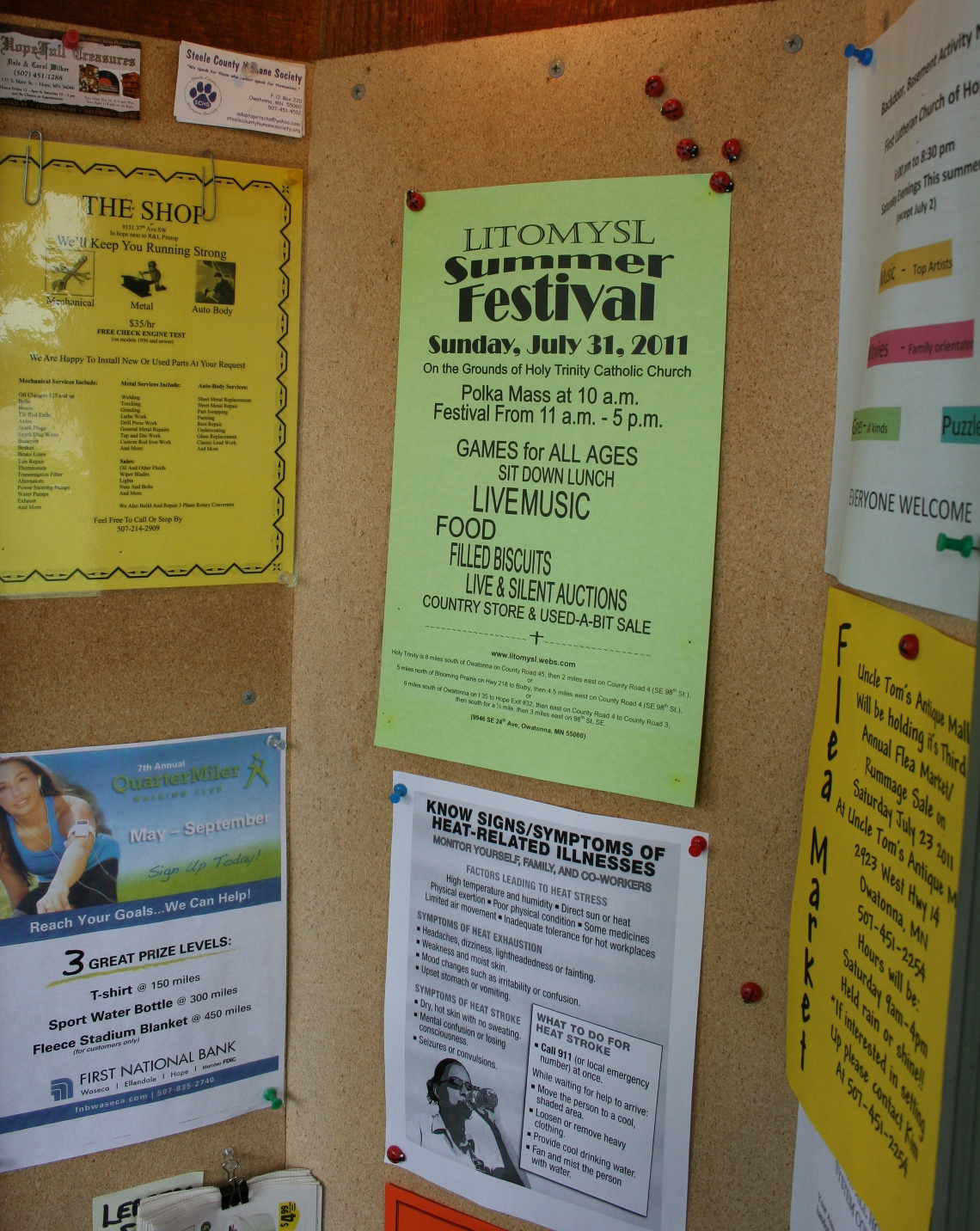
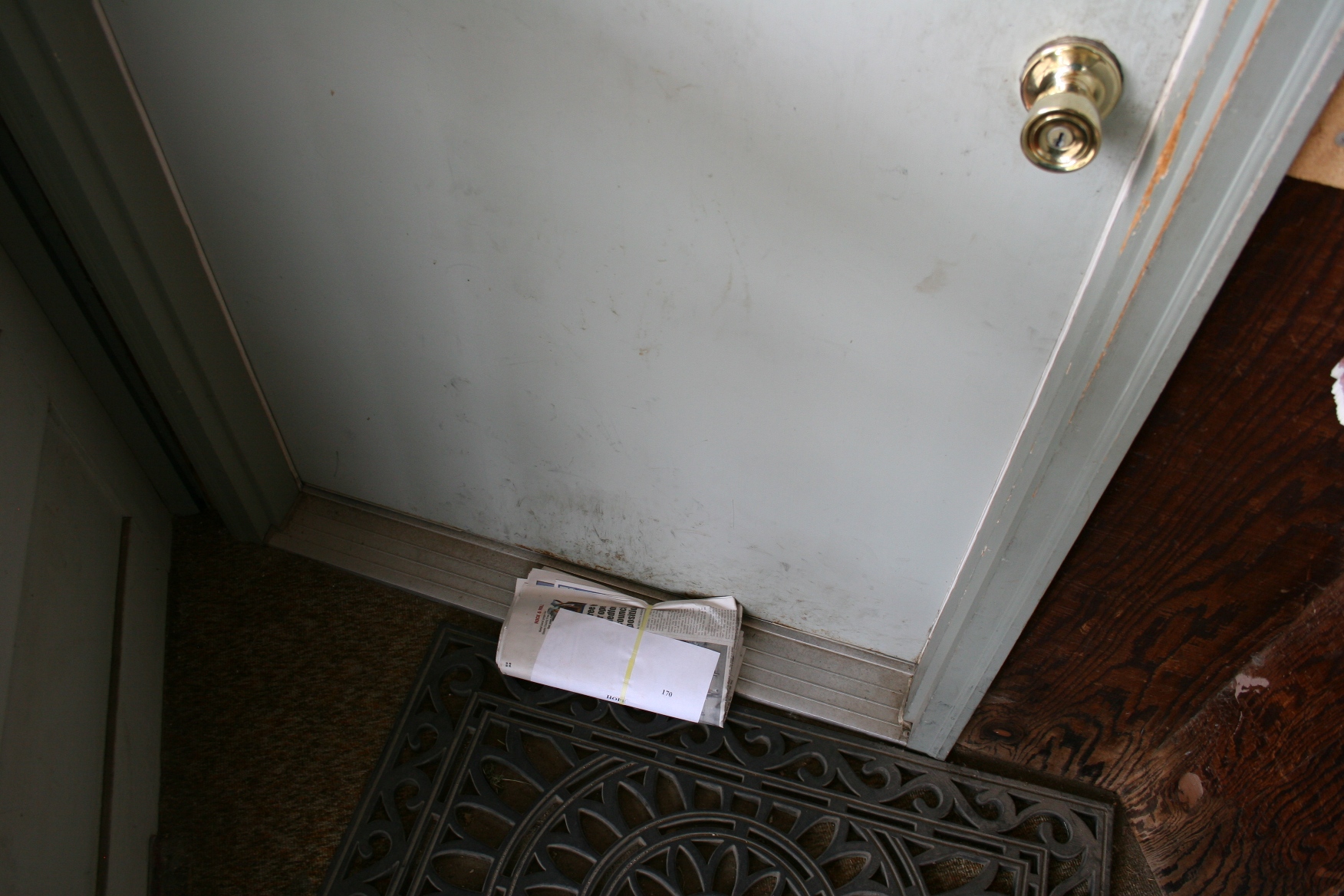
Maybe it doesn’t take much to impress me, but I appreciate buildings with character. I quickly determined that the post office serves as Hope’s community hub. I pulled open the screen door and stepped inside a closet of an entry, the door to the post office to my left, the door to a gift shop to my right. Smack in front of me, I found business cards and signs, church festival notices and other information tacked onto a bulletin board. A clutch of rubber-banded newspapers lay on the floor in front of the post office door.

The community bulletin board inside the post office entry.

A clutch of bundled newspapers outside the locked interior post office door.

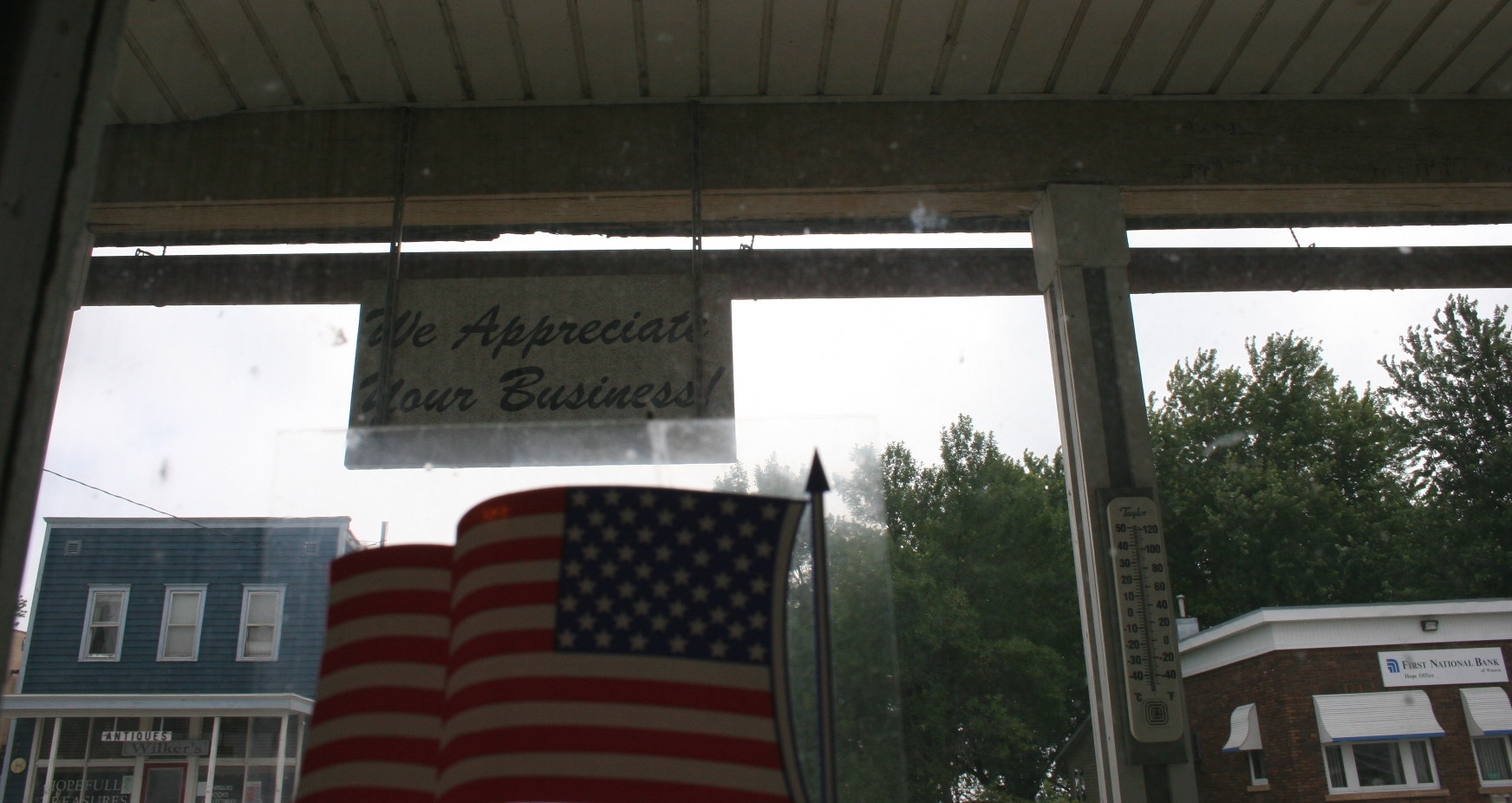
From inside the post office entry, a view across the street of the bank and an antique store.

Since I was there on a Sunday afternoon, I had to settle for standing outside, peering through the large, cracked and taped front windows to view the customer service area that is smaller than most bathrooms. But it serves the purpose and I’m sure Hope folks are happy to still have their post office.

I always figure once a community loses its school, its post office and its bank, well then, you may as well close up the town. So far, Hope has only lost its school.

Today the U.S. Postal Service releases a list of 3,600-plus post offices under consideration for possible closure in a cost-cutting effort. I hope Hope is not among them.

Post office hours are listed on a cracked and taped front window.

CHECK BACK FOR MORE posts out of Hope and other area communities I recently visited while on a Sunday afternoon drive. It’s my philosophy that most of us are missing out on the treasures of small-town U.S.A. because we fail to get off the freeways, park our vehicles on Main Street and explore. Either that or we’re “too busy” to slow down and notice the details worth noticing in our small towns.

If anyone knows about the history of the Hope Post Office, submit a comment. I would like to learn more about this building.

© Copyright 2011 Audrey Kletscher Helbling
 

Hot as “you know what” in Minnesota July 18, 2011

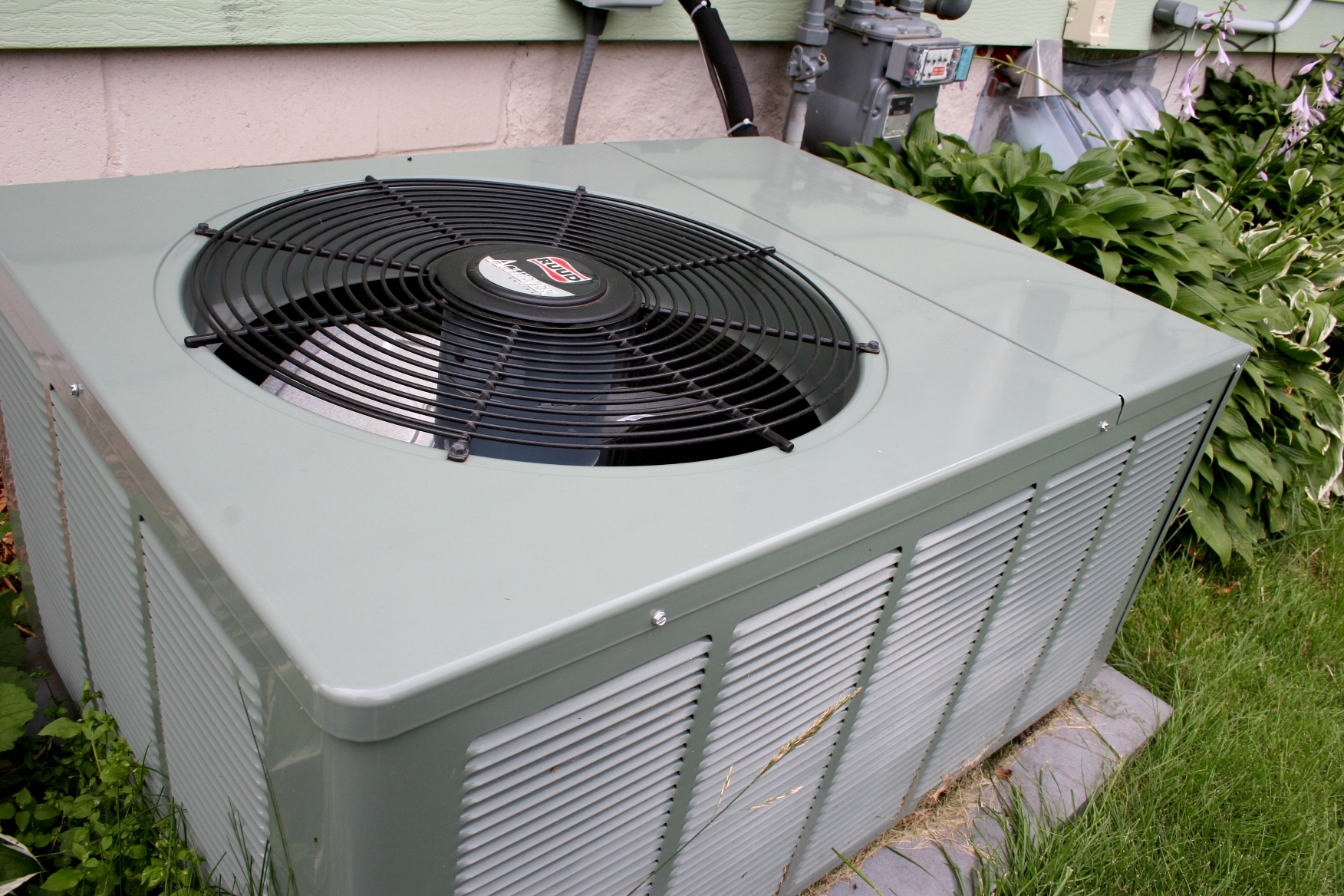
Air conditioners will be working overtime in Minnesota this week.

SO, MINNESOTANS, here’s the weather question of the day: “How hot is it outside?”

Although I’m of German heritage, I’d unequivocally state, “hotter than a Finish sauna.”

With a predicted dewpoint in the 70s (Sunday it reached an almost unheard of 81) and temperatures in the 90s today, the National Weather Service in Chanhassen has continued an extensive heat warning for central and southern Minnesota and west central Wisconsin through 9 p.m. Wednesday.

Heat indexes of more than 105 degrees (some media outlets are saying 110 – 117 degrees) are expected for several-hour stretches during the afternoon, creating “a dangerous situation in which heat illnesses are likely.” Ya think?

That means, folks, that we need to keep ourselves cool (preferably in an air conditioned building), drink plenty of fluids (and we’re not talking alcohol here) and stay out of the sun.

Don't increase your fluid intake via alcohol.

Honestly, when I stepped outside Sunday evening, I felt like I couldn’t breathe. You can guess how long I stayed outdoors. Long enough to turn around and walk back inside the house. I had been out earlier photographing the air conditioner you see above. I had a little trouble with the camera lens fogging over as soon as I stepped outdoors. The windows on our house also fogged, a phenomenon I have not previously seen except when I cook pasta. Weird stuff this weather.

All joking aside, this heat and humidity can be downright dangerous, especially for anyone working outdoors.

I know of some teens supposedly heading to the corn fields early this morning to detassel corn in the Stanton/Northfield area. Here’s my advice: Gulp water, by golly, then gulp some more. Slather on the sun screen, wear a cap and, if you’re at all feeling out of sorts, immediately tell your supervisor. Today would not be the day to tough it out. And, yes, I do know of what I write. As a teen I detasseled corn on days so hot it seemed as if the heavy air would suffocate me in the corn rows.

If you, or your teen, is starting a job this week as a corn detasseler, take extra precautions to avoid heat-related health issues. Also, don't quit. Every week in the cornfield won't be like this one and you' likely work only til noon.

Now, with those dire warnings out of the way, let’s talk about the words and phrases we Minnesotans use to describe this stretch of humid, hot weather. Let me pull out my Minnesota Thesaurus and thumb through the pages.

Here are some select synonyms for our current weather: steamy, muggy, scorching hot, sweltering, a real barn burner, so hot you could fry an egg on the pavement, like a sauna, “it’s not the heat, it’s the humidity”…

Whichever words you choose from that non-inclusive list, you might want to add, “It could be worse.” We Minnesotans like to tack that little phrase onto our statements lest, by not adding that qualifier, we leave ourselves open to worse circumstances/situations/weather. We do not want to tempt fate.

After all, come December, we could get socked with a raging blizzard that dumps two feet of snow on us followed by a week of temperatures plummeting to 20-below, and that’s without the windchill. We wouldn’t want to invite a Siberian winter by forgetting, this week, to say, “It could be worse.”

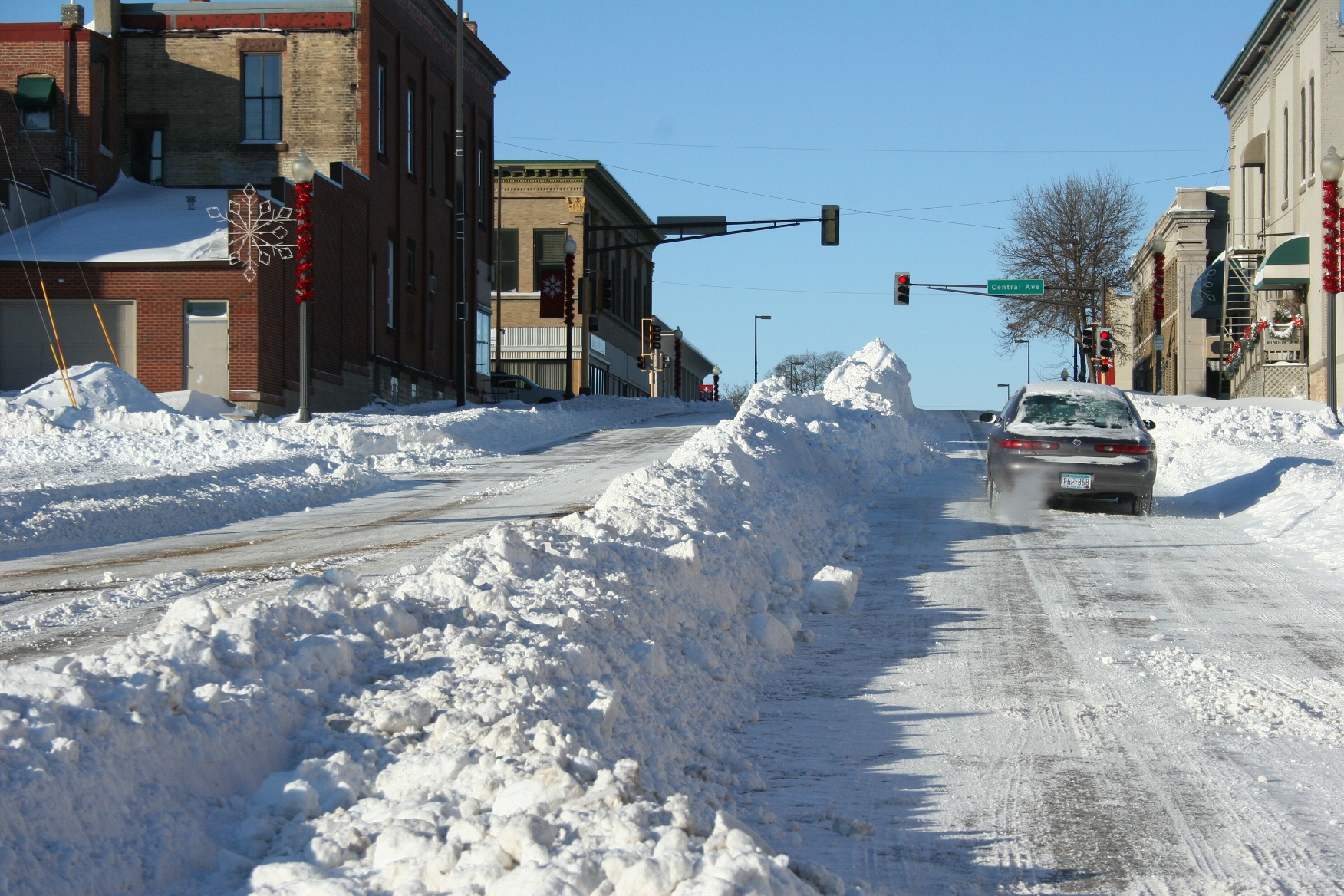
A snow pile divides traffic lanes along Fourth Street/Minnesota Highway 60 a block from Central Avenue in Faribault following a December 2010 snowstorm.

In summary, it’s best, really, not to overly-complain about the hellish, hot, scorching, stifling, steamy, sticky, sweltering, miserable, muggy, unbearable, oppressive heat and humidity. OK, then?

And, please, don’t be thinking, “Whatever, Audrey.”

IT’S YOUR TURN to speak up. How would you describe this weather we’re experiencing in Minnesota? How are you coping? Add your ending to this prhase: “It’s so hot in Minnesota that…”  Submit a comment and tell me whatever.

© Copyright 2011 Audrey Kletscher Helbling

 

St. Mary’s of Melrose, Part II July 17, 2011

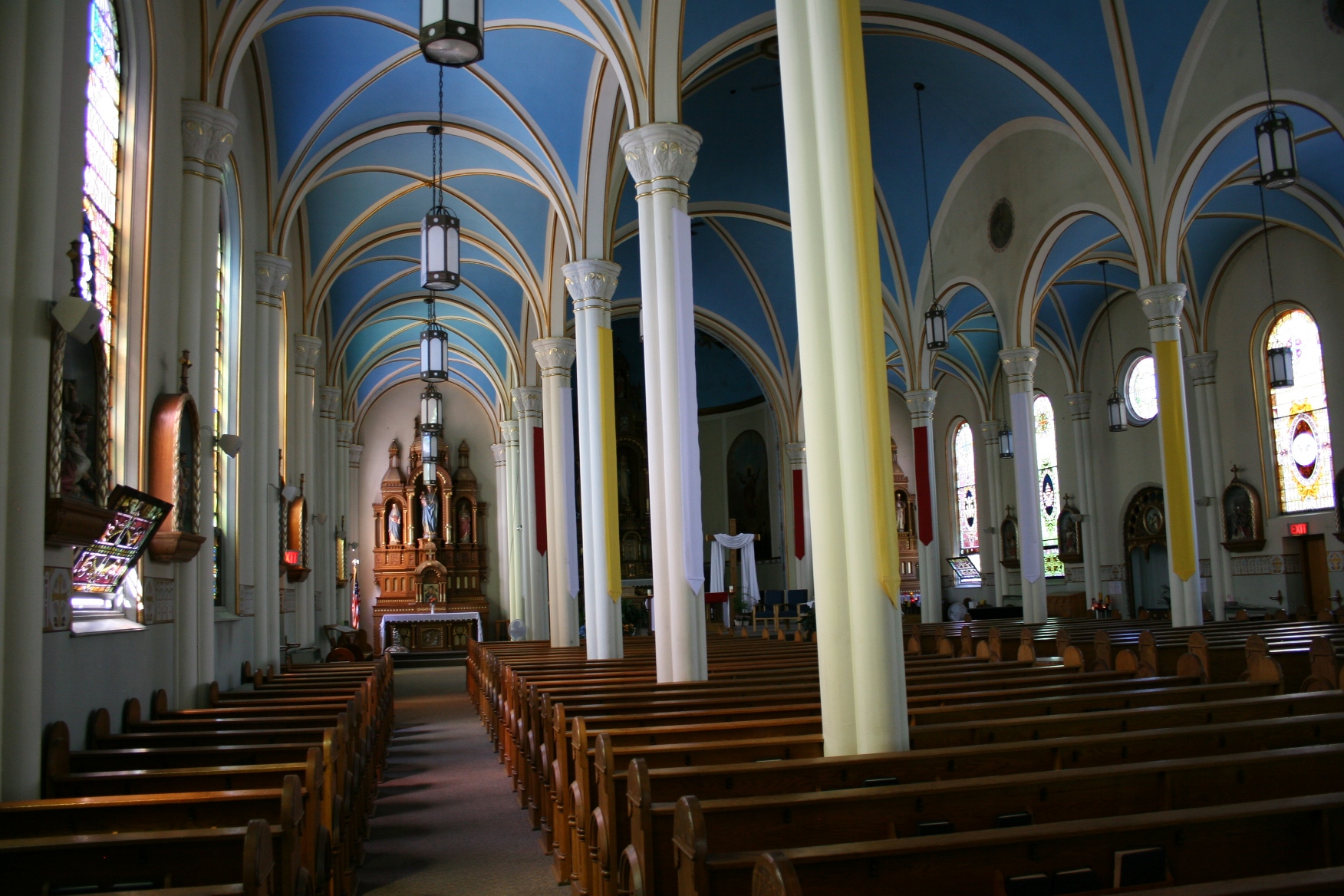
STARK CHURCHES appeal to me. The ones with the simple wooden cross, the white clapboard siding, the time-worn pews settled upon plain plank floors.

But the ornate houses of worship likewise snag my soul with crosses of gold, walls of brick and gleaming, carved pews.

One of the many ornate carvings at St. Mary's Catholic Church in Melrose.

I am most comfortable with, most accustomed to, the unadorned churches of the Lutherans, my religious heritage. We keep things simple. No cluster of burning candles. No wafting incense. No pools of holy water. Minimal, if any, gold.
Perhaps for that reason, when I step into an historic Catholic church, I feel like I’ve entered a foreign land. I am often awed by the opulence, by the details that visually overwhelm me.

The side aisle on the left leads to an ornate altar in St. Mary's which is on the National Register of Historic Places.

That’s exactly how I felt upon entering St. Mary’s Catholic Church of Melrose, featured here in an earlier post. Overwhelmed. But good overwhelmed. Because I could not possibly present all of the images I wanted to share with you in a single post, here are the remainder.

No matter your religious affiliation, you simply have to appreciate a place like St. Mary’s. What beauty. What art. What history. What heavenly splendor.

This was the top or bottom of something. Can't recall what. But it sure is stunning.

Look at this gorgeous, carved door, will you?

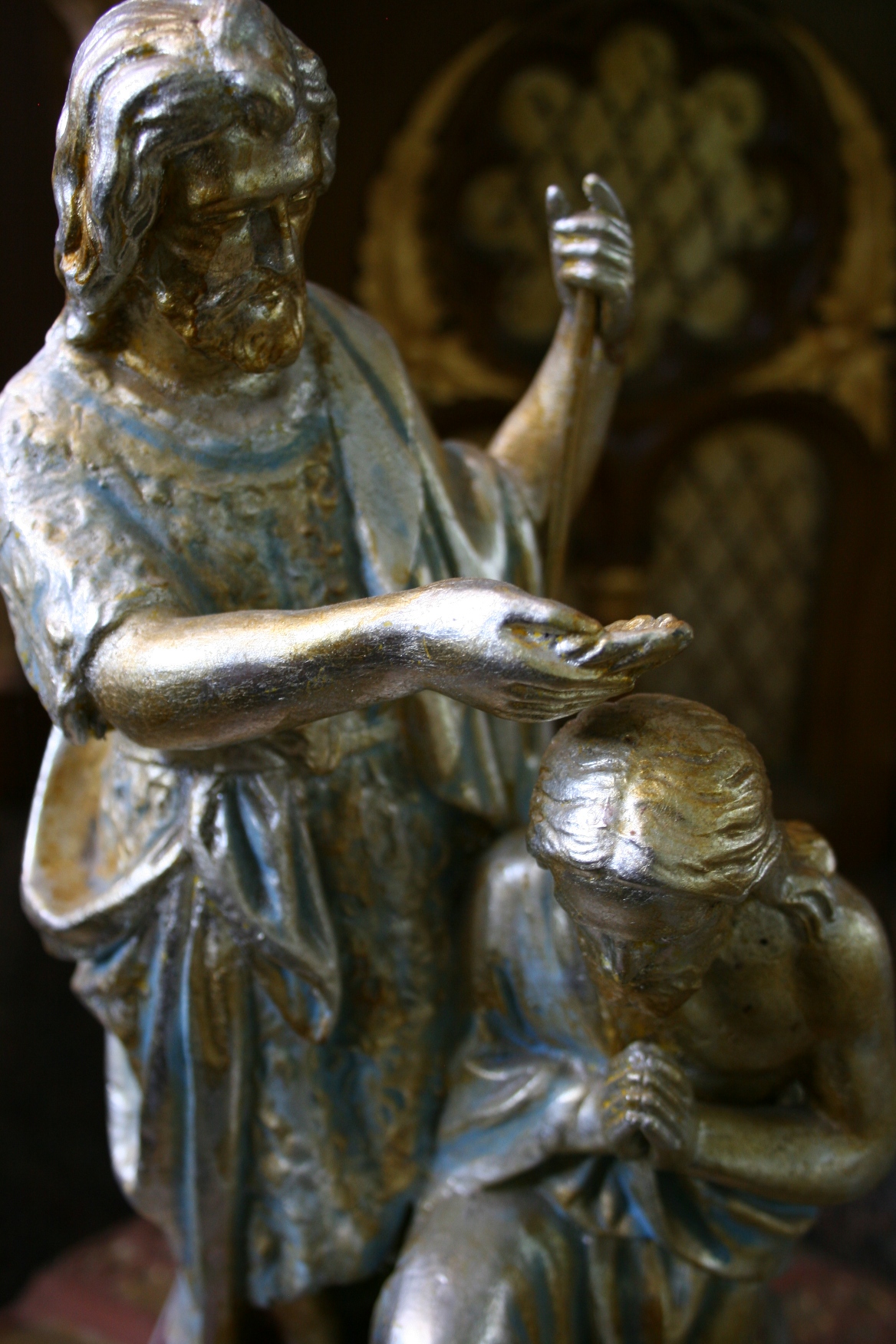
Golden statues. Beautiful.

Just look at this detailed side altar. I could have spent hours in St. Mary's.

And then I discovered these collection baskets hanging from a rack. We Lutherans don't have wicker baskets with long handles. These contrast so sharply with the the ornateness in the church and that is why I so appreciated this grouping.

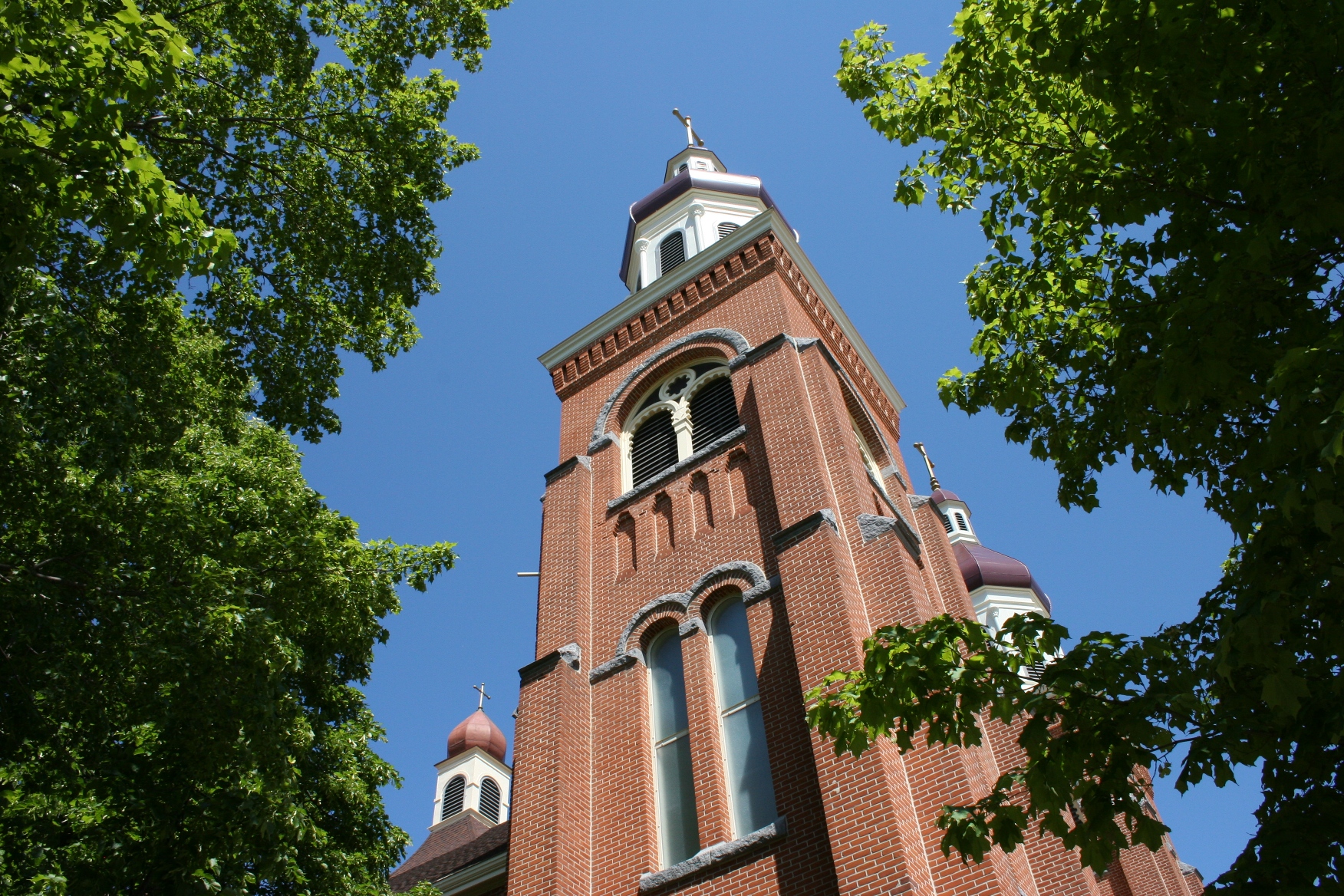
St. Mary's Catholic Church stands strong as a fortress in Melrose, next to the turkey plant, its towering steeples visible from nearby Interstate 94 in west central Minnesota.

© Copyright 2011 Audrey Kletscher Helbling