Minnesota Prairie Roots

Writing and photography by Audrey Kletscher Helbling

In Owatonna: Stories of an orphan’s Christmas December 19, 2011

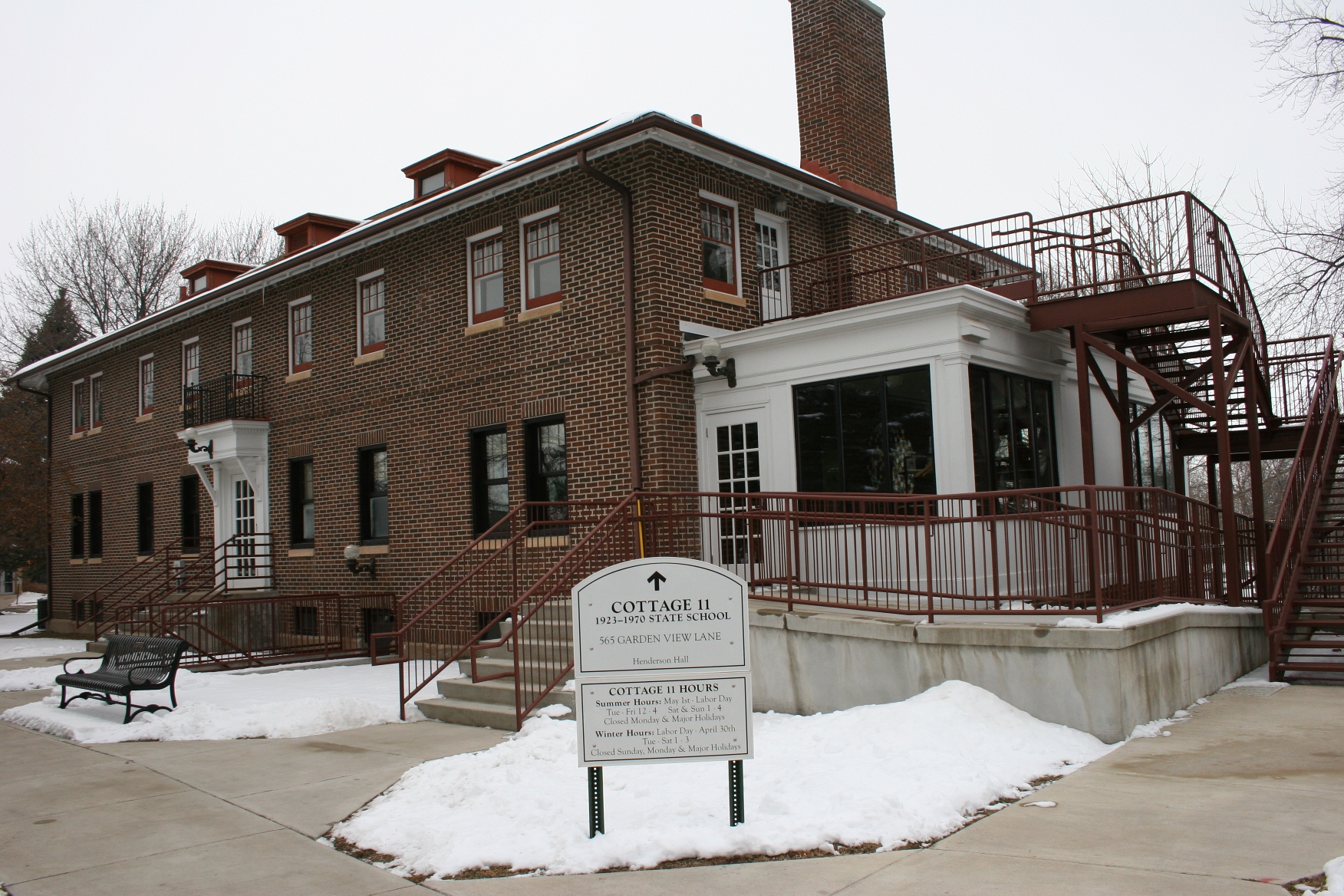
Cottage 11, built in 1923, as one of 16 cottages at the former Minnesota State Public School for Dependent and Neglected Children. Designed to house 25 boys ages 6 - 13, this cottage typically was home to 30 - 35 youth.

AS WE HURRY ACROSS the hilltop campus toward Cottage 11 at the former Minnesota State Public School for Dependent and Neglected Children, the raw wind slapping our cheeks, Silvan Durben advises us to refrain from jumping on the beds.

He’s a character, that Silvan, energetic and flamboyant and passionate. And truthful. This director of art at the Owatonna Arts Center, which is housed in the main building of the former orphanage, shares a tidbit of truth. The children who once lived here weren’t allowed to sleep on their pillows. So if my husband and I slid the for-show-only pillows off the beds and onto the floor, we’d have it right.

The boys' bedrooms are stark, devoid of anything homey. This small room slept three.

With that piece of information imparted, Silvan unlocks the door into Cottage 11, today preserved as part of the Minnesota State Public School Orphanage Museum complex in Owatonna.

Within these walls, which housed boys ages 6 – 13 from 1923 – 1945 in the state school orphanage, we will learn more of the unsettling truths during a self-guided tour. Typically, the cottage is staffed, but on this Sunday afternoon it is not and Silvan has allowed us inside, on our own, to explore. He trusts us, he says, and I am grateful for this opportunity to wander.

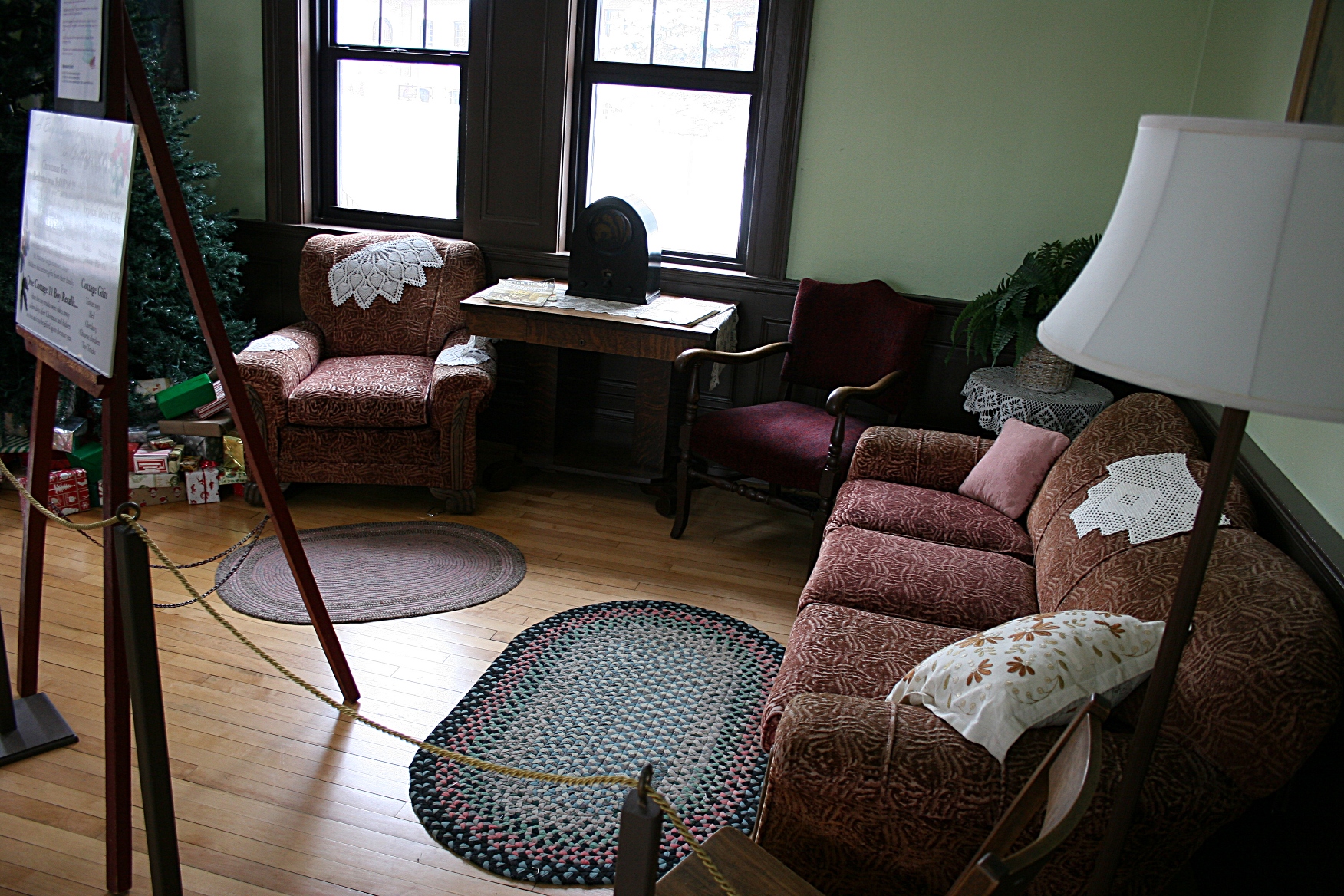
Entering a now-enclosed porch that serves as a gift shop and then stepping into the adjoining living room, I am surprised that I feel, initially, impressed by my surroundings. Visually, I am pleased by the natural light flooding this room through the abundant windows, by the dark woodwork, by the fireplace, by the narrow wood-slat floor, by the cozy cluster of vintage furniture grouped near the Christmas tree surrounded by piles of presents.

But looks, as I immediately learn, can be deceiving.

The living room was off limits to the boys except on special occasions.

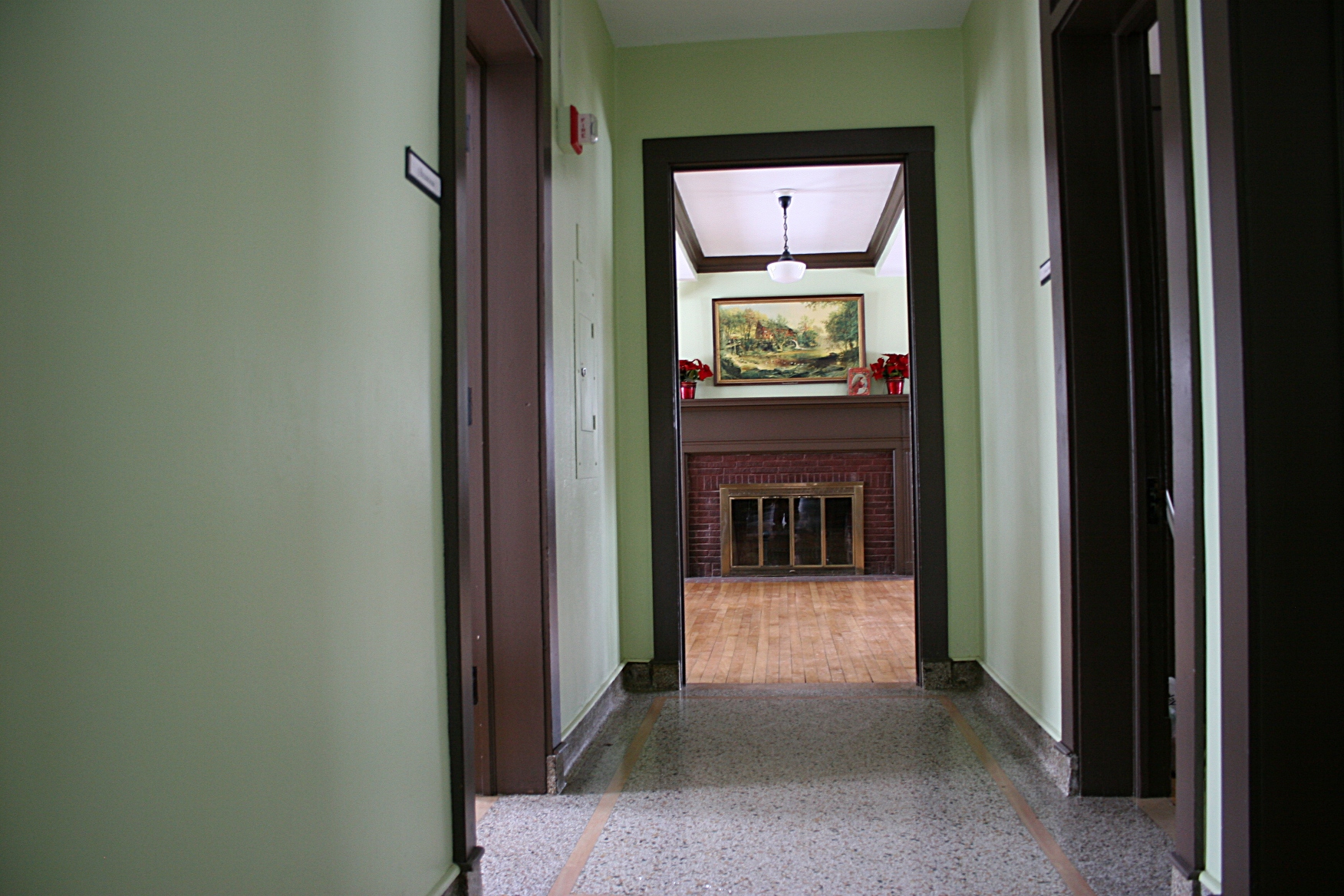
A view from the hallway looking toward the living room fireplace. Each week the boys polished the floor and furniture in this forbidden space. They also scrubbed floors throughout the cottage.

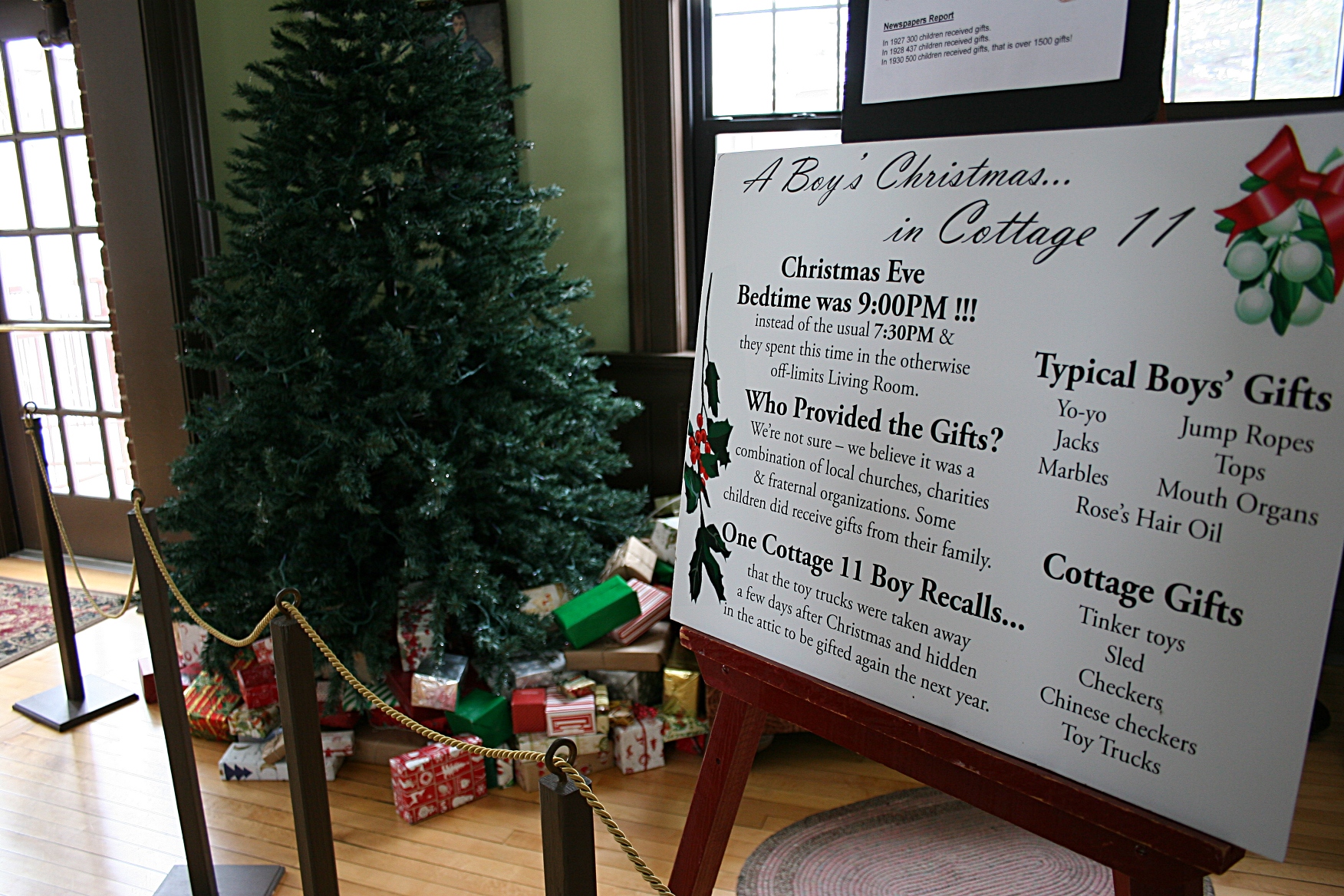
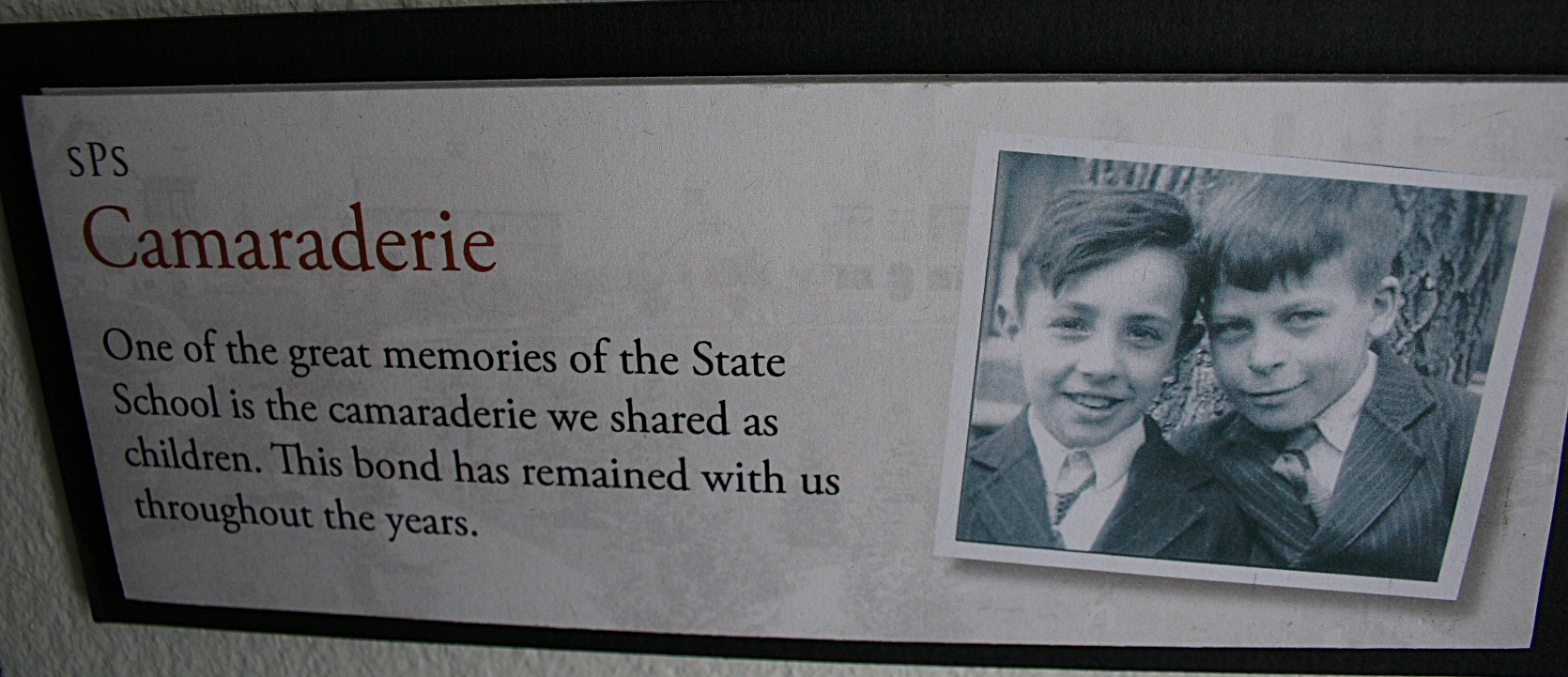
The posted words of the orphan boys reveal the truth:

…the toy trucks were taken away a few days after Christmas and hidden in the attic to be gifted again the next year.—Cottage 11 Boy

The truth revealed about Christmas from the memories of the Cottage 11 boys.

And the lovely living room? Apparently just for show, too, except on special occasions like Christmas Eve when the boys gathered here around the tree and were allowed to stay up past their usual 7:30 p.m. bedtime until 9 p.m.

Christmas brought but a moment of happiness to these children who otherwise lived under rigid rules and the domination of mostly uncaring matrons. (Arguably, some of these children may have lived equally difficult, or worse, lives had they remained in their previous circumstances/environments.)

Some happy Christmas memories from the boys.

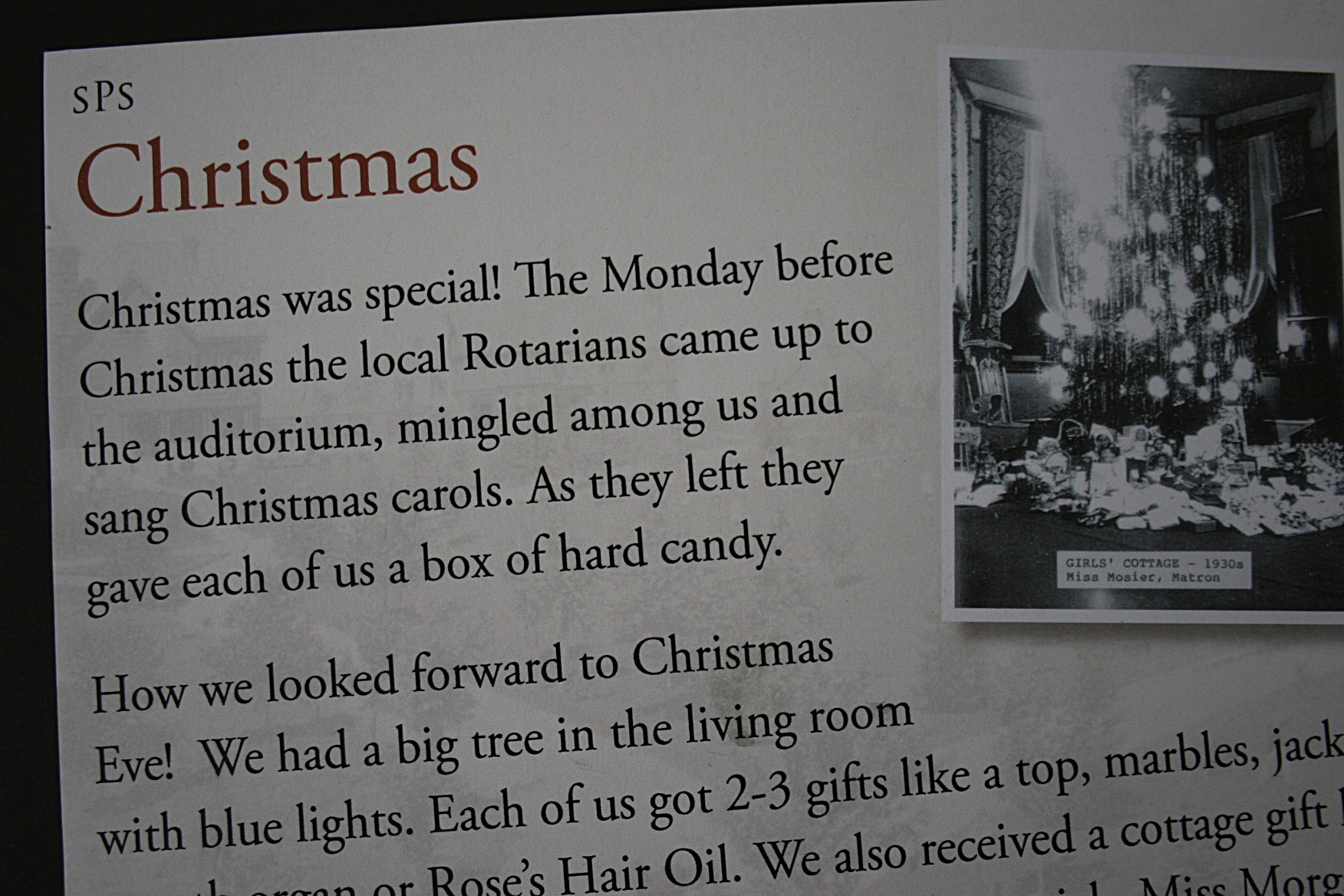
Christmas brought the local Rotarians into the school auditorium to sing carols and pass out boxes of hard candy. Christmas brought several gifts—perhaps Tinker Toys, or marbles or puzzles—for each child.

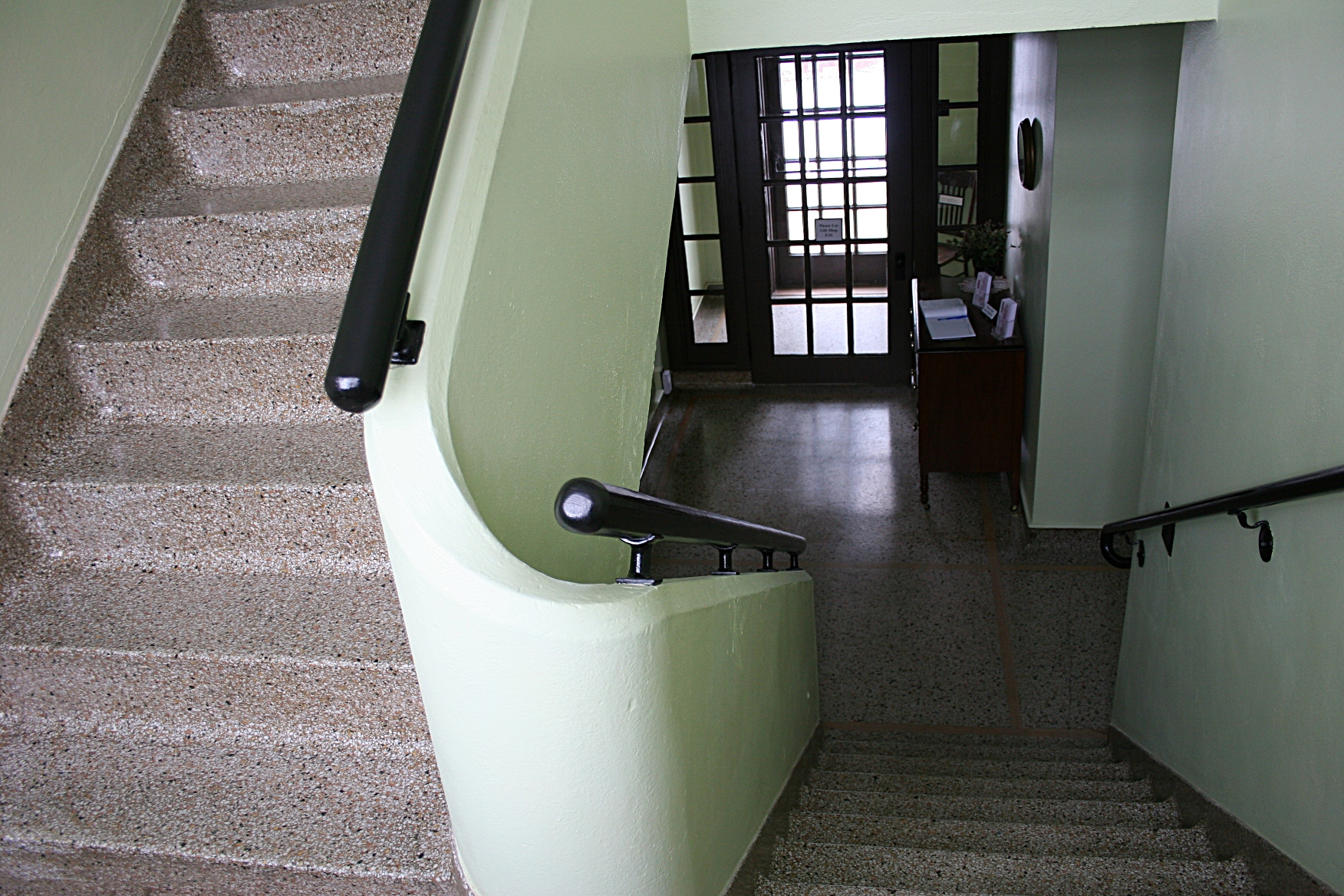
The stairway between the first and second floors and a shot of the cottage's front door at the bottom of the frame. The boys were never allowed to use the front door. They entered and exited through the basement.

I cannot even begin to fathom living here under unforgiving discipline, sleeping in stark bedrooms crammed with kids, missing out on the love of family.

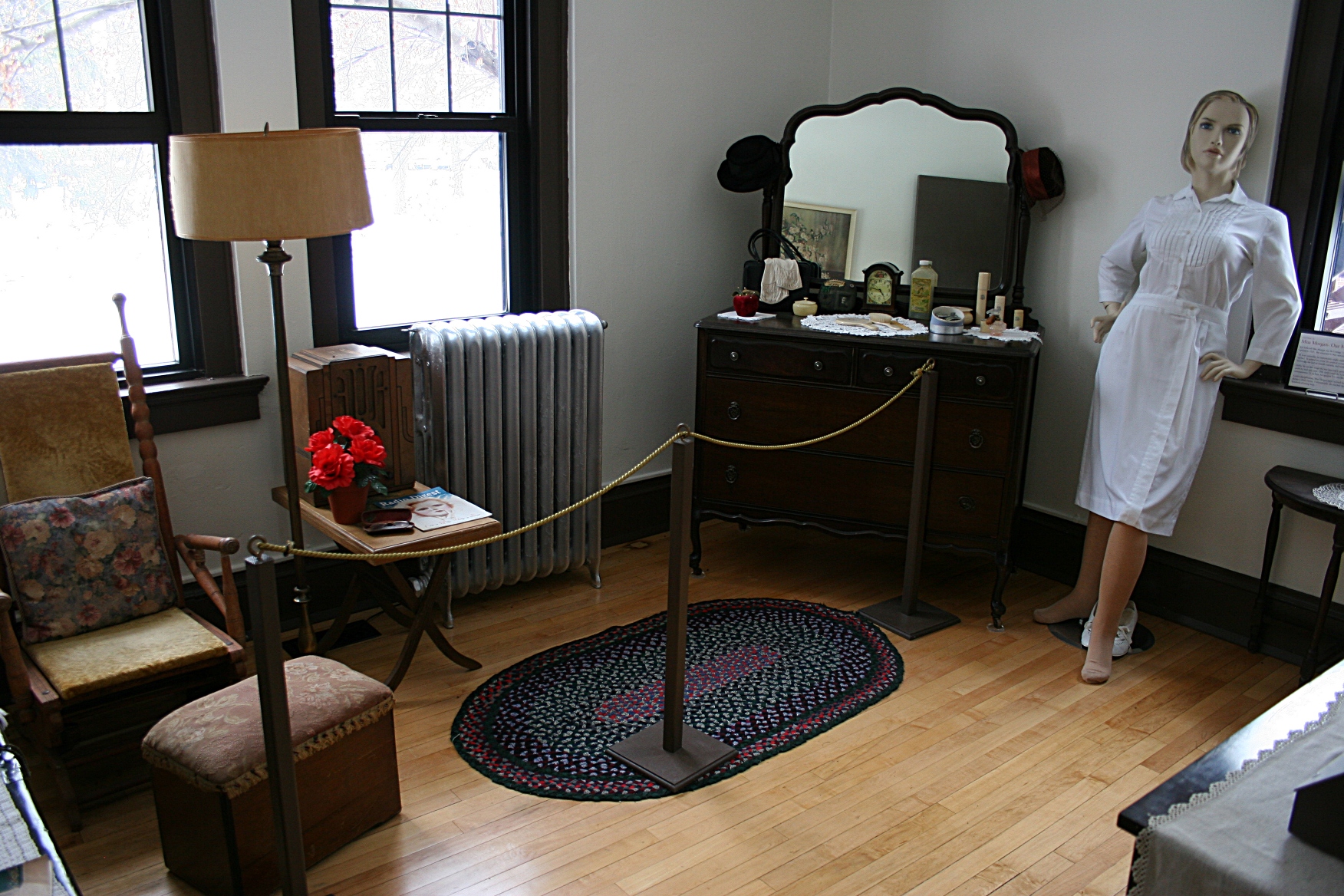
Unlike the mother image she was expected to portray, Miss Morgan (the matron) could be hard and cruel. Only rarely could she be kind and compassionate.

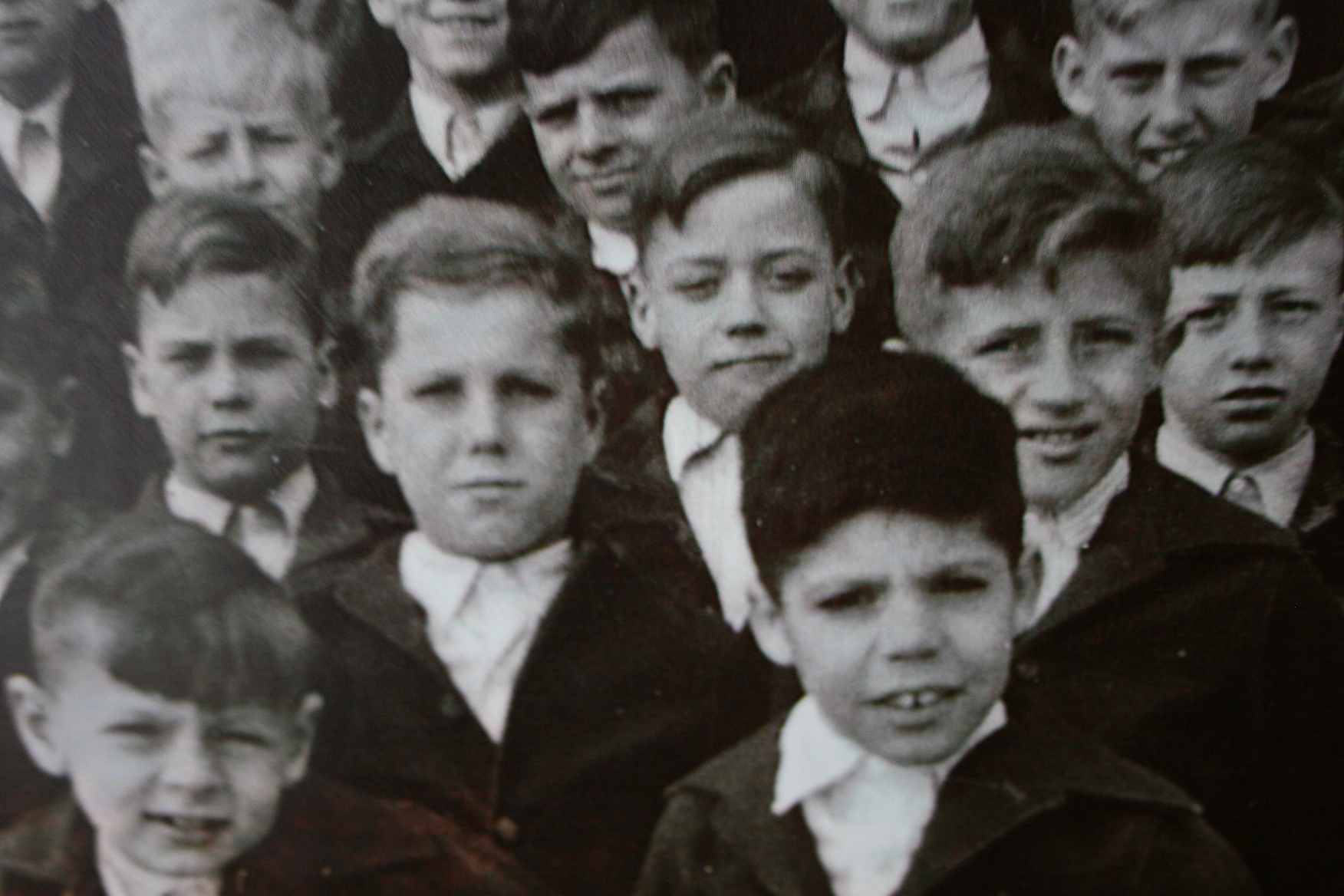
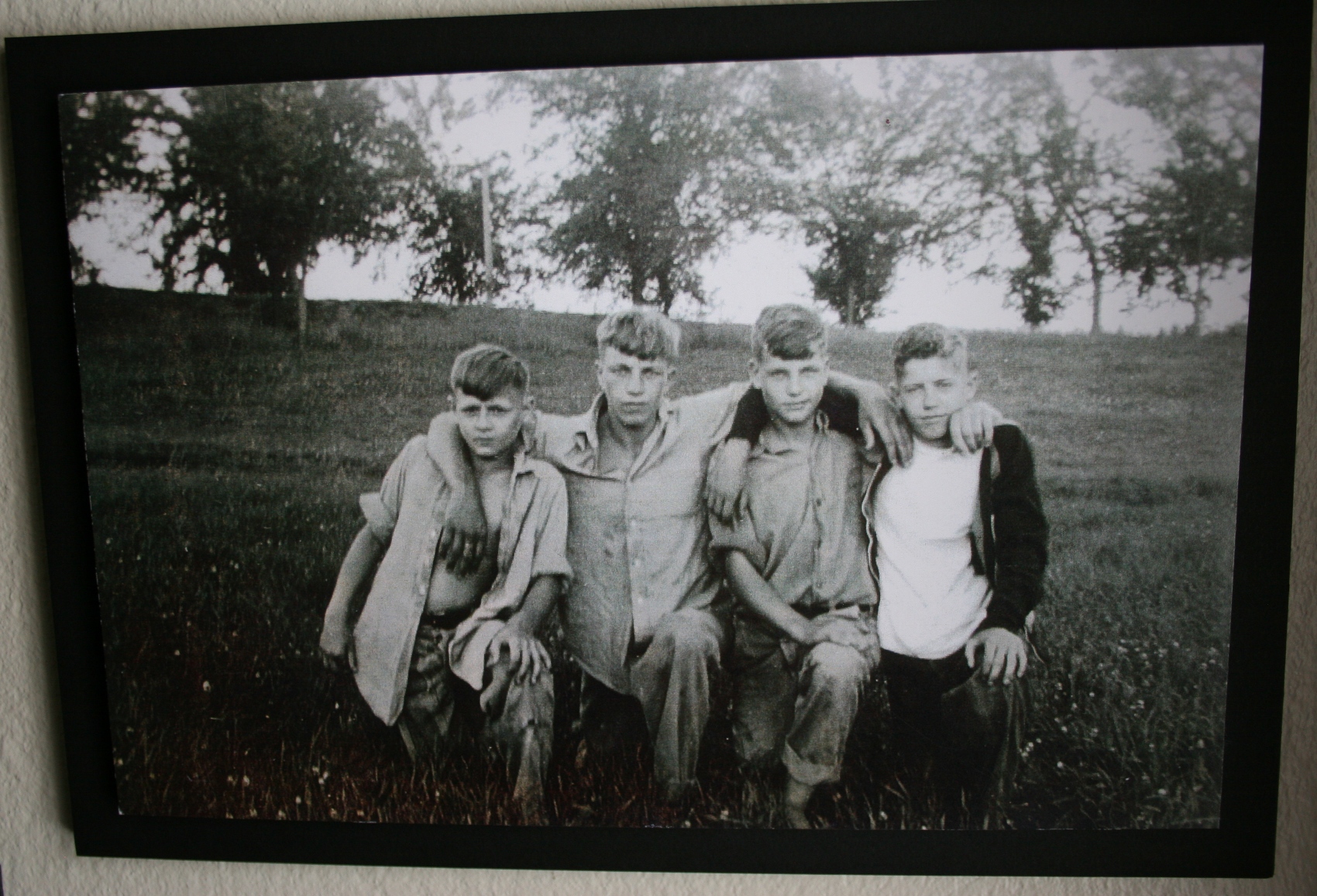
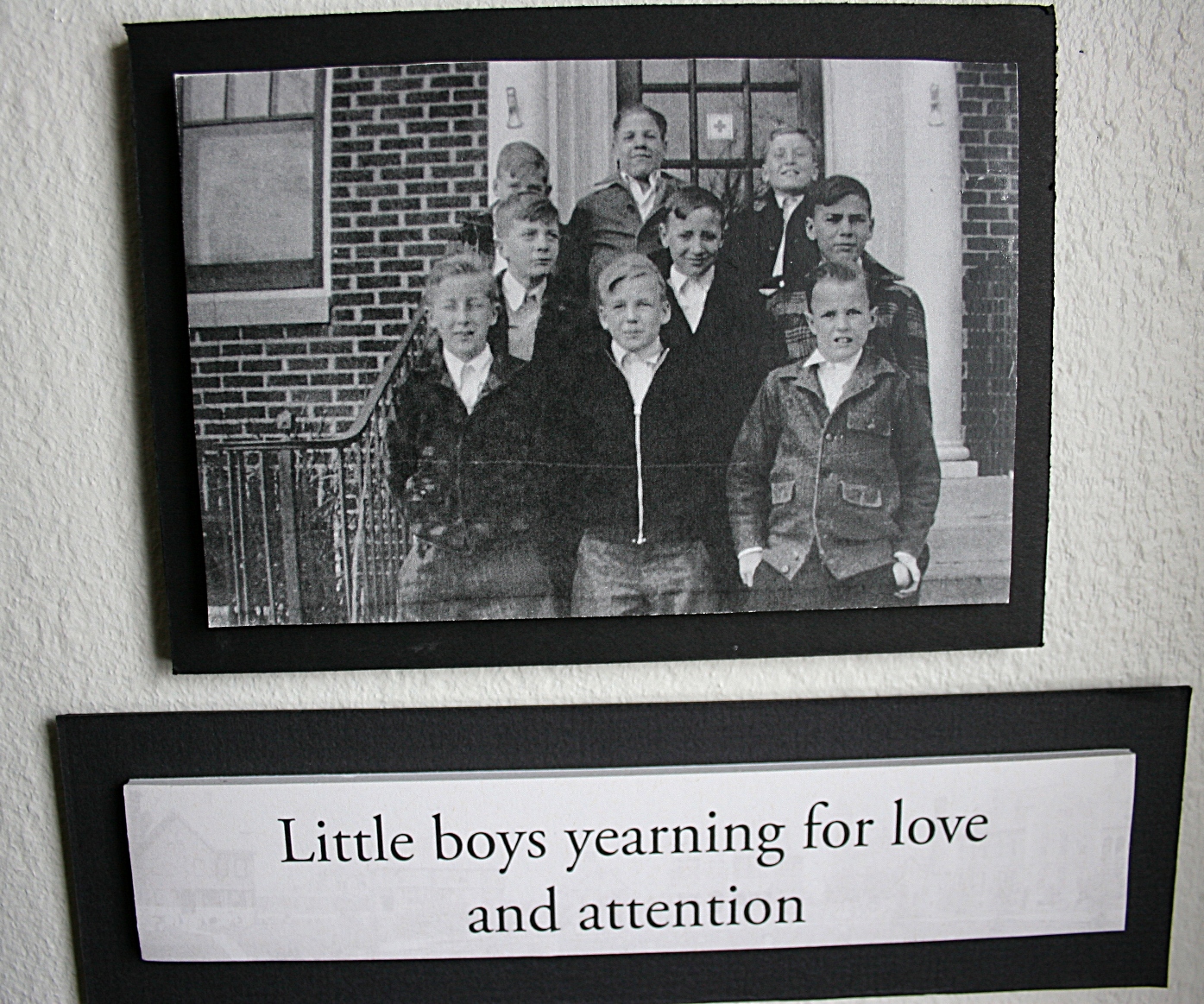
As I meander through the rooms peering at the black-and-white photos of mostly unsmiling boys and reading about their fears of scoldings and spankings and of scrubbing floors on their hands and knees and being confined primarily to the basement, my heart hurts. Truly.

You can see it in the boys' faces, the desperate need to be loved.

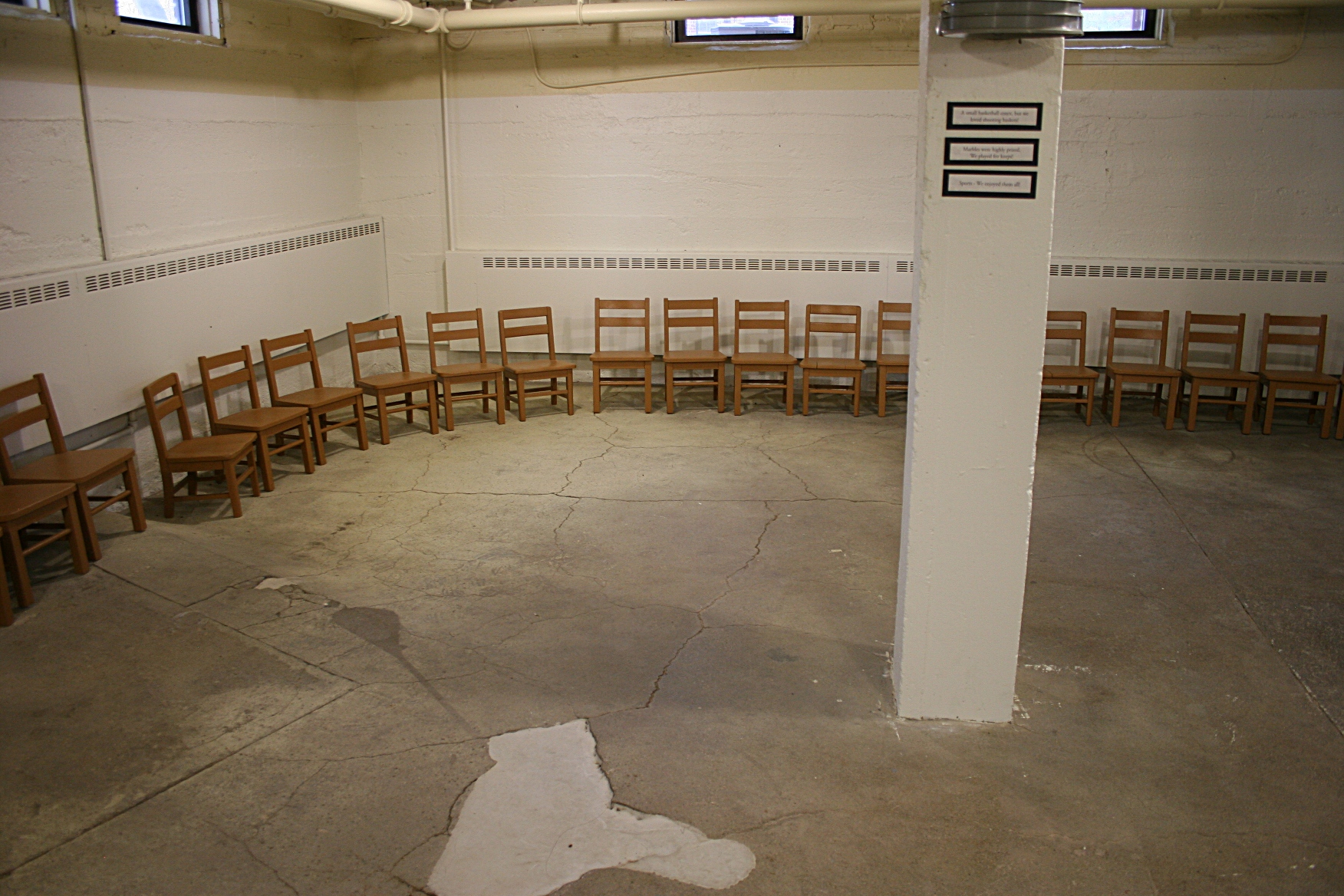
On signage titled “The Basement,” I read of  the prevailing authoritarian attitude:

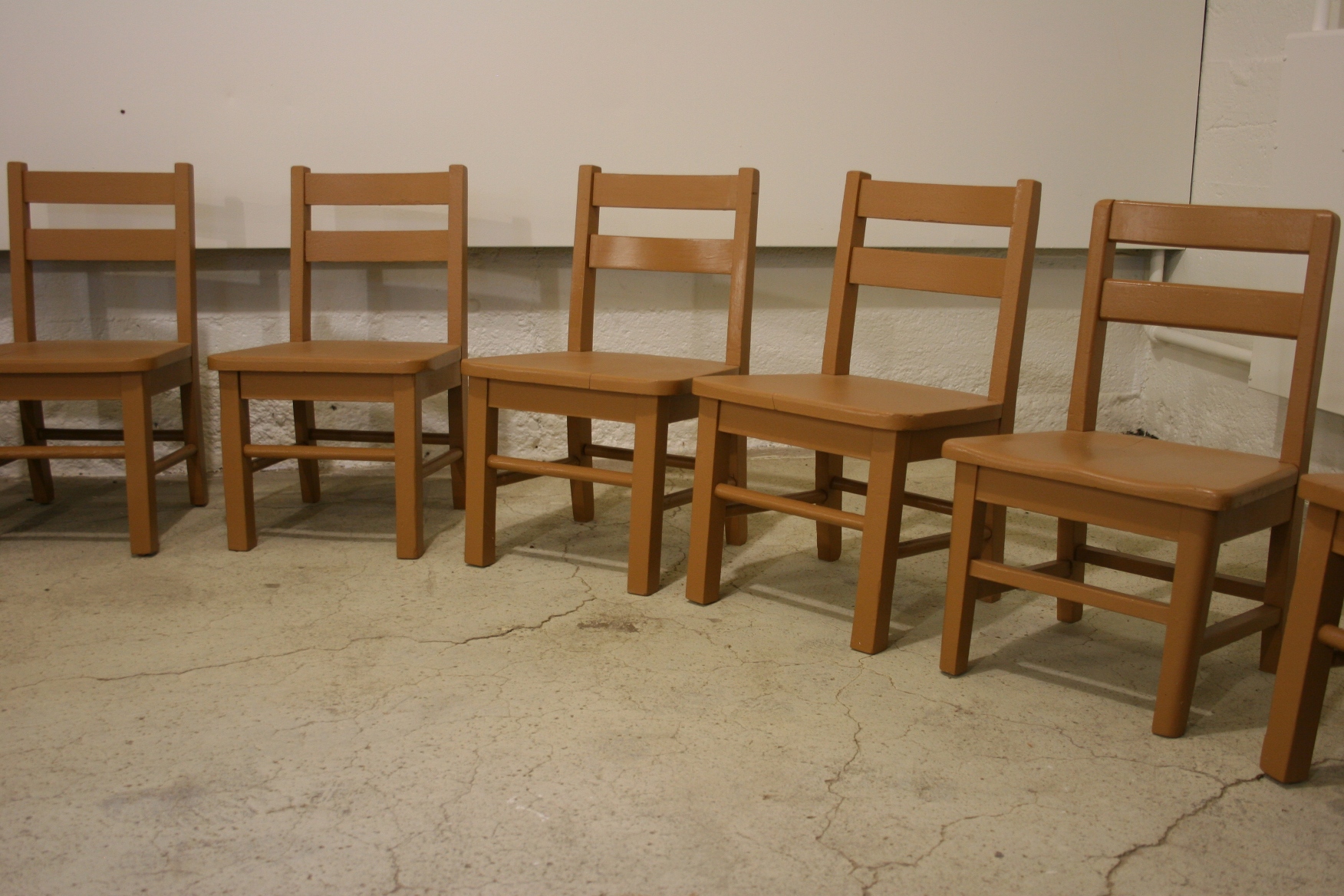
Permission was always required to leave the basement.

Each boy was assigned a chair in the basement. "The chair kept order and accountability" to the matron.

Listening to a recording of a man who as a boy had his head slammed into a wall for prematurely removing a tie and cuffing a matron, I can still hear the hurt in his voice.

I can almost feel the pain experienced by cottage resident Arlend “Buzz” Wilson who slipped and scalded himself with hot water while scrubbing the basement steps. He ended up hospitalized for his burns.

In the first floor matron's quarters, a young boy was placed in the rocking chair to the left and his head slammed into the wall for disobedience. He removed his tie too soon and cuffed the matron.

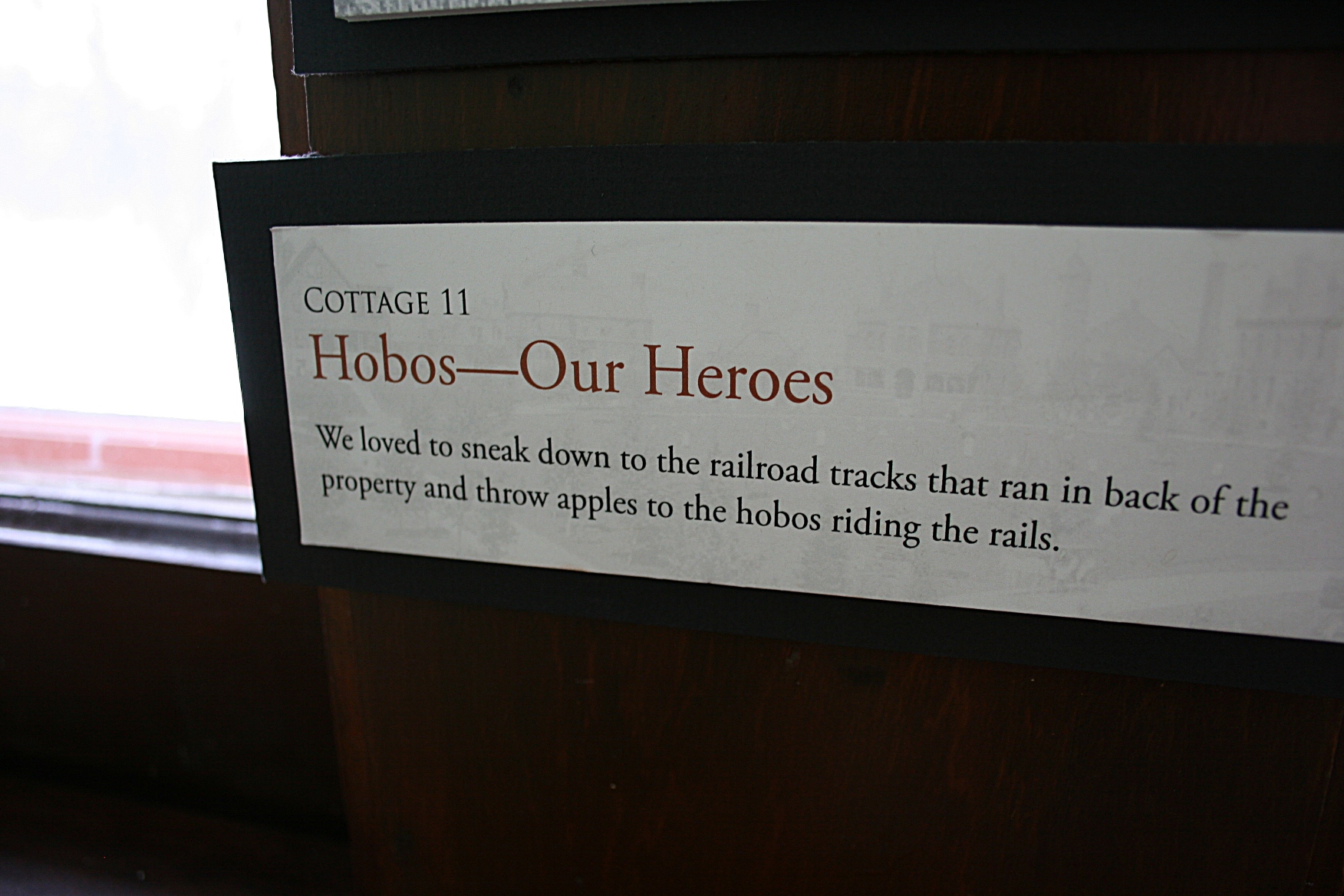
But for all the awful stories shared here, occasionally glimmers of hope slip through—of boys who admired hobos and hopped the nearby train to escape and of “Wednesday Night at the Movies,” when movies were shown in the school auditorium. Those “brought great joy to us children.”

And then, the single gem I found among all the stones:

FYI: Cottage 11 is open from1 p.m. – 3 p.m. Tuesday – Sunday. However, I advise calling in advance (507-774-7369) as it was not open when we arrived on a Sunday afternoon. Hours at the main museum, 540 West Hills Circle, Owatonna, are from 8 a.m. – 5 p.m. Monday – Friday and from 1 p.m. – 5 p.m. on weekends. I have previously toured the museum, but did not do so again on this most recent visit.

PLEASE CHECK BACK for additional photos of Cottage 11.

© Copyright 2011 Audrey Kletscher Helbling


Dispelling a Mayberry myth in rural Minnesota December 16, 2011

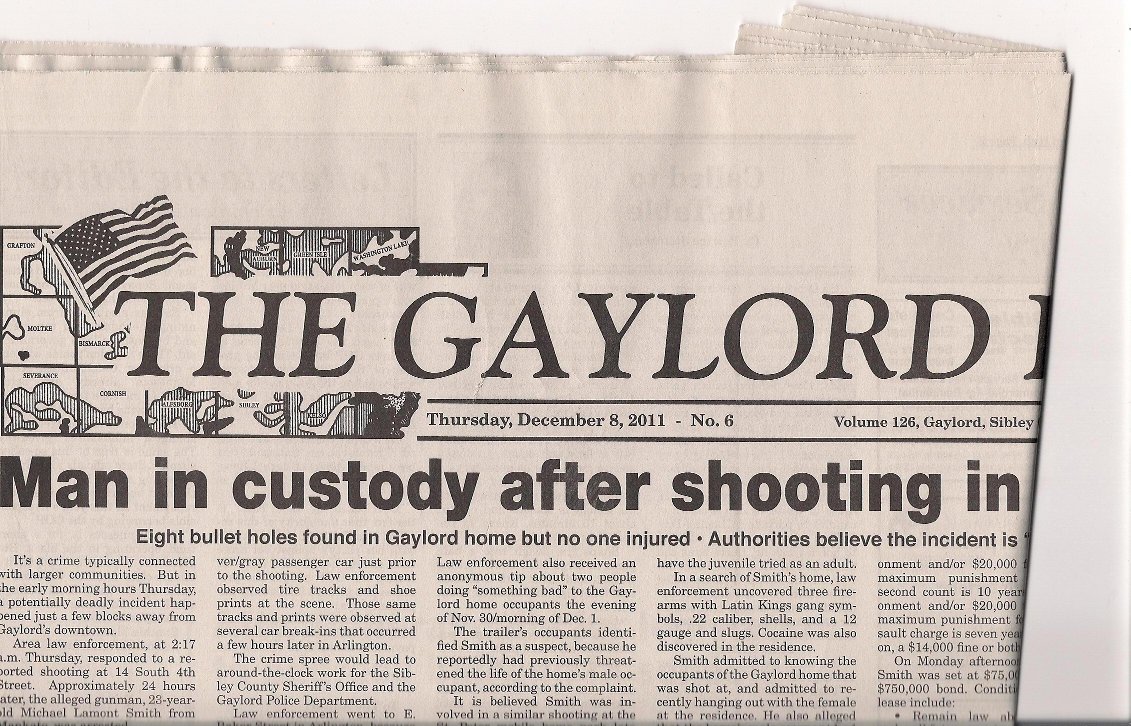
Man in custody after shooting in Gaylord

Two men arrested after incident with police officers in Winthrop

Three years since rural Green Isle homicide

These disturbing headlines all published recently in a single issue of a 10-page small-town Minnesota weekly newspaper.

How life has changed in the 31 years since I pounded out news articles there, for The Gaylord Hub, on a vintage manual typewriter. The biggest news stories during my 1978 – 1980 tenure as a reporter were fires and motor vehicle crashes and the controversy over the expansion of local chicken barns.

I didn’t write about eight bullets fired into a Gaylord home in an alleged gang-related shooting or a scuffle between police and a suspect or a three-year unsolved homicide.

And I didn’t have to report on a courthouse shootings like the one which occurred Thursday in quiet Grand Marais, an artsy get-away destination along the shores of Lake Superior.

Thirty years ago, small towns were still relatively untouched by violent, drug-related or other crime. Not so anymore. One need only pick up any weekly newspaper to read about major crimes that rock even the most rural regions.

Just this week in Redwood County in rural southwestern Minnesota, warrants were issued for 31 individuals on felony drug charges following a year-long, five-county investigation, according to information published in The Redwood Falls Gazette. Most suspects have been arrested and charged.

That’s my home county you’re talking about here, a place of small towns, grain elevators, farm sites, and corn and soybean fields—about as rural as you can get.

This isn’t Mayberry anymore.

While I can wax nostalgic about how things “used to be,” the reality of life is this: Times have changed. People have changed. Respect for parents and authority and laws have eroded.

Crime, once considered a big-city problem, reaches deep into the most rural of locations.

It is sad.

But it is the truth.

IF YOU LIVE in a rural area, have you see increases in crime? Explain. How have you, personally, or your community been impacted? How is your community dealing with crime? Please submit a comment and share.

© Copyright 2011 Audrey Kletscher Helbling


Beyond just a holiday art exhibit at the former Owatonna orphanage December 15, 2011

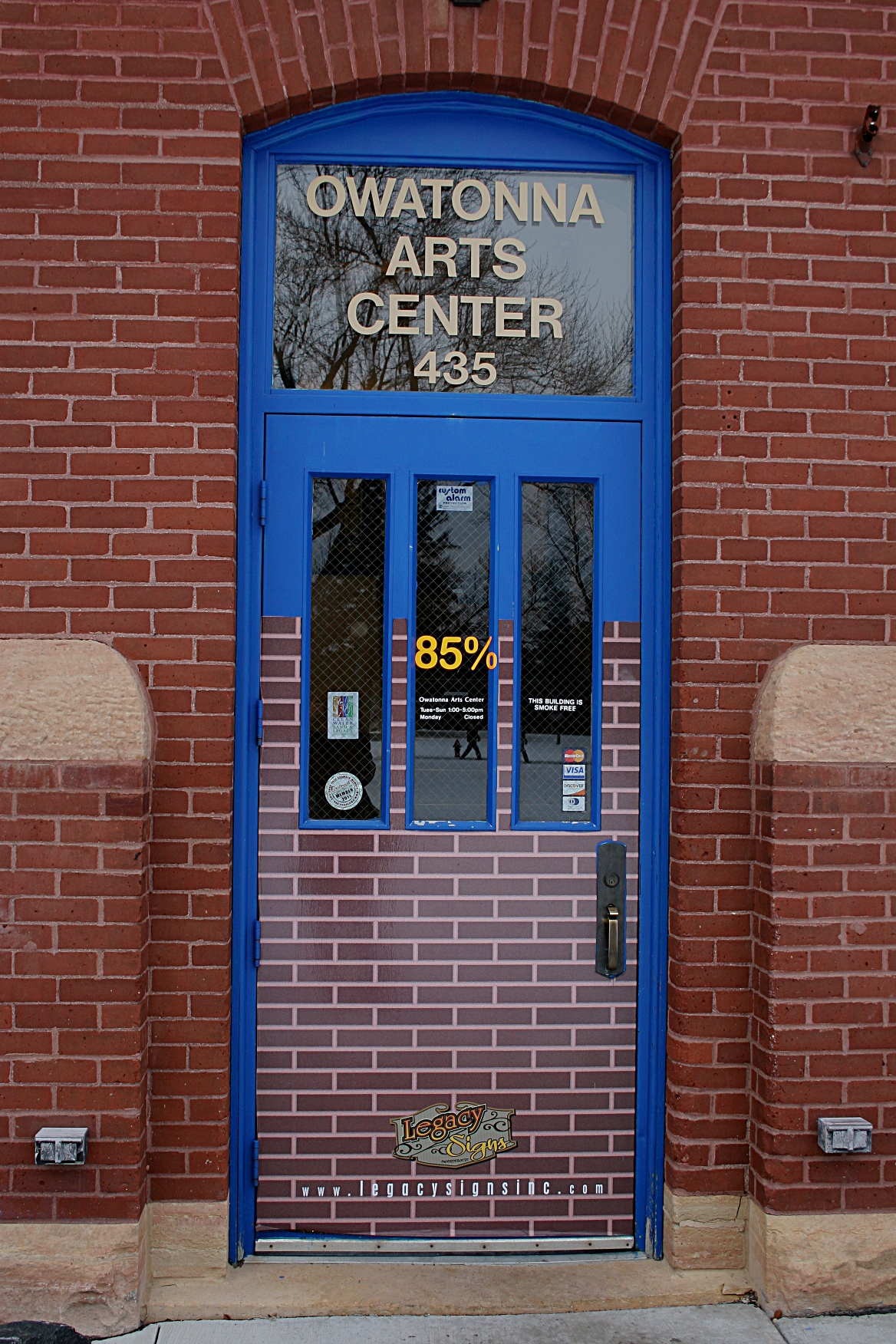
A door into the Owatonna Arts Center in southern Minnesota.

BEHIND THE BACK BLUE DOOR of the Owatonna Arts Center, housed in a former orphanage, past the guardian nutcracker, up the stairs and just to your left, you’ll discover a sprinkling of holiday magic and realism in “The Story Books of Christmas” exhibit.

As OAC Art Director Silvan Durben tells me, the exhibit doesn’t specifically emphasize Christmas books—although two are holiday-themed—but rather impresses the sharing of a storybook with a child and the warm memories that evokes.

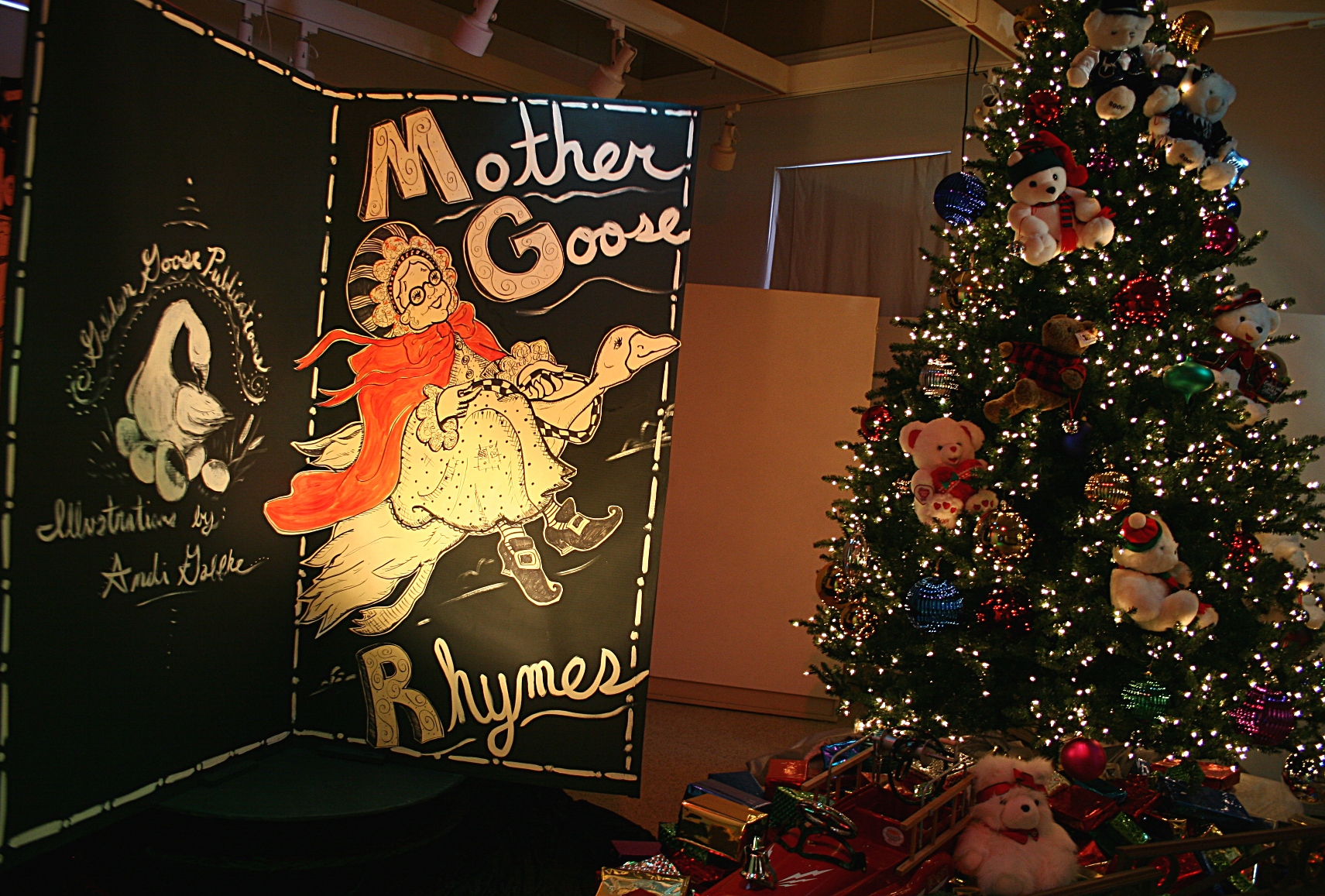
You’ll experience that bonding over books in a rotating display of Mother Goose tales crafted onto cardboard and placed next to a Christmas tree embraced by teddy bears tucked among branches.

Who among us doesn’t remember with fondness the recitation of nursery rhymes?

Jack be nimble, Jack be quick, Jack jump over the candlestick.

Hickory, dickory, dock, the mouse ran up the clock. The clock struck one. The mouse ran down. Hickory, dickory, dock.

Or the story of the “Old Man in the Moon?”

It was not lost on me, though, that the orphaned children who once tread these floors did not experience the closeness of clutching a teddy bear or cuddling on a lap while listening to nursery rhymes as they drifted into sleep.

A rotating exhibit of several Mother Goose nursery rhymes.

A close-up of art in the Hickory, dickory, dock rhyme.

Many dreamed of escaping—and some did via rail—the drudgery and abuse at the former Minnesota State Public School for Dependent and Neglected Children.

That reality struck me as I viewed an over-sized silver jingle bell and the word “BELIEVE” punched into an equally-large golden ticket at The Polar Express display. In that children’s picture book by Chris Van Allsburg, a young boy boards a train to the North Pole as the story unfolds to reveal the magic of Christmas.

The large, magical silver bell in The Polar Express display.

Although I did not ask, I wonder if the creators of “The Story Books of Christmas” considered the double-meaning of selecting The Polar Express to highlight in this place where so many children wished for a ticket out.

I found the selection fitting, touching and sad. And a wee bit hopeful.

FYI: “The Story Books of Christmas” exhibit runs through December 29 at the OAC, 435 Garden View Lane. OAC hours are from1 p.m. – 5 p.m. Tuesday – Sunday, closed Mondays. The OAC will also be closed December 23 – 26.

The display highlighting the book, Nestor, the Long-Eared Christmas Donkey.

CHECK BACK for another blog post from the art center and for a photographic tour of Cottage 11, once home to orphaned boys.

© Copyright 2011 Audrey Kletscher Helbling
 

Feeling like a Grinch December 8, 2011

Filed under: Uncategorized — Audrey Kletscher Helbling @ 8:05 AM
Tags: , , , , , , , ,

WITH LESS THAN three weeks until Christmas, I truly need to pull myself out of my pre-holiday funk.

Here’s the deal. I haven’t sent out a single Christmas card, although the annual holiday letter has been drafted and awaits final editing.

I haven’t baked Christmas cookies. I don’t need the sweets and the guys in the house don’t have a sweet tooth. Eventually I’ll bake the cream cheese roll-out cookies that have been part of my Christmas since childhood. And I’ll pull together some date pinwheels for my husband, part of his childhood tradition.

No presents in my sleigh yet.

As for shopping, the lists have been compiled. But since I dislike shopping, the task looms before me.

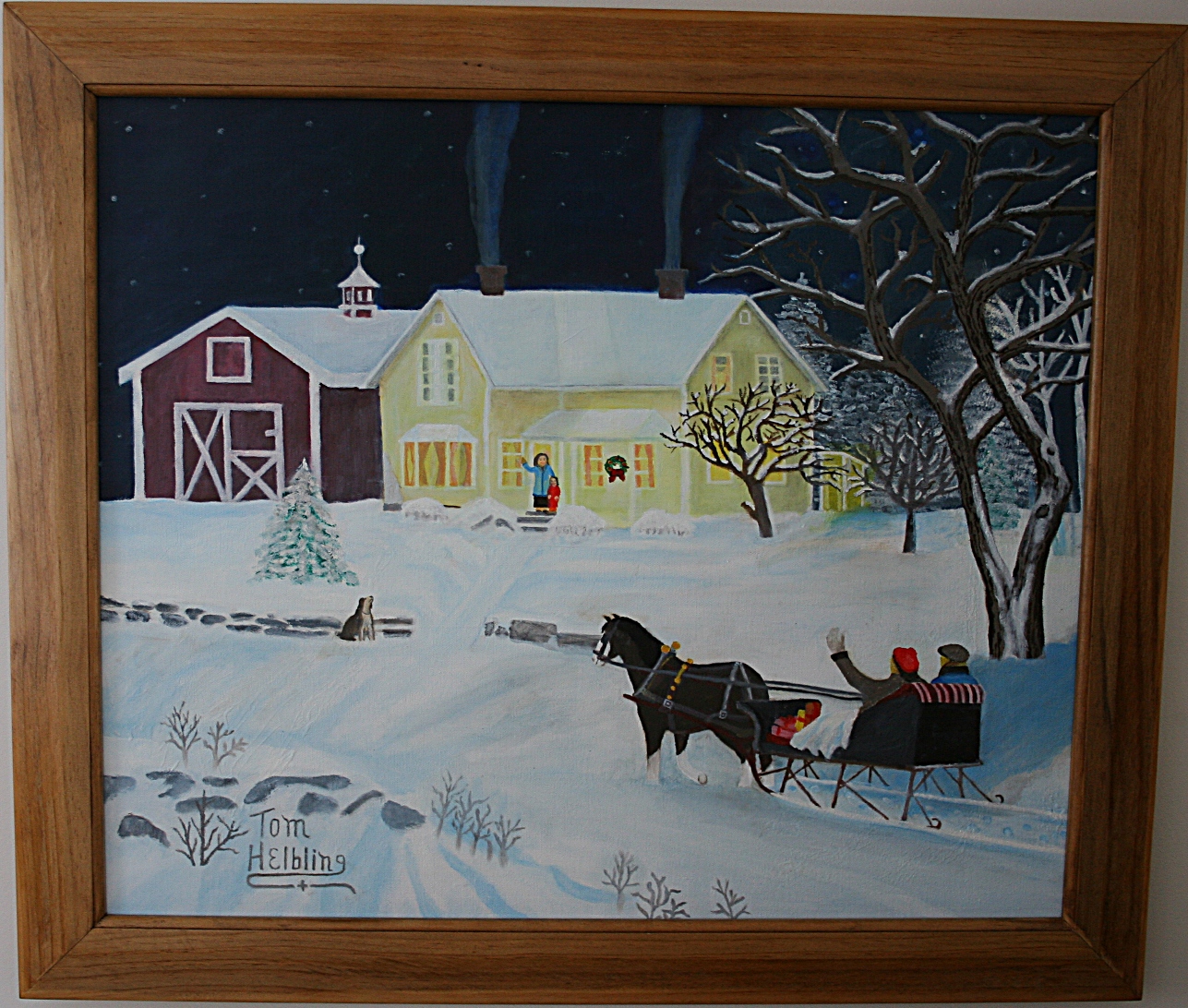
Decorations? If you count the holiday painting by my father-in-law hanging in the dining room, the six Christmas cards we’ve received and the peppermint candies in a dish, then, yes, I’ve started my decorating.

I’m not the type who goes all out with holiday decorating because, visually, I dislike clutter. I also live in a relatively small house.

Then there’s my husband, who worries about the Christmas tree drying out and creating a fire hazard (a legitimate concern) if we buy it “too early”. Once we waited so long to purchase a tree that we had five pathetic choices in the tree lot. We got a heckuva deal, though, by buying only days before Christmas. True story.

So there you have it. I am feeling more Grinch-like than holiday-ish. For me, the important part of Christmas lies in celebrating Christ’s birth and in gathering with family.

Gathering with family...one of the most important aspects of Christmas for me.

I expect therein exists the partial reason for my melancholy. My second daughter, who lives in eastern Wisconsin, will not be home for Christmas. She’s on-call both holiday weekends at her job as a Spanish medical interpreter. She has missed Christmas before, while living in Argentina. So I should be used to this. I am not.

I have no right to complain. None. Many families are separated by greater distances or war or illness or death, or even by choice.

Eventually I’ll pull myself out of my holiday blues. Perhaps I’ll start with addressing Christmas cards and work my way up to mixing cookie dough. The shopping, though, I never have been able to embrace no matter how hard I try.

Although I'm struggling right now to pull everything together for Christmas, I will. Here's the complete holiday painting by my father-in-law, Tom Helbling of St. Cloud, MN.

SO…WHERE ARE YOU at with your holiday preparations? Do you struggle with any aspect of preparing for Christmas? Submit a comment and share.

© Copyright 2011 Audrey Kletscher Helbling

 

More than a collection of vintage drinking glasses December 7, 2011

Filed under: Uncategorized — Audrey Kletscher Helbling @ 8:06 AM
Tags: , , , , , , , , , ,

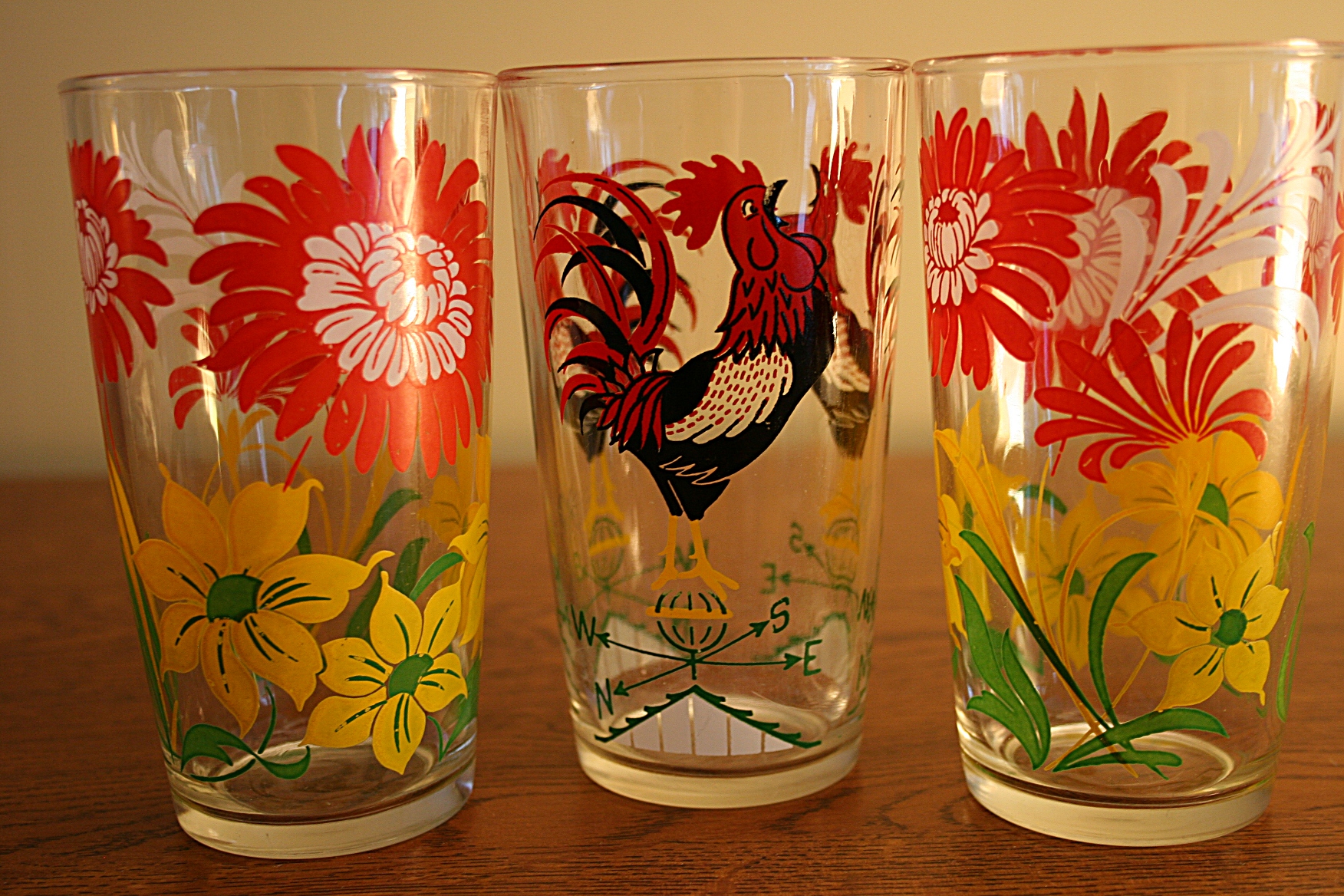
Vintage glasses stashed in my kitchen cupboard.

THE BOTTOM CUPBOARD SHELF to the upper right of my kitchen sink is crammed so full of drinking glasses that they threaten to tumble out and onto the counter.

But I have not the heart to stash a single one away in storage.

These glasses serve as more than practical vessels for the milk my 17-year-old son gulps by the gallon or the cranberry juice I favor to quench my thirst.

Rather, these glasses represent my appreciation of the past. All 27 drinking glasses are vintage, culled from family and friends, from thrift stores and garage sales.

I uncovered these glasses in the attic of the home where my friend Joy grew up. After her parents died, Joy invited friends to shop for treasures. These glasses always remind me of Joy, whose spirit matches her name.

Details on the glasses from Joy. Fun fact: I don't like roosters.

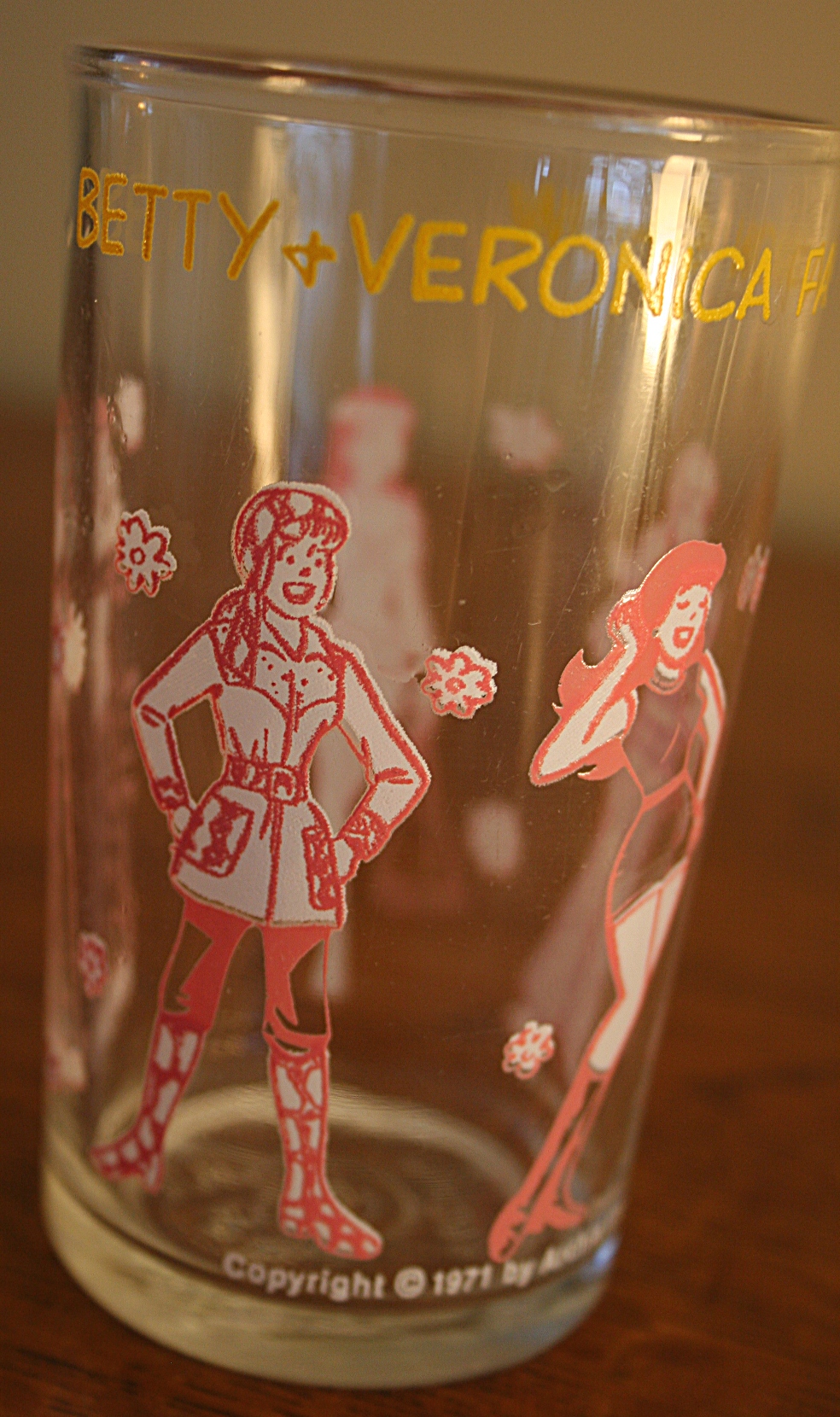
An Archie Comic "Betty and Veronica Fashion Show" 1971 jelly jar/juice glass from my maternal grandfather.

These glasses belonged to my bachelor uncle, Mike, who farmed with my dad and was like a second father to me. He passed away in 2001 and these remind me of him and his love for me.

You could rightfully say that I collect vintage drinking glasses.

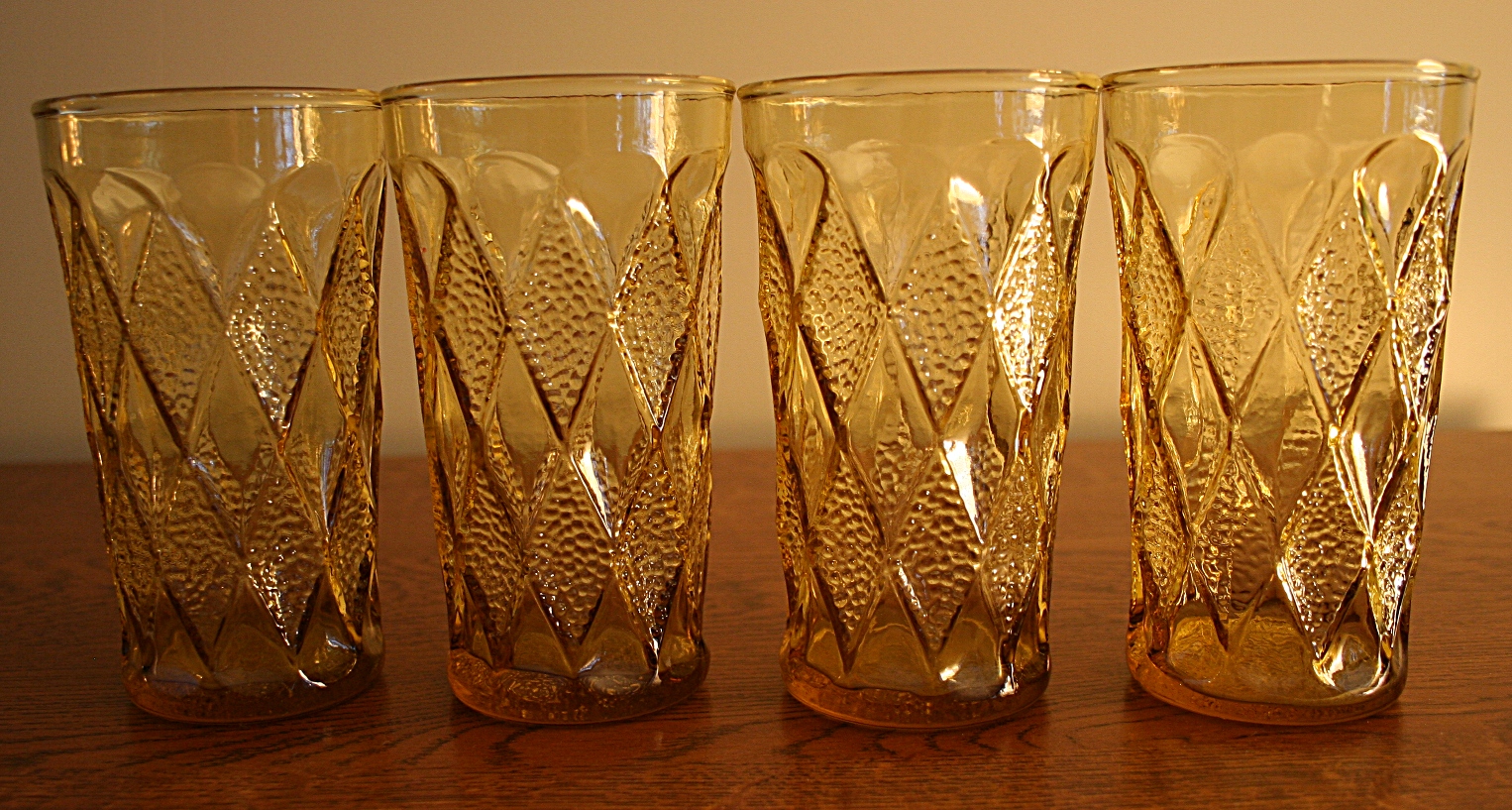
Like most collectors, my collection is rooted deep in the past. I can trace my glassware obsession back to the day I walked into Marquardt’s Hardware Store on the corner of Main Street in Vesta and selected four amber-colored glasses for my mother as a Mother’s Day gift. I can’t recall which siblings were with me, how much we spent or the year we purchased the glasses. But the simple act of us pooling our coins to buy Mom this gift remains as one of my sweetest childhood memories.

The amber glasses my siblings and I purchased for our mother more than 40 years ago.

Recently my mother gifted me with these glasses. I pulled them from the china cabinet where she’s always stored them—reserving them only for special occasions—snugged paper padding around them and carted them back to my home 120 miles away in Faribault.

Her gift to me is bittersweet. While I certainly appreciate having these memorable glasses, the fact that my mom has begun dispersing of her possessions makes me all too cognizant of her failing health and mortality. She is a wise woman, though, to part with belongings now, gifting children and grandchildren with items she knows hold special meaning.

Each time I reach into the cupboard for a glass, I find myself choosing an amber-colored one from Marquardt’s Hardware. It is the glass that reminds me of my mother and of her deep love for me. I want to drink deeply of her love. Today. Forever.

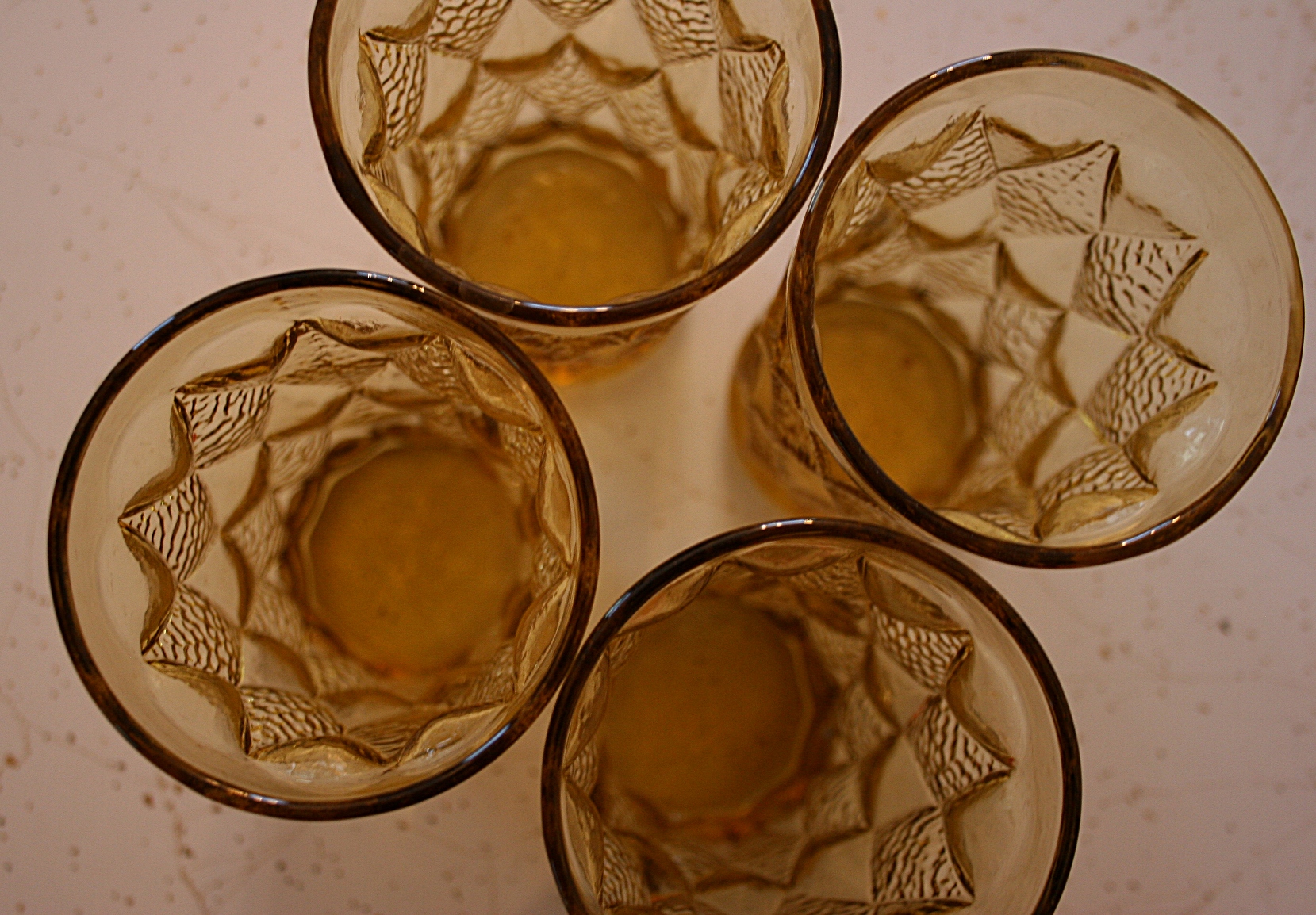
The four glasses that remind me of the love my mother and I share.

DO YOU HAVE a collection or a single item that means as much to you as my vintage drinking glasses mean to me? I’d like to hear. Please submit a comment.

© Copyright 2011 Audrey Kletscher Helbling
 

Thoughts after the season’s first snowfall December 4, 2011

Filed under: Uncategorized — Audrey Kletscher Helbling @ 1:58 PM
Tags: , , , , , , , ,

The snowy woods adjoining my backyard in Faribault late Sunday morning following about a five-inch snowfall.

WELCOME TO MY BACKYARD after the first significant snowfall in Faribault this season.

It is a world of mostly black-and-white, like vintage photos in an album.

Branches laden with the first significant snowfall.

I’m trying to be poetic here because, as disloyal Minnesotan as this sounds, I don’t particularly like snow. I dread the resulting icy sidewalks and parking lots.

I realize I possess the attitude of  “an old person” here. No offense meant to any of you who are older than me. But, at age 55 and with an artificial hip implanted in my right side three years ago, snow and ice threaten me. I fear falling, so I inch across ice with trepidation.

Just to clarify, my hip replacement did not result from a fall. I suffered from osteoarthritis and reached the point where surgery was the only option to deal with near immobility and chronic pain.

So here we are, in the season of snow and ice in Minnesota. If I don’t exactly embrace it, now at least you understand why. I suspect it is the reason many Minnesotans flee to Arizona and Florida during the winter months—not only to escape the cold, but to escape the danger.

Yet, even I can see the beauty in a fresh snowfall that layers branches and seed heads and the entire world around me in a surreal sort of peacefulness on a Sunday morning.

That, for me, redeems winter.

The blessing of winter lies in its beauty, seen here in a snippet of time-worn fencing in my backyard.

An unobtrusive patch of color in a mostly black-and-white world Sunday morning: Snow capping a hydrangea.

HOW DO YOU feel about snow and winter in general? The truth, please.

© Copyright 2011 Audrey Kletscher Helbling


Too much pre-holiday consumerism? November 29, 2011

Filed under: Uncategorized — Audrey Kletscher Helbling @ 8:28 AM
Tags: , , , , , ,

DURING THE PAST WEEK, we’ve been bombarded with news stories and advertising campaigns aimed at Black Friday, Small Business Saturday and Cyber Monday, all with the underlying theme of spending.

Honestly, I am tired of the greedy, materialistic consumerism that grips us during the pre-holiday season.

Are we so materialistic that we have to skip or cut out early on family gatherings, fight each other in the aisles and buy items simply because they are on sale?

I get nostalgic for those days when we weren’t quite so materialistically-inclined.

But, if I’m honest, I can look back and see that even during the 1960s, when I was growing up, we, too, focused on the gift aspect of Christmas more than we should have.

Remember “the Christmas catalog?”

I could not wait for the mailman (not carrier) to drop off the J.C. Penney Christmas catalog in our mailbox at the end of our southwestern Minnesota farm driveway.

My siblings and I fought over who got to look at the Christmas catalog first. By the time all six of us had thumbed through the wish book numerous times, the pages were worn and creased. We drew up Christmas lists from the catalog, wishing for the doll or the Army tank or the spotted Twister mat featured in the photos.

Rarely did we get any of those requested items; our parents simply did not have the money. Even though we certainly dreamed and wished and dreamed and wished some more, we were content with whatever gifts we received.

Today, however, I think many parents feel obligated to give their kids whatever they ask for. I don’t agree with that line of thinking. Kids need to learn and understand that they cannot have everything they want when they want it.

But first, we as adults need to curb our own greedy consumerism and our desire to have everything we want when we want it.

WHAT’S YOUR OPINION on consumerism this time of year, or in general? Let me hear your thoughts.

© Copyright 2011 Audrey Kletscher Helbling


Gaining confidence as a poet October 19, 2011

I THINK ALL WRITERS, if we’re honest with ourselves, face insecurities about writing.

Can we write? Is our writing “good enough” to publish? Will anyone read, or even care about, what we write?

I’ve long overcome any issues I faced about journalism style writing. I’m confident in my abilities to pull together a good feature story or another journalistic piece given my educational background in mass communications and my years of experience in journalism. And with several years of blogging to my credit, I’m also confident in that writing style.

It’s poetry which has challenged my confidence. Although I’ve written poetry off and on since high school—which stretches back nearly four decades—I’ve never written much poetry, at least not enough to consider myself a true poet. Until now.

Finally, this year, with the publication of two poems in two Minnesota literary journals and winning the spring Roadside Poetry contest, I’m comfortable adding “poet” to my writing credentials.

Getting to the point of feeling comfortable with the term “poet” really began 11 years ago with publication of a poem in Poetic Strokes, A Regional Anthology of Poetry from Southeastern Minnesota, Volume 2. I considered that a stroke of good fortune. But when four more poems published in the next two volumes, I began to think that maybe, just maybe, I could write poetry. After all, I had competed against other writers to get into the Poetic Strokes anthologies.

Then I had a poem accepted for publication in The Lutheran Digest.

Next, I earned an honorable mention for my poem, “Hit-and-Run,” published last year in The Talking Stick, Forgotten Roads, Volume 19.

Finally, this year, I had an official poet epiphany when I entered three poetry competitions and was subsequently published on Roadside Poetry billboards, in The Talking Stick, Black & White, Volume 20 and Lake Region Review.

Although I don’t know how many poets I competed against in Roadside Poetry, I do have the numbers for the two literary journals. The Talking Stick this year published 140 pieces of poetry, creative nonfiction and fiction from 99 writers, me being one of them with my poem, “Abandoned Barn,” and my creative nonfiction, “Welcome Home.” That’s out of 326 submissions from 171 writers.

Look at the list of writers, and you may recognize a few names like Marge Barrett, Tim J. Brennan, Charmaine Pappas Donovan, Jerry Mevissen, Candace Simar…

It’s quite a process to get into The Talking Stick with five members of The Jackpine Writers’ Bloc reading all of the entries and then an editorial board meeting to vote and discuss. The top four to seven favorites in each category are then forwarded to celebrity judges—this year Kris Bigalk, Kevin Kling and Alison McGhee—to choose first and second place winners in each division.

As for Lake Region Review, the process of selecting the works for publication is equally as rigorous. Co-editors Mark Vinz—author, professor emeritus of English at Minnesota State University Moorhead and first coordinator of MSUM’s Master of Fine Arts in Creative Writing—and Athena Kildegaard—author and lecturer at the University of Minnesota Morris—worked with a staff of 10. They read more than 200 submissions before narrowing the field to 27 established and emerging writers.

I’m one of those 27.

And so is Leif Enger, author of the 2001 New York Times best-seller Peace Like a River, which happens to be a favorite book of mine. It’s nice to be in the company of someone who, like me, writes with a strong sense of place.

Most of my poetry connects to the southwestern Minnesota prairie, where I grew up on a dairy and crop farm. Specifically, the barn on the home place inspired my two distinct barn poems which published in The Talking Stick and Lake Region Review.

I don’t know what moved the editors of either publication to select my poems for inclusion in their literary journals. But I did incorporate lines such as “hot cow pee splattering into her gutters” and “rusty hinges creaking like aged bones.”

According to Co-editor Kildegaard at Lake Region Review, editors chose pieces that were “fresh, creative, lively, interesting. We were looking for writing that has something new to say.”

Apparently I had something new to say about the old barn.

The early 1950s barn on the Redwood County dairy farm where I grew up today stands empty of animals.

WRITERS FEATURED in the recently-published 212-page The Talking Stick, Black & White, Volume 20, are from, or have a strong connection to, Minnesota. Those published in the 138-page debut of Lake Region Review live primarily in west central Minnesota. Eight writers have been published in both collections.

The cover of Lake Region Review is a detail of an original landscape painting, “Christina Lake: View from Seven Sisters,” by American impressionist painter Stephen Henning of Otter Tail County.

IF YOU’RE A WRITER, specifically of poetry, did you/do you struggle with confidence issues? At what point did you/will you call yourself a poet?

FYI: For more information or to purchase copies of either literary journal featured here, click on the appropriate link below:

www.lakeregionreview.net

www.thetalkingstick.com

And click here for more information about Roadside Poetry.

© Copyright 2011 Audrey Kletscher Helbling
 

Worshipping at a country church October 16, 2011

Before worship services on a Sunday morning at Trinity Lutheran Church, North Morristown.

“THERE’S ONE MORE THING to do,” said the Rev. Merle Lebahn, vacancy pastor at Trinity Lutheran Church, North Morristown, before dismissing his congregation. “Give ‘em heaven!”

And so concluded one of the most dynamic worship services I’ve attended in a long time. Pastor Lebahn didn’t deliver a fire-and-brimstone sermon in this country church. But he shared a message memorable both in content and method of presentation.

Pastor Lebahn gets front and center when he gives the children's lesson, just as he does during the sermon.

He’s not a preach-from-the-pulpit style of preacher, but rather an up-close, center-of-the aisle, close-to-his-flock kind of clergyman. His voice rises to a near shout when he wants to emphasize a point and then drops to a quiet, gentle cadence to drive home the message.

And that message last Sunday reflected on the gospel lesson from Luke 10 and the story of the Good Samaritan. Remember that bible story about the beaten man lying at the side of the road, passed by many until, finally, a Samaritan stopped to help?

Rev. Lebahn told us we were the beaten ones lying in the ditch until we received Christ.

He talked, too, about crossroads in our lives and about the people God brings into those crossroads.

I could go on and on about that sermon. But I think you get the main point delivered by this 78-year-old clergyman who looks, and acts, considerably younger than a near octogenarian. Consider his foot stomping and arm flailing and constant motion. I got tired just watching from my end-pew position in this sanctuary that holds 26 six-person pews on the lower level and a few more in the balcony.

A view of the balcony in this 1938 rural church.

It’s the type of snug church where you won’t get away with napping during the sermon, like you could anyway under Pastor Lebahn’s watch.

There’s something about worshipping in a small country church like this that you can’t replicate in a modern, large-scale church, even if you incorporate stained glass windows or other elements from an historic building.

I felt a sense of connection, of closeness, on Sunday as the congregation joined in prayer—for those celebrating anniversaries and birthdays and for those in need—and sang old favorite hymns like “Oh, That the Lord Would Guide My Ways.”

Looking from the entry into the sanctuary during worship services.

In the back of the church are pews for families with little ones.

Farm boy, 6-year-old Jonathan, after services in the basement.

You can’t help but feel close when you’re tucked into tightly-jammed pews in a place where a comfortable pair of jeans is as common as a suit and tie and where farm kids like 6-year-old Jonathan bring a mini toy John Deere haybinder to church to keep his little hands busy.

Because just outside the church doors lie fields of corn and alfalfa and soybeans…

To the right of the cornerstone, in the distance, you can see corn fields.

Looking heavenward...

The Last Supper art on the lower part of the altar.

In my next post about this church, I'll take you into the basement where this sign is located.

CHECK BACK FOR A POST about the harvest dinner at this country church following the worship service.

© Copyright 2011 Audrey Kletscher Helbling

 

Happy birthday, Randy October 12, 2011

Filed under: Uncategorized — Audrey Kletscher Helbling @ 1:52 PM
Tags: , , , , , ,

TODAY MY HUSBAND is celebrating his 55th birthday, which now officially makes him as old as me. Yeah, I was smart and married a younger man, albeit by only about two weeks.
I’ve been contemplating what message to write here today to him. I decided, instead, to tell you a few things about Randy.

He’s the oldest boy in a family of nine children and was born in North Dakota, where he attended a one-room country school. As the story goes, one day the students were kept inside during recess because of coyotes roaming the schoolyard. True story, he swears.
Randy moved with his family to central Minnesota when he was six or seven, or some young age like that.

It was on the family’s farm south of Buckman that Randy saved his father’s life. Yes, you read that correctly. He saved his dad’s life. My spouse seldom talks about that October 21, 1967, accident shortly after his 11th birthday.

But he was there as his dad’s hand was pulled, along with corn stalks, into the spring-loaded rollers of a corn chopper. Blades sliced off his father’s fingers. Rollers trapped his arm.

And Randy was there to disengage the power take-off. He then raced across swampland and pasture to a neighbor’s farm. To save his father’s life. (You can read the details by clicking here.)

An Allis Chalmers corn chopper like this one exhibited at the 2010 Rice County Steam & Gas Engines Show, claimed my father-in-law's left hand and much of his arm in a 1967 accident. That's my husband, Randy, who saved his dad's life by running for help.

My spouse possesses a calm demeanor, meaning not much rattles him. He’s soft-spoken and funny in that quirky kind of humor way.

He does sudoku puzzles and is good at math and numbers and figuring stuff out.

His work as an automotive machinist at Parts Department, Inc., Northfield (NAPA) is always in demand. Suffice to say you better get in line. He’s that good at his job.

Randy at work in the NAPA machine shop in Northfield where he's worked since 1983.

He once owned a Harley, which was smashed in a crash, and once won a trip to the Bahamas.

Right about now, Randy’s probably eating his second or third piece of apple pie bars, his birthday treat at work. Tonight I’ll serve him his favorite cake, angel food, topped with one of his favorite fruits, raspberries.

Speaking of which, I need to bake that cake. Now.

Happy birthday and many more, Randy! (See, I used an exclamation mark, which I never use in my writing.)

I love you.

IF YOU WISH to leave a birthday message for Randy here, please do so. He reads my blog and is, indeed, one of my most vocal fans. Thank you for always supporting me in my writing, Randy.