Minnesota Prairie Roots

Writing and photography by Audrey Kletscher Helbling

Travel Wisconsin: Atypical tourist photos from Appleton January 19, 2012

Filed under: Uncategorized — Audrey Kletscher Helbling @ 8:43 AM
Tags: , , , , , , , ,

SAY “WISCONSIN,” and what pops into your thoughts?

I would expect these top two answers: cheese and the Green Bay Packers

Wisconsinites, am I right?

Every time I travel to the Dairyland State, which has been often since my second daughter moved to Appleton a year ago, I find myself drawn to that which distinguishes Wisconsin from my home state of Minnesota.

With my camera, I try to catch the snippets of buildings and life and sites and scenes that the typical tourist might never think to photograph. Often I capture these images in an instant, from the car window passing by or walking along a sidewalk. I have an moment to snap the shutter and then the scene vanishes.

Let me show you those snippet photos taken during a New Year’s weekend trip to Appleton, an hour’s drive from Lake Michigan in central Wisconsin.

Next time you’re in Wisconsin, or anywhere for that matter (even in your own community), I’d encourage you to not only look at what surrounds you, but to truly see.  Let me repeat that word. See.

Notice the signage, the curve of a street, the contrast of a building against sky, the shape of a window, the quirky and the unusual. Take in the details. Then, and only then, will you truly see.

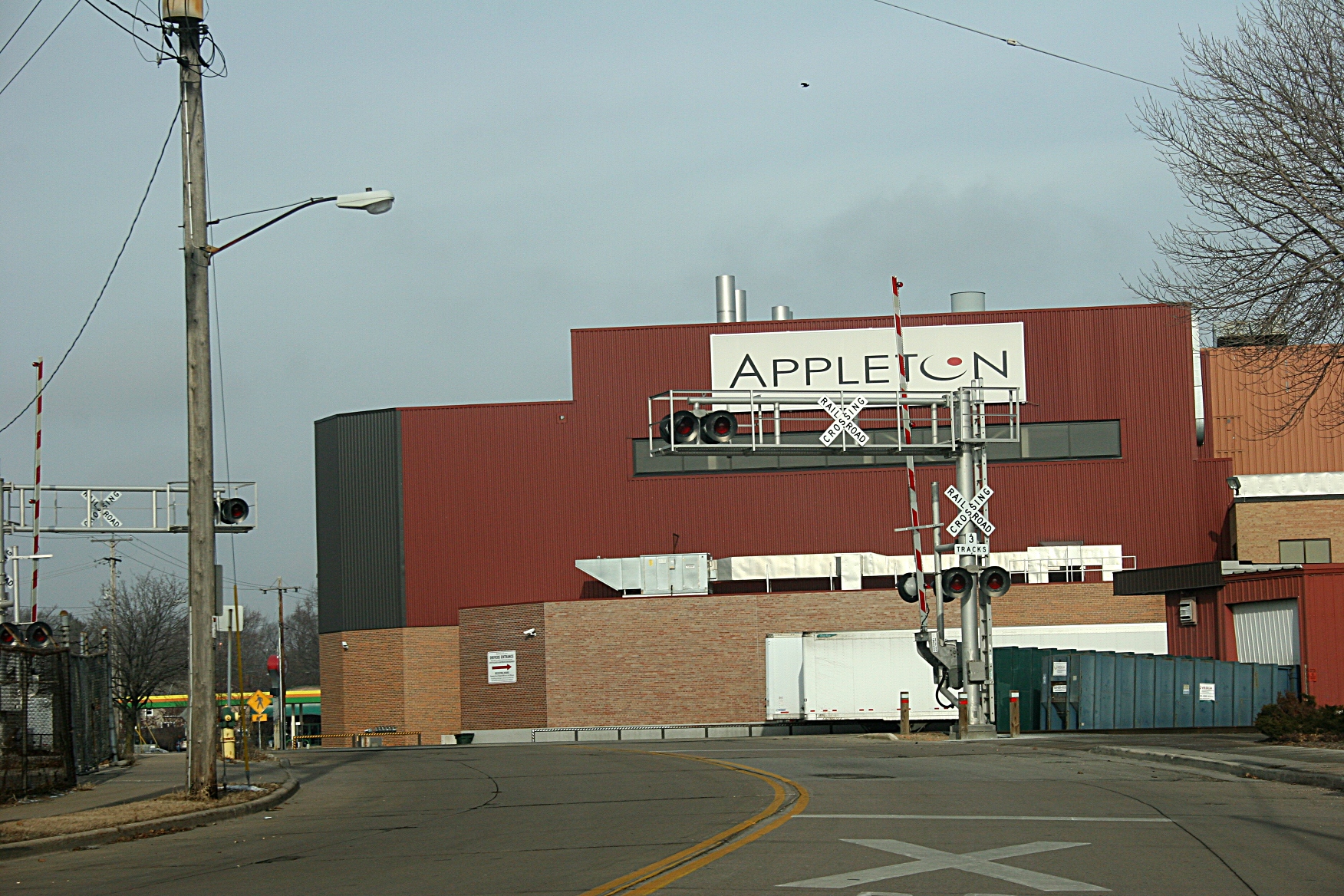
I was more than a bit lost in Appleton as our daughter chauffeured my husband and me around town. I spotted this building along the railroad tracks and photographed it because, well, my eyes were drawn to it. Appleton residents, what is housed in this building?

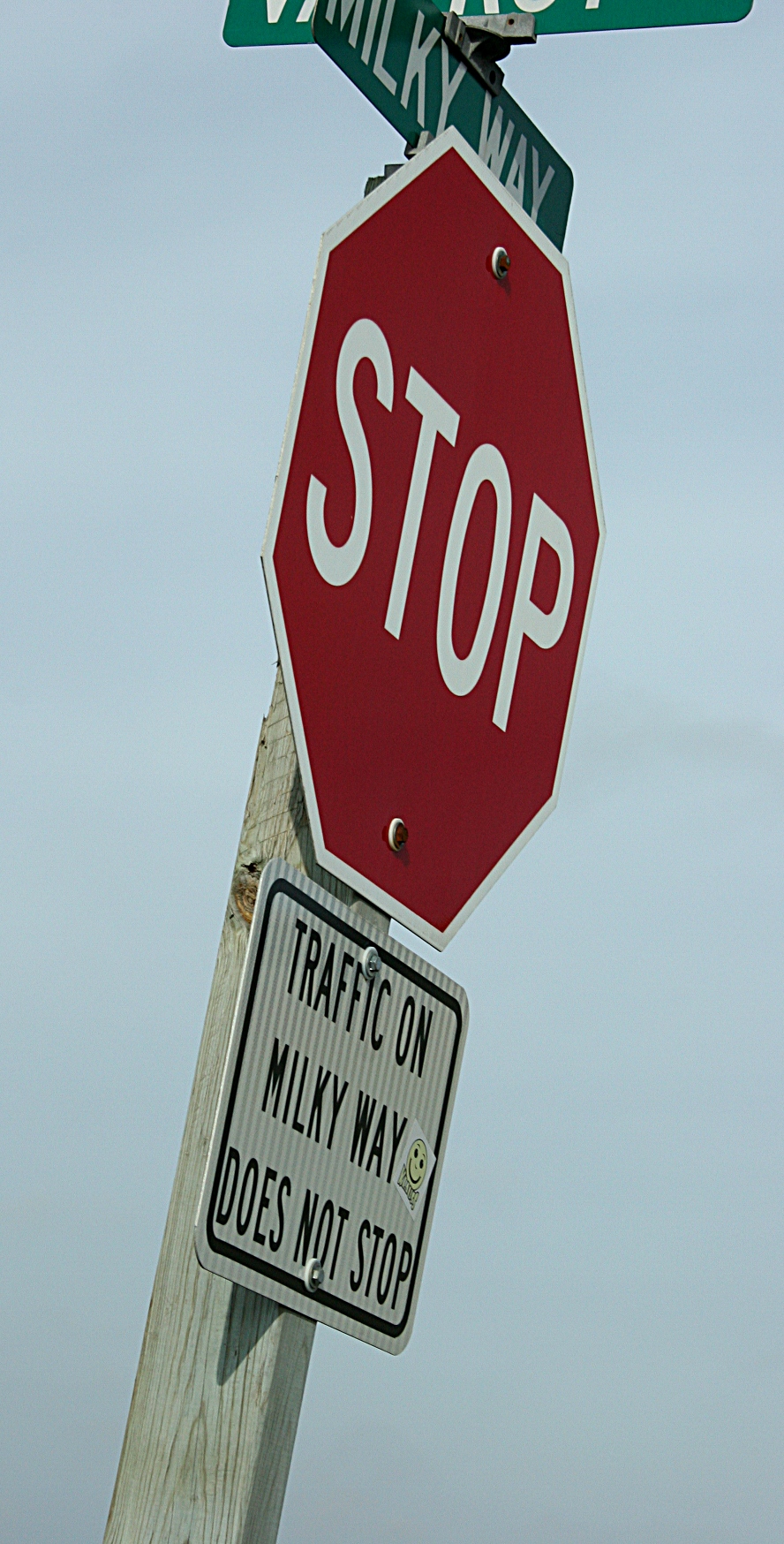
My favorite quirky discovery of the weekend, this signage near none other than...see the next photo.

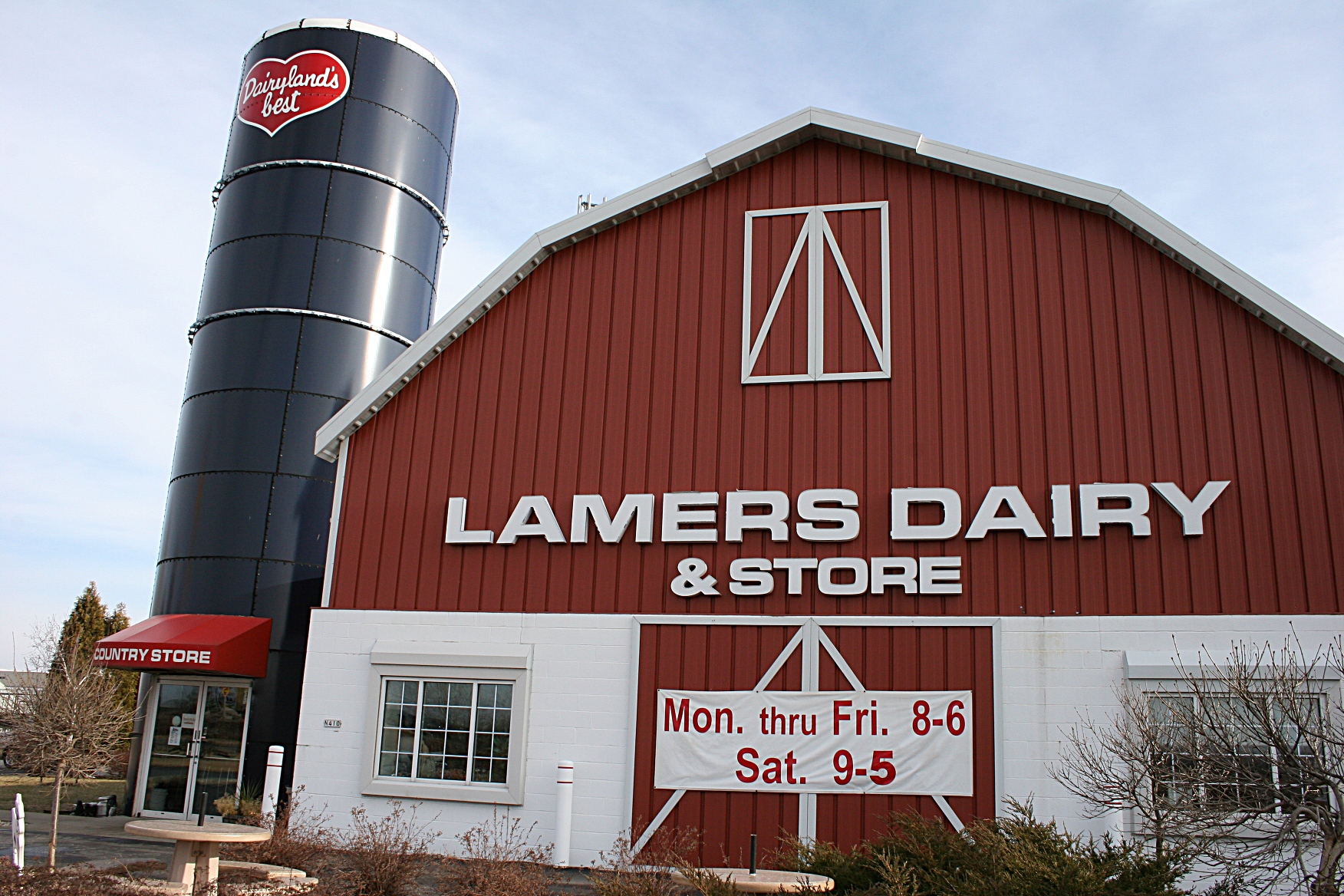
Lamers Dairy, along the Milky Way, sells its own bottled milk, cheese, wine and other food and merchandise. Visitors can watch milk being bottled. Unfortunately, this does not occur on weekends, when we were visiting.

Walking in historic downtown Appleton, I saw not a cheesehead, but this banana, who later posed for a photo. However, I prefer the action photo to the posed. She was promoting the Tropical Smoothie Cafe. My daughter was hoping we would also spot a gorilla pushing balloons along another Appleton street. But, alas, the gorilla was nowhere to be seen.

Inside artsy Studio 213, I laughed at this humorous tee. I grew up on a dairy farm. What can I say? I appreciate barn humor.

Over at the Downtown Appleton Farm Market in City Center, a vendor marketed bison meat. Now I'm wondering, is that bison head real and how do you cart that around?

When I shop at farmers' markets, I pay attention to details like merchandise display. Jan Jourdan's vintage marketing theme drew me right over to sample her Jan's Fabulicious Cookies. I asked to try the gingersnaps. Ooops. Not gingersnaps, but molasses cookies. Thick and chewy, they were as advertised, "fabulicious." Love those aprons, too. If my daughter hadn't just given me one for Christmas...

TO SEE MORE PHOTOS from Appleton, click here to view a previous blog post from the historic downtown.

Click here to see photos I shot along Wisconsin Highway 21 in a post titled “Preserving central Wisconsin’s rural heritage via on-the-road photography.”

In case you missed the link earlier in the story, click here for more info about downtown Appleton.

Click here to learn more about the Downtown Appleton Indoor Winter Farm Market.

Click here to learn about Lamers Dairy.

Click here to read about Studio 213 and here to check out the Tropical Smoothie Cafe.

© Copyright 2012 Audrey Kletscher Helbling


I refuse to be bullied January 14, 2012

Filed under: Uncategorized — Audrey Kletscher Helbling @ 6:20 PM
Tags: , ,

I’VE DEBATED, for several days, whether to write this post.

And I’ve decided, yes, I will just speak what’s on my mind because I refuse to be bullied, belittled or called names.

My mother taught me to nice, to be kind. If I disagree with someone, I should be respectful in voicing my opinion. I’ve tried to follow those guiding principles throughout my life, although at times I fail.

I was bullied as a child and pre-teen. As an adult, I don’t have to accept such behavior.

That brings me to two comments posted on my January 11 post, “Meet 10 Minnesota bloggers, a contest winner & more.” Click here to read that story.

Of all the posts I’ve written, I never imagined this piece would come under attack.

Here is the single sentence that prompted two readers to voice their opinions in a manner that I consider disrespectful:

I wanted to highlight bloggers without an agenda and who would fit our more conservative outstate readership.

I’ve since deleted that sentence because I understand how, if you’re a “liberal” purposely seeking out the word “conservative” and you take something out of context or shape it to your thinking, this could be totally misconstrued.

My use of the words “agenda” and “conservative” had nothing to do with political leanings of either the highlighted bloggers, the magazine or its readership.

Any writer understands that when you write for a publication, you need to know that publication and its content. That was the point I was attempting to make and, I admit, I could have written it more clearly, explained it better.

Yet, the rabid reaction from these two commenters caught me off guard.

Here are their separate responses, first from commenter #4:

Nice to know that “conservative” isn’t an agenda. Dogwhistle much? Or just believe in pandering to stereotypes of rural Minnesota?

And here are the words of commenter #5:

Wow. I mean, read that sentence slowly. Maybe aloud. Could you see what you did there? I know my 7th grade grammar teacher would have you up at the blackboard for that.

(Readers, please do not click on these commenters’ links; google them if you must.)

In my opinion, they could have made their points in a manner that was less mean-spirited and not so condescending.

I was tempted for a minute to censor their words or fire back with an equally vicious response. It was a fleeting thought. I gave them their voice, responded as kindly as I could and tried to let it go.

I don’t expect that everyone will always agree with me or like what I write. And, yes, I understand that sometimes something I compose may be taken the wrong way.

Then I thought back to all those years when I was bullied and came home from school crying.

This pair could not have known how their words triggered those childhood memories of bullying and name-calling and of a math teacher who called students to the blackboard only to belittle them. To this day, I do not like math.

And, to this day I do not like to be bullied, belittled or called names.

As an adult, I don’t have to accept such behavior, especially on this blog.

So you see, dear readers, something good has come from the negativity expressed earlier this week in my comments section. I have the opportunity to open up a discussion on the topic of bullying.

LET ME HEAR from you.

Were you bullied as a child or teen? If so, how did you and/or the adults in your life handle this and how were you impacted, short-term and long-term?

Have you been bullied as an adult? How have you handled such behavior?

What can be done to stop bullying?

#

NOW, JUST TO BALANCE this all out and show you how words can be used in a positive manner, I refer you to Bob Collins of Minnesota Public Radio. Click here and scroll to # 5 in the 5×8 section of his News Cut column to read his comments about Minnesota Prairie Roots and the Minnesota blogger story.

Then, click here to check out Iron Range writer, radio producer and college instructor Aaron J. Brown’s equally kind words regarding my work and the blogger feature.

I have great respect for these two writers. Enough said.

© Copyright 2012 Audrey Kletscher Helbling
 

Same day, same highway 50 miles apart: Plane lands, cattle truck crashes January 7, 2012

KNOWN AS A NOTORIOUSLY DANGEROUS roadway along some stretches, U.S. Highway 14 in southern Minnesota Thursday grabbed headlines again with two separate crashes about 50 miles and 12 hours apart. One involved a cattle truck, the other a small plane.

This time though, only cattle, not people, died.

I know this road, The Laura Ingalls Wilder Historic Highway, well as it’s the route my family travels back to my native southwestern Minnesota.

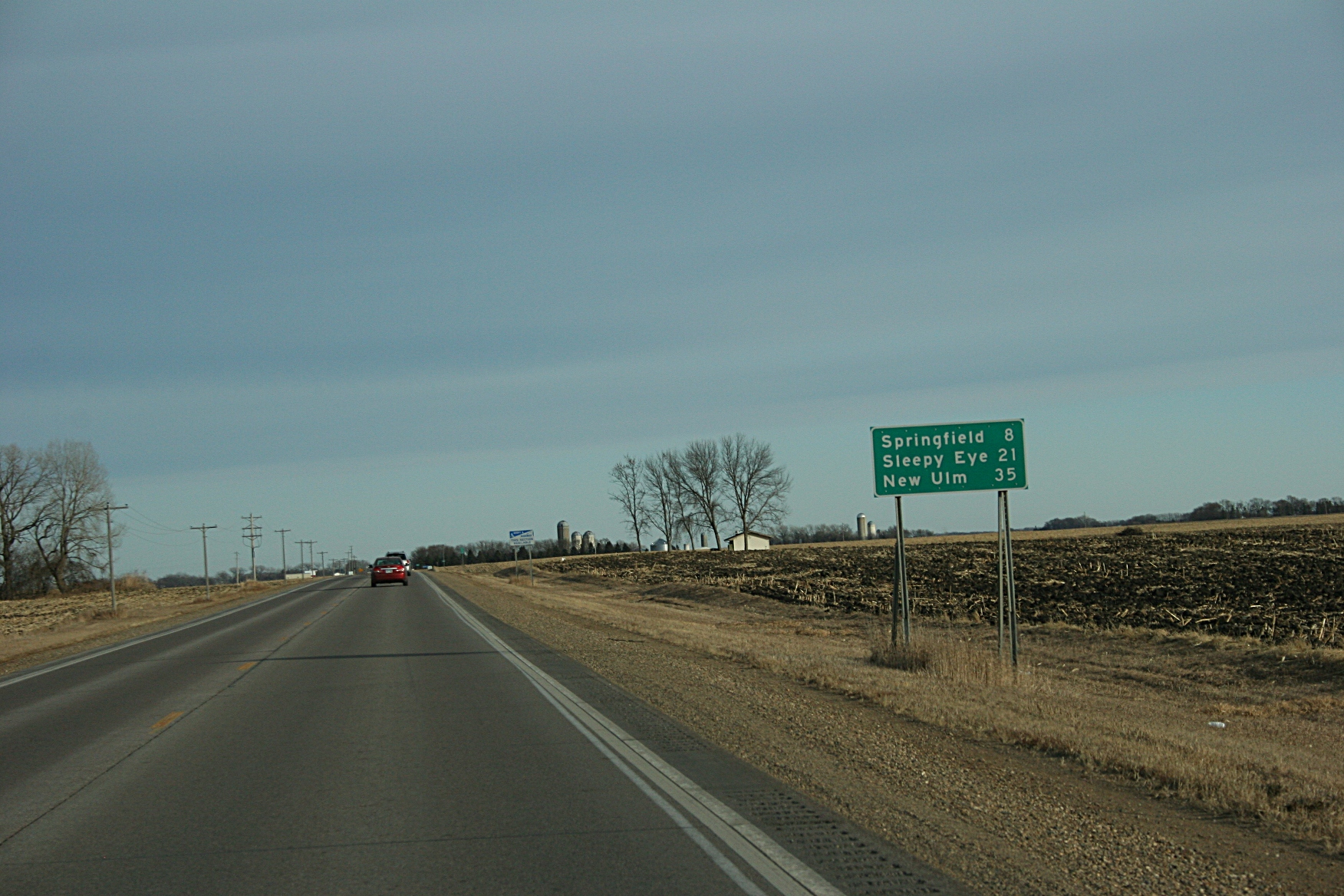
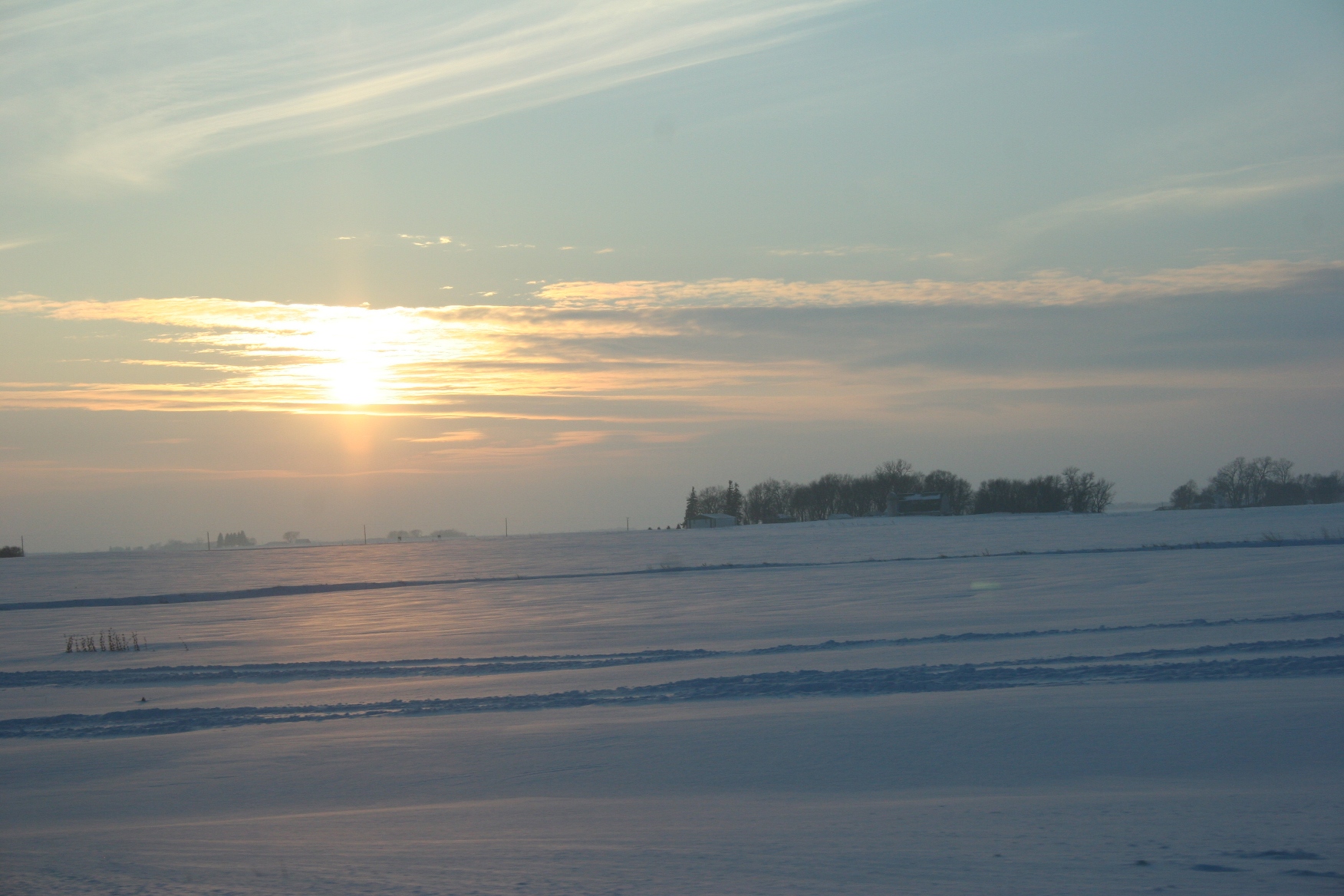
I shot this image along U.S. Highway 14 east of Lamberton several weeks ago.

Around midnight Thursday, January 5, a semi truck pulling a cattle trailer left Highway 14 just east of the Nicollet County Road 37 intersection near New Ulm and rolled onto its side in the ditch, according to news reports. The driver suffered only minor injuries, but some of the 35 cattle were killed in the crash or had to be euthanized.

About 50 miles west and some 12 hours earlier, Highway 14 east of Revere in Redwood County became a runway for a Lakeville pilot who was forced to make an emergency landing, according to news sources. He managed to land his plane on the road before it went into a ditch and flipped.

As in the cattle truck accident, the pilot escaped with only minor injuries.

When I first heard and read about these accidents, I was simply thankful that the truck driver and pilot survived. I was thankful, too, that others traveling along Highway 14 were not involved.

Then I started wondering exactly how many vehicles travel along these sections of Highway 14 each day and how those counts and the timing and locations of the incidents affected the outcomes.

According to the most recent statistics I could find from the Minnesota Department of Transportation’s Office of Transportation Data and Analysis, the 2009 annual average daily traffic count was 8,000 for the Highway 14 area where the cattle truck crashed.

See how the outcome could have been so much different had this occurred during peak daylight travel hours? Anyone who’s driven Highway 14 between New Ulm and Mankato realizes just how unsafe this narrow, arterial road is with its heavy traffic, county and other roads intersecting the highway and few opportunities to safely pass.

Fortunately, 50 miles west, the traffic count drops considerably as the population decreases and the land stretches flat and wide into acres of fields punctuated by farm sites and small towns.

Near Revere, where the pilot landed his plane on Highway 14 before noon on Thursday, MnDOT lists the 2007 annual average daily traffic count as 1,550. Odds of putting a plane down without hitting a vehicle were definitely in the pilot’s favor.

And given trees are sparse on the prairie, luck was in the aviator’s favor there, too.

Fortunately, the emergency landing also occurred outside of Revere, in the 3.5 miles between the town of 100 residents and Highwater Ethanol and not too dangerously close to either. The ethanol plant, of which my middle brother is the CEO/GM, is situated along Highway 14 between the crash site and Lamberton.

Viewing a 1994 plat of the area, I spotted a landing strip just to the north and east of Revere. I could not verify whether that still exists and it really doesn’t matter given the pilot claims he had to make a snap decision to put his failing aircraft down Thursday on Highway 14 at a speed of 90 mph.

I’m thankful that on January 5, 2012, U.S. Highway 14 in southern Minnesota didn’t rack up more fatal statistics. It’s already had too many.

© Copyright 2012 Audrey Kletscher Helbling
 

The generous gift of a St. Paul woman to a rural Minnesota food shelf January 6, 2012

TODAY I’M TREATING YOU to a gem of a story published yesterday in a weekly community newspaper, The Gaylord Hub.

It’s an inspiring and uplifting story of a St. Paul woman who purposely sought out a rural food shelf as the recipient of a Christmas gift. And a mighty generous one from someone with apparently no connection to Gaylord, a southern Minnesota Sibley County seat town of around 2,300.

Hub officer manager and bookkeeper Elizabeth Reishus shares the tale of generosity in her January 5 “The Word From High Avenue” column as shared with her by Yvonne O’Brien of Sibley County Food Share, Inc.

Writes Reishus:

A woman from St. Paul had called Second Harvest food bank to ask for a list of rural food shelves. Second Harvest was not able to give her that information, but did give her O’Brien’s phone number.

The woman then called O’Brien and asked questions about the food shelf. What percent of families served were minorities? Is the need higher in the summer? What kinds of resources does your food shelf have to rely on for donations?

O’Brien explained that about 40 percent of clients at the food shelf are people of a minority. The need for help increases in the summer when seasonal workers arrive to work at area farms and other agriculture-related jobs. She also explained that unlike bigger towns and cities, we do not have the big chain stores such as Wal-Mart, Target, Cub or Cash Wise that donate food. The Sibley County Food Shelf is maintained through the generosity of area people and some grant money, O’Brien explained.

The St. Paul woman said she would like to send a donation to the food shelf. O’Brien gave the woman the mailing address for donations and expected to receive a check for about $50. She was pleasantly surprised to find that the donation check was for 10 times that amount. The generous mystery woman gave $500 to the Sibley County Food Shelf.

How’s that for Minnesota Nice and for thinking beyond the metro?

Consider the effort this mystery woman took to find just the right place for her $500 donation. What motivated her to seek out a rural food shelf, to ask those specific questions about minorities, to give that much money to a single food shelf?

I’d never really thought, prior to reading Reishus’ column, how small-town food banks typically don’t receive food donations from chain stores, relying instead primarily on the generosity of locals.

So thank you to that woman from St. Paul for thinking beyond the metro area of the need in rural Minnesota and for blessing Sibley County Food Share with $500.

She offers us much food for thought.

FOR MORE INFORMATION about Sibley County Food Share, click here.


Preserving central Wisconsin’s rural heritage via on-the-road photography January 5, 2012

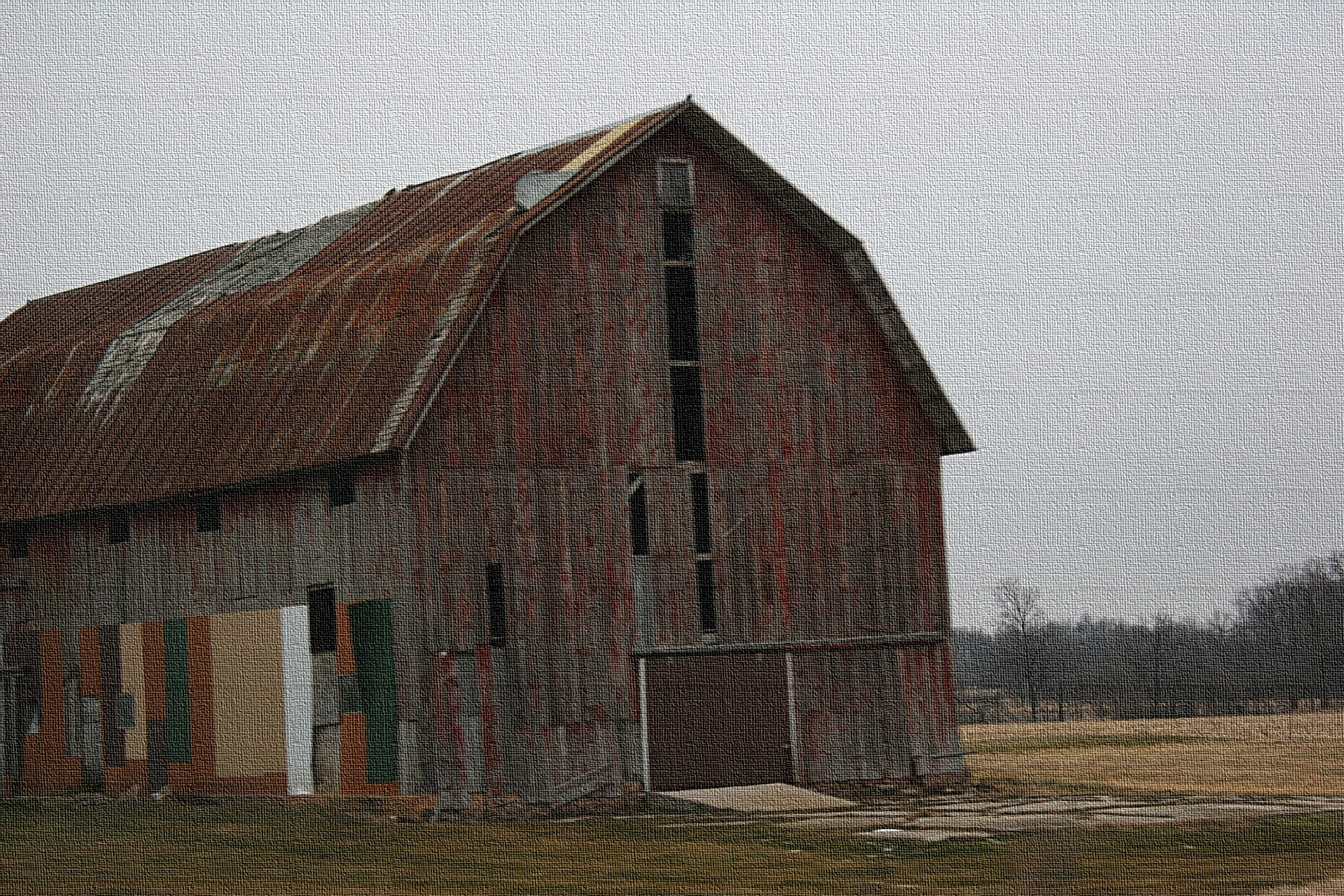
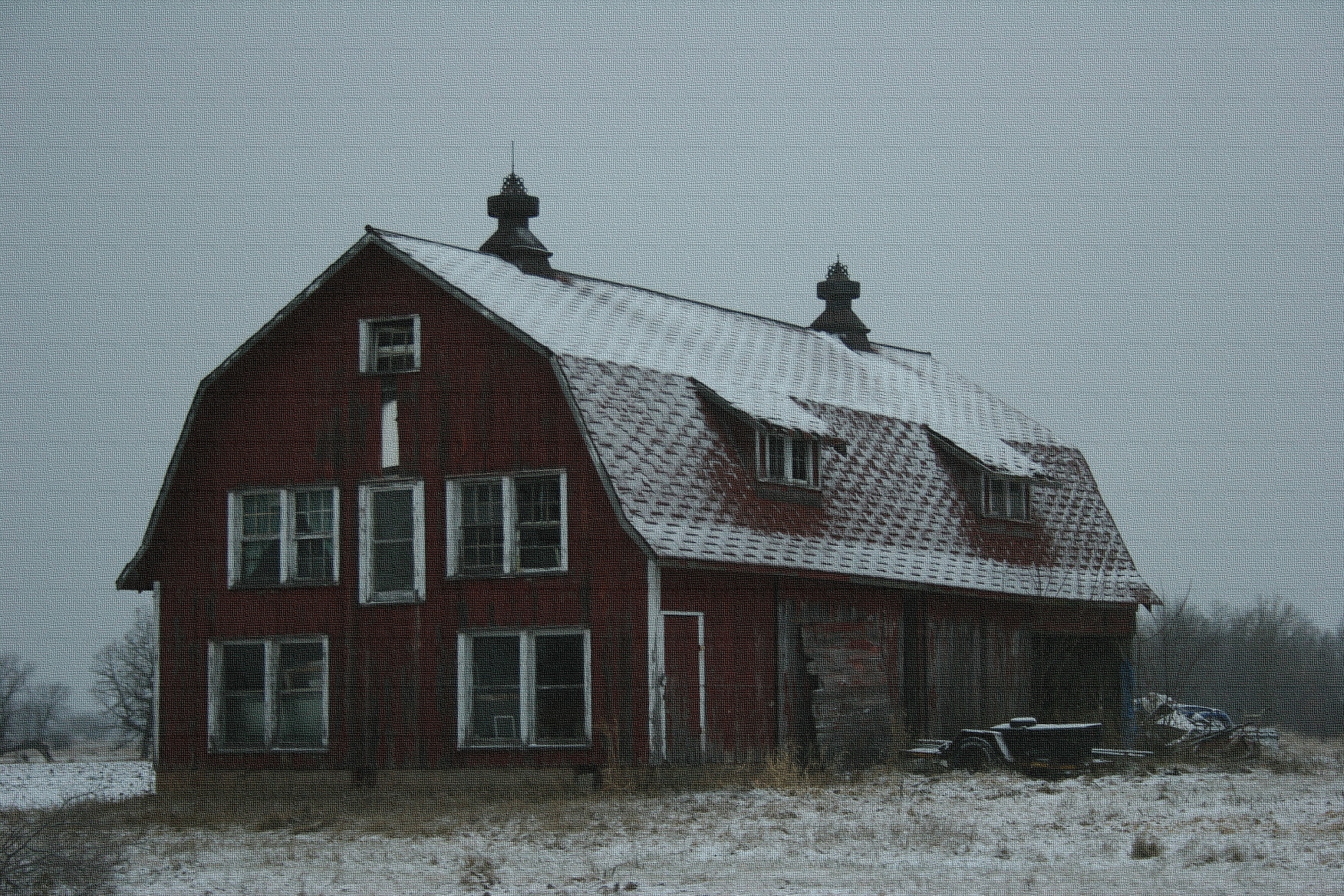
Each time I see this Wisconsin barn, I think of the biblical story of Joseph's coat of many colors.

ON OUR FOURTH TRIP through central Wisconsin in a year along the same route—Interstate 90 to Interstate 94 in Tomah then on Wisconsin Highway 21 to Oshkosh, up U.S. Highway 41 to Appleton—I’m getting to know the Dairyland state from her western to near eastern borders.

She’s a beautiful state of rolling hills, flat marsh land, stands of packed pencil-thin pines, too many towns whose names end in “ville,” infinite piles of stacked firewood, cranberry bogs and potato patches, muskrat mounds, cheese stores, Packers fans, small-town bars and barns—oh, the barns that I love to photograph.

One of my favorite barns along Wisconsin Highway 21 because of the stone walls.

As I’ve done on every 600-mile round trip to and from our second daughter’s Appleton home, I capture the scenery via on-the-road photography, meaning I photograph through the passenger side window or windshield of our vehicle at highway speeds. Sometimes I manage to snap a well-composed image. Other times I fail to lift my camera, compose and click in time and miss the photo op.

Journey after journey, I find my eyes drawn to the many old barns that are so much a part of Wisconsin’s landscape and heritage. And mine. Only in Minnesota.

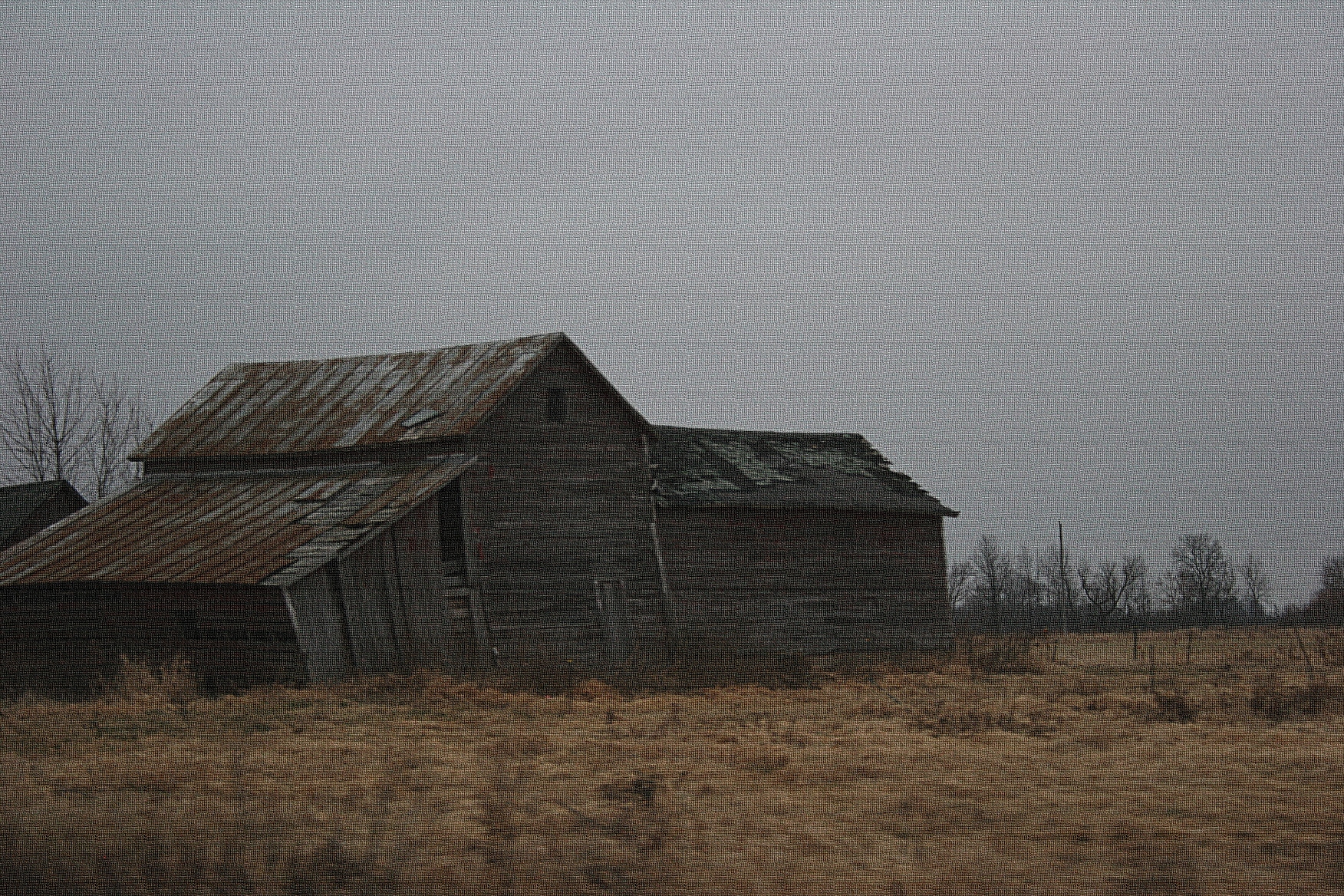
I’ve seen every type of barn, from the well-preserved to the crumbling, pieced-together-with-tin structure. I know that any barn, once left to fall into a rotting pile of boards, will never be replaced by an equally grand structure.

A pieced together weathered barn blends into the gray landscape on a dreary winter afternoon.

A once grand barn shows the first signs of falling into disrepair.

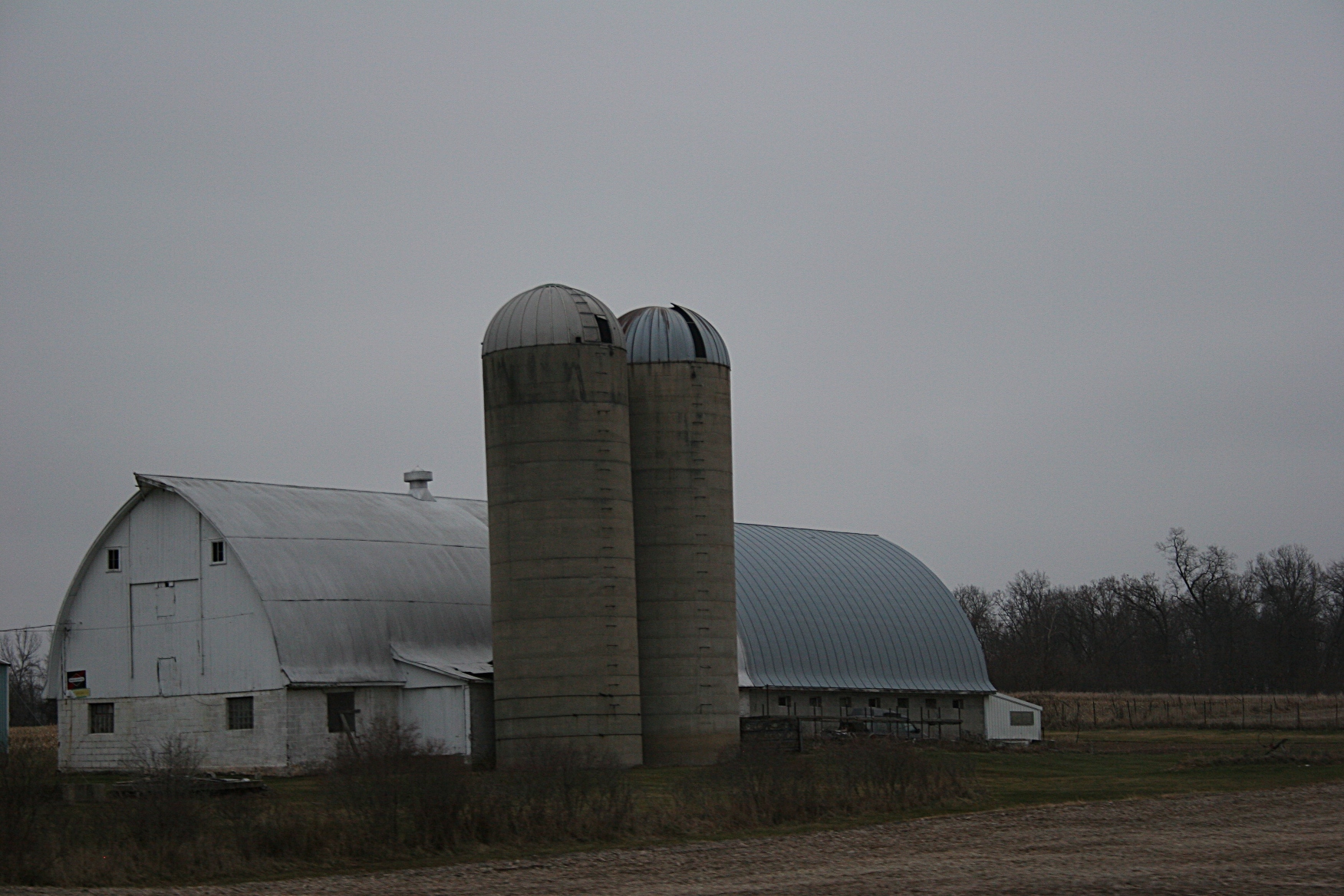
The occasional white barn pops up among the characteristically red barns.

Majestic barns, rising sturdy and proud above the land, are seldom crafted anymore. Instead, mundane metal rectangles sprawl, without any character or beauty, across the landscape. Such structures hold no artistic, but only practical, value on the farm.

Via my barn photography, I am documenting for future generations a way of life—the family farm—which, in many places, has already vanished.

If my photos inspire you to appreciate barns and rural life and the land and our agricultural heritage and the men and women who work the soil and their importance in this great country of ours, then I will have passed along to you something of great worth.

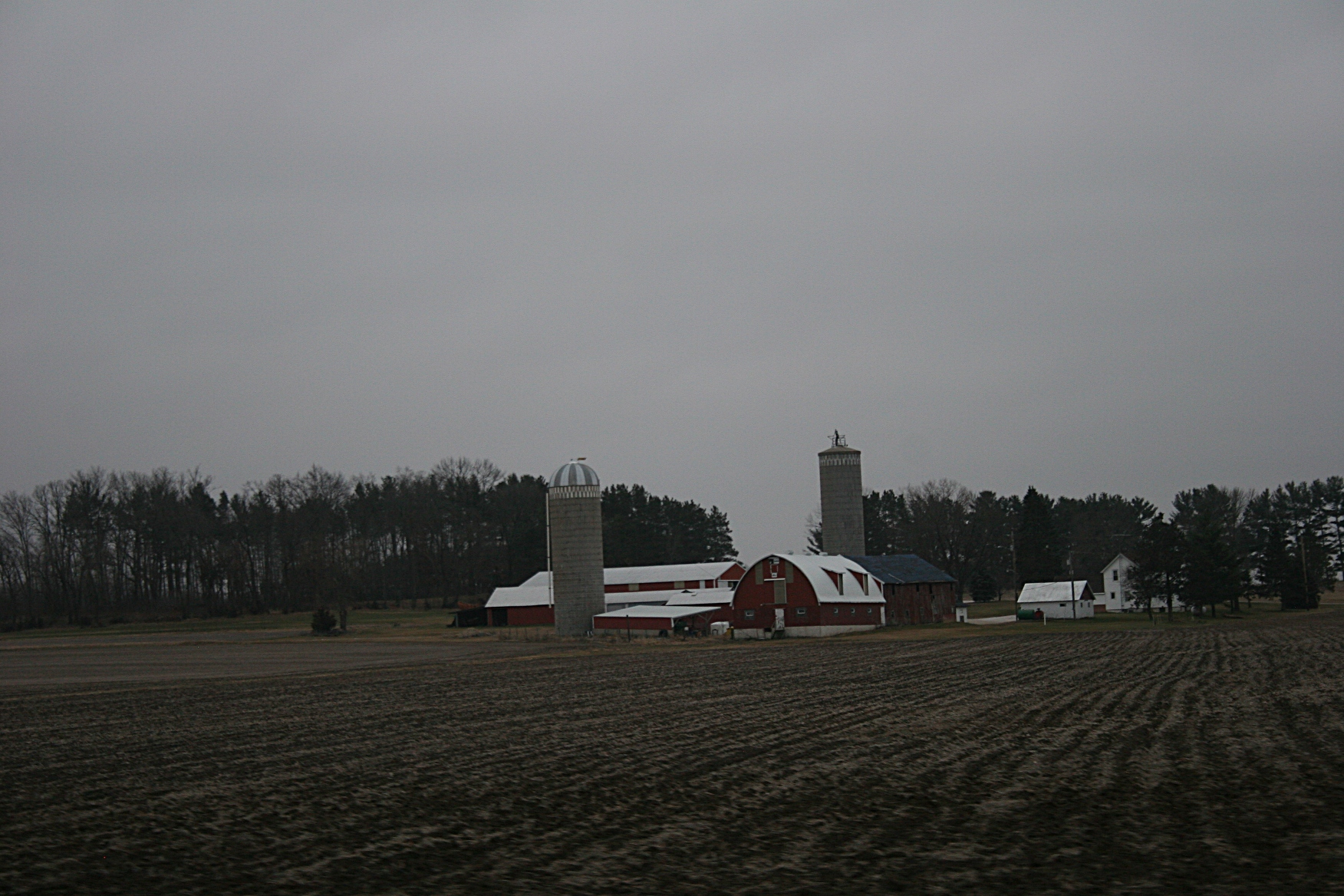
An especially picturesque farm site along Wisconsin Highway 21.

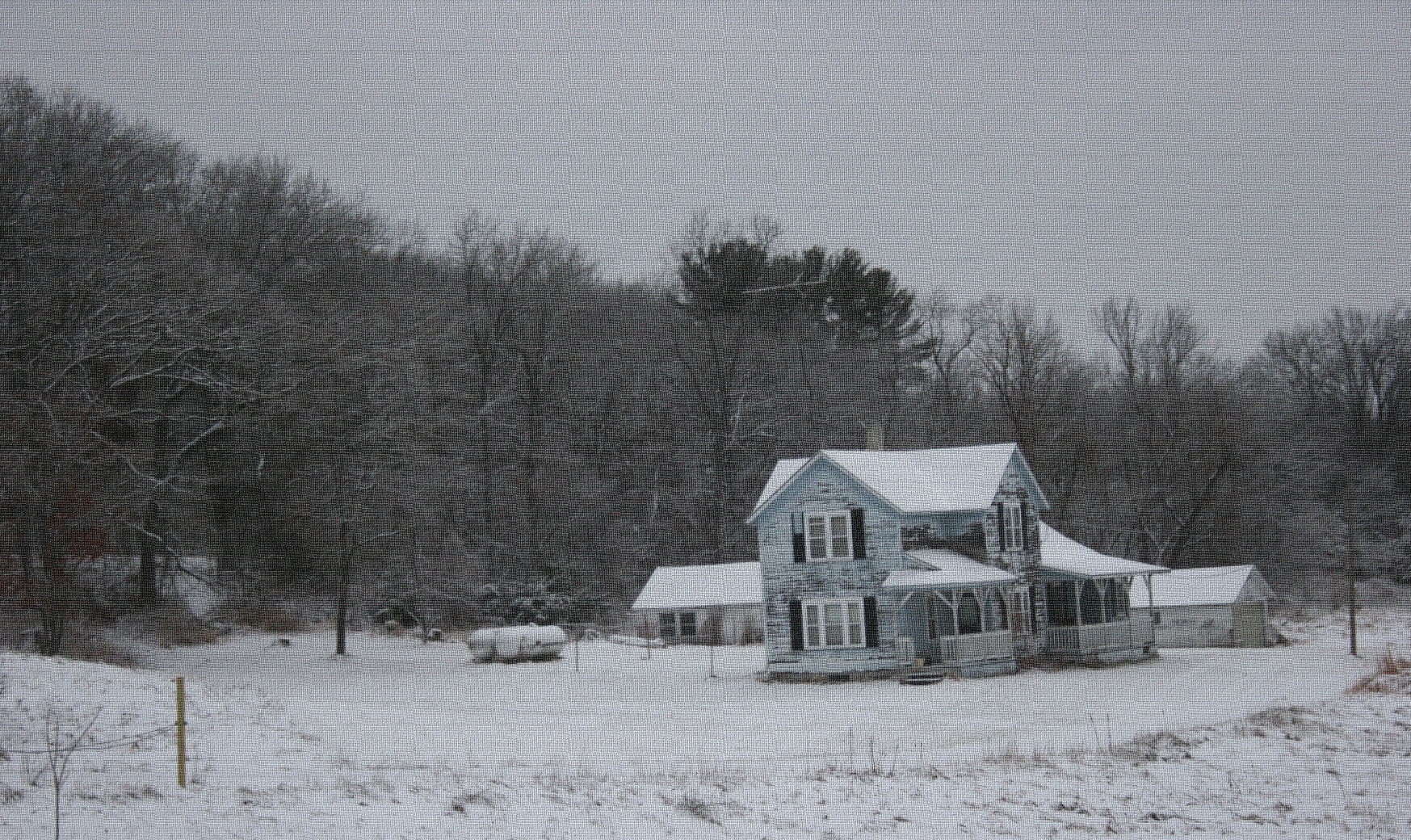
The muted blue-grey of this old farmhouse blends seamlessly with the dreamy landscape on a snowy New Year's Day afternoon in central Wisconsin.

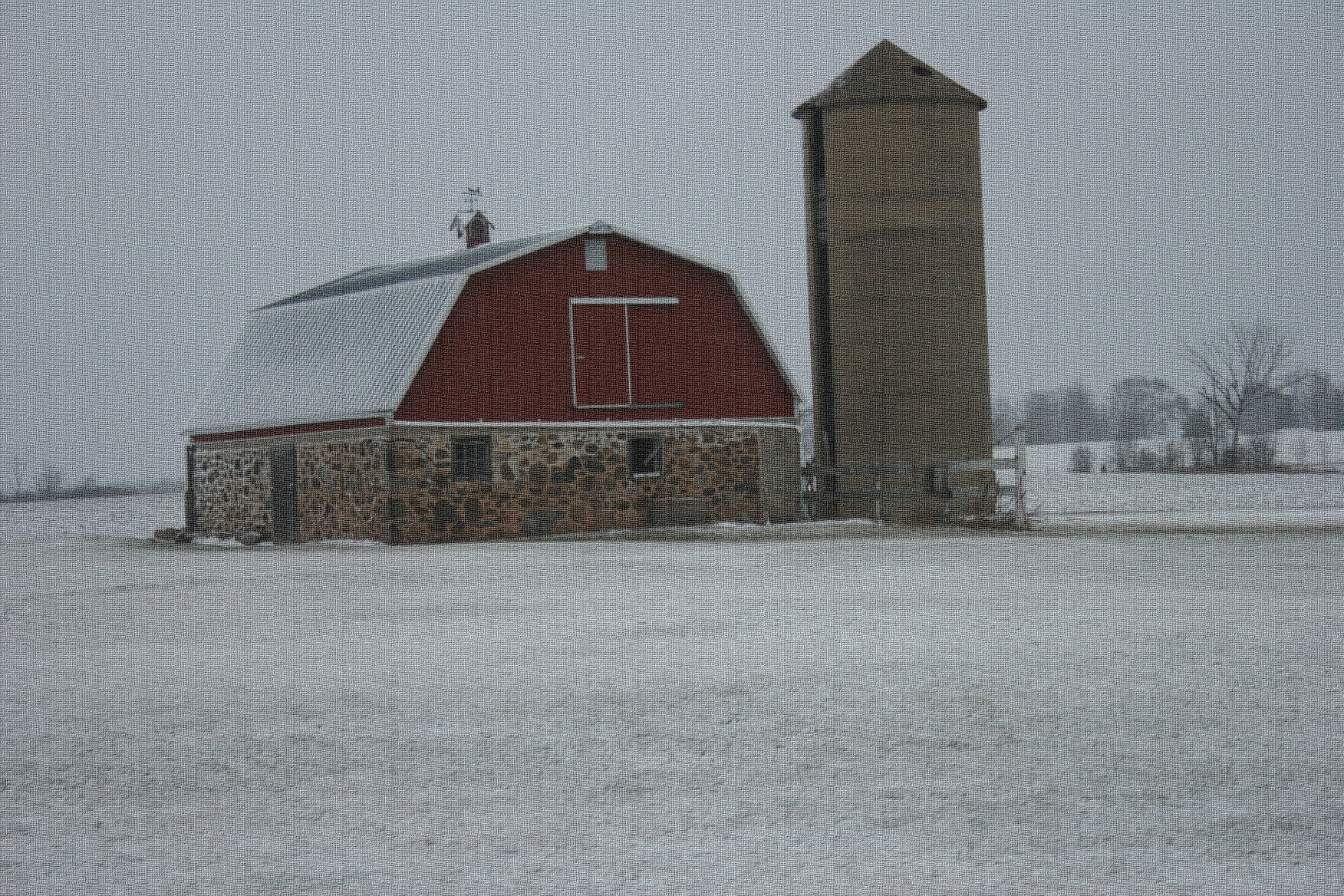
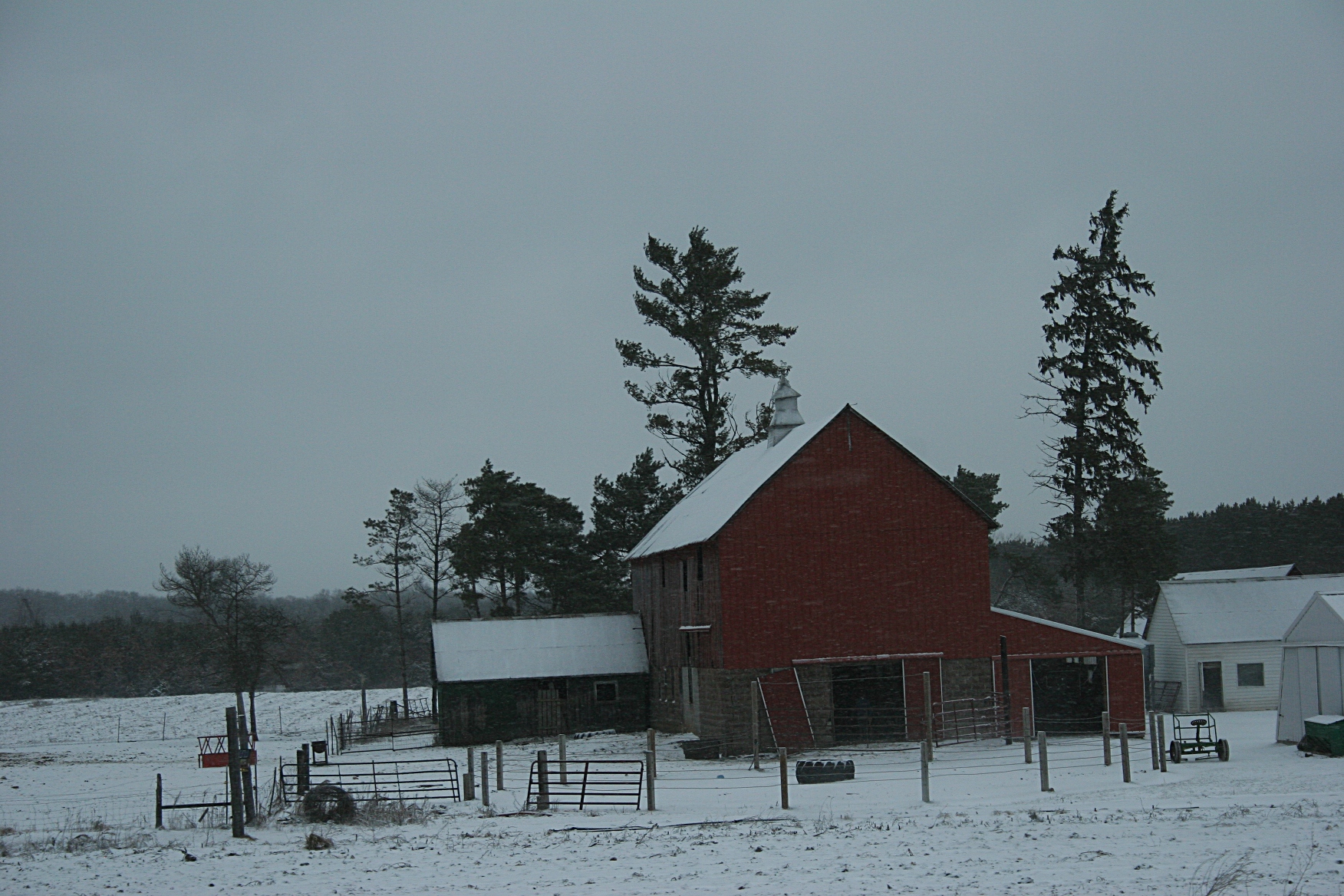
Contrasted against snow, red barns are particularly visually appealing.

NOTE: The above photos were taken on December 30, 2011, and January 1, 2012, along Wisconsin Highway 21 in the central part of the state primarily between Wautoma and Oshkosh.

I have applied a canvas style editing technique to most of the images, creating a quality that is more painting than photo.

© Copyright 2012 Audrey Kletscher Helbling
 

On-the-road prairie photos December 29, 2011

Filed under: Uncategorized — Audrey Kletscher Helbling @ 11:01 PM
Tags: , , , , , , , ,

Somewhere along a back county road between New Ulm and Morgan.

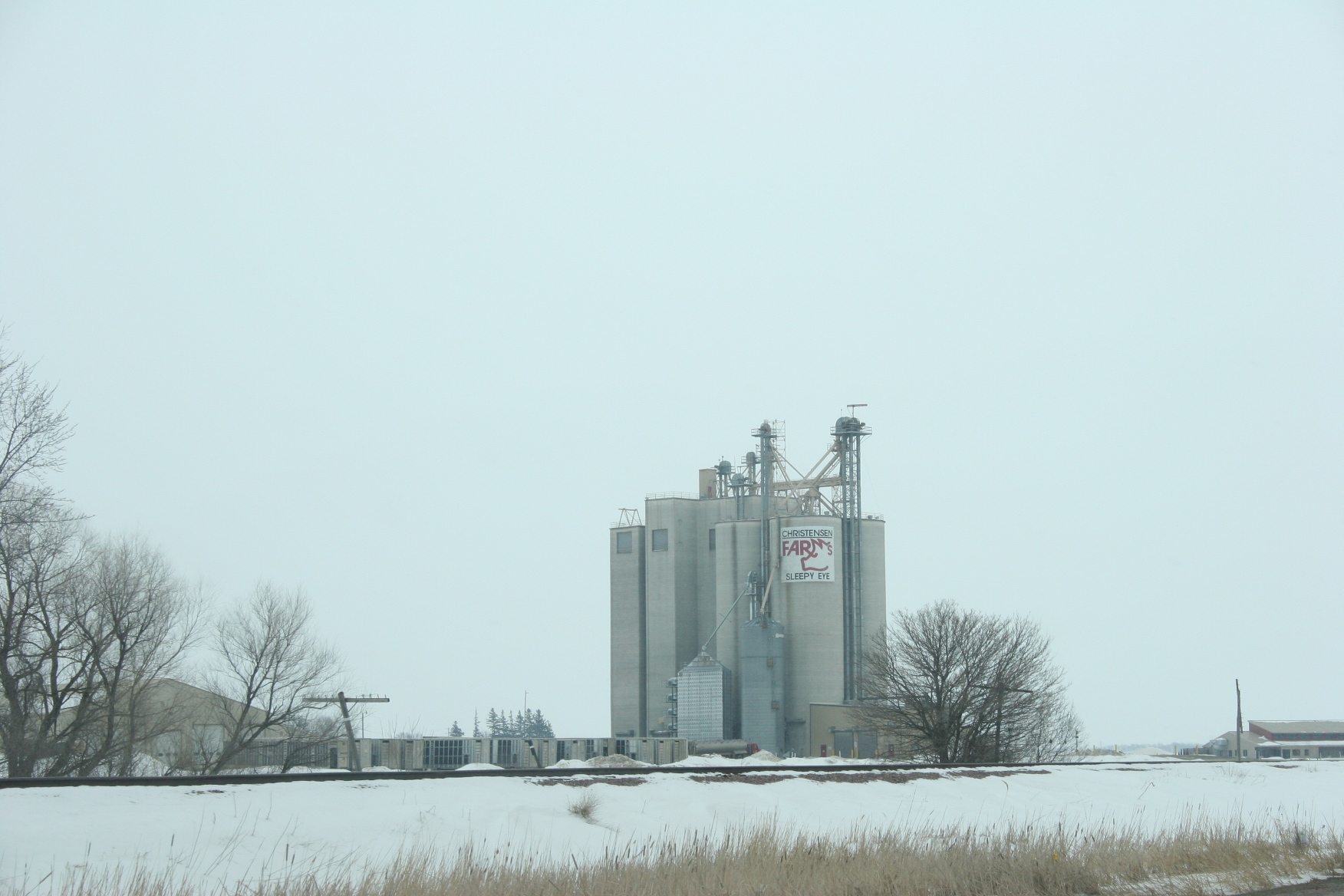
SORTING THROUGH the on-the-road photos I shot while traveling to and from southwestern Minnesota a week ago, I noticed a similarity in many of my images—pops of red in an otherwise mostly grey landscape.

I didn’t consciously swing my camera lens toward the jolts of red. It just happened. My eye would catch a scene and I would press the shutter button. Traveling at highway speeds allows a mere flick of an instant to frame and shoot through the front and passenger side windows of our family van or car.

I’ve practiced this type of traveling photography long enough that I’m now photographing some of the same sites along roadways. Yet, even the same subject, photographed at a different time of day, in another season, under changing skies, can result in a distinct image that tells a story or captures a mood.

This December, the Minnesota prairie, devoid of snow, appears drab and dreary against iron grey skies. Often only the occasional farm site or small town breaks the bleak blackness of tilled fields that can quickly depress the visual sense.

Perhaps for that reason, my eye is naturally drawn to the red barns and other bursts of red that contrast with the black and white and grey. My eyes are seeking color.

A red barn pop of color in the distance while driving toward Morgan last Friday morning.

Along the same road, I caught just a snippet of the red barn peeking from behind the row of grey grain bins.

Sunnier skies prevailed Saturday afternoon at this farm site just north of Lamberton.

Allow your eyes to wander over my images, to take in the stark essence of the southwestern Minnesota prairie on two days in late December. This is my land, the place that shaped me as an individual and as a writer. It is a land where details are noticed without the distracting visual clutter of traffic congestion and buildings clumped together and lights and signs and crowds.

Not everyone appreciates the prairie, dismissing this land as boring and plain and unexciting. I am not among those who wish only to flash across the prairie like a bolt of lightning. Via my roadside photos, you will see how this infinite space of sky and land has claimed my heart, defining my work as a photographer and a writer.

A red car infuses color into this prairie landscape near Lamberton, heading east toward New Ulm along U.S. Highway 14, the Laura Ingalls Wilder Historic Highway.

A stop sign adds color to an otherwise grey image of the elevator in Essig, along Highway 14 west of New Ulm.

Fields like this one between New Ulm and Morgan define the southwestern Minnesota prairie.

AS I FINISHED this post, I wondered why most barns are painted red. Did the color choice come from a desire for a spot of red to brighten dreary days? I found one answer here, in Farmers Almanac Trivia. Click to read.

© Copyright 2011 Audrey Kletscher Helbling
 

In praise of old, familiar Christmas hymns December 25, 2011

The doll representing the Christ Child during the Trinity Lutheran Sunday School program on December 17.

FOR THE FIRST TIME in as long as I can remember, I missed Christmas Eve worship services. We were traveling home from a family gathering in southwestern Minnesota.

So this morning, back in Faribault, my husband, eldest daughter, son and I attended Christmas Day services at Trinity Lutheran Church in Faribault.

While a morning worship service doesn’t hold quite the mood-setting anticipation of worshiping on Christmas Eve with candles glowing soft and white holiday lights sparkling bright in the fading daylight and kids restless with excitement, I appreciated the contentment of singing old, familiar hymns on Christmas morning.

From the opening “Oh, Come, All Ye Faithful” to the recessional “Joy to the World,” and many songs in between, I was reminded of all those childhood Christmas Eve worship services at St. John’s Lutheran in Vesta.

Dad hurried to finish the milking early so we could get to church, to participate in the Sunday School program and sing the same old, familiar hymns we sang today: “Hark! The Herald Angels Sing,” “It Came Upon a Midnight Clear,” “From Heaven Above to Earth I Come,” and “Angels We Have Heard on High.”

Although we didn’t sing “Silent Night, Holy Night” this morning, we listened to a teenage girl coo a sweet, lovely rendition. And we heard another teen strum “What Child Is This?” on his guitar.

It was a lovely service of praise, voices uplifted in the joyful comfort of aged hymns to celebrate Christ’s birth.

From my family to yours, we wish you a most blessed Christmas.

© Copyright 2011 Audrey Kletscher Helbling
 

My Christmas gift wish list December 22, 2011

Filed under: Uncategorized — Audrey Kletscher Helbling @ 11:27 PM
Tags: , , , , , , ,

IS MINE THE ONLY husband who leaves his Christmas gift shopping until nearly the last minute? I mean, there it was Wednesday evening and he was asking what I want for Christmas.

Honey, if you’re reading this, maybe just click off the computer screen right now. Or, go ahead, keep reading. I simply find it amusing how you dally and dawdle with this Christmas gift buying nearly every year.

I suppose, in your defense, I should tell my readers that you asked several weeks ago for a wish list from me and I failed to deliver.

So Wednesday night I pulled my list from the e-mails I’d sent our daughters and then scratched a few more items onto the bottom: a telephoto or macro lens for my camera and that thing like the professional photographers have with the cord that you can attach to your camera to click the shutter button when you have your camera on a tripod.

I handed the list to the husband and explained about the camera items and other stuff I really want like a new living room chair, a different kitchen sink to replace the vintage 70s brown one (or an entire kitchen re-do), a new boxspring and mattress, new kettles to replace the vintage 70s brown ones and, oh, maybe earrings.

I then qualified that I really didn’t expect him to buy me anything for my Canon EOS 20-D SLR camera because that would kind of be like me walking into an auto parts store and trying to purchase a tool he wants for Christmas (which I did because he wrote down precisely, exactly, what he wanted; he knows because he saw my entry in the checkbook—I am not sneaky, not at all).

By the looks of the small, flat, wrapped box the spouse slid under the Christmas tree, it appears I am not getting a camera lens, chair, sink, mattress, kettles or kitchen re-do.

I’d put my money on earrings.

However, Santa (not my husband), if you’re reading this, I have one other wish: for families everywhere to truly appreciate, value, respect, listen to and love each other this Christmas and into the new year. Amen.

READERS, WHAT’S your wish for Christmas this year whether practical and personal or more of a prayer?

© Copyright 2011 Audrey Kletscher Helbling
 

Appreciating historic downtown Faribault, especially in her holiday finery December 21, 2011

Strolling along Central Avenue in historic downtown Faribault late on a Saturday afternoon in December.

SATURDAY AFTERNOON, while my husband shopped for dress shoes at Burkhartzmeyer Shoes in historic downtown Faribault, I meandered a block north to view Central Avenue dressed in holiday finery.

She’s stunning with sparkles and ribbons and Christmas reds and greens befitting any holiday party.

Keepers Antique Store decorated the wrought iron fencing on a downtown street corner as part of a "Winter Wonderland" themed decorating contest.

Honestly, I love the look and feel of my downtown. Even without the glitz and glamour of the holiday season, Faribault shines. The old brick buildings, the comforting small-town vibe, the ease of parking, the slow pace and the friendliness of shopkeepers appeal to me.

Next to the Signature Bar & Grill, a lovely holiday-bedecked street corner.

An elf outside The Crafty Maven, "featuring a unique mix of new and vintage items."

Quotes from Charles Dickens' "A Christmas Carol" portrayed in store-front windows.

I am always surprised when locals fail to appreciate downtown. How can you not value this treasure of a business district with arched windows, decorative trim and more on vintage buildings that impart an historic and homey feel to our town? Perhaps because I didn’t grow up here, I can truly see the beauty that native residents often overlook.

Another seasonally-decorated street corner charms visitors to Central Avenue.

I am always surprised, too, that Faribault hasn’t been discovered—like Red Wing or Stillwater or Wabasha or neighboring Northfield—as a destination city. The potential exists to draw tourists here into our specialty shops and arts scene. It’s not for a lack of effort, but…we’re not there yet.

I aimed my camera skyward as the setting sun caught the tops of historic buildings along Central Avenue.

First, we need to sell our own residents on the value of Central Avenue, our Main Street. Do we truly realize how fortunate we are to have a solid, core downtown like ours with a deep history and an inviting character?

Mega malls and strip malls and Big Box retailers—and I shop at those places, too—have nothing on Main Street.

Yes, I grew up in the 1960s and 1970s, meaning my perspective evolves from memories of shopping in a downtown, not a mall.

When I stroll along Central Avenue in Faribault, nostalgia accompanies me. And she’s a mighty fine friend to walk with, especially during the holiday season.

Outside Keepers Antique Store, a rustic vignette charms.

Across the street at That Scrapbooking Place, a punch of color on the front window backed by a holiday display and reflections of historic buildings.

Sweet, dreamy gingerbread houses fill the display window at Sweet Spot, a Central Avenue candy and ice cream shop. I love how the reflection of an old building across the street melds with the gingerbread house.

IF YOU’VE NEVER been to Faribault, consider a trip here. We’re located along Interstate 35, just an hour south of Minneapolis. You’ll find antique, craft, candy, cheese and many other specialty shops and businesses, hometown eateries, as well as an arts center, along Central Avenue. If you have a specific question about Faribault, ask and I’ll answer.

LOCALS,  if you haven’t been downtown in awhile, I’d encourage you to park your vehicle, walk and appreciate your town. She’s all glammed up right now and a wonder to behold.

READERS, PLEASE CHECK back on Thursday for more Central Avenue holiday-themed images.

© Copyright 2011 Audrey Kletscher Helbling
 

Part II: Life as an orphan in Owatonna December 20, 2011

The main building at the orphanage, built in 1886, housed offices, a reception room, chapel/auditorium, boys' cottage, living quarters for employees, a sewing room, attic and linen storage. This main portion today serves as the Owatonna city administration building.

THE TOWERING BRICK building with the enchanting turret represents no fairy tale. Not at all.

Within the confines of this place and the outlying cottages, some 12,000 – 15,000 children spent their formative childhood and teenage years institutionalized in the Minnesota State Public School for Dependent and Neglected Children. They were the orphaned, the abused, the abandoned, the unwanted.

The "State School Kids" memorial stands in front of the main building and was dedicated in 1993.

Information in a brochure I picked up on a recent visit to this 1886- 1945 orphanage in Owatonna reads:

Such children became wards of the state and, in most instances, all parental rights were cancelled. Parents did not always realize they were relinquishing all rights to their children when they signed the State School commitment papers. Some parents returned to try to regain custody of their children and were refused.

Can you imagine?

Residents of Cottage 11, which housed boys ages 6 - 13, pose for a photo now on exhibit at the museum.

While some children adjusted to living within the strict regiment and rules of the school, many did not. You will hear and read their tragic memories when you visit the orphanage museum. Be forewarned: These stories are difficult to hear.

A room in cottage 11 features the photos and memories of the boys who lived there.

Cottage 11 residents

The boys remember scrubbing floors throughout the cottage, including in the bathroom..

Beds were packed tight into sparse bedrooms in the cottage.

I’ve read several books written by former “state schoolers,” as they were called. Harvey Ronglien, who was the motivator behind the museum and the orphan’s memorial, wrote A Boy from C11, Case #9164, A Memoir. Peter Razor wrote While the Locust Slept, winner of a Minnesota Book Award. I read both books, as well as Crackers & Milk by Arlene Nelson, many years ago and still can’t shake the haunting memories of neglect and abuse and struggle.

Particularly troubling are the reports of abusive, neglectful and unloving matrons. Equally disturbing are the stories of children who were indentured to farm families and then treated like slaves.

Each boy was assigned to a chair in the basement and could not leave the Cottage 11 basement without permission. This was a method used to keep order and control over the children.

Within the confines of the basement, the boys played with marbles, puzzles, checkers and other toys.

A sign on a stairway landing tells visitors about the boys' dreams of escaping via rail and of their admiration for hobos. Some boys did hop trains and ran away.

Children were educated through the eighth grade, with some selected during the early years to attend Owatonna High School. In later years, all students were allowed to attend high school.

If you’ve never visited the Minnesota State Public School Orphanage Museum, I’d encourage you to do so.

This exists as part of our state’s history. We need to know and understand life here.

Considering the thousands of children who lived in the orphanage during its 60-year span, I expect many Minnesotans are still carrying the emotional scars whether directly or indirectly passed through the generations.

IF YOU LIVED in the orphanage or have a family member who did, I’d like to hear from you. What’s your story? Good or bad.

The feet of the children in the memorial statue on the orphanage grounds.

CLICK HERE to read a previous blog post I published about Christmas in the orphanage.

© Copyright 2011 Audrey Kletscher Helbling