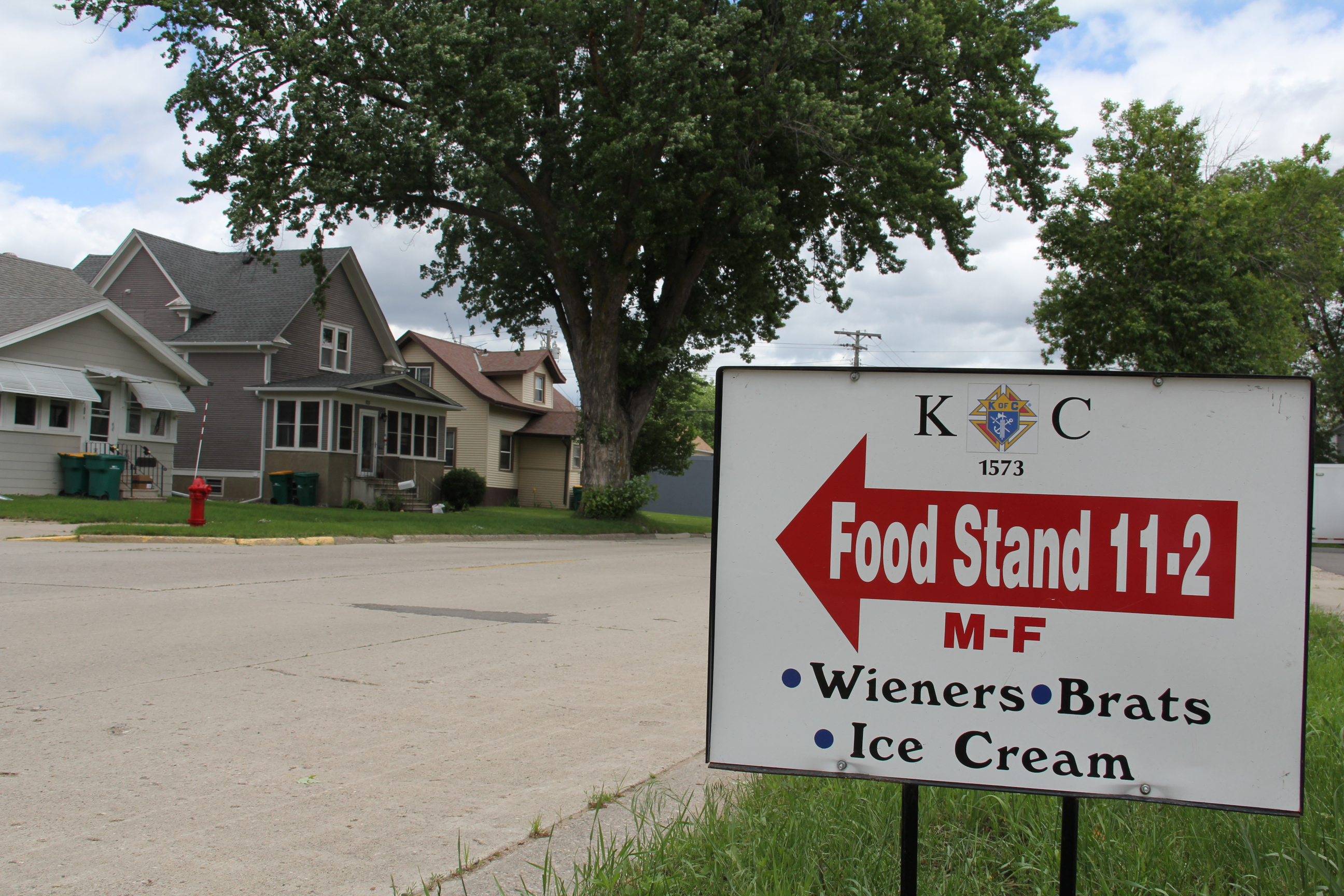
Along a main route into Montgomery’s downtown, this sign points to the KC Food Stand several blocks away. (Minnesota Prairie Roots copyrighted photo June 2024)
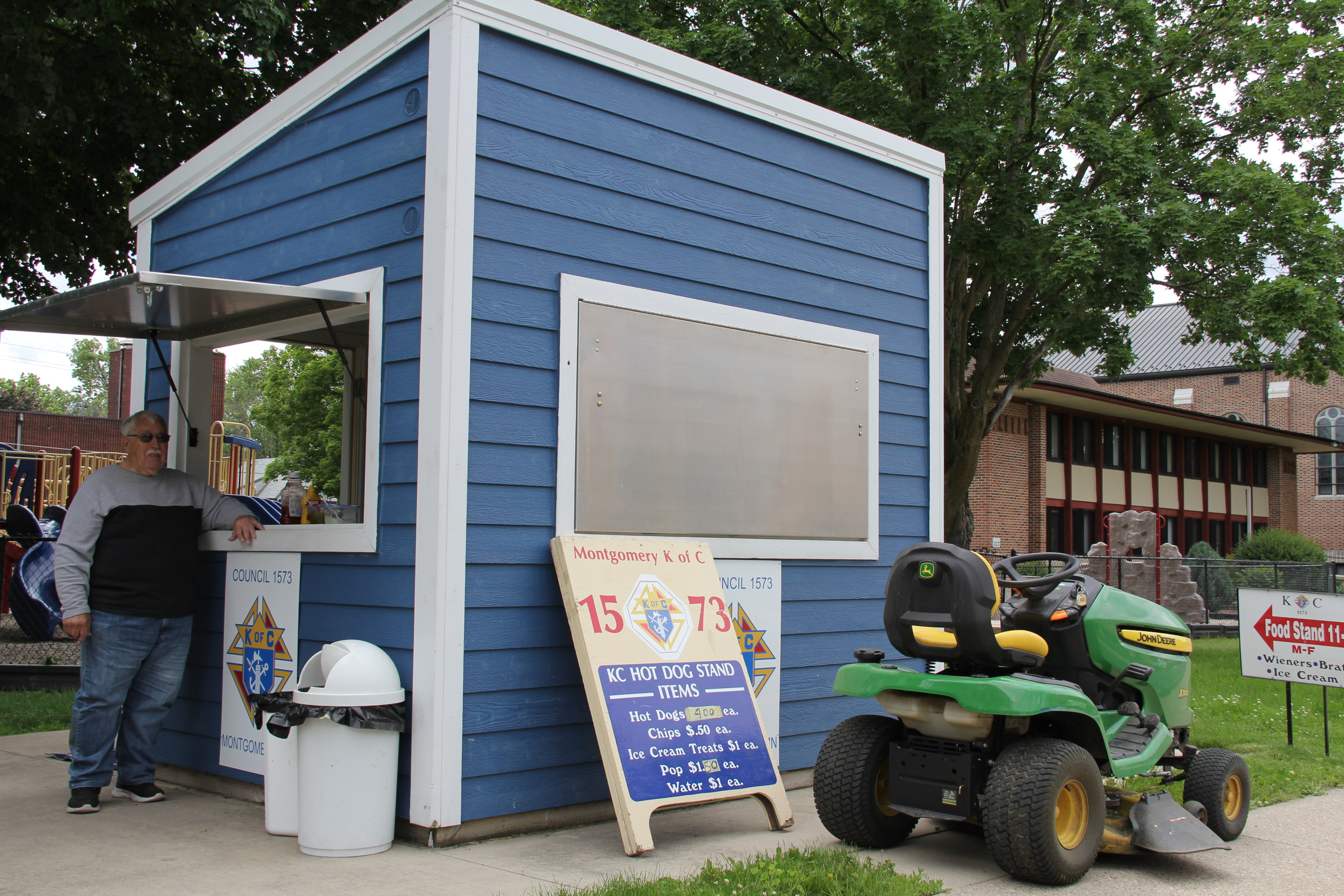
Volunteer Ernie at one of two walk-up food service windows at the KC stand. (Minnesota Prairie Roots copyrighted photo June 2024)
The small corner building with walk-up food service windows houses the Knights of Columbus Council #1573 Food Stand. And, by all accounts, business is brisk. Every weekday, from 11 a.m. – 2 p.m., from June until Labor Day, volunteers run this street-side stand at 206 Vine Avenue West.
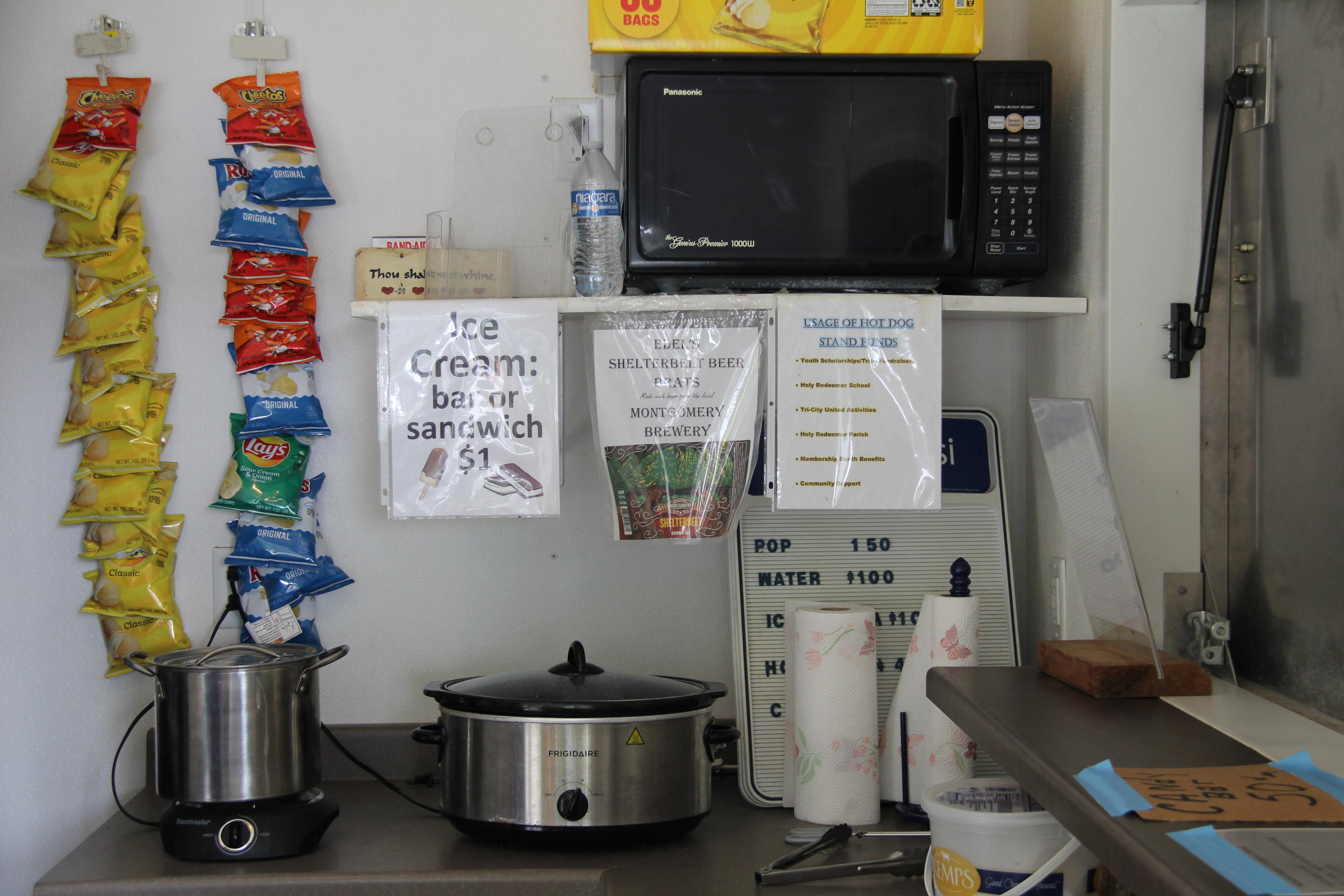
Food and signs, including a sign that reads “Thou shalt not whine.” (Minnesota Prairie Roots copyrighted photo June 2024)
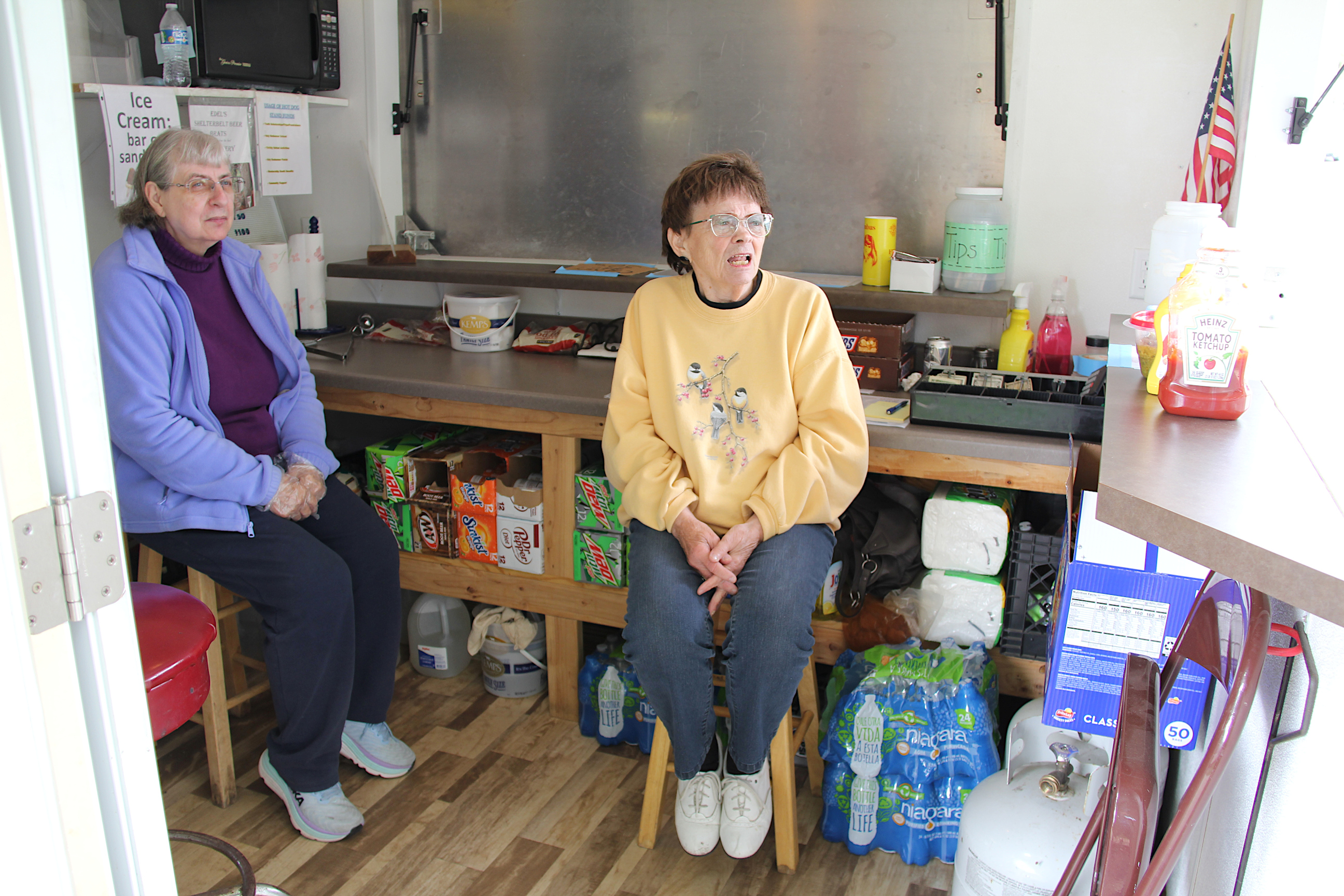
On the Thursday I stopped by, drawn by street signage to check out this food stand, Ernie, Jean and Evelyn were running things. The offerings are simple, basic: wieners (not hot dogs), brats, pork burgers, chips, candy bars, ice cream treats, pop and water. Not all meats are served daily. Wednesday is Brat Day. Pork burgers are served on Fridays.
Evelyn, left, and Jean await customers on an afternoon in early June. (Minnesota Prairie Roots copyrighted photo June 2024)
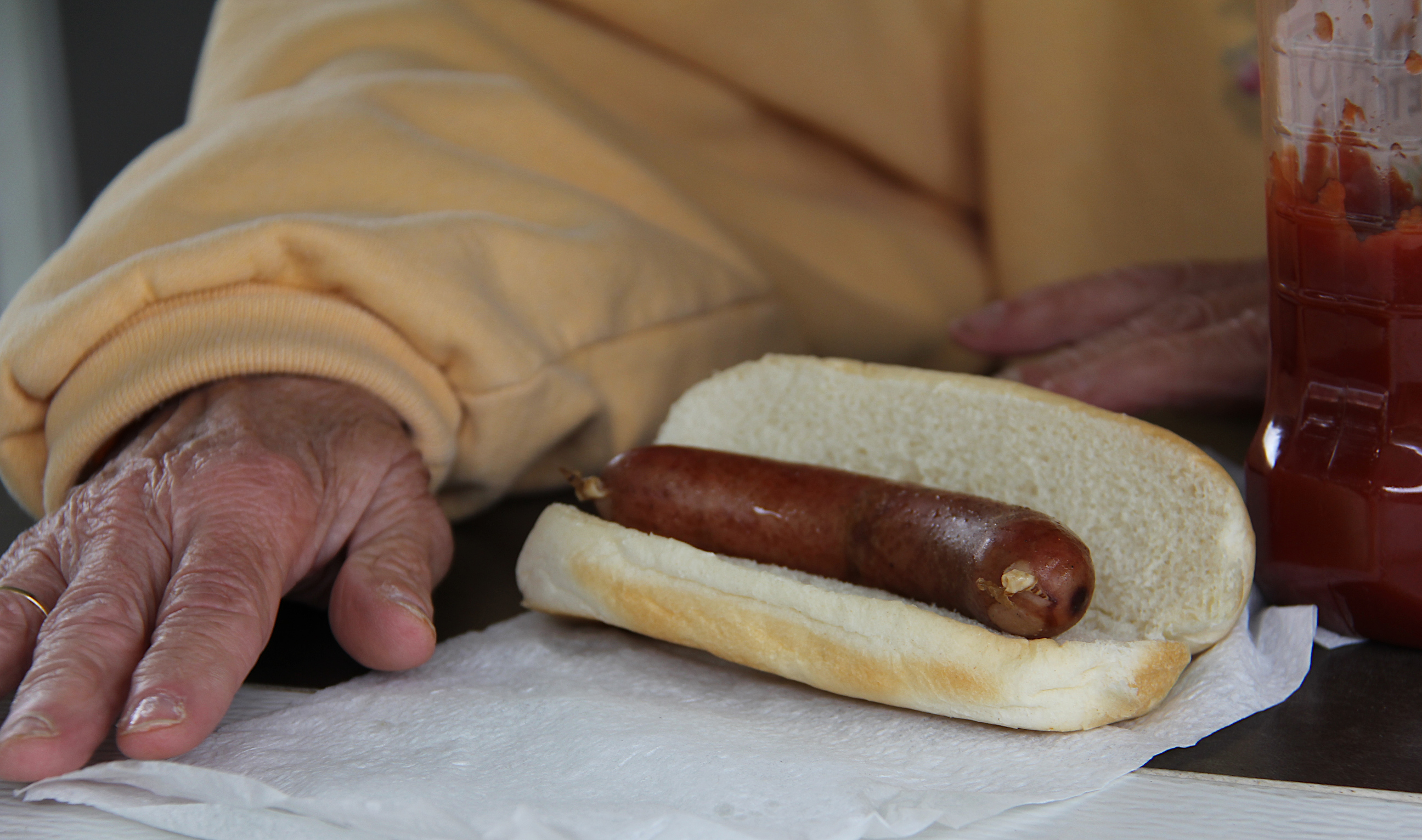
Jean serves a wiener/hot dog from Edel’s Meat Market. (Minnesota Prairie Roots copyrighted photo June 2024)
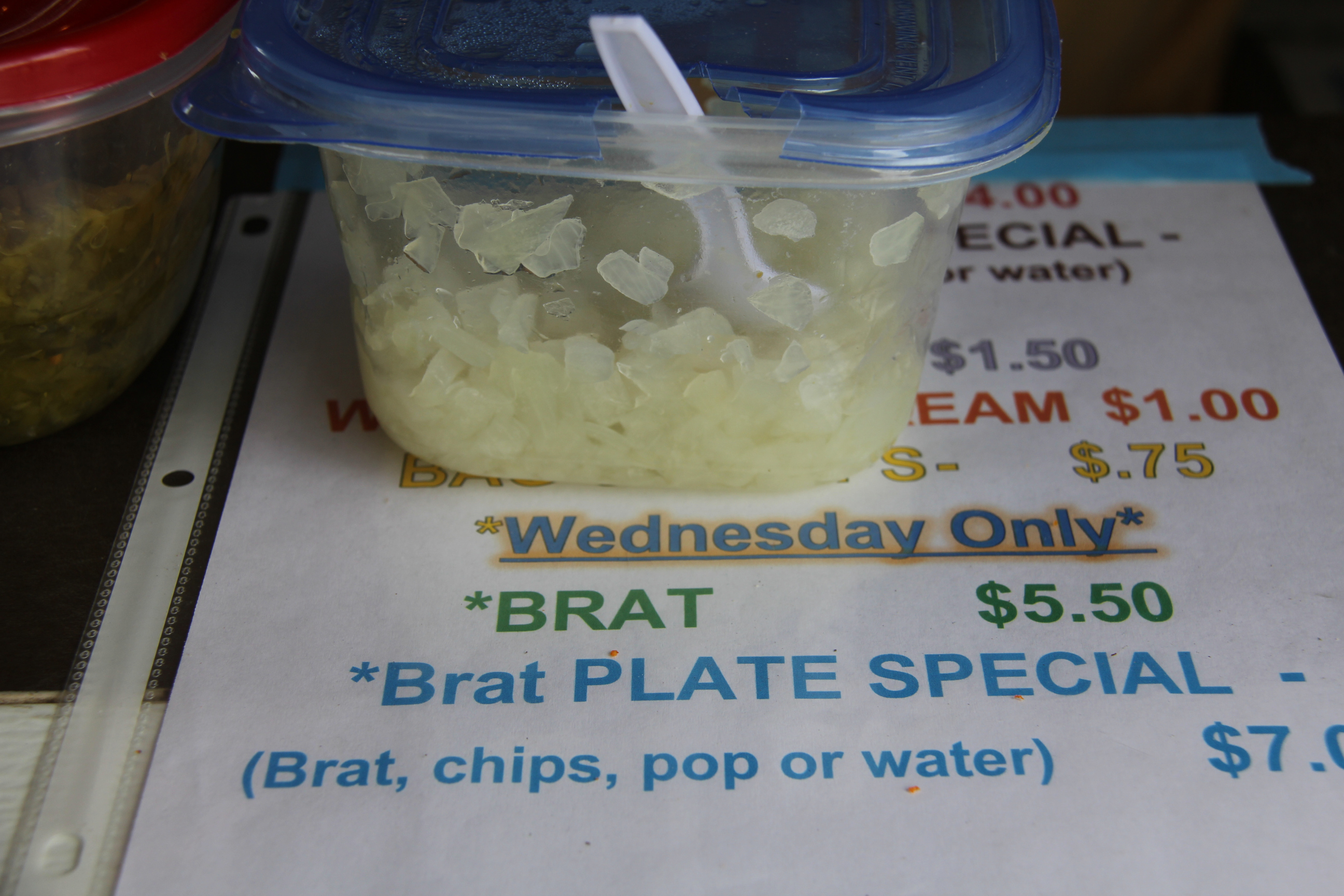
Condiments and menu specials at a serving window. (Minnesota Prairie Roots copyrighted photo June 2024)
The meat comes from Edel’s Meat Market just down the street. The brats, Edel’s Shelterbelt Beer Brats, are made with Shelterbelt beer from Montgomery Brewing, also just down the street. This food stand is all about supporting local.
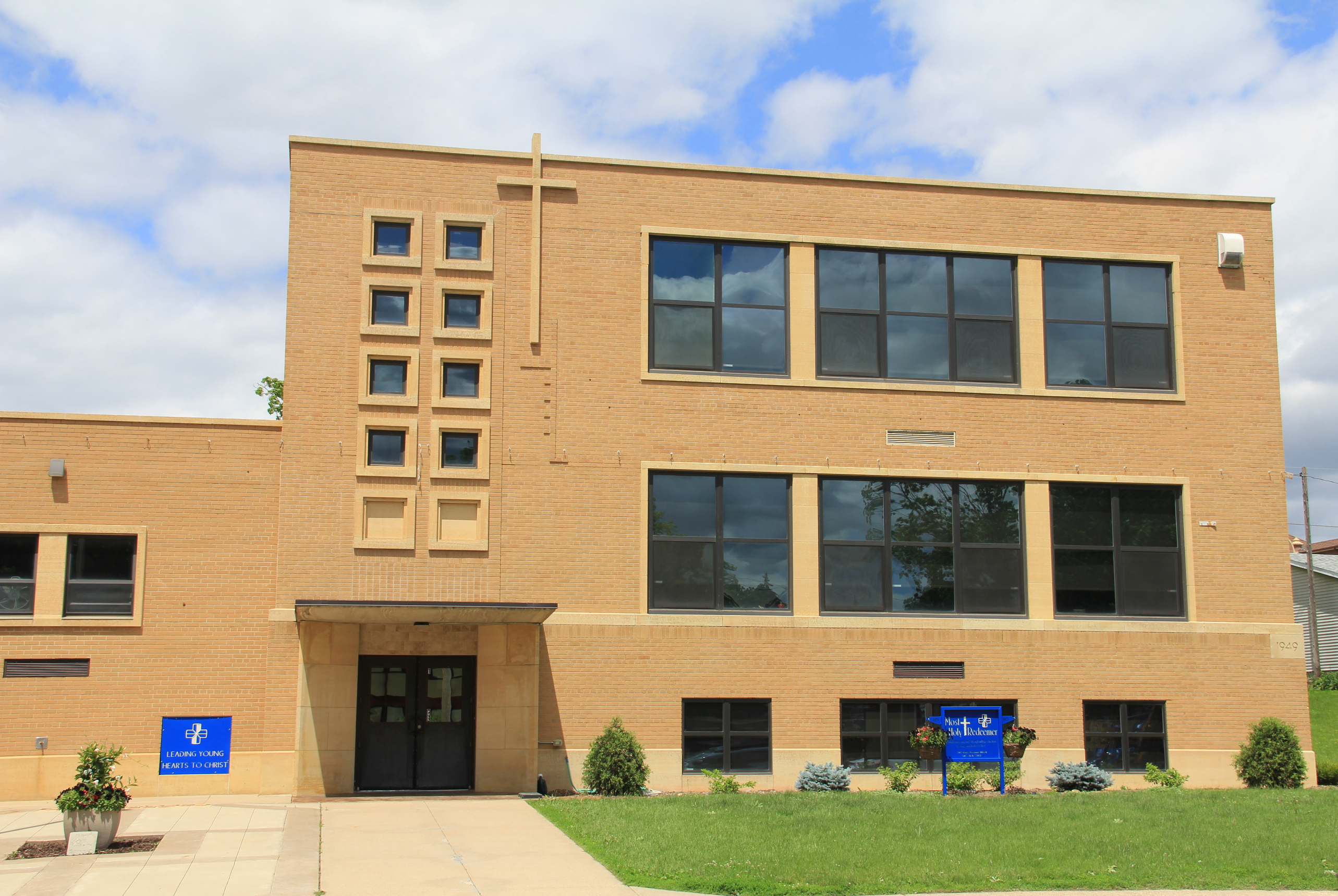
Most Holy Redeemer Catholic School, Montgomery. (Minnesota Prairie Roots copyrighted file photo June 2024)
Proceeds from the stand benefit local entities: youth scholarships/trips, Most Holy Redeemer Catholic Church and School, Tri-City United (the public school) activities, membership death benefits and the Montgomery community in general.
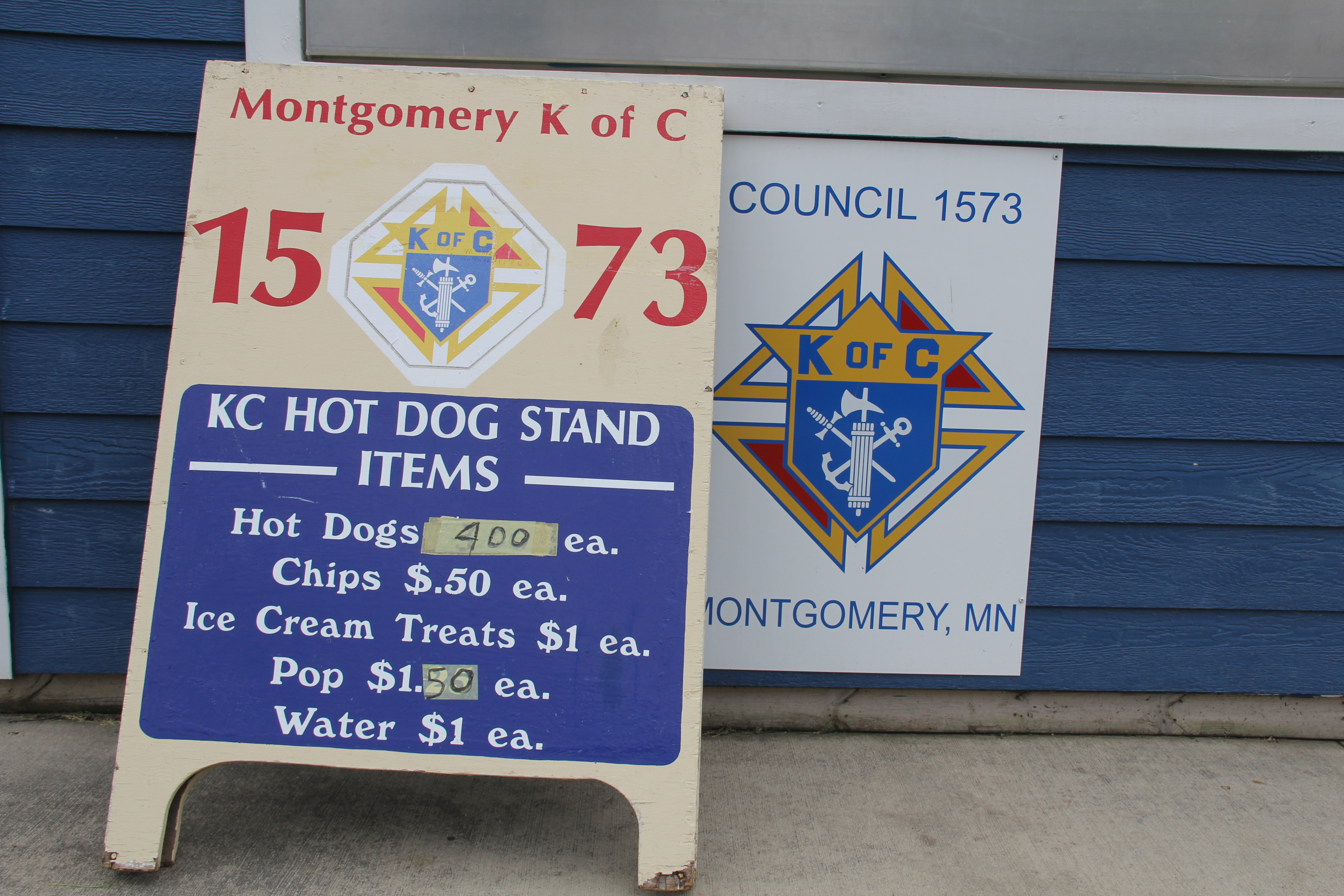
Signage at the KC Food Stand. (Minnesota Prairie Roots copyrighted photo June 2024)
Funds raised here are no chump change. In 2023, the stand grossed $12,000, netted $8,000, according to volunteer Ernie. The KC stand has been around since the 1950s, although not always at today’s location. The stand is meeting a need in the community, the trio of volunteers agreed.
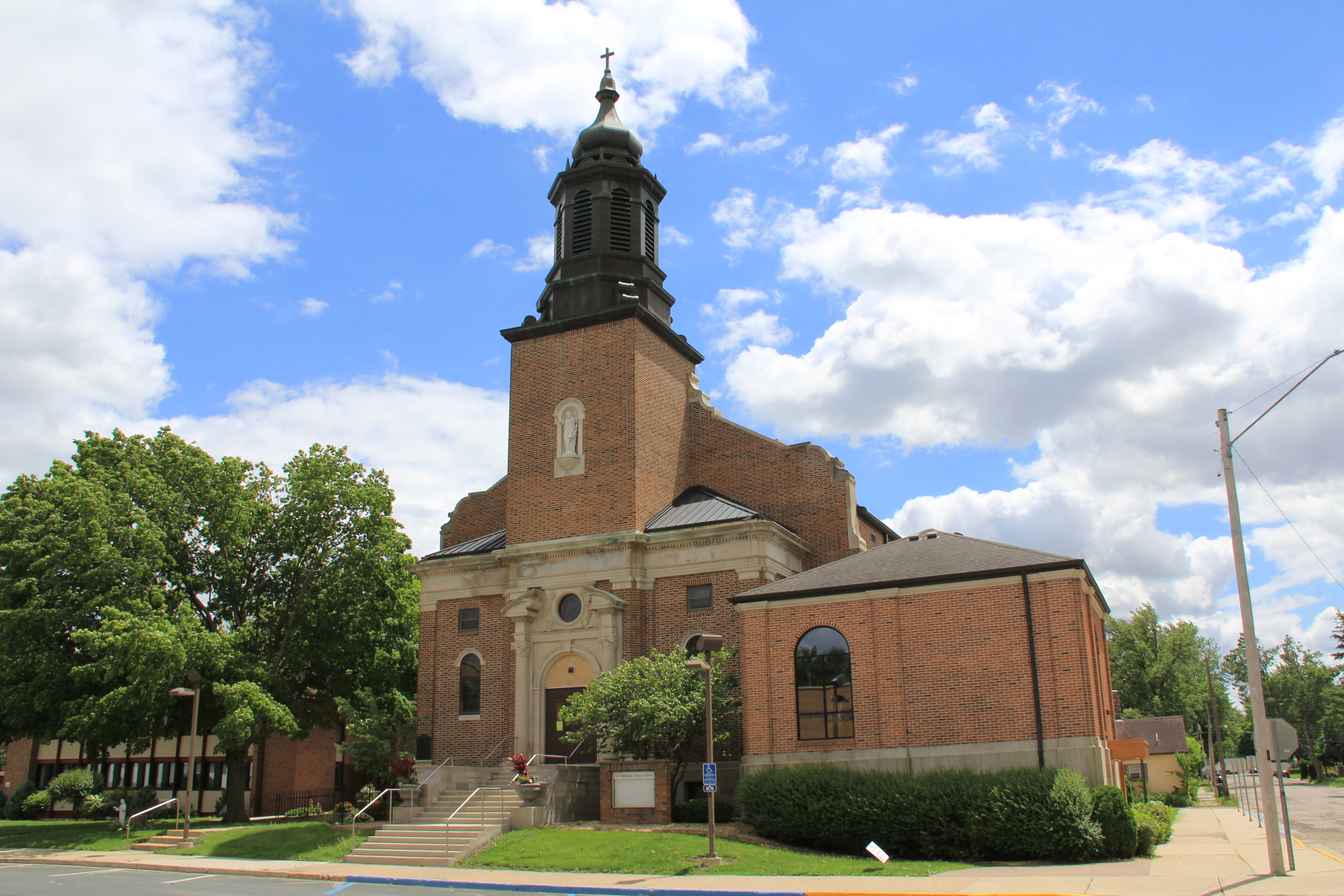
The KC Food Stand is on the same block as Most Holy Redeemer Church, just to the east on the corner. (Minnesota Prairie Roots copyrighted file photo June 2024)
It follows the Knights of Columbus principles of charity, unity and fraternity by giving to the community and bringing people together. I love this about small towns, the way folks work together for the good of people and place. That’s happening in the small blue building on the corner of Vine in Montgomery every weekday during the summer.
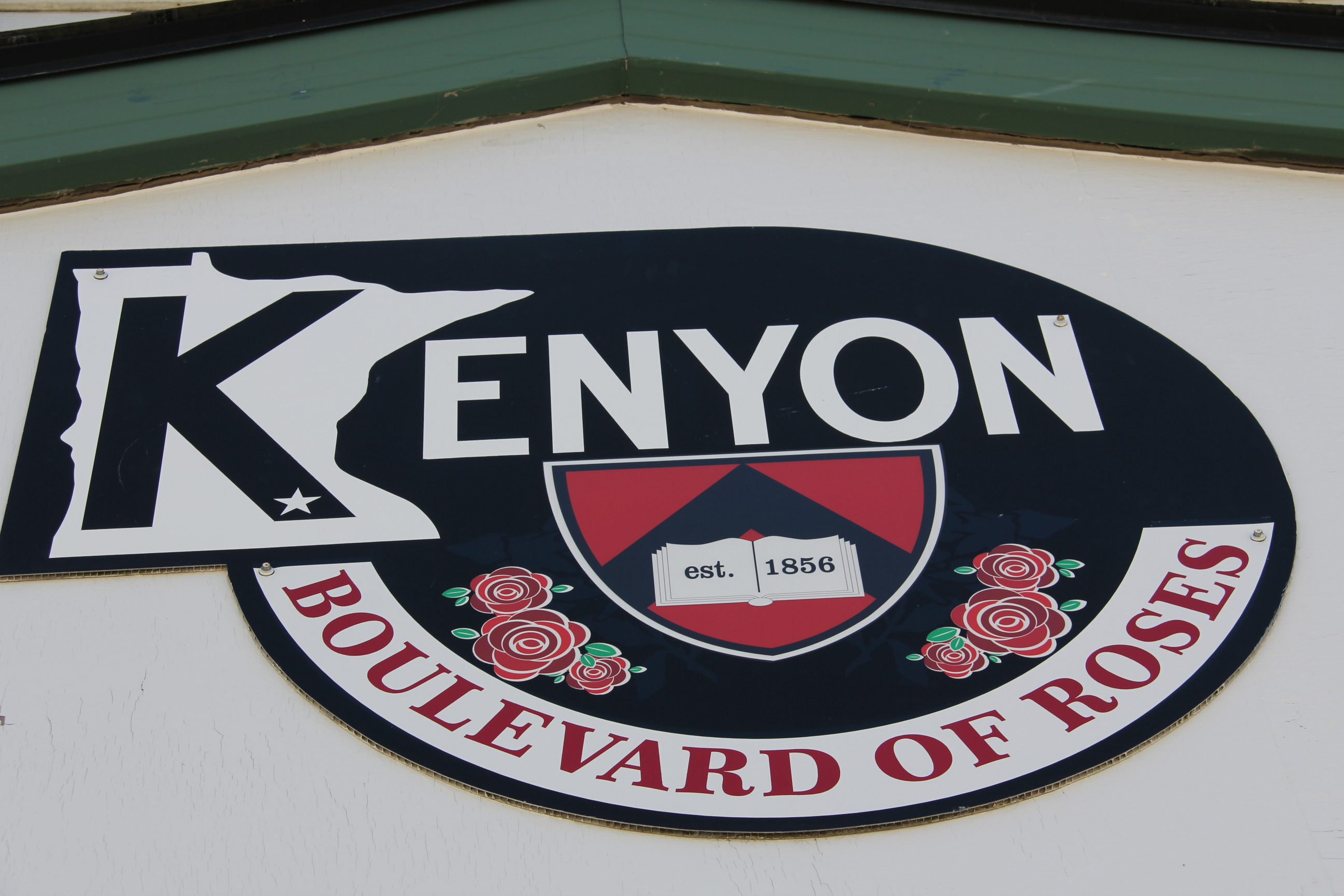
This identifying signage is posted on Kenyon’s city building. (Minnesota Prairie Roots copyrighted photo June 2024)
WHEN IT COMES to branding, everything is coming up roses in Kenyon. Literally.
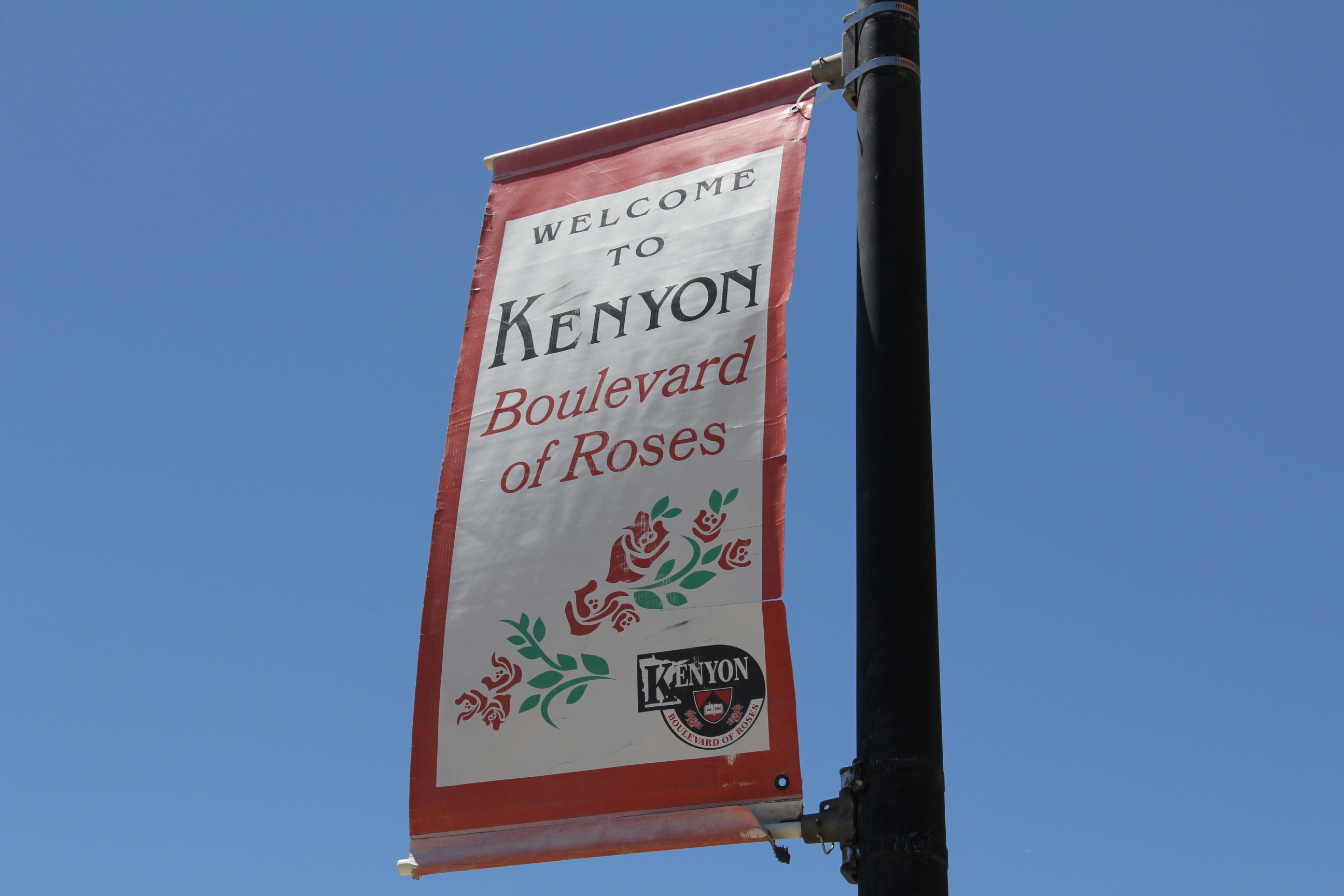
Welcome to Kenyon and its Boulevard of Roses. (Minnesota Prairie Roots copyrighted photo June 2024)
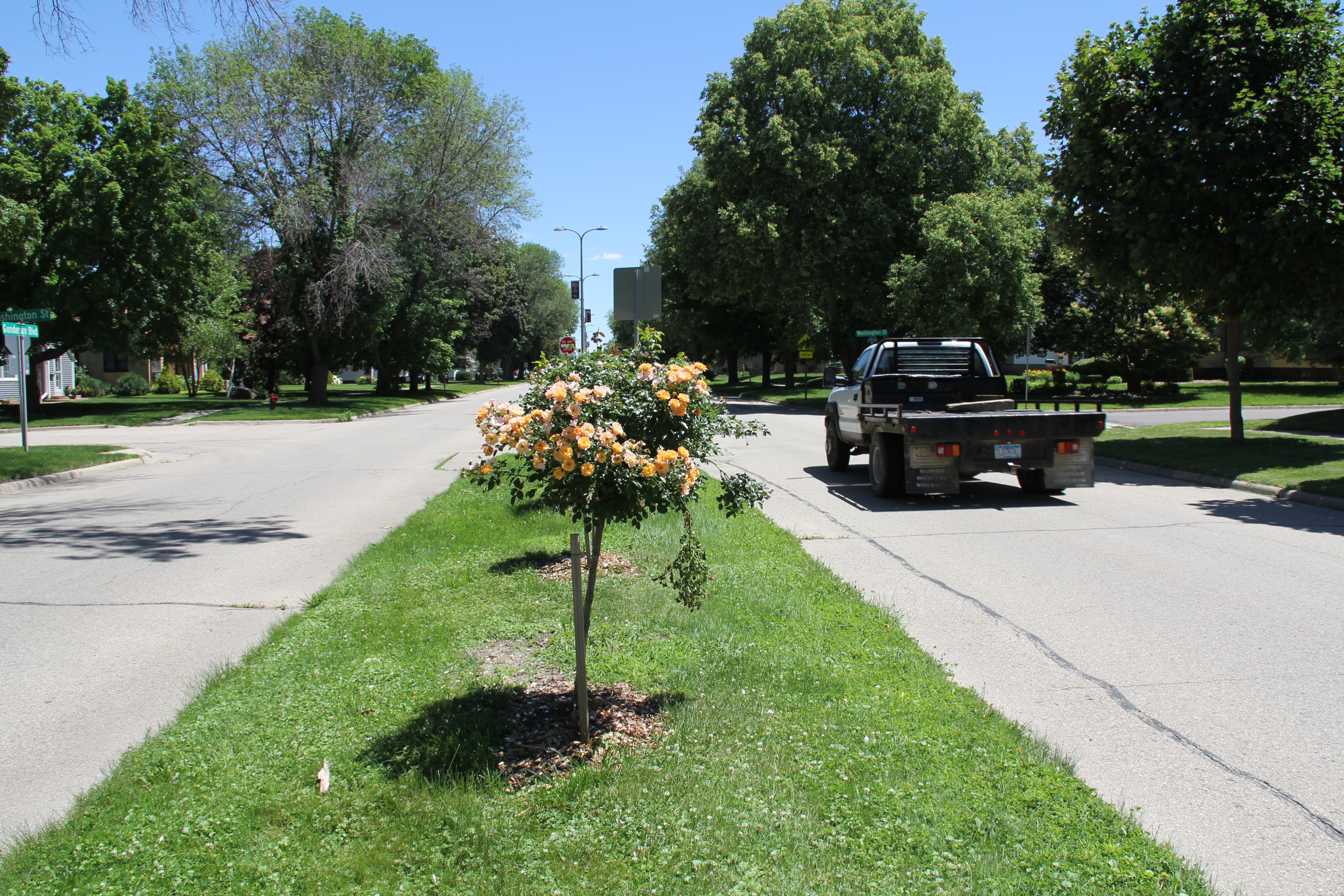
Roses bloom throughout the summer in the boulevard. (Minnesota Prairie Roots copyrighted photo June 2024)
So many lovely roses… (Minnesota Prairie Roots copyrighted photo June 2024)
This community of just under 2,000 identifies itself via its Boulevard of Roses which is, indeed, a rose-filled boulevard on Minnesota State Highway 60/Gunderson Boulevard. For blocks along this heavily-traveled roadway on the west side of downtown, tree roses grow, blooming beauty into the landscape.
So many beautiful roses in assorted hues. (Minnesota Prairie Roots copyrighted photo June 2024)
Whether growing individually or in clusters, these tree roses are glorious. (Minnesota Prairie Roots copyrighted photo June 2024)
Traffic whizzes by on both sides as you smell/view the roses. (Minnesota Prairie Roots copyrighted photo June 2024)
Recently, I stopped to smell the roses. Literally. I dipped my nose into the perfume-scented flowers, delighting in their fragrance as semi trucks and other motor vehicles blew by me only feet away. Smelling the roses here requires caution. I’ve often wished Kenyon had a public rose garden, allowing for rose viewing, and smelling, in a peaceful setting.
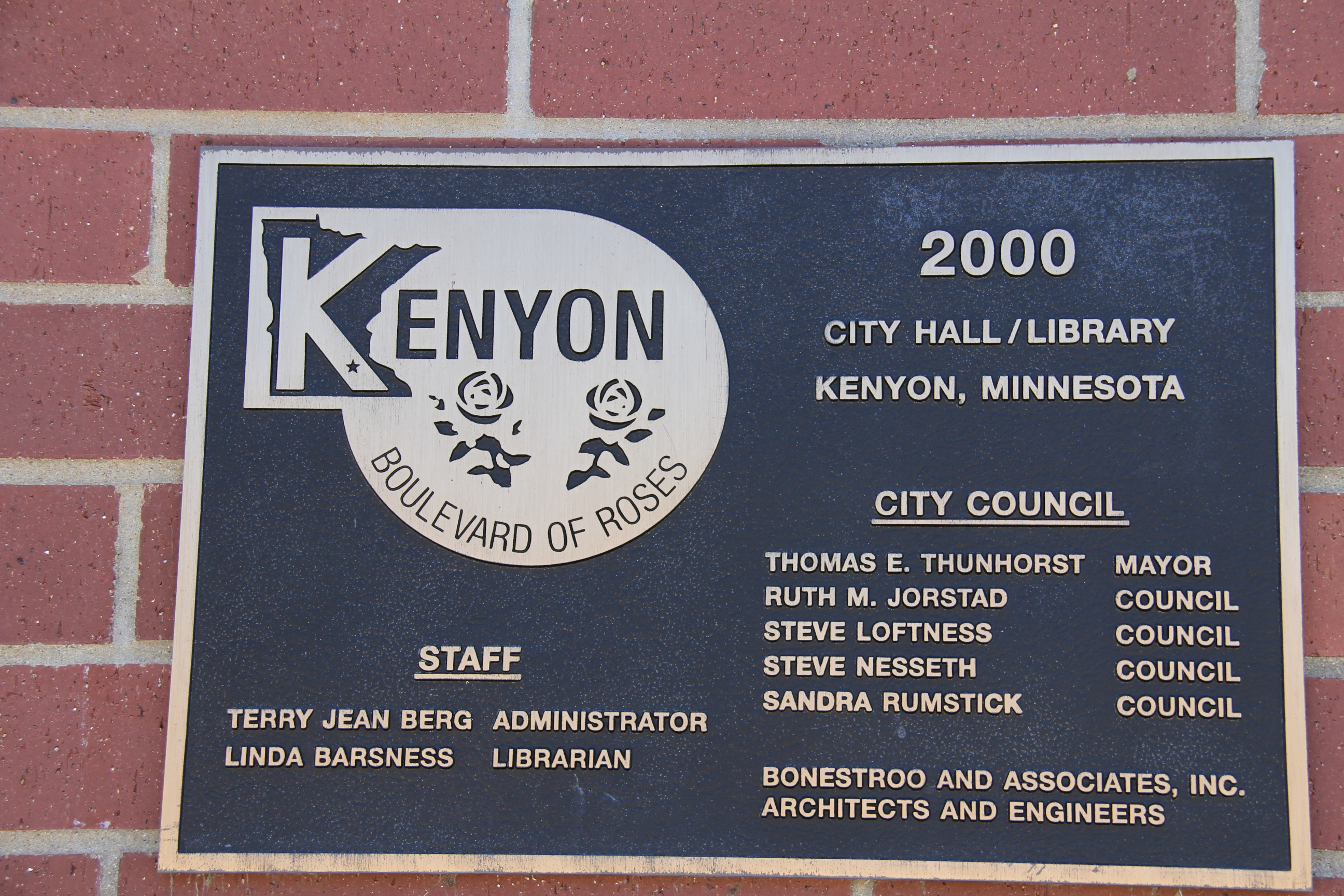
Even a plaque on Kenyon’s city building has the rose brand. (Minnesota Prairie Roots copyrighted photo June 2024)
But that the city has this, this Boulevard of Roses, is a gift. Back in 1962, city employee Lloyd Jystad asked to plant 10 tree roses to spruce up the boulevard. Permission granted. He cared for the rose bushes, which require burying in the ground before winter and then uncovering in the spring. From that initial request, the rose idea grew to include some 100 bushes, which are still cared for by city employees today. The Boulevard of Roses was dedicated in June 1968. That’s a long time of growing and tending roses.
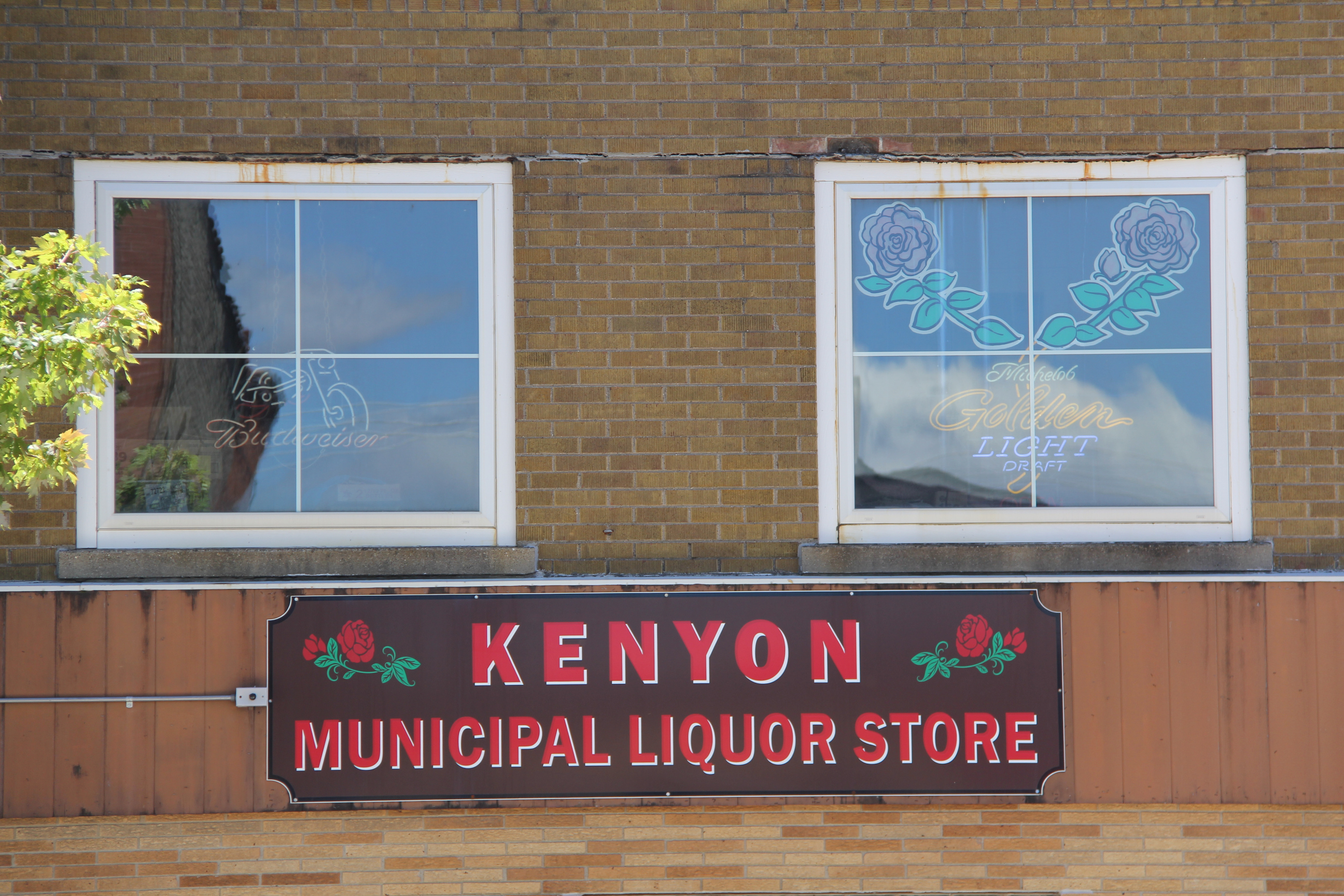
Rose branding on the city liquor store. (Minnesota Prairie Roots copyrighted photo June 2024)
Throughout Kenyon, roses bloom. In many ways, it’s remarkable for a community this small to have such a strong identifier. But I saw roses everywhere during a recent visit, far beyond the real ones that bloom along the highway. The red rose symbol graces many a sign in Kenyon.
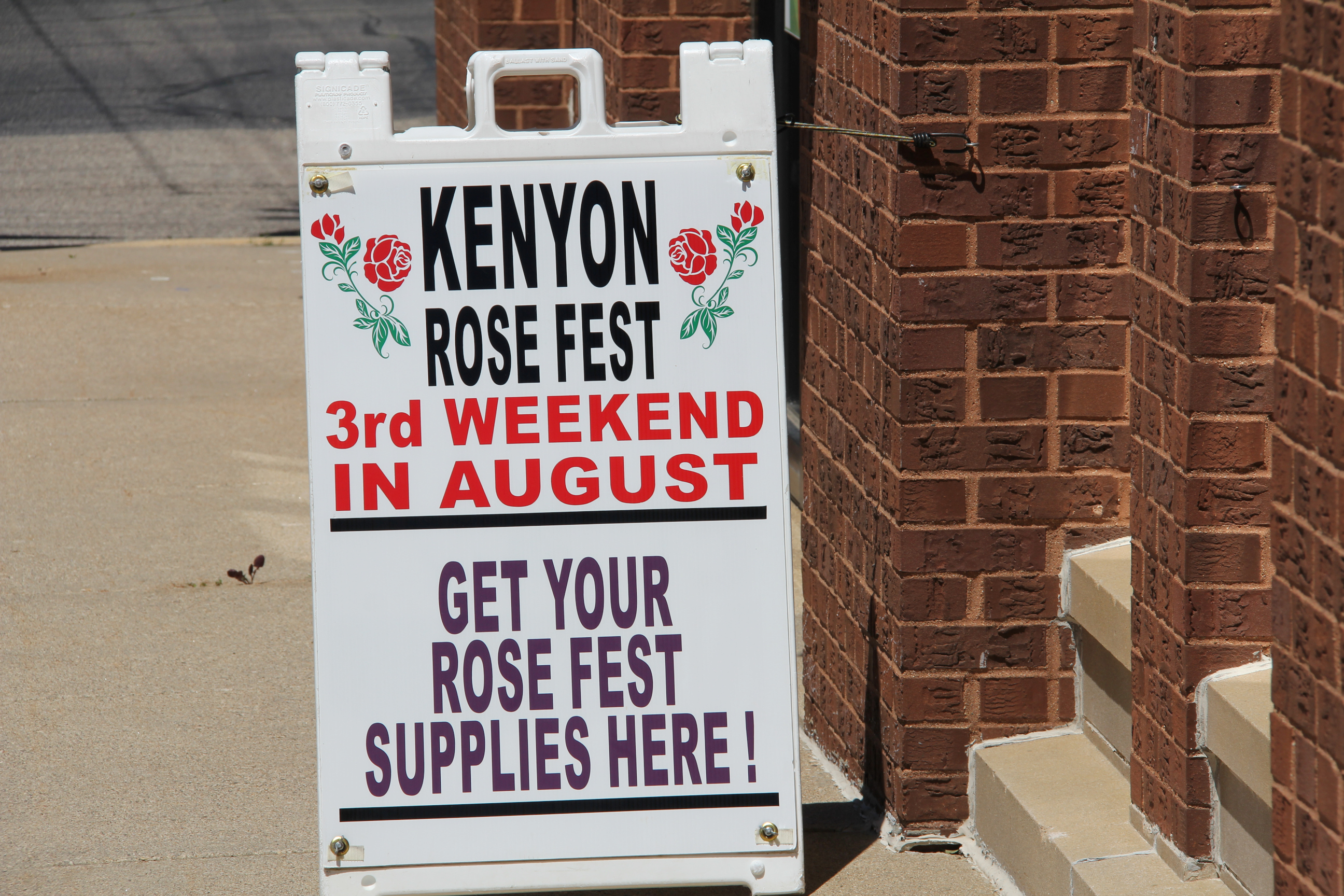
A sandwich board sits outside a small business well in advance of Rose Fest. (Minnesota Prairie Roots copyrighted photo June 2024)
Business branding on a shop door. (Minnesota Prairie Roots copyrighted photo June 2024)
Promoting the upcoming Rose Fest car and truck show in a storefront window. (Minnesota Prairie Roots copyrighted photo June 2024)
The city also celebrates roses in August with the Kenyon Rose Fest, this year August 14-18. It’s your typical small town summer celebration with fest royalty, a parade, a car and truck show, vendor and craft market, great food, and more. Mostly, Rose Fest is about connecting people and community. It brings folks together to celebrate small town life.
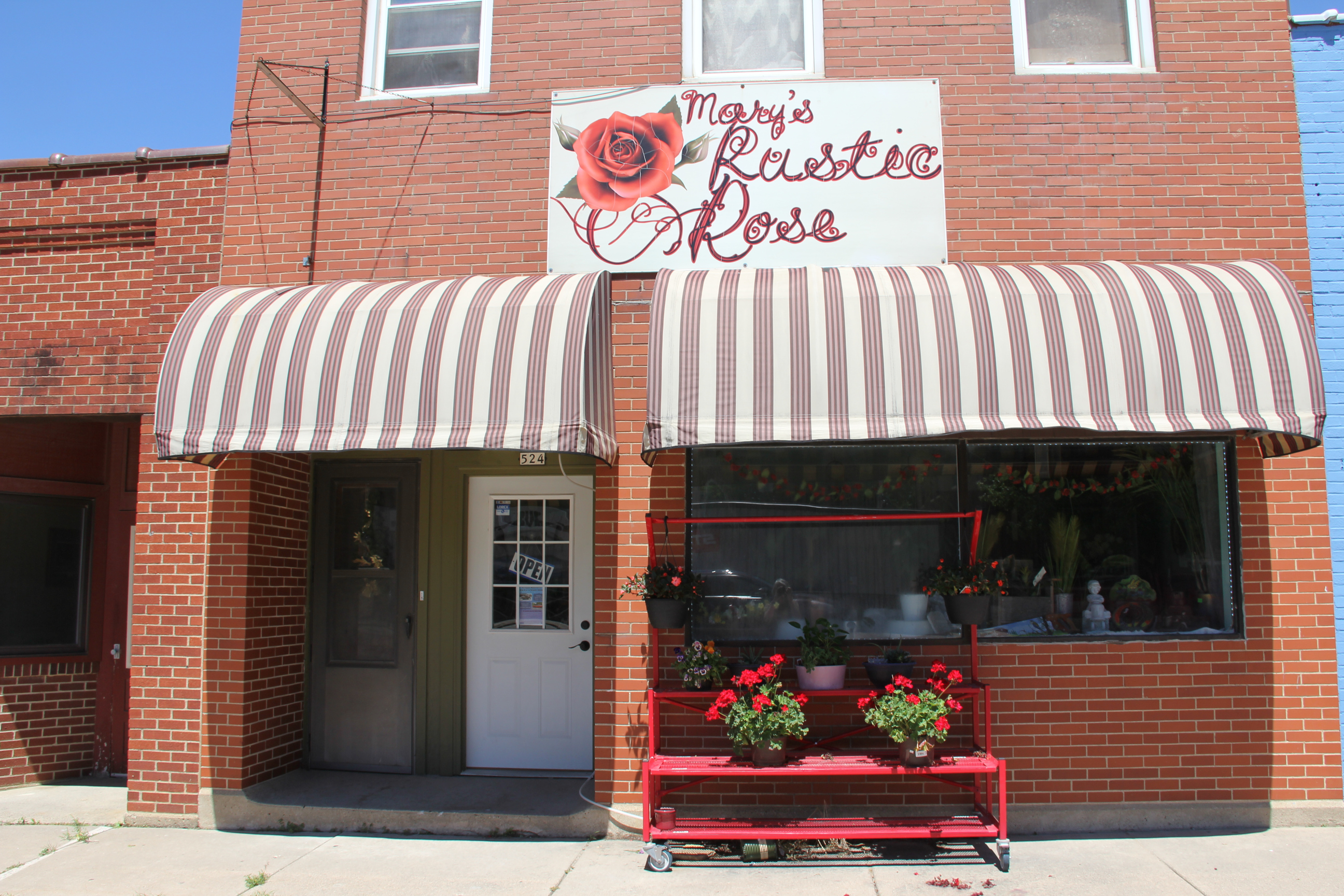
A fitting name for a floral shop in Kenyon. (Minnesota Prairie Roots copyrighted photo June 2024)
I often wonder if motorists, as they drive through Kenyon in their hurry from Point A to Point B, even notice the beauty they’re passing by in the Boulevard of Roses. I’m here to say it’s worth your time to stop, exit your vehicle and smell the roses. Life is much sweeter when we slow down and appreciate the nuances of small towns like Kenyon with its Boulevard of Roses.
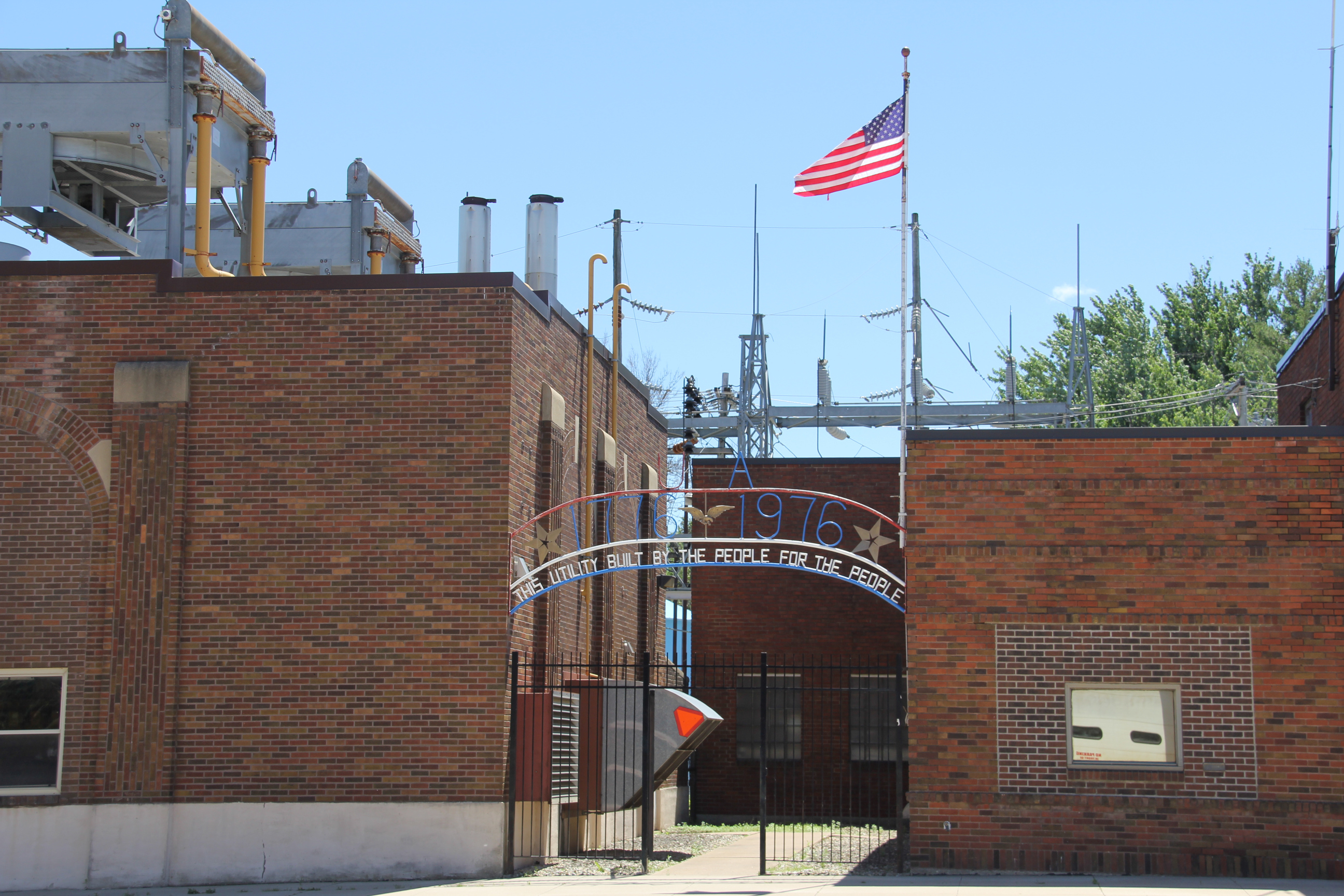
At the Kenyon Public Utilities building, signage marks the birth and bicentennial of our country from 1776-1976. (Minnesota Prairie Roots copyrighted photo June 2024)
BUILT BY THE PEOPLE FOR THE PEOPLE. I suppose in many ways that could describe the building of America. We are a nation built by the people on the principles of freedom, of democracy. That’s important to remember in the hoopla of the Fourth of July, a holiday synonymous with BBQs, parades, fireworks and a day off from work.
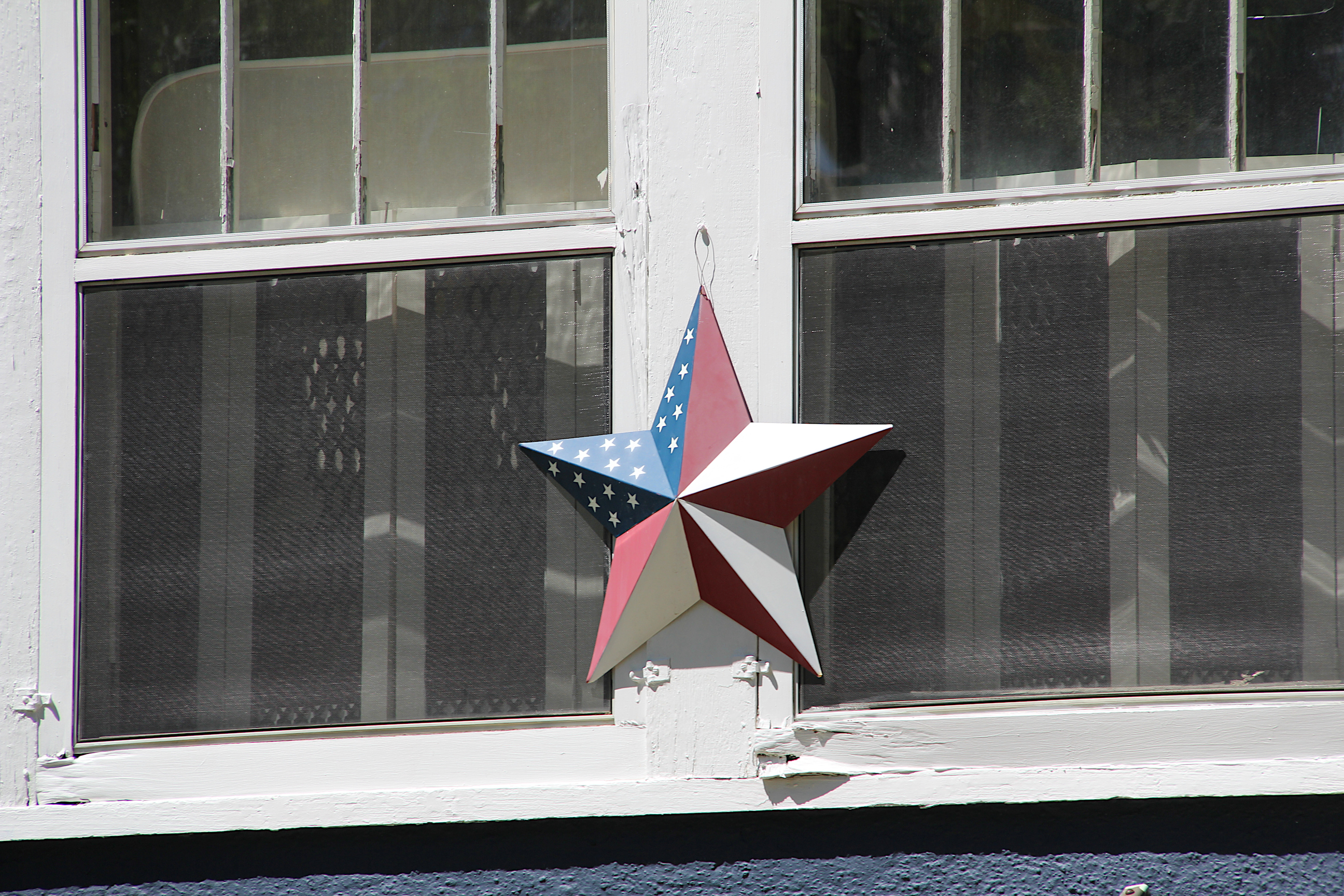
Spotted on a house in Kenyon. (Minnesota Prairie Roots copyrighted photo June 2024)
But the founding of our country, the birth of a nation, is at the core of our July Fourth celebration. Or at least it should be.
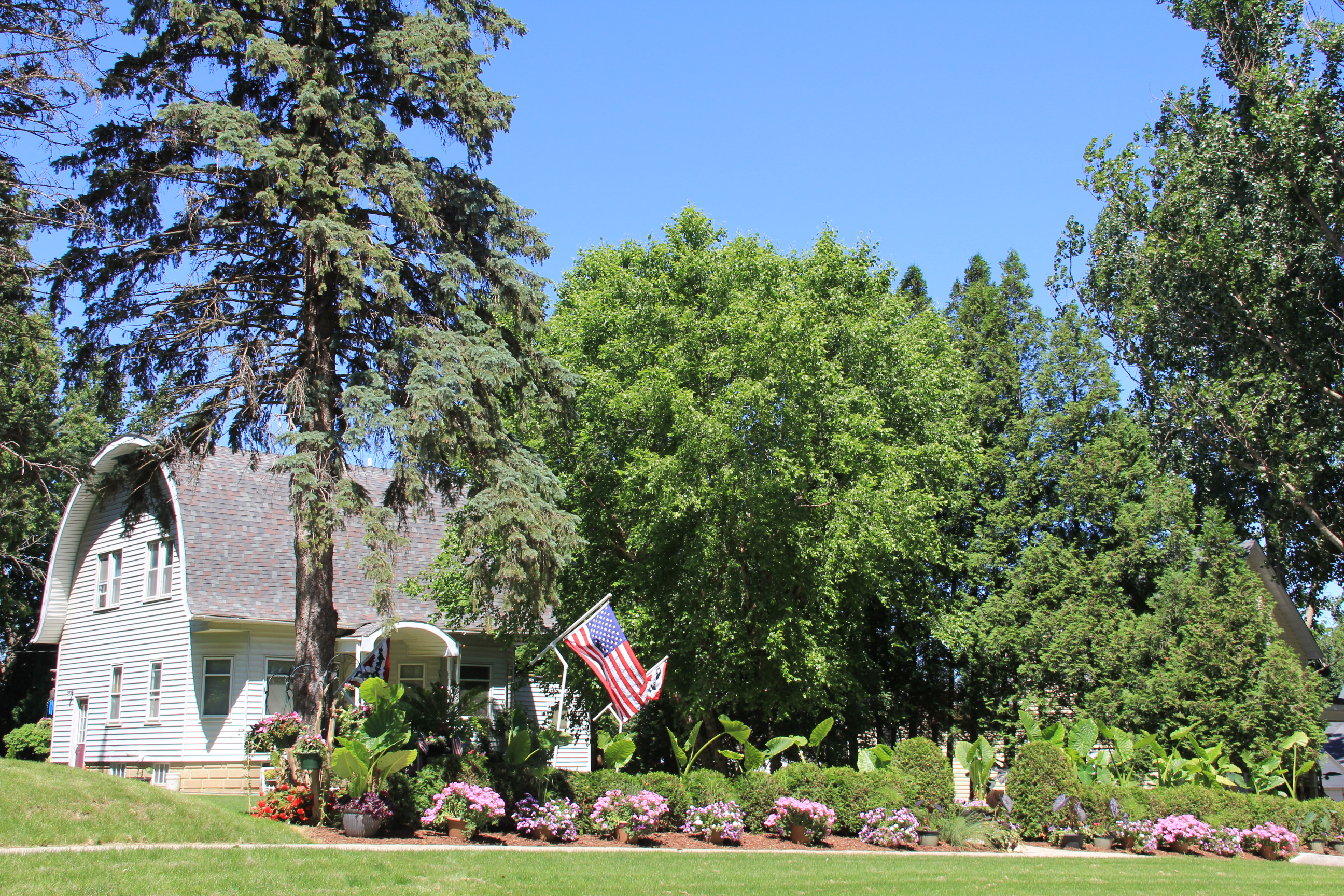
A stunning house along Red Wing Avenue showcases beautiful landscaping and the red-white-and-blue. (Minnesota Prairie Roots copyrighted photo June 2024)
On recent day trips to several small towns in southern Minnesota, I noticed the red-white-and-blue on full display. Visual reminders that loyalty to country and liberty are still cherished.
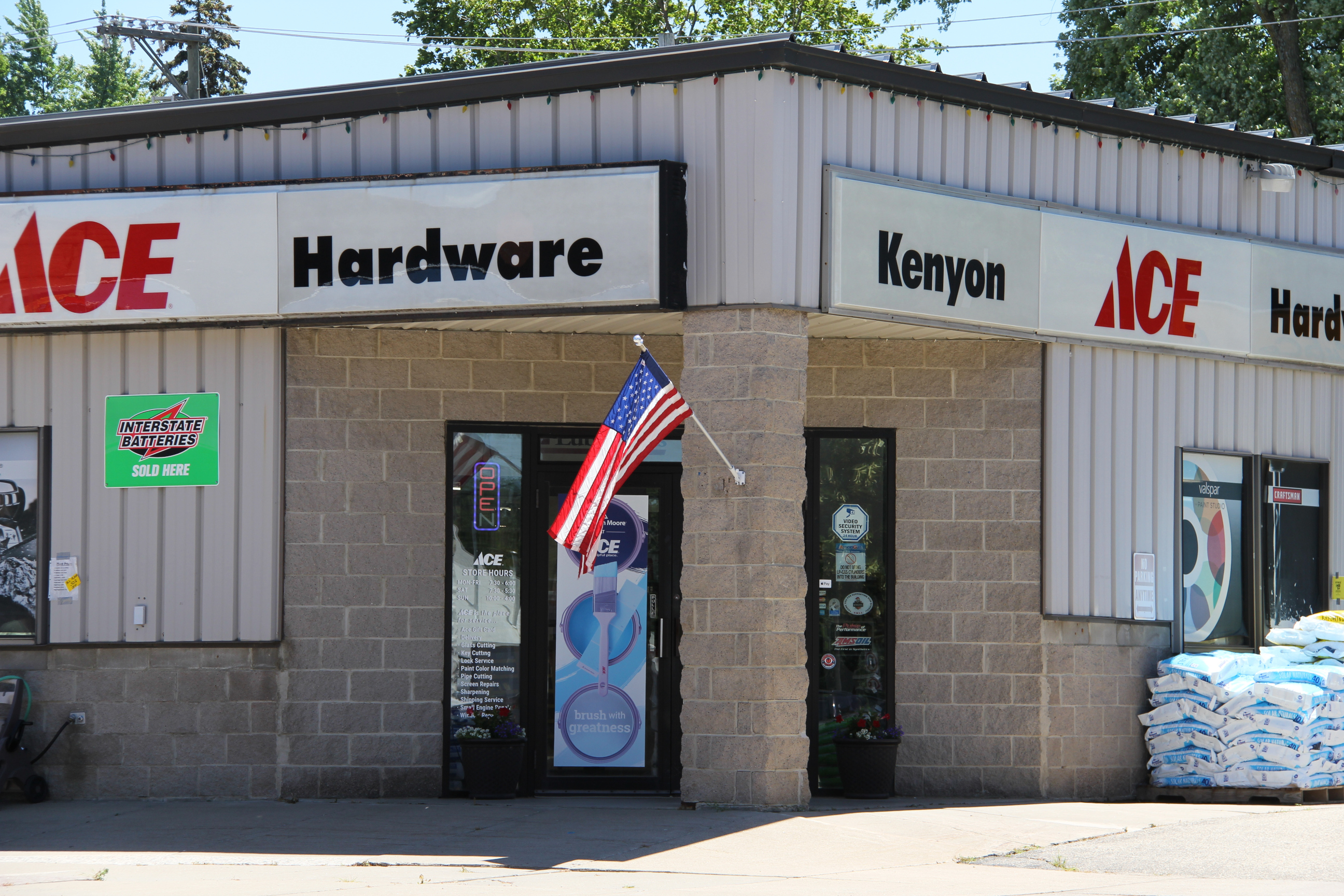
A flag flies at Kenyon’s hardware store. (Minnesota Prairie Roots copyrighted photo June 2024)
I appreciate when people, businesses, governments showcase the colors of this country in ways that honor and respect the integrity of America. Not to make a political statement.
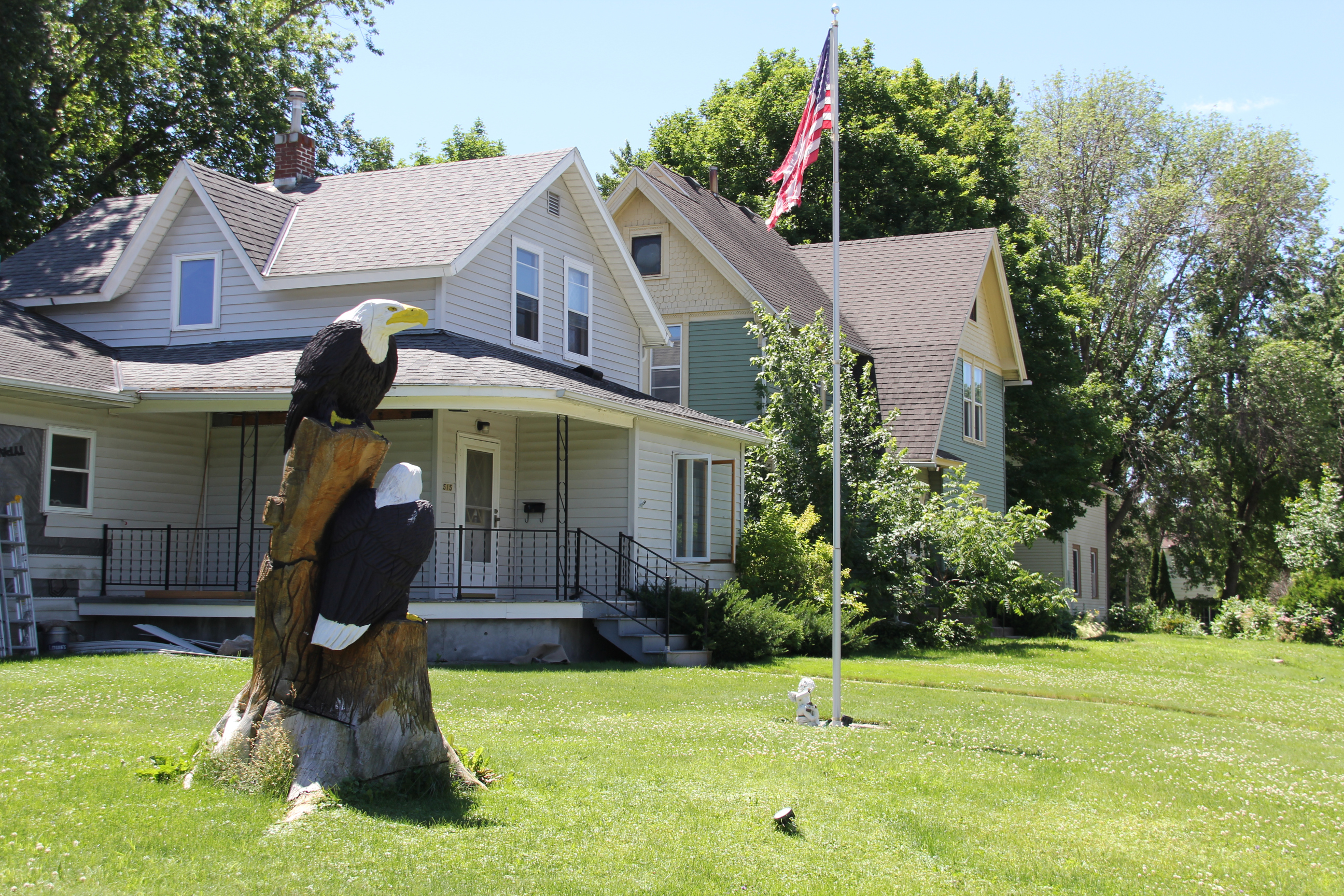
Patriotism in carved eagles and an American flag in a Kenyon neighborhood. (Minnesota Prairie Roots copyrighted photo June 2024)
In Kenyon, a rural community of just under 2,000 in Goodhue County, I found an array of red-white-and-blue. From Main Street to residential neighborhoods, locals have infused the colors of our country into the landscape.
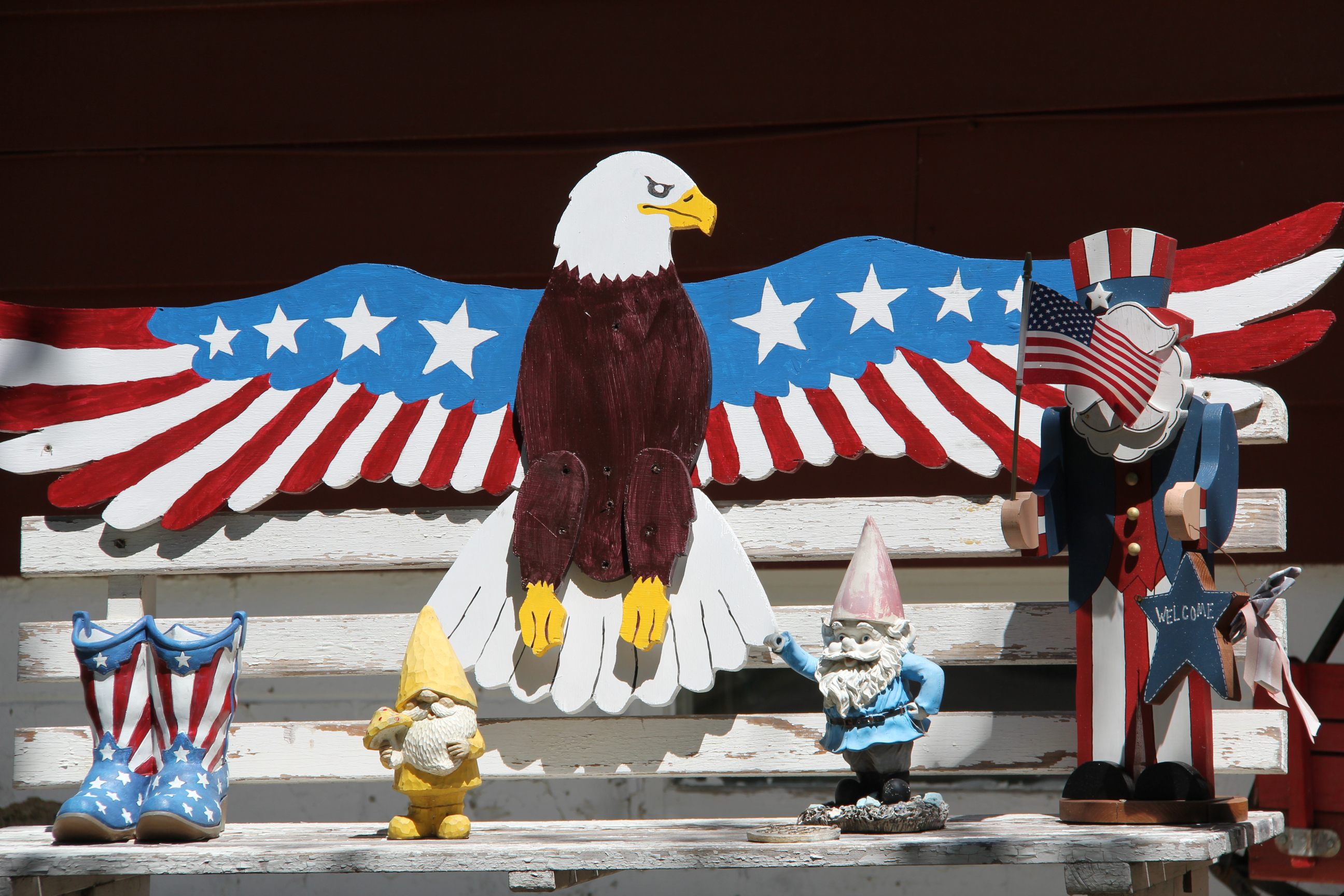
Allan and Connie Turner have lots of kitschy handcrafted art in their yard at the corner of Red Wing Avenue and Eighth Street next to the Kenyon water tower. (Minnesota Prairie Roots copyrighted photo 2024)
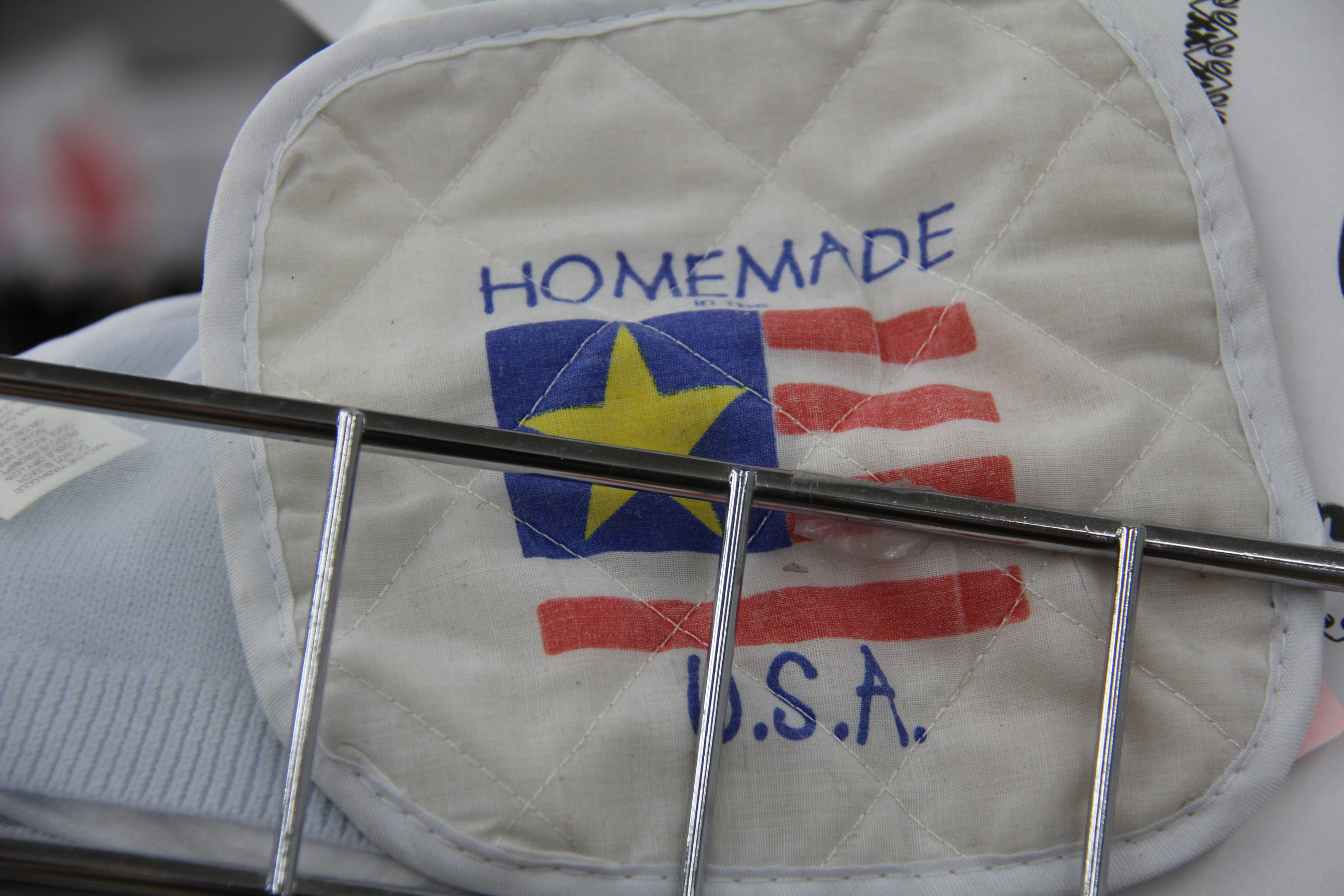
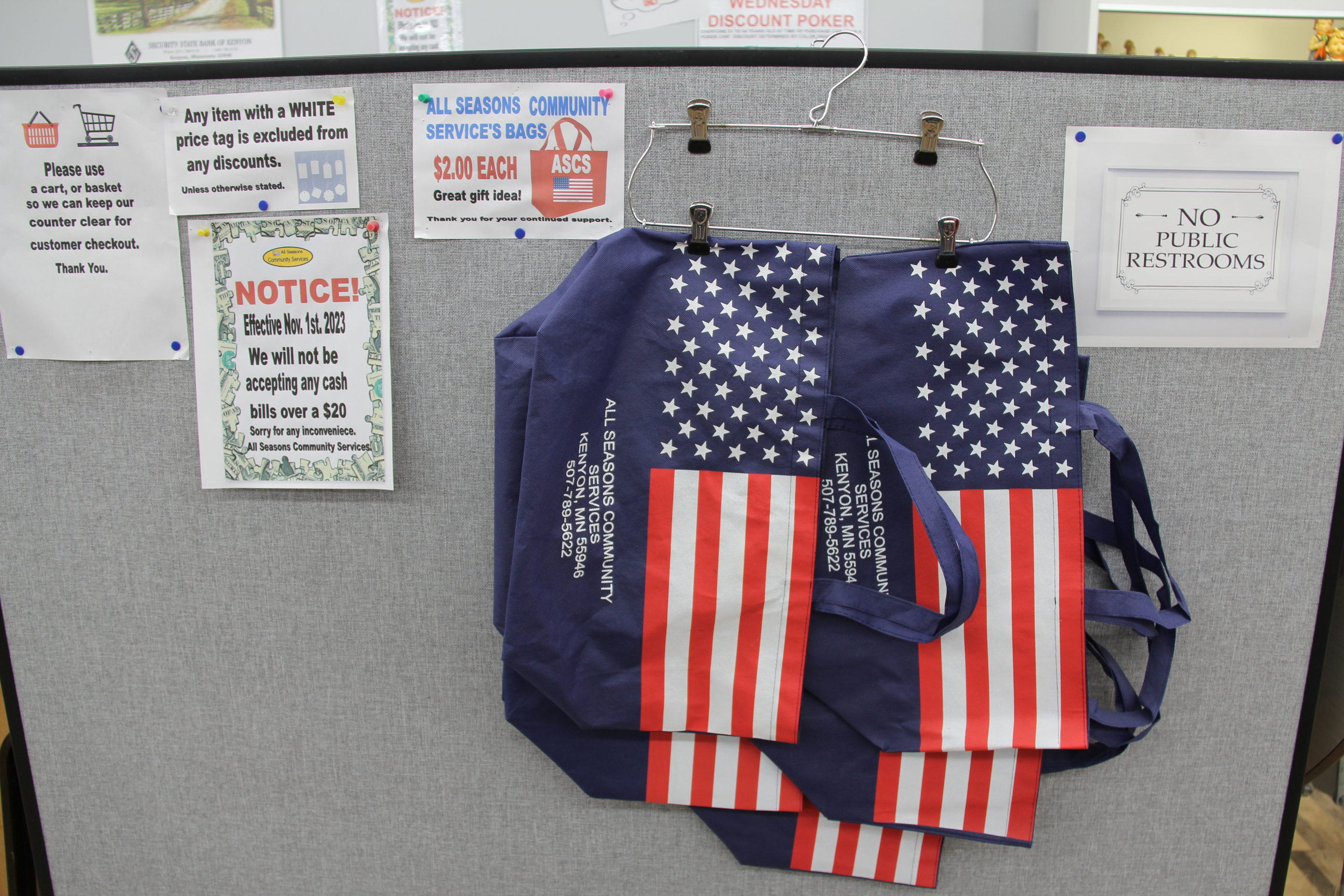
American made sold at All Seasons Thrift Store. (Minnesota Prairie Roots copyrighted photo June 2024)
Patriotic bags for sale in the thrift shop. (Minnesota Prairie Roots copyrighted photo June 2024)
Flags fly. Kitschy yard art celebrates the Fourth. Even inside a thrift store, American pride shows.
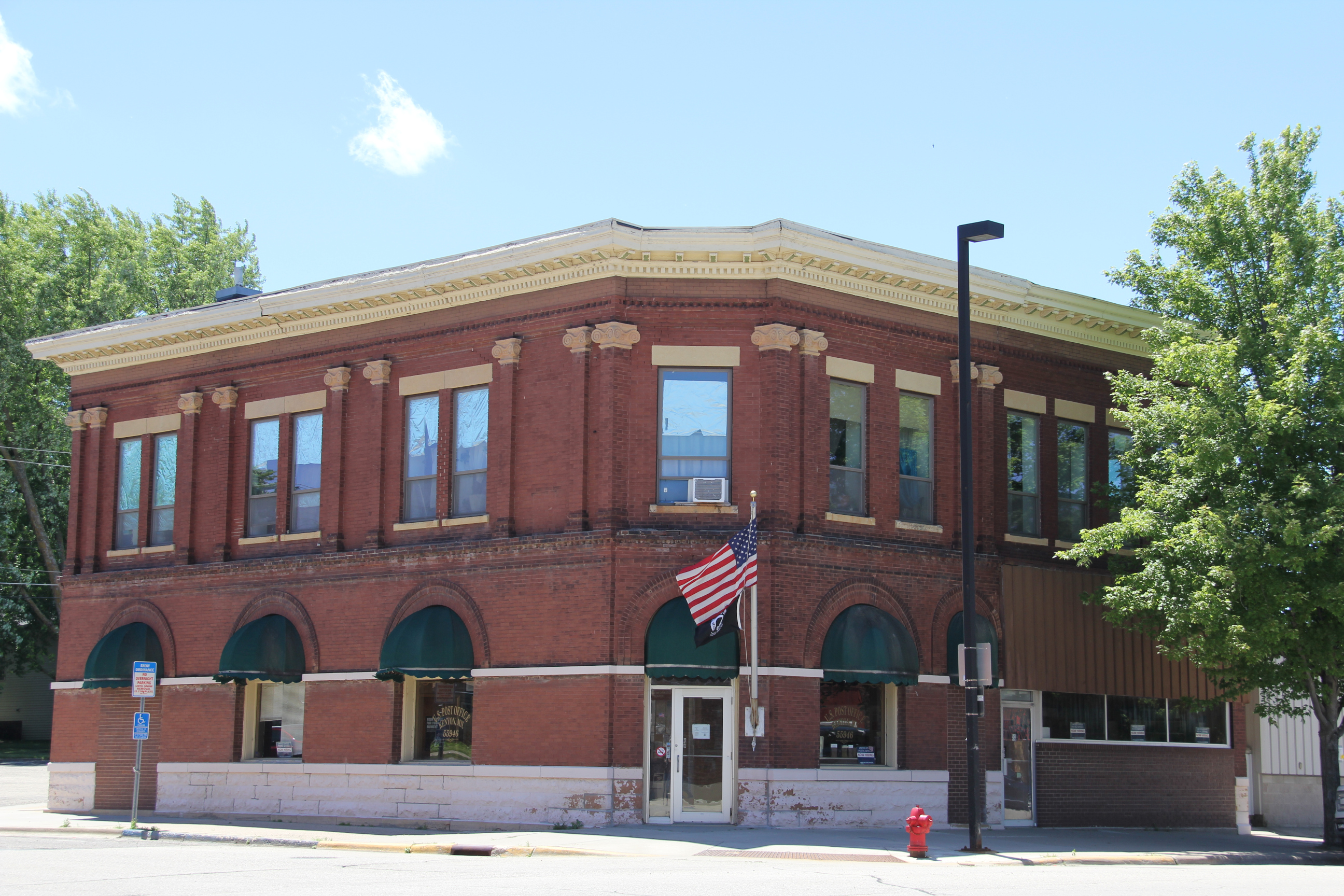
An American and MIA flag fly at the Kenyon Post Office. (Minnesota Prairie Roots copyrighted photo June 2024)
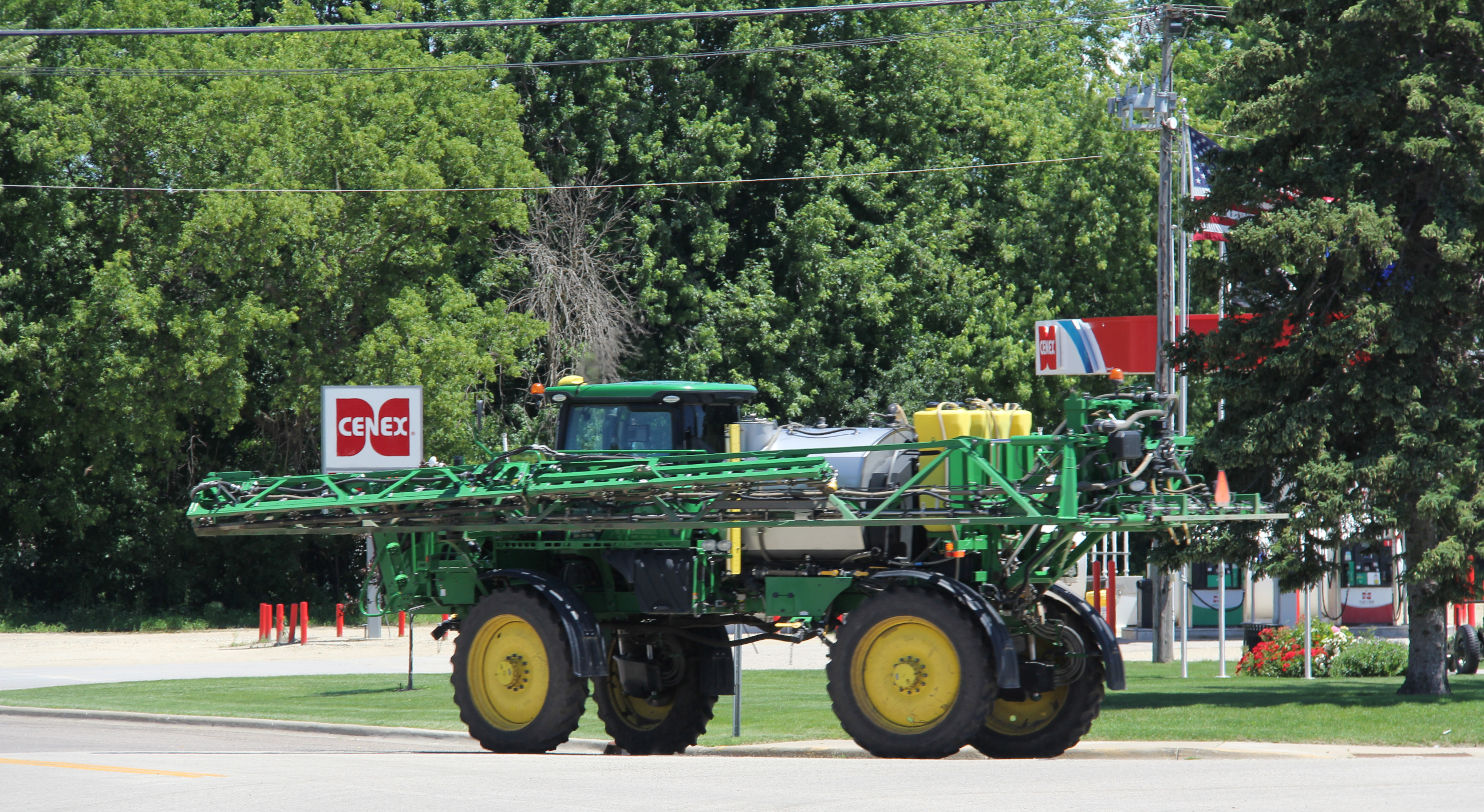
An American flag is barely visible to the right as a sprayer passes Kenyon’s veterans’ memorial. (Minnesota Prairie Roots copyrighted photo June 2024)
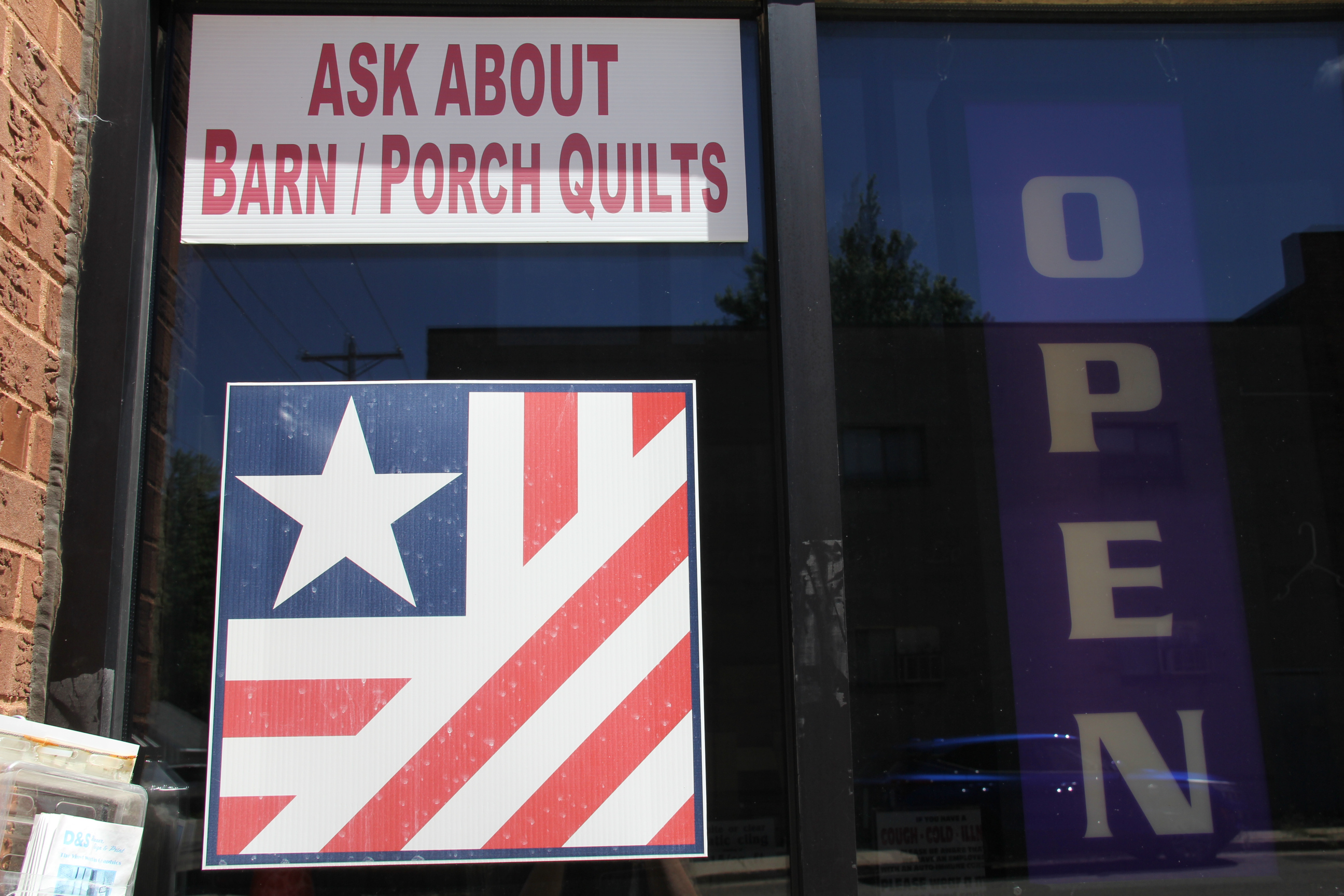
A patriotic barn and porch quilt, available at D & S Banner, Sign & Print. (Minnesota Prairie Roots copyrighted photo June 2024)
This is America. From small town to big city. From coast-to-coast. No matter where we live in this big wide country, we are, today, one nation celebrating the birth of our nation.
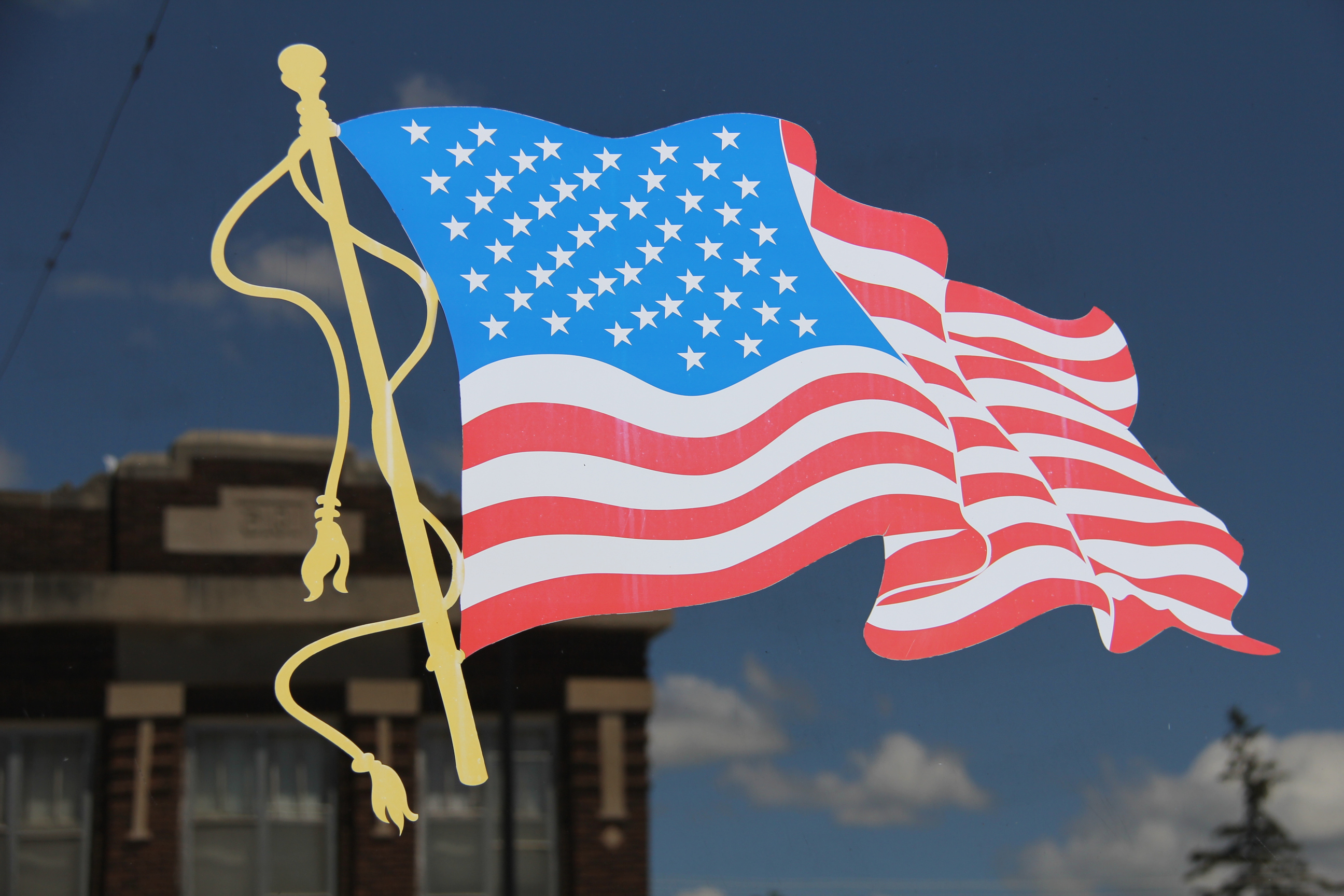
One of several flag decals in the windows of the VFW. (Minnesota Prairie Roots copyrighted photo June 2024)
Happy birthday, America! And happy Fourth of July, dear readers!
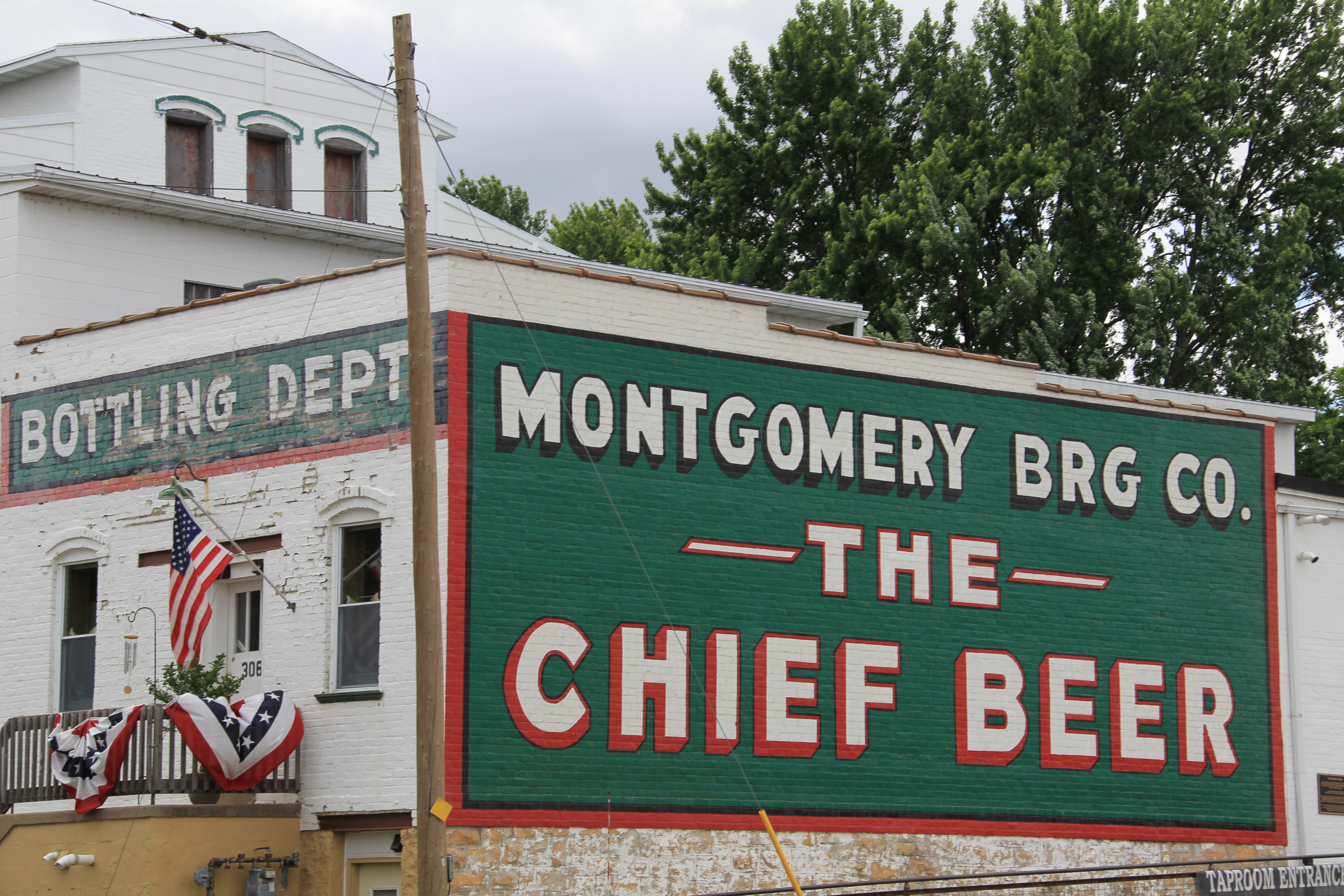
American pride displayed at a brewery in Montgomery, Minnesota. (Minnesota Prairie Roots copyrighted photo June 2024)
O say, does that star-spangled banner yet wave
O’er the land of the free and the home of the brave.
A flag flies from the popular Franke’s Bakery in downtown Montgomery. (Minnesota Prairie Roots copyrighted photo June 2024)
How often have you sung those words, heard those lyrics, considered the meaning of our national anthem? Perhaps, after time, the words have become simply rote, voiced without much thought of their meaning.
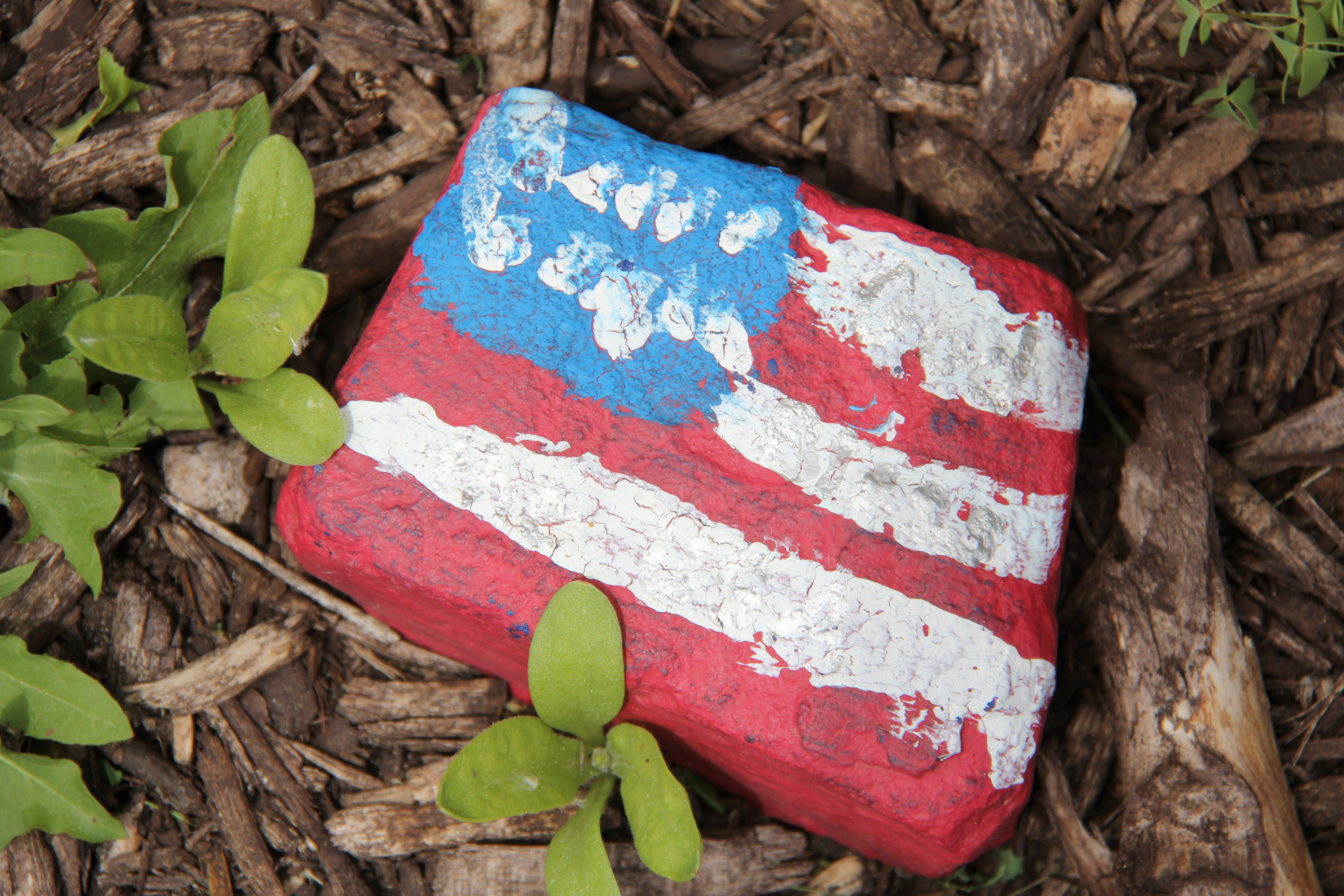
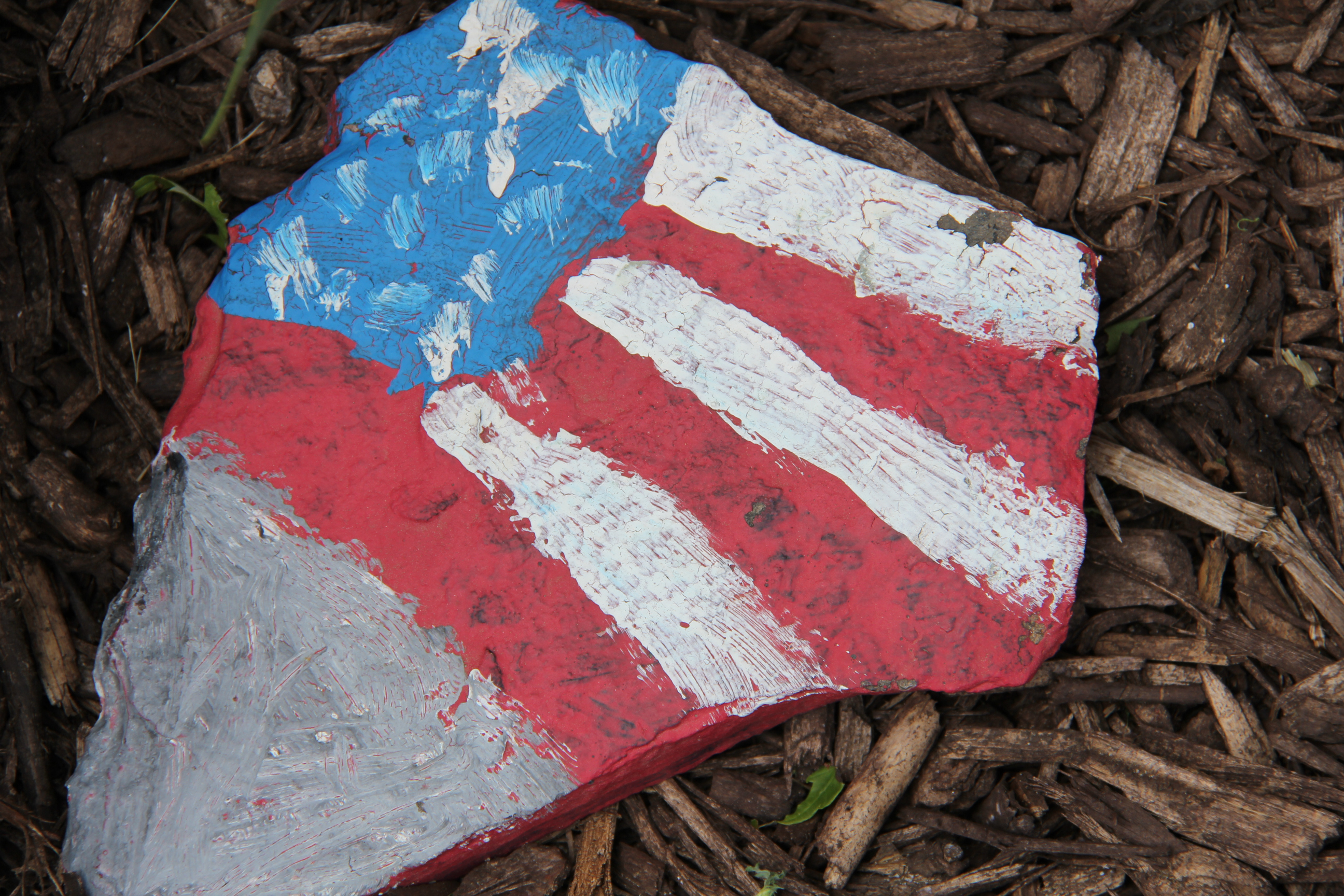
A flag rock in a flower garden at Most Holy Redeemer Catholic School. (Minnesota Prairie Roots copyrighted photo June 2024)
Our nation’s birthday seems a good time to ponder the depth of bravery required to attain and maintain our freedom. It’s come at great cost with loss of life and physical, mental and emotional trauma. And, at times, with events that have rocked the very core of our democracy.
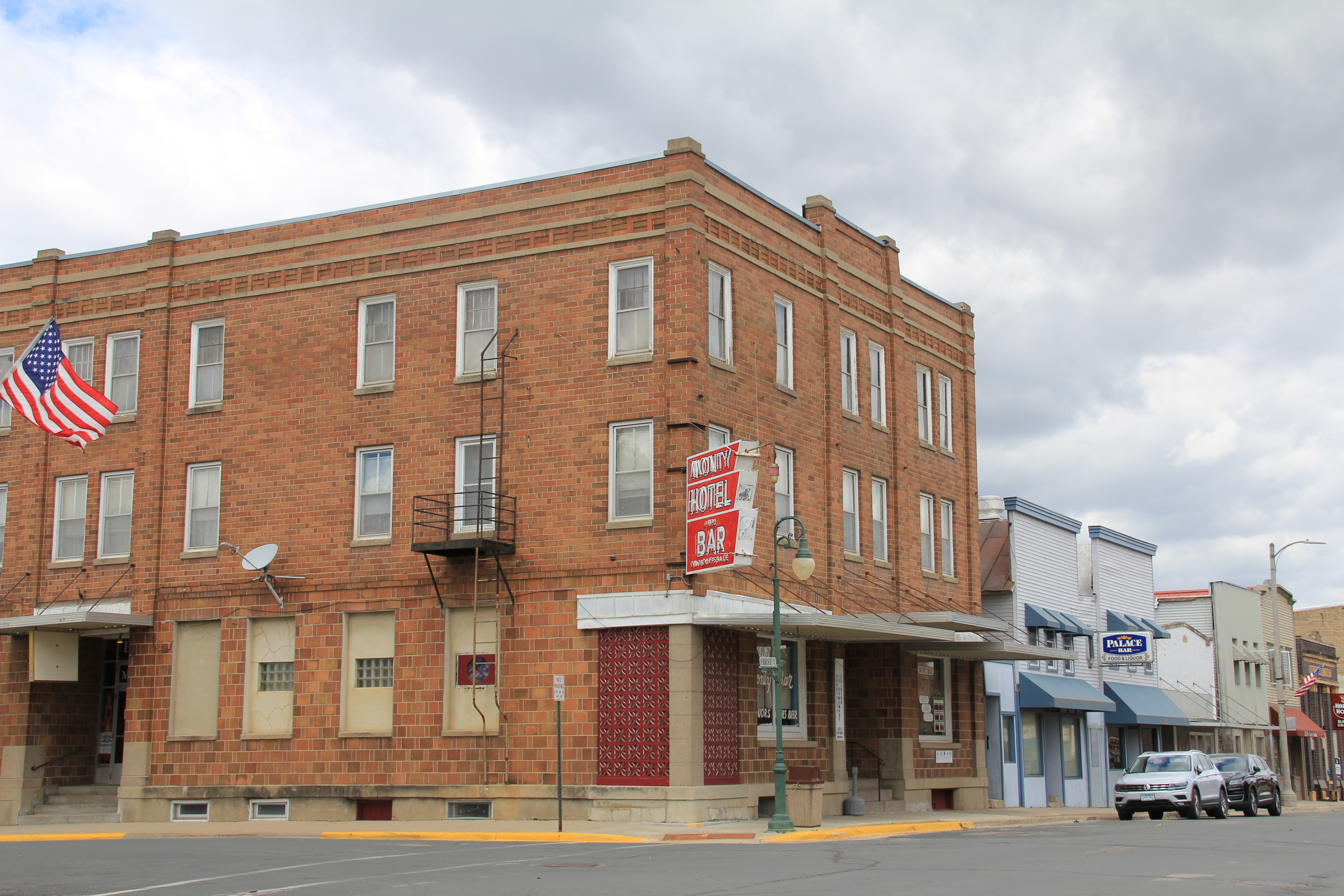
A flag flies near The Monty Bar, a mammoth building anchoring a corner. (Minnesota Prairie Roots copyrighted photo June 2024)
Through everything, our flag still waves—sometimes tattered, torn and abused—but still there. A symbol of our country and the freedoms we live.
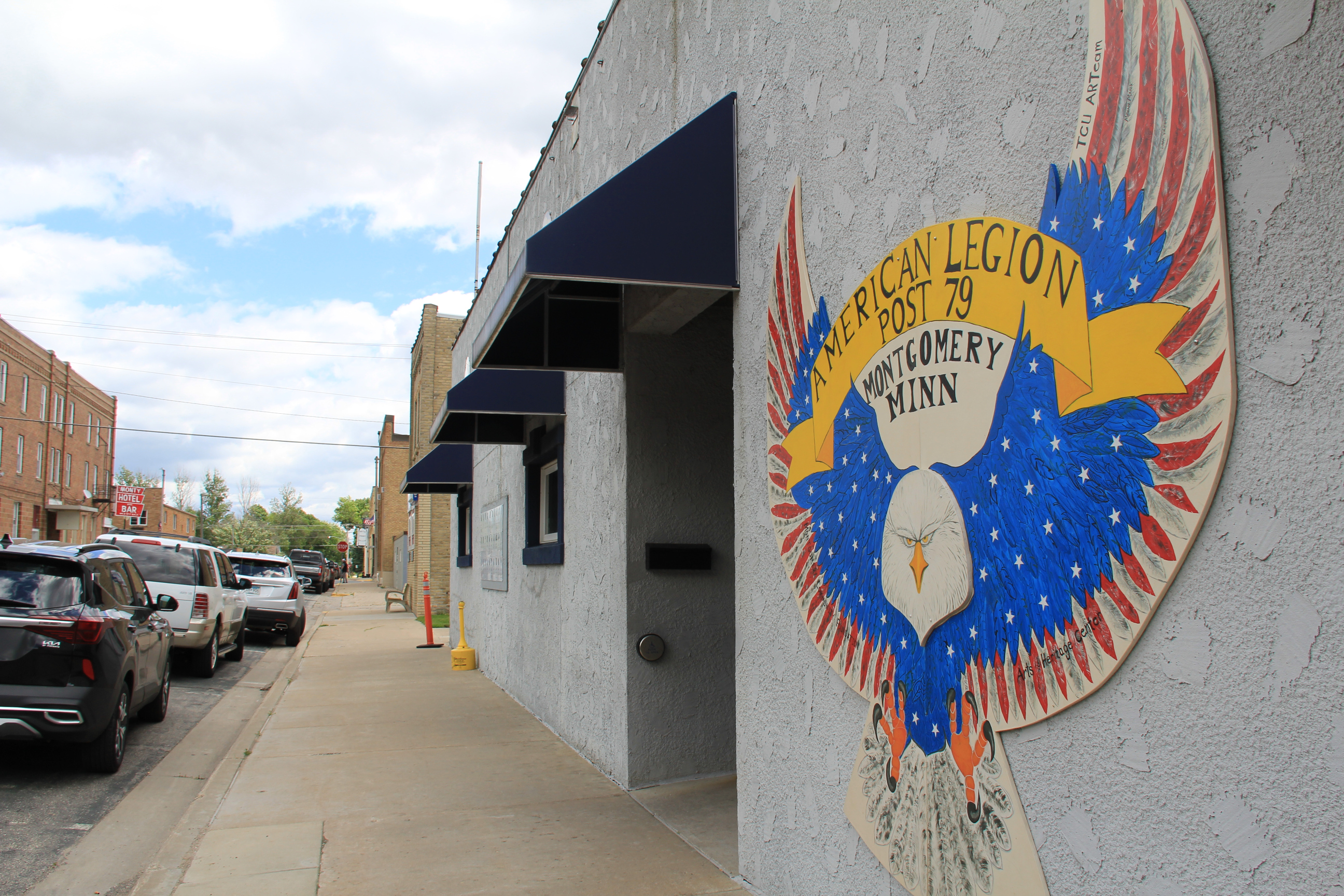
Patriotic art on Legion Post 79 is part of The Montgomery Wings Mural Walk. (Minnesota Prairie Roots copyrighted photo June 2024)
It always amazes me how small towns, especially, fly so many American flags. Take Montgomery, a southern Minnesota community that honors its veterans with photos and bios of them posted throughout the downtown area. Montgomery also flies a lot of U.S. flags.
To the far right in this photo, an oversized flag flies along Main Street Montgomery. (Minnesota Prairie Roots copyrighted photo June 2024)
Those flags mostly grace lampposts, but also flagpoles, businesses and flower gardens. The red-white-and-blue flashes color into Main Street and elsewhere, creating a visual of patriotism. There’s something about a crisp, new American flag publicly displayed that swells the heart with love of country.
Another flag rock in a Most Holy Redeemer garden. (Minnesota Prairie Roots copyrighted photo June 2024)
My country ‘tis of Thee, sweet land of liberty of Thee I sing…let freedom ring.
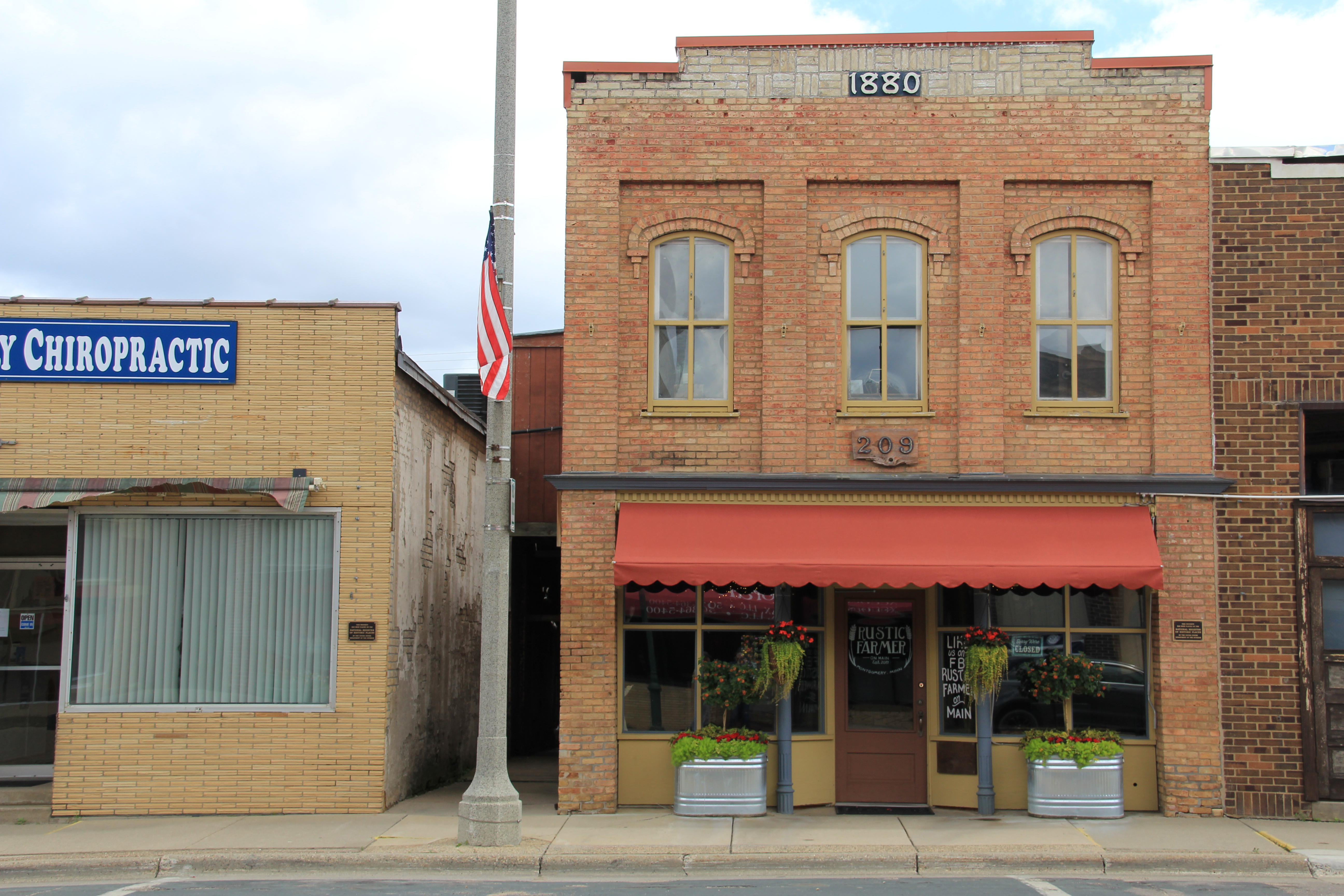
A flag drapes on a pole outside The Rustic Farmer on Main, an event center and community gathering spot in Montgomery. (Minnesota Prairie Roots copyrighted photo June 2024)
Let freedom ring, unsuppressed by anyone who may attempt to silence it via words, actions, ego, authority. Let freedom ring strong and loud in this land.
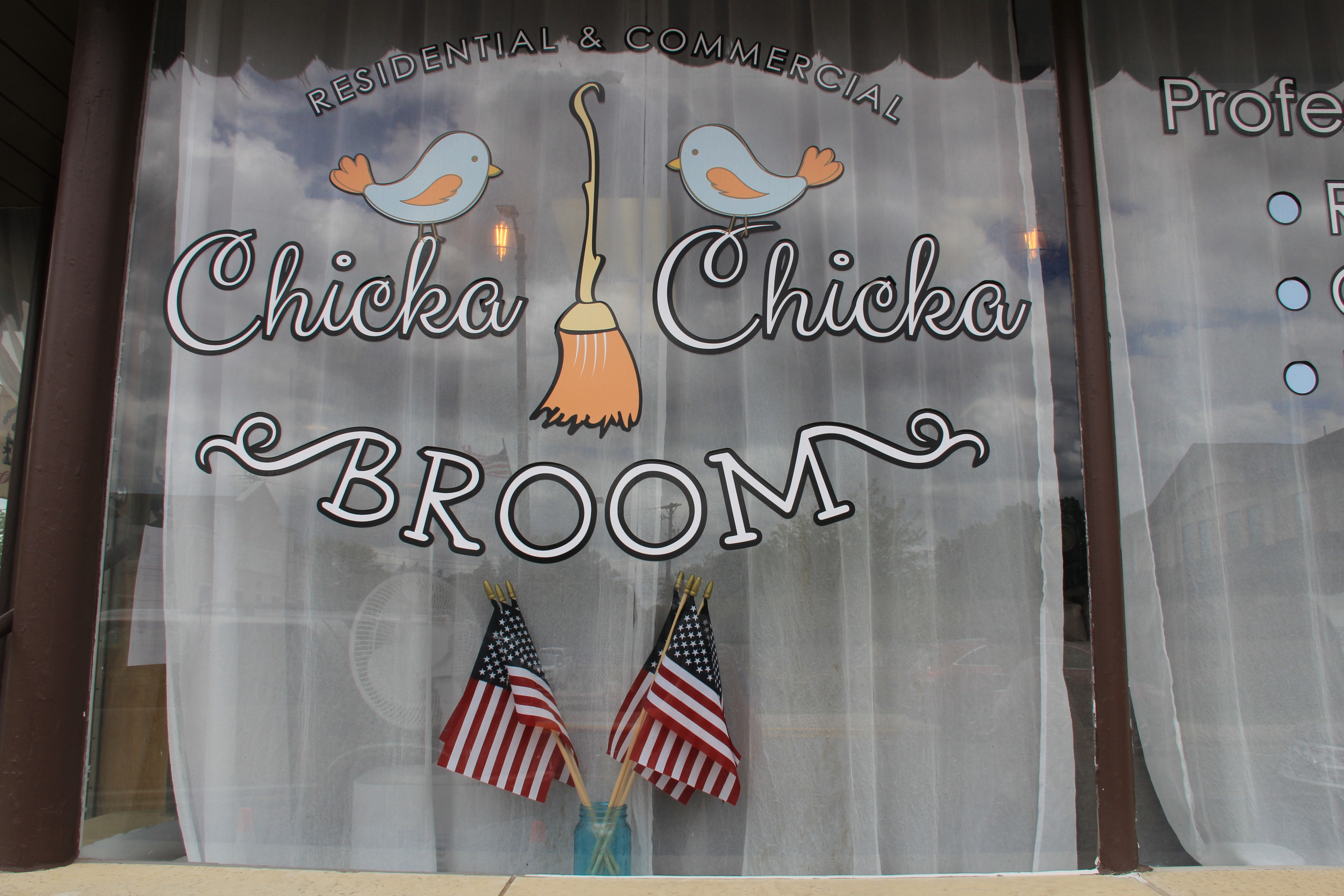
Even small flags like this in the storefront window of a cleaning service make an impact. (Minnesota Prairie Roots copyrighted photo June 2024)
Let the flag fly as a symbol of a free people, a free country, where democracy is to be valued, cherished and respected.
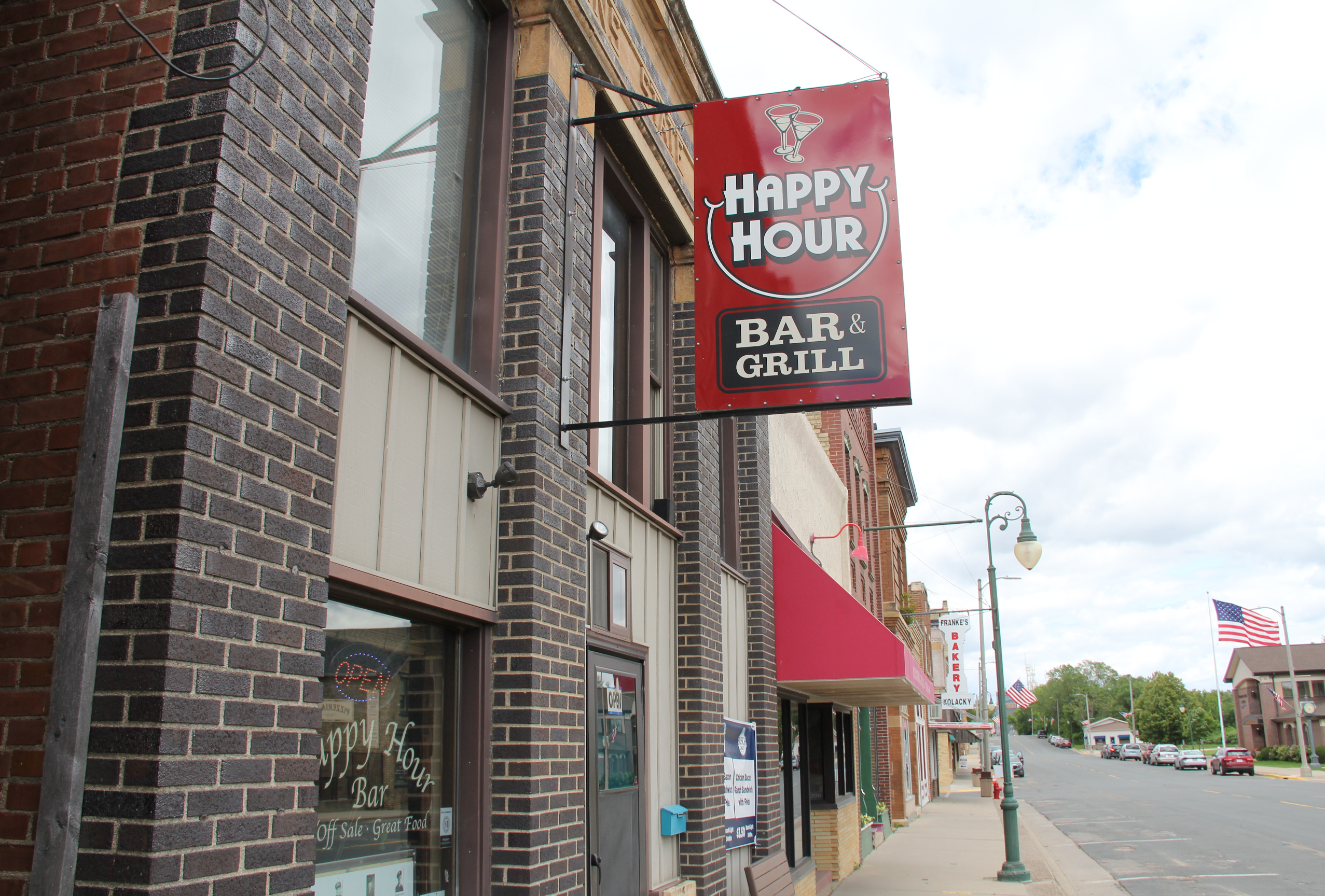
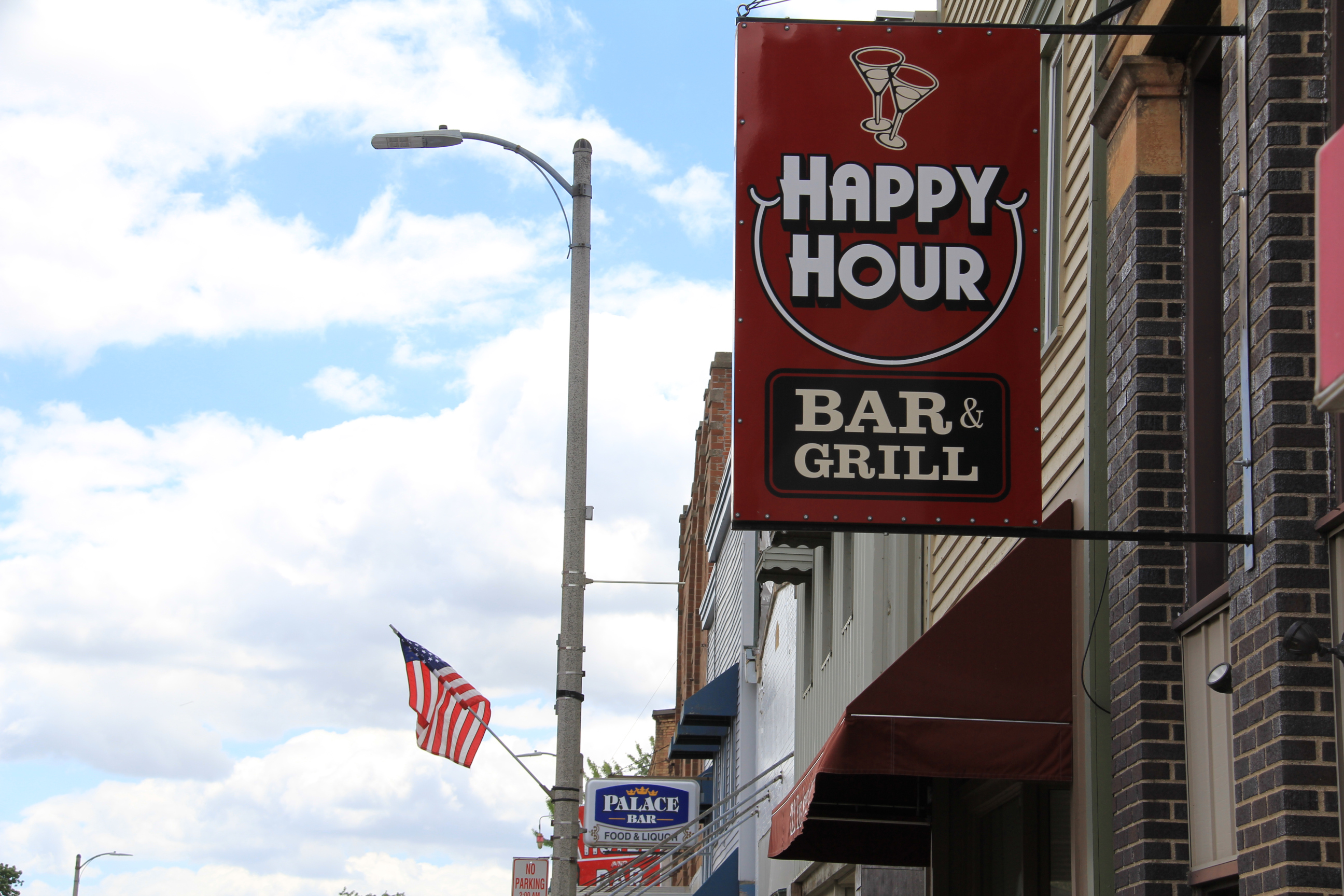
Montgomery has a lot of drinking establishments and a lot of American flags. (Minnesota Prairie Roots copyrighted photo June 2024)
This Fourth of July, the 248th birthday of the United (emphasis on united) States of America, let’s remember the freedoms we have and vow to always honor them. Always.
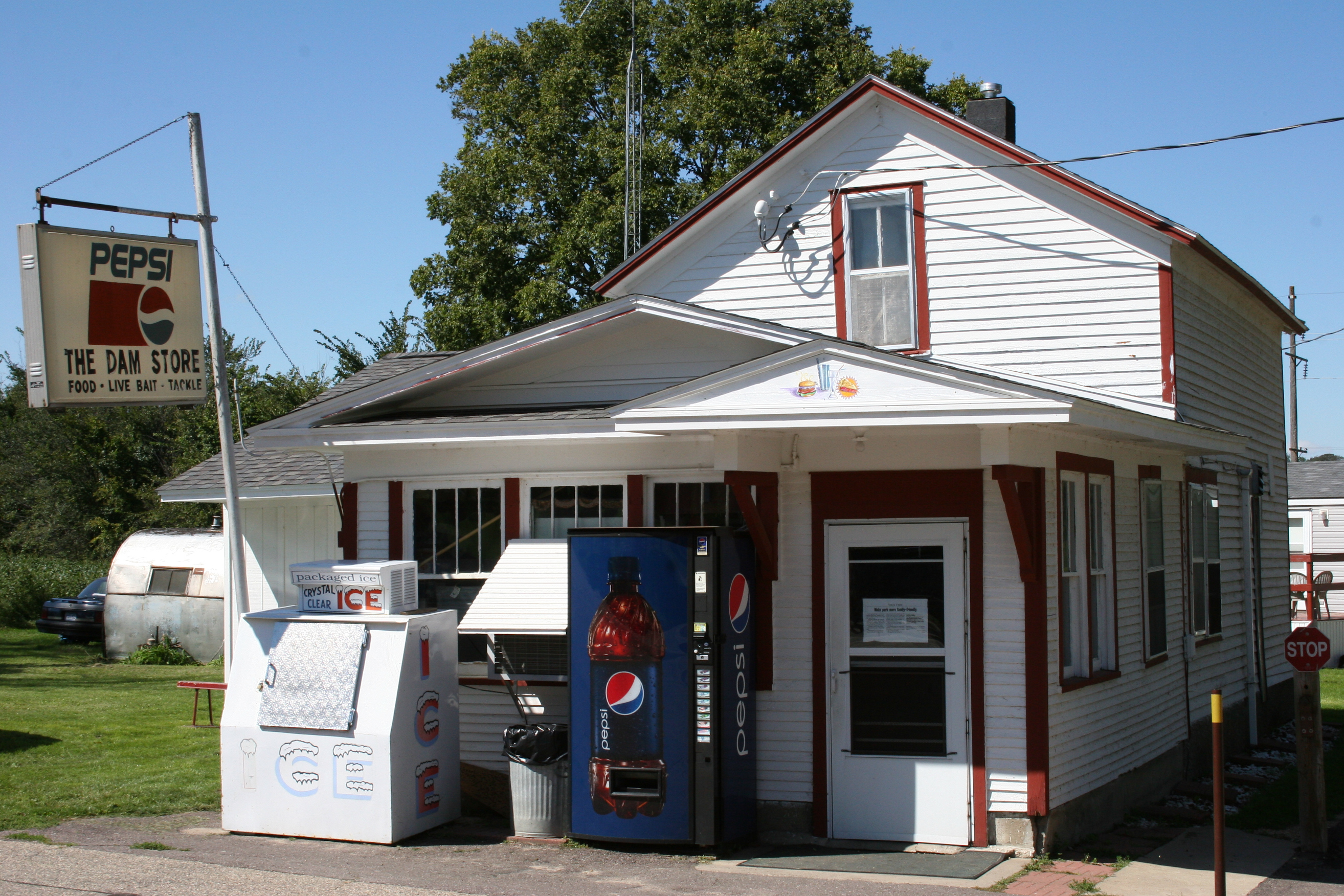
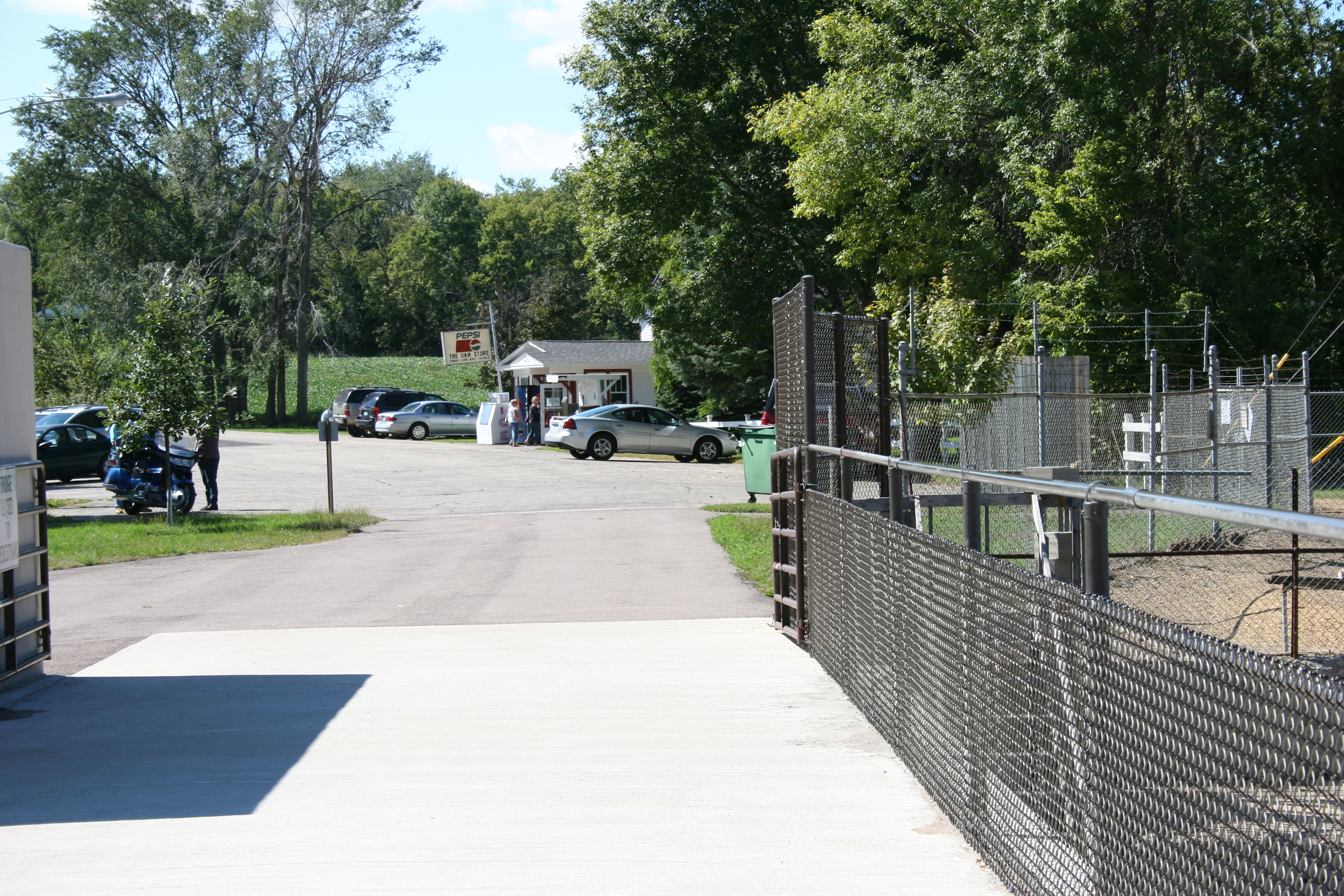
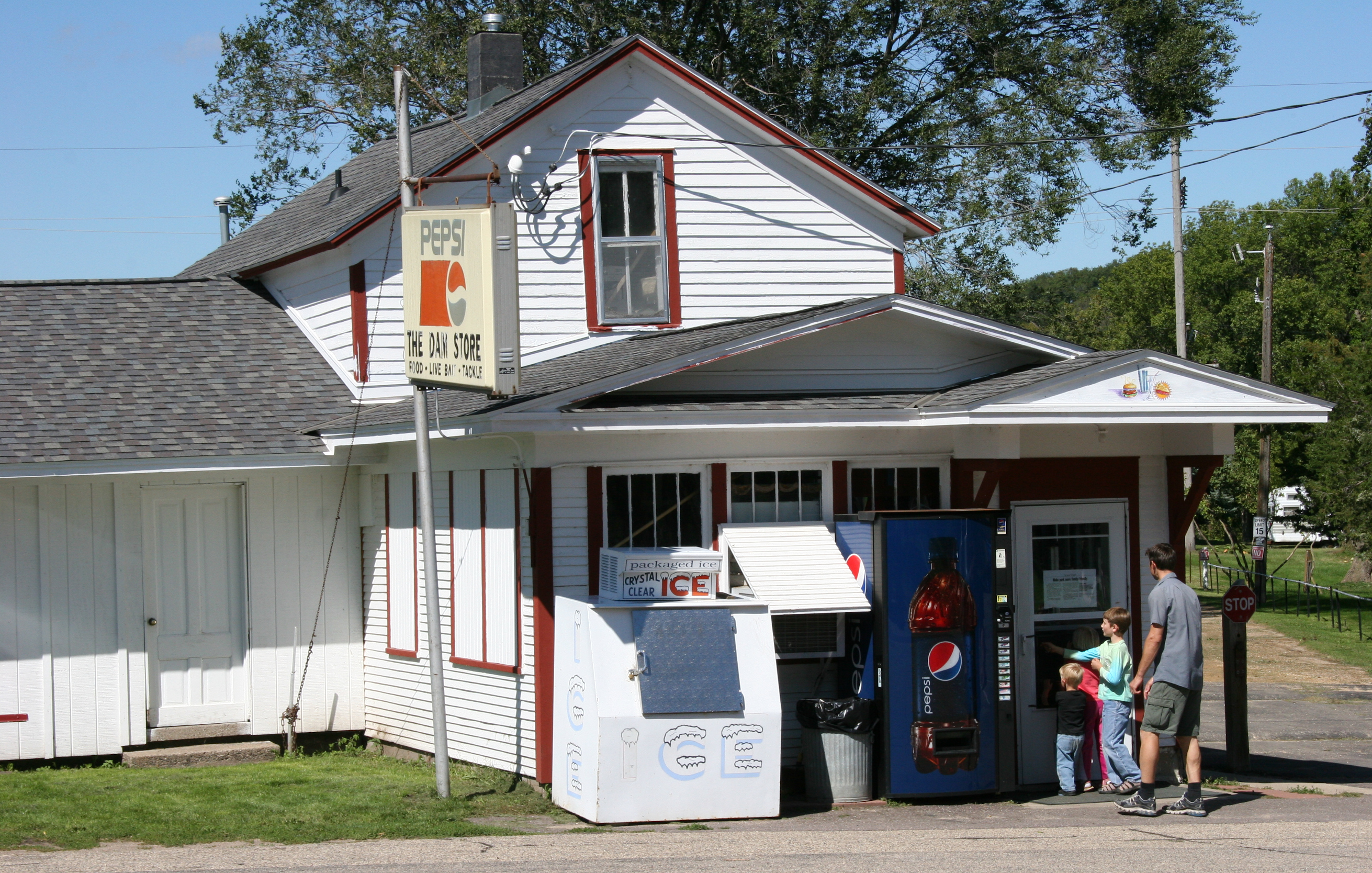
The Dam Store photographed in 2010. (Minnesota Prairie Roots copyrighted file photo 2010)
A FIXTURE NEAR THE RAPIDAN DAM since 1910, The Dam Store is no more. On Friday, crews demolished the historic eatery along the Blue Earth River in southern Minnesota.
Its collapse into the water seemed inevitable after the flooded river carved a path around the west side of the dam, eroding the land, taking down trees, buildings and an electrical substation. The Dam Store appeared next in line.
Officials considered their options, including consulting a professional about moving the store, according to media reports. When that was deemed unsafe, the decision was made to demolish the building. If the river claimed the store, that would add more debris to float downstream, creating additional hazards and safety risks.
Before demolition, the Hruska family, which has owned The Dam Store for some 50 years, and friends removed items from the long-time business. The store opened in 1910 to serve workers constructing the Rapidan Dam.
The loss of The Dam Store is a major loss not only to the Hruska family and locals, but also to the region and to Minnesota. It’s more than a place to grab a burger and a slice of homemade pie. It’s an icon, a destination, one of those genuine slice of Americana spots that stands out for its quaintness, friendliness, uniqueness and great food. Did I mention the pies?
The Hruska family has already stated this is not the end of The Dam Store. I believe them. For now, though, they have much to deal with emotionally and otherwise. The family home, near the store, fell into the river earlier this week. It’s a lot. But the community has rallied to support them financially via donations through GoFundMe and an account at MinnStar banks in Mankato and Lake Crystal. I expect the outpouring of support for this family to continue.
The Dam Store in Rapidan, photographed in 2010. (Minnesota Prairie Roots copyrighted photo 2010)
FOURTEEN YEARS AGO, I wrote a magazine feature story on The Dam Store, a rural southern Minnesota business serving up food, bait and tackle. People travel for miles to buy a burger and a slice of homemade pie here. It’s the kind of place that appeals to me—unpretentious and welcoming. Cozy, homey and comfortable, with great food.
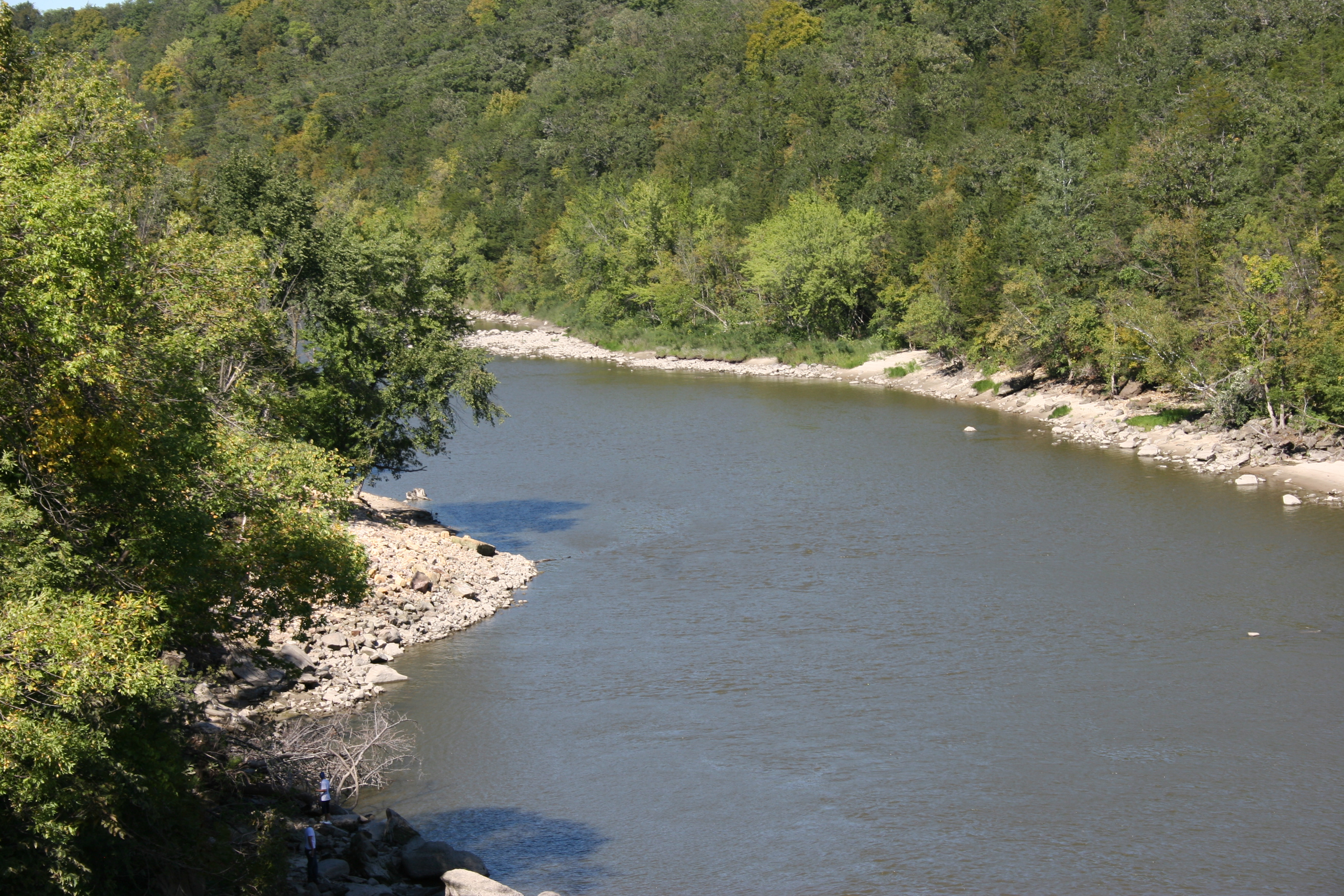
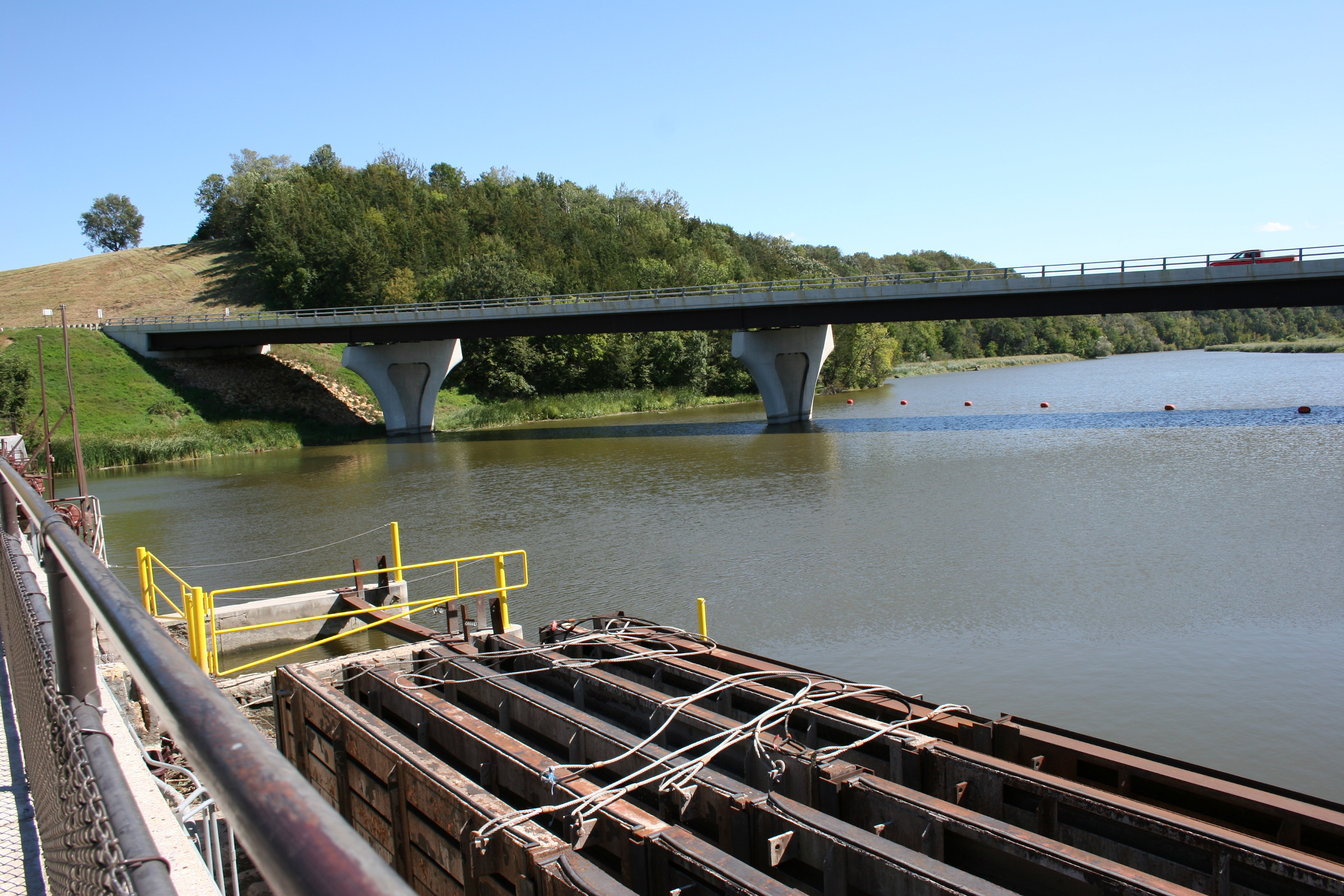
The calm Blue Earth River, photographed in 2010, looks nothing like this today. The raging river has taken out trees, a house, a county shed, and electrical substation as it cut a new path around the Rapidan Dam. (Minnesota Prairie Roots copyrighted photo 2010)
The small eatery is located by the Rapidan Dam, a dam which has been in the news all week due to its possible imminent failure. Thus far, the dam has held. But the roaring, overflowing Blue Earth River carved a path around the dam to the west, eventually claiming the Hruska family’s riverside home. They run the nearby cafe.
This shows the short distance from the dam walkway to The Dam Store. (Minnesota Prairie Roots copyrighted photo 2010)
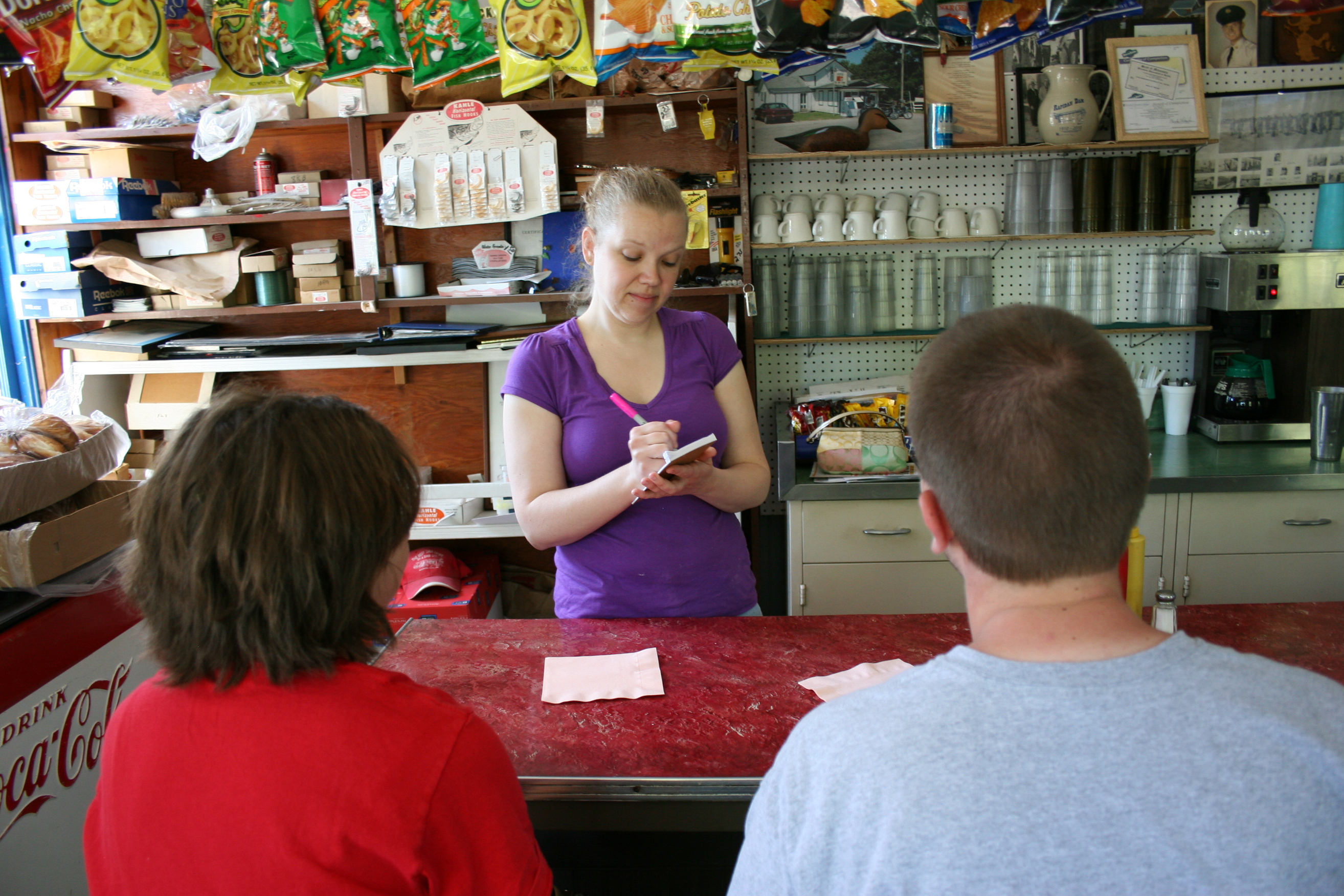
The Hruska family, including Jenny Barnes, has run The Dam Store for some 50 years. Her nearby childhood home fell into the raging river Tuesday evening. (Minnesota Prairie Roots copyrighted photo 2010)
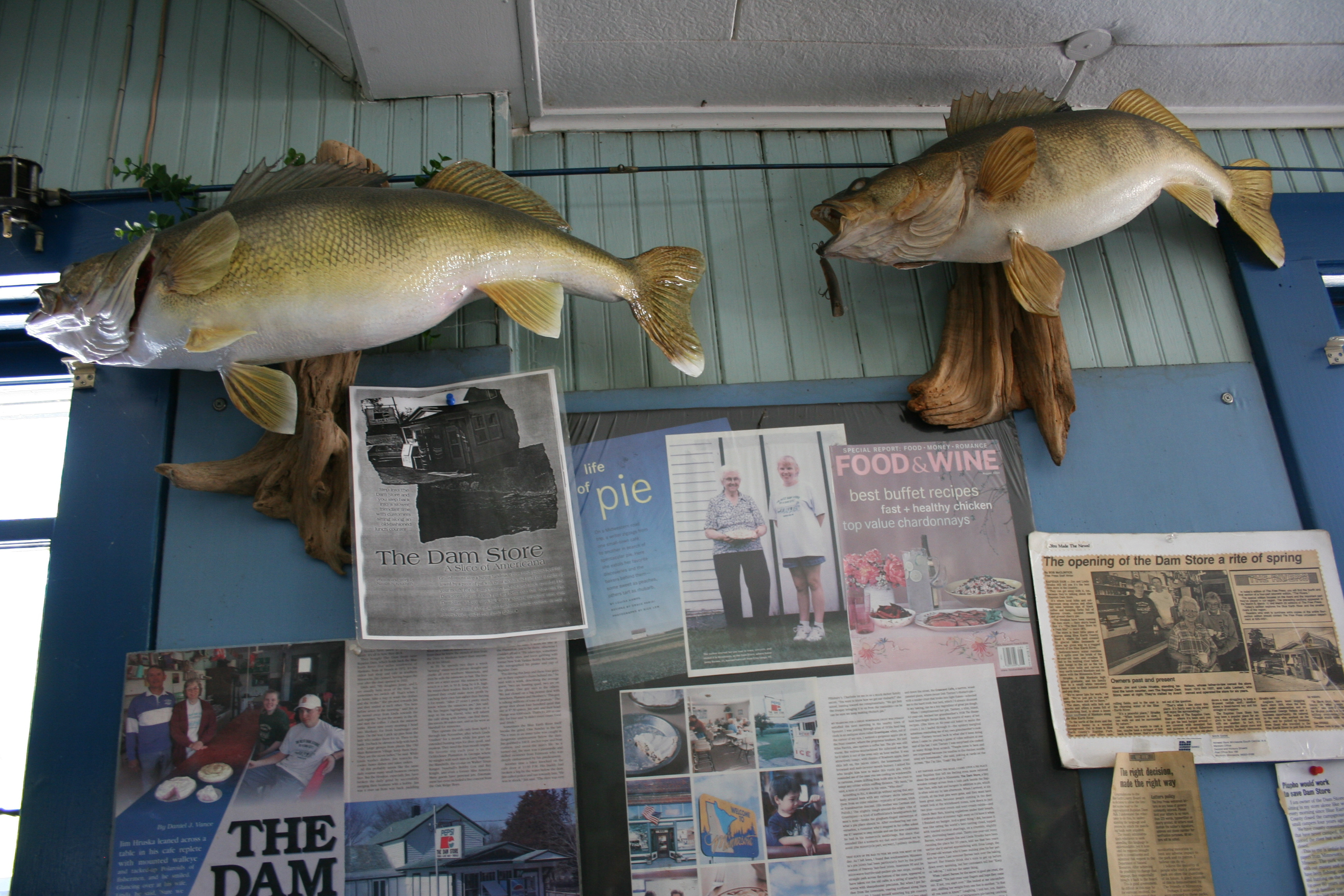
The Dam Store has been written about often as shown in this wall of feature stories. (Minnesota Prairie Roots copyrighted photo 2010)
The Dam Store sits a short distance away, close enough that it could possibly be overcome by floodwaters. At least that’s my non-professional opinion. And if that worries me, I can only imagine how the family feels.
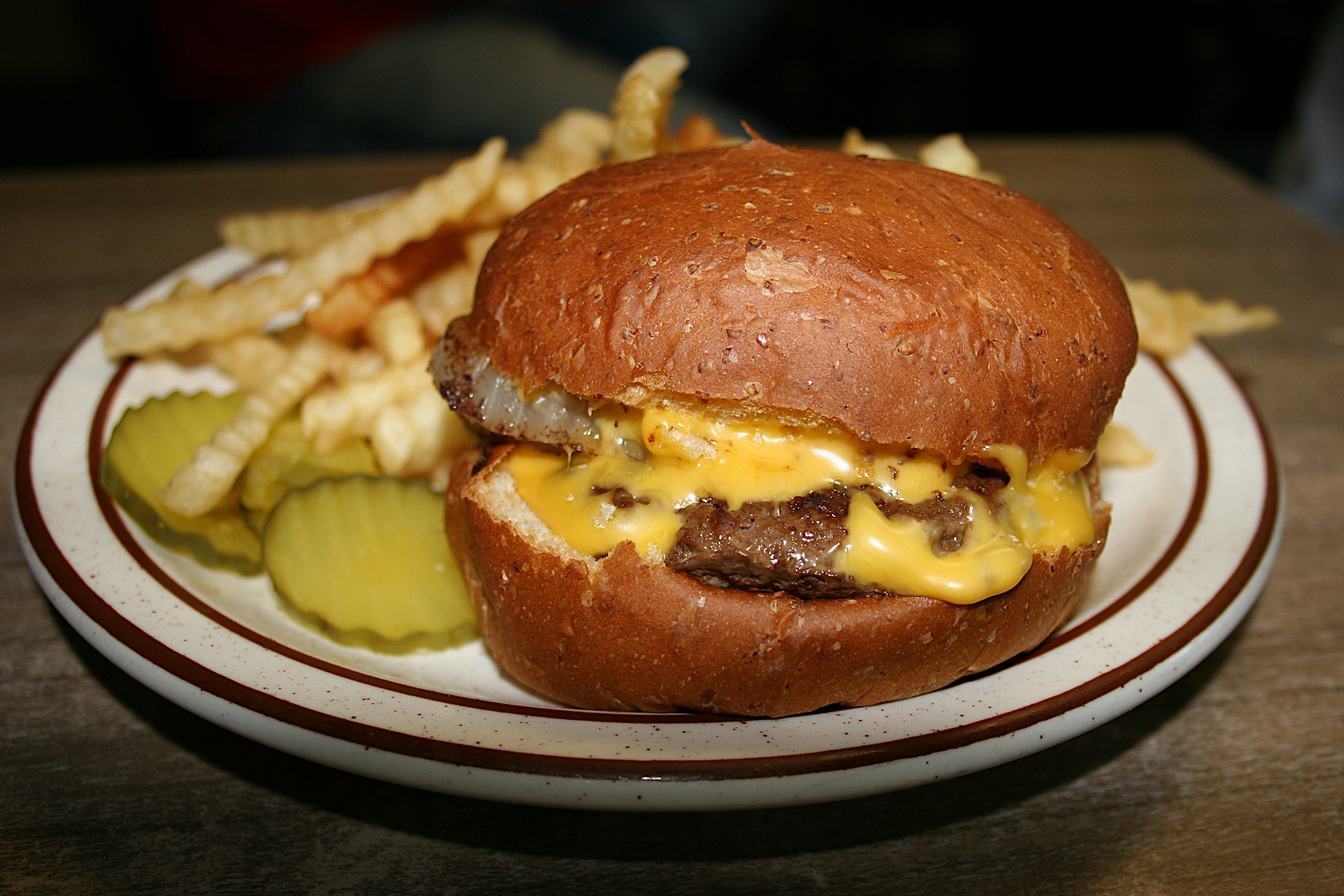
Delicious burger and fries. (Minnesota Prairie Roots copyrighted photo 2010)
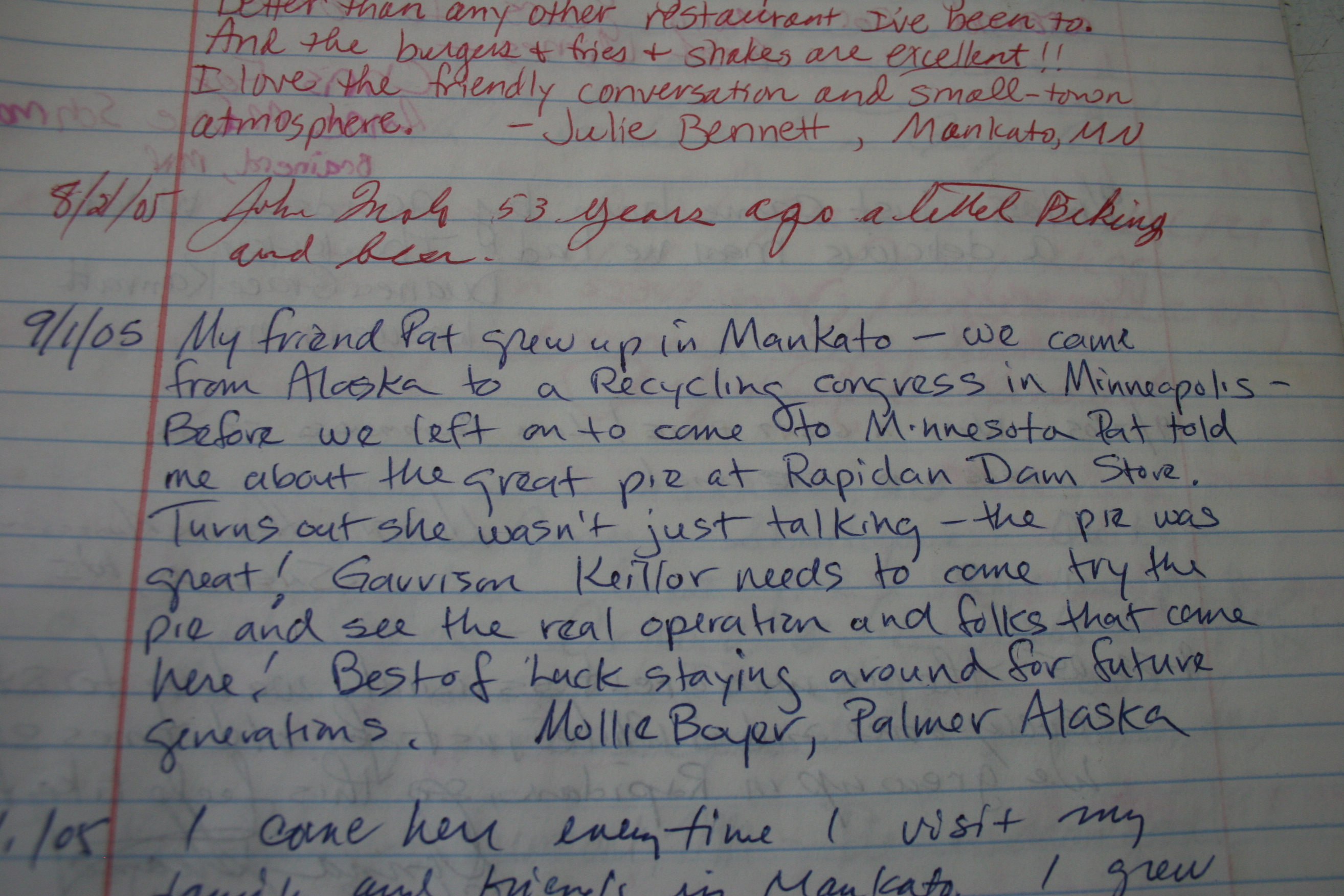
Notebooks full of praise for The Dam Store. (Minnesota Prairie Roots copyrighted photo 2010)
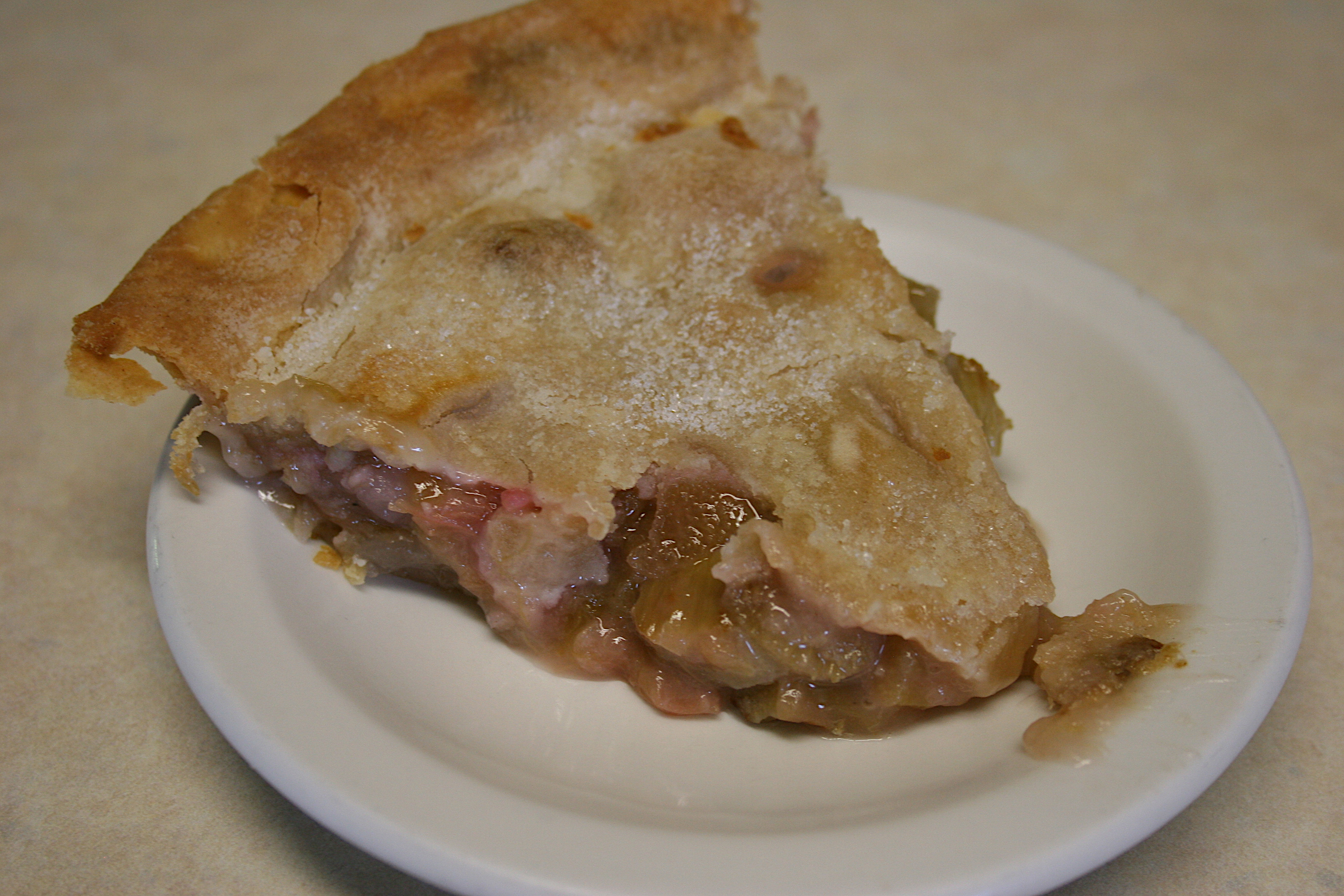
Homemade rhubarb pie. The Dam Store is known for its fruit and cream pies. (Minnesota Prairie Roots copyrighted photo 2010)
This place is a treasure. A destination. A slice of Americana run by folks who care deeply about their customers. People rave about The Dam Store. I read that in comments filling a notebook when I was there back in 2010. I feel the same. To dine here is an experience, a step back in time to days when life seemed simpler.
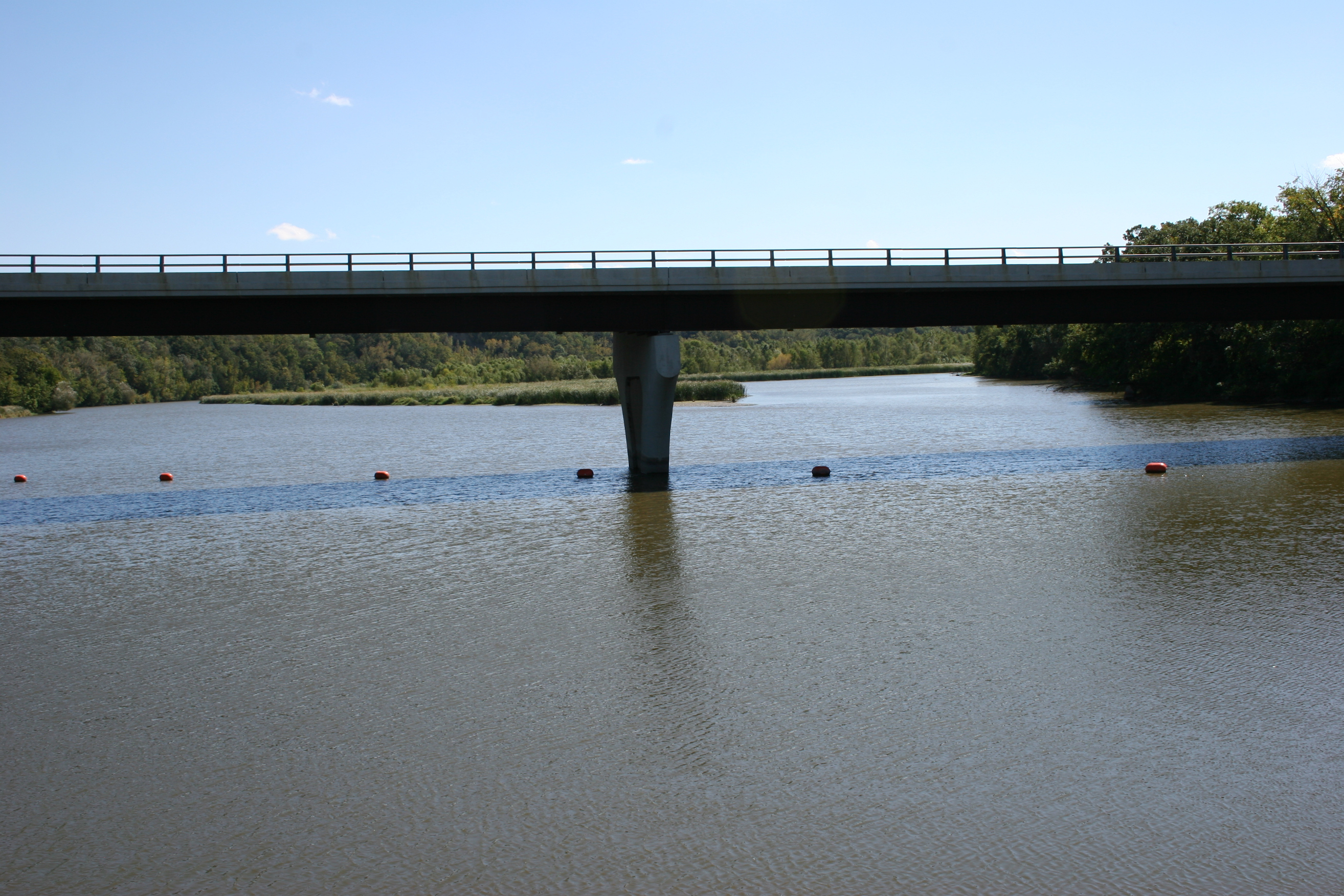
Public officials are now concerned about the integrity of this bridge as the river is no longer flowing over the Rapidan Dam but cutting a path to the west. This 2010 photo shows a low, calm river. (Minnesota Prairie Roots copyrighted photo 2010)
The Dam Store was packed with diners during my 2010 stop. (Minnesota Prairie Roots copyrighted photo 2010)
The dam, built in 1908-1910, is 475 feet wide and measures 87 feet from the top to the streambed. This 2010 image shows a section of the dam and the nearby bridge, now in jeopardy due to river bank erosion by floodwaters. (Minnesota Prairie Roots copyrighted photo 2010)
The scene unfolding today in Rapidan is decidedly one of concern and watchfulness. And for many, one of hope. Hope that The Dam Store will remain standing, untouched by floodwaters. The building has been there since 1910, the eatery in the Hruska family for more than 50 years. This is their history, their life, their livelihood. Their home. Their place.
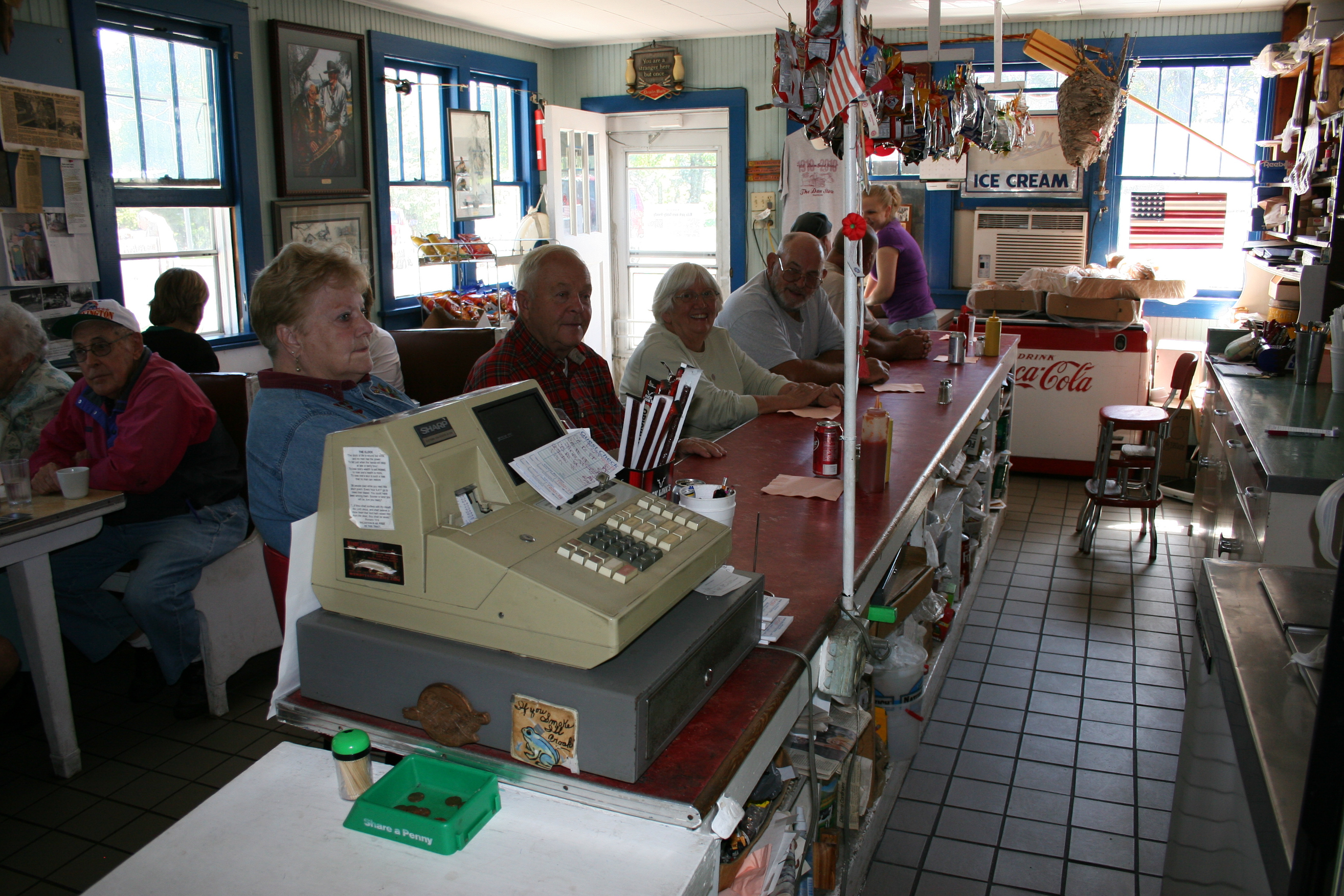
The main dining area of The Dam Store with booths and lunch counter. (Minnesota Prairie Roots copyrighted photo 2010)
The Rapidan Heritage Society has established a relief fund for the Hruska family with donations accepted at MinnStar Bank offices in Mankato and Lake Crystal. Click here for more information.
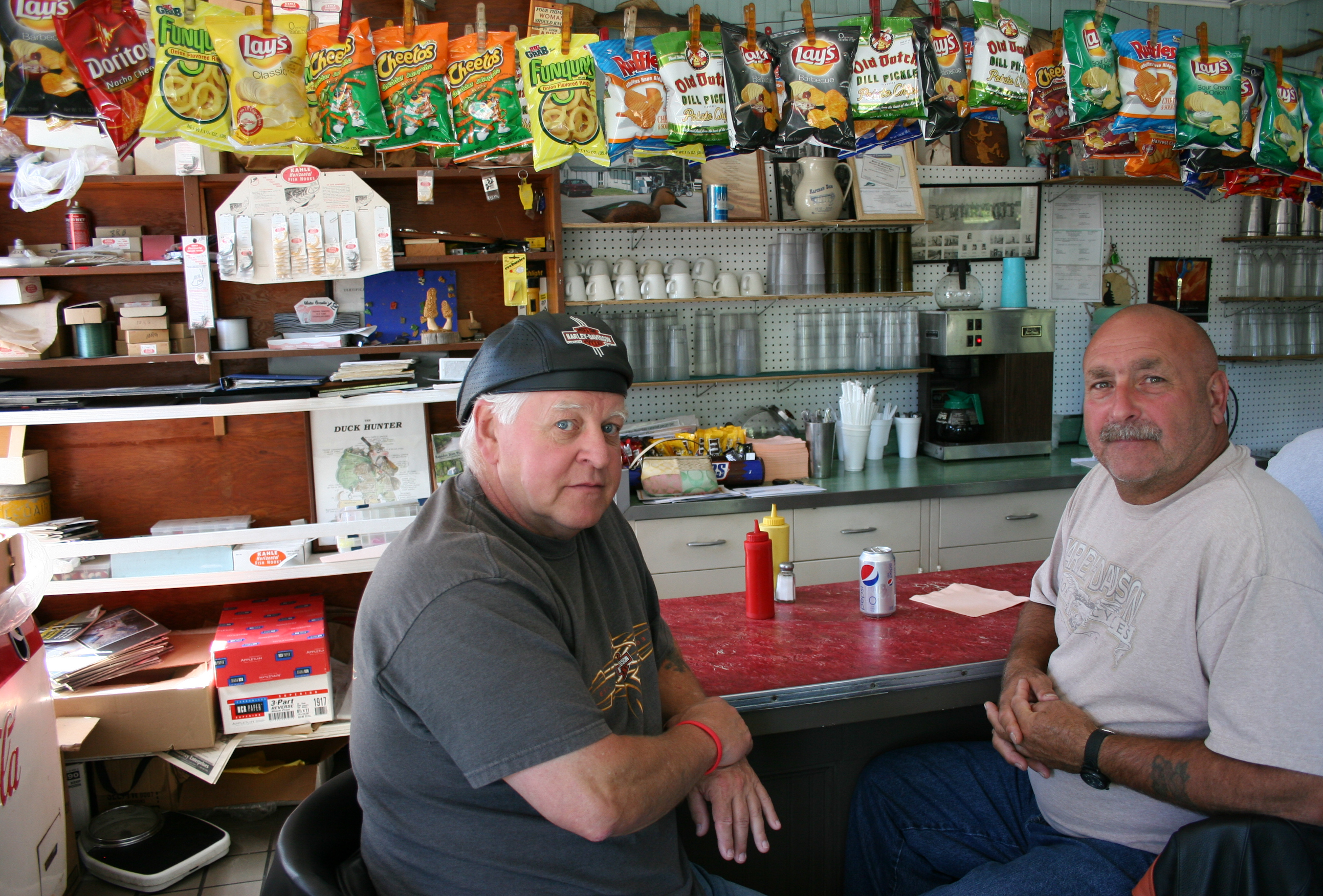
These guys ordered burgers at the lunch counter. (Minnesota Prairie Roots copyrighted photo 2010)
Now, until The Dam Store reopens—and I’m being optimistic that this will all turn out OK—enjoy these photos taken in 2010. I think you’ll understand why this place is so popular, so loved.
A vintage 1969 or 1970 Chevy pickup truck parked in a car port at Twin Lakes Auto Parts in Waterville.(Minnesota Prairie Roots copyrighted photo June 2024)
EVERY PLACE HAS CHARACTER, especially small towns. Or at least that’s how it seems to me, someone with an affinity for rural. I am not a big city girl, preferring quiet Main Streets to city traffic, low-slung buildings to soaring skyscrapers, small gatherings to crowds. I feel grounded, rooted, at home in rural locations.
One of Waterville’s most unusual homes, a small house sandwiched between businesses along Main Street. (Minnesota Prairie Roots copyrighted photo June 2024)
For me a day trip to explore small towns is as appealing as a day in the big city for someone who prefers cities. We are all different and that is a good thing.
A ghost sign on a downtown building. (Minnesota Prairie Roots copyrighted photo June 2024)
Recently I toured seven area communities in a single day while working on a photo essay column for SouthernMinn Scene, a regional arts and entertainment magazine. I found myself photographing scenes well beyond the scope of my themed essay focusing on small town bar exteriors and signage. With camera in hand, I always scan for interesting photo ops.
Vintage bullhead art signage hangs on the Waterville Event Center. (Minnesota Prairie Roots copyrighted photo June 2024)
Among my stops was Waterville, in the southern Minnesota lakes region of Le Sueur County. Summertime residents and visitors plus bikers pedaling the Sakatah Singing Hill State Trail swell this town’s population well beyond 1,868. Waterville folks definitely recognize the value these people bring to the local economy, to the community.
Unexpected art on the side of the Corner Bar. (Minnesota Prairie Roots copyrighted photo June 2024)
I realize not everyone sees what I see upon walking through a small town business district like that in Waterville. I tend to notice details, oddities, the small things that make a place interesting. I’ve photographed the heart of Waterville several times, so this trip I mostly zeroed in on different details.
I see this often in small towns, specific notes left for delivery drivers. (Minnesota Prairie Roots copyrighted photo June 2024)
I should note that I’m particularly drawn to signage—handwritten to business signs.
Classic’s Pub opens soon in this massive building. (Minnesota Prairie Roots copyrighted photo June 2024)
Waterville will soon be home to two new businesses, as noted on signage. Classic’s Pub, a bar and event center featuring displays of vintage cars and motorcycles, is opening in a spacious corner building along South 3rd Street. Waterville has several other bars. But I’m excited about this one (not that I’ve been in the others) because of its vintage theme.
Another business opening soon in Waterville. (Minnesota Prairie Roots copyrighted photo June 2024)
And just across the street, a sign notes that The Cleaver & Corn is opening soon, serving sandwiches, gourmet specialty popcorn from the local The Snack Shack, sweets and more. That, too, sounds like a great addition to the community. And the business name…I find it particularly creative.
A customer pulled up to the hardware store on his riding lawnmower. (Minnesota Prairie Roots copyrighted photo June 2024)
As I walked about the downtown, I saw a whole lot of character. In buildings. In signage. In storefronts. Even in a John Deere riding lawnmower driven to and parked outside Harry’s True Value Hardware.
Waterville Hardware Hank, just across from True Value. (Minnesota Prairie Roots copyrighted photo June 2024)
Just across the street sits Waterville Hardware Hank, offering a second option to locals, cabin owners and campers. I’ve been inside this store with its narrow aisles and original wood floors. Not this trip, though.
Lots happening at the Corner Bar in June. (Minnesota Prairie Roots copyrighted photo June 2024)
Rather, I kept my feet on the sidewalk and pavement, opting to photograph downtown Waterville while outdoors only. That focused perspective revealed plenty of character that makes this small town unique, welcoming, a place I always enjoy visiting.
Appropriate signage for a tavern in St. Patrick, Minnesota. (Minnesota Prairie Roots copyrighted file photo June 2015)
BEER, BASEBALL AND BLESSINGS. Those words define St. Patrick, an unincorporated place of bar, baseball field and Catholic church northeast of New Prague. With the approach of St. Patrick’s Day, now seems a fitting time to revisit this southern Minnesota burg, which I photographed in the summer of 2015.
St. Patrick Church of Cedar Lake Township. (Minnesota Prairie Roots copyrighted file photo June 2015)
St. Patrick’s Bonin Field, named after Father Leon Bonin, who brought baseball back to St. Patrick in the 1950s. (Minnesota Prairie Roots copyrighted file photo June 2015)
Across the road from the St. Patrick cemetery sits St. Patrick’s Tavern. (Minnesota Prairie Roots copyrighted file photo June 2015)
The stately church sits atop a hill, the ball field at the base on one side, the tavern on the other. Pray. Play. And then congregate over a beer and a burger basket at the tavern. Or, on St. Patrick’s Day weekend, corned beef and cabbage downed with on-tap green beer, while supplies last.
Born in Ireland, buried in the St. Patrick Church of Cedar Lake Township Cemetery in southern Minnesota. (Minnesota Prairie Roots copyrighted file photo June 2015)
Bonin Field, home of the St. Patrick Irish. (Minnesota Prairie Roots copyrighted file photo June 2015)
The bar and restaurant in St. Patrick. (Minnesota Prairie Roots copyrighted file photo June 2015)
Even with the minimal time I spent in St. Patrick, I experienced its Irish heritage. It’s reflected on tombstones, in the very names of the church, ball field and bar. It’s reflected on signage. But mostly, it’s this feeling of sacredness, as if the patron saint of the Irish dwells here. In the pews. On the bleachers. Even, I expect, inside the bar. St. Patrick was, after all, a missionary.
St. Patrick’s steeple rises in the background, behind this cemetery angel. (Minnesota Prairie Roots copyrighted file photo June 2015)
And then there’s the sacred art. Crucifixes. An angel statue. Tombstones that hold names and history.
The Holy Family tucks into a corner of the grotto. (Minnesota Prairie Roots copyrighted file photo June 2015)
The beautiful face of Mary at the St. Patrick’s grotto. (Minnesota Prairie Roots copyrighted file photo June 2015)
The loving hand of Mary rests upon her son, Jesus, in this sculpture at St. Patrick’s. (Minnesota Prairie Roots copyrighted file photo June 2015)
Aside the church, a grotto welcomes with the most hauntingly beautiful sculptures.
St. Patrick may seem like nothing more than a country church, just another rural bar and a baseball diamond to passing motorists. But it’s much more, worth the stop for a close-up look at a place rooted in Irish heritage.
More signage on St. Patrick’s Tavern. (Minnesota Prairie Roots copyrighted file photo June 2015)
Next road trip back here, I’ll pop into the tavern, order a brew and maybe a burger, and raise my mug to the Irish who settled here, claimed this land as theirs. Here in St. Patrick, place of beer, baseball and blessings.
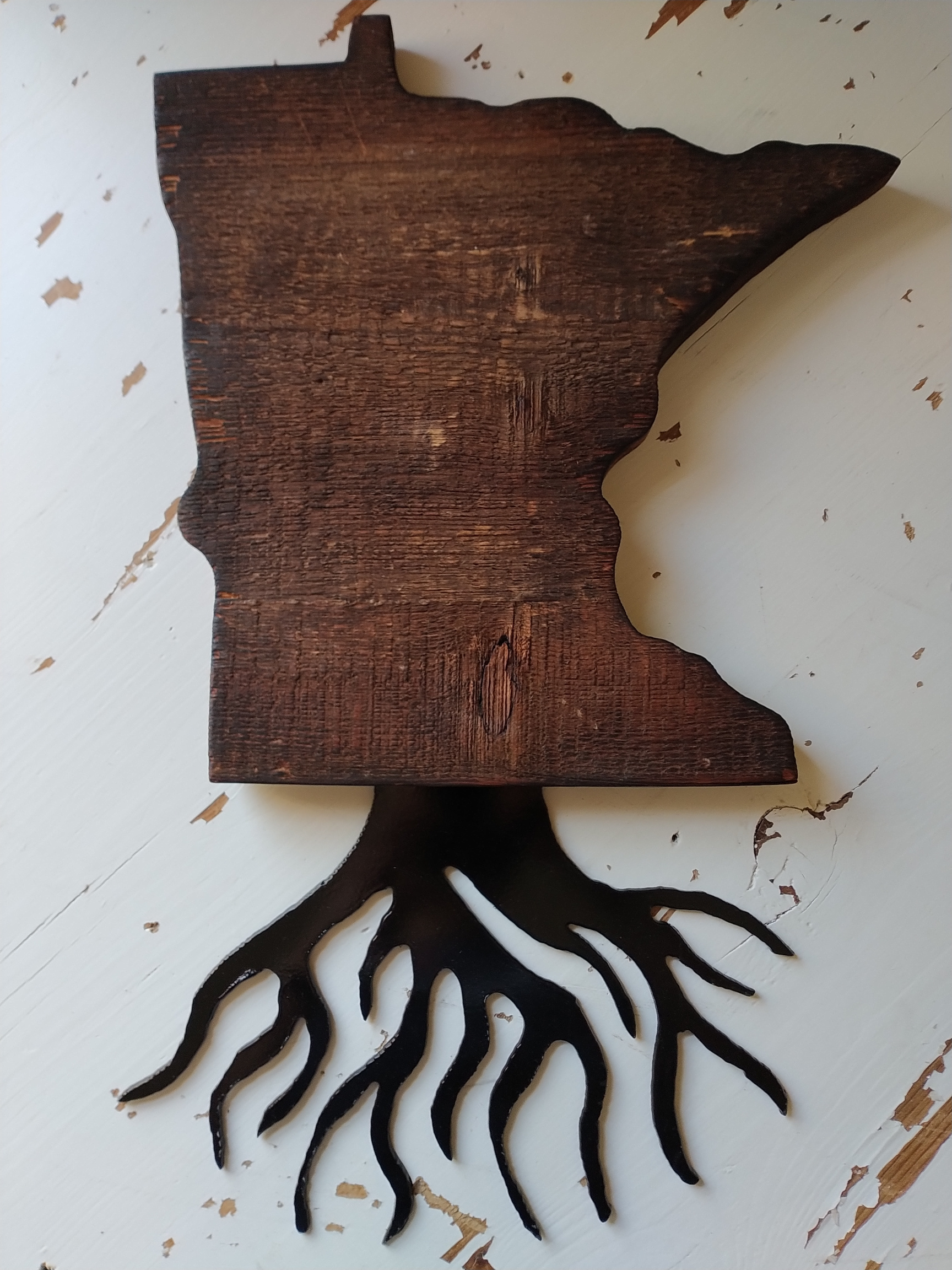
Minnesota wood art with Minnesota shape by Spanky’s Woodshed of Faribault, metal roots by my friend Steve and assembled by my husband, Randy. (Minnesota Prairie Roots copyrighted photo 2024)
AS A LIFE-LONG MINNESOTAN, I speak Minnesotan. It’s hotdish, not casserole. Pop, not soda. Bars may be a sweet treat baked in a cake pan and cut into squares or a place to imbibe. And when someone is going Up North, it’s not to Canada, but typically to the cabin in the Brainerd lakes area or thereabouts.
A serene country scene just north of Lamberton in southern Redwood County, my home county. (Minnesota Prairie Roots copyrighted file photo)
I’m proud to be rooted in this state many consider fly-over land. On a road trip to the East Coast a few years back, folks, upon learning I was from Minnesota, reacted, “Oh, it’s cold and snowy there.” I’m just fine with non-residents thinking that. It is cold for much of the year. And it is snowy, too, most winters. But we have four distinct seasons to be appreciated in a state that is geographically diverse. Prairie. Woods. Bluffs. Rolling land. Farm fields. Cliffs that rise above the Mississippi River and Lake Superior. Wilderness. Lakes numbering 10,000-plus. All inside our spacious borders.
And outside “The Cities,” as we term the twin cities of Minneapolis and St. Paul, away from metro lights, the night sky is dark, expansive and filled with more stars than you can imagine. Sky and land defined my childhood home on the vast prairie of southwestern Minnesota. But even here in southeastern Minnesota, the sky is big as noted by a Boston visitor. She saw the Minnesota night sky for the first time as we drove her to Faribault from the Minneapolis-St. Paul International Airport. The infinite number of stars impressed her. Northern lights (the aurora borealis), which I have yet to see, are also an attraction.
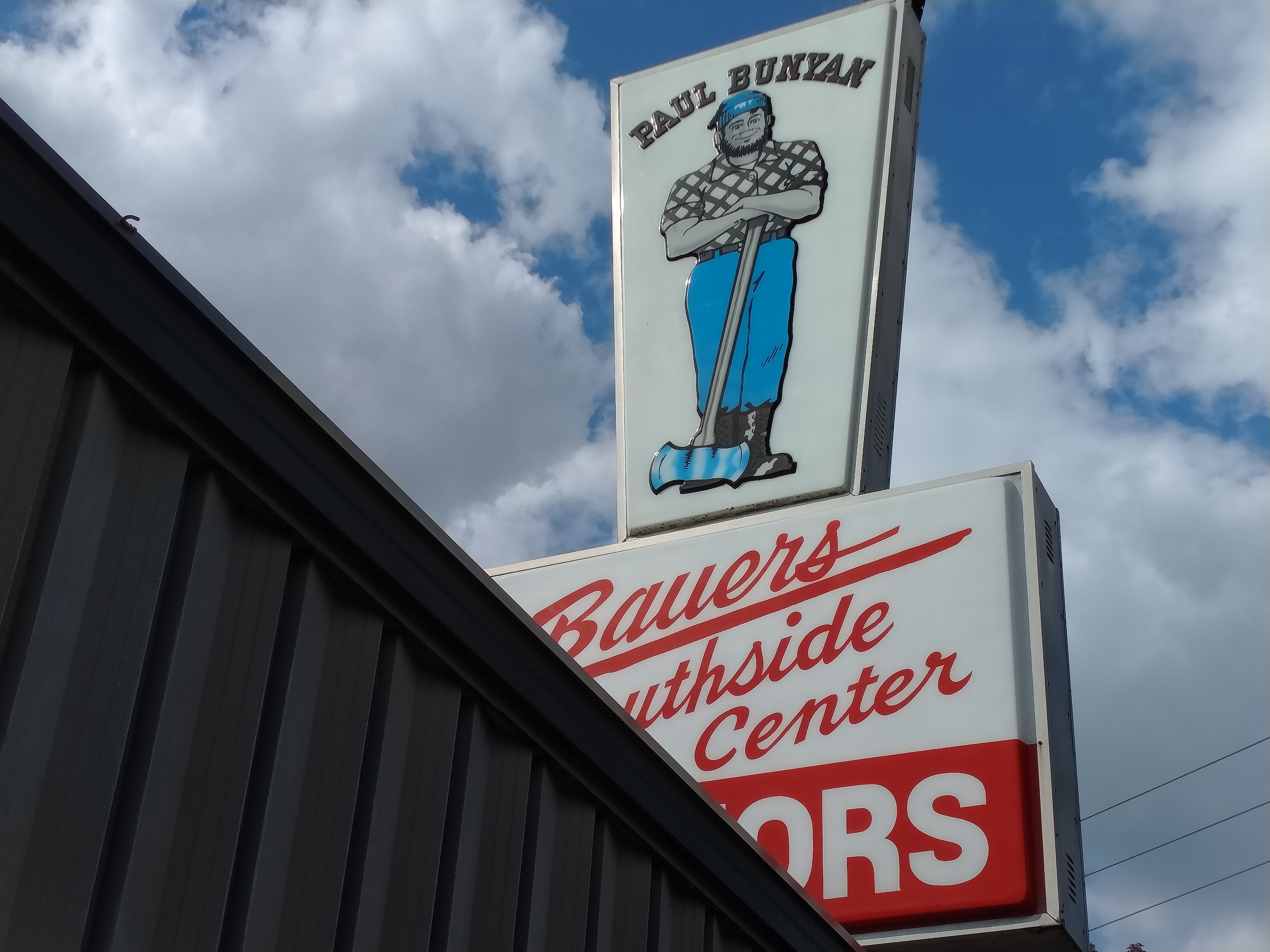
Paul Bunyan is primarily a central and northern Minnesota legend. But he can also be found in southern Minnesota, like on this sign in Faribault.(Minnesota Prairie Roots copyrighted photo 2023)
If I sound like I work for the Minnesota Department of Tourism, I don’t. That job falls to legendary lumberjack Paul Bunyan, unofficial tourism CEO. Clad in his signature buffalo plaid flannel, he is easily recognizable, much-loved and a trendsetter in fashion in the North Star State. I would venture to guess that nearly every Minnesotan owns a collection of flannel shirts. They are my go-to winter attire.
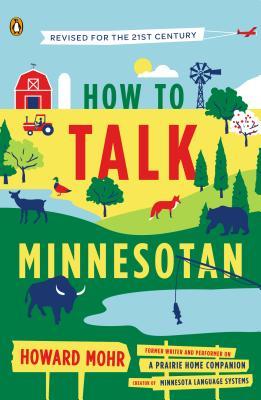
An updated version of “How to Talk Minnesota” is a good guidebook to Minnesota speak.
Did I mention that we don’t speak Fargo, even if that North Dakota city sits across the Red River from Moorhead, Minnesota? I’ve been told we drag out the “o” sound in a distinctly Minnesoooootan sound. Could be. I don’t necessarily hear it. I don’t deny, though, that we are obsessed about the weather. Conversations within our borders usually include one weather reference whether it be wind chill or humidity or “hot enough for you?”.
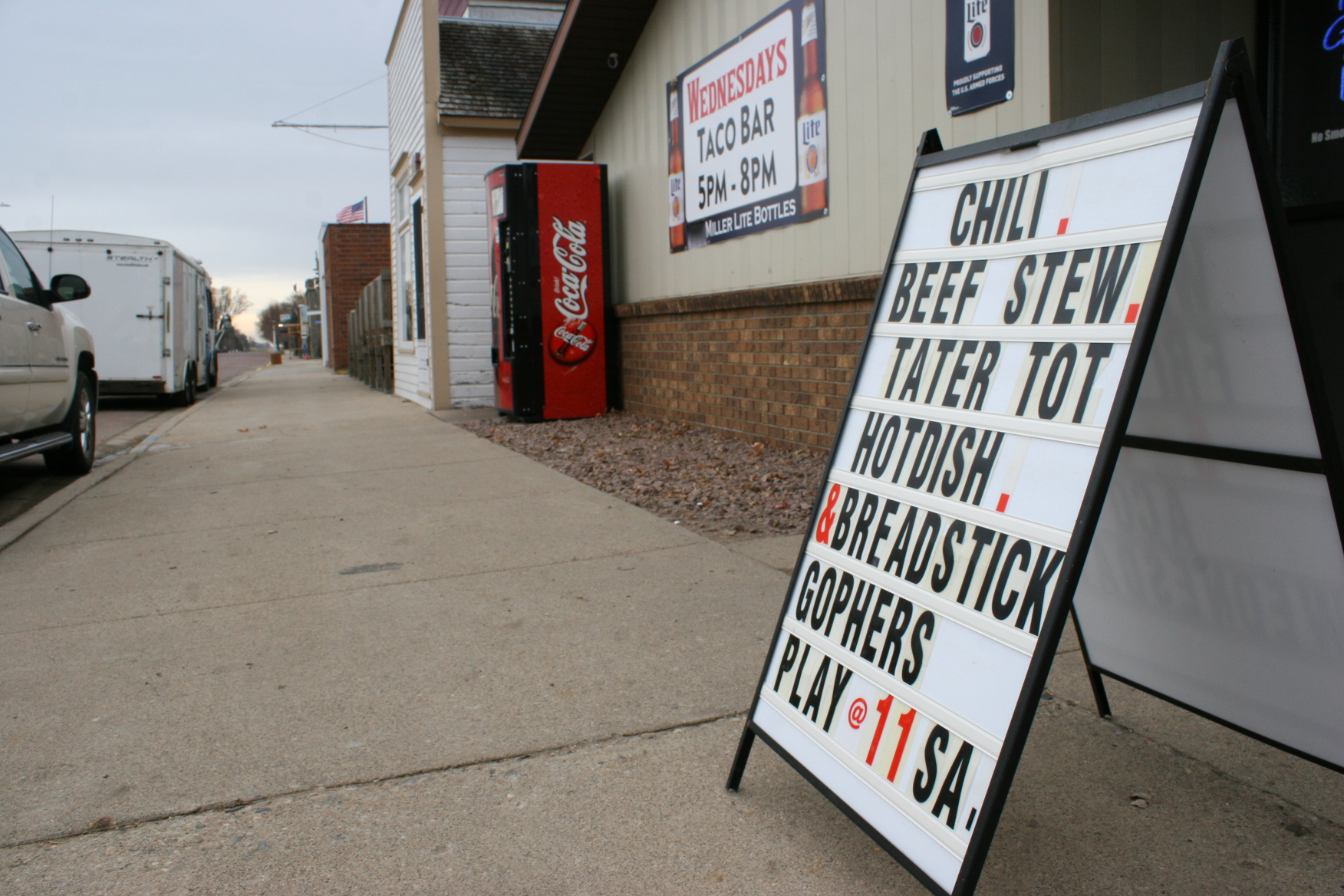
This sandwich board in small town Belview promotes one of Minnesota’s signature dishes, Tater Tot Hotdish, as a noon special. (Minnesota Prairie Roots copyrighted photo 2019)
Minnesotans are known for a thing called “Minnesota Nice,” which I like to believe is true most of the time. We are a bit reserved, use phrases like “that’s different” or “that’s interesting” when we really don’t like something or disagree, but want to be nice by holding back our honest thoughts.
The Minnesota sweet treat known as bars, often served with “a little lunch.” (Minnesota Prairie Roots copyrighted file photo)
Our goodbyes are prolonged. Often, as visiting family is leaving my home, I find myself either standing in the driveway or window waving, waving, waving. That follows the hugs I’ve given only minutes earlier. You can’t get in too many goodbye waves.
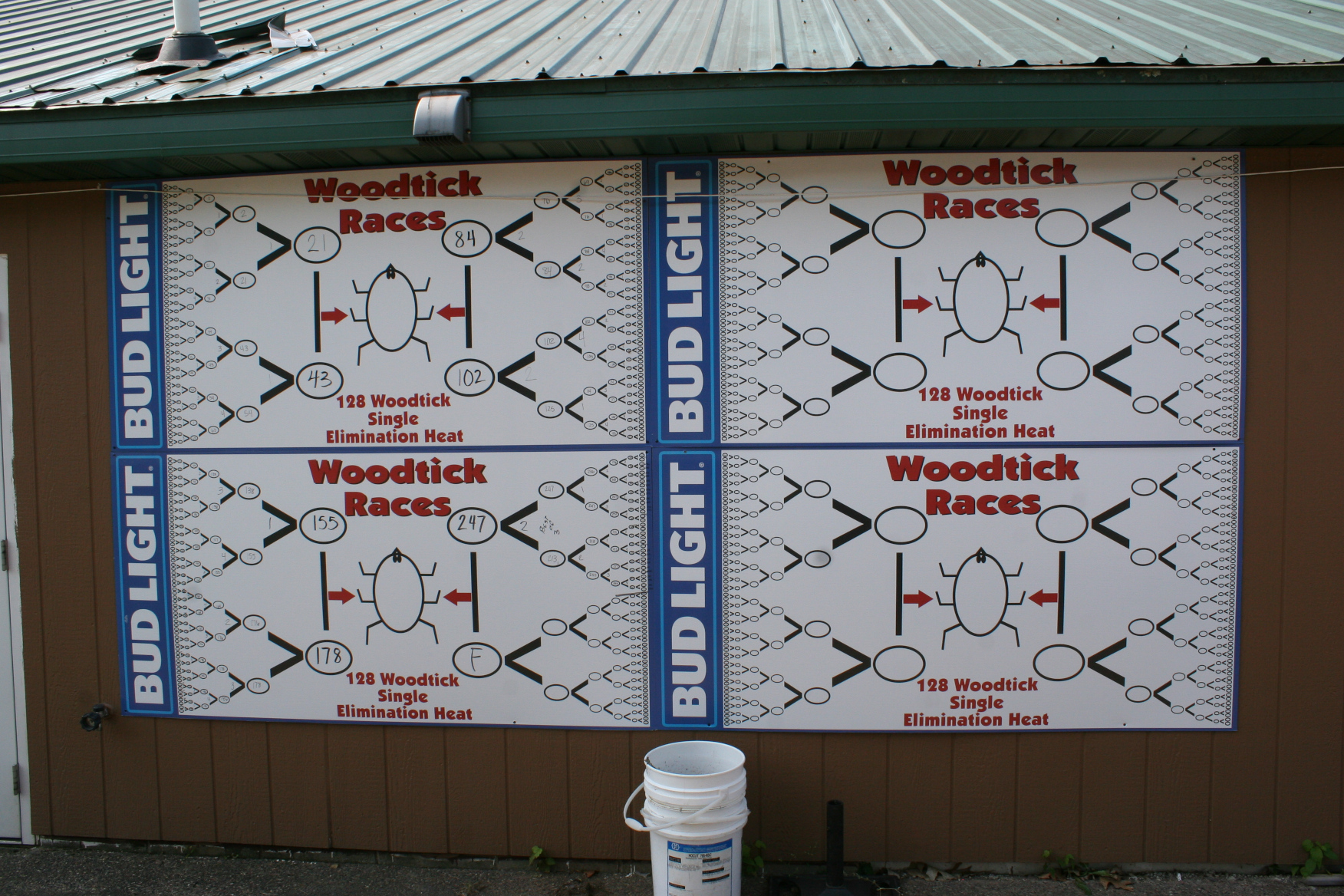
The Woodtick Inn in Cuyuna hosts Woodtick Races each summer. (Minnesota Prairie Roots copyrighted file photo August 2021)
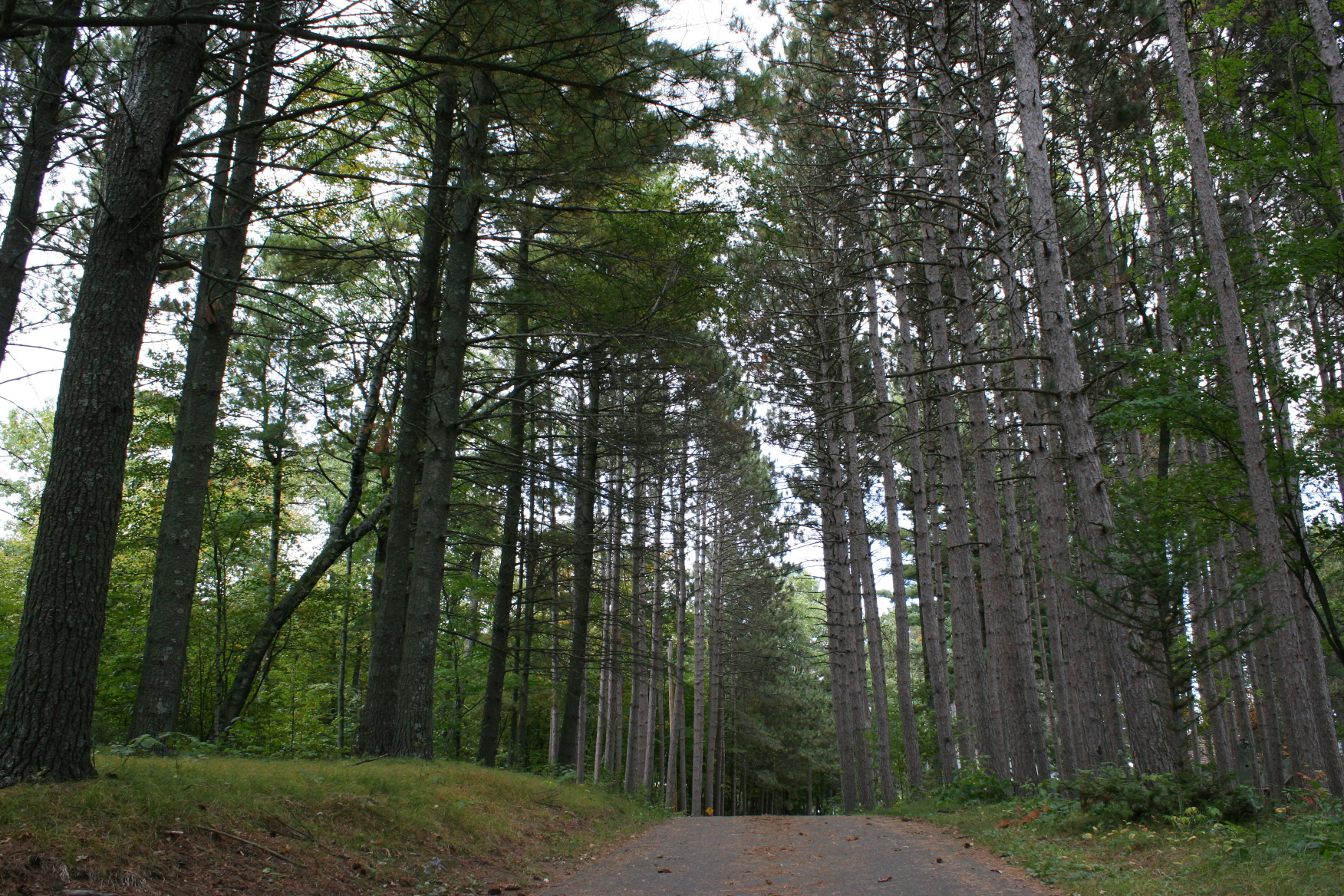
Pines border the driveway leading to a central Minnesota lake cabin. (Minnesota Prairie Roots copyrighted file photo)
I love this state where I’ve lived my entire life, even when I complain about the long winters and abundance of mosquitoes. This is home. Always has been. Always will be.
#
IF YOU HAVE any questions about Minnesota, any observations, anything you want to share, please do. Just follow the rules of “Minnesota Nice.”
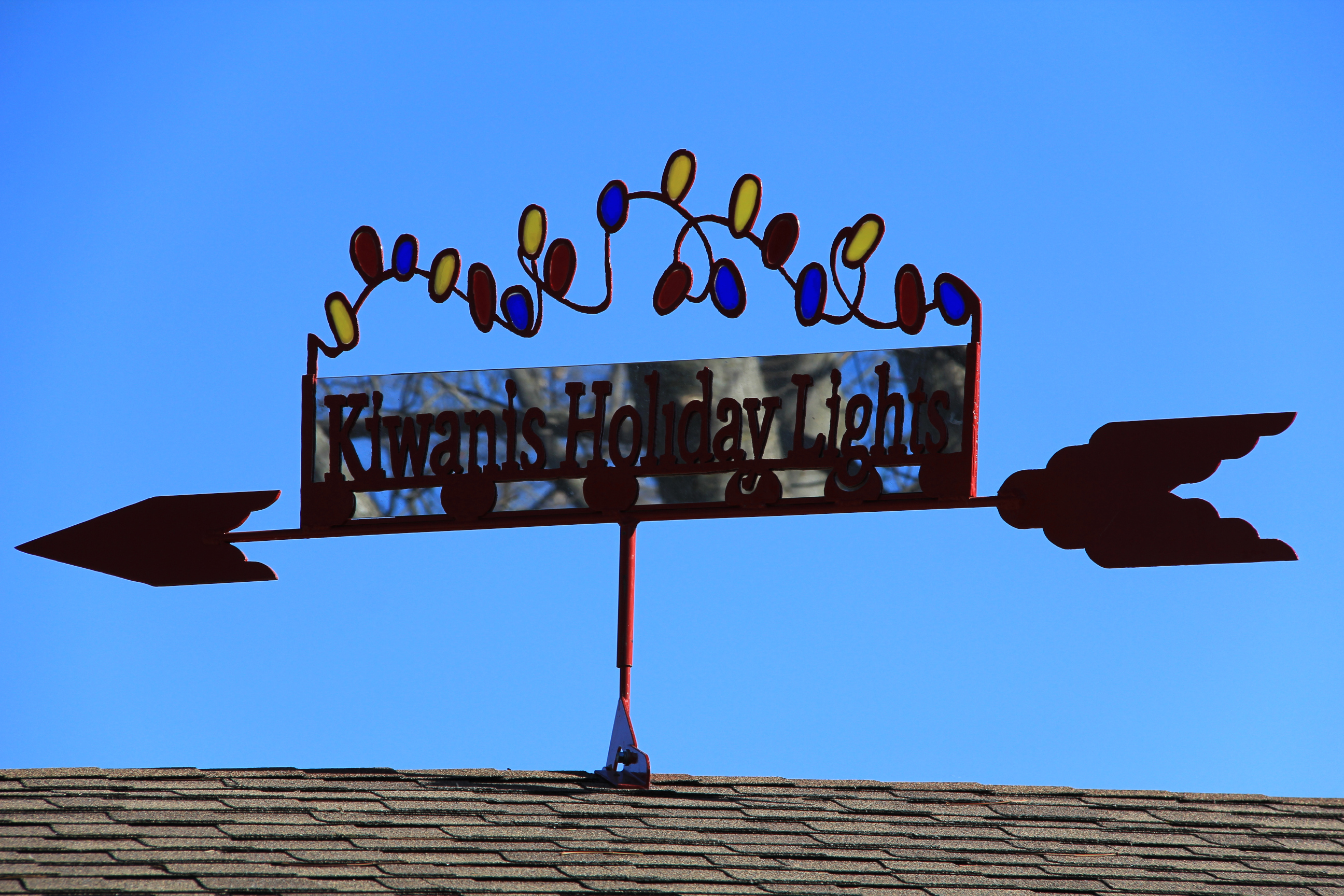
This sign tops the concessions stand at the Kiwanis Holiday Lights display at Mankato’s Sibley Park. (Minnesota Prairie Roots copyrighted photo November 2023)
VIEWING A HOLIDAY LIGHT display on an unseasonably warm mid-November afternoon of nearly 70-degrees in southern Minnesota seemed odd. But, in many ways, it was ideal to walk leisurely through the massive Kiwanis Holiday Lights exhibit at Sibley Park in Mankato before its official opening on November 24. There were no pressing crowds. No concern about parking. No sensory overload for me.
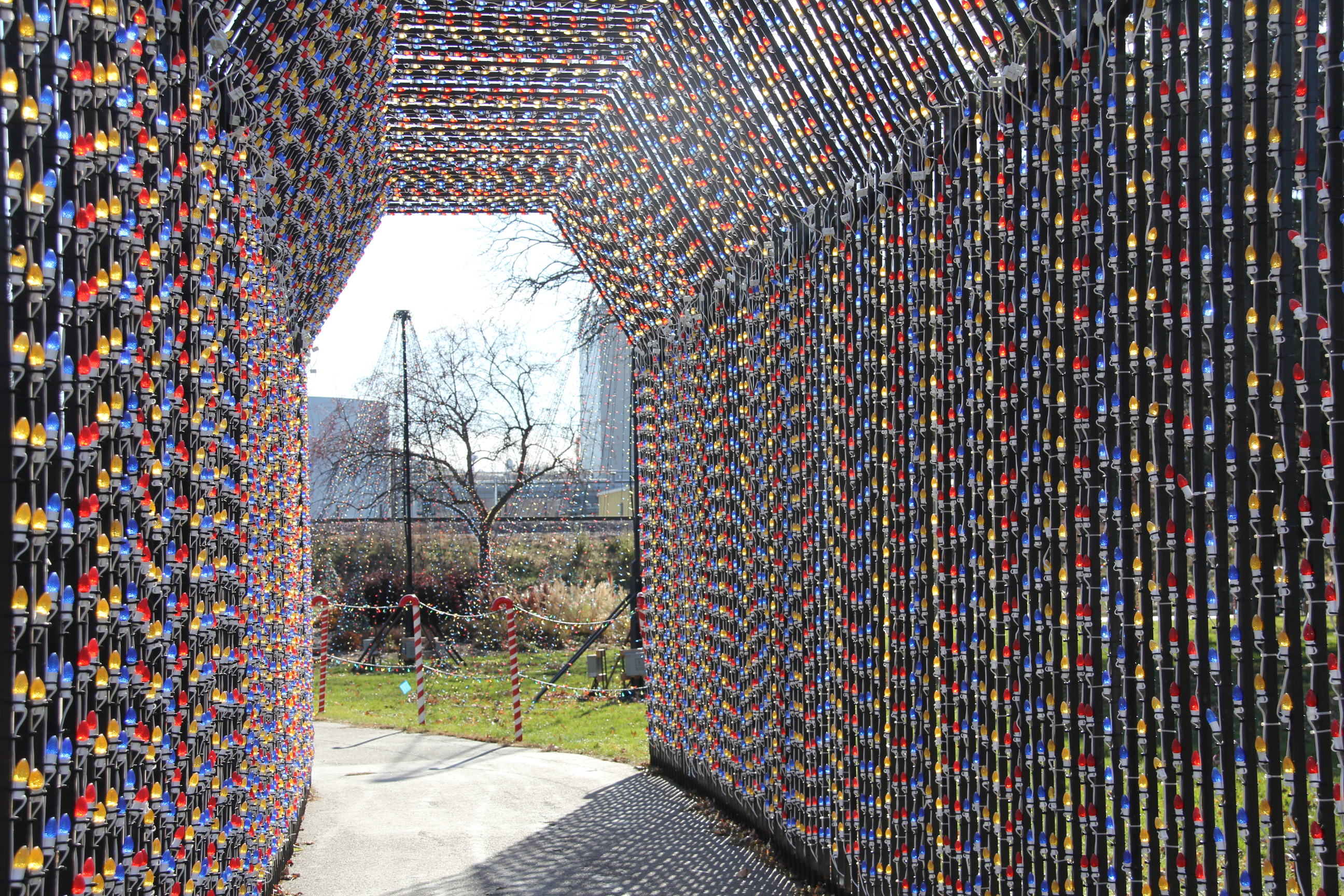
Lights frame a tunnel. (Minnesota Prairie Roots copyrighted photo November 2023)
Sure, Randy and I missed the full affect given our day-time visit. Yet, even without holiday lights aglow, the Mankato Kiwanis Club’s gift to the greater Mankato community and beyond impressed.
Riding in a one-horse open sleigh at Sibley Park. (Minnesota Prairie Roots copyrighted photo November 2023)
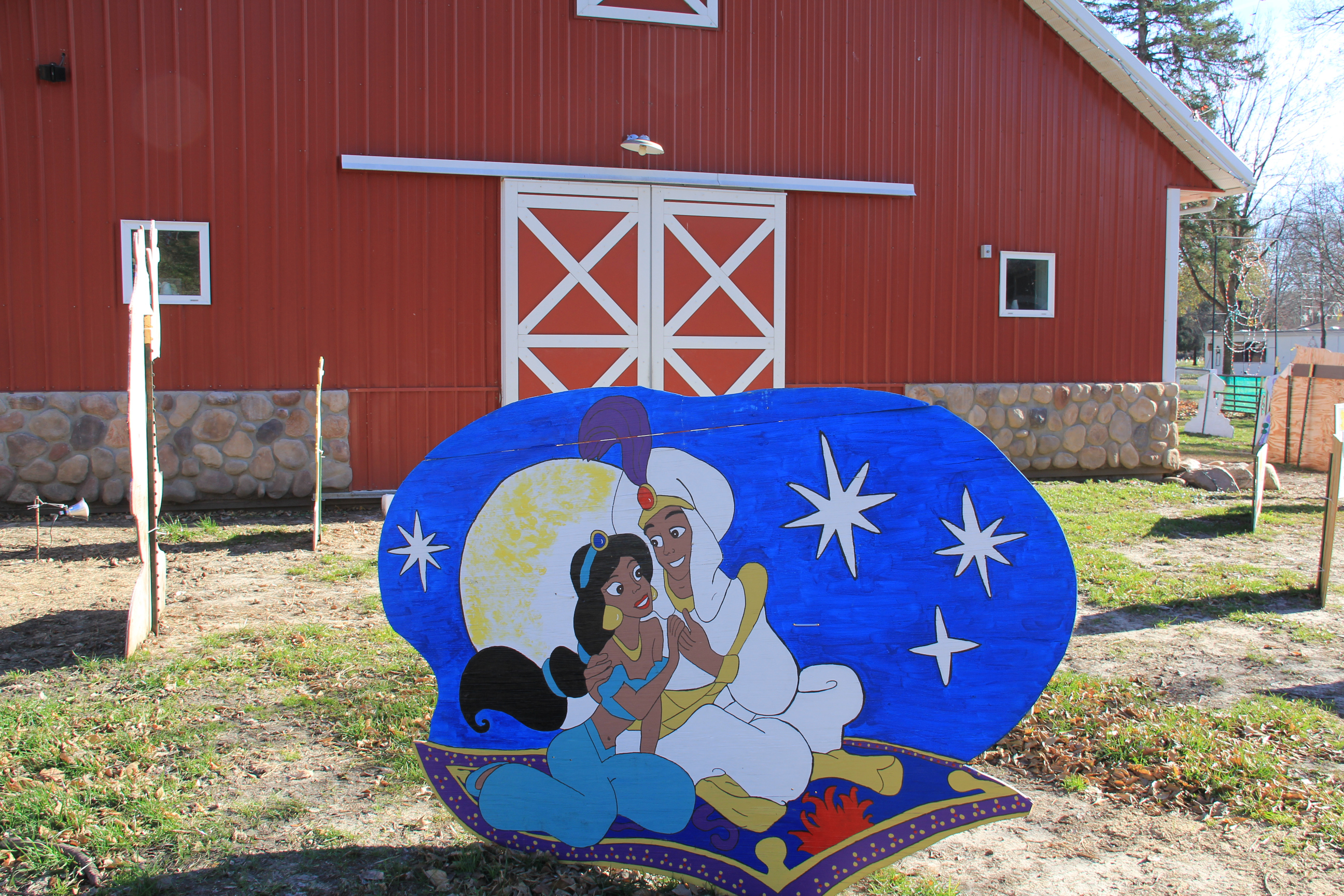
There are painted plywood cut-outs of Disney, Peanuts, Dr. Seuss and many other popular characters to delight the kids, especially.
In the bright afternoon sunshine, the lights on the holiday tunnel appear to be plugged in. But they aren’t. (Minnesota Prairie Roots copyrighted photo November 2023)
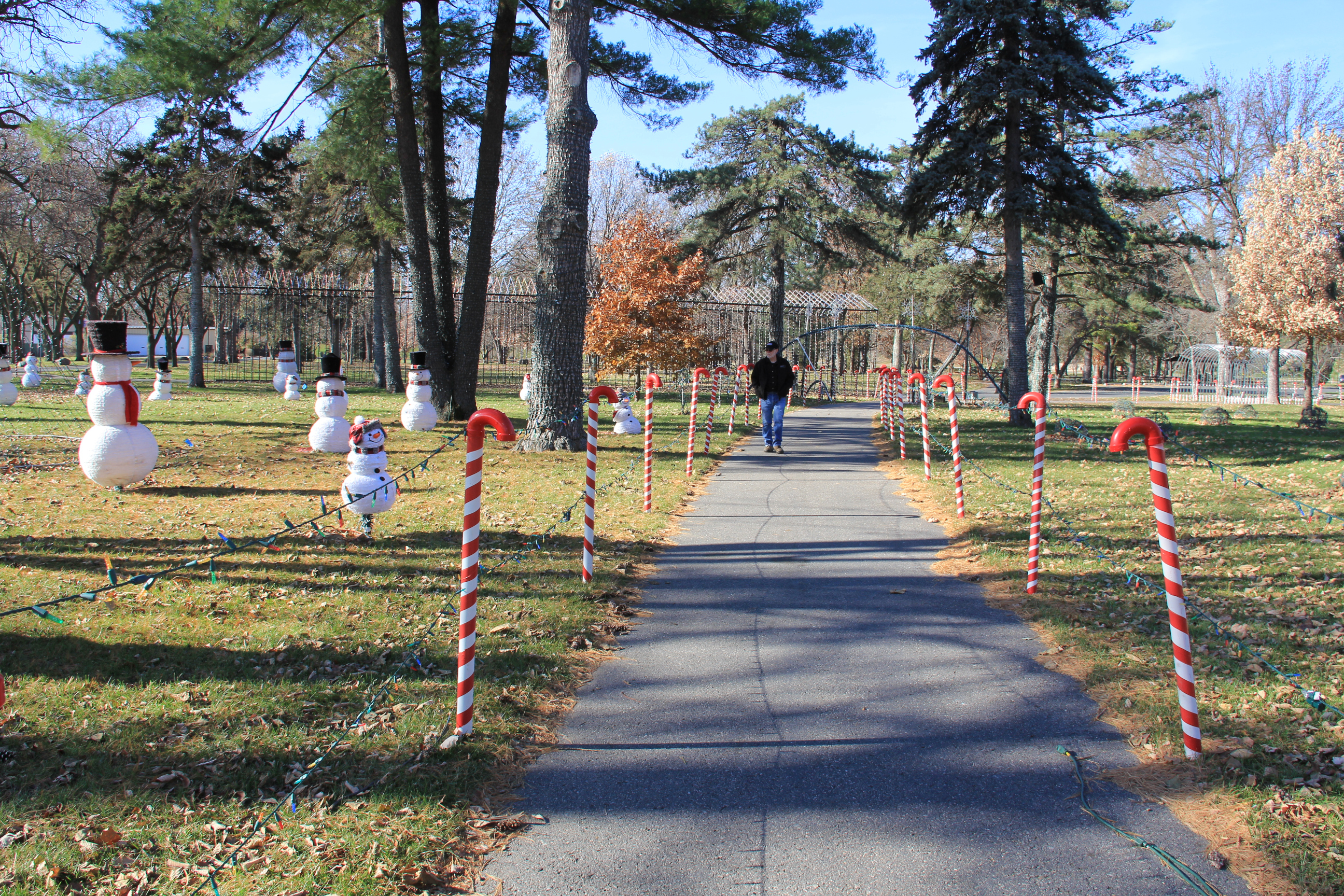
Walking along a candy cane lined path past the field of snow people on a late autumn afternoon. (Minnesota Prairie Roots copyrighted photo November 2023)
Candy canes crafted from PVC pipe. (Minnesota Prairie Roots copyrighted photo November 2023)
There are tunnels of light and a field of snowmen and candy canes shaped from PVC pipes.
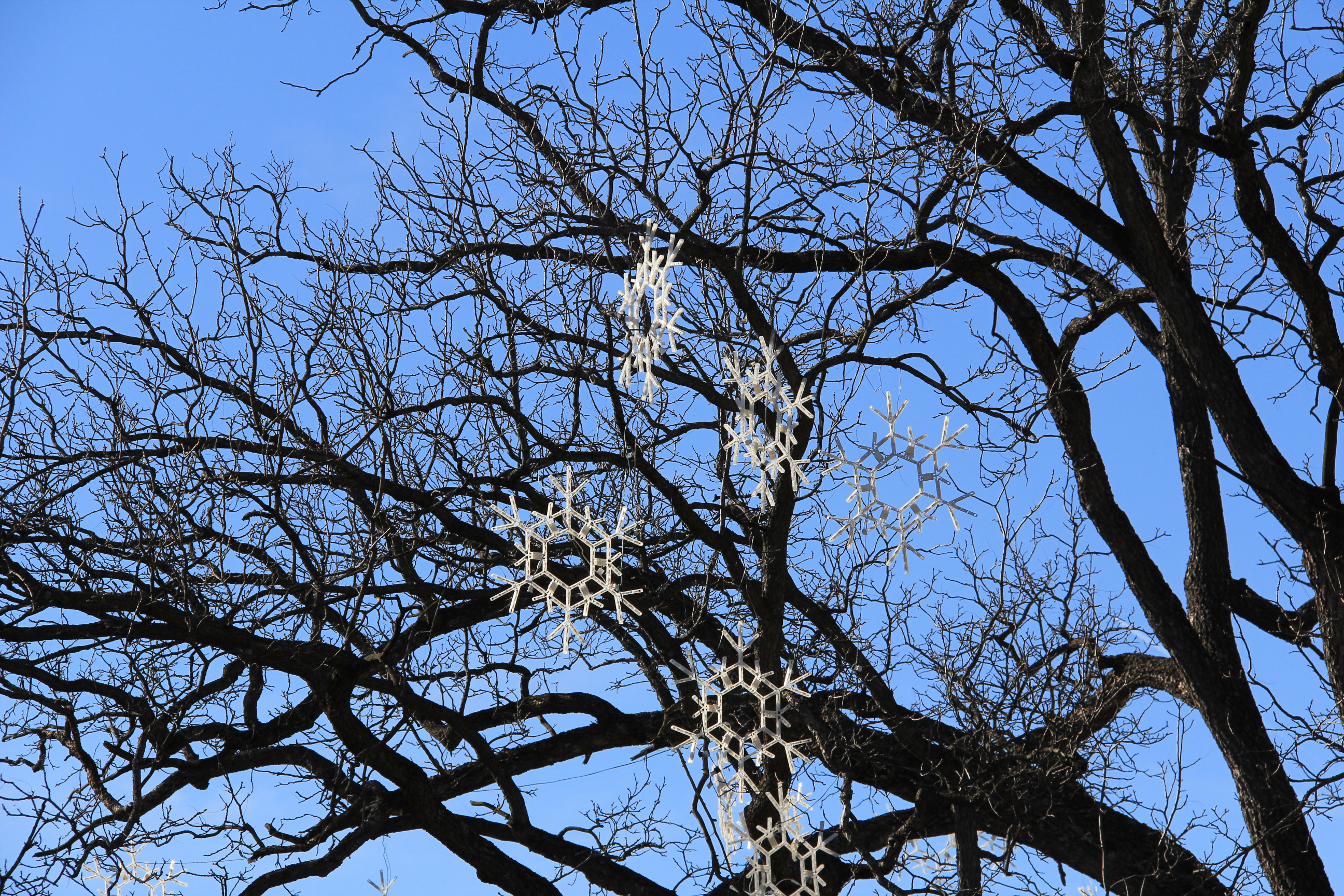
High in a tree, snowflakes dangle. (Minnesota Prairie Roots copyrighted photo November 2023)
There are snowflakes twisting from tree branches, lights twisting around tree trunks, a Christmas tree towering 80 feet tall.
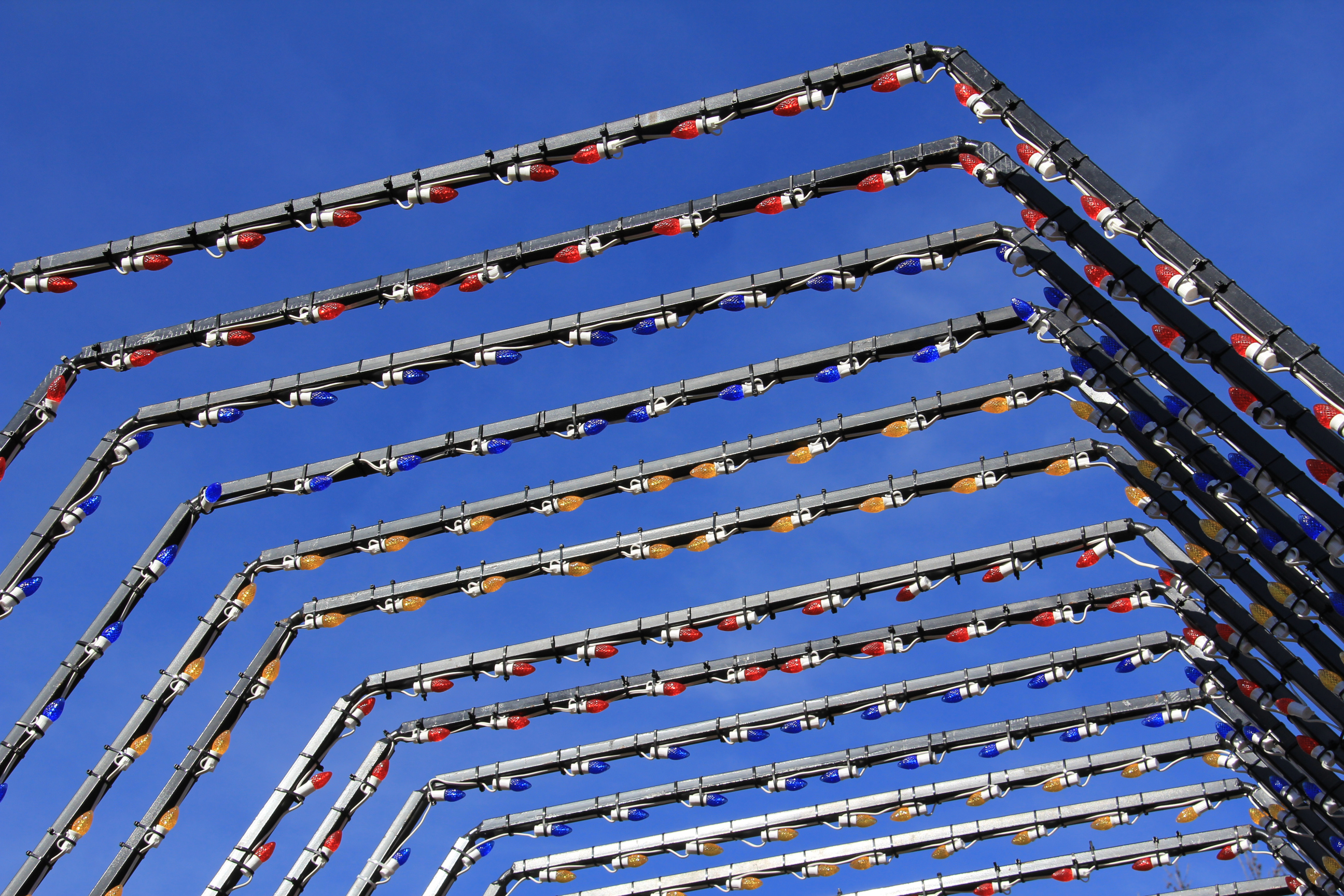
Overhead tunnel lights. (Minnesota Prairie Roots copyrighted photo November 2023)
Holiday lights are strung seemingly everywhere.
The centerpiece 80-foot Christmas tree. (Minnesota Prairie Roots copyrighted photo November 2023)
Admittedly, this would be beautiful to view in the dark of a southern Minnesota winter evening. Viewing hours are 5-9 pm Sunday – Thursday and 5-10 pm Friday and Saturday through December 31. Mondays and Tuesdays are lighter traffic days. This is a drive-through or a walk-through display, although I’d suggest walking to get a full, immersive experience.
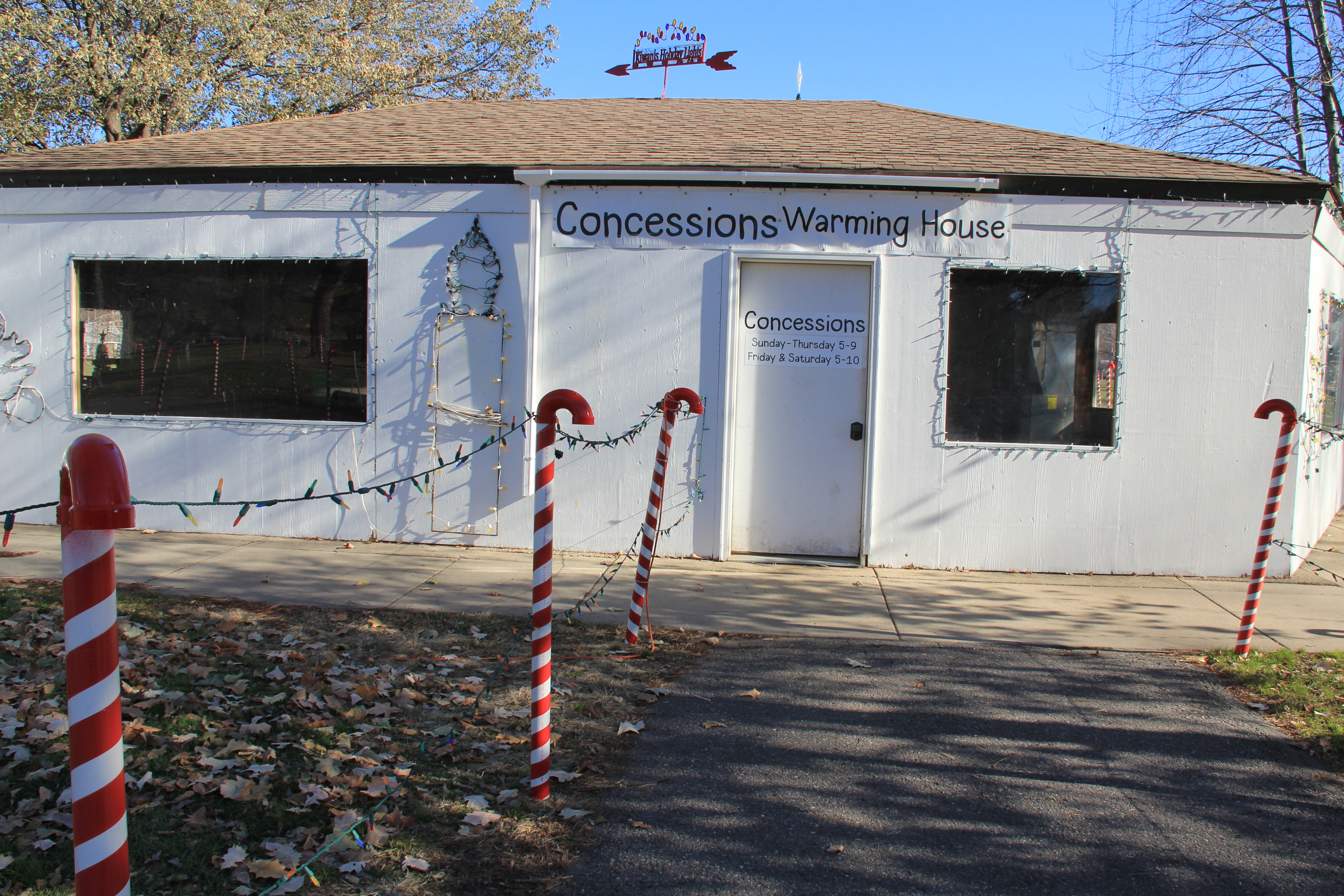
The place to warm up and grab some food and beverages. (Minnesota Prairie Roots copyrighted photo November 2023)
There are places to stop inside the park. The concessions building serves beverages like hot cocoa and cider, plus candy canes, mini donuts and even Little Debbie holiday treats. The souvenir shop offers snow globe ornaments, lighted snowflake wands, ceramic campfire mugs and much more. Oh, how Minnesotan.
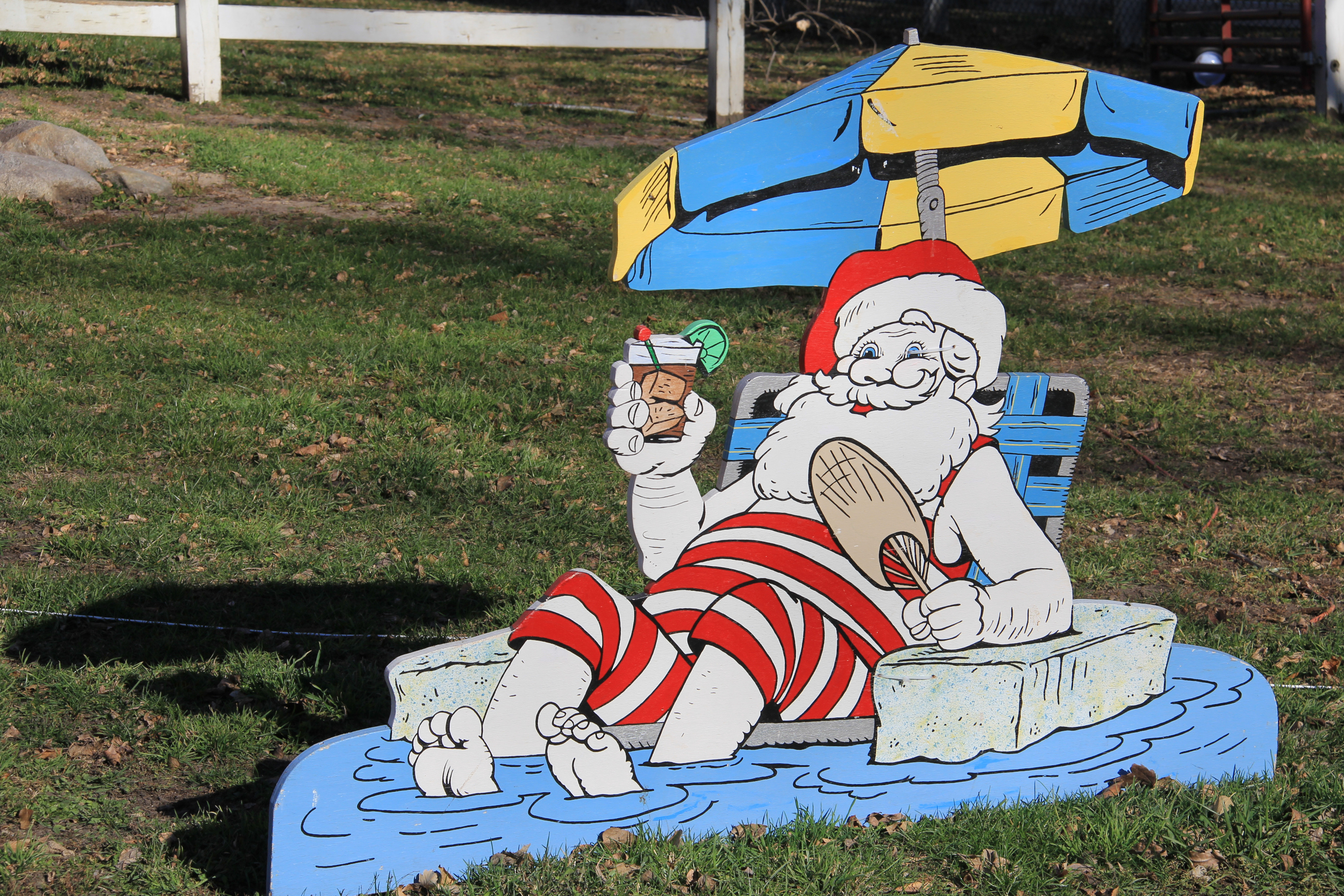
Santa lounges in Sibley Park, far from any warm beach. (Minnesota Prairie Roots copyrighted photo November 2023)
On weekends, Santa is on-site for visits. So are live reindeer.
Kids will love all the plywood cut-outs, including Disney characters like these from Aladdin. (Minnesota Prairie Roots copyrighted photo November 2023)
Admission is free. But cash and non-perishable food donations are welcomed.
Snow people aplenty are part of the holiday light display. (Minnesota Prairie Roots copyrighted photo November 2023)
I can only imagine how magical the Kiwanis Holiday Light Display feels at night, when lights burst color into the darkness, when families and couples and singles view the lights and feel the pulse of the holiday spirit. I experienced a bit of the magic on that warm mid-November afternoon. How magical it all must feel on these December evenings so near Christmas.













 Minnesota Prairie Roots
Recent Comments