Minnesota Prairie Roots

Writing and photography by Audrey Kletscher Helbling

Raising funds to preserve priceless paintings in Park Rapids August 27, 2012

BETWEEN NORTHWESTERN MINNESOTA and Chicago, you won’t find another art collection like the Gabor and Edith Nemeth Study Collection dating from the 15th to 19th centuries.

Now that “Old Masters” collection of 42 European paintings owned by the Nemeth Art Center in Park Rapids is in need of a permanent storage unit to preserve the valued art for future generations.

A campaign is currently underway to raise $1,200 for materials to construct a modular custom storage unit that will keep the paintings separated and vertical, thus preventing further damage. As of August 23, the NAC had raised $600 via an online campaign and direct contributions, according to NAC Executive Director Meredith Lynn.

Brian Stieler of the Minneapolis Institute of Arts has volunteered to design and build the storage structure. And representatives of the Midwest Art Conservation Center in Minneapolis have already been to Park Rapids to assess the collection and lay out plans for restoration.
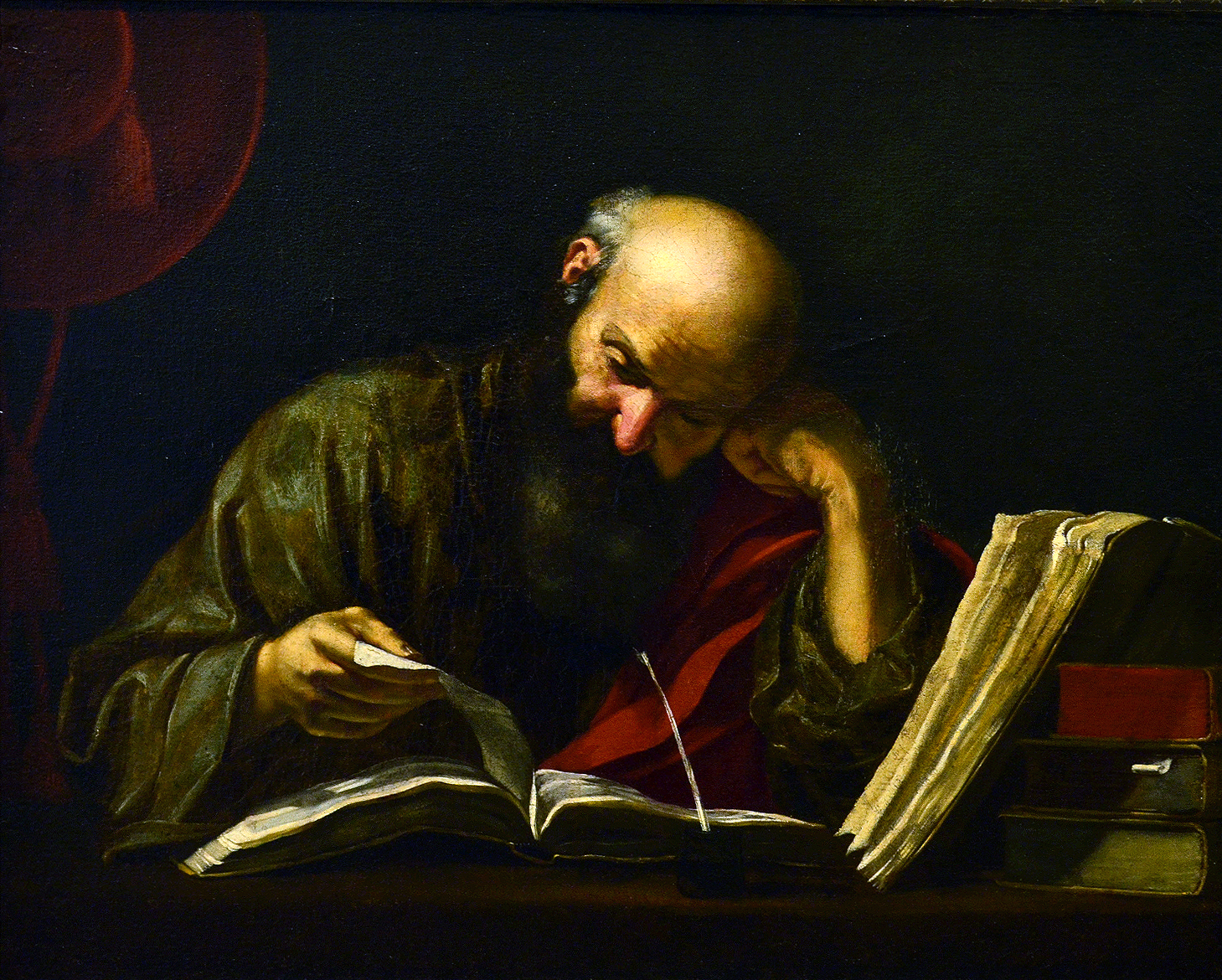
“St. Jerome,” painted by a 17th century follower of Hendrik van Somer, and part of the collection.

About a third of the paintings require restoration, Lynn says, with several in such condition that they can no longer be exhibited. More than 30 of the pieces are continually on display (during the center’s open months from May – September) in the 1900 Victorian style brick courthouse turned art center which opened in 1977.

That was the year the historic and priceless collection of paintings, by students who studied well-known masters like Rembrandt, Rubens and Bosch, came to be owned by the then newly-established North Country Museum of Arts.

European born art restorer and dealer Gabor Nemeth, who came to the U.S. in the 1940s and worked thereafter primarily in Los Angeles, also maintained a home in the Park Rapids area (his primary residence now) and brought his collection to Minnesota in the mid 1970s.

After a three-day January 1977 exhibit of his collection in Park Rapids—a show which drew long lines of some 4,000 people total in the then town of 2,700, according to newspaper reports—Nemeth decided to offer the art to Park Rapids. Conjecture had long been that St. John’s University would be the recipient of the collection (for a reason unknown to Lynn; I asked).

In an article published in the May 2, 1977, issue of the Bemidji-based newspaper, The Pioneer, Nemeth is quoted: “There is really nothing up here as far as art goes. People will appreciate it (the collection) if they are given the chance to see it.”
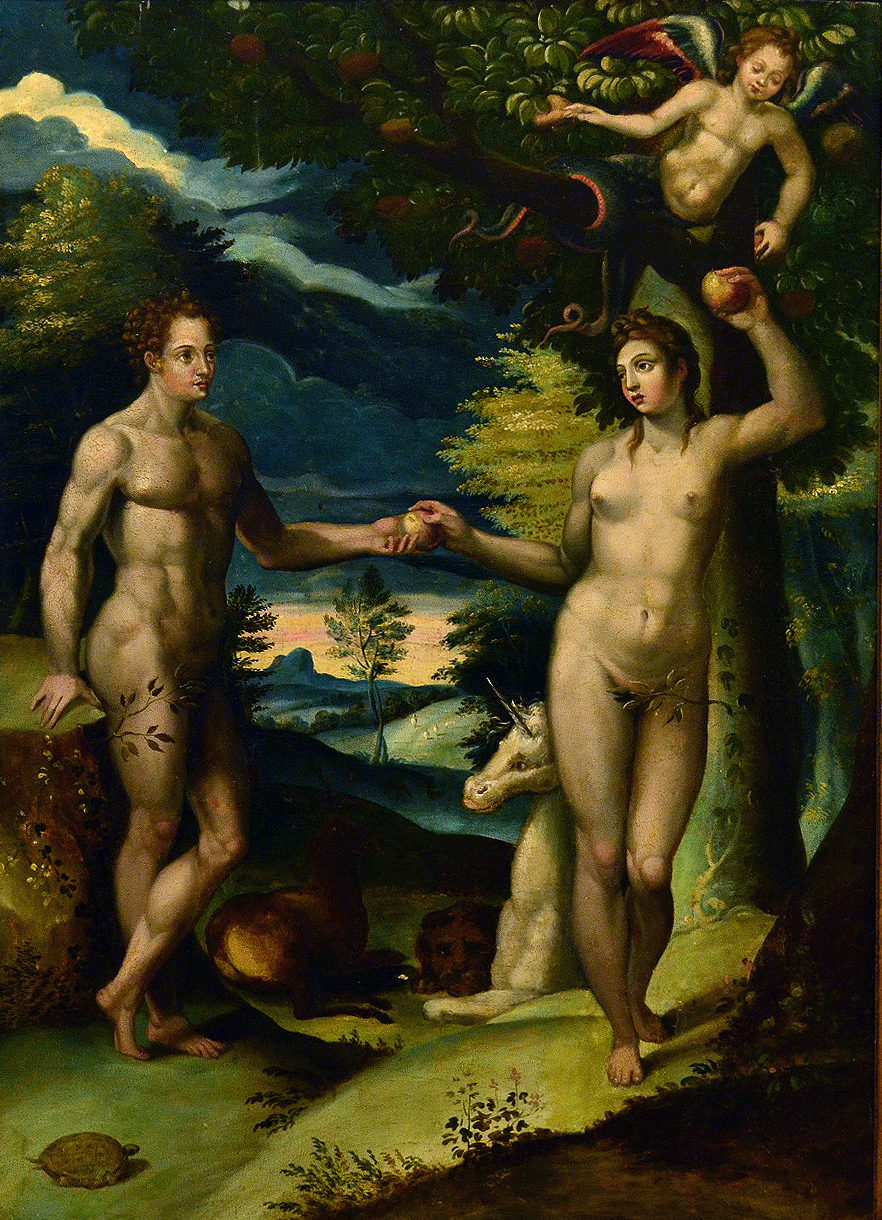
“Adam and Eve,” a 17th century painting by a student of Cornelisz.

Clearly the people of Park Rapids realized the significance of Nemeth’s offer as 30 families borrowed $35,000 to purchase the paintings, a price “significantly less than the appraised value,” Lynn notes.

She won’t put a value on the paintings today other than to assess it’s “quite high.” Beyond the monetary value, the art center director calls the collection “historic and unique paintings with priceless cultural value.”

Speculation has existed that perhaps the masters themselves may have dipped their brushes into oil or tempera to work on paintings in the collection. The art center lays no official claim to that suggestion, although Lynn says, “…it’s possible that painters such as Rembrandt painted on several of the canvases that we own.”

The identities of whose who painted the pieces as part of a greater studio study setting are primarily lost to history, according to Lynn.

Many of the paintings were originally acquired for Lois Warschaw, an art collector and prominent political figure in Los Angeles, prior to ownership by Gabor Nemeth and his wife, Edith.

Today, as it always has, the Gabor and Edith Nemeth Study Collection centers the Nemeth Art Center, which opened in August 1977 after the Park Rapids community pulled together to purchase the paintings and remodel the courthouse into a center for the arts.

Says Lynn:

New visitors to the Nemeth Art Center are always pleasantly surprised by the beauty and historical relevance of our paintings. Park Rapids is a small town, but the arts community here is growing and hopefully our collection will help raise awareness of the town as an arts destination.

That’s exactly what Gabor Nemeth hoped for 35 years ago—that his collection of Old Masters paintings would draw tourists to this community in northwestern Minnesota. And it does. The collection includes works of biblical scenes like “Madonna and Child,” “Madonna of the Harpies,” “The Holy Family,” “Christ in the Garden of Gethsemane,” “Christ in the Wilderness,” and several genre paintings such as “Kitchen Scene” and “The Card Players.”

Today efforts also focus on preserving the collection via construction of the custom storage unit. With $600 more in contributions (as of August 23), the project can proceed.

But the art center’s goals go well beyond a storage fix. Options are under consideration to move into a handicapped accessible building with more consistent climate control. The center is also working on a seven-year plan to restore the study collection paintings.

Executive director Lynn summarizes the situation and needs:

The Nemeth Art Center is a unique institution, and this collection forms its backbone. Maintaining historic items is important and costly, and the NAC cannot provide the community with something so special without continued help.
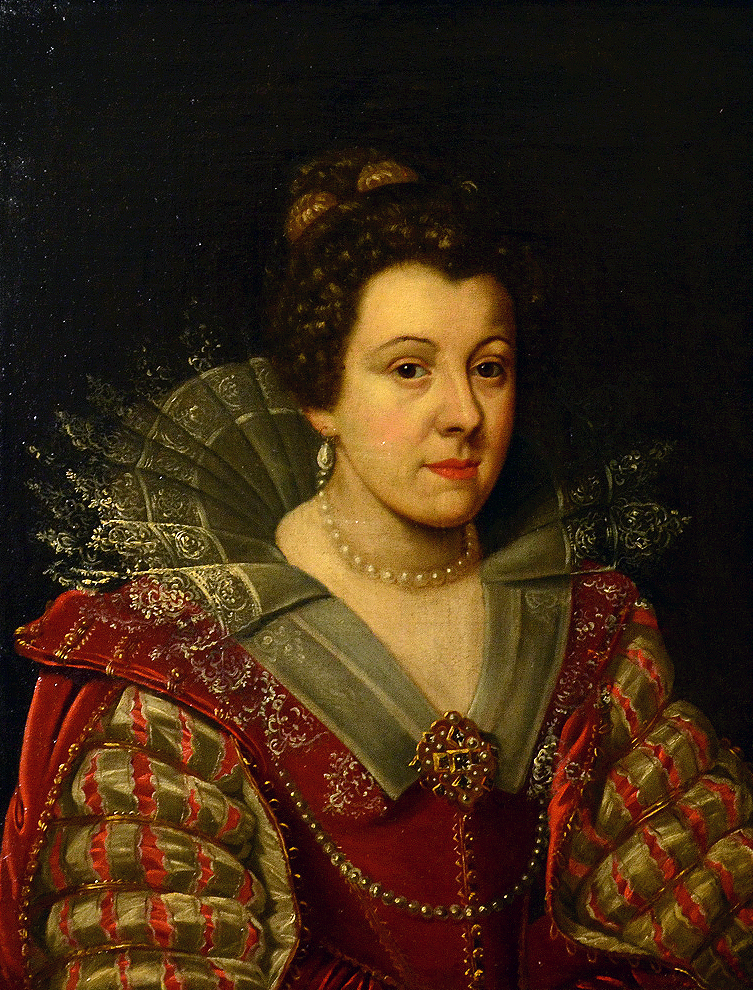
“Portrait of a Noblewoman,” an 18th century painting by a follower of Rubens.

IF YOU’D LIKE to contribute to the storage unit fundraising effort, click here to reach the NAC storage unit project campaign on indiegogo.

Or visit the NAC website, by clicking here, for details and contact information.

To read a detailed history on The Gabor and Edith Nemeth Study Collection, click here to a presentation prepared by Steven R. Peterson with grant funding from the Region 2 Arts Council. Thanks to LouAnn Muhm, chairperson of the NAC Board of Directors, for directing me to this presentation, the source for some of the information cited in this post.

Special thanks to NAC Executive Director Meredith Lynn for answering my lengthy list of questions via email.

If you wish to view the Gabor and Edith Nemeth Study Collection, art center hours are from 10:30 a.m. – 4:30 p.m. Tuesday, Thursday and Saturday, May – September. Each month the NAC also features a curated exhibit of contemporary art in addition to pieces from its permanent collection.

Finally, check out the current “Rembrandt in America” exhibit now showing at the Minneapolis Institute of Arts by clicking here. Perhaps viewing that will inspire you to support efforts to preserve the priceless paintings in Park Rapids.

Images of paintings are courtesy of the Nemeth Art Center


Flat Fargo August 24, 2012

Filed under: Uncategorized — Audrey Kletscher Helbling @ 6:47 AM
Tags: , , , , , , , ,

This water tower is located in West Fargo, an area of shopping malls, restaurants, Big Box stores, hotels, etc. The tower is a rare vertical structure, breaking the flat, horizontal landscape of the Fargo area.

I THOUGHT I KNEW FLAT having grown up on the southwestern Minnesota prairie where the land seems to stretch far and unbroken into flat infinity.

But not until this year, when my family traveled thrice nearly 300 miles north and west to Fargo, North Dakota, and back did I truly understand the definition of flat.

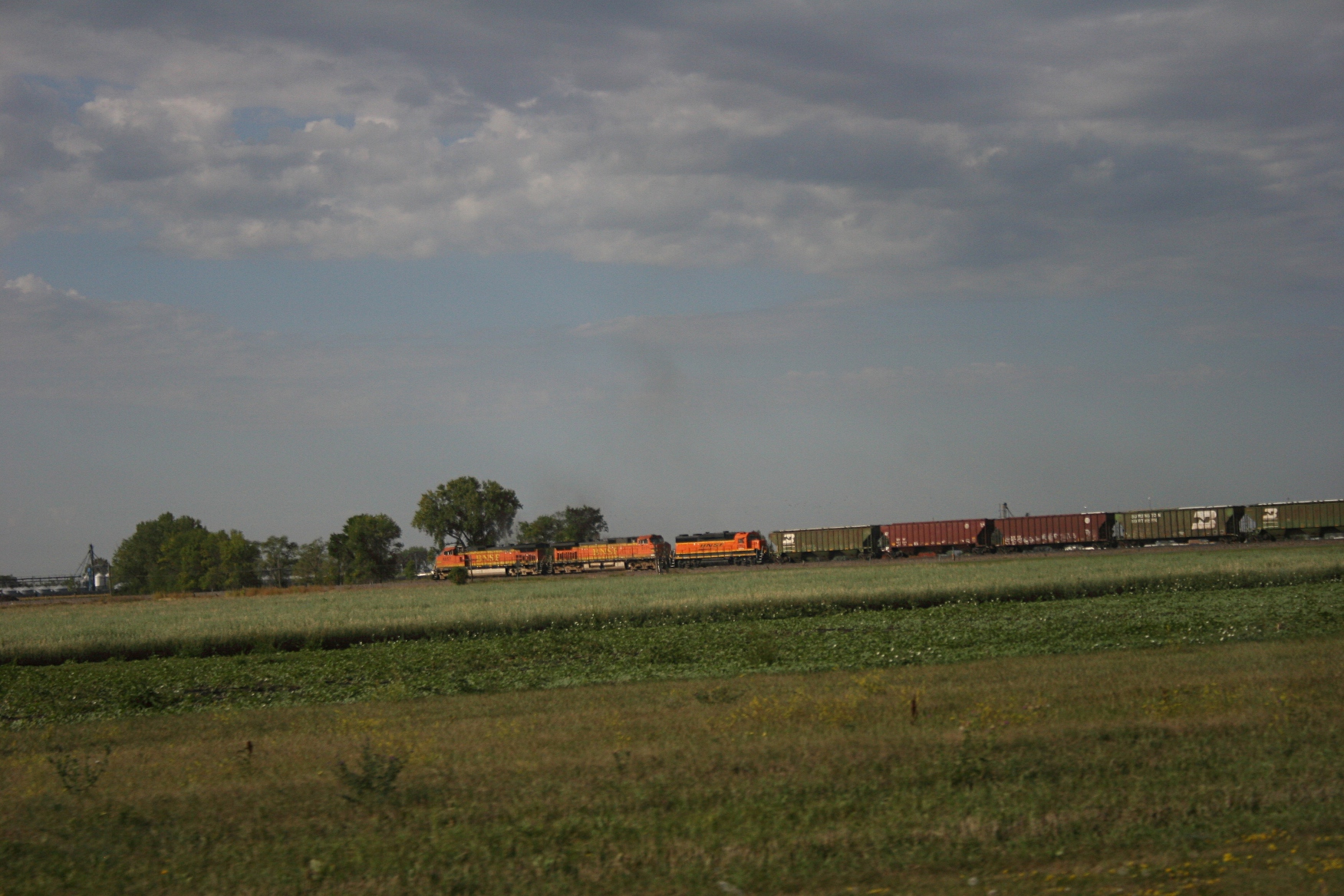
A train rumbles through the northwest side of Fargo near the airport and the campus of North Dakota State University. No, this is not a hill. I simply did not have my horizon straight as I photographed this train while traveling along a city street.

I doubt I have ever seen a city as flat as Fargo. You know, when you spill a glass of milk on the table how the liquid flows fast and free over the edge of the table. Well, that table would be Fargo. The milk would be the Red River of the North. I totally understand now why this city is so prone to flooding each spring.

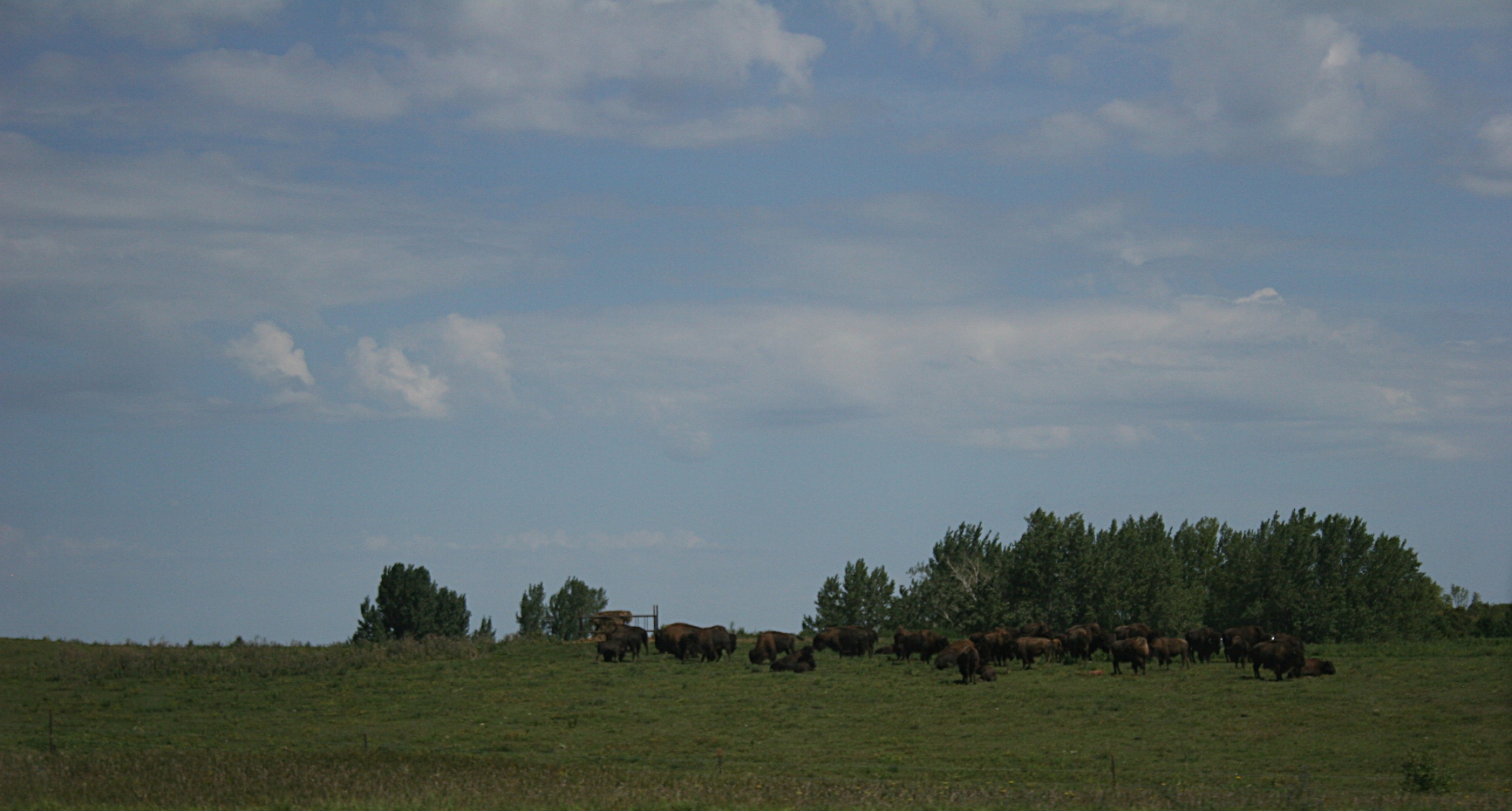
A herd of buffalo photographed along Interstate 94 east of Fargo, which places them in Minnesota.

I swear, if I had driven to the western edge of Fargo, I would see the world’s largest buffalo—26-foot tall, 60-ton concrete Dakota Thunder sculpted in 1959 by Elmer Petersen—90 miles away atop a hill in Jamestown’s Frontier Village. I saw the buffalo about 20 years ago while en route to a Helbling family reunion in Mandan/Bismarck, cities which actually do have hills. I think.

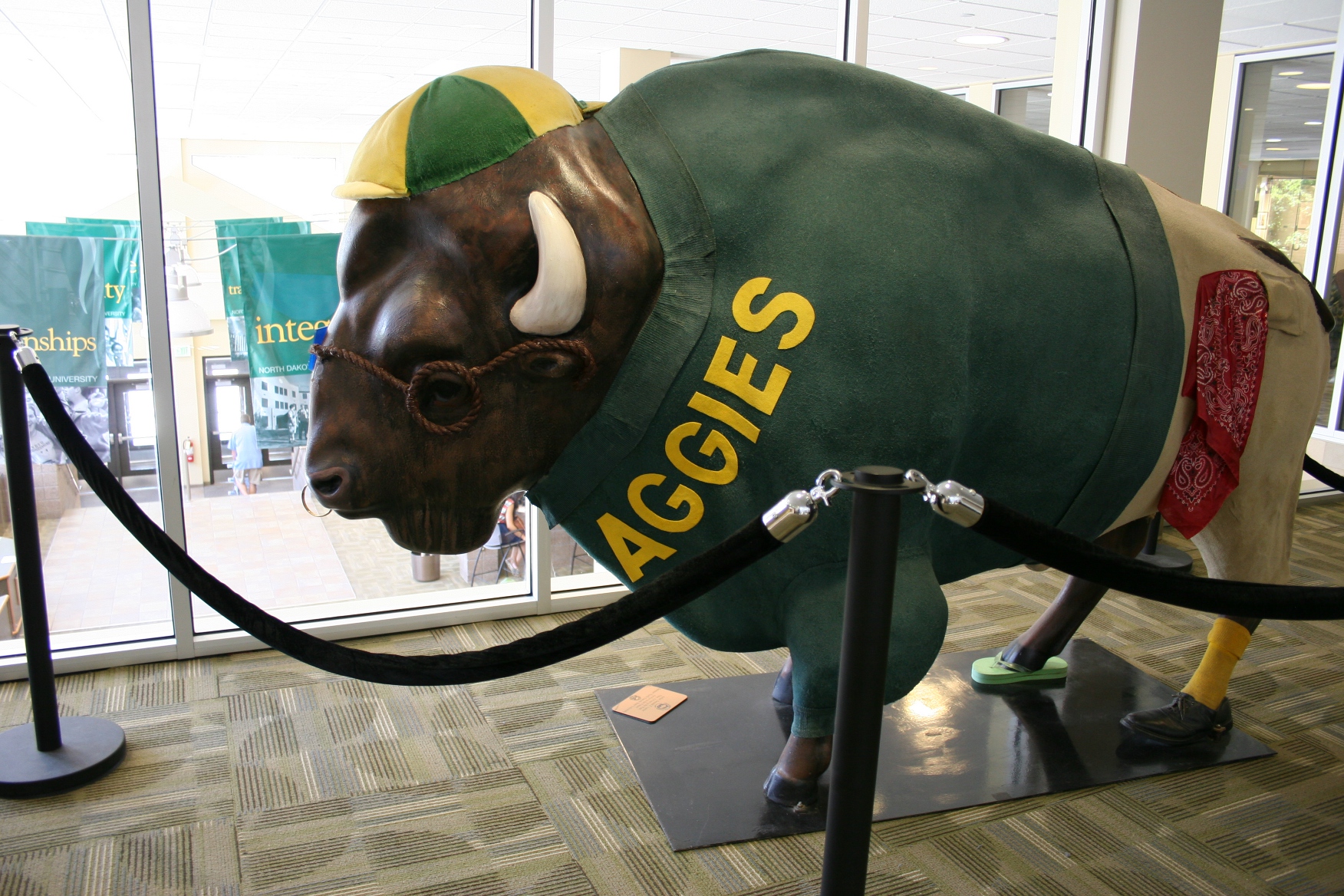
Inside the NDSU Memorial Union, I photographed this sculpture of a bison, the university’s mascot, in June.

About those buffalo… The flat and forever Dakota plains provide ideal grazing grounds for these massive creatures, or at least once did. Dakotans are proud of their native bison as evidenced in business names; art like “Herd About the Prairie” in Fargo; and even a bison mascot for North Dakota State University where my son is now a student.

A bus bench and sidewalk in West Fargo draw the eye west toward the horizon and the setting sun.

My apologies for momentarily edging away from that flat land issue. Even I, a girl of the prairie, find the Fargo flatness somewhat unsettling. I’d like a few more mature trees, especially on the sprawling growth west side of the city, upon which to rest my eyes. I’d like a few rises in the land, other than the rare man-made ones, to break the monotony of a straight horizontal line.

I expect that if I lived in Fargo, I’d adjust and think nothing of the flat landscape. But when you’re a visitor, you notice things like the lay of the land and the wind, oh, the winds of Fargo.

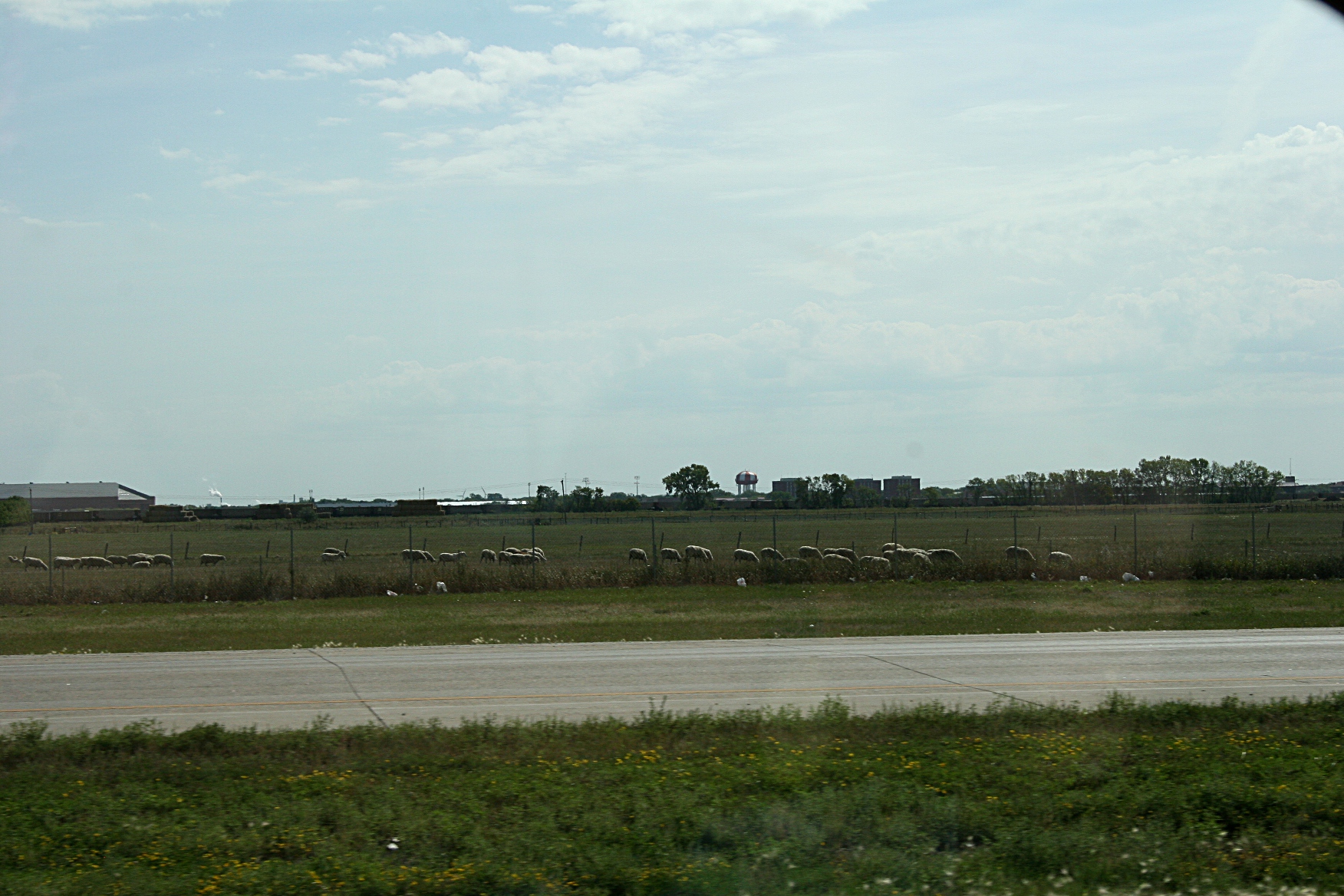
Just off Interstate 29 a flock of sheep graze pastureland as part of North Dakota State University’s Sheep Experiment Station.

Throughout West Fargo you’ll see open patches of land like this clover field next to the Fairfield Inn, where we’ve stayed twice. The hotel has strong horizontal lines like most structures in Fargo.

A fenceline and cornfield in Fargo, near (or part of, I’m not sure) the NDSU campus. More horizontal lines…

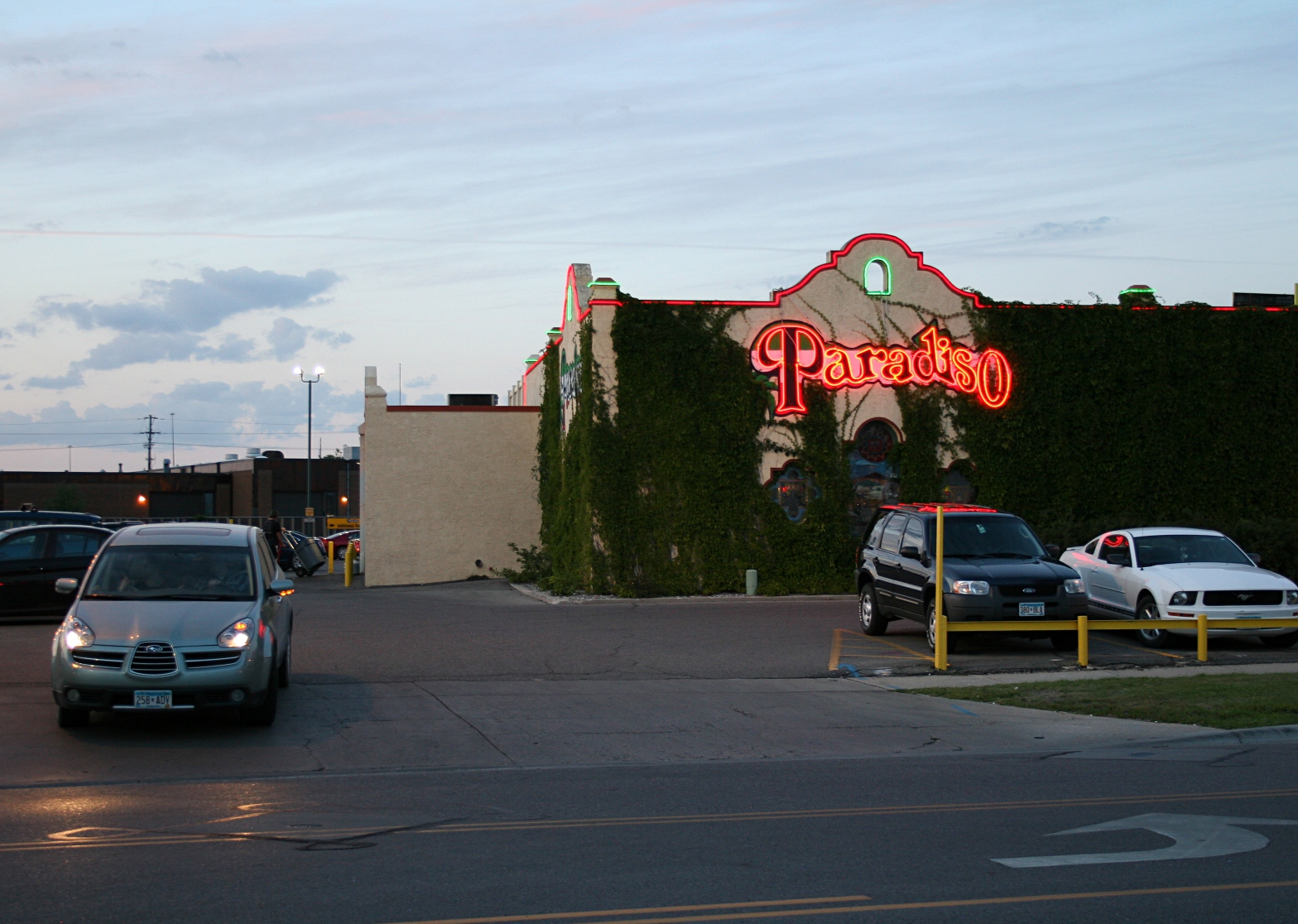
Paradise in Fargo, the Paradiso Mexican Restaurant, that is.

© Copyright 2012 Audrey Kletscher Helbling


Faribault Festival offers opportunity to bridge differences & connect August 23, 2012

Filed under: Uncategorized — Audrey Kletscher Helbling @ 7:15 AM
Tags: , , , , , , , ,

TODAY I’D LIKE TO EXTEND an invitation to you. Pull out your calendars right now and add this event to your schedule: International Festival Faribault, 10 a.m. – 4 p.m. on Saturday, August 25, Central Park.

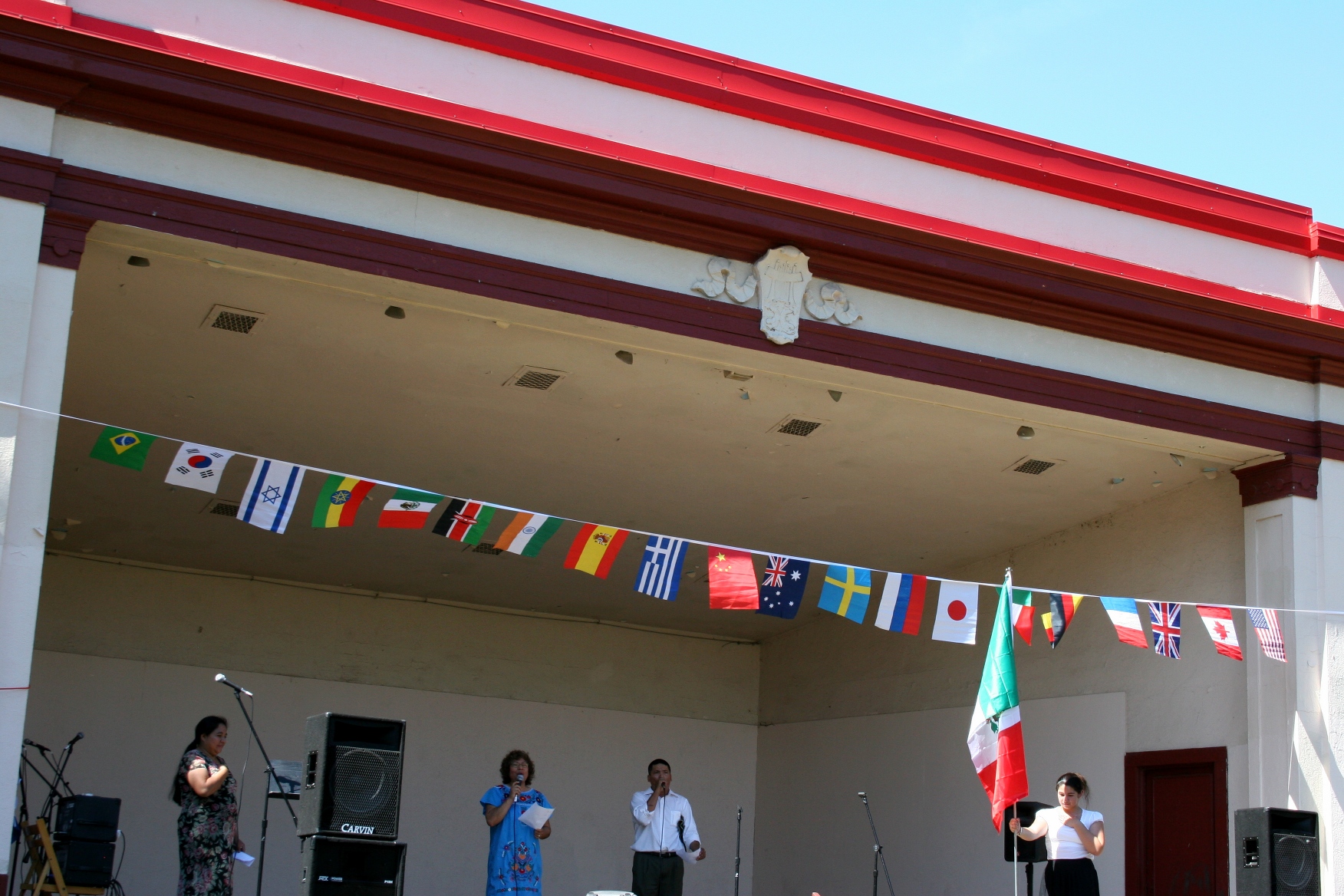
Several Latinos lead in singing of Mexico’s national anthem last September during the International Festival Faribault at Faribault’s Central Park. The flags strung across the band shell represent the countries featured at the fest. This weekend’s celebration marks the seventh such international fest in Faribault.

There. Done. Right?

The scramble for candy after the pinata is broken at last year’s festival. Kids of all races participated with no concern for skin color or cultural differences. So refreshing to see.

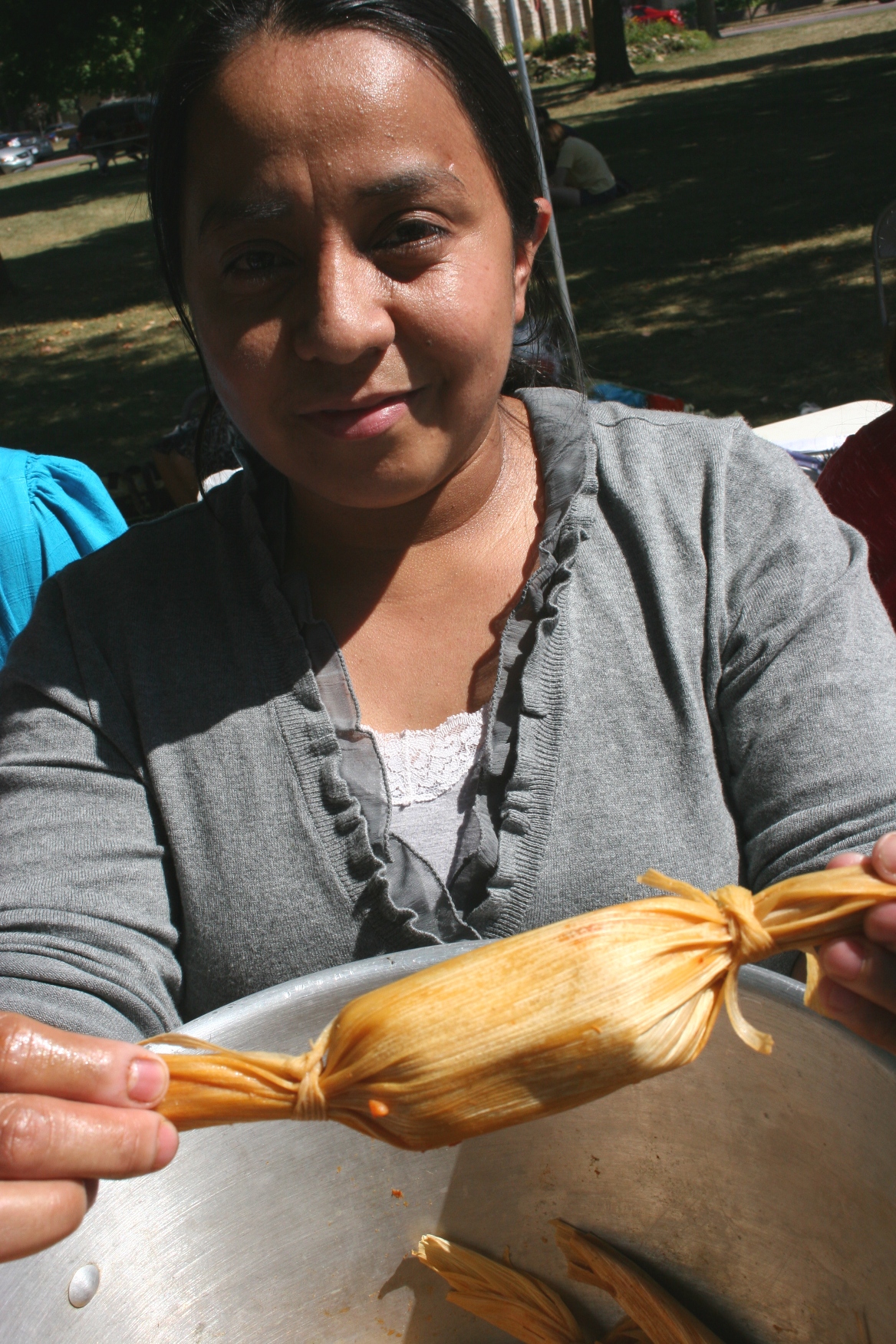
Served at the 2011 fest: Guatemalan chuchitos– chicken, corn and salsa wrapped in a corn husk. You’ll find vendors offering a variety of authentic international foods.

OK, why do I think it’s important for you to attend this festival which features multicultural entertainment, arts and crafts vendors, authentic international cuisine, kids’ activities, a silent auction and more?

Simple. We as a community need to meet each other, to connect on a personal level, to understand each other if we are ever to overcome the very obvious cultural differences which divide us.

I met then 16-year-old Riyaam, an Owatonna High School student, at last year’s festival. She spoke openly about the prejudice at OHS and a white student’s single comment, “Somalis don’t belong here,” which led to racial clashes and tension. OHS has since instituted a policy of “you fight, you’re out.” It broke my heart to listen to Riyaam.

You know what I’m talking about, the differences in skin color and language, in culture and in dress.

There’s way too much suspicion and mistrust, cautiousness and prejudice toward the minorities living and working in Faribault. I’ve heard the derogatory comments about the Somali men who hang out on downtown street corners, the Hispanics who commit all the crimes, the immigrants who take away our jobs, the people who don’t speak English.

Seriously, these Somali men live downtown and the sidewalk is their yard.

“Mexicans,” and I’ve heard that word spit out of too many mean mouths, do not commit all the crimes in our community. Do you know any Hispanics personally? I do. They are probably the most family-oriented individuals I’ve ever met and we could learn a lot from them about the importance they place on loving and caring for one another.

And about those Somalis and/or Sudanese who supposedly steal our jobs—I expect most of us would not want to work the factory jobs they work. I mean no offense to the places which employ them, like the local turkey plant. But if we are honest with ourselves, we’ll admit that we likely never would work at these physically-demanding and not always pleasant jobs.

As for speaking English, have you, as an adult, tried learning a new language? Now attempt learning a new language in a foreign country. Not so easy. Think back to a few generations before you. I bet your great grandparents didn’t speak English. Even my own mother’s first language was German, not English.

The other evening while shopping at a local Big Box retailer, I witnessed how difficult it was for a Hispanic woman to communicate due to her limited English. I almost got on my cell phone to call my second daughter who works as a Spanish medical interpreter in eastern Wisconsin to ask her to interpret.

Did you know that, according to the 2010 U.S. Census, 17.4 percent of Faribault’s 23,352 residents have a language other than English spoken at home? Stats show 9.4 percent of our city’s residents are foreign-born.

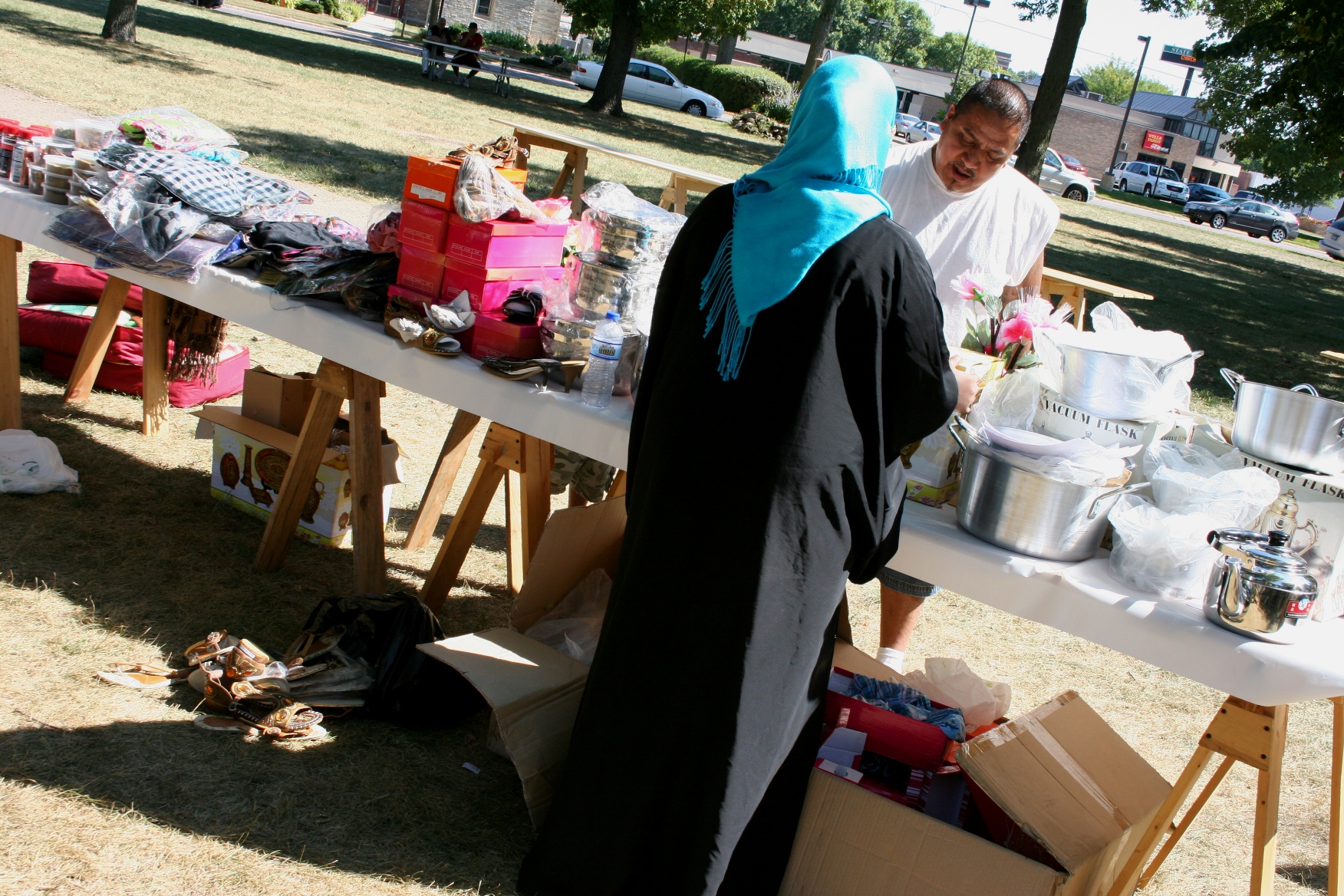
Vendors, like Riyaam, peddled their wares at the 2011 festival.

Instead of criticizing those who speak and dress and live differently than the majority of us, let’s begin to understand them. Mostly, I think, our misconceptions, our prejudices, are based on fear. We fear what we don’t understand.

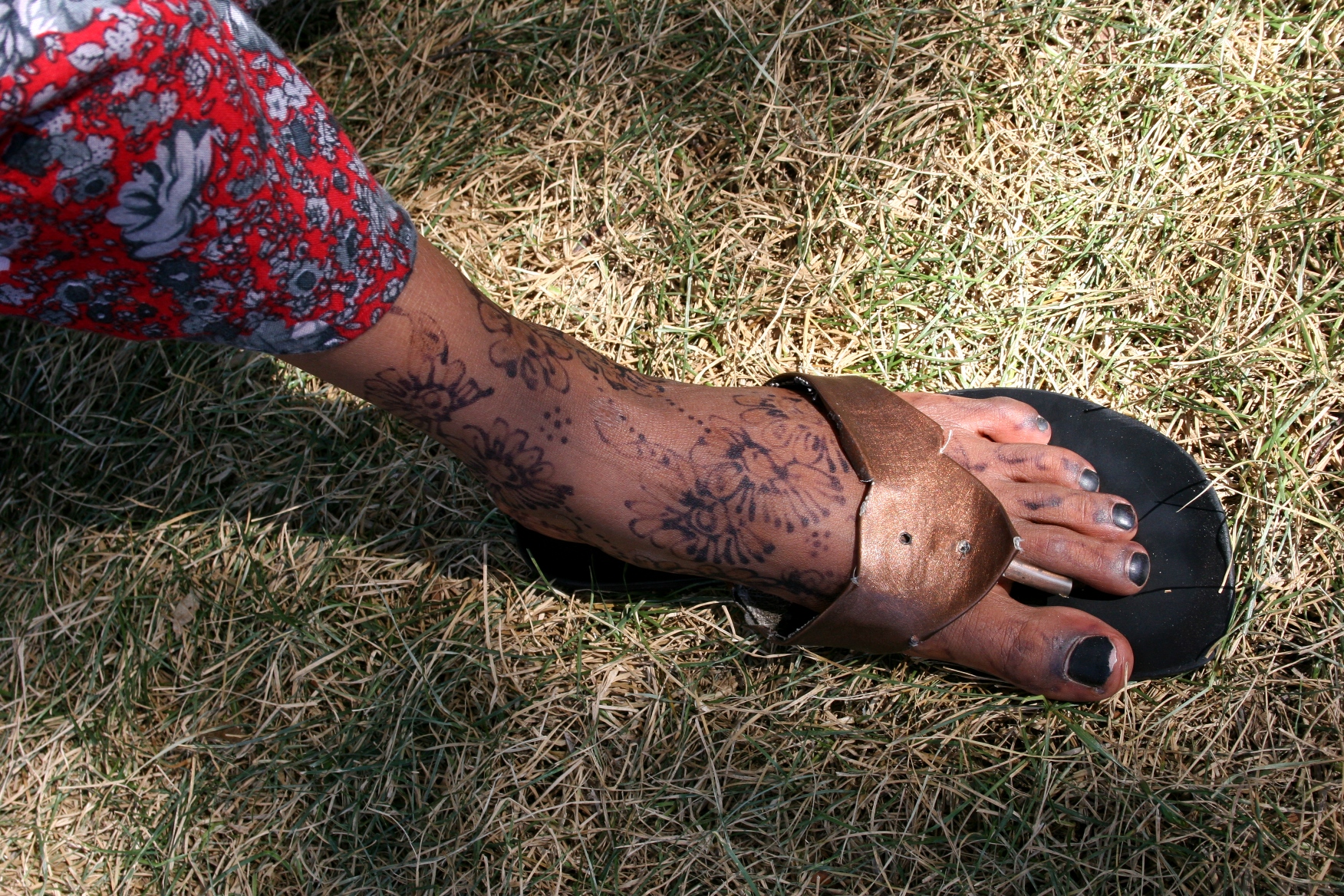
A young girl’s henna stained foot, photographed at the 2011 fest.

International Festival Faribault offers a common, public ground—a city park—on which to meet the minority individuals who call our community home. They are here to stay. Let’s get to know them. Engage in conversation. Show them you care, that you’re genuinely interested in learning more about them and their cultures. Once you’ve connected on a personal level, you will begin to view them as individuals and not by the color of their skin, the clothing they wear, the language they speak…

Xafsa, age 5, photographed at the 2011 festival.

FYI: Click here to link to the International Festival Faribault website.

While this post is directed specifically at the residents of my community, its content can apply to many communities. You’re all invited to Faribault for International Festival Faribault, no matter your community or country of origin. And just to be clear, many Faribault residents and organizations embrace the minorities who call our southeastern Minnesota city home. I in no way intend to mislead you into thinking we are all a bunch of bigots living here. However, neither am I going to hide the fact that obvious prejudices exist and are very much a concern in Faribault.

Click here to link to the post I wrote about last year’s International Festival Faribault.

© Copyright 2012 Audrey Kletscher Helbling


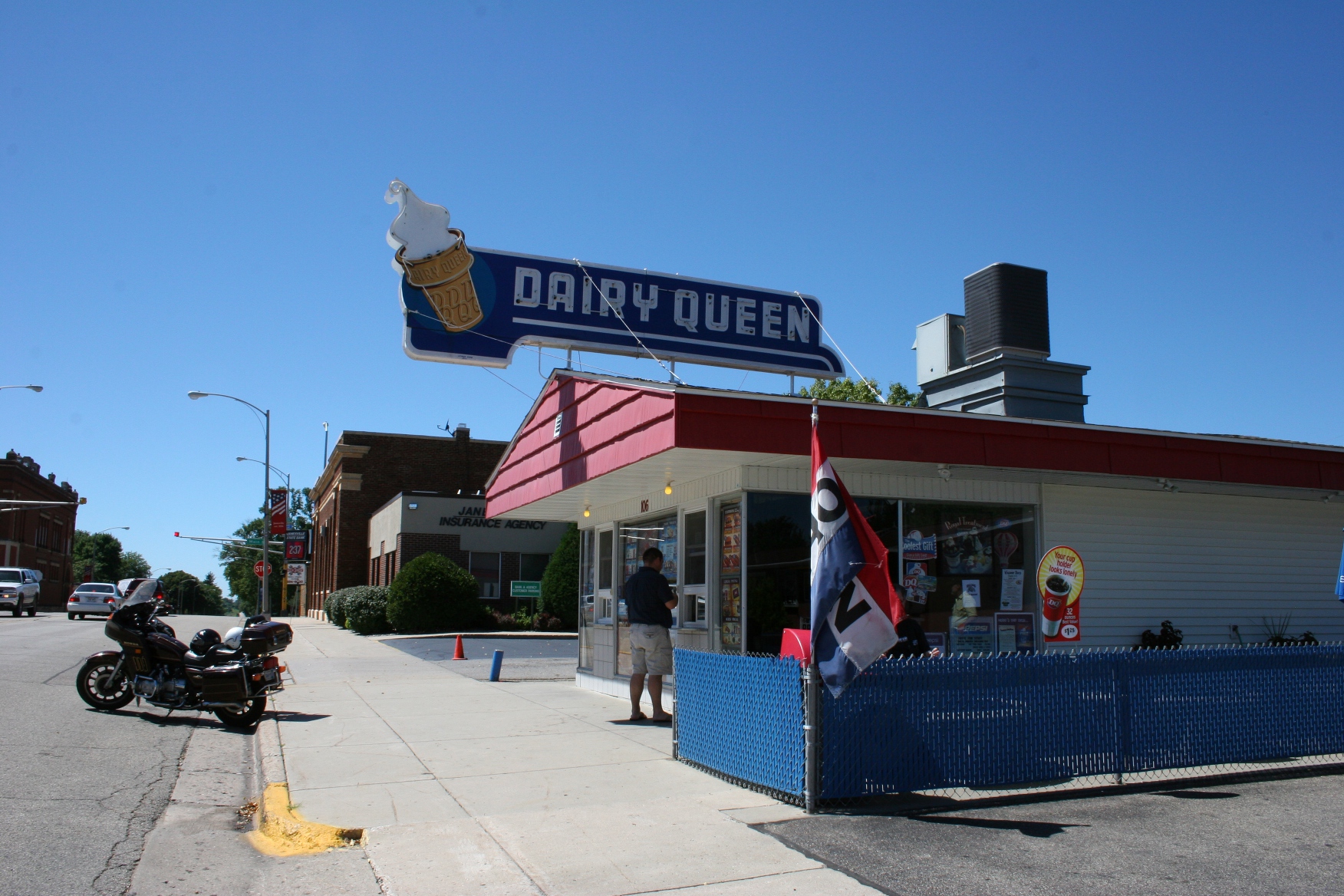
Appreciating a vintage Dairy Queen sign in Janesville August 22, 2012

ICE CREAM. It has to be the single treat with the most universal appeal. And I expect Dairy Queen rates as the company most universally known for its soft-serve ice cream.

With 6,000 plus Dairy Queens throughout the world, this fast food franchise certainly has established itself as a dominating presence since the first DQ opened in 1940 in Joliet, Illinois.

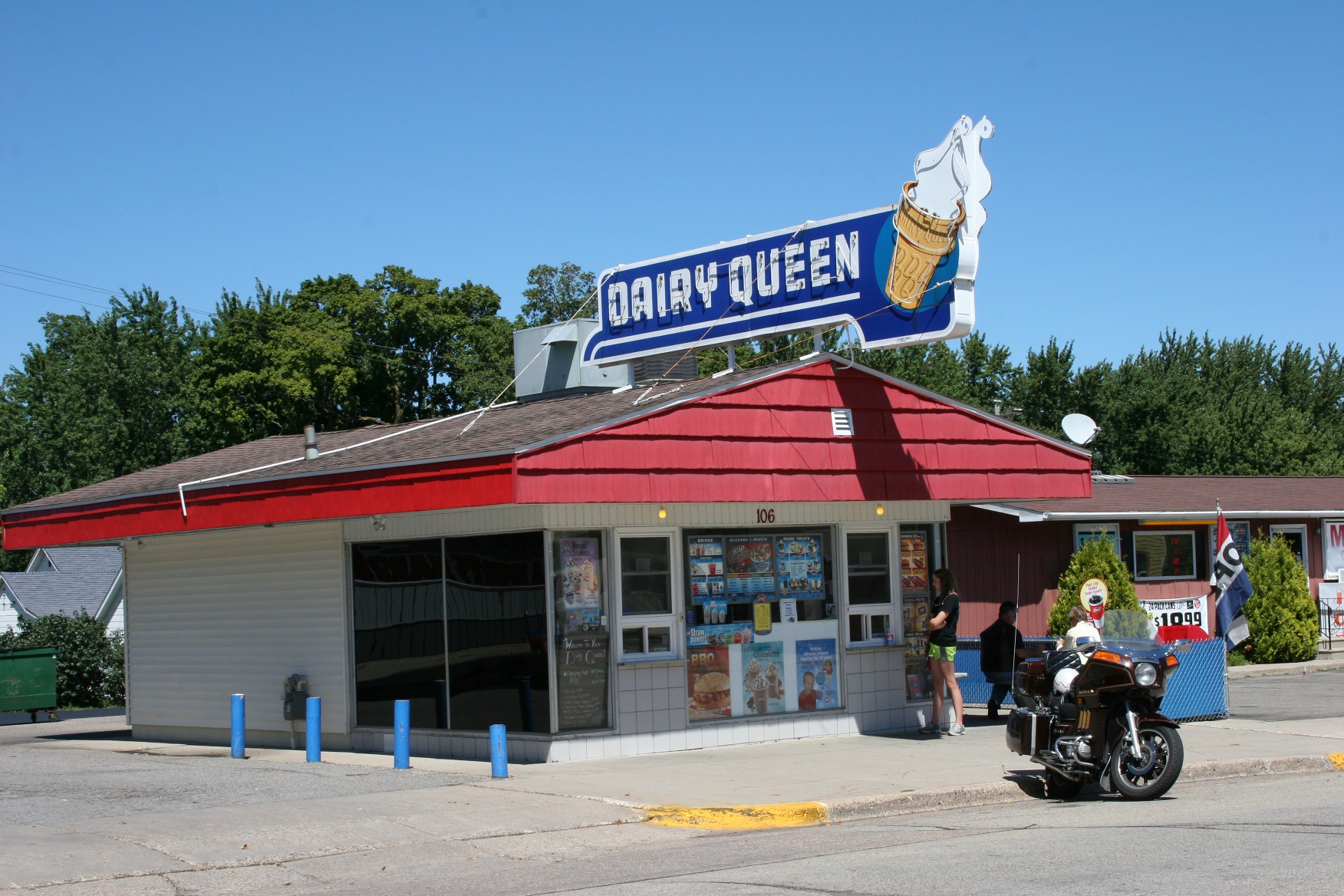
The Dairy Queen along old U.S. Highway 14 in Janesville on a recent Sunday afternoon.

Within 40 miles of my home are 35 Dairy Queens, including two right here in Faribault, and a walk-up DQ along old U.S. Highway 14 in Janesville some 30 miles away.

On a recent Sunday afternoon while passing through Janesville, located east of Mankato and with a population of about 2,100, I photographed the DQ. I wasn’t hungry, having just eaten too much at a church potluck. But I didn’t let that keep me from stopping at the DQ to photograph this long-time business with the vintage signage.

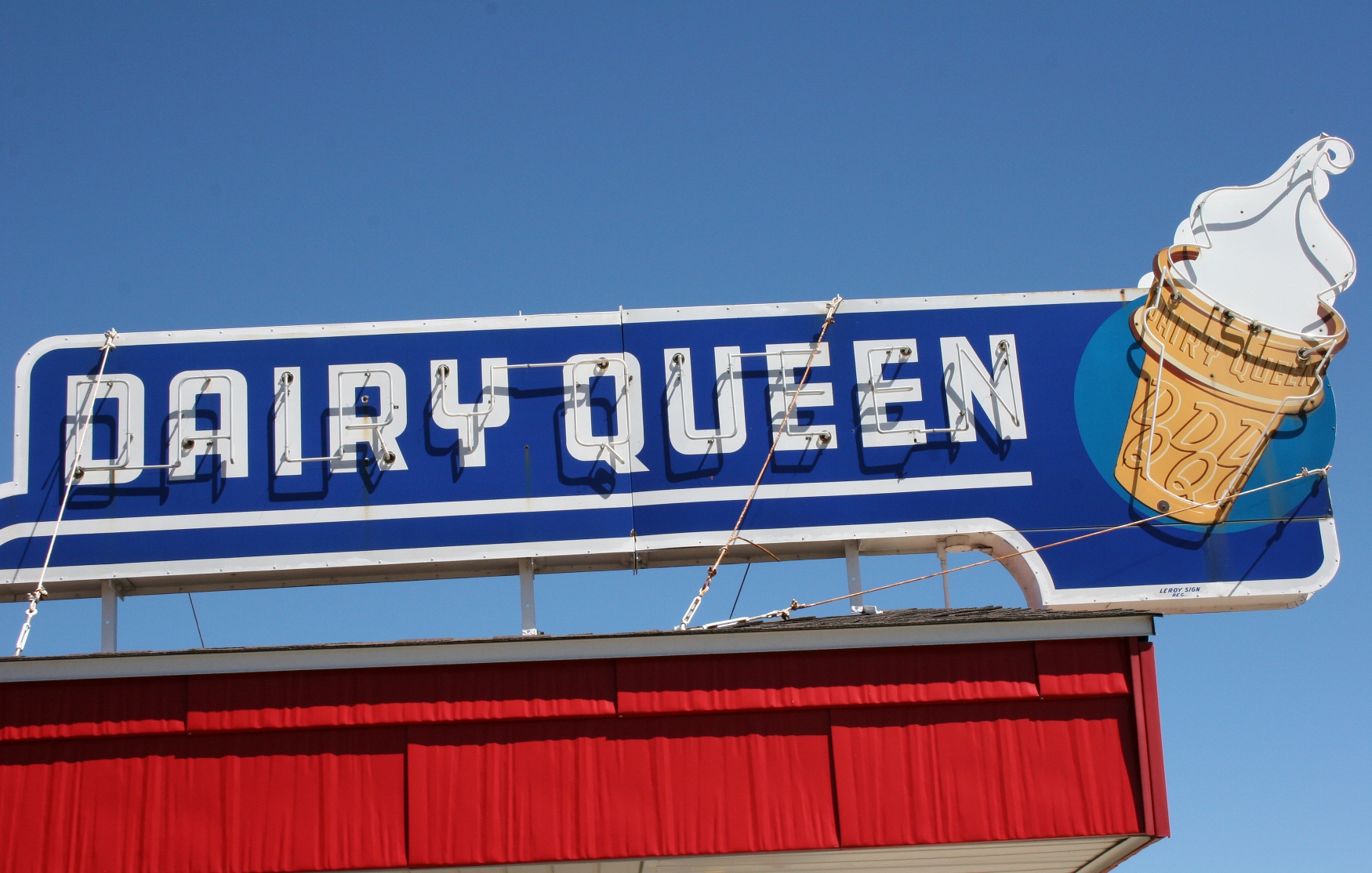
The vintage Dairy Queen sign that drew me to the Janesville DQ.

It’s the sign that caused me to stop because, well, I like and appreciate old signs as works of art. They’re also classic, charming cultural and historic icons in a community.

I was a bit dismayed, though, when the woman working the counter suggested that once the lights fizzle on the sign, it will be replaced with a newer, more modern DQ sign because, really, who could fix the lighting?

I insisted that shouldn’t happen and may have pleaded a bit. “You can’t do that.”

But she seemed resigned to the sign’s eventual replacement.

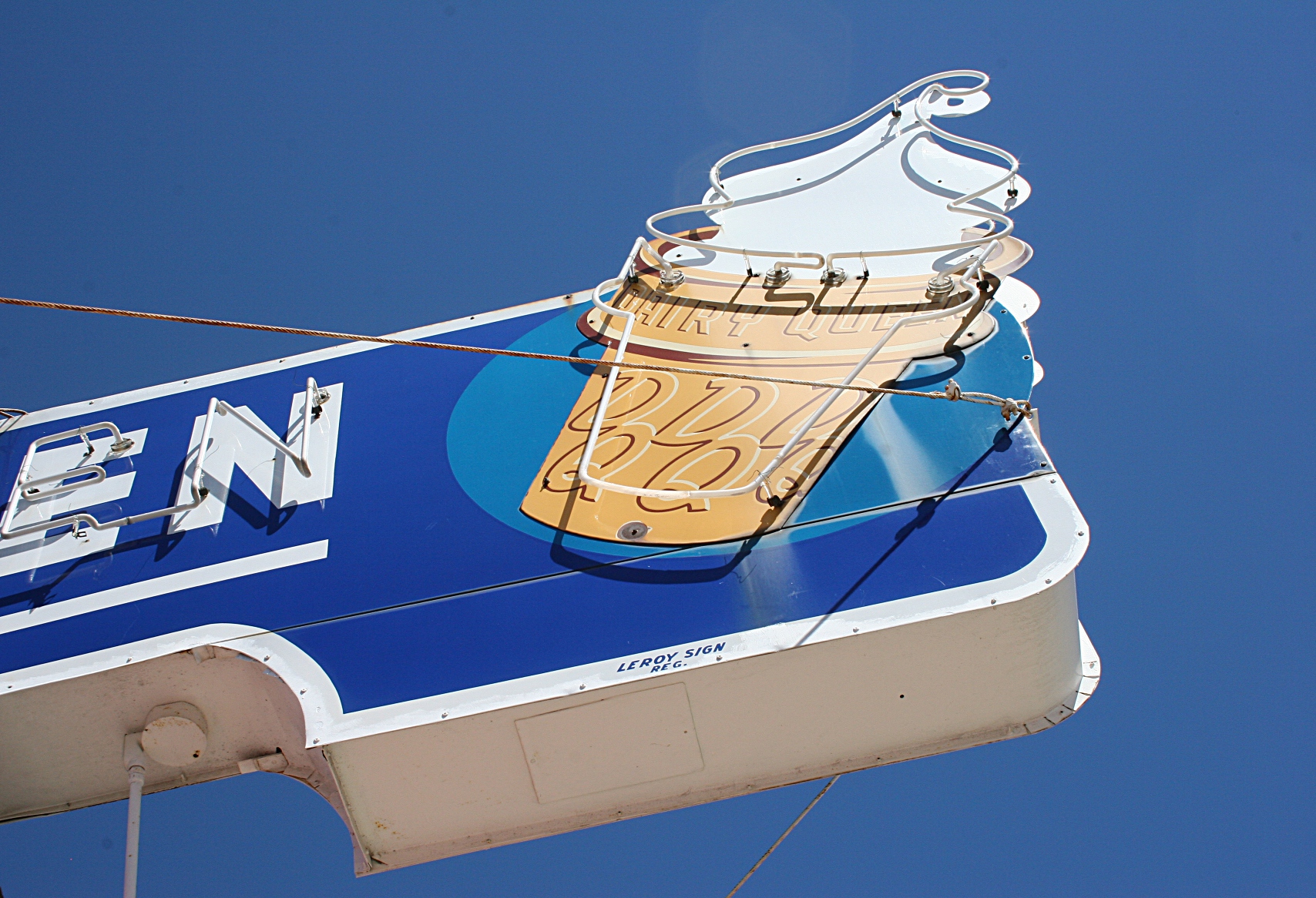
On the bottom edge of the sign, I noticed LEROY SIGN REG.

Not so fast. I noticed LEROY SIGN REG printed along the lower edge of the DQ sign. That was just enough for me to google the company and track down the sign’s origin with Leroy Signs & Manufacturing of Brooklyn Park.

After viewing a photo I took of the Janesville sign, Ralph Leroy “Lee” Reiter III told me it dates back to the late 1940s or early 1950s and is one of about 50 made by his grandfather, Ralph Leroy Reiter, Sr. While the younger Reiter doesn’t know exactly how many of these specific signs were placed in Minnesota, he says his third-generation company recently refurbished one in Columbia Heights and he knows of one in Robbinsdale and another in Brooklyn Park.

I was especially pleased to learn that the 75-year-old family business he co-owns with siblings Kaj Reiter and Andria Reiter can replace the neon lighting and otherwise refurbish the porcelain enamel finished vintage DQ sign.

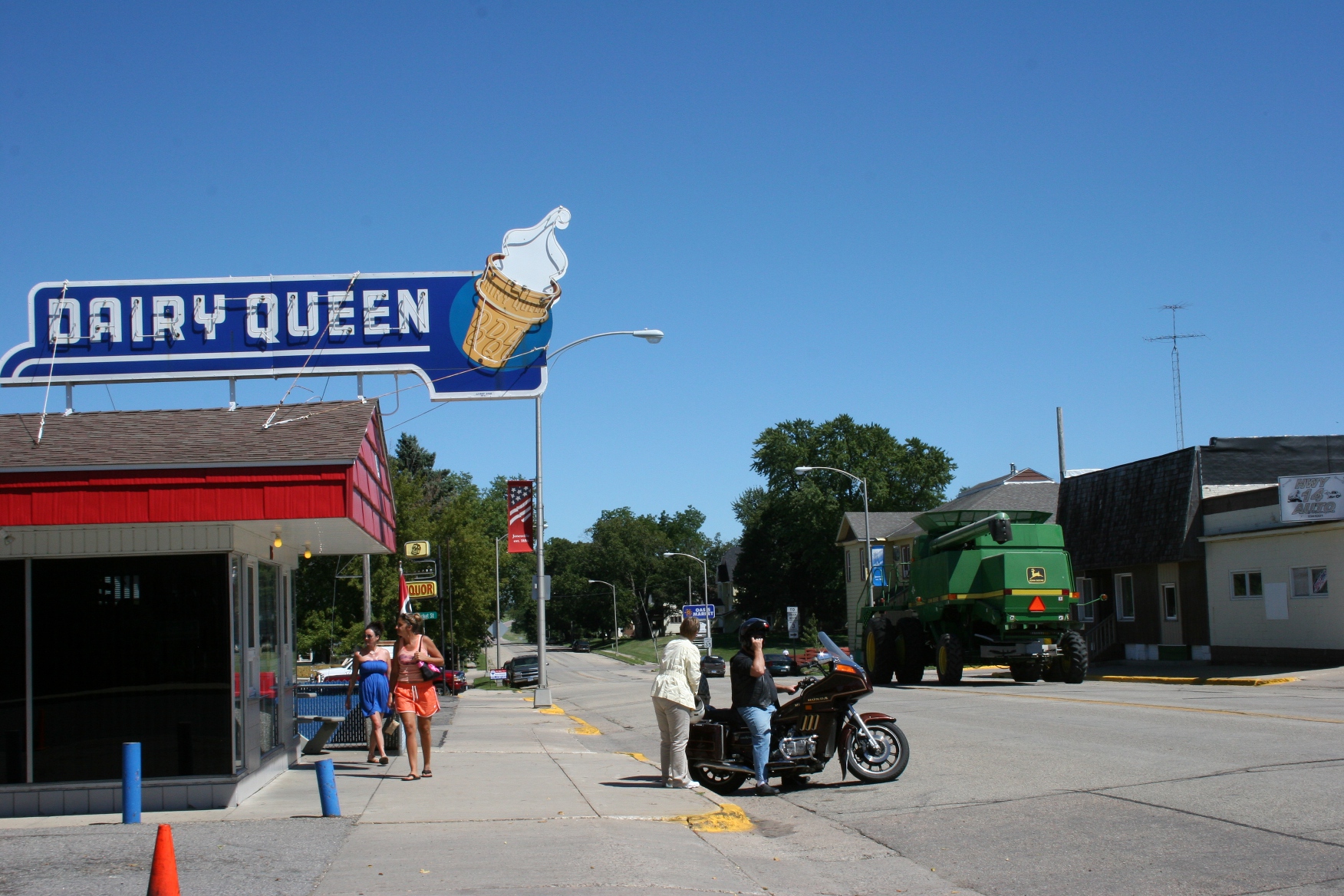
On the other side of the DQ, looking toward downtown Janesville.

Lee Reiter has high praise for the condition of the Janesville DQ sign. “It’s one of the cleanest I’ve seen and in really good condition.”

He observed, though, that the sign may have been touched up some. You could fool me. The sign as designed decades ago—DQ designed and Leroy Sign made the sign—allowed it to take in water, Lee noted.

Early on in DQ’s history, Leroy Signs made signs for DQ, last doing so about five years ago.

As for that vintage DQ sign in Janesville, Lee says if the owner ever wants to get rid of it, he’ll take it. That, in itself, should tell you something, don’t you think?

You know you’re in a rural town when you see a combine driving down the street like this John Deere which passed the Janesville DQ.

© Copyright 2012 Audrey Kletscher Helbling


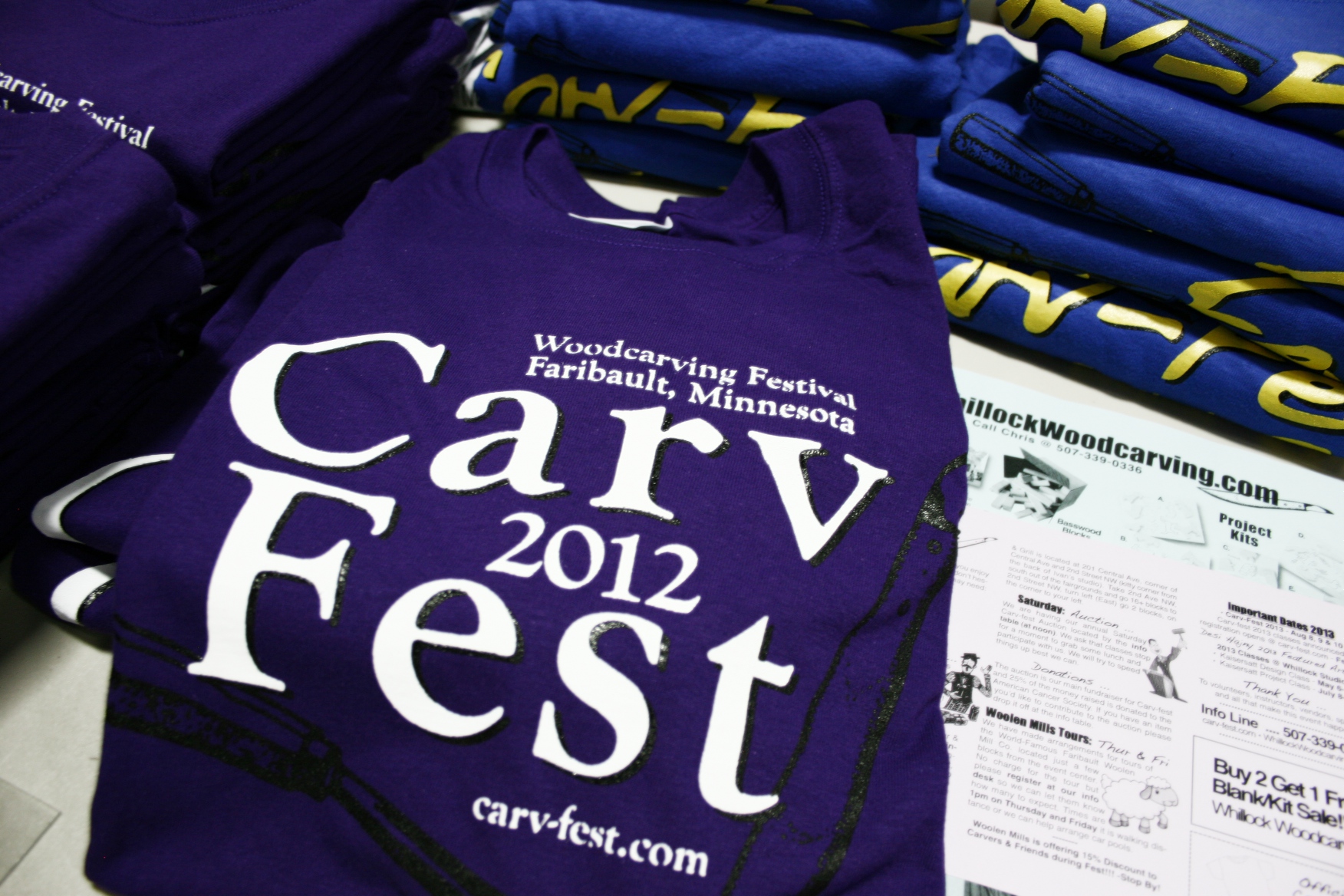
Carv-Fest brings together novices to pros in Faribault August 13, 2012

I WONDER WHAT THE ODDS ARE, that a community of some 22,000 would be home to two internationally-known, award-winning woodcarvers.

That would be Faribault. And they would be Marvin Kaisersatt and Ivan Whillock.

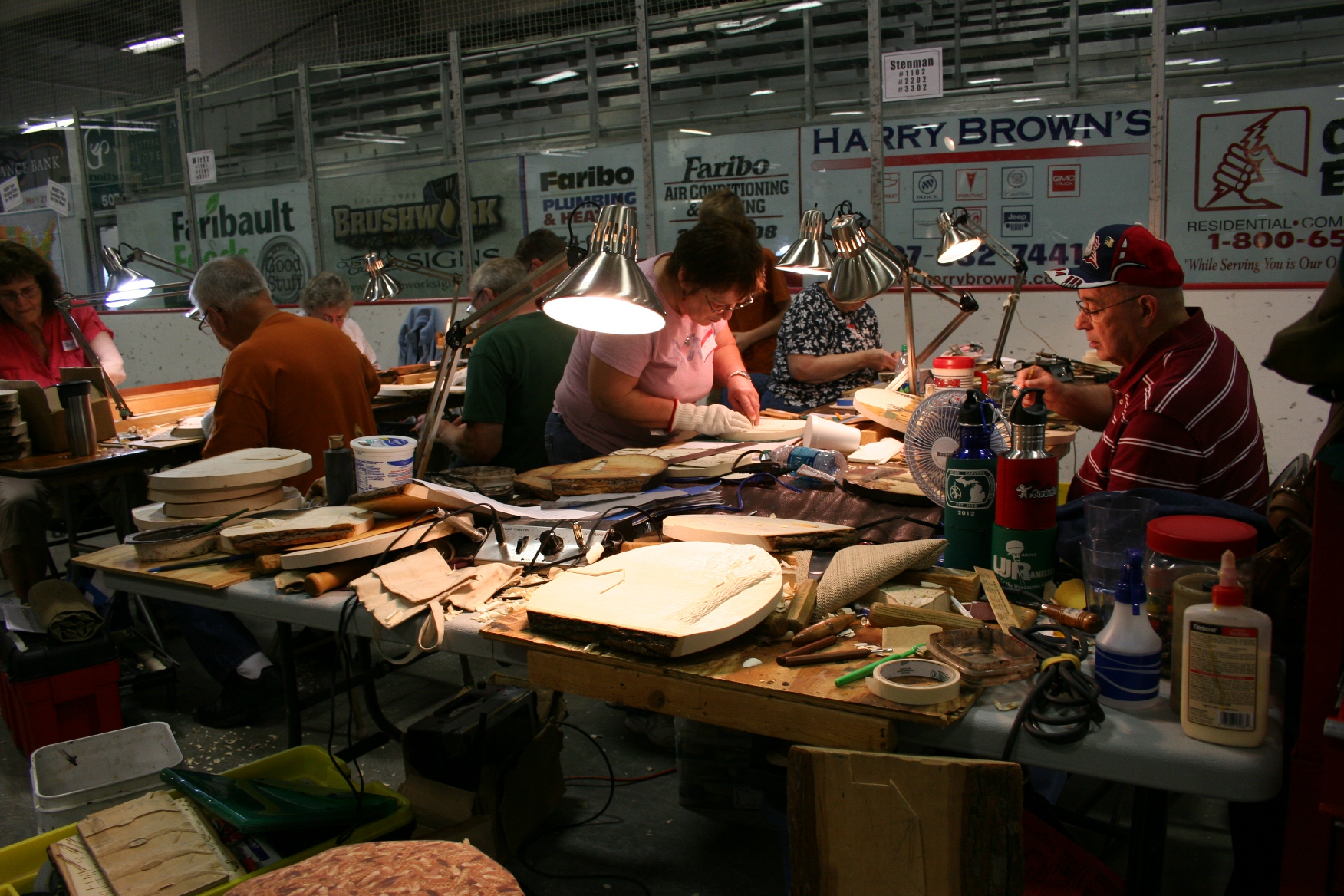
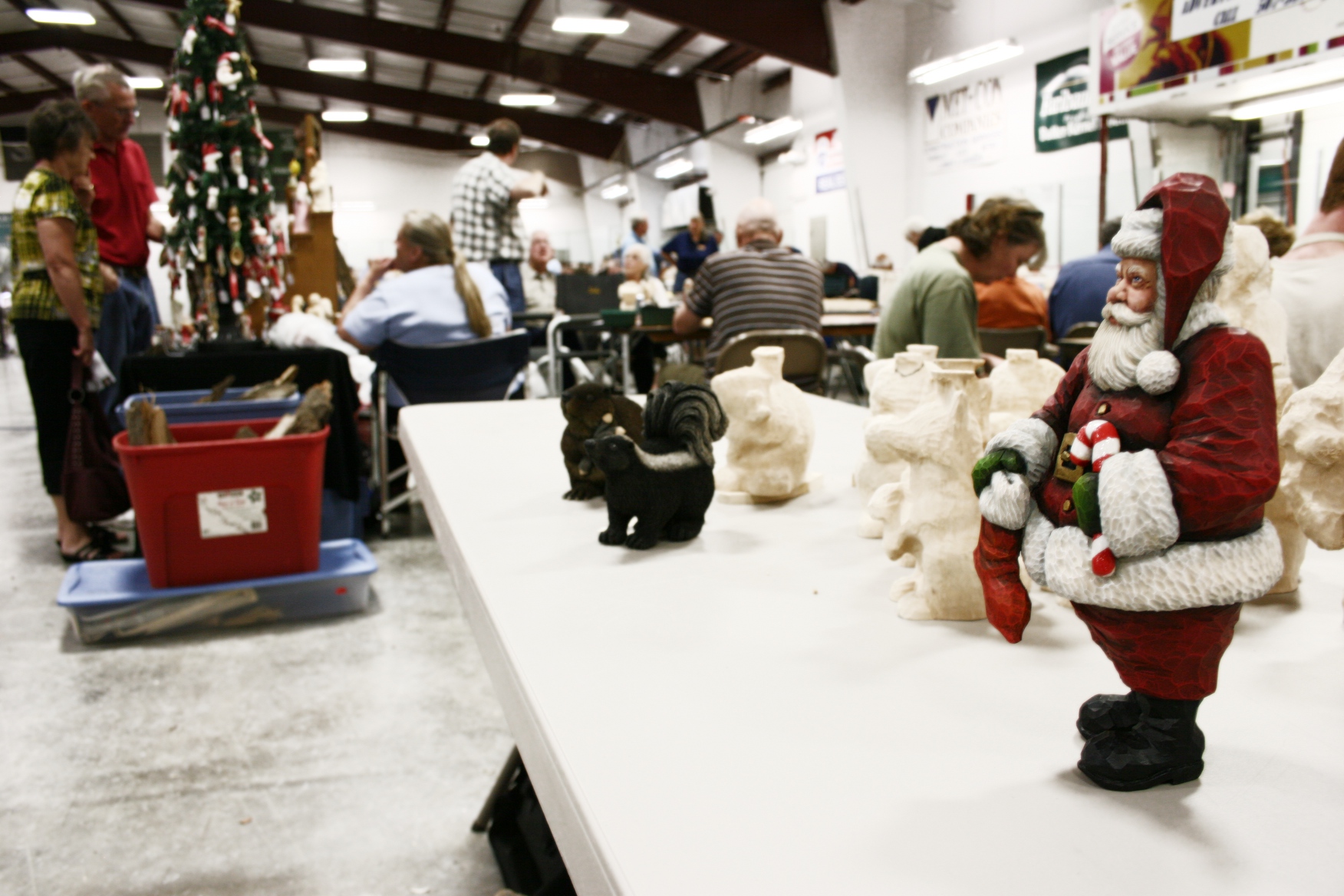
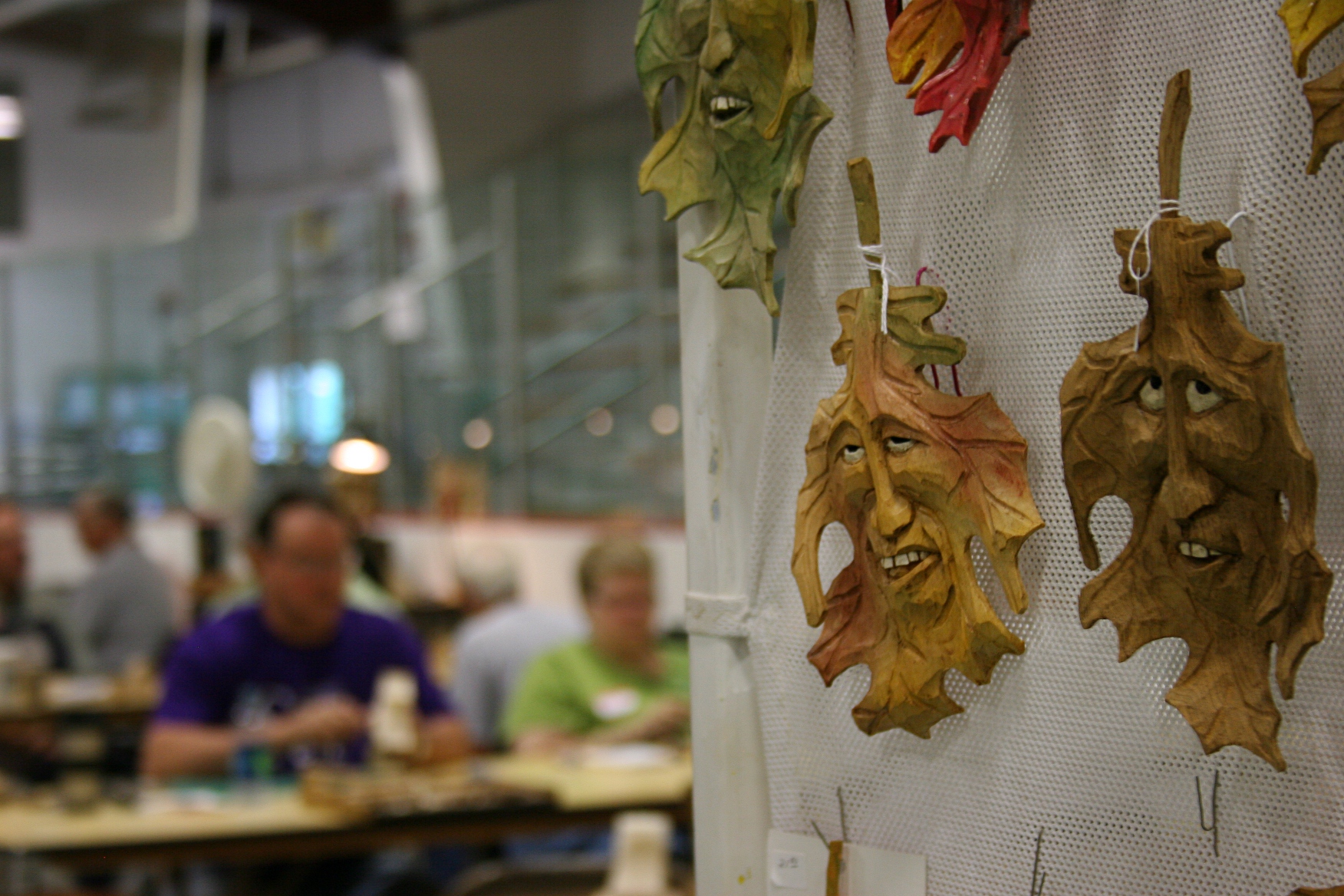
Woodcarvers, from novice to pros, participated in Carv-Fest 2012. Here are students and instructors in a Saturday morning session.

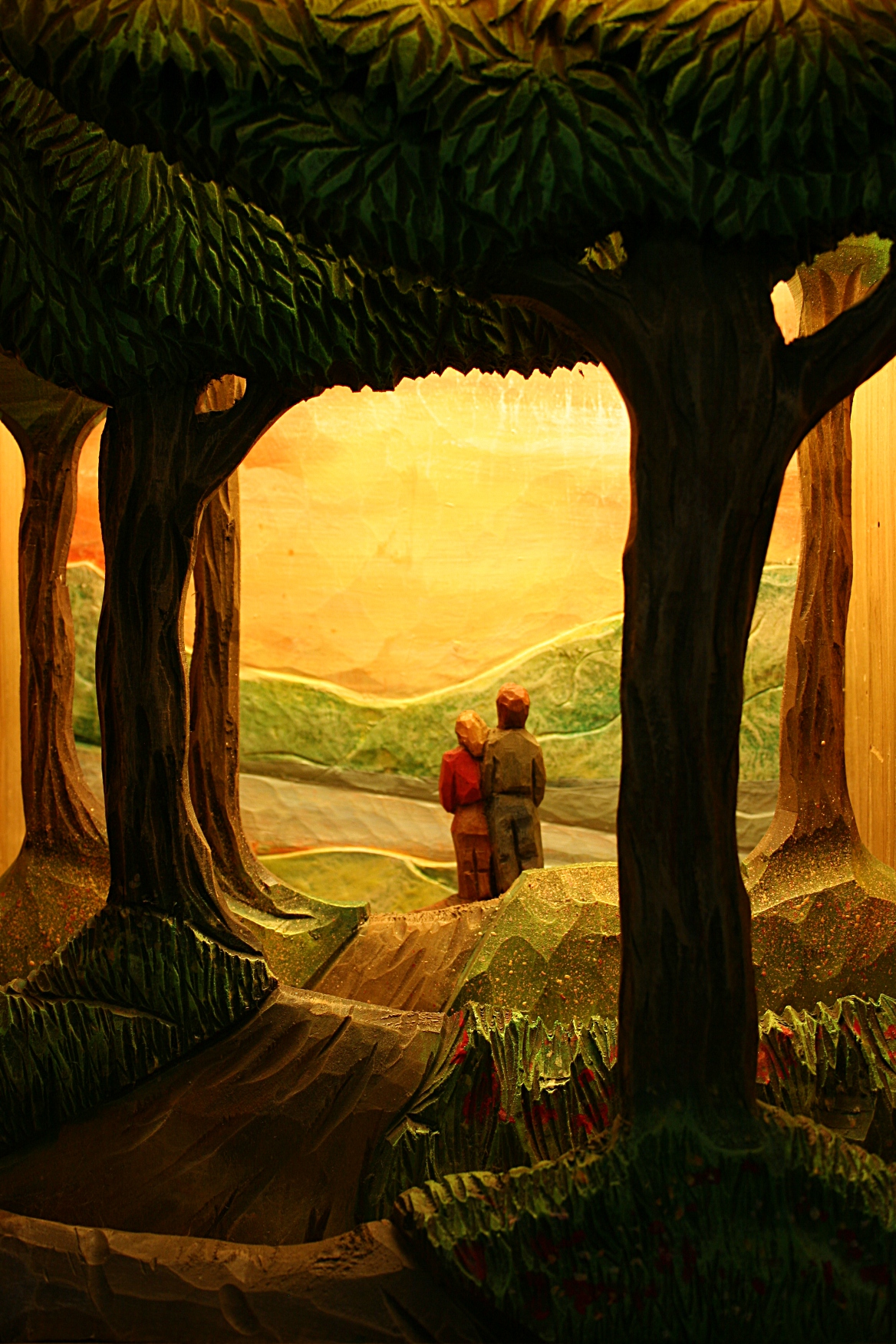
The carvings of these two gifted Minnesota artists, and gifted doesn’t even seem to begin to fit their talent, were among art displayed at the August 9 – 11 Carv-Fest 2012 which drew woodcarvers, from beginners to seasoned carvers, to Faribault.

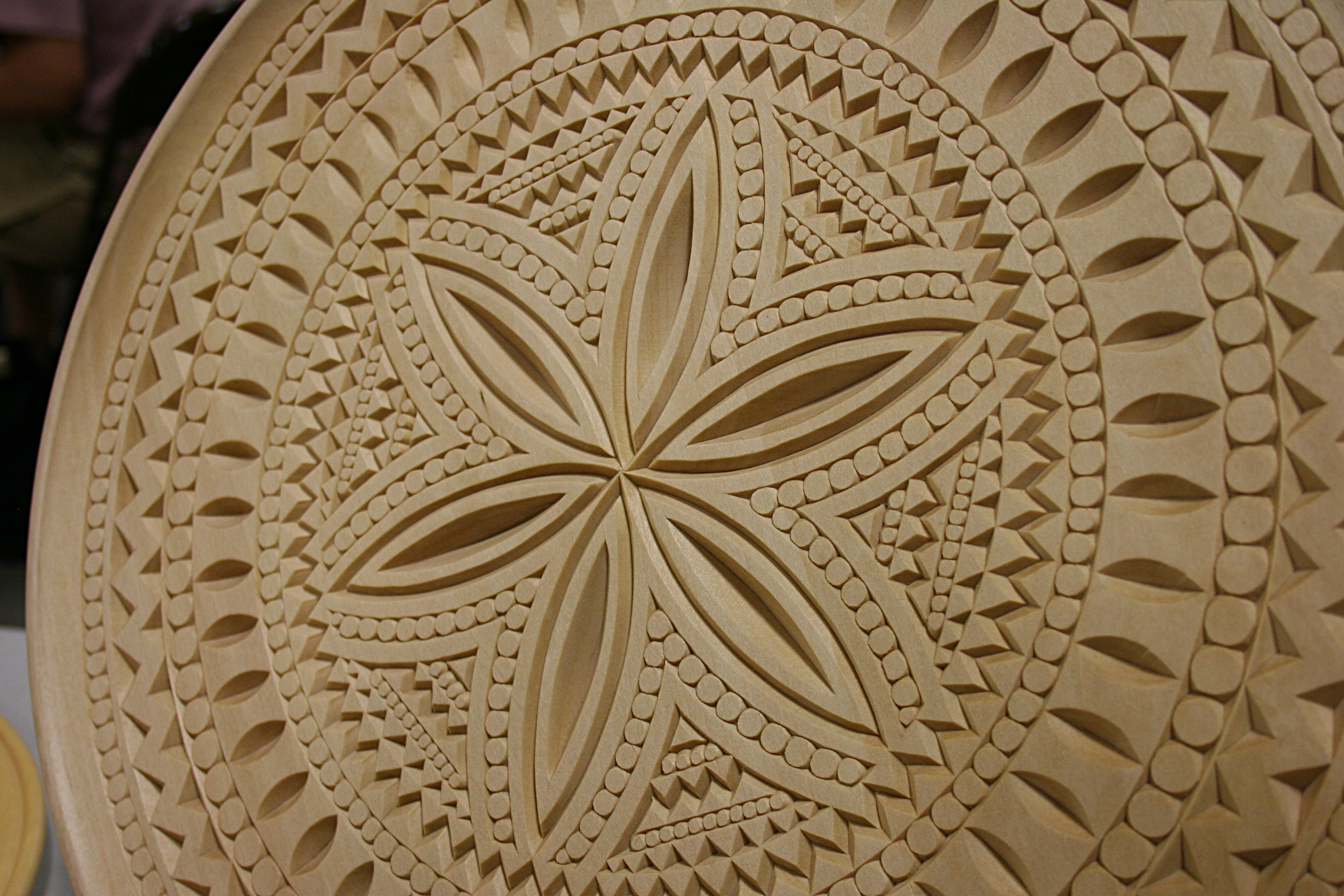
The intricate chip carving of Marty Leenhouts of Garden City, Minnesota.

It may be summer, but Santa showed up in a woodcarving and classes at the festival.

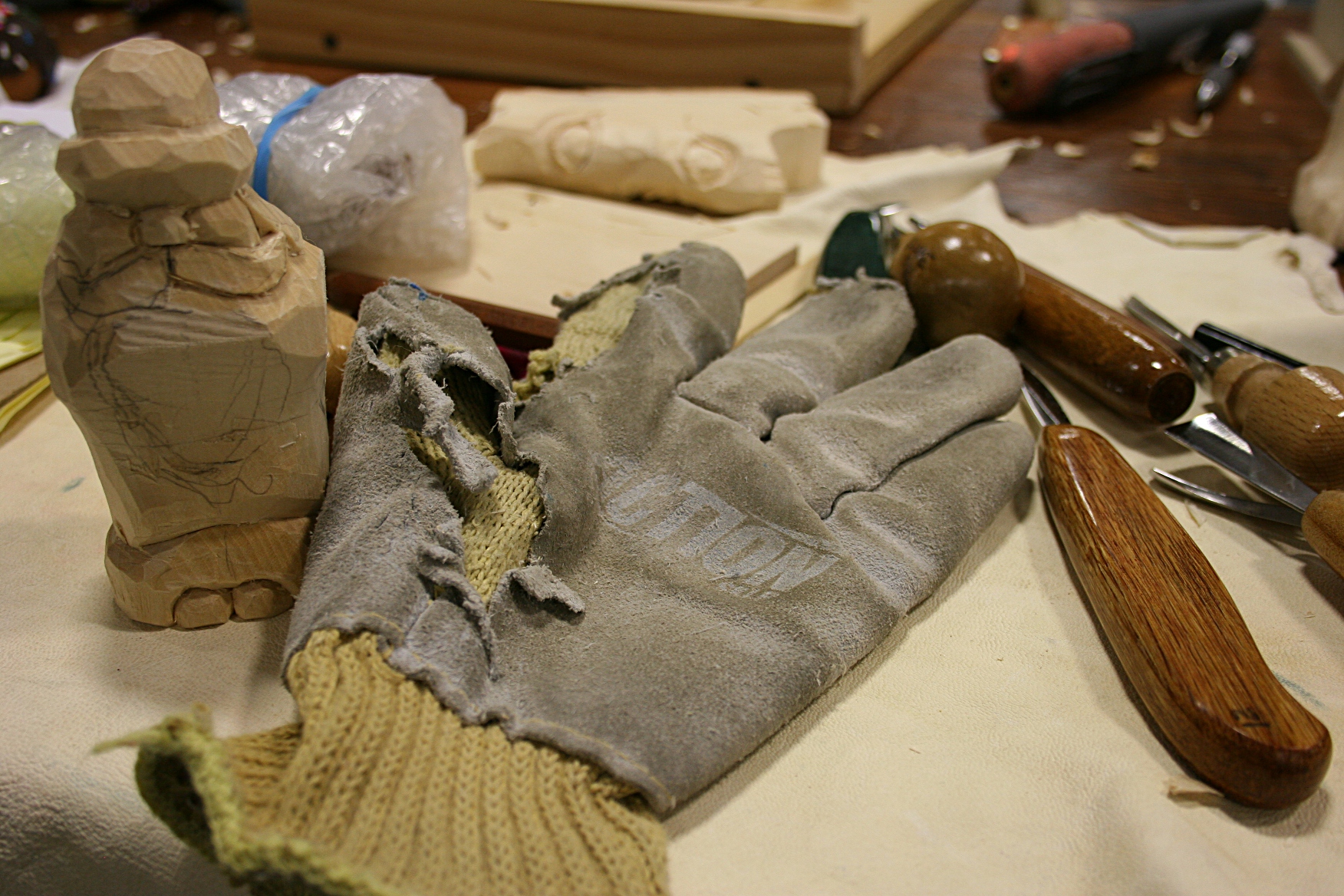
Imagine if this had been a hand instead of a glove…

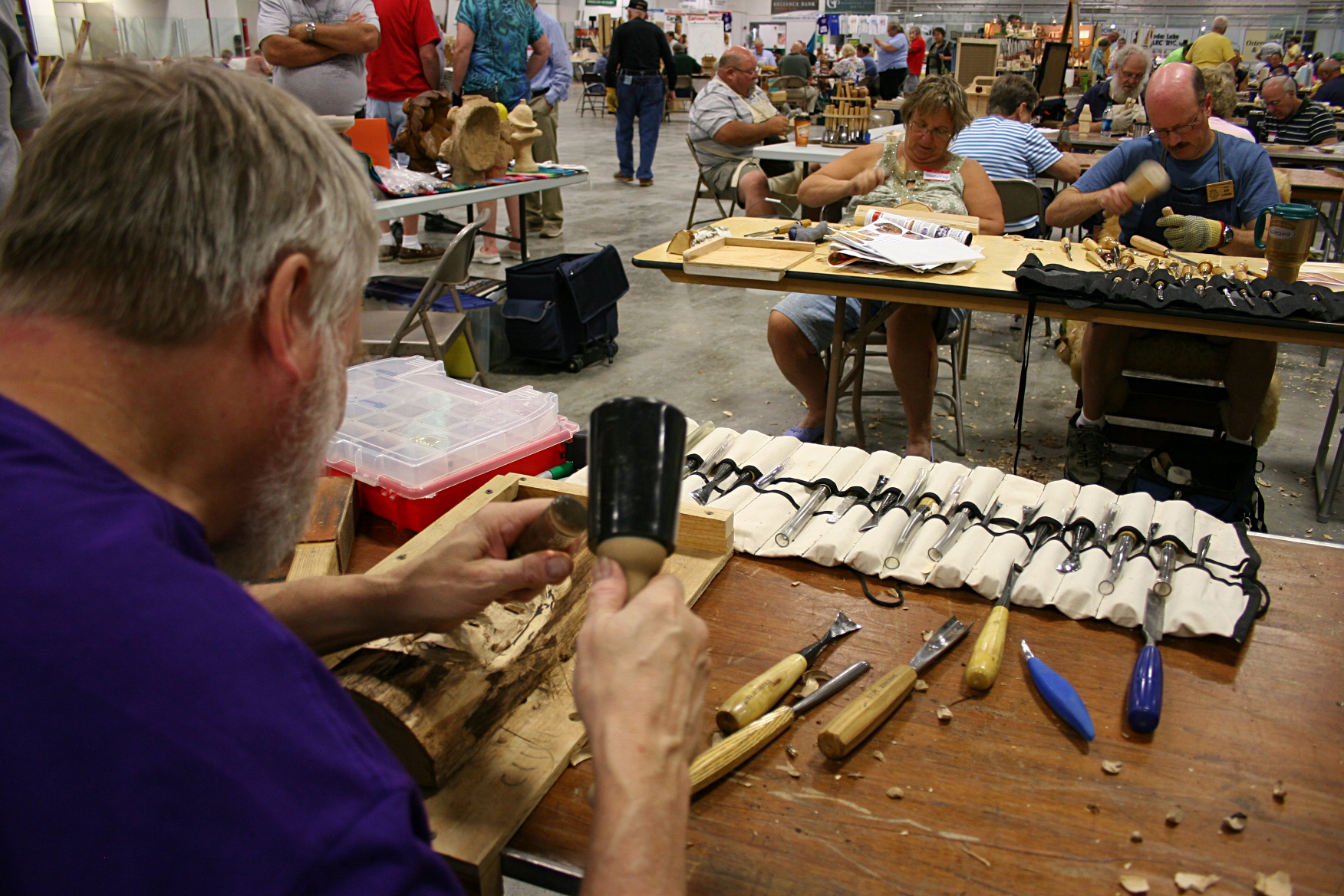
I roamed the fest on Saturday, seriously impressed by the intent concentration of the attending woodcarvers, the intricacies of the carvings, the variety of art created and the fearlessness in putting sharp tools to wood. No wonder they wear gloves.

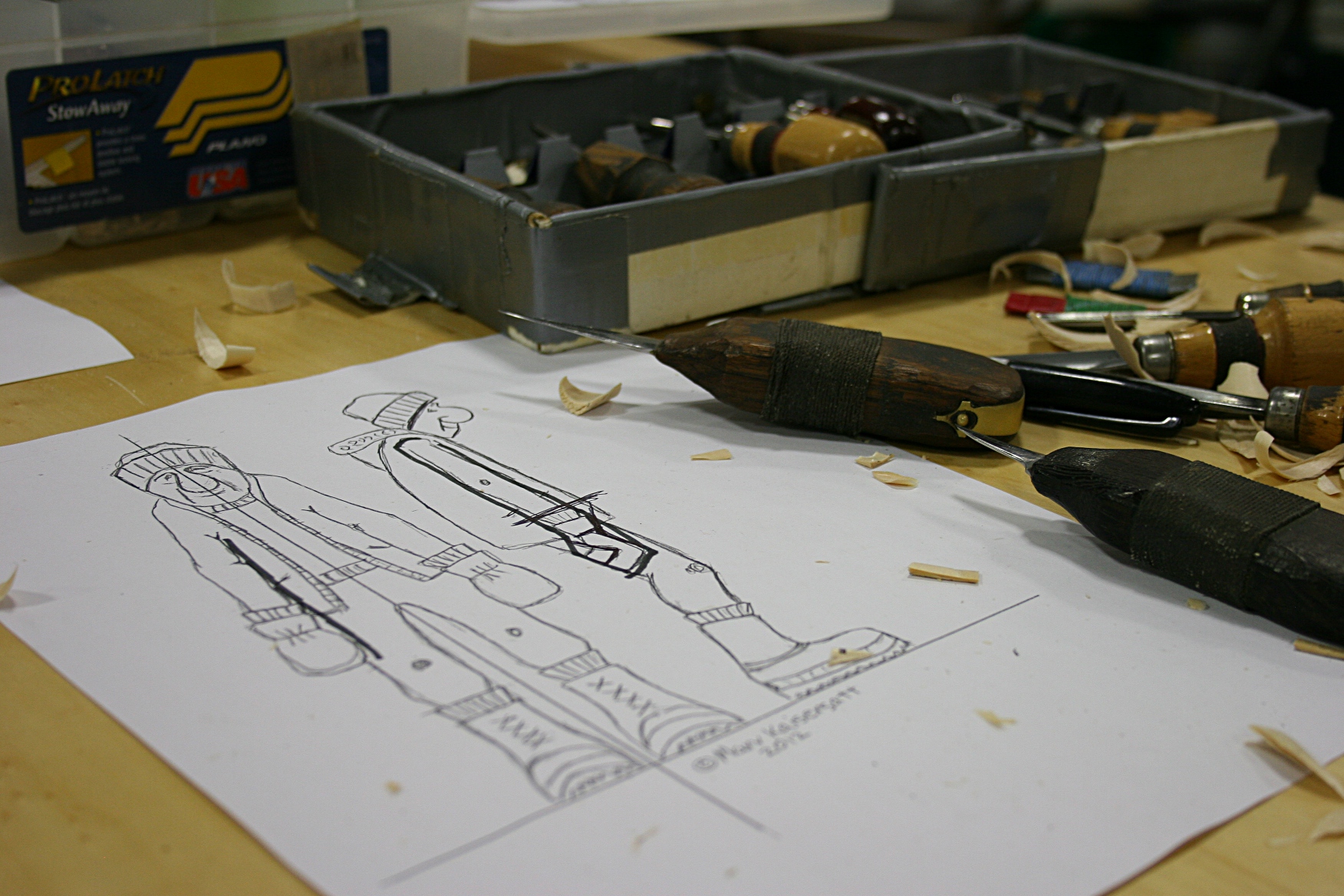
Marv Kaisersatt sketched out the character he was teaching his students to carve on Saturday.

I didn’t know any of the carvers, except Marv, whom I interviewed in 2009 for a short magazine article which certainly should have been much longer had space allowed. He impressed me then for the simple life he lives in an upstairs apartment in downtown Faribault, carving caricatures. I can’t even describe talent of his level. But I can describe a man who is humble and funny, engaging and content with the creative process of sketching, shaping clay models and carving.

This retired math teacher also impressed me in that interview with the fact that he doesn’t sell his woodcarvings, choosing instead to occasionally donate his caricatures, carved from blocks of basswood, to nonprofit fundraisers.

Marv Kaisersatt assists a student in his class.

On Saturday, Marv circulated among his students, advising them on carving a Minnesotan (I presume) dressed for winter in stocking cap and chopper mittens, oversized boots weighing down his feet.

Marv gave me a polite nod and then it was all business teaching the students lucky enough to learn under his guidance.

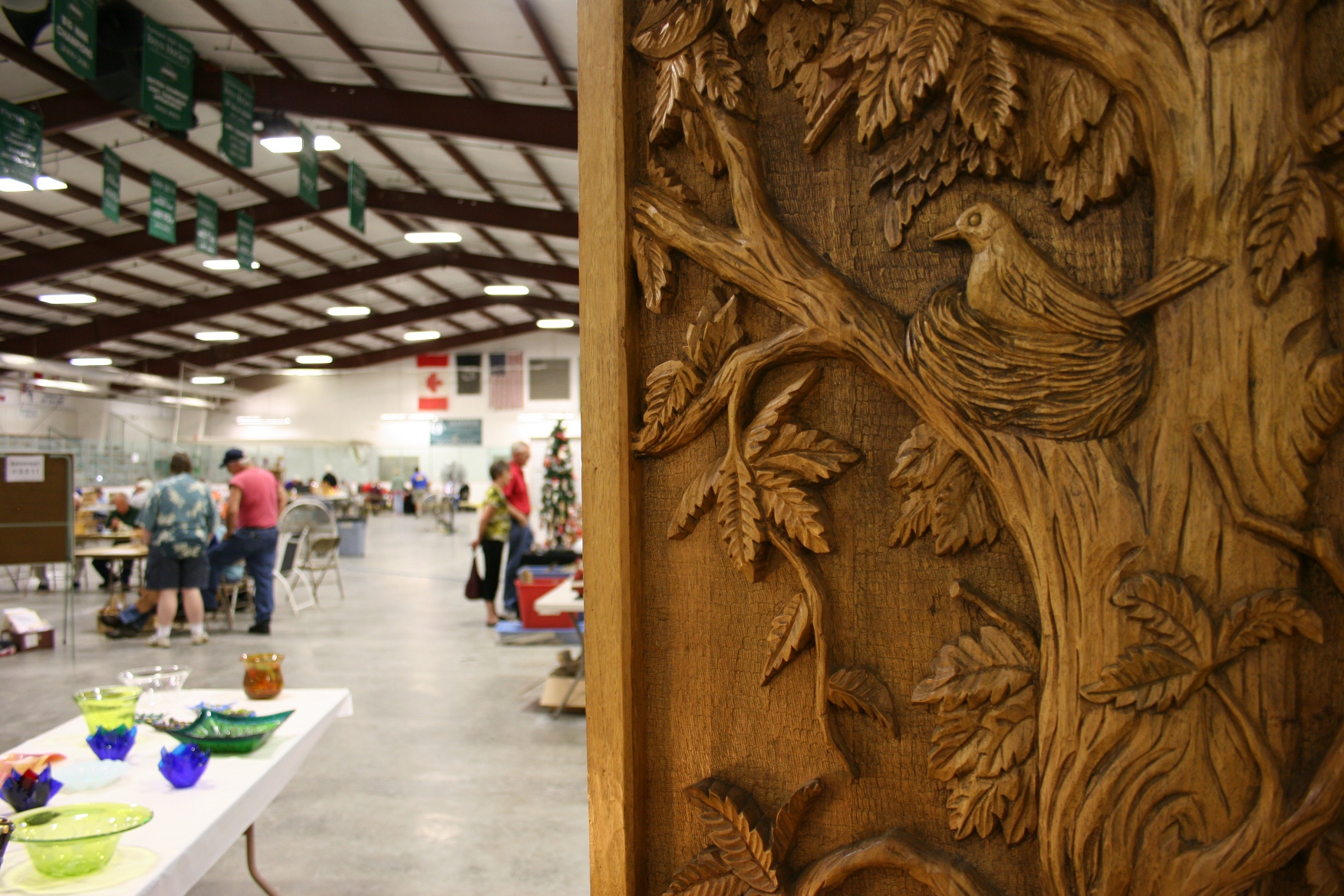
A snippet of Ivan Whillock’s incredible, detailed and realistic carving.

Whillock, whose woodcarvings are the polar opposite of Marv’s work, wasn’t teaching. But given his woodcarving family organizes Carv-Fest, I expect he had more than enough to keep him busy. He carves religious and secular sculptures and reliefs, works of art that grace places like churches (including mine, Trinity Lutheran) and libraries (including Buckham Memorial Library in Faribault).

Whillock and his family are the key organizers of Carv-Fest which draws woodcarvers from all over.

A stunning, three-dimensional carving by Ivan Whillock.

Both men teach at Ivan Whillock Studio. They’ve written books and created patterns and developed an appreciative following of admirers across the world.

And if you saw their work, you would understand why they are so beloved among woodcarvers and those of us who wouldn’t dare pick up a knife for fear of slicing away a fingertip.

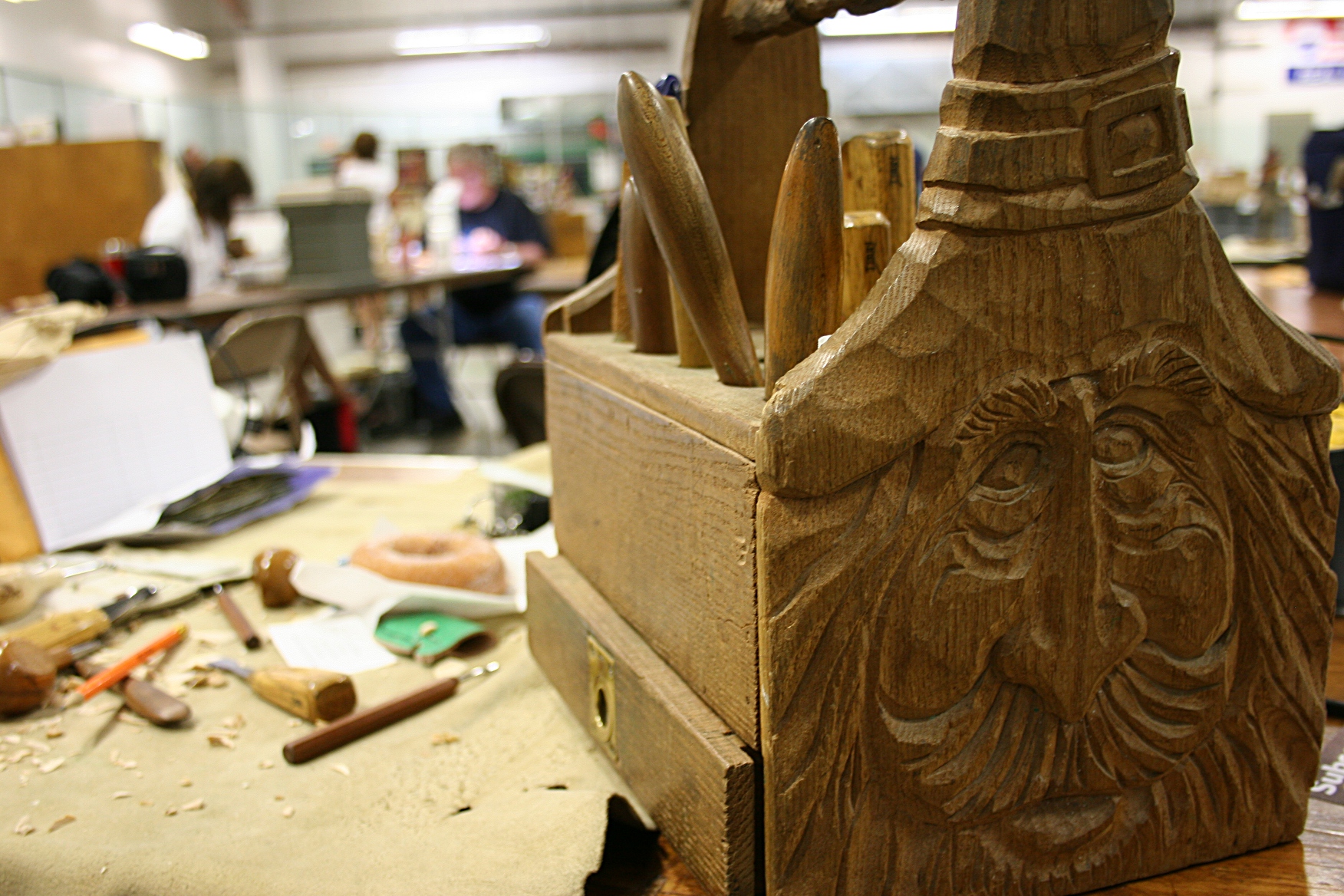
A carver brought his handcarved toolbox to a class on Saturday morning.

Just another example of the woodcarvings on display during the festival.

These students were hammering and chiseling away during a class, making quite a racket in the ice arena/fest site.

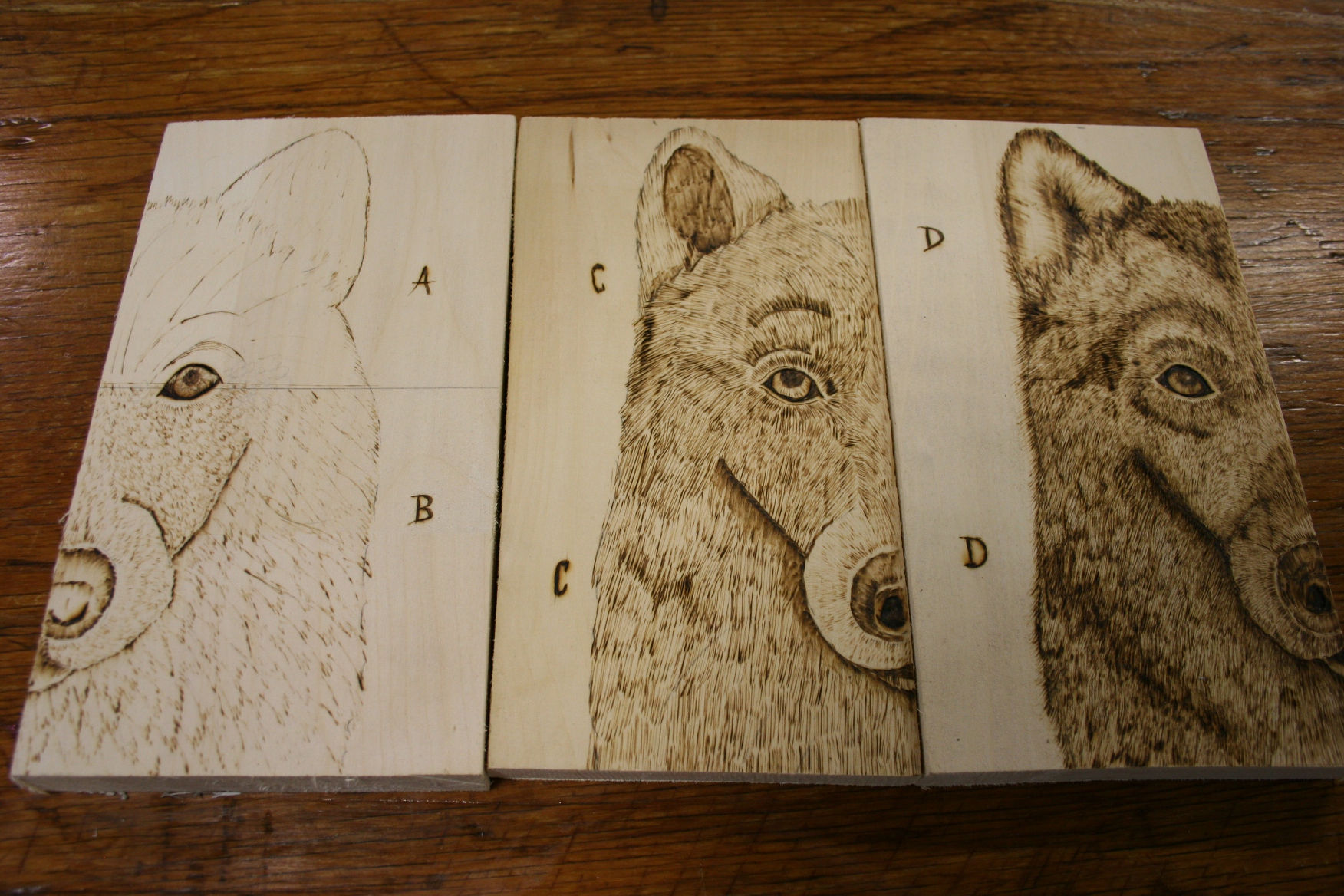
The step-by-step process to woodburn a wolf as taught by Nancy Dardis of  Dardis Designs, Bloomington.

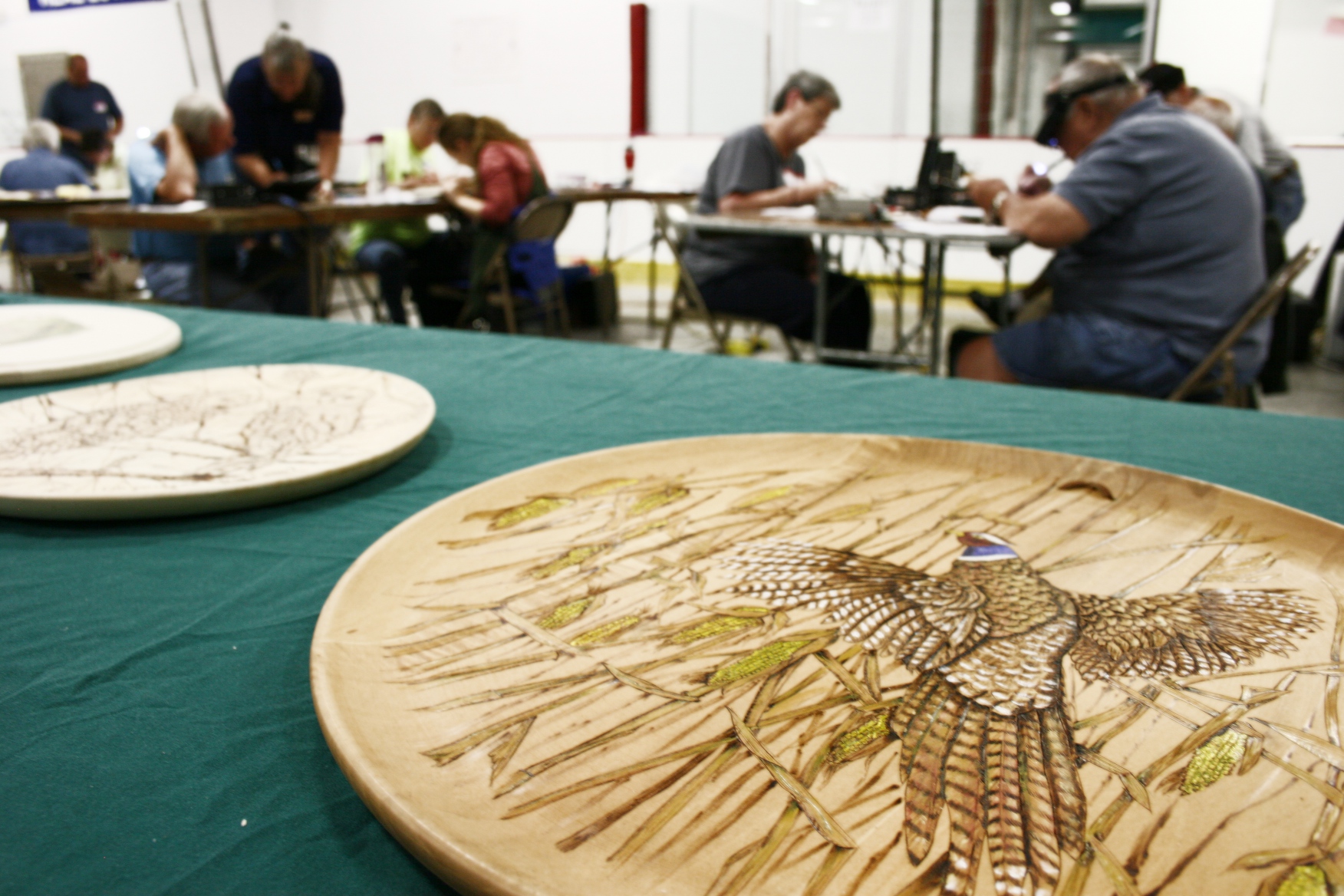
A pheasant in wood, foreground, and students in class, background.

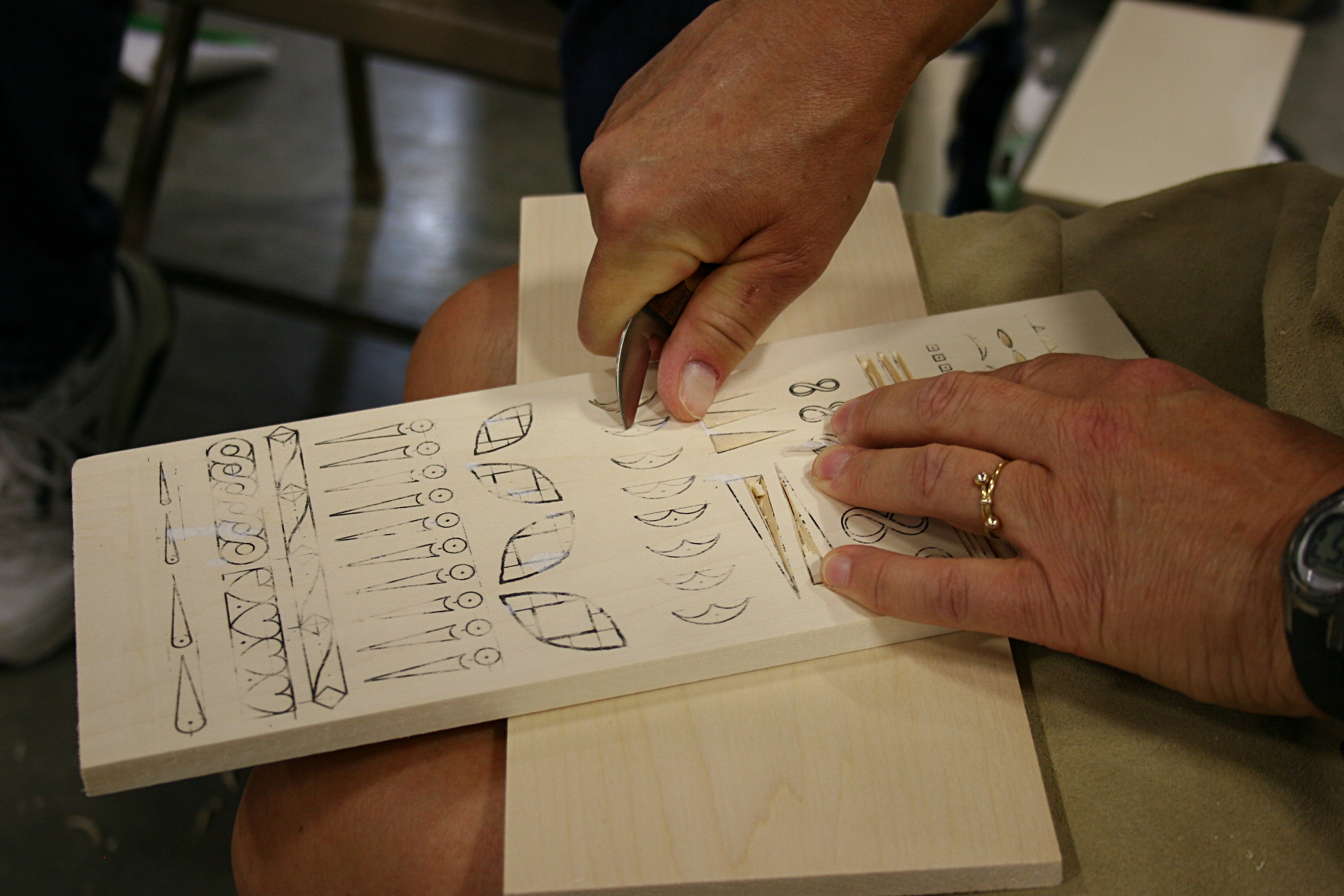
Learning the art of chip carving.

© Copyright 2012 Audrey Kletscher Helbling


Mixing art, music and BBQ at Faribault festival August 12, 2012

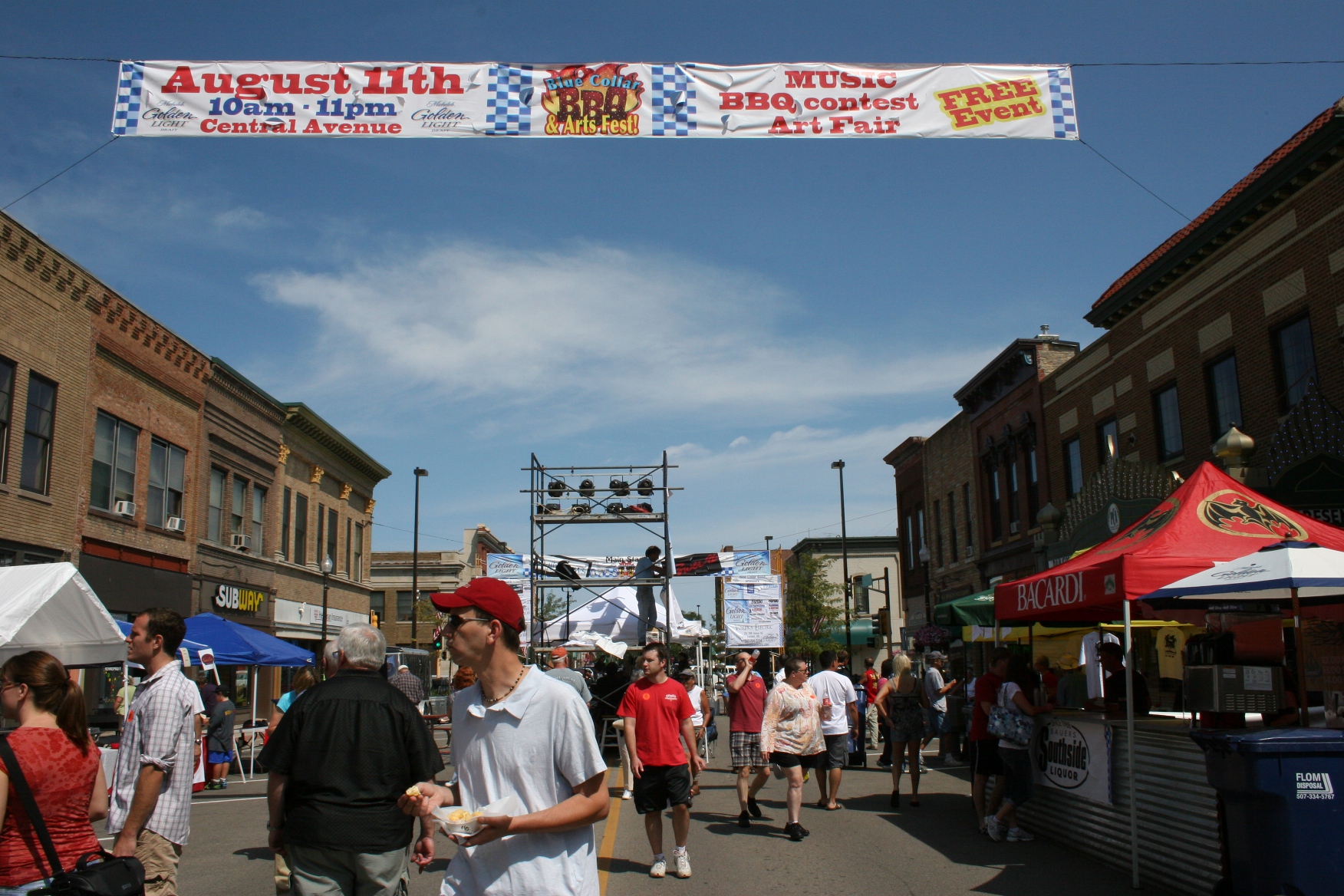
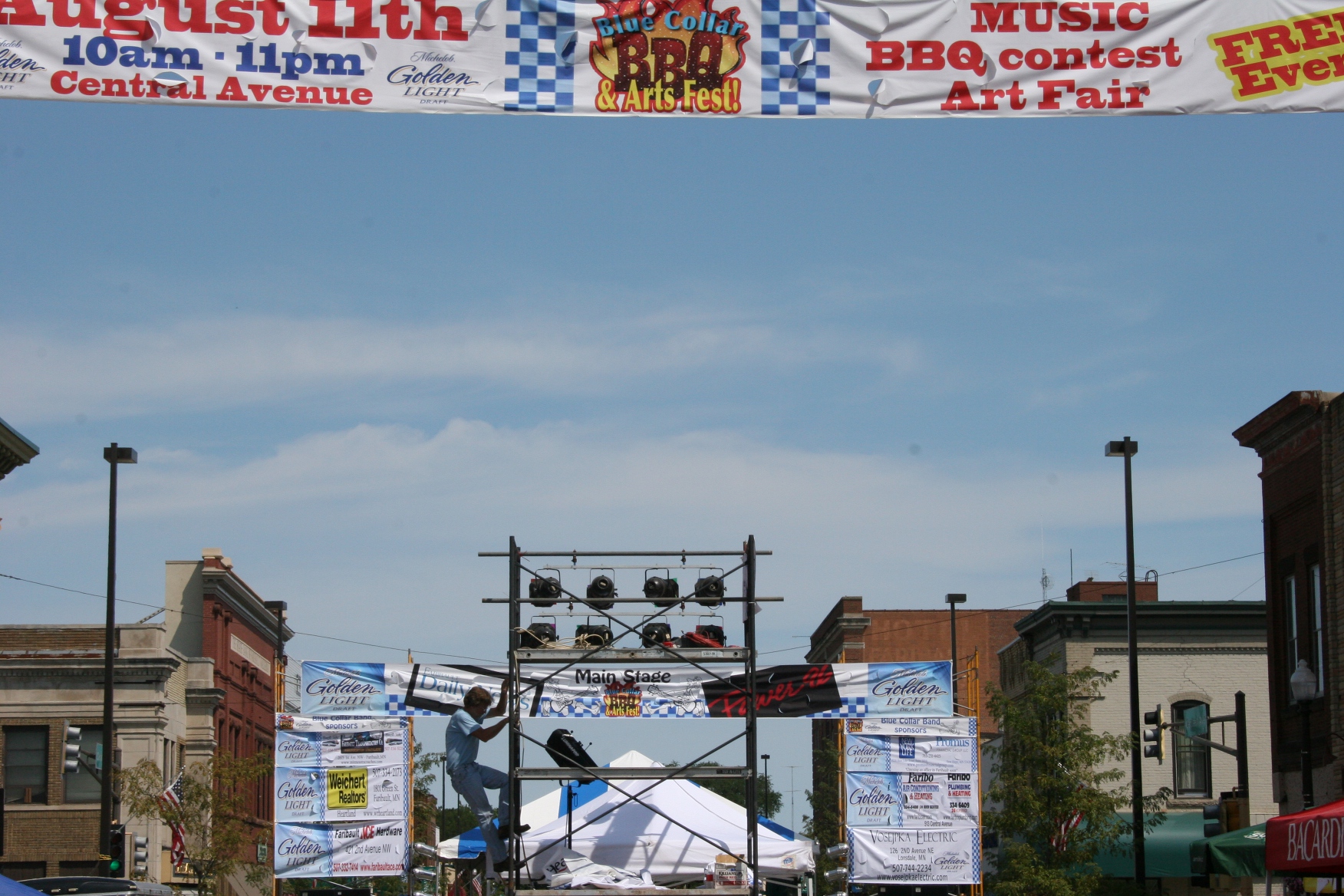
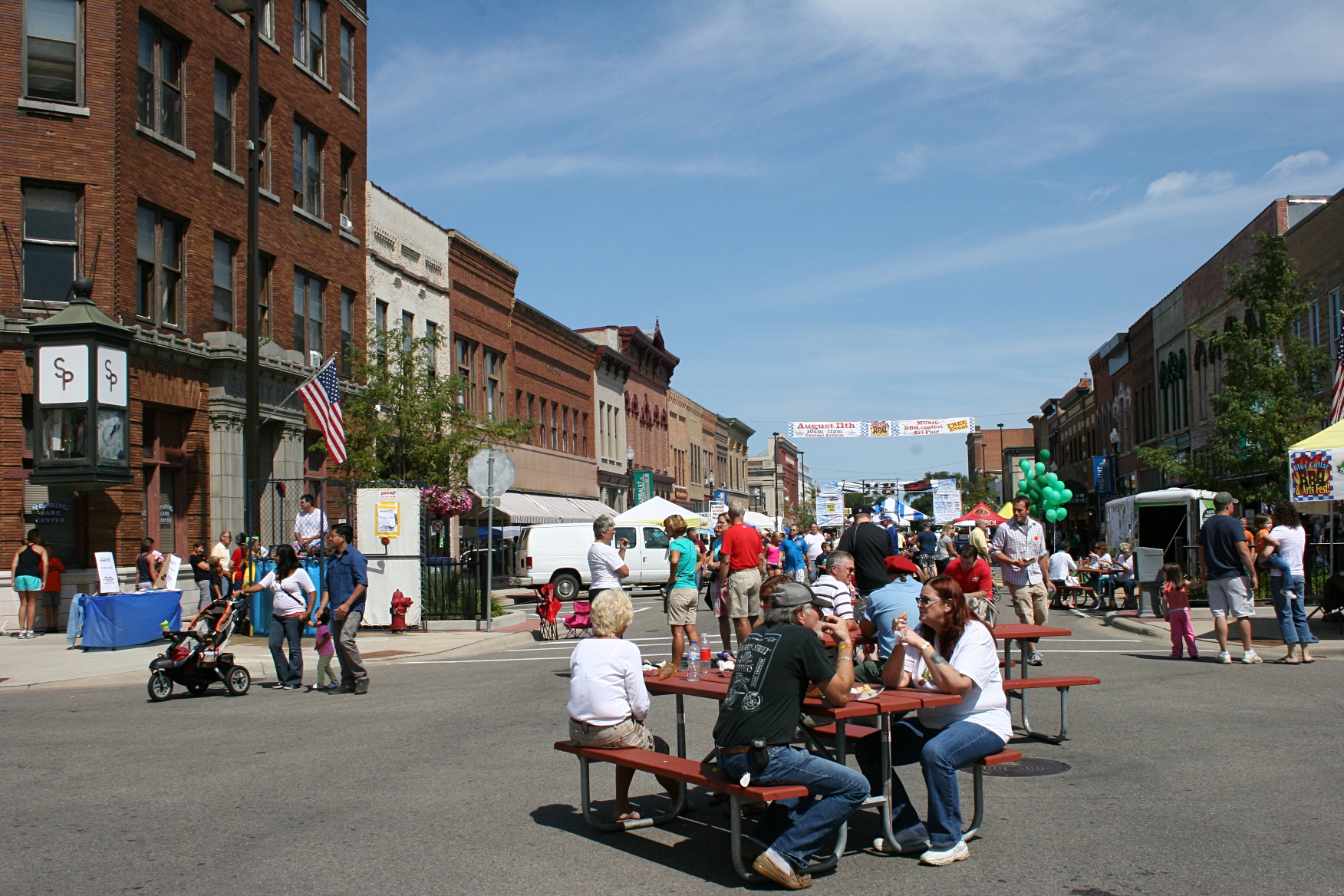
The banner and band scaffolding/set-up in the 300 block of Central Avenue during Saturday’s Blue Collar BBQ & Arts Fest in Faribault

FROM DEAFENING MUSIC that bounced between historic buildings along Faribault’s Central Avenue, to the savory taste and tantalizing, smokey smell of barbecued meat to the cheers of onlookers when a local celebrity plunged into the dunk tank to the clink of washers against asphalt in the washer tournament to human faces morphing, via paint, into animal faces, offerings at the fourth annual Blue Collar BBQ & Arts Fest in Faribault drew crowds, and smiles, on a picture perfect Saturday.

An overview of the crowd early into the event on Saturday, looking to the 300 block of historic downtown Farbault.

Coordinated by the Paradise Center for the Arts, the 13-hour free festival focused on bringing people into the historic downtown to enjoy/participate in the arts, music, food, a BBQ and homemade brew competition, and more.
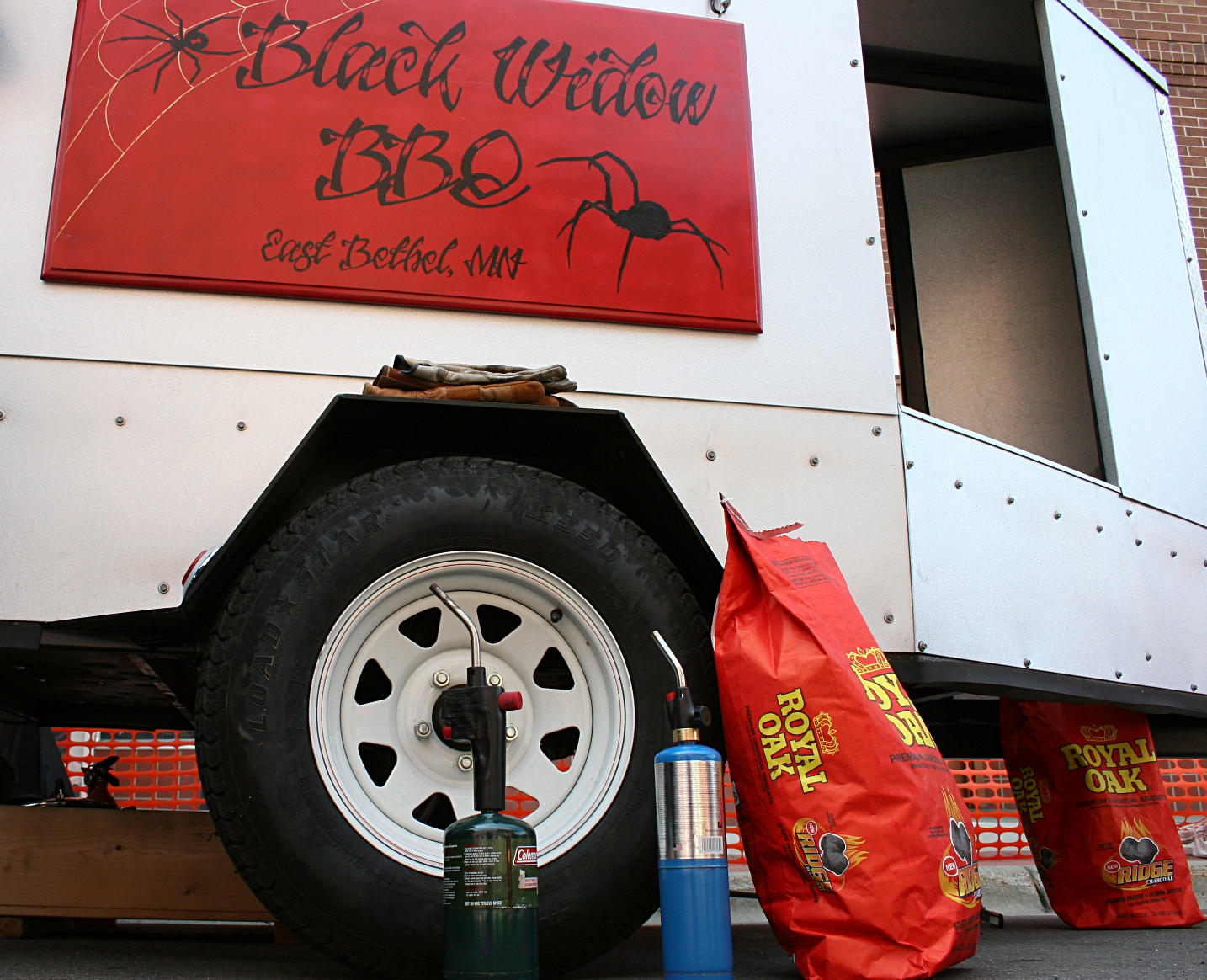
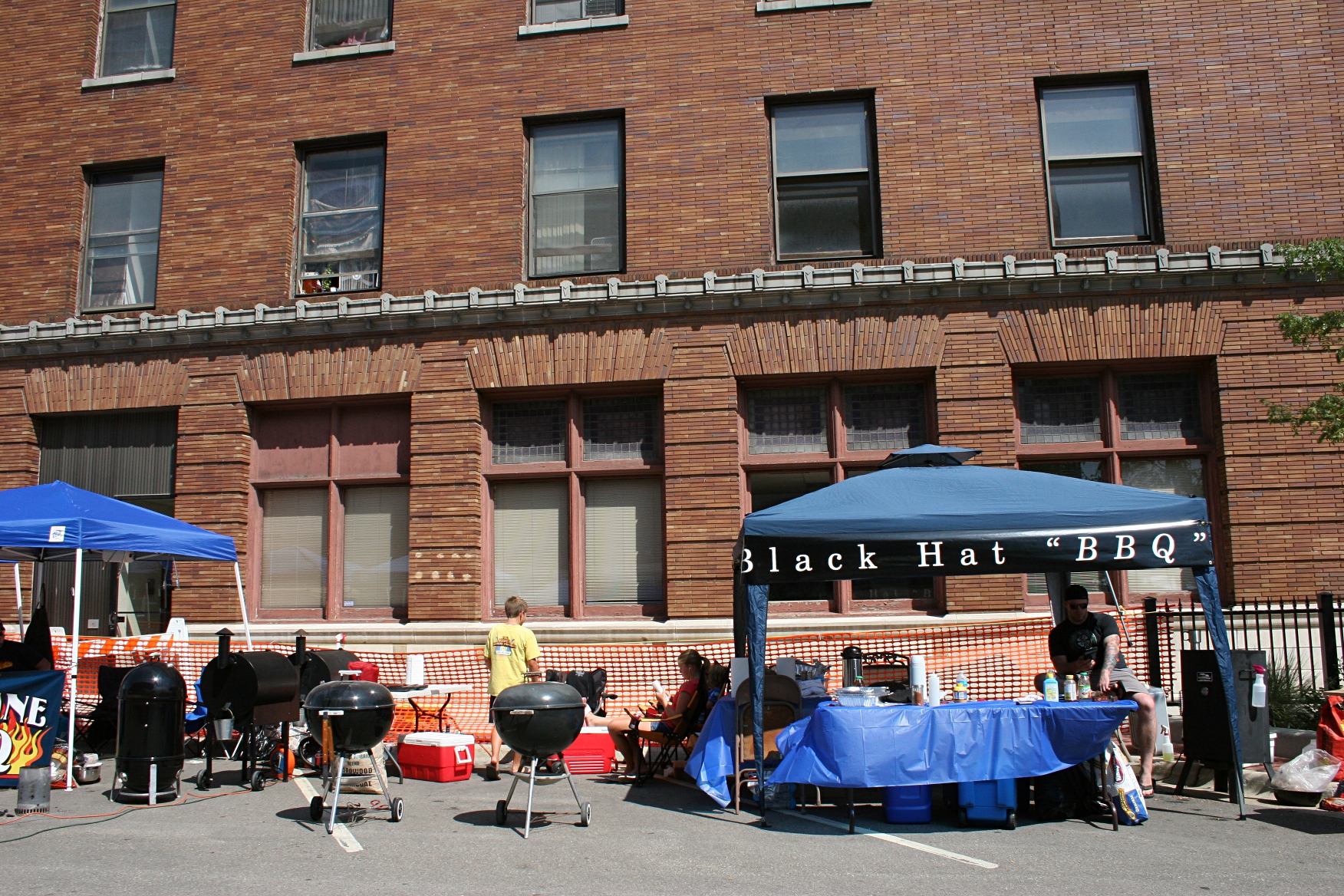
The Black Widow BBQ team, one of about a dozen competing for top prizes of $500 in several categories.

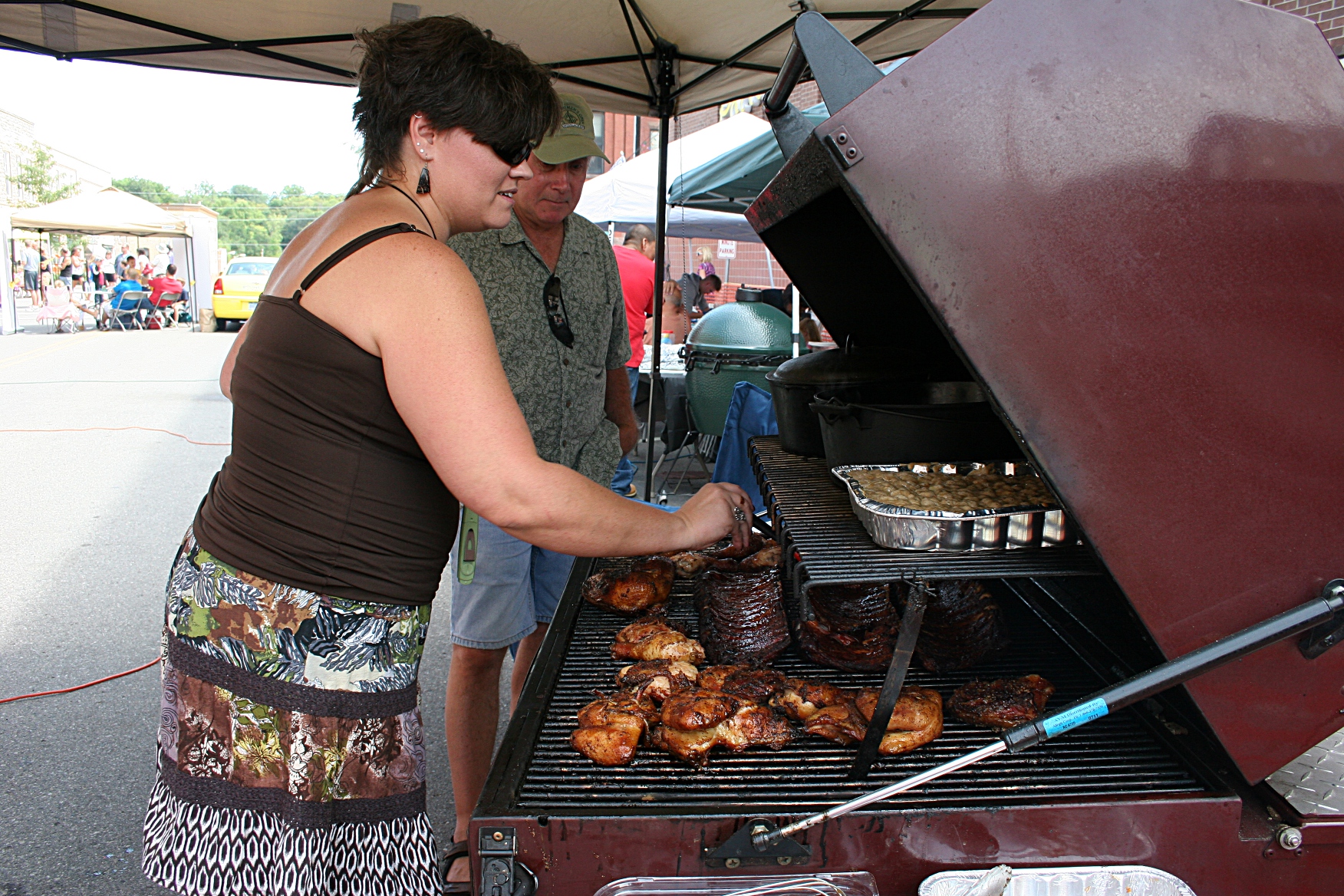
BBQ teams set up along a side street to cook their meats and desserts.

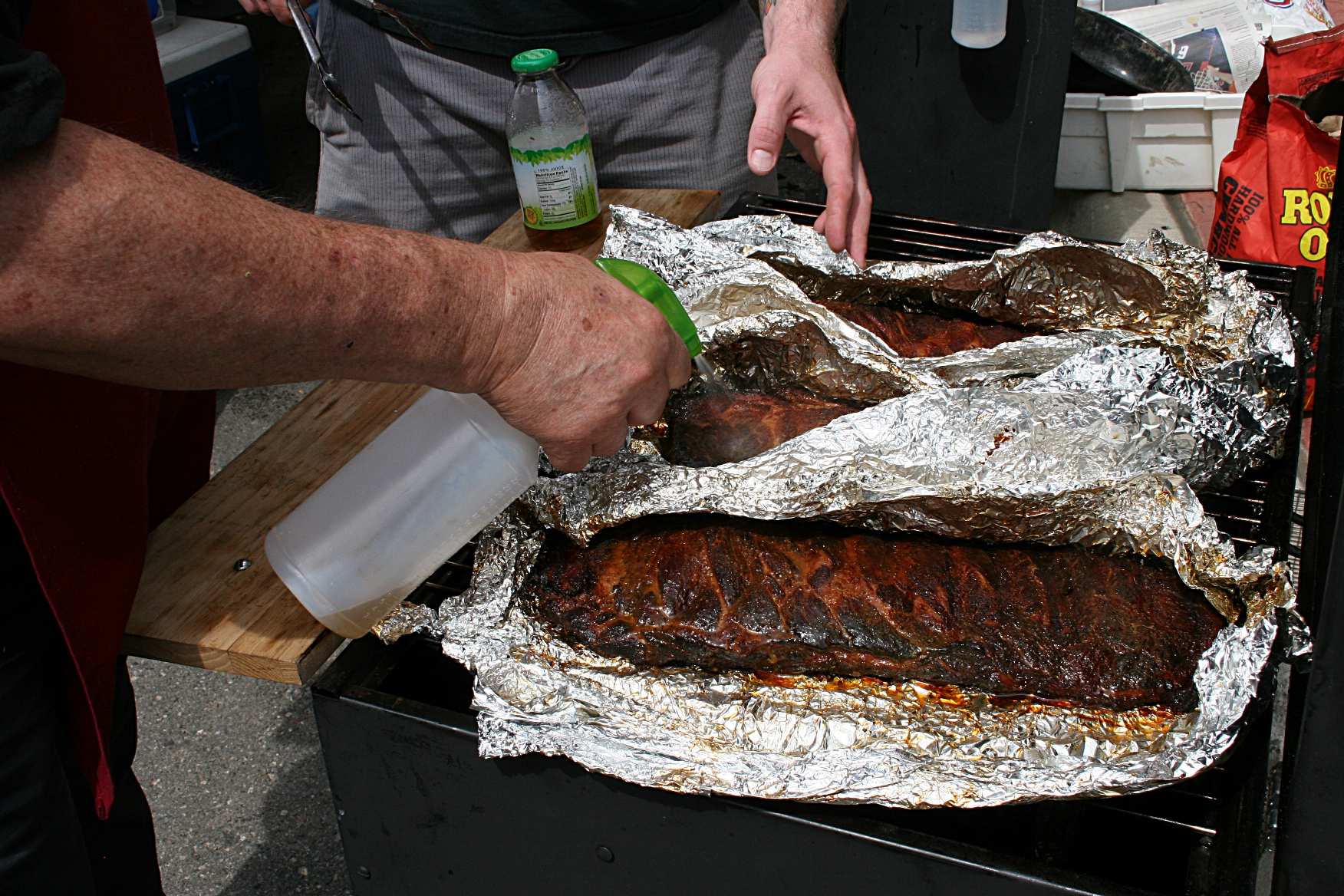
A Texas native, now living in Faribault and a member of The Black Hat “BBQ” team, sprays apple juice onto his St. Louis style pork ribs during the BBQ contest.

Grill Cabin team members, from New Prague, prepare entries in the BBQ competition.

Retail stores like The Crafty Maven, 212 Central Avenue, at the heart of the arts and crafts fair and kids’ activities, expected an increase in business with an influx of an anticipated 5,000 people into the downtown for the festival. And that’s part of the plan, to celebrate downtown businesses, many of them event supporters. Other businesses in the community also sponsored parts of the festival.

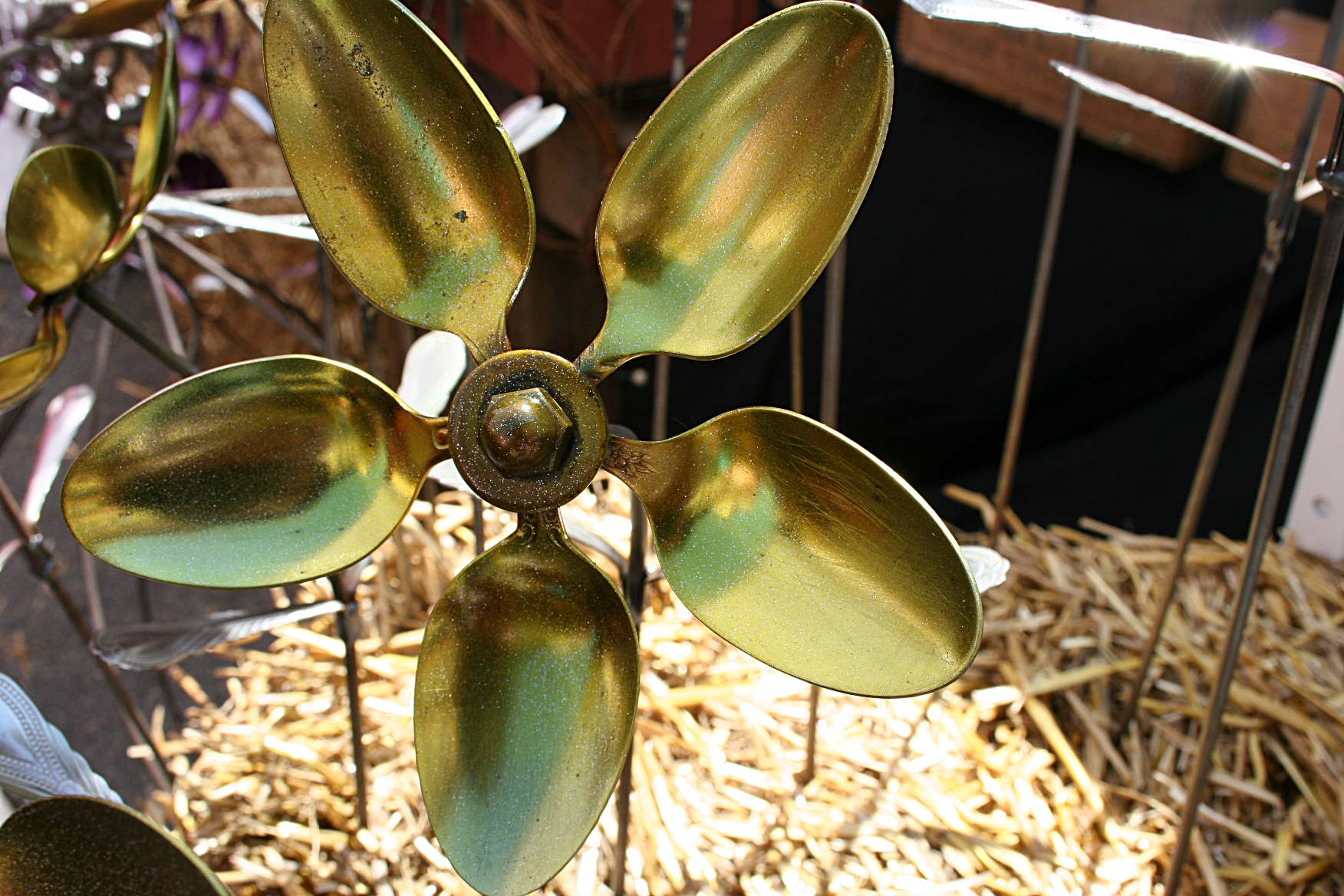
Flower art and more, shaped and welded from old silverware, etc. is helping the DeWall brothers of DeWall Bros Metal Creations of Grand Meadow finance their college educations. Their art was for sale at the arts fest.

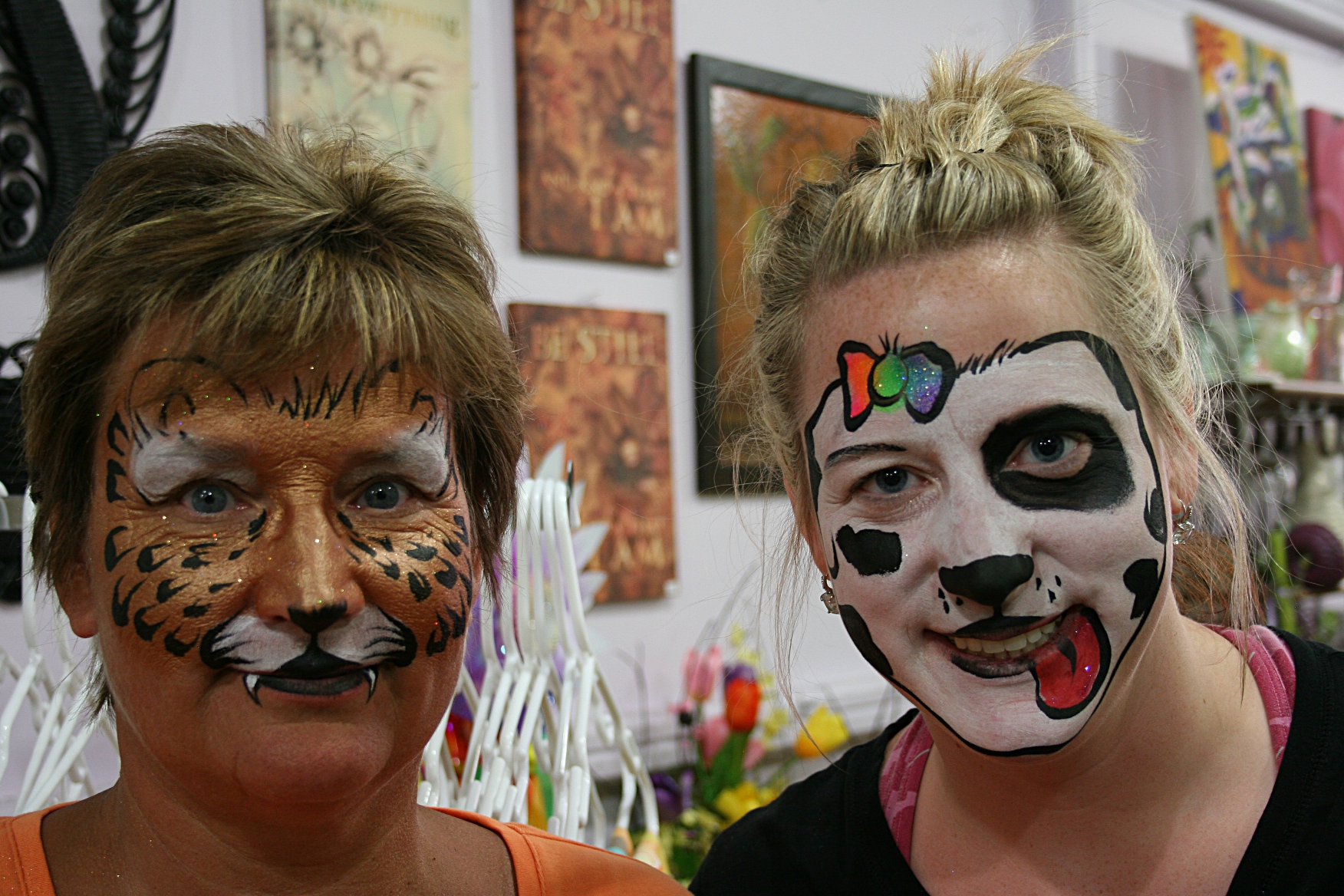
While the DeWall men were peddling their metal art, the women–mom/wife, Cindy, and girlfriend, Allison– were shopping and getting their faces painted by Jodi Gustafson of Big Shoe Entertainment.

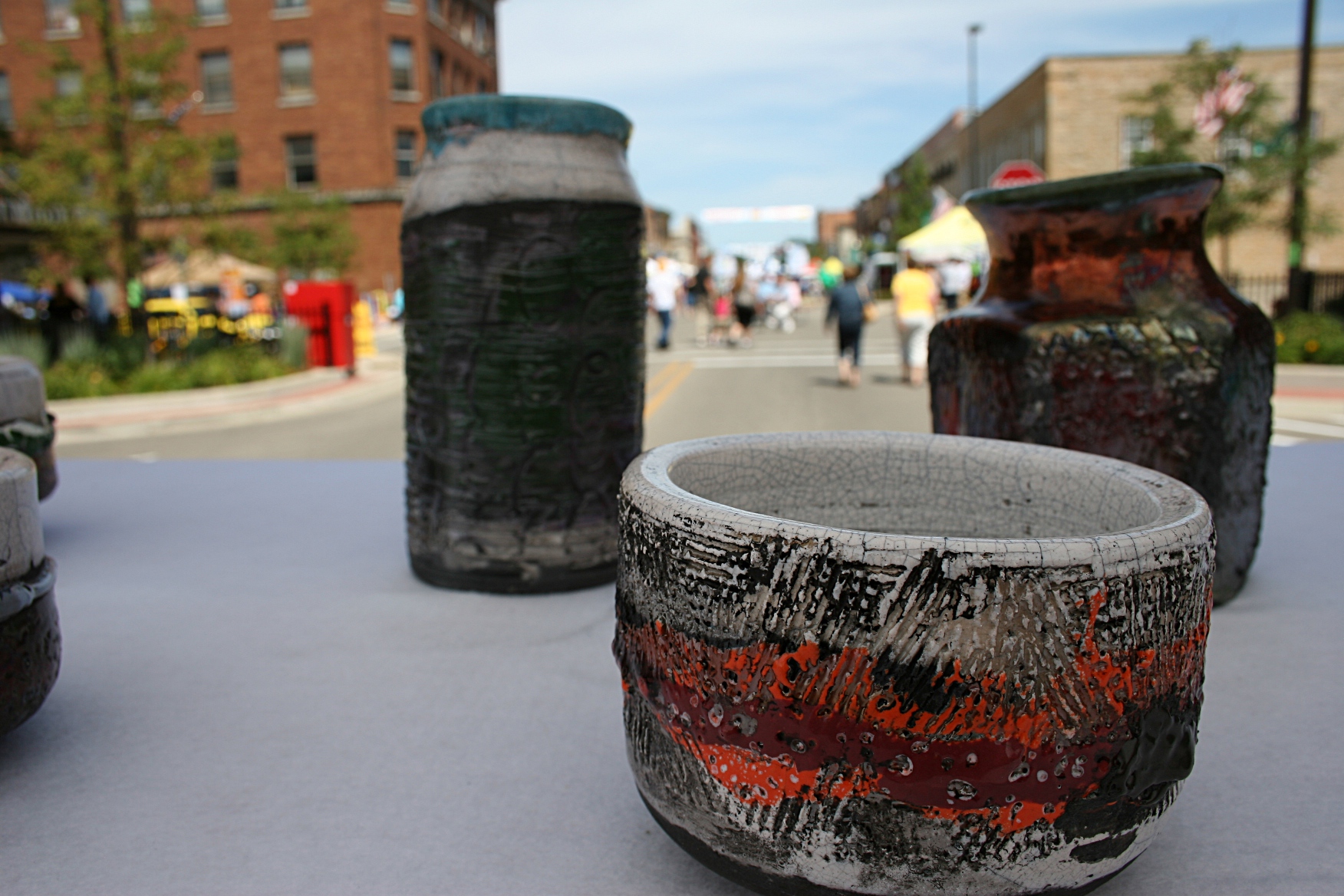
Bob Maegerlein of Rochester, specializing in Raku ware, sold his pottery at the arts fair.

I arrived late morning and wandered for several hours past vendors—wishing I could sample the meat smoking in BBQ contestants’ grills; admiring the artistic creations of artists and a gifted face painter; ducking into the Paradise Center for the Arts to photograph the current art show, Car pARTS; steering mostly clear of the north end of the 300 block of Central because I couldn’t tolerate the volume of the live band music; trying a vendor’s delicious BBQed meat trio sampler that was way overpriced for the quantity (plus, no forks included); and, finally, stopping at Pawn Minnesota and then a Somali clothing shop on my way to the car.
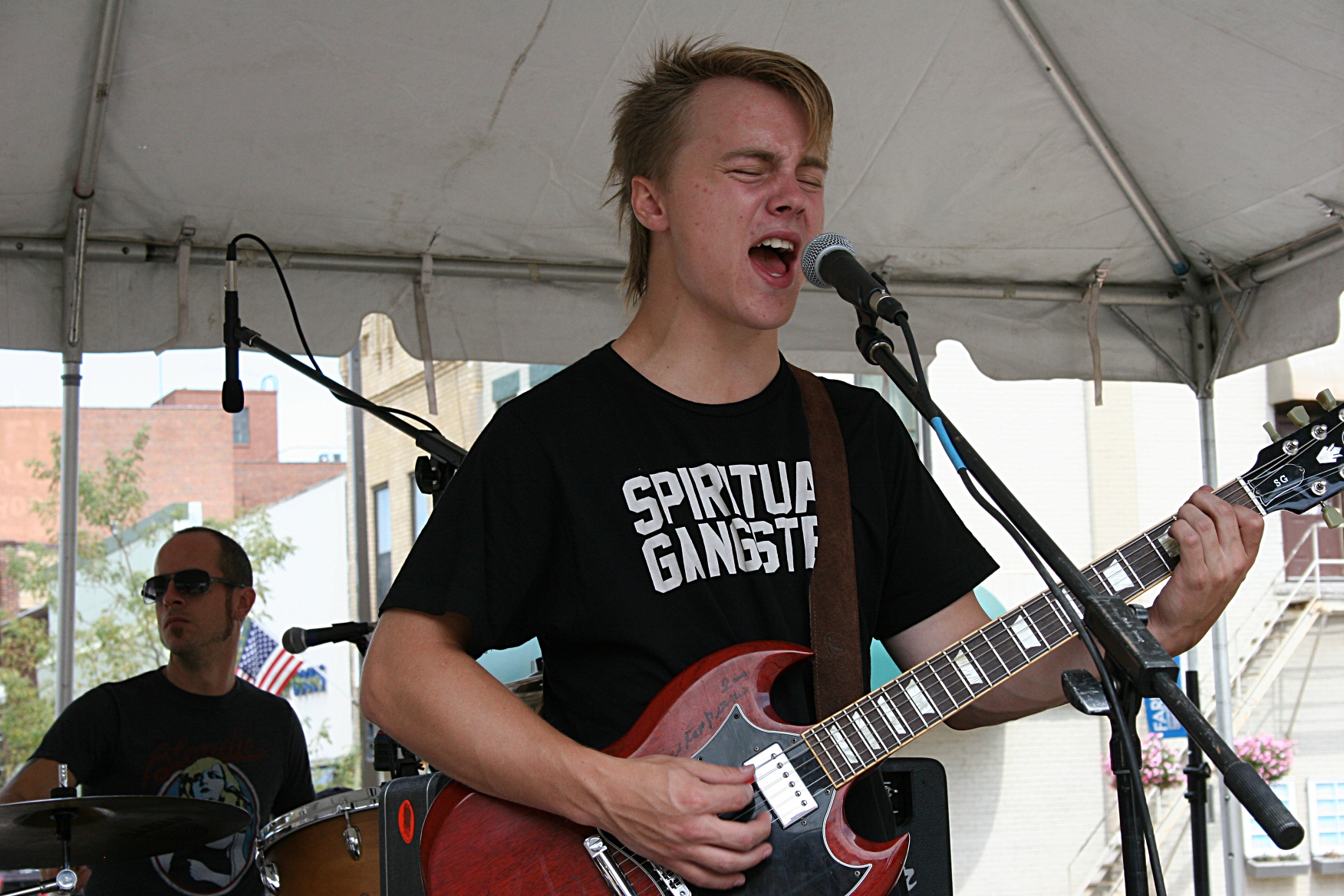
Blues-rock guitarist/musician Trent Romens was among six featured musical acts.

Did the festival accomplish for me what I expected? Yes. I was entertained, although I would have appreciated a much lower volume on the music. Ditto for the price on the meat sampler. And I would have liked access to the home brew competition, which was tucked into the Paradise somewhere.

But all in all, the festival provided a fun way to while away part of a Saturday. And, for those downtown business owners who hoped the event would draw shoppers into stores, it worked for me. I’d never been into the pawn store and wasn’t even aware of the Somali shop or another ethnic business across the street (which wasn’t open).

If you’re from Faribault, I hope you took  time on Saturday to attend the Blue Collar BBQ & Arts Fest and appreciate what we have, right here in our own community.

With the weather about as good as it gets on a summer day, attendance was high at the Blue Collar BBQ & Arts Fest.

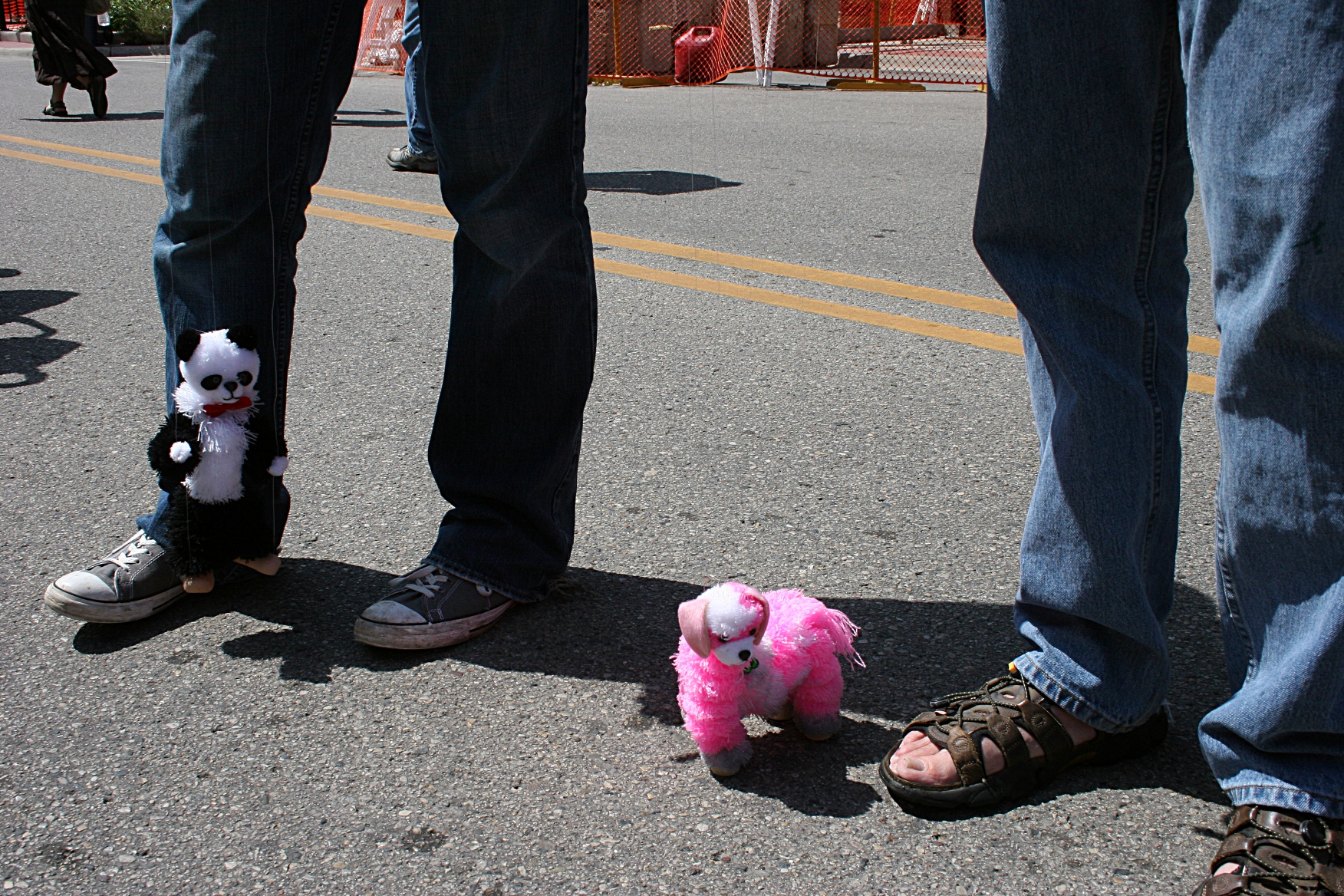
Dad and grandpa watched the pets while the kids played in the bouncy inflatables. These pom pom pets were a popular item sold at the arts fair.

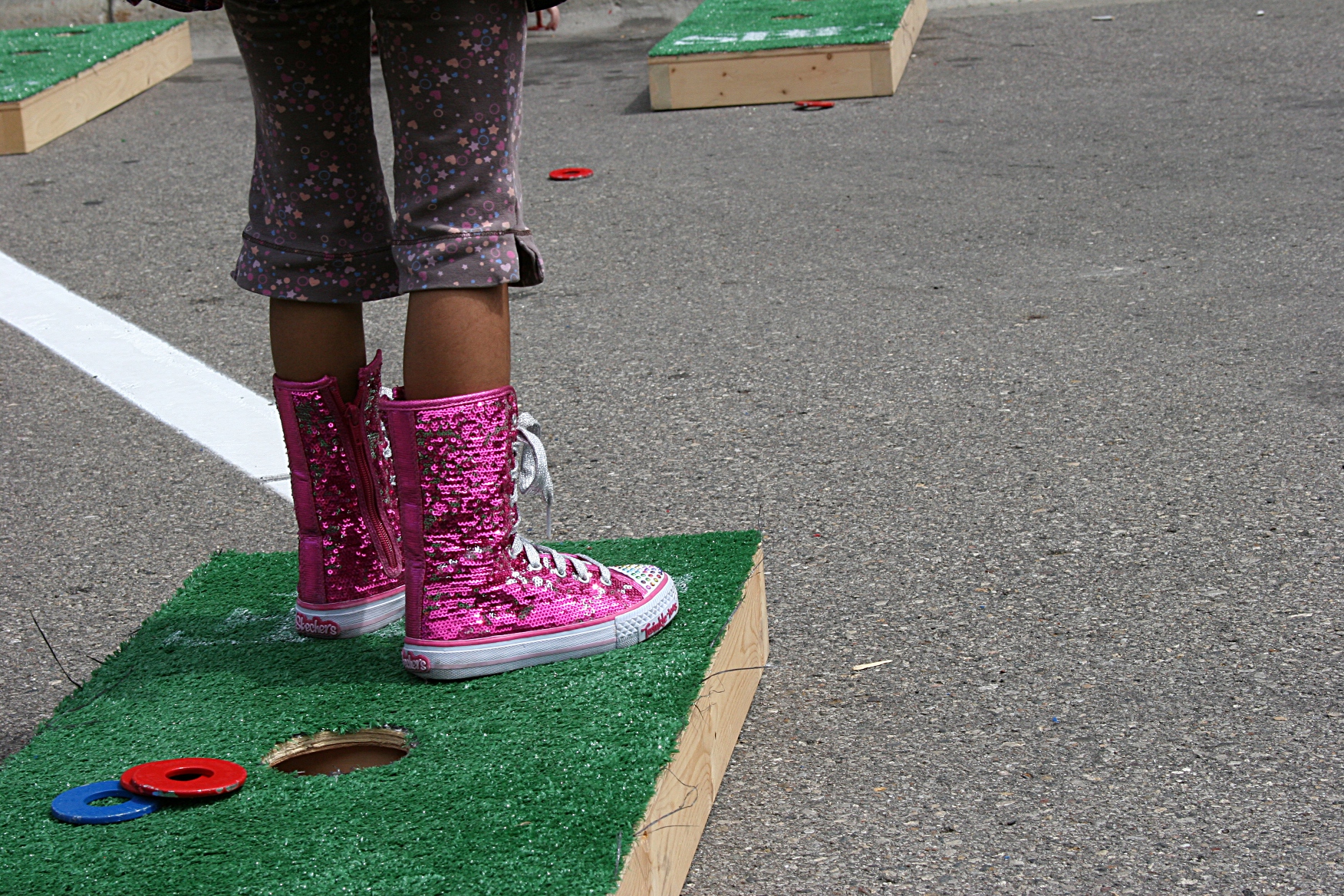
Kids practiced for the washer tournament. I was not convinced by a tournament organizer to participate. “She would throw the washer through a store window,” my husband told him. He would be right. Either that or I would have struck a passerby. We walked away, for the safety of those in attendance.

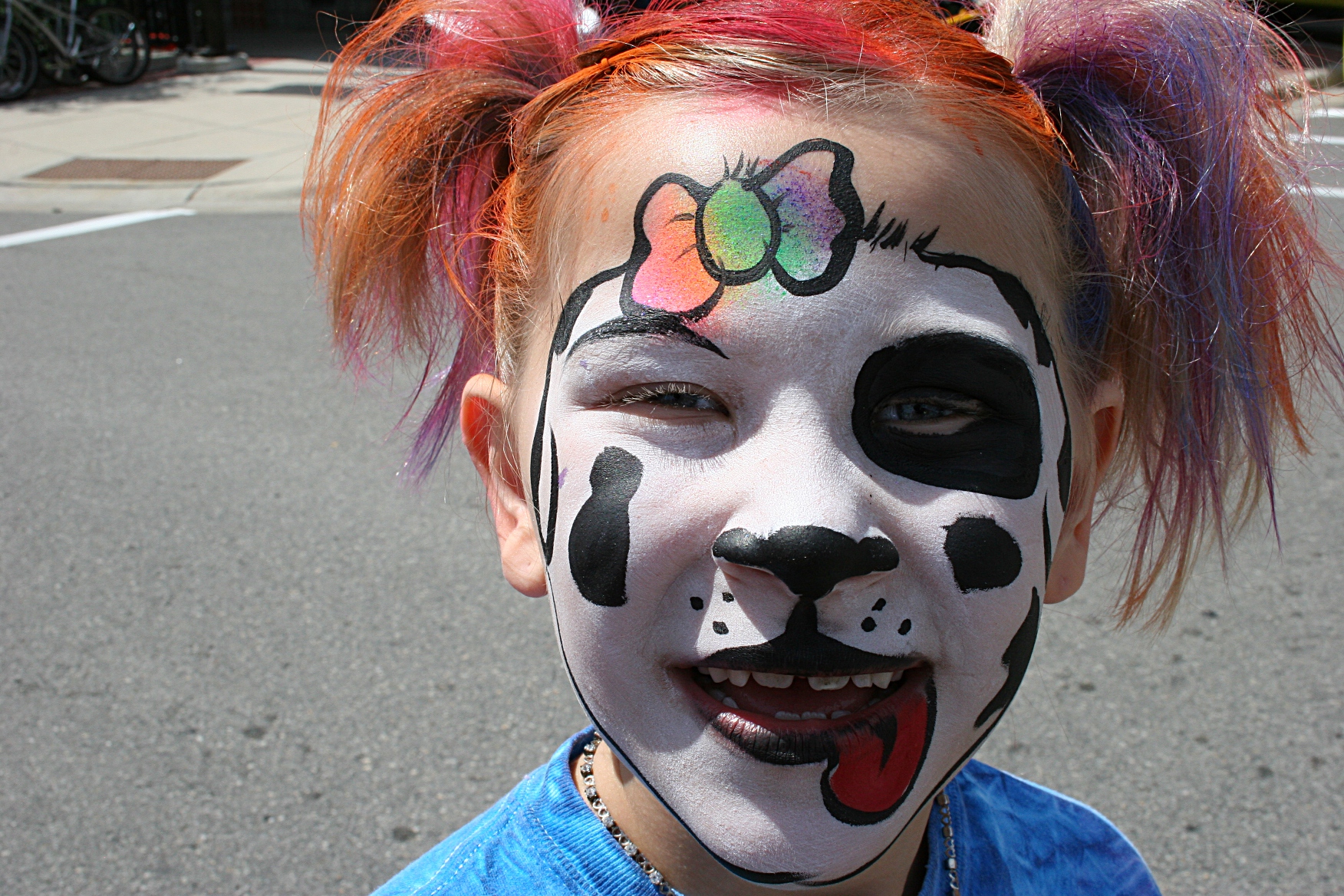
Isabella, 7, of Faribault, one of the many kids who lined up for the free face painting. Check back for an additional post featuring the artwork of professional face painter Jodi Gustafson of Big Shoe Entertainment.

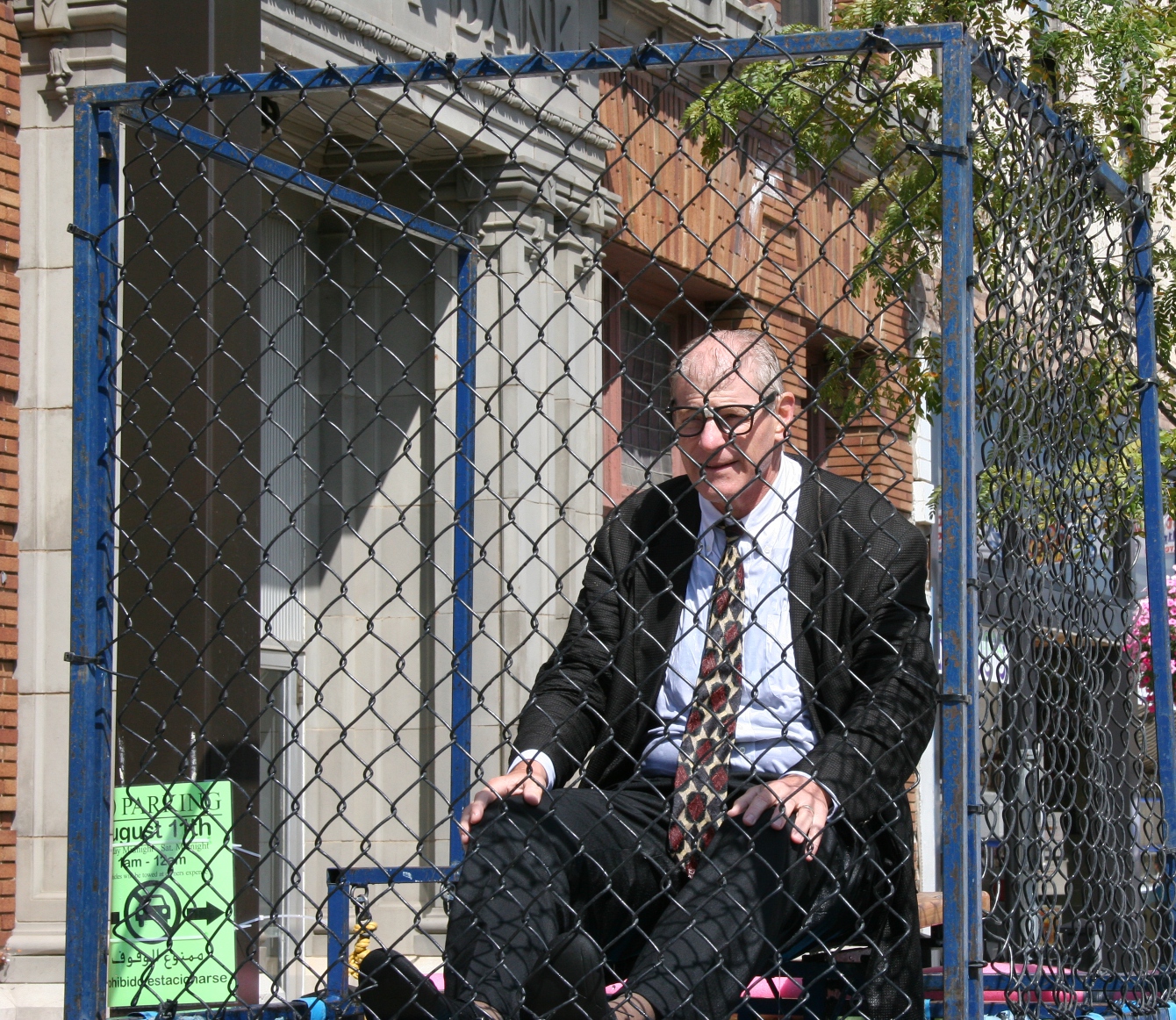
Taking a turn in the dunk tank…

© Copyright 2012 Audrey Kletscher Helbling


A sweet surprise: An old sorghum mill on a southern Minnesota elk farm & more August 10, 2012

HOW MANY TIMES HAS MY FAMILY driven Minnesota Highway 60 east of Elysian, unaware of Okaman Elk Farm to the south not far from the highway? Too many.

My husband Randy and I almost missed Okaman’s again last Sunday as we traveled along Waseca County Roads 3 and 5. If not for the colorful miniature train transporting kids and adults along the shoulder of the road, we likely would have passed right by.

Passing by the Okaman Elk Express in our car on a Sunday afternoon.

But that train stopped us in our tracks and caused us to turn around and drive back to the farm.

There we discovered much more than a plain old elk farm. We also found family-friendly activities, a farmers’ market, art, animals and history.

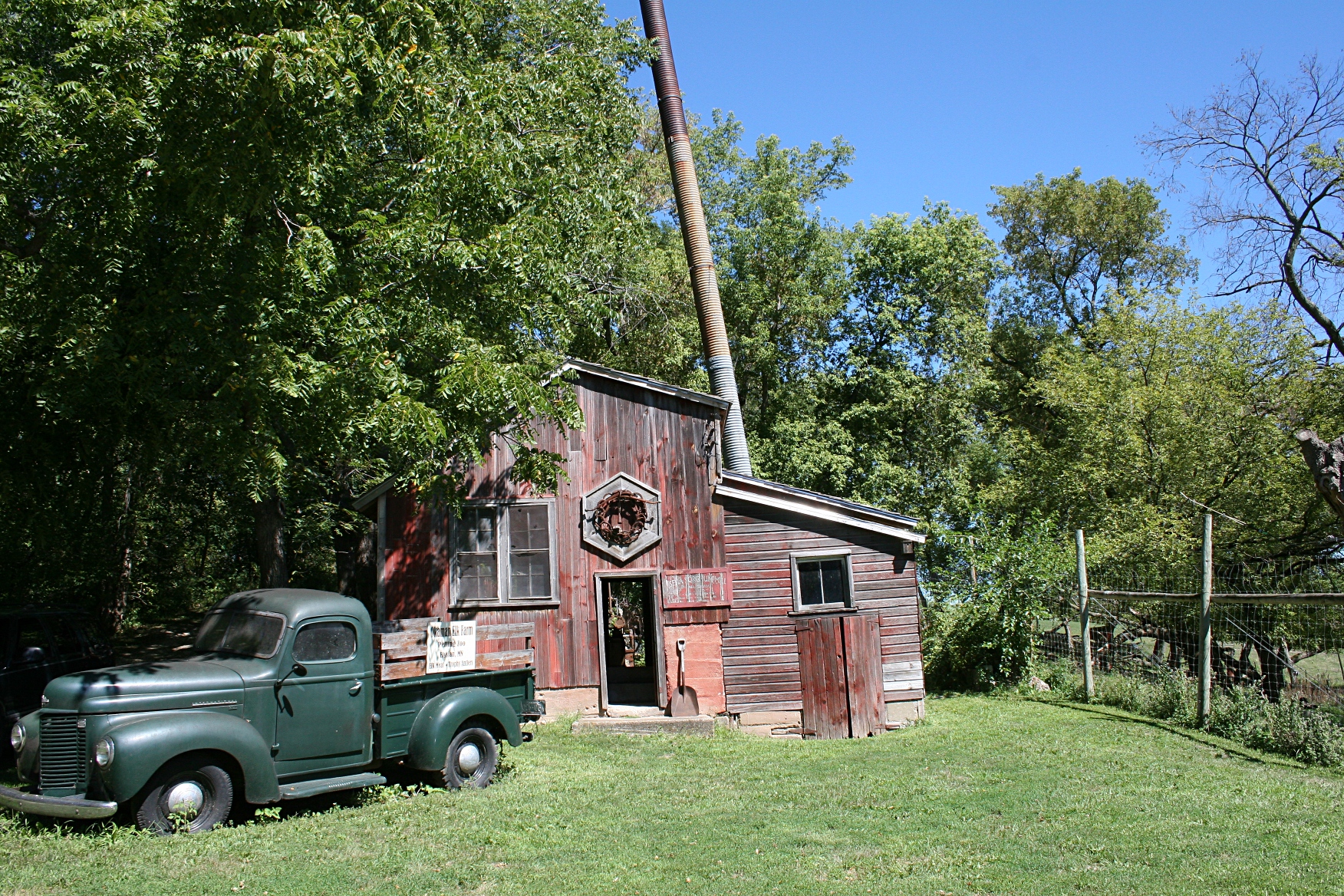
The historic Seha Sorghum Mill.

In 1991, Don and Joyce Kaplan bought this historic place to raise elk and then sell the meat. Their business sits on the site of Okaman, a town established in 1855 between Lake Elysian and Lily Lake. Here, according to a posted sign, several hotels, a theater, the Buckout Flour Mill, the Okaman School and the Seha Sorghum Mill were located.

Inside the sorghum mill.

It is that 1895 sorghum mill, which produced and sold sorghum syrup until 1953, that most interested me. Randy and I poked our way through and around the old mill trying to determine how the whole operation worked. I think he understood the process much better than me.

Apparently wagons of sorghum were unloaded atop the hill behind the mill where the canes were crushed and the juice then flowed into steam-heated cookers, or something like that.

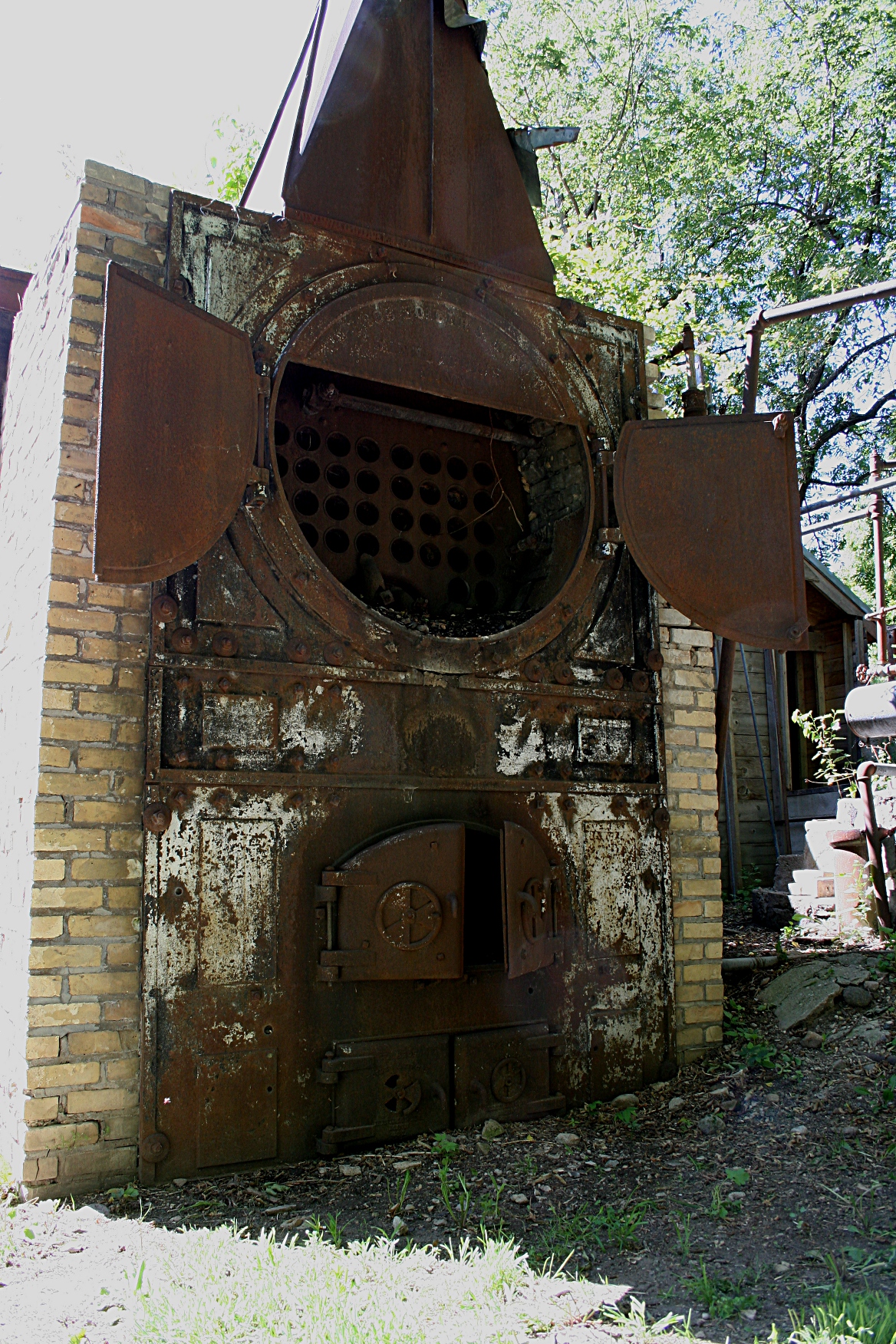
The original steam boiler stands behind the sorghum mill.

According to the Waseca County Historical Society website, Cornelius L. Seha built the mill, today the only known historical sorghum mill remaining in Minnesota and added to the National Register of Historic Places in 1979.

Because the mill today is basically an old building and steam boiler with weeds and brush growing around the holding tanks, equipment and structures, everything is left open to self-interpretation. Perhaps someday this historic site can be restored and specific educational information posted.

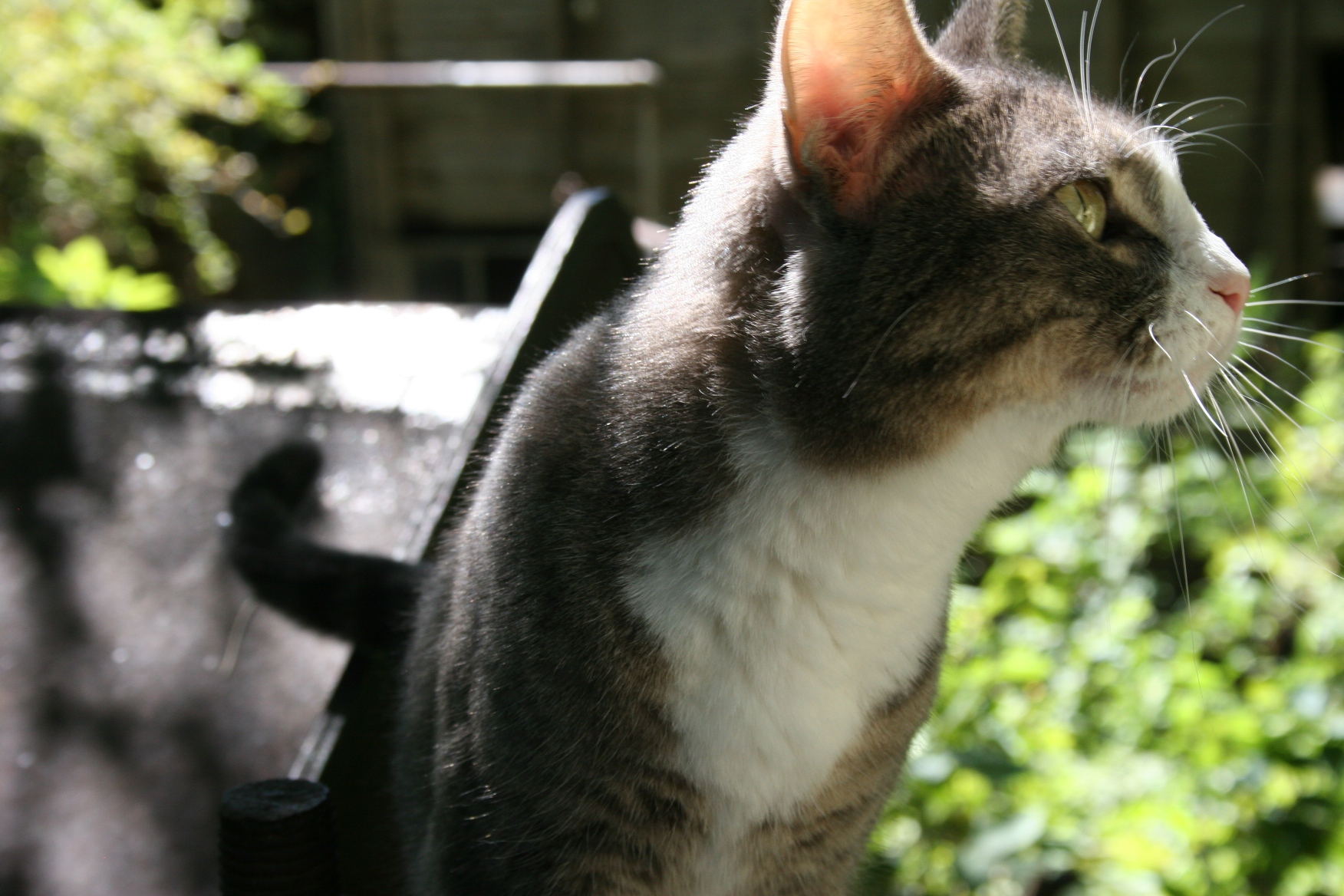
Cats roam the farm.

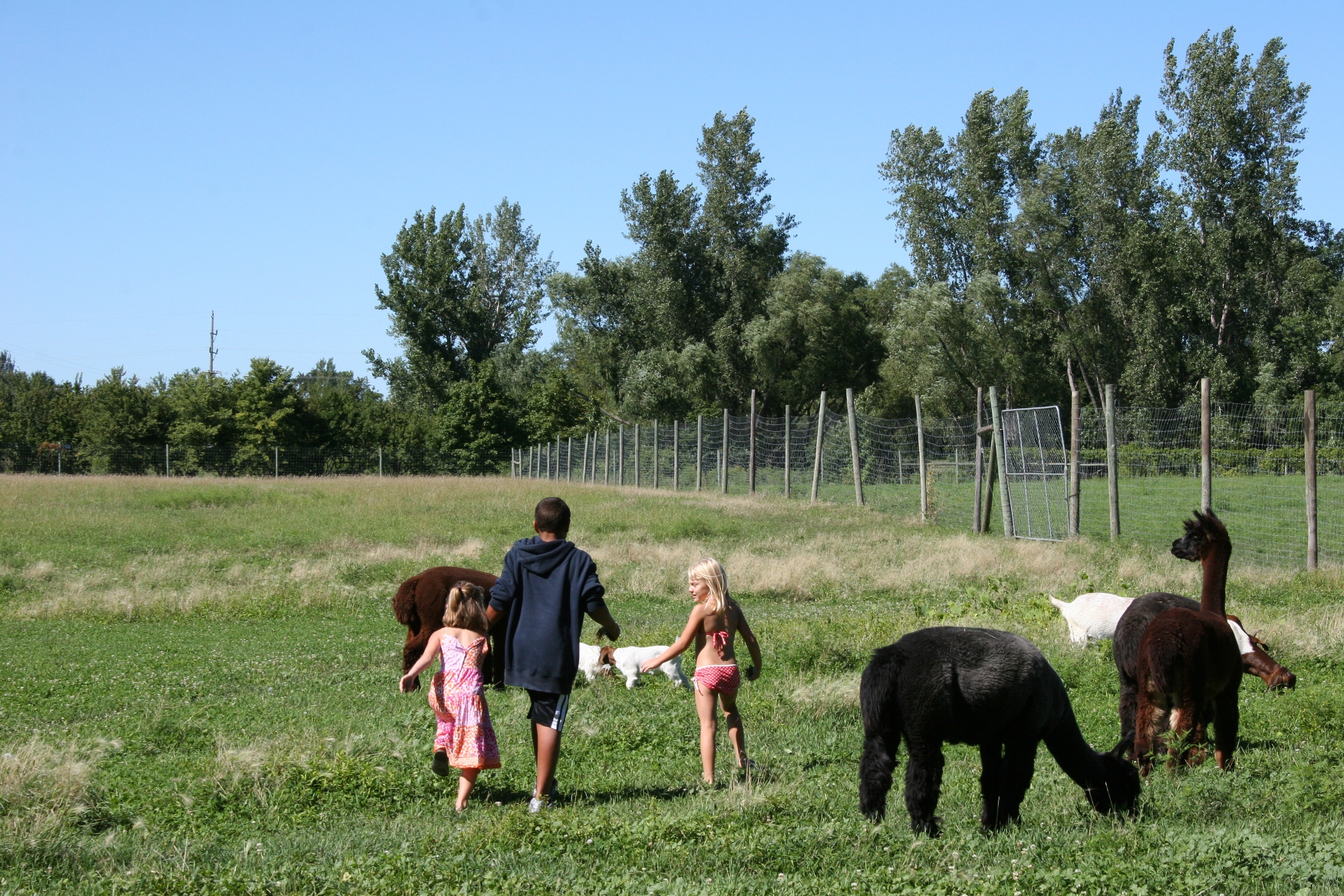
Then, perhaps, the younger farm visitors will be more interested in the historic buildings. They are, for now, focused on  the donkeys and alpacas, the goats and elk and dog, and especially, the cats and kittens. Or perhaps the playground equipment.

Visitors are free to wander the pasture with the alpacas, donkeys and goats.

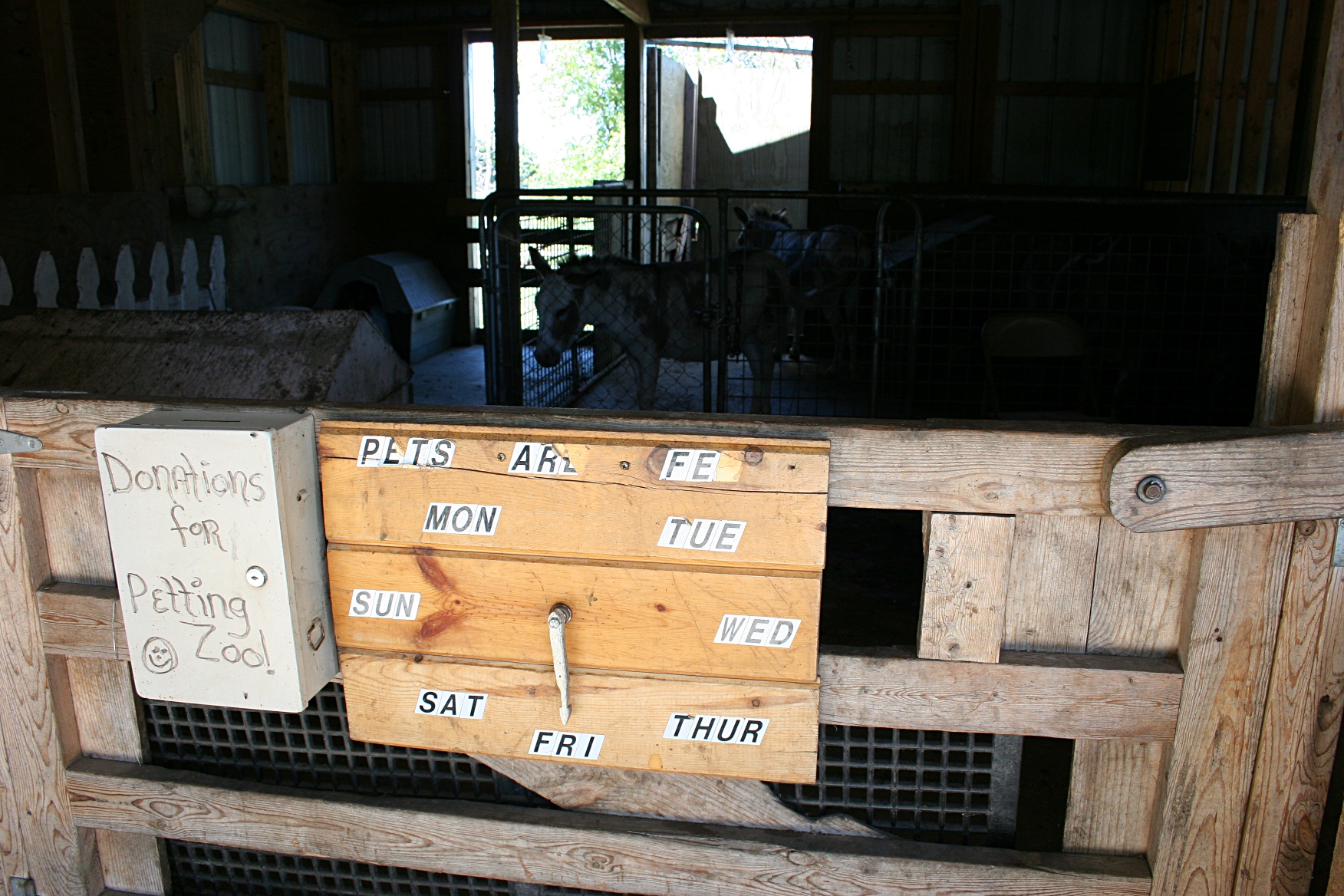
Loved this sign at the petting zoo telling visitors that the animals are fed daily.

The farm is open seven days a week to the 3,000 – 4,000 visitors who stop by annually, says Joyce Kaplan. The Kaplans may not always be around, but guests are invited to peruse the place on their own. Just follow a few rules like:

You can enter the petting zoo pens or pastures at your own risk. Please don’t allow children to chase the animals and no dogs allowed. Close gates behind you.
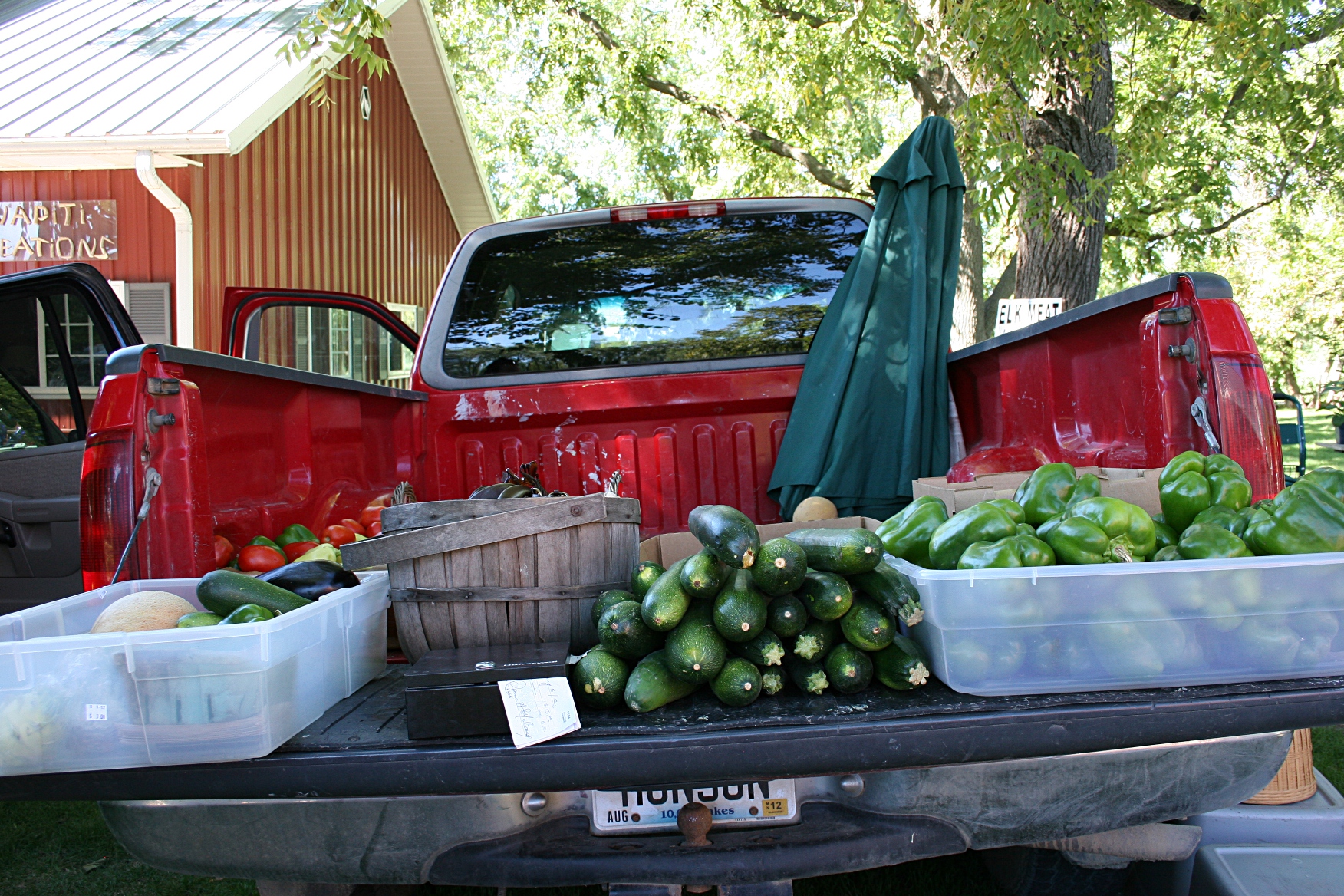
Veggies from R & C Produce of Otisco.

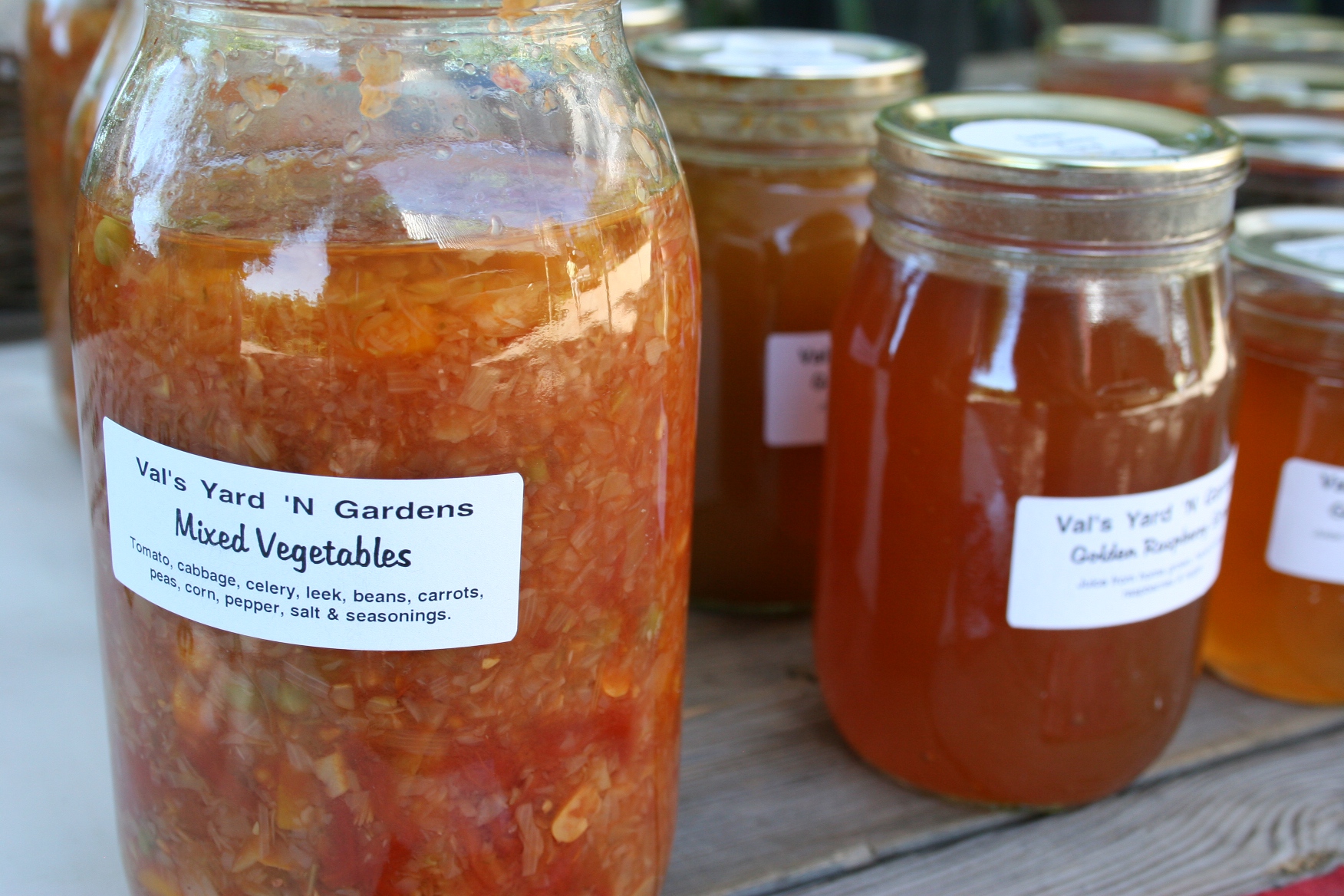
Canned mixed veggies from Val’s Yard ‘N Gardens (Joe & Val Zimprich of Le Center).

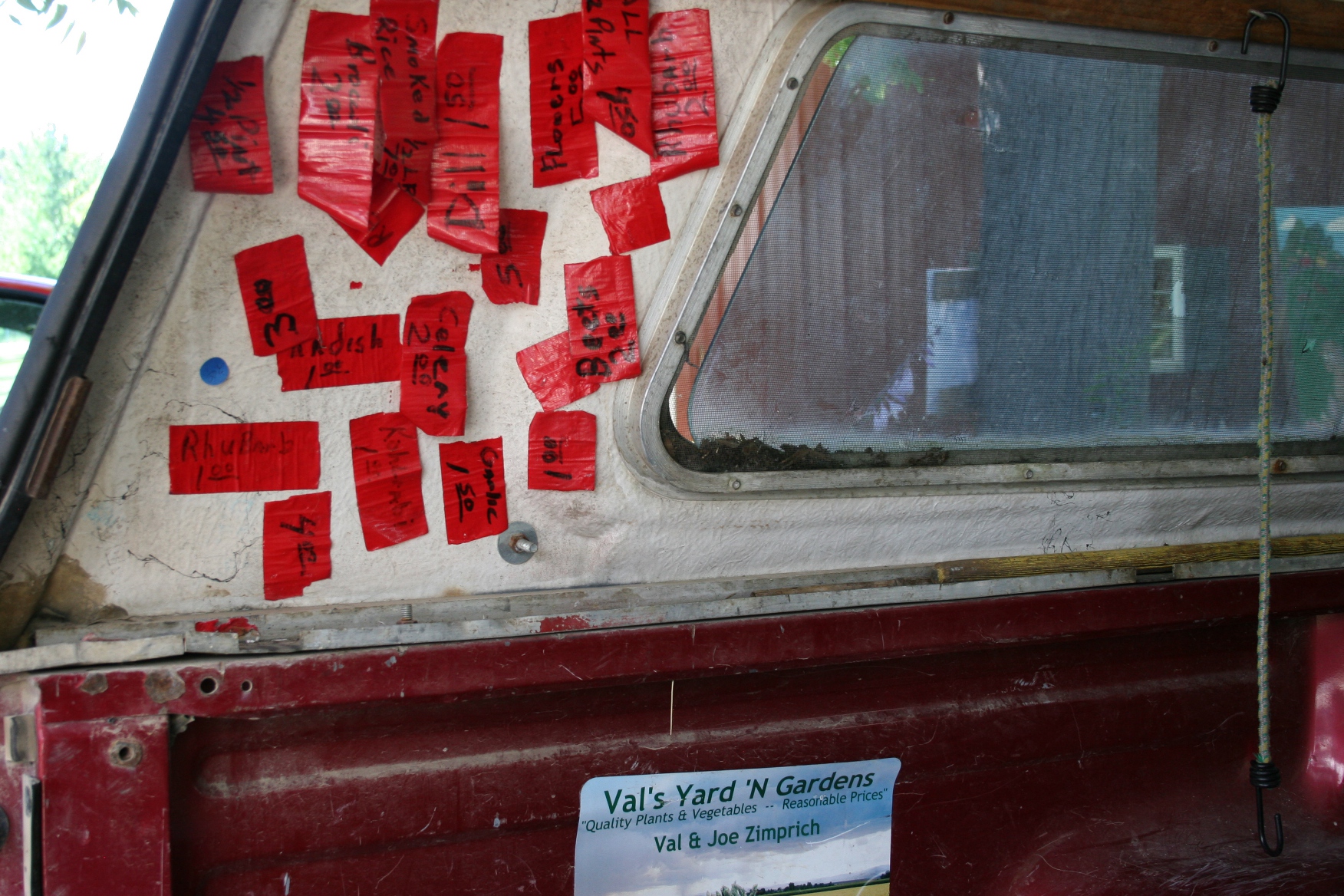
Reusable price stickers in the back of the Zimprichs’ truck.

While the farm is always open, on Sundays from 1 p.m. – 4 p.m. during the summertime harvest and into October, farmers’ market vendors set up in the farmyard peddling their garden fresh produce and other products.

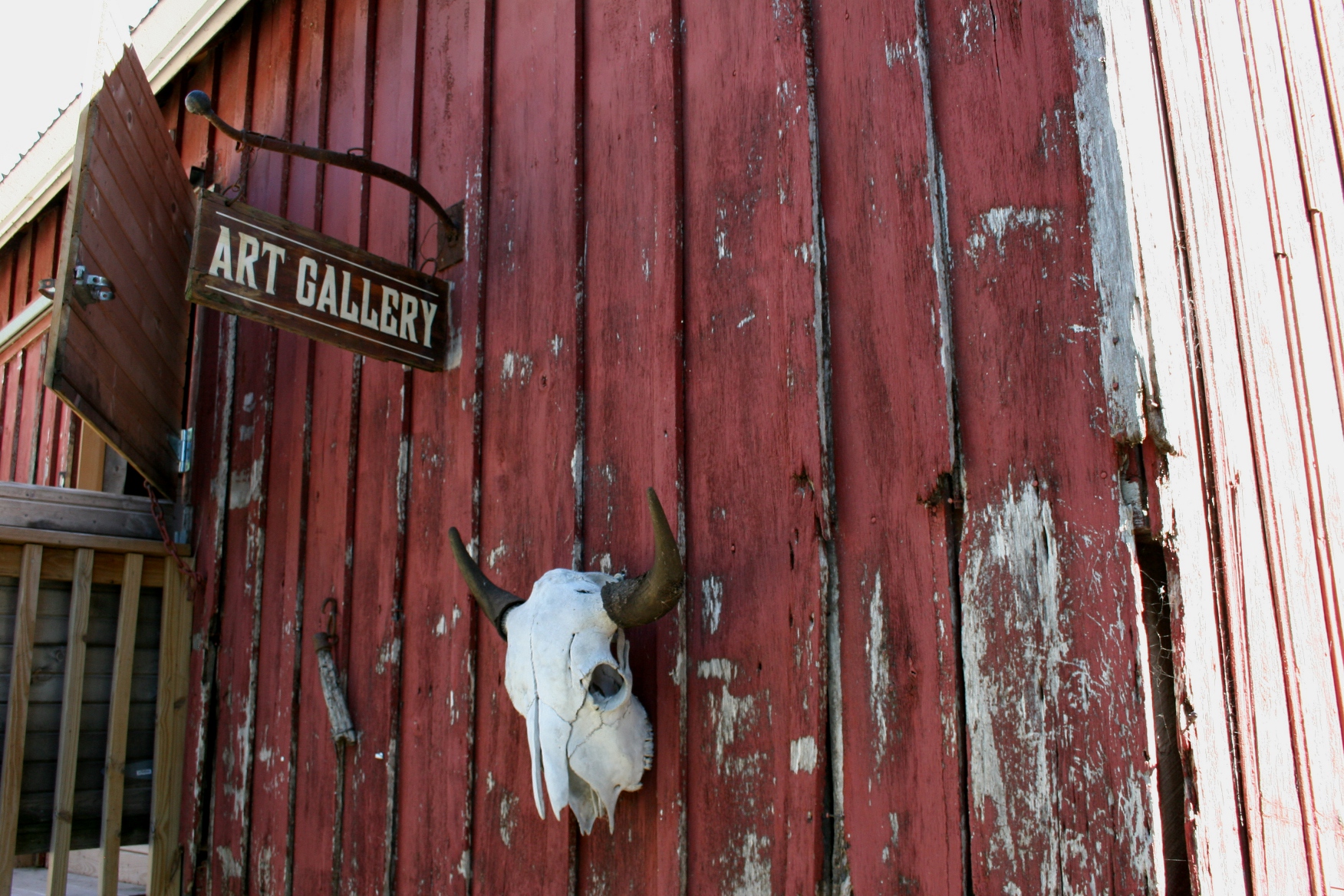
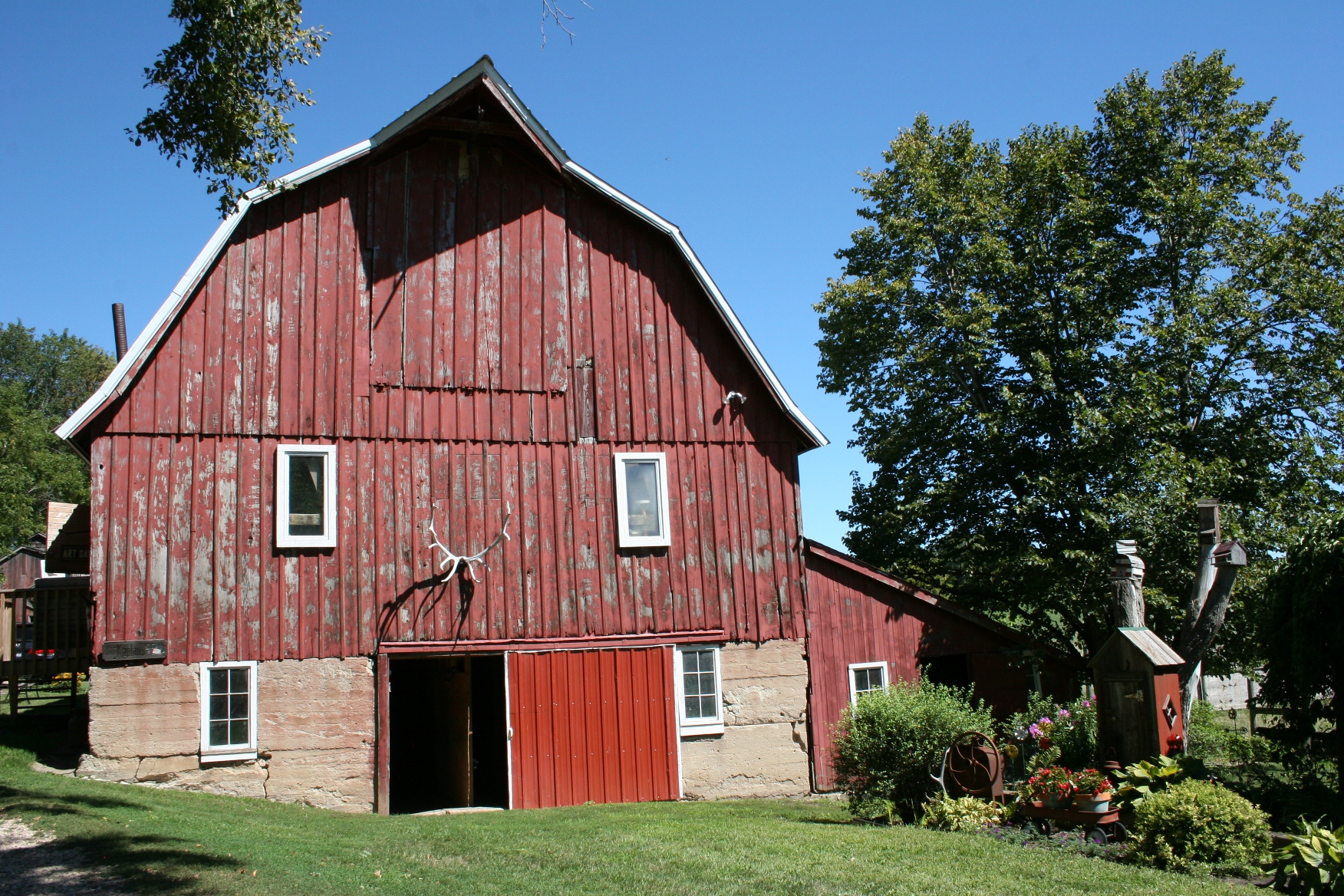
An art gallery is housed in an old barn.

That beautiful old barn, with an art gallery and studio in the haymow.

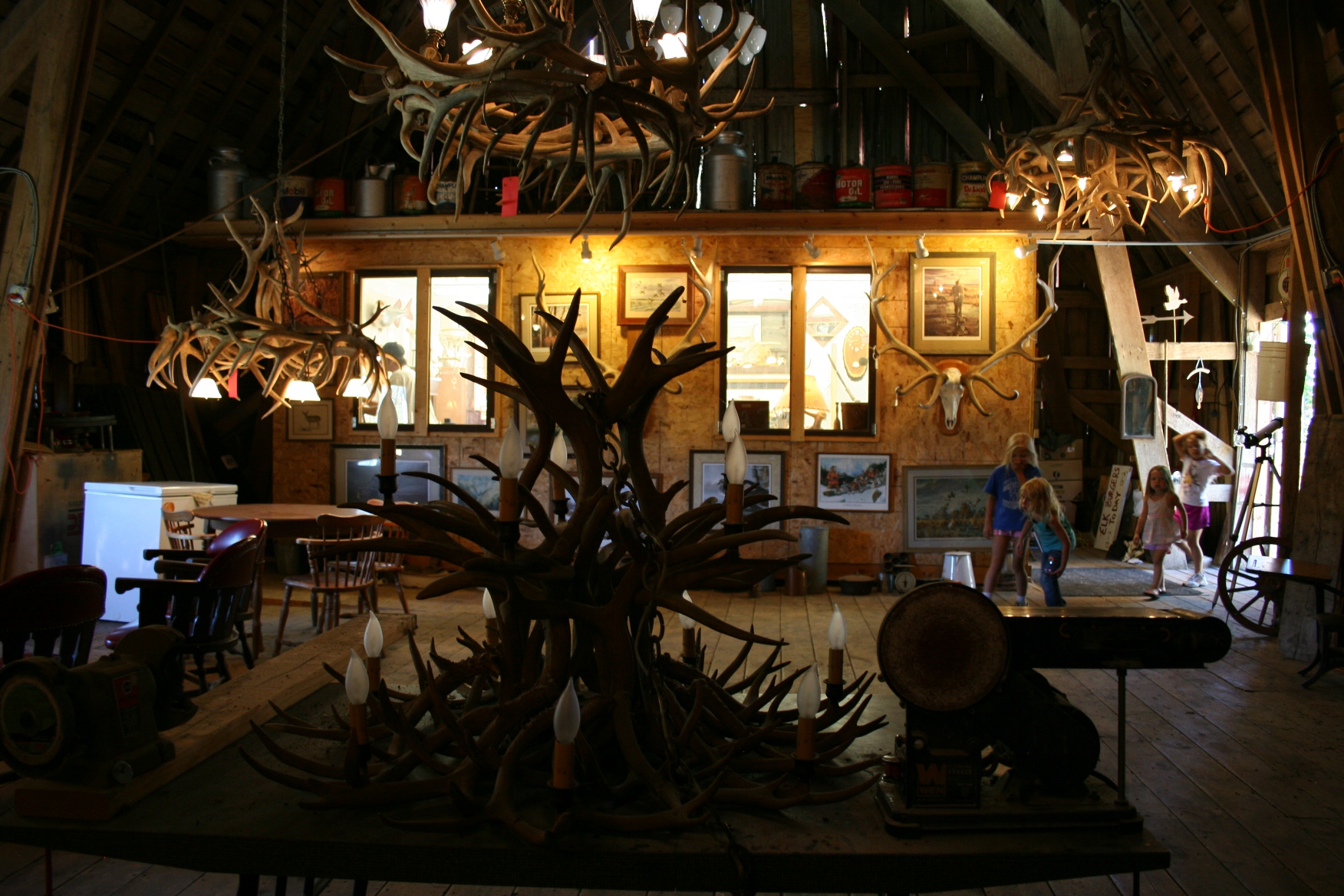
Antler art, including chandeliers, inside the art gallery with Paul Ristau’s art studio behind the windows pictured here.

Inside the gift shop and adjacent art gallery, you’ll find gifts anytime and the creations of artist and craftsman Paul Ristau, who renovates homes and businesses and is a mason specializing in stone fireplaces. He was doing some tile work for the Kaplans and ended up as their in-house artist focusing on the creation of antler art. He has a workshop in the haymow-turned-art-gallery where his elk antler chandeliers are a focal point.

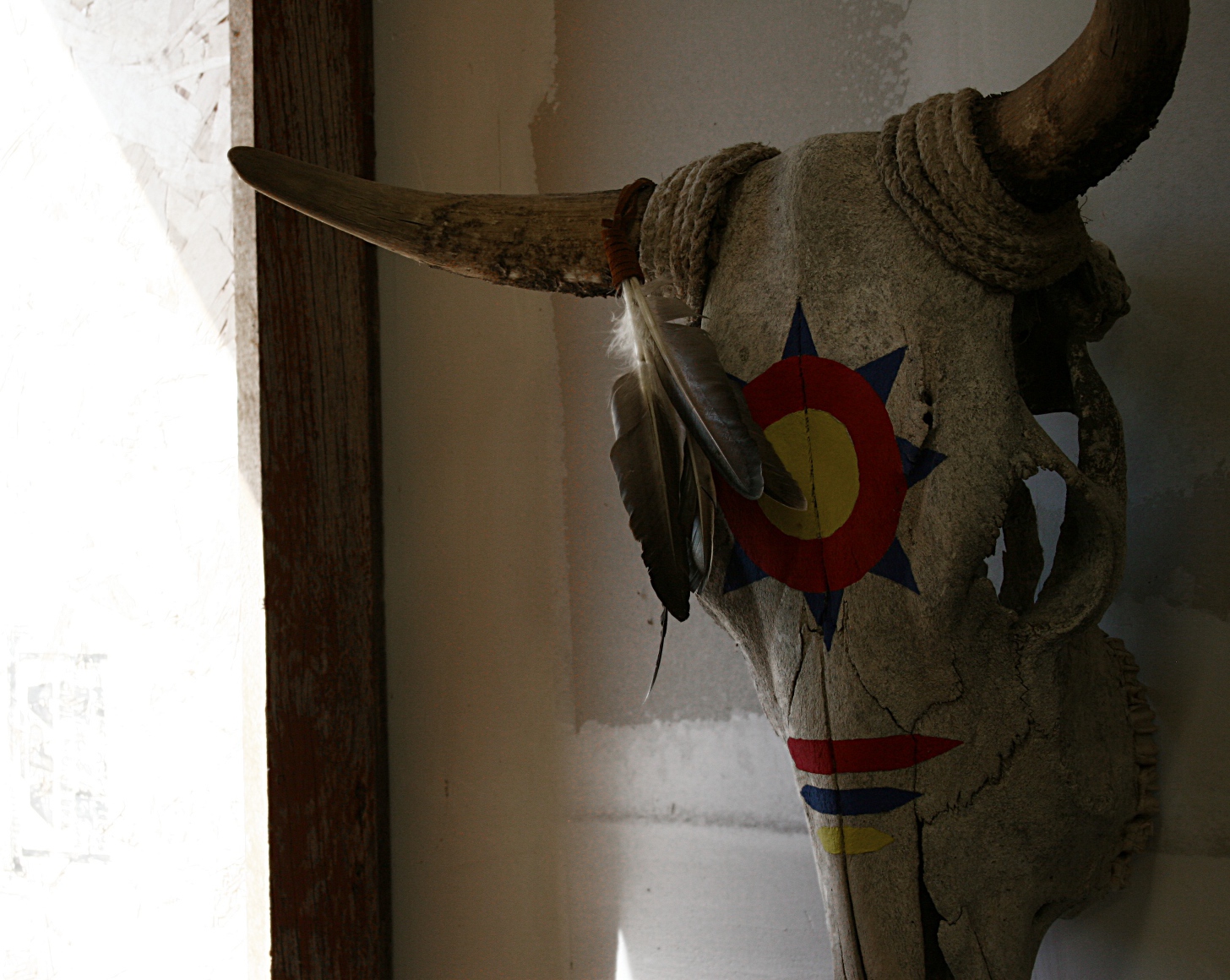
A Native American influence on art hung in Paul Ristau’s studio.

A Native American influence is visible in Ristau’s art given his interaction with those living on the White Earth Indian Reservation where he once drove bus.

Of course, the farm also sells elk meat, inside the original 1893 homestead. The farm is now down to 23 elk, according to Joyce Kaplan who says she grew up on a farm and has been cleaning barns all her life and maybe it’s time soon to stop cleaning barns.

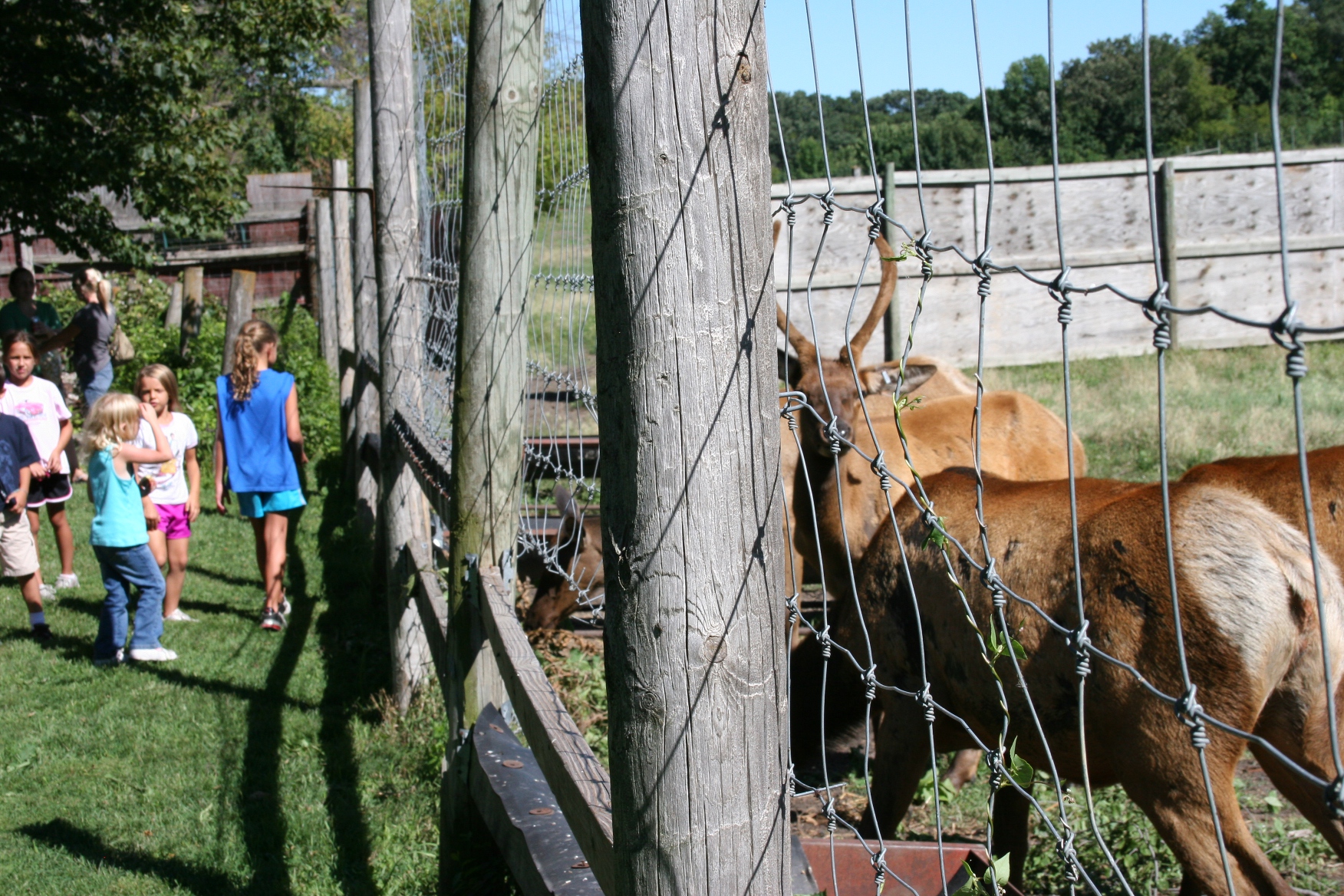
The final activity of the day, feeding apples to the elk.

On the Sunday I visited, her husband was handing out apples so the kids could feed the elk.

And the Okaman Elk Express was chugging along the shoulder of the roadway, thrilling the kids and, bonus, drawing in visitors like my husband and me.

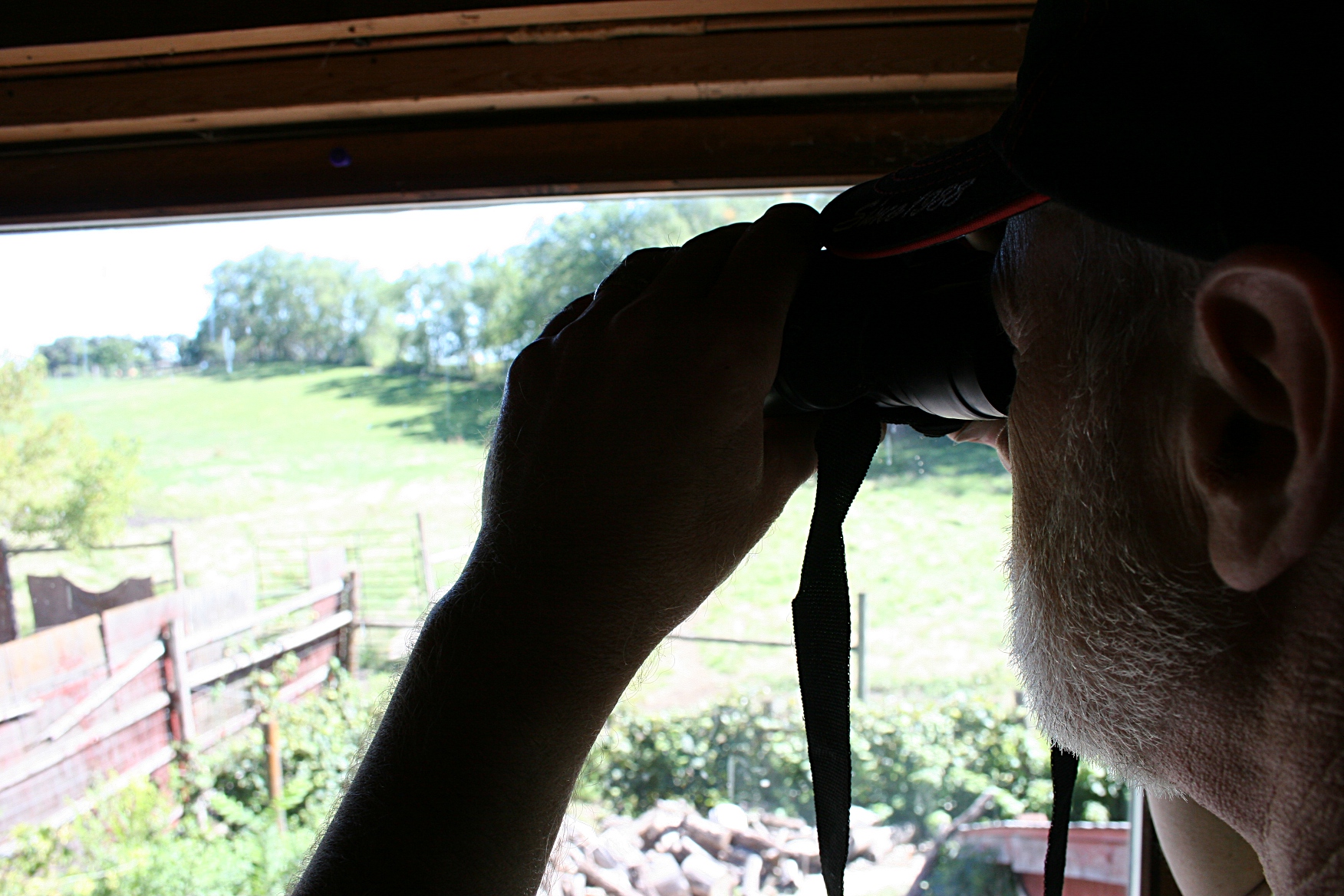
You’ll find binoculars in the barn to view the elk in the pasture.

FYI: To find Okaman Elk Farm, take Minnesota Highway 60 east of Elysian 1 ½ miles and then turn south to the intersections of Waseca County roads 3 and 5. The farm is open year-round. Click here to reach the farm’s website.

© Copyright 2012 Audrey Kletscher Helbling


A fairy tale park in New Ulm August 3, 2012

Filed under: Uncategorized — Audrey Kletscher Helbling @ 10:32 AM
Tags: , , , , , , , ,

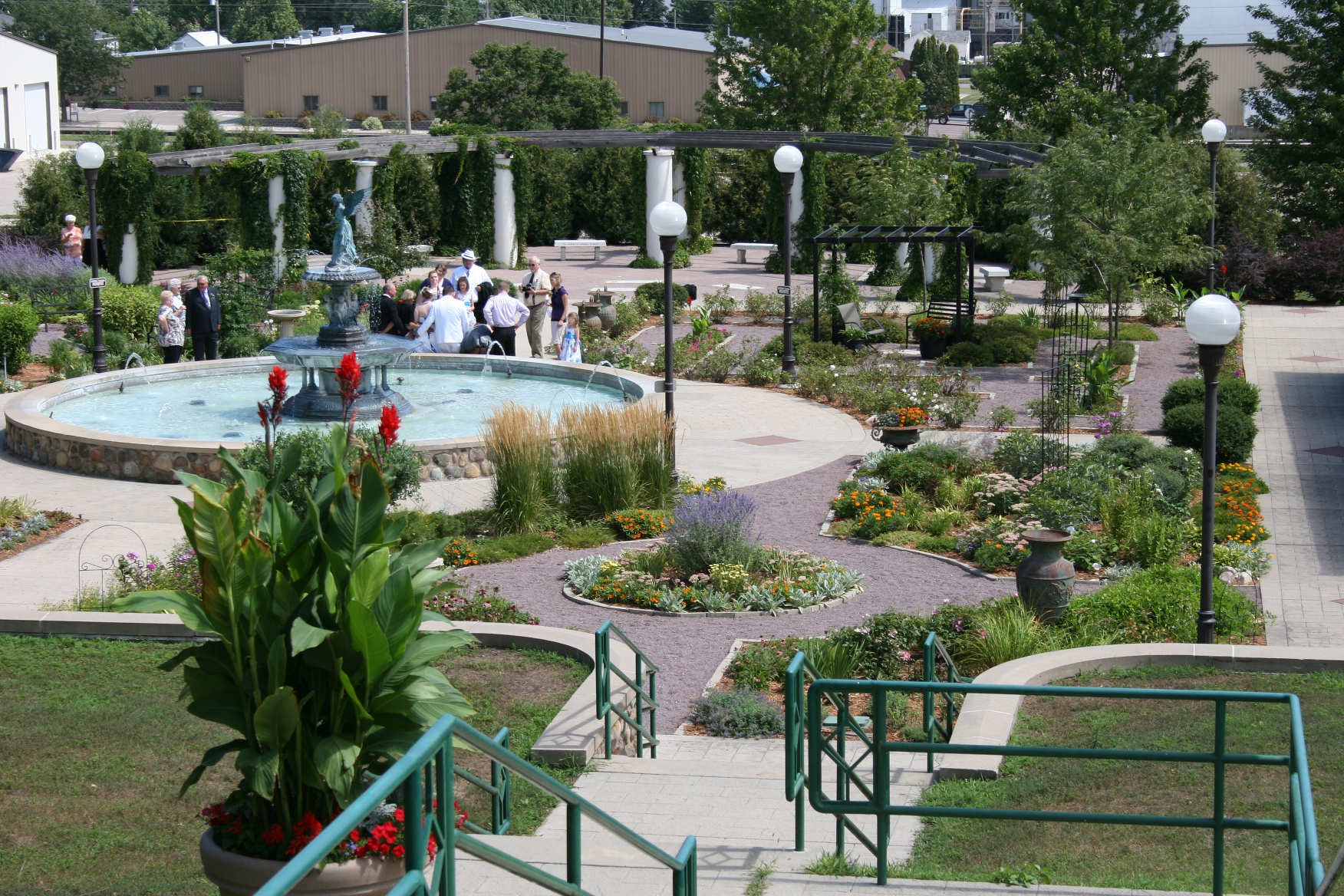
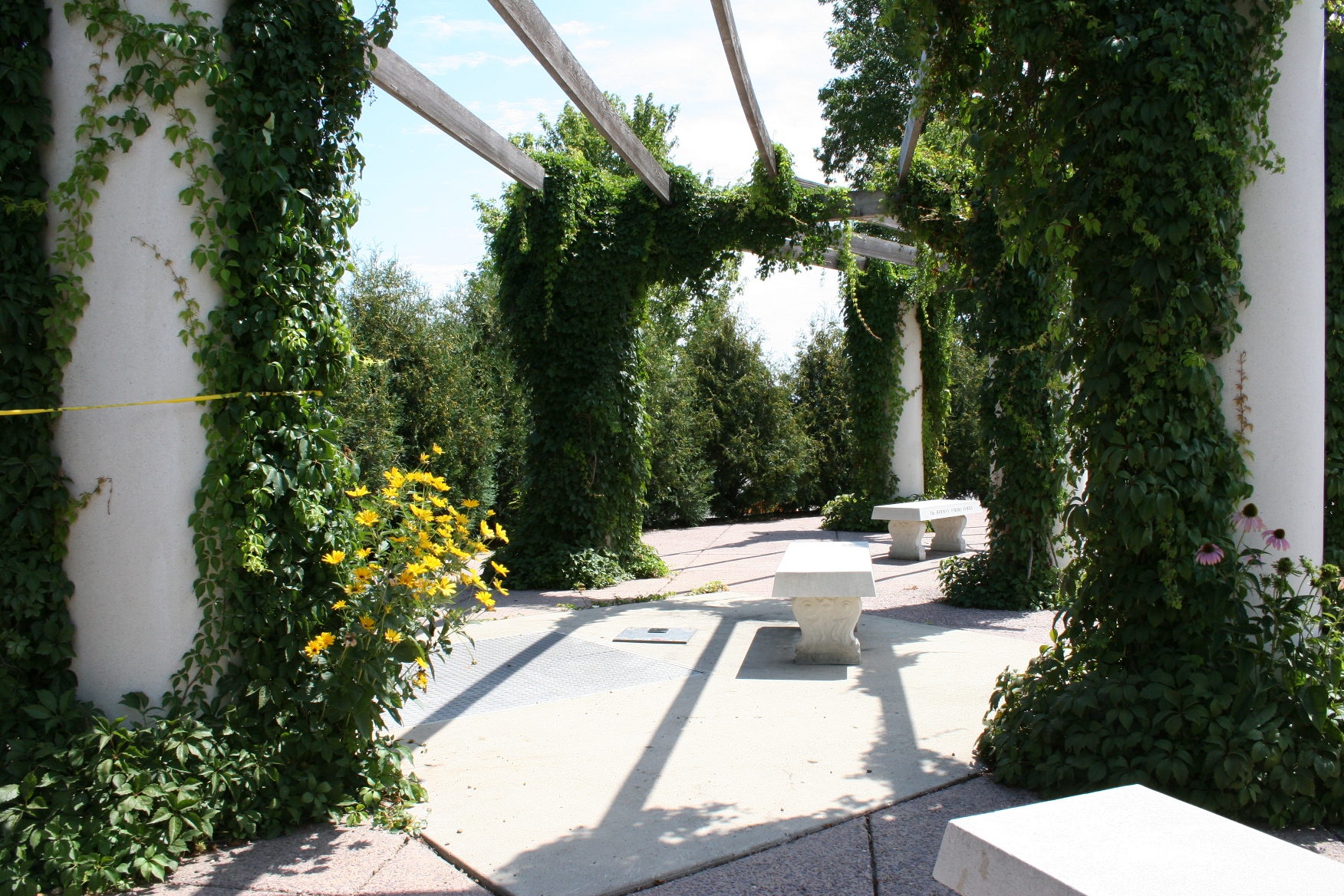
An overview of German Park in New Ulm, photographed last Saturday.

IF A PARK COULD BE WRITTEN into a fairy tale, then German Park in New Ulm certainly would serve as an ideal setting for a happily-ever-after story.

Descend the hillside steps into this picturesque park near New Ulm’s downtown business district, and you walk into an enchanting world of flowers and foliage, fountain and photographic opportunities.

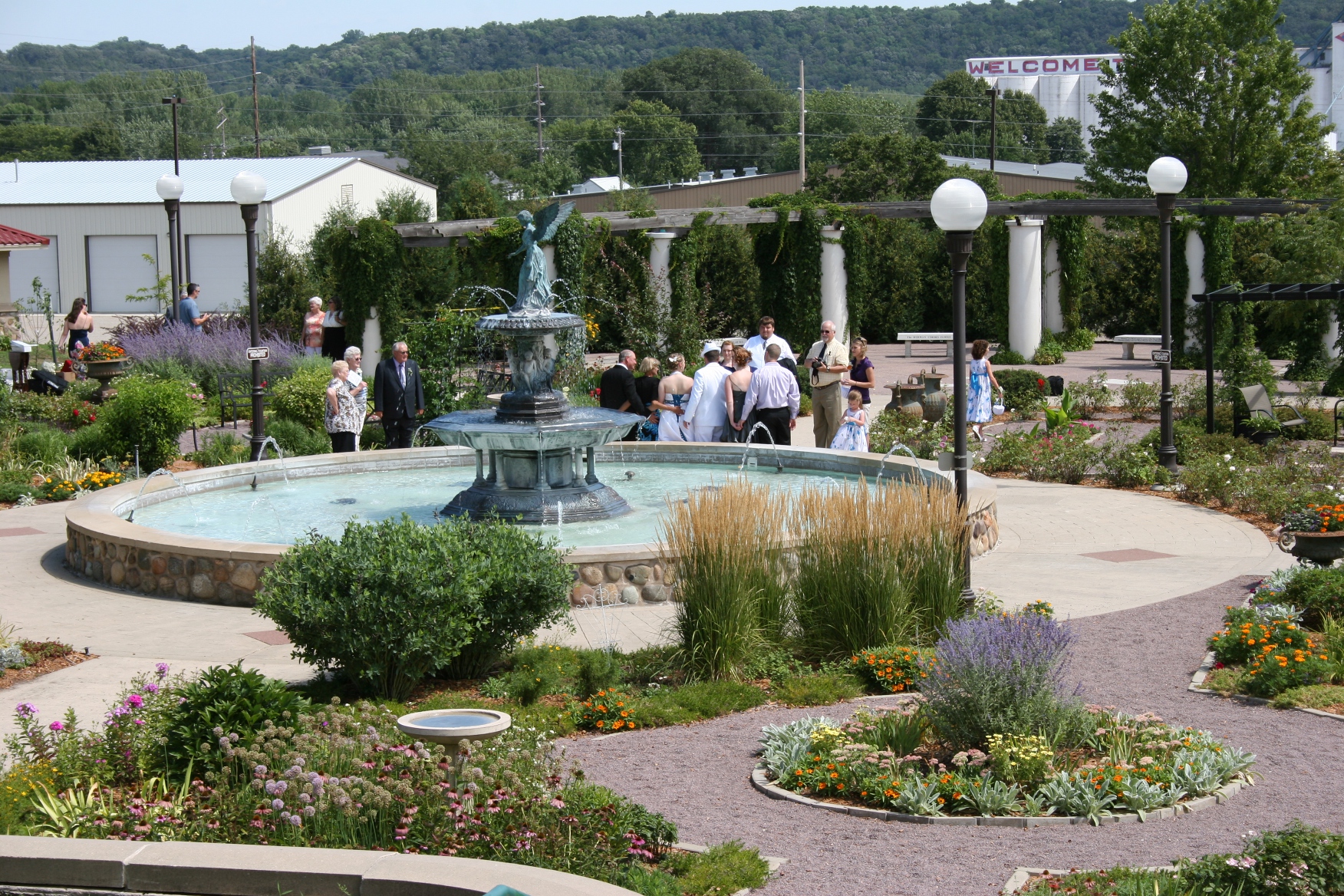
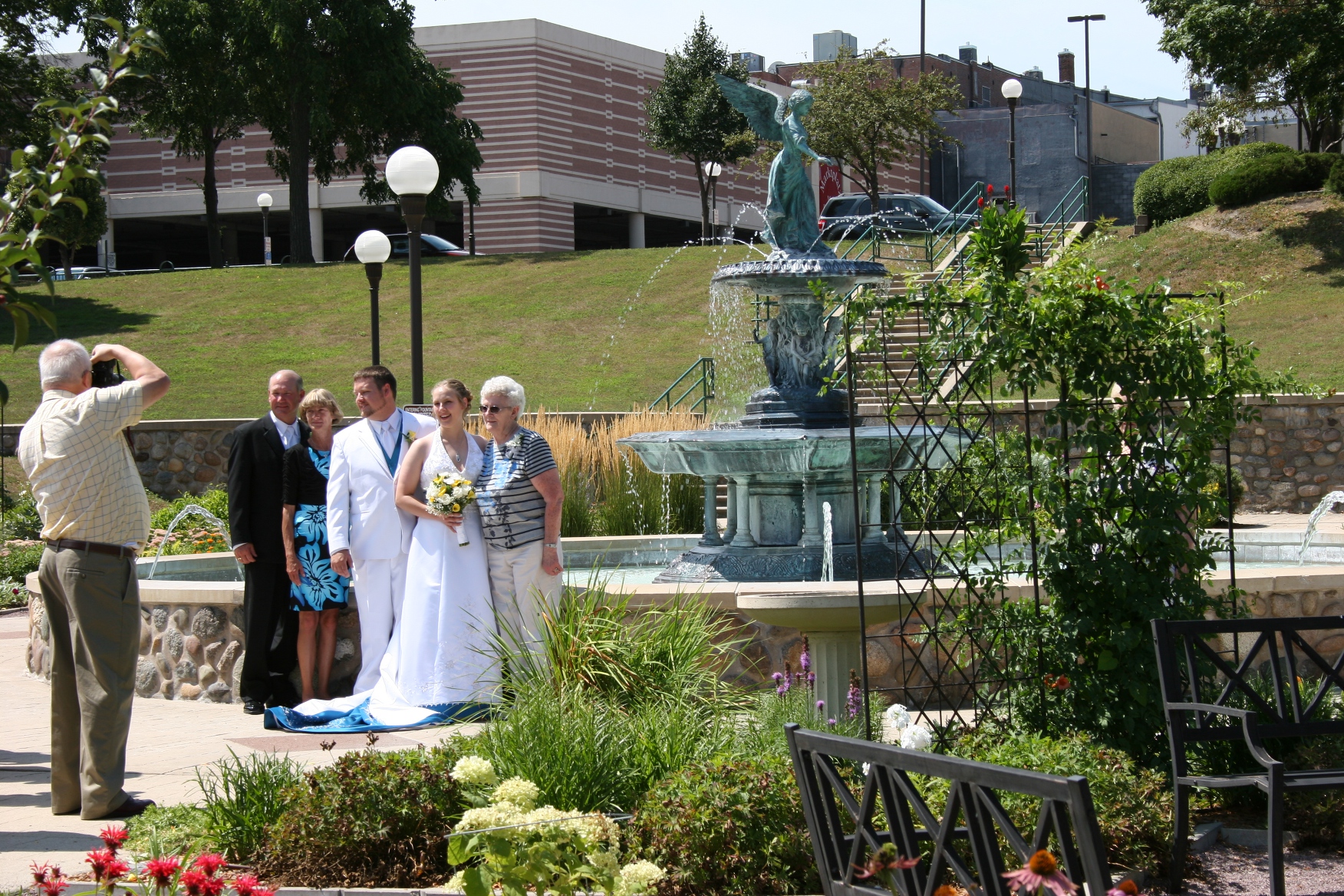
I kept my distance from the bridal couple and their families.

However, on the Saturday of my visit, the happily-ever-after part of this story limited my photo ops. Not that I wasn’t tempted to write my own twists into the plot unfolding before me. But I figured the main characters, the bride-to-be and her groom being photographed here, would not appreciate me wedging my way into their storybook wedding day.

Columns add interest and a poetic quality to German Park.

So I skirted the edges of German Park, admiring the flowers and the fountain at a distance. I weaved among the columns, appreciating the beauty and charm of this place, all the while wishing I could photograph freely.

I kept a respectful distance in this, my closest shot of the bridal couple and their families.

At one point a nervous grandma hurried over to snatch up a camera bag as I approached with my camera bag hugging my hip, my Canon EOS 20D looped by a strap around my neck. I wanted to advise her that I wasn’t about to spoil the story, to wind my way up the path toward the happy wedding couple like a wily, wicked witch.

THE END

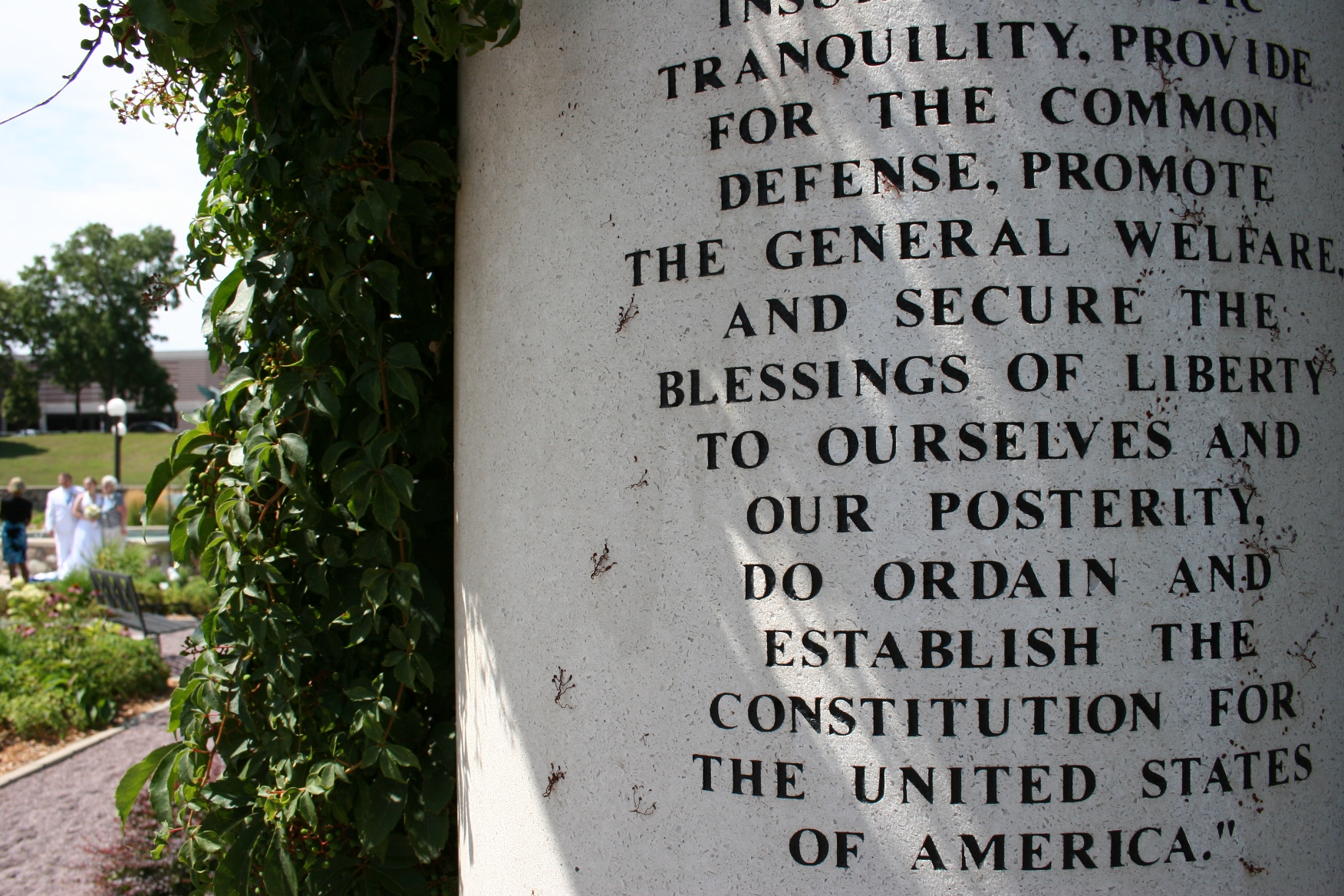
OK, I was a wee bit sneaky in including the bridal couple in this frame. But I liked how the  words tranquility, blessings and ordain from the Preamble to the Constitution seemed to fit the occasion.

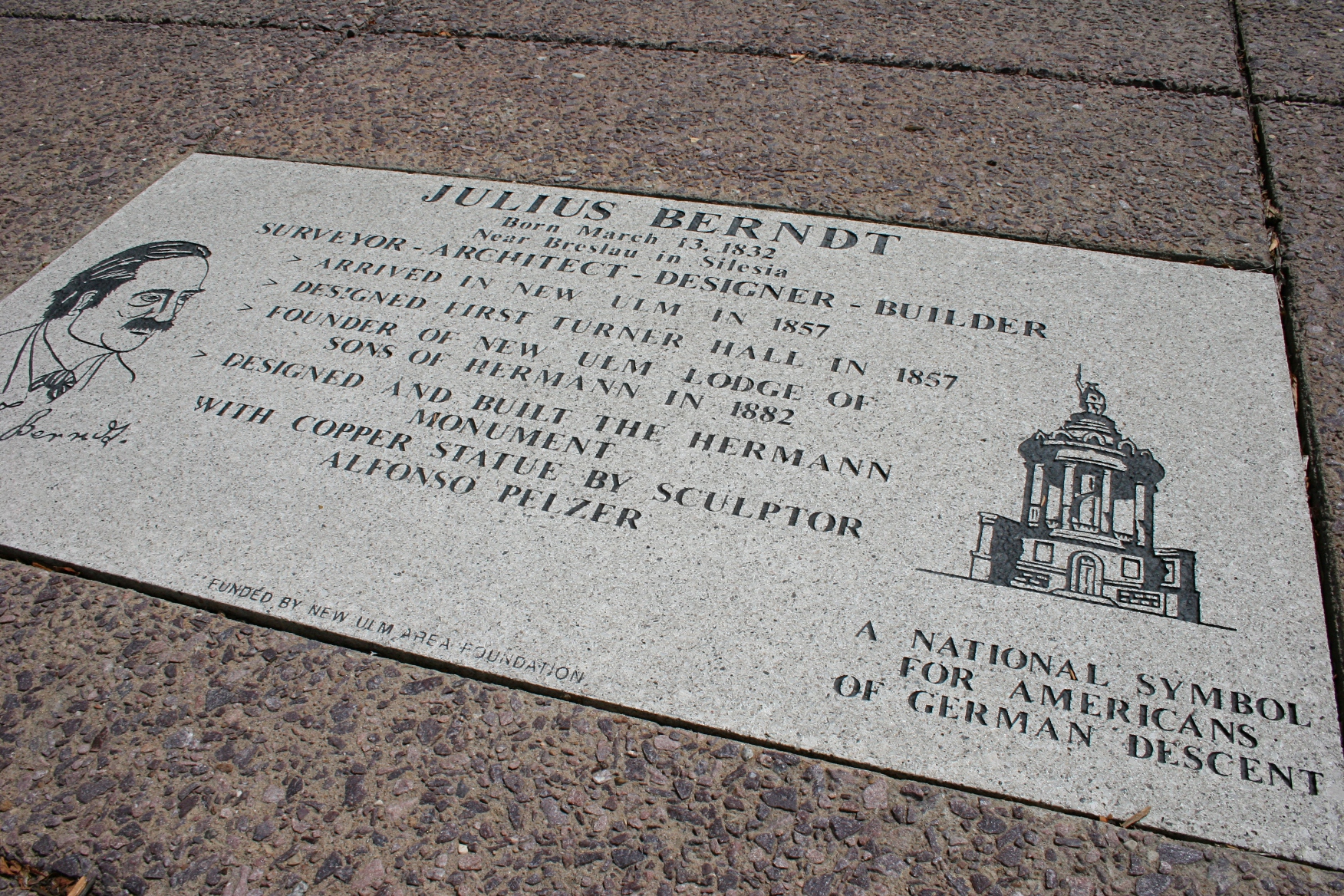
One of numerous pavers which enlighten visitors about New Ulm, here the Hermann Monument.

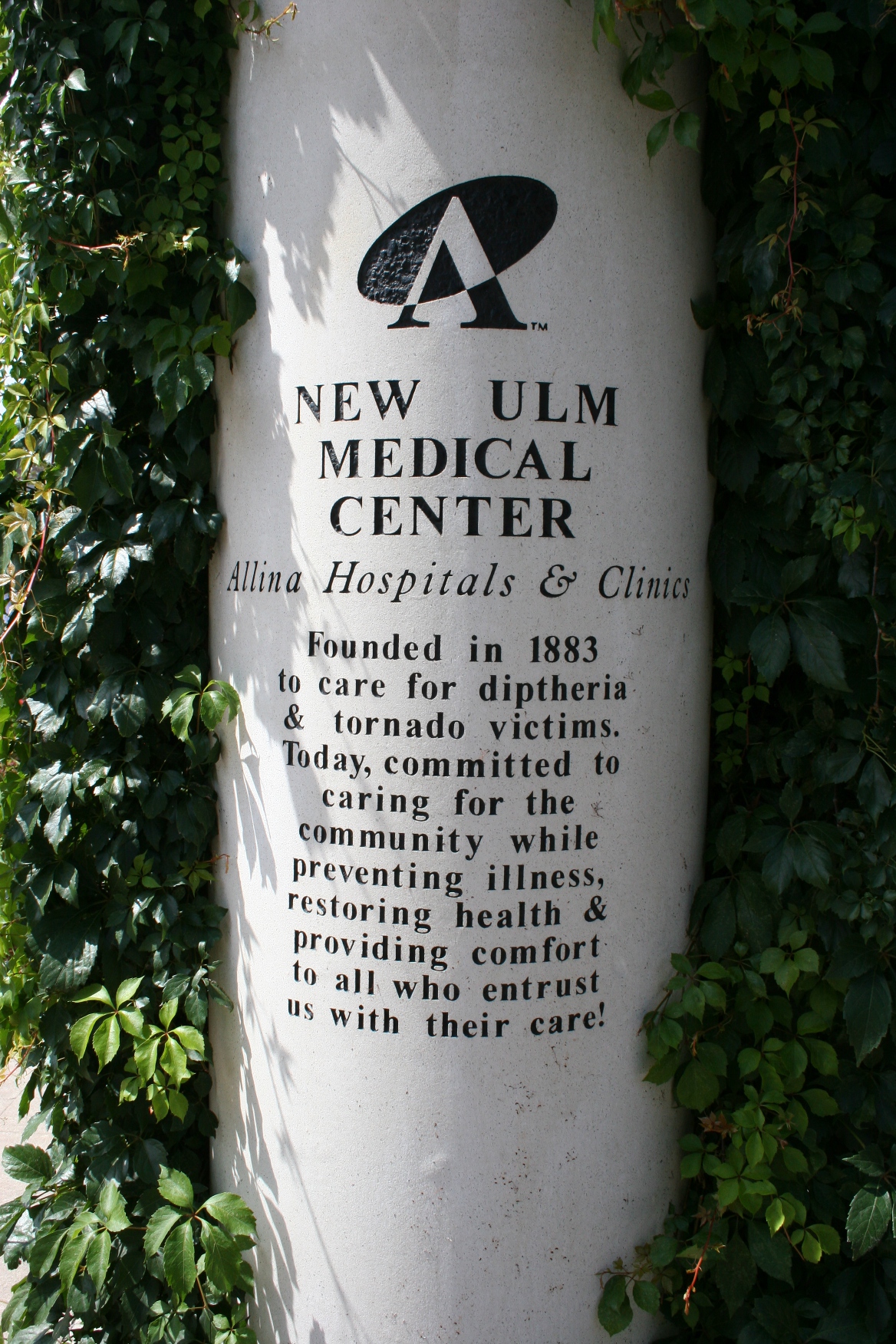
This column informed me of something I never knew, that a deadly tornado ravaged the city on July 15, 1881. That event raised an awareness of the need for a local hospital.

FYI: To learn about the New Ulm tornado of 1881, click here to read an account published in the Saint Paul Daily Globe.

Click here to learn more about the history of New Ulm Medical Center.

Finally, click here to read an earlier blog post about New Ulm’s Goosetown.

© Copyright 2012 Audrey Kletscher Helbling


Discovering New Ulm’s Goosetown, across the tracks and down by the river August 2, 2012

DISCOVERING SOMETHING totally unexpected rates, for me, as the plum, the prize, the most interesting aspect of travel.

And you needn’t journey far to find these places. Last Saturday while driving to southwestern Minnesota, my husband and I stopped in New Ulm because I wanted to see the Defenders and German-Bohemian historical monuments. Well, we never did get to the Defenders marker.

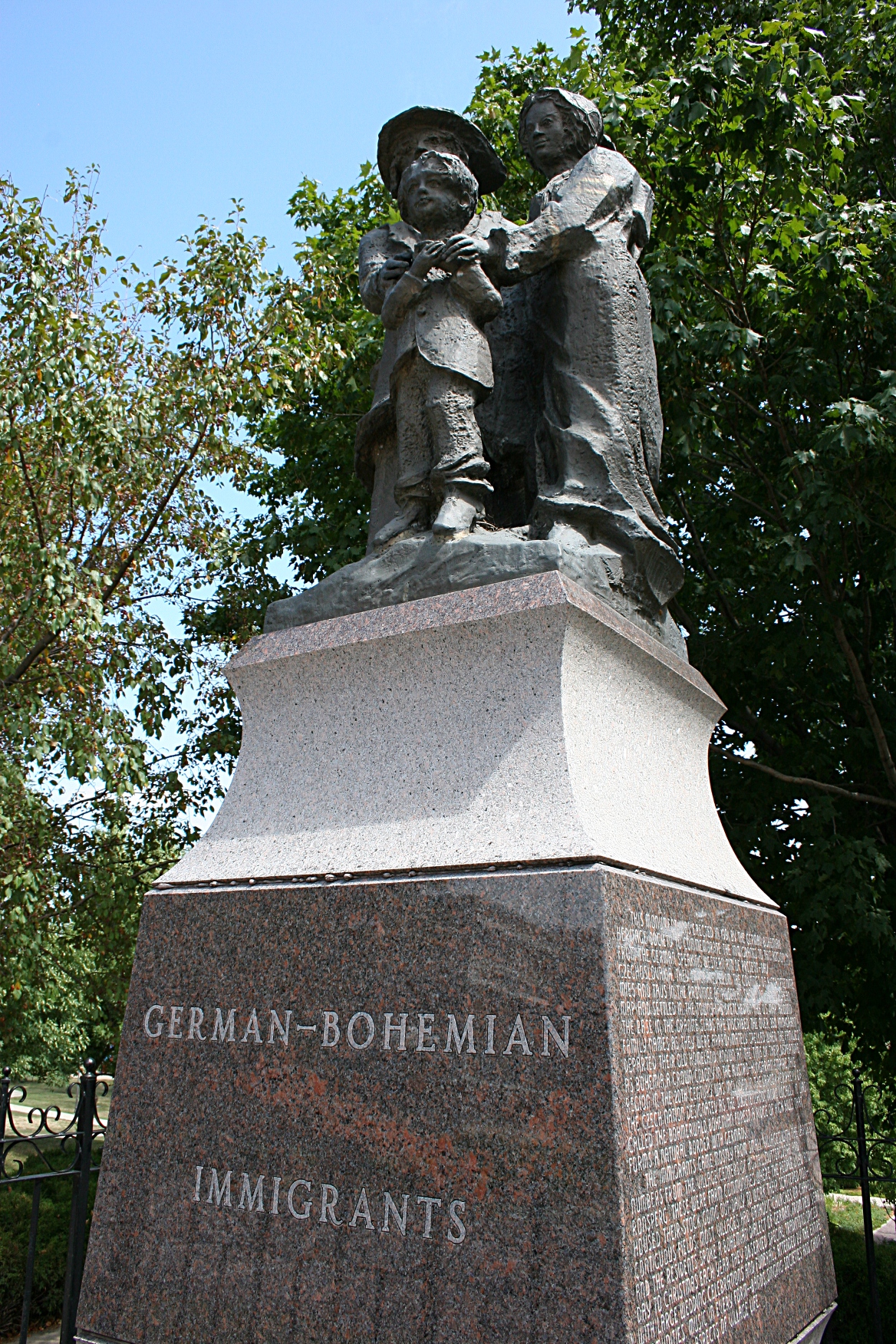
The German-Bohemian sculpture and marker in German Park.

But we eventually got directions for and located the immigrant sculpture overlooking scenic German Park. As lovely and manicured as that park is, and I’ll share photos in a future post, it was not the highlight of our visit.

Rather, it was Goosetown which captured my fancy.

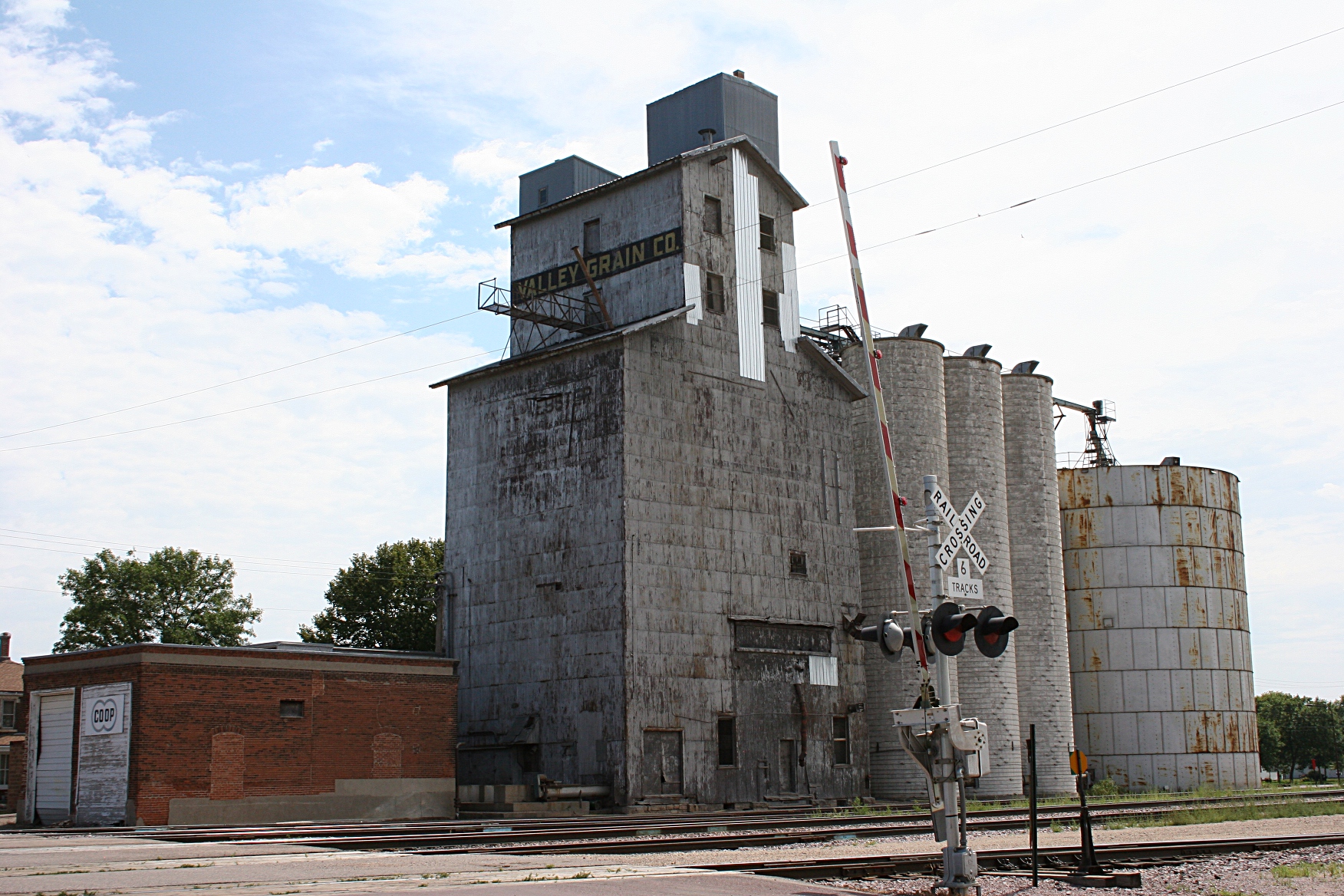
We drove across the railroad tracks and past the old Valley Grain Co. to reach Goosetown.

Goosetown is that side of New Ulm—across the tracks and down by the river—where mostly Catholic German-Bohemian immigrants began settling in the late 1800s. They were primarily farmers or retired farmers, of peasant stock. And they kept geese, which wandered and fed along the banks of the Minnesota River.

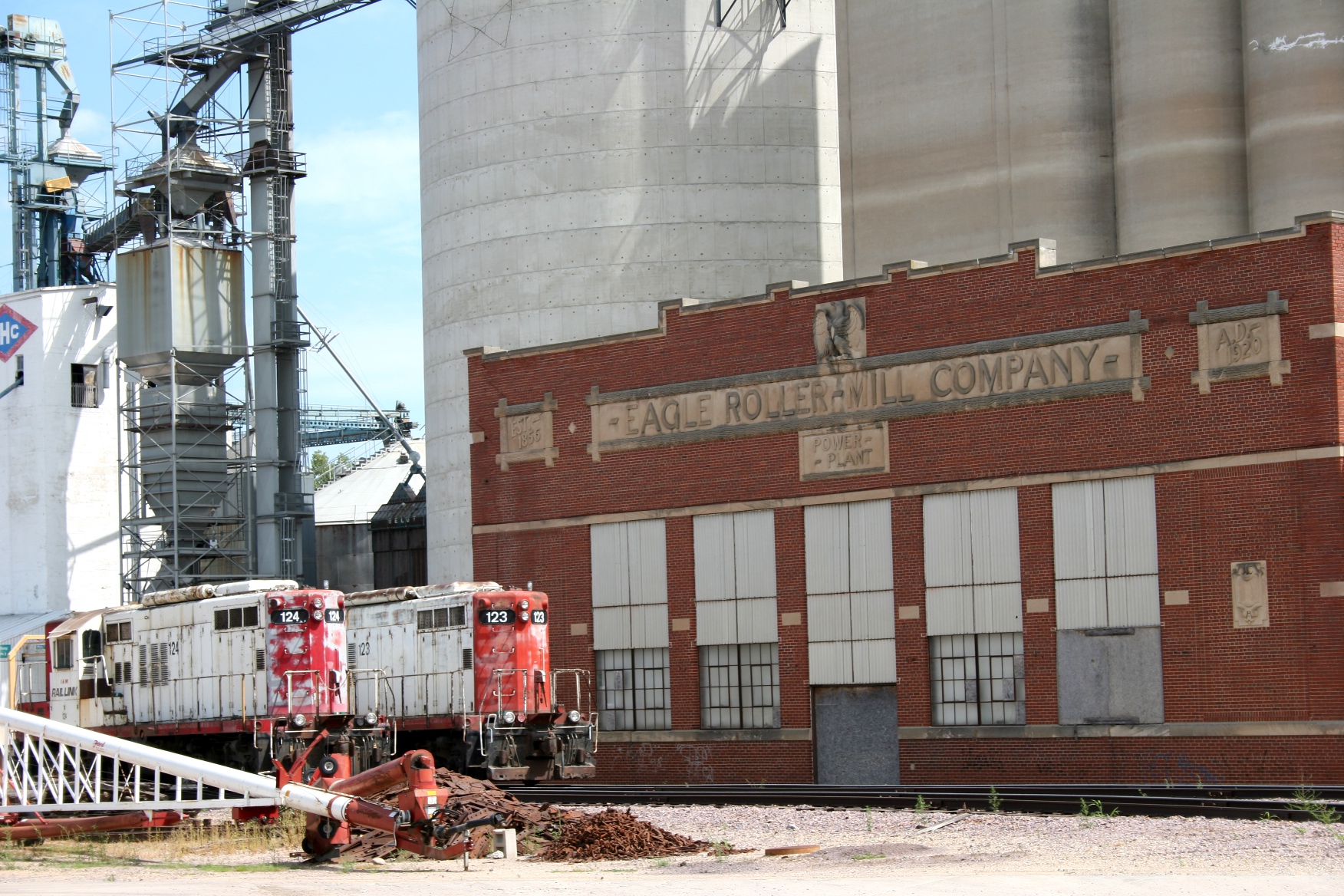
Goosetown residents worked at the local roller mills, including the Eagle Roller Mill. That mill and the New Ulm Roller Mill once made New Ulm the third largest milling center in Minnesota. The New Ulm flour millers had elevators in three states.
And so the name Goosetown became attached to southeastern New Ulm, specifically to South Front and South Valley streets. The immigrants who lived here labored in nearby roller mills and breweries and worked as carpenters, masons and cigar makers. Women supplemented the family income by making Klöppel lace and/or sewing feather-filled bedding. Families also gathered clam shells from the river for pearl buttons.

At first thought, it all seems rather romantic, this stretch of Gȁnseviertel next to the railroad tracks and river. But I expect life there was hard as families, many of them living in two-room houses, struggled to survive. I also expect, and New Ulmers can correct me if I’m wrong, that this area of town wasn’t always embraced by the community at large. You know that thing about “the other side of the tracks.” Every community seems to have that part of town perceived as less than positive whether due to poverty or people who are different from the majority. Riverside land (and Goosetown is no exception) was once the site of town dumps, which should tell you something, too.

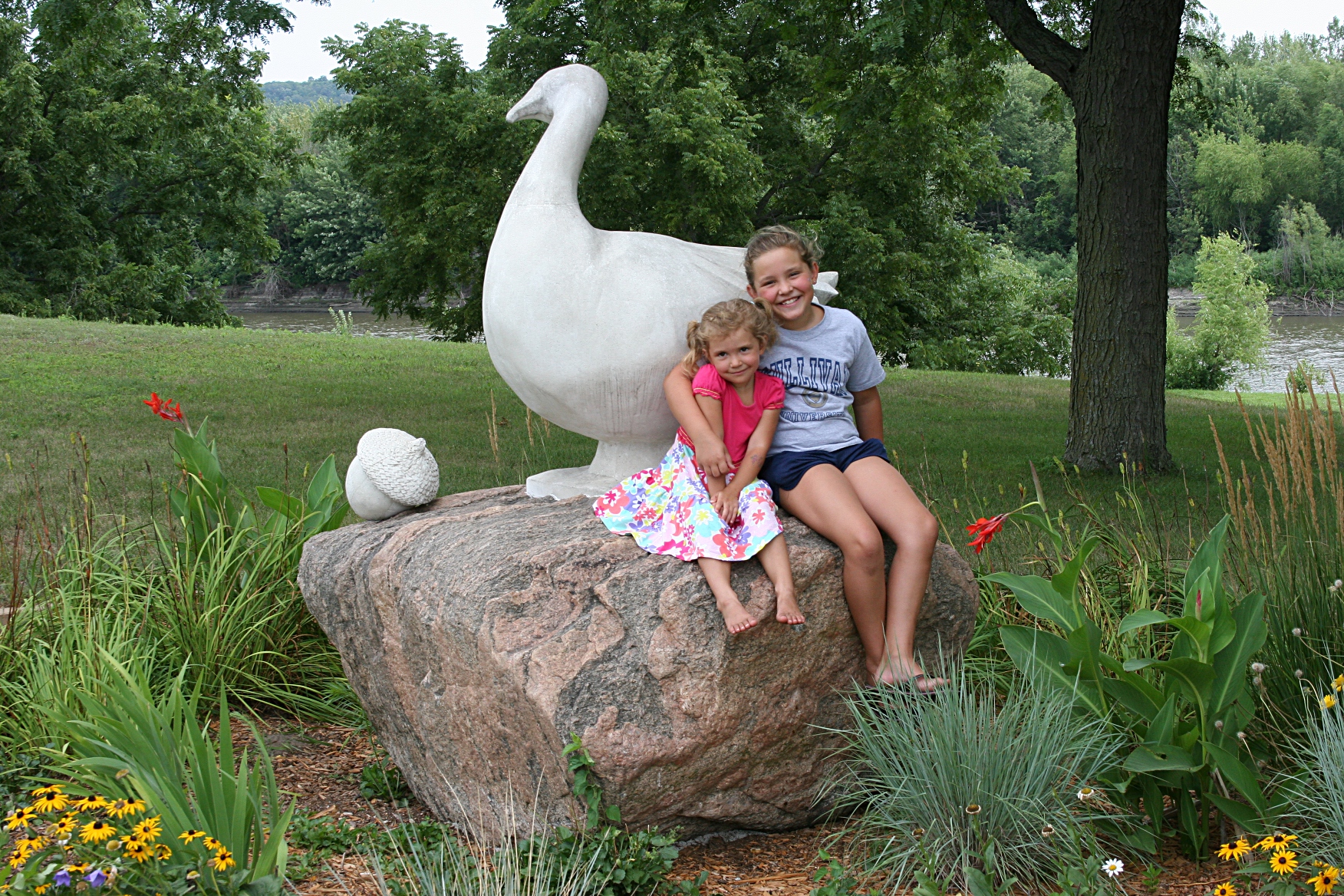
Sisters Amber, 8, and Kiera, 4, pose with Gertie the Goose, a statue donated by Dr. Ann Vogel of New Ulm and located in Riverside Park.

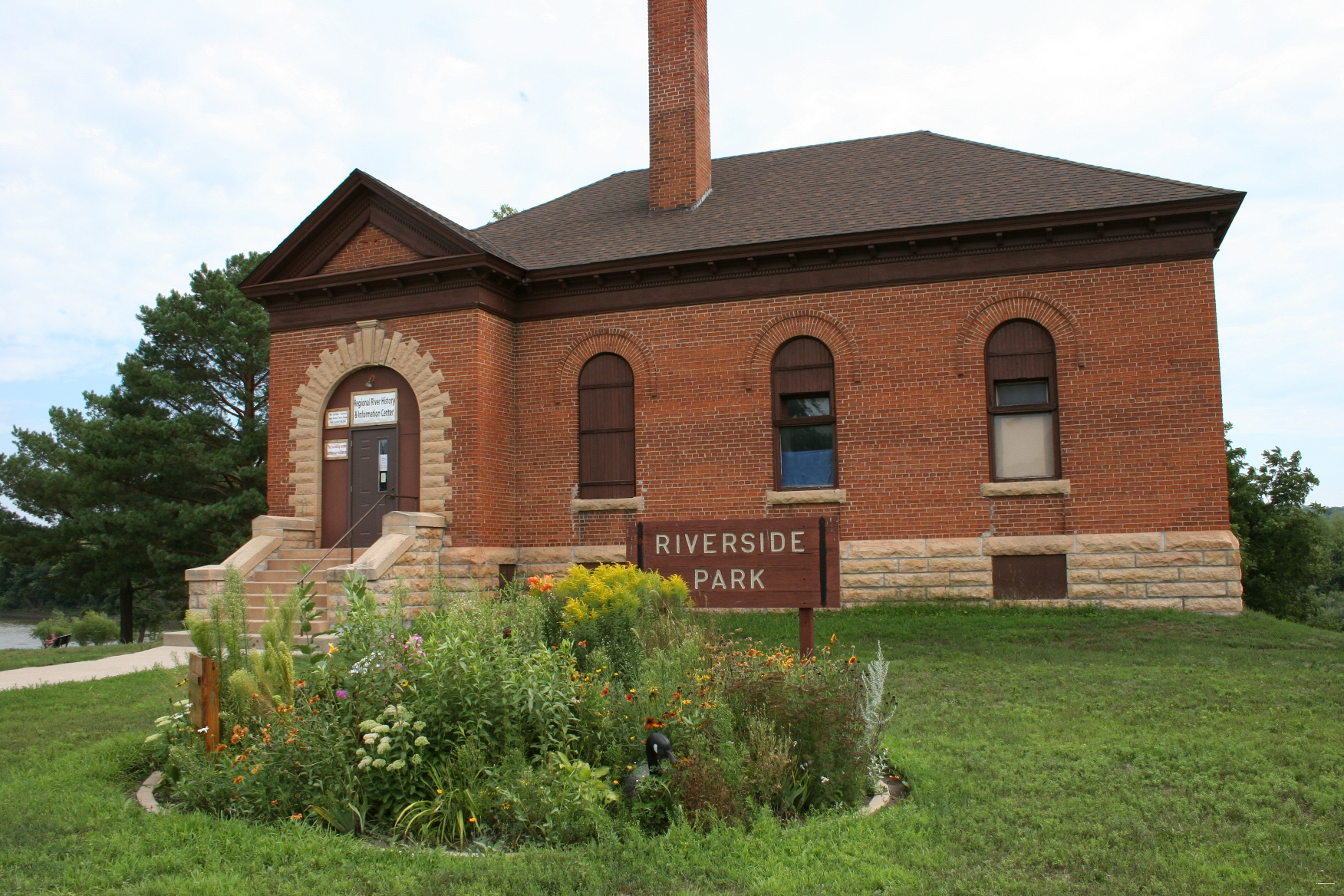
I likely could have learned even more about the history of Goosetown had the Regional River History & Information Center, 101 South Front Street, Riverside Park, been open. The center is housed in the former Franklin School.
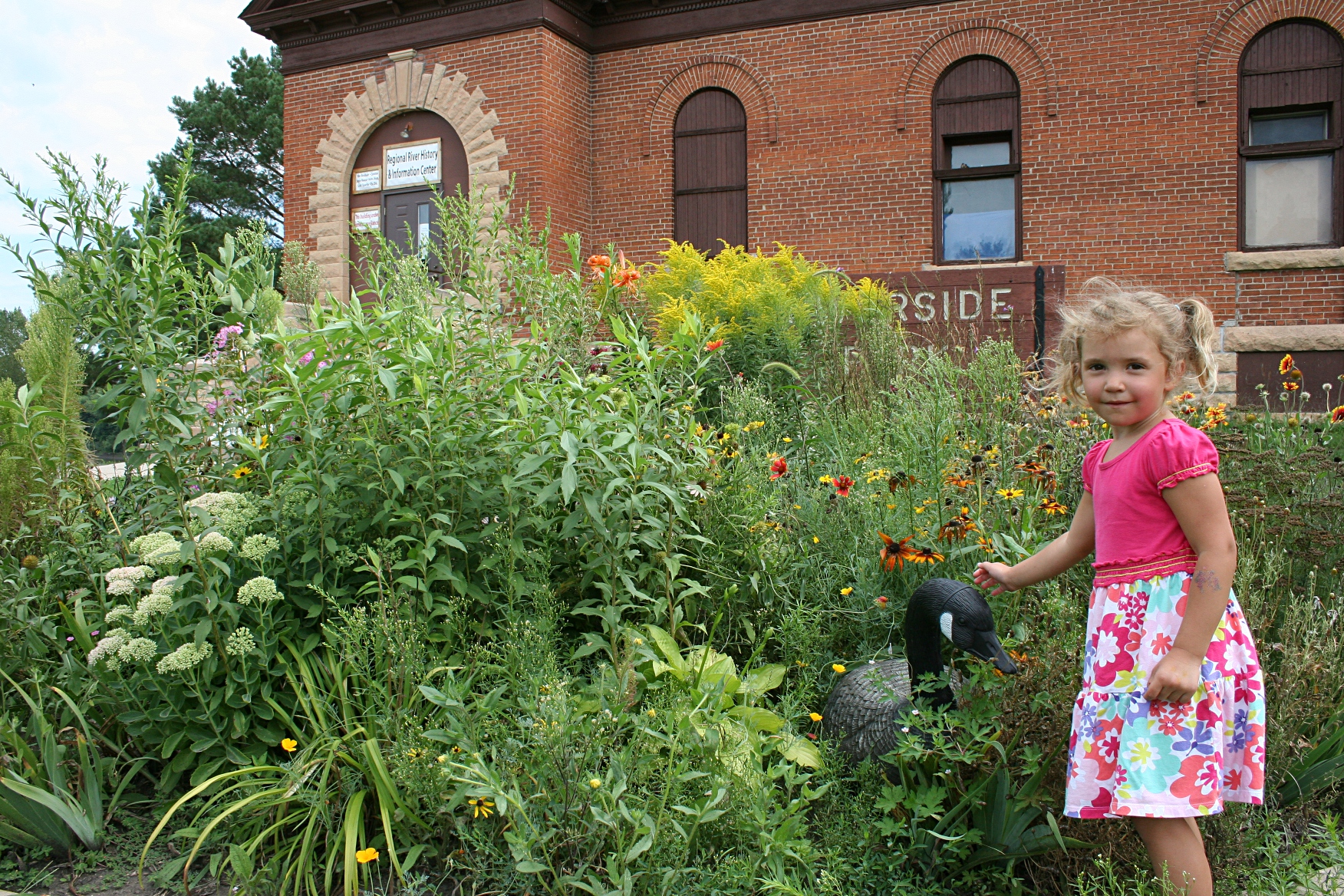
Kiera showed me another goose tucked into a flowerbed in front of the river center.
Today New Ulm embraces the heritage of Goosetown with a plaque and statue in Riverside Park. There’s also an occasional Goosetown reunion and Victor “Fezz” Fritsche, leader of the one-time Goosetown Band, was inducted into the Minnesota Music Hall of Fame in 1991.

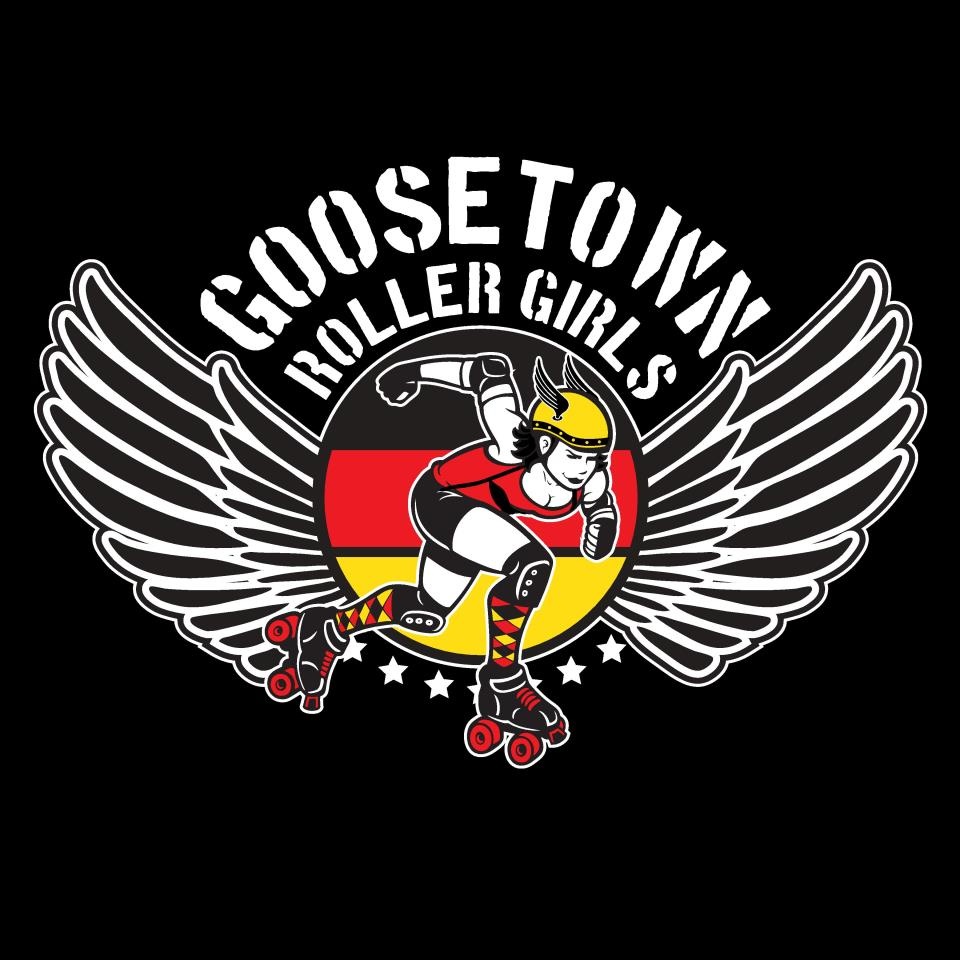
The logo for the Goosetown Roller Derby Girls who have names like Deutschland Dolly and SoUr Kraut.

Most recently, in January, a flat track roller derby team, Goosetown Roller Girls, was founded.

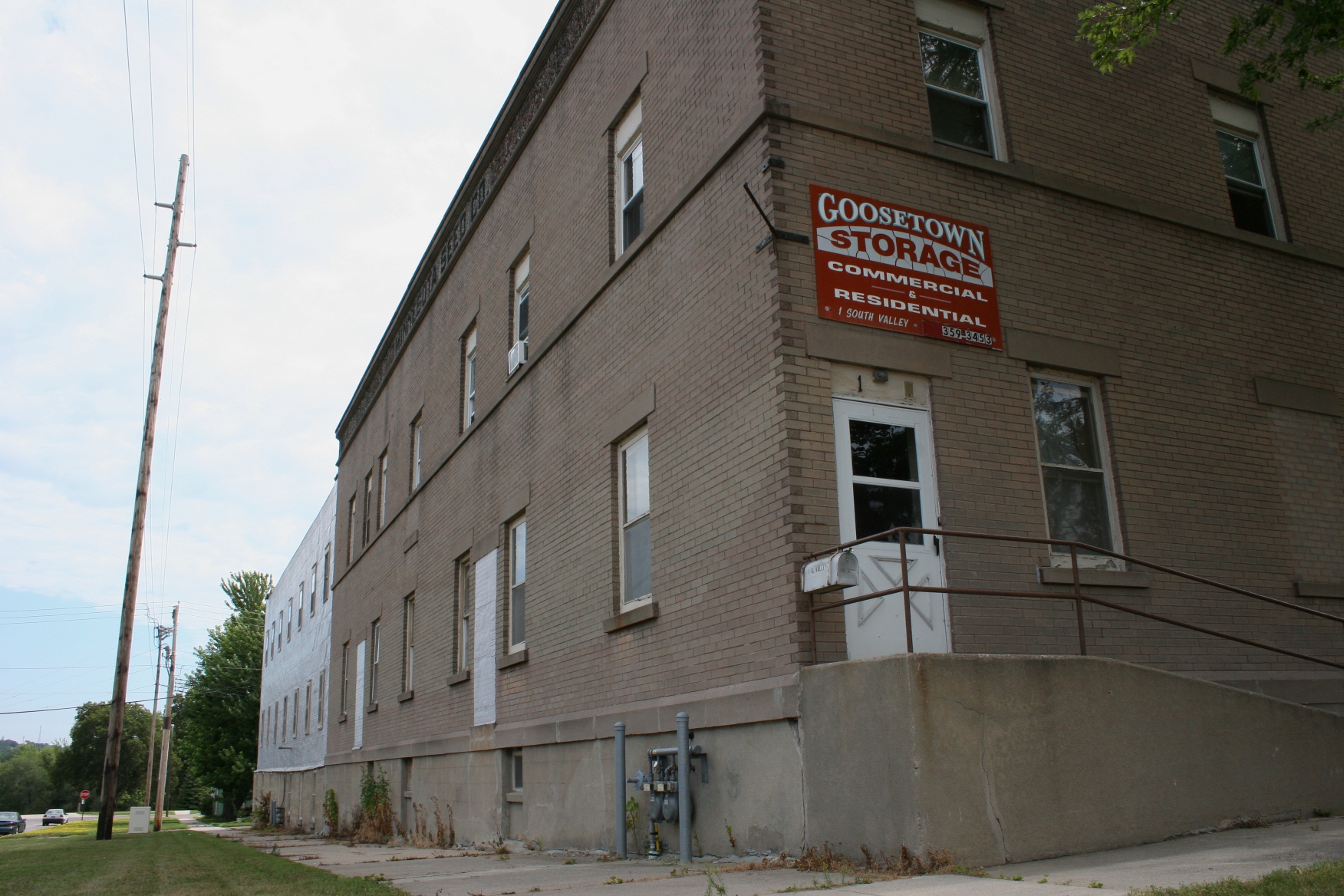
Goosetown Storage, once the home of Minnesota Seed Company.

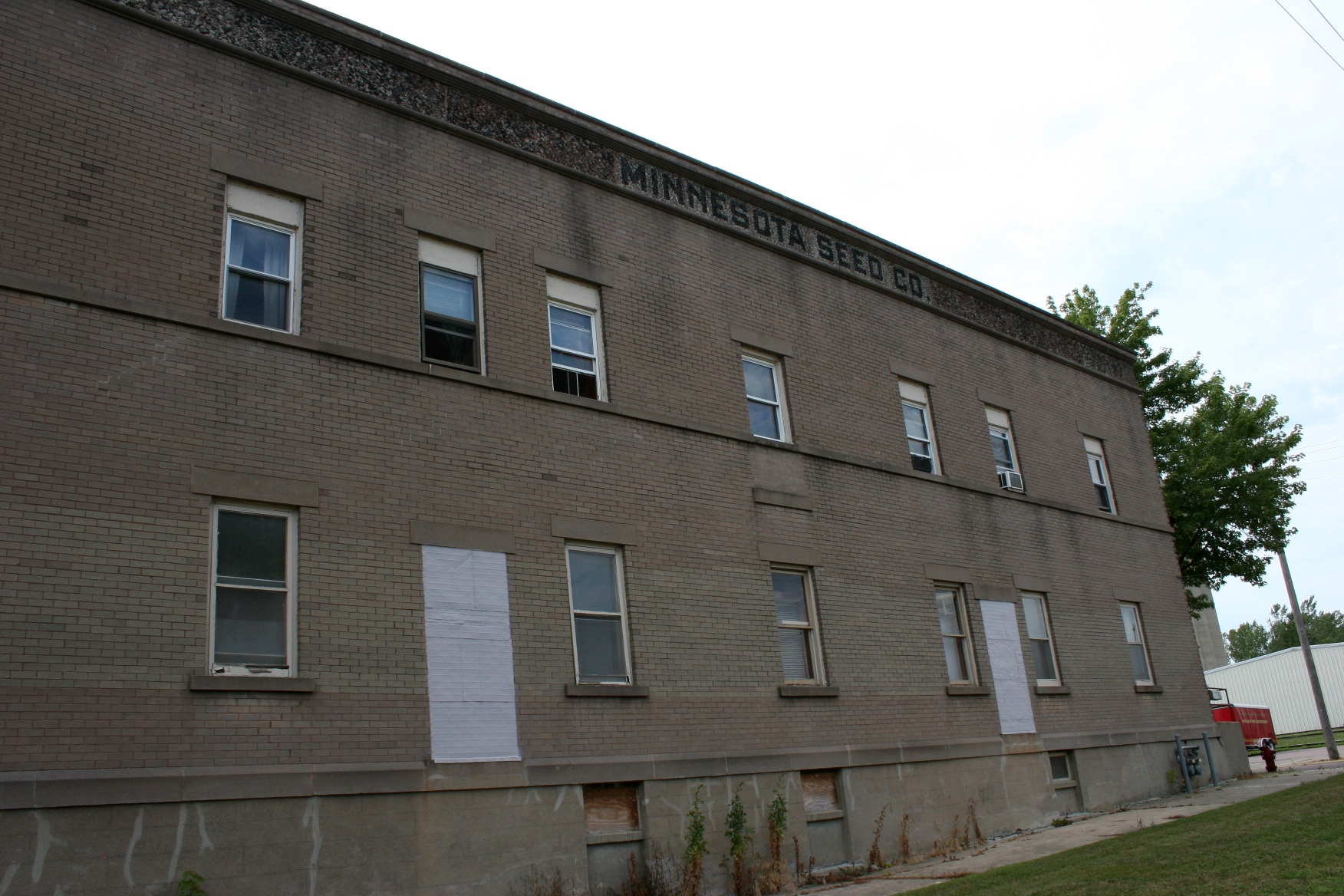
A side view of Goosetown Storage, with signage pointing to its original use as the location of Minnesota Seed Company. Anyone know the history of Minnesota Seed?

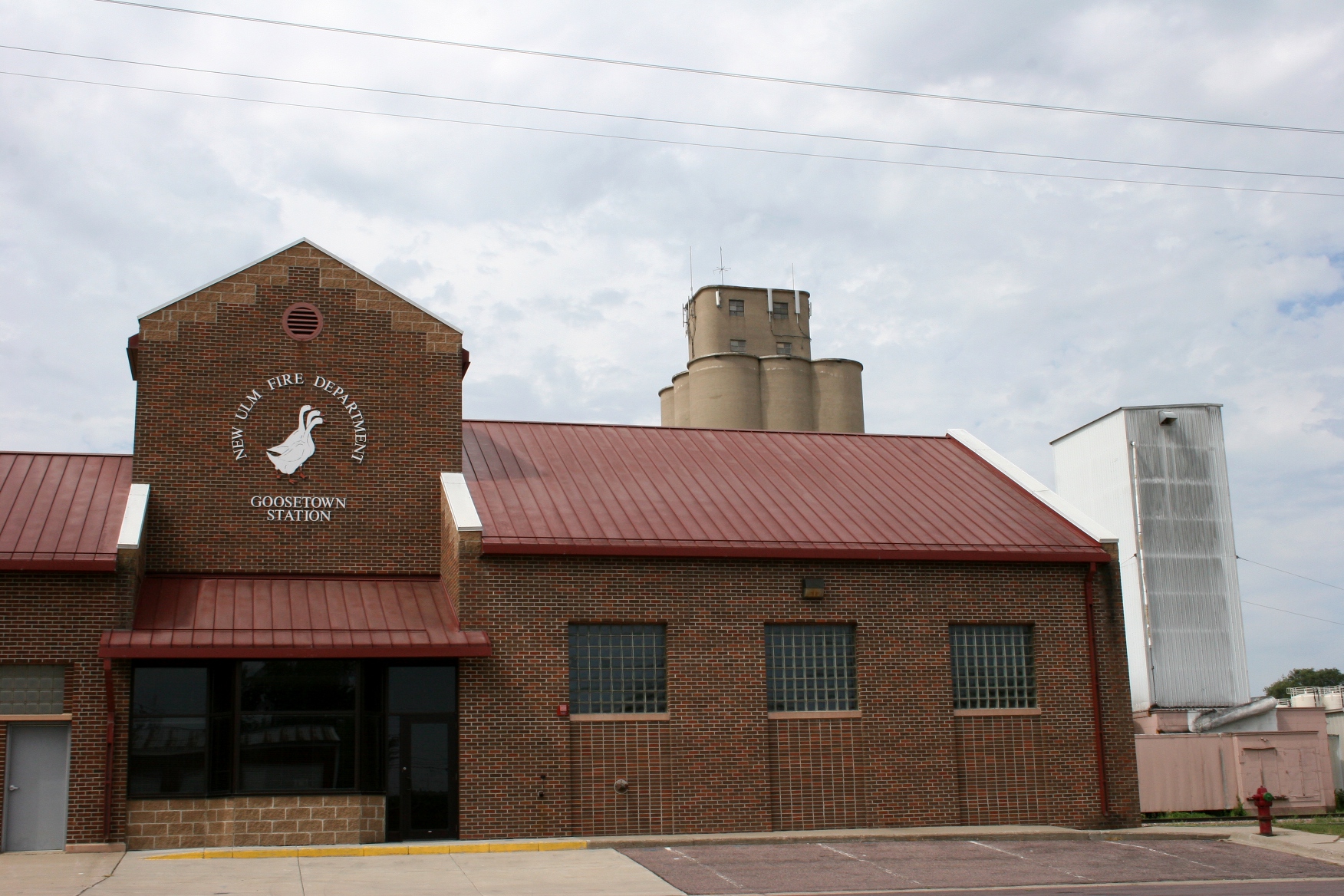
At least one building is labeled Goosetown Storage and the New Ulm Fire Department has a Goosetown Fire Station next to the train tracks.

Engine House No. 3, commonly known as the Goosetown Fire Station, was established in 1890. The newer station pictured here houses two pumpers. A 47-foot drill tower (not shown here) stands nearby.

Even so, I was unaware of this ethnic treasure until we happened upon Goosetown on Saturday. New Ulm is best known to the touring public as the site of a major battle during the U.S.-Dakota War of 1862; for the August Schell Brewing Co.; the Hermann the German Monument;  the childhood home of author and illustrator Wanda Gag; the Minnesota Music Hall of Fame;  the Glockenspiel; the Cathedral of the Holy Trinity; Way of the Cross stations; the home of Minnesota’s 14th governor, John Lind; and most certainly as a city that features all things German. You can see how historic Goosetown could get lost in that long list of New Ulm attractions.

If you’re like me and appreciate the lesser-known, less touristy aspects of a community, drive across the tracks and down by the river in Anytown. Perhaps you’ll discover a place like Goosetown, rich in heritage and sturdy brick buildings and stories stitched into the land, if only you knew those stories.

FYI: Please check back for more posts from New Ulm.

© Copyright 2012 Audrey Kletscher Helbling

Goosetown Roller Girls image comes from the team’s website.


Darwin and Alma once owned a 1957 Chevy Bel Air July 27, 2012

Filed under: Uncategorized — Audrey Kletscher Helbling @ 7:18 AM
Tags: , , , , , ,

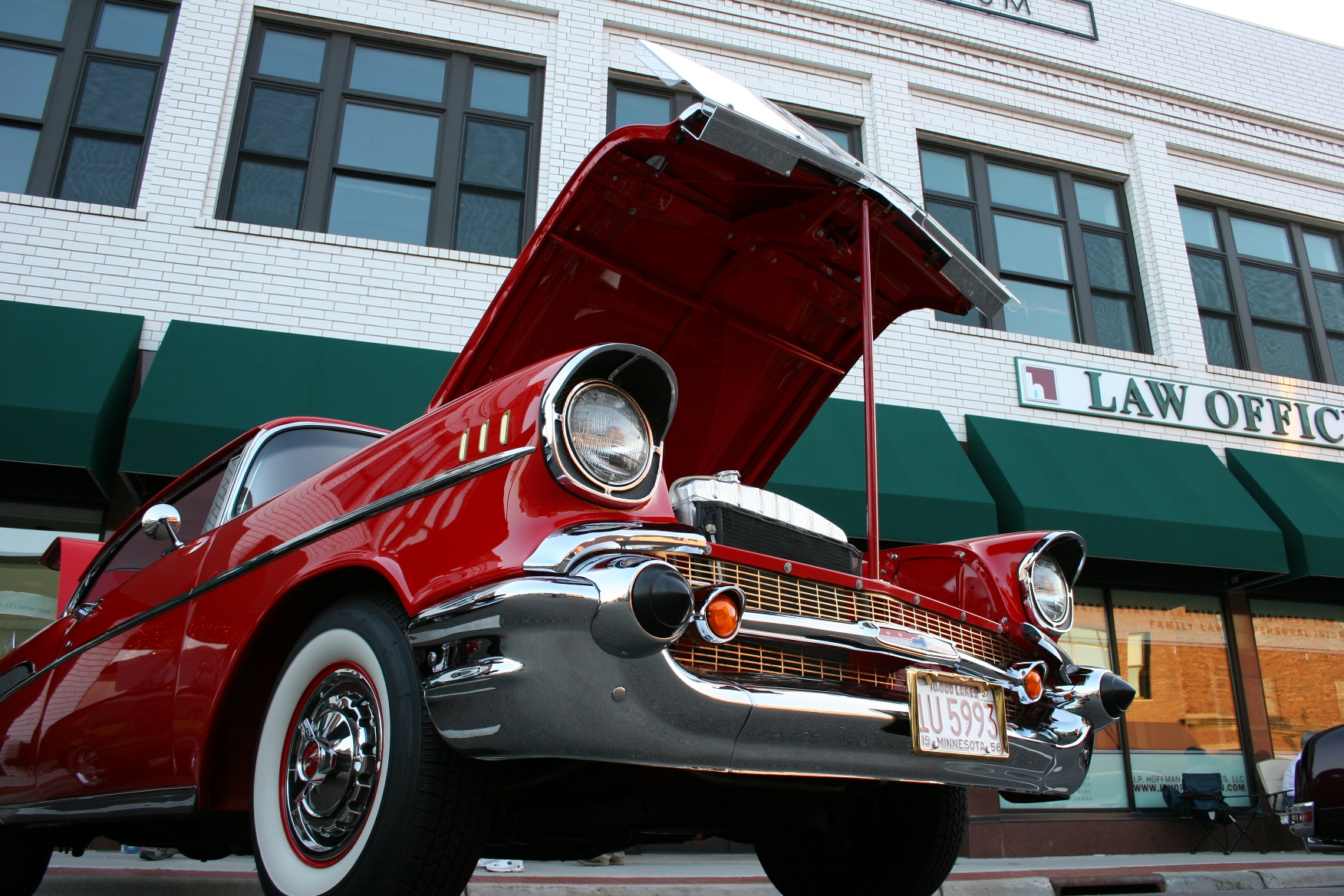
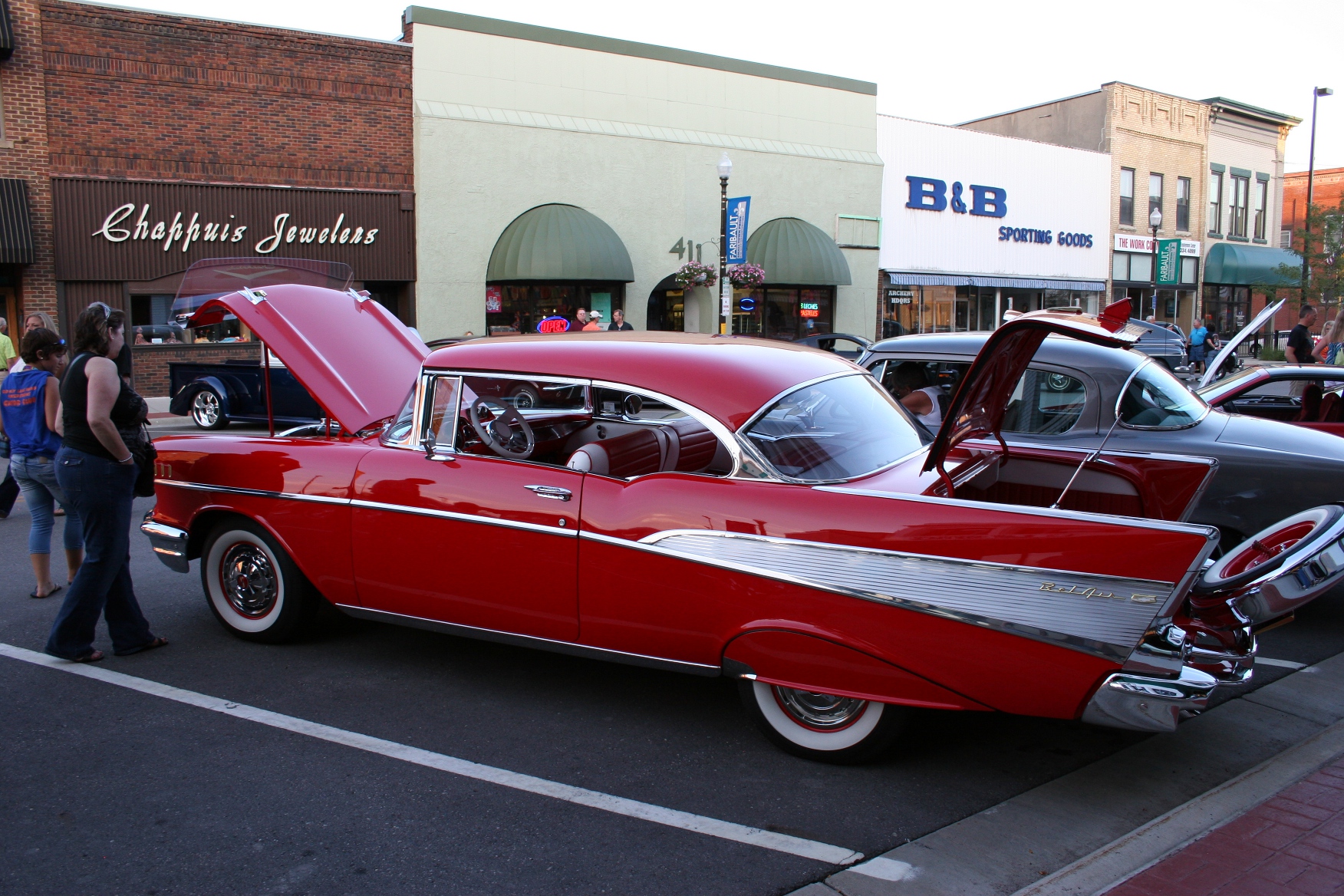
A 1957 Chevrolet Bel Air, parked along Central Avenue in downtown Faribault during the July 20 Faribault Car Cruise Night.

DARWIN LINGERS, gripping the handles of his wife’s stationary wheelchair as he admires the 1957 India Ivory and Matador Red Chevrolet Bel Air.

Alma seems equally mesmerized, transported back in time to the days of early motherhood and mobility—of youthful legs and a Chevy that hauled her family from farm to town and beyond and back home again.

When the family grew too large, the couple ditched the Bel Air and upgraded to a roomier station wagon.

Admiring the popular 1957 Chevy Bel Air in downtown Faribault.

But on this Friday evening so many decades later with the kids grown, one deceased, the aging farmer and his wife lock their eyes on the Bel Air waxed to a glossy shine. They remember the days of kids piling into the backseat of the 57 Chevy.

Darwin wishes out loud for that Chevy, just like the one parked on a Faribault city street on a late summer evening. Alma, hands clasped in her lap, nods ever so slightly in silent agreement.

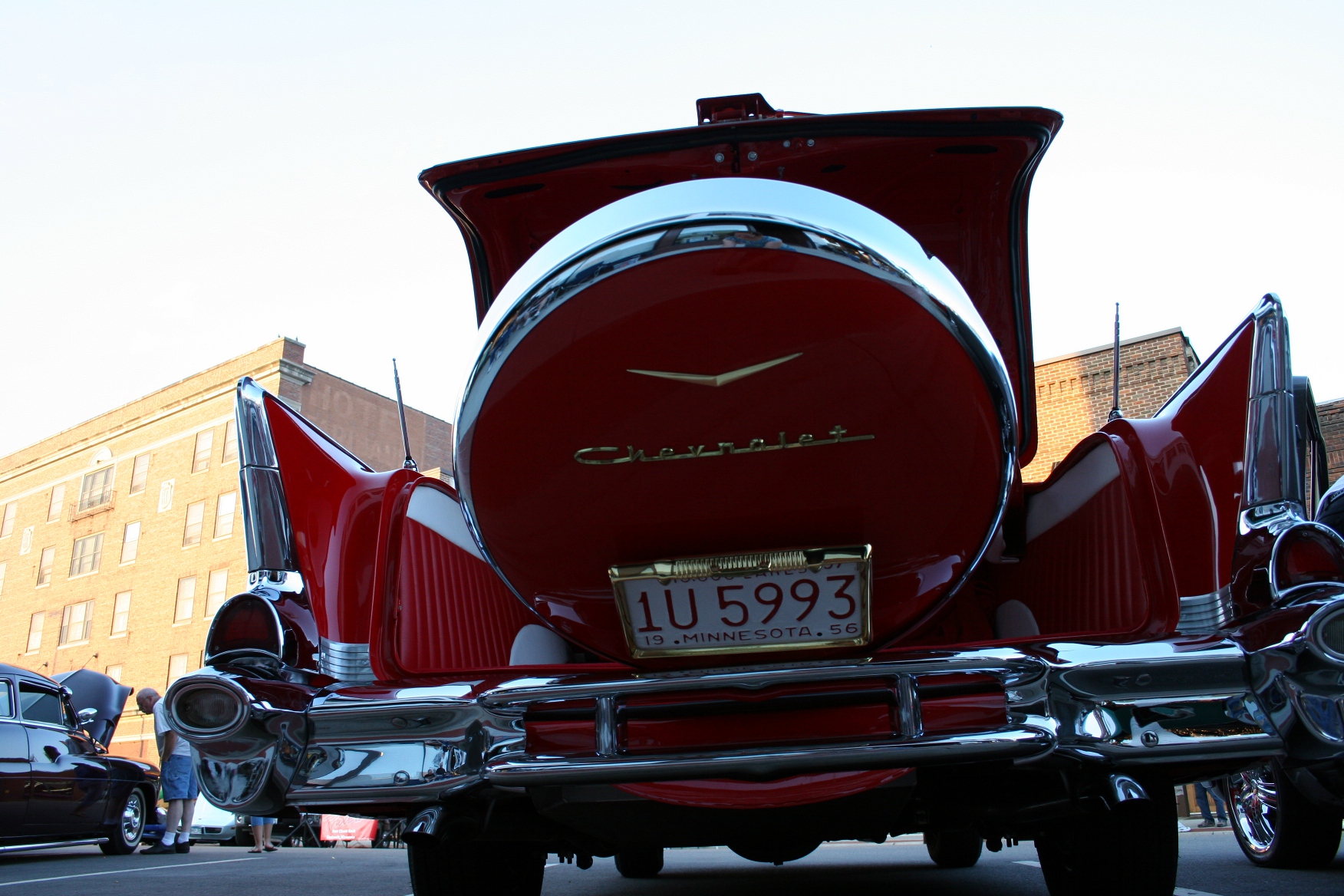
I placed my camera on the sidewalk and angled it up to capture this rear view shot of the 57 Bel Air. And, yes, the date on the license plate says 1956. My husband insisted the car is a 57 and I checked numerous sources to verify the year.

I wonder, as I wander away, how many other such memories are sparked by the old cars and trucks parked along Central Avenue during Faribault Car Cruise Night.

As treasured as those vintage vehicles are for their monetary worth, it is the memories which hold the most value. Just ask Darwin and Alma.

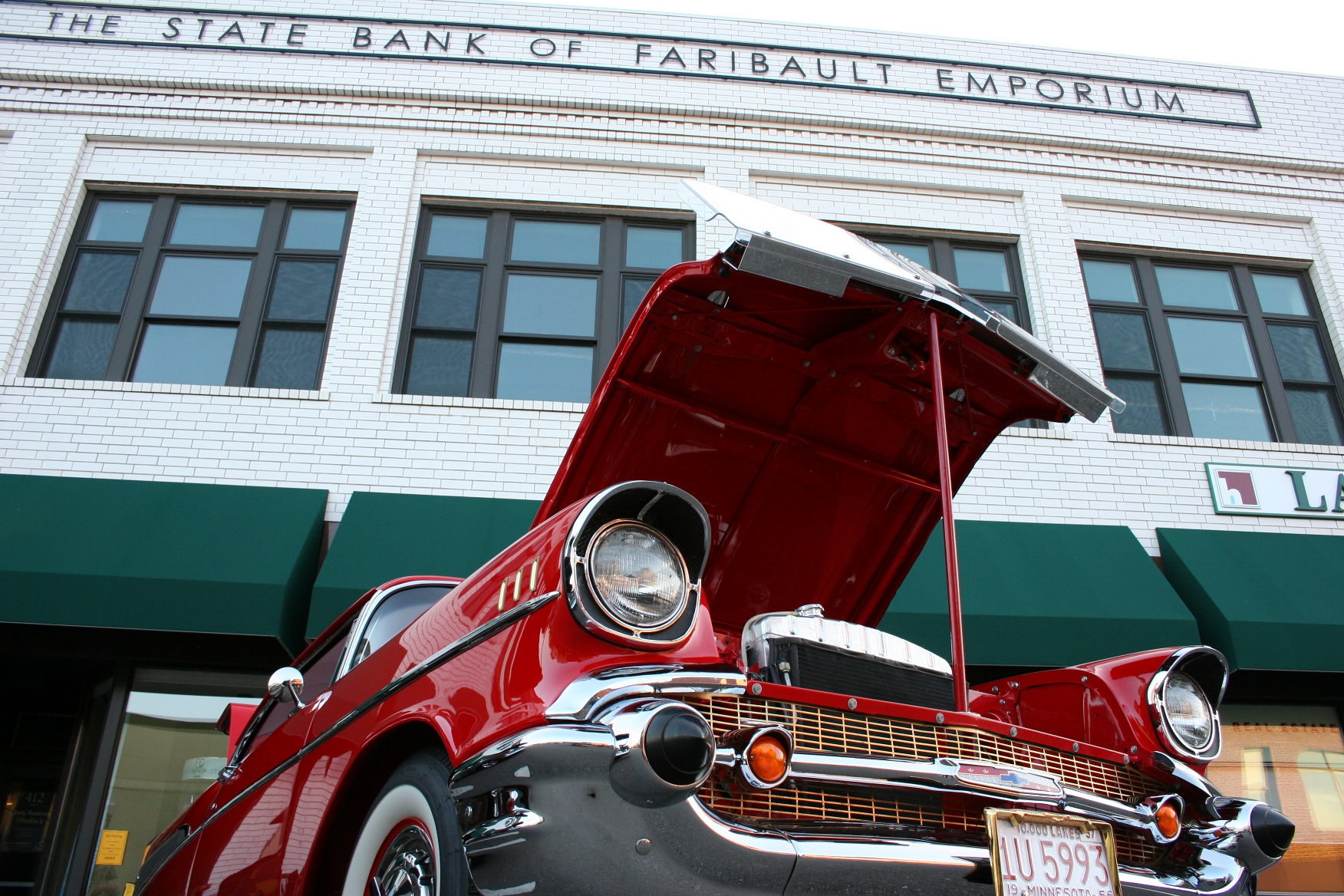
Just another shot of the 57 Bel Air because it was so photogenic and I simply fell in love with this Chevy.

© Copyright 2012 Audrey Kletscher Helbling