Minnesota Prairie Roots

Writing and photography by Audrey Kletscher Helbling

March 1965, a harsh Minnesota prairie winter documented March 13, 2023

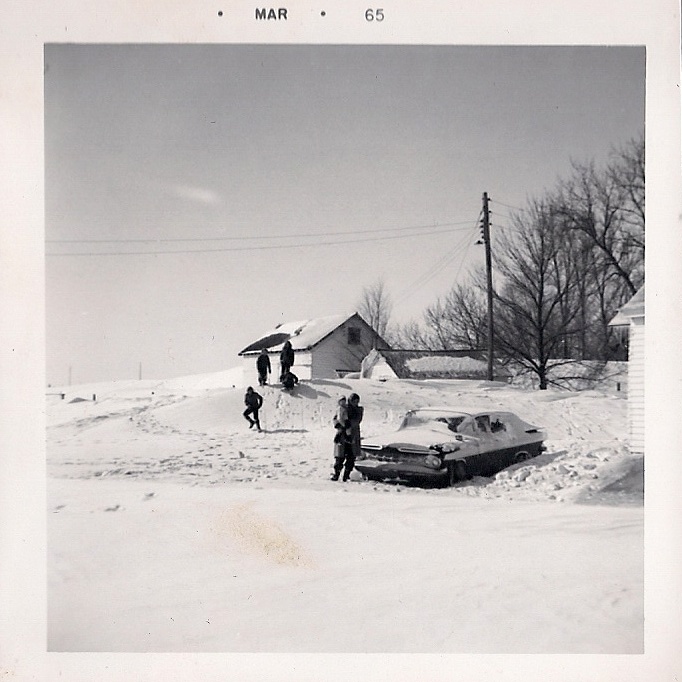
This huge snowdrift blocked my childhood farm driveway in this March 19, 1965, photo. I’m standing next to Mom. (Photo credit: Elvern Kletscher)

SHE WAS NOT QUITE 33 years old, this young mother of five living on a southwestern Minnesota dairy and crop farm in March 1965. It was an especially harsh winter, documented in a spiral bound notebook she kept.

She filled page after page with several-line daily entries about everyday life. She wrote about crops and household chores and kids and food and the most ordinary daily happenings. And, always, she recorded the weather—the wind, the precipitation, sometimes the temperature.

Arlene Kletscher’s journals stacked in a tote. (Minnesota Prairie Roots copyrighted file photo)

This keeper of prairie history in rural Redwood County was my mother, who died in January 2022 at the age of 89. I am the keeper of her journals, which she kept from 1947-2014, from ages 15 to 82. Sixty-seven years of journaling. Several years, when she met and fell in love with my dad, are noticeably missing.

Recently, I pulled the tote holding her collection of writing from the closet. This snowy winter of 2022-2023 in Minnesota prompted me to filter through Mom’s notebooks from 1964 and 1965. That winter season of nearly 60 years ago holds the state record for the longest consecutive number of days—136—with an inch or more of snow on the ground. We are closing in on that, moving into the top ten.

Mom’s journal entries confirm that particularly snowy and harsh winter on the Minnesota prairie. From February into March, especially, many days brought snow and accompanying strong wind. Two photos from March 1965 back up Mom’s words. Her first March entry is one of many that notes the seemingly never-ending snow falling on our family farm a mile south of Vesta. She writes of the weather:

March 1—What a surprise! Snowing & blowing when we got up & kept on all day. No school.

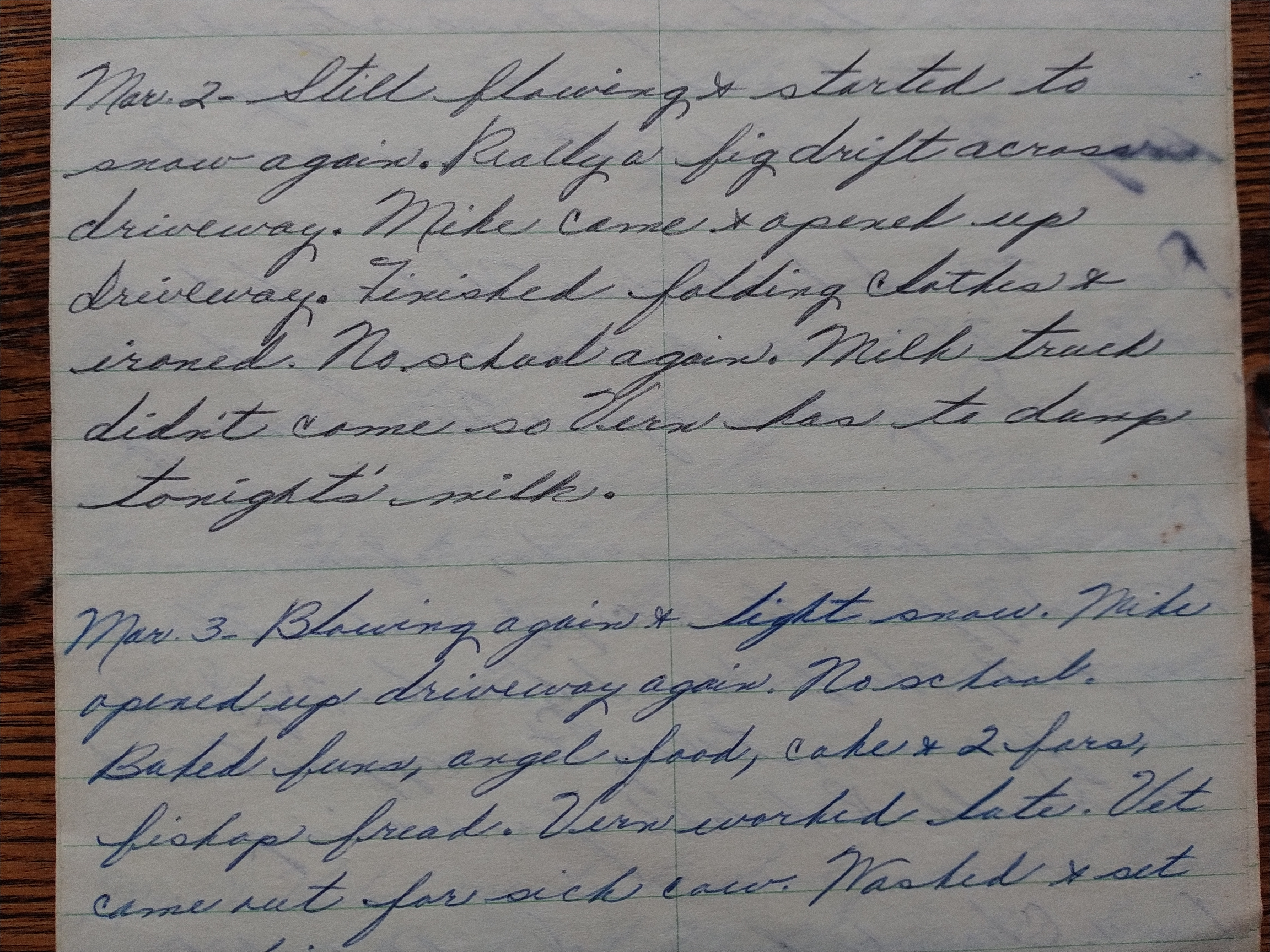
March 2—Still blowing & started to snow again. Really a big drift across the driveway. Mike came & opened up driveway. No school again. Milk truck didn’t come so Vern has to dump tonight’s milk.

Entries from my mom’s March 1965 journal document a harsh Minnesota winter. My Uncle Mike had to drive from his farm a mile-plus away to open our driveway. (Minnesota Prairie Roots copyrighted photo March 2023)

Let me pause here and emphasize the hardship referenced in Mom’s March 2 entry. My dad had to dump the milk from his herd of Holsteins. That was like pouring money down the drain. I can only imagine how emotionally and financially difficult that was to lose a day’s income. But if the milk truck can’t get through on snow-clogged country roads to empty the bulk tank, there’s no choice but to pour away milk.

My dad planted DeKalb seed corn (among other brands). (Minnesota Prairie Roots copyrighted file photo September 2015)

On March 3-5, Mom writes the same—of snow and blowing snow and efforts to keep the driveway open and no school. Then comes a respite from the snow. Dad was even planning ahead to spring, receiving a delivery of DeKalb seed corn on March 15. But then snowfall resumes on St. Patrick’s Day in this land of wide open spaces, where the wind whips fierce across the prairie.

March 17—Snowing & blowing. Got worse all day. Good thing the milk truck came. No school.

March 18—Quit snowing, but is really blowing. Huge drift across driveway & in grove. Almost all roads in Minn are blocked. No school. Cold, about 10 degrees.

Our southwestern Minnesota farmyard is buried in snowdrifts in this March 19, 1965, image. My mom is holding my youngest sister as she stands by the car parked next to the house. My other sister and two brothers and I race down the snowdrifts. (Photo credit: Elvern Kletscher)

March 19—We all went outside & took pictures of the big drifts & all the snow. Mike came over through field by gravel pit & started to clear off yard. Clear & cold.

Mom’s March 19 entry is notable for multiple reasons. First, my parents documented the snowdrifts with their camera. They didn’t take pictures often because it cost money to buy and develop the film. Money they didn’t have. That is why I have few photos from my childhood. That they documented the huge drifts filling our driveway and farmyard reveals how much this snow impacted their daily lives. In the recesses of my memory, I remember those rock-hard drifts that seemed like mountains to a flat-lander farm girl. That my Uncle Mike, who farmed just to the east, had to drive through the field (rather than on the township and county roads) to reach our farm also reveals much about conditions.

In the two days following, Mom writes of a neighbor coming over with his rotary (tractor-mounted snowblower) to finally open the driveway. But when the milk truck arrived at 4:30 am, the driveway was not opened wide enough for the truck to squeeze through the rock hard snow canyon. The driver returned in the afternoon, after Dad somehow carved a wider opening.

The weather got better in the days following, if sunny and zero in the mornings and highs of 12 degrees are better. At least the snow subsided. On March 23, Mom even notes that they watched the space shot on TV. I expect this first crewed mission in NASA’s Gemini Project proved a welcome diversion from the harsh winter.

In her March 27 journal entry, hope rises that winter will end. Mom writes: Sunny & warmer than it has been for days. Got to 45 degrees. Minnetonka beat Fairbault (sic) in basketball tournament. I almost laughed when I read that because Minnesotans often associate blizzards with state basketball tournament time. I also laughed because Faribault would eventually become my home, the place I’ve lived for 41 years now.

So much for optimism. On March 28, snow fell again. All day.

But the next day, Mom writes, the weather was sunny and warm enough to thaw the snow and ice and create a muddy mess. I stopped reading on March 31. I’d had enough snow. I expect Mom had, too.

© Copyright 2023 Audrey Kletscher Helbling


Sculpture prompts prairie snow & ice memories December 12, 2022

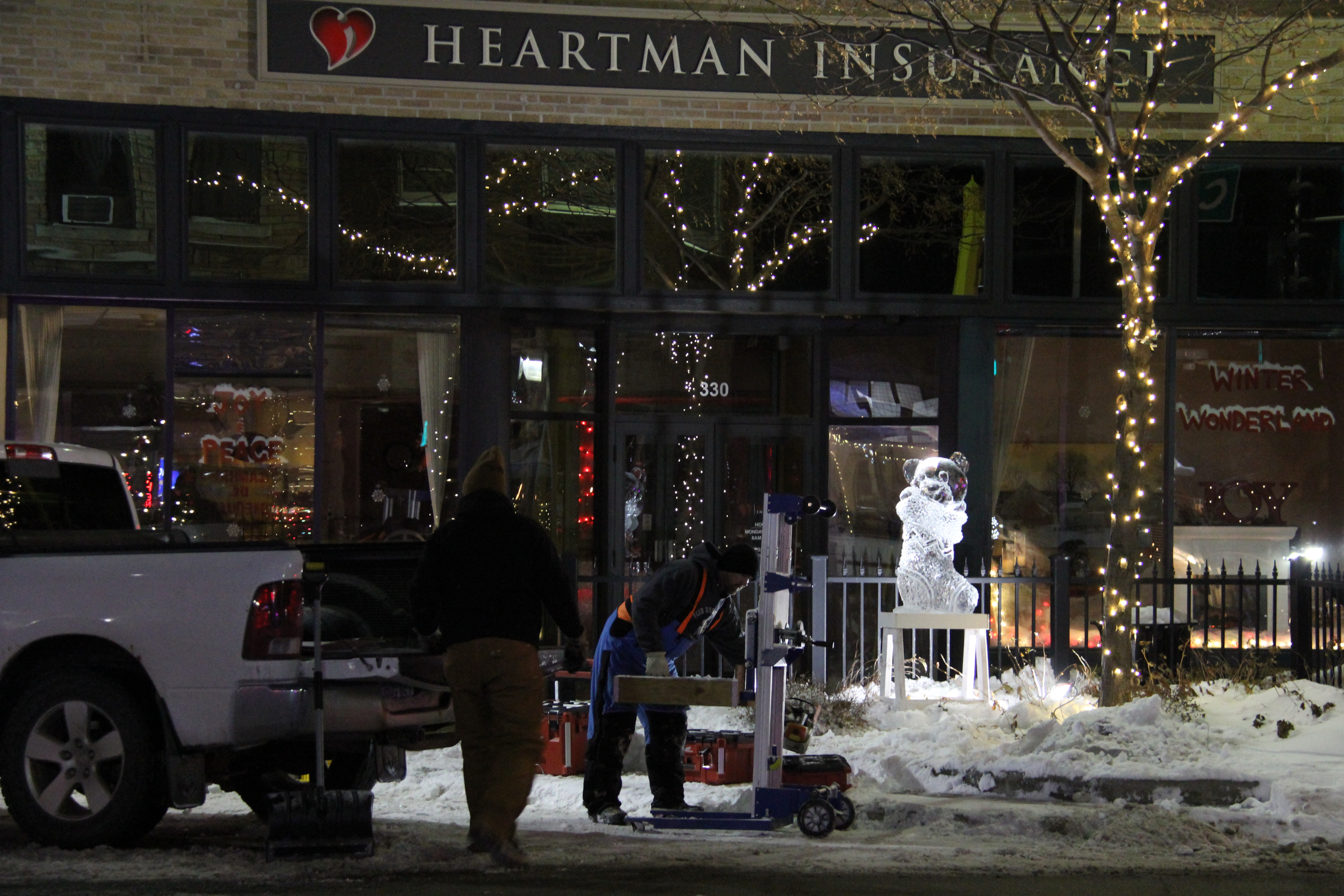
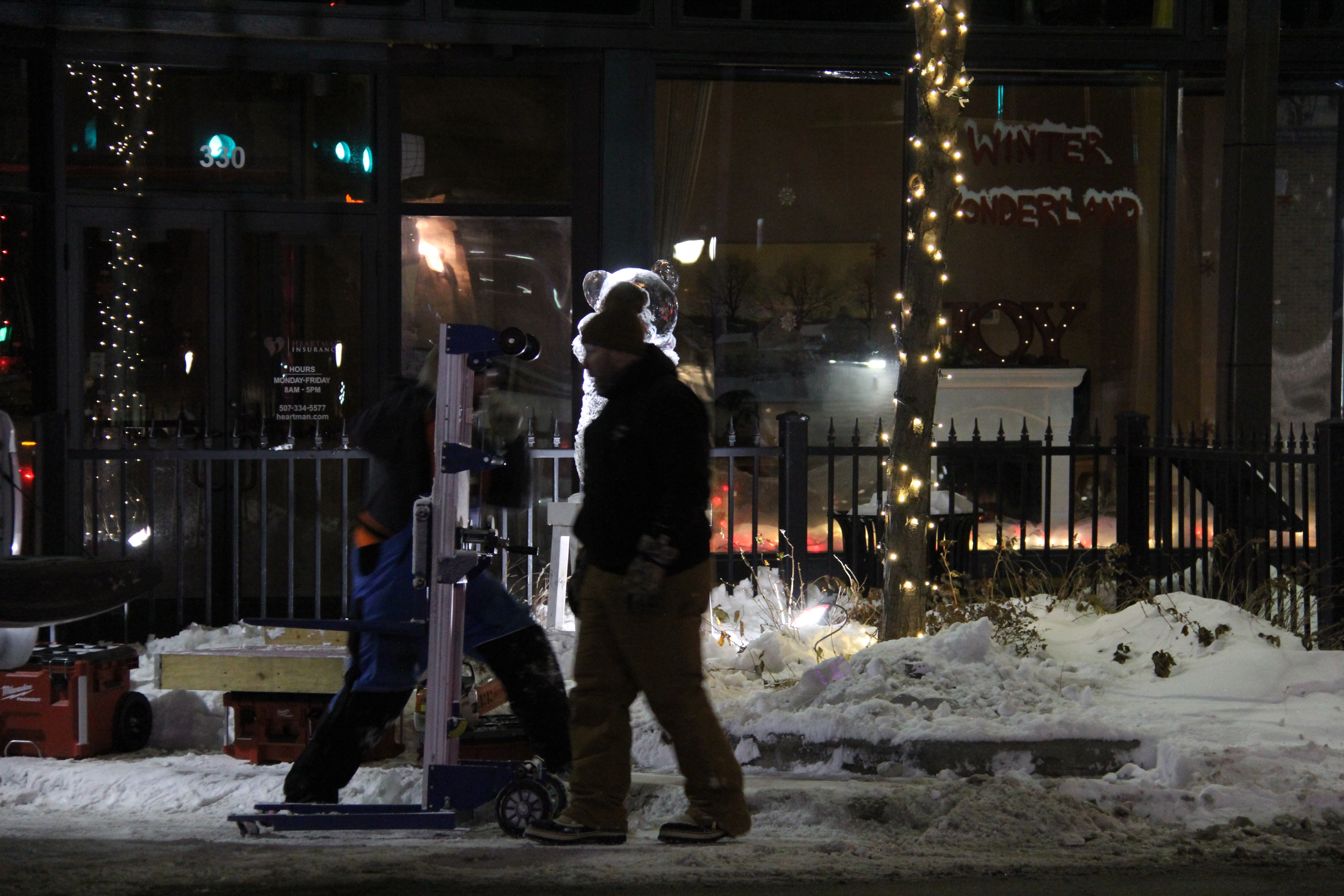
Sakatah Carvers pack their equipment after carving an ice sculpture at the corner of Central Avenue and Fourth Street/Minnesota State Highway 60 in Faribault during Winterfest. (Minnesota Prairie Roots copyrighted photo December 2022)

ONCE UPON A TIME, which is longer ago than I care to admit, I welcomed winter. Snow equated outdoor fun on the farm of my youth in southwestern Minnesota. Prairie winds swept the snow into rock-hard mountainous drifts around buildings and windbreaks. My siblings and I pulled on our winter gear and for hours played atop those mountains and the snow piles mounded by Dad with the bucket of his tractor.

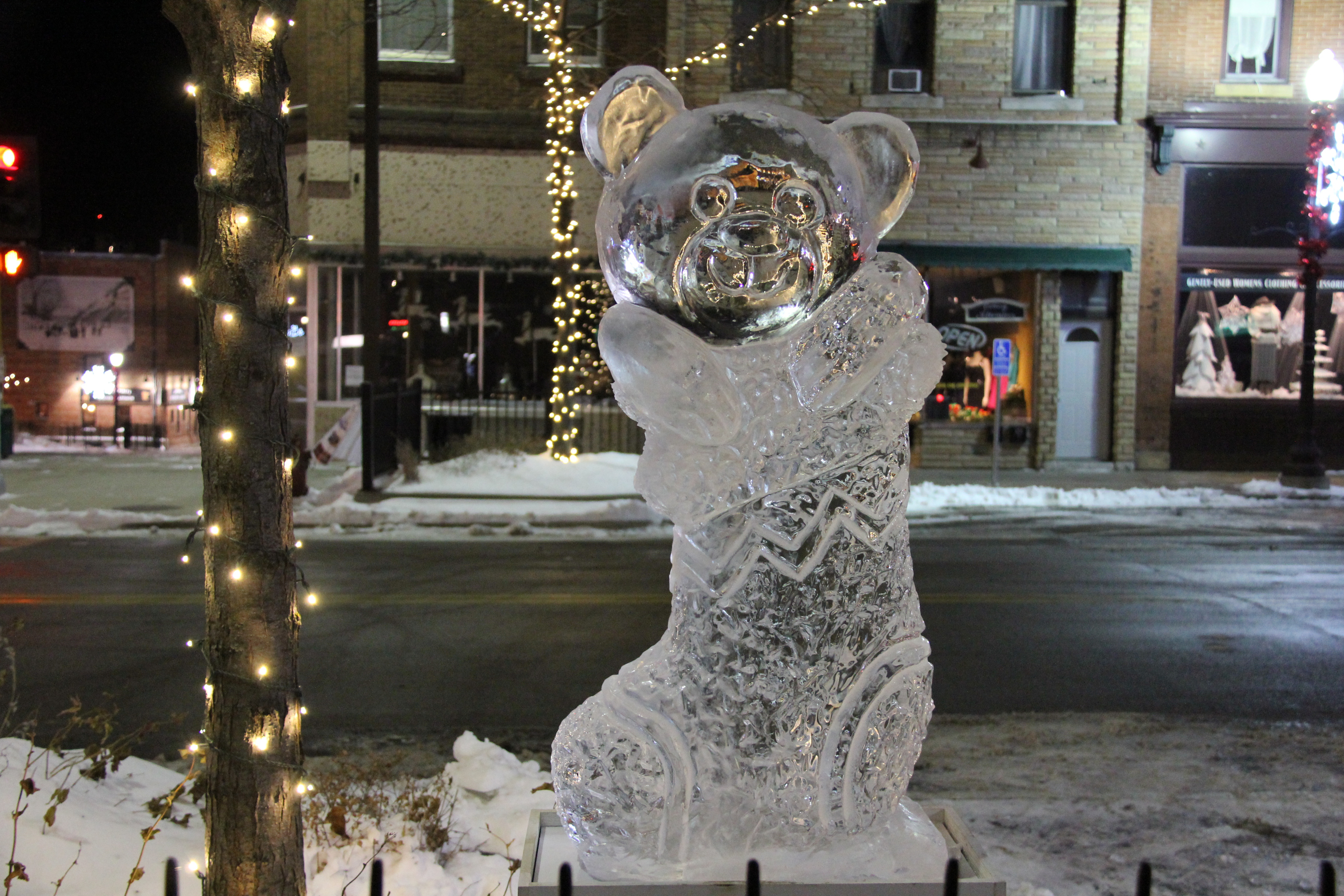
The completed sculpture. (Minnesota Prairie Roots copyrighted photo December 2022)

And then there were the icicles hanging along the milkhouse roof. Those became swords for hard-fought battles against one another. Ice clashing against ice until a sword, or both, broke. Somehow we avoided poking out each other’s eyes.

I found those icicles, some the length of our torsos, magical. They appeared seemingly overnight, glistening in the sunlight, water frozen clear and beautiful.

The other side of the sculpture, photographed from across the street, with part of the equipment to the left. (Minnesota Prairie Roots copyrighted photo December 2022)

Likewise, I felt the same about ice patches that formed on field’s edge. To slide across that ice in my buckle overshoes proved freeing and powerful. I was a champion figure skater in my own imaginative world. When the ice rink opened in my hometown of Vesta in the shadow of the grain elevator, I donned my Aunt Dorothy’s hand-me-down skates and raced from one end to the other, flying like the fierce prairie wind.
Today I no longer skate or engage in sword fights. Rather I approach ice with the cautiousness of a Baby Boomer who’d rather not break a bone. I avoid ice if possible.

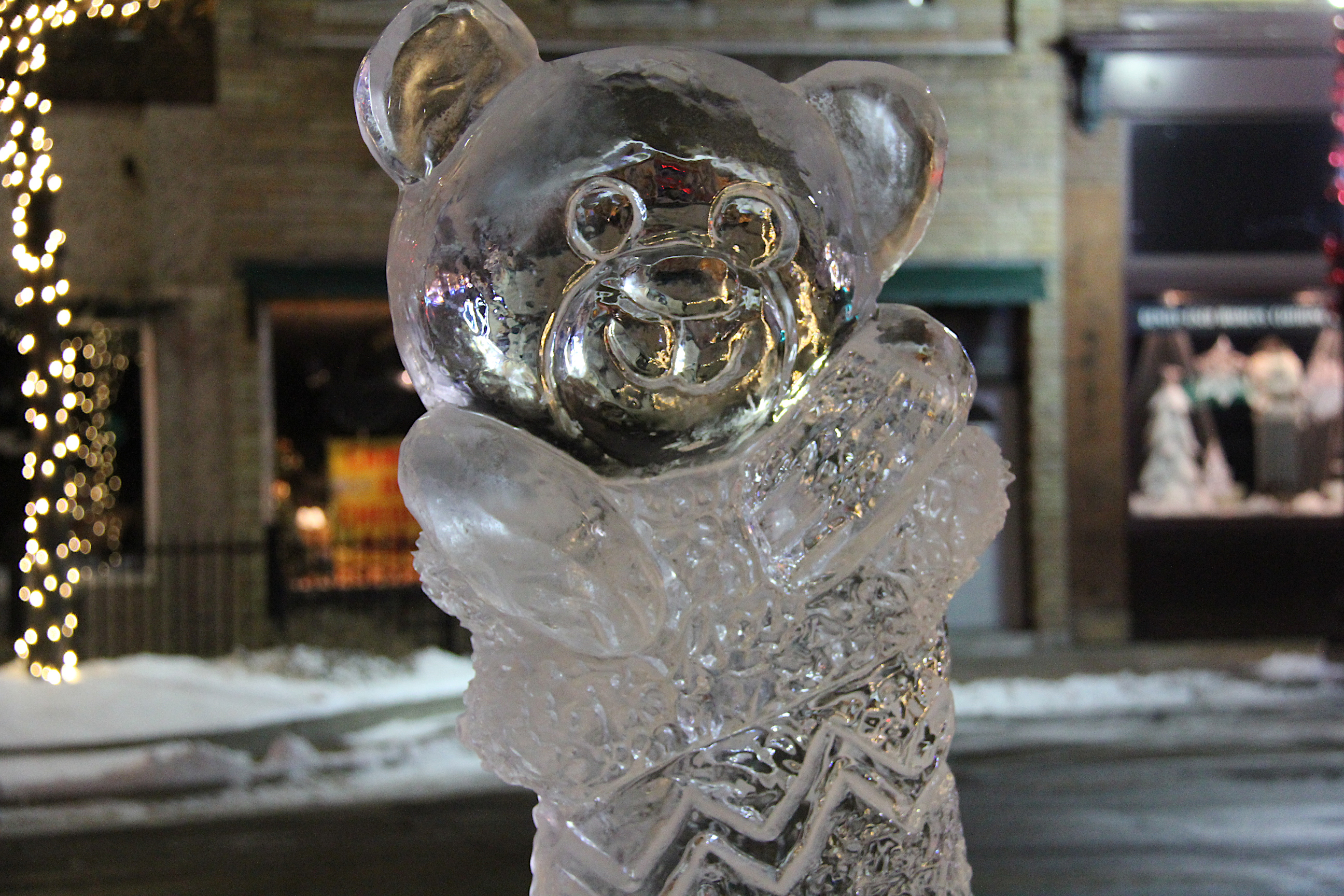
The teddy bear sculpture up close, glistening in the holiday and street lights. (Minnesota Prairie Roots copyrighted photo December 2022)

But there’s an exception. Ice sculptures. These are a thing of beauty, reminding me of long ago ice ponds and ice swords and my once-love of ice. Artists who can carve a block of ice into something magical and beautiful garner my appreciation. That includes the team from Sakatah Carvers, Signs and Creations, who recently sculpted a teddy bear inside a stocking for Faribault’s Winterfest.

The second I snapped this frame, the ice carver blocked my view of the sculpture. But I like the results, highlighting the artist. (Minnesota Prairie Roots copyrighted photo December 2022)

While I didn’t witness the actual creation of the ice sculpture, I saw the warmly-dressed crew packing up their gear afterwards. It takes a love of winter and of ice to engage in this art form, which recalls for me prairie winters past of snow and ice.

© Copyright 2022 Audrey Kletscher Helbling


Reflections upon 40 years of marriage May 13, 2022

Filed under: Uncategorized — Audrey Kletscher Helbling @ 5:00 AM
Tags: , , , , , ,
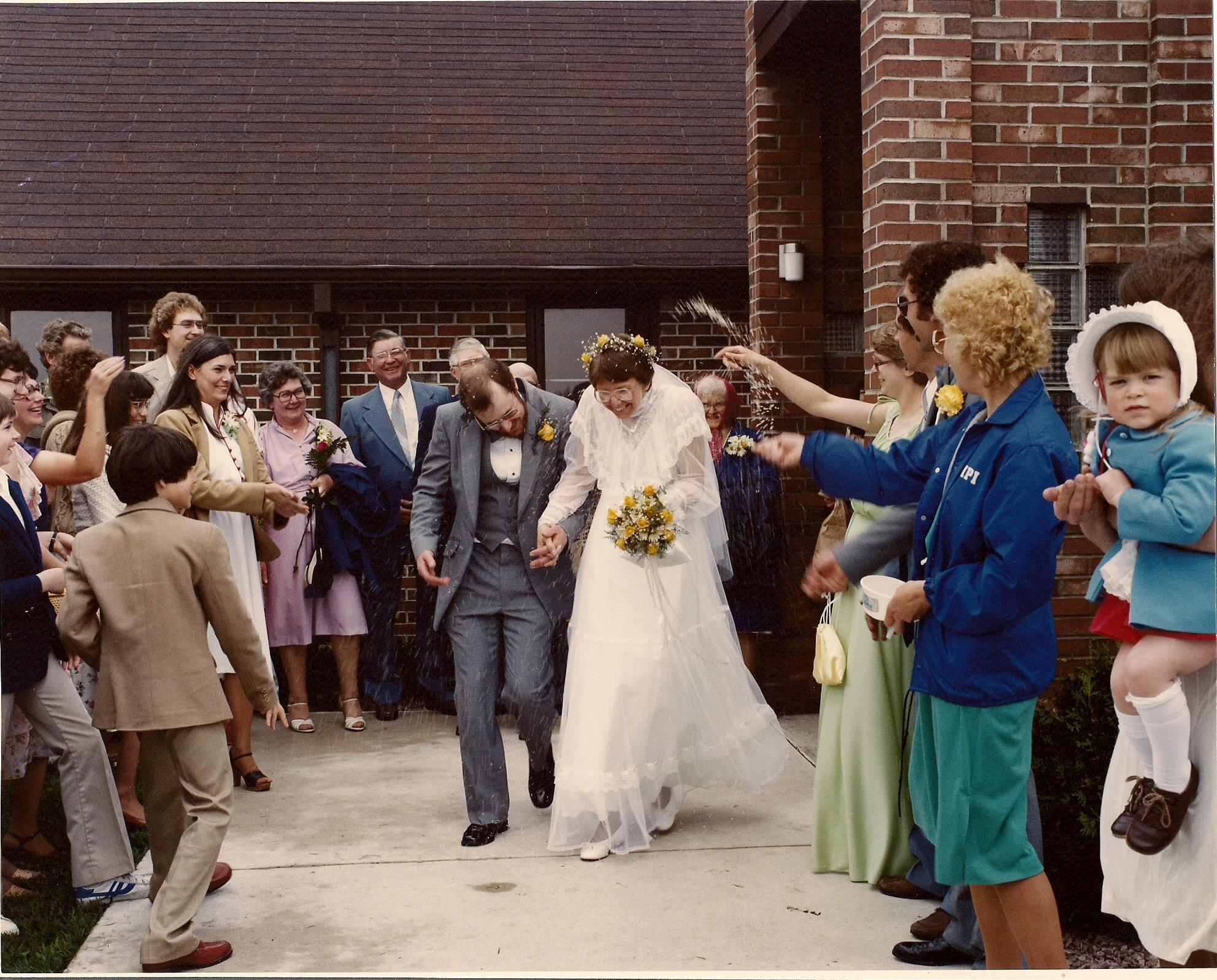
Wedding guests toss rice at Randy and me as we exit St. John’s Lutheran Church following our May 15, 1982, wedding. (Photo credit: William’s Studio, Redwood Falls)

FORTY YEARS. May 15, 2022, marks a milestone for Randy and me as we celebrate our 40th wedding anniversary. Where did the years, then the decades, go?

Audrey and Randy, May 15, 1982. (Photo credit: William’s Studio)

It seems only yesterday I walked down the aisle of St. John’s Lutheran Church, my slim hand clenching my farmer father’s massive hand. I walked with confidence and joy in my $82 off-the-rack high-necked lace wedding dress from Maurices, floral wreath encircling my head, left hand holding a bouquet of yellow roses, daisies and babies breath with ballerina flats pinching my toes.

Randy waited there, before the altar, at the front of the rural southwestern Minnesota church. In his charcoal grey rental suit with matching bow tie accenting his white shirt, single yellow rose pinned to his lapel. He even managed to scrub the grease from his fingernails just for our wedding day. The proof is in the professional photo of our hands focusing our shiny wedding bands. I haven’t seen Randy’s fingernails that clean since given his job as an automotive machinist.

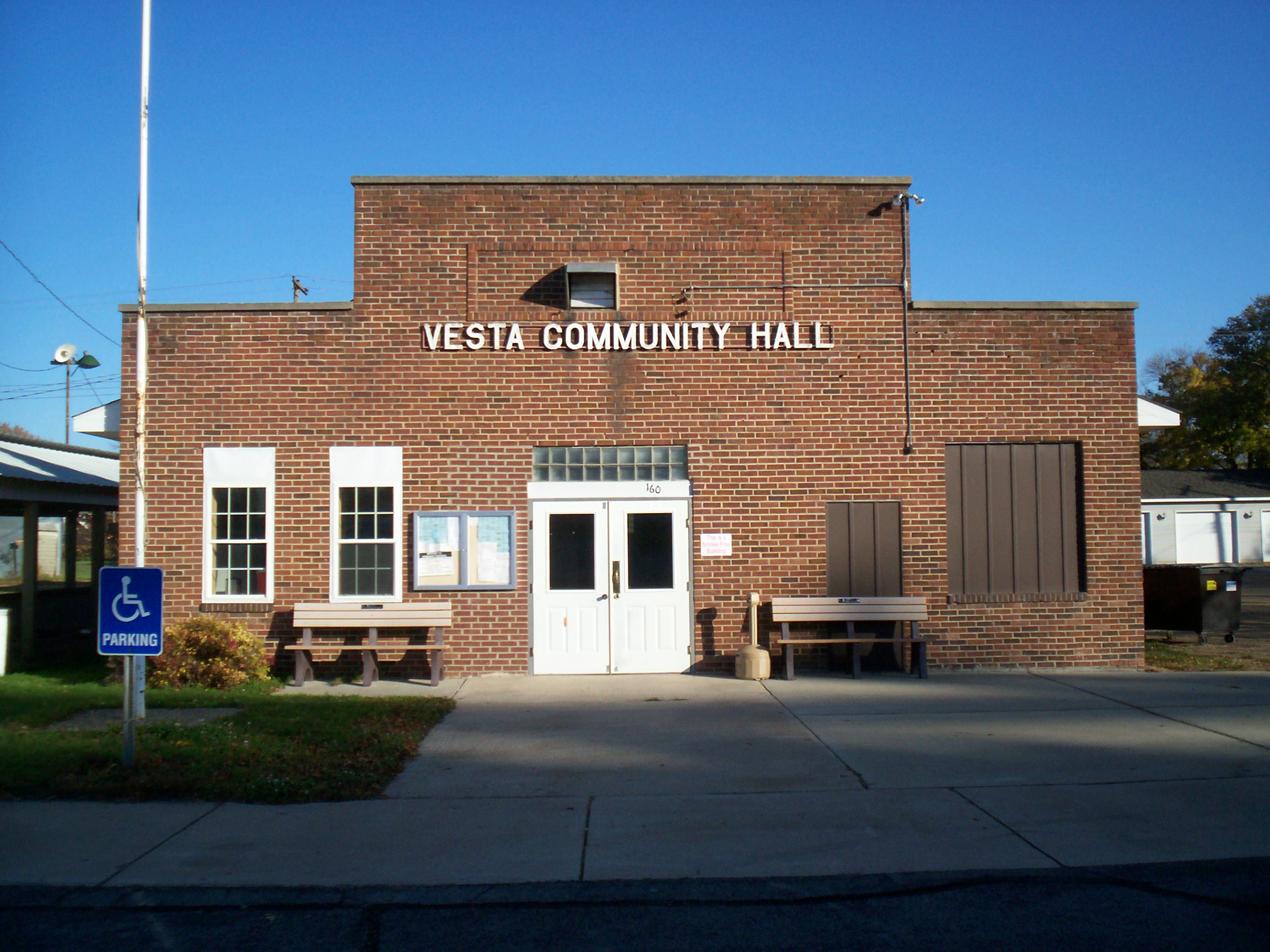
The Vesta Hall, a community gathering place in my hometown, and our wedding reception site. (Minnesota Prairie Roots copyrighted file photo)

While details of our wedding day aren’t as sharp as they once were, I have photos and my mom’s May 15, 1982, journal entry to refresh my memory. Mom noted that the supper of ham, mashed potatoes, gravy, corn, fresh fruit salad, cabbage slaw, buns, relishes and beverages catered from Toni’s in nearby Marshall cost $2.65 a plate or $500 total. That covered the meal for 172, taxes and the cost of punch. Delicious punch, but in a putrid shade of green, as Randy reminds me to this day. Our colors were green and yellow.

Now, 40 years after that cool spring day which began with light rain opening to evening sunshine, it’s not details of the celebration which matter as much as the vows we made to each other before God, family and friends. For better or worse, in sickness and in health…

When you’re young—we were both not quite 26—and in love, the possibilities of challenges ahead seem unfathomable. But life happens with all its sorrows and joys and moments of incredible difficulties. And through all of those trying times, of which we’ve had plenty, Randy and I have stood together. We balance each other. He with calm. Me with organization and a plan of action. Our shared faith in God upholds us.

A favorite photo of my husband holding our then 10-day-old granddaughter, Isabelle. (Minnesota Prairie Roots file photo April 2016)

And now here we are, 40 years removed from our 2 pm wedding ceremony that included singing my favorite hymn, “Beautiful Savior,” with the congregation; listening to the pastor read Genesis 2:22-24; exchanging vows and rings; lighting the unity candle…

Randy in the automotive machine shop at NAPA Northfield, where he has worked for 39 years. (Minnesota Prairie Roots file photo)

Here we are, still united. United as loving parents of three children, now adults. United as loving grandparents of a 3 and 6-year-old. And united now in facing the unexpected loss of Randy’s job (due to a change in ownership and resulting closure of the automotive machine shop) after 39 years at the same workplace. It is yet another challenge to manage, to navigate. Together.

Randy, as cliché as it sounds, remains a rock of strength as he has throughout our marriage. I appreciate that about him, as much today as I did on May 15, 1982, the day I married the man I love. And still love.

© Copyright 2022 Audrey Kletscher Helbling


A letter to Dad on Veterans Day November 11, 2021

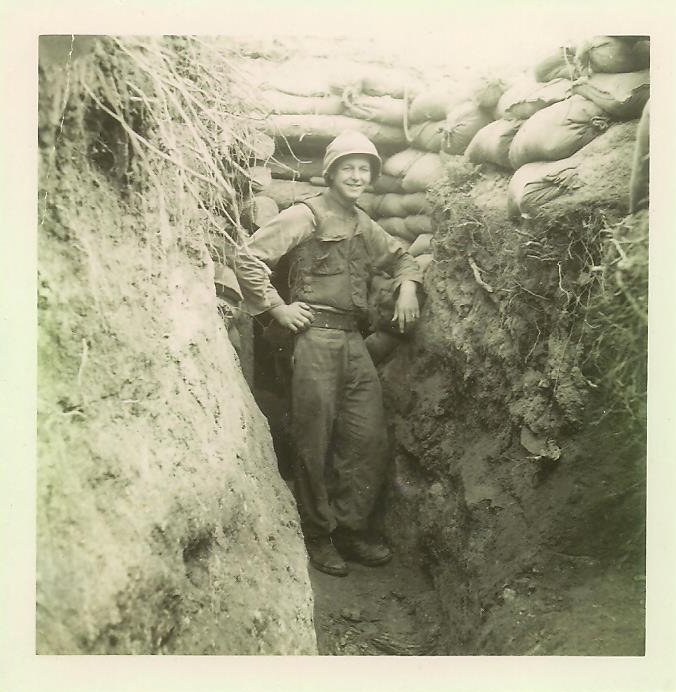
U.S. Army Cpl. Elvern Kletscher, my father, in the trenches in Korea. (From my father’s photo collection)

DEAR DAD,

I’m sorry.

I’m sorry I didn’t take the time to ask. And then to listen.

I’m sorry I didn’t recognize earlier that you were suffering.

I’m sorry I was too busy with my own life and family to realize that I could have, should have, tried to understand.

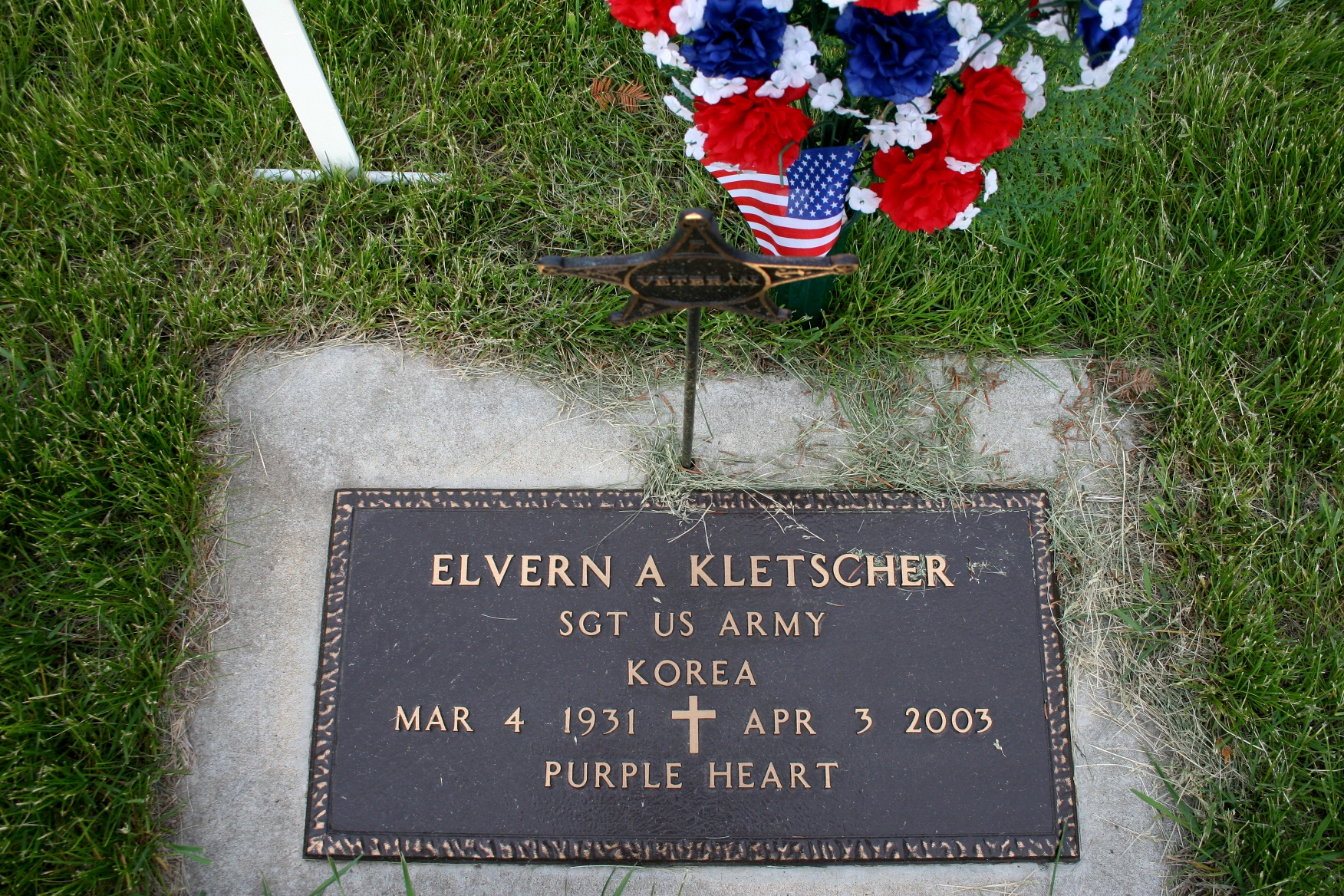
An in-ground marker honors my father, Elvern Kletscher, a Korean War veteran and recipient of the Purple Heart for wounds he suffered at Heartbreak Ridge in Korea while killing a sniper. (Minnesota Prairie Roots copyrighted file photo 2011)

Nearly 19 years have passed now since your burial, since that brutally cold early April day when I wrapped my arm around Mom in the wind-swept hilltop Vesta Cemetery. I felt her body shivering, shaking with grief as she accepted a folded American flag.

Moments like that imprint upon me as I remember you—husband, father, grandfather, son, brother…and veteran.

You were buried with military honors. The firing of guns. The mournful playing of taps. An in-ground military marker notes your final rank as a sergeant in the US Army. Awarded the Purple Heart, albeit 47 years after you were wounded on Heartbreak Ridge in Korea.

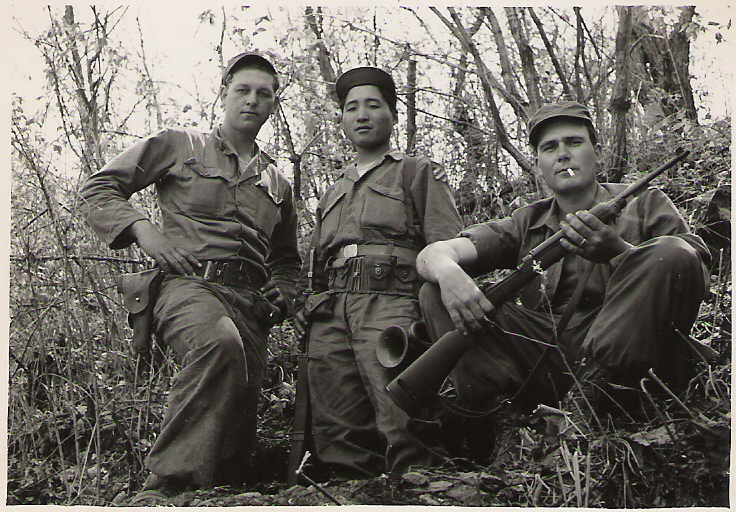
My father, Elvern Kletscher, left, with two of his soldier buddies in Korea. (From my father’s photo collection)

Today, on Veterans Day, I think of you. Honor you. And consider how fighting as a boots-on-the-ground combat soldier in the mountains of Korea forever changed you.

I recall the few stories you shared through the decades. You watched as a mortar killed your friend Ray, who was scheduled to leave Korea the next day. He left behind a wife and infant daughter. Dad, your grief led me to search for that “baby” two years after your death. I found Teri living in Iowa and with only minimal knowledge of her birth father. I have yet to meet her, but want to some day.

Some day. Days and weeks and months and years pass and then some day is too late. Now I hold a shoebox brimming with curled black-and-white photos and other items from your time in the Army. Your Selective Service System registration certificate. A well-worn mini black book of prayers, hymns and devotions from the Ladies Aid in Vesta. Faith and prayer carried you through many a hellish day and night in Korea.

On the back of this photo, my dad simply penned “a letter from home.” I appreciate this photo of my dad taken by an unknown buddy in Korea. (From my father’s photo collection)

In a letter to your parents, a copy tucked into a folder labeled “Korea” in my office file cabinet, you termed the war-torn Asian country a “hell hole.” Likewise, an over-sized embroidered decal declares “RETURNED FROM HELL.”

I have no doubt that war was hell for you. “Shoot or be shot,” I remember you saying. You spoke, too, of bitter cold, of hunger, of orphans begging for food across barbed wire fences. Of horrible war-time atrocities that I can’t bear to write here.

My dad carried this memorial service bulletin home from Korea. In the right column is listed the name of his fallen buddy, Raymond W. Scheibe. (From my father’s collection)

And then when you arrived home—bringing with you a folded memorial service bulletin from Sucham-dong, Korea, dated July 31, 1953, and including your buddy Ray’s name—the horror and grief you experienced remained. But few, if any, acknowledged your struggles back then. You were expected to resume life as usual, returning to rural Minnesota to farm the land, to milk cows, to marry and raise a family. Post traumatic stress disorder (PTSD) was not yet recognized.

I’m sorry, Dad. Sorry about the neighbor who laughed as you dove to the ground when a rifle fired during pheasant hunting.

I’m sorry, Dad, for the fear you felt when guns fired during a small town parade.

I’m sorry I wasn’t there for you like I should have been.

Near the end of your life, you found empathy and care in your veterans’ support group. That comforts me. Those men understood what you’d experienced. For that I am grateful. They provided the emotional support I failed to give you. I’m sorry, Dad. So sorry.

With love,

Audrey

© Copyright 2021 Audrey Kletscher Helbling


On the backroads of Rice County with Mr. Bluebird August 17, 2021

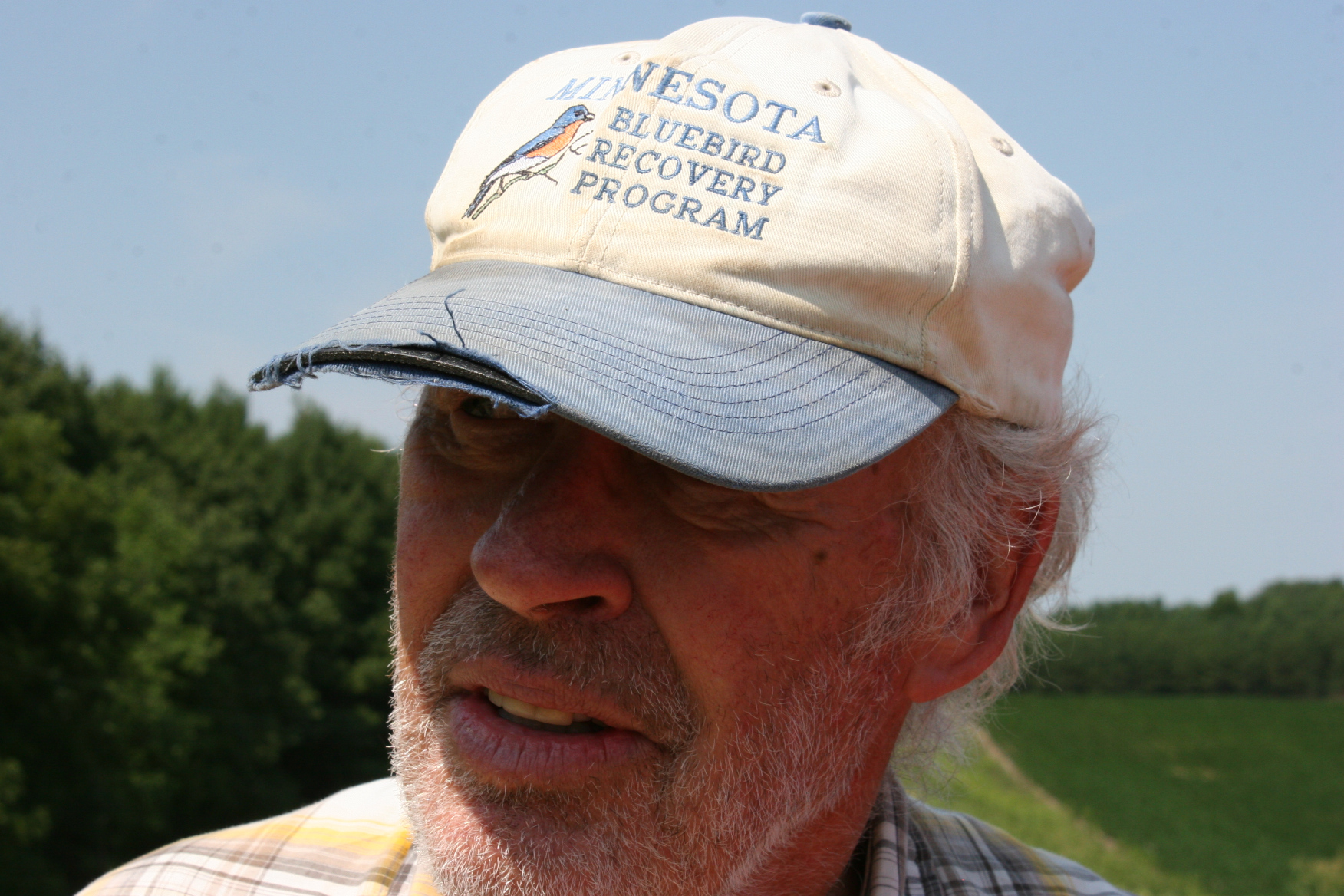
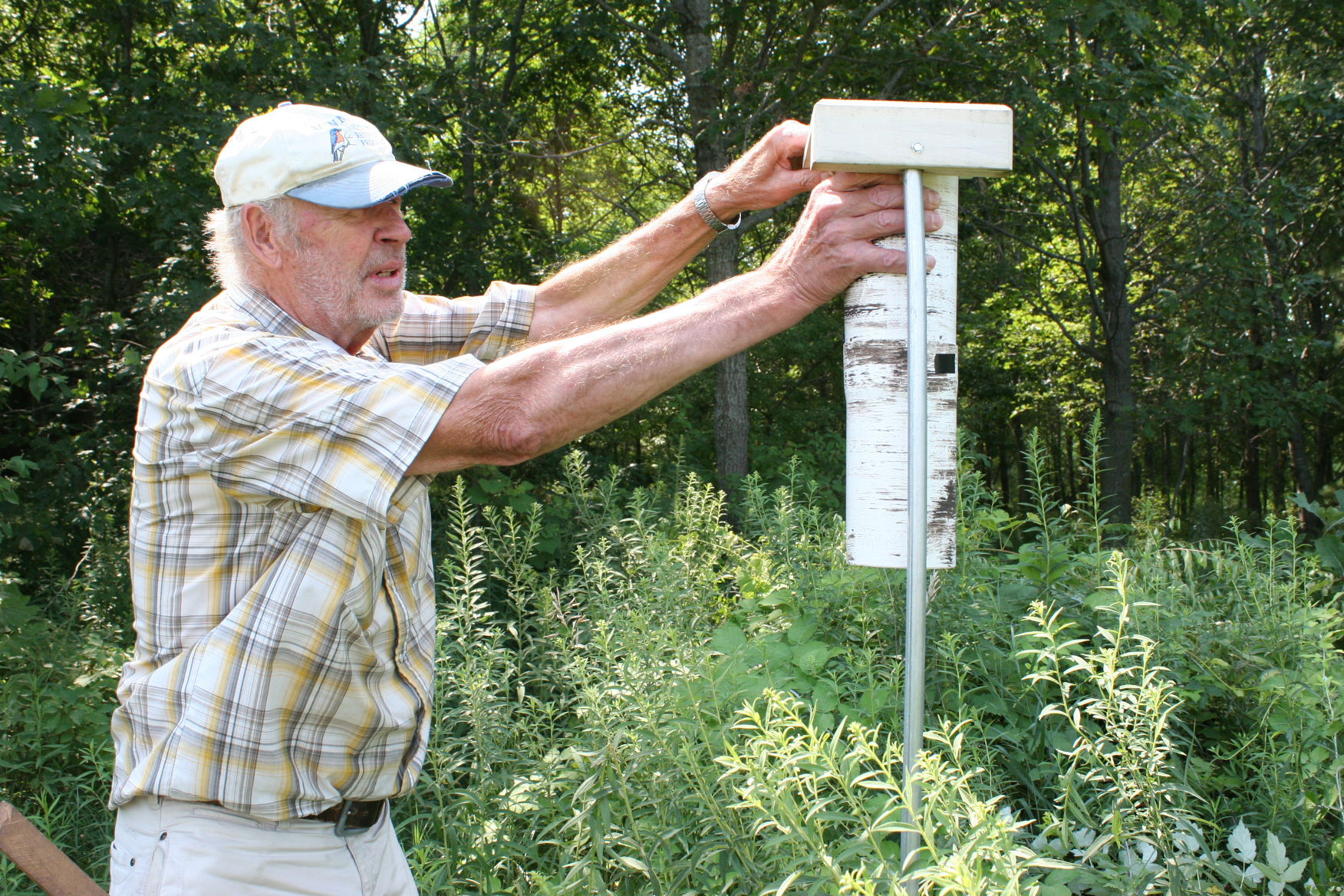
Mr. Bluebird, Keith Radel. Minnesota Prairie Roots copyrighted photo July 2021.

DOWN THE GRAVEL ROAD, I saw him exit the ditch, cross the roadway and then climb into his red pick-up truck.

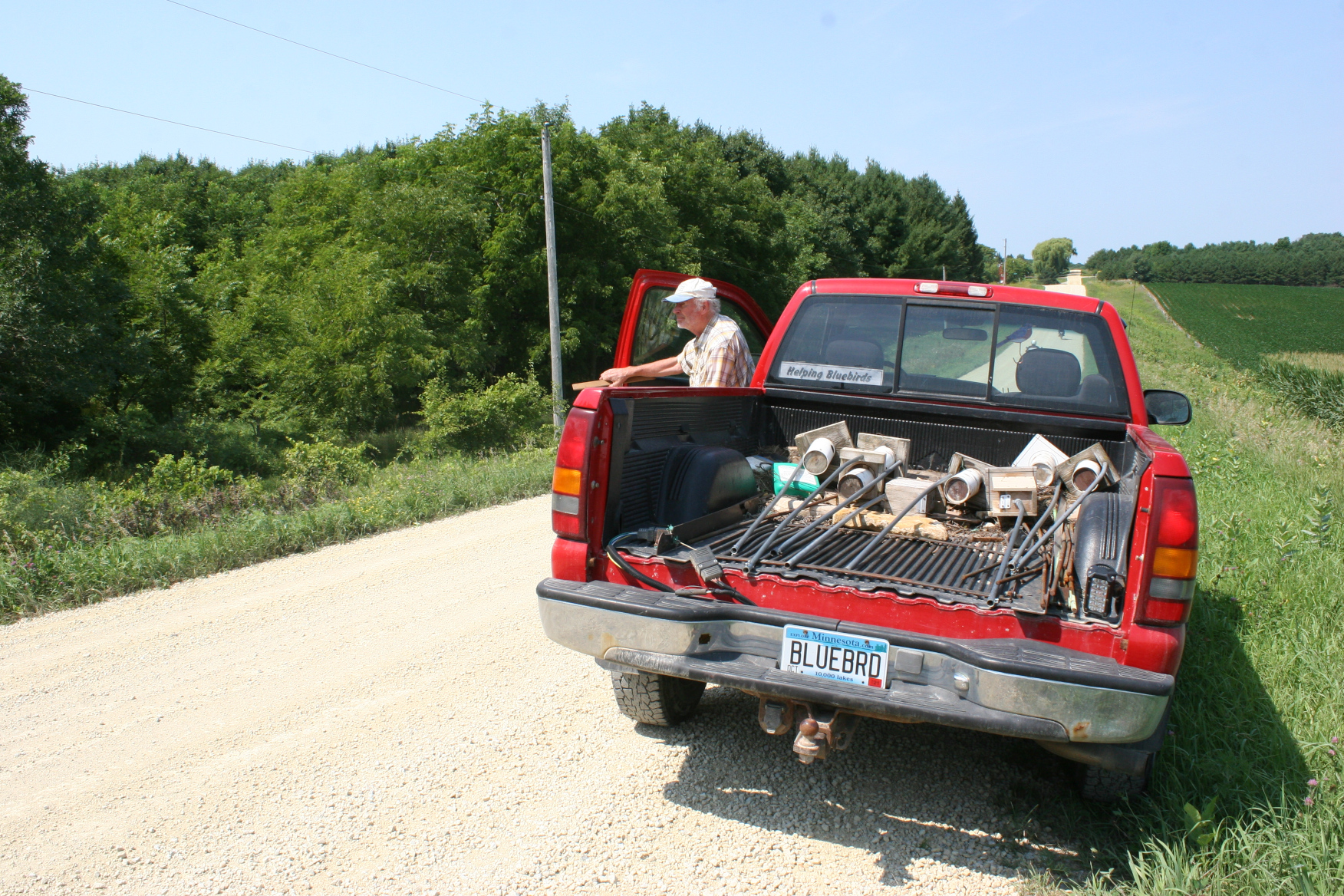
A man on a mission, to save bluebirds. Those are nesting boxes in the truck bed. Minnesota Prairie Roots copyrighted photo July 2021.

“That’s Keith,” I told Randy. Even from a distance I recognized the tall, lean profile of Keith Radel. Known as Mr. Bluebird, he travels the backroads of Rice County checking bluebird nests.

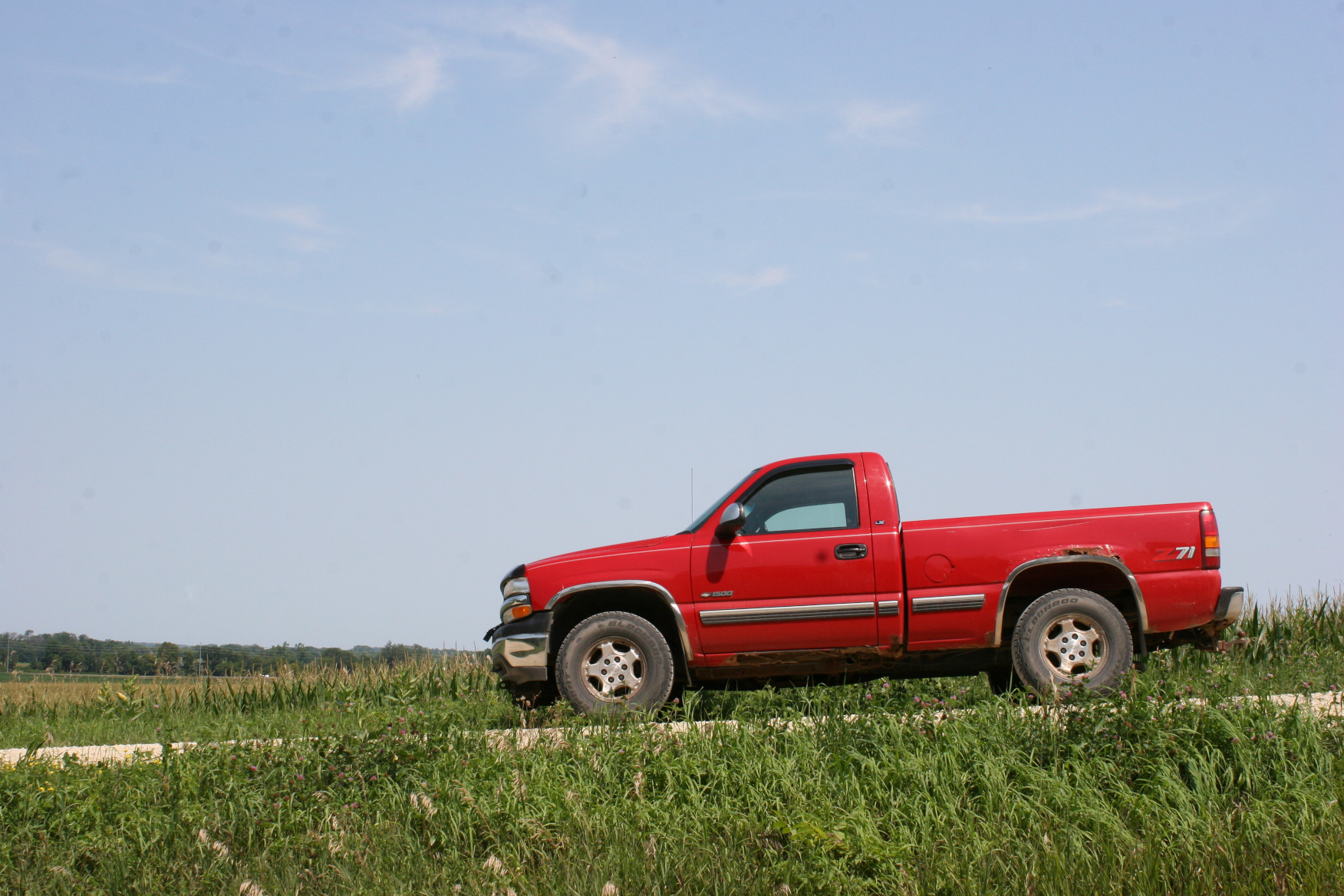
Keith puts on countless miles in his red pick-up truck. Minnesota Prairie Roots copyrighted photo July 2021.

Randy and I had just finished a short hike at the nearby Cannon River Wilderness Park when I spotted Keith on a gravel road in rural Dundas. We paused, his pick-up and our van pulled side-by-side, windows rolled down, the three of us conversing like farmers meeting on a rural road to talk crops.

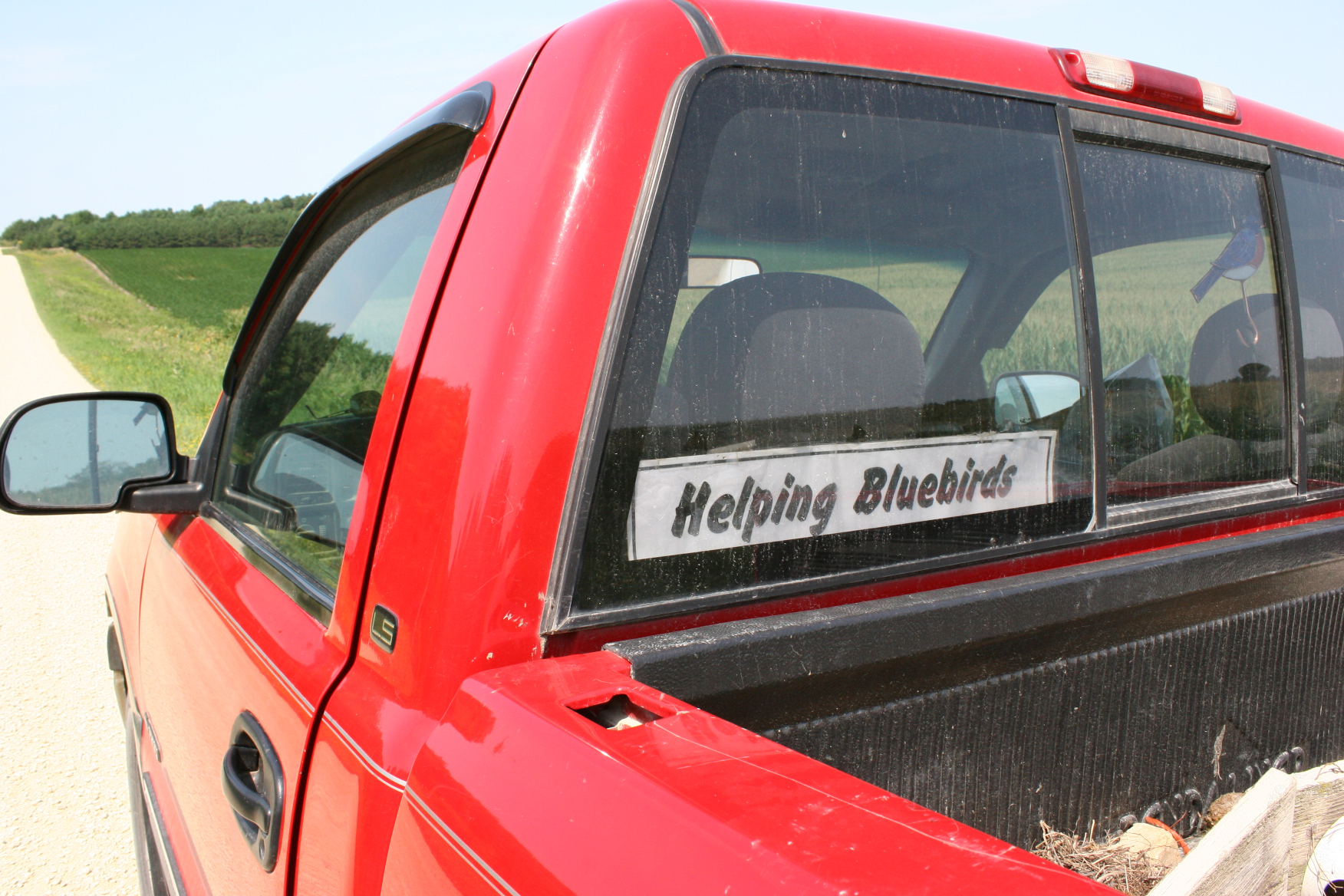
Keith’s simple mission statement. Minnesota Prairie Roots copyrighted photo July 2021.

Except we were talking bluebirds. Not that I know much about these songbirds. But Keith, who’s been tracking, counting and caring for bluebirds for nearly 40 years, does. He’s relentless in his passion to assure this bird thrives. And that devotion drives him to drive miles upon endless miles to check nest boxes and count eggs and do whatever it takes to assure bluebird survival. Rice County has the most successful bluebird recovery program in Minnesota.

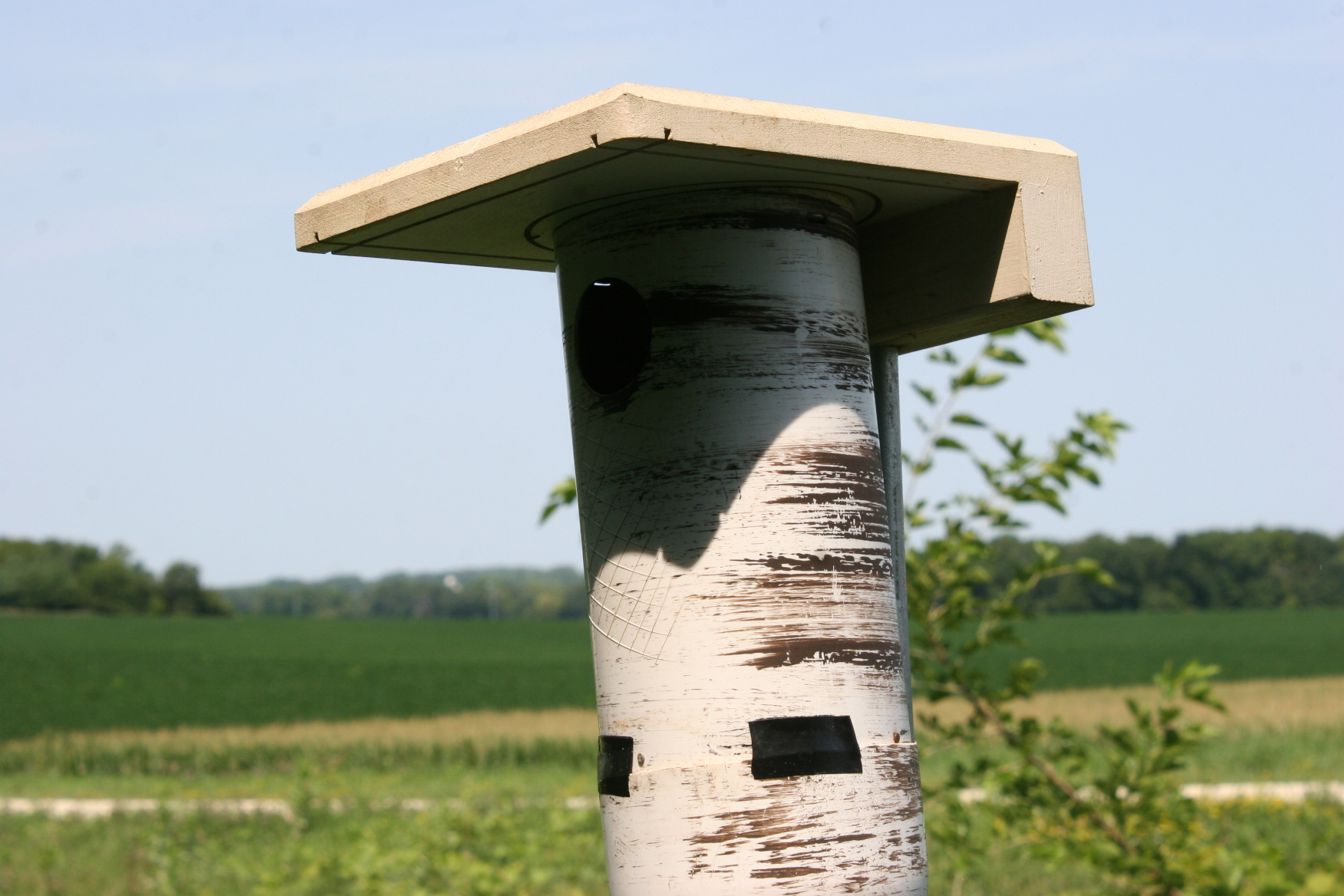
A nesting box for bluebirds. Minnesota Prairie Roots copyrighted photo July 2021.

I didn’t take notes when we were talking, although I recall Keith saying major ice storms in Texas this year had a devastating effect on the current bluebird population. He keeps meticulous notes on each nesting box.

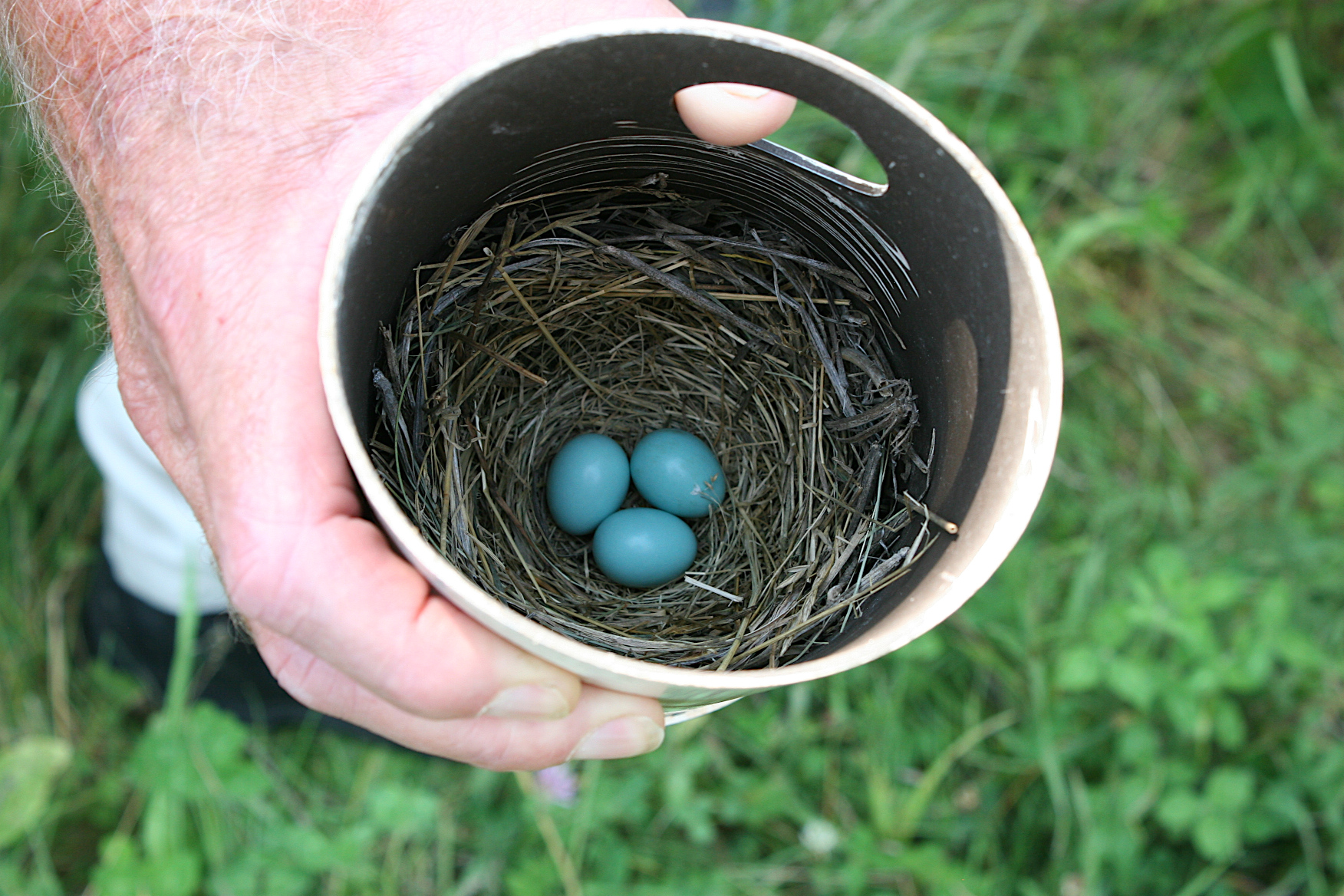
Bluebird eggs. We didn’t see any bluebirds. Minnesota Prairie Roots copyrighted photo July 2021.

Mostly, I focused on being in the moment. When Keith offered to show us two bluebird nesting boxes just down the road, we didn’t hesitate, reversed course, our van following his truck in a trail of dust. Once parked, Keith led us down the side of a ditch, lifting the nest cylinder from its post to reveal three beautiful blue eggs inside. The next nest held only a single egg.

Keith checks a bluebird nest. Minnesota Prairie Roots copyrighted photo July 2021.

Soon we were on our way, Randy and I looking for a place to eat a picnic lunch and Keith continuing with his bluebird checks.

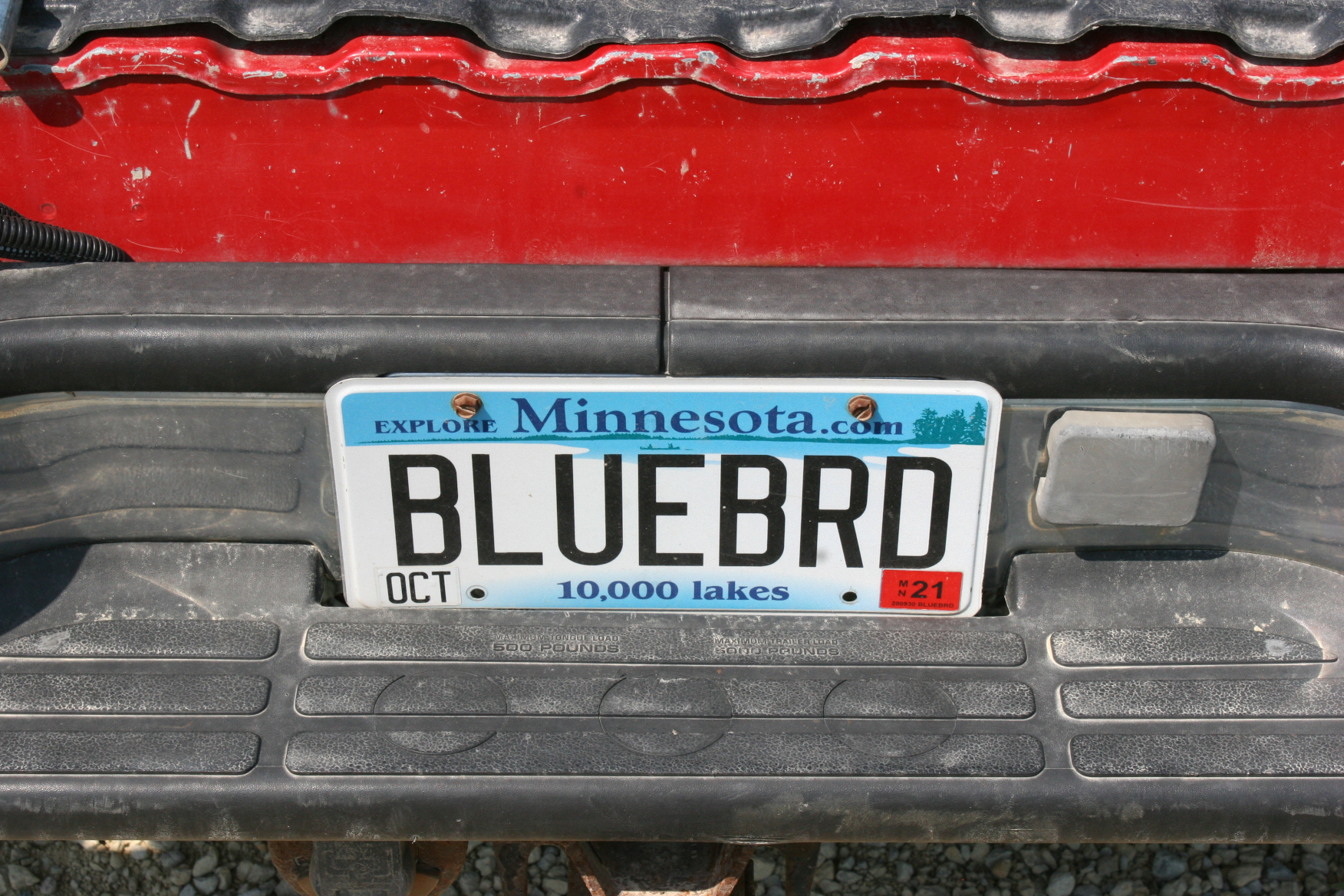
The personalized license plate on Keith’s pick-up truck. Minnesota Prairie Roots copyrighted photo July 2021.

But there’s more to this story than that of a man sporting a MINNESOTA BLUEBIRD RECOVERY PROGRAM cap with a specialty BLUEBRD license plate and a window sticker on his pick-up that proclaims his mission, Helping Bluebirds. There’s a personal connection. Keith is from my hometown of Vesta on the southwestern Minnesota prairie. He grew up north of town. I grew up south of town. Both of us on family farms.

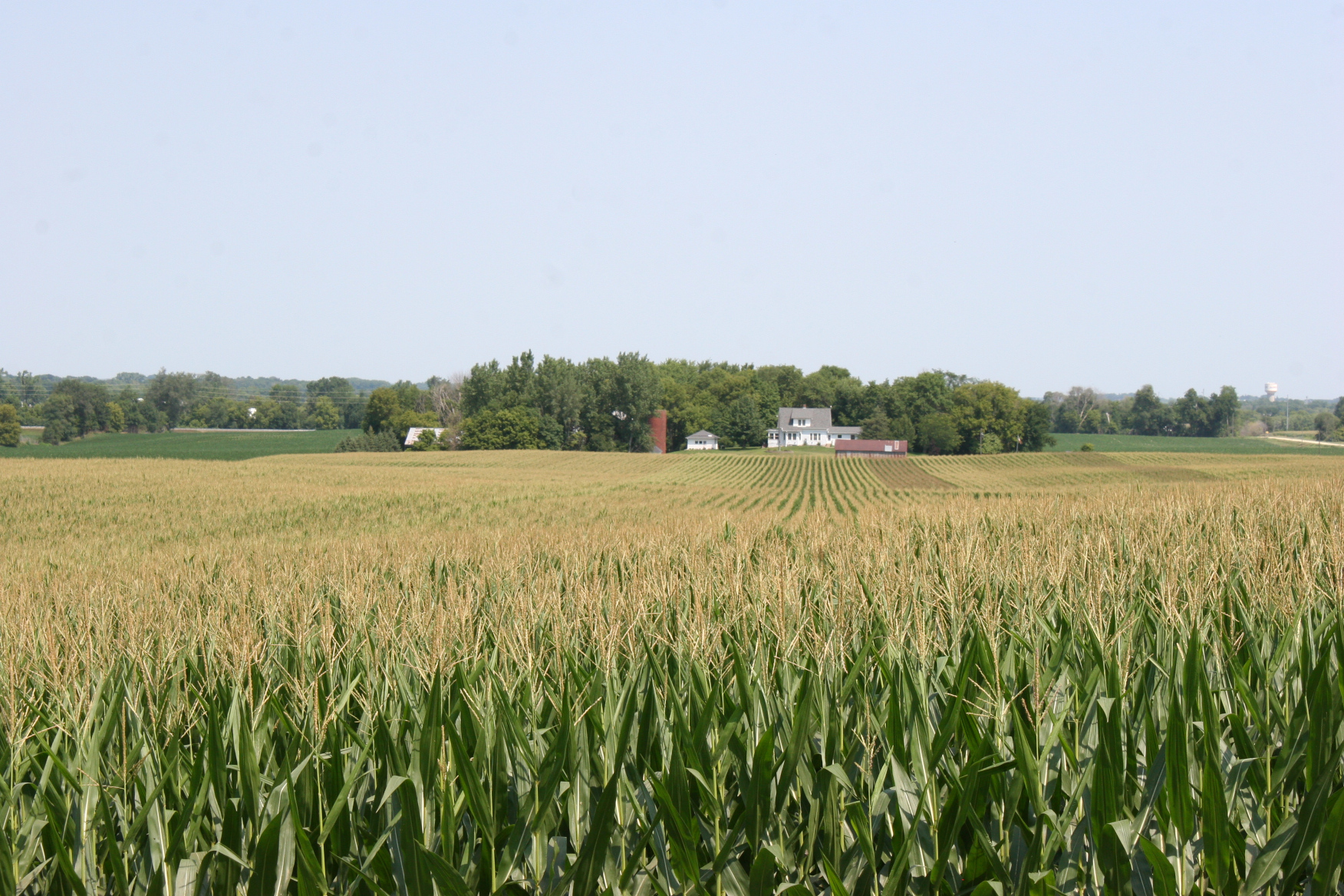
I photographed this cornfield and farm site from the gravel road where we stopped with Keith to check a bluebird nesting box. Minnesota Prairie Roots copyrighted photo July 2021.

Place connects us. Most people in Rice County are clueless as to the location of Vesta, or even our home county of Redwood some 120 miles to the west. So whenever I see Keith, I feel this sense of connection to my home area, to the land. When we met on that gravel road on a July afternoon, Keith understood my need to exit Faribault, to follow gravel roads, to reconnect with the land. And, yes, even to look at the crops.

© Copyright 2021 Audrey Kletscher Helbling


Wedding memories after 39 years May 14, 2021

Filed under: Uncategorized — Audrey Kletscher Helbling @ 5:00 AM
Tags: , , , , , ,
Wedding guests toss rice at Randy and me as we exit St. John’s Lutheran Church following our May 15, 1982, wedding. Photo by Williams Studio, Redwood Falls, Minnesota.

THIRTY-NINE YEARS AGO on May 15, Randy and I were married at St. John’s Lutheran Church in my hometown of Vesta. The church sits about a half-mile north of the crop and dairy farm where I grew up. Since few people have a clue as to my hometown’s location, here are general directions: Go west of Mankato, west of New Ulm, west of Redwood Falls and follow Minnesota State Highway 19 half-way to Marshall. Vesta is a short distance from the first curve curving south.

When I reflect on that Saturday in 1982, I remember how the morning began with light rain, how I worried about my $82 wedding dress from Maurice’s getting dirty on the gravel farm driveway. Photos from that day show the sidewalk to the church dampened by rain before the 2 pm ceremony and after, when guests lined the walkway to toss rice.

That exit photo is perhaps my favorite from our wedding day. The joy on our faces and that of our guests is in-the-moment natural. Journalistic style. Slice-of-life. While I value the posed professional portraits, I especially value this celebratory image. When I study it, I see loved ones who are no longer living. My Grandma Kletscher back in the corner, daisy corsage pinned to her dress, snow white hair spilling from her red scarf. My bachelor uncle, Mike, dressed to the nines in a suit and tie and smiling broadly. And then my Aunt Sue, the beautiful and classy aunt of Italian descent, fashionably dressed, clutching rice, smiling. I miss all of them.

The Vesta Hall, a community gathering place in my hometown. Minnesota Prairie Roots copyrighted file photo.

Detailed memories fade after nearly 40 years. But the highlights of that day remain. The joy in marrying the man I loved, and still love. The congregation singing my favorite hymn, “Beautiful Savior,” during the ceremony. The joy of celebrating with all those friends and family, including two of Randy’s soon-to-give-birth sisters. The joy of dancing across the old wooden floor inside the Vesta Community Hall. And, if Randy, could insert his memory here, he would remind me of the awful green hue of the punch my mom made. It was tasty; but he’s right about the color.

Our colors were green and yellow. Not John Deere green and yellow. Just green and yellow, my favorite colors. Randy didn’t care much about color choices, as I recall. I even stitched aprons for our waitresses from green and yellow gingham. Oh, how I’d love to have one of those ruffled aprons my younger cousins wore as they waited on tables.

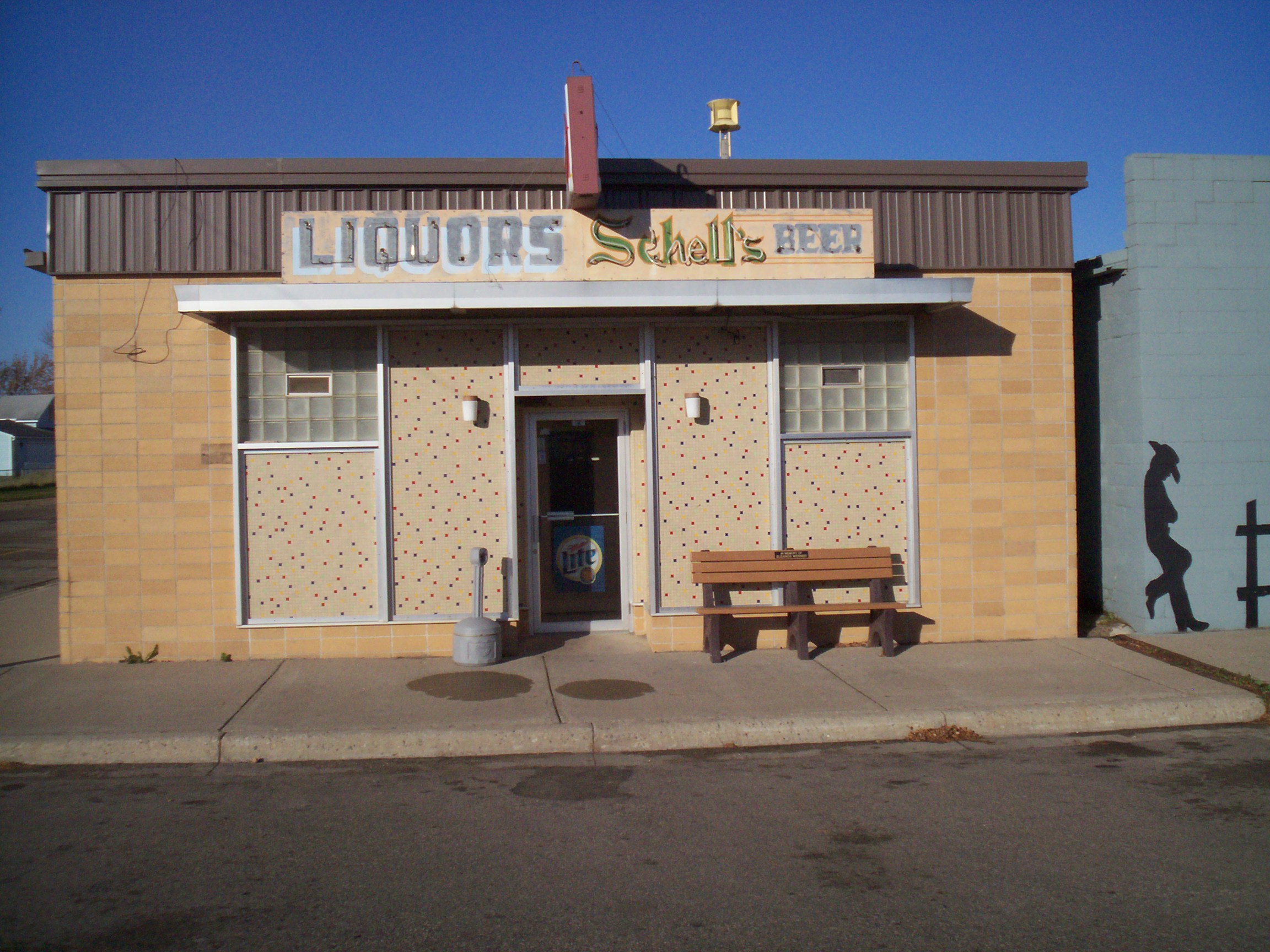
The Vesta Municipal Liquor Store (no longer a municipal liquor store). Minnesota Prairie Roots file photo 2011.

I appreciate that we were married during a time when weddings were simple. Simple as in twisted crepe paper streamers running the length of bare wooden banquet tables. Tables where locals piled corn kernels to mark BINGO cards once a year during BINGO Night. Tables that were pushed aside to open dance floor space for the Bunny Hop and the Chicken Dance and modern dancing. Dances, too, with the bride and with the groom. Randy would insert his memory here of dancing with a cousin who asked if he was sure he really wanted to get married. We still laugh about that question. But then the liquor store was just a half-block away.

Audrey and Randy, May 15, 1982. Photo by Williams Studio.

May 15 is certainly a day of reflection. But more important, it is a day of honoring our vows to one another. Of pledging to be there for one another. Always. Through the good times and the challenging times. And we’ve had plenty of both. It is a day also of celebrating what brought us together—love.

To my dear husband, Randy, thank you for loving me and for always being here for me and for our family. I appreciate you, cherish you, love you. In 40 years of knowing you and in 39 years of marriage, those feelings have only deepened. Happy anniversary! And I’m sorry about that green punch.

© Copyright 2021 Audrey Kletscher Helbling


Small towns, through the lenses of nostalgia & possibilities March 17, 2021

Filed under: Uncategorized — Audrey Kletscher Helbling @ 5:00 AM
Tags: , , , , , , , , , ,
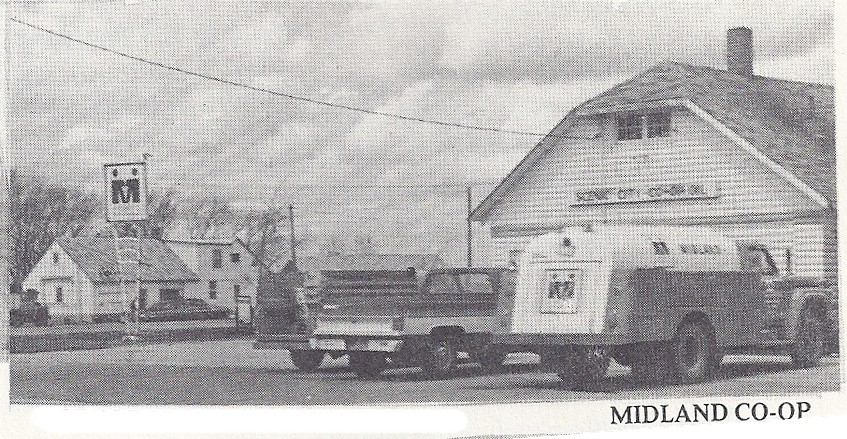
My uncle’s gas station with the fuel delivery truck parked by The Old Log Cabin. Photo from Envisioning a Century, Vesta, 1900-2000. The Miland station and the restaurant across Highway 19 in Vesta no longer exist. Minnesota Prairie Roots file photo.

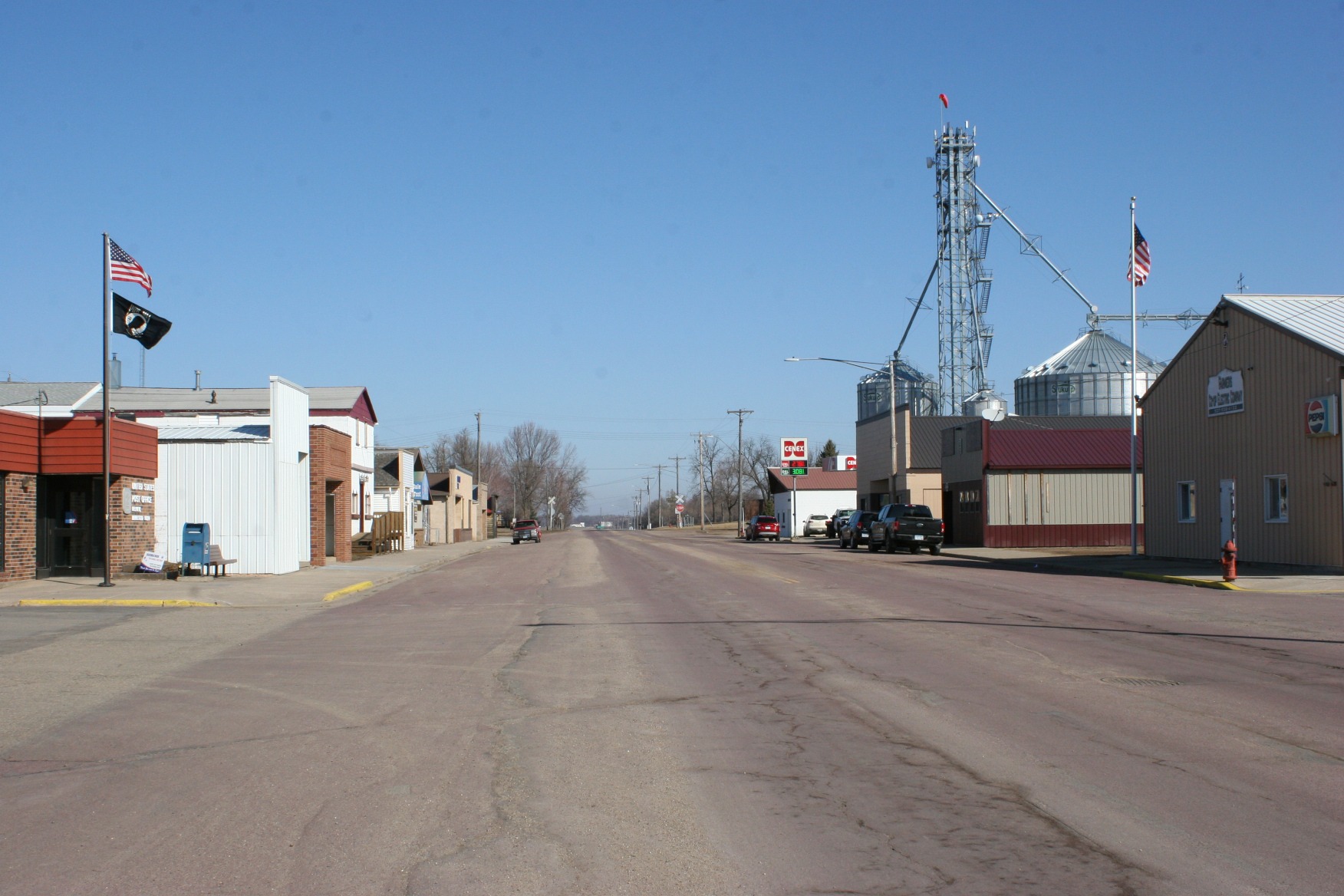
GROWING UP IN SMALL TOWN Minnesota in the 60s and 70s, I saw local businesses thriving. There were two hardware stores, two grocery stores, a lumberyard, feed mill, grain elevator, bank, restaurants, corner bar, barbershop, several service stations, post office and more in my hometown of Vesta, population 365. But today, the one-block Main Street stands mostly empty, pocked by vacant lots from long-ago torn down buildings. A few businesses remain. The elementary school closed decades ago.

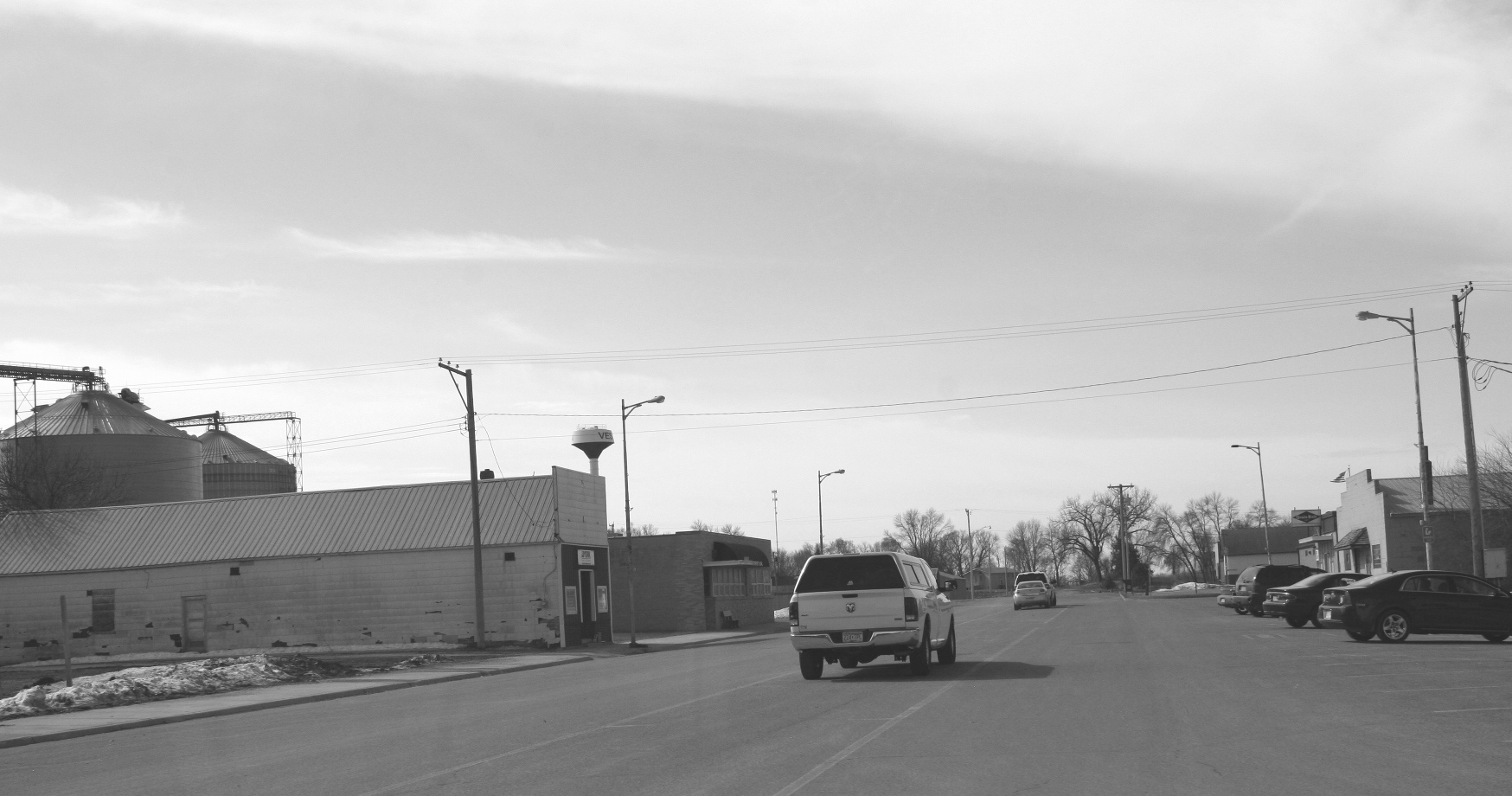
Downtown Belview, Minnesota, photographed last Saturday, March 13, 2021.

In Belview seven miles to the north and east, the story repeats. I recall driving to Belview with my grandma in the early 1970s to shop for fabric so I could sew dresses for her. That dry goods store is long gone. Belview has, like most rural communities, experienced the closure of many businesses as locals headed to regional shopping hubs to shop at Big Box stores and also embraced online shopping.

An historic anchor building in downtown Redwood Falls. Sward Kemp Snyder Drug recently moved out of downtown to the new hospital and clinic on the east edge of Redwood.

Likewise, Redwood Falls, to the east of Belview along Minnesota State Highway 19, has changed considerably. That Redwood County seat and the Lyon County seat of Marshall were our family’s go-to larger towns to shop for clothes, shoes and other necessities when I was growing up on the prairie. Last Saturday when Randy and I stopped in downtown Redwood, I found the streets nearly empty and few businesses open. Nothing like the bustling downtown I remember.

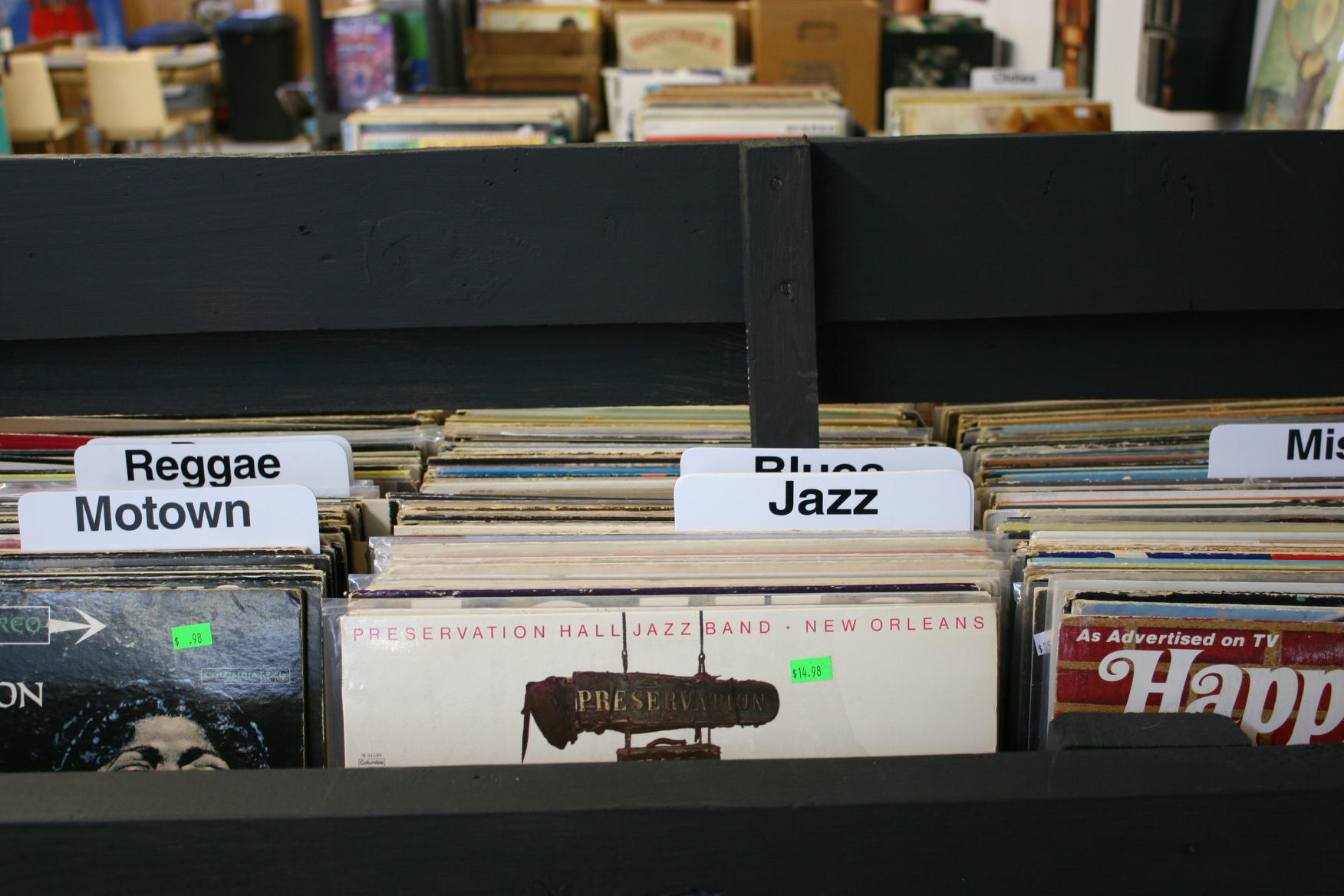
Vintage Vinyl, a newly-opened business in the heart of Redwood Falls.

I can sit here and write about this with nostalgia and sadness, wishing these rural communities remained self-sufficient. But wishes are not reality. And wishing does not change things. Action does.

An overview of Vintage Vinyl, packed with albums plus gaming and trading cards, books, video games, DVDs and VHSs, figurines and more. The tables provide a place for folks to play checkers, etc., and/or just hang out.
Vinyl galore…in all musical genres.
Randy files through vinyl selections.

While in Redwood Falls, I met a young man, Nate Rohlik, who recently opened Vintage Vinyl, Toys & Games. He’s passionate about improving his community, about providing a place for young people to gather, about growing opportunities.

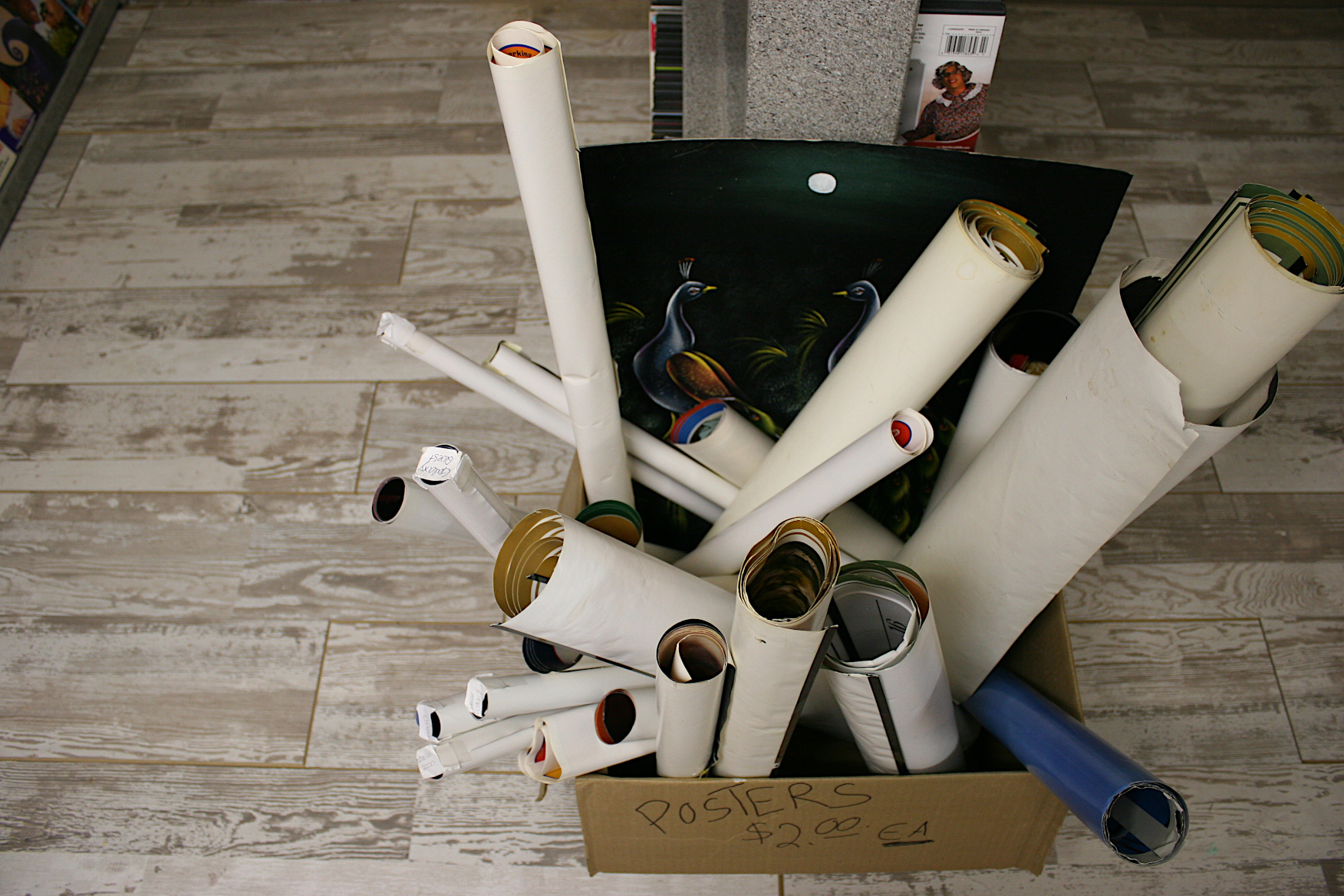
Looking for a poster? You’ll find them in Nate’s shop.
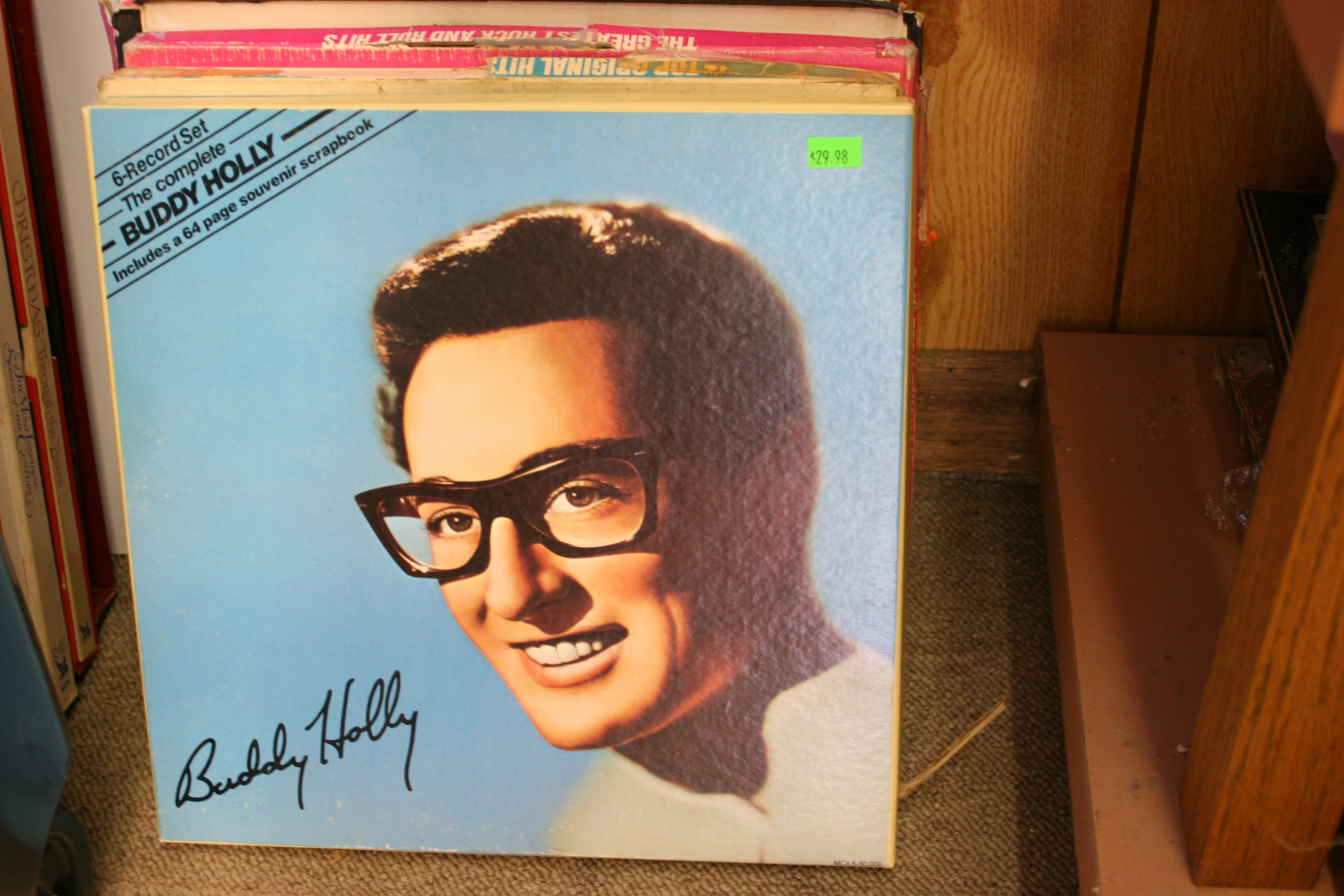
I spotted this Buddy Holly album leaning against the wall on the floor.
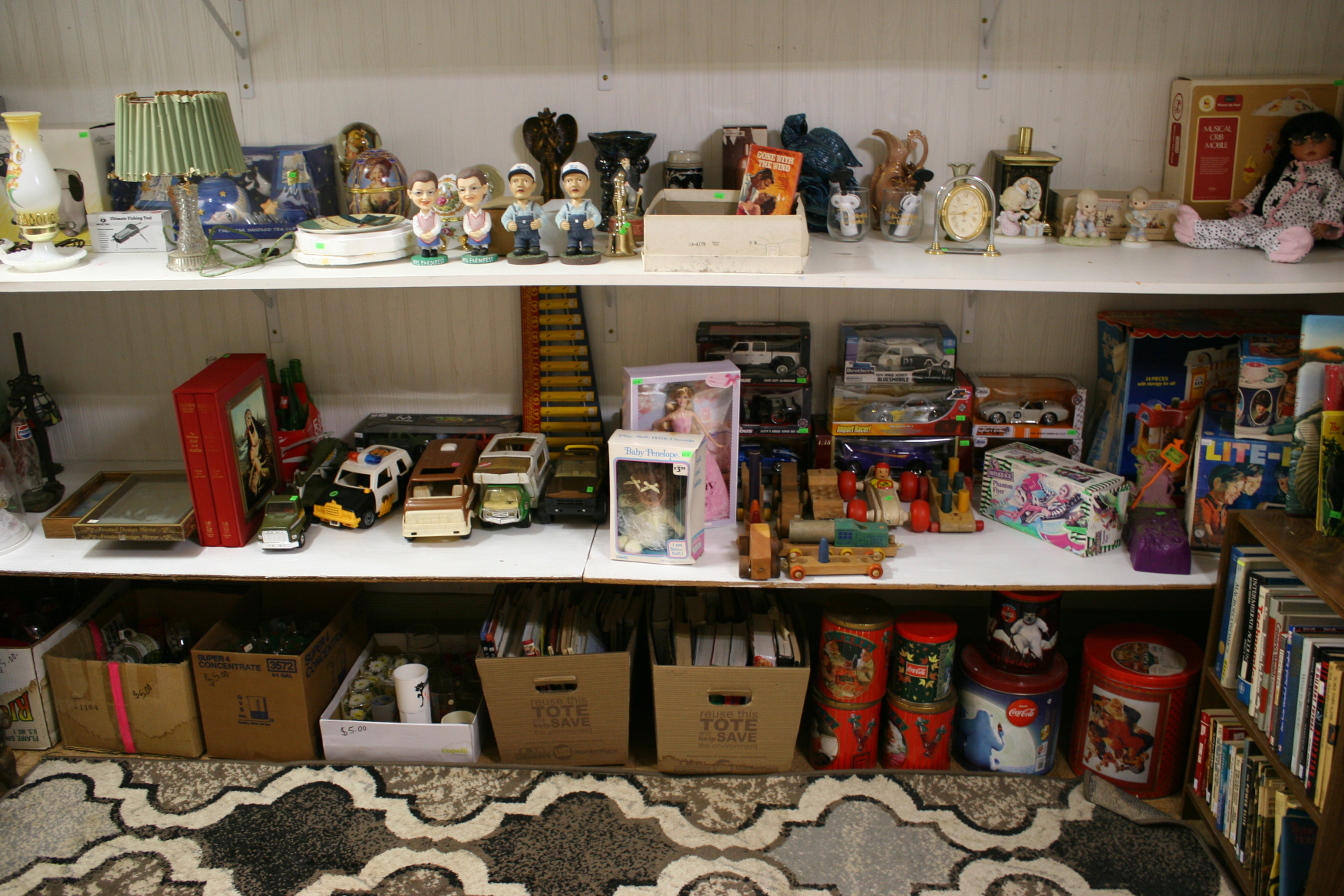
In the basement, an array of merchandise.

He’s friendly, outgoing, welcoming. Everything you want in a shopkeeper. But Nate also carries a sense of responsibility, it seems. He recently-returned to his home area after a stint with the military that took him around the world. He could have settled elsewhere. But he chose to return to his roots. (He graduated from nearby Wabasso High School, my alma mater, in 2004.) That says something.

Endless musical options…

We didn’t chat all that long. But my brief conversation with Nate gives me hope. Hope that his positive attitude, his efforts—including purchasing two arcade games—and his drive will ignite a fire of possibilities.

PLEASE CHECK BACK to read my thoughts on small towns and what draws me to them.

© Copyright 2021 Audrey Kletscher Helbling


For the love of ice skating in Minnesota February 1, 2021

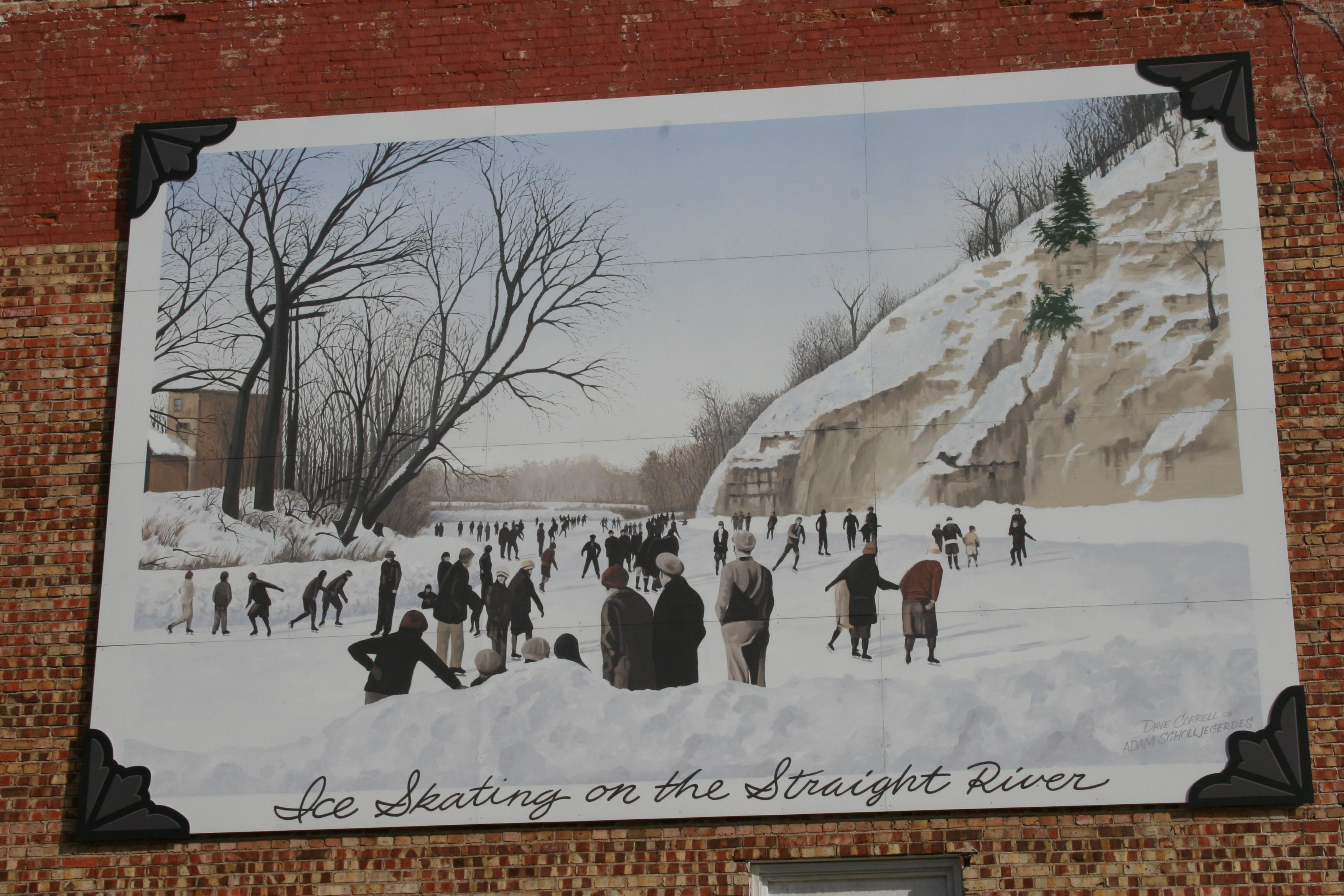
This mural of “Ice Skating on the Straight River” graces the side of 10,000 Drops in downtown Faribault. Minnesota Prairie Roots file photo.

WAY BACK IN THE DAY, in the exuberant days of my youth, when I truly enjoyed winter, I loved to ice skate. I wore my Aunt Dorothy’s white figure skates, passed along to me. I was happy to have them.

And I was happy to find a patch of ice upon which to skate in my hometown of Vesta. Near the grain elevator. Nothing fancy. Just an open space flooded in the winter for skating.

Now my hometown is looking to offer youth more than simply a patch of ice. Local resident Jacob Kolander has started a gofundme page to raise $6,000 for a Community Outdoor Hockey Skating Rink. His goal is to erect boards and an entry gate around a rink to provide a safe place for kids to skate. So far, he’s raised $950. If you’re interested in contributing to the cause, click here.

Up in Warroad, in the northwest section of Minnesota right next to Canada, locals have created a 2.5-mile Riverbend Skate Path which has grabbed lots of media attention. It started with two families wanting to connect their ice rinks. Yes, hockey/skating is big in this part of Minnesota. Well, that initial connection expanded to include five more rinks linked via the Warroad River. And now locals are clearing and grooming the ice and looking to buy a Zamboni. Various fundraisers, like concession stands along the skating path, are aiming to generate the needed funds.

Much farther to the south in the small town of Pierz, the local library also embraces skating via lending out ice skates for a week at a time. Varied sizes, from kids to adult, are available for check out. I love this idea—just in case there are kids without an Aunt Dorothy.

TELL ME: Have you ice skated? Let’s hear your skating experiences.

© Copyright 2021 Audrey Kletscher Helbling


Embracing winter in Minnesota January 6, 2021

Filed under: Uncategorized — Audrey Kletscher Helbling @ 5:00 AM
Tags: , , , , , , , ,
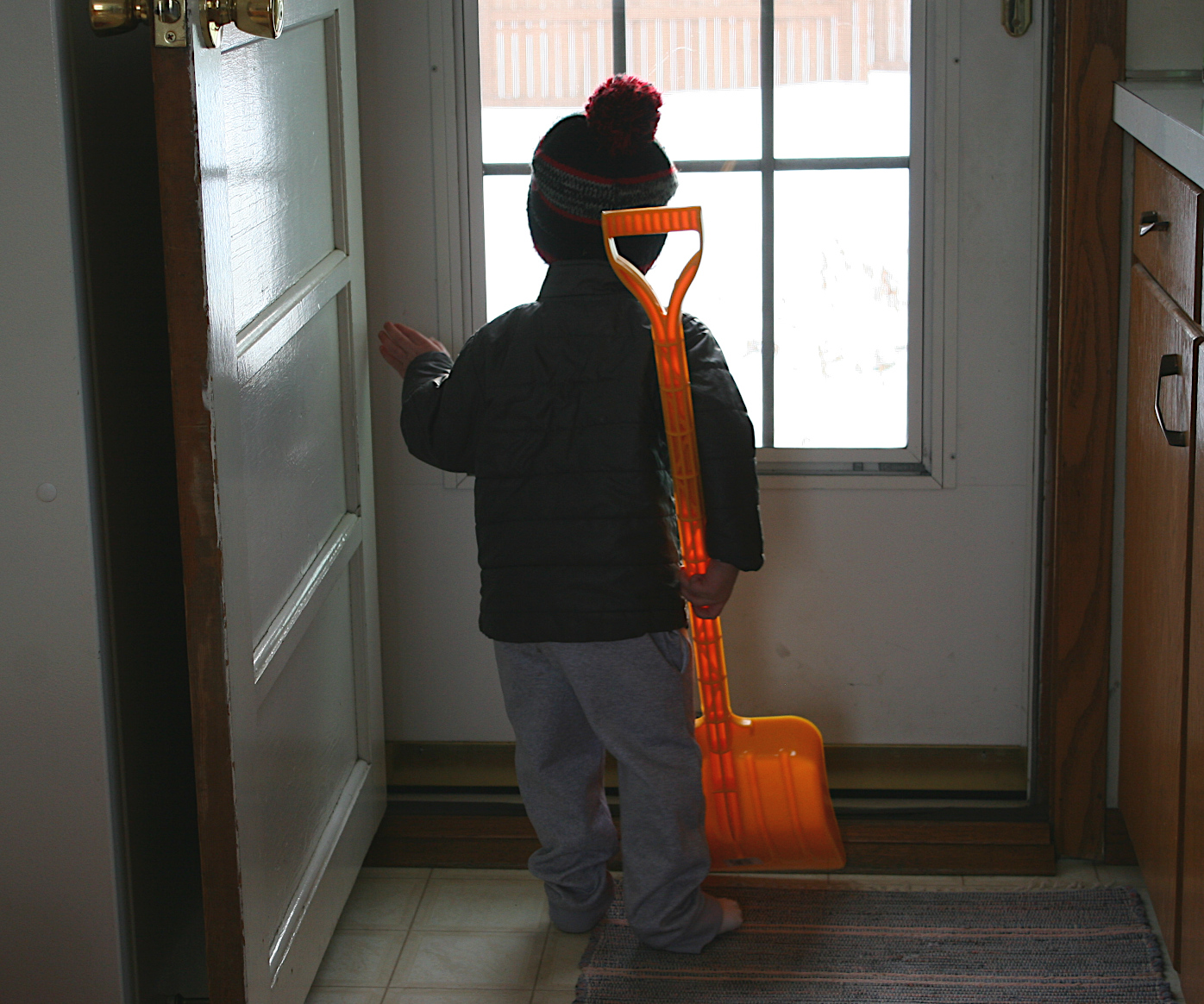
My two-year-old grandson with his new snow shovel.

WHEN YOU LIVE IN A NORTHERN state like Minnesota, where winter defines at least half the year, preparation for cold and snowy weather is a necessity, not an option.

It’s a lesson taught from early on. Snowsuit, waterproof mittens and snow boots for the kids. Check. Check. Check. Sled. Check. Snow shovel. Check.

No matter your age, dressing properly to protect from the elements and then having the right tools to deal with the snow are essentials. So we’ve equipped our grandchildren, Isabelle and Isaac, with snow shovels and sleds. Izzy got her mama’s childhood snow shovel and Lion King sled. Isaac got a new shovel purchased at the local hardware store. And we bought bright new sleds for both at a regional retailer.

Then it’s up to the parents, or the grandparents, to bundle the kids and get them outdoors. It’s a process. But important in teaching the little people that winter can be fun.

Our southwestern Minnesota farmyard is buried in snowdrifts in this March 1965 image. My mom is holding my youngest sister as she stands by the car parked next to the house. My other sister and two brothers and I race down the snowdrifts.

I loved winter as a child growing up on the wind-swept southwestern Minnesota prairie. There snow drifted into rock-hard mountains around the house and farm outbuildings. There Dad shoved snow with the John Deere tractor and loader into more mountains, where my siblings and I played for endless hours. We carved out snow caves and raced on a vintage runner sled. Such is the stuff of memories. And of winter in Minnesota.

This huge, hard-as-rock snowdrift blocked our farm driveway in this March 1965 photo, rural Vesta, Minnesota. My uncle drove over from a neighboring farm to help open the drive so the milk truck could reach the milkhouse.

While my grandchildren’s memories will be different—they live in a new housing development in the south metro—I hope they continue to embrace winter with joy and enthusiasm. Just as their mom (Dad grew up in warm and sunny California) and maternal grandparents did before them.

© Copyright 2021 Audrey Kletscher Helbling


Remembering & honoring my hardworking dad this Labor Day September 7, 2020

Dad farmed, in the early years with a John Deere and Farmall and IH tractors and later with a Ford. (Photo by Lanae Kletscher Feser)

A photo of my dad, Elvern Kletscher, taken in 1980. He died in 2003.


MY DAD WORKED HARD. Really hard. He was a farmer, beginning back in the day when farming was incredibly labor intensive. Pitching manure. Throwing hay bales. Milking cows by hand. Cultivating corn. He worked from the rising of the sun to beyond sunset. Hours and hours in the barn. Long days in the field. Few, if any, days off.


The milkhouse, attached to the barn on the farm where I grew up just outside of Vesta, MN. I spent a lot of time in these two buildings. Minnesota Prairie Roots file photo.


It was a life he knew from childhood, as the son of a southwestern Minnesota farmer. Dad quit school after eighth grade to work on his family’s farm in the 1940s. And when he grew into adulthood, he served on the frontlines during the Korean War, then returned to farm just down the road from the home place. There he worked his own land, milked cows and raised (along with my mom) his family of six children.


Some of the acreage my dad farmed in Redwood County, Minnesota. Minnesota Prairie Roots file photo.


Like my father, I grew up with a strong work ethic rooted in the land. Walking bean fields to pull unwanted weeds. Picking rock. Throwing hay bales into feed bunks for the Holsteins. Carrying buckets of milk replacer to thirsty calves. Climbing up the silo and forking smelly silage down the chute. The work never ended. And the next day we repeated the process.


Corn and soybean fields define southwestern Minnesota. Minnesota Prairie Roots file photo.


But it was, in many ways, a good life. Time together. Time outdoors. Time to reflect. Time to learn and grow and stretch, just like the corn stretching toward the sky.


Growing up on our crop and dairy farm, my eldest brother, Doug, photographed the cows and recorded details about them. My middle brother treasures this compilation of information from our farm. And so do I. Memories… Minnesota Prairie Roots file photo.


Working on the farm made me strong and resilient and fostered a sense of independence. I have always been a self-starter, preferring to work on my own. I trace that to the spirit of independence I observed in my farmer dad, who stood up for what he believed. I remember him dumping milk down the drain as the National Farmers Organization aimed to get better prices. I possess a streak of that feistiness, especially when it comes to those who are bullied/oppressed/looked down upon. I do what I can, with the talents I have, to make a positive difference. To uplift and encourage. And to really listen rather than talk.

I always told my dad I wanted to be a farmer when I grew up. He didn’t encourage that thought. None of my five siblings farm, although two work in ag-related businesses. It’s a credit to my parents that each of us pursued diverse careers as a partsman (and part owner) at an implement dealership, as a writer and photographer, a florist, CEO of an ethanol plant, teacher and lawyer. That’s a wide range of occupations among siblings. Our parents did not tell us what to do, and for that I shall always be grateful.


Our southwestern Minnesota farmyard is buried in snowdrifts in this March 1965 image. My mom is holding my youngest sister as she stands by the car parked next to the house. My other sister and two brothers and I race down the snowdrifts.


We were not a perfect family. Still aren’t. There were, and are, struggles. Financial and other. We were poor as in outhouse poor and no gifts for birthdays poor and wearing hand-me-downs poor and only rice for dinner poor. And only two vacations my entire childhood—one at age four to Duluth and one to the Black Hills at around age 12. Yet, I never felt like we were missing anything. We had enough. Food. Shelter. Clothes. And hardworking parents—for my mom worked equally as hard as my dad—who loved and provided for us.

My parents may not have hugged us or told us they loved us. But they showed their love by their care, their provision, their raising us in the faith. Their efforts, from parenting to farming, were a labor of love. And I shall always feel gratitude for that.

#

CLICK HERE TO READ my post, “Many Reasons to Feel Blessed this Labor Day,” published last week on the Warner Press blog.

© Copyright 2020 Audrey Kletscher Helbling