Minnesota Prairie Roots

Writing and photography by Audrey Kletscher Helbling

From a small Minnesota town: “My dad got shot” August 10, 2011

Filed under: Uncategorized — Audrey Kletscher Helbling @ 12:13 PM
Tags: , , , ,

WEEKS LATER, I STILL can’t shake her haunting words. “My dad got shot,” the darling pixie of a 6-year-old with brown eyes and long, spaghetti-straight auburn hair tells me.

I don’t want to believe her and even question the truthfulness of her statement.

But she is too quick to respond, to say that her dad, Bill, is dead, “buried in the ground.” The father who stole a car and went to jail was shot by someone who came to the house when she was only one, she says. I don’t know if she has her story spot-on correct, but I figure she’s heard it too many times to mess up the truth.

Recently, the police stopped by her house—the one across from the park with the boxspring leaning outside the front door and the stockade of a fence enclosing the back yard. “I don’t know why they came,” she says. I can see the hint of fear in her eyes.

I don’t pry. But I want to swoop her up, hug her, take her away from the bad memories and the stories of the violent death of her father, away from a life that seems not all that stable even now.

Yet, I’ve only met her as my husband and I are in a southern Minnesota small-town city park on a Sunday afternoon. I want to advise her and the boy, who isn’t her brother but lives with her because her mom and his dad “are in love,” that they shouldn’t talk to strangers in the park.

But she has already told me the dead father story and rolled her eyes at the living arrangement between parents. I can’t just tell her and the little boy to go home. Be safe. Don’t talk to strangers or accept food from them. She’s already caused my heart to ache.

So instead, we offer them food. She refuses any. But the boy, about four, gobbles up the potato chips and grapes we give him. It is 1:00 and they have not eaten lunch, although the six-year-old says they ate a late breakfast.

I’m not so sure. Maybe she’s heeding advice she once heard about not accepting food from strangers. Yet, she’s the one who approached Randy when we first arrived, when I was using the porta potty, and told him he looked like her friend Emma’s grandpa.

They seem hungry, not only for food, but for someone who cares.

“I have a dad,” the boy shares between mouthfuls of chips. And that’s when the mite of a girl tells us about her dead father.

Soon the boy’s older sister, by a few years, arrives at the park, apparently sent over to check on the other two.

“Do you want some potato chips?” I ask. She accepts a handful.

“She stole a peach,” the redhead accuses.

“From the grocery store?” I ask, thinking I may now need to teach them right from wrong.

No. The peach was stolen at home.

“I stole pop tarts,” the talkative six-year-old confesses. “She told me to.” She looks directly at the other girl, the one who may someday become her sister if the two in-love parents marry.

I don’t understand her word choice—“stole.”

“We’re supposed to ask (for food),” she explains or “get in trouble.”

Now I am worried. “You don’t get hit for taking food, do you?”

They say “no” and I inwardly breathe a sigh of relief.

Then, after we give cheese slices to the little boy and his sister, with the pixie girl still refusing food, she obeys a summons to come home. The boy is still standing near the picnic table, his sister a short distance away. He struggles to unwrap the single cheese slice.

“Here, let me help you,” I say. He hands me the cheese and I unwrap it. He shoves the slice into his mouth and runs home. His sister declines my offer to remove the cheese wrapping, determined to do it on her own. She does.

I leave the small-town park unsettled and worried about the future of these three children. Already they’ve experienced so much in their young lives: Violent death. Police knocking on the door. Food they feel they must steal.

My heart aches for these children. Will they grow up tough, hardened by the life they’ve already lived? Will they overcome the pain they’ve already experienced? Will they continue to approach strangers in the park…to talk about the dad who was shot, the food they must “steal?”

I wonder. I worry.  Should I have done something more?

THE NAMES IN THIS STORY have been changed to protect these children who thought nothing of walking up to strangers in a park. That also is the reason I am not revealing the Minnesota town where I met them. The rest of the story, sadly, is true.

© Copyright 2011 Audrey Kletscher Helbling


Follow the rainbow to a charming antique store in Belview August 9, 2011

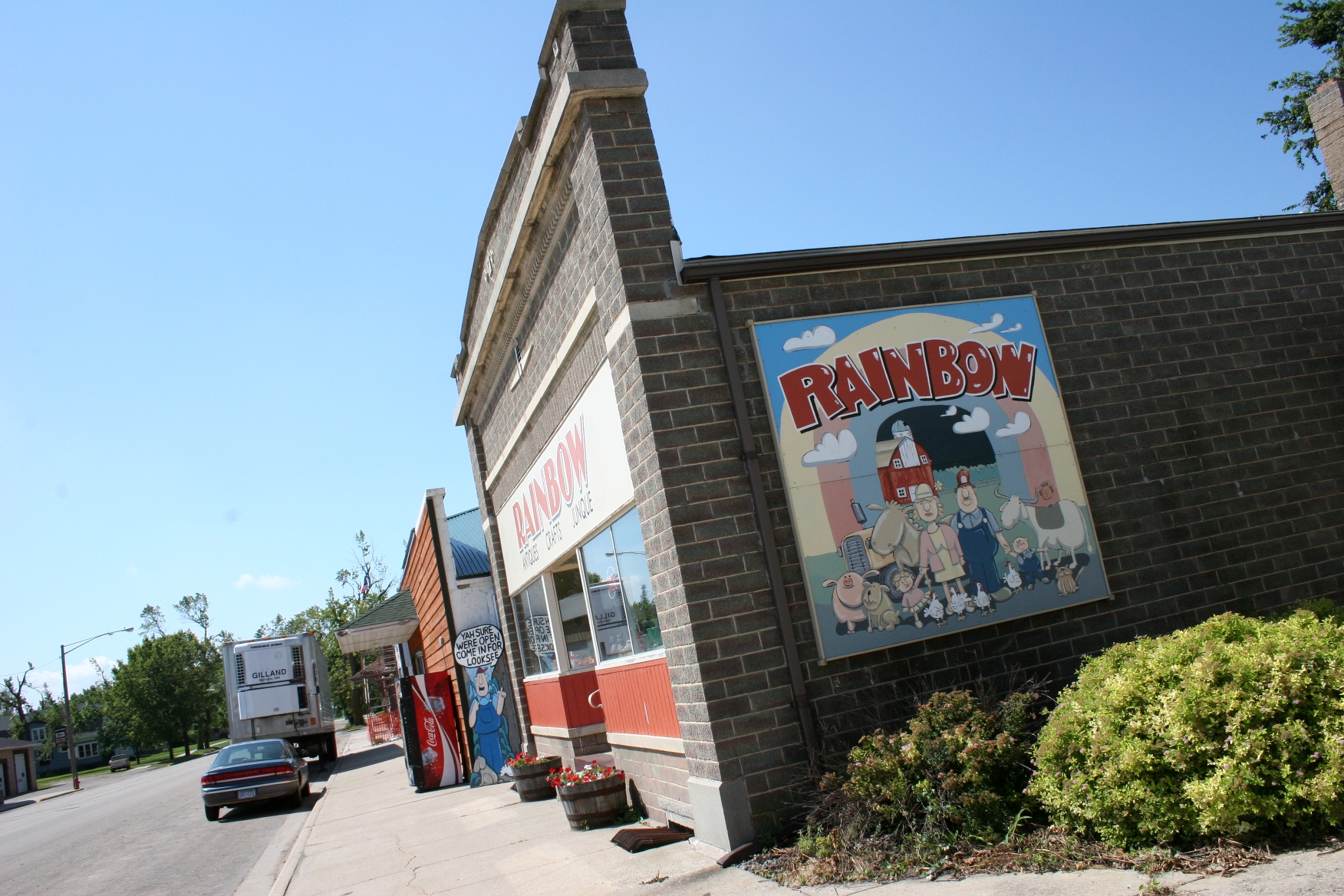
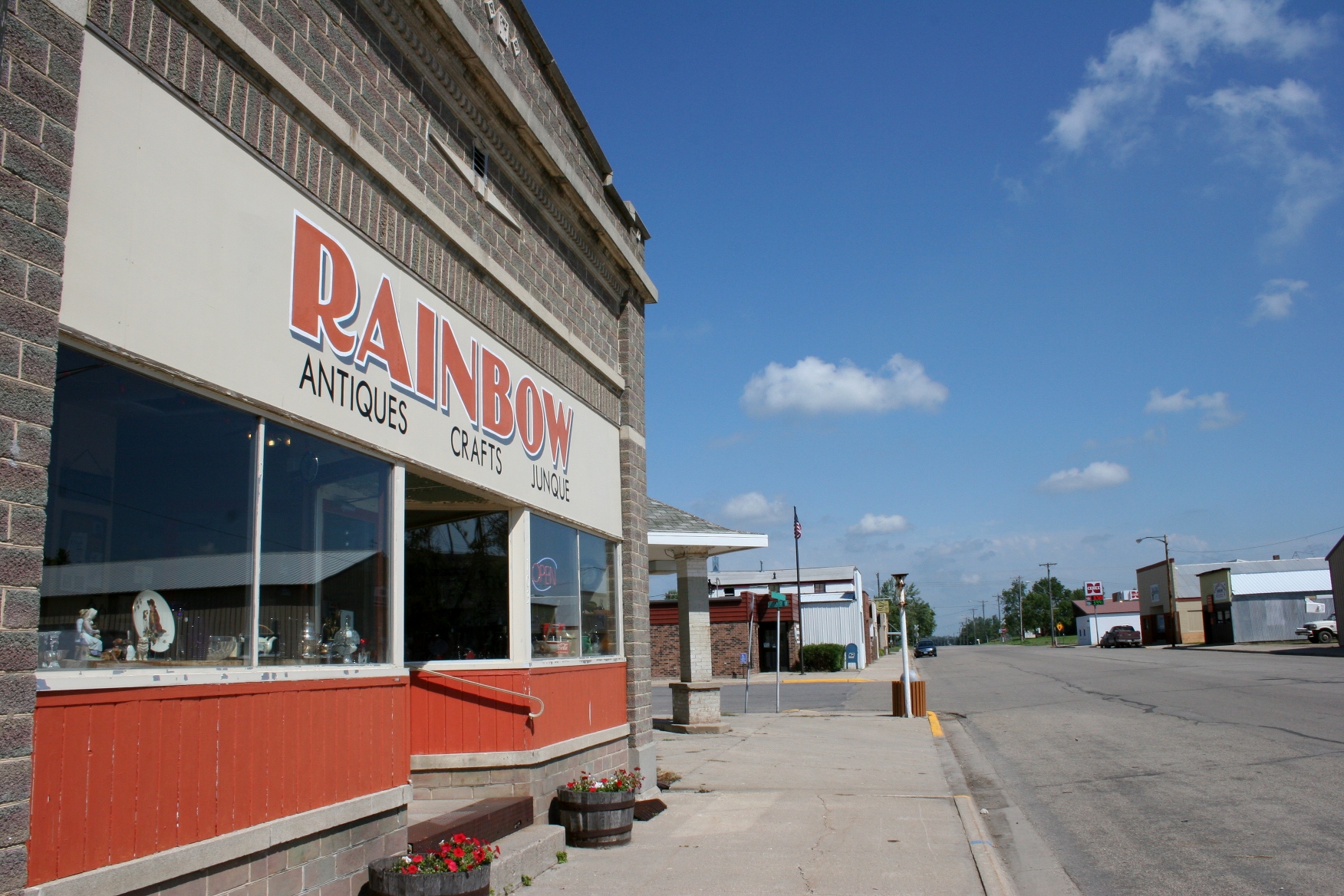
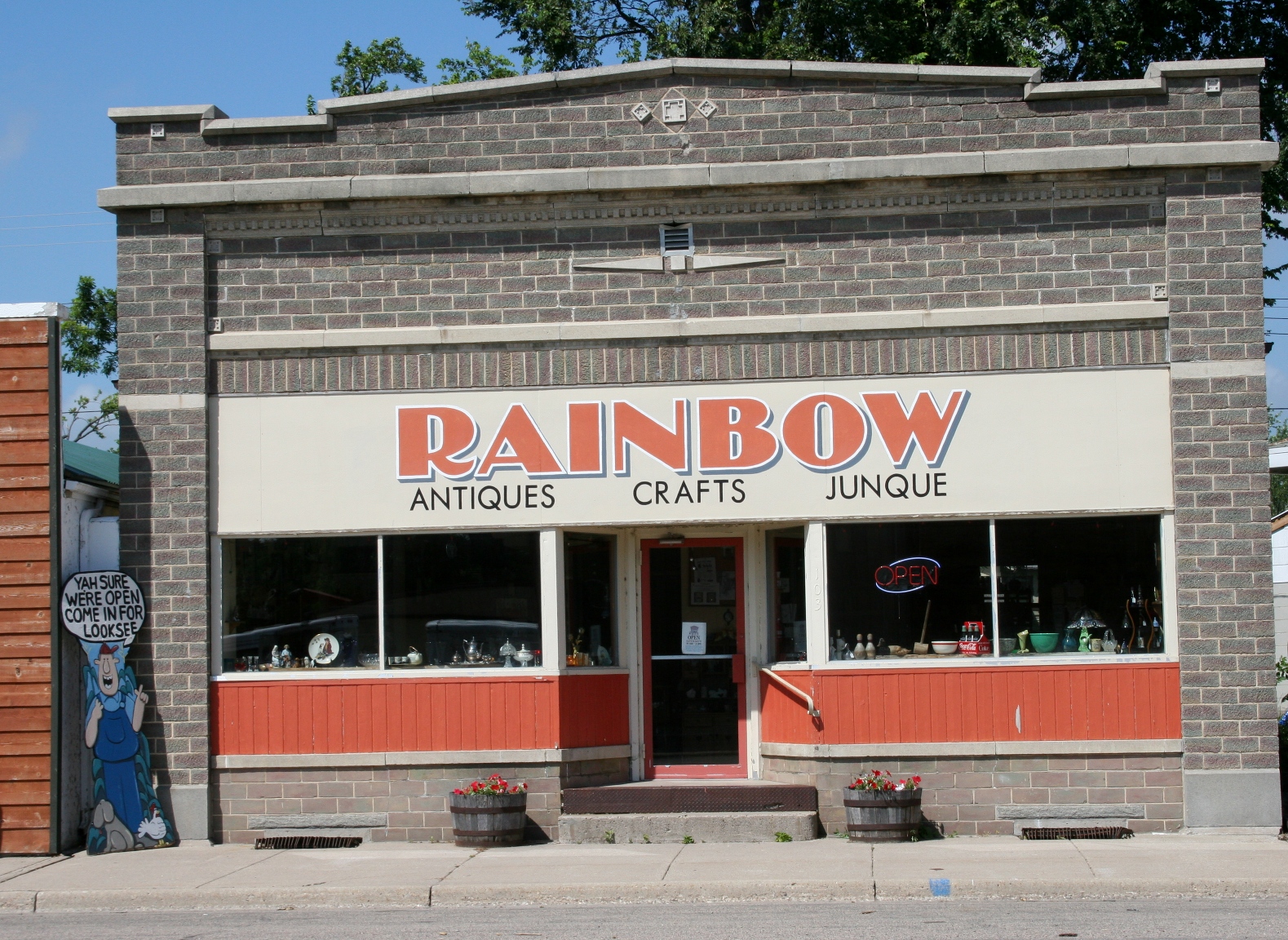
Driving north into Belview, you can't miss Rainbow Antiques, Crafts & Junque.

IF YOU’RE INTO ANTIQUING or architecture or small towns, you’ll want to visit Belview, population 375, four miles off State Highway 19 in southwestern Minnesota.

My husband, Mom and I drove to Belview on a recent Saturday morning to see my Uncle Merlin and Aunt Iylene’s “new” old home along the main drag. We also toured the town, checking out the damage from a July 1 EF-1 tornado. And, lucky us, we happened to be in this Redwood County community on the one day a week that Rainbow Antiques, Crafts & Junque is open.

And let me tell you, Don Gunelson runs one heckuva an antique store with the flair of an artist.

You’ll notice the building right away when you drive or walk Main Street. It’s built of beautiful rainbow brick which, in itself, is worth a stop. I know of at least two other rainbow brick buildings in Redwood County—one in Walnut Grove and the other on a corner in nearby downtown Redwood Falls.

Colorful rainbow bricks comprise the antique shop.

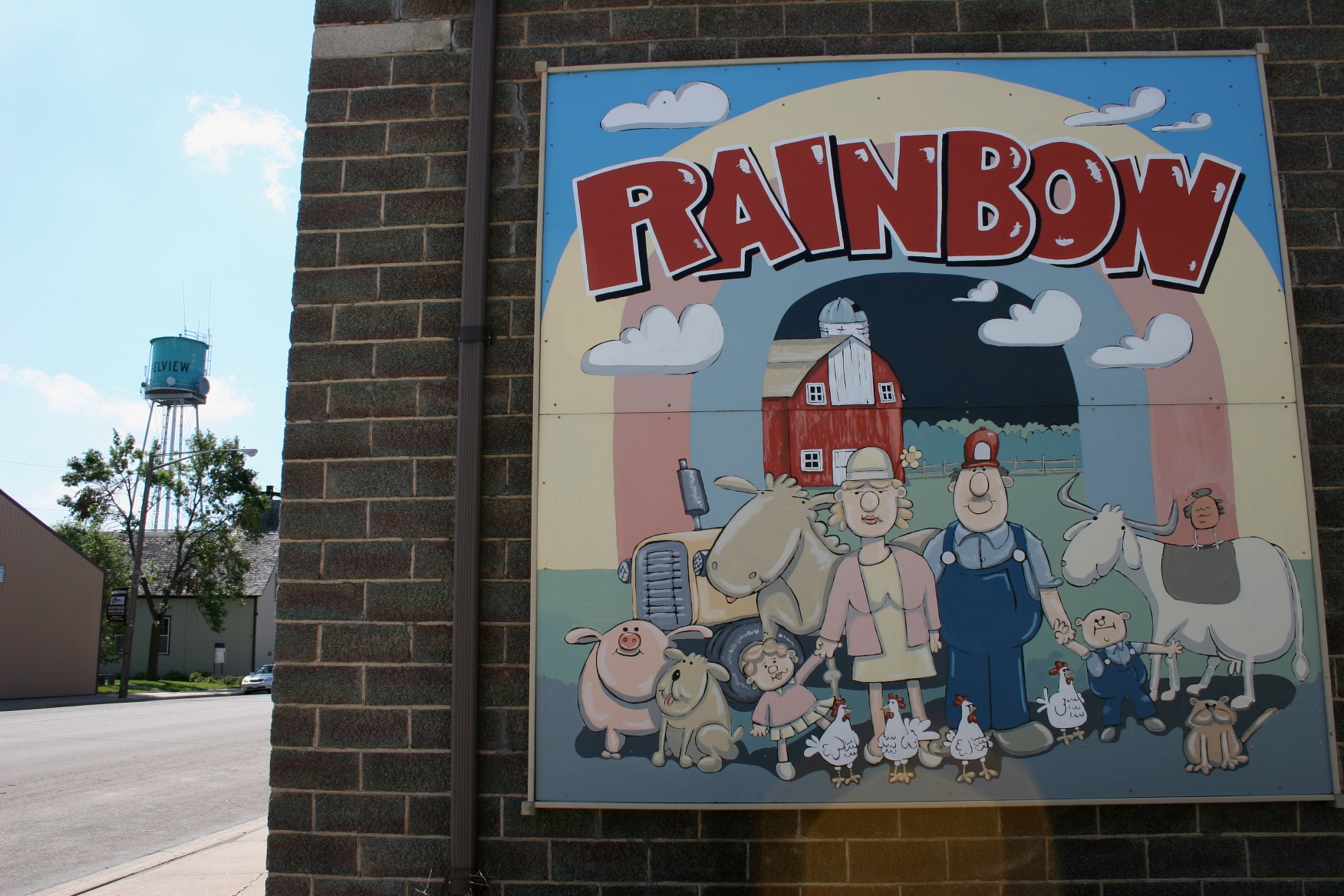
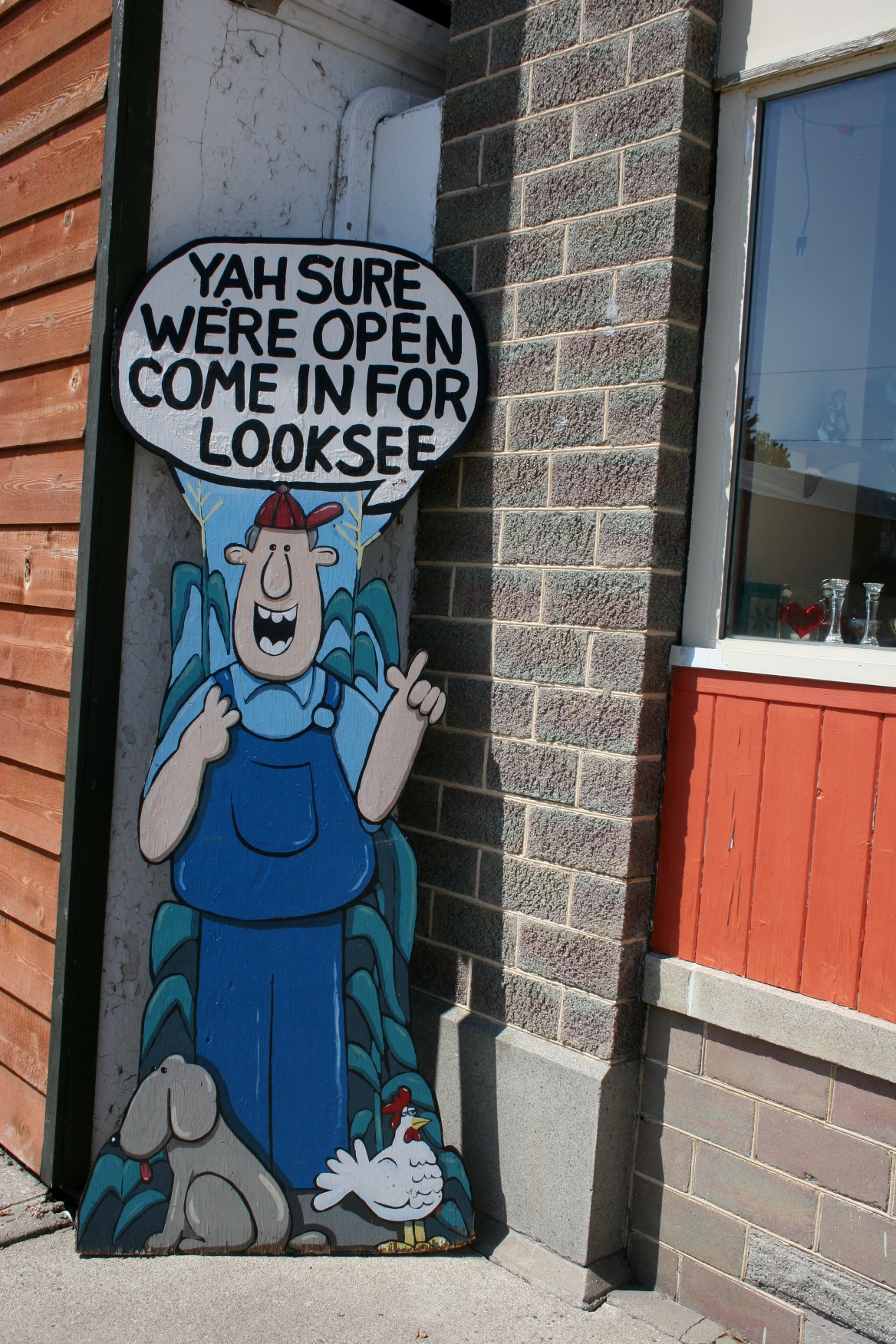
Don directs customers to his store with nicely-done folksy signage. I didn’t ask Don if he created the artwork, but he worked as a graphic designer for a construction magazine before returning to his native Belview from the metro some 10 years ago. He also works part-time at the Belview Post Office.

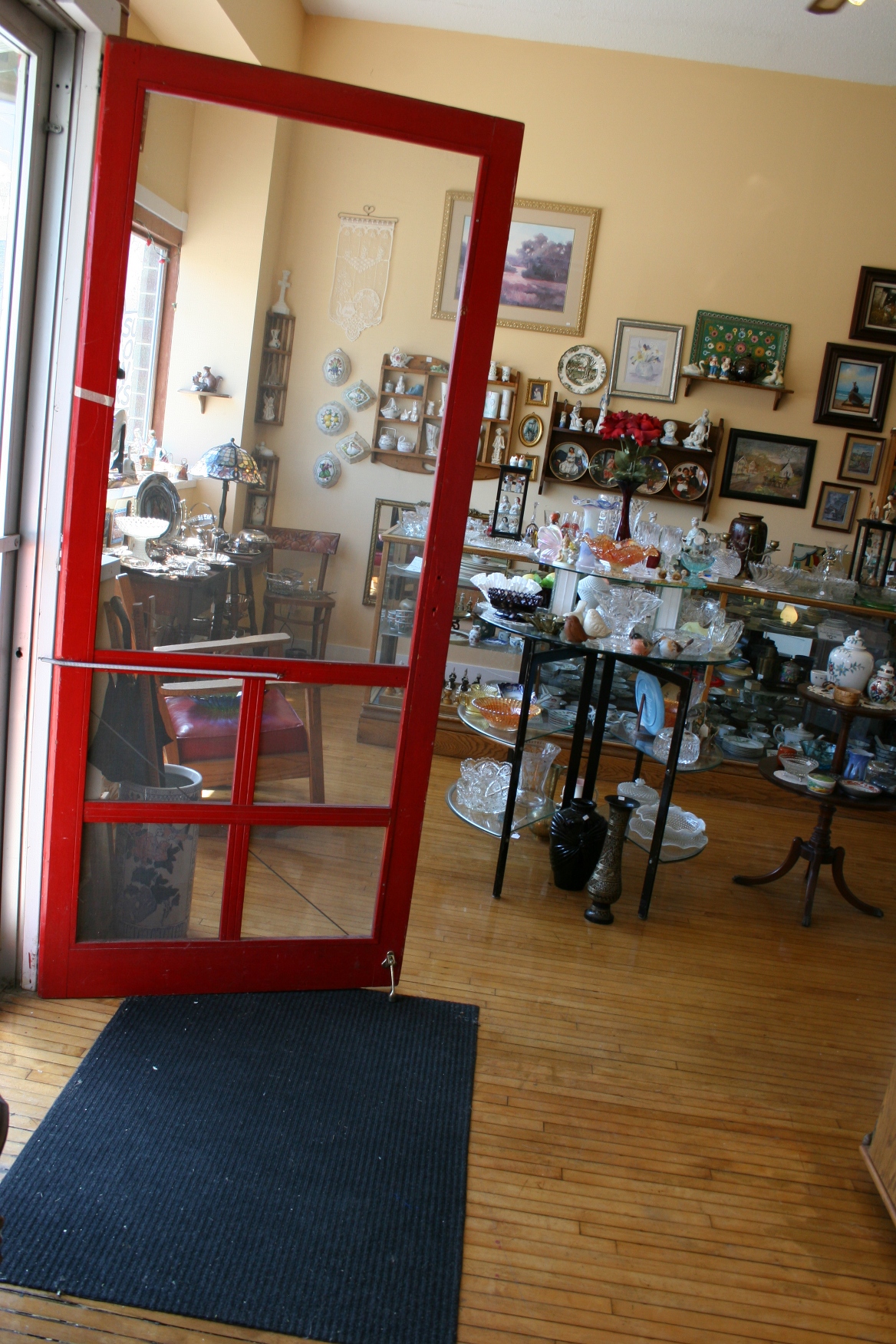
No matter, the friendly painted farmer in the bib overalls who beckons you inside for a “looksee” will already have you smiling before you stroll through the red doors and plant your feet upon the vintage tongue-and-groove floors in a room the color of butter.

Immediately I noticed the old-style screen door painted a vivid red. It’s a perfect fit for setting the mood of this place. I’ve been in a lot of antique shops in my day, and this one, by far, rates as one of the most inviting with plenty of light streaming in the east-facing windows, merchandise displayed in a way that isn’t cluttered and a down-home atmosphere that makes you feel comfortably at ease.

I poked around for awhile, not as long as I would have liked, though, since my mom was waiting for me back at the aunt and uncle’s house. My husband explored, too, and determined the prices to be reasonable—not too high and not too low.

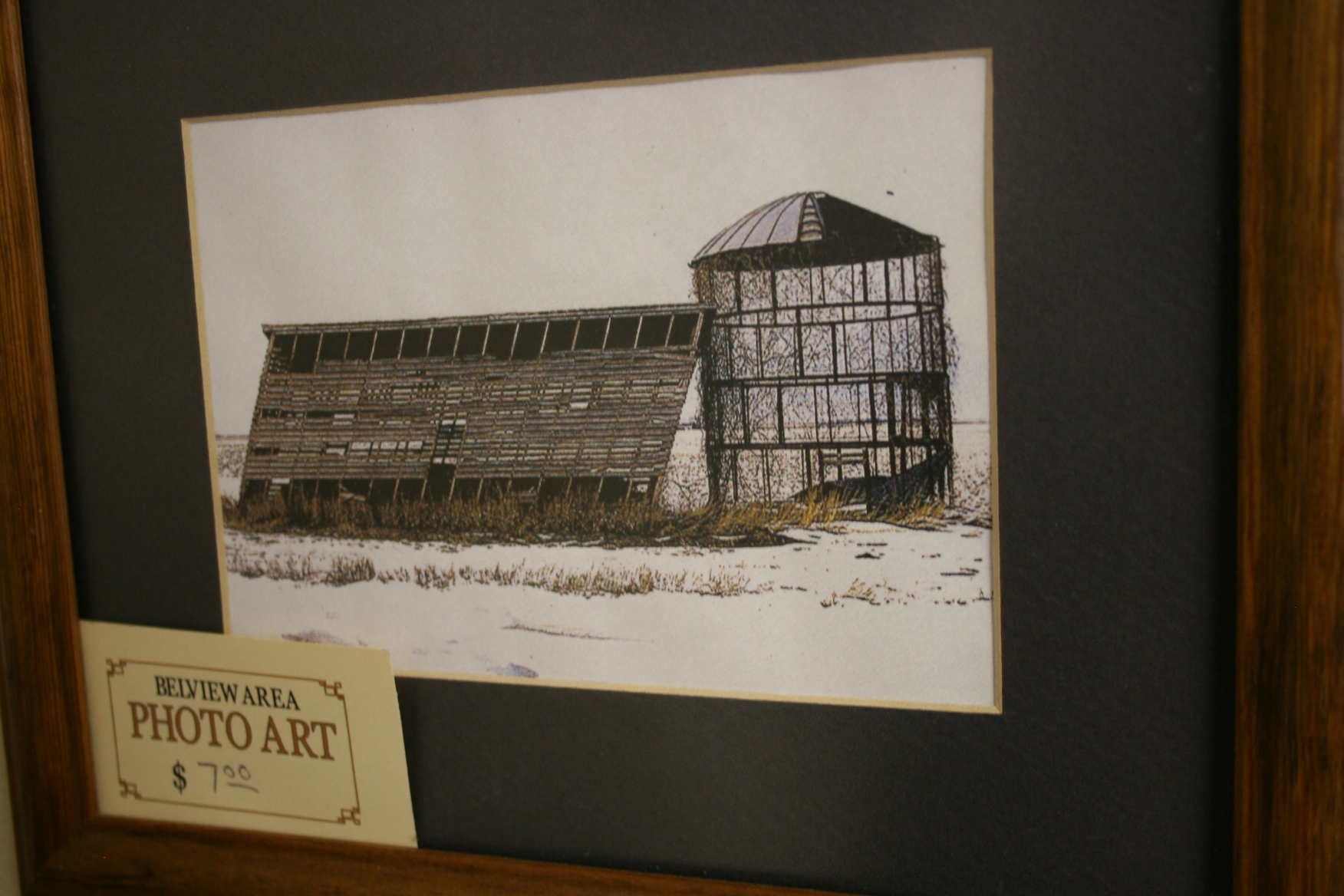
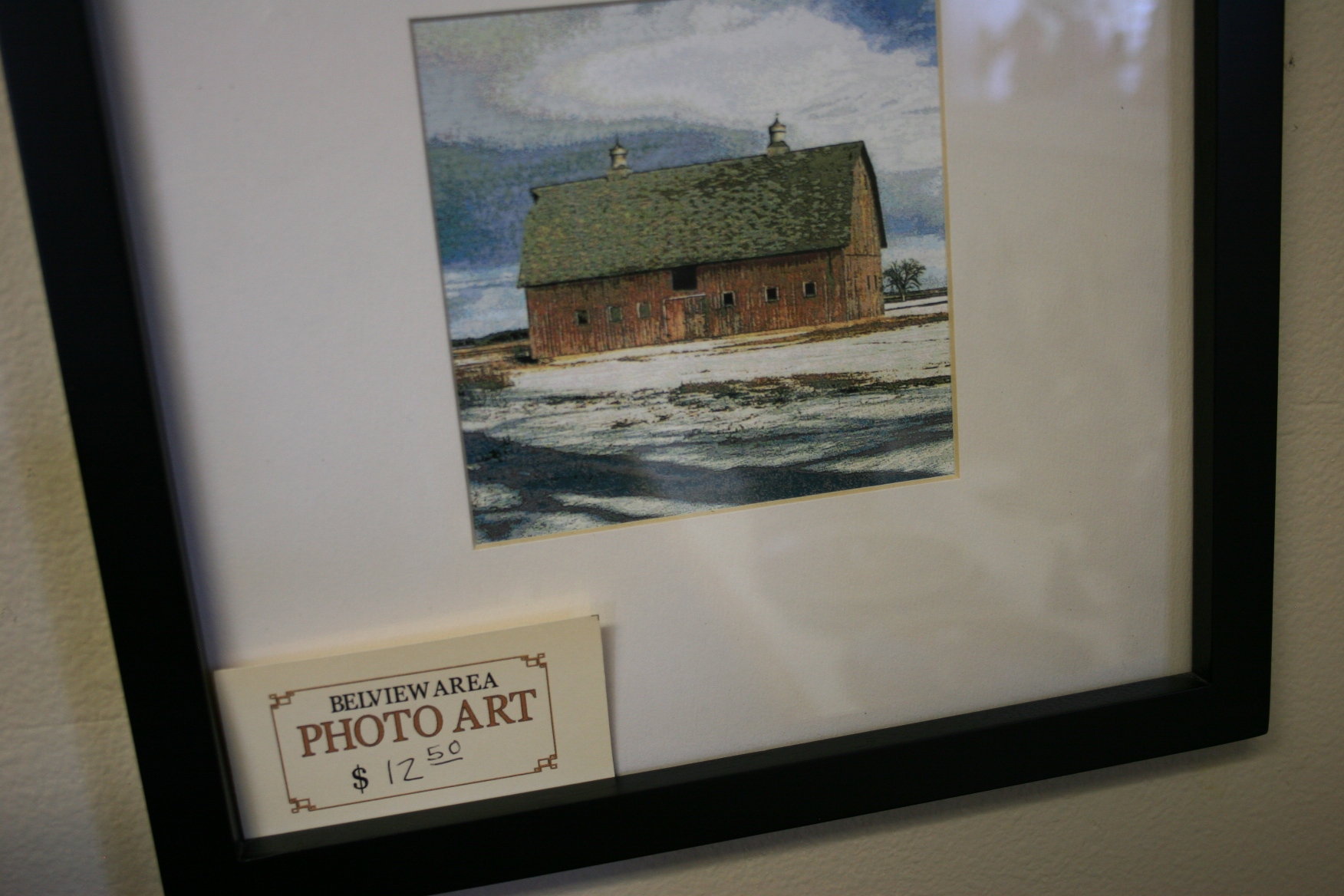
When I got to the back room, I made the discovery of the day, at least in my opinion. And it wasn’t an antique, collectible or junque. I found Don Gunelson’s “Belview Area Photo Art” displayed on the rear wall. I knew from the signage that I was viewing photos, but they sure didn’t look like photos. So I asked Don to explain.

He takes images of area subjects with an inexpensive camera—the fewer pixels the better—edits the photos on his computer and then prints them on watercolor paper with an ink that is more dye than ink. The result is photo art that resembles watercolor paintings.

I gushed over his creations and told him he needs to get these into a gallery—do an exhibit of his “Belview Area Photo Art.”

Now I’m kicking myself for not buying one of Don’s matted and framed creations because, with prices ranging from $7 to $12.50, they’re a steal.

So there you have it, a charming antique store in downtown Belview with an artist running the place.

FYI: Rainbow Antiques, Crafts & Junque, 103 S. Main, is open from 10 a.m. – 3 p.m. Saturdays. Call (507) 938-4476. Maybe Don will open up the shop if you’re in town on a day other than Saturday.

Ruby red glassware is displayed in a front window. To the right in this photo is the blue Belview water tower.

An example of Don Gunelson's Belview Area Photo Art, an area barn.

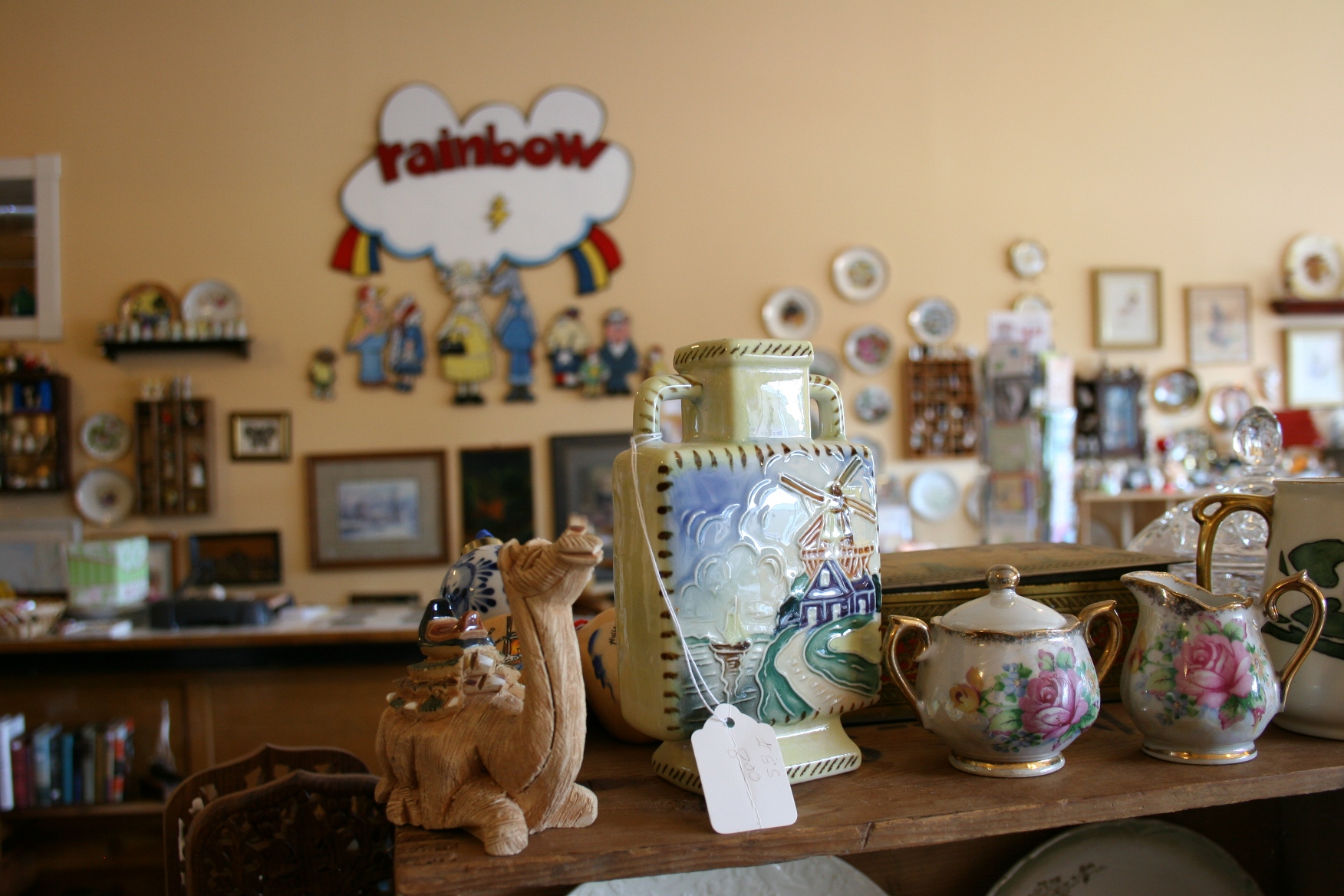
Some of the merchandise displayed in the main part of the antique store.

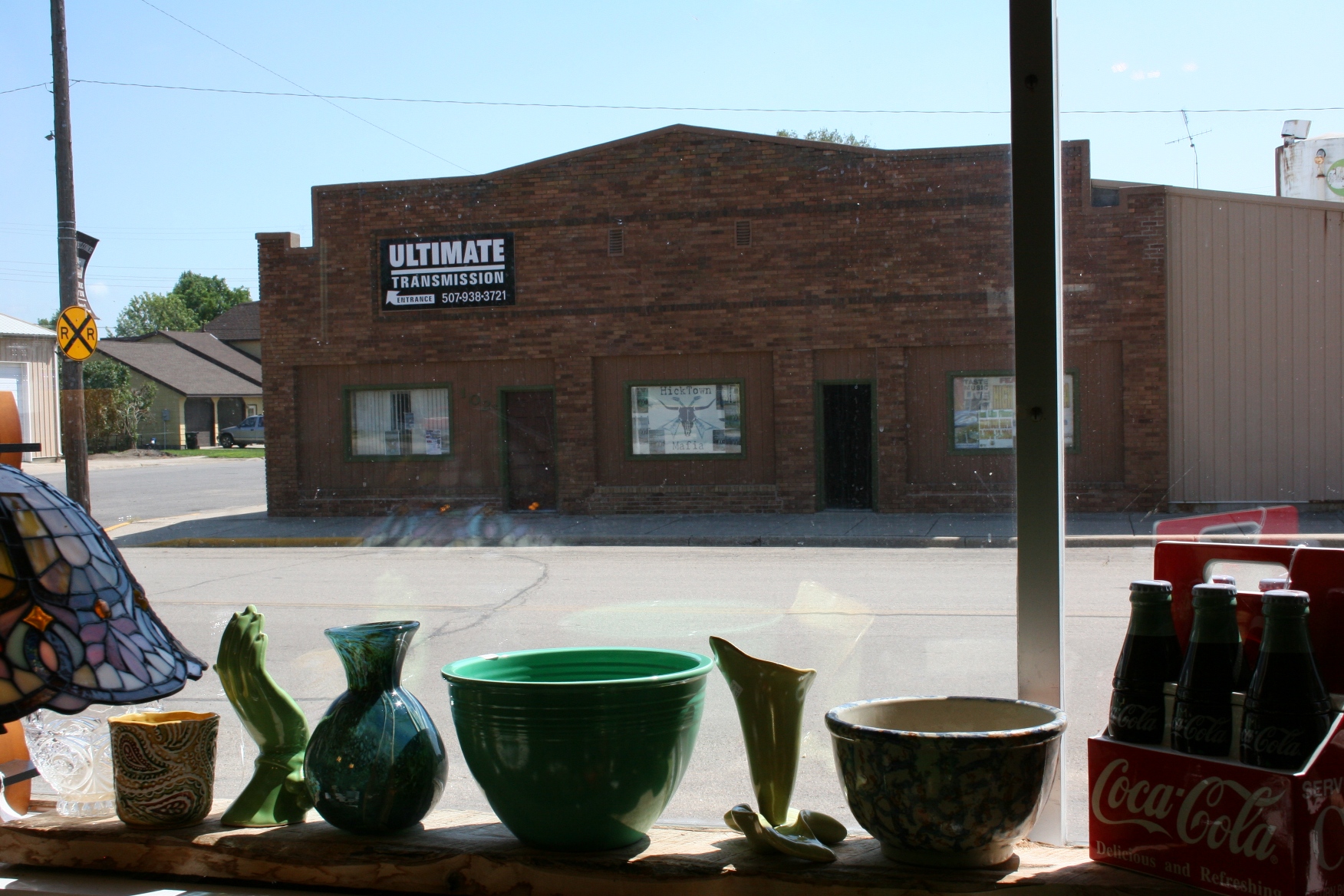
A view across the street through one of the large front windows at Rainbow Antiques.

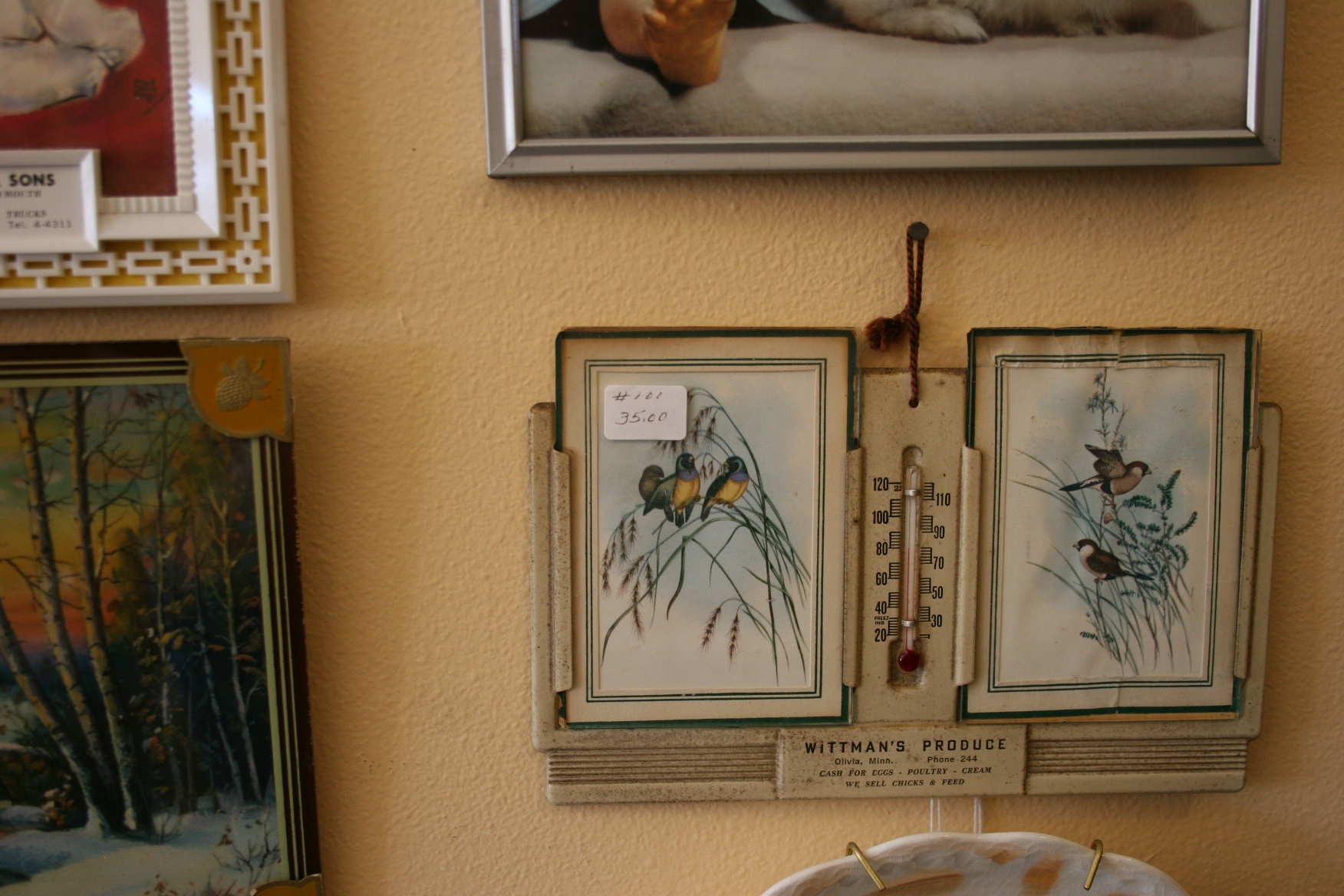
More Belview Area Photo Art by Don Gunelson.

You'll find plenty of collectibles from the area, including this bird thermometer from Olivia.

This colorful folksy farm family graces the north wall of Rainbow Antiques. This photo was shot looking south on Main Street toward Belview's water tower.

Another view of Rainbow Antiques and Main Street Belview looking south.

Check back for more reasons to visit Belview in a future post.

© Copyright 2011 Audrey Kletscher Helbling
 

My latest art-at-a-bargain find from the Salvation Army August 7, 2011

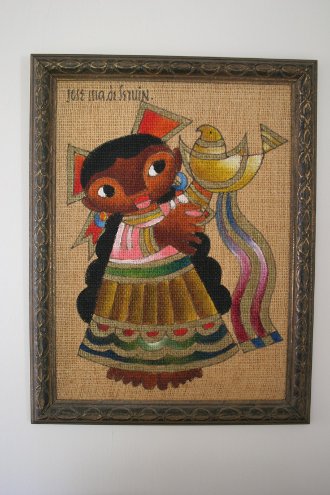
My Jose Maria de Servin painting.

WHAT’S YOUR PREFERENCE in art?

Do you shop for mass-produced art at a big box retailer?

Or are you the gallery type, purchasing one-of-a-kind fine art?

Maybe you shop flea markets, rummage sales or thrift stores for hand-crafted or vintage art.

Perhaps you’re artistic enough to create your own art to hang in your home or workplace.

If you know me as well as I expect you may from following Minnesota Prairie Roots, you would rightly guess that I prefer to find one-of-a-kind art at a bargain by shopping second-hand. Notice that I didn’t say bargain art. I said art at a bargain. There’s a difference.

My collection includes original paintings by hobbyist painters, prints by unknown artists, embroidered pieces by someone’s grandma… I’ve purchased most at unbelievably low prices—try 50 cents or $3.

Through the years I’ve even acquired an original Jose Maria de Servin painting and a vintage print of South Dakota artist Harvey Dunn’s  “The Prairie is My Garden” at steal prices. Both times I had no idea what I was purchasing. I simply liked the art.

That’s the thing with me and art. I buy a piece of art not as an investment, but because I like it.

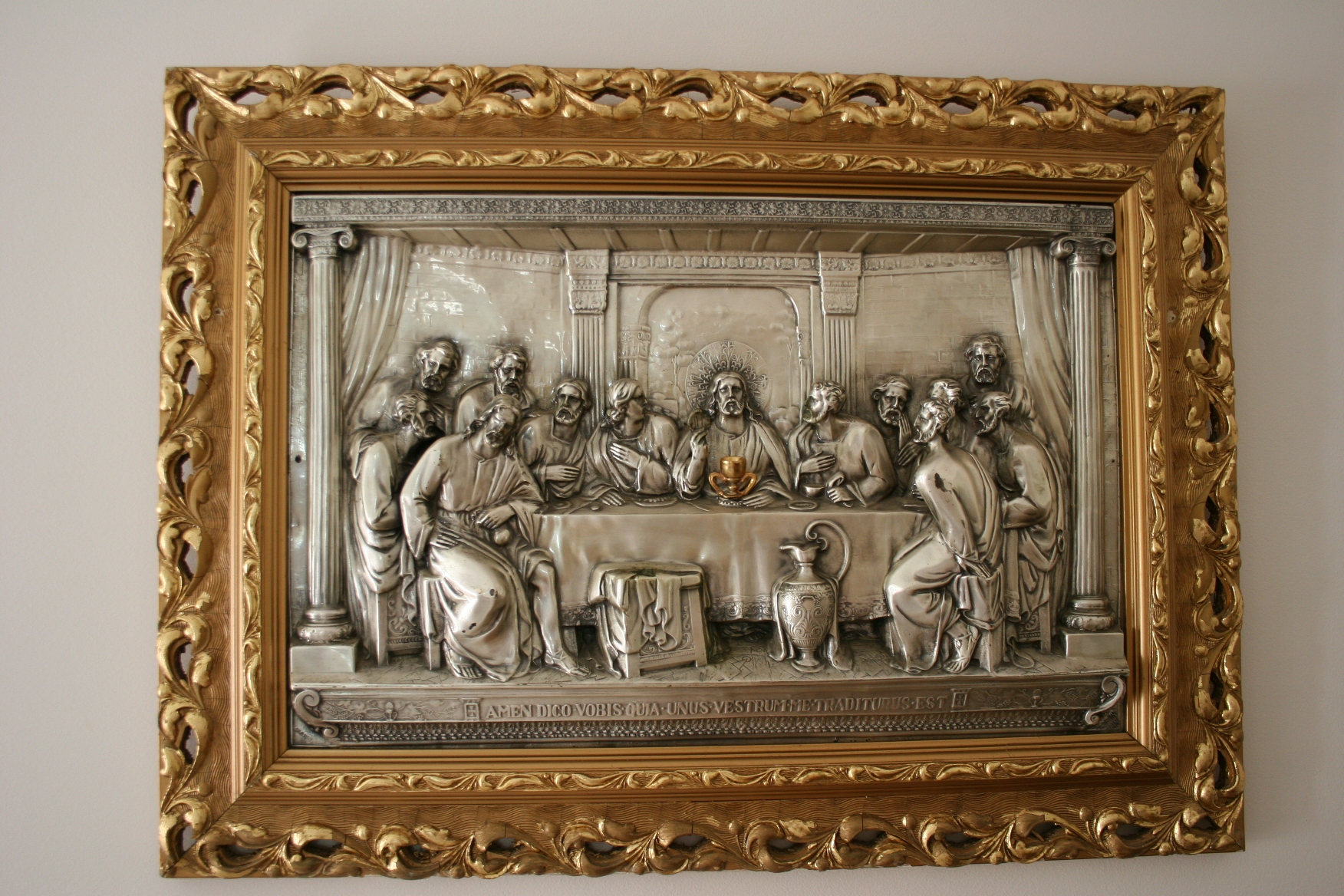
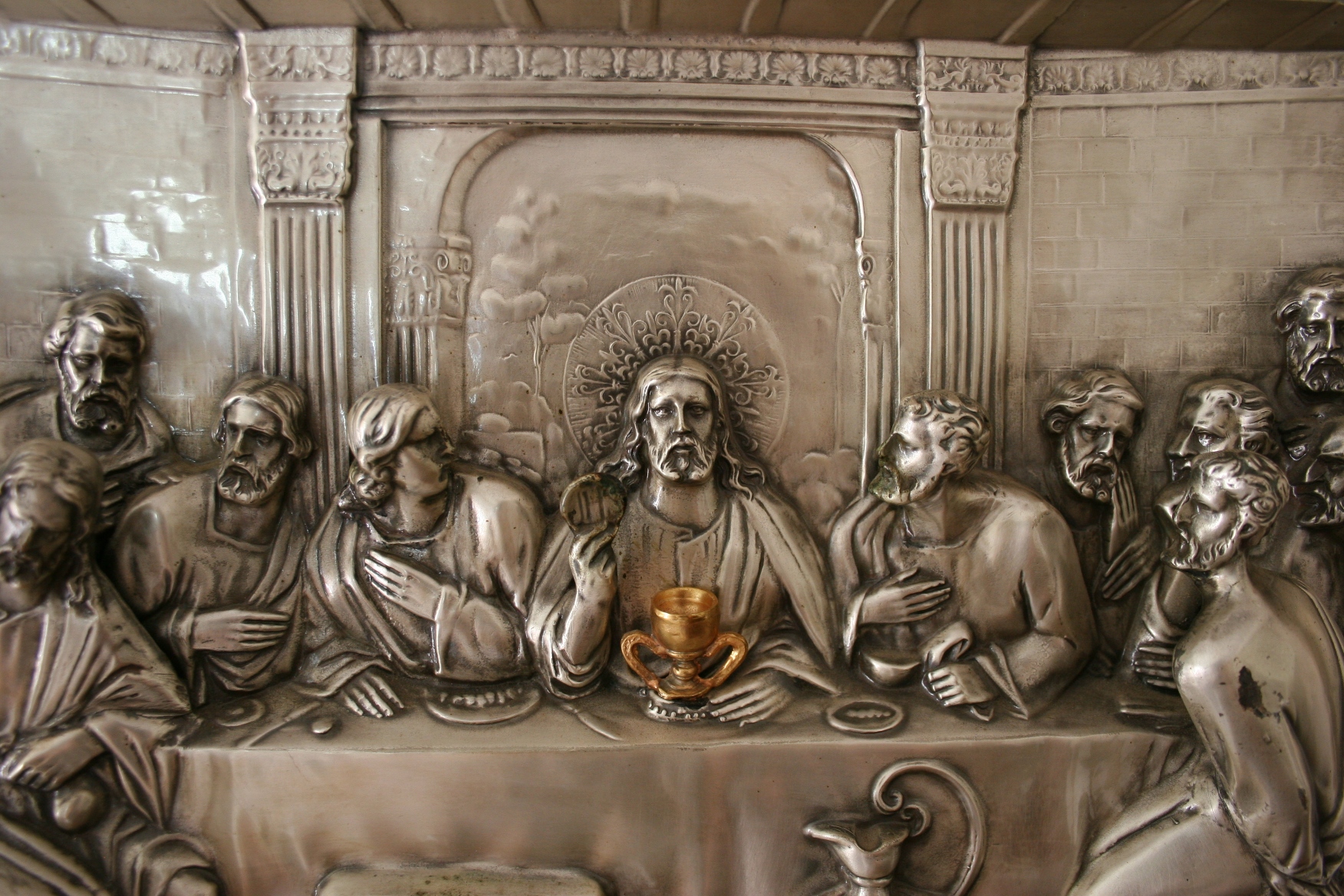
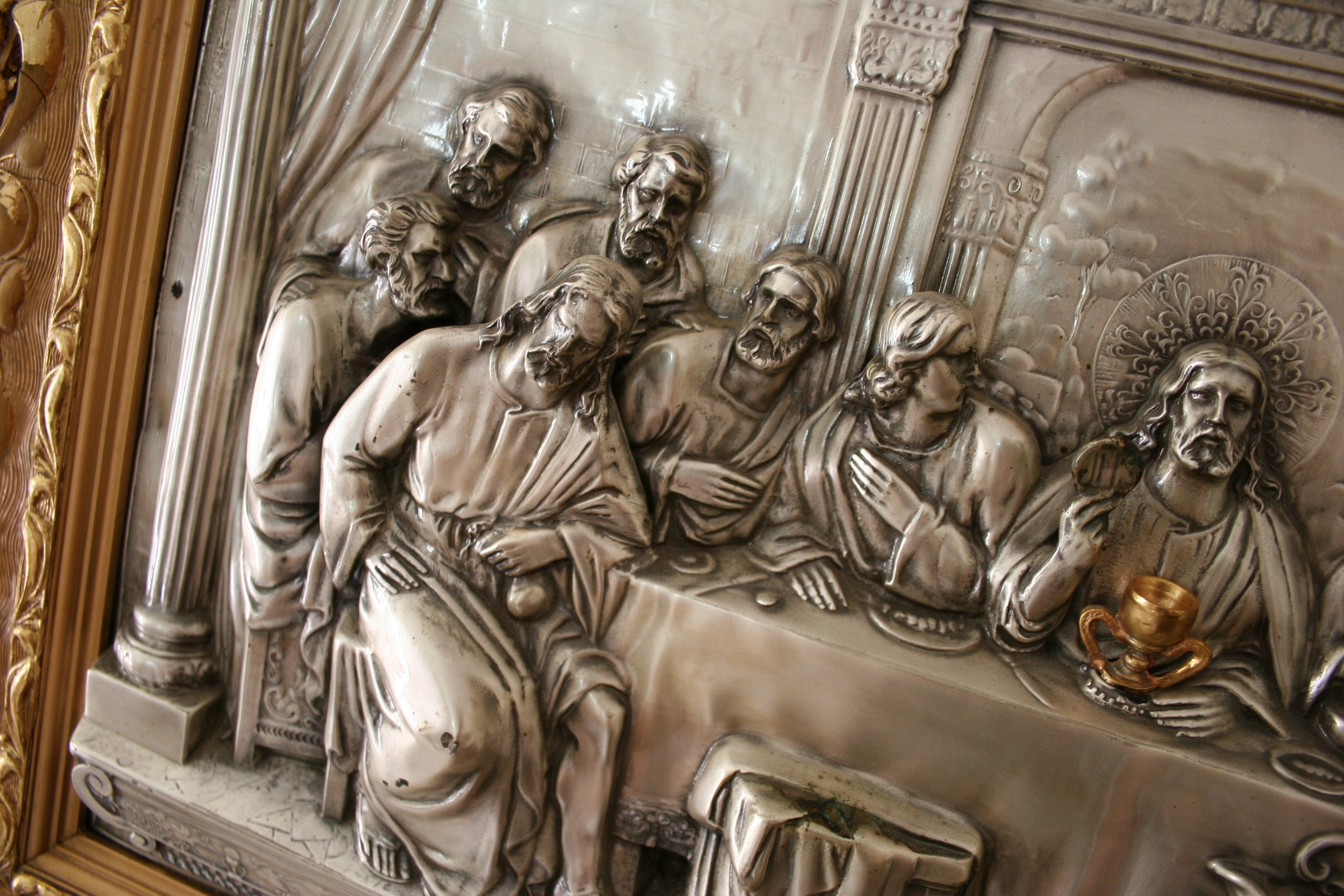
That said, I recently picked up a three-dimensional rendition of  “The Last Supper” at the Salvation Army Store in Faribault. I debated whether I should pay $14 for the made-in-Spain art. In fact, I set the 24 x 17-inch piece down twice before watching another woman pick up and admire it. At that precise moment I decided I really wanted the unique art. I had to restrain my urge to run over and snatch it up after she set it back on the shelf. I waited until she was well out of grabbing range.

The Last Supper three-dimensional art I bought at The Salvation Army Store.

Later, the woman stood behind me in the check-out line and told me how she wished she had “The Last Supper” I clenched in my hands. “Then I saw you pick it up,” she said.

I responded with a seemingly casual remark: “Yeah, if you see something you think you might buy, you shouldn’t set it down…”

HOW ABOUT YOU? Where do you shop for art and what deals have you found?

Close up with Christ and the disciples at The Last Supper.

I hung the three-dimensional The Last Supper in my dining room.

© Copyright 2011 Audrey Kletscher Helbling
 

The Lucan Community Band: A photo essay August 6, 2011

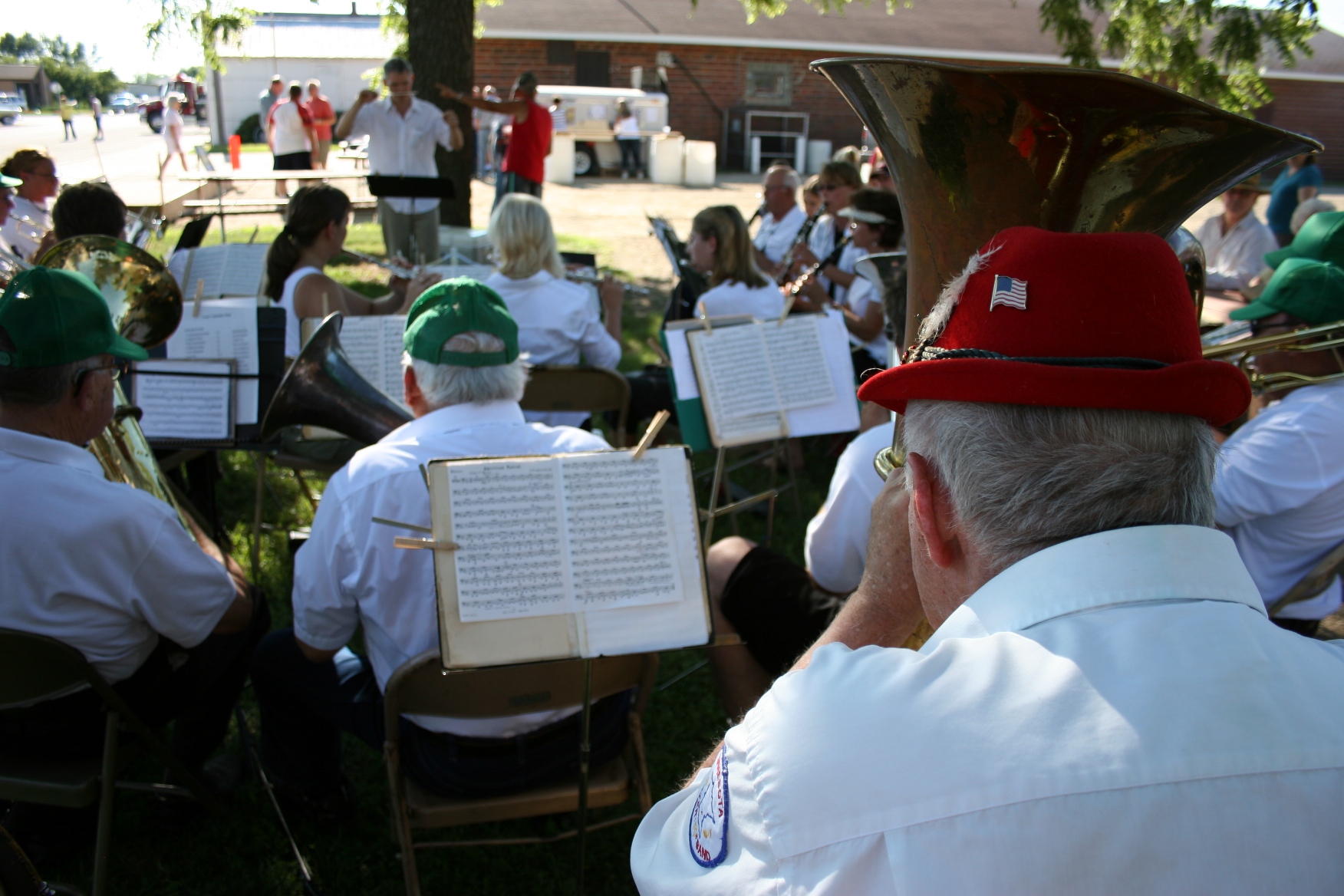
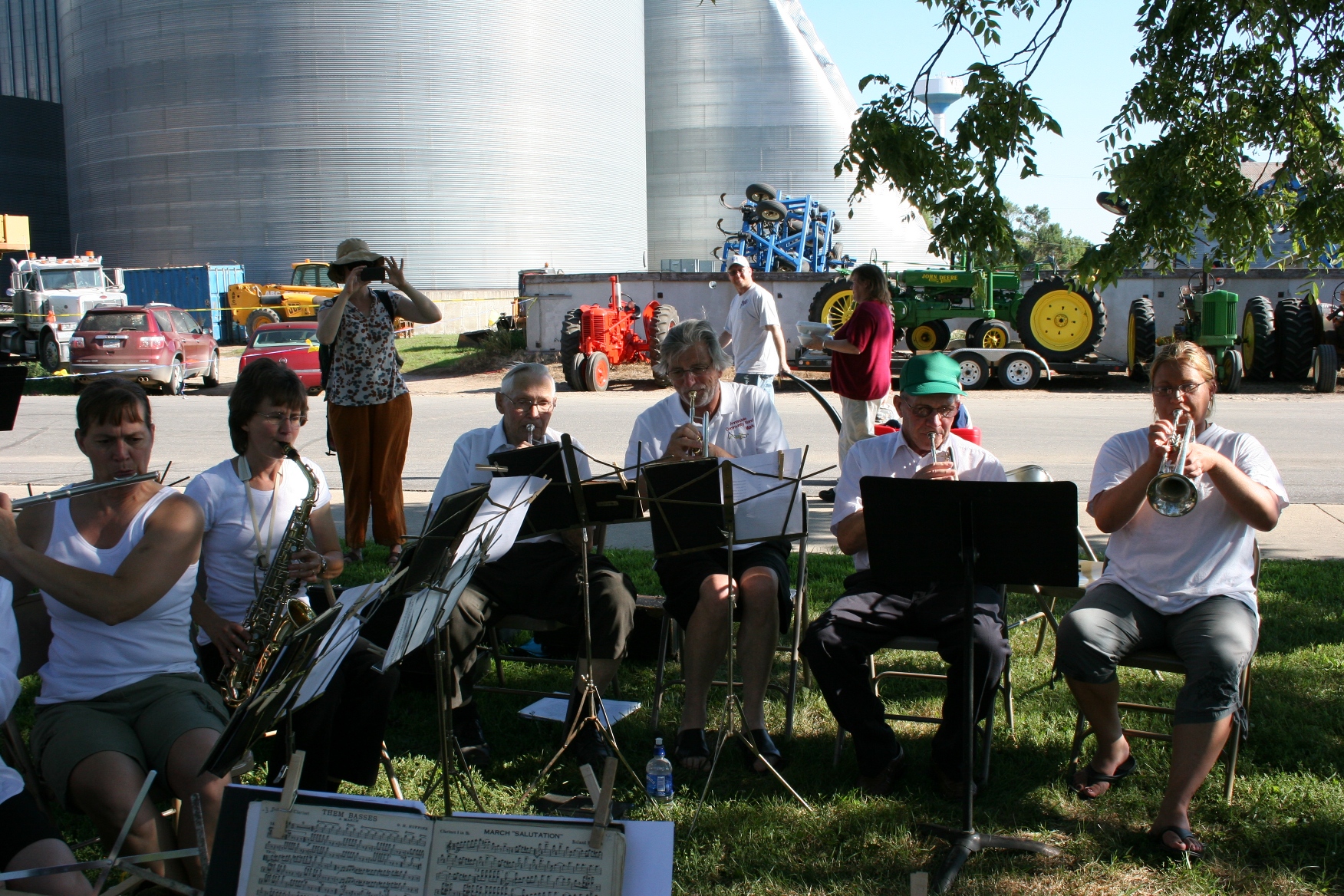
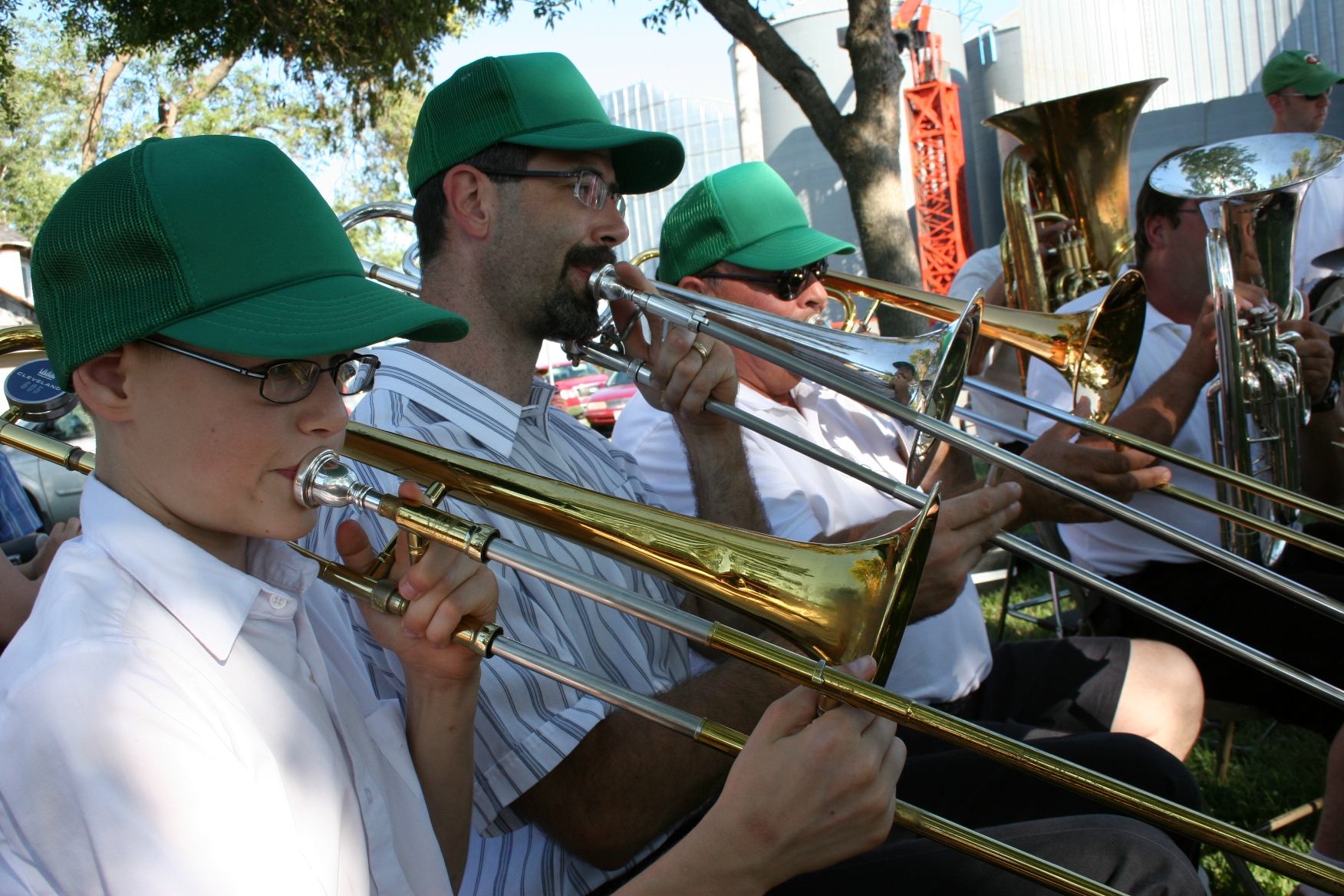
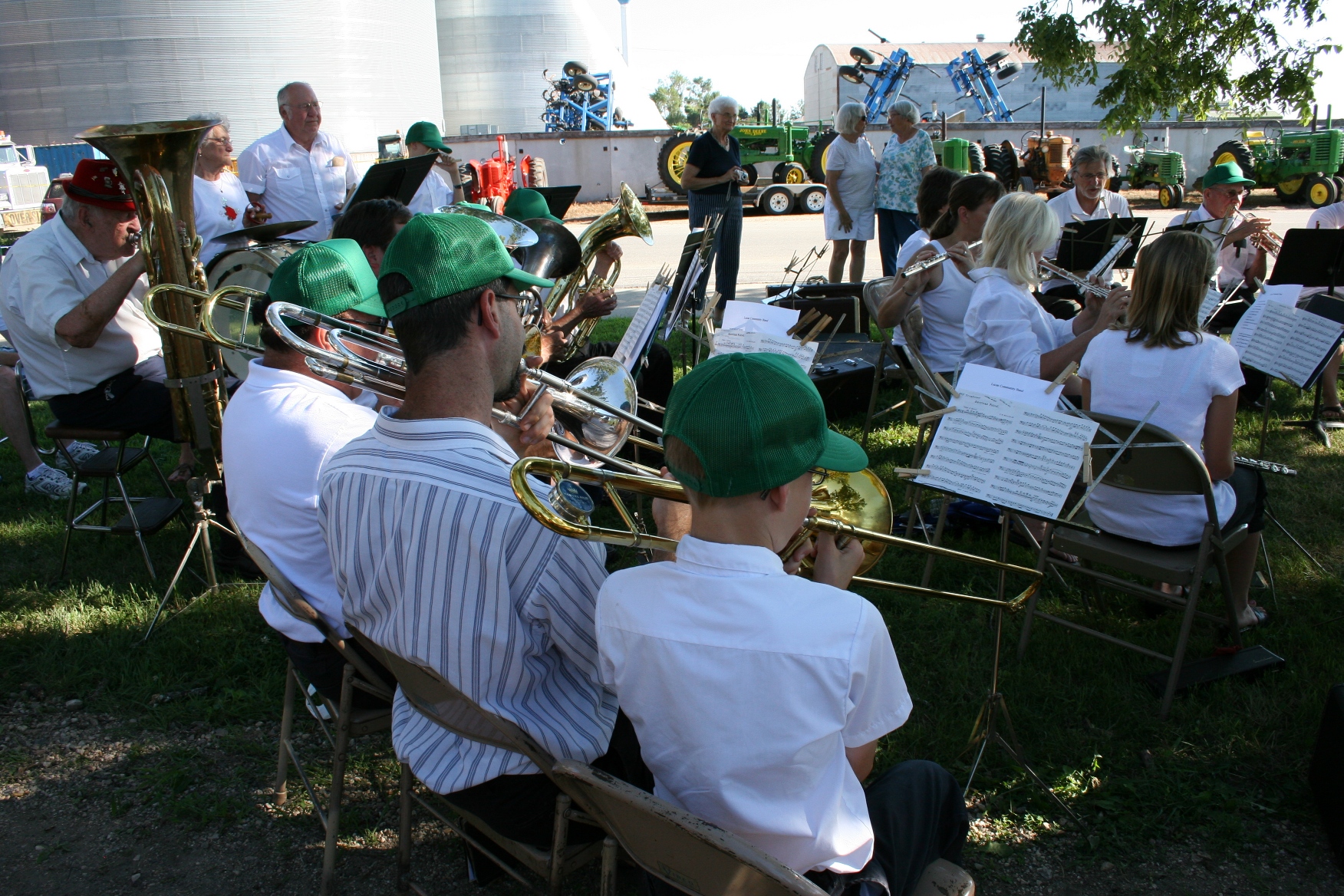
The Lucan Community Band performs outside the Vesta Community Hall during V-Esta Daze.

IF I WOULD HAVE BEEN less concerned about sinking my teeth into grilled chicken at my hometown’s community celebration on a recent Friday evening, I’d know more about the Lucan Community Band.

The band performed from 5:30 p.m. – 6:30 p.m. under the shade trees outside the Vesta Community Hall, where diners lined up inside for a sumptuous meal of chicken, potato salad, beans and a dinner roll.

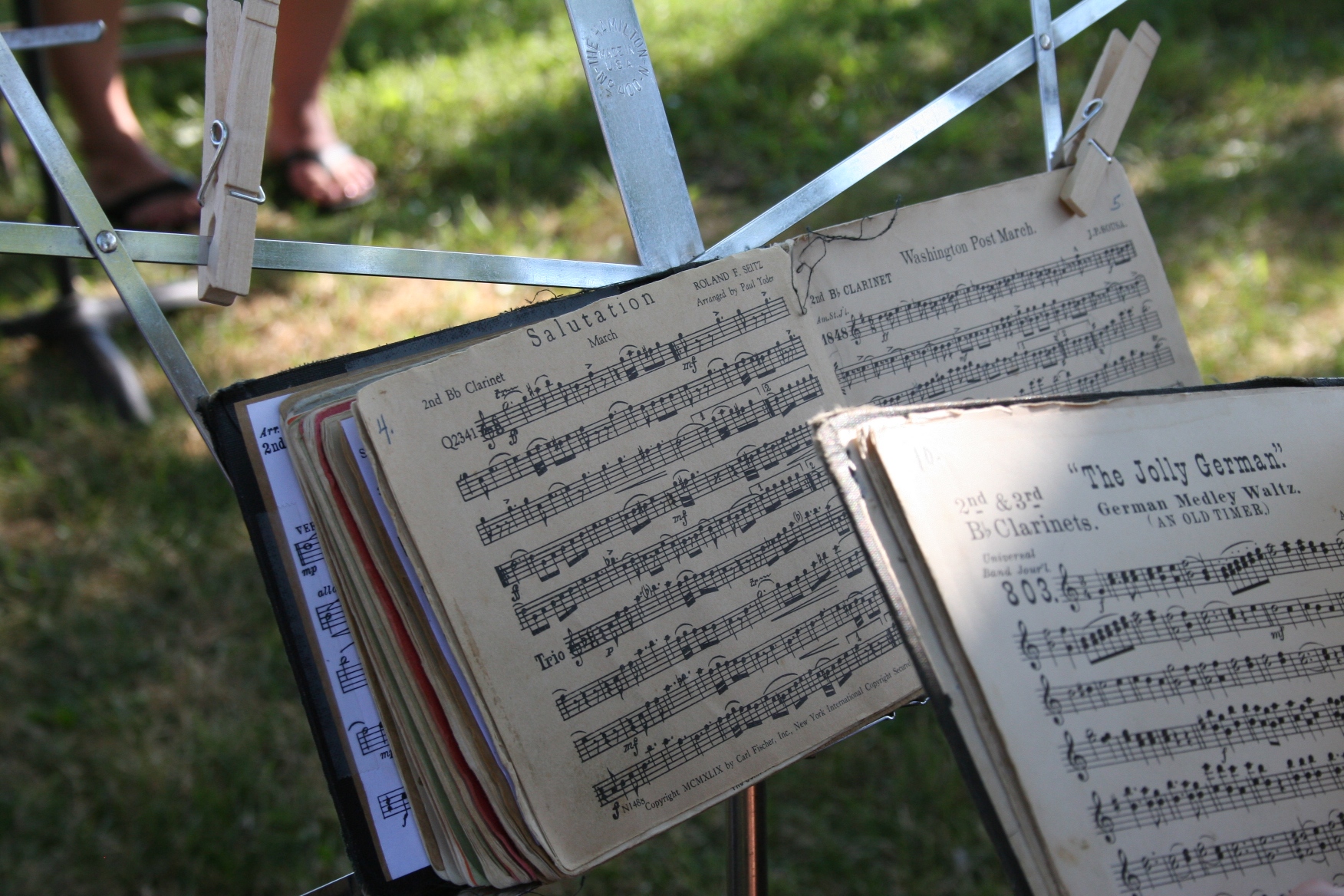
I wiggled my way right into the band section for some close-up photos and even inquired, between selections, about the vintage band music, before going indoors for that chicken dinner.

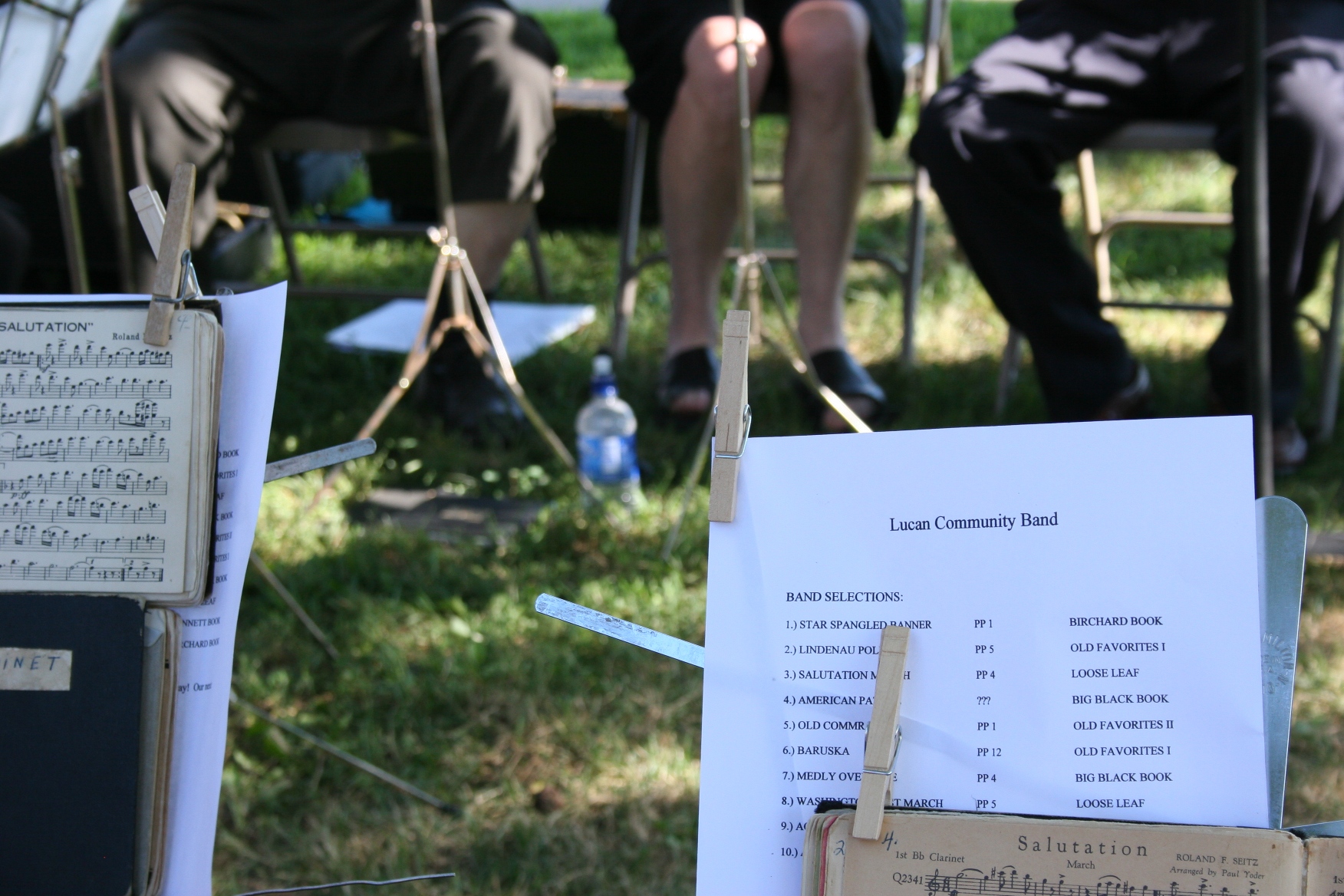
The music book on the left had a 1939 copyright.

Some of the music comes from the Chatfield Brass Band and Music Lending Library in Chatfield, a band member informed me.

The Lucan Community Band is based in Lucan, seven miles south of Vesta along Redwood County Highway 10. Not all of the band members hail from this town of 220, which is also home to Brau Brothers Brewing. (Check out their beer; Strawberry Wheat is my favorite.)

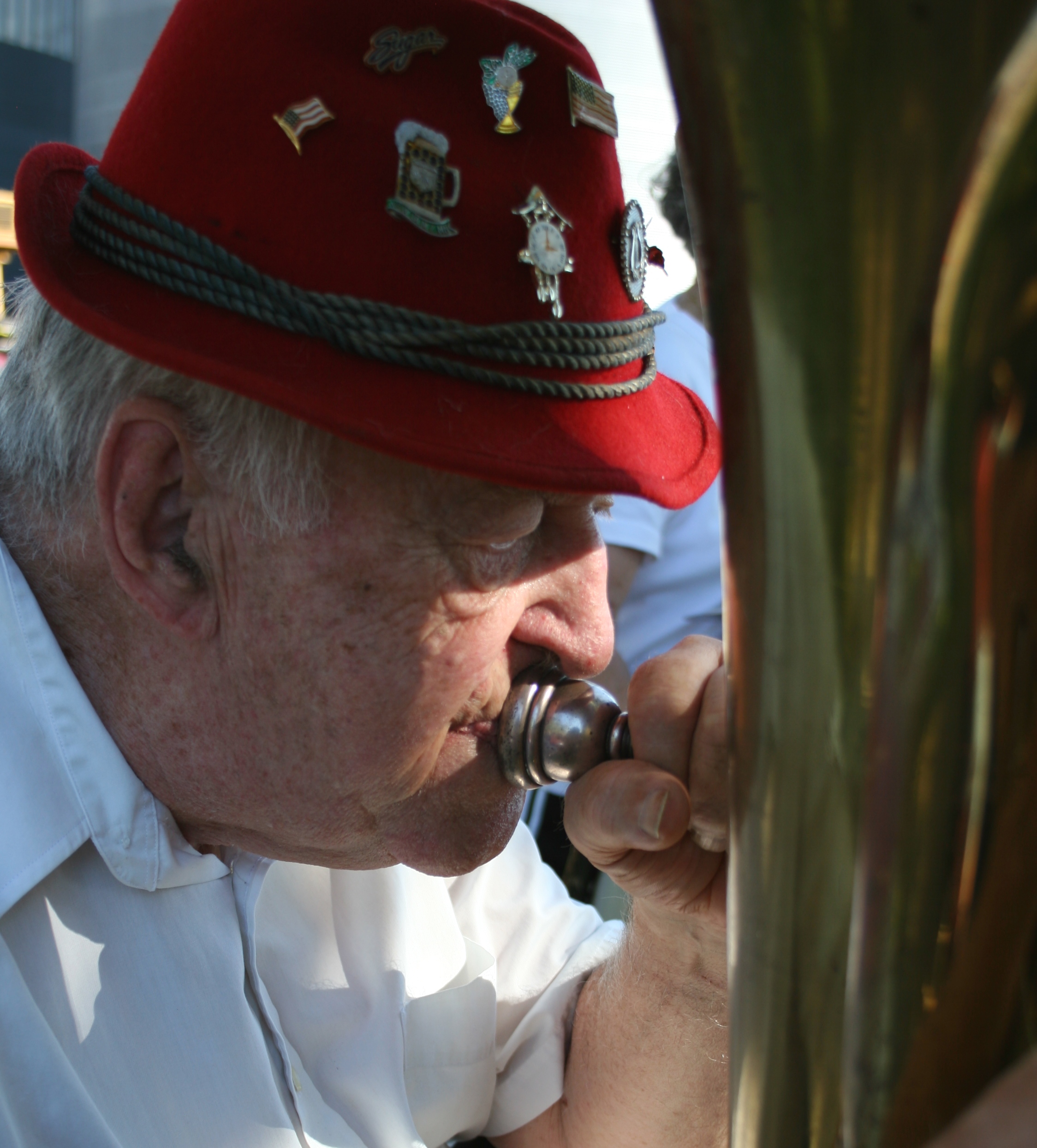
At least one, Tom Schmid, the tuba player who drew my attention with his German style red hat that differed from all the green caps, hails from Springfield. I snuck in a quick question to Tom. He’s been playing the tuba for only about 10 years, but has been playing an instrument since he was in high school in the 1940s. That’s all the information I got before he planted his lips back on that tuba mouthpiece and I headed into the hall to eat.

Tuba player Tom Schmid, also a member of the Minnesota Over 60 Band.

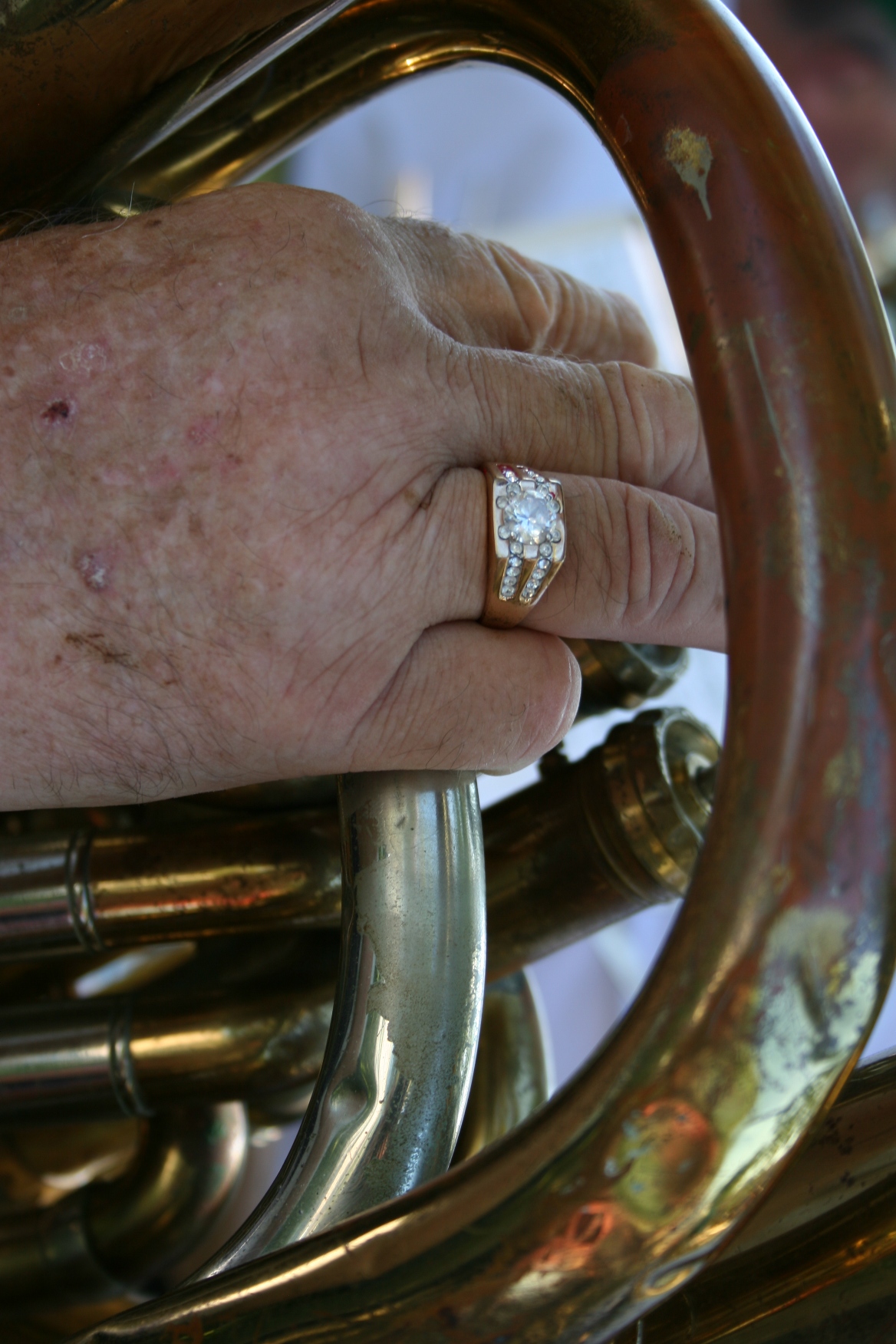
Schmid's hand on the tuba.

Lucan Community Band members play against a back drop of grain bins damaged in a July 1 windstorm in Vesta. Tractors line the street for the antique tractor show.

The band's play list for their one-hour concert at V-Esta Daze.

Green caps are part of the male band members' attire. Musicians' ages range from the young to senior citizens.

IF YOU KNOW ANYTHING about the history of the Lucan Community Band, its members, how often and where the group performs, submit a comment. I’d like to learn more about the band.

© Copyright 2011 Audrey Kletscher Helbling
 

An old-fashioned grocery store, moosehead and all, thrives in Ellendale August 5, 2011

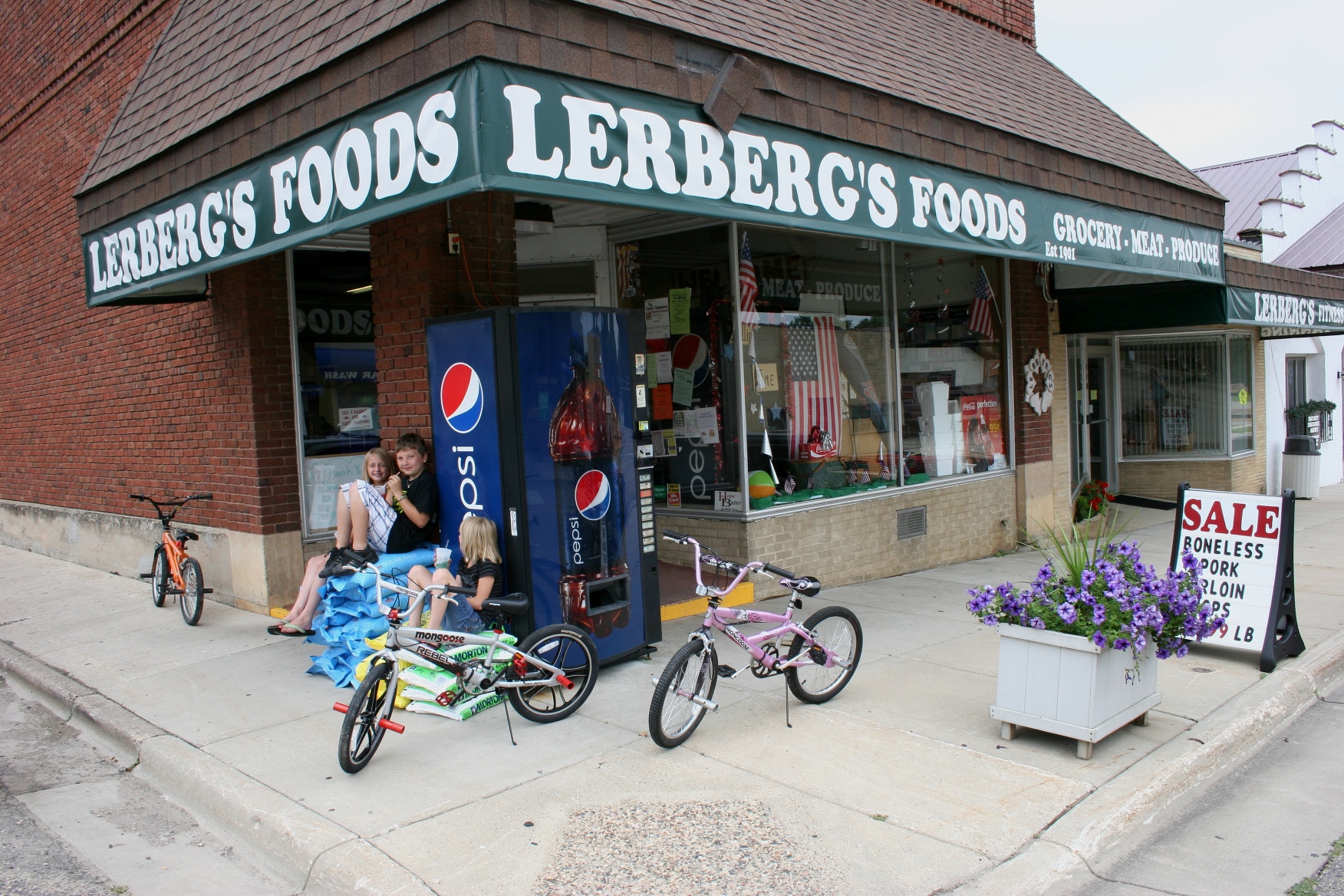
In the small town of Ellendale, kids bike to Lerberg's Foods for groceries and the occasional slushie. Here two sisters and a friend slurp their slushies while sitting on bags of water softener pellets next to the pop machine.

WHEN ANDREW LERBERG bagged a moose in northern Minnesota in 1919, the animal was brought by rail to Ellendale and the moosehead proudly displayed in the family’s grocery store.

Ninety-two years later, that moosehead still hangs at Lerberg’s Foods, above a framed photo of Andrew with his trophy and above processed fruits and vegetables stacked on grocery store shelves.

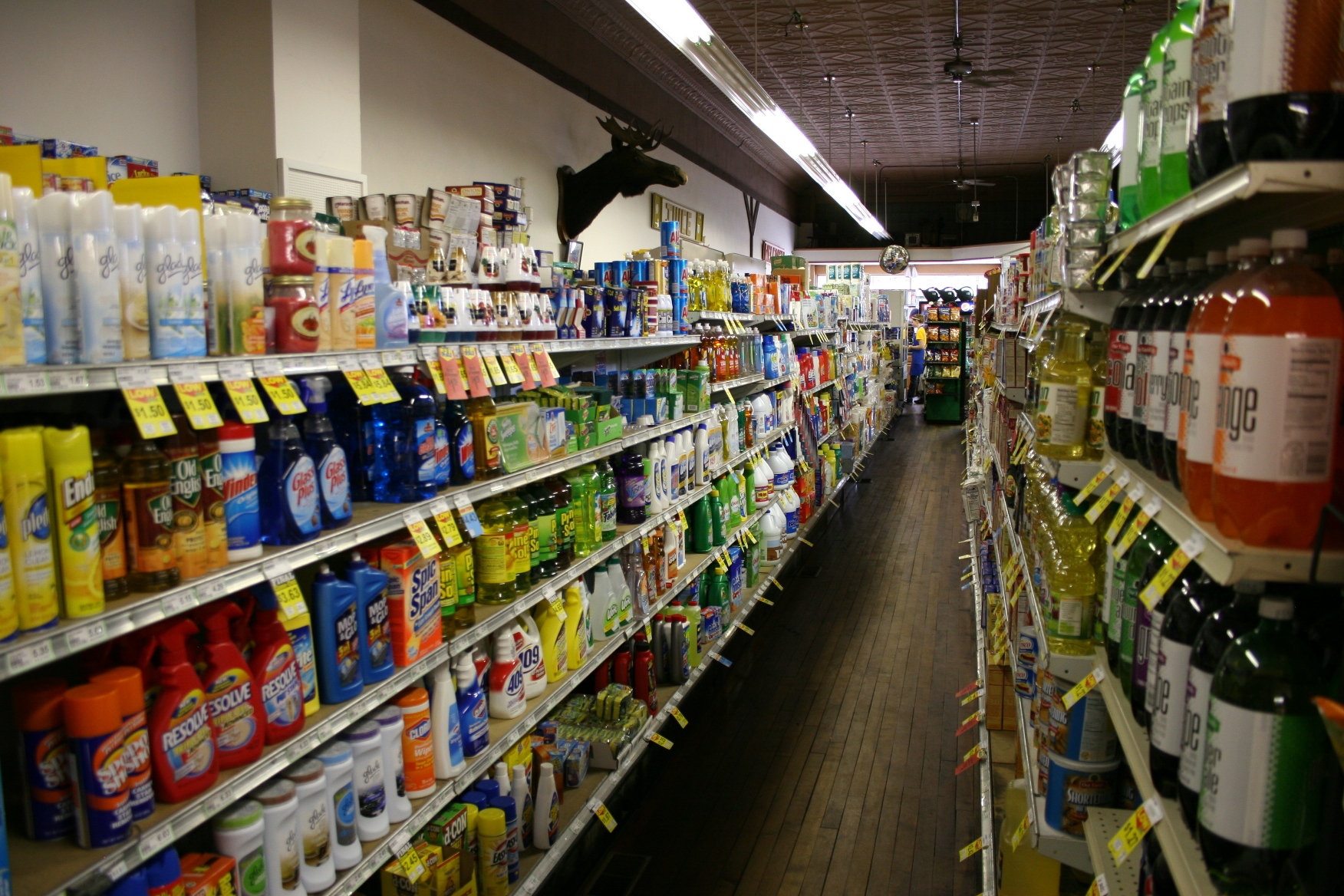
Look down the grocery aisle to your left and you'll see the moosehead that is part of Lerberg's lore.

Ross Sletten, who purchased the business in 2007 from Andy Lerberg, will tell you the moosehead came with the store and that originally the rifle used to shoot the animal rested in its antlers. Not any more. Times have changed.

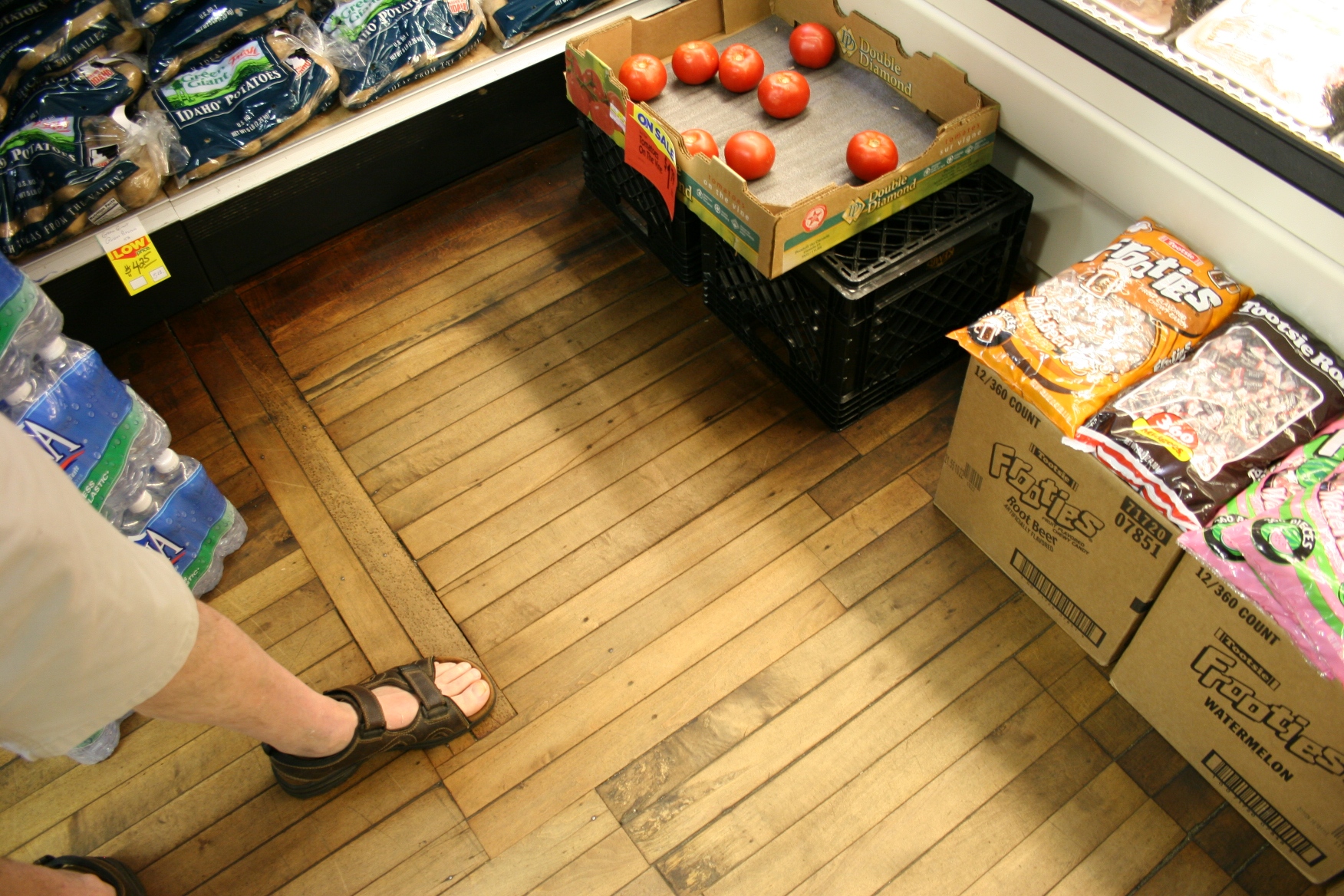
But not everything has changed at Lerberg’s. The original tongue-and-groove maple floor, tin ceiling, small-town-friendly atmosphere and more speak to the history of this 1914 brick building and to the long-standing grocery store owned by three generations of Lerbergs—Andrew, who started the business (in another building) in 1901, Arthur and Andy.

The original tongue-in-groove maple floor in front of the meat counter.

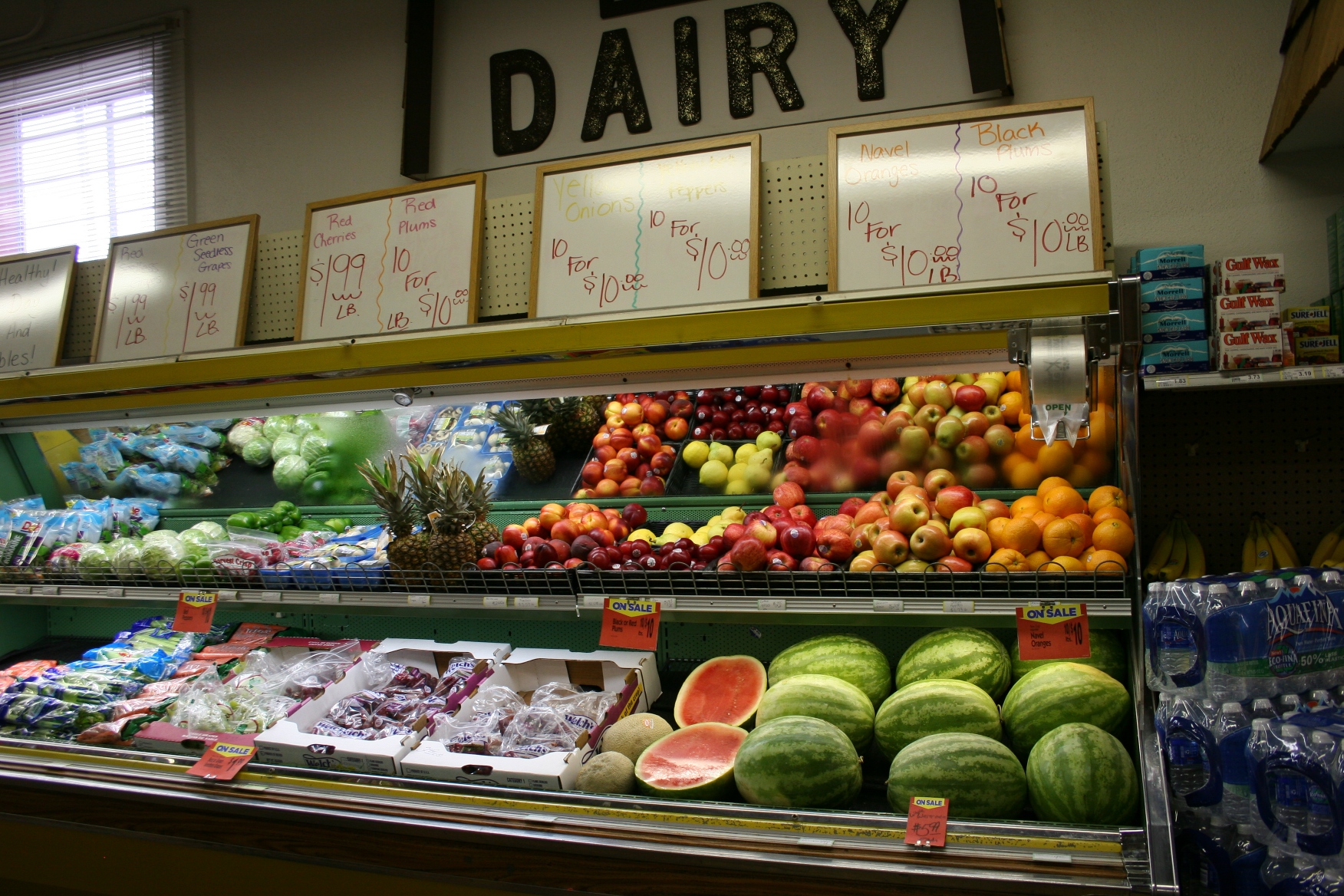
The produce department of Lerberg's Foods.

Ross began working at Lerberg’s in 1976 and, on a recent Sunday, three of his five kids—Brett, 18, Cassidy, 14, and Noah, 12—were all working at the store that anchors a corner of the main street in Ellendale, population around 600.

This long-time employee, now owner/manager, is clearly proud of his grocery store, which he claims is the oldest grocery store in Steele County and the second oldest in Minnesota.

That’s easy to believe when you walk upon the worn tongue-and-groove floor between the narrow aisles—of which there are three—pause to appreciate the tin ceiling, and listen to Ross. He’ll tell you about the tailor who had a shop in the store’s current-day upstairs office or about the eggs, ducks and chickens locals once traded for goods.

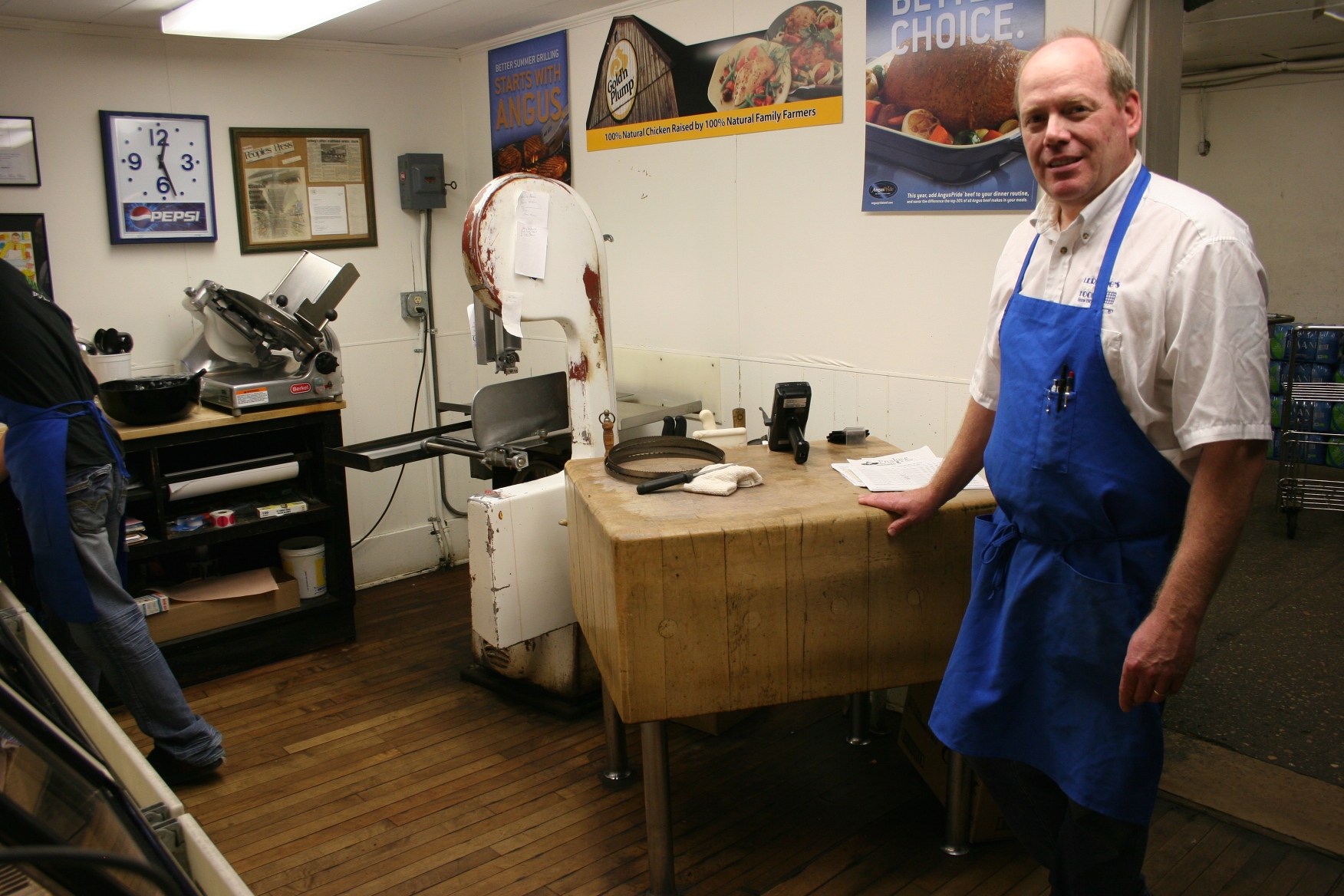
He’ll point out the store’s original coffee grinder resting on a shelf above the dairy section or direct your attention to the original wooden butcher block back in the meat department and still in use today (grandfathered in, he says).

Lerberg's Foods owner/manager Ross Sletten points out the original butcher block, which he still uses.

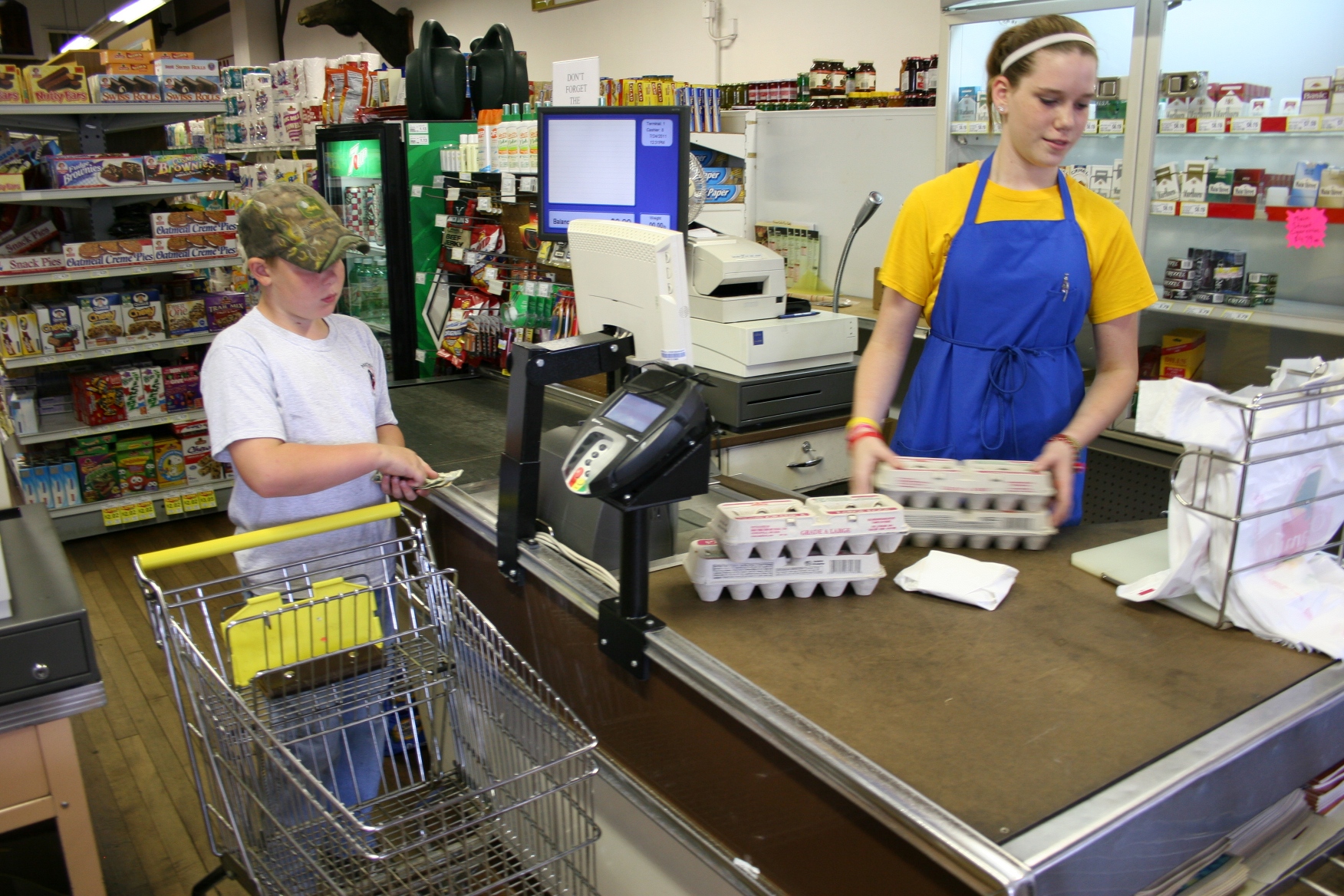
Cassidy Sletten, 14, checks out groceries on a Sunday morning.

He runs a business which, on a Sunday morning, teems with customers—folks picking up a few groceries after church, kids treating themselves to slushies from the machine at the front of the store, a 9-year-old purchasing several cartons of eggs for his mom, a guy buying three bags of water softener salt.

Located just the right distance (meaning too far) from Albert Lea, Austin, Owatonna and Mankato, the store draws customers who will shop locally rather than drive to regional hub cities, Ross says. He can offer competitive prices, he says, through his supplier, Nash Finch.

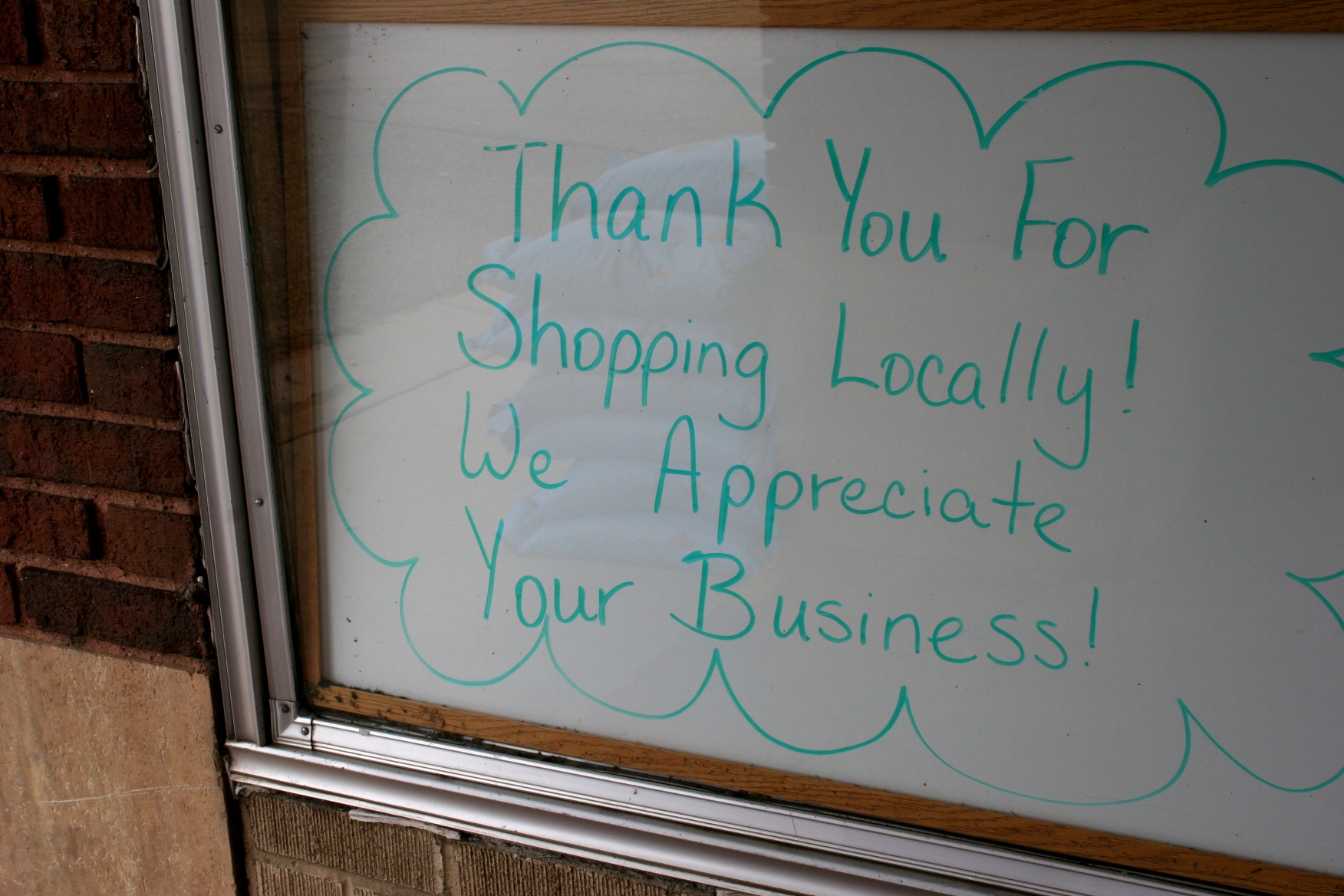
A street-side sign in Lerberg's front window thanks customers for their patronage.

Already, 12-year-old Noah Sletten is thinking about his future and maybe someday taking over the business. “I think it would be kind of fun to own something old,” Noah says, then smiles.

For someone like me, who grew up in rural southwestern Minnesota and frequented a grocery store with tongue-and-groove floors, a tin ceiling, a candy counter (where I bought my favorite Bazooka bubblegum for a penny), a toy rack and groceries lining two aisles, discovering Lerberg’s Foods brought back so many memories. I couldn’t get enough of this old-time style store.

The only thing missing, I told 14-year-old check-out clerk Cassidy Sletten before leaving her family’s store, was the old-style screen door that would bang behind me. She gave me a puzzled look.

“Ask your dad,” I said, smiled, and walked out the door.

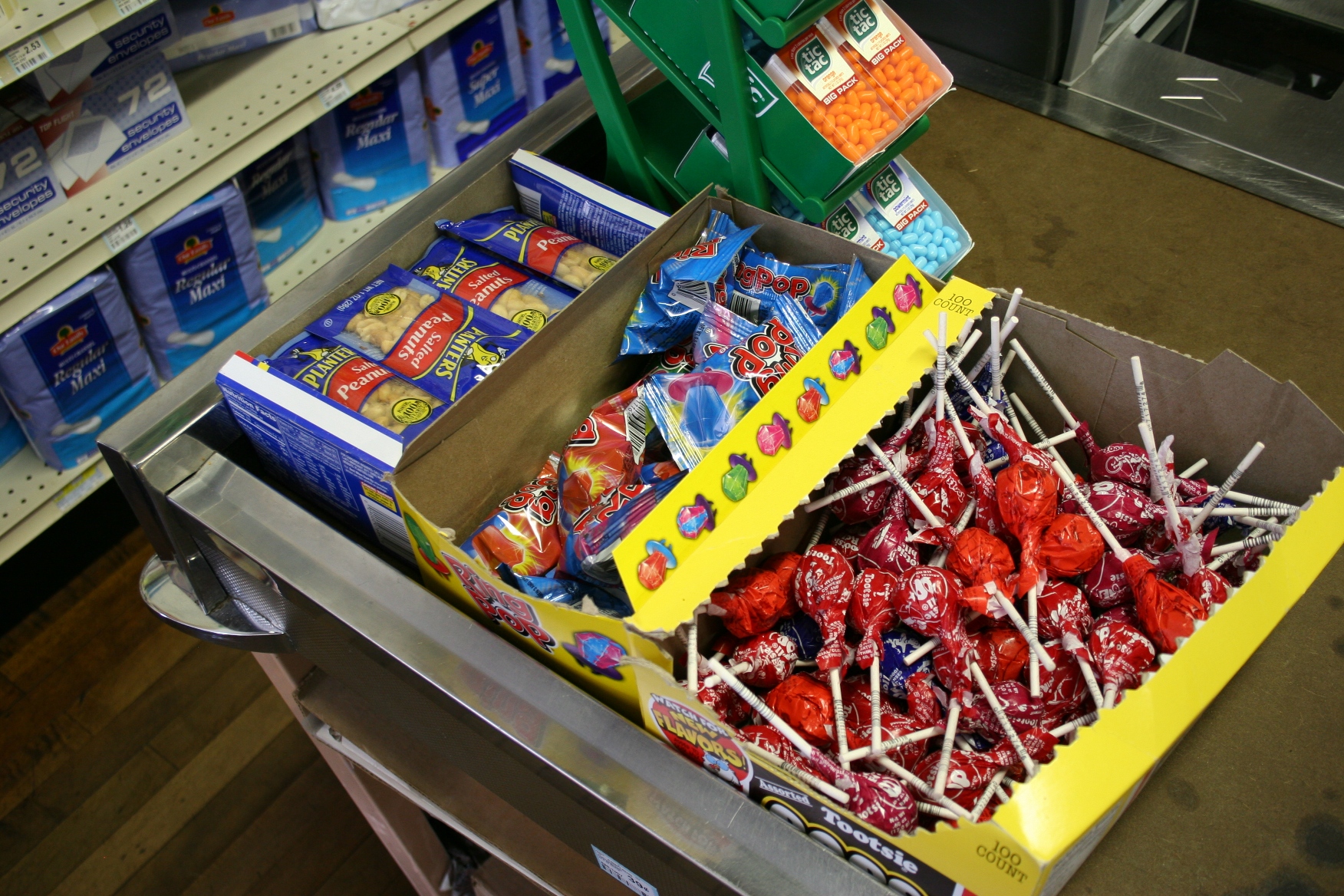
Candy at the end of a check-out counter tempts kids. There are peanuts for the adults.

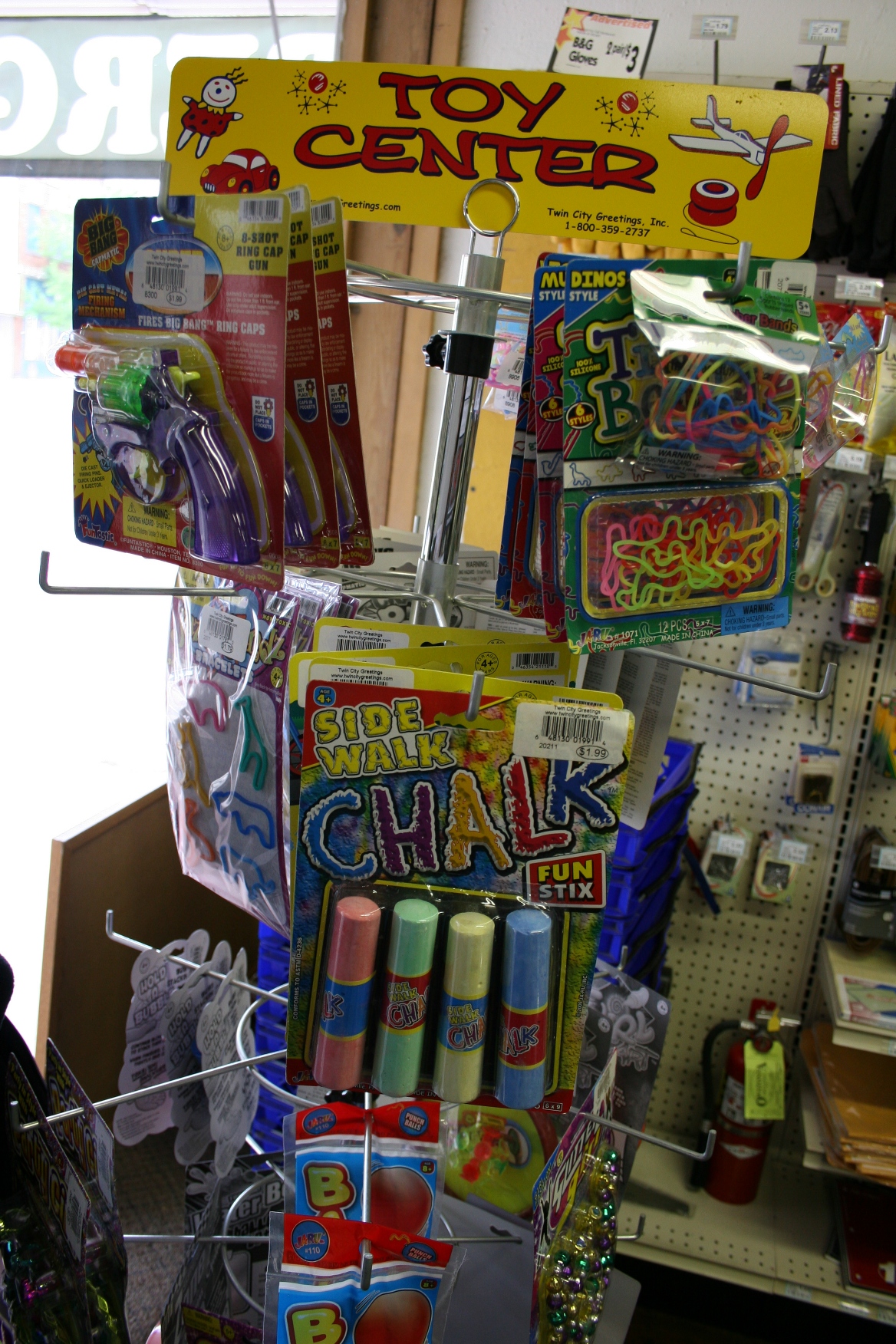
And right before you walk out the door, you'll see this strategically-placed rack of toys.

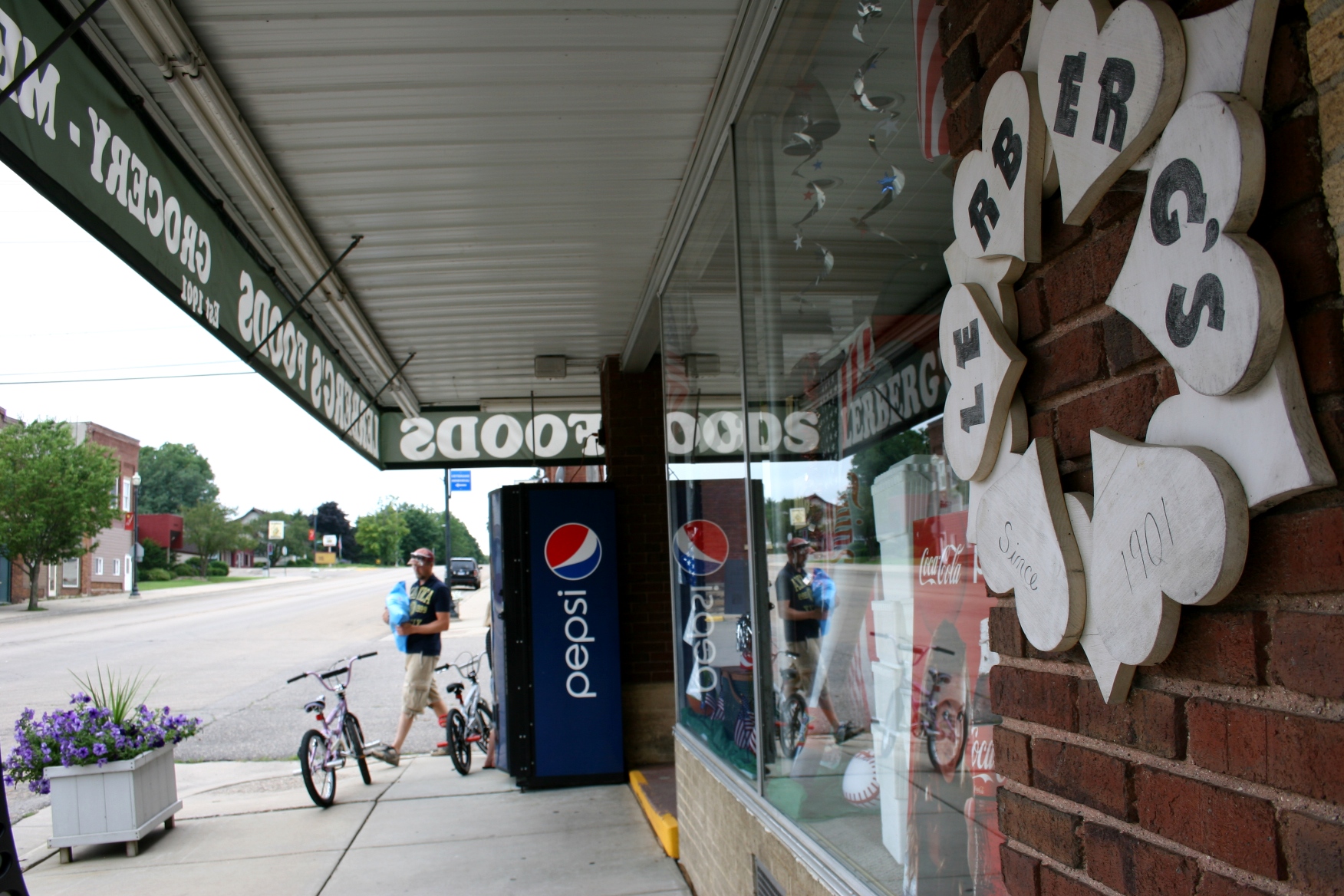
A side view of the grocery store looking toward the main street through Ellendale. A customer is carrying a bag of water softener pellets, stacked in front of the pop machine. The slushie slurping kids had to temporarily give up their hang-out spot so he could grab three bags of salt.

© Copyright 2011 Audrey Kletscher Helbling
 

The armless Jesus at storm-damaged St. John’s in Vesta August 4, 2011

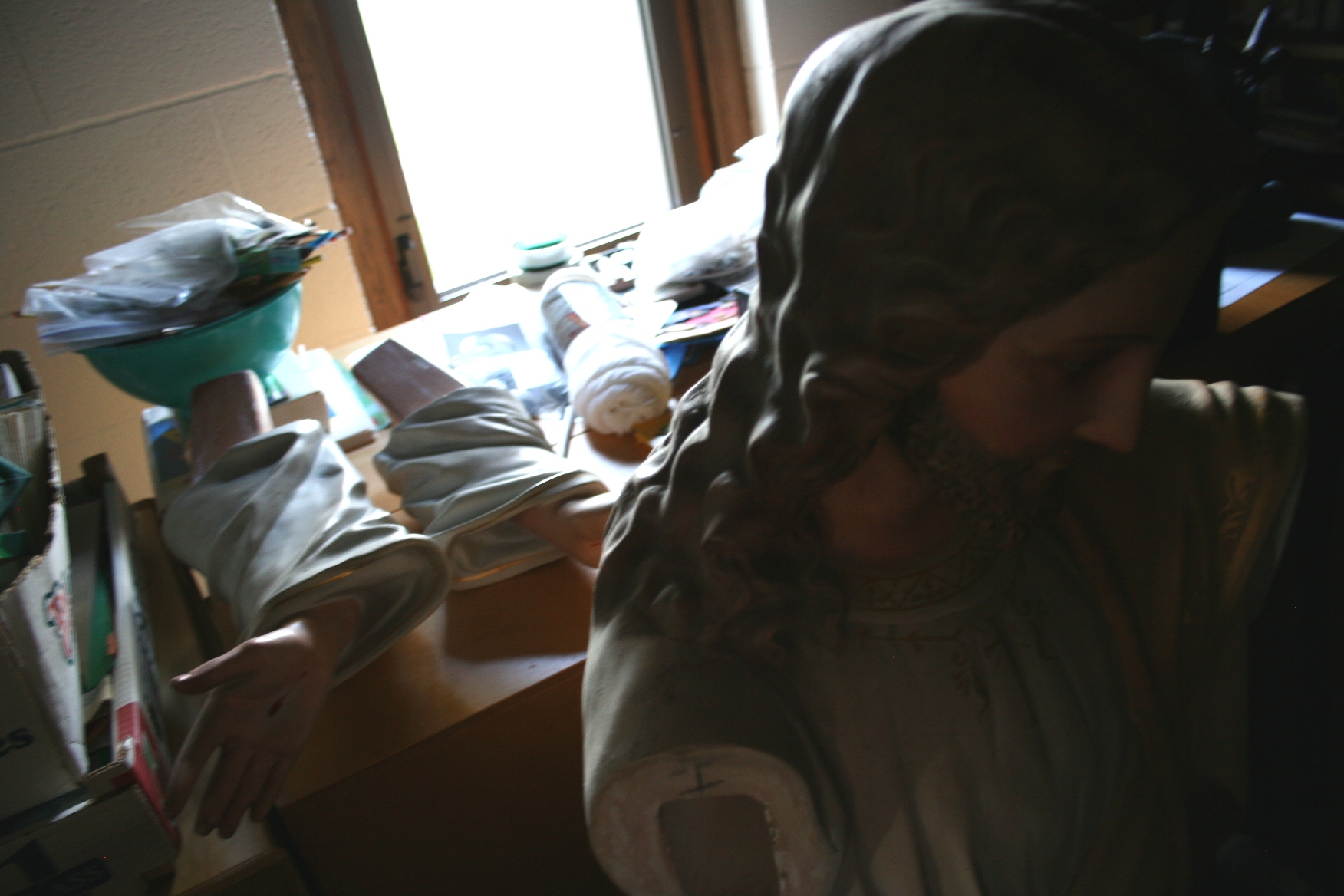
THE ARMLESS JESUS stood there, shoved into the back corner against a desk in the dark fellowship hall packed with misplaced pews.

That’s when I panicked, thought for a moment that Jesus had lost his arms in the July 1 storm, until I realized his appendages had been removed, not broken.

To the right in this photo, stands Jesus. His arms were removed and lie behind him on a desk.

The statue of Christ has been my greatest concern ever since a series of downbursts with winds of 90 – 100 mph ripped half the roof from St. John’s Lutheran Church, exposing the sanctuary and Jesus to the heavens.

One month after that strong windstorm, I returned to my hometown of Vesta in southwestern Minnesota and viewed the damage I’d only seen in photos. The town looks better than I’d feared, although I’m certain if I’d been there right after the storm, I wouldn’t be writing that.

St. John's, hours after the July 1 storm with half of the south roof ripped off by high winds. The roof fell against and cracked the bell tower, which has since been taken down. Photo courtesy of Brian Kletscher.

It’s the damage to St. John’s that I knew would impact me the most emotionally. My worries centered on that Jesus statue, the single remaining visual reminder of the old 1900 church building across town where I was baptized and confirmed and worshipped for the first 18 years of my life. In May of 1982, I was married in the new brick church built in 1974.

Jesus, who once blessed us with outstretched arms from the altar of the old church, was alright. For that I was thankful.

As St. John’s members await word from an engineer on whether the damaged building is structurally-sound or will need to be demolished, they are attending their sister church, Peace Lutheran, in Echo seven miles to the north.

That seems to be working for now. But come winter, when travel can sometimes be difficult and dangerous on the southwestern Minnesota prairie due to blowing snow, options to worship in Vesta may need to be considered. Or maybe not. Pastor Dale Schliewe doesn’t expect the church to be rebuilt by the time the snow flies.

Right now, though, church members are more concerned about getting the building process started. That could include an expansion.

No matter what ultimately happens, this congregation remains a thriving one, attended by many members of my extended family. My great grandfather, Rudolph Kletscher, helped found St. John’s. The first church service was held in his home one mile east of Vesta.

My emotional attachment to this congregation runs deep, rooted in that legacy of faith passed from generation to generation.

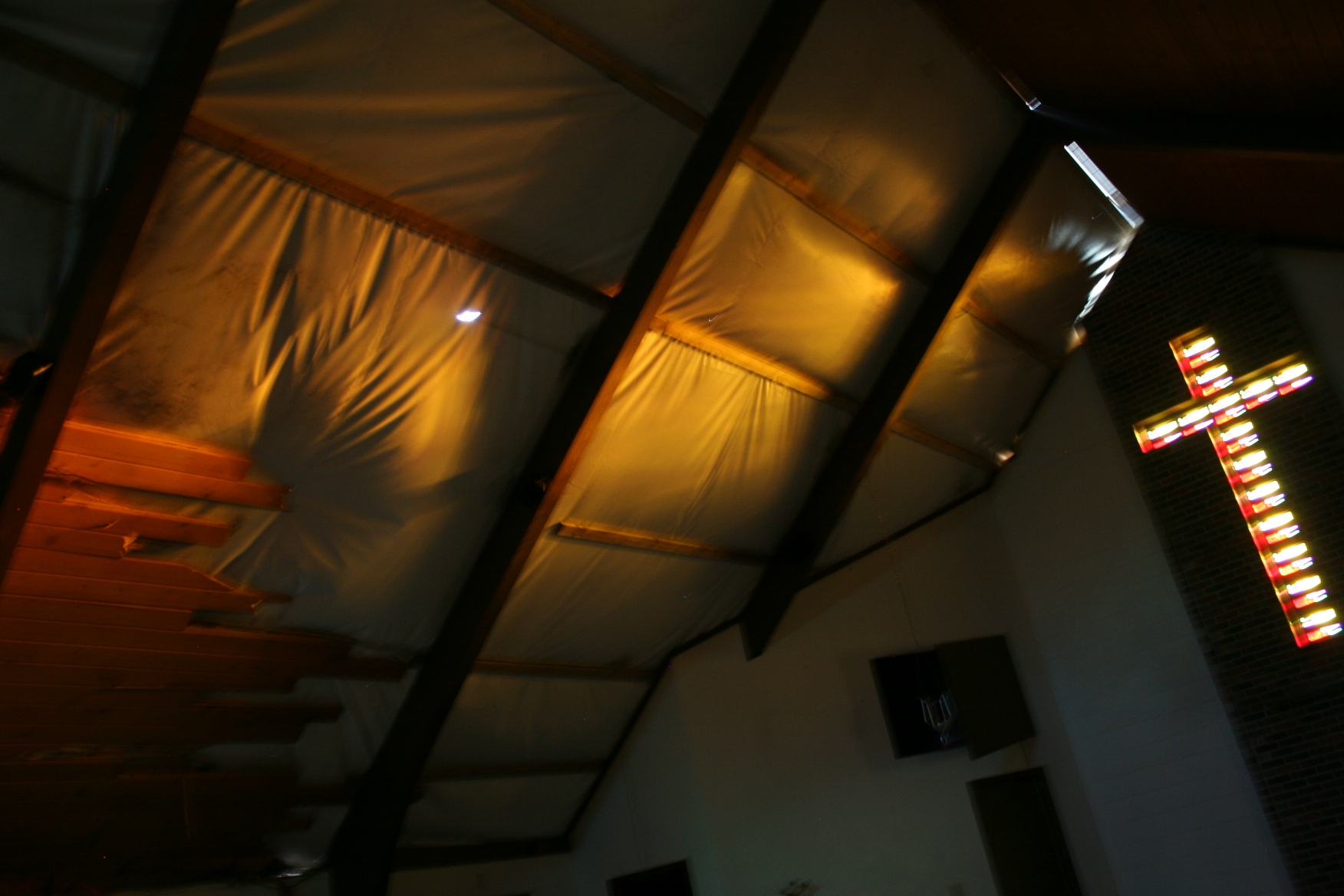
I understand that a building does not comprise a church. Yet, when I walked into the empty sanctuary of St. John’s, gazed upward at the tarp covering the missing roof, saw the splintered wood, walked around the pews jammed into the fellowship hall, noticed Jesus standing armless in the corner, spotted the hymnals stacked on a kitchen counter and skirted the pile of debris in the church parking lot, my soul ached.

Inside the sanctuary, you see the damage to the roof, now covered by a tarp. To the right, a stained glass cross centers the worship area in this photo shot at an angle.

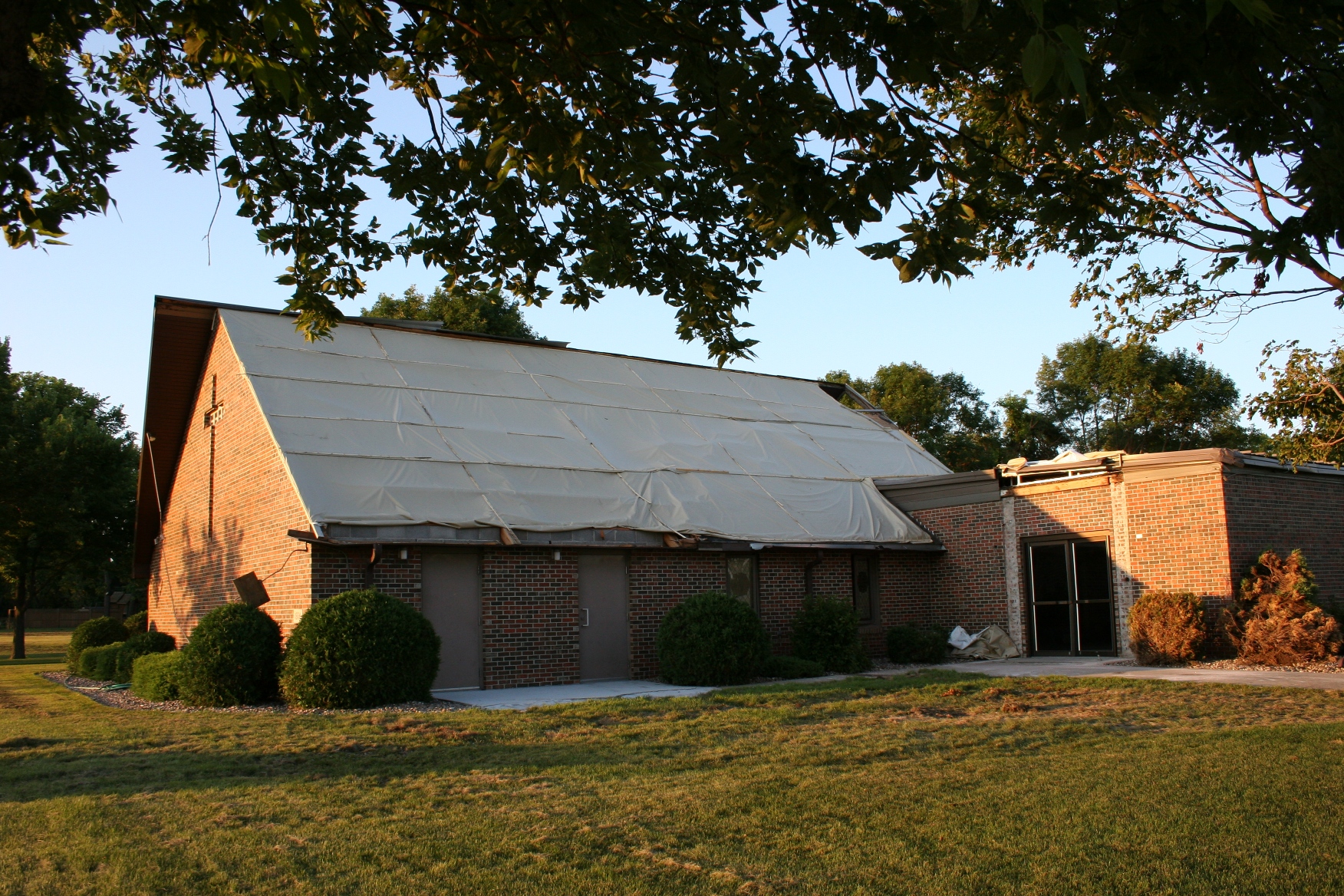
One month after the storm, the south side of the roof is covered with a tarp.

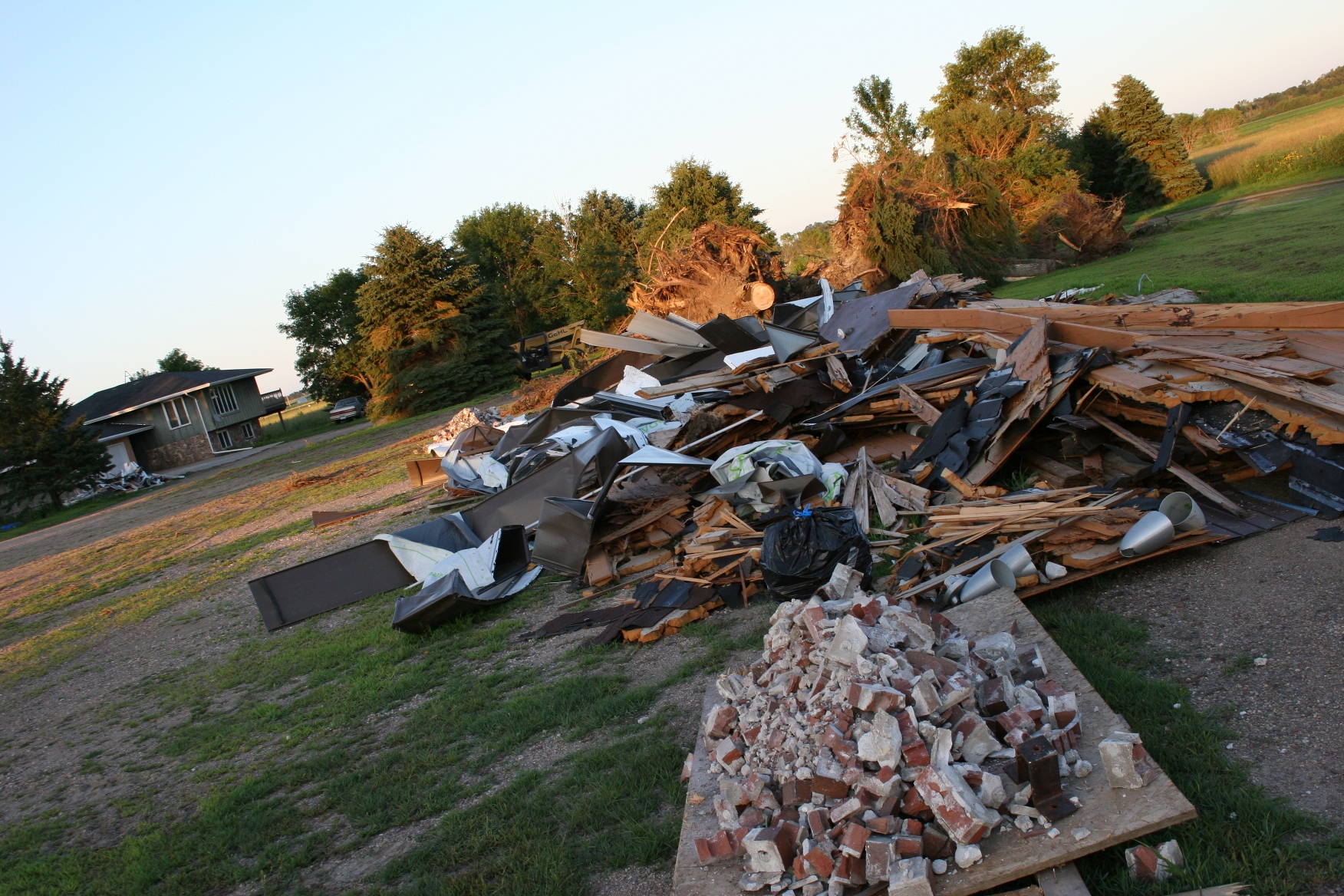
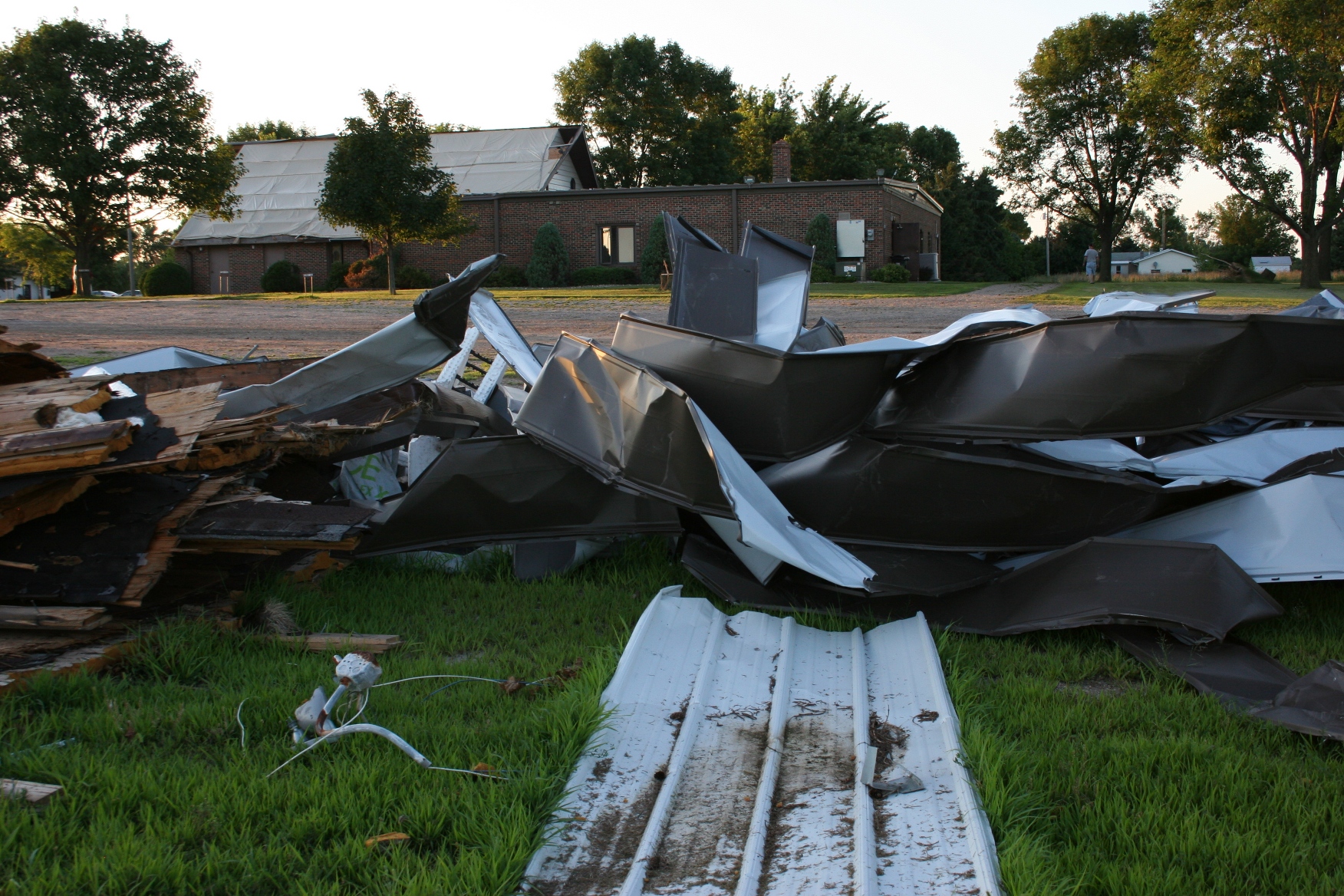
A debris pile on the edge of the parking lot includes pieces of steel from the roof and brick from the bell tower.

Another angle of that debris pile shows uprooted trees and, to the east, a house which was damaged.

© Copyright 2011 Audrey Kletscher Helbling


Riding out a storm in a camper along Lake Minnewaska August 3, 2011

A MONTH AGO, soon after my cousin Marilyn Schmidt and her husband, Dan, arrived at Lake Minnewaska by Glenwood, their daughter Heather Rokeh called with news that a storm had just swept through the Marshall area.

That was late Friday afternoon, July 1. The Schmidts would return to their farm 17 miles northeast of Marshall to find their home and outbuildings damaged by an EF-1 tornado.

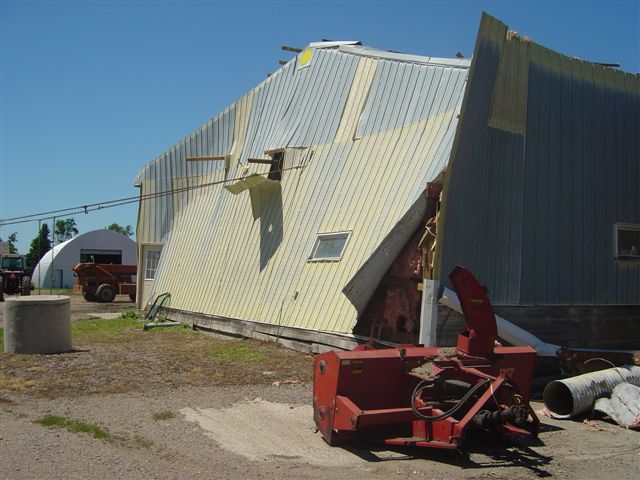
A July 1 tornado caused this damage to the Schmidts' shop on their Wood Lake area farm. Eave troughs were ripped from their house and damage done to the roof and siding.

Fast forward a month to this past weekend, when the Schmidts gathered for a family camp-out at Waska Wood in Long Beach along the north side of Lake Minnewaska by Glenwood. Marilyn and Dan were the only two family members still at the lake when a storm rolled in around 7:30 a.m. Monday, August 1.

Unlike an earlier summer storm at the lake, when they had adequate warning and time to seek safety in a nearby shelter, this time the couple had only a moment’s notice—no warning siren—and no time to reach the shelter.

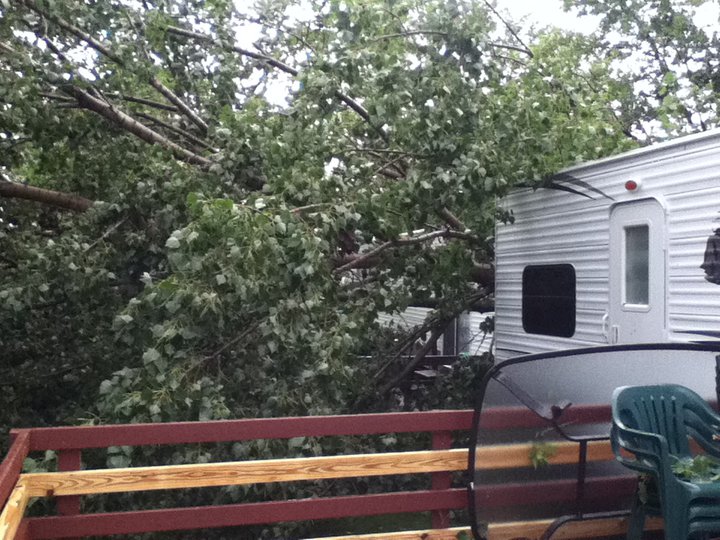
“We saw that we were suddenly in a warning to take cover on TV,” Marilyn says. “The wind hit hard and fast, lasting about one hour. It was scary as we were stuck to ride it out (in their new camper purchased on July 1 and delivered two weeks ago). The branches were flying and soon the trees were snapping and uprooting. We had a large cottonwood uproot behind our camper which fell next to our camper. We felt and heard the thump and the branches brush the trailer.”

The tree that fell behind the Schmidts' camper.

Marilyn, that would scare the you-know-what out of me, too. Last summer I rode out a storm packing 70 mph winds along Redwood County Road 5 north of Walnut Grove and that was scary enough, without the falling trees. You can read about that frightening experience by clicking here.

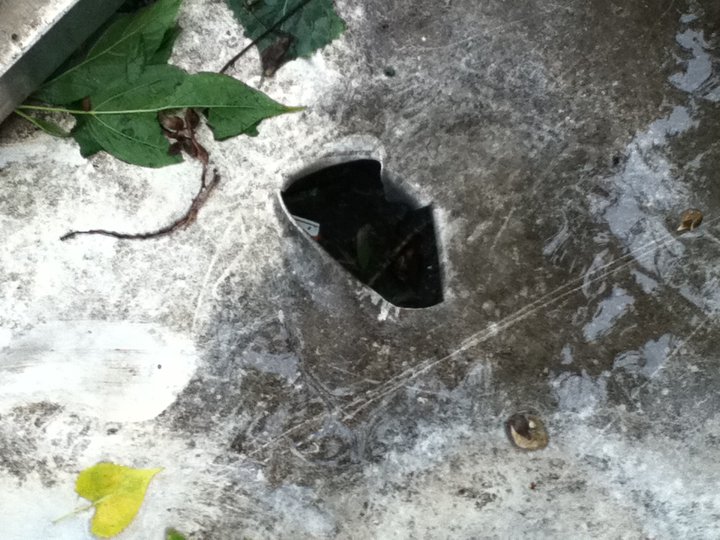
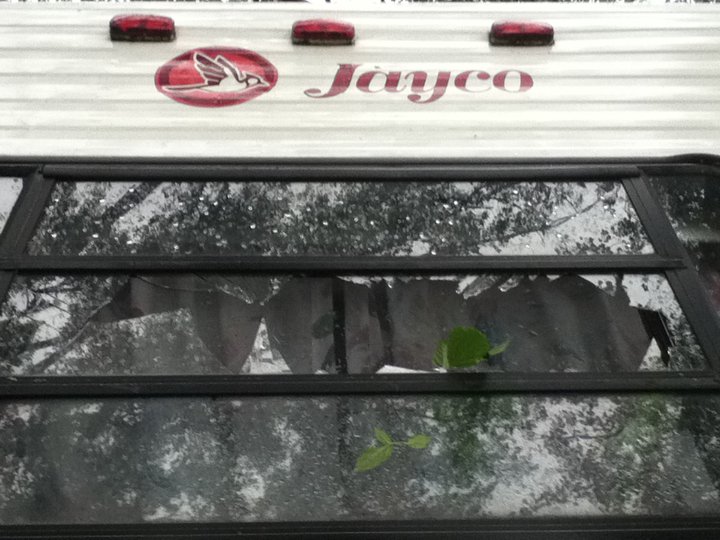
But back to the extended Schmidt family and their experience: Several of their campers were damaged with a tree crushing the front of one, holes punched into the roof on another with rainwater flooding the interior, and windows and deck rails broken.

A hole punched in a camper roof.

A broken bedroom window in a camper.

Despite all the damage, Marilyn’s daughter Heather says, “I’m just so thankful no one was hurt in all of these storms. I thank the good Lord everyday that he keeps us safe.”

Once the winds subsided, the Schmidts emerged from their camper to check on other park residents and to survey the damage. Trees were down everywhere with power lines. Mobile summer homes in the park next door were totaled by the storm. Boats and docks were ravaged.

That’s when Marilyn decided they should drive into Glenwood to buy a rake and help with clean up. They drove through a flooded State Highway 29, with the aid of a Minnesota Department of Transportation pilot car, into town. Glenwood was a mess with trees and power lines down everywhere, she says, and streets teeming with rescue and utility crews, plows and fire trucks.

Upon returning to the campground, the couple worked side by side with other campers cleaning up brush and debris. “I find it remarkable the resilience of people to quickly get to work and clean up everything,” Marilyn says. “…people were telling stories about how they took the storm. Some were emotional and in shock that such a storm would hit so soon again.” The storm a month earlier, with 80 mph winds and heavy rain, also caused significant damage.

Says Heather: “How unlucky can we all get? Seriously!”

I don’t know, Heather. A storm on July 1. A storm on August 1. If I were you, I’d keep a close eye on the sky come September 1.

PHOTOS BY MIKAYLA SALFER

© Copyright 2011 Audrey Kletscher Helbling
 

Throw that ear of corn and other family reunion memories

Filed under: Uncategorized — Audrey Kletscher Helbling @ 7:17 AM
Tags: , , , , , , , , ,

“I WANT TO COME to your family reunion,” my friend Mike told me recently after I filled him in on all the fun my extended family has at our annual reunion.

That reunion happened this past weekend in Vesta, a town of about 300 in Redwood County in southwestern Minnesota. This is the place where my great grandparents, Rudolph and Matilda Kletscher, settled and where their son, Henry, my paternal grandfather, raised his family.

Every year on the last weekend in July, we gather here—at the city park if the weather is nice, in the community hall if it’s too hot or rainy—to reconnect. Only once in recent years have I missed the reunion, for a wedding. Otherwise I keep my calendar clear for that date because, honestly, I love seeing my aunts and uncles and cousins and their families and my mom and siblings and their families.

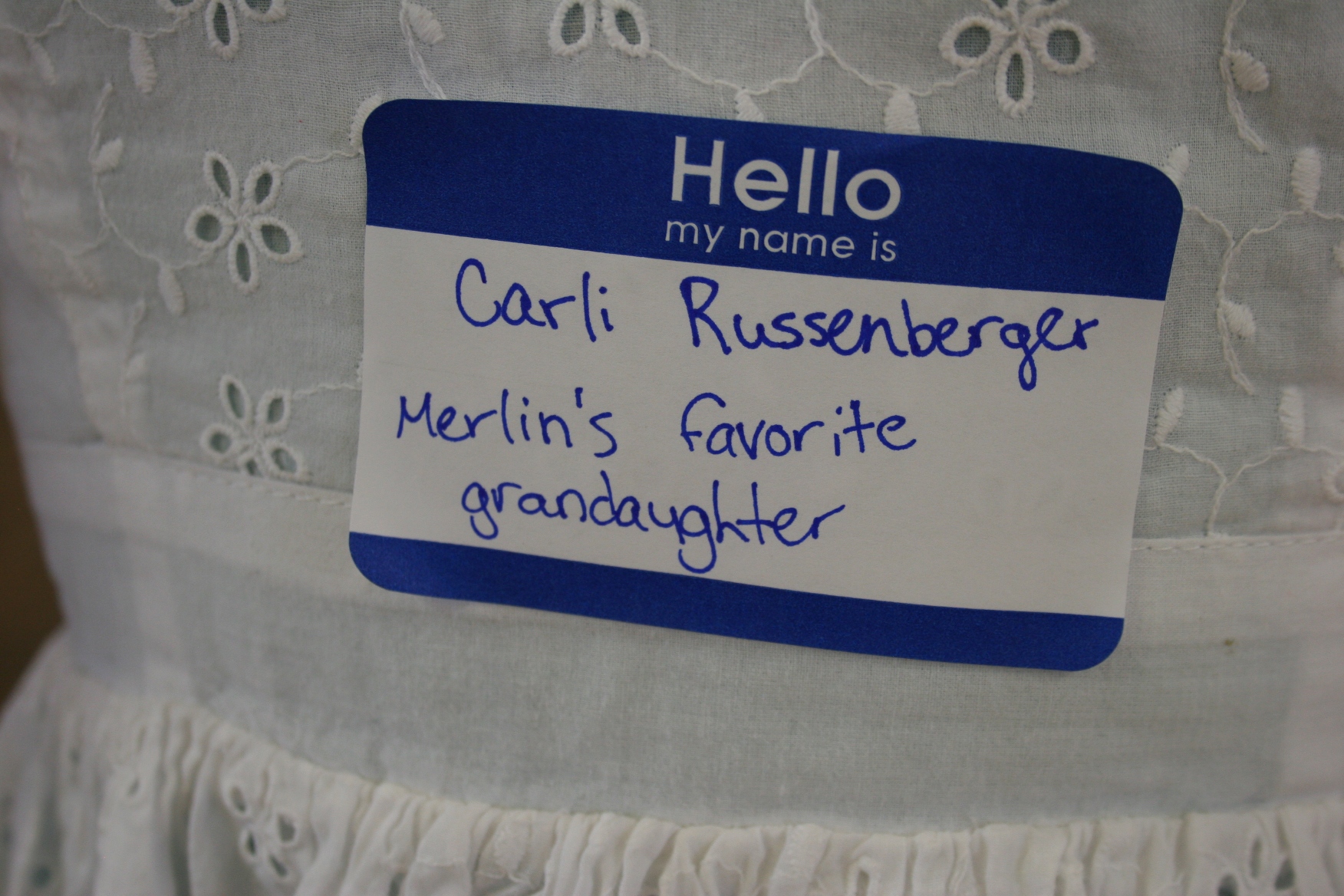
Carli had a little fun with her name tag.

My Dad, who died in 2003, grew up with nine brothers and sisters, so you can imagine the size of our reunion, even when everyone doesn’t show up. We’ve finally resorted to wearing name tags the past two years just so we can identify everyone and who belongs to whom. And, yes, even the occasional boyfriend or girlfriend or other friend of a relative attends. We are welcoming that way.

Recently we infused new energy into a reunion that, for the younger generation, had become a bit boring. Seems they found simply sitting around, visiting and eating not all that exciting. I totally get that because even I want to do more than sit for hours.

Two years ago we added a Saturday evening campfire complete with homemade wine tasting, smores, snacks (Kletscher reunions always include lots of food), singing and old-fashioned games like gunny sack and 3-legged races. My cousin Vicki and her husband, Dave, also created a texting competition popular with the teens and young adults.

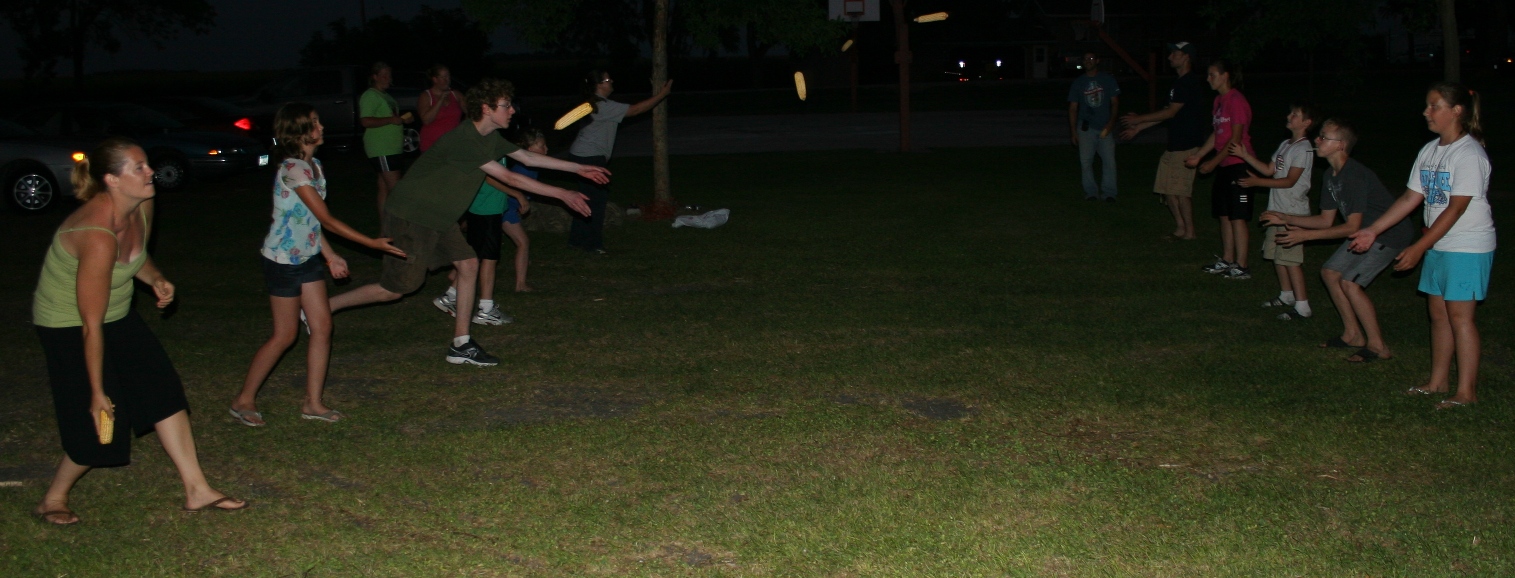
Family members toss ears of corn during the old-fashioned game competition Saturday night.

This year we didn’t have a campfire, but we still met at the park until the heat, humidity and mosquitoes chased us out around10 p.m. But we got in those old-fashioned games, with an ear corn toss added this year. Vicki and Dave also planned a few other games, including a treasure hunt. I teamed up with two cousins and an aunt and her elementary-age grandchildren. Smart move. When we adults determined that the clue “pop, popcorn and hot dogs” meant a concession stand, we pointed across the softball diamond and told the granddaughters to run. They did. We cheered them on.

More games continued following Sunday’s potluck. And let me tell you, the Kletschers know how to cook. Hotdishes crammed nearly every inch of one banquet table with salads and desserts jammed onto another.

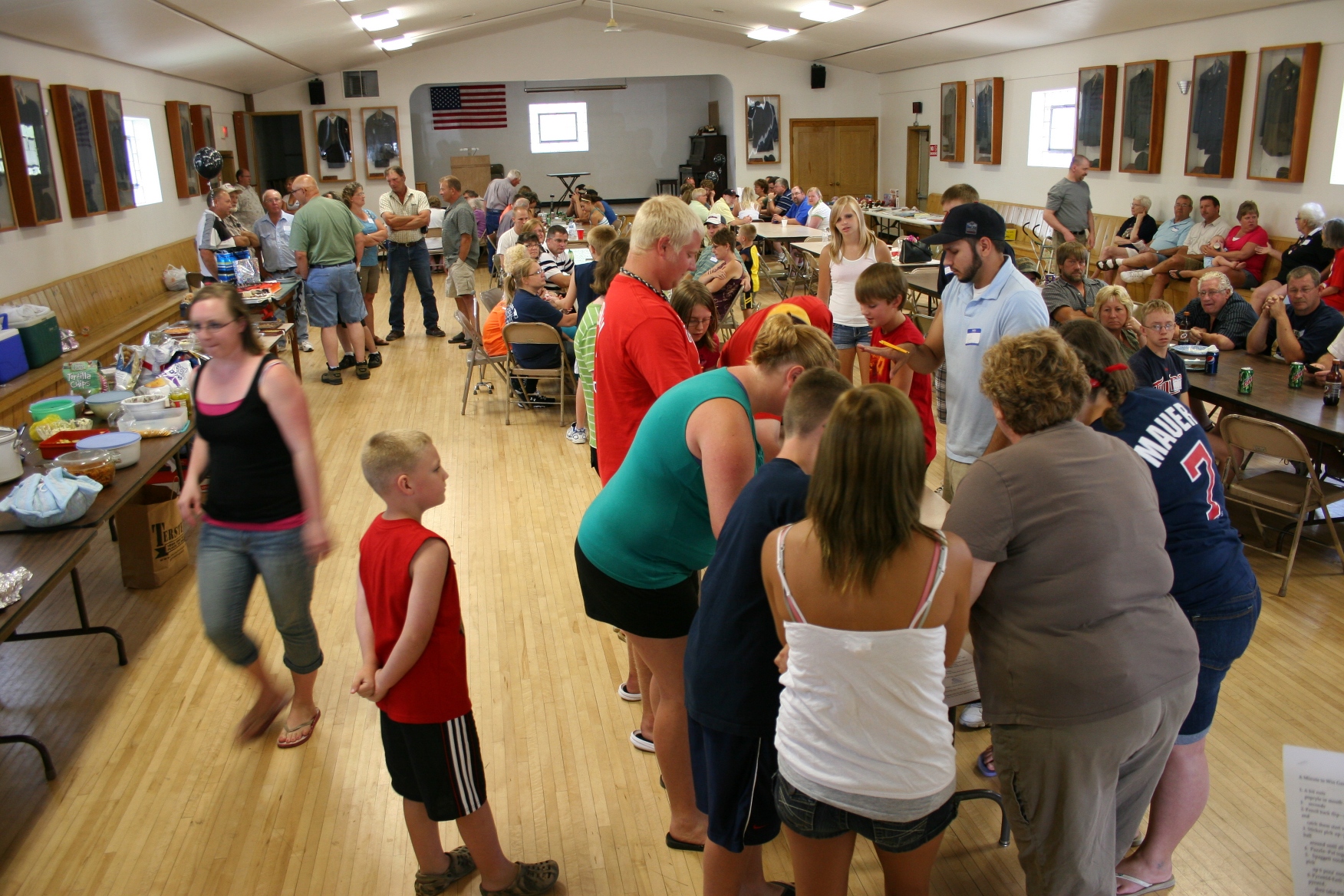
Contestants in the Minute-to-Win-It competitions gathered around a table right after the potluck. To the left you'll see some of the food that family members brought. Many dishes had already been removed from the table.

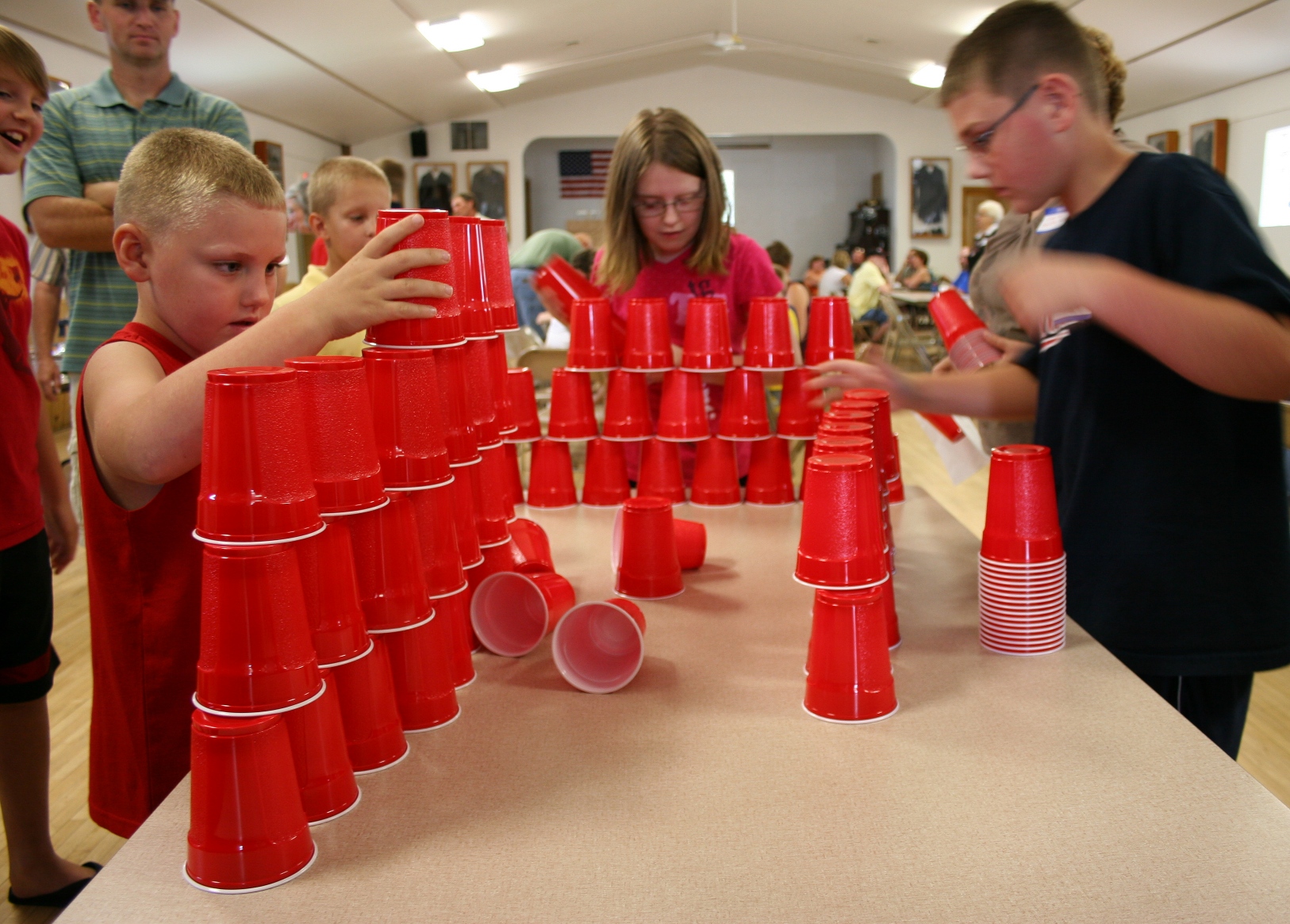
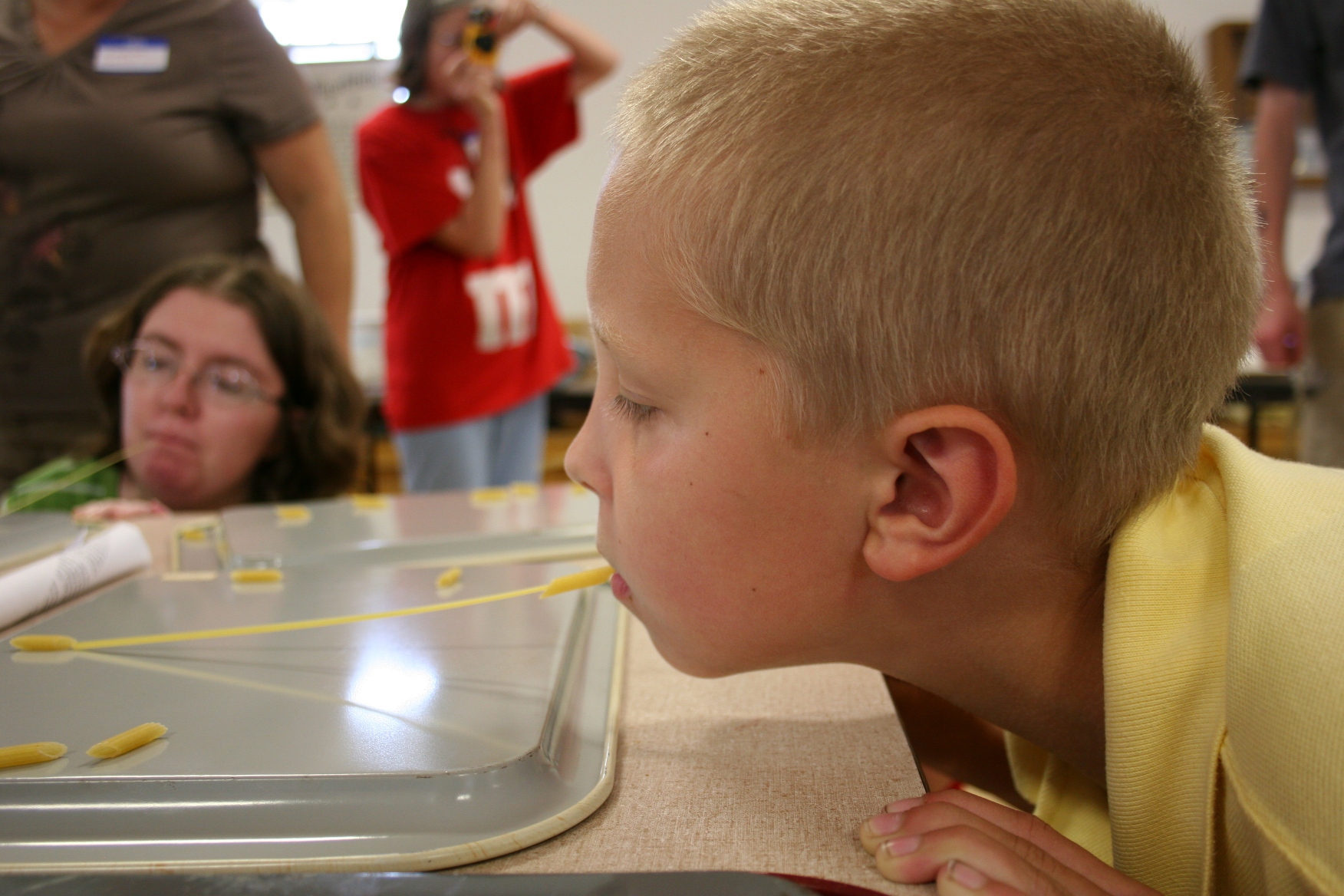
We’d barely finished our meal when my sister Lanae set up the first of several Minute-to-Win-It games she pulled together. I stepped up to photograph the action. Last year I was in the thick of it, planning activities and leading a family trivia competition. This year I wanted to observe the fun.

And the kids had a blast. I could see it in their smiles and hear it in their laughter and in the pounding of their feet racing to the prize table.

Contestants had a minute to stack 36 plastic cups.

In another minute event, competitors maneuvered pasta onto spaghetti.

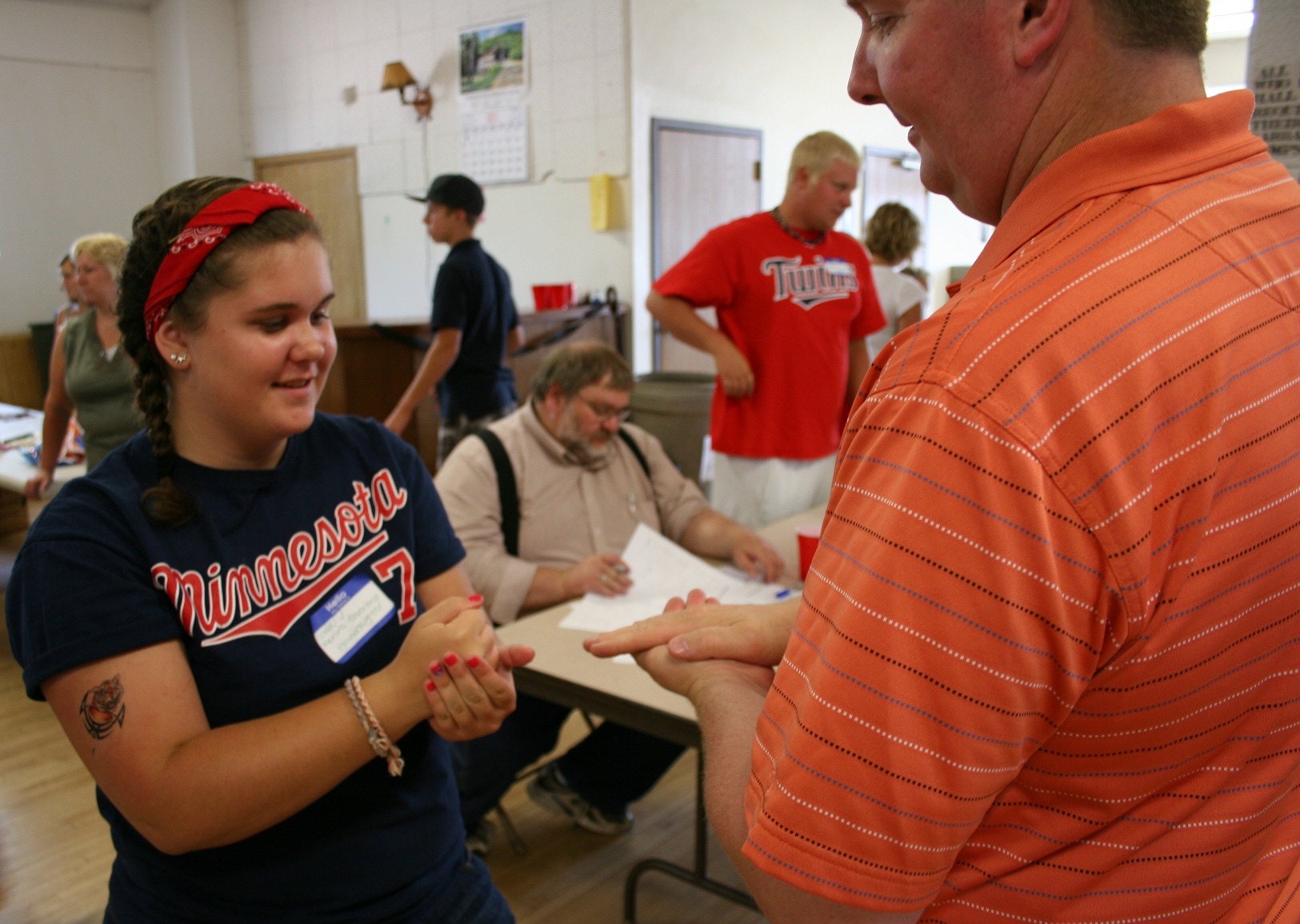
All ages participated in a rock-paper-scissors tournament coordinated by my cousin Jeff. I lost in the first round.

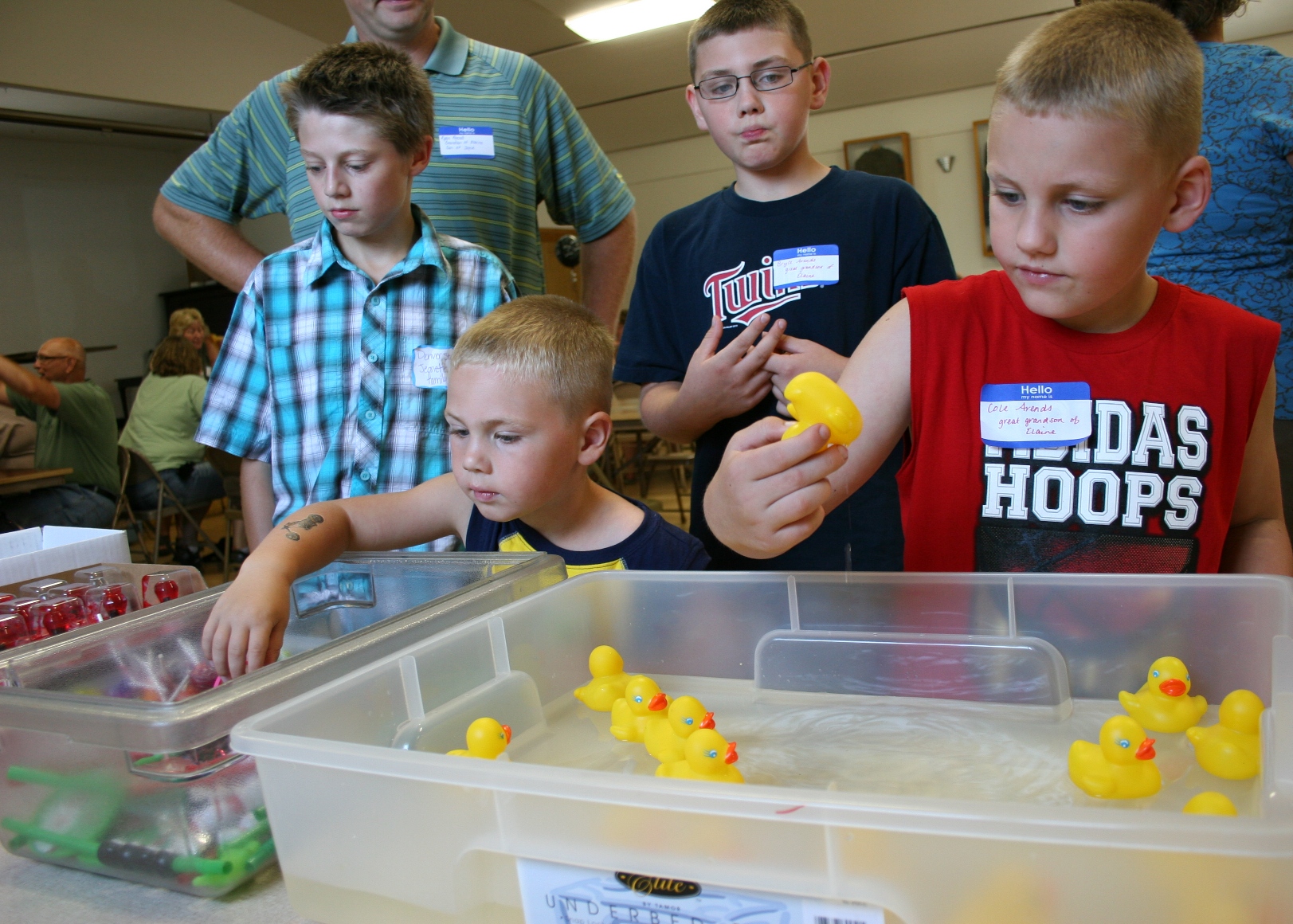
The younger kids could select a duck from the duck pond and win a prize.

Family members lined up to get temporary tattoos and their faces painted. I was among the first to get a tattoo. My cousin Greg, who didn't know about the tattoo parlor, saw my butterfly tattoo from across the community hall and said, "I didn't know Audrey had a tattoo." Well, now you know, Greg.

While planning games takes time and effort, it’s almost a necessity if we are to keep the young people interested in our reunion and connected as a family. By competing against each other or working together as a competitive team, they are getting to know one another. They are building memories.

Even my 17-year-old, who in years past grumbled about attending the family reunion, now looks forward to it. He protested when we told him we had to leave late Sunday afternoon for the 2 ½-hour drive back to Faribault.

Already the family in charge of next year’s reunion has selected a Mexican theme and is talking piñatas and tacos. We laughed at the idea since we’re a bunch of Germans. But we’ll go along with the theme, as long as we can bring our sauerkraut hotdishes.

CLICK HERE TO READ about the 2010 Kletscher family reunion in the blog post, “Making memories at a Minnesota family reunion with red Jell-O and, um, underwear.”

© Copyright 2011 Audrey Kletscher Helbling
 

It takes a strong man or woman to farm August 2, 2011

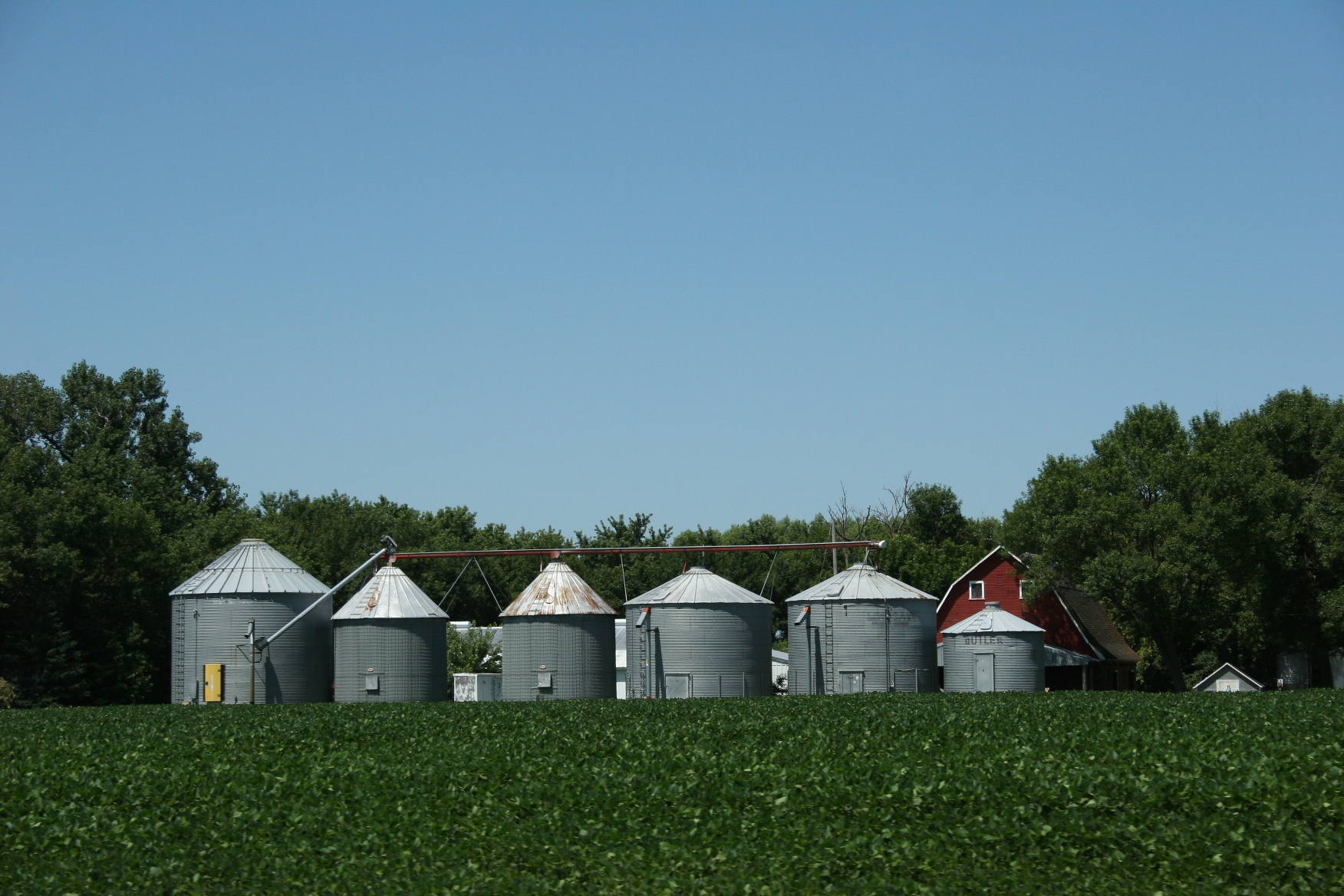
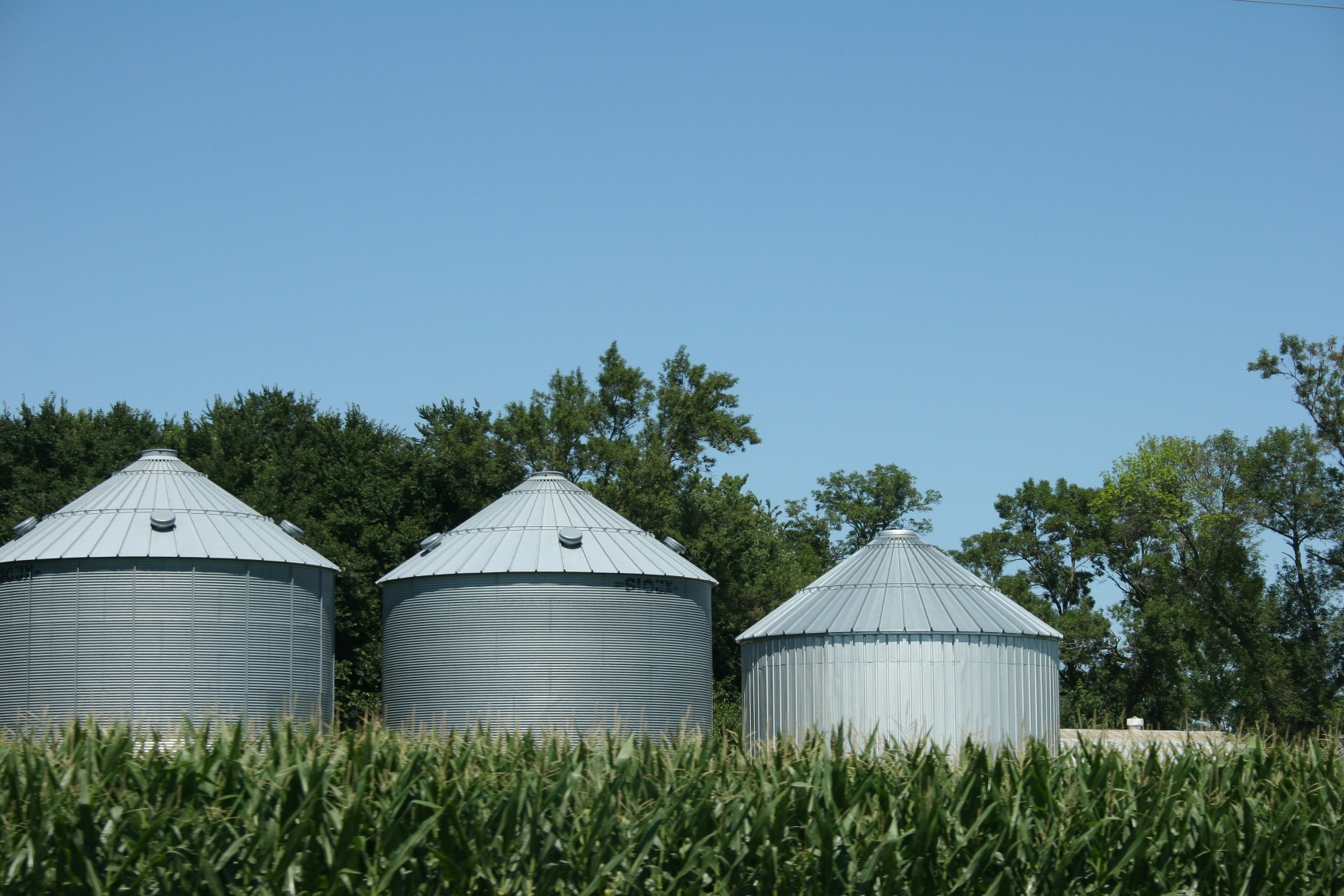
Bins on a farm place somewhere along the back roads between New Ulm and Morgan.

“I COULD NEVER BE MARRIED to a farmer or be a farmer,” I told my cousin Kevin as we stood outside the Vesta Community Hall Friday evening discussing the July 1 windstorms and tornadoes that ravaged my native southwestern Minnesota.

Kevin farms south of Echo, where he lost three grain bins, trees, and, if I remember correctly, an auger, to high winds. He’s looking at replacement and upgrade costs of more than $140,000. And a good chunk of that will not be covered by insurance. Investing so much money in his farm now, at near 60 years old, doesn’t come easily for him, he claims. But he doesn’t have an option if he is to continue farming.

As he was sharing his story, he said, “I told the wife I need to…” Kevin, 56, got married late in life (six years ago), so I still have to remember sometimes that he’s with Kris, a wonderful woman.

It takes a strong man or woman to live a life of farming. As much as I love the farm, I couldn’t farm. I couldn’t handle the financial stress, the “I told the wife I need to” replace the grain bins or I need to borrow money for a new tractor or the beans were hailed out…

I’d stress over borrowing all that money and over the financial risks inherent in farming.  Will commodity prices be up or down when I want to sell the corn and beans? Should I sign a contract now or wait? Should I buy that piece of equipment, build that machine shed? Will I get a decent crop? I’m not a gambler or a risk taker, even though I grew up on a crop and dairy farm.

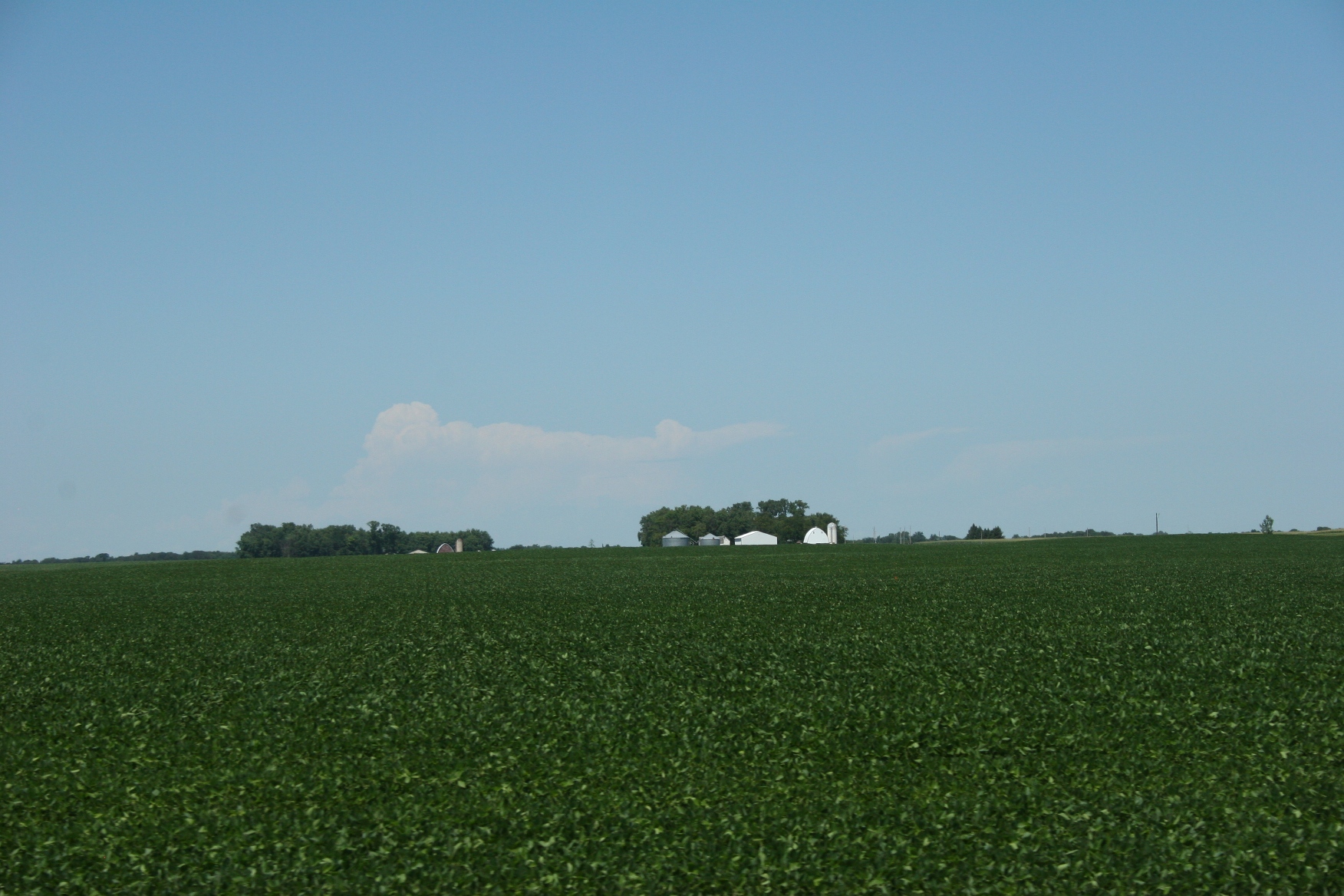
Soybean and corn fields stretch into forever in southwestern Minnesota. I shot this image on Friday between New Ulm and Morgan.

For many Minnesota farmers, this year has been especially challenging. Crops were planted late due to wet field conditions. Then the heavy rains fell, drowning out entire sections of fields. Next, strong winds and hail devastated beans and corn.

For the first time that I can ever recall, I saw black fields near my hometown of Vesta. My cousin told me the fields had been replanted and then the storms came when it was too late to replant again.

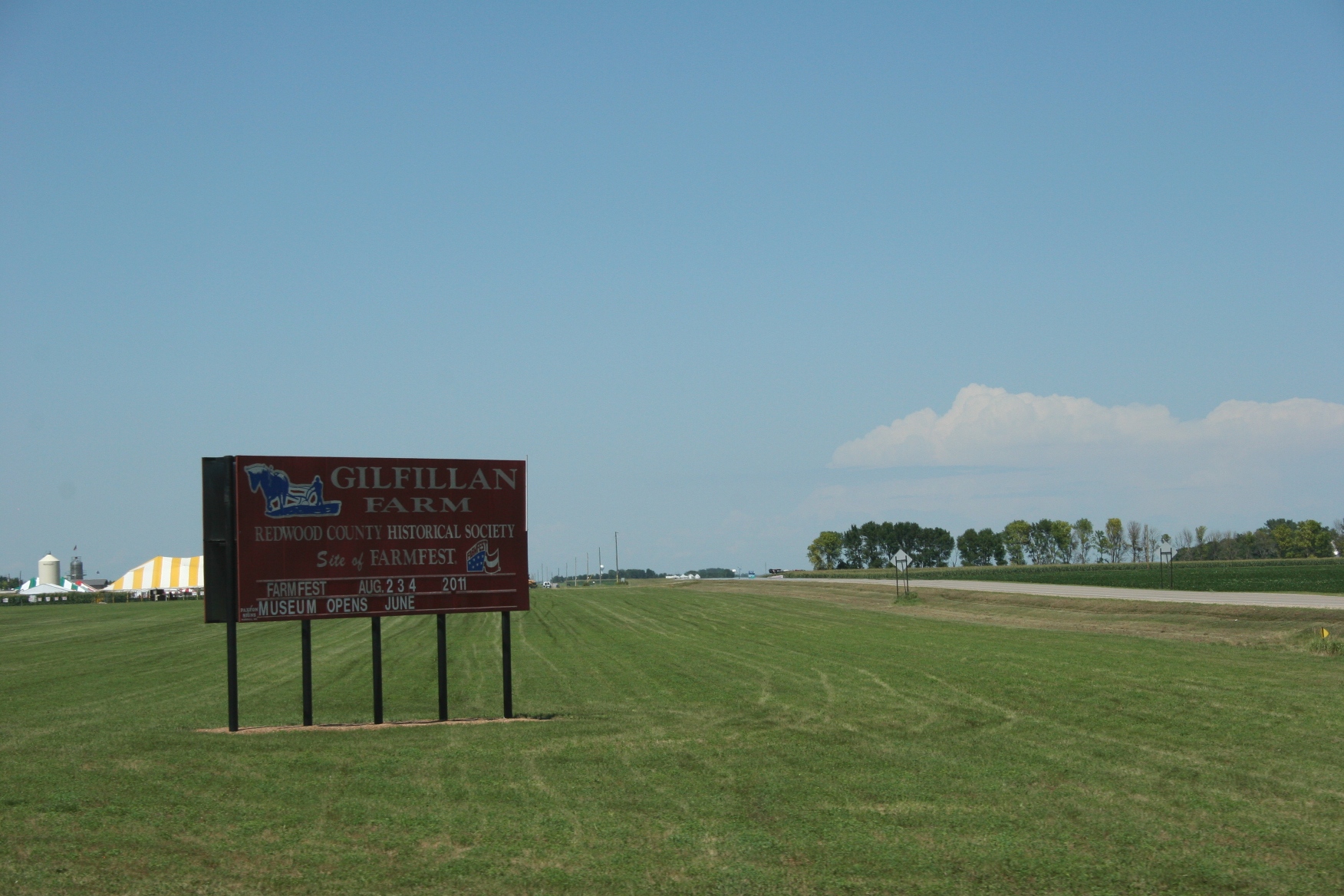
Three days this week, beginning today, farmers, agri-business reps and others will gather at the historic Gilfillan Farm between Morgan and Redwood Falls for Farmfest. There, in the heart of Minnesota’s farm country, I bet if you eavesdropped on a conversation or two or ten, you’d hear some farmer say, “I told the wife I need to…”

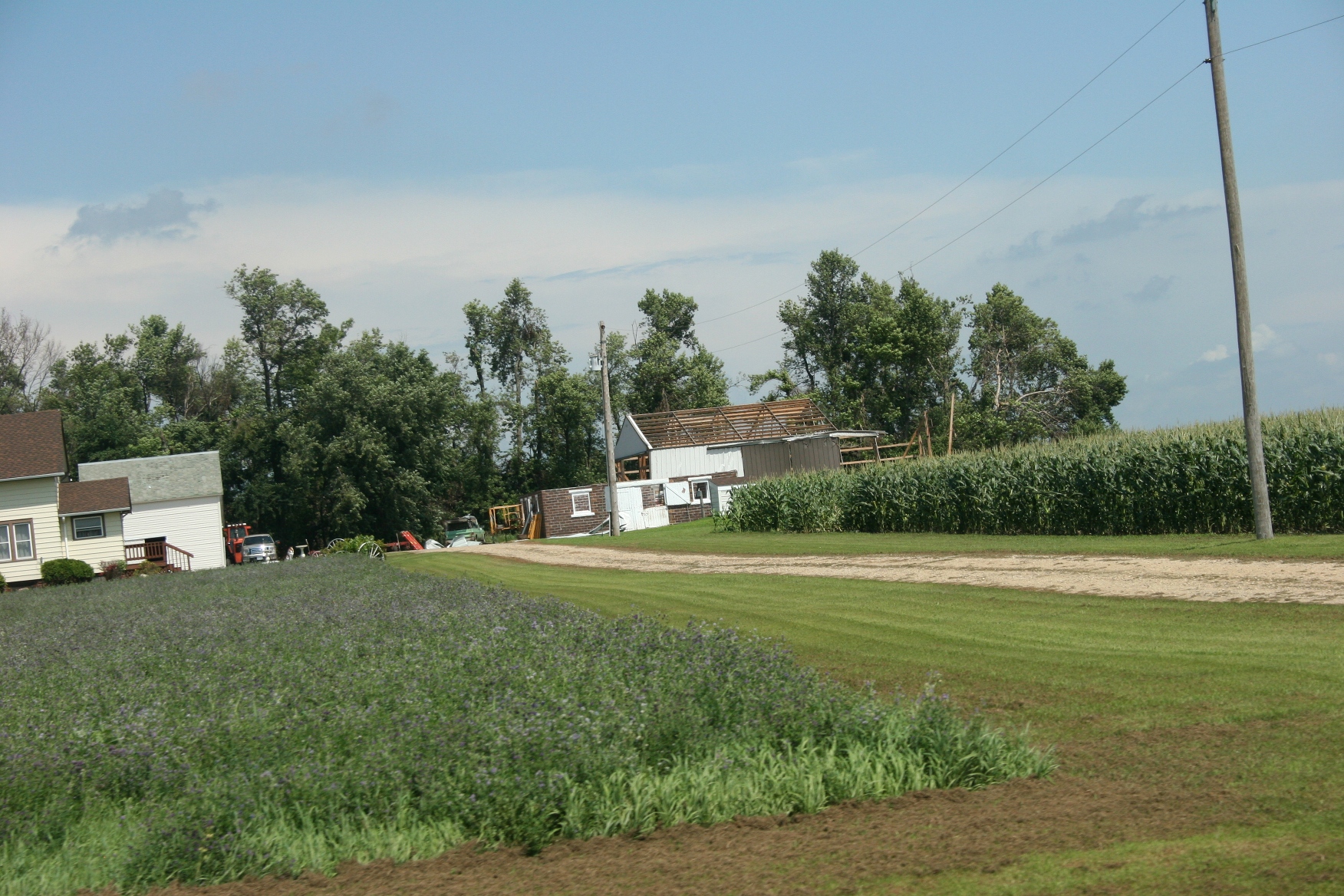
I spotted this damage to a building on a farm just north of Belview, which was hit by a July 1 tornado.

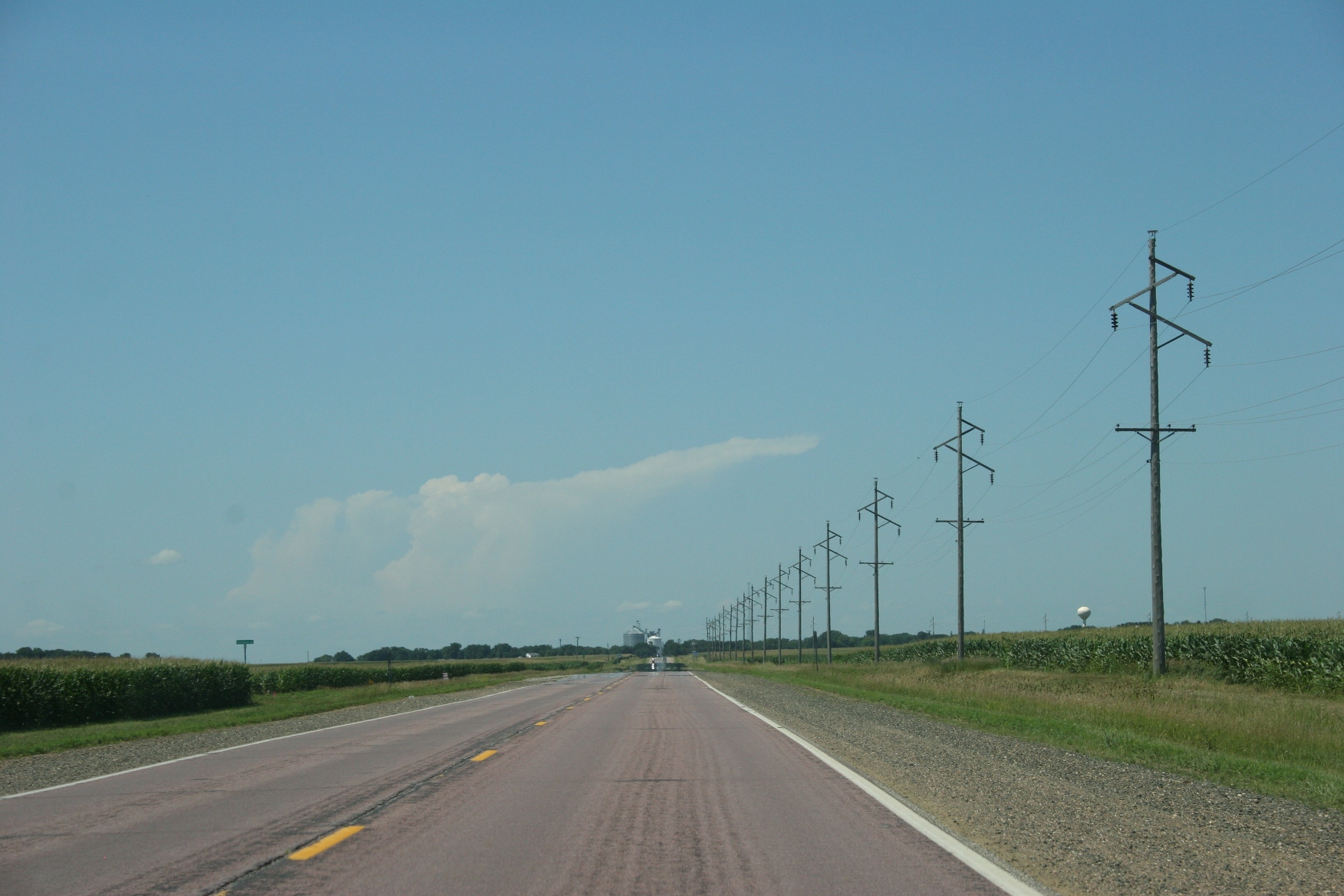
I took this shot traveling Minnesota Highway 67 west toward Morgan Friday afternoon. Follow this road and you'll end up at Farmfest. You can see Morgan's water tower and grain elevator complex in the distance.

Farmfest at the historic Gilfillan Farm runs today through Thursday.

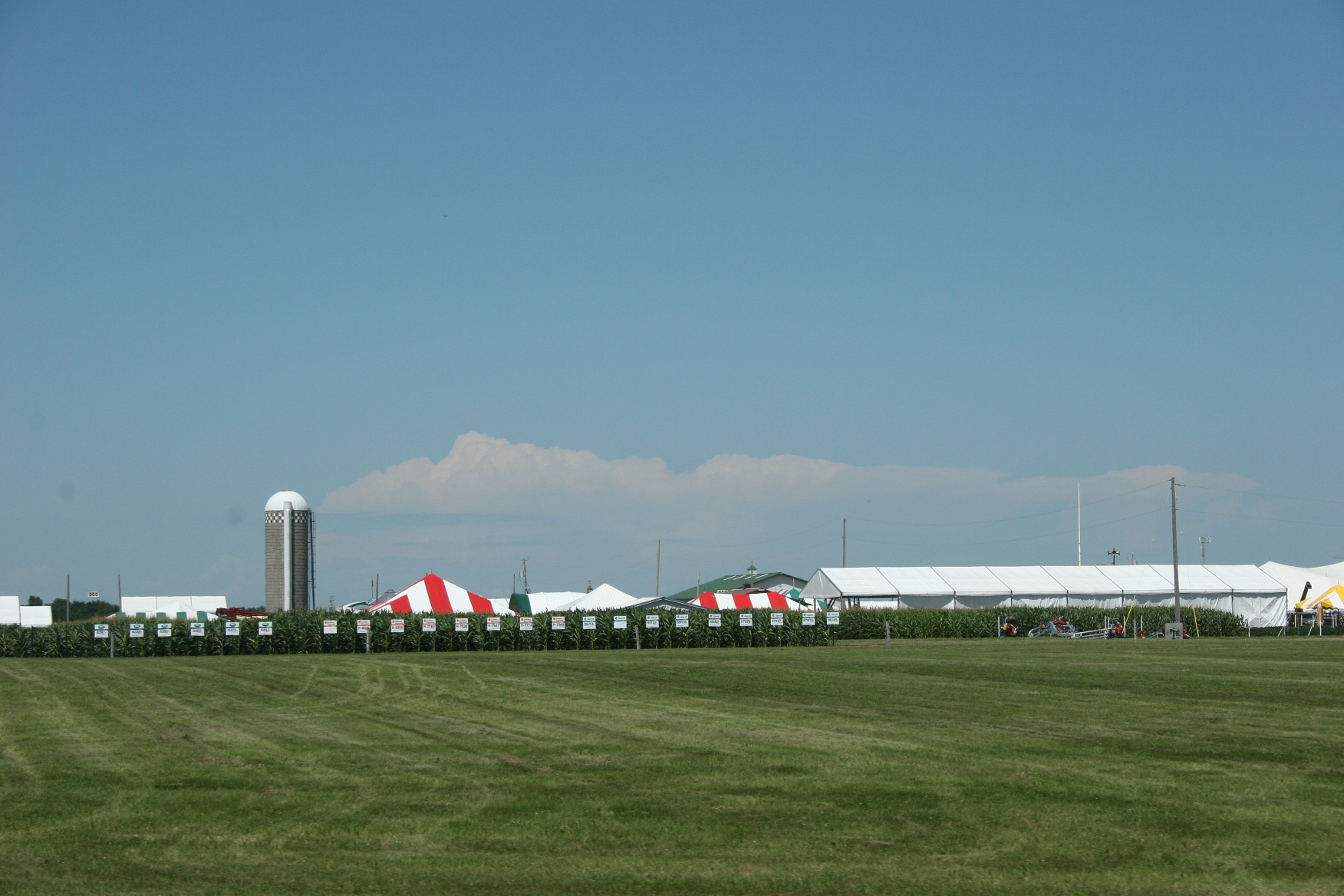
When I drove by the Farmfest grounds Friday afternoon, tents were already in place for the event.

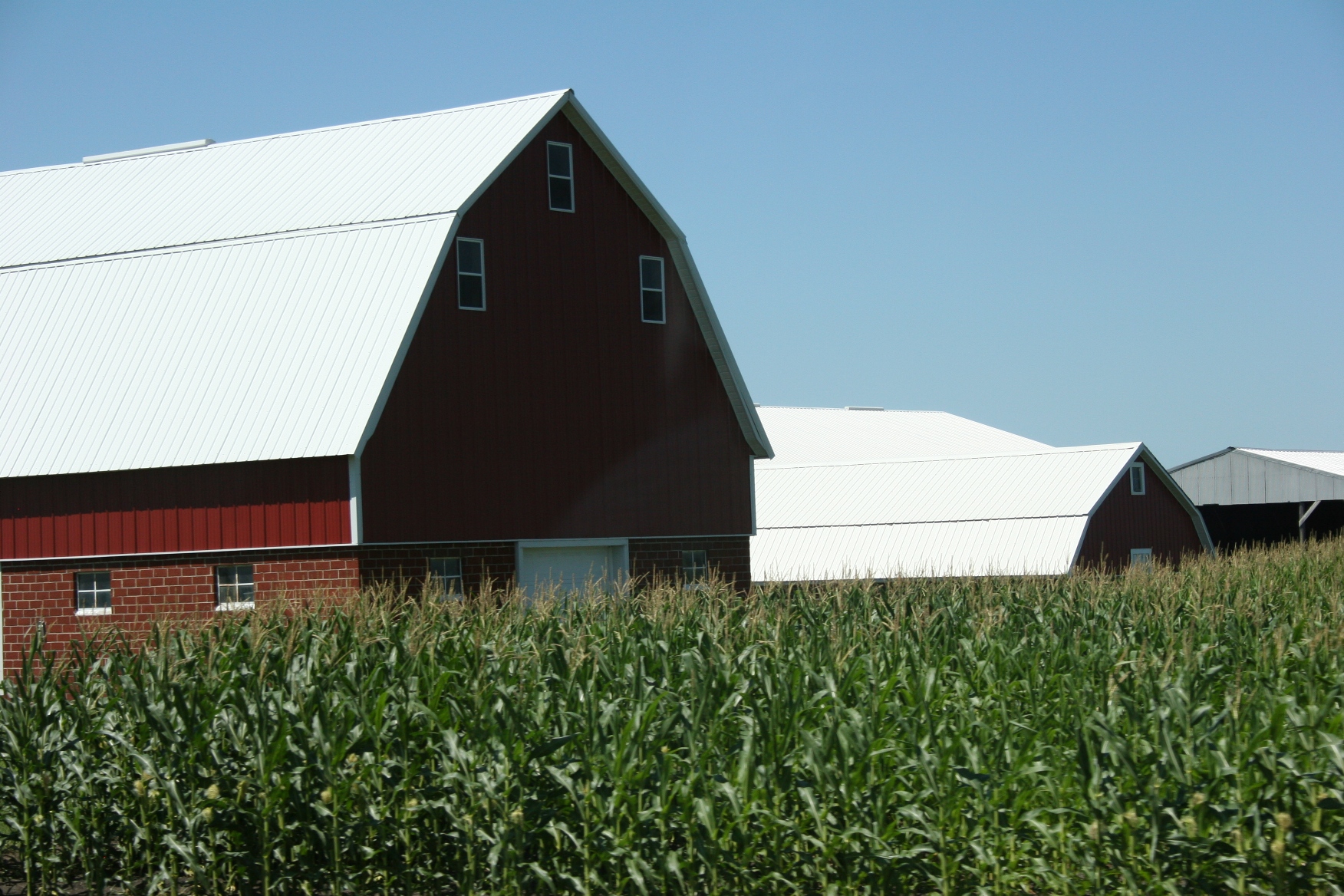
A barn, outbuildings and a corn field between New Ulm and Morgan.

Bins on a farm site along the back road between New Ulm and Morgan.

© Copyright 2011 Audrey Kletscher Helbling
 

Celebrating summer in small-town southwestern Minnesota August 1, 2011

Filed under: Uncategorized — Audrey Kletscher Helbling @ 11:26 AM
Tags: , , , , , , , ,

A chicken meal has been served for decades at V-Esta Daze.

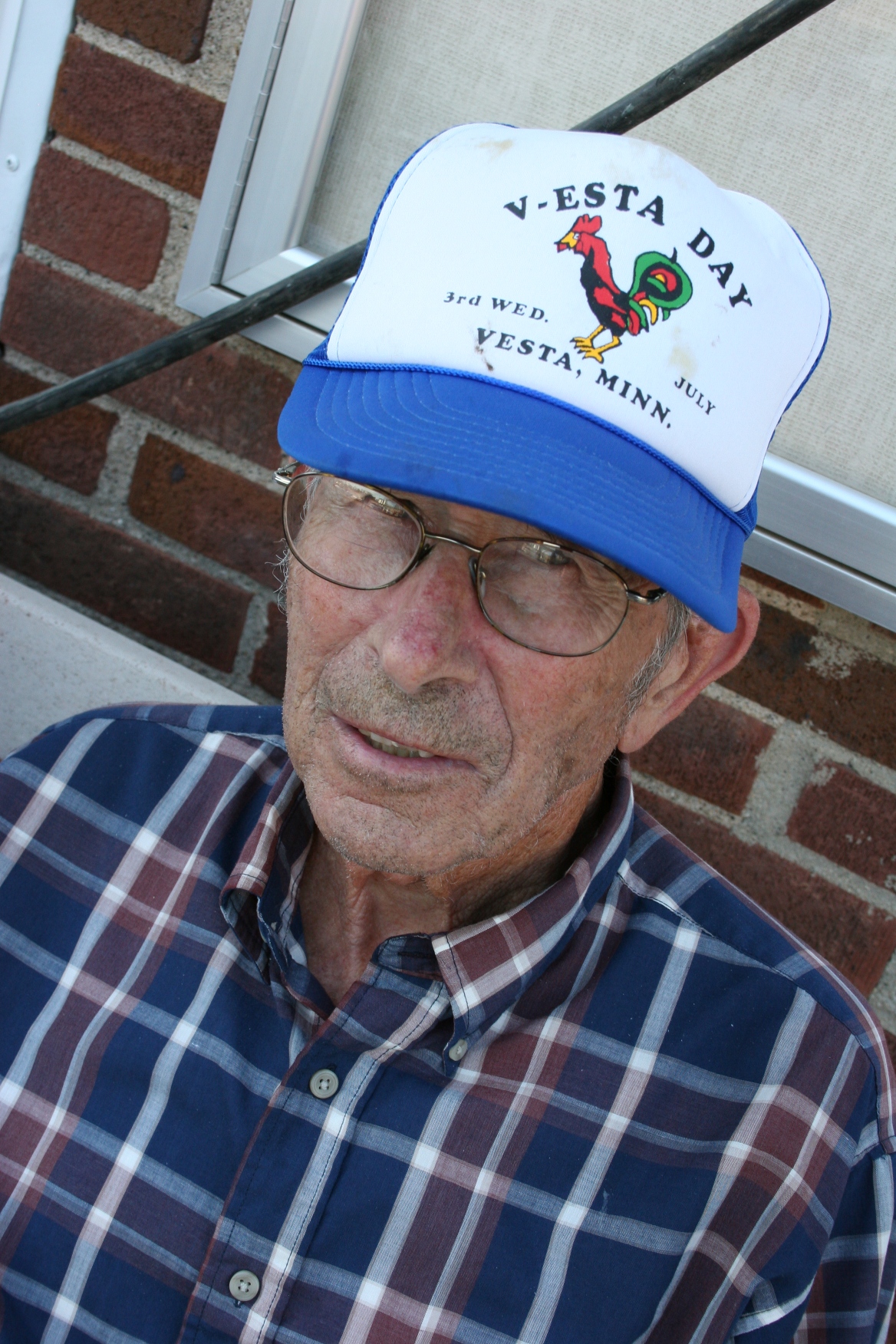
Milt Marquardt

IF YOU GREW UP in a rural area, you likely also grew up with an annual small-town summer celebration.

A chicken/pork/burger/corn (whatever) feed, carnival, kids’ games, car show, crowning of Miss Small-Town, water fights between neighboring fire departments, softball tournaments, a parade…

My hometown of Vesta in southwestern Minnesota has, for decades, celebrated V-Esta Daze. The town name is pronounced “Vest-a,” but for the celebration, the pronunciation rhymes with “fiesta.” Don’t ask me why. We’re mostly a bunch of Germans.

Anyway, heritage and linguistics don’t matter so much as the decades-long tradition of serving Vesta’s famous chicken. Guys like Milt Marquardt, my neighbor back when I was growing up on a dairy and crop farm, have been grilling chicken so long they can’t remember. Suffice to say that’s been more than four decades.

Milt and the crew grilled 280 pieces of chicken for the crowd that lined up in the Vesta Community Hall Friday evening for quarter or chicken halves, potato salad, beans, rolls, pickles and beverages. A few things have changed about the meal—the potato salad is no longer prepared by local women and the plastic-ware isn’t wrapped in a napkin (you grab your own). But you’ll still find my Aunt Marilyn monitoring the beverage station, the same job she’s held for some 40 years.
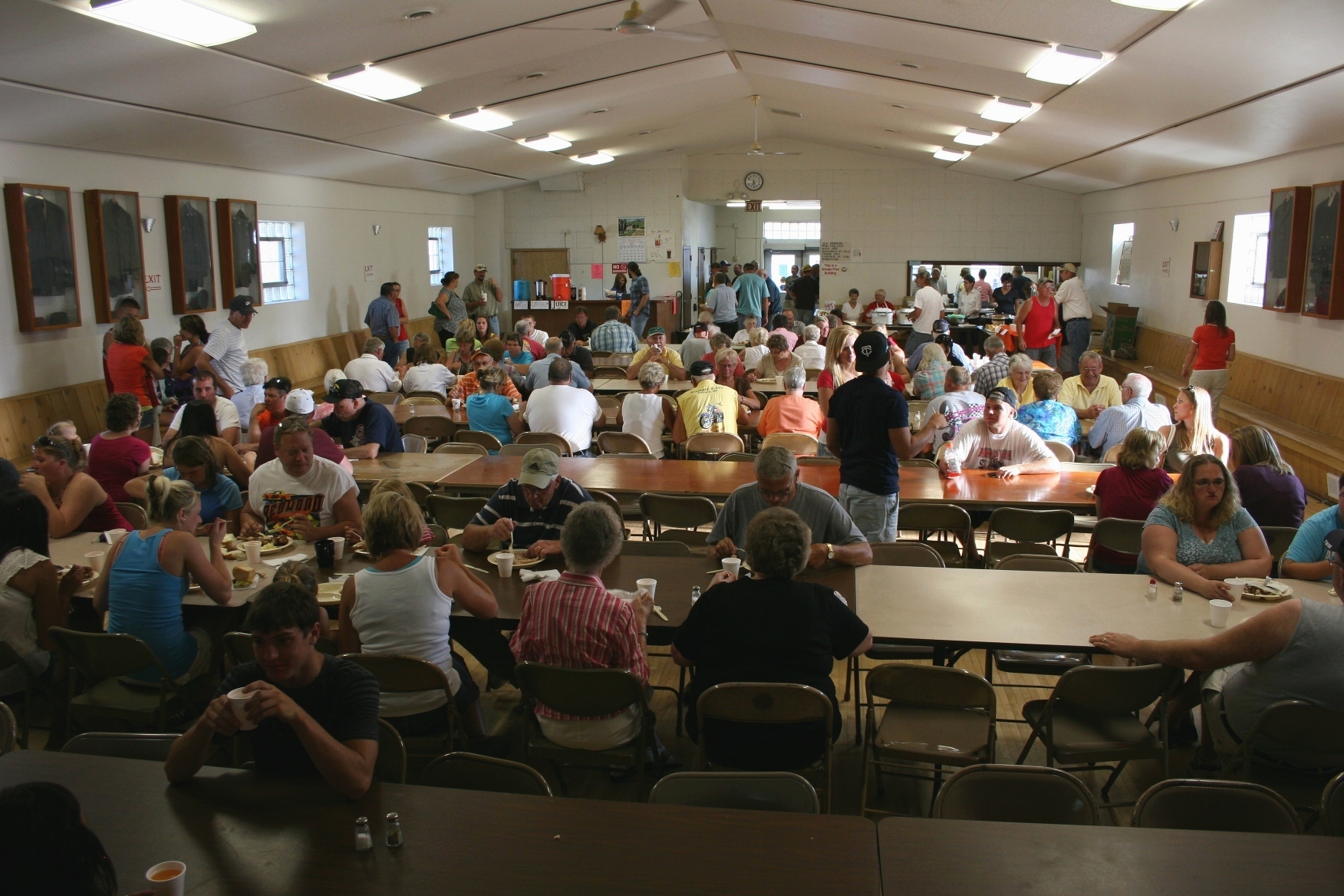
Diners still settle onto folding chairs pulled up to long tables in the old hall. Glass encased military uniforms and built-in wooden benches flank the sides of the hall anchored by a stage on one end. Little has changed in this building (except the addition of a kitchen), which has long been Vesta’s celebration-central—the place to celebrate weddings and anniversaries and the coming together of community.
The same sign goes up every year inside the Vesta Hall. The price is updated when necessary.

Diners eat in the Vesta Community Hall, where military uniforms hang on the walls.

This year the V-Esta Daze celebration was moved from a week night to a Friday night. Thank you, organizers. That happened to coincide with the annual Kletscher family reunion weekend. So I was there, lining up for that famous chicken and reconnecting with people I haven’t seen in years (and trying to remember their names).

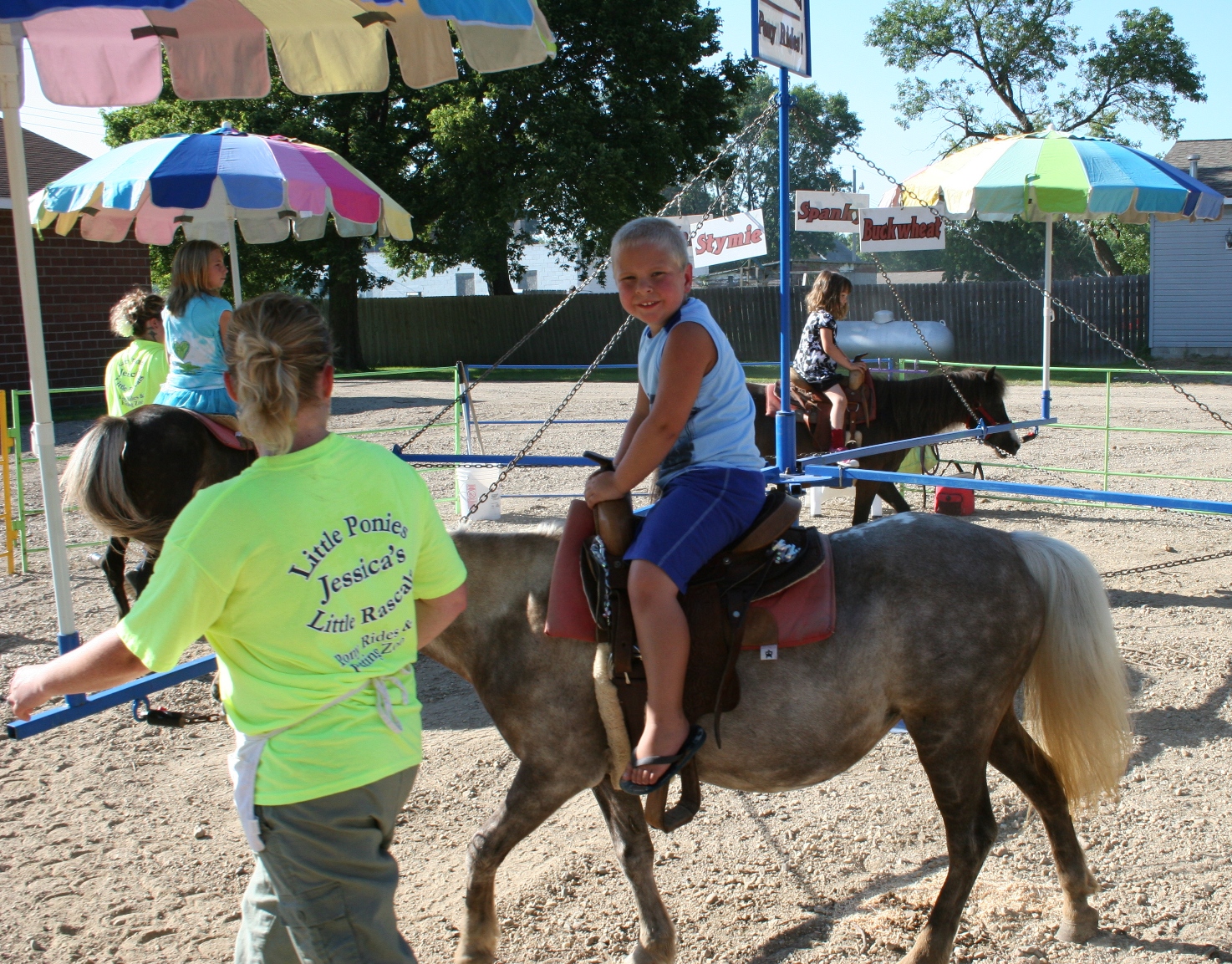
Gone are the carnival, softball games and water fights between neighboring fire departments that were part of the event when I was growing up. Instead, there were pony rides and bean bag tourneys, an antique tractor and car show, a putting green, pie eating contest, water fight for kids, street dance and entertainment by the Lucan Community Band and the required beer served from the beer truck.

The Lucan Community Band played under the shade trees outside the community hall and across the street from the elevator around meal-time. Lucan is a town of about 200 seven miles south of Vesta.

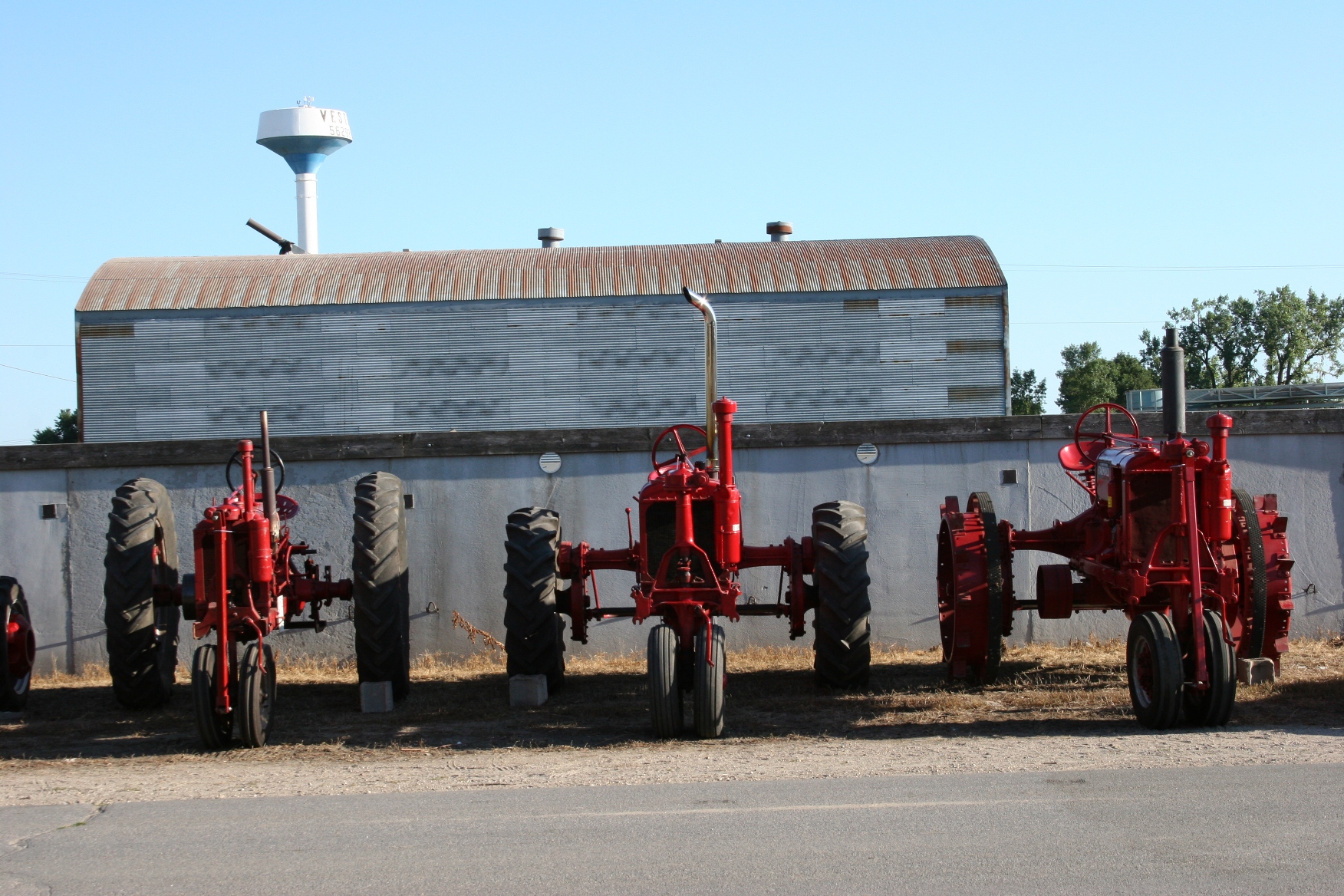
Area residents brought their old tractors to town for a tractor and car show.

My cousin Dawn's son, Kegan, enjoyed a pony ride.

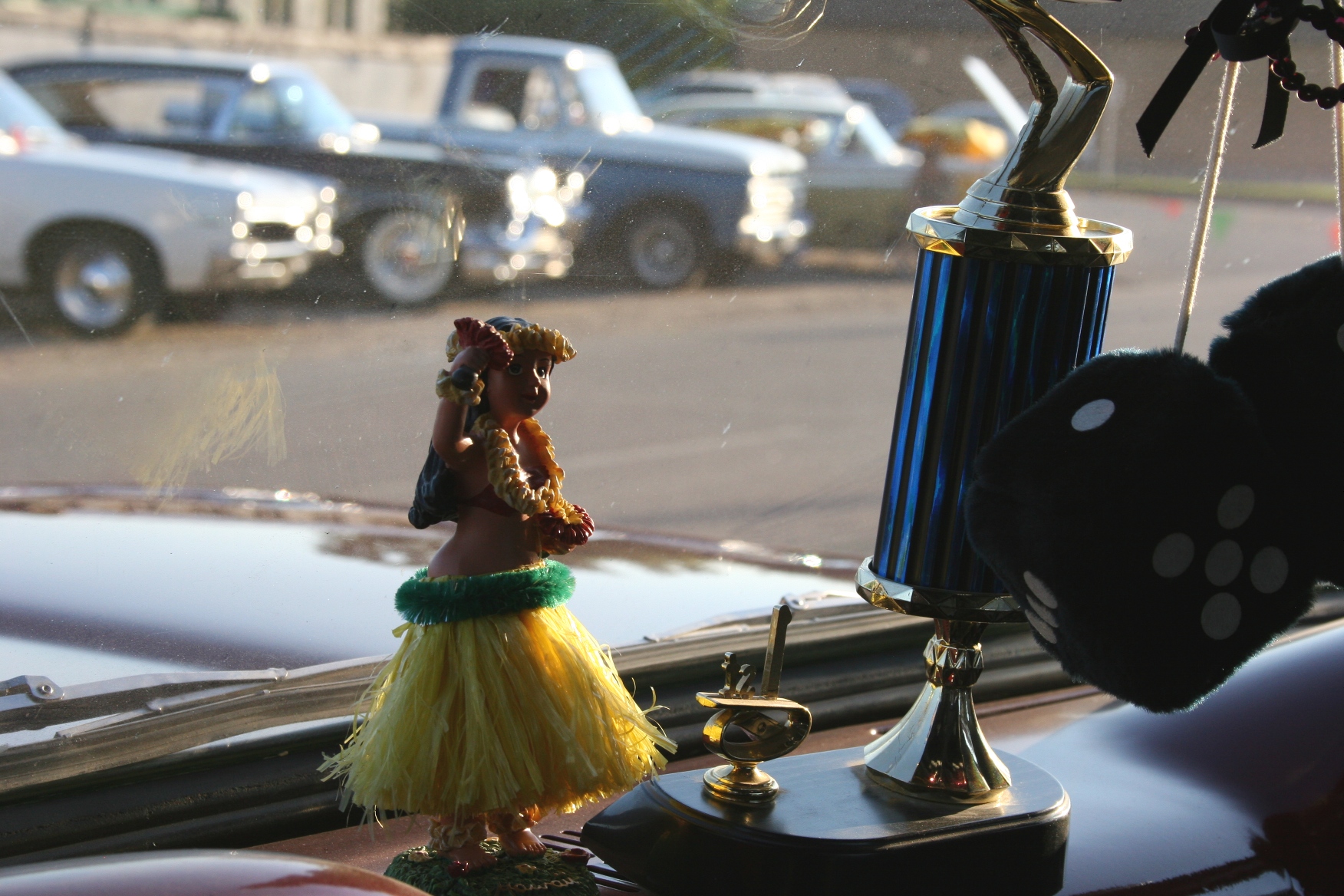
A view of the dashboard in a 1960 pick-up truck, looking toward some of the entries in the antique car show.

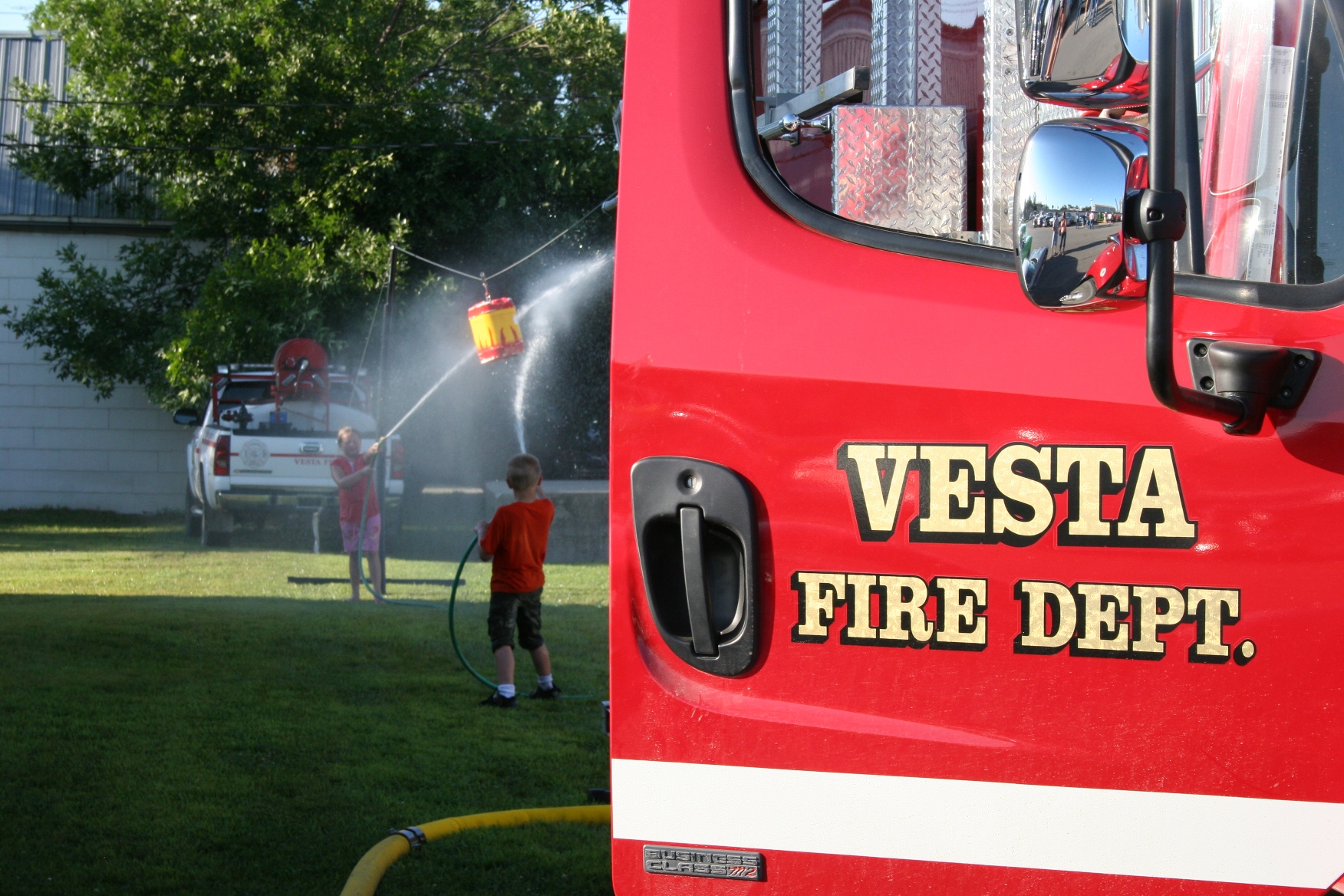
When I was growing up, members of Vesta's volunteer fire department engaged in water fights with departments from neighboring communities. Now the kids, not adults, participate in water fights.

I didn’t take in all of the events. I skipped the pie eating, bean bag toss and street dance. But I heard the band playing loud and clear a few blocks away when I left my Aunt Jeanette and Uncle Milan’s house around midnight Friday for my mom’s house a block away. Yeah, everything in Vesta, population around 300, is just a few blocks away.

HOW ABOUT YOU AND YOUR COMMUNITY? Do you have an annual summer celebration or return to your hometown for one? Submit a comment. I’d like to hear about these small-town gatherings.

© Copyright 2011 Audrey Kletscher Helbling