Minnesota Prairie Roots

Writing and photography by Audrey Kletscher Helbling

In Faribault, bikers and vets honor our Armed Forces May 20, 2012

Filed under: Uncategorized — Audrey Kletscher Helbling @ 12:27 PM
Tags: , , , , , , ,

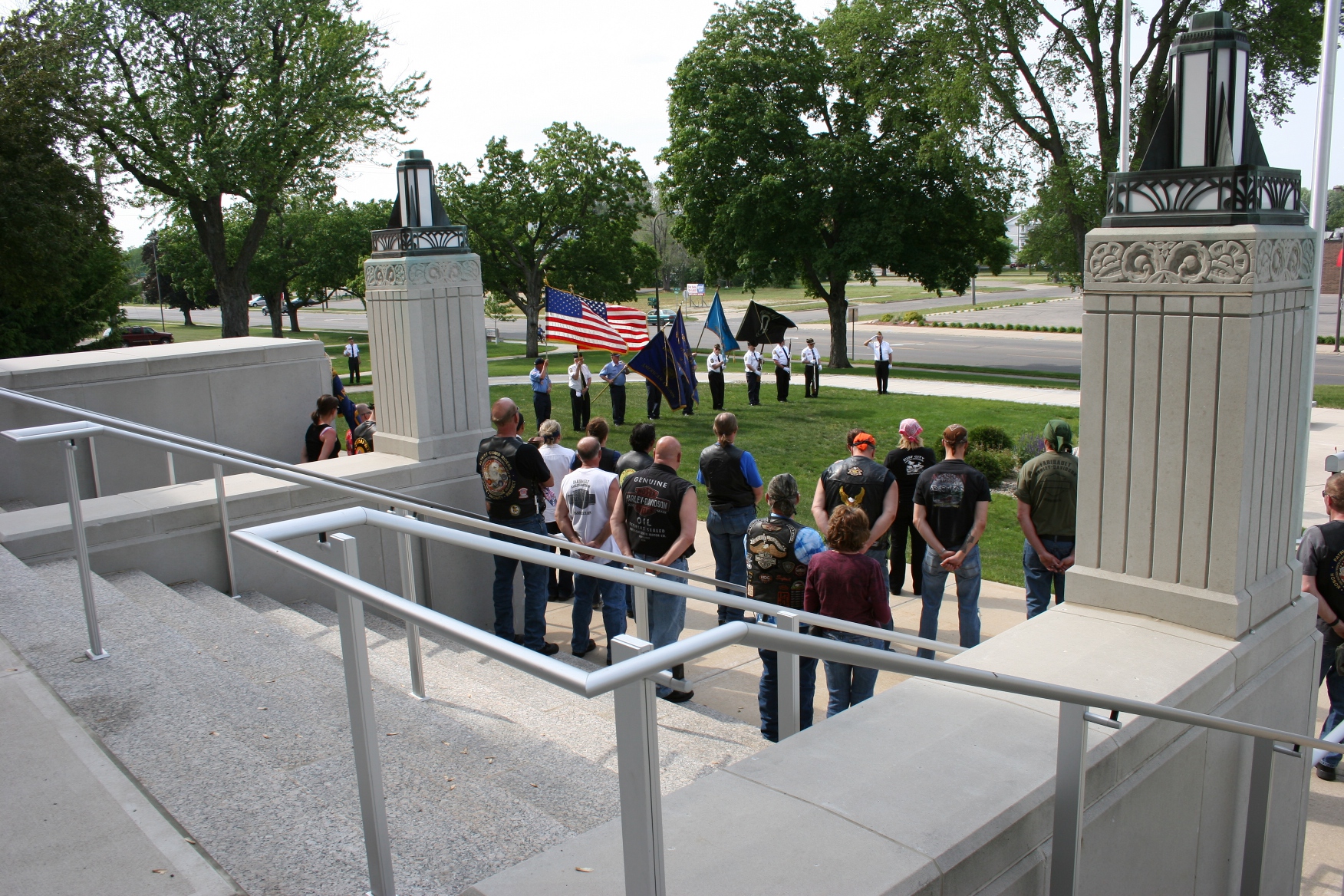
Veterans and bikers commemorate Armed Forces Day at the Rice County Veterans Memorial in Faribault.

ON MAY 20, 1950, our country celebrated the first Armed Forces Day in a big way with parades in Washington, D.C., New York and Berlin and with air shows, open houses and receptions.

Sixty-two years later, in my community of Faribault, veterans and a group of Harley-Davidson motorcycle riders gathered Saturday, on Armed Forces Day, to honor those who have served or are serving in the military.

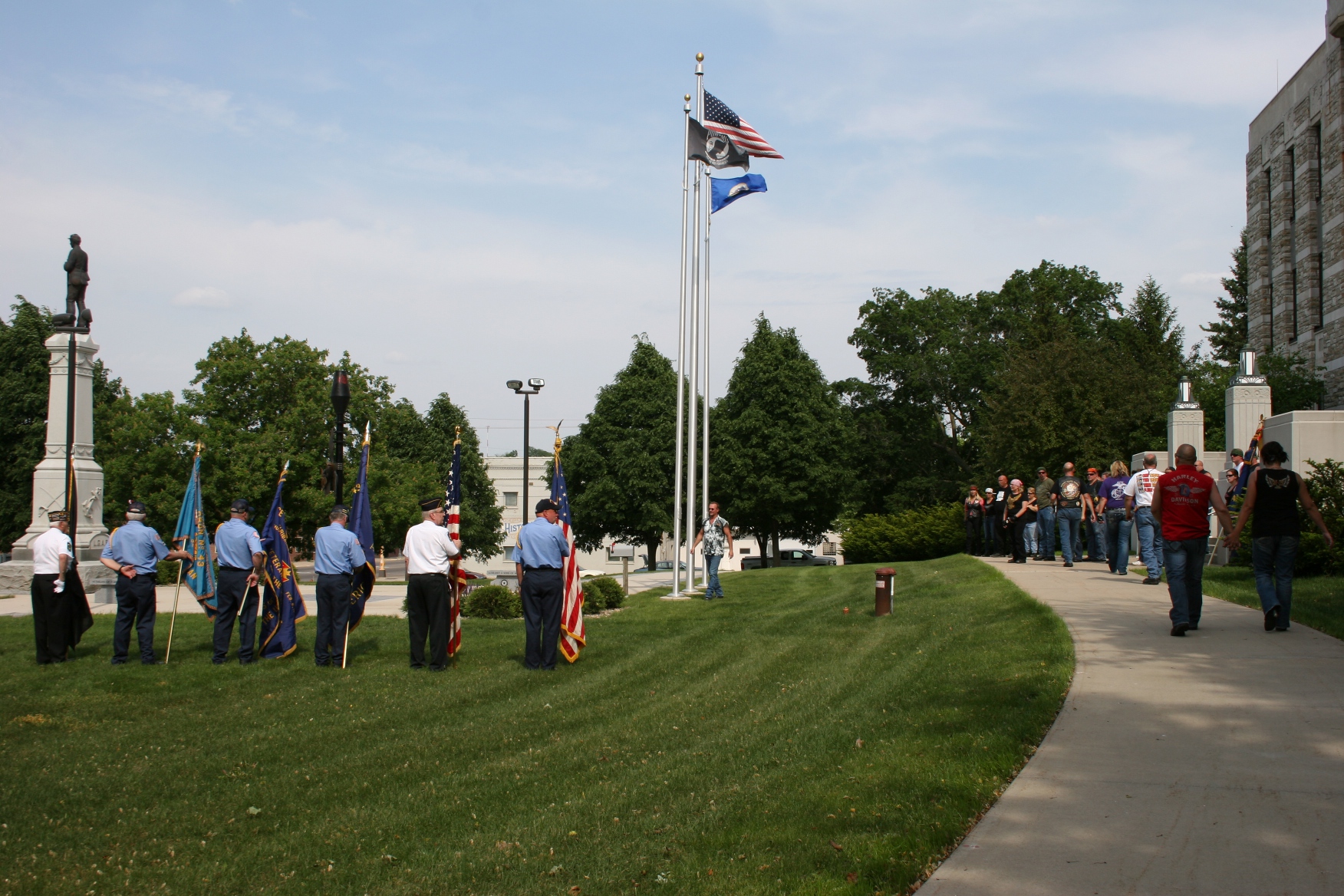
The Color Guard stands ready as the bikers arrive.

I am almost ashamed to admit this—especially as the daughter of a Korean War veteran—but I was unaware of an annual Armed Forces Day on the third Saturday in May or of Armed Forces Week, which ends today.

That was until yesterday, when I spoke with several veterans as we waited for the bikers to arrive at the Rice County Veterans Memorial at the county courthouse.

Bikers participating in the Faribault Harley-Davidson Harley’s Heroes raised $2,800 on Saturday for the Disabled American Veterans. In 2011, the Faribault dealership raised about $2,200 and earned status on the Harley’s Heroes Honor Roll as one of the top six fundraising dealers in the country. Thirty percent of Harley customers are active or retired military vets, according to the H-D website.

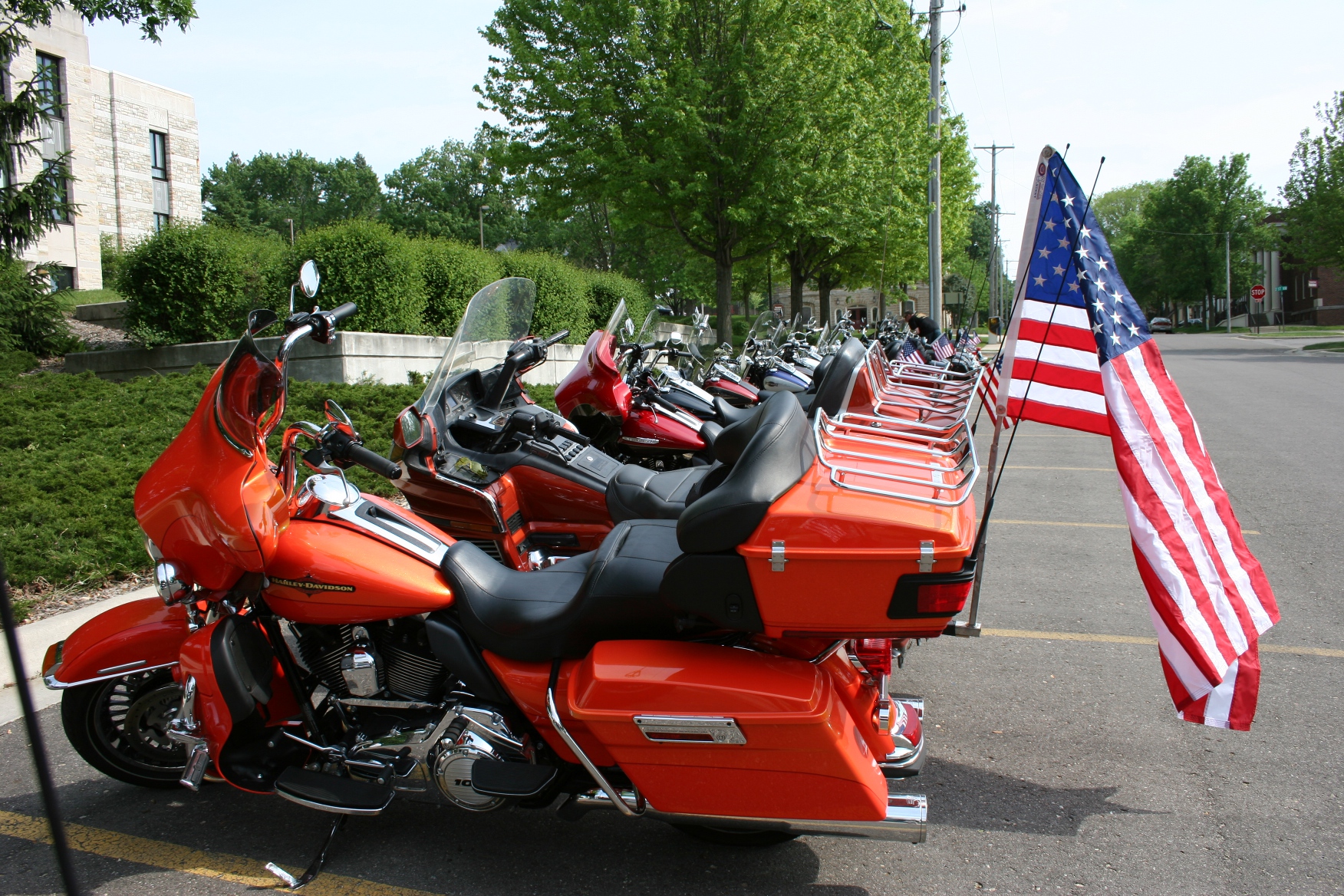
Around 4 p.m. the bikers, who were participating in the annual Harley’s Heroes nation-wide event to raise monies for the non-profit Disabled American Veterans, rumbled across Fourth Street, circled the courthouse and pulled into the west parking lot, American flags waving from the backs of their Harleys.

The bikers and the vets, my husband and I, and a photographer paid our respects in a short ceremony that included a gun salute, playing of the taps and a brief explanation of the vets memorial.

I am almost ashamed to tell you this, but no one else in my community paused or pulled off the street or took a break from their work or activities or fun to commemorate Armed Forces Day by attending this short ceremony.

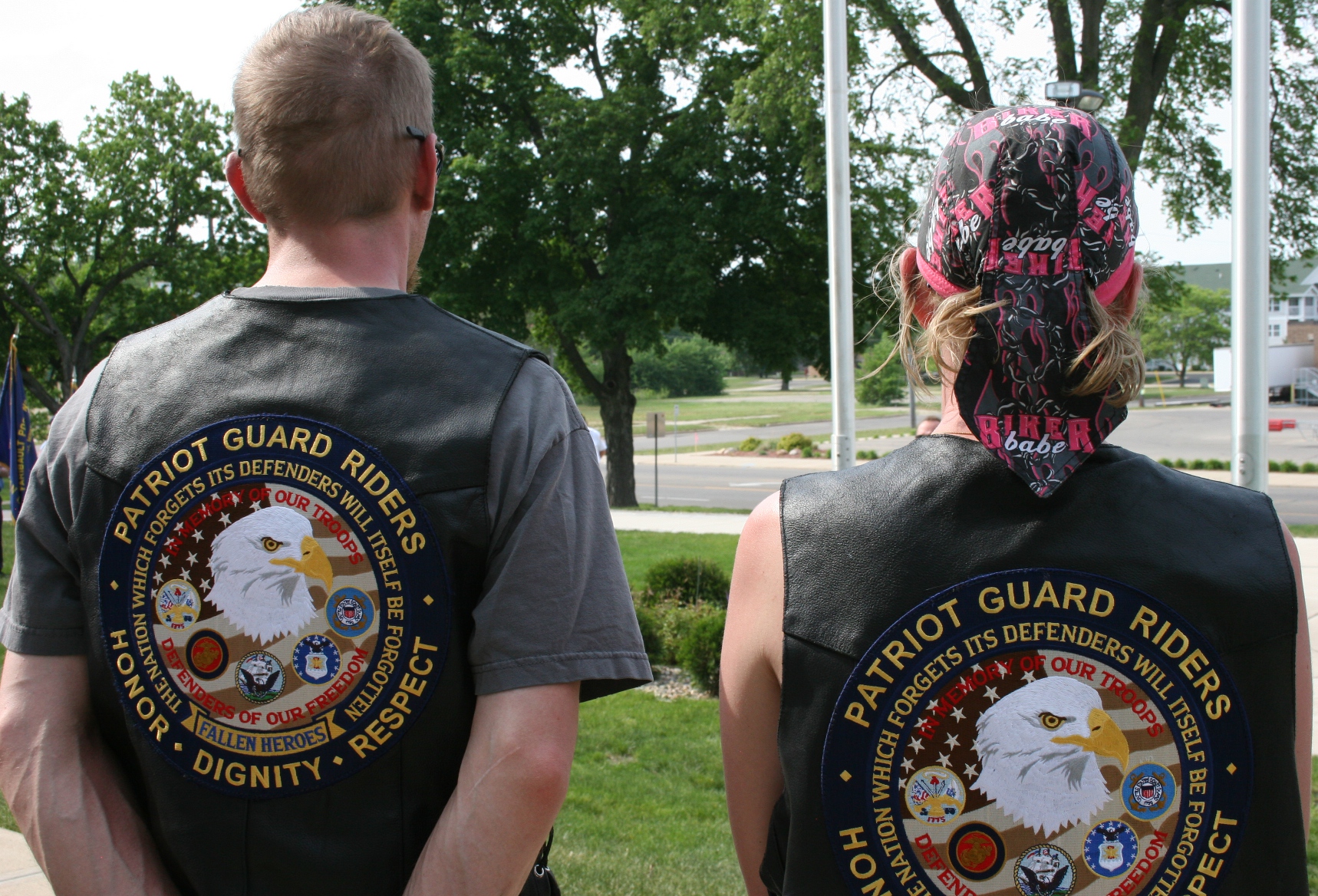
Members of the Patriot Guard Riders were among those in attendance.

Said General Omar N. Bradley, former chairman of the Joint Chiefs of Staff, on that first Armed Forces Day celebration in 1950:

The heritage of freedom must be guarded as carefully in peace as it was in war.

We would all do well to remember that, especially each year on the third Saturday of May.

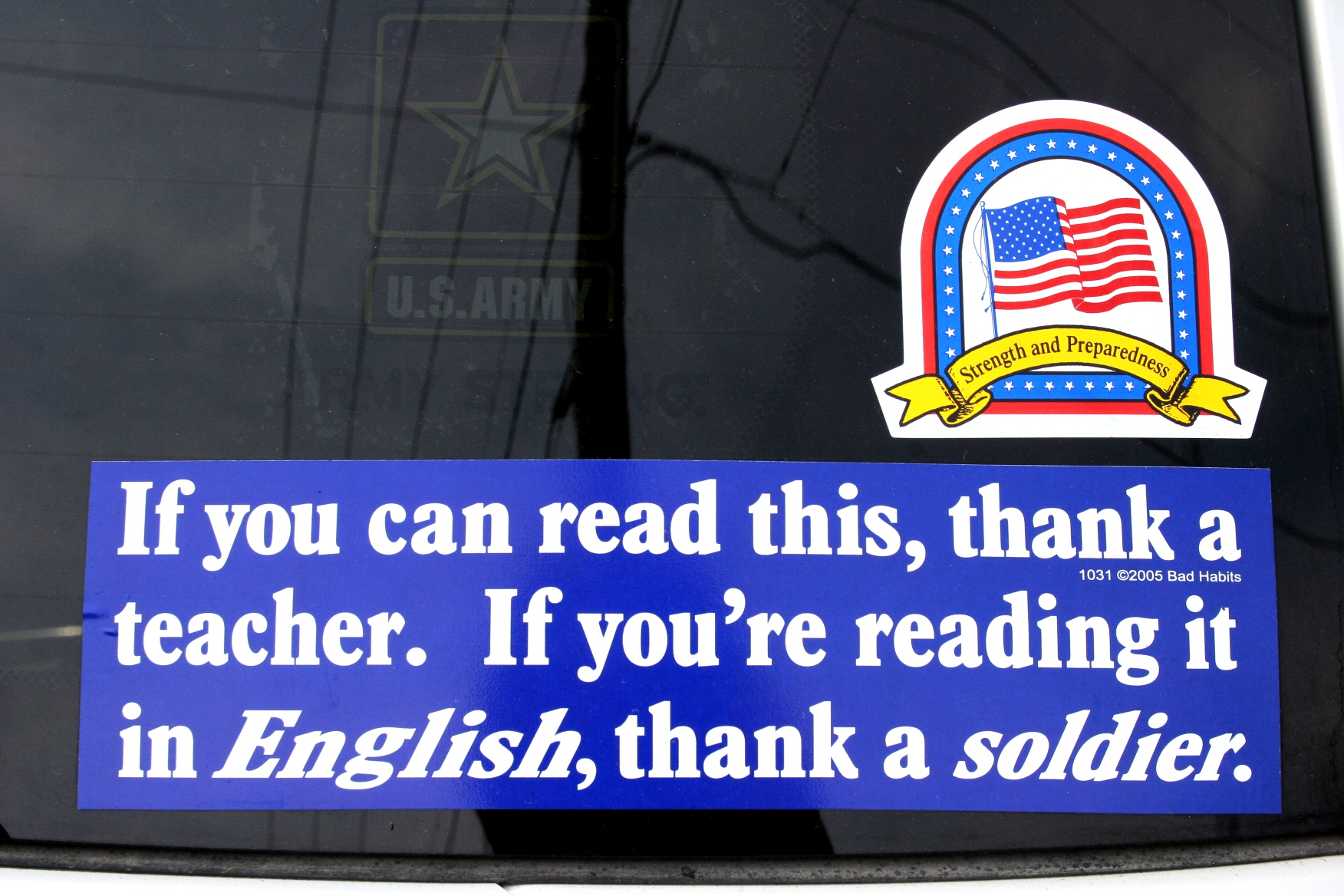
I spotted this bumper sticker on the vehicle of a Vietnam veteran who had come to the ceremony.

© Copyright 2012 Audrey Kletscher Helbling


Touring the Minnesota in May BBQ & Cheese Festival May 19, 2012

Filed under: Uncategorized — Audrey Kletscher Helbling @ 8:21 AM
Tags: , , , , ,

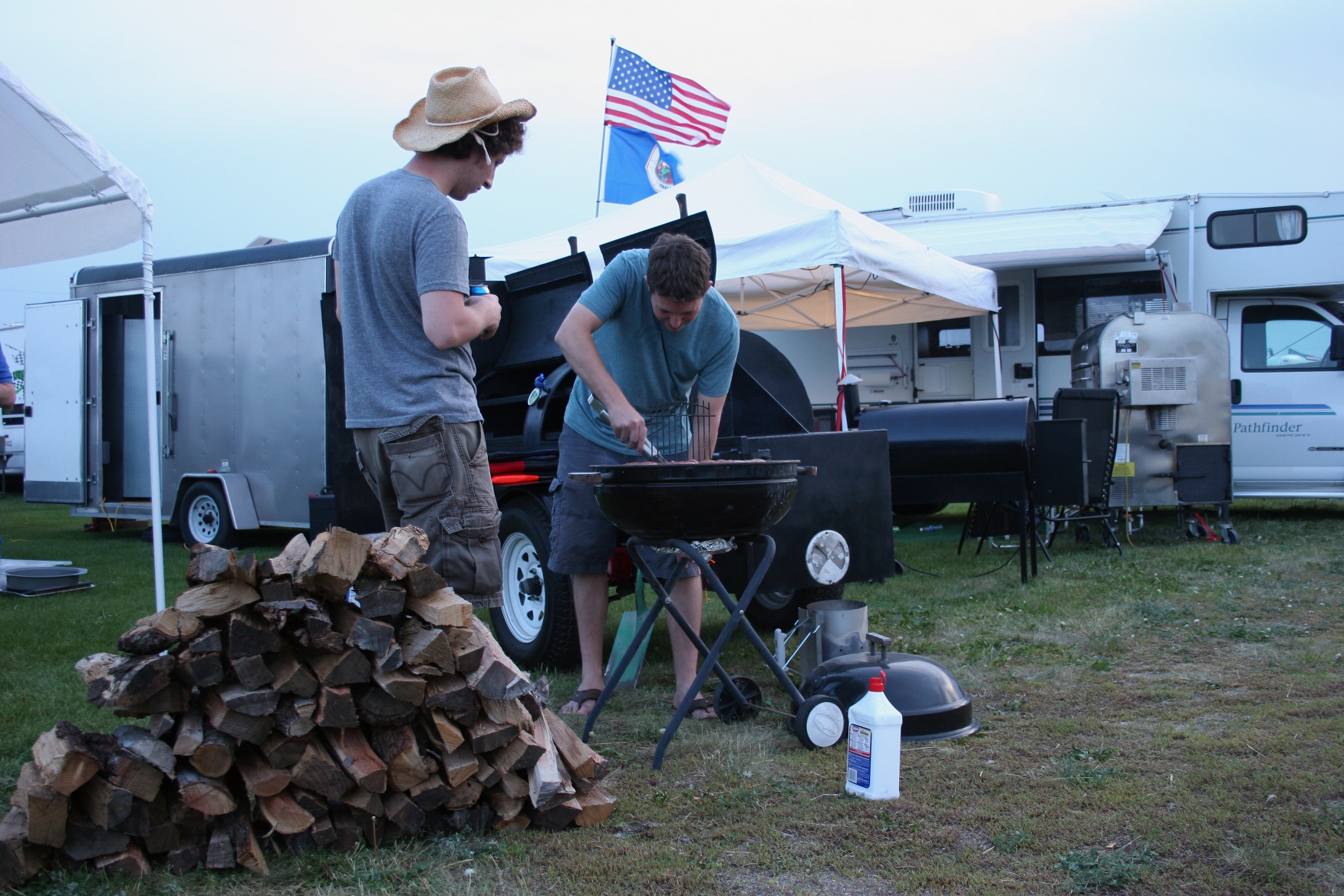
Grilling burgers Friday evening at the Minnesota in May BBQ & Cheese Festival.

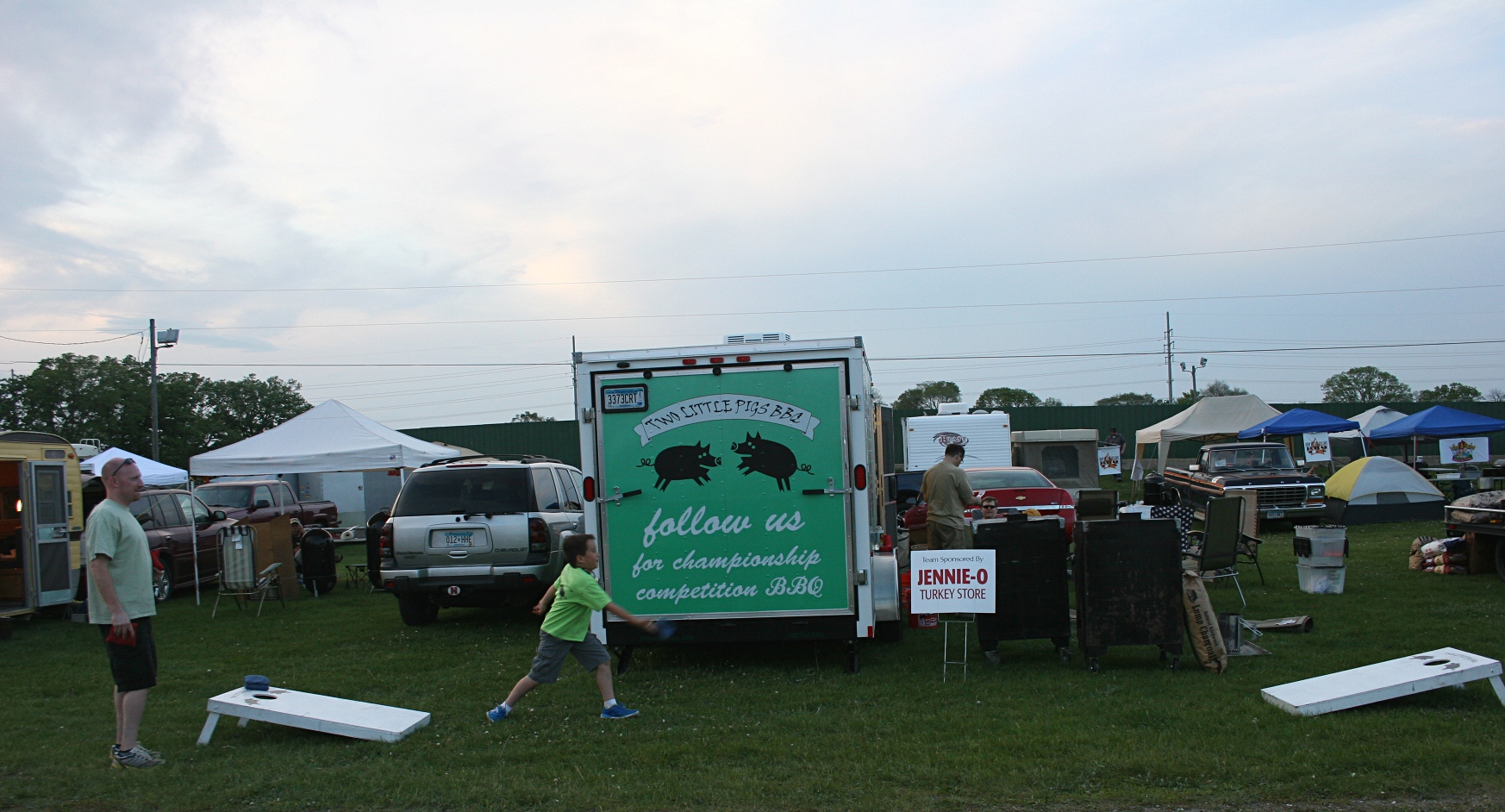
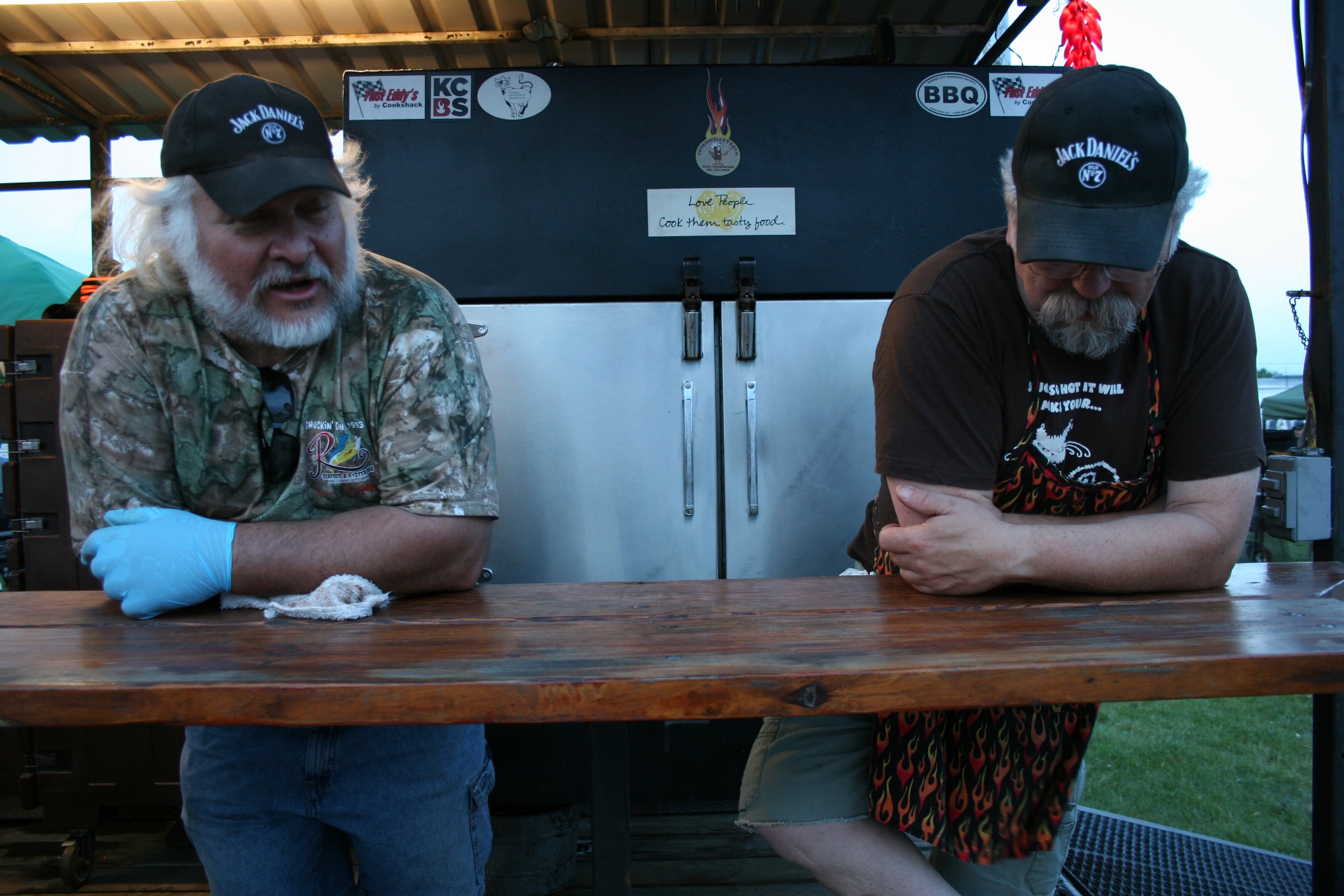
ON THE EVENING BEFORE the big BBQ competition, the atmosphere at the Rice County Fairgrounds felt kicked back. Contestants settled into lawn chairs with bottles of beer, others clustered around campers, some tossed bean bags and yet other competitors chatted it up with the locals.

Next to the Two Little Pigs BBQ site, a bean bag toss competition was underway.

The guys from QU Smokin’ Krewe, Waukesha, Wisconsin, took time to tell me about their “pit” and show me the meat cooking inside the massive wood pellet fired grill behind them.

A pig on a vintage Ford pick-up, placed their by the team of two brothers and childhood friends originally from East Grand Forks, Minnesota.

Only a few focused on prepping for the competition at the Minnesota in May BBQ & Cheese Festival which continues today (Saturday) in Faribault.

Judging begins at 11:30 a.m. in seven competitive categories in this Kansas City Barbeque Society sanctioned event that has drawn 63 teams from all over—Appleton, Wisconsin; Rapid City, South Dakota; Storm Lake, Iowa; Delano, Minnesota…

They came with their stacks of wood and their bags and bags and bags of charcoal. They arrived pulling campers and massive grills. And they came with an attitude of fun, a sense of humor and a love of BBQ.

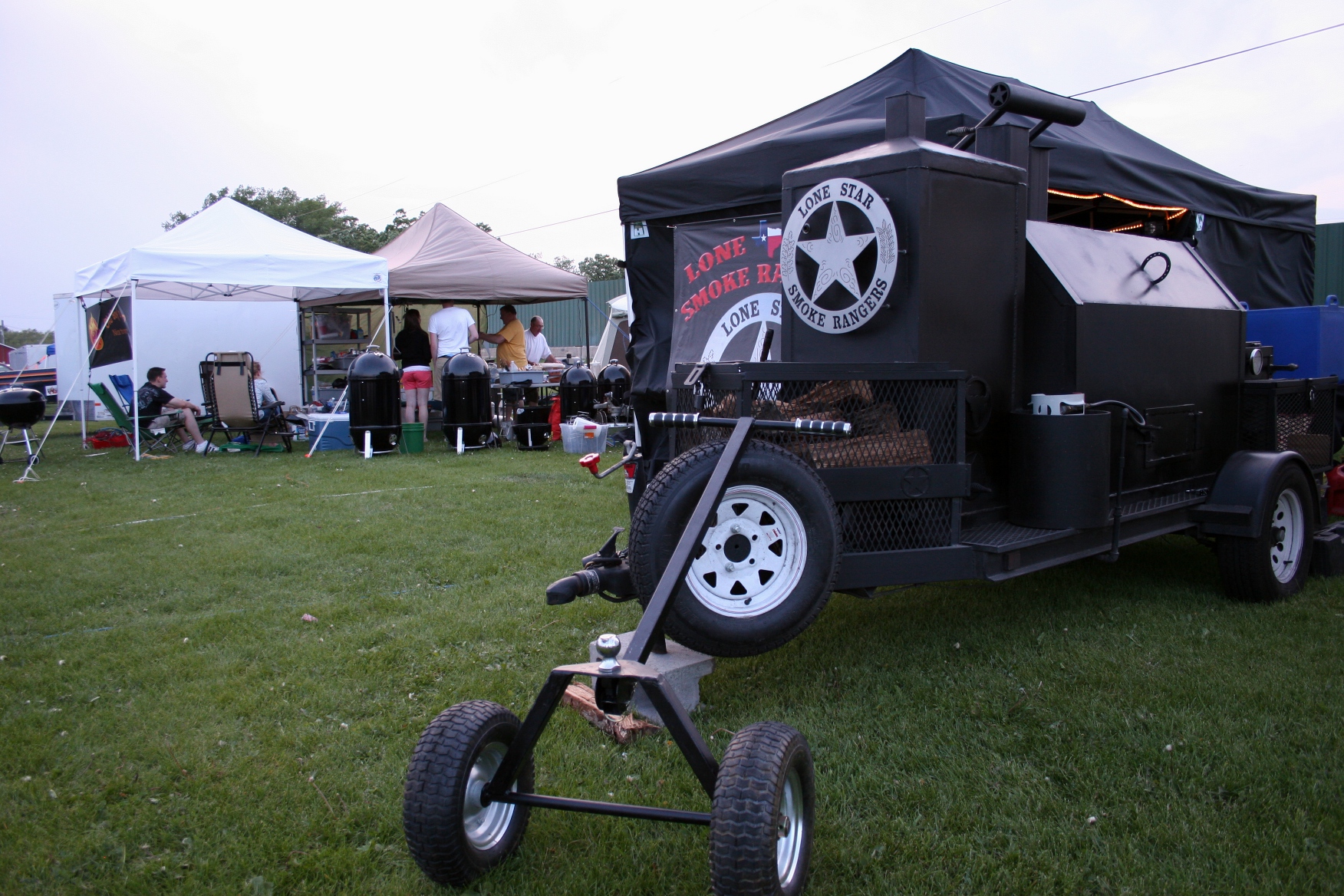
Many of the grills, like that of the Lone Star Smoke Rangers from Rapid City, South Dakota, are massive. But some contestants cook on ordinary backyard grills.

One of the many creative and humorous signs you’ll see at competitors’ sites.

Tami Schluter, co-owner of the historic Hutchinson House B & B in Faribault, brought her English bulldog, Butler, to the BBQ fest Friday evening.

One of the vendors at the BBQ fest.

Food vendor Hog Wild BBQ and Grill from Luck, Wisconsin, displayed its collection of trophies.

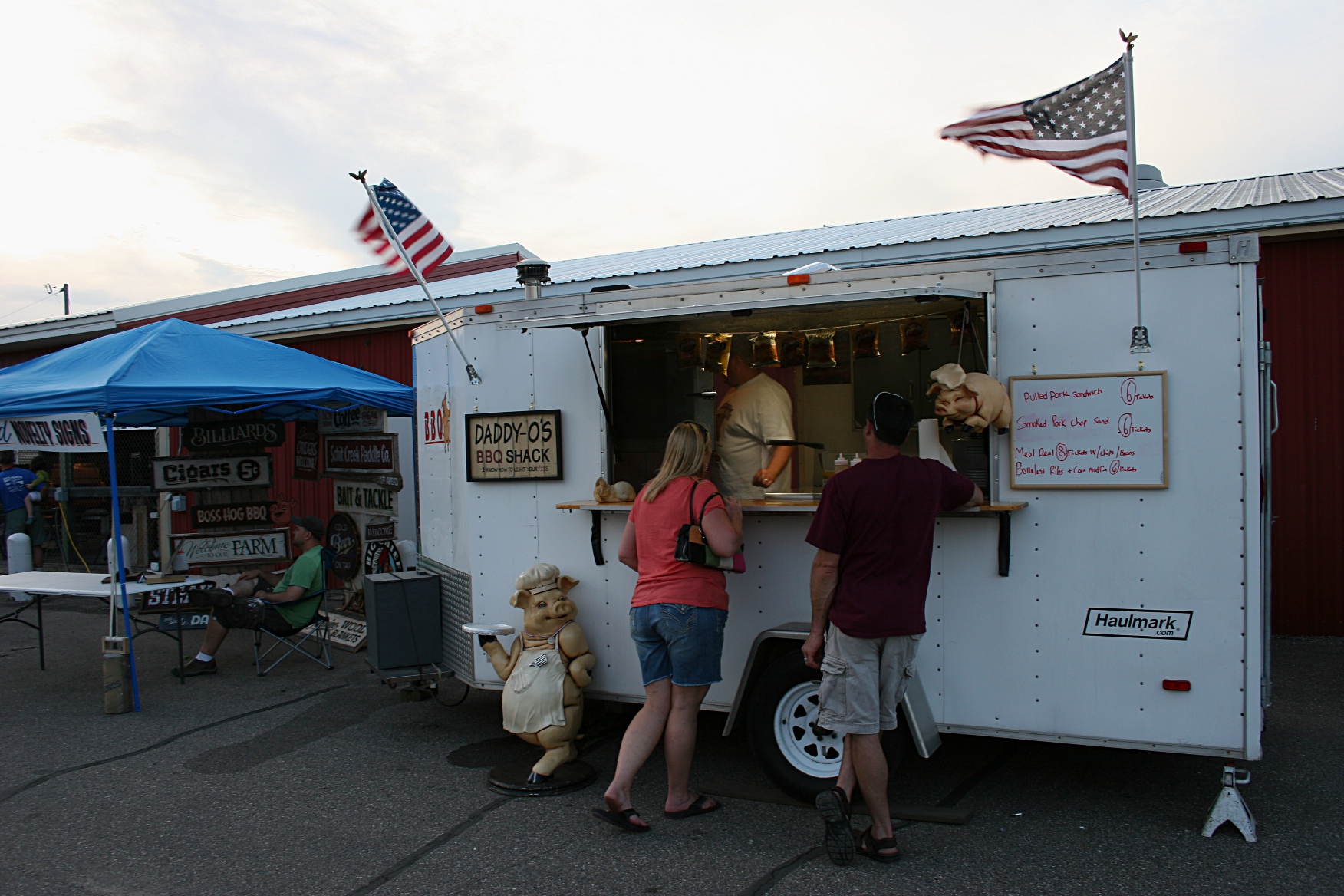
Daddy-O’s BBQ Shack, another festival food vendor.

FYI: For more details about today’s BBQ contest in Faribault, click here and follow this link to a previous blog post.

© Copyright 2012 Audrey Kletscher Helbling


A Minnesota politician & writer shares his insights on “The Dakota War, a clash of cultures” May 18, 2012

Filed under: Uncategorized — Audrey Kletscher Helbling @ 3:15 PM
Tags: , , , , , ,

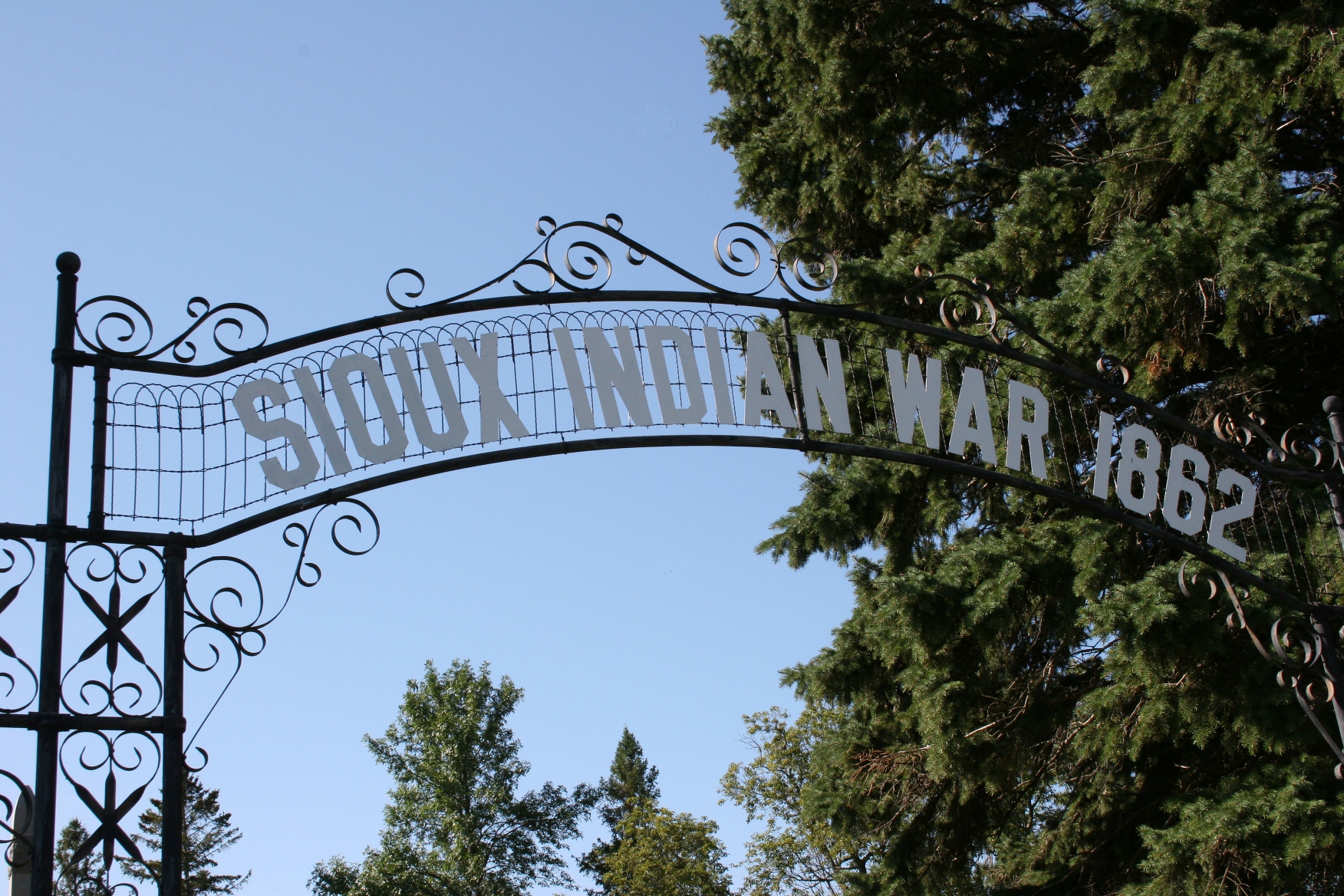
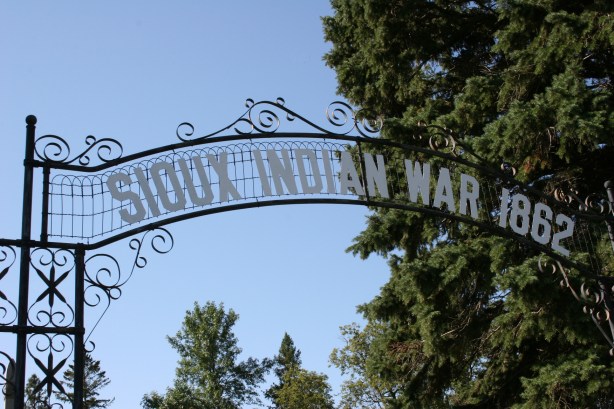
This archway leads to the Wood Lake State Monument, on the site of the battle ending the U.S.-Dakota Conflict.
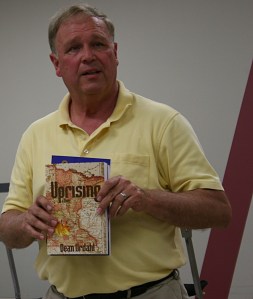
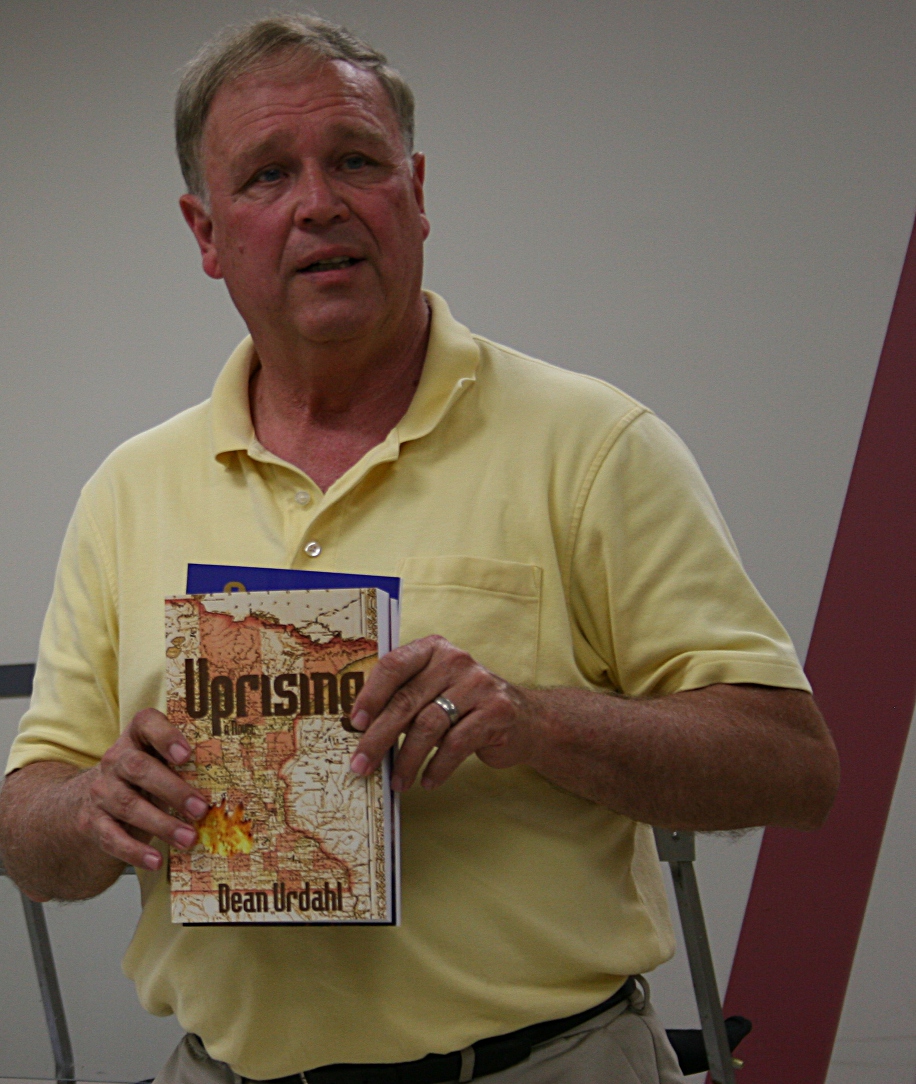
Dean Urdahl has written the trilogy of Uprising, Retribution and Pursuit.

I COULD HAVE LISTENED to Dean Urdahl for hours. Not Urdahl the Minnesota State Representative from District 18B. But Urdahl the historian, the retired American history teacher, the storyteller, the writer.

The southern Minnesota politician, who co-chairs the Minnesota Civil War Commemoration Task Force, was in Faribault Thursday evening to talk about the U.S.-Dakota War of 1862 and to promote his trilogy of historical fiction novels about that conflict.

Urdahl’s interest in the U.S.-Dakota War is rooted deep in family history, in the soil of Meeker County where his Norwegian immigrant ancestors settled in 1856 and where, on August 17, 1862, five settlers were killed by a small group of Dakota. That attack in Acton Township, only 1 ½ miles from Urdahl’s current home, marked the beginning of the war.

Urdahl’s great-great-grandfather helped bury those five victims in the cemetery of Ness Lutheran Church, a country church southwest of Litchfield. A monument there honors the five who were slain. The Representative grew up attending Ness Lutheran, listening to his mother tell stories about his ancestors and the area’s history. That sparked his interest in history and specifically a strong interest in the U.S.-Dakota War of 1862.

“What happened in 1862 (in Minnesota) is largely ignored by historians,” Urdahl said, adding that the U.S.-Dakota War “gets scant attention and deserves more.”

In 1862, a divided nation was more focused on the conflict between North and South than on the clash between cultures in Minnesota, Urdahl explained.

This historian, however, certainly drew attention to the war between the white settlers/soldiers and the Dakota during his presentation, “The Dakota War, a clash of cultures,” at the monthly Cannon Valley Civil War Roundtable meeting in Faribault in this, the 150th anniversary year of the War.

Cultures collided, Urdahl said, as immigrants settled in the native home of the Dakota and the government adopted a policy “to turn them (the Dakota) into farmers.”

Conflict also existed among the Dakota—between “the blankets,” those sticking to traditional ways, and “cut-hairs,” those turning into farmers, he said.

Speaking without notes and with the skill of a master storyteller passionate about his subject, Urdahl mesmerized his audience, sharing information and a story-style time-line of how the U.S.-Dakota War unfolded.
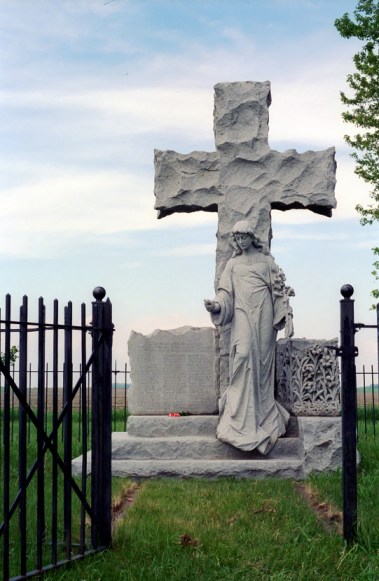
The Milford State Monument along Brown County Road 29 west of New Ulm commemorates the deaths of 52 settlers who were killed in the area. Located along the eastern edge of the Lower Sioux Reservation, Milford had the highest war death rate of any single township.

Urdahl’s talk was a refresher course for me, a native of Redwood County located at the geographical center of the War. I’ve always been interested in the conflict and even penned a term paper on “The Sioux Uprising of 1862,” as it was labeled when I was a high school student. My maternal ancestors lived in the New Ulm area in 1862 and were warned by friendly Indians to leave; the families fled to the safety of nearby St. Peter.

“We find throughout the war, friendly Indians warning people to leave,” Urdahl said.

That, and much of what this historian said, I already knew. You’ll find it written in books. But some of what Urdahl shared I had forgotten or never heard such as…

  • A drought in 1861 left the Dakota near starvation and relying on government food. (I didn’t recall the drought as preemptive to the desperate situation among the Dakota.)
  • In late July 1862, some 5,000 Dakota gathered at the Yellow Medicine Agency ready to storm the warehouses. Agents eventually released the storehouse of grain to the hungry Dakota, thus averting the start of the war for several weeks.
  • The settlers at Acton were challenged to a target shooting contest by the Dakota before they were killed.
  • The Dakota were intent on attacking New Ulm because they thought the town was built on reservation land. The reservation covered a 10-mile by 150-mile area along the Minnesota River.
  • From 500 – 800 Minnesotans were killed/died during the six-week war, only 75 of whom were soldiers. “The rest,” said Urdahl, “were Swedish, German and Norwegian immigrants who didn’t know what was going on.”
  • Although there is not an accurate count on the number of soldiers who died in the Battle of Birch Coulee, the count of dead horses stands at 90. “They could replace men, not horses,” Urdahl said.
  • When Fort Ridgely was under attack, fort leader Lt. Thomas P. Gere was coming down with the mumps.
  • During the final battle at Ft. Ridgely, doors on both ends of the surgeon’s quarters/headquarters were opened and a cannon ball fired down the hallway toward the stables where the Dakota were stationed.
  • A Confederate officer was reportedly spotted in Little Crow’s (Dakota leader) camp. Some speculate that the Confederacy played a role in the U.S.-Dakota War of 1862, thus diverting soldiers from the Confederate front by keeping them in Minnesota to fight the Dakota.
  • Little Crow lived in a brick house at the time of the War.
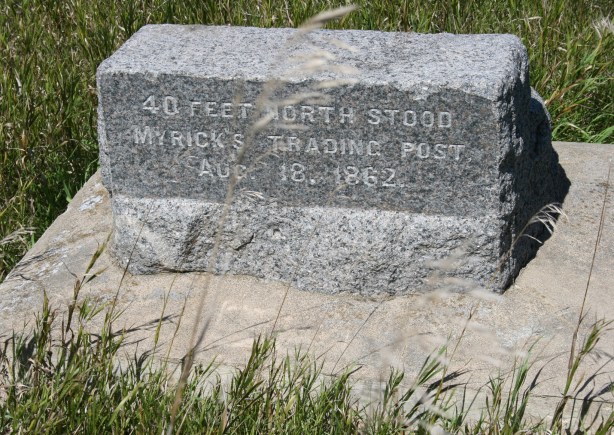
Trader Andrew Myrick refused to grant the Dakota credit, remarking, “Let them eat grass.” After an attack on the Lower Agency, Myrick was found dead, his mouth stuffed with grass.
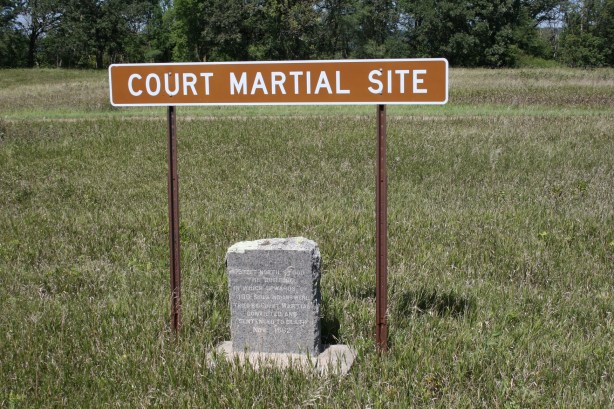
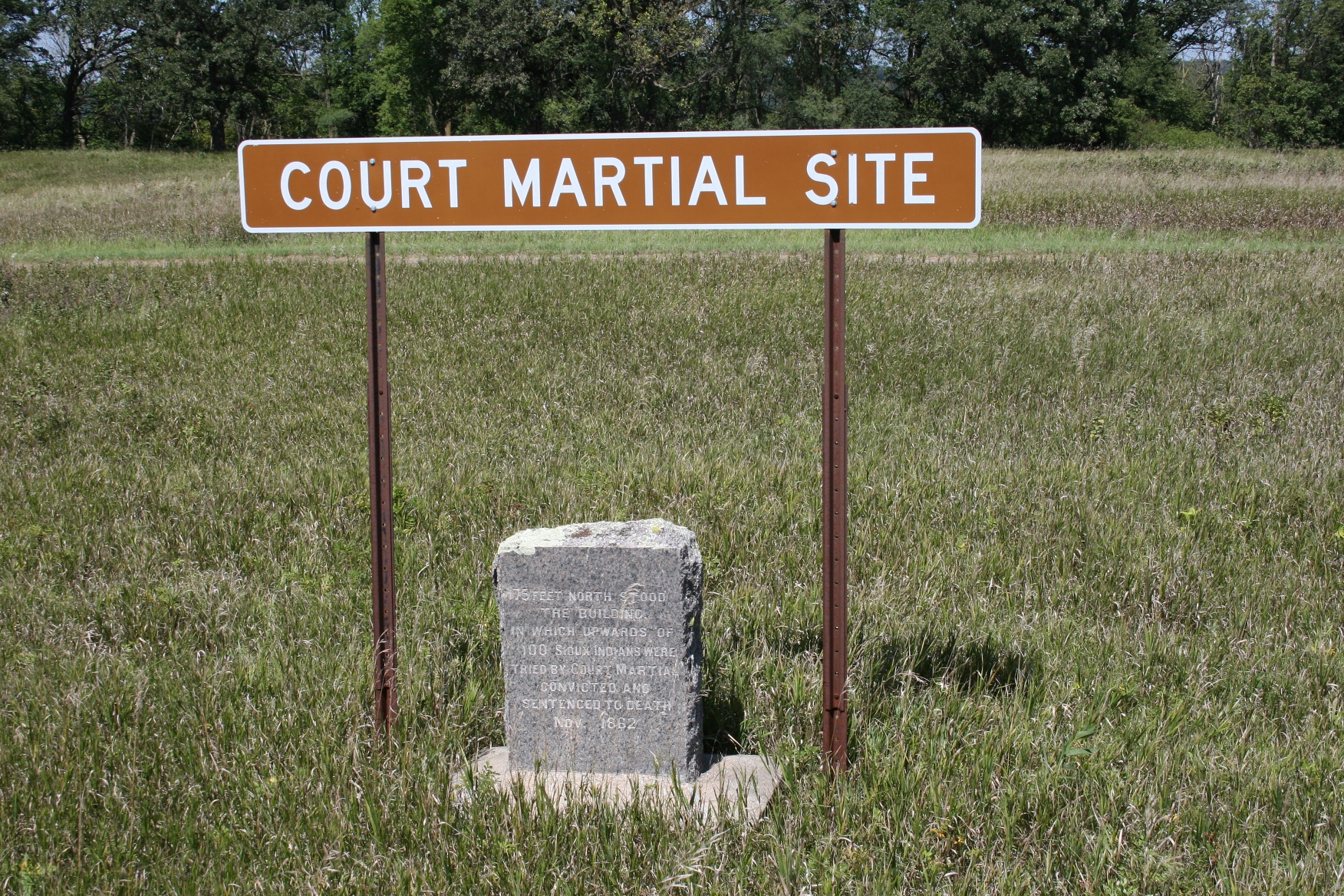
The message on a marker near the Lower Sioux Agency reads: 75 feet north stood the building in which upwards of 100 Sioux Indians were tried by court martial, convicted and sentenced to death Nov. 1862.

As I listened to Urdahl’s presentation, I wondered how Native Americans would react to the information he shared. What perspective would they offer? Would they disagree with him, challenge his facts, voice their opinions? How would they feel?

“There are still very hard feelings on both sides,” this descendant of Norwegian immigrants told his audience. He occasionally gets e-mails from angry descendants of settlers killed during the U.S.-Dakota War.

Growing up in Redwood County decades ago, I was well aware of the animosity between whites and the Dakota passed down through the generations. I know the bad feelings still linger on both sides.

But perhaps in this 150th anniversary year, we can all (white and Dakota) strive to overcome, to understand and to, finally, forgive.
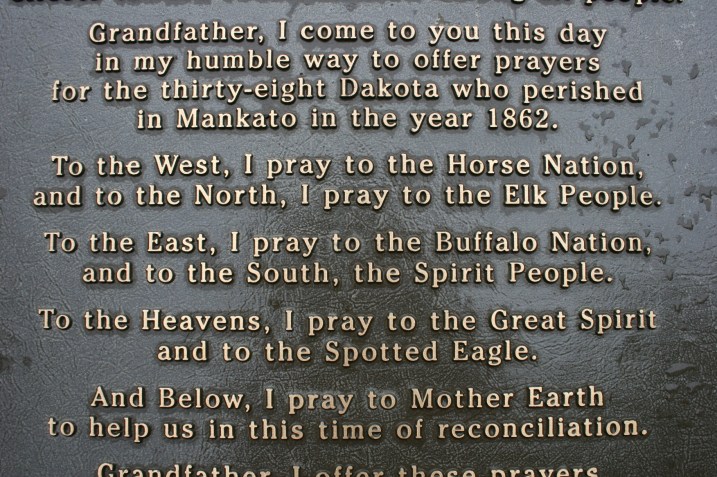
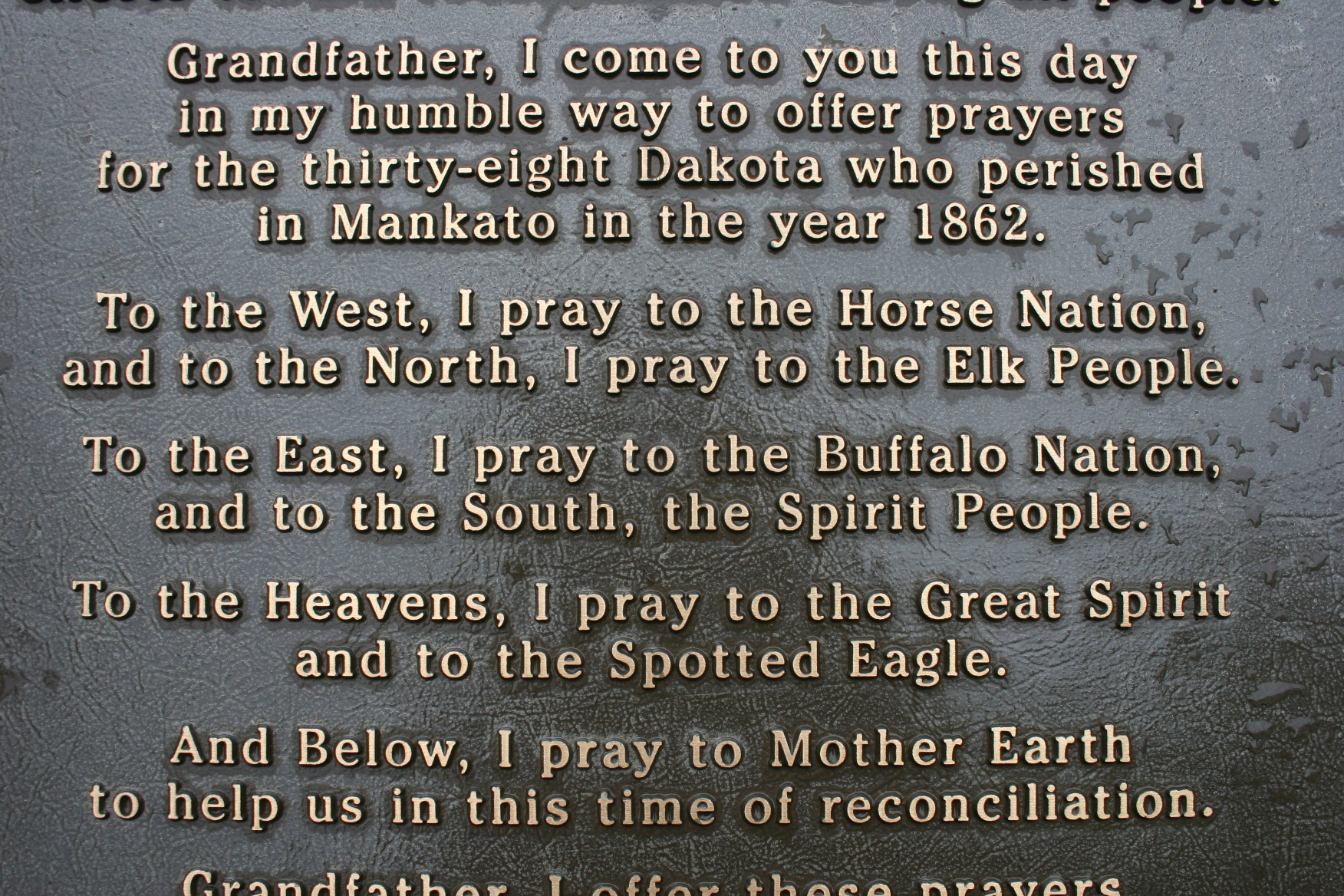
Words on a marker in Reconciliation Park in Mankato where 38 Dakota were hung on December 26, 1862. This stands as the largest mass execution in American history. Initially, 303 were sentenced to death. President Abraham Lincoln approved the deaths of 39 and granted a last-minute reprieve to one other.

FYI: All of the above monument images were photographed within the past several years.

© Copyright 2012 Audrey Kletscher Helbling


Lovin’ Minnesota green

Filed under: Uncategorized — Audrey Kletscher Helbling @ 7:34 AM
Tags: , , , , , ,

After a recent hail storm, maple leaves littered my patio. The contrast of green against gray, nature against man-made, struck me. I increased the hue saturation in the green to show the details in the leaf and to create a more artsy image. BTW, as a teen, my bedroom was painted lime green, like this leaf.

GIVE ME GREEN. Not money, although I would accept that. But color.

Vibrant, 1970s hippy lime green.

Dark green as deep as the shadowed forest.

The earthy green of unfurling corn leaves poking through soil.

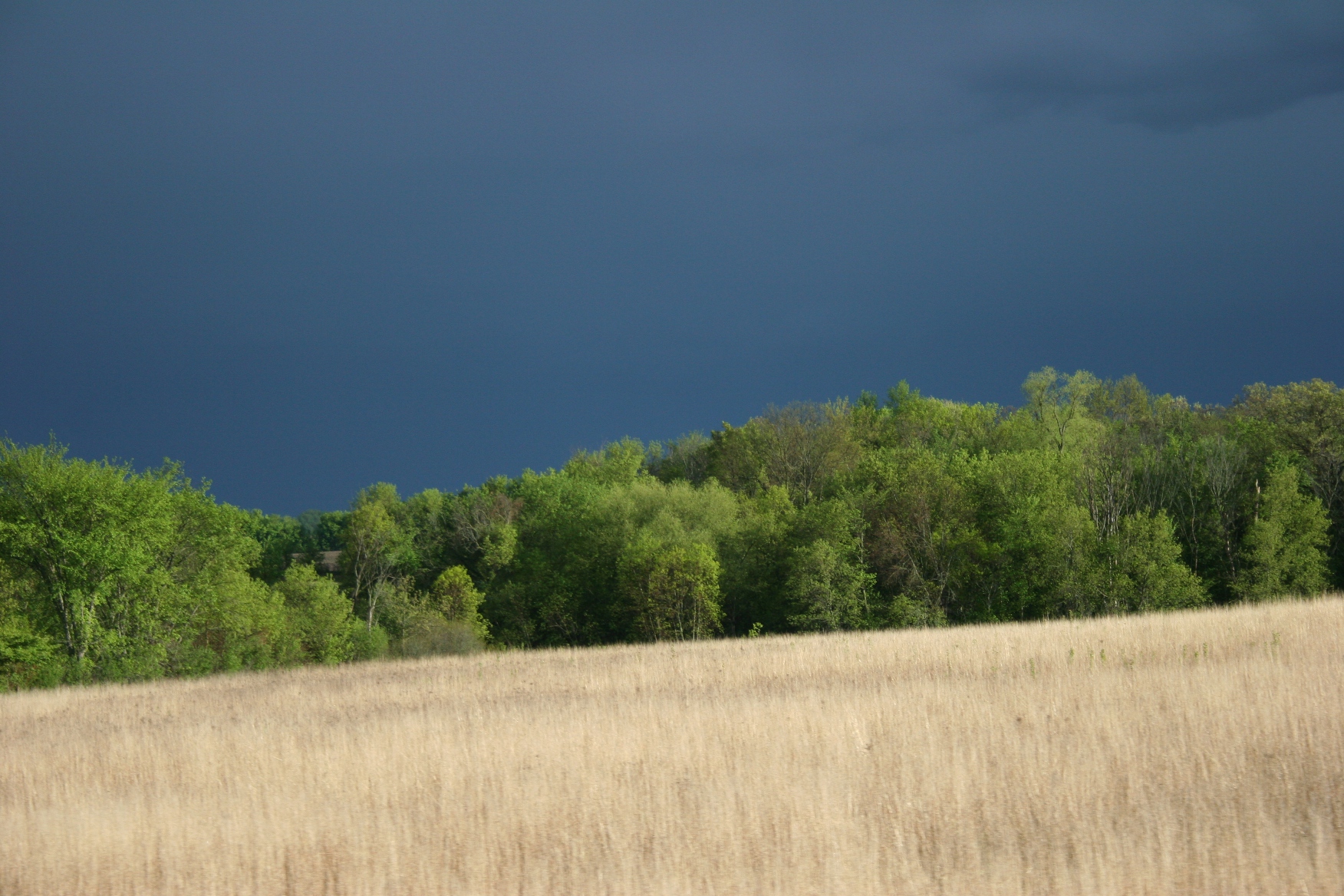
Mixed shades of green massed in a hillside of trees set against the brooding skies of a moody May evening in rural Minnesota.

I couldn’t take my eyes off this scene northeast of Medford on a recent Monday evening. The lines of light and dark broken by that mass of trees appealed to me visually. And the lighting, oh, the lighting. Perfect. This was shot while my husband and I were traveling along a county road.

Grass green slicing across a field.

The soft sage of dried herbs.

Any green will do.

TELL ME, WHAT hue holds your heart?

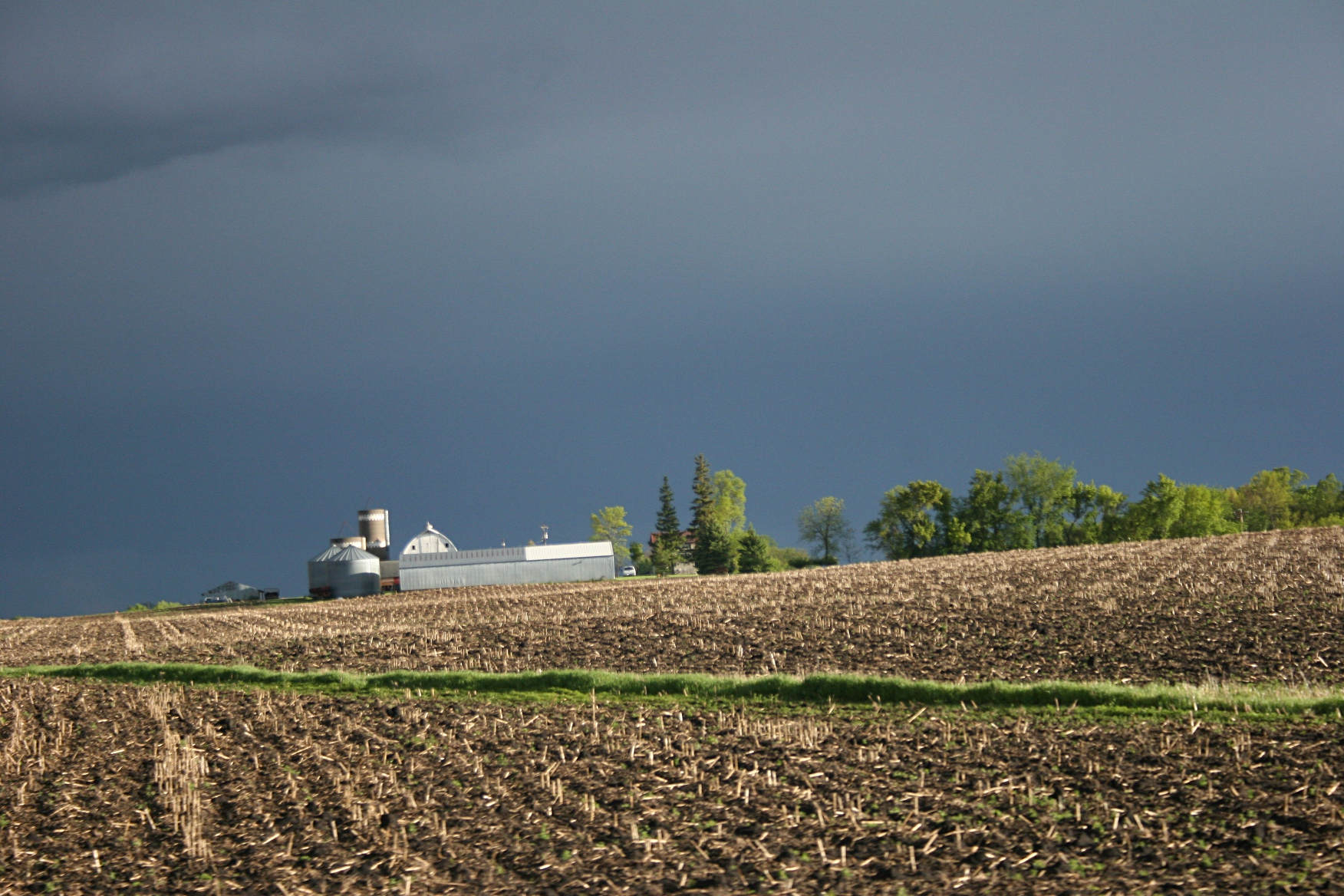
Along the same county road near Medford, this near-barren field, sliced by that line of green grass, caught my eye as did the foreboding sky and the light, oh, the luscious light of early evening.

© Copyright 2012 Audrey Kletscher Helbling
 

Come on over to Faribault for a BBQ & more May 17, 2012

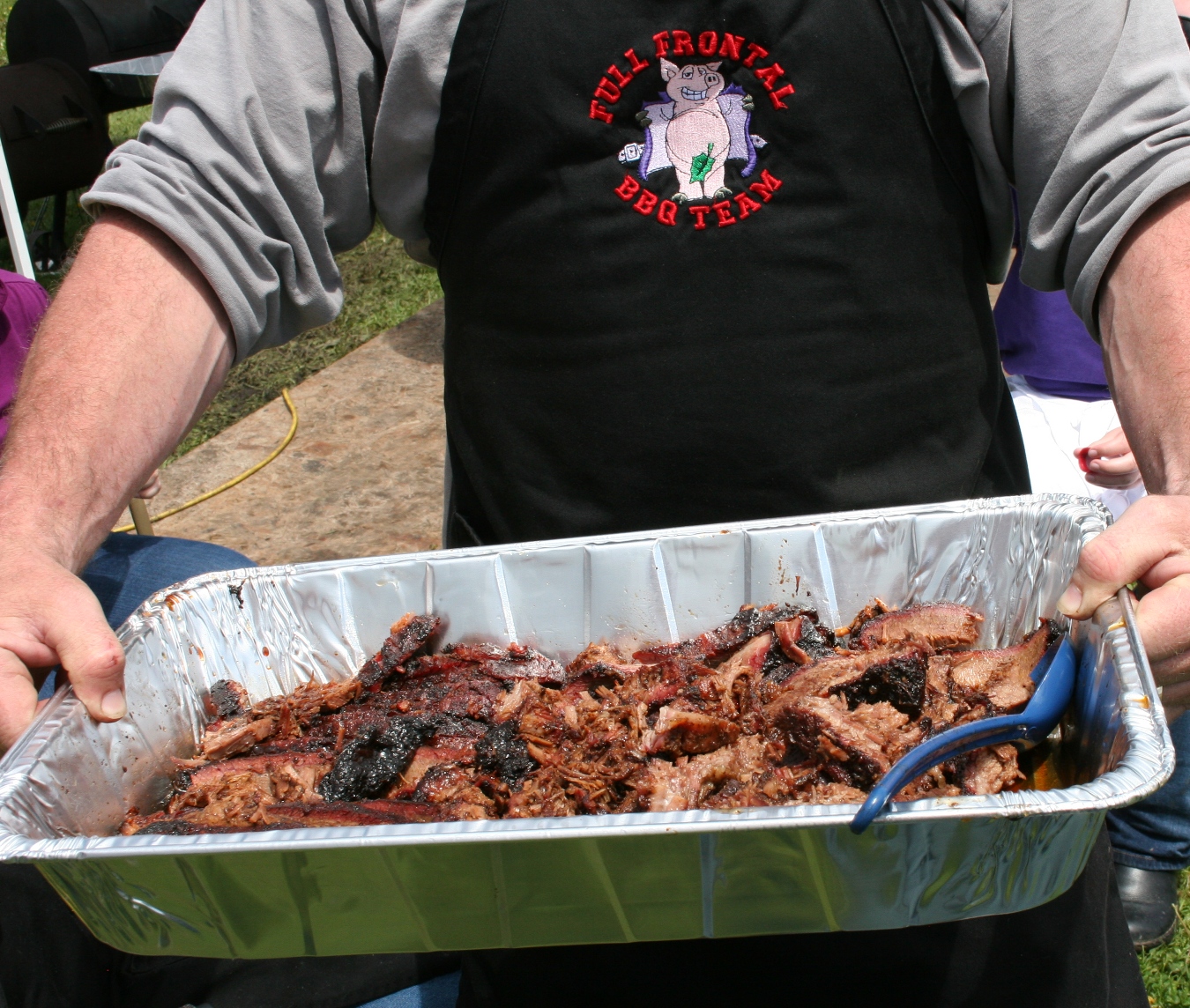
An example of the barbecued meat prepared for the 2011 Minnesota in May BBQ Contest.

MINNESOTA BARBEQUE LOVERS, this is your weekend.

The season’s first of six Kansas City Barbeque Society sanctioned competitions in our state kicks off this Friday, May 18, with the Minnesota in May BBQ & Cheese Festival at the Rice County Fairgrounds in Faribault.

And, folks, it’s free—unless you purchase food and/or beverages from vendors. And you’ll want to, once you smell the tantalizing aroma of BBQed meats. Vendors open to the public at 11 a.m. Saturday.

For the first time ever, Faribault hosted the Minnesota in May BBQ Contest at the Rice County Fairgrounds in 2011. Contestants cooked under tents during a morning downpour. By afternoon, the rain stopped.

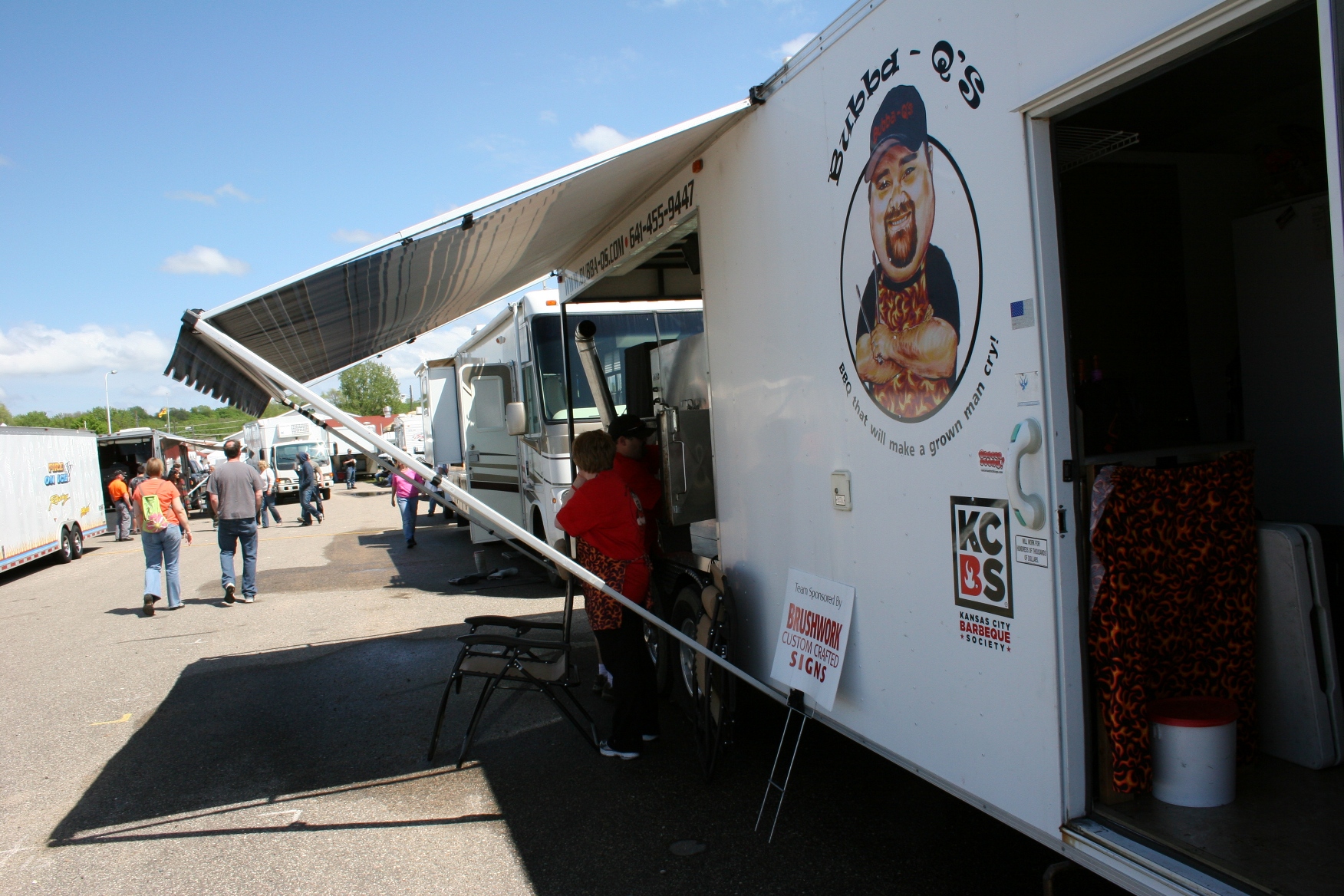
Bubba and Sabrina’s home on wheels and traveling BBQ central parked at the 2011 Minnesota in May BBQ Festival. The couple owns Bubba-Q’s, a restaurant in Ottumwa, Iowa.

Artfully displayed bacon-wrapped pheasant prepared by a BBQ team from Appleton, Wisconsin, during the 2011 competition at the Rice County Fairgrounds in Faribault.

With $10,000 in prize money up for grabs, you can expect some top contenders vying on Saturday for awards in these divisions: turkey product, chicken, ribs, pork, beef brisket, anything butt and dessert. Contestants will be cooking all morning and into the early afternoon with judging from 11:30 a.m. – 2 p.m.

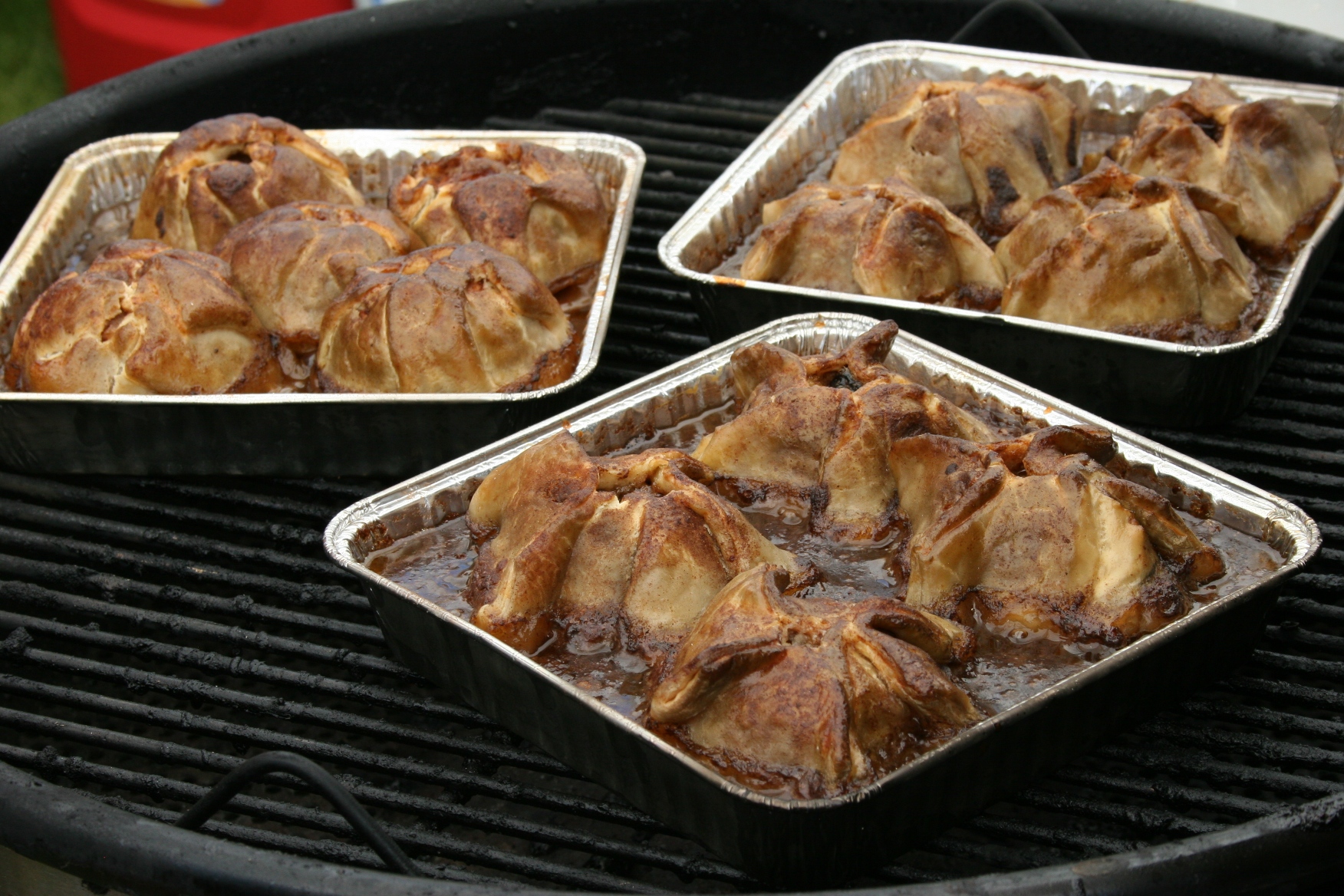
These delicious-looking apple dumplings were entered in the 2011 dessert division.

Ten cooks will also compete in a “grilling with blue cheese” contest featuring Caves of Faribault cheese. Yes, we have some savory blue cheese made right here in my community and aged in sandstone caves. That contest is set for 3 p.m. Saturday.

Award-winning Amablu Gorgonzola from Caves of Faribault.

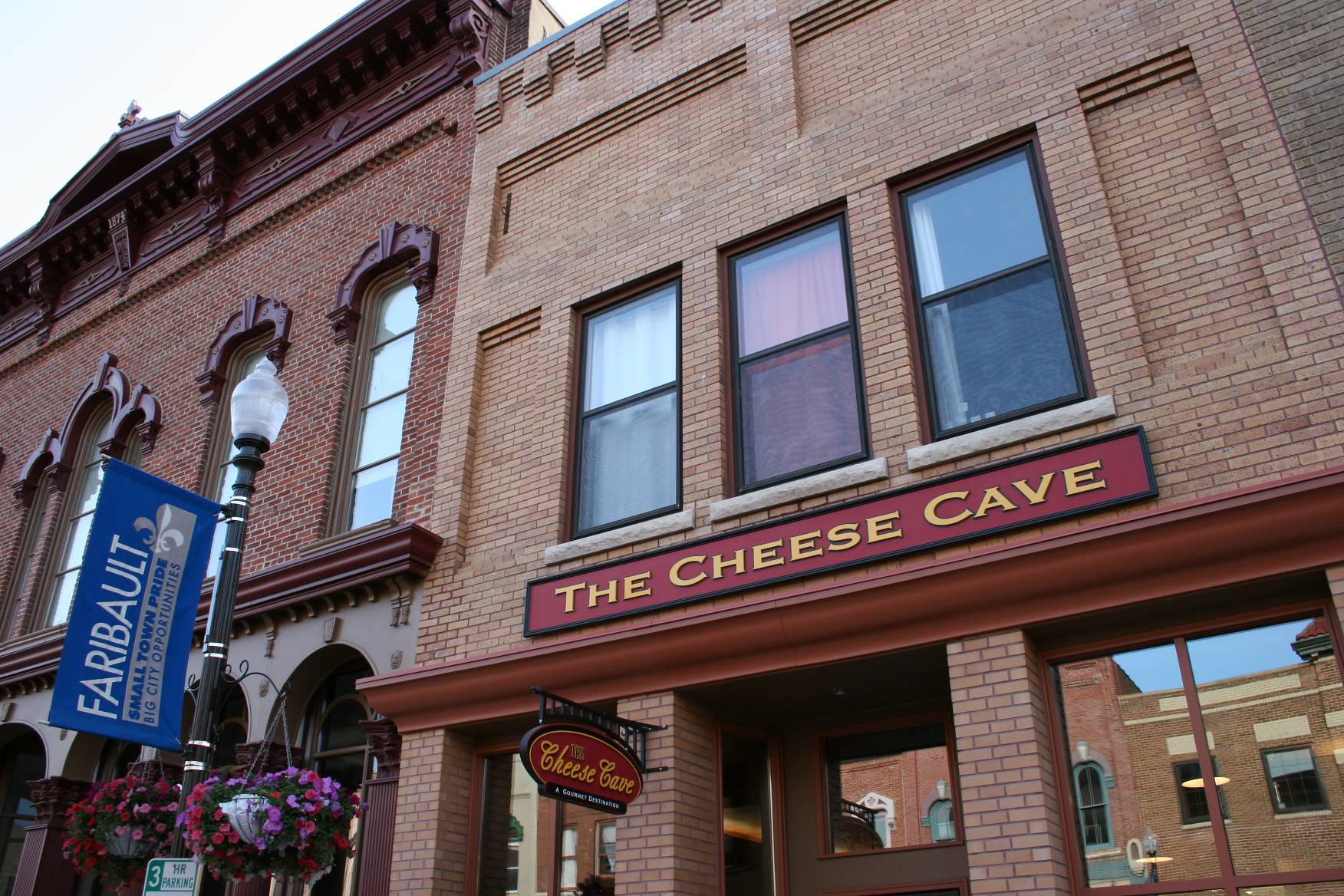
The Cheese Cave is a gourmet destination along Central Avenue in historic downtown Faribault. Stop by on Friday or Saturday if you’re in town for the BBQ Festival.

The Friday events, running from 4:30 p.m. – 7 p.m. include a Kids BBQ Competition,  BBQ Cook-Off and live music.

Now I’m not promoting this BBQ fest simply because it’s the nice thing to do. I attended last year and thoroughly enjoyed the festival, including chatting with numerous contestants. You would not believe how far these people travel, how much money they spend and how passionate they are about barbecuing. Click here to link to a blog post about the 2011 Minnesota in May BBQ Festival, which did not include cheese. Click here to read a post about BBQers Bubba and Sabrina from Iowa. And click here to read a third story from the 2011 BBQ fest.

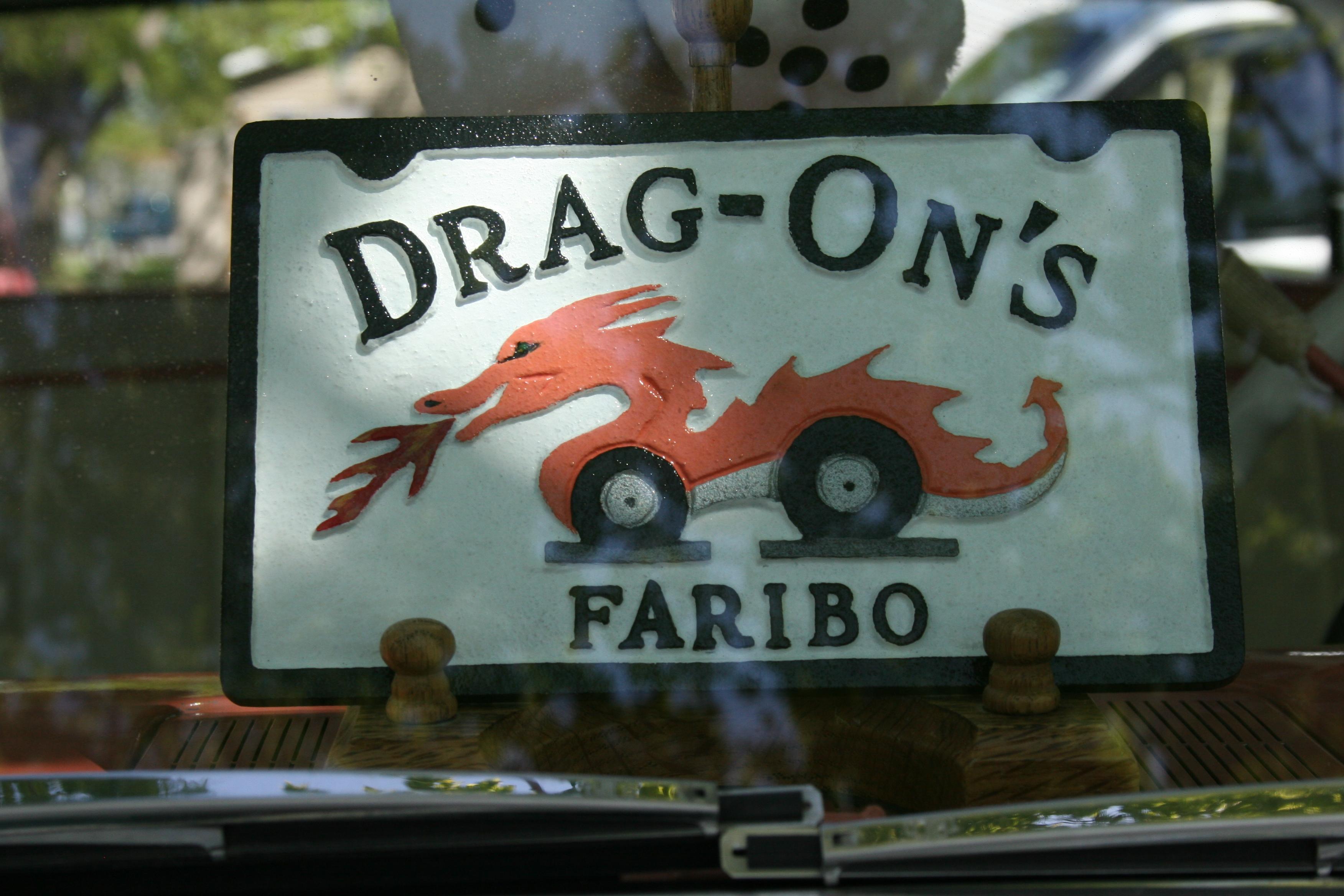
The logo for the Faribo Drag-On’s car club on a member’s vintage car.

This year a car show, hosted by the Faribo Drag-Ons from 9 a.m. – 3 p.m. Saturday, has been added to the festival.

Other draws include a Saturday pancake breakfast from 7 a.m. – 9 a.m. ($5 cost), live music, food and non-food vendors and more. Click here to read a promotional flier about the Minnesota in May BBQ & Cheese Festival.

Contest and festival proceeds will benefit IRIS (Infants Remembered in Silence) and The Faribo Drag-Ons. Two more good reasons to attend.

If you can’t make it to the Faribault BBQ festival, you’ll have more opportunities from June through September to attend Minnesota barbeque fests—in Owatonna, Rochester, Marshall, Albert Lea and/or Worthington. Click here to read details from the Minnesota Barbeque Society.

HAVE YOU EVER ATTENDED a barbeque festival? Please submit a comment and share your experience.

#

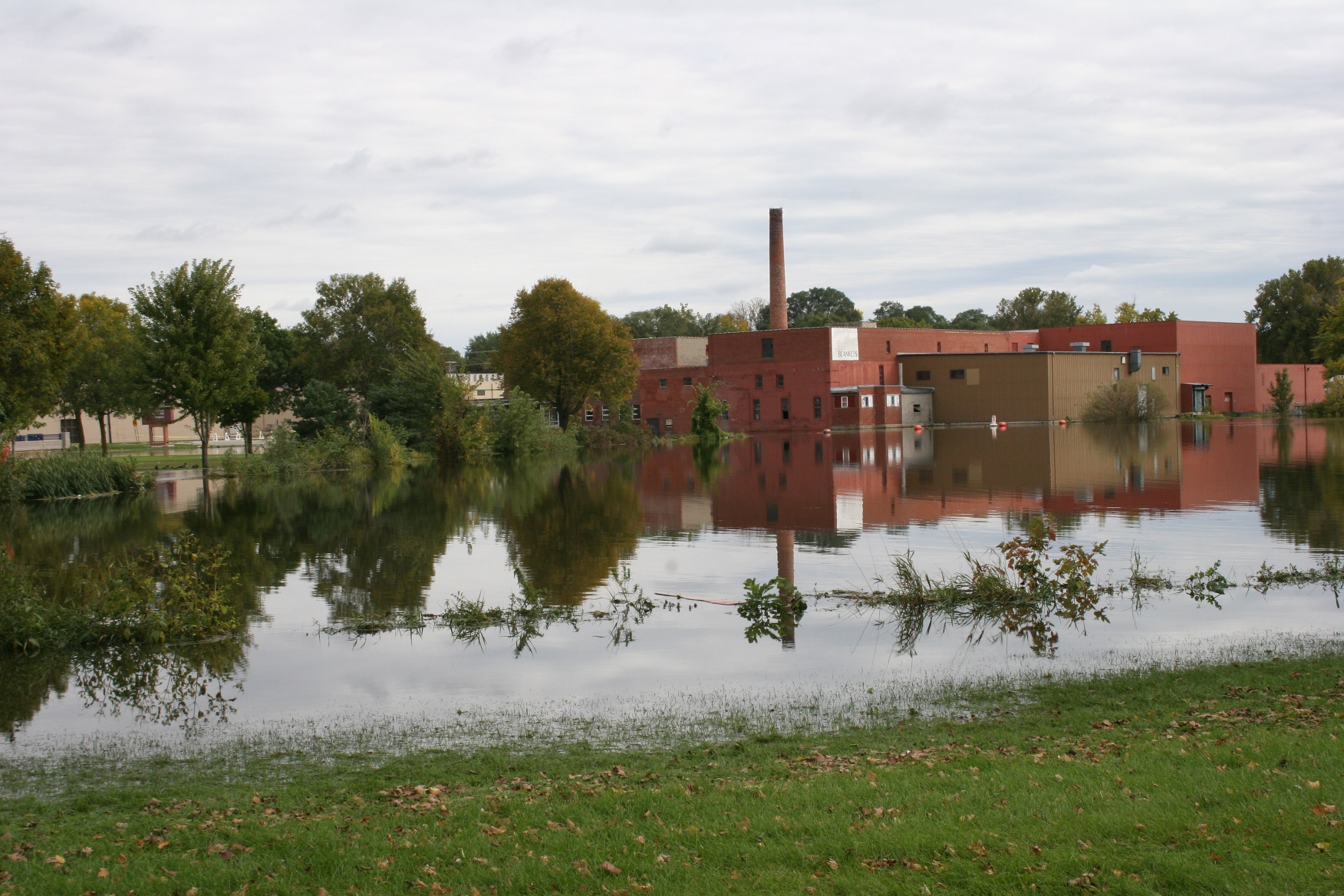
This file photo shows the Faribault Woolen Mill days after a flash flood in September 2010 and before the mill reopened a year later. The mill had closed in 2009 and was not in operation at the time of the flood.

P.S.  If you’re in town for the BBQ fest, take time also to check out the Faribault Woolen Mill retail store across the Cannon River just south of the fairgrounds. The store, in the recently reopened and revamped historic mill, opened Tuesday. Retail store hours are 10 a.m. – 4 p.m. Monday – Saturday.

© Copyright 2012 Audrey Kletscher Helbling
 

A mother’s thoughts on prepping for a third child’s grad party May 16, 2012

Filed under: Uncategorized — Audrey Kletscher Helbling @ 6:37 AM
Tags: , , , ,

BY THIS TIME six years ago, and two years prior to that, I would have had everything planned. Right down to the last food and decorating detail.

But now, the third time around, I am less stressed about the high school graduation reception which my husband and I will host for our youngest in a few weeks.

I suppose you might say the third time’s a charm. Or you might say that by child number three, I’m more relaxed. That would be true. It’s not worth worrying about weather or if I’ll have enough food or all those other details that can stress a graduate’s mom. Everything will fall into place or what will be will be.

That said, recently I finally forced the graduating son to help me design and print invitations. We’re keeping it simple—black and white photo paired with a slip of paper upon which the party information has been printed.

The soon-to-be graduate also assisted me in setting up a system to print computer generated addresses upon labels. I know those labels fail to meet Miss Manners guidelines. But I am lazy with this third graduate and prefer easy and convenient over hours of hand-addressing envelopes.

I was spoiled with the previous two graduates, both daughters. They pitched in, designed their own photo display boards and were otherwise helpful in the party planning. My boy has no interest in any of this.

A photo display board of my boy through the years. The images kept falling off, until I attached them with photo corners.

So I was left to peruse photo albums, to choose photos of my son and then organize them onto a tri-fold display board.

I’ve e-mailed extended family and asked for kitchen help and pans of bars for the party. They’ve obliged. We help each other like that.

Nine hams, bought on sale before Easter, are stashed in the freezer as are three batches of cookies.

I did a trial test of the cheesy potatoes I planned to serve and have subsequently replaced that menu item with easier-to-prepare and less-costly baked beans.

My florist sister has potted flowers that will serve as centerpieces upon tables draped with vintage tablecloths. It is better if I don’t think about the pre-party ironing.

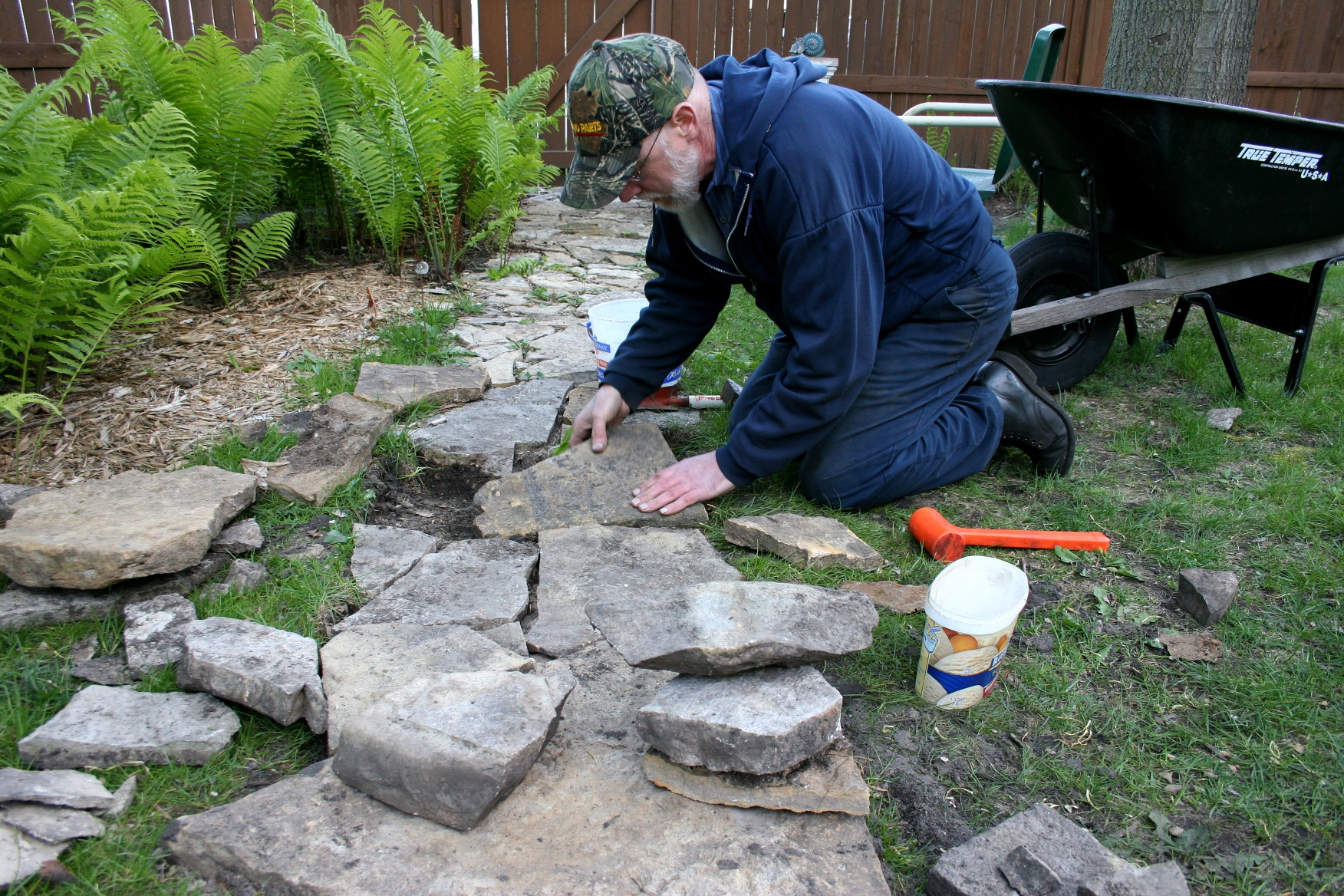
My husband replaces crumbled stones on a backyard limestone pathway.

The husband has redone a portion of the partially crumbling backyard limestone pathway. We can’t have guests tripping on rock. He just began cleaning the garage, which will center the reception along with several tents. We have a working man’s garage packed with two work benches, a tool box and equipment everywhere. Nothing pristine and bare or neat and orderly about our exposed-studs garage.

We’re not planning to paint rooms, shampoo carpet or otherwise upgrade our house. Except to use the bathroom, guests are supposed to stay outside.

But when they do venture indoors to use the facilities, I hope they won’t notice the section of cardboard-covered wall in the dining room where a brick chimney was removed 2 ½ years ago. Maybe they will appreciate that the bathroom faucet does not leak; the husband recently replaced it.

I hope the kitchen crew doesn’t twist off the leaky and worn kitchen faucet or wonder too much why I haven’t yet replaced the vintage brown kitchen sink or yellowing cupboards or the Formica countertops or the aged vinyl flooring. Perhaps several strategically-placed bottles of wine will keep them from focusing on the flaws…

© Copyright 2012 Audrey Kletscher Helbling
 

Thirty years together May 15, 2012

Filed under: Uncategorized — Audrey Kletscher Helbling @ 8:09 AM
Tags: , , , , ,

Audrey and Randy, May 15, 1982. We were so young then, only 25 1/2.

THUMBING THROUGH THE PAGES of our wedding album, I can barely believe that 30 years have passed since my husband and I exchanged vows on May 15, 1982.

Where did the past three decades go?

And who are those kids in over-sized glasses with more hair (him) and shorter hair (me) and both pounds lighter?

Could that possibly be us, newlyweds on the cusp of married life, grinning with the exuberance of young love?

That is, indeed, us.

Together then.

Together now.

Friends asked me Saturday night for tips to a lasting marriage. The question caught me by surprise and I simply told them they didn’t need my advice because they are doing well on their own.

Later, though, I considered how we’ve kept our marriage going strong for 30 years. For Randy and me, the fact that we were just friends before we even began dating set the tone for our relationship.

Friendship and trust. Shared values and a shared faith in God. All have been integral in our marriage.

Many times I think, too, that the similarities in our childhoods—both from farm families with little money—have curbed disagreements over finances. We live a simple, basic life and are content with what we have.

Yet, the differences between us have also benefited our marriage. Randy possesses a quirky sense of humor. He makes me laugh, lightens the moment, causes me to smile when I’d rather not. Without him, life would simply be less fun.

I am the serious one. I can organize and focus and keep everyone on task.

But I can’t handle medical situations. Our three kids have always known that they should go to Dad, not Mom, with any health issues. Need a sliver pulled? Take the tweezers to Dad. Wonder if that cut needs stitches? Consult Dad.

And when I faced health issues—a severe, three-month case of whooping cough in 2005, surgery four years ago to replace my arthritic right hip and most recently the sudden loss of hearing in my right ear—my husband was right there. I could not have managed without him. He took seriously those vows, “in sickness and in health.”

He’s also good with numbers and excels as an automotive machinist. (Get in line if you want him to work on your car or truck or van or tractor or…) This man of mine is a hard worker and has always kept his family sheltered, clothed and fed. For that I am grateful.

I’m also grateful for his strong support of my writing and photography.

For 30 years we’ve had this balance, this give and take, this relying on each other (and God) and tapping into our strengths to make our marriage work.

And, yes, most assuredly that love quotient remains, as strong, if not stronger, than 30 years ago.

© Copyright 2012 Audrey Kletscher Helbling
 

Thank you, Mr. Postmaster, for finally hearing the voice of rural America May 14, 2012

Filed under: Uncategorized — Audrey Kletscher Helbling @ 10:33 PM
Tags: , , , , , ,

FINALLY, AN IDEA that makes sense for continuing postal service in parts of rural America.

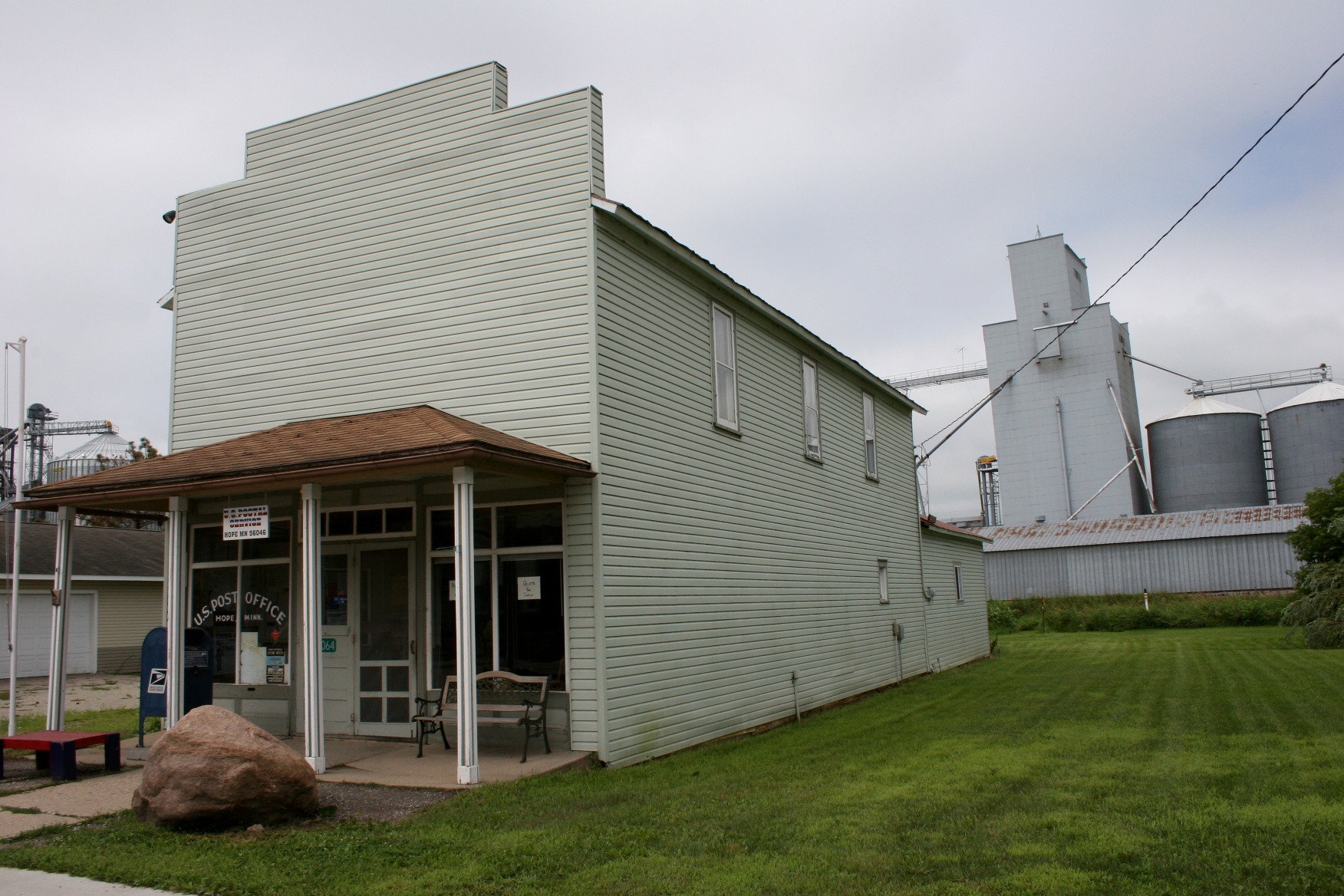
The United States Postal Service revealed a plan last week that could keep thousands of small-town post offices open by reducing hours. That’s certainly better than the alternative for places like Hope, Minnesota, an unincorporated community just off Interstate 35 south of Owatonna in Steele County. Last summer Hope’s 120 residents learned that their post office, like thousands of others across the country, likely would close in a cost-cutting measure.

Under a proposal, the Hope Post Office will remain open with daily window hours cut from eight to two.

Residents of Hope didn’t simply give up and accept their fate.  Instead, they circulated petitions and attended meetings and voiced their opinions and filed an appeal. To no avail. The postal service announced in April that the Hope Post Office would close. But now it appears the Postal Service has had a change of heart about closing thousands of small-town post offices nation-wide.

Postmaster General and CEO Patrick R. Donahoe said in part last week: “…we’ve listened to our customers in rural America and we’ve heard them loud and clear—they want to keep their post office open. We believe today’s announcement will serve our customers’ needs and allow us to achieve real savings to help the Postal Service return to long-term financial stability.”

So what does all that official talk mean? Some 13,000 post offices are now on “a preliminary list (for modified hours) that requires additional review, analysis, and verification and is subject to change.” Of those, 407 are located in Minnesota.

Well, the Postal Service is certainly covering all of its bases with that language, leaving room to tweak proposals and change plans/minds. I suppose one can never be too careful and cautious when one is a government entity. Meetings will be held in the affected communities to review options, which could take more than two years to implement.

Additional alternatives, according to the Postal Service, include mail delivery to affected customers via rural carrier or highway contract route; contracting with a local business for a village post office; and offering service from a nearby post office.

In a news release issued May 9, Postal Service Chief Operating Officer Megan Brennan says: “The post offices in rural America will remain open unless a community has a strong preference for one of the other options. We will not close any of these rural post offices without having provided a viable solution.”

Good.

The post office in Randolph is facing reduced hours, dropping from eight daily to four.

This certainly comes as welcome news to the folks in Hope and in many other Minnesota communities. In my region, post offices in Morristown, Warsaw, Kilkenny, Webster, Nerstrand, Dennison, Hampton, Castle Rock and Randolph are facing possible reduced hours.

My hometown of Vesta 120 miles to the west, along with nearby Wabasso, Wanda and Wood Lake, also made the modified hours list.

In every corner of Minnesota and hundreds of places in between, you’ll find those 407 small-town post offices where window service is likely to be trimmed. The Minnesota list fills slightly more than eight pages on a 260-page document that includes some 13,000 post offices across the U.S. To read that list, click here.

The Mantorville post office, where this photo was taken, is on the preliminary list of southeastern Minnesota post offices slated to have daily hours cut from eight to six.

It’s never a good thing, to reduce service in a small town. But closing the post offices would be worse.

I sometimes wonder if the decision-makers have ever set foot in these small towns, if they grasp the importance of a post office as an integral fiber in the fabric of community. Post offices are more than a place to pick up mail, to purchase stamps, to send a package. In these small towns, they are also community gathering places, a locale to exchange news, a spot to reach out to neighbors and a symbol of community identity.

I’ve witnessed, first-hand, how losing a school, a church, a business, can impact a rural community. In Vesta, for example, the town’s 330 residents can’t even buy a loaf of bread or a gallon of milk; they must travel some 20 miles for those staples. I remember when my hometown’s Main Street was lined with businesses, including a grocery store, two hardware stores and more.

Yes, times have changed. We are a more mobile society. We communicate via cell phones and e-mail and Facebook and other social media. But not everyone. In these small towns—the ones where the Postal Service initially considered shuttering post offices—many elderly residents don’t own computers, relying instead on old-fashioned mail delivery to pay bills and send letters and hear from loved ones. The post office is vital to their system of communication.

That the U.S. Postal Service finally heard the loud and clear voice of rural America, and perhaps understood that voice, pleases me as it should thousands of other Americans.

© Copyright 2012 Audrey Kletscher Helbling
 

The uncooperative Sphinx moth

Filed under: Uncategorized — Audrey Kletscher Helbling @ 8:06 AM
Tags: , , ,

The wings of the white-lined Sphinx moth beat non-stop in a blur of motion as it feeds on the nectar of Superbells.

IF I DIDN’T KNOW BETTER, I would have thought it a hummingbird, this rapid wing-beating insect that swooped into my yard Sunday afternoon, drinking the sweet nectar of the pink-striped Calibrachoa.

Often confused with a hummingbird, this white-lined Sphinx moth whips its wings at up to 85 beats per second.

No wonder I found photographing this fascinating creature an incredible challenge. Perched on a step ladder at near eye level with a hanging flower basket I’d gotten for Mother’s Day just hours earlier, I tried to focus my lens on the energetic moth. I mean, honestly, could the moth simply just hover in one spot for maybe a minute?

It didn’t help either that the wind swayed the basket and that I’m a teeny bit afraid of anything with flapping wings. When the moth circled my head and seemed to take an interest in the floral-patterned shirt I was wearing, I grew a little nervous.

And then the husband, unbeknown to me, grabbed at my pant leg. I screamed. He laughed. The moth zoomed away.

Later, I would read online that the Sphinx moth, since it has no ears, could not possibly have been frightened by my screech. Rather the quick jerk of my camera and my rapid descent from the ladder likely temporarily caused the moth to exit from the patio premises.

Apparently, though, the lure of that sweet nectar was too much as the moth returned. I climbed onto the ladder again and then tried some under the basket shots until the moth, seemingly intoxicated by all that drinking, zig zagged towards the woods.

Aiming up from under the flower basket, I captured the Sphinx moth zoning in on a blossom.

Another down under, looking up shot showing the moth’s proboscis dipping into the flower for a sip of nectar.

HAVE YOU EVER SEEN, or tried to photograph, a Sphinx moth?

© Copyright 2012 Audrey Kletscher Helbling


My mother’s hands May 13, 2012

Filed under: Uncategorized — Audrey Kletscher Helbling @ 8:29 AM
Tags: , , , ,

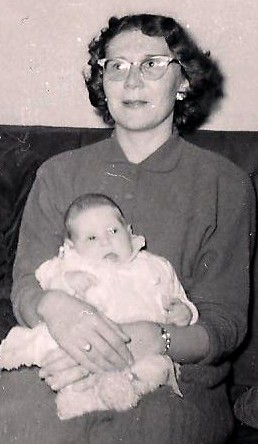
My mother, Arlene, and me.

IT IS THE EARLIEST SNAPSHOT of me and my mom, dated January 1957.

Photos with her are rare; the next comes four years later. Yet, it matters not that my childhood photos fill only a few pages in an album. They are enough to see my mother’s love.

I see it in her hands, always the hands—clasping a baby or holding a toddler or encircling a child.

Hers are the hands that wrapped six babies in blankets, including me, her eldest daughter.
Hers are the hands that guided soiled cloth diapers and my dad’s grimy barn clothes into a Maytag wringer washer.
Hers are the hands that dumped buckets of water into the old tin bath tub on Saturday nights.

Hers are the hands that held books and rocked babies and swiped mecuricome onto skinned knees.

Hers are the hands that seeded seasons of gardens and hoed weeds and preserved the bounty of the earth.

Hers are the hands that peeled potatoes and stirred gravy and fried hamburger into blackened hockey pucks.

Hers are the hands that pressed coins into tiny hands for Sunday School offerings.

Hers are the hands that folded in prayer–for children and husband and her own healing.

Hers are the hands that reached out in love, always, to soothe, to calm, to protect. For nearly 57 years she has been a mother. It has been her life, her calling, and I have been blessed to be her daughter.

These are the hands of my mother, the mother I love always and forever.

© Copyright 2012 Audrey Kletscher Helbling