Minnesota Prairie Roots

Writing and photography by Audrey Kletscher Helbling

From shy teen to confident artist, entertainer & business woman August 21, 2012

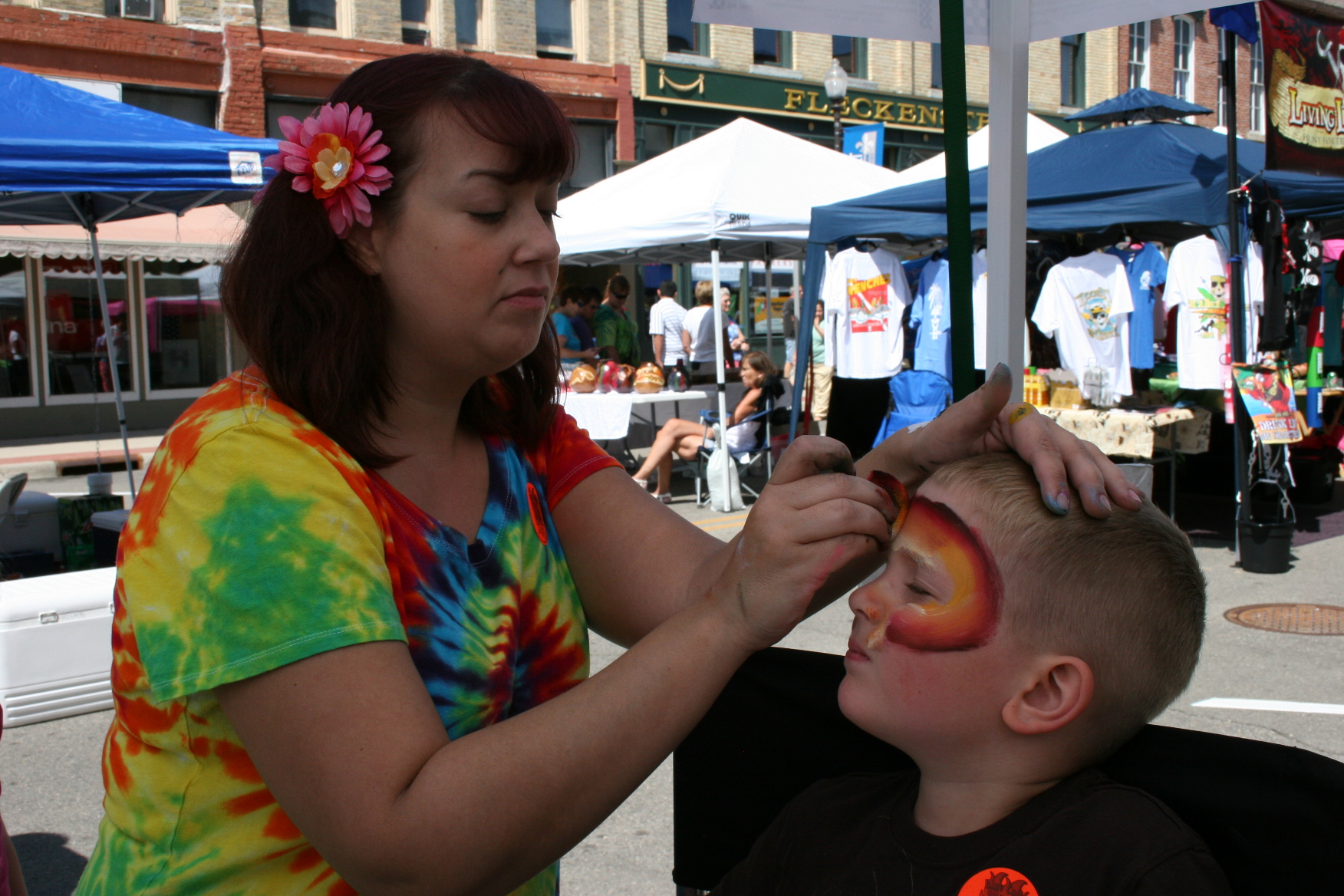
Jodi Gustafson of Big Shoe Entertainment begins transforming young Owen’s face into a Ghost Rider’s skull mask at the recent Blue Collar BBQ & Arts Fest in Faribault.

IMAGINING 37-YEAR-OLD JODI GUSTAFSON—also known as Lollipop the Clown, Jenius Strangeways or the proprietor of Big Shoe Entertainment and Jodelle’s Finery—as a once shy teen weaving down the hallways of Richfield and Coon Rapids high schools seems an impossibility.

But this vivacious and confident small business owner, whom I met at the recent Blue Collar BBQ & Arts Fest in Faribault where she was transforming faces through her stunning full face painting, reveals an adolescent timidness that contradicts her very public professions.

“I hated being shy,” said Gustafson, who recalls turning red if anyone so much as said “hi” to her. Determined to overcome that shyness, she eventually, and purposefully, chose a job with the United Way which involved public speaking.

“I knew I would never change if I didn’t get out of my comfort zone.”

That decision proved pivotal for Gustafson when a company wanted a carnival theme for its campaign but couldn’t afford to hire a clown. Gustafson volunteered, thinking clowning couldn’t be all that difficult. She was wrong, but continued anyway with the clowning which led to painting cheek art and then, with the encouragement of Cindy Trusty of Cindy’s Creative Celebrations, to full face painting and finally the official formation of Big Shoe Entertainment in the early 2000s.
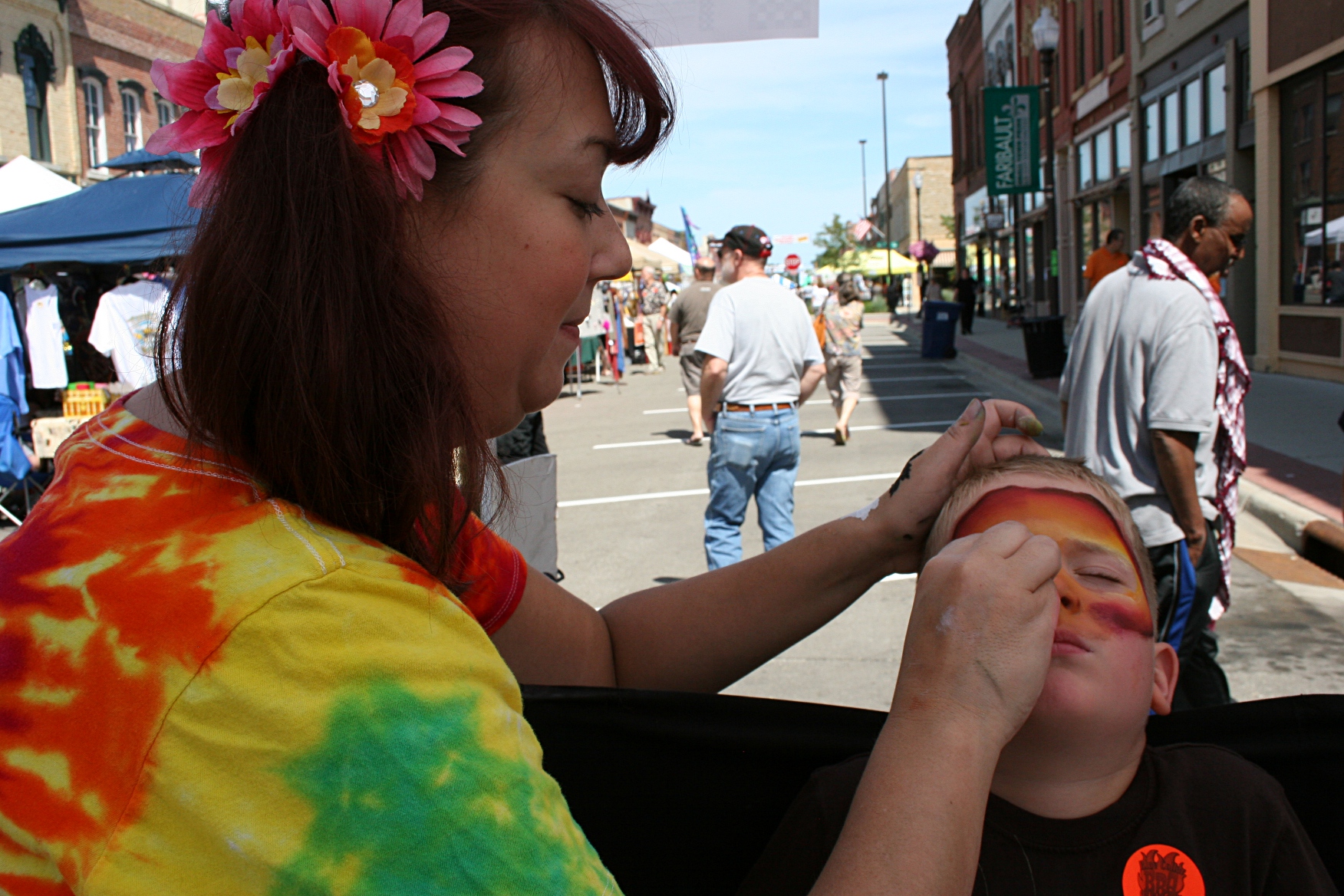
Owen’s half-mask skull evolves under Gustafson’s skillful hands. She contracts her work for community and private events (such as birthday parties) and with corporations (such as for company picnics).

Today this mother of three (ages three to 17) operates two successful small businesses from her Bloomington home. Big Shoe Entertainment, encompassing clowning, balloon twisting, airbrushed and glitter tattoos, henna and crazy hair, but primarily full face painting, keeps her crazy busy, especially during the summer, with gigs throughout Minnesota, Iowa and Wisconsin. The pace slows during the other seasons.

An assortment of the make-up, all with FDA-approved ingredients and meant to be used on the body and face, which Gustafson uses for face painting.

In anywhere from one to five minutes Gustafson, with brushes and make-up pads and an array of colorful make-up, can transform a face into a work of art. She’s morphed five billion faces, she exaggerates, into butterflies, and also creates lots of flowers and princesses, and masks such as skull, dragon and Mardi Gras.

She especially enjoys painting “gore” faces, but seldom has the opportunity.
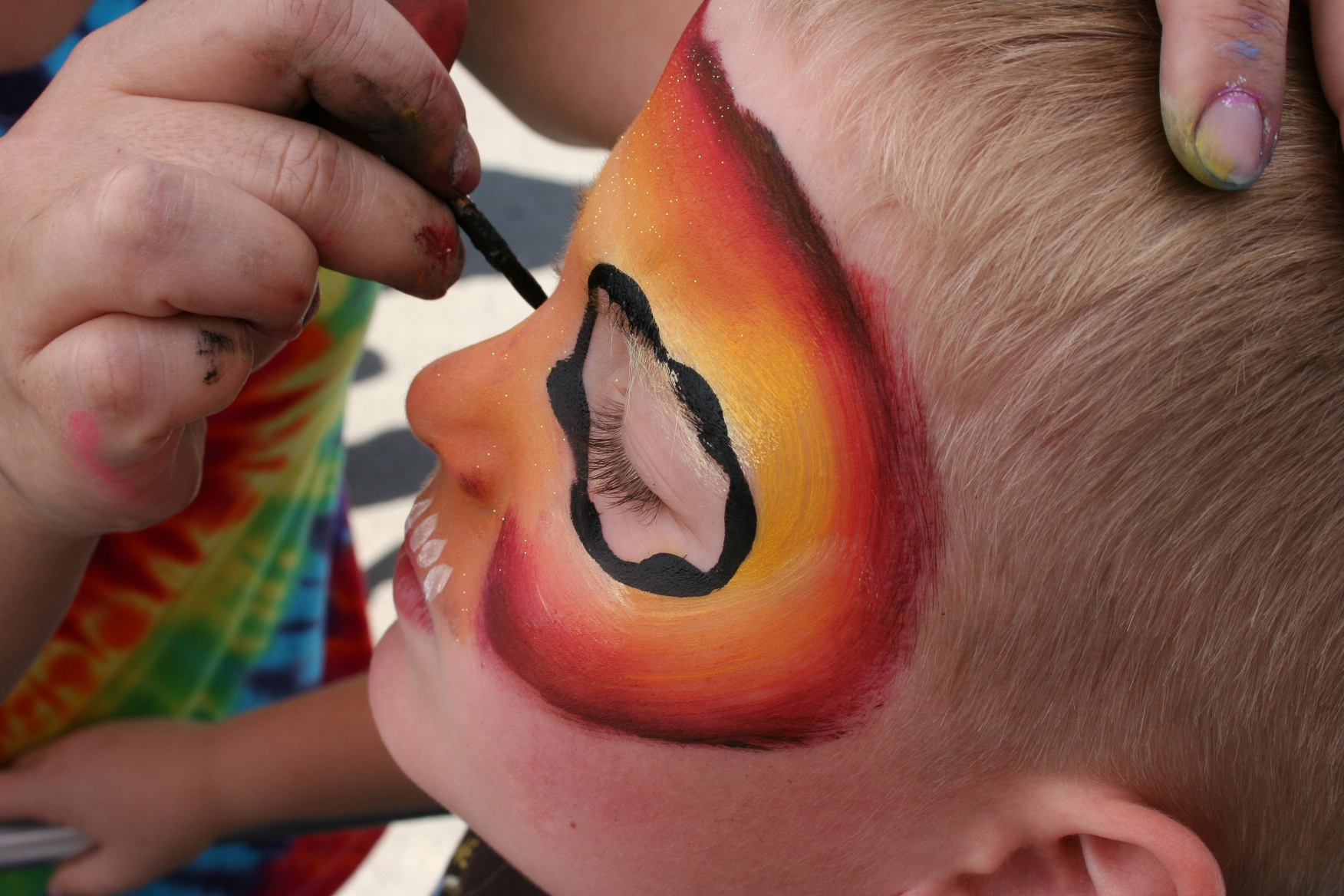
Owen sits perfectly still as Gustafson paints. Some kids squirm or won’t close their eyes, meaning she sometimes needs to adjust her work to eliminate painting around the eyes or needs to explain step by step what she is doing. Typically, Gustafson doesn’t talk while painting faces.

She’s always learning—from videos, books, classes and practice. That practice includes painting designs all over her arms and legs while relaxing at home in front of the television. Gustafson puts her own spin on existing patterns via color choices and painting style, defining her work as her own in a profession that’s becoming more saturated. Yet, most are not at her level of expertise, she says, in an honest, but not boastful, way.

Gustafson works with two agents and occasionally hires independent contractors to assist at events where she can’t handle the volume solo. She’s picky, though, and chooses only the best artists.
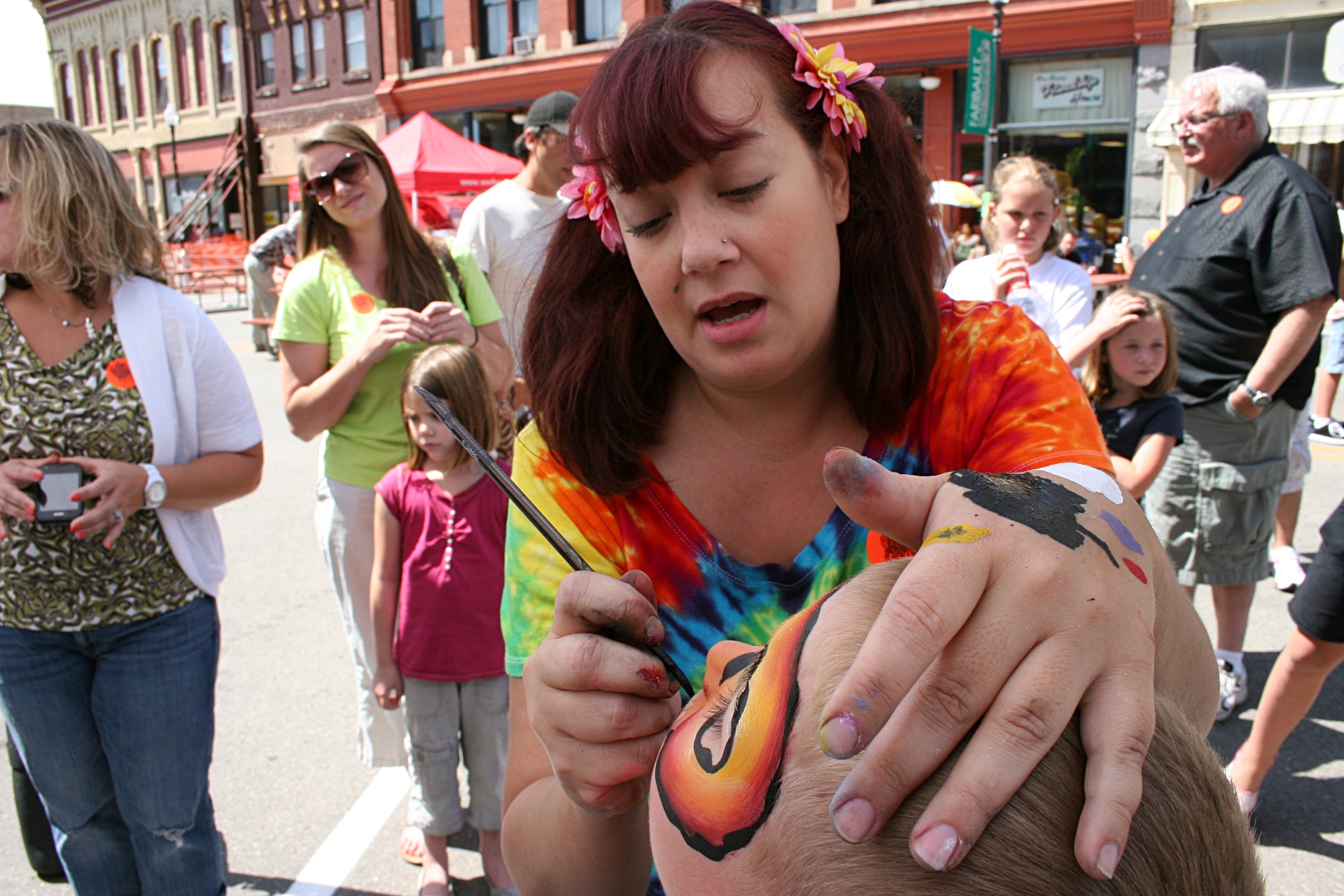
American Family Insurance of Faribault sponsored free full face painting by Gustafson at the recent Blue Collar BBQ & Arts Fest. Lines were long. Gustafson painted for five hours, averaging 20 – 25 faces per hour. If she returns next year, she’ll bring another painter, she says, to shorten those lines.

All of this is interesting given Gustafson early on was intimidated by full face painting. Clearly she’s not anymore as she works with the swiftness and assurance of a skilled artist. She always had an interest in art, she says, but not the confidence. She took art classes in high school and moved on to painting still lifes in acrylic on canvas, something she has no time for now.

Besides mothering and operating Big Shoe Entertainment, Gustafson also owns Jodelle’s Finery, specializing in Renaissance and Victorian “garb.” That’s her term, “garb,” referencing the durable period clothing she fashions, as opposed to “costumes,” for the Minnesota Renaissance Festival and steam punk events. (Steam punk fashion, since I didn’t know and perhaps you don’t either, is Victorian clothing with a technological, sci-fi twist.)

Even Jodelle’s Finery, in typical Gustafson fashion, has an interesting beginning. When pregnant with her middle child, Gustafson was feeling quite domestic and taught herself to sew. Her first project was a baby quilt. Today she’s advanced to sewing that garb for others and for her role as the street performer Jenius Strangeways at the Minnesota Renaissance Festival.

Yes, this once shy teen morphed into an actress too—role playing at the Renaissance and on the stages of community theaters in Faribault (where she lived until moving to Bloomington in June), Owatonna and Northfield.

“I don’t like to be still,” claims Gustafson, who before she took on the Renaissance acting gig two years ago, worked in shops at the Minnesota festival.
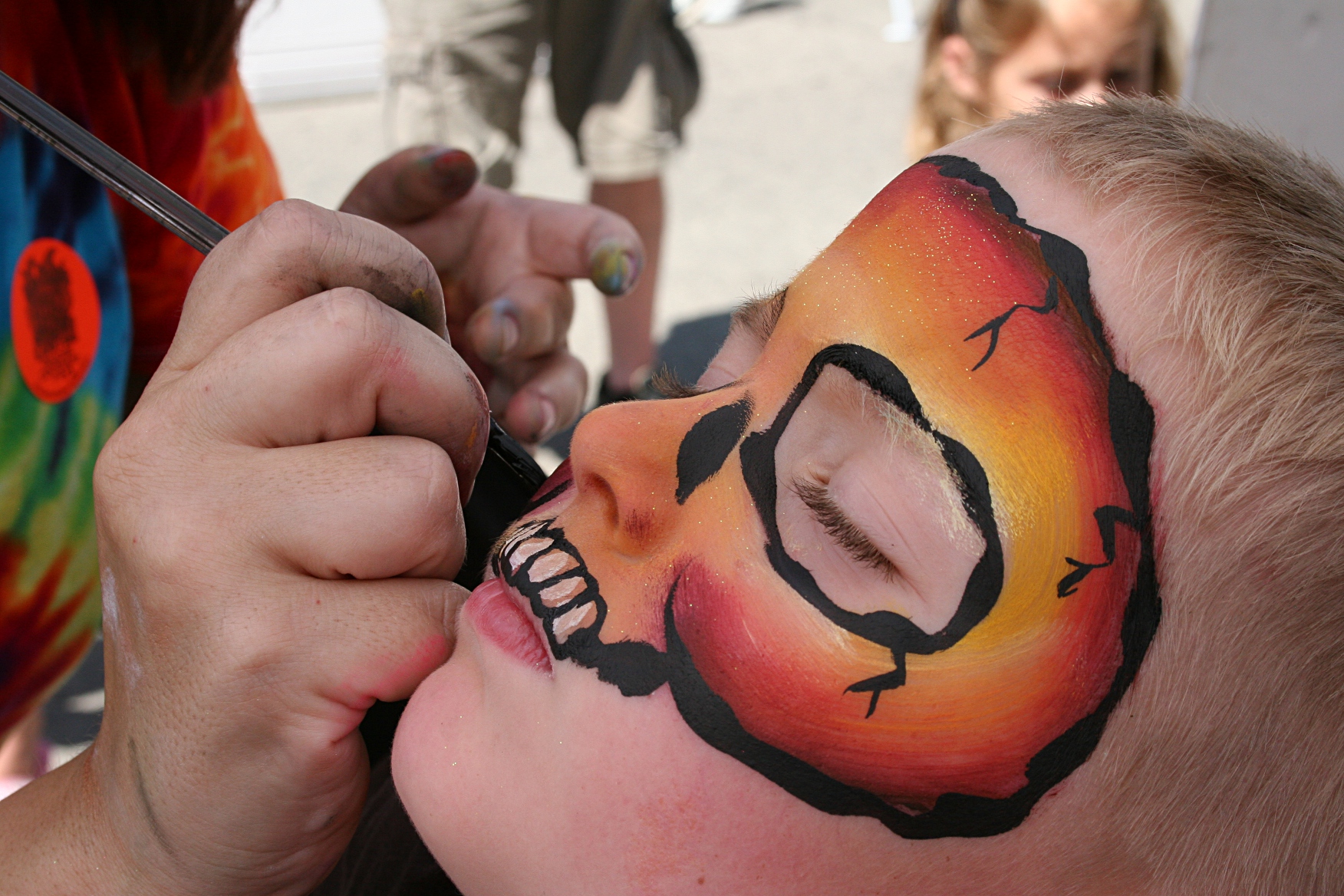
Owen’s skull face mask is almost done.

Yet, in the middle of all that public busyness of painting faces and clowning and acting, Gustafson says she still occasionally slips back in to the quiet, nervous and shy Jodi of years past. That happens, she explains, if she’s not role-playing and doesn’t know anyone at an event she’s working.

Mostly, though, she’s made a choice to get past her shyness, to be the strong and confident woman who paints faces, entertains and clothes entertainers via her two successful businesses.
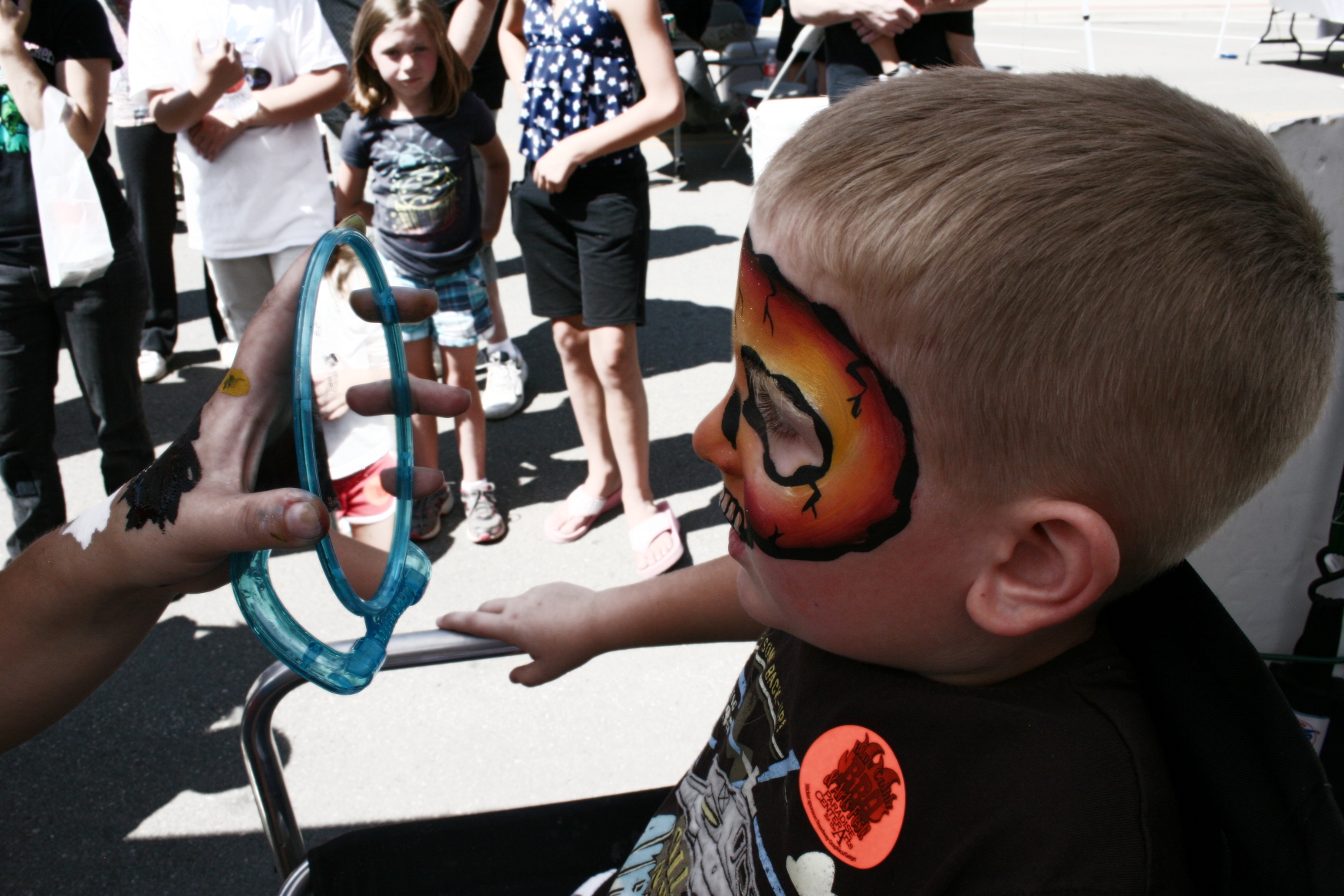
Owen opens his eyes for the great reveal.

FYI: Jodi Gustafson doesn’t have a website for Big Shoe Entertainment, so don’t bother trying to find one. You may contact her via email at gusjodi@gmail.com or call her at (952) 215-4544. You can also check out her Jodelle’s Finery Facebook page by clicking here.

I initially developed this post idea to showcase Gustafson’s full face painting because I was so impressed by her work. But when I interviewed her about a week later and learned how she overcame her shyness, that became the real story. I hope you will be inspired, as I am, by Gustafson’s determination to overcome an obstacle, change and pursue her passions in life as her professions.

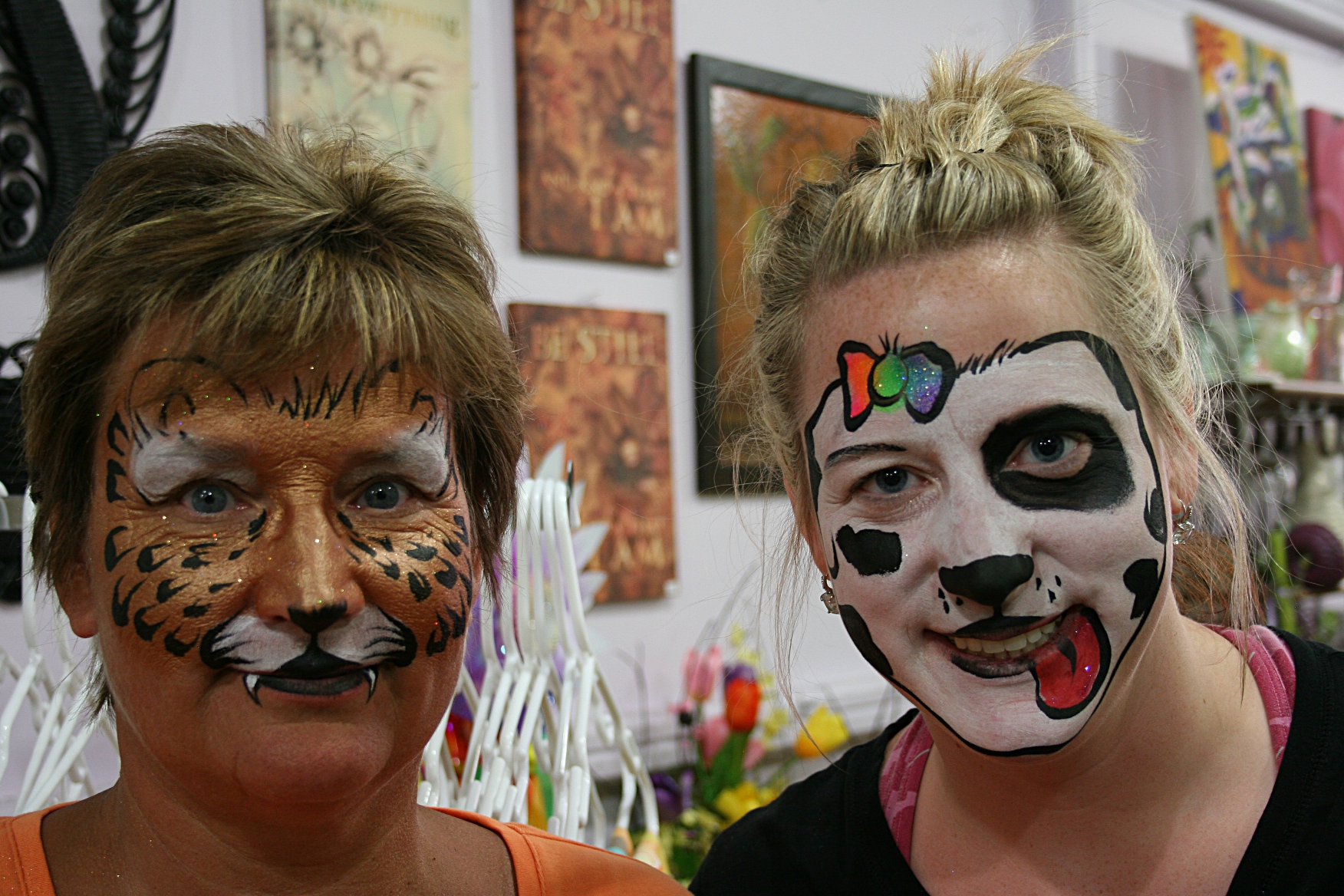
Gustafson transformed Isaac into a tiger at the Faribault festival.

Isabella, 7, of Faribault, became a dalmatian under Gustafson’s crafting. Butterflies and dalmatians proved the most popular paintings chosen by attendees at the Faribault fest.

© Copyright 2012 Audrey Kletscher Helbling


My thoughts written on day two as an empty nester August 20, 2012

Filed under: Uncategorized — Audrey Kletscher Helbling @ 6:57 AM
Tags: , , , , , ,

“YOU SHOULD CARRY ME across the threshold,” I suggested as I waited on the back stoop for him to unlock the door.

He inserted the key into the lock, then turned and looked at me. “It’s like starting over, isn’t it?”

And so a new phase begins in our lives. At this precise moment I am not embracing it, this becoming an empty nester after 26 ½ years of children under our roof.

I am sad and tired and exhausted from lack of sleep and am a bit of an emotional mess. How did my husband and I, 30 years married, arrive, snap, just like that, at this point of coming full circle back to only the two of us?

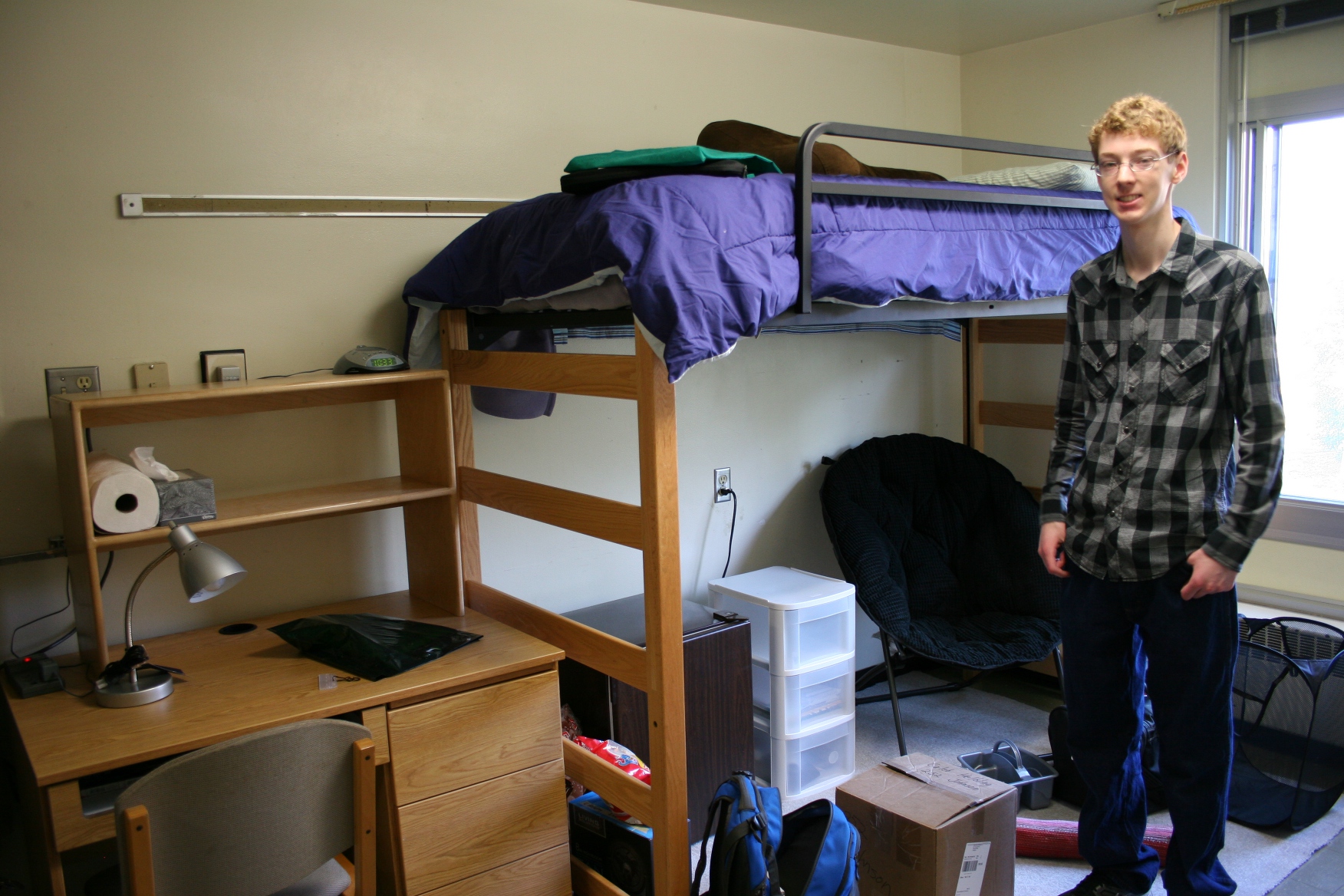
The son, moving into his dorm room at North Dakota State University.

Saturday morning we delivered our 18-year-old and his van full of belongings to the second floor of Johnson Hall at North Dakota State University in Fargo. (Or, more accurately, the energetic NDSU move-in crew carried everything from the lawn, down the sidewalk, up the stairs and to our son’s corner room at the tunnel end of a hallway.)

Leaving Fargo late Saturday morning, 285 miles from our Faribault home.

As cliché as it sounds, this truly marked for me a bittersweet moment of mixed emotions—realizing I’d done my part to raise our boy and now I had to trust him to make it on his own in a town, at a school,  5 ½ hours away.

I don’t care how many children you’ve left at college—and I’ve already seen my daughters, 26 and 24, through four years of post-secondary education and entry into the workforce—it is not easy to leave your kids, these children you’ve nourished and loved and held and cherished for 18 years. Not easy at all.

I’ve even been known to say, “I should have locked you kids in the basement and not let you go anywhere.”

Of course, I don’t mean that. I wouldn’t want any of my children to feel afraid or insecure or unable to set out on their own because I selfishly desired to keep them close. I have raised them to be strong, independent, venturesome adults.

When my eldest announced during her first semester of college that she would be going on a mission trip to Paraguay during spring break, I may have used that “should have locked you in the basement” phrase in the same breath as asking, “Where the heck is Paraguay?”

Then when her sister, several years later, said that she would be studying abroad in Argentina for fall semester, I muttered, “…should have locked you in the basement.”

When the son decided to join his high school Spanish class on a spring break trip to Spain, I mumbled to myself “…locked you in the basement.”

Humor helps when you are parenting, in those times when you don’t want your child to realize just how difficult it is to let go. I doubt, though, that I’ve ever totally fooled my three.

I am proud of myself, though, for never leaving a college dorm room in tears. I can be strong when I need to be, when my child needs me to be.

But I cried twice in the weeks before the son’s college departure date and he assured me, “Mom, it’s OK to be sad.” He was right.

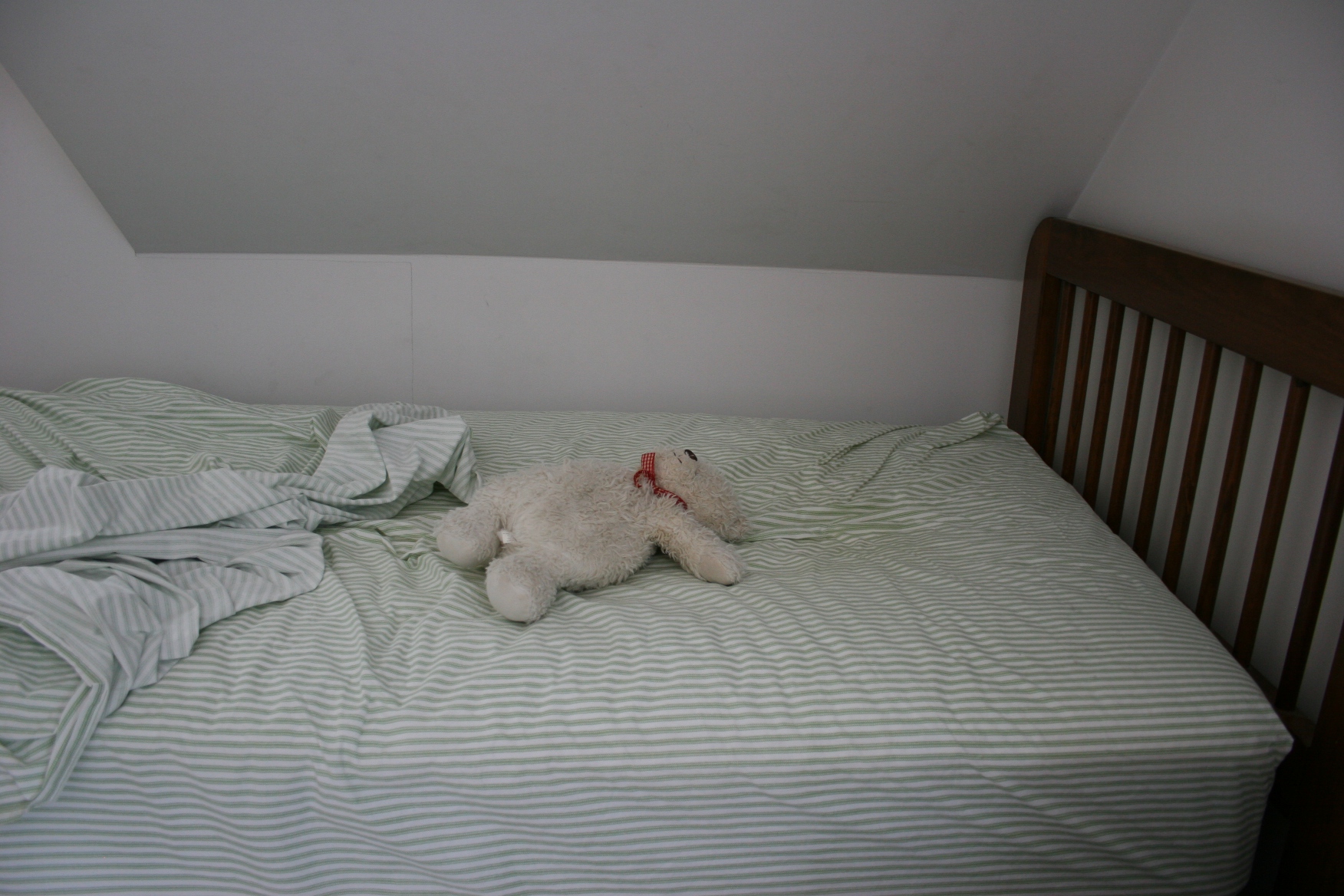
My sons’ empty bed, which caused me to break down upon my arrival home Sunday afternoon.

And then I cried on Sunday, upon our arrival home from that weekend journey to Fargo. I walked into my boy’s upstairs bedroom and saw the rumpled sheets, his matted white teddy bear…and reality struck me. He’s gone.

I walked downstairs, told my husband I’d had my sad moment. Then I broke down and cried, deep wrenching sobs, and Randy wrapped his arms around me and held me.

Perhaps tomorrow he will carry me across the threshold.

© Copyright 2012 Audrey Kletscher Helbling
 

The comfortable familiarity of Freedom August 19, 2012

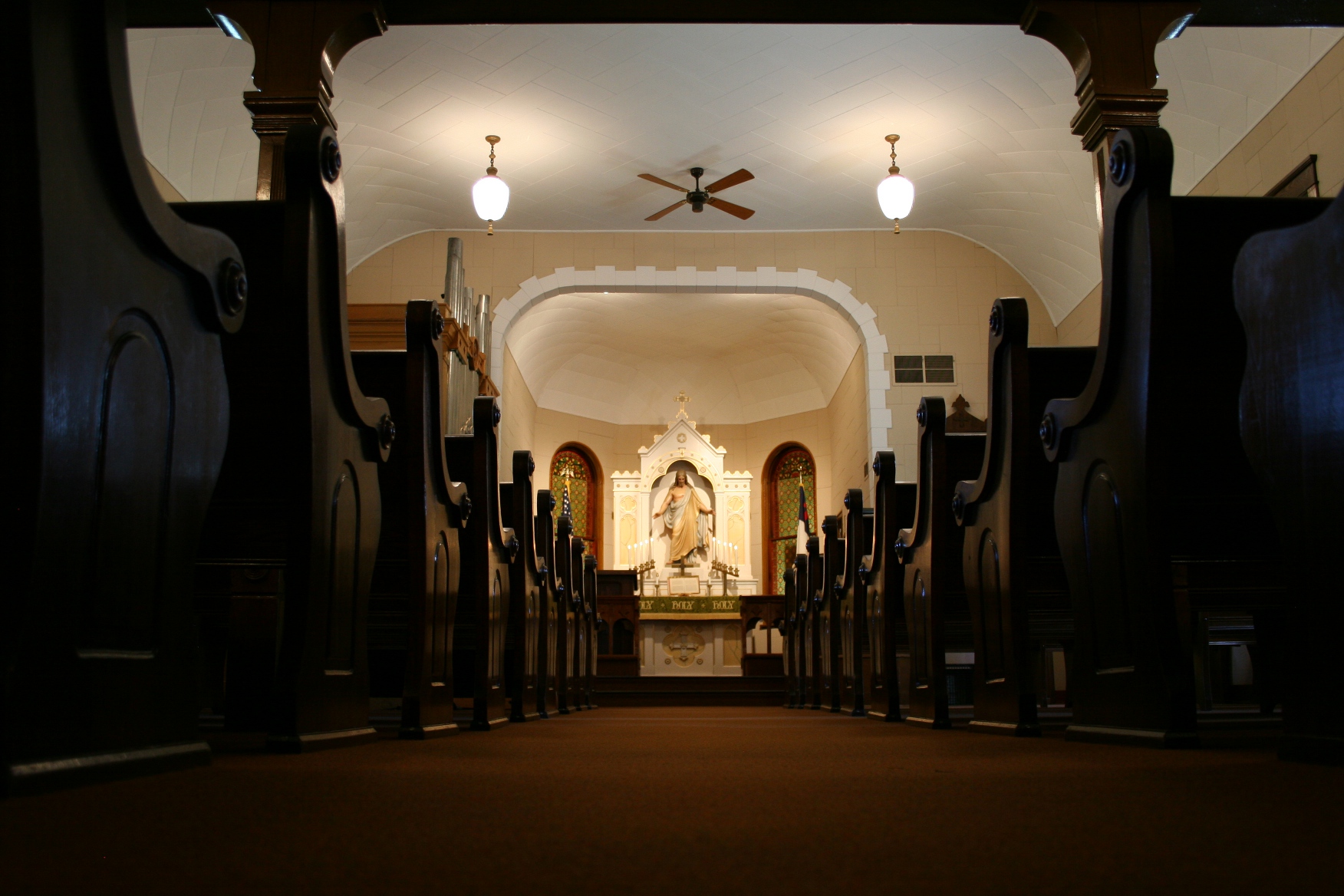
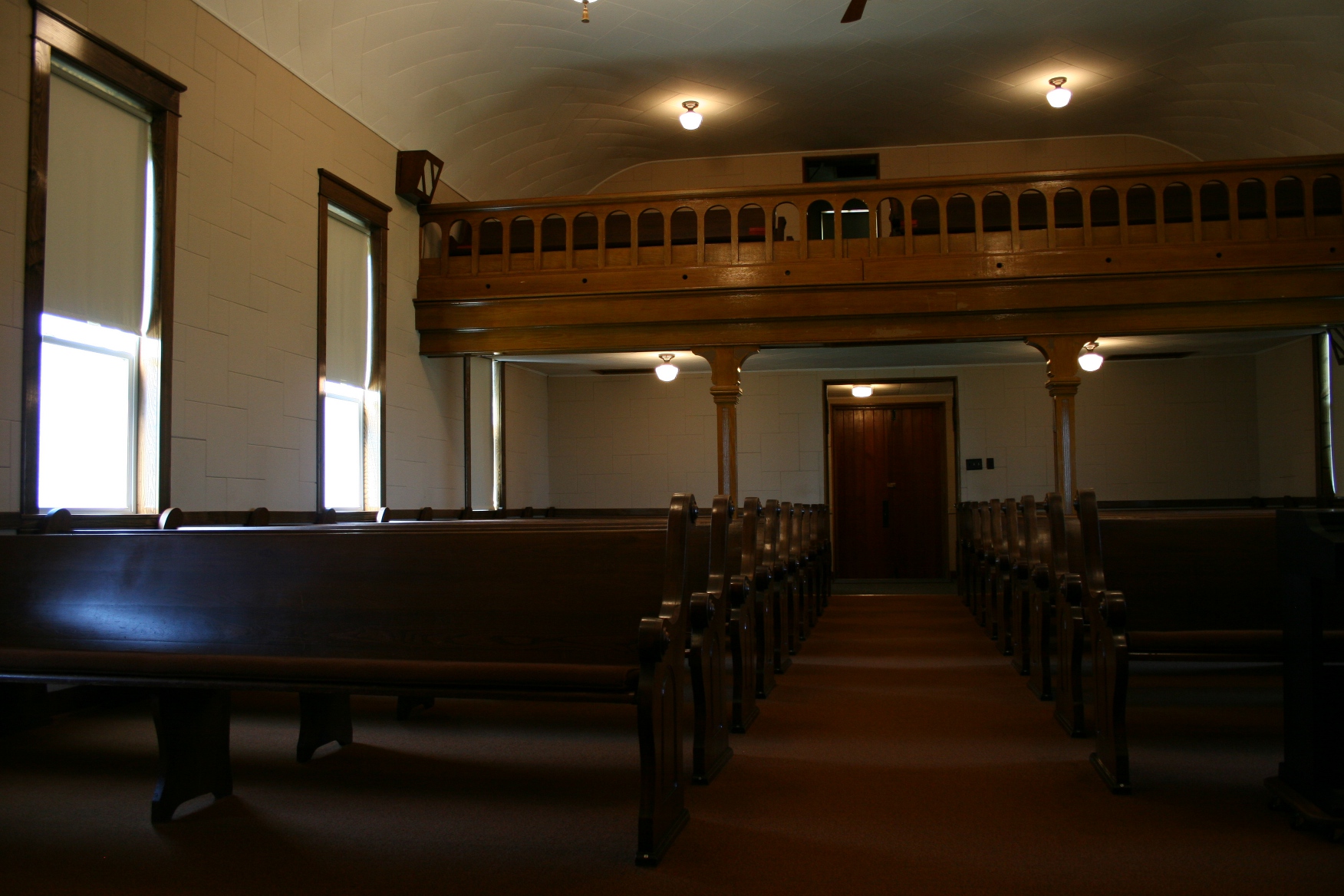
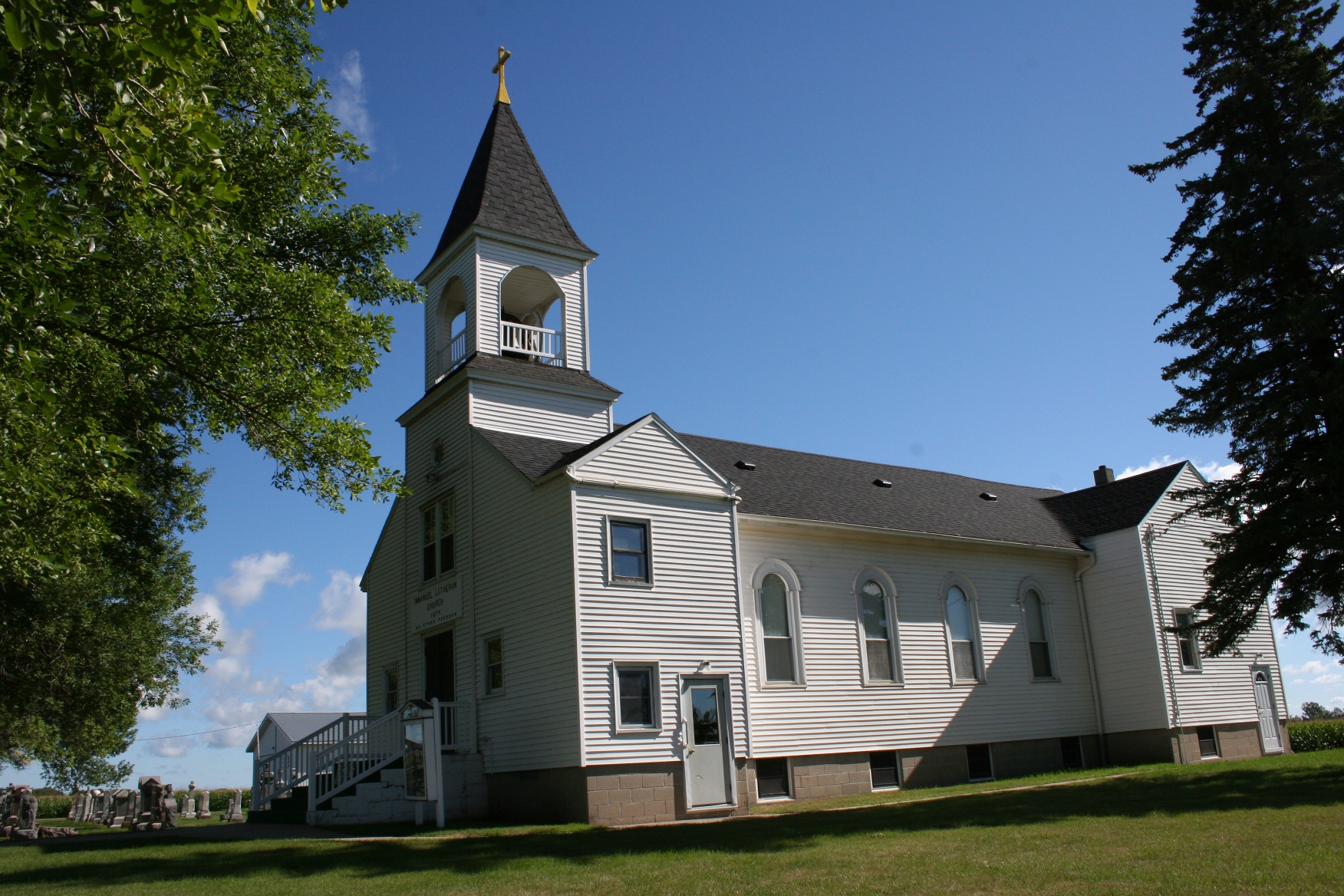
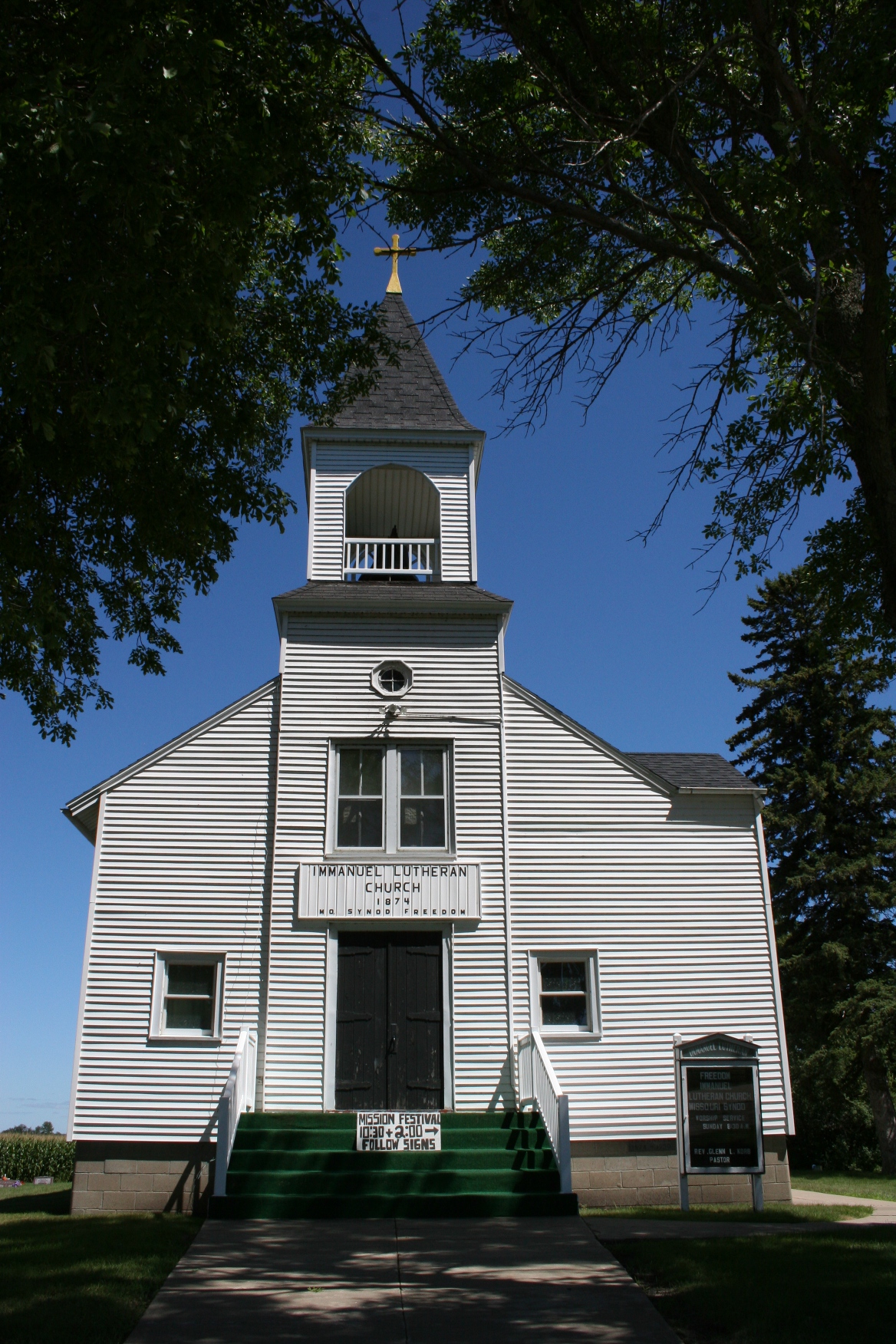
IF YOU’VE EVER STEPPED inside a building and felt like you’d been there before, but you haven’t, then you can relate to the story I am about to share in photos and conversation. Come on. Let’s open the door and enter Immanuel Lutheran Church, Freedom Township, rural Janesville.

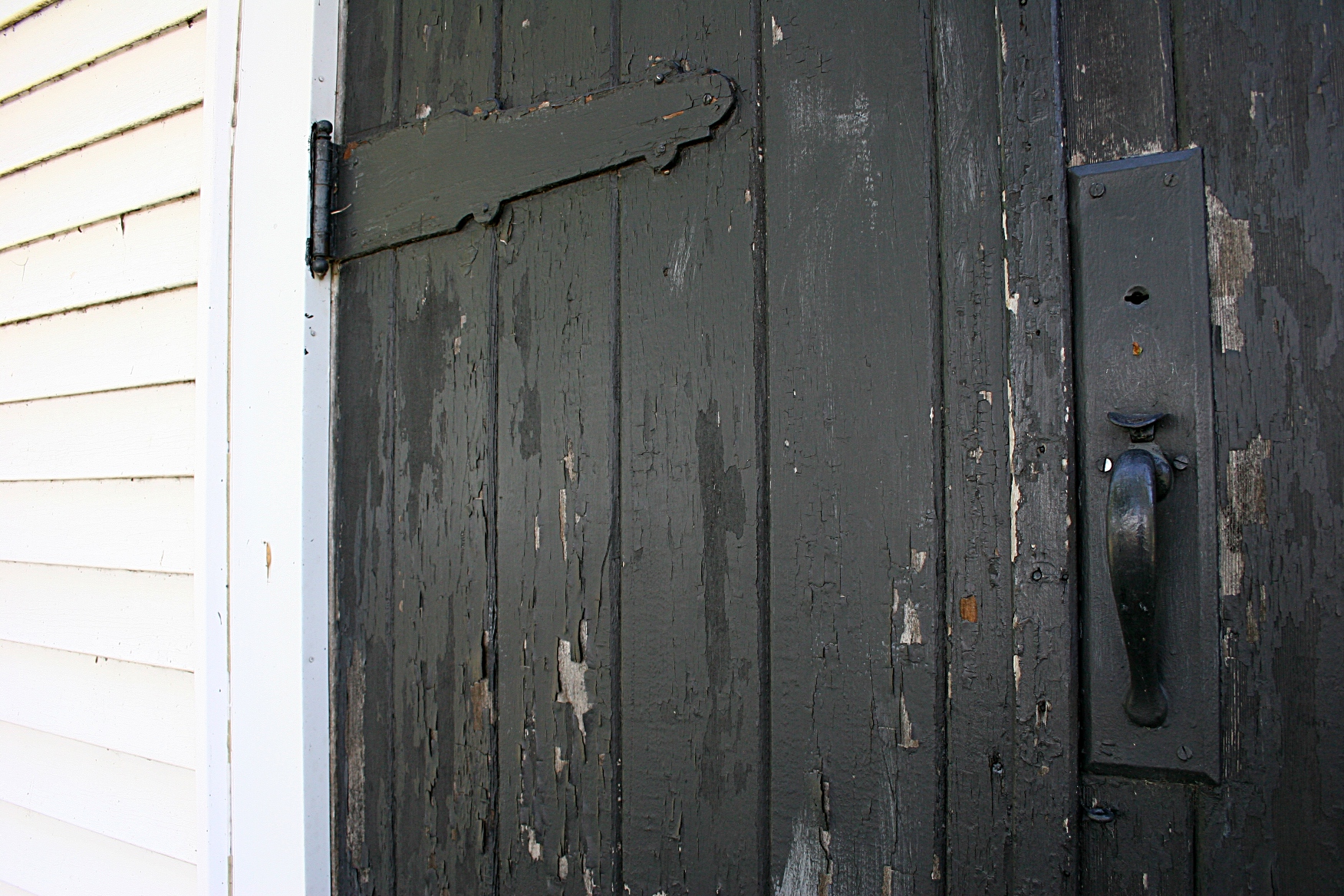
Ah, the double front doors are locked. We’ll try the side door. Good, it’s open. I wonder if there’s an alarm system. I don’t want the Waseca County Sheriff showing up. Let’s go up the stairs to the main level.

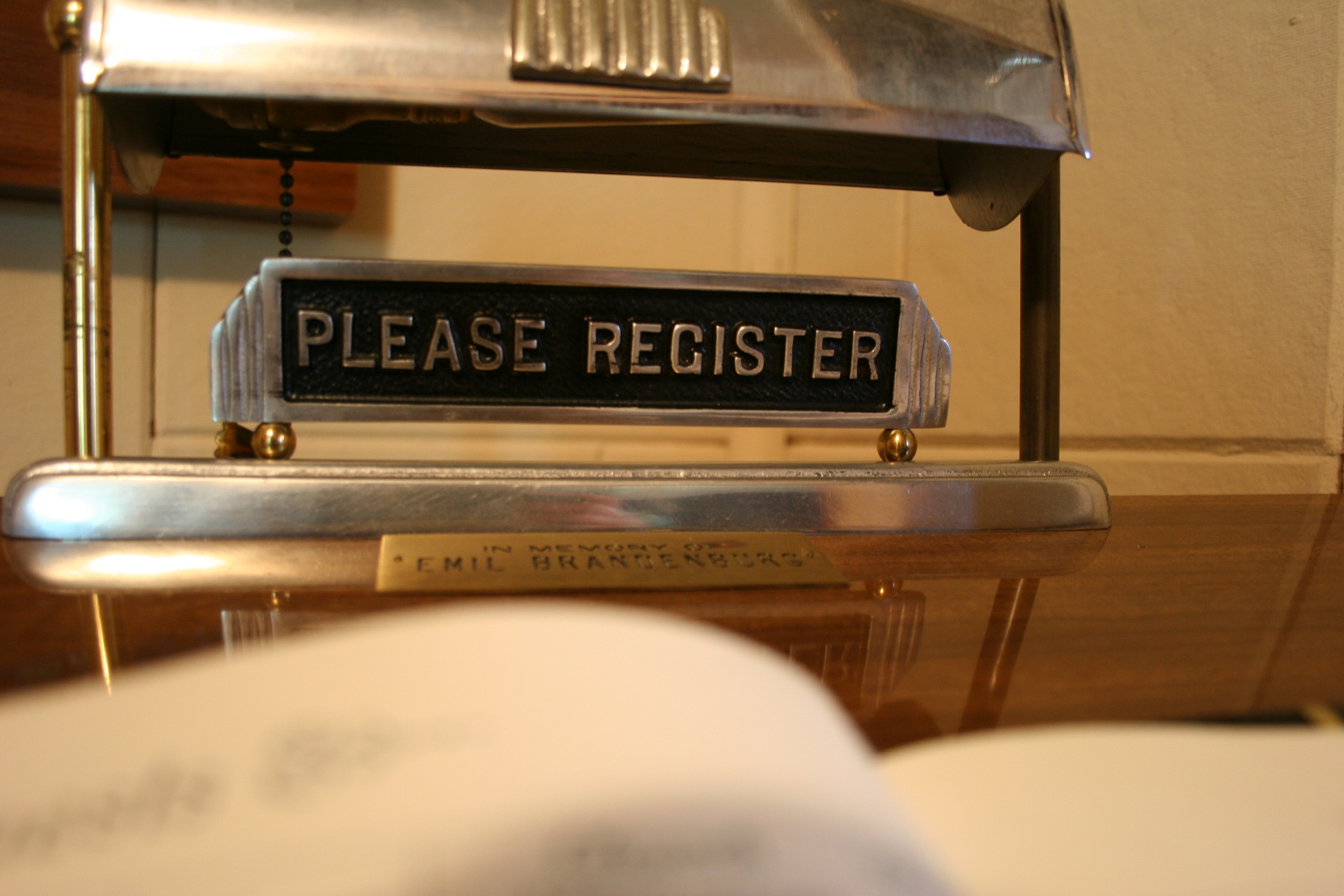
Now where are the light switches? Oh, right there next to the guest register. I like that old light by the guest book. Wonder if it works? Nope. Sorry, almost anything can distract me.

Even with the lights on, it’s kind of dark in here. Maybe we should open the shades. There, that’s better.

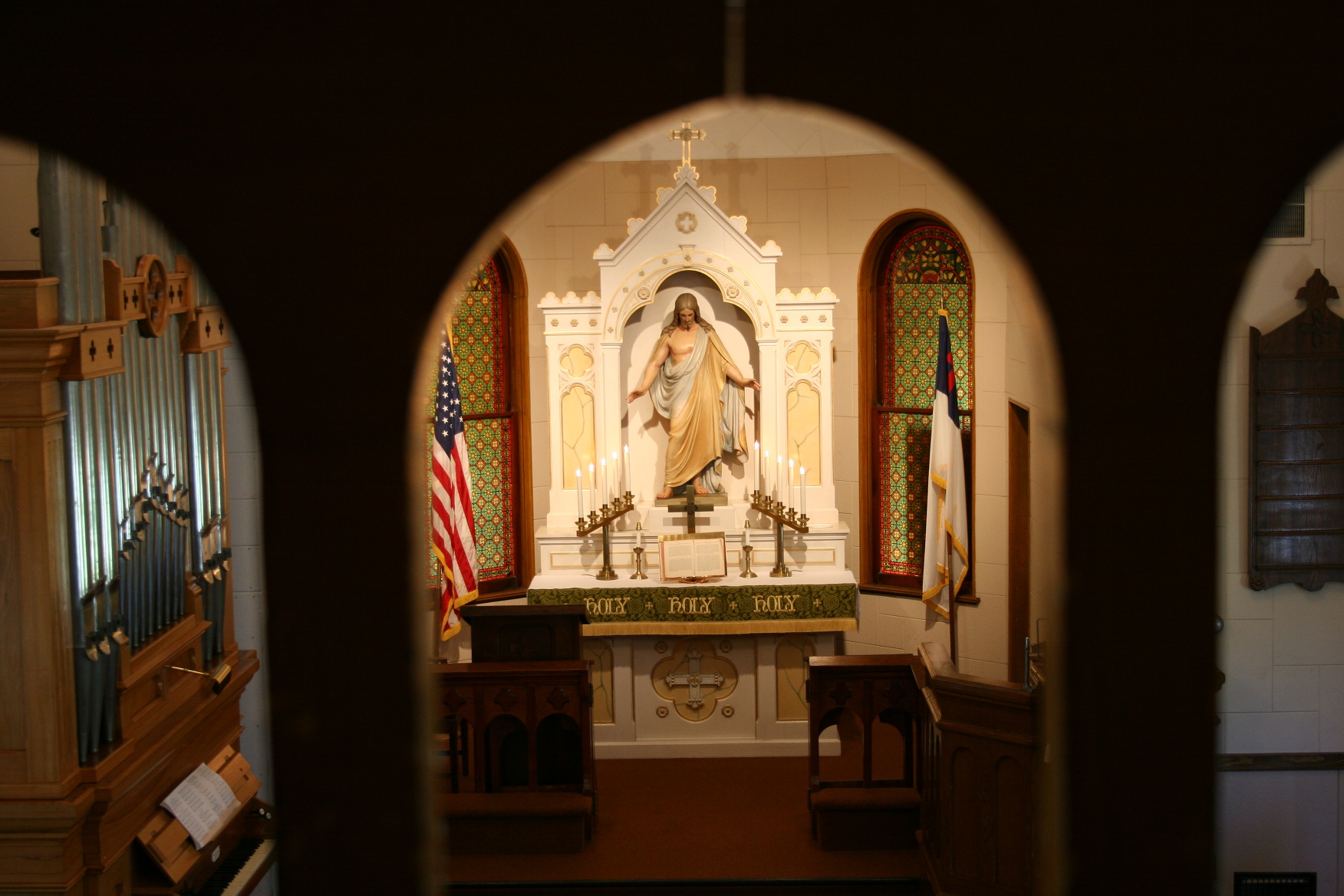
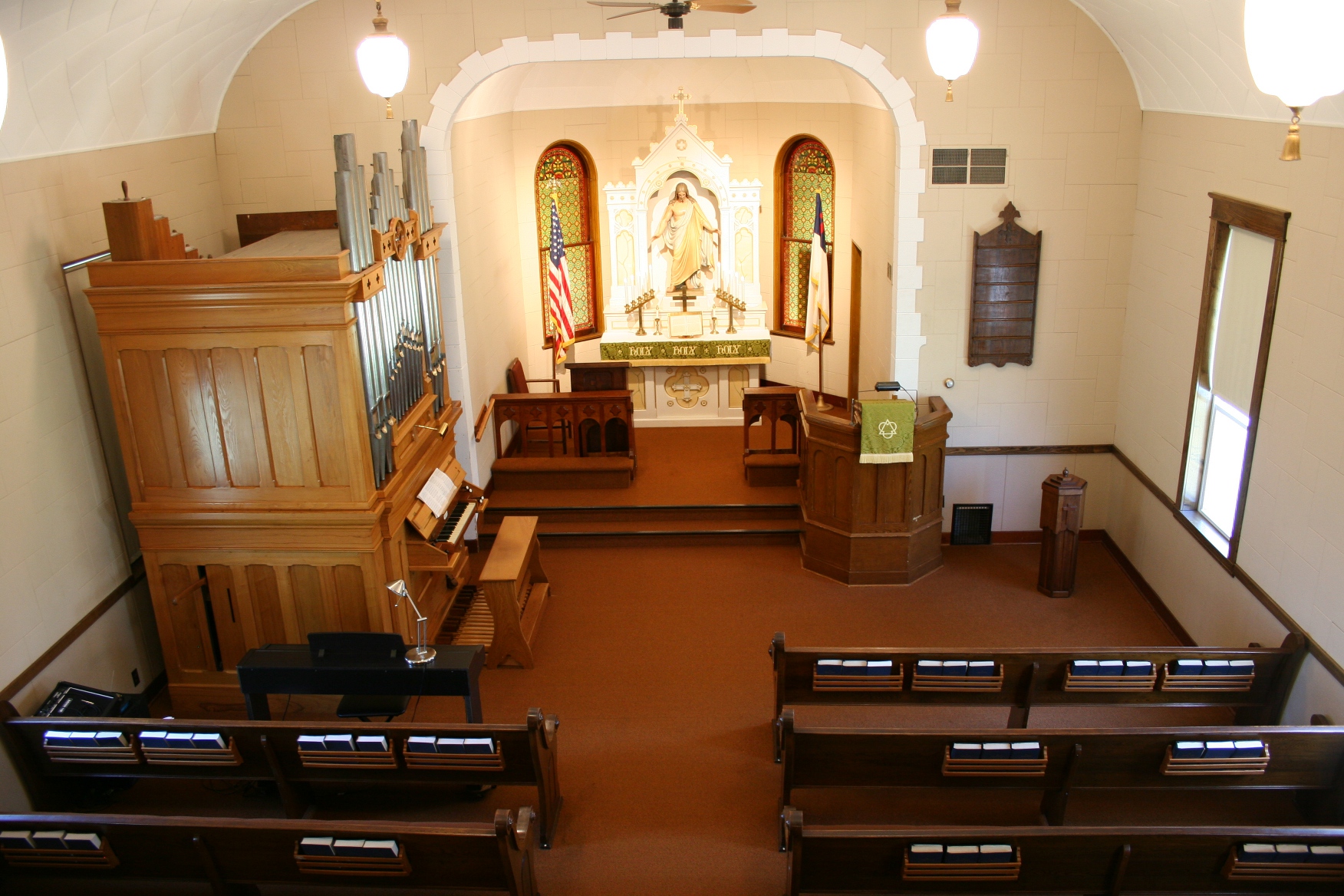
That altar and Jesus statue look familiar. They remind me of the altar and statue in St. John’s Lutheran Church, Vesta, the church where I grew up. And isn’t that organ a beauty?

I wonder if there’s a nice wood floor under that carpet. And what’s hiding under all those ceiling tiles?

Well, instead of standing here wondering, we better keep moving along if we’re going to get to the mission festival at Marquardt’s Grove by 10:30. I have much to see yet and photograph.

But wait a minute, what’s that over there on that post? An old thermometer. Huh, wonder how long that’s been here?

Alright, let’s head upstairs and see what’s in the balcony. It’s kind of tempting to pull that bell rope, isn’t it? Don’t worry, I’ve never given in to such temptation.

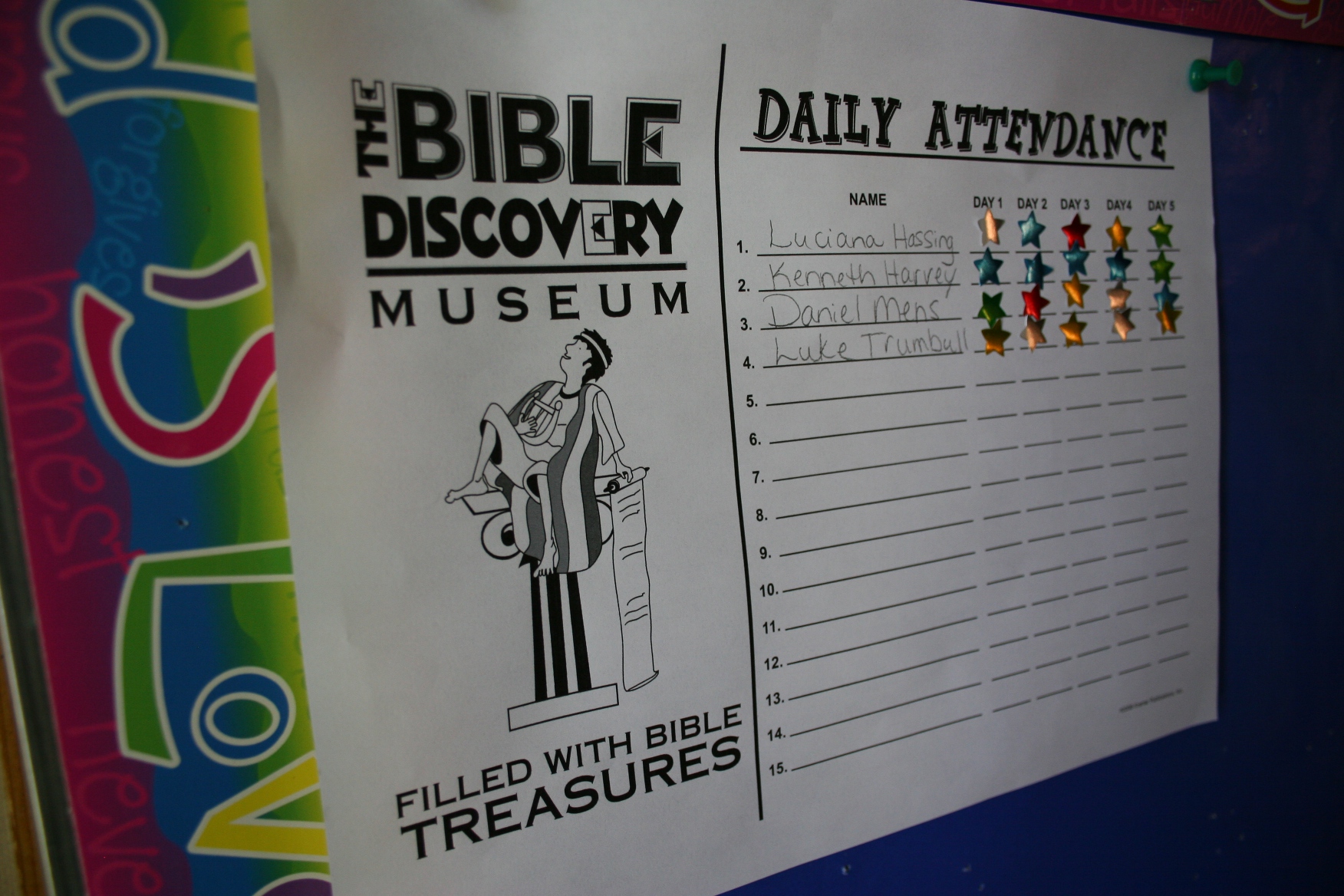
But I will move that wastebasket and stack of Vacation Bible School supplies so I can photograph that time-worn bench. Need to let a little natural light in, though, so I’ll pull up the shades. That’s better.

Oh, my goodness, look at those stars on that attendance sheet. I haven’t thought about those shiny, sticky stars in decades. I remember when my Sunday School teacher awarded stars for attendance. I thought they were the greatest thing. The memories…

Time to head down to the basement after I take a few more pictures up here. Yes, I have got a good grip on my camera. I don’t want it tumbling over the balcony railing.

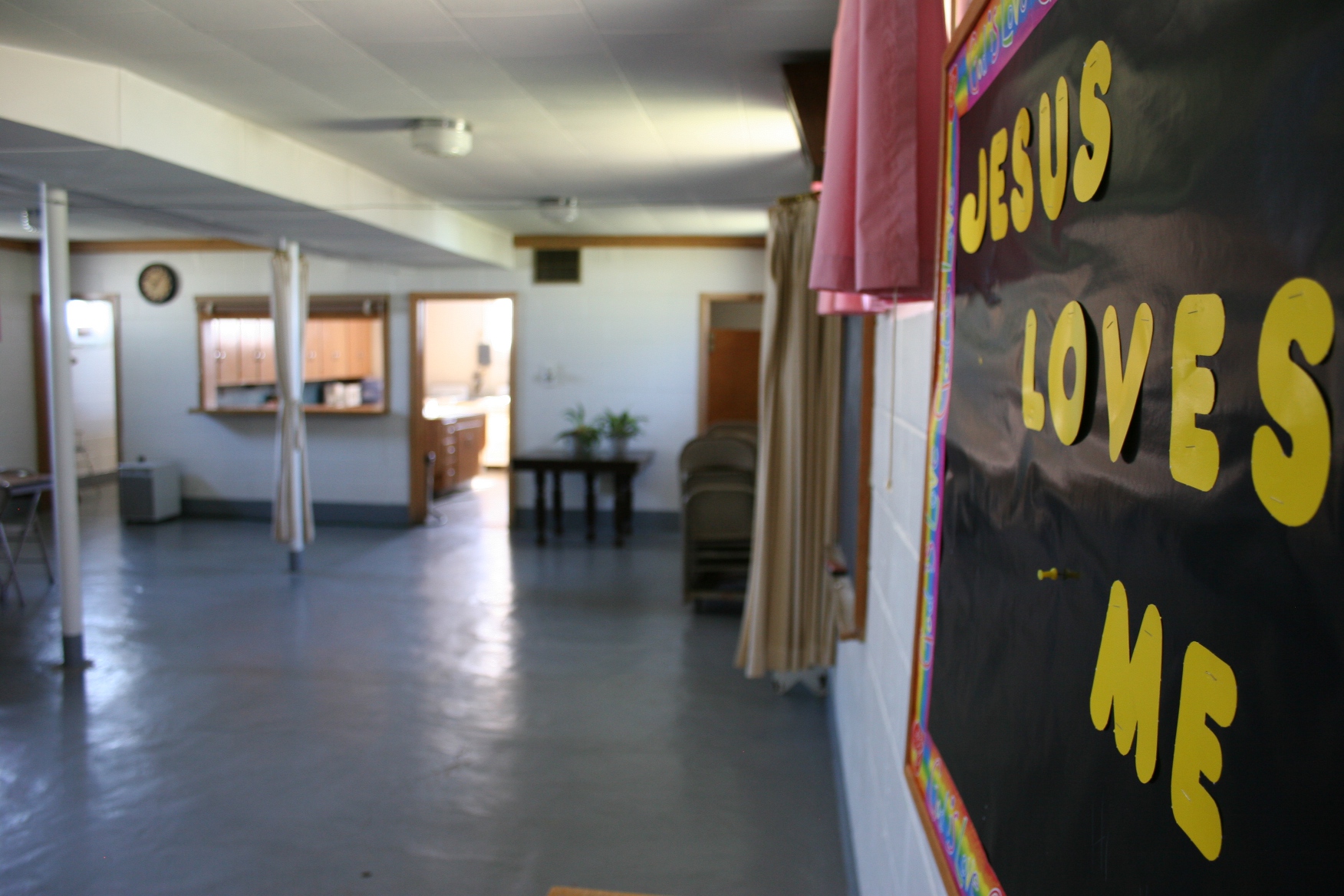
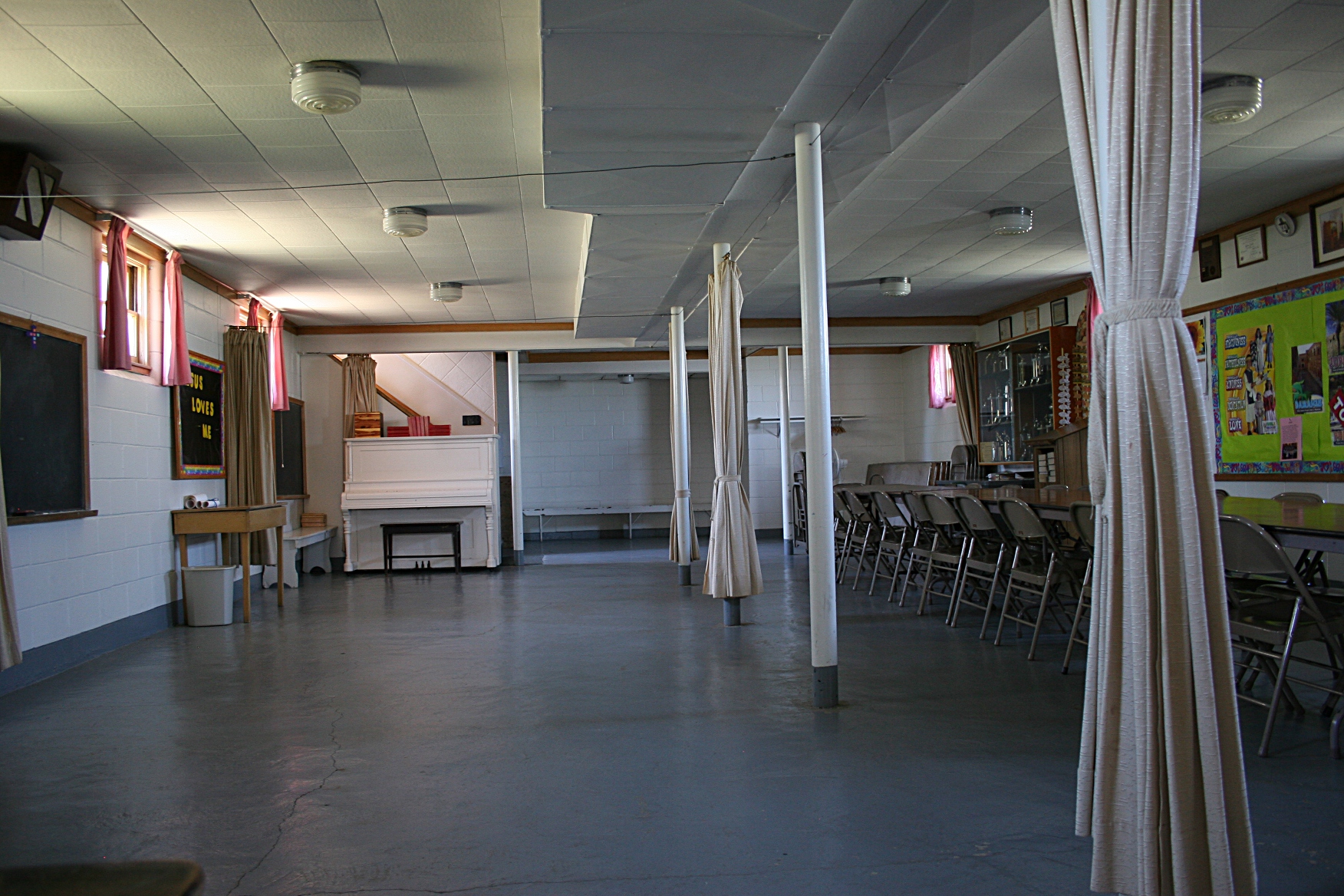
Now, down to the basement we go. I need to pause here for a minute and take it all in.

Those curtains—see those curtains there—St. John’s had those in the basement, too. The curtains divided the basement into classrooms for Sunday School. I didn’t know churches still used those. I can almost hear the grating sound of those curtains closing and opening and remember how we kids had to take turns pulling the fabric closed, then open, at the end of Sunday School. Sweet memories…

Well, I better stop reminiscing because it’s after 10 a.m. and we do need to get to that worship service down the road in the cow pasture.

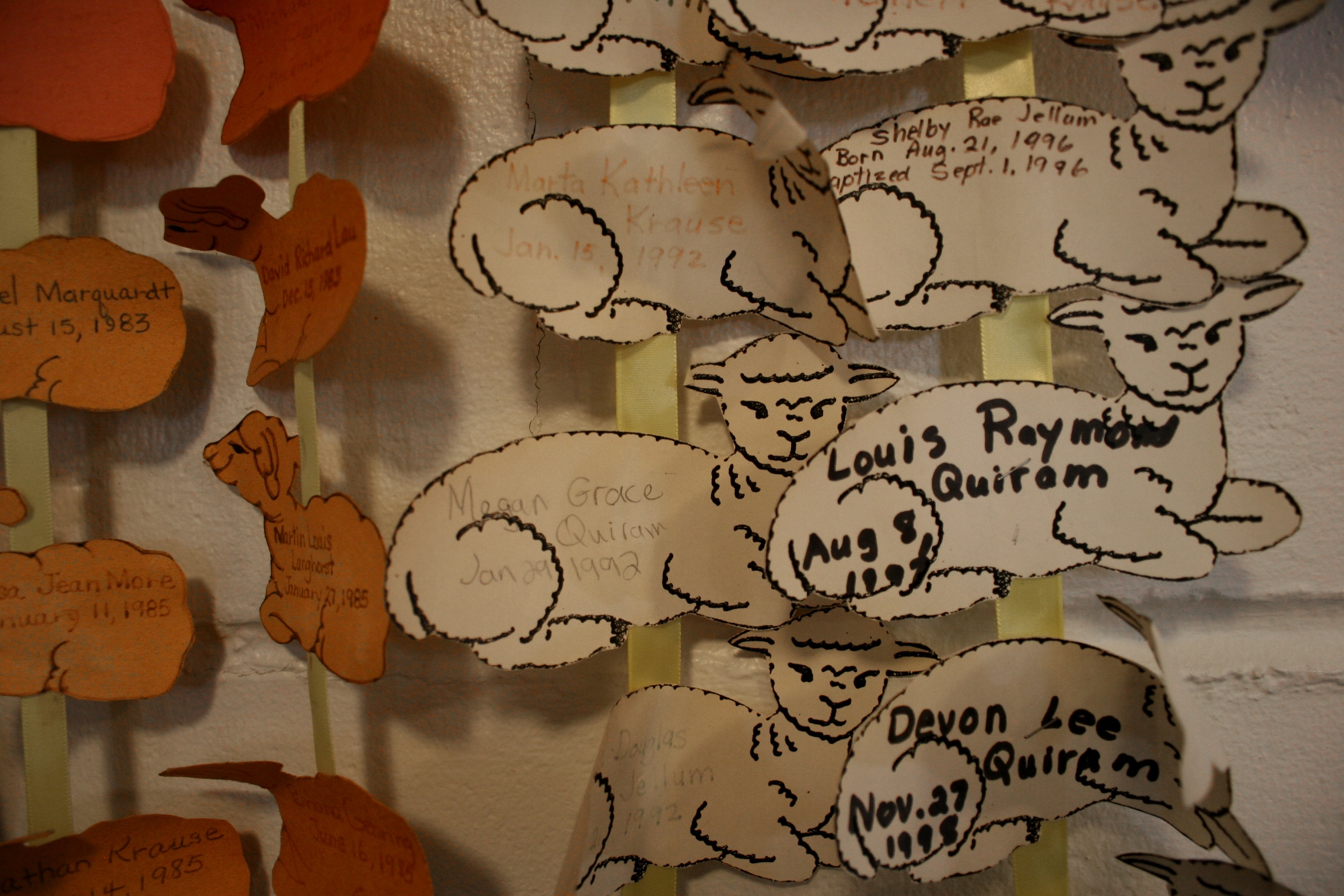
But, wait, I see one more thing I need to photograph…those lambs representing baptized children…

FYI: Immanuel Lutheran Church, commonly known as Freedom Church because of its location in Freedom Township, is located along Waseca County Road 3 about nine miles south of Janesville. Founded in 1874, this Lutheran Church Missouri Synod congregation has a total baptized and communicant membership of 114.

The organ in the church, interestingly enough, came from Trinity Lutheran Church in Faribault where I have been a member for 30 years. When Trinity upgraded to another organ in 1911, the old organ was moved on a sled pulled by oxen some 40 miles to Freedom Church.

Freedom Church is not typically unlocked, but was open on the Sunday of my visit so members could leave food in the church basement for the mission festival potluck, according to member Joan Quiram. A big thank you to Joan for inviting me to the annual mission festival of Freedom and Wilton churches. You can read and view photos of that event by clicking here and then here.

© Copyright 2012 Audrey Kletscher Helbling
 

The bride wore a white silk organza gown August 17, 2012

Filed under: Uncategorized — Audrey Kletscher Helbling @ 9:01 AM
Tags: , , , , , , ,

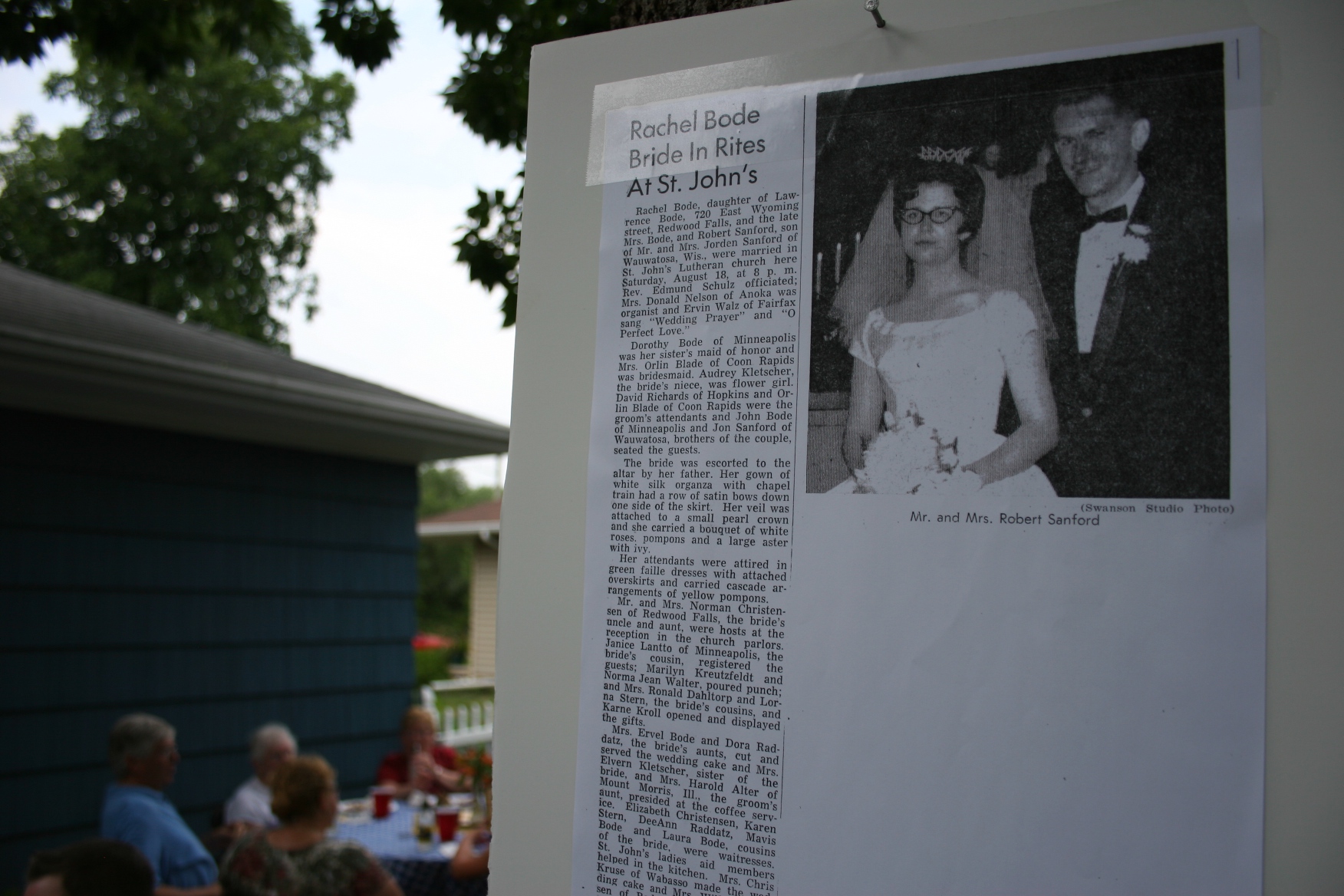
A newspaper account of my aunt and uncle’s wedding 50 years ago is tacked onto a tree at their recent anniversary party.

The bride was escorted to the altar by her father. Her gown of white silk organza with chapel train had a row of satin bows down one side of the skirt. Her veil was attached to a small pearl crown and she carried a bouquet of white roses, pompons and a large aster with ivy.

Her attendants were attired in green faille dresses with attached overskirts and carried cascade arrangements of yellow pompons.

Fifty years have passed since that description from my godmother’s wedding published in The Redwood Falls Gazette. Lovely, isn’t it? Silk and satin and cascading bouquets.

A bridal party photo from Aunt Rae and Uncle Bob’s August 18, 1962, wedding. I’m the flower girl.

I wish I remembered that day, even a moment of it. But I don’t. I was only five, almost six, when my Aunt Rachel married Robert, who would become my Uncle Bob. A black-and-white photograph from August 18, 1962, clearly shows me in my short, pouffy flower girl dress, positioned in front of the groomsmen. I stood all prim and proper, and I assume well-behaved, in my shiny white patent leather shoes and lace-trimmed anklets. My white-gloved hands clench a starched, be-ribboned crocheted lace basket of fresh flowers.

If only I remembered the bespectacled girl who a year earlier wore a patch across her wandering lazy eye and later underwent surgery to correct her vision. But I don’t. Not even the flower girl dress, which my mom saved for 50 years, evokes any memories.

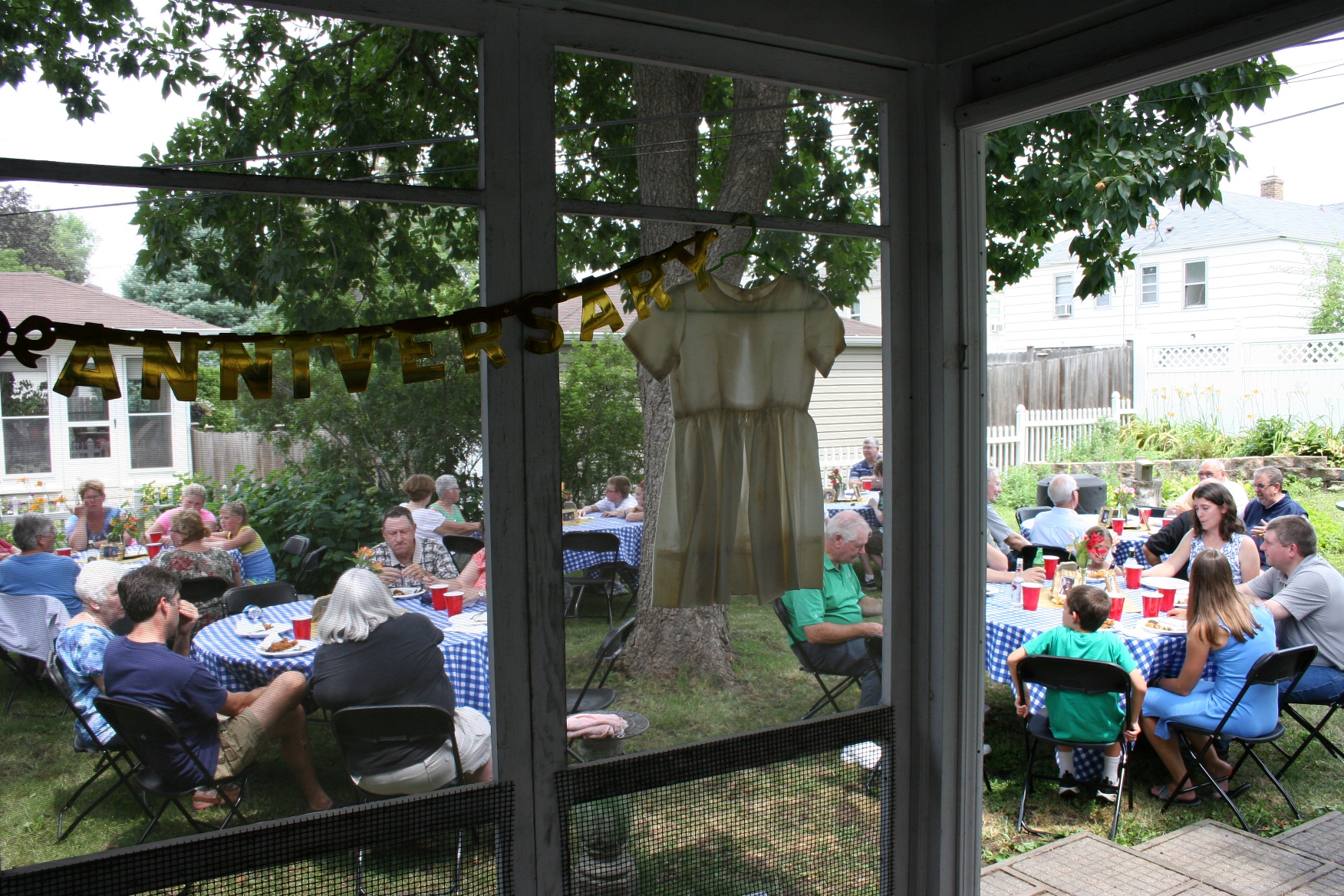
My flower girl dress, minus the petticoats, was hung in the screened porch during the anniversary party.

All of that aside, I thought my Aunt Rae would appreciate seeing the flower girl dress at a recent gathering in south Minneapolis to celebrate her and Uncle Bob’s 50th wedding anniversary. She did, barely believing I still had the dress. Surely she knows her oldest sister, my mom, saves everything, doesn’t she?

But did my aunt save her beautiful white silk organza bridal gown? Much to my dismay and that of a young woman whose middle name is Rachel, no. Rae gave her wedding dress to charity before moving from Minneapolis to her retirement home in Arkansas. I won’t explain the reasons, but suffice to say they are legitimate.

That leads me to wonder, how many of you married women out there still have your wedding dresses? My $80 off-the-rack dress hangs in the back of my bedroom closet. I possess no illusions that either of my daughters will ever want to wear it and that’s just fine by me.

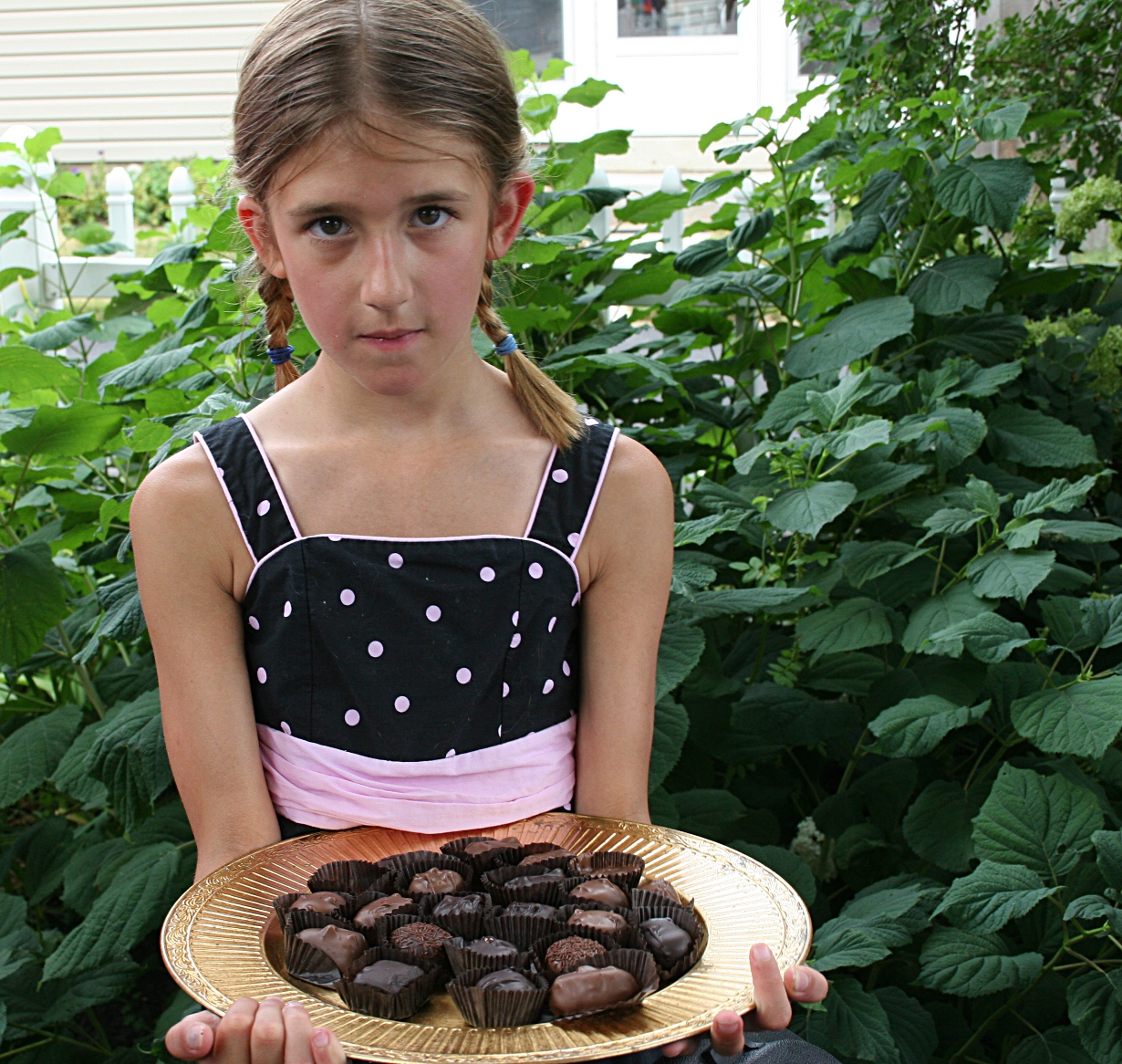
Justin (my cousin) and Amy’s daughter Alison passed around chocolates during the anniversary celebration.

But give it another 20-plus years, and perhaps a family member will read this description of my bridal gown and ask, “Do you still have your wedding dress?”

The bride’s gown was of old fashioned style with stand-up collar, lace ruffling forming a V front neckline, long sheer sleeves and flounce skirt with lace trim. Her veil was held in place by a laurel wreath headpiece of yellow sweetheart roses and baby’s breath.

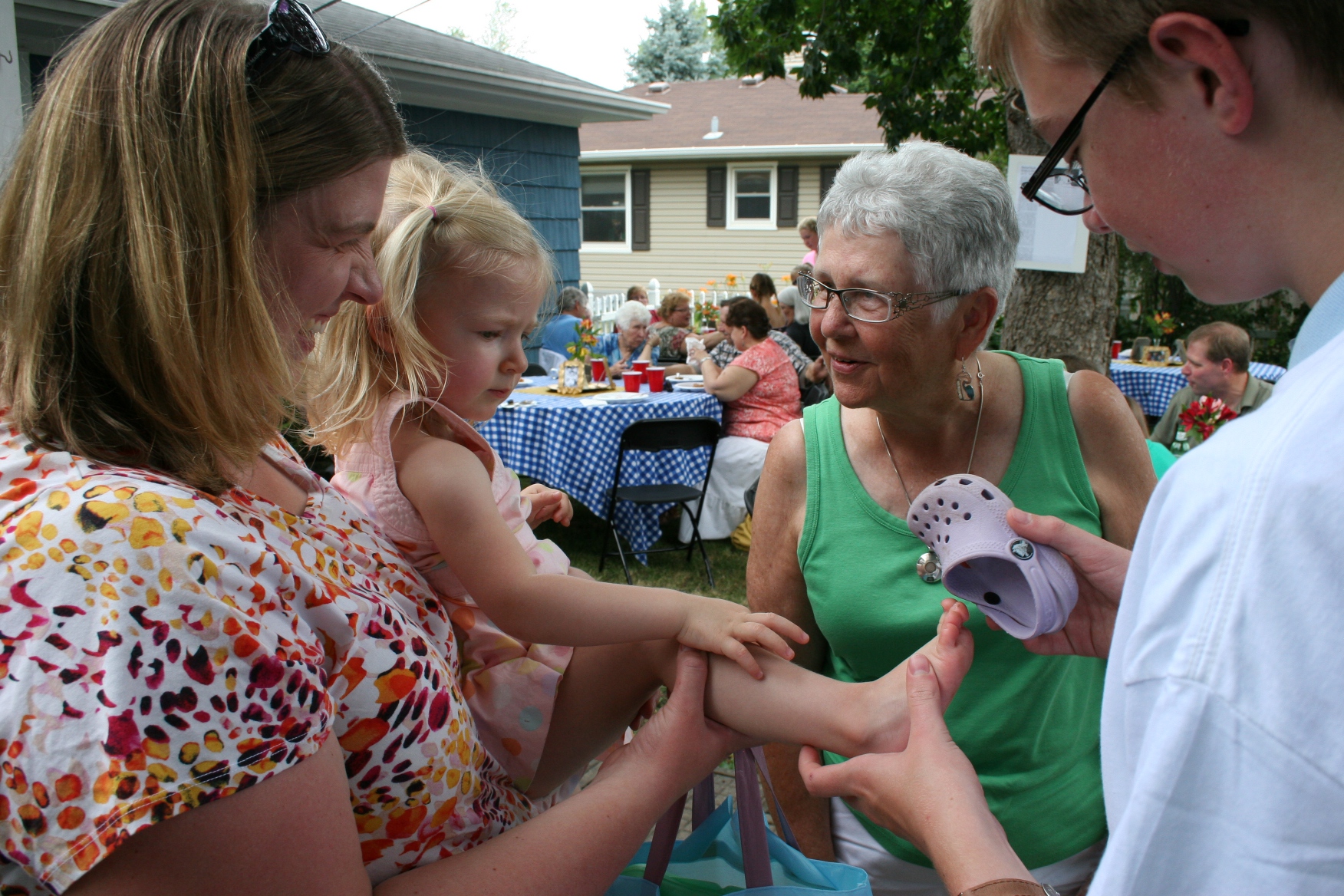
My beloved Aunt Rachel visits with guests.

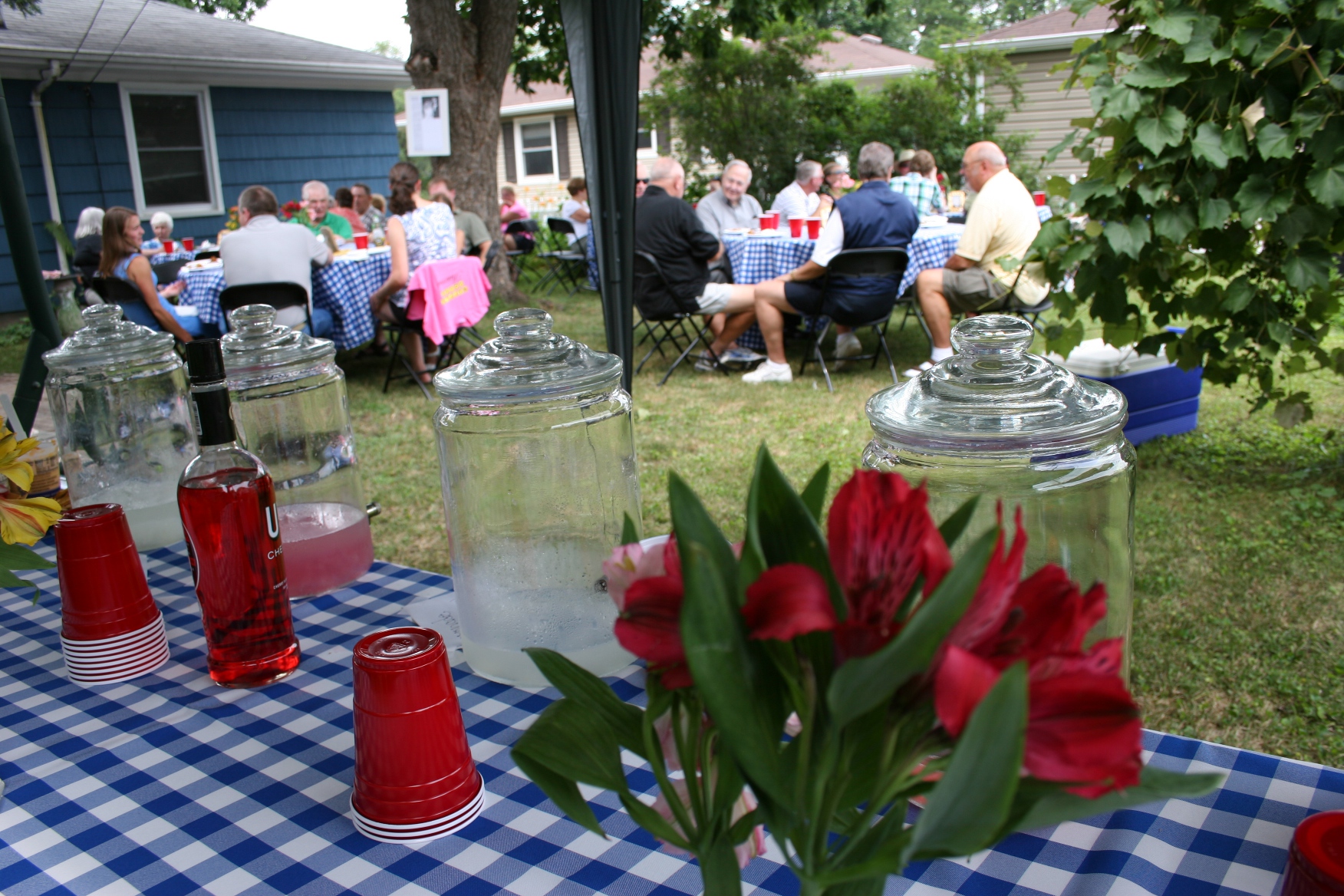
Family and friends of Rae and Bob gathered in their daughter’s south Minneapolis backyard on a recent steamy Sunday for a picnic dinner to celebrate 50 years of marriage.

That’s my Uncle Bob, in the middle in the dark shirt, visiting with friends.

© Copyright 2012 Audrey Kletscher Helbling
 

The patriotic pride of Harley riders August 16, 2012

Bikers and others gather for a post hospice ride party at Faribault Harley-Davidson.

LONG GONE, at least in my mind, is the image of Harley riders as rough outlaw types roaring along our roadways, storming into towns, raising hell.

When they travel in a pack now, it’s usually for a purpose, like last Saturday’s fifth annual ride to benefit the Faribault Area Hospice.

While my husband and I missed the ride (he doesn’t have a Harley anymore, his 1977 Sportster being totaled more than a decade ago by a teen who ran a stop sign, plowed into the bike and sent Randy to the hospital), that didn’t keep us from checking out the post ride activities and bikes at Faribault Harley-Davidson.

I’ll be the first to admit that attending a biking event isn’t exactly on the top of my to-do list. But sometimes wives go along for the ride, just like husbands accompany their wives to artsy happenings that they’d probably rather skip.

As always, I carried my camera with hopes that maybe, just maybe, I’d find something worth photographing beyond the rows of bikes I knew Randy would be eying.

The Harley dress code: black leather.

Well, it wasn’t the masses of Harleys which caught my attention, but the details on individual bikes. I hope I didn’t make any of the Harley riders, who can appear intimidating in their black leather, nervous. I threaded my way among the parked bikes, bending, crouching, occasionally setting my camera onto the freshly seal-coated asphalt as I snapped photos.

The unique skull kickstand. Any significance to this skull, readers?

And as I wandered, a picture began to develop of the men and women who ride Harleys, or at least those in attendance at The Ride for Hospice party in Faribault. Except for the skulls on one bike and the boney foot kickstand on another, I found nothing particularly unusual.

The flag on the left honors SPC Mathew Kahler, killed in Afghanistan in 2008.

Rather, I discovered a common theme of patriotism among bikers who have served their country and/or want to honor those serving. It was heart-warming and uplifting to see such support.

One of two blessing stickers I noticed on bikes.

Equally pleasing were stickers I spotted on two bikes indicating they had been blessed. I expect blessings were flowing all around on Saturday as these bikers opened their wallets and their hearts to help hospice, an organization which, at some point, touches nearly all of our lives.

Another patriotically adorned bike and a Vietnam veteran’s jacket along with Ernie from Sesame Street.

Proud to be an American and driving an American made Harley-Davidson.

Patriotic patches seem a popular adornment on Harley attire.

These boots, sitting next to a bike, reminded me of the phrase “boots on the ground” when soldiers hit the ground running.

The yellow flag represents the Minnesota Patriot Guard.

Patriotism displayed, right down to the license plate on this bike.

© Copyright 2012 Audrey Kletscher Helbling
 

Little Free Libraries for Small Towns project in Minnesota and Wisconsin officially kicks off at MOA August 15, 2012

TEN MONTHS AGO, Todd Bol, co-founder of the Wisconsin-based Little Free Library, and I were discussing an idea to get Little Free Libraries into small towns without libraries. I wanted a library in my hometown of Vesta, a community of around 340 residents which has never had a library.

I had blogged about a LFL in Faribault, where I have lived for 30 years, and challenged the residents of Vesta to start a LFL.

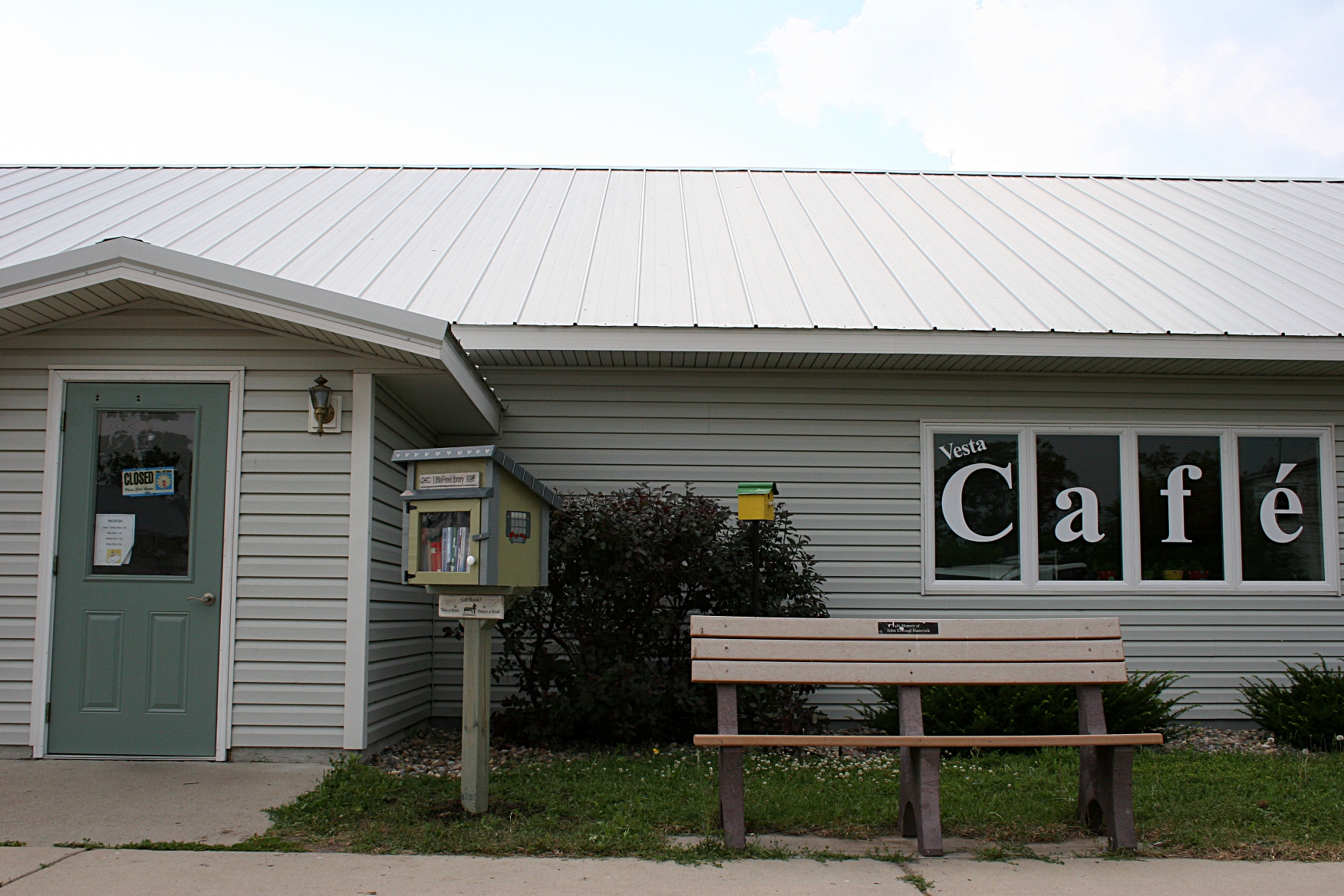
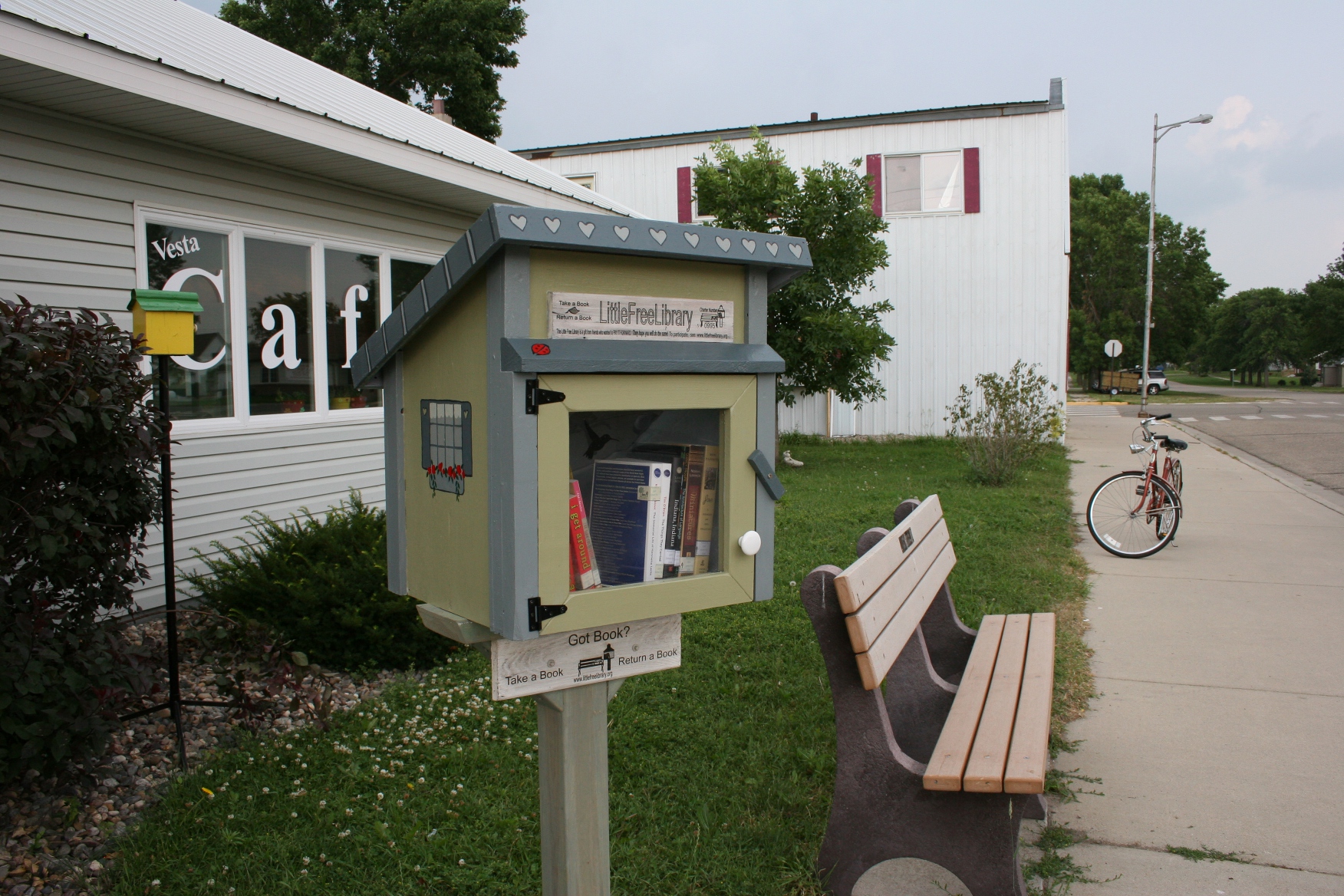
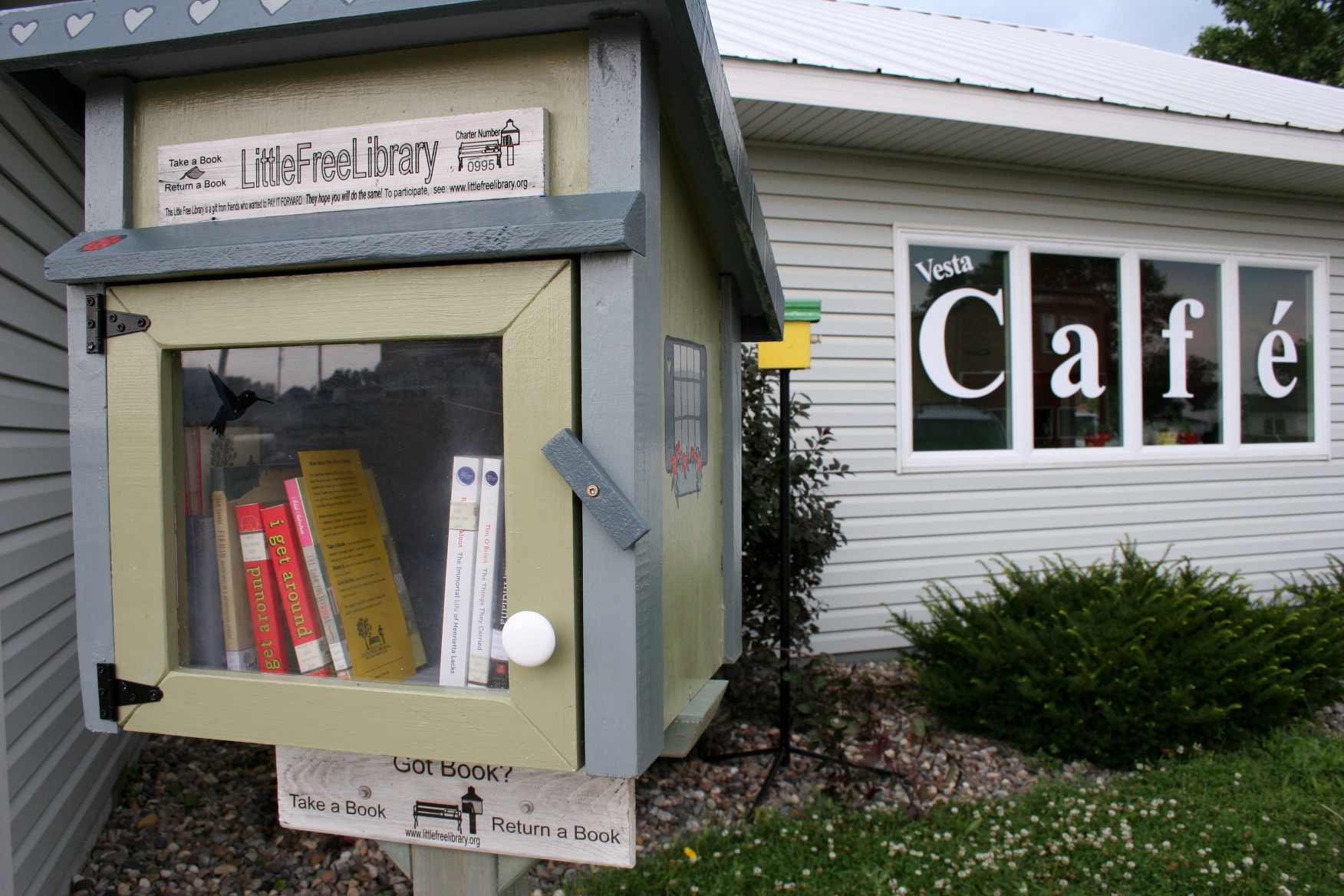
The LFL Todd and Susan Bol installed outside the community-owned Vesta Cafe.

After making that challenge, Bol and I talked and, several months later, he offered to donate, deliver and install a LFL in Vesta, placing the first library in a new initiative, Little Free Libraries for Small Towns. Bol and his wife, Susan, drove from Hudson, Wisconsin, on July 1 and installed a LFL in front of the Vesta Cafe.

This Friday, August 17, that small towns project officially kicks off with a celebration from noon to 3 p.m. in the Mall of America rotunda near the east entrance. A program featuring activities and also appearances by local celebrities sharing their favorite books is slated for 1 – 2 p.m. Businesses and publishers are donating new books and the public is encouraged to bring books for 20 uniquely designed mini libraries to be placed in Twin Cities’ neighborhoods and communities surrounding the mega mall.

MOA is donating those 20 libraries and two special libraries (numbers 2,509 and 2,510) which will tie and break the records of libraries funded by philanthropist Andrew Carnegie.

How sweet is that? But even sweeter, in my opinion, is the MOA’s general support of the Little Free Libraries for Small Towns project as a way “to promote literacy and community-building by supporting neighborhood book exchanges.”

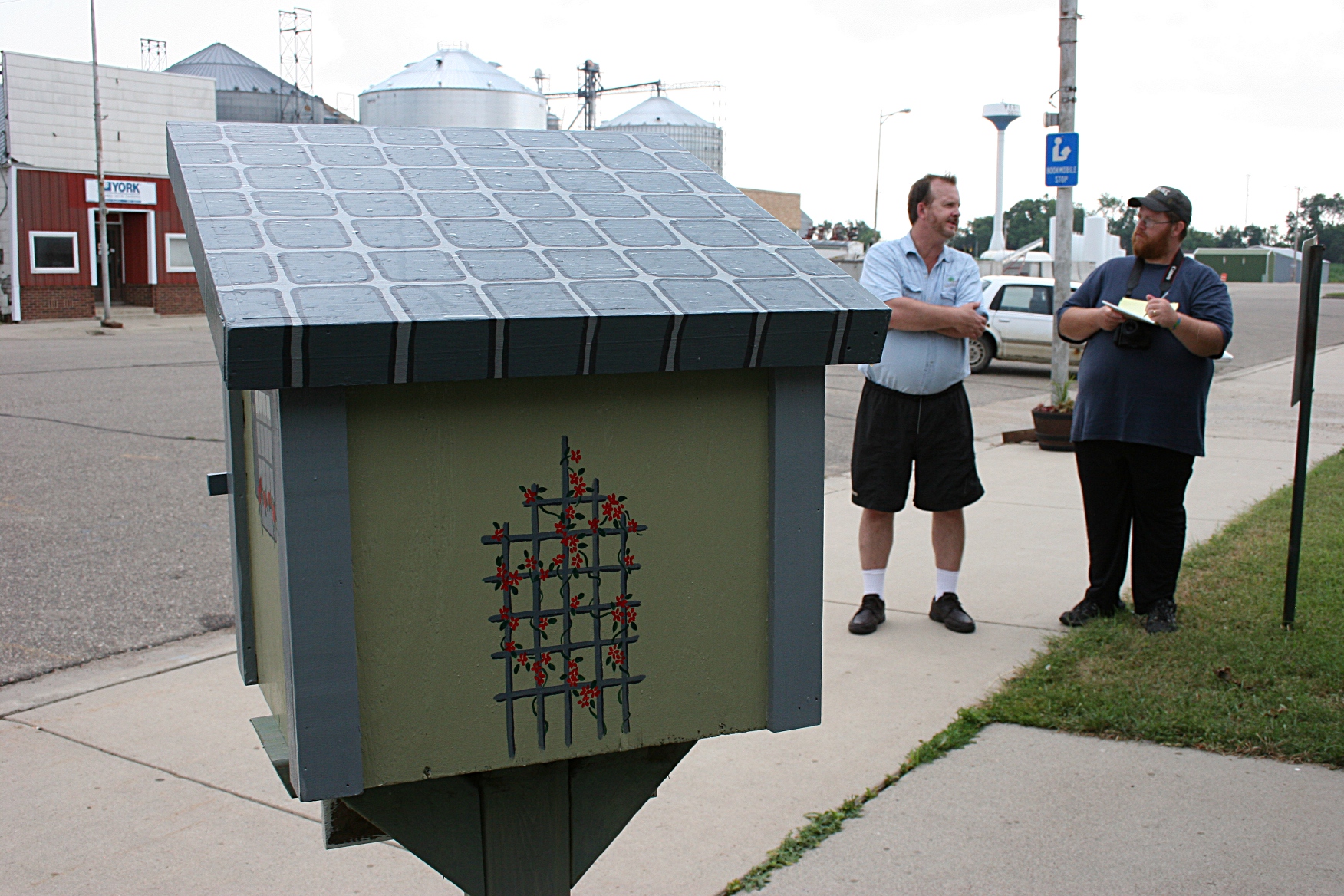
The beautiful handcrafted LFL donated to my hometown of Vesta.

The LFL works on the premise of take a book/leave a book in a little library, which is typically an over-sized birdhouse size structure attached to a post and installed outdoors, making books accessible to the public 24/7.

In kicking off its Little Free Libraries for Small Towns project, the LFL non-profit aims to focus first on the small towns of Minnesota and Wisconsin without ready access to public libraries, like my hometown of Vesta on the southwestern Minnesota prairie. The closest libraries to Vesta are about 20 miles away. Earlier this year bookmobile service to my hometown and several other communities was cut by Redwood County commissioners to save money.

I expect that many other small towns in Minnesota and Wisconsin are in similar positions, without library services because a) they’ve never had libraries or b) funding has been cut or trimmed.

Living in or near a town without a library, as I did growing up, is a hardship for someone like me who loves to read. That’s why I was adamant in my discussion last fall with LFL co-founder Bol that he focus on small towns without libraries. He liked the idea—Bol is very much an energetic ideas man—and he eventually shaped our discussion, with the help of his equally enthusiastic staff, into the Little Free Libraries for Small Towns project.

Bol thinks big. The LFL group is initially seeking 20 sponsors to each facilitate 20 Little Free Libraries for small towns across Minnesota and Wisconsin, resulting in 400 new free libraries. A $600 contribution supports construction, delivery and installation of one LFL to a small town and a starter collection of books as well as official LFL registration and promotion, and a plaque on the sponsored library.

Beyond all of that, the real satisfaction, I think, comes in the reaction of those communities which benefit from such generosity. My hometown has embraced the LFL with a level of enthusiasm beyond anything I ever expected.

The team that worked to bring a Little Free Library to Vesta includes Dorothy Marquardt, left, and Karen Lemcke, representing the sponsoring Vesta Commercial Club, LFL co-founder Todd Bol and me (holding a copy of a poetry anthology I donated and in which I have two poems, “A school without a library” and “Saturday night baths”).

Karen Lemcke, who early on supported the LFL as a member of the Vesta Commercial Club and is now the Vesta library steward, shared several weeks ago that Vesta’s LFL is a “very successful project.”

She then went on to explain that area residents are taking books from the outdoor LFL and that two bookshelves inside the Vesta Cafe have also been filled with donated books. Says Lemcke:

We have a variety of books from non-fiction, fiction and children’s books. On Sunday, children had taken some of the books and sat on a couch nearby looking through them. I heard today that tractor books were on a shelf and local farmers were borrowing them overnight to look through. The women have been going through the books as well and they will be picking up some to read, too…It’s like it (LFL) brought a “little life” to Vesta.

If you are thinking that Karen’s report brought tears to my eyes, you would be right. To hear that farmers are pulling tractor books from shelves to take home, especially, pleases me. And kids paging through books…

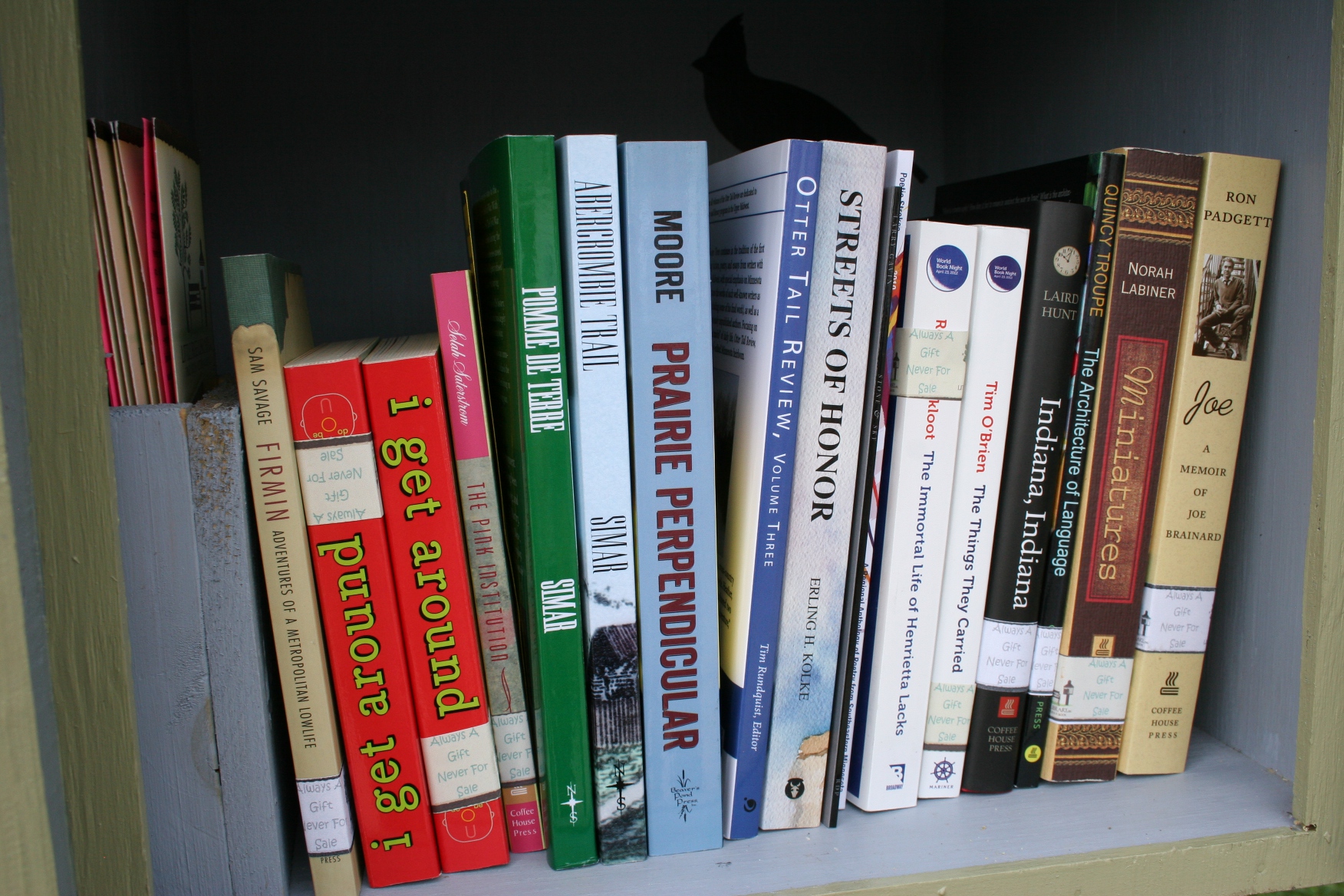
The books Todd Bol and I placed inside Vesta’s LFL on July 1. He brought books donated by several Twin Cities publishers and I brought books from my personal collection. I have since collected and donated an additional 40 books.  A retired librarian from nearby Wabasso donated eight bags of books, primarily mysteries, and the cafe manager’s family also donated books and I expect others have given books, too.

With this new LFL for Small Towns project, just consider for a moment how many more scenarios like this can happen in small towns without libraries. What a gift to bring books to the residents of small towns and enhance or instill a love of reading.

The LFL organization is now accepting applications from communities which would like to be considered for the Little Free Libraries for Small Towns project. Applicants from Minnesota and Wisconsin need only complete a short questionnaire requesting information such as the town’s population, whether it has a public library and how a LFL would make a difference in their community.

LFLs will be awarded based on available sponsorships and contributions and the need and interest level of the applicant communities, among other criteria.

So…if your small Minnesota or Wisconsin town needs a library, believe. It can happen. My conversation with the co-founder of the Little Free Library resulted in the donation of a library and a starter collection of books to my hometown…and the launch of the Little Free Libraries for Small Towns project.

The Little Free Library at the Vesta Cafe on the one-block Main Street in my hometown is the seed plant of the Little Free Libraries for Small Towns project.

FYI: For more information about the LFL program, click here to reach the website. To learn more about  the Little Free Libraries for Small Towns initiative and to download an application, click here.  Applications will also be available at the MOA-LFL event on Friday, to which I’ve been invited but will be unable to attend.

If you or your business or organization is interested in sponsoring a library or libraries for the small towns initiative in Minnesota or Wisconsin, email Megan Hanson at mphanson@littlefreelibrary.org.

© Copyright 2012 Audrey Kletscher Helbling
 

Oh, the interesting topics you’ll find in small town newspapers…of bullets, burgers & babies… August 14, 2012

Filed under: Uncategorized — Audrey Kletscher Helbling @ 6:51 AM
Tags: , , , , , ,

SMALL TOWN NEWSPAPERS make for some interesting reading. Stories can get downright personal and to the point.

For example, I found a gem last week online at The Redwood Falls Gazette, a twice-a-week newspaper published in Redwood County in southwestern Minnesota. It’s the newspaper I grew up reading.

The Redwood Falls Gazette editor Troy Krause, right, interviews Todd Bol, co-founder of the Little Free Library in Vesta in early July. Bol gave a LFL to my hometown and installed it at the Vesta Cafe.

In the “Backward Glance” section of the newspaper, under 1987—25 years ago, this tidbit of information was published:

In the listings of the Redwood County 4-H county fair champions, Troy Krause of the Loyal Scotties was overall grand champion in flower gardens, while Kelly Zwaschka of the Vesta Vikings won champion child development.

(Note: Troy is editor of the Redwood Gazette, while wife Kelly gave birth to their seventh child, Gideon, this week. Congrats from the Gazette staff!)

How’s that for a birth announcement? Obviously Kelly’s interest in child development, even as a 4-Her, was a clear indicator of her future. As for Todd, I believe flower gardening could be connected to creativity/writing.

You’ll also find a brief about a game warden, shot through the head in 1937 by another game warden who mistook him for a bear. That’s listed in the 50 years ago section of “Backward Glances.” So, yes, apparently Merle Shields survived the incident as he was celebrating his 20th year as a Redwood County game warden in 1962. (BTW, since writing this post, I discovered that The Gazette has upgraded its website and the “Backward Glance” I reference here cannot be found, or I couldn’t find it.)

The third piece of interest was published in last week’s The Gaylord Hub, where I worked for two years as a news reporter and photographer right out of college. Avery Grochow, past president of The Gaylord Chamber of Commerce, penned a letter to the editor which I am certain is the current coffee shop talk of Gaylord.

I’ll summarize parts of his lengthy, six-paragraph letter and quote directly when needed. Grochow begins:

We, as the chamber board, are constantly trying to do our best for our community and are constantly being criticized by some for our decisions.

Apparently locals were grumbling about the food—who supplied it and how it tasted—at the community’s annual Eggstravaganza summer festival. New volunteers, replaced Dewey (whoever that is; my words here, not Avery’s), who “wanted a year off from all the arguments.” They stepped up and worked through a new bidding process for the supplies, awarding the bid to the lowest bidder.

Grochow continues:

We have had comments both ways about the supplying of hamburger. Some have criticized us in the past because the hamburger was too spicy, that they would rather have plain burgers, and we are now being criticized that we are having plain burgers and not spiced burgers.

No matter what we do as volunteers and directors for the Chamber, we can’t please everyone…We did what we thought was fair to everyone by taking bids on everything and stand by our decision.

Now, just imagine how difficult it must have been for Grochow to write this letter. Not an easy thing to do when you live in a small town like Gaylord where everyone’s lives are intertwined.

I give Grochow credit for having the guts to publicly voice his opinion in print. He doesn’t just vent, though. He offers a solution. And therein lies the point best taken by those who read his letter.

…if anyone has better ideas for us, we still are short of directors and could use all the help we can get to make our Chamber even more successful. We also have openings on the board so you can be part of the decision making, instead of just always making bad comments because you don’t like what we did. Remember, we, as the Chamber Board of Directors, are just volunteers trying to make Gaylord a better place to live and hopefully to have a great celebration.

Those closing remarks are words we could all heed because I expect you, like me, are guilty of occasional grumbling and complaining.


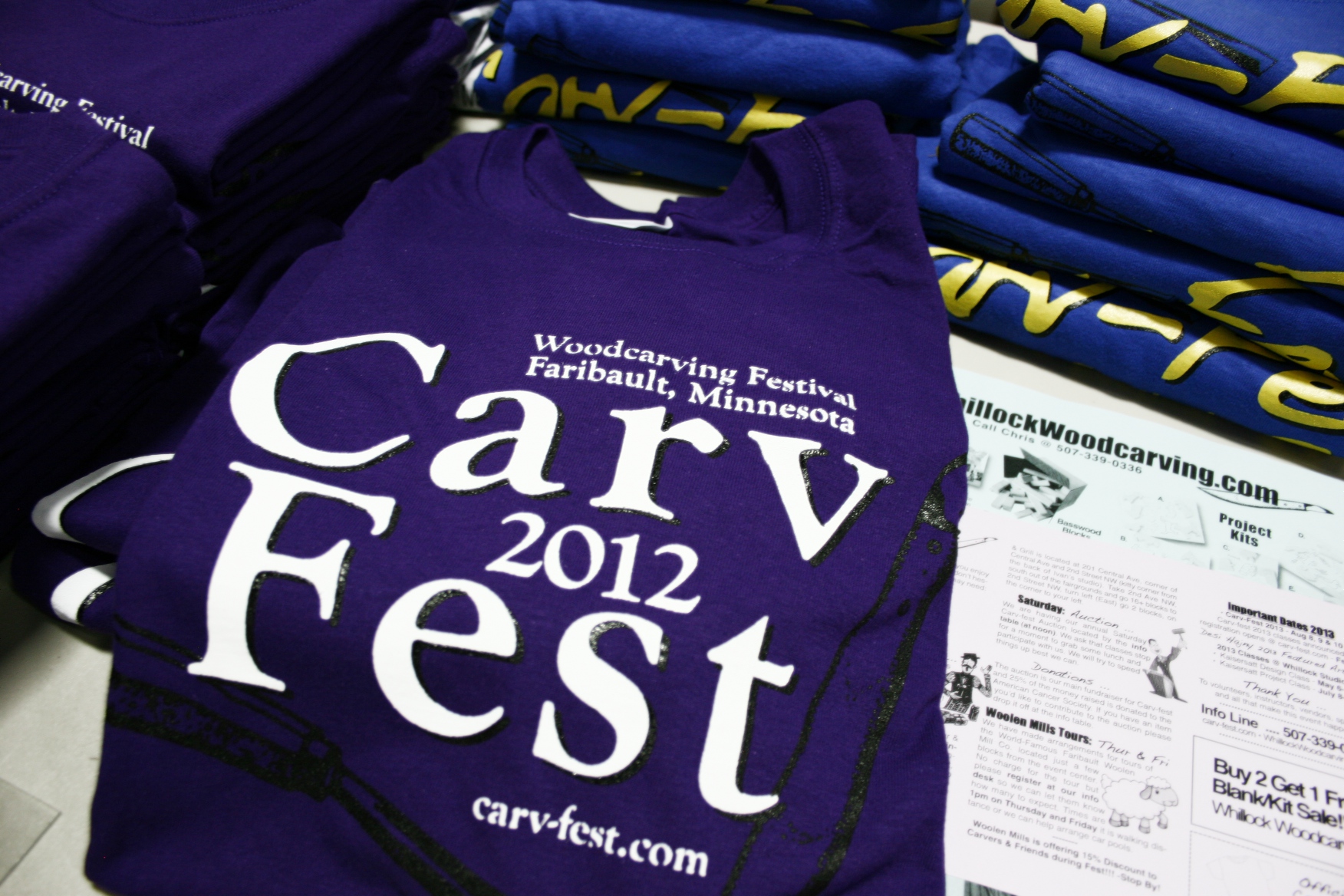
Carv-Fest brings together novices to pros in Faribault August 13, 2012

I WONDER WHAT THE ODDS ARE, that a community of some 22,000 would be home to two internationally-known, award-winning woodcarvers.

That would be Faribault. And they would be Marvin Kaisersatt and Ivan Whillock.

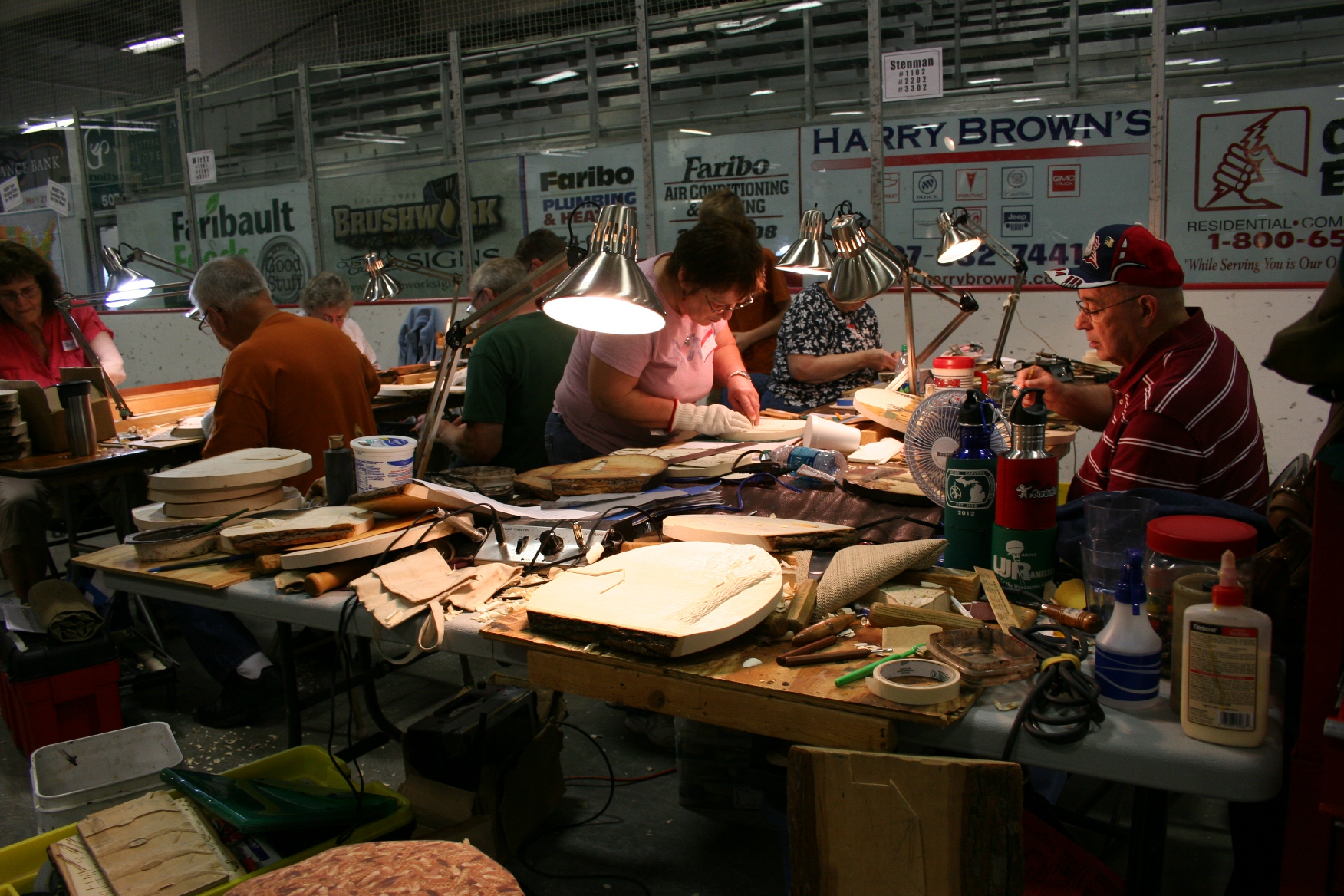
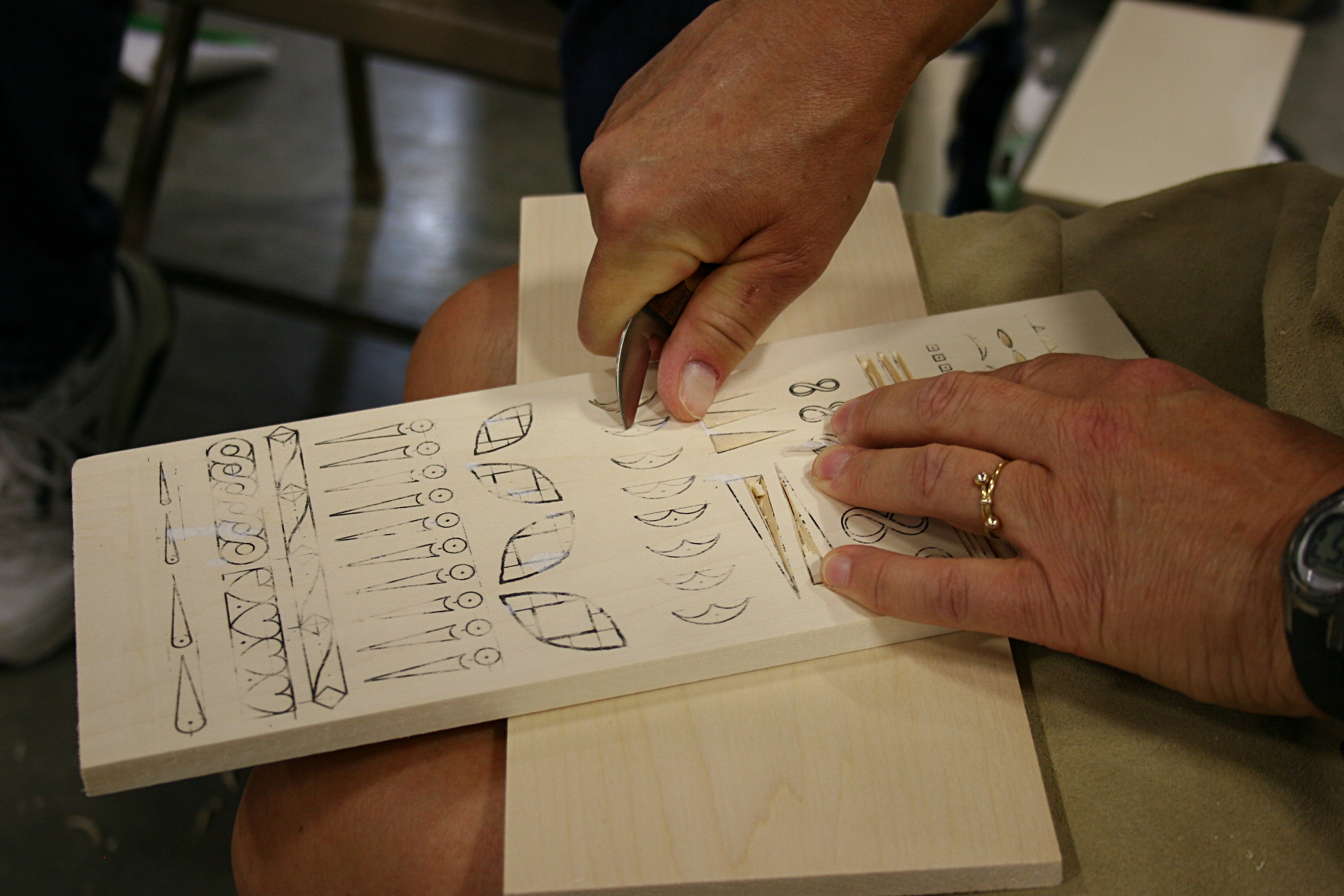
Woodcarvers, from novice to pros, participated in Carv-Fest 2012. Here are students and instructors in a Saturday morning session.

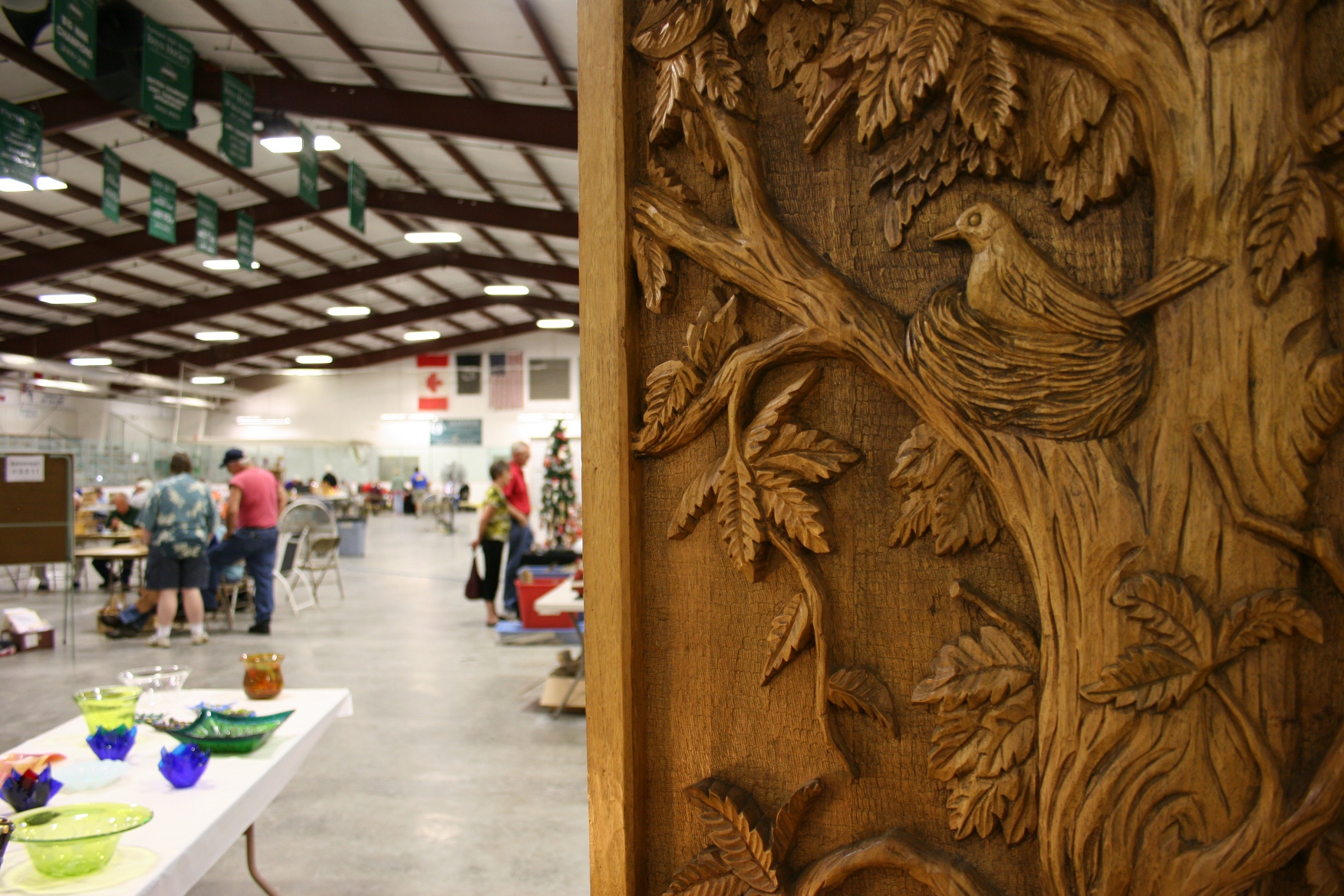
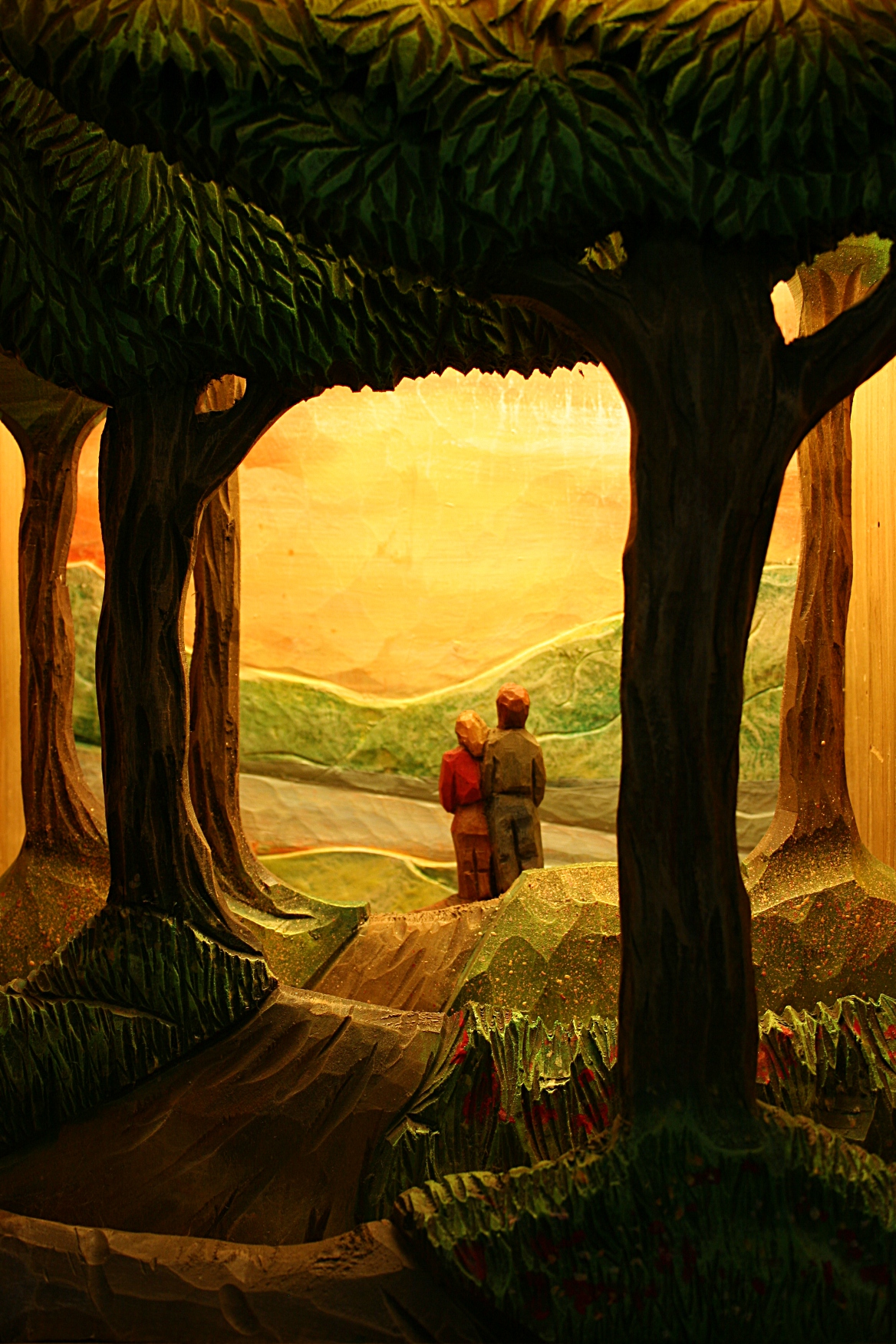
The carvings of these two gifted Minnesota artists, and gifted doesn’t even seem to begin to fit their talent, were among art displayed at the August 9 – 11 Carv-Fest 2012 which drew woodcarvers, from beginners to seasoned carvers, to Faribault.

The intricate chip carving of Marty Leenhouts of Garden City, Minnesota.

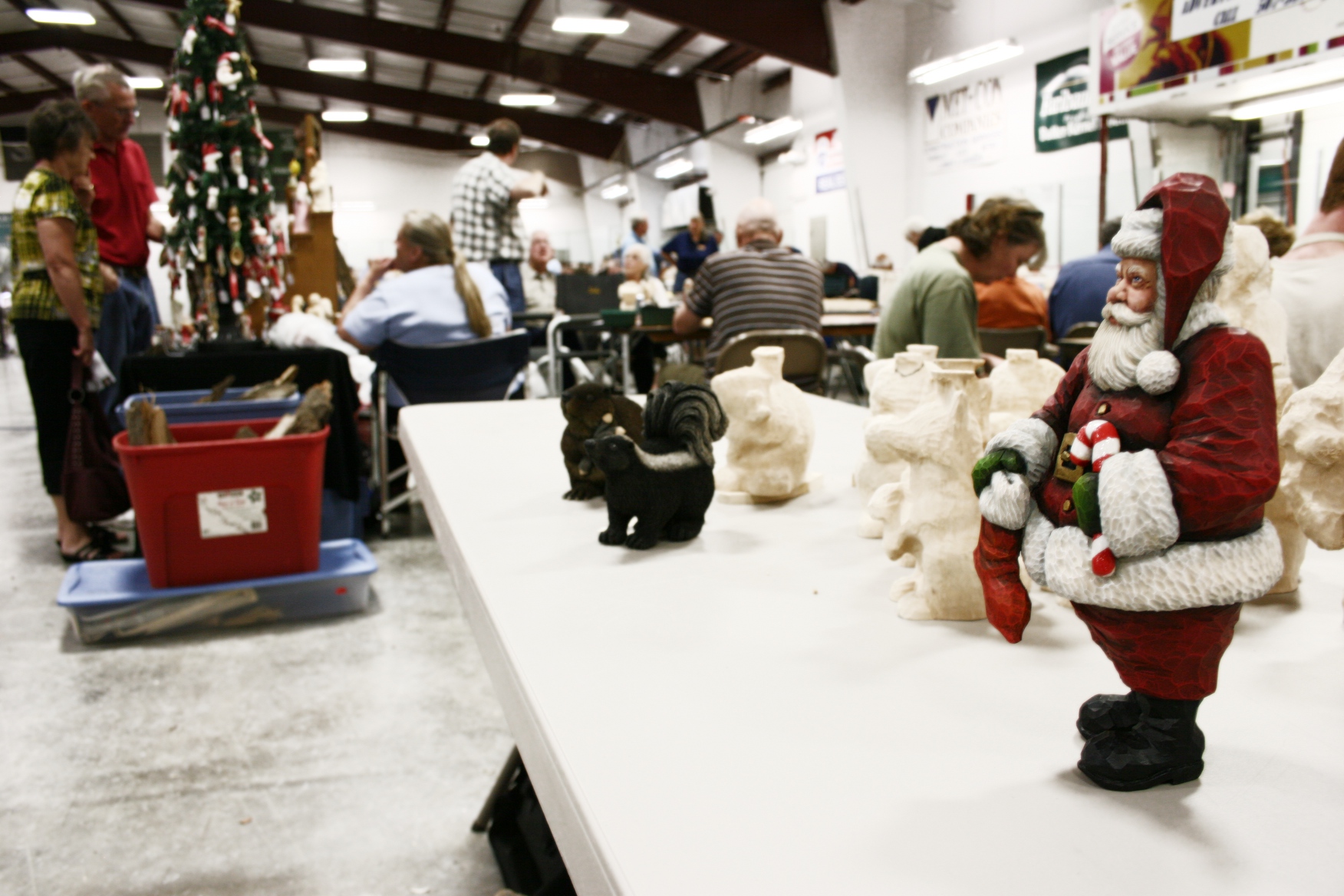
It may be summer, but Santa showed up in a woodcarving and classes at the festival.

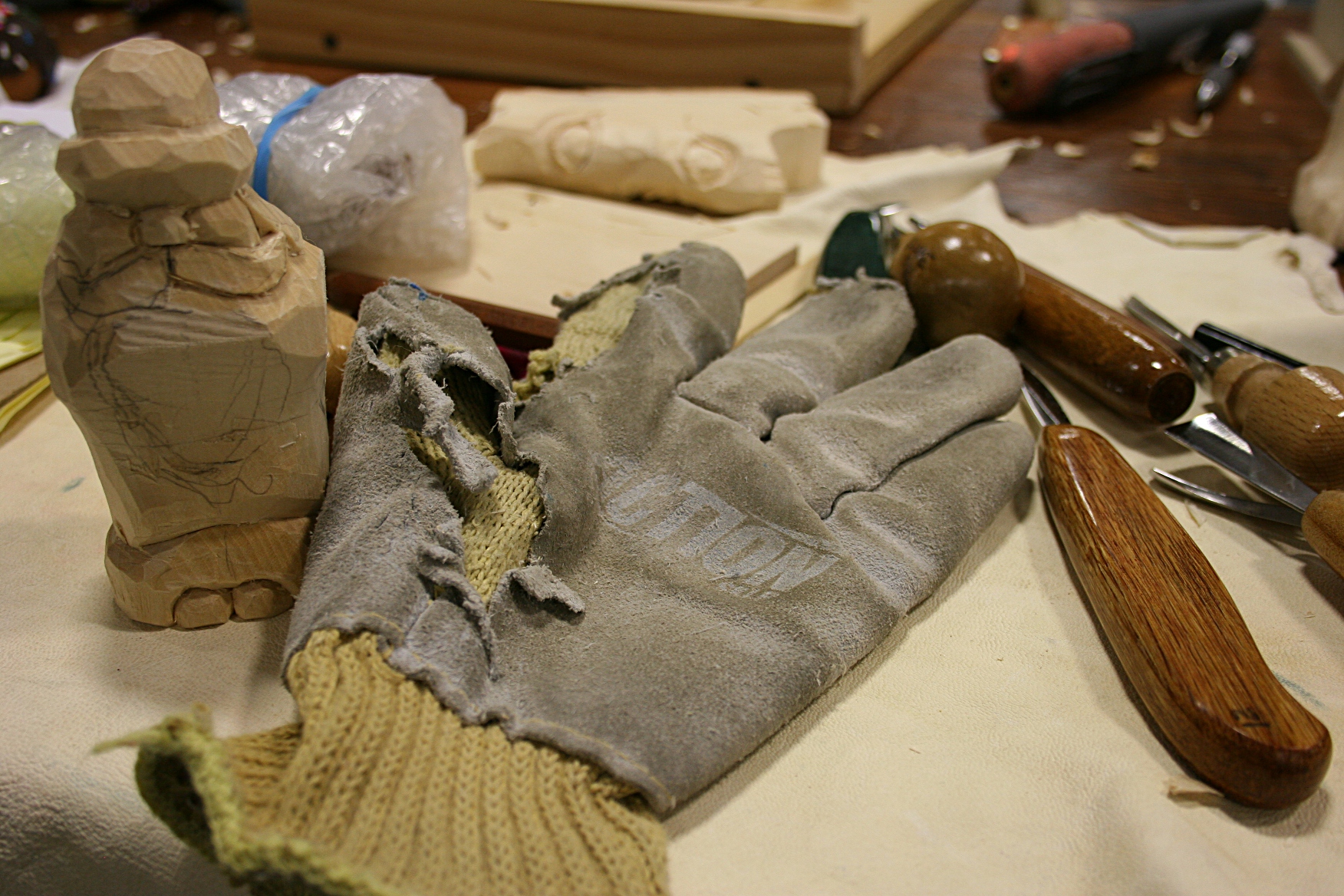
Imagine if this had been a hand instead of a glove…

I roamed the fest on Saturday, seriously impressed by the intent concentration of the attending woodcarvers, the intricacies of the carvings, the variety of art created and the fearlessness in putting sharp tools to wood. No wonder they wear gloves.

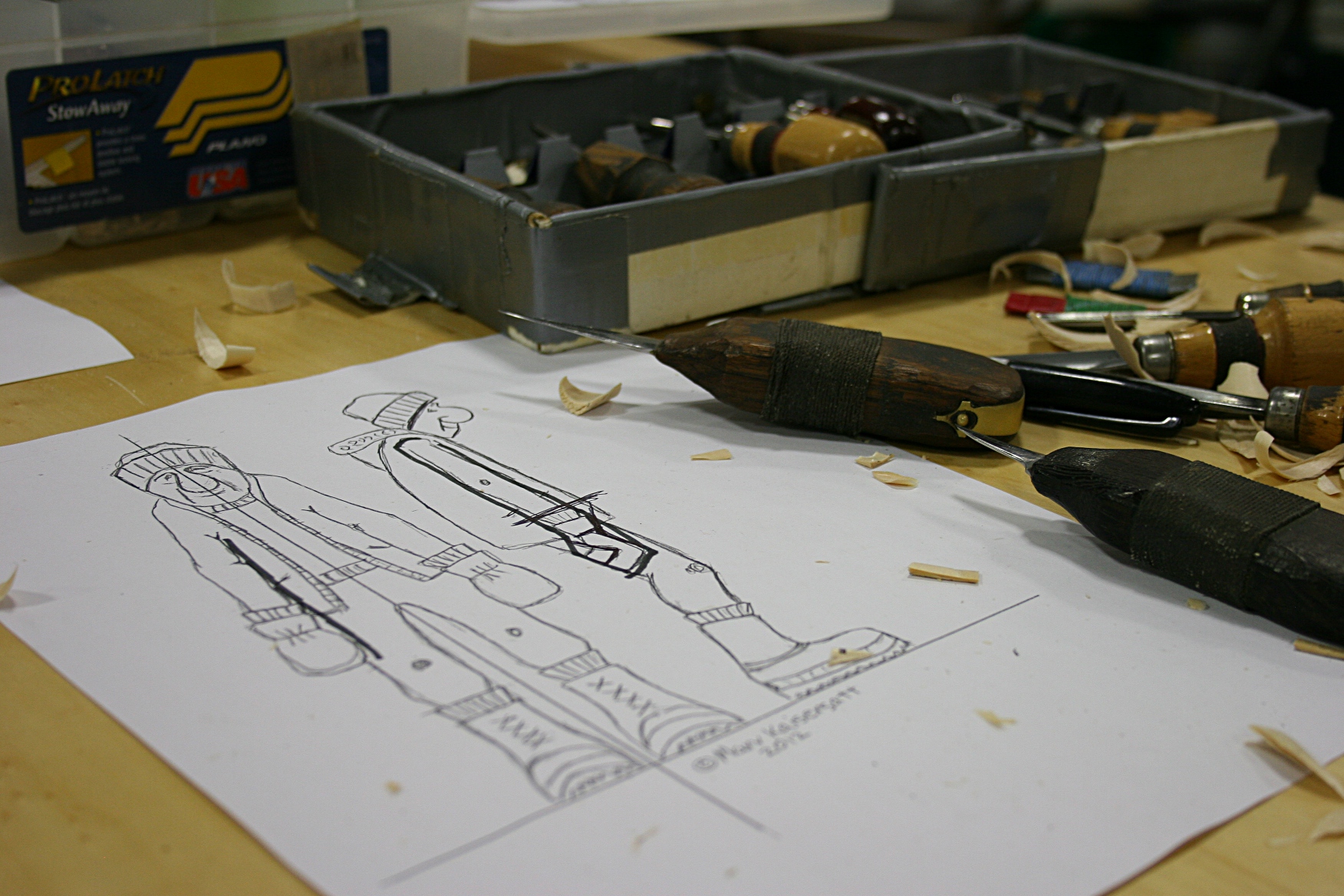
Marv Kaisersatt sketched out the character he was teaching his students to carve on Saturday.

I didn’t know any of the carvers, except Marv, whom I interviewed in 2009 for a short magazine article which certainly should have been much longer had space allowed. He impressed me then for the simple life he lives in an upstairs apartment in downtown Faribault, carving caricatures. I can’t even describe talent of his level. But I can describe a man who is humble and funny, engaging and content with the creative process of sketching, shaping clay models and carving.

This retired math teacher also impressed me in that interview with the fact that he doesn’t sell his woodcarvings, choosing instead to occasionally donate his caricatures, carved from blocks of basswood, to nonprofit fundraisers.

Marv Kaisersatt assists a student in his class.

On Saturday, Marv circulated among his students, advising them on carving a Minnesotan (I presume) dressed for winter in stocking cap and chopper mittens, oversized boots weighing down his feet.

Marv gave me a polite nod and then it was all business teaching the students lucky enough to learn under his guidance.

A snippet of Ivan Whillock’s incredible, detailed and realistic carving.

Whillock, whose woodcarvings are the polar opposite of Marv’s work, wasn’t teaching. But given his woodcarving family organizes Carv-Fest, I expect he had more than enough to keep him busy. He carves religious and secular sculptures and reliefs, works of art that grace places like churches (including mine, Trinity Lutheran) and libraries (including Buckham Memorial Library in Faribault).

Whillock and his family are the key organizers of Carv-Fest which draws woodcarvers from all over.

A stunning, three-dimensional carving by Ivan Whillock.

Both men teach at Ivan Whillock Studio. They’ve written books and created patterns and developed an appreciative following of admirers across the world.

And if you saw their work, you would understand why they are so beloved among woodcarvers and those of us who wouldn’t dare pick up a knife for fear of slicing away a fingertip.

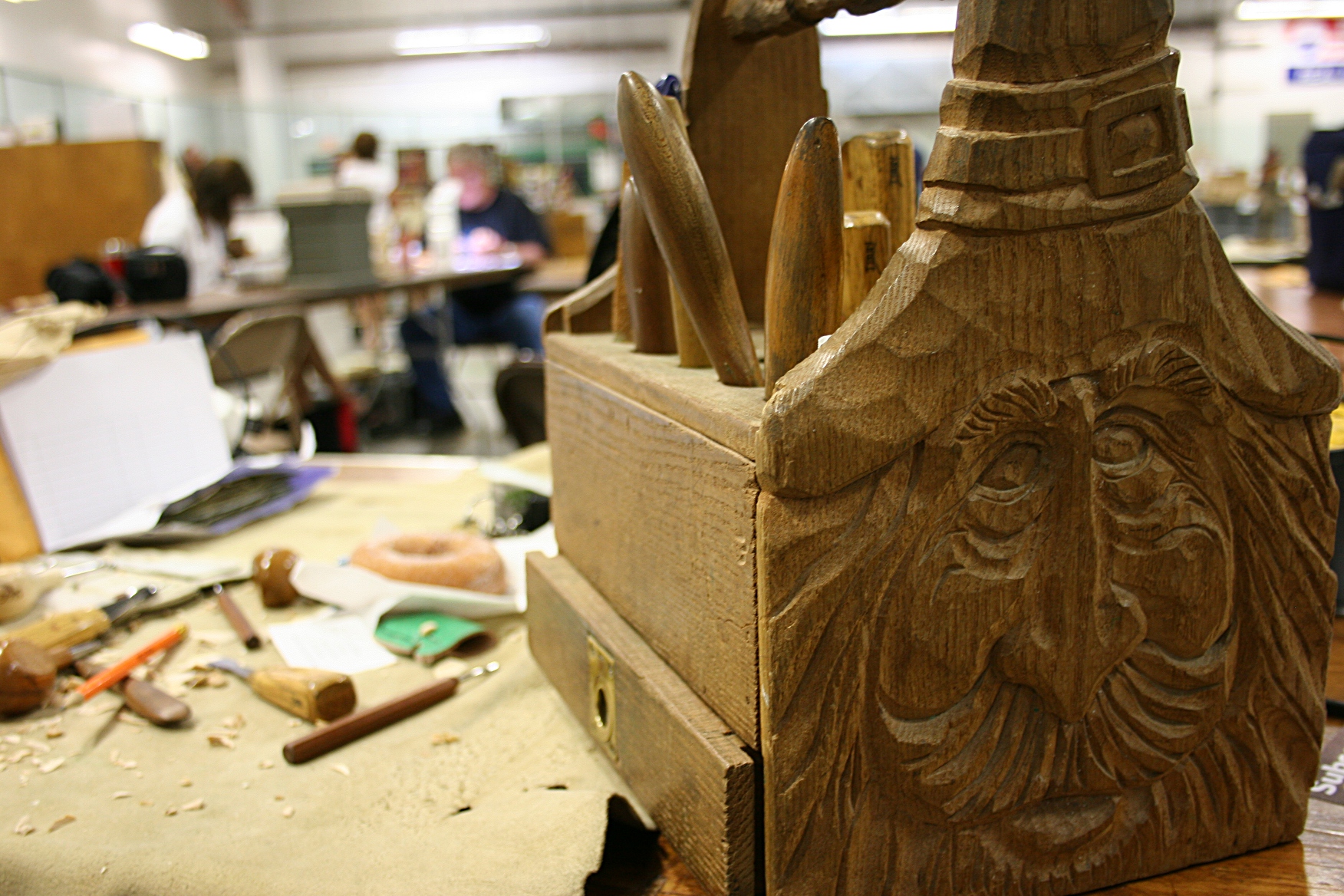
A carver brought his handcarved toolbox to a class on Saturday morning.

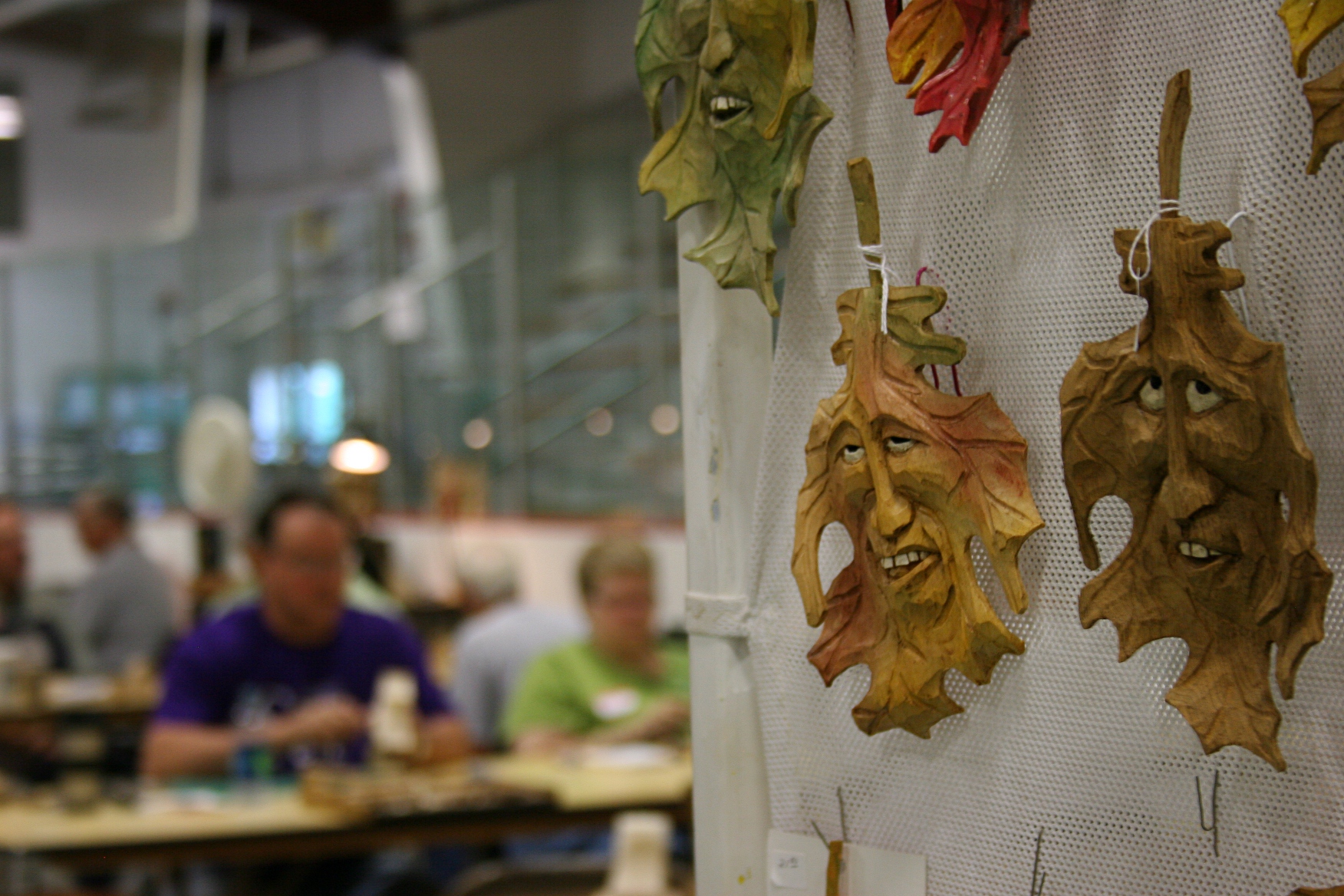
Just another example of the woodcarvings on display during the festival.

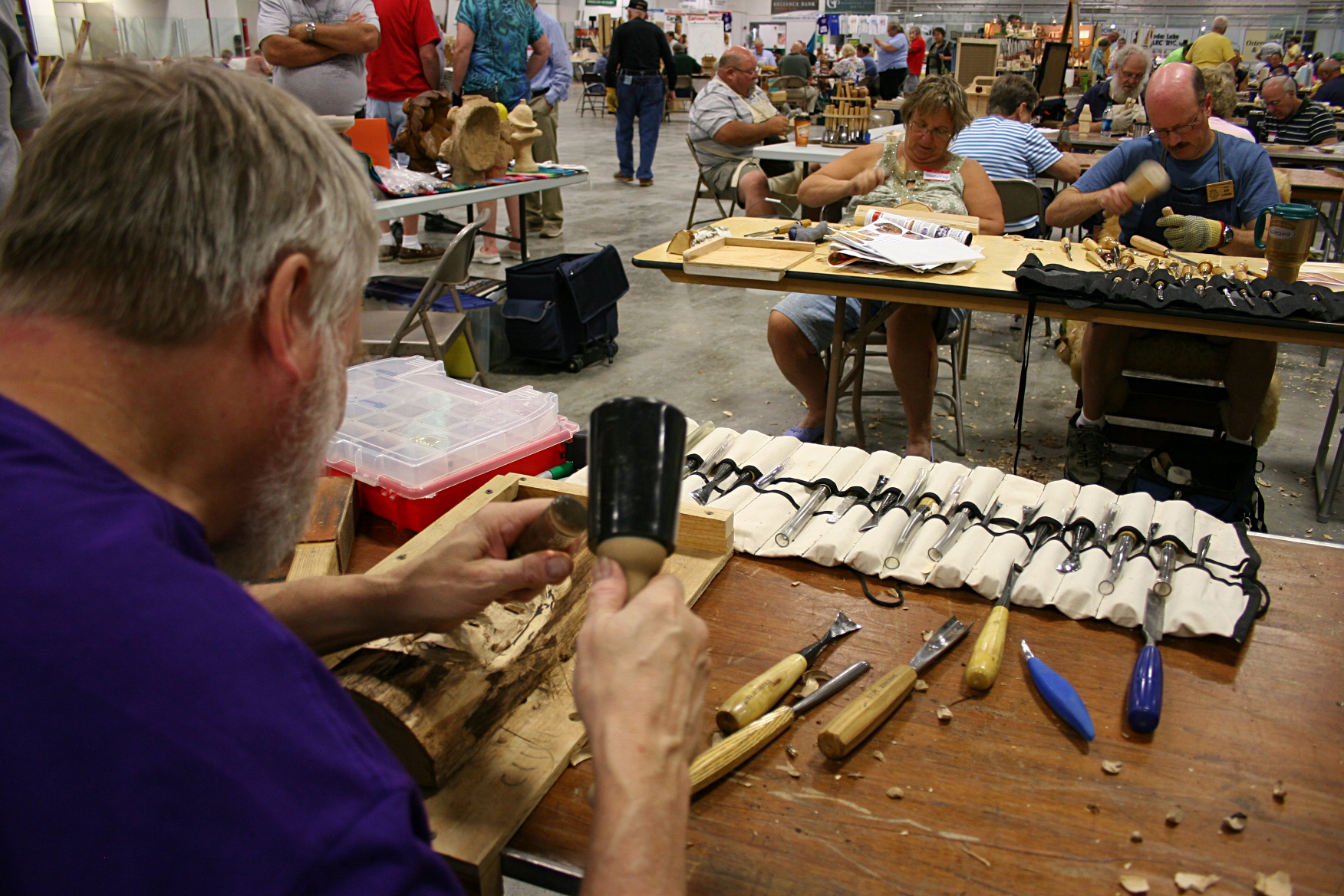
These students were hammering and chiseling away during a class, making quite a racket in the ice arena/fest site.

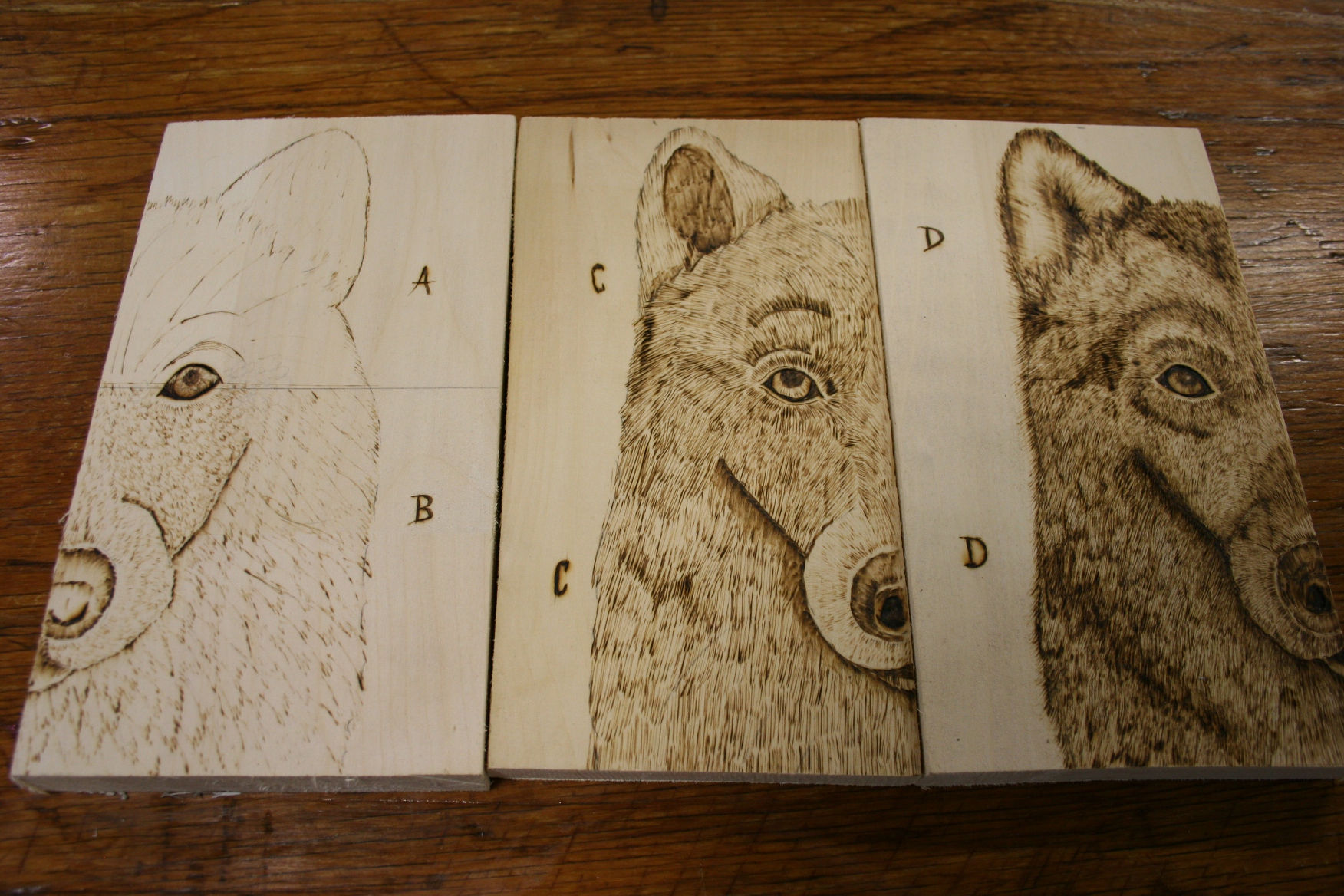
The step-by-step process to woodburn a wolf as taught by Nancy Dardis of  Dardis Designs, Bloomington.

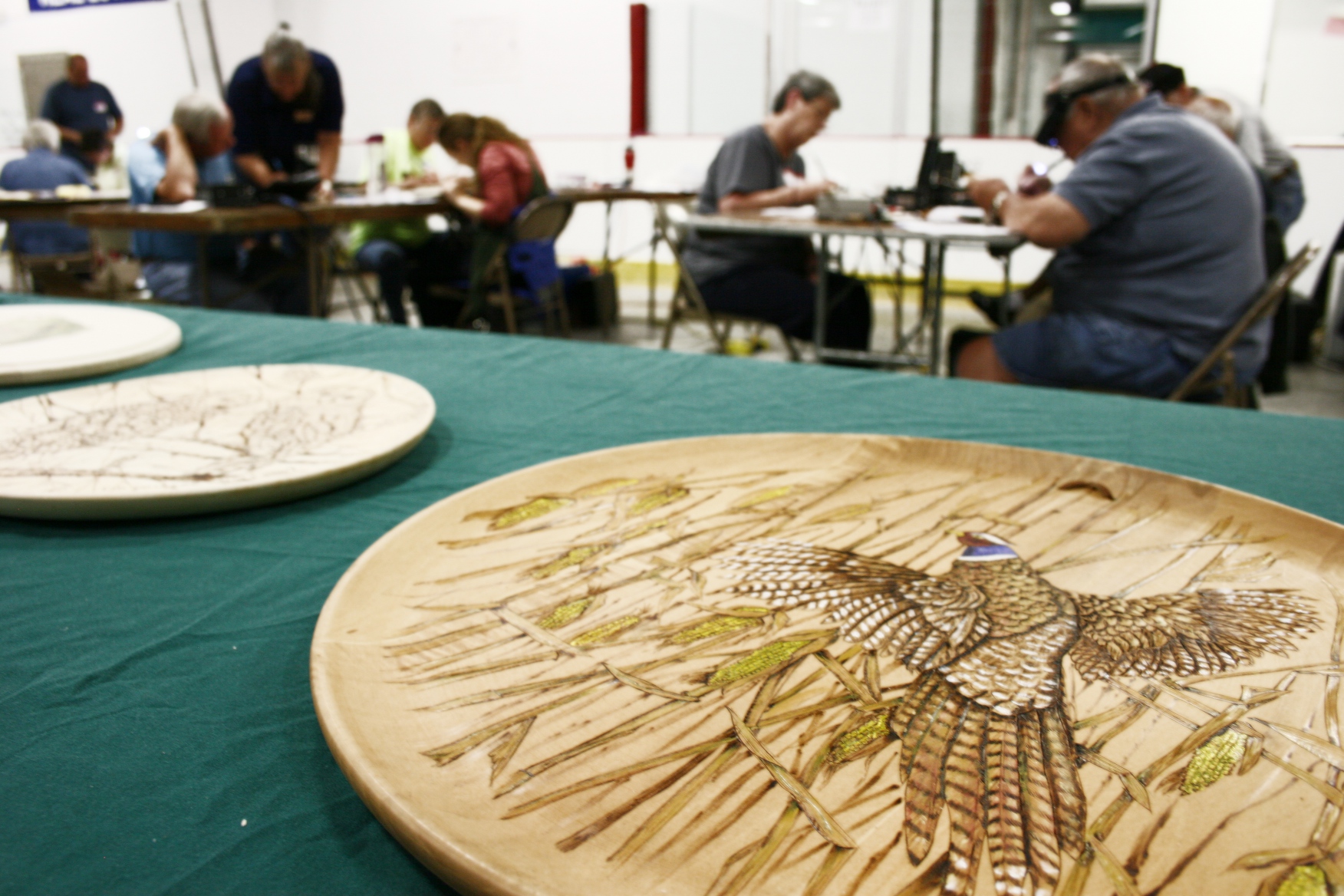
A pheasant in wood, foreground, and students in class, background.

Learning the art of chip carving.

© Copyright 2012 Audrey Kletscher Helbling
 

Mixing art, music and BBQ at Faribault festival August 12, 2012

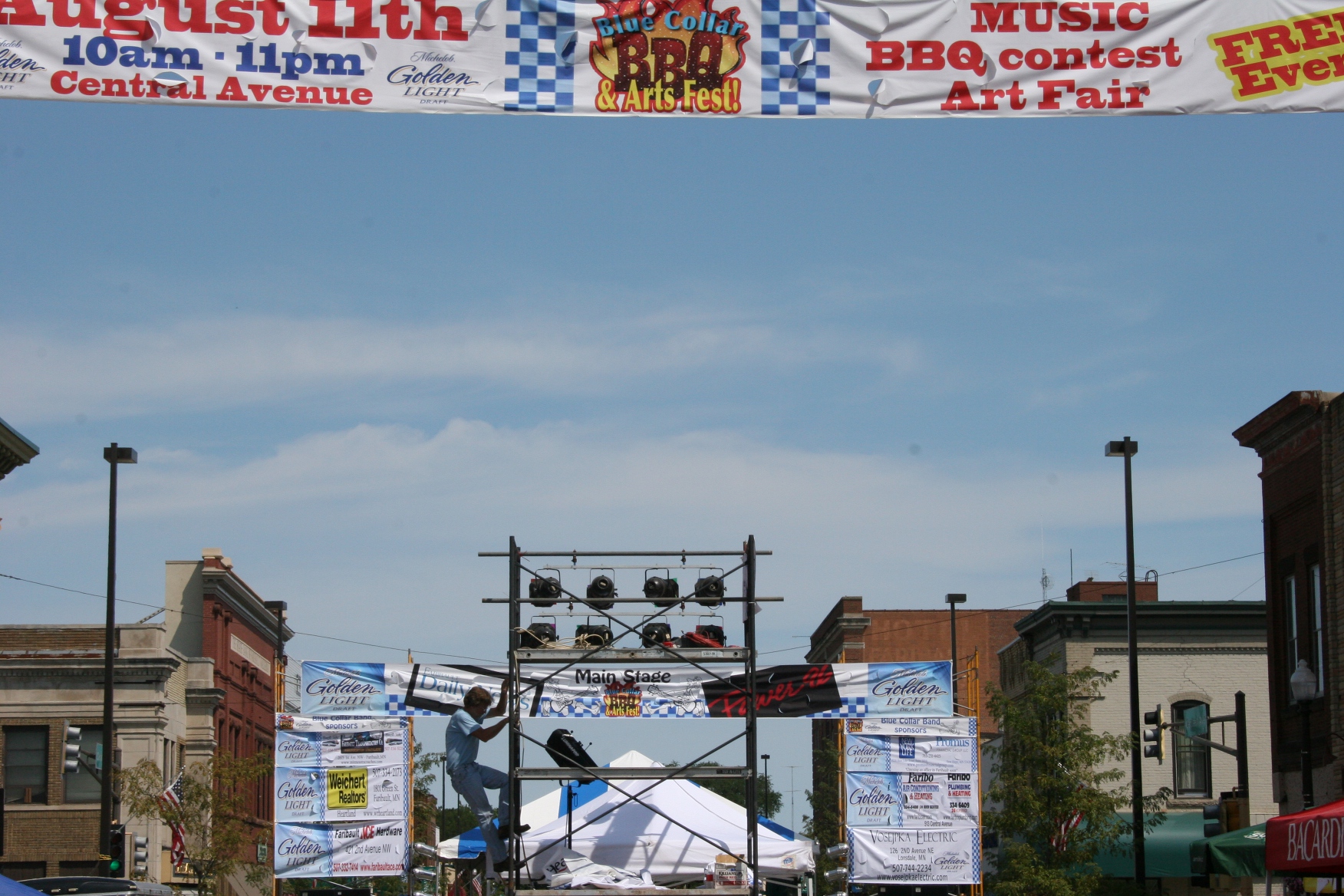
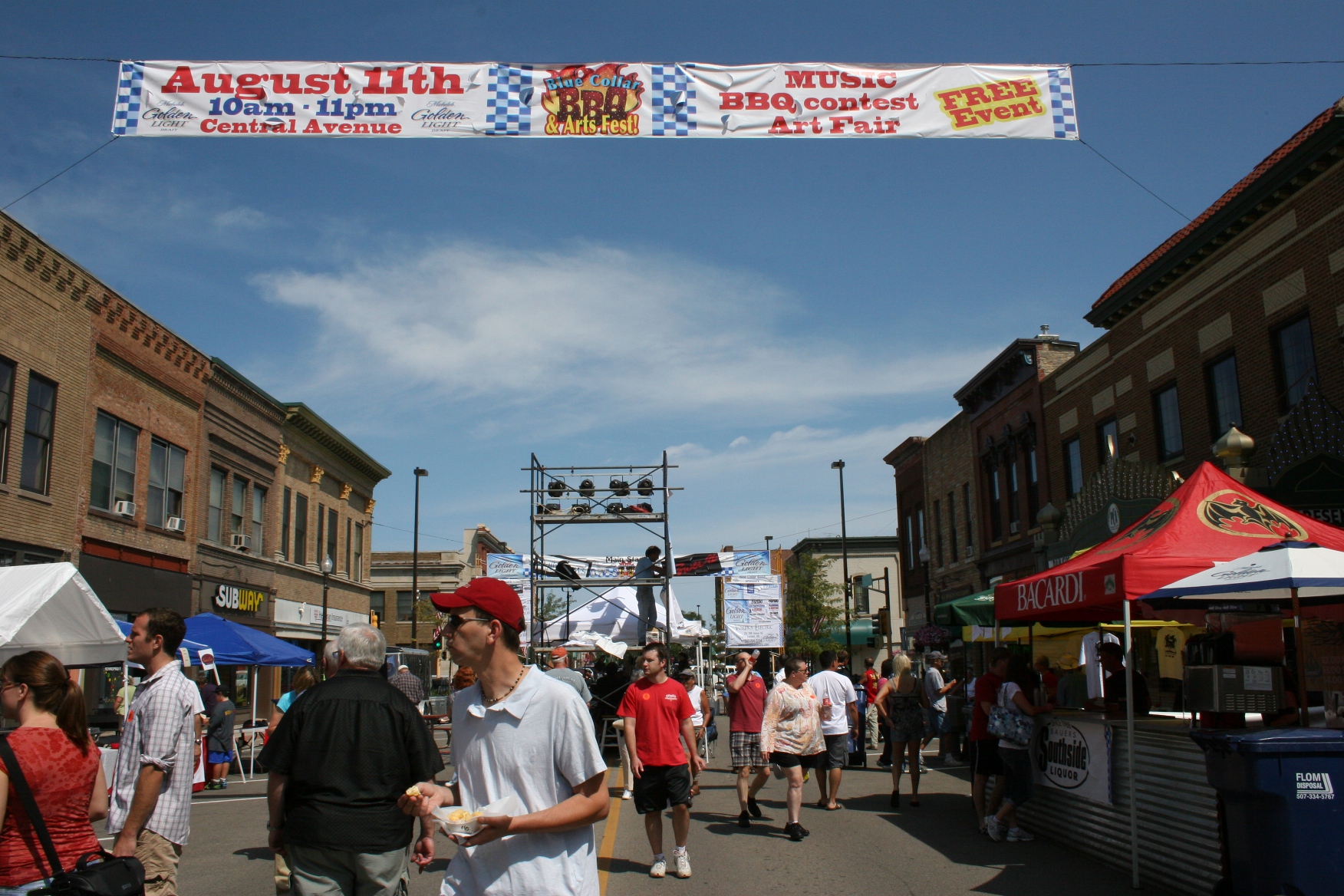
The banner and band scaffolding/set-up in the 300 block of Central Avenue during Saturday’s Blue Collar BBQ & Arts Fest in Faribault

FROM DEAFENING MUSIC that bounced between historic buildings along Faribault’s Central Avenue, to the savory taste and tantalizing, smokey smell of barbecued meat to the cheers of onlookers when a local celebrity plunged into the dunk tank to the clink of washers against asphalt in the washer tournament to human faces morphing, via paint, into animal faces, offerings at the fourth annual Blue Collar BBQ & Arts Fest in Faribault drew crowds, and smiles, on a picture perfect Saturday.

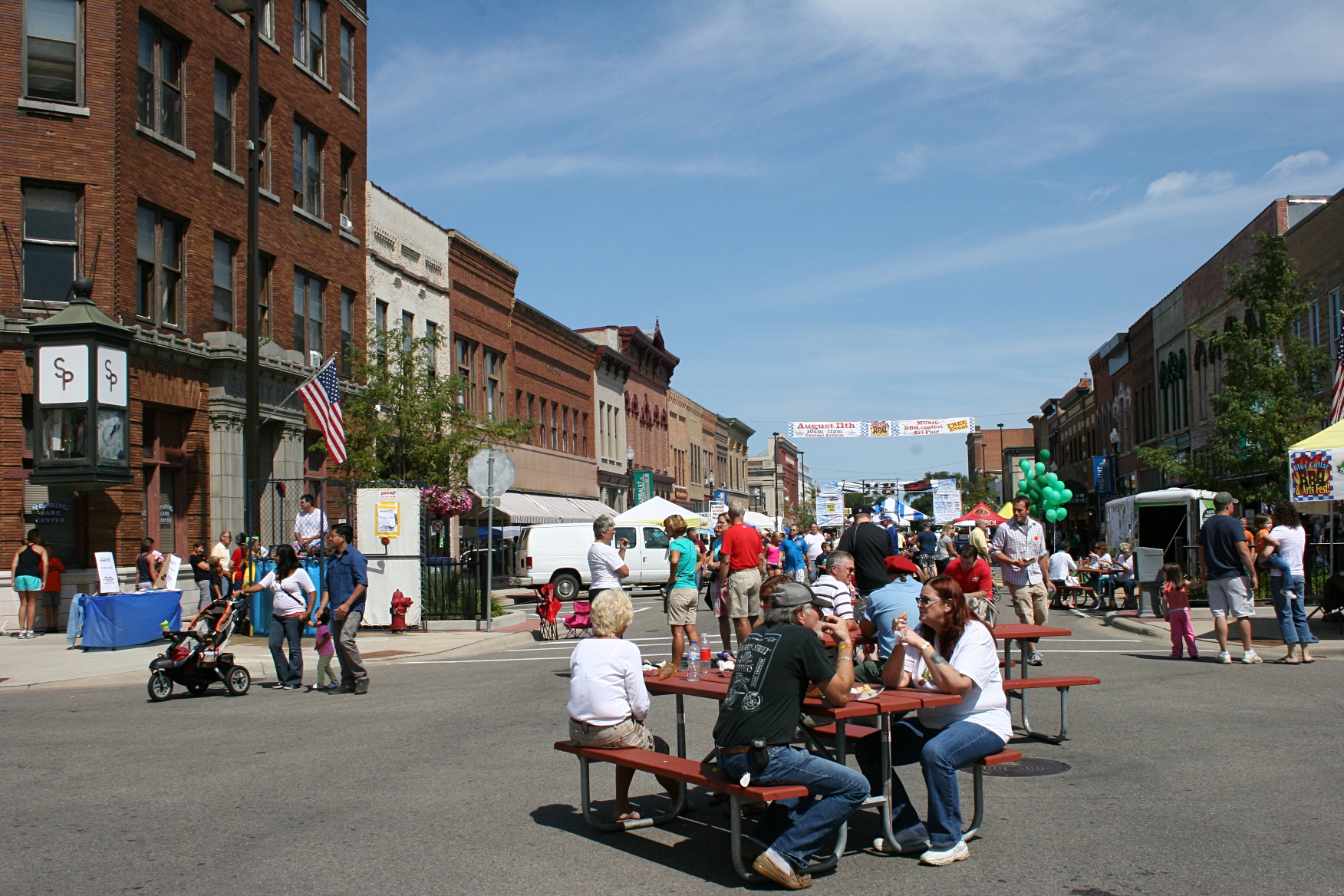
An overview of the crowd early into the event on Saturday, looking to the 300 block of historic downtown Farbault.

Coordinated by the Paradise Center for the Arts, the 13-hour free festival focused on bringing people into the historic downtown to enjoy/participate in the arts, music, food, a BBQ and homemade brew competition, and more.

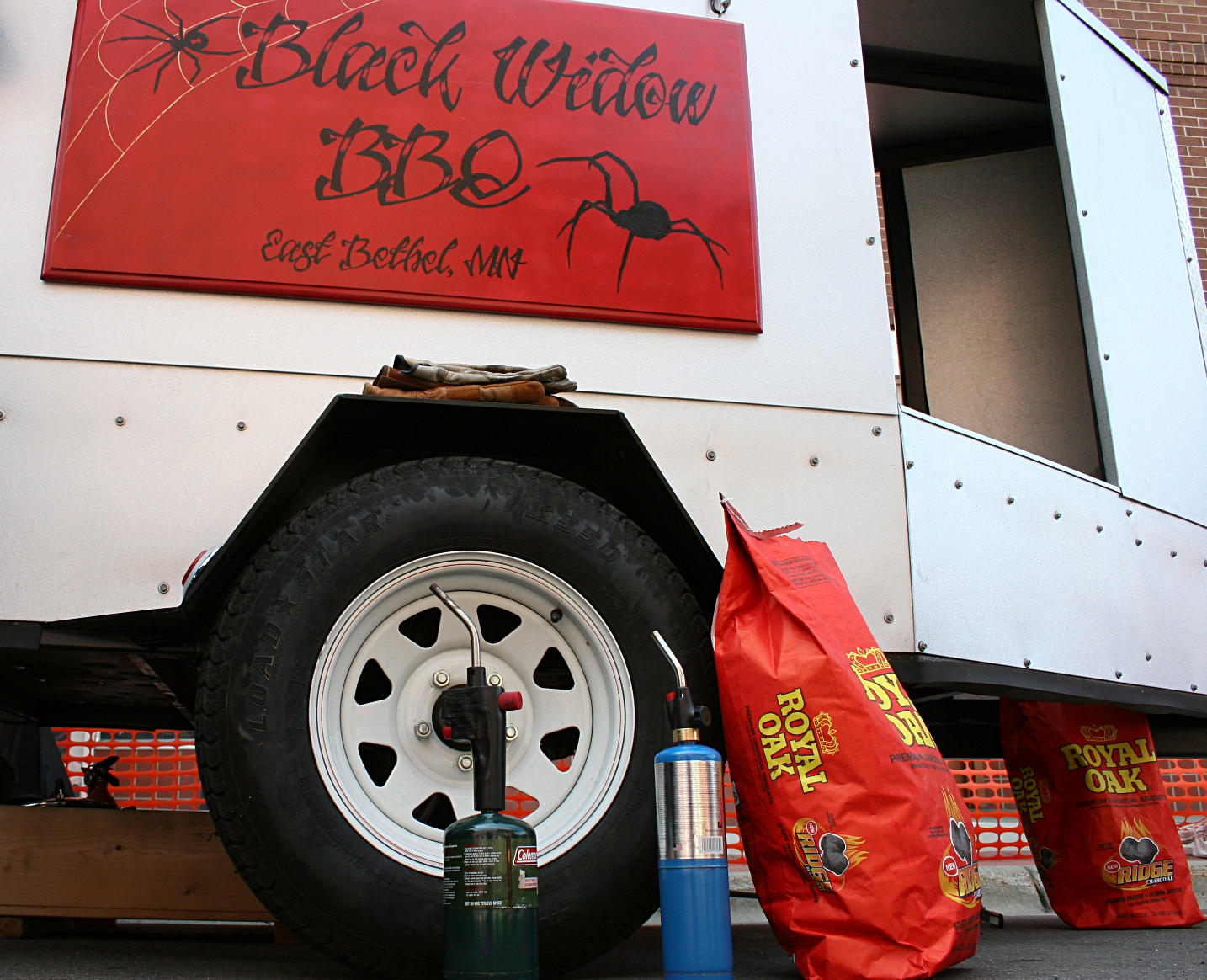
The Black Widow BBQ team, one of about a dozen competing for top prizes of $500 in several categories.

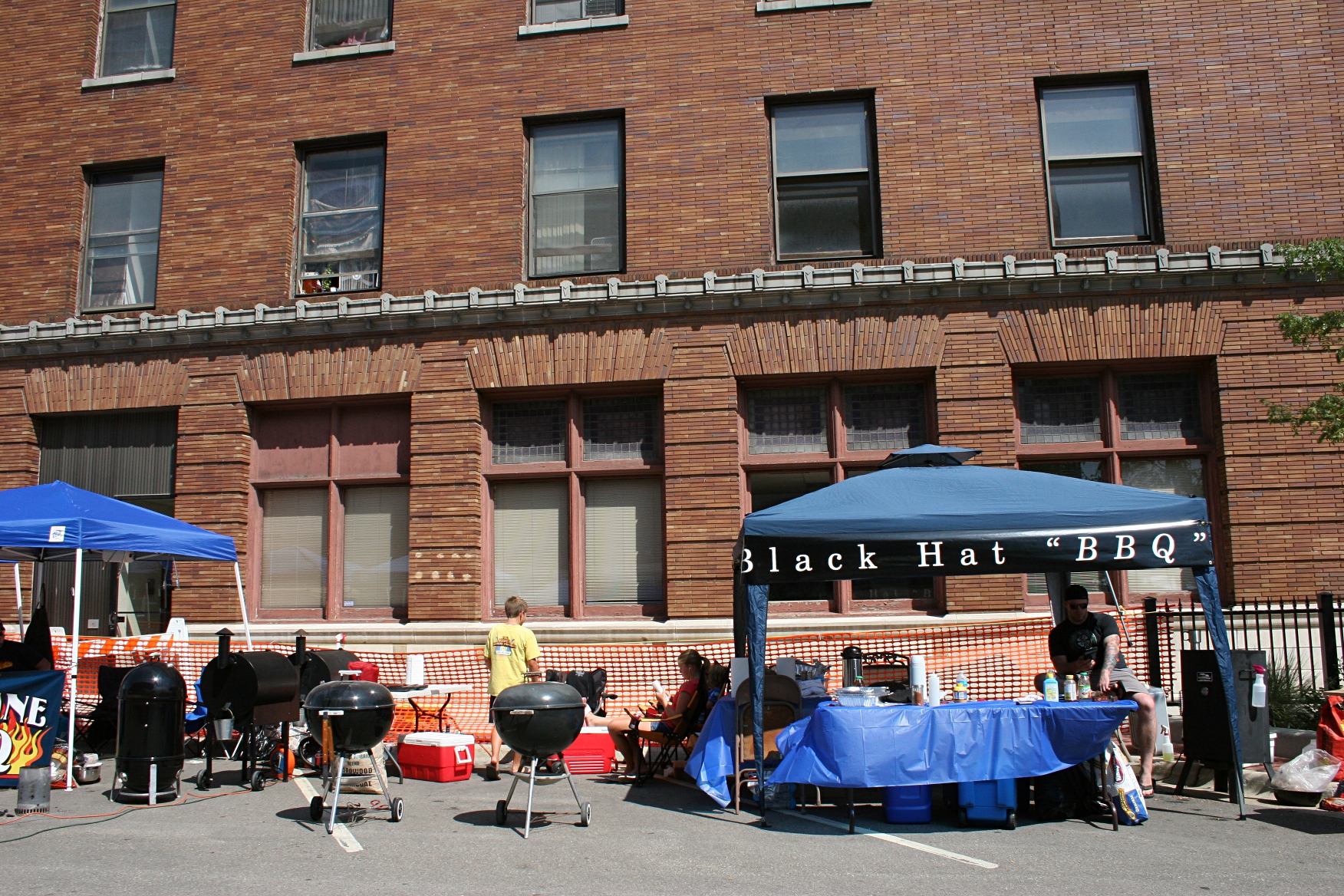
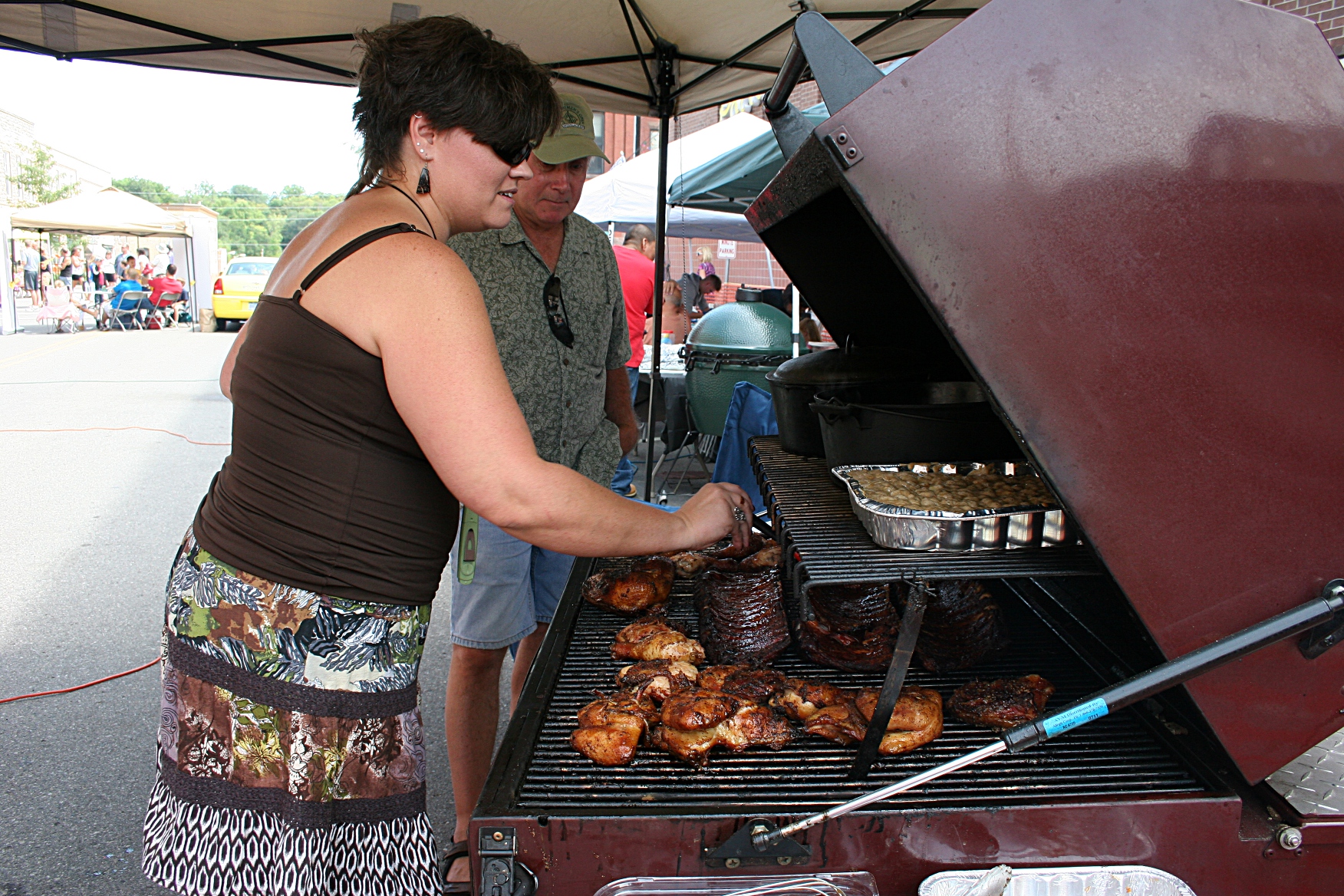
BBQ teams set up along a side street to cook their meats and desserts.

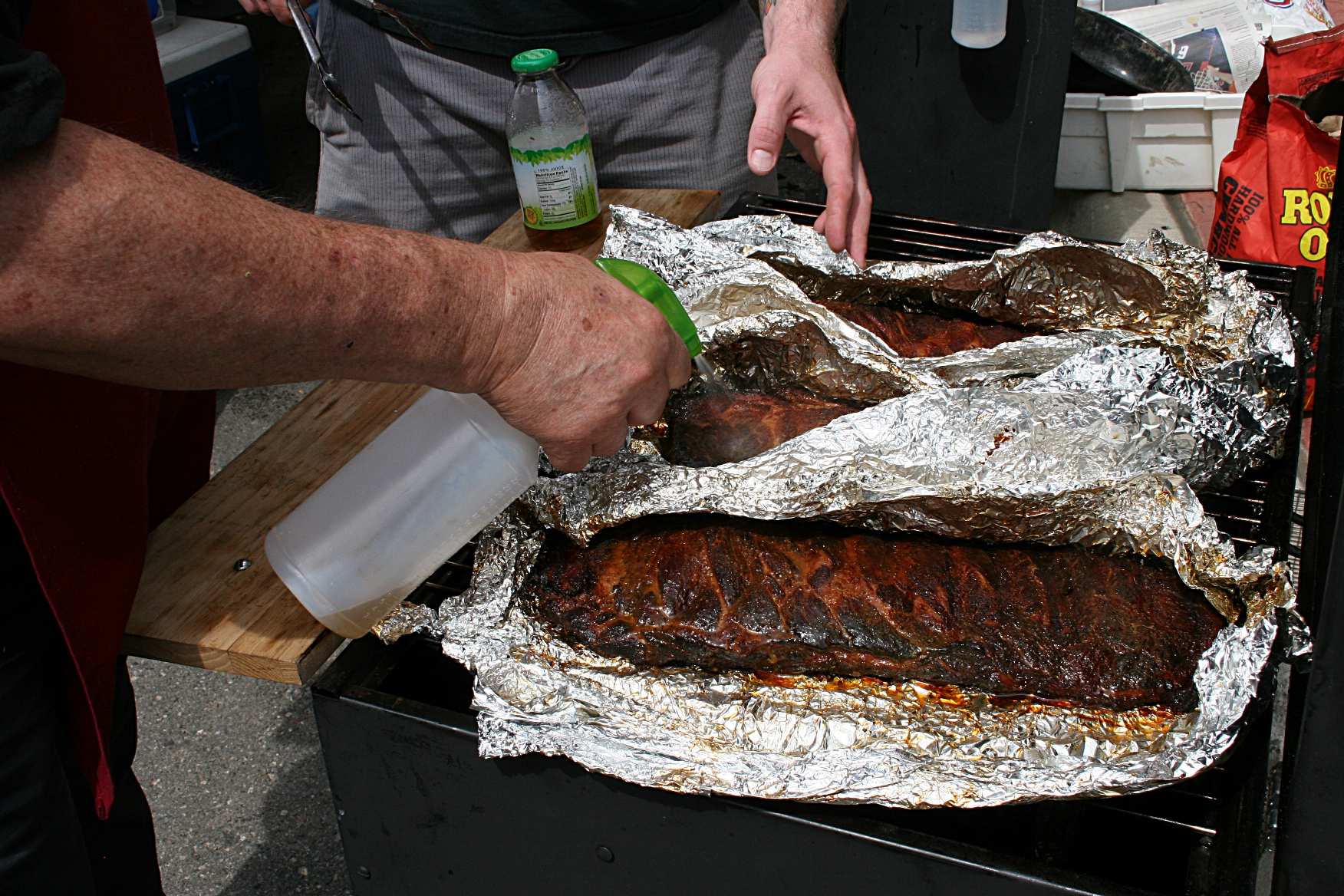
A Texas native, now living in Faribault and a member of The Black Hat “BBQ” team, sprays apple juice onto his St. Louis style pork ribs during the BBQ contest.

Grill Cabin team members, from New Prague, prepare entries in the BBQ competition.

Retail stores like The Crafty Maven, 212 Central Avenue, at the heart of the arts and crafts fair and kids’ activities, expected an increase in business with an influx of an anticipated 5,000 people into the downtown for the festival. And that’s part of the plan, to celebrate downtown businesses, many of them event supporters. Other businesses in the community also sponsored parts of the festival.

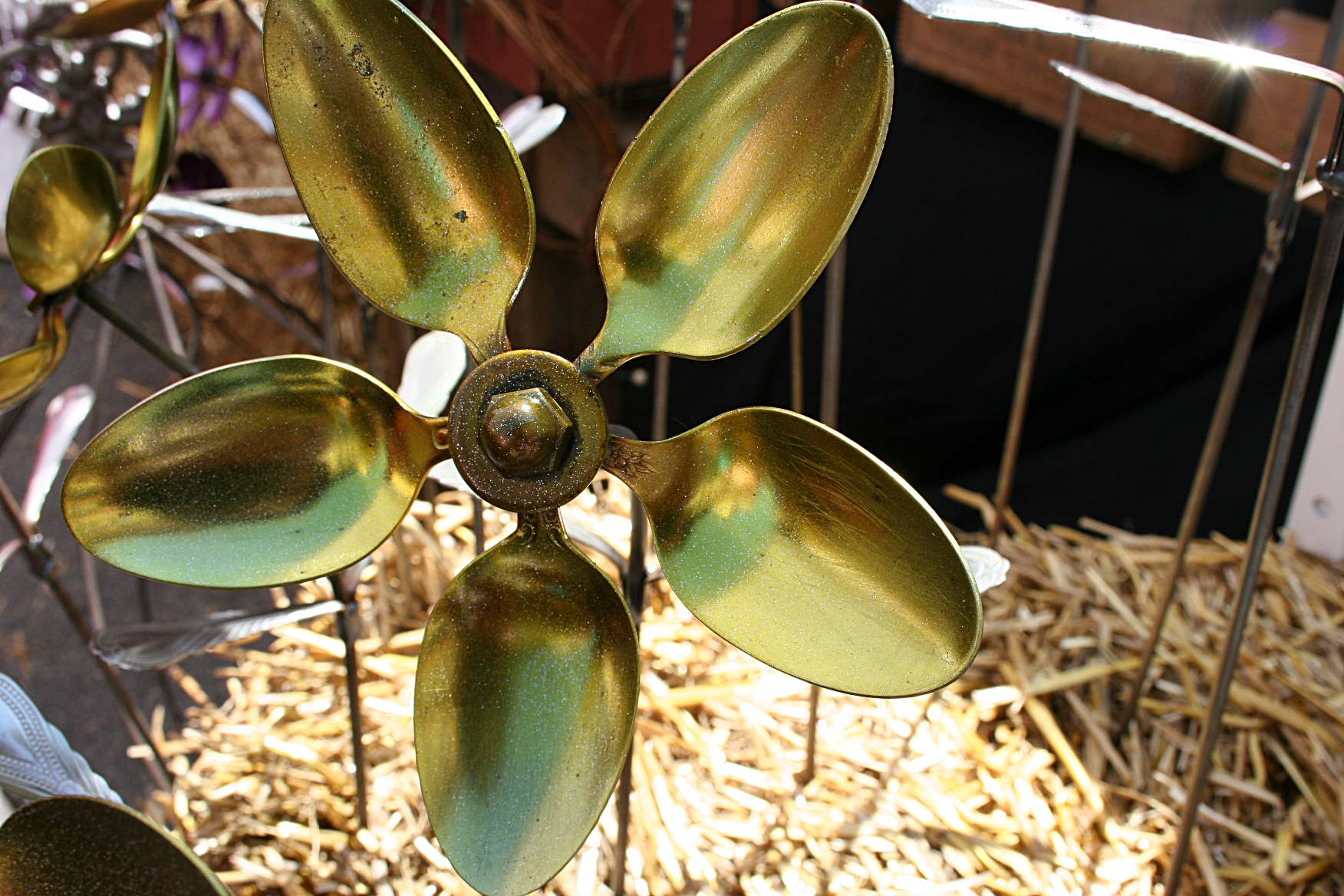
Flower art and more, shaped and welded from old silverware, etc. is helping the DeWall brothers of DeWall Bros Metal Creations of Grand Meadow finance their college educations. Their art was for sale at the arts fest.

While the DeWall men were peddling their metal art, the women–mom/wife, Cindy, and girlfriend, Allison– were shopping and getting their faces painted by Jodi Gustafson of Big Shoe Entertainment.

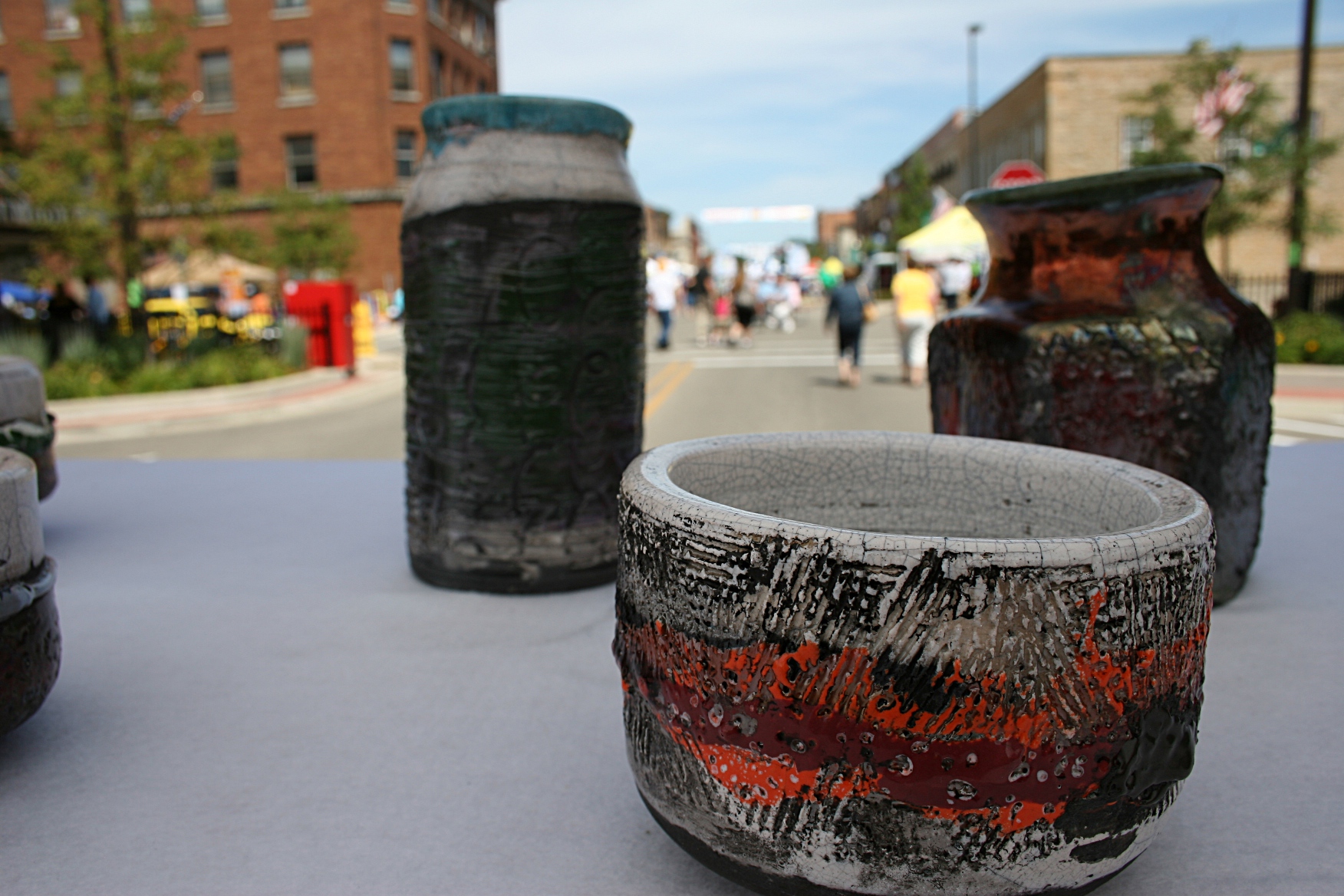
Bob Maegerlein of Rochester, specializing in Raku ware, sold his pottery at the arts fair.

I arrived late morning and wandered for several hours past vendors—wishing I could sample the meat smoking in BBQ contestants’ grills; admiring the artistic creations of artists and a gifted face painter; ducking into the Paradise Center for the Arts to photograph the current art show, Car pARTS; steering mostly clear of the north end of the 300 block of Central because I couldn’t tolerate the volume of the live band music; trying a vendor’s delicious BBQed meat trio sampler that was way overpriced for the quantity (plus, no forks included); and, finally, stopping at Pawn Minnesota and then a Somali clothing shop on my way to the car.

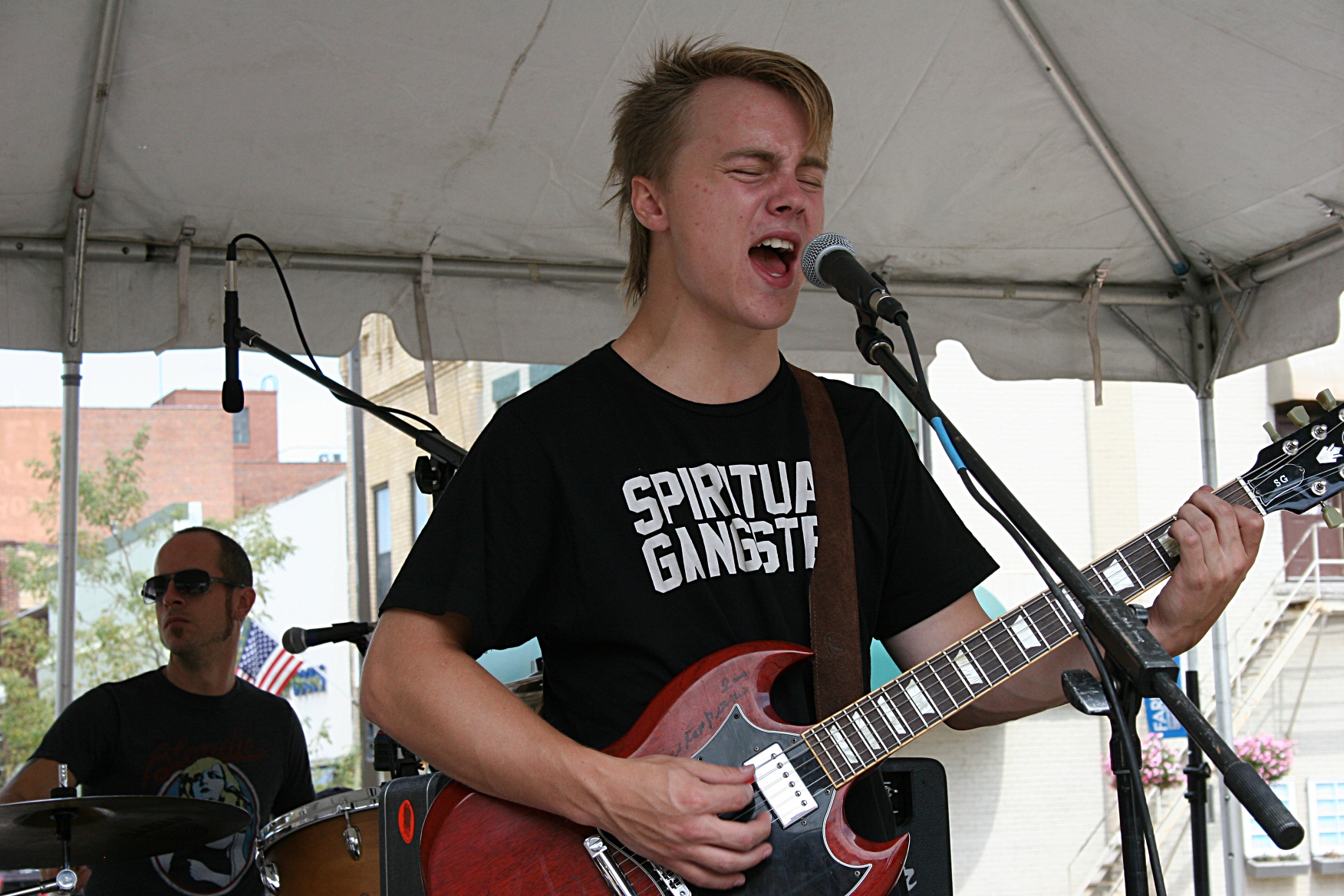
Blues-rock guitarist/musician Trent Romens was among six featured musical acts.

Did the festival accomplish for me what I expected? Yes. I was entertained, although I would have appreciated a much lower volume on the music. Ditto for the price on the meat sampler. And I would have liked access to the home brew competition, which was tucked into the Paradise somewhere.

But all in all, the festival provided a fun way to while away part of a Saturday. And, for those downtown business owners who hoped the event would draw shoppers into stores, it worked for me. I’d never been into the pawn store and wasn’t even aware of the Somali shop or another ethnic business across the street (which wasn’t open).

If you’re from Faribault, I hope you took  time on Saturday to attend the Blue Collar BBQ & Arts Fest and appreciate what we have, right here in our own community.

With the weather about as good as it gets on a summer day, attendance was high at the Blue Collar BBQ & Arts Fest.

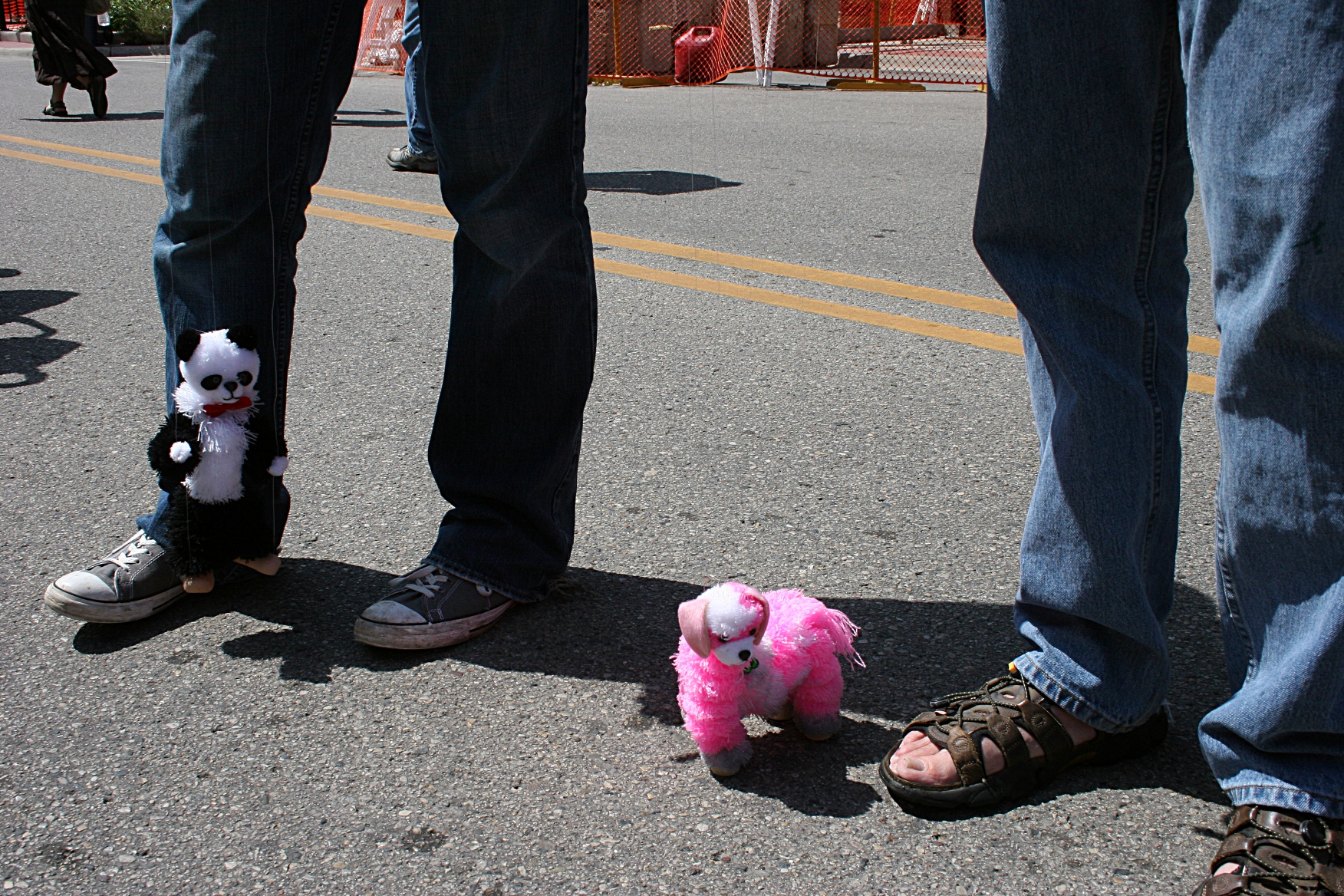
Dad and grandpa watched the pets while the kids played in the bouncy inflatables. These pom pom pets were a popular item sold at the arts fair.

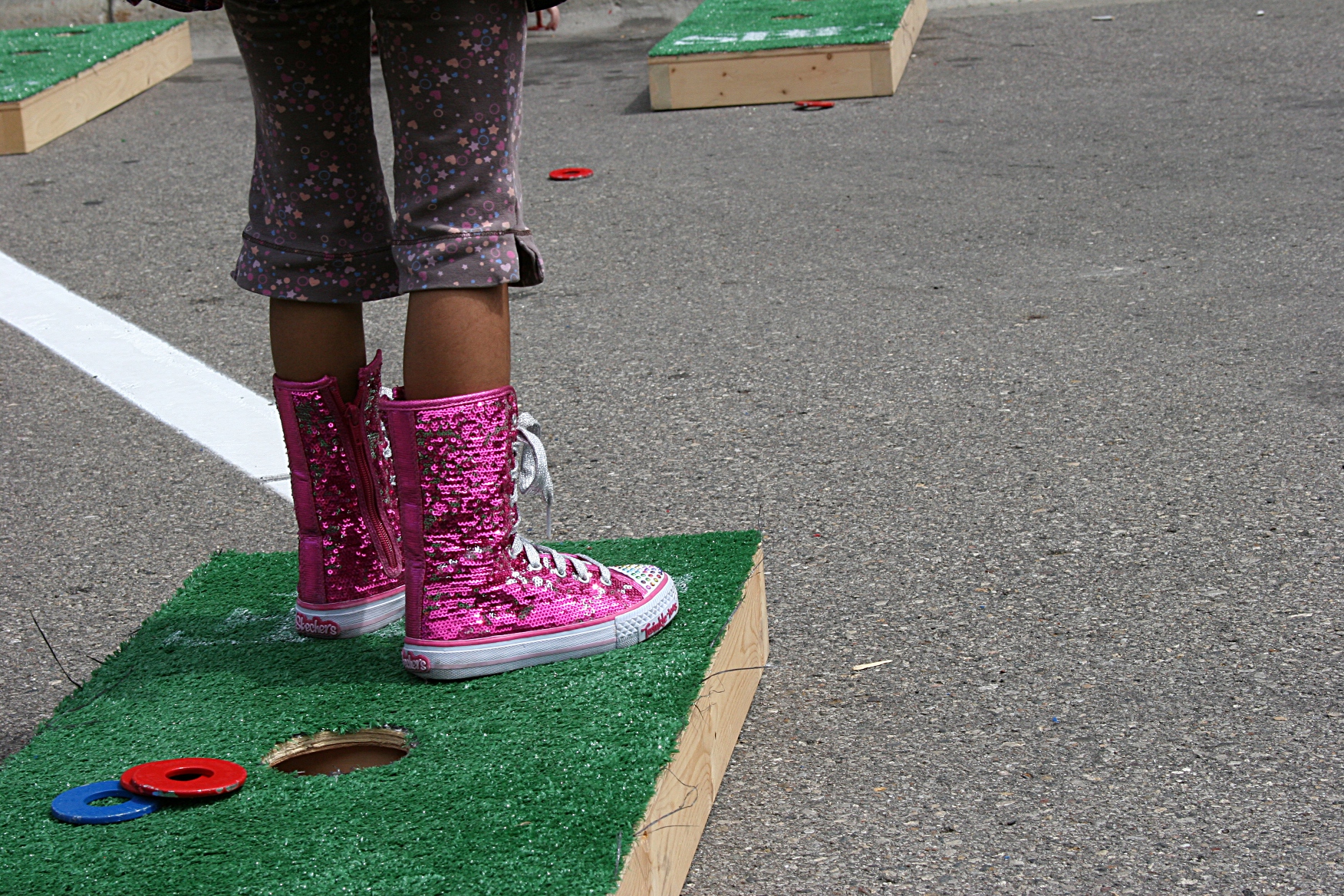
Kids practiced for the washer tournament. I was not convinced by a tournament organizer to participate. “She would throw the washer through a store window,” my husband told him. He would be right. Either that or I would have struck a passerby. We walked away, for the safety of those in attendance.

Isabella, 7, of Faribault, one of the many kids who lined up for the free face painting. Check back for an additional post featuring the artwork of professional face painter Jodi Gustafson of Big Shoe Entertainment.

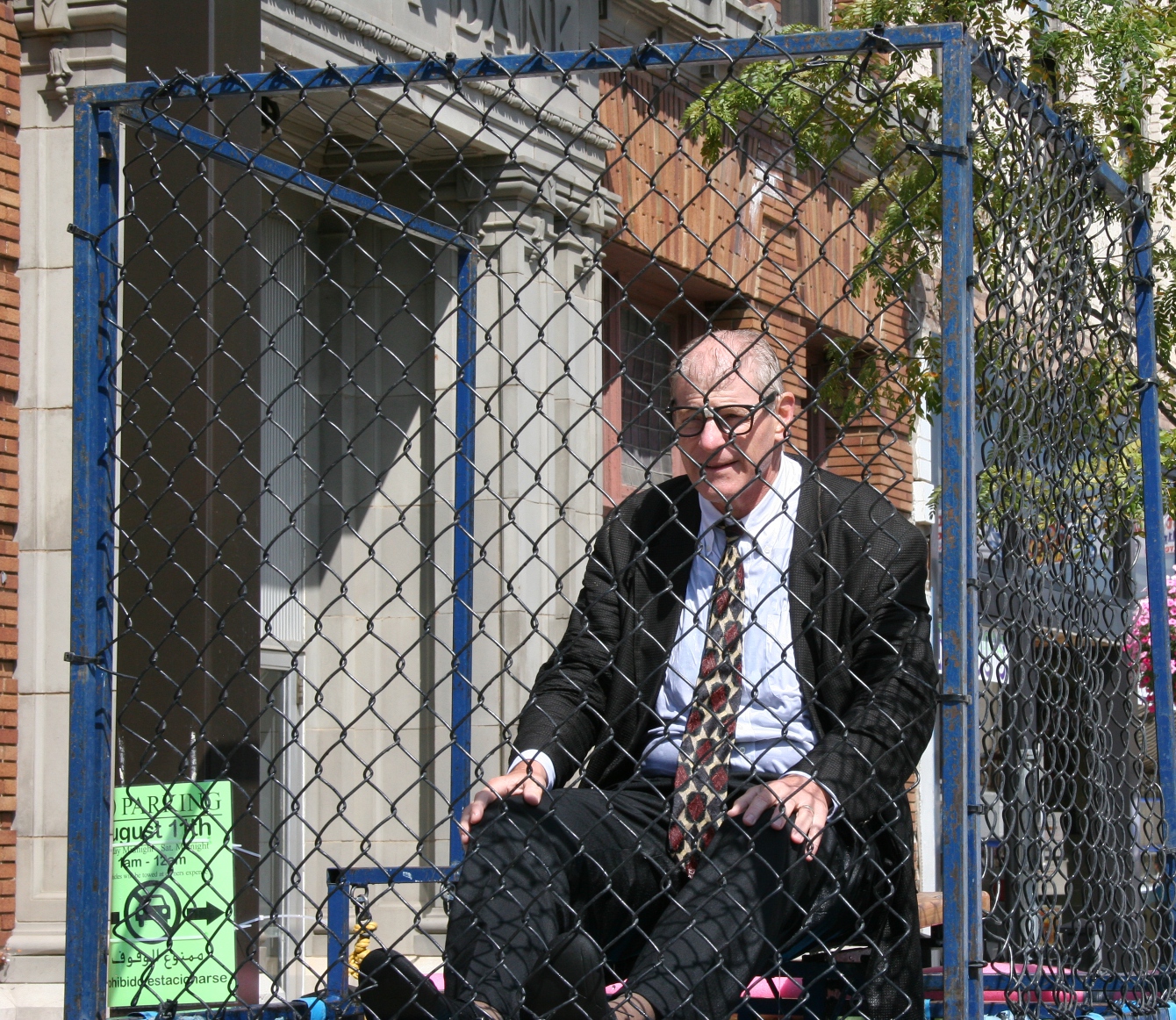
Taking a turn in the dunk tank…

© Copyright 2012 Audrey Kletscher Helbling
 

A sweet surprise: An old sorghum mill on a southern Minnesota elk farm & more August 10, 2012

HOW MANY TIMES HAS MY FAMILY driven Minnesota Highway 60 east of Elysian, unaware of Okaman Elk Farm to the south not far from the highway? Too many.

My husband Randy and I almost missed Okaman’s again last Sunday as we traveled along Waseca County Roads 3 and 5. If not for the colorful miniature train transporting kids and adults along the shoulder of the road, we likely would have passed right by.

Passing by the Okaman Elk Express in our car on a Sunday afternoon.

But that train stopped us in our tracks and caused us to turn around and drive back to the farm.

There we discovered much more than a plain old elk farm. We also found family-friendly activities, a farmers’ market, art, animals and history.

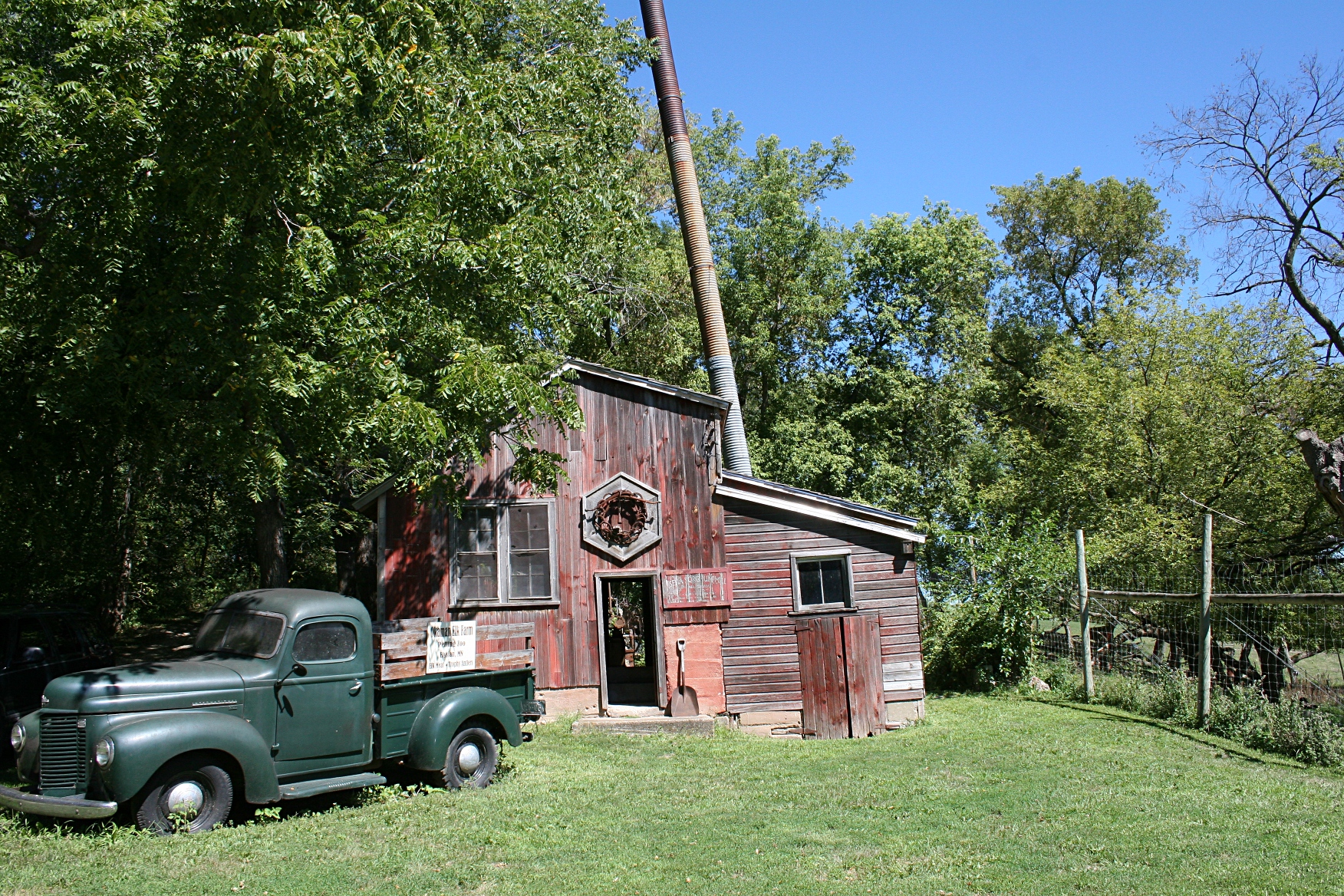
The historic Seha Sorghum Mill.

In 1991, Don and Joyce Kaplan bought this historic place to raise elk and then sell the meat. Their business sits on the site of Okaman, a town established in 1855 between Lake Elysian and Lily Lake. Here, according to a posted sign, several hotels, a theater, the Buckout Flour Mill, the Okaman School and the Seha Sorghum Mill were located.

Inside the sorghum mill.

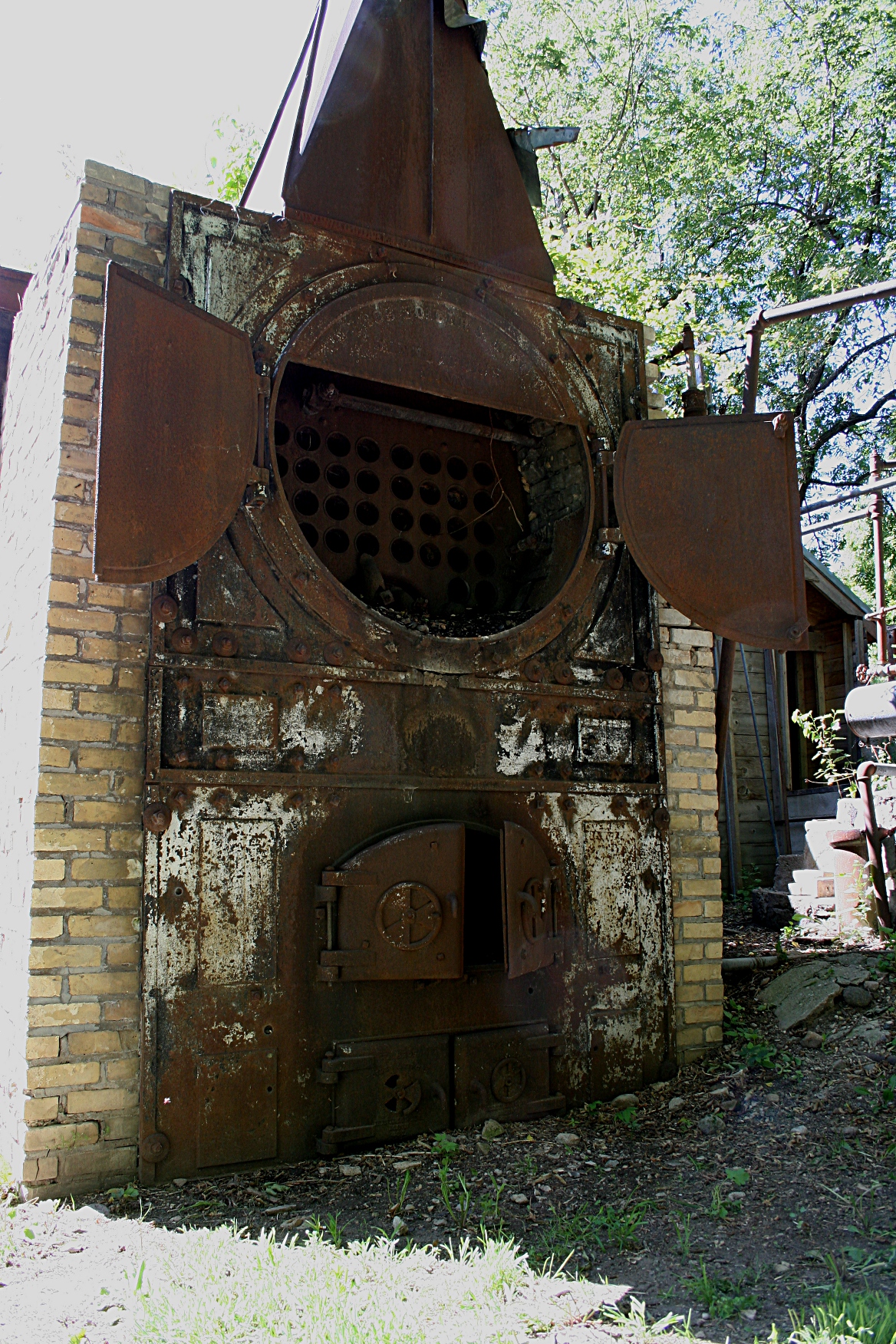
It is that 1895 sorghum mill, which produced and sold sorghum syrup until 1953, that most interested me. Randy and I poked our way through and around the old mill trying to determine how the whole operation worked. I think he understood the process much better than me.

Apparently wagons of sorghum were unloaded atop the hill behind the mill where the canes were crushed and the juice then flowed into steam-heated cookers, or something like that.

The original steam boiler stands behind the sorghum mill.

According to the Waseca County Historical Society website, Cornelius L. Seha built the mill, today the only known historical sorghum mill remaining in Minnesota and added to the National Register of Historic Places in 1979.

Because the mill today is basically an old building and steam boiler with weeds and brush growing around the holding tanks, equipment and structures, everything is left open to self-interpretation. Perhaps someday this historic site can be restored and specific educational information posted.

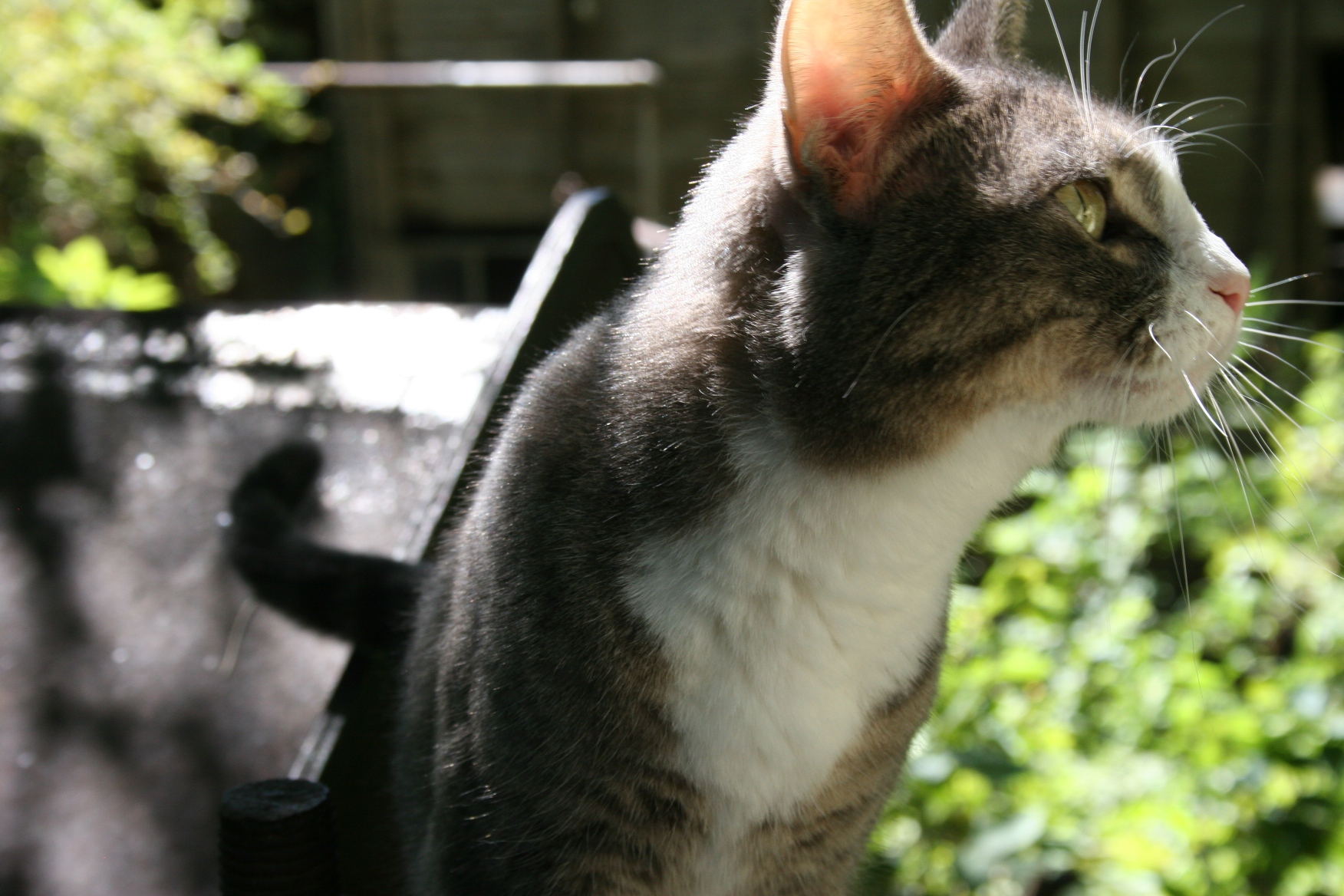
Cats roam the farm.

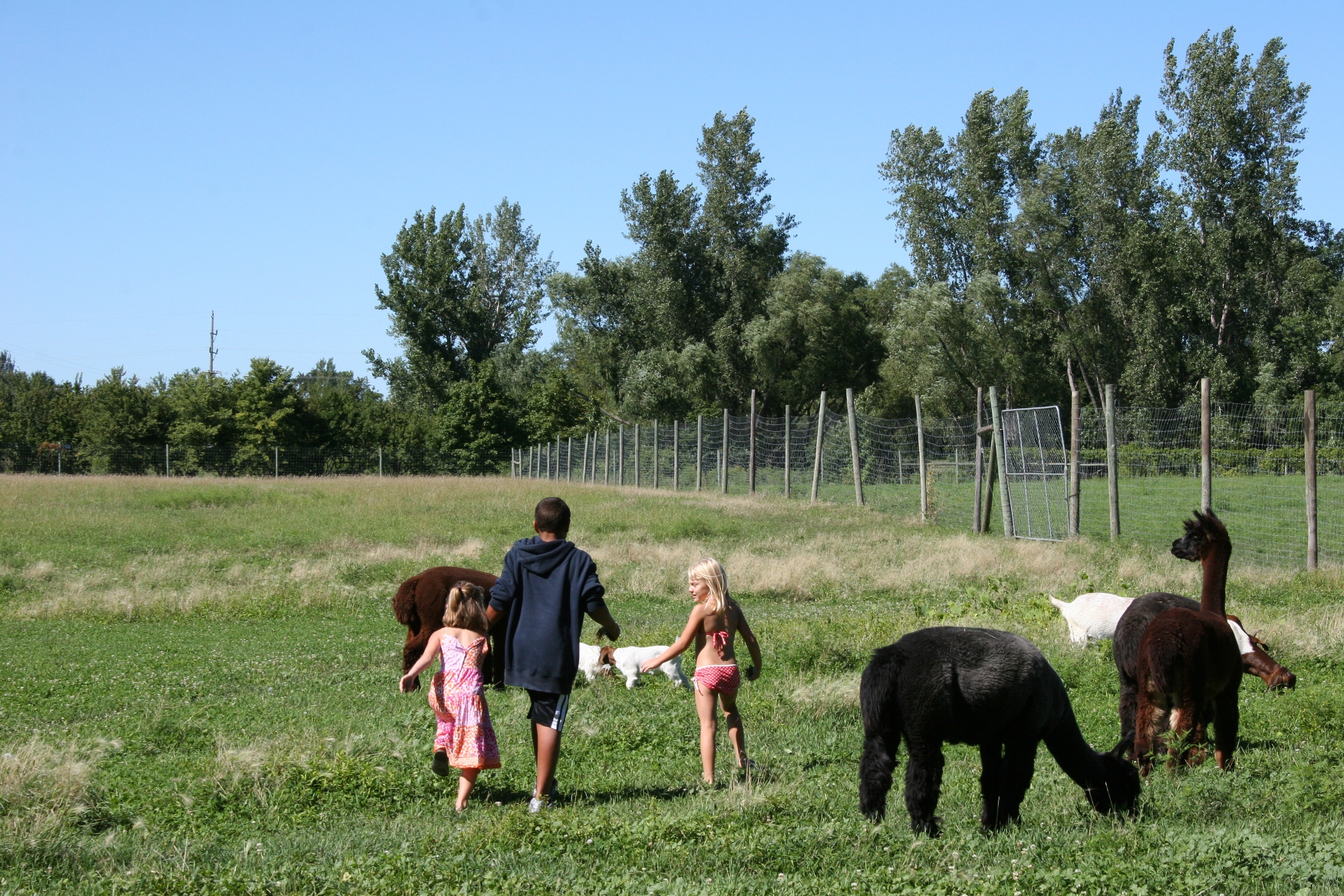
Then, perhaps, the younger farm visitors will be more interested in the historic buildings. They are, for now, focused on  the donkeys and alpacas, the goats and elk and dog, and especially, the cats and kittens. Or perhaps the playground equipment.

Visitors are free to wander the pasture with the alpacas, donkeys and goats.

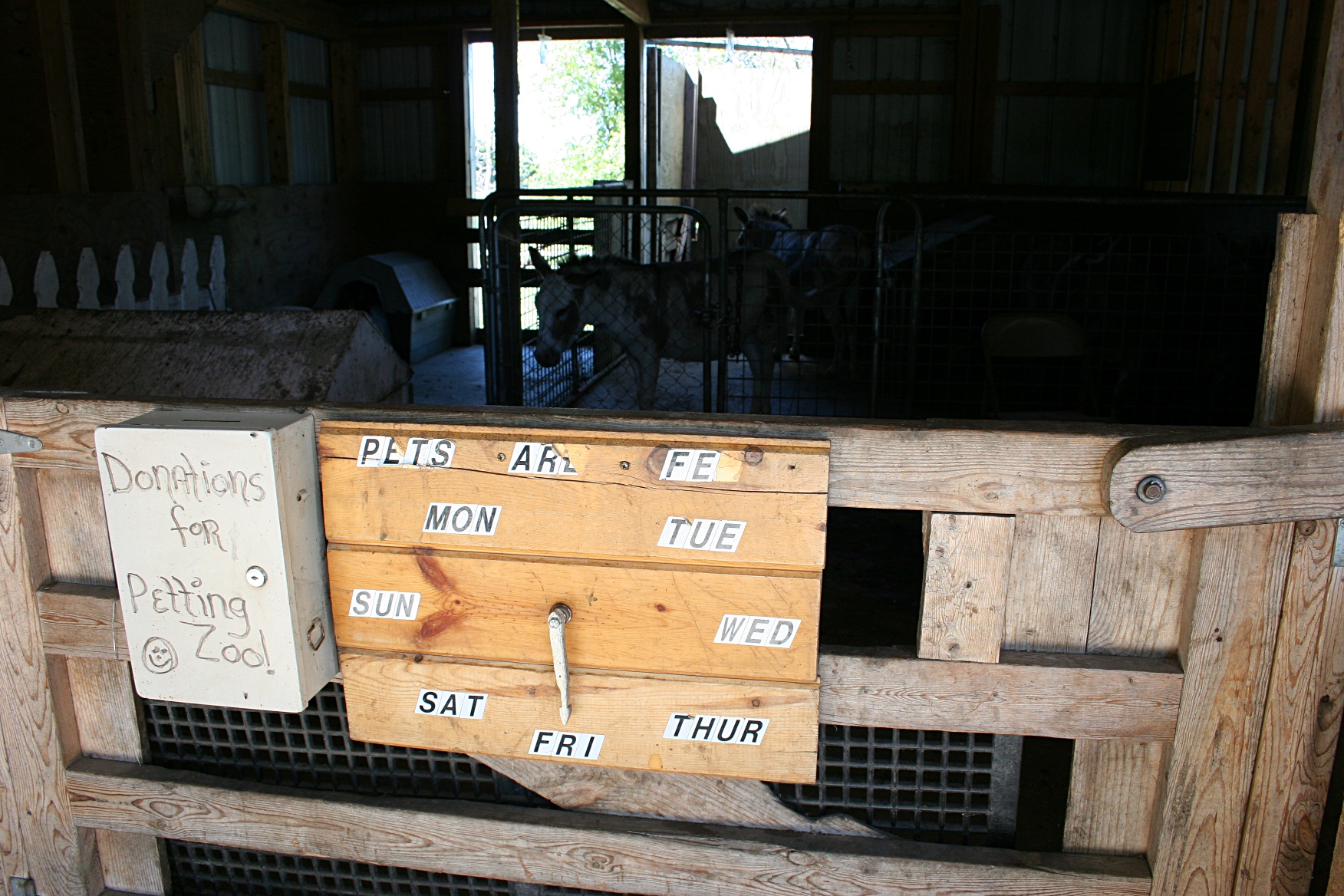
Loved this sign at the petting zoo telling visitors that the animals are fed daily.

The farm is open seven days a week to the 3,000 – 4,000 visitors who stop by annually, says Joyce Kaplan. The Kaplans may not always be around, but guests are invited to peruse the place on their own. Just follow a few rules like:

You can enter the petting zoo pens or pastures at your own risk. Please don’t allow children to chase the animals and no dogs allowed. Close gates behind you.

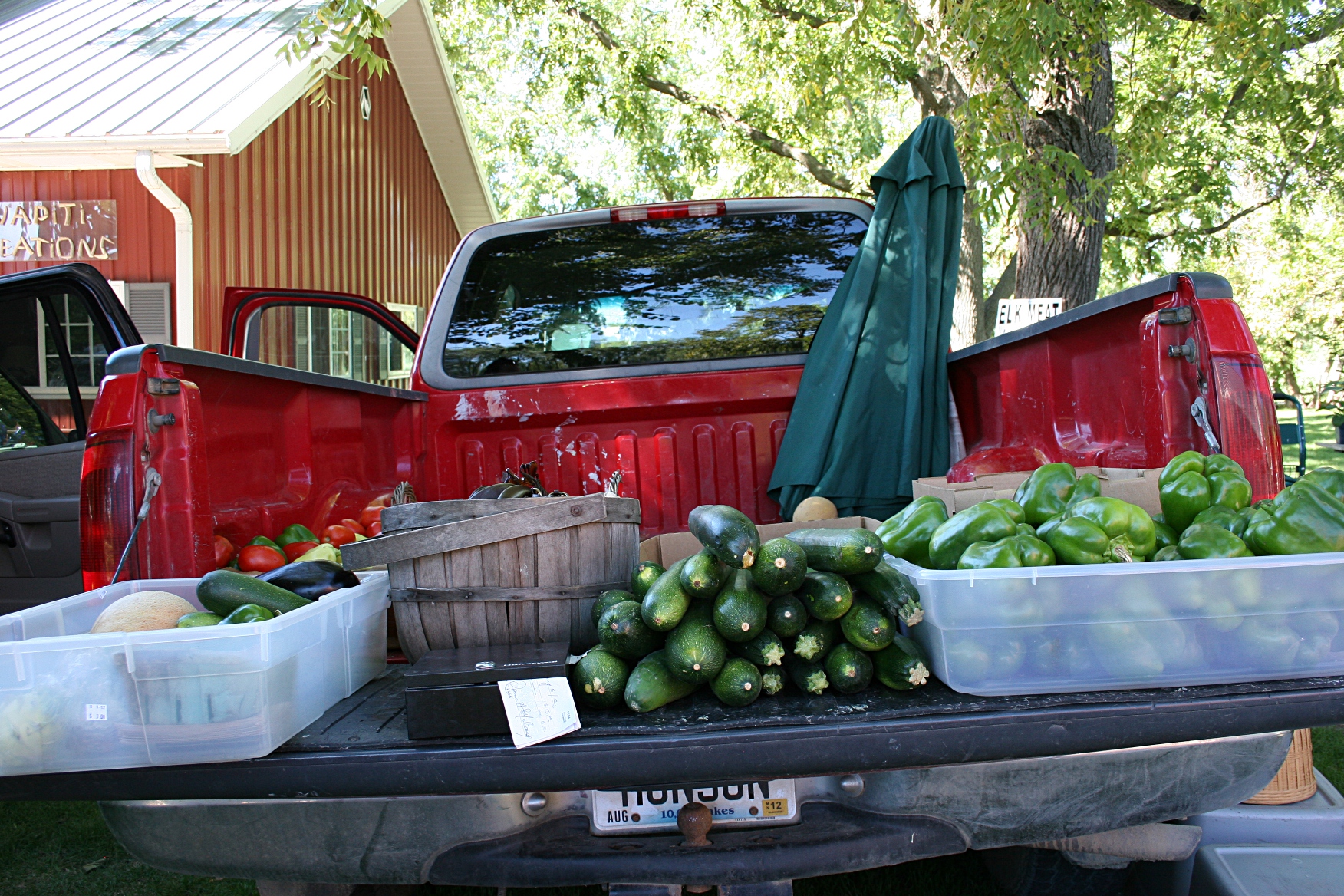
Veggies from R & C Produce of Otisco.

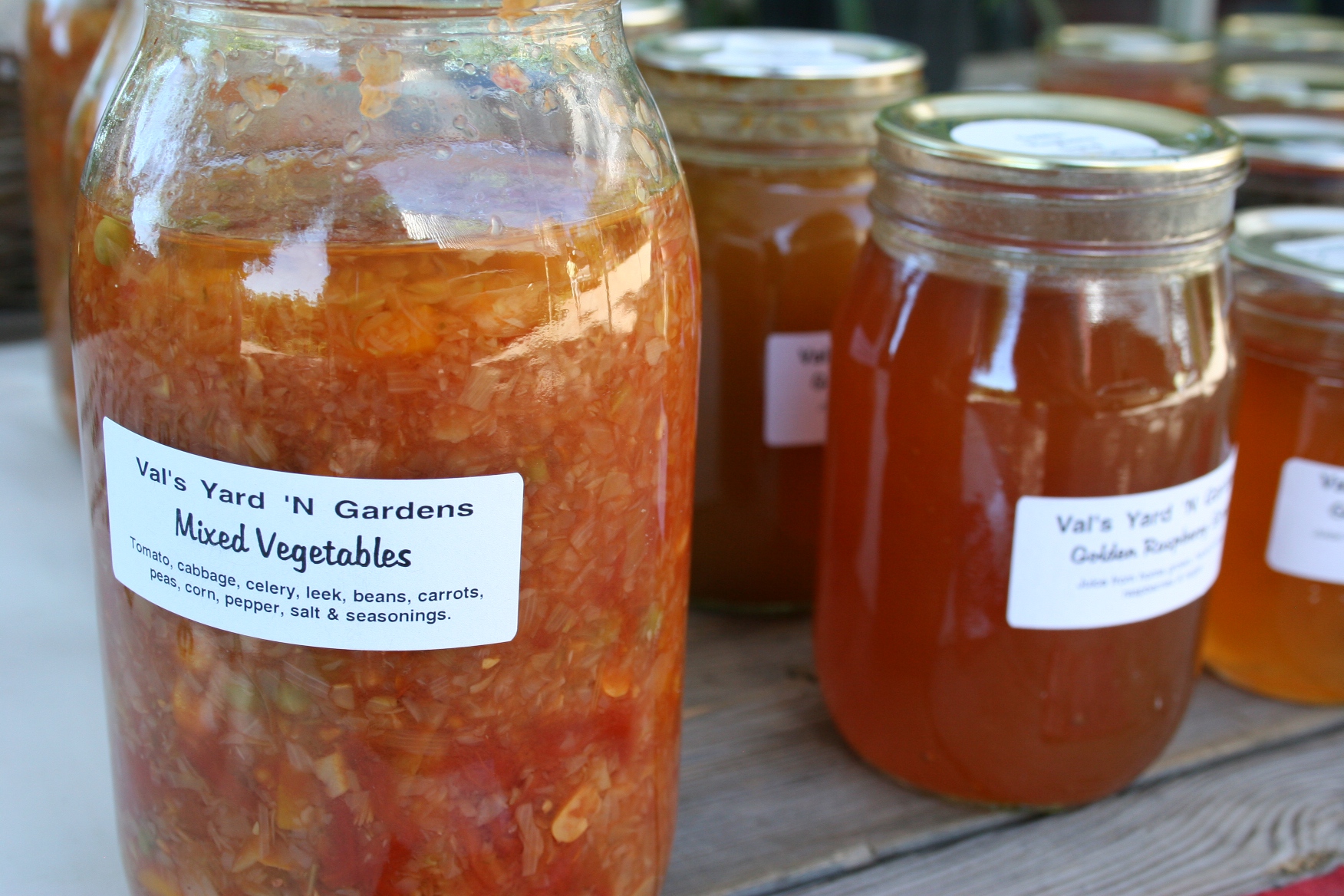
Canned mixed veggies from Val’s Yard ‘N Gardens (Joe & Val Zimprich of Le Center).

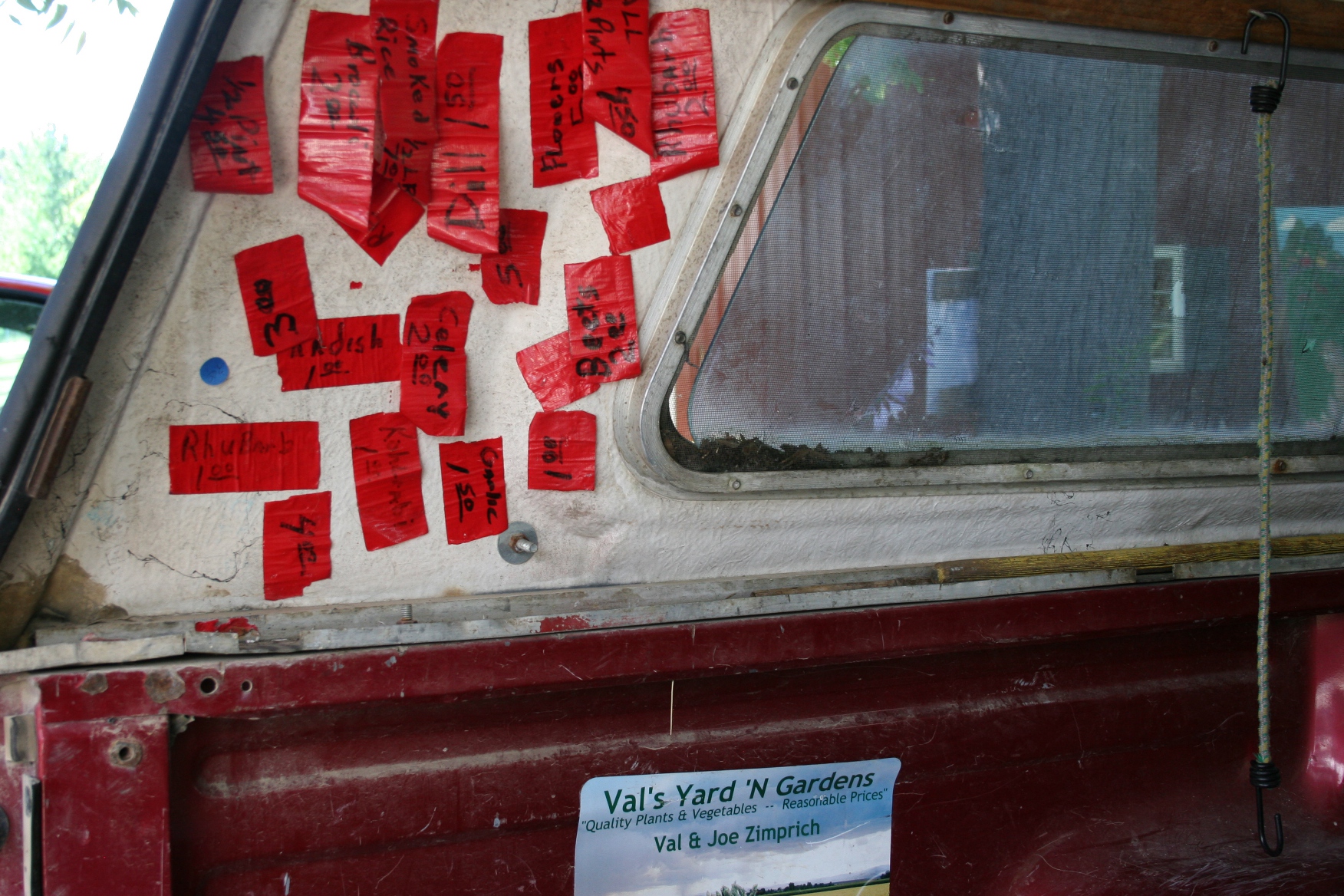
Reusable price stickers in the back of the Zimprichs’ truck.

While the farm is always open, on Sundays from 1 p.m. – 4 p.m. during the summertime harvest and into October, farmers’ market vendors set up in the farmyard peddling their garden fresh produce and other products.
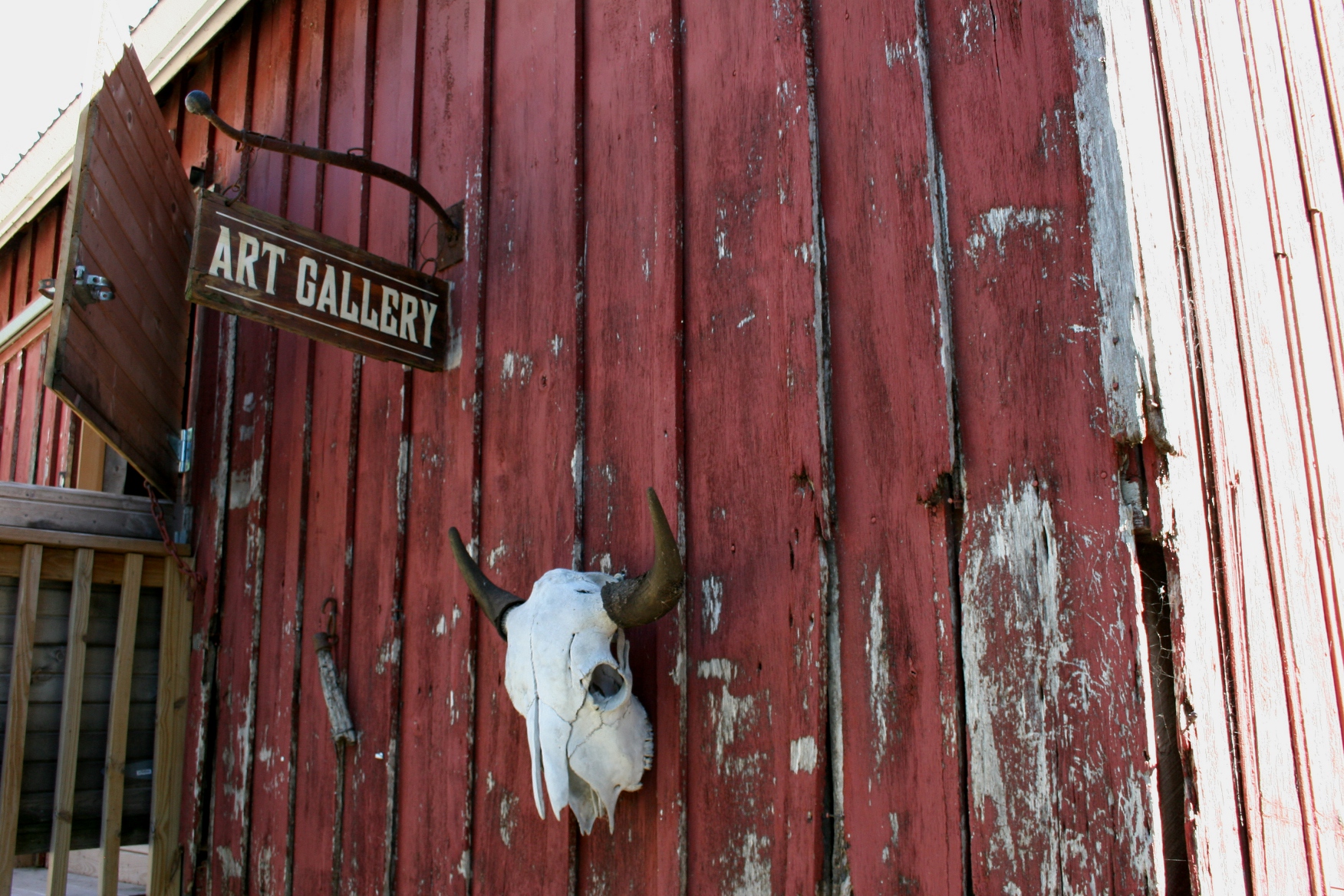
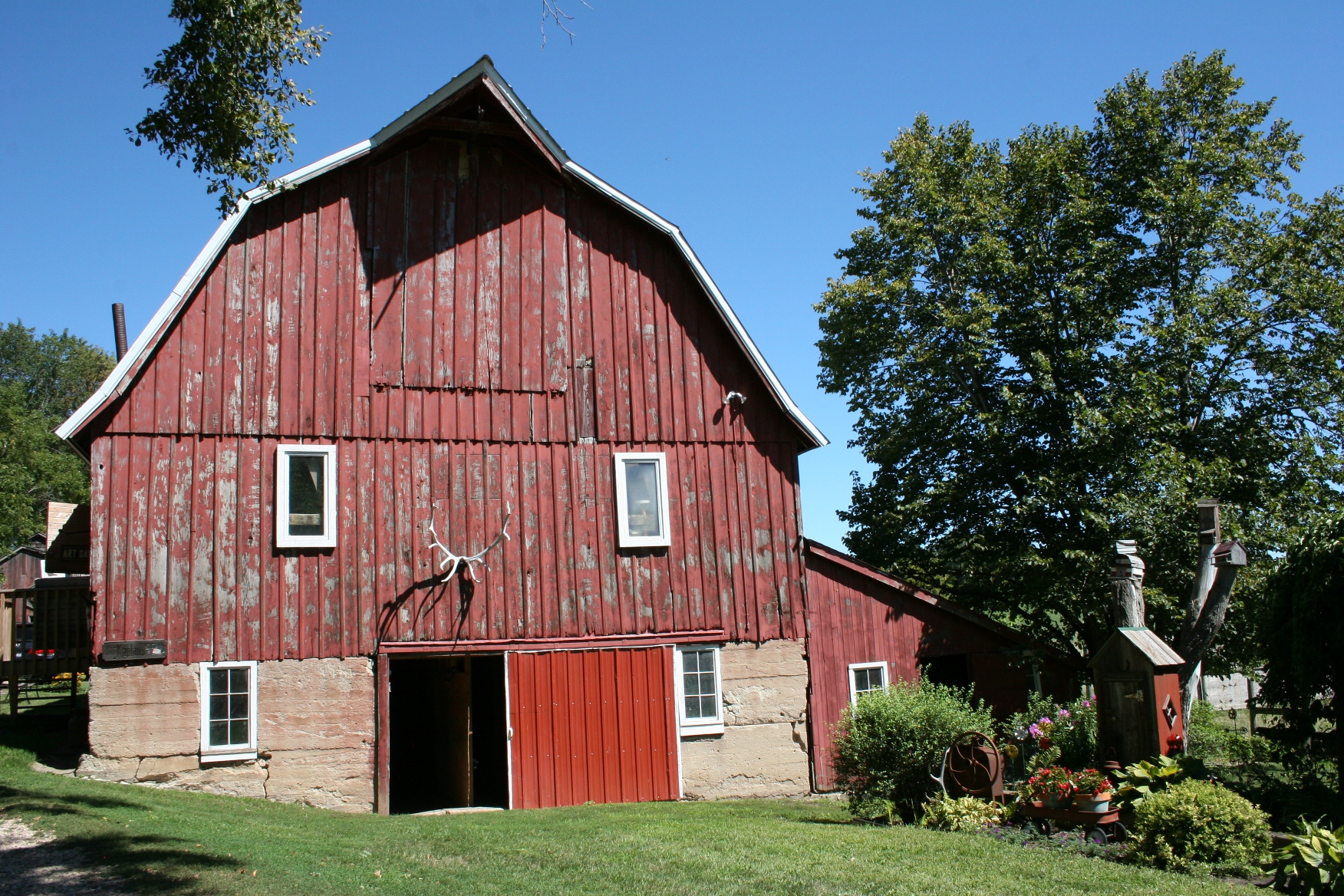
An art gallery is housed in an old barn.

That beautiful old barn, with an art gallery and studio in the haymow.

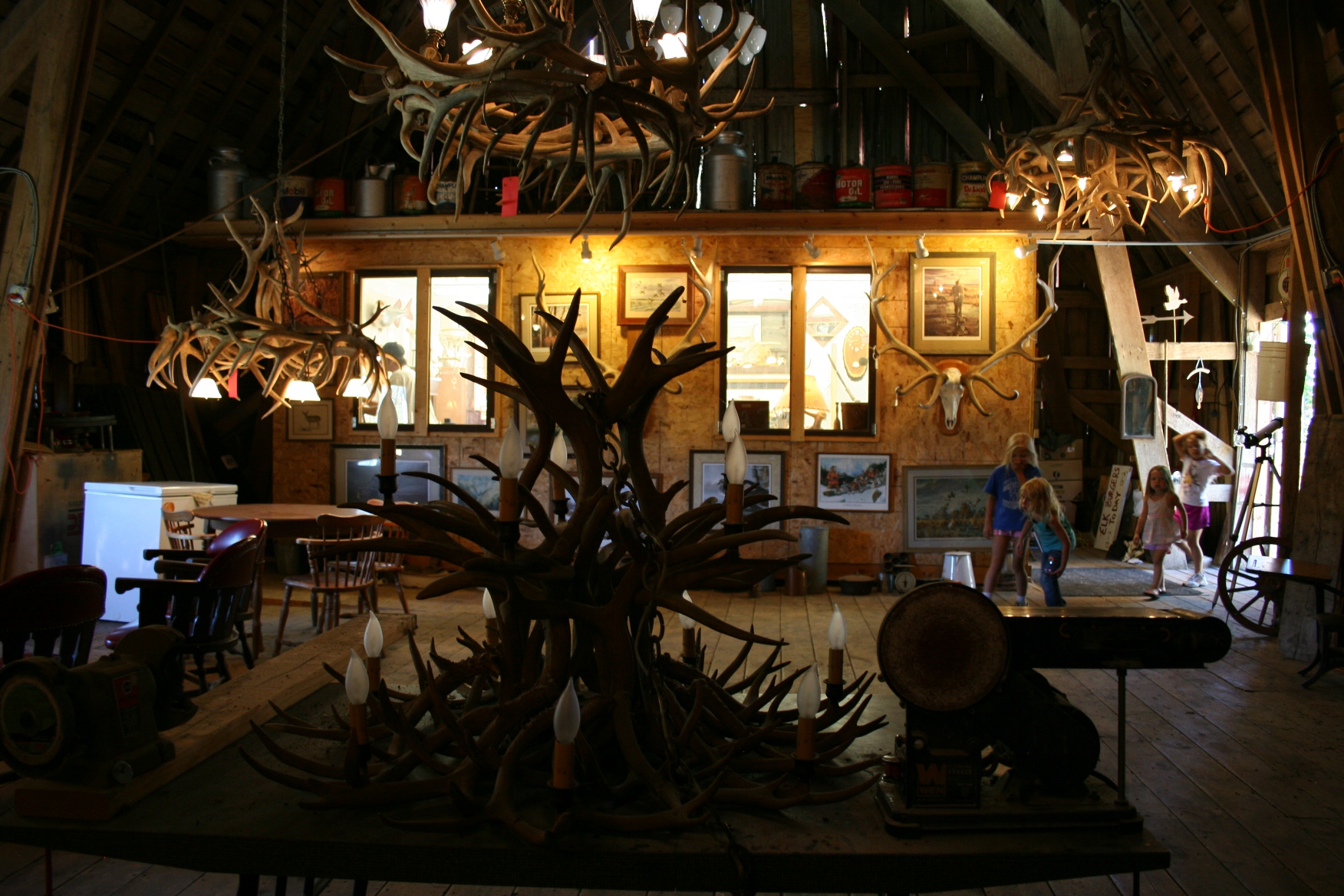
Antler art, including chandeliers, inside the art gallery with Paul Ristau’s art studio behind the windows pictured here.

Inside the gift shop and adjacent art gallery, you’ll find gifts anytime and the creations of artist and craftsman Paul Ristau, who renovates homes and businesses and is a mason specializing in stone fireplaces. He was doing some tile work for the Kaplans and ended up as their in-house artist focusing on the creation of antler art. He has a workshop in the haymow-turned-art-gallery where his elk antler chandeliers are a focal point.

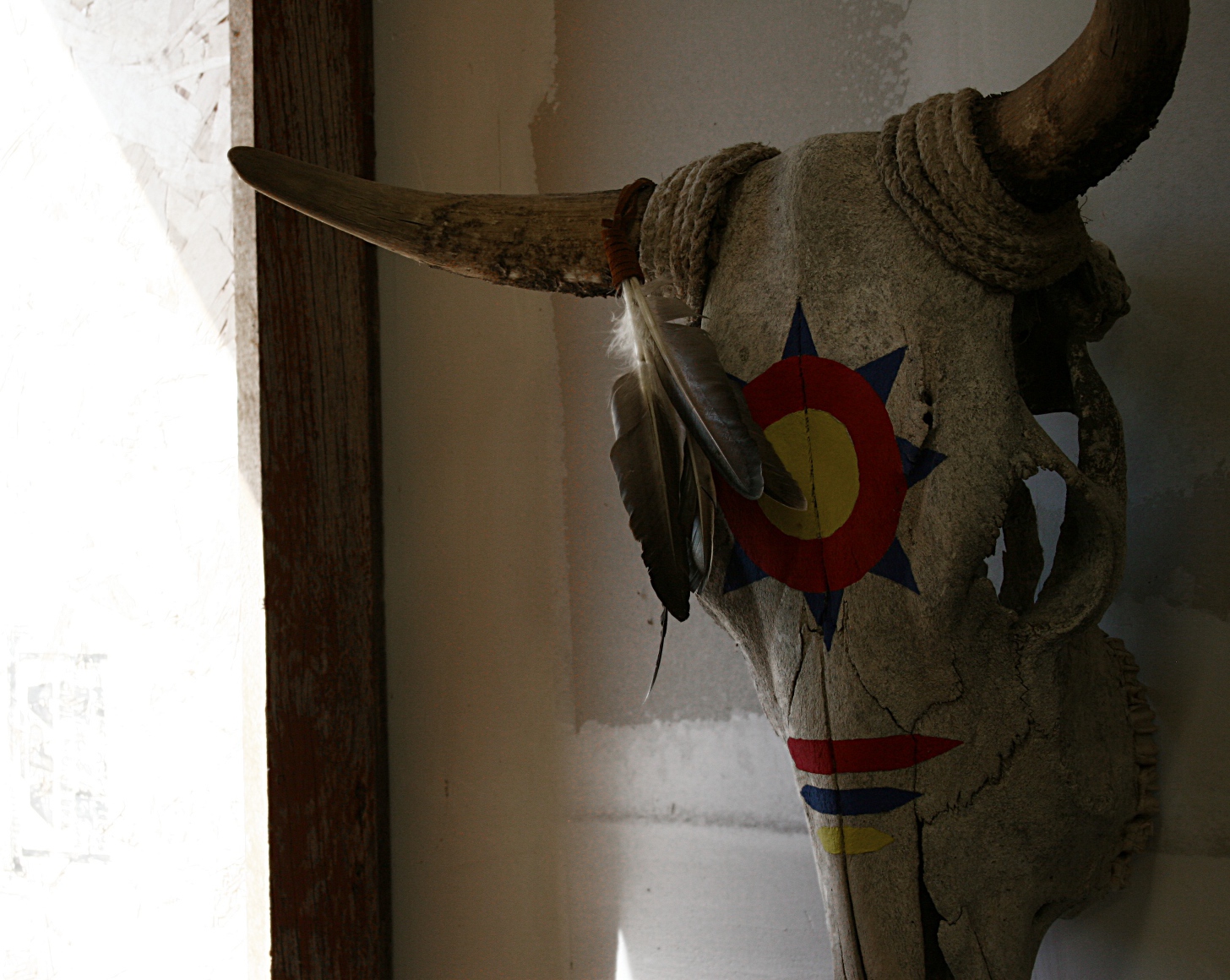
A Native American influence on art hung in Paul Ristau’s studio.

A Native American influence is visible in Ristau’s art given his interaction with those living on the White Earth Indian Reservation where he once drove bus.

Of course, the farm also sells elk meat, inside the original 1893 homestead. The farm is now down to 23 elk, according to Joyce Kaplan who says she grew up on a farm and has been cleaning barns all her life and maybe it’s time soon to stop cleaning barns.

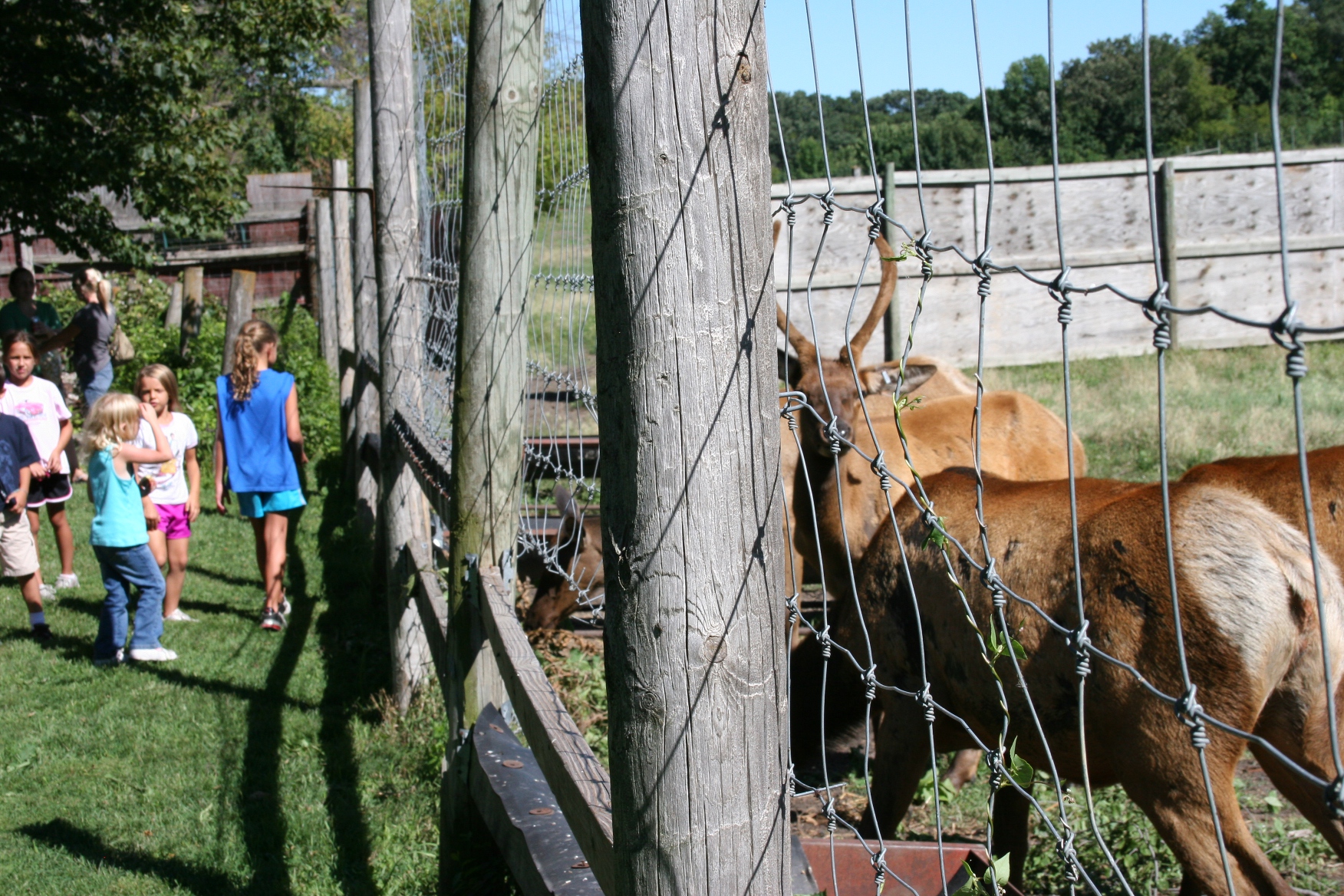
The final activity of the day, feeding apples to the elk.

On the Sunday I visited, her husband was handing out apples so the kids could feed the elk.

And the Okaman Elk Express was chugging along the shoulder of the roadway, thrilling the kids and, bonus, drawing in visitors like my husband and me.

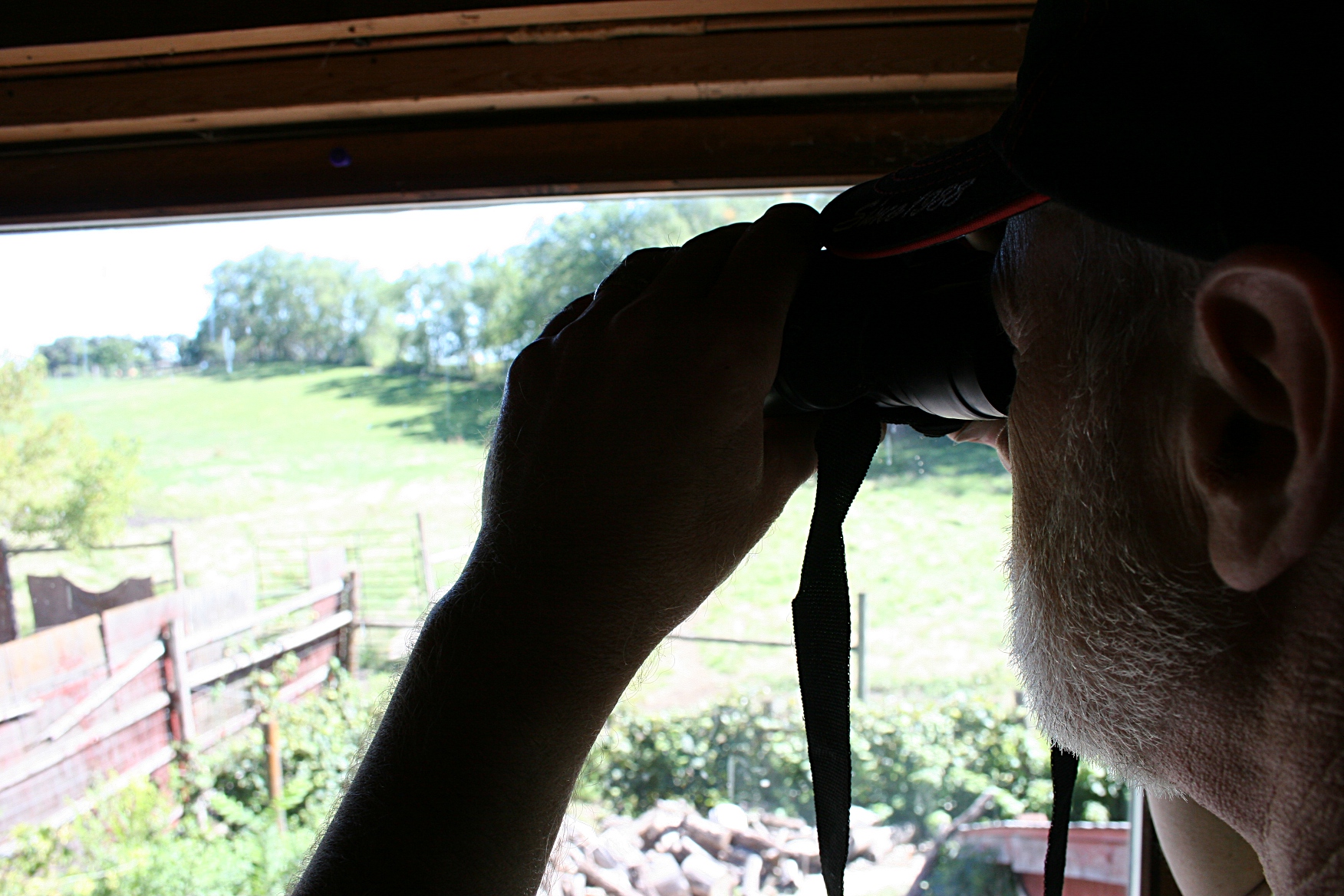
You’ll find binoculars in the barn to view the elk in the pasture.

FYI: To find Okaman Elk Farm, take Minnesota Highway 60 east of Elysian 1 ½ miles and then turn south to the intersections of Waseca County roads 3 and 5. The farm is open year-round. Click here to reach the farm’s website.

© Copyright 2012 Audrey Kletscher Helbling