Minnesota Prairie Roots

Writing and photography by Audrey Kletscher Helbling

Exploring the magic of Appleton, Wisconsin November 7, 2013

IN THE PAST THREE YEARS, since my second daughter moved to Appleton, Wisconsin, to start her job as a Spanish medical interpreter, I’ve enjoyed exploring the Fox Valley area south of Green Bay and an hour west of Lake Michigan.
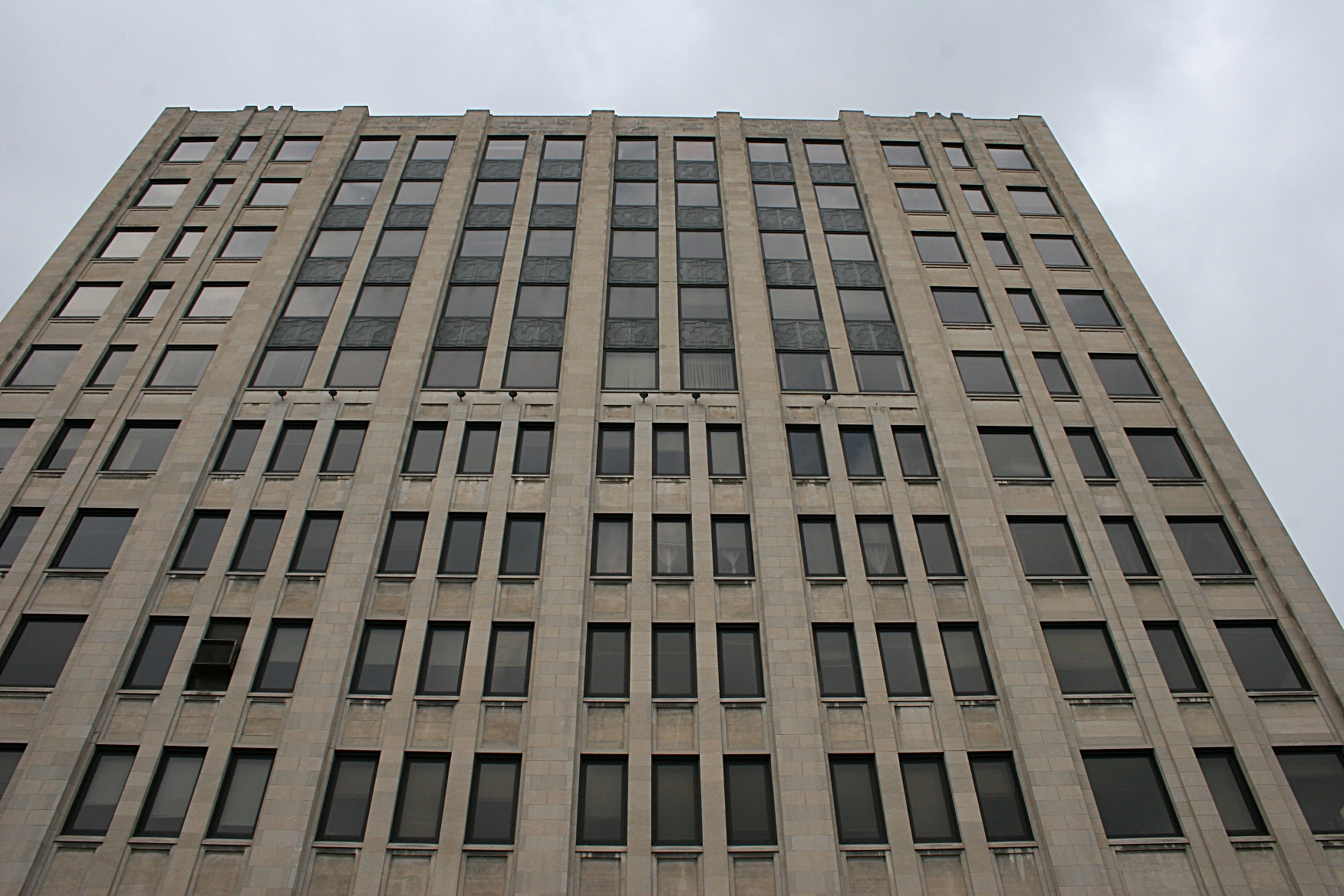
I remember my first visit to downtown Appleton, where this building is located, and my surprise at seeing tall buildings located there.

I remember my first visit to downtown Appleton, where this building is located, and my surprise at seeing tall buildings located there.

Although I’ve tried to convince Miranda to relocate nearer than 300 miles from her hometown, I understand why she’s reluctant to leave Appleton. From my observations, this metro region of some 236,000 residents in 19 communities along the Fox River appears to have a lot going for it in a landscape and lifestyle that can change quickly from urban to rural.
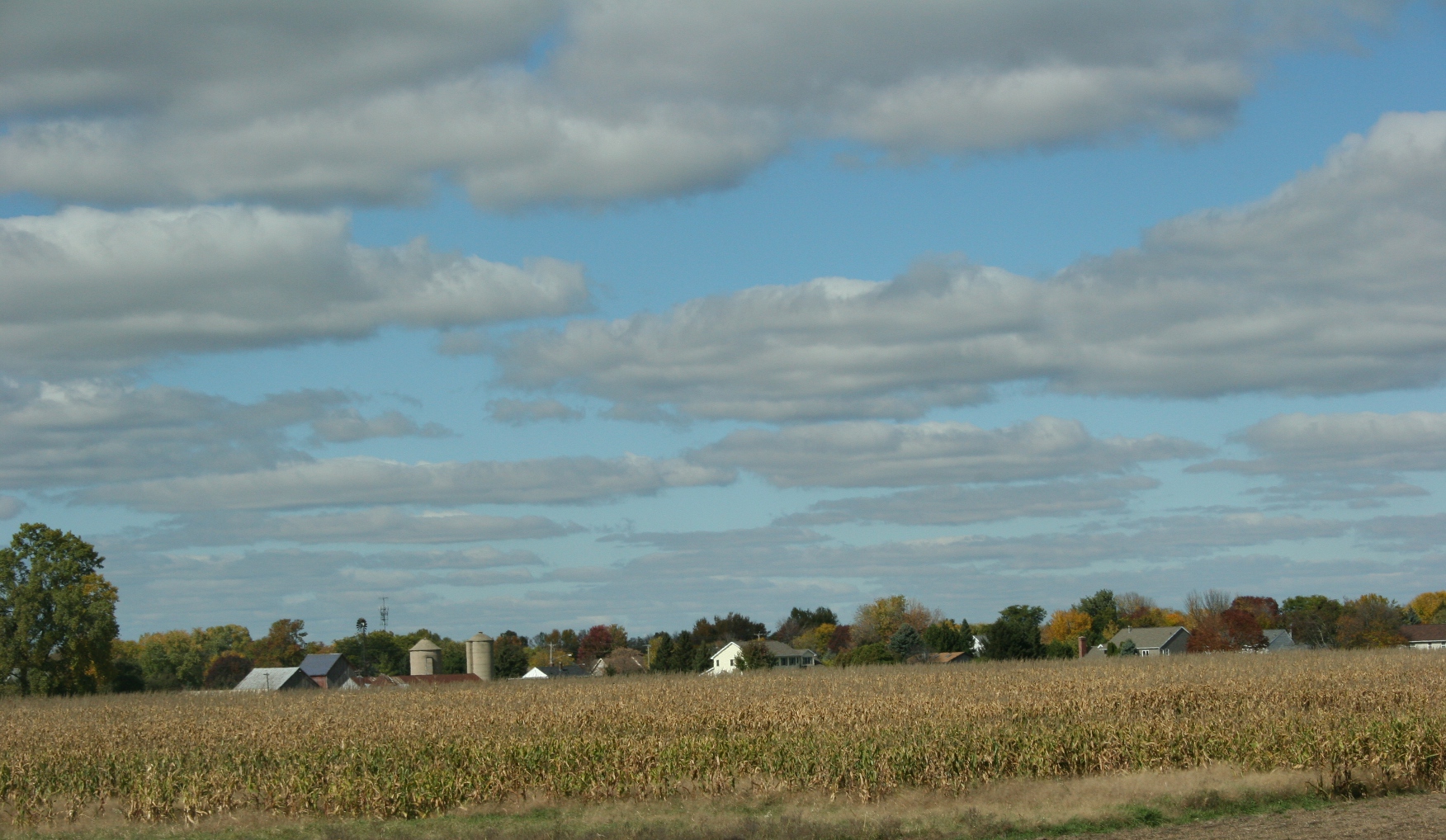
A farm place in the middle of urban housing on the north edge of Appleton, in Grand Chute if I'm correct.

A farm place in the middle of urban housing on the north edge of Appleton, in Grand Chute if I’m correct.

This is a busy and growing region, but one which has not lost its rural roots connection.
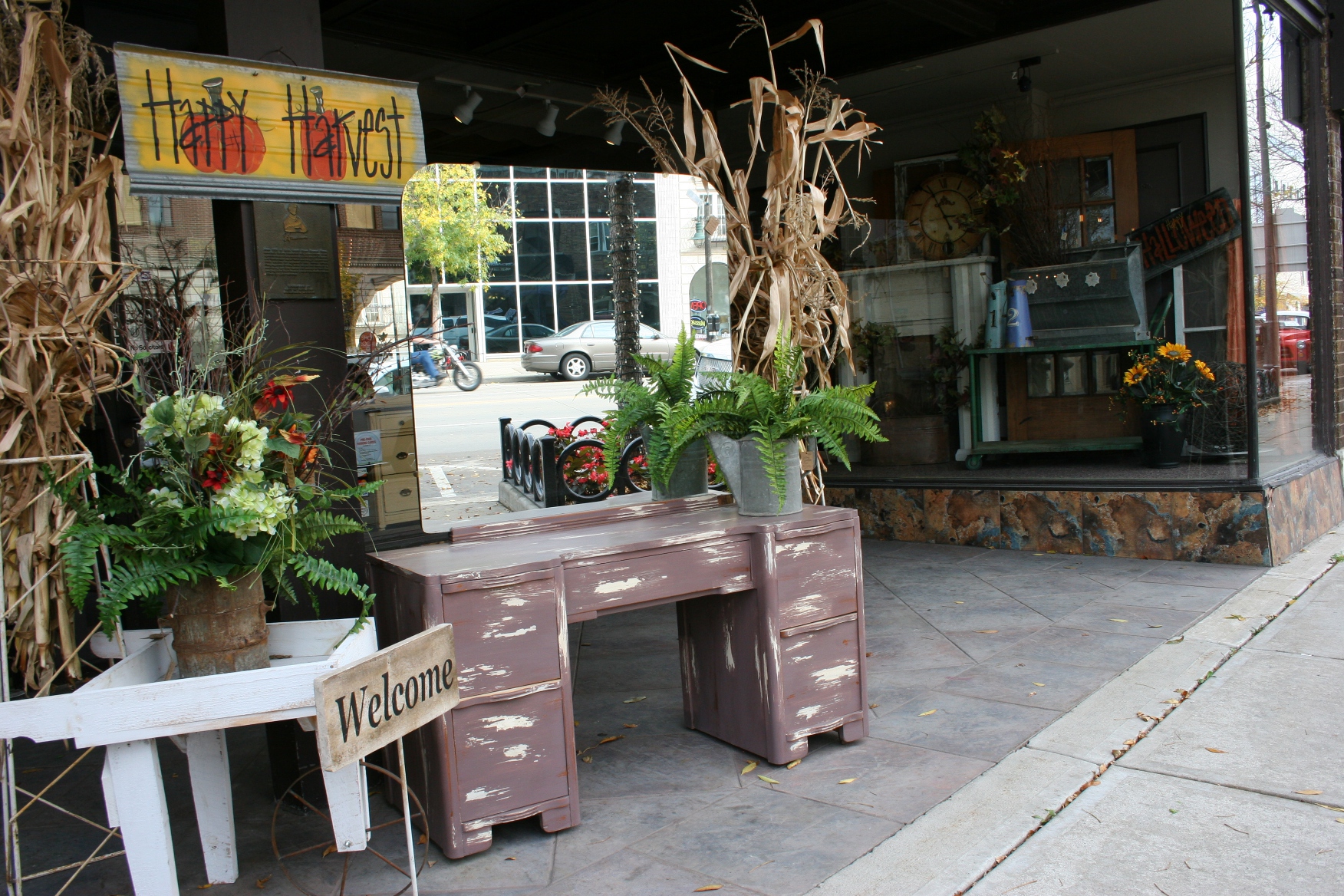
A display outside a downtown Appleton gift shop.

A display outside a downtown Appleton gift shop.

Although I’m not much of a shopper, there’s an abundance of shopping options from the Fox River Mall to one-of-a-kind local shops in the heart of an historic downtown. Plus, Appleton has a fantastic farmers’ market, which I’ve perused twice.

Cheese shops. Check. I’ve been to Simon’s Specialty Cheese and Lamers Dairy.
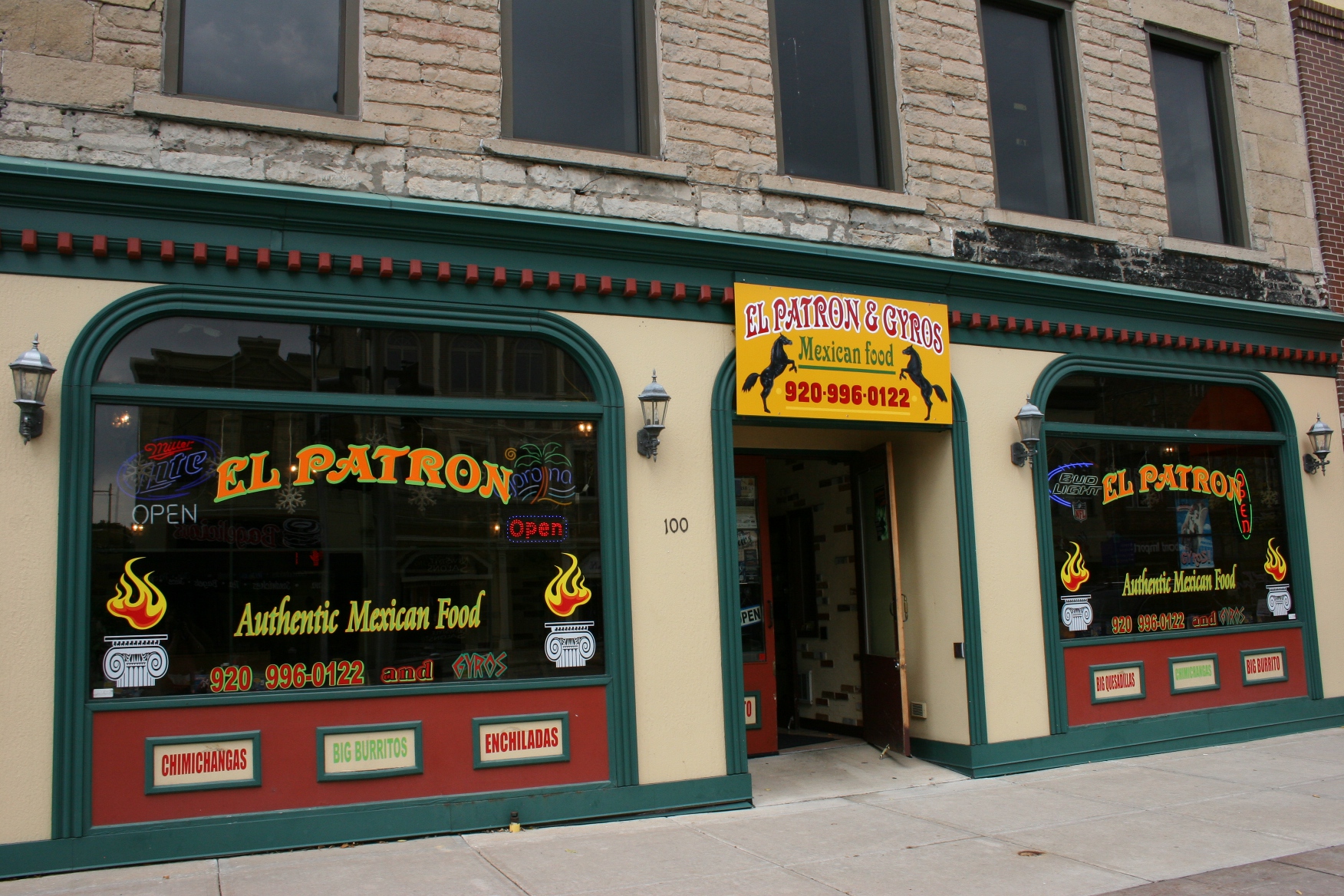
Ethnic and other dining choices abound in the Appleton area.

Ethnic and other dining choices abound in the Appleton area.

Great places to eat, too, like the best pizza accompanied by on-site brewed beer at the Stone Cellar Brewpub and delectable Indian cuisine at Sai Ram. Whenever my brother-in-law Marty, a long distance trucker, travels to Appleton, he’ll phone Miranda and she’ll pick him up and they’ll go to the Stone Cellar for pizza.
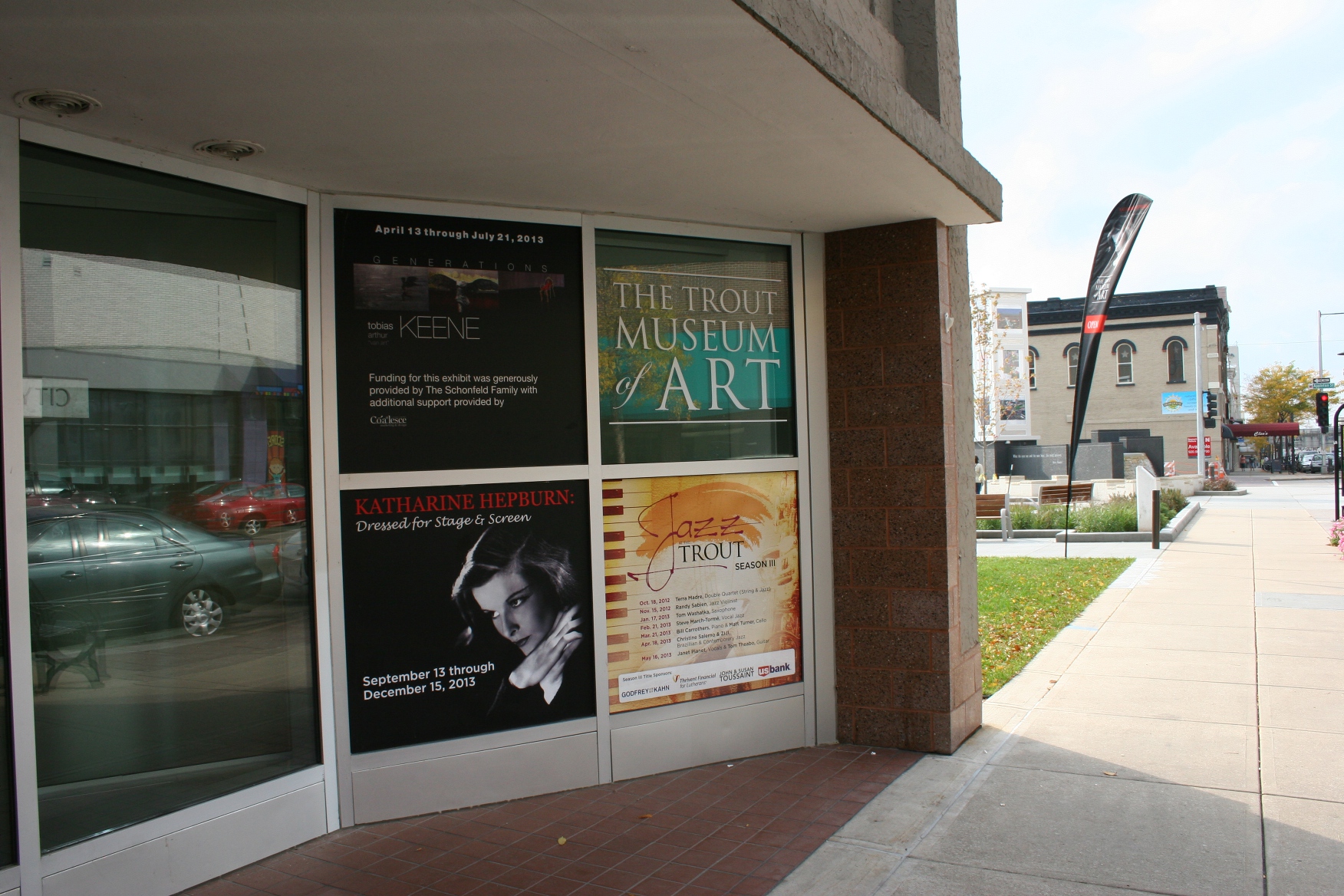
Now showing at The Trout Museum of Art, a collection of Katharine Hepburn's costumes.

Showing until December 15 at The Trout Museum of Art, a collection of Katharine Hepburn’s costumes.

On our most recent trip to Appleton, we not only celebrated my husband’s birthday at the Stone Cellar, but earlier in the day explored nearby High Cliff State Park and afterward checked out the Katharine Hepburn: Dressed for Stage and Screen exhibit at The Trout Museum of Art. Appleton offers plenty of cultural opportunities at places like the Fox Cities Performing Arts Center (which I have yet to visit and which my daughter wishes had more affordable ticket prices) and Lawrence University.

For some time now, I’ve wanted to visit the Trout. The museum’s name has nothing to do with fish, but with Dr. Monroe and Sandra Trout, who gifted 150 museum quality works of art and left a $1 million endowment. I was excited to see the Trout Collection.

But it was not to be. Apparently I misunderstood the information on the Trout website and the only collection shown was Katherine Hepburn’s costumes on loan from the Kent State University Museum in Ohio. Now if I was into film and Hepburn and fashion, this certainly would have held my interest. But I am not, nor are my husband and daughter. We breezed through the exhibit in 30 minutes under the scrutinizing watch of a security guard. When I asked if there was more to the Trout, the man at the admissions desk said we’d seen it all.

OK, then. To add to my disappointment, no cameras were allowed inside the Hepburn exhibit. I rather expected that, but I was hoping otherwise.
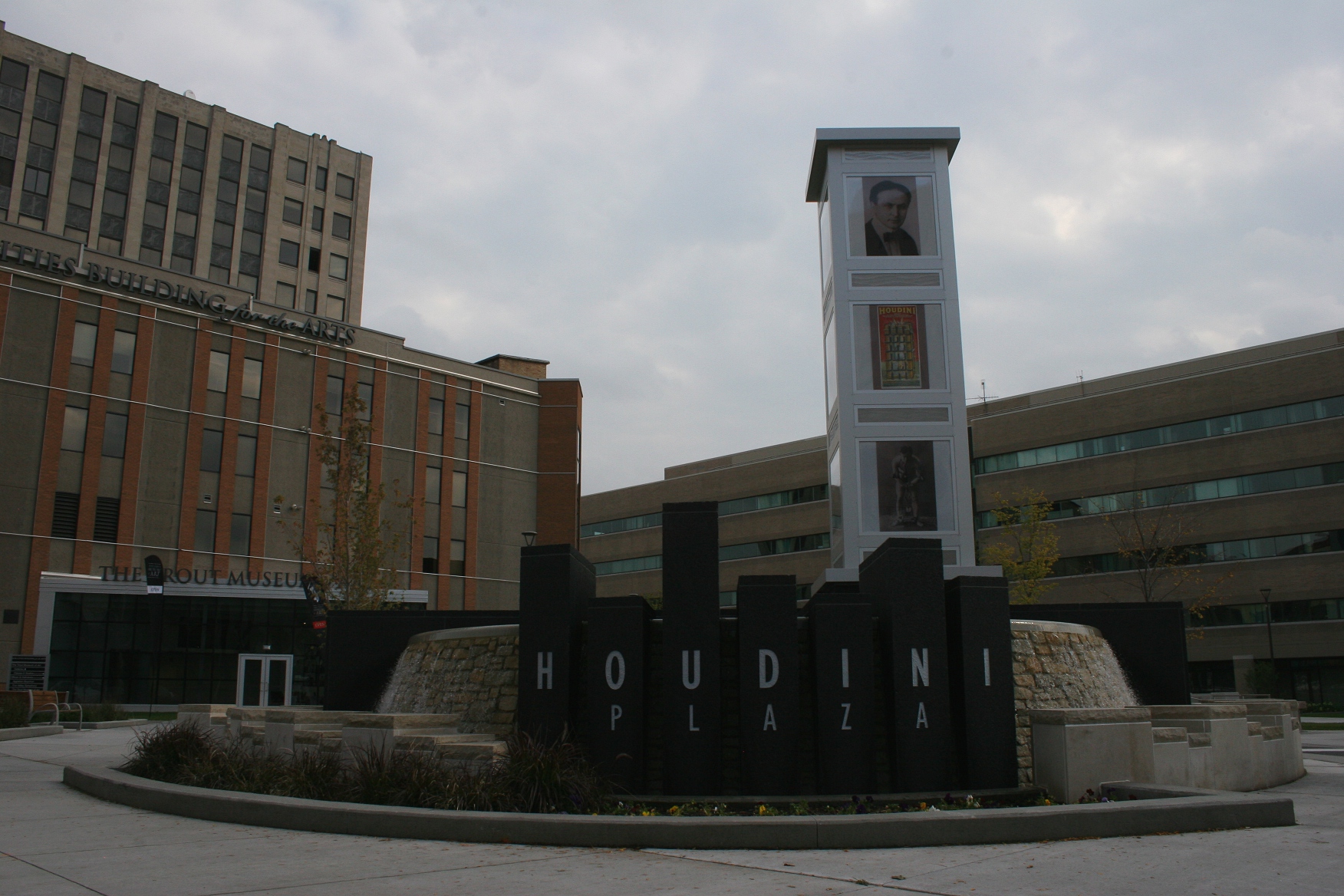
The recently revamped Houdini Plaza, a central gathering spot in downtown Appleton that features summer concerts, etc.

The recently revamped Houdini Plaza, a central gathering spot in downtown Appleton that features summer concerts, etc.

I settled for shooting photos outside the Trout of the beautiful new Houdini Plaza, honoring escape artist Harry Houdini who called Appleton his childhood home. A permanent exhibit on Houdini is housed in the nearby History Museum at the Castle, where I once saw an interesting Leonardo da Vinci exhibit.

I wish we’d gone to the Castle to tour the current temporary exhibit, Food: Who We Are and What We Eat. That might have been entertaining considering I’ve spotted green and gold brat buns at Festival Foods in Appleton.

If I’ve learned anything in the past three years about Wisconsin, it’s that Wisconsinites like love their beer, brats and Packers.

BONUS PHOTOS:
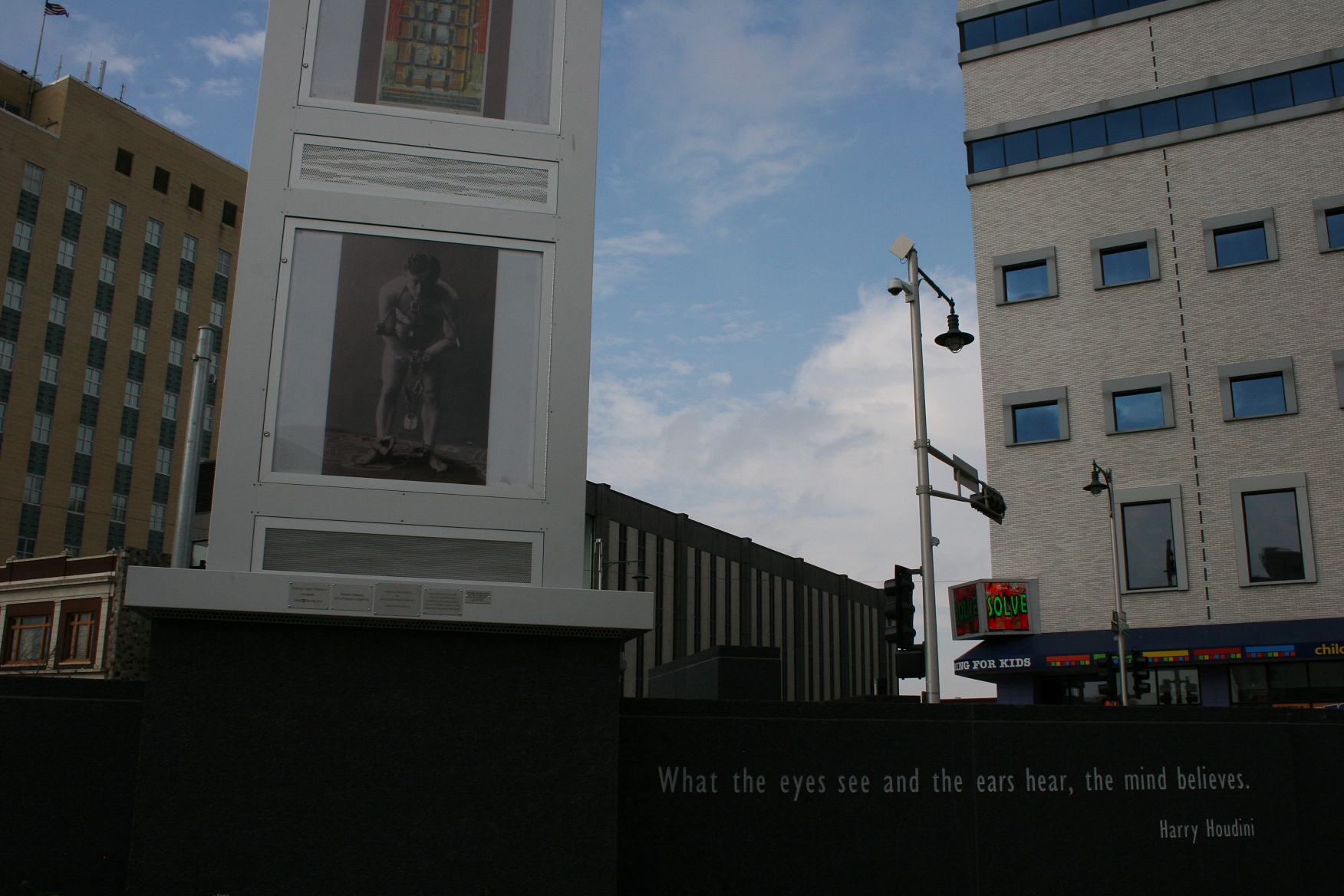
Details on Houdini Plaza.
Details on Houdini Plaza.

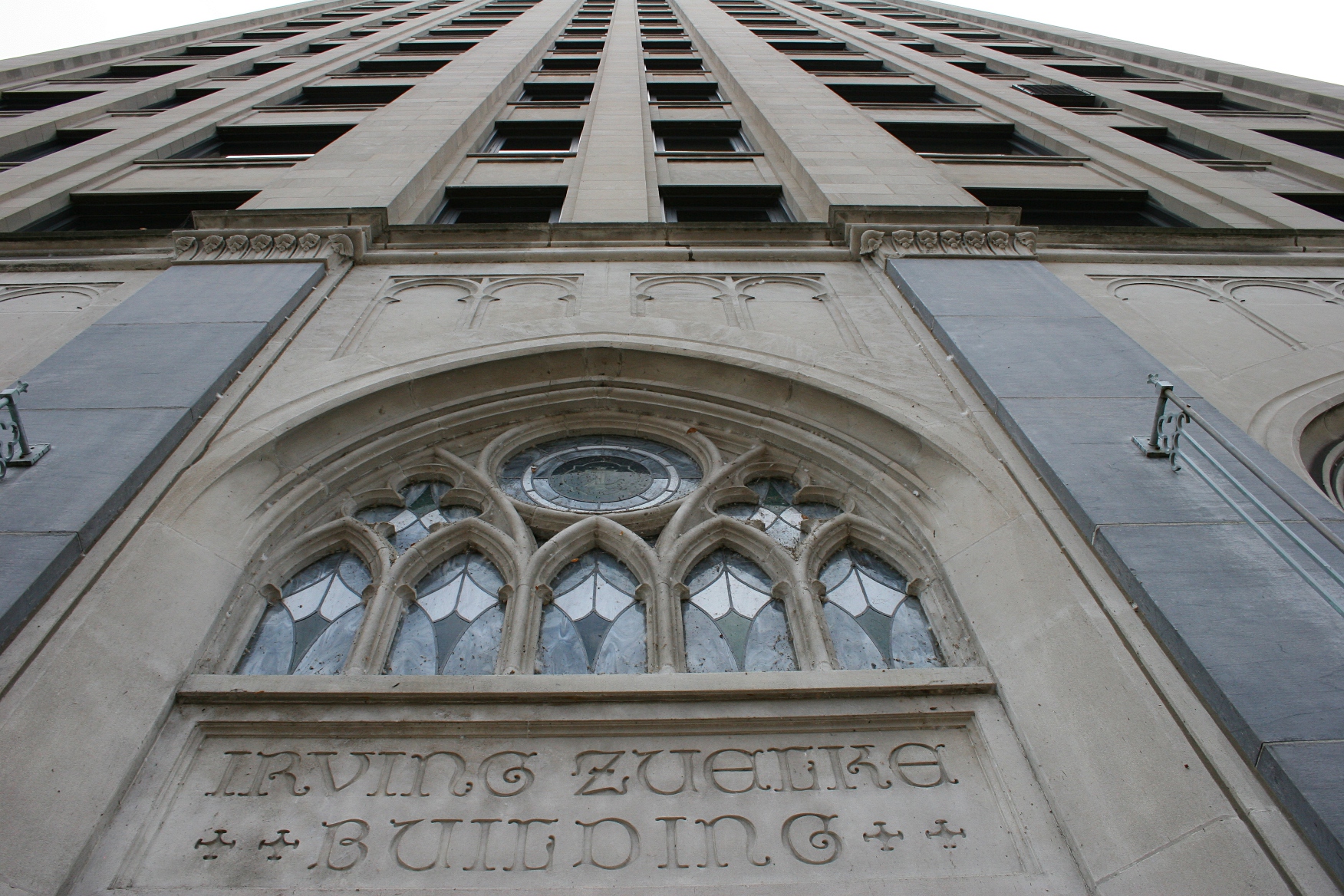
Steel, stone, marble and brass comprise the first seven floors of the Irving Zuelke building constructed in  1931. An additional five stories were added in 1951.

Steel, stone, marble and brass comprise the first seven floors of the Irving Zuelke building constructed in 1931. An additional five stories were added in 1951.
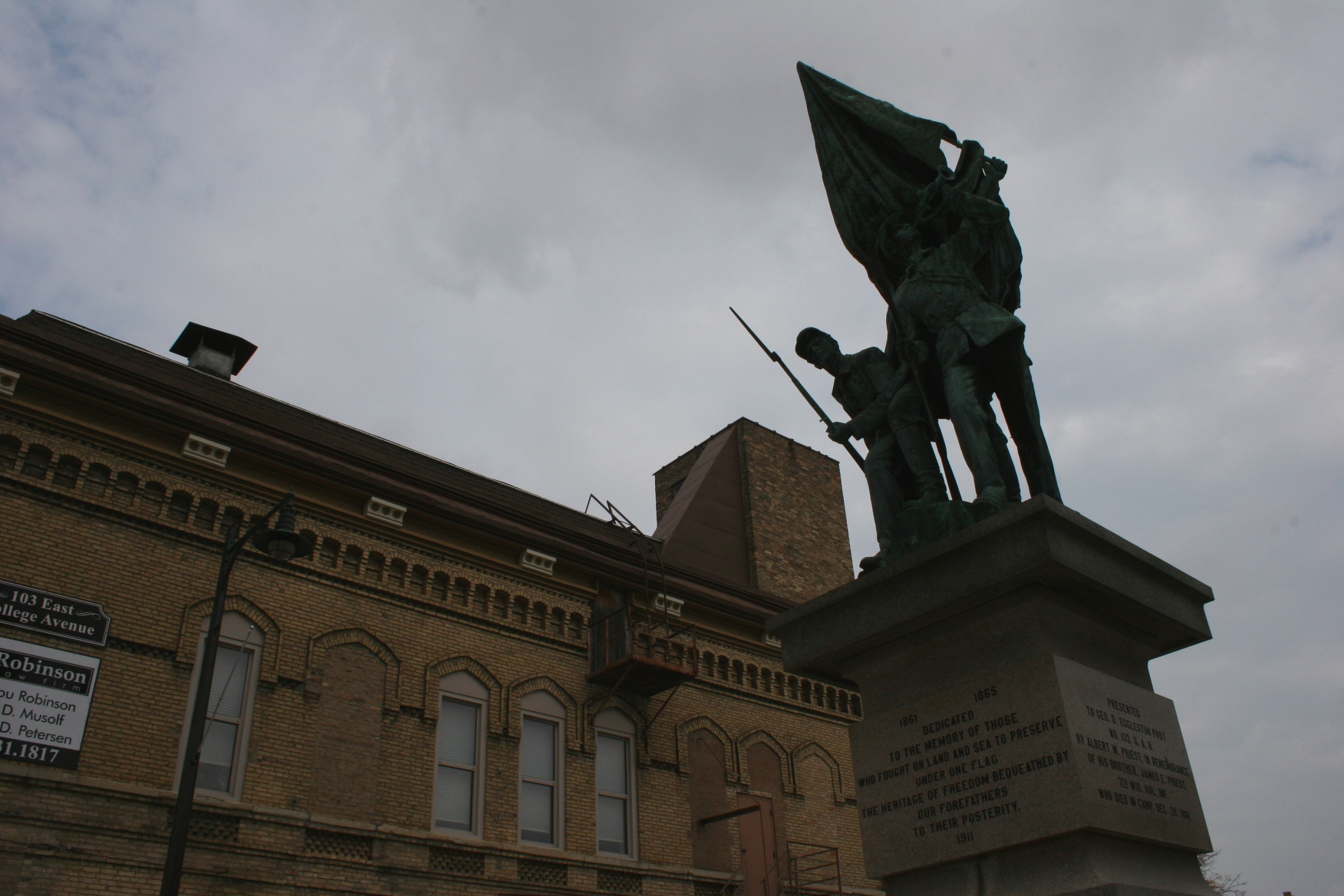
I discovered this bronze monument to Civil War Union soldiers near Houdini plaza, tucked between a parking ramp and a building.

I discovered this bronze monument to Civil War Union soldiers near Houdini Plaza, tucked between a parking ramp and a building.

FYI: To read previous posts from Appleton, and there are many, simply type Appleton into the Minnesota Prairie Roots search engine. Also, photo ops on this visit to downtown Appleton were limited given the intermittent rain.

© Copyright 2013 Audrey Kletscher Helbling


My thoughts on the changing streets of Faribault November 6, 2013

Filed under: Uncategorized — Audrey Kletscher Helbling @ 6:00 AM
Tags: , , , , , ,

I DON’T LIVE on a Bay, a Circle or a Drive.

I live along Willow Street.

That alone should tell you that my home sits in an old neighborhood. After all, cities don’t name streets after trees anymore or even attach the word “street” to a new roadway. If there are willows growing along my street, I haven’t noticed them.

But I’ve noticed, in the 29 years my husband and I have been in our modest three-bedroom, one-bath Willow Street home, that there’s a certain stigma attached to our arterial street, to our part of Faribault.

And I’m not happy about that.

For example, a few evenings ago, we joined friends around a backyard bonfire. The conversation ebbed and flowed with intermittent laughter, until a friend remarked, “I see your neighborhood is getting more diverse.” I knew the comment stemmed from a drive-by shooting several months ago within two blocks of my home.

These young Somali women represent the changing face of Faribault. Minnesota Prairie Roots file photo.

These young Somali women represent the changing face of Faribault. Minnesota Prairie Roots file photo.

My defenses kicked in and I was prepared for an unpleasant exchange about the ever-growing cultural diversity of Faribault and the perceived “problems” in my neighborhood. My husband responded and the topic was dropped. I didn’t find myself, once again, championing for those of color, although you’ll never find me defending criminal behavior committed by anyone, whether white, black, green or purple.

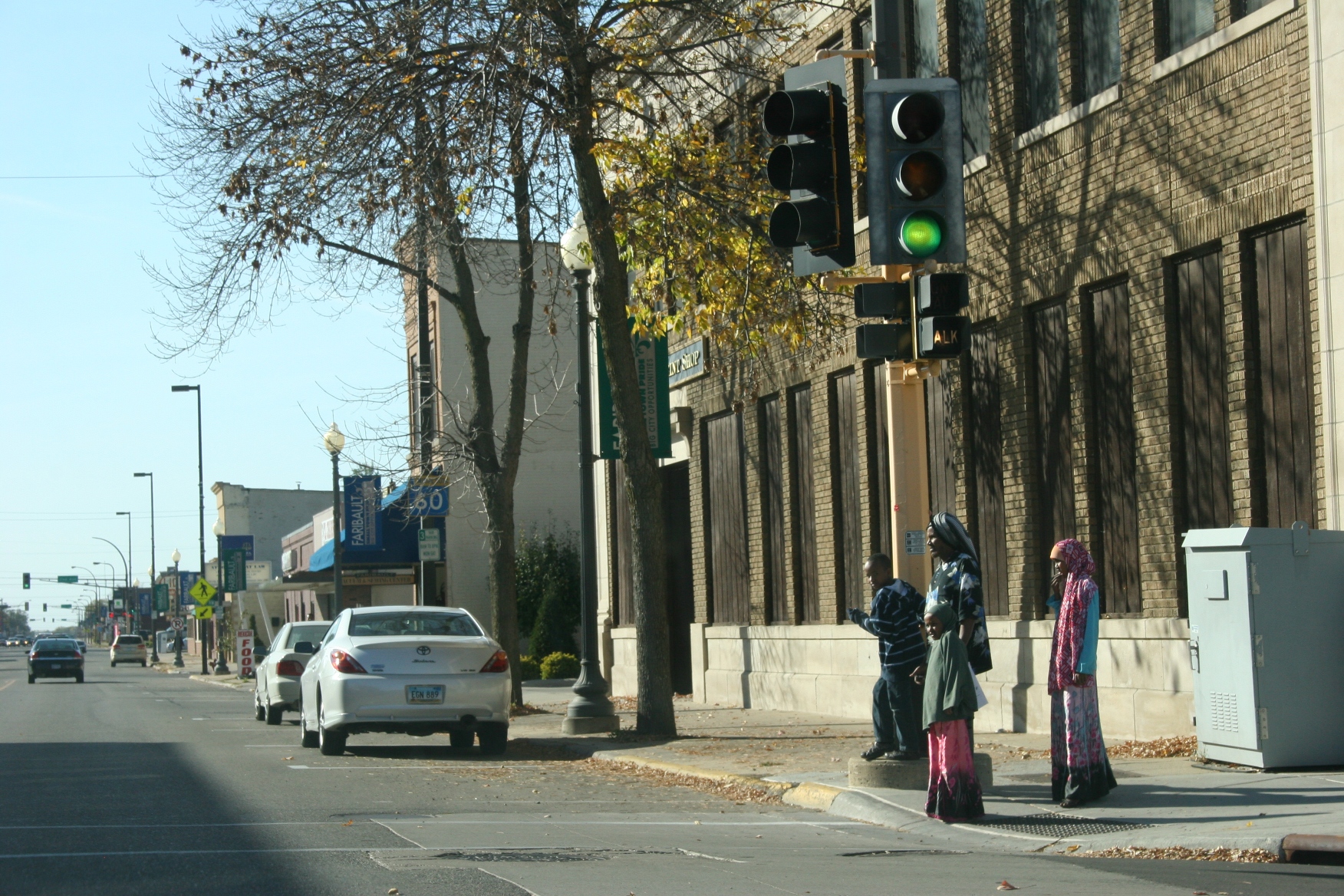
In this file photo, a Somali family waits to cross a downtown Faribault street.

A Somali family in downtown Faribault. Minnesota Prairie Roots file photo.

Honestly, I tire of the underlying, and often blatant, prejudicial jabs I hear and read about in my community. The Hispanic, Somali, Sudanese, Asian, African American and other minorities who now call Faribault home are here to stay. And some of them happen to live in my neighborhood. So what? Does this make my neighborhood less desirable? Apparently to some. Not to me, unless these neighbors disrupt the neighborhood with illegal and/or undesirable criminal activity and/or behavior.

And, believe me, I’ve had “bad neighbors” whose skin is white, just like mine.

Many Latinos call Faribault home. Minnesota Prairie Roots file photo.

Many Latinos call Faribault home. Minnesota Prairie Roots file photo.

Oftentimes I want to grab life-long locals by the shoulders and tell them that the Faribault they knew growing up is not the Faribault of today. These newcomers are here to stay. Welcome them. Get to know them as individuals and as families, for in so doing misconceptions and fears fall by the wayside. Be kind. Embrace them.

When I moved to the Faribault area in 1982, it took a long time for me to feel welcome and a part of the community. Sometimes I still feel like an outsider because I didn’t grow up here, don’t have family here, nor does my husband. I can only imagine how those of other cultures, those who’ve fled war-torn homelands an ocean away, must sometimes feel. Isolated. Scared. Unwelcome.

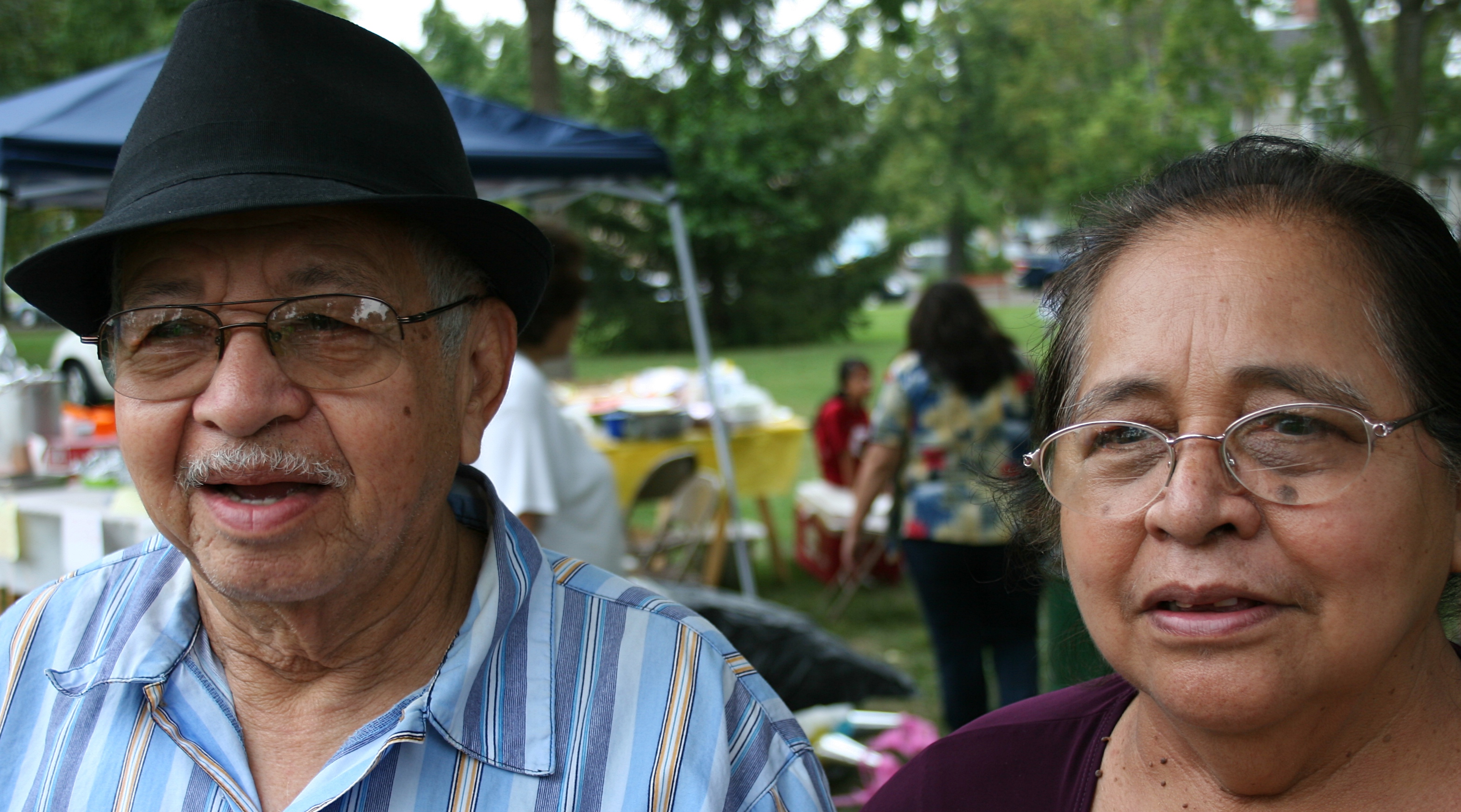
Latinos represent a large part of Faribault's diverse population. Minnesota Prairie Roots file photo.

Latinos represent a large part of Faribault’s diverse population. Minnesota Prairie Roots file photo.

Of those who suggest the newcomers just leave, I want to ask, and sometimes do: “Weren’t your great grandparents once new here, arriving from the Old Country, speaking in a language others could not understand?”

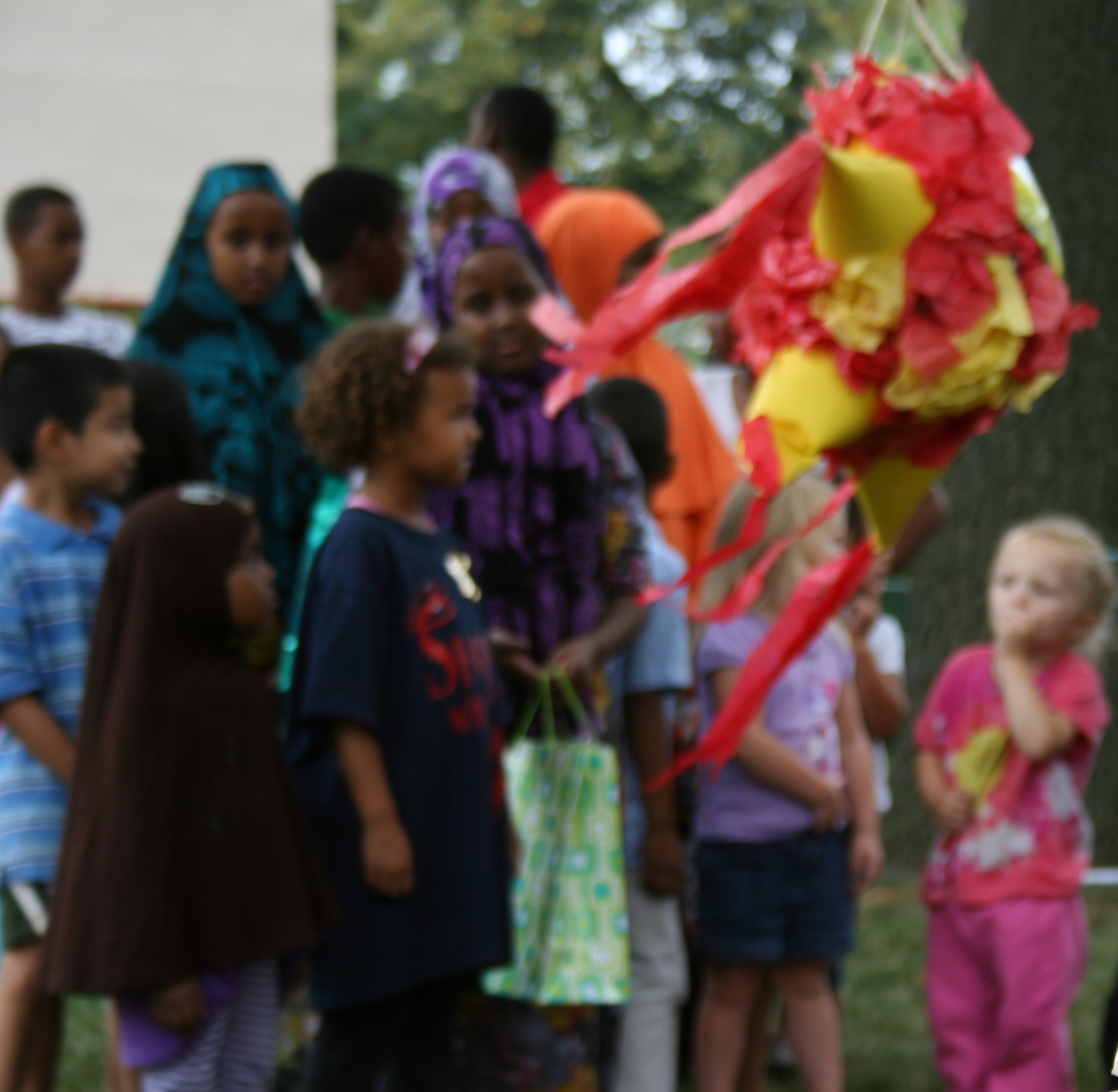
This intentionally blurred image, taken of children waiting to break a pinata at the International Festival Faribault, represents the many cultures within my community. Skin color mattered not to these kids. Why does it matter so much to adults? Minnesota Prairie Roots file photo.

This intentionally blurred image, taken of children waiting to break a pinata at the International Festival Faribault, represents the many cultures within my community. Skin color mattered not to these kids. Why does it matter so much to adults? Minnesota Prairie Roots file photo 2012.

Oftentimes, too, I want to grab life-long locals and others by the shoulders and tell them that my diverse Willow Street neighborhood is worthy of their respect. This is my home, my neighborhood, the place I choose to live, an important part of this community we call Faribault.

© Copyright 2013 Audrey Kletscher Helbling

 

Reflecting on Minnesota’s rural landscape November 5, 2013

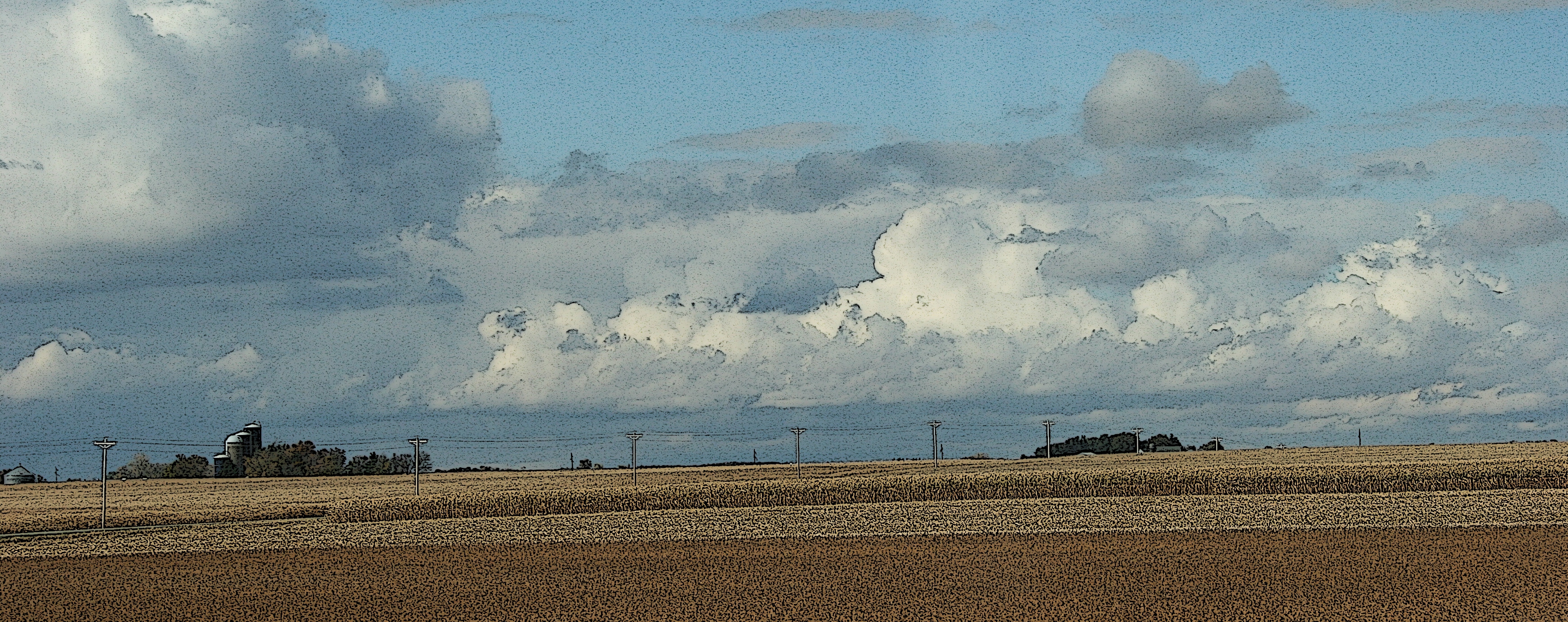
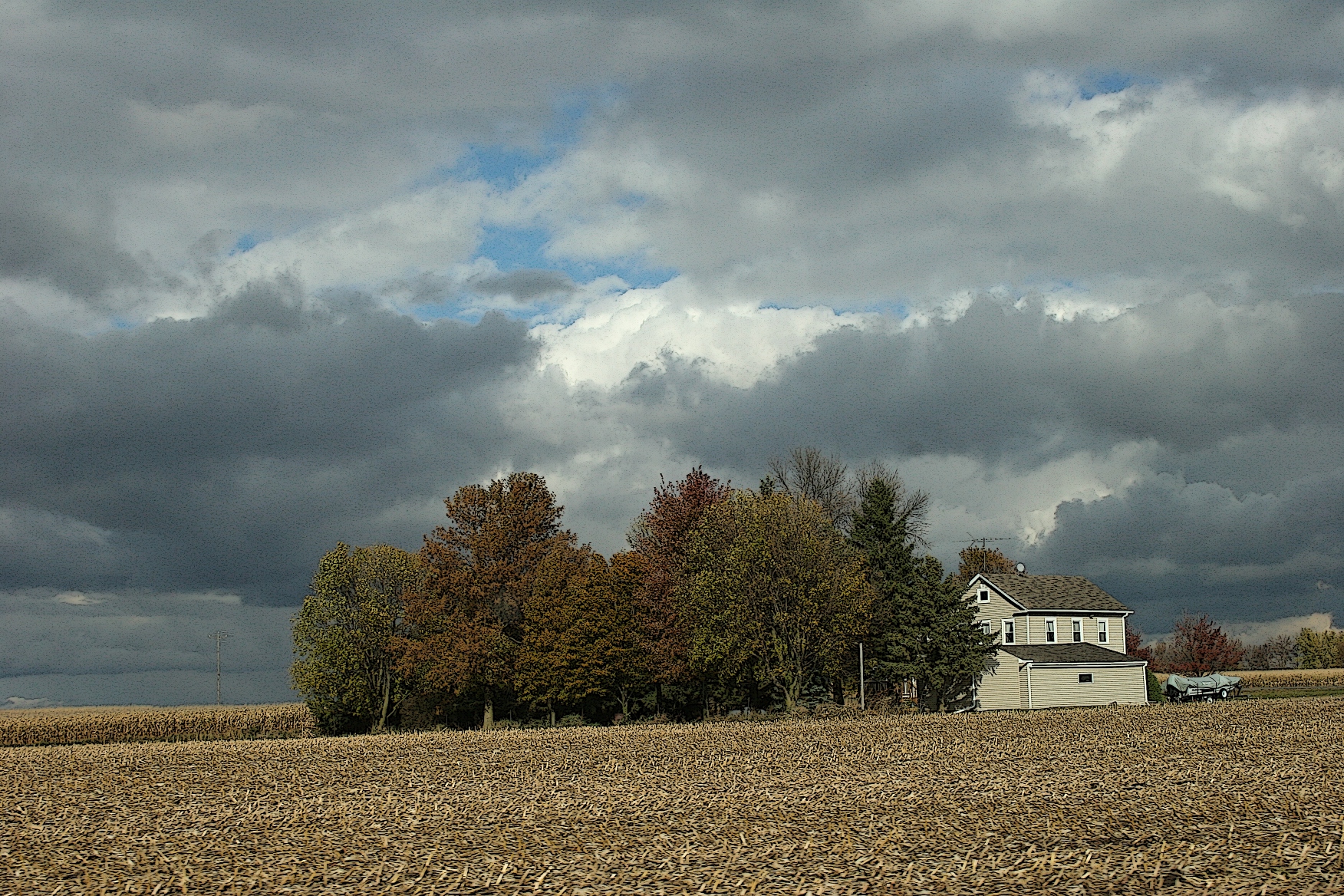
Expansive sky and land inspire the poet in me. Photographed, as are all photos here, along Minnesota State Highway 60 between Faribault and Kenyon.

Expansive sky and land inspire the poet in me.

WHAT DRAWS YOUR EYE in a rural landscape?

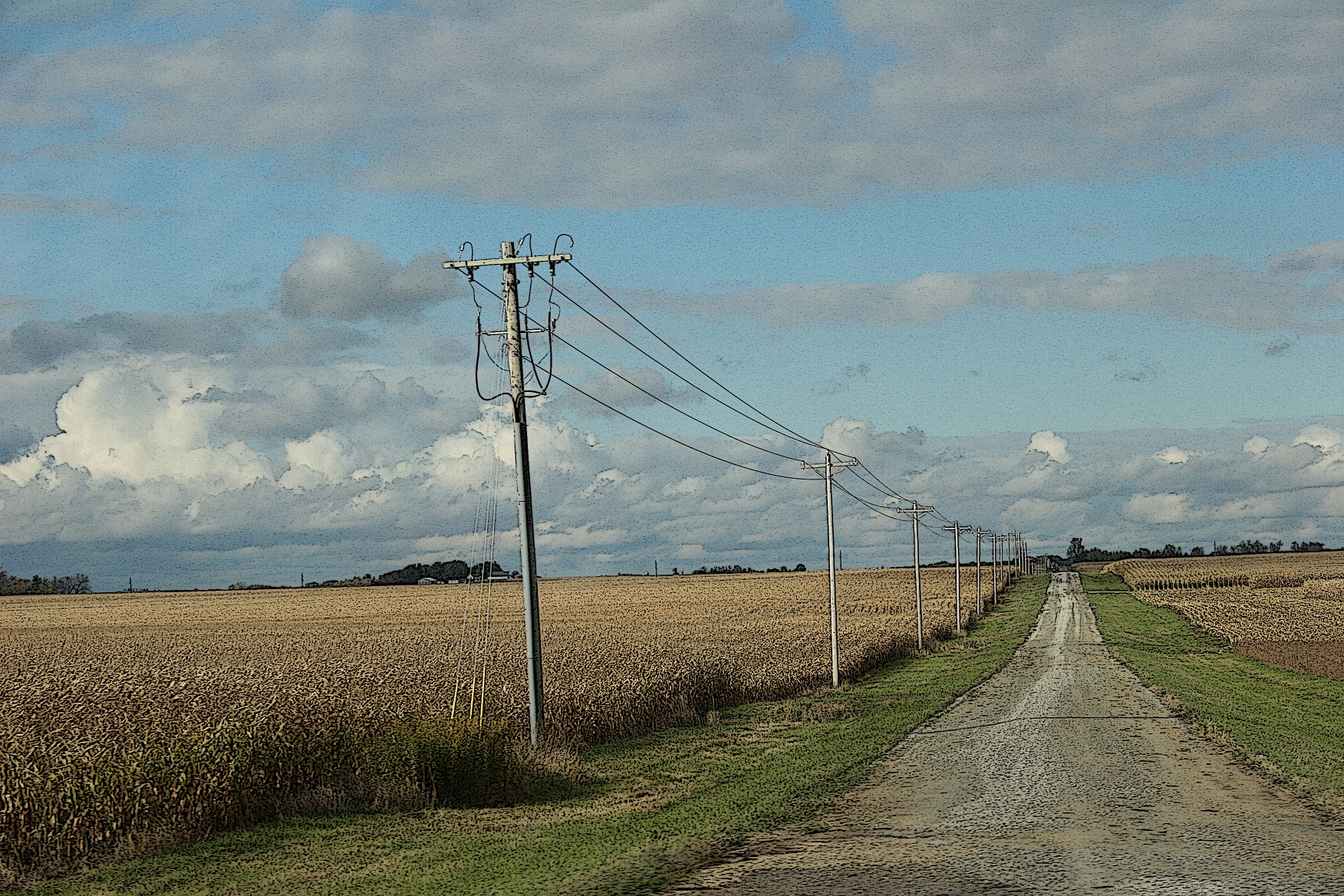
Strong lines pull me in, lead me to wonder where that gravel road would take me.

Strong lines pull me in, lead me to wonder, “Where would that rugged gravel road take me?”

Or do you even notice your environment as you travel from point A to point B?

Noticing the geometry in these buildings clustered on a farm site.

I notice the geometry in these buildings, how they cluster and fit together on this farm site.

I challenge you, the next time you drive through rural Minnesota, or rural Anywhere, to truly see your surroundings. Don’t just look with glazed eyes. See. Once you see, you will appreciate.

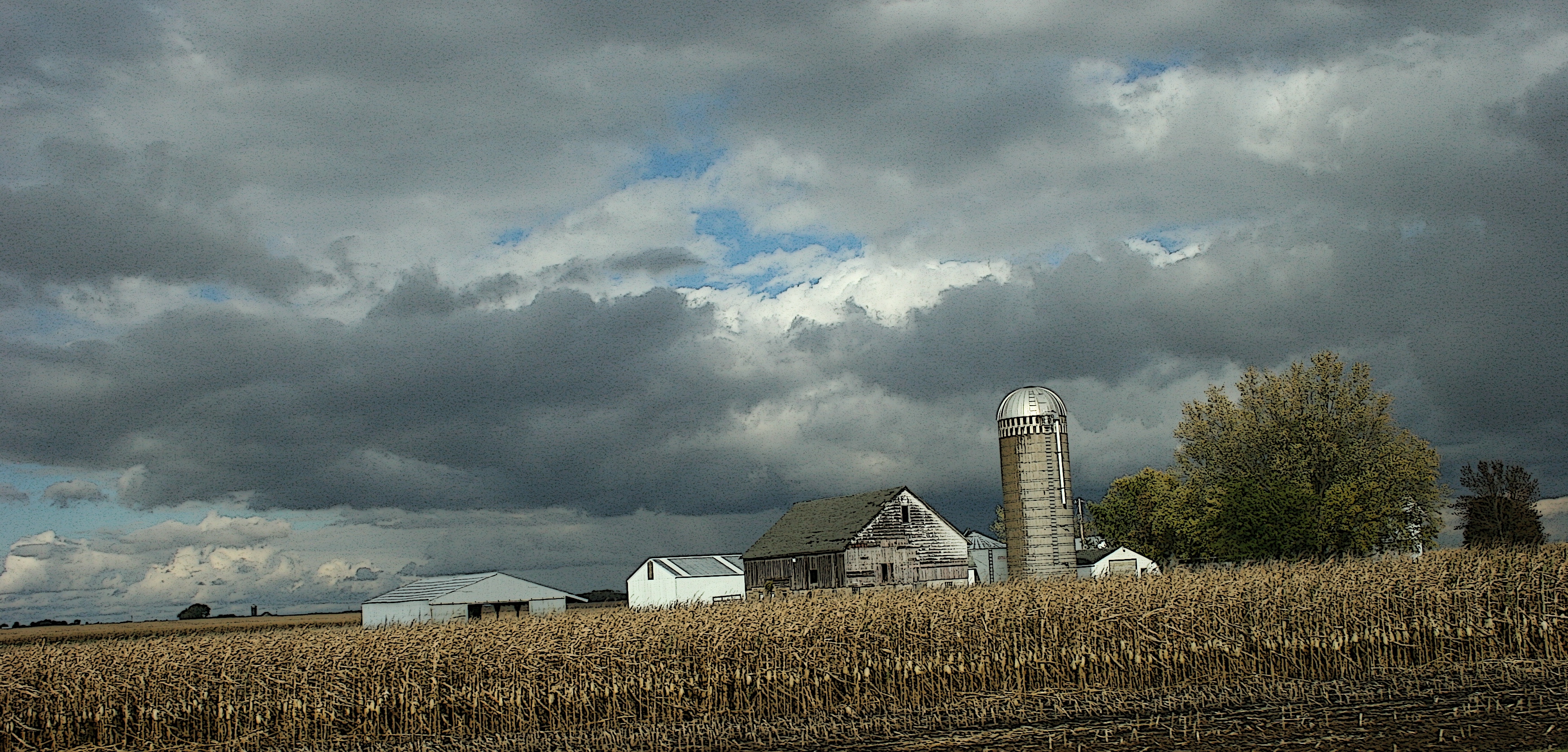
A sense of history defines this farm in that strong barn which dominates.

A sense of history defines this farm in that strong barn which dominates and in the mishmash roof lines of the farmhouse. Both cause me to reflect upon my rural upbringing, upon my forefathers who settled 150 miles from here on the southwestern Minnesota prairie.

History, point in life, memories, even your mood on a given day, will influence how you view the rural landscape, what draws your focus.

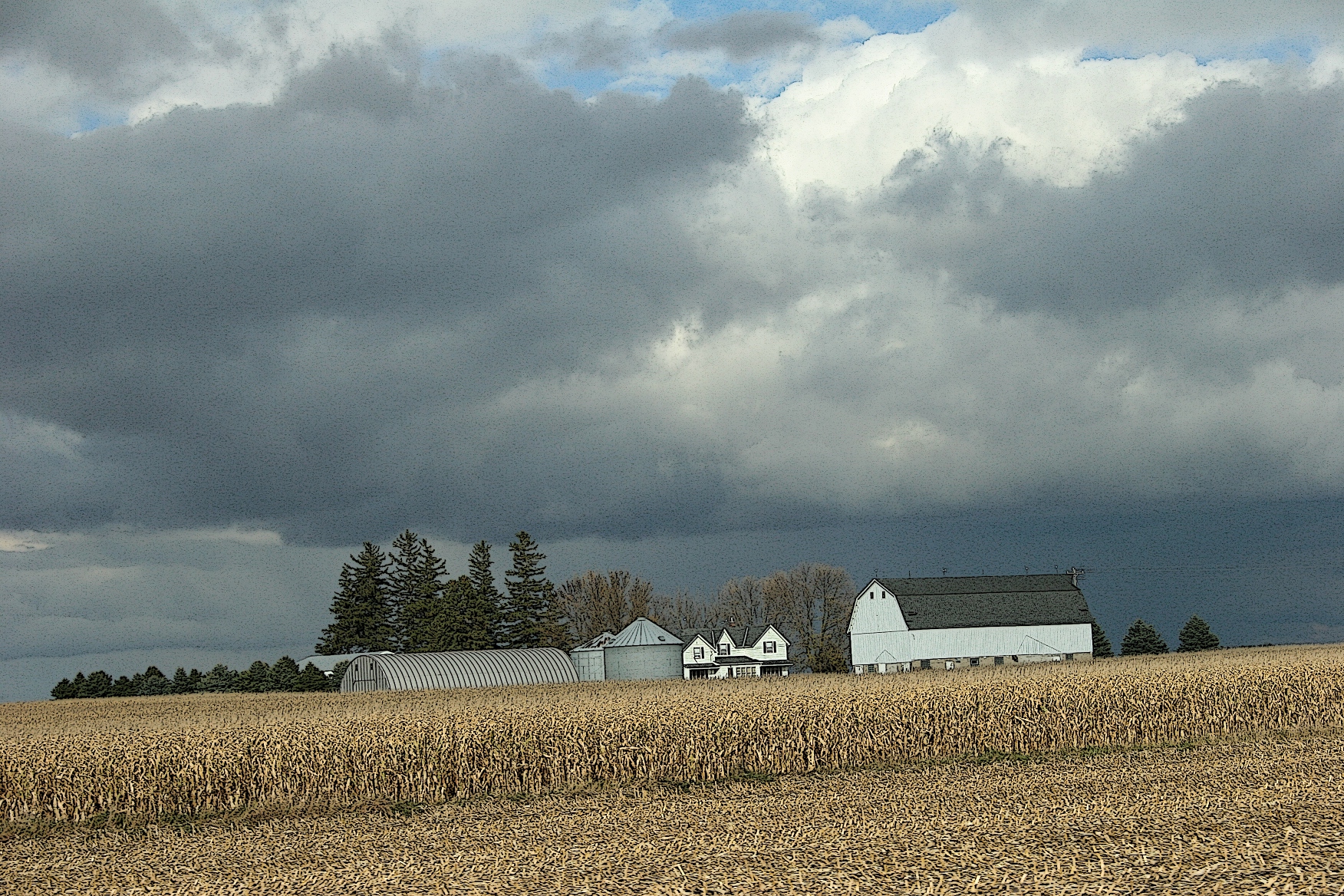
I see here trees huddled, protecting and sheltering that house from the elements. My thoughts turn introspective at this scene.

I see trees huddled, protecting and sheltering that house from the elements, from that threatening sky. My thoughts turn introspective as I consider how we are all sometimes vulnerable and huddled, drawn into ourselves.

Whether a writer or photographer, architect or historian, teacher or retiree, stay-at-home mom (or dad), a farmer or someone in between, you will lock onto a setting that inspires creativity or prompts thought or perhaps soothes your soul.

There is much to be said for noticing details, for understanding that the miles between small towns are more than space to be traveled.

FYI: These edited images were photographed nine days ago while traveling along Minnesota State Highway 60 between Faribault and Kenyon. In just that short time, the landscape has evolved with crops harvested, trees stripped of their leaves by strong winds and now, today, snow in the forecast.

© Copyright 2013 Audrey Kletscher Helbling
 

On ARTour: Up close with two artists inside their Northfield studio November 4, 2013

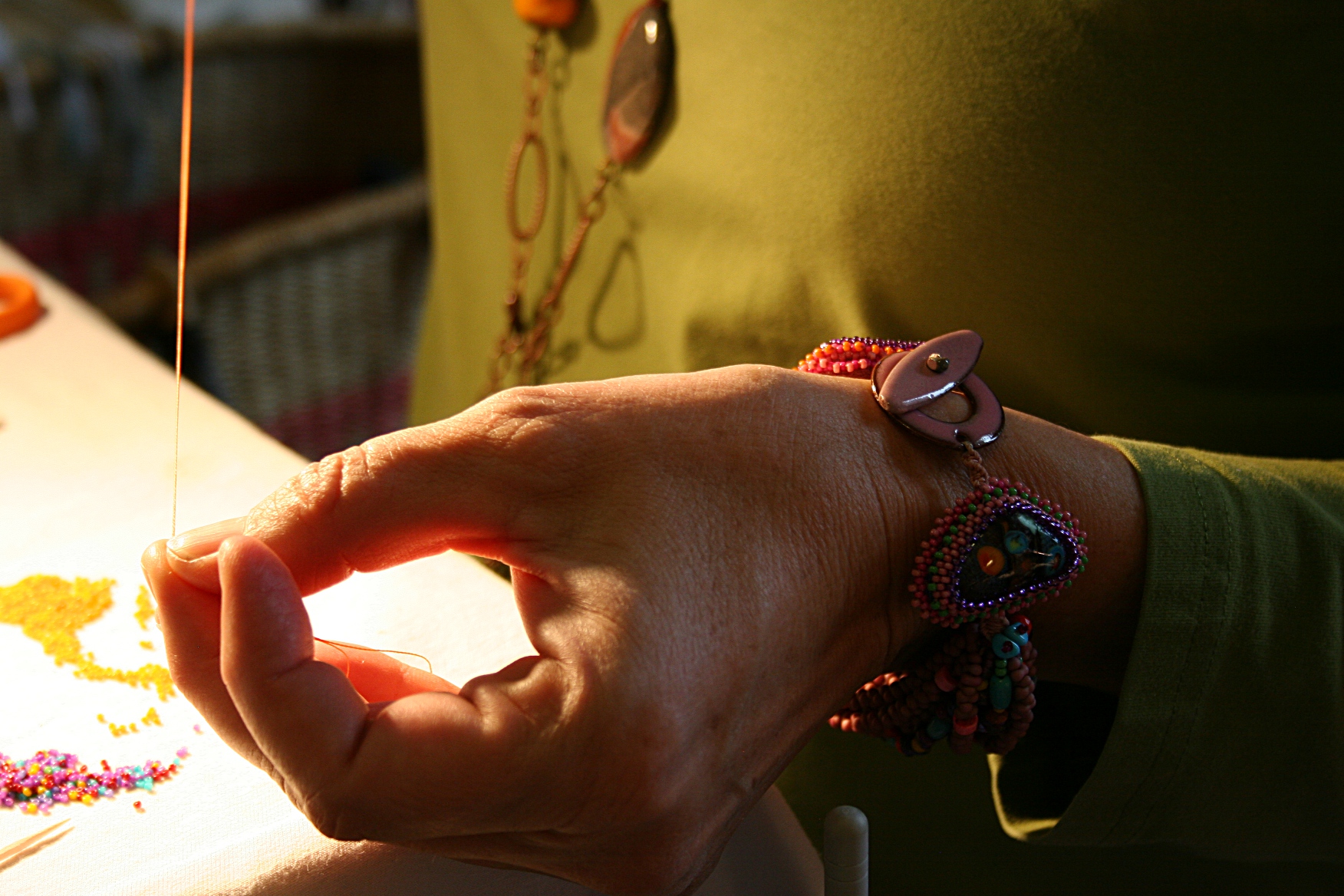
Artist Sue Hammes-Knopf of Full Bloom Beadworks at work beading.

Artist Sue Hammes-Knopf of Full Bloom Bead Work beading.

HANDCRAFTED BEAD BRACELET dangling from her left wrist, Sue Hammes-Knopf slips specks of orange beads onto a needle and then onto a matching orange string.

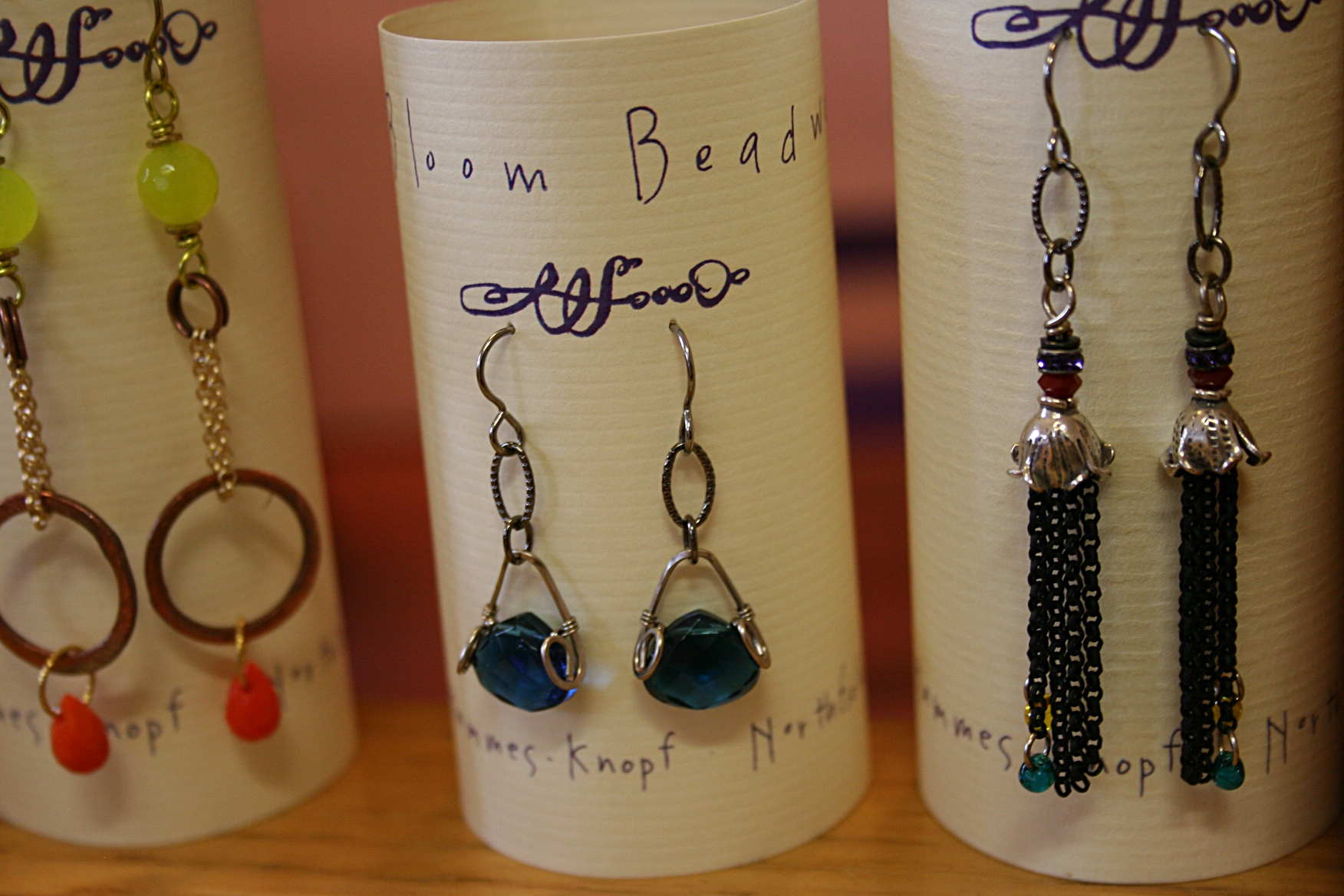
An example of Sue's original earrings.

An example of Sue’s original earrings.

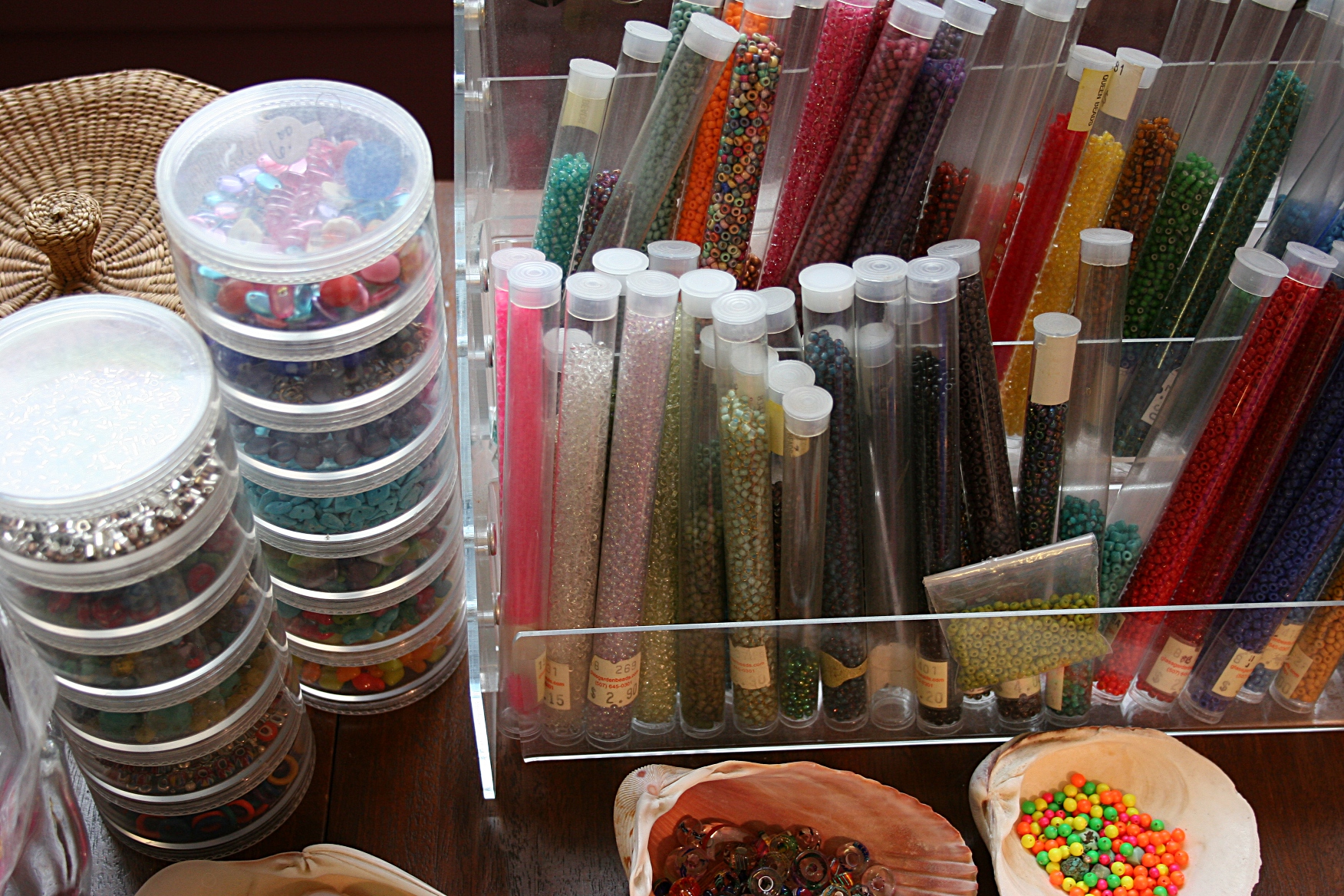
I marvel at her ability to do this—to work with the tiniest of beads in the spotlight of a long-armed lamp that looms over her work area. Natural sunlight from four floor to ceiling windows kisses her back.

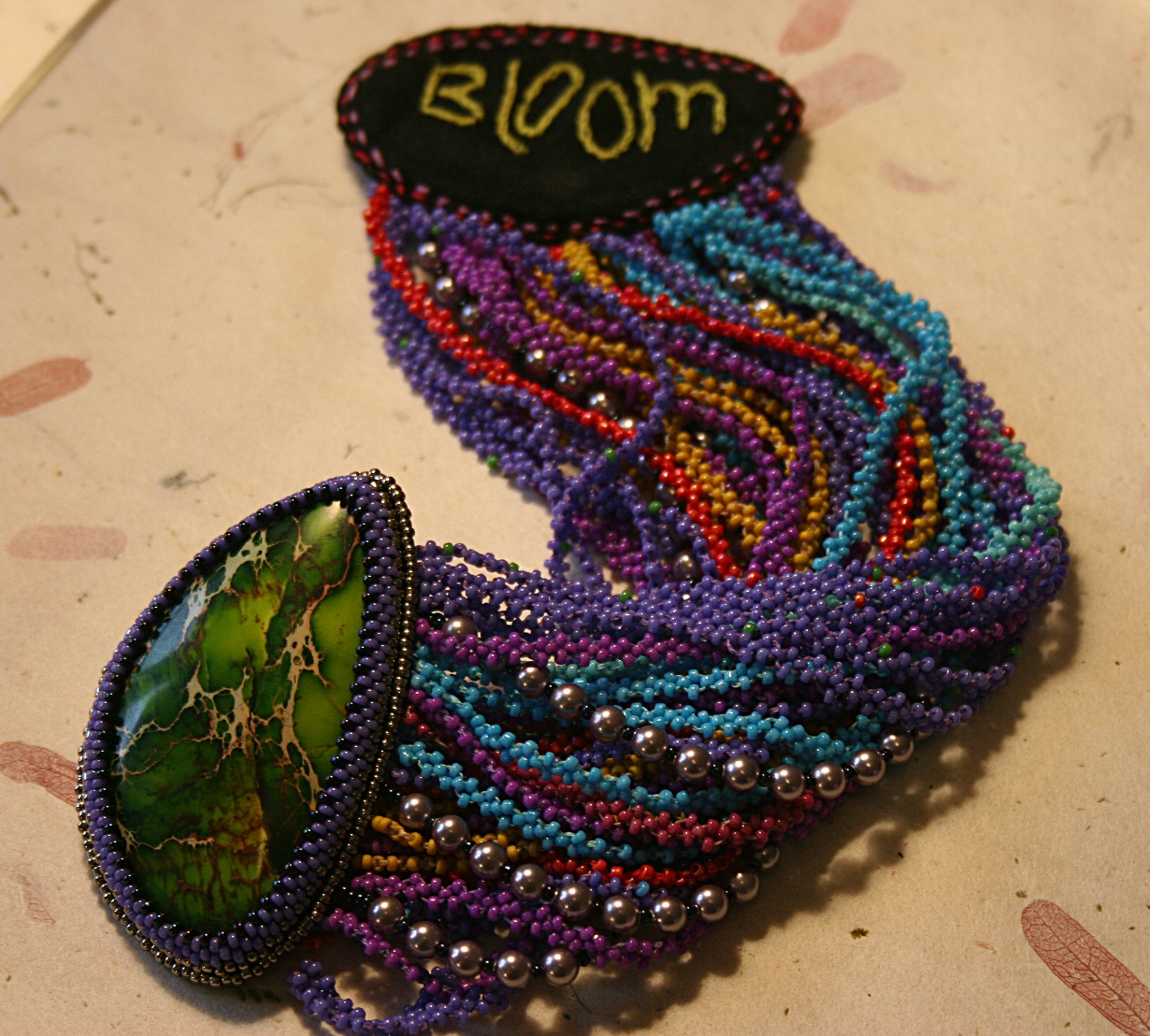
A stunning beaded bracelet created by Sue.

A stunning beaded bracelet created by Sue.

I cannot imagine having the patience, steadiness of hand or vision to work with such fine beads, to create the beautiful bead work I see here, in this third floor studio in historic downtown Northfield during the South Central Minnesota Studio ARTour.

Beading supplies.

Beading supplies.

And when I speak my thoughts aloud, Sue muses that she’s developed patience in 35 years of marriage and that she “feels” the beads as much as sees them.

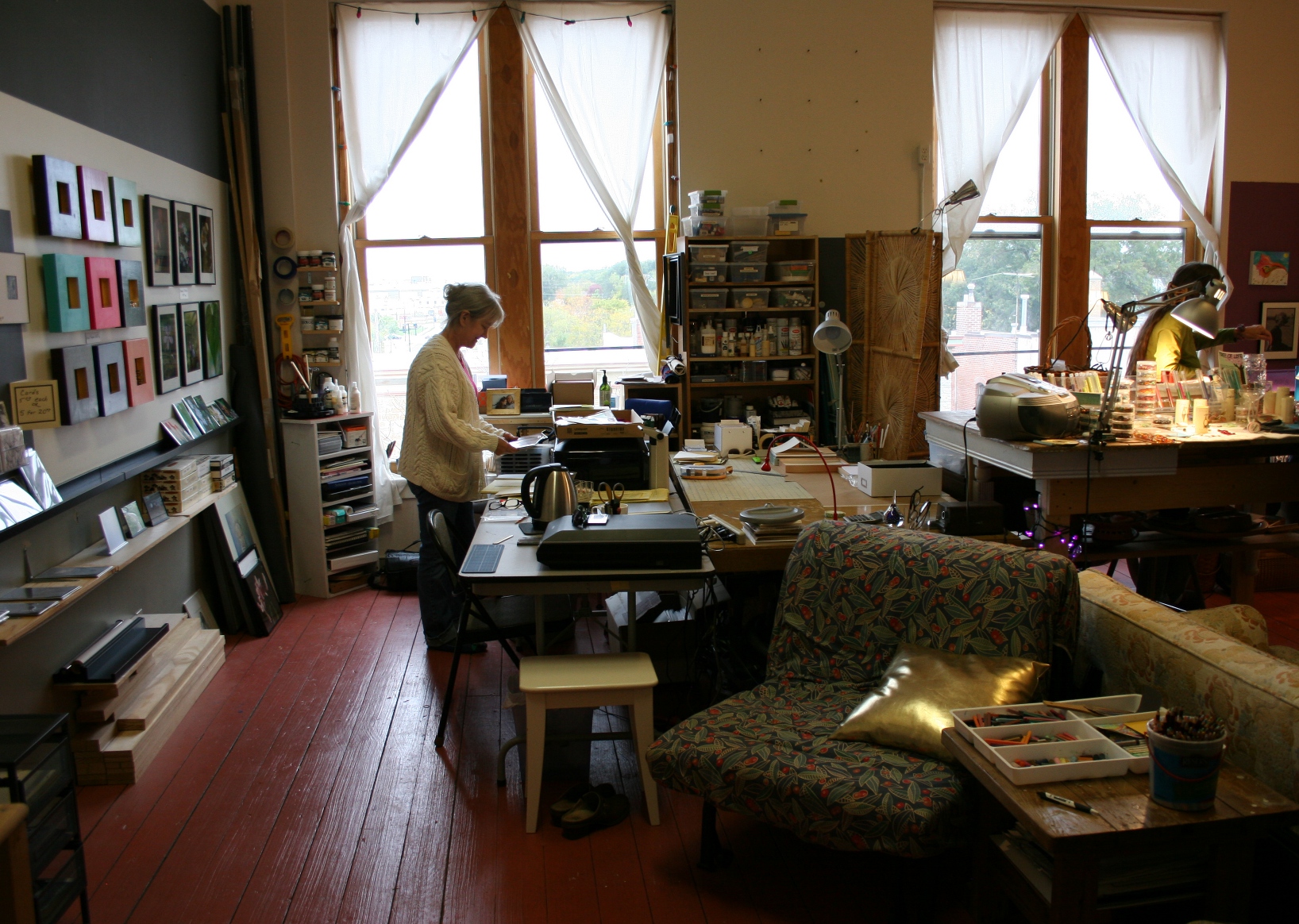
The beautiful studio space of MRG Arts and Full Bloom Beadworks, 101 E. 5th St., Northfield. Maryrose Gondeck is on the left, Sue Hammes-Knopf on the right.

The beautiful studio space of MRG Arts and Full Bloom Bead Work, 101 E. 5th St., #305, Northfield. Maryrose Gondeck is on the left, Sue Hammes-Knopf on the right.

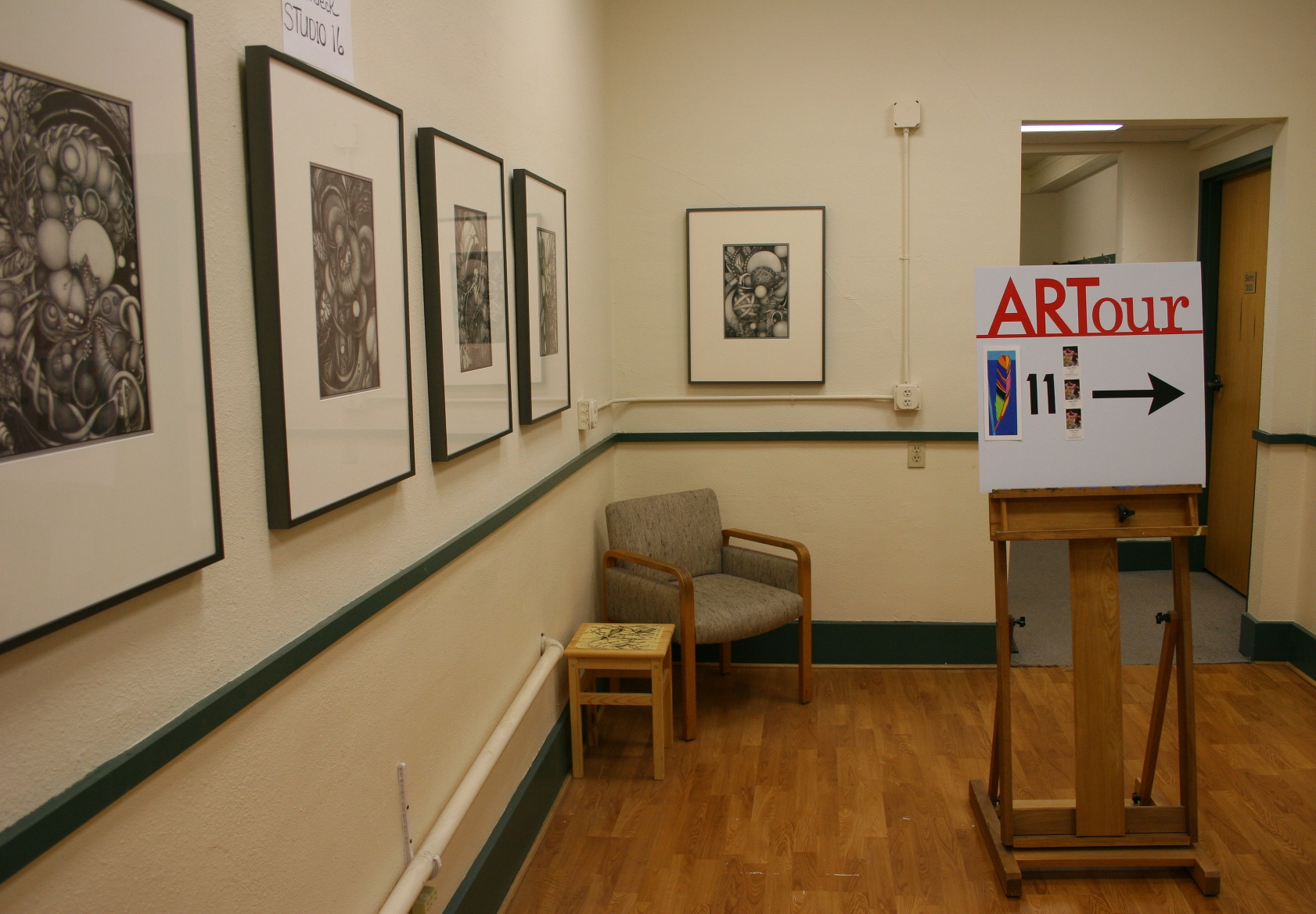
Across the room, Maryrose Gondeck also creates art. She’s worked in numerous mediums—graphite, oils, acrylics, pastels, pen and ink, colored pencils, photography…

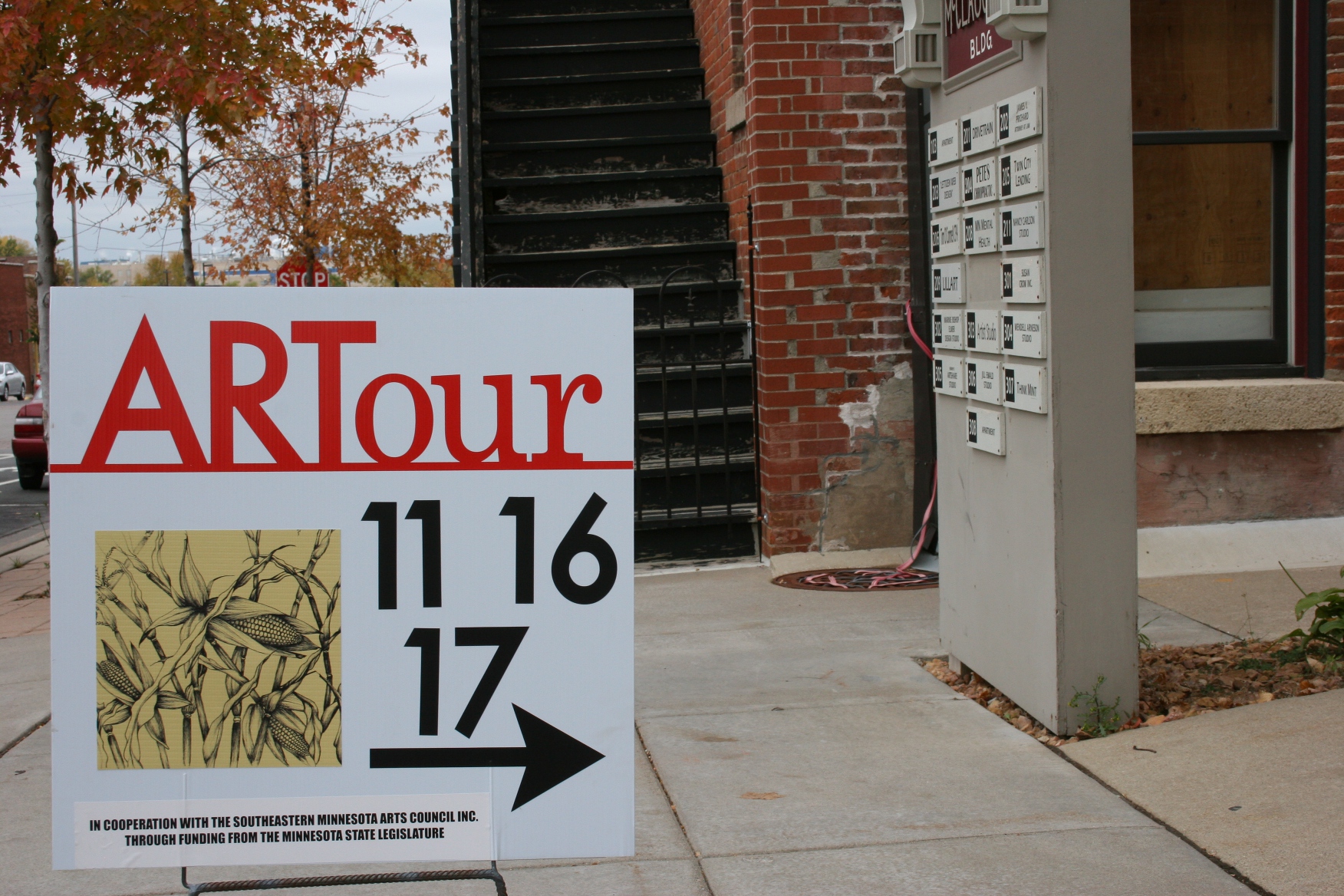
Maryrose Gondeck's original corn art grace posters and promotional materials for the South Central Minnesota Studio ARTour.

Maryrose Gondeck’s original corn art graced posters and promotional materials for the recent South Central Minnesota Studio ARTour. This sign directs visitors to her studio and two others on the third floor of an old building in historic downtown Northfield.

Her drawing of ripened corn on corn stalks was the visual symbol of this year’s Studio ARTour. A perfect fit for a tour of 20 studios featuring 44 artists in the rural region that encompasses Northfield, Faribault and Cannon Falls.

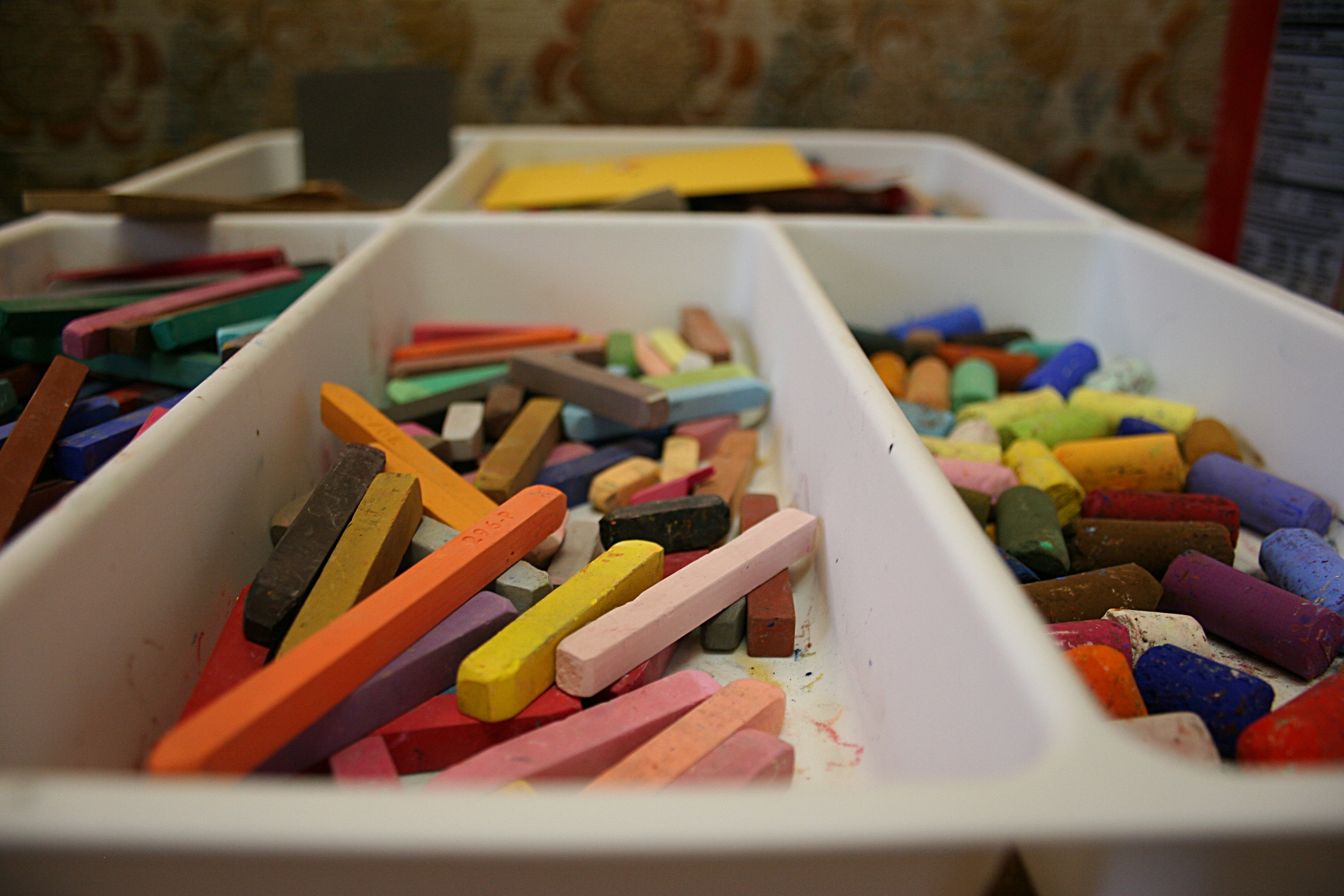
Among Maryrose's art supplies.

Among Maryrose’s art supplies.

Maryrose's graphite drawings showcased in a hallway.

Maryrose’s graphite drawings showcased in a hallway.

What a plethora of gifted artists we have here, in this area of Minnesota I call home.

I noticed this signage outside  Maryrose and Sue's studio as I exited. Theirs was the final studio I would visit during the South Central Minnesota Studio ARTour.

I noticed this signage outside Maryrose and Sue’s studio as I exited. Theirs was the final studio I would visit during the South Central Minnesota Studio ARTour.

FYI: This concludes my series of five posts on the South Central Minnesota Studio ARTour. To see previous posts showcasing selected artists on the tour, check my recent archives.

The work of 44 artists was shown in 20 studios during this annual October event. This year I chose to peruse the work of some artists I had not seen on past tours. And I know, in that selective process, I missed out on viewing other incredible art. Next year.

I’d encourage you to visit the Studio ARTour website to learn more about all of the participating artists.

Also, check out the upcoming Fine Craft Collective, a collaborative gallery show at 506 Division Street in downtown Northfield open from 10 a.m. – 6 p.m. Monday – Saturday and from noon – 4 p.m. Sundays from November 14 – December 24. You will find the works of 17 local artists for sale at this annual event. Click here for more info.

No matter where you live, I hope you will support local artists by attending events like the South Central Minnesota Studio ARTour and the Fine Craft Collective, by encouraging and asking questions, and, if you can, purchasing art.

I grew up in the 60s and 70s in rural southwestern Minnesota, with minimal exposure to the arts. It was the times as much as the distance and lack of money which isolated me from the art world. That is why, perhaps, I appreciate the arts as much as I do. Absence, as they say, makes the heart grow fonder.

© Copyright 2013 Audrey Kletscher Helbling

 

Small town Sunday snapshot: Millville, Minnesota November 3, 2013

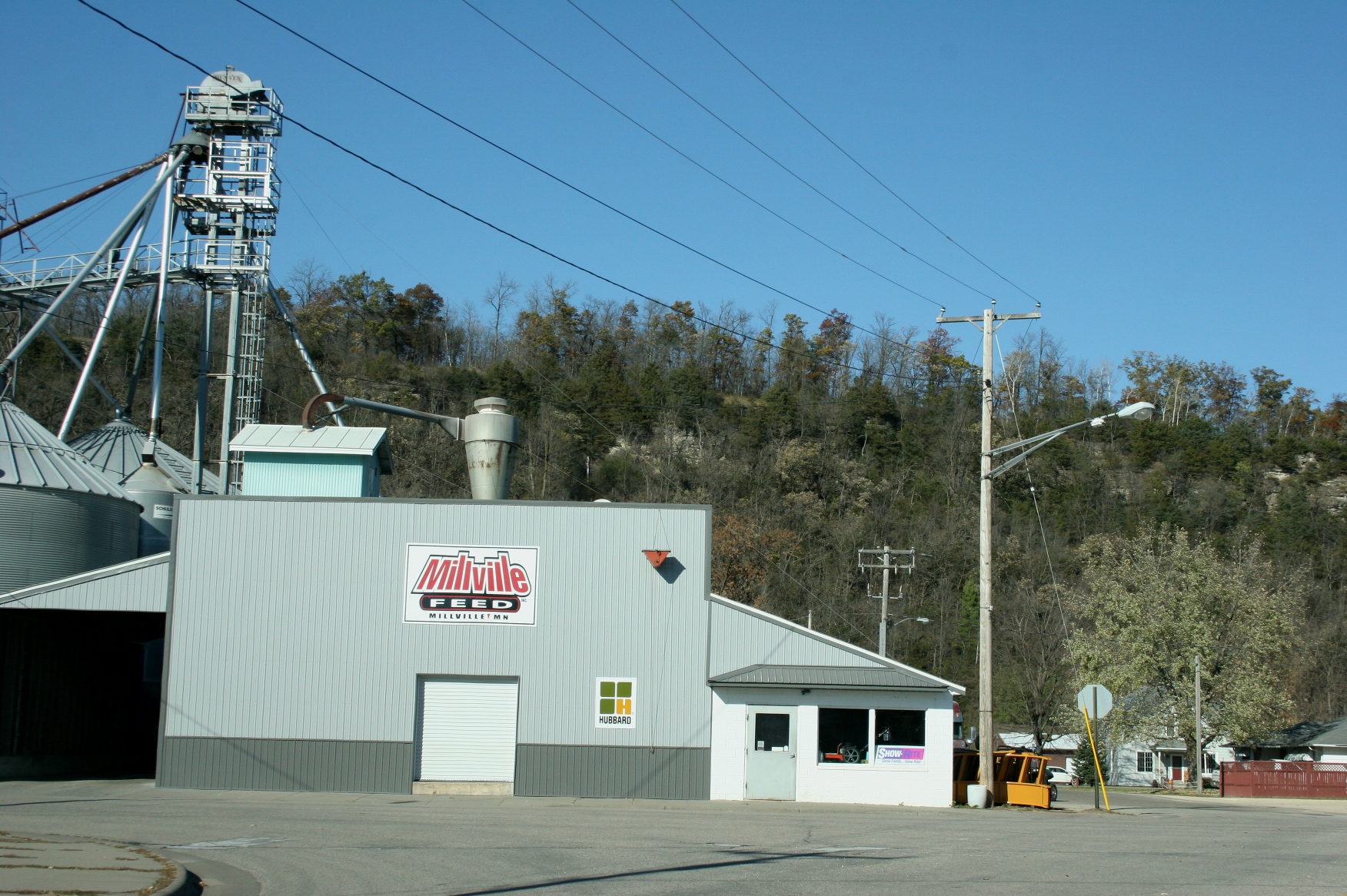
Milville, Milville Feed

A WEEK AGO, my husband and I drove into Millville, population 182, located along the Zumbro River in Wabasha County in southeastern Minnesota. We were on one of our Sunday afternoon drives. We choose a general direction in which to travel from our Faribault home. Then we just go, atlas in hand,

Whatever we discover, we discover. And, even if we do not find anything seemingly extraordinary, we celebrate the ordinary, the everyday, the small towns and farms that hold our hearts. For, although Randy and I have lived in Faribault, population around 24,000, for 29 years, we still long for the land, for small-town life, for Redwood and Morrison counties and the farms upon which we were raised.

Perhaps you, too, were raised on a farm, now live in town, and understand that longing, that forever rooted to the land connection.

That said, I highly recommend a Sunday afternoon drive.

And I also recommend viewing (click here) Minnesota Public Radio’s Ground Level project, “Fighting for an American Countryside,” which published awhile ago. I watched the first video clip on Friday and was moved to tears. The promo summary reads:

 People in rural Minnesota are battling small-town decline with determination, resourceful thinking, and unwavering belief.

I wish that was true for all rural areas, but it is not. I’ve seen all too many shuttered buildings, empty Main Streets, neglected personal properties in too many small towns. Times are tough. Young folks are leaving; the population is aging. It’s difficult, sometimes, to survive the economic and other challenges unique to rural areas.

Some small towns can rise to these challenges like those featured in the MPR project. Others lack the resources, the leadership, the creativity to do so.

Yet, all of these small towns, whether in growth or decline, are to be valued. For they are home to someone. Or they were home to someone, like Randy and me, empty nesters who now take Sunday afternoon drives and end up in places like Millville.

Millville, tractor and wagon

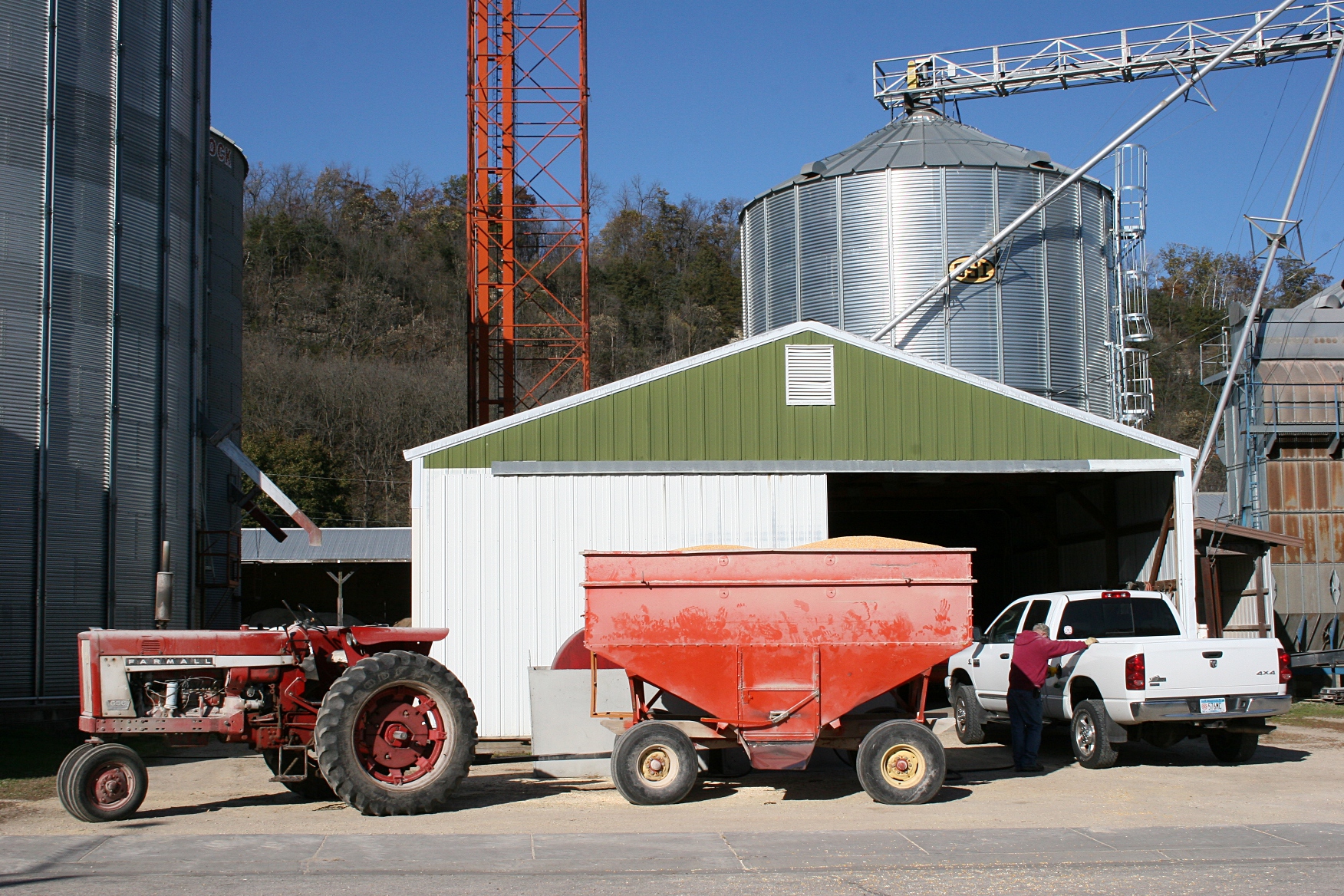
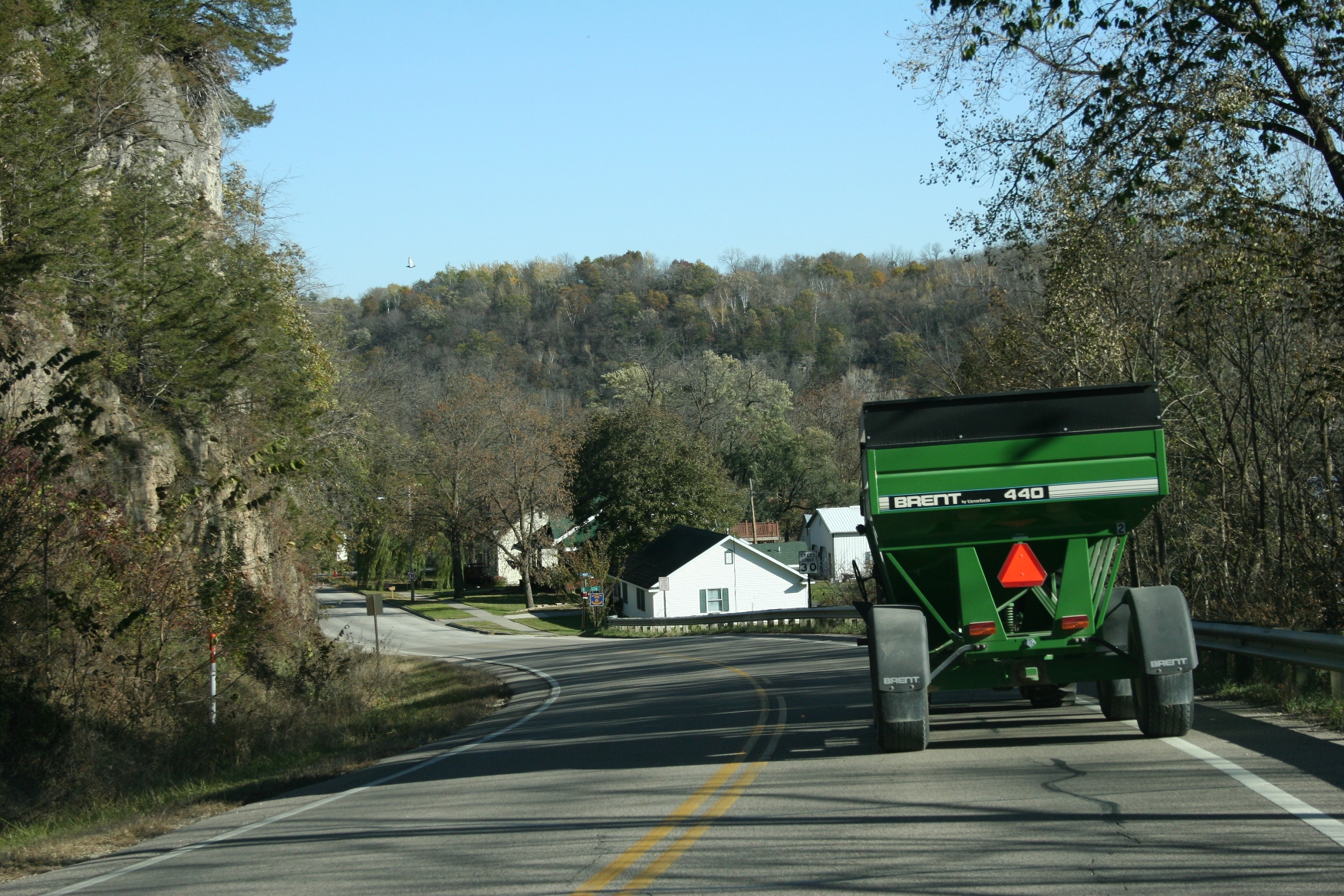
When Randy pulled over in Millville to check the map, I hopped out and photographed a farmer leaning on his pick-up truck near a wagon brimming with corn. It’s a typical small-town scene this time of year.

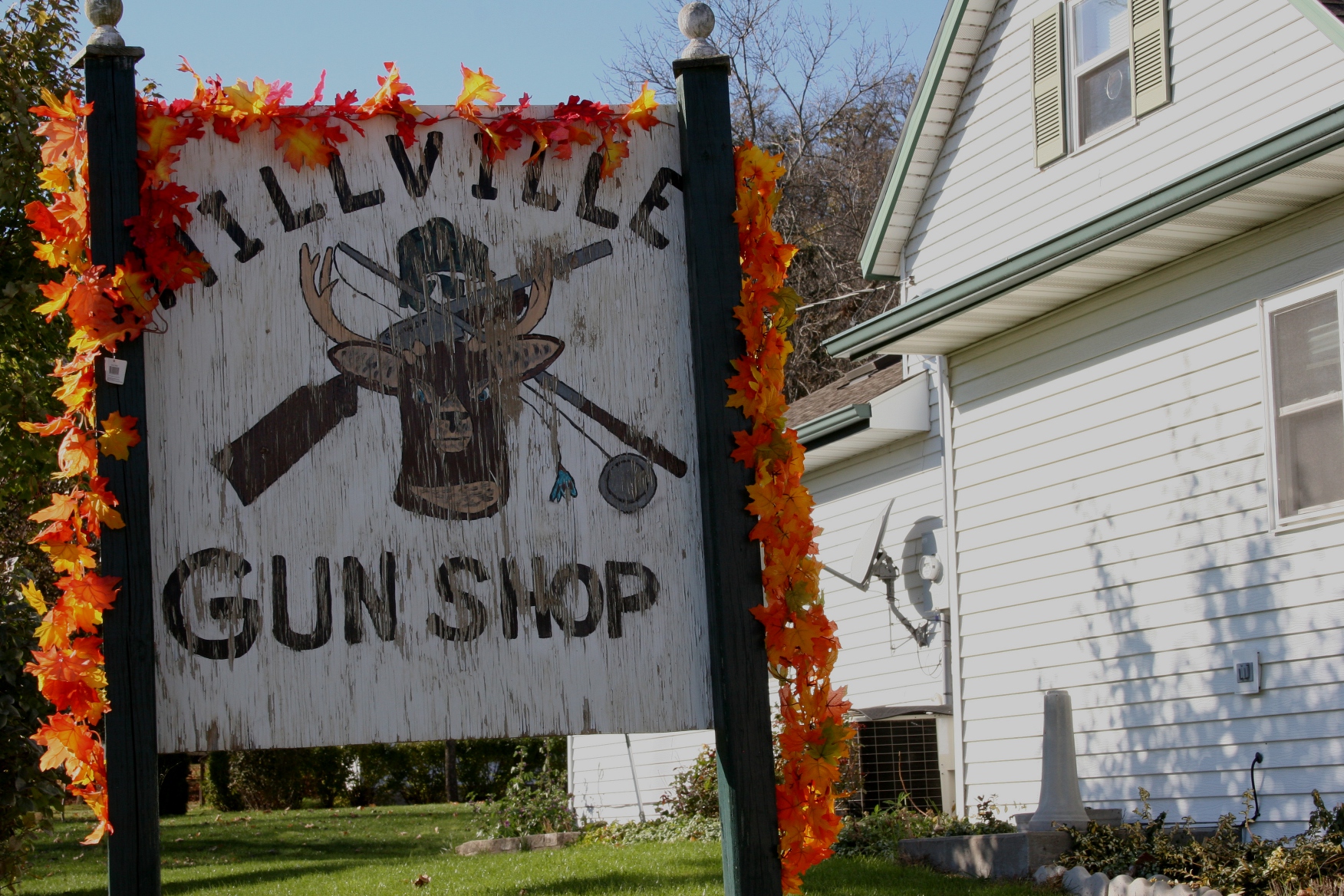
Millville, gun shop sign

Then I walked just up the road and snapped a picture of the gun shop signage before we aimed out of town, and then turned around a few miles out. Apparently we were on the wrong route.

Millville, tractor and wagon entering

We followed a tractor and wagon, winding at a snail’s pace down the hill back into Millville.

Millville, brick house

And then, as we drove by, I photographed a curb-appealing brick house I’d noticed earlier. I love the wrap around porch, the strong lines, the neighborly appeal of this home.

Milville, grain bins

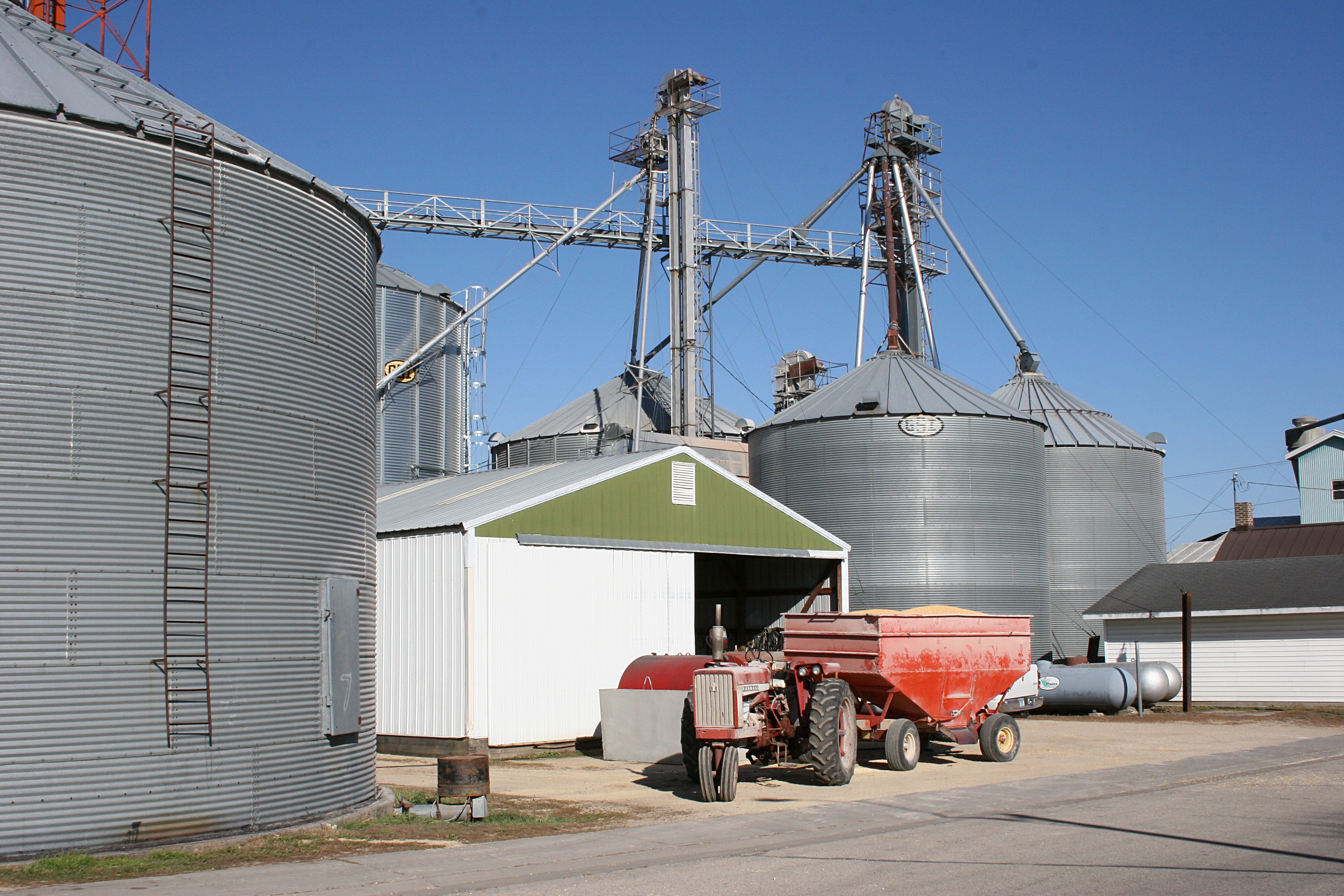
Past the grain bins, again, and the farmer waiting by his truck, we turned and found the “right road,” although there are really no “wrong roads” on a Sunday afternoon drive.

Copyright 2013 Audrey Kletscher Helbling
 

Kommen Sie for a taste of Deutschland in Faribault November 2, 2013

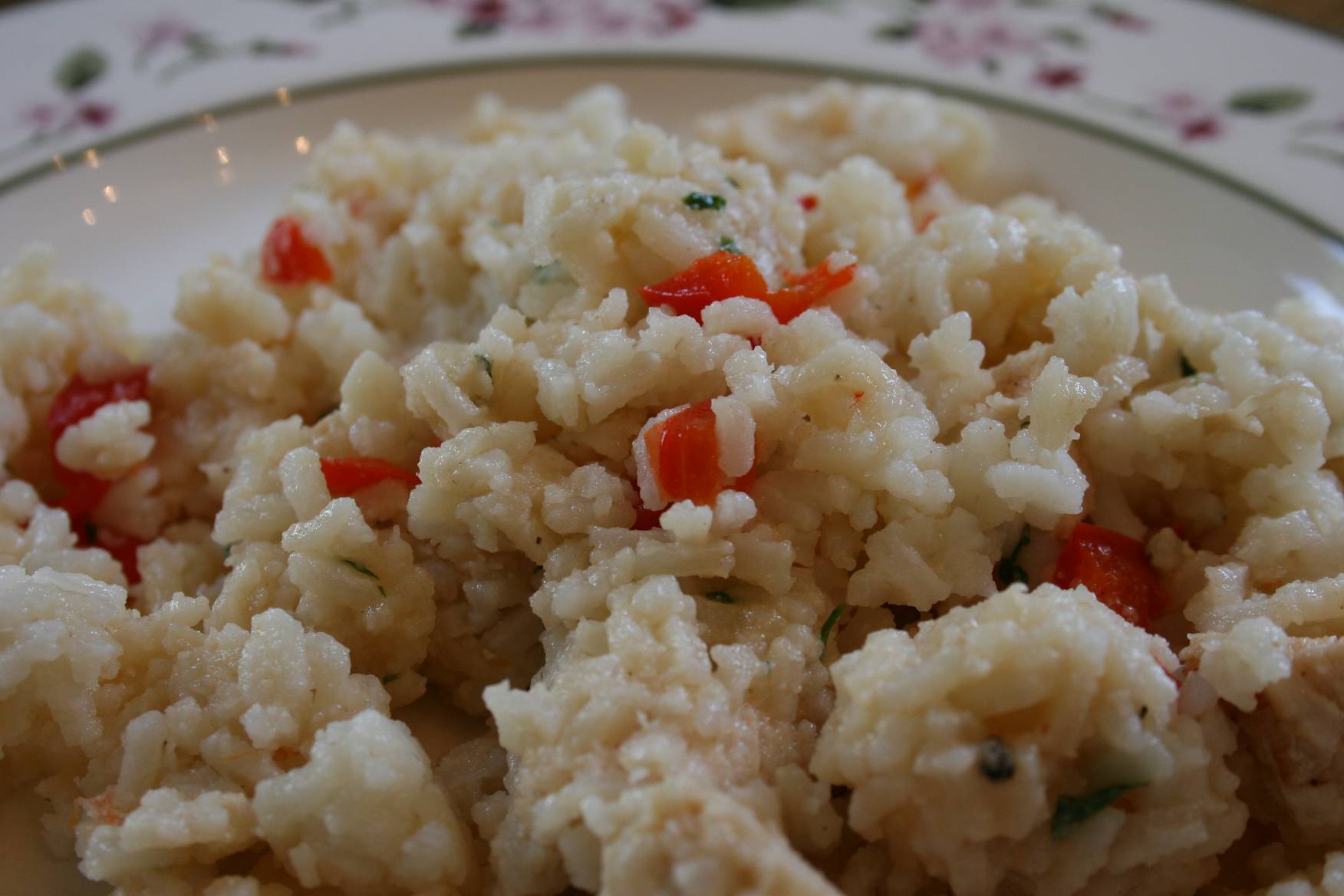
Arroz con pollo tastes much better than it looks.

Arroz con pollo, a Latin American dish of chicken and rice seasoned with fresh garlic, onions, red peppers and cilantro. The perfect comfort food as Minnesota transitions into winter.

EVERY YEAR ABOUT THIS TIME, I find myself craving comfort foods. Homemade mac and cheese. Beef roast and mashed potatoes. Steaming bowls of soup laced with thick chunks of vegetables. Fiery chili. Even hotdish.

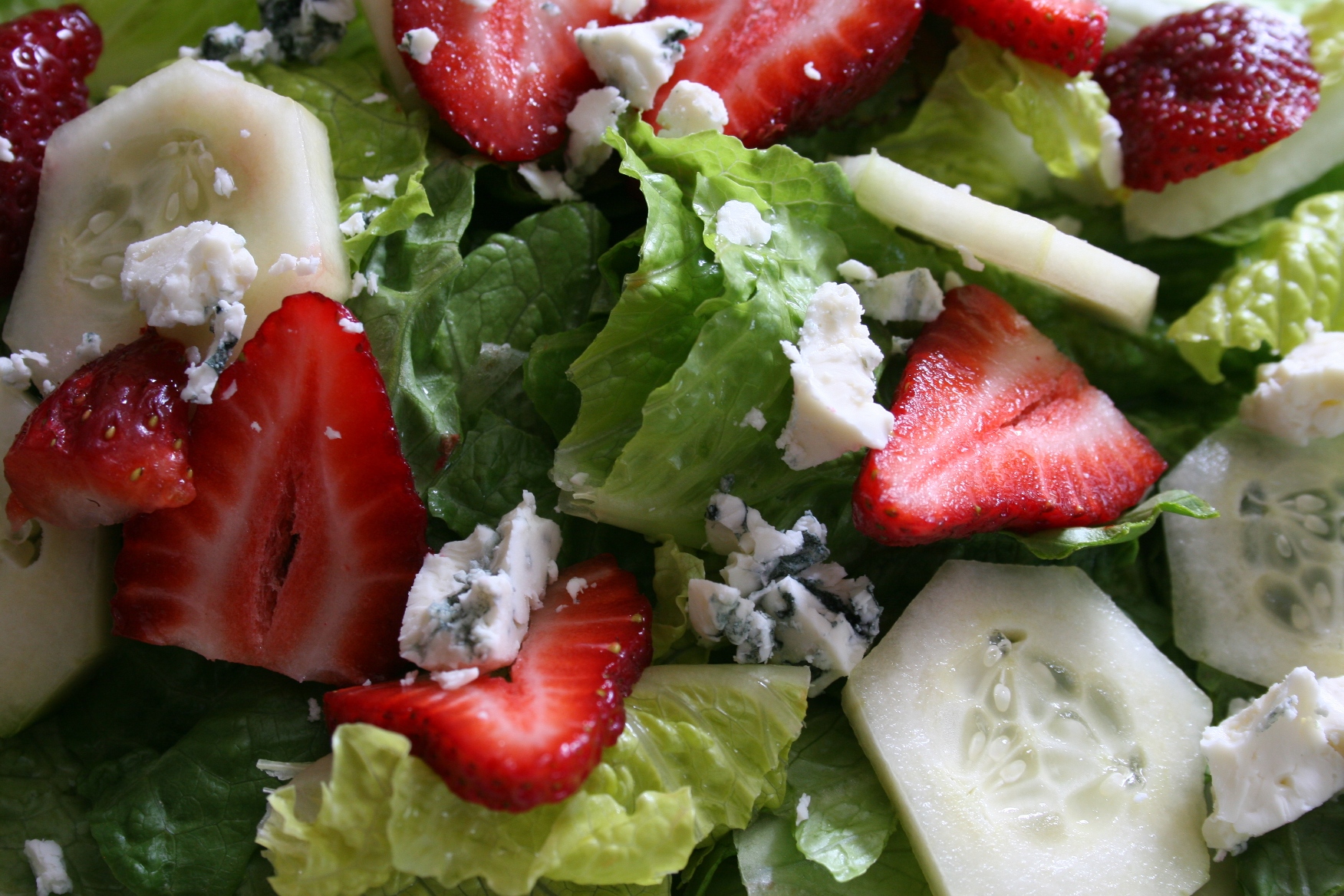
Sliced strawberries, cucumbers and Amablu Gorgonzola cheese added to Romaine lettuce made a perfect salad. I topped the salad with lemon poppyseed dressing.

Sliced strawberries, cucumbers and Amablu Gorgonzola cheese added to Romaine lettuce make a delicious salad, often a meal for me during the summer months.

I eat fewer salads, place less fresh produce in my shopping cart, fight the urge to bake cookies.

The cycling of the seasons, transitioning into the long, dark and cold days of winter in Minnesota, imprints upon my body and psyche. Call of comfort foods. Snuggling on the sofa under a fleece throw, book in hand. Limited trips outside the house once the curtain of cold and darkness falls upon the land.

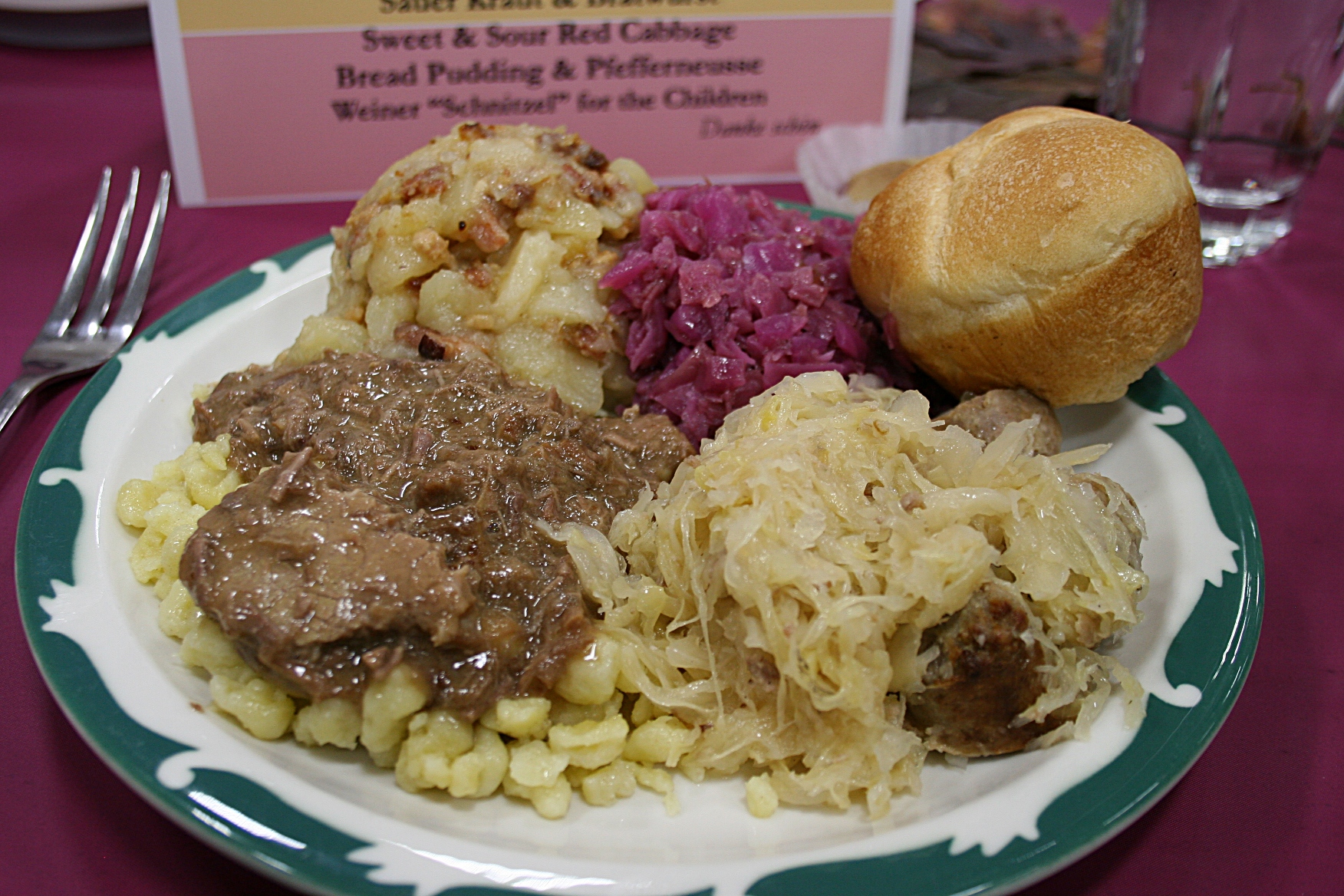
The German meal: sauerbraten and spaetzle on the left, German potato salad, sweet and sour cabbage, dinner roll and sauerkraut and brats.

The German meal: sauerbraten and spaetzle on the left, German potato salad, sweet and sour cabbage, dinner roll and sauerkraut and brats. Minnesota Prairie Roots file photo.

And so this seems the perfect time to partake of the food of my forefathers at Cannon Valley Lutheran High School’s annual German Fest: Sauerbraten mit spaetzle, Deutsche potato salad, sweet & sour red cabbage, bratwurst mit sauerkraut and the, oh, so delectable bread pudding.

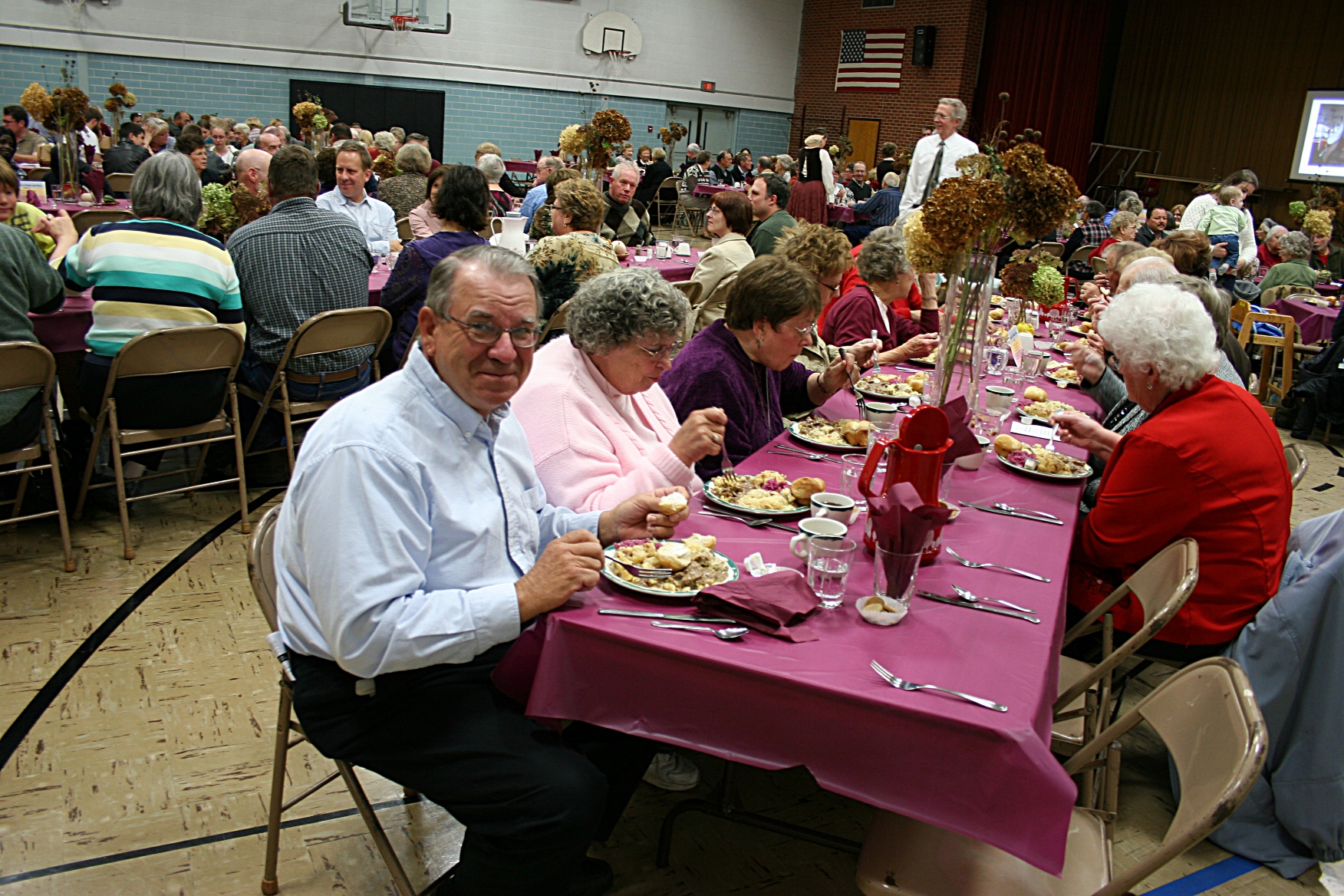
Diners enjoy the ethnic meal at the second annual CVLHS German Fest in 2011.

Diners enjoy the ethnic meal at the second annual CVLHS German Fest in 2011.

Tickets are now on sale for the Sunday, November 10, German Fest Supper, served from 5 p.m. – 5:45 p.m. in the Trinity Lutheran Church gym, 530 Fourth St. N.W., Faribault. Cost is $13 for ages 11 – adult; $7 for ages 5 – 10; and free for preschoolers with a paid adult. Call (507) 685-2636 for tickets. You may also purchase tickets at the door.

If you appreciate German food, you will enjoy this ethnic meal served after the free German Fest of Thanks & Praise, which begins at 4 p.m. in the Trinity sanctuary. From songs and prayers in German to the music of an accordion trio, a harmonica player and a 12-piece band, the program offers an opportunity to reflect on our blessings.

The German Fest presents a perfect prelude to Thanksgiving and to this season when Minnesotans crave comfort foods.

FYI: The German Fest Supper is a fundraiser for Morristown-based Cannon Valley Lutheran High School, which serves students in grades 9 – 12 from around the region. Classes were suspended this school year, among other reasons, to pay off the school’s operating debt with plans to reopen in the fall of 2014.

© Copyright 2013 Audrey Kletscher Helbling
 

On ARTour: An eye for feathers, an eye for nature November 1, 2013

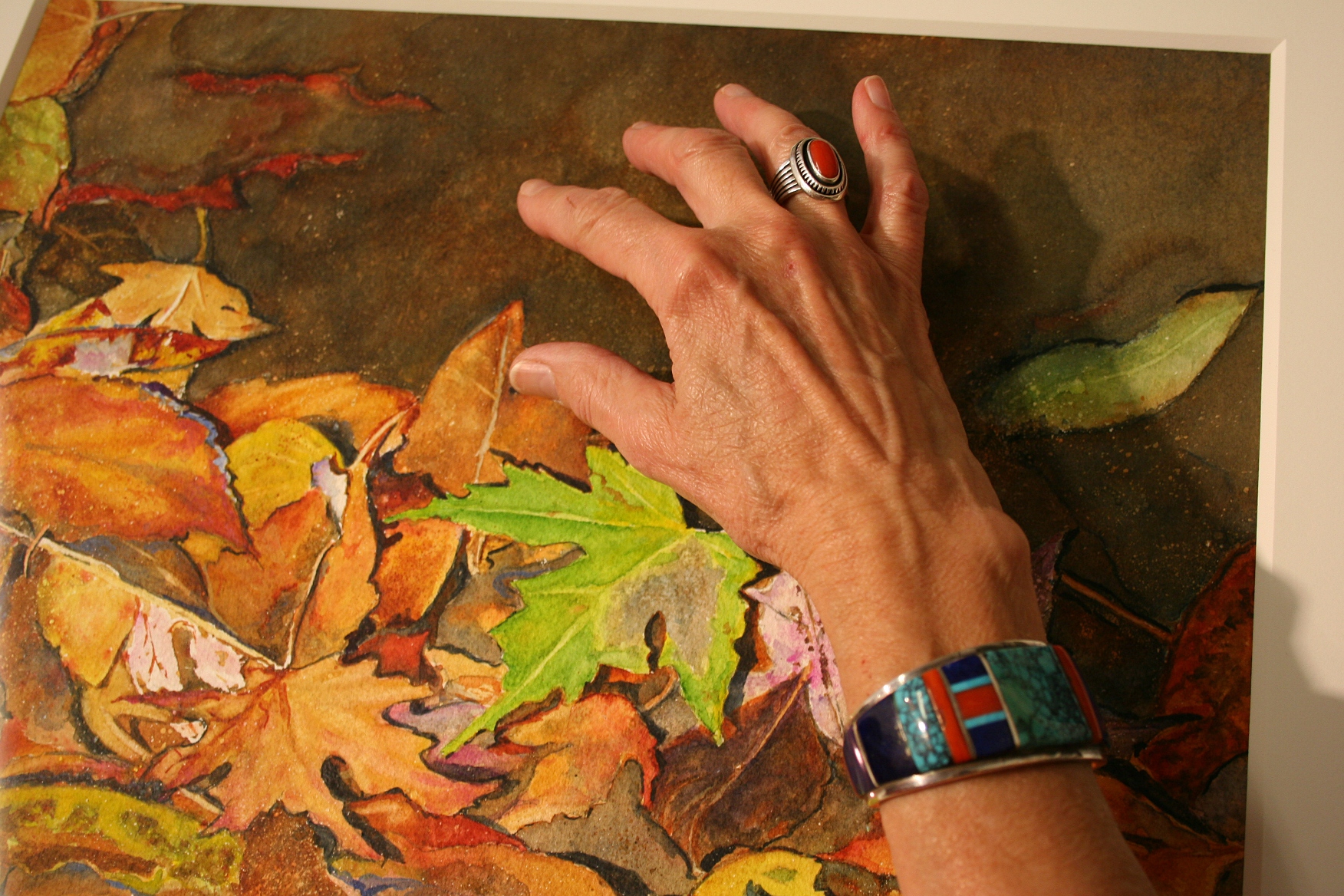
Watercolorist Kathy Miller shows me Leafscapes.

Watercolorist Kathy Miller shows me “Leafscapes.”

HER HAND MOVES across the watercolor painting with a familiar intimacy, stroking the sand, caressing the single green maple leaf floating among autumn-hued leaves.
I notice her ring, how the orange oval stone mimics colors in the painting below her fingertips.

I notice, too, the same hue in the bracelet that wraps her wrist, like art wraps her soul.

Watercolorist Kathy Miller speaks with a mesmerizing passion about her art, of the “Leafscape” watercolor in her hands. Mosaic. Grains of sand. Muddied waters.

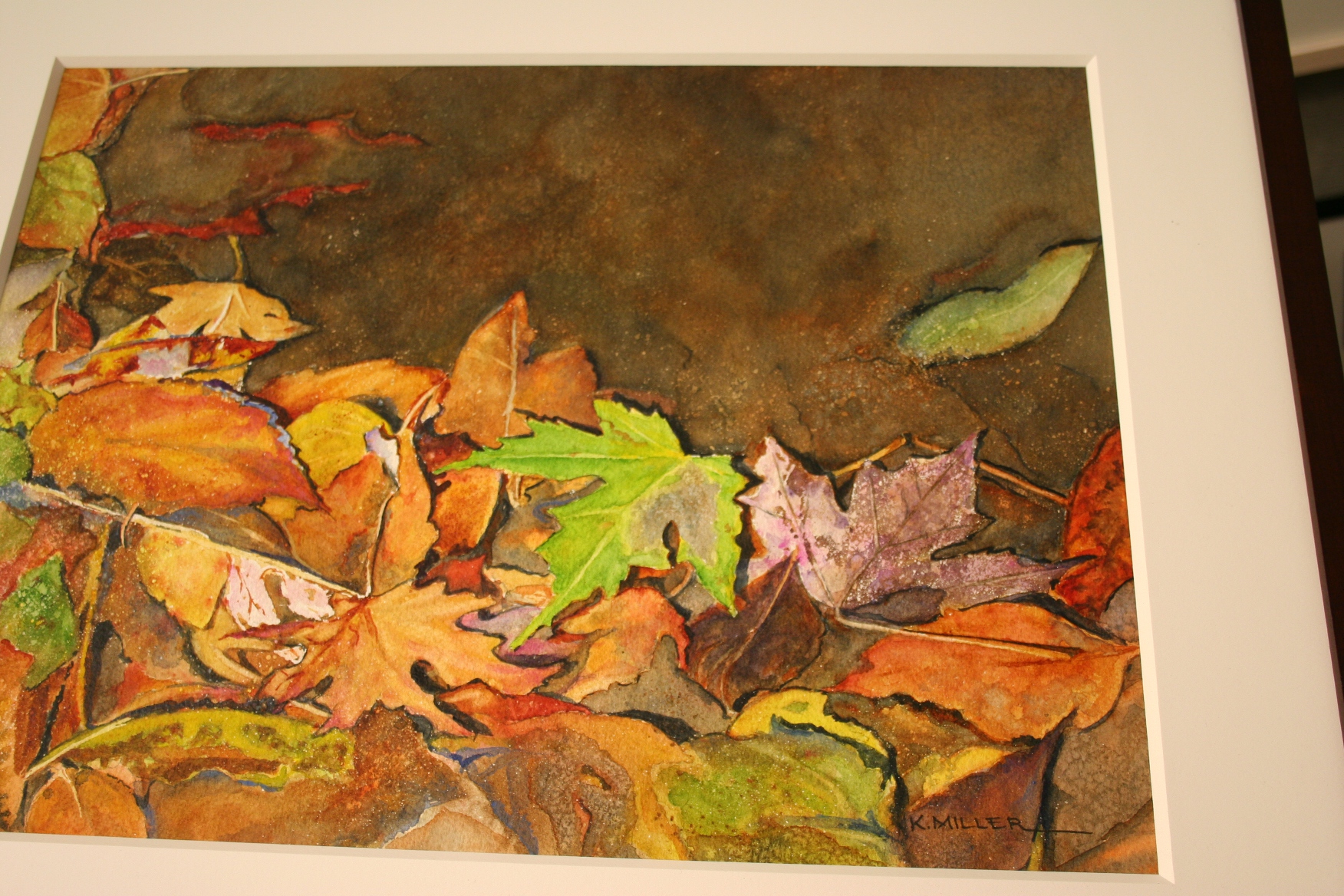
Another view of that vibrant autumn watercolor.

Another view of that vibrant autumn watercolor.

I cannot take my eyes off this vivid watercolor, created via multiple layers of painting. Let one layer dry, then add another layer. So different from the muted, dreamy tones of most watercolors.

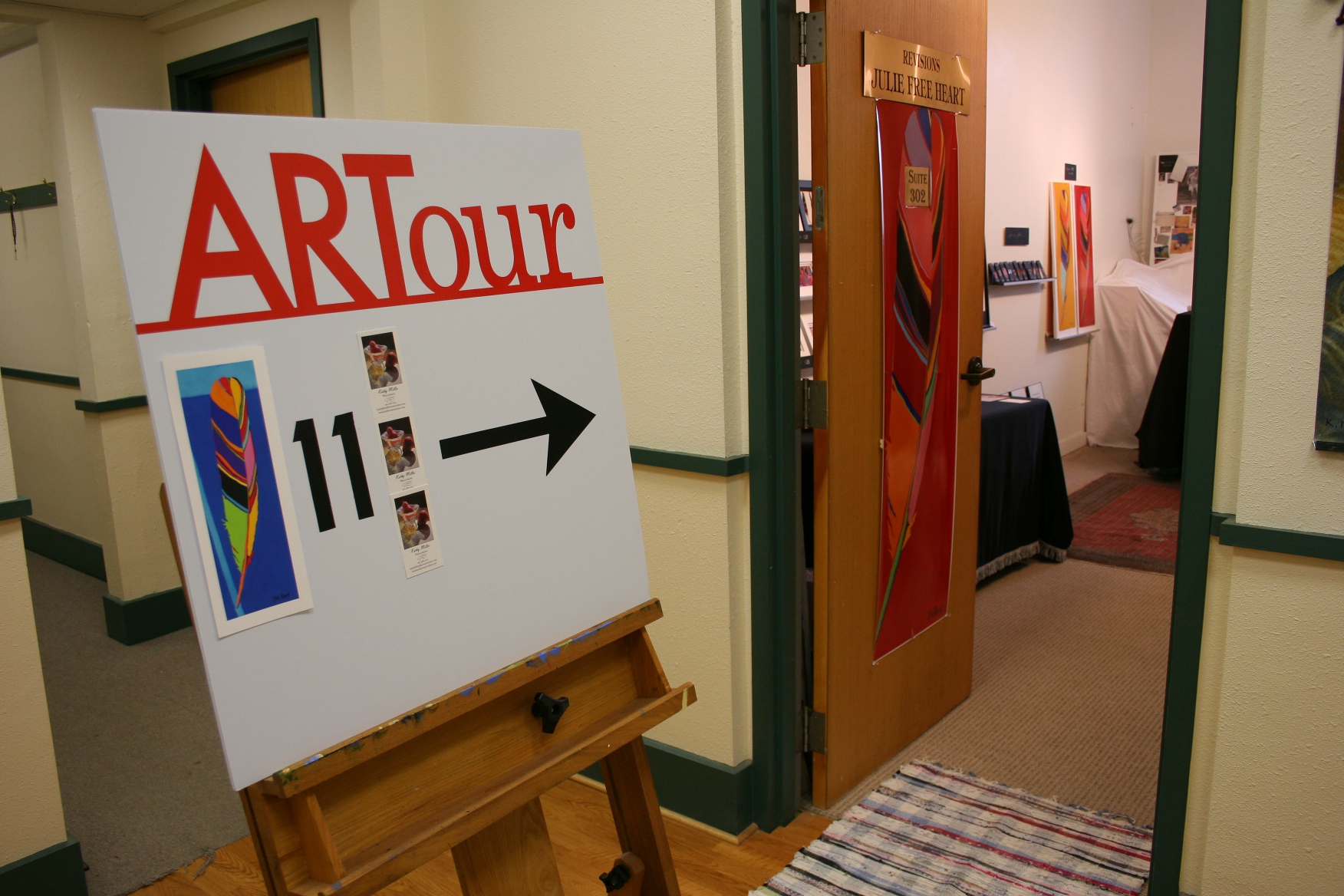
A sign directs visitors to Julie Free Heart's Revisions studio.

A sign directs visitors to Julie Free Heart’s Revisions studio.

From landscapes to florals to still lifes, Miller displayed samples of her watercolors inside Julie Free Heart’s Revisions upper level studio in the heart of downtown Northfield during the recent South Central Minnesota Studio ARTour.

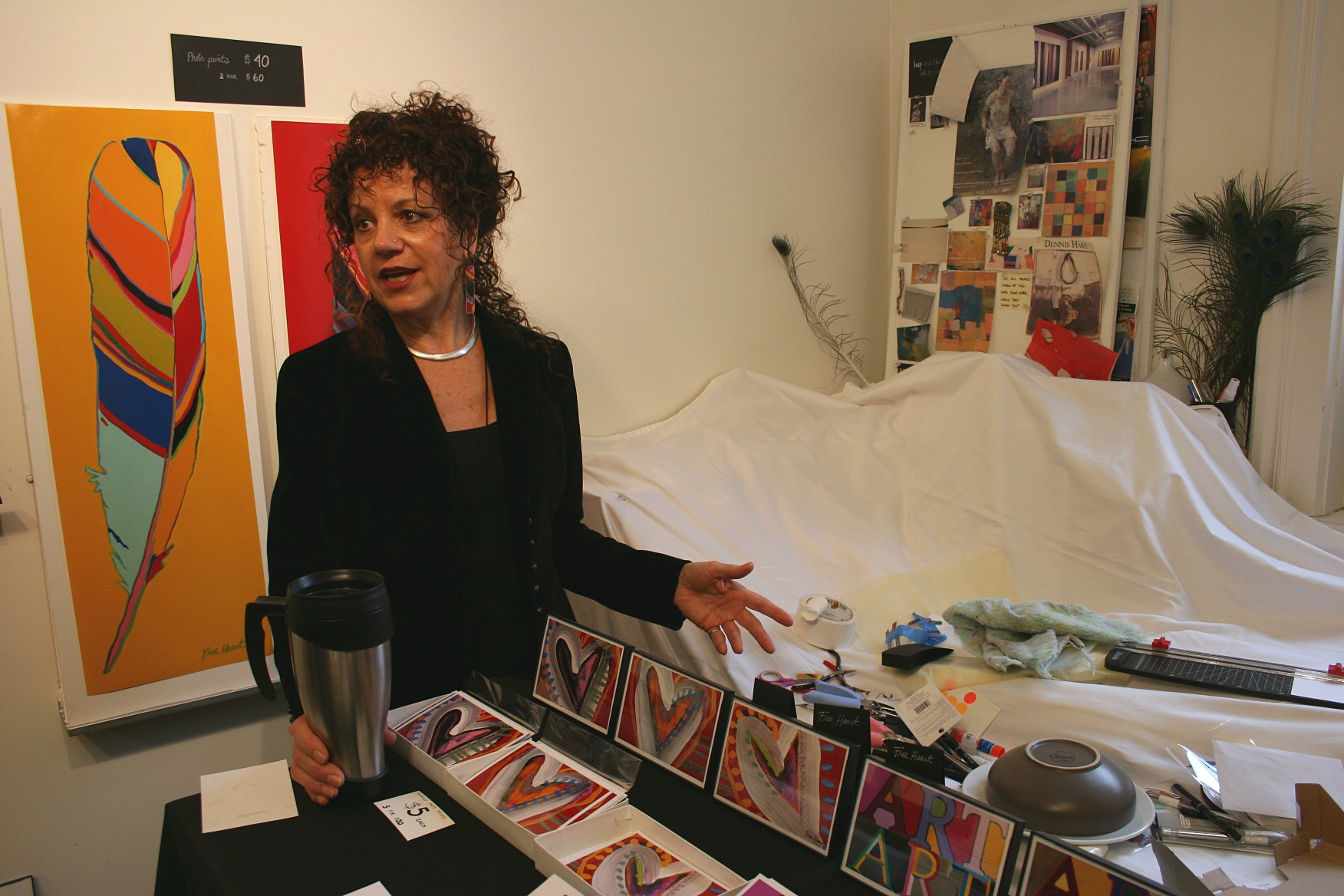
Julie Free Heart talks about her bold art.

Julie Free Heart talks about her bold art.

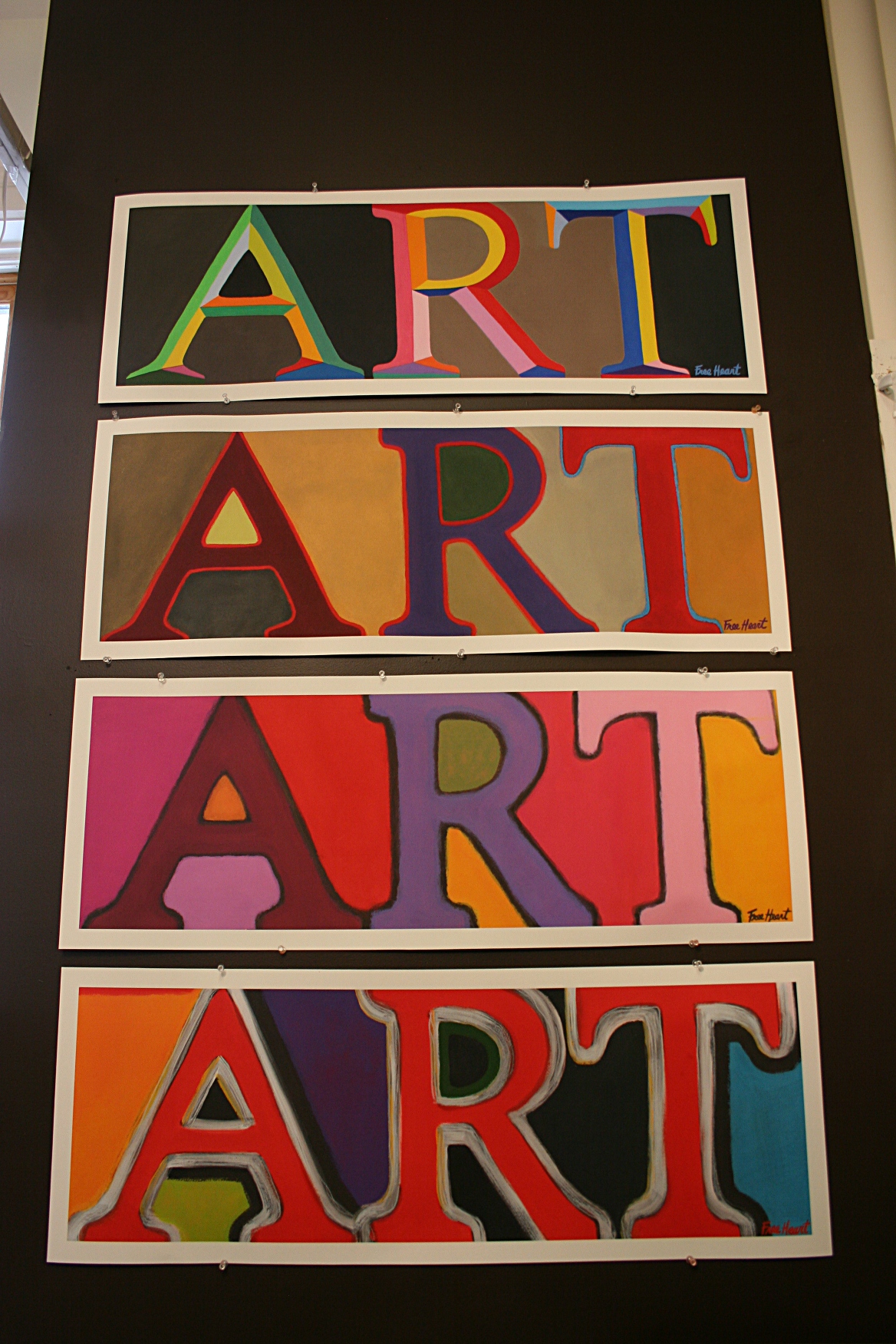
Free Heart’s paintings prove a sharp contrast to Miller’s. Defined. Bold. Single subject. Colorful feathers that to my arts uneducated mind seem modern art.

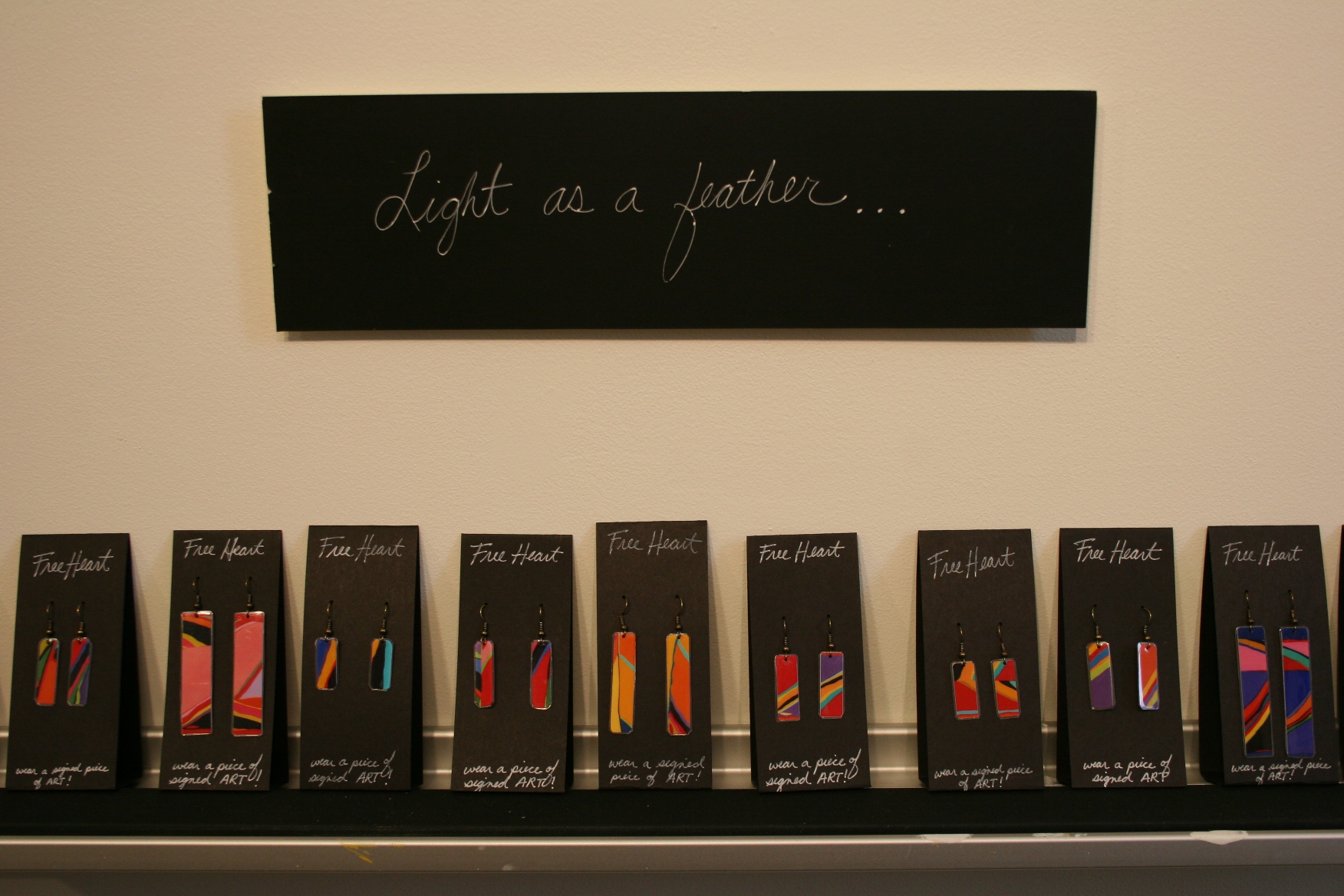
Free Heart's "light as a feather" earrings.

Free Heart’s “light as a feather” earrings.

There is a reason she paints feathers. The break-up of a long-time relationship. Feathers, actual feathers, floating before her at unexpected times, unexpected places. A sign that she was being carried, Free Heart says. She was meant to paint these bold, bright feathers, to celebrate, to be joyful.

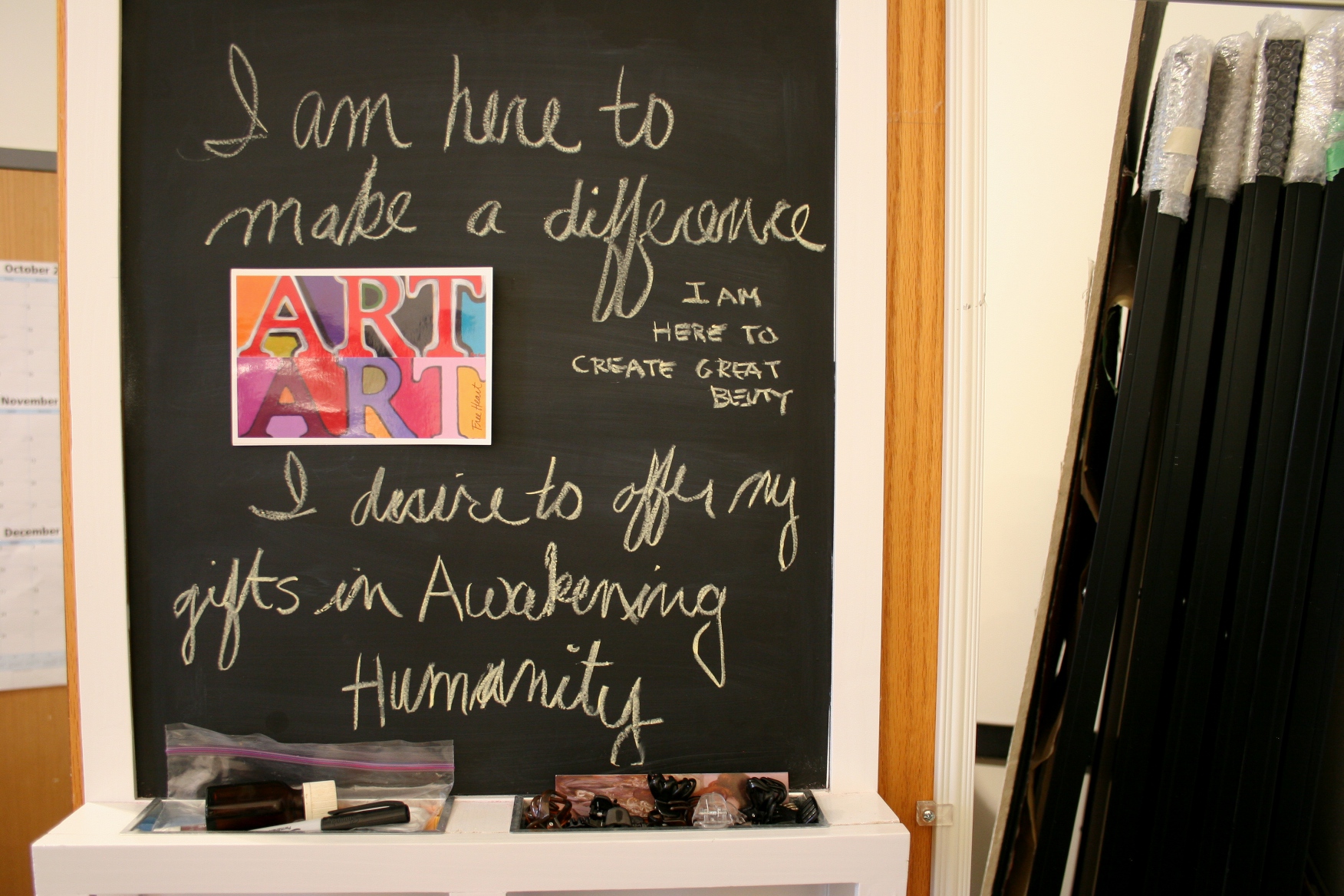
A message chalked on the back of Free Heart's studio door shares her philosophy on art.

A message chalked on the back of Free Heart’s studio door shares her philosophy on art.

After her marriage ended and not wanting to take back her maiden name, she chose the name Free Heart. It reflects who she is, she says. And I can see that. In her art. Hear that in her enthusiasm for painting these bold feathers, uniquely her own, uniquely carrying this artist on her journey through life and art.

More of Free Heart's bold art.

More of Free Heart’s bold art.

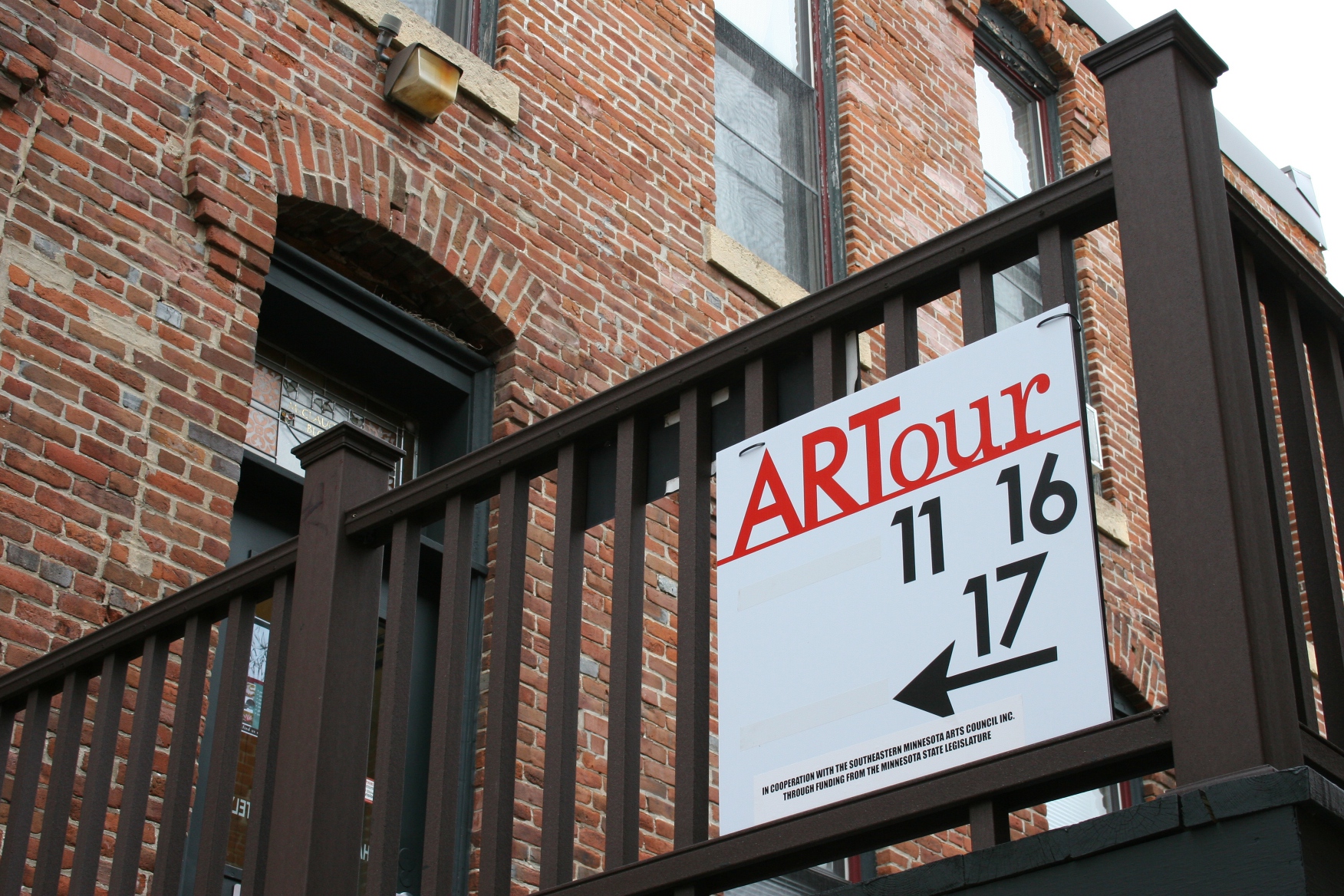
Signage directs visitors toward art studios on the third floor of an historic downtown Northfield building along East Fifth Street.

Signage directs visitors to art studios on the third floor of an historic downtown Northfield building along East Fifth Street.

FYI: To read about other artists whose work and/or studios I viewed during the recent South Central Minnesota Studio ARTour, click here and here and here.

Please check back for one final post from a downtown Northfield art studio.

© Copyright 2013 Audrey Kletscher Helbling