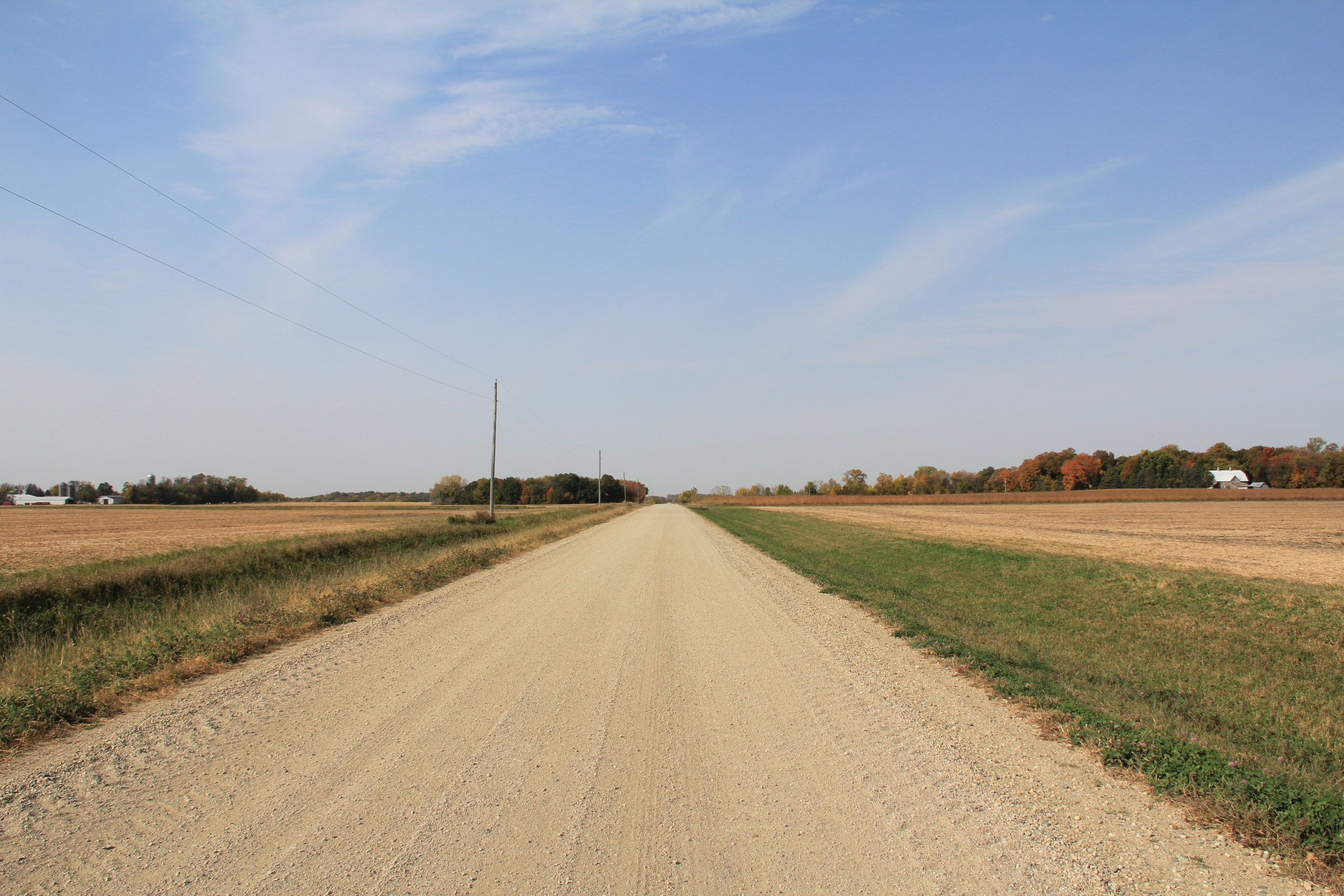
We followed roads west of Faribault toward the Kilkenny and Montgomery areas. I gave up trying to keep track of where we were. (Minnesota Prairie Roots copyrighted photo October 2024)
THE WHEELS KICKED UP DUST as our van moved along back gravel roads in Rice and Le Sueur counties on a recent weekday. Randy and I were on a fall color drive that took us past cornfields and farm sites, past woods and wetlands, past trees blazing orange and those still green.
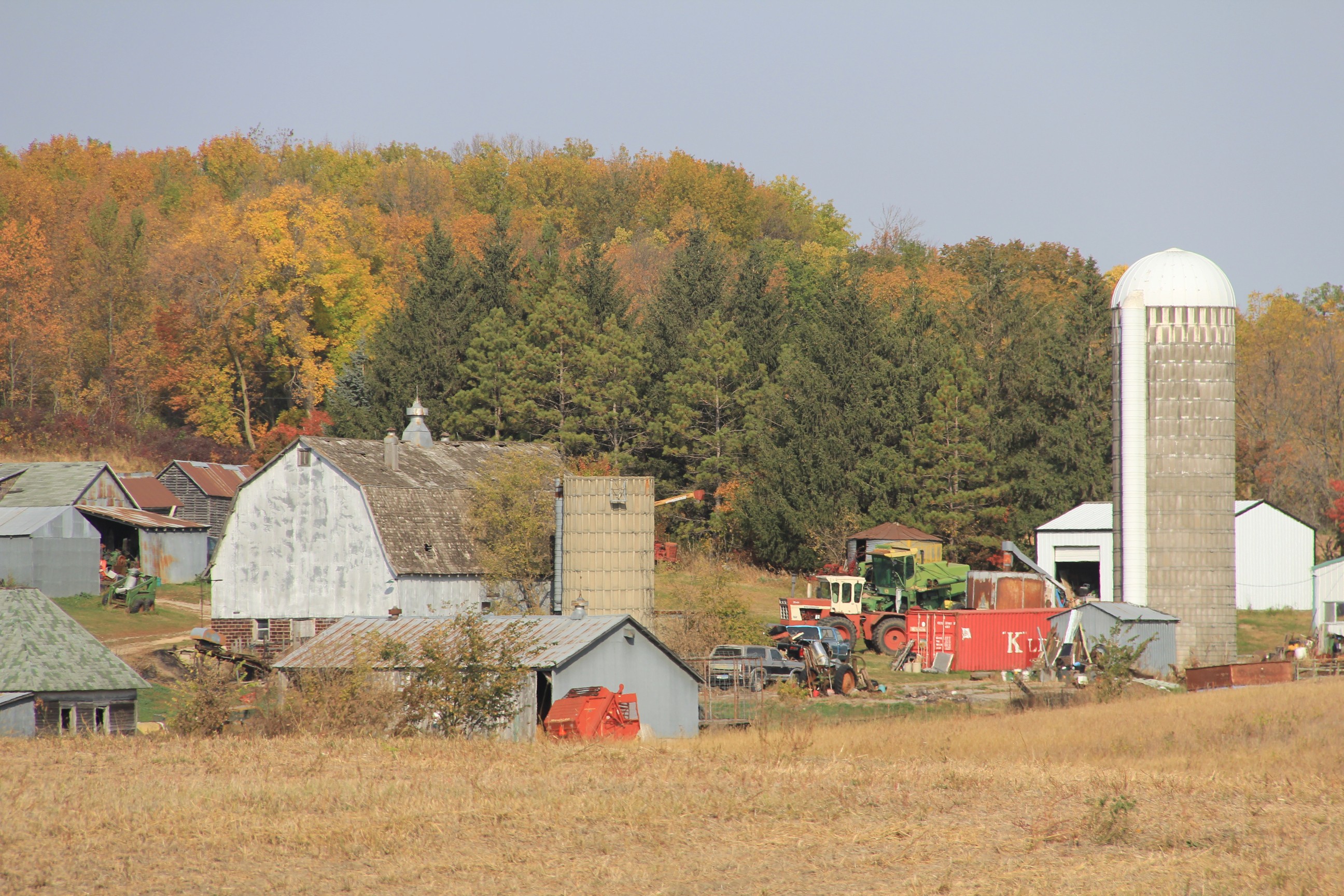
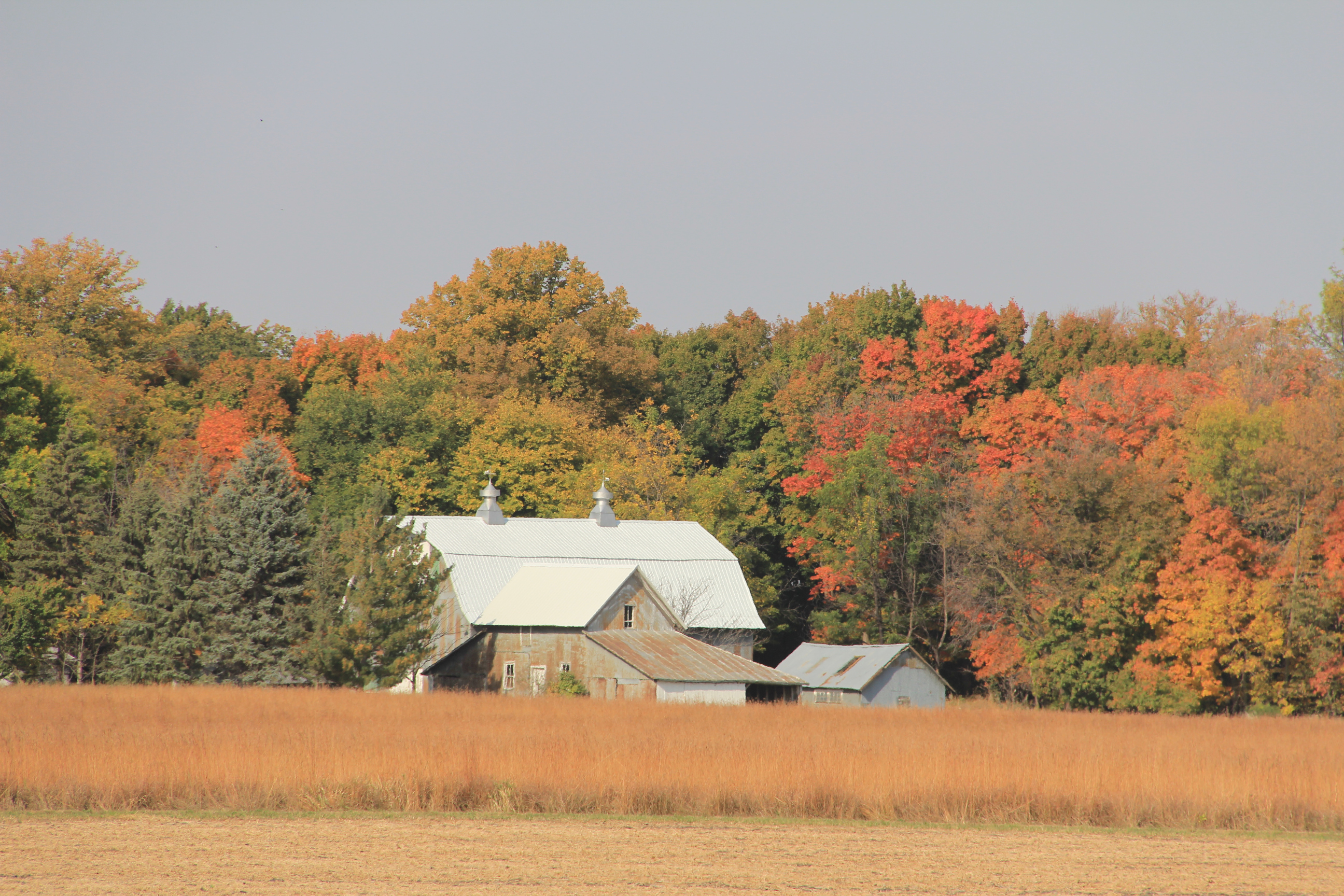
This farm site sits along Leroy Avenue, just off 160th St. W. between Shieldsville and Kilkenny. (Minnesota Prairie Roots copyrighted photo October 2024)
As we wound our way along winding roads and along straight grids west of Faribault, I felt what I always feel this time of year—a longing for the land. In this season of harvest, this season of leaves coloring the landscape, I yearn to connect with the soil, the earth, the agrarian heritage that roots me.
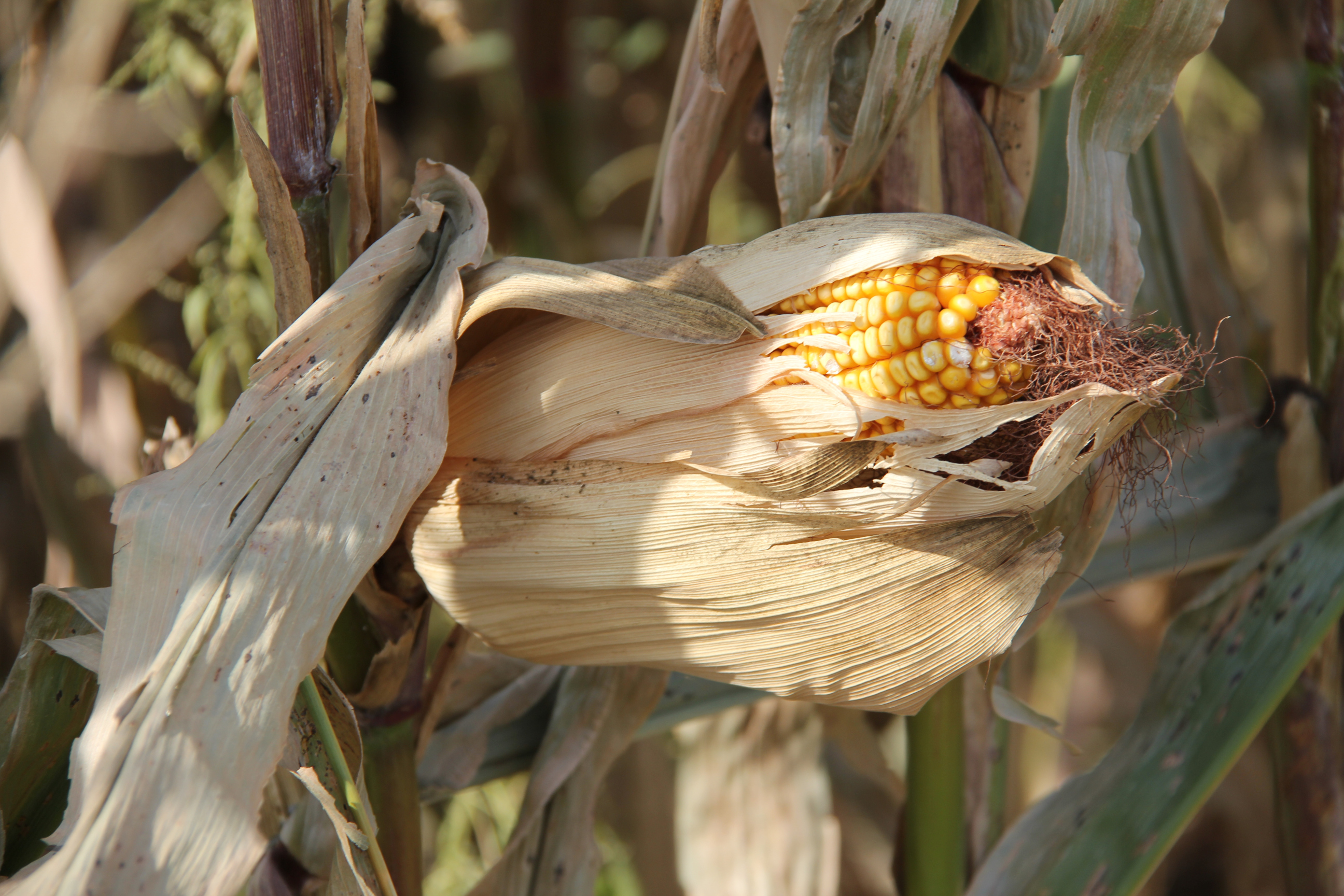
Corn awaits harvesting. (Minnesota Prairie Roots copyrighted photo October 2024)
I miss the land. I miss the roar of combines harvesting corn and soybeans, golden grain spilling into wagons or trucks. I miss the distinct, indescribable scent of autumn rising from fields. I miss all of it. A country drive in October helps ease the heartache of one who grew up on a farm, but left it fifty years ago.
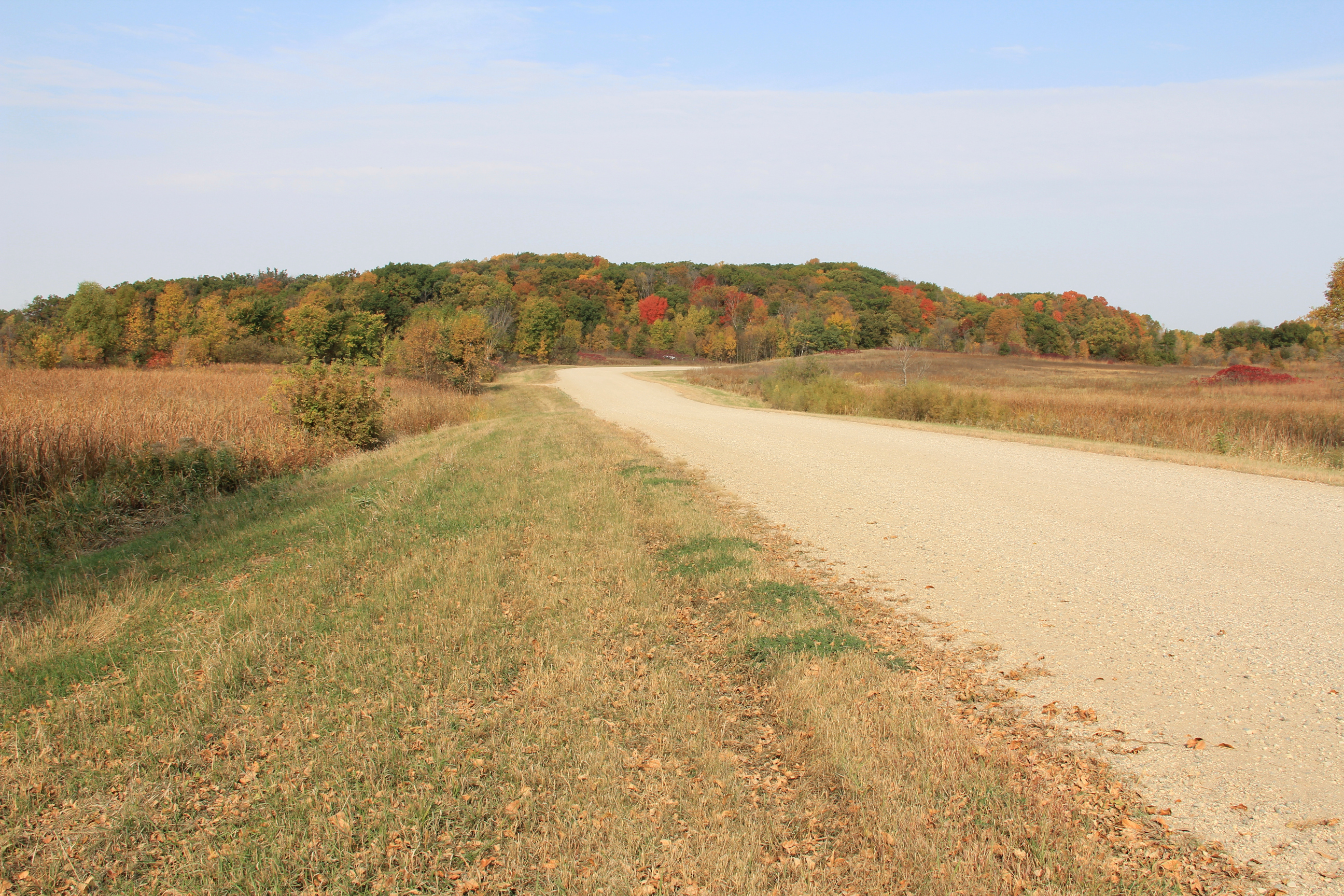
This curving gravel road took us past wooded hillsides and a wetlands restoration area. (Minnesota Prairie Roots copyrighted photo October 2024)
This is the time of year, whether you’re rural, small town or city-raised, to take a drive into the countryside. Off paved roads. Onto gravel routes.
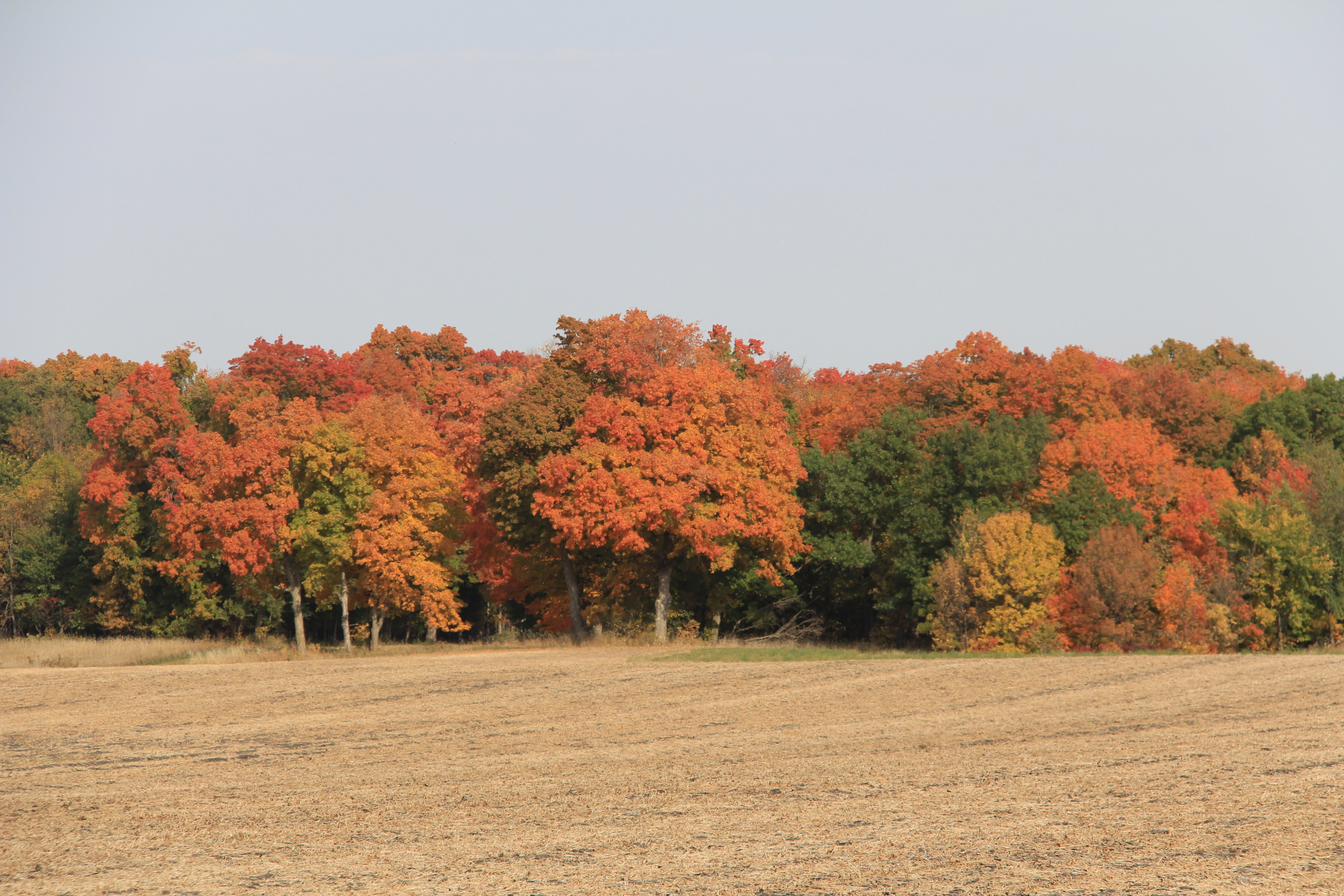
Some treelines were vivid with color, others not. (Minnesota Prairie Roots copyrighted photo October 2024)
I am always drawn to barns rising above the landscape. (Minnesota Prairie Roots copyrighted photo October 2024)
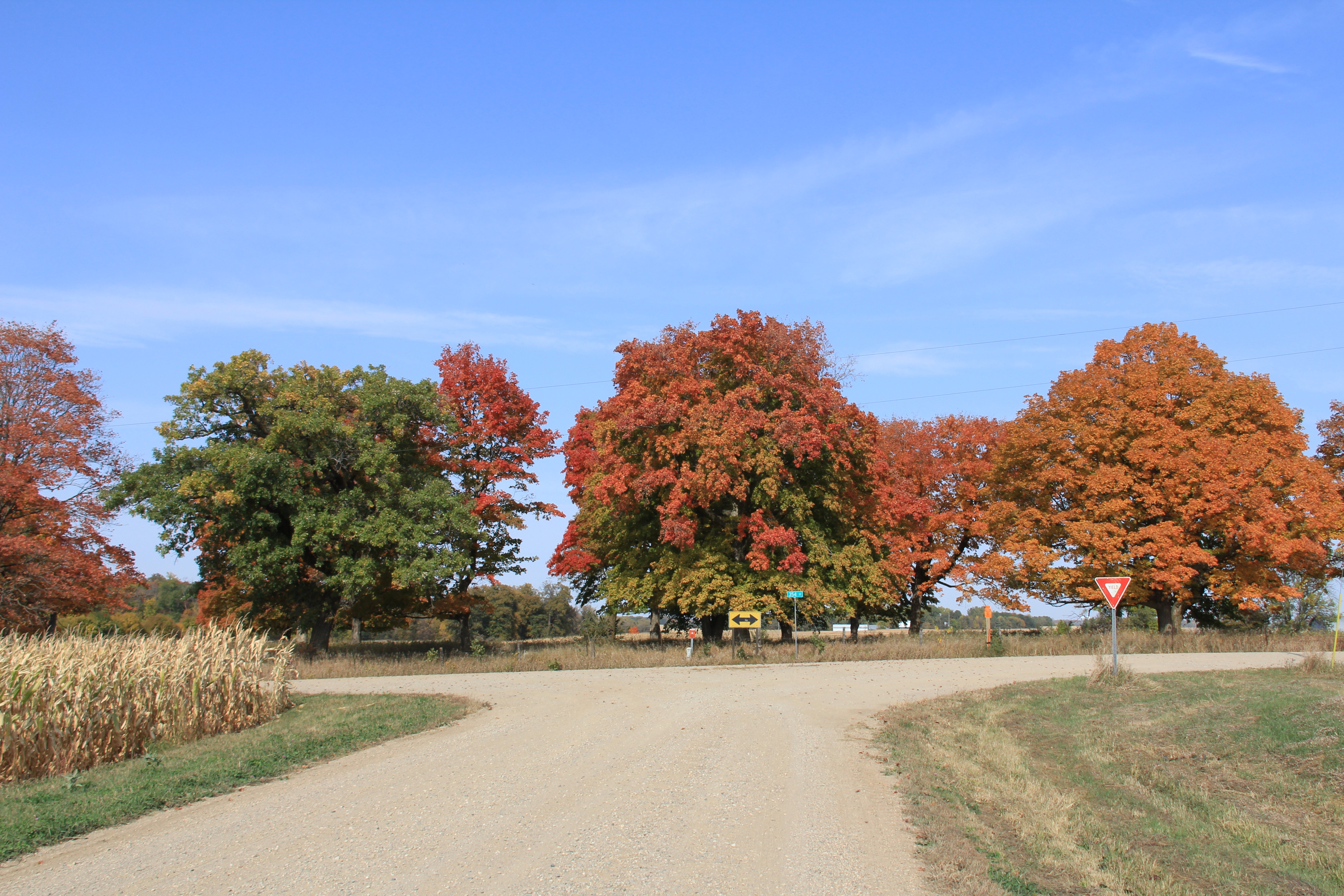
A rural intersection ablaze in color. (Minnesota Prairie Roots copyrighted photo October 2024)
Gravel forces a slower pace, offers opportunities to stop and appreciate that which unfolds before you. On this drive, it was the coloring of trees, just beginning, aged farm sites back-dropped by woods or surrounded by fields. Just being here in the rural-ness honored my past, filled my soul.
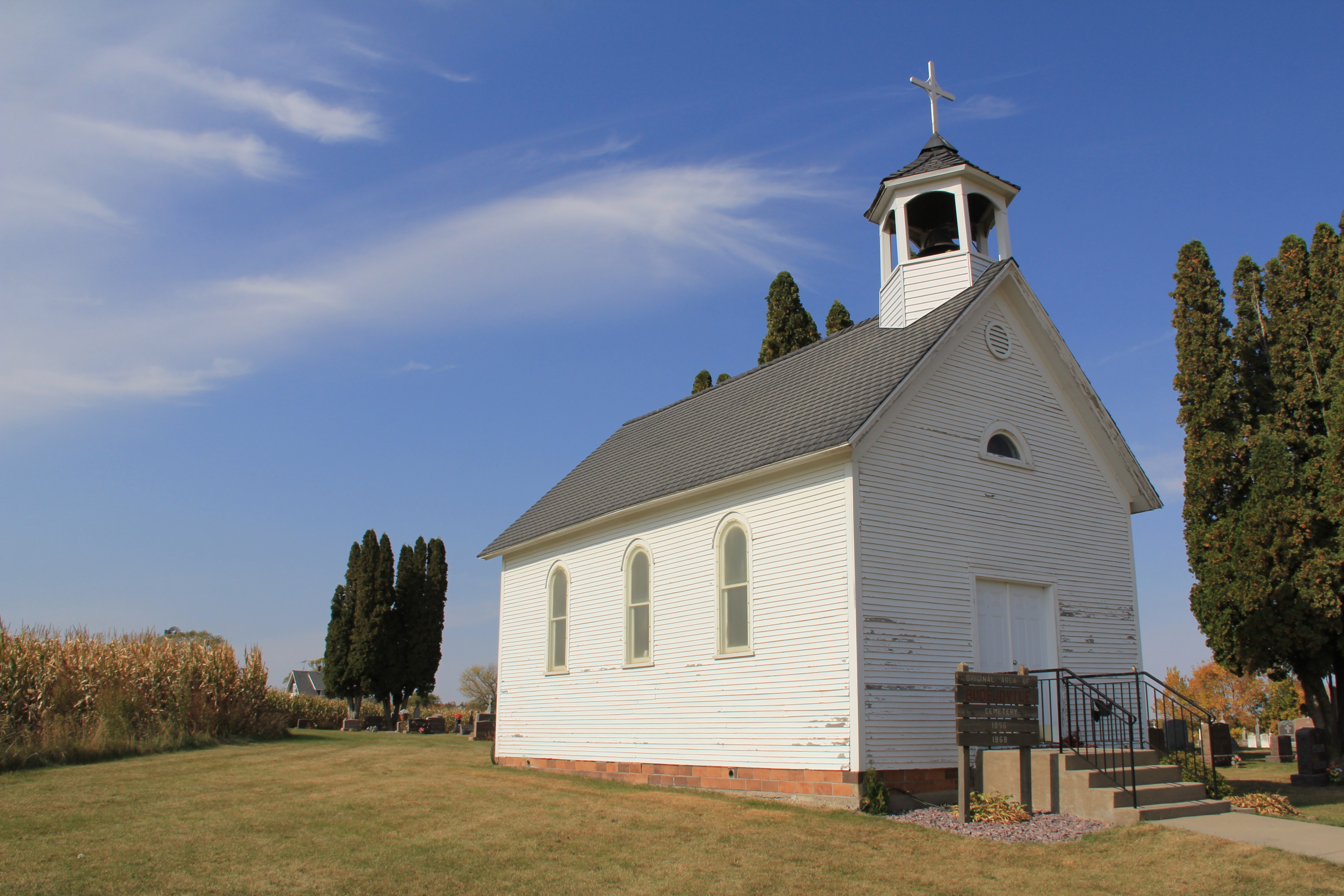
A Czech church and cemetery west of Montgomery. (Minnesota Prairie Roots copyrighted photo October 2024)
And then we paused at an historic country church nestled among cornfields near Montgomery. We walked the expansive cemetery. As I meandered and took photos, I heard the wind rustling the dried corn leaves, a comforting sound in the silence of the land.
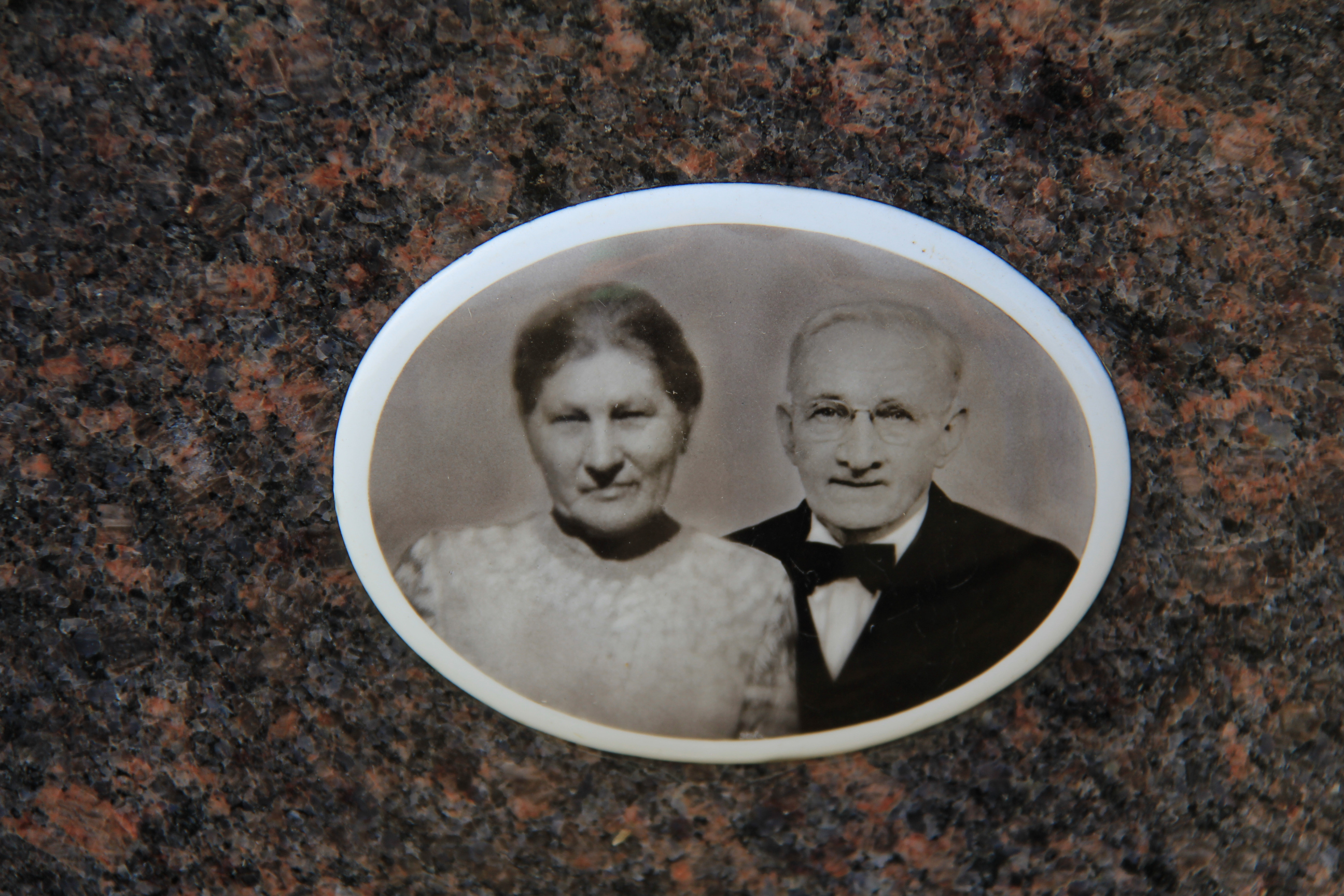
Anna and John Frolik are among the early settlers buried at Budejovice. They were born in 1886 and 1887. Their photos adorn their tombstone. (Minnesota Prairie Roots copyrighted photo October 2024)
I wondered about the Czech immigrants who settled in the area, built Budejovice Church in 1868. What were their heartaches, their stories, their hopes and dreams? I expect they longed for the Old Country, for the familiarity of home, for the loved ones an ocean away.
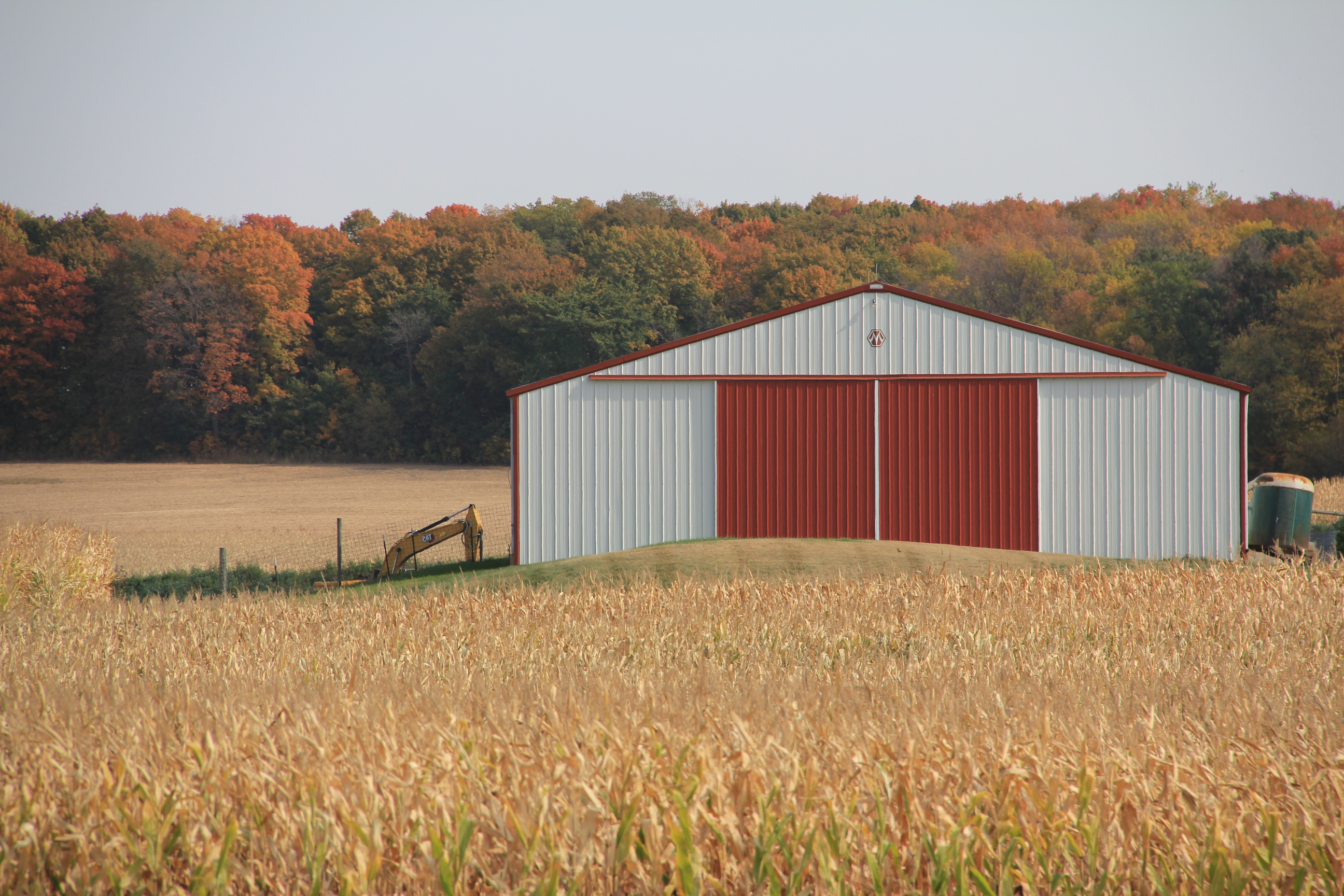
This machine shed, surrounded by cornfields, sits just across the gravel road from the church and cemetery. (Minnesota Prairie Roots copyrighted photo October 2024)
Such thoughts filter through my mind whenever I am among the souls of the departed, my soles touching the land under which they lie buried. I don’t feel sadness as much as a sense of respect for those who came before me, who forged a new life in Minnesota with grit, determination and a whole lot of fortitude.
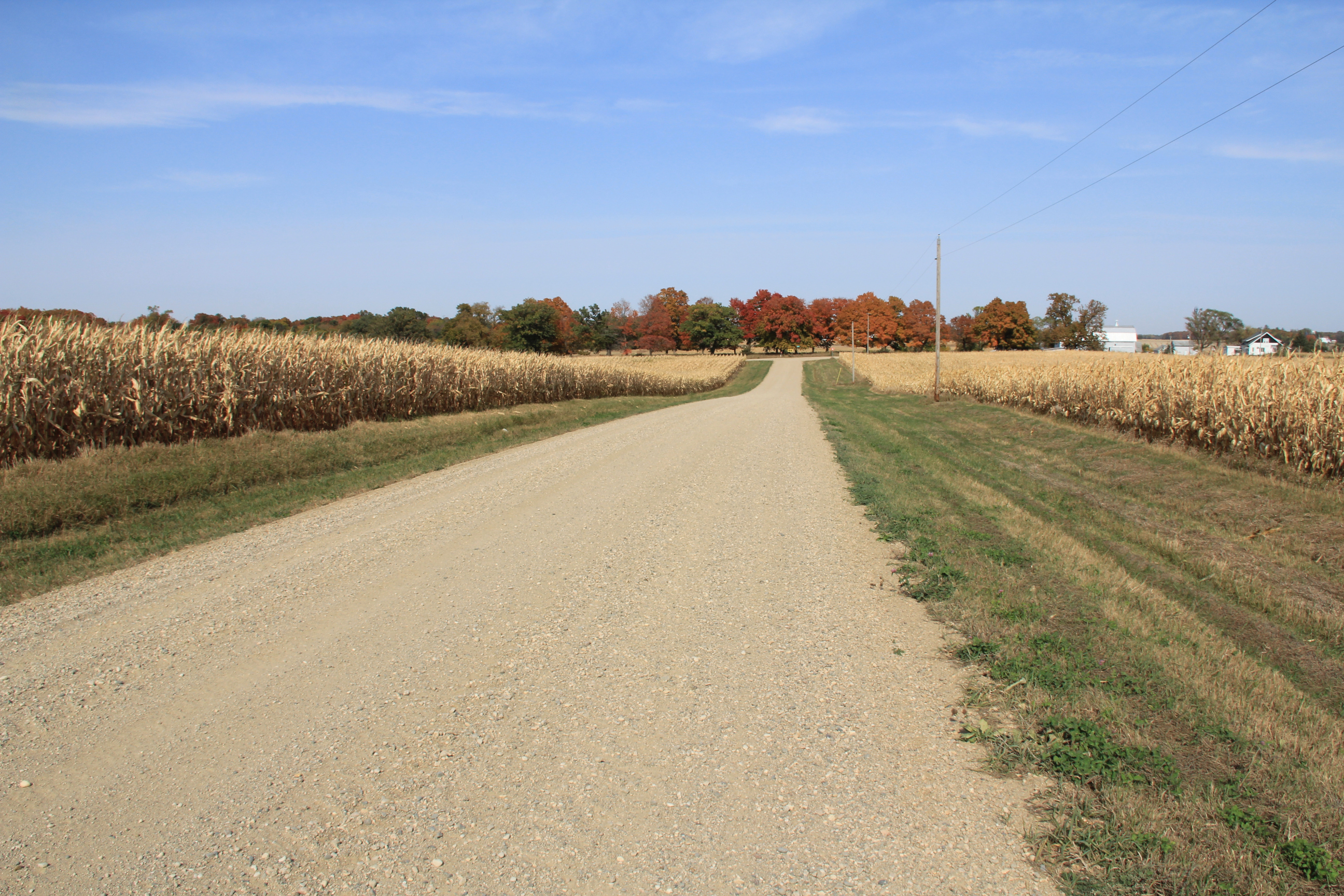
Cornfields flank a gravel road leading to a colorful treeline. (Minnesota Prairie Roots copyrighted photo October 2024)
Driving the countryside in autumn evokes not only nostalgia and reflection, but also a sense of time passing. Leaves turn color. Crops morph to golden hues, ready for harvest, or already harvested. And dust rises from the land, carried on the wind, coating our van. Miles and miles and miles of gravel roads behind us, we arrive home. I’m exhausted. My shoes are covered in dust. But I feel content. Replenished. I needed this, this country drive that was about much more than viewing fall colors. It was also about filling my soul.
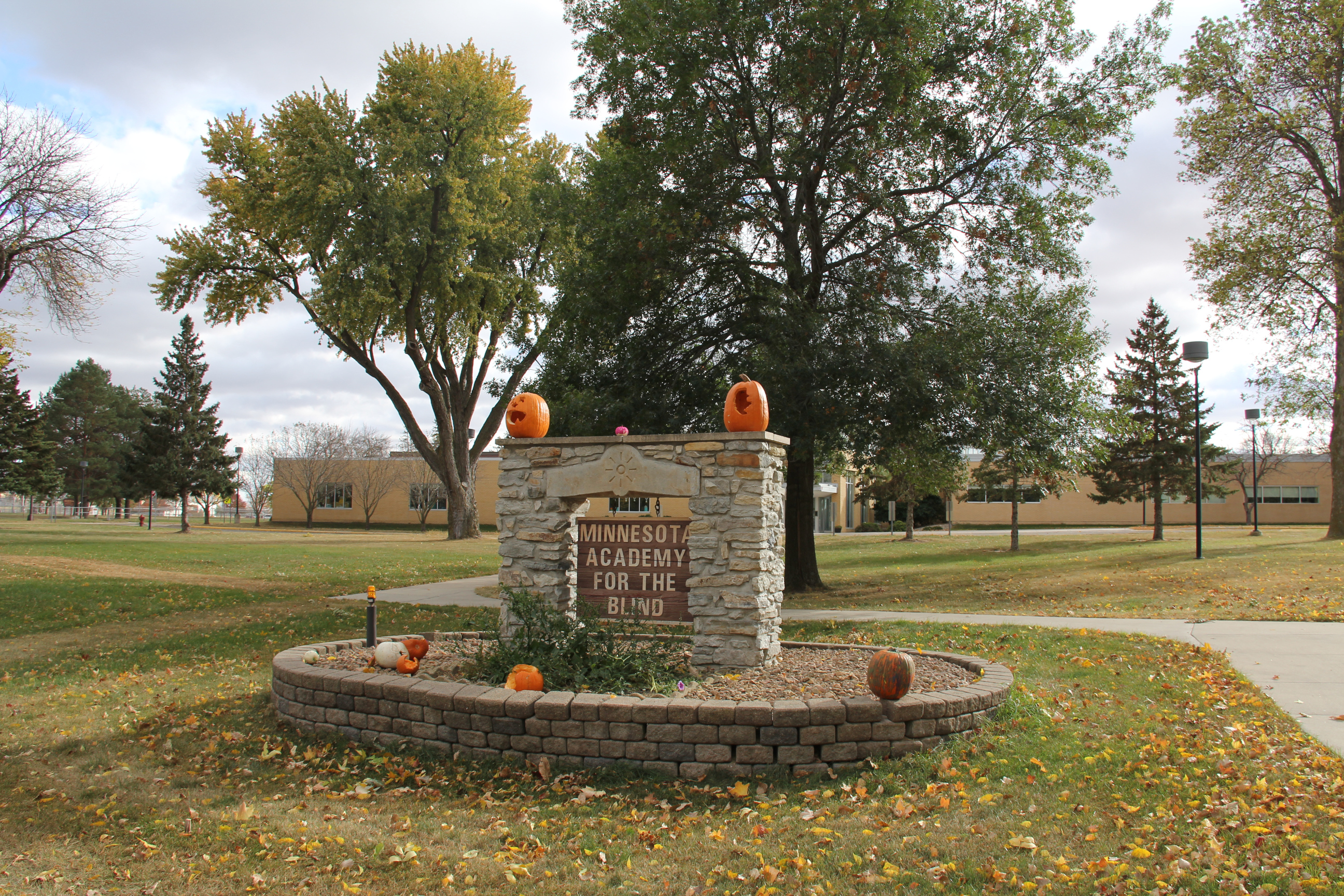
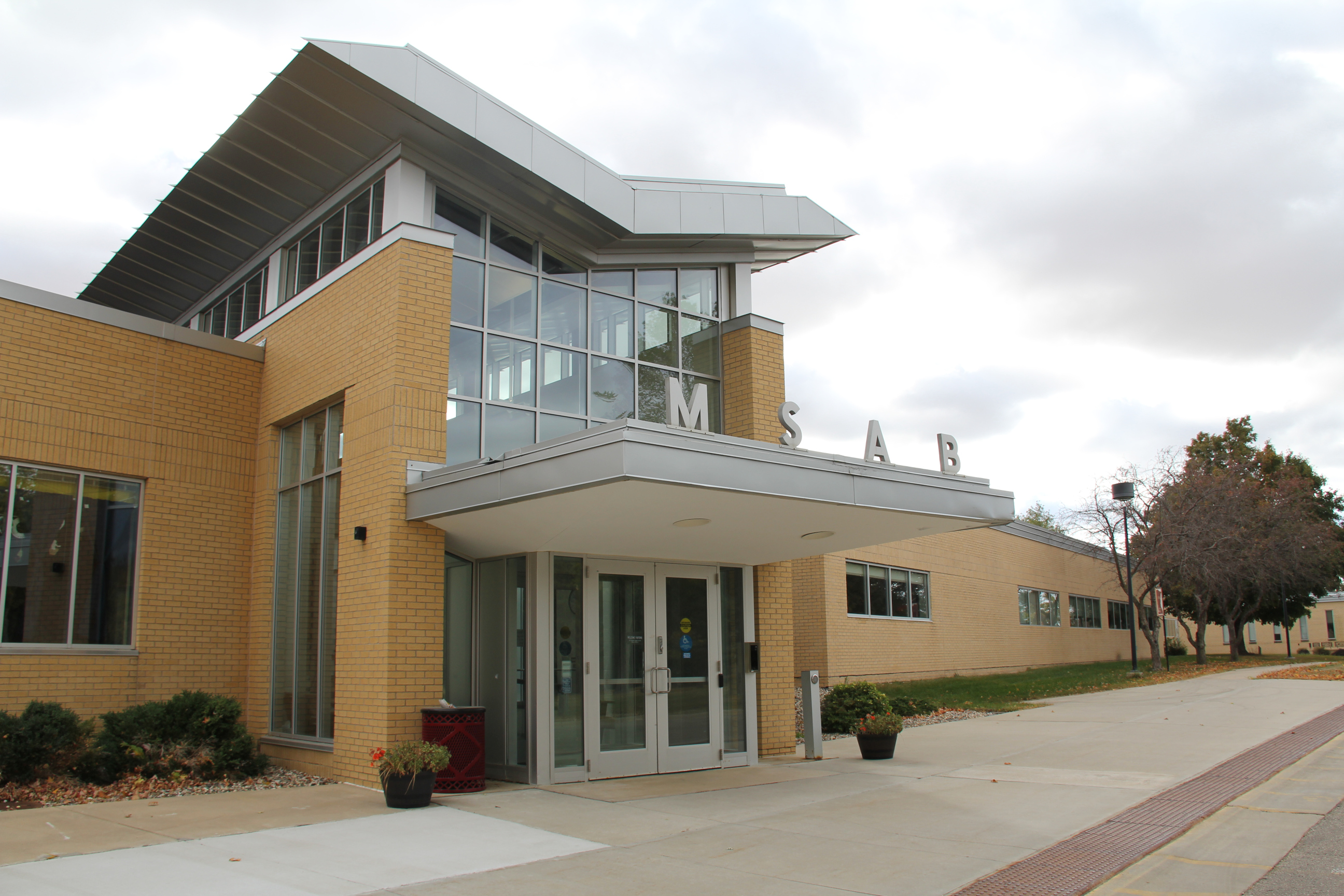
The entrance to the Minnesota State Academy for the Blind, located on Faribault’s east side. (Minnesota Prairie Roots copyrighted photo October 2024)
AS SOMEONE WHO DEALS with vision and hearing impairments, I feel fortunate to live in a community with a heightened awareness of those issues. Faribault is home to the Minnesota State Academies for the Deaf and Blind. Medical professionals offer local care in vision and hearing. And the Faribault Lions Club, focused on both, is especially active.
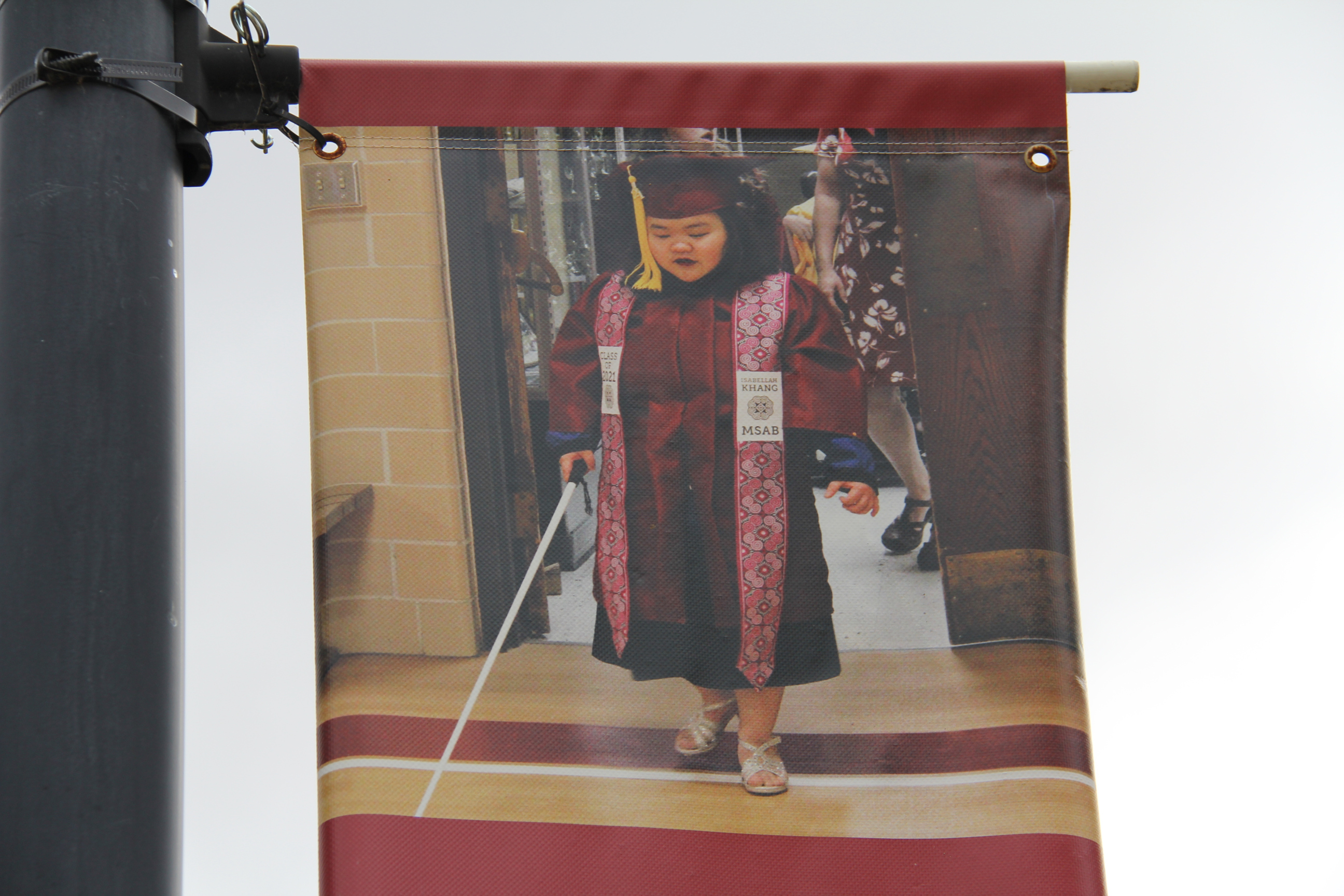
Pictures of MSAB students are featured on banners scattered around the campus. This one highlights a graduate. (Minnesota Prairie Roots copyrighted photo October 2024)
And that is why I met local Lion John Battles and learned about White Cane Awareness Day, celebrated annually on October 15. Battles was standing inside the exit area of Fareway Foods handing out information about white canes and collecting donations. Those monies will help blind and visually impaired individuals deal with mobility issues. For example, past gifts have been used to purchase canes and/or replacement tips for students at MSAB.
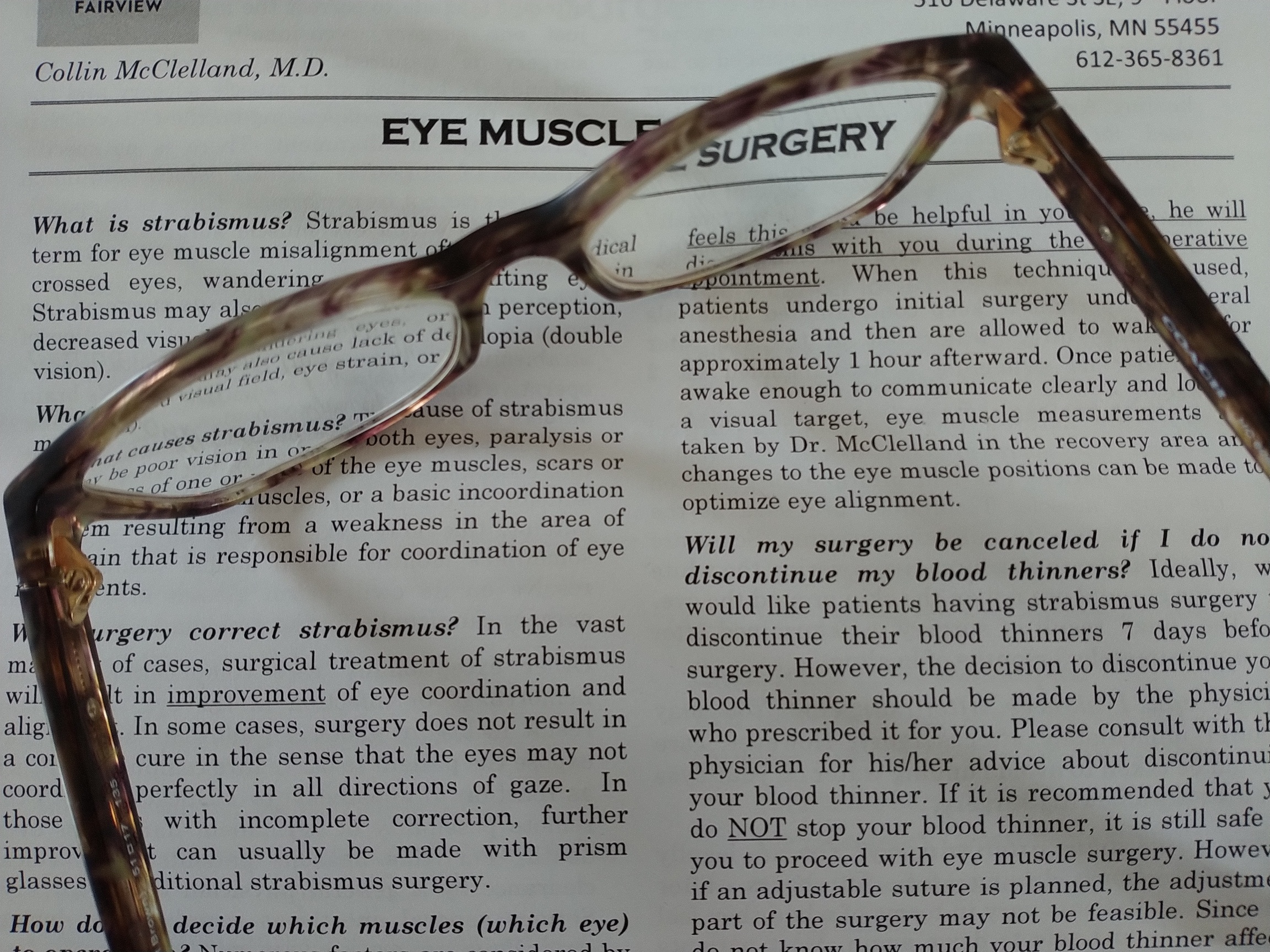
I underwent eye muscle surgery as a child and then again 64 years later, this time using an adjustable suture in my left eye. (Minnesota Prairie Roots copyrighted file photo 2023)
I paused to drop money into John’s bucket and also to chat a bit about the Lions’ work and my own struggles with vision. I’ve been diagnosed with bilateral strabismus and in January underwent surgery to realign my eyes with the goal of eliminating my double vision. Unfortunately, the corrective surgery did not work long-term. That’s true in 10-20 percent of surgical outcomes. Rather than attempt another surgery, I opted to try prisms in my prescription eyeglasses. Adjusting to the high number of prisms took time and they are not perfect. I struggle with depth perception and sometimes still see double. But, as I told John, at least I can see.
This photo of me (far left in group picture) with family on a vacation to northern Minnesota in 1960 shows me wearing a patch over my left eye. This was an attempt to correct my vision without surgery. (Minnesota Prairie Roots copyrighted file photo by Elvern Kletscher)
My vision issues are not something which suddenly developed. Rather, I was born with misaligned eyes, requiring strabismus surgery at age four. I am forever grateful to my parents for understanding the importance of corrective surgery. Although I never asked, I expect it was a huge financial burden for them. Had I not undergone this operation at the hospital in New Ulm, I likely would have gone blind in my less dominant eye.
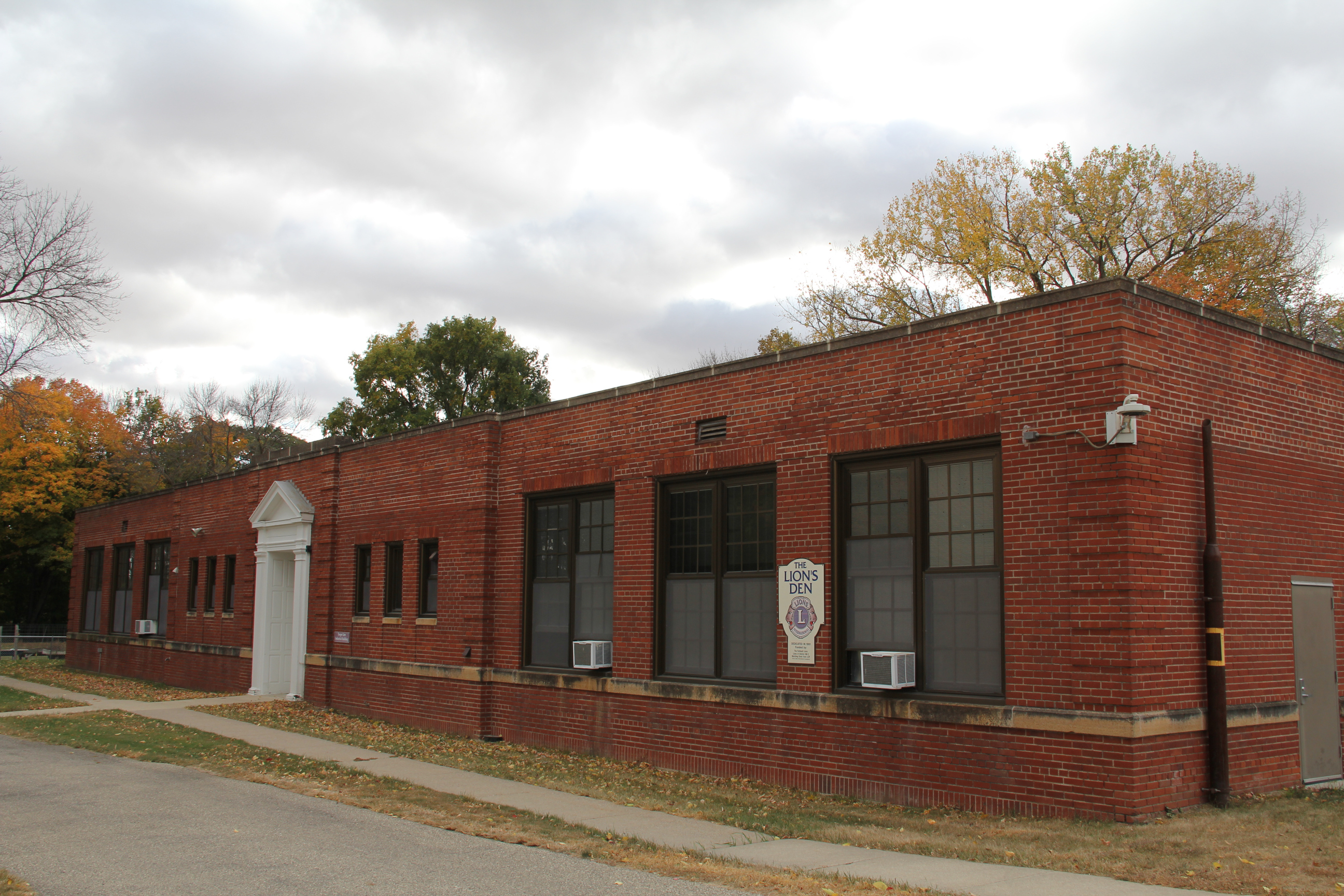
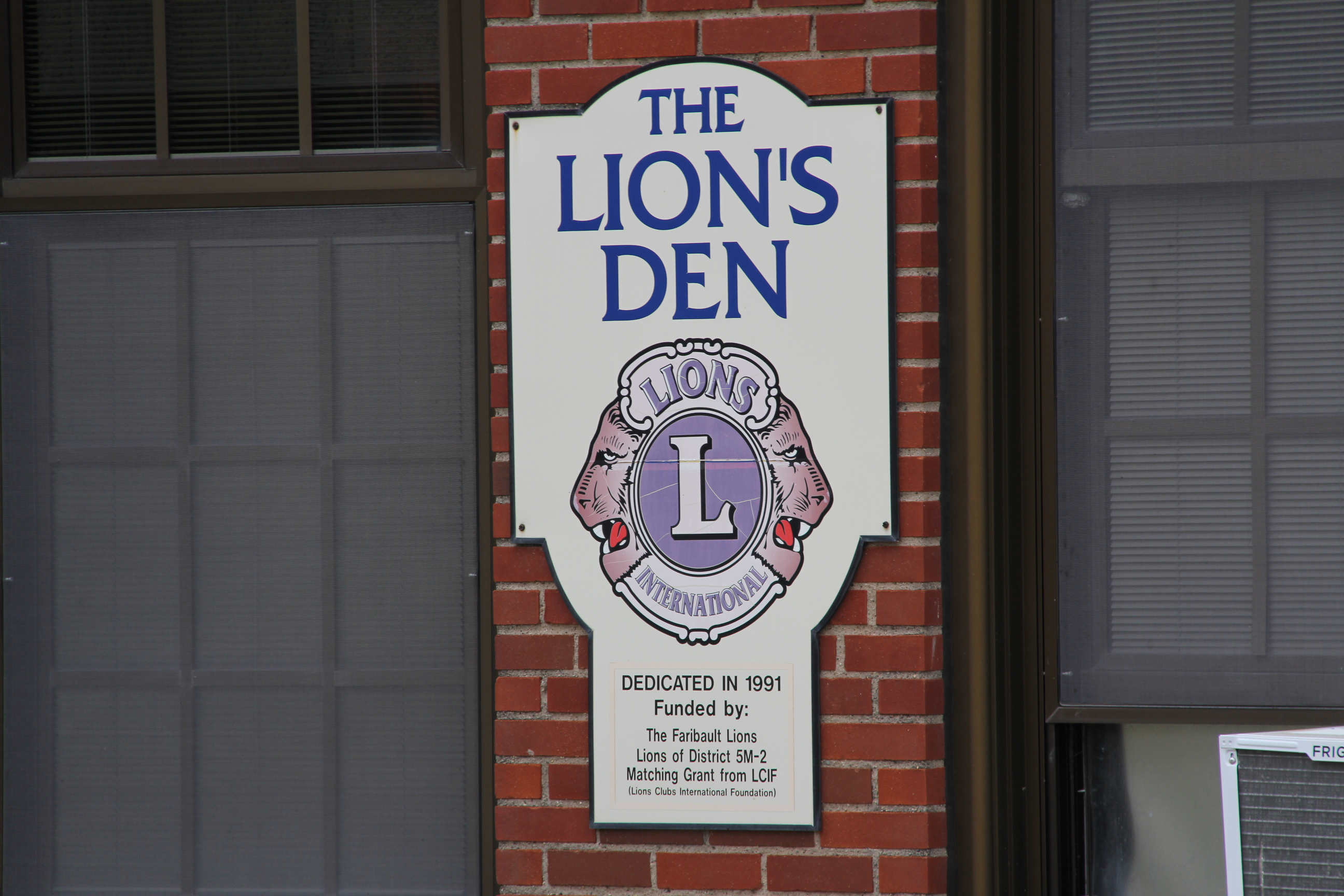
This building on the MSAB campus houses the Lion’s Den, an apartment setting to help students learning to navigate independent living. (Minnesota Prairie Roots copyrighted photo October 2024)
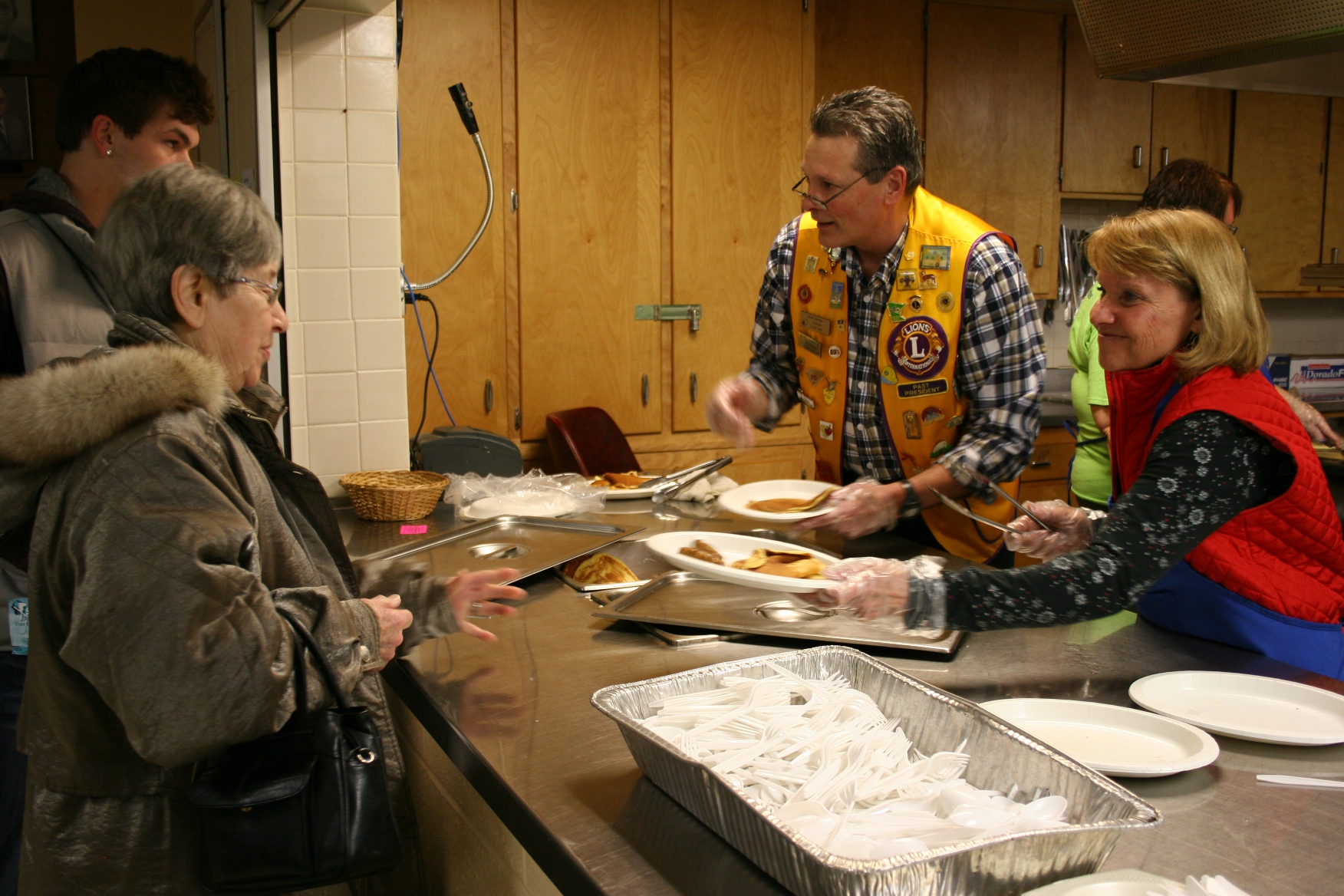
Serving up pancakes and sausage at the annual Lions Club pancake breakfast, a major fundraiser for the Faribault service organization. (Minnesota Prairie Roots copyrighted file photo 2015)
The main entry to the Minnesota State Academy for the Blind. The local Lions Club supports students and programs at MSAB. (Minnesota Prairie Roots copyrighted photo October 2024)
As I shared parts of my story with John, I felt his empathy and his strong desire to help others. The Faribault Lions clearly practice their motto of “We serve.” They collect used eyeglasses and hearing aids, offer vision screenings for kids, support Can Do Canines (which trains service dogs), funded the Lion’s Den apartment at the school for the blind (helping students adjust/learn in an apartment setting) and much more. Their service projects are not solely focused on vision and hearing.
This sign on the Lion’s Den acknowledges this as a project of the Faribault Lions Club with a grant from the Lions Club International Foundation. (Minnesota Prairie Roots copyrighted photo October 2024)
But on this day, I want to highlight the efforts of John and his fellow Lions to educate the public about white canes. In the printed information John distributed at the grocery store, I learned that the idea of white canes originated in 1930 with the Lions Club of Peoria, Illinois. The club president suggested white canes with red tips as a tool to help those with visual impairments. The idea caught on as a way to grow their independence and also as a way to create awareness among the public.
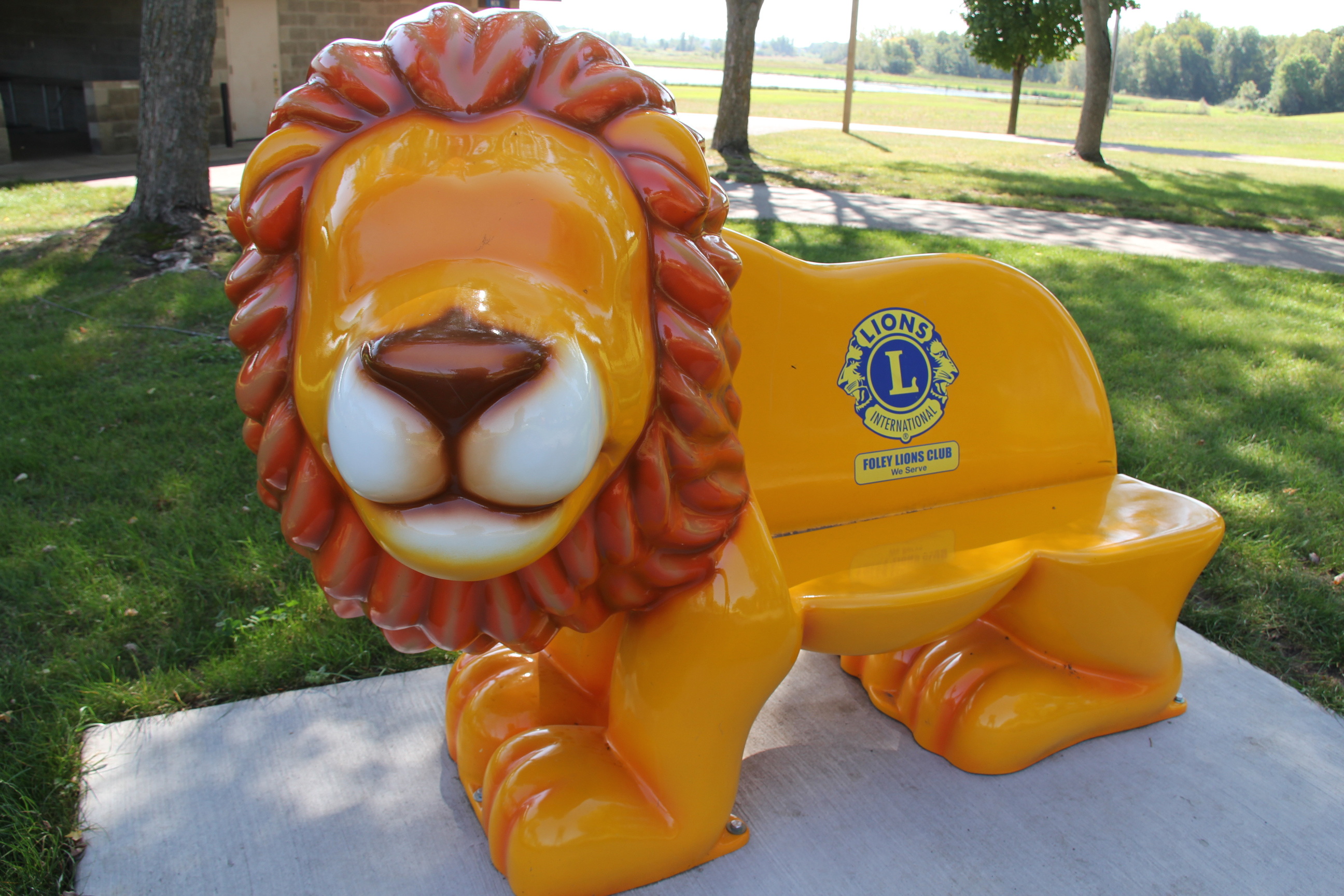
The Foley Lions Club in central Minnesota is raising awareness about vision via this bench in Lion’s Park. There’s also a lion’s head drinking fountain in the park. (Minnesota Prairie Roots copyrighted photo September 2024)
Awareness is assuredly a goal of the Lions. The informational sheet from John quotes two subdivisions of Minnesota state law #169.202 regarding white cane usage and how those operating motor vehicles must stop and yield to those carrying white or metallic canes. That seems common sense. But sometimes common sense is elusive.
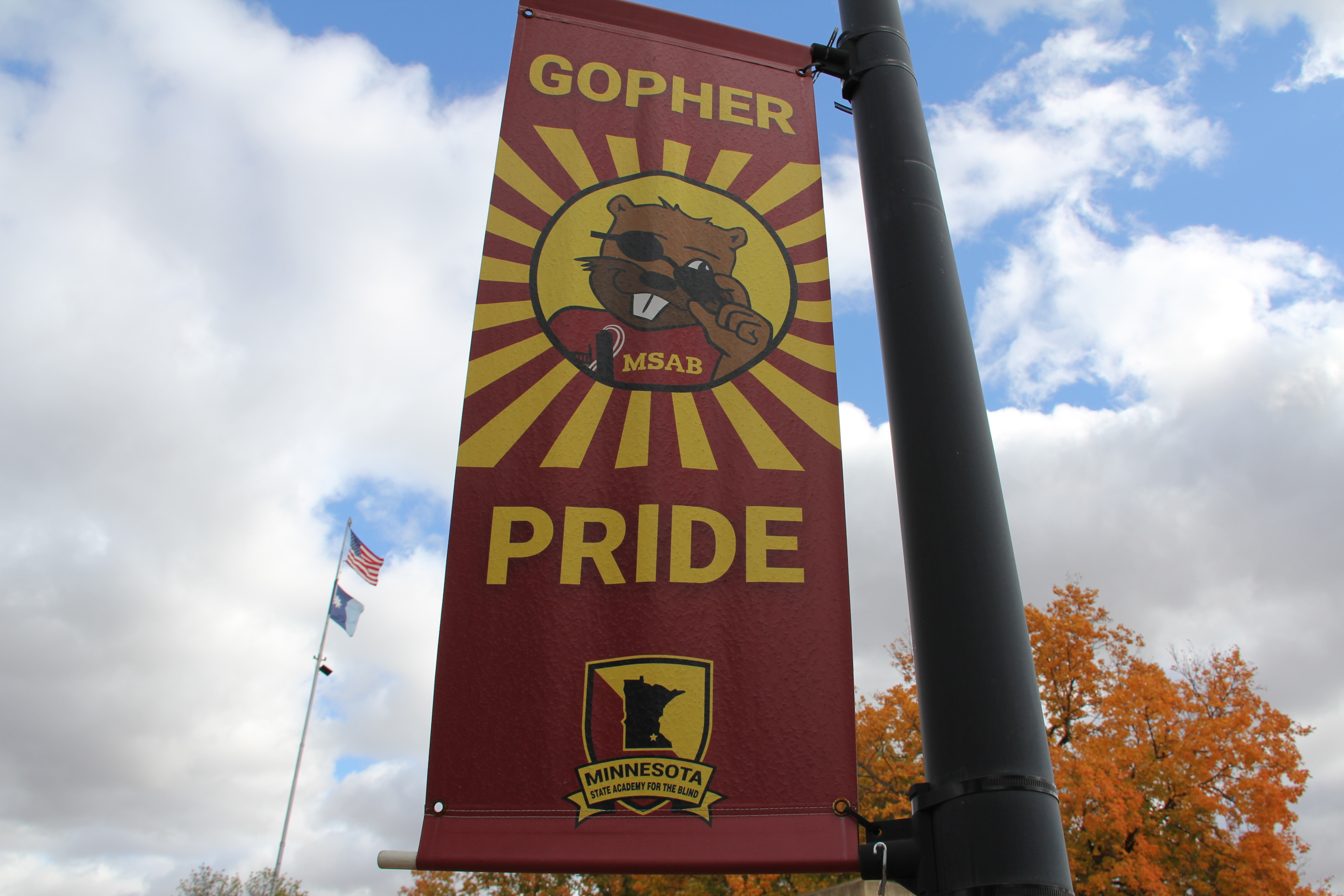
A banner on the MSAB campus shows pride in the school mascot. (Minnesota Prairie Roots copyrighted photo October 2024)
I appreciate the efforts of the Faribault Lions, especially when it comes to vision and hearing. They are determined to raise awareness, offer financial and other support, and make a difference for those of us who have vision and hearing impairments. Mine are manageable. I can see. And I can hear, even though I have profound hearing loss in my right ear (due to sudden sensory hearing loss from a virus).
Outside the M Health Fairview Eye Clinic. Inside the clinic, donors names are listed on a wall, including some I recognized as from Faribault. (Minnesota Prairie Roots copyrighted file photo 2023)
It’s humbling to sit in the packed waiting room of a specialty clinic like M Health Fairview Eye Clinic on the campus of the University of Minnesota and see young children with white canes. That puts my vision issues in perspective. In every situation, opportunities exist to learn and to grow empathy. I did and I have. And now, thanks to Faribault Lion John Battles, I have grown my understanding of White Cane Awareness Day and how much my community cares.
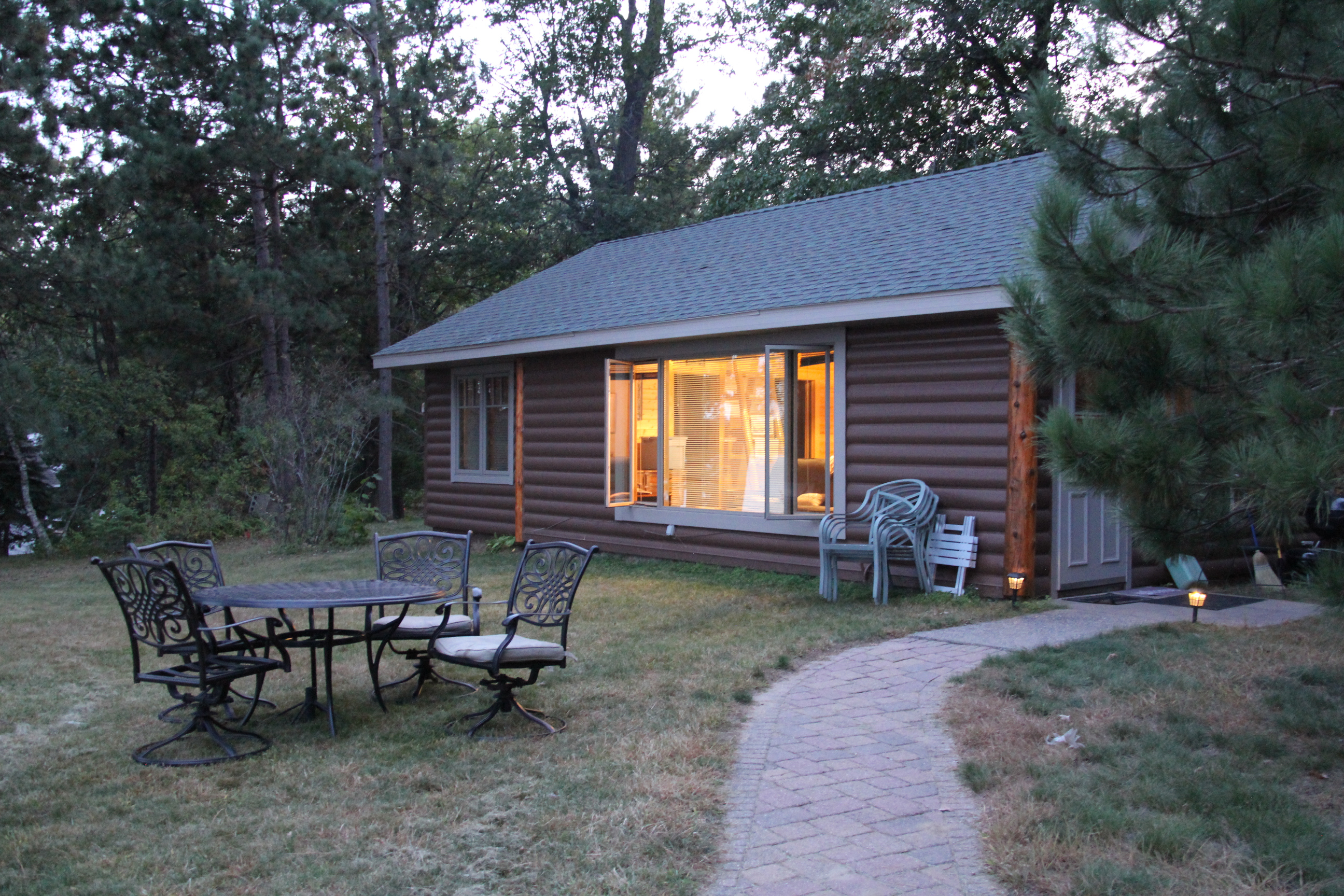
The Horseshoe Lake cabin where we stay once or twice yearly. (Minnesota Prairie Roots copyrighted photo September 2024)
CLOSING UP THE CABIN (not ours) proved more than a work weekend. Beyond pulling in the dock, mowing, raking, trimming trees, gathering sticks, cleaning rain gutters, scrubbing rust stains from the shower, draining the water heater and more, this was about family.
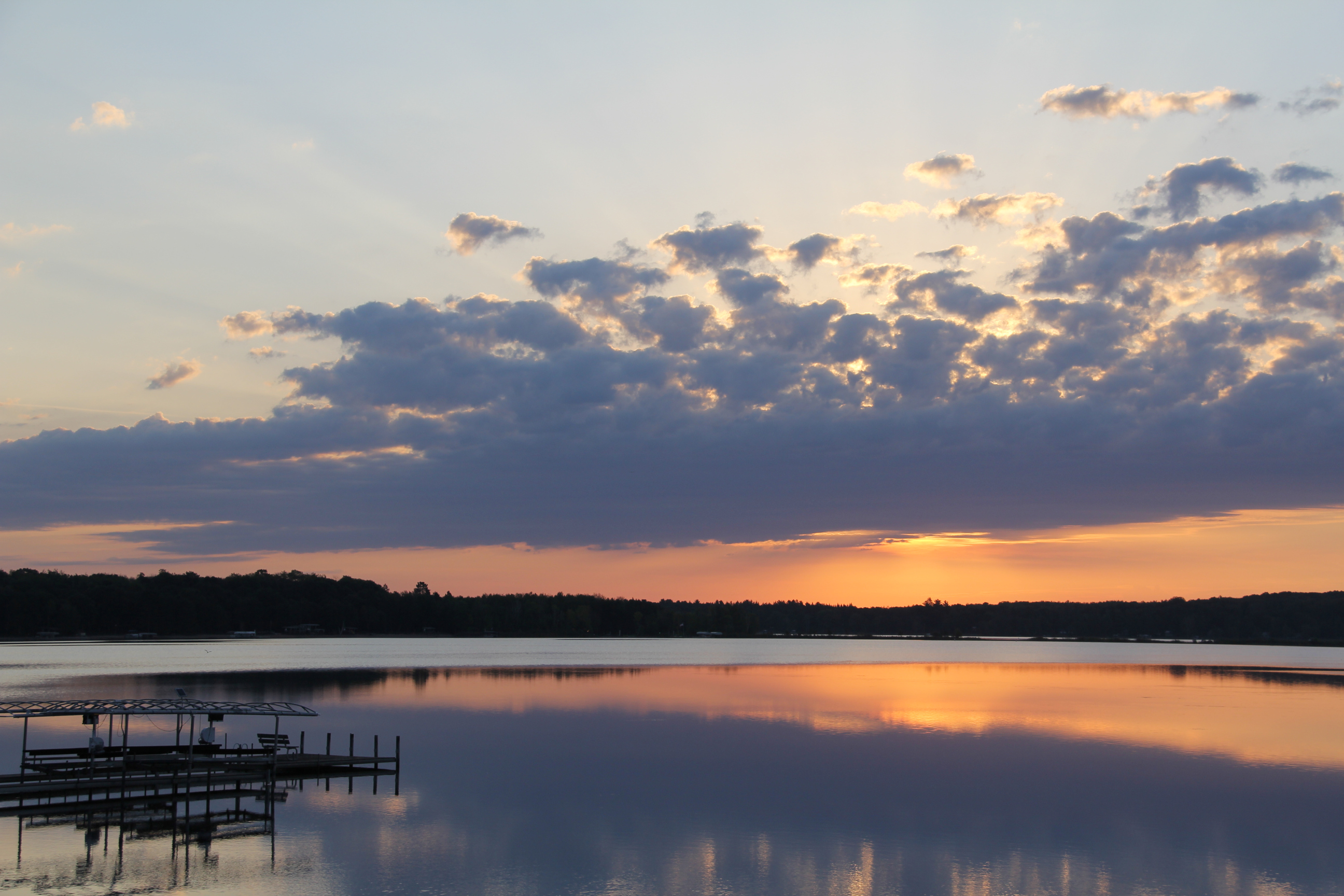
September sunrise on Horseshoe Lake. (Minnesota Prairie Roots copyrighted photo September 2024)
A spirit of teamwork, of gratitude, of enjoying this place along Horseshoe Lake in Mission Township in the Brainerd lakes area, prevailed. And it was all because of family. I love the Helbling family, which I’ve been part of for 42 years by way of marrying into it.
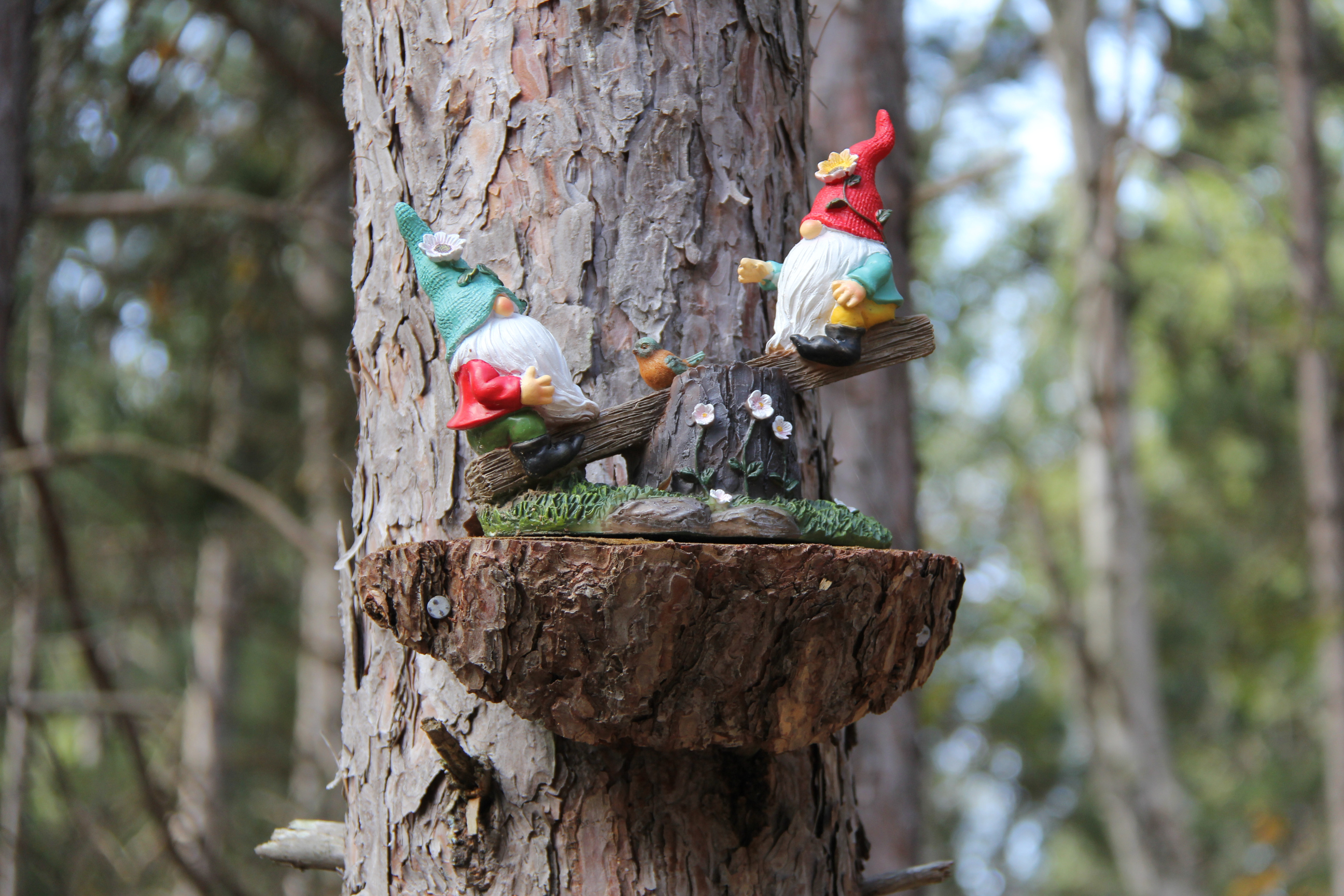
Gnomes were recently hidden in Mission Park, which is located several miles from the cabin. (Minnesota Prairie Roots copyrighted photo September 2024)
Randy and I joined three of his sisters, their husbands, and a niece and her family last weekend on this property his youngest sister and husband so graciously share. What a gift this has been to us. I love spending time in the quiet northwoods, immersed in nature, creating memories not only with Randy, but also with our eldest daughter, her husband and our two grandchildren. Campfires with s’mores, always s’mores. Walks in Mission Park. Lakeside dining. Fishing and swimming. Ice cream from Lake Country Crafts & Cones. Pizza from Rafferty’s. Great beer and conversation at 14 Lakes Craft Brewing. Day trips into nearby small towns. Lounging on the beach reading a book. Lying in the hammock. Watching loons and eagles. Doing nothing.
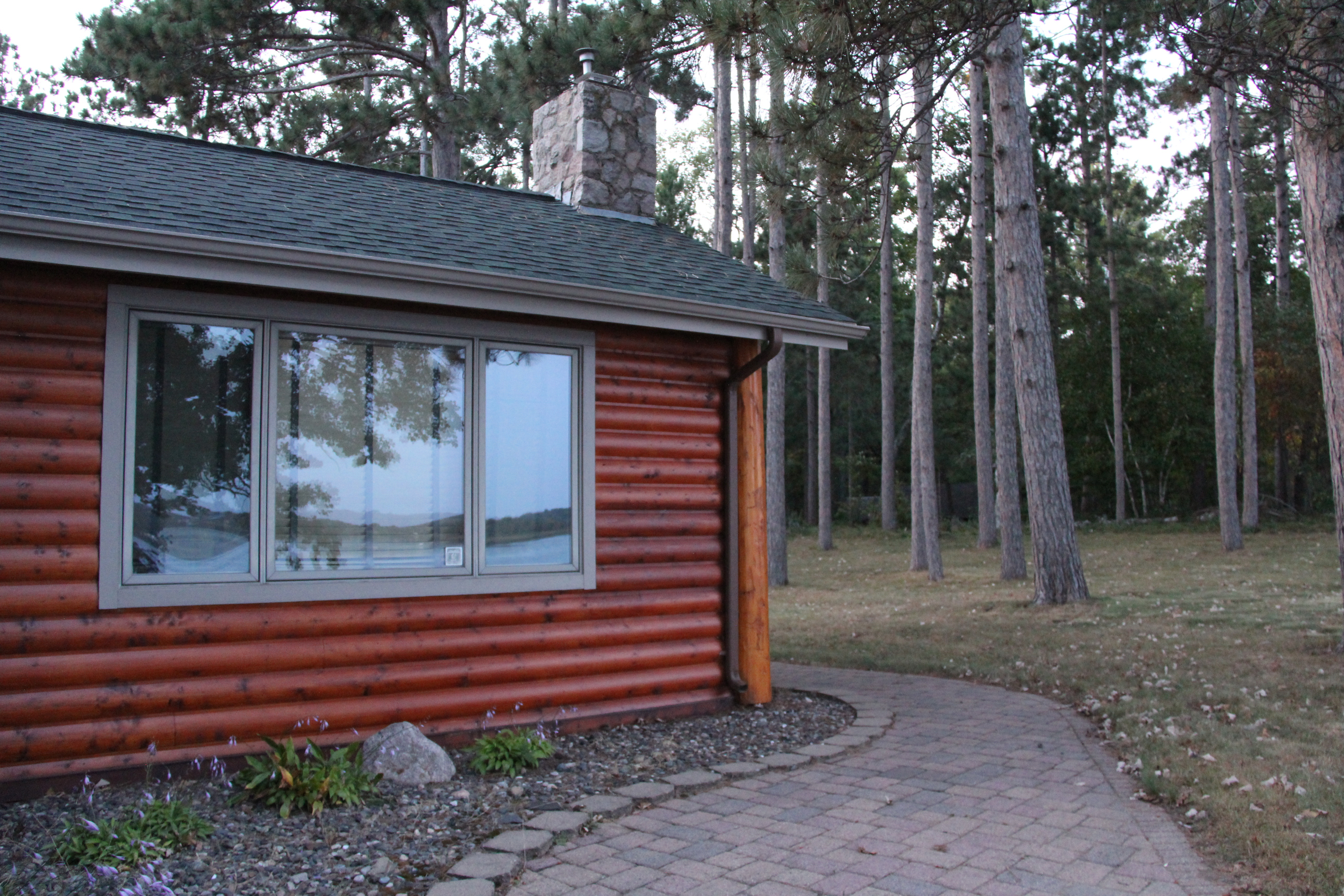
This visit we stayed in the main house, a section of which is shown here. (Minnesota Prairie Roots copyrighted photo September 2024)
And now, on this first weekend in October, we trekked three hours north to the cabin for the sole purpose of preparing the property for winter. An added bonus came in time with family. We worked together. Ate together. Laughed. Shared stories and memories and updates. We also built memories.
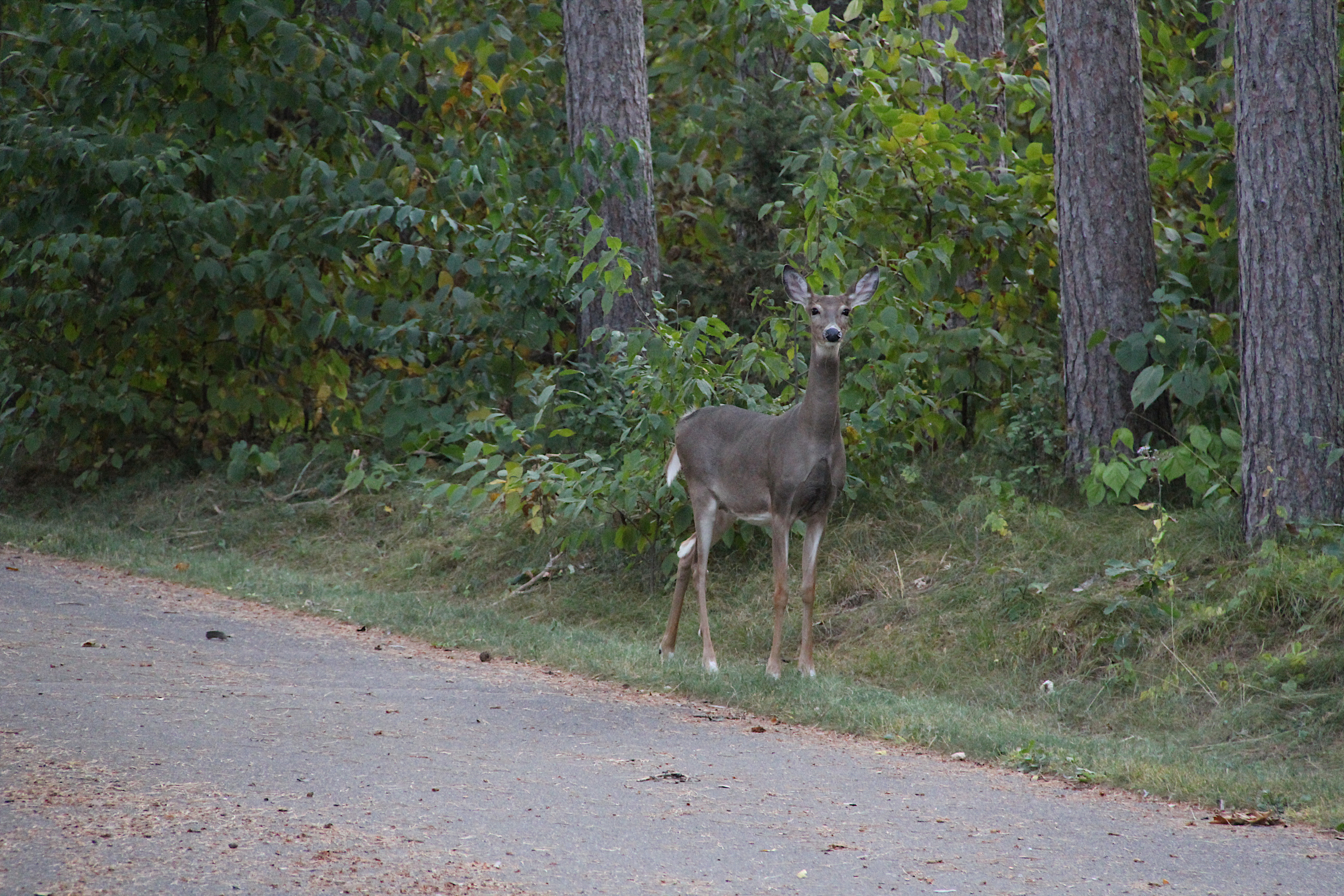
On a September cabin stay, three deer crossed the driveway. And we discovered bear scat, as did Randy this visit. (Minnesota Prairie Roots copyrighted photo September 2024)
Homemade caramel rolls baked by Vivian reminded us of Mom Helbling, who died unexpectedly 31 years ago at the age of 59. Much too soon. Jon’s smash burgers reminded me of my mom, prompting me to share a story about the hamburgers she fried to hockey puck doneness, the reason I didn’t eat burgers up until several years ago. Jon’s were nothing like hers. He’s quite the cook, I discovered, as I enjoyed his stir fry, his scrambled eggs, his smash burgers.
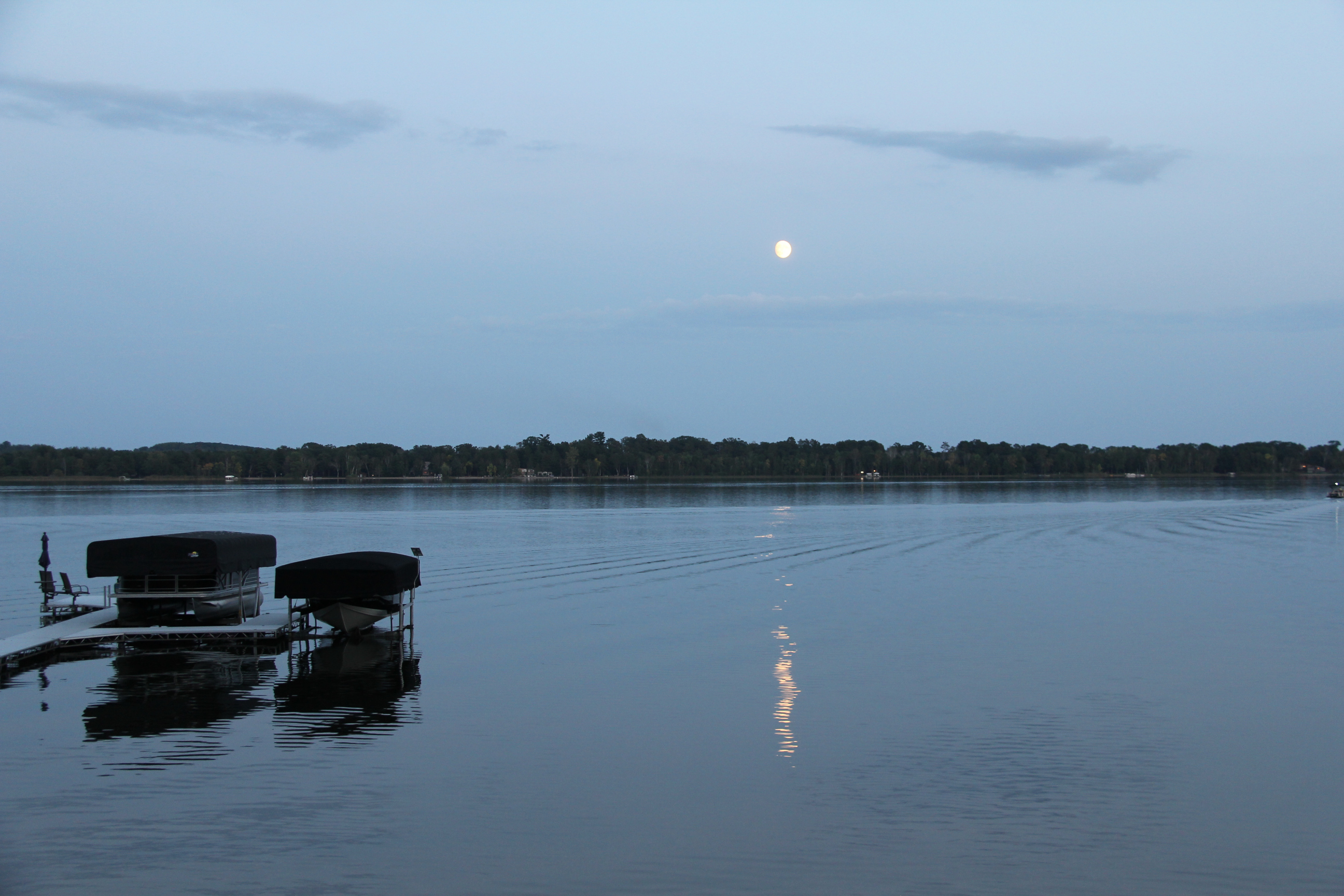
September moonrise over Horseshoe Lake. (Minnesota Prairie Roots copyrighted photo September 2024)
I also enjoyed getting to know four of my great nieces and nephews. We played Hi Ho Cherry-O!, Go Fish and some panda bear game I never fully understood despite 8-year-old Emmett’s patience in explaining it to me. Autumn insisted I work on a princess puzzle with her, even though I insisted I do not do puzzles. I should note here that the Helbling family loves puzzles. Autumn insisted I help her, also insisting that I not quit. The first grader has a strong personality, a strength as I see it.
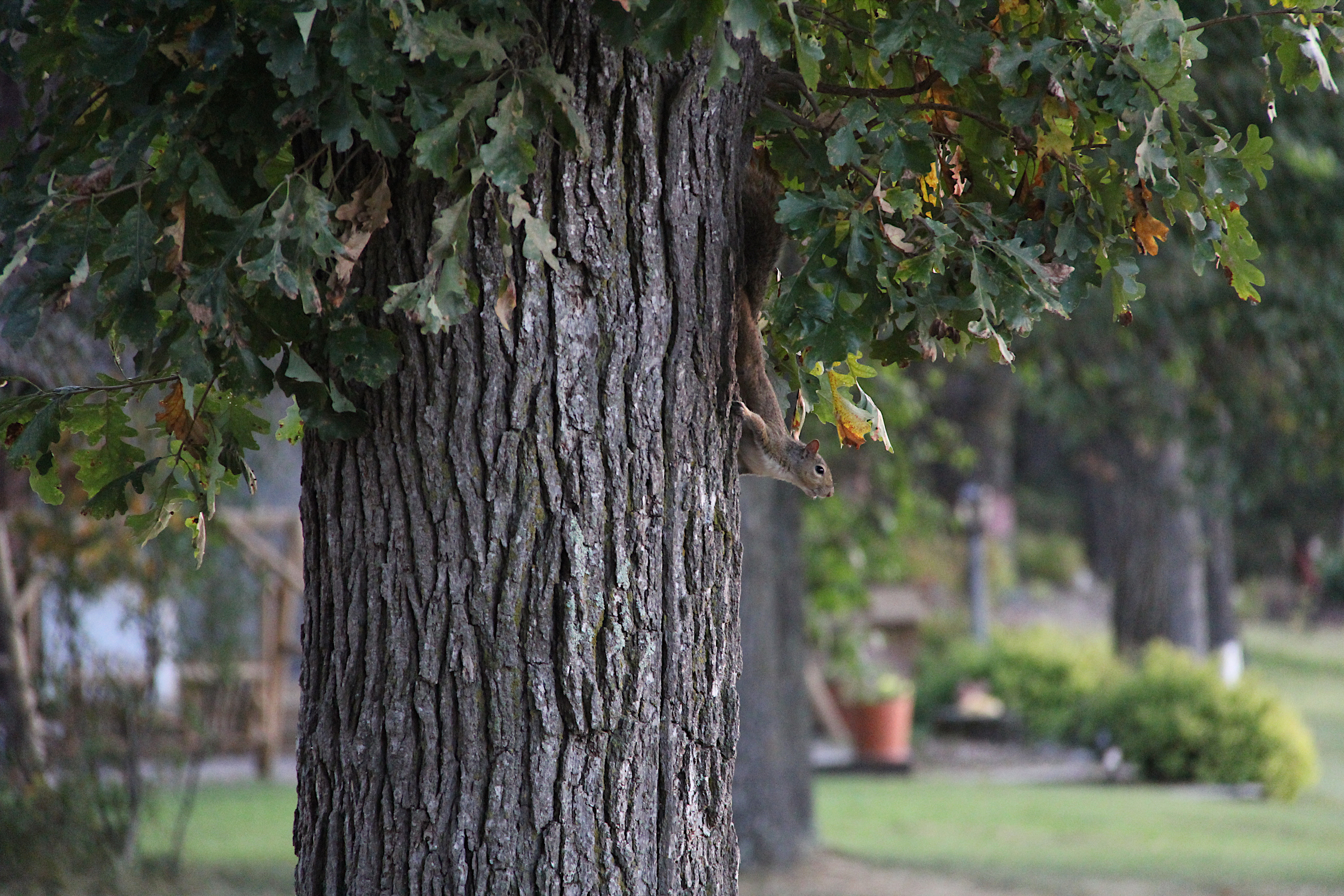
Squirrels were busy, too, as winter approaches. (Minnesota Prairie Roots copyrighted photo September 2024)
Three-year-old Quentin checked my heart several times as he did most family members after finding a stethoscope among the dress-up clothes. I also formed a firefighting crew, enlisting Emmett as acting fire chief when I had to step away to do some actual work. And sweet little redhead Annika, almost one and who looks a lot like a Who from Whoville, pretty much had her great aunt doing whatever she wished. That included jumping on my lap. My arms got quite the work-out.
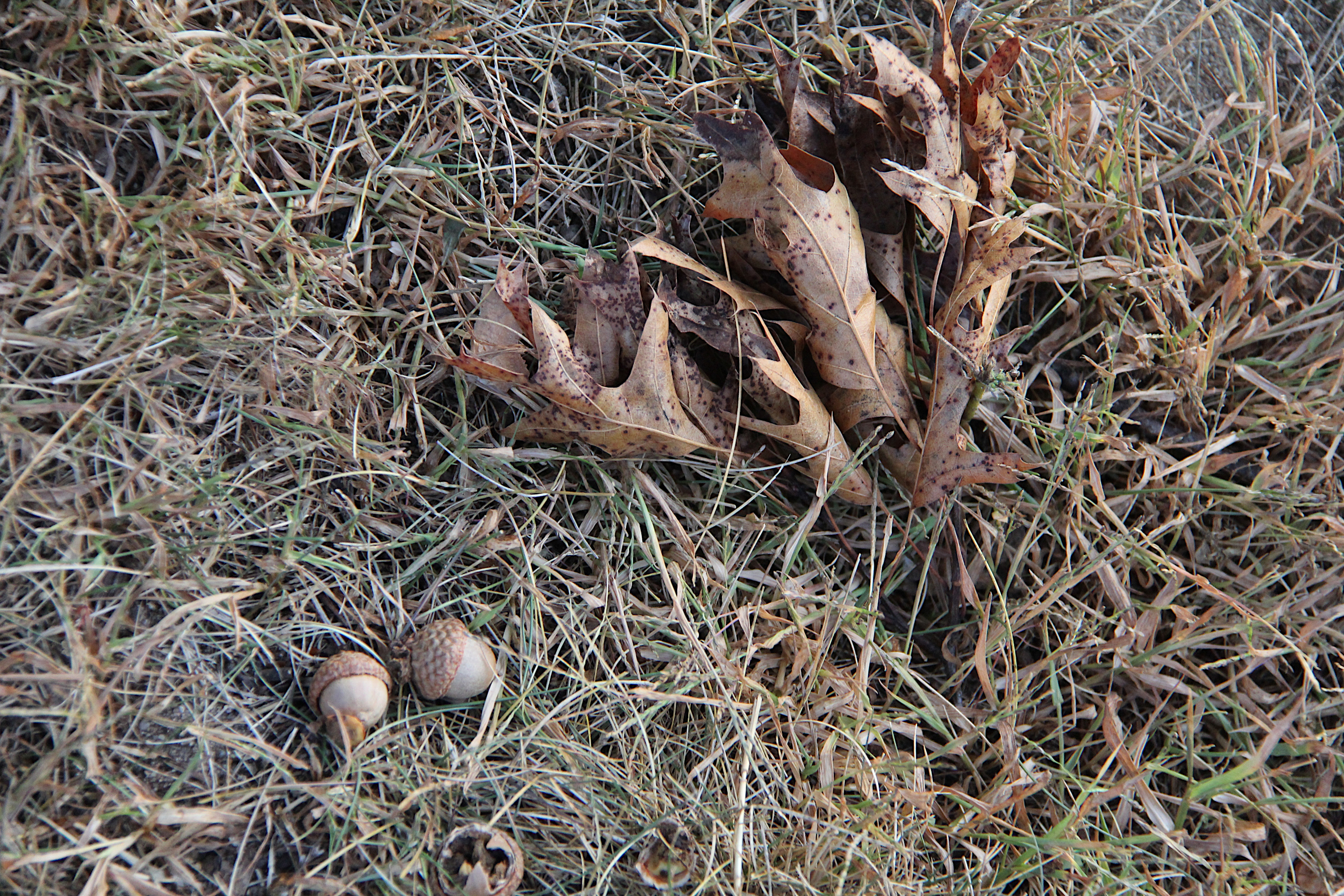
Acorns, leaves and pine needles continued to fall as our crew headed home. (Minnesota Prairie Roots copyrighted photo September 2024)
And so these are the memories I gathered on this work weekend while squirrels scampered, acorns pelted roofs, the night wind howled, dust swirled, and pine needles and branches fell. Up north at the cabin is as much about place as it is about family and the memories we make there.
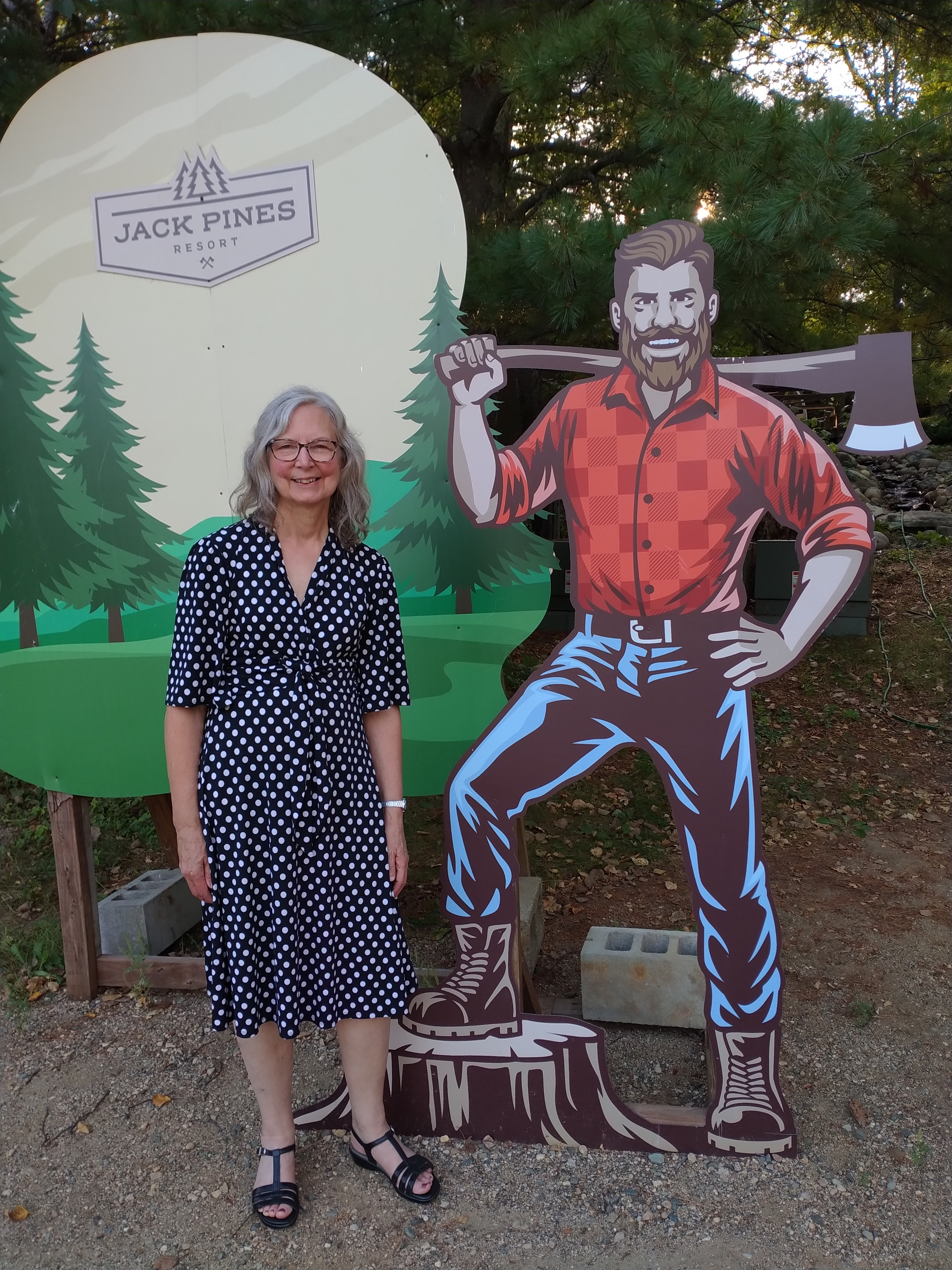
I am a down-to-earth writer who focuses on writing about people, places and events primarily in Minnesota. Here I’m pictured outside Jack Pines Resort, rural Osage. I was there attending a book launch party for an anthology in which my writing published. (Minnesota Prairie Roots copyrighted file photo by Randy Helbling, September 2024)
I’VE ALWAYS LOVED WRITING. From early on, my love of language, of words, of grammar, of, yes, even spelling, defined me. Give me a book to read. Give me a spelling test. Give me a pen and a notebook. And then a computer. Words, words and more words. I will find them, use them, create stories with them.
At one time, I wanted to pursue a degree in German. But, after a year in college, I changed direction because I didn’t want to teach. I decided to study journalism. It was absolutely the right decision for me, my interests and my skills.
With that intro, I join the many writers who are celebrating National Newspaper Week October 6-12. That includes journalists from my local paper, The Faribault Daily News, in which my writing publishes each weekend and sometimes more. I no longer consider myself a full-fledged journalist as much as a writer. These days I write from a personal perspective, more as a columnist, rather than as an objective reporter. I write fiction, creative nonfiction and poetry, too.
MY JOURNALISM EXPERIENCE
But I did work as a full-time newspaper reporter and photographer after graduating with a mass communications degree (news/editorial emphasis) in 1978 from Minnesota State University, Mankato. I worked for newspapers in Gaylord, Sleepy Eye, Mankato, Owatonna and Northfield. Eventually I gave up journalism when I started a family. The long and odd hours are not conducive to family life.
Today my three kids are long grown and gone, and I’ve found my way back to writing with an added focus on photography. What makes a good writer, a good newspaper reporter? Topping my list are the abilities to listen and focus on detail. I’ve always considered myself a good listener, a necessity for any newspaper reporter. I developed the skill of taking notes while actively listening. Organization also factors in. There’s always a bit of homework involved in prepping for an interview. Research the subject. Prepare questions, but be open to asking more as the interview progresses. Focus on details. Tell a story.
I worked in journalism before the days of cellphones, so I filled notebooks with pages of notes. I also studied and worked in the profession before computers and digital cameras. My first job out of college, I typed all of my stories on a manual typewriter, shot all my photos on film. I would never want to go back to either. Give me a computer and a digital camera. It’s much easier to create with those.
FOCUS ON LOCAL STORIES
I love sharing stories and photos of people, places and events that weave into my life, that I discover. I find joy in following a gravel road, in discovering interesting signage, in exploring small towns, in meeting ordinary people following their passions… People often tell me I find the most interesting things. I agree. And then I tell them it’s right here in their own backyard if only they pause to look, and see.
Therein lies the value of community journalism, which I want to highlight and honor during National Newspaper Week. Our local newspapers are all about local. Local reporters cover and write about the people, places and events that are happening locally. They write stories ranging from features to hard news. I covered all of those, too, while working as a full-time reporter. It’s not an easy job. People are quick to criticize, slow to praise. So I want to state right now that I appreciate our local news team. They work long, odd hours, just as I did, to gather and write the news. They care.
Everyone ought to care that freedom of the press thrives, that these journalists are covering our government meetings, writing about our neighbors, highlighting ordinary people who do extraordinary things and much more. We need newspapers as much today as ever before, perhaps even more.
Please, support your local newspaper by subscribing. And thank a newspaper reporter for their dedication to the profession. They deserve to be recognized, especially during National Newspaper Week.
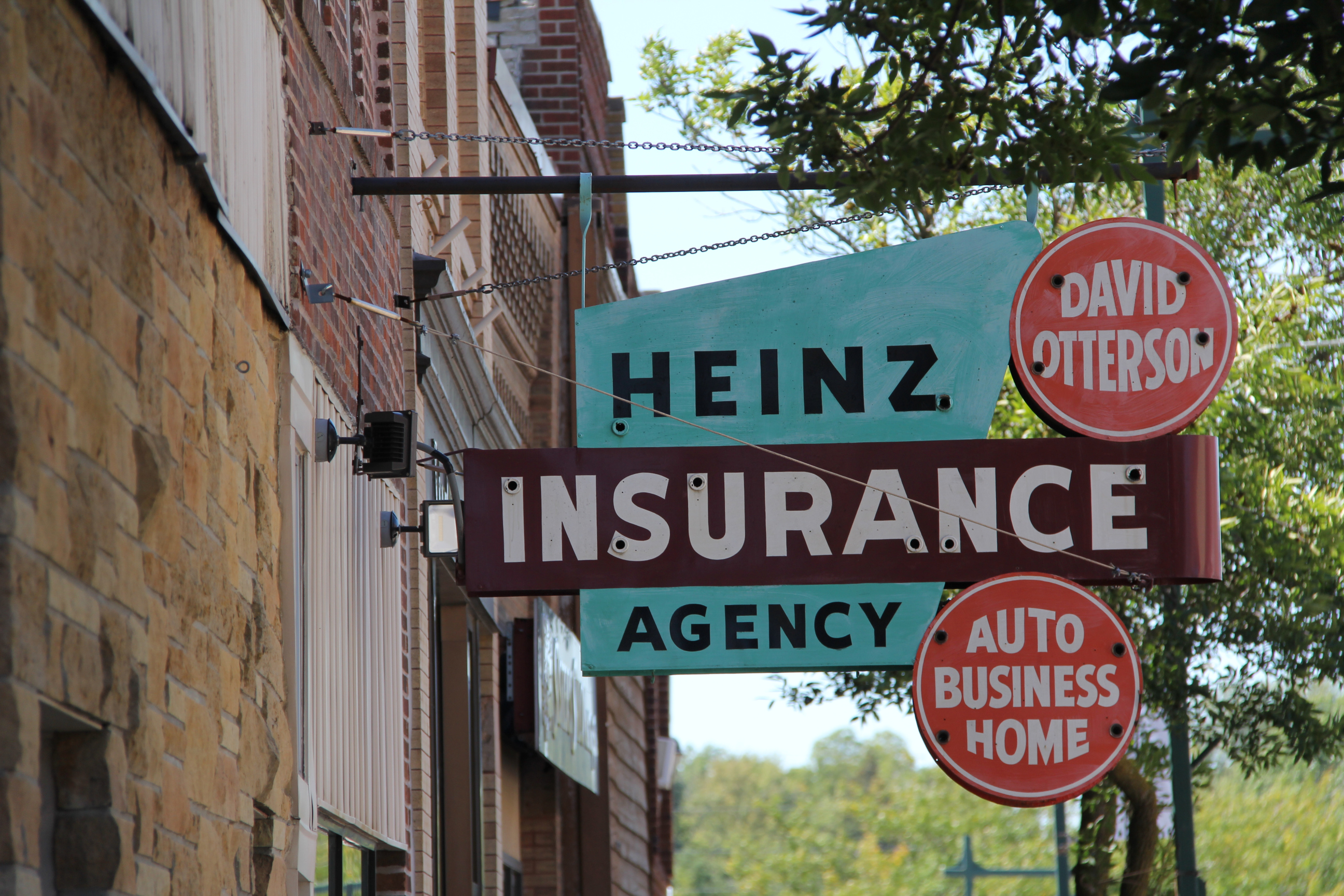
Among the many signs that drew my interest in Owatonna was this insurance agency sign. The bold colors and layered signage stood out. (Minnesota Prairie Roots copyrighted photo September 2024)
SIGNS, WHETHER HANDWRITTEN on a piece of paper or professionally made to mark a business, fascinate me. They reveal much about the heartbeat and history of a community.
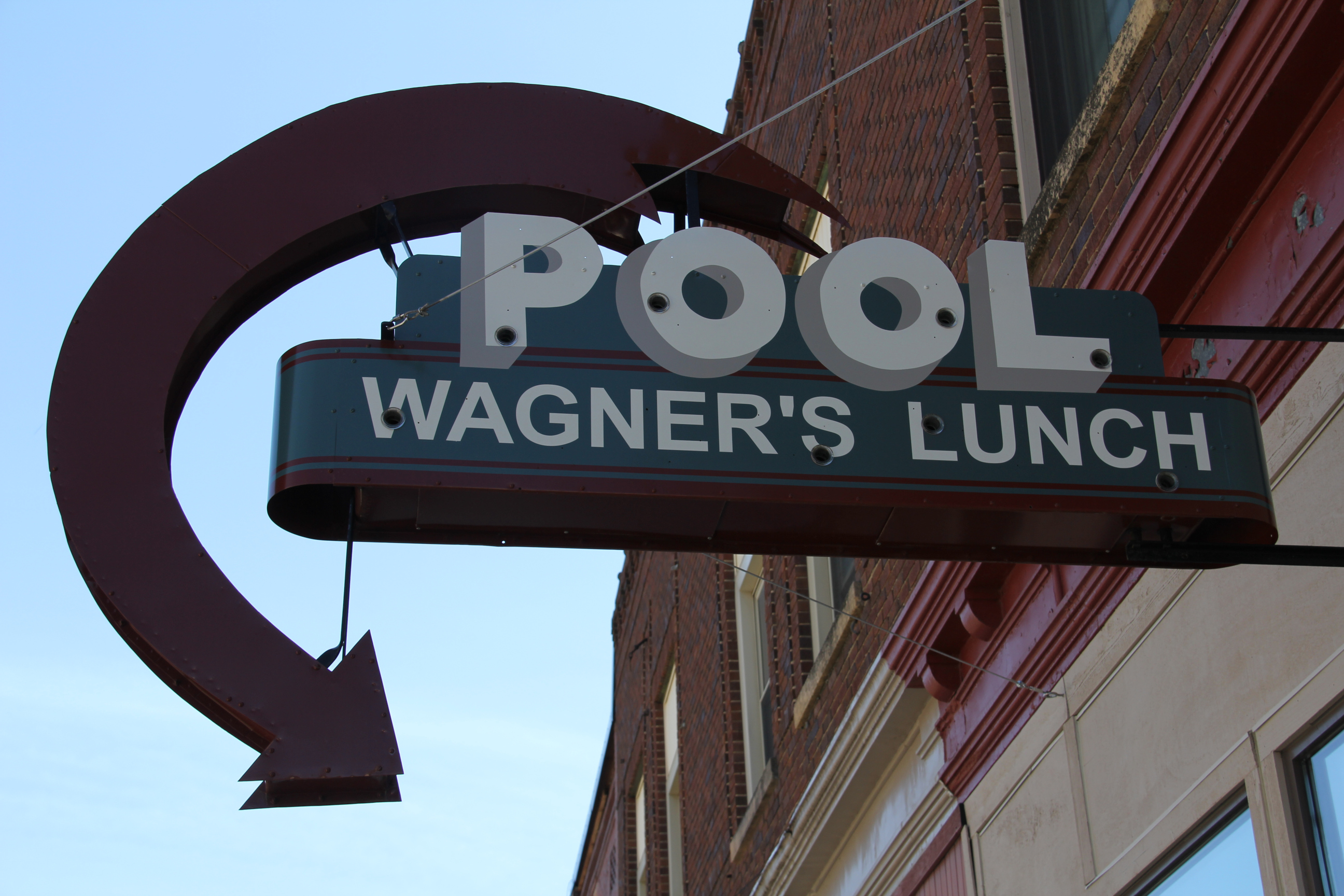
Love this artsy sign.The curving arrow points me directly to Wagner’s. (Minnesota Prairie Roots copyrighted photo September 2024)
On a recent visit to Owatonna’s downtown, I photographed a collection of signs that caught my eye. I lean toward vintage, or those that appear vintage. I also lean toward unusual names and interesting fonts and art.
This candy shop and eatery has a lengthy history in Owatonna. (Minnesota Prairie Roots copyrighted photo September 2024)
Most people likely view a sign only as an identifier or source of information. Clearly not me. I see signage through the lens of a writer and a photographer.
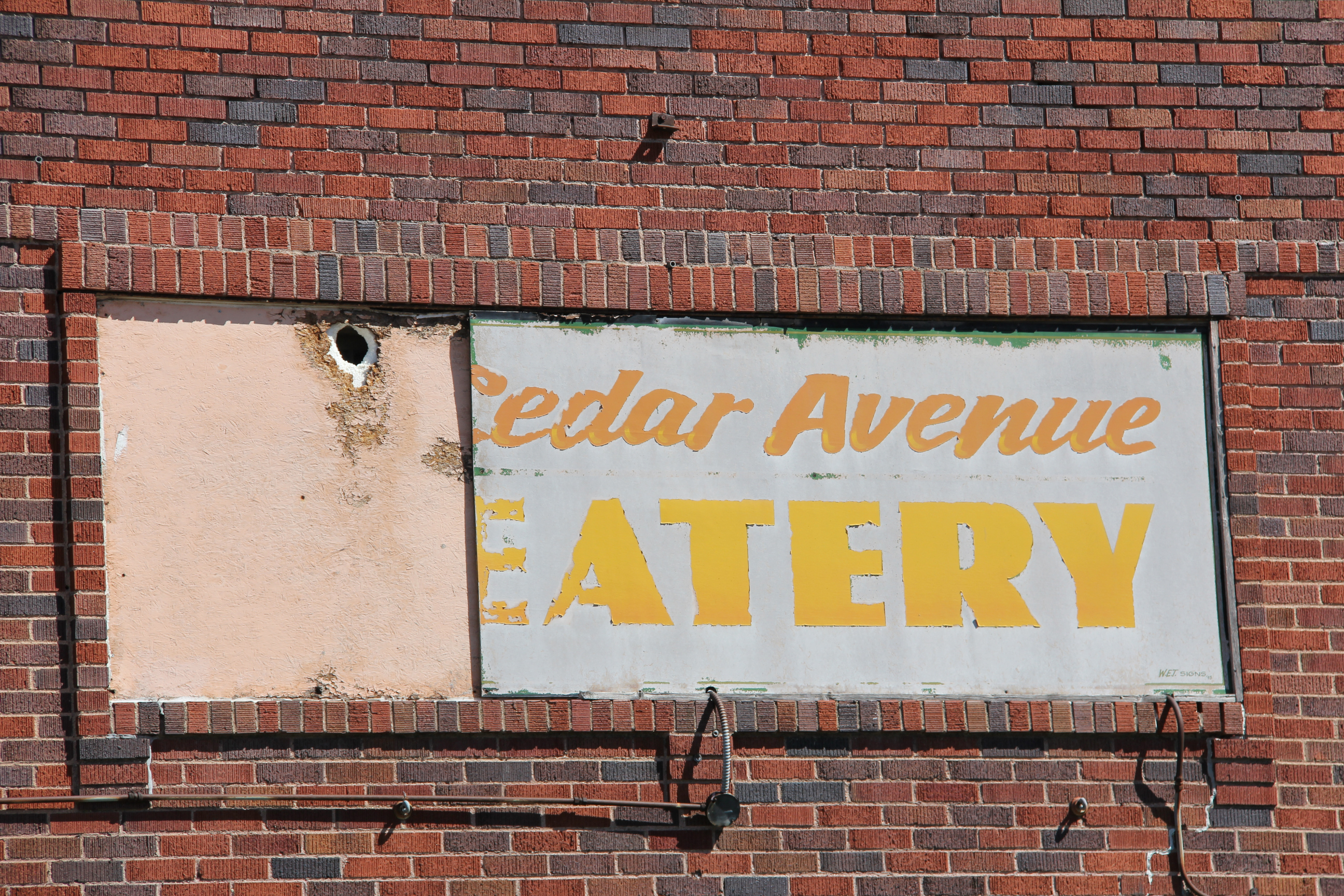
Even if partially missing, I still appreciate the vintage charm of this sign. (Minnesota Prairie Roots copyrighted photo September 2024)
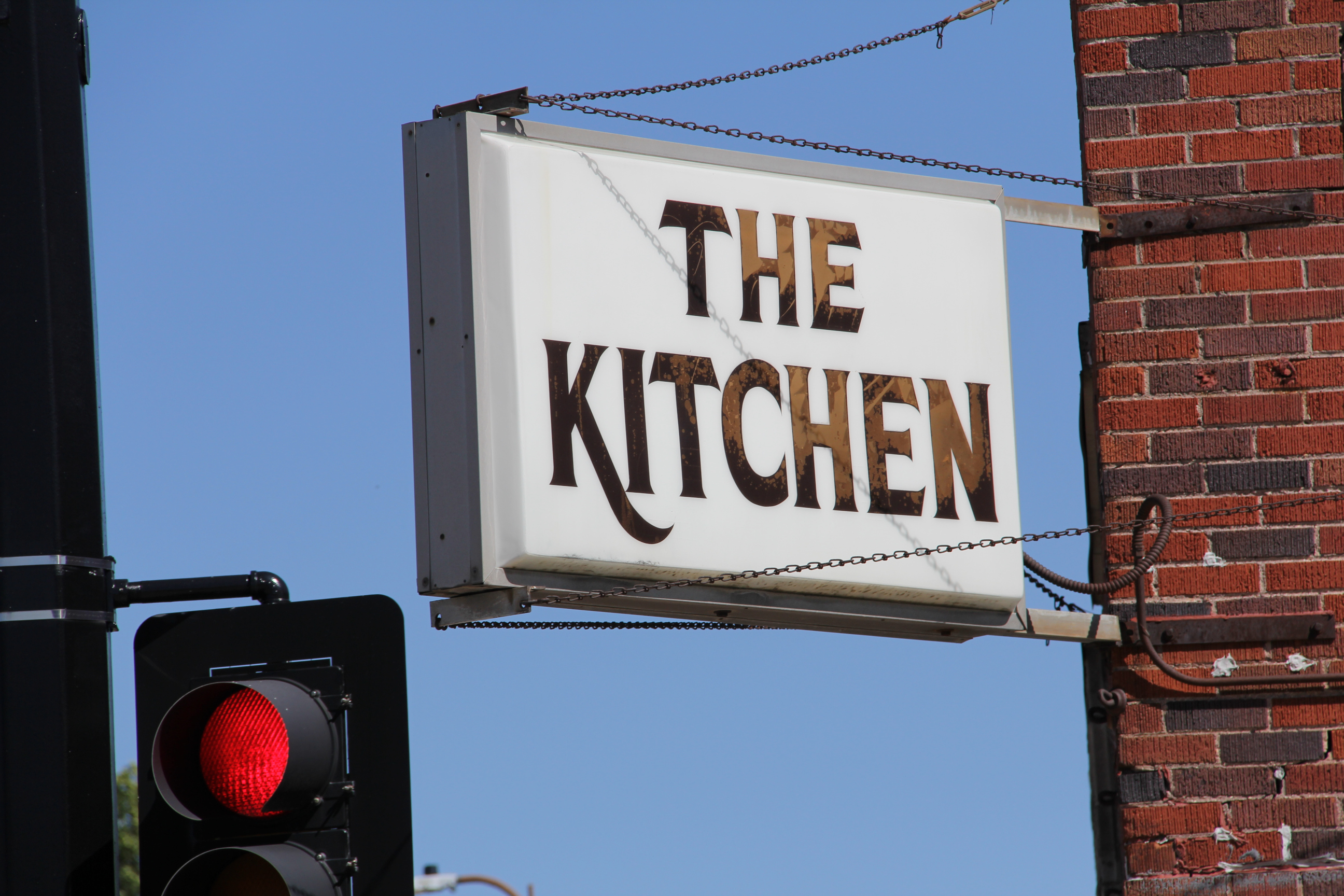
The Kitchen, a downtown Owatonna staple gathering spot. (Minnesota Prairie Roots copyrighted photo September 2024)
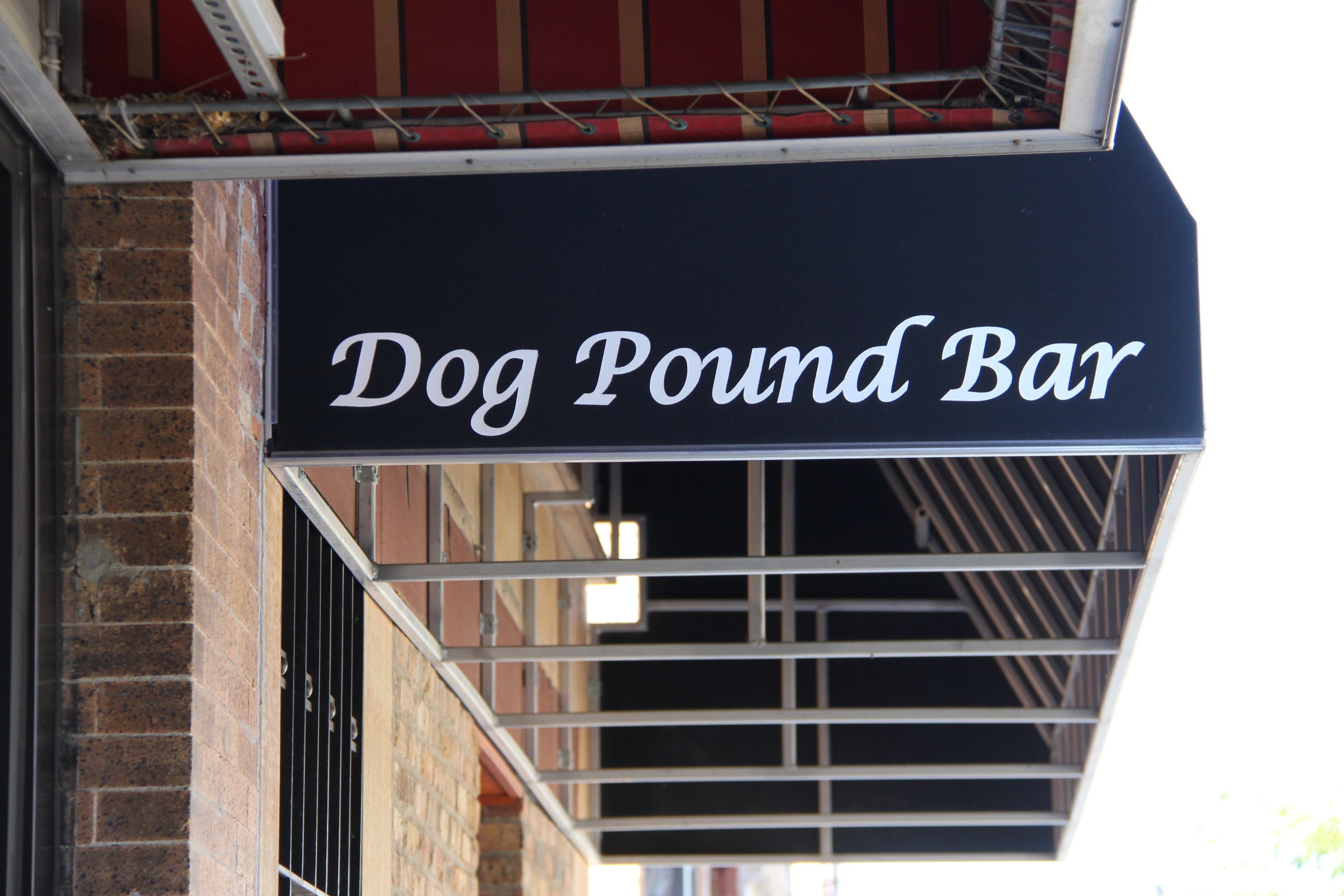
A catchy name for a bar. (Minnesota Prairie Roots copyrighted photo September 2024)
Every town, not just Owatonna, offers a potluck of signs, a feast for the eyes. All signs bring something to the table. Something that tastes of local flavor. And I’m not just talking food or drink, although certainly you will find plenty of that along North Cedar Avenue and other streets spoking off Owatonna’s main downtown artery.
This shows partial signage for Central Park Coffee and a mini owl mural, among several owls “hidden” in downtown Owatonna. (Minnesota Prairie Roots copyrighted photo September 2024)
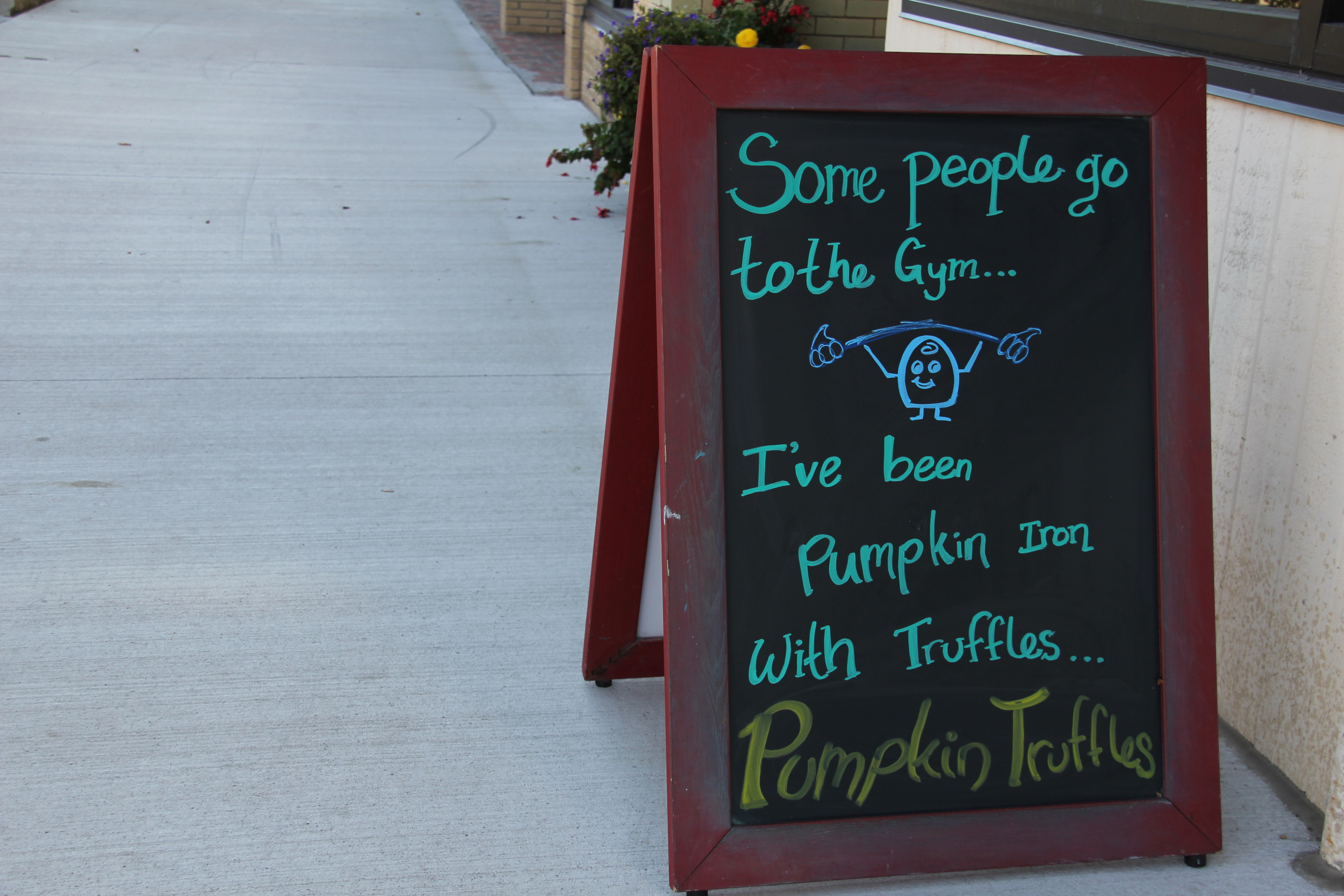
It’s that time of year again, time for all things pumpkin as noted on this sandwich board. (Minnesota Prairie Roots copyrighted photo September 2024)
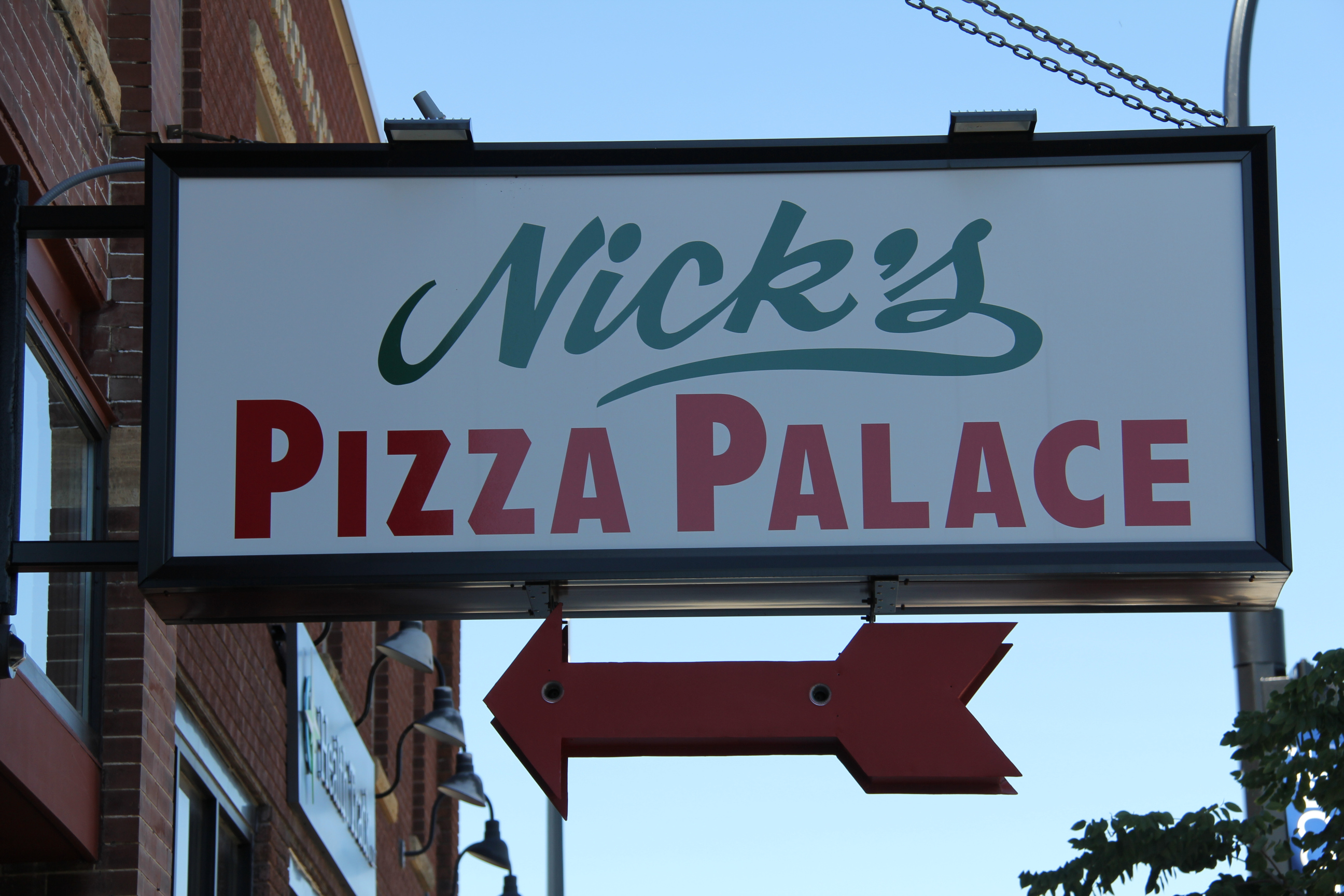
A long-standing pizza place along North Cedar Avenue. (Minnesota Prairie Roots copyrighted photo September 2024)
I’m also talking about the stories behind those signs. The people who own the businesses, run them, welcome customers inside for a cold one, a cup of coffee, a slice of pizza, a new pair of shoes, a pumpkin truffle, even an insurance policy. Signs are more, much more, than simply signs.
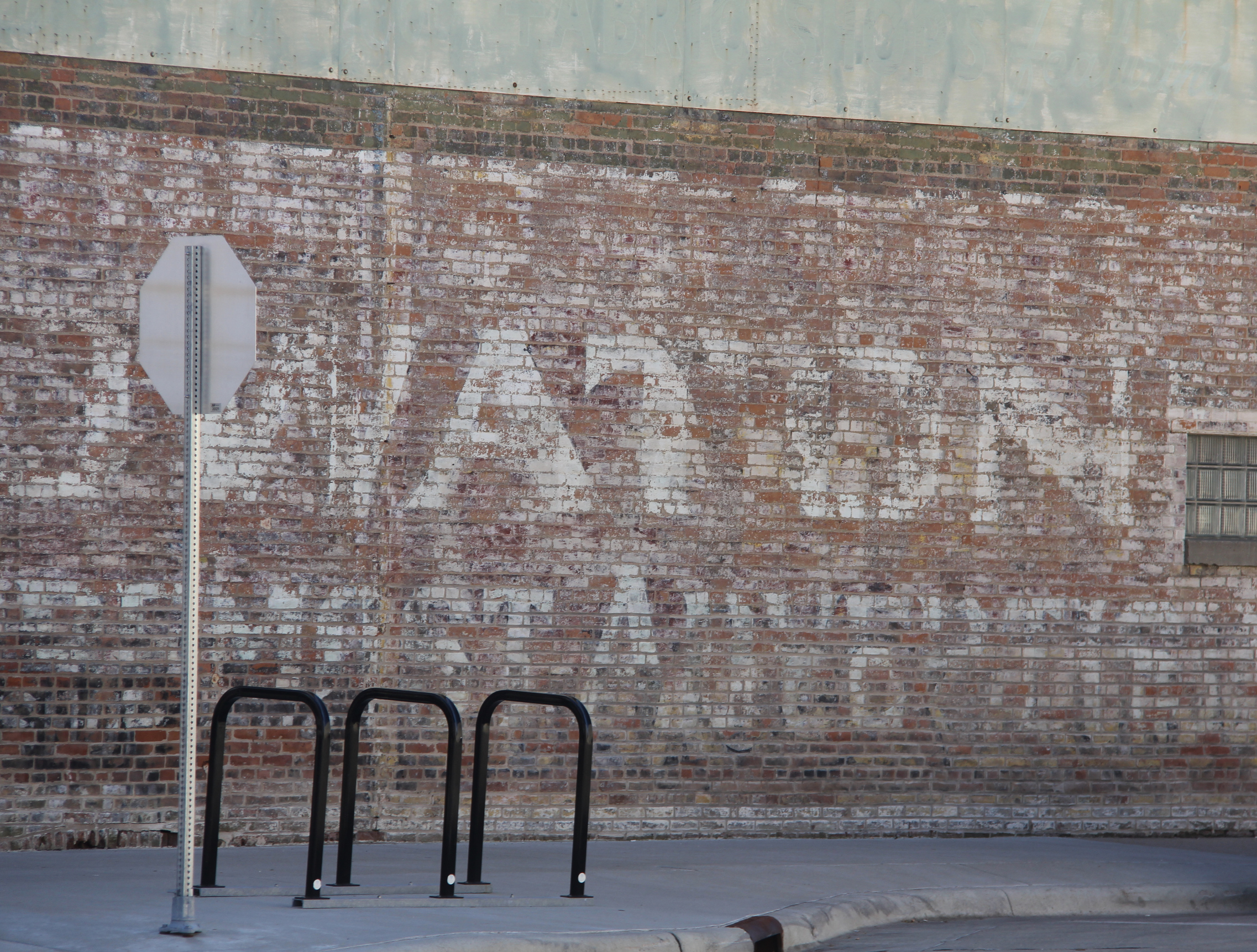
A mostly unreadable (at least to me) ghost sign. (Minnesota Prairie Roots copyrighted photo September 2024)
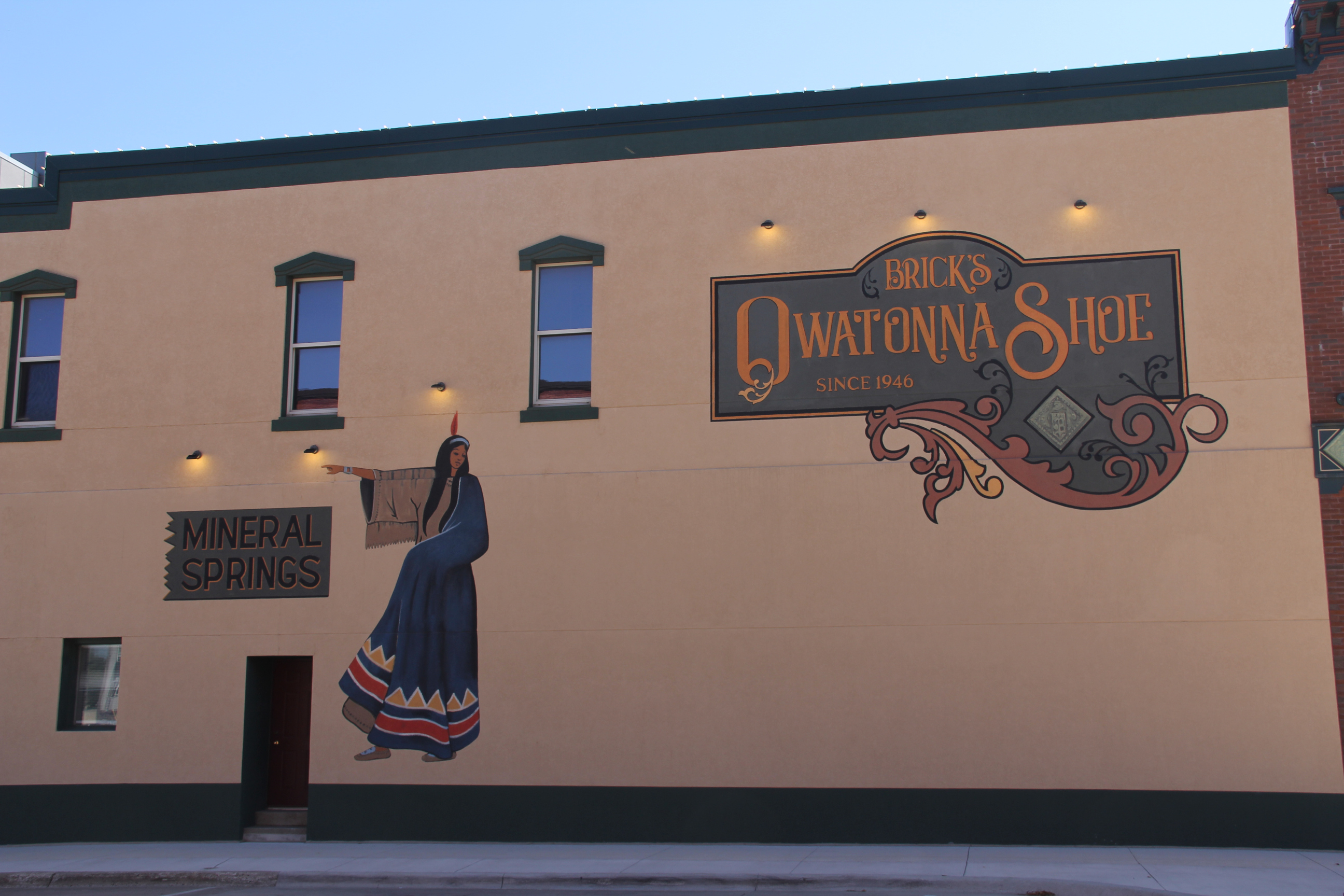
On the side of Owatonna Shoe is this painting of Princess Owatonna, after whom the city is named. A statue of the princess stands in Mineral Springs Park, the spring and princess being part of local lore. (Minnesota Prairie Roots copyrighted photo September 2024)
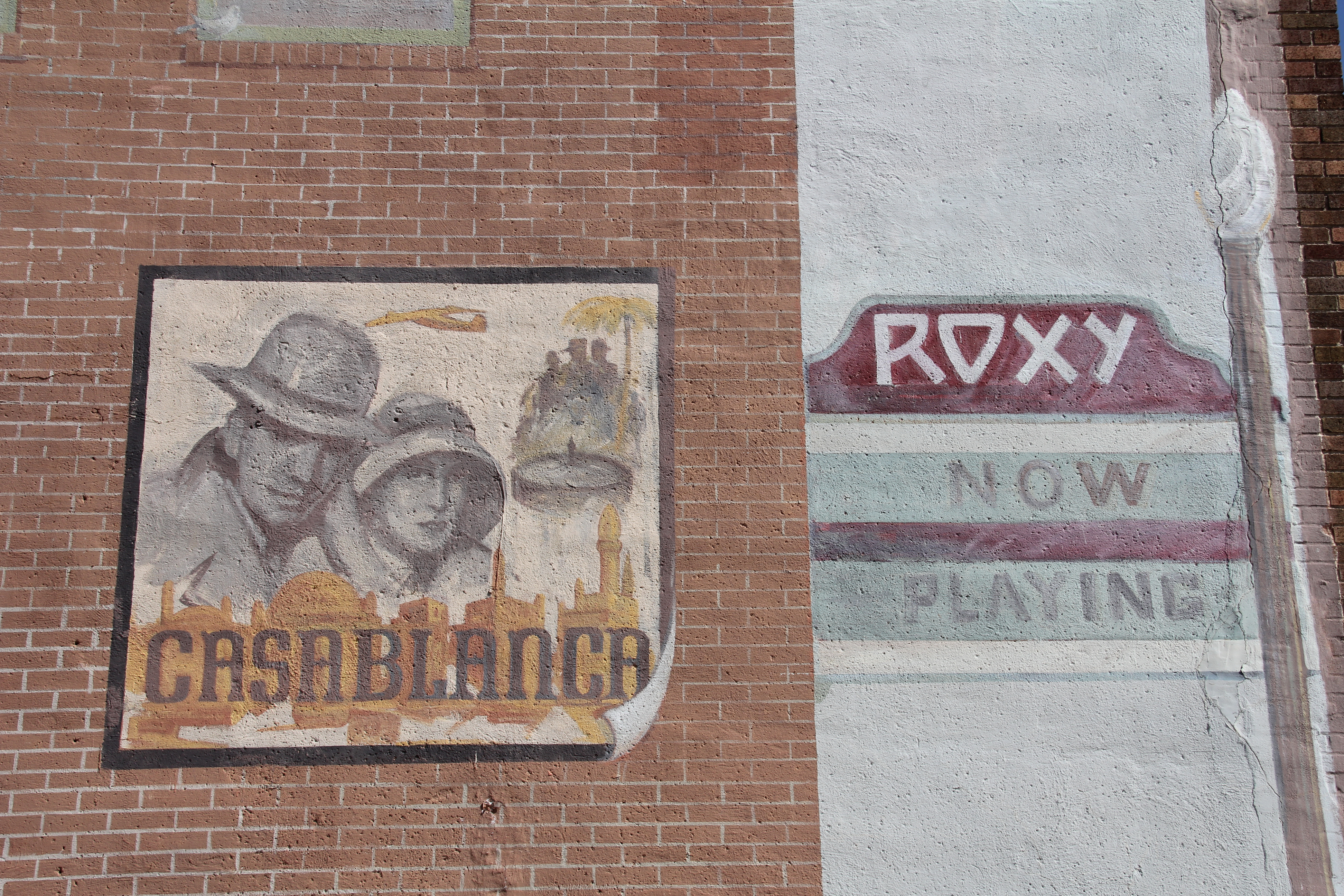
The long ago Roxy Theater is honored in the Main Street Mural in a downtown pocket park. (Minnesota Prairie Roots copyrighted photo September 2024)
Signs also hold history. Ghost signs, of which there are several in Owatonna, write of bygone days. Murals paint history, too, of the Roxy Theater and of Princess Owatonna and more.
And then I spotted this vintage gem on a building… (Minnesota Prairie Roots copyrighted photo September 2024)
Wherever you live, whatever community you visit, I encourage you to pause, look and really see the signage. Appreciate the history. Consider the stories. Study the fonts and art. Enjoy the potluck of signs that flavor a place.
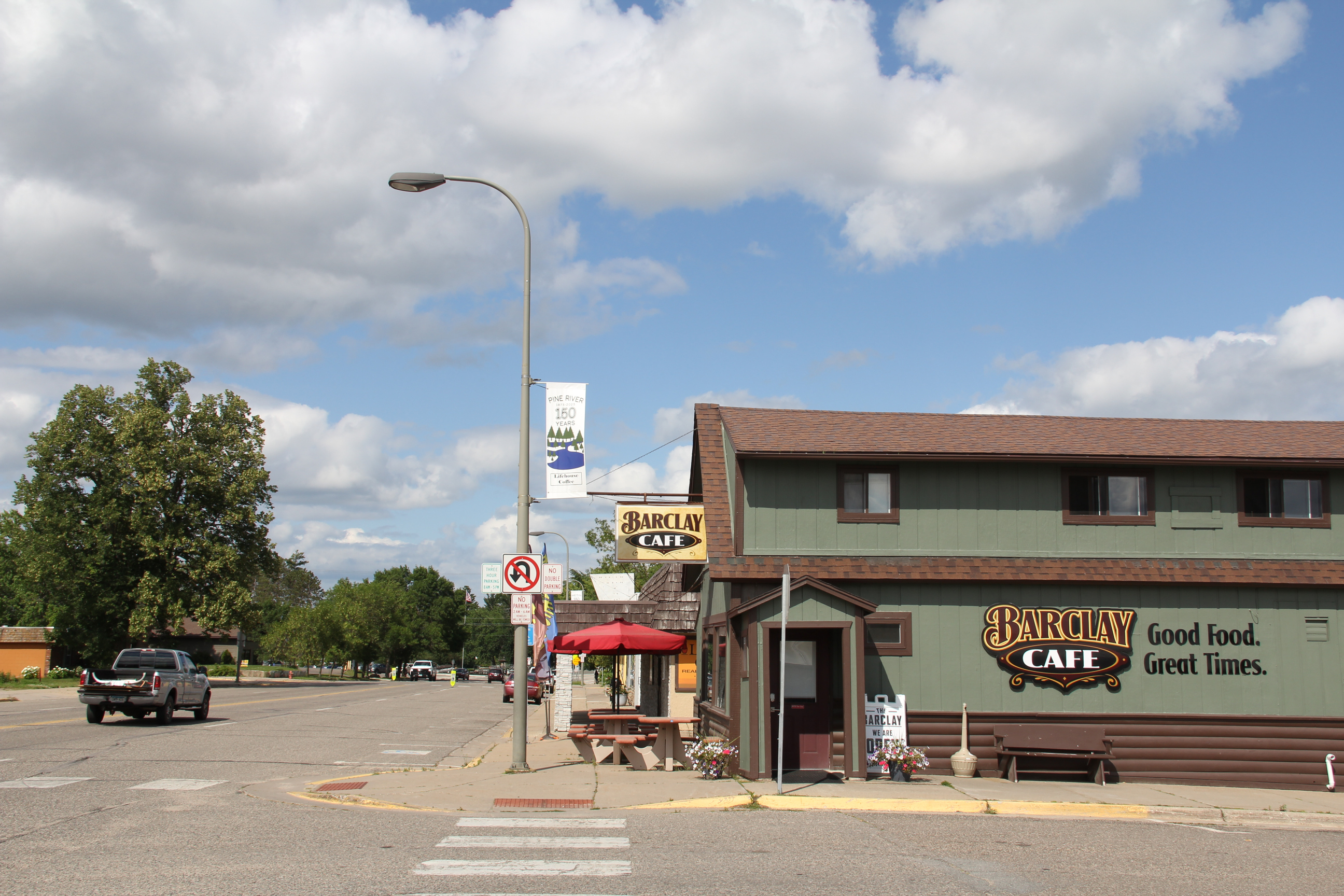
I photographed this scene in Pine River, which calls itself Minnesota’s S’more Capital, Doug Ohman said.From what I read online, the Whitefish Chain of Lakes terms itself “The S’more Capital of the World.” Pine River is on the northwest end of the Whitefish Chain. (Minnesota Prairie Roots copyrighted photo July 2024)
I FELT LIKE A BIT OF A SMARTIE, you know, that kid who raises his/her hand to answer the teacher’s questions. But Doug Ohman told me later, when I apologized to him for my overzealous class participation, that he actually appreciates enthusiastic interaction with audience members. And that I was on Monday evening while attending Ohman’s presentation on Minnesota town names at the Owatonna Public Library. I couldn’t help myself. This presenter is incredibly engaging, energetic, interesting and really good at what he does.
One of many Minnesota books by Doug Ohman. (Cover image sourced online)
Ohman is a prolific presenter, Minnesota author and photographer—he’s written 16 photo-rich books—who travels the state giving talks on 36 subjects. Those range from churches to schoolhouses, courthouses to libraries, state parks to cabins, and, oh, so much more. If you want to learn more about Minnesota, especially its small towns and rural areas, and appreciate history, then Ohman is your guy. I’ve seen him present twice previously, both times on churches.
But Monday evening, it was all about “Name That Town.” Ohman began by telling a room packed with people that he would be doing an interactive game show style presentation. Oh, oh, I thought, when he asked for help from an audience member. Eventually Steve volunteered and the game was on.
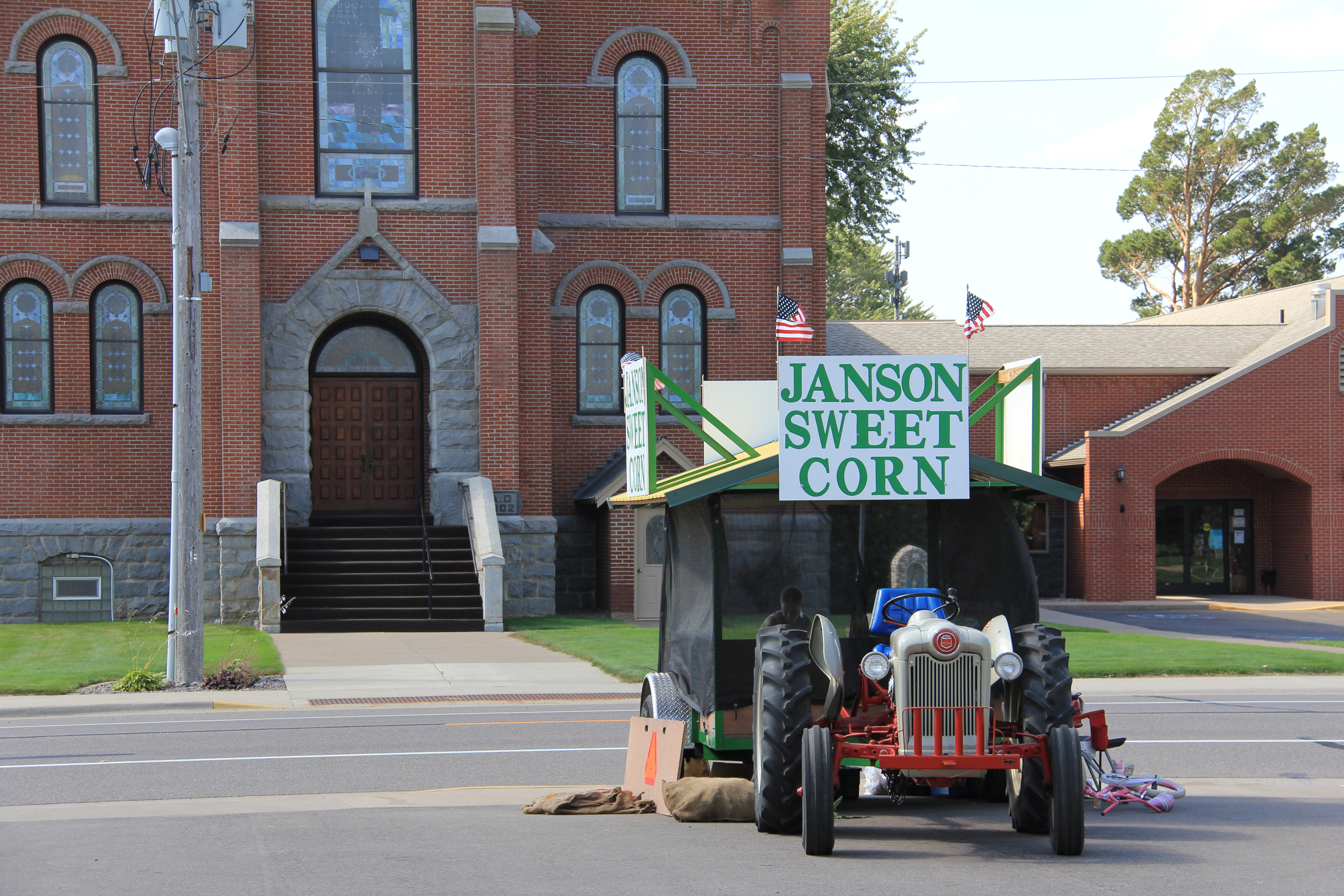
Sweetcorn for sale at a stand across from St. Michael’s Catholic Church in Buckman, my husband’s hometown. Buckman is southeast of Little Falls in Morrison County. (Minnesota Prairie Roots copyrighted photo September 2024)
It didn’t take long before Ohman put the audience at ease with his humor and questions. A lot of questions. About towns. And that’s where I proved my smarts. Like Ohman, I enjoy visiting small towns, stopping to explore and photograph them. He feels like a kindred spirit in that we are both writers and photographers who value rural Minnesota.
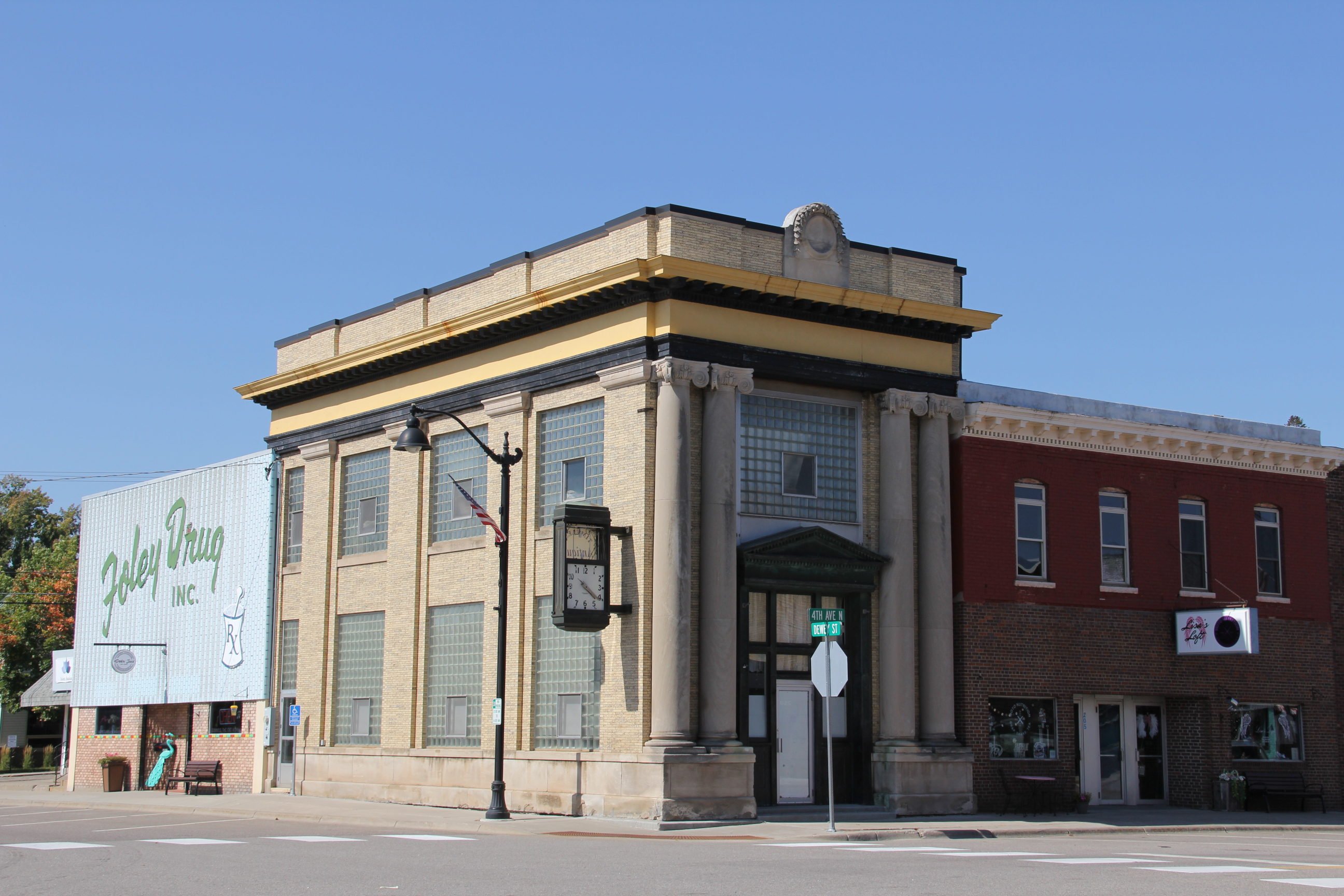
I recently photographed this beautiful old building in downtown Foley, seat of Benton County. (Minnesota Prairie Roots copyrighted photo September 2024)
For 1 ½ hours, Ohman talked about Minnesota towns, going through the alphabet from A-Z, showing selected photos of communities he’s visited. He invited audience members to shout out town names for each letter, often pausing to ask why they named that particular town and occasionally awarding prizes for correctly answered questions.
I found this signage on a building in downtown Kenyon in Goodhue County east of Faribault. (Minnesota Prairie Roots copyrighted file photo August 2024)
There were familiar town names like Duluth, Hastings, Red Wing and Stillwater. But then Ohman threw out towns like Dorothy (south of Thief River Falls), Johnson (the “most Minnesotan name,” he said, and located near Chokio) and Quamba (between Mora and Hinckley). All three were unfamiliar even to me.
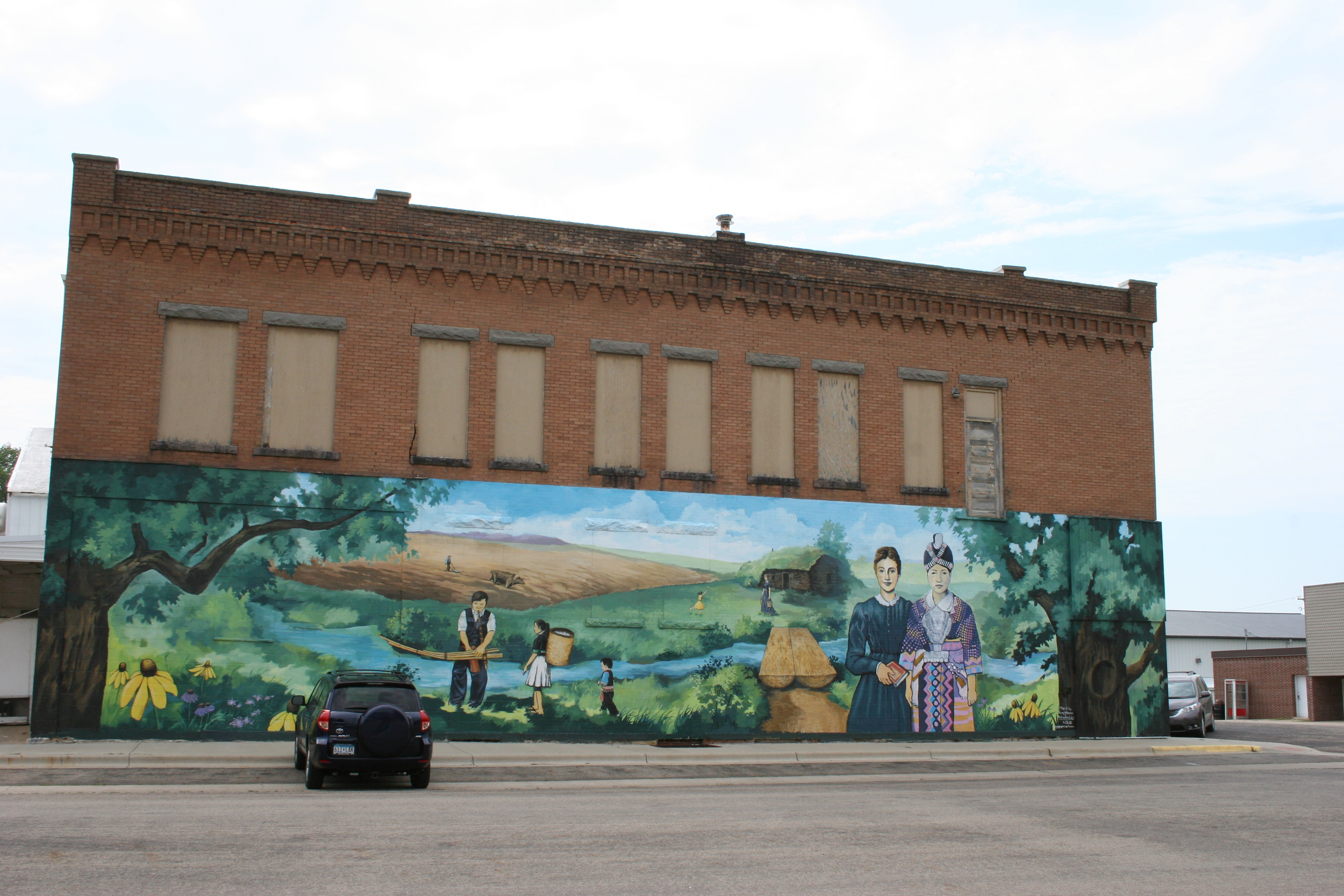
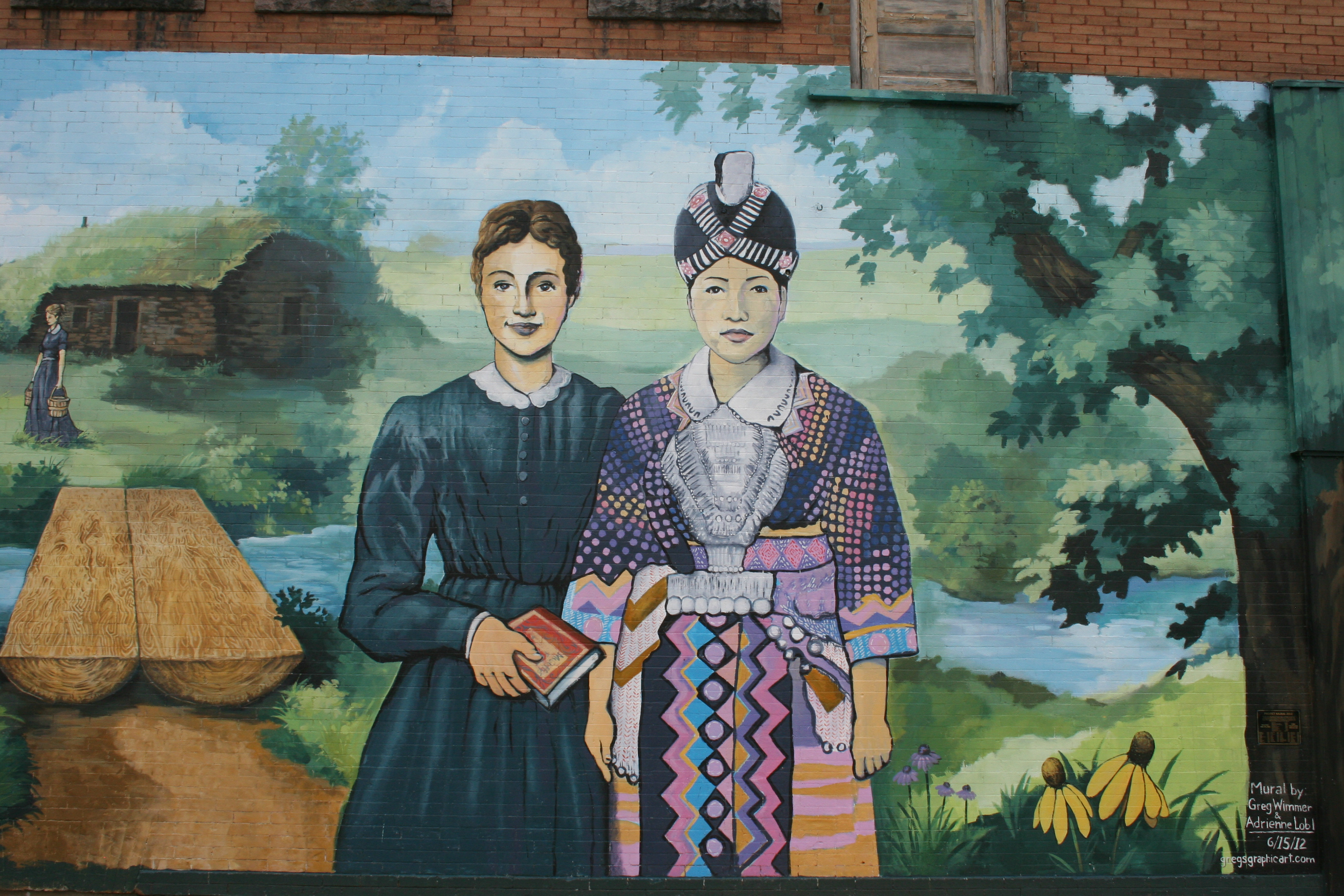
Ohman referenced this multi-cultural mural in Walnut Grove, where Hmong immigrants have settled and embraced the prairie history of author Laura Ingalls Wilder. He also noted that Walnut Grove is the only community where he found a working pay phone. (Minnesota Prairie Roots copyrighted file photo)
Only the letter X lacks a Minnesota town name. Two towns share the name Oslo. No surprise given Minnesota’s rich Scandinavian heritage. Oh, and Osakis is the self-proclaimed “Lefse Capital of Minnesota,” Ohman said, recommending Jacobs Lefse.
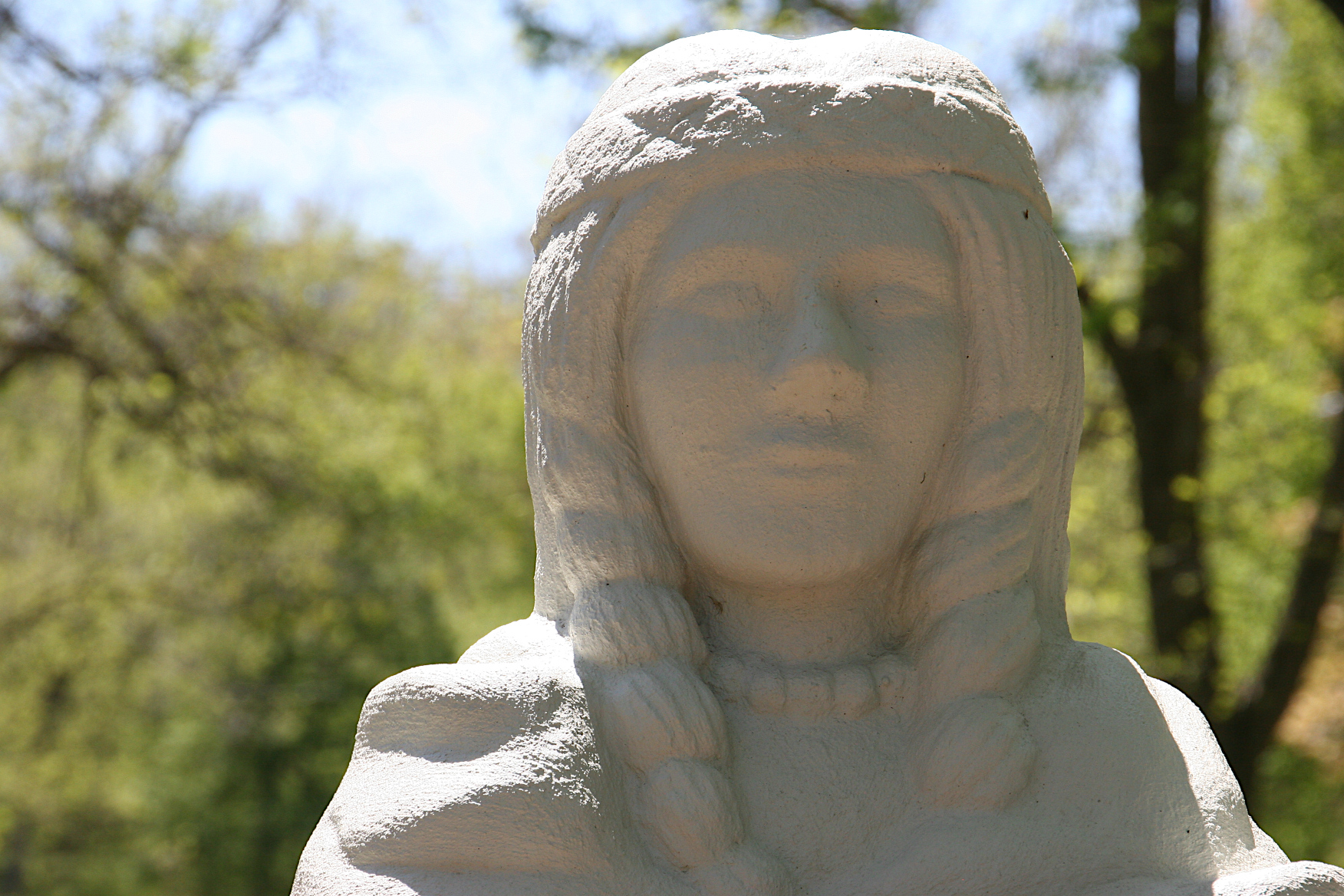
A statue of Princess Owatonna, daughter of Chief Wabena and whom after the city of Owatonna is named, stands in Mineral Springs Park. (Minnesota Prairie Roots copyrighted file photo 2020)
Ohman asked how towns are named and got lots of audience response. The Old Country (New Ulm, New Germany, Fulda…), Native American people and language (Owatonna, Wabasha, Sleepy Eye, Wabasso), animals (Badger and Fox), geographic features (Redwood Falls, International Falls, Thief River Falls, Fergus Falls, but not Hanley Falls, which has no falls), famous (Henry Hastings Sibley) and not so famous people…
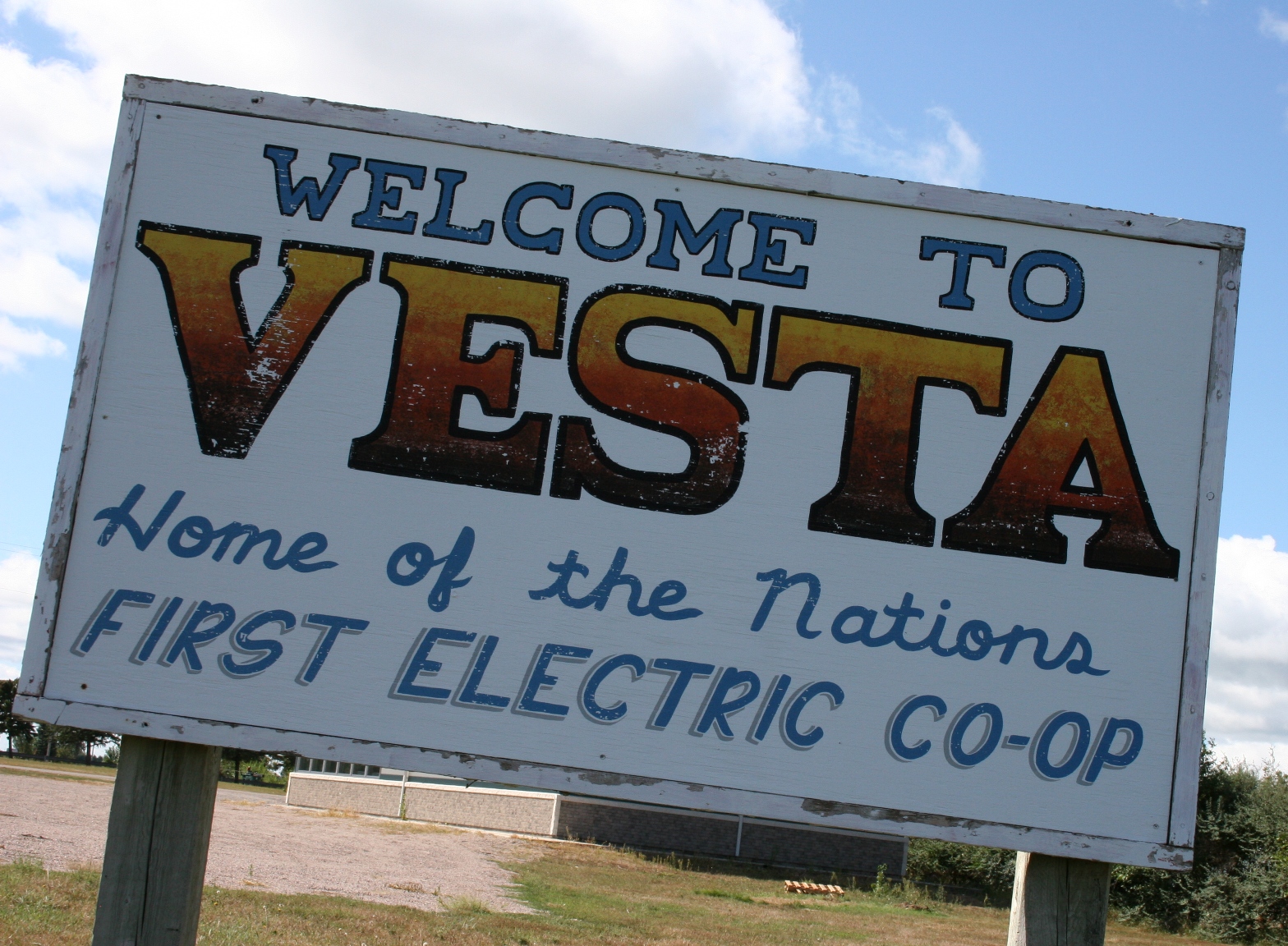
This sign once marked my hometown and its reason for notoriety. The sign was removed and replaced and I wish it was still there, along Minnesota State Highway 19. (Minnesota Prairie Roots copyrighted file photo 2011)
My hometown is named after the postmaster’s daughter, Vesta. I nearly stumped Ohman when I shouted out “Vesta.” But, with some clues and thought, he remembered its location in Redwood County. He’s been to neighboring Belview, Seaforth, Wabasso. Even several audience members were familiar with southwestern Minnesota towns, something I don’t often encounter in southeastern Minnesota.
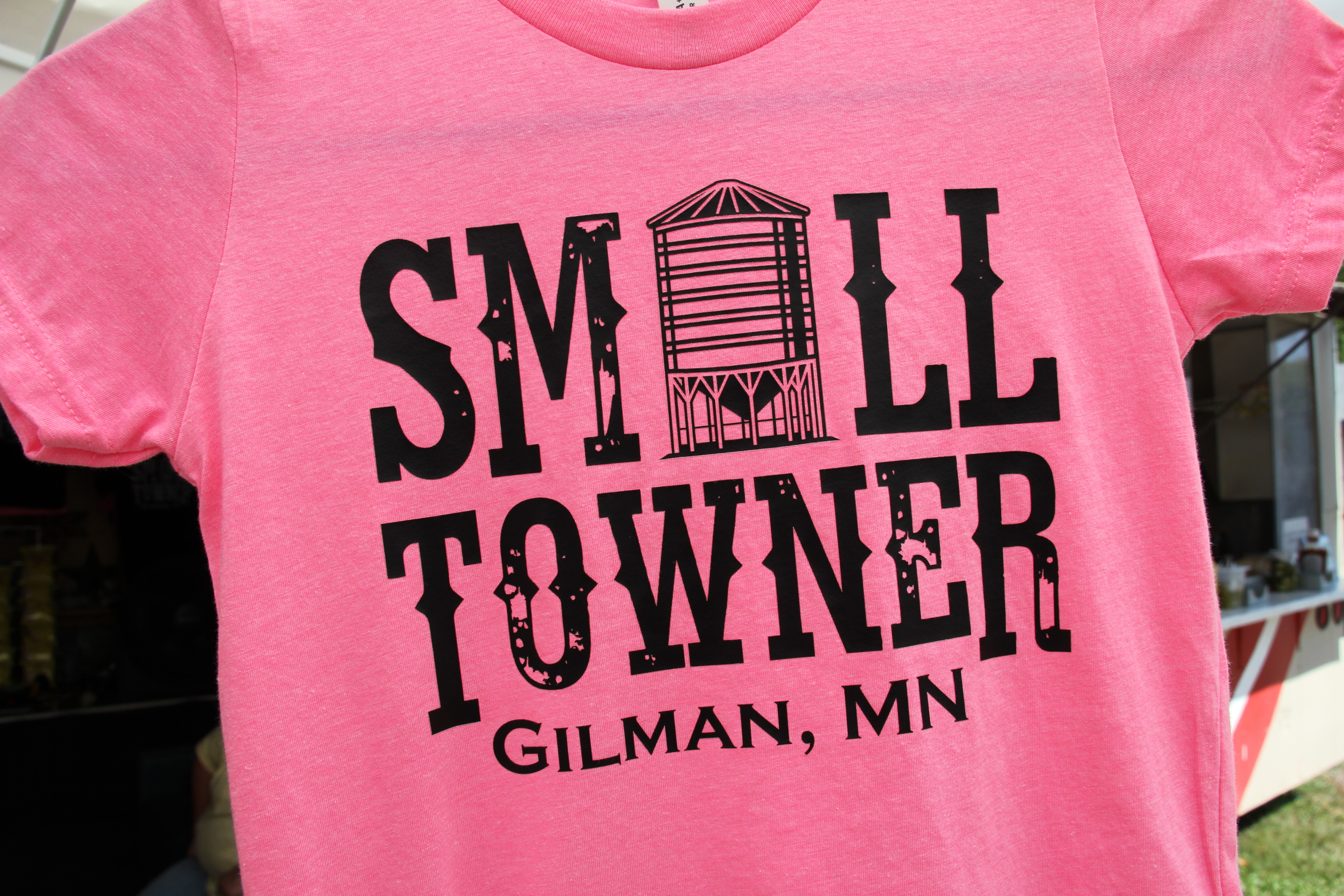
I found this small town proud t-shirt at Kelash’s Corner, a vegetable, fruit and merch stand, in Gilman, population around 220. The town is northeast of St. Cloud in Benton County. (Minnesota Prairie Roots copyrighted photo September 2024)
Towns survive based on location, Ohman said. That makes sense. Towns once located along railroad tracks, later abandoned, have declined. Towns built on lumbering have dwindled in population. Towns located today in resort areas, close to larger cities or along major roadways (like Owatonna on Interstate 35) are growing, thriving. The smallest of Minnesota’s 905 towns, according to Ohman, is Funkley, population five. That’s northeast of Blackduck which is northeast of Bemidji in Beltrami County. I love how that name, Funkley, rolls off the tongue.
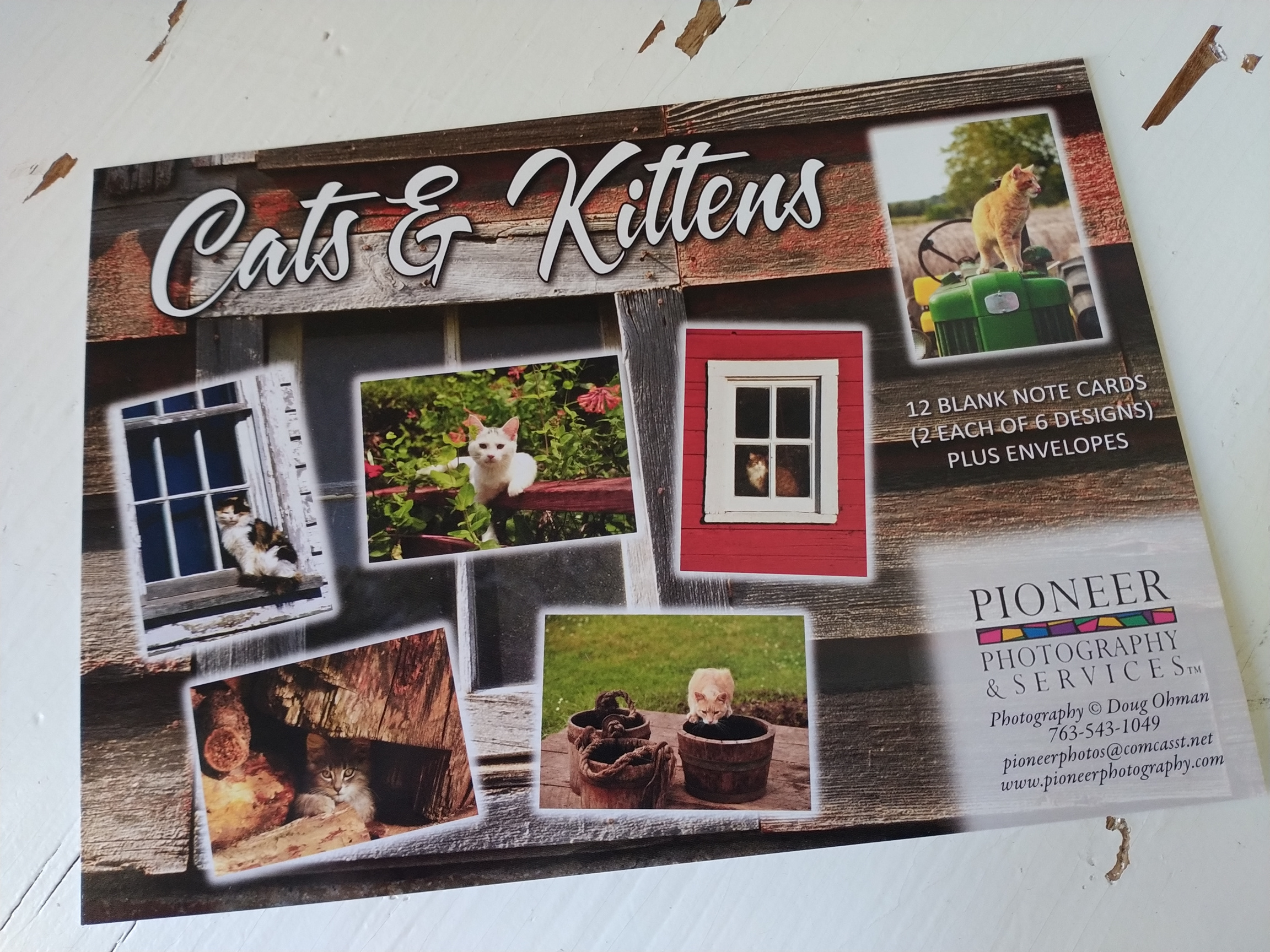
I won this pack of photo cards for correctly answering so many questions throughout Ohman’s presentation. (Minnesota Prairie Roots copyrighted photo September 2024)
Plenty of answers rolled off my tongue Monday evening in Owatonna as Ohman asked endless questions during his Minnesota town themed game show. Who knows the county in which Ivanhoe, named after the book by Sir Walter Scott, is located? “Lincoln,” I shouted. I revealed my book smarts a second time by naming the fictional town in Sinclair Lewis’ novel, Main Street. That would be Gopher Prairie, really Lewis’ hometown of Sauk Centre. That earned me a prize—a pack of feline photo cards by Ohman.
This mural in Walnut Grove shows how past and present connect, from early settlers to present day Hmong immigrants who now call this small town home. A niece, who lives with her family in Walnut Grove, recently told me how happy she is that her children are growing up in a diverse community. (Minnesota Prairie Roots copyrighted file photo)
I could write a whole lot more about all the towns and related information Ohman covered in his talk. But that’s his job, while mine is to highlight a few here. And also to reveal that I did incredibly well on the Ohman game show. I’ll close with one more important revelation. His favorite town name, Ohman shared, is Faith…because it takes a little faith to live (and survive) in Minnesota.
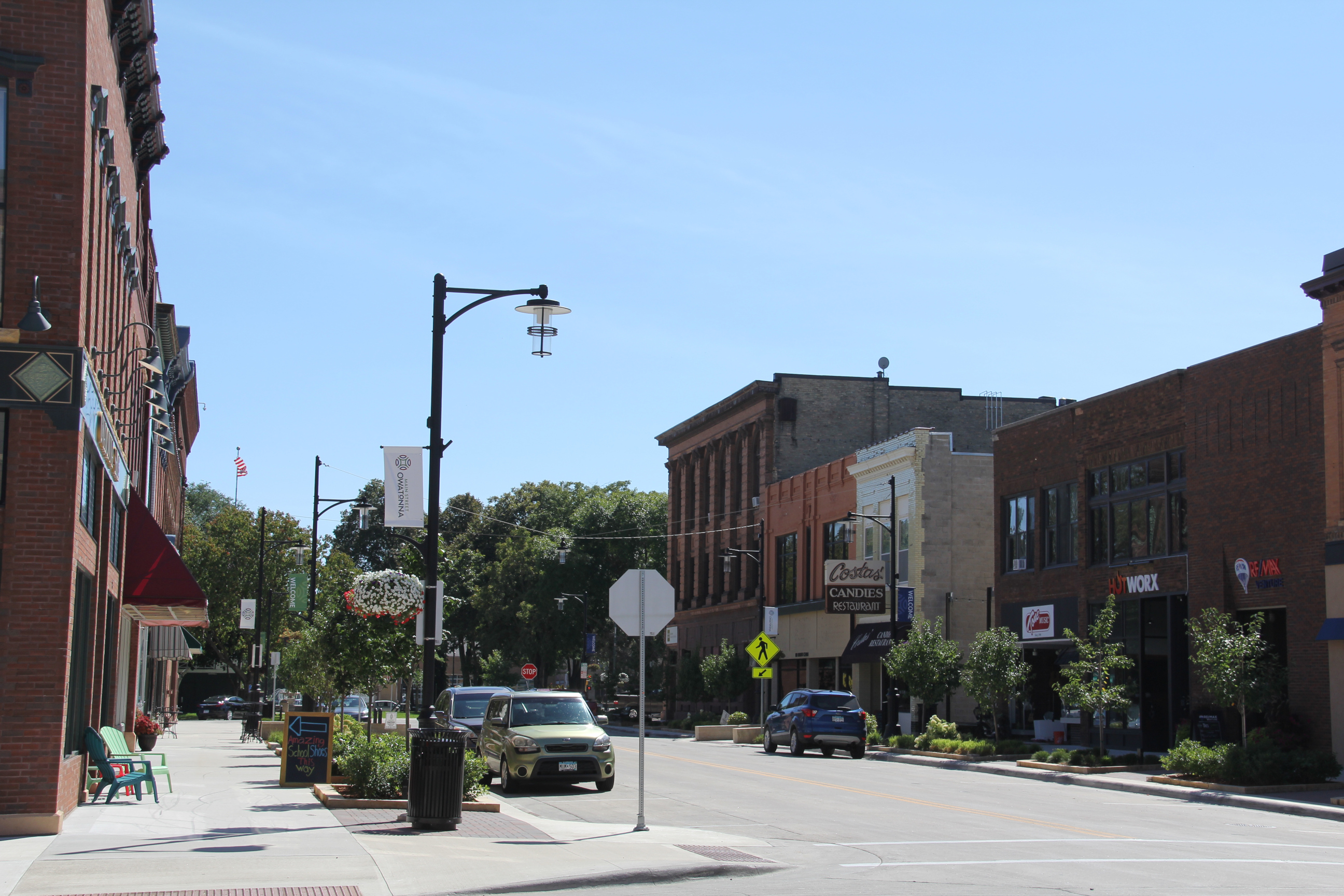
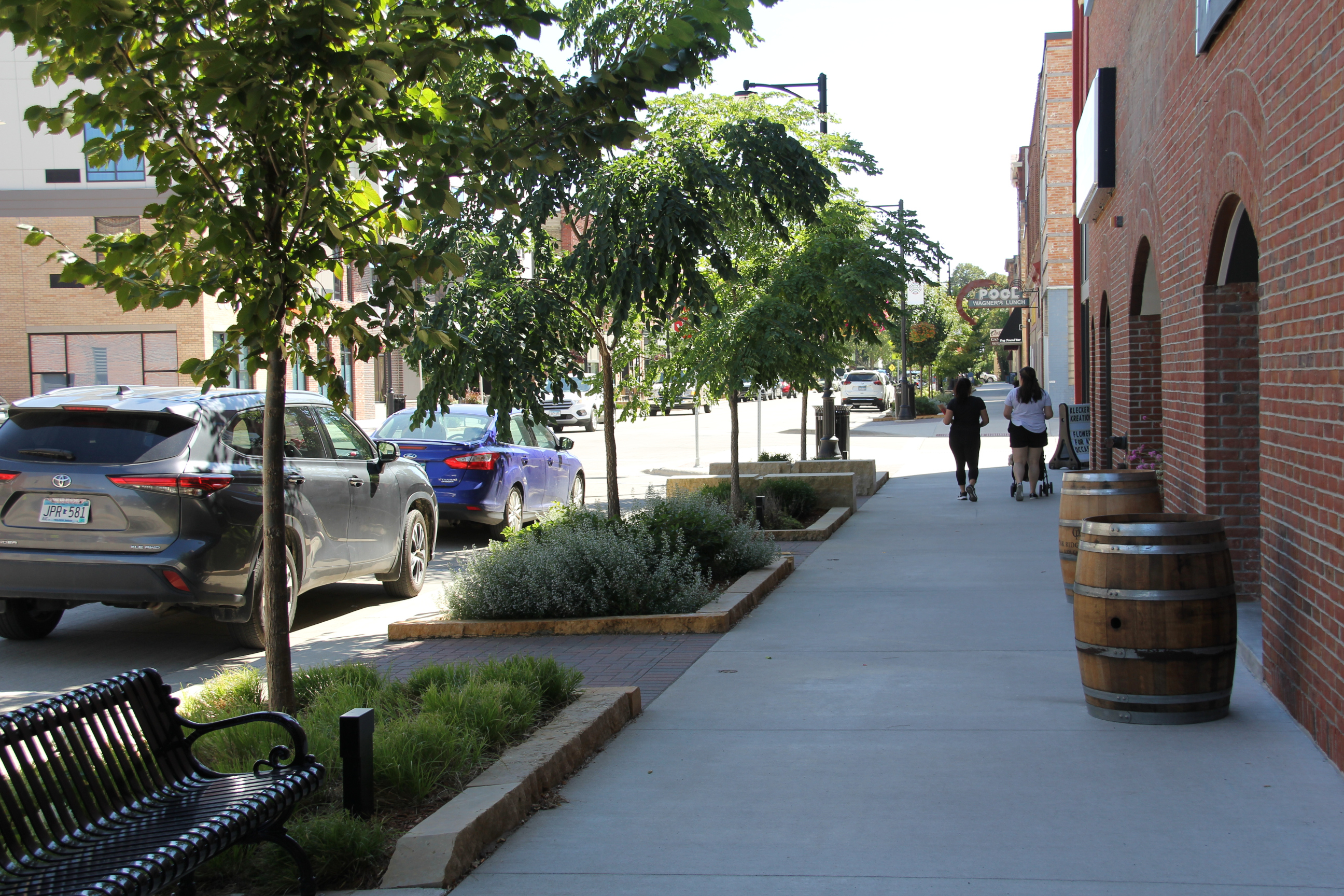
An overview of Owatonna’s new streetscape. (Minnesota Prairie Roots copyrighted photo September 2024)
FILL A DOWNTOWN WITH LUSH greenery and flowers in over-sized planters, add water features, and places to sit, mingle and converse, and you have what I consider an inviting space. That would be downtown Owatonna.
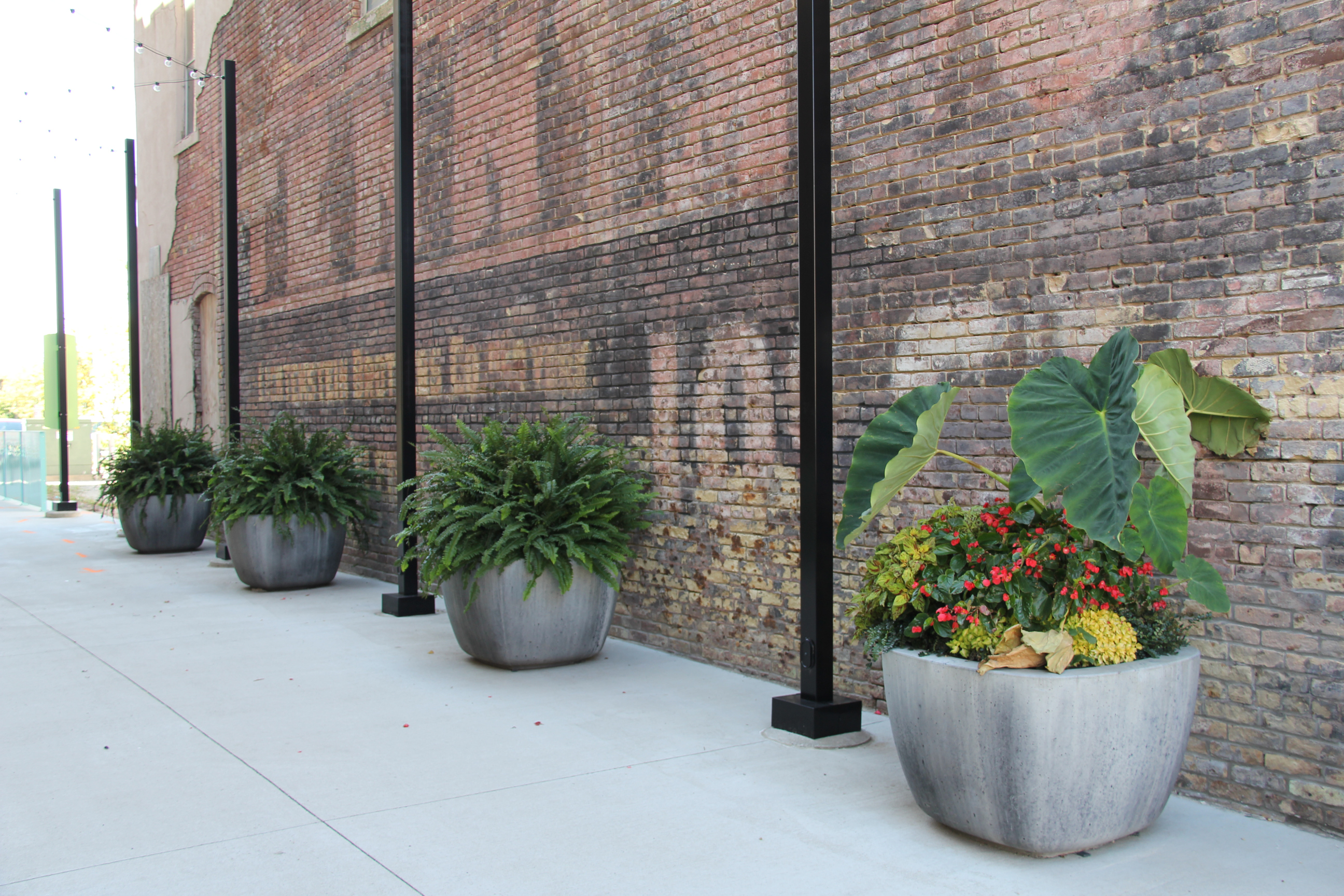
Lush planters front a ghost sign in a repurposed space, like a pocket park, between buildings. (Minnesota Prairie Roots copyrighted photo September 2024)
On a recent visit to this southern Minnesota city an hour south of Minneapolis along Interstate 35, I discovered a visually-appealing, pedestrian-friendly business district along revamped North Cedar Avenue. I haven’t walked through downtown Owatonna in awhile, not since a major streetscape project was completed in the fall of 2022. And I must say, the results are simply stunning.
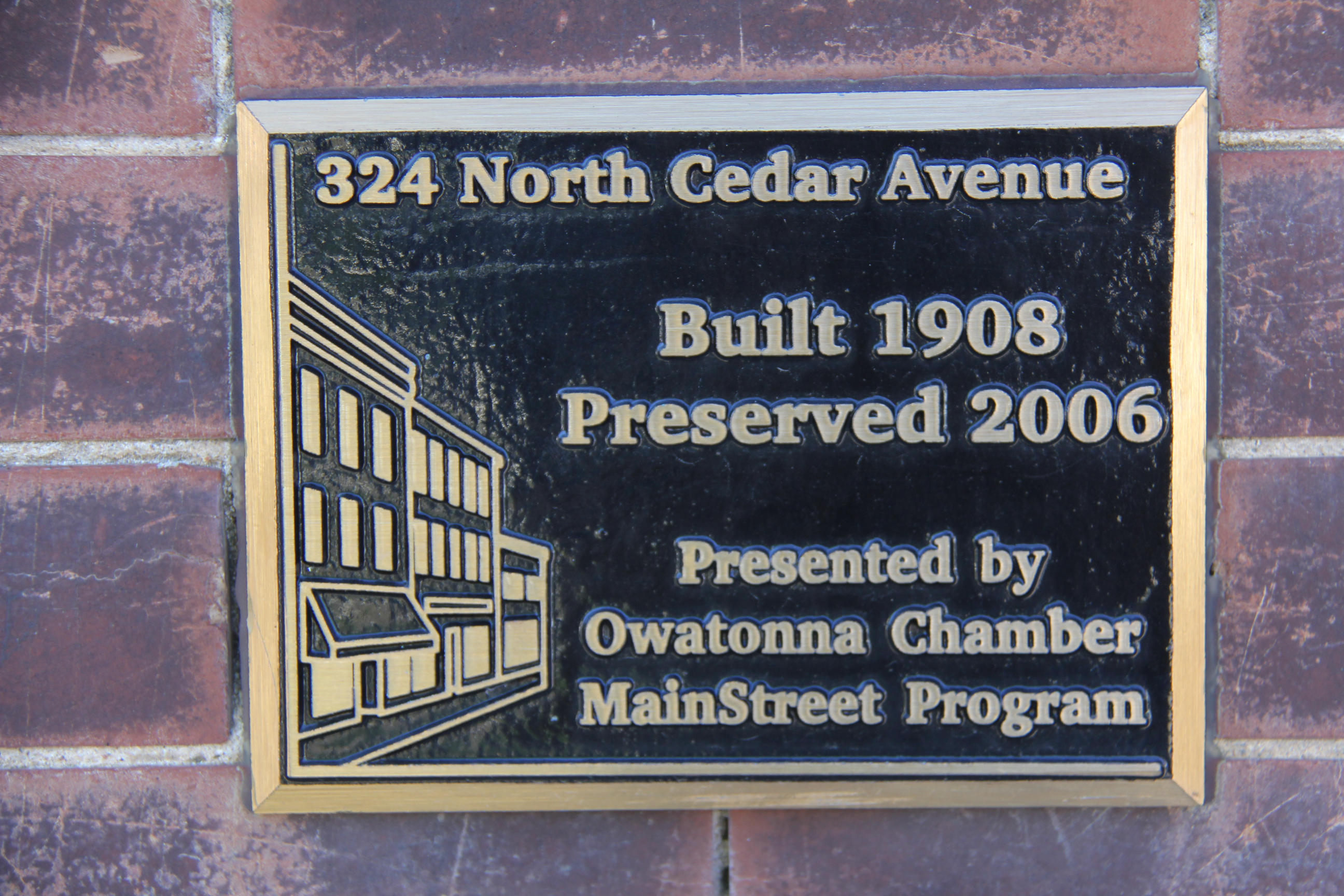
Signage on a building notes past preservation efforts. (Minnesota Prairie Roots copyrighted photo September 2024)
As I walked block after block through this National Register Historic District, I focused not so much on the buildings as on the beauty. Trees, shrubs, perennials, annuals, all have been incorporated into the streetscape. Within limestone edged planters. In mammoth free-standing planters. In hanging baskets.
So many inviting details here in bench, barrels and plantings. (Minnesota Prairie Roots copyrighted photo September 2024)
The results present a harmonious connection with nature, a garden-like appearance, a feeling of serenity, of wanting to linger. And that’s exactly what business owners and others hope. Stick around. Connect. Shop. Spend money. Enjoy.
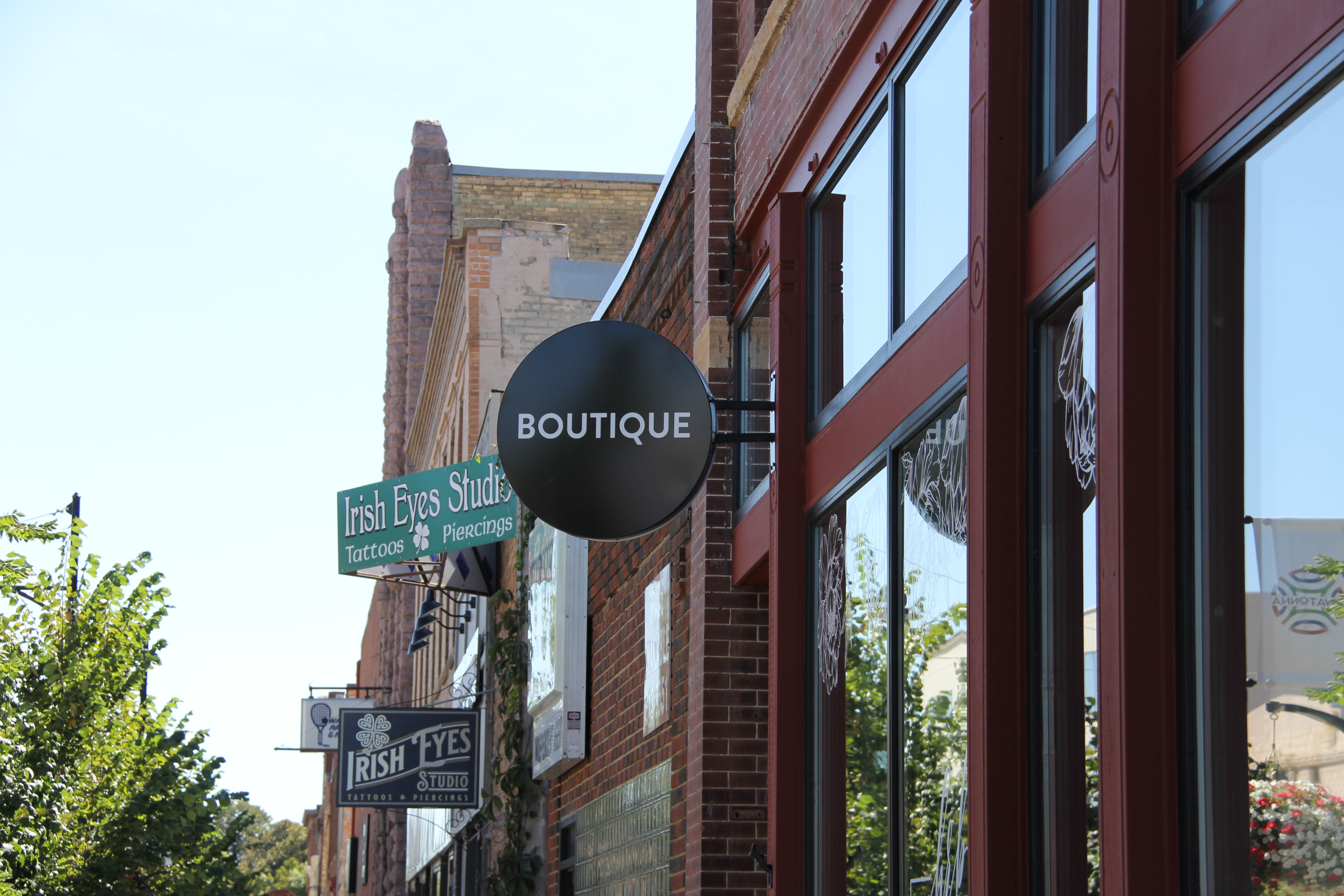
An example of businesses located along North Cedar Avenue. (Minnesota Prairie Roots copyrighted photo September 2024)
Downtown Owatonna offers a good mix of service-oriented businesses, retail shops from shoe store to boutiques to bookshop and more, along with places to dine, drink and even stay overnight. A new Courtyard by Marriott anchors a downtown corner, complete with outdoor sidewalk-side seating and a fire pit.
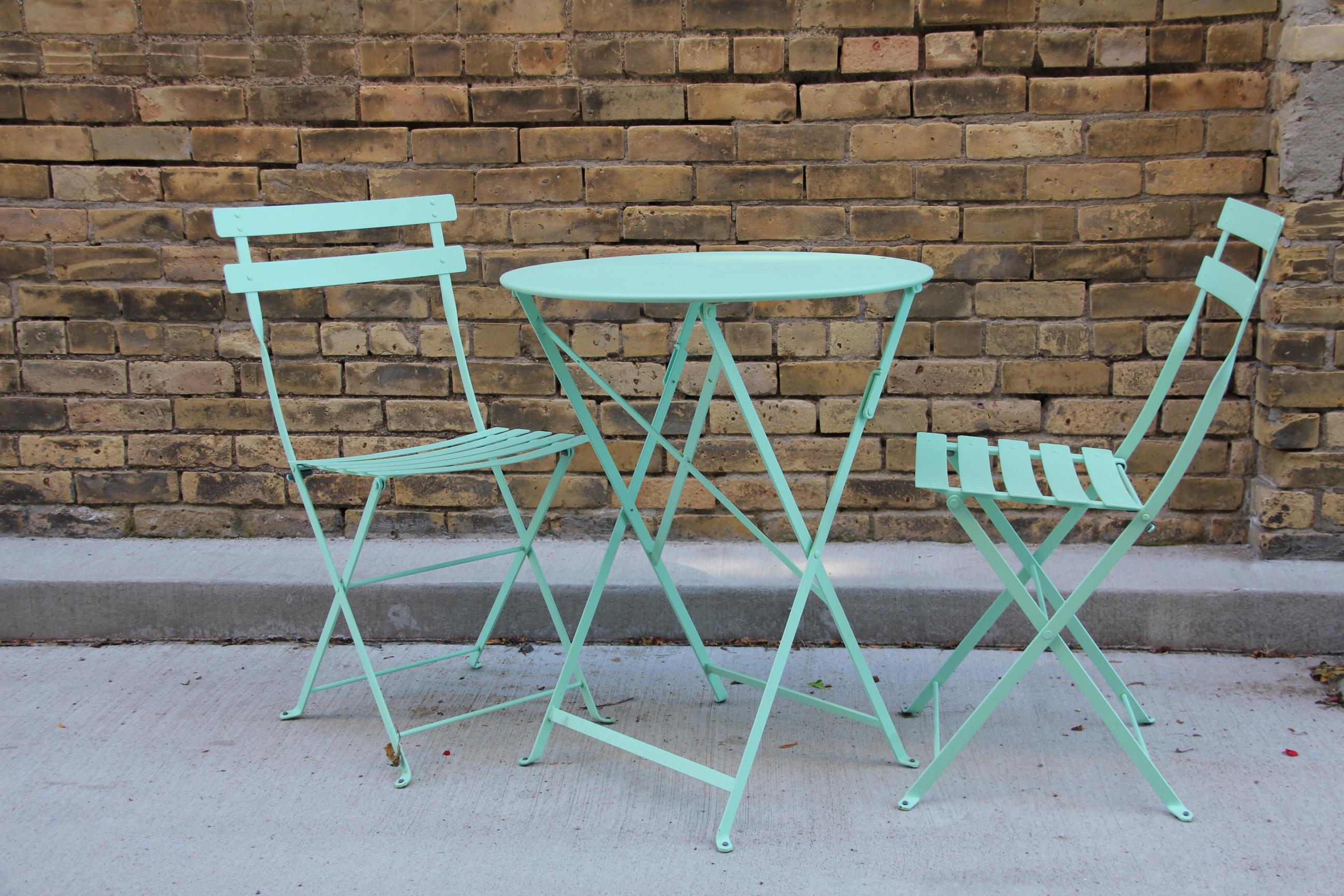
In a narrow space between buildings, bistro tables await. (Minnesota Prairie Roots copyrighted photo September 2024)
Everywhere, I spotted these welcoming spaces. Some are squeezed between buildings—in narrow areas I assume were once alleyways. Planters lush with ferns and flowers soften the hardscapes of brick and cement. Cozy bistro tables with seating for two to larger round tables with spots for four encourage outdoor dining and conversation. Overhead party lights crisscross some areas, adding to the evening ambiance. Only the addition of outdoor public art would up the charm. Maybe that’s coming.
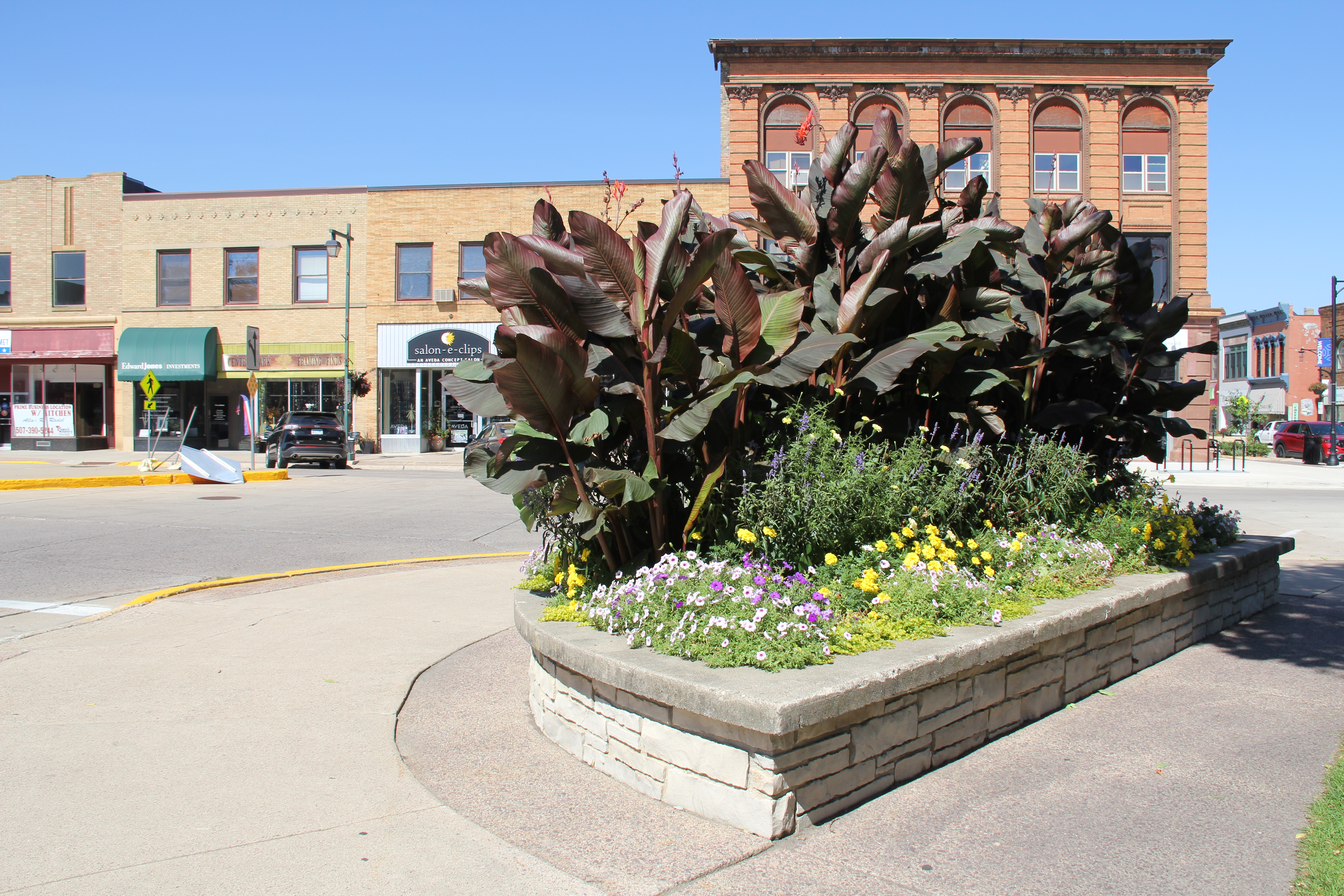
Flowers make a strong statement on a downtown anchor corner by Central Park. (Minnesota Prairie Roots copyrighted photo September 2024)
There’s more, much more. Rectangular limestone planters flush with trees, perennial flowers, shrubs and grasses create a living buffer between street and storefront that feels protective, naturally calming.
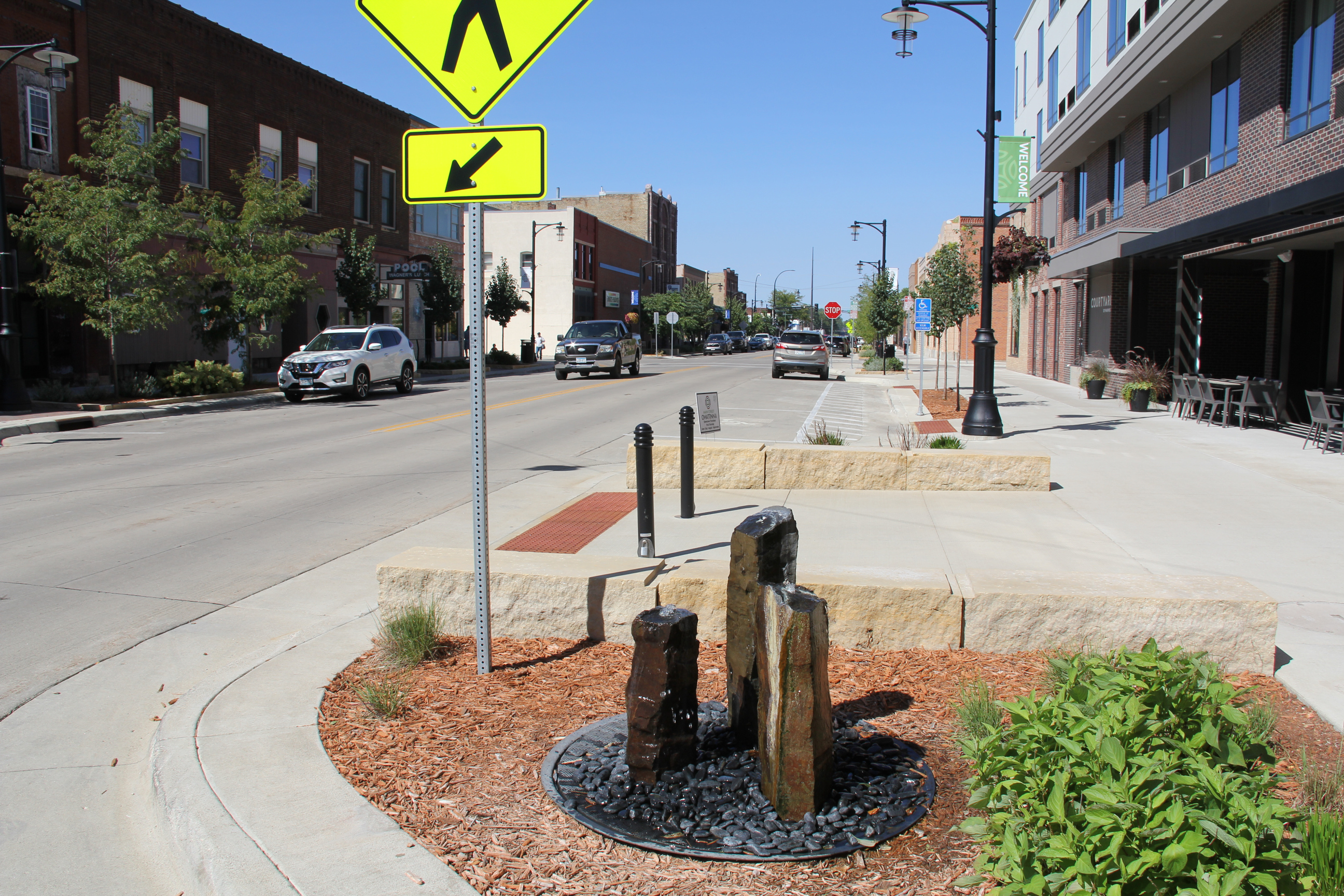
I spotted several of these fountains. (Minnesota Prairie Roots copyrighted photo September 2024)
Unobtrusive small scale water features scatter throughout the downtown. Benches beckon. There’s a neighborly vibe here, of connectedness.
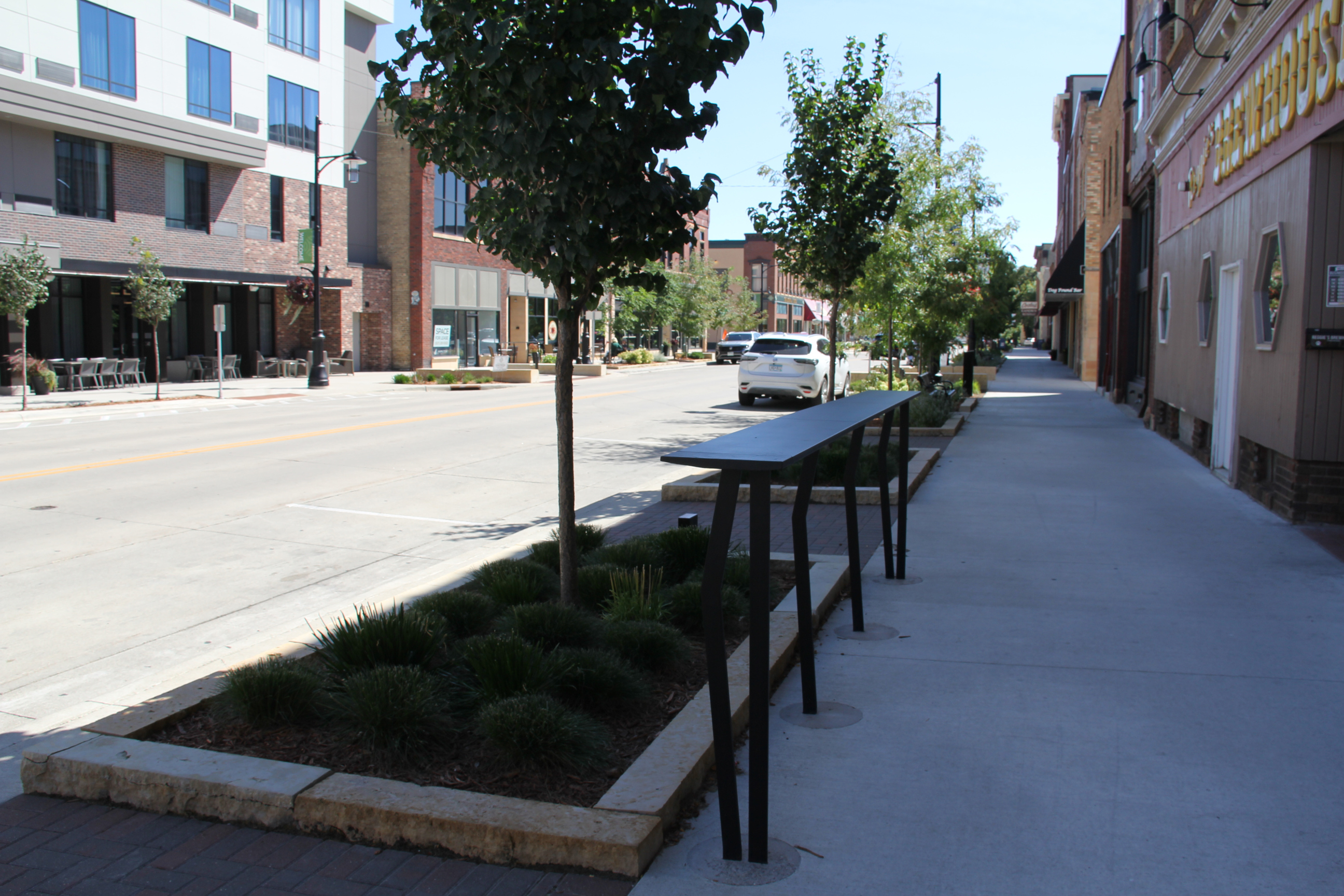
A high-top narrow table caught my eye. (Minnesota Prairie Roots copyrighted photo September 2024)
I even spotted a skinny high-top table, minus chairs, cemented into the sidewalk, ideal for standing and chatting while nibbling or sipping. Outside a wine bar, two wooden barrels hold space.
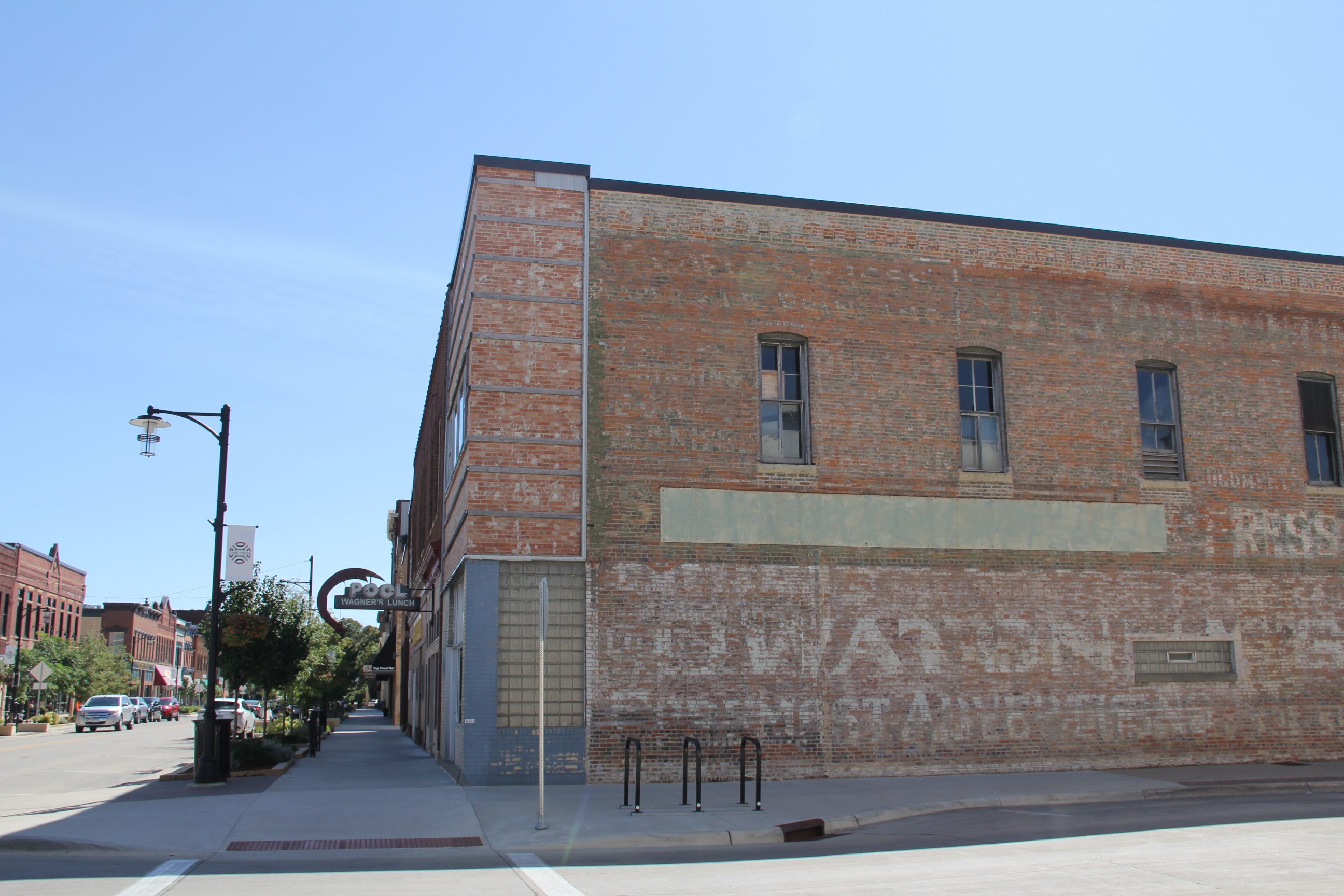
Bike racks, like these corner ones, are placed throughout downtown, making this a biker-friendly area. (Minnesota Prairie Roots copyrighted photo September 2024)
All of this, everything, speaks to me: “Welcome, we’re happy you’re here. Wander. Engage. Relax.” Owatonna got it right in this redo of their downtown. I appreciate when people take precedence over motor vehicles. (There’s still plenty of parking available.)
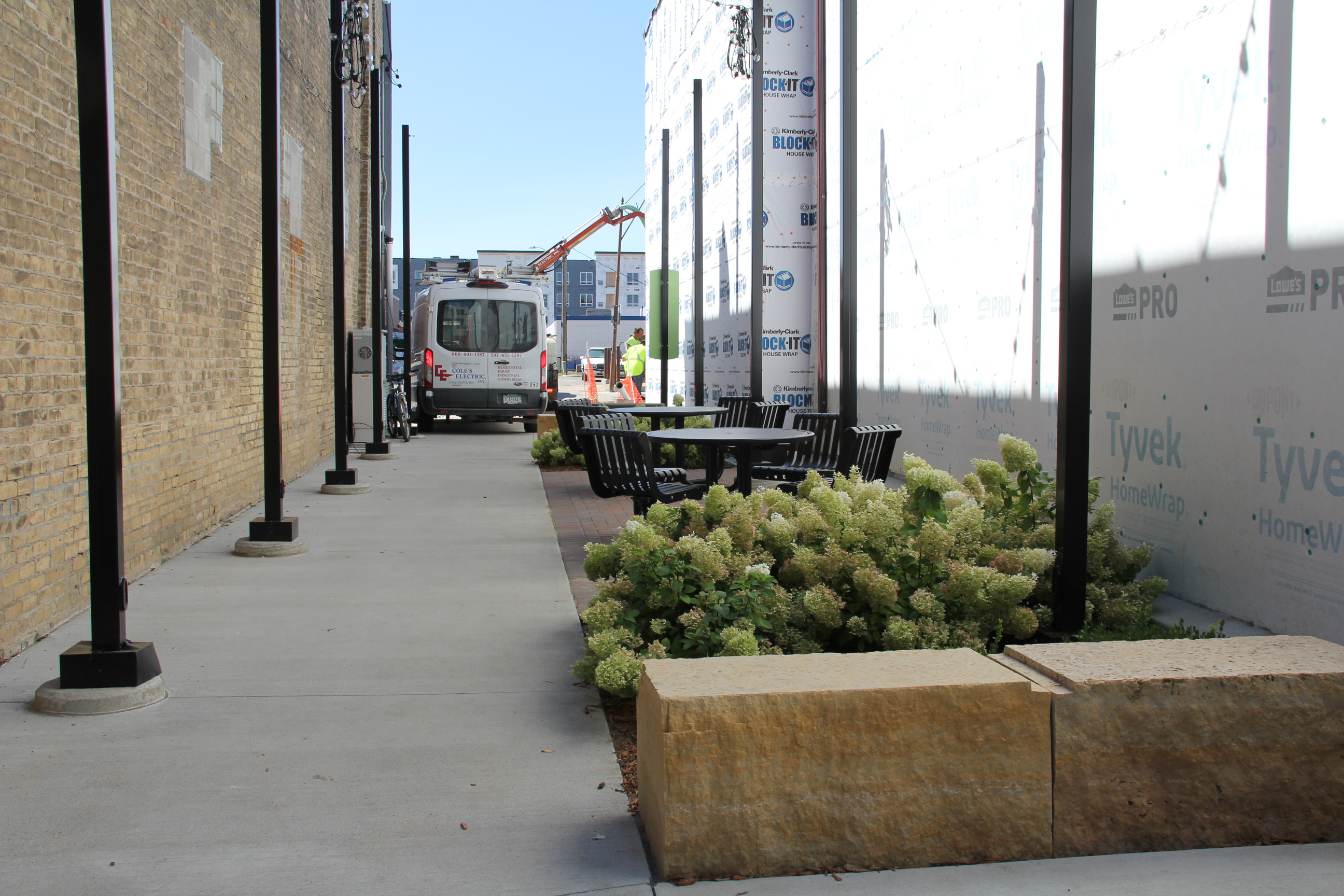
Hydrangea grow in this welcoming space, where work continues. (Minnesota Prairie Roots copyrighted photo September 2024)
I like the feeling I get in this downtown, along North Cedar Avenue. One of friendliness. One of deliberate attention to details. One of offering spaces that connect, that build community. One of feeling embraced in a carefully-curated nature-oriented environment.
This downtown feels like a place where I could listen to acoustic music, peruse a pop-up mini art show or listen to a local poet read poetry in a revamped alleyway. Mostly, though, downtown Owatonna feels pedestrian-friendly in a way that most downtowns do not. And that, to me, holds infinite appeal.









 Minnesota Prairie Roots
Recent Comments