The fused glass heart art of Northfield artist Geralyn Thelen, used for illustration only. (Minnesota Prairie Roots copyrighted file photo 2022)
I JUST WITNESSED the most beautiful moment outside my home.
A scream and the flash of my letter carrier racing across the front lawn toward the street initially drew my attention. I thought someone was in distress, needed help. But not so.
I looked out the living room window to see a car parked along the side street intersecting with the main arterial route past my house. I live on a corner lot. Two young kids leaned out the back window, their arms outstretched toward the letter carrier, clearly their dad.
I simply stood and watched, observing the pure joy, the incredible love between father and children. It showed in one child climbing through the open window, wrapping legs and arms around Dad. Not wanting to let go. It showed in the wide smiles and the screams of delight. The hugs.
My heart filled with joy as I watched, smiling the entire time.
To witness this unbridled happiness in the darkness of all that is happening in this country and around the world brightened my day.
Once the letter carrier started heading back to his mail truck, I popped my head out the front door and called to him. I told him that the interaction between him and his young daughter and son made my day. He responded how blessed he is to have his loving family who were simply out garage-saling. Until the kids spotted Dad. And then all joy broke lose and love erupted.
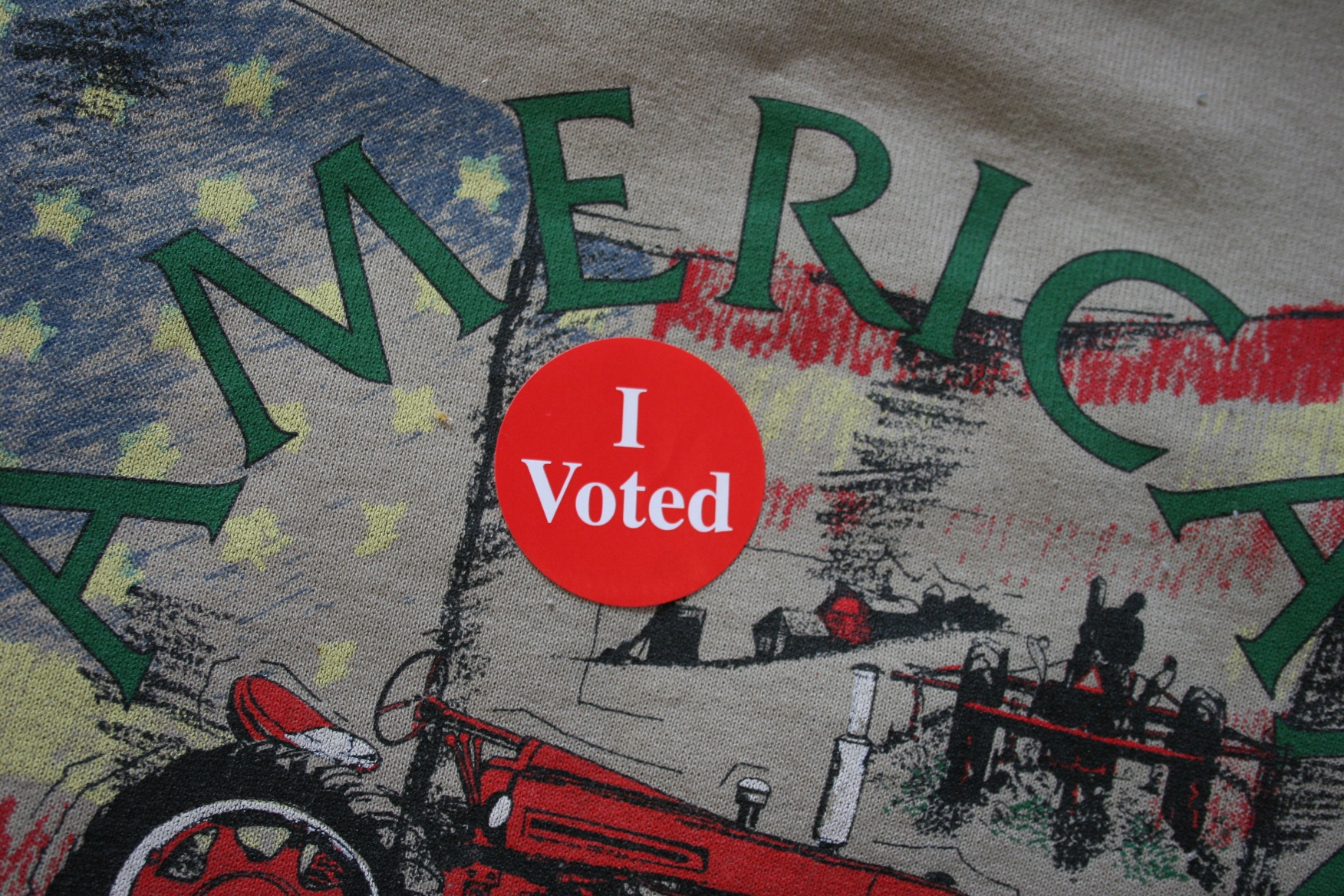
So you voted, then what? (Minnesota Prairie Roots copyrighted file photo)
TWICE I’VE ATTENDEDCity Council Chats in Faribault, a recently-implemented way of connecting local residents with the people they’ve elected and with city employees. And I’ve gotta say, I’m impressed.
All too often, there’s a disconnect, a feeling that elected officials aren’t listening and don’t care what constituents think. But I’ve found, at these informal sessions, that I am heard. I have a voice. Council members and staff members are, indeed, willing to listen. They care, because Faribault is their home, too, and they want this to be the best place it can be.
So how exactly do these Council Chats work? Once a month, the council sets a time and place to address a specific topic. Locations and times vary. You just show up. There may be a brief presentation. Or not. But there’s always time to mingle and ask questions of council members, city staff and others.
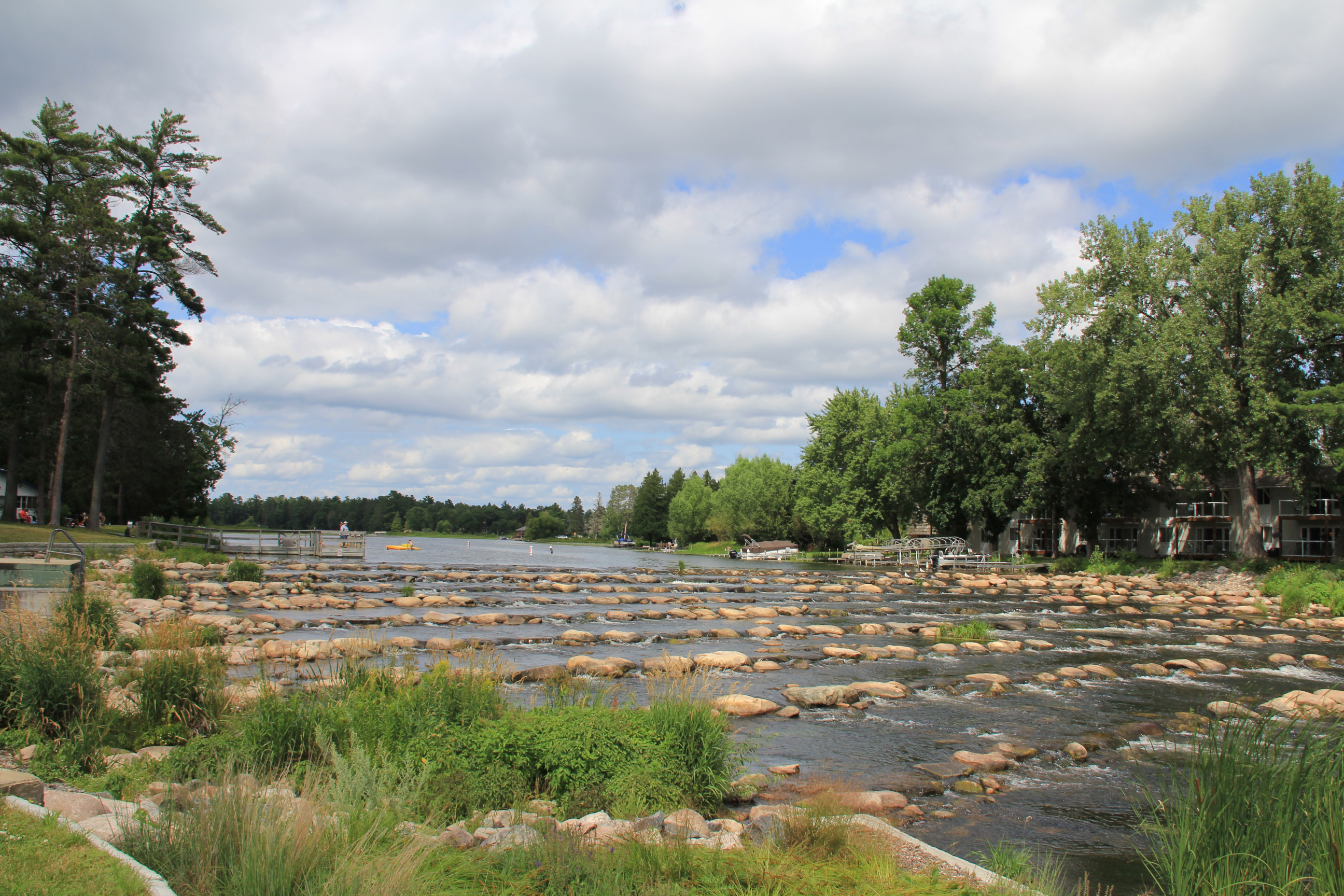
A rock arch rapids like this one in Pine River is being considered for Faribault. (Minnesota Prairie Roots copyrighted file photo July 2024)
FOCUS ON TWO FARIBAULT DAMS
Wednesday evening, for example, the Chat had an open house format to gather public feedback on options for improving the Woolen Mill Dam and the adjacent north dam on the Cannon River. A 2024 flood damaged the northern wall of the Mill Dam so repairs or improvements are needed. And now, the city decided, is an ideal time to consider alternatives beyond repairs.
You may wonder why I care about these two dams. Well, last summer I saw a rock arch rapids replacement of a traditional dam in Pine River in north central Minnesota. I loved what I saw. Smaller rip-rap rocks, larger rocks and boulders were placed in sloping rows across the Pine River, replacing the 200-foot long by 13-foot high 1910 concrete dam. Water spills over the rocks in a visually-pleasing way that looks almost natural. This area along the Pine River draws outdoor enthusiasts to fish, swim and more. That got me thinking about the dams in Faribault. Could we have the same thing—rock arch rapids that improve water quality, fishing and recreation while also functioning as a dam?
When I learned about the Council Chat addressing the two dams, I wanted to see if rock arch rapids were being considered. They are. An engineering firm presented multiple options, all laid out in architectural drawings spread across several tables. I could actually see choices. I had plenty of opportunity to study the designs, ask questions, get answers and offer my input. Attendees could even vote on project priorities, like fishing, canoeing, cost, funding and more. Just place a colored dot sticker next to your top three priorities.
I’ve never forgotten the message on this photo I photographed at a Civil Rights March exhibit at St. Olaf College in Northfield. It’s powerful. (Minnesota Prairie Roots copyrighted file photo)
LET YOUR VOICE BE HEARD
Like the previous Council Chat I attended, questions and conversations were encouraged in this informal, relaxed setting. I felt a comfortable level of accessibility, something not found at a regular city council meeting with an agenda and limited time for the public to speak. Certainly, those formal meetings are necessary to discuss, debate and make official decisions. But these Council Chats add a new, approachable dimension to city government that I appreciate. They directly involve the public.
Elected officials at all levels should embrace this way of listening to voters rather than keeping their distance. And, yes, I’m referencing the town halls many federal politicians are currently avoiding. Our government representatives need to hear our thoughts, our ideas, our concerns. And we, as voters, as Americans, need to continue expressing ourselves, educating ourselves, letting our voices be heard.
TELL ME: What, if anything, do your elected officials do to encourage constituent engagement so your voice is heard?
FYI: The next City Council Chat will give an airport overview and will be held at 5 p.m. Wednesday, July 9, at the Faribault Municipal Airport.Past Chats have covered the budget, construction projects, nuisance/blighted properties, tree removal and affordable housing.
This sculpture of Alexander Faribault and a Dakota trading partner stands in Faribault’s Heritage Park near the Straight River and site of Faribault’s trading post.(Minnesota Prairie Roots copyrighted file photo)
HOW DO YOU DEFINE heritage? I ask that question because this week my southern Minnesota community celebrates Heritage Days.
I would define heritage as a cultural or ethnic background. I am, for example, of German heritage.
So one would likely assume then that Heritage Days focuses on heritage. It did. Once. But no more. Not primarily. Rather, this multi-day event in Faribault seems more a June get together with the usual food, music, parade, craft fair and such of any summer community gathering.
It’s not that my city of some 24,000 lacks in cultural and ethnic diversity to theme Heritage Days. We are a bit of a melting pot with our newest residents arriving from Somalia and Sudan. Early on, the French, Irish, Germans and others settled here to shape and grow Faribault. Latinos also define a sizable part of our population. Many others have come from multiple countries to this place along the Cannon and Straight Rivers. Most are generations removed from the homeland. Some, though, are first-generation immigrants.
Jeff Jarvis created and handed out this mini booklet about the Wahpekute Band of the Dakota at a previous presentation at Books on Central. (Minnesota Prairie Roots copyrighted file photo)
But back to Heritage Days. Looking through the long list of events, I see several opportunities to learn about local heritage and history. The first happens at 6:30 p.m. Wednesday, June 11, at the Cathedral of Our Merciful Saviour. Regional artist and historian Jeff Jarvis will talk about “The Wakpekute Dakota & Early Faribault History.” I’ve previously heard Jarvis speak on the Dakota, original inhabitants of the land. He’s done his research. I highly recommend attending his presentation. I’m always surprised by how little long-time residents seem to know about the Dakota and their long ago presence in what would become Faribault. Jarvis presents an informative lesson in local Native heritage.
Likewise, the Rice County Historical Society Museum will be open, free of charge, from 10 a.m.-5 p.m. Thursday-Saturday. It’s a good place to see Native American and other artifacts, learn about our early fur trading and additional local history, learn about notable people like Chief Taopi and Bishop Henry Whipple, and more. Bishop Whipple founded and served the Cathedral where Jarvis is speaking.
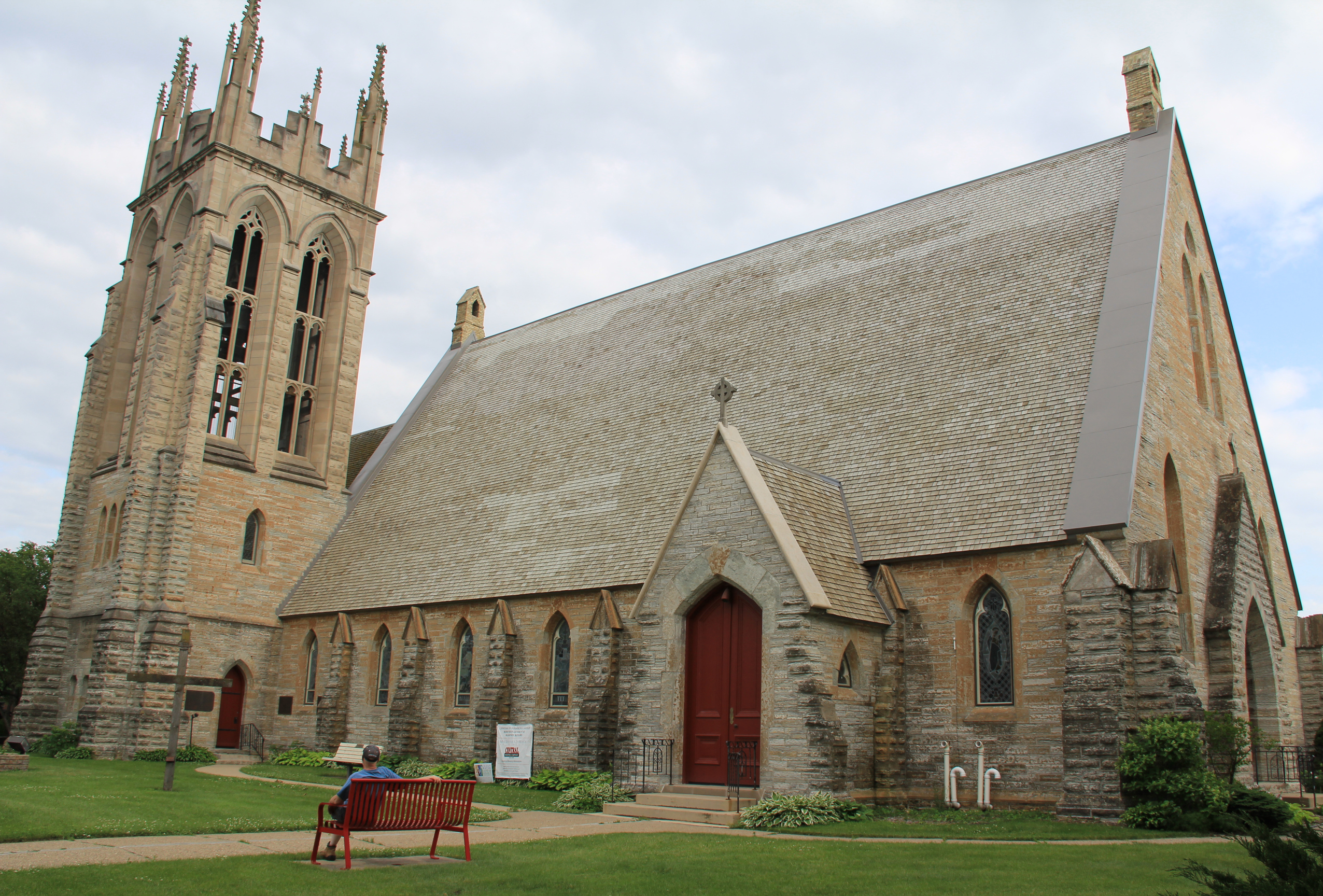
The historic Cathedral of Our Merciful Saviour sits across from Central Park and is a must-see in Faribault. (Minnesota Prairie Roots copyrighted file photo 2024)
The historic Cathedral will be open for tours at 11:30 a.m. Sunday, June 15, following a 10 a.m. Ecumenical Service including bluegrass music. This massive cathedral—and, yes, it really is a cathedral—is important in local Dakota history as the bishop worked closely with Native Americans, some of whom worshipped here.
Fur trader and town founder Alexander Faribault, who was of Dakota and French Canadian heritage, also worked closely with the Dakota. His wood-frame house will be open for free tours from 11 a.m.-3 p.m. Saturday, June 14.
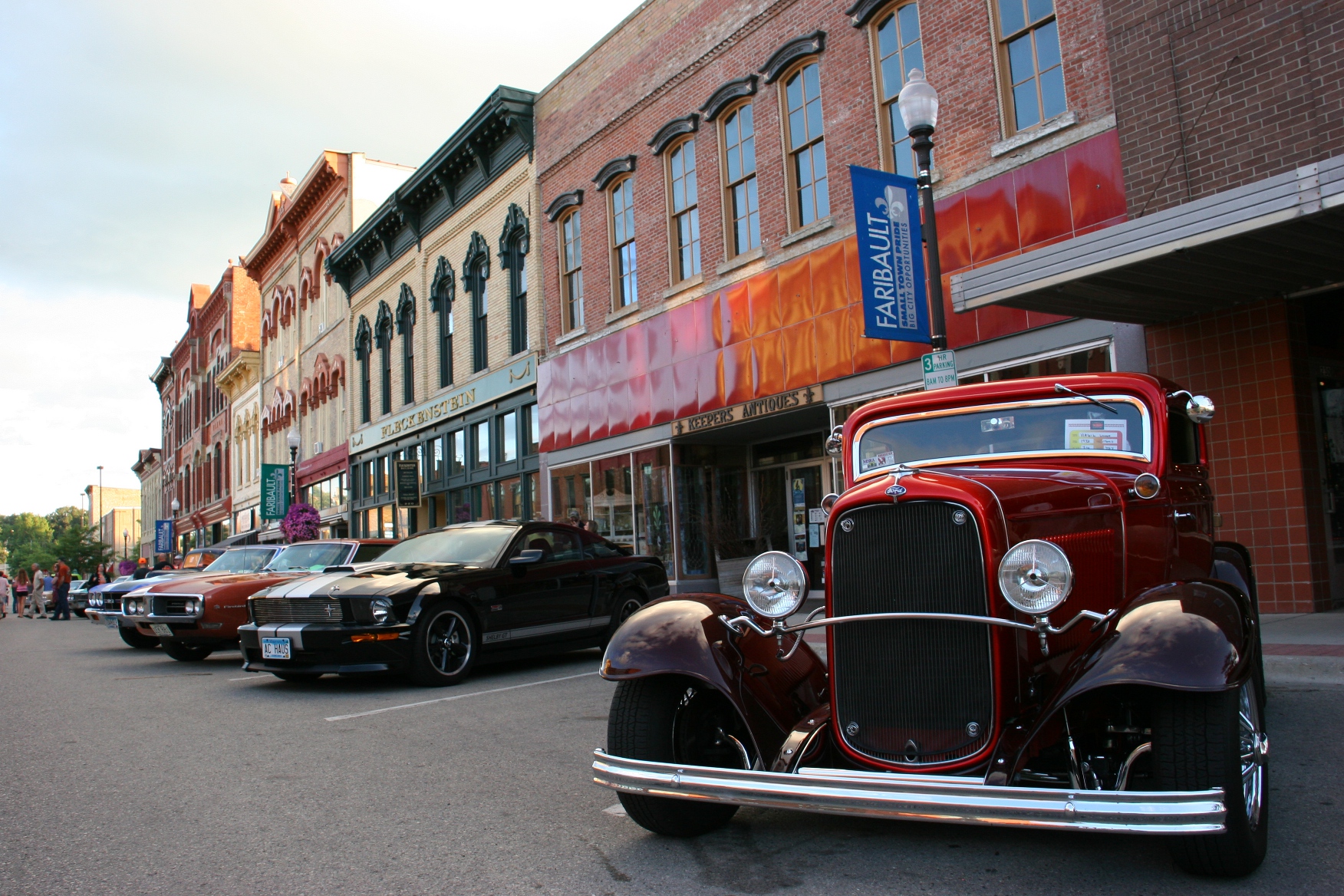
Downtown Faribault features well-kept aged buildings in our historic district. I photographed this scene during a Car Cruise Night. There’s a Car Cruise here Friday, June 13, from 6-9 p.m. (Minnesota Prairie Roots copyrighted file photo)
The Rice County Historical Society will also offer a guided Downtown Walking Tour on Friday and Saturday with two time slots of 11 a.m. and 2 p.m. The $5 tour, led by RCHS Program and Outreach Coordinator Kiran Loewenstein, begins at Central Park. Anticipated to take 1-1 ½ hours, the tour route follows Central Avenue with a focus on the historic district and buildings and early general Faribault history. I expect that will offer ample opportunity to not only learn about early history and heritage, but also to see the heritage of our newest residents in downtown core ethnic businesses.
Two more opportunities to embrace local history (although not officially part of Heritage Days) are inside the State Bank of Faribault along Central Avenue. Local streetscapes and landscapes by Father Jim Zotalis, spiritual leader of the Cathedral, are displayed in a pop-up exhibit in the bank lobby. And for those interested in Faribault’s brewing history, the bank holds an extensive collection of Fleck’s beer memorabilia form long ago Fleckenstein Brewery. Both are accessible during business hours only.
This book is also packed with candid and posed photos of the Miller family, adding to the text. (Book cover sourced online)
THIS COULD BE MY STORY or that of any other Baby Boomer who grew up in rural southern Minnesota. With one primary exception. None of us had 21 siblings. Yes, twenty-one. I had only five—three brothers and two sisters.
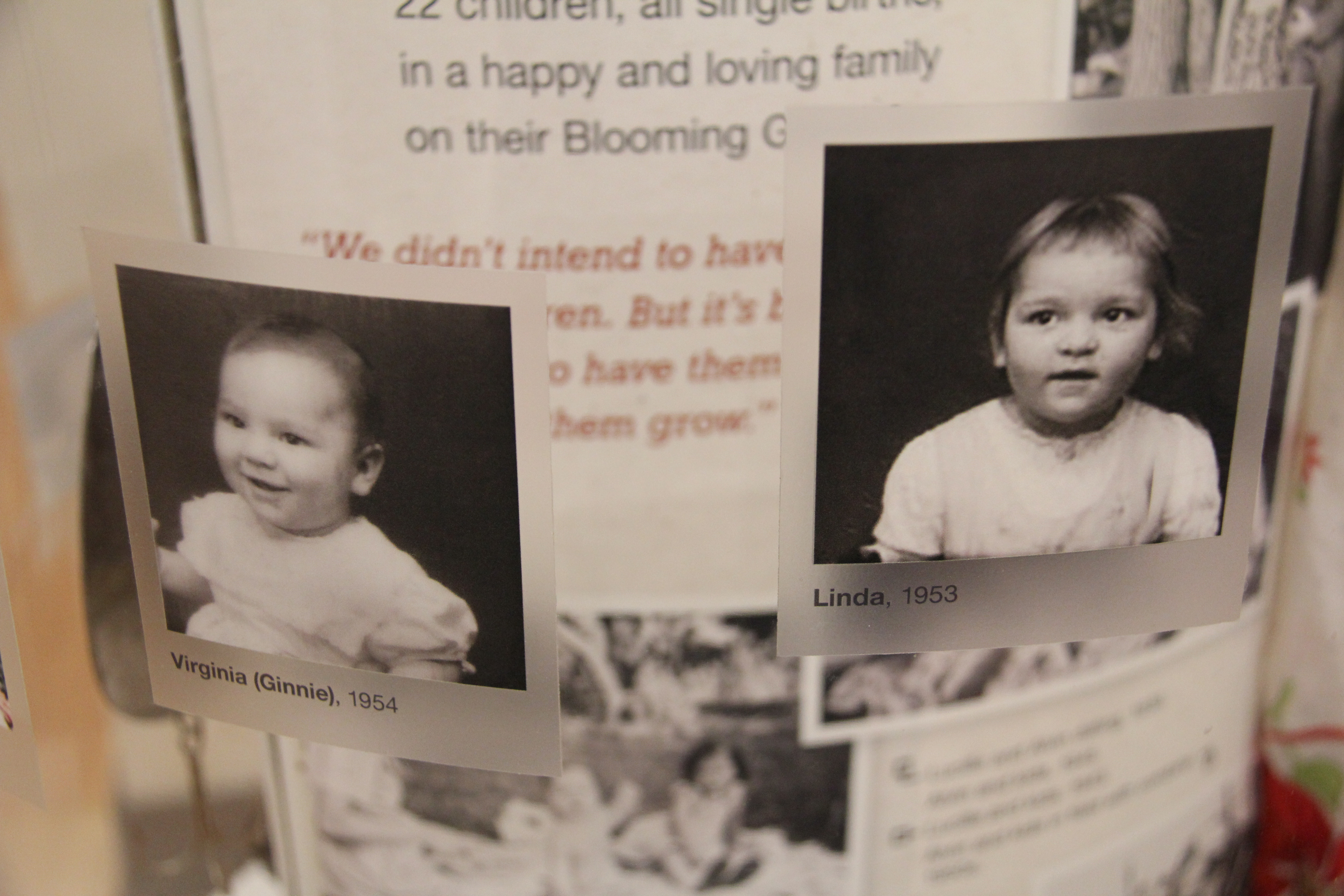
But Helen Miller had seven brothers and 14 sisters, all single births, all born to the same parents, Lucille and Alvin Miller of rural Waseca, over a span on 26 years. She’s chronicled the family’s life in a self-published memoir, 21 Siblings—Cheaper by the Two Dozen.
I happened upon this book, printed in 2018, after visiting the Waseca County History Center and seeing an exhibit about this unusually large family. I knew then that I needed to read this story by Helen, 13th in line. She’s just a bit older than me. I expected my farm upbringing during the late 50s through the 60s and into the early 70s would be similar in many ways. I was right.
WHITE RICE & PANCAKES
This book proved a stroll down memory lane. I remember meals of mostly meat and potatoes with a side vegetable given that was the preferred meal of my farmer father. He, like Alvin Miller, was quite content to eat those basics and didn’t care for any deviations. Large gardens were the norm, no matter family size. Lucille Miller canned fruits and vegetables, just like my mom, except a whole lot more. And, when food supplies ran low, both our mothers cooked a meal of white rice and cinnamon. I detested that and to this day still don’t like plain white rice.
I also do not much like pancakes, although I have no particular reason to explain that dislike. Helen Miller should. She writes of the family receiving boxes and boxes of pancake mix following a railroad accident. Except they didn’t get the pancake mix until months later…when weevils had infested the food. The Millers simply sifted out the bugs, prepared and ate the pancakes. They weren’t about to turn down free food.
Specific stories like these point to the challenges of feeding a mega family, even with their own garden produce, chicken, pork and eggs. With that many people to feed and to shelter, you can only imagine the logistics of running the household. Older siblings were responsible for younger siblings. Everyone pitched in with chores. They shared a lot—clothes, shoes, a singular cup for drinking water (same as my family), rooms, a love of music and a strong faith.
This shows part of the Miller family exhibit at the Waseca County History Center. (Minnesota Prairie Roots copyrighted file photo May 2025)
THE IMPORTANCE OF FAITH
The Millers’ Catholic faith centered their lives. Lutheranism centered mine. Faith carried the Millers through an especially tragic event—the deaths of their aunt, Irene Miller Zimmerman, and her six young children in 1959. An unseen train broadsided their station wagon just blocks from Sacred Heart School, the same school Helen and her siblings attended. She writes: It was under this veil of grief that I grew up a rather serious child. She was only four years old.
Amid the difficult moments, Helen documents light-hearted moments, too. One in particular caused me to burst into laughter. As a seven-year-old, Helen went to Confession for the first time, thinking she had not broken any of the Ten Commandments. But she had to confess something to the priest. Helen admitted to disobeying her parents twice, having false gods twice and then, and here’s the kicker, committing adultery three or four times. Now there’s nothing funny about that sin. But when an elementary-aged girl confesses to something she clearly doesn’t understand, well, I wonder how that priest kept from laughing aloud. He didn’t laugh, or correct her, according to Helen, who twice confessed to breaking the Sixth Commandment.
SEWING, FISHING & A WHOLE LOT OF PATIENCE
Story after story reveals a childhood upbringing that many times mimicked my own. Like Helen, I learned to sew because, if I wanted new clothes as a teen, I needed to stitch them. I babysat children for fifty cents an hour, just like Helen. I fished, occasionally, with my family. But the Millers fished often, usually at their rustic cabin along Reeds Lake a short drive from their farm. Vacations and dining out were not part of our youthful experiences. The list of similarities goes on and on among the many differences.
I can never fully relate to having 21 siblings. But this rural Waseca family managed and, by all accounts, well. With a whole lot of organization, love, strength and patience. And, Helen notes, with an eternally optimistic and patient mother. Just like my mom.
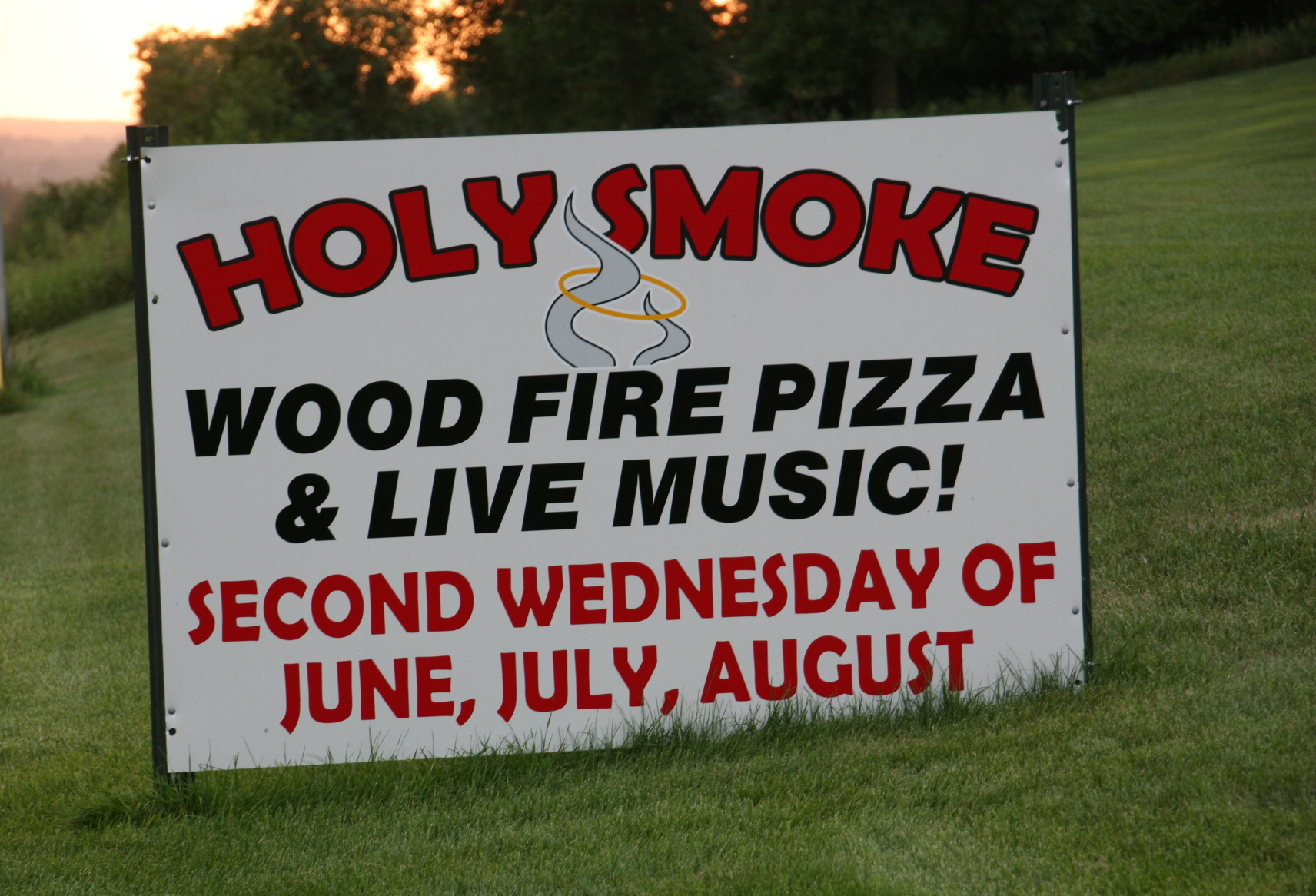
You can’t miss the Holy Smoke signage at the bottom of the hill along Minnesota State Highway 60 on Faribault’s east side. Christ Lutheran sits atop the hill, offering a sweeping view of the valley. (Minnesota Prairie Roots copyrighted file photo)
SUMMER IN SOUTHERN MINNESOTA is about the outdoors, about gatherings, about food and music and all those things we’ve craved during the long months of winter now come to fruition. As long, sunny days stretch into long evenings, we come together, delighting in all June, July and August offer.
On Faribault’s east side, high atop a hill at Christ Lutheran Church, the seasonal Holy Smoke Pizza Ministry resumes for another summer on June 11. This second Wednesday of the month event isn’t just about the savory and delicious smoked pizzas volunteers prepare and then bake in an outdoor wood-fired oven. But it’s also about community, outreach, music and charities.
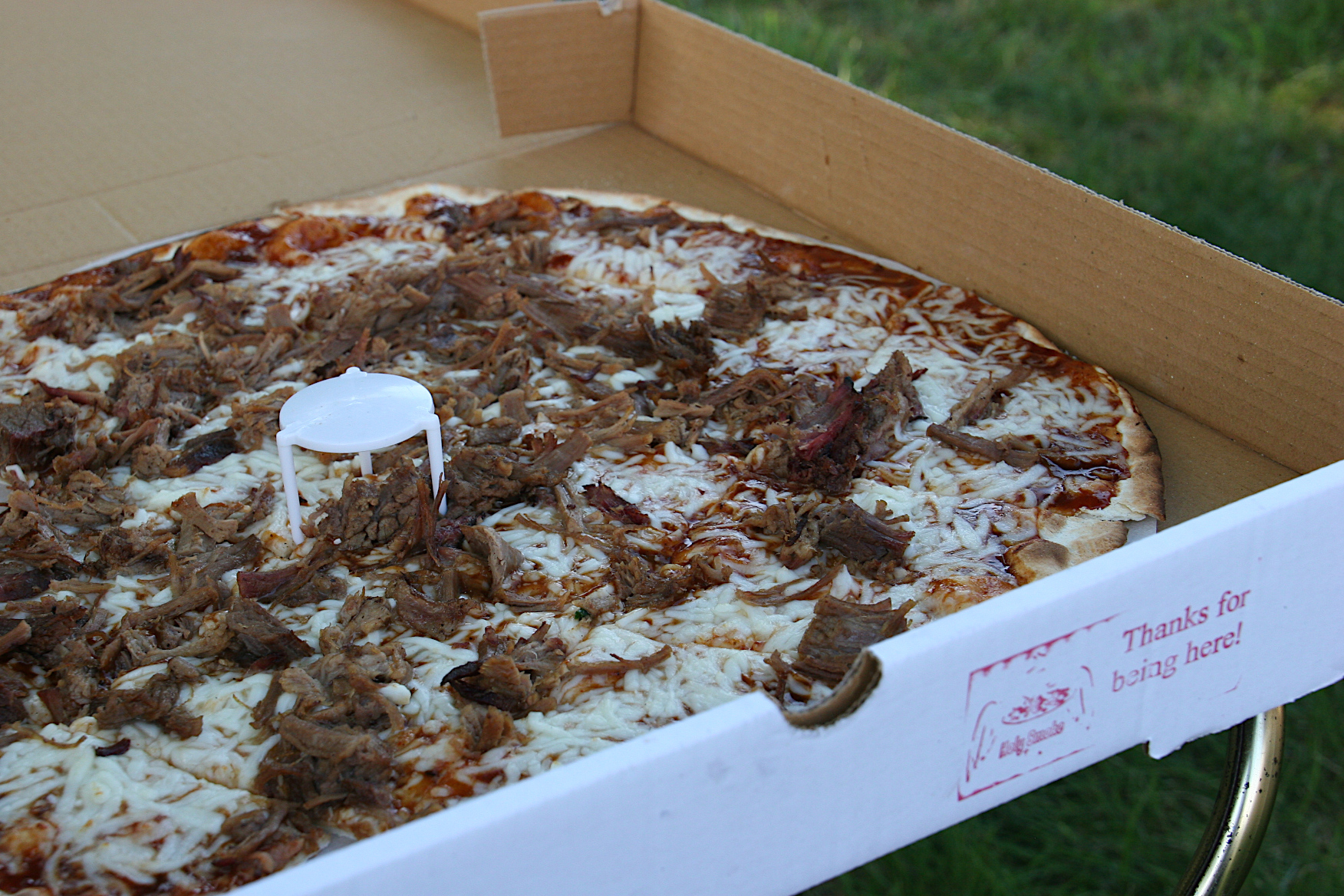
Smoked brisket pizza, probably my favorite at Holy Smoke. (Minnesota Prairie Roots copyrighted file photo)
Holy Smoke rates as one of my favorite local summer events. First, I love the pizza. This year’s offerings include smoked brisket, smoked chicken with bacon ranch, Greek/Tzatziki (or vegetable without the chicken), pepperoni, cheese, smoked chicken with artichoke, and margherita.
St. Vincent de Paul in Faribault. (Minnesota Prairie Roots copyrighted file photo)
Second, I love the reason Holy Smoke even exists. As a community outreach, the goal is to raise monies for charitable causes. This season’s beneficiaries are Believet, which provides service dogs to qualifying veterans at no cost; Habitat for Humanity, building homes with and for families; St. Vincent de Paul, providing food, clothing and more to those in need; and the Paradise Center for the Arts, bringing the arts to Faribault. All are worthy causes supported with funds from Holy Smoke pizza sales.
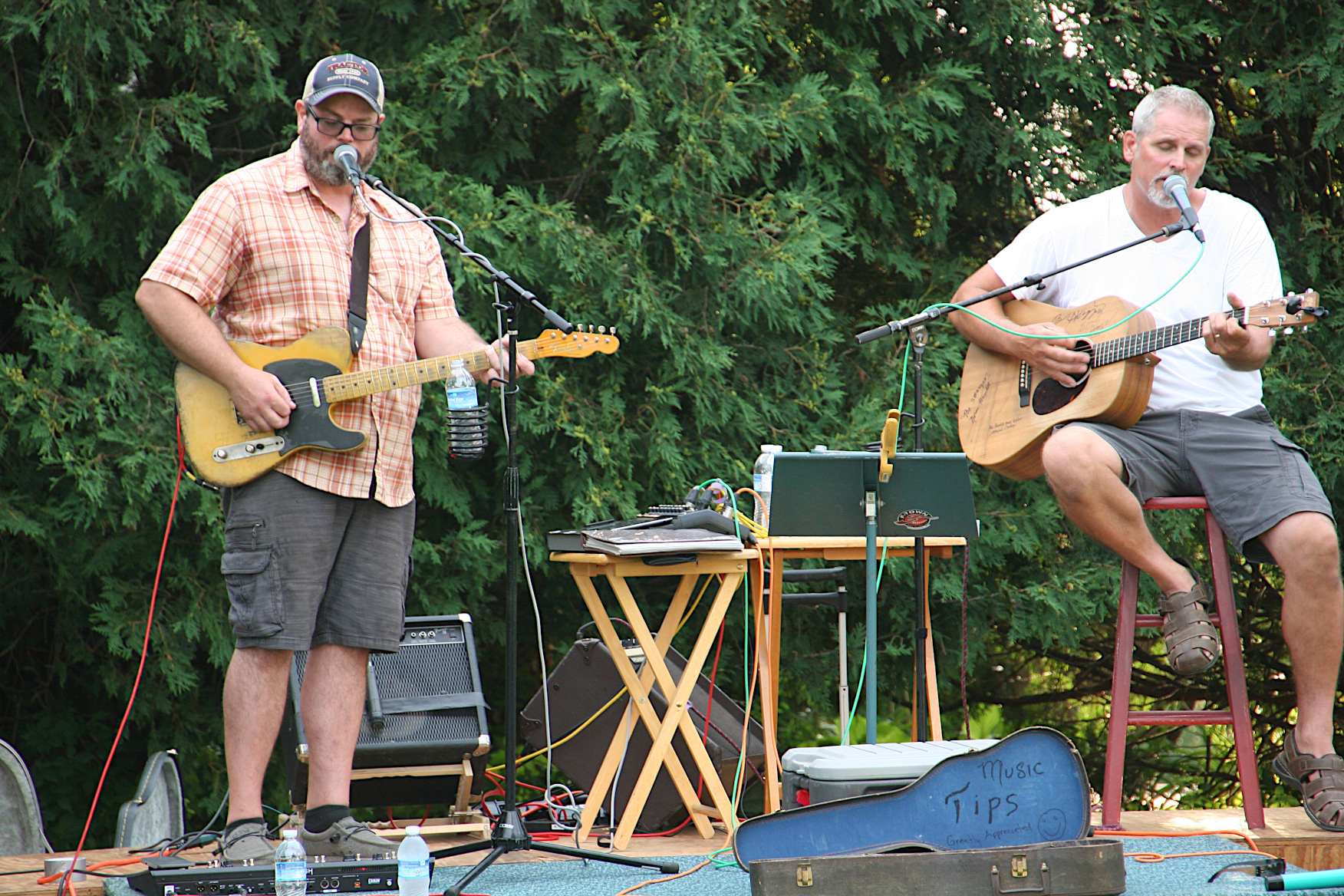
The Old Country Brothers, Gregg, left, and Jeff Sartor, perform at a past Holy Smoke. (Minnesota Prairie Roots copyrighted file photo August 2022)
And then there’s the music, a third reason to appreciate this summertime ministry of Christ Lutheran. The Old Country Brothers will perform old country—the likes of Johnny Cash, Waylon Jennings, Kenny Rogers and more—during the June 11 Holy Smoke. Sawyer’s Dream offers a modern take on classic rock of the 60s and 70s on July 9. And, on August 13, Pop Prohibition performs re-imagined pop songs into assorted vintage styles like jazz, the blues, ragtime and more.
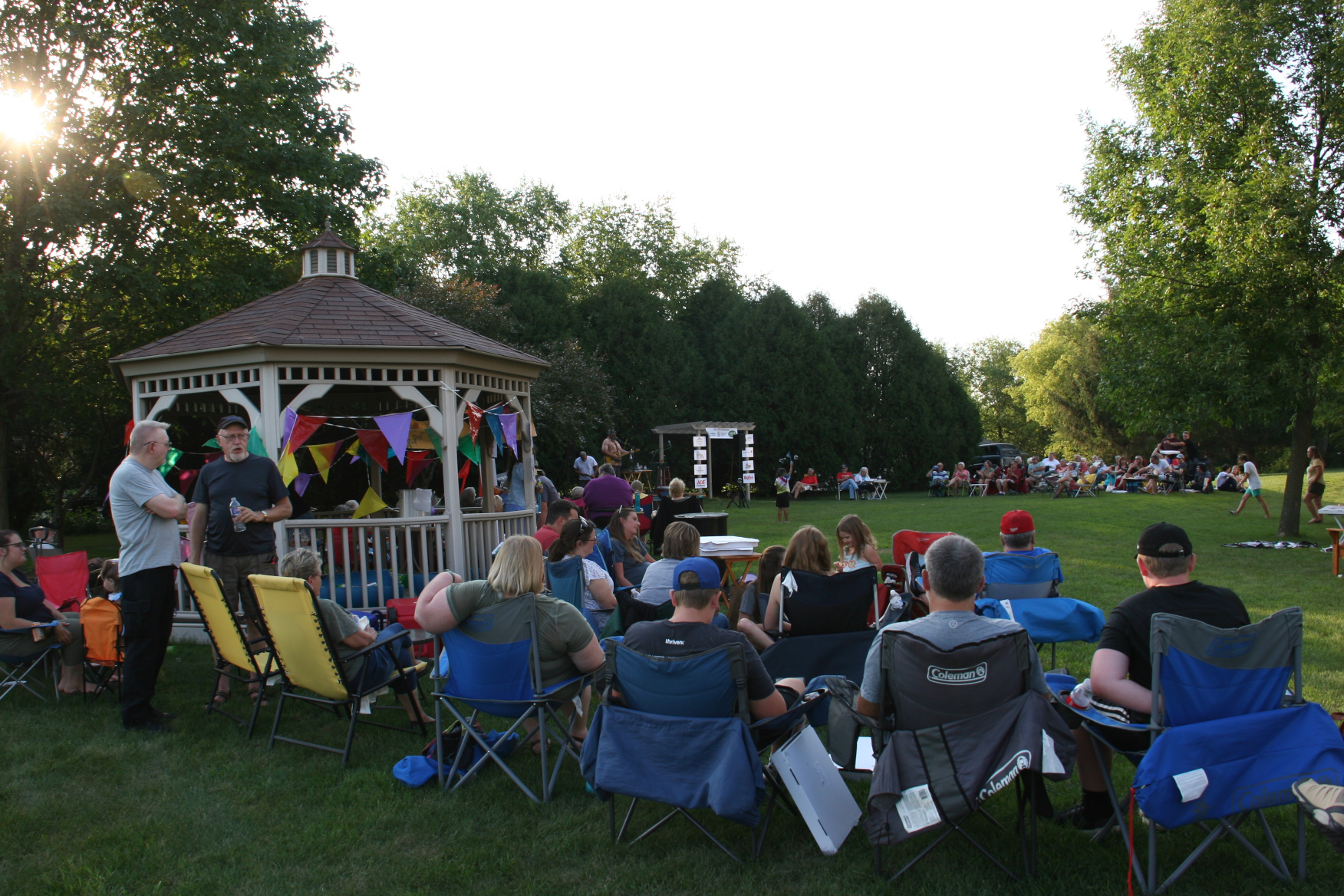
The backyard setting of Holy Smoke is casual and relaxed. (Minnesota Prairie Roots copyrighted file photo)
Not to be forgotten is the fourth reason I enjoy Holy Smoke. And that is the sense of community which comes in connecting with friends and meeting new people. Conversations flow. Kids run across the yard, blow bubbles, climb playground equipment and more at this family-friendly event. There’s definitely a relaxed vibe that all is well with the world, even if it isn’t.
But for these three summer evenings, from 5 p.m.-8:30 p.m., all truly is good and wonderful in the world, atop the hill. We gather in our bring-your-own lawn chairs, kick back with our tasty smoked pizzas and beverages (available for purchase on site), listen to music and commune with one another under a wide Minnesota summer sky.
TELL ME: Have you attended an event similar to this in your community or nearby? I’d like to hear.
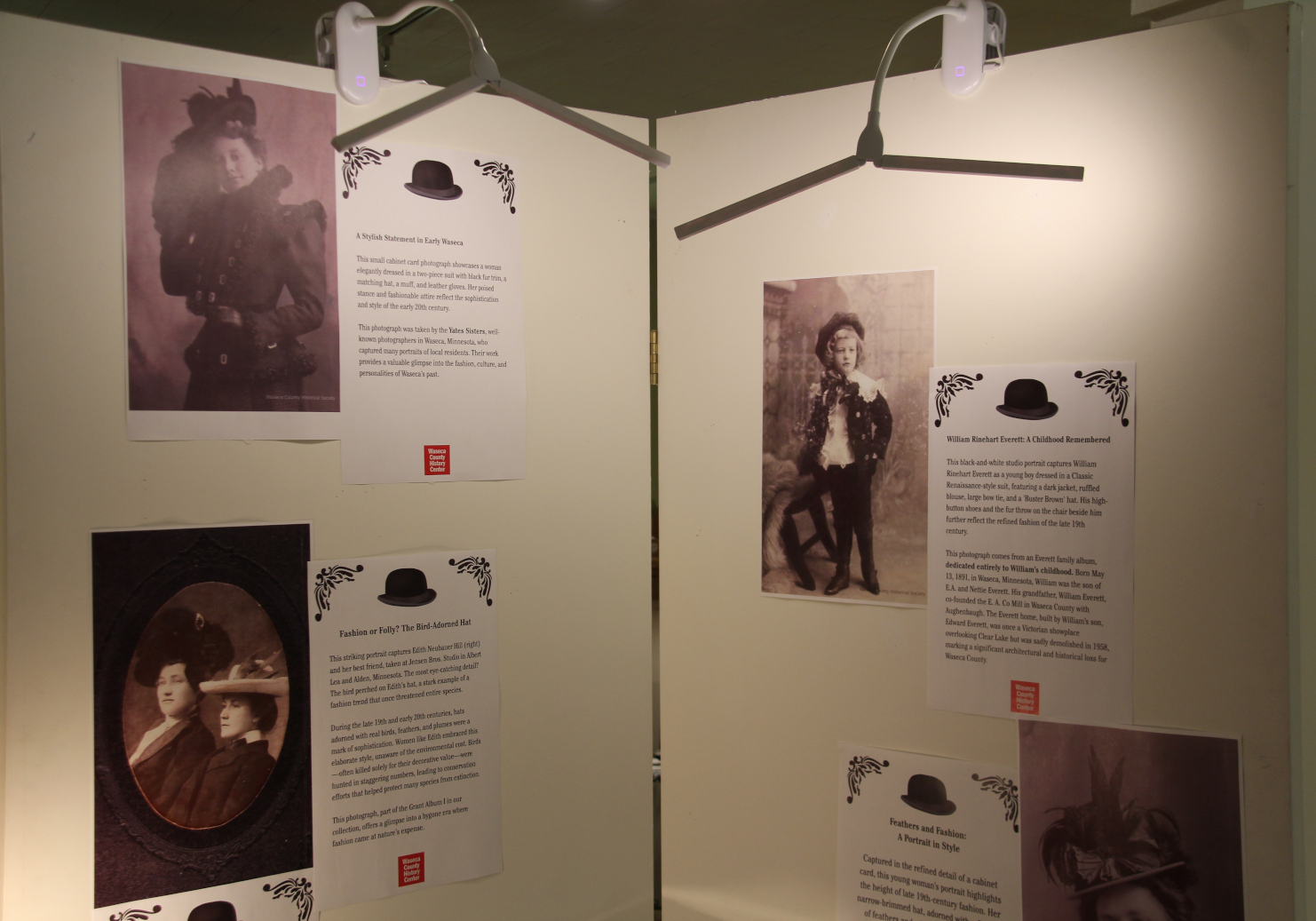
Photos of fashionable hats shown in the HATS exhibit in Waseca, Minnesota. (Minnesota Prairie Roots copyrighted photo May 2025)
WE’VE ALL WORN different hats. Personally. Socially. Professionally.
Panels of hat photos and information. (Minnesota Prairie Roots copyrighted photo May 2025)
I’ve worn the hats of daughter, wife, mother, grandma, friend, sister, aunt, student, intern, newspaper reporter, writer, editor, photographer, poet, volunteer and much more. Collectively, these multiple hats, or roles, helped shape me into the person I am today.
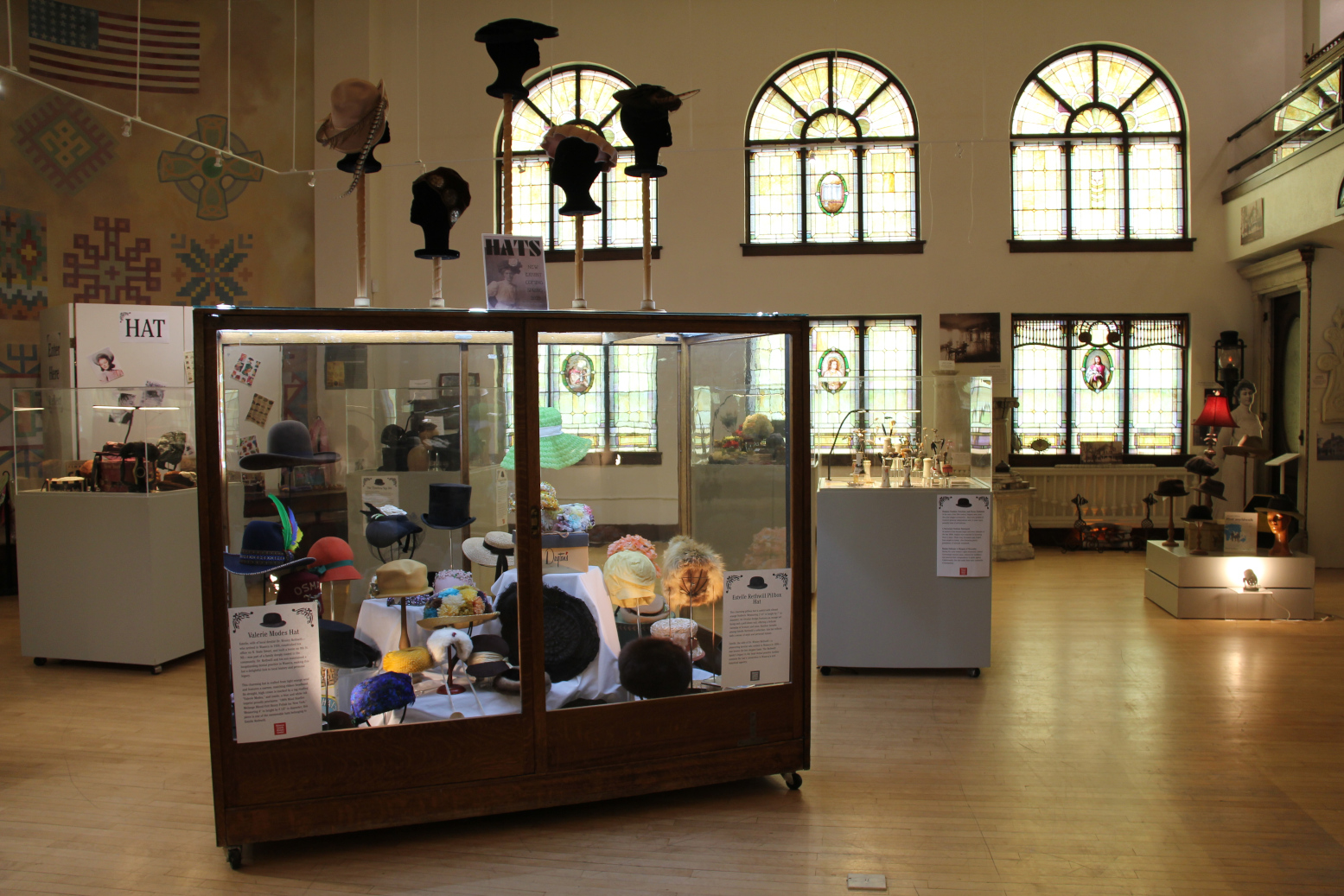
This shows a portion of the many hats in the exhibit. (Minnesota Prairie Roots copyrighted photo May 2025)
But what about actual hats, you know, the ones you place on your head? A fascinating exhibit at the Waseca County History Center, simply titled “HATS,” offers an historic glimpse of late 1800s to more current-day hats from the museum and personal collections. The display will be up until the end of June.
This display features classy men’s hats of yesteryear plus hatboxes. (Minnesota Prairie Roots copyrighted photo May 2025)
This ranks not only as an informative exhibit of hats, a few caps and related items, but also as a fun visual of fashion. From fancy hats with feathers and florals to all-business derbys and boaters to big floppy hats of the 1970s, the range of head-toppers evolves as time and styles change.
An entire glass case showcases vintage hatpins like this jeweled one. (Minnesota Prairie Roots copyrighted photo May 2025)
And then there are the lovely vintage hatpins, elegant yet practical. A woman of yesteryear could pull a hatpin to defend herself if necessary.
Vintage hatboxes are artfully displayed throughout the exhibit. (Minnesota Prairie Roots copyrighted photo May 2025)
Vintage hatboxes, too, are part of the display, adding an artful element. As someone who appreciates type and fonts, and art, I found myself drawn to the mostly-round hatboxes. They truly are works of art as well as containers to store and protect hats.
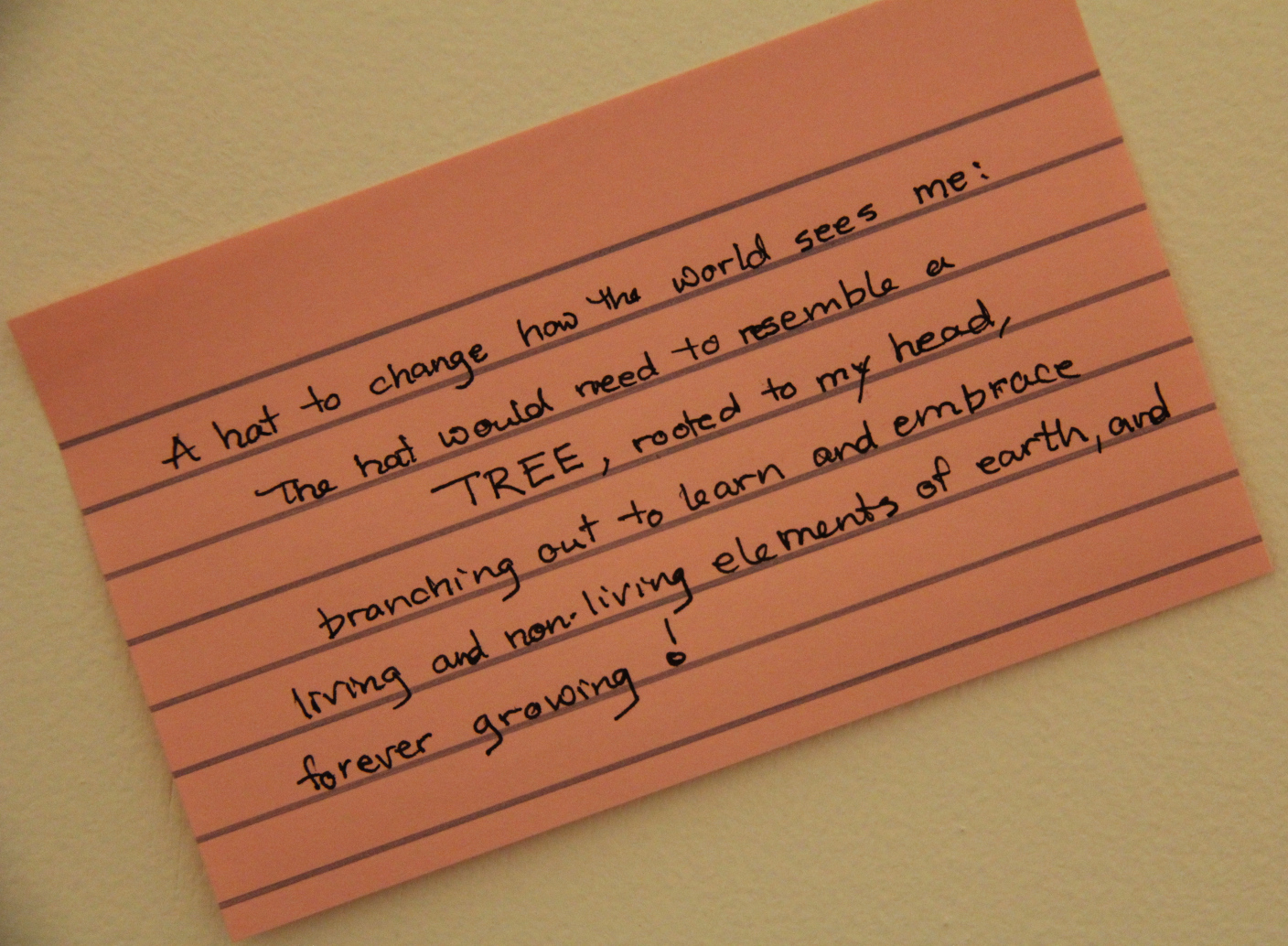
A reply to a writing prompt posted in the HATBOX. (Minnesota Prairie Roots copyrighted photo May 2025)
I especially liked the interactive HATBOX corner, a hidden space to sit, pull a writing prompt from a hatbox, think and reply to the prompt before anonymously posting it on a wall. That got me thinking about the many hats I’ve worn and still wear. Hats down, my most cherished hats are those of daughter, wife, mother and grandma. The others matter, too, but not as deeply, not as personally, as donning the hats of loving, caring for and supporting my closest family.
A fun cap in the exhibit. (Minnesota Prairie Roots copyrighted photo May 2025)
Actual, physical hats I’ve worn call for a bit more thought because I didn’t wear all that many. I had, still have, two childhood Easter bonnets. And then there’s the floppy lime green with white polka dots cotton hat I donned while detasseling corn. Perhaps I remember it best because I remember so well the experience of yanking tassels from cornstalks in the sweltering heat and humidity of July in southwestern Minnesota. Worst job ever, hats down, paying only $1.25/hour. Imagine dew rolling down your arms, corn leaves slicing your skin, the hot sun baking your body, no place to pee except between corn rows. A grimy band of sweat ringed that polka dot hat by day’s exhausting end.
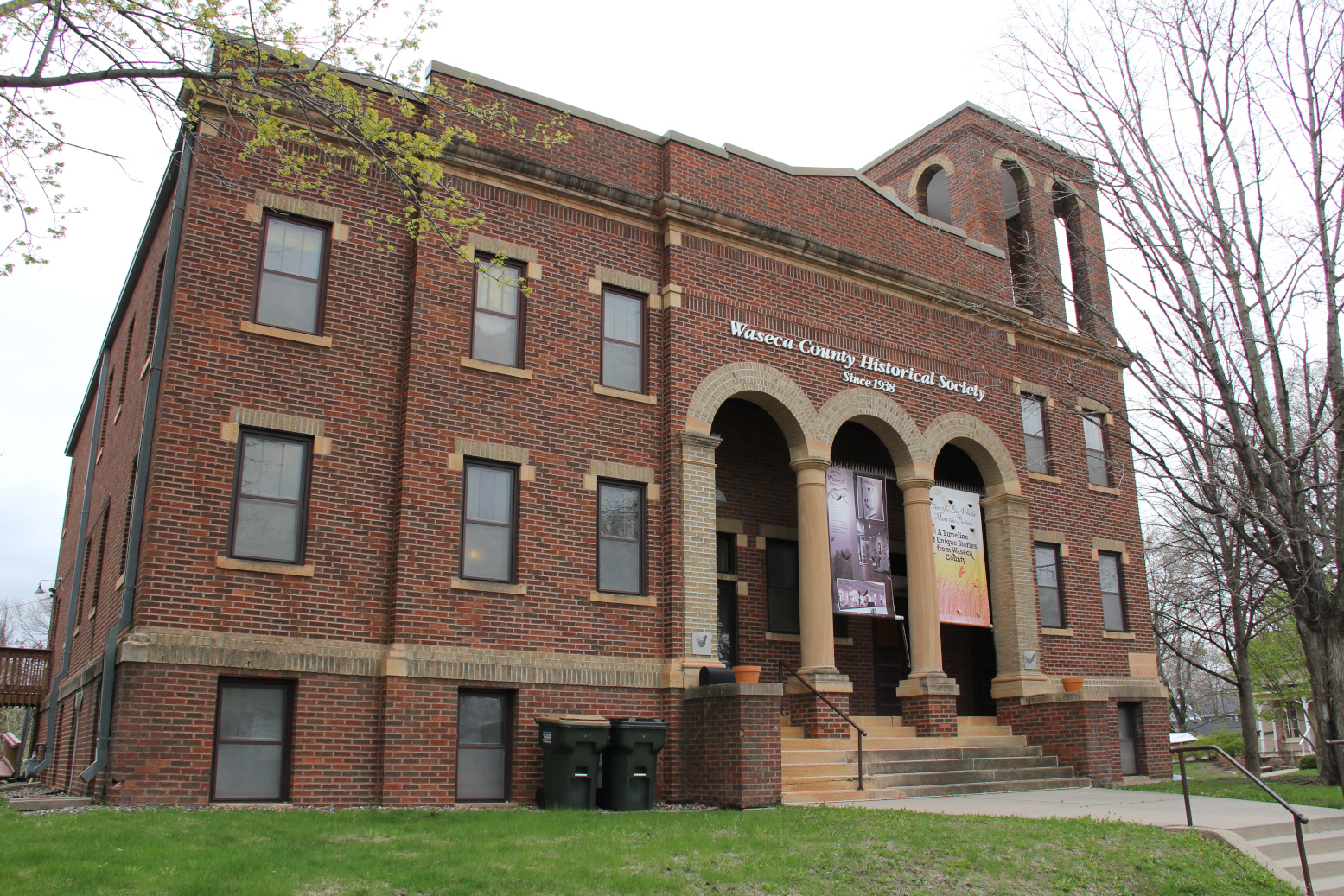
The Waseca County History Center museum, 315 Second Ave. N.E., is open from 9 a.m. – 5 p.m. Tuesday through Friday.(Minnesota Prairie Roots copyrighted photo May 2025)
While I didn’t see any hats quite like mine in the Waseca exhibit, I saw some that were similar. But mostly I saw how the hats we wear, literally or metaphorically, identify and shape us. Hats change with time, as we grow, progress, move through life. This display documents that, causing me to pause, to reflect, to consider all the hats I’ve worn through the years.
TELL ME: What hats have you worn? Which matter to you most and why? Or which proved a defining moment in your life?
A member of the Faribault Color Guard holds the American Flag during the Memorial Day program. (Minnesota Prairie Roots copyrighted photo May 2025)
TWO THINGS IN THIS YEAR’S Faribault Memorial Day observances stood out for me from previous events. First, three military women—Kerrie Johnsrud, Peggy Johnson and Stephanie Johnsrud—were honored. Second, a soldier killed in action during the Vietnam War was remembered.
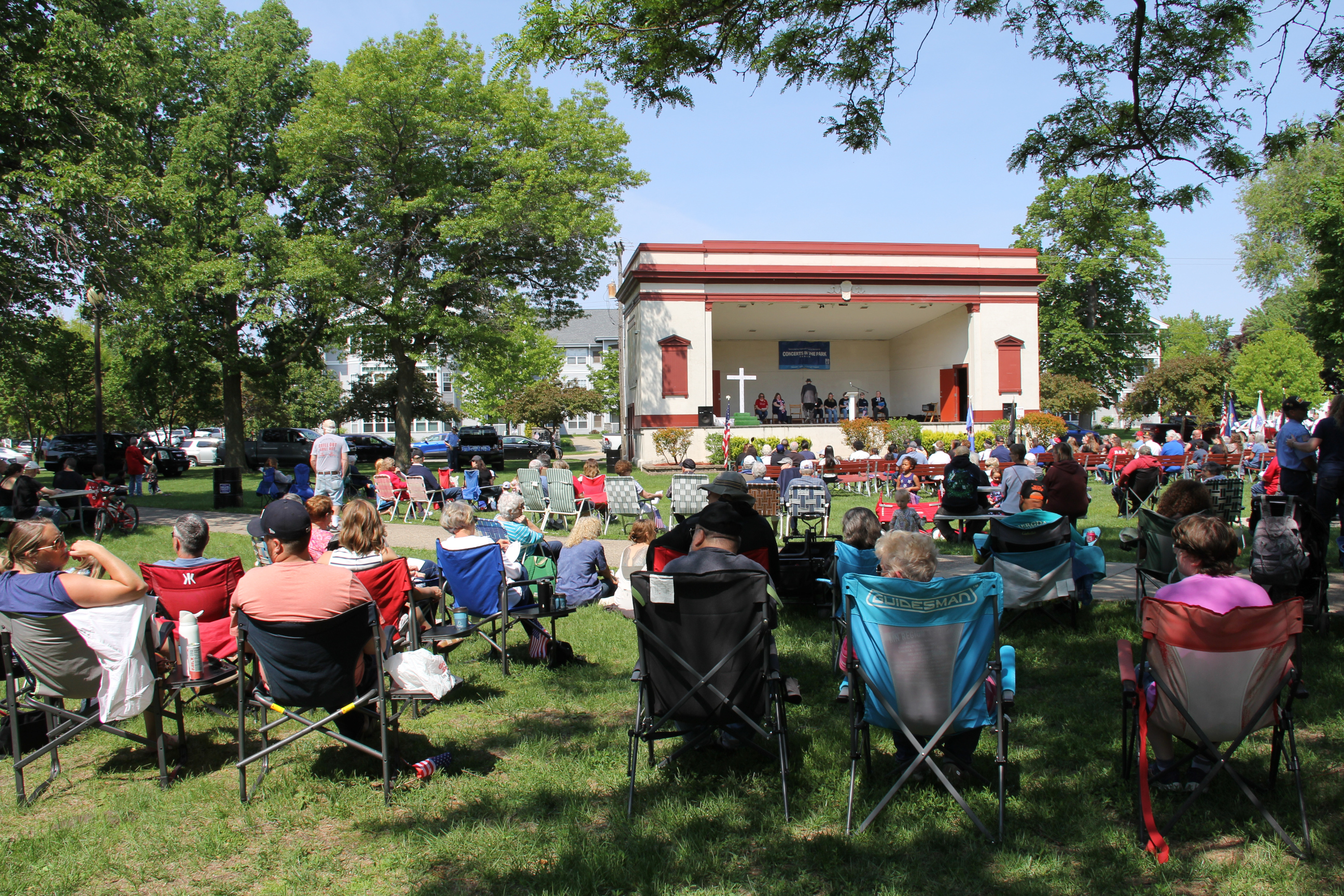
A large crowd (this shows only a portion) gathers in Central Park for the Memorial Day program. (Minnesota Prairie Roots copyrighted photo May 2025)
Both touched me in a memorable way. Too often, women have been overlooked. Not this year. Not in Faribault. Honored Combat Veteran Stephanie Johnsrud drove that point home by reminding the crowd gathered at Central Park that anyone can be a veteran, even a woman, and to break the stigma of women in the military. She served with the Army National Guard, including deployments to Kuwait and Iraq. Upon her return, the veteran wanted to have a welcome home party at a local military club, something met with a less-than-warm reception. It was heartbreaking to hear her words.
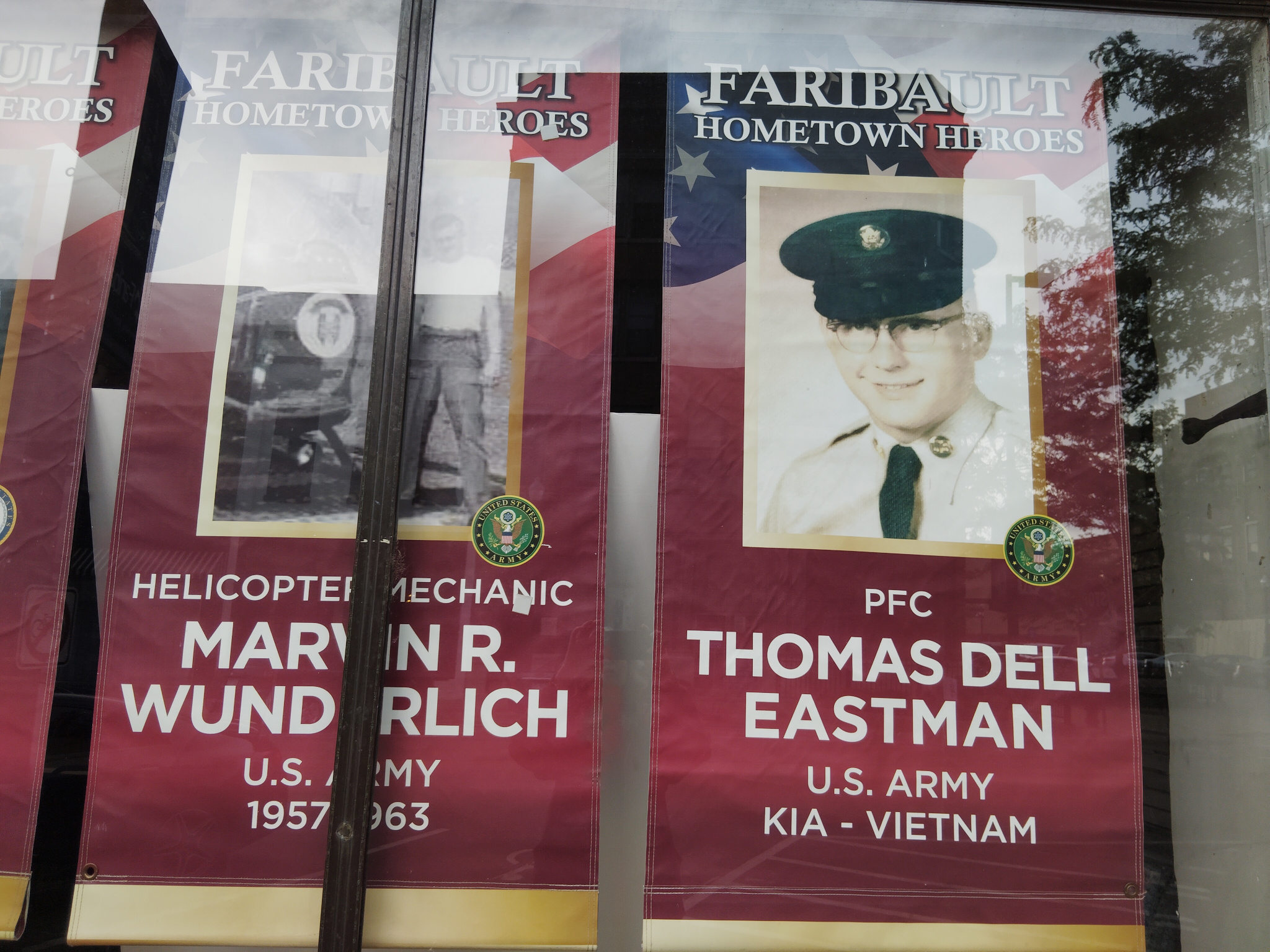
This banner of Thomas Eastman and other Faribault Hometown Heroes hangs in the front window of the former Eastman Music. (Minnesota Prairie Roots copyrighted photo May 2025)
Equally heartbreaking was the story of Army PFC Thomas Eastman, 21, of rural Faribault who was killed in Vietnam on May 5, 1966. He’d been deployed as an infantryman only months earlier. His name is listed on panel 7E, Line 30, of the Vietnam Memorial Wall, one of 1,086 Minnesotans listed on that monument.
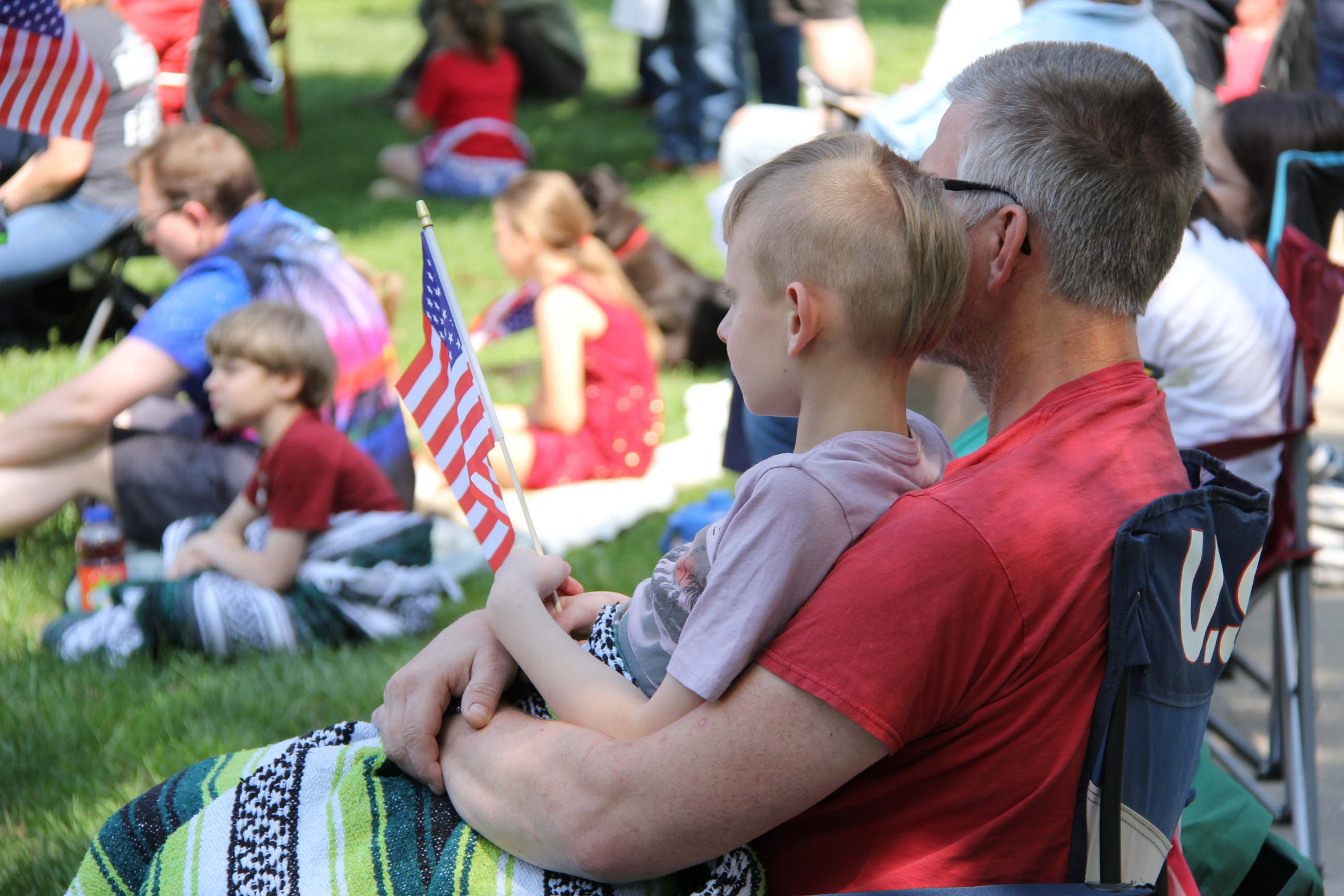
Love seeing children in attendance, listening and learning. (Minnesota Prairie Roots copyrighted photo May 2025)
Keynote speaker and emcee Gordy Kosfeld shared a bit about this young man, a 1963 Kenyon High School graduate. It was that information which personalized Eastman, took him from statistic to a beloved son, brother, uncle and friend. He wore thick glasses, loved fast cars, dogs and reading. And he planned to return to the farm upon his discharge.
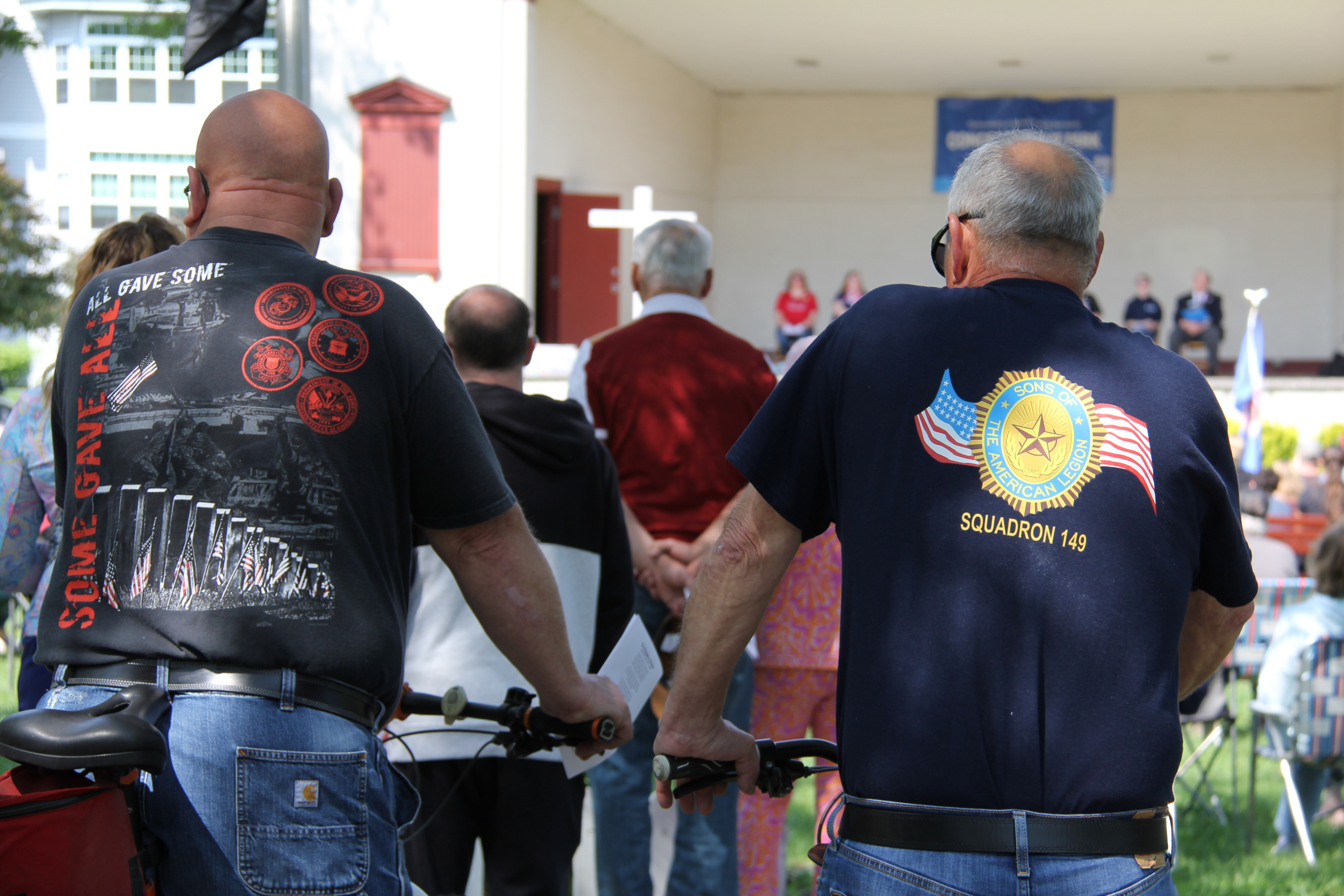
“All gave some. Some gave all.” A meaningful message on a t-shirt. I saw another message, “You matter,” printed on a plain black tee. I told the young man wearing it how much I appreciated those two simple, yet powerful, words. (Minnesota Prairie Roots copyrighted photo May 2025)
Eastman, Kosfeld said, sounded like “an ordinary guy” who died in a far away land in service to country. He was and he did. I think sometimes, in the mass of numbers, we forget that our military men and women are, like Eastman, individuals with families and stories, likes and dislikes, and loved ones back home who miss them. And, if they are killed in action, with loved ones who deeply grieve their tragic deaths. That includes 58,000-plus during the Vietnam War.
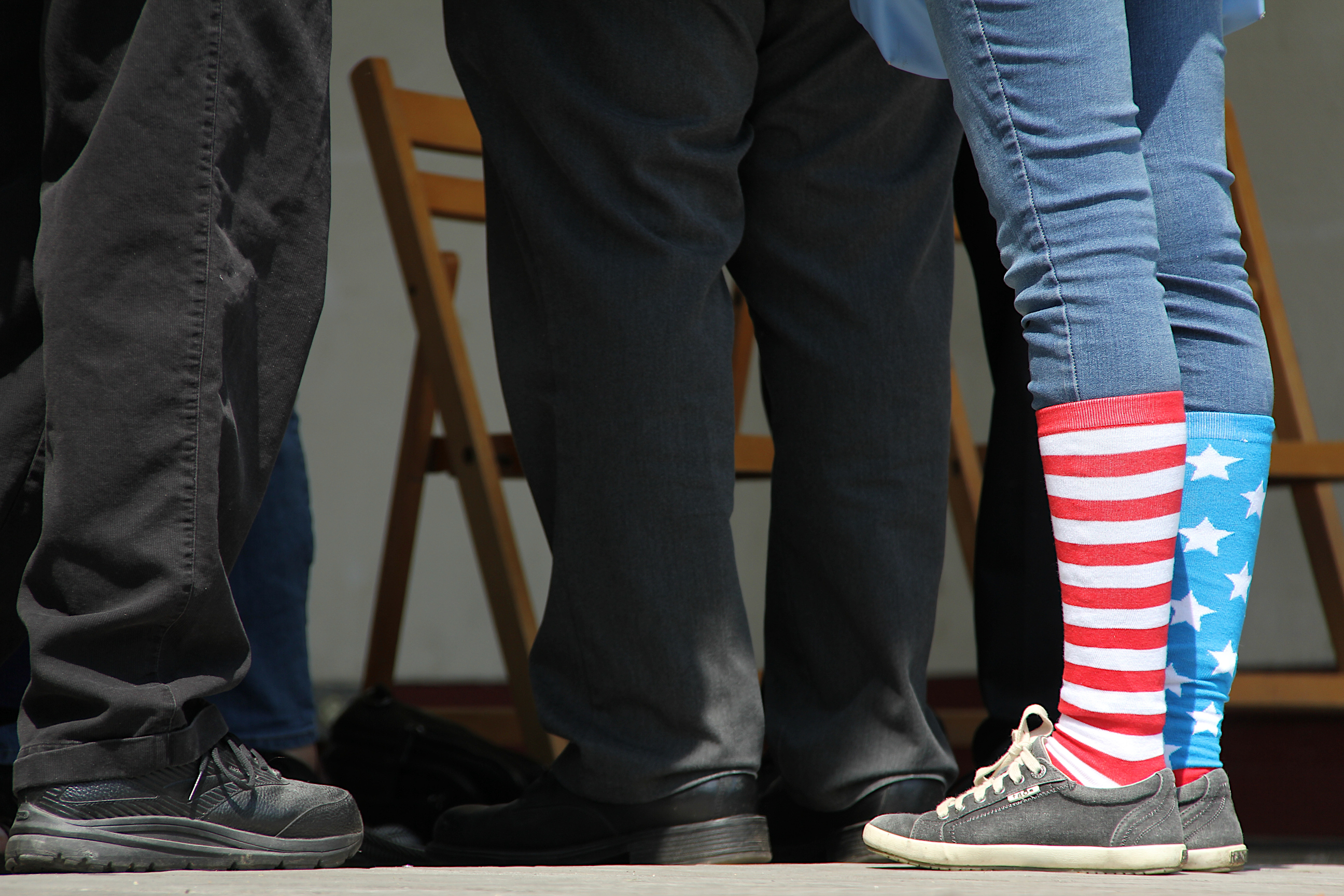
The emcee pointed out this unexpected patriotic visual, worn by a young woman on stage. (Minnesota Prairie Roots copyrighted photo May 2025)
During the past year, many grieved the loss of 109 Rice County veterans. Our veterans are aging. Dying. Men like Carl W. Ames, Phillip J. Dorn and my friend, 100-year-old Elmer R. Schulz. And, among all those male veterans, four deceased female veterans, Donna L. Schultz, Beverly J. Miller, Donna M. Cleland and Debra G. Norman. All 109 names were listed on the Memorial Day service program, a visual reminder that imprints upon the spirit the importance of honoring veterans not only in death, but in life.
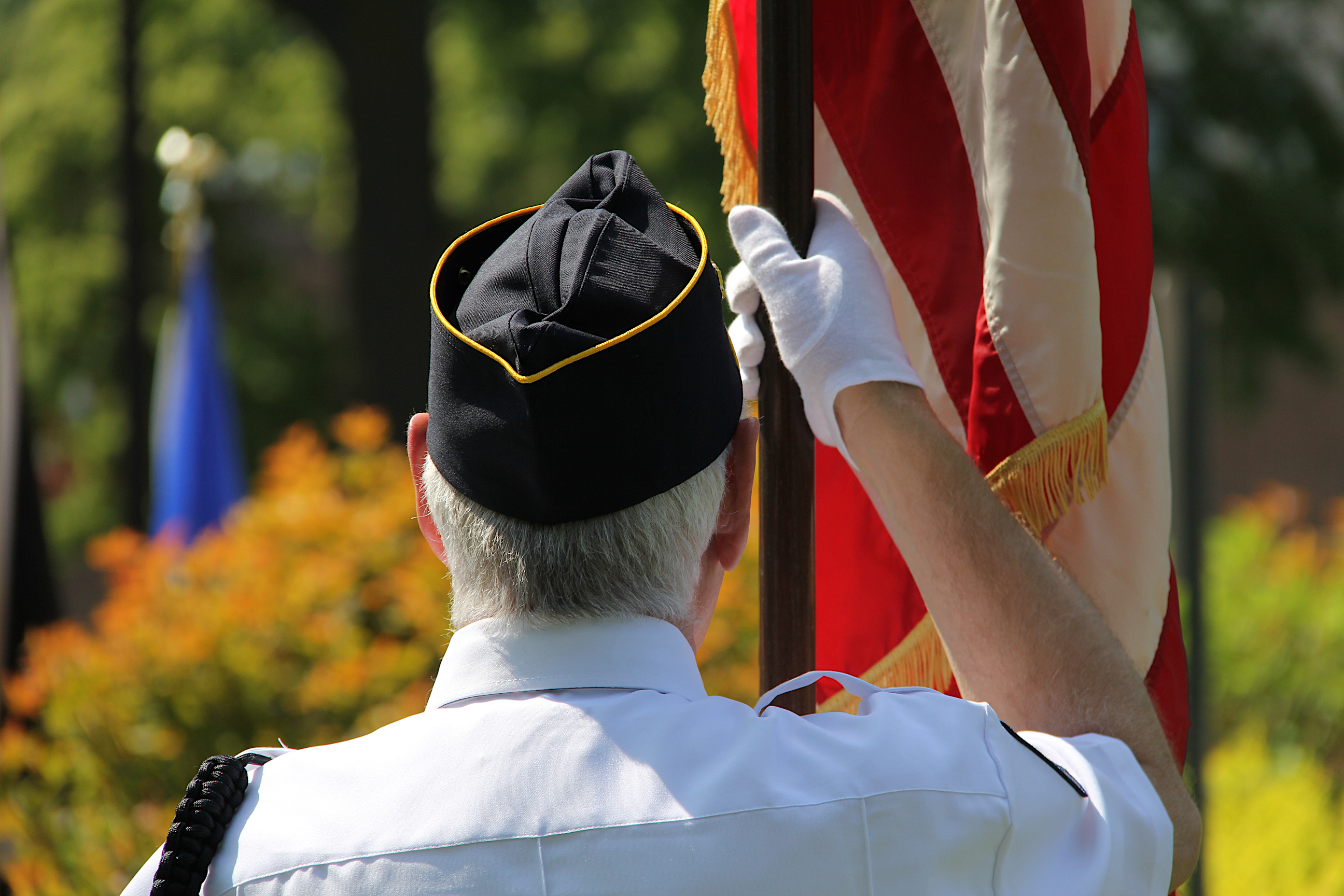
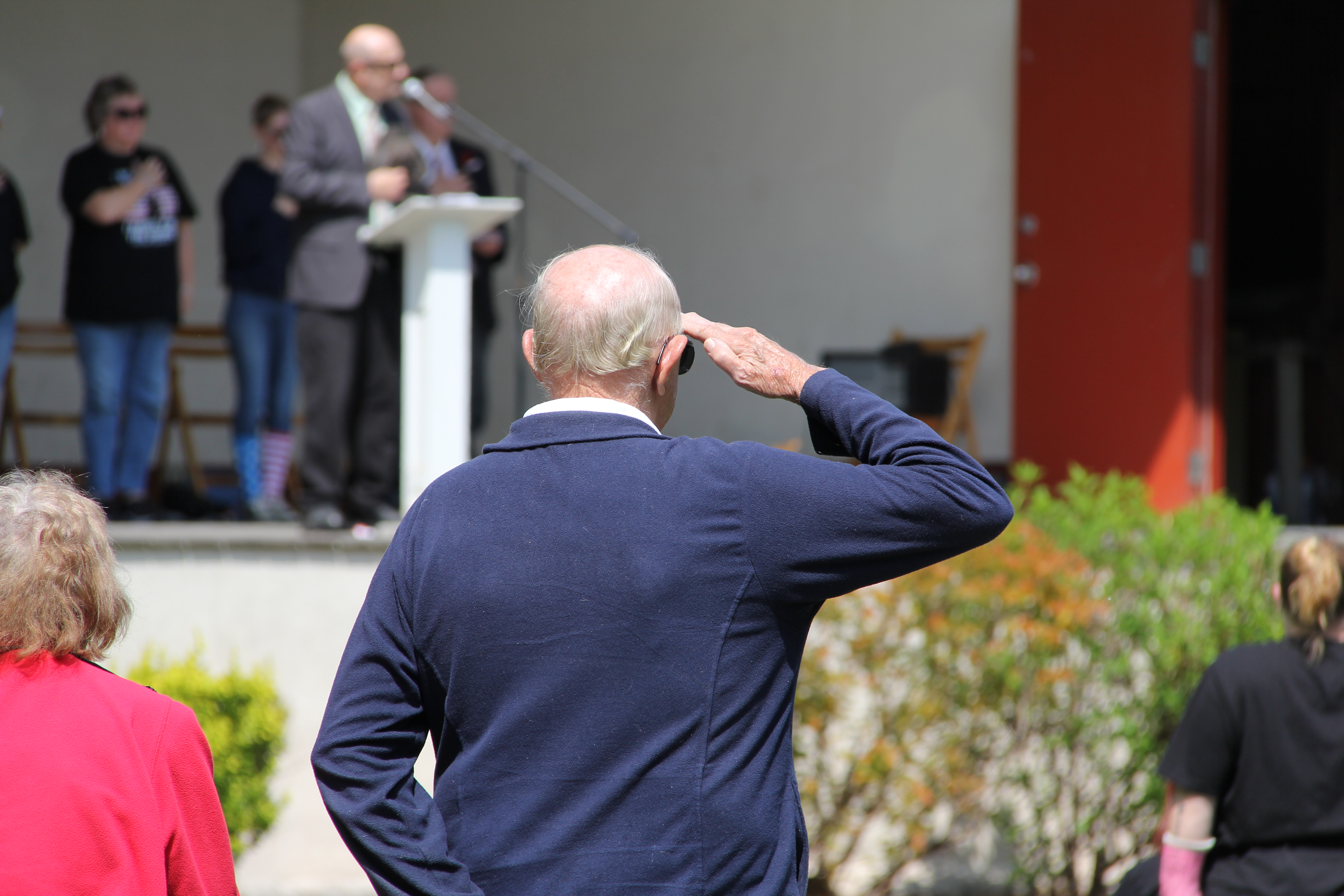
A veteran pays his respects by saluting. (Minnesota Prairie Roots copyrighted photo May 2025)
And that we did on Monday morning in Faribault’s Central Park. Young and old. We listened. We honored. We remembered.
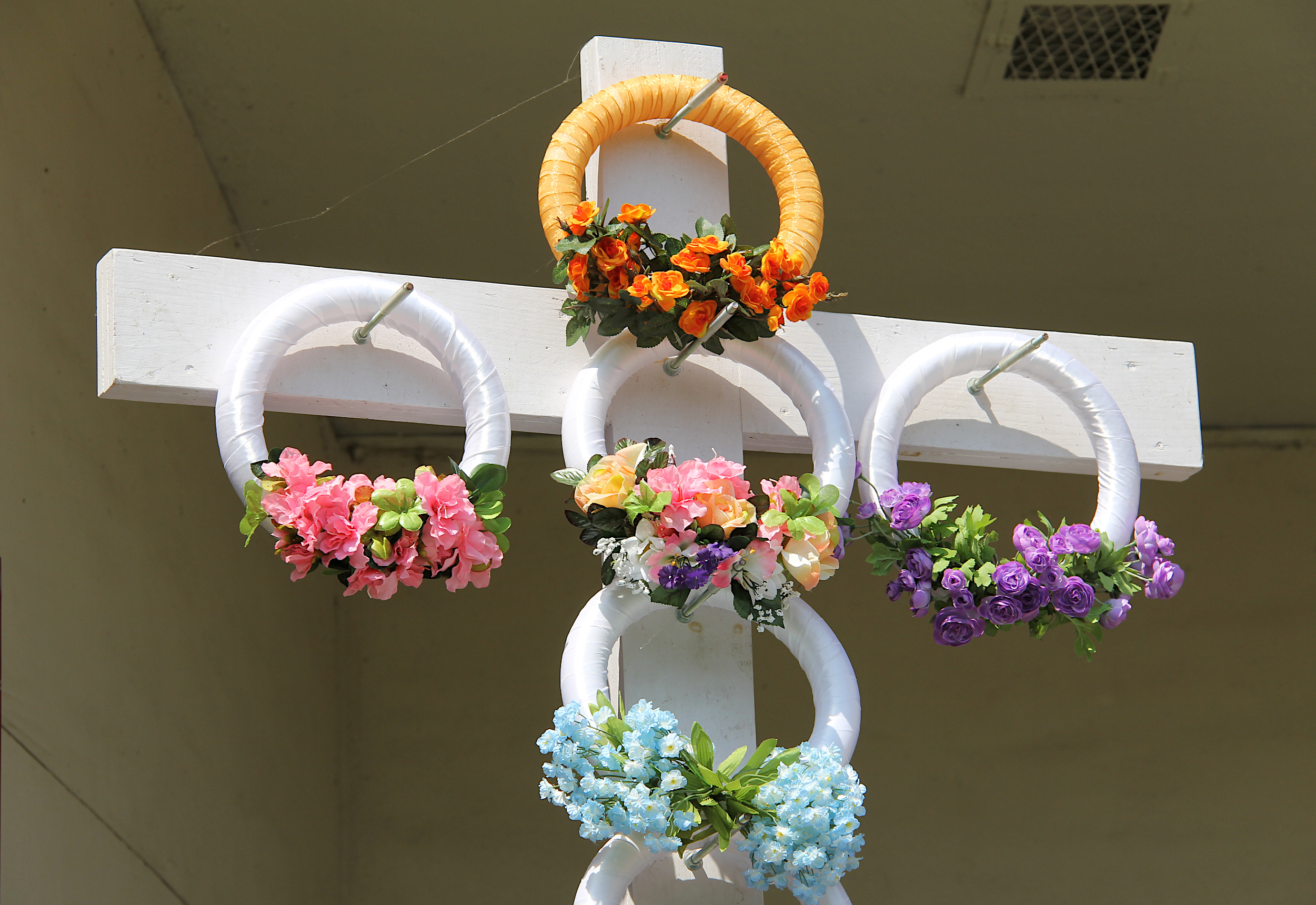
Members of the Faribault American Legion Auxiliary placed wreaths, each representing a war or conflict, on or at the base of this cross during Faribault’s Memorial Day program. (Minnesota Prairie Roots copyrighted photo May 2025)
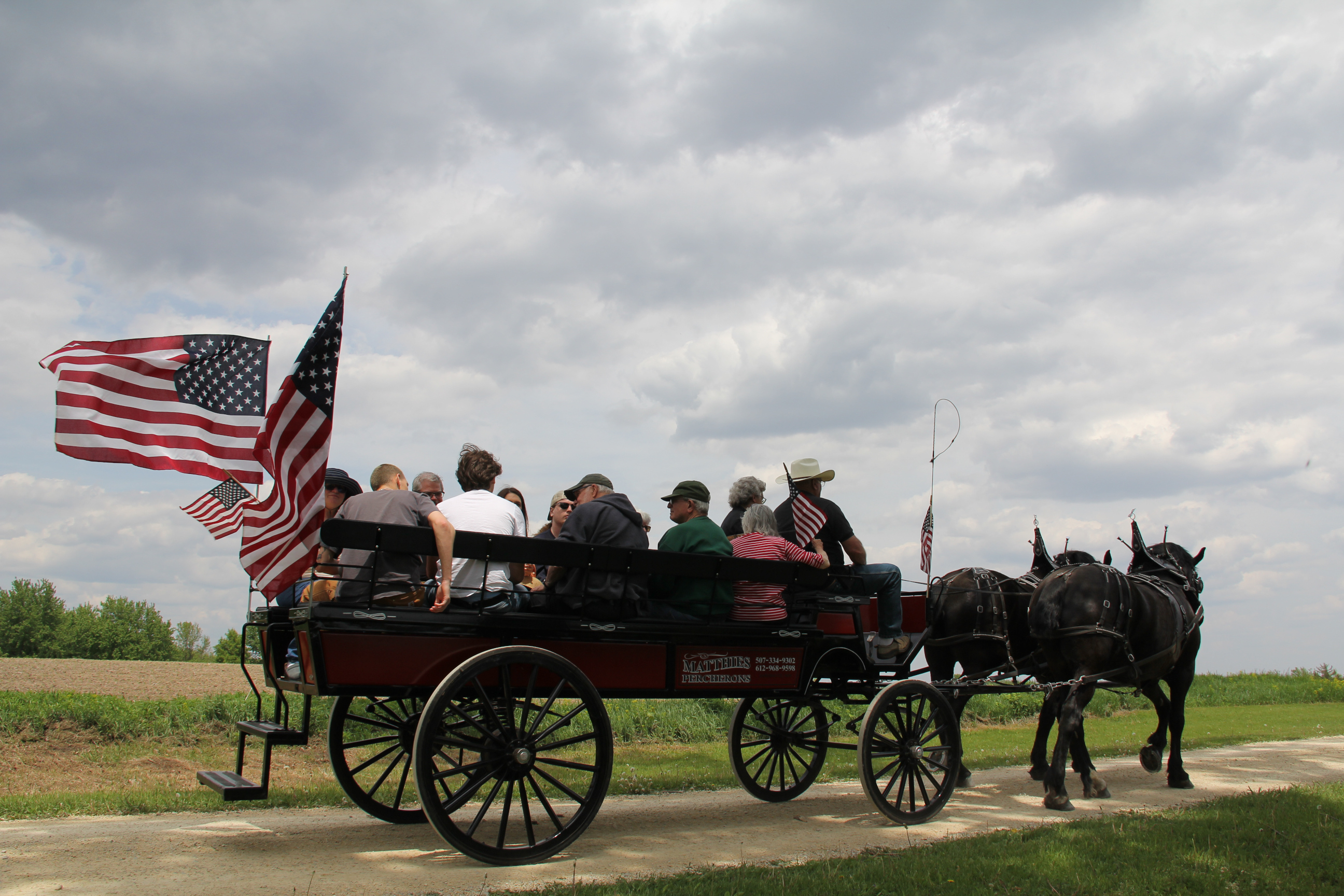
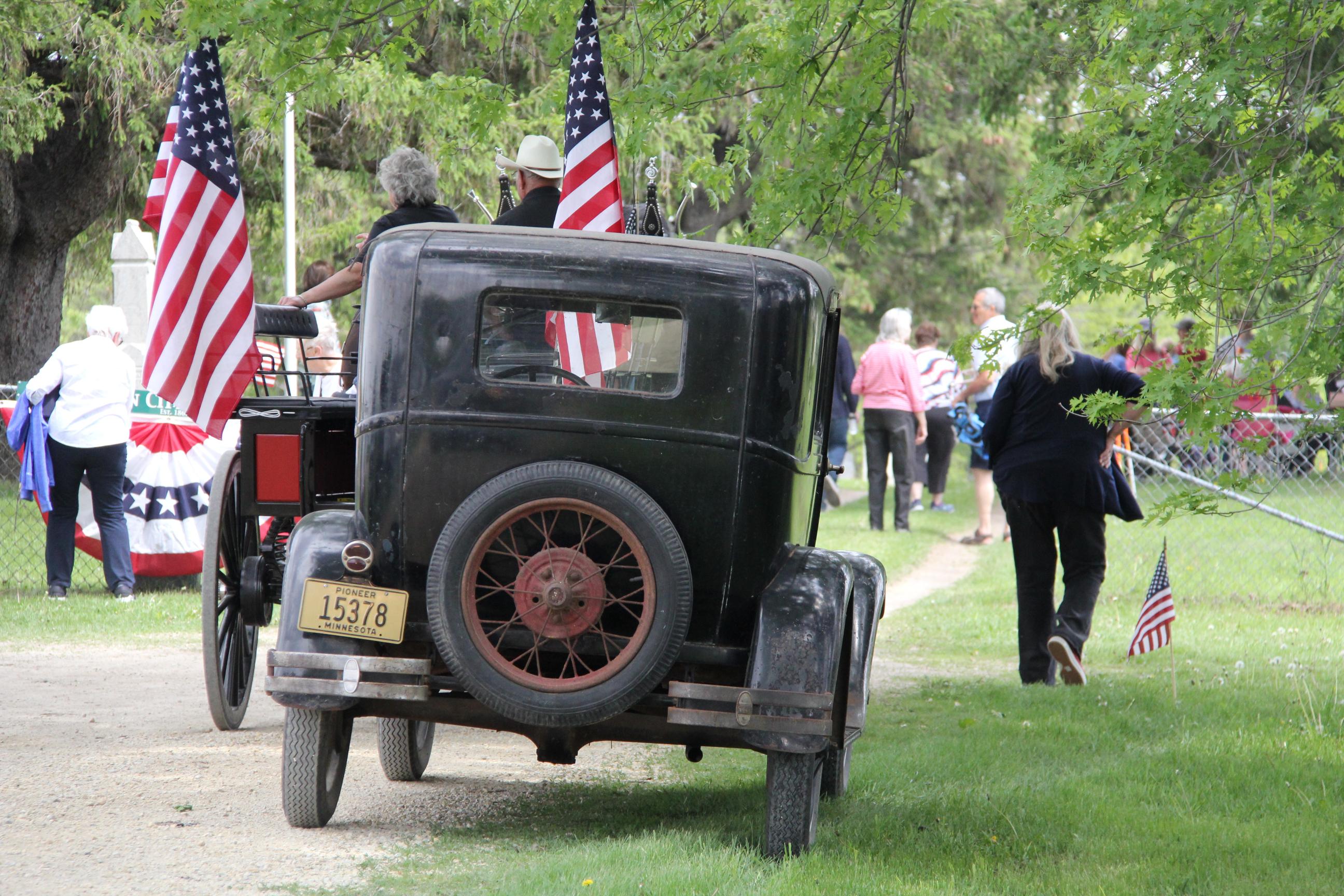
A horse-drawn wagon leads the parade along the gravel road to the Cannon City Cemetery. (Minnesota Prairie Roots copyrighted photo May 2025)
MEMORIAL DAY IN CANNON CITY is decidedly simple and old-fashioned, marking a 100-year-plus tradition of gathering in the 1867 cemetery to remember and honor veterans. This observation also embraces community with a mixture of mostly locals and those born here returning home for the 2 p.m. program followed by visiting, lots of visiting.
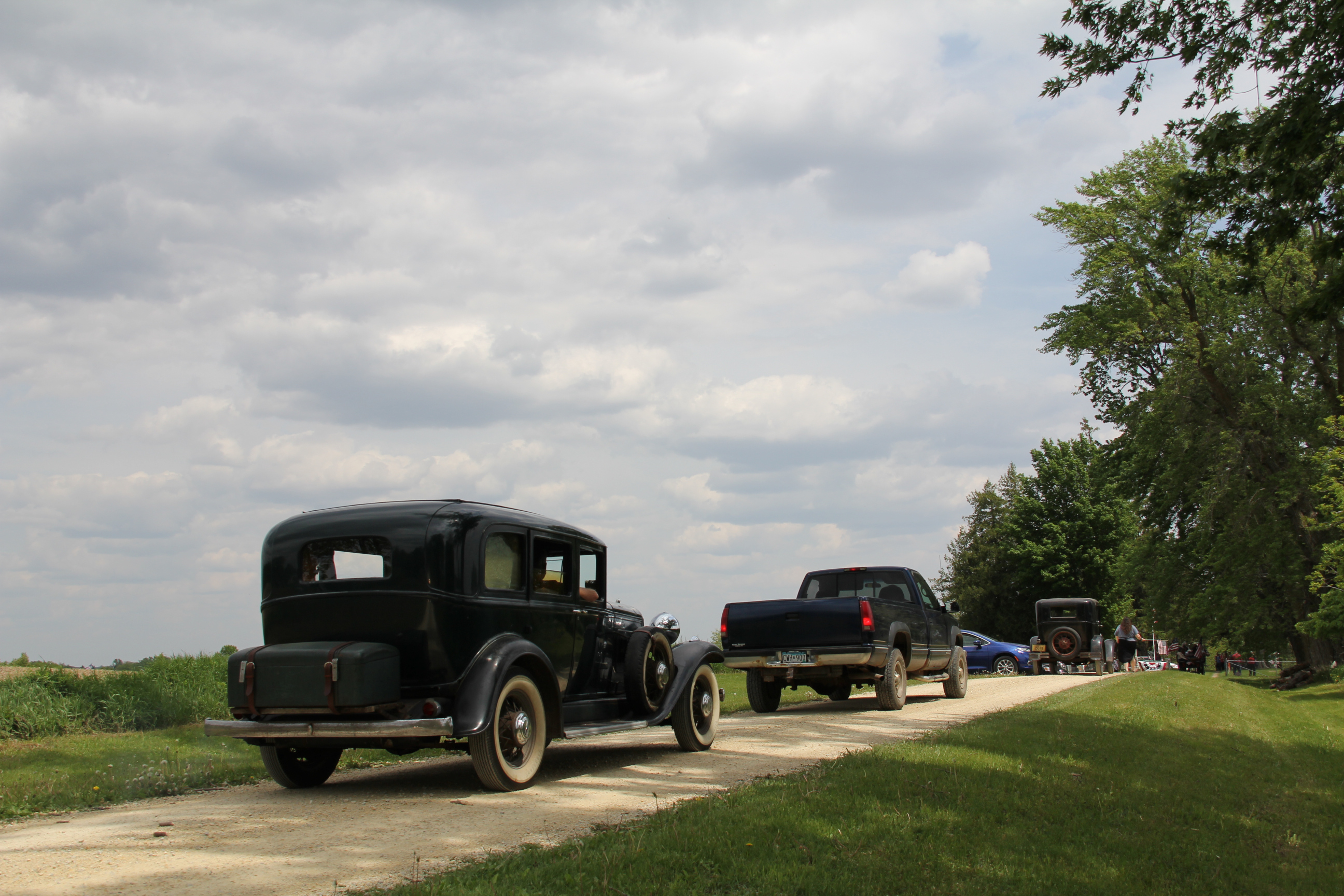
Several vintage vehicles and a pickup follow. (Minnesota Prairie Roots copyrighted photo May 2025)
Although I have no connection to this unincorporated village a few miles northeast of Faribault, I’ve found myself often drawn here on Memorial Day. The countryside setting and the way in which the day is celebrated appeal to my rural roots and upbringing 130 miles away on the southwestern Minnesota prairie.
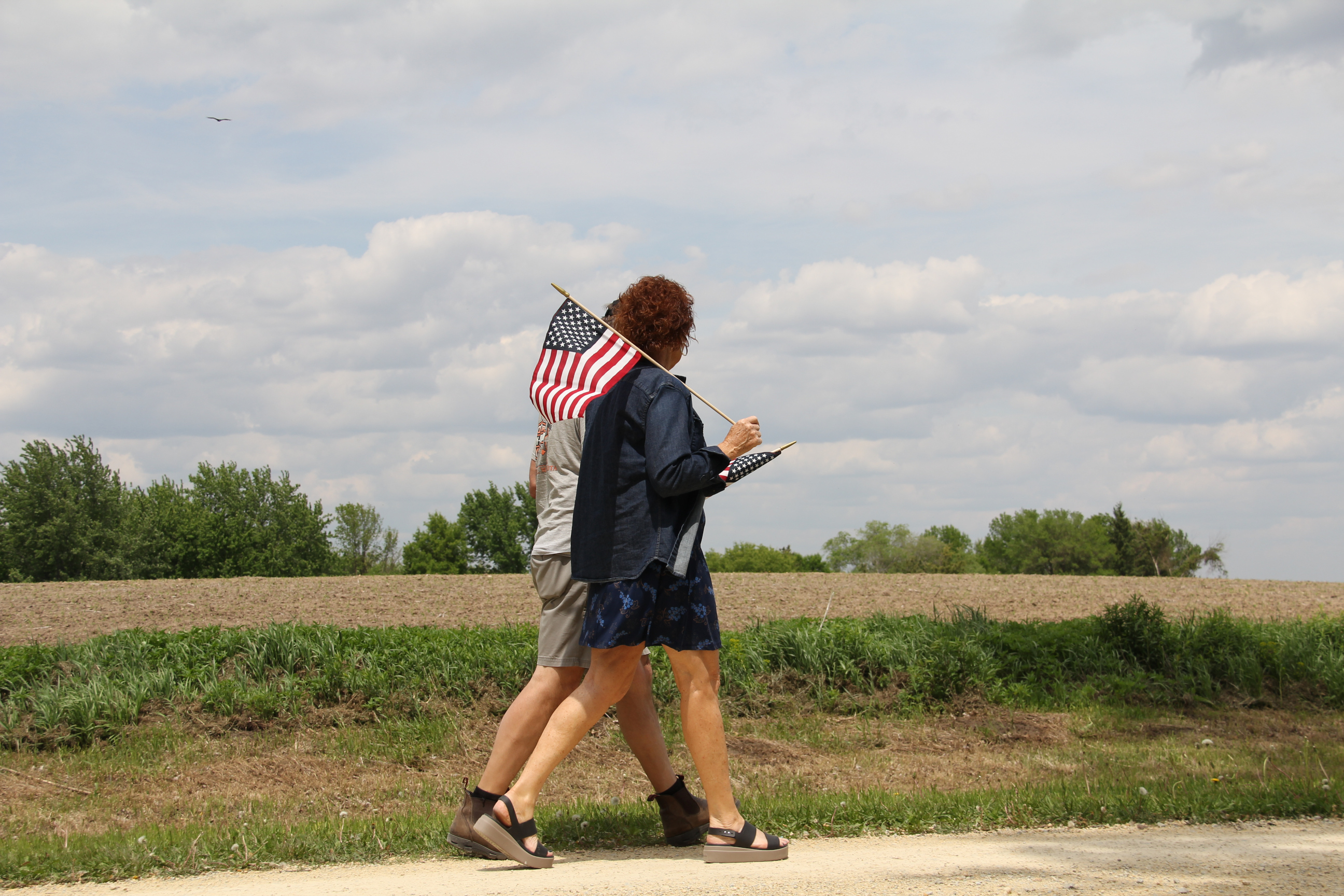
A few people walked the parade route, here past farm land. (Minnesota Prairie Roots copyrighted photo May 2025)
Monday’s event at Cannon City began with a parade from the nearby former country school to the cemetery. A small contingent of horse-drawn wagon, vintage vehicles and several walkers followed the gravel road past homes and farm fields to the fenced cemetery. I walked alongside the group in the road ditch, photographing the scene as they neared the graveyard.
Vintage vehicles set an historic scene outside the cemetery gates. (Minnesota Prairie Roots copyrighted photo May 2025)
It was not difficult in that moment to imagine the long ago school children proceeding to the cemetery, carrying homemade floral wreaths of lilacs and other flowers in bloom. Several years ago that original Decoration Day parade tradition was revived. It’s a lovely nod to history.
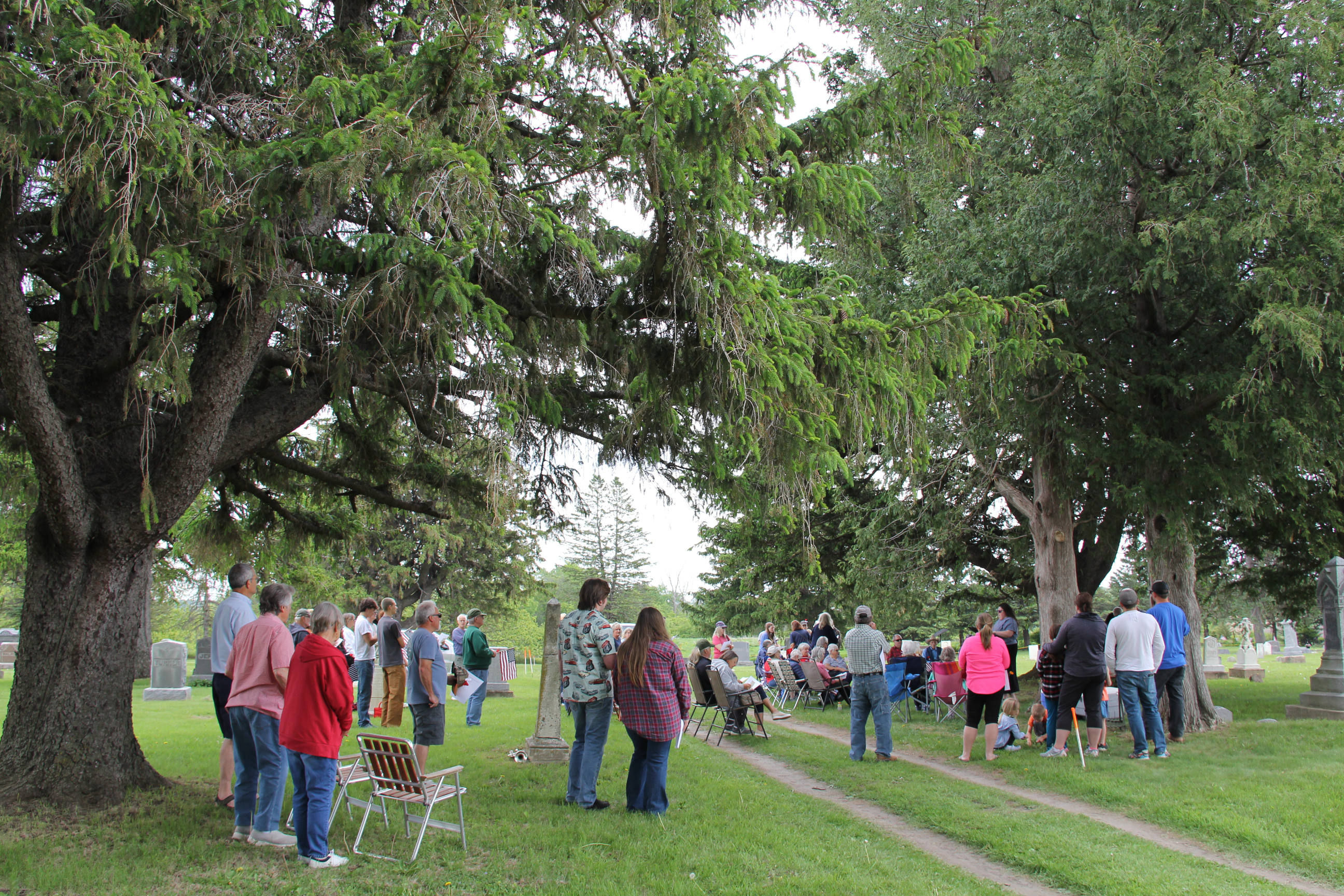
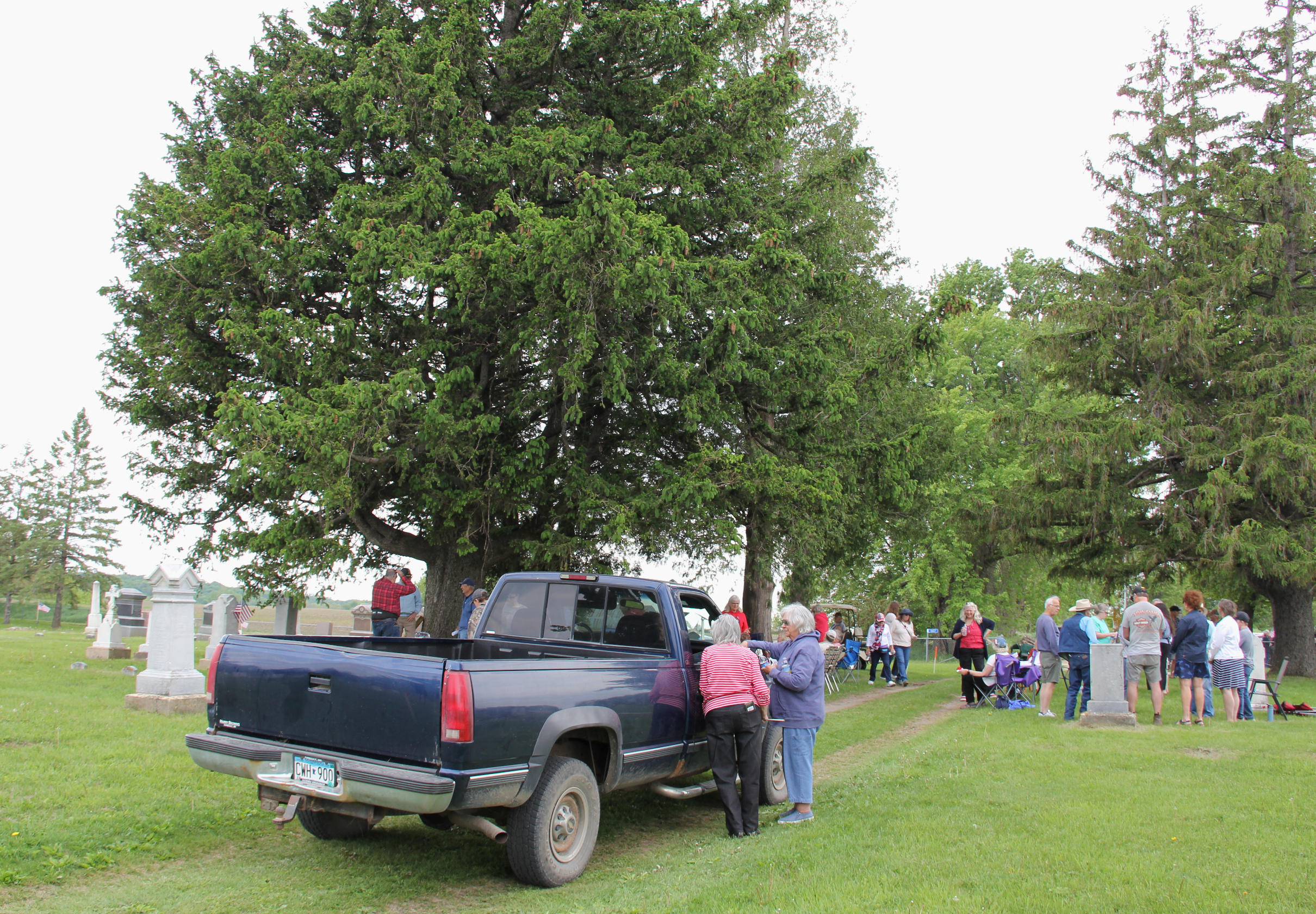
A crowd gathers for the Memorial Day program centered under the trees. (Minnesota Prairie Roots copyrighted photo May 2025)
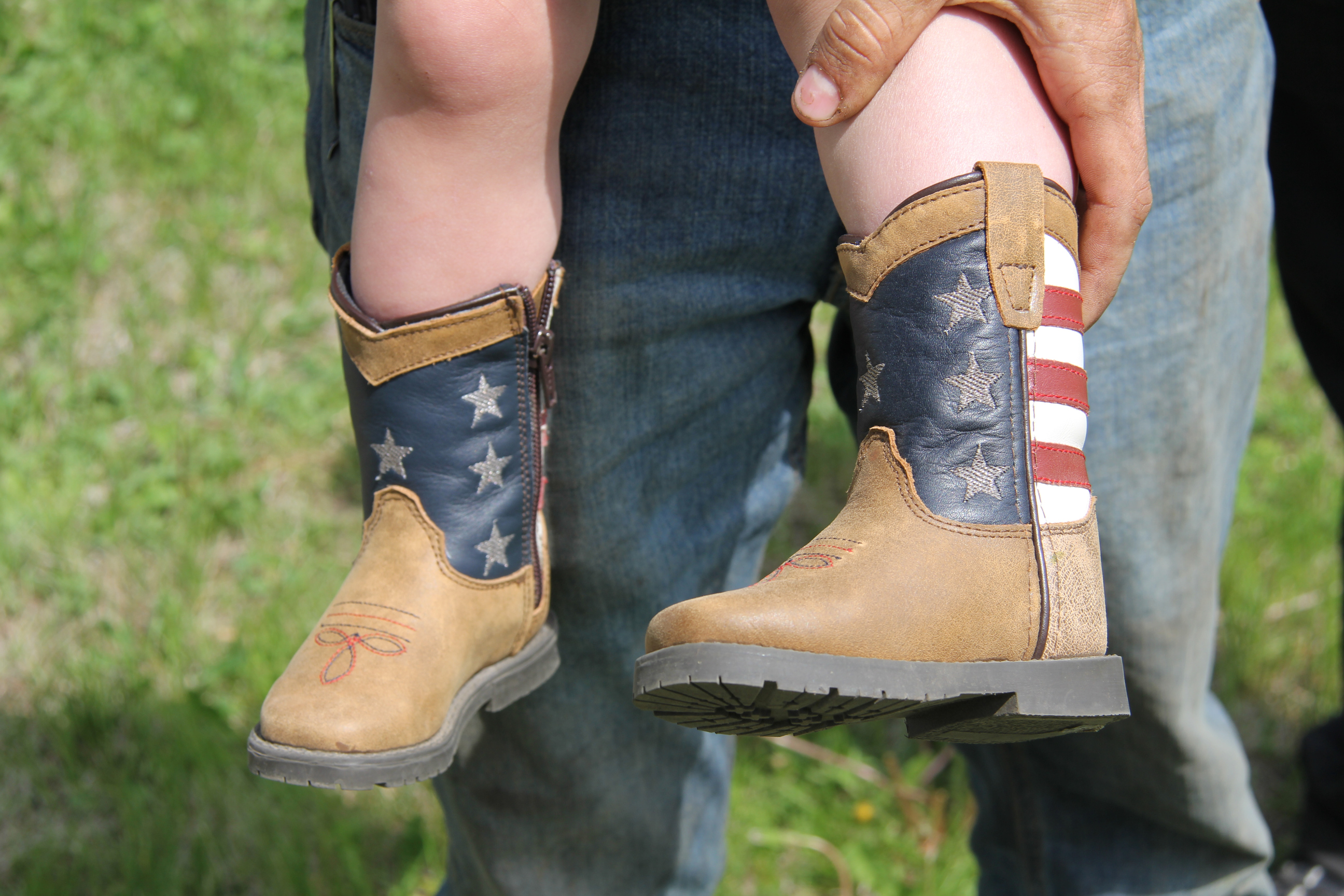
All ages attended, including Levi, almost two, who wore these patriotic boots. His grandpa is the cemetery caretaker. Levi helps him and his dad by picking up sticks before mowing. (Minnesota Prairie Roots copyrighted photo May 2025)
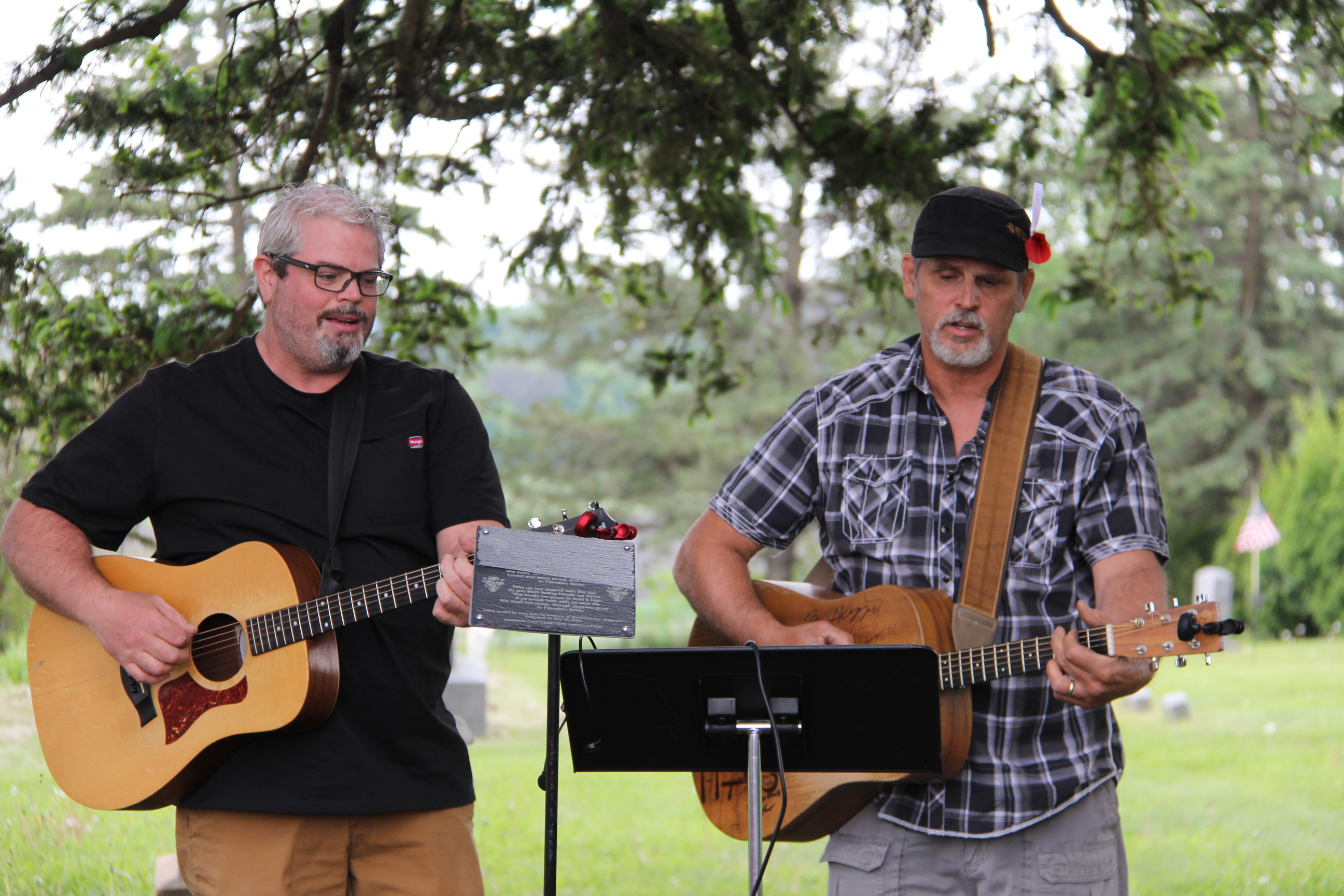
The Sartor Brothers lead musical selections. (Minnesota Prairie Roots copyrighted photo May 2025)
Inside the cemetery gate, folks gathered in the shelter of cedars and pines to listen to inspirational readings and poetry; to sing; to hear the names of 52 veterans buried here read aloud; and more.
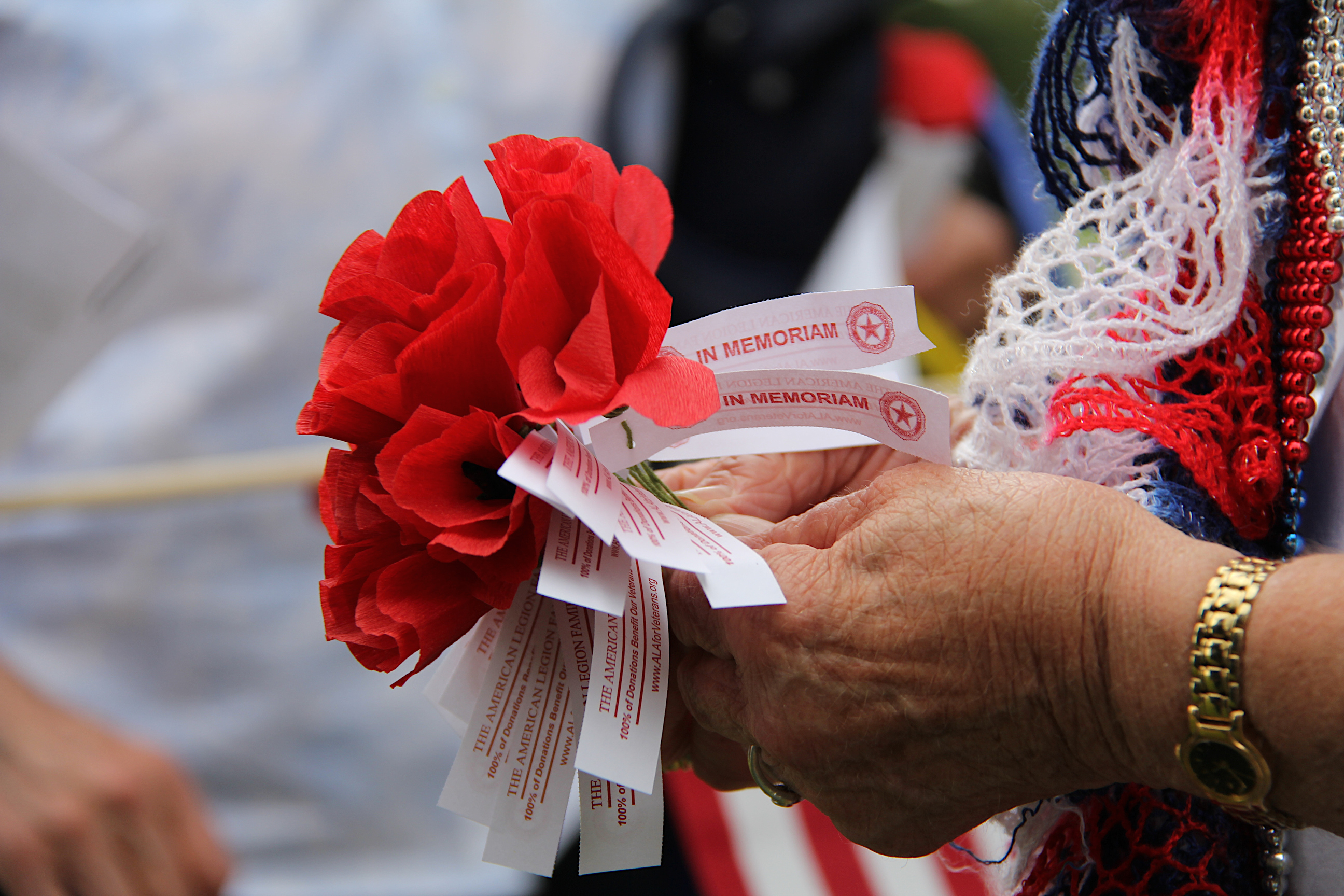
Handing out poppies to attendees. Members of the Faribault American Legion Auxiliary and other volunteers crafted the paper flowers. (Minnesota Prairie Roots copyrighted photo May 2025)
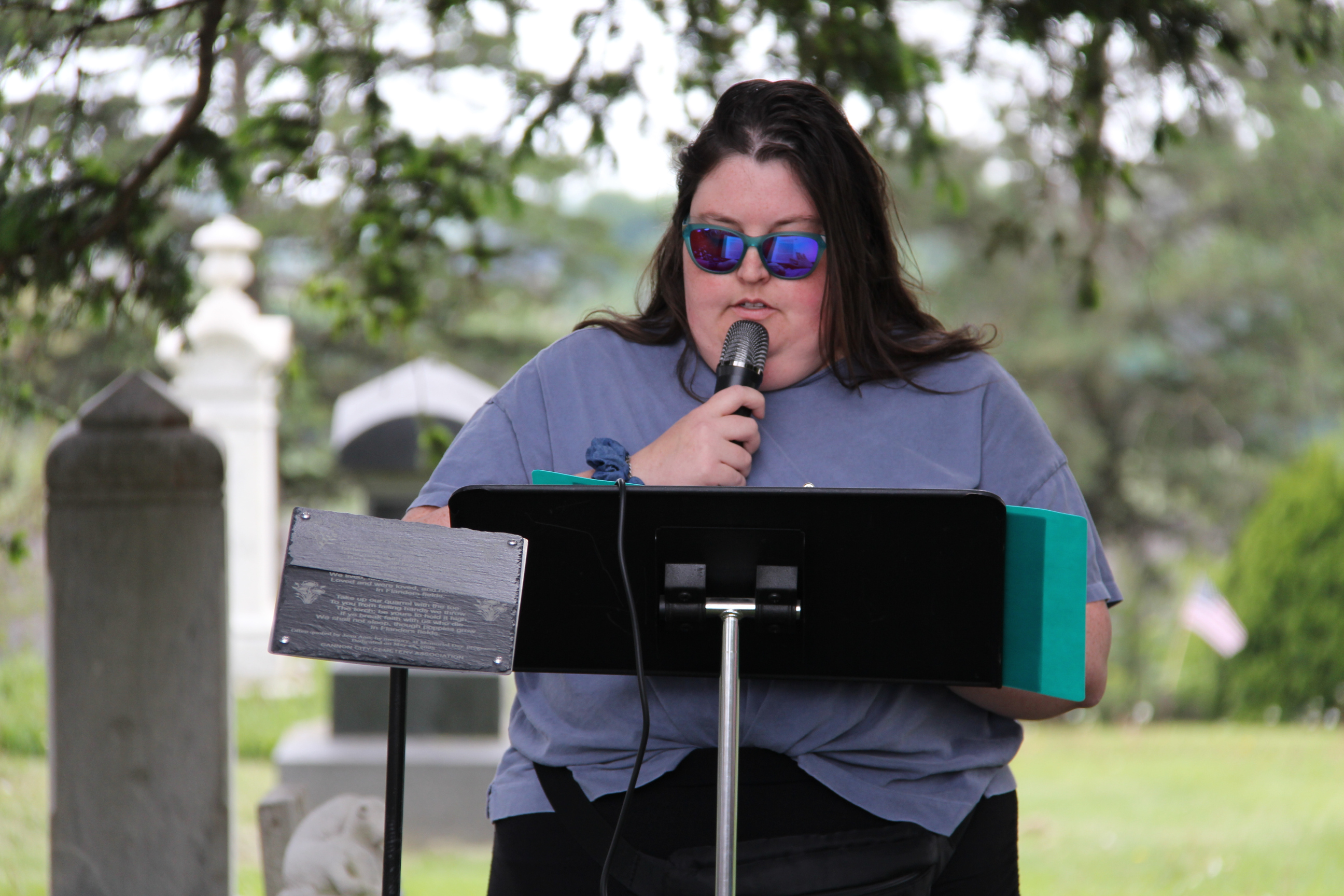
Organizer Kathleen Kanne led the program and talked about Jean Ann Pederson. The plaque in front of Kanne was given in honor of Jean Ann. (Minnesota Prairie Roots copyrighted photo May 2025)
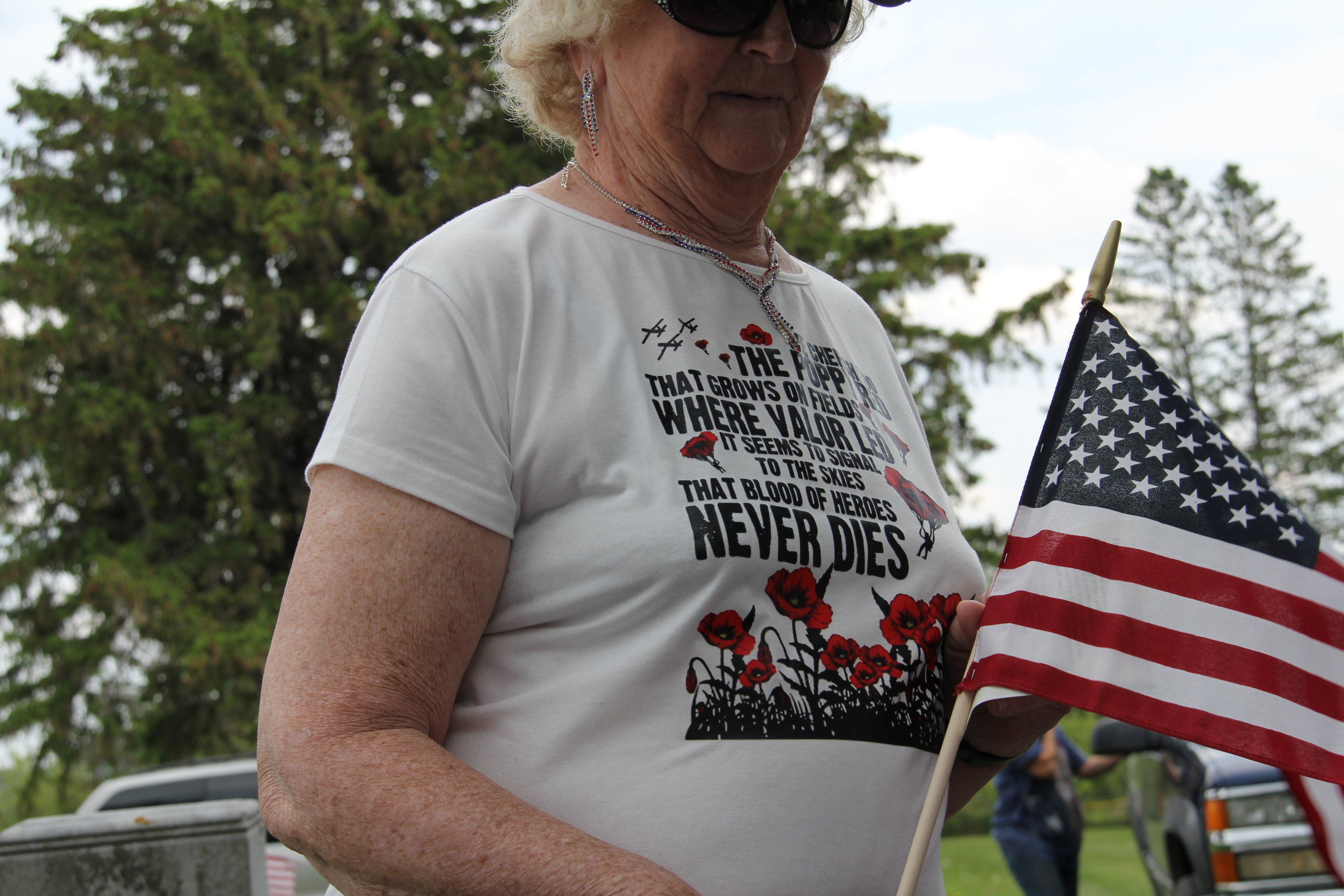
A woman’s t-shirt focuses on poppies, representing the blood of heroes who died in war. (Minnesota Prairie Roots copyrighted photo May 2025)
This year the “more” included excerpts from an interview with Jean Ann Greenville Pederson, a Cannon City native interviewed by Kathleen Kanne and Mel Sanborn. She died in February, shortly after her 93rd birthday. Each May, Jean Ann shared a bit of local Memorial Day history and read “In Flanders Fields” to attendees. Kanne, program organizer, announced the placement of a small “In Flanders Fields” graveside plaque honoring Jean Ann. She then invited us to read the poem together. I recited it, having memorized “In Flanders Fields” as a child tasked with sharing the poem several times during my hometown Memorial Day program. In Flanders fields the poppies blow/Between the crosses, row on row…
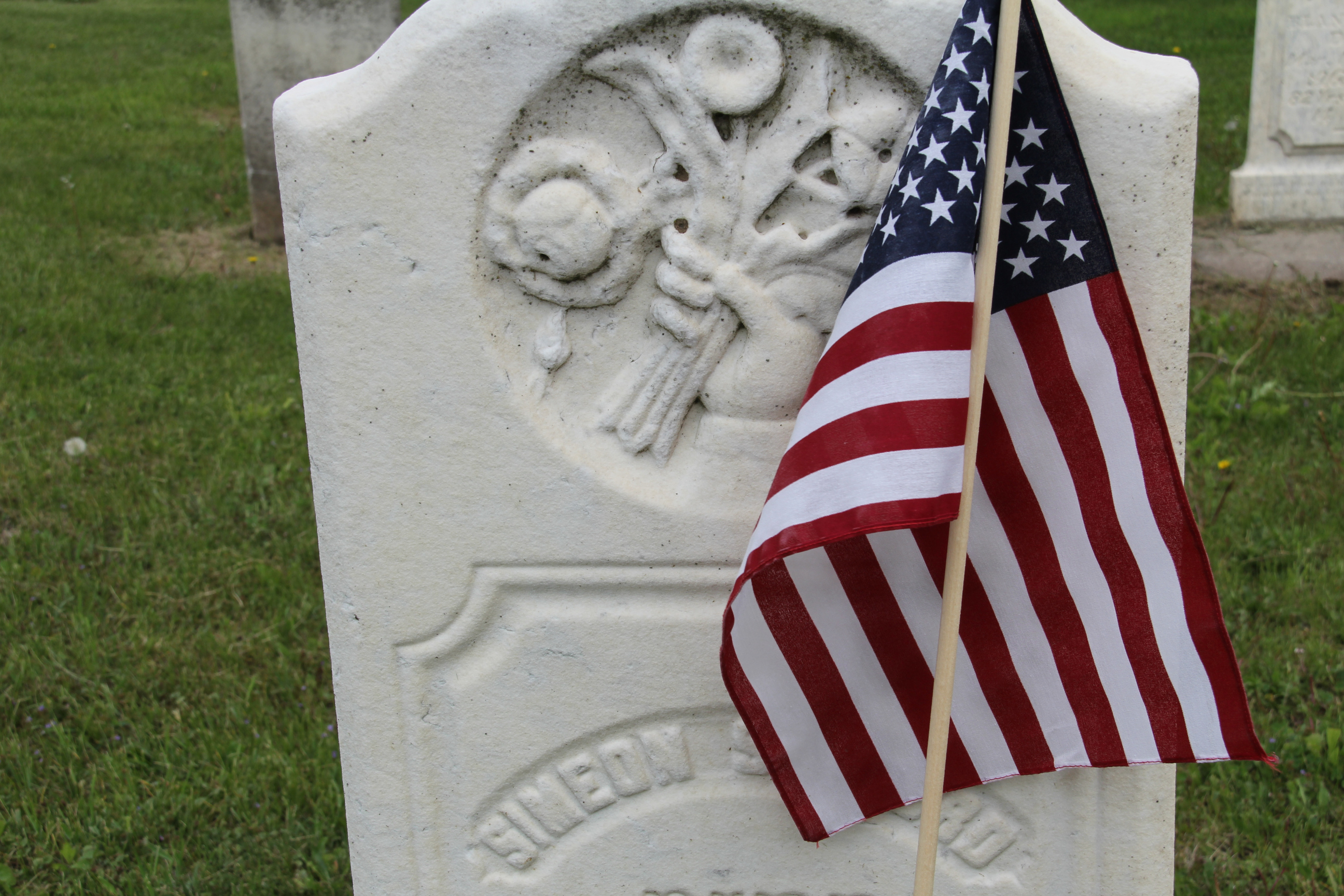
American flags marked the graves of veterans in the Cannon City Cemetery. (Minnesota Prairie Roots copyrighted photo May 2025)
Throughout this commemorative event in the Cannon City Cemetery, I was intimately aware of my surroundings. Under the trees. Next to farm fields. The wind sweeping across the hill. Birds chirping. It felt reverent, almost holy—this place like a sanctuary. For the living and the dead.
Visiting after the program. (Minnesota Prairie Roots copyrighted photo May 2025)
After the program concluded, families meandered among the gravestones. Stopping. Gathering. Others remained under the cedars and pines, connecting and reconnecting. I grabbed a chocolate chip cookie and went in search of my friend’s, veteran Rhody Yule’s, grave. I found it, flat against the ground, hidden by a bush.
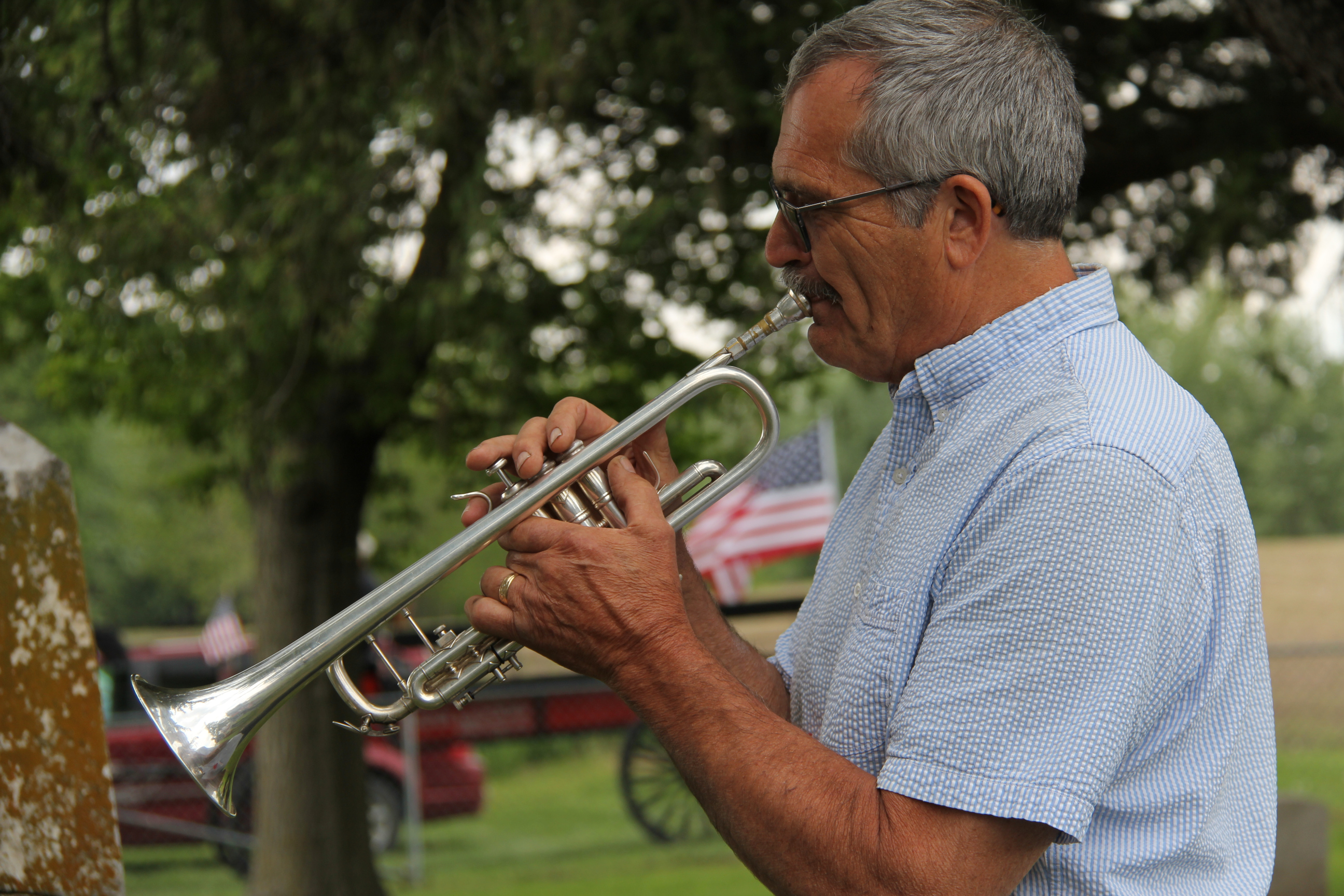
I heard Steve Bonde play taps at the Memorial Day service in Faribault in the morning and then again at Cannon City in the afternoon. (Minnesota Prairie Roots copyrighted photo May 2025)
Later, as I headed toward the van to leave, I heard Steve Bonde, who earlier played patriotic music, playing more tunes. It was the perfect way to end my time here, where respect for veterans, for community and for tradition carries through generations of those rooted in Cannon City.
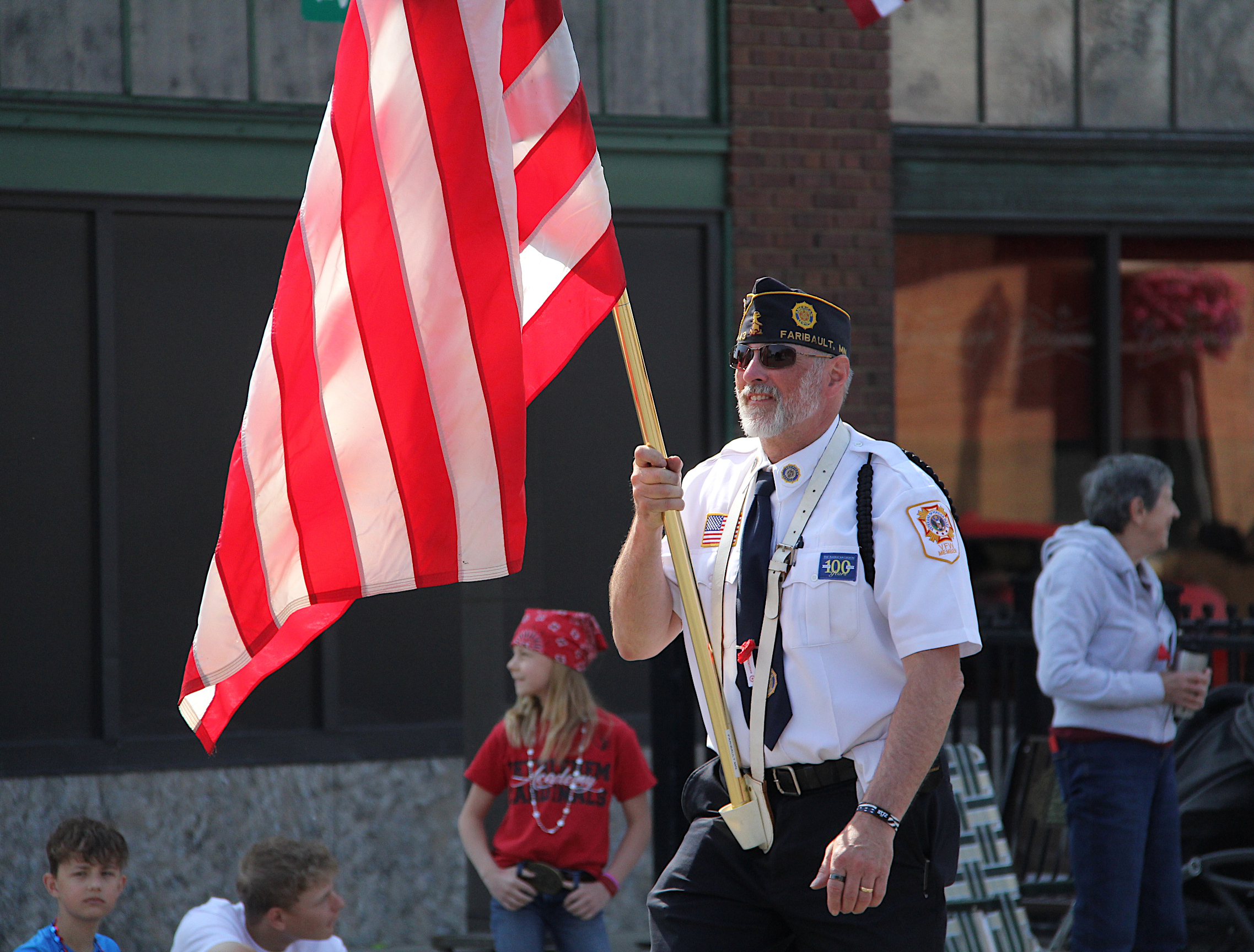
Veteran Kirk Mansfield carries the American flag as part of the Color Guard during the parade. (Minnesota Prairie Roots copyrighted photo May 2025)
I GREW UP RECOGNIZING Memorial Day for what it is—a day to honor those who have died in service to our country. My parents instilled in me the importance of this day, a value I’ve carried throughout my life. Nearly every year I’ve attended an event recognizing our military men and women, especially those who made the ultimate sacrifice.
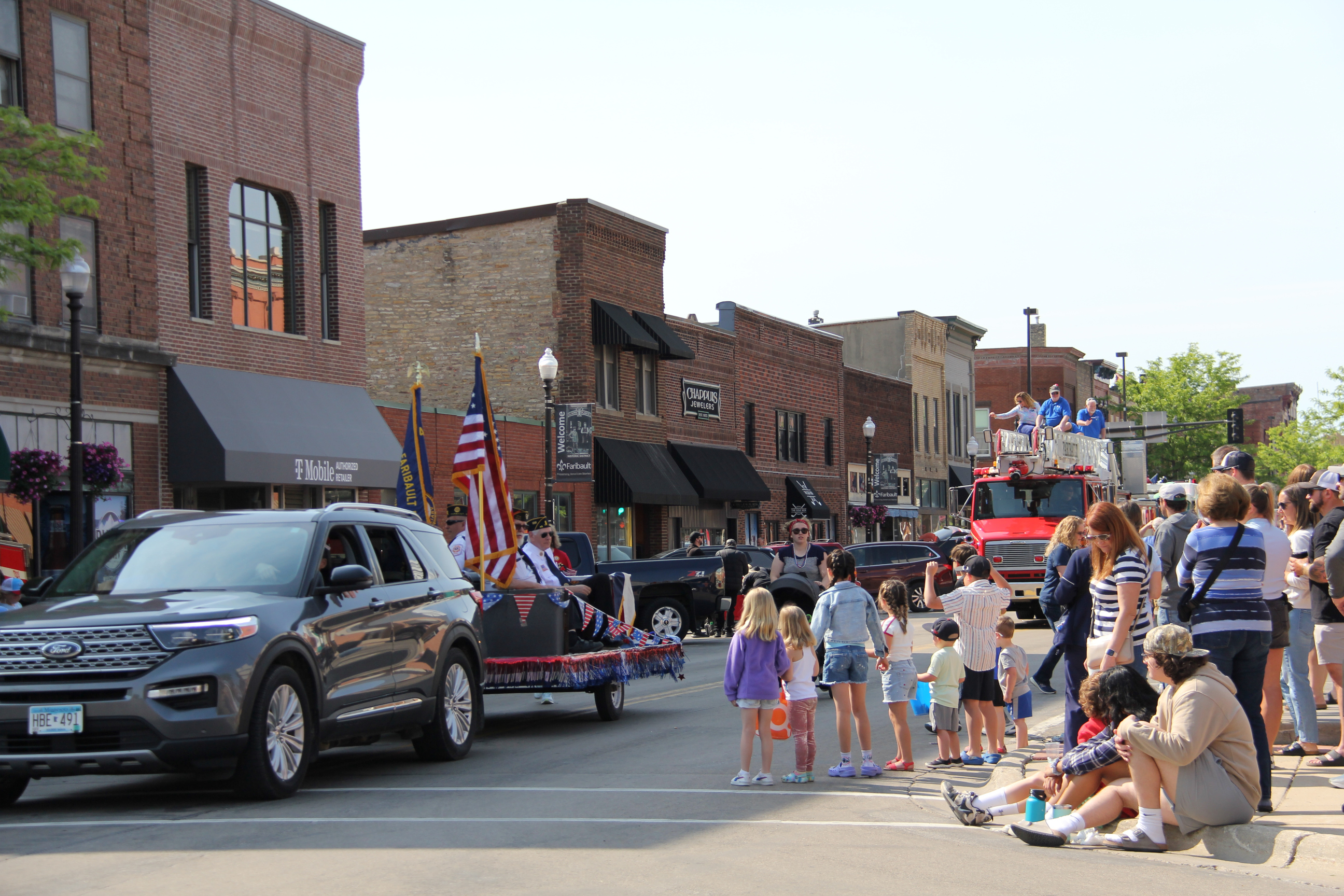
A large crowd gathers for the Memorial Day parade along Central Avenue in Faribault. (Minnesota Prairie Roots copyrighted photo May 2025)
On Monday morning I headed downtown Faribault to the Memorial Day parade followed by a program in Central Park. In the afternoon Randy and I drove a few miles out of town to the Cannon City Cemetery and a program there.
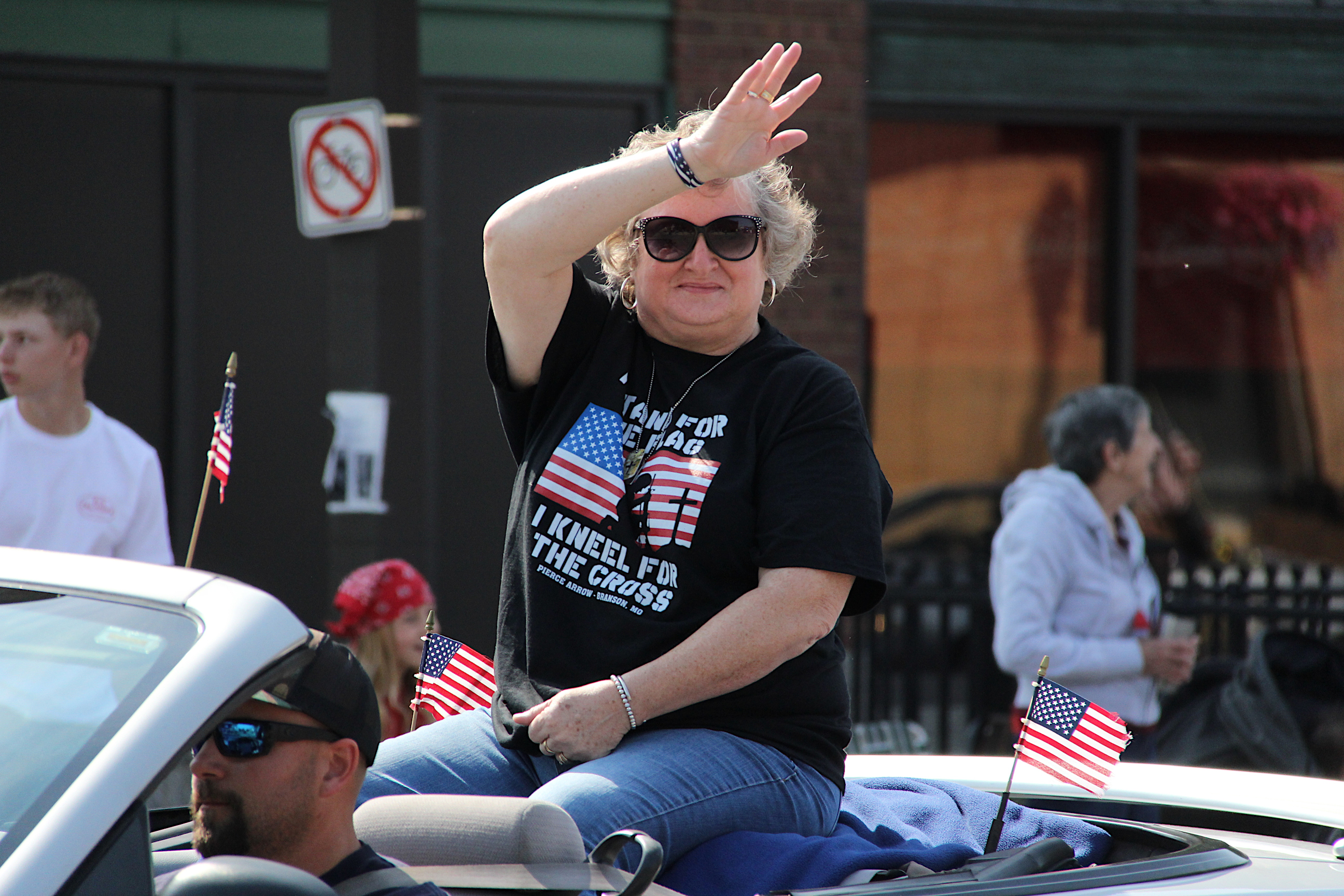
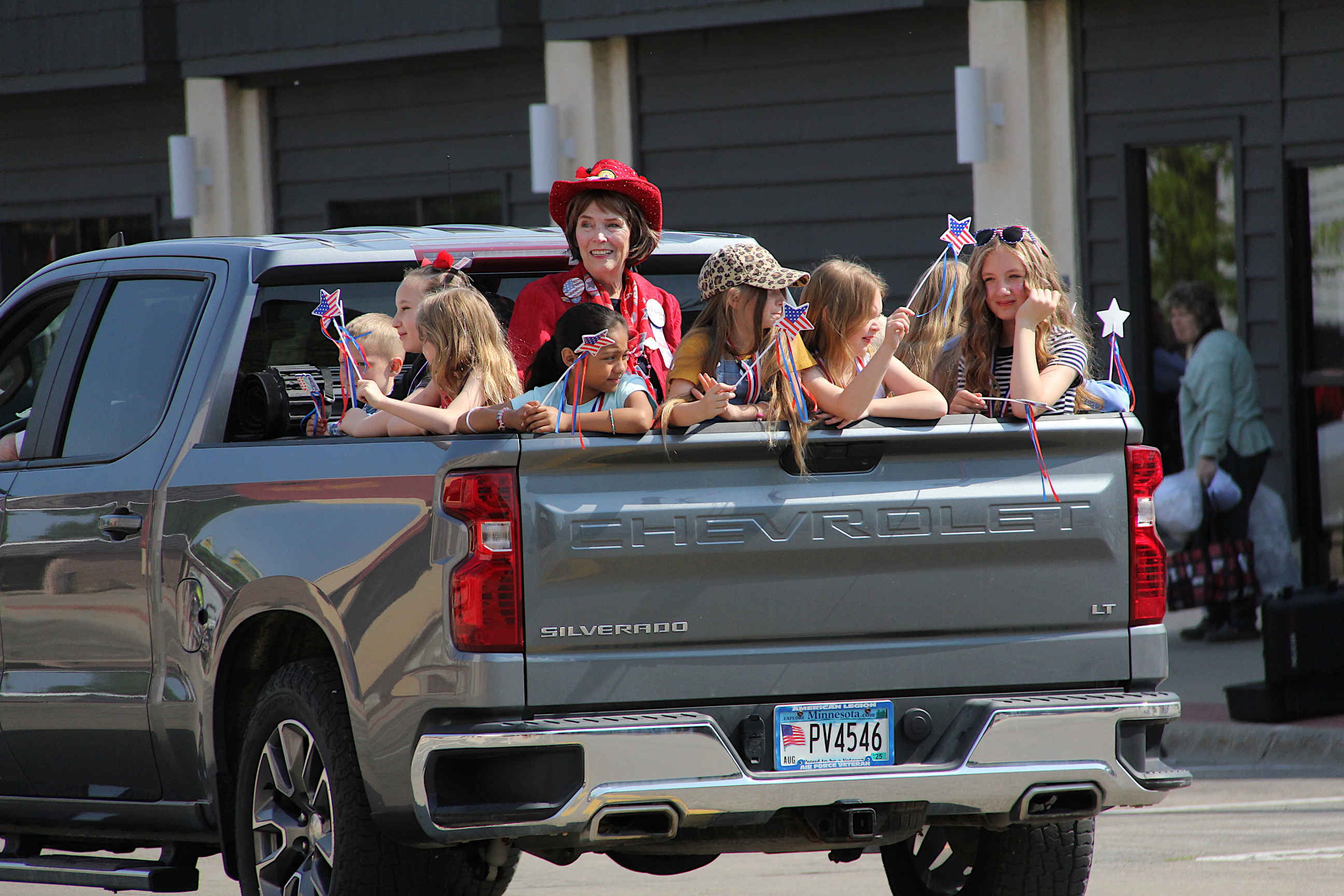
This year’s honored veterans were all women: Kerrie Johnsrud, Peggy Johnson (pictured here as honorary parade grand marshal) and Stephanie Johnsrud. (Minnesota Prairie Roots copyrighted photo May 2025)
At each of these events, I observed a deep sense of patriotic pride and love of country among attendees. That came in an abundance of American flags; patriotic music, poetry, readings and speeches; red-white-and-blue attire; salutes; and smiles.
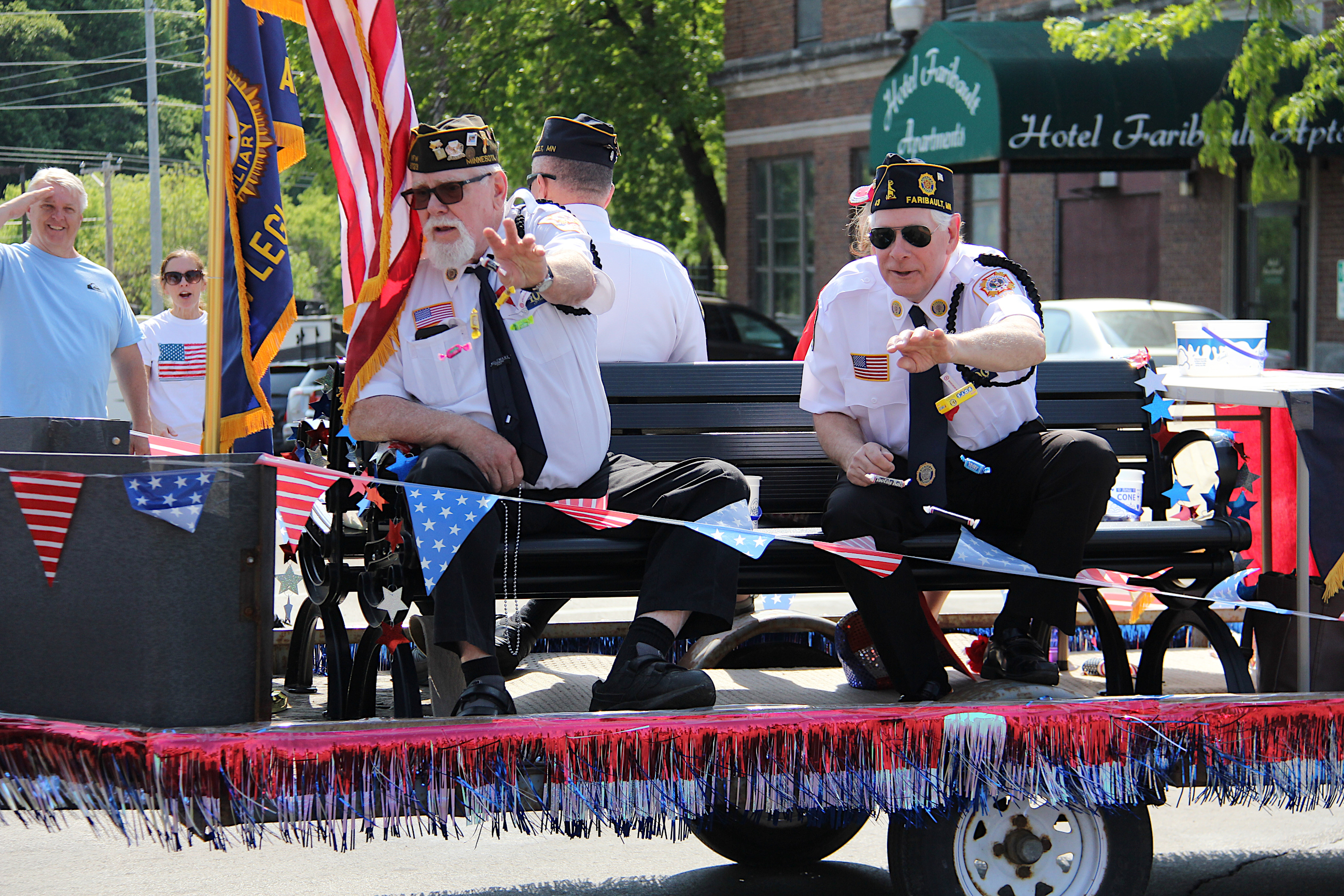
Veterans throw candy to the kids. (Minnesota Prairie Roots copyrighted photo May 2025)
In a time when this country feels incredibly divided, it uplifted me to witness this appreciation for America, for the men and women who fought to preserve our freedom and for those who continue to do so. For this one day I felt a sense of unity, a coming together to honor and to uphold democracy.
Kids participated in, and attended, the parade. (Minnesota Prairie Roots copyrighted photo May 2025)
I especially delight in seeing so many children at these Memorial Day events. It’s important for them to recognize that this date should not be noted as the unofficial start of summer, but rather as a sacred day of remembrance.
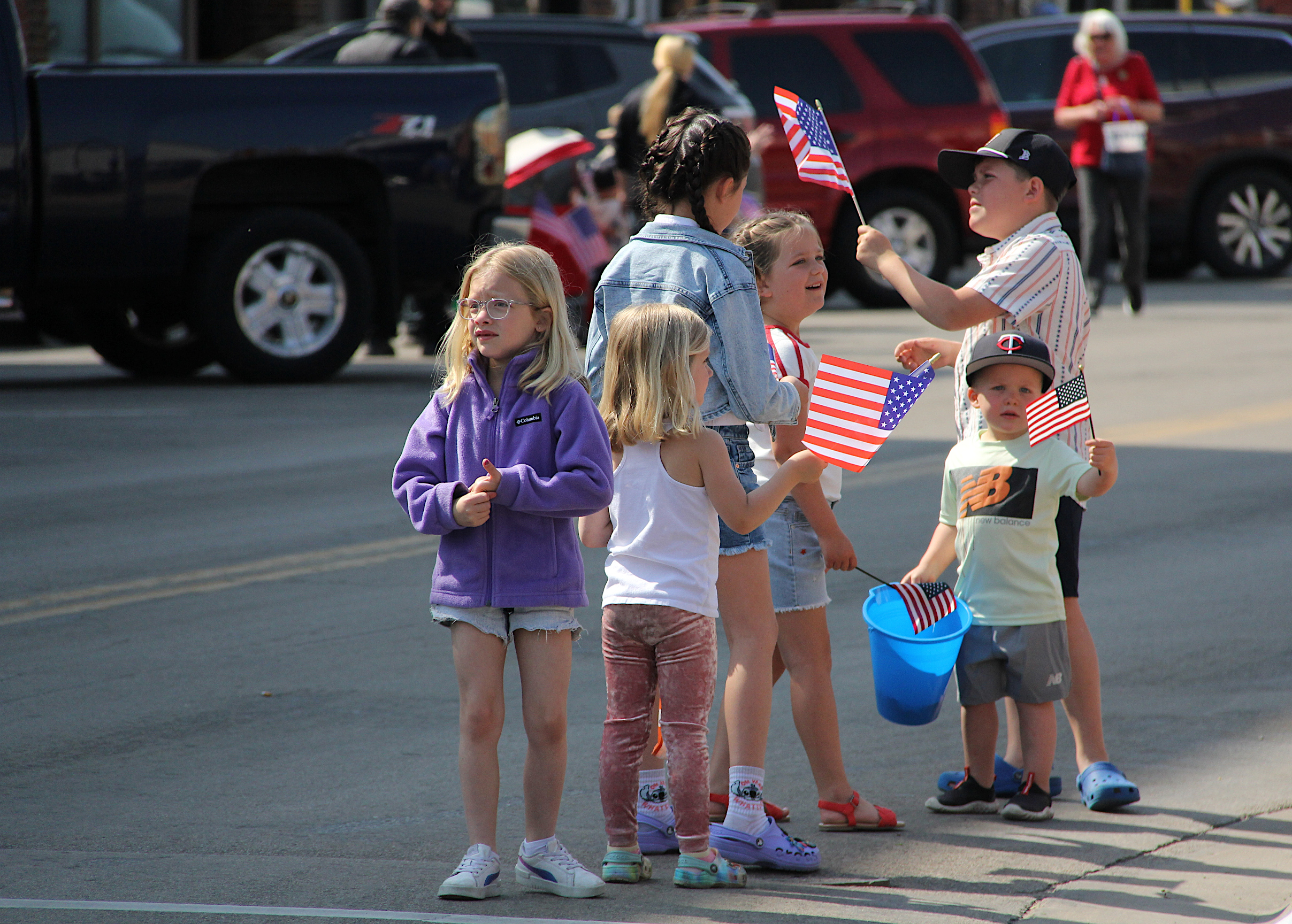
A cluster of happy kids with flags and candy. (Minnesota Prairie Roots copyrighted photo May 2025)
Sure, at some of their young ages, these kids are coming for the candy and American flags handed out at the parade. They’re coming, too, to be with their families and friends. But their understanding of Memorial Day will grow—at least I hope it will—as they mature. Kids learn from their parents and grandparents. Our choices show them what’s important.
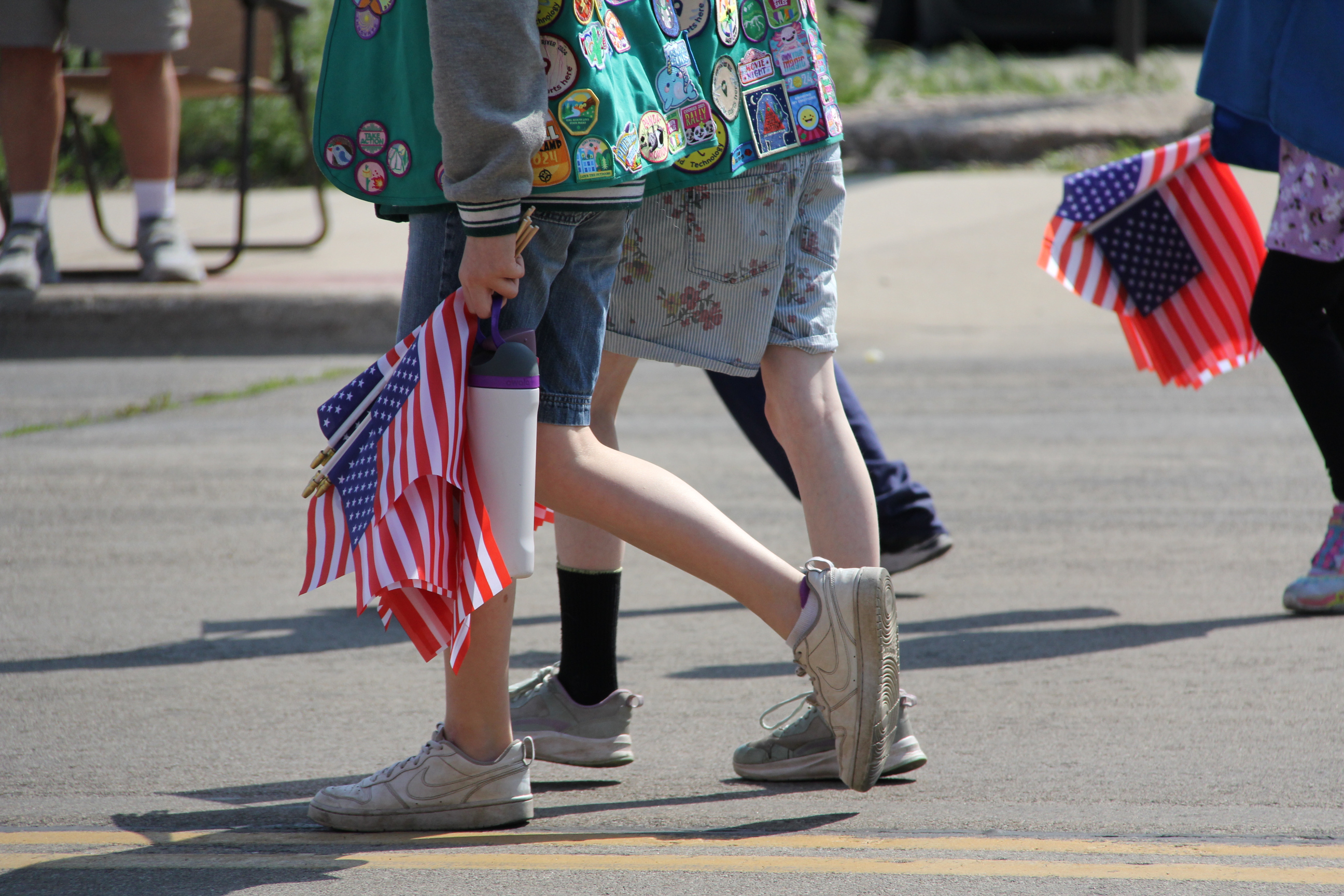
Scouts and others passed out American flags. (Minnesota Prairie Roots copyrighted photo May 2025)
I am thankful for my Korean War veteran father and American Legion Auxiliary mother who instilled in me and my five siblings the necessity of attending and participating in Memorial Day events. On that singular May day each year, we gathered with community to honor, to remember and to, yes, celebrate freedom. This is a tradition I hold dear, for I recognize the freedom preserved and protected by those who served, and still serve, our country.
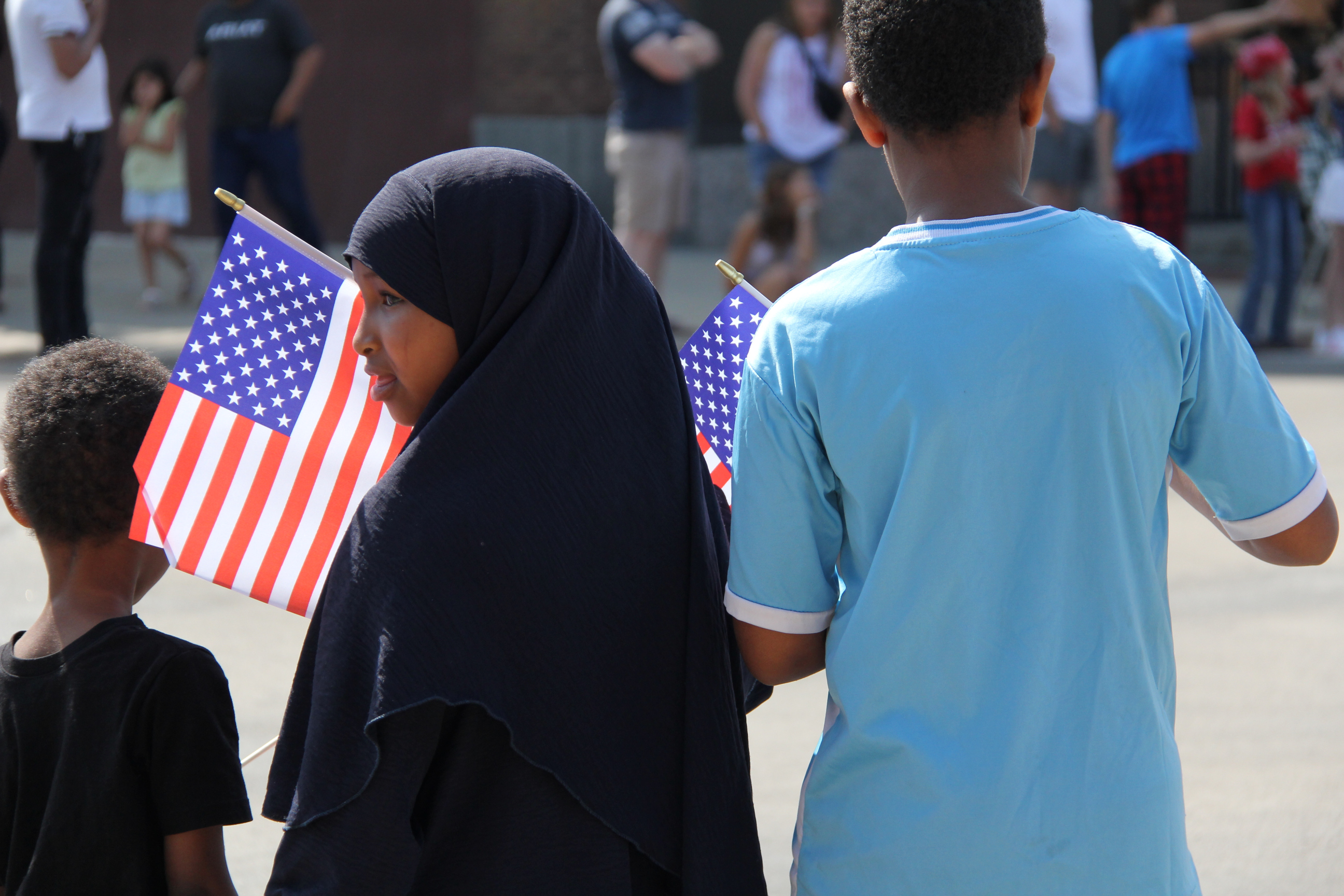
Faribault is a diverse community with many of our newest residents arriving from war-torn countries to settle here, work and raise their families. (Minnesota Prairie Roots copyrighted photo May 2025)
I have the freedom to speak. To write. To make choices. To agree or disagree. Not everyone does, even in our own country. That’s another reason Memorial Day holds such value. It reminds us of our core values as a nation. How much we value democracy and freedom. We are a country of spacious skies and amber waves of grain…and of patriot dream that sees beyond the years.
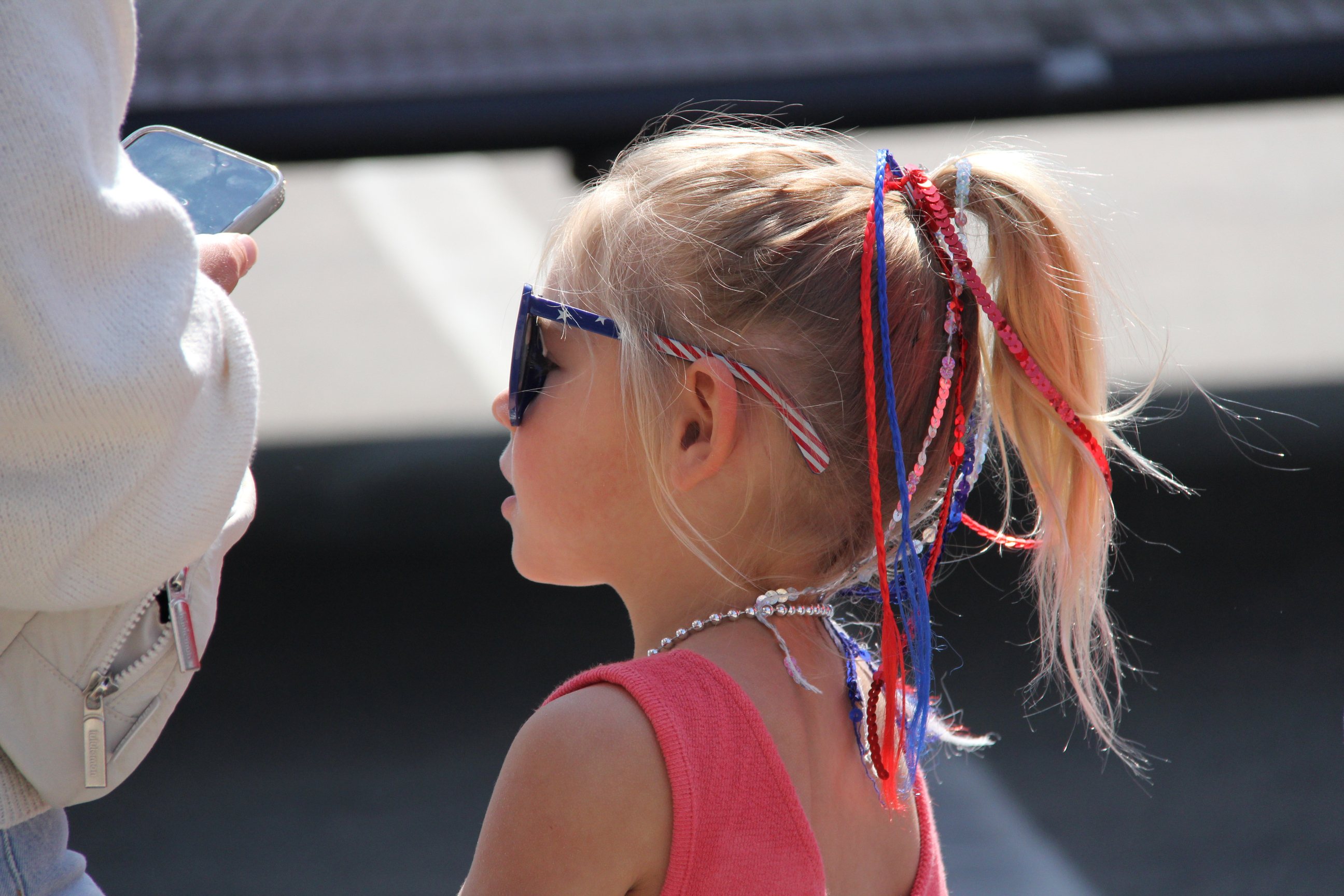
Patriotic pride shines. (Minnesota Prairie Roots copyrighted photo May 2025)
We are a land, that even in the darkness of difficult days, still shines from sea to shining sea!
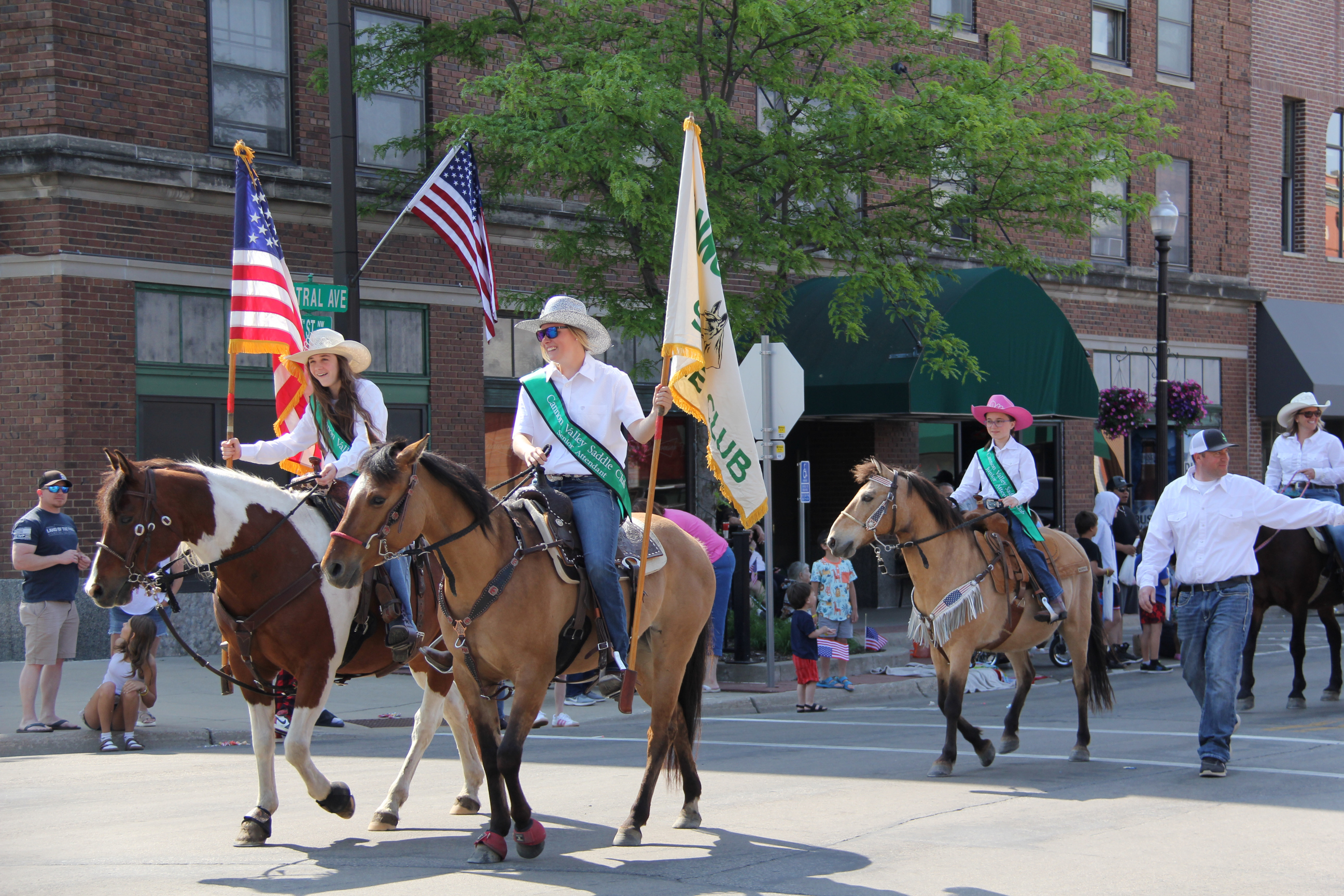
A contingent of horses and their riders always end the parade. (Minnesota Prairie Roots copyrighted photo May 2025)
FYI: Please check back for two more Memorial Day posts, these about programs I attended.
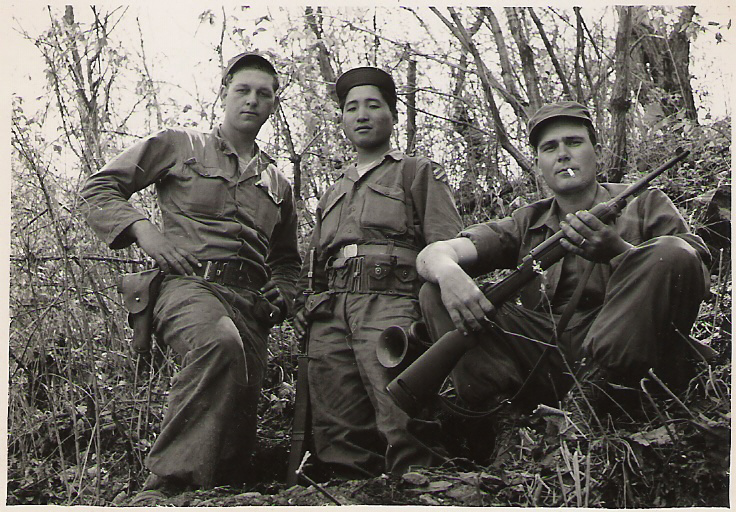
My father, Elvern Kletscher, left, with two of his soldier buddies in Korea.
WHEN MEMORIAL DAY ROLLS around each May, my thoughts shift to my dad, who served on the front lines during the Korean War. He survived, albeit with the emotional trauma that comes from killing and constant danger of being killed. His close buddy, though, did not survive. And that is the man I remember and honor today, along with others who’ve lost their lives in service to country.
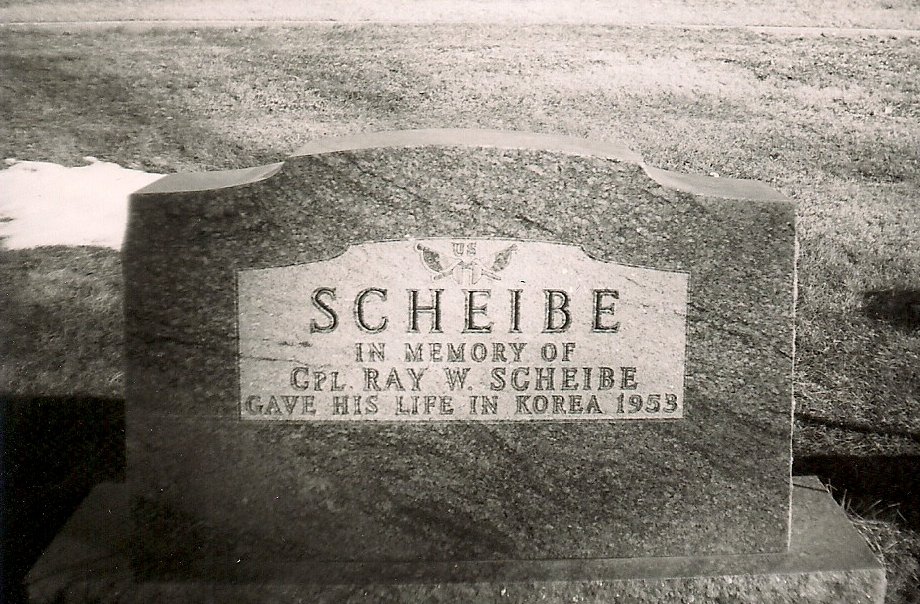
Sonny Nealon, Ray’s best friend in high school, sent me this photo of Ray’s gravestone. (Photo credit Sonny Nealon)
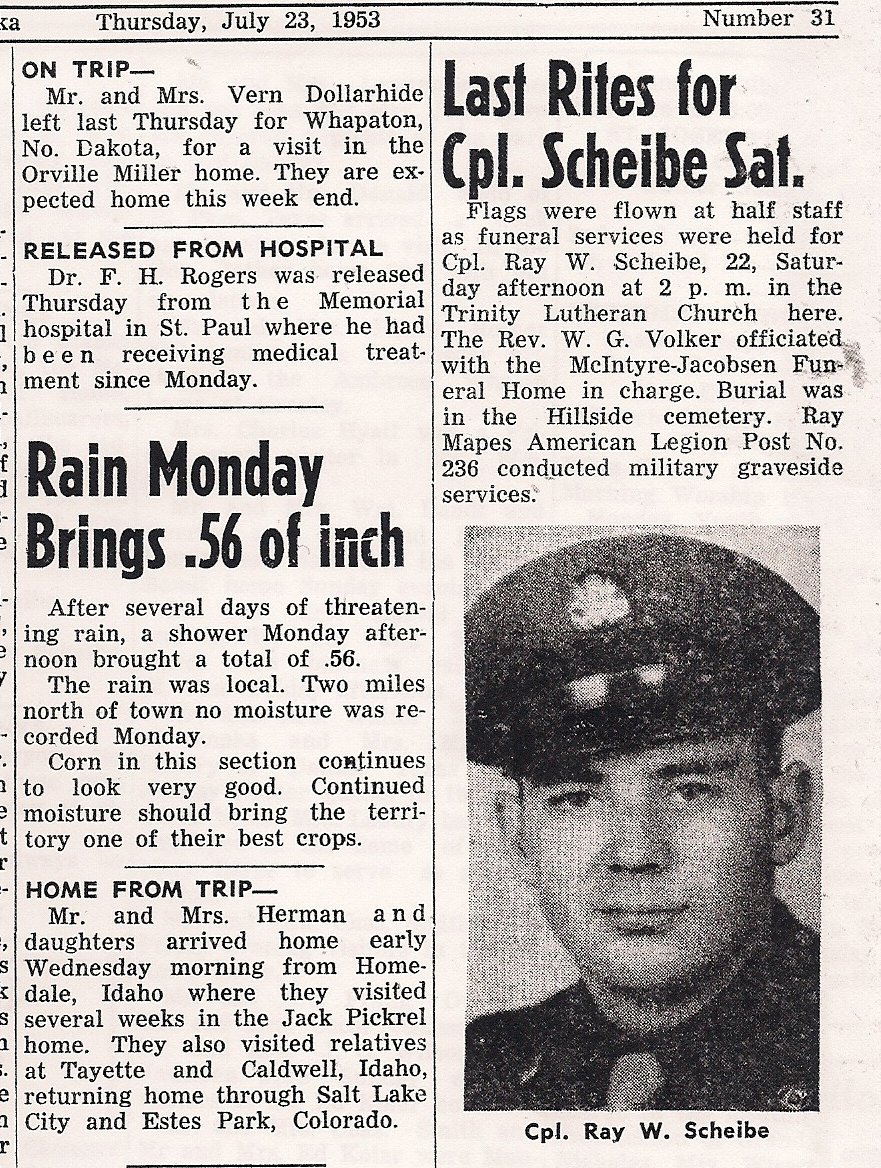
Corporal Ray W. Scheibe, 22, of Wolbach, Nebraska, died on June 2, 1953, blown apart by a mortar shell. My dad witnessed his horrific death, for war is nothing short of horrible. Ray was scheduled to leave Korea the next day, which makes his story even more tragic. He left behind grieving friends and family, including his wife, Marilyn, and 3-month-old daughter, Terri Rae, whom he had not yet seen. I’ve since found and connected with Terri in Iowa, but have yet to meet her.
A story about Cpl. Ray W. Scheibe, published in the July 23, 1953, issue of The Wolbach Messenger.
It is the individual stories of soldiers like Ray that take war to a personal level. A level that allows us to understand the meaning of the words “killed in action.” My father’s grief in losing Ray became, in some ways, my grief, too.
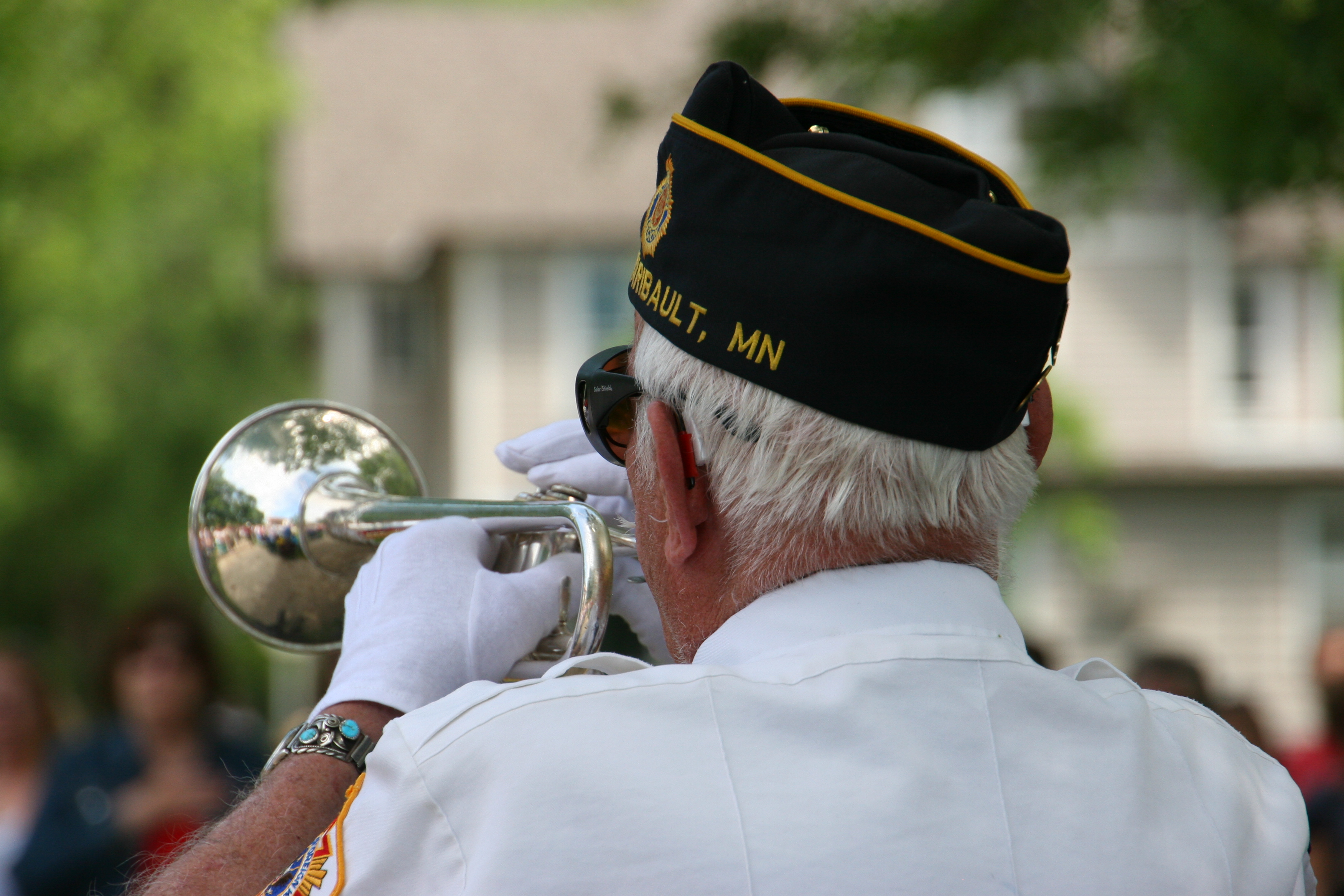
Playing taps at a past Memorial Day program in Faribault. (Minnesota Prairie Roots copyrighted file photo May 2016)
On Memorial Day we gather in collective grief to remember the many men and women who, like Ray, died while serving in the U.S. military. There will be parades and speeches, patriotic music and poetry, poppies and red-white-and-blue attire. Names read. Tears shed. Taps played. Guns fired. Flags carried. Graves visited.
In our hearts, in the silence of our thoughts, we reflect upon what it truly means to give up life for country as did Ray and 27 other men listed in a July 31, 1953, memorial service bulletin my dad carried home from Korea. Below those names are these words from Scripture: Greater love has no man than this, that a man lay down his life for his friends (John 15:13).
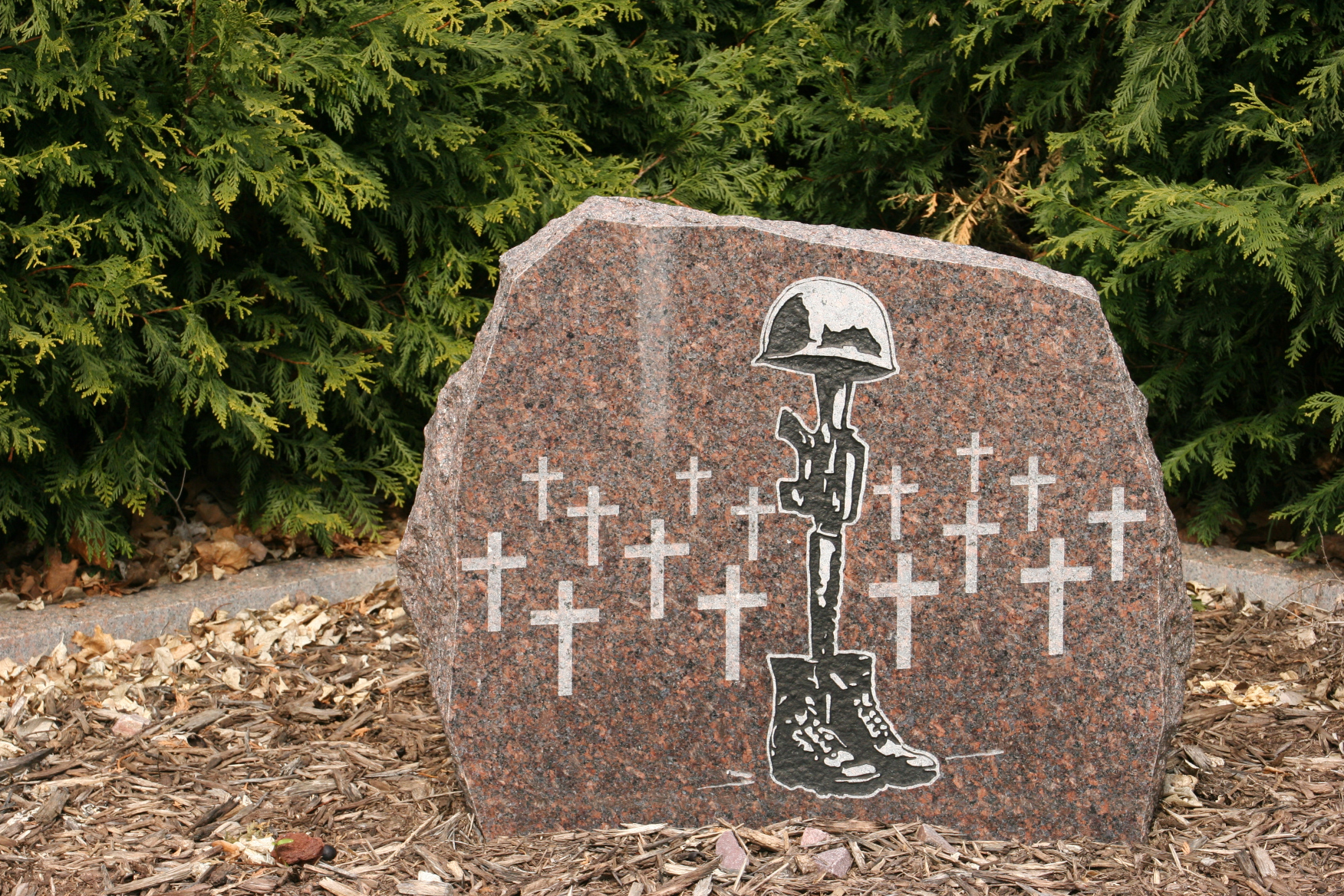
Honoring fallen soldiers with a special monument at the Rice County Veterans’ Memorial in Faribault. (Minnesota Prairie Roots copyrighted file photo)
I get emotional as I open the creased, soiled and yellowing 72-year-old memorial service program from Such’am-dong, Korea. I’ve tucked it into a shoebox with Dad’s other military papers, photos and belongings to pull out twice annually on Memorial and Veterans Days. I need to read the fading typewritten names, to recognize and honor these men who never made it home.
I reread the list of alphabetized names from Turrell Anderson to Vernie Zurn. Raymond W. Scheibe falls at number 24. The surviving men of the 2nd Battalion, 65th Infantry Regiment, who mourned the 28 on that July day in 1953, carried the heavy weight of grief as they prayed, stood in silence, sang “America the Beautiful” and “My Country, ‘Tis of Thee.” And then they carried that grief home.
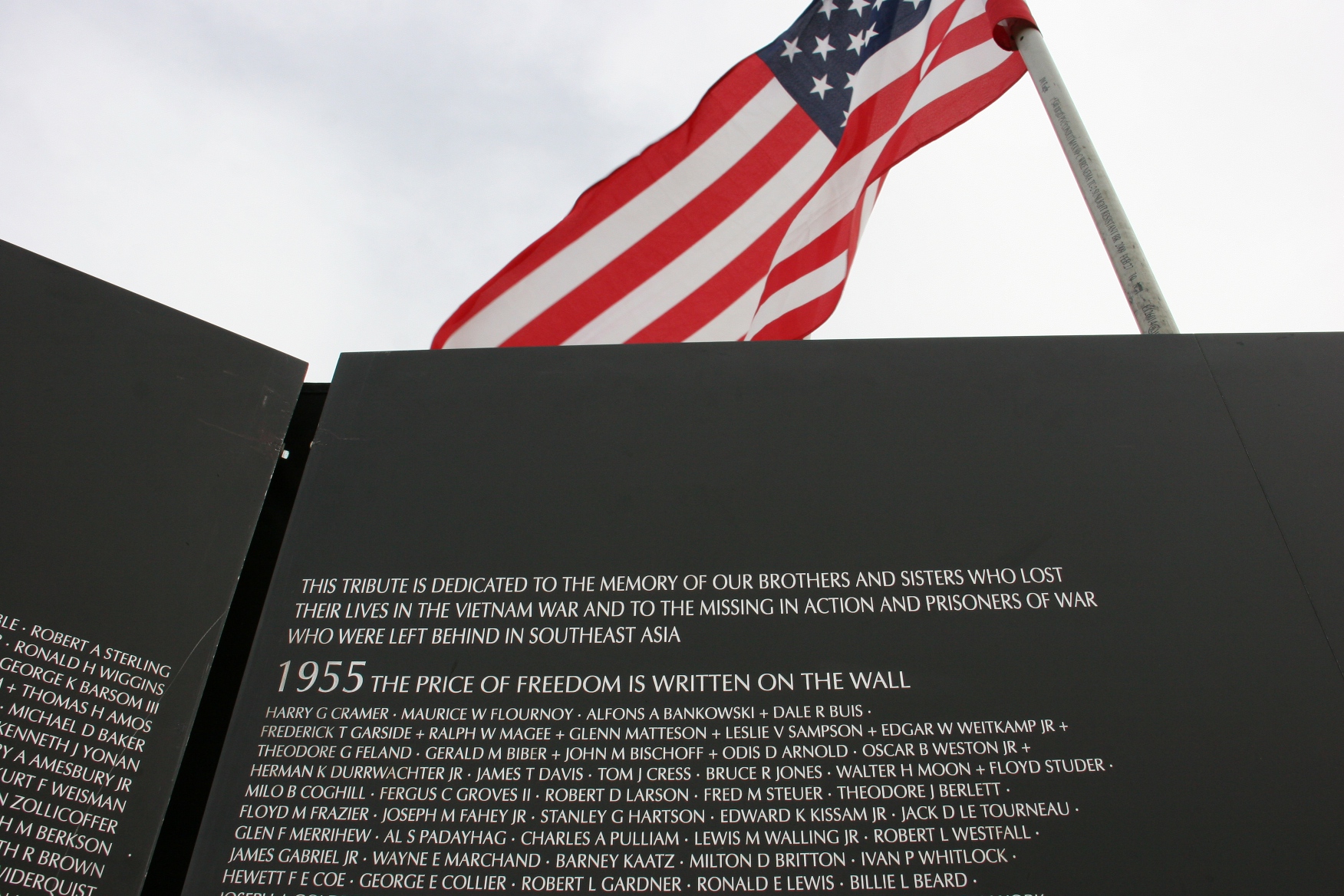
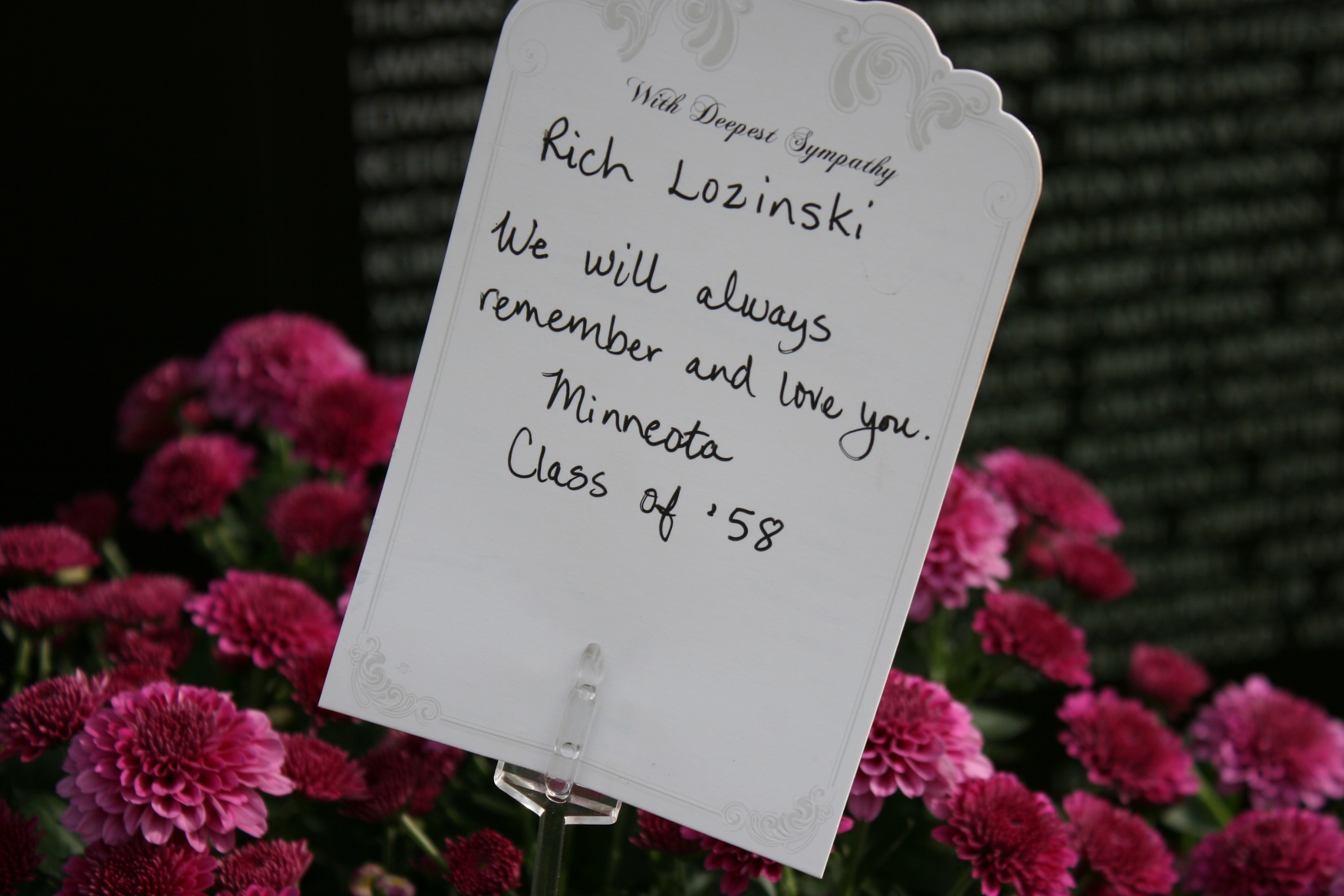
Grief in a note and mums left at the Traveling Vietnam Memorial Wall in Faribault. It honors Rich Lozinski, Class of 1958, Minneota, Minnesota. According to the online Wall list of those KIA, the name is spelled “Lozenski.” Rich was only 26 when he was killed in Quang Tri Province on May 19, 1967. (Minnesota Prairie Roots copyrighted file photo 2016)
Today, even decades after the death of a service member in war, grief carries through generations. It’s important to remember that, to respect that, to take time on Memorial Day for not only honoring, but also for grieving. In grief we begin to acknowledge and process loss. In grief we begin to heal. And in grief we begin to understand the ultimate sacrifice for country.
TELL ME: If you have a story to share about a service member who was killed in action, I’d like to hear. Who do you honor on this Memorial Day?














 Minnesota Prairie Roots
Recent Comments