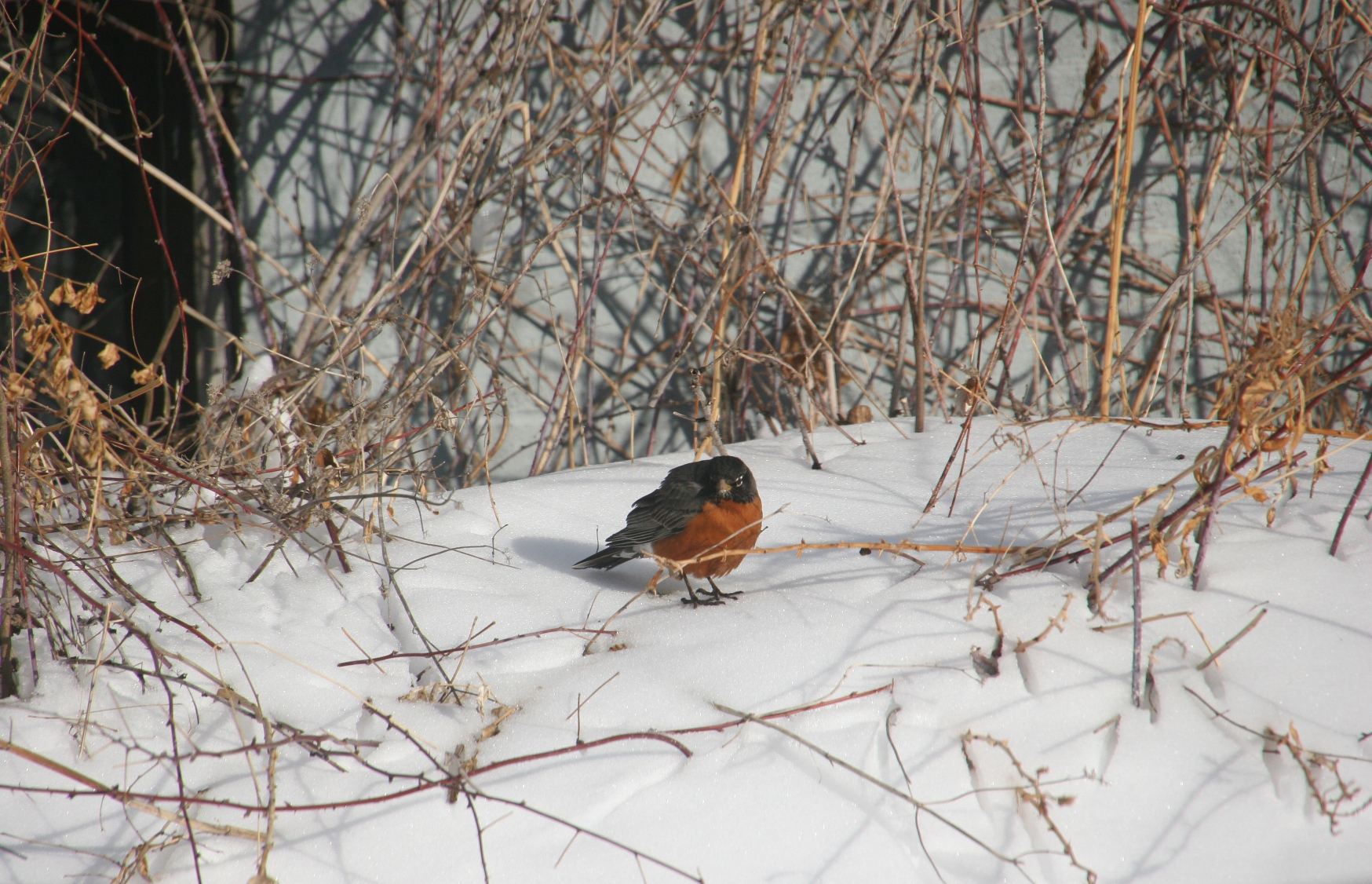
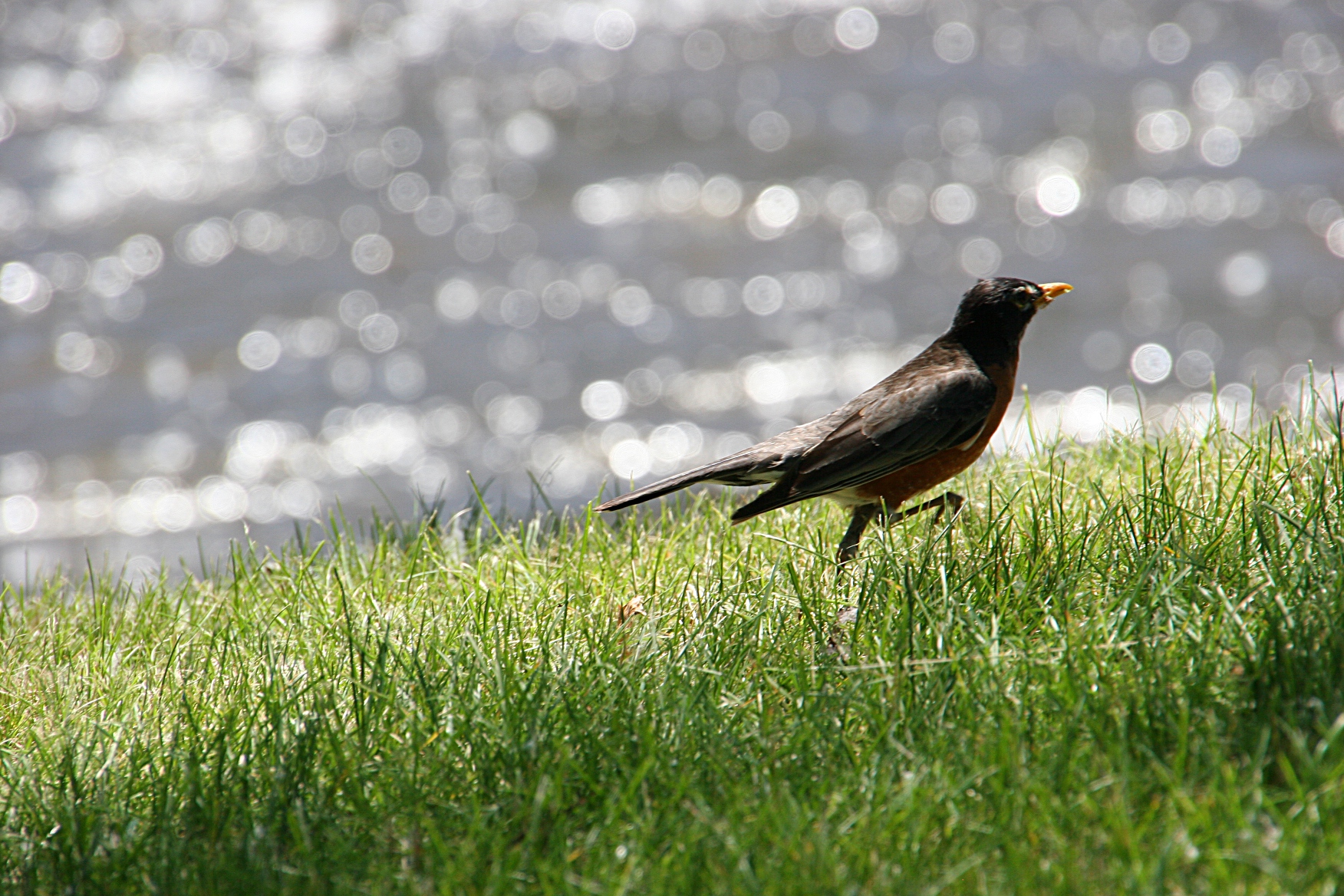
In April 2018, this robin huddled in the snow. (Minnesota Prairie Roots copyrighted file photo April 2018)
THIS TIME OF YEAR, birds sound louder, their voices amplified. Birds are marking territories, seeking mates. Or perhaps they are announcing their return to Minnesota or their survival of winter, even the mild one of 2023-2024.
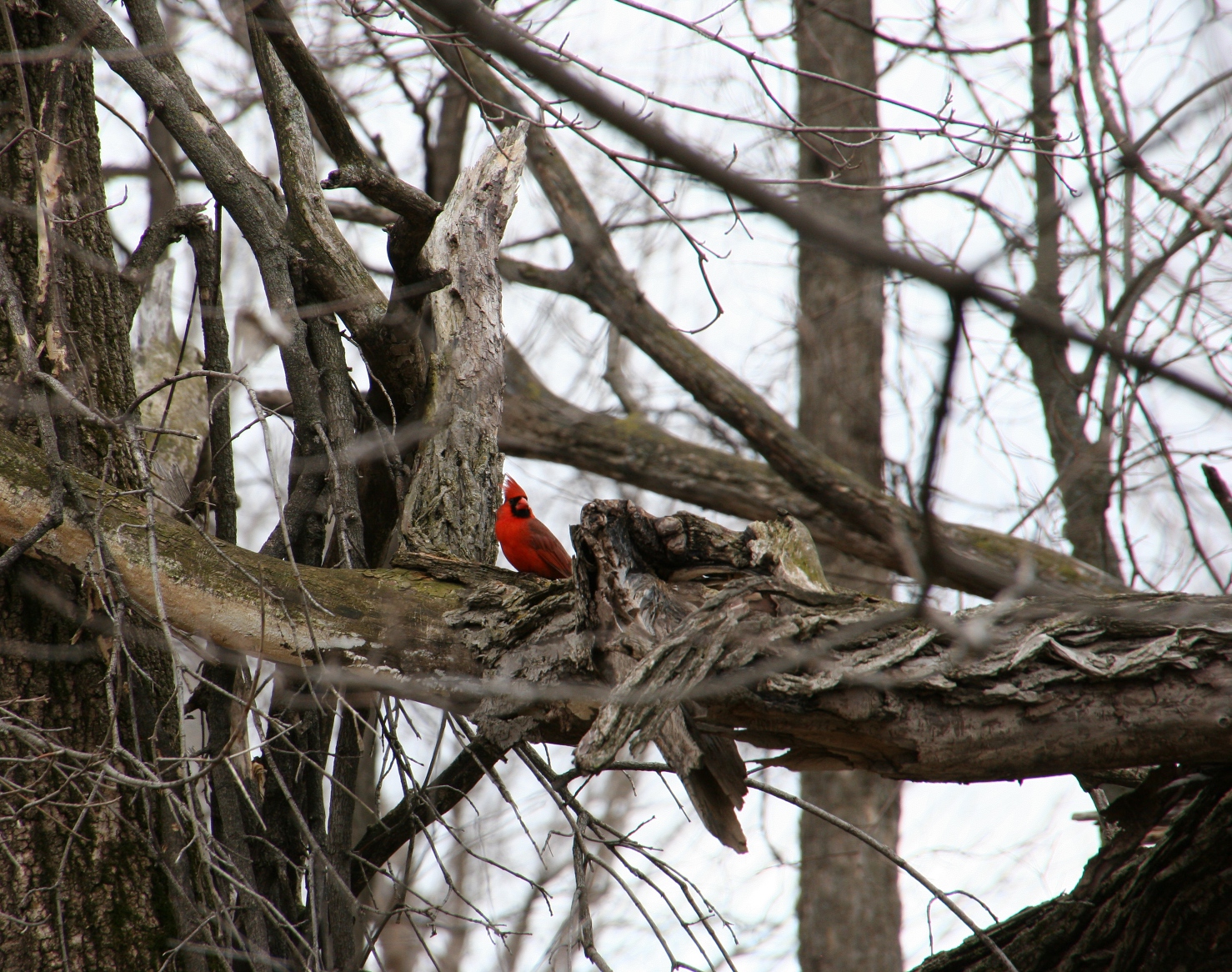
A cardinal. (Minnesota Prairie Roots copyrighted file photo April 2019)
Cardinals trill. Red-winged blackbirds and robins sing in their distinguishable voices, which I can’t quite describe. But I know them when I hear them.
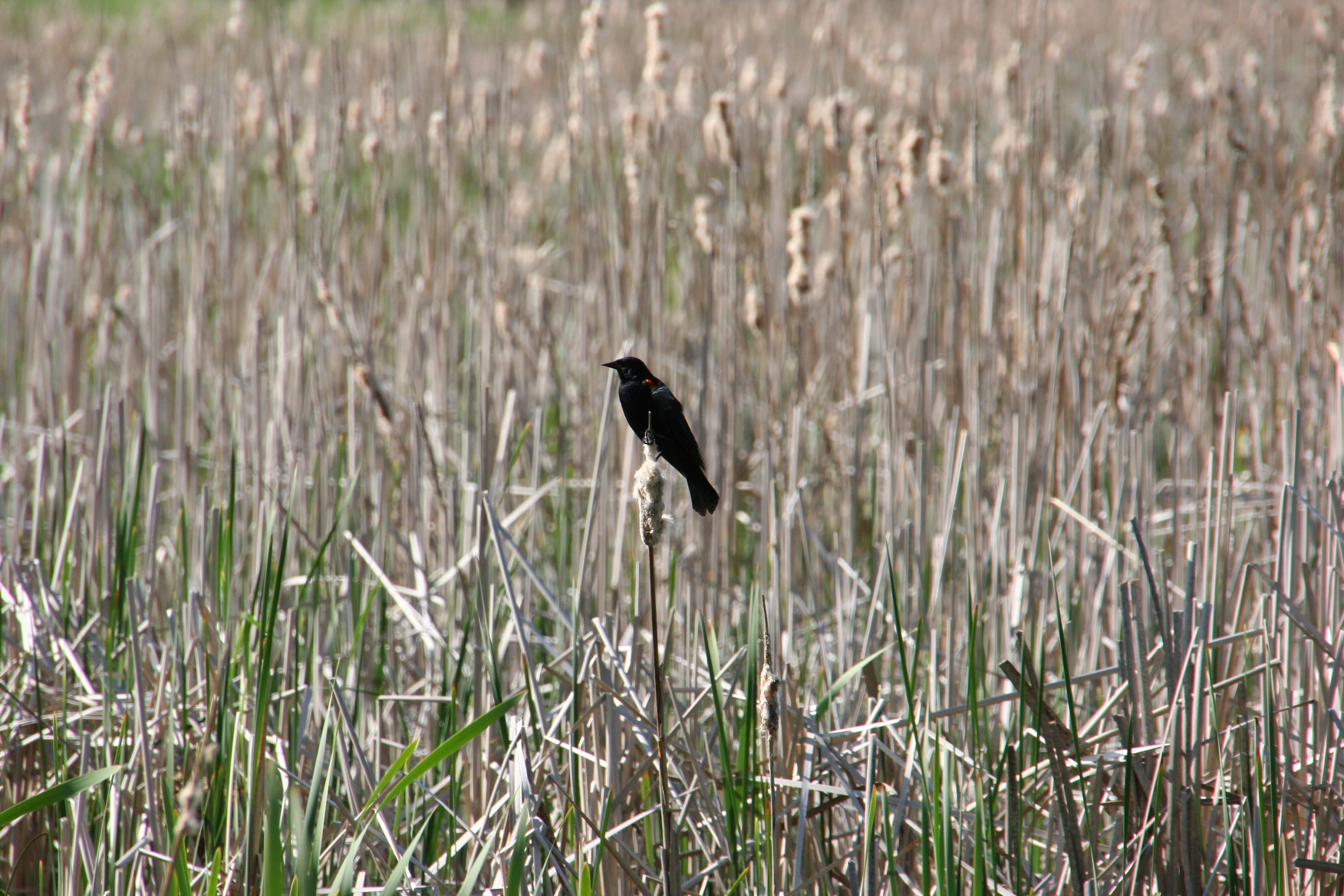
Red-winged blackbird among dried cattails in a pond. (Minnesota Prairie Roots copyrighted file photo May 2017)
When I step out my backdoor to hang laundry on the clothesline, I hear the morning birdsong, even above the drone of traffic along my busy street. When I walk at the local nature center, I hear birdsong rising from the woods, the marshes, the prairie. To hear birds singing is to hear the refrain of spring.
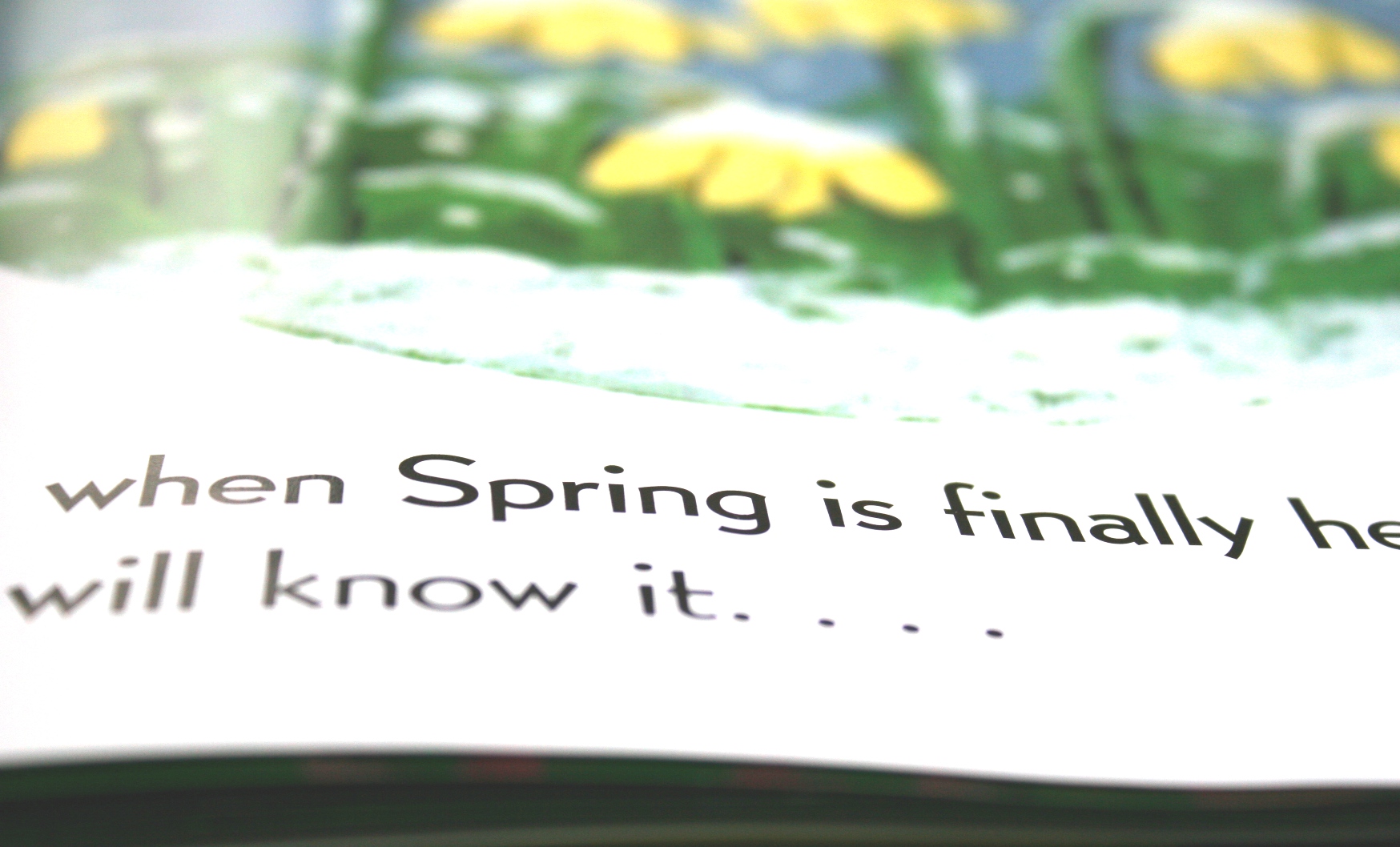
From the pages of a children’s picture book… Birds announce spring’s arrival in Minnesota. (Minnesota Prairie Roots file photo 2019)
It’s lovely and uplifting and hopeful. And in many ways remarkable. Here are these small feathered creatures singing spring songs that captivate us with their boldness, their melody.
Soon the grass will be lush and long, like a carpet for robins and other birds. (Minnesota Prairie Roots copyrighted file photo)
Each spring, without fail, I find myself listening intently to birdsong as if the song is a new release. In a way, it is. A release from winter’s grip. A release to days that are warmer and greener and teeming with life. Those are the signs, the hopes, of spring in Minnesota.
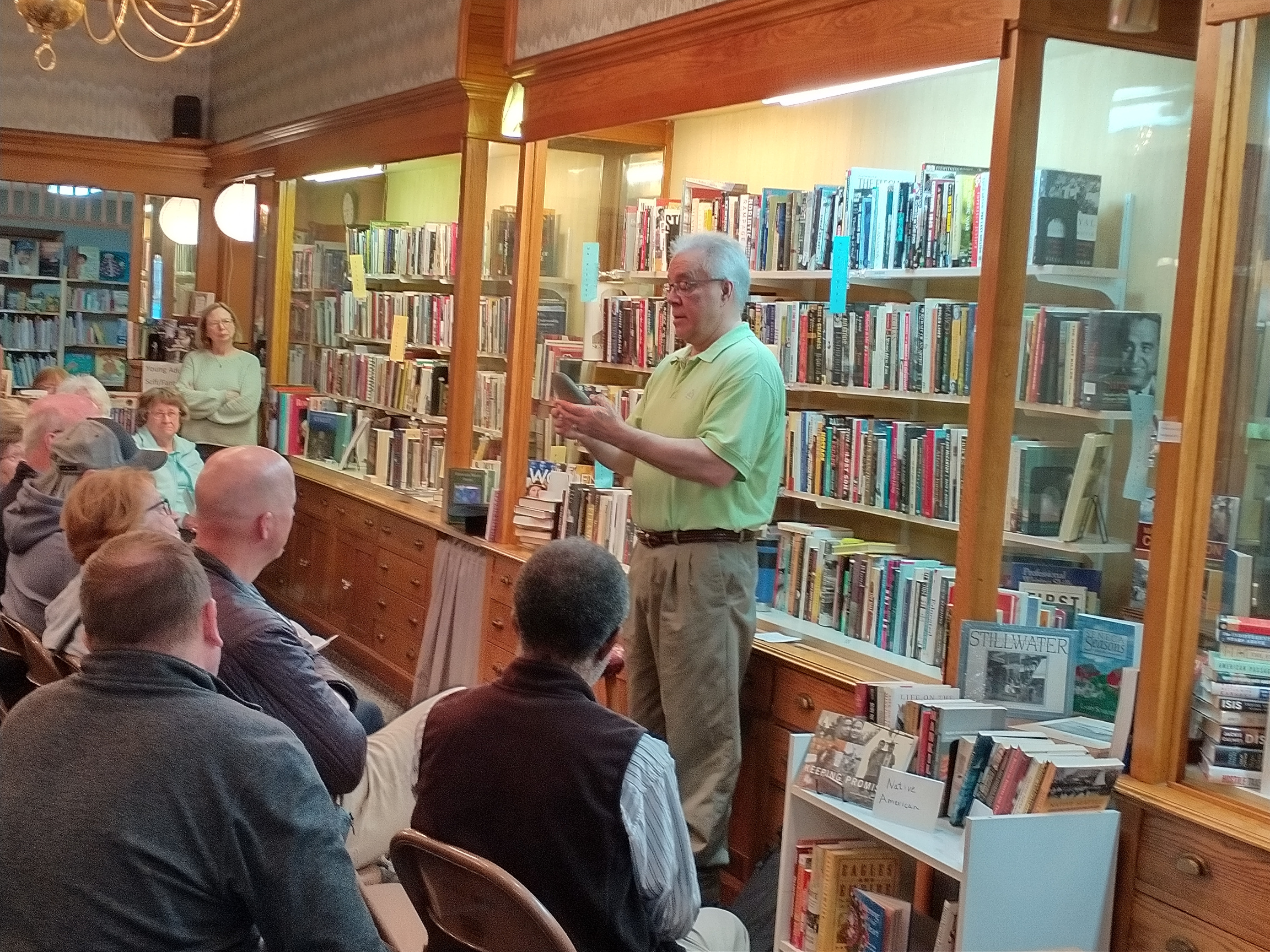
Jeff Jarvis shows an artifact while talking about the Dakota. (Minnesota Prairie Roots copyrighted photo April 2024)
“WE’RE ALL CONNECTED. We’re all one.” Those closing words by local historian and artist Jeff Jarvis as he ended an hour-long presentation on “The Faribault Dakota” at Books on Central Thursday evening resonate. I’ve long been geographically-connected to Indigenous Peoples, first in my native Redwood County and now in Rice County. But Jarvis’ definition of connection stretches well beyond geography to the connection we all share simply via our humanity.
Jarvis, who is also an artist and graphic designer, handed out this mini guidebook at Thursday’s presentation. (Minnesota Prairie Roots copyrighted photo April 2024)
Jarvis spoke to a standing room only crowd packed into the Rice County Area United Way used bookstore on Faribault’s Central Avenue. The third speaker in the popular literary event series hosted by the bookshop since its fall opening, his talk was more history than literary. Interest ran high.
My interest in the Dakota traces back to the southwestern Minnesota prairie, where I grew up between the Upper and Lower Sioux Indian Reservations. Today the word “community,” references these homes of the Mdewakanton Dakota. When I moved to Rice County 42 years ago, I moved onto land once inhabited by the Wahpakute Dakota. But it wasn’t until I listened to Jarvis speak that I learned even more about the place I initially called home on the southeastern tip of Cannon Lake west of Faribault.
Long before fur traders and settlers moved to this region of southern Minnesota, the Dakota called this land home, typically living along the area’s lakes and rivers, including the Cannon. I knew this; I’ve attended many presentations on the Dakota by local historians. But I wasn’t aware that the former Ackman Store, the rental home where Randy and I lived for 2 ½ years after our 1982 marriage, was near the site of a trading post opened by fur trader and town founder Alexander Faribault.
Native American artifacts found in Rice County and displayed at the Rice County Historical Society. These are not the artifacts shown by Jarvis. (Minnesota Prairie Roots copyrighted photo 2024)
Jarvis asked me after his presentation whether I saw ghosts while living there. I didn’t. And in a conversation with Lou Ackman, who grew up and lived along Cannon Lake and loaned Indian artifacts for Jarvis to show Thursday evening, I learned that people often searched the Ackmans’ farm fields for artifacts.
When Randy and I moved into Faribault, our geographic connection to Indigenous Peoples continued. We purchased a house below Wapacuta (sic) Park, where we still live today. It was upon this now park land that the Dakota placed their dead, (wrapped in buffalo robes or blankets) upon scaffolding until later burial. Jarvis also shared that the Dakota sometimes suspended wrapped bodies from trees to catch the spirits in the windy hilltop location prior to burial 1-2 years later. I’d never heard this prior to Thursday.
Peace Park, an unmarked Dakota cemetery near Buckham Memorial Library. (Minnesota Prairie Roots copyrighted file photo September 2022)
But I was aware that Peace Park, a triangle of land near Buckham Memorial Library, is an Indian burial grounds. Jarvis termed it an unfenced and unrecognized cemetery marked by a faith-based WW II monument and nothing indicating this is sacred ground of the Dakota. Several bodies were discovered buried there in 1874, he said, not wanting to delve deeper into that troubling topic at Thursday’s event.
Jarvis covered a lot more in his one-hour presentation. Most I knew. Some I didn’t. I always appreciate learning local history, especially about the 300-400 Dakota who relocated from Cannon Lake to live in elm bark huts and teepees in the area along the Straight River from Division Street to the wastewater treatment plant.
The community of Faribault, Jarvis said, had/has a lot of color and was/is “a beckoning place” to many peoples. He referenced the Indigenous Peoples of yesteryear and the immigrants of today. “We’re all connected. We’re all one,” Jarvis said. He’s right.
One of two rainbows arches over Faribault Thursday evening. (Copyrighted photo by Randy Helbling April 2024)
As I stepped outside the bookshop after Jarvis’ talk, cloudy skies opened to reveal stunning double rainbows—a symbol of promise and of hope. A symbol that we all live under the same sky, that we’re all connected.
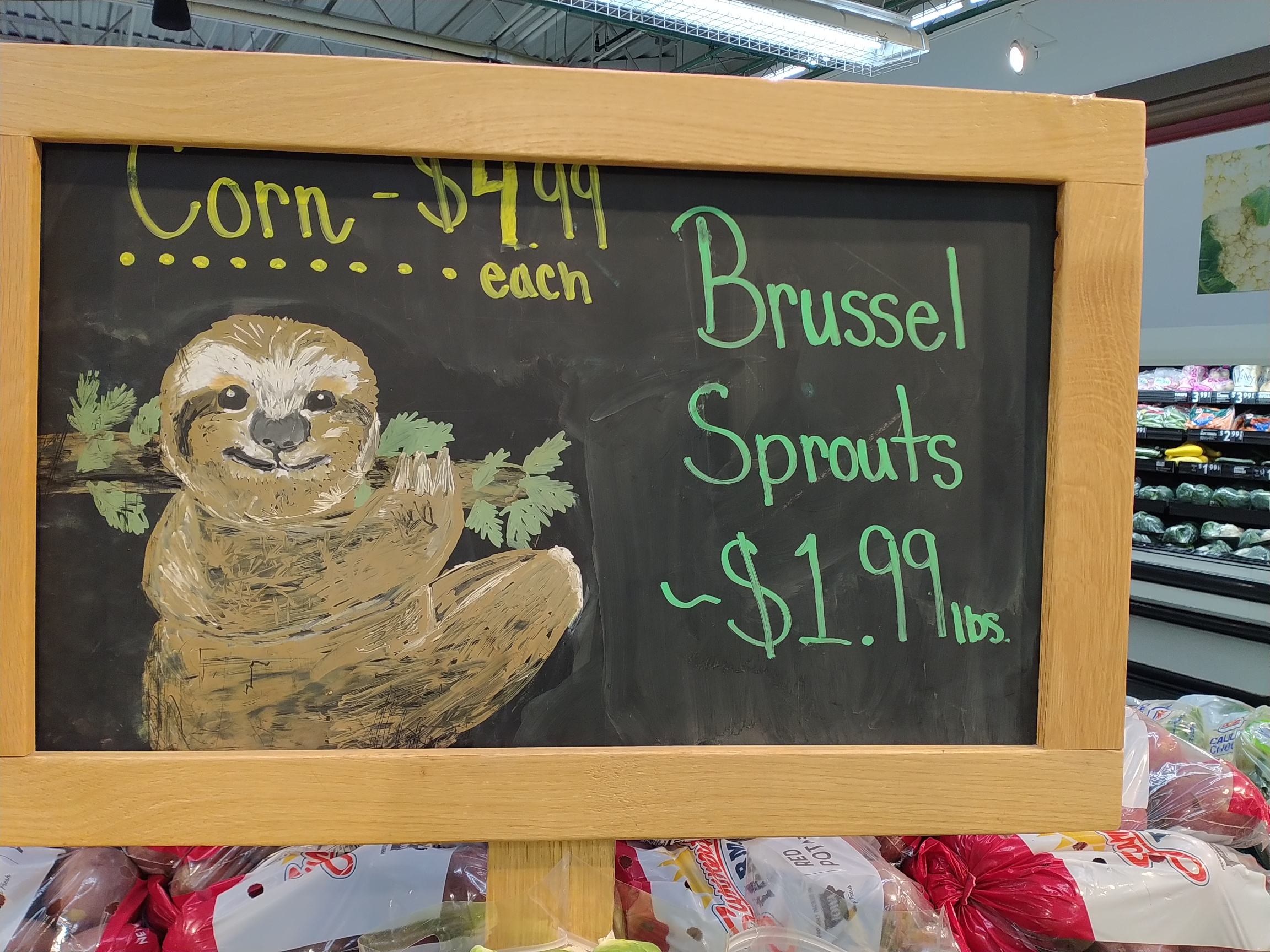
A sign in the produce section of a Faribault grocery store. (Minnesota Prairie Roots copyrighted photo April 2024)
I’M DRAWN TO SIGNS. Business signs. Roadside signs. Homemade signs. Nearly all signs, except political signage, attract my interest. The campaign signs I can do without, especially those that are in place too early and well beyond allowable time-frames (as in my neighborhood). But I digress.
Perhaps it’s the creative in me that leads my eyes to appreciate the artistry of signs. I consider fonts, color, design, art—all the pieces that come together in conveying a message. Sometimes the individual parts work. Other times, I’m left wondering.
That’s exactly how I felt upon viewing a sign recently in the produce department of a local grocery store. It was the sloth art which caught my eye. I’ve always thought sloths to be ugly-cute. Except for their sharp claws, they appear cuddly. I just want to wrap one in a hug, feel its long, furry arms embracing me.
Considering the hand-drawn grocery store sloth art snagged my interest, the sign accomplished its original intent—to make me look. But I felt confused. What’s the connection between a leaf, twig, bud-eating sloth and vegetables in a produce section? There is none, as far as I can determine. The slow-moving mammal eats neither corn nor Brussels sprouts. I do.
And sloths live in the tropical rainforests of Central and South America, far from the cold and snow of Minnesota, which can feel tropical in the heat and humidity of summer. Sloths can be found in Minnesota hanging on trees inside the Tropical Encounters exhibit at Como Park Zoo and Conservatory in St. Paul. Perhaps Chloe from Como inspired the grocery store artist. Who knows?
Whatever the story behind the produce section sloth sign, I appreciated it. But not enough to purchase corn or Brussels sprouts on this April day in southern Minnesota.
The moon rises while the sun sets. (Minnesota Prairie Roots copyrighted file photo)
SUN. EARTH. SKY. MOON.
Monday, April 8, marks the date of much hype, intense interest and eyes focused skyward for an afternoon solar eclipse. Here in Minnesota, we will witness a partial eclipse with the moon covering about 75 percent of the sun around 2 pm.
Solar eclipse glasses overlay a Minnesota Public Radio News article published in the Faribault Daily News. (Minnesota Prairie Roots copyrighted photo April 2024)
But…the weather forecast is for cloudy skies, meaning disappointment for many in Minnesota who hope to view the solar event through special eye wear. I picked up free eclipse glasses at my local library. So I’m set, just in case the cloud cover lifts.
Carleton College in nearby Northfield is also set to celebrate at Goodsell Observatory, where small telescopes will be placed outside the building for solar viewing beginning at noon. That is if the weather cooperates. (Check the website for updates.) The event is open to the public.
The total solar eclipse will cut a diagonal across the country from Texas through Indiana to New York and beyond. (Minnesota Prairie Roots copyrighted photo April 2024)
No matter, I expect to notice visible changes in daylight as the moon passes between the sun and earth from 12:45-3:15 pm in Minnesota.
Isaac’s solar system art, created several months before he turned five. (Minnesota Prairie Roots edited photo April 2024)
A half hour to the north of my southern Minnesota home, my 5-year-old grandson Isaac likely will be all-a-chatter about the eclipse. He can rattle off facts about the solar system with the knowledge of an expert. Plus he loves art and has created enough solar system drawings to fill a gallery or at least plaster my refrigerator. I expect many other kids share his excitement. And that is a good thing—anytime kids (and adults) get excited about science.
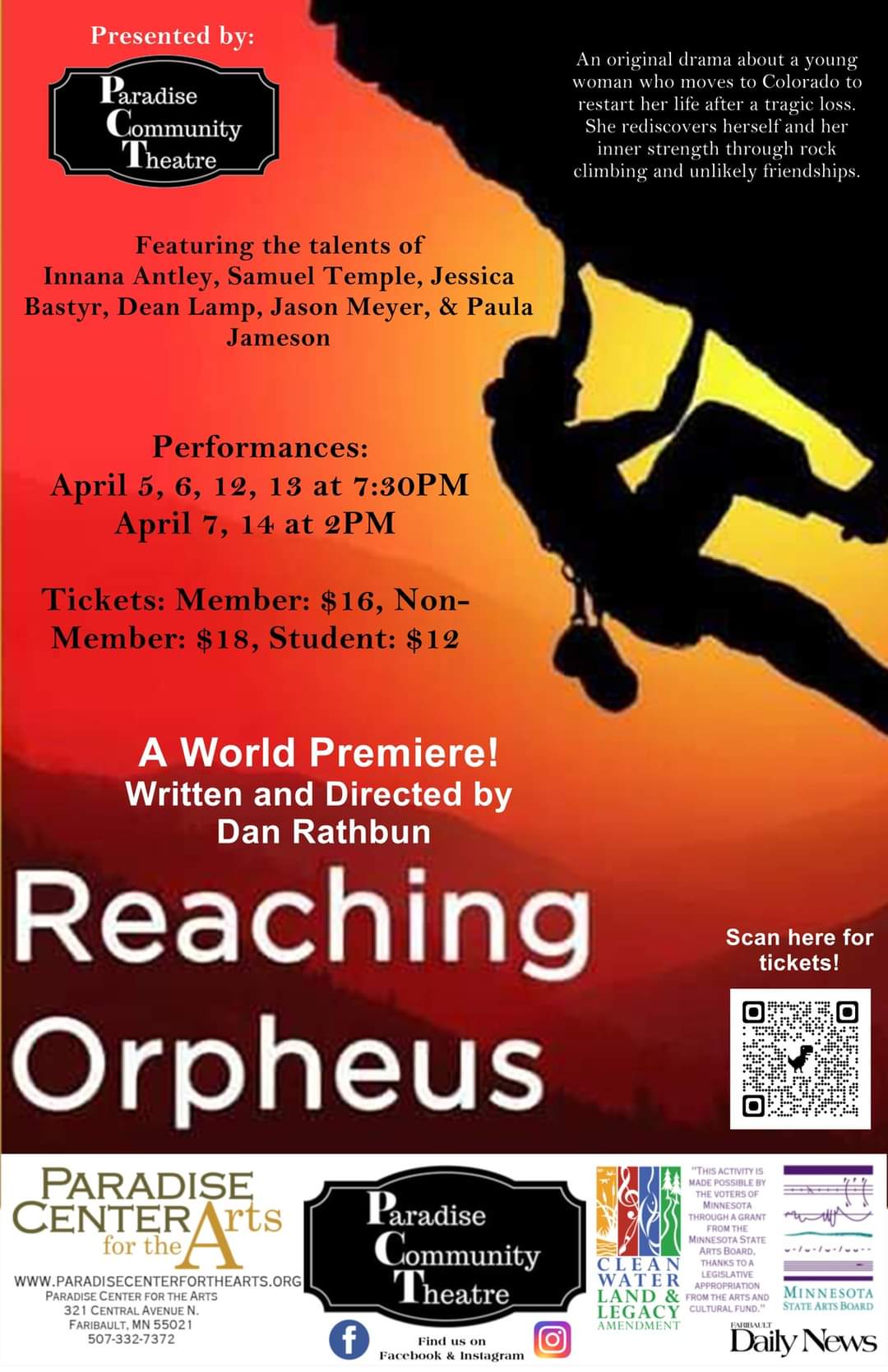
Promo for the world premiere of “Reaching Orpheus,” opening Friday, April 5, in Faribault. (Promo credit: Paradise Center for the Arts)
EIGHT MONTHS. How long has it been since you lost a loved one? For Alex, a lead in the play “Reaching Orpheus,” it’s been only eight months since she tragically lost her husband. For me, it’s been one week and four days since my sister’s husband, my brother-in-law Dale, died of cancer.
Thursday evening I attended the dress rehearsal of “Reaching Orpheus,” a drama scripted and directed by Dan Rathbun of Owatonna. The six-member cast debuts Rathbun’s third original play this evening at the Paradise Center for the Arts in Faribault. When I settled into my theater seat, I brought the raw emotions of new grief.
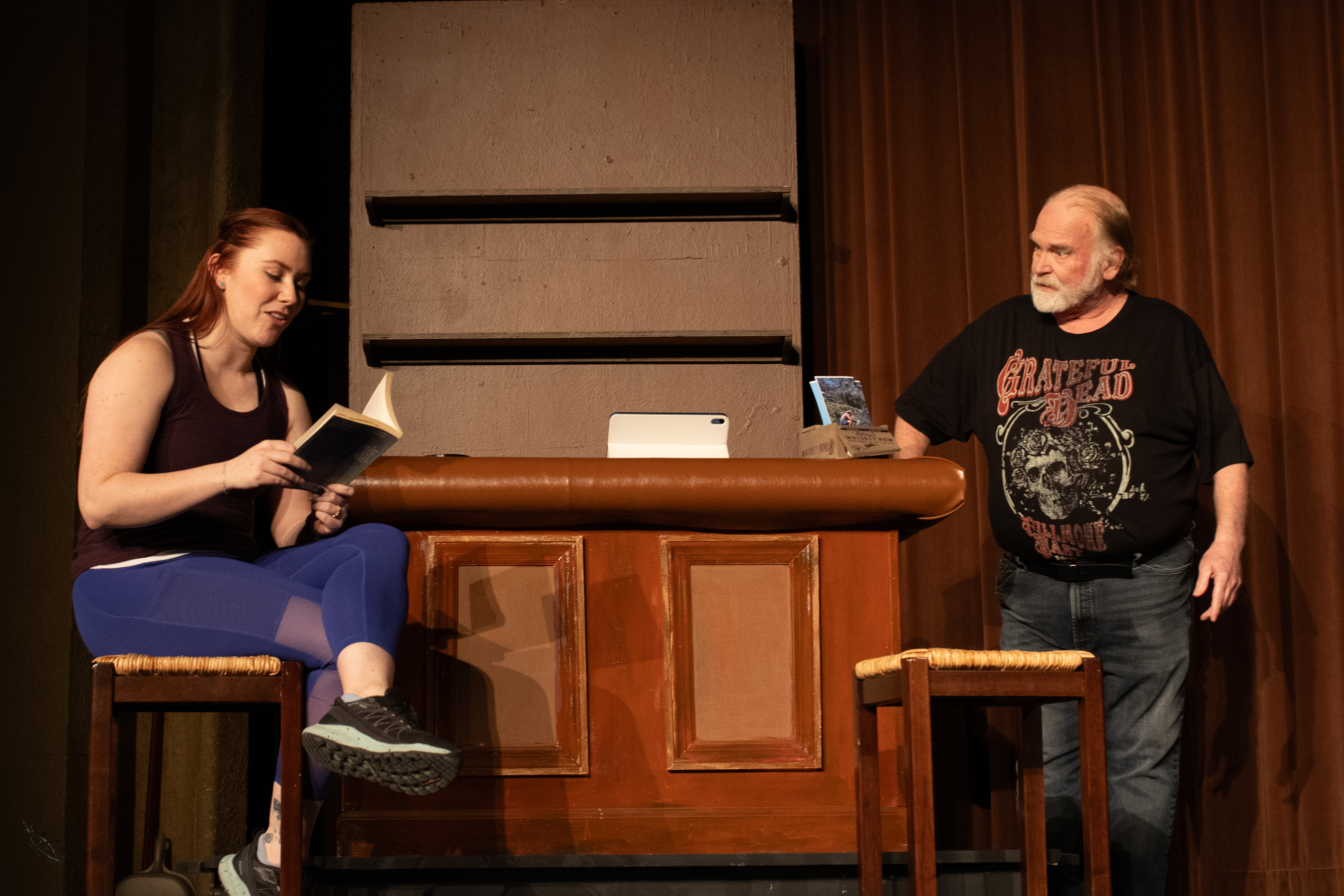
Alex (Innana Antley) and Ian (Dean Lamp) interact during a scene inside Wonky Leg Brewery. (Photo credit: Amber Holven)
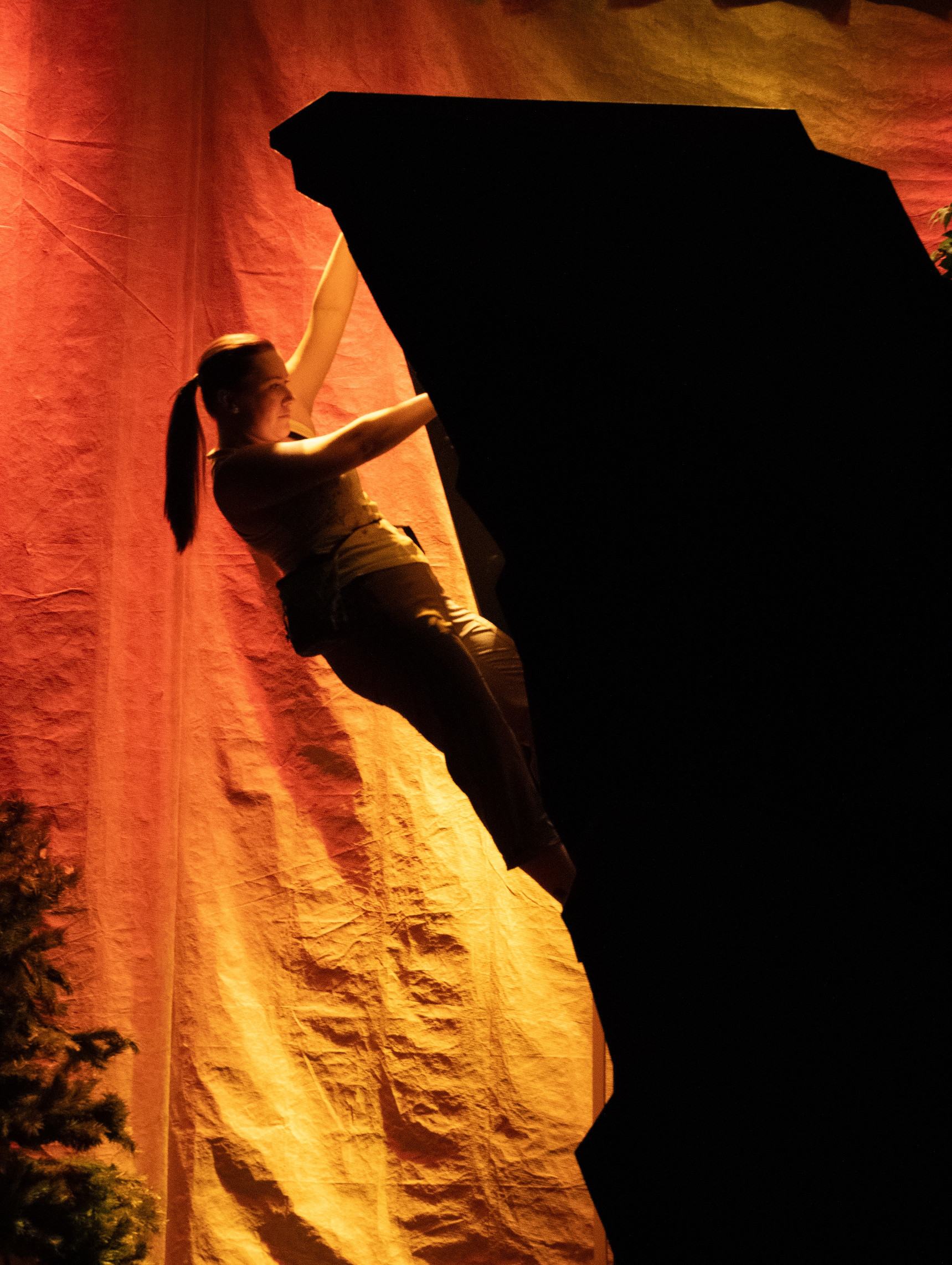
The seasoned and talented cast brings that and much more to the stage as they share the universal experiences of grief, of loss. How we handle it. How we react to it. How we begin to live again in the face of deep loss. It’s there, all there, unfolding in dialogue inside a family brewery and in the mountains of Colorado. As director Rathbun writes in his director’s notes, “Rock climbing is an excellent metaphor for the struggle with grief.”
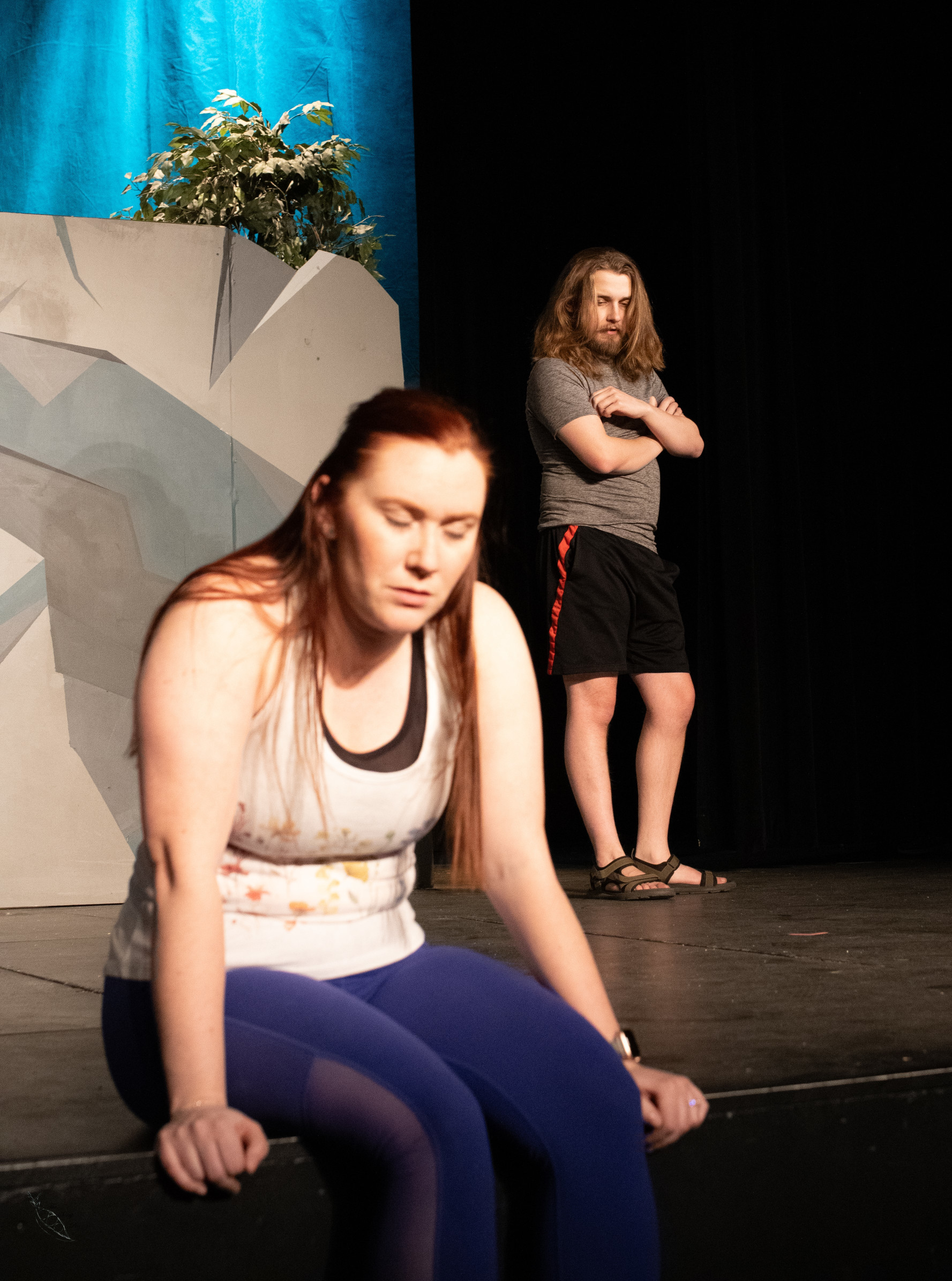
Alex and Sean (Samuel Temple), an engaged couple in real life, perform together for the first time in lead roles. (Photo credit Amber Holven)
Like Alex, we all struggle to climb our way out of grief. Just as Sean, who plays another lead role and who has experienced the tragic death of his sister, Sara, does. Sean runs the brewery with his father and also teaches mountain climbing.
This is a play in which any of us could perform the roles, portray the emotions. Not because all of us are skilled actors and actresses—most of us aren’t—but rather because we have all gone through the challenges shared on stage.
Playwright Rathbun and his cast of six cover the stages of grief, of loss: anger, denial, guilt, regrets, a desire to handle things on our own, escape… So much. So authentic. So relatable.
Certain lines imprinted upon me. Alex, who claims, “It’s fine. I’m fine.” She’s not.
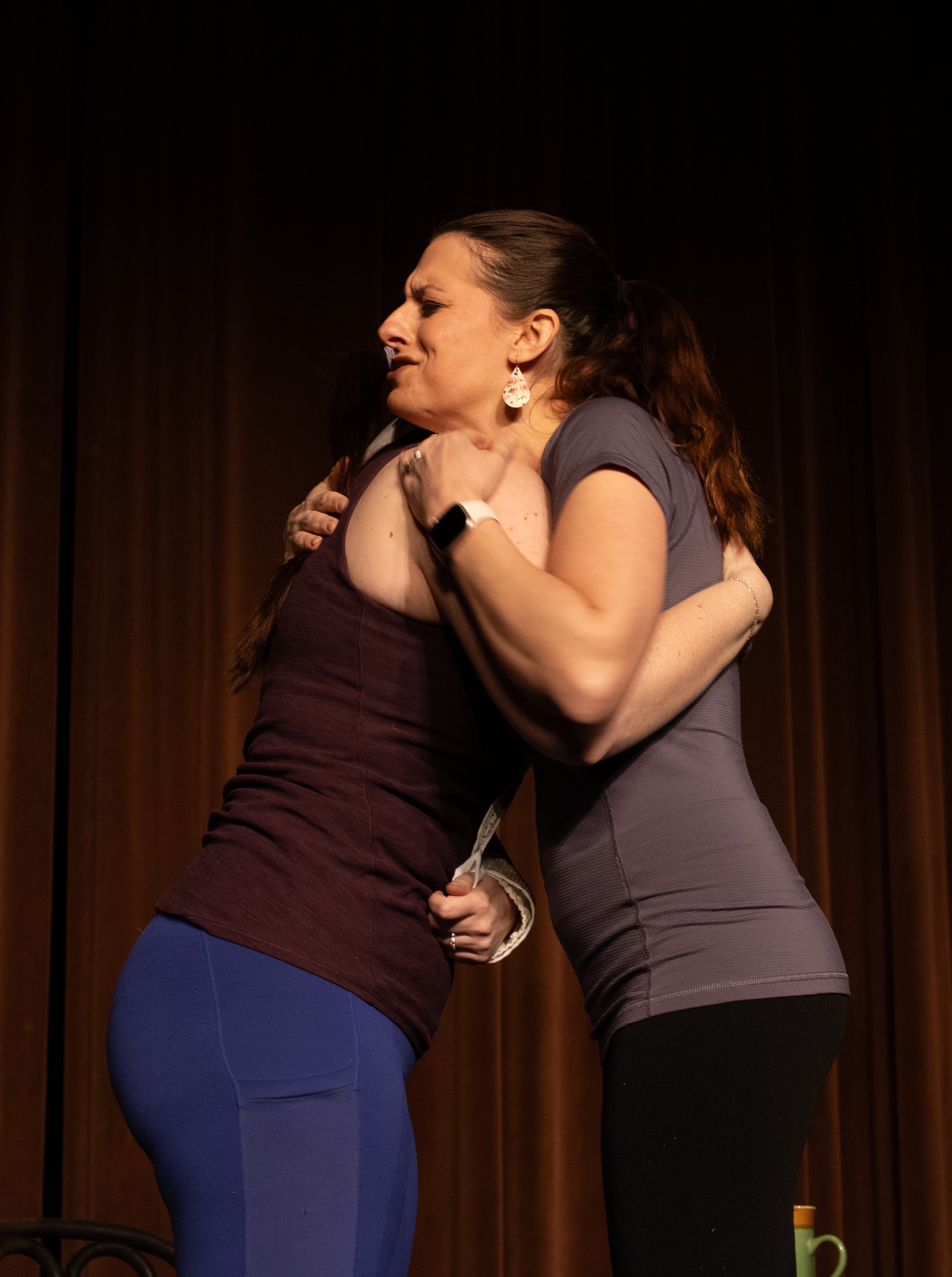
FriendsAlex and Abby (Jessica Bastyr). (Photo credit: Amber Holven)
And then her intense, well-meaning friend Abby, who says, “I’m happy to help.” She wants to help, to fix things, to make everything better for Alex. She doesn’t. Not initially.
And then there’s Ian, Sean’s dad, who follows the coping path of picking himself up, dusting himself off and going on with life after his daughter’s death, all the while ignoring his feelings and his volatile relationship with his son.
Sean tucks his feelings inside, until he slowly begins to open up to Alex, whom he’s teaching to mountain climb. Their conversations include phrases we’ve all heard, thought, spoken or written in the midst of grief: “I know how you feel.” I’m so sorry for your loss.” “It’s exhausting to be the strong one.”
Alex and James (Jason Meyer) in a tender moment. (Photo credit: Amber Holven)
Even James, Alex’s deceased husband, and Sara, Sean’s dead sister (played by Paula Jameson), offer their observations and thoughts in several scenes. There’s value in hearing their perspectives, too.
This thought-provoking play offers so much. Even humor. We all need laughter in the heaviness of loss. And we all need each other in the heaviness of grief. We all need to think, too, about how we respond to grief, the often trite sympathies we offer, the words we say that perhaps hurt more than comfort.
Beyond that, the playwright reminds us, via Sean, “…to tell people how much they mean to us every day.” Sean suggests we hold funerals before a person dies. That, too, I understand as I think back to my own mother and how we celebrated her 80th birthday nine years before her January 2022 death. I remember the family and friends who packed a small town community hall to honor my beloved mom. She felt so cherished and loved. I remember, too, my last visit with my brother-in-law, 3 ½ weeks before his March 25 death. He was well enough yet to sit up, engage in conversation, share memories. It was a good visit.
And today I think of a dear friend, bed-ridden, in hospice and dying of cancer. Her family, even through their pain, has opened their home to everyone, anyone, who wants to see their loved one. Each time I see my friend, deliver a meal to her family, I stand by her bedside, tell her, “I love you.” We laugh. We cry. And we never part without kisses placed upon each other’s cheeks.
Alex climbs the mountain, physically and emotionally. (Photo credit: Amber Holven)
This is grief. This is loss. This is love. “Reaching Orpheus” brings that all onto the stage. Deep and real, like the mountains we all must climb, have climbed.
Izzy’s birthday cake with fruit spread between layers and topped with fresh fruit (her choice of cake) was delicious. (Minnesota Prairie Roots copyrighted photo April 2024)
My dearest Isabelle,
As you turn eight, I want you to know how very much I love you. I love you beyond words. And that says a lot given I’m a wordsmith.
You have brought me such joy. To feel your hugs, to scamper up the stairs to your bedroom to see your latest treasures, to listen to you excitedly talk about the latest Magic Tree House (or other) book you’re reading, to watch a video of you as a roaring lion during a school play, all are cherished moments.
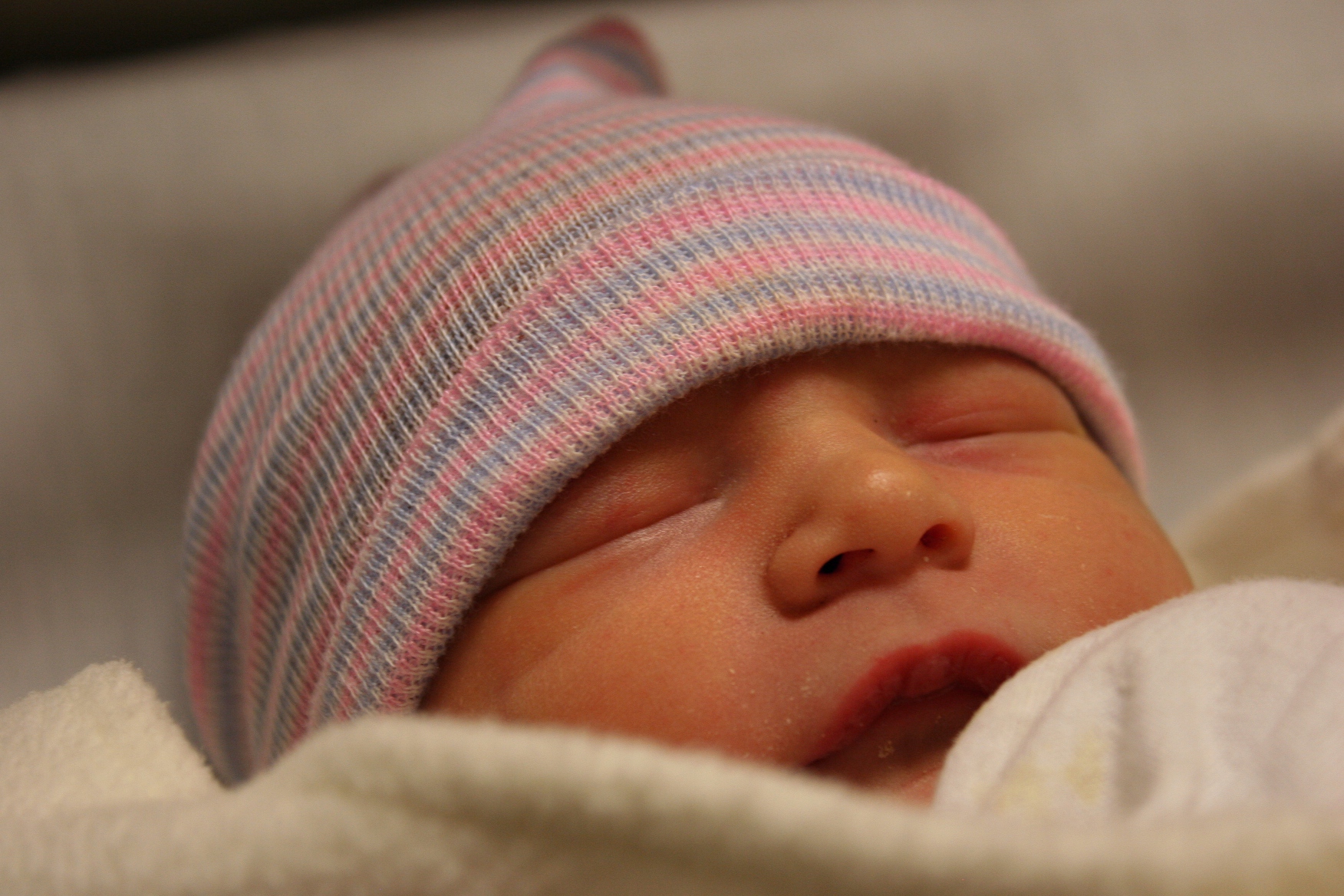
My granddaughter, Isabelle, photographed when she was about 17 hours old. (Minnesota Prairie Roots copyrighted file photo April 2016)
From the day you were born, I learned a new definition of love: granddaughter.
I love being your grandma. I love when you ask me to sit next to you at family gatherings, as you did at your recent birthday party dinner. I loved sitting next to you while playing BINGO at your brother’s preschool family BINGO night, even if you whined a bit because you weren’t winning. And you really really really wanted a prize.
One of my favorite photos: Grandpa and grandchildren follow the pine-edged driveway at the lake cabin. (Minnesota Prairie Roots copyrighted file photo July 2020)
I especially enjoy our time together each summer Up North at a family lake cabin. Taking nature walks. Sitting on the dock, feet dipping and kicking in the water. Eating ice cream at a shop in town. We are making memories that I hope will last you a life-time. Simple memories that center on family togetherness. On love.
Photographed at the Minneapolis-St. Paul International Airport. (Minnesota Prairie Roots copyrighted file photo)
In your short life, you have traveled farther than I have in my sixty-seven years. Your world is wider, bigger, broader. You live in a diverse neighborhood. Your best friends are boys. You are learning Spanish already as a second grader. I am grateful for all of these. Your world is open wide. And you embrace it.
For a while, Izzy was into PJ Masks. I remembered this character, Owlette. (Minnesota Prairie Roots copyrighted file photo 2022)
You swim. I can’t. You roller skate. I did. You try to teach me the characters in the latest whatever interests you. I fail to remember the Paw Patrol pups and now Pokemon characters. I’m doing better at dinosaurs. But mostly it’s too much for Grandma to keep straight. Too much.
One of my favorite art pieces created by Izzy. (Minnesota Prairie Roots copyrighted file photo June 2023)
But it doesn’t matter, Izzy. What matters is that I love you and you me. You are my daughter’s daughter. Her first-born as she was mine. The April day you were born eight years ago opened my heart to a new kind of love. Deep and full and beautiful beyond words.
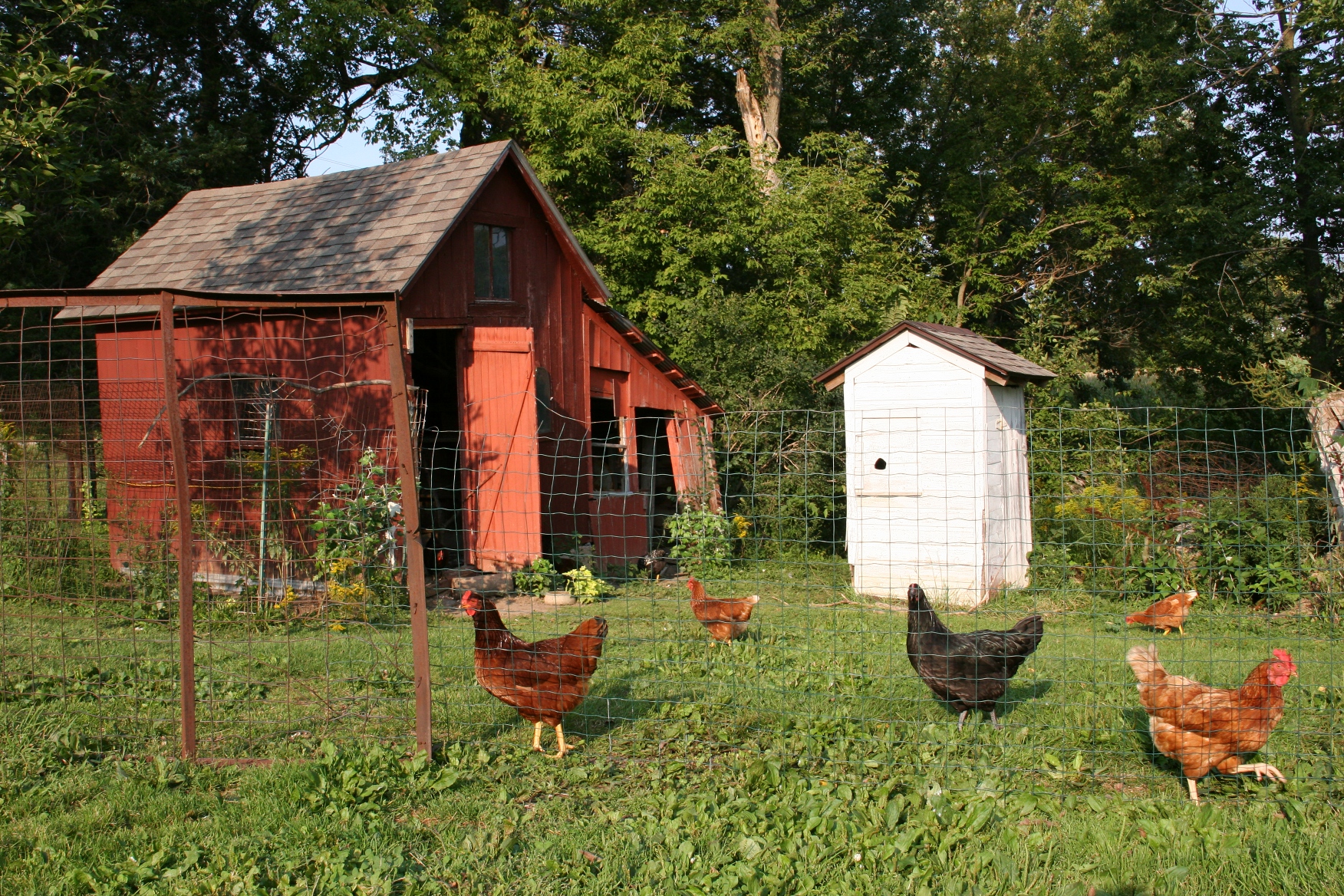
My friend Joy’s chickens. (Minnesota Prairie Roots copyrighted file photo)
I’M NO CHICKEN farmer. I’m not even particularly fond of roaming chickens (ducks or geese). But this time of year on “Chick Days,” I feel nostalgic, remembering the delivery of newly-hatched chicks. They arrived on my southwestern Minnesota childhood farm via the U.S. Postal Service, cheeping raucously and, I’m certain, desiring to escape their cardboard boxes.
A snippet of a promo for “Chick Days” at a local business.
Today, chicks still ship via mail, but need to be picked up at the post office or at a local supplier on “Chick Days.” That may be at a farm store, a grain elevator, a feed store…
A boarded up hatchery in southwestern Minnesota. (Minnesota Prairie Roots copyrighted file photo)
Gone are the days when chick hatcheries were found in many farming communities. But this is not Mayberry anymore. Rural America has changed significantly since I was growing up in the 1960s and 1970s with businesses now shuttered, buildings vacated.
A 1950s or 1960s era greeting card from a hatchery in Minneota, Minnesota. (Minnesota Prairie Roots copyrighted photo April 2024)
But, if you look closely enough, dig deep enough, ghosts of those businesses remain, including chick hatcheries. Among the vintage greeting cards my mom saved (she saved everything), I found a holiday card from Dr. Kerr’s Hatchery. That was in Minneota; that’s Minnesota minus the “s.”
Minneota sits on the prairie northwest of Marshall in Lyon County. This small town is perhaps best-known as the home of the late Bill Holm, noted writer and English professor at Southwest Minnesota State University. Among his work, Boxelder Bug Variations, a collection of poetry and essays about, yes, boxelder bugs. Minneota celebrates Boxelder Bug Days annually.
But it doesn’t celebrate chicks, as far as I know, or the hatchery with the unusual name of “Dr. Kerr’s Hatchery.” There’s a story behind that moniker. I just don’t know what that may be.
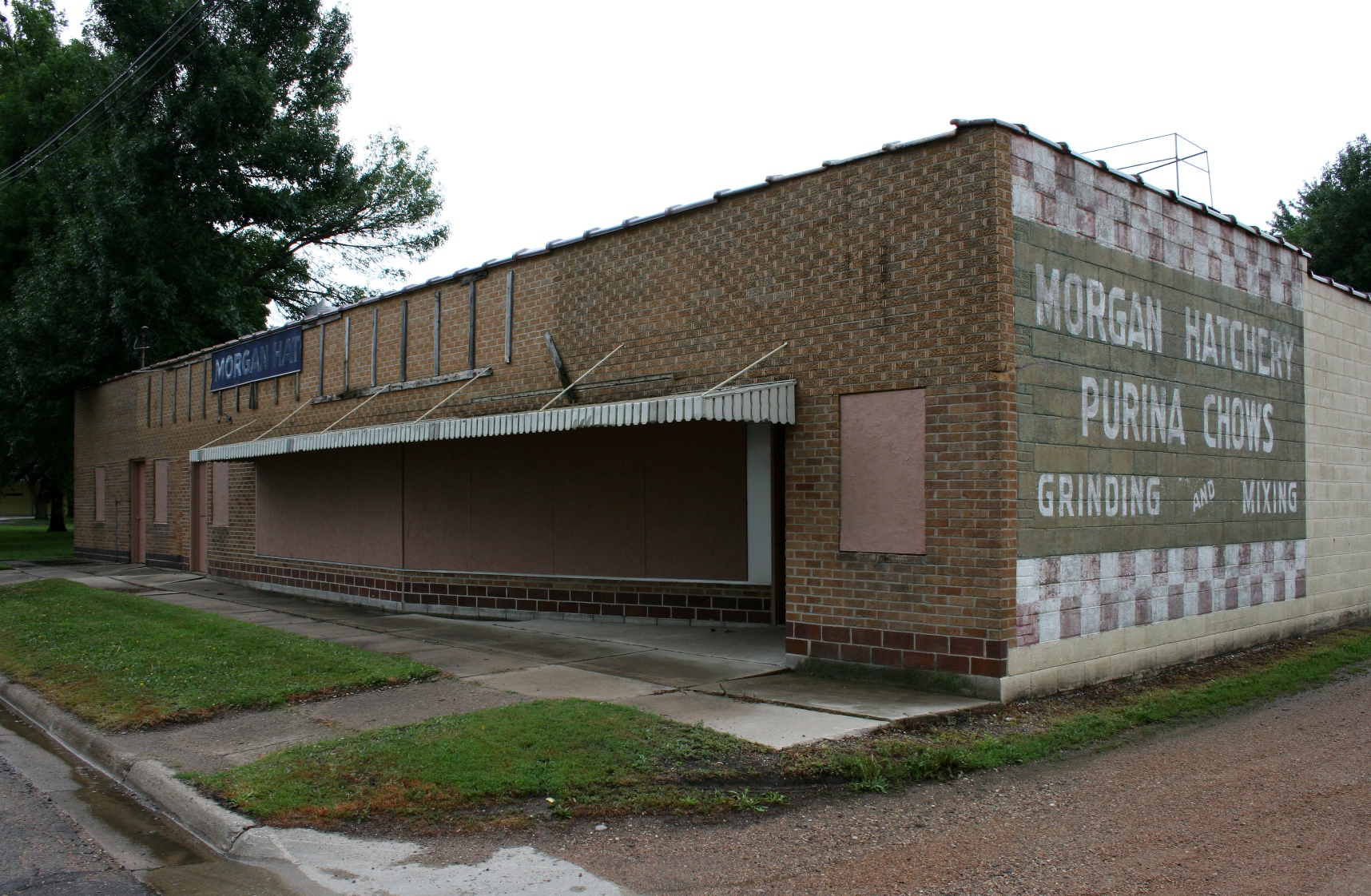
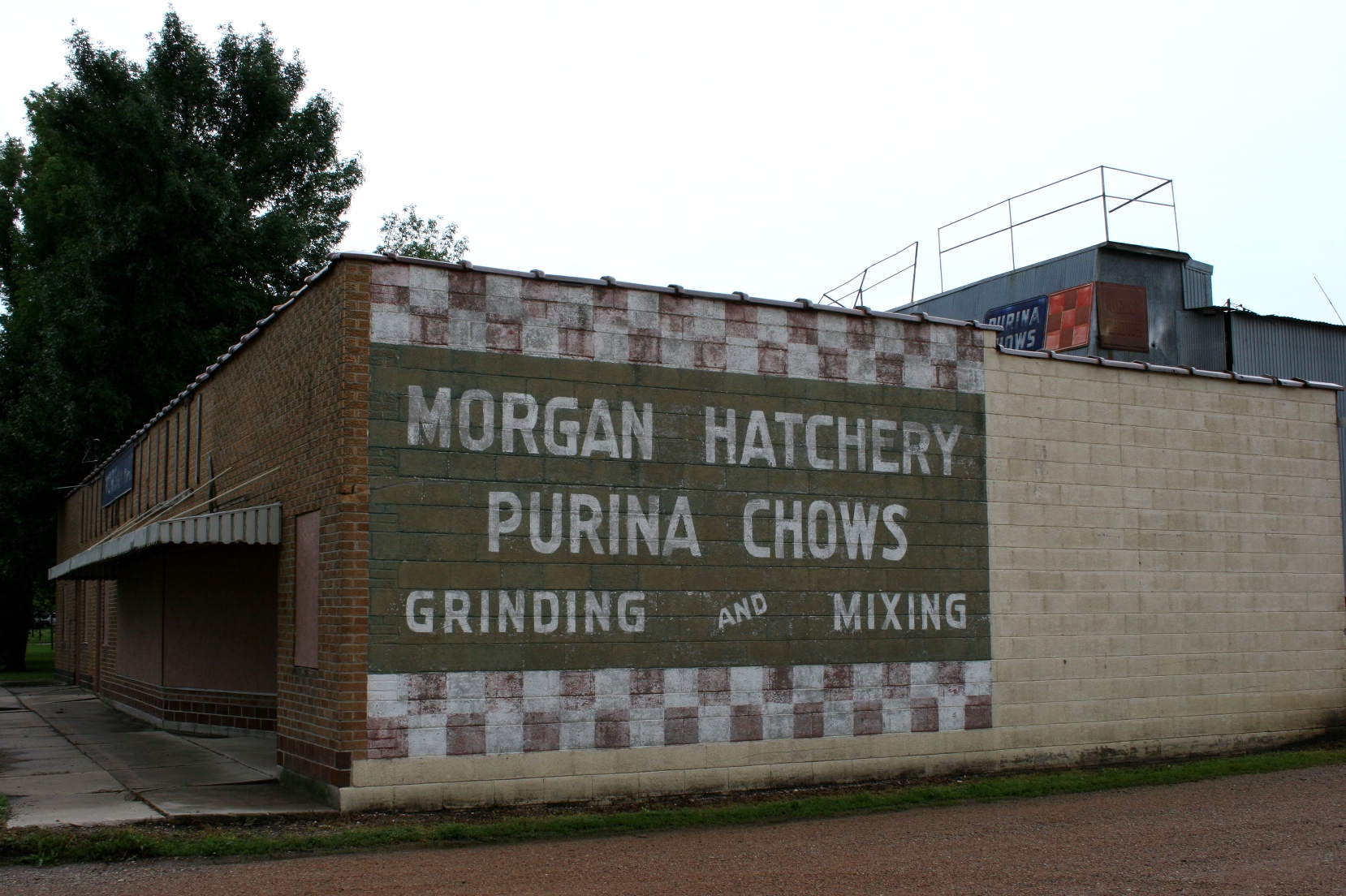
Signage is a reminder that this building once housed a hatchery in Morgan. (Minnesota Prairie Roots copyrighted file photo)
I do know, though, that Morgan, 60 miles to the east of Minneota, also had a hatchery, aptly named Morgan Hatchery. I photographed the exterior of the former hatchery and feed store in 2013 while en route to my hometown of Vesta.
Chickens are fenced next to the red chicken coop on Joy’s rural acreage. Sometimes they also roam free aroundthe yard. (Minnesota Prairie Roots copyrighted file photo)
Thoughts of home take me back to those chicks delivered by the mailman, as we called letter carriers back in the day. After retrieving the box (es) of chicks from aside the roadside mailbox, Mom released them into the chicken coop. There they clustered around shallow water dishes under the warmth of heat lamps. I don’t recall many details other than the fluffy fowl feathering all too soon. For me, the chicks’ transition toward adulthood quickly ended my adoration.
A fenced rooster at my nephew and niece’s rural acreage. (Minnesota Prairie Roots copyrighted file photo)
There’s a reason I dislike being in close proximity to chickens: pecking hens and a vicious rooster. Gathering eggs from angry hens as a young girl proved an unpleasant chore. And avoiding a mean rooster proved impossible. One day Dad had enough of the rooster attacking his children. He grabbed an ax and that quickly ended the hostile encounters. I still hold trauma from that rooster. But I’ve gotten better about being around chickens. However, if I even pick up on a hint of meanness, I flee.
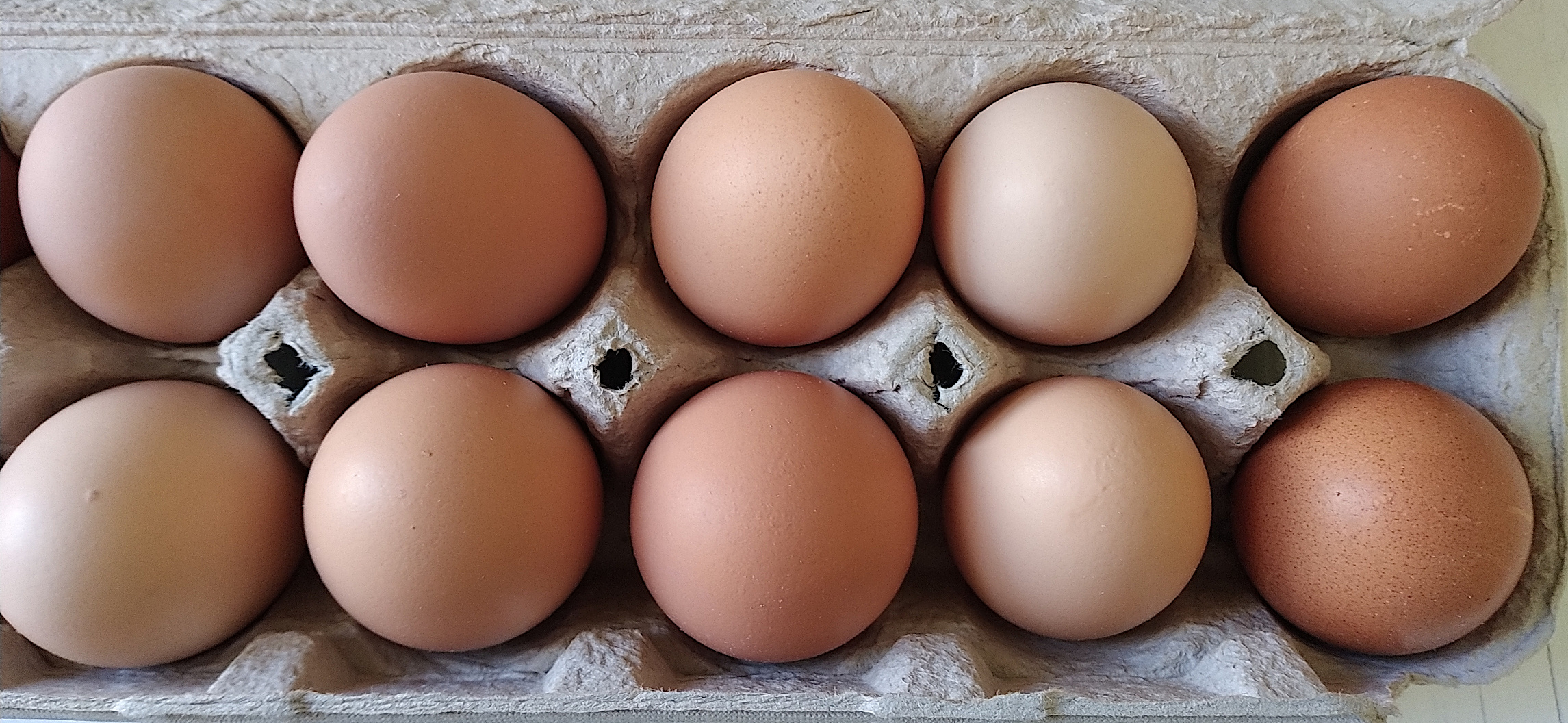
Farm fresh eggs from Nancy and Loren’s chickens. (Minnesota Prairie Roots copyrighted photo April 2024)
The difference in eggs, with the yolk from a store-bought mass-produced egg on the left and a farm fresh egg on the right. (Minnesota Prairie Roots copyrighted photo April 2024)
Given my history, I’ll never own chickens. But I eat chicken. And I eat eggs. I especially like farm fresh eggs from free-range chickens. The dark orangish-yellow yolk hue, the taste, are superior to mass-produced eggs.
A maturing chick. (Minnesota Prairie Roots copyrighted file photo)
And I still think chicks are cute, even if they quickly morph into feathered birds I’d rather not be around.
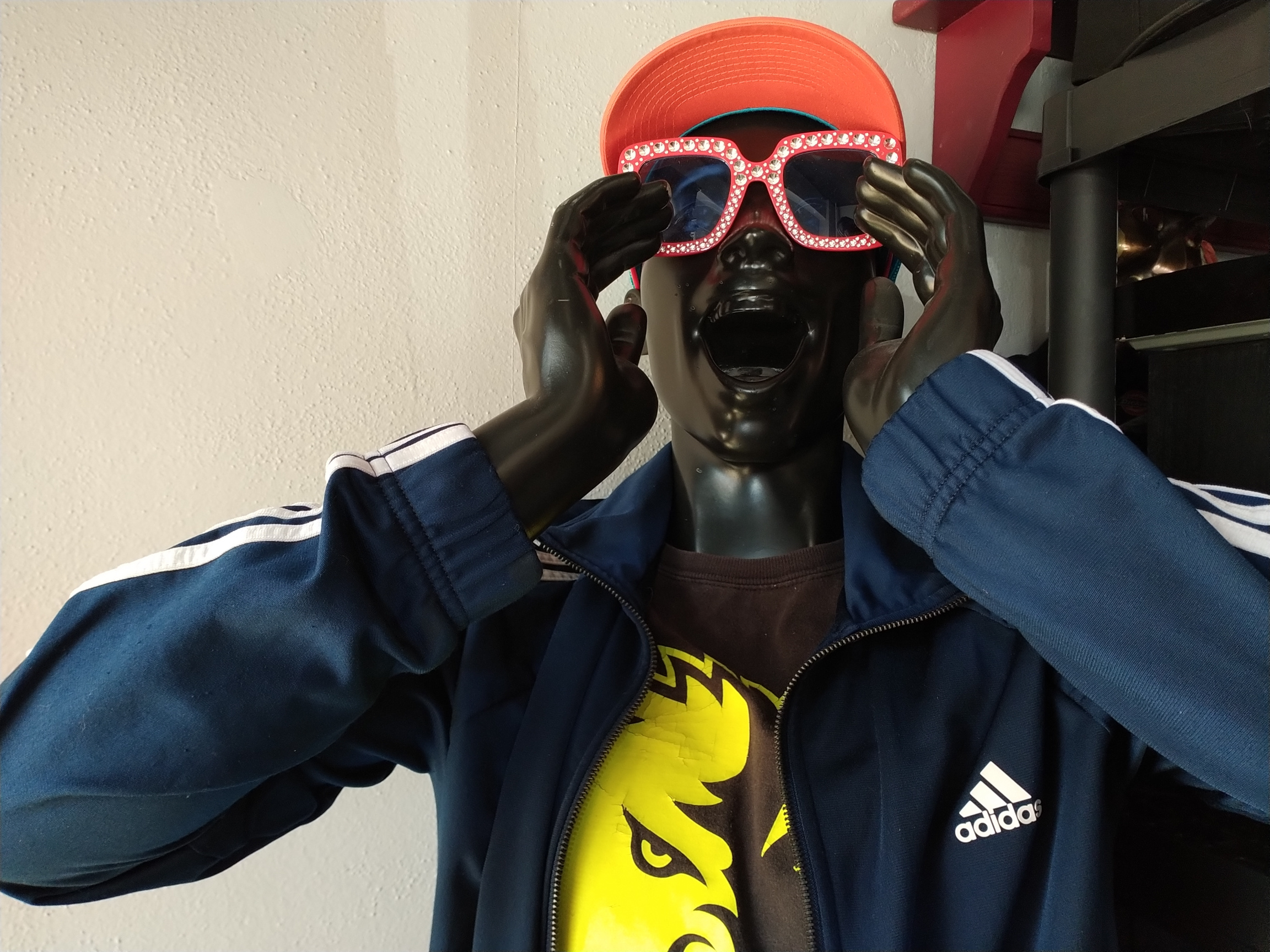
Joyful mannequin. (Minnesota Prairie Roots copyrighted photo March 2024)
AMONG THE TRANS-SIBERIAN ORCHESTRATOUR and other t-shirts, the refurbished shoes, the hats, the colorful purses, the VHS tapes, the stereo and even the television set playing in black-and-white, they stood out. The dark-skinned mannequins, joyfully jubilant.
I happened upon the pair after popping into Closet Sale, a recently-opened thrift and secondhand shop in downtown Faribault. Inside the cozy space at 103 Central Avenue, they stood, mouths stretched wide as if to shout, “Welcome!” or perhaps, “Hey, you, stop and look!”
No matter what I imagined their words to be, I was drawn to the two. Drawn by their poses. Drawn by their expressions. And drawn by their skin color. I don’t recall ever seeing a black mannequin in a local store, even though Faribault is home to many people whose skin tone is anything but white.
Love the vivid LEGO glasses on this mannequin. (Minnesota Prairie Roots copyrighted photo March 2024)
Upon seeing the extroverted pair, I felt as happy as they appeared. They had character. Spirit. Personality. Their bold over-sized glasses added fashion flair. They seemed the creative type—perhaps musicians or painters of vivid abstracts or performers.
I recognize that’s a lot to take from two store mannequins. I offer no apologies. To me, the duo are more than plastic models showcasing merchandise. They represent my culturally diverse community, including the man who runs Closet Sale. He’s Juan Pablo Zuñiga Navarro, native of Chile.
I appreciate diversity of ownership in Faribault’s historic district. Today’s downtown core is no longer just that of white ownership. Those of Hispanic and Somalian ethnicity also now run businesses along and bordering Central Avenue. We’ve come full circle. Immigrants from many countries, all speaking different languages and with their own customs, faiths and dress, settled this city. Set up shop. Crafted shoes. Built furniture. Brewed beer. Sold dry goods. And much more. All to make a better life for themselves and their families in the land of opportunity.
Just like yesterday, the immigrants of today are working hard to achieve the American dream. Many have escaped war-torn countries, violence, extreme poverty. I recognize that. So I welcomed Juan Pablo to Faribault, told him, “I’m happy to have you here!” I am. And I’m happy also to have those two spirited mannequins, who welcomed me into Juan Pablo’s shop. Joyfully. Exuberantly.
Christdala Swedish Lutheran Church, rural Millersburg. (Minnesota Prairie Roots copyrighted file photo August 2020)
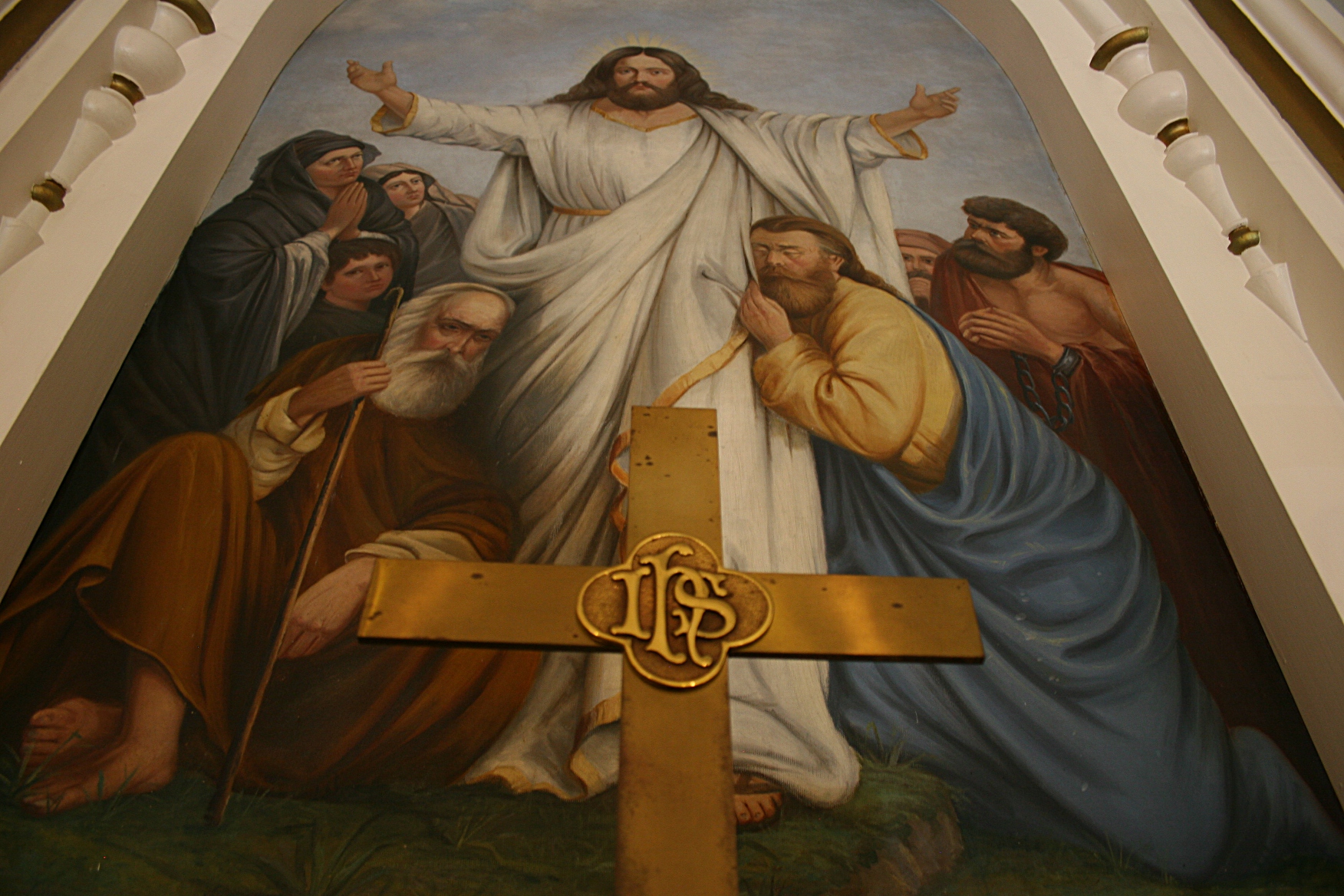
IN MY BACKROADS travels around Minnesota, I’ve often stopped at churches, drawn by their history, architecture and art. Churches are, to me, more than houses of worship. They are also galleries, museums, centers of praise and grief and joy.
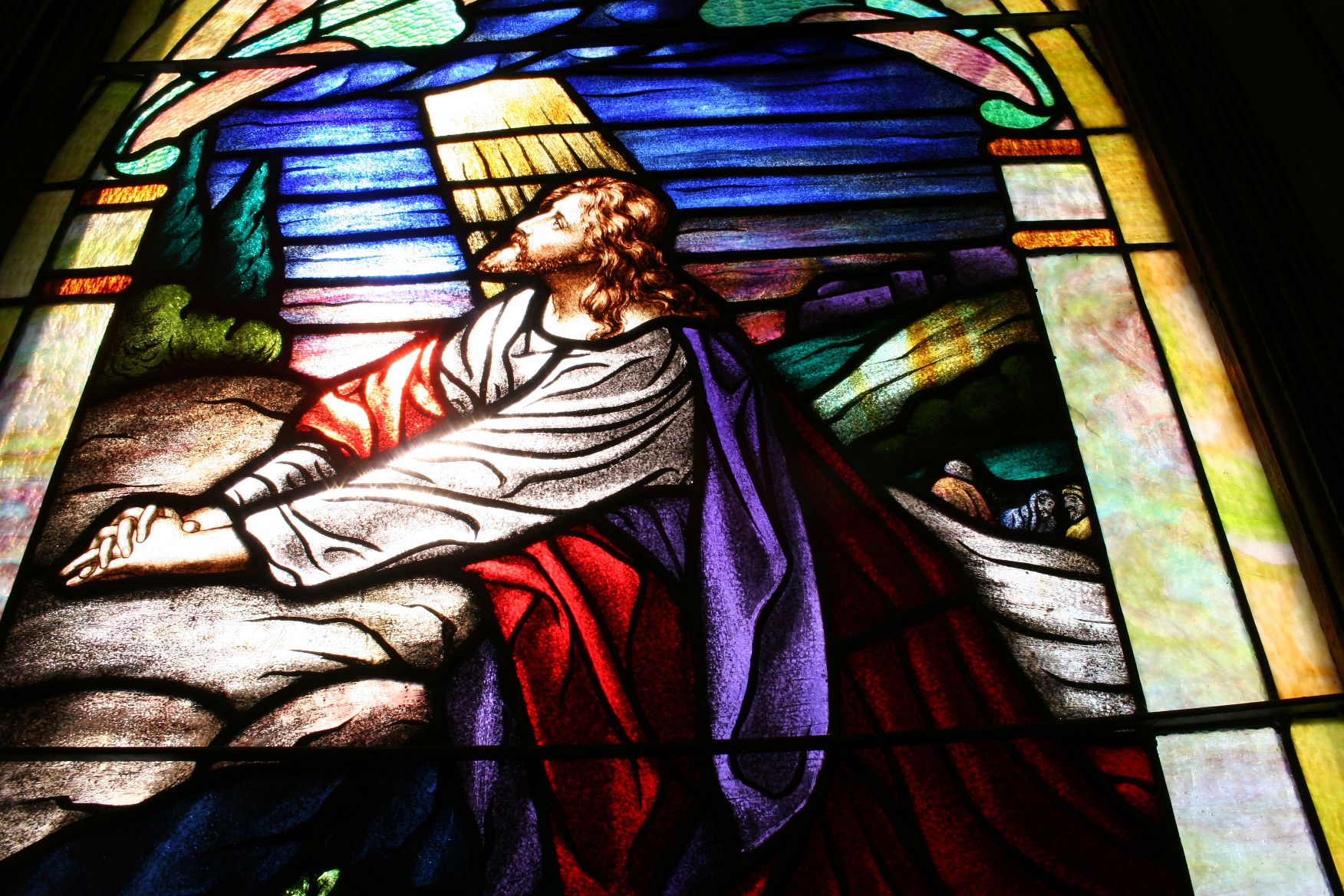
Inside Vang Lutheran Church, rural Dennison, a depiction of Jesus praying in the Garden of Gethsemane. (Minnesota Prairie Roots copyrighted file photo October 2014)
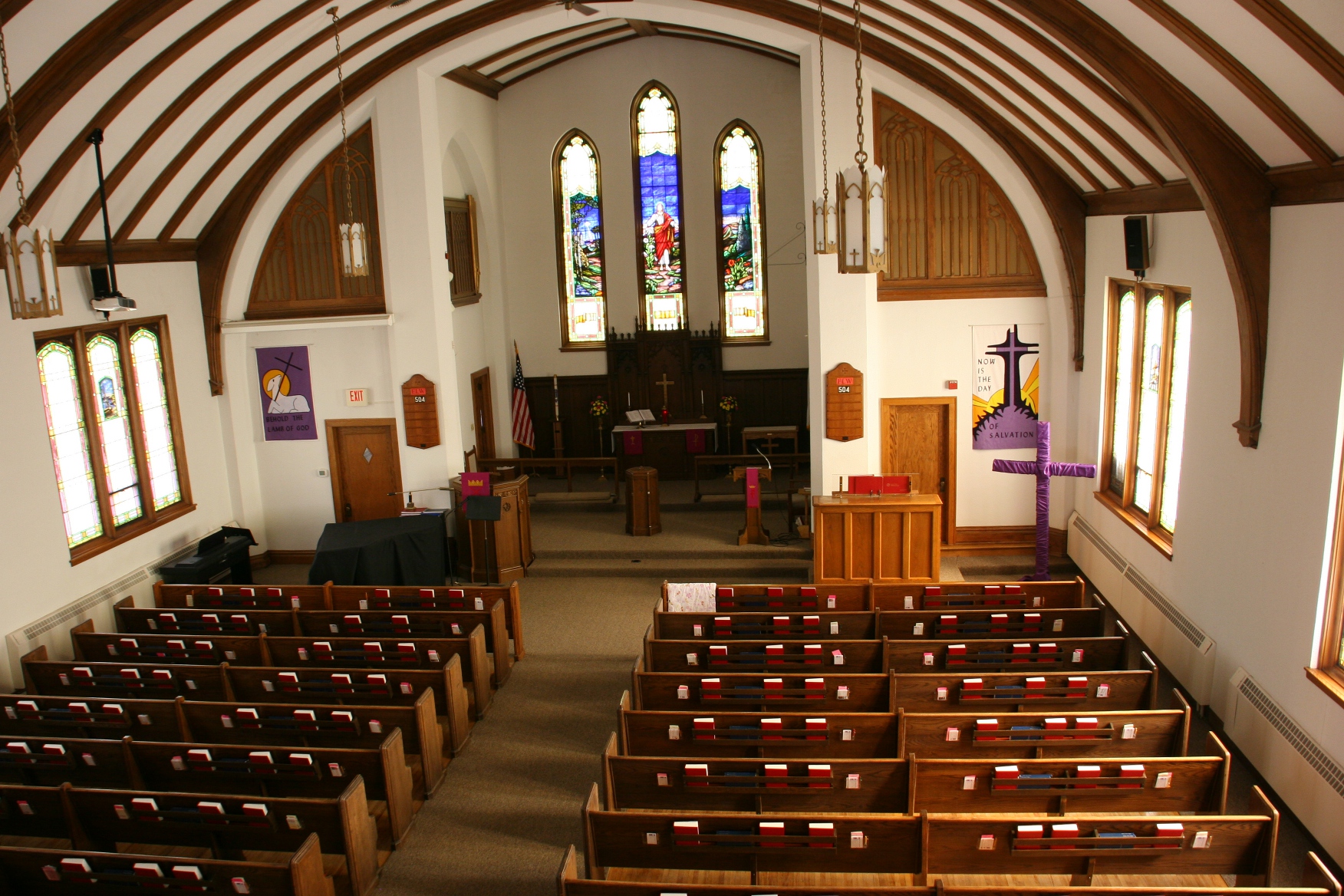
There’s almost something holy about stepping inside a church, into the quiet of a space graced by colorful stained glass windows, religious sculptures, pews worn by the hands of many.
I feel a sense of reverence in the light, in the stillness, in the peace that fills an empty sanctuary. I feel centered. Calm. Enveloped by the sheer beauty surrounding me.
Inside St. Michael’s Catholic Church in Buckman in Morrison County, stained glass art shows Jesus carrying His cross. (Minnesota Prairie Roots copyrighted file photo January 2021)
That beauty often emanates from the art. Stained glass windows, designed and built by skilled artisans, add a dimension of sacredness that appears heavenly when sunlight streams through glass.
Jesus’ crucifixion depicted in a stained glass window inside Holden Lutheran Church, rural Kenyon.(Minnesota Prairie Roots copyrighted file photo March 2016)
Themed to history, those windows visually tell stories written within the bible. Many focus on Holy Week: The Last Supper. Jesus praying in the garden of Gethsemane. The crucifixion of Jesus. And then His glorious resurrection on Easter morning.
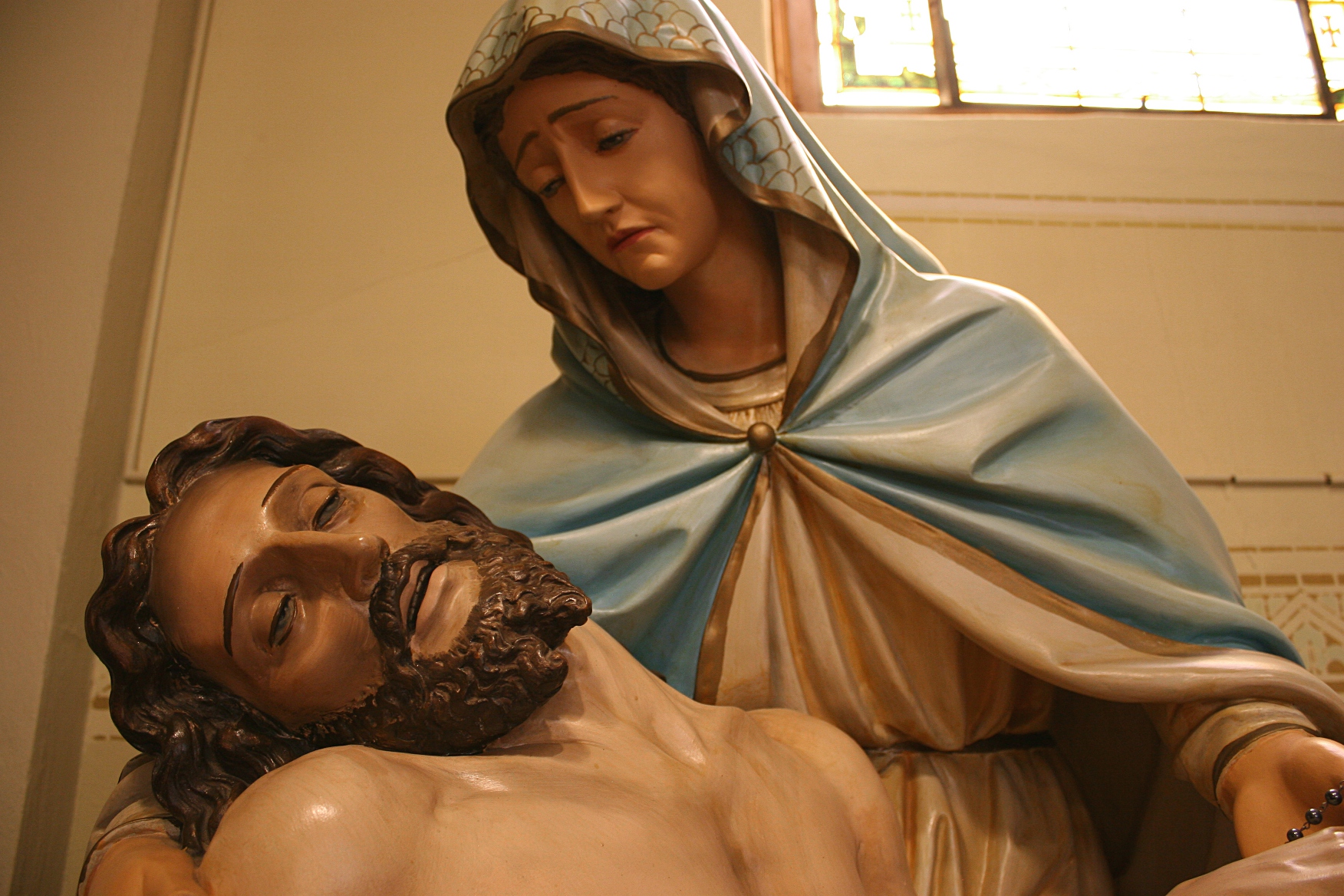
This statue of Mary grieving the loss of her son shows deep emotion. It’s inside St. Mary’s Catholic Church, New Trier. (Minnesota Prairie Roots copyrighted file photo April 2017)
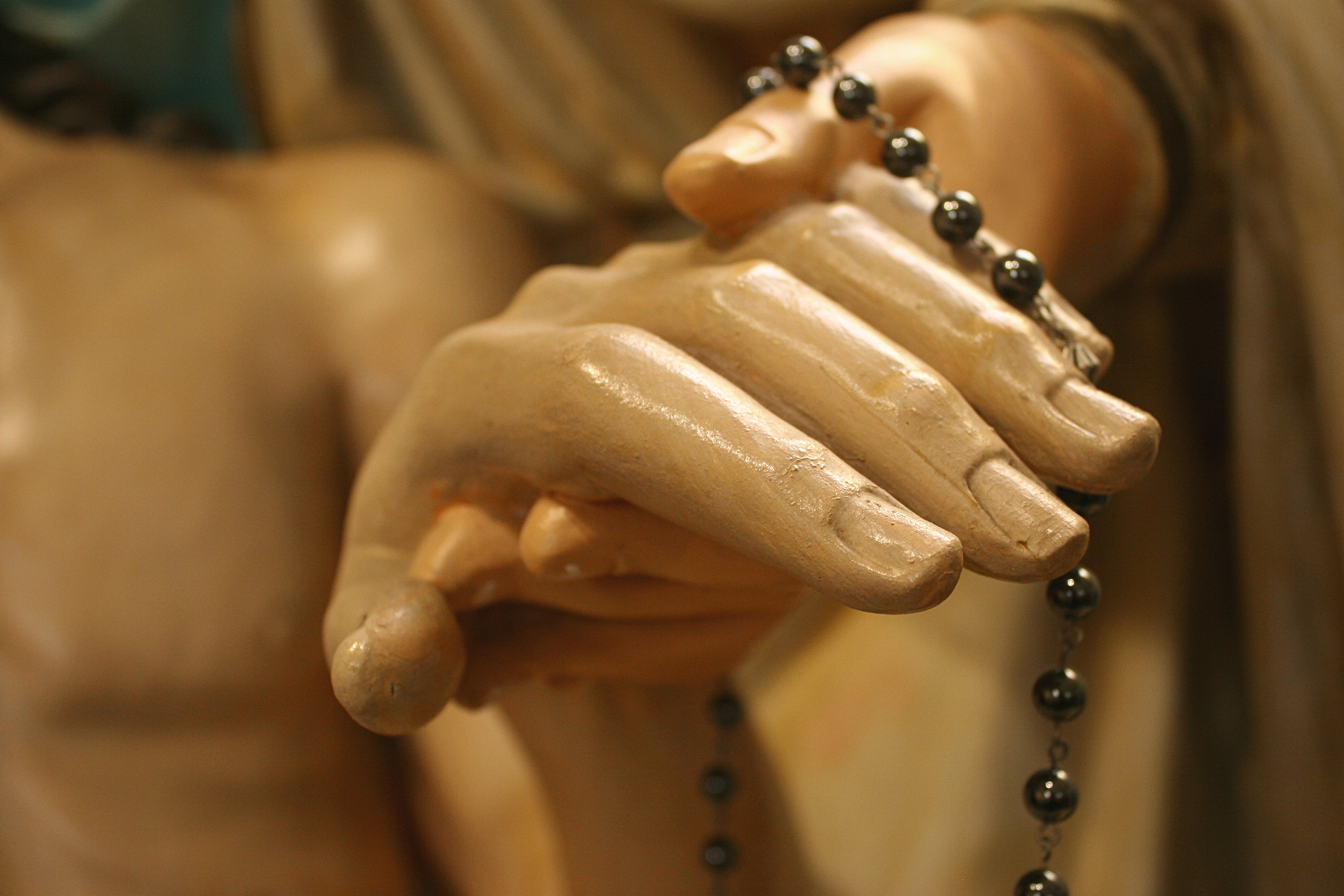
Sculptures, too, depict the same in life-size statues.
Hands convey so much love in intimate details in this sculpture of Mary holding Jesus’ hand. Photographed at St. Mary’s Catholic Church, New Trier. (Minnesota Prairie Roots copyrighted file photo April 2017)
Sacred and religious art is powerful. It evokes emotions. Inspires. Uplifts. Gives reason to pause and reflect.
This shows a snippet of the center stained glass window in a trio above the altar at Trinity Lutheran Church, Wanamingo. It depicts Christ’s resurrection. (Minnesota Prairie Roots copyrighted file photo March 2016)
This Holy Week, as my thoughts turn more reflective and inward, I feel deep gratitude for the long ago faithful who created the stained glass windows, the sculptures and other art adorning churches. These works of art are worthy of our attention, our appreciation, no matter religious affiliation or not.
A full view of the altar painting by A. Pederson inside Moland Lutheran Church, rural Kenyon. It’s based on Matthew 11: 28 – 30. “Come to me, all you who are weary and burdened…” (Minnesota Prairie Roots copyrighted file photo June 2013)
I can only imagine how many eyes have focused on the art within sanctuary walls. During baptisms. During weddings. During funerals. And during worship services. Joy. Comfort. Peace. Blessings. They’re there, all there, within the art within these sacred spaces.


























 Minnesota Prairie Roots
Recent Comments