Just outside of Cannon Falls along Goodhue County Road 8, we stopped to admire the treeline and the gravel road winding toward it. (Minnesota Prairie Roots copyrighted photo mid-October 2021)
WHITE ROCK. Belle Creek. Hader. They are among the 60-plus ghost towns of Goodhue County. Places that once thrived, marked now only by signs along a road, a cluster of homes, perhaps a church or abandoned buildings.
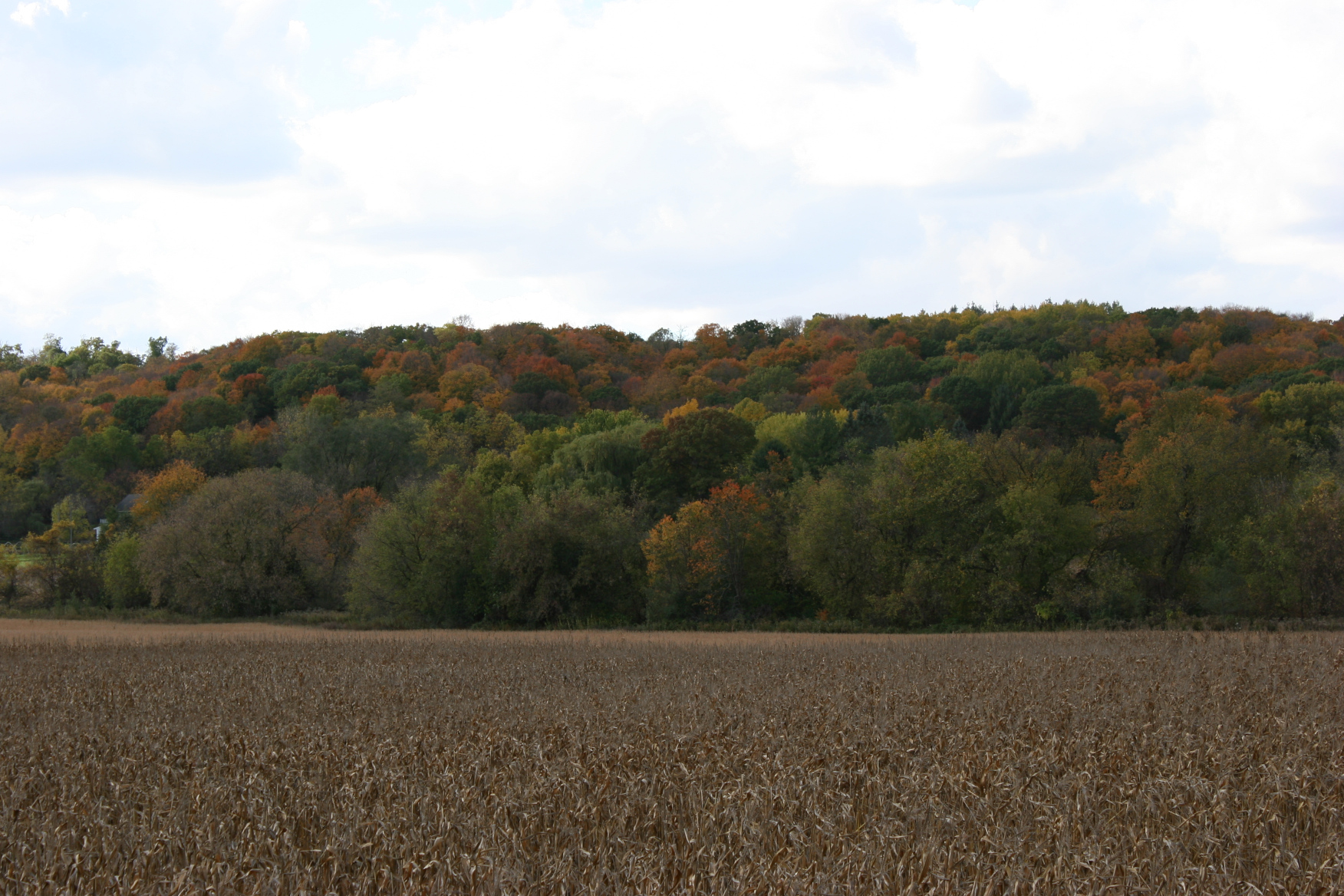
Oh, lovely hues of autumn near Cannon Falls. (Minnesota Prairie Roots copyrighted photo mid-October 2021)
Yet, acknowledging their existence, as the Goodhue County Historical Society does with roadside signs, matters. Because these towns mattered to previous generations and still matter to those with connections to the likes of Aspelund, Burr Oak Springs, Crystal Springs, Eidsvold, Skyberg and so many more with names that hint at heritage and sound poetically beautiful.
On a road trip to Goodhue County a month ago, Randy and I followed County Road 8 east and then south of Cannon Falls back toward Faribault.
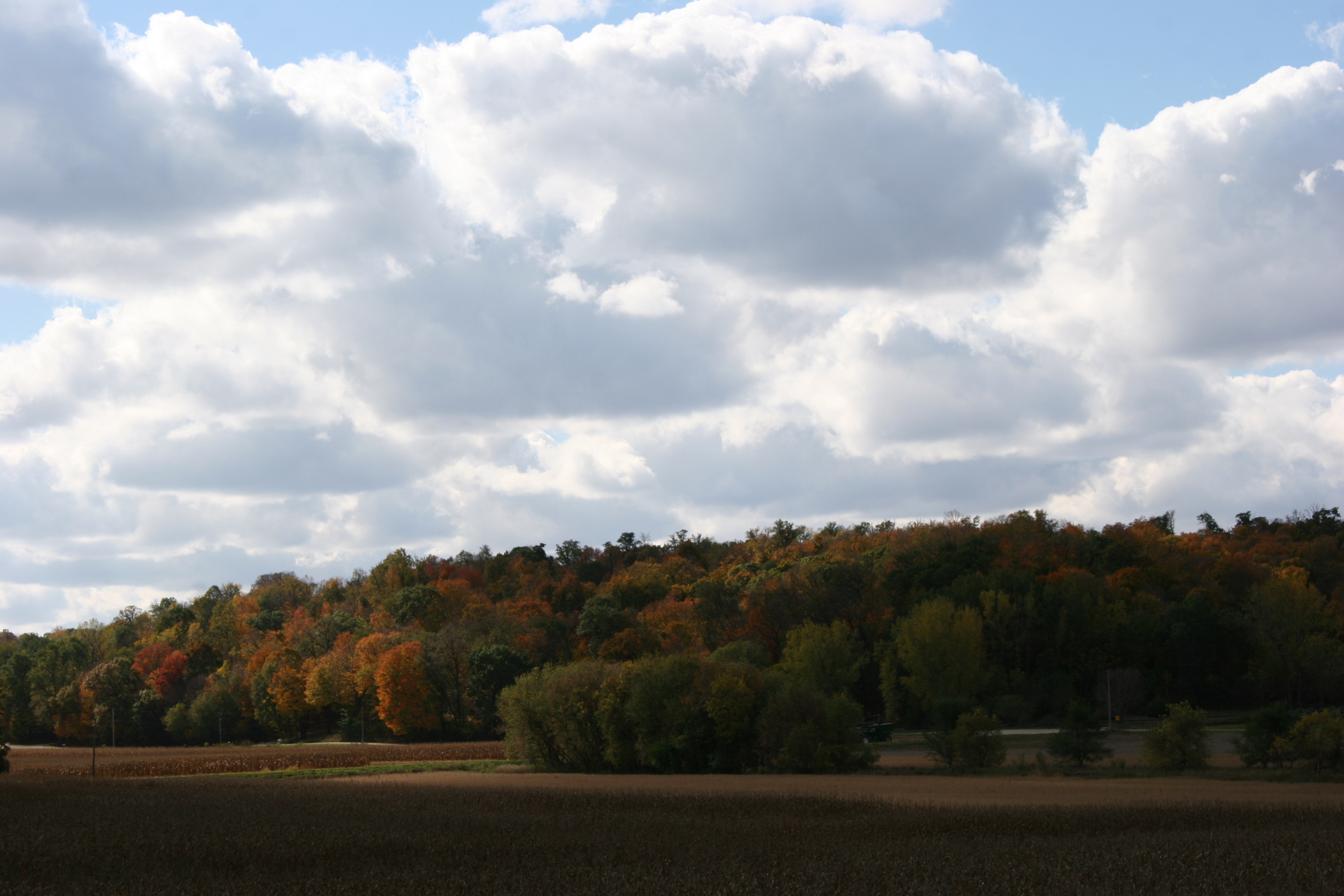
Clouds and trees and field along CR 8. (Minnesota Prairie Roots copyrighted photo mid-October 2021)
Our route took us past clusters of woods, some tinged in autumn hues.
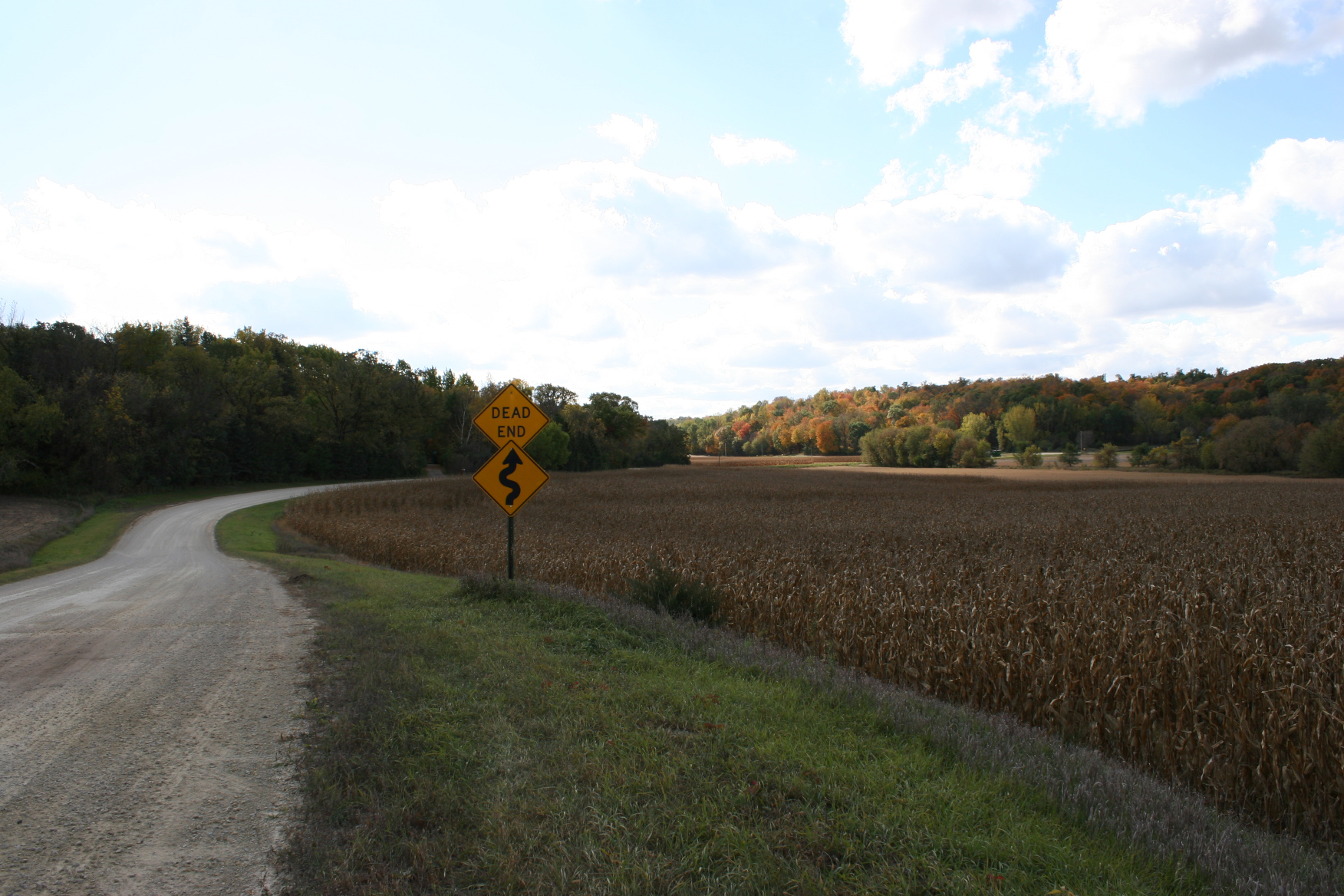
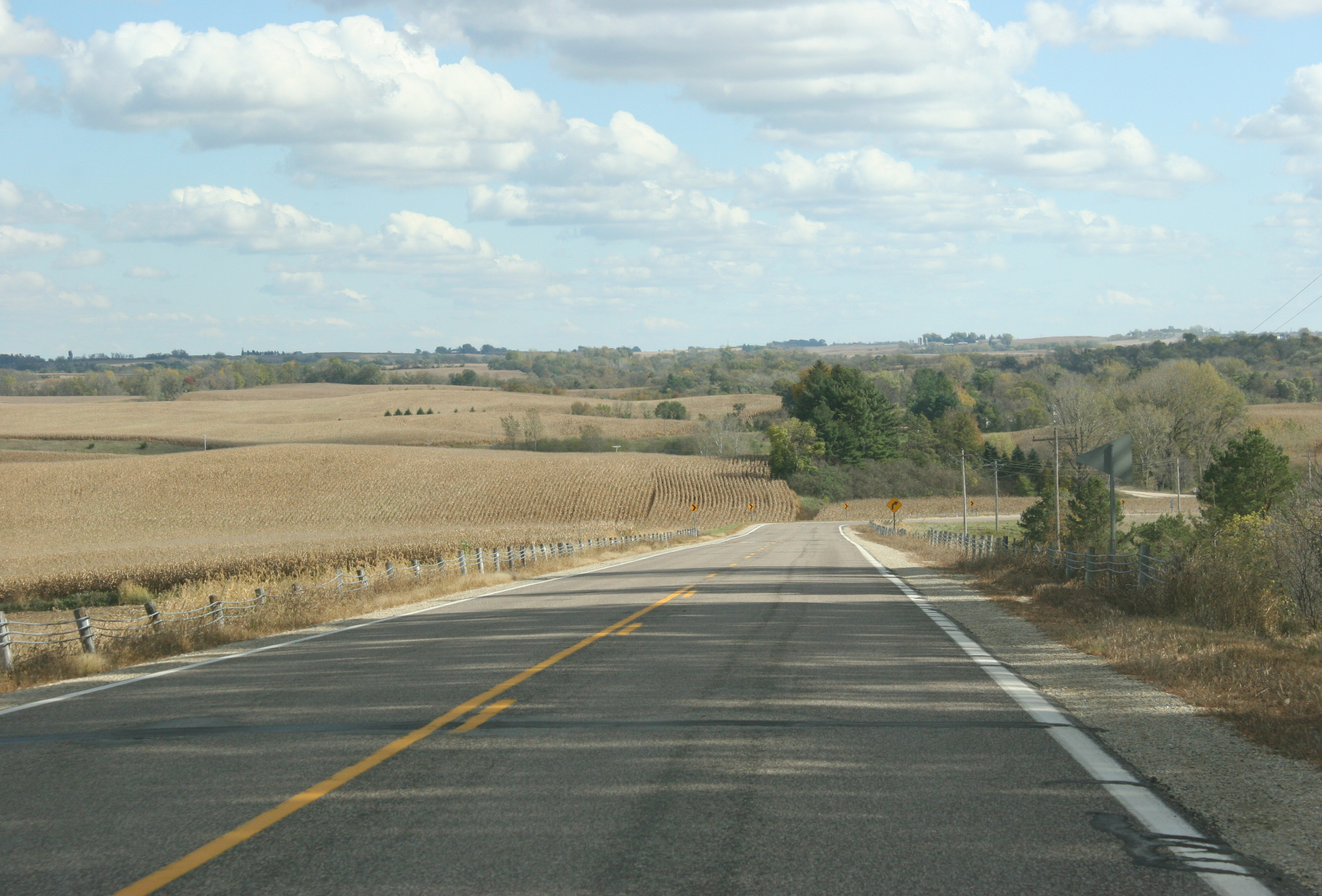
Goodhue County Road 8 near Cannon Falls sweeps into the valley. (Minnesota Prairie Roots copyrighted photo mid-October 2021)
Soon the road curved and swept into the valley, rows of corn rolling across the landscape. Only groves of trees surrounding farm sites broke the vista of endless unharvested fields.
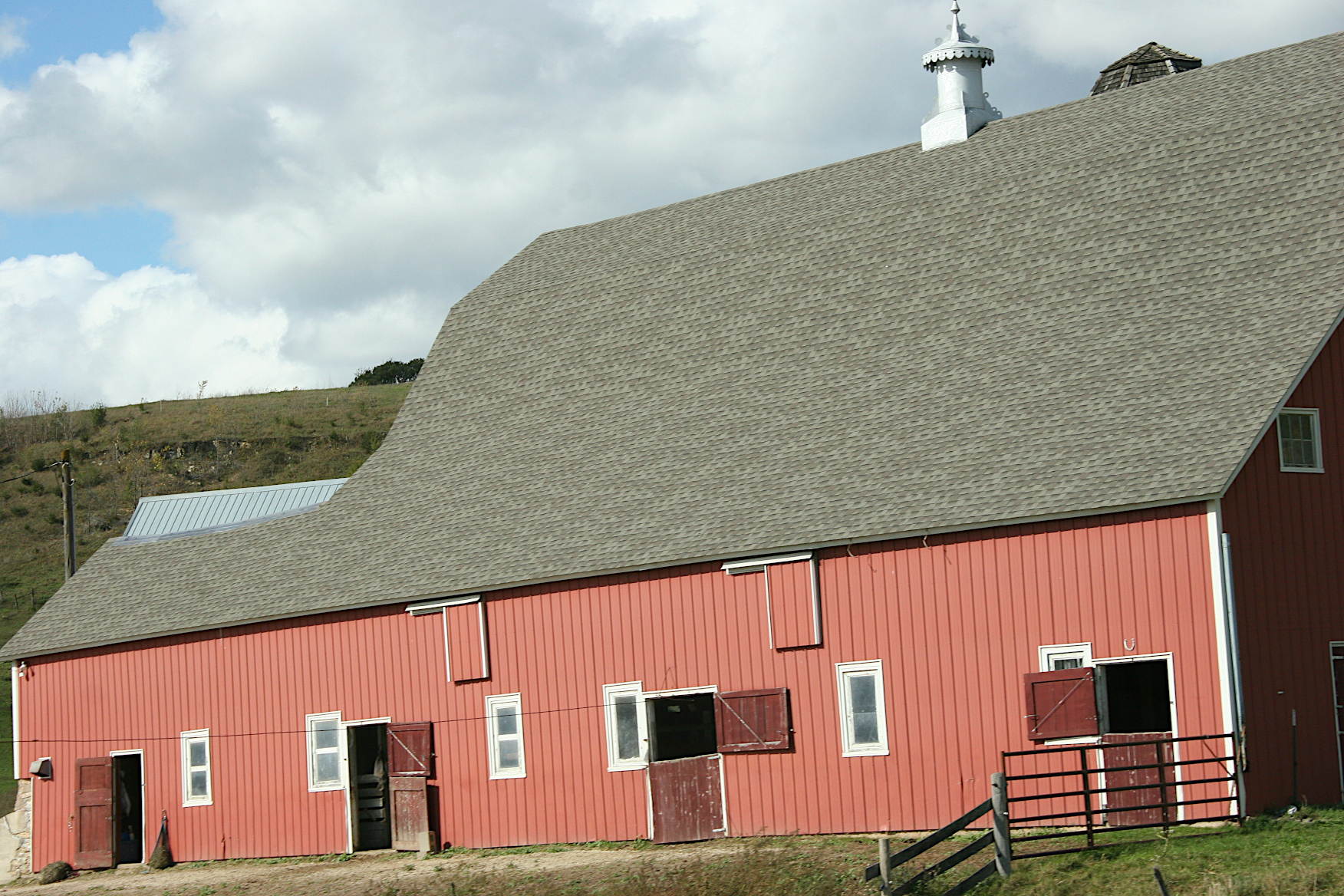
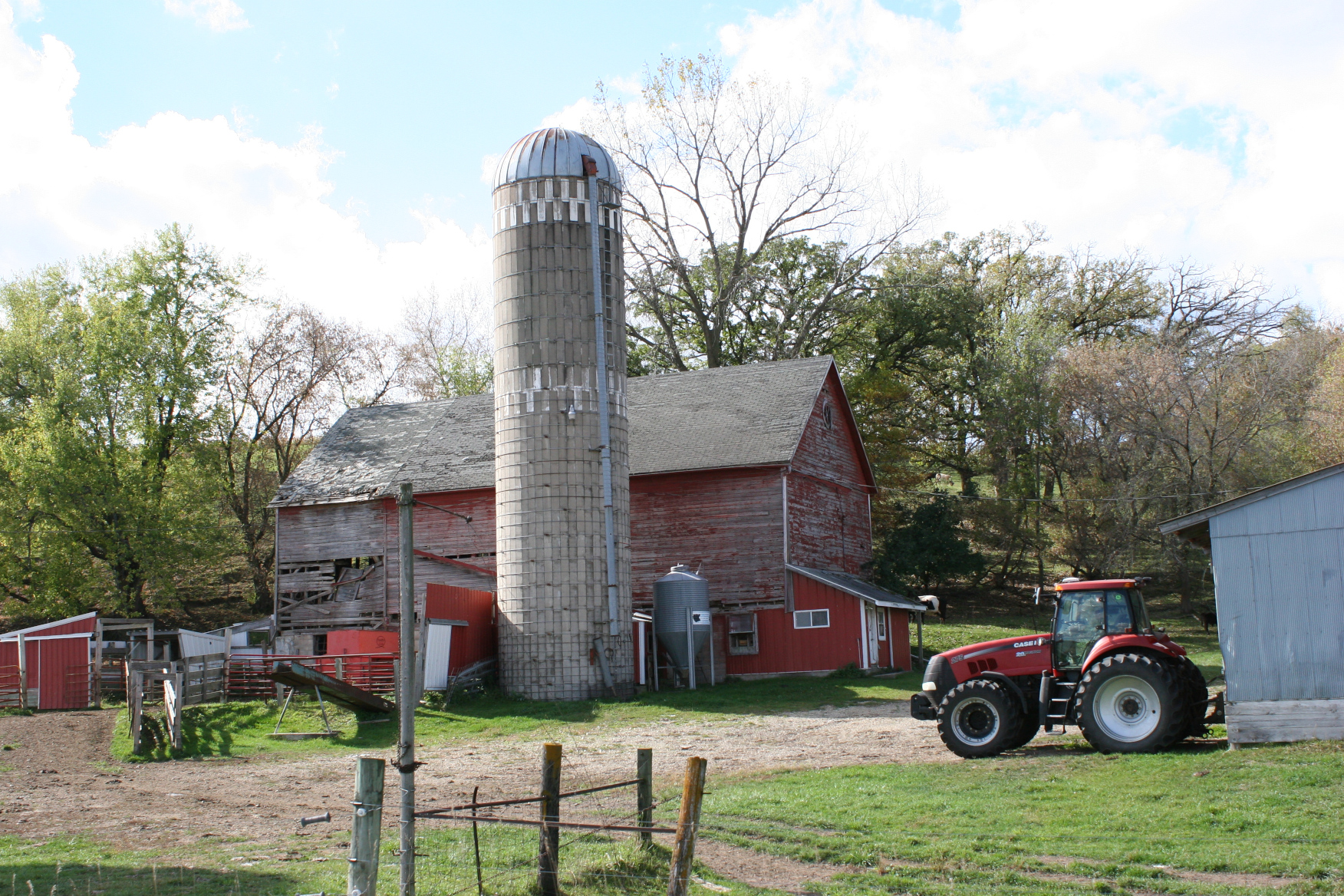
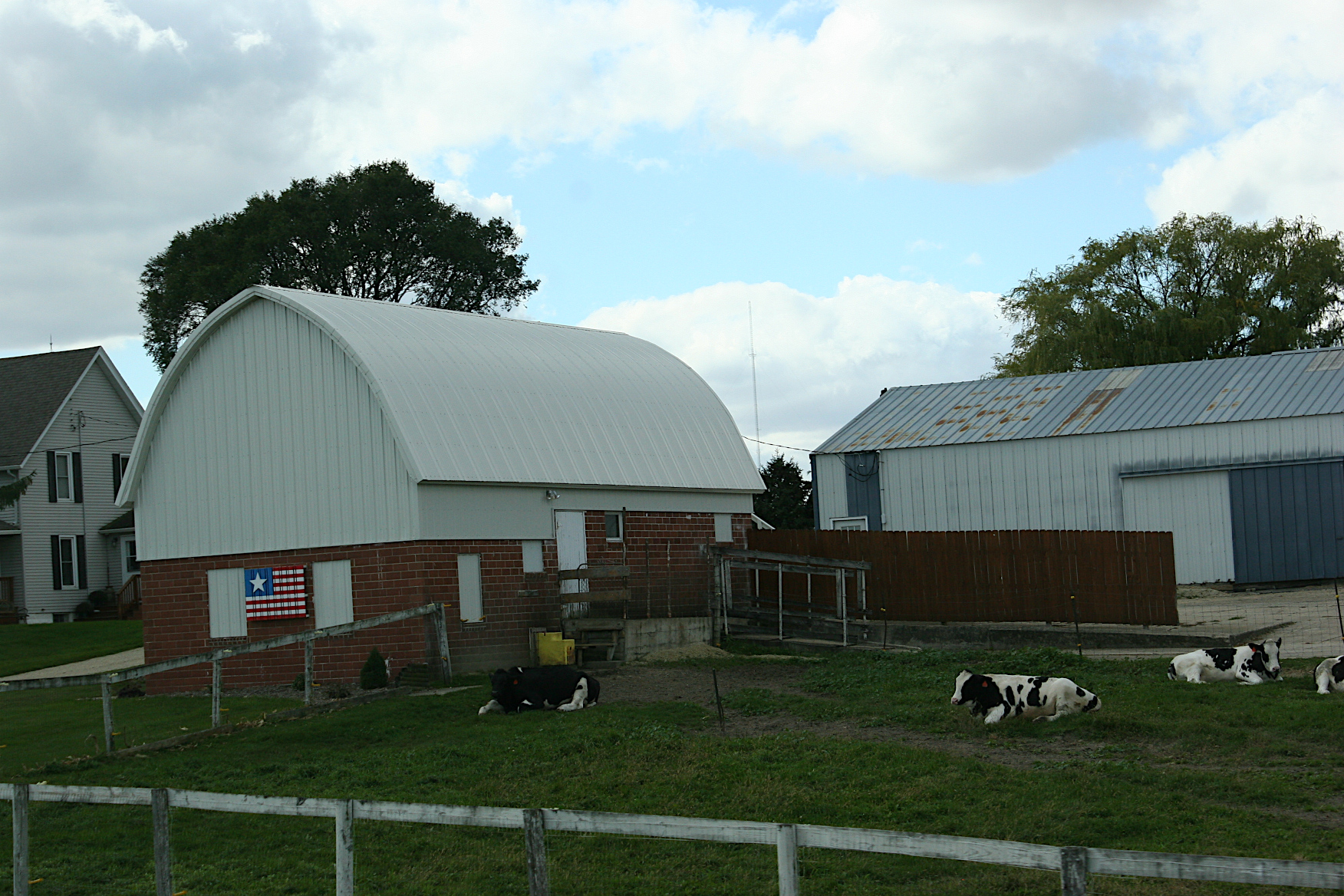
Somewhere between White Rock and Belle Creek, this farmyard drew my eye. (Minnesota Prairie Roots copyrighted photo mid-October 2021)
Sometimes those farmyards hugged the paved road and I caught a close-up glimpse of farms, some with aged weathered barns and outbuildings, others updated with modern equipment and structures.
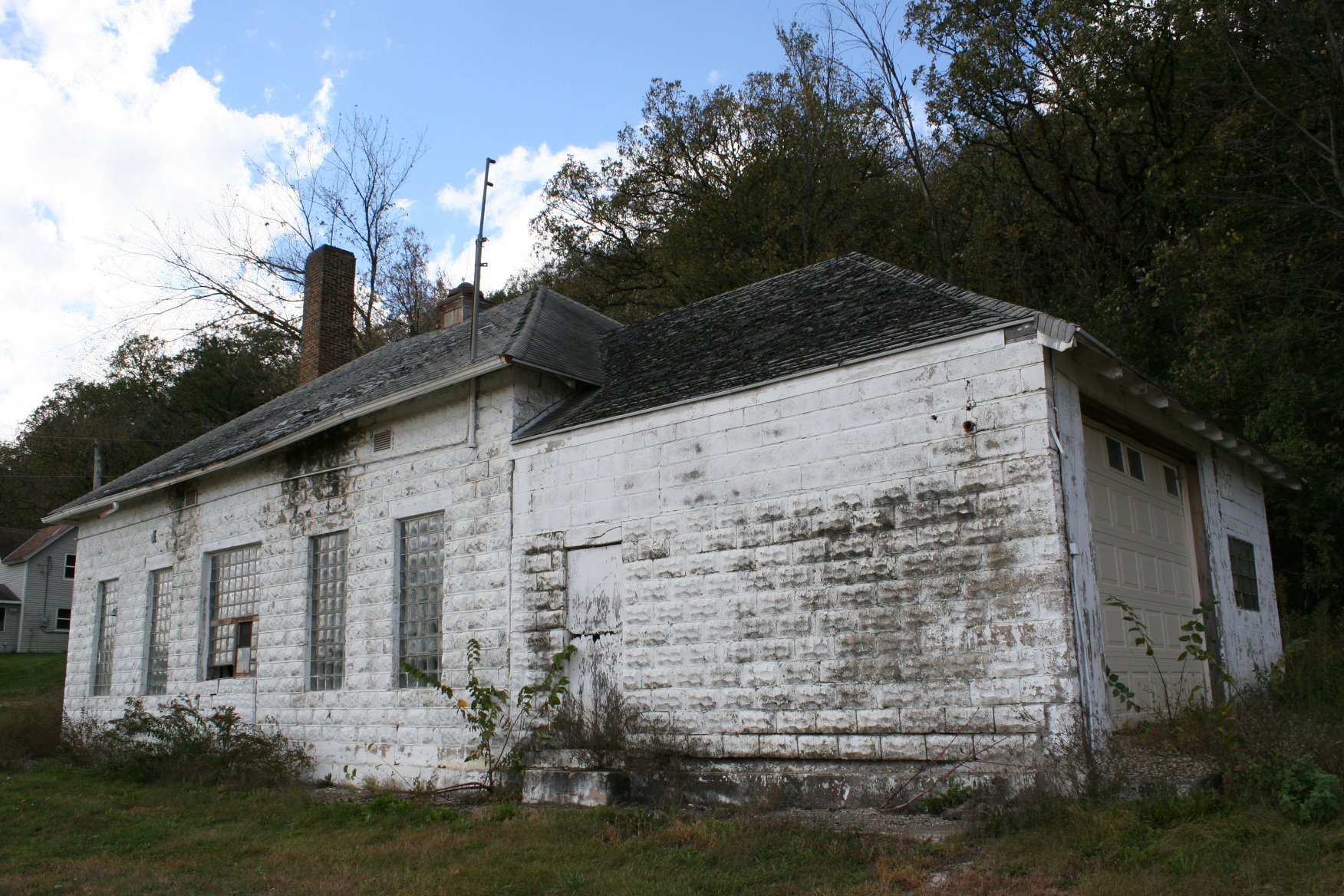
Likely a former creamery in Belle Creek. (Minnesota Prairie Roots copyrighted photo mid-October 2021)
In Belle Creek, Randy and I noticed a white building, likely a former creamery. Creameries often graced these small settlements, a necessity for farmers who sold cream for butter-making.
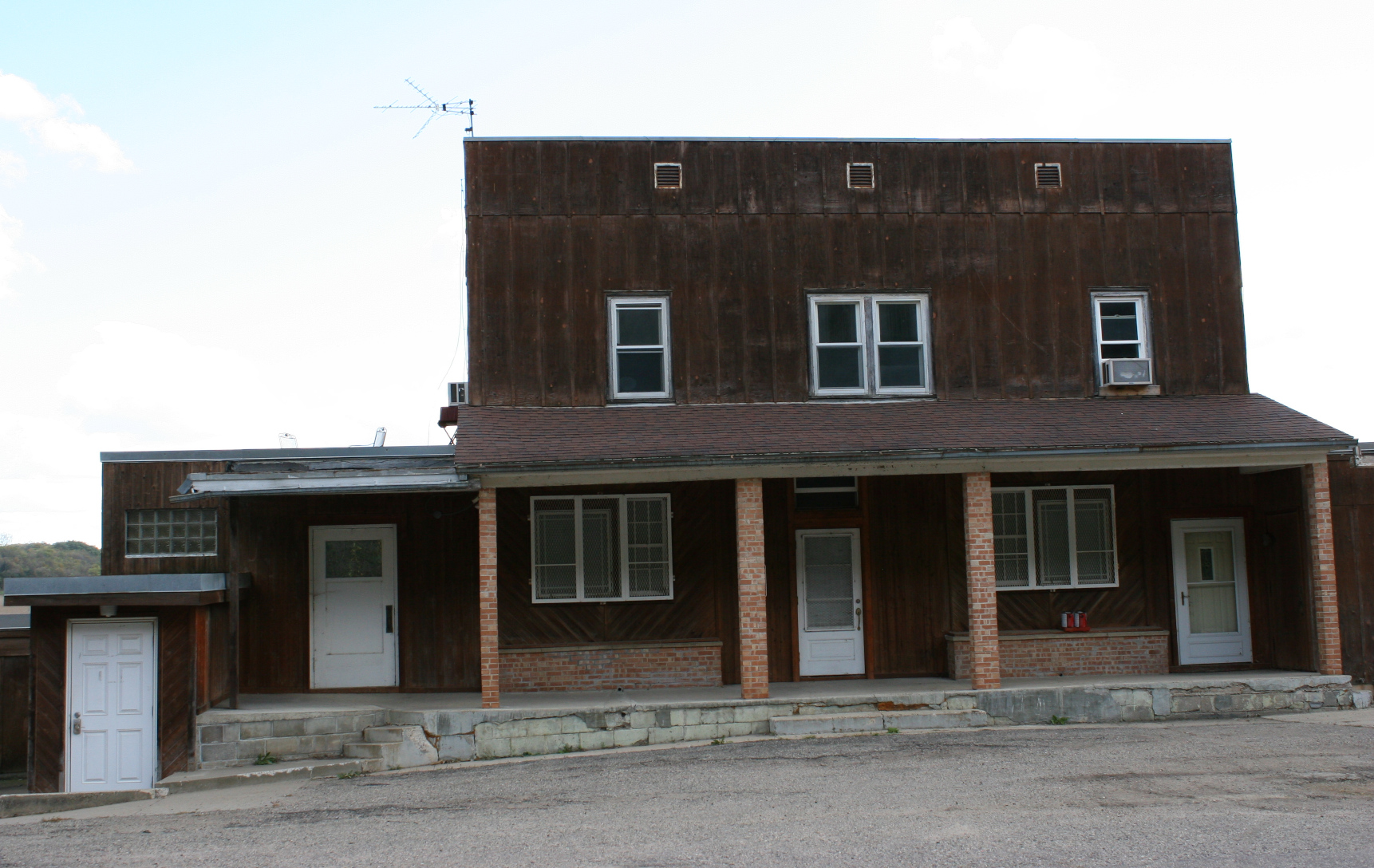
In Belle Creek, a building with an unknown-to-us story. (Minnesota Prairie Roots copyrighted photo mid-October 2021)
Another building in Belle Creek left us guessing at its past life. Perhaps a general store. Then a dance hall. We could be way off…
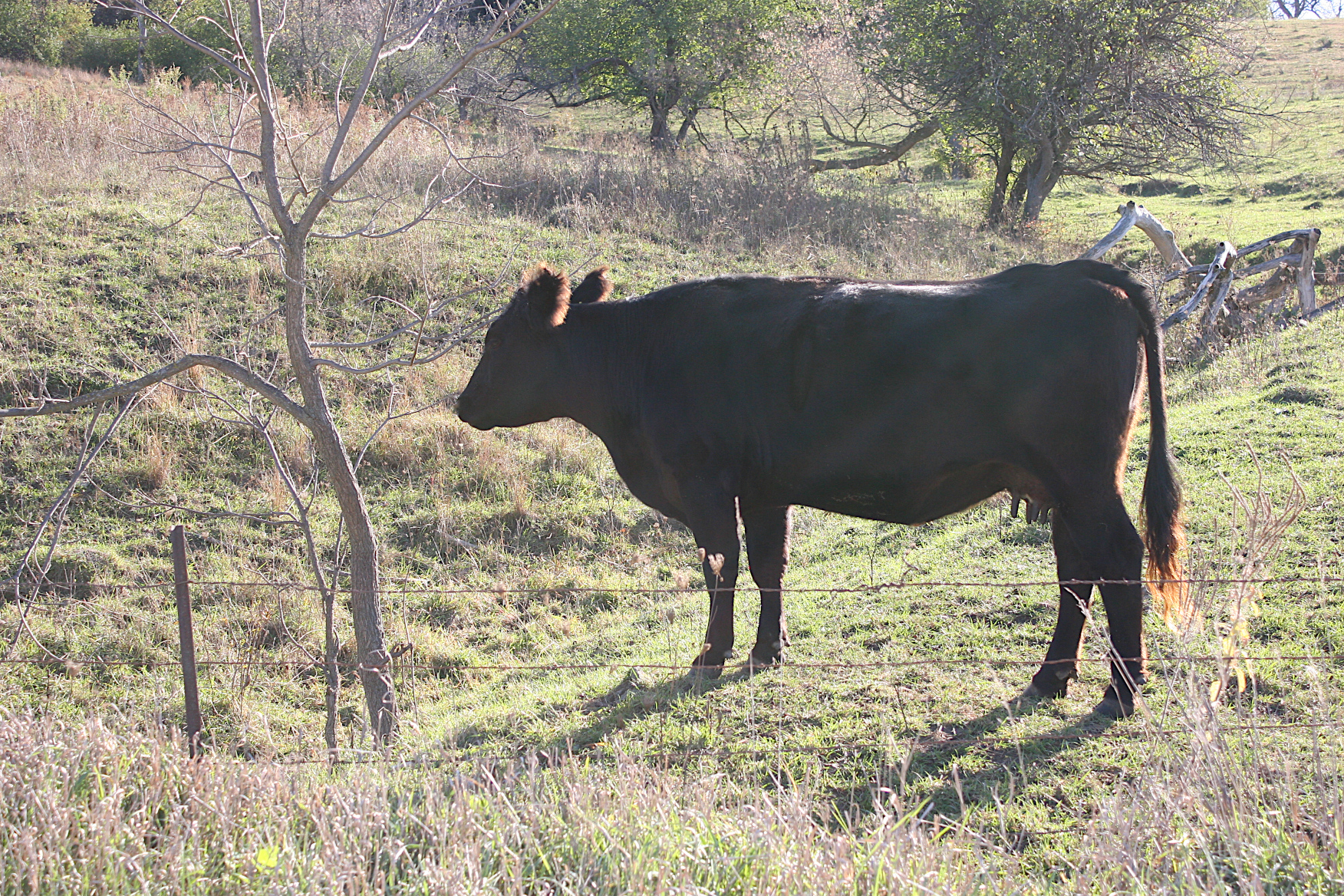
Seeing cows in the countryside takes me back in time. (Minnesota Prairie Roots copyrighted photo mid-October 2021)
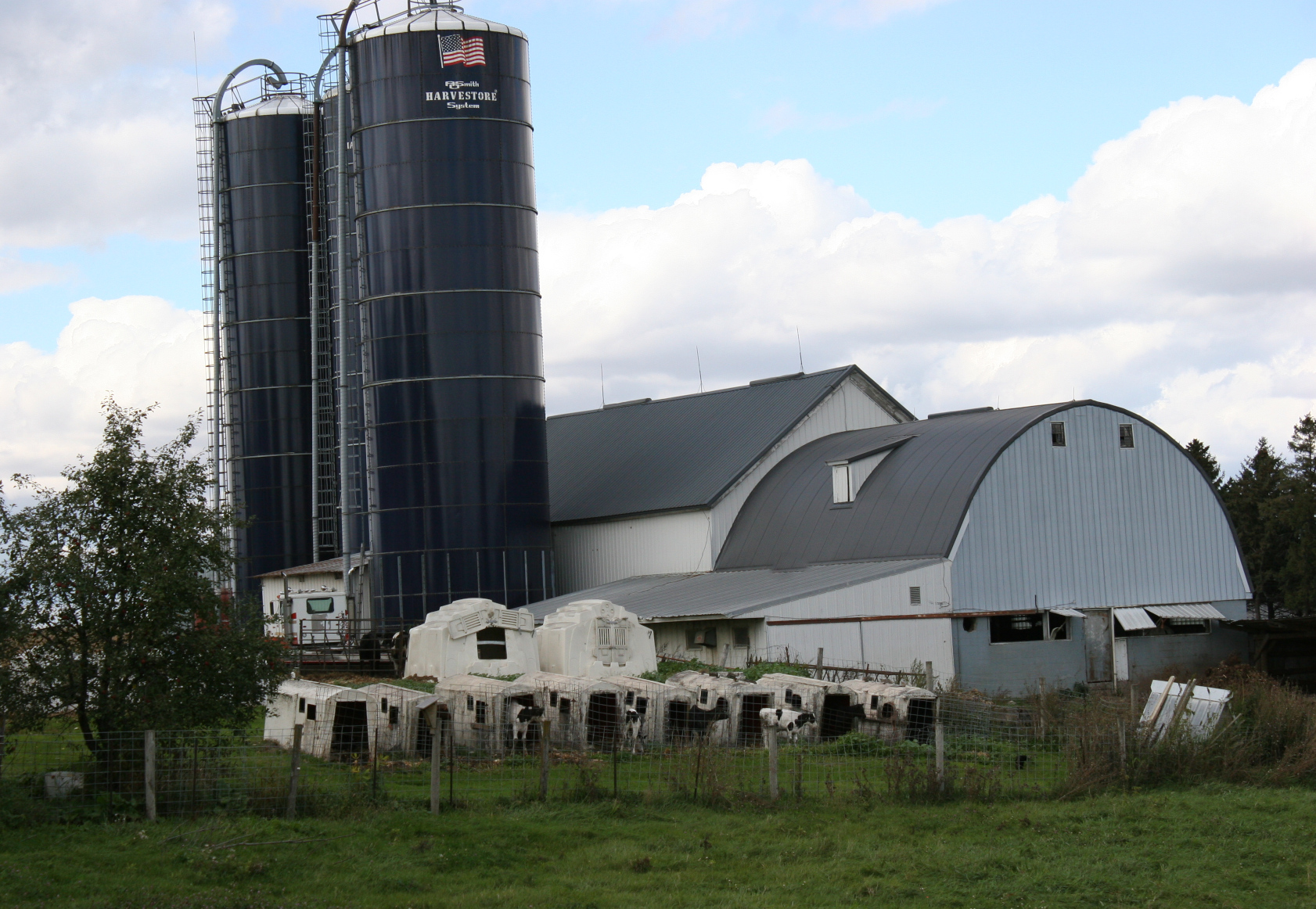
Near Hader, I spotted calves outside their huts. (Minnesota Prairie Roots copyrighted photo mid-October 2021)
Occasionally, we spotted cattle, cows, calves. Growing up on a dairy farm, I delight in seeing bovines, especially Holsteins. But rare are the small family farms today that still raise animals. Corporate and mega farms have mostly replaced that self-sufficient lifestyle. That’s reality.
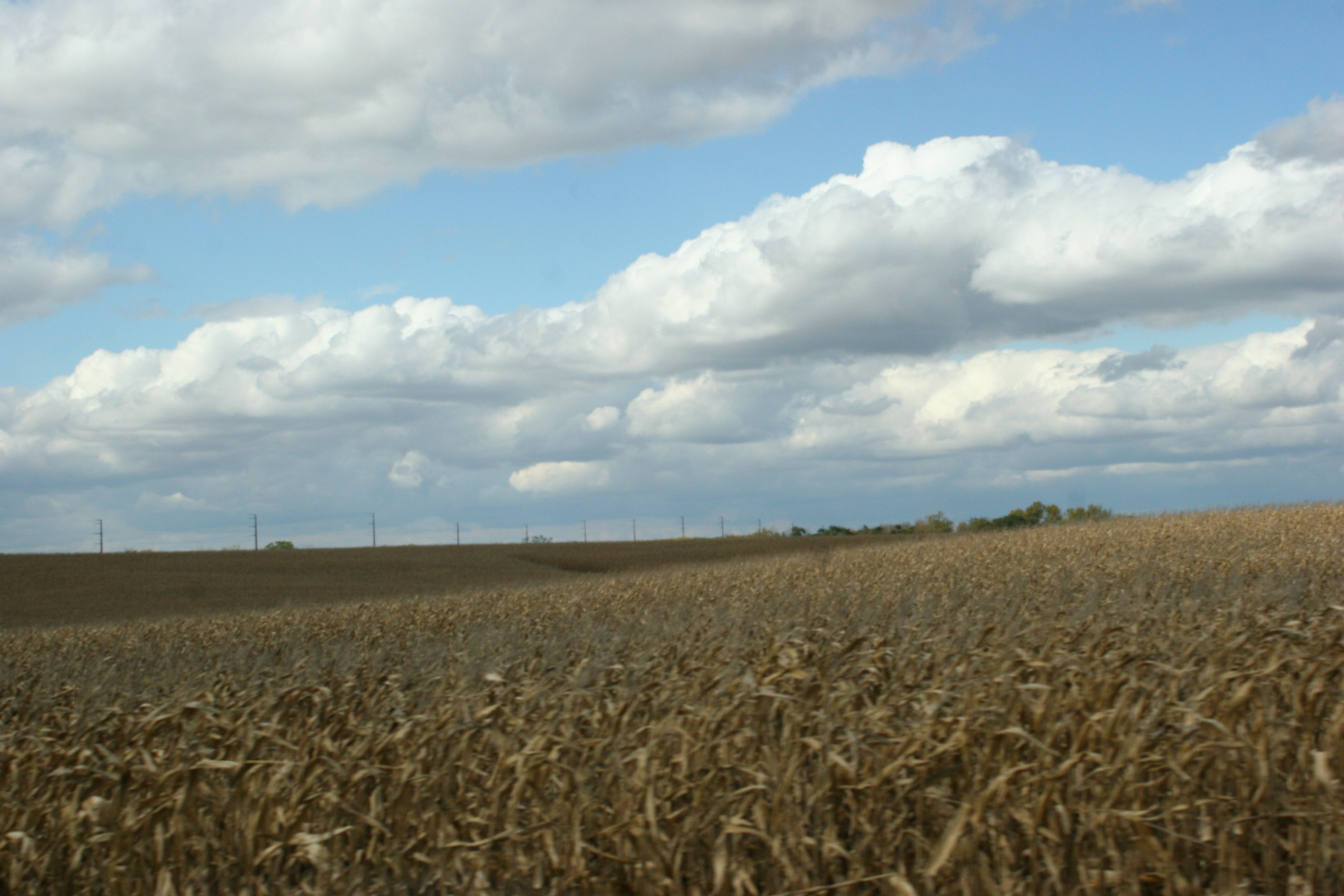
Lots of sky and cornfields along CR 8 in Goodhue County. (Minnesota Prairie Roots copyrighted photo mid-October 2021)
Just like ghost towns, many farms have become, in some ways, ghost farms. They are but ghosts of the past. Ghosts of their former selves and purposes. I see that in decaying, empty buildings, especially barns. I see that in the absence of livestock. I see that in families who can no longer support themselves solely via the farm.
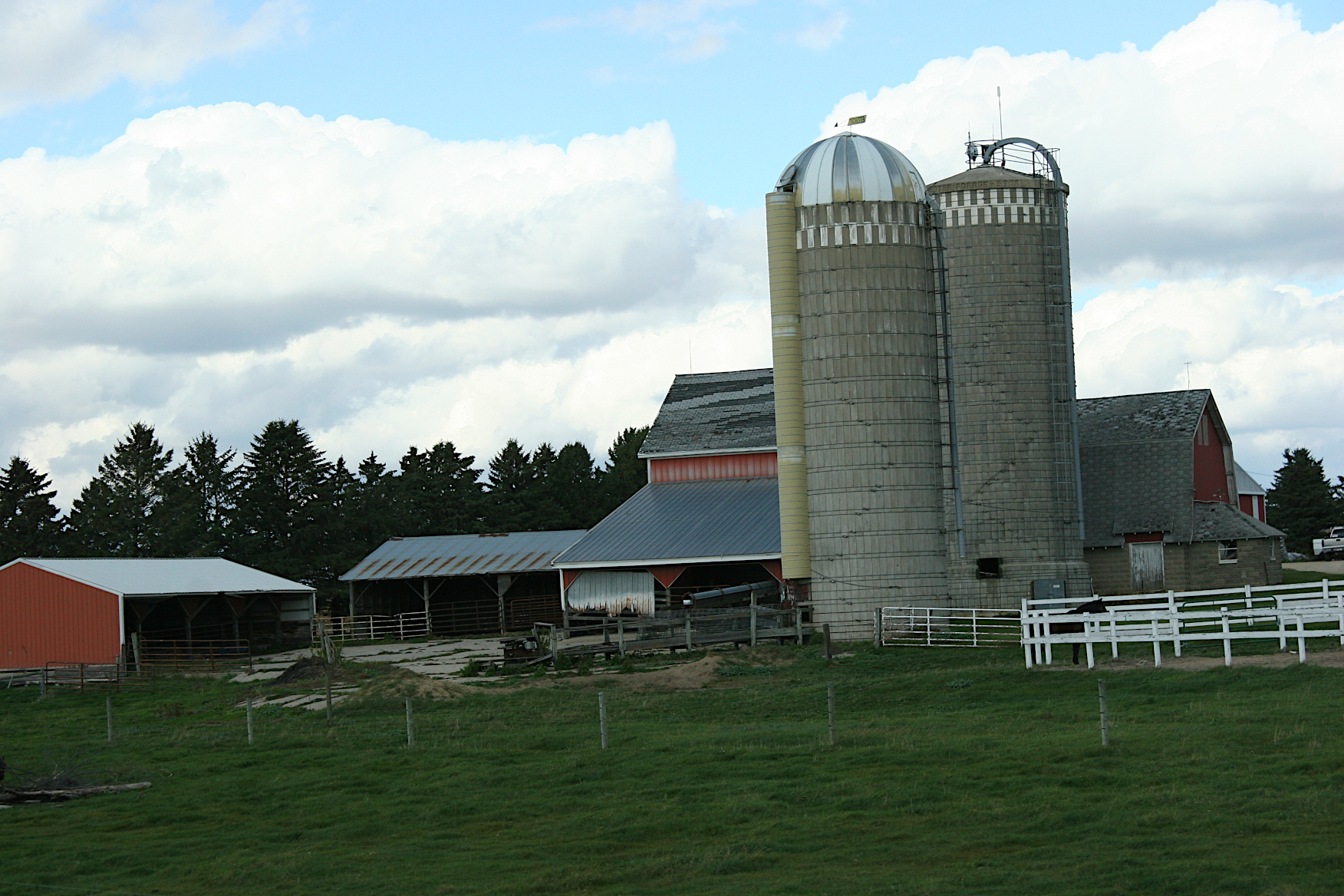
Farm after farm after farm defines this area of Goodhue County. (Minnesota Prairie Roots copyrighted photo mid-October 2021)
All of this is unsettling. But with time comes change. And with change must come acceptance and perhaps also an added historical appreciation for the past.
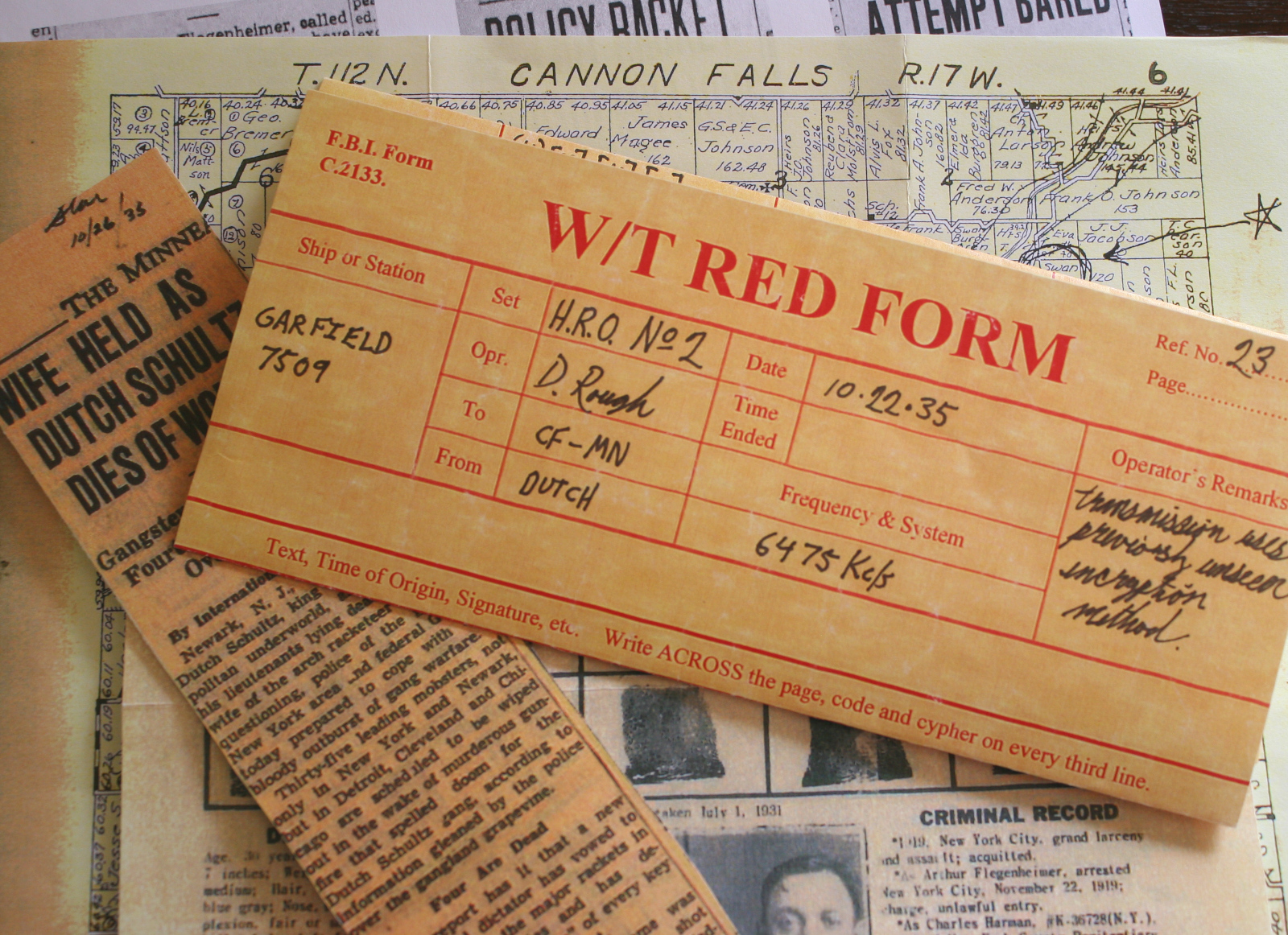
I used a magnifying glass to study this vintage Cannon Falls area map, among clues in the “Gangster’s Gold” mystery. (Minnesota Prairie Roots copyrighted photo November 2021)
THE “Mailbox Mysteries” SIGN POSTED in the front window of a downtown Cannon Falls insurance agency, drew my interest. I’ve always appreciated a good mystery and I wanted in.
So I headed to the nearby library, home base for the mysteries, to inquire about the featured Gangster’s Gold mystery. Within a week I received an introductory letter about notorious gangster and bootlegger Dutch Schultz and his $50 million treasure hidden somewhere in the Cannon River Valley.
Background and clues. (Minnesota Prairie Roots copyrighted photo November 2021)
Channeling my inner Nancy Drew, I determined to locate that treasure. If only my sleuthing skills matched my enthusiasm. Right from the start, I couldn’t figure out how to fold, and then use, a Tri-Hexa-Flexa-Coder to de-code a secret message. I needed help. My friend Stephani, who once considered becoming a private investigator but stuck to family genealogy, solved the folding/coding problem.
I realized solving this mystery would not be easy. Exactly as “Mailbox Mysteries” creator Matthew Stelter, Teen and Adult Services Librarian in Cannon Falls, likely intended. He created this interactive mystery series last winter as an outreach program for library patrons stuck at home during COVID-19 and, as he said, “tired of a life lived entirely through a computer screen.” At that time, the library building was closed to visitors. All of the clues for his mysteries are sent via US mail to the home-based investigators.
Eventually, Stelter crafted six mysteries—five for adults and a math-based set, “Postcard Puzzles,” for kids 12 and under. A bit overwhelmed by managing all of those mysteries, Stelter has since tweaked and downsized the “Mailbox Mysteries” to three.
The final clues to locate the hidden treasure. (Minnesota Prairie Roots copyrighted photo November 2021)
His past experience developing escape rooms and murder mysteries shows in “Mailbox Mysteries.” I admire his ability to craft a fictional mystery rooted in facts with added local elements. He uses newspaper clippings, photos, letters, historical documents, maps, coded messages (he created the code for the challenging Hexa-Flexagon) and more in believable story lines.
A seemingly authentic newspaper article, for example, references the long-ago Fleckenstein Brewery in Faribault and a possible connection to the underworld. Turns out that story was pure fiction as is gangster and bootlegger Dutch Schultz’s connection to Minnesota. He never had ties here, although many gangsters did. Rather, he lived in New York, where his treasure is rumored to be hidden. Schultz died in a gang shoot-out.
So much to consider in solving “Gangster’s Gold.” (Minnesota Prairie Roots copyrighted photo November 2021)
In the end, I found the location of the $50 million treasure after hours of dissecting documents—yes, I became a bit obsessed—and using a magnifying glass to better view details on a map. Stelter rewarded me with a personalized Certificate of Commendation and advised me to bring a shovel to dig deep for the buried treasure.
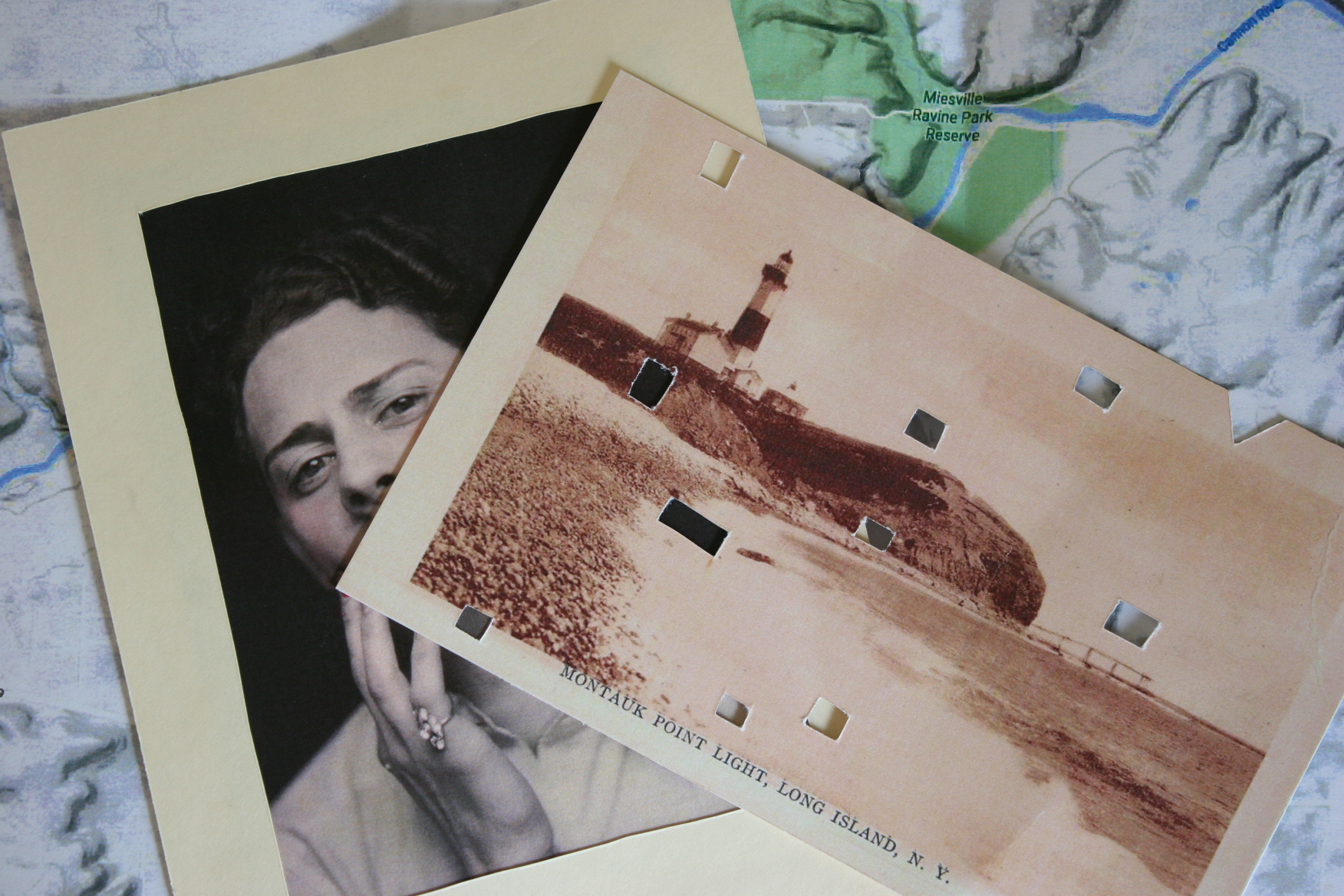
These three items were in the first mailing of “Spy School” mystery. (Minnesota Prairie Roots copyrighted photo November 2021)
Now I’m on to the next “Mailbox Mysteries,” Spy School. I’ve received my introductory letter, a brochure for the Vera Atkins Spy Academy and an encoded note warning that the school is compromised.
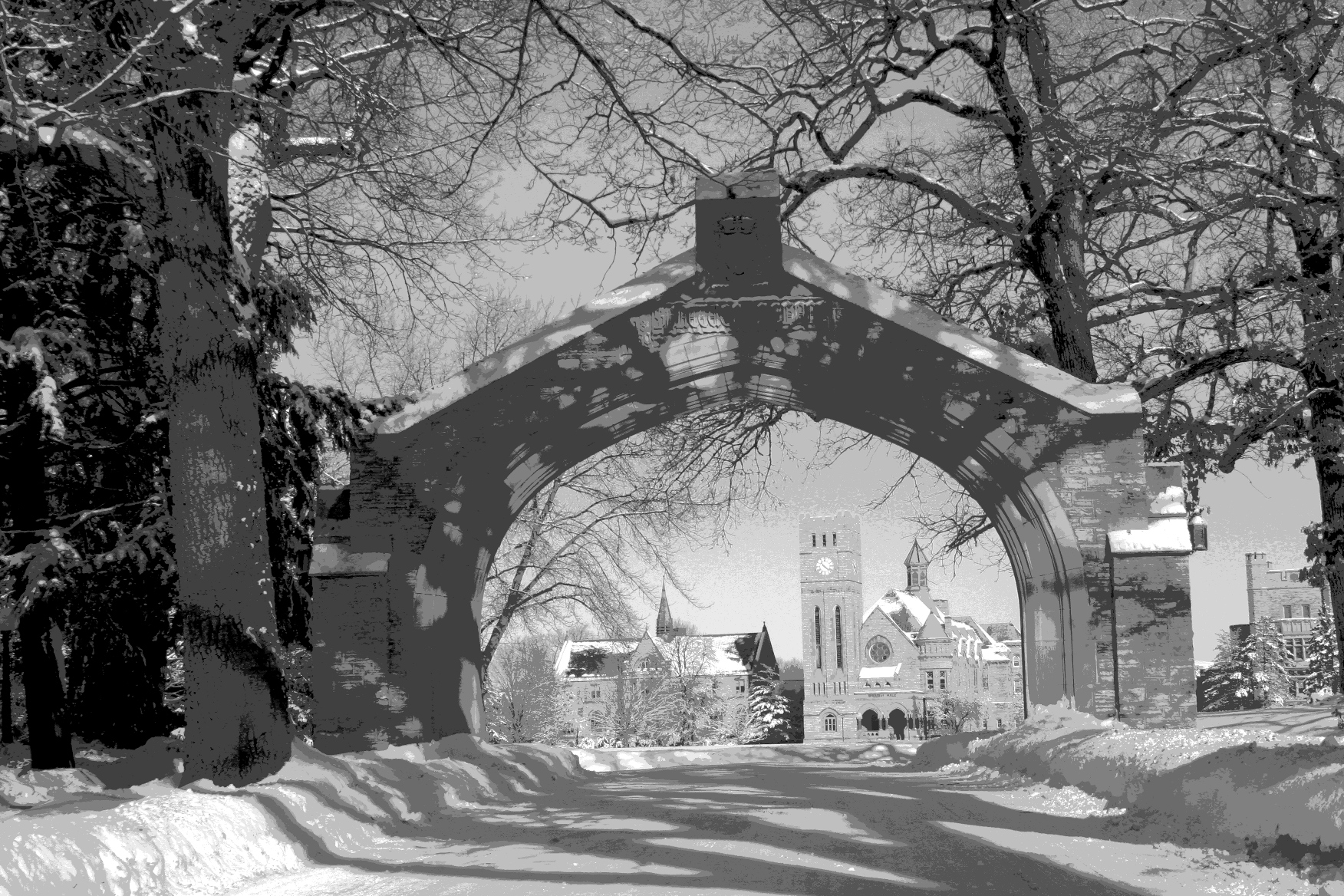
The arched entry to Shattuck-St. Mary’s School, upper campus, in Faribault. (Minnesota Prairie Roots copyrighted file photo)
VASA happens to be in Faribault, as printed in a brochure so professionally done that I would think the academy really existed if I didn’t recognize the photos of Shattuck-St. Mary’s School. Stelter lived at Shattuck for 10 years. I’m also semi-familiar with the campus so I’ll see if that familiarity helps in solving the mystery. As in Gangster’s Gold, I expect this mystery writer to weave more local details into the fictional story line.
While I await the next set of clues, I invite you to join the team of private investigators. Stelter welcomes all Nancy Drew, Hardy Boys, Sherlock Holmes types to register by November 30. Simply email your request for Spy School along with your name and complete snail mail address to: mstelter (at) selco (dot) info
Be forewarned, though, that these mysteries are challenging and time-consuming. Yet so worth the satisfaction of solving and of reaching into your mailbox to find, not a bill, but rather the efforts of a talented and creative librarian.
The third “Mailbox Mysteries,” Cypher Cabin, will be available starting December 1.
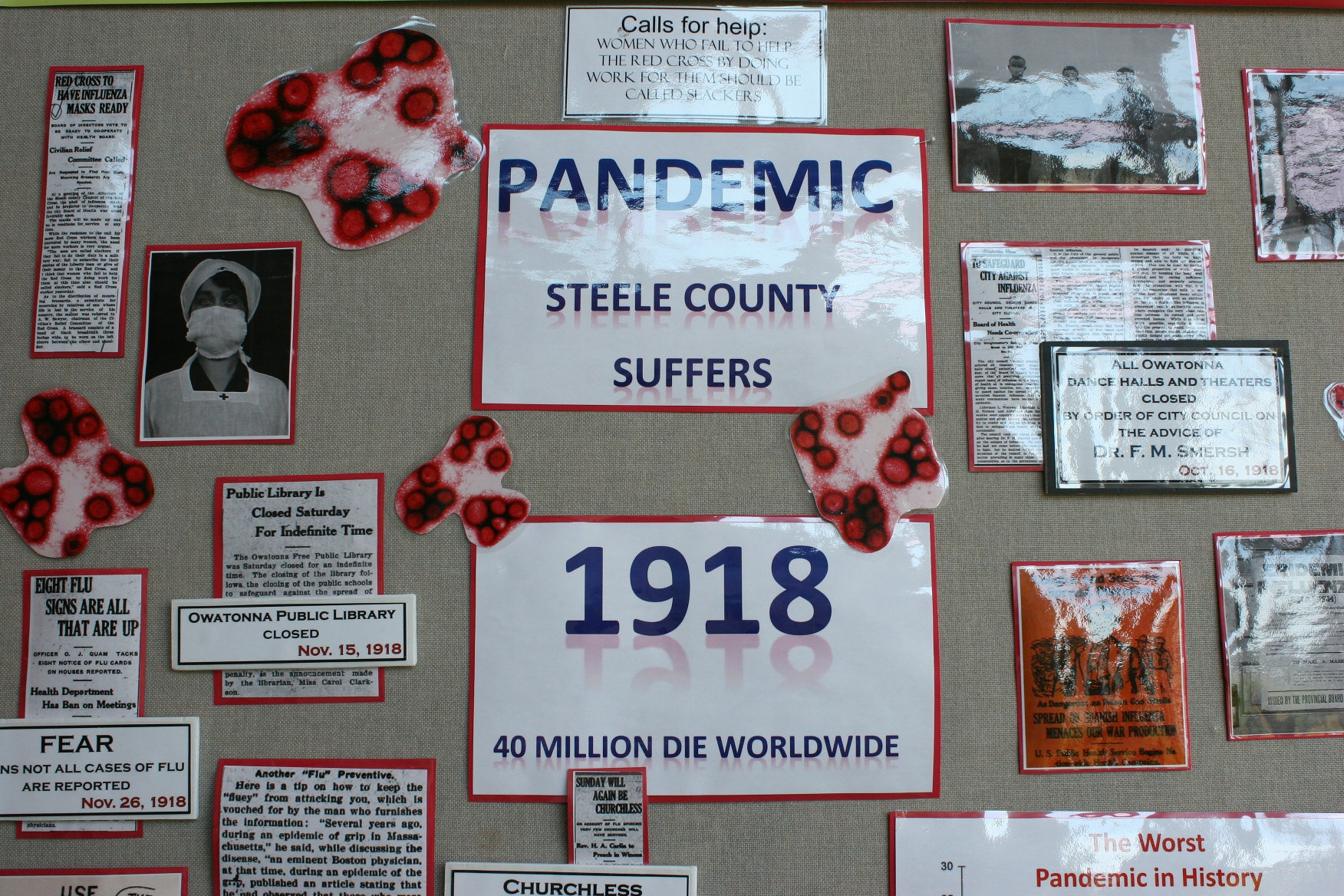
Featured in a 2016-2017 “Minnesota Disasters” exhibit at the Steele County History Center in Owatonna. (Minnesota Prairie Roots copyrighted file photo 2016)
ONCE UPON A TIME in The Land of Plenty, a waif of a girl and her mother wound through the packed dirt and cobblestone streets of their remote village.
Sometimes they walked side-by-side. Other times the wee girl trailed her mother. But when they reached the village square, where a raucous crowd had gathered, they clasped hands and quickened their pace. The pair wanted to avoid the angry villagers crowded around The Village Know-It-All. He stood high above the throng, encouraging them to resist all attempts by The Ministry of Health and other officials in a far away city to stop The Great Invader.
His voice boomed authority across the square. “Stand strong,” he urged. “There is no need to defend yourselves against The Great Invader. He poses no threat. Stories of his strength are greatly exaggerated. There is no need to arm yourselves with protective gear or to hide or to avoid each other. There is no need for a potion to keep you safe. That’s nonsense. Lies. No one can tell us what to do! No one!”
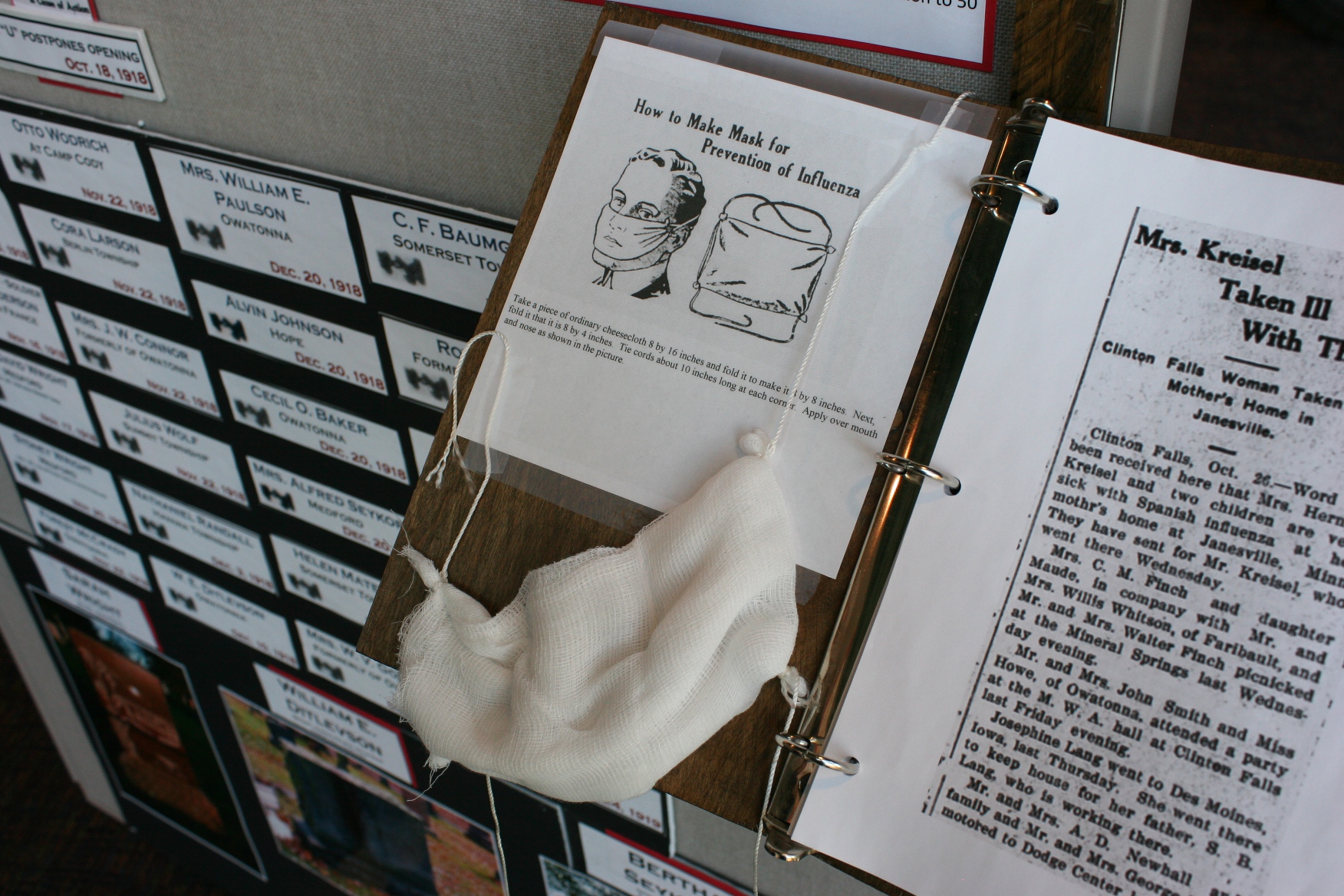
Masks, precautions and isolation helped protect against the flu epidemic. To the left in this photo are names of Steele County residents who died from the flu in 1918. (Minnesota Prairie Roots copyrighted file photo 2016)
DEATH & DENIAL ALL AROUND
As mother and daughter fled, reaffirming cheers created a deafening din. The two wanted nothing more than to escape the ire and untruths that raged.
Soon the pair passed The Village Center for Healing where an overflow of the sick and dying lay in cots along the street. While the ill-informed words of The Village Know-It-All droned on, echoing through the streets, the ill struggled with fits of coughing, gasping for breath. Fevers wracked their bodies and some lay stone still, perhaps already dead.
The mother shuddered in fear, clenching her daughter’s hand, distancing them as best she could along the narrow pathway.
They pressed on, passing the marketplace where vendors and villagers crowded among wagons heaped with grain, potatoes and overripe tomatoes. The mother had heard stories of villagers stealing the rotting tomatoes to lob at healers. She couldn’t understand why the healers—those who toiled endless days and nights to care for the sick—were now targeted, viewed as traitors. She could only trace that hatred to The Village Know-It-All and his followers who continued to spew misinformation about The Great Invader.
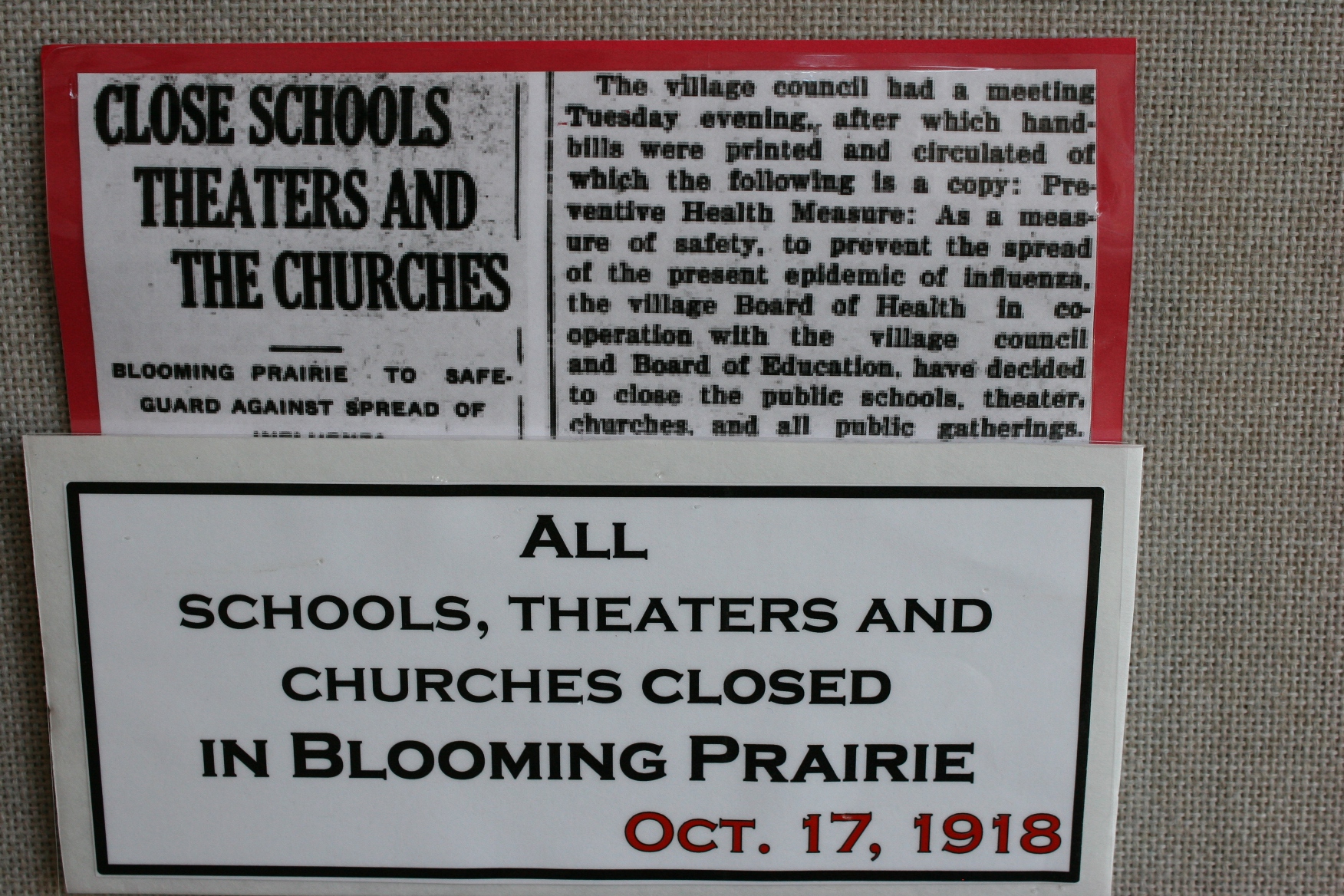
Activities that brought people together, including here in southern Minnesota, were suspended during the flu outbreak. (Minnesota Prairie Roots copyrighted file photo 2016)
INSIDE THE VILLAGE SCHOOL
Soon they reached the village school where children scratched sticks across the dirt yard. Inside, other students crammed onto benches in cramped, windowless rooms made of clay walls and dirt floors. After her daughter shared of the crowded conditions, of sick classmates and no efforts to keep The Great Invader out of school, the concerned mother kept her daughter home. She could not fathom risking her daughter’s health or life. Already a long-time elder educator had succumbed to The Great Invader and another, much younger teacher, lay gravely ill.
THE DARKNESS OF GRIEF, THE LIGHT OF HOPE
Just beyond the school on the outskirts of town, the duo passed by the graveyard. To their right, a cluster of villagers circled as the local gravedigger lowered a pine box into a dark hole. The heartbreaking wails of mourners pierced the air. The mother recognized many of the grieving for theirs was a small village. Sadness clenched her thoughts. She knew this much-loved elder had succumbed to The Great Invader, although his family and friends denied the truth. The Office of Truthfulness posted a daily record in the village square and she had seen the man’s name on that list before The Village Know-It-All ripped down the official death document.
Witnessing such grief and observing the cemetery grounds marked by countless rectangles of black, mounded dirt, the mother hurried on. Past a simple marker with a familiar name. She hoped to reach a distant, much larger, village by nightfall. There she would accept the preventative potion to protect her beloved child. Just as she had sought out for herself many months earlier. She’d waited for this day, through the grief of losing her husband to The Great Invader only weeks before the magical potion was created and distributed, then subsequently destroyed by The Village Know-It-All. She focused on the journey at hand, through her weariness and grief, determined, filled with hope.
Minnesota is currently in a precarious place with COVID-19 cases at a 2021 high, few ICU hospital beds available and deaths increasing.
I welcome comments, but will not give voice to anti-vaccine, anti-masking, etc. viewpoints and misinformation on this, my personal blog. I moderate all comments.
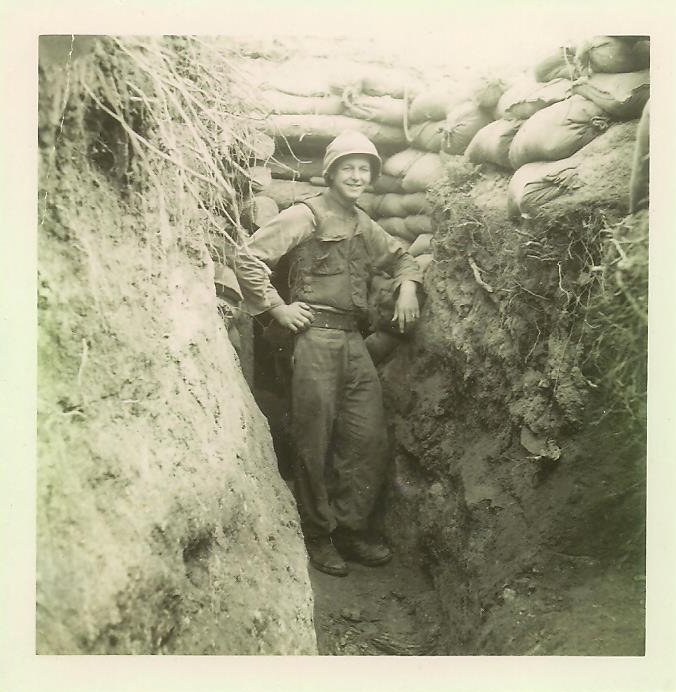
U.S. Army Cpl. Elvern Kletscher, my father, in the trenches in Korea. (From my father’s photo collection)
DEAR DAD,
I’m sorry.
I’m sorry I didn’t take the time to ask. And then to listen.
I’m sorry I didn’t recognize earlier that you were suffering.
I’m sorry I was too busy with my own life and family to realize that I could have, should have, tried to understand.
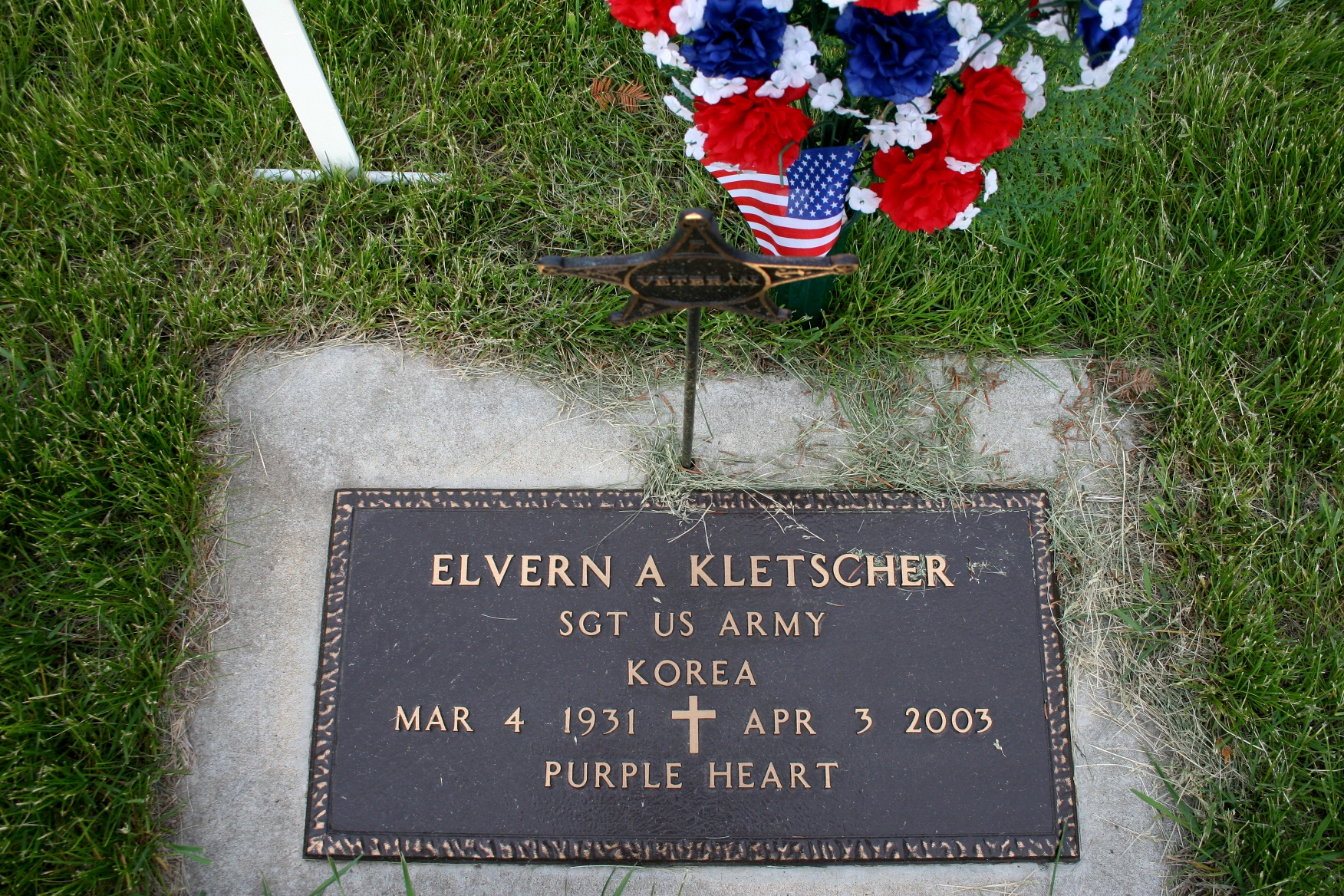
An in-ground marker honors my father, Elvern Kletscher, a Korean War veteran and recipient of the Purple Heart for wounds he suffered at Heartbreak Ridge in Korea while killing a sniper. (Minnesota Prairie Roots copyrighted file photo 2011)
Nearly 19 years have passed now since your burial, since that brutally cold early April day when I wrapped my arm around Mom in the wind-swept hilltop Vesta Cemetery. I felt her body shivering, shaking with grief as she accepted a folded American flag.
Moments like that imprint upon me as I remember you—husband, father, grandfather, son, brother…and veteran.
You were buried with military honors. The firing of guns. The mournful playing of taps. An in-ground military marker notes your final rank as a sergeant in the US Army. Awarded the Purple Heart, albeit 47 years after you were wounded on Heartbreak Ridge in Korea.
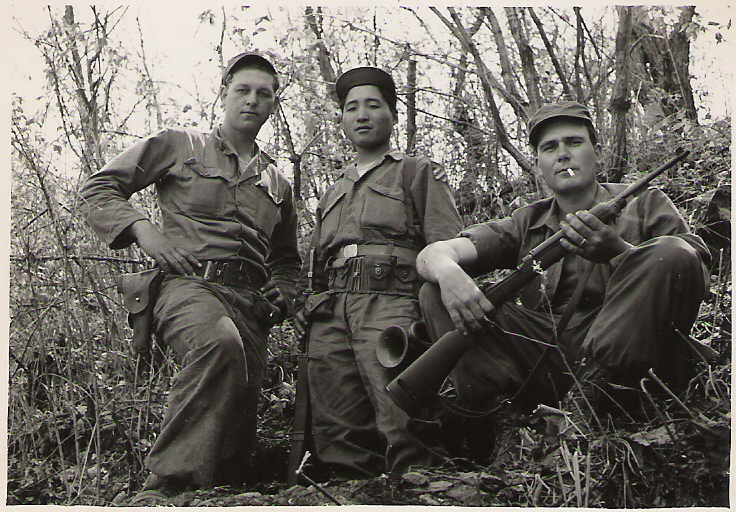
My father, Elvern Kletscher, left, with two of his soldier buddies in Korea. (From my father’s photo collection)
Today, on Veterans Day, I think of you. Honor you. And consider how fighting as a boots-on-the-ground combat soldier in the mountains of Korea forever changed you.
I recall the few stories you shared through the decades. You watched as a mortar killed your friend Ray, who was scheduled to leave Korea the next day. He left behind a wife and infant daughter. Dad, your grief led me to search for that “baby” two years after your death. I found Teri living in Iowa and with only minimal knowledge of her birth father. I have yet to meet her, but want to some day.
Some day. Days and weeks and months and years pass and then some day is too late. Now I hold a shoebox brimming with curled black-and-white photos and other items from your time in the Army. Your Selective Service System registration certificate. A well-worn mini black book of prayers, hymns and devotions from the Ladies Aid in Vesta. Faith and prayer carried you through many a hellish day and night in Korea.
On the back of this photo, my dad simply penned “a letter from home.” I appreciate this photo of my dad taken by an unknown buddy in Korea. (From my father’s photo collection)
In a letter to your parents, a copy tucked into a folder labeled “Korea” in my office file cabinet, you termed the war-torn Asian country a “hell hole.” Likewise, an over-sized embroidered decal declares “RETURNED FROM HELL.”
I have no doubt that war was hell for you. “Shoot or be shot,” I remember you saying. You spoke, too, of bitter cold, of hunger, of orphans begging for food across barbed wire fences. Of horrible war-time atrocities that I can’t bear to write here.
My dad carried this memorial service bulletin home from Korea. In the right column is listed the name of his fallen buddy, Raymond W. Scheibe. (From my father’s collection)
And then when you arrived home—bringing with you a folded memorial service bulletin from Sucham-dong, Korea, dated July 31, 1953, and including your buddy Ray’s name—the horror and grief you experienced remained. But few, if any, acknowledged your struggles back then. You were expected to resume life as usual, returning to rural Minnesota to farm the land, to milk cows, to marry and raise a family. Post traumatic stress disorder (PTSD) was not yet recognized.
I’m sorry, Dad. Sorry about the neighbor who laughed as you dove to the ground when a rifle fired during pheasant hunting.
I’m sorry, Dad, for the fear you felt when guns fired during a small town parade.
I’m sorry I wasn’t there for you like I should have been.
Near the end of your life, you found empathy and care in your veterans’ support group. That comforts me. Those men understood what you’d experienced. For that I am grateful. They provided the emotional support I failed to give you. I’m sorry, Dad. So sorry.
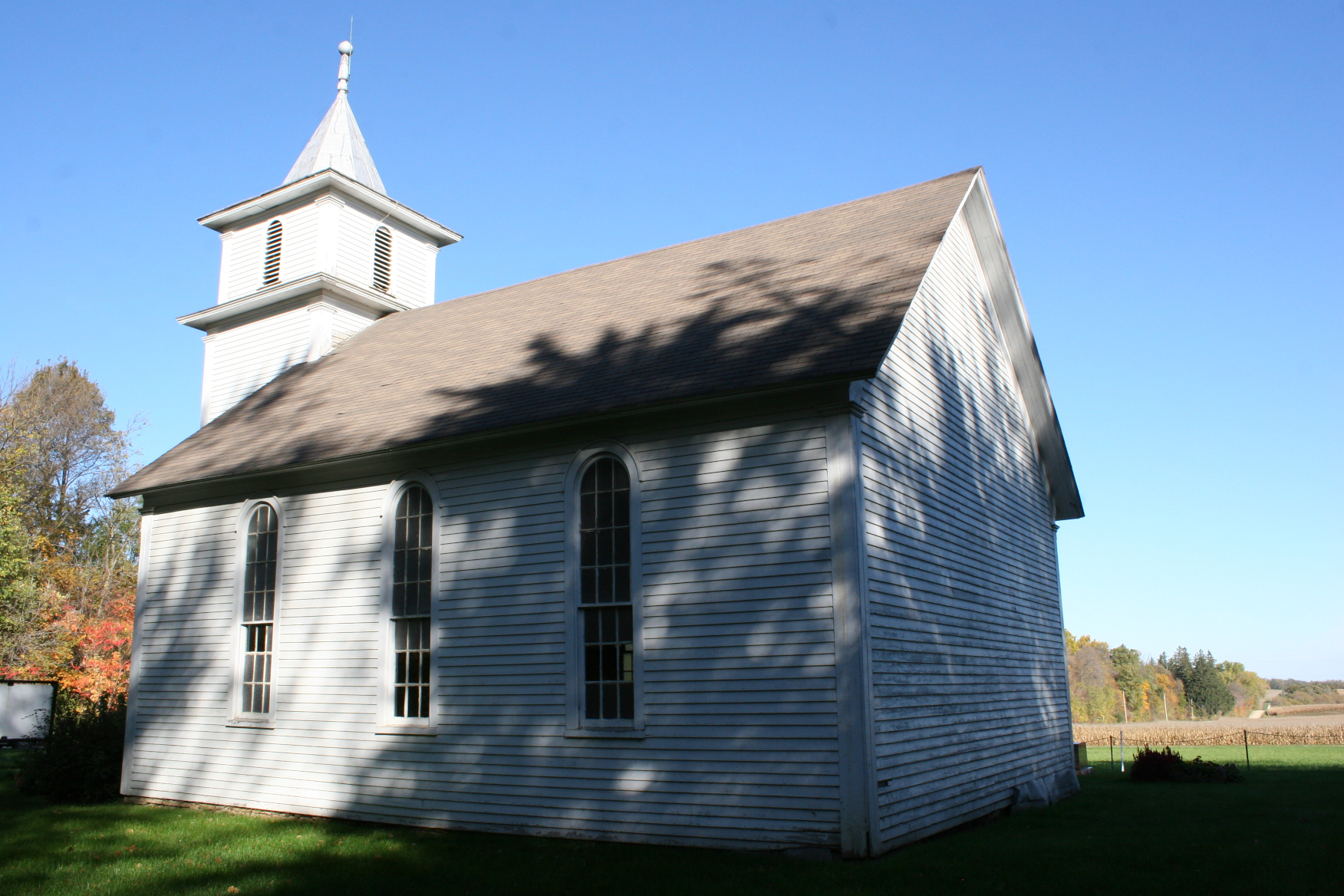
A simple country church, Eidsvold Norwegian Methodist. (Minnesota Prairie Roots copyrighted photo October 2021)
WHENEVER I HAPPEN upon an aged rural Minnesota church, as I did recently in Leon Township south of Cannon Falls, I wonder about the immigrants who founded it. What are their stories? How did they feel living an ocean apart from their beloved homelands and families? I admire their strength. Their ability to board a ship and sail toward The Land of Opportunity.
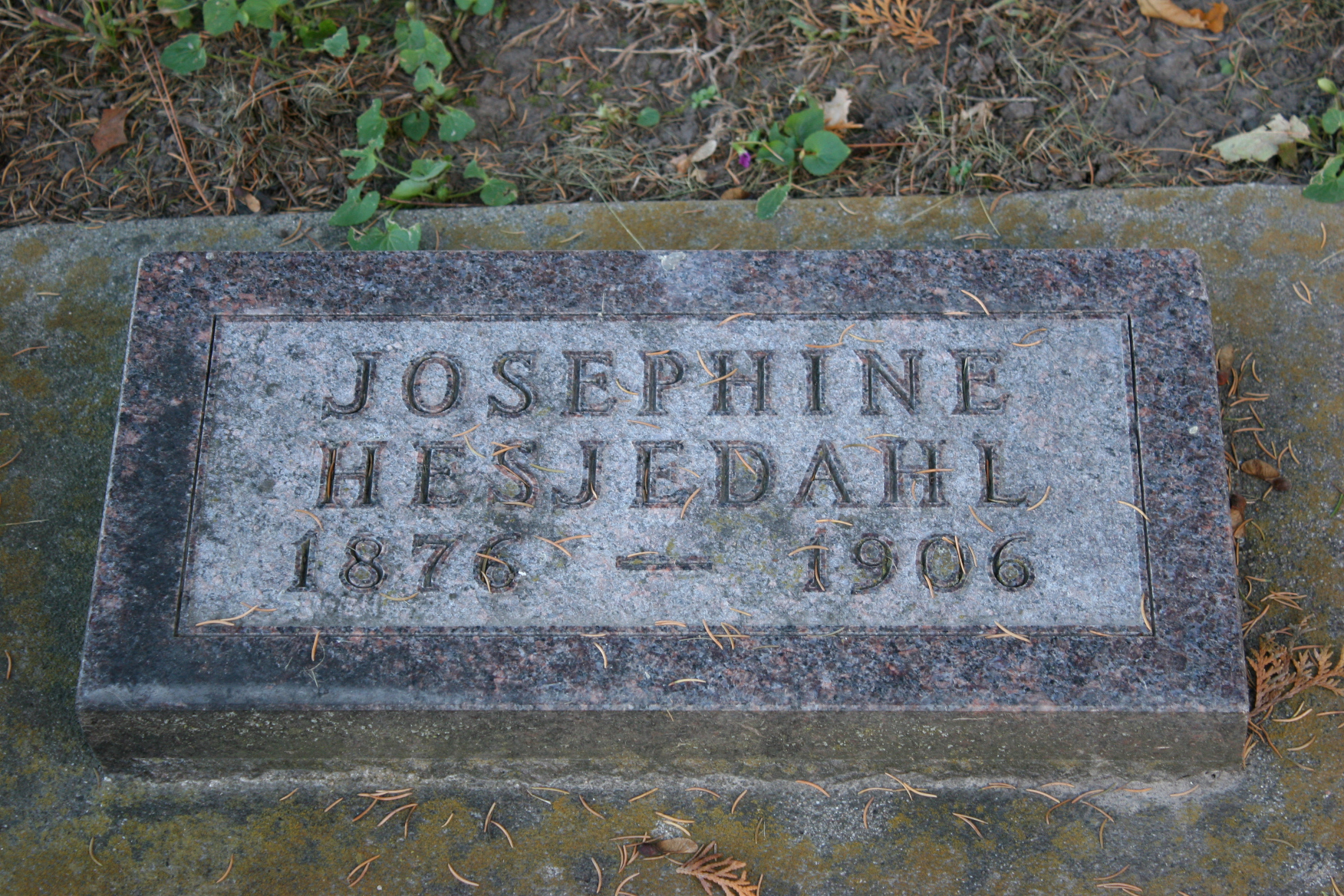
A Norwegian name in the Eidsvold Church cemetery. (Minnesota Prairie Roots copyrighted photo October 2021)
Oftentimes, the very names of these country churches and the names of those buried in the churchyard cemeteries reveal roots and heritage.
A brief history of the church. (Minnesota Prairie Roots copyrighted photo October 2021)
The small white clapboard church Randy and I discovered on 70th Street in the Sogn Valley area was clearly founded by Norwegian immigrants. Eidsvold Norwegian Methodist Church banners a sign with a brief history. Founded in 1893. Also known as “Ring Church.” Built by Gulbrand Nilson. Last service in 1949.
My initial view of the Eidsvold Church. (Minnesota Prairie Roots copyrighted file photo October 2021)
An online search dates the congregation’s organization to 1860. Perhaps the signage date references building construction. I couldn’t find much other information other than parishioners originally meeting for worship in homes, a common practice.
My own great grandfather, Rudolph Kletscher, who immigrated to the US from Germany in 1885, eventually settling on a farm near my hometown of Vesta in southwestern Minnesota, opened his home for worship. A pastor from the Lutheran church in neighboring Echo led services for 8-9 families and in 1900 those German immigrants built St. John’s Lutheran Church in town.
For those brave souls settling in a new land, I expect their faith provided comfort, strength and hope. And a place to gather, to sing and pray in their mother tongue, to support one another, to socialize. To celebrate. Baptisms. Weddings. Confirmations. Christmas and Easter. And to mourn.
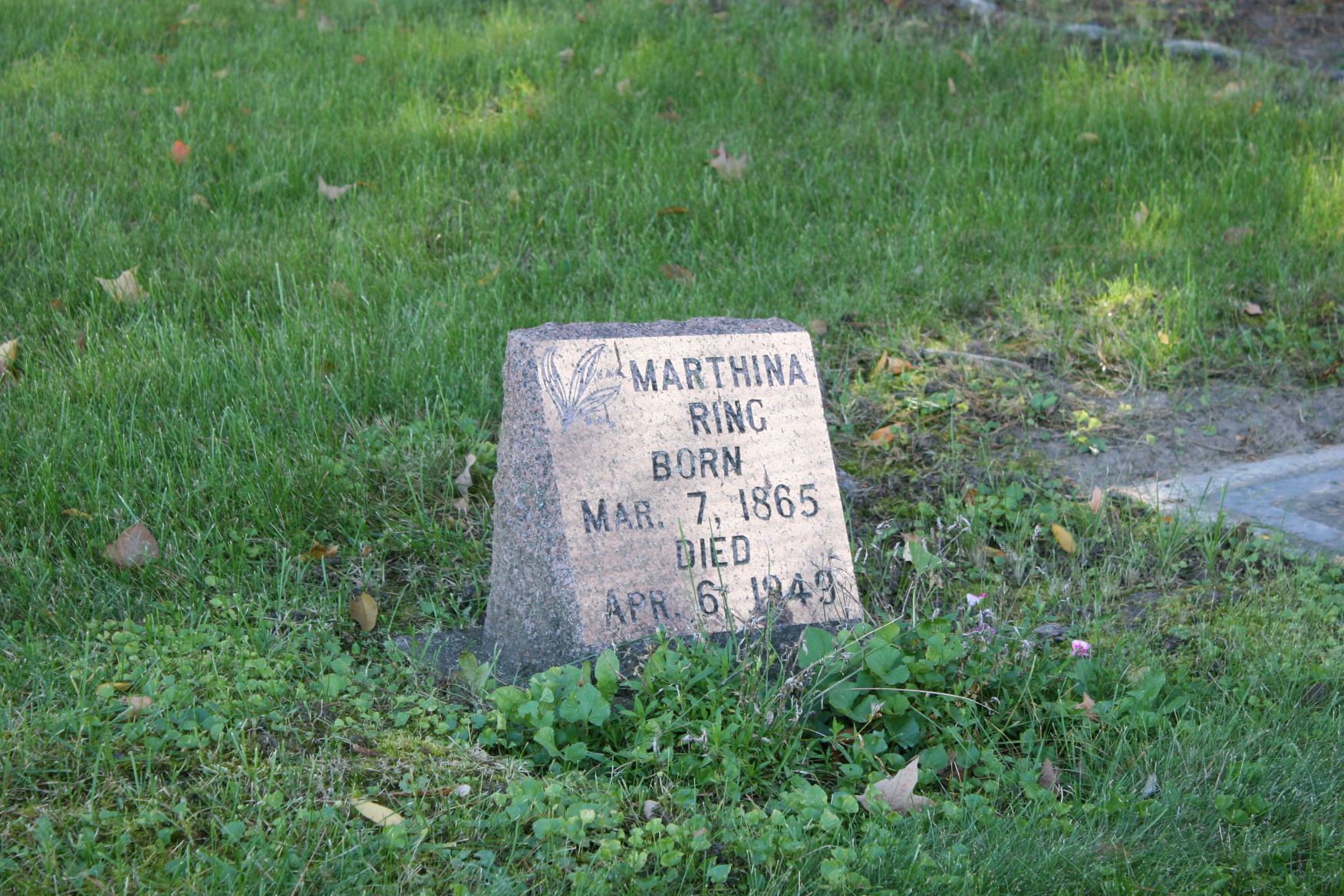
The final service held at Eidsvold, as noted on the church sign, was the funeral of Marthina Ring on April 11, 1949. I determined to find her grave marker and I did. It’s a small, unassuming stone engraved with her birth and death dates. Born March 7, 1865. Died April 6, 1949. Other Ring family stones are larger, more prominent. John Ring, I learned online, was a leading supporter of this church. I have no idea of his connection to Marthina.
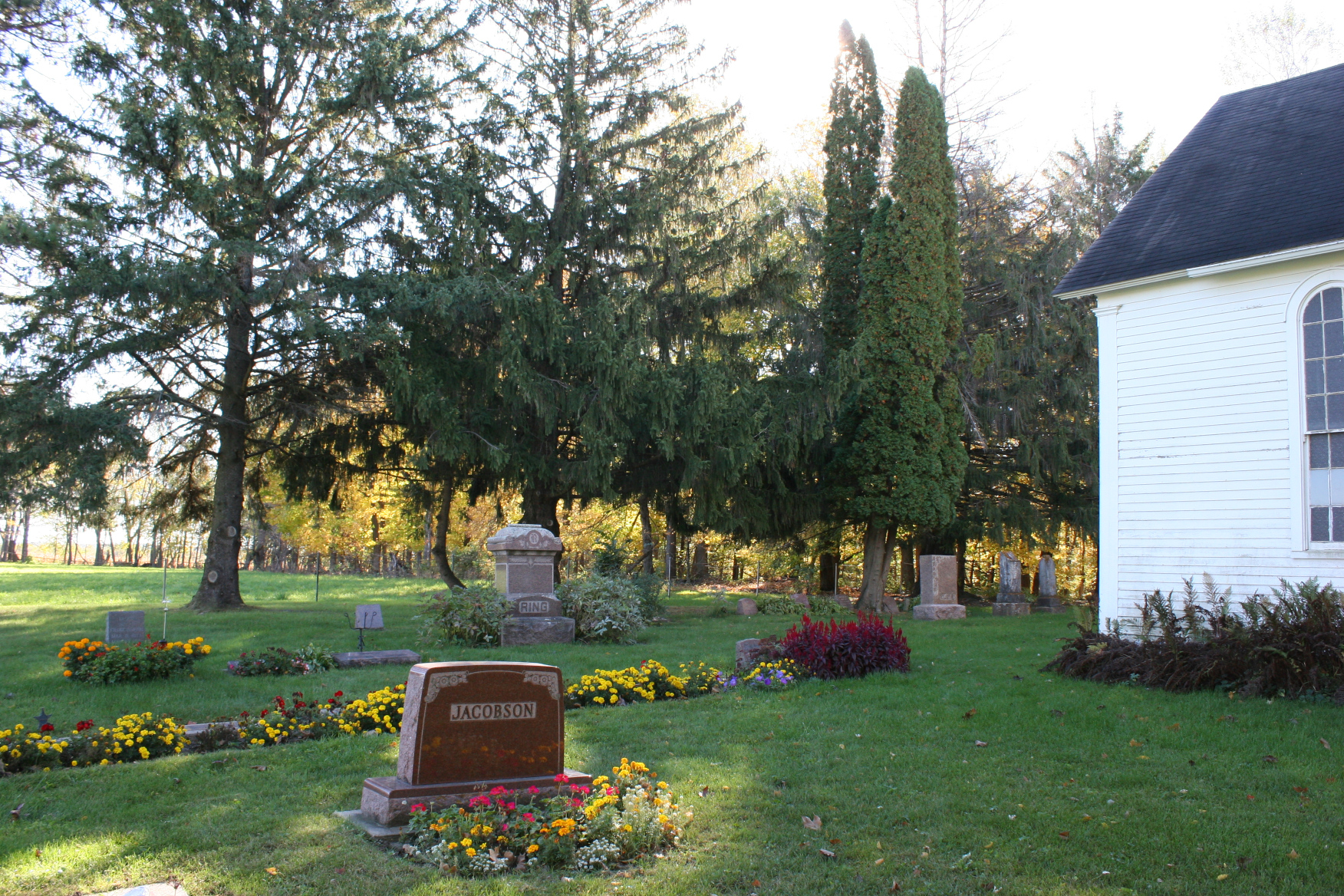
Beautiful flowers grace the cemetery. (Minnesota Prairie Roots copyrighted photo October 2021)
This cemetery appears cared for with golden marigolds, red and pink geraniums and other annuals splashing color among the grey and brown tombstones.
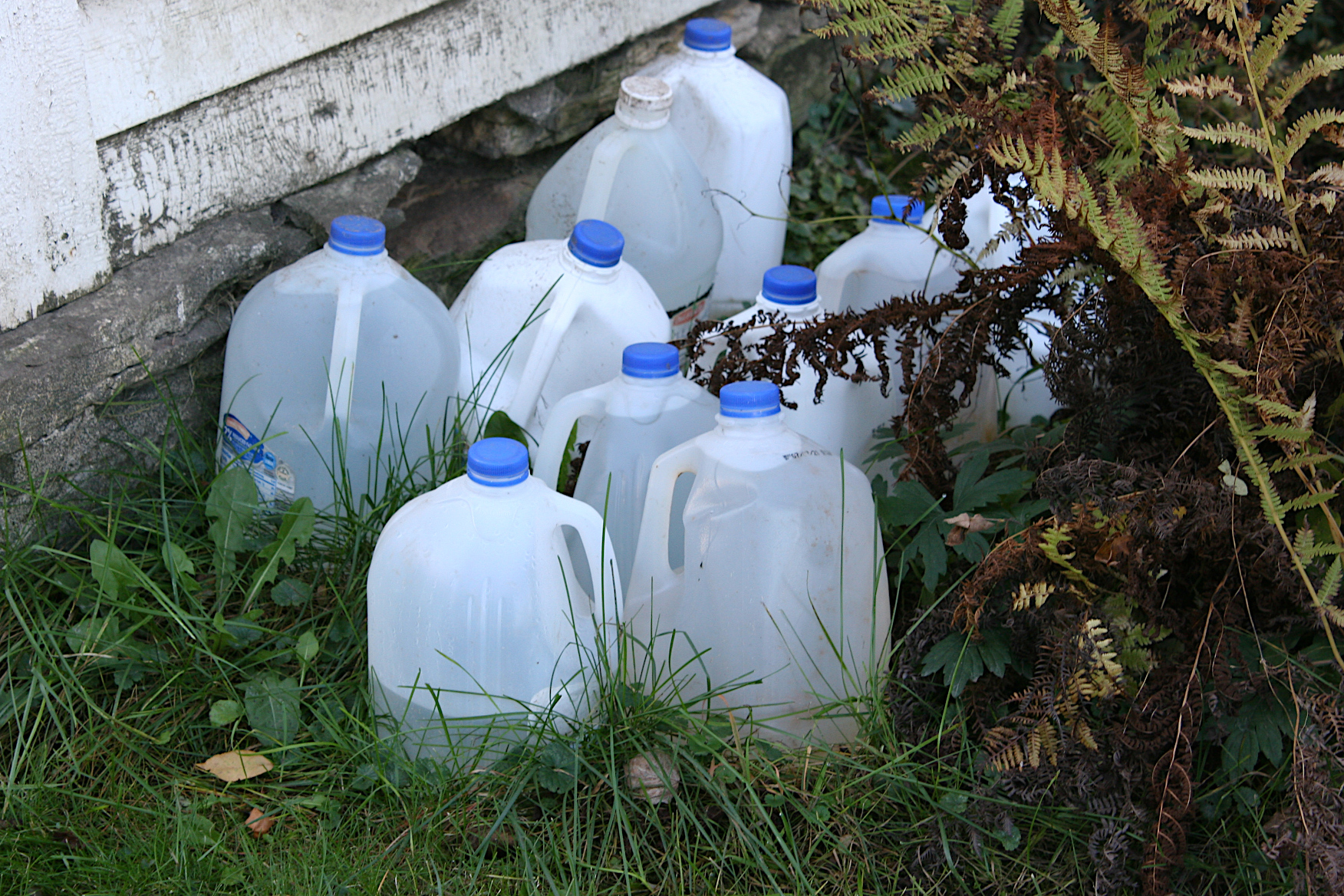
Water at the ready… (Minnesota Prairie Roots copyrighted photo October 2021)
Jugs of water snugged against the church foundation show me that someone comes here regularly to water those plants.
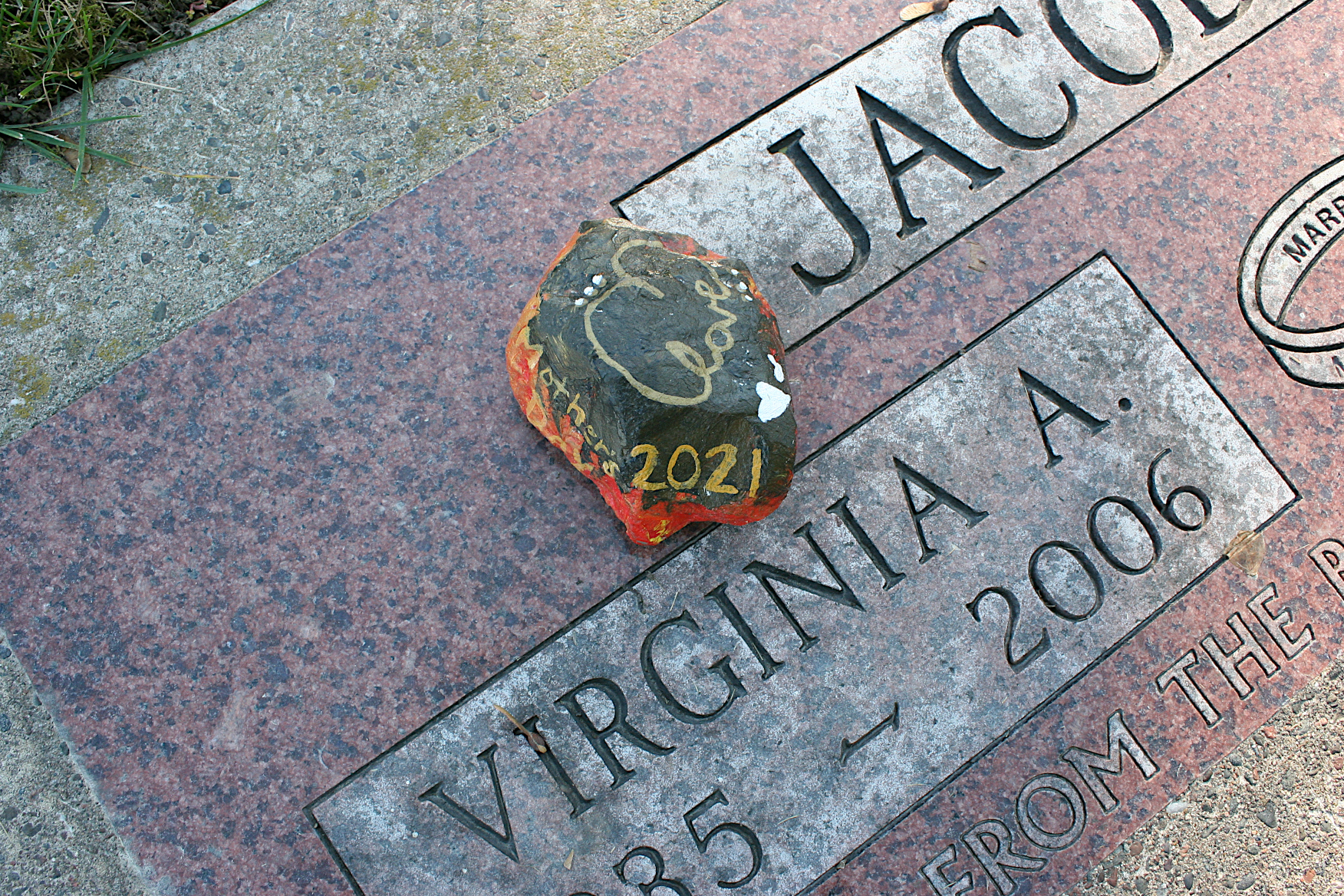
A token of love left for a mother. (Minnesota Prairie Roots copyrighted photo October 2021)
And a painted stone placed atop a marker for Virginia Jacobson reveals how much she is missed. Has been missed since her 2006 passing.
The door into Eidsvold was padlocked. (Minnesota Prairie Roots copyrighted photo October 2021)
That this church and graveyard have not been abandoned here among the fields in the Sogn Valley pleases me. This land, this church building, this cemetery meant something to those long ago Norwegian immigrants. And that is to be valued. Cherished. Honored. Celebrated, even by those of us with no connection to Eidsvoll/Eidsvold, Norway.
#
IF YOU KNOW more about the Ring Church, please share. I welcome additional information. As is often the case at rural churches, I found the front door locked.
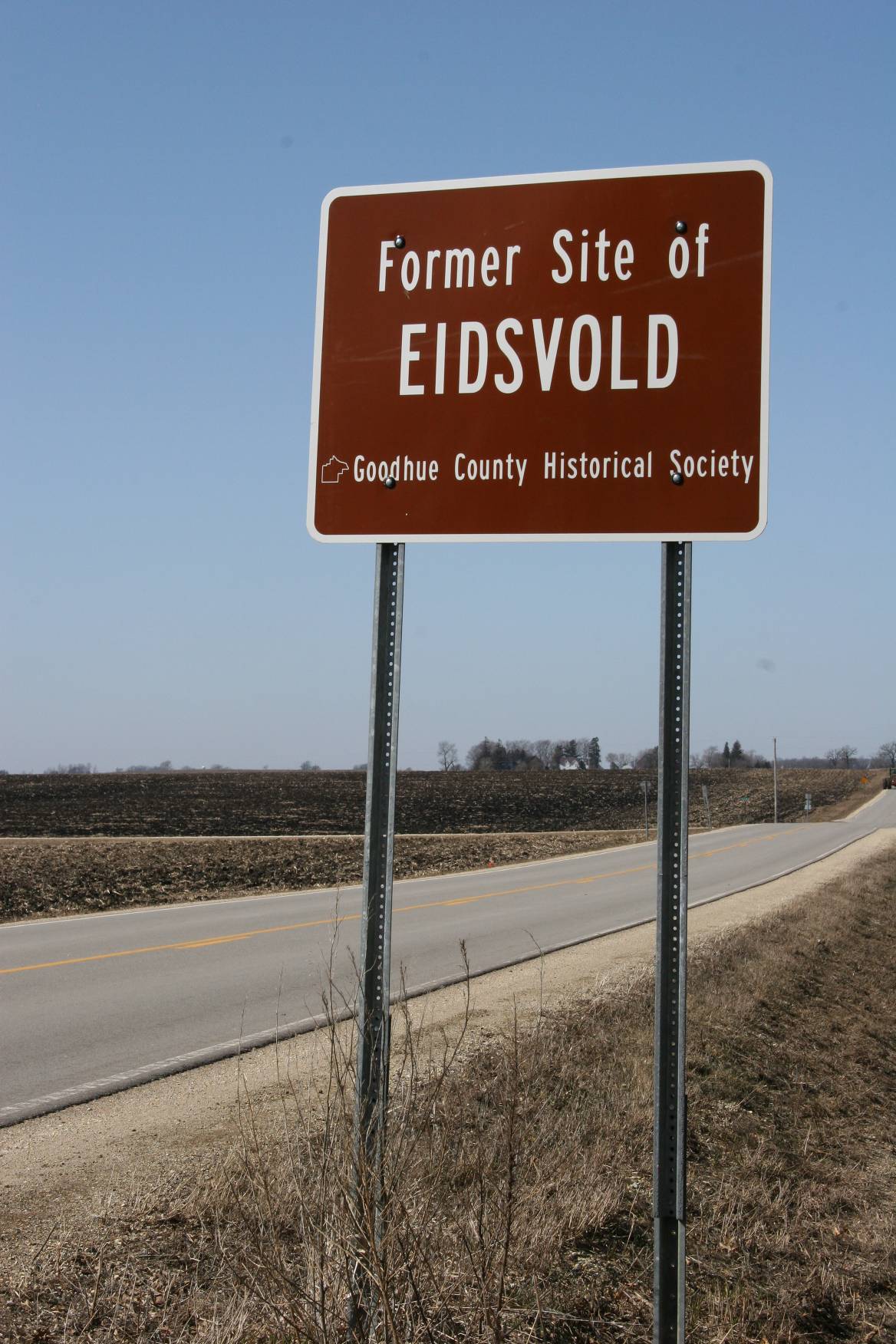
The Goodhue County Historical Society placed this historical interest sign at the ghost town of Eidsvold. The sign was erected to preserve the history of this former post office site and to recognize its historical contribution to the area. (Minnesota Prairie Roots copyrighted file photo 2010)
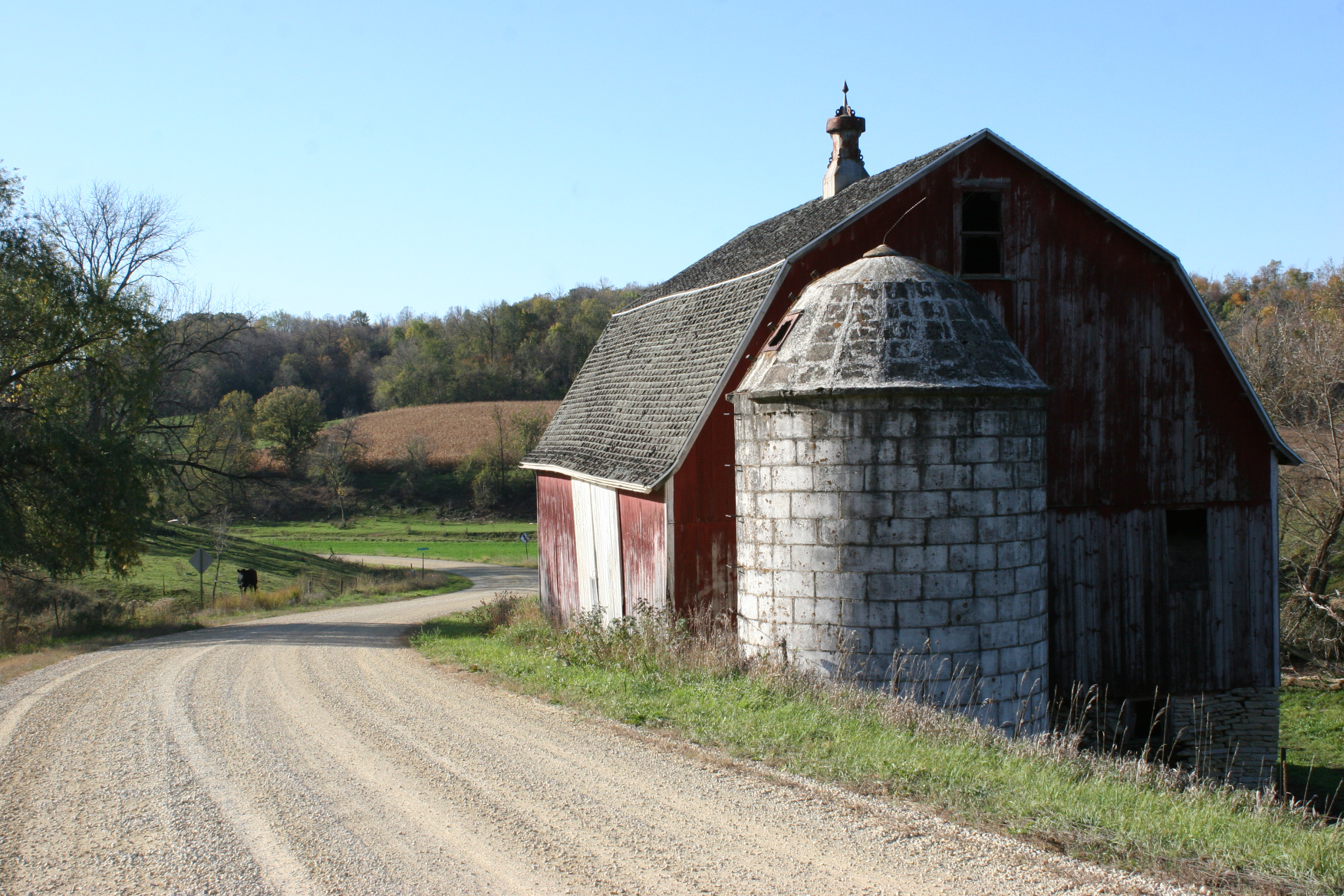
Along a backroad in the Sogn Valley, an aged barn and silo hug a curve on a gravel road. (Minnesota Prairie Roots copyrighted photo October 2021)
MINNESOTA’S DIVERSE LANDSCAPE inspires. From the vast prairie to the northwoods. From lakes to rivers. From hills to valleys. My home state, minus mountain ranges and ocean, is truly a beautiful place. We are so much more than cold and snow, as many non-residents equate with Minnesota.
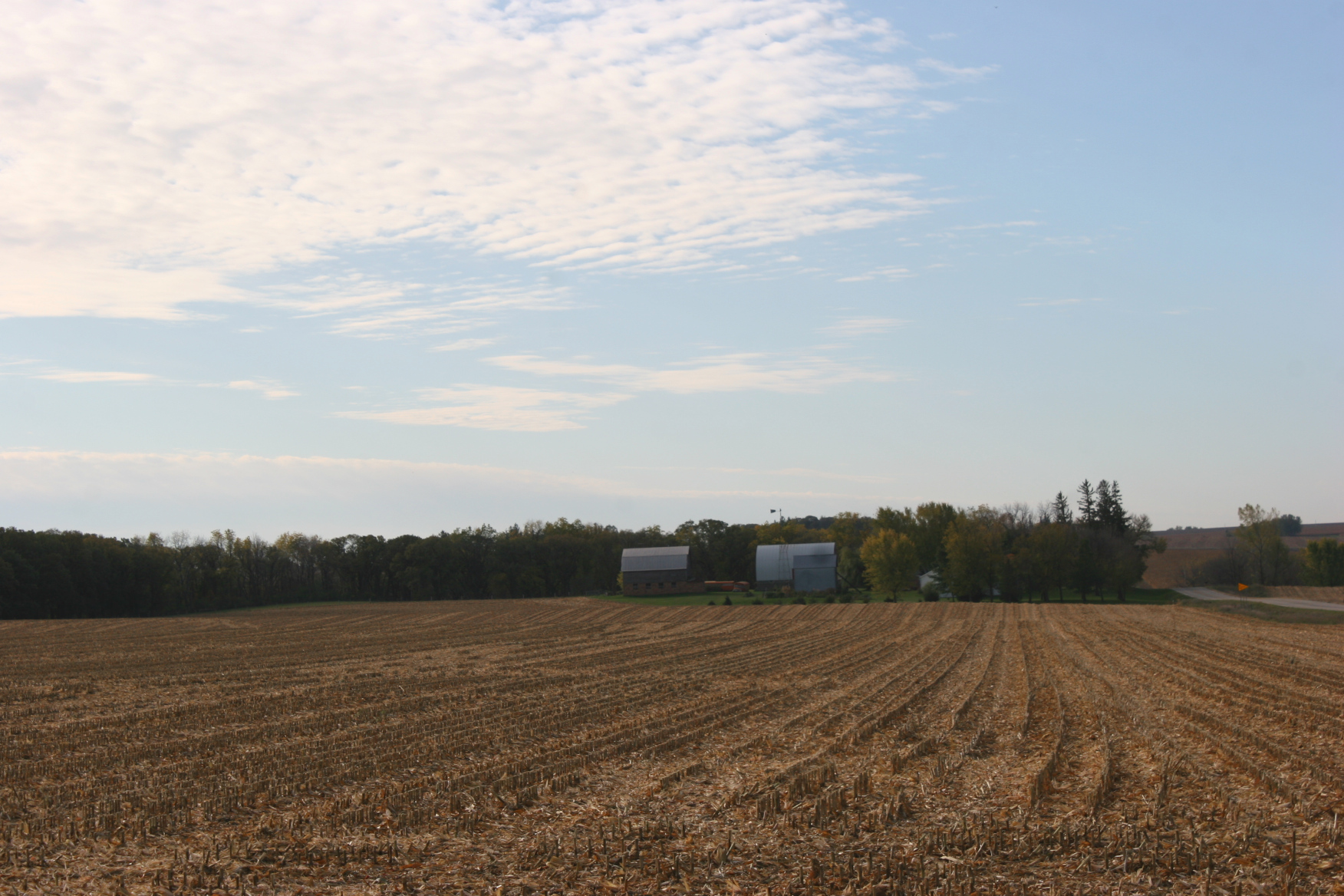
The countryside near Nerstrand, on our way to Sogn Valley. (Minnesota Prairie Roots copyrighted photo October 2021)
Autumn, especially, showcases Minnesota’s natural beauty. This fall, Randy and I took many rural drives to immerse ourselves in the countryside and the season. We chose road trips over staying home and doing chores on the weekends. Our priorities change as we age. The work can wait. We recognize, too, the approach of winter. We felt an urgency, a need, to hit the road before the snow flies.
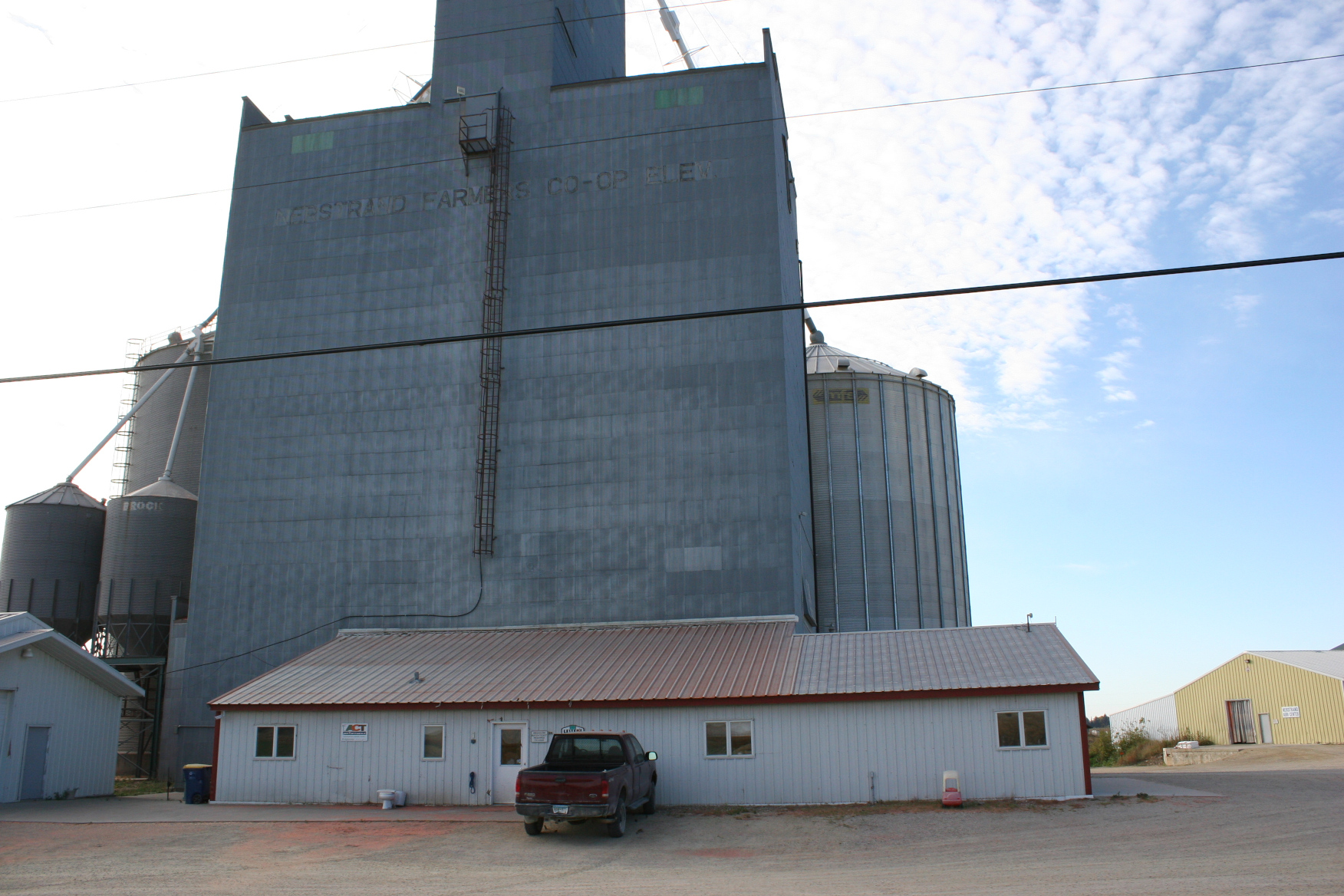
We drove through Nerstrand, past the grain elevator, on our way to the Sogn Valley. (Minnesota Prairie Roots copyrighted photo October 2021)
Often we choose a destination, this time Cannon Falls. But sometimes we simply head in a general direction, oversized Minnesota Atlas & Gazetteer available to guide us. We prefer paper maps to GPS. This trip, we aimed east toward Goodhue County, driving through the picturesque Sogn Valley.
The rolling countryside of the Sogn Valley provides a beautiful backdrop for farms. (Minnesota Prairie Roots copyrighted photo October 2021)
I love this rural region defined by farms and fields and winding gravel roads. Hills and river valleys and prairie intermingle and it’s all like poetry writing upon the land.
I delight in finding cows grazing deep in Sogn Valley. (Minnesota Prairie Roots copyrighted photo October 2021)
As a farmer’s daughter, I hold a fondness for aged barns, at one time the anchor of an agrarian life. I labored for years on my southwestern Minnesota childhood family dairy and crop farm, most of that time inside the barn. Or the silo.
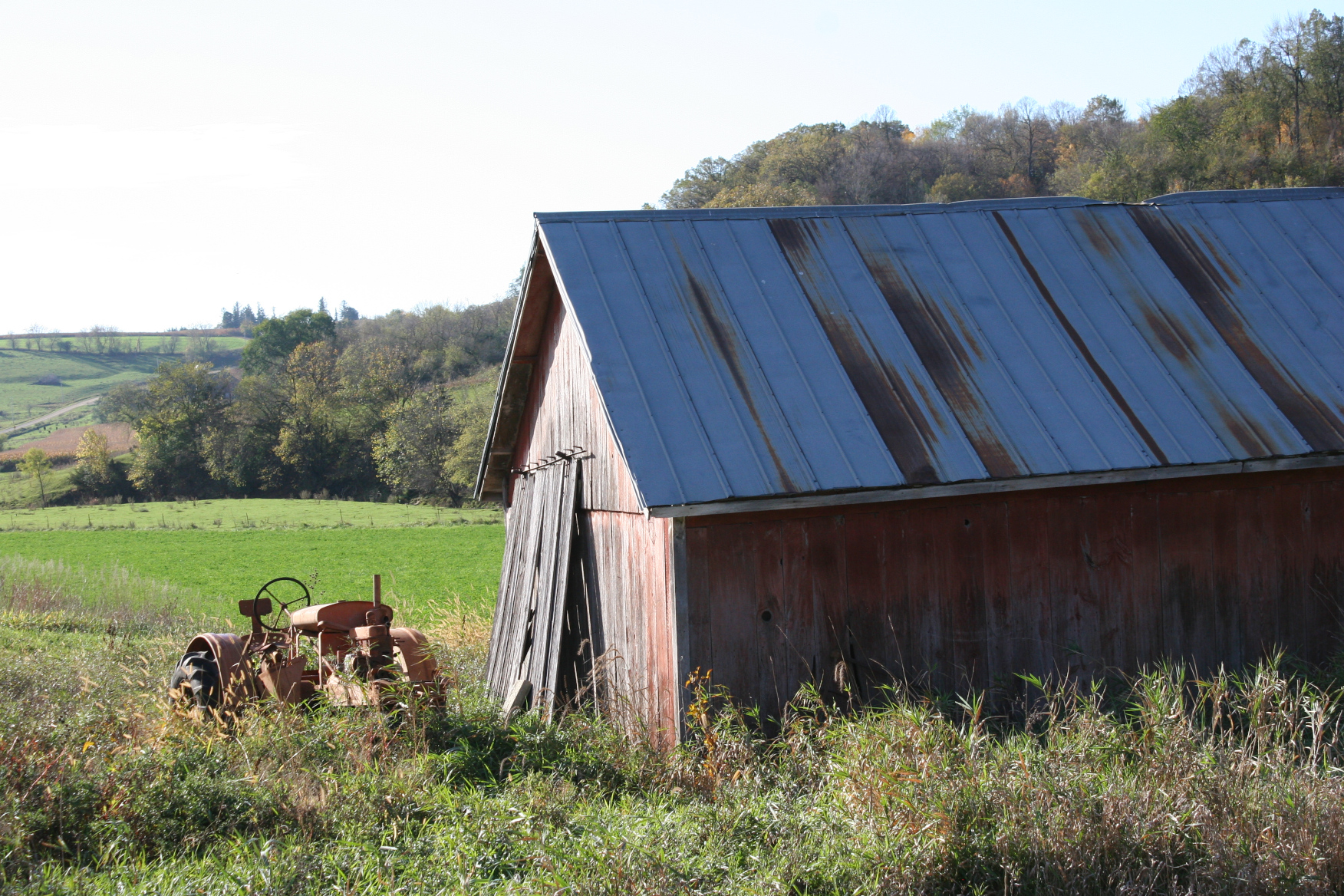
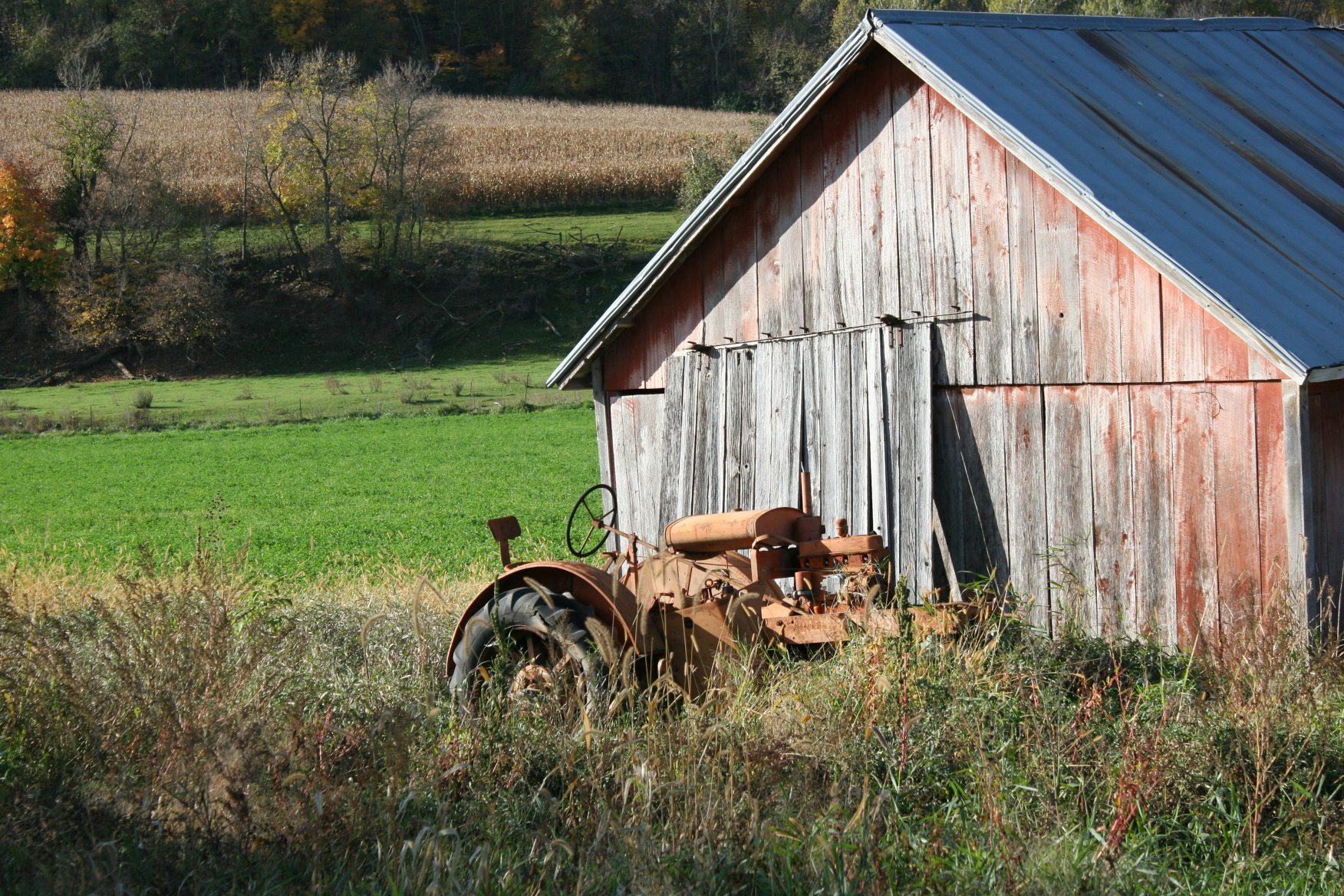
Abandoned building, abandoned tractor in the Sogn Valley. (Minnesota Prairie Roots copyrighted photo October 2021)
Now, when I pass by barns weathering in abandonment, I feel overcome by sadness. I recognize that a way of life is vanishing. I understand and appreciate advances in agriculture while simultaneously grieving the loss of farm life as I knew it.
I worry about all the barns we are losing. They hold history. Stories. Memories. And they are falling in heaps of rotted wood.
But, on this drive through the Sogn Valley, we happened upon a small country church that uplifted my spirits. Country churches and adjoining cemeteries rate as another draw for me deep into rural Minnesota. They are historically, poetically, spiritually and artistically relevant.
Along 70th Street in Goodhue County, on a small plot of land ringed by a row of trees and set among cornfields, Eidsvold Norwegian Methodist Church rises. The last service was held here in 1949. Yet, the aged clapboard structure remains. Important to someone. And on this Friday morning in mid-October, appreciated by me.
PLEASE CHECK BACK tomorrow as I take you on a tour around, but not inside (it was locked), Eidsvold church.
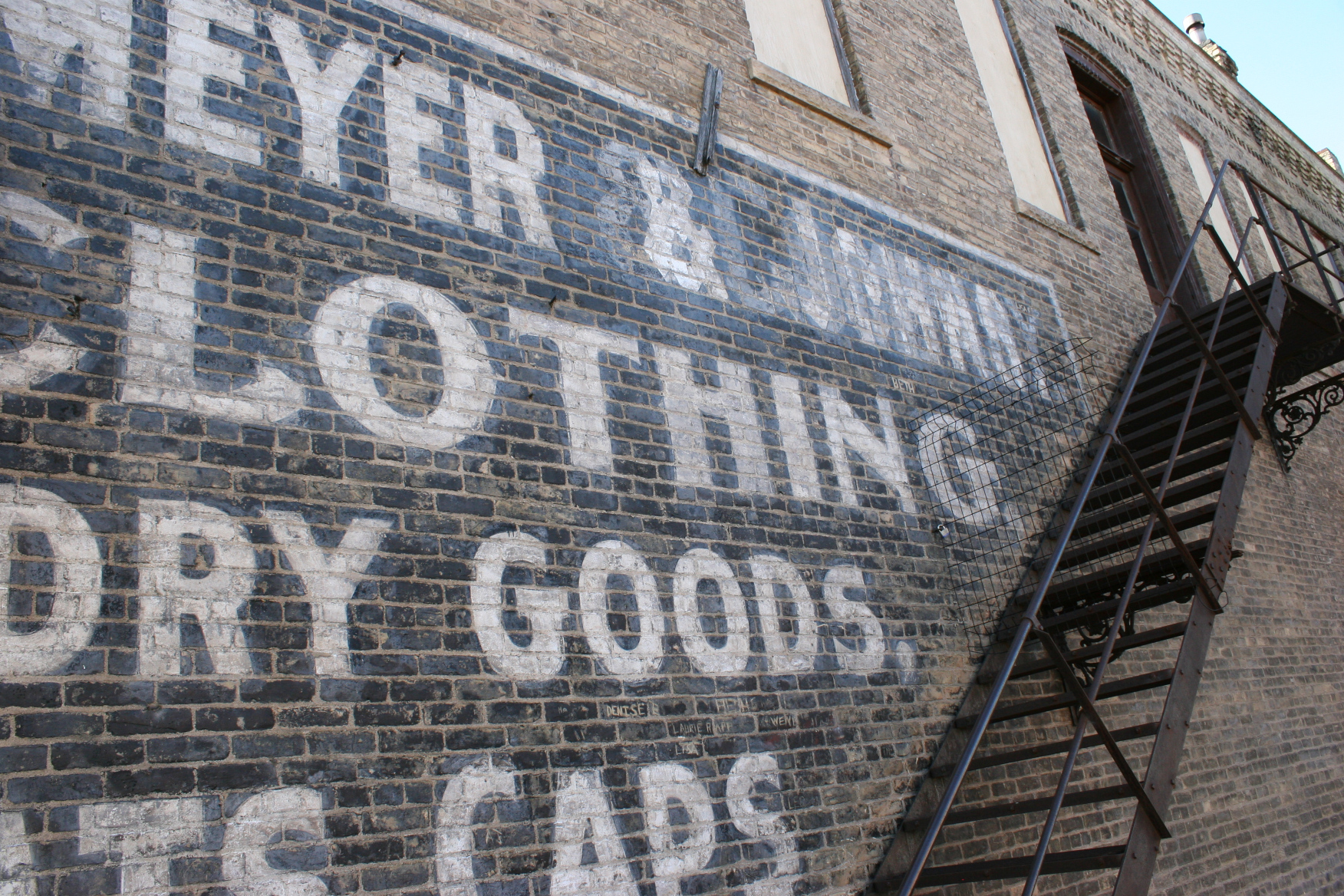
This ghost sign and stairway caught my interest in downtown Cannon Falls. (Minnesota Prairie Roots copyrighted photo October 2021)
I VIEW THE WORLD through a creative lens. So when I see an exterior metal stairway, I see beyond the intended purpose of a pathway up or down. Rather, I see the angles, the details, the architectural, artsy side of the utilitarian.
Look to the right to see the lovely floral design in the bracing bracket. (Minnesota Prairie Roots copyrighted photo October 2021)
Aiming my camera lens up to the underside of that artsy stairway. (Minnesota Prairie Roots copyrighted photo October 2021)
And I appreciate, too, the fading ghost sign lettering for a dry goods and clothing store painted on the brick building.
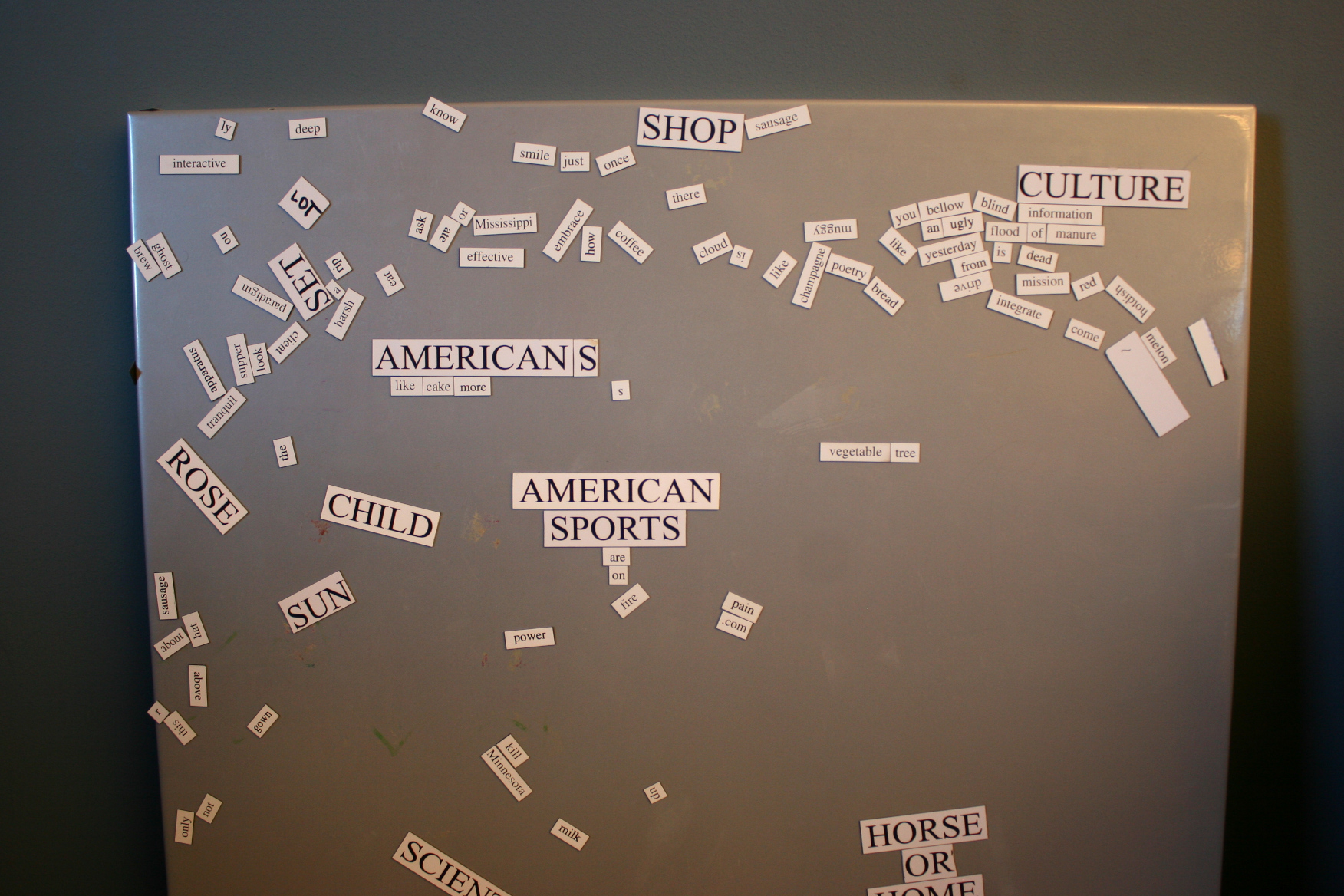
I spotted this magnetic word board at the library. (Minnesota Prairie Roots copyrighted photo October 2021)
JUST UP THE STREET a half a block away at the public library, a magnetic word board invites patrons to create. And while I didn’t, I took note of the coupling of words, whether by intentional placement or not:
smile just once
SHOP sausage
AMERICAN SPORTS are on fire
You bellow blind information like an ugly flood of manure
AMERICANS like cake more
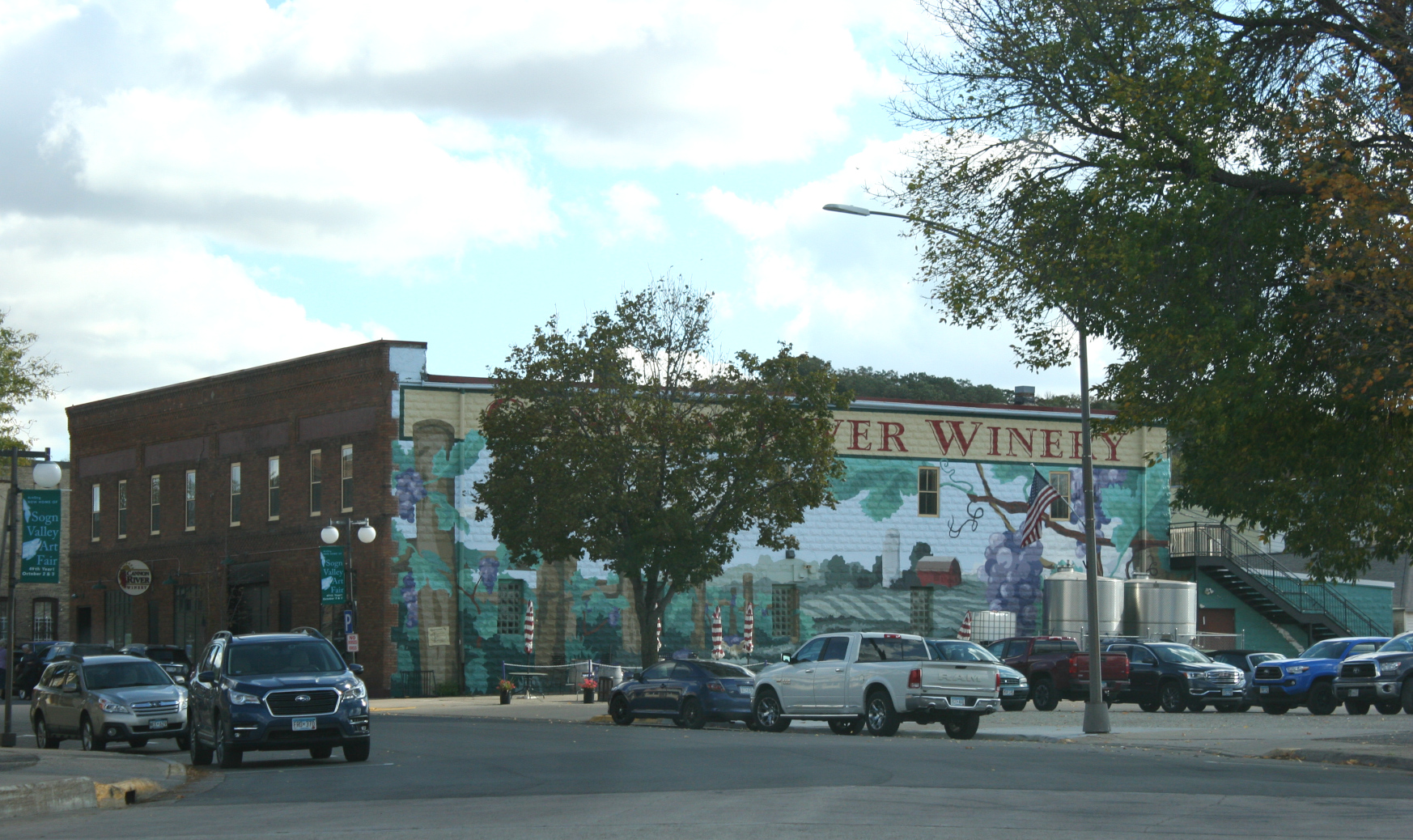
This mural graces Cannon River Winery. (Minnesota Prairie Roots copyrighted photo October 2021)
WE AMERICANS ALSO LIKE our wine. Back across the street, near the artsy metal stairway, Cannon River Winery also embraces the arts with a sprawling mural on the side of its building. The scene depicts the area’s rural-ness and the business of growing grapes and crafting wine.
I’ll raise my glass to that—to the winery, to the library, to the antique shop and to all the places in, and people of, this Minnesota community who value the arts. Thank you. I am grateful for the creativity in Cannon Falls.
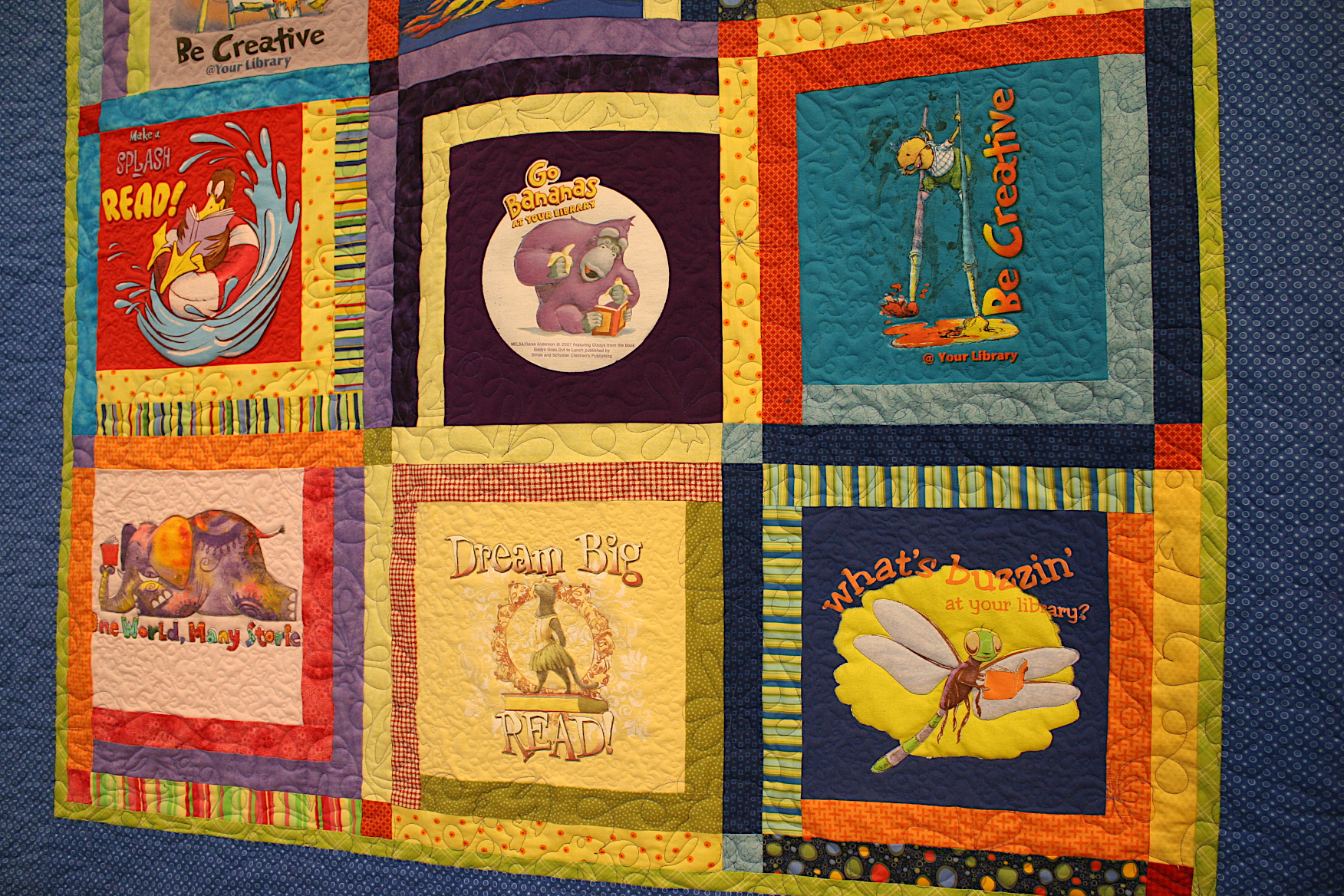
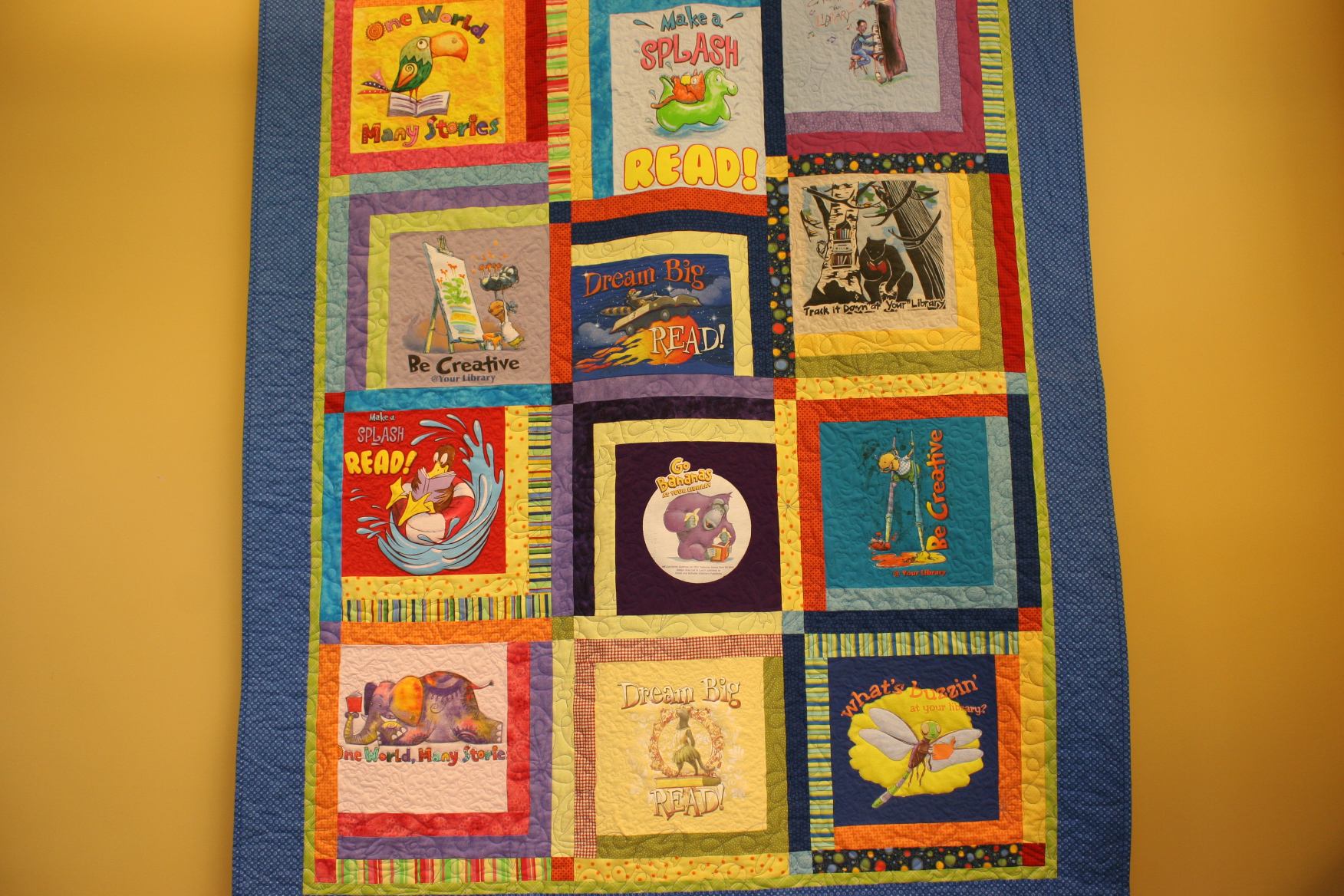
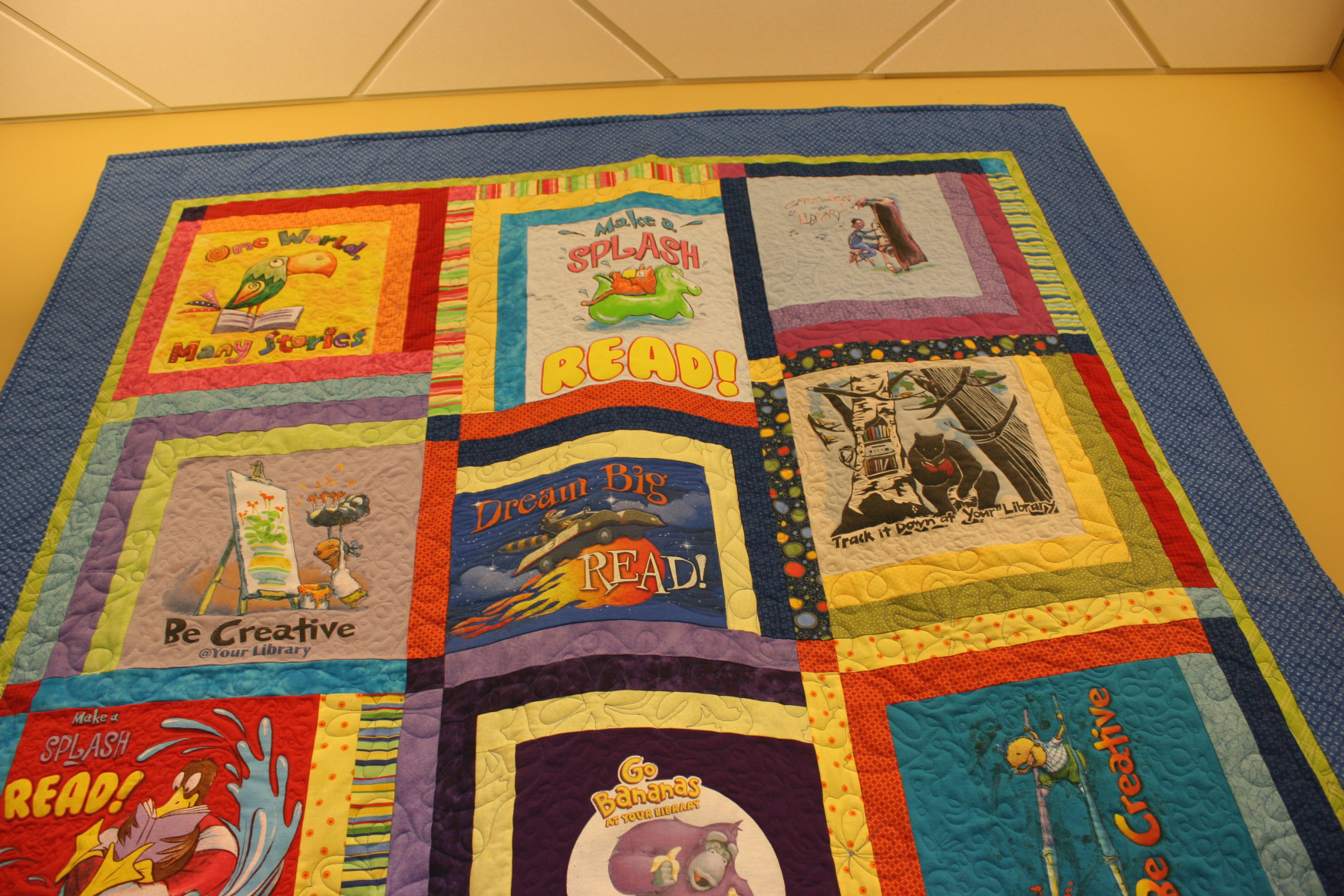
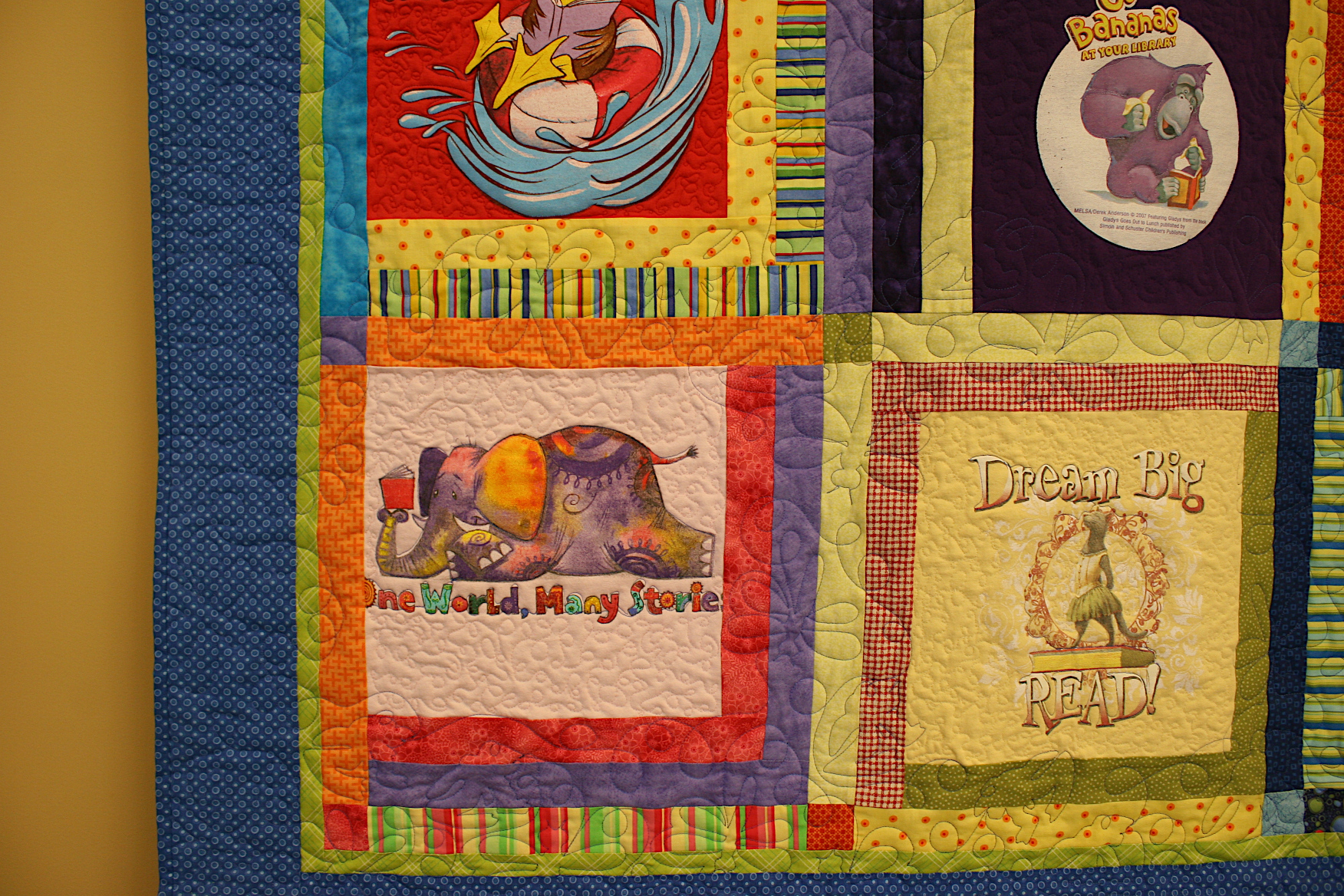
The inspiring quilt displayed at the Cannon Falls Library. (Minnesota Prairie Roots copyrighted photo October 2021)
DREAM BIG. Be Creative. One World, Many Stories. Make a Splash.
Make a Splash! applies to more than reading. (Minnesota Prairie Roots copyrighted photo October 2021)
Those phrases inspire. They push us to do our best. To pursue our passions. To make a difference. To tell our stories.
When I recently read those words on a colorful quilt gracing a wall in the Cannon Falls Library, I felt empowered.
The library quilt as inspiring art. (Minnesota Prairie Roots copyrighted photo October 2021)
The messages have been part of Southeastern Libraries Cooperating summer promotionals to get kids into libraries and reading. They’re simple words and graphics. Kid-appealing. Eye-catching. Positive.
The top section of the quilt art. (Minnesota Prairie Roots copyrighted photo October 2021)
As someone who values books and libraries, and the arts, I appreciate the works of the seamstress who stitched this quilt. It’s a good visual reminder to each of us—whether child, teen or adult—of our talents and worth. I may be good with words. You may be good with numbers. I celebrate that difference in talent (especially come tax time when I hand my financial records over to my accountant).
All Year Round With Little Frog was one of my granddaughter’s favorite books as a toddler. I would read and reread it to her whenever she visited, just as I did decades ago to her Uncle Caleb. (Minnesota Prairie Roots copyrighted file photo)
I’ve always loved books and now I have the joy of reading books to my grandchildren, ages nearly three and 5 ½. Books pack shelves in their toy room with more books from the library. Their parents value books.
The world of words is opening even wider to Isabelle, who is in kindergarten. During a recent visit, I would say a word and she would guess the starting letter. Her face lit with sheer delight in determining the correct letter. Her mind is beginning to connect—to understand that sounds define letters which form words and then sentences and stories. I can’t wait to hear her read.
One World, Many Stories… (Minnesota Prairie Roots copyrighted photo October 2021)
So when I read about dreaming big and being creative and making a splash in this world of many stories, I think of my precious grandchildren. And I hope that in some small way, I inspire them to be all they can be. And one way to do that is via books, art and modeling creativity.
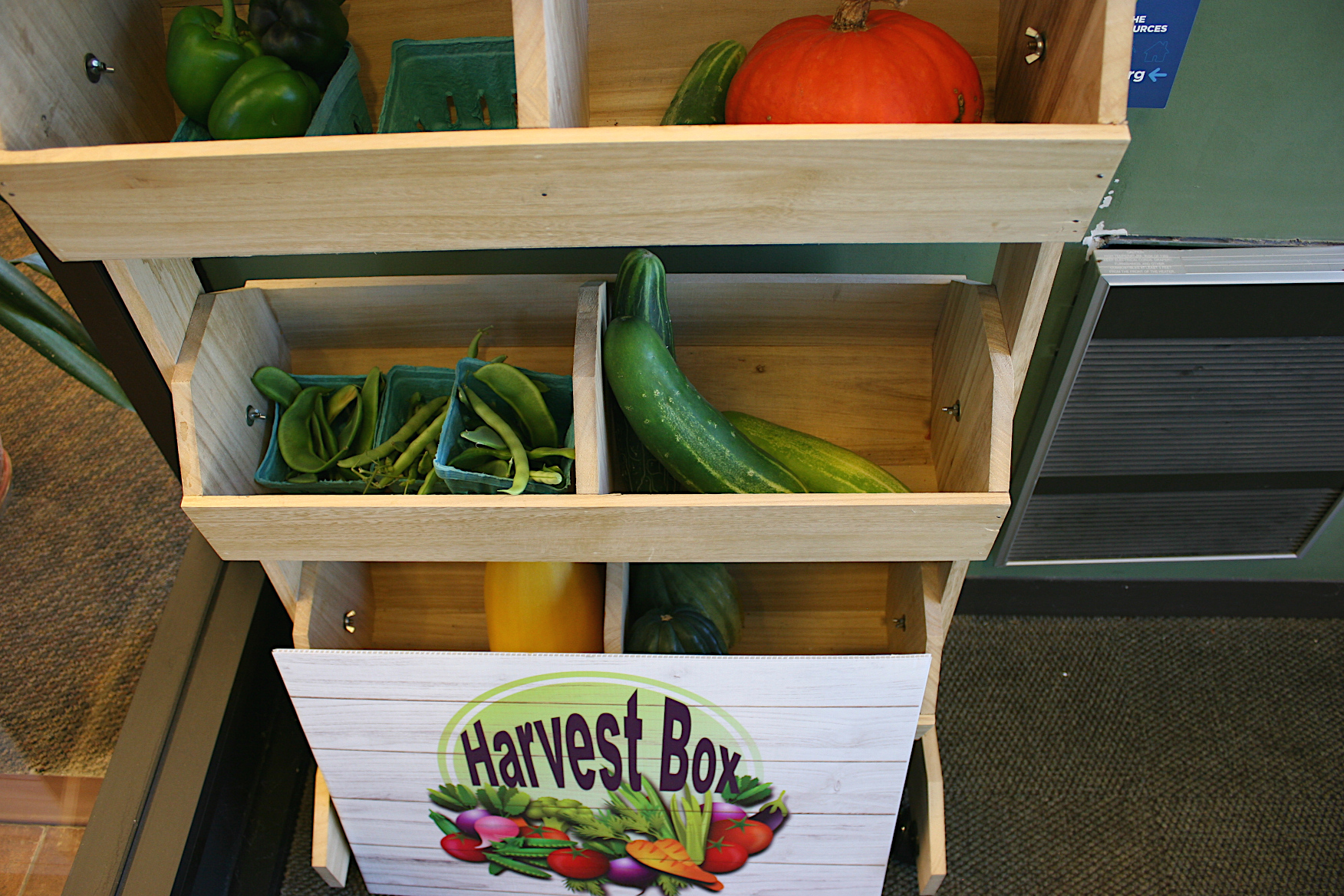
The beautiful Harvest Box inside the Cannon Falls Library. (Minnesota Prairie Roots copyrighted photo October 2021)
INSIDE THE ENTRYWAY of the Cannon Falls Library, a multi-tiered mini vegetable stand holds an array of fresh vegetables on a mid-October morning. Green peppers. Green beans. Cucumbers. Squash.
The produce is artfully displayed in a beautifully-crafted wooden shelving unit labeled with an appealing graphic of colorful vegetables and the words, Harvest Box. I figured this was the yield of an on-site garden, similar to the one at Buckham Memorial Library in Faribault.
But assumptions are not always correct as I discovered. Rather local gardeners provide the produce. That includes Quiet Waters Ranch, a 22-acre Sogn Valley farm owned by Ben and Amanda Luther. Their non-profit received a Healthy Eating in Community mini-grant in 2018 from Live Well Goodhue County for a Community Giving Garden. Now they supply free fresh, organic produce to the library’s Harvest Box which launched in June. The library also received Live Well funding in late 2020 for the display unit and a mini fridge.
Cannon Falls Library Director Nicole Miller initiated the Harvest Box project after learning of one in North Carolina. She sought county funding for the display unit and fridge and also connected with Quiet Waters Ranch. All of this was prompted by her concerns about local food insecurity. “It’s a low cost way to help people out and to supplement the Food Shelf on days they aren’t open,” Miller said.
She delights in watching local gardeners drop off their extra produce.
I love this concept, this spin on the Little Free Library movement which saw mini libraries popping up all over. I love when communities work together, contribute, support, share. There’s so much good that comes from unity, from understanding that we have the power as individuals and communities to care for one another in real, tangible ways.
TELL ME: Do you have a similar Harvest Box or fresh food program at your local library or elsewhere in your community? I’d like to hear.
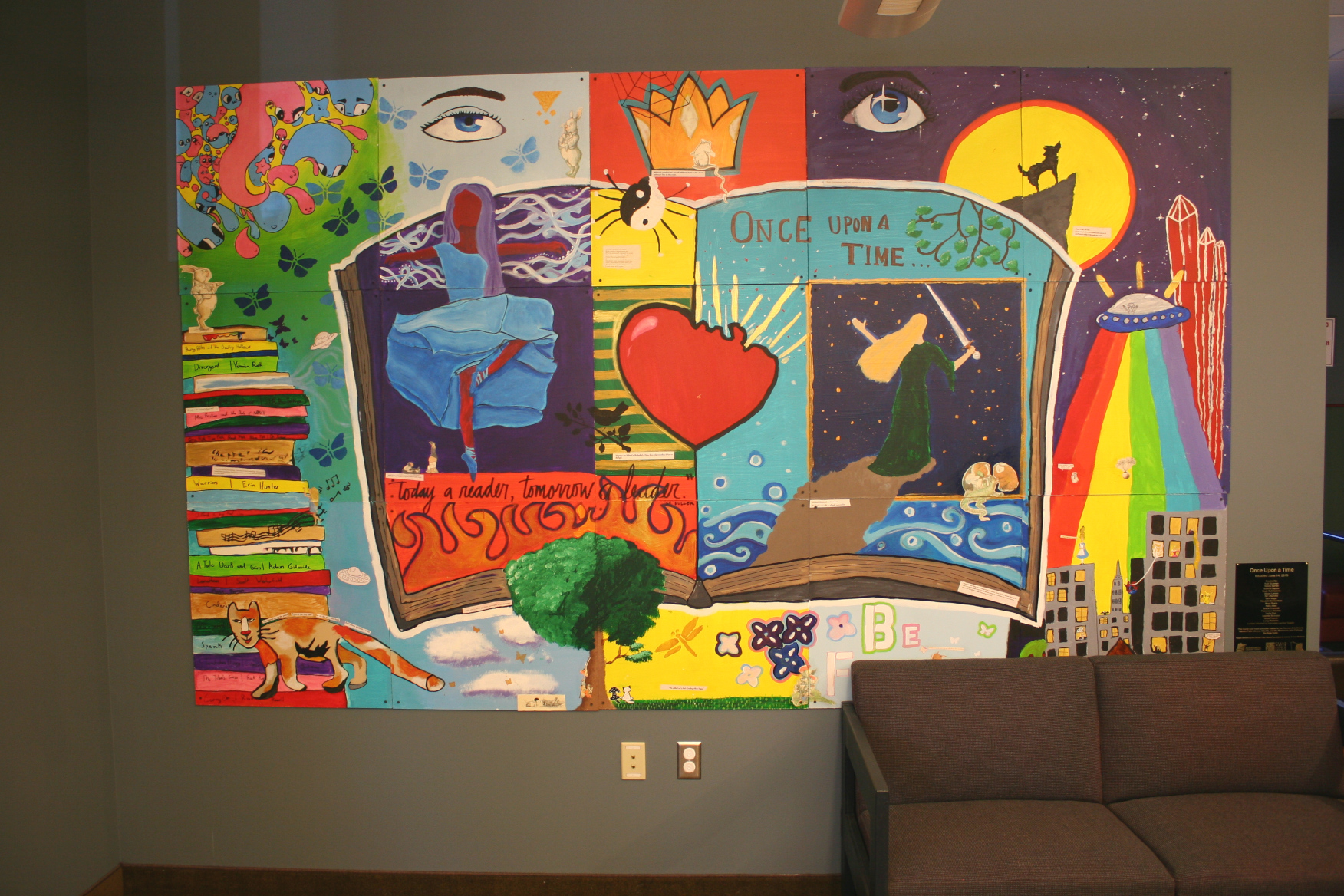
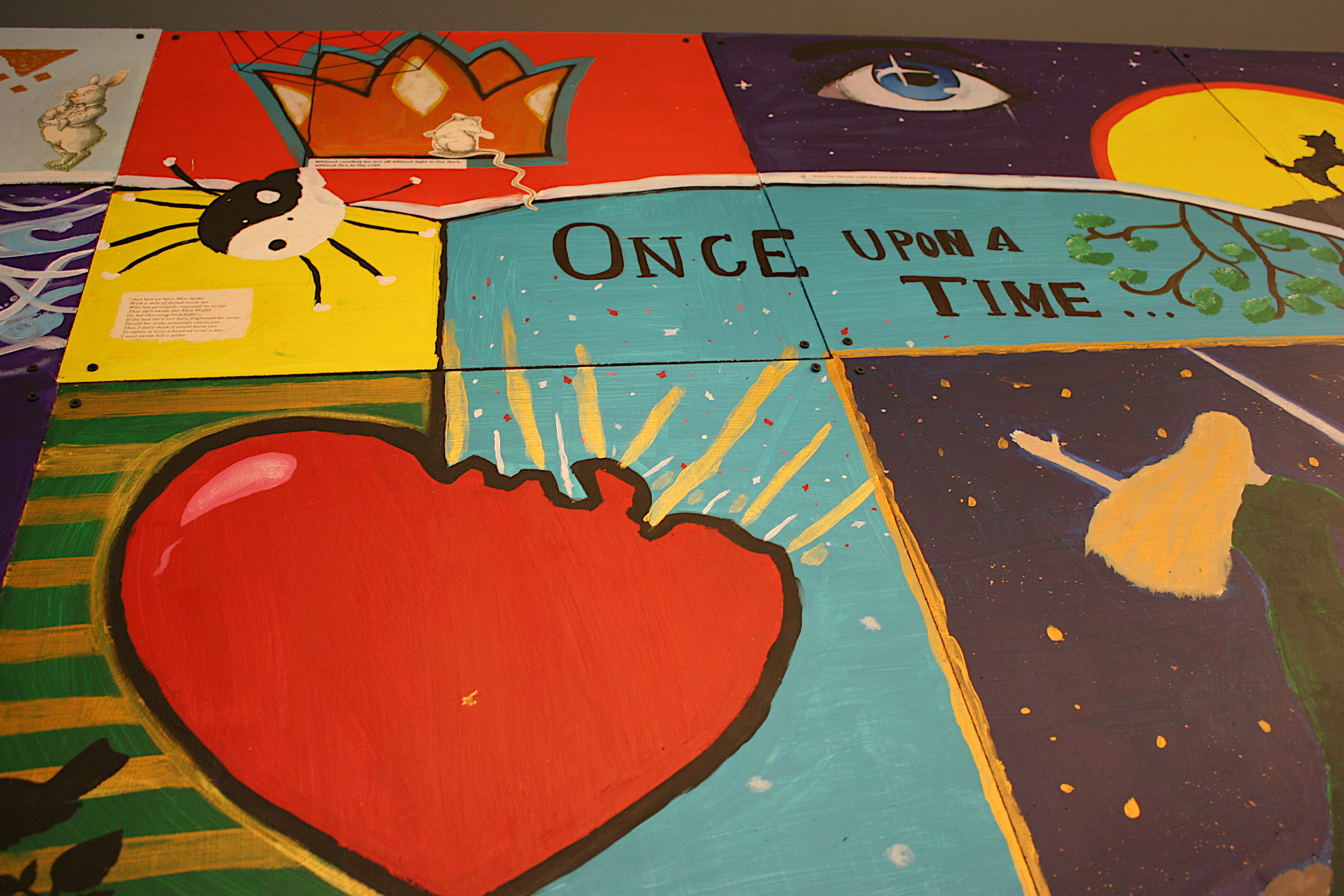
The “Once Upon a Time” mural in the Cannon Falls Library. (Minnesota Prairie Roots copyrighted file photo October 2021)
TUCKED INTO A SIDE CORNER, behind a nondescript cushioned seat for two, a bold mural pops color into the Cannon Falls Library.
The mural is fun, playful, colorful, inspirational… (Minnesota Prairie Roots copyrighted photo October 2021)
I discovered the art on a recent day trip to this small Goodhue County community along the Cannon River. A sign in a downtown storefront window promoting the library’s “Mailbox Mysteries” program led me to the library. Once inside, I registered for the mystery challenge and then browsed. Not books. But art.
This tastefully and artfully decorated library creates an inviting setting in a cozy space. I felt comfortably at home here, where a fireplace angles into a corner with cushy seating nearby.
So much to see and interpret.(Minnesota Prairie Roots copyrighted photo October 2021)
But it was that vivid mural which focused my attention. There’s so much to take in. Even now, as I scroll through my photos, I note details previously unnoticed. This mural requires study and an appreciation for nuances.
What a fitting theme for this library mural. (Minnesota Prairie Roots copyrighted photo October 2021)
Titled “Once Upon a Time,” this artwork was created by local students under the direction of Cannon Falls native and New York artist Kelli Bickman. A similar, and much larger, Youth Mural Arts project graces the exterior of the local Chamber of Commerce building 1 ½ blocks away.
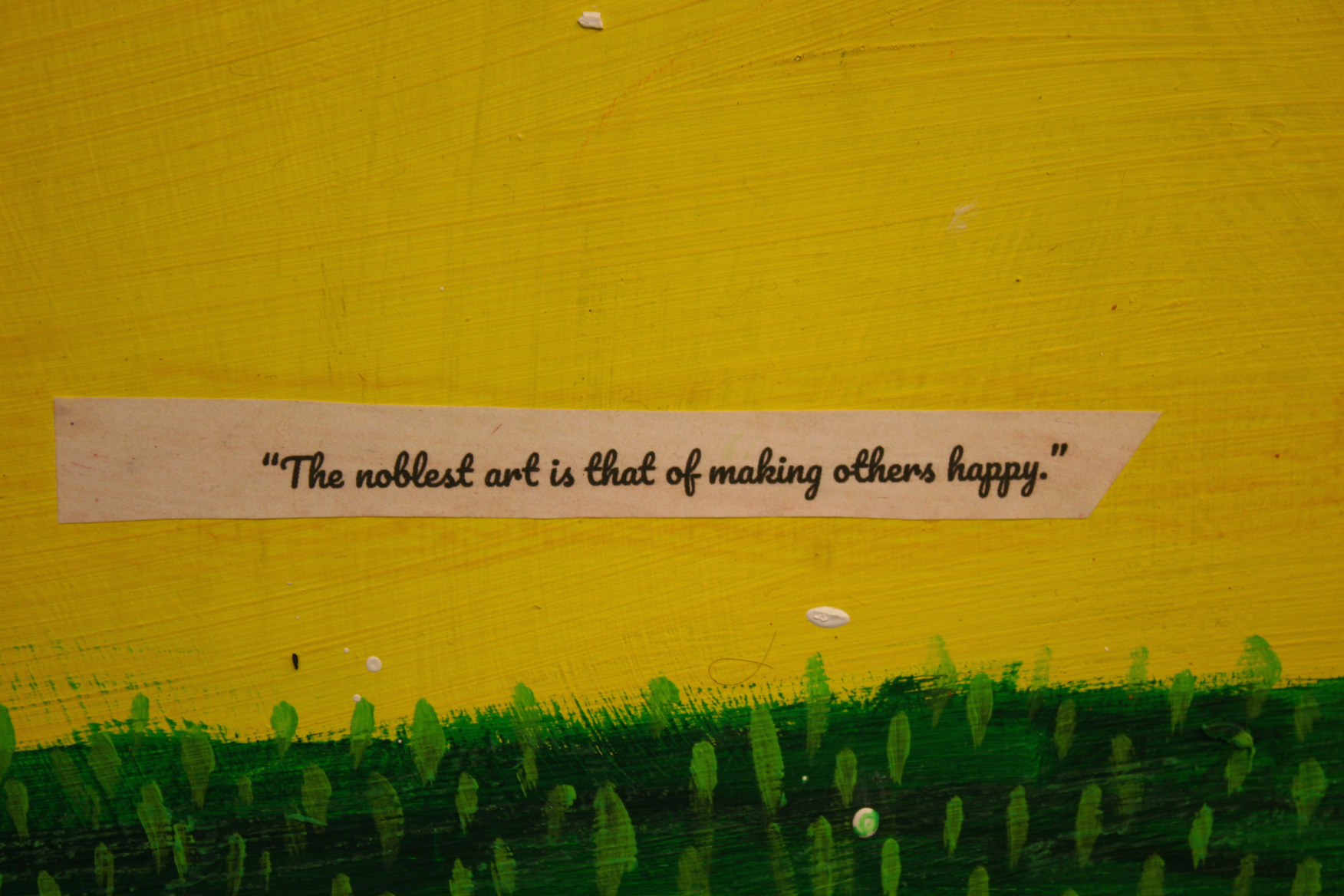
Among the many inspirational quotes incorporated into the library mural is this favorite. (Minnesota Prairie Roots copyrighted photo October 2021)
As a wordsmith, I especially appreciate the inspirational quotes incorporated into the painting: Today a reader, tomorrow a leader. The noblest art is that of making others happy.
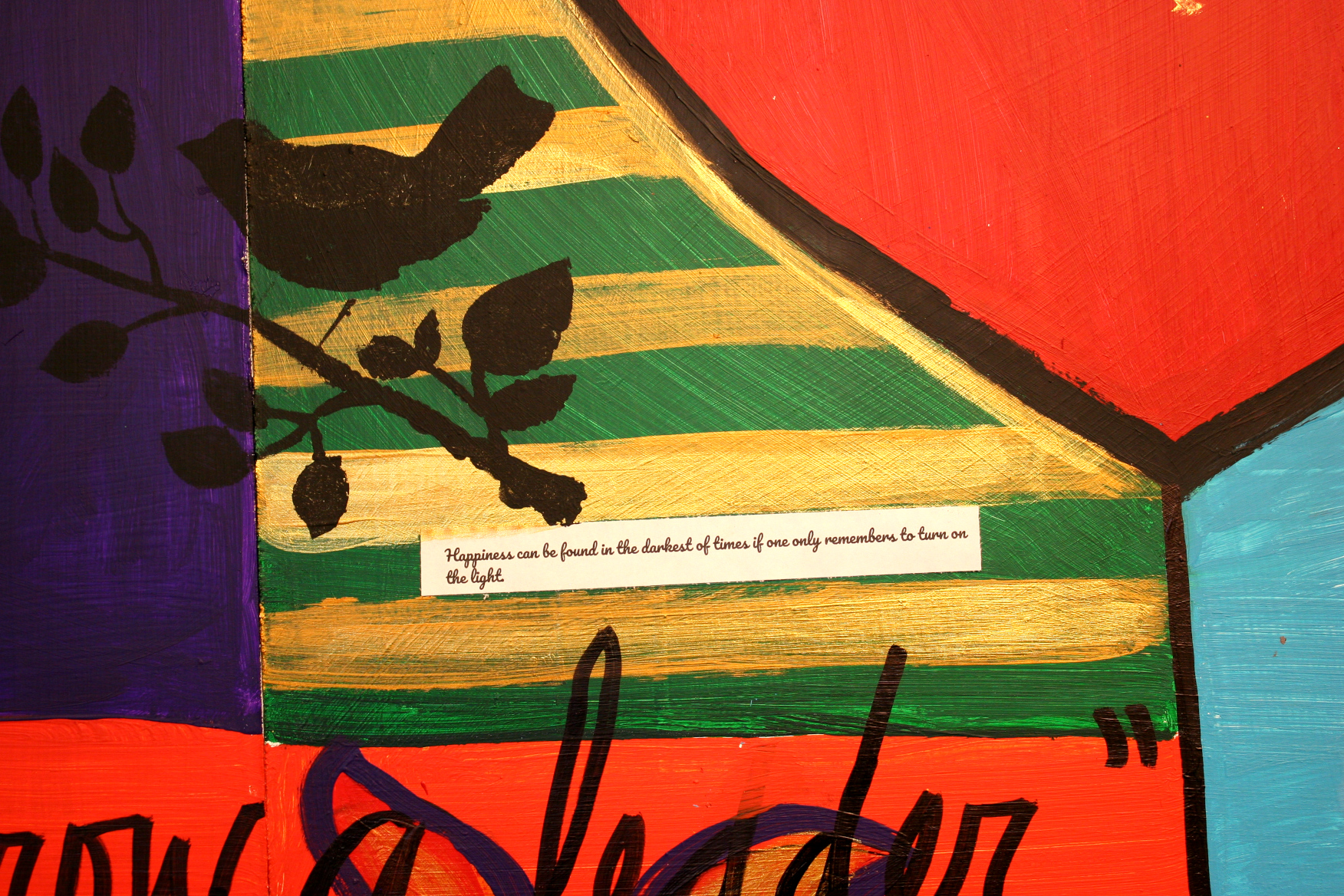
Love this quote…(Minnesota Prairie Roots copyrighted photo October 2021)
And my favorite: Happiness can be found in the darkest of times if one only remembers to turn on the light. How well that quote fits today as we deal with the darkness of a global pandemic. The artists could not have known that, just months after the dedication of this mural in June 2019, darkness would descend upon our world. Now, more than ever, those words of encouragement—of remembering to turn on the light—resonate.
Once Upon a Time can take you anywhere. (Minnesota Prairie Roots copyrighted photo October 2021)
Art is always open to interpretation. So what I take away from this mural may differ from the artists’ vision or from others who view it. I see strength and grace. I see reaching for the stars and achieving goals. I see fiery passion and the fluidity of life. I see going places that may lead far from Cannon Falls, from Minnesota even. I see dreams taking wing. I see how books and music and art and nature influence us.
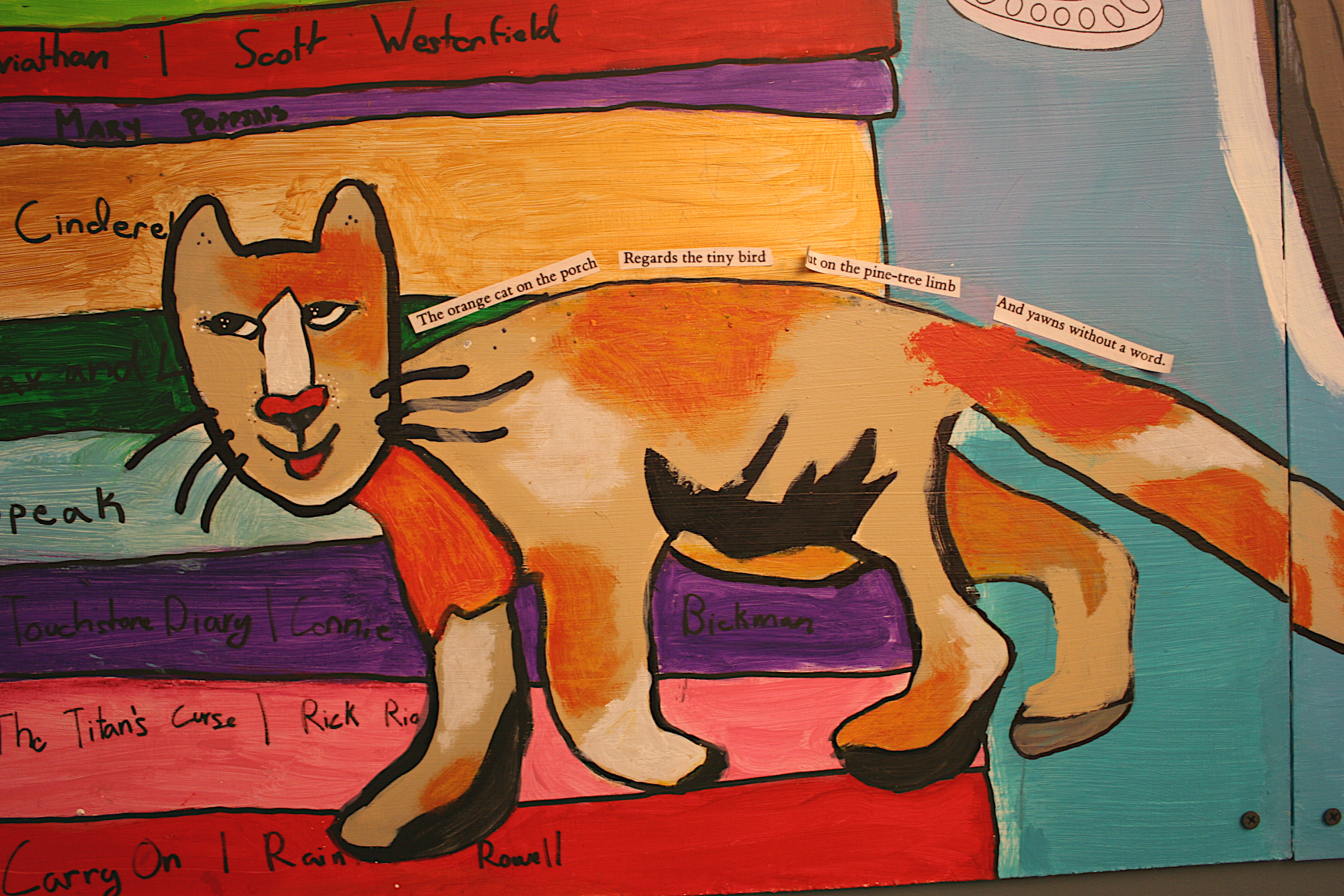
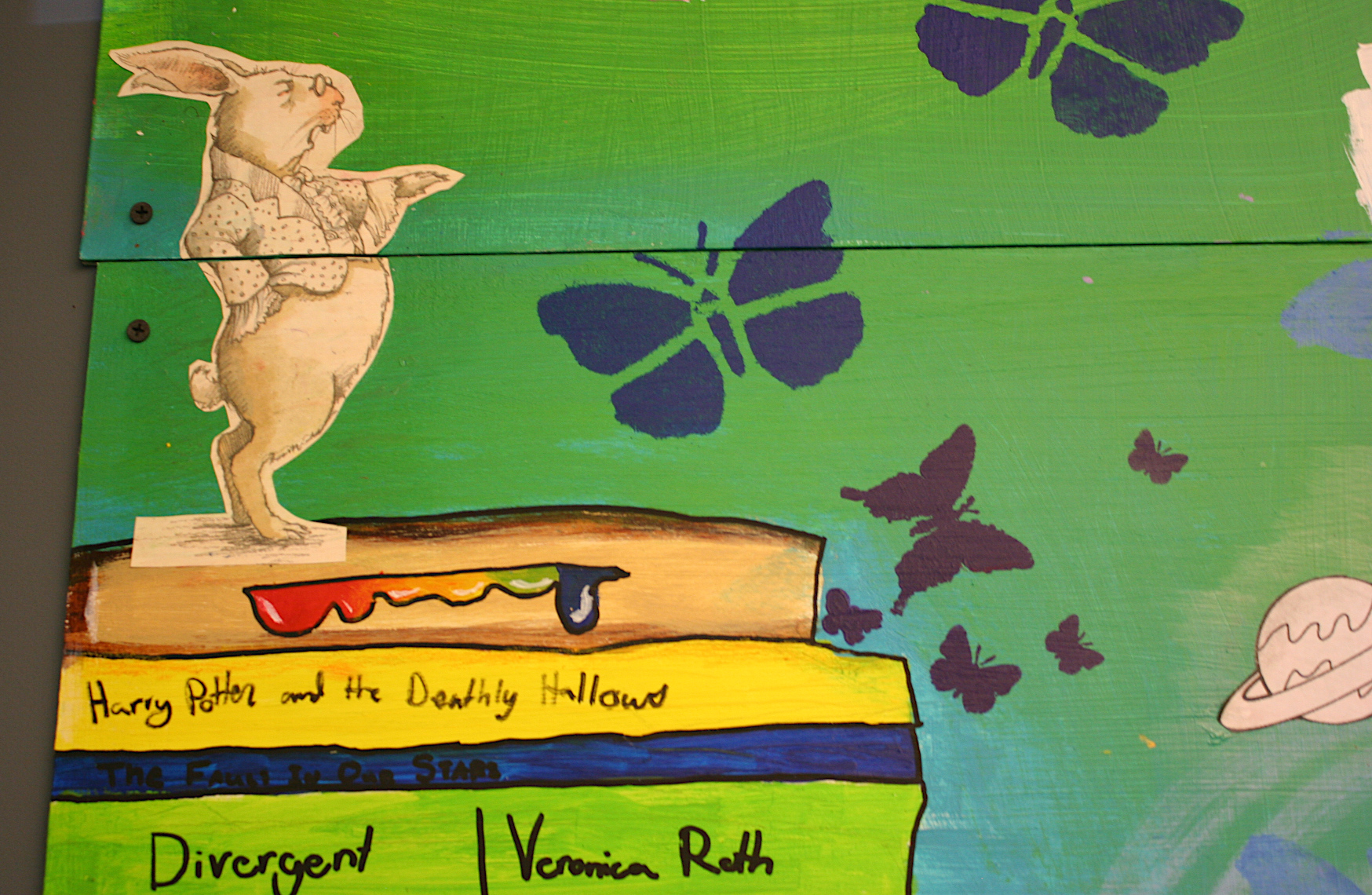
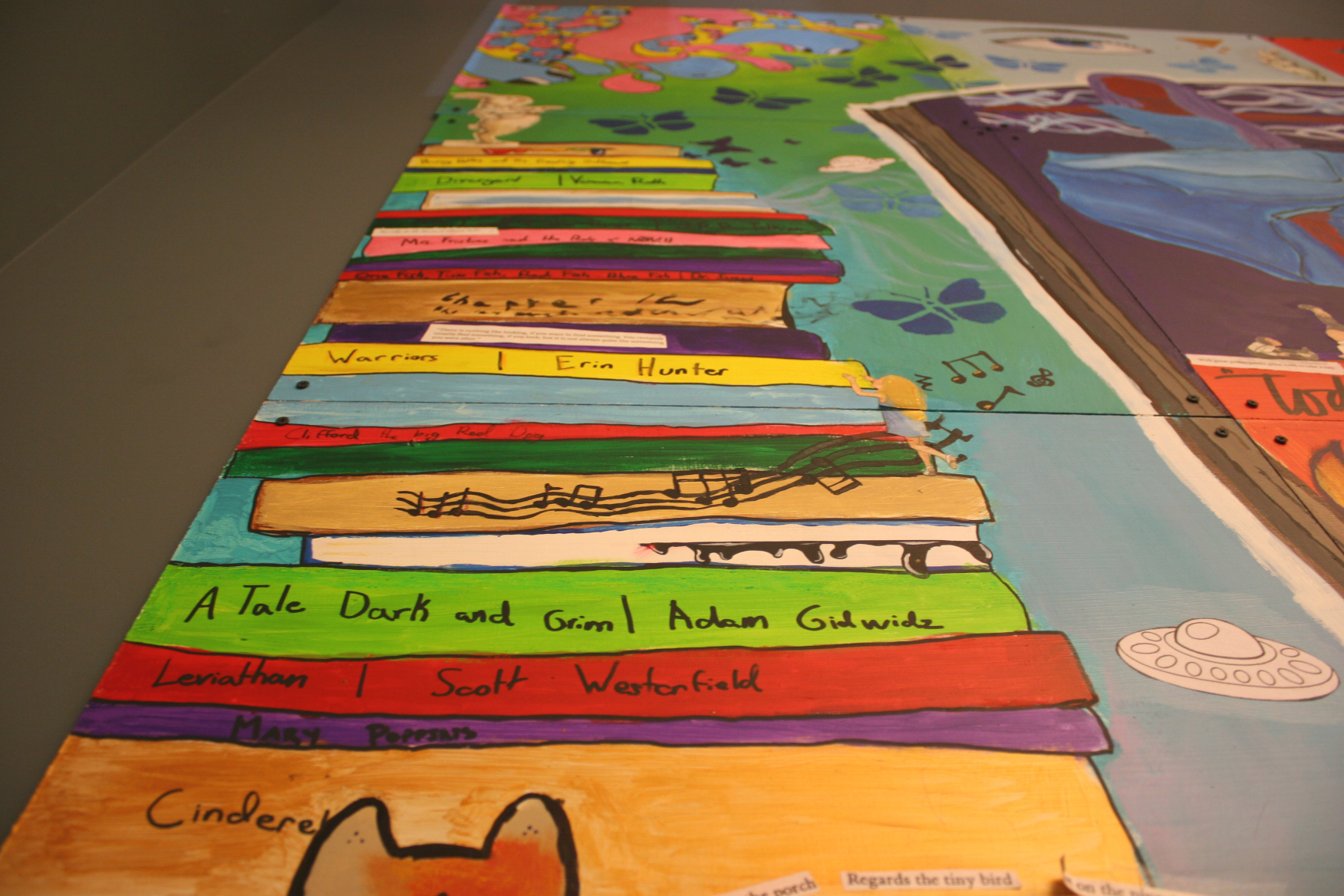
A stack of books painted into the mural fits the setting and the theme. (Minnesota Prairie Roots copyrighted photo October 2021)
I see that Once Upon a Time is our story to write. We write the words and paint the scenes to create the personalized murals which depict our lives. And, in the darkest of times, we can choose to switch on the light, to see happiness.

















Recent Comments