Minnesota Prairie Roots

Writing and photography by Audrey Kletscher Helbling

Reflections & updates June 10, 2024

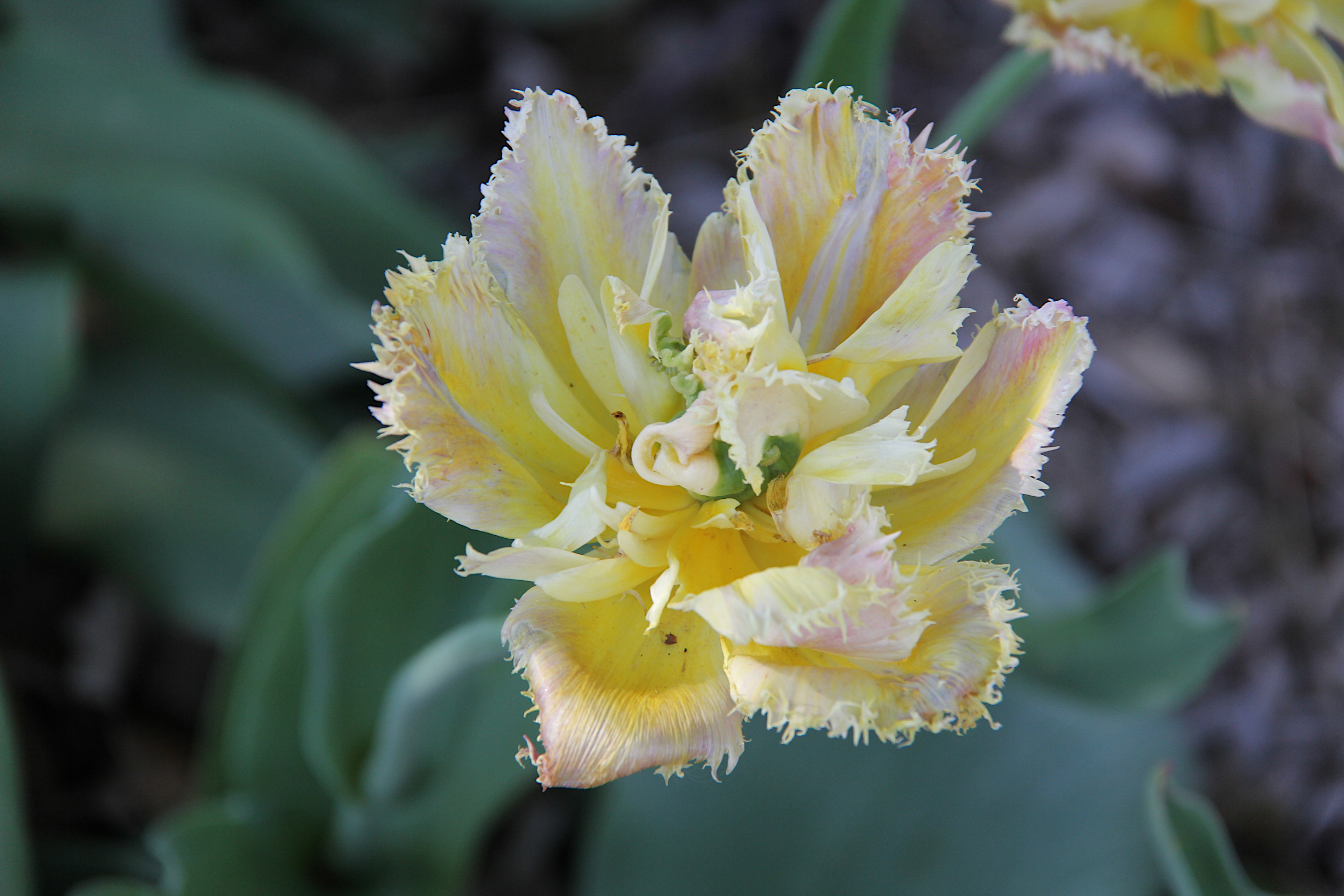
Photographed at the Rice County Master Gardeners garden in Faribault on one of my meandering walks. (Minnesota Prairie Roots copyrighted photo May 2024)

WHEN I GO FOR A WALK, I’m either walking to primarily exercise or to photograph. One involves fast-paced movement to increase my heart rate. The other entails a leisurely pace of observing the world around me.

There was a time when I always carried my camera. No more. I need to feel the freedom of just being, without thought of, oh, I need to photograph that. If I’m without my 35 mm digital camera and absolutely need to take a photo, I will use my smartphone.
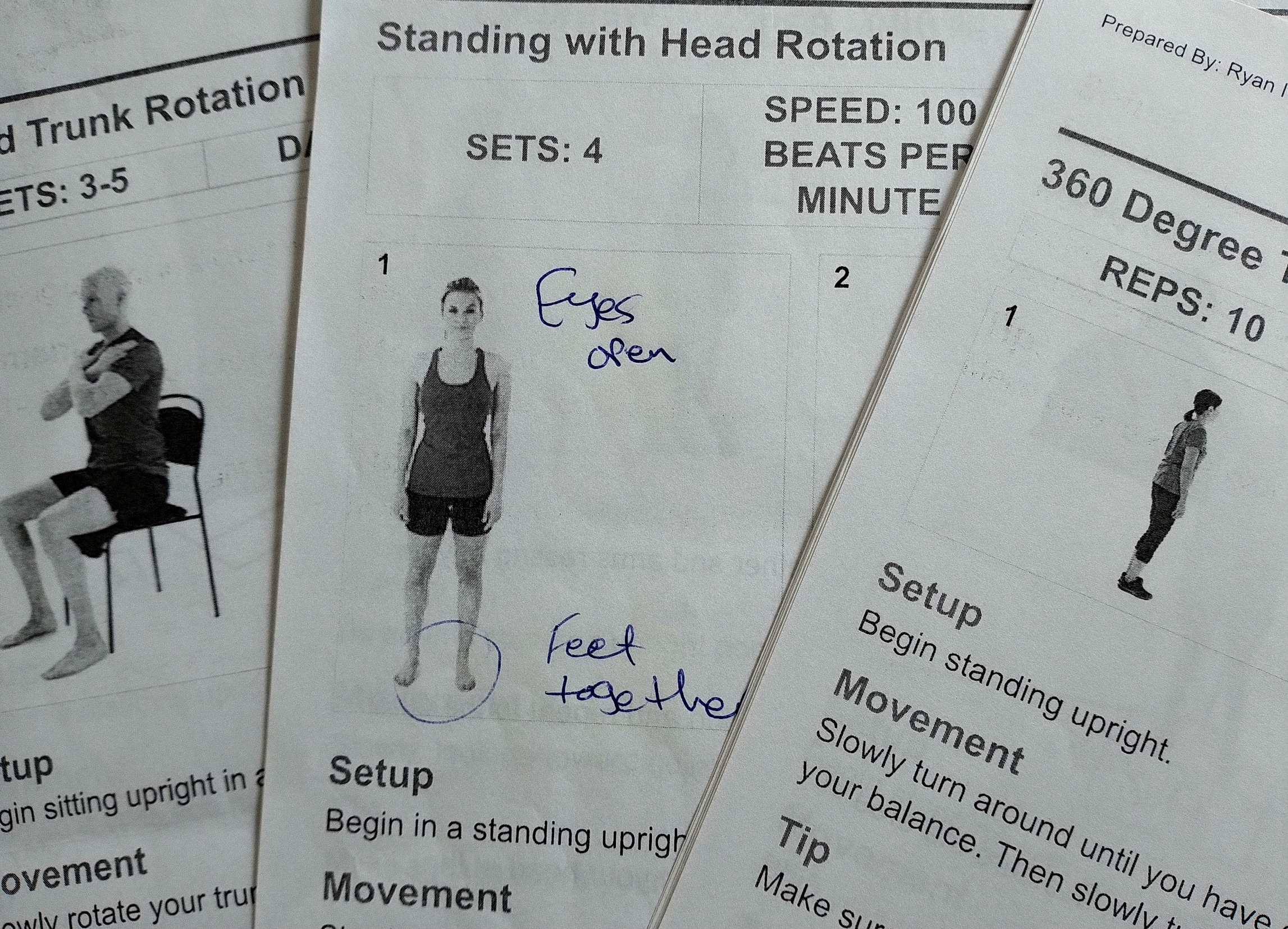
An example of exercises I did in vestibular rehab therapy. (Minnesota Prairie Roots copyrighted file photo 2023)

A NEW PERSPECTIVE

What prompted this change? My health. Last summer was, for me, the summer that wasn’t. I was primarily housebound from April through September due to long haul COVID. You’ve probably read my story, detailed here. I dealt with balance, sleep, sensory and other issues. All aspects of my life were affected. I left my house only for medical appointments because I couldn’t handle being out in the world of noise, light, sound, movement. I felt overwhelmed. I sat in my darkened living room, curtains drawn, lights low, no sound.

But here I am, a year later, with six months of vestibular rehab therapy behind me, and doing significantly better. Time and a lot of hard work on my part got me to this better place health-wise. I still deal with residual sensory issues. But mostly, I manage. And when I don’t, I temporarily sequester myself.

That I am back walking and photographing is, in many ways, remarkable. Last summer I couldn’t walk half a block due to imbalance. And I certainly couldn’t use my camera. I credit my physical therapist for patiently working with me, helping me regain my sense of balance and build my tolerance and ability to manage sensory overload. There is hope for anyone dealing with similar issues. But it can be a difficult road. There’s no denying how often I felt unheard, unsupported, without hope.
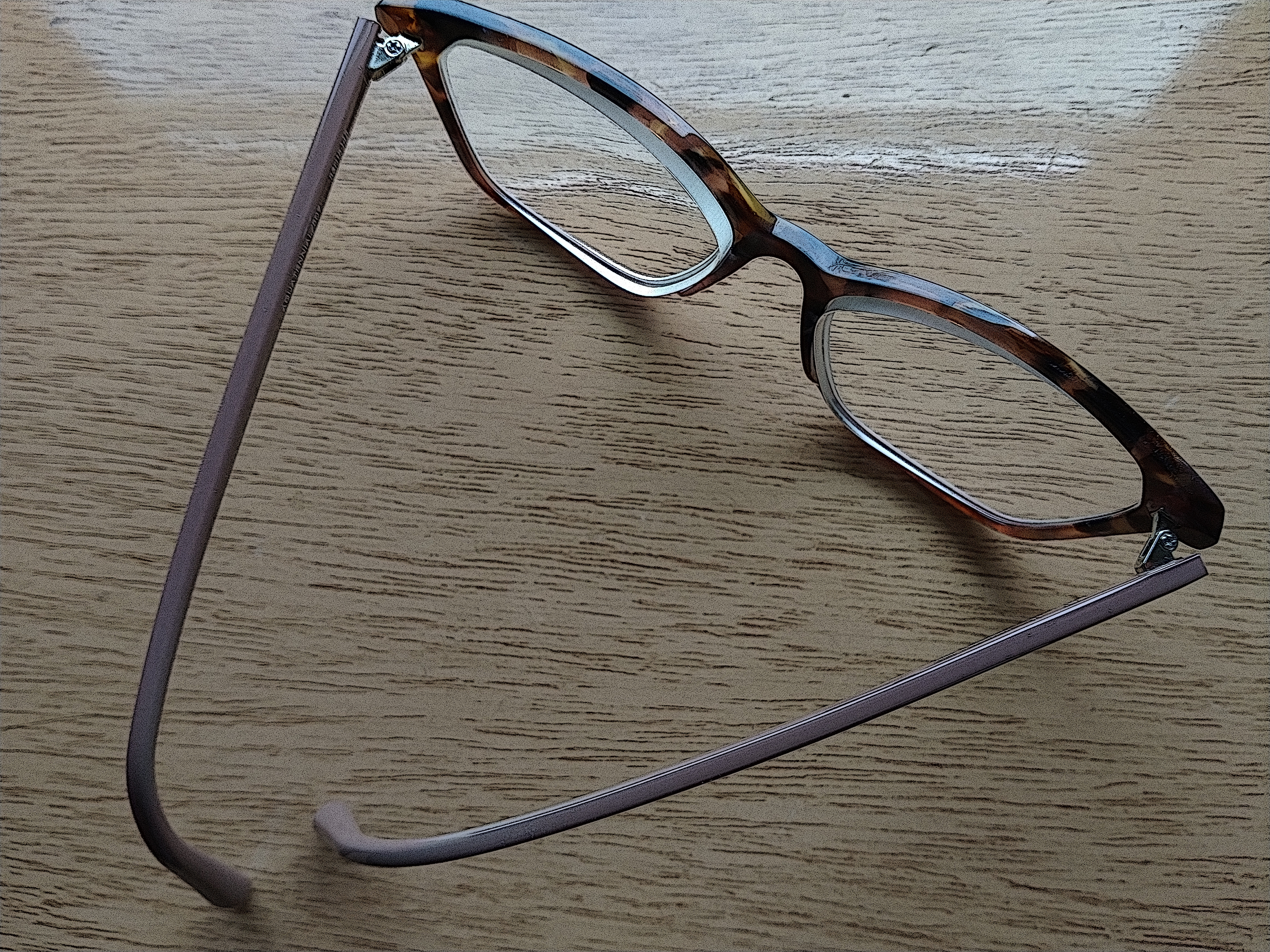
My new prism-heavy prescription eyeglasses. (Minnesota Prairie Roots copyrighted file photo May 2024)

DEALING WITH VISION ISSUES

At the same time all of this was happening, I was experiencing increasing double vision. In late January, I had bilateral strabismus eye surgery to realign my eyes. It was successful until it wasn’t. In 10-20 percent of cases, the eyes shift back to misalignment post-surgery. Mine did. I opted to try prism-heavy prescription lenses before considering a third surgery. I had my initial eye surgery at age four.

Four weeks out from getting my new prescription eyeglasses, my eyes and brain are still adjusting. The prisms have mostly corrected my double vision. But I’m struggling with distorted close-up vision, specifically slanting. I’m hoping, with time, that will vanish. I also can’t see things clearly on my computer screen, which is problematic when writing and when processing photos.

But onward I forge. Sometimes I push myself too much, taking too many photos, doing too many things. That results in strained, aching eyes and headaches. Often I feel just plain tired due to all the effort it takes to simply see. My brain and my eyes are working hard to focus my vision.
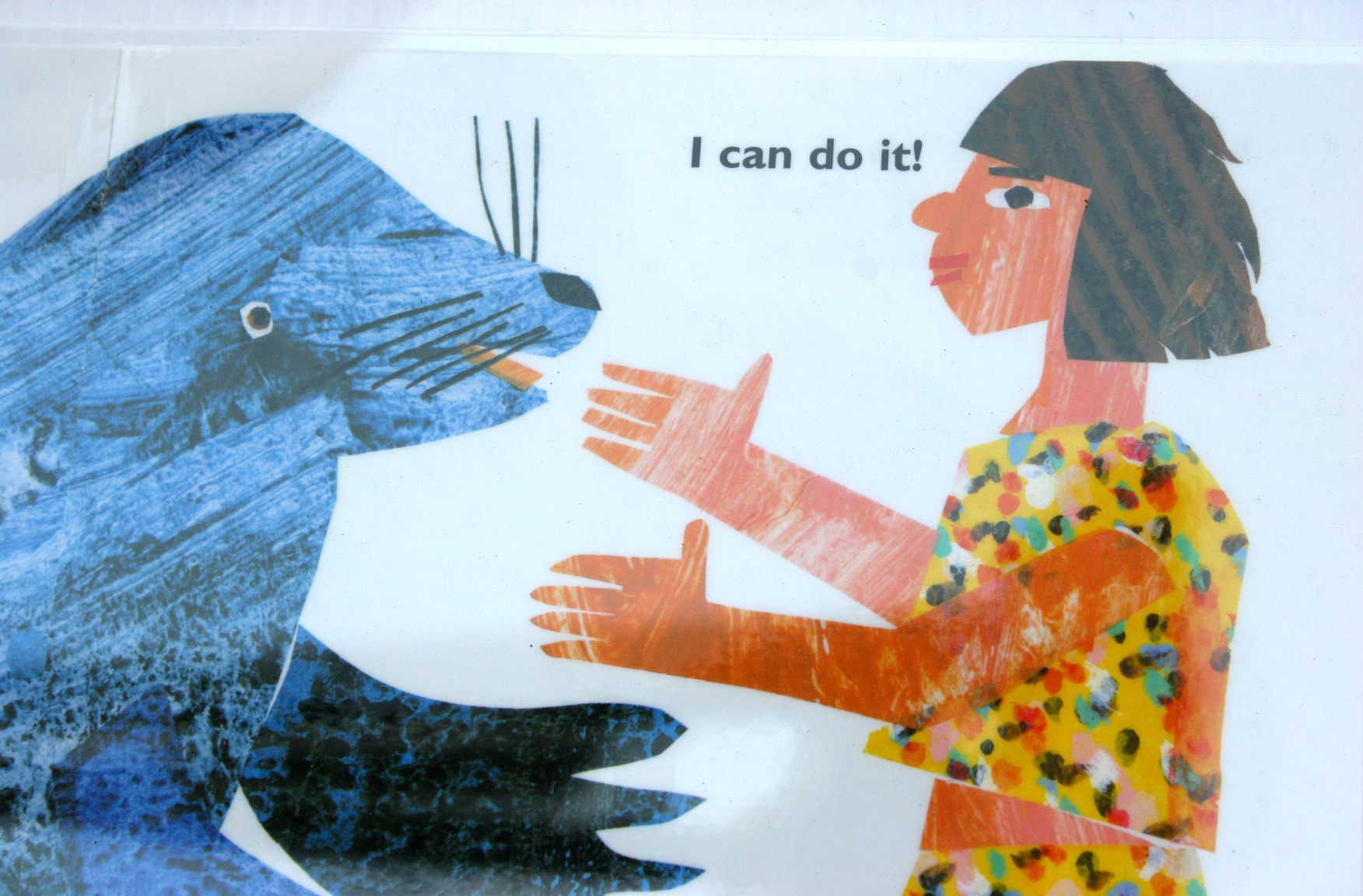
A page from Eric Carle’s book, From Head to Toe.

TAKE NOTHING FOR GRANTED

Too often in life, we take things for granted—the ability to walk, to hear, to see. And then something happens to us or someone we love and we realize that, hey, none of these are givens. I recognize that I have a responsibility to take care of myself in the best way I can. Sometimes that means walking to stay fit and sometimes that means walking to feed my creative spirit.

© Copyright 2024 Audrey Kletscher Helbling


Minnesota delight: Grilling & al fresco dining June 6, 2024

Filed under: Uncategorized — Audrey Kletscher Helbling @ 5:00 AM
Tags: , , , , , ,
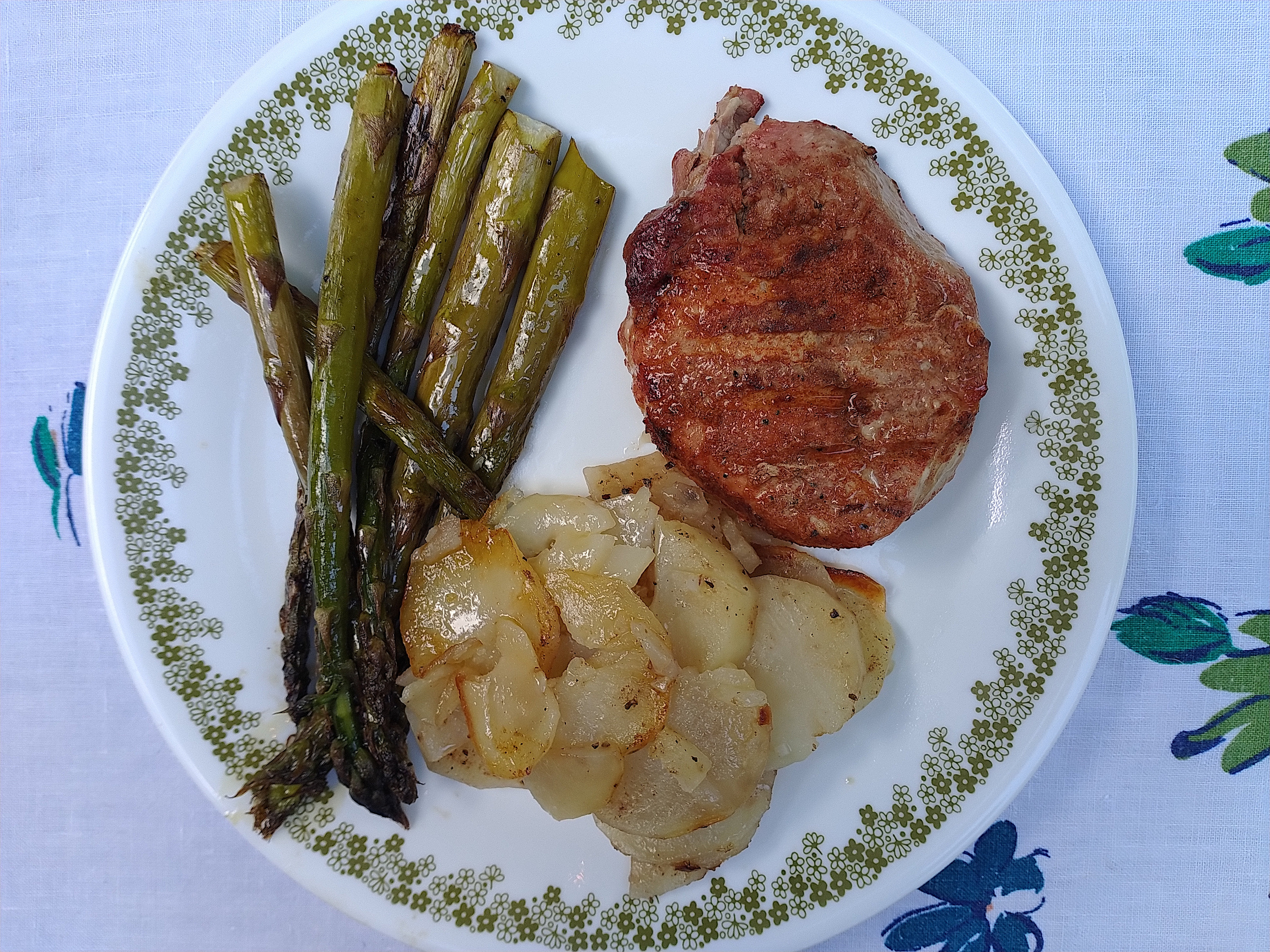
Chops, seasoned potatoes and asparagus made on a charcoal grill and served on my mom’s 1970s Spring Blossom Green Corelle dinnerware, set on a vintage tablecloth. (Minnesota Prairie Roots copyrighted photo June 2024)

SCENT OF GARLIC permeates the air as Randy lifts the lid from his Weber grill, smoke momentarily pouring out. He flips the pork chops, adjusts the packets of potatoes and asparagus. I can hardly wait to taste the food he’s preparing. It’s always delicious.

I feel fortunate that my husband enjoys grilling year-round. Yes, even in the depths of a Minnesota winter, although he draws the line on cooking outdoors when a snowstorm rages. I appreciate the break from meal prep. And there’s nothing quite like food cooked over charcoal. Randy is a purist when it comes to grilling. No gas grill for him.

He’s a meat-and-potatoes man. So if I want something beyond the basics, I come up with a vegetable side. On this day, it’s fresh asparagus purchased at the Faribault Farmers’ Market. Asparagus is one of my favorite veggies. I keep it simple, drizzling the spears with olive oil and sprinkling them with freshly ground pepper and sea salt.

We dine outdoors this time of year. Randy carries the card table up from the basement. I select a vintage tablecloth from my vast collection. And then we settle onto lawn chairs grabbed from the garage. Nearby a tabletop fountain, which he gifted me years ago on our wedding anniversary, burbles. It helps mask the constant din of traffic along our busy street.

If the mosquitoes and flies aren’t hovering, it’s a lovely dining experience.

There’s nothing quite like dining alfresco in Minnesota this time of year. If you live in a mostly warm weather state, you perhaps take eating outdoors for granted. I don’t. Once the weather warms here, I prefer to eat outdoors—on our patio or, on the rare occasion we eat out, on a restaurant patio/deck. We also often pack sandwiches, yogurt, fruit and nuts for a picnic lunch at an area park. It’s all about being outside, sunshine warming our backs, breeze brushing our skin, birds singing, lush green filling our vision.

Great food consumed outdoors, now that’s a Minnesota dining experience that feeds body and soul.

© Copyright 2024 Audrey Kletscher Helbling
 

All about country at rural Minnesota event June 5, 2024

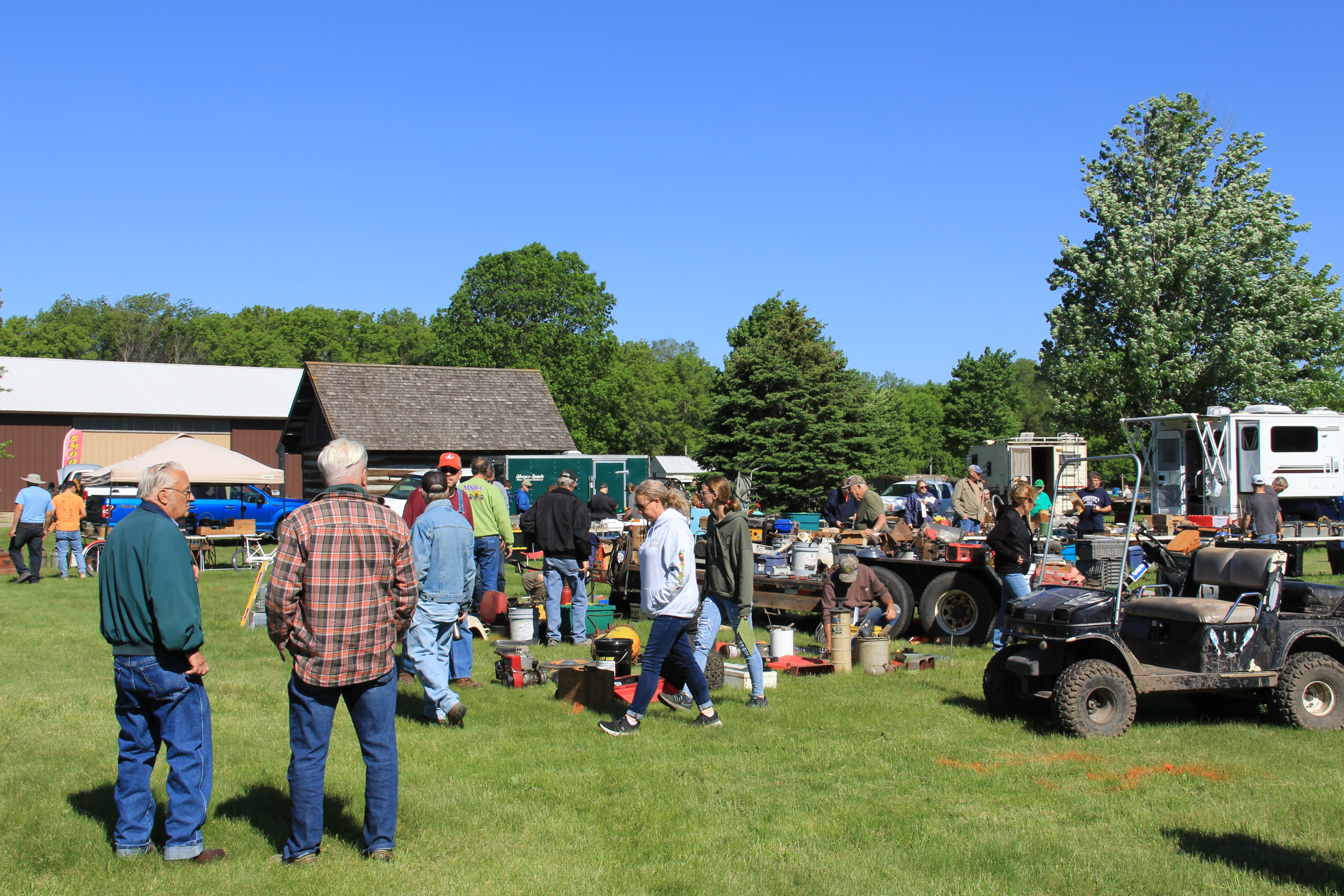
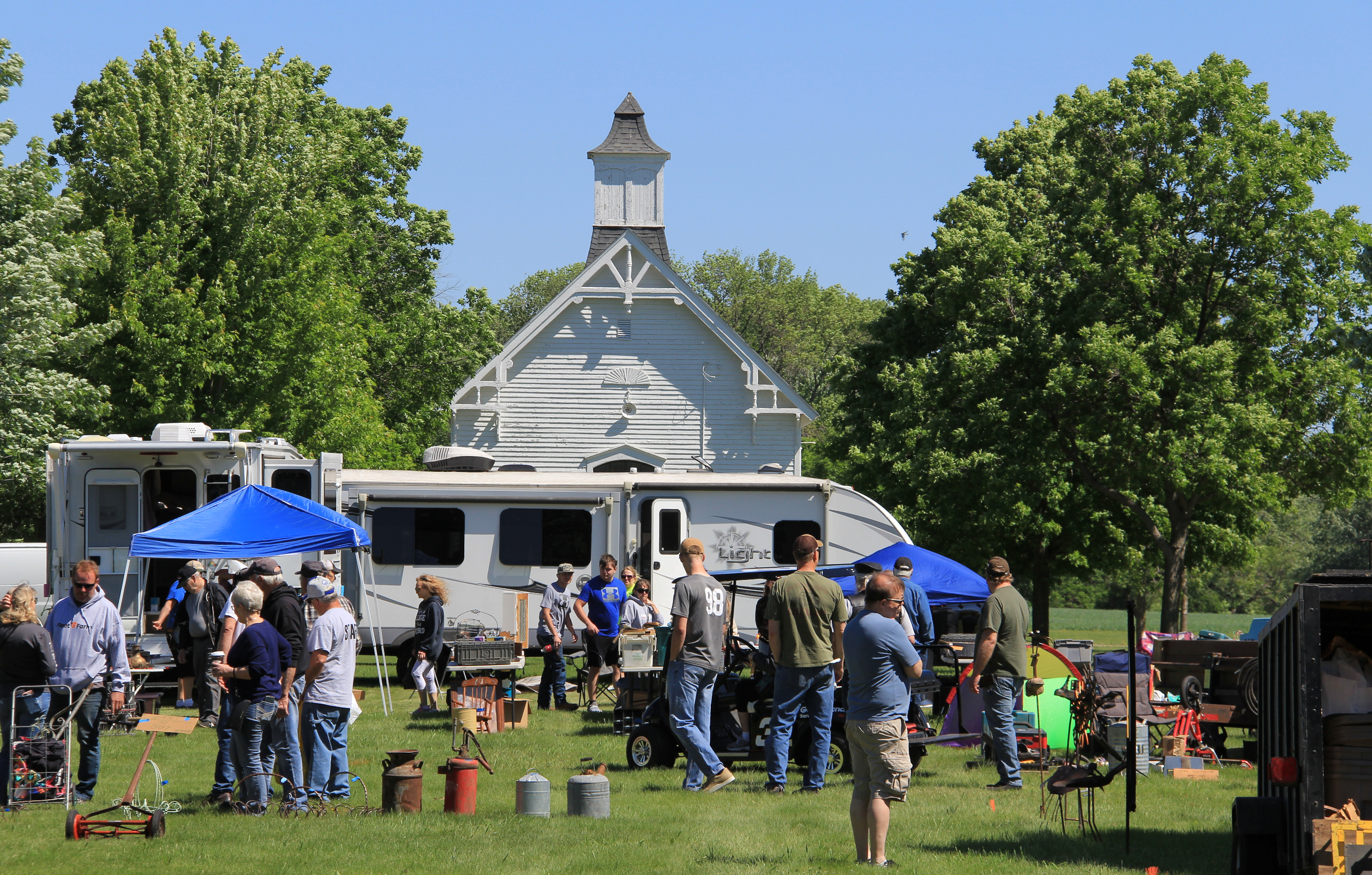
Set against the backdrop of the historic Waterford School, the flea market. (Minnesota Prairie Roots copyrighted photo May 2024)

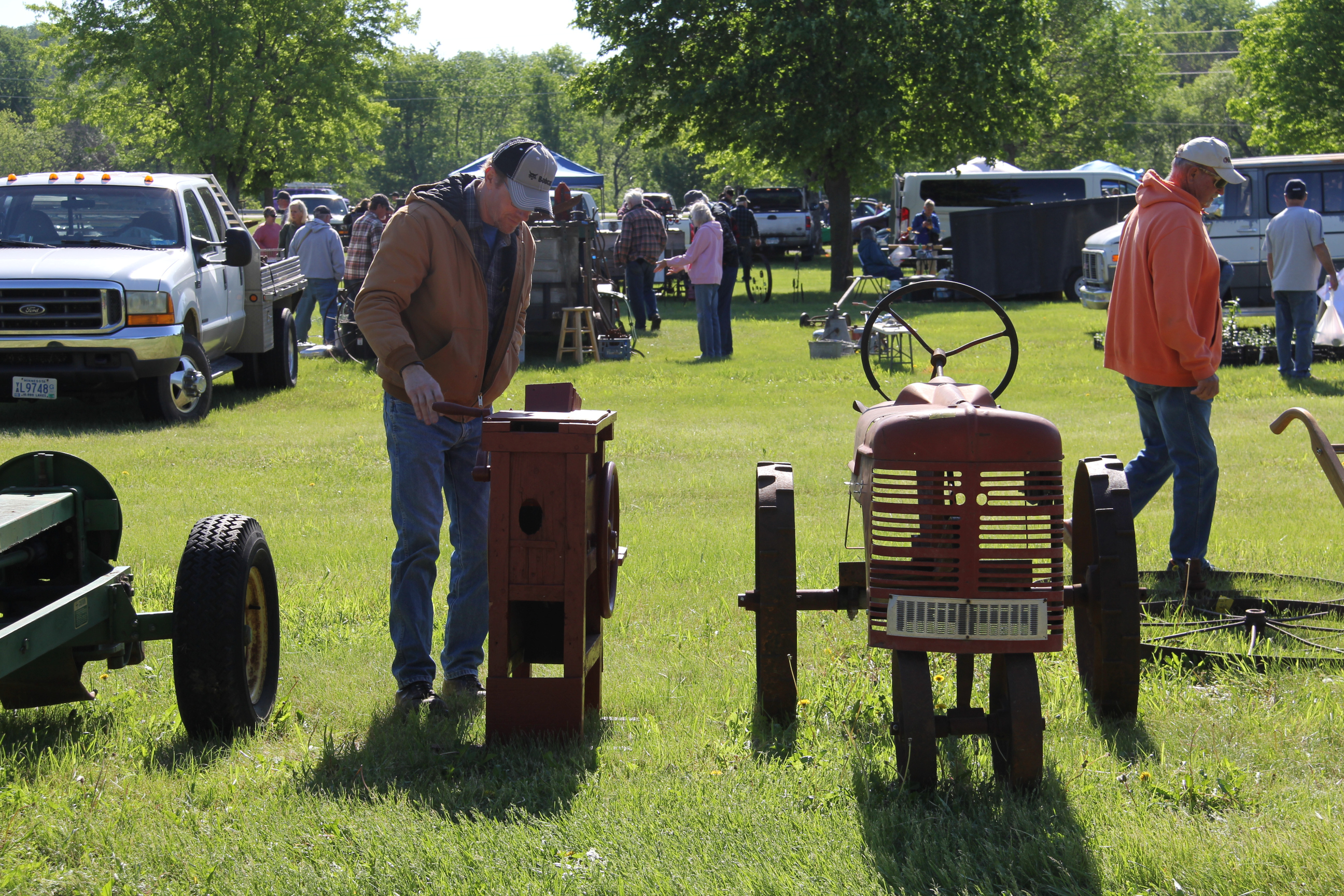
IF I WAS A COUNTRY WESTERN SONGWRITER, I could probably pen a single inspired by the recent Rice County Steam & Gas Engines Spring Flea Market and Consignment Auction. Scenes from this event seem prompts for country western lyrics—boots, dogs, tractors, seed corn caps, blue jeans…gravel roads and pick-up trucks.

Street signs on the showgrounds honor families who helped found the Rice County Steam & Gas Engines Club. (Minnesota Prairie Roots copyrighted photo May 2024)

Many of the folks I saw there likely live either on farms or have a connection to farming. Just like me, born and raised on a southwestern Minnesota crop and dairy farm.

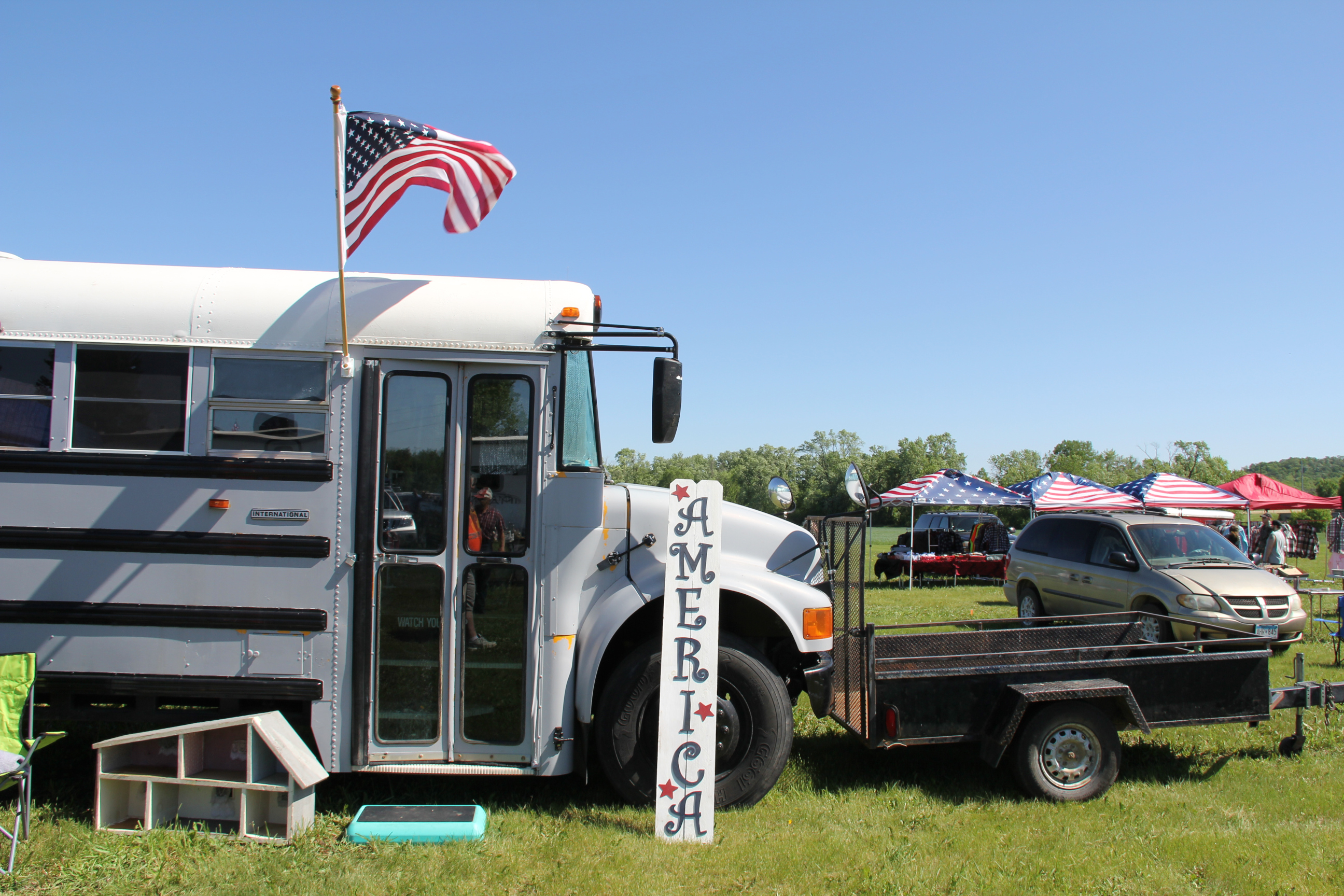
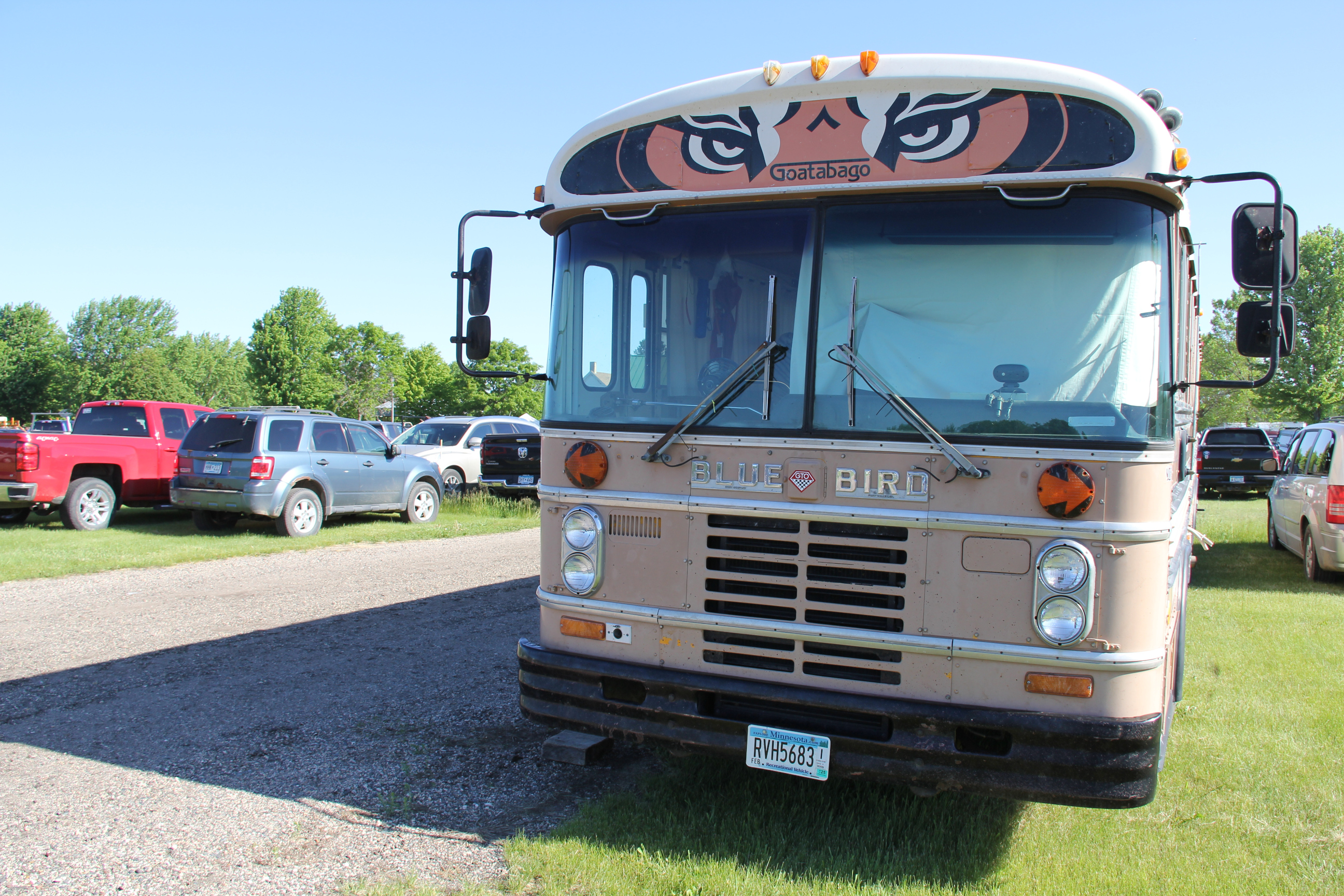
A bus converted by a vendor for hauling flea market merchandise. (Minnesota Prairie Roots copyrighted photo May 2024)

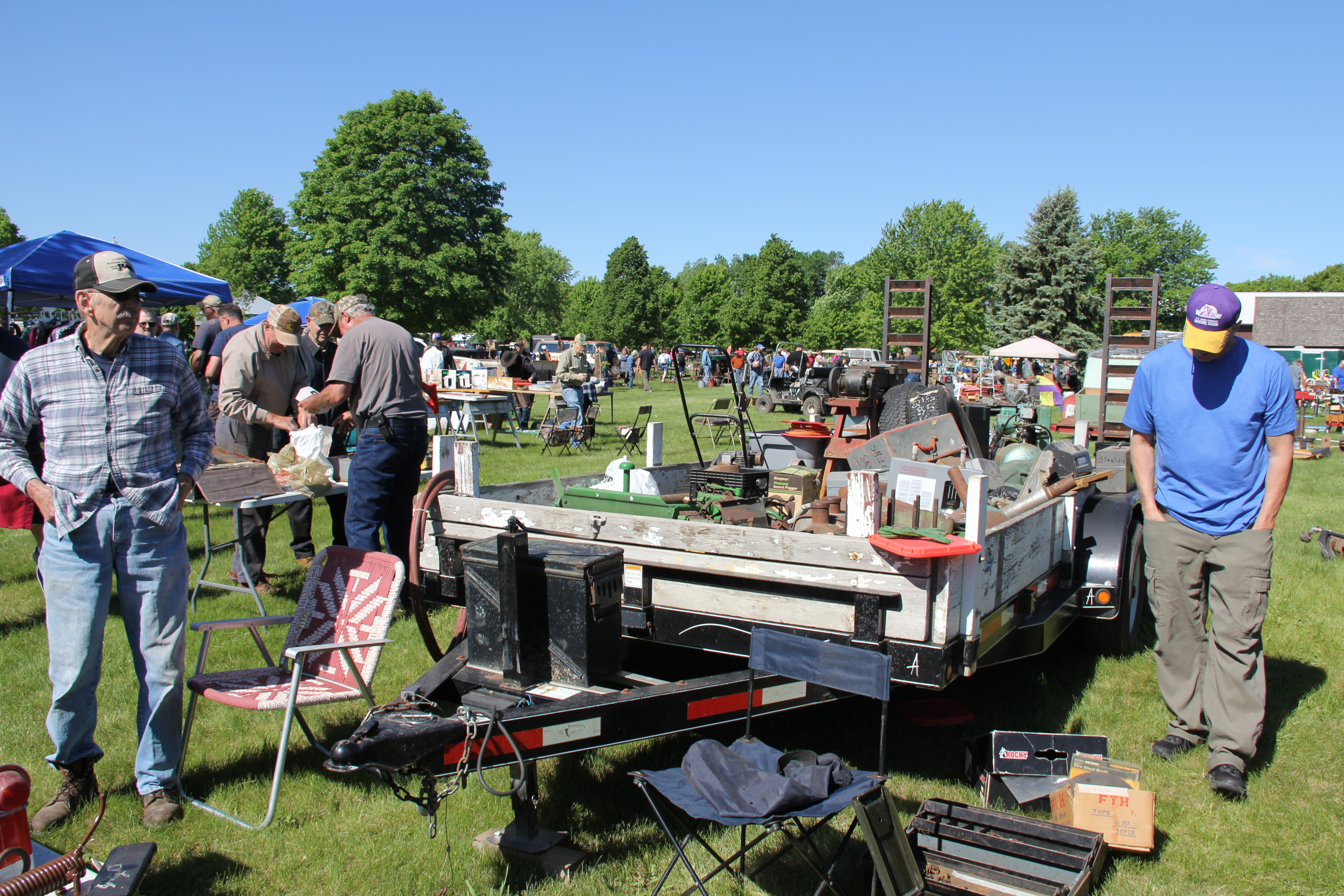
Rural draws people of all ages to this country location along Minnesota State Highway 3 south of Dundas, to look, shop, bid, buy and converse twice yearly. Neighbor meeting neighbor, swapping stories, comparing rainfall totals and crop updates. Strangers mingling. Vendors trying to make a buck or ten off merchandise they’ve crammed into vehicles and trailers and then displayed on tables and lawn.

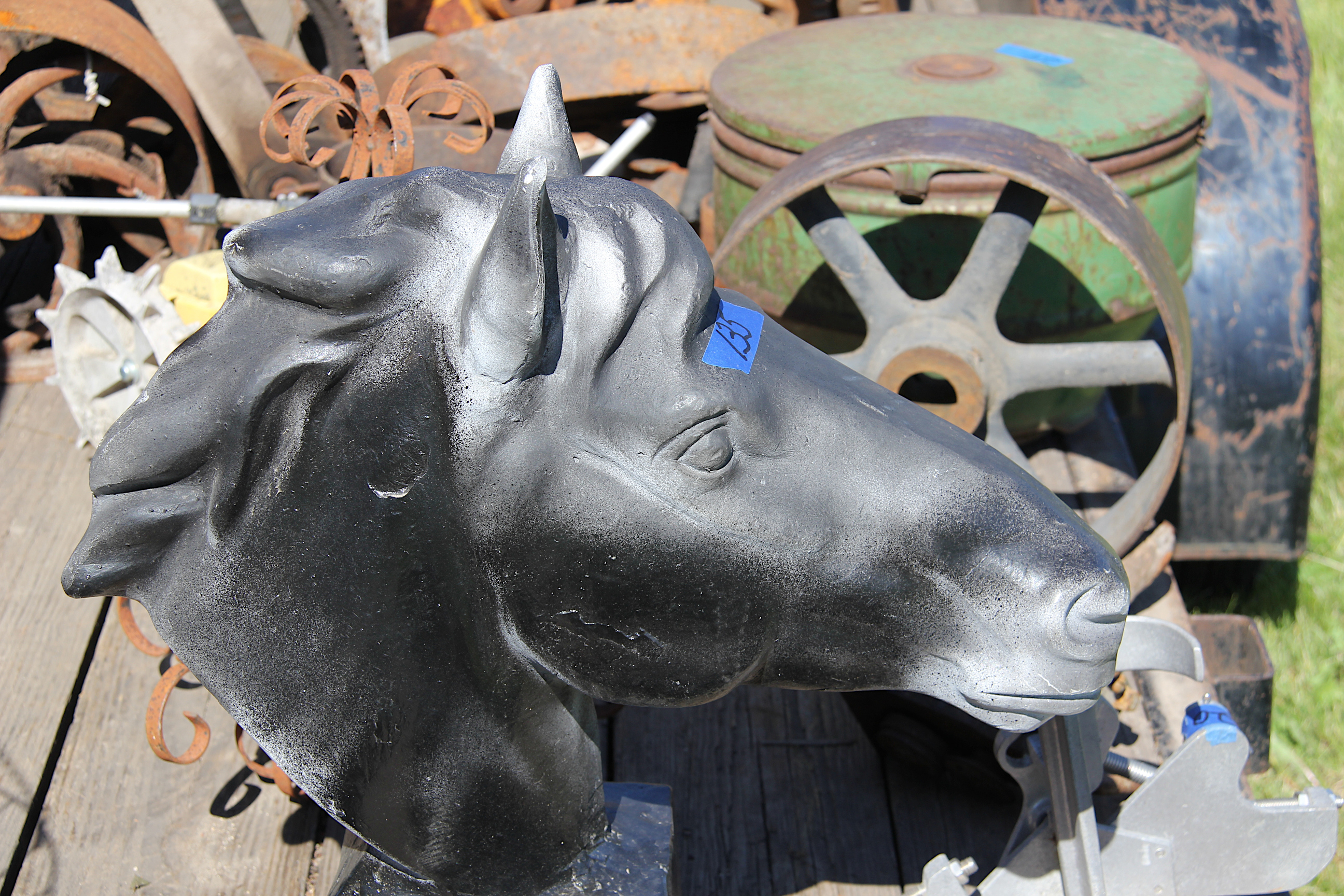
The horse head that reminded me of a movie from 52 years ago. (Minnesota Prairie Roots copyrighted photo May 2024)

Goods are spread out like a potluck of merchandise. You never know what you’ll find. I found a horse’s head, reminding me of a horrific scene from the 1972 film, “The Godfather.” The head could make for a creative Halloween prop. Nothing particularly country about this discovery, although horses in whole are decidedly country.

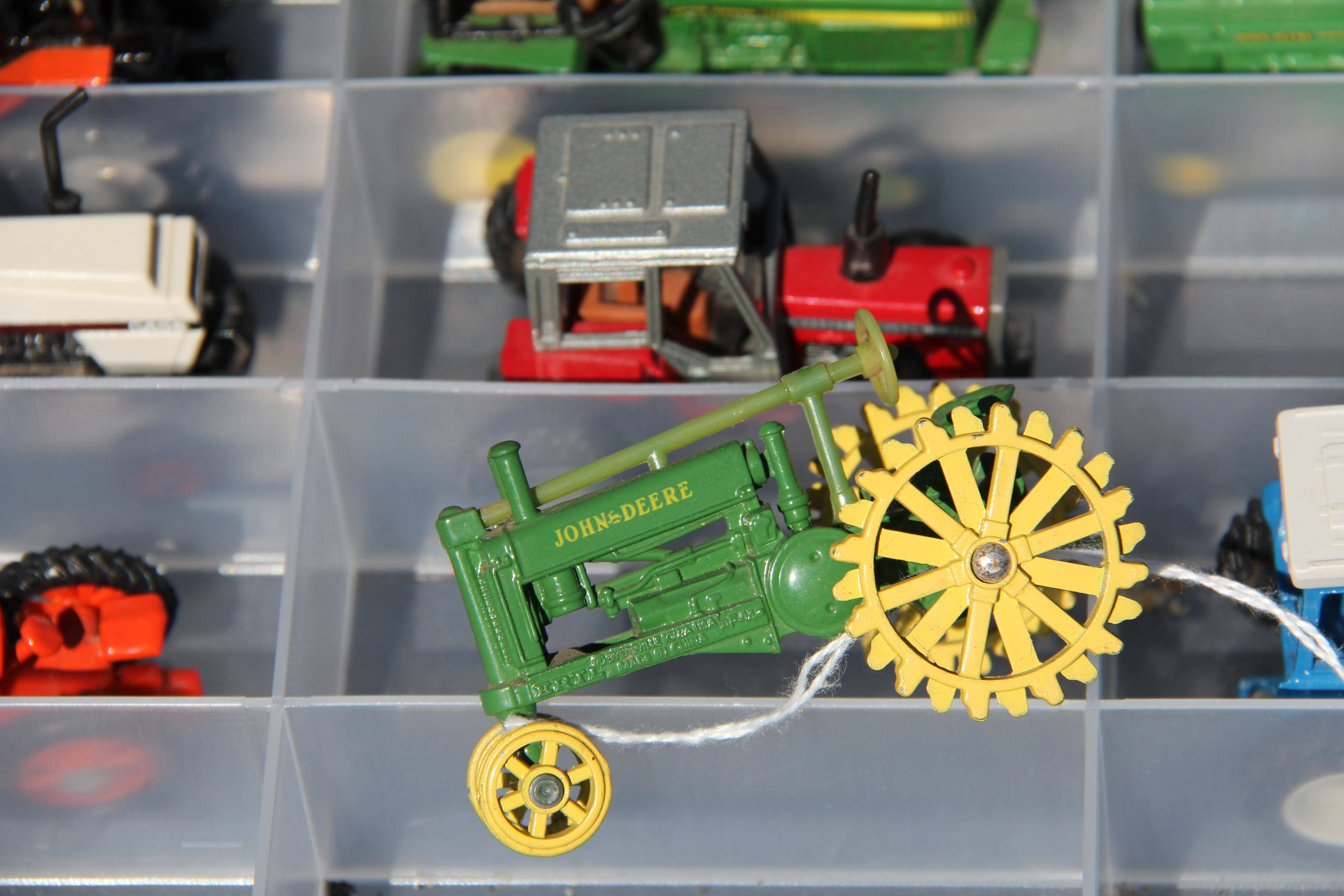
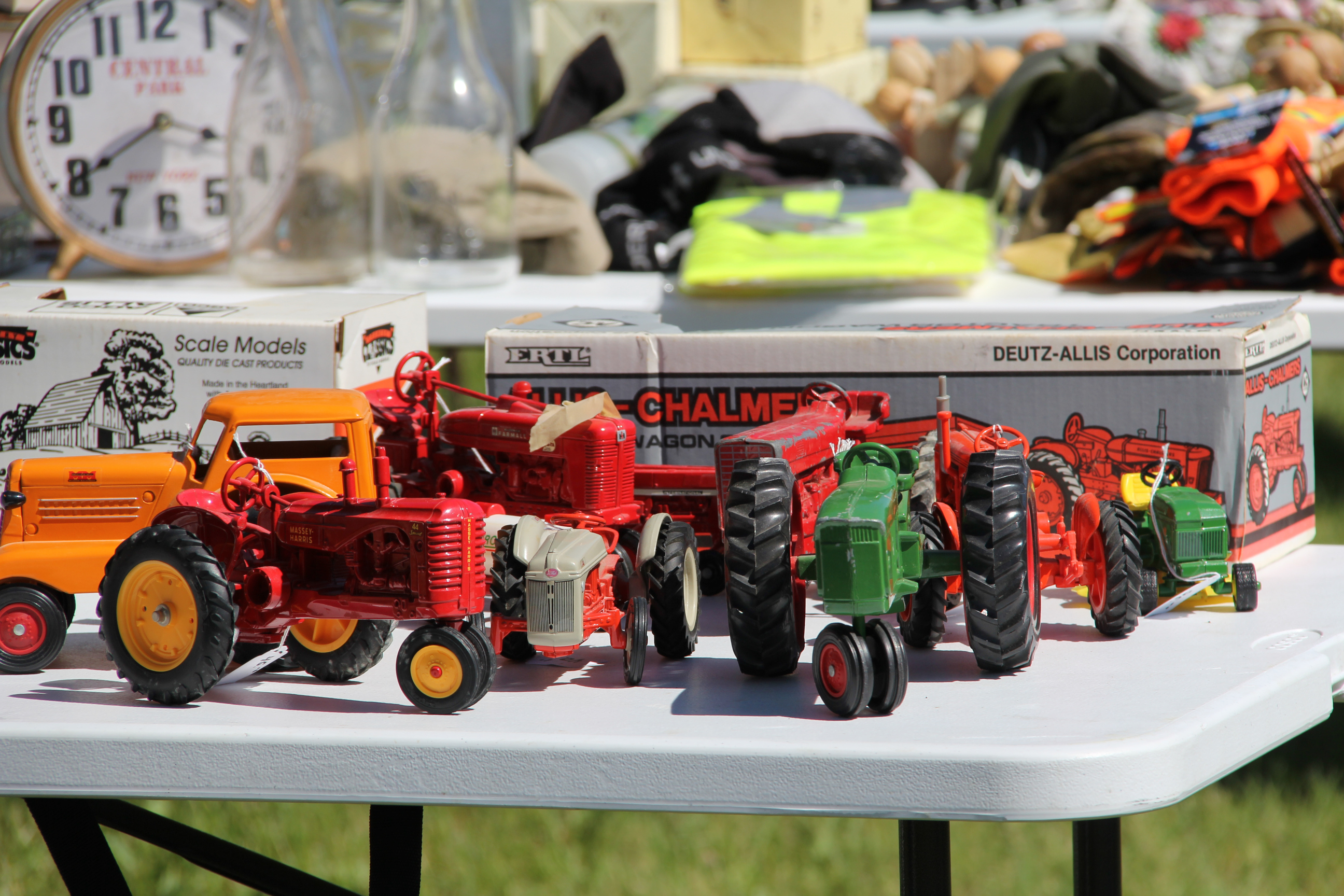
Toy tractors hold timeless appeal. (Minnesota Prairie Roots copyrighted photo May 2024)
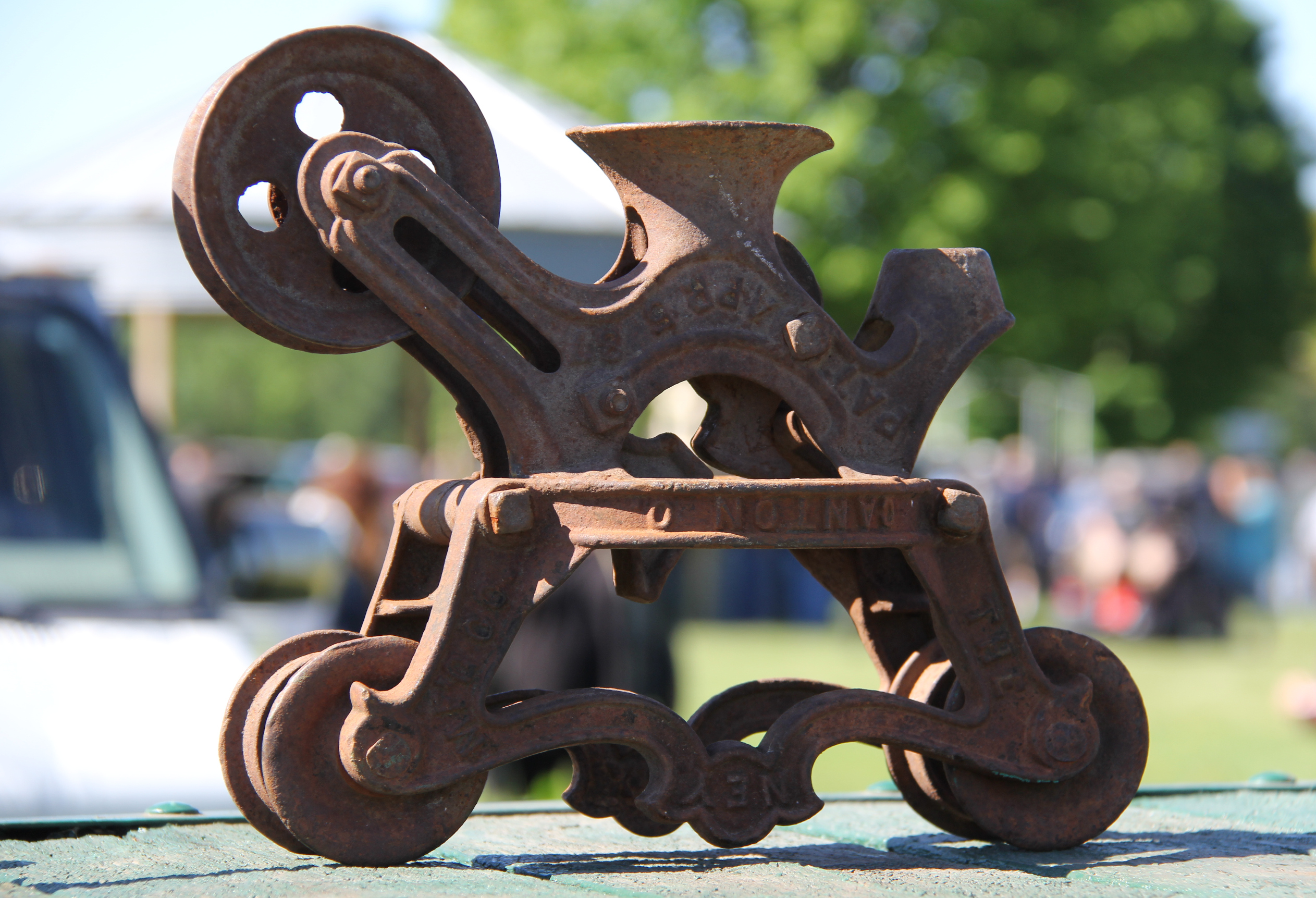
A caster truck, used with a pully system to move hay into a hay loft. (Minnesota Prairie Roots copyrighted photo May 2024)
An array of goods at the flea market. (Minnesota Prairie Roots copyrighted photo May 2024)

Mostly, I saw merchandise that related to rural life. Toy tractors and trucks. A caster truck, which differs from a truck you drive. Old stuff that’s obsolete, holding the memories of yesterday’s family farms.

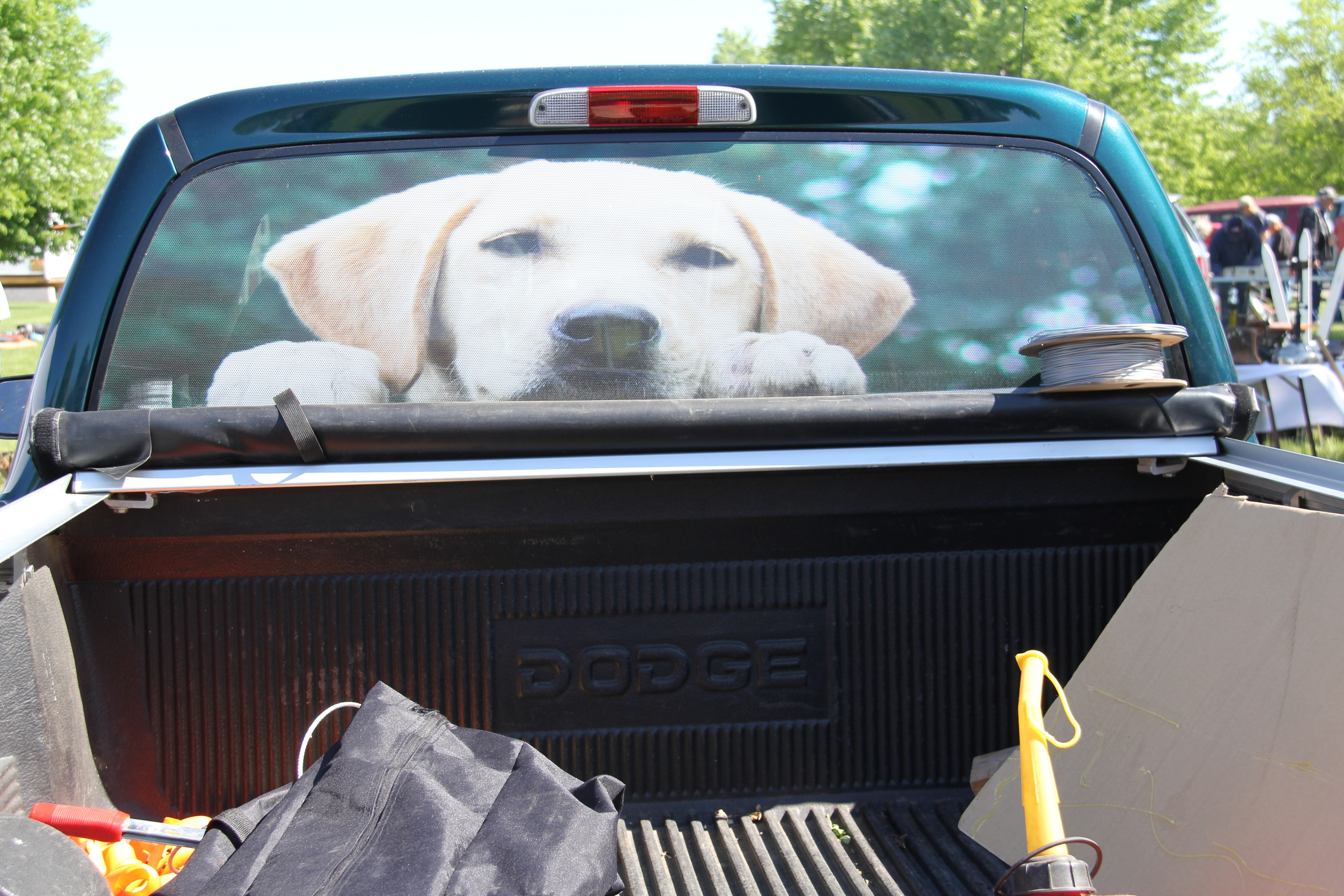
The dog-in-the-truck-window that drew my interest. (Minnesota Prairie Roots copyrighted photo May 2024)

And dogs, oh, so many dogs. Leashed, lounging on a picnic table, penned. Even in the back window of a pick-up cab, a cute dog photo that often draws interest from passing motorist. So says the guy who owns the truck. Farms and dogs go hand-in-hand.

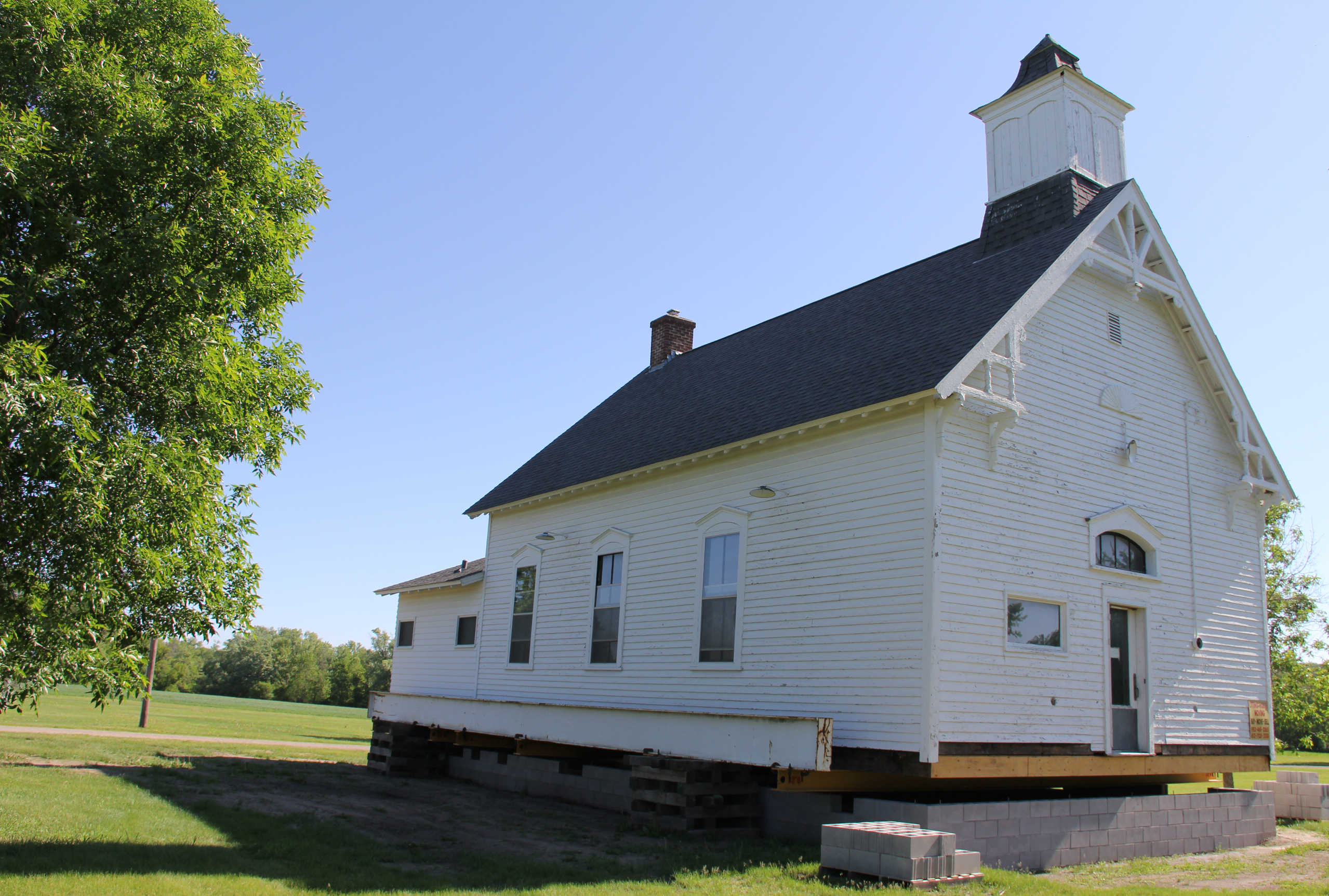
The historic Waterford School, moved on-site and soon to be placed on a new foundation. (Minnesota Prairie Roots copyrighted photo May 2024)

There are stories to be heard here, lyrics to be written. If the old Waterford Schoolhouse, recently moved onto the Rice County Steam & Gas Engines showgrounds and not yet open, could talk, oh, the stories it could tell. The songs it could sing.

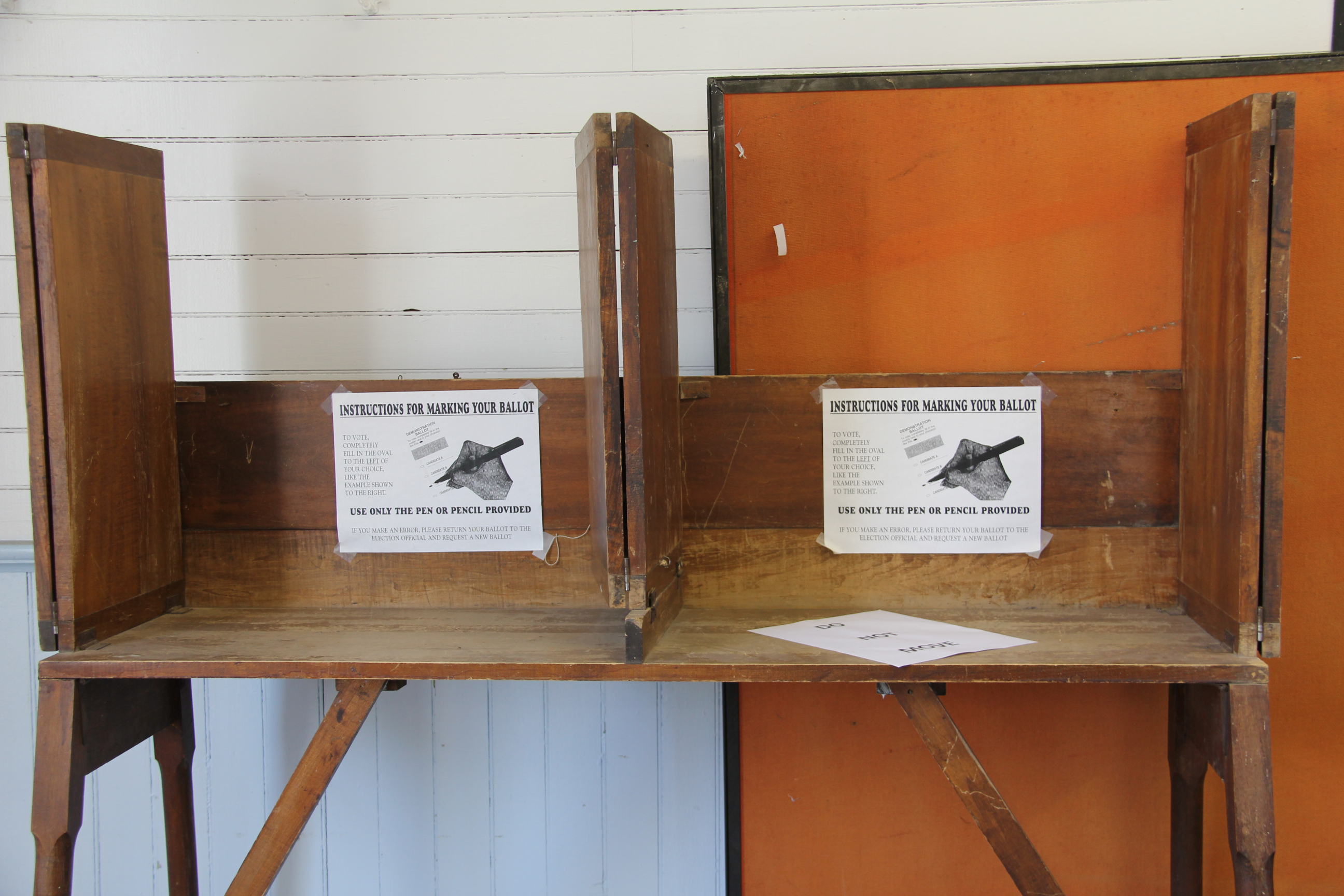
Vintage polling booths inside the former Northfield Township Hall. (Minnesota Prairie Roots copyrighted photo May 2024)

The same goes for the vintage polling booths inside the Northfield Township Hall. They aren’t for sale, simply part of the historic backdrop for vendors selling goods. If only those voting booths could talk, sing…

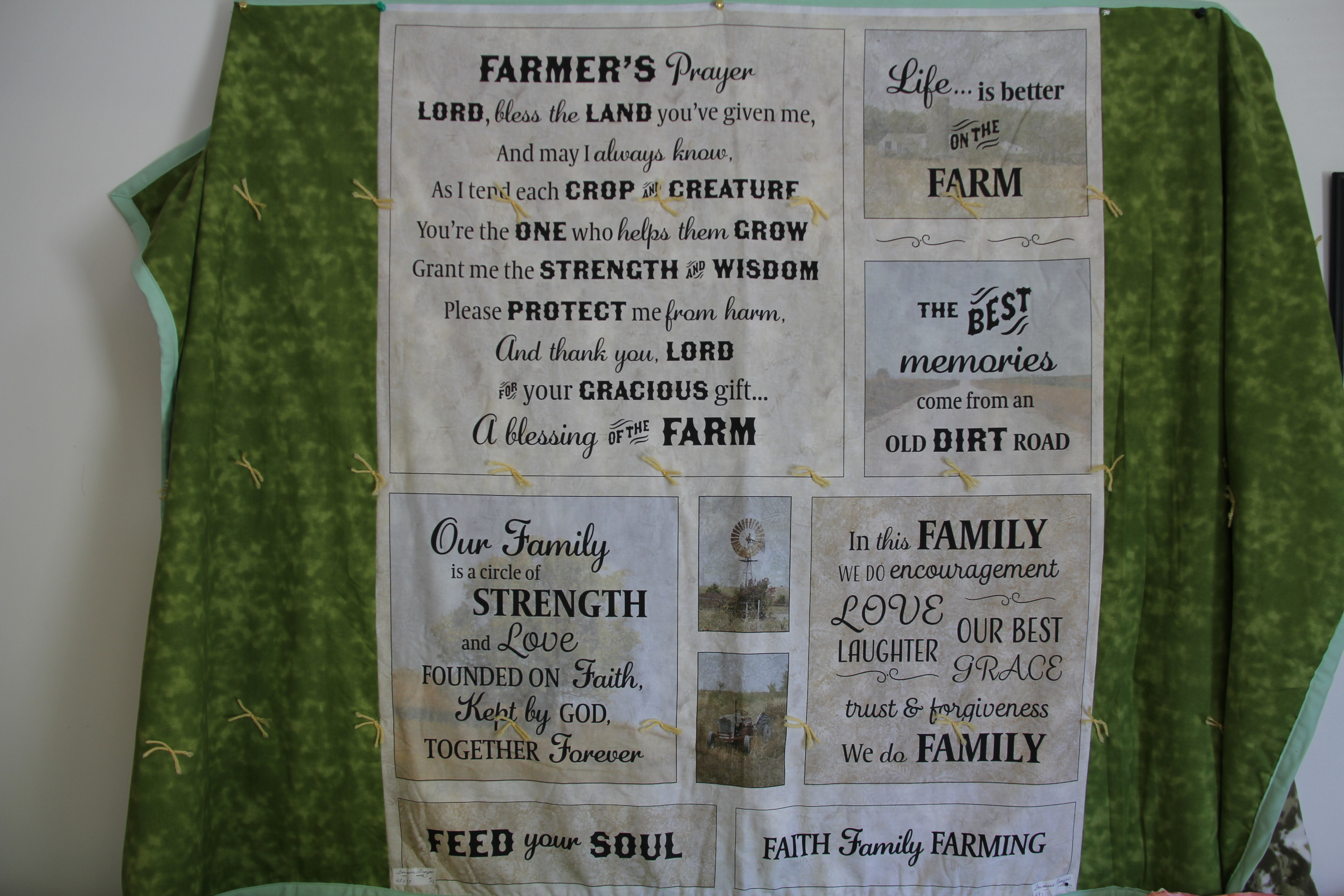
This quilt inside the clubhouse/office summarizes well the values of rural life. (Minnesota Prairie Roots copyrighted photo May 2024)

This place, this nonprofit, this event is about history. Preserving it. Showcasing it. Honoring it. Honoring farmers and farming. The land. The hands that work it. The people who live on it and love it. And those who appreciate the stories of country western music.

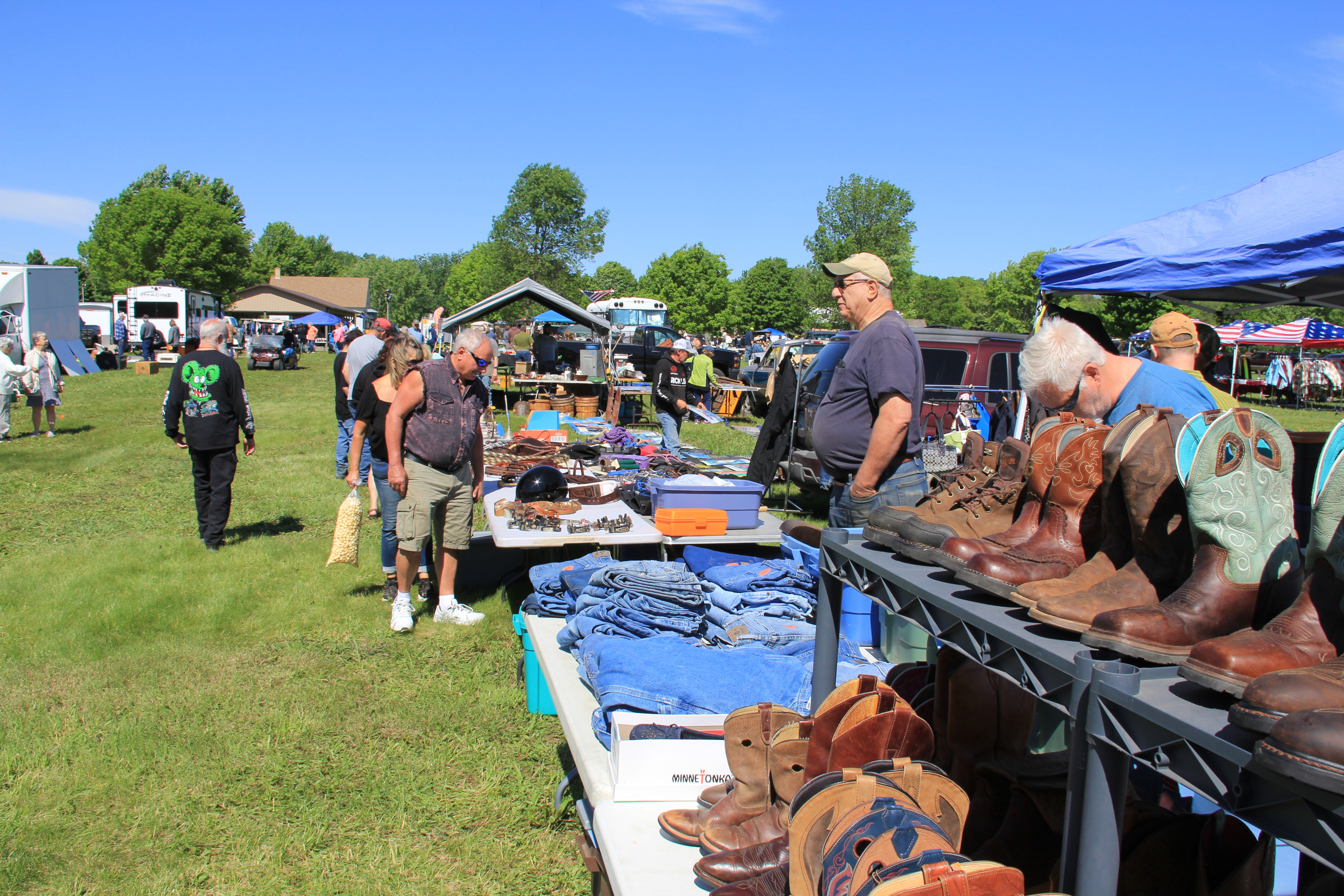
For sale: Boots and jeans, staples of country wear. (Minnesota Prairie Roots copyrighted photo May 2024)

I can almost hear the guitar, the lyrics:

Truck kickin’ dust on a gravel road, headin’ into town on a Saturday night. Boots shined up.

She’s sittin’ on a stool at the Circle Bar, sippin’ a cold one, waitin’ on him.

Truck kickin’ dust on a gravel road, headin’ into town on a Saturday night. Boots shined up.

She’s sittin’ on a stool waitin’ on him, smellin’ of wild roses growin’ in ditches.

And so on, until she breaks his heart or he breaks hers and he’s driving back home to the farm, truck kickin’ dust on a gravel road.

© Copyright 2024 Audrey Kletscher Helbling
 

A tale of two rivers: Muddy, menacing & mesmerizing June 4, 2024

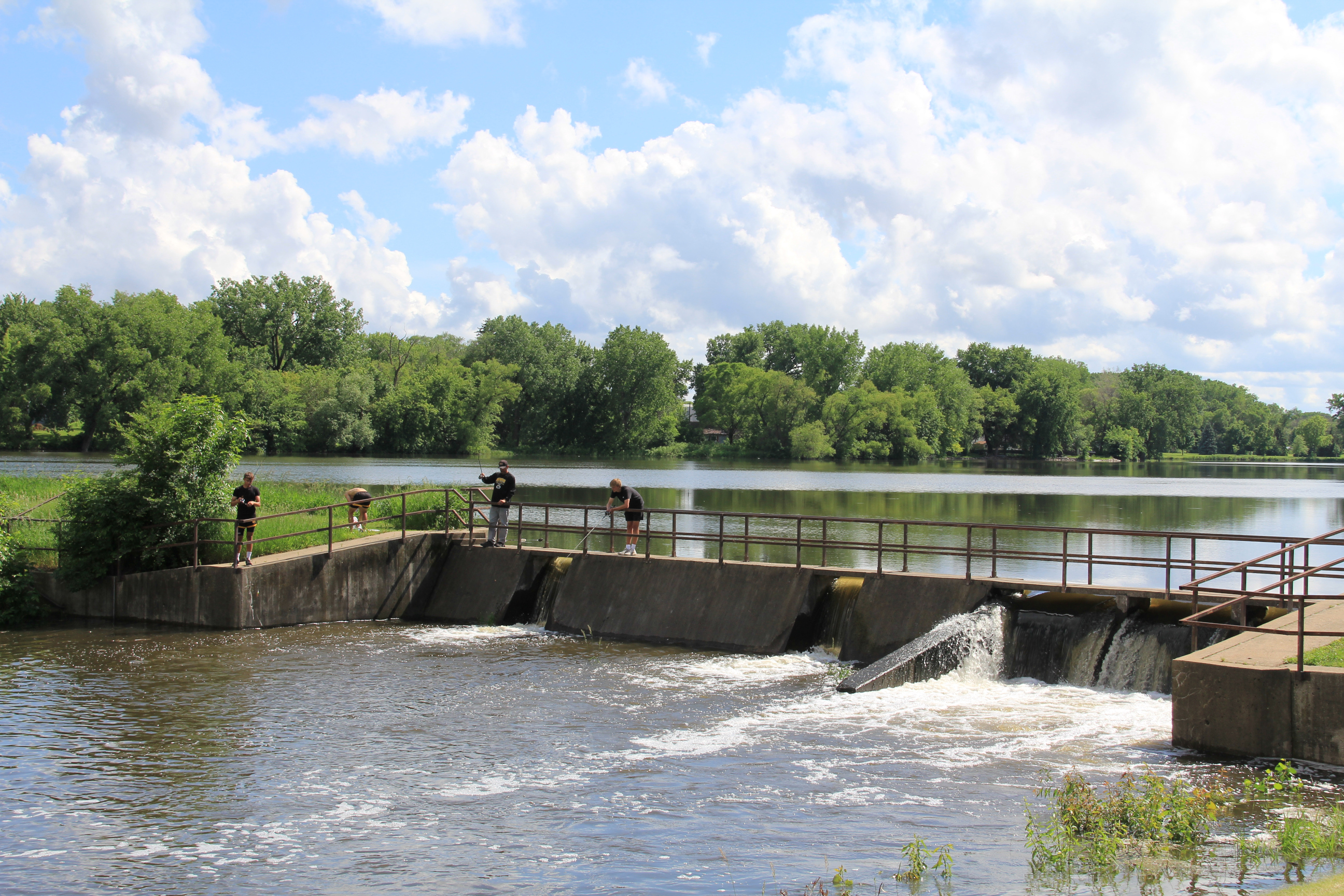
Fishing at the dam by Father Slevin Park in Faribault. (Minnesota Prairie Roots copyrighted photo June 2024)

RIVERS REEL US IN, like fish to bait. There’s something about water, especially a river. It’s mesmerizing, soothing, poetic and, right now, rather dangerous.

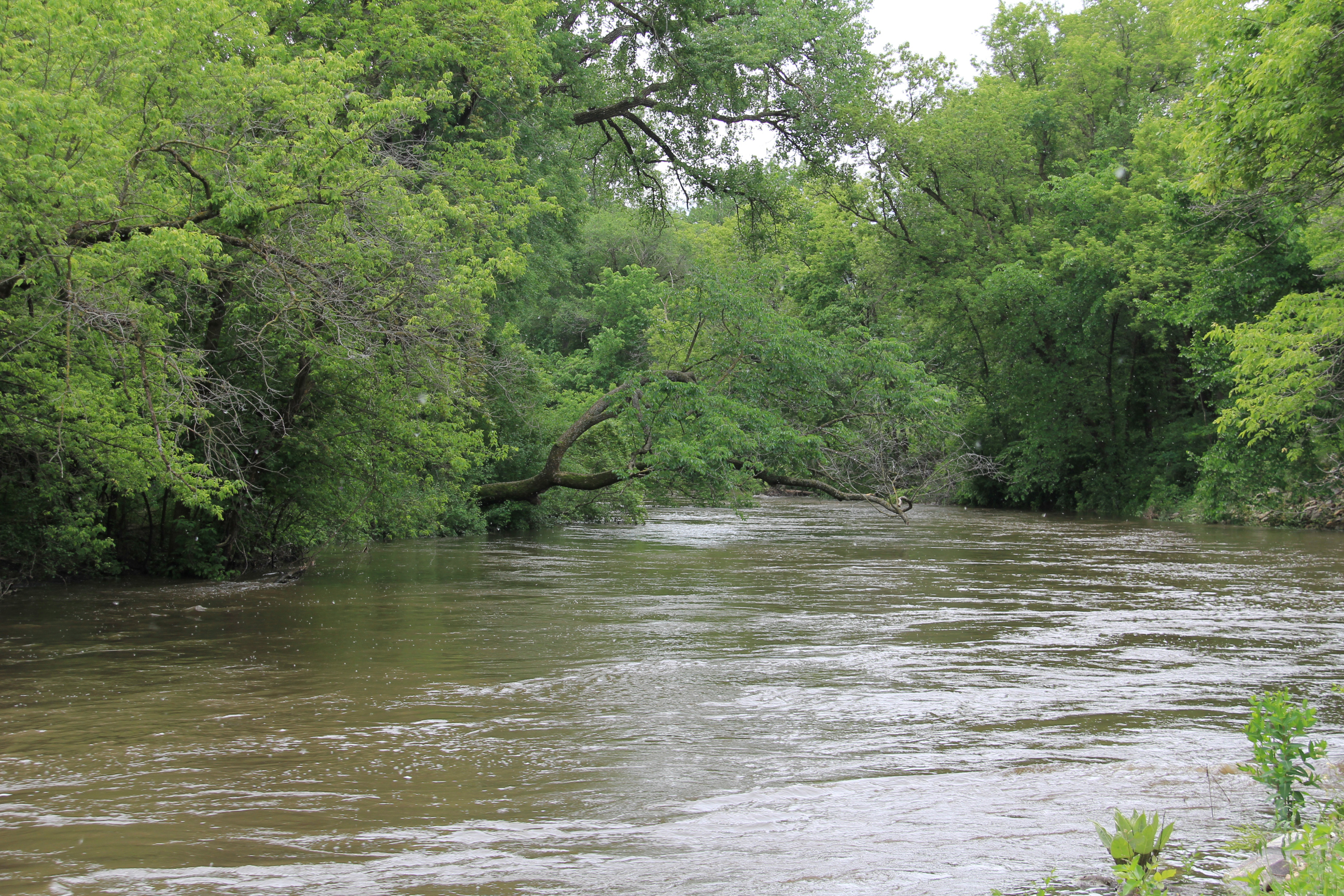
The rushing Straight River, photographed just off the Straight River Trail near Fleckenstein Bluffs Park. (Minnesota Prairie Roots copyrighted photo June 2024)

Recent days found me watching the two rivers—the Cannon and the Straight—which flow through Faribault. They are full to overflowing, muddied and rushing after significant rainfall dropped an unofficial 3.5 inches into my rain gauge over the weekend. That followed weeks of heavy rain.

On the day I photographed this dock at Two Rivers Park, it was nearly submerged by the Straight and Cannon Rivers, which meet here. The dock typically sits high above the water. In retrospect, I should have stayed off this dock, which doesn’t seem all that safe. (Minnesota Prairie Roots copyrighted photo June 2024.
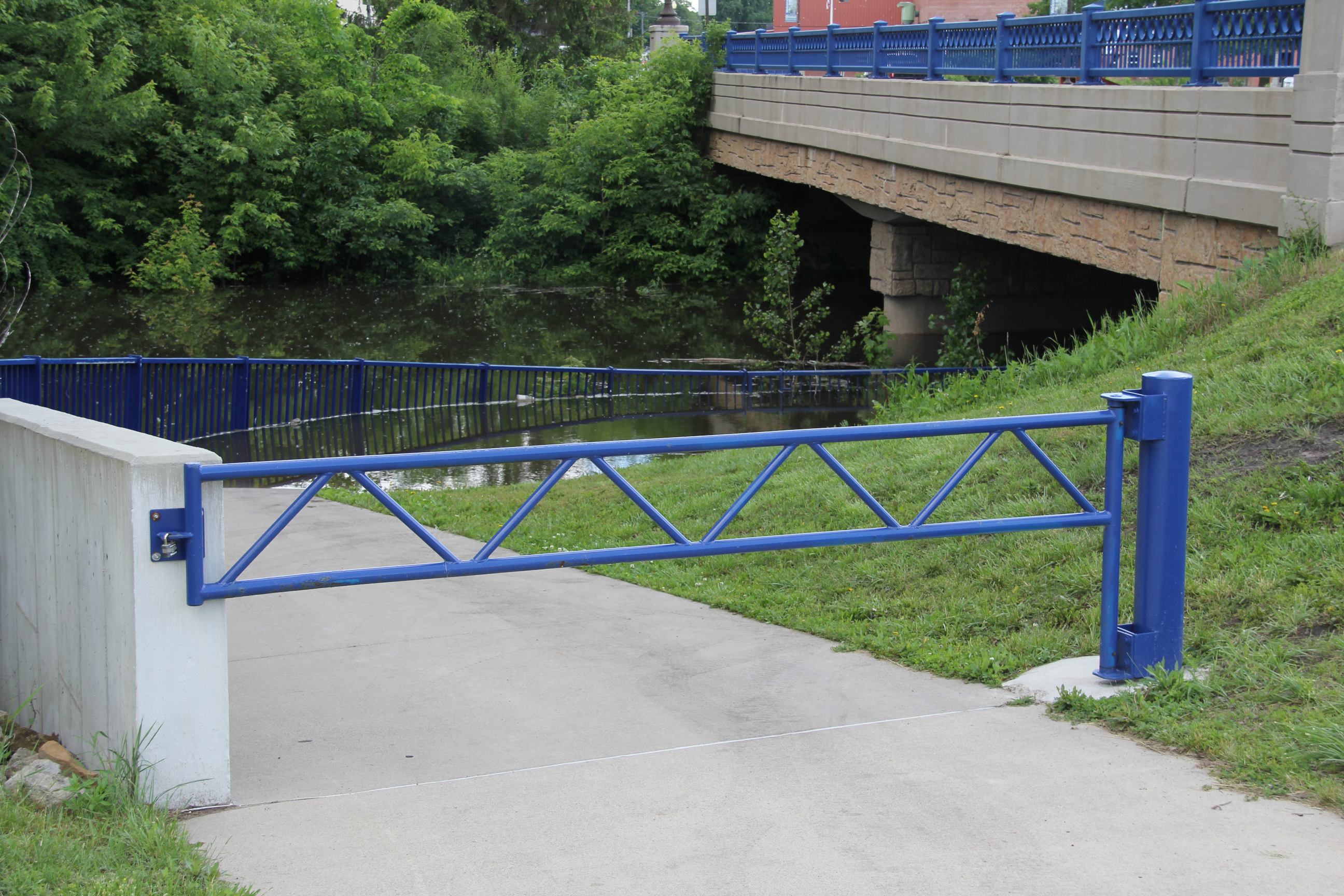
The City of Faribault has closed a section of a recreational trail running under the Second Avenue bridge due to flooding from the Cannon River. (Minnesota Prairie Roots copyrighted photo June 2024)

River levels are high, replenished after a near snow-less winter and the drought of 2023. But enough is enough. We need consistent sunshine and for the rain to stop. And for people to take extra care around fast-moving rivers.

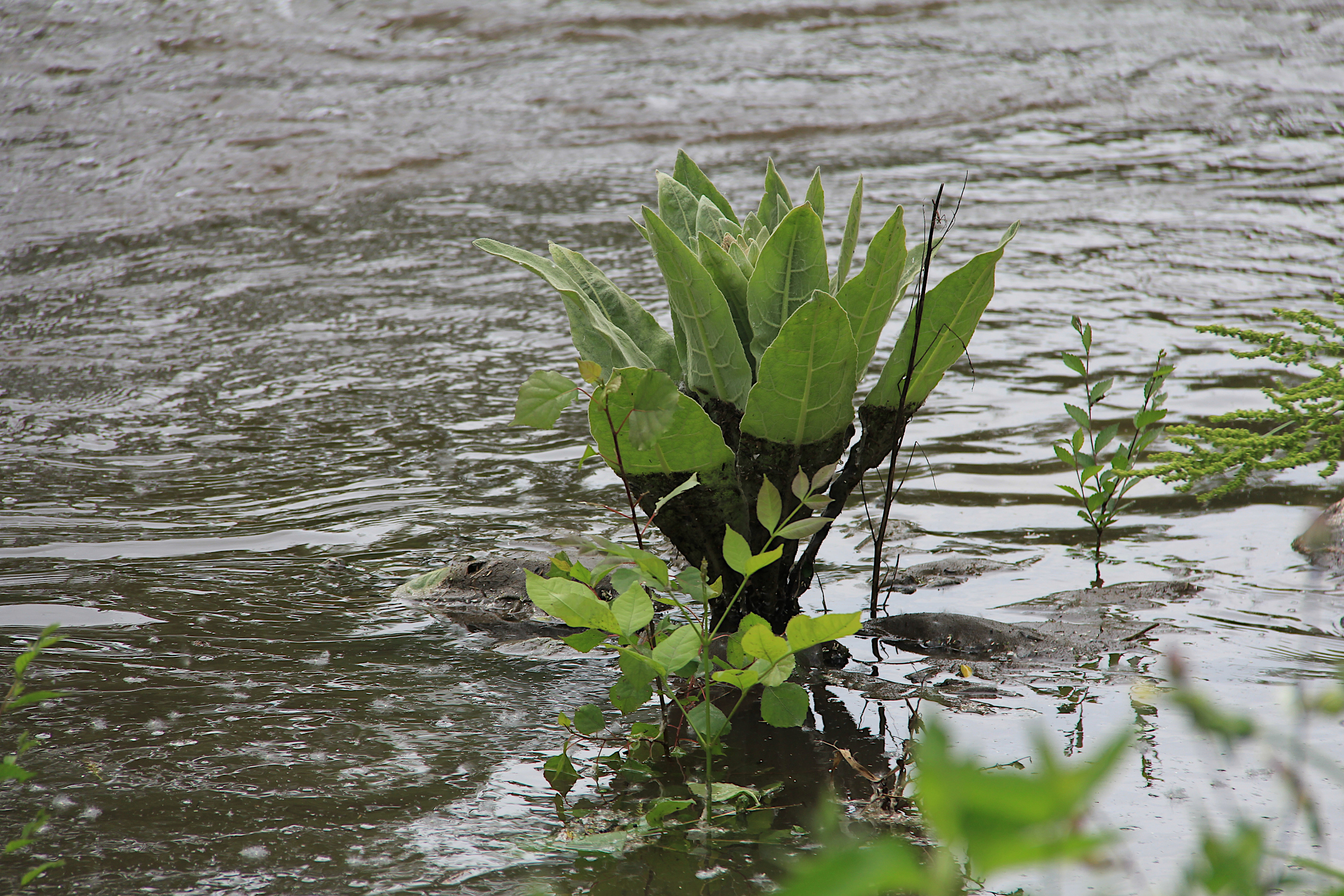
Muddy marks on this plant show how high the roiling Straight River rose, just off the Straight River Trail near Fleckenstein Bluffs Park. (Minnesota Prairie Roots copyrighted photo June 2024)

The Rice County Sheriff’s Department has advised people to be cautious on local waterways and to stay off the Cannon River. Six young people and three adults were recently rescued from the Cannon after their canoes and kayaks overturned. I saw drone footage of rescuers plucking people from the river. They were wearing life jackets, clinging to fallen trees. They got out alive. They were fortunate.

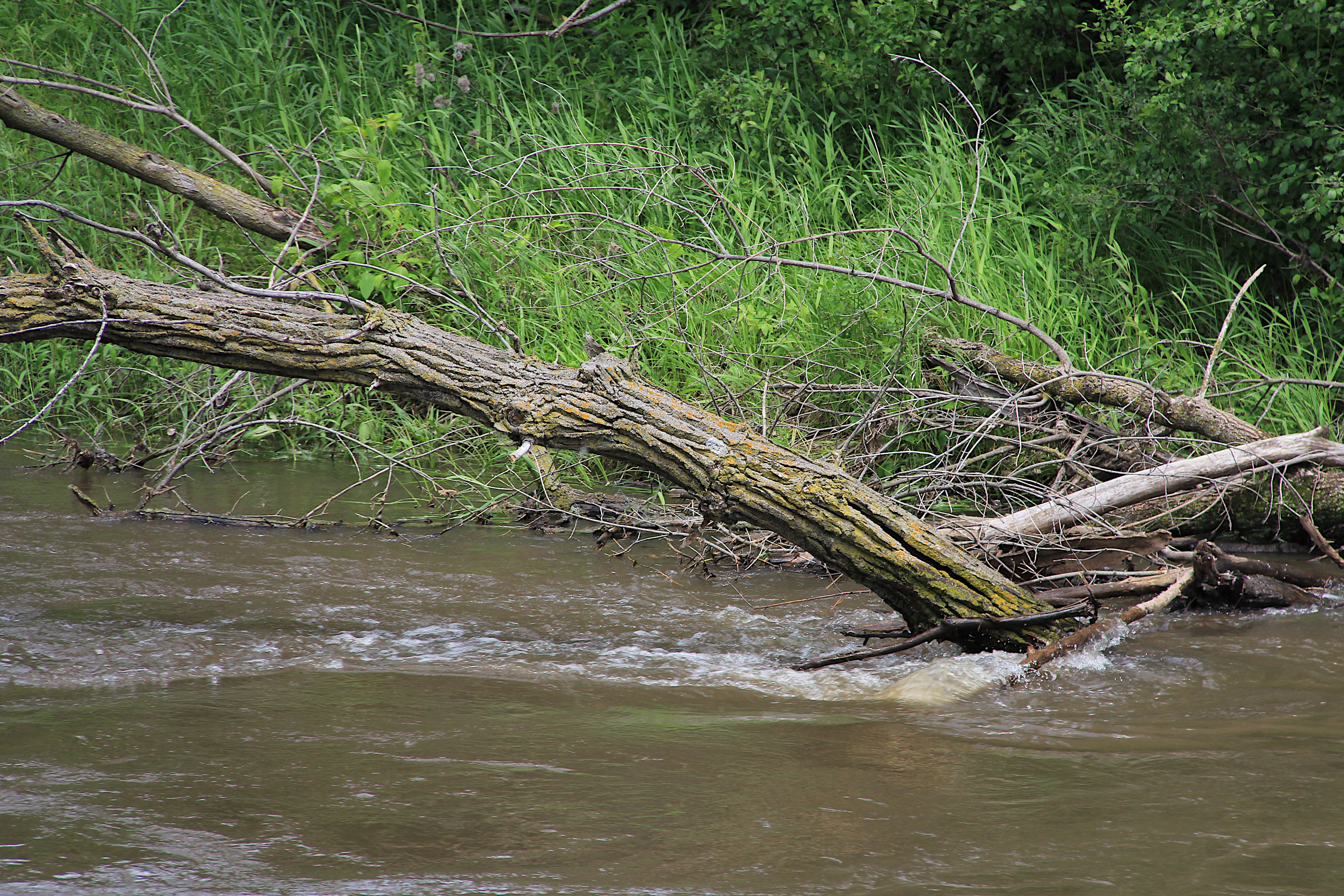
Fallen trees and limbs like these in the Straight River near Fleckenstein Bluffs Park present a hazard to anyone on the water. (Minnesota Prairie Roots copyrighted photo June 2024)

Local rivers are snagged with obstacles, especially trees downed by a 2018 tornado. The current is fast, the water swift-moving, dangers hidden below the surface. Watercraft can easily capsize, turning an outing into tragedy or near tragedy.

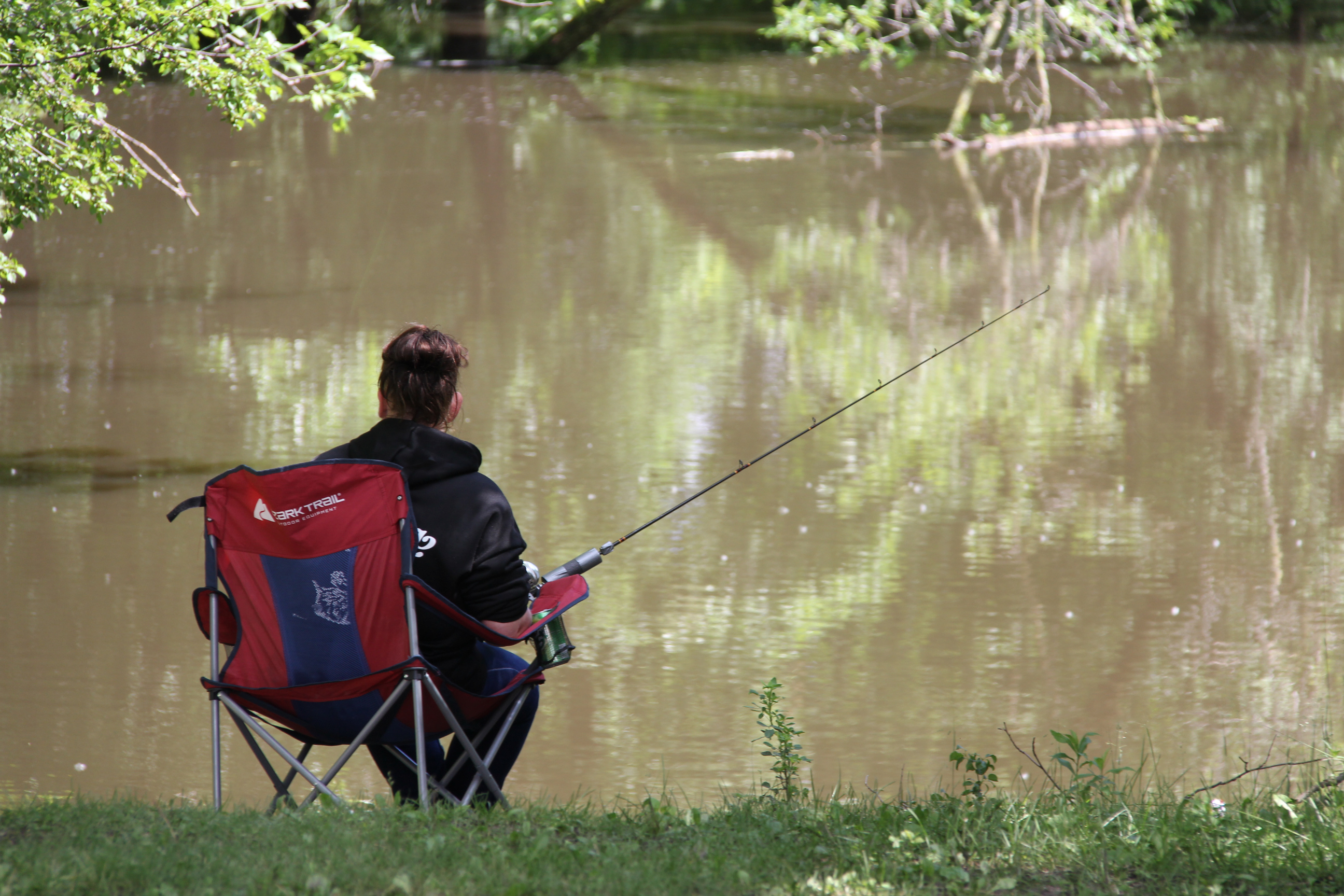
Fishing the muddy Cannon River at Two Rivers Park. (Minnesota Prairie Roots copyrighted photo June 2024)

I observed anglers safely fishing along the river bank at Two Rivers Park, above the dam by North Alexander Park and by the Woolen Mill Dam. These have always been popular fishing spots in town, although at Two Rivers most people fish from the dock. That was nearly under water when I stopped by. I didn’t visit the King Mill Dam, but I anticipate anglers were lining the shoreline there also.

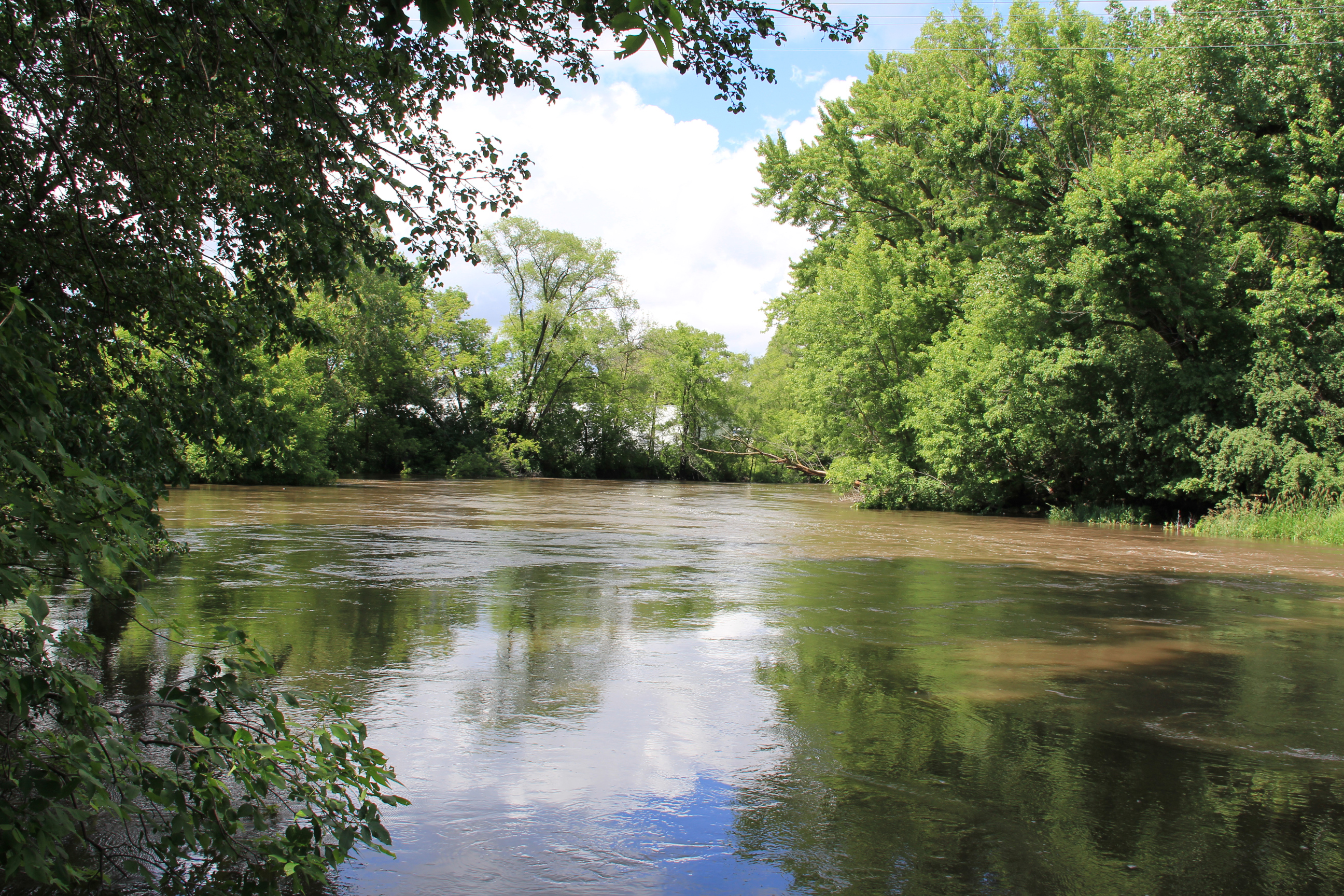
The Cannon River is high and swift-moving at Two Rivers Park. The park was the staging scene for a recent water rescue. (Minnesota Prairie Roots copyrighted photo June 2024)

An abandoned bobber tossed into the water where the Cannon and Straight rivers converge showed just how swift the current. I have no doubt the river could quickly pull a person under who’d fallen from a canoe or kayak.

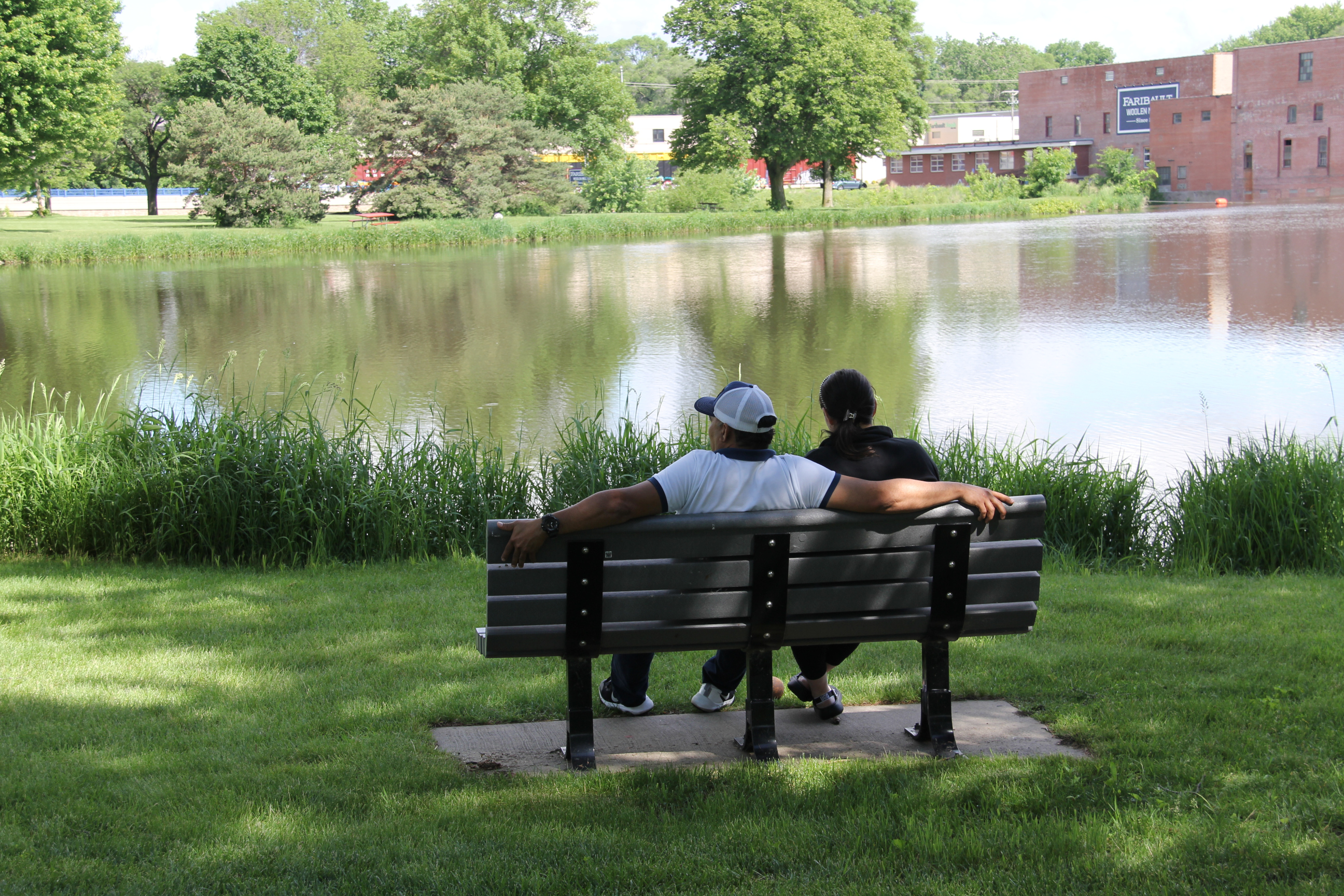
Relaxing along the Cannon River in North Alexander Park, the Faribault Woolen Mill on the opposite shoreline. (Minnesota Prairie Roots copyrighted photo June 2024)
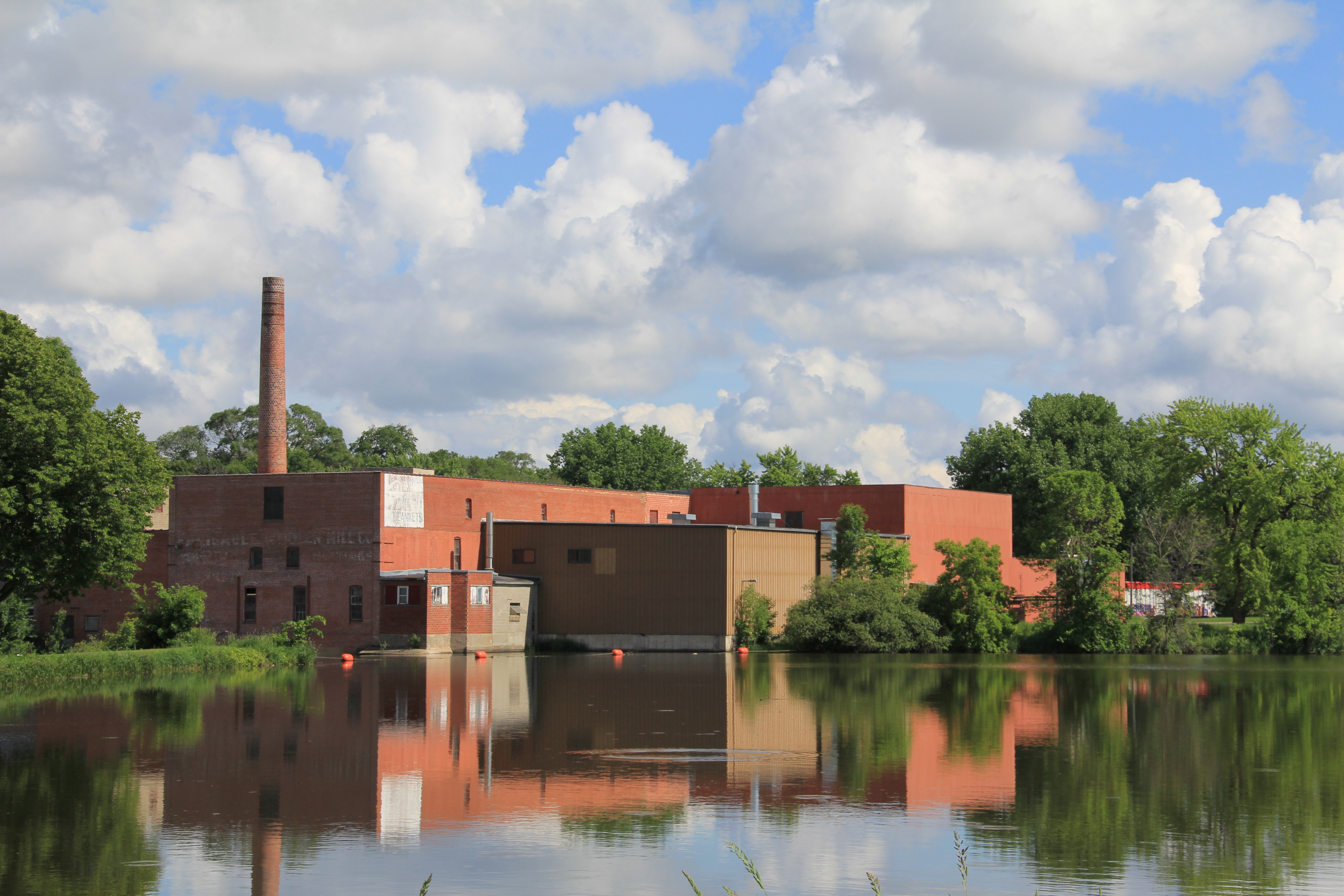
The iconic, historic Faribault Mill sits aside the Cannon River. (Minnesota Prairie Roots copyrighted photo June 2024)
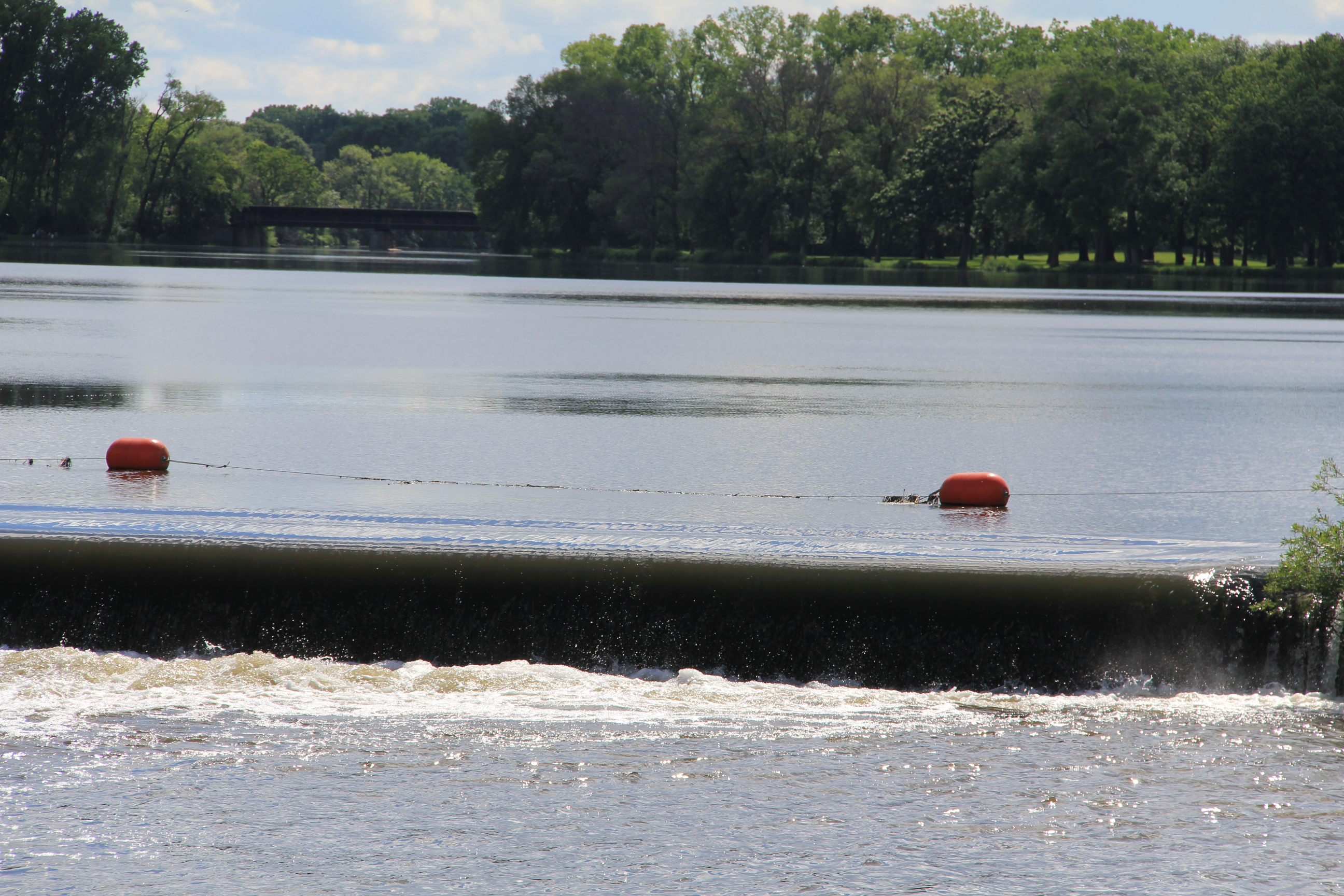
This photo taken several days ago shows the minimal drop over the Woolen Mill dam, with raging river below. (Minnesota Prairie Roots copyrighted photo June 2024)

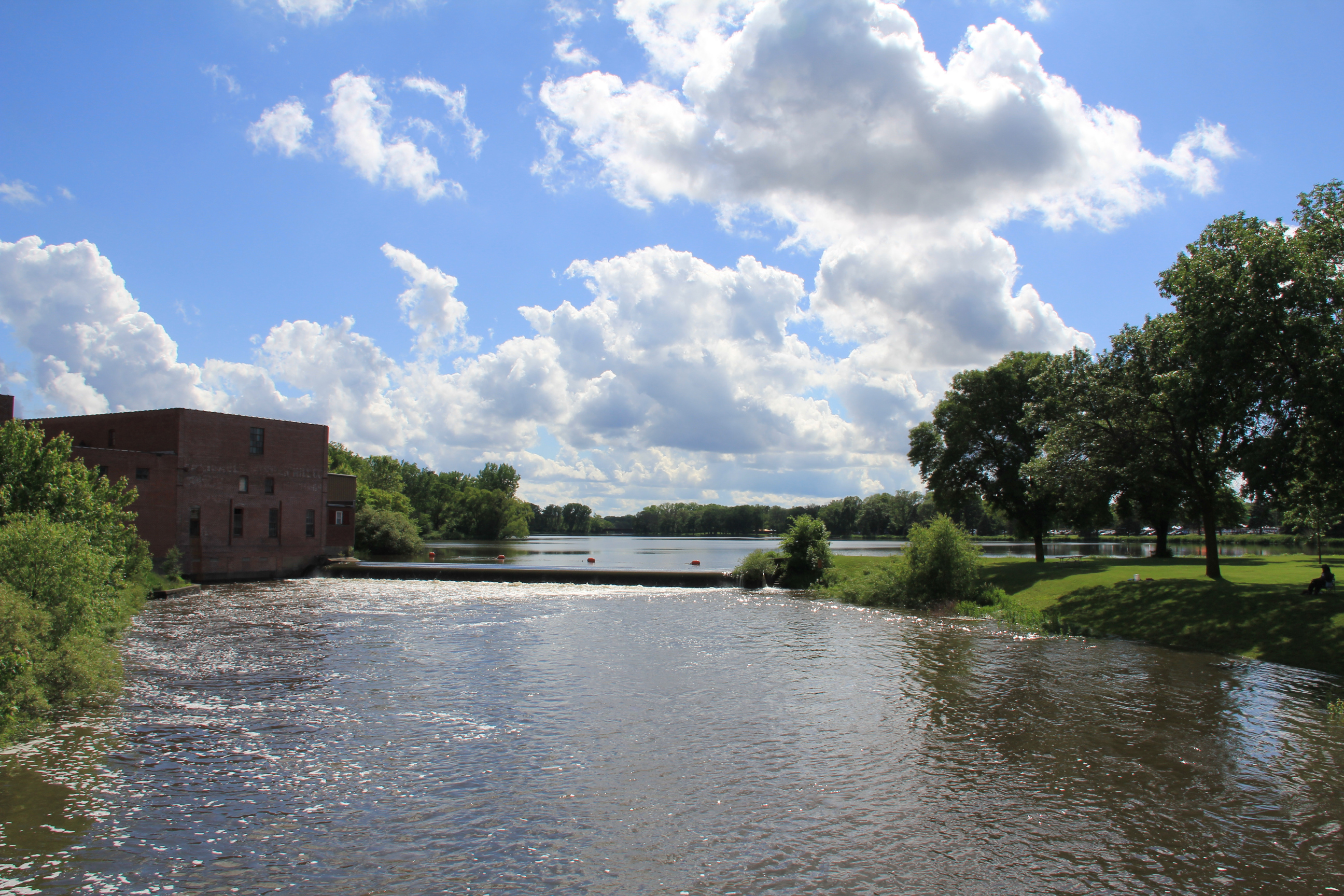
It’s easy enough to get misled by the water. Sit aside the wide stretch of the Cannon before it spills over two dams and the scene looks tranquil. The water’s surface is smooth, reflecting sky and trees and the historic woolen mill. But when the water spills over the dams, it transforms into something muddy and menacing, not to be messed with.

The scenic Cannon River and dam near the Faribault Mill. (Minnesota Prairie Roots copyrighted photo June 2024)

Respect the rivers, I say, even if it is tempting to launch a canoe or ease into a kayak. River levels will drop in due time as summer unfolds. There will be ample opportunity to get on the water, to enjoy the river scenery, to delight in the natural beauty of Mni Sóta, Dakota for “land of sky tinted waters.”

© Copyright 2024 Audrey Kletscher Helbling


At a southern Minnesota flea market June 3, 2024

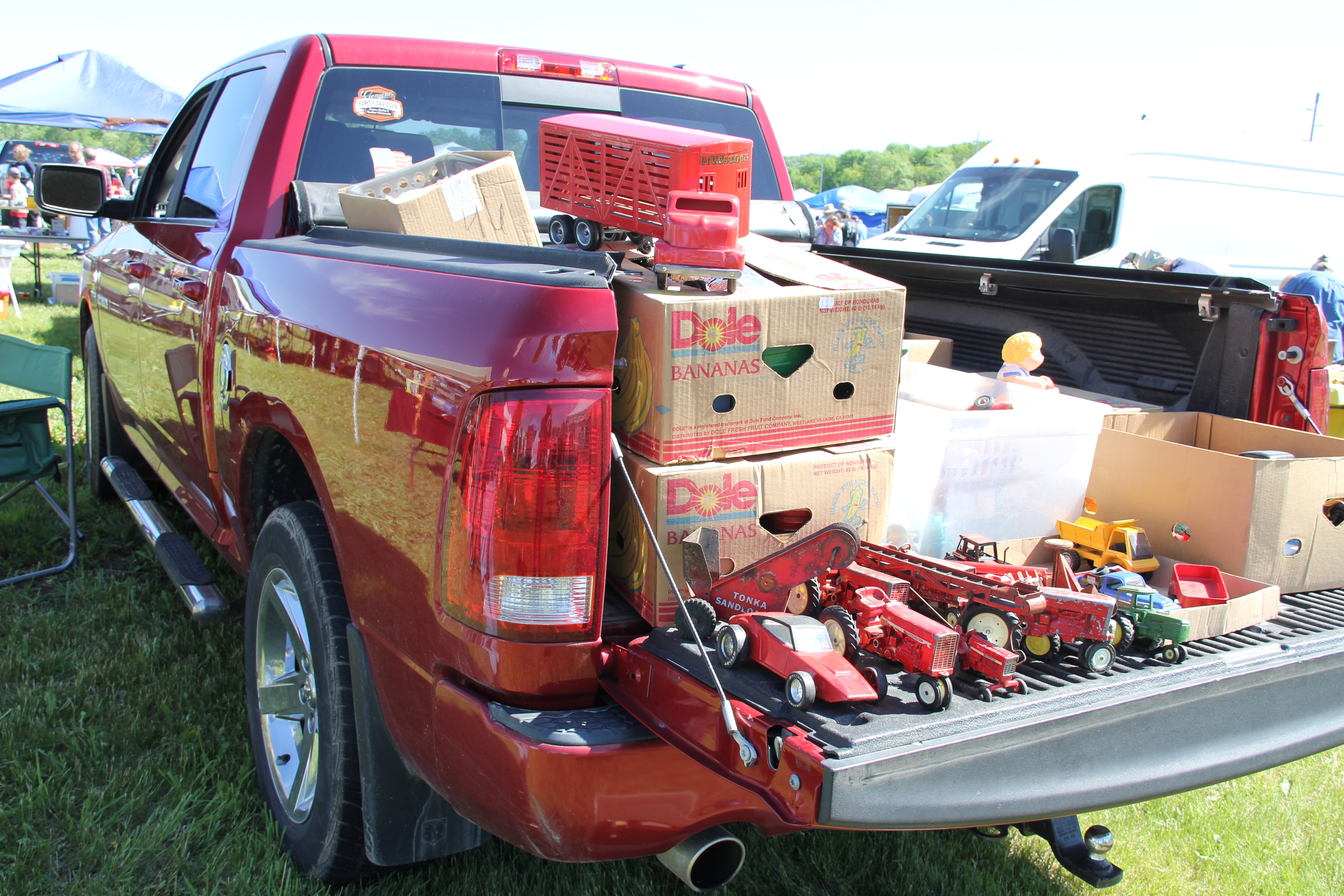
This particular vendor sold farm-themed toys. (Minnesota Prairie Roots copyrighted photo May 2024)

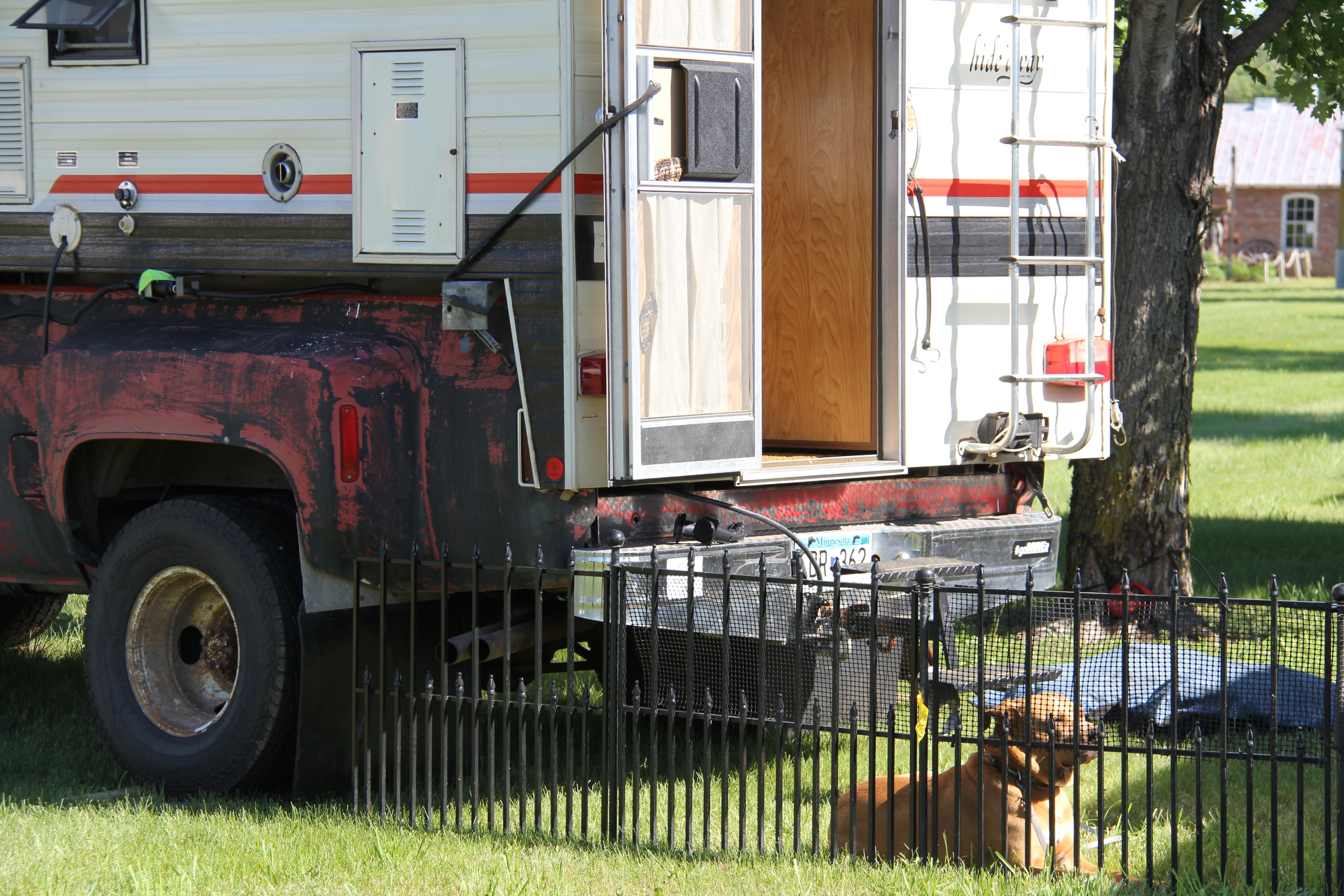
THEY PULL UP in their campers, pick-up trucks, converted buses and vans, often hauling trailers crammed with merchandise. They are traveling merchants, making the flea market circuit to pedal their goods.

A vendor with a patriotic flare. (Minnesota Prairie Roots copyrighted photo May 2024)

Recently I attended the Rice County Steam & Gas Engines Spring Flea Market at the club showgrounds south of Dundas. A second market, along with a tractor show, threshing demo and more, is held Labor Day weekend. Occasionally, I purchase something. But mostly, I look and photograph. There’s a lot to see.

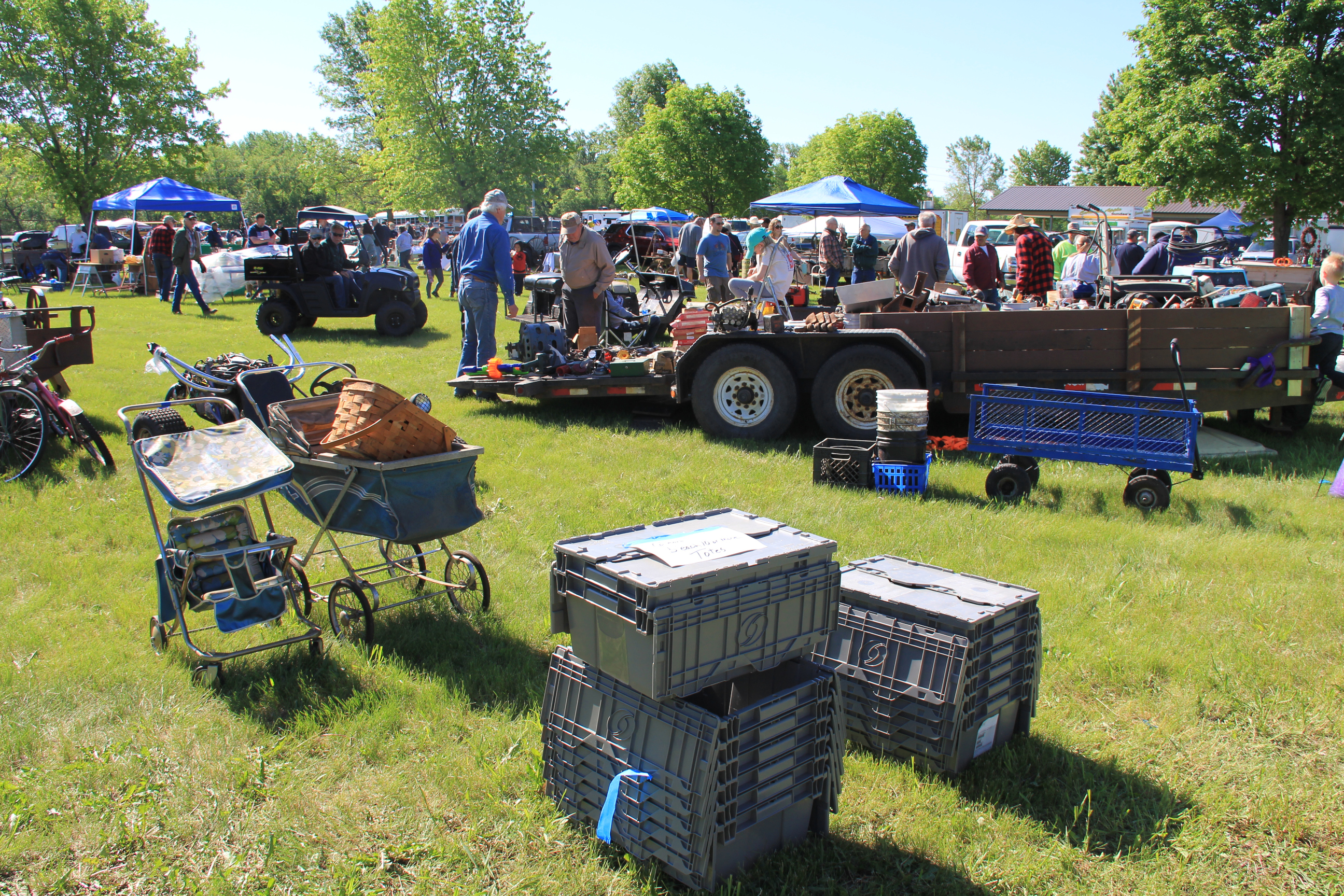
Between the flea market and a consignment auction, there was lots to see and buy at the Rice County Steam & Gas Engines showgrounds. (Minnesota Prairie Roots copyrighted photo May 2024)

From people-watching to shopping to searching for unusual finds to photograph, I find myself drawn to this open air market of second-hand, handcrafted and new merchandise. There are characters and stuff you’ve never seen before and may or may not need, and a vibe that feels of yesteryear.

A vendor’s penned dog. (Minnesota Prairie Roots copyrighted photo May 2024)

Vendors bring their dogs, their finds and even bacon. As I wound among the booths, I smelled the scent of meat. A merchant stood next to his vintage camper frying bacon on a tabletop propane camper stove. I wanted to settle into his fold-up lawn chair and help myself to a slice or three, plus a cup of coffee and perhaps scrambled eggs. I settled instead for a bag of mini-donuts purchased from a food stand.

Mini tractors drew kids and collectors. (Minnesota Prairie Roots copyrighted photo May 2024)

I mostly meander. And watch. I saw a preschool boy beeline straight for a table of toy tractors. Grandma followed. Plenty of farm toys are available in sizes from matchbox to larger. A farm kid’s dream store, for sure.

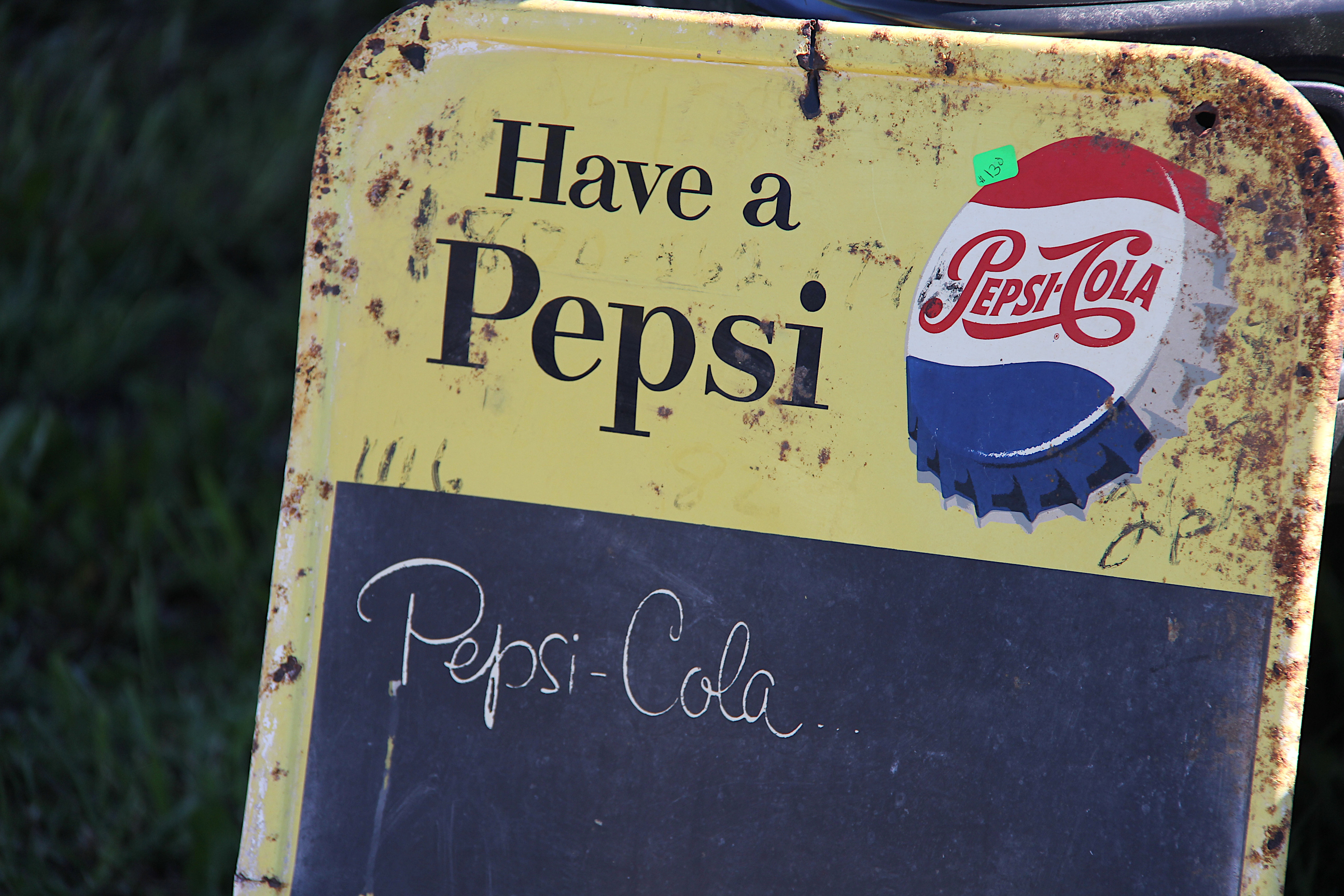
I seldom drink pop, but I do like this Pepsi sign. (Minnesota Prairie Roots copyrighted photo May 2024)

Me? I don’t shop for anything specific. But I’m drawn to old, not replica (of which there are plenty) signs. This time a vintage Pepsi sign caught my eye. For $130, and perhaps it’s worth that much, it wouldn’t be mine.

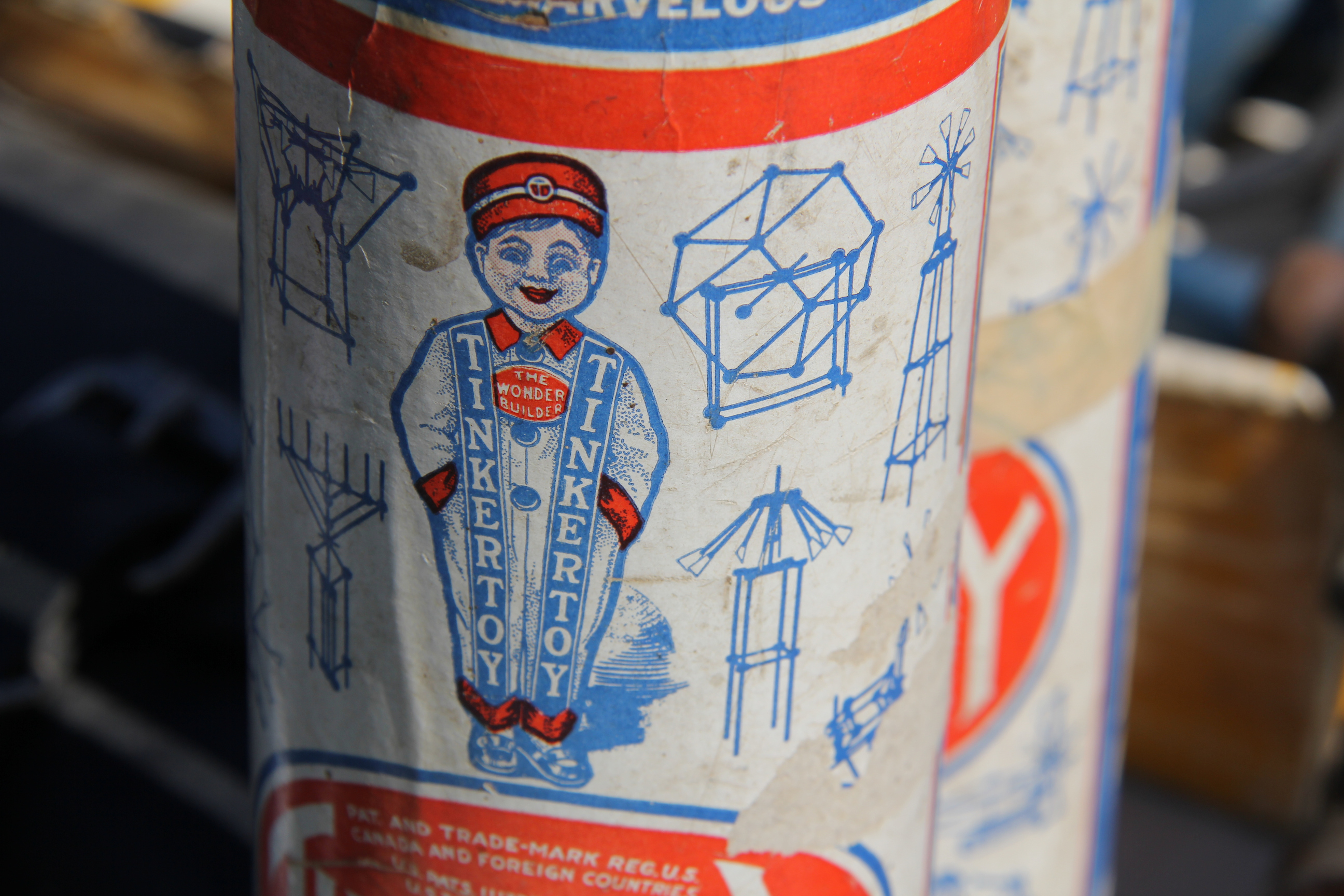
Not the safest toy, but one I loved as a child of the 1960s. (Minnesota Prairie Roots copyrighted photo May 2024)

Nor would the Tinkertoys…because I probably have a cylinder of those stashed under the attic eaves. I loved those “let’s see if you can poke your siblings’ eyes out” with the wooden sticks toy.

I appreciated the box cover art more than the ice skates. (Minnesota Prairie Roots copyrighted photo May 2024)

If I still skated, I could have purchased matching skates for myself and Randy. But, nope, not gonna risk falling at my age. I’ve already broken two bones while wearing flip flops and shoes.

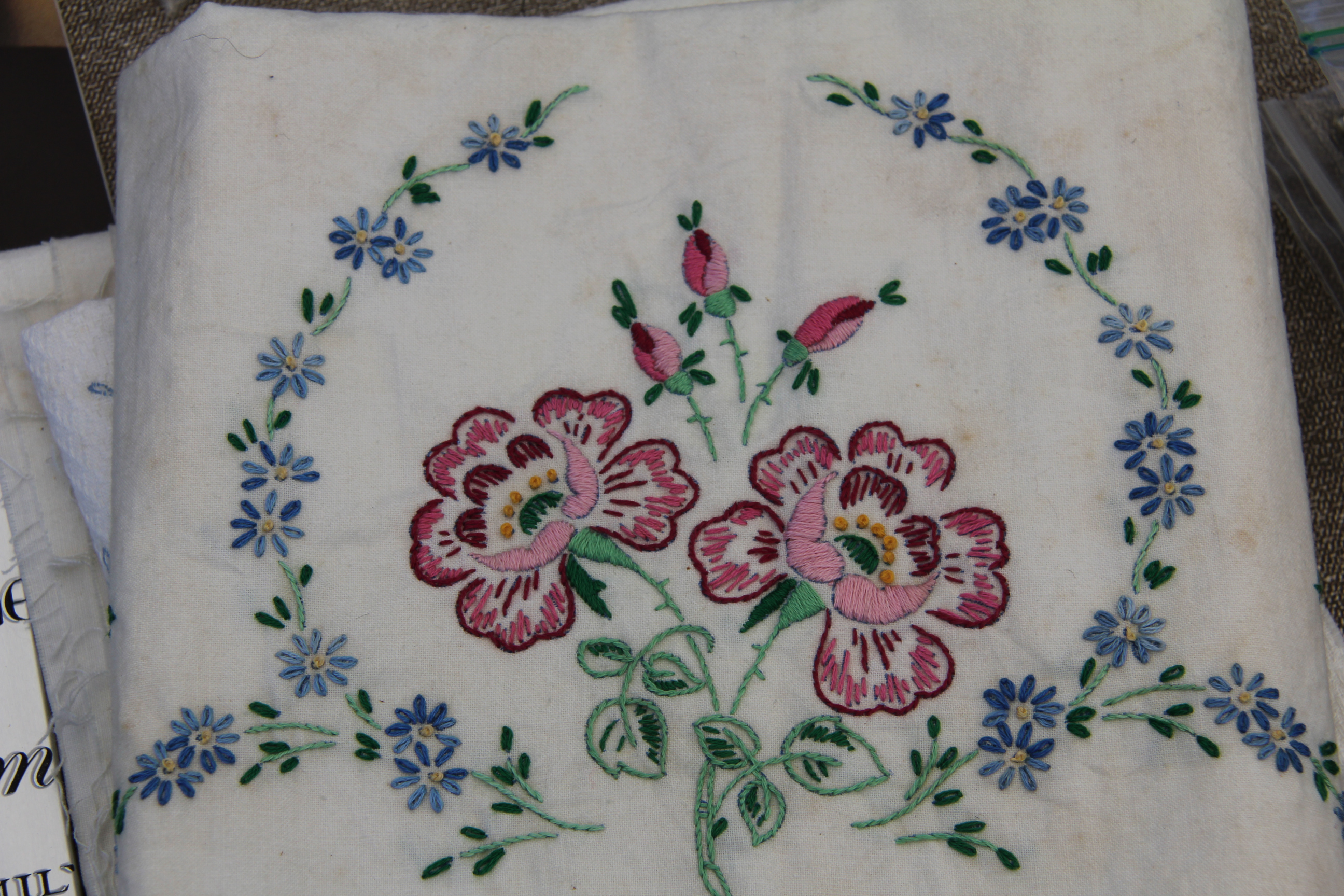
Beautiful hand embroidery. (Minnesota Prairie Roots copyrighted photo May 2024)
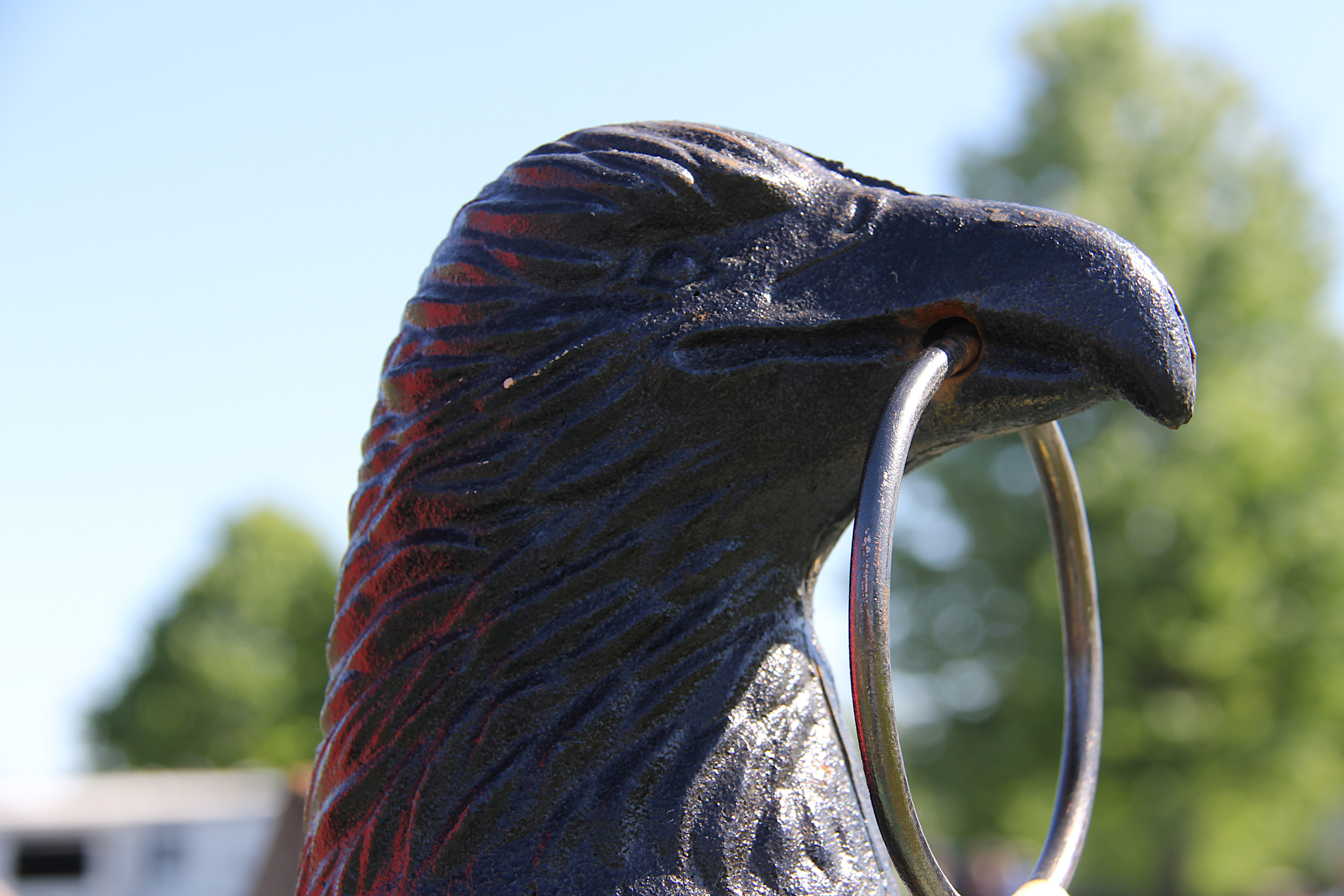
Eagle sculpture. (Minnesota Prairie Roots copyrighted photo May 2024)
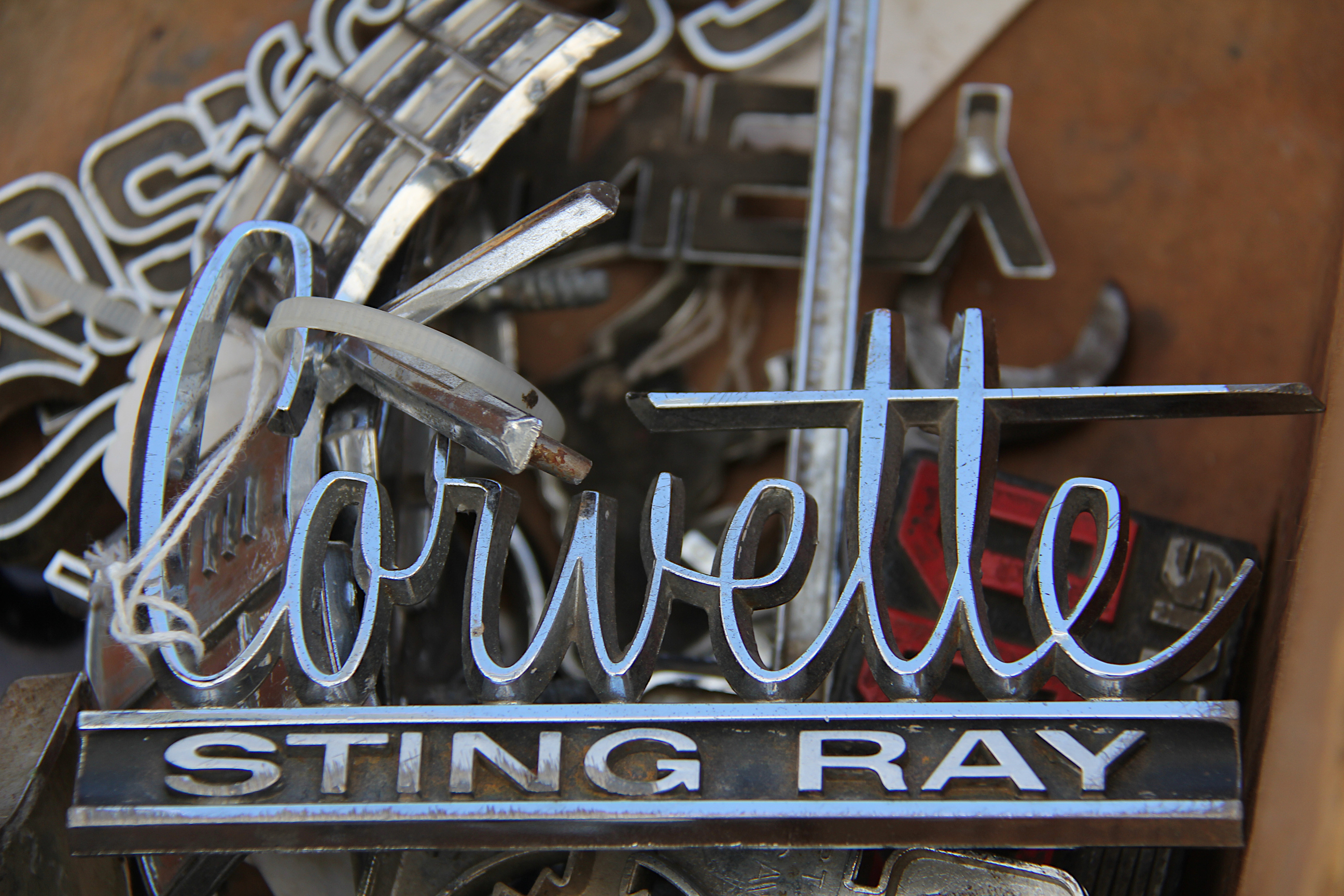
I see car emblems as art. (Minnesota Prairie Roots copyrighted photo May 2024)

I really liked the eagle sculpture and the car emblems and the embroidered dish towel. They’re art to me and I do love art.

Head inside the town hall for more treasures. (Minnesota Prairie Roots copyrighted photo May 2024)

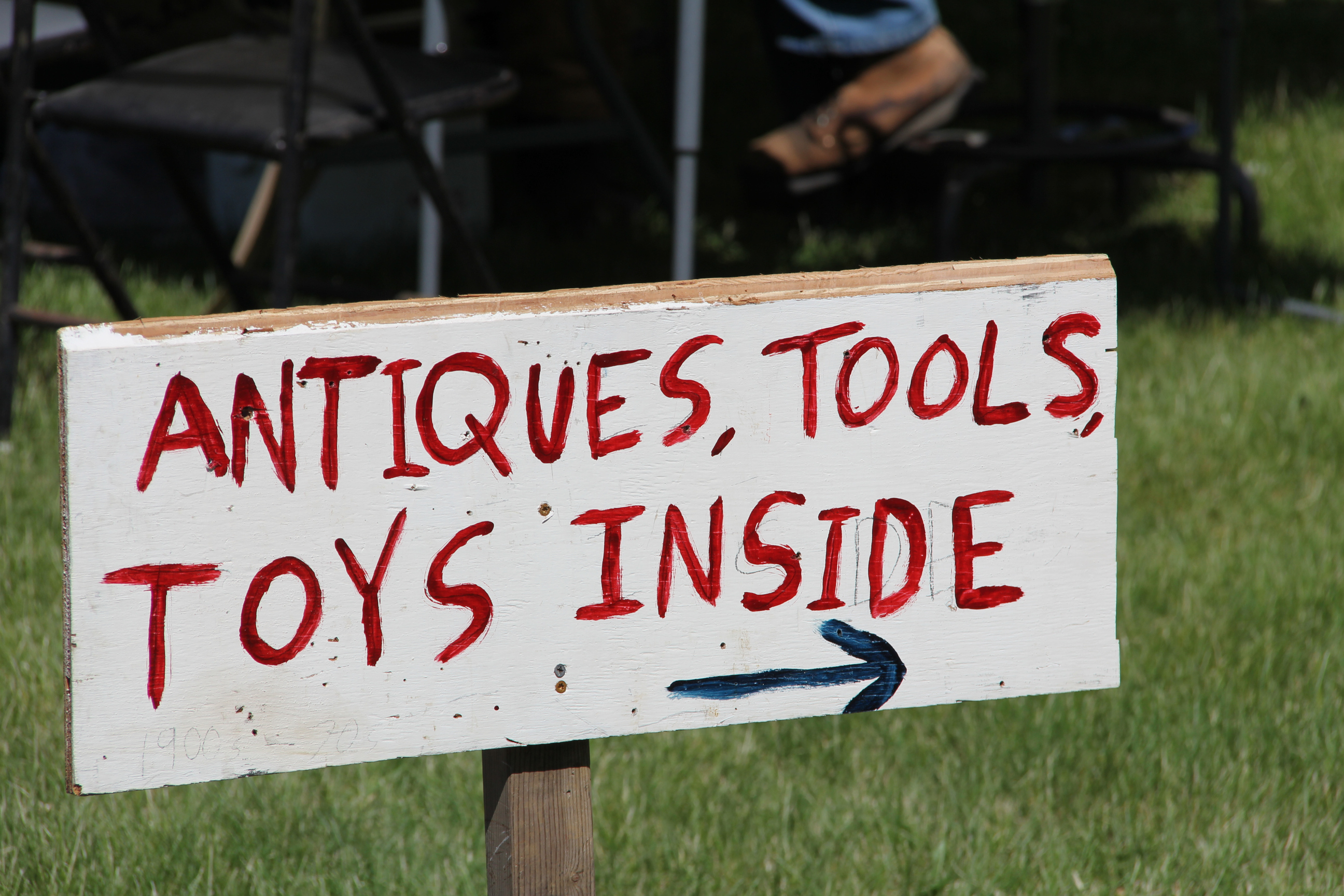
The most interesting finds of the morning came at my last stop, where a handmade painted sign posted outside the old Northfield Township Hall promised ANTIQUES, TOOLS, TOYS INSIDE. There I met Gary Kowalski, labeled “PICKER” on his business card. He’s from Montgomery, lives in a former funeral home and picks for goods from Minnesota to Michigan to Texas and in between.

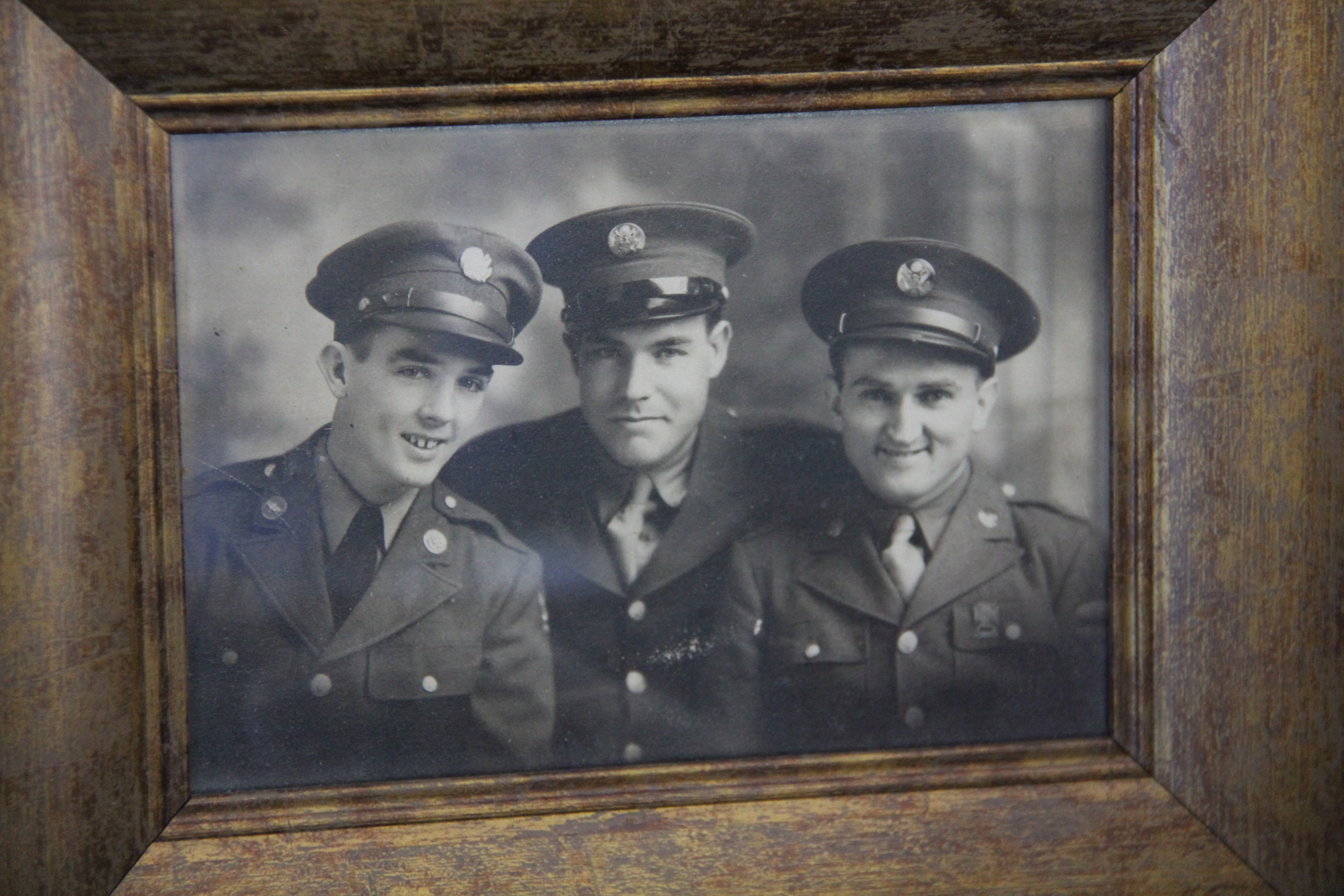
This photo of soldiers sparked a conversation between me and picker Gary Kowalski. (Minnesota Prairie Roots copyrighted photo May 2024)

A singular framed black-and-white photo of three soldiers in full formal military uniform grabbed my attention. Their smiles, the way they leaned into each other, told me they were not only in service together, but also friends. That’s when Gary stepped in to say he found the photo, along with other WW II items, in Texas. He’s a veteran himself and guesses the three were on leave for some rest and relaxation, thus the happy pose.

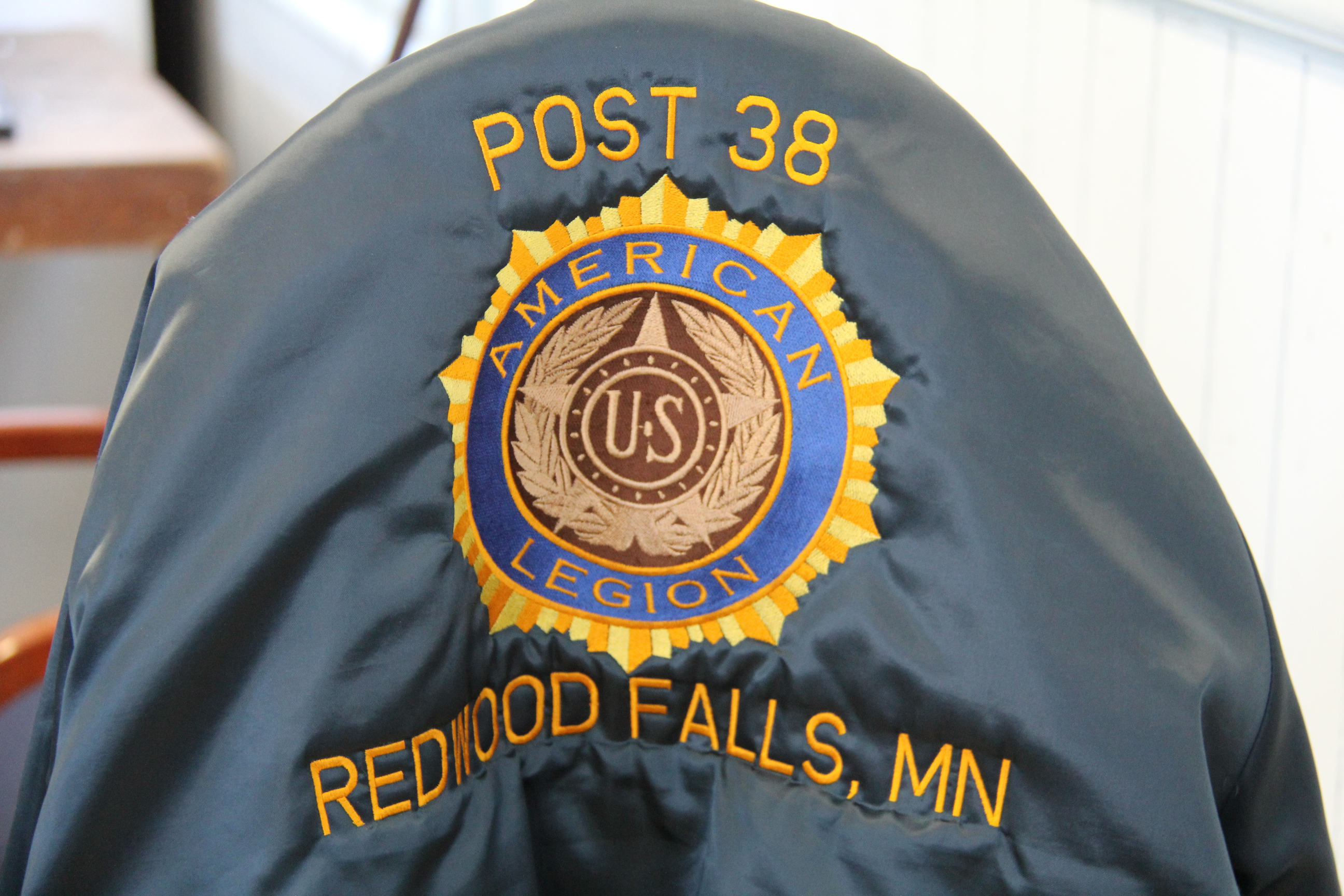
The Legion jacket that prompted a conversation about my home area. (Minnesota Prairie Roots copyrighted photo May 2024)

Gary had one more item that really made my day. An American Legion Post 38 jacket from Redwood Falls. It came from my home county. Yes, he’s been picking 20 miles to the east of my hometown. I’m always thrilled when someone, anyone, is familiar with a prairie place. Few people around this area hold any knowledge of communities in the southwestern corner of Minnesota. It’s a good place to pick, but others are better price-wise, Gary shared. He wasn’t sharing, though, specific picking sites. He doesn’t need the likes of me, who thinks picking would be a fun gig, competing for finds.

On a perfect spring morning, folks visit and shop at the flea market. (Minnesota Prairie Roots copyrighted photo May 2024)

He needn’t worry. I’ll stick to attending flea markets, where I’ll watch for characters, shop, and scout for oddities among all that merchandise pulled from campers, pick-up trucks, converted buses, vans and trailers.

#

NOTE: Check back for more photos from the Rice County Steam & Gas Engines showgrounds. And click here to read my first post on the consignment auction.

© Copyright 2024 Audrey Kletscher Helbling
 

My prize-winning poem: “Sunday Afternoon at the Auction Barn” May 31, 2024

Turek’s Auction Service, 303 Montgomery Ave. S.E. (Highway 21), Montgomery, has been “serving Minnesota since 1958.” (Minnesota Prairie Roots edited and copyrighted file photo February 2014)

AUCTIONS ARE PART of my rural DNA. As such, a photo I took ten years ago of an auction barn on the edge of Montgomery, Minnesota, inspired me to write a poem. I entered “Sunday Afternoon at the Auction Barn” in the 2014 The Talking Stick writing competition. It earned second place in poetry and publication in The Talking Stick 23, Symmetry, a literary journal published by the northern Minnesota-based Jackpine Writers’ Bloc. It also earned the praise of noted Minnesota poet and poetry judge Margaret Hasse. She’s authored six full-length collections of poetry.

First, my poem:

Sunday Afternoon at the Auction Barn

Shoulder brushes shoulder as bidders settle onto plank benches

in the tightness of the arched roof auction barn,

oil stains shadowing the cement beneath their soles,

where a farmer once greased wheel bearings on his Case tractor.

The auctioneer chants in a steady cadence

that mesmerizes, sways the faithful fellowship

to raise hands, nod heads, tip bidding cards

in reverent respect of an aged rural liturgy.

Red Wing crock, cane back rocker, a Jacob’s ladder quilt,

Aunt Mary’s treasured steamer trunk, weathered oars—

goods of yesteryear coveted by those who commune here,

sipping steaming black coffee from Styrofoam cups.

In her critique of my poem, Hasse wrote:

I loved how you turned a humdrum occasion of bidding on antiques in an old barn into a closely observed and luminous occasion. The writer John Ciiardi once wrote that close and careful observation can “leak a ghost.” The surprise of your poem was the elevation of a commercial or material enterprise into a spiritual gathering—with a fellowship, liturgy, reverent respect, and people who commune. The ending—visual and concrete—was just right. The poet Franklin Brainerd wrote a poem something to the effect, “in a world of crystal goblets, I come with my paper cup.” There’s something both unpretentious and appealing about “sipping steaming black coffee from Styrofoam cups.”

Hasse’s comment reflects that she understands the spirit and spirituality of my poem. It was a joy to write. As I recall, the words flowed easily from my brain to keyboard to screen as I visualized bidders inside that auction barn, like congregants in a church. When poetry works like that, it’s magical and fulfilling and beyond beautiful.

© Copyright 2024 Audrey Kletscher Helbling
Poem copyrighted in 2014


The rhythm, reverence & remembrances of a rural Minnesota auction May 30, 2024

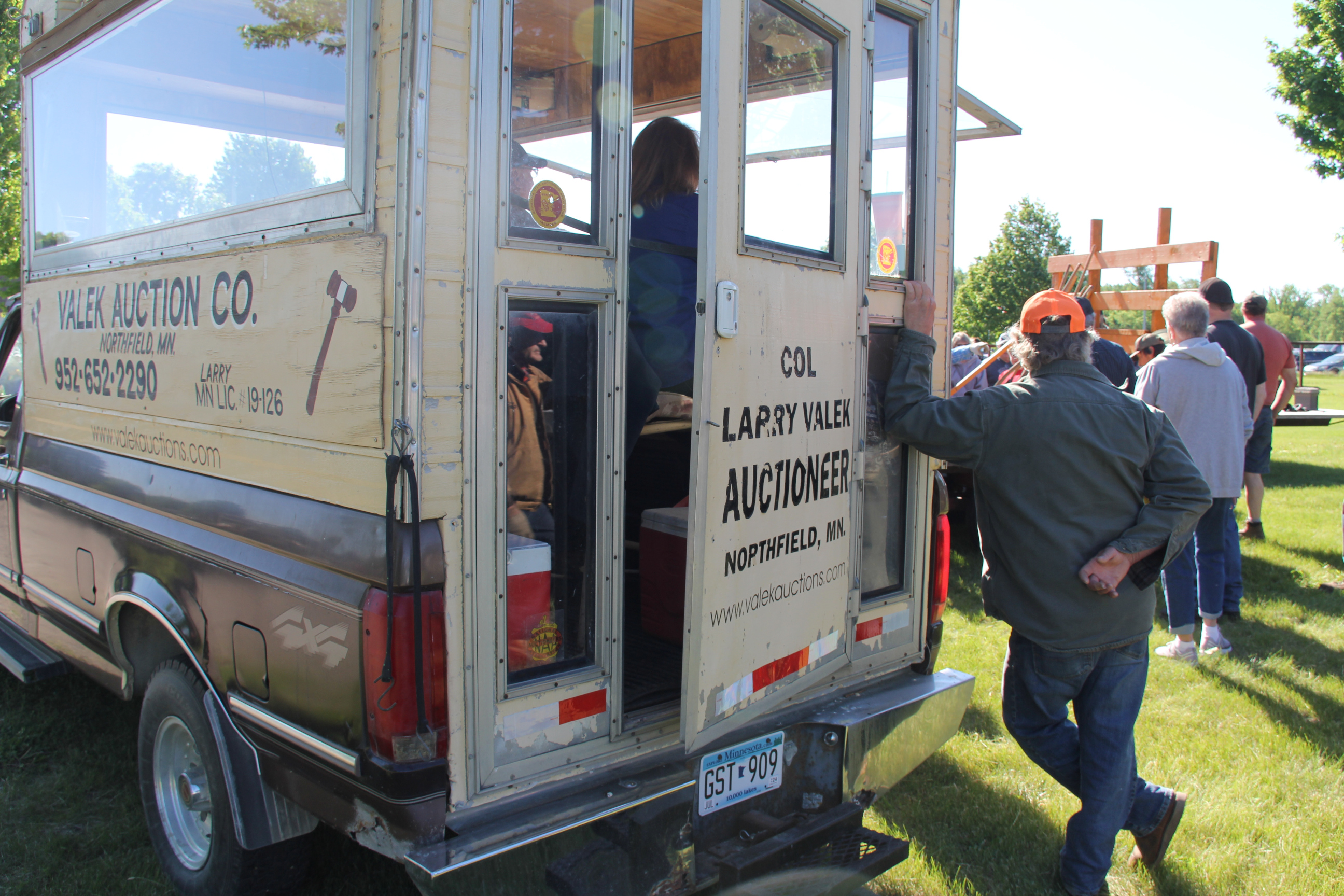
Watching the auction from behind the auctioneer’s truck at the Rice County Steam & Gas Engines Consignment Auction on May 25 south of Dundas. (Minnesota Prairie Roots copyrighted photo May 2024)

THERE’S SOMETHING ABOUT AN AUCTION that evokes nostalgic curiosity, drawing people together to peruse second-hand merchandise, perhaps to bid, perhaps only to watch silently from the side. Even to mourn.

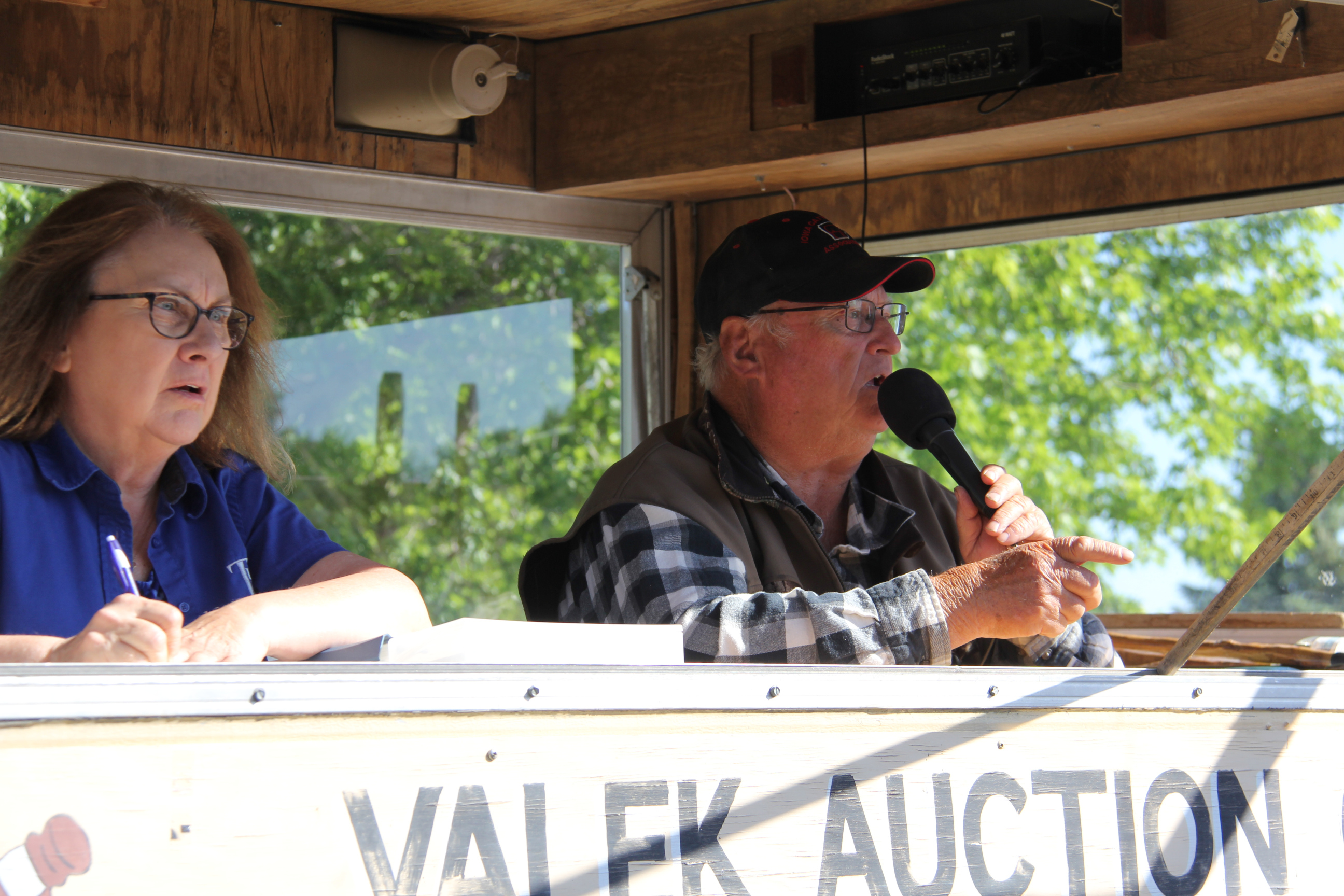
The auctioneer and clerk sell and record items sold. (Minnesota Prairie Roots copyrighted photo May 2024)

Recently, I attended the spring auction at the Rice County Steam & Gas Engines showgrounds south of Dundas as an observer. I didn’t need any of the goods sold on consignment with all commissions donated to the nonprofit. But, still, I watched and wove among the items auctioned by Valek Auction Co. of Northfield.

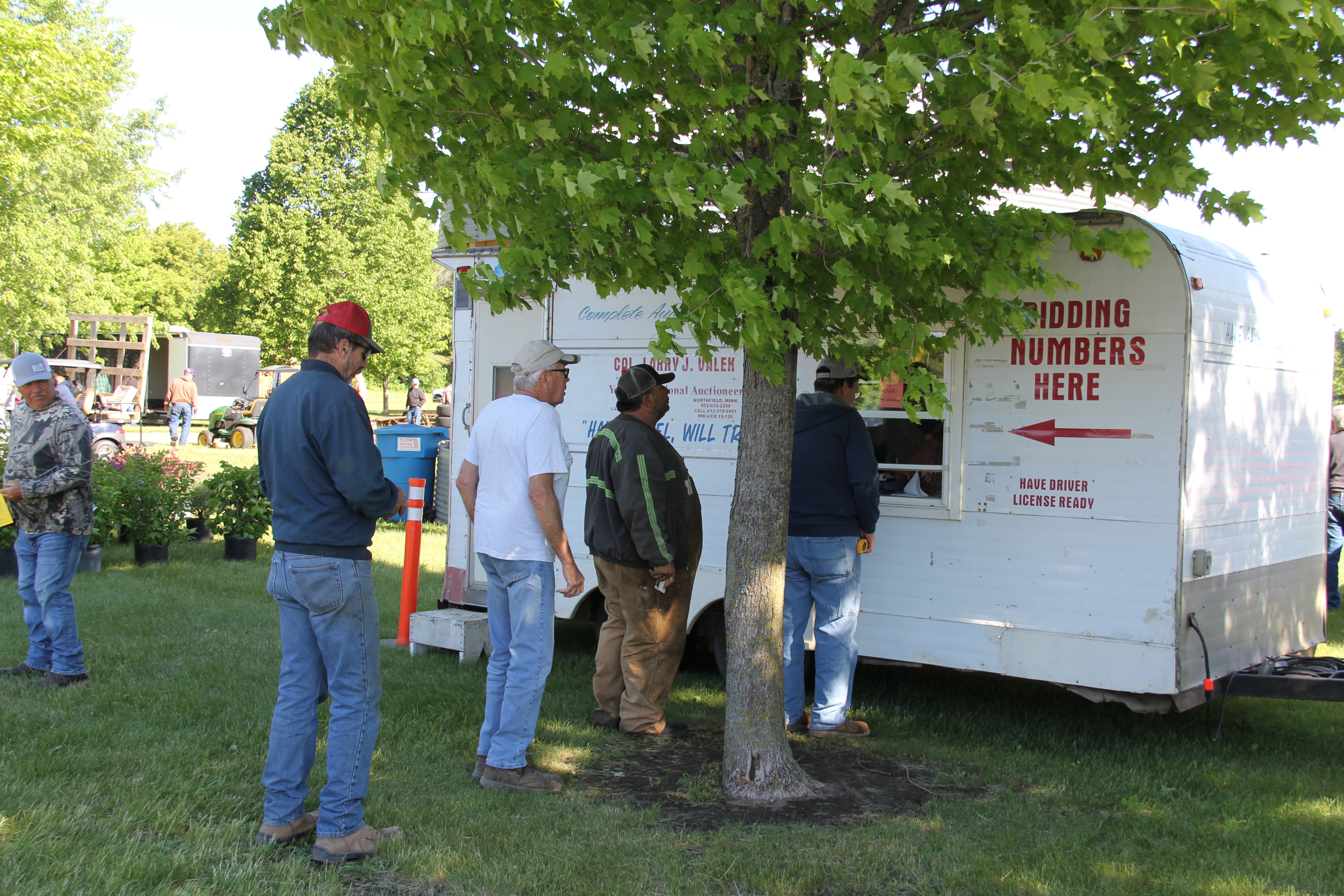
Lining up for bidding numbers. (Minnesota Prairie Roots copyrighted photo May 2024)
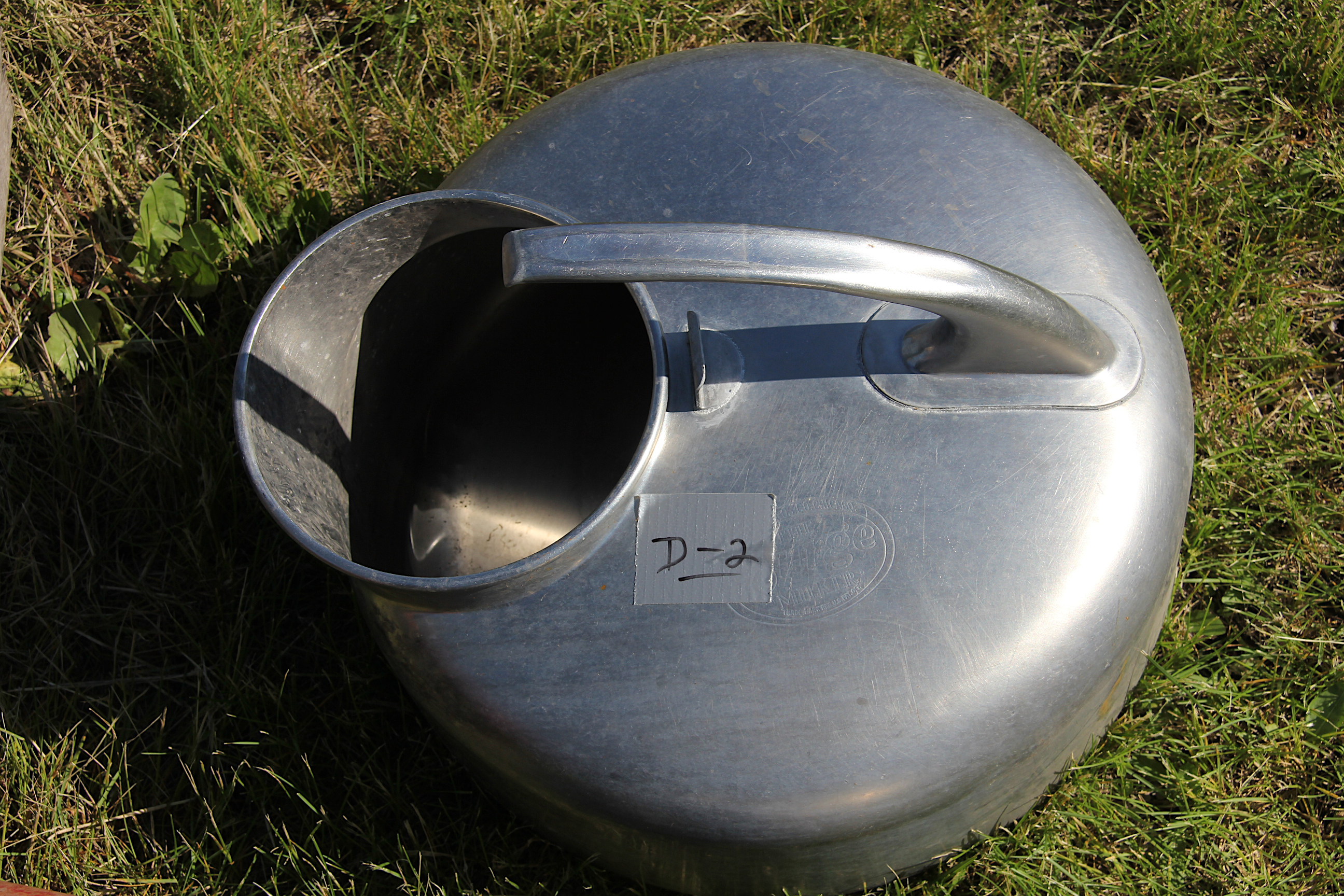
A familiar milk bucket, just like the one my dad used when milking his Holsteins. (Minnesota Prairie Roots copyrighted photo May 2024)
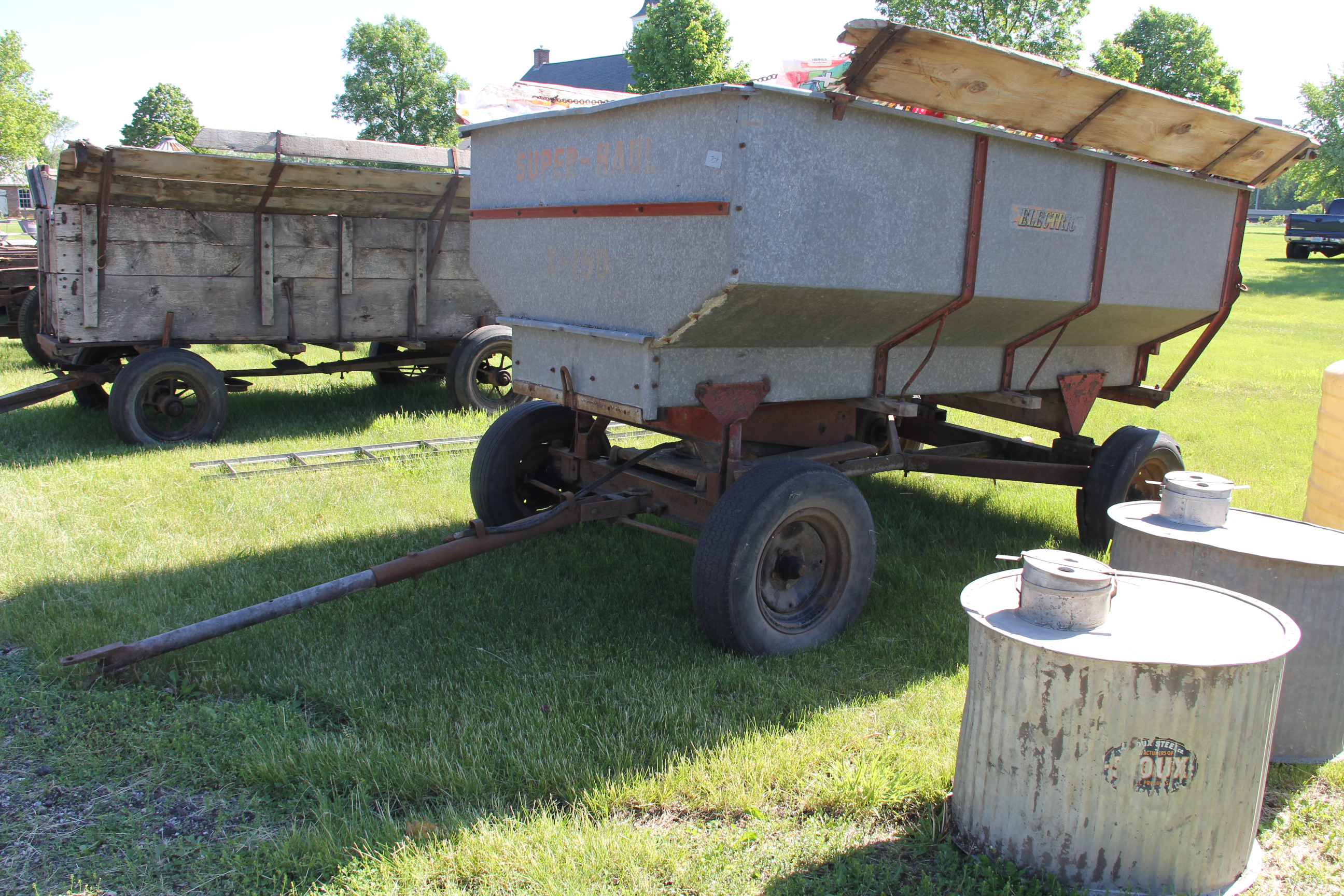
Familiar grain wagons, too. (Minnesota Prairie Roots copyrighted photo May 2024)

I felt like I was back on the farm, filling a bushel basket with silage for the cows, scrubbing the milk bucket with a brush, mixing milk replacer in a galvanized pail, watching corn flow into an aged grain wagon…

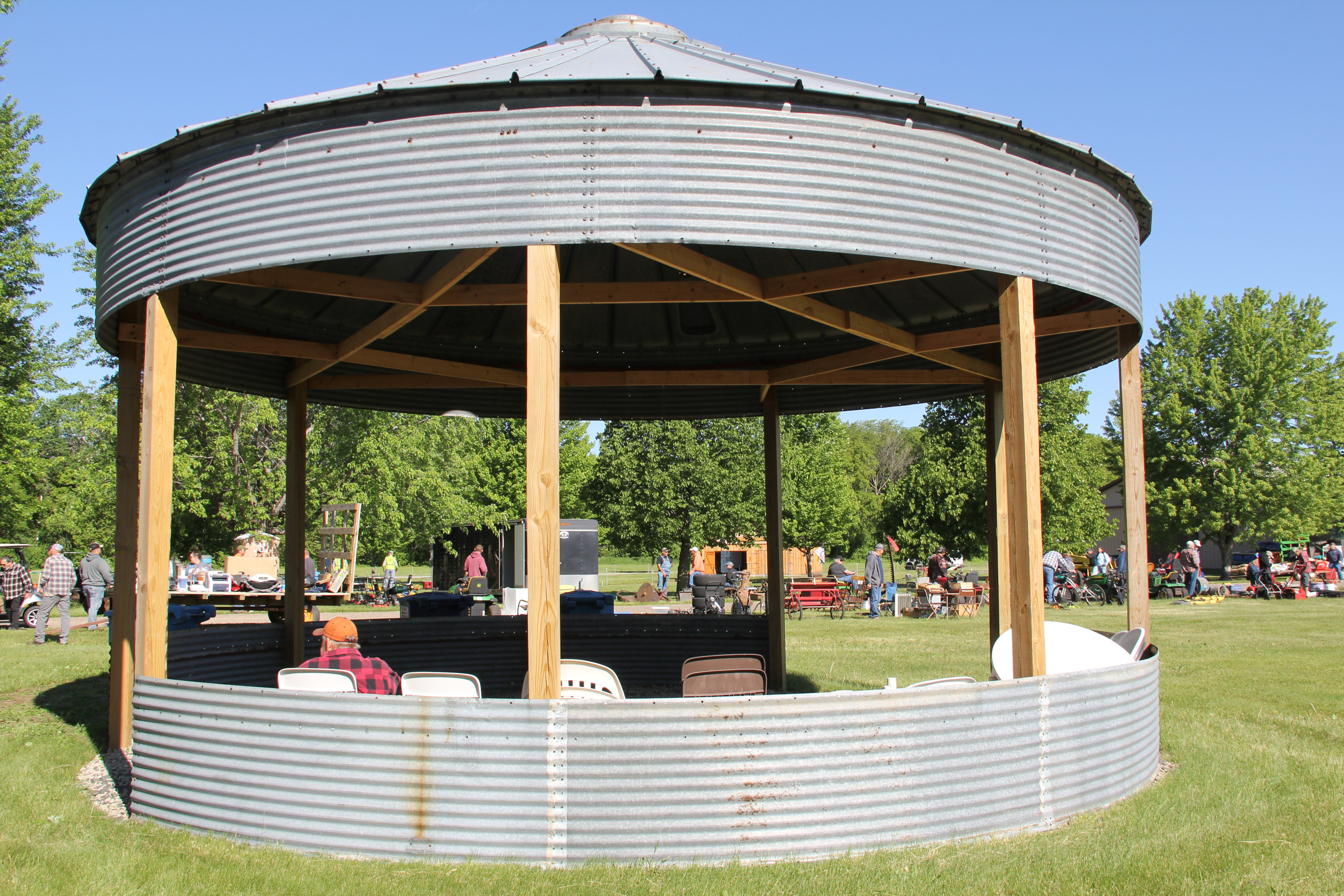
A grain bin repurposed as a shelter/resting area at the Rice County Steam & Gas Engines showgrounds. (Minnesota Prairie Roots copyrighted photo May 2024)

Rural auctions like this, for those of us who grew up on working farms or still live on them, are like steps back in time. Decades removed from farm life, I would feel out of place on a modern-day farm with all the technological advancements, the oversized equipment. That bushel basket, that milk bucket, that pail, that grain wagon…all are the stuff of yesteryear. Farming today is much less labor intensive, more efficient.

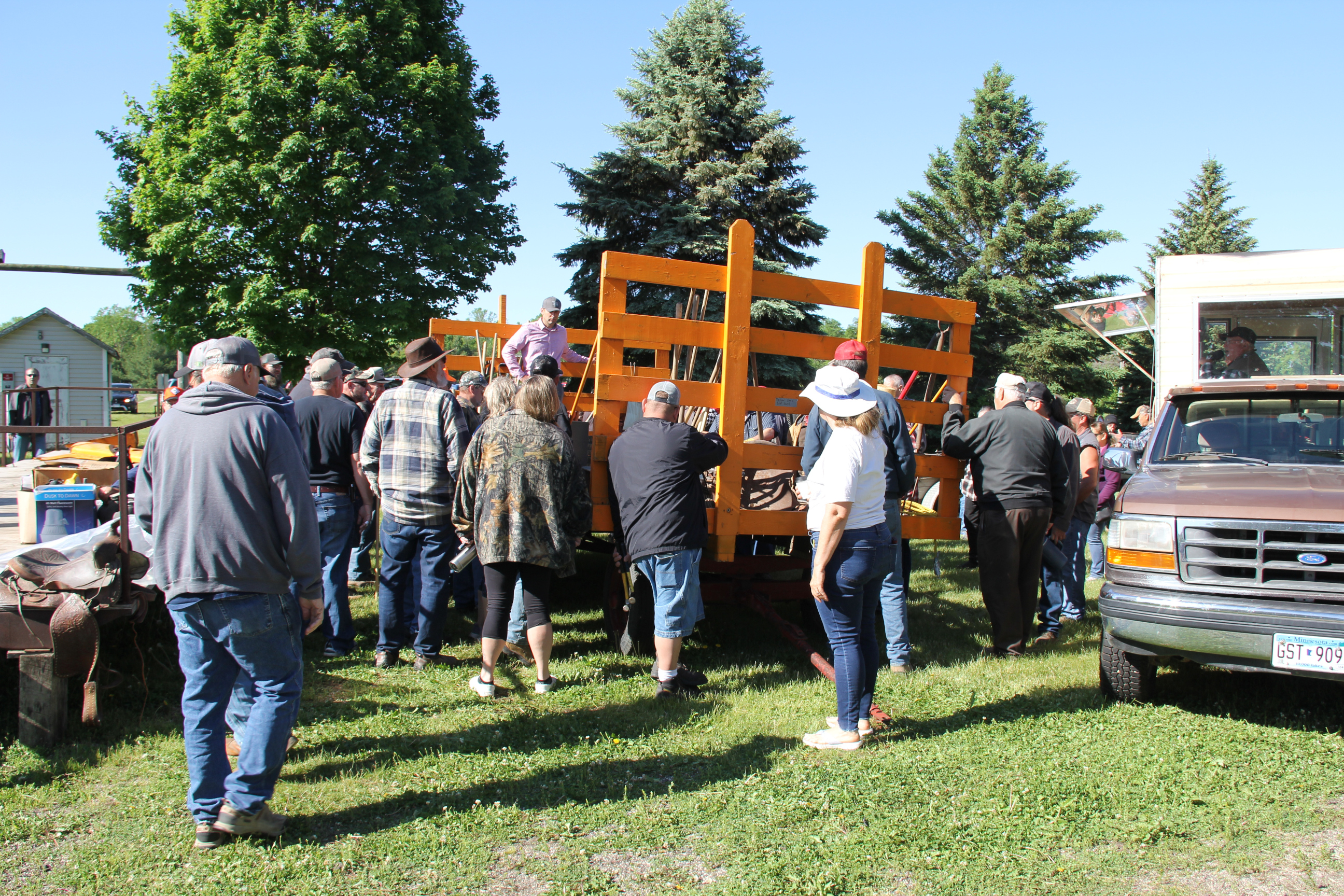
Items are auctioned off a hay rack. (Minnesota Prairie Roots copyrighted photo May 2024)
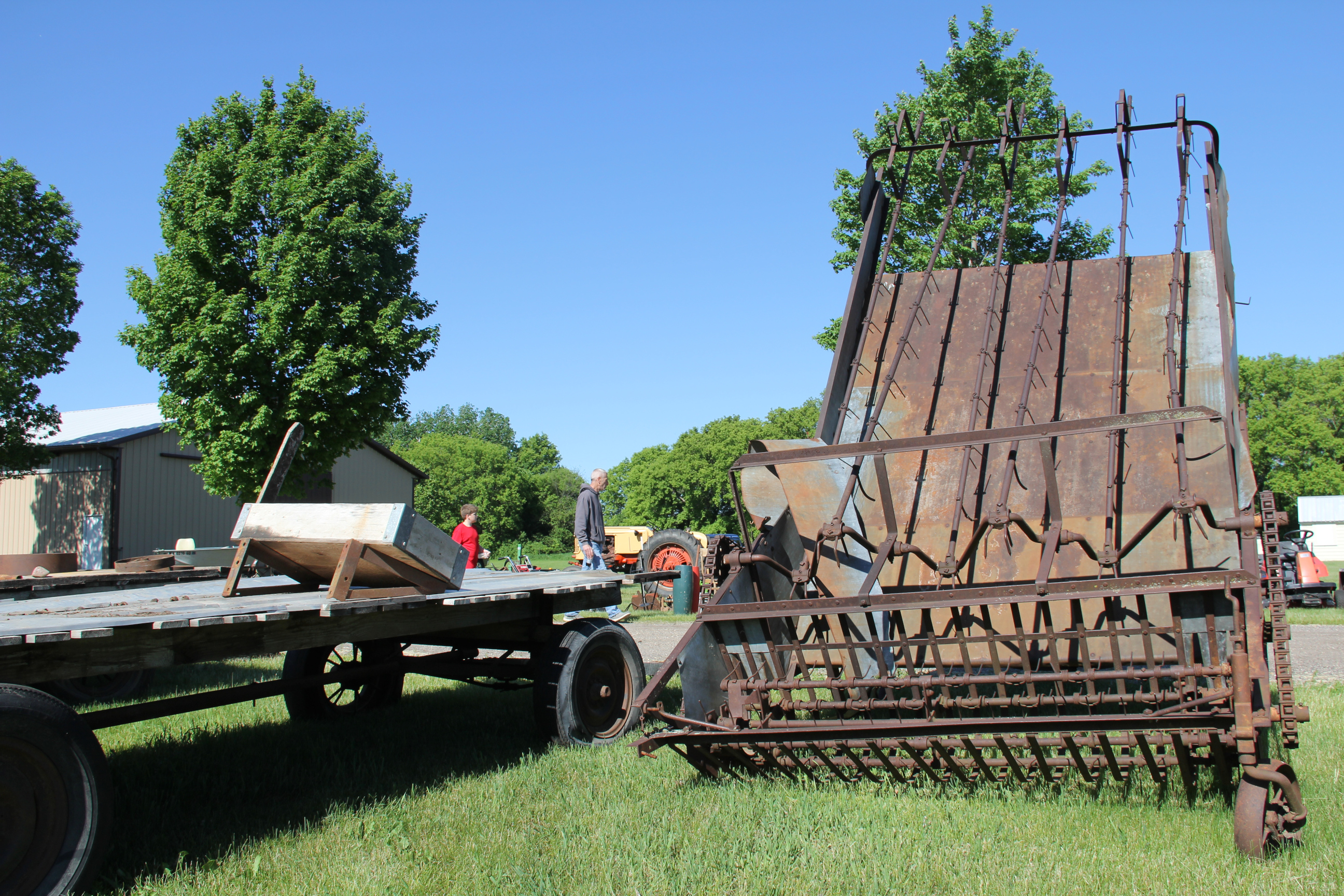
A vintage hay loader. (Minnesota Prairie Roots copyrighted photo May 2024)
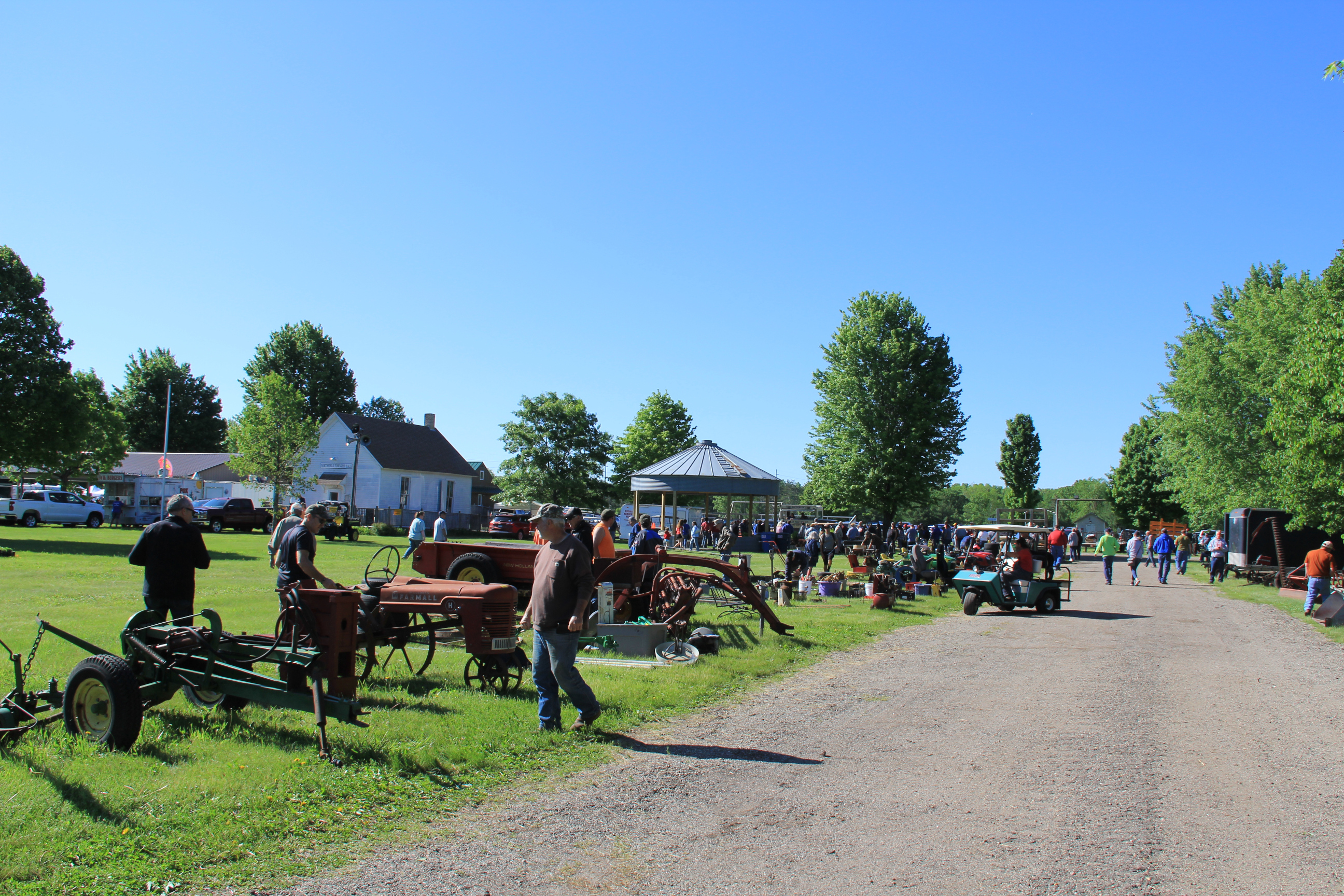
Merchandise lines the gravel road. (Minnesota Prairie Roots copyrighted photo May 2024)

Still, we often hold onto the past, the memories of back-in-the-day, the “way it used to be.” Nostalgia runs strong at auctions. I saw that, felt it, overheard it as folks gathered around the auctioneer’s pick-up truck, leaned on the hay rack piled with auction goods, meandered among the merchandise lining both sides of a gravel road.

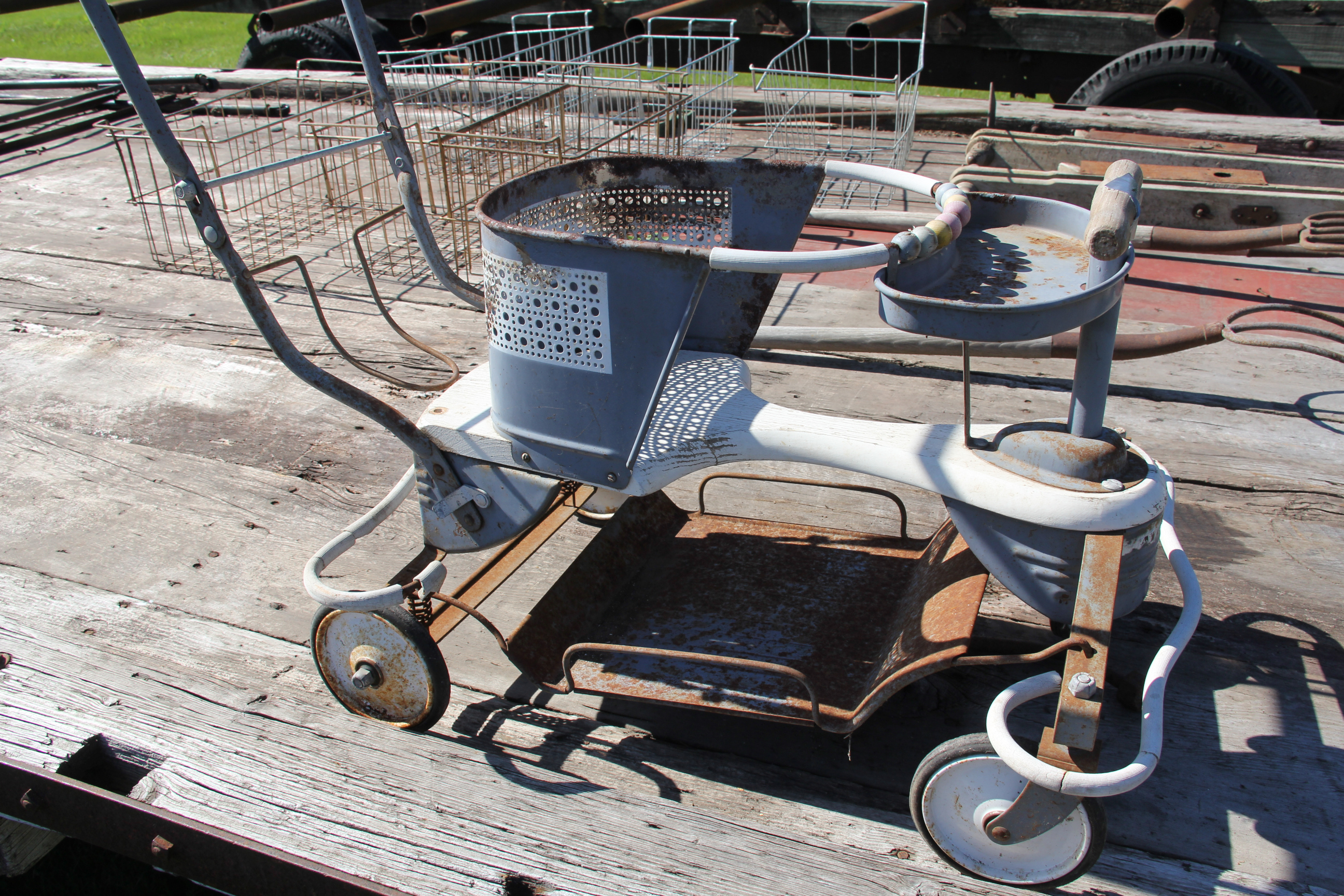
A 1950s vintage stroller, exactly like the one used for me and my five siblings. (Minnesota Prairie Roots copyrighted photo May 2024)

Many of the auction items were vintage, likely pulled from the back corners of a dark machine shed or abandoned barn or from weeds along the edge of a grove. The rusted metal baby stroller could have been the one I rode in, the pitchfork the one I used to bed straw, the hand-reel lawnmower my grandma’s.

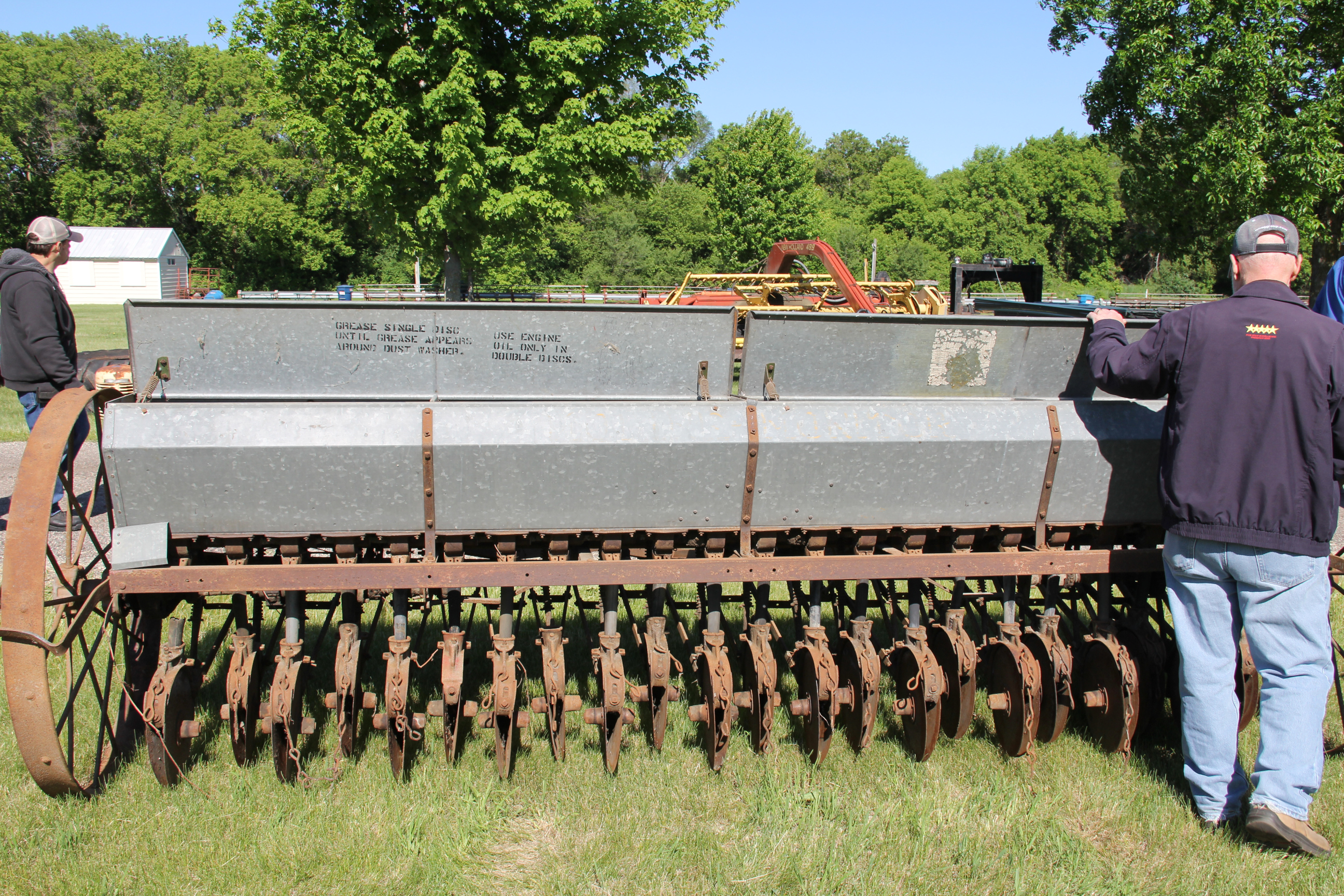
A vintage grain drill. (Minnesota Prairie Roots copyrighted photo May 2024)
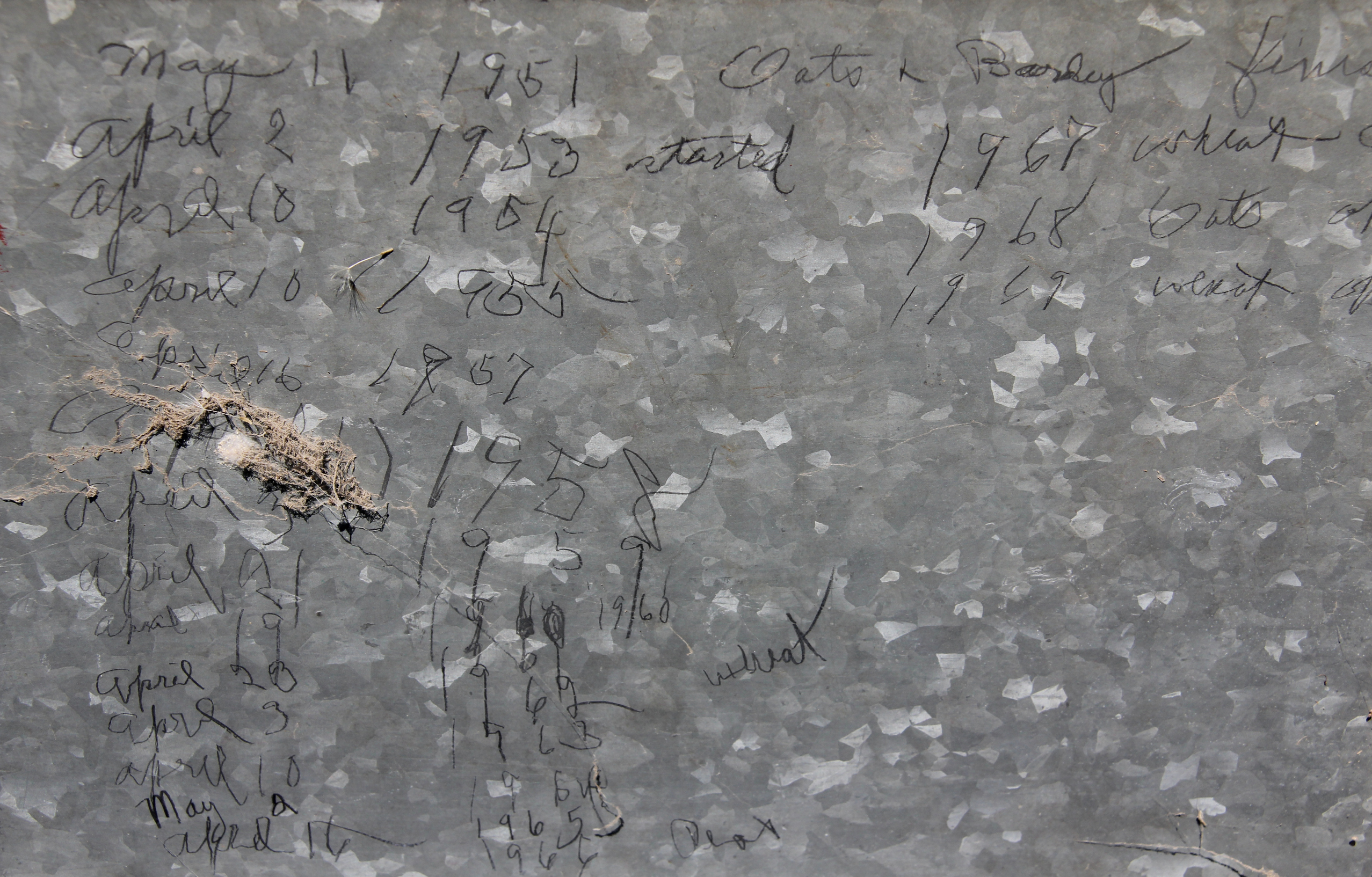
Planting dates written inside the lid of the grain drill. (Minnesota Prairie Roots copyrighted photo May 2024)

This particular auction held so much relatable history. I doubt I was alone in feeling that way. While looking at a vintage grain drill, an implement used to plant small grains, I discovered historic documentation. There, on the underside of a metal lid, a farmer recorded the dates he planted oats, barley and wheat, beginning in 1951 until 1969 with a few years missing. Planting and finishing dates are important to farmers as they put seed in the ground, anticipate harvest. I thought of this farmer who 73 years ago wrote that first entry on his grain drill, holding the hope of harvest within him.

Inspecting before bidding starts. (Minnesota Prairie Roots copyrighted photo May 2024)

There’s a certain reverence and respect in rural auctions. An honoring of farmers and farm life and the responsibilities that come with tending the land. This isn’t just stuff being sold to the highest bidder, but rather something of value, of importance, that once belonged to another. I remember standing at my father-in-law’s farm auction decades ago and feeling a certain sadness in the sale of items gathered from shed, house, barn and elsewhere.

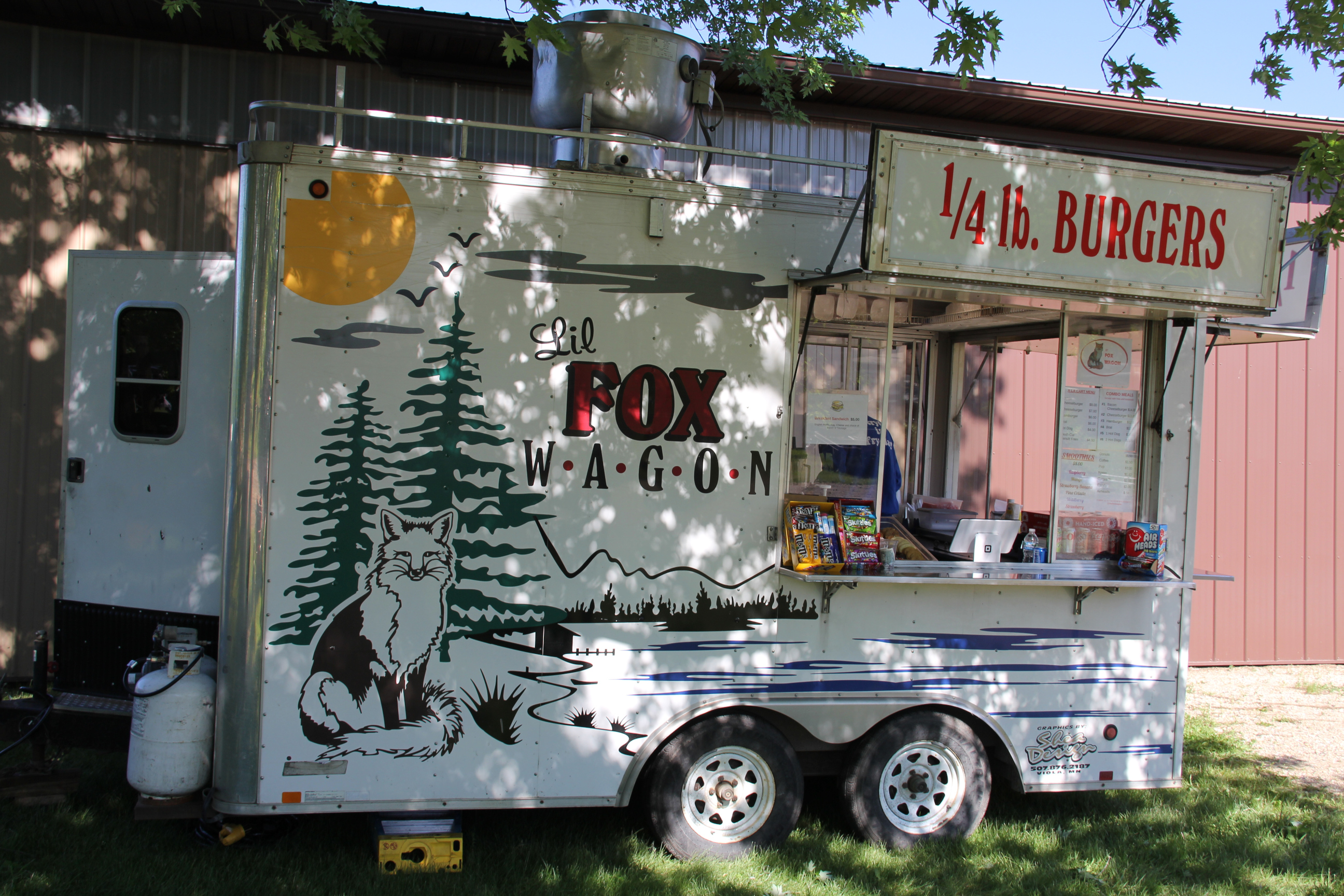
Lil Fox Wagon, one of several on-site food and beverage vendors. (Minnesota Prairie Roots copyrighted photo May 2024)

Farm auctions represent the final verse in a hymn, the congregation gathered, the auctioneer chanting the liturgy. Comfort and community and closure come. At the hay rack. Among the rows of numbered auction items. At the lunch wagon. All until the last item is sold.

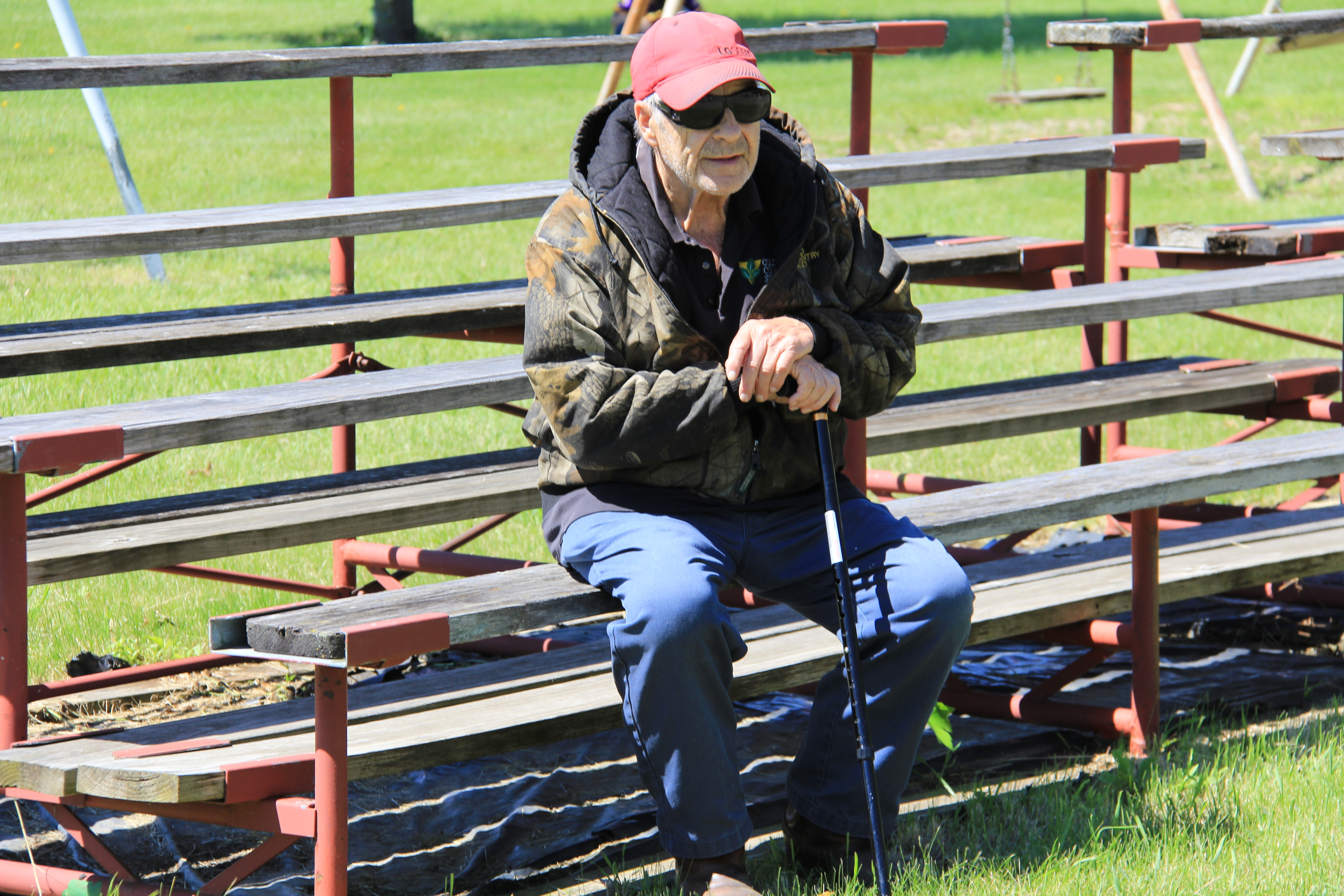
Resting during the morning auction. (Minnesota Prairie Roots copyrighted photo May 2024)

Hallelujah. And amen.

#

NOTE: Check back tomorrow to read my prize-winning poem, “Sunday Afternoon at the Auction Barn,” published in 2014 in a Minnesota literary anthology.

© Copyright 2024 Audrey Kletscher Helbling
 

“From Somalia to Snow” offers insights into our new Minnesota neighbors May 29, 2024

A welcoming sign photographed earlier this year in the children’s section of Buckham Memorial Library, Faribault. (Minnesota Prairie Roots copyrighted photo 2024)

KNOWLEDGE IS POWER. Not in the sense of personal power, but in understanding. And I am always about growing my knowledge and understanding, especially within my community.

Faribault, like many neighboring communities, is culturally-diverse, home to immigrants, refugees and those who have received American citizenship. Somalis. Hispanics. Latinos. And others from countries that fit anything but the mostly White European backgrounds of rural Minnesotans. We are a state evolving in diversity, and I embrace that.

Hudda Ibrahim’s book offers an in-depth look at Somalis living in Minnesota. (Minnesota Prairie Roots copyrighted photo May 2024)

Recently I met a central Minnesota author who was in town as part of an event celebrating Somali culture at the Paradise Center for the Arts. Hudda Ibrahim of St. Cloud, which has a sizable Somali population, was selling her books, including From Somalia to Snow—How Central Minnesota Became Home to Somalis. Although I didn’t purchase her book then, I eventually checked it out through my regional library system. That and her nonfiction children’s picture book, What Color Is My Hijab?

Hudda Ibrahim’s children’s book inspires girls to be whatever they want to be via Ibrahim’s empowering words and Meenal Patel’s vivid art. (Book cover sourced online)

After reading those two books, I have better insights into the backgrounds, stories, culture and challenges of my new neighbors. Ibrahim writes with authenticity. She was born and raised in Africa (Somalia, Ethiopia and Kenya), came to the U.S. in 2006, teaches diversity and social justice in St. Cloud, and works closely with Somalis there. From Somalia to Snow includes interviews with Somalis in Ibrahim’s community along with her observations, insights and recommendations.

I quickly discovered that I had much to learn, even when it comes to understanding the basics. A person of Somali ethnicity is not a “Somalian,” as I’d incorrectly said, but rather a “Somali.” I appreciate that about Ibrahim’s writing. She doesn’t presume her readers know, making her book a really good source of basic, yet detailed and thorough, information.

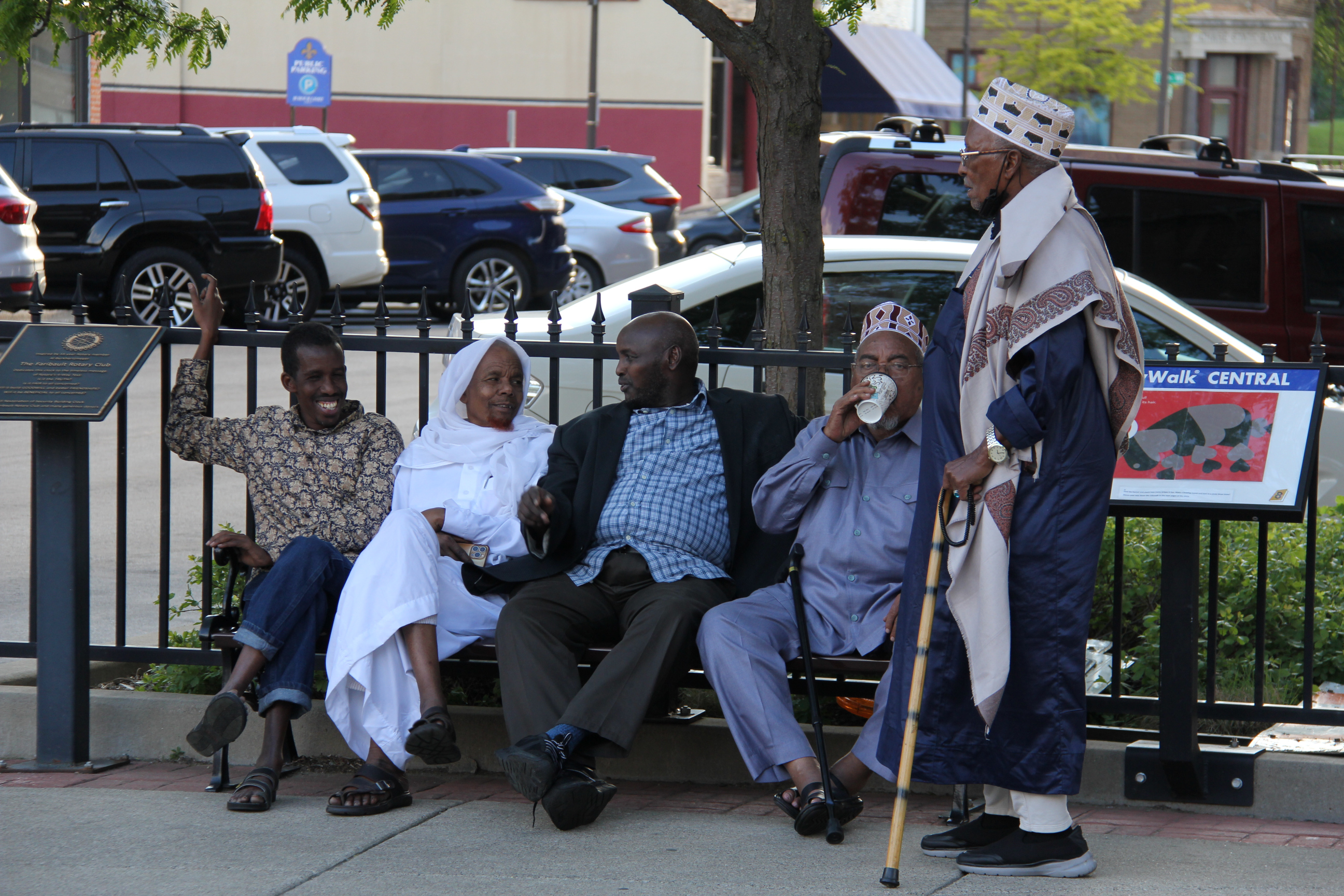
I often see Somali men visiting in downtown Faribault, where many live. (Minnesota Prairie Roots copyrighted file photo May 2024)

I especially appreciated her chapter titled “Integration and Assimilation” because I’ve heard the comments from locals about how Somalis need to do this and that because they’re living in America now. Ibrahim states that Somalis prefer to “integrate,” not “assimilate.” That makes sense to me, that our new neighbors want to retain their cultural identity while also adapting to their new home. I think back to my own maternal ancestors who settled together near New Ulm in southern Minnesota and clung to their German identity, speaking in German, following customs and traditions from the Old Country. The same can be said for Scandinavians, who still eat lefse and lutefisk. Cultural identity is important to all of us.

So is family. Like my German ancestors settled together, so do those who come from Africa. They want to be near people who get them, understand them, share a language and faith and customs and culture. Jobs and family (clans) brought Somalis to St. Cloud, Ibrahim writes. Many work in meat-packing plants, just like in my community.

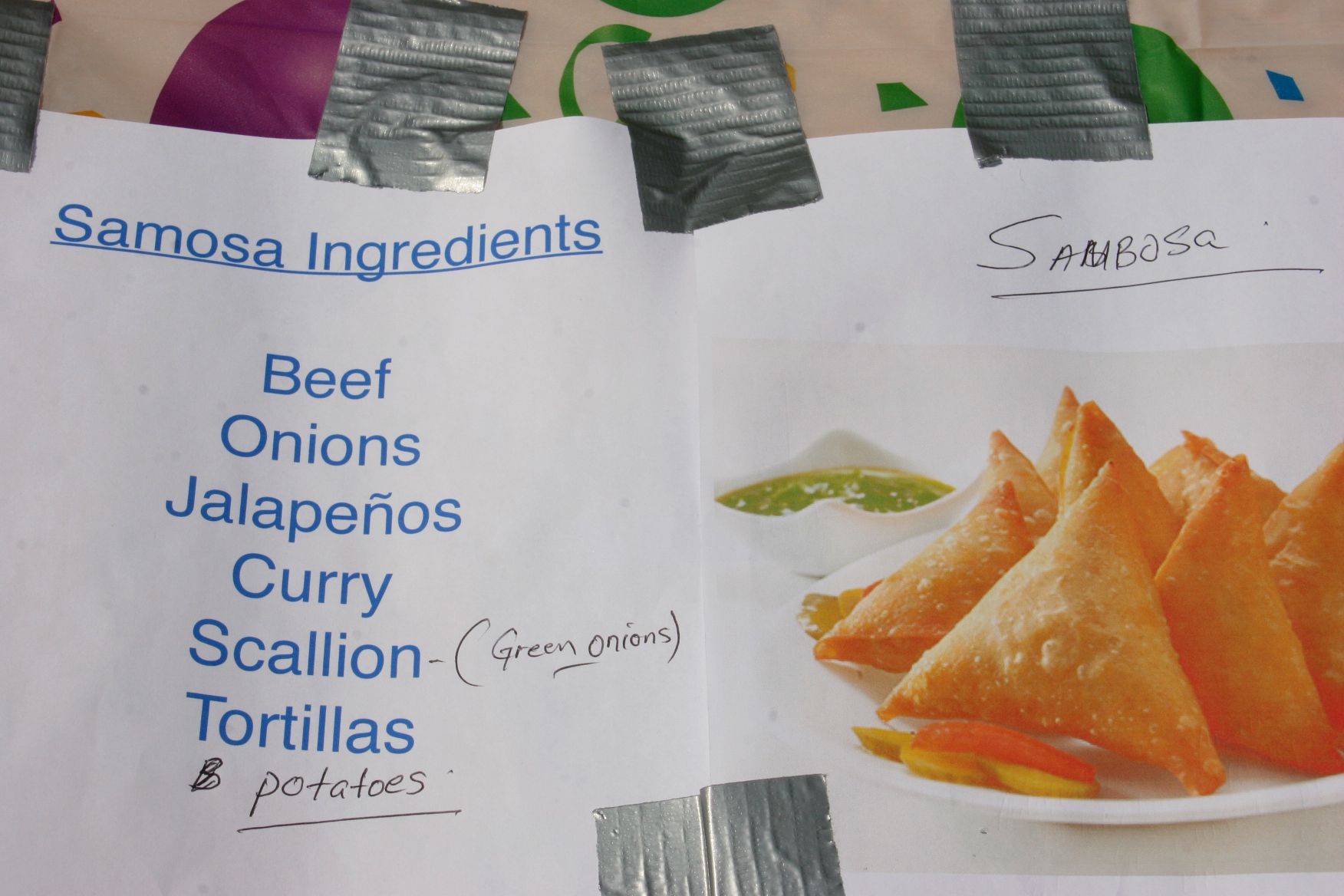
This sign for Somali food was posted at a past International Festival in Faribault. I especially like sambusa, a spicy, meat-filled triangular pastry. It was served at the recent Somali-focused event I attended. (Minnesota Prairie Roots copyrighted file photo)

Others have pursued higher education and entrepreneurship, opening businesses which serve primarily their community. I need only walk Faribault’s downtown business district to see numerous Somali-owned shops and restaurants. I love the color and culture they bring. And I love Somali tea, which I tried at that event where I met Ibrahim. It’s tea mixed with milk and spiced with cinnamon, ginger, cloves, cardamom… The scent is heavenly, the taste divine. And I can buy it locally.

Faribault is a culturally-diverse city, as seen in this image taken during a car show in downtown Faribault in 2015. (Minnesota Prairie Roots copyrighted file photo 2015)

Ibrahim’s book is packed with insights: Somalis value oral communication over written. They are good oral poets. Restaurants often do not have printed menus, primarily because they serve Somalis. Muslims memorize the Quran (with 6,666 verses), a process that can take years. Socializing and community are important. Barriers remain in healthcare. There’s just a whole lot to learn via reading From Somalia to Snow. It starts with an overview of Somali history and then takes readers into the lives, cultures and challenges of Somalis living in Minnesota today. Thanks to Ibrahim’s writing, I now have a better understanding of my new neighbors. And for that I am grateful.

© Copyright 2024 Audrey Kletscher Helbling
 

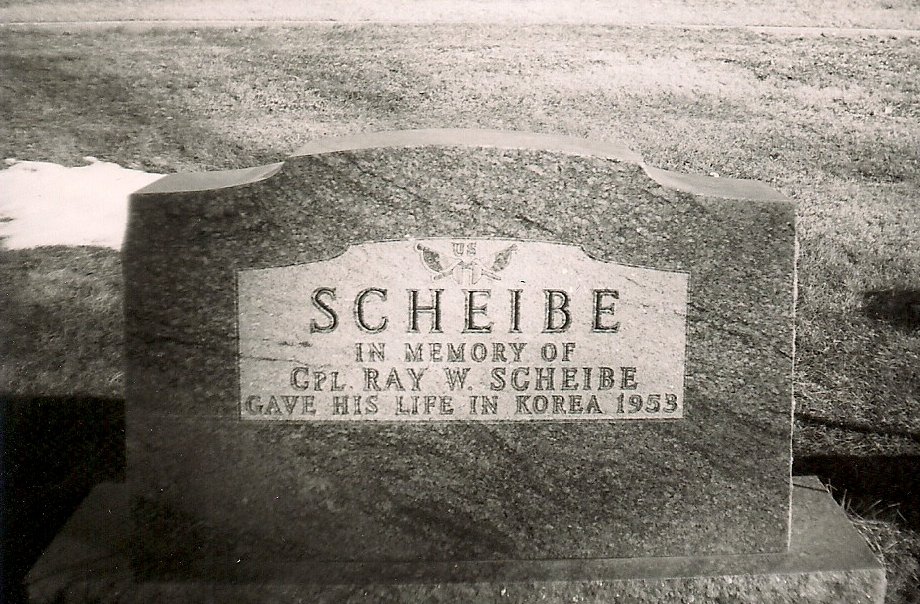
Honoring Cpl. Ray Scheibe & others who died in war May 27, 2024

Honoring words on the Northfield Area Veterans Memorial. (Minnesota Prairie Roots copyrighted file photo May 2023)

THE WOOD-GRAIN cardboard shoebox, tattered around the edges, sits on a closet shelf in an upstairs spare bedroom. This box once held size 8D loafers from Pedwin Shoes for Men. Those are long gone, replaced by black-and-white photos, postcards, a military belt, documents and more.

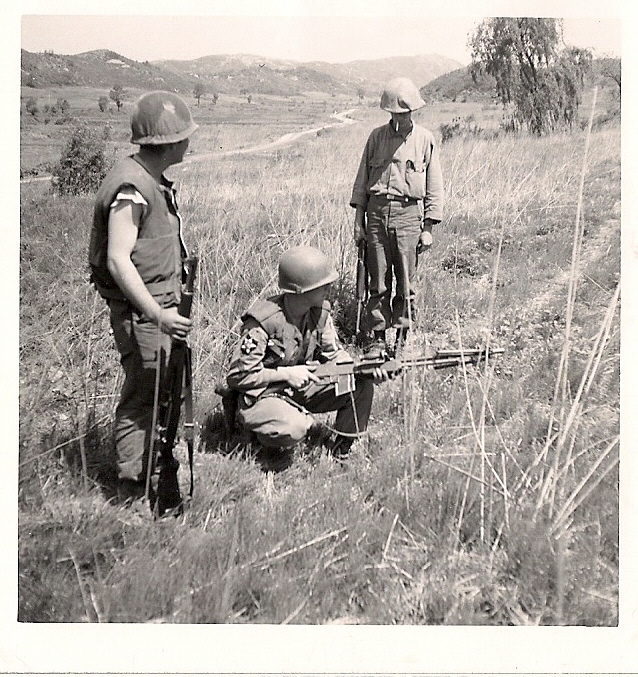
This May 1953 photo, taken by my dad, shows his friend, Ray Scheibe, left, and other soldiers in Korea. (Photo credit: Elvern Kletscher)

A lime green note atop the lid identifies the contents as “Important stuff,” underlined twice, belonging to my dad, Elvern Kletscher. The papers and photos inside are the stuff of war, the Korean War. Dad served as a U.S. Army infantryman on the frontlines, earning the Purple Heart for injuries sustained in battle.

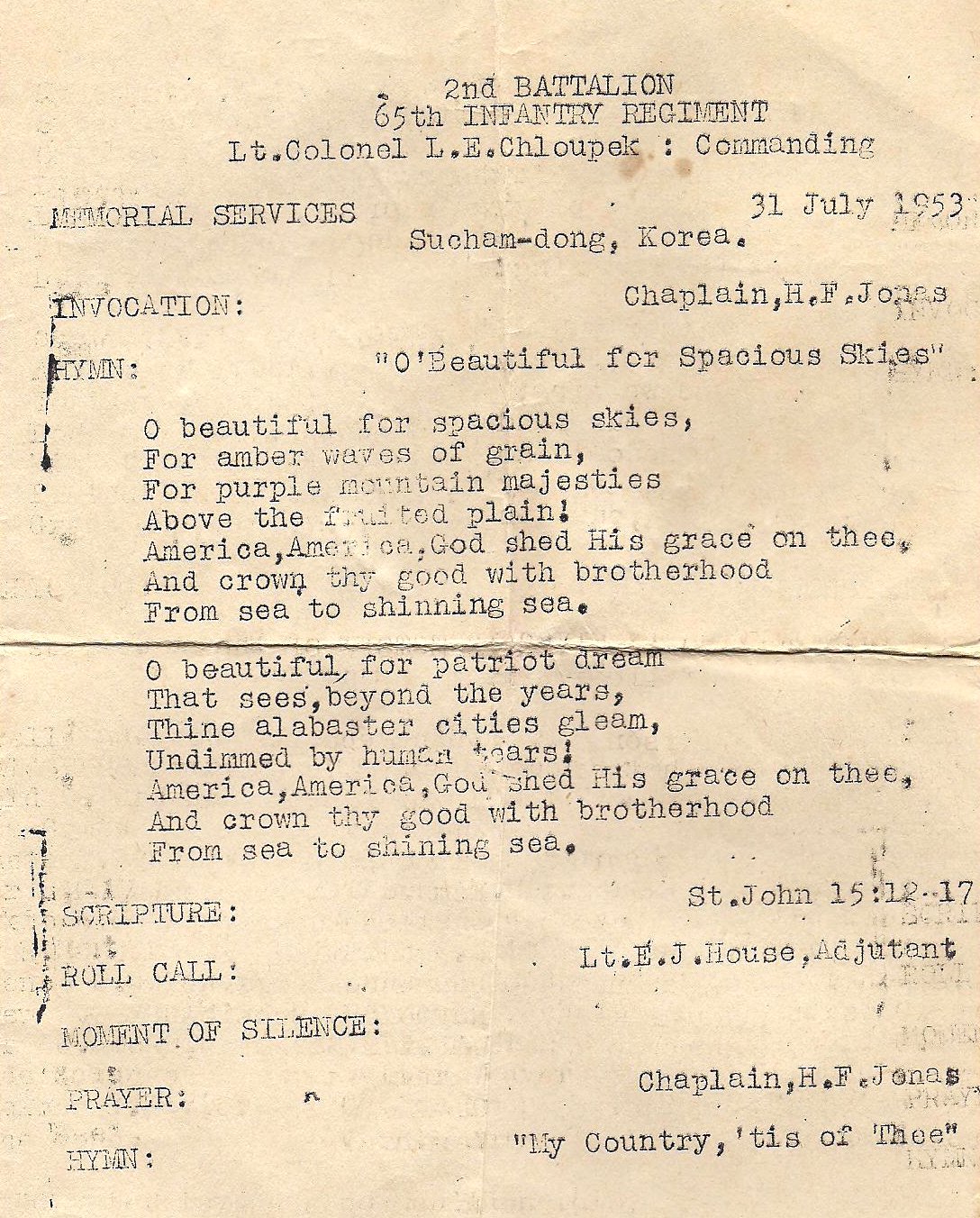
A July 31, 1953, memorial service bulletin from Sucham-dong, Korea. (Minnesota Prairie Roots copyrighted photo)

But this story is not about my father, who survived combat and returned home to southwestern Minnesota, albeit permanently scarred by the trauma of war. This is about 28 men from the 2nd Battalion, 65th Infantry Regiment, who died in Korea. Their names are typed inside a July 31, 1953, memorial service bulletin my dad carried home from war. The folder is creased in quarters, worn, letters fading. I’ve opened it many times. I imagine my Dad did, too, as he read the names listed in alphabetical order from A to Z. Turrell Anderson to Vernie Zurn. Near the end of that list, the name of his buddy, 22-year-old Raymond W. Scheibe.

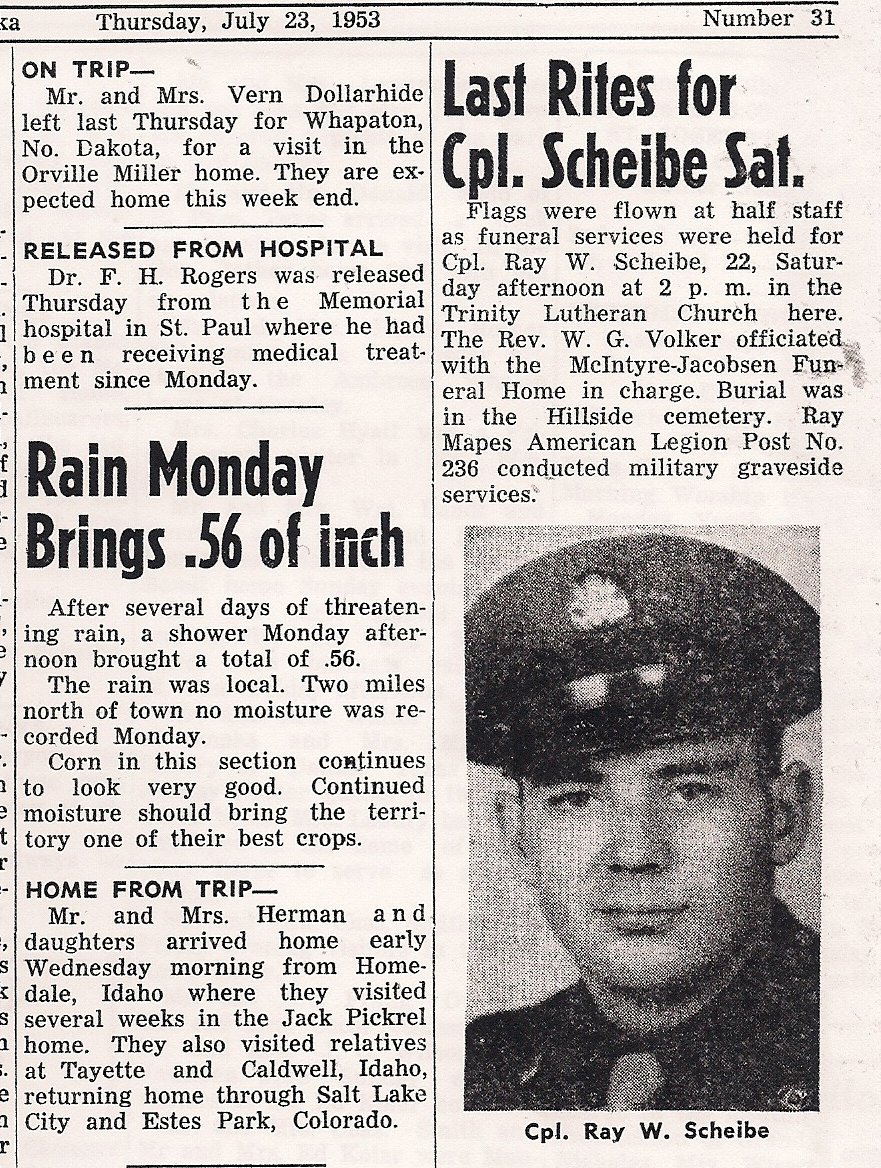
A story about Cpl. Ray W. Scheibe, published in the July 23, 1953, issue of The Wolbach Messenger.

On June 2, 1953, the day before Ray was to leave Korea and return to his wife, Marilyn, and 3-month-old daughter, Terri Rae, in Wollbach, Nebraska, he died. Blown apart by a mortar shell, his horrific death witnessed by my father. I don’t think Dad ever fully recovered from the trauma of losing his friend. Who would?

(Photo credit: Sonny Nealon, Ray’s best friend in high school)

Today I honor Ray and all the other military men and women who have died in service to country. They made the ultimate sacrifice, leaving behind grieving families and friends. “Greater love has no man than this, that a man lay down his life for his friends.” That biblical quote from John 15:13 is typed below the names of the 28 men honored at that July 1953 memorial service in Suchan-dong, Korea. That had to be an overwhelmingly emotional event for the surviving soldiers.

The third page of the memorial service bulletin my soldier dad carried home from Korea. (Minnesota Prairie Roots copyrighted photo)

Seventy-one years after that memorial service, I feel emotional reading the 28 names, recognizing the immense loss, the grief, the trauma. That my dad kept this folder speaks to his grief, compassion and connection to those who fought in Korea. I honor him and those men by keeping this folder and all the other “important stuff” Dad carried back home to Minnesota.

His documents, photos and more are not mere “stuff.” Rather they represent individuals who died in war, who should always be remembered and honored, especially today, Memorial Day.

NOTE: In 2005, with the help of my brother-in-law Neil, who served in the military, I tracked down Ray Scheibe’s daughter, Terri, in southwestern Iowa. We’ve kept in touch all these years, but have yet to meet. Finding Terri brought my dad’s story full circle, bringing me peace. I shared with Terri how much her father meant to mine. To read my story about finding Terri, click here.

© Copyright 2024 Audrey Kletscher Helbling
 

In loving memory of Milton “Mickey” Nelson May 24, 2024

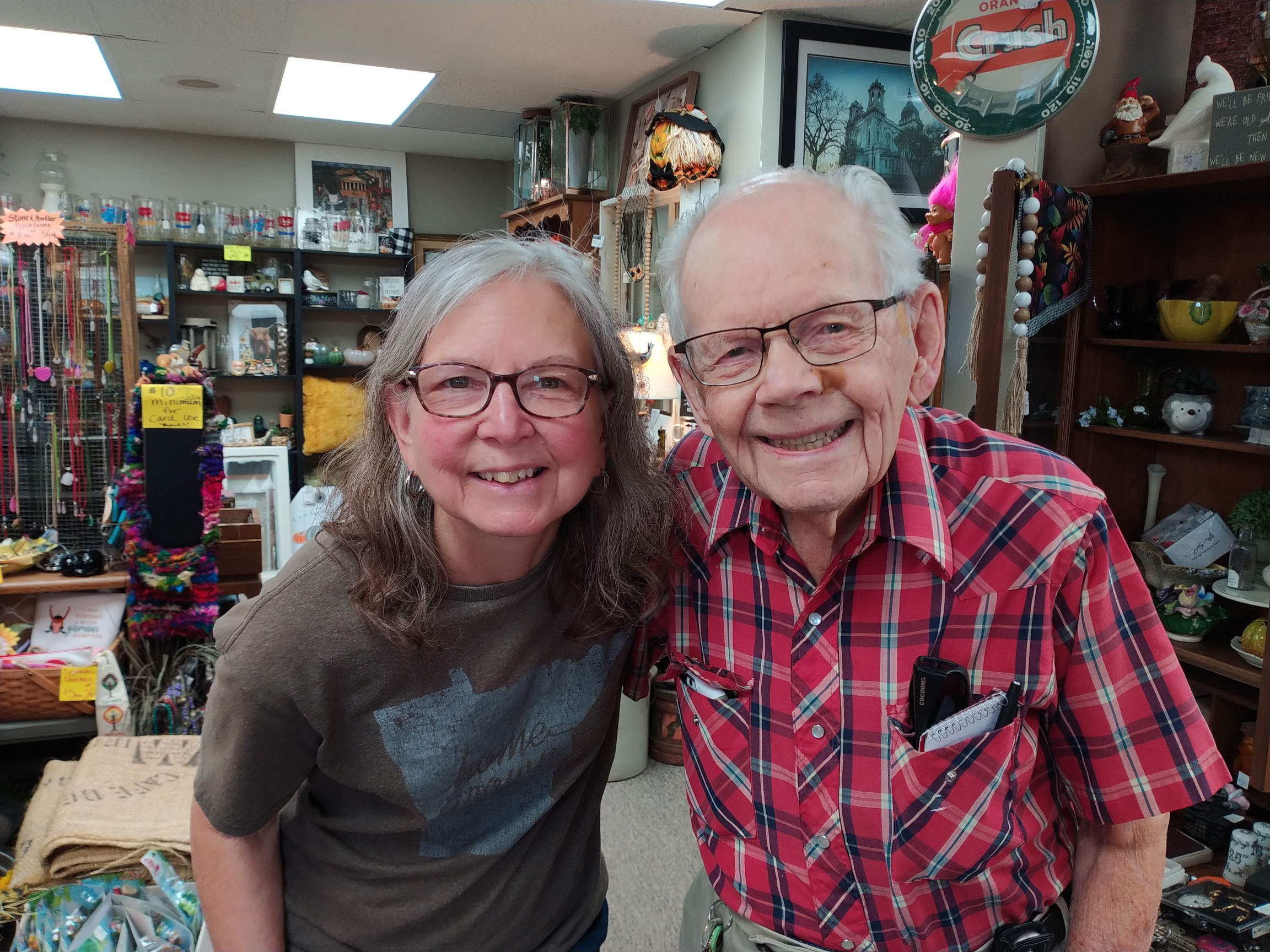
Audrey Kletscher Helbling and Mickey Nelson inside The Junk Monkey. (Minnesota Prairie Roots copyrighted file photo by Randy Helbling, September 2023)
SOMETIMES IN LIFE we meet a person only once. But they make such an impression upon us that we always remember them.

Milton “Mickey” Nelson of Clarks Grove was that person to me. I met Mickey in September 2023 while shopping at a vintage, collectibles and treasures shop in Faribault. After overhearing a conversation between him and shop owner Theresa, I initiated a conversation with Mickey and his daughter Michelle.

Eight months later, on May 14, 2024, this amazing man died, about a month short of his 104th birthday.

Mickey was a remarkable man, not only because of his longevity, but because of his generosity. At age 99, he decided to walk 100 miles by his 100th birthday. That in itself is an accomplishment for a centenarian. But Mickey took his goal the extra mile by raising $115,000 for Salvation Army food assistance during the COVID-19 pandemic via his daily half to mile-long walks in Clarks Grove. He remembered the bread lines of the Great Depression.

That’s the thing about Mickey, a World War II veteran. He cared. I felt that immediately upon meeting him. His smile stretched wide, to the corners of his eyes. He was sharp and engaged and the type of person anyone would be happy to meet, to call “friend.”

In that brief interaction with Mickey, I felt such a connection, as if I’d known this delightful man for years. Michelle confirmed that her dad, too, “valued those (unexpected/everyday) connections.” He had a way about him that made me feel cherished, even though we’d just met.

Today his loved ones and friends are left to cherish his memory, as are those who heard or read his story, shared locally and nationally, perhaps even internationally. I doubt Mickey ever expected that his plan to walk 100 miles by his 100th birthday to raise money for one of his favorite charities would captivate such media attention. But it did, inspiring many.

Mickey’s funeral service is planned for June 27 at First Baptist Church in Clarks Grove, on what would have been his 104th birthday. I think he would have liked that and I hope birthday cake is served. Up until nearly the end, this man of a strong and unwavering faith remained mentally sharp, his daughter Michelle shared. I’m not surprised. Michelle and I kept in touch after our chance meeting at The Junk Monkey eight months ago. I knew her dad had begun failing in late December and soon thereafter entered hospice.
Even through the emotional challenges that come with watching a parent moving toward death, Michelle remained grateful for the remaining time she had with her much-loved father. The bond between father and daughter was strong, loving, caring. That, too, is something to be cherished.
Mickey was remarkable. I feel blessed to have met this man of generous spirit, of kind heart, of compassion and care and love unending. I feel grateful for my time with him. Even if brief, Mickey made such an impression upon me that I will always, always remember him.

© Copyright 2024 Audrey Kletscher Helbling