Minnesota Prairie Roots

Writing and photography by Audrey Kletscher Helbling

My prize winning poetry: rooted in rural Minnesota September 19, 2014

LAST SATURDAY I SHOULD HAVE BEEN in northern Minnesota reading my poem, “Sunday Afternoon at the Auction Barn,” at a book release party.

Should have been mingling with other writers at Blueberry Pines, between Park Rapids and Menahga, at lunch, during a writer’s workshop and during readings from The Talking Stick Volume 23, Symmetry.

But, instead, I was cleaning my mom’s house in preparation for putting it on the market. It’s a matter of priorities and setting aside one’s own desires to do what must be done.

While others were enjoying the fellowship of many fine Minnesota writers, I was scrubbing walls and woodwork and floors and holding back tears.

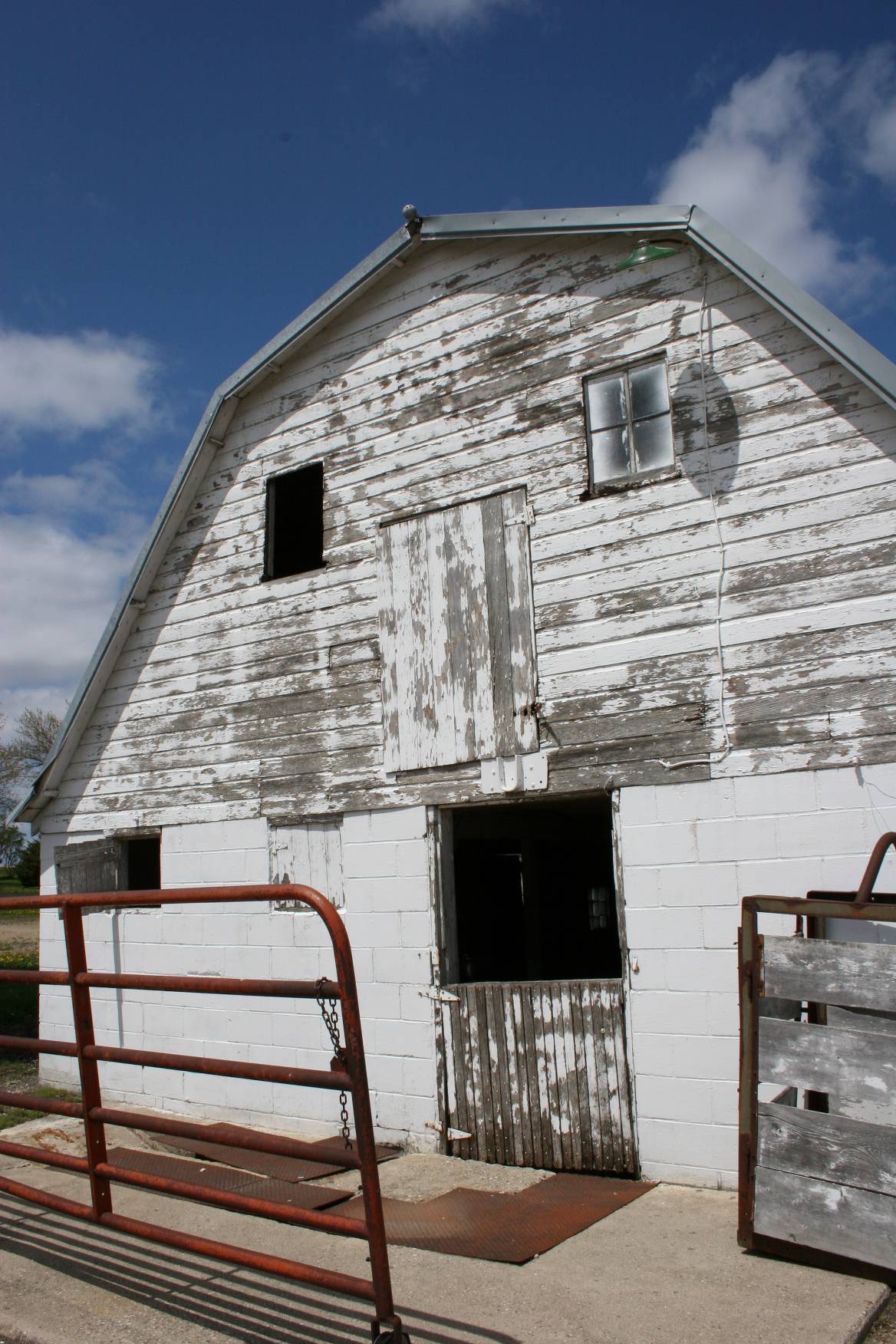
Turek's Auction Service, 303 Montgomery Ave. S.E. (Highway 21), Montgomery, has been "serving Minnesota since 1958." Daniel Turek, Sr., started the third-generation family business now operated by Dan, Jr. and Travis Turek. They sell everything from antique vases to real estate.

Turek’s Auction Service, 303 Montgomery Ave. S.E. (Highway 21), Montgomery, has been “serving Minnesota since 1958.” Daniel Turek, Sr., started the third-generation family business now operated by Dan, Jr. and Travis Turek. They sell everything from antique vases to real estate. Photographing this auction barn last winter inspired my poem.

Oh, yes, I would much rather have been in the Minnesota northwoods reading my prize winning poem. Margaret Hasse, who’s published four collections of poetry, awarded “Sunday Afternoon at the Auction Barn” second place, selected above 89 other poems for that honor.

She wrote:

“I loved how you turned a humdrum occasion of bidding on antiques in an old barn into a closely observed and luminous occasion. The writer John Ciiardi once wrote that close and careful observation can “leak a ghost.” The surprise of your poem was the elevation of a commercial or material enterprise into a spiritual gathering—with a fellowship, liturgy, reverent respect, and people who commune. The ending—visual and concrete—was just right. The poet Franklin Brainerd wrote a poem something to the effect, “in a world of crystal goblets, I come with my paper cup.” There’s something both unpretentious and appealing about “sipping steaming black coffee from Styrofoam cups.”
TS 23


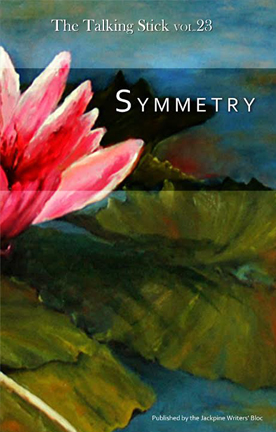
I can’t publish the actual poem here. To read it, you’ll need to order a copy of The Talking Stick 23, Symmetry. I’d highly recommend doing so. This anthology features 91 poems, 23 pieces of creative nonfiction and 15 works of fiction from some outstanding Minnesota writers or writers with a strong connection to our state.

The Talking Stick, published annually by the Jackpine Writers’ Bloc, holds a strong reputation, evidenced by the more than 300 submissions from 159 writers. Another one of my poems, “The Promised Land,” and a short story, “Eggs and Bread,” also published in this volume.

Last year I earned honorable mention for my short story, “The Final Chapter.” And before that, my poem, “Hit-and-Run,” also garnered honorable mention.

Such awards reaffirm one’s skills as a writer.
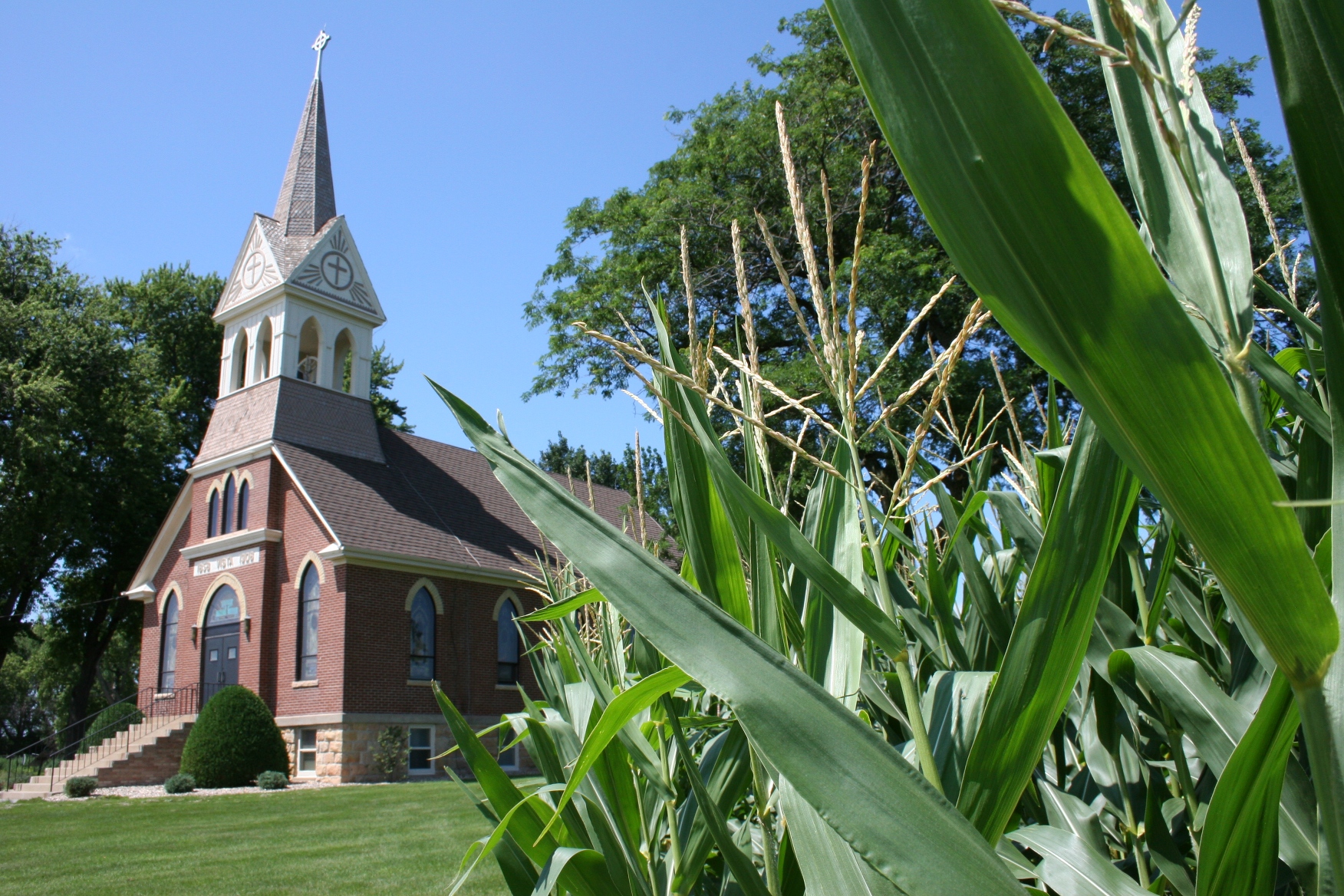
Cornfields snuggle up to one side of Vista's church yard. It's the most beautiful of settings.

Cornfields snuggle up to Vista Evangelical Lutheran Church in southern Minnesota. Minnesota Prairie Roots file photo.

And recently, also in northern Minnesota, my poem, “Hope of a Farmer,” was selected as a Work of Merit by judges at the Northwoods Art and Book Festival in Hackensack. That poem I can publish here. Like nearly every poem I pen, this poem is rooted in rural Minnesota.

Hope of a Farmer

In the slight breeze of a July afternoon,
when ninety degrees and humidity press upon me
at the edge of a corn field stretching into forever,
memories rise and shimmer like heat waves.

I see my father’s work laid out before him—
first, seeds dropped into rich black soil,
next, corn rows carefully cultivated,
then fervent prayers for timely rain.

And I remember how he hung onto harvest hope,
to the promise of golden kernels
brimming grain wagons that swayed
and rumbled to the Farmer’s Co-op Elevator.

This the wind-blown corn leaves whisper
while stalks rise toward the prairie sky,
reaching, reaching, reaching
toward the heavens like the faith of a farmer.

Copyright 2014 Audrey Kletscher Helbling


Establishing my voice: Writing rooted in rural Minnesota May 7, 2014

I ARRIVED HOME on a recent Saturday afternoon to the answering machine blinking.

When I reached Sharon Harris of the northern Minnesota based Jackpine Writers’ Bloc a few moments later, I was pleased to hear her news. I’d placed second, she said, in the poetry division of The Talking Stick 23 competition with my poem, “Sunday Afternoon at the Auction Barn.”

Such news could not have come at a better time. Just the day prior, my mother had entered a nursing home. I needed to hear something positive.

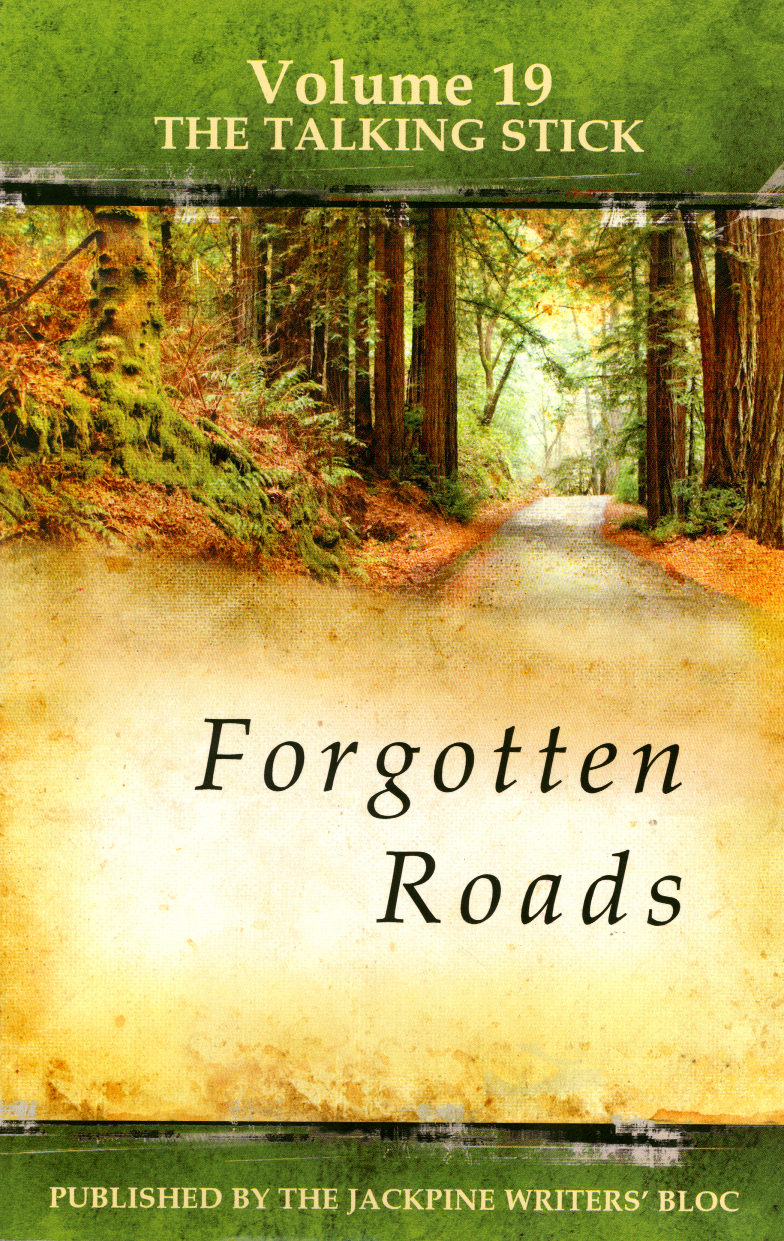
TS 19 in which my poem, "Hit-and-Run," received honorable mention.

TS 19 in which my poem, “Hit-and-Run,” received honorable mention.

Getting work accepted into this well-respected literary journal is always an honor. This marks my fifth year in the book in six years of submitting. Twice I’ve earned honorable mentions, for my poem “Hit-and-Run” and for my short story, “The Final Chapter.”

And now this year, I bumped up a spot to get that second place award. Another poem, “The Promised Land,” and a short story, “Eggs and Bread,” will also publish in volume 23.

The Talking Stick editorial team read and considered more than 300 submissions (of poetry, fiction and creative non-fiction) before forwarding their top picks in each of the three divisions to selected “celebrity” judges. Poet Margaret Hasse judged this year’s poetry.

Finishing second, I not only receive a $100 cash prize, but also Hasse’s comments on “Sunday Afternoon at the Auction Barn.” She writes:

I loved how you turned a humdrum occasion of bidding on antiques in an old barn into a closely observed and luminous occasion. The writer John Ciiardi once wrote that close and careful observation can “leak a ghost.” The surprise of your poem was the elevation of a commercial or material enterprise into a spiritual gathering—with a fellowship, liturgy, reverent respect, and people who commune. The ending—visual and concrete—was just right. The poet Franklin Brainerd wrote a poem something to the effect, “in a world of crystal goblets, I come with my paper cup.” There’s something both unpretentious and appealing about “sipping steaming black coffee from Styrofoam cups.”

Hasse gets it. She totally understands my poem, how each well-crafted line defines, as she says, a “spiritual gathering” in a small town auction barn.

If I could share my auction poem with you today, I would. But I’ve signed a contract not to do so for a year.

Suffice to say, this poem, like nearly every other poem I’ve written and/or had published, is rooted in my rural memories, my connection to the land and/or my appreciation for rural Minnesota.

Turek's Auction Service, 303 Montgomery Ave. S.E. (Highway 21), Montgomery, has been "serving Minnesota since 1958." Daniel Turek, Sr., started the third-generation family business now operated by Dan, Jr. and Travis Turek. They sell everything from antique vases to real estate.

Turek’s Auction Service, 303 Montgomery Ave. S.E. (Highway 21), Montgomery, has been “serving Minnesota since 1958.” Daniel Turek, Sr., started the third-generation family business now operated by Dan, Jr. and Travis Turek. They sell everything from antique vases to real estate.

Specifically, a photograph I took this past winter of a Montgomery, Minnesota, auction barn prompted the idea for this winning poem. I also drew on my experiences attending auctions, albeit not in recent years, to pen the 12 lines of verse.

Likewise, “Lilacs,” a poem I will read this coming Saturday evening, May 10, during the Poet-Artist Collaboration XIII reception at Crossings at Carnegie in Zumbrota, was inspired by my rural rooted memories. (Click here to learn more about that poet-artist collab.)

When I consider my poetry, I clearly hear the rural voice in my words. There’s nothing pretentious about me. I remain, as I always have been, rooted to the land in my writing.

FYI: The Talking Stick 23 publishes late this summer with a book release party set for Saturday, September 13, in the Park Rapids area. To purchase past volumes of the anthology, click here.

© Copyright 2014 Audrey Kletscher Helbling
 

Stepping off a fictional cliff & landing on my feet May 8, 2013

TS 19 in which my poem, "Hit-and-Run," received honorable mention.

TS 19 in which my poem, “Hit-and-Run,” received honorable mention.

IMAGINE THE SWEET SURPRISE of learning you earned honorable mention in a writing competition.

That would be reality for me, dear readers.

I received a thick envelope from Sharon Harris of the Menahga-based Jackpine Writers’ Bloc recently announcing that two of my entries, a poem titled “The Farmer’s Song” and a short story, “The Final Chapter,” were accepted for publication in The Talking Stick 22.

Getting my work accepted into this Minnesota anthology of fiction, creative nonfiction and poetry is nothing new; this marks my fourth time in the annual book. I’ve previously had poetry and creative nonfiction published here.

Neither is the award of an honorable mention novel. In 2010 I received honorable mention for my “Hit-and-Run” poem based on the real-life experience of my son being struck by a hit-and-run driver at age 12.

But this year marks my first time submitting a short story. Decades have passed since I penned fiction. I can’t recall ever entering fiction in a contest. So when I submitted “The Final Chapter,” I did so with minimal, if any, confidence.

I labored over every word, every paragraph, of my short story before finally deciding if I didn’t submit, I would never know whether I’d written a piece worthy of publication. Sometimes you just have to step off the cliff.

I would have been content simply getting my story about an 80-year-old woman losing her grip on reality accepted. (Twenty-five pieces of fiction were selected for publication.) But then, to experience that additional affirmation of honorable mention…, well, my confidence level soared.

It gets even better, dear readers. After members of the Jackpine Writers’ Bloc read all of the submissions, they forwarded their top picks to published writers in each category. St. Paul author John Reimringer, who won the 2011 Minnesota Book Award in novel and short story for his book, Vestments, chose and critiqued the top three short stories, including mine.

Rare is the opportunity to receive such personal, professional feedback. Until you read “The Final Chapter,” you will not fully understand Reimringer’s comment. But, here’s what he wrote:

I like the economical, unsentimental sketch of Clara’s life, and the way she chose third person narrative in the last few paragraphs keeps us in Clara’s pov (point of view) even as it’s clear she’s losing her grasp on reality.

OK, then, basically Reimringer likes my story, just as I enjoyed Vestments when I read, and then reviewed, his award-winning book several years ago for Minnesota Moments magazine. Little did I know then that I would connect with him several years later.

I was hopeful I could meet Reimringer at The Talking Stick book release party in late September. But that won’t happen. My eldest daughter is getting married the same weekend. And that wedding, dear readers, easily trumps honorable mention.

FYI: To learn more about The Talking Stick, which publishes for the 22nd time late this summer, click here. And click here to learn more about The Jackpine Writers’ Bloc.

© Copyright 2013 Audrey Kletscher Helbling

 

Celebrating the wordful art of poetry in southeastern Minnesota April 19, 2013

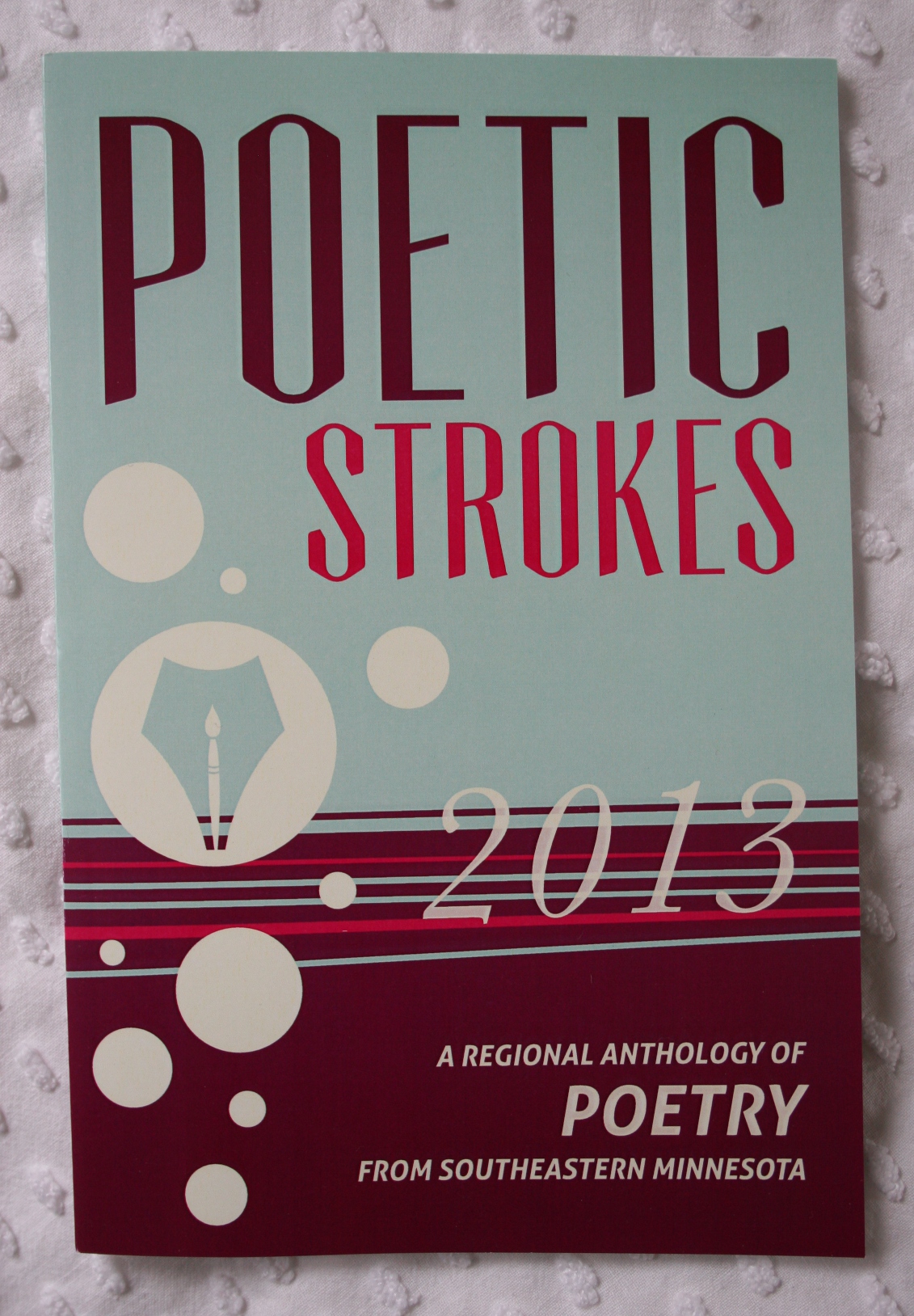
SELCO's seventh volume of Poetic Strokes.

SELCO’s seventh volume of Poetic Strokes.

POETIC STROKES. The title resonates with a graceful image of fountain pen dipped in ink sweeping words across a blank page.

In my idealistic poet’s eye, I envision letters flowing onto paper with ease and passion.

In reality, I understand that inspiration more likely comes in halting clicks on a computer keyboard, screen idling, fingers poised, poet pausing to claim the muse. If only poetry were as easy to write as it might seem.

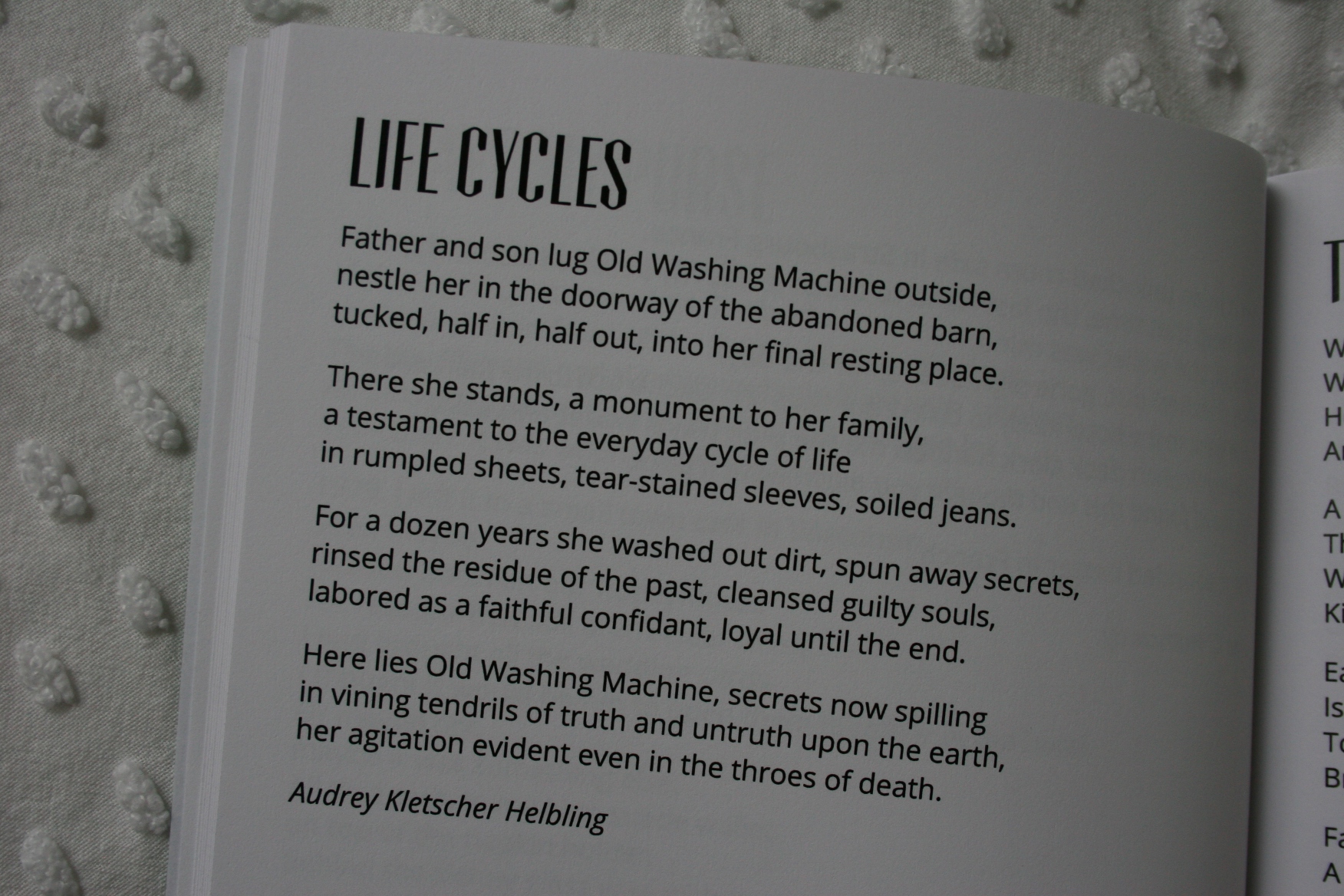
My poem, "Life Cycles."

My poem, “Life Cycles.”

These are my thoughts as I read the recently-released volume 7 of Poetic Strokes 2013—A Regional Anthology of Poetry from Southeastern Minnesota, published by Southeastern Libraries Cooperating (SELCO). My poem, “Life Cycles,” is among 18 selected for publication from 110 submissions. This marks the fifth Poetic Strokes volume in which my poetry has printed.

As I thumb through the pages of this anthology, which also includes youth poetry in a Word Flow section, I am impressed by the talent of poets who call this 11-county SELCO region home. Southeastern Minnesota claims some mighty fine poets. I recognize many poets’ names from past anthologies and other contests. I am in fine company.

If I were to ask these poets what inspires them, how would they respond?

How have they come to write about an aged woman going to the beauty shop, sweet memories from the summer of ’68, picking strawberries, perusing library shelves, baking bread and a dozen other topics which, without their creative pens, would seem rather ordinary topics?

The poet’s gift is to dip a pen into the inkwell of a memory, an emotion, a moment in time, a scene—whatever inspires—and create a wordful work of art. As a poet, there is nothing sweeter than words flowing into lines and verses, connecting to the reader in some way.

When I read about gardening or peeling an apple (not really about peeling an apple) or any of the other subjects covered in this seventh volume of Poetic Strokes, I take away my own interpretation based on my experiences. Therein lies a truth. Poetry is as much about writing as it is about experiencing this wordful art.

Eighteen poems were selected for publication from 110 submissions to Poetic Strokes. In the Word Flow section of the anthology, 14 poems were published from 99 submissions.

Eighteen poems were selected for publication from 110 submissions to Poetic Strokes. Faribault High School English teacher and writer Larry Gavin joins me as the other Faribault poet included in the anthology.  In the Word Flow youth section of the anthology, 14 poems were published from 99 submissions. All but two of those students attend Cannon Falls High School.

YOU CAN MEET Poetic Strokes poets at 6 p.m. on Tuesday, April 30, during a Meet and Greet hosted by the Owatonna Public Library and the Owatonna Poetry Writer’s Group in the third floor Gainey Room at the library, 105 North Elm Avenue. Poets will discuss and share their poetry. If you plan to attend, please RSVP to Bonnie Krueger at the library by emailing bonnie@owatonna.info or calling (507) 444-2460. Because refreshments will be served, she needs a head count.

Following the Meet and Greet, at 7 p.m., Minnesota Book Award Poet Todd Boss, one of my favorite Minnesota poets, will share his works. I cannot wait to hear Todd read during this “Poets at the Library Tour” event celebrating National Poetry Month in April.

THIS EVENING, Friday, April 19, Better Brew Coffeehouse, 301 North Main Street, Pine Island, is hosting an Open Mic Poetry Night beginning at 7 p.m. The event calls for participants of all ages and all forms of poetry to read their works or that of others. Participant registration opens at 6 p.m. Better Brew, the Van Horn Public Library and Pine Area People for the Arts are sponsoring the poetry reading. Given the unfolding weather situation, I’d advise checking whether this reading is still “on” or postponed.

FYI: If you live in the SELCO system, you can check out a copy of Poetic Strokes from your local library. The anthology was funded in part or in whole with money from Minnesota’s Arts and Cultural Heritage Fund. Click here to see the names of poets published in the 2013 Poetic Strokes. To read the list of youth poets published in Word Flow, click here.

© Copyright 2013 Audrey Kletscher Helbling
 

A Minnesota arts collage, from theater to poetry September 15, 2012

FOR A FEW SECONDS THERE, I searched the dictionary of my brain for that word which temporarily eluded me. Collage. That would be it.

Remember when that art form was especially popular, when, as a school assignment, you had to scrounge up ten zillion magazines and then snip out images themed to a specific subject and glue it all in a jumbled mess onto a piece of paper?

Today I present a collage—not a jumbled mess, though—of art.

Let’s take the biggest focal piece first. A Hudson.

A Hudson, like this one I photographed several years ago at a Faribault car show, centers “The Car.” Do not expect, though, to see a real Hudson on stage, only the shape of one.

The Hudson centers the stage at the Paradise Center for the Arts during a production of The Car by Carol Wright Krause. My husband and I saw this play by the Faribault-based The Paradise Community Theatre Friday evening. I’d rate it as one of the best I’ve ever seen performed locally.

Here’s a summary of the play written by director Gabe Talamantes:

The Car is about a family’s car, which as Ed (a character in the five-person drama) puts it “is a miracle of modern American engineering.” This miracle car is a character in itself, a highly theatricalized version of a 1954 Hudson. It takes us on a journey into the lives of the Banners and the challenges an all American family faces as they struggle through two decades of change at home and abroad. We will see how they choose to overcome such difficulties.

Now, why am I so enthusiastic about The Car? Because it moved me to tears. When a theatrical performance can evoke such a strong emotional reaction from me, I will embrace it with unbridled enthusiasm.

That break-down moment for me came near the end of the play, when Vietnam War veteran Hal Banner (played by Todd Ginter), broke down in the arms of his father, Ed Banner (Chuck Larsen). He was no hero, Hal said, pointedly telling his father that he (Ed) would never understand the horrors of war. And then Hal got specific, talking about seeing the eyes of those he killed.

That’s when the tears trickled down by cheeks and I struggled mightily to keep from sobbing. In that moment, I heard my Korean War veteran father, not Hal/Todd. My dad, too, spoke of seeing the eyes of those he killed on the front lines in Korea.

Later, when I congratulated Todd on his performance, he told me that he had talked to several veterans in preparation for his role. And it was the eyes which they spoke of and which he knew he needed to emphasize in that heartrending father-son conversation. It is easily the most powerful moment in the play.

I wondered how many audience members might be veterans and at that moment suppressing war memories and feelings, as my father did.

But this play is about so much more than war. It also addresses the issue of prejudice when Hal brings home a Japanese wife, portrayed by Carrie Jendza whose mother came here from Korea some 40 years ago. Carrie presents a stunning performance as do Susan Dunhaupt as Ed’s wife, Geneva, and Faribault High School sophomore Emily Remmey as Beth Banner, Hal and Sumiko’s daughter.

The prejudice starts right away when Ed Banner insists on calling Sumiko the Americanized “Sue.” He slides in references to “slant eyes” (there’s the “eye” thing again) and other derogatory comments.

In real-life, prejudice is an issue in Faribault, home to many Latino, Somali and Sudanese family. It is no secret that prejudice exists in my community. You can read about it in a previous post by clicking here.

I didn’t spot a single minority in the audience Friday evening,  not unusual despite Faribault’s sizable minority population.

There, that’s all I’m telling you about The Car, other than to advise you to see this powerful and memorable production. It’s community theater at its best for the superb acting and the unforgettable messages delivered.

Faribault artist Vivian Jones created this watercolor, “It Was Grandma’s Car,” for the current “car pARTS” show.

Additional performances of The Car at the Paradise, 321 Central Avenue, Faribault, are set for 7:30 p.m. on September 15, 20, 21 and 22 and at 2 p.m. September 16. Call (507) 332-7372 or click here to reach the Paradise website. According to info published in the theater program, production of The Car is made possible through a Minnesota State Arts Board Operating Support Grant.

While you’re at the play, be sure to check out the exhibit, “car pARTS,” in the Carlander Family Gallery.

The Beat logo.

NOW LET’S PLACE another piece in that art collage. On-air poetry.

In July, Northern Community Radio began airing poetry on its weekday morning show during a segment called The Beat.

On Monday my poem, “Her Treasure,” will air on 91.7 KAXE (89.9/Brainerd) and on 90.5 KBXE. Now I won’t be able to listen to whomever reads my poem between 7:30 a.m. – 8 a.m. and again between 3:30 p.m. – 4 p.m. Faribault is well outside the coverage area which extends from Thief River Falls to Hermantown to Pierz. Eventually, though, I’ll be able to listen to the reading of my poem online.

You can listen to The Beat via online streaming. (I’m not smart enough to figure that out and my former in-house techie now lives at NDSU in Fargo.)

I’m in the company of some mighty fine poets, from novices to Minnesota’s 2011 poet laureate, Joyce Sutphen, to well-known Minnesota writer Will Weaver. You can check out the current listing of The Beat poems/poets by clicking here.

The poems chosen for airing were selected through a juried process.

Connie Ludwig, right, and I pose for a photo with her watercolor, “Pantry Jewels” (above my head) inspired by my poem, “Her Treasure.” This photo was taken in April at Crossings at Carnegie in Zumbrota.

Just, FYI, “Her Treasure” is the same poem featured in “Poetry Artist Collaboration XI” at Crossings at Carnegie in Zumbrota last April. To read my poem, click here.

I love this whole concept of The Beat, of Northern Community Radio’s “daily reminder that, in Minnesota, poetry matters, and Minnesota poets prove that every day.”

You can expect a forthcoming detailed post from me on this project funded by Minnesota’s Arts & Cultural Heritage monies.

The cover of last year’s The Talking Stick 20.

NEXT, LET’S PLACE the third piece in this arts collage. More poetry, plus fiction and creative nonfiction.

Today I’m missing out on a book release party for The Talking Stick 21 in the Park Rapids area. This anthology, published by The Jackpine Writers Bloc, represents some fine writing by Minnesota writers. You can, referencing back to The Beat, listen to the poetry of Sharon Harris, a Jackpine member and one of the key producers of the collection.

I’ve been published in two previous volumes of The Talking Stick (including receiving an honorable mention for my poem, “Hit-and-Run,” in volume 19) and will be published again in this newest volume. My poem, “Broken,” was chosen from among 275 submissions for publication.

To learn more about The Talking Stick, click here. To learn more about The Jackpine Writers’ Bloc, click here.

THAT’S IT. Now, go ahead, add your own pieces to this art collage via your comments.

© Copyright 2012 Audrey Kletscher Helbling
 

Poetic Strokes: Strong regional writing April 12, 2012

COULD YOU WRITE a poem about bacon?

Julie Hathaway of Rochester did. She penned “Bacon,” one of 30 poems selected for publication in 2012 Poetic Strokes: A Regional Anthology of Poetry from Southeastern Minnesota.

When I saw the poem title, I had my reservations. How could bacon possibly be poetic?

Julie proves that bacon, bacon grease specifically, can certainly be poetic when connected to your past—to fried eggs and fried potatoes and a cast iron skillet—and to your life today. This unlikeliest of topics made for a nostalgic read in a volume that highlights some strong regional writing.

You’ll find poems like “Zumbro River Almanac” by Kevin Strauss of Rochester, where the Zumbro slices through the heart of the city. Other poems in the volume, such as “To the North” by Betty J. Benner of Austin, “Sunrise” by Nicole Borg of Wabasha and “Jacobs Lake” by John Chernega of Winona, also possess a strong sense of place.

And then there are poems like “Scottie’s Apple Pie” by Bev Jackson Cotter of Albert Lea. It’s perhaps the sweetest verse in this volume as Bev writes about the precious memories a mother tucks into her heart after baking a pie from the crab apples her four-year-old picks.

On the opposite end of youth, Peter C. Allen of Kenyon writes about his aged, dying father in a poignant poem.

Then, to lighten the mood, Riki Kölbl Nelson of Northfield compares a first snowfall to rollicking, out-of-control children slitting bed covers and spilling feathers from a sky castle. It is a playful image.

All in all, this sixth edition of Poetic Strokes, a project of Southeastern Libraries Cooperating and financed with Minnesota’s Arts and Cultural Heritage fund monies, is a delight to read. You will find copies of 2012 Poetic Strokes now available for check-out from libraries within the 11-county SELCO system.

FYI: My poem, “Writing Poetry as the Sun Rises,” is published in this 2012 anthology as one of 30 poems selected from 202 submissions.

© Copyright 2012 Audrey Kletscher Helbling

 

Celebrating the regional poetry of Minnesota March 27, 2012

THREE APPARENTLY is the lucky number connected with this year’s soon-to-be-released sixth Poetic Strokes anthology published by my regional library system, Southeastern Libraries Cooperating.

At least, on the surface, with 30 poems by 30 poets from 13 communities, all those threes seem to point to that conclusion.

But I don’t bank success on luck—even if my poem of three verses—is among those that published.

Now I’m not privy to the criteria judges used to evaluate the 202 poems submitted by 202 poets from 34 communities within the 11 SELCO counties. But I trust their judgment to select the 30 best works.

Penning a poem worthy of publication takes time, effort and talent. I know. I’ve received my share of dismissals, including last year’s rejection of my three poems submitted to the Poetic Strokes competition. In retrospect, I can see now that those poems needed refining.

While none of us like rejection, it is often the best/only way to show us we can do better. On several occasions I’ve rewritten rejected poems and then had them accepted elsewhere.

I realize, too, that judges’ personal preferences in poetry and the publication itself also factor into acceptance or rejection of a poem. For example, when I’ve submitted to Lake Region Review and The Talking Stick, I’ve considered that these are Minnesota anthologies rooted in the region. I’ve successfully published in both.

Any of you who’ve read my poetry understand that I am a regional writer, with most of my poems connected to the land, specifically my native southwestern Minnesota. I am rooted to the geography of the prairie and to my experiences growing up there. That connection defines my distinct, poetic voice.

Take my poem, “Writing poetry as the sun rises,” just published in Poetic Strokes 2012. At first glance, the title seems to suggest I’ve veered from my voice. Not so. If not for my life-long deep appreciation of prairie sunrises and sunsets (even though I no longer live on the prairie), I may not have looked up from my computer one morning to appreciate the rising sun and then write about it.

Apparently my Minnesota prairie roots voice resonates with judges as I’ve entered numerous competitions and had my poems accepted for publication or display, including in the upcoming Poet-Artist Collaboration XI at Crossings at Carnegie in Zumbrota. Click here to learn more about that gallery show.

Five of my poems have also published in three volumes of Poetic Strokes. Make that six in four volumes. (This year’s competition allowed submission of only one poem.)

Copies of Poetic Strokes 2012 will be available for check-out at all SELCO libraries during the first week of April, National Poetry Month. Because the anthology was funded by the Minnesota’s Arts and Cultural Heritage Fund, the volume will not be sold. Published poets will each receive five complimentary copies.

To read a list of the poets published in this year’s Poetic Strokes—including five from my county of Rice—click here.

As long as we’re talking poetry here, SELCO will launch its Poets at the Library tour with an appearance by Morris-based writer Athena Kildegaard at 7 p.m. Monday, April 2, at the Owatonna Public Library. Kildegaard, a current Minnesota Book Award poetry finalist with Bodies of Light, has also written Rare Momentum. Both were published by the respected Red Dragonfly Press in Red Wing. Kildegaard’s third poetry collection, Cloves & Honey–love poems, has just been released by Nodin Press.

Poets Laura Purdie Salas, Barton Sutter, Su Smallen and Todd Boss—one of my personal favorites—are also part of the SELCO tour. Click here to learn more about Poets at the Library.

Now, I am not so naïve as to believe that all of you like and embrace poetry. But if you haven’t read poetry in awhile, then I’d suggest you try reading it again. Today’s poetry is not the rhyming, elitist poetry of your youth.

I will be the first to tell you, emphatically, that I find some poetry so totally out there that I have no hope of understanding it. That’s OK. Find a poet whose voice resonates with you and then listen and appreciate the words that touch your soul.

© Copyright 2012 Audrey Kletscher Helbling
 

Gaining confidence as a poet October 19, 2011

I THINK ALL WRITERS, if we’re honest with ourselves, face insecurities about writing.

Can we write? Is our writing “good enough” to publish? Will anyone read, or even care about, what we write?

I’ve long overcome any issues I faced about journalism style writing. I’m confident in my abilities to pull together a good feature story or another journalistic piece given my educational background in mass communications and my years of experience in journalism. And with several years of blogging to my credit, I’m also confident in that writing style.

It’s poetry which has challenged my confidence. Although I’ve written poetry off and on since high school—which stretches back nearly four decades—I’ve never written much poetry, at least not enough to consider myself a true poet. Until now.

Finally, this year, with the publication of two poems in two Minnesota literary journals and winning the spring Roadside Poetry contest, I’m comfortable adding “poet” to my writing credentials.

Getting to the point of feeling comfortable with the term “poet” really began 11 years ago with publication of a poem in Poetic Strokes, A Regional Anthology of Poetry from Southeastern Minnesota, Volume 2. I considered that a stroke of good fortune. But when four more poems published in the next two volumes, I began to think that maybe, just maybe, I could write poetry. After all, I had competed against other writers to get into the Poetic Strokes anthologies.

Then I had a poem accepted for publication in The Lutheran Digest.

Next, I earned an honorable mention for my poem, “Hit-and-Run,” published last year in The Talking Stick, Forgotten Roads, Volume 19.

Finally, this year, I had an official poet epiphany when I entered three poetry competitions and was subsequently published on Roadside Poetry billboards, in The Talking Stick, Black & White, Volume 20 and Lake Region Review.

Although I don’t know how many poets I competed against in Roadside Poetry, I do have the numbers for the two literary journals. The Talking Stick this year published 140 pieces of poetry, creative nonfiction and fiction from 99 writers, me being one of them with my poem, “Abandoned Barn,” and my creative nonfiction, “Welcome Home.” That’s out of 326 submissions from 171 writers.

Look at the list of writers, and you may recognize a few names like Marge Barrett, Tim J. Brennan, Charmaine Pappas Donovan, Jerry Mevissen, Candace Simar…

It’s quite a process to get into The Talking Stick with five members of The Jackpine Writers’ Bloc reading all of the entries and then an editorial board meeting to vote and discuss. The top four to seven favorites in each category are then forwarded to celebrity judges—this year Kris Bigalk, Kevin Kling and Alison McGhee—to choose first and second place winners in each division.

As for Lake Region Review, the process of selecting the works for publication is equally as rigorous. Co-editors Mark Vinz—author, professor emeritus of English at Minnesota State University Moorhead and first coordinator of MSUM’s Master of Fine Arts in Creative Writing—and Athena Kildegaard—author and lecturer at the University of Minnesota Morris—worked with a staff of 10. They read more than 200 submissions before narrowing the field to 27 established and emerging writers.

I’m one of those 27.

And so is Leif Enger, author of the 2001 New York Times best-seller Peace Like a River, which happens to be a favorite book of mine. It’s nice to be in the company of someone who, like me, writes with a strong sense of place.

Most of my poetry connects to the southwestern Minnesota prairie, where I grew up on a dairy and crop farm. Specifically, the barn on the home place inspired my two distinct barn poems which published in The Talking Stick and Lake Region Review.

I don’t know what moved the editors of either publication to select my poems for inclusion in their literary journals. But I did incorporate lines such as “hot cow pee splattering into her gutters” and “rusty hinges creaking like aged bones.”

According to Co-editor Kildegaard at Lake Region Review, editors chose pieces that were “fresh, creative, lively, interesting. We were looking for writing that has something new to say.”

Apparently I had something new to say about the old barn.

The early 1950s barn on the Redwood County dairy farm where I grew up today stands empty of animals.

WRITERS FEATURED in the recently-published 212-page The Talking Stick, Black & White, Volume 20, are from, or have a strong connection to, Minnesota. Those published in the 138-page debut of Lake Region Review live primarily in west central Minnesota. Eight writers have been published in both collections.

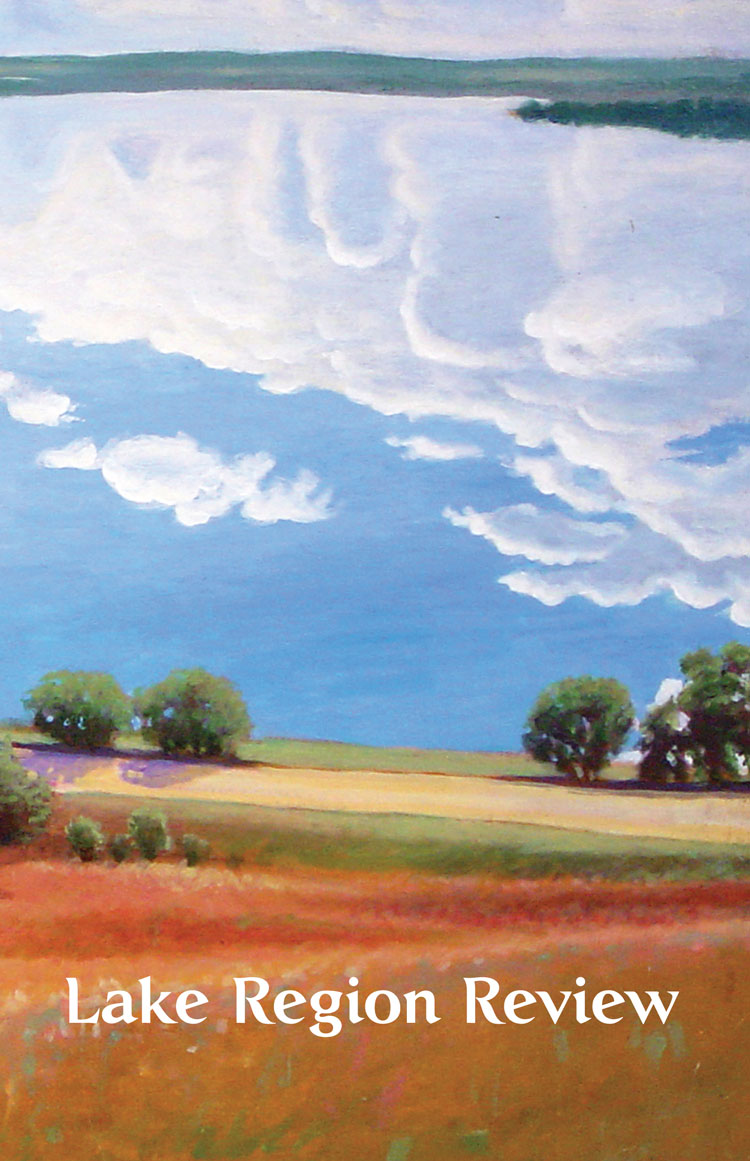
The cover of Lake Region Review is a detail of an original landscape painting, “Christina Lake: View from Seven Sisters,” by American impressionist painter Stephen Henning of Otter Tail County.

IF YOU’RE A WRITER, specifically of poetry, did you/do you struggle with confidence issues? At what point did you/will you call yourself a poet?

FYI: For more information or to purchase copies of either literary journal featured here, click on the appropriate link below:

www.lakeregionreview.net

www.thetalkingstick.com

And click here for more information about Roadside Poetry.

© Copyright 2011 Audrey Kletscher Helbling


Poetry and cheesecake October 1, 2010

Filed under: Uncategorized — Audrey Kletscher Helbling @ 8:01 AM
Tags: , , , , , , , , , , ,

My daughter's homemade chocolate cheesecake, my birthday cake.

I FELT JUST LIKE a queen, waiting patiently at the dining room table to be served a slice of decadent chocolate cheesecake.

I must say, it’s a wonderful feeling to be on the receiving, rather than the giving, end. And that’s how it is now when I celebrate my birthday.

On Monday, a day after my birthday, my daughter drove down from Minneapolis for an appointment and later dinner out with me, her dad and her brother. But afterward, ah after that meal, I really enjoyed the celebration.

My first-born had baked a from-scratch, all-chocolate cheesecake. She clued us in that the recipe called for melted peanut butter chips mixed into the chocolate batter. But she scorched the peanut butter chips and had to substitute chocolate chips. That produced some gentle teasing about a many-years-earlier chocolate pudding cake disaster.

Clearly, she’s learned a thing or two about cooking and baking as the cheesecake was pure chocolate perfection.

As much as I enjoyed the rich creamy dessert, even more I appreciated that my daughter chose to make a cheesecake. She knows it’s my favorite dessert.

Then I opened my gift from her and appreciated even more that my eldest had chosen items perfectly suited for me. She didn’t buy just any old thing just to give me a present. Rather, she shopped at a south Minneapolis antique store—one with lots of antlers and a place she nearly walked out of due to all those antlers on the walls.

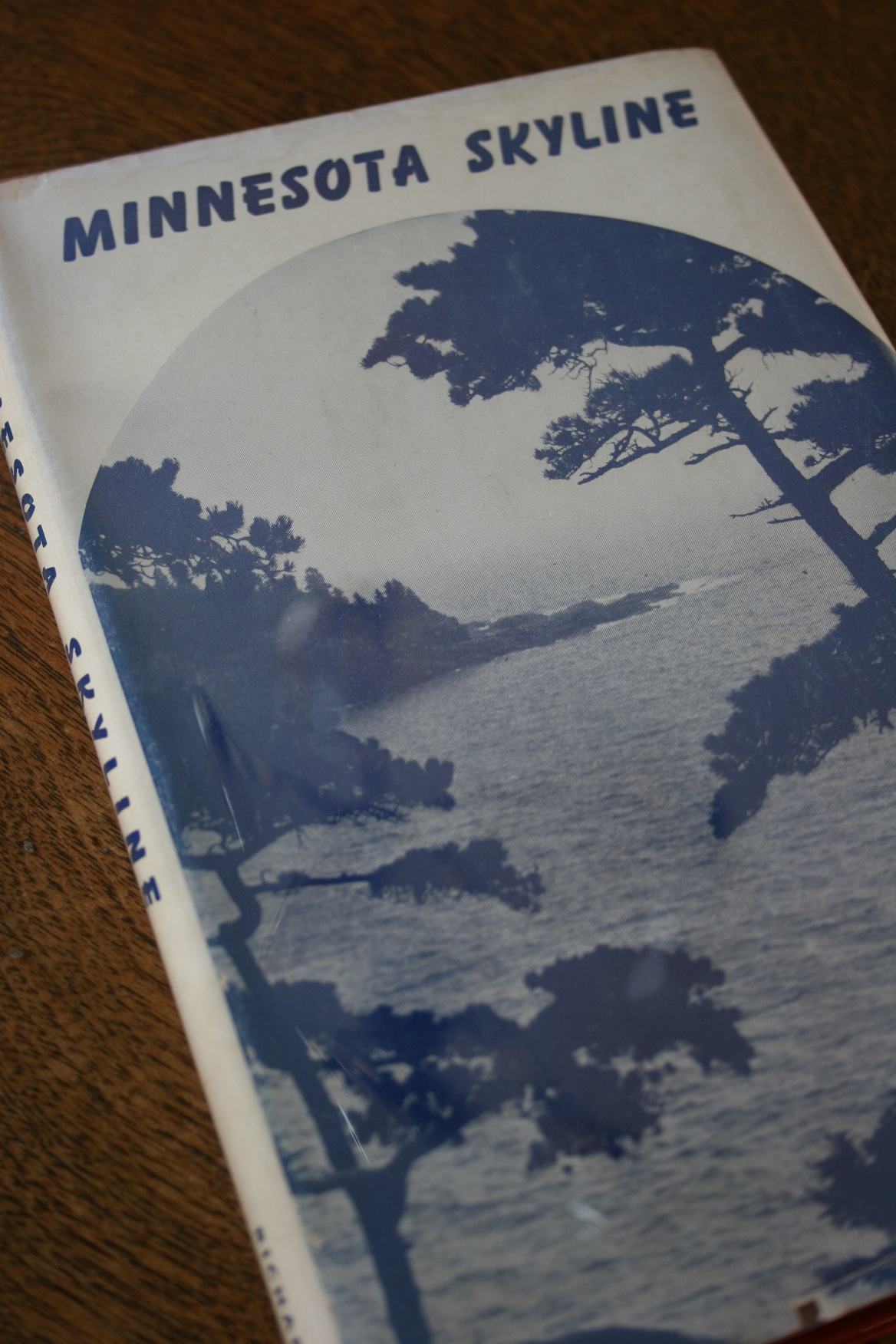
Inside the antique shop, she found a slim volume of poetry, Minnesota Skyline, published in 1953. The book wasn’t priced, she said, and clerks discussed, in front of her, the price she should pay.

Minnesota Skyline, a vintage poetry collection I think worthy of reprinting.

I flipped through the pages and knew I would enjoy this collection with poems like “Wind in the Corn,” “Pioneers of Southern Minnesota,” and “Spring on the Prairie.”

I haven’t had time yet to indulge in the anthology. But that evening, after I opened my daughter’s gift of poetry, I read aloud a verse from “Delano on Saturday Night” by Margaret Horsch Stevens of Montrose:

Men, bent, with toil, feel younger in the glare

Of lights, exchanging jokes and arguments;

And women brighten as they meet and talk

Of recent births, and brides, and home events.

We laughed as we pictured families gathered in downtown Delano on a Saturday night in the 1950s. How times have changed.

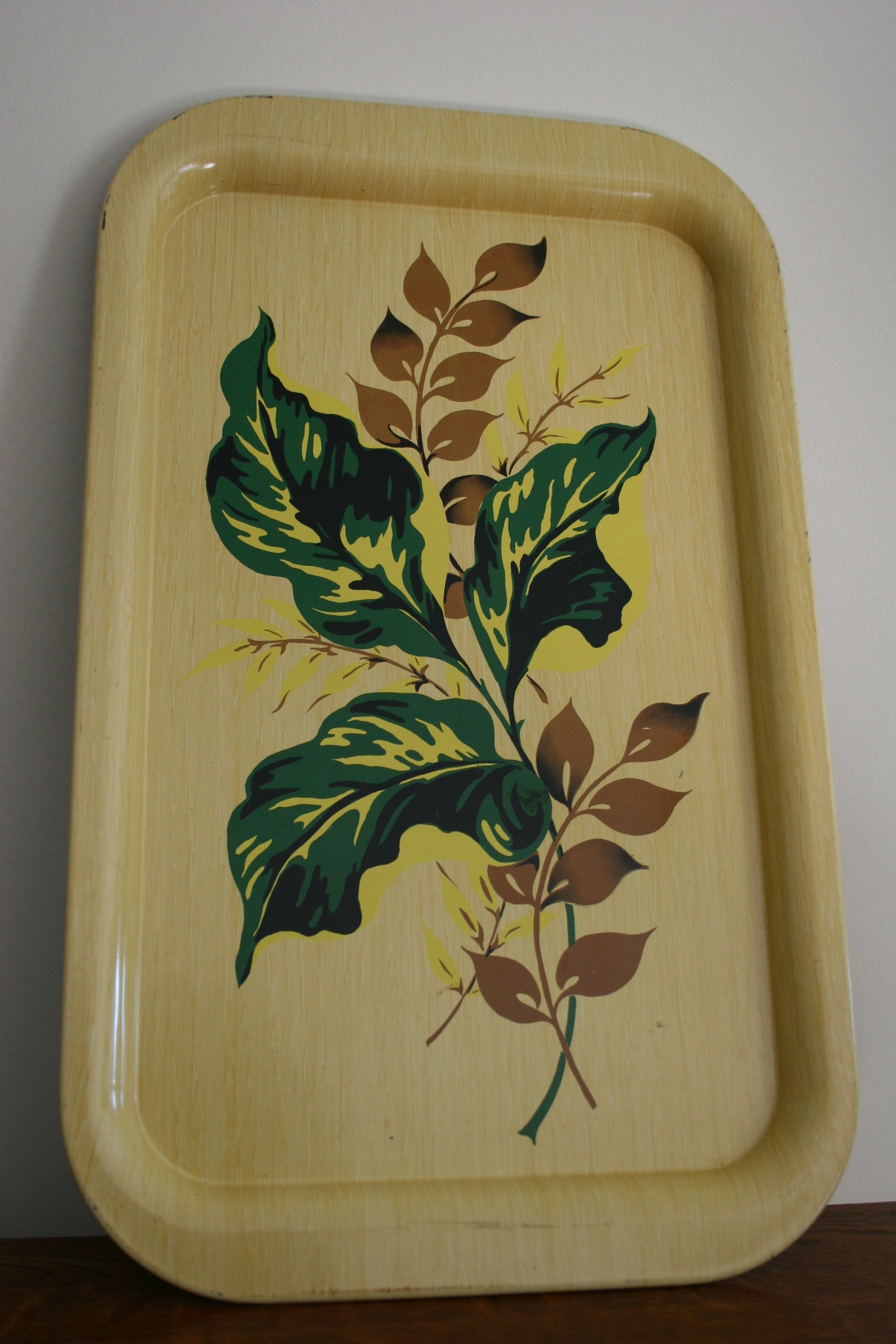
After that impromptu poetry reading, I pulled four slim yellow trays from my birthday gift bag. Once again, my daughter had selected an ideal present for me. I collect vintage metal trays and these were unlike any I have or any I’ve seen. For now I’ve propped two atop a shelf—art leaning against a wall.

My daughter gave me four vintage metal trays for my collection.

There’s something to be said for aging, when you can see your children as grown adults, who are caring and loving and giving and who know that you love poetry and cheesecake.

My husband also remembered my birthday with a colorful daisy bouquet.

© Copyright 2010 Audrey Kletscher Helbling

The Lund Press, Inc., of Minneapolis published Minnesota Skyline.


Hear Minnesota voices (including mine) in The Talking Stick anthology April 26, 2010

Filed under: Uncategorized — Audrey Kletscher Helbling @ 8:06 AM
Tags: , , ,

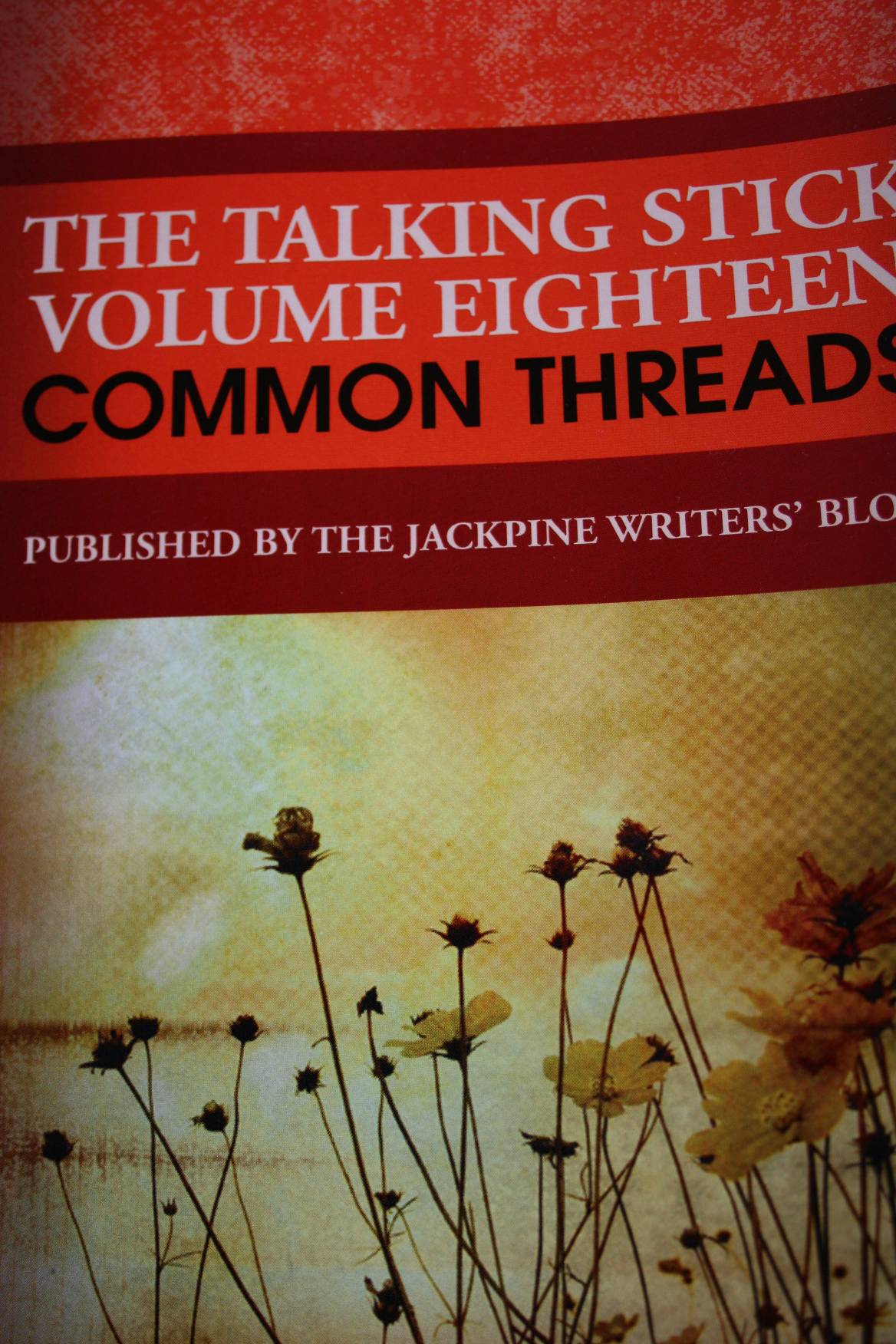
The Talking Stick, Volume Eighteen, Common Threads, published in 2009

“YOUR POEM WAS CONSIDERED to be one of the best in the poetry category,” the letter reads.

The words are sweet music to my writer’s soul.

“Your poem, along with several others, was sent to Poetry Judge Heid Erdrich,” the paragraph continues.

I am so excited I can hardly stand it. My poem has placed among the top seven in a state-wide contest that attracts a wide range of Minnesota poets, established and emerging.

Hit-and-Run, will publish in the Minnesota literary anthology, The Talking Stick, Volume Nineteen, produced by the Park Rapids-based Jackpine Writers’ Bloc, and tentatively subtitled Forgotten Roads.

No, I didn’t win the $500 first place prize or even the $100 second place prize. But I’ve received honorable mention, and that’s good enough for me.

“We had over 300 entries (in the categories of poetry, creative nonfiction and fiction) of exceptional quality and our decisions were difficult.”

The words resonate—a symphony chorus of praise.

To compete with so many other writers, and then to have my poem selected for prize consideration by award-winning, professional poet Erdrich, pleases me. A lot.

“A terrifying imagery/memory,” Erdrich evaluates. “Some of the lines do not strengthen the poem because they are so long.” Even though her brief comments are not entirely positive, I take them constructively. She, after all, has published three poetry collections.

Me? I’ve had five, soon-to-be eight, poems printed in publications. Read my April 21 blog post, I’m a poet and now I know it, for information about my other recent literary success.

Hit-and-Run, which will print in The Talking Stick, Volume Nineteen, is by far my most emotional, my most heart-wrenching, poem. I write about my initial reaction to the most terrifying day of my life, when my then-12-year-old son was struck by a hit-and-run driver on May 12, 2006.

Apparently the deep-felt emotions in that poem resonated with the Jackpine Writers’ Bloc editorial team. Those writers selected the poems to be published and chose the top several to pass along to celebrity poetry judge Erdrich for prize consideration.

I am grateful to editors Sharon Harris and Tarah L. Wolff for their dedication to The Talking Stick. Without their passion and commitment to this project, fledging poets like me—yes, I believe I can now officially call myself a “poet”—would not have such opportunities.

Readers, please support home-grown literary endeavors by purchasing books like The Talking Stick. The newest volume should be completed in August, just in time for a book release party tentatively slated for September 18 in Park Rapids.

© Copyright 2010 Audrey Kletscher Helbling