Minnesota Prairie Roots

Writing and photography by Audrey Kletscher Helbling

Consider the lilies February 2, 2014

Filed under: Uncategorized — Audrey Kletscher Helbling @ 1:54 PM
Tags: , , , , , , ,

“NO WONDER IT FEELS SO COLD,” my husband said when he returned to the warmth of the house and checked the outdoor air temp this morning. “It’s 16 below.”

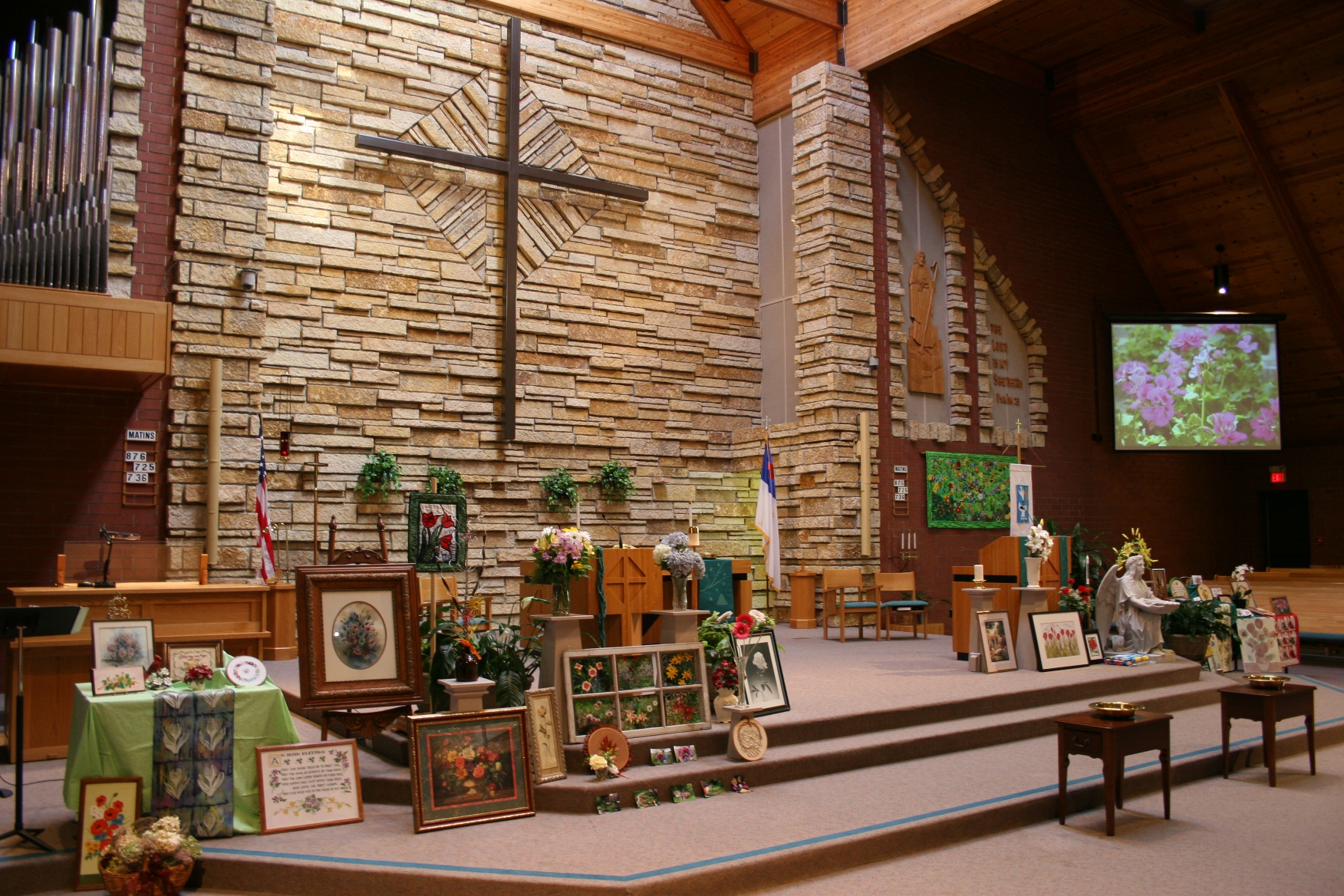
An overview of flower art from members of Trinity Lutheran Church, Faribault, Minnesota, displayed in the chancel during weekend worship services.

An overview of flower art from members of Trinity Lutheran Church, Faribault, Minnesota, displayed in the chancel during weekend worship services.

Bundled in our coats, caps and gloves, we trundled outside to the warming Chrysler for the short drive to Trinity Lutheran Church. There we would find a breath of spring—an assortment of flower art—to lift our spirits.

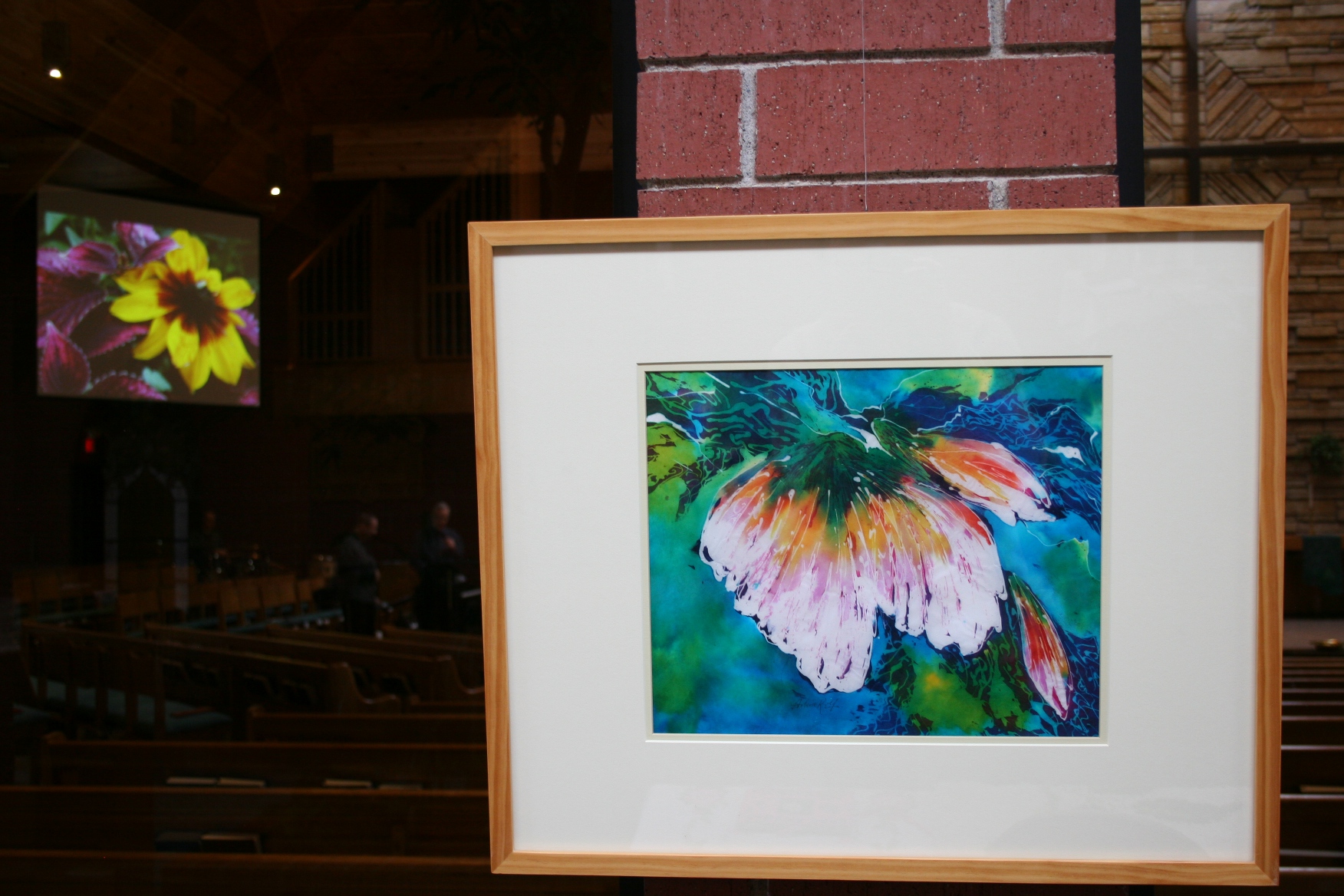
A floral batik by Arlene Rolf graces a wall in the narthex. Inside the sanctuary, my flower photos are showcased on the screens.

A floral batik by professional artist and Trinity member Arlene Rolf graces a wall in the narthex. Inside the sanctuary (left through glass wall), my flower photos are showcased on three screens.

This is precisely what we needed on a morning when Punxsutawney Phil saw his shadow, indicating six more weeks of winter. Not that we Minnesotans need Phil to show us that. We know our winter will run into mid-March and most certainly longer.

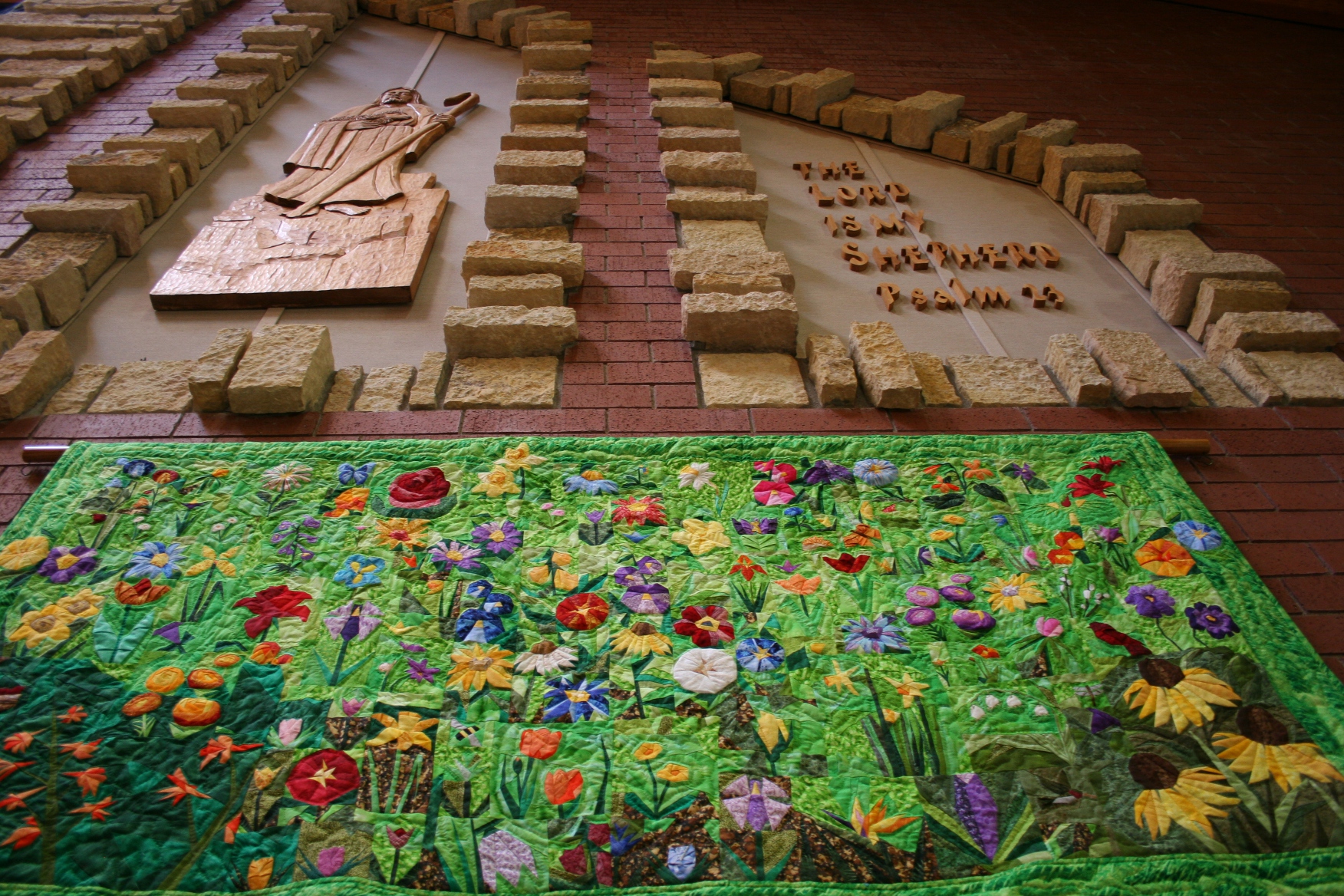
The beautiful and stunning floral quilt art by Kevin Kreger is displayed below a wood carving by noted Faribault artist Ivan Whillock. Kreger coordinated the "Consider the Lilies" floral display at Trinity.

This beautiful and stunning hand-pieced floral quilt art by Kevin Kreger is displayed below a wood carving by noted Faribault artist Ivan Whillock in the sanctuary. This photo is taken looking up from the bottom of the wall hanging.  Kreger, a gifted quilter and musician, coordinated the “Consider the Lilies” floral display.

But for this one hour, we focused on the beauty of flowers, of God’s creation, and the very real promise that God cares for us, just as He does the lilies of the field. “God is in control of our lives,” said the Rev. Warren Schmidt.

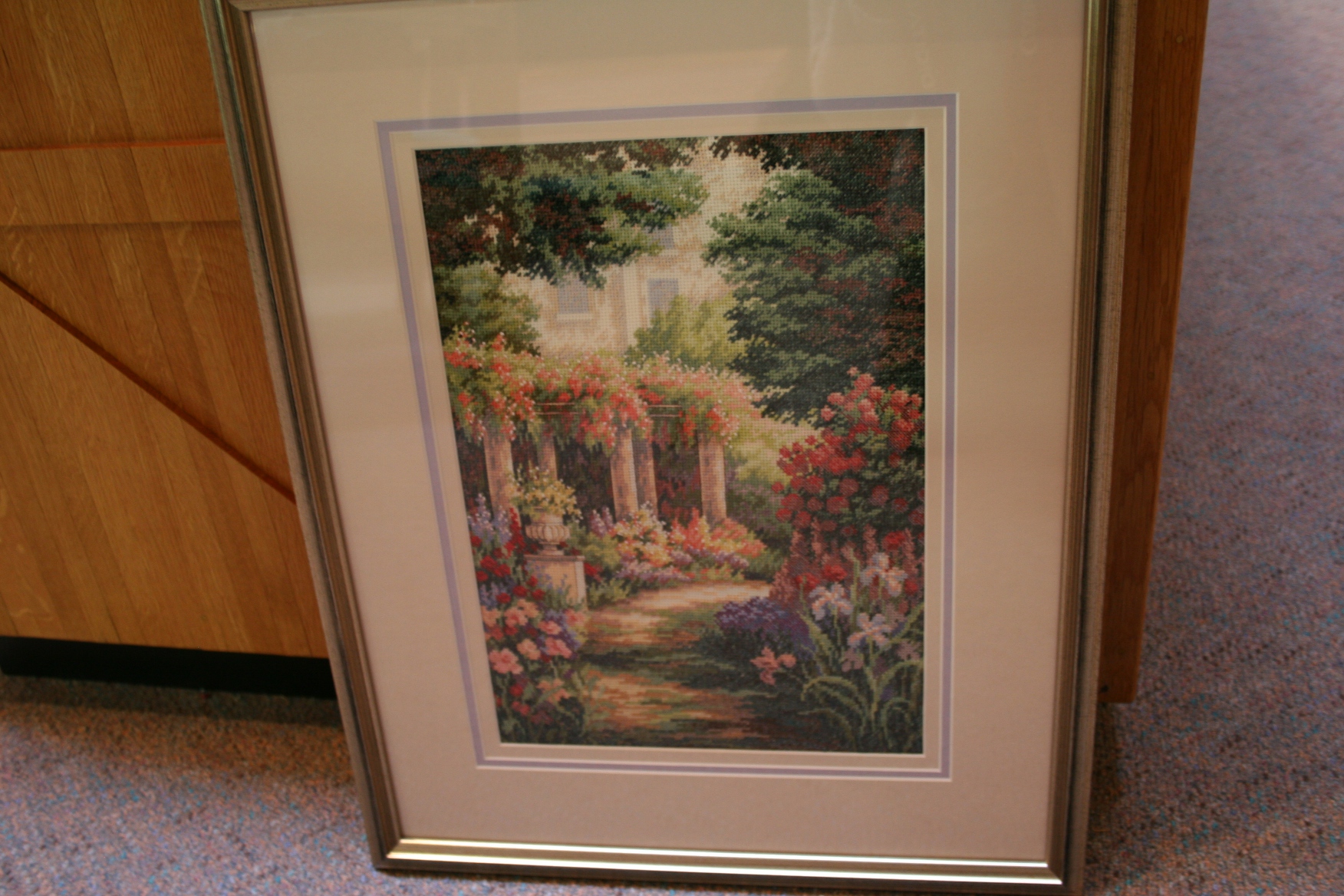
Church secretary Jennie Kingland created this lush detailed floral in counted cross stitch.

Church secretary Jennie Kingland created this lush, detailed floral in counted cross stitch.

As Rev. Schmidt’s sermon, “Consider the Lilies,” unfolded, he placed us in the lush setting where Jesus preached his “Sermon on the Mount.”

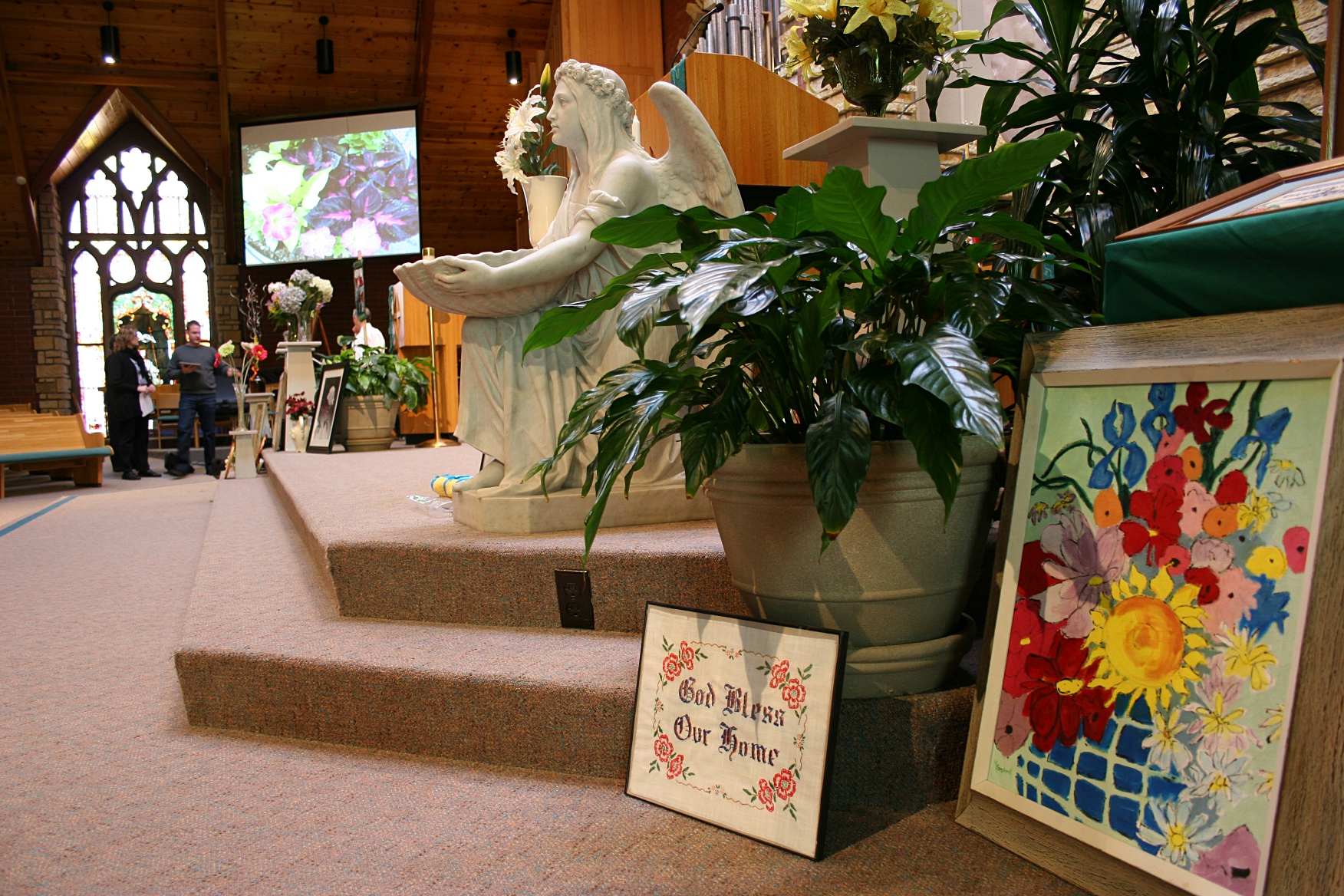
Flower art buffeted both sides of the chancel, here near the baptismal font and pulpit.

Flower art buffeted both sides of the chancel, here near the baptismal font and pulpit.

Earlier, we’d listened to the gospel lesson, Jesus’ words written in Matthew 6:24-34, including these verses:

And which of you by being anxious can add a single hour to his span of life? And why are you anxious about clothing? Consider the lilies of the field, how they grow; they neither toil nor spin, yet I tell you, even Solomon in all his glory was not arrayed like one of these.

But if God so clothes the grass of the field, which today is alive and tomorrow is thrown into the oven, will he not much more clothe you, O you of little faith?

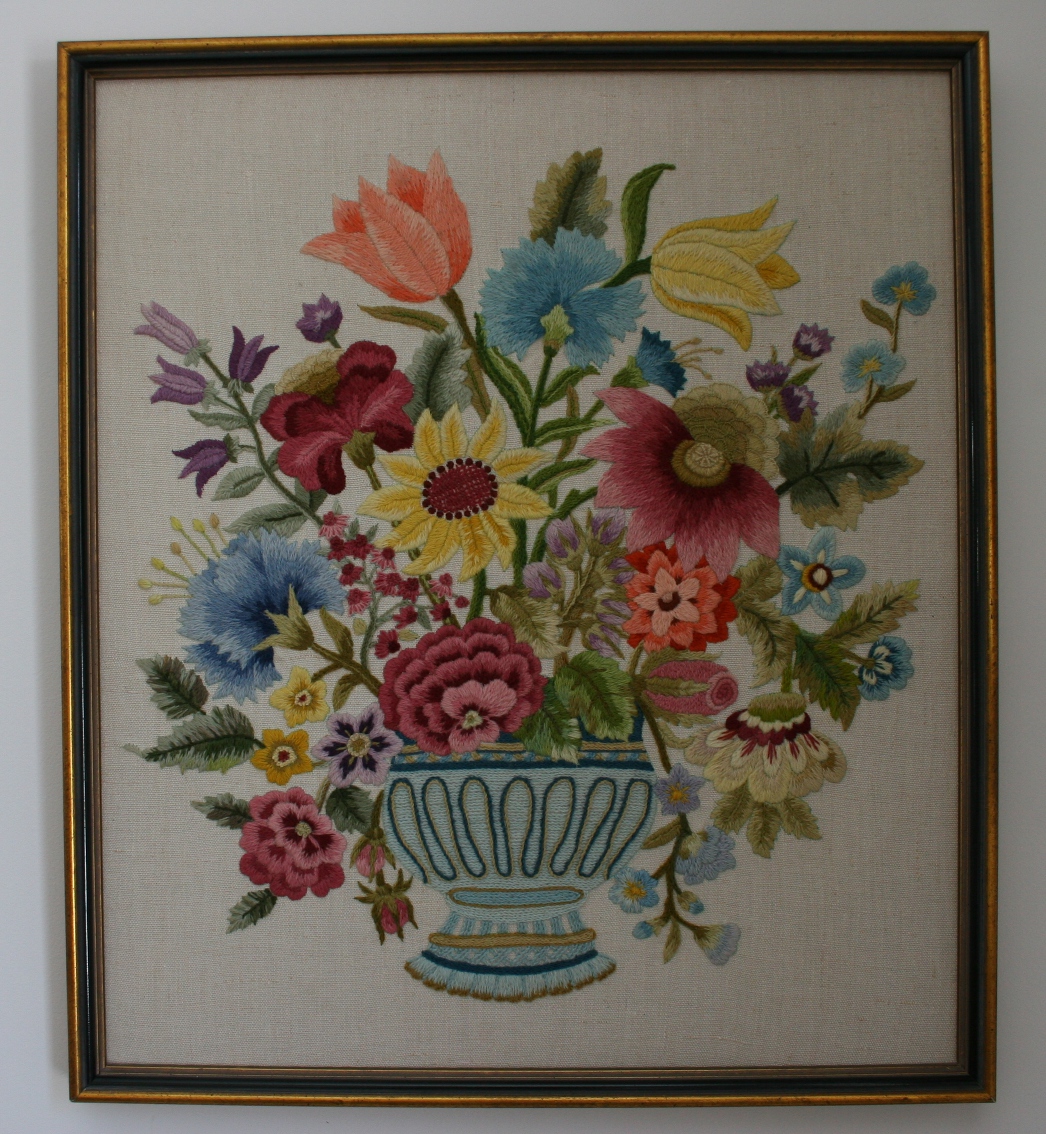
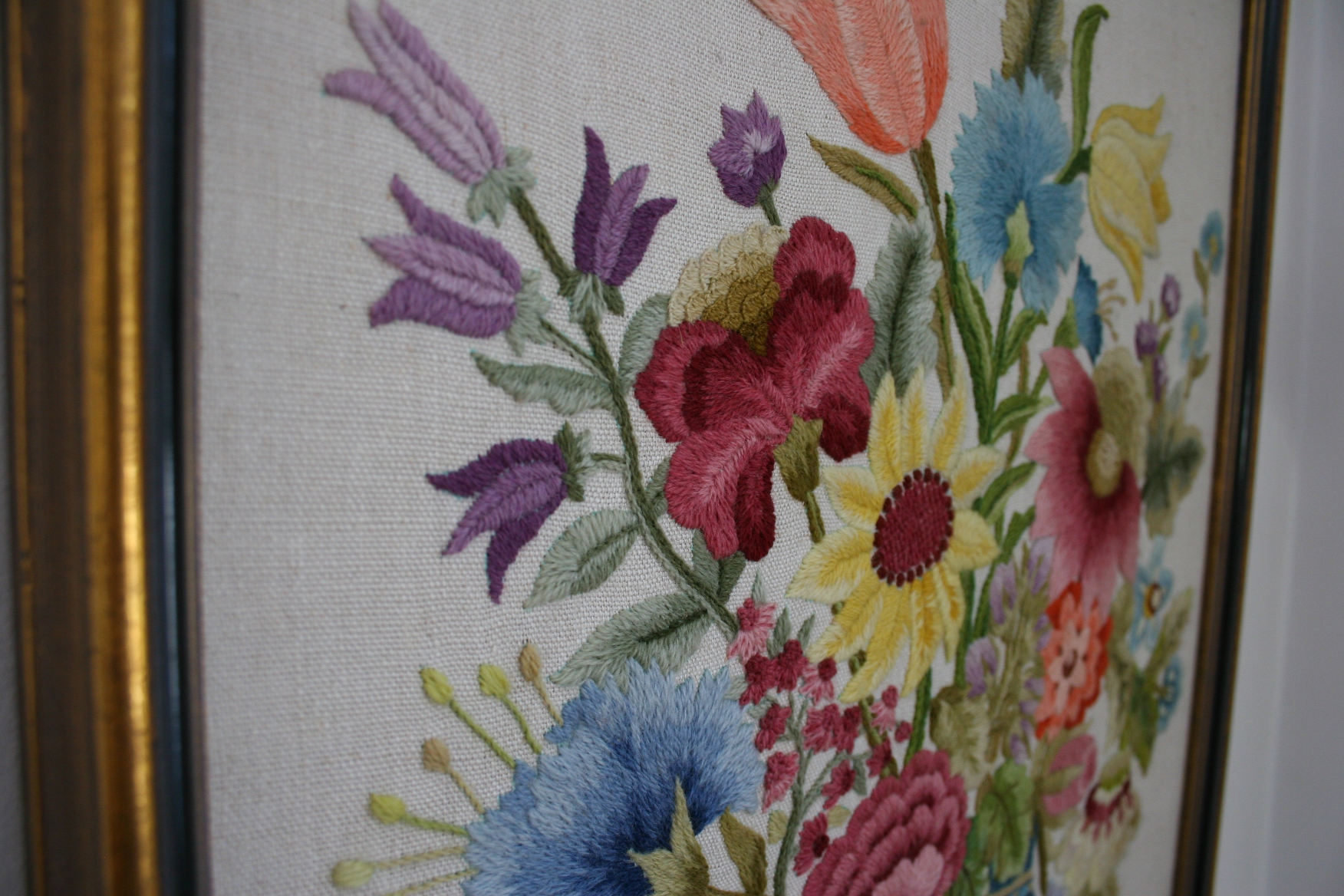
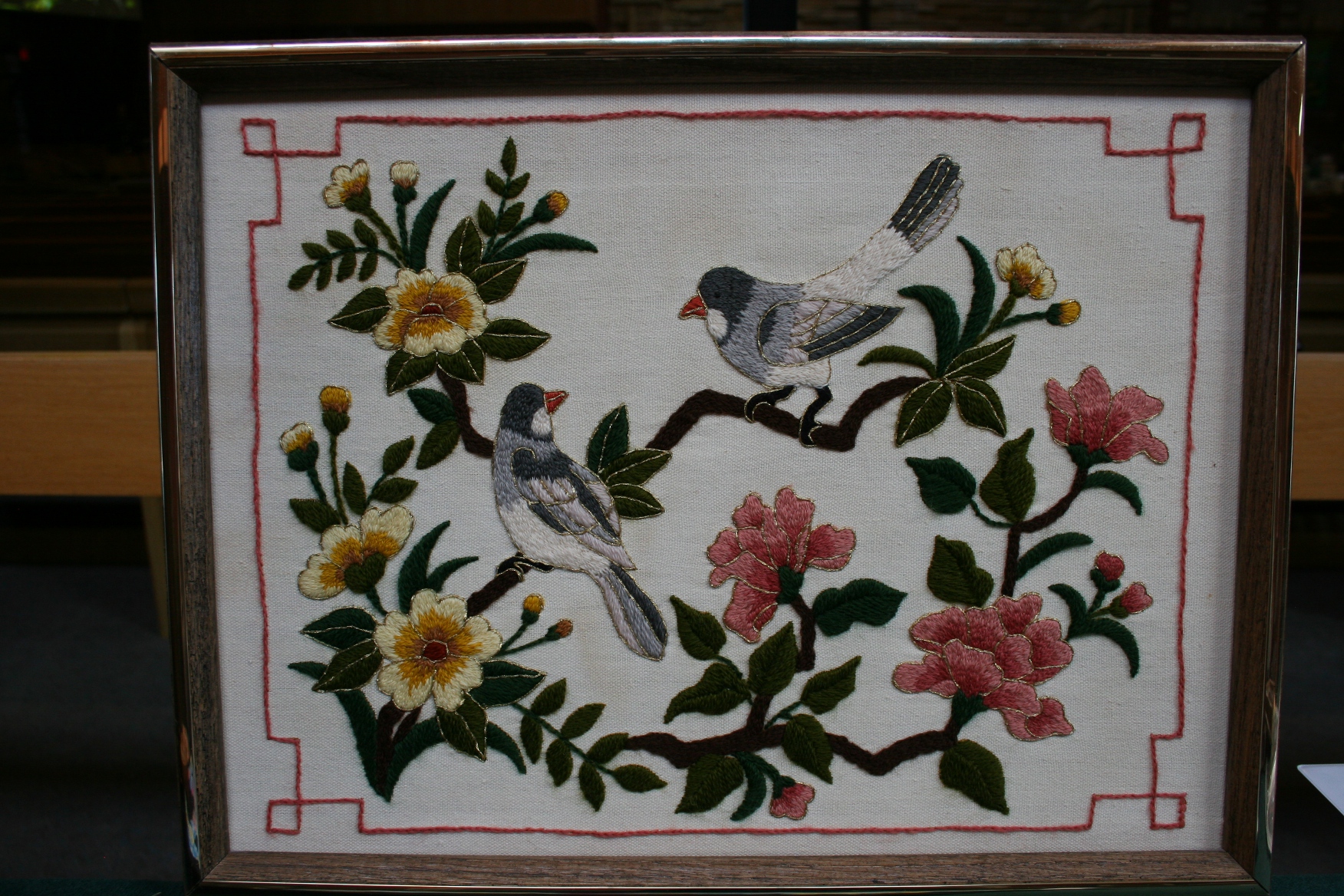
This same hand-embroidered art, displayed in church, hangs above my bed.

This same hand-embroidered art design, displayed in church, hangs above my bed.

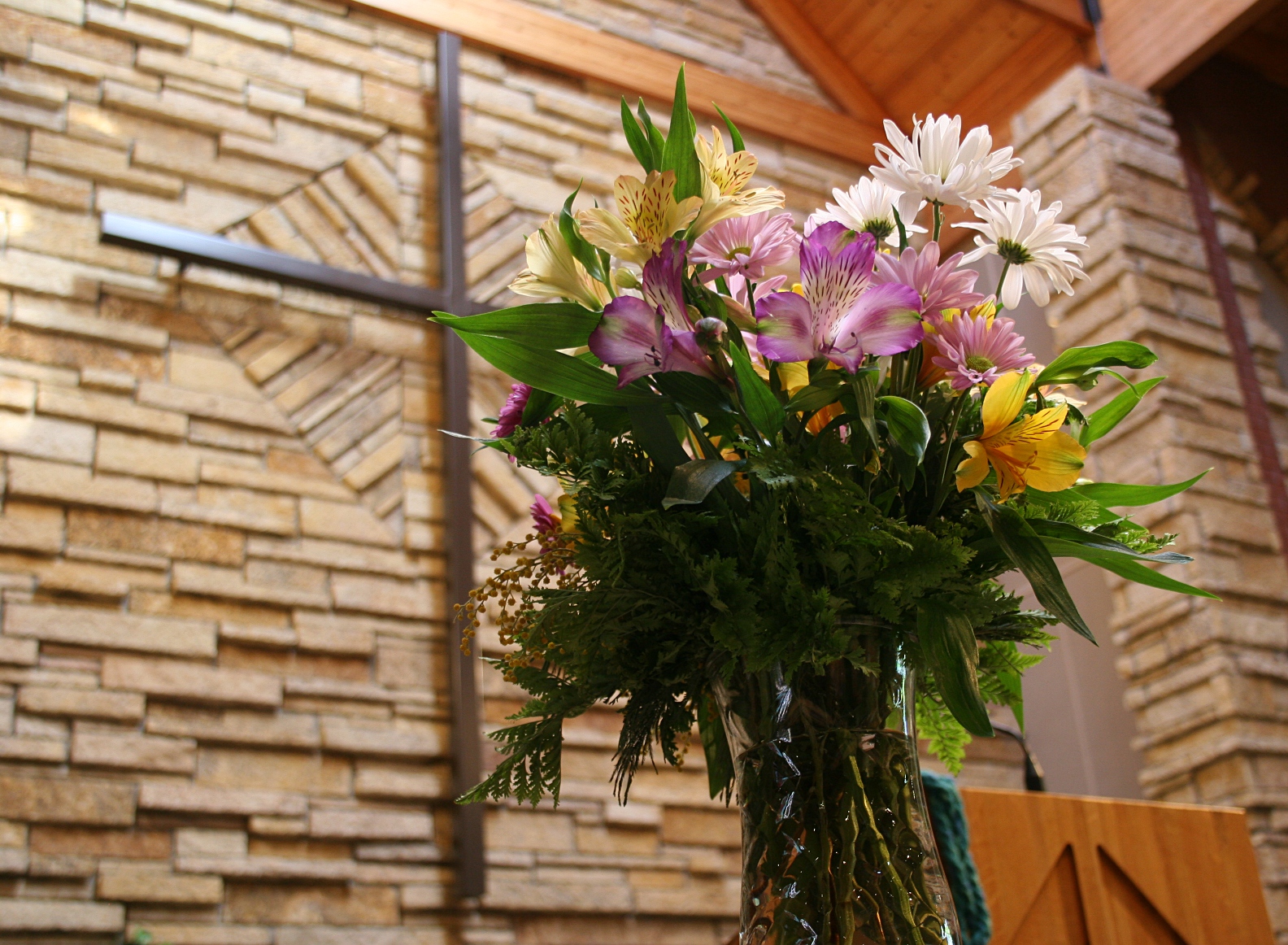
To listen to those reassuring words, to view the beautiful floral art and the bouquets of flowers uplifted me.

"Is there beauty in the cross?" asked the Rev. Warren Schmidt. He emphasized the height, depth, breadth and width of God's love for us, shown in His son's death on the cross so that we might have eternal life.

“Is there beauty in the cross?” asked the Rev. Warren Schmidt. He emphasized the height, depth, breadth and width of God’s love for us, shown in His son’s death on the cross so that we might have eternal life.

I am assured of God’s love and care for me. And, because of Christ’s death on the cross, as the pastor said, we are “the perfection of beauty before God the Father.”

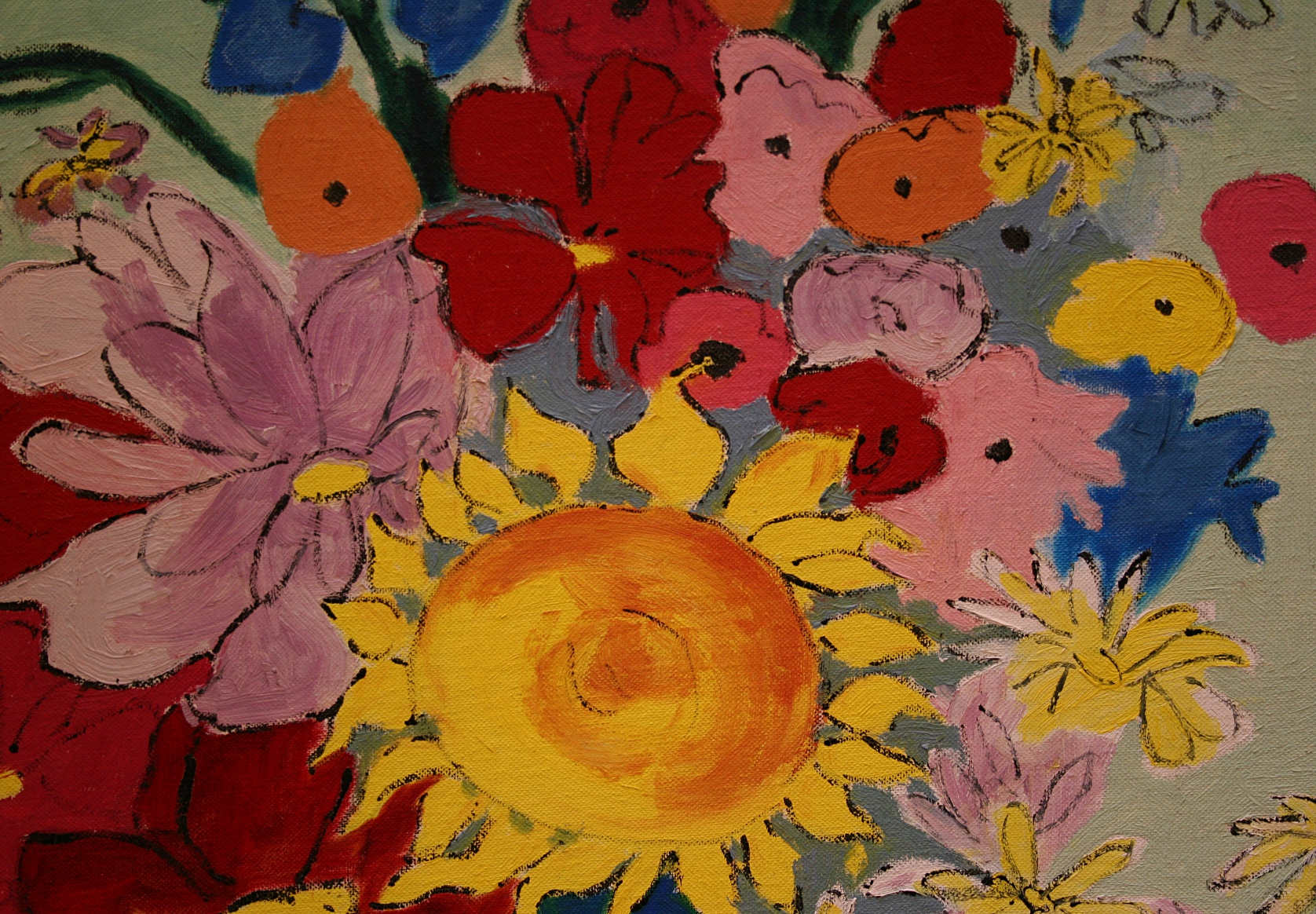
Glorious floral art by Marilyn Borchert.

A snippet of bold floral art by Marilyn Borchert.

How wonderful is that?

birds

From Matthew 6:26: “Look at the birds of the air; they neither sow nor reap nor gather into barns, and yet your heavenly Father feeds them. Are you not of more value than they?

If God cares for the flowers and the birds and the rest of His creation, so surely He values and cares for us.

© Copyright 2014 Audrey Kletscher Helbling


Exploring art inside the Weitz Center for Creativity at Carleton College December 5, 2013

MY EXPOSURE TO PROFESSIONAL ART as a youth could be categorized as minimal. There were no visits to art galleries, no attending theatrical performances, no concerts outside of school walls.

Yet, I did not feel deprived, for art surrounded me in blazing prairie sunsets, an inky sky dotted with an infinity of stars, road ditches graced with wild roses, tall grass bending in the wind, the symphony of a howling blizzard, the crunch of boots on hard-packed snow, the orchestra of pulsating milking machines and munching cows and the radio voices of ‘CCO.

To this day, I credit my rural southwestern Minnesota upbringing for shaping me as a writer and photographer. There, on the stark prairie, within the confines of a close and loving family living off the land, I learned to appreciate the details in the landscape and life itself.

Today, I no longer live on my beloved prairie. And I have immediate access to the arts within my own community of Faribault and nearby. You won’t find me, except on rare occasions, aiming for the Twin Cities to view art. I am not a city girl.

The Weitz Center for Creativity at Third and College Streets in Northfield, Minnesota.

The Weitz Center for Creativity at Third and College Streets in Northfield, Minnesota.

In late October, I discovered Weitz Center for Creativity, “a center for creativity and collaboration in the liberal arts,” on the campus of Carleton College in neighboring Northfield. The center is housed in the historic former and repurposed Northfield high school and middle school and in 30,000 additional square feet of new construction.

Near the entrance to the Weitz Center Commons area.

Near the entrance to the Weitz Center Commons area. (Photographed in October.)

The complex offers such creative spaces as a theater, dance studios, a technology resource center (the Gage/Bauer IdeaLab), a teaching museum, galleries and more.

From Jessica Rath's "take me to the apple breeder" exhibit, a porcelain apple and an apple tree photograph.

From Jessica Rath’s “take me to the apple breeder” exhibit, a porcelain apple and an apple tree photograph.

The Perlman Teaching Museum and galleries there drew me to view “Single Species Translations,” which included Jessica Rath’s “take me to the apple breeder” and Laura Cooper’s “Opuntia,” and “The Intersection Between Book, Film, and Visual Narrative.” The exhibits have since closed. But “Lifeloggers: Chronicling the Everyday,” opens January 17 and runs through March 12, 2014. The exhibit will feature the works of a dozen artists.

And here’s the really sweet deal. Admission to the Perlman Teaching Museum (and galleries) is free. Hours are 11 a.m. – 6 p.m. Monday – Wednesday, 11 a.m. – 9 p.m. Thursday and Friday, and noon to 4 p.m. Saturday and Sunday. Note that the museum is open only during Carleton’s academic term, although closed during breaks and during the summer.

Connecting indoors and out in a section of the Commons.

Connecting indoors and out in a section of the Commons.

My first impression of the Weitz Center for Creativity was one of visual appreciation for the modern, clean lines and minimalistic setting. I love the walls of windows, the pots of pines and palms and other plants interspersed among clusters of tables and chairs in a space that visually connects to the outdoors.

Cozy spots for conversation in the Commons.

Cozy spots for conversation in the Commons.

I appreciate, too, the cozy settings of living room furniture that invite conversation and create a sense of intimacy in the spacious, open Commons area.

A snippet of Jessica Rath's exhibit shows porcelain apple sculptures and photos of apple trees in the Braucher Gallery.

A snippet of Jessica Rath’s exhibit shows porcelain apple sculptures and photos of apple trees in the Braucher Gallery.

Entering the gallery, I noted the gleaming starkness of the space, an excellent backdrop to showcase exhibits. I know this is the gallery norm. But, since I did not grow up visiting galleries, I am still struck each time by this visual impact of a clean slate. Light and shadows and mood play upon art here.

A student studies a portion of "The Intersection Between Book, Film, and Visual Narrative" in the Kaemmer Family Gallery.

A student studies a portion of “The Intersection Between Book, Film, and Visual Narrative” in the Kaemmer Family Gallery.

I won’t pretend to understand and enjoy every exhibit I view. We each bring our personalities and experiences and tastes to a gallery and those influence our reactions.

I love the simplicity of the apples positioned on the table in Rath's exhibit and how the shadows angle onto the tabletop.

I love the simplicity of the apples positioned on the table in Rath’s exhibit and how the shadows play upon the tabletop.

More tabletop art, to be picked up and paged through by gallery visitors.

More tabletop art, to be picked up and paged through by gallery visitors.

More print to appreciate.

Additional print and creativity to appreciate.

A wall-size artistic interpretation of Opuntia by Laura Cooper.

A wall-size artistic interpretation of Opuntia by Laura Cooper.

While I could relate to apples and books, I couldn’t connect to the exhibit on Opuntia, a type of cactus. Cacti, except for a few grown as houseplants, are mostly foreign to me.

This signage greets visitors upon entering the Weitz Center for Creativity.

Just inside the doors of the Weitz Center for Creativity.

Yet, I learned. And that, too, is part of the arts experience.

© Copyright 2013 Audrey Kletscher Helbling
 

Car art December 3, 2013

Filed under: Uncategorized — Audrey Kletscher Helbling @ 6:00 AM
Tags: , , , , , ,

I WAS NEAR GIDDY as I crossed the Buckham Memorial Library parking lot.

Car art, side view

There, there sat that car. That car. The one I’ve watched zoom up the street past my Faribault home many times.

I’ve always wanted to photograph this Joseph’s coat of many colors automobile. And now, with my camera available, I could.

Car art, side view 2

But wouldn’t you know, just as I grabbed my Canon from the van, droplets of rain spurted from the sky. I folded my camera inside my cardigan and hurried toward the car to snap a few quick frames.

Car art, back of

Close up, I noticed that what I thought to be duct tape was, instead, reflective tape in primary colors plus black, white and brown adhered to this Cadillac Cimarron.

I got my photos. Now I need the story.

Who owns this work of art?

Why is this Caddy covered in tape? Is the owner making an artistic statement? Or was this tape adhered for some practical reason?

Thoughts? Let’s hear.

© Copyright 2013 Audrey Kletscher Helbling
 

Thanksgiving art November 26, 2013

Filed under: Uncategorized — Audrey Kletscher Helbling @ 6:00 AM
Tags: , , , , ,
The turkey's head was flopping down, so I used my left hand to hold the head in place and then snap this photo.

The turkey’s head was flopping down, so I used my left hand to hold the head in place and then snapped this photo of the paper plate turkey listing items for which this student is thankful.

IN THIS TECHNOLOGY DOMINATED WORLD, it’s refreshing to see that kids are still using crayons and colored paper and, yes, even paper plates to create art.

Art adorns walls in the hallways of Faribault Lutheran School.

Art adorns walls in the hallways of Faribault Lutheran School. Here I’m heading to the second floor landing.

On a recent Sunday morning stroll through the hallways of Faribault Lutheran School with camera in hand, I documented this most basic way of making art during my search for Thanksgiving themed subjects.

Simple crayon art.

Simple crayon art.

Call me old-fashioned, but kids need that hands-on experience of pulling crayons from a box, selecting colored paper, cutting shapes with a scissors, sliding a glue stick across paper and more. This is art in its most basic form.

Hand and feet shapes used to make turkeys. And, bonus, students listed things for which they are thankful.

Hand and foot shapes used to make turkeys. And, bonus, students listed things for which they are thankful.

Who among us doesn’t remember tracing around our hands with a pencil or selecting a sharp-tipped crayon or those first efforts at manipulating a scissors?

Students' versions of pilgrims.

Students’ versions of pilgrims.

This Thanksgiving, remember to unplug and to celebrate the simple joys in life like creating art with paper, crayons, scissors and glue.

#

BONUS PHOTOS from the hallways of Faribault Lutheran School:

Here, here are the turkeys.

Here, here are the turkeys and some mighty creative ones.

I have no idea what a turkey gram may be.

I have no idea what a turkey-gram may be.

Students' versions of Native Americans.

Students’ versions of Native Americans.

© Copyright 2013 Audrey Kletscher Helbling
 

I discover Plainview & then the curtain falls November 15, 2013

A snippet of Plainview's downtown.

A snippet of Plainview’s downtown.

ACT I:

It’s not like I live a great distance (60 miles) from Plainview, home of the Jon Hassler Theater and Rural America Arts Center. But I’d never been to this rural town 20 miles northeast of Rochester until recently. A wrong turn on a Sunday afternoon drive led my husband and me into this Wabasha County community of some 3,300.

In the heart of the community, the Jon Hassler Theater and Rural America Arts Center.

In the heart of the community, the Jon Hassler Theater and Rural America Arts Center.

And there we discovered the old farm implement dealership building turned arts center—complete with theater, art gallery, bookstore and writers’ retreat center.

Dean Harrington showed me copies of Green Blade, the annual literary journal produced by writers who gather here.

Dean Harrington showed me copies of Green Blade, the annual literary journal produced by writers who gather here.

We met Dean Harrington, local banker, arts center enthusiast and CEO of the Rural America Arts Partnership, who was manning the front desk during the afternoon production of Ole & Lena’s 50th Wedding Anniversary & Vow Renewal. I swear Harrington could have been noted Minnesota author and former Plainview resident Jon Hassler’s twin right down to his sweater vest.

As close as I got to the theater.

As close as I got to the theater.

I wished right then and there that I was seated in the theater, belly laughing at/with Ole and Lena. But it was near intermission, much too late to join the audience.

Words & Afterwords Book Store sells ne

Words & Afterwords Book Store features more than 4,000 used and selected new titles.

Instead, I settled for poking about the gallery and bookshop and snapping a few photos and thinking, how grand to have a place like this in Plainview that embraces the arts. A return trip for a more in-depth look at this community and theater is definitely needed. Maybe next time with play tickets in hand.

ACT II:

I’ve had the above ACT I in my draft posts for a few weeks. I never expected to be penning an ACT II. But in a story reported Thursday on Minnesota Public Radio (quoting the Rochester Post-Bulletin), I learned that the Jon Hassler Theater is closing at the end of 2014. I didn’t see that coming. Dean Harrington offered no hint of the theater’s tenuous situation when we spoke briefly a few weeks ago.

But apparently the audience just isn’t there to continue supporting a theater in Plainview. Plans are to keep the self-supporting bookstore, the art gallery and the writer’s retreat open.

Just two days ago I received an email from the Jon Hassler Theater inviting me to a reading and Q & A by Northfield writer Scott Dominic Carpenter, author of Theory of Remainders and This Jealous Earth. Carpenter will be the Third Wednesdays guest reader at 7 p.m. on November 20.

And now this, this news about the theater’s closing comes. Before I’ve even seen the curtain rise in the Jon Hassler Theater, I’ve seen it fall. Anytime a rural community loses local access to the arts, it’s not good.

I’m fortunate to live in a community with a strong theater presence (Paradise Community Theatre and The Merlin Players) at the Paradise Center for the Arts in historic downtown Faribault. I don’t have to, and don’t want to, drive to the Cities to see great theater. Yet, I know many local residents who’ve never set foot inside the Paradise, but who regularly travel to the Cities for their arts fix. It’s this type of ambivalence and lack of local support, in my opinion, that lead to an outstate theater’s demise.

Apparently the audience numbers weren’t there in Plainview and now this small town is losing its theater.

ACT III: 

Here are a few more photos of that inviting bookstore inside the Rural America Arts Center and of downtown Plainview.

Theater books for sale.

Theater books for sale.

A cozy bookstore nook.

A cozy bookstore nook.

Loved this bookstore signage by the coffee pot up front.

Loved this bookstore signage by the coffee pot up front.

Across the street from the arts center.

Across the street from the arts center.

Meaningful mural details.

Meaningful mural details.

The back of Auto Value, across the street also from the arts center.

The back of Auto Value. If you walk up the sidewalk, cross the street and go left, you will find the arts center.

A birth announcement in the front window of a downtown business, converted to black-and-white so it's readable.

A birth announcement in the front window of a downtown business, edited to photocopy black-and-white so it’s readable.

© Copyright 2013 Audrey Kletscher Helbling
 

Sunday afternoon drive snapshot: Sculpture garden in Jarrett November 10, 2013

Sculpture, lens flare on arch

SUN FILTERED THROUGH THE STAND of cedars. Bright enough to cause lens flare when I shot toward the scraggly close-knit cluster of trees shadowing the banks of the clear, fast-flowing Zumbro River.

The setting appeared almost surreal and haunting in the sense that viewing the unexplained can impress upon the mind.

Sculpture, castle

I’d heard of this place, missed it on a previous pass through Jarrett, and nearly missed it again. But on this Sunday afternoon drive, I glimpsed the stone configurations among the cedars and asked my husband to swing the van around.

So here we were, pulled off Wabasha County Road 11, parked in a drive about the length of our van. I wasn’t even sure we should be here, uncertain whether this was public or private land. But I figured “No trespassing” signs would mark the property if visitors weren’t welcome into this sculpture garden.

Sculpture, wreath

In the quiet of this Sunday afternoon, and I cannot imagine any day being anything but quiet here in this secluded wide spot in the road, we meandered among the sculptures, shoes sinking into squishy earth tunneled by varmints.

Sculpture, cone top sculpture

Arches and points.

Sculpture, stones close-up 1

Sculpture, stone close up 3

Sculpture, stone close-up 2

Stones joined somehow into these interesting pieces of art. By whom? And why?

As Randy and I wandered and examined and wondered aloud, my appreciation grew for this artist. I expect he worked alone here, drawn to the solitude of this rugged place in the valley. He was, perhaps, viewed as a bit of an odd fellow. Was he a poet? A farmer? A musician?

Do you know the story of this artist and the rock garden in Jarrett, the unincorporated community which made headlines when the Zumbro roared from its banks during the flash floods of September 2010? I’d like to hear.

Someone tends this sculpture garden as flowers grew (during the warmer months) here among the artwork. Someone cares…

BONUS PHOTO:

As I walked away from the sculpture garden toward the Zumbro River, I spotted this charming old water pump. I moved closer, until my husband stopped me in my tracks. We saw boards lying across the ground around the pump, an indication that this might not be a safe place to walk.

As I walked away from the sculpture garden toward the Zumbro River, I spotted this charming old water pump. I moved closer, until my husband stopped me. We saw boards, mostly buried under leaves, lying across the ground around the pump, an indication that this might not be a safe place to walk.

© Copyright 2013 Audrey Kletscher Helbling
 

Exploring the magic of Appleton, Wisconsin November 7, 2013

IN THE PAST THREE YEARS, since my second daughter moved to Appleton, Wisconsin, to start her job as a Spanish medical interpreter, I’ve enjoyed exploring the Fox Valley area south of Green Bay and an hour west of Lake Michigan.

I remember my first visit to downtown Appleton, where this building is located, and my surprise at seeing tall buildings located there.

I remember my first visit to downtown Appleton, where this building is located, and my surprise at seeing tall buildings located there.

Although I’ve tried to convince Miranda to relocate nearer than 300 miles from her hometown, I understand why she’s reluctant to leave Appleton. From my observations, this metro region of some 236,000 residents in 19 communities along the Fox River appears to have a lot going for it in a landscape and lifestyle that can change quickly from urban to rural.

A farm place in the middle of urban housing on the north edge of Appleton, in Grand Chute if I'm correct.

A farm place in the middle of urban housing on the north edge of Appleton, in Grand Chute if I’m correct.

This is a busy and growing region, but one which has not lost its rural roots connection.

A display outside a downtown Appleton gift shop.

A display outside a downtown Appleton gift shop.

Although I’m not much of a shopper, there’s an abundance of shopping options from the Fox River Mall to one-of-a-kind local shops in the heart of an historic downtown. Plus, Appleton has a fantastic farmers’ market, which I’ve perused twice.

Cheese shops. Check. I’ve been to Simon’s Specialty Cheese and Lamers Dairy.

Ethnic and other dining choices abound in the Appleton area.

Ethnic and other dining choices abound in the Appleton area.

Great places to eat, too, like the best pizza accompanied by on-site brewed beer at the Stone Cellar Brewpub and delectable Indian cuisine at Sai Ram. Whenever my brother-in-law Marty, a long distance trucker, travels to Appleton, he’ll phone Miranda and she’ll pick him up and they’ll go to the Stone Cellar for pizza.

Now showing at The Trout Museum of Art, a collection of Katharine Hepburn's costumes.

Showing until December 15 at The Trout Museum of Art, a collection of Katharine Hepburn’s costumes.

On our most recent trip to Appleton, we not only celebrated my husband’s birthday at the Stone Cellar, but earlier in the day explored nearby High Cliff State Park and afterward checked out the Katharine Hepburn: Dressed for Stage and Screen exhibit at The Trout Museum of Art. Appleton offers plenty of cultural opportunities at places like the Fox Cities Performing Arts Center (which I have yet to visit and which my daughter wishes had more affordable ticket prices) and Lawrence University.

For some time now, I’ve wanted to visit the Trout. The museum’s name has nothing to do with fish, but with Dr. Monroe and Sandra Trout, who gifted 150 museum quality works of art and left a $1 million endowment. I was excited to see the Trout Collection.

But it was not to be. Apparently I misunderstood the information on the Trout website and the only collection shown was Katherine Hepburn’s costumes on loan from the Kent State University Museum in Ohio. Now if I was into film and Hepburn and fashion, this certainly would have held my interest. But I am not, nor are my husband and daughter. We breezed through the exhibit in 30 minutes under the scrutinizing watch of a security guard. When I asked if there was more to the Trout, the man at the admissions desk said we’d seen it all.

OK, then. To add to my disappointment, no cameras were allowed inside the Hepburn exhibit. I rather expected that, but I was hoping otherwise.

The recently revamped Houdini Plaza, a central gathering spot in downtown Appleton that features summer concerts, etc.

The recently revamped Houdini Plaza, a central gathering spot in downtown Appleton that features summer concerts, etc.

I settled for shooting photos outside the Trout of the beautiful new Houdini Plaza, honoring escape artist Harry Houdini who called Appleton his childhood home. A permanent exhibit on Houdini is housed in the nearby History Museum at the Castle, where I once saw an interesting Leonardo da Vinci exhibit.

I wish we’d gone to the Castle to tour the current temporary exhibit, Food: Who We Are and What We Eat. That might have been entertaining considering I’ve spotted green and gold brat buns at Festival Foods in Appleton.

If I’ve learned anything in the past three years about Wisconsin, it’s that Wisconsinites like love their beer, brats and Packers.

BONUS PHOTOS:

Details on Houdini Plaza.

Details on Houdini Plaza.

Steel, stone, marble and brass comprise the first seven floors of the Irving Zuelke building constructed in  1931. An additional five stories were added in 1951.

Steel, stone, marble and brass comprise the first seven floors of the Irving Zuelke building constructed in 1931. An additional five stories were added in 1951.

I discovered this bronze monument to Civil War Union soldiers near Houdini plaza, tucked between a parking ramp and a building.

I discovered this bronze monument to Civil War Union soldiers near Houdini Plaza, tucked between a parking ramp and a building.

FYI: To read previous posts from Appleton, and there are many, simply type Appleton into the Minnesota Prairie Roots search engine. Also, photo ops on this visit to downtown Appleton were limited given the intermittent rain.

© Copyright 2013 Audrey Kletscher Helbling
 

On ARTour: Up close with two artists inside their Northfield studio November 4, 2013

Artist Sue Hammes-Knopf of Full Bloom Beadworks at work beading.

Artist Sue Hammes-Knopf of Full Bloom Bead Work beading.

HANDCRAFTED BEAD BRACELET dangling from her left wrist, Sue Hammes-Knopf slips specks of orange beads onto a needle and then onto a matching orange string.

An example of Sue's original earrings.

An example of Sue’s original earrings.

I marvel at her ability to do this—to work with the tiniest of beads in the spotlight of a long-armed lamp that looms over her work area. Natural sunlight from four floor to ceiling windows kisses her back.

A stunning beaded bracelet created by Sue.

A stunning beaded bracelet created by Sue.

I cannot imagine having the patience, steadiness of hand or vision to work with such fine beads, to create the beautiful bead work I see here, in this third floor studio in historic downtown Northfield during the South Central Minnesota Studio ARTour.

Beading supplies.

Beading supplies.

And when I speak my thoughts aloud, Sue muses that she’s developed patience in 35 years of marriage and that she “feels” the beads as much as sees them.

The beautiful studio space of MRG Arts and Full Bloom Beadworks, 101 E. 5th St., Northfield. Maryrose Gondeck is on the left, Sue Hammes-Knopf on the right.

The beautiful studio space of MRG Arts and Full Bloom Bead Work, 101 E. 5th St., #305, Northfield. Maryrose Gondeck is on the left, Sue Hammes-Knopf on the right.

Across the room, Maryrose Gondeck also creates art. She’s worked in numerous mediums—graphite, oils, acrylics, pastels, pen and ink, colored pencils, photography…

Maryrose Gondeck's original corn art grace posters and promotional materials for the South Central Minnesota Studio ARTour.

Maryrose Gondeck’s original corn art graced posters and promotional materials for the recent South Central Minnesota Studio ARTour. This sign directs visitors to her studio and two others on the third floor of an old building in historic downtown Northfield.

Her drawing of ripened corn on corn stalks was the visual symbol of this year’s Studio ARTour. A perfect fit for a tour of 20 studios featuring 44 artists in the rural region that encompasses Northfield, Faribault and Cannon Falls.

Among Maryrose's art supplies.

Among Maryrose’s art supplies.

Maryrose's graphite drawings showcased in a hallway.

Maryrose’s graphite drawings showcased in a hallway.

What a plethora of gifted artists we have here, in this area of Minnesota I call home.

I noticed this signage outside  Maryrose and Sue's studio as I exited. Theirs was the final studio I would visit during the South Central Minnesota Studio ARTour.

I noticed this signage outside Maryrose and Sue’s studio as I exited. Theirs was the final studio I would visit during the South Central Minnesota Studio ARTour.

FYI: This concludes my series of five posts on the South Central Minnesota Studio ARTour. To see previous posts showcasing selected artists on the tour, check my recent archives.

The work of 44 artists was shown in 20 studios during this annual October event. This year I chose to peruse the work of some artists I had not seen on past tours. And I know, in that selective process, I missed out on viewing other incredible art. Next year.

I’d encourage you to visit the Studio ARTour website to learn more about all of the participating artists.

Also, check out the upcoming Fine Craft Collective, a collaborative gallery show at 506 Division Street in downtown Northfield open from 10 a.m. – 6 p.m. Monday – Saturday and from noon – 4 p.m. Sundays from November 14 – December 24. You will find the works of 17 local artists for sale at this annual event. Click here for more info.

No matter where you live, I hope you will support local artists by attending events like the South Central Minnesota Studio ARTour and the Fine Craft Collective, by encouraging and asking questions, and, if you can, purchasing art.

I grew up in the 60s and 70s in rural southwestern Minnesota, with minimal exposure to the arts. It was the times as much as the distance and lack of money which isolated me from the art world. That is why, perhaps, I appreciate the arts as much as I do. Absence, as they say, makes the heart grow fonder.

© Copyright 2013 Audrey Kletscher Helbling
 

On ARTour: An eye for feathers, an eye for nature November 1, 2013

Watercolorist Kathy Miller shows me Leafscapes.

Watercolorist Kathy Miller shows me “Leafscapes.”

HER HAND MOVES across the watercolor painting with a familiar intimacy, stroking the sand, caressing the single green maple leaf floating among autumn-hued leaves.

I notice her ring, how the orange oval stone mimics colors in the painting below her fingertips.

I notice, too, the same hue in the bracelet that wraps her wrist, like art wraps her soul.

Watercolorist Kathy Miller speaks with a mesmerizing passion about her art, of the “Leafscape” watercolor in her hands. Mosaic. Grains of sand. Muddied waters.

Another view of that vibrant autumn watercolor.

Another view of that vibrant autumn watercolor.

I cannot take my eyes off this vivid watercolor, created via multiple layers of painting. Let one layer dry, then add another layer. So different from the muted, dreamy tones of most watercolors.

A sign directs visitors to Julie Free Heart's Revisions studio.

A sign directs visitors to Julie Free Heart’s Revisions studio.

From landscapes to florals to still lifes, Miller displayed samples of her watercolors inside Julie Free Heart’s Revisions upper level studio in the heart of downtown Northfield during the recent South Central Minnesota Studio ARTour.

Julie Free Heart talks about her bold art.

Julie Free Heart talks about her bold art.

Free Heart’s paintings prove a sharp contrast to Miller’s. Defined. Bold. Single subject. Colorful feathers that to my arts uneducated mind seem modern art.

Free Heart's "light as a feather" earrings.

Free Heart’s “light as a feather” earrings.

There is a reason she paints feathers. The break-up of a long-time relationship. Feathers, actual feathers, floating before her at unexpected times, unexpected places. A sign that she was being carried, Free Heart says. She was meant to paint these bold, bright feathers, to celebrate, to be joyful.

A message chalked on the back of Free Heart's studio door shares her philosophy on art.

A message chalked on the back of Free Heart’s studio door shares her philosophy on art.

After her marriage ended and not wanting to take back her maiden name, she chose the name Free Heart. It reflects who she is, she says. And I can see that. In her art. Hear that in her enthusiasm for painting these bold feathers, uniquely her own, uniquely carrying this artist on her journey through life and art.

More of Free Heart's bold art.

More of Free Heart’s bold art.

Signage directs visitors toward art studios on the third floor of an historic downtown Northfield building along East Fifth Street.

Signage directs visitors to art studios on the third floor of an historic downtown Northfield building along East Fifth Street.

FYI: To read about other artists whose work and/or studios I viewed during the recent South Central Minnesota Studio ARTour, click here and here and here.

Please check back for one final post from a downtown Northfield art studio.

© Copyright 2013 Audrey Kletscher Helbling
 

May the force of creativity be with you this Halloween October 29, 2013

Filed under: Uncategorized — Audrey Kletscher Helbling @ 8:35 PM
Tags: , , , , , , ,

YOU CAN TAKE A PUMPKIN and carve or paint it all fancy schmancy for Halloween.

But sometimes it’s the simplest form of creativity which most impresses:

May the force be with you this Halloween.

May the force be with you this Halloween.

Now, I cannot recall ever viewing a Star Wars movie for I am not a fan of sci-fi and/or fantasy. But even I can appreciate this stick drawing created by some devoted fan in Plainview, Minnesota, and set outside the entry to a downtown business a half block from the Rural America Arts Center/Jon Hassler Theater.
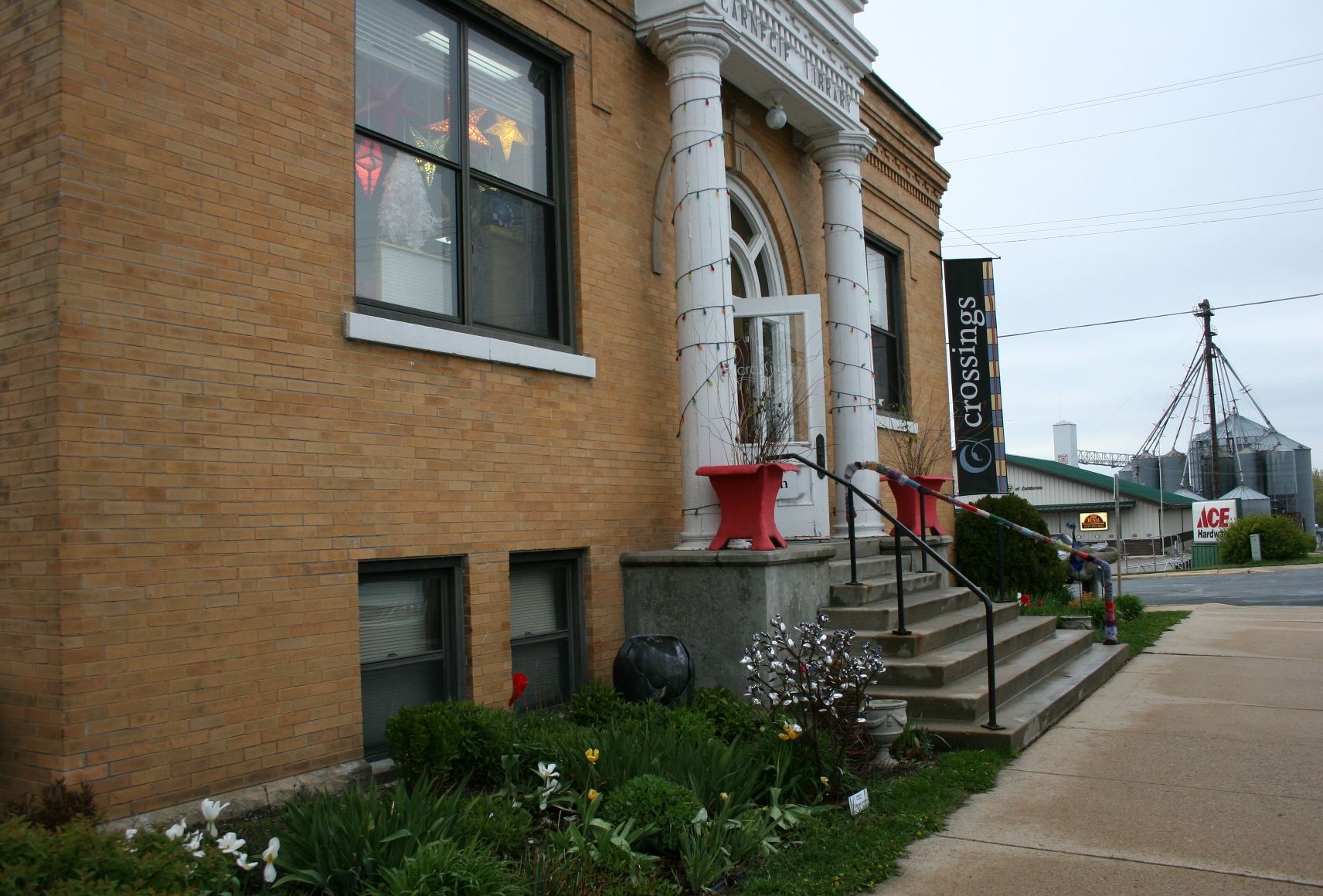
The Jon Hassler Theater and Rural America Arts Center in downtown Plainview.

The Jon Hassler Theater and Rural America Arts Center in downtown Plainview.

I bet Hassler, a former Plainview resident and an author noted for his nuanced fictional depictions of small town Minnesota life, would value the childish art on this pumpkin.

And the fact that I noticed.

© Copyright 2013 Audrey Kletscher Helbling