Minnesota Prairie Roots

Writing and photography by Audrey Kletscher Helbling

Shopping local: My beautiful vintage floral art find March 10, 2014

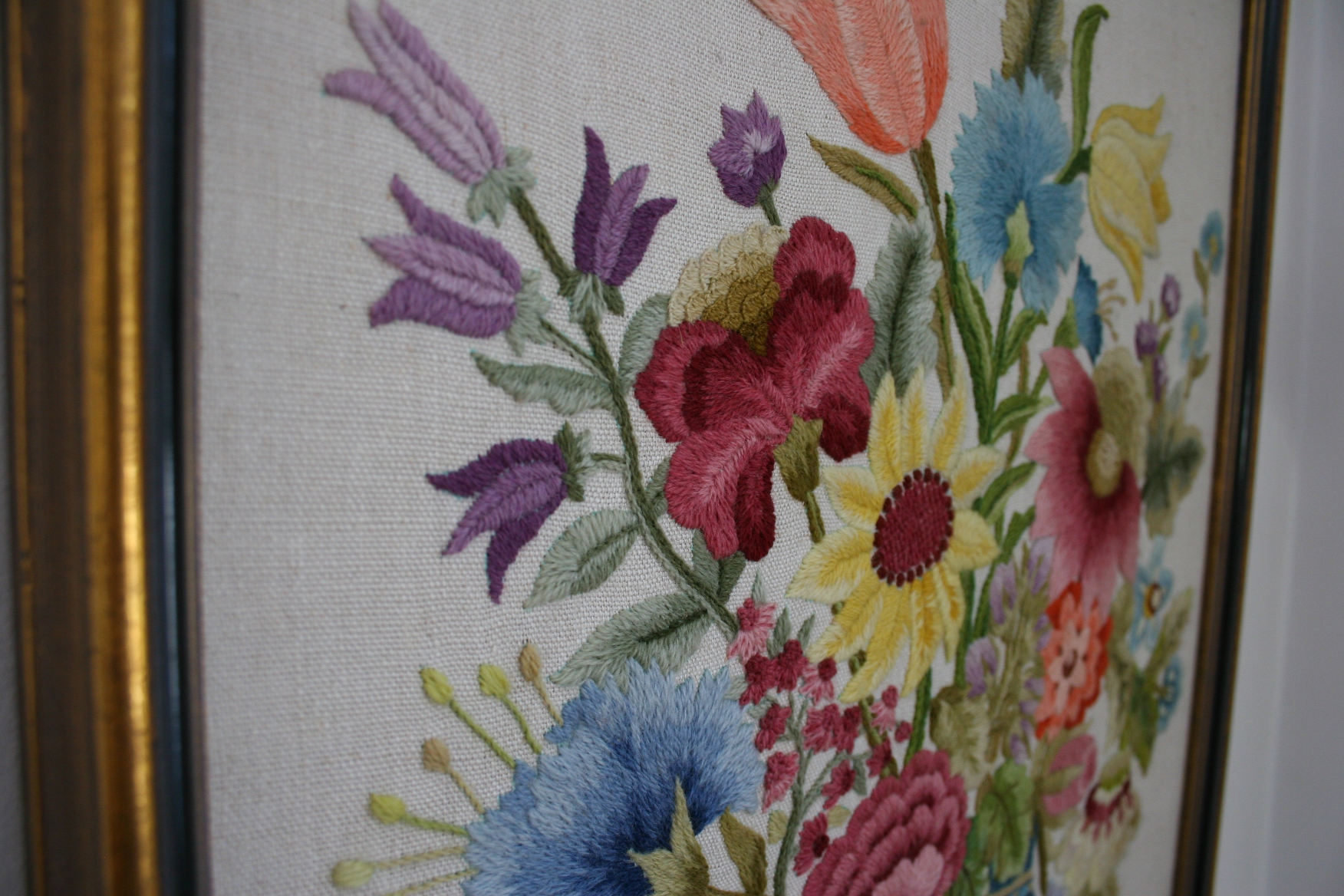
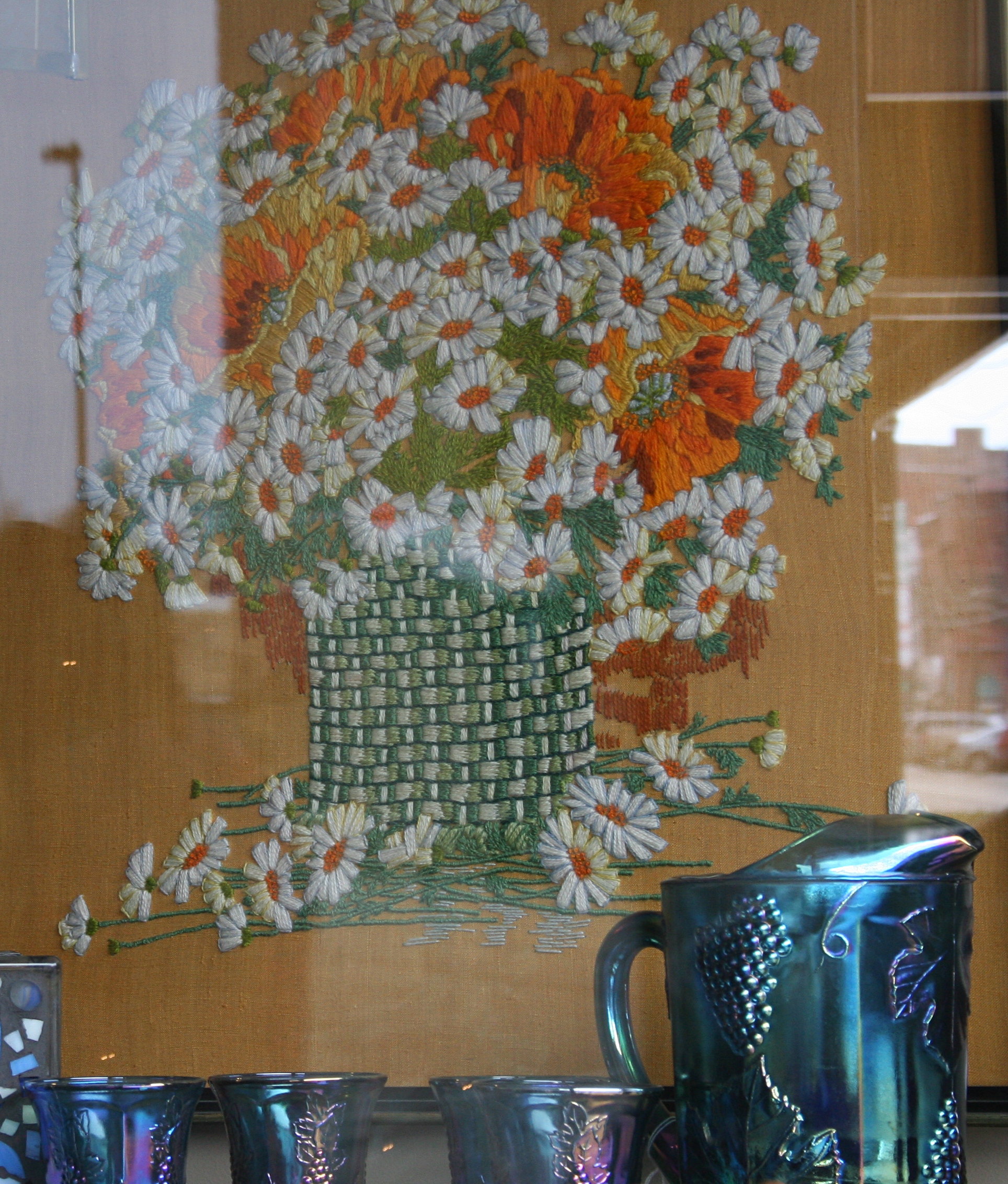
Crewel embroidery floral art, looking up

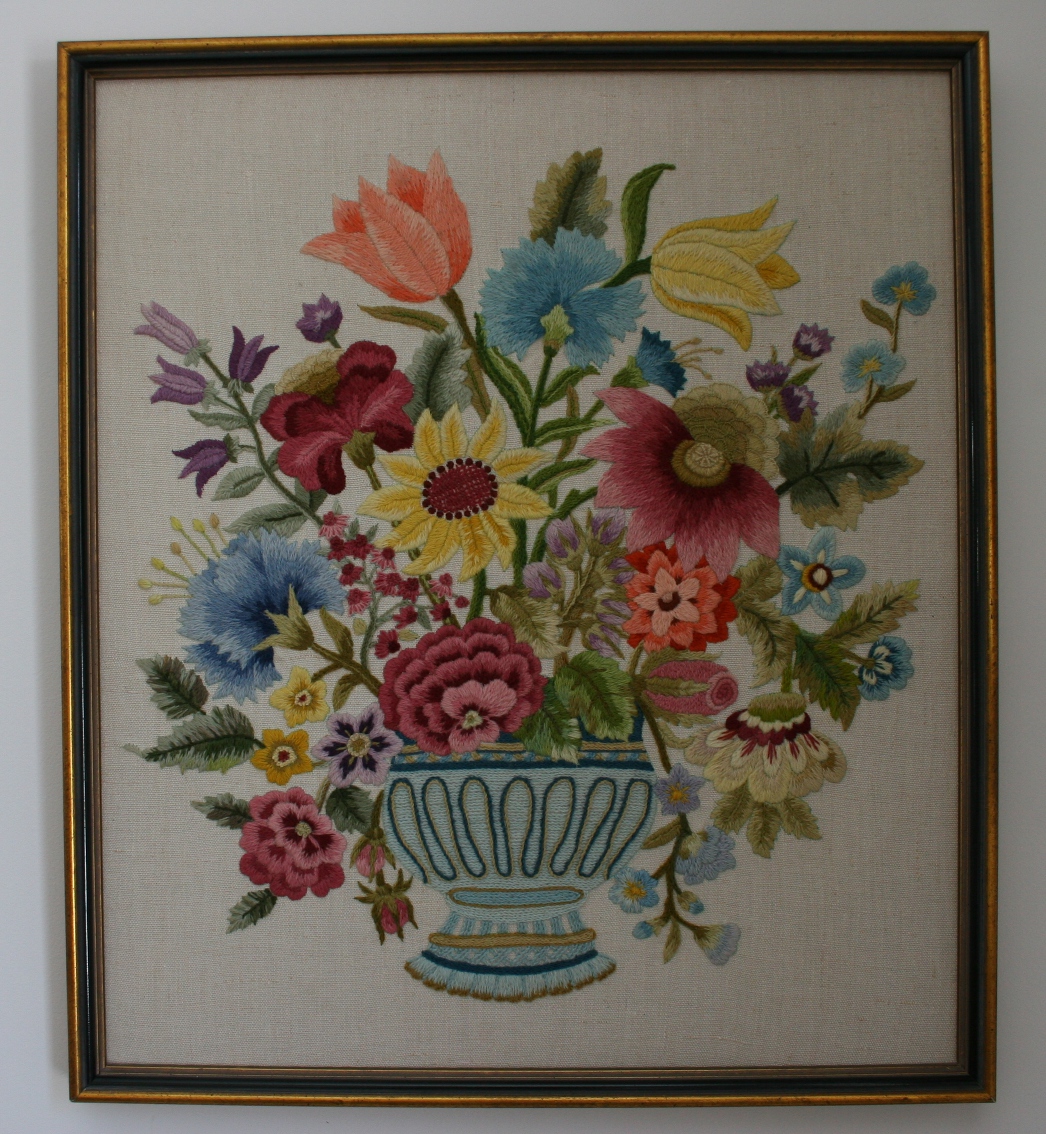
IT’S SIMPLY A STUNNING piece. Stitched flowers, artfully arranged, springing from a blue vase.

I was beyond tempted to keep the crewel embroidered floral art for myself.

But, instead, I would present it to my eldest who, for her 28th birthday, requested thrift art. She knows my knack for finding great original art at thrift shops, garage sales and elsewhere. I’d been searching for awhile for her gift, to no avail.

So I conceded that, until I found the perfect piece, she’d need to settle for a bouquet of real flowers. Fresh flowers are always welcome and would be a great way for my husband and I to thank our daughter and her husband for inviting us to lunch at their St. Paul apartment.

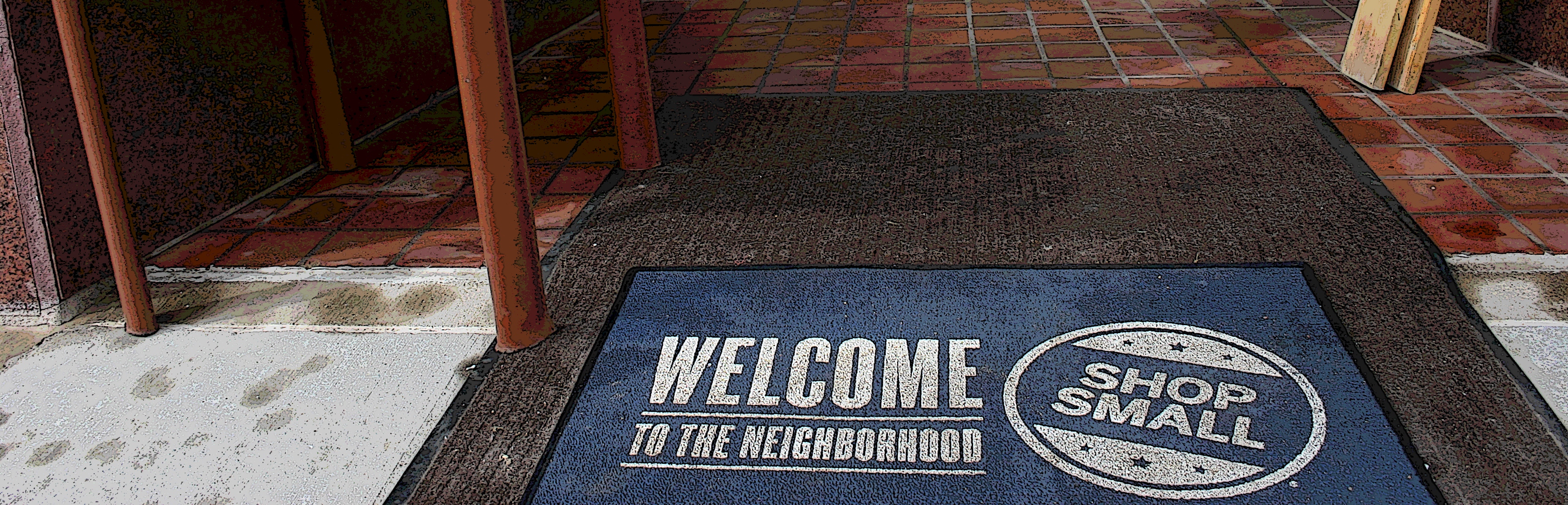
Remember to shop local as noted in this mat at the entrance to The Nook & Cranny. Edited photo.

Remember to shop small local stores as noted in this entry mat at The Nook & Cranny. Edited photo.

The day before the lunch date, Randy and I stopped downtown Faribault for St. Pete’s Select blue cheese from the Cheese Cave. Our son-in-law loves this locally-made cheese. And while we were on Central Avenue, I would pop into a floral shop for flowers.

Crewel embroidery floral art, front

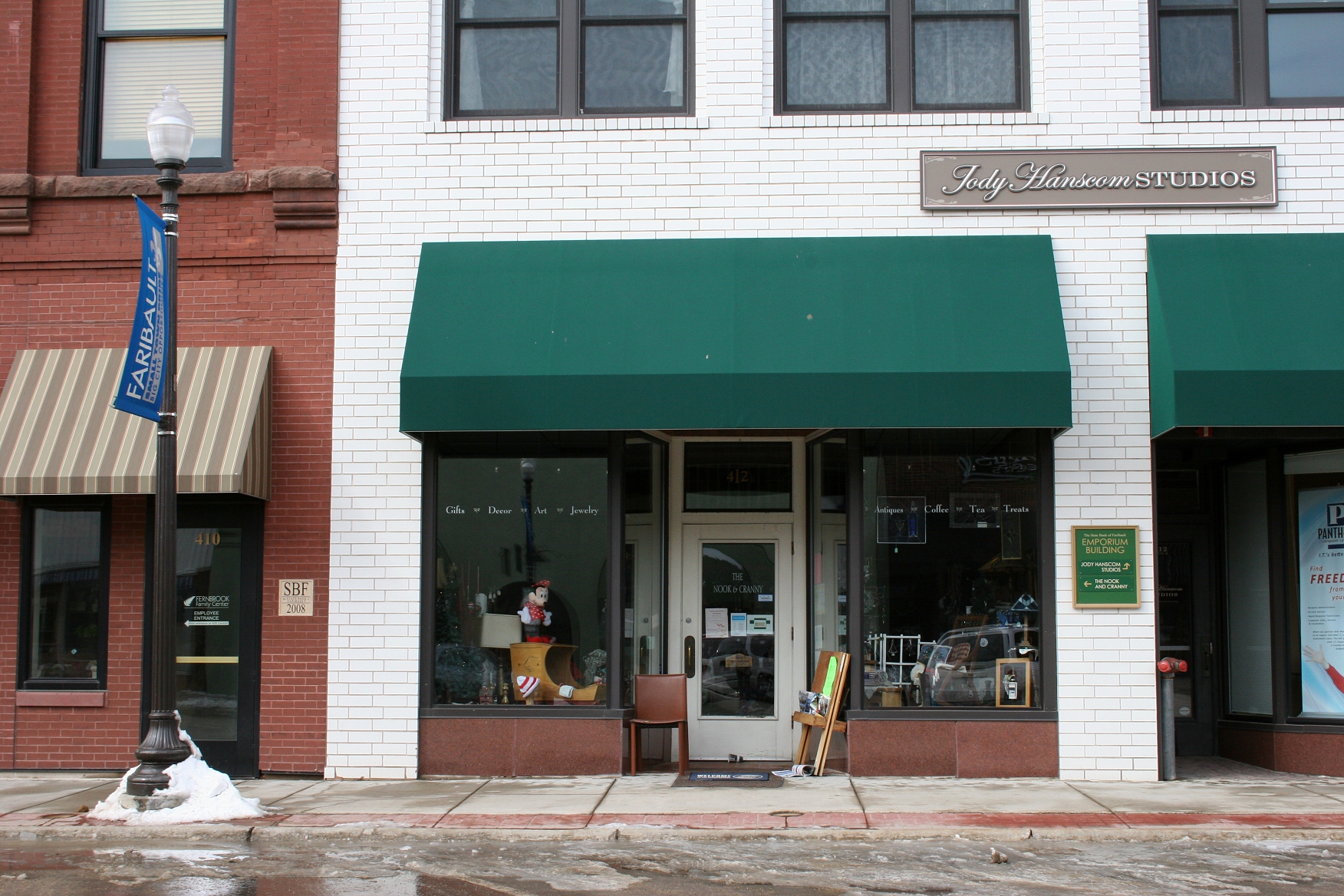
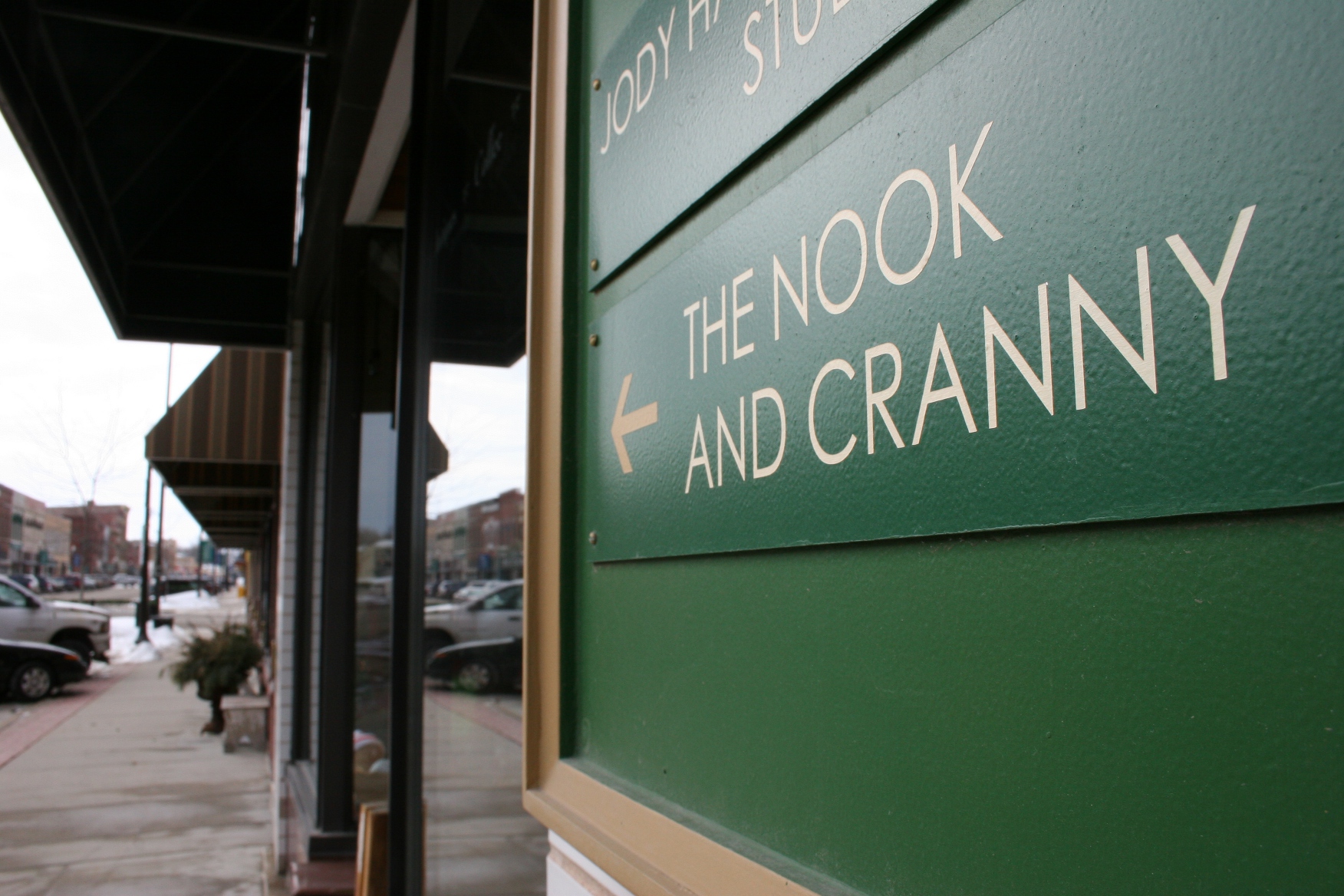
But, before I even exited the car, I noticed that stunning floral art in the front window of  The Nook & Cranny, a gift shop which features vintage, collectible and handcrafted merchandise.

The Nook & Cranny, 412 Central Avenue, Faribault, Minnesota.

The Nook & Cranny, 412 Central Avenue, Faribault, Minnesota.

I beelined for the store, my husband trailing. When he read the price tag on the artwork, my excitement diminished. It was priced way higher than I expected or wanted to pay. Art, but not exactly thrift art. As is typical of me, I debated whether I should spend that kind of money. I circled the store, fingering other merchandise, my thoughts never far from that floral art in the window.

Crewel embroidery floral art, side view

To make the potential purchase even more enticing, the shopkeeper shared its history. The floral art was created as a wedding gift some 75 years ago by a mother-in-law. Now no one in the family wanted the long ago gift nor two other crewel embroidered pieces, also for sale in The Nook & Cranny.

That history, combined with a comment by my spouse that real flowers would last perhaps a week, made the decision final. Our daughter would have this art forever.

The Nook & Cranny is among numerous one-of-a-kind locally-owned specialty shops in historic downtown Faribault.

The Nook & Cranny is among numerous one-of-a-kind locally-owned specialty shops in historic downtown Faribault.

So I meandered to the back room and, in an atypical move, asked the shopkeeper whether she would consider dropping the price. She did, by 10 percent. That was just enough. I knew, too, if I didn’t buy this vintage art with its wonderful history, I would regret my decision.

This crewel embroidery art, crafted by the same woman who created the floral I purchased, now hangs in the front window of the Nook & Cranny.

This 1970s vintage crewel embroidery art, crafted by the same woman who created the floral I purchased, now hangs in the front window of The Nook & Cranny. I photographed this through the window when the shop was closed, thus the glare on the glass. If you buy this art, tell them I sent you.

Truly, this art was meant to be purchased by me and gifted to my eldest. I am convinced of that. I know she will treasure it. When she saw the art for the first time, her enthusiasm was genuine.

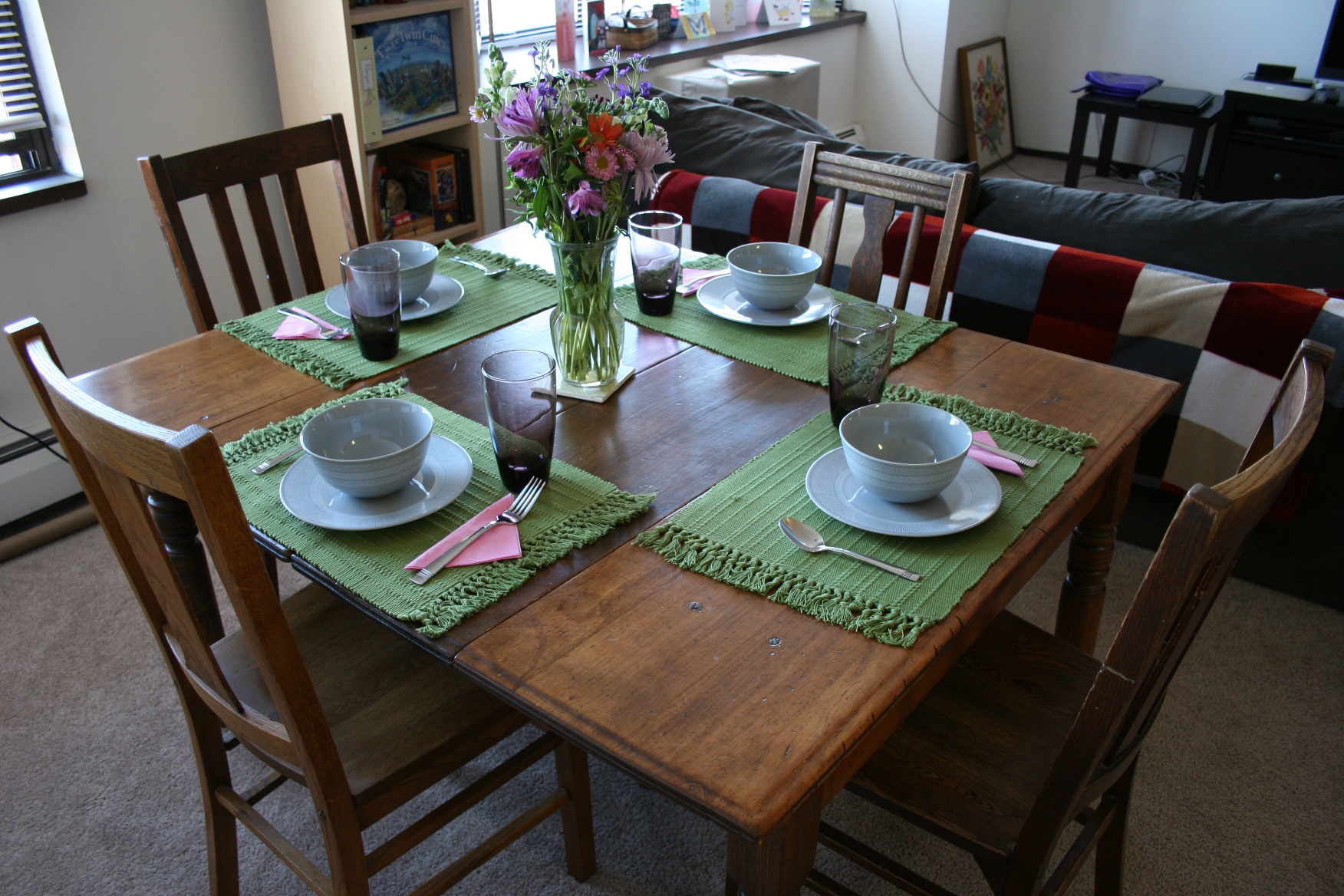
Table setting

Besides that, when we arrived at her and her husband’s apartment for Sunday lunch, a bouquet of fresh flowers already adorned the dining room table.

© Copyright 2014 Audrey Kletscher Helbling


Guilty of escaping a Minnesota winter: In the conservatory with the camera… March 4, 2014

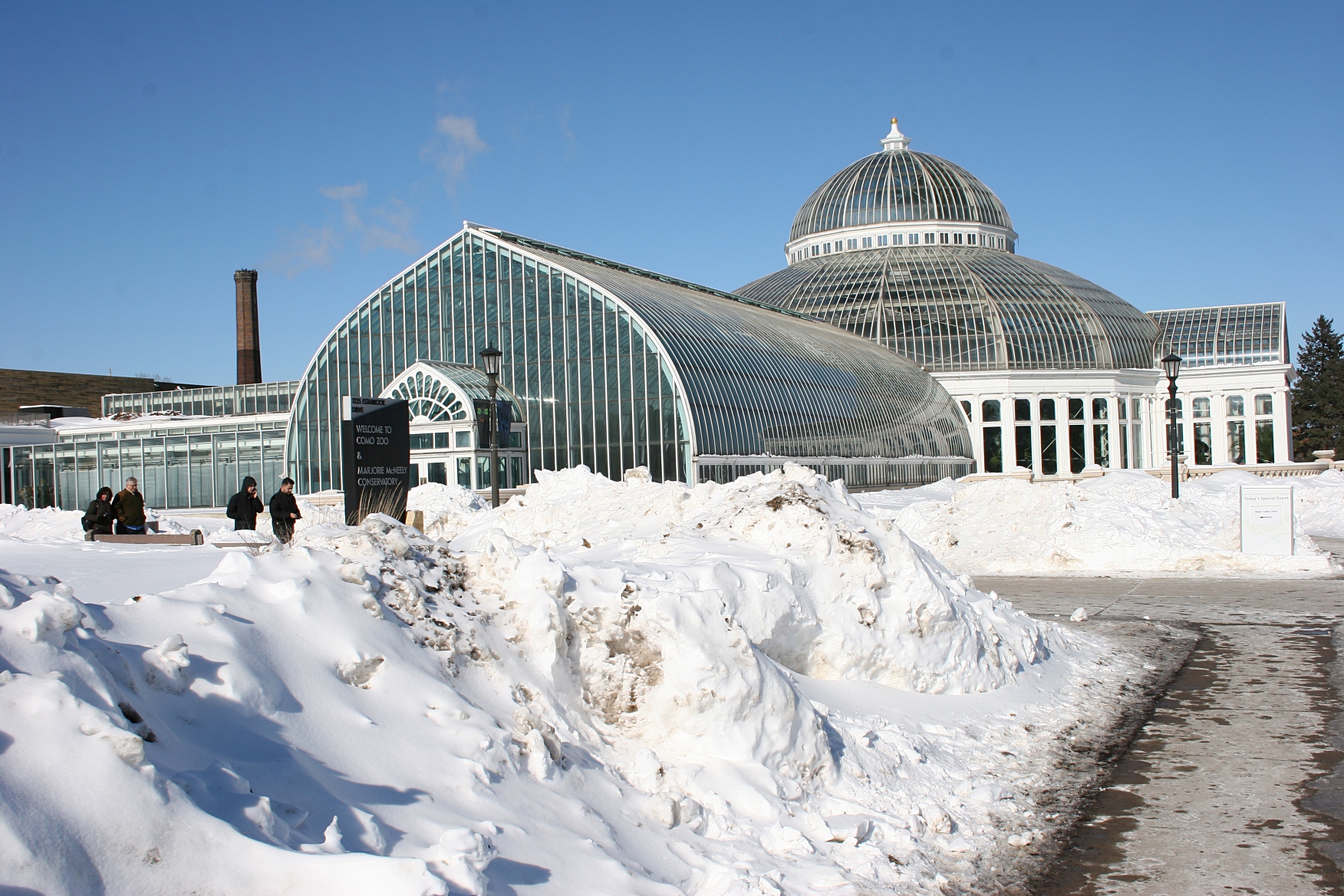
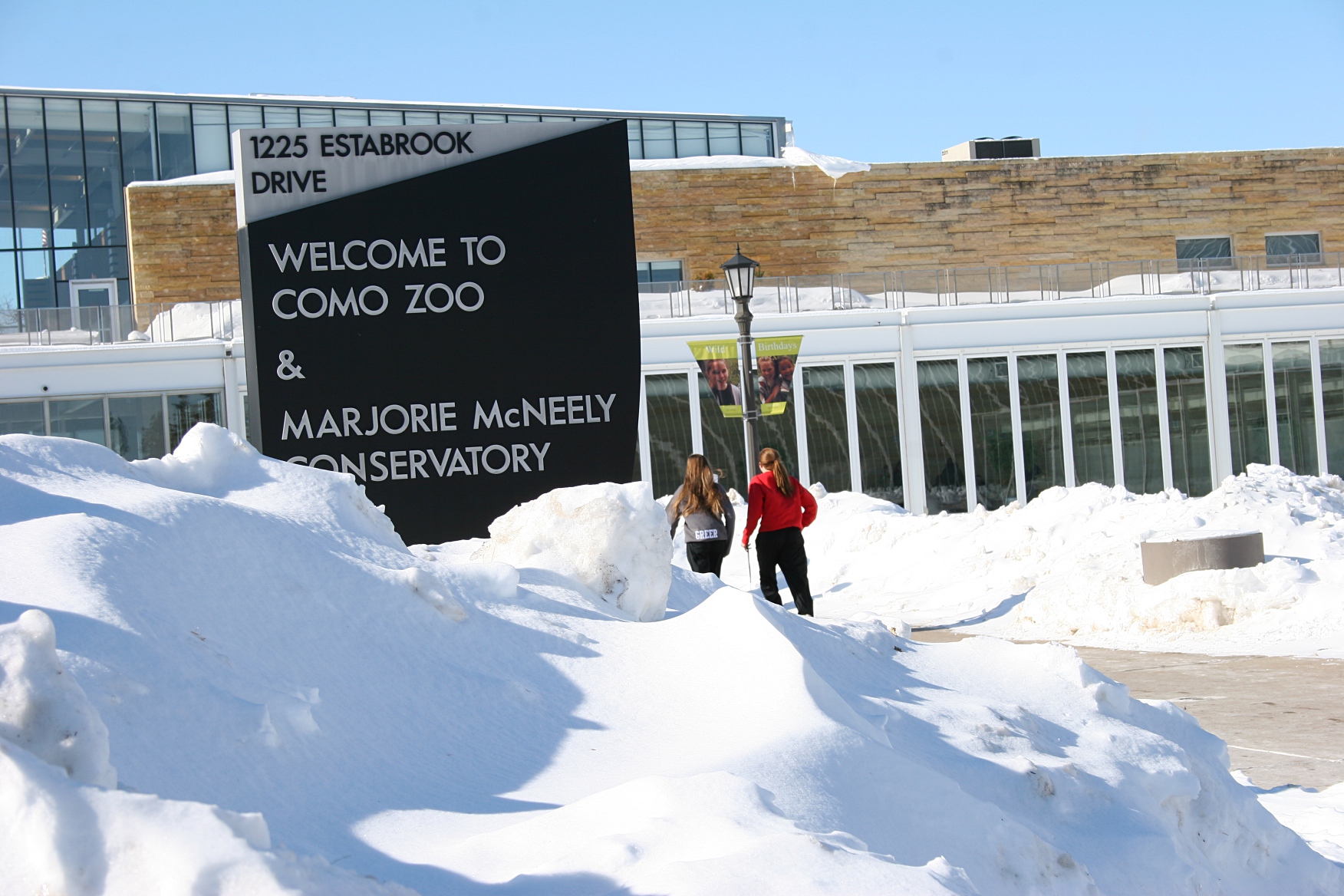
Photographing the Marjorie McNeely Conservatory in the cold Sunday afternoon.

The Marjorie McNeely Conservatory in St. Paul on Sunday afternoon.

“SHE’S CRAZY,” the woman remarked to her companion, not realizing I overheard her as I photographed the exterior of the Como Park Zoo and Conservatory.

I wasn't the only one racing from vehicle to the Como Park Zoo & Conservatory minus a coat.

I wasn’t the only one racing from vehicle to the Como Park Zoo & Conservatory minus a winter coat.

The outdoor air temp hovered around five degrees Fahrenheit. Add in the windchill and the “feels like” temp likely plummeted to minus 25 degrees. And I was coatless.

Was I crazy? Perhaps. But stir craziness marked precisely the reason I came here on a sunny Sunday afternoon on the second day of March with my husband, eldest daughter and son-in-law. I needed a respite from the coldest Minnesota winter in 35 years. And I might add a particularly snowy one.

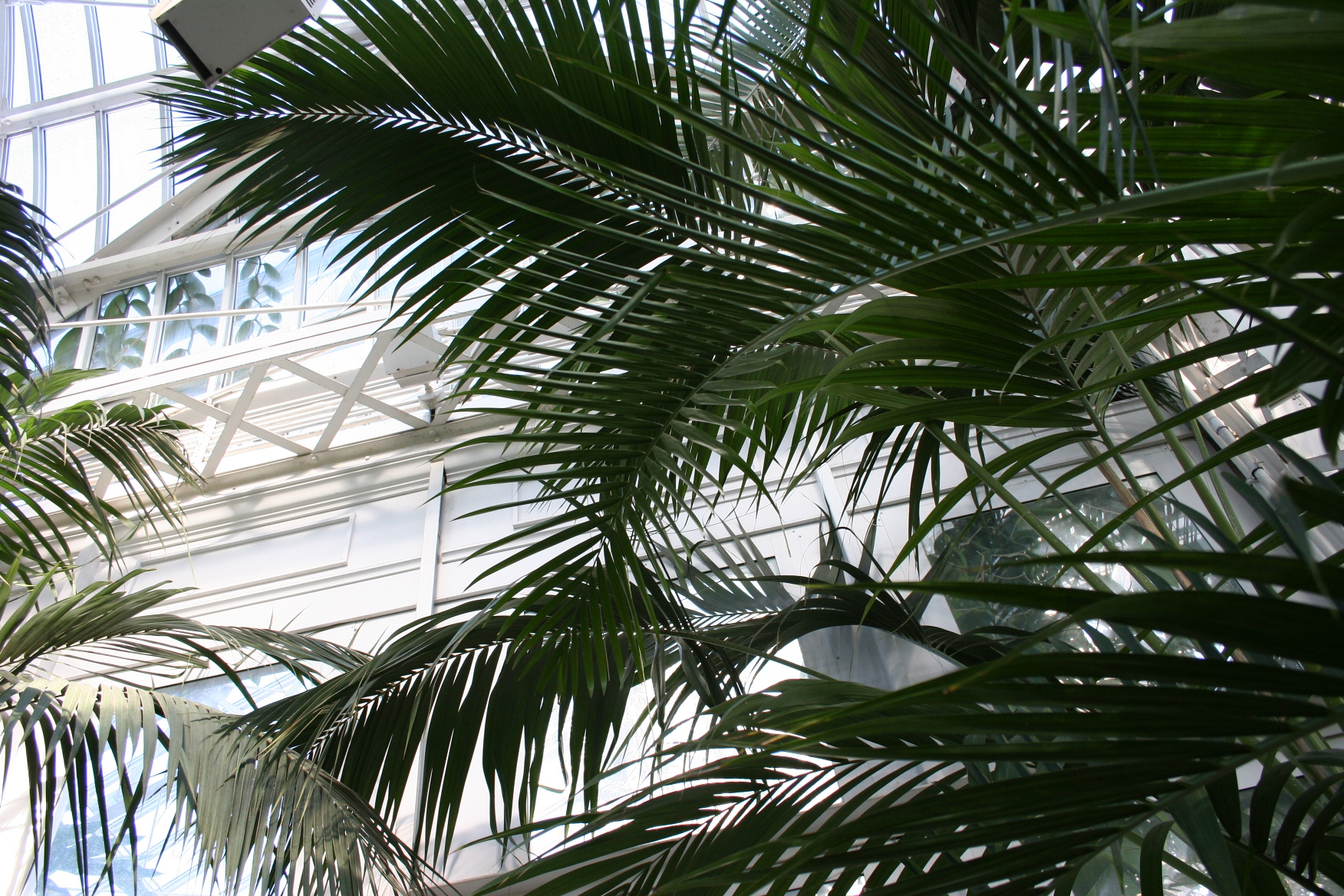
Looking up at the palm trees.

Looking up at the palm trees.

For a snippet of an afternoon, I pretended I was in the tropics, in a land of lush greenery and flowing rivers and blooming flowers.

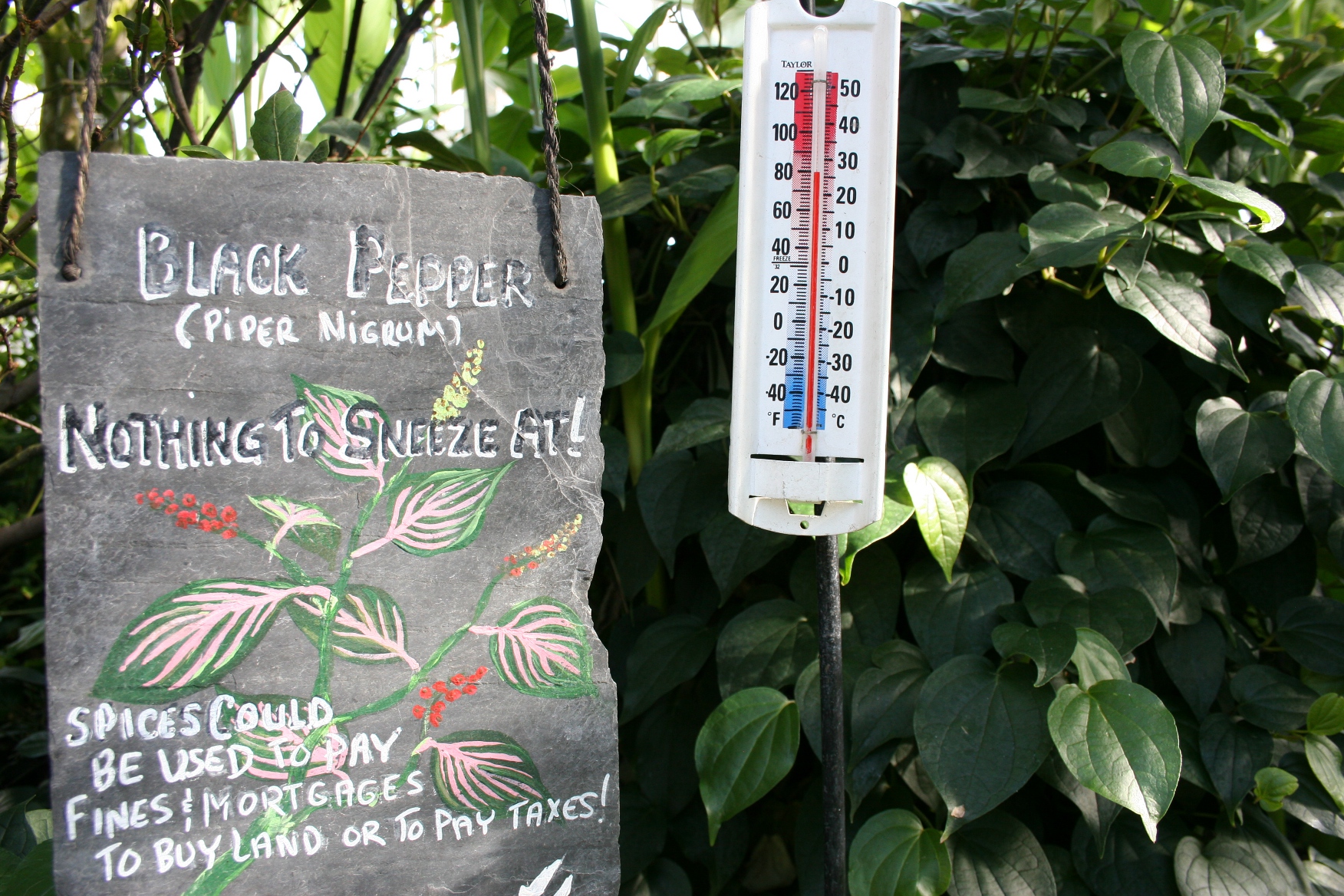
Temps were downright hot inside the Conservatory, the reason I left my coat in the car.

Temps were downright hot inside the North Garden, the reason I left my coat in the car.

Not difficult to imagine in the 80-degree warmth of the North Garden,

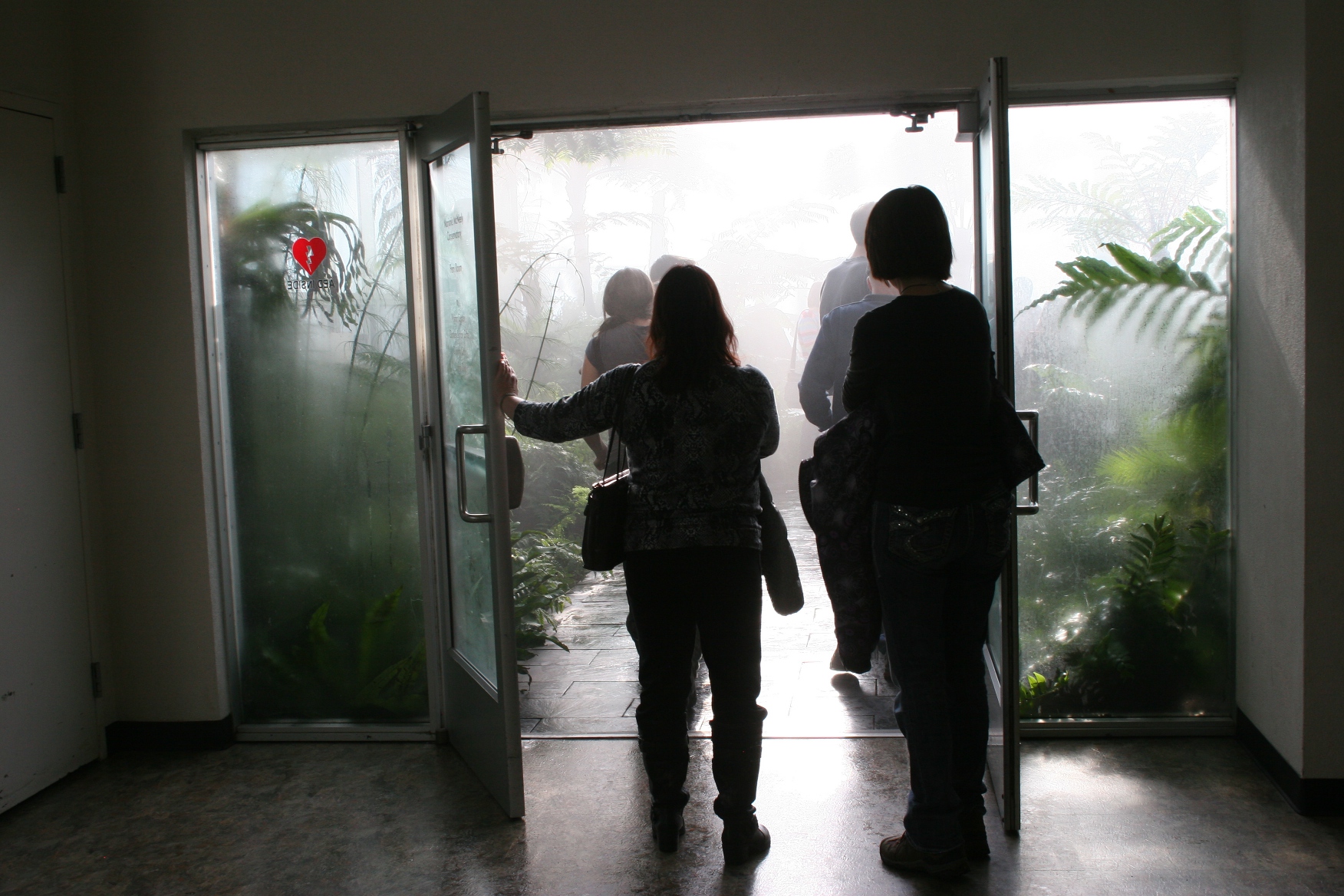
I tucked my Canon inside my camera bag before entering the humid/misty Fern Room.

I tucked my Canon inside my camera bag before entering the humid/misty/foggy Fern Room.

in the smothering humidity of the Fern Room

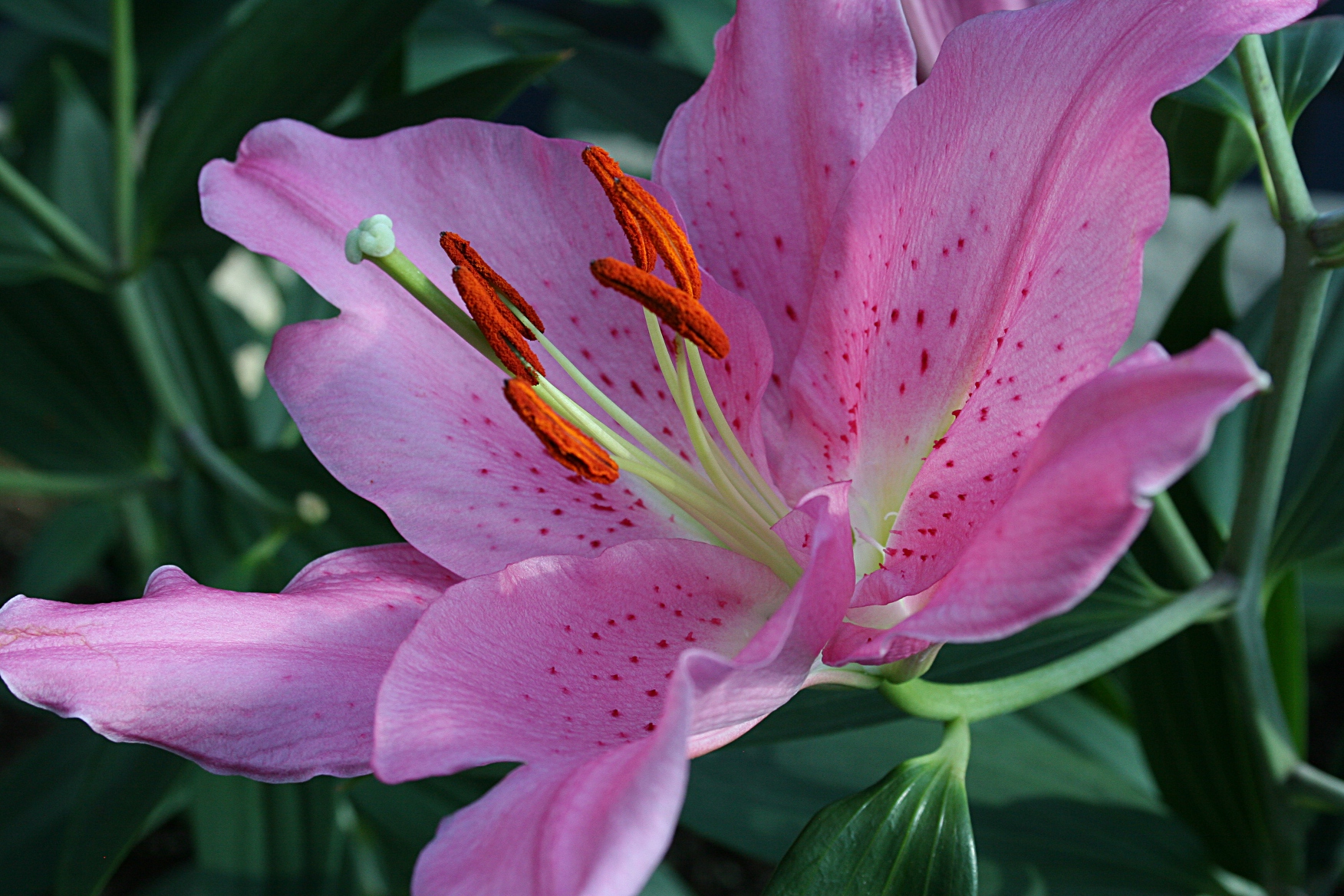
Lilies and other flowers perfumed the Sunken Garden.

Lilies and other flowers perfumed the Sunken Garden.

or in the Sunken Garden scented by the blossoms of blooming flowers.

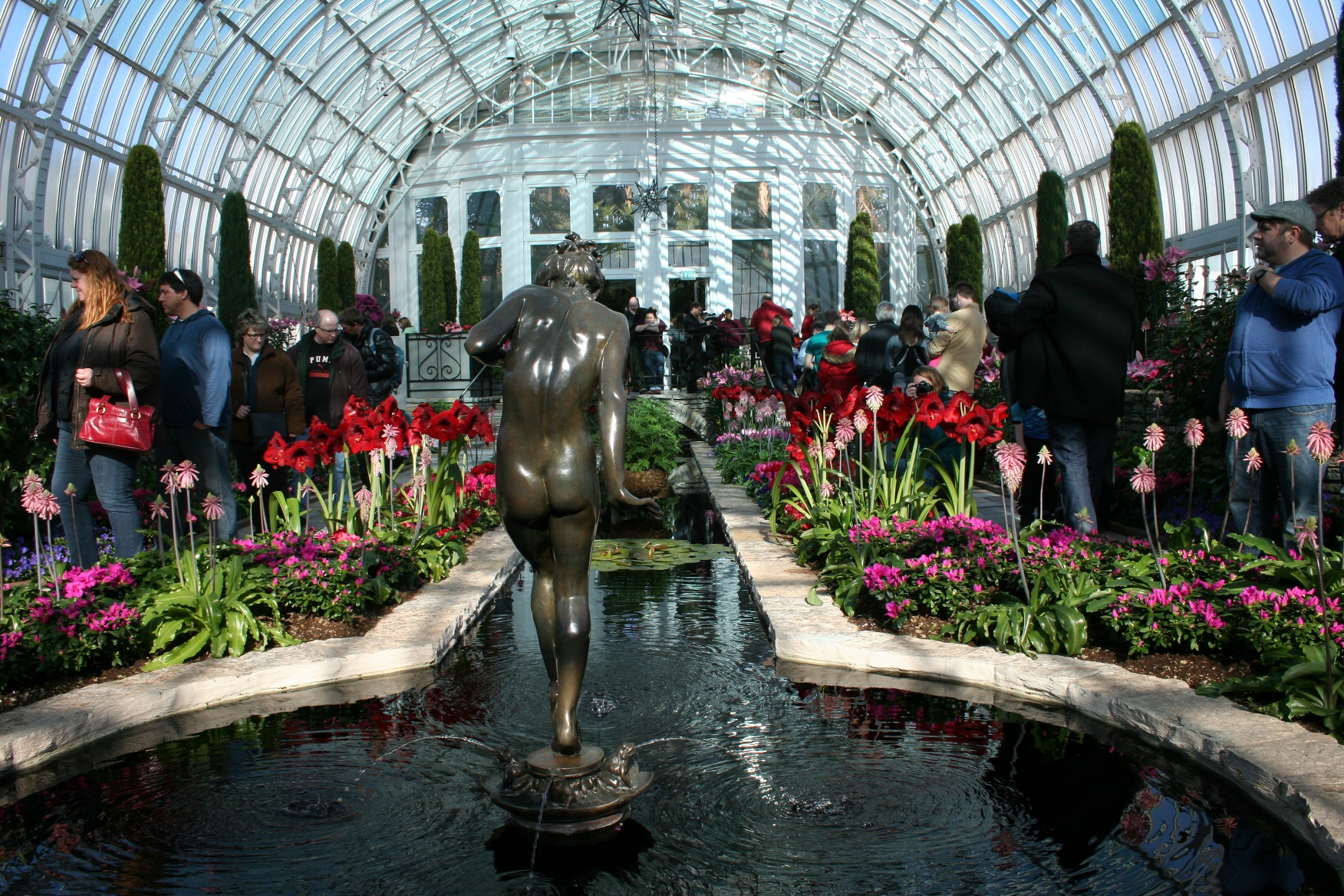
Lines of people streamed through the Sunken Garden, by far the most crowded space.

Lines of people streamed through the Sunken Garden, by far the most crowded space.

This was exactly what I needed, as did hundreds of others. Conservatory paths were packed with people meandering through the gardens, pausing to photograph flowers and/or simply basking in the warmth and beauty.

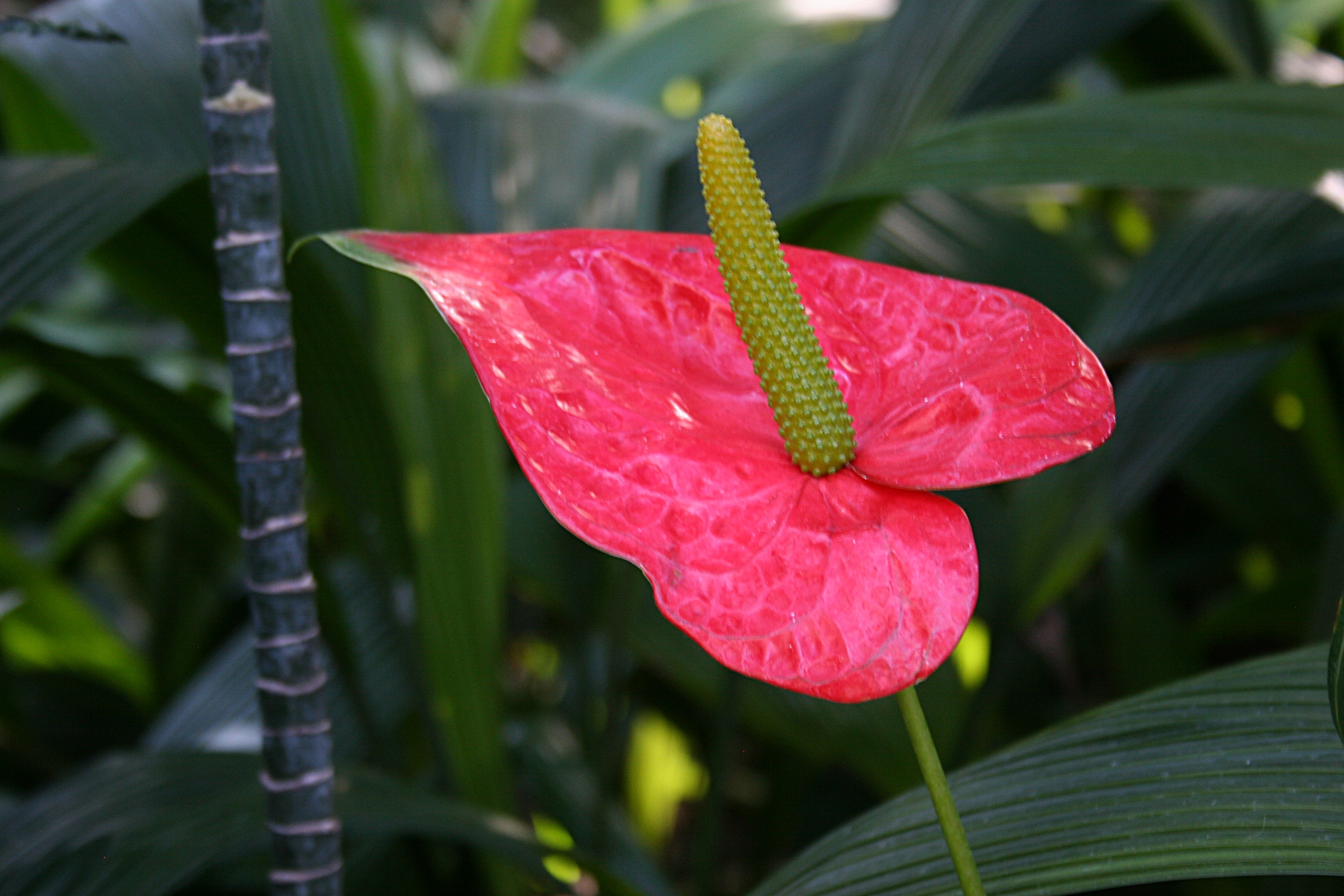
I can't recall the name of this flower, but I paused to photograph it because I like its shape and sheen.

I can’t recall the name of this flower, but I paused to photograph it because I like its shape and sheen.

Crowded conditions were not conducive to creative photography as I had to move along lest I hold up others. But I managed.

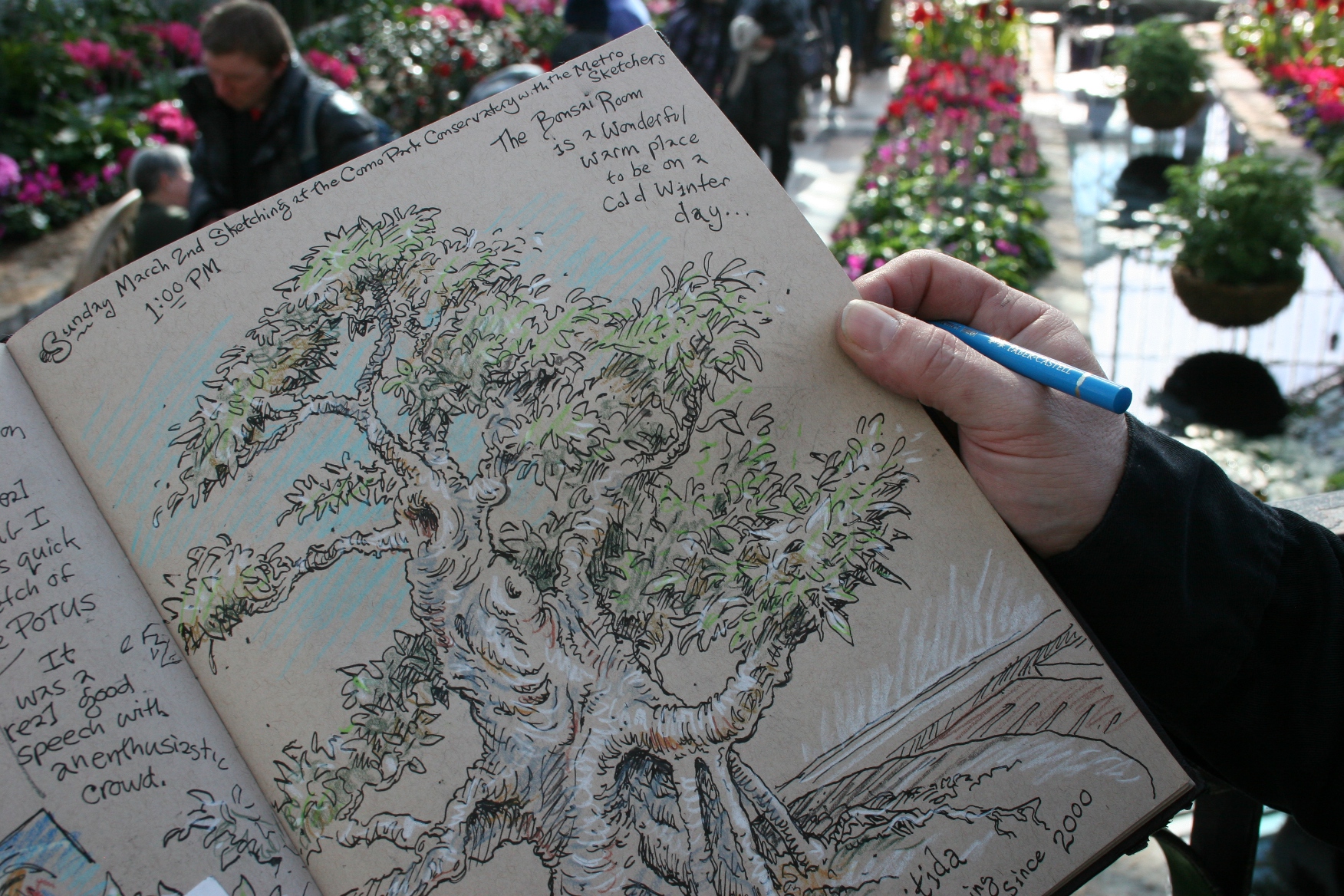
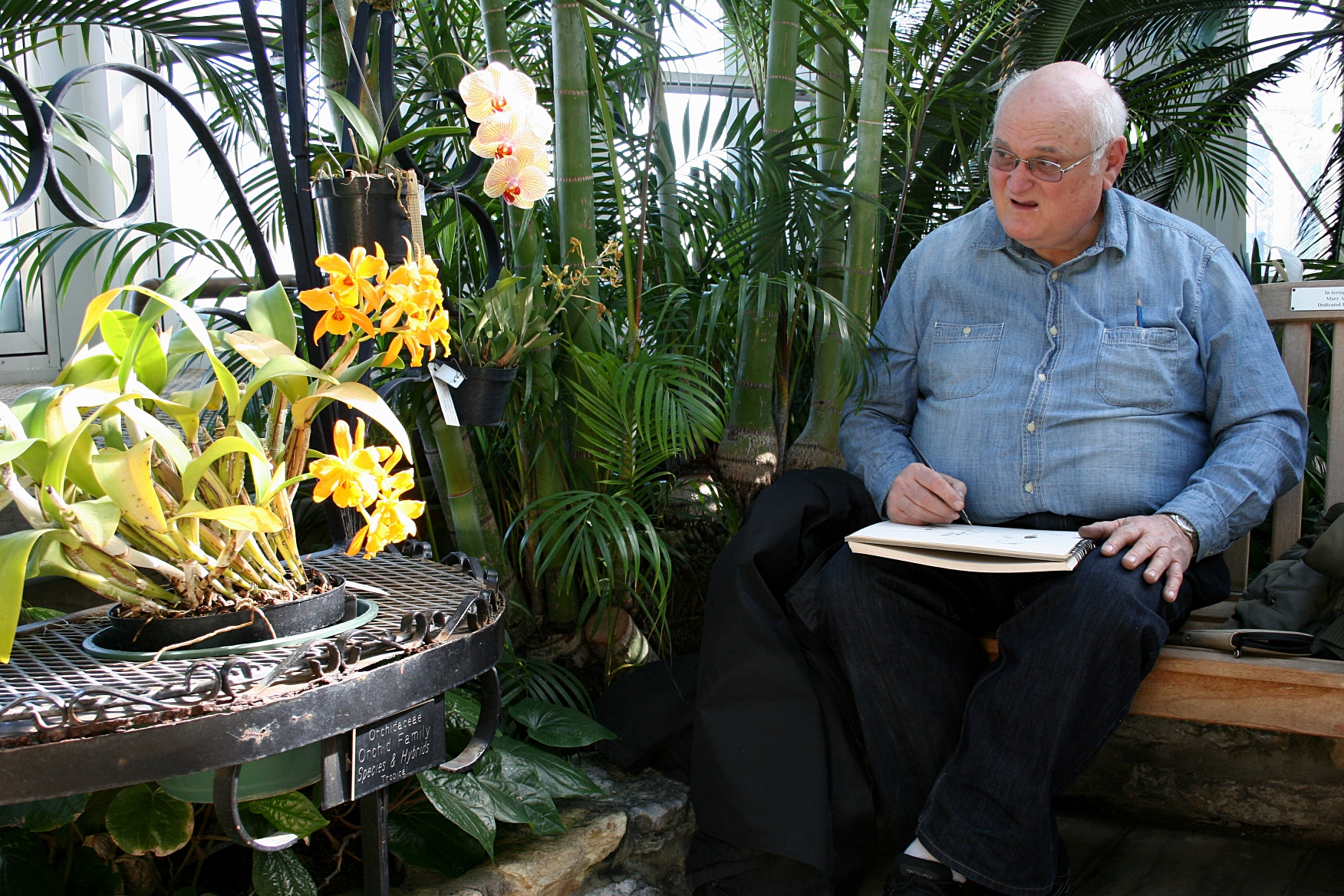
An artist sketching in the Sunken Garden flipped his sketchbook back to reveal his favorite sketch of the day, that of a bonsai tree. His art is spectacular.

An artist sketching in the Sunken Garden flipped his sketchbook back to reveal his favorite sketch of the day, that of a bonsai tree. His art is spectacular. My apologies for failing to ask his name.

Metro Sketchers, artists who monthly gather to create art at a chosen location, recorded the scenes unfolding before them.

Thomas Winterstein of St. Paul sketches a scene in the Palm Dome.

Thomas Winterstein of St. Paul sketches a scene in the Palm Dome.

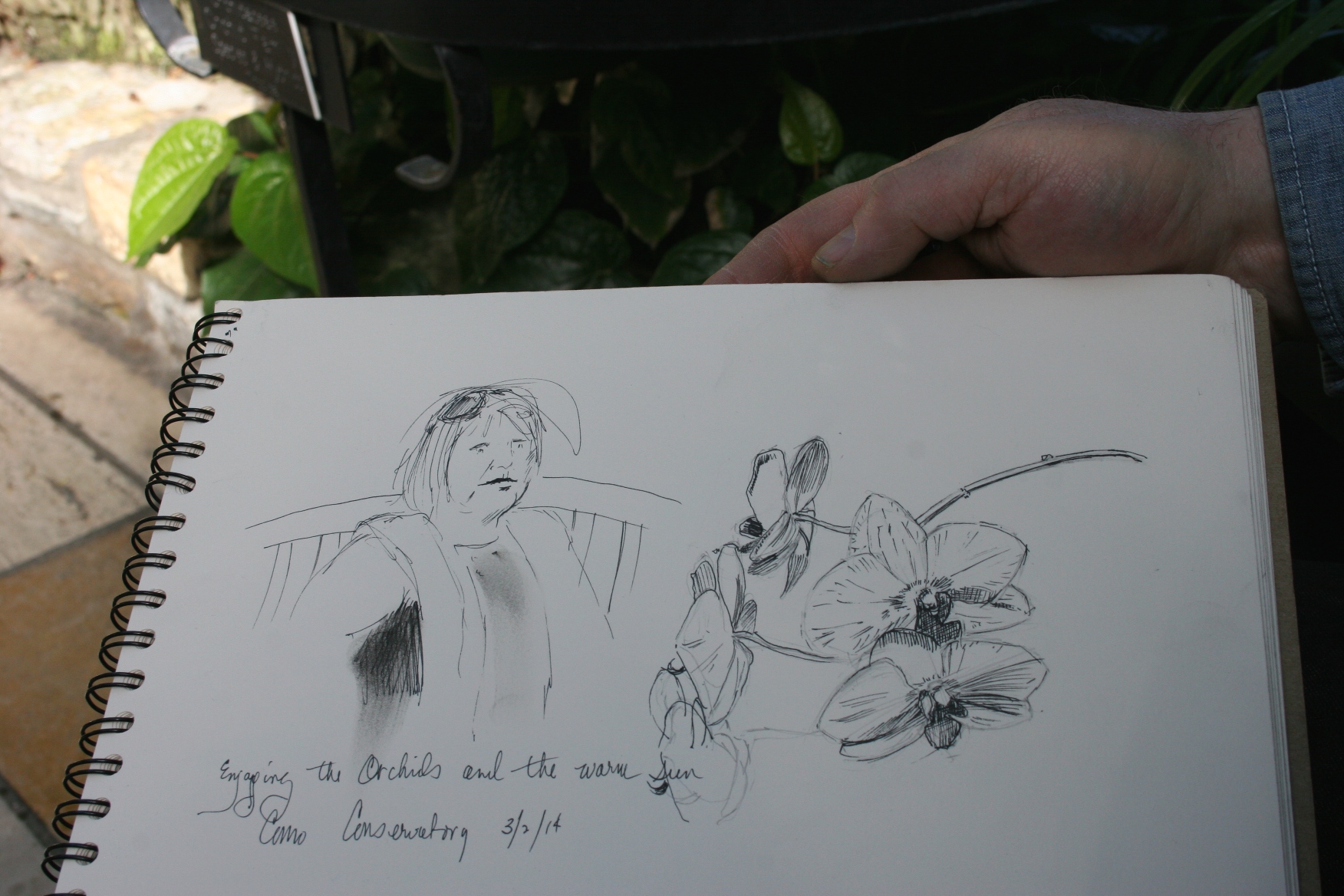
I chatted with a few,

Thomas Winterstein's sketch.

Thomas Winterstein’s sketch.

admired their art and their ability to create with paint and pencils and other mediums.

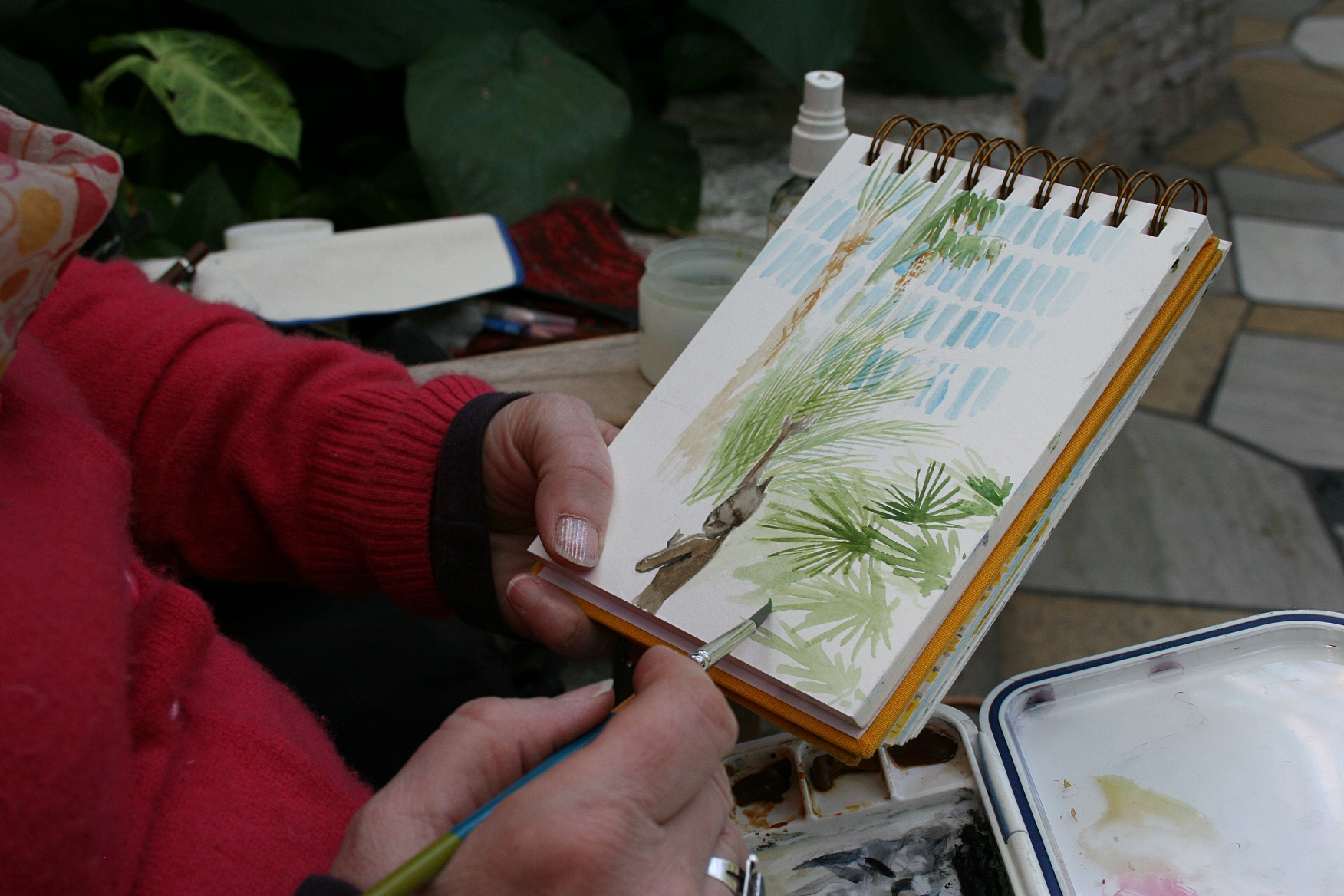
Watercolor artist Kathleen Richert paints a fountain in the Palm Dome.

Watercolor artist Kathleen Richert paints a fountain scene in the Palm Dome.

I wondered, too, if my California native son-in-law was at all impressed. After all, palm trees and other warm climate plants certainly aren’t foreign to him.

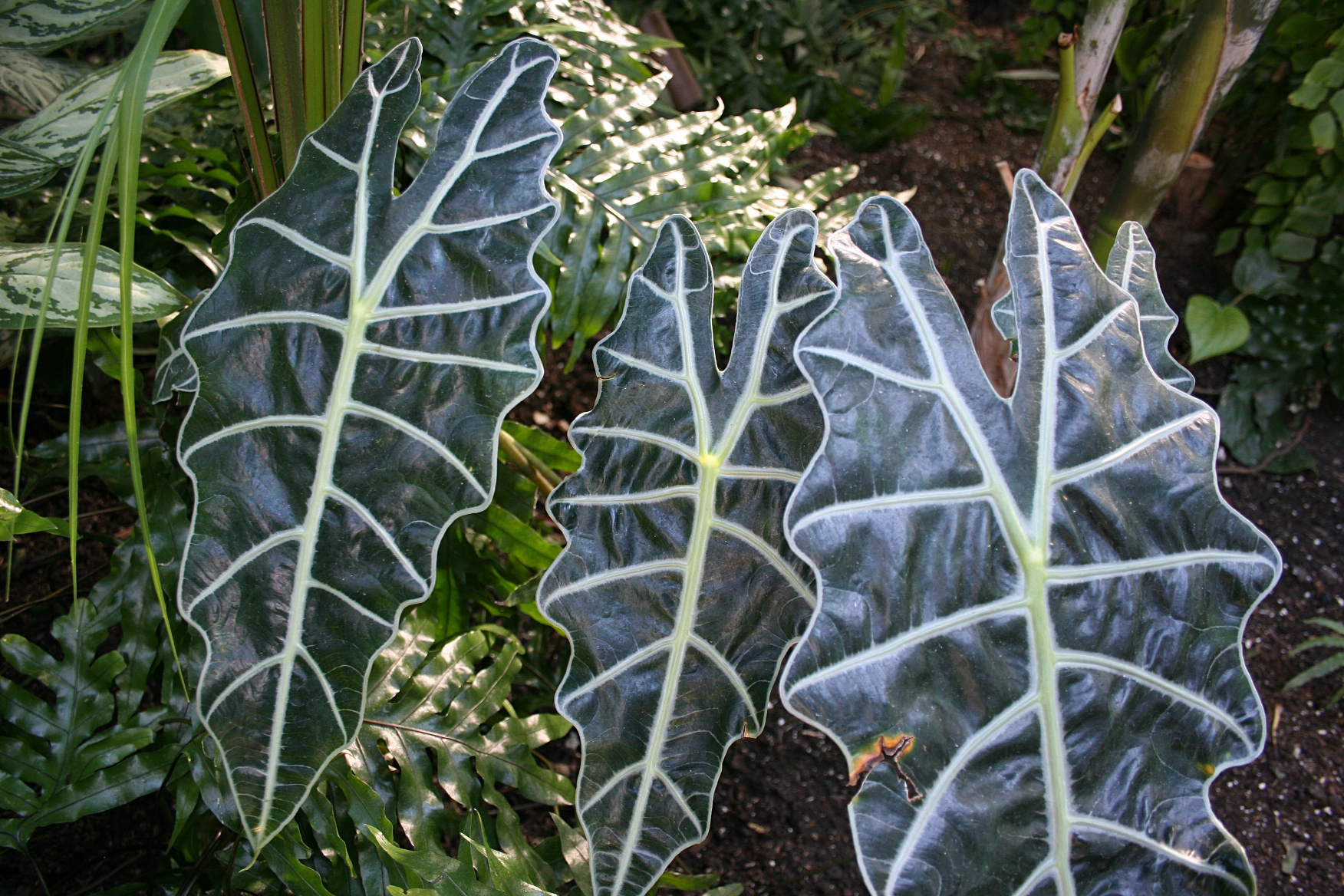
I have no idea what plant this is, but I love the leaves.

I have no idea what plant this is, but I love the leaves.

To this Minnesotan, though, the Marjorie McNeely Conservatory at Como Park in St. Paul proved impressive and mentally uplifting in this longest and coldest of Minnesota winters.

Even though you're not supposed to snap posed portraits, I managed to take a quick shot of my daughter and her husband in the Palm Dome.

I managed a quick shot of my daughter and her husband in the Palm Dome, even though portraits are banned.

FYI: Just for the record, I left my coat in the daughter’s car as I did not want to carry it around in the Conservatory while also juggling a camera. The daughter was kind enough to drop Mom and Dad off at the sidewalk leading to the Conservatory. She and her husband then circled the parking areas for an incredibly long time before squeezing into a tight parking space. I’d advise driving a small vehicle here and not attempting to park in the unplowed gravel lot where vehicles were getting stuck.

Check back for more photos.

© Copyright 2014 Audrey Kletscher Helbling

 

A ginormous Frosty at an historic home February 21, 2014

Filed under: Uncategorized — Audrey Kletscher Helbling @ 6:00 AM
Tags: , , , , , ,

Snowman, really up close

FORGET CREATING a mini-sized version of Frosty the Snowman.

Snowman, looking up at

This oversized snowman stands in the Hoisington family’s yard at 18 Third Avenue Northwest in Faribault. My friend John directed me to the snow art last Sunday.

Snowman, from front of house

As impressed as I was by the snowman, I was even more impressed with the house. I love everything about this historic home’s exterior from the front brick pillars topped by lion statues to the sturdy entry columns to the graceful curves to the signature windows. I can only imagine the beautiful interior.

This reminds me of the stately home along Lake Harriet in south Minneapolis.

John, when trying to direct me to the location, referenced the house as Dr. Mc I-can’t-recall-his-name’s home, which meant nothing to me, not being a native of Faribault. I find that historical reference typical of my community. My husband and I, after all, live in “the Swanson house,” even though we’ve owned our home for 30 years.

FYI: This was photographed prior to our two-day thaw of 40 degrees and prior to our Thursday/Friday blizzard.

© Copyright 2014 Audrey Kletscher Helbling


The Mighty Duck II February 20, 2014

Filed under: Uncategorized — Audrey Kletscher Helbling @ 6:00 AM
Tags: , , , , ,
I am not good at judging size. But this is one big duck.

The sculpture as photographed last week. Minnesota Prairie Roots file photo.

REMEMBER THAT DUCK snow sculpture I showed you last week?

Well, it wasn’t finished.

Look how sculpting and color transformed this duck.

Multiple rubber duckies not sit atop the giant duck graced with a heart and a colored bill.

Multiple rubber duckies now sit atop the giant duck with a heart on its breast.

Stepping back, a view from the street.

Stepping back, a view from the street.

Fabulous, isn’t it?

What's next?

What’s next?

I don’t think the project is finished yet, based on the pile of blocked snow next to the mighty duck at the Kurt Kletter home, 417 Second Street Northwest, Faribault. I’ll keep my eyes on that duck and any new developments.

FYI: Since photographing this duck on Sunday afternoon, we’ve experienced two days of 40-degree temps. I have not checked to see how this heat wave may have impacted the snow sculpture.

Copyright 2014 Audrey Kletscher Helbling

 

Transforming the winter landscape February 17, 2014

Filed under: Uncategorized — Audrey Kletscher Helbling @ 6:00 AM
Tags: , , , , , , , , ,

LACKING COLOR; colorless.

White dominates the Minnesota landscape this time of year. I don’t need to tell you that if you live here. Just look outside right now. Snow. More snow today. Like me, you’ve probably had enough of winter.

It’s easy to become visually depressed, eye weary of the mostly colorless landscape. You yearn for pops of color to brighten this drab environment, to lift your spirits.

Via the magic of photo editing, I’ve transformed some rather ordinary winter scenes into works of art. Oz they’re not. But the simple act of manipulating these photos into watercolor or paint-by-number style images shifted my mood. I hope they do yours, too.

A ridge of plowed snow edges a country road near Montgomery, Minnesota.

A ridge of plowed and drifted snow edges a country road near Montgomery, Minnesota.

A farm site near Montgomery lost in a sea of snow.

A farm site near Montgomery in a sea of snow.

Love this sturdy barn, also near Montgomery.

Love this sturdy barn and silos, also near Montgomery.

Machinery, seemingly abandoned in the snow.

Machinery, snowed-in.

© Copyright 2014 Audrey Kletscher Helbling


Goin’ quackers during a Minnesota winter February 12, 2014

Filed under: Uncategorized — Audrey Kletscher Helbling @ 6:00 AM
Tags: , , , , , , ,

THIS COLD AND SNOWY Minnesota winter has many of us natives going a little bonkers.

I am not good at judging size. But this is one big duck.

I am not good at judging size. But this is one big duck.

But at least one Faribault resident is goin’ quackers instead, sculpting a mighty snow duck in the front yard at 417 Second Street Northwest.

Another angle, looking toward Second Street Northwest.

Another angle, looking toward the street.

I spotted the waterfowl a few days ago, when temps reached a high of around zero and the wind was whipping something fierce.

Big duck. Little duck (decoy).

Little duck (decoy). Mighty duck.

Not a great day to pull out the camera. In less than five minutes of shooting, my gloveless fingers were chilled to the bone. Back inside the car, I positioned my hands within a wisp of a heat vent.

Gazing up at one mighty duck.

Gazing up at the mighty duck.

Now you’re going to ask, “Why a duck? And why would anyone do this?”

I nearly missed the rubber ducky atop the snow at the end of the driveway as I hurried toward the car.

I nearly missed the rubber ducky atop the snow at the end of the driveway as I hurried toward the car.

I didn’t knock on the door and inquire. My only thought after shooting about a dozen frames shortly before sunset was to get inside the Chrysler and warm up.

Therefore you get to offer your theories. Go.

FYI: Not that this has anything to do with the duck sculpture. But D3: The Mighty Ducks, a 1996 sports comedy movie, was filmed at Shattuck-St. Mary’s School in Faribault and at Carleton College in nearby Northfield. NHL player Emerson Eten, who played prep hockey at Shattuck, now skates for the Anaheim Ducks.

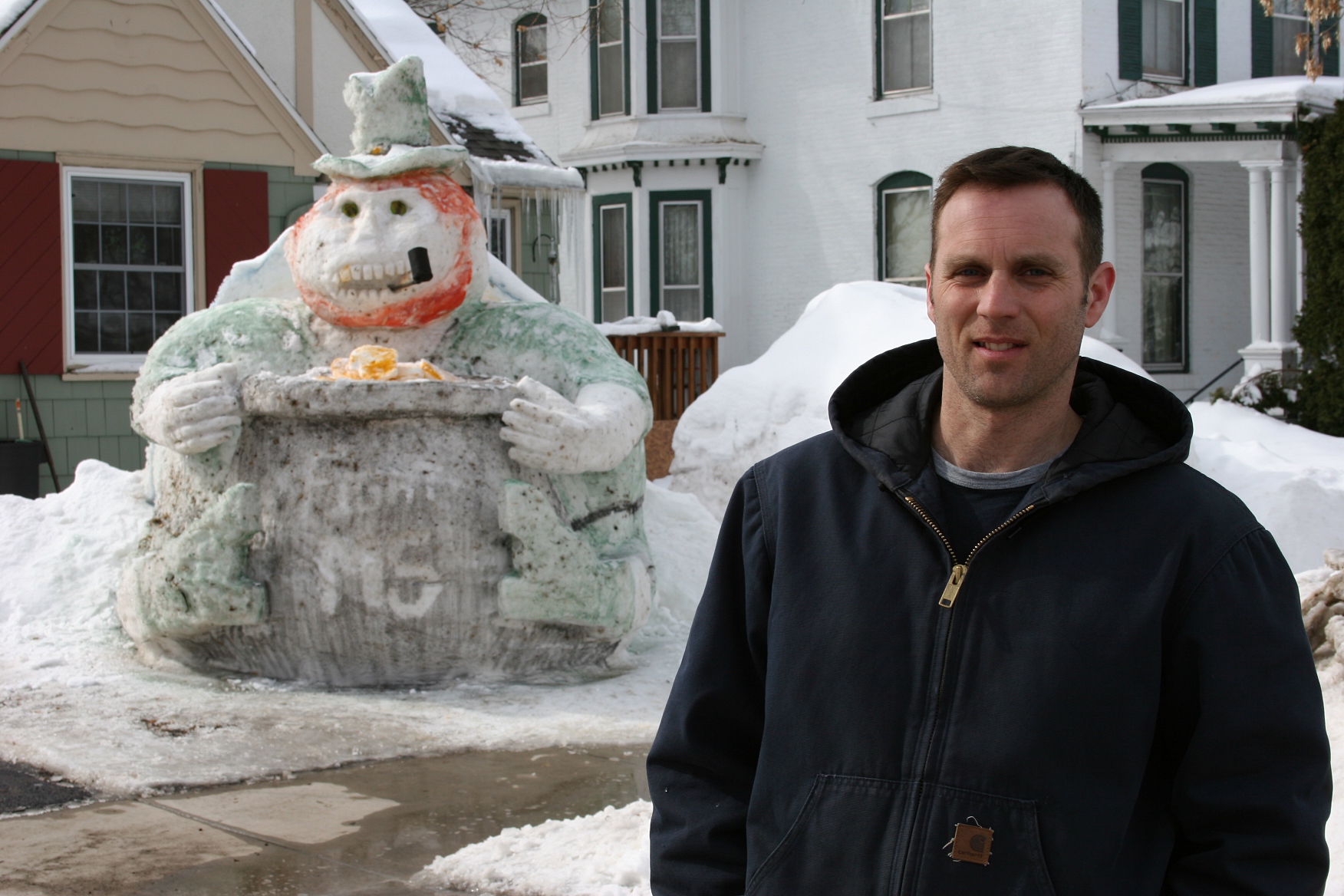
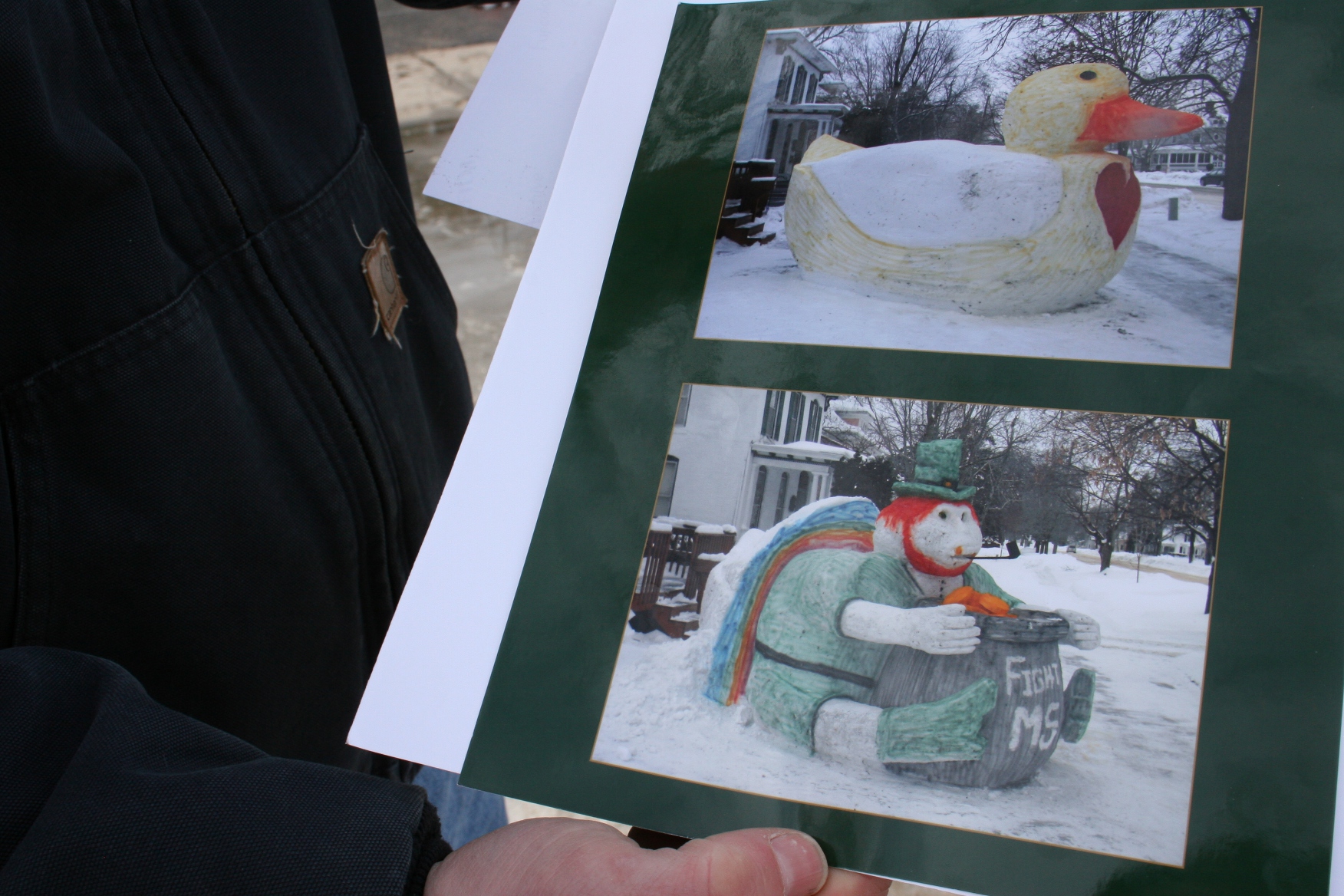
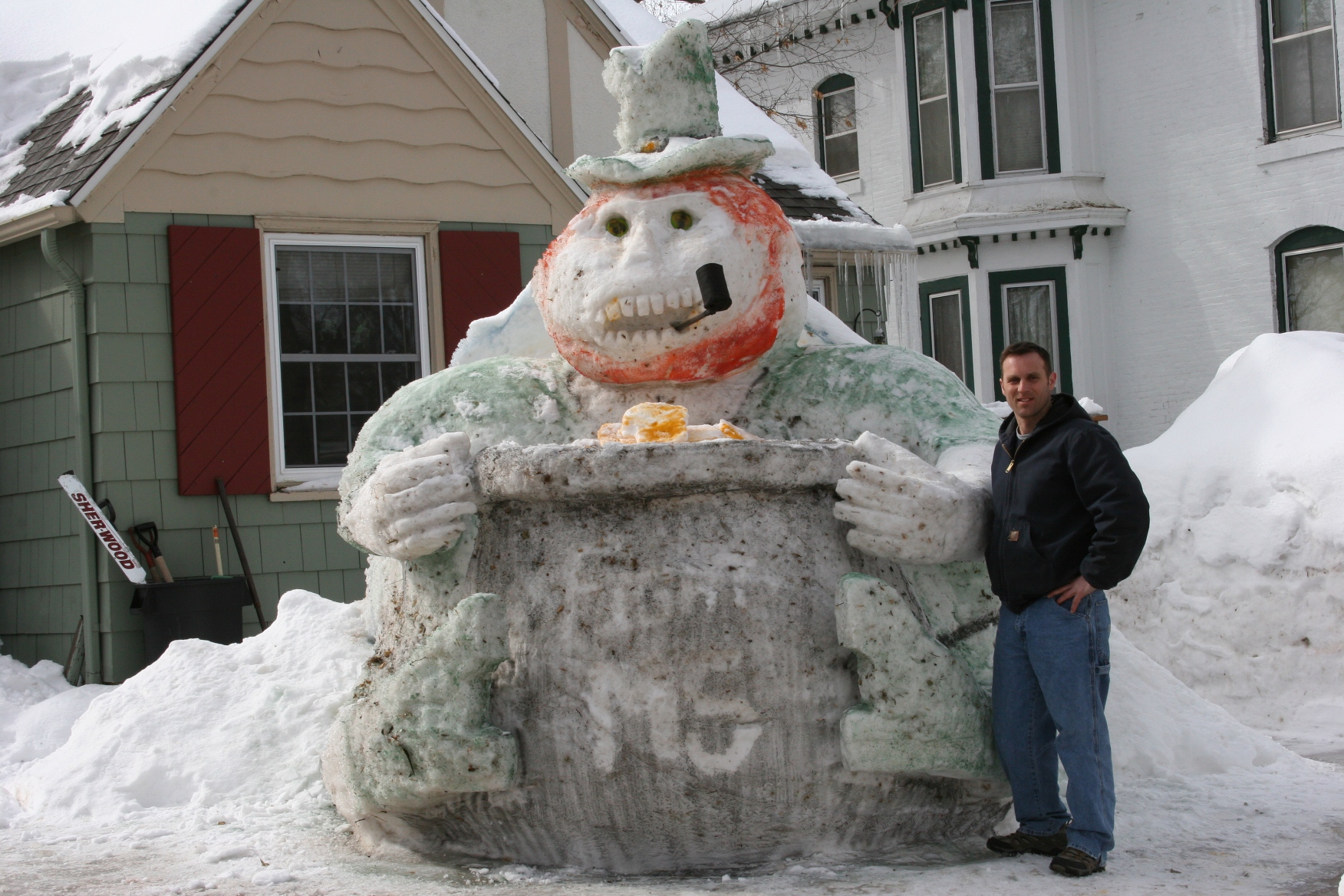
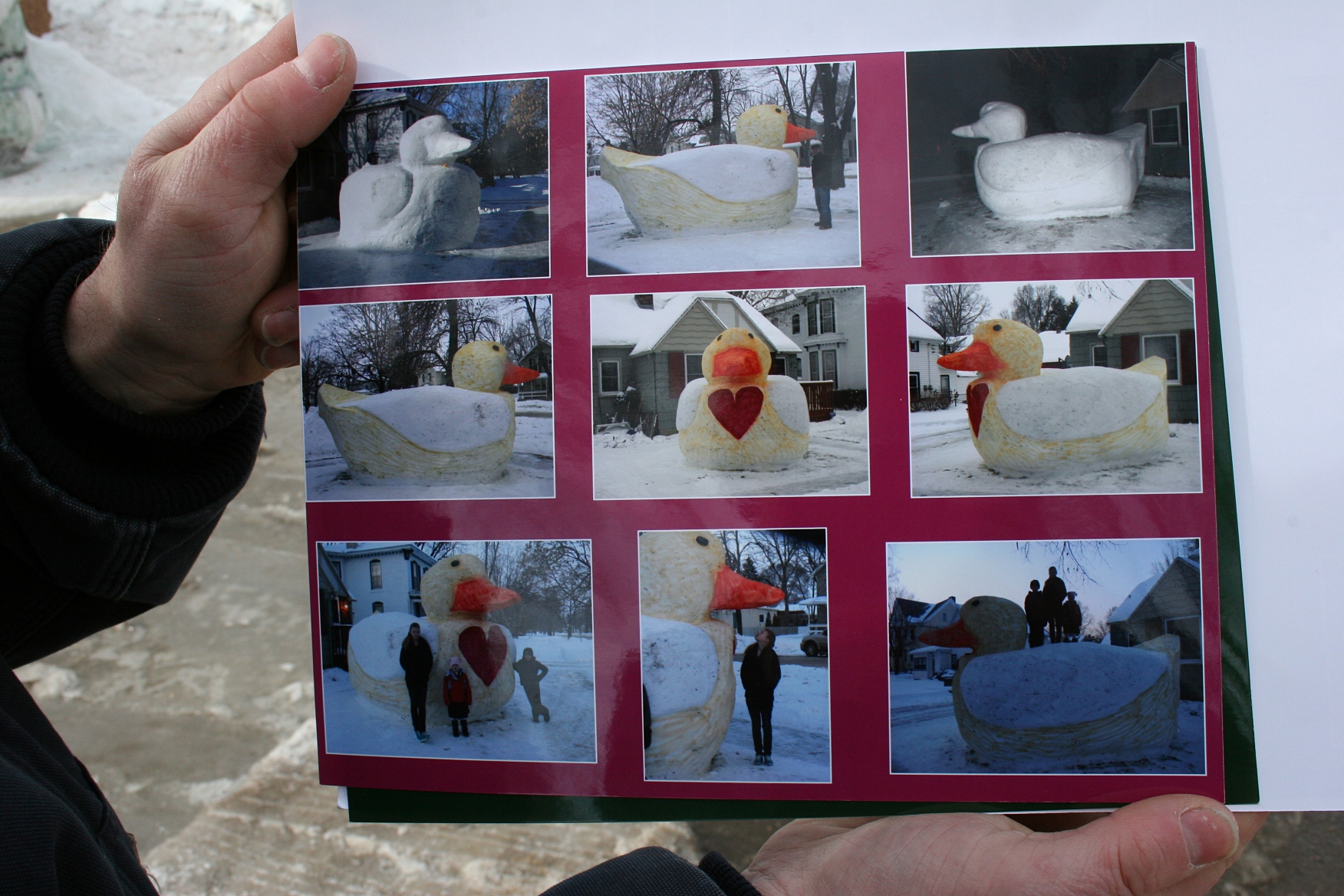
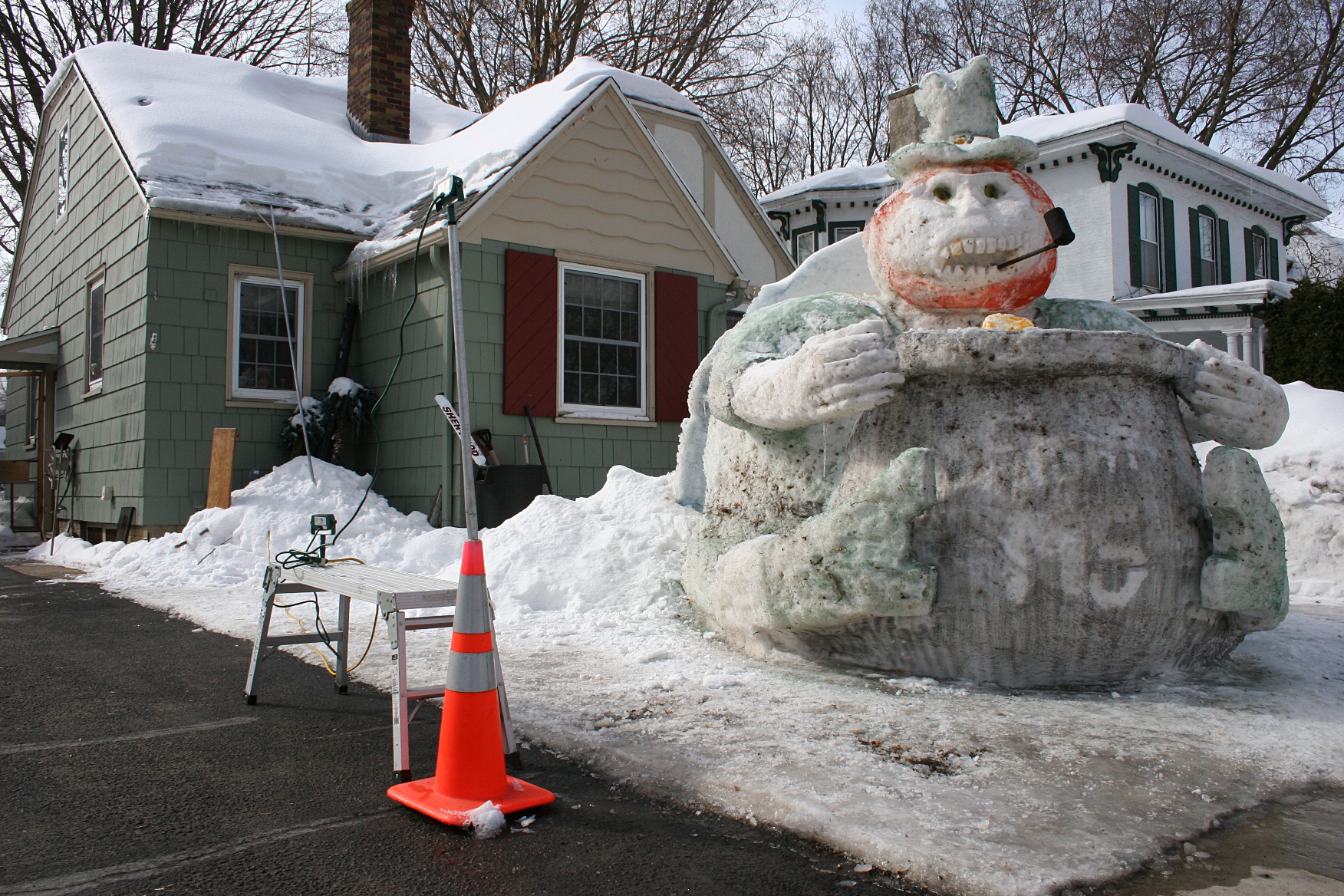
UPDATE: After pulling today’s issue of my local newspaper, The Faribault Daily News, from the fresh snow atop my front steps, I settled in with the paper at lunch. There, on page two, were a story and photo about the mighty duck. Kurt Kletter is the artist behind the sculpture, having crafted snow sculptures during the past four winters. Why have I not noticed his leprechaun, dragons and giant stop sign in past years?

Click here to read the story. Mystery solved.

© Copyright 2014 Audrey Kletscher Helbling
 

Connecting art & poetry at Crossings & I’m in February 7, 2014

CONNECTING ART AND POETRY enhances both.

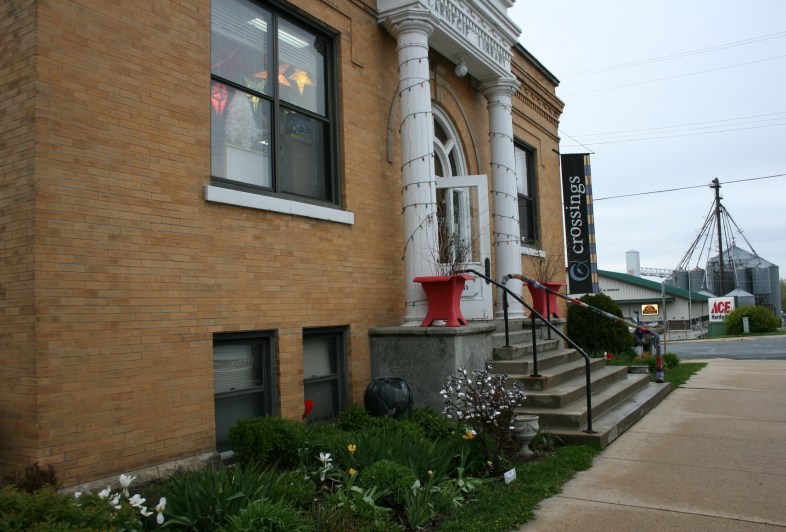
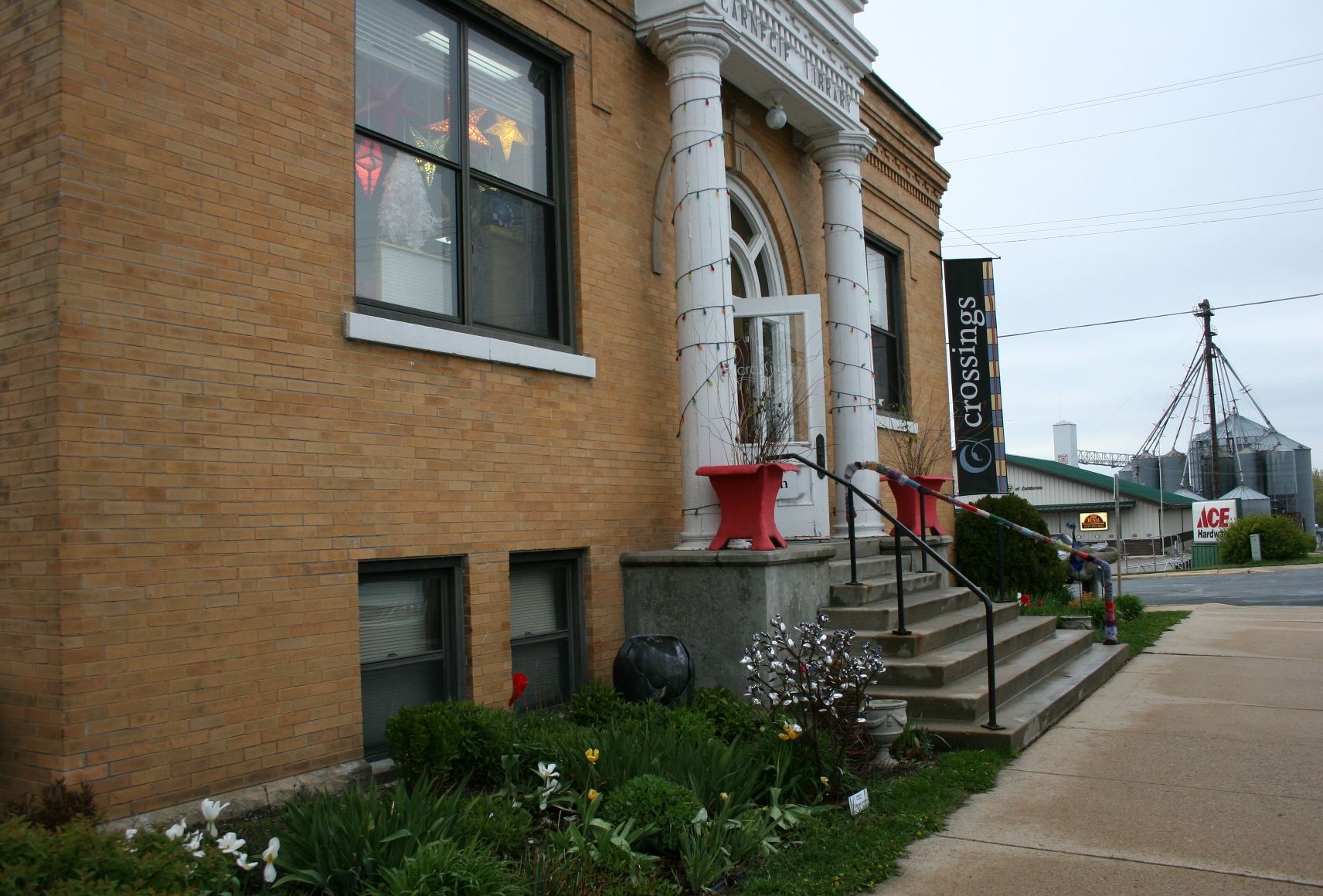
Crossings at Carnegie, housed in a former Carnegie library, is a privately-owned cultural visual and performing arts center in Zumbrota. I love the rural atmosphere with the hardware story and grain elevator just down the street.

Crossings at Carnegie, housed in a former Carnegie library, is a privately-owned cultural, visual and performing arts center in Zumbrota. I love the rural atmosphere with the hardware story and grain elevator just down the street. Minnesota Prairie Roots file photo 2012.

And I am pleased, for the second time, to have my poetry selected for inclusion in an annual poet-artist collaboration at Crossings at Carnegie in Zumbrota.

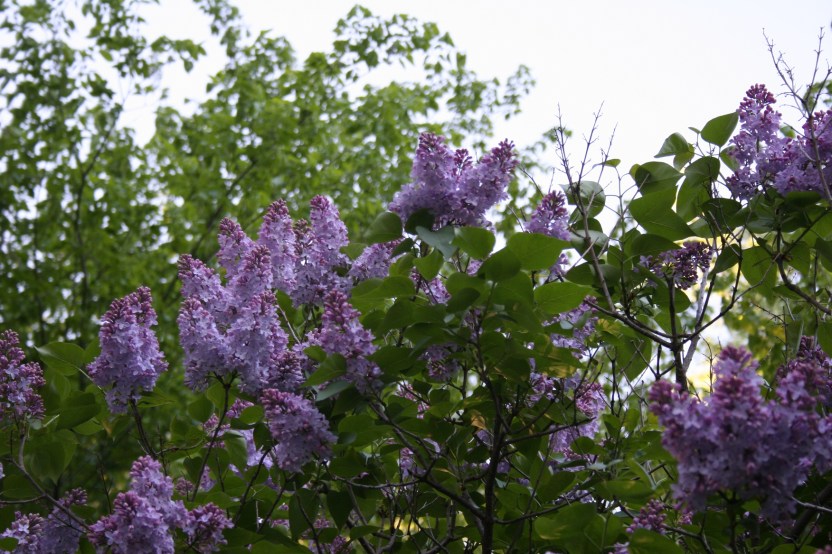
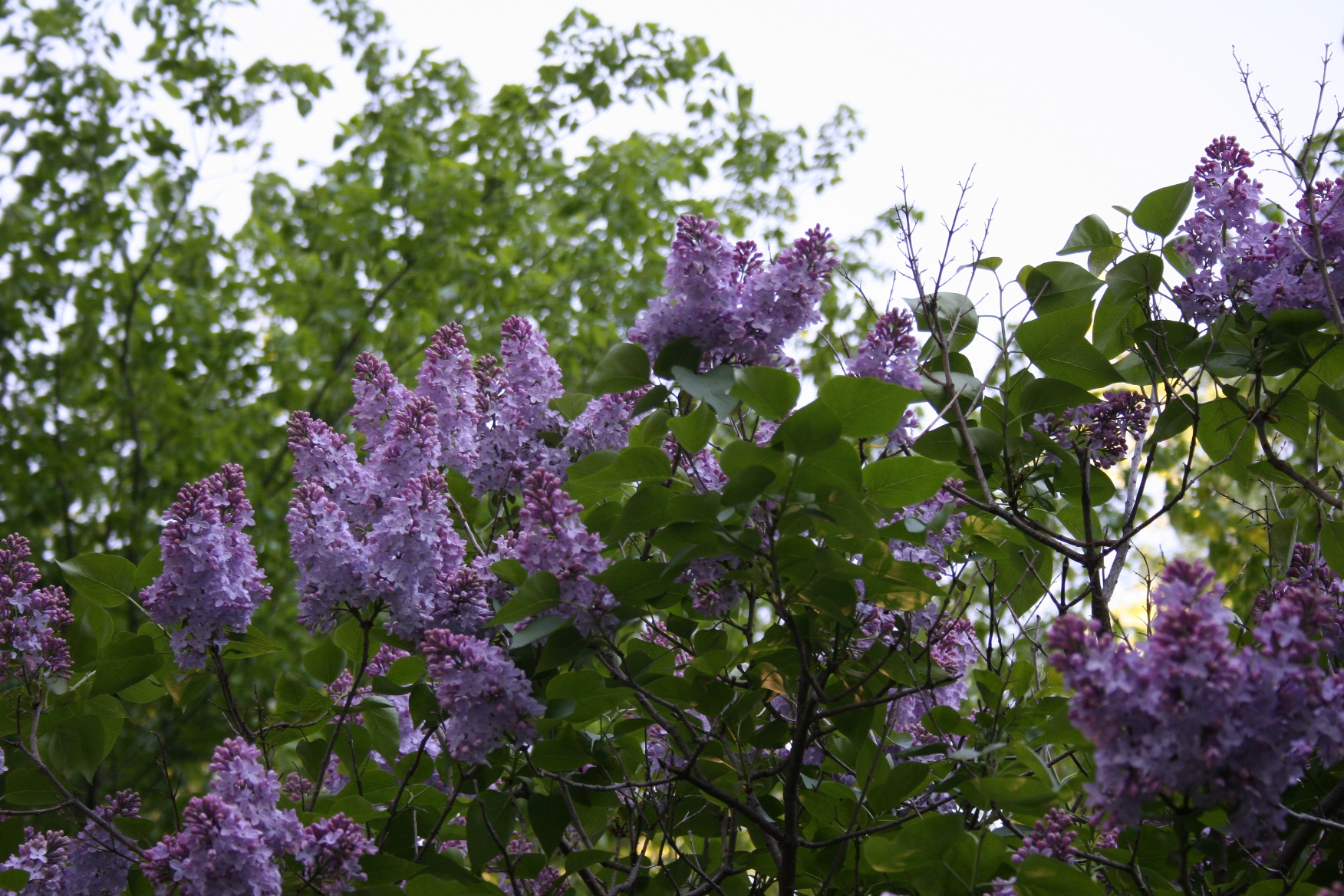
Lilacs, up close. Minnesota Prairie Roots file photo.

Lilacs, up close. Minnesota Prairie Roots file photo.

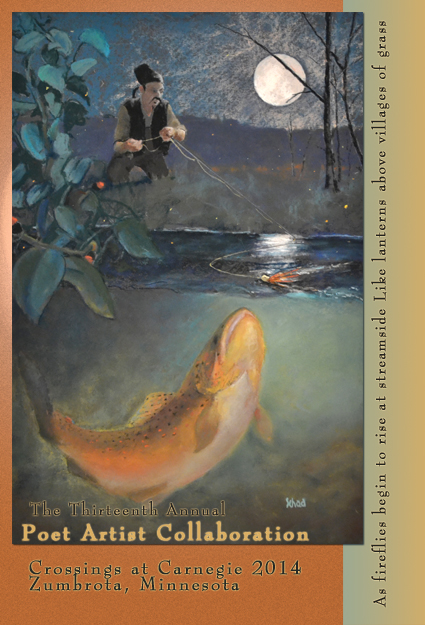
A juried artist will create a work of art based on my poem, “Lilacs,” one of 26 poems chosen from among more than 200 submissions for inclusion in Poet Artist Collaboration XIII.

Lucky thirteen. I’ve written poetry long enough, though, to understand that winning has nothing to do with luck, but rather with skill. Writing poetry is hard work. But when you nail a poem, like I did with “Lilacs,” it’s worth every minute anguishing over a word or a line.

“It was exciting to receive the outpouring of exceptional work from so many talented poets for this collaboration,” writes Marie Garvin of Crossings in an email. “Jurists told us they (the poems) were a pleasure to read, and selecting those to be included was a difficult task.”

The poems paired with art will go on display in April, National Poetry Month, at the Zumbrota gallery and gift shop. Poets will read their poems and artists will briefly discuss their artwork during a reception set for 6:30 p.m. Saturday, May 10.

Connie, right, and I posed for a photo after a 90-minute presentation in which poets read their poems and artists talked about how their art was inspired by the poem. Note Connie's "Pantry Jewels" painting just above my head to the left. If I could buy this $490 watercolor on aqua board, I would in a snap.

Connie Ludwig, right, and I pose for a photo after a 90-minute presentation in which poets read their poems and artists talked about how their art was inspired by the poem. Note Connie’s “Pantry Jewels” painting just above my head to the left. Minnesota Prairie Roots file photo 2012.

Two years ago, my poem was selected for Poet Artist Collaboration XI. Goodhue artist Connie Ludwig created a watercolor, “Pantry Jewels,” inspired by my poem, “Her Treasure.” (You can read about that by clicking here.)

That earlier poem and “Lilacs” draw on childhood memories from my native southwestern Minnesota, a major influence in my writing.

Plenty of lilacs to gather in the spring.

Plenty of lilacs to gather in the spring. Minnesota Prairie Roots file photo.

This marks the second time “Lilacs” has been recognized. This past summer, judges chose “Lilacs” as a Work of Merit in the 2013 Northwoods Art & Book Festival in Hackensack. Says Northwoods Arts Council Poetry Event Chair, poet and blogger Sue Ready “…we all see your work as creative and poetic that engages the reader.”

Sue is right. I always attempt to connect to the reader, whether through imagery, sensory words, emotions and more. Poetry should be an experience.

You can read “Lilacs” by clicking here.

I am grateful for this latest opportunity to share my poetry. And to have an artist find inspiration in my words and create a work of art pleases me even more.

© Copyright 2014 Audrey Kletscher Helbling
 

Amboy: A thriving community in rural Minnesota February 5, 2014

Looking down Maine Street in Amboy, Minnesota.

Looking down Maine Street in Amboy, Minnesota.

FOLKS IN AMBOY understand the importance of building their community’s future, of distinguishing their town as a destination in rural Minnesota.

Merchandise displayed inside Oak Knoll Angoras' Acorn Studio. Lisa Lindberg, who owns The Amboy Cottage Cafe, owns this with her mother, Maria Lindberg.

Merchandise displayed inside Oak Knoll Angoras’ Acorn Studio. Lisa Lindberg, who owns The Amboy Cottage Cafe, owns this with her mother, Maria Lindberg. The studio sits just down the block from the cafe.

On a brief visit last July to Amboy, population 535 and located 20 miles south of Mankato, I discovered an inviting Maine (yes, that’s the correct spelling) Street defined by sturdy old brick buildings, quaint shops, a one-of-a-kind cafe, and a deep appreciation of history and the arts.

An artsy display inside Frame It Arts & Antiques, 112 East Maine Street.

An artsy display inside Frame It Arts & Antiques, 112 East Maine Street.

This is my kind of small town, one focused on showcasing local talent and history and all that makes Amboy a great community.

Signage on the fence at The Amboy Cottage Cafe lists downtown businesses.

Quaint signage on the fence at The Amboy Cottage Cafe directs visitors to downtown businesses.

Business owners and others clearly work hard to draw visitors off U.S. Highway 169 onto Maine Street. The Amboy Cottage Cafe initially drew my husband and me here for lunch while en route to Worthington in late July 2013.

Yarn for sale at Acorn  Studio.

Yarn for sale at Acorn Studio.

Afterward, we poked around in several downtown shops before heading out. We were short on time, or we would have explored more.

You'll find lots of businesses open in downtown Amboy.

You’ll find lots of businesses open in downtown Amboy.

Amboy deserves a second look, a few hours of time to check out the businesses and the rest of the town. In rural Minnesota, this community seems determined to survive and thrive, building on its strengths.

Amboy's Maine Street features mostly well-kept old brick buildings.

Amboy’s Maine Street features mostly well-kept old brick buildings.

The visually welcoming Sweet Cicely, a boutique offering fine gifts and natural health products.

The visually welcoming Sweet Cicely, a boutique offering fine gifts and natural health products.

Details like well-kept buildings without boarded up windows, pots overflowing with luscious flowers, welcome banners on Maine, a general overall tidy look and more visually impress.

Lisa Lindberg saved this old gas station from demolition, moved it onto a corner of Maine Street and restored it for use at The Amboy Cottage Cafe. The cafe features made-from-scratch food and draws diners from all over the region.

Lisa Lindberg saved this old gas station from demolition, moved it onto a corner of Maine Street and restored it for use as The Amboy Cottage Cafe. The cafe features made-from-scratch food and draws diners from all over the region.

And then there are the old buildings which have been saved, like The Amboy Cottage Cafe, once a gas station.

A group also saved the old elevator, now Grainspace LLC.

A group also saved the old elevator, now Grainspace LLC, located across the street from The Amboy Cottage Cafe.

Across the street, the old elevator, slated for demolition, was purchased by a group and is now being restored for use as an arts venue and community gathering spot.

This depot was moved into Amboy from Huntley and now serves as a welcome center for those attending the town's annual Arts 'n' More Festival.

This depot was moved into Amboy from Huntley and now serves as a welcome center for those attending the town’s annual Arts ‘n’ More Festival in September.

The Amboy Area Community Club is supporting restoration of an old depot relocated here from nearby Huntley.

An old country schoolhouse was moved into town, restored and is now an historical education center and site of special community events. The 1901 Dodd Ford Bridge, on the National Register of Historic Places, will be preserved. A historic home houses A Walk Back in Time bed and breakfast while another, Que Sera, serves as a retreat center.

Currently, a project is underway to convert the former Amboy Middle School into “The Junction,” a multi-purpose community building. (Click here to learn about that.)

Work in progress last July at this beautiful old creamery just off Maine Street.

Work in progress last July at this beautiful old (former) creamery just off Maine Street.

Although I didn’t check out all of these places, I saw enough to appreciate Amboy and the gumption of the folks who live here. They seem a determined bunch—determined to keep their community thriving in a time when all too many small towns are dying.

FYI: Click here to read my previous post on The Amboy Cottage Cafe. Please check back for one more post with photos from Amboy.

© Copyright 2014 Audrey Kletscher Helbling
 

Consider the lilies February 2, 2014

Filed under: Uncategorized — Audrey Kletscher Helbling @ 1:54 PM
Tags: , , , , , , ,

“NO WONDER IT FEELS SO COLD,” my husband said when he returned to the warmth of the house and checked the outdoor air temp this morning. “It’s 16 below.”

An overview of flower art from members of Trinity Lutheran Church, Faribault, Minnesota, displayed in the chancel during weekend worship services.

An overview of flower art from members of Trinity Lutheran Church, Faribault, Minnesota, displayed in the chancel during weekend worship services.

Bundled in our coats, caps and gloves, we trundled outside to the warming Chrysler for the short drive to Trinity Lutheran Church. There we would find a breath of spring—an assortment of flower art—to lift our spirits.

A floral batik by Arlene Rolf graces a wall in the narthex. Inside the sanctuary, my flower photos are showcased on the screens.

A floral batik by professional artist and Trinity member Arlene Rolf graces a wall in the narthex. Inside the sanctuary (left through glass wall), my flower photos are showcased on three screens.

This is precisely what we needed on a morning when Punxsutawney Phil saw his shadow, indicating six more weeks of winter. Not that we Minnesotans need Phil to show us that. We know our winter will run into mid-March and most certainly longer.

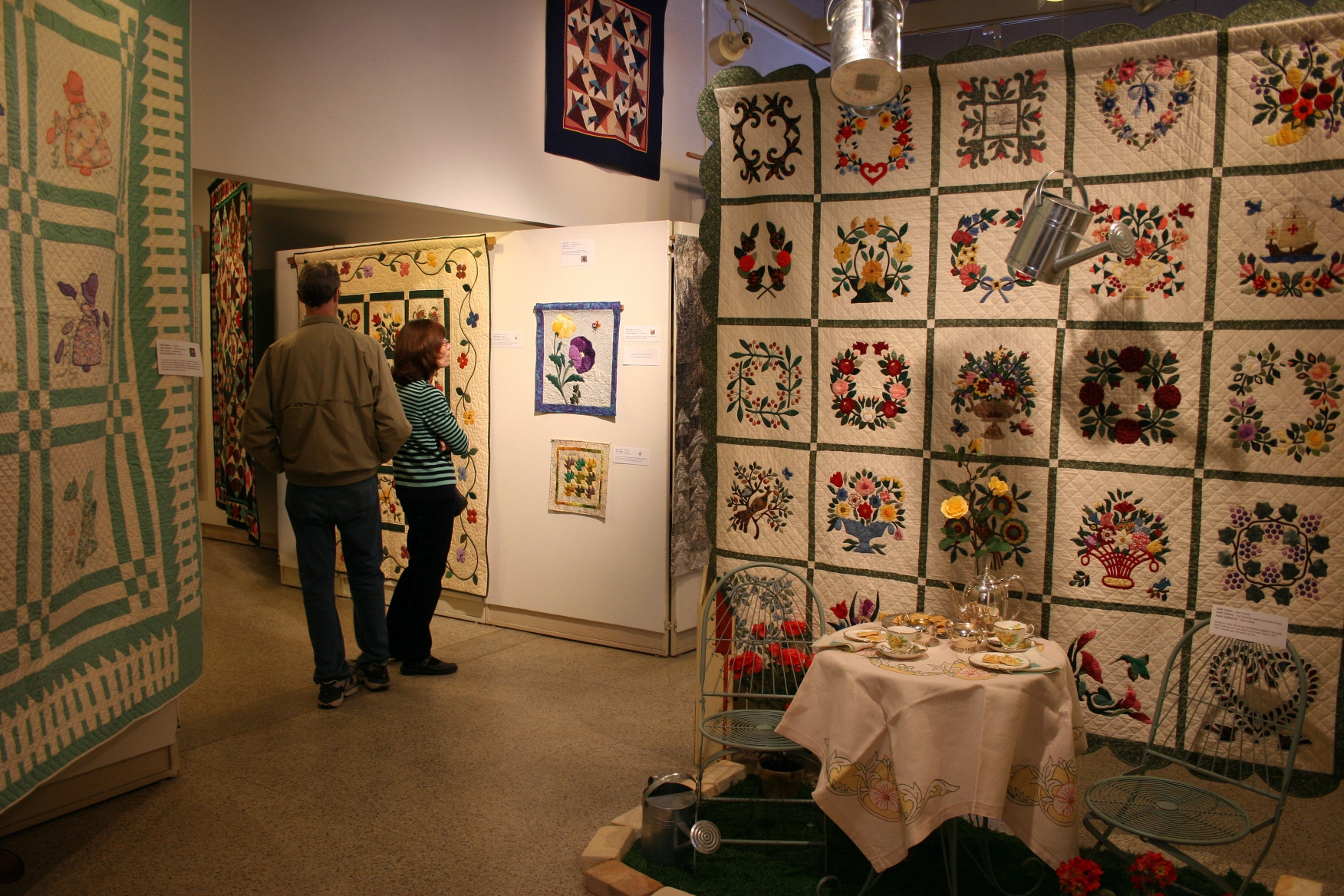
The beautiful and stunning floral quilt art by Kevin Kreger is displayed below a wood carving by noted Faribault artist Ivan Whillock. Kreger coordinated the "Consider the Lilies" floral display at Trinity.

This beautiful and stunning hand-pieced floral quilt art by Kevin Kreger is displayed below a wood carving by noted Faribault artist Ivan Whillock in the sanctuary. This photo is taken looking up from the bottom of the wall hanging.  Kreger, a gifted quilter and musician, coordinated the “Consider the Lilies” floral display.

But for this one hour, we focused on the beauty of flowers, of God’s creation, and the very real promise that God cares for us, just as He does the lilies of the field. “God is in control of our lives,” said the Rev. Warren Schmidt.

Church secretary Jennie Kingland created this lush detailed floral in counted cross stitch.

Church secretary Jennie Kingland created this lush, detailed floral in counted cross stitch.

As Rev. Schmidt’s sermon, “Consider the Lilies,” unfolded, he placed us in the lush setting where Jesus preached his “Sermon on the Mount.”

Flower art buffeted both sides of the chancel, here near the baptismal font and pulpit.

Flower art buffeted both sides of the chancel, here near the baptismal font and pulpit.

Earlier, we’d listened to the gospel lesson, Jesus’ words written in Matthew 6:24-34, including these verses:

And which of you by being anxious can add a single hour to his span of life? And why are you anxious about clothing? Consider the lilies of the field, how they grow; they neither toil nor spin, yet I tell you, even Solomon in all his glory was not arrayed like one of these.

But if God so clothes the grass of the field, which today is alive and tomorrow is thrown into the oven, will he not much more clothe you, O you of little faith?

This same hand-embroidered art, displayed in church, hangs above my bed.

This same hand-embroidered art design, displayed in church, hangs above my bed.

To listen to those reassuring words, to view the beautiful floral art and the bouquets of flowers uplifted me.

"Is there beauty in the cross?" asked the Rev. Warren Schmidt. He emphasized the height, depth, breadth and width of God's love for us, shown in His son's death on the cross so that we might have eternal life.

“Is there beauty in the cross?” asked the Rev. Warren Schmidt. He emphasized the height, depth, breadth and width of God’s love for us, shown in His son’s death on the cross so that we might have eternal life.

I am assured of God’s love and care for me. And, because of Christ’s death on the cross, as the pastor said, we are “the perfection of beauty before God the Father.”

Glorious floral art by Marilyn Borchert.

A snippet of bold floral art by Marilyn Borchert.

How wonderful is that?

birds

From Matthew 6:26: “Look at the birds of the air; they neither sow nor reap nor gather into barns, and yet your heavenly Father feeds them. Are you not of more value than they?

If God cares for the flowers and the birds and the rest of His creation, so surely He values and cares for us.

© Copyright 2014 Audrey Kletscher Helbling
 

Exploring art inside the Weitz Center for Creativity at Carleton College December 5, 2013

MY EXPOSURE TO PROFESSIONAL ART as a youth could be categorized as minimal. There were no visits to art galleries, no attending theatrical performances, no concerts outside of school walls.

Yet, I did not feel deprived, for art surrounded me in blazing prairie sunsets, an inky sky dotted with an infinity of stars, road ditches graced with wild roses, tall grass bending in the wind, the symphony of a howling blizzard, the crunch of boots on hard-packed snow, the orchestra of pulsating milking machines and munching cows and the radio voices of ‘CCO.
To this day, I credit my rural southwestern Minnesota upbringing for shaping me as a writer and photographer. There, on the stark prairie, within the confines of a close and loving family living off the land, I learned to appreciate the details in the landscape and life itself.

Today, I no longer live on my beloved prairie. And I have immediate access to the arts within my own community of Faribault and nearby. You won’t find me, except on rare occasions, aiming for the Twin Cities to view art. I am not a city girl.

The Weitz Center for Creativity at Third and College Streets in Northfield, Minnesota.

The Weitz Center for Creativity at Third and College Streets in Northfield, Minnesota.

In late October, I discovered Weitz Center for Creativity, “a center for creativity and collaboration in the liberal arts,” on the campus of Carleton College in neighboring Northfield. The center is housed in the historic former and repurposed Northfield high school and middle school and in 30,000 additional square feet of new construction.

Near the entrance to the Weitz Center Commons area.

Near the entrance to the Weitz Center Commons area. (Photographed in October.)

The complex offers such creative spaces as a theater, dance studios, a technology resource center (the Gage/Bauer IdeaLab), a teaching museum, galleries and more.

From Jessica Rath's "take me to the apple breeder" exhibit, a porcelain apple and an apple tree photograph.

From Jessica Rath’s “take me to the apple breeder” exhibit, a porcelain apple and an apple tree photograph.

The Perlman Teaching Museum and galleries there drew me to view “Single Species Translations,” which included Jessica Rath’s “take me to the apple breeder” and Laura Cooper’s “Opuntia,” and “The Intersection Between Book, Film, and Visual Narrative.” The exhibits have since closed. But “Lifeloggers: Chronicling the Everyday,” opens January 17 and runs through March 12, 2014. The exhibit will feature the works of a dozen artists.

And here’s the really sweet deal. Admission to the Perlman Teaching Museum (and galleries) is free. Hours are 11 a.m. – 6 p.m. Monday – Wednesday, 11 a.m. – 9 p.m. Thursday and Friday, and noon to 4 p.m. Saturday and Sunday. Note that the museum is open only during Carleton’s academic term, although closed during breaks and during the summer.

Connecting indoors and out in a section of the Commons.

Connecting indoors and out in a section of the Commons.

My first impression of the Weitz Center for Creativity was one of visual appreciation for the modern, clean lines and minimalistic setting. I love the walls of windows, the pots of pines and palms and other plants interspersed among clusters of tables and chairs in a space that visually connects to the outdoors.

Cozy spots for conversation in the Commons.

Cozy spots for conversation in the Commons.

I appreciate, too, the cozy settings of living room furniture that invite conversation and create a sense of intimacy in the spacious, open Commons area.

A snippet of Jessica Rath's exhibit shows porcelain apple sculptures and photos of apple trees in the Braucher Gallery.

A snippet of Jessica Rath’s exhibit shows porcelain apple sculptures and photos of apple trees in the Braucher Gallery.

Entering the gallery, I noted the gleaming starkness of the space, an excellent backdrop to showcase exhibits. I know this is the gallery norm. But, since I did not grow up visiting galleries, I am still struck each time by this visual impact of a clean slate. Light and shadows and mood play upon art here.

A student studies a portion of "The Intersection Between Book, Film, and Visual Narrative" in the Kaemmer Family Gallery.

A student studies a portion of “The Intersection Between Book, Film, and Visual Narrative” in the Kaemmer Family Gallery.

I won’t pretend to understand and enjoy every exhibit I view. We each bring our personalities and experiences and tastes to a gallery and those influence our reactions.

I love the simplicity of the apples positioned on the table in Rath's exhibit and how the shadows angle onto the tabletop.

I love the simplicity of the apples positioned on the table in Rath’s exhibit and how the shadows play upon the tabletop.

More tabletop art, to be picked up and paged through by gallery visitors.

More tabletop art, to be picked up and paged through by gallery visitors.

More print to appreciate.

Additional print and creativity to appreciate.

A wall-size artistic interpretation of Opuntia by Laura Cooper.

A wall-size artistic interpretation of Opuntia by Laura Cooper.

While I could relate to apples and books, I couldn’t connect to the exhibit on Opuntia, a type of cactus. Cacti, except for a few grown as houseplants, are mostly foreign to me.

This signage greets visitors upon entering the Weitz Center for Creativity.

Just inside the doors of the Weitz Center for Creativity.

Yet, I learned. And that, too, is part of the arts experience.

© Copyright 2013 Audrey Kletscher Helbling