Minnesota Prairie Roots

Writing and photography by Audrey Kletscher Helbling

How my poetry inspired a still life painting of lilacs April 10, 2014

POETRY INSPIRING ART. It’s a fabulous concept and even better when you are part of such a pairing.

A poem I penned has inspired art for Poet-Artist Collaboration XIII, which opened March 31 and runs through May 15 at Crossings at Carnegie, 320 East Avenue, Zumbrota.

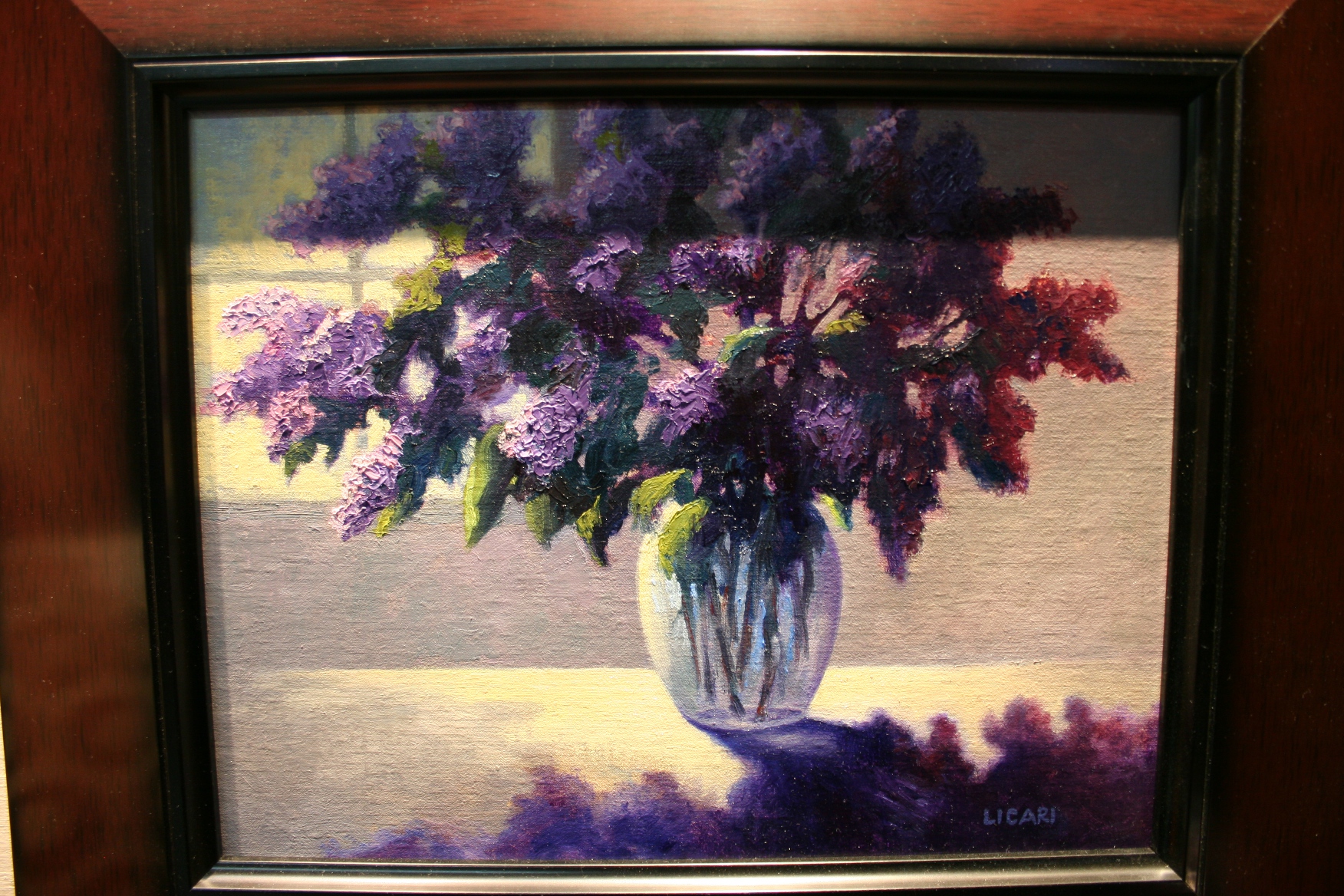
"Lilacs on the Table" by Jeanne Licari

“Lilacs on the Table” by Jeanne Licari. Photo courtesy of Crossings at Carnegie.

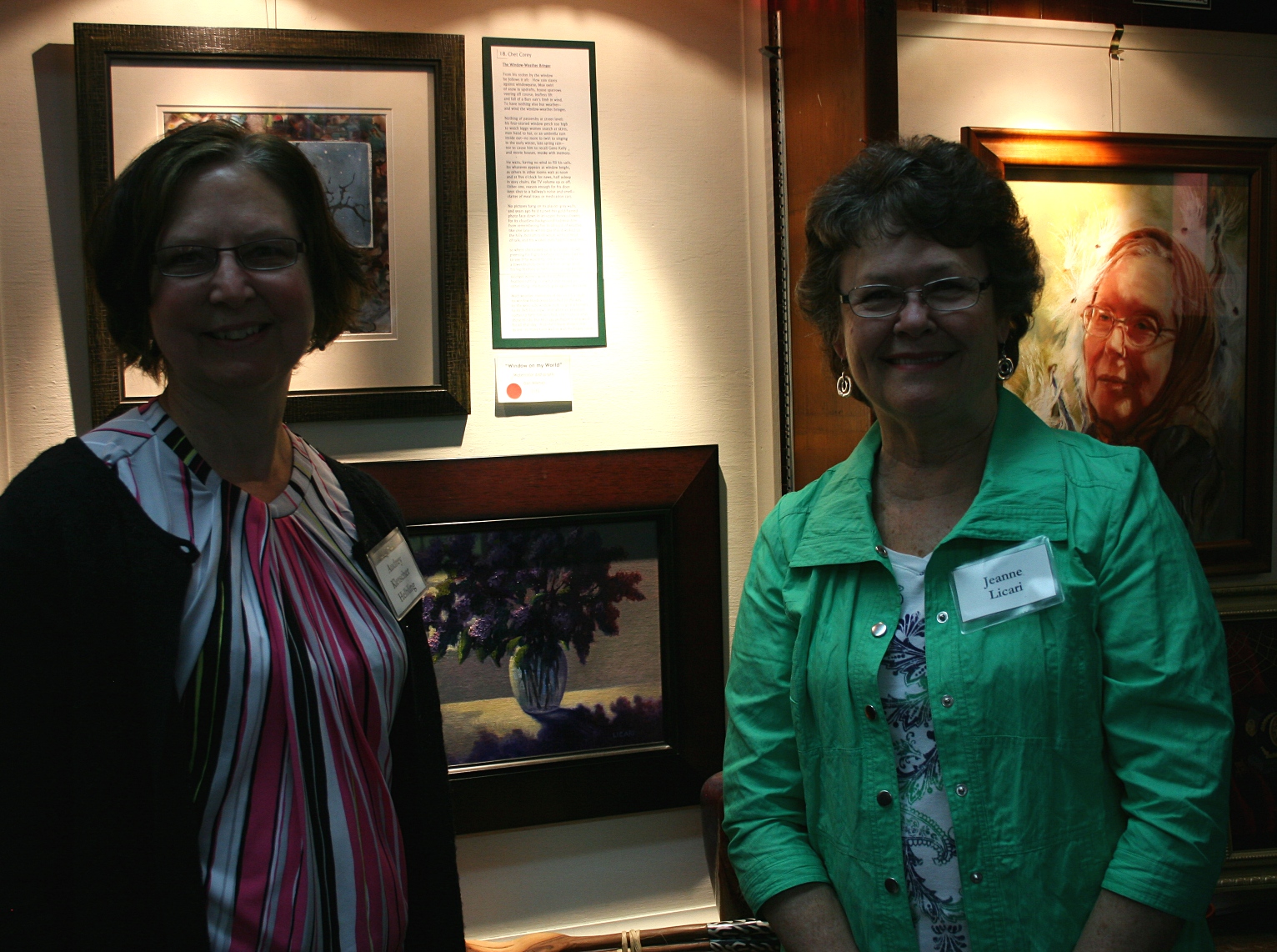
I recently connected with “my” artist, Jeanne Licari, to learn how my poem, “Lilacs,” inspired her to paint “Lilacs on the Table,” an 11 x 14-inch still life oil on linen.

Twenty-six poems were chosen from nearly 210 submissions with 26 artists then selected via a juried process. This is Jeanne’s ninth time participating in the collaboration and my second.

Artist Jeanne Licari

Artist Jeanne Licari in her studio. Photo courtesy of Jeanne Licari.

A mostly self-taught artist who drew and painted as a child, this Rochester resident also furthered her talent through painting classes and workshops. She terms herself a representational oil painter who prefers to paint from life, whether a landscape or a still life.

Jeanne is both plein air—painting outdoors on location—and studio painter.

“My art reflects the beauty I see in mankind and nature,” she says. “My paintings are a direct response to what I see.”

Or, in the case of “Lilacs,” to what she read.

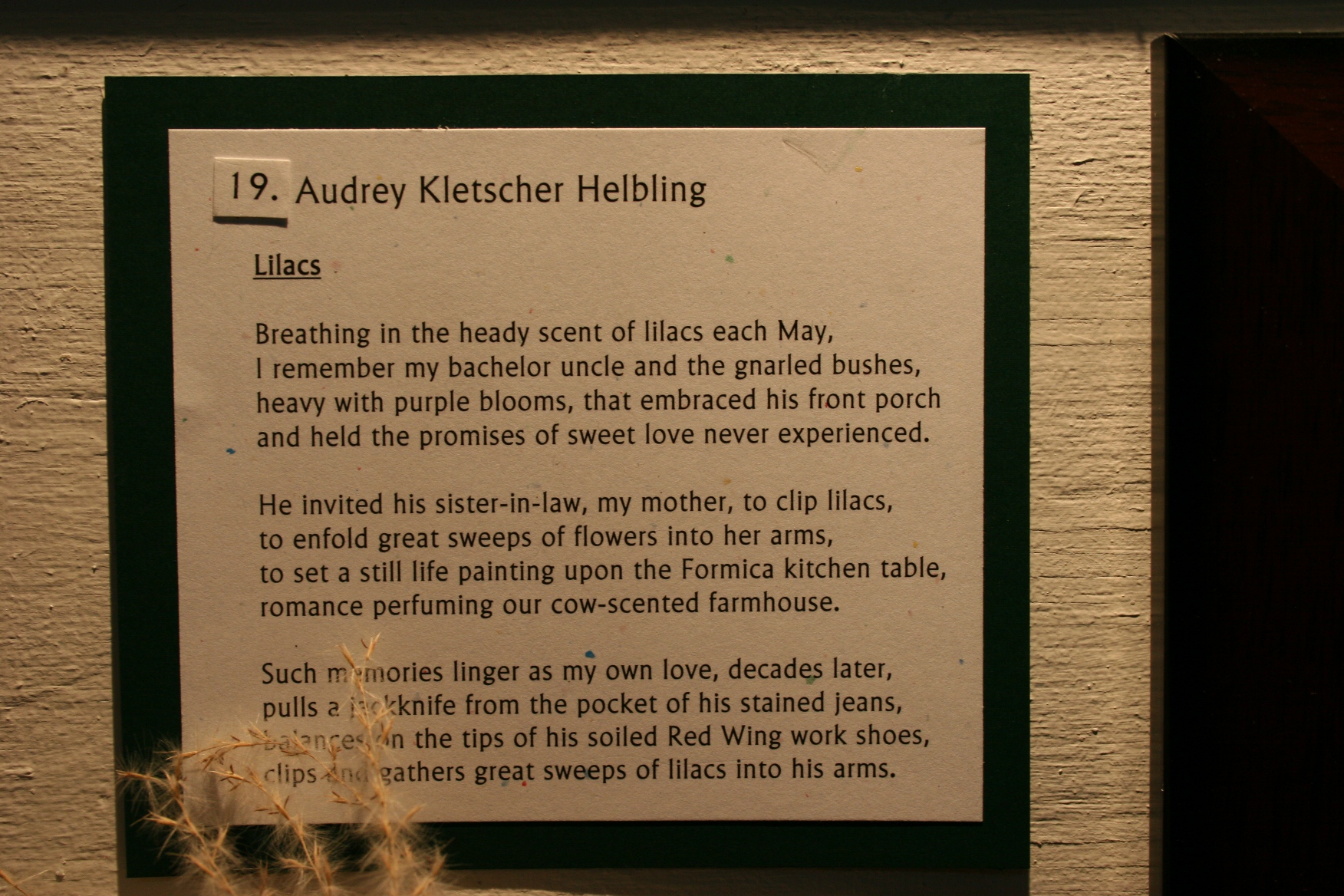
Lilacs

Breathing in the heady scent of lilacs each May,
I remember my bachelor uncle and the gnarled bushes,
heavy with purple blooms, that embraced his front porch
and held the promises of sweet love never experienced.

He invited his sister-in-law, my mother, to clip lilacs,
to enfold great sweeps of flowers into her arms,
to set a still life painting upon the Formica kitchen table,
romance perfuming our cow-scented farmhouse.

Such memories linger as my own love, decades later,
pulls a jackknife from the pocket of his stained jeans,
balances on the tips of his soiled Red Wing work shoes,
clips and gathers great sweeps of lilacs into his arms.

Plenty of lilacs to gather in the spring.

Minnesota Prairie Roots file photo of lilacs.

Jeanne explains how she created “Lilacs on the Table”:

“…I wanted to tell the viewer how I felt about lilacs. The poem triggered memories of many bouquets of lilacs in my lifetime. I love the dense bouquet of purple flowers, the beauty of the different pinks and purples against the green leaves, and the abundant fragrance of lilacs. Since there were no lilacs blooming in March, I painted them using memories of lilacs and how they grew, an oil study of lilacs painted from life, and photos.

I painted the lilacs on a table in response to the line, ‘to set a still life painting upon the Formica kitchen table.’ That line, plus the words about farming, made me remember many bouquets of lilacs on our Formica table in my childhood home on the farm.”

How fabulous to know that Jeanne comes, like me, from a rural background. Her words and oil painting show me that she understands and connects to my words in a deeply personal way.

And that is my hope as a poet—that those who read my poetry will connect to it.

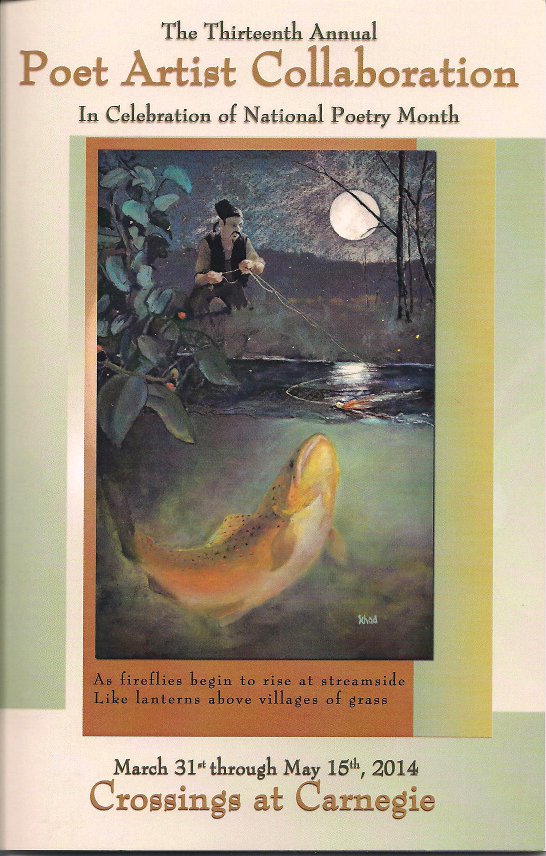
A promotional for the collaboration features "Li Bai at the South Fork," art by Mike Schad inspired by a poem of the same name written by Justin Watkins for the 2013 Poet-Artist XII collaboration.

A promotional for the collaboration features “Li Bai at the South Fork,” art by Mike Schad inspired by a poem of the same name written by Justin Watkins for the 2013 Poet-Artist Collaboration XII.

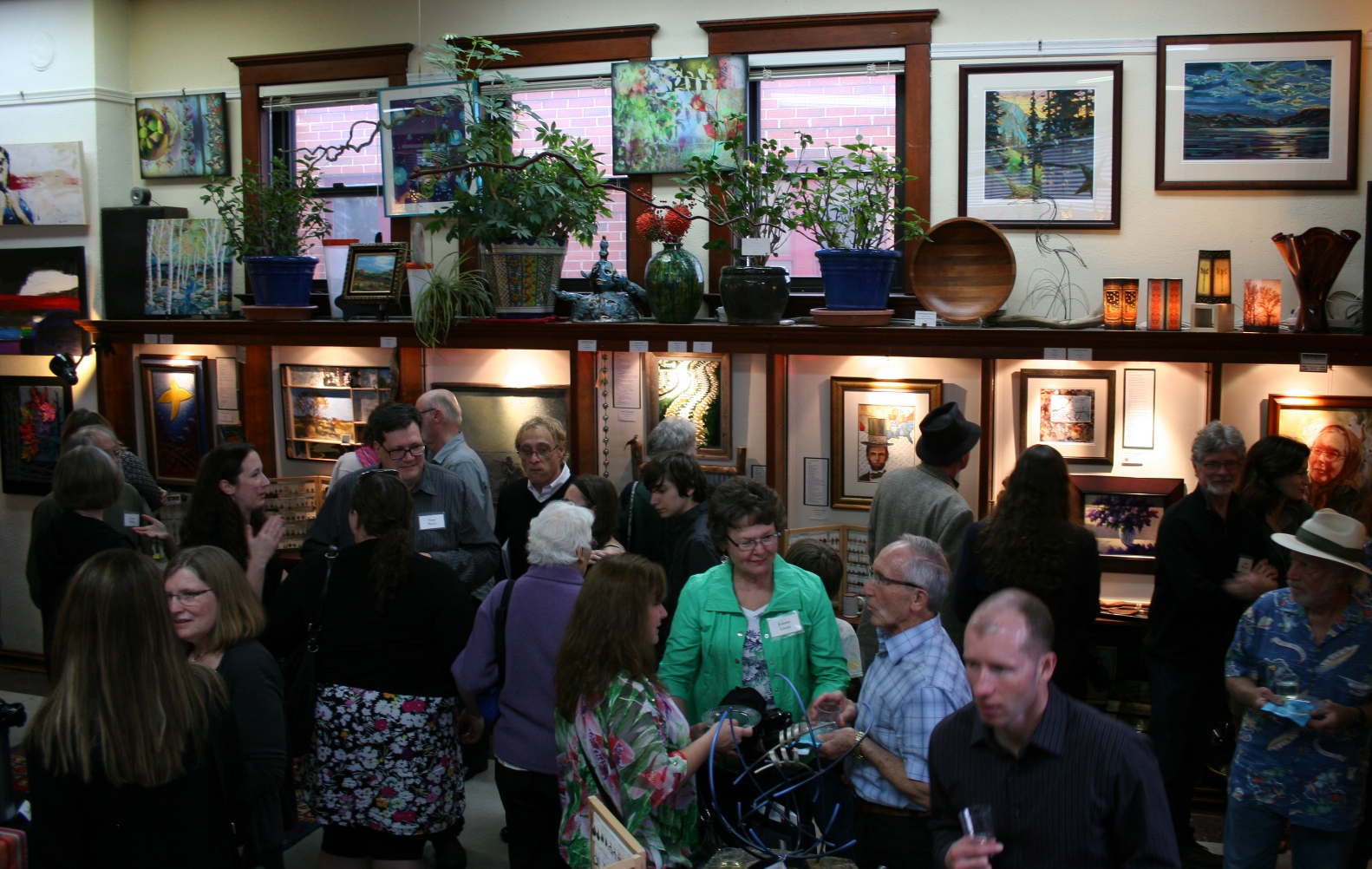
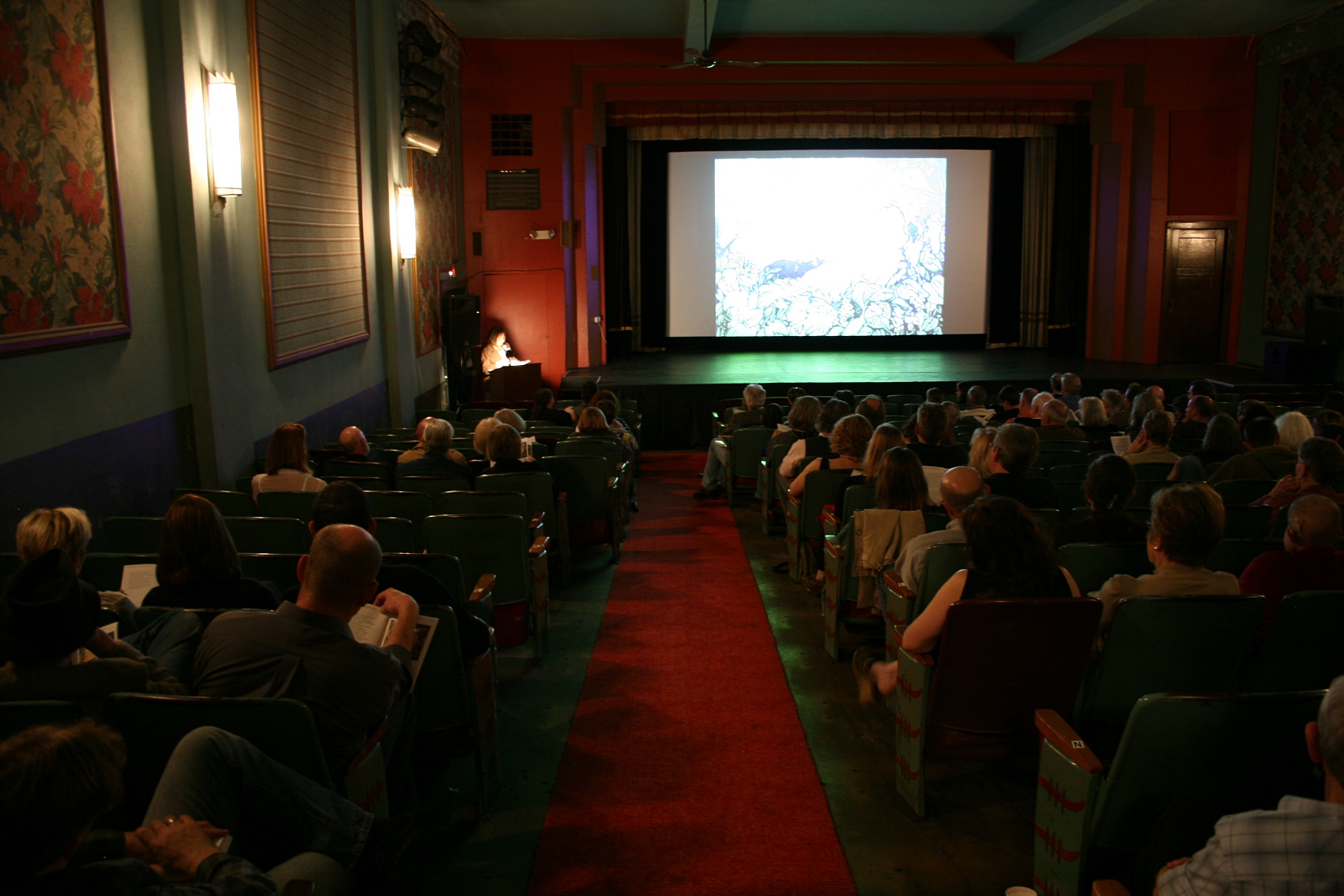
FYI: A reception, poetry reading and slide show honoring the featured poets and artists is set for Saturday, May 10. Mingle and meet for an hour beginning at 6:30 p.m. in the Crossings gallery. Then, at 7:30 p.m., move next door to the historic State Theatre where poets will read their works and artists will also briefly discuss their art, shown on a screen.

Another poet from my community of Faribault, Larry Gavin, who has published several poetry collections and teaches English at Faribault High School, will read two of his selected poems, “Ashes” and “Two Cranes.”

Collaboration participants come from Minnesota, Iowa, North Dakota and Wisconsin.

The featured artwork is available for sale, including “Lilacs on the Table,” priced at $395. Jeanne Licari’s art is also sold at the SEMVA (South Eastern Minnesota Visual Arts) Gallery in downtown Rochester.

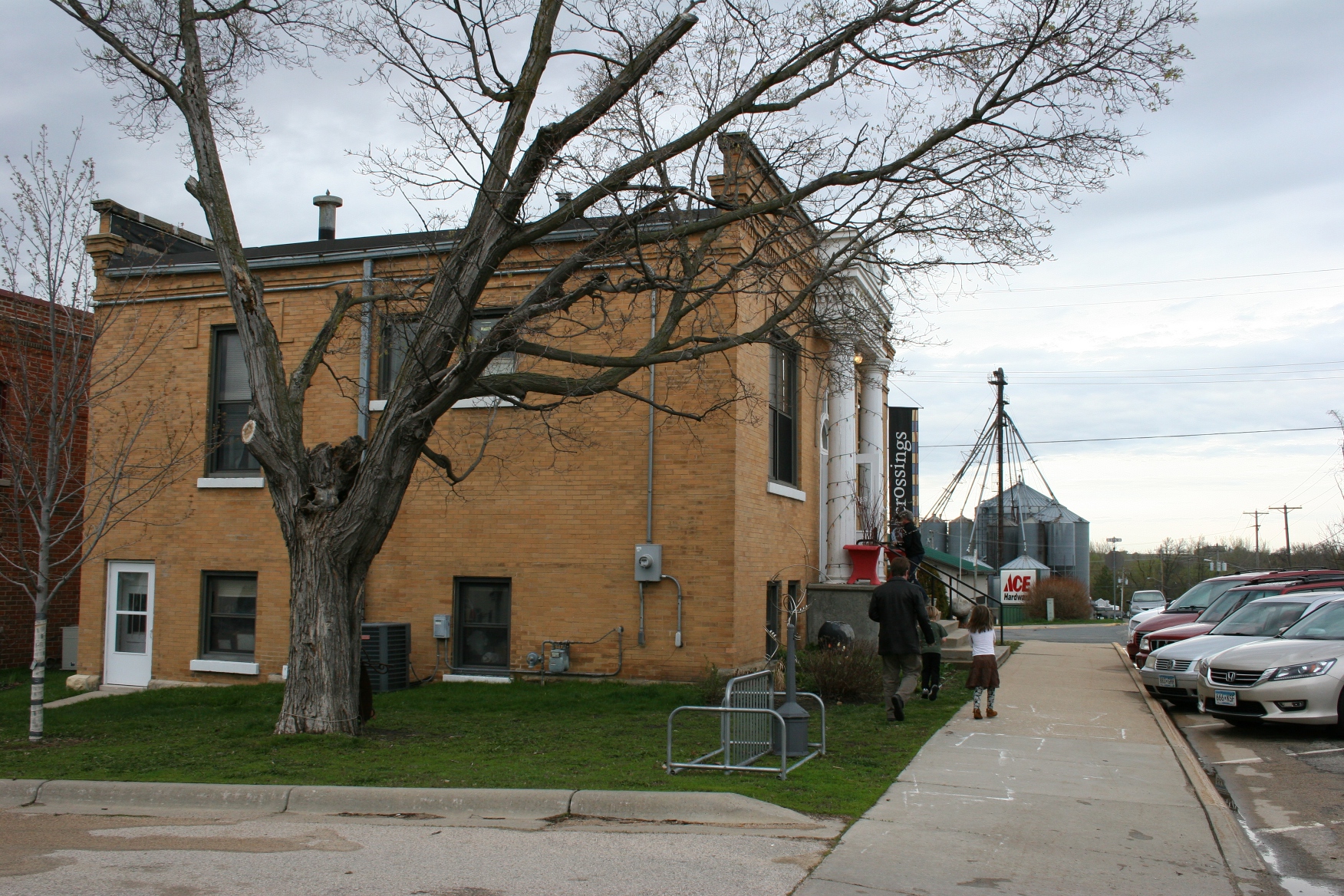
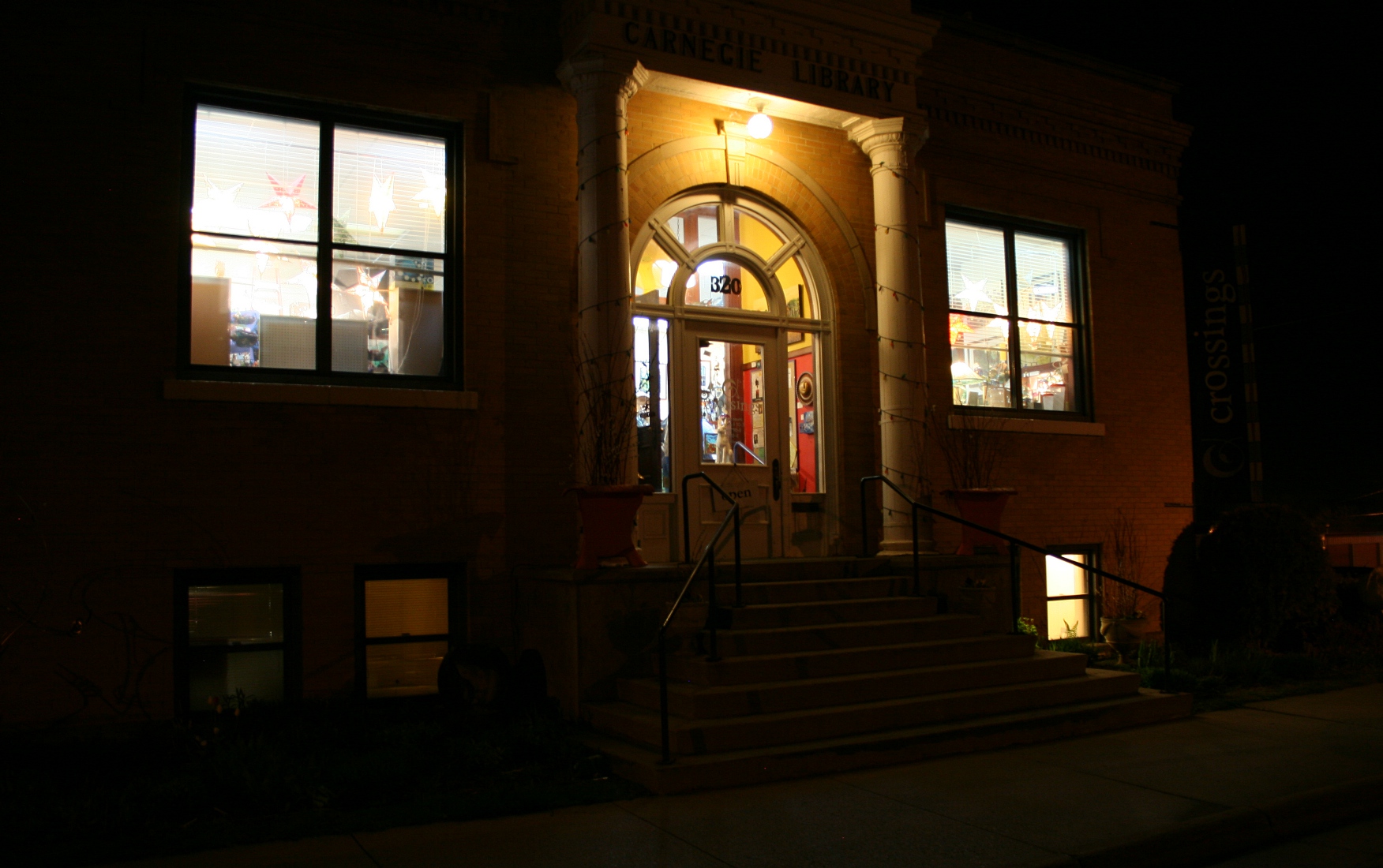
Crossings at Carnegie, housed in a former Carnegie library, is a privately-owned cultural visual and performing arts center in Zumbrota. I love the rural atmosphere with the hardware story and grain elevator just down the street.

Crossings at Carnegie, housed in a former Carnegie library, is a privately-owned cultural visual and performing arts center in Zumbrota. Minnesota Prairie Roots file photo 2012.

If you can’t attend the May 10 reception, you can view the exhibit during gallery hours from 10 a.m. – 5 p.m. Monday, Tuesday, Wednesday and Friday; from 10 a.m. – 8 p.m. Thursday; or from 10 a.m. – 4 p.m. Saturday.

Click here for more details about Poet-Artist Collaboration XIII.

Click here to see how my poem, “Her Treasure,” inspired Connie Ludwig to paint “Pantry Jewels” for the Poet-Artist Collaboration XI in 2012.

© Copyright 2014 Audrey Kletscher Helbling


Incredible quilt art in Owatonna April 9, 2014

The entry to the Owatonna Art Center

The entry to the Owatonna Arts Center, inside the former Minnesota State Public School for Dependent  and Neglected Children, later renamed the Owatonna State School. The City of Owatonna now owns the site, today called West Hills with the OAC located at 435 Garden View Lane.

HE EXPRESSED IT so well, the quilter’s husband waiting outside the Owatonna Arts Center Sunday afternoon for invited guests to arrive from Rochester.

A quilted work of art bursts with color.

A quilted work of art bursts with color.

Quilting, he surmised, has evolved from a homemaker’s craft to a recognized form of art.

The quilter's husband and the quilter view the extensive collection of quilts.

The quilter’s husband and the quilter view the extensive collection of quilts.

He’s so right.

If you appreciate art and quilts, you will want to see "Quilts in Bloom"

If you appreciate art and quilts, you will want to see “Quilts in Bloom”

“Quilts in Bloom,” featuring around 80 quilts stitched by members of the local Piecemakers Quilt Guild, blossoms in the nooks and crannies of gallery space in an exhibit that runs from now until April 27.

Baskets of blossoms and more.

Baskets of blossoms and more.

This show simply blooms with creativity:

A close-up of the traditional Dresden Plate pattern in the foreground with a second quilt in the background.

A close-up of the traditional Dresden Plate pattern in the foreground with a second quilt in the background.

A contrast of modern geometrical to the traditional Sunbonnet Girls.

A contrast of modern geometrical to the traditional Sunbonnet Girls.

This block from the 1930s Sunbonnet Sue pattern features quilting and embroidery.

This block from the 1930s Sunbonnet Sue pattern features quilting and embroidery.

I really liked this pairing of wood sculpture with quilt art. The wood tone compliments the earthy colors of the quilt.

I really like this pairing of wood sculpture with quilt art. The earthy tones in each complement one another.

For $1, you can buy a chance to win "Stars in My Garden."

For $1, you can buy a chance to win “Stars in My Garden.”

A block in a teapot themed quilt.

A block in a teapot themed quilt.

During the open reception, musicians performed in the venue space, where several quilts are displayed.

During the opening reception, musicians performed in the venue space, where several quilts are displayed.

Whimsical art.

Whimsical art.

Touring the exhibit on opening day.

A Faribault quilter and his wife tour the exhibit on opening day.

Floral design at its quilting best.

Floral design at its quilting best.

Quilt art lines a hallway.

Quilt art lines a hallway.

From the playful to geometric, abstract, traditional, whimsical and more, you’ll discover an array of eye-pleasing colors and patterns here.

Artist Lois Doyle created "Mountain Laurel," a quilt she started 25 years ago. She has several quilts in the show. Laurie Spindler machine quilted this quilt.

Artist Lois Doyle created “Mountain Laurel,” a quilt she started 25 years ago. She has several quilts in the show. Laurie Spindler machine quilted this quilt. Even with arthritic hands, Lois still quilts. Remarkable.

The talent of these quilters impresses me. Truly, they deserve the title of artists.

This sign posted at the quilt show says it all.

This sign posted at the quilt show says it all.

FYI: This marks the 10th annual Piecemakers Quilt Guild show, which is held every three years. You can tour “Quilts in Bloom” during gallery hours, from 1 p.m. – 5 p.m. Tuesday – Sunday. A $3 donation is suggested. Click here for more information.

BONUS PHOTO: 

While at the show, be sure to stop and appreciate this beautiful space connecting the Owatonna Arts Center to the

While at the show, stop to appreciate this beautiful space connecting the Owatonna Arts Center to the Minnesota State Public School Orphanage Museum. I’d suggest allowing time to tour the museum and nearby cottage. Check hours before coming as they may differ from gallery hours.

© Copyright 2014 Audrey Kletscher Helbling
 

Bluff ice art March 31, 2014

Filed under: Uncategorized — Audrey Kletscher Helbling @ 6:00 AM
Tags: , , , , , , , ,

PERHAPS I AM too easily impressed.

But I have not visited the ice caves at Apostle Islands National Lakeshore in northern Bayfield County, Wisconsin.

Ice formations by La Crosse 1

Thus the ice formations gracing the Mississippi River bluffs along Interstate 90 on the Minnesota side near La Crosse, Wisconsin, impress me.

Ice formations by La Crosse 2

There is no stopping along I-90 to view or photograph this natural ice art up close. Rather, I rely on the rapid fire of my camera to capture the scene for later study.

Ice formations by La Crosse 3

Every time I see this water frozen in the icebox of winter, I marvel at its beauty.

I remember, too, how once upon a time I snapped icicles from the milkhouse roofline to engage in sword fight battles with my siblings.

Ice formations by La Crosse 4

The flip side of my mind views the ice formations as powdered sugar icing dripping down the sides of a homemade chocolate birthday cake baked by my mother.

That’s the thing about art—man-made or natural. It’s always open to interpretation.

FYI: These photos were taken 10 days ago. Since then, the weather has warmed to around 60 degrees in southern Minnesota, meaning these formations are likely disappearing.

© Copyright 2014 Audrey Kletscher Helbling
 

Discovering art in downtown Wabasha March 24, 2014

BRICK, A BENCH, A RIVER…

Each provides a canvas or backdrop for art in Wabasha, an historic Mississippi River town of 2,500 in southeastern Minnesota.

On a recent visit here to the National Eagle Center, where art abounds inside, I also noticed art integrated into the downtown.

Wabasha, Wapahasha II

A 10-foot tall bronze sculpture of Wapahasha II, a Native American after whom the city of Wabasha is named, stands atop a fountain next to the riverside eagle center.

If you shift your eyes a bit, you’ll notice a bridge in the distance. I view that 26-year-old link between Minnesota and Wisconsin as art given the overhead span of trusses.

Wabasha, eagle bench

Just up the street, set atop brick pavers, co-joined park benches have become artwork, too, with eagle paintings backing the benches. It’s a nice touch, emphasizing Wabasha’s eagles and the reason many visitors come here.

Wabasha, Riverside Dollar

Around the corner, Riverside Dollar also incorporates eagles into its signage on a cozy building tucked between taller historic buildings. Fifty properties in Wabasha are on the National Register of Historic Places, another reason I appreciate this community. The buildings, in and of themselves, are works of art with ornate details that showcase the craftsmanship of another era.

Wabasha, Squirt sign

A block away, a faded vintage Squirt sign painted onto the side of a brick building contrasts with a sleek and shiny Pepsi vending machine. That amuses me.

Wabasha, Rivertown Cafe front of

At the Rivertown Cafe, I appreciate the aging signage suspended from the second level. It adds a certain charm to the exterior and directs the eye toward the business.

Wabasha, street corner sculpture

A stone’s throw away, a modern sculpture graces a street corner.

Wabasha, cafe sign up close

Certainly, Wabasha features more art; I had time to photograph only this sampling this trip.

#

CLICK HERE TO READ my previous post about art inside the National Eagle Center.

© Copyright 2014 Audrey Kletscher Helbling
 

Eagle art in Wabasha March 21, 2014

Filed under: Uncategorized — Audrey Kletscher Helbling @ 6:00 AM
Tags: , , , , ,
An eagle sculpture defines the exterior of the National Eagle Center in Wabasha.

Two eagle sculptures (one atop the dome) define the exterior of the National Eagle Center in Wabasha, Minnesota.

WITH ALL THAT THE NATIONAL Eagle Center in Wabasha offers, it is perhaps easy to overlook the art.

Art, eagle head 3

But the eagle sculptures and other artwork showcased in this Mississippi River side building deserve study and appreciation.

Art, eagle painting

The eagle possesses a certain strength and beauty worthy of symbolizing the United States of America. As such, many artists have recreated this symbol of freedom.

The Bicentennial Eagle by A. Giannelli.

The Bicentennial Eagle by A. Giannelli.

From a sterling silver and 24K gold sculpture by A. Giannelli to a child’s colored drawing of an eagle discovered on a shelf, art abounds in this Minnesota eagle center.

Art, colored eagle

Simply look and you will see.

Art, eagle head 2

Art.

Art, eagle mugs

In the gift shop.

Art, feathers

In a wing on display (although not from an eagle).

Art, eagle head

Everywhere.

#

CHECK BACK for a post on more art, this time outside of the National Eagle Center in Wabasha.

Click here to read my first post on the eagle center.

© Copyright 2014 Audrey Kletscher Helbling


Raising awareness of MS via snow art, plus an idea for Faribault March 11, 2014

IF KURT KLETT CAN CONVINCE city councilors, my community could host an annual snow carving competition in Central Park.

Faribault resident Kurt Klett and his latest snow sculpture, a leprechaun with a pot of gold.

Faribault resident Kurt Klett and his latest snow sculpture, a leprechaun with a pot of gold. Warm temps had partially melted the snow, fading the colors, when I photographed the art late Sunday morning.

That’s the plan, according to this 42-year-old Faribault resident who, for the past five winters, has created snow sculptures in his front yard and this year also entered the St. Paul Winter Carnival snow sculpting contest.

Photographed from Second Street.

Photographed from Second Street.

Given Klett’s enthusiasm and talent and the admiration of locals, his idea certainly could fly. I absolutely support his proposal as a way to bring visitors into Faribault, add a fun, diversionary aspect to an oftentimes long Minnesota winter and promote awareness of Multiple Sclerosis.

Entry fees for the proposed snow sculpting contest would go toward MS, says Klett, diagnosed with the disease of the central nervous system in 1999. The single father of three, ages 6 – 13, suffers from vision and other issues and is currently on disability. He once worked in construction and sales and now works at the Shattuck-St. Mary’s School hockey arena.

His body embraces cold temperatures, Klett says, so he needs to take care not to become overheated while sculpting.

Multiple rubber duckies not sit atop the giant duck graced with a heart and a colored bill.

Klett’s first sculpture of this winter, photographed in late February.

This winter he’s already crafted two snow sculptures in Faribault. The first, a duck, stood completed until two days of 40-degree temps caused the beak to partially fall off.

Klett showed me these photos he took of the two sculptures showing the especially vibrant colors before temps warmed.

Klett showed me these photos he took of the two sculptures with especially vibrant colors before temps warmed.

Undaunted, Klett and a neighbor then “sawed” the remainder of the beak off with a 10-foot chain so he could reshape the duck into a leprechaun holding a pot of gold.

As I’ve observed and as Klett notes, his sculptures are constantly changing, just like the effects of MS. His art, he says, is an ode to MS, a way to raise awareness of the disease.

FIGHT MS is barely visible now on the pot of gold after warm temps began melting the sculpture.

FIGHT MS is barely visible now on the pot of gold after warm temps began melting the sculpture.

FIGHT MS marks the front of the leprechaun’s pot of gold. Klett carved a bull for the St. Paul Winter Carnival snow sculpting contest, dubbing the bull as “Bully the MS Goalie.” Last year he created a stop sign with hockey sticks in his yard, honoring Minnesota Wild goalie Josh Harding who also has MS.

The leprechaun's pipe is crafted from a crowbar and a raisin container wrapped in hockey tape.

The leprechaun’s pipe is crafted from a crowbar and a raisin container wrapped in hockey tape. This sculpture reaches 12 feet to the top of the hat.

What he crafts from the snow gathered into a huge mound from his and sometimes a neighbor’s yards and even from the roof of his house at 417 Second St. N.W. “depends on what the pile looks like,” this sculptor says.

He’s previously also created a leprechaun on a shamrock, a komodo dragon surrounded by a skyscraper with two hearts, and a T-Rex. Sometimes his kids help choose the art.

This photo montage by Klett shows the process of creating the duck sculpture.

A photo montage by Klett of his 10-foot high duck sculpture.

The process of sculpting this year’s duck and leprechaun took him 14-16 hours each. Depending on the weather, the leprechaun may eventually evolve into a third sculpture. Already warm temps are eroding his leprechaun, fading the colors.

The artist shines a spotlight on his sculptures.

The artist shines a spotlight,left, on his sculptures.

His art draws admiring fans, so much that Klett shines a spotlight on his sculpture at night. As I photographed his leprechaun and chatted with the artist Sunday morning, an older couple stopped. The driver rolled down his car window. “That’s remarkable,” enthused the man. “It’s beautiful.”

I agree. Now imagine Central Park in Faribault graced next winter with such remarkable and beautiful snow art.

FYI: Kurt Klett has not yet approached the Faribault City Council with his request for a snow sculpture contest in Central Park. He is currently raising awareness and gathering support for this project.

© Copyright 2014 Audrey Kletscher Helbling
 

Shopping local: My beautiful vintage floral art find March 10, 2014

Crewel embroidery floral art, looking up

IT’S SIMPLY A STUNNING piece. Stitched flowers, artfully arranged, springing from a blue vase.

I was beyond tempted to keep the crewel embroidered floral art for myself.

But, instead, I would present it to my eldest who, for her 28th birthday, requested thrift art. She knows my knack for finding great original art at thrift shops, garage sales and elsewhere. I’d been searching for awhile for her gift, to no avail.

So I conceded that, until I found the perfect piece, she’d need to settle for a bouquet of real flowers. Fresh flowers are always welcome and would be a great way for my husband and I to thank our daughter and her husband for inviting us to lunch at their St. Paul apartment.

Remember to shop local as noted in this mat at the entrance to The Nook & Cranny. Edited photo.

Remember to shop small local stores as noted in this entry mat at The Nook & Cranny. Edited photo.

The day before the lunch date, Randy and I stopped downtown Faribault for St. Pete’s Select blue cheese from the Cheese Cave. Our son-in-law loves this locally-made cheese. And while we were on Central Avenue, I would pop into a floral shop for flowers.

Crewel embroidery floral art, front

But, before I even exited the car, I noticed that stunning floral art in the front window of  The Nook & Cranny, a gift shop which features vintage, collectible and handcrafted merchandise.

The Nook & Cranny, 412 Central Avenue, Faribault, Minnesota.

The Nook & Cranny, 412 Central Avenue, Faribault, Minnesota.

I beelined for the store, my husband trailing. When he read the price tag on the artwork, my excitement diminished. It was priced way higher than I expected or wanted to pay. Art, but not exactly thrift art. As is typical of me, I debated whether I should spend that kind of money. I circled the store, fingering other merchandise, my thoughts never far from that floral art in the window.

Crewel embroidery floral art, side view

To make the potential purchase even more enticing, the shopkeeper shared its history. The floral art was created as a wedding gift some 75 years ago by a mother-in-law. Now no one in the family wanted the long ago gift nor two other crewel embroidered pieces, also for sale in The Nook & Cranny.

That history, combined with a comment by my spouse that real flowers would last perhaps a week, made the decision final. Our daughter would have this art forever.

The Nook & Cranny is among numerous one-of-a-kind locally-owned specialty shops in historic downtown Faribault.

The Nook & Cranny is among numerous one-of-a-kind locally-owned specialty shops in historic downtown Faribault.

So I meandered to the back room and, in an atypical move, asked the shopkeeper whether she would consider dropping the price. She did, by 10 percent. That was just enough. I knew, too, if I didn’t buy this vintage art with its wonderful history, I would regret my decision.

This crewel embroidery art, crafted by the same woman who created the floral I purchased, now hangs in the front window of the Nook & Cranny.

This 1970s vintage crewel embroidery art, crafted by the same woman who created the floral I purchased, now hangs in the front window of The Nook & Cranny. I photographed this through the window when the shop was closed, thus the glare on the glass. If you buy this art, tell them I sent you.

Truly, this art was meant to be purchased by me and gifted to my eldest. I am convinced of that. I know she will treasure it. When she saw the art for the first time, her enthusiasm was genuine.

Table setting

Besides that, when we arrived at her and her husband’s apartment for Sunday lunch, a bouquet of fresh flowers already adorned the dining room table.

© Copyright 2014 Audrey Kletscher Helbling
 

Guilty of escaping a Minnesota winter: In the conservatory with the camera… March 4, 2014

Photographing the Marjorie McNeely Conservatory in the cold Sunday afternoon.

The Marjorie McNeely Conservatory in St. Paul on Sunday afternoon.

“SHE’S CRAZY,” the woman remarked to her companion, not realizing I overheard her as I photographed the exterior of the Como Park Zoo and Conservatory.

I wasn't the only one racing from vehicle to the Como Park Zoo & Conservatory minus a coat.

I wasn’t the only one racing from vehicle to the Como Park Zoo & Conservatory minus a winter coat.

The outdoor air temp hovered around five degrees Fahrenheit. Add in the windchill and the “feels like” temp likely plummeted to minus 25 degrees. And I was coatless.

Was I crazy? Perhaps. But stir craziness marked precisely the reason I came here on a sunny Sunday afternoon on the second day of March with my husband, eldest daughter and son-in-law. I needed a respite from the coldest Minnesota winter in 35 years. And I might add a particularly snowy one.

Looking up at the palm trees.

Looking up at the palm trees.

For a snippet of an afternoon, I pretended I was in the tropics, in a land of lush greenery and flowing rivers and blooming flowers.

Temps were downright hot inside the Conservatory, the reason I left my coat in the car.

Temps were downright hot inside the North Garden, the reason I left my coat in the car.

Not difficult to imagine in the 80-degree warmth of the North Garden,

I tucked my Canon inside my camera bag before entering the humid/misty Fern Room.

I tucked my Canon inside my camera bag before entering the humid/misty/foggy Fern Room.

in the smothering humidity of the Fern Room

Lilies and other flowers perfumed the Sunken Garden.

Lilies and other flowers perfumed the Sunken Garden.

or in the Sunken Garden scented by the blossoms of blooming flowers.

Lines of people streamed through the Sunken Garden, by far the most crowded space.

Lines of people streamed through the Sunken Garden, by far the most crowded space.

This was exactly what I needed, as did hundreds of others. Conservatory paths were packed with people meandering through the gardens, pausing to photograph flowers and/or simply basking in the warmth and beauty.

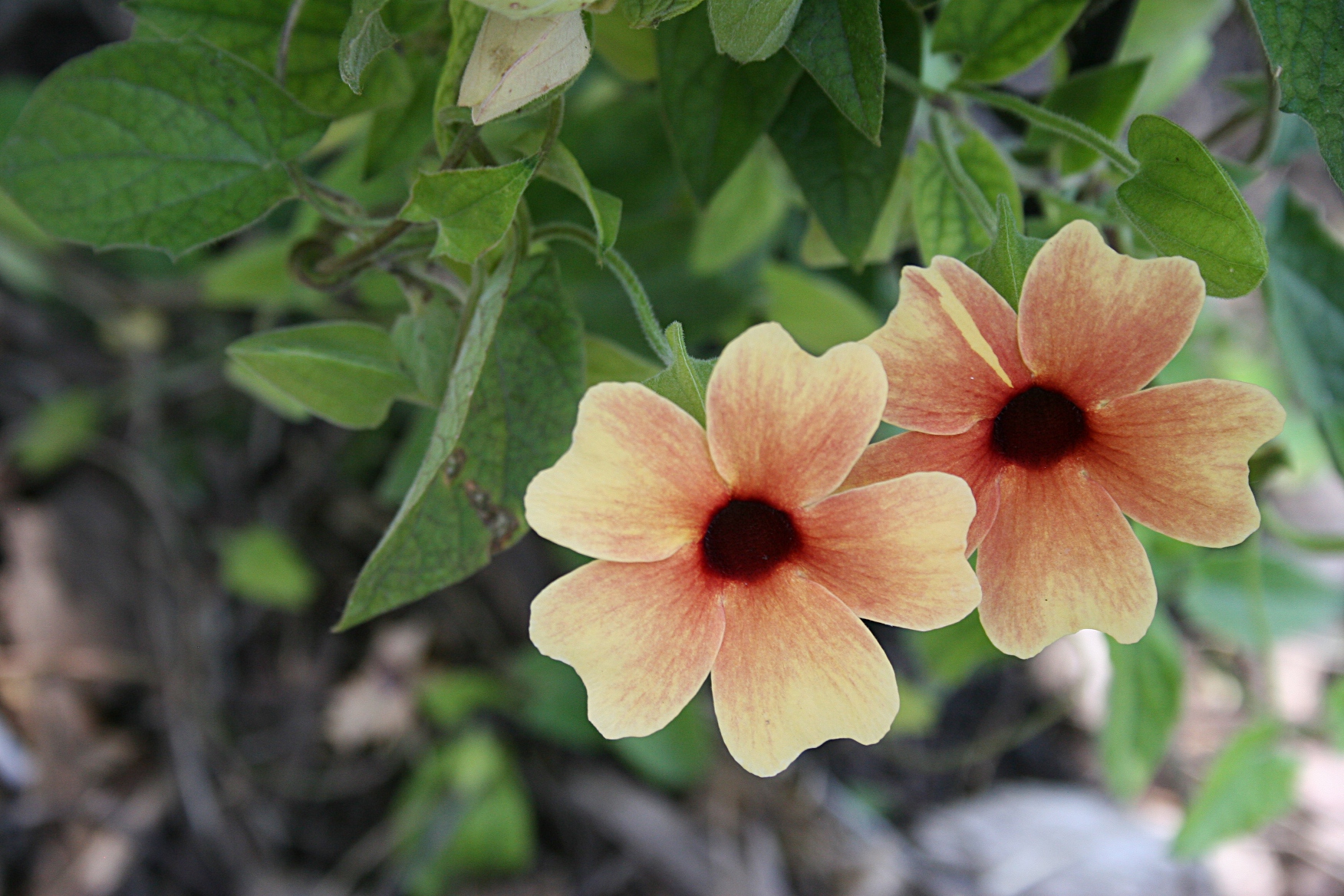
I can't recall the name of this flower, but I paused to photograph it because I like its shape and sheen.

I can’t recall the name of this flower, but I paused to photograph it because I like its shape and sheen.

Crowded conditions were not conducive to creative photography as I had to move along lest I hold up others. But I managed.

An artist sketching in the Sunken Garden flipped his sketchbook back to reveal his favorite sketch of the day, that of a bonsai tree. His art is spectacular.

An artist sketching in the Sunken Garden flipped his sketchbook back to reveal his favorite sketch of the day, that of a bonsai tree. His art is spectacular. My apologies for failing to ask his name.

Metro Sketchers, artists who monthly gather to create art at a chosen location, recorded the scenes unfolding before them.

Thomas Winterstein of St. Paul sketches a scene in the Palm Dome.

Thomas Winterstein of St. Paul sketches a scene in the Palm Dome.

I chatted with a few,

Thomas Winterstein's sketch.

Thomas Winterstein’s sketch.

admired their art and their ability to create with paint and pencils and other mediums.

Watercolor artist Kathleen Richert paints a fountain in the Palm Dome.

Watercolor artist Kathleen Richert paints a fountain scene in the Palm Dome.

I wondered, too, if my California native son-in-law was at all impressed. After all, palm trees and other warm climate plants certainly aren’t foreign to him.

I have no idea what plant this is, but I love the leaves.

I have no idea what plant this is, but I love the leaves.

To this Minnesotan, though, the Marjorie McNeely Conservatory at Como Park in St. Paul proved impressive and mentally uplifting in this longest and coldest of Minnesota winters.

Even though you're not supposed to snap posed portraits, I managed to take a quick shot of my daughter and her husband in the Palm Dome.

I managed a quick shot of my daughter and her husband in the Palm Dome, even though portraits are banned.

FYI: Just for the record, I left my coat in the daughter’s car as I did not want to carry it around in the Conservatory while also juggling a camera. The daughter was kind enough to drop Mom and Dad off at the sidewalk leading to the Conservatory. She and her husband then circled the parking areas for an incredibly long time before squeezing into a tight parking space. I’d advise driving a small vehicle here and not attempting to park in the unplowed gravel lot where vehicles were getting stuck.

Check back for more photos.

© Copyright 2014 Audrey Kletscher Helbling
 

A ginormous Frosty at an historic home February 21, 2014

Filed under: Uncategorized — Audrey Kletscher Helbling @ 6:00 AM
Tags: , , , , , ,

Snowman, really up close

FORGET CREATING a mini-sized version of Frosty the Snowman.

Snowman, looking up at

This oversized snowman stands in the Hoisington family’s yard at 18 Third Avenue Northwest in Faribault. My friend John directed me to the snow art last Sunday.

Snowman, from front of house

As impressed as I was by the snowman, I was even more impressed with the house. I love everything about this historic home’s exterior from the front brick pillars topped by lion statues to the sturdy entry columns to the graceful curves to the signature windows. I can only imagine the beautiful interior.

This reminds me of the stately home along Lake Harriet in south Minneapolis.

John, when trying to direct me to the location, referenced the house as Dr. Mc I-can’t-recall-his-name’s home, which meant nothing to me, not being a native of Faribault. I find that historical reference typical of my community. My husband and I, after all, live in “the Swanson house,” even though we’ve owned our home for 30 years.

FYI: This was photographed prior to our two-day thaw of 40 degrees and prior to our Thursday/Friday blizzard.

© Copyright 2014 Audrey Kletscher Helbling
 

The Mighty Duck II February 20, 2014

Filed under: Uncategorized — Audrey Kletscher Helbling @ 6:00 AM
Tags: , , , , ,
I am not good at judging size. But this is one big duck.
The sculpture as photographed last week. Minnesota Prairie Roots file photo.

REMEMBER THAT DUCK snow sculpture I showed you last week?

Well, it wasn’t finished.

Look how sculpting and color transformed this duck.
Multiple rubber duckies not sit atop the giant duck graced with a heart and a colored bill.

Multiple rubber duckies now sit atop the giant duck with a heart on its breast.

Stepping back, a view from the street.
Stepping back, a view from the street.

Fabulous, isn’t it?

What's next?

What’s next?

I don’t think the project is finished yet, based on the pile of blocked snow next to the mighty duck at the Kurt Kletter home, 417 Second Street Northwest, Faribault. I’ll keep my eyes on that duck and any new developments.

FYI: Since photographing this duck on Sunday afternoon, we’ve experienced two days of 40-degree temps. I have not checked to see how this heat wave may have impacted the snow sculpture.

Copyright 2014 Audrey Kletscher Helbling